Onkaparinga River National Park, VKFF-402

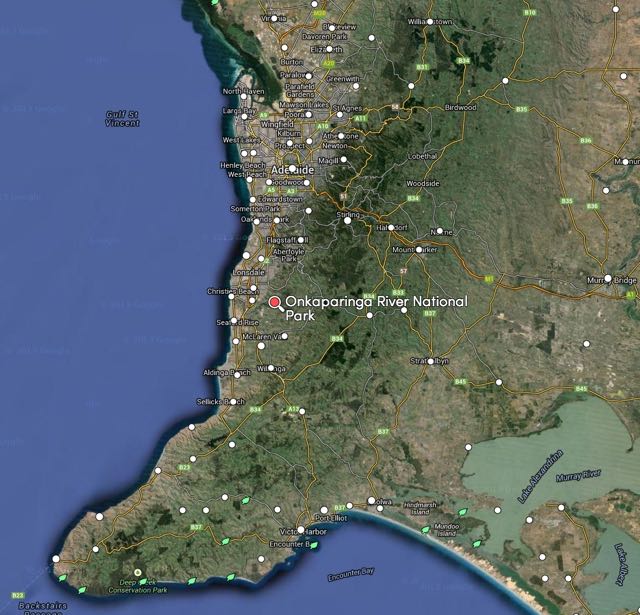
Last night (Friday 27th February 2015) was the 4th Summer activation event for the VK5 National and Conservation Parks Award.  So I headed out to the Onkaparinga River National Park, which qualifies for both the VK5 Parks Award and also the World Wide Flora Fauna (WWFF) program.  The park is VKFF-402 in the WWFF program.
Screenshot 2015-02-28 13.44.59

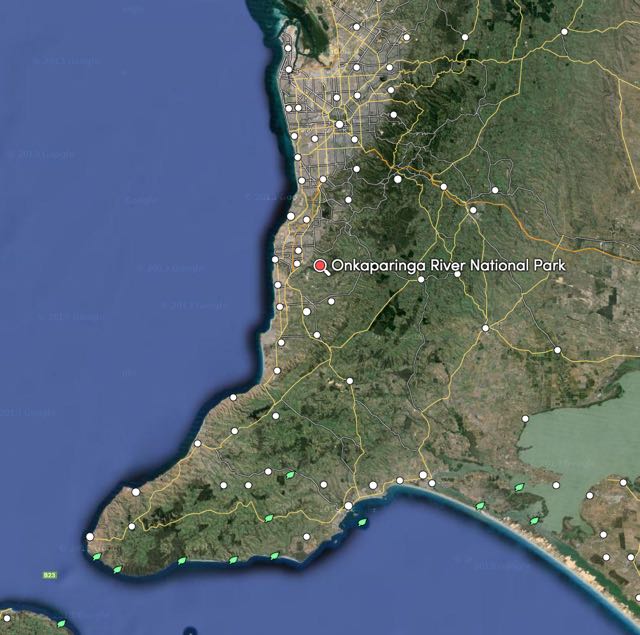
Above: Map showing the location of Onkaparinga River National Park.  Map courtesy of mapcarta.com

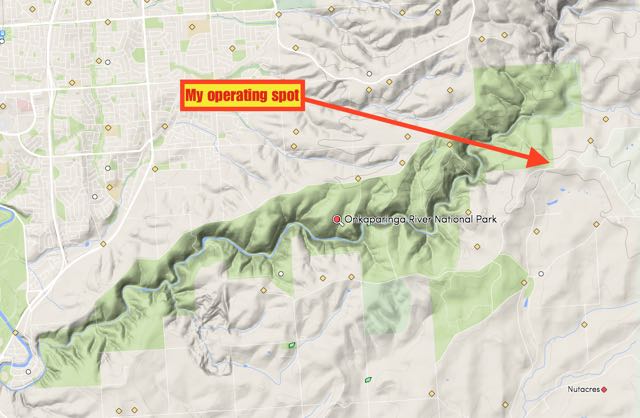
I set up near Gate 3 and the Bakers Gully track.  There is a good carpark here where you can park off Chapel Hill Road.  Just a short walk of 20 off metres is a wooden table and benches, which makes a great ‘shack’.  The scrub here is a bit thick, but there is enough room to string out a dipole which is exactly what I did.  For this activation I ran the Yaesu FT-857d, 40 watts and the 40m/20m linked dipole, supported on a 7 metre telescopic squid pole.  It was quite a warm afternoon, about 28 deg C, so the shade provided by the gum trees was very welcome.
Screenshot 2015-02-28 13.45.40

Above: Map showing my operating spot.  Map courtesy of mapcarta.com

Prior to calling CQ I had a look around the 40m band hoping that I would find some of the other park activators.  And it wasn’t long before I did.  My first contact was with John VK5BJE who was operating portable from the Scott Creek Conservation Park on 7.100.  John had a lovely strong 59 signal.  I then found Tom VK5EE in the Gower Conservation Park in the South East on 7.088.  Tom was also 59 and was conducting a joint activation with Col VK5HCF and new park activator, Alan VK5FAJS.  It was great to get Alan in the log.  Welcome to the world of park activating Alan.

My next contact was with another new park activator, Adrian VK5FANA, who was in the Clinton Conservation Park on the Yorke Peninsula.  Adrian was operating from near Port Arthur, and had a very nice 5/9 plus signal to Onkaparinga River.  This was a great start to the activation, five park to park contacts.

I then headed up to my nominated operating frequency of 7.144, but found that there was a lot of activity on either side, so I settled for 7.142 and started calling CQ.  In fact there were 2 G stations on 7.138 having a chat amongst themselves.  They were not very strong, but very readable.  But I didn’t call them as I wasn’t confident that they would hear me.  My CQ call was answered by Marc VK3OHM who has recently become an avid park hunter, followed by another park to park contact, this time with Chris VK4FR/5 who was portable in the Morialta Conservation Park.  Although Chris was running QRP, his signal was still 59 to me.  I went on to work a number of stations in VK3 & VK5, including Mick VK3PMG who has recently upgraded his call (formerly VK3FAFK).  Well done Mick.

When things slowed down I took the opportunity of QSYing and having a look around the band.  I found Richard VK5ZRY on 7.110 calling CQ from the Ramsay Way Conservation Park on the Yorke Peninsula.  I wasn’t expecting Richard to be out and about so this contact was a nice surprise.  I then worked Les VK5KLV who was portable in the Winninowie Conservation Park, south of Port Augusta.

This slideshow requires JavaScript.

I then lowered the squid pole and removed the links in the dipole, so I could try my luck on 20m.  The WWFF program is very popular in Europe, so I was hoping to work some of the European park hunters.  I headed to my nominated operating frequency of 14.244, however there was activity either side including a G station calling CQ on 14.245.  So I headed up to 14.250 and started calling CQ.  But unfortunately the same G station had followed me up the band and started calling CQ on 14.251.5, just above me.  Strike two!

I then moved up to 14.267 and started calling CQ again and this was answered by David VK5ADO with a very loud signal.  This was followed by a small group of European park hunters including F5TJC, DJ8QP, I5FLN, IZ2IHO, F1BLL, EA3MP, F2YT, DK0EE, EA1DFP, HA6OB, S52KM, ON4BB, and DK4RM.  Conditions were challenging to say the least.  Many thanks to my old mate Larry VK5LY for spotting me on the DX Cluster.  This certainly alerted the European stations to my presence in the park.  I also managed a few other VK contacts which included Andrew VK2AC, John VK5BJE in the Scott Creek Conservation Park, and my mate Greg VK8GM in Alice Springs.

Prior to heading back to 40m, I had a quick listen around the 20m band.  I’m very pleased I did, because I managed to work VK9LC on 14.199 on Lord Howe Island.  But the cream on the cake was a contact with Jerry PH9HB who was aeronautical mobile above the Canary Islands.  Jerry was a good 5/7 and he gave me a 4/4 with my 40 watts.  I have worked Jerry before whilst he has been in the air, but those contacts have been from home.  So this was a very exciting contact.

ph9hb-boeing-737-800-qsl-650x433

I then headed back to 40m, where I spoke with Geoff VK5HEL on 7.093, who was portable in the Ferries McDonald Conservation Park.  Geoff had a beautiful 59 signal from the Murray Mallee.  I then QSYd to 7.144 and called CQ and this was answered by Perrin Vk3XPT who was portable in the Alpine National Park, running QRP 5 watts from his Yaesu FT-817 and an end fed 1/2 wave antenna.  Perrin was camping near Mount Buller and had a nice 59 signal.

I worked a further 11 stations in VK2, VK4 & VK5.  This included Tom VK4FAJB at Hervey Bay, who only received his licence in the mail the day prior.  Welcome to amateur radio Tom.

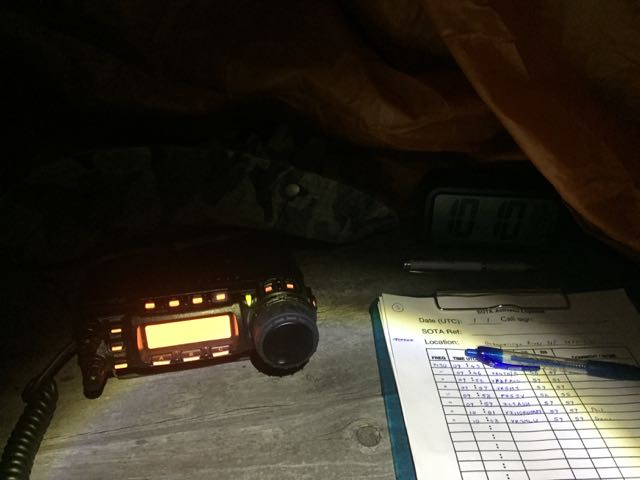
The drizzly rain had just started at this time, and it would continue on and off for the rest of the activation.  There were about five occasions when I had to drive underneath the bothy bag.

Again when things slowed down a little I had a look around the band.  I found Chris VK5FR/5 having a chat with Adrian VK5FANA who was portable in his second park, the Wills Creek Conservation Park.  After having a quick chat with Chris, Adrian came up asking Chris if he could quickly work me, to which Chris obliged.  It was great to get Adrian in the log from his second ever park activation.

I then spoke with Peter VK3YE who was pedestrian mobile at Port Phillip Bay.  Peter regularly goes pedestrian mobile and it never ceases to amaze me with the signal he puts out.  This evening was no exception, 5/8.

I then found Phil ZL2RO calling CQ on 7.167 from Hastings in New Zealand.  Phil had a very good 5/9 plus signal.

Following my contact with Phil, it was 8.00 p.m. local time (0930 UTC) so I headed to 7.130 for the 7130 DX Net.  On the net I had a total of 17 contacts including Bill W1OW in Massachusetts in the USA (5/7 sent & 5/5 received), William FO5JV in French Polynesia (5/8 sent and 5/5 received), Brian ZL2ASH in Wellington new Zealand (5/9 both ways) and Phil (VK2MCB) operating special event station VI110ROTARY for the 110th anniversary of ROTARY.  I also spoke with Andy VK4TH/8 who was sitting back enjoying the sunset in the Uluru-Kata Tjuta National Park in the Northern Territory.
IMG_0737

Above: underneath the bothy bag.

Just prior to the closure of the net, I QSYd up to 7.135 and started calling CQ.  This was answered by Steve VK5SFA.  I went on to work a further 11 stations on this frequency, in VK2, VK3, VK4, VK6, & VK7.  All with excellent signals.

I then decided to see what propagation was like on 20m, specifically the Southern Cross DX Net.  Once lowering the squid pole again, removing the links, and putting the squid back into place, I tuned to 14.338.5 and heard the Net Control, Jack W1FDY in Virignia, with a good strong 5/8 signal.  Surprisingly Jack was able to hear me quite well.  He gave me a 5/6 signal report.  I went on to work a further 5 stations on the net: Reg VK6BQQ, Peter VK3CFA, Peter KD2BMX in new York, Bill W1OW in Massachusetts, and Al K4AWM in Virginia.

Unfortunately I had to go QRT in a hurry, as the rain really started to come down heavy.

This was a very enjoyable activation, with a total of 87 contacts in the log.  This included 13 S.A. park to park contacts, two Victorian National Parks and one Northern Territory National Park.  And also some interesting DX contacts including the contact with Jerry PH9HB aeronautical mobile.

The following stations were worked on 40m SSB:-

  1. John VK5BJE/p (Scott Creek Conservation Park)
  2. Tom VK5EE/p (Gower Conservation Park)
  3. Col VK5HCF/p (Gower Conservation Park)
  4. Alan VK5FAJS/p (Gower Conservation Park)
  5. Adrian VK5FANA/p (Clinton Conservation Park)
  6. Marc VK3OHM
  7. Chris VK4FR/5 (Morialta Conservation Park)
  8. Keith VK5FEKH
  9. Peter VK3TKK/m
  10. Fred VK3DAC
  11. Phil VK3BHR
  12. Lynton VK5FLKJ
  13. Peter VK3PF
  14. Amanda VK3FQSO
  15. Peter VK5KPR
  16. Mick VK3PMG
  17. Richard VK5ZRY/p (Ramsay Way Conservation Park)
  18. Les VK5KLV/p (Winninowie Conservation Park)
  19. Geoff Vk5HEL/p (Ferries McDonald Conservation Park)
  20. Perrin VK3XPT/p (Alpine National Park)
  21. Andrew VK2UH
  22. Rob VK4FFAB
  23. Tom VK4FAJB
  24. Wayne VK4MAD
  25. David VK5NQP
  26. Bob VK5FPAC
  27. Rod VK5VRB
  28. Theo VK5MTM
  29. Allen VK3HRA
  30. Jim VK1AT/3
  31. Greg VK5GJ (QRP)
  32. Adrian VK5FANA/p (Wills Creek Conservation Park)
  33. Peter VK3YE (pedestrian mobile)
  34. Phil ZL2RO
  35. Bill W1OW
  36. Chris VK2UW
  37. Peter VK4AAV
  38. Andy VK4TH/8 (Uluru-Kata Tjuta National Park)
  39. John VK2FALL
  40. Mal VK5MJ
  41. William FO5JV
  42. Brian ZL2ASH
  43. Phil VI110ROTARY
  44. Gavin VK3MLU
  45. Craig VK6VCK
  46. Doug VK2FMIA
  47. Geoff VK5HEL/p (Monarto Conservation Park)
  48. Rick VK2HFP
  49. Keith VK2PKT
  50. VK6FABC (QRP)
  51. Greg VK8GM
  52. Steve VK5SFA
  53. Gavin VK3MLU
  54. Peter VK3TKK/m
  55. Derric VK6PI
  56. Wayne VK2PDW
  57. Roger VK5NWE
  58. Alan VK4NAI/p
  59. Adam VK7VAZ
  60. Ian VK3VIN
  61. Paul VK7CC
  62. Oscar VK4BOV
  63. Glen VK4FSCC

The following stations were worked on 20m SSB:-

  1. David VK5ADO
  2. F5TJC
  3. DJ8QP
  4. Luciano I5FLN
  5. IZ2IHO
  6. F1BLL
  7. EA3MP
  8. F2YT
  9. DK0EE
  10. EA1DFP
  11. HA6OB
  12. S52KM
  13. ON4BB
  14. VK2AC
  15. DK4RM
  16. VK5BJE/p (Scott Creek Conservation Park)
  17. Greg VK8GM
  18. VK9LC
  19. Jerry PH9HB (aeronautical mobile)
  20. Jack W1FDY
  21. Reg VK6BQQ
  22. Peter VK3CFA
  23. Peter KD2BMX
  24. Bill W1OW
  25. Al K4AWM


Mount Remarkable National Park VKFF-360

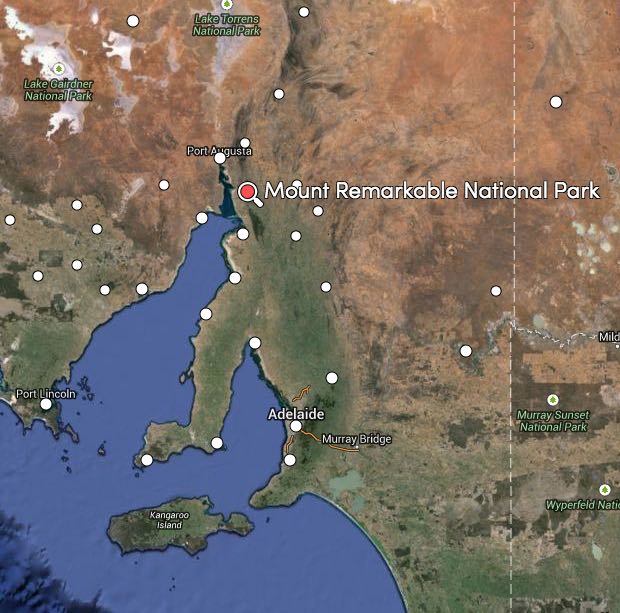
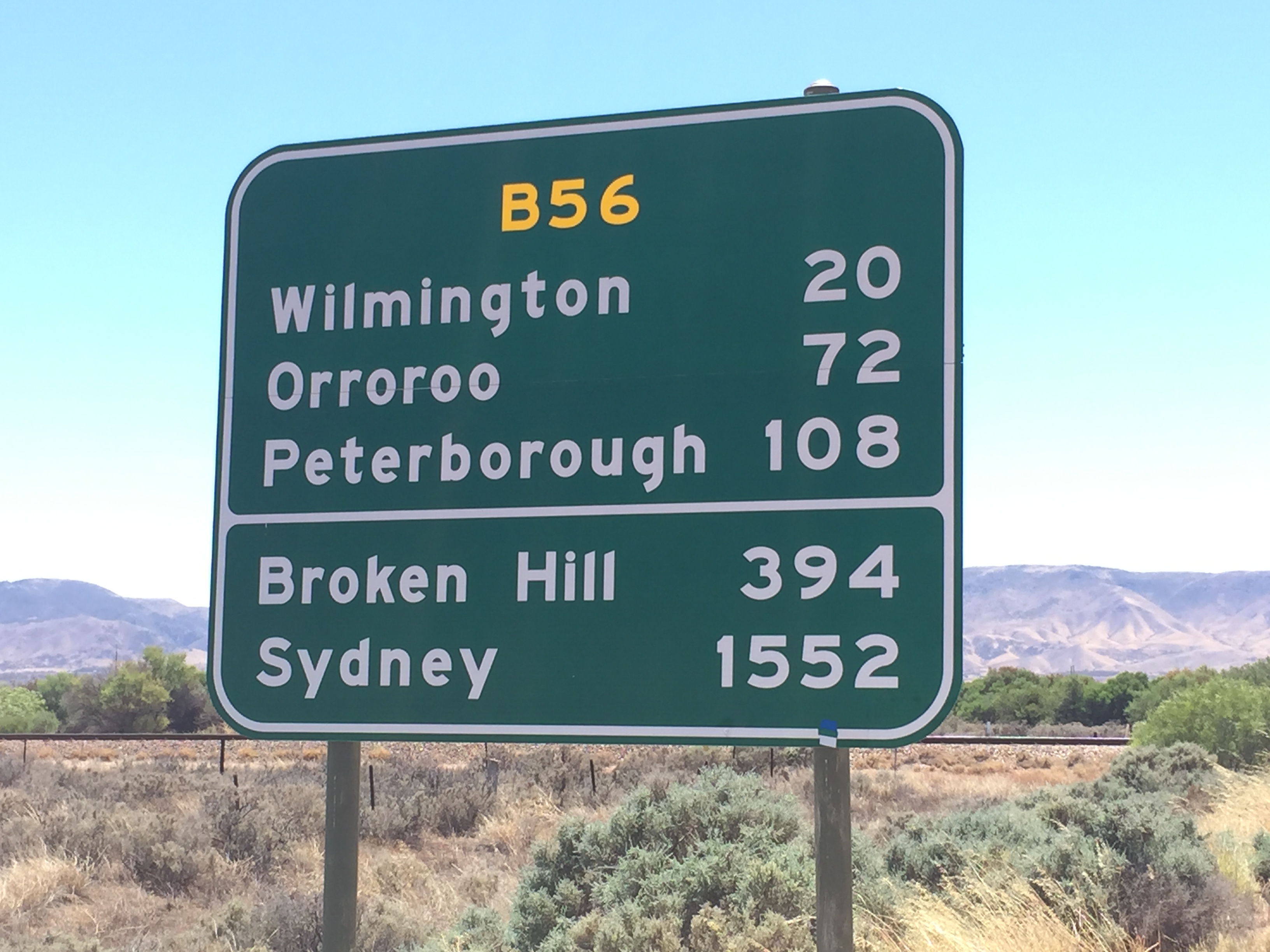
After leaving the Winninowie Conservation Park, I travelled south along the Augusta Highway and then travelled east along the Mambray Creek into the Mount Remarkable National Park.  The park is located about 60 km south of Port Augusta, and about 260 km north of Adelaide, in the southern Flinders Ranges.

Screenshot 2015-02-07 15.53.22

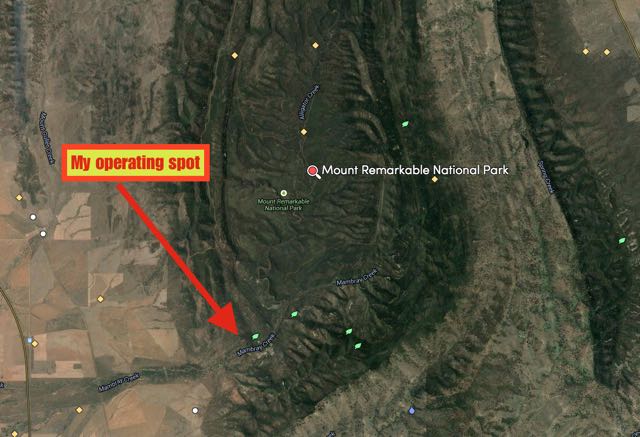
I have activated this 16,000 hectare park previously, and have climbed the Mount Remarkable summit, but I had never activated the park at the Mambray Creek section.  The park entry fee was paid online, and I entered the Mambray Creek section and found a quiet parking spot on the northern side of road, amongst the scrub.

Screenshot 2015-02-07 15.52.29Prior to activating I walked over to the old Baroota Homestead ruins.  This area was once part of the might ‘Baroota Run’ which was established in 1851, and flourished for 12 years.  South Australia then suffered devastating droughts for a number of years.  Following the break in the drought, flooding rains and extreme cold followed.  This resulted in the death of thousands of sheep, and with them, the owners livelihoods.

This slideshow requires JavaScript.

I ran the Yaesu FT-857d for this activation, with 40 watts output and the 40m/20m linked dipole.  I had the entire campround  area all to myself.  It was a beautiful mild night, with an almost full moon.  And no mosquitos.

I started off on 20m first and I was hoping to work some European DX and give the Europeans the opportunity of working a new park for the World Wide Flora Fauna (WWFF) program.  But I was to be sadly disapointed.  I called and called CQ  on 14.250 with no takers, until finally, Jim VK2QA responded (5/9 both ways).  But I was not spotted and called CQ numerous times after this with no takers.  So rather dejected, I tuned across the band and spoke with Franc F5PAU (5/8 sent and 5/5 received).  I then found Paul VK2HTM calling CQ with a booming signal from Sydney.  Paul also gave me a 5/9 signal report in return.  It was nearly 0900 UTC (7.30 p.m. SA local time), so I had probably left my run for 20m a little too late.

So it was off to 40m that I headed.  And my first contact there on 7.142 was with the same station I had first made contact with on 20m, Jim VK2QA in Lane Cove.   I worked a further 14 stations in VK2, VK3, VK4, & VK5, until a very strong CW signal came up on frequency calling me.  Wow, was this going to put me to the test.  It was Jack, VK5CJC.  I managed to stumble my way through and exchanged signal reports with Jack.  This was the first time I had ever had a CW-SSB contact whilst in a park.

Following my contact with Jack, I worked a further 3 stations on 7.142 until callers dried up.  I tuned across the 40m band and heard WWFF park activator and hunter, Rob VK4FFAB in QSO with Shaun VK4NSP and Glen VK2FQSL/p, so I called in to say hello.  After working Rob, Shaun, and Glen, I went up to 7.167 and called CQ.  The first responder was regular park hunter, Ron VK3JP with his usual very strong signal.  About 8 QSO’s later, after being placed on the DX Cluster by John, VK5NJ, I was called by Bill W1OW in Massachusetts in the USA.  Bill and I had a successful contact (5/7 sent and 5/5 received).  And then to my surprise, ten QSO’s later I was called byTom K2WCT in New Jersey in the USA (5/8 sent and 5/3 received).

This slideshow requires JavaScript.

I went on to work a number of other VK’s including my good mate Greg VK8GM in Alice Springs, and a handful of VK6 stations including my buddy Ted VK6NTE with his normal very strong signal.  My last contact on 40m was with Damien VK2XDL.

I had a quick listen on 20m for Jack W1FDY on the Southern Cross DX Net, but all I heard were some of the local VK’s talking about how the band had not yet opened to the States.  So I decided to ‘pull stumps’ and head back to Crystal Brook.  I had a total of 50 contacts in the log, which I was very happy with.  Although I was a little disapointed that I did not work the expected DX on the 20m band.

The following stations were worked on 20m SSB:-

  1. Jim VK2QA
  2. Franc F5PAU
  3. Paul VK2HTM

The following stations were worked on 40m SSB:-

  1. Jim VK2QA
  2. David VK5KC
  3. Brian VK5FMID
  4. Roger VK4YB
  5. Jim VK5JW
  6. John VK3HJD
  7. Doug VK2FMIA
  8. Ian VK5CZ
  9. Tom VK5EE
  10. Peter VK3ZPF
  11. John VK5BJE
  12. Richard VK5ZRY
  13. Nev VK5WG
  14. Chris VK2SR
  15. Peter VK3TKK
  16. Trevor VK5ATQ
  17. Arthur VK5AAR
  18. Peter Vk5FLEX
  19. Sg\haun VK4NSP
  20. Rob VK4FFAB
  21. Glen VK2FQSL/p
  22. Ron VK3JP
  23. Colin VK3ZZS/m
  24. Tom VK5FTRG/m
  25. Gavin VK3MLU
  26. Tony VK2RI
  27. Ray VK3NBL
  28. Chris VK5FCHM
  29. John VK5NJ
  30. Bill W1OW
  31. Ian VK3VIN
  32. James VK1DR
  33. Steven VK7PSJ
  34. Tony VK3AAT
  35. Mark VK3YYR
  36. Tony VK5TT
  37. Geoff VK5HEL
  38. John VK5FTCT
  39. John VK5FABC/m
  40. Tom K2WCT
  41. Nill VK5MBD
  42. Tom VK5FTRG
  43. Doug VK2FMIA
  44. Phil VK5NPP
  45. Greg VK8GM
  46. Owen VK5HOS
  47. Larry VK6NOL
  48. Charles Vk5FBAC
  49. Mick VK4GMH
  50. Adrian VK5FANA/qrp
  51. David VK5ADO
  52. Peter VK6DC
  53. Doug VK3YQS
  54. Ted VK6NTE
  55. Ian VK3VIG/5
  56. Damien VK2XDL

The following station was worked on 40m CW:-

  1. Jack, VK5CJC

The Battery VK5/ NE-055 and Mt Remarkable National Park

Following our activation of the Whyalla Conservation Park, Marija and I continued on to the little town of Melrose, which is nestled below the impressive Mount Remarkable summit, in the southern Flinders Ranges.  From Whyalla we travelled north to Port Augusta and then travelled south along Highway A1 (Augusta Highway).  We then turned left onto Horrocks Pass Road/Main North Road, and travelled towards Wilmington.

IMG_0147

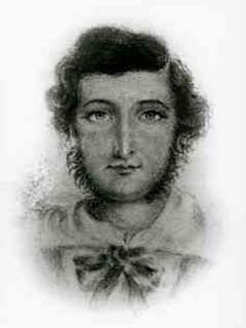
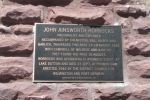
On the way to Wilmington we passed through Horrocks Pass, and we stopped off at the monument for John Horrocks, after which the pass was named.  This is well worth a look.  The story of Horrocks is a very interesting one.  John Ainsworth Horrocks (1818-1846) was a pastoralist and explorer.  In 1846, Horrocks led an expedition of 6, for a planned 4 month expedition to search for new agricultural lands near Lake Torrens.  Between the 16th-19th August 1846, the expedition crossed the Flinders Ranges via Horrocks Pass.  Horrocks and his team travelled with a camel, two carts, six horses, and twelve goats.  Horrocks noted that the camel was very temperamental, often biting the humans and goats.

AS10231_246x550

Image courtesy of images.slsa.sa.gov.au

However, the camel was able to carry up to 350 pounds (158.7 kg), which was vital for the anticipated trek across some very arid land.  On September 1st, Horrocks was preparing to shoot a bird on the shores of Lake Dutton.  While Horrocks was reloading his gun, the kneeling camel moved, which resulted in Horrocks catching the cock of the gun.  The gun discharged, resulting in Horrocks loosing the middle fingers of his right hand and a row of teeth.  Horrocks subsequently died of his wounds , about 3 weeks later, on September 23rd.  And what of the naughty camel?  Horrocks had ordered that it be shot.

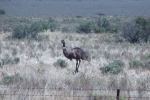
After leaving the Horrocks monument, we continued east and detoured to Hancock’s lookout.  This is well worth taking the 7 km drive on the dirt road from the bitumen.  On the way we saw numerous emus feeding in the farmer’s paddocks.  Fortunately, none of them ventured out in front of the vehicle.  Hancock’s lookout offers spectacular views of Spencer Gulf and the Port Augusta area.

This slideshow requires JavaScript.

After Hancock’s lookout, we continued on to Wilmington and then travelled south on Horrocks Highway/Main North Road to Melrose.  We had booked in to stay for one night at the Melrose cabins which are run by the Melrose Hotel.  This is the second time we have stayed here, and we highly recommend the cabins.  They are well priced, clean and comfortable.

This slideshow requires JavaScript.

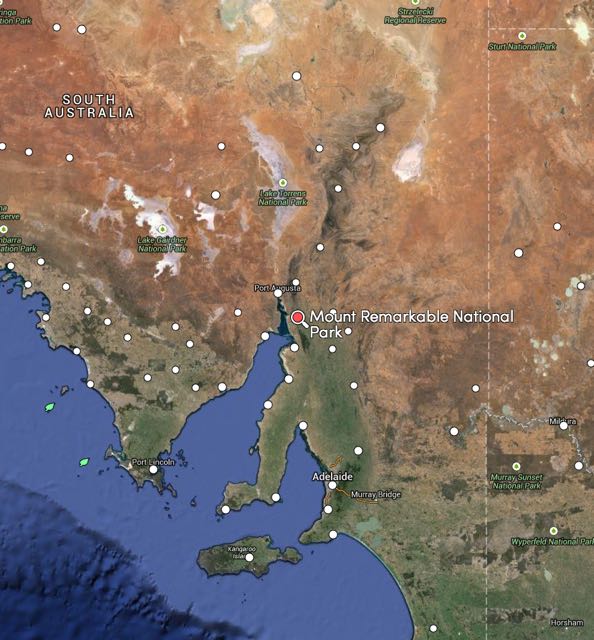
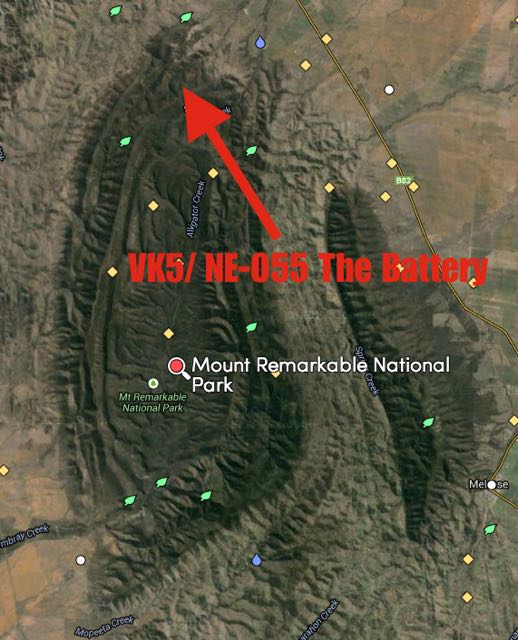
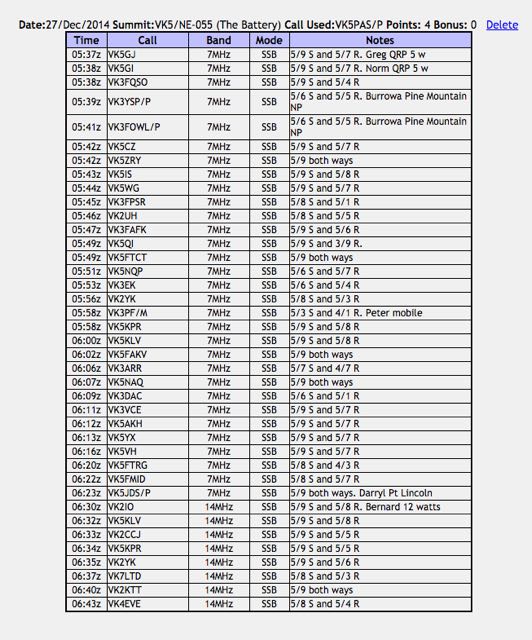
After lunch at the cabin, which consisted of schnitzel, roast potatoes, pumpkin, roast carrots, and salad, courtesy of my loving mother in law, we headed back out for our second activation for Saturday 27th December, 2014, which was The Battery, VK5/ NE-055, which is located within the Mount Remarkable National Park.  So a triple whammy.  A SOTA summit, a WWFF (VKFF) park, and a VK5 Parks award park.

Screenshot 2014-12-29 20.18.39

Map courtesy of mapcarta.com

Marija and I travelled north along Horrocks Highway/Main North Road and then turned left onto Alligator Gorge Road and travelled south west until we reached the entrance to the Mount Remarkable National Park.  We continued south west through the park until we reached Alligator Lodge which was on our left.  Directly opposite is a campground, which is blocked off for vehicles.  Look for Gate 5.  There is also a sign here indicating that The Battery is 4.5 km away (the summit is a bit further).  We parked the car on the south eastern side of the road and commenced the walk down the 4WD track towards the summit.

Screenshot 2014-12-29 20.18.29

map courtesy of mapcarta.com

I would describe the walk as moderate but still quite taxing.  The first 4 km involves a few inclines.  However it is the last 1 km that is the hardest.  There are some steep inclines and lots of rocks.  The ground is very unsteady under foot.  In many parts, the authorities have placed mesh to prevent slipping.  But there are some spectacular views along the way, and once you reach the top, you are rewarded with a magnificent view of the surrounding countryside and Spencer Gulf.   The track is quite well signposted.

Mount Remarkable National Park is located about 45 km north of Port Pirie.  Access to the park is either via the Augusta Highway via Mambray Creek, via Melrose, or via Alligator Gorge (our route).  A fee of $10.00 is charged for vehicular entry, which we paid the night before online.  Please note, that park entry fees now need to be paid online prior to visiting the park.  Cash payments are no longer an option in this park.

The park is 16,000 hectares in size and stretches from the coastal plain adjacent to Spencer Gulf, across the ranges, to Mount Remarkable on the edge of the Willochra Plain in the east.  The park is full of kangaroos, Euros, Emus, and other wildlife.

The summit, Mount Remarkable, was named by explorer, Edward John Eyre in June 1840.  The local aboriginal Nukunu people, refer to it was ‘Wangyarra’.  The word ‘aara’ meaning running water.  Alligator Groge and Mambray Creek were dedicated as National Pleasure Resports in 1952.  These areas were added to and became managed by the National Parks Commission during the 1960’s.  Following the enactment of the National Parks and Wildlife Act, 1972, Alligator Gorge, Mambray Creek and Mount Remarkable were proclaimed as the Mount Remarkable National Park.  Additional portions of land have been added to the park since that time.

This slideshow requires JavaScript.

The Battery is 765 metres above sea level and is worth 4 points.  This was the first time I had activated this summit.  It had only been activated previously by Ian VK5CZ in June 2013 and April 2014.

For this activation I ran my little Yaesu FT-817nd, 5 watts and my 40m/20m linked dipole, supported on a 7 metre squid pole.  Marija and I improvised and used a fallen tree branch to secure the squid pole to, with the assistance of some octopus straps.

My first contact was with Greg VK5GJ who responded to my ‘is the frequency in use’ call on 7.095.  Greg was running QRP 5 watts but was a lovely 5/9 to the Flinders Ranges.  In the shack with Greg was Norm VK5GI, also running QRP.  This was followed by Amanda VK3FQSO, and then Joe VK3YSP and wife Julie VK3FOWL who were portable in the Burrowa Pine Mountain National Park.  I always get a bit of a kick when I work a National Park activator, so it was great to get Joe and Julie in the log.

A steady flow of callers then followed from Vk2, VK3, & VK5.  Conditions appeared to be reasonable, however there was a little bit of QSB on the 40m band.  After working a total of 31 stations on 40m, I lowered the squid pole and removed the links for operation on the 20m band.  My first contact on 20m ssb was with Gerard VK2IO who was portable at Gosford, running 12 watts from his Elecraft KX3.  This was followed by Peter VK5KLV at nearby Port Augusta and then Cliff VK2CCJ.  Cliff was pleased to get me in the log, as he told me that he was unable to hear me on 40m.

After a little over an hour on the summit, I had a total of 39 contacts in the log from VK2, VK3, VK4, VK5, & VK7 on both 40m ssb and 20m ssb.

The following stations were worked:-

Screenshot 2014-12-28 21.20.44

Below is a quick video of the activation…..

References.

Australian Dictionary of Biography, <http://adb.anu.edu.au/biography/horrocks-john-ainsworth-12989&gt;, viewed 29th December 2014

Mount Remarkable National Park brochure, Department for Environment and Heritage, 2006.

Wikipedia, <http://en.wikipedia.org/wiki/Mount_Remarkable_National_Park&gt;, viewed 29th December 2014

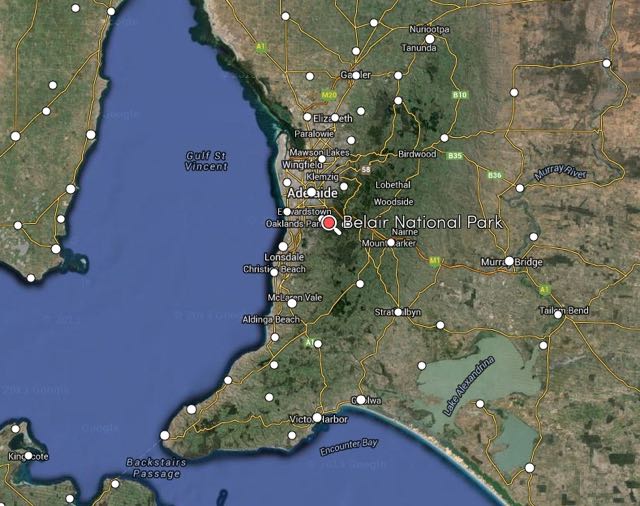
Belair National Park, VKFF-022

Yesterday (Saturday 20th December, 2014) I activated the Belair National Park (NP), VKFF-022, in the Mount Lofty Ranges ‘Adelaide Hills’.  I had already activated Belair NP earlier in the year, so there were no VK5 Park Award points up for grabs.  And I had already passed the 44 QSO threshold for Belair NP in the World Wide Flora and Fauna (WWFF) program.  But my real motivation, was to try out my new radio.  My beautiful wife Marija (and yes I am constantly reminded I am ‘boxing above my weight’) and my lovely daughter Olivia, purchased a Yaesu FT-857d for me, and gave it to me as an early Christmas present and early 50th birthday present.  I turn 50 on the 5th January.  So it was off to Belair for me, just a 15 minute drive to the west from home.

I set up just inside Gate 1 off Sheaok Road, at Crafers.  This is on the northern side of the park.  This gate was locked, however there is no restriction to access to the park at this point.  There is a walking track here, Wilyawa Track.  But to gain access to it, you need to either jump the fence, which has barbed wire, or jump the padlocked gate.  Why DEWNR do not have a pedestrian access point here I do not know?  Anyway, I got all the gear from the 4WD and then jumped the fence and walked a short distance down the track, where I set up my station, under the shade of some gum trees, as it was a warm 30 deg C day.

Screenshot 2014-12-20 22.16.38

Map courtesy of mapcarta.com

I started off on my nominated frequency of 7.095.  I had posted on the VK5 Parks Yahoo group and the WWFF Australia Yahoo group that I would be on air at 0600 UTC on 7.095.  I was about 15 minutes late, but still did not have to call CQ.  I asked if the frequency was in use and this was responded to by Les VK5KLV at Port Augusta with a beautiful 5/9 signal.  Les gave me a 5/9 in return, and it seemed the band was in very good shape.  It was certainly very quiet.  There was no man made noise on the band due to the remote location of the park, and the QRN (static crashes) that have been present over the past few weeks were noticably absent.  My second caller of the day was Adam VK2YK who was a good 5/8.  Adam was struggling with me a little bit due to QSB, but gave me a 5/4 signal report.  This was followed by Mal VK5MJ in The Riverland in South Australia, who was 5/9 plus.  David VK5KC then called me, using just 1 watt, and was a very nice 5/8 signal.  I had already caught up with David earlier in the day for a coffee.

I went on to work a further 20 stations in VK1, VK3, and VK5.  A few of those stations were operating QRP.  The first QRP caller was Peter VK3TKK who was running just 5 watts.  Peter’s signal was only signal strength 3, but due to the low noise floor, I was able to receive him perfectly.  This was followed by Andrew VK1NAM mobile in VK3, in the outer eastern suburbs of Melbourne.  Andrew was running just 2.5 watts from his FT-817 in the car, but nether less had a great 5/7 signal.  Tom VK5FTRG then called in from the South East of South Australia, running just 5 watts, with a nice 5/9 signal.  My final QRP caller was regular QRP operator, Ian VK5IS, again running 5 watts.  Ian had a beautiful 5/9 signal coming in from the Mid North of South Australia.

I also worked a few mobile stations.  Other than Andrew mentioned above, I also spoke with Greg VK5ZGY who was mobile in the South East of South Australia, with a good strong 5/7 signal.  Greg had co pilot and wife, Gabbie, alongside of him.  I then spoke with Ian VK6PXF who was mobile in VK5 at Lonsdale, south of Adelaide.  Ian has started activating National Parks, and has sent me quite a few of his logs for upload to the WWFF Log Search facility.  And lastly I was called by Robin VK5TN who was mobile at Hahndorf in the Adelaide Hills.

But to make my day, I was called by Richard VK5ZRY, who had decided to head out to the Ramsay Way Conservation Park.  The park is/was located on Richard’s property on the Yorke Peninsula.  Richard was trying out his new Yaesu FT-817 and had a magnificent 5/9 signal coming across the Gulf St Vincent to Belair.

This slideshow requires JavaScript.

I left the frequency to Richard, and lowered the squid pole and removed the links in the dipole, so I could operate on 20m.  However, I was disapointed when I tuned across 20m, to hear only very weak signals coming in from Europe.  I found that my nominated frequency of 14.244 was clear, so I put out about 8 CQ calls but had no takers.  Rather disapointed, I tuned across the 20m band and could hear three stations coming in from Spain.  However, their signals were well down compared to normal conditions.  I also heard Jason ZL3JAS, working long path into Europe.  However, all the European stations he was making contact with, were very weak to me.

So I headed back to 40m.  Prior to calling CQ again, I tuned across the 40m band and I could hear quite a few Europeans & stations from the United Kingdom coming through, including Javier, EA7GAK on 7.178 who was working into the USA.  I gave Javier a few calls, but sadly he could not hear me.  I also heard W1AW/3 on 7.161 working into Europe.  I also called him, but again my 40 watts just wasn’t making the grade.   So I went back to 7.095 and called CQ again, and this was responded to by Nic VK5ZAT who was portable at Carrackalinga on the Fleurieu Peninsula.  I had worked Nic a little earlier, prior to QSYing to 20m.  He had been having problems with a high VSWR on his dipole.  And this time, his signal had dropped down a good 2 S points.  I was then called by Mick VK3FAFK in Stawell in western Victoria, with a beautiful 5/9 signal.  And this was followed by Andrew VK5UR mobile in VK2, about 100 km south of Parkes.  I had a lengthy chat with Andrew and his signal always remained around the S9.  Andrew was running an IC7100 and a roof mounted whip antenna.  My last contact on 40m was with Adam VK2YK who had called in again, as conditions had improved.  I was now 5/9 with Adam, and he was 5/9 plus.  I worked a further 13 stations from VK2, VK3, VK4, & VK5.

My curiosity had got the better of me, so I again lowered the squid pole and removed the links in the dipole, and again tuned to 20m.  I was hoping that the band had improved.  But it was getting a little late, approaching 8.00 p.m.  Again, I could hear some weak Europeans, who were certainly not strong enough for me to try to make contact with.  I managed just 1 DX contact and that was with Michio, 7L4LKK, who was a strong 5/9 to Belair.

So after a number of hours in the park, I had a total of 41 contacts in the log.

The following stations were worked:-

  1.  Les VK5KLV
  2. Adam VK2YK
  3. Mal VK5MJ
  4. David VK5KC/qrp
  5. David VK5HYZ
  6. Peter VK3TKK/qrp
  7. Nev VK5WG
  8. Ian VK5KKT
  9. Matt VK1MA
  10. Andrew VK1NAM mobile VK3/qrp
  11. Tom VK5FTRG/qrp
  12. Greg VK5ZGY/m
  13. Ian VK6PXF mobile VK5
  14.  Amanda VK3FQSO
  15. Marshall VK3MRG
  16. Ian VK5IS/qrp
  17. Stuart VK5STU
  18. Peter VK5KPR
  19. Keith VK5FEKH
  20. Steve VK3MEG
  21. Nic VK5ZAT/p
  22. Tom VK5EE
  23. Richard VK5ZRY/p (park to park contact)
  24. Robin VKTN/p
  25. Nic VK5ZRY/p
  26. Mick VK3FAFK
  27. Andrew VK5UR mobile VK2
  28. Gary VK4MDZ
  29. Ian VK3VIN
  30. Rob VK4FFAB
  31. Bruce VK3FBNG
  32. Darren VK2NNN
  33. Kevin VK2VKB
  34. Peter VK3ZPF
  35. Andrew VK2UH
  36. Jim VK5JW
  37. Tony VK3AN
  38. Nick VK3ANL/qrp
  39. Tom VK5FTRG
  40. Adam VK2YK
  41. Michio 7L4LKK

Onkaparinga River National Park, VKFF-402

Yesterday afternoon (Monday 15th December 2014) I headed over to the Onkaparinga River National Park (NP), VKFF-402, which qualifies for the VK5 National and Conservation Parks Award, and the World Wide Flora Fauna (WWFF) program.  I have activated the park a number of times previously, and it is a nice 40 minute drive from my home via Echunga, Meadows, and Kangarilla, through the southern Adelaide Hills.

Onkaparinga River NP is located about 35 km south of Adelaide, and is about 1,544 hectares in size.  It is a magnificent park in close proximity to Adelaide.  The park is disected by the Onkaparinga River, which is South Australia’s second longest river after the mighty Murray.  The river enters the park in a steep sided valley and flows into a spectacular gorge with cliffs up to 50 metres in height, with large permanent rock pools.

Screenshot 2014-12-16 17.50.27

Map courtesy of mapcarta.com

I set up on Chapel Hill Track which runs off the northern side of Chapel Hill Road.  I parked my vehicle at gate 21 and walked about 50 metres down the track.  This location is situated on the southern side of the park.  On the southern side of Chapel Hill Road was the beautiful valley containing the vineyards of McLaren Vale and McLaren Flat, and to the north was the park, leading down to the Onkaparinga River cutting its way through the gorge.

It was quite a warm day (about 28 deg C), so I found some nice shade under some large gum trees.  I kept an ever vigilent watch for some of the crawly inhabitants of the park, and fortunately did not encounter any.

I started off with the little Yaseu FT-817nd and just 5 watts.  I powered the radio with a 12 volt 4 ah sealed lead acid battery (SLAB).  My antenna was a 40m/20m linked dipole, supported on a 7 metre squid pole.

I had nominated 7.095 as my calling frequency, but the Kandos Net was still running on 7.093, so I held off for a little while until that finished, and I then called CQ on 7.095.  My CQ call was immediately responded to by Peter VK5NAQ in the Mid North of South Australia with a beautiful 5/9 signal.  This was followed by Les VK5KLV at Port Augusta who was also 5/9.  Park Hunter reliables John VK5BJE and Greg VK5GJ then called in.

After working 11 stations on 7.095, my SOTA Goat application on the i-phone bleated, so I tuned down to 7.090 where I worked Andrew VK1DA/2 who was portable on the top of Livingstone Hill VK2/ SM-093, for the Summits on the Air (SOTA) program.  Andrew was a good solid 5/6 and he gave me a 5/7 signal report.  Livingstone Hill is 932 m above seal level (asl) and is located near the New South Wales and ACT border.

I then returned to 7.095 where I spoke with Amanda VK3FQSO and Ivan VK5HS in the Riverland.  But things slowed down from that point on, and despite a few more CQ calls, I had no takers.  The static crashes were also starting to pick up on 40m.  So I lowered the squid pole and removed the links in the dipole, so that I could operate on 20m.  I was to be disapointed on 20m, as there was no long path propagation into Europe and the United Kingdom.  I could hear John EA7BA on 14.156 but John was very weak.  I could not hear the G stations at all, that he was speaking to.  John was the only European signal I could hear.  The only other activity on 20m that I could hear were some weak Japanese signals.  The band was also covered in the Over the Horizon radar.

This slideshow requires JavaScript.


So I returned back to 40m and due to the noise on the band, I started running 40 watts from the Yaesu FT-450.  I spoke with Andrew VK1NAM who was portable on SOTA peak, Mount Taylor, VK1/ AC-037 (5/7 both ways).  I then went back to 7.095 and started calling CQ but the static crashes had become louder making it difficult to pick up a couple of weak stations that were calling me.  However, I did manage to speak with George VK4GSF near Toowoomba in Queensland, Matt VK1MA, and Lee VK2LEE.  I put a few more CQ calls out but had no takers, so I tuned across the band and found Simon VK1FAAS calling CQ from SOTA peak, Mount Ainslee VK1/ AC-040 (5/6 sent and 5/8 received).

I then started calling CQ on 7.090 and worked a further 14 stations from VK1, VK3, VK4, VK6, and VK7.  My first taker here was Peter VK6YV in Perth (5/9 sent and 5/7 received).  This was followed by Wayne VK4XG, south west of Brisbane (5/9 sent and 5/4 received).  I went on to work a further 2 stations in Western Australia.  They being Mark VK6BSA mobile, on his way home from work.  And Alek VK6APK in Perth, who is on the WIA Awards Committee with me.  From past experience and confirmation during this activation, this time of the evening is very good for propagation on 40m into Western Australia.  Adelaide to Perth is a distance of about 2,500 km.  A local QSO we call that here in Australia.  In other parts of the world, it is a DX contact, working across multiple countries.

Sadly, there was a display of poor operating practice again during this activation.  I won’t mention his call sign here, but I had a VK3 come up straight over the top of Alek VK6APK, without asking if the frequency was in use, and start calling one of his mates in VK3.  He did this a number of times until he was sternly told off by a number of stations listening on the side.  No apologies, he just quietly slipped away off the frequency.

Before packing up I decided to book into the 7.130 DX Net.  And I am very pleased I did.  I went on to work William FO5JV in French Polynesia in the Pacific, Joe CU2CE in the Azores Islands off the coast of Portugal and north western Africa, Bill W1OW in Massachusetts in the USA, and four stations in New Zealand.  This included Noel ZL1DAI who was running just 5 watts from his Elecraft KX3 (4/6 sent and 5/6 received).

As the sun was setting, the kangaroos in the park had become very active.  Despite the noise from the radio, many of them came up quite close to my operating position.  The park was also alive with birds during my stay, including Yellow tailed Black Cockatoos, Blue Wrens, Eastern Rosellas, and Rainbow lorikeets.

So after a number of hours in the park, I had a total of 42 contacts in the log, to add to my other tally of contacts from previous activations from Onkaparinga River NP.  This is a great park to operate from.

For more information on the park, please have a look at…..

DEWNR website:

http://www.environment.sa.gov.au/parks/Find_a_Park/Browse_by_region/Fleurieu_Peninsula/Onkaparinga_River_National_Park_and_Recreation_Park

Friends of the Onkaparinga Park:

http://www.communitywebs.org/onkaparingaparks/

The following stations were worked on 40m SSB:-

  1. Peter VK5NAQ (qrp)
  2. Les VK5KLV
  3. John VK5BJE
  4. Greg VK5GJ
  5. Tony VK5FTVR
  6. Nev VK5WG
  7. Peter VK3PF
  8. Brian VK5FMID
  9. Trevor VK5ATQ
  10. Larry VK5LY
  11. Nick VK3ANL
  12. Andrew VK1DA/p (SOTA)
  13. Amanda VK3FQSO
  14. Ivan VK5HS
  15. Andrew VK1NAM/p (SOTA)
  16. George VK4GSF
  17. Matt VK1MA
  18. Lee VK2LEE
  19. Simon VK1FAAS/p (SOTA)
  20. Peter VK6YV
  21. Wayne VK4XG
  22. Ian VK1DI
  23. Paul VK3KLE
  24. Graham VK7ZGK
  25. Ian VK3VIN
  26. Rob VK4FFAB
  27. Mark VK6BSA/m
  28. Jim VK5JW
  29. Alek VK6APK
  30. Ron VK3JP
  31. Peter VK5FLEX
  32. Kevin VK2VKB
  33. Daniel VK3FACC
  34. William FO5JV
  35. Joe CU2CE
  36. Brian ZL2ASH
  37. Lamont ZL2ALK
  38. Noel ZL1DAI (qrp)
  39. Bill W1OW
  40. Ray ZL4WRC
  41. Mike VK3GYH (qrp)
  42. Frank VK2HFS

Coorong National Park, VKFF-115

On Sunday, 23rd November, 2014, with my wife Marija, I headed down to the Coorong National Park, VKFF-115.  It was a beautiful warm day, and we had just bought ourselves a new Toyota Hi Lux, so it was a a couple of great reasons to go for a drive.

Screenshot 2014-12-04 18.18.23

Map courtesy of mapcarta.com

I have activated the Coorong National Park a number of times previously.  This is a spectacular part of South Australia which stretched for more than 130 km and protects a string of salt water lagoons which are sheltered from the Southern Ocean by the sweeping sand dunes of the Younghusband Peninsula.  The Coorong is a wetland of international signficance. For more information on the Coorong National Park, please have a look at…..

http://www.environment.sa.gov.au/parks/Find_a_Park/Browse_by_region/Limestone_Coast/Coorong_National_Park

Rather than travelling along the South Eastern Freeway and the Dukes Highway, we headed out along the Wellington Road from home, and down through the beautiful wine growing region of Langhorne Creek, and then on to the little town of Wellington on the River Murray.  There, we put the 4WD onto the ferry and travelled over the Murray and then on to Meningie on the banks of Lake Albert.  From Meningie we continued south east along the Princes Highway.

Initially, we drove along 400 Mile Road and down to the Coorong.  However, as it was a warm day and there was no immediate shade at that location, we decided to turn around and head for Parnka Point, where I have operated from a number of times before.  I knew that there were shelters at Parnka Point, where I could set up out of the sun.

Screenshot 2014-12-04 18.18.55

Map courtesy of mapcarta.com

My first contact was with Rod VK5VRB at Meadows in the Adelaide Hills with a very strong 5/9 signal.  This was followed by SOTA guru (and recently converted parks hunter) Andrew VK1NAM, Hans VK5YX running 5 watts from his home brew MFJ transceiver, and Ian VK3AXH.  I went on to work a number of stations in VK3 & VK5.

After working a total of 15 stations on 40m, I ventured over to 20m, where I put out a number of CQ calls on the nominated World Wide Flora Fauna (WWFF) frequency of 14.244, but had no takers.  It was still only 3.00 p.m. and a little too early for the 20m band to be open long path to Europe.  A quick tune around the 20m band confirmed this, with very little activity heard.  I did hear Anatoly RZ3ZM calling CQ on 14.228 and gave him a call and received a 5/5 signal report from Russia with my 40 watts.

I then went up to 14.310 and asked if the frequency was in use, and was advised by  Adam VK2YK that Bob VK5FO was on the frequency on a SOTA summit.  I could not hear a peep out of Bob, despite the fact that he was just 150 km away.  So I went down to 14.305 and was soon called by Adam VK2YK with a very strong 5/9 signal.  This was followed by VK7EB/p.  I started calling CQ again, but sadly some stations came up on 14.303 speaking German, and that was the end of that.  I was forced to QSY due to the bleedover.  So I tuned across the band and found John EA7BA in QSO with some of my mates including Brian ZL2ASH.  I gave John a call in Almeria in Spain and he gave me a 5/9 signal report.  Brian ZL2ASH in Wellington gave me a 5/6 signal report and Tony F5VBY gave me a 5/8 signal report from France.

I then tuned across the band and found 14.252 clear so I called CQ and this was responded to my Allan VK6APP.  Allan was struggling with me and I was certainly struggling with Allan.  Sadly his modulation was very distorted, and it was a difficult QSO.  A number of subsequent CQ calls went unanswered.

This slideshow requires JavaScript.

I then worked a special event call YO555BU.  I then went to 14.252 and called CQ again, and this time I had a steady flow of callers from Europe.  My first contact was with Max IK1GPG, followed by Zenek SP5INQ, and then UA9LT.  I went on to work a total of 15 stations from Europe, but the Yaesu FT-450 kept cutting out as the 44 amp hour power pack was getting low.  I am sorry to the European stations that were still calling when I went QRT.

After a total time of 2 hours in the park, I had 38 contacts in the log.  We packed up the gear and headed for us.  This time taking the Princes Highway to Tailem Bend and then back along the South Eastern Freeway.

The following stations were worked on 40m SSB:-

  1. Rod VK5VRB
  2. Andrew VK1NAM
  3. Hans VK5YX
  4. Ian VK3AXH
  5. David VK5NQP
  6. Tony VK3CAT
  7. Nigel VK5NIG
  8. Brian VK5FMID
  9. Peter  VK3ZPF
  10. Bill VK5MBD
  11. Ian VK5CZ
  12. David VK5KC
  13. Ian VK3VIN
  14. Tom VK5EE
  15. Keith VK5ND

The following stations were worked on 20m SSB:-

  1. Anatoly RZ3ZM
  2. Adam VK2YK
  3. K7EB/p
  4. John EA7BA
  5. Brian ZL2ASH
  6. Tony F5VBY
  7. Allan VK6APP
  8. YO5SBU
  9. Max IK1GPG
  10. SP5INQ
  11. UA9LT
  12. Luciano I5FLN
  13. Marnix OP7M
  14. DF1YQ
  15. I5JFG
  16. G0KIK
  17. RA3PCI
  18. HA6OB
  19. IZ2IHO
  20. DL1EKO
  21. UR7ET
  22. UT5PI

Little Desert National Park, VKFF-291

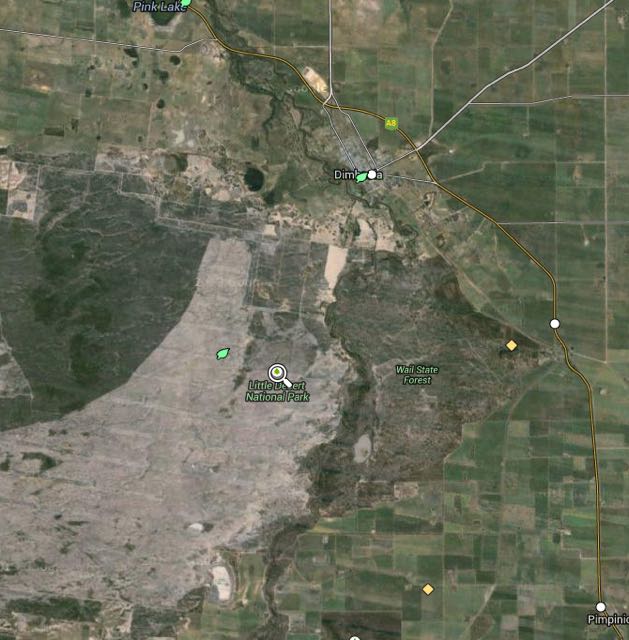
My final activation for Monday 17th November, 2014, and my final activation for the four days away, was the Little Desert National Park, VKFF-291, which is located about 375 km north west of Melbourne, in western Victoria.

Screenshot 2014-12-01 17.53.34

Map courtesy of mapcarta.com

I activated the Little Desert National Park in September, 2013.  For more information on that activation, and details on the park, please have a look at my previous post…..

https://vk5pas.wordpress.com/2013/09/15/little-desert-national-park-victoria/

This is a vast park, covering an area of about.  The park has slowly evolved and grown in size over the years.  The Kiata Lowan Sanctuary, consisting of 217 hectares, was created in 1955 and was set aside for the preservation of the Malleefowl.  The Malleefowl is an endangered bird, and is also known as the Lowan.

Leipoa_ocellata_-Ongerup,_Western_Australia,_Australia-8


image courtesy of wikipedia.org

For more information on the Mallee Fowl, have a look at the following wikipedia article…..

http://en.wikipedia.org/wiki/Malleefowl

The park was increased in size in 1968 to 945 hectares and was declared as the Little Desert National Park.  It was also at this time that the Government ammounced that about 80,000 hectares of desert in the area would be sub divided and cleared for agriculture.  Great debate commenced and it was argued that in the long term the land would be more valuable in its natural state.  As a result the sub division plan was abandoned, and in December 1969, the park was increased to 35,300 hectares.  And then in 1986, the Land Conservation Council which had been created by the Government to advise on the use of public land, recommended an increase in size of the park.  The Central and Western Blocks were created and added to the existing Eastern Block.  This increased the park in size to 132,000 hectares.  In May 1988, the park was declared as a National Park, and it now extends all the way from the Wimmera River in the east, to the South Australian border.

Screenshot 2014-12-01 19.47.51

map courtesy of parkweb.vic.gov.au

I headed out to the park from Dimboola via Wimmera Street and then Horse Shoe Bend Road.  I set up in the same vicinity as last year, which was near a spot in the Wimmera River called Horseshoe Bend.  There is a campground here with wooden benches and seats, and it is beautifully shaded with large River Red gum trees.  It is a very pretty spot close to the Wimmera River on the eastern boundary of the park.  It is a much prettier and cooler option than some of the more remote and baron parts of the park.

Screenshot 2014-12-01 19.50.07


map courtesy of parkweb.vic.gov.au

The Little Desert National Park contains more than 670 species of native plants.  Over 220 bird species have been recorded in the park.  A variety of native animals are also found in the park including Brush-tailed Possums, kangaroos, bats, and many different kinds of reptiles including Stumpy-tailed lizards and Bearded Dragons.

Screenshot 2014-12-01 17.53.07map courtesy of mapcarta.com

I was set up and ready to go by 4.07 p.m. Victorian time.  I started calling CQ on 7.095 on 40m.  My first contact was with Larry VK5LY who was running QRP, but still had a terrific 5/9 signal.  This was followed by Brian VK5FMID who was also 5/9 from Mount Gambier, and then Fred VK3DAC who was 5/9.  Mick VK3FAFK was next with a nice 5/9 signal from nearby Stawell.  Mick is recently licenced and was one of my regular callers over the 4 days of park and SOTA activations.  After working 8 stations from VK2, VK3, & VK5, on 7.095, I was forced to QSY up to 7.097 as the Kandos Net came up on 7.093 and I was getting a lot of ‘bleedover’.

After I QSYd to 7.097 I worked a further 15 stations in VK3 & VK5.  This included Marco VK2YES who was portable in the Olney State Forest near Lake Macquarie, and Norm VK5GI who was running QRP 5 watts on his home brew transceiver from Willunga south of Adelaide.

This slideshow requires JavaScript.

After working a total of 23 stations on 40m, I headed over to 20m, where I worked a total of 9 stations in New Zealand, VK2, Russia, and VK6.  I started calling CQ on 14.244 and my CQ was responded to by Don ZL1AQ and then Noel ZL1DAI.  Mike VK2ABT then called in, and this was followed by Sergey RA3PCI, Jeff VK3HJA, Jason Vk6YTS, and Paul VK2DNL.  I put out a few more CQ calls but there were no takers, so I tuned around the 20m band and found T32TV working weak Europeans.  I also heard 4X6TT on 14.200 but he was just a little too weak to try to work.  I then worked Franc (ZL1SLO) operating as ZL1PPY, a special event call commemorating the centenary of the First World War 1914-1918.

So after about 1 hour 15 minutes in the park, I had a total of 32 QSOs in the log.  That combined with the 10 QSOs from my activation in September, 2013, saw me fall just 2 QSOs short of the required 44 QSO’s for the World Wide Flora Fauna (WWFF) global awards.  Oh well, I will have to revist the park at some stage.

The following stations were worked:-

  1. Larry VK5LY
  2. Brian VK5FMID
  3. Fred VK3DAC
  4. Mick VK3FAFK
  5. Tom VK5EE
  6. Nev VK5WG
  7. Kieran VK2QK
  8. Tim VK5AV
  9. Marco VK2YES/p
  10. Bernard VK3AV
  11. Greg VK5GJ
  12. Robin VK5TN
  13. John VK5FMJC
  14. Brett VK3FLCS
  15. Allen VK5FD
  16. Daniel VK5DF
  17. Ian VK5CZ
  18. Norm VK5GI/qrp
  19. Ewen VK3OW
  20. Colin VK3NGC/m
  21. Rob VK3FKL
  22. Ron VK3JP
  23. Allen VK3HRA
  24. Don ZL1AQ
  25. Noel ZL1DAI
  26. Mike VK2ABT
  27. Sergey RA3PCI
  28. Jeff VK3HJA
  29. Jason VK6YTS
  30. Paul VK2DNL
  31. Franc ZL1PPY
  32. Franc ZL1SLO

After getting mobile I worked Rick VK3EQ who was portable on SOTA peak, Mount Beenak, VK3/ VC-016 (5/5 sent and 5/8 received).

Below is a video of the activation…..


References.

Parks Victoria, June 2014, ‘Little Desert National Park Visitor Guide’.

Wikipedia.org, 2014, <http://en.wikipedia.org/wiki/Little_Desert_National_Park&gt;, viewed 1st December 2014

Grampians National Park, VKFF-213

My second to last activation for Monday 17th November, 2014 was the Grampians National Park, VKFF-213, which is located about 260 km north west of Melbourne.

Screenshot 2014-12-01 17.56.26

map courtesy of mapcarta.com

I have really fond memories of the Grampians, as many of my Dad’s relatives live/d in the Wimmera region, particularly Horsham, not far from the park.  As a young boy we would often visit my Uncles and Aunties, and my Nana & Papa who lived at Horsham.  My Nana would regularly take us for a drive out to the Grampians, where my little sister and I would feed the kangaroos at Zumsteins.

The Grampians is a vast park, and is 167,219 hectares in size, and was proclaimed as a National Park on the 1st July 1984.  The park was listed on the Australian National Heritage List in 2006, for its outstanding natural beauty and being one of the richest indeigeneous rock art sites in south-eastern Australia.  The Grampians is referred to as Gariwerd in the local aboriginal language.  In 1991, after a 2 year consultation process, the park was renamed Grampians Gariwerd National Park.  However, this controversial formality was reversed after a change of State Government in 1992.

I entered the park via a dirt track which ran off the eastern side of the Henty Highway, near Tea Tree Creek.  I drove down the track for about 500 metres and set up my gear just off the track.  I again used the Yaesu FT-450, 40 watts, and the 40m/20m linked dipole for this activation.

Screenshot 2014-12-01 17.56.18

map courtesy of mapcarta.com

I had reached the and park and set up 6 minutes ahead of my scheduled time.  So I was on track to get home at a respectable hour.  I started calling CQ on my nominated frequency of 7.095.  My first contact was with Mr. Reliable John VK5BJE at 1.04 p.m. Victorian time.  John’s signal was down a little from normal.  He was just a 5/5 and I received a 5/1 signal report from John.  However, we both had very low, if not non-existant noise floors at our respective locations, so we were able to receive each other without any problems.  This was followed by John VK2AWJ/3 who was portable in the Burrowa Pine Mountain National Park.  John had been very active over the 4 days, operating portable from a number of Victorian parks.  Congratulations John.  My third contact was with Peter VK3RV and soon after his partner Jenny VK3WQ.  Peter and Jenny had been chasing me over the 4 days during my activations.  Thanks Peter and Jenny.

During this activation, I had a steady flow of callers from VK2, VK3 & VK5, with some very good signals.  Many were regular park hunters, but there were some new callers in there as well, which is always pleasing.  Daniel VK5DF had become a regular caller.  Daniel is from the South Coast Radio Club, where I recently gave a talk on the VK5 Parks Award.  So perhaps my encouragement had rubbed off on Daniel.

Unfortunately, I was pushed off the frequency by a couple of VK2 stations speaking Italian.  This was despite the fact that I had been on the frequency for one hour.  I was in the middle of a QSO with Tony VK5ZAI, when these 2 fellas came up and just took over the frequency without asking if it was in use.  I often hear these same two gentlemen, on or around this frequency, so obviously they believe they ‘own it’.  Perhaps they could not hear me, but surely they could hear the other stations working me.  Probably, but I think they just didn’t care.

This slideshow requires JavaScript.

So after an abrupt end, I had a total of 32 contacts in the log.  This was enough to combine with my previous activation of The Grampians, to surpass the 44 required QSOs for the World Wide Flora Fauna (WWFF) program.

The following stations were worked:-

  1. John VK5BJE
  2. John VK2AWJ/3
  3. Peter VK3RV
  4. Fred VK3DAC
  5. David VK5LSB
  6. Tim VK3TJC
  7. Jenny VK3WQ
  8. Tom VK5EE
  9. Daniel VK5DF
  10. John VK5DJ
  11. Tim VK5AV
  12. Stan VK3BNJ
  13. Andrew VK3FABE
  14. Larry VK5LY
  15. Colin VK5DK
  16. Tom VK2KF
  17. Nev VK5WG
  18. Lesley VK5LOL
  19. Tony VK3CAB
  20. Barry VK3MBW
  21. Hans VK5YX
  22. Brian VK5FMID
  23. Greg VK2MTC
  24. Ray VK3NBL
  25. Brett VK3FLCS
  26. Greg VK5GJ
  27. Ron VK3JP
  28. John VK5FMJC
  29. Frank VK3FARO
  30. Mick VK3FAFK
  31. Kevin VK3VEK
  32. Tony VK5ZAI

Below is a video of the activation…..


References.

Wikipedia, 2014, <http://en.wikipedia.org/wiki/Grampians_National_Park&gt;, viewed 1st December 2014

Mount Richmond National Park, VKFF-361

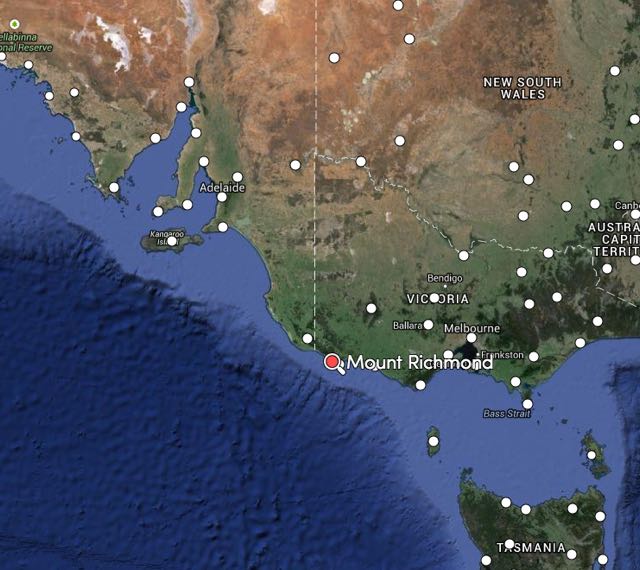
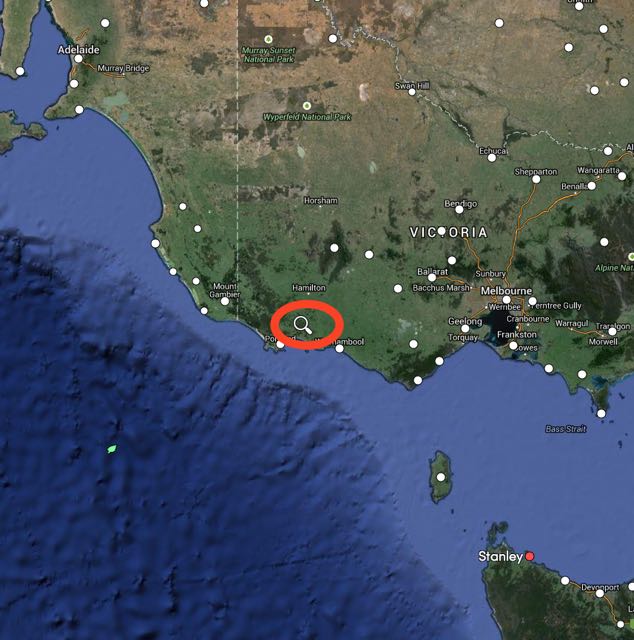
Following my activation of Mount Eccles National Park, I headed off for my final activation for Sunday 16th November, 2014.  That being the Mount Richmond National Park, VKFF-361, which is located about 380 km west of Melbourne, and about 22 km north west of Portland, in western Victoria.

Screenshot 2014-12-01 16.08.10

Map courtesy of mapcarta.com

Mount Richmond is known to the local Gundidjmara aboriginal people as Benwerrin, meaning ‘Long Hill’.  Benwerrin provided a rich variety of foods for the aboriginal people, both in the bush and along the nearby coast.  The large trees with dark grey, hard and fissured bark with dense dar green foilage are Blackwood Wattles.  The tree’s strong wiid was good for making hunting boomerangs, and the sticky sap forms useful glue for hand tools.

Mount Richmond was named after Richard Henty, who was one of the first European children born in the Portland area.  The park itself was established in 1960, as a result of the dedication of local naturalists such as Noel Learmonth and Cliff Beauglehole.

About 450 species of plants have been recorded in the park, including 50 orchid species.  Other plants include Correas, heaths, wattles, and Bush Peas.

The park is home to a large variety of bird life including Emus, Crimson Rosellas, Gang-gang cockatoos, honeyeaters, thornbills, Silvereyes, robins, finches, tree-creepers, and Currawongs.  The park is also an important habitat fr the uncommon Long-nosed Potoroo, which is a small member of the kangaroo family.  The Potoroo is rarely seen and is generally only active during the night.  Other native animals that call the park home are Eastern Grey Kangaroos, Koalas, and Red-necked wallabies.

Screenshot 2014-12-01 16.07.58 map courtesy of mapcarta.com

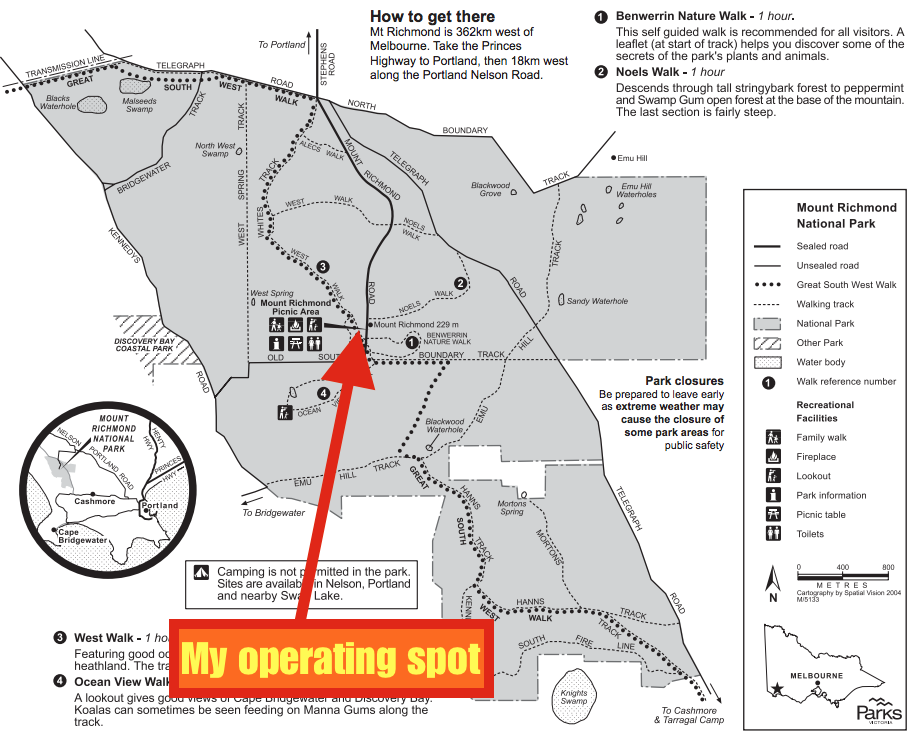
I entered the northern portion of the park via Mount Richmond Road.  I found a nice picnic and camping area which had a wooden table and benches.  It looked a great place to operate from.  It isn’t very often that I get the table and chairs provided, so I decided to enjoy the luxuries whilst they were presented.

Screenshot 2014-12-01 16.36.09

Image courtesy of parkweb.vic.gov.au

I found 7.095 to be clear and I put out a CQ call and was immediately greeted by Kevin VK3KAB and Glenn VK3YY who were portable on Mount Terrible Spur, VK3/ VE-134.  Their signals were 5/7 with their QRP operation of 5 watts.  You can read about their activation on Glenn’s WordPress site at…..

https://vk3yy.wordpress.com/tag/ve-134/

This was followed by Terry VK3UP and then Mike VK3XL, who both had 5/9 plus signals.  A steady flow of callers followed from VK1, VK3, VK5, & VK7.  A few QRP operators called in, including Mark VK3ASC operating with 5 watts, Mark VK1EM, and Daniel VK5DF running 5 watts.  And I also spoke to a few mobile operators including Peter VK3PF on the highway approaching Rosedale, and Allen VK3HRA mobile in the Morwell National Park.

The strongest station worked from Mount Richmond, was Peter VK5NAQ who had a thumping 30/9 signal into Mount Richmond.  What a signal.

I remained on 7.095 and continued to work the callers.  I was working Johnno VK3FMPB when the heavens opened up, and it started to rain, quite heavy.  So I had to grab the radio and run.  Sorry Johnno.  I wasn’t going to get wet, and certainly didn’t want the radio getting wet.  So it was back to the car for a short time until the rain disappeared.

I then returned to the picnic table with my bothy bag and huddled under that, as the occasional shower still came through.  My first contact after returning was Richard VK5ZRY on the Yorke Peninsula.  I worked a further 10 stations after the rain, including Rob VK2QR/3 who was portable on SOTA summit, The Knocker, VK3/ VG-016, with a beautiful 5/9 signal.  And also some more QRP stations, including Craig VK3JK on 5 watts, Colin VK3NCC on 5 watts, and Daniel VK5DF on 5 watts (using a different antenna this time).  I was hearing a few European stations coming through on the frequency at this time.

After working 39 stations on 40m ssb, I lowered the squid pole and removed the links, and headed off to 20m, where I put out a number of CQ calls on 14.244, until I was answered by Albert S58AL.  Unfortunately it wasn’t long, until a European station came up right alongside of me, which made things incredibly difficult.  I managed to work a further 4 stations in Hawaii, Slovenia, Italy, and England, until I was forced to QSY as the bleed over was just unbearable.

This slideshow requires JavaScript.

I found 14.253 free and put out a CQ call, which was answered by my good buddy, Marnix OP7M.  A steady flow of callers from Europe followed this.  I worked a further 18 stations from Italy, Germany, Poland, Japan, Netherlands, Russia, and France.  And thrown amongst the mix was John VK6NU in Western Australia.  Propagation to Europe seemed to be quite good, but the radio was struggling to get sufficient power supply from the 44 amp hour power pack, which was getting low down in voltage.  Each time I keyed the microphone, the radio would shut down.  This is a problem I’ve been experiencing a bit recently.

My 44 amp hour power pack just couldn’t provide enough voltage, and the radio kept cutting out which was extremely annoying.  Plus it was getting dark and the weather was miserable, so it was time to pack up and head back to the warmth of the motel room at Portland.  I had a total of 64 contacts in the log.  Again, I was very pleased, as I had qualified the park for the World Wide Flora Fauna (WWFF) global award.

The following stations were worked:-

  1. Kevin VK3KAP/p (SOTA)
  2. Glenn VK3YY/p (SOTA)
  3. Terry VK3UP
  4. Mike VK3XL
  5. Nev VK5WG
  6. Matt VK1MA
  7. Ian VK1DI
  8. Tim VK5AV
  9. Brian VK5FMID
  10. Bernard VK3AV
  11. Peter VK3RV
  12. Col VK5HCF
  13. Hans VK5YX
  14. Tony VK3CAB
  15. Mark VK7MK
  16. Mark VK3ASC
  17. Mark VK1EM
  18. Peter VK3PF/m
  19. Allen VK3HRA/m
  20. John VK5BJE
  21. Barry VK5BW
  22. VK2CCJ
  23. Bob VK5FPAC
  24. Peter VK5NAQ
  25. Jim VK5TR
  26. Daniel VK5DF
  27. Brett VK3FLCS
  28. John VK5TD
  29. Johnno VK3FMPB
  30. Richard VK5ZRY
  31. Dennis VK3BQZ/m
  32. Brian VK3BBB
  33. John VK5FTCT
  34. Peter VK3TKK
  35. John VK3FCAN
  36. Craig VK3JK
  37. VK3NCC/p
  38. Daniel VK5DF
  39. Rob VK2QR/p (SOTA)
  40. S58AL
  41. WH6DXW
  42. S52KM
  43. I5FLN
  44. M0HDX
  45. OP7M
  46. IK1GPG
  47. DL7UXG
  48. SP5BR
  49. RZ3DN
  50. SP5AUB
  51. JA1HOX
  52. IK2VFR
  53. ON4BB
  54. PA1AR
  55. M0WYZ
  56. RU3EG
  57. John VK6NU
  58. DL2ND
  59. DL1EKO
  60. DL1EBR
  61. F1BLL
  62. DJ7ZZ
  63. IZ5JMZ
  64. DL5EBG

Below is a video of the activation…..


References.

Parks Victoria, 2014, ‘Mount Richmond National Park Visitor Guide’.

Mount Eccles National Park, VKFF-345

After my activation of Mount Napier summit, I headed off to the Mount Eccles National Park (NP), which is located in western Victoria, about 270 km west of Melbourne, and about 15 km south west of the little town of MacArthur.

Screenshot 2014-12-01 14.55.20

Map courtesy of mapcarta.com

Mount Eccles NP is about 5,470 hectares in size, and was established in June, 1960.  Not surprising, located within the park is Mount Eccles, also named Budj Bim by the Gunditjmara aboriginal people.  It is the site of the most recent active volcano in Australia.  The most recent eruption of Mount Eccles was about 8,000 years ago.  I am very pleased to report that it remained quite during my activation of the park.  Mount Eccles is a relatively small hill surrounded by lush vegetation with a small hidden deep volcanic crater lake which is named Lake Surprise.

There is a good article and a short audio item with photographs on the ABC South West Victoria website at…..

http://www.abc.net.au/local/photos/2011/09/01/3307642.htm

Screenshot 2014-12-01 14.55.03 map courtesy of mapcarta.com

I entered the park via Mount Eccles Road.  There were quite a few people in the main campground, so I continued up to Lake Surprise lookout area, and set up in a cleared area near the carpark.  This was certainly not as green and shady as the campground, but it was a lot quieter.

Screenshot 2014-12-01 15.39.05

Image courtesy of parksweb.vic.gov.au

My first contact was with Col VK5HCF who was portable in the Canunda National Park in the South East of South Australia.  Col was out and about with Tom VK5EE, and was activating the park as part of the VK5 National & Conservation Parks Award and the World Wide Flora Fauna (WWFF) program.  They had a good strong 5/8 signal to Mount Eccles.

I then found a clear frequency on 7.110 and put out a few CQ calls and it wasn’t long before I was called by John VK5BJE, followed by Terry VK3UP, Frank VK2HFS, and then Nigel VK5NIG.  After working a further 3 stations, I went hunting around the band again, and found Peter VK3PF operating portable from the Lind National Park, VKFF-287.  More information on Peter’s activation can be found on his WordPress site at…..

http://vk3pf.wordpress.com/2014/11/19/krmnpa-weekend-2014/

After working Peter I called CQ on 7.095 and again it wasn’t long before I had a steady flow of callers calling in again, from VK3, VK5, & VK7.  They included Joe VK3YSP and his wife Julie VK3YSP, operating portable from the Wilsons Promontory National Park.  Nick VK3ANL also called in, whilst portable on SOTA peak, Mount Dandenong, VK3/ VC-025 which is located in the Dandenong Ranges National Park VKFF-132.  And a few contacts later, I was called by Peter VK3ZPF who was portable in the Churchill National Park, VKFF-621.  Peter had a good 5/7 signal.

After working Peter I had a further 12 contacts, before lowering the squid pole and trying my luck on 20m.  I called CQ on a number of occasions on 14.310 but had absolutely no takers.  I tuned around the 20m band, but the only station I could hear was Brian ZL2ASH, who was testing on 14.156.  I called Brian, but unfortunately he could not hear me.

So I again lowered the squid pole, and reconnected the crocodile clips for 40m and again went band searching on 40m.  I found young Reuben VK7FREU calling CQ from SOTA peak, Mount Wellington, VK7/ SC-001.

Prior to leaving the park I also spoke with Rob VK2QR/3 who was portable on SOTA peak, Sam Hill VK3/ VG-049.  As normal, Rob had a good strong signal.  And then I worked Amanda VK3FQSO who was operating portable in the Terrick Terrick National Park, VKFF-630.

I was also called by Glenn VK3YY and Kevin VK3KAB who were on top of Mount Terrible, VK3/ VE-067.  You can read a bit about Glenn and Kevin’s activation on Glenn’s WordPress site at…..

http://vk3yy.wordpress.com/2014/11/17/mt-duffy-to-mt-terrible-five-summits/

This slideshow requires JavaScript.

After 2 hours in the park, I had a total of 49 contacts in the log.  Again, I was very pleased, as I had reached the required 44 contacts for the World Wide Flora Fauna (WWFF) global award program.

The following stations were worked:-

  1. Col VK5HCF/p (Canunda NP)
  2. John VK5BJE
  3. Terry VK3UP
  4. Frank VK2HFS
  5. Nigel VK5NIG
  6. Lesley VK5LOL
  7. Nev VK5WG
  8. Matt VK1MA
  9. Peter VK3PF/p (Ling NP)
  10. Christopher VK5LTD
  11. Barry VK5BW
  12. Wolf VK5WF
  13. Jim VK5KOB
  14. Mark VK7MK
  15. Joe VK3YSP/p (Wilsons Promontory NP)
  16. Julie VK3FOWL/p (Wilsons Promontory NP)
  17. Tim VK5AV
  18. Daniel VK5DF
  19. Richard VK5ZRY
  20. Nick VK3ANL/p (SOTA & Dandenong Ranges NP)
  21. Ron VK3HAK
  22. Dale VK5DC
  23. Hans VK5YX
  24. Peter VK3ZPF/p (Churchill NP)
  25. Peter VK2NEO
  26. Jim VK5TR
  27. John VK1CJ/3
  28. Greg VK5ZGY/m
  29. John VK5FMJC
  30. Ross VK7ALH
  31. Brenton VK3CBV
  32. Trent VK7FTRS
  33. Joe VK3YSP/m
  34. Mike VK3XL/m
  35. Matt VK5ZX
  36. Hans VK5KHZ
  37. Reuben VK7FREU/p (SOTA)
  38. Andrew VK1NAM
  39. Colin VK3ZZS/p
  40. Brett VK3FLCS
  41. Rob VK2QR/p (SOTA)
  42. Amanda VK3FQSO/p (Terrick Terrick NP)
  43. Ewen VK3OW
  44. Glenn VK3YY/p (SOTA)
  45. Kevin VK3KAB/p (SOTA)
  46. Brian VK5FMID
  47. Bernard VK3AV
  48. David VK3UCD
  49. Peter VK3TKK

Below is a video of this activation…..


References.

Wikipedia.org, 2014, <http://en.wikipedia.org/wiki/Mount_Eccles_National_Park&gt;, viewed 1st December 2014