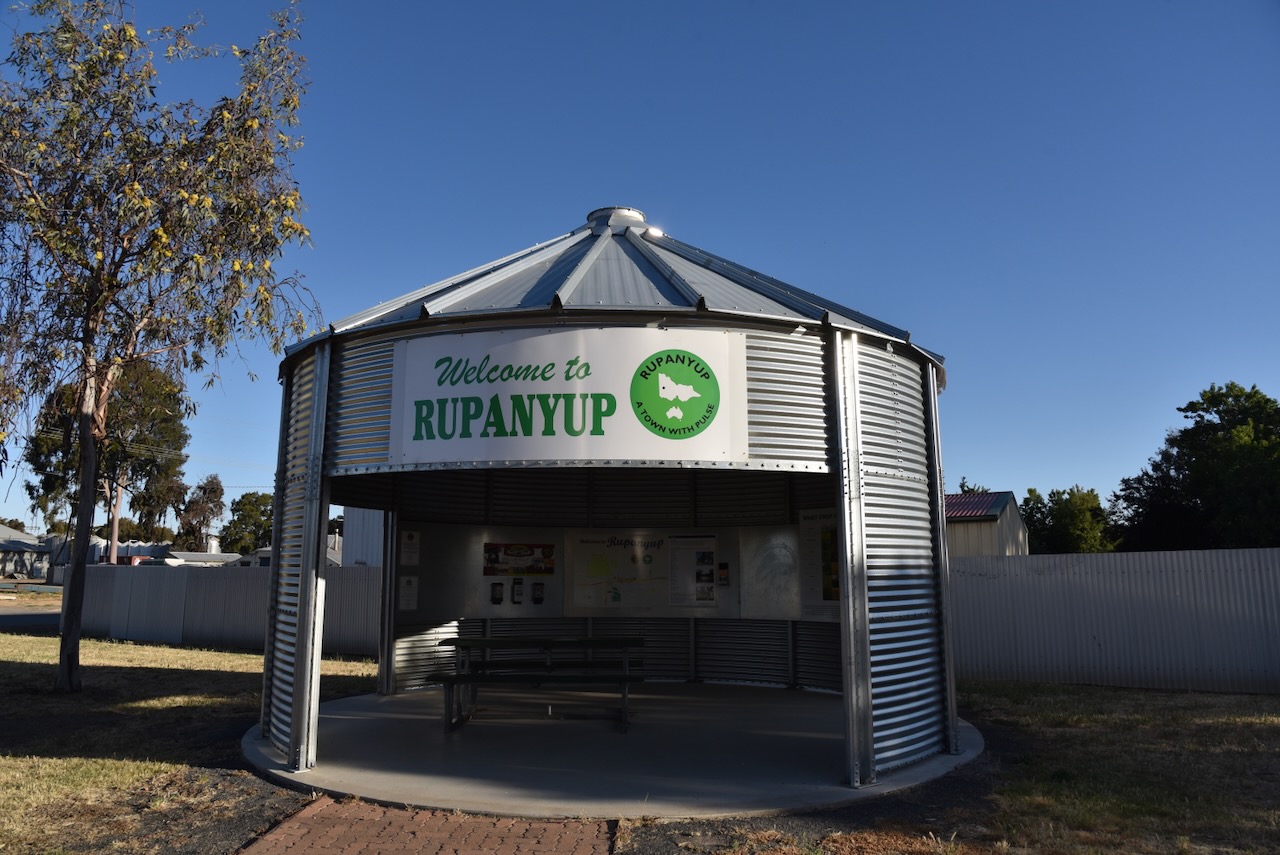
Rupanyup 2 silo VK-RPU3

After we had qualified the Rupanyup silo, Marija and I activated the Rupanyup 2 silo VK-RPU3. We didn’t have to move location as we were parked in the activation zone of both silos.
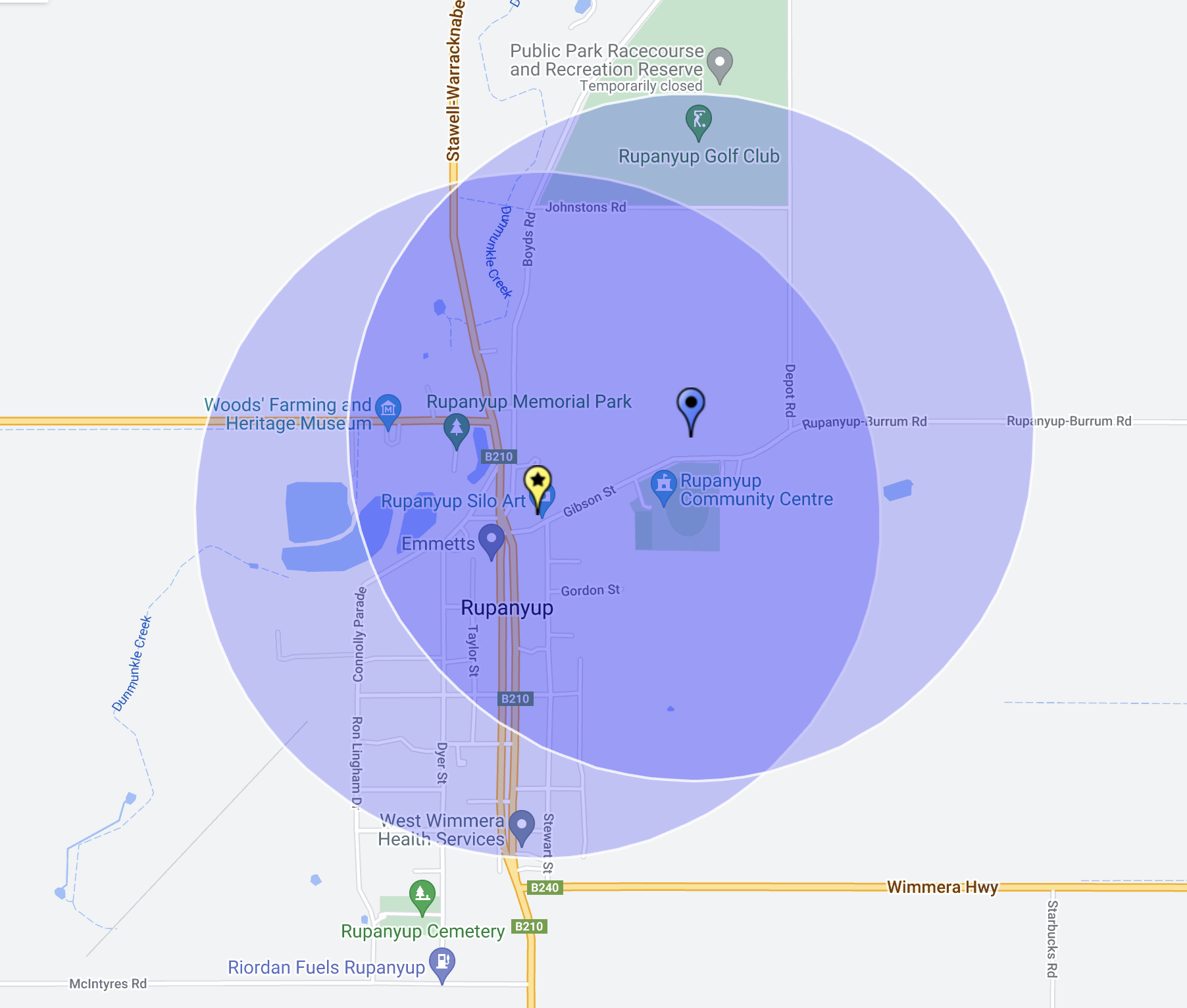
Above:- The activation zones of the two silos at Rupanyup. Image c/o SiOTA website.

The Rupanyup 2 silo is in fact the old Wimmera Flour Mill & wheat silo that is located at the end of Gibson Street, Rupanyup, opposite the oval. The silos are a rare example of a portable mill of galvanized iron construction and were designed by General Sir John Monash and erected in 1909. (Yarriambiack Shire 2024)
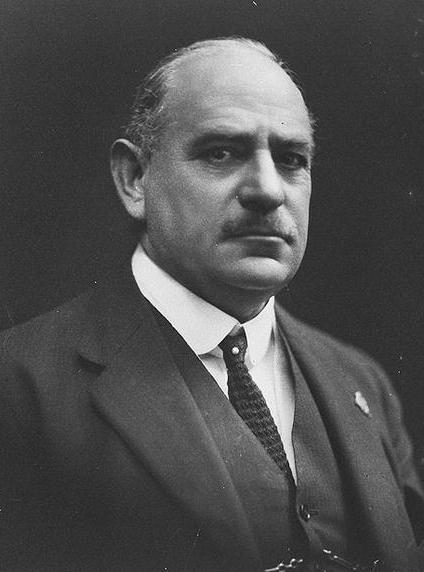
Above:- General Sir John Monash. Image c/o Wikipedia.

General Sir John Monash, GCMG, KCB, VD, was born in June 1865 in West Melbourne. He was an Australian civil engineer and a military commander in WWI. He died in October 1931. Monash features on the Australian $100 note, and his name endures in many places including Monash University, the City of Monash, and the Monash Freeway.

In 1906 the four-storey timber and iron Rupanyup flour mill on a brick base was constructed for the flour miller George Frayne (b. 1864. d. 1936). 
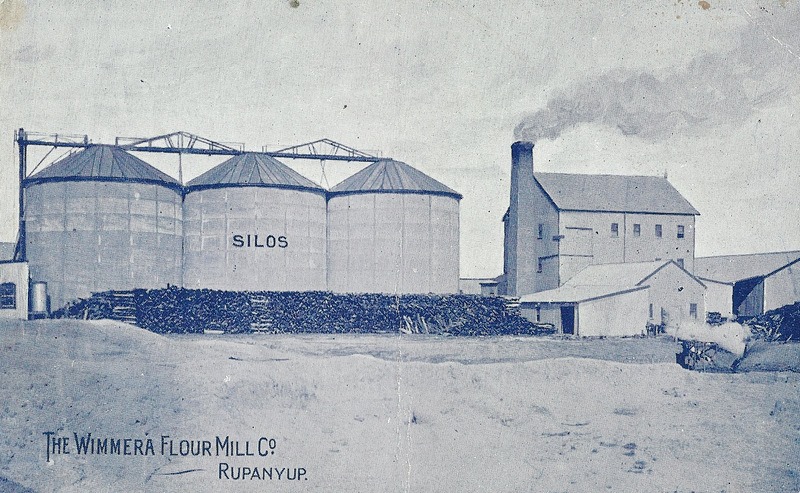
Above:- The Wimmera Flour Mill Co site at Rupanyup. Image c/o Rupanyup & District Historical Society Facebook page.

In 1907 John Monash was commissioned to design three reinforced concrete silos for the mill. The silos were completed in April 1908 by contractors Schumacher Mill Furnishing Works Pty Ltd. The three reinforced concrete silos were the first of concrete construction for the bulk storage of grain in Victoria. At the time they were believed to be the largest grain stores in Australia. (Victorian Heritage Database 2024)
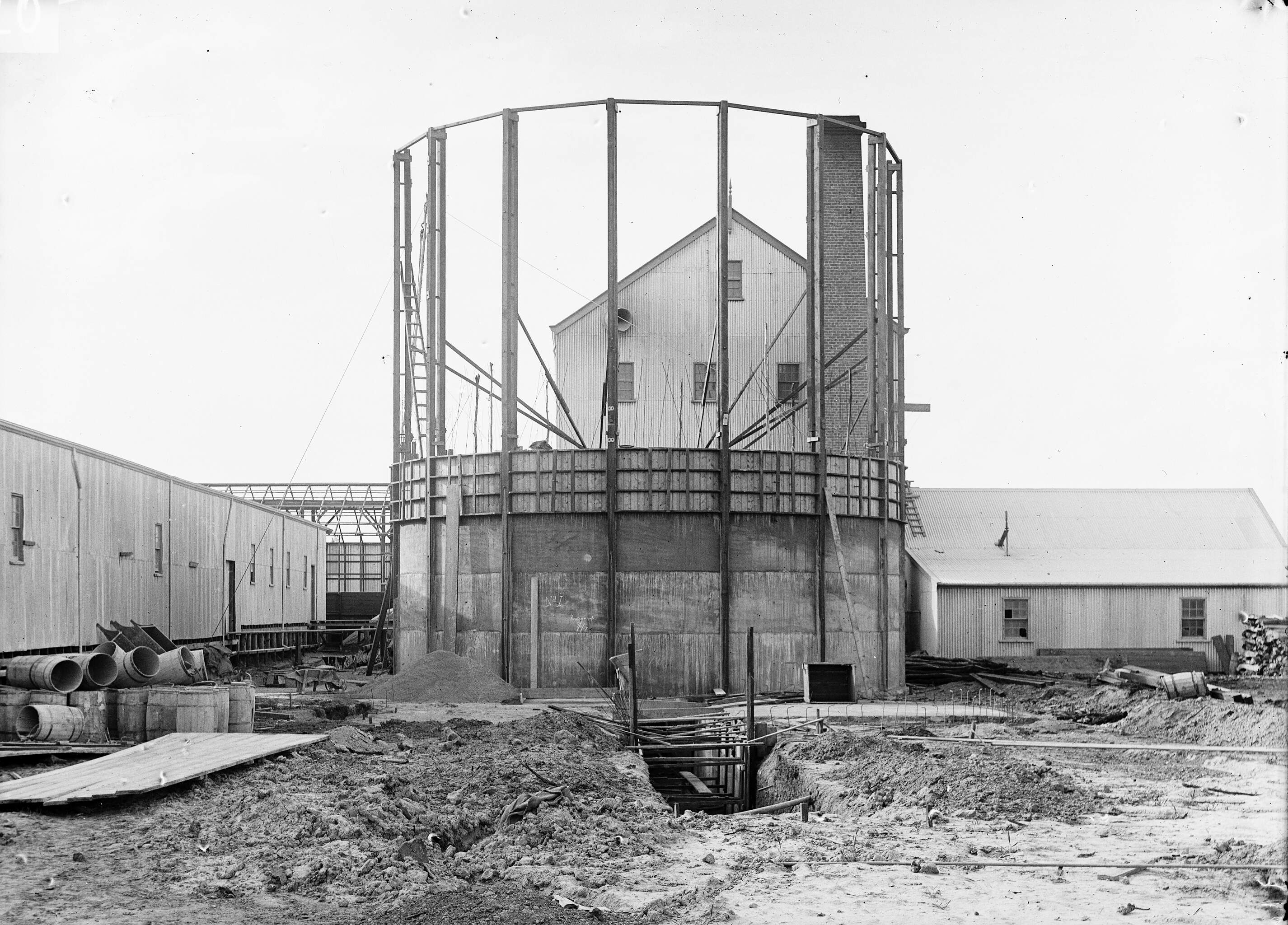
Above:- the construction of the Rupanyup silo. Image c/o

The site is listed on the Victorian Heritage Database and they are of Victorian State significance as the first reinforced concrete bulk wheat storage silos to be constructed and operated in Victoria. They are also significant as the first application of the Monier principle of concrete construction.  (Victorian Heritage Database 2024)

Above:- The Wimmera Flour Mill Co site at Rupanyup, c. early 1900s. Image c/o Rupanyup & District Historical Society Facebook page.
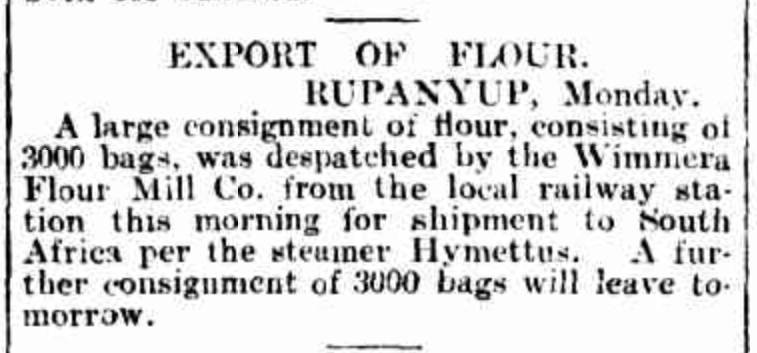
Above:- Article from The Age, Melbourne, Tue 18 Jun 1907. Image c/o Trove

The silos had a capacity of 145,000 bushels. In 1920 the silos were taken over by R. Brunton and Co. In 1925 it was reported that the Rupanyup silos employed 20 men constantly and 40 during the height of the wheat season. The mill handled 120,000 bags of wheat each year, of which 85,000 bags were delivered by farmer’s teams. (Trove 2024)

Above:- Article from The Horsham Times, Tue 20 Jan 1920. Image c/o Trove

We operated from the 4WD, running the Icom IC-7000, 100 watts, and the Codan 9350 antenna with the 1.5-metre stainless steel whip.

Marija worked the following stations on 20m SSB:-

  1. VK1AO
  2. VK2MET
  3. VK4NH
  4. VK4DXA

I worked the following stations on 20m SSB:-

  1. VK1AO
  2. VK2MET
  3. VK4NH
  4. VK4DXA

Marija worked the following stations on 20m SSB:-

  1. VK3PF
  2. ZL4NVW/p (Mount Aspiring National Park ZLFF-0006)

I worked the following stations on 40m SSB:-

  1. VK3PF
  2. VK3UH
  3. VK3AHR
  4. VK3APJ
  5. VK4NH
  6. VK4DXA
  7. VK5KKT
  8. VK2RK
  9. VK2ACR
  10. Vk2HAK
  11. VK3WAR
  12. VK7KT
  13. VK3ACZ
  14. VK2IO/p (Wereboldera State Conservation Area VKFF-1392)
  15. VK2YAK
  16. VK4YAK
  17. VK3EJ
  18. VK7ZA
  19. ZL4NVW/p (Mount Aspiring National Park ZLFF-0006)

References.

  1. vhd.heritagecouncil.vic.gov.au. (n.d.). VHD. [online] Available at: https://vhd.heritagecouncil.vic.gov.au/places/70074 [Accessed 15 Feb. 2024].
  2. ‌Wheat, Wool and Livestock in the Shite of Dunmunkle. (1925). Weekly Times. [online] 4 Jul. Available at: https://trove.nla.gov.au/newspaper/article/223297514?searchTerm=george%20frayne%20rupanyup [Accessed 15 Feb. 2024].
  3. ‌www.yarriambiack.vic.gov.au. (n.d.). Rupanyup. [online] Available at: https://www.yarriambiack.vic.gov.au/Engage-With-Us/Discover-Yarriambiack/Townships-To-Visit/Rupanyup#:~:text=First%20surveyed%20in%201873%2C%20the [Accessed 15 Feb. 2024].‌

Rupanyup silo VK-RPP3

After leaving Sheep Hills (17th November 2023), Marija and I headed to our next silo activation for the Silos On The Air (SiOTA) program, the Rupanyup silo VK-RPP3.

Above:- Map showing the location of Rupanyup. Map c/o Google Maps.

Prior to European settlement, the Rupanyup district was home to the Wergaia and Wotjobaluk aboriginal people. (Aussie Towns 2024)

The first European settlers in the Rupanyup district established the Warranooke pastoral run in 1845 which comprised 64,000 acres on the Richardson River at Glenorchy, south of Rupanyup. The run was occupied by Alexander Ayrey, James Robson Darnell, and Henry Nichol. (Aussie Towns 2024) (SLV 2024)(Young 1926)

Above:- The Warranooke woolshed, c. 1871. Image c/o National Library Australia.

Alexander Ayrey was born in March 1807 in Southwark, Surrey, England. Together with his close friend and business partner Henry Nicholl, they arrived at Port Phillip, Victoria in August 1845 aboard the Archilles. (Ancestry 2024)

Ayrey died in May 1865 due to injuries sustained three weeks previous, when a limb of a falling tree stuck him at Warranooke. Upon his death, he left his portion of Warranooke to his nephew Charles Ayrey. (Ancestry 2024) (Young 1926)

Above:- Article from The Herald, Melbourne, Mon 15 May 1865. Image c/o Trove.

The township of Rupanyup, located on the Dunmunkle Creek, was surveyed in 1873. At that time it was known as Karkarooc. About one mile from the settlement a flour mill was constructed. In 1874 a Presbyterian church was built. By 1875 the settlement was known as Lallat. In that year a school opened as did the Post office which was still using the name Kakarooc. By 1876 the settlement was known as Rupanyup, an aboriginal word meaning “branch hanging over water”.  In 1878 a local newspaper commenced publication. By the mid-1880s Rupanyup had three hotels. In 1887 a railway line from Lubeck to Rupanyup was completed, and in that same year, a second flour mill was constructed. (Aussie Towns 2024) (Yarriambiack 2024)

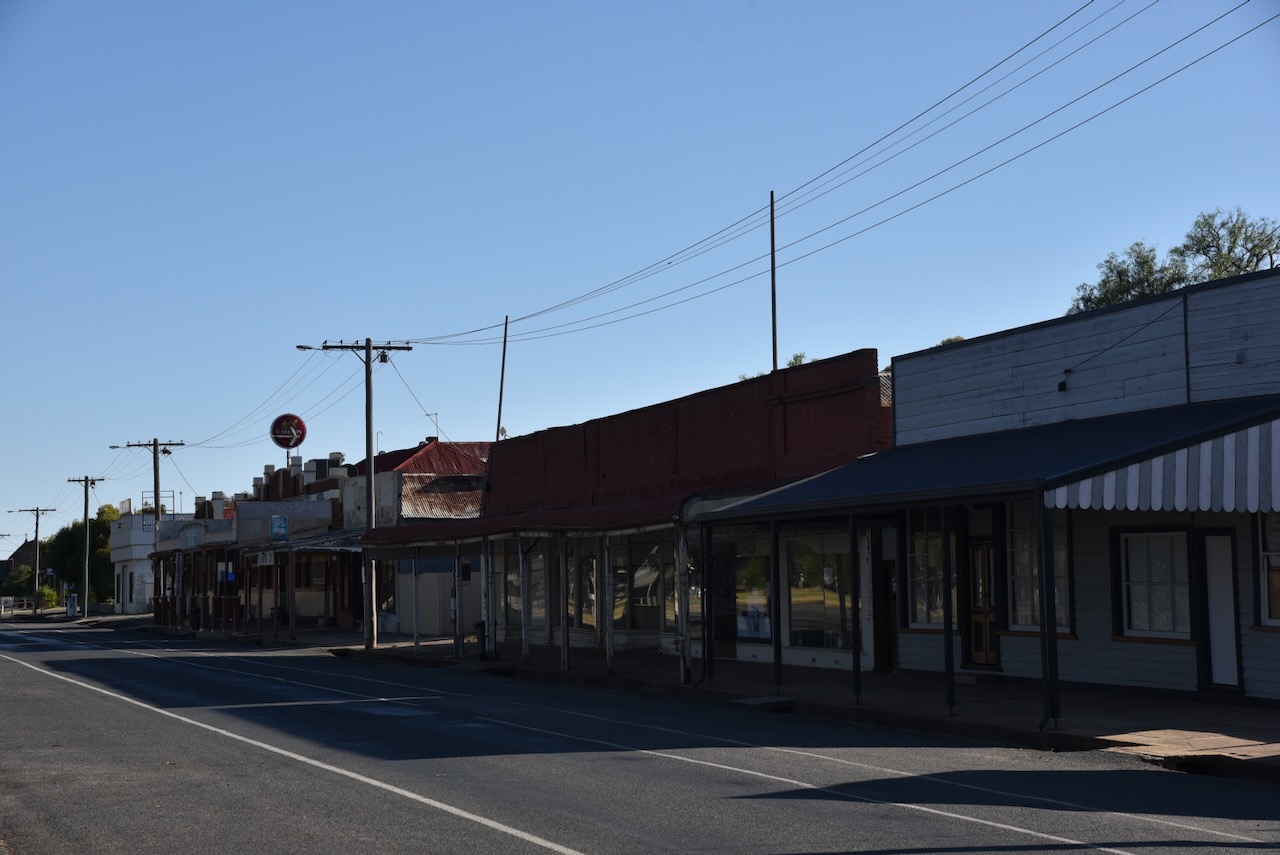
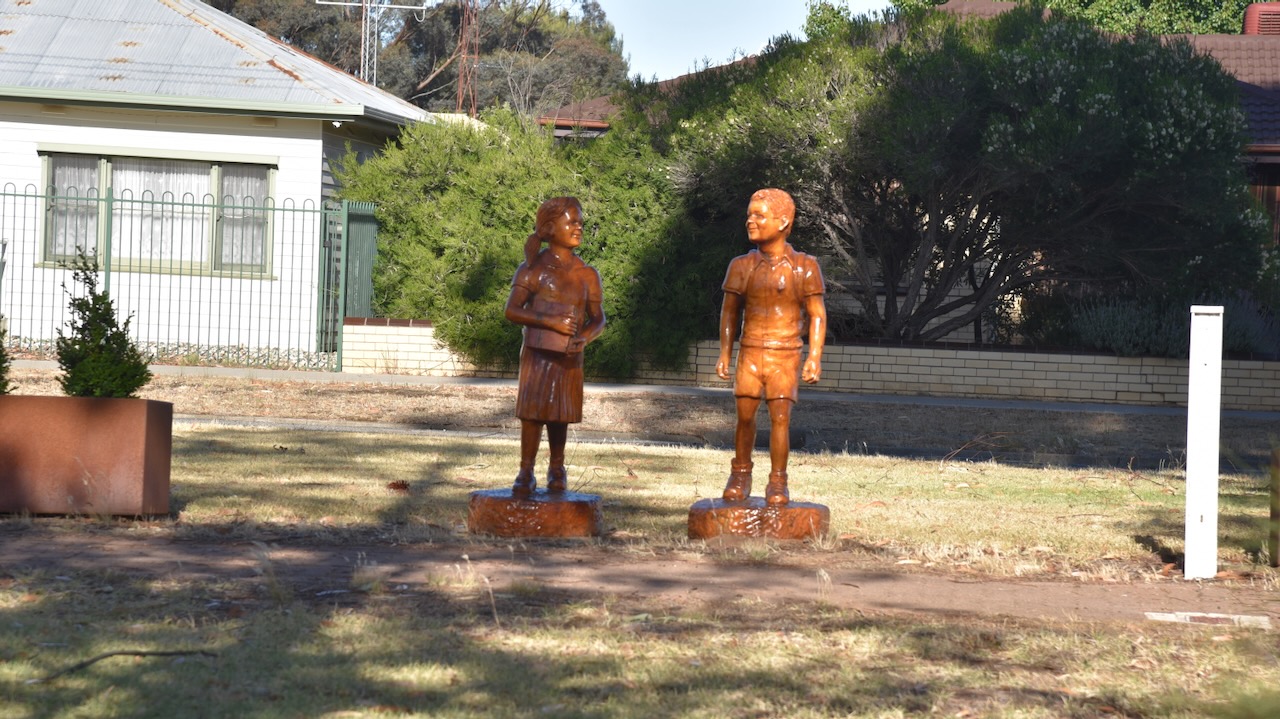
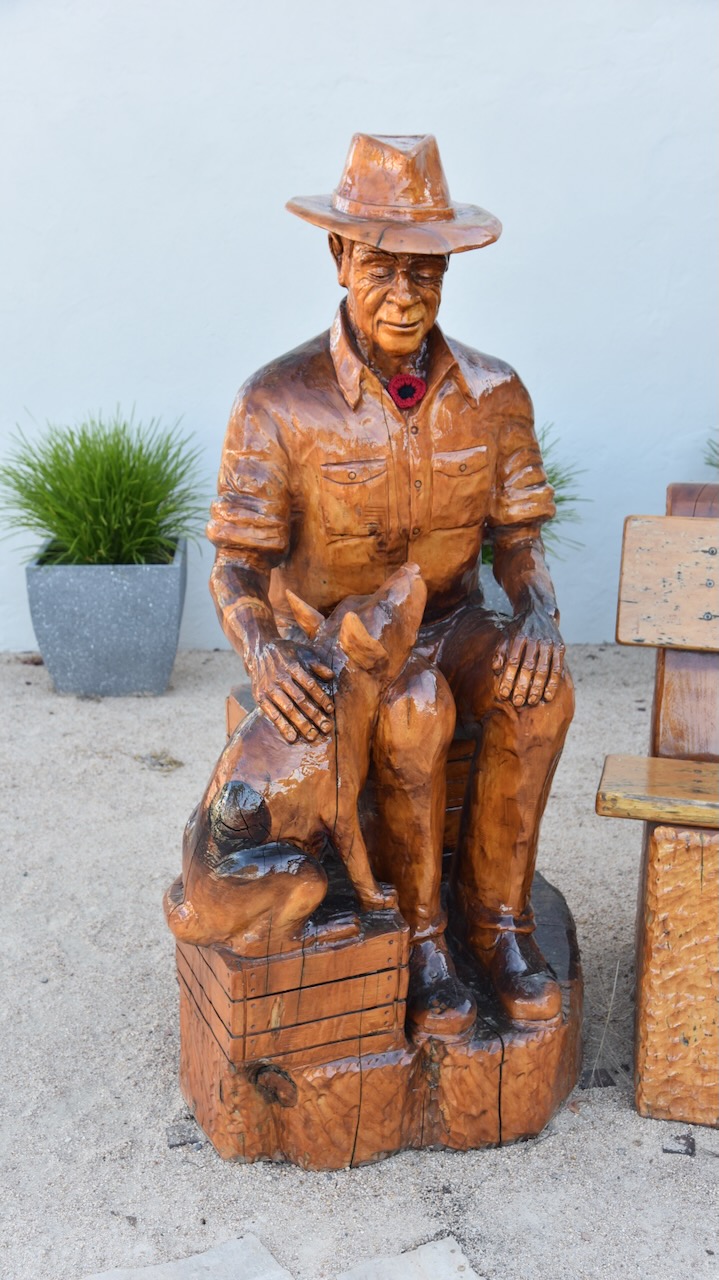
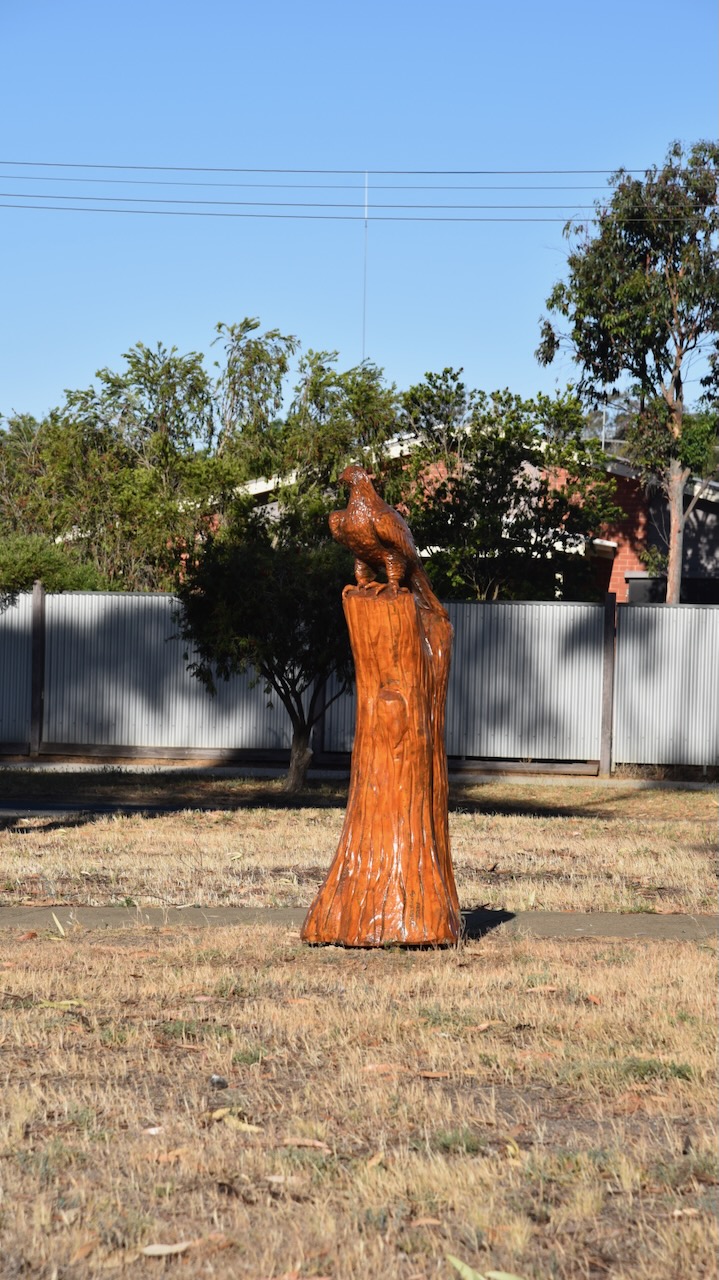
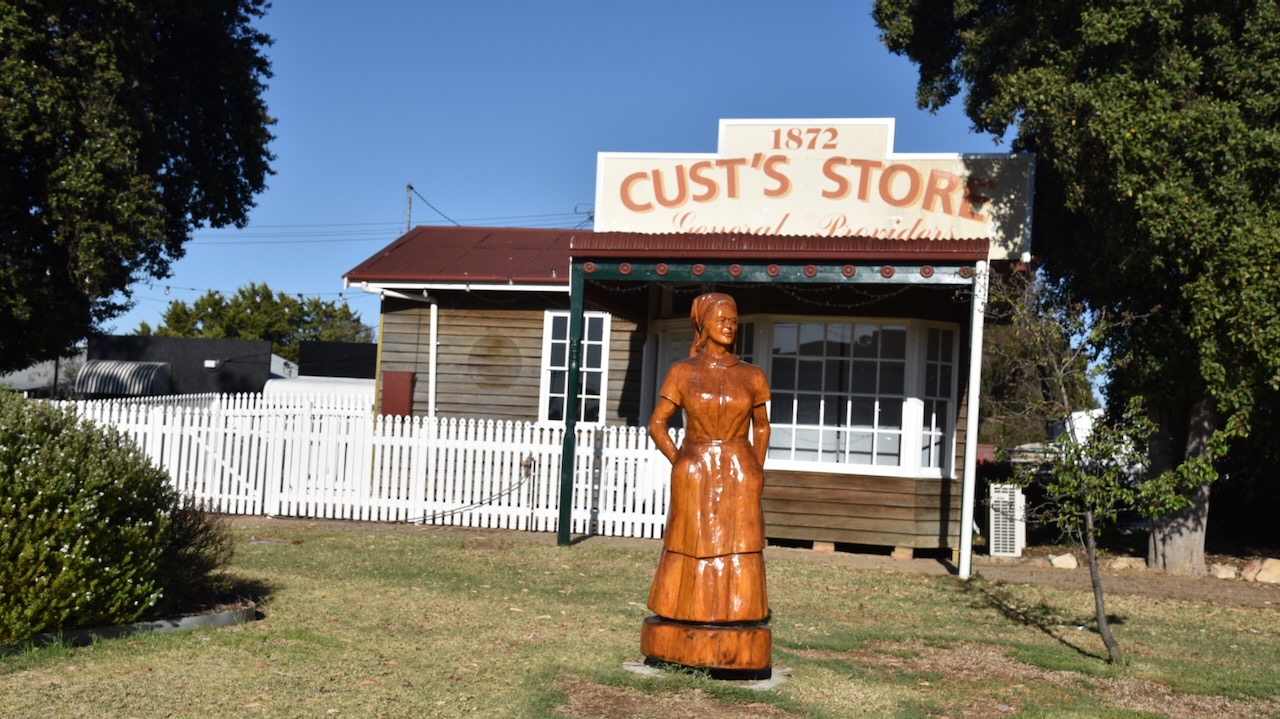
Rupanyup has some very interesting chainsaw sculptures. There are six of these along the main street of Rupanyup. The project was initiated in 2019 and was completed by Gippsland chainsaw artist John Brady. The sculptures include a gonna, two eagles, children, a farmer sitting on a seat, and a Rupanyup lady. (Weekly Advertiser 2024)

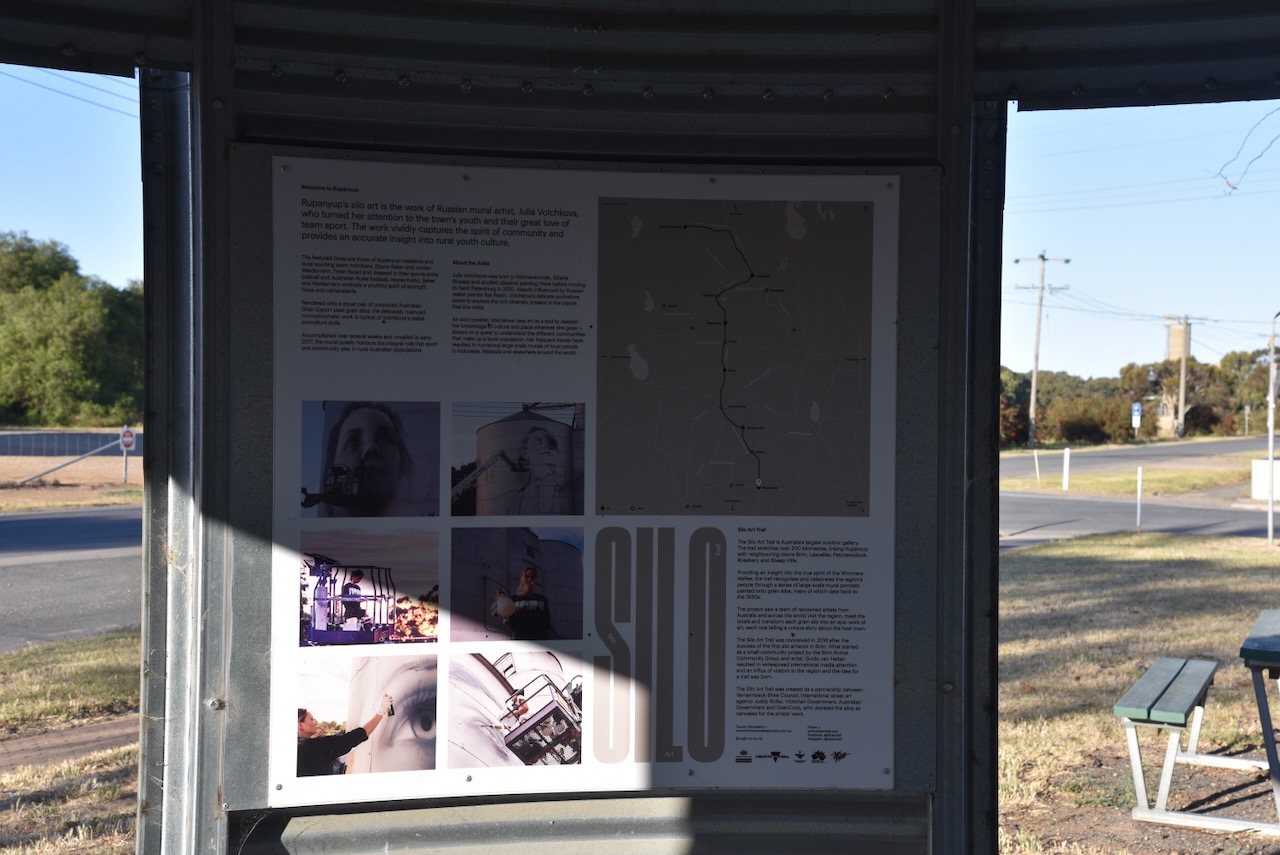
On Gibson Street, you can find an excellent information shelter that contains a vast amount of information regarding Rupanyup and the surrounding district.

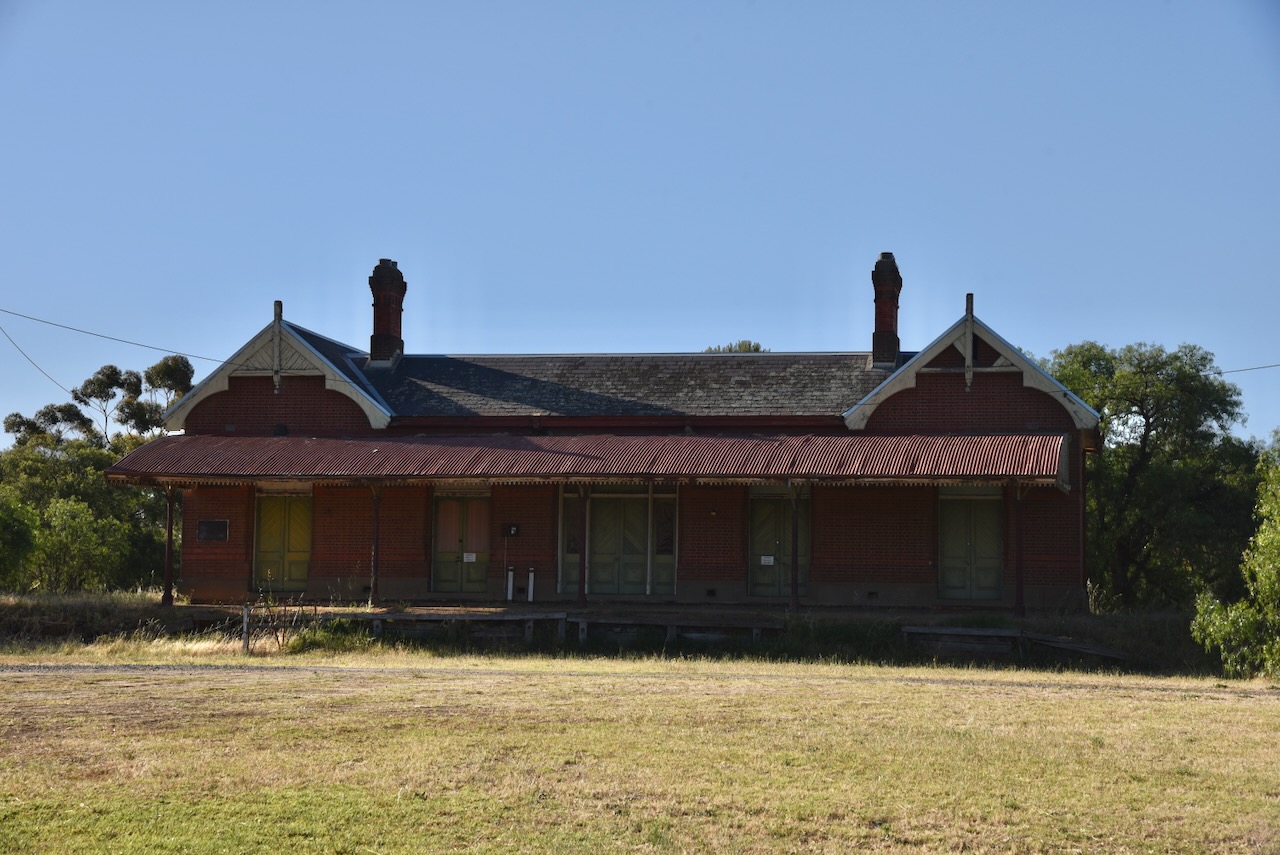
The Rupanyup Railway Station was built in 1890 by Sutcliffe & Hartley. It was located on the Lubec-Bolangum line for the Victorian Railways. The railway station building comprises a single-storey Gothic style brick building with a slate hip and gable roof. The building is listed on the Victorian Heritage Database. (Vic Heritage Database 2024)

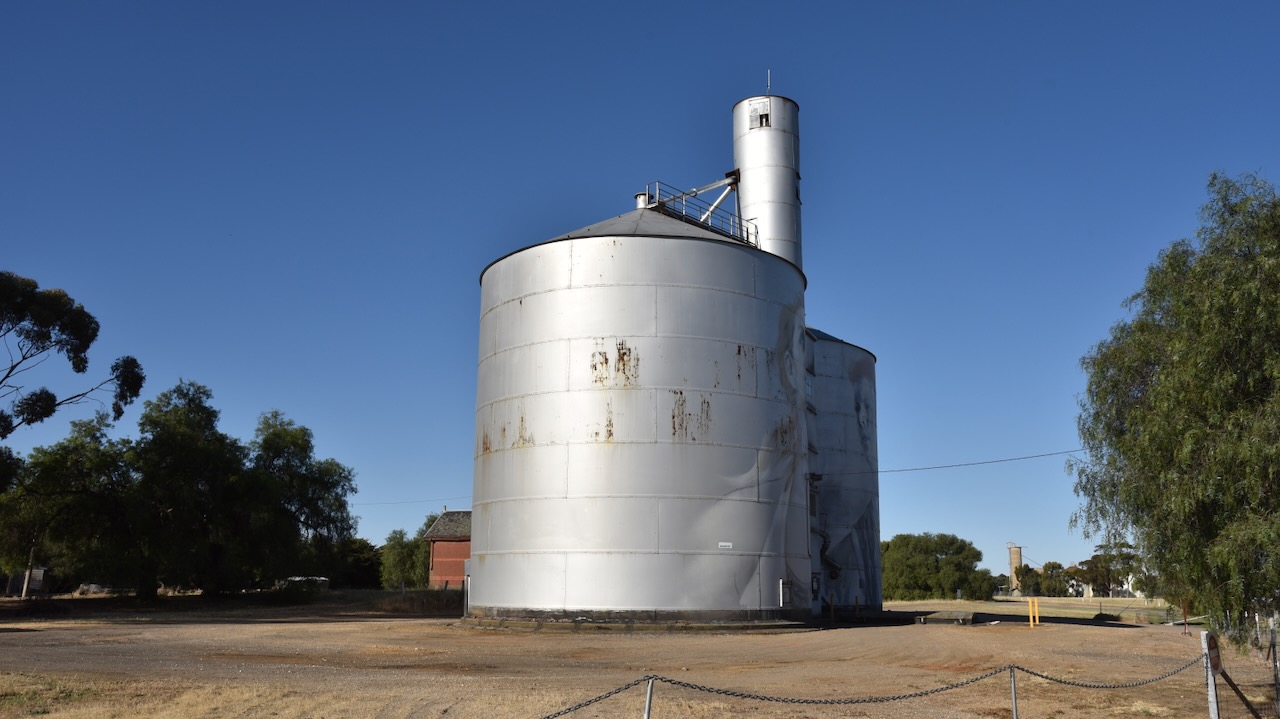
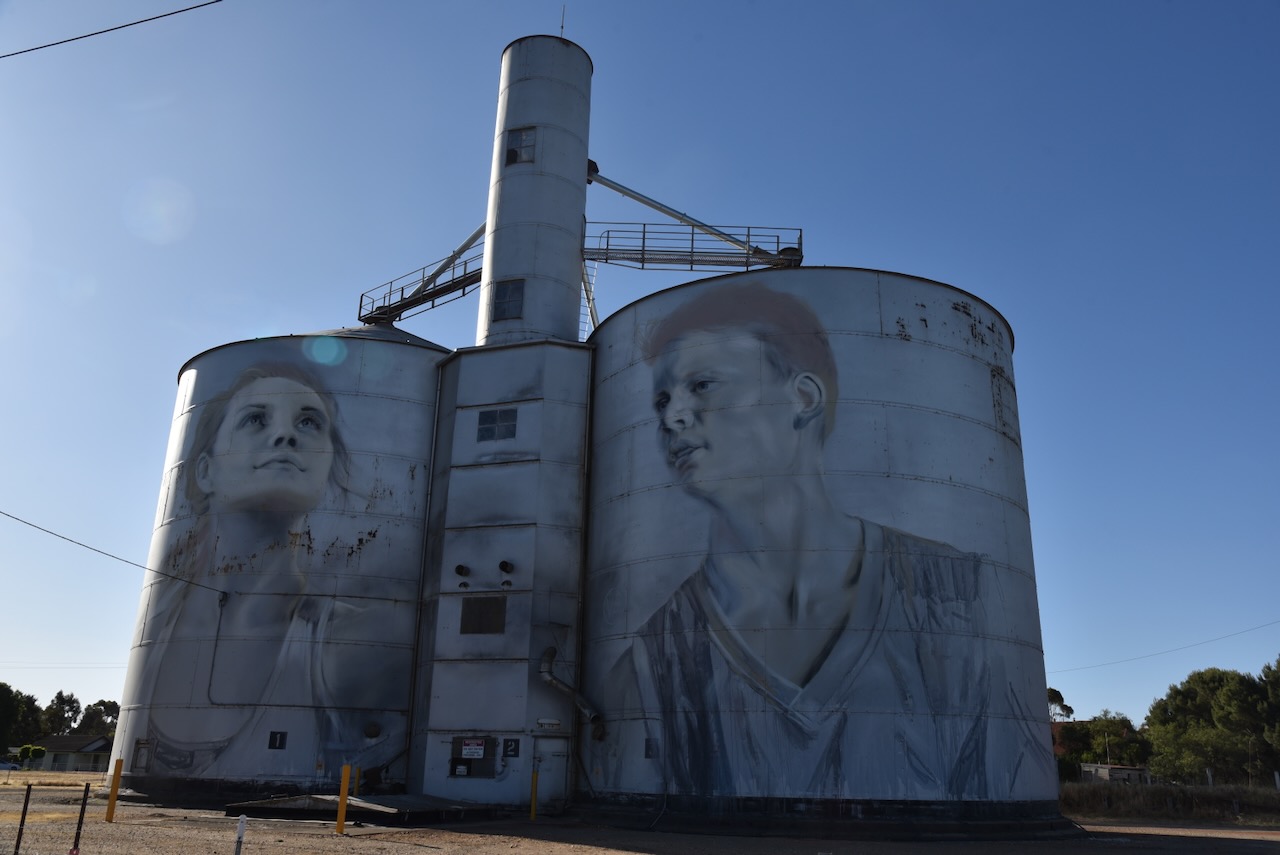
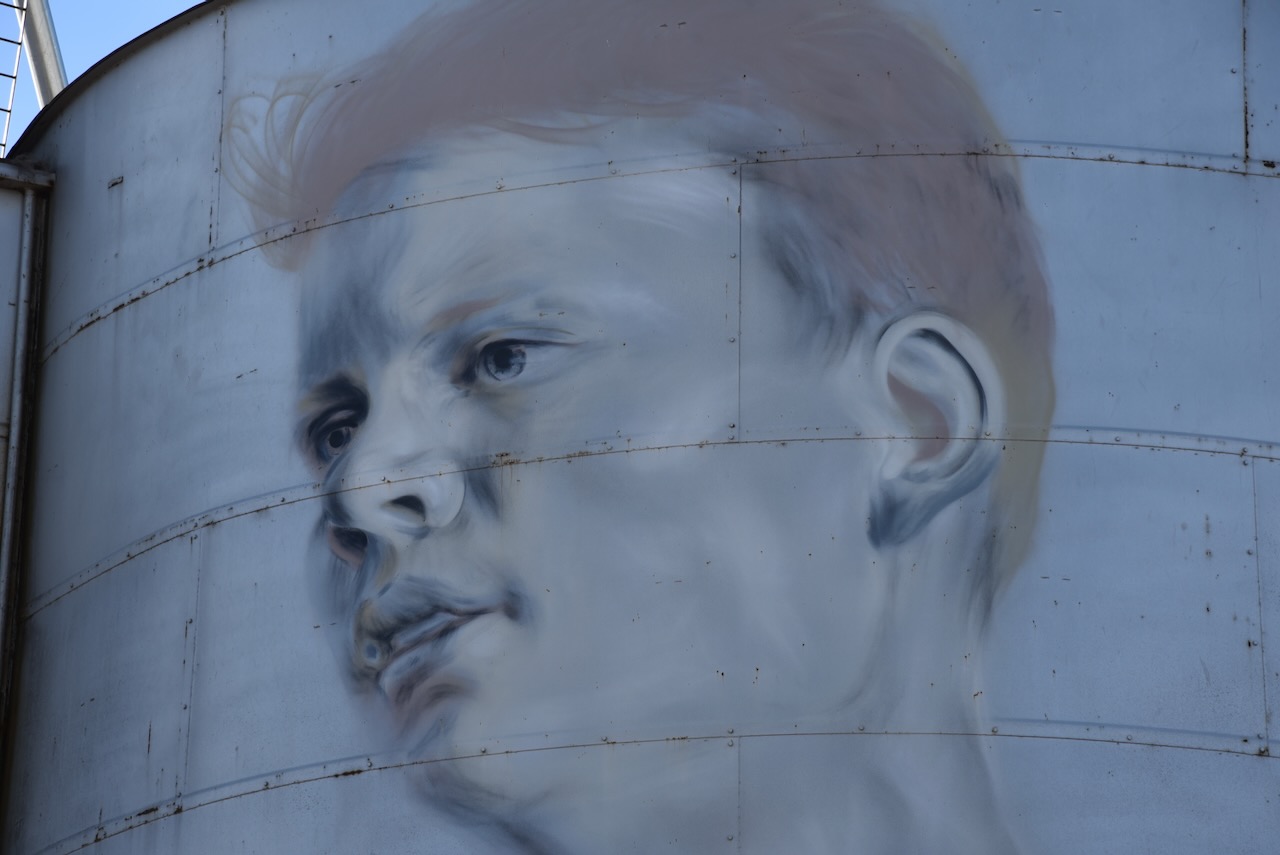
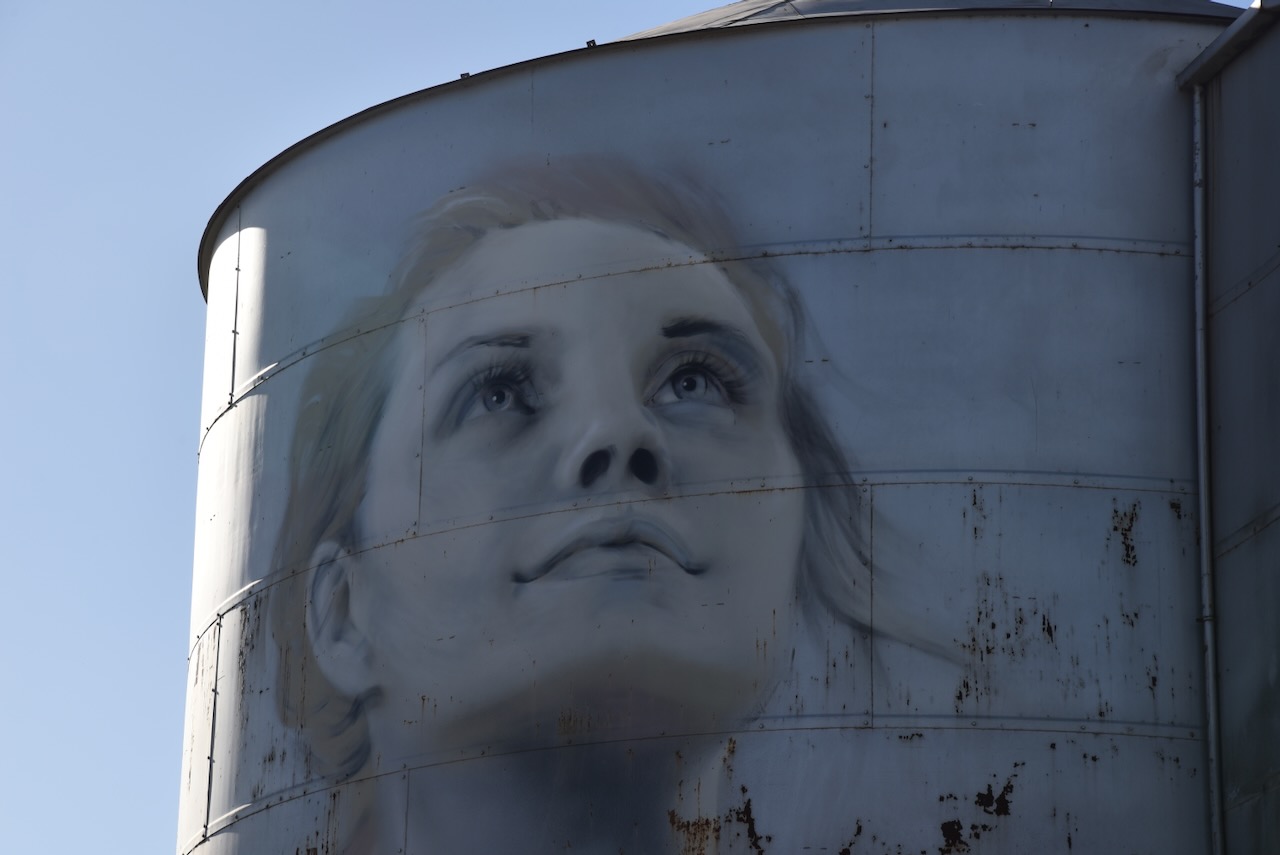
The Rupanyup silo is part of the Australian Silo Art Trail. It is the beginning of the trail when arriving from the direction of Melbourne. The Rupanyup silo art is the work of Julia Volchkova, a Russian mural artist. The faces featured on the silo are those of Rupanyup residents and local sporting team members. The work was completed in 2017. (Australian Silo Art Trail 2024)

There are two silos in Rupanyup that qualify for the Silos On The Air program. Marija and I parked in Gibson Street which was in the activation zone for both silos. However, after some discussion on air about the rules being unclear, we decided to err on the side of caution and activate one silo at a time.

We operated from the 4WD, running the Icom IC-7000, 100 watts, and the Codan 9350 antenna with the 1.5-metre stainless steel whip.

Above:- Map showing the activation zone at the Rupanyep silo. Image c/o SiOTA website.

Marija worked the following stations on 40m SSB:-

  1. VK3PF
  2. VK3OAK
  3. VK2IO/p (Wereboldera State Conservation Area VKFF-1392)
  4. VK3CLD/p (Kosciuszko National Park VKFF-0269)

Marija worked the following stations on 20m SSB:-

  1. VK1AO
  2. VK2MET
  3. VK4NH
  4. VK4DXA

I worked the following stations on 40m SSB:-

  1. VK3PF
  2. VK3OAK
  3. VK2IO/p (Wereboldera State Conservation Area VKFF-1392)
  4. VK3CLD/p (Kosciuszko National Park VKFF-0269)
  5. VK4NH
  6. VK4DXA
  7. VK1CHW
  8. VK7EV
  9. VK1AO
  10. VK2MET
  11. VK3UH

I worked the following stations on 20m SSB:-

  1. VK1AO
  2. VK2MET
  3. VK4NH
  4. VK4DXA

References.

  1. Ancestry.com.au. (2021). Available at: https://www.ancestry.com.au. [Accessed 15 Feb. 2024].‌
  2. ‌Aussie Towns. (n.d.). Rupanyup, VIC. [online] Available at: https://www.aussietowns.com.au/town/rupanyup [Accessed 15 Feb. 2024].
  3. ‌find.slv.vic.gov.au. (n.d.). https://find.slv.vic.gov.au/discovery/fulldisplay/alma9916346333607636/61SLV_INST:SLV. [online] Available at: https://find.slv.vic.gov.au/discovery/fulldisplay/alma9916346333607636/61SLV_INST:SLV [Accessed 15 Feb. 2024].
  4. ‌theweeklyadvertiser.com.au. (n.d.). Women the focus of final Rupanyup sculpture – The Weekly Advertiser. [online] Available at: https://theweeklyadvertiser.com.au/articles/women-the-focus-of-final-rupanyup-sculpture/ [Accessed 15 Feb. 2024].
  5. vhd.heritagecouncil.vic.gov.au. (n.d.). VHD. [online] Available at: https://vhd.heritagecouncil.vic.gov.au/places/1001 [Accessed 15 Feb. 2024].
  6. ‌‌www.australiansiloarttrail.com. (n.d.). Rupanyup Silo Art. [online] Available at: https://www.australiansiloarttrail.com/rupanyup [Accessed 15 Feb. 2024].
  7. ‌www.yarriambiack.vic.gov.au. (n.d.). Rupanyup. [online] Available at: https://www.yarriambiack.vic.gov.au/Engage-With-Us/Discover-Yarriambiack/Townships-To-Visit/Rupanyup#:~:text=First%20surveyed%20in%201873%2C%20the [Accessed 15 Feb. 2024].‌