
It was now Friday 1st day of December 2023, and Marija and I had just 2 more days in Victoria before heading home.
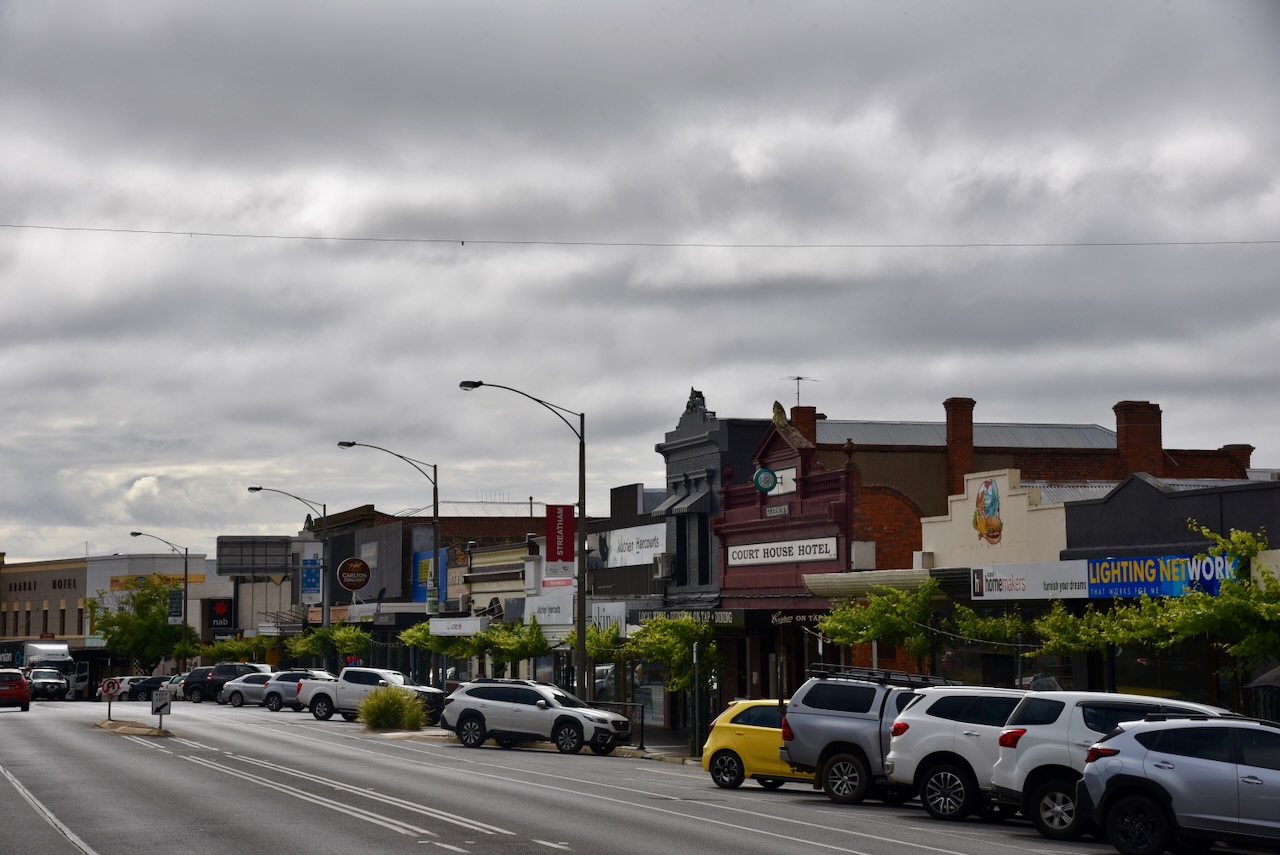
Although we have been to Ararat dozens of times, we never tire of visiting this town. It is one of our favourite towns in Victoria.
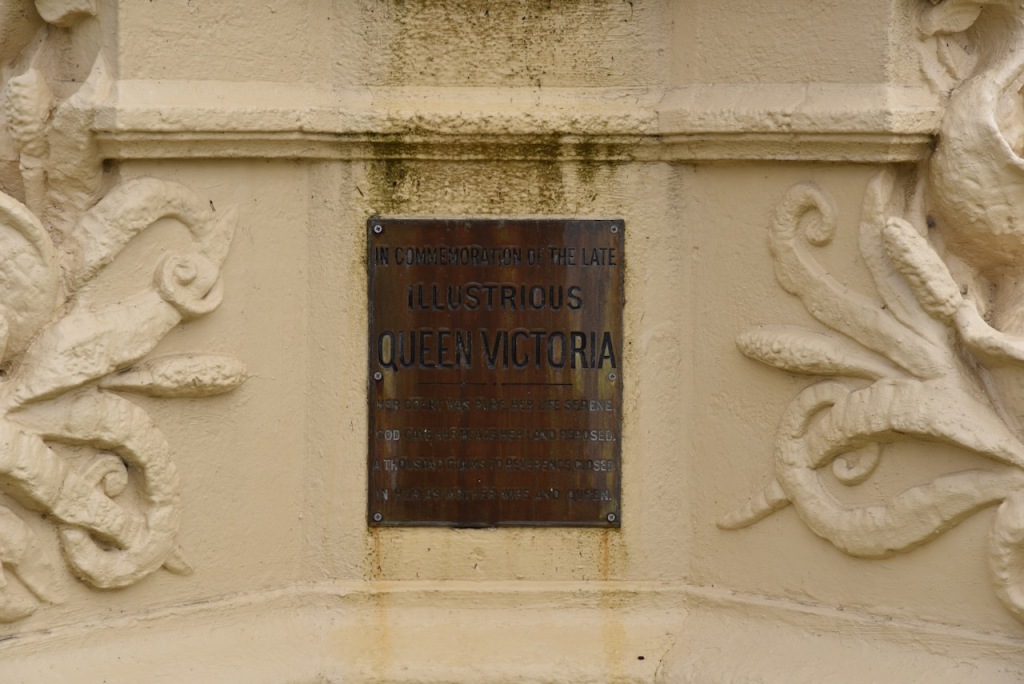
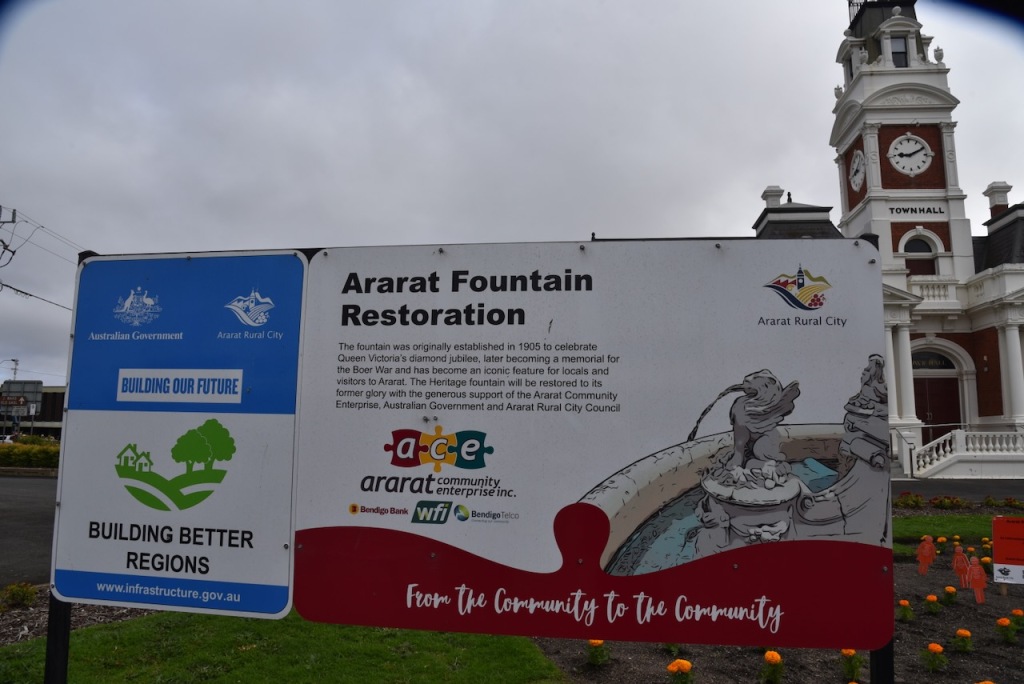
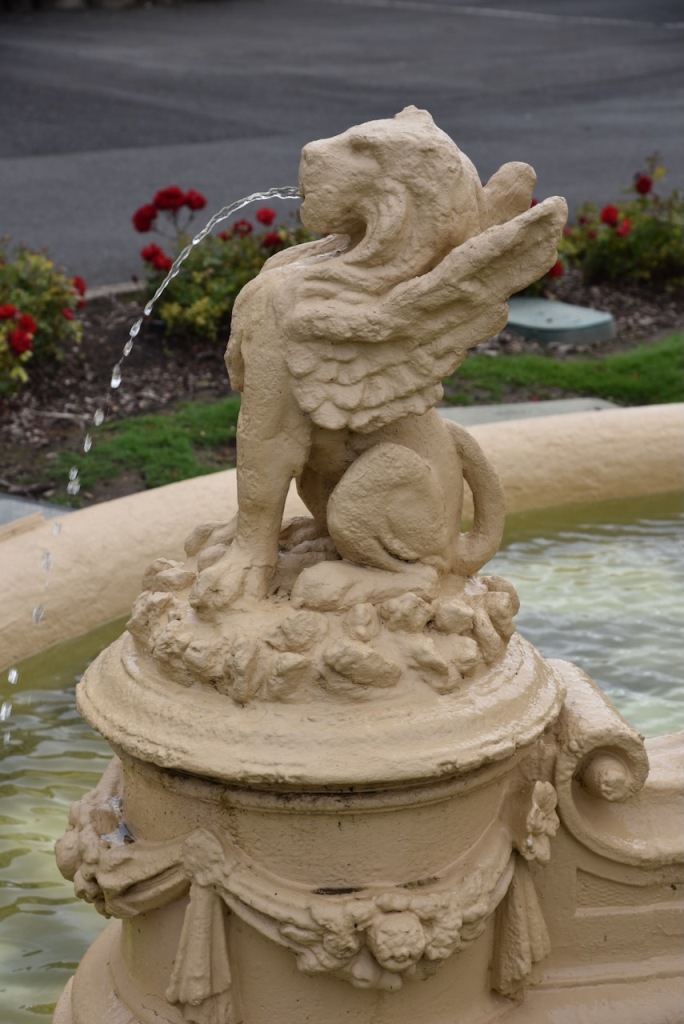
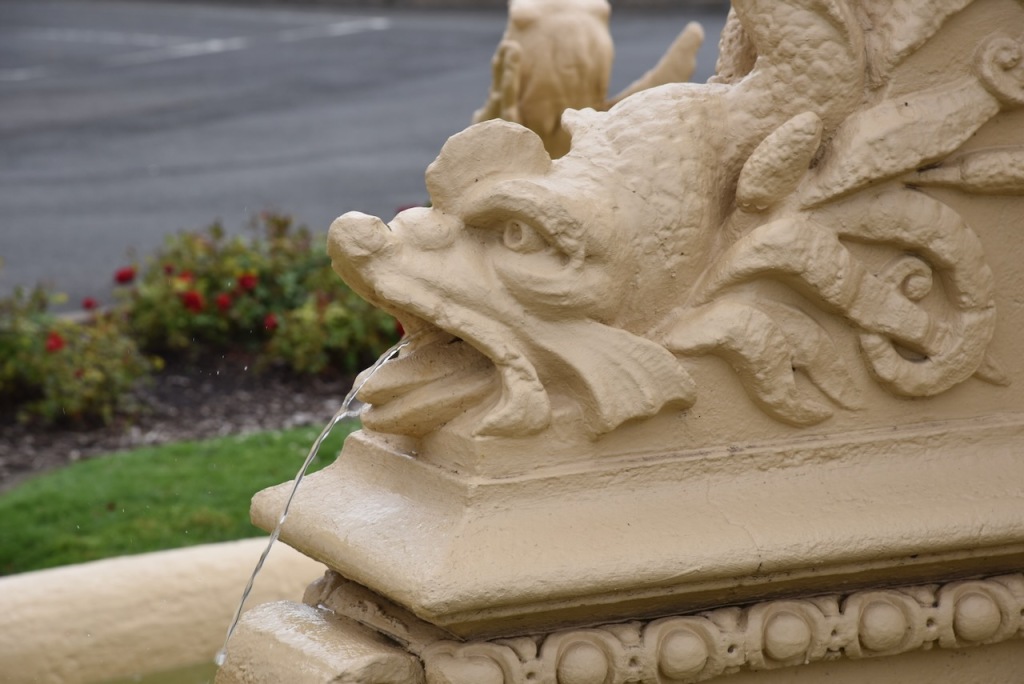
We visited the Ararat Town Hall and War Memorial Fountain. The town hall was built in 1869. The fountain was planned to mark Queen Victoria’s diamond jubilee, but also commemorates volunteers who fought in the Boer War. (Walking Maps 2024)
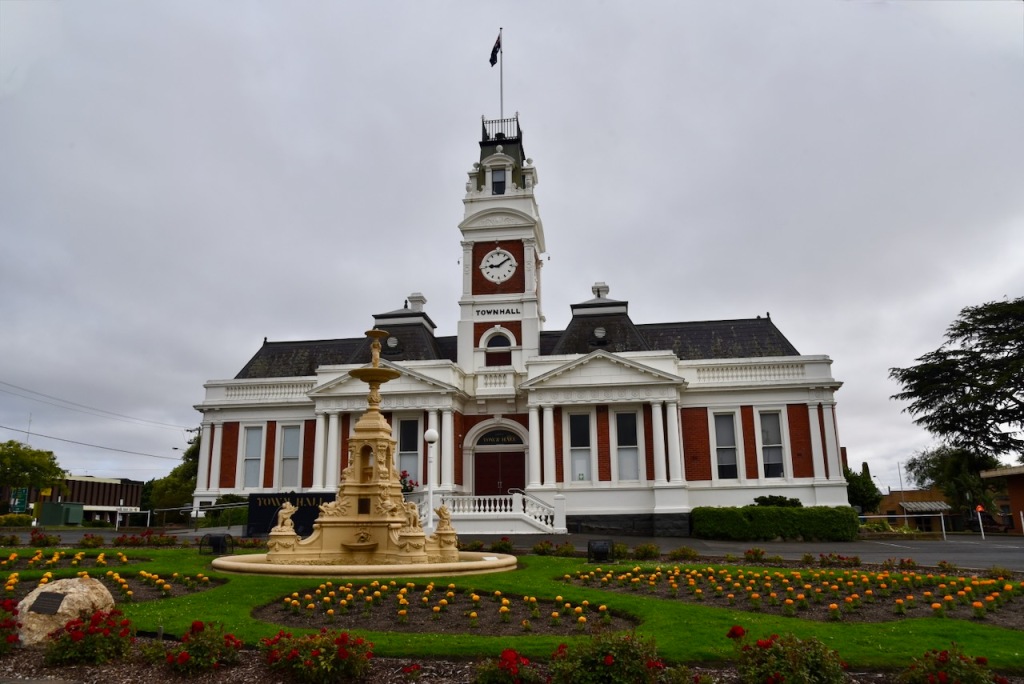
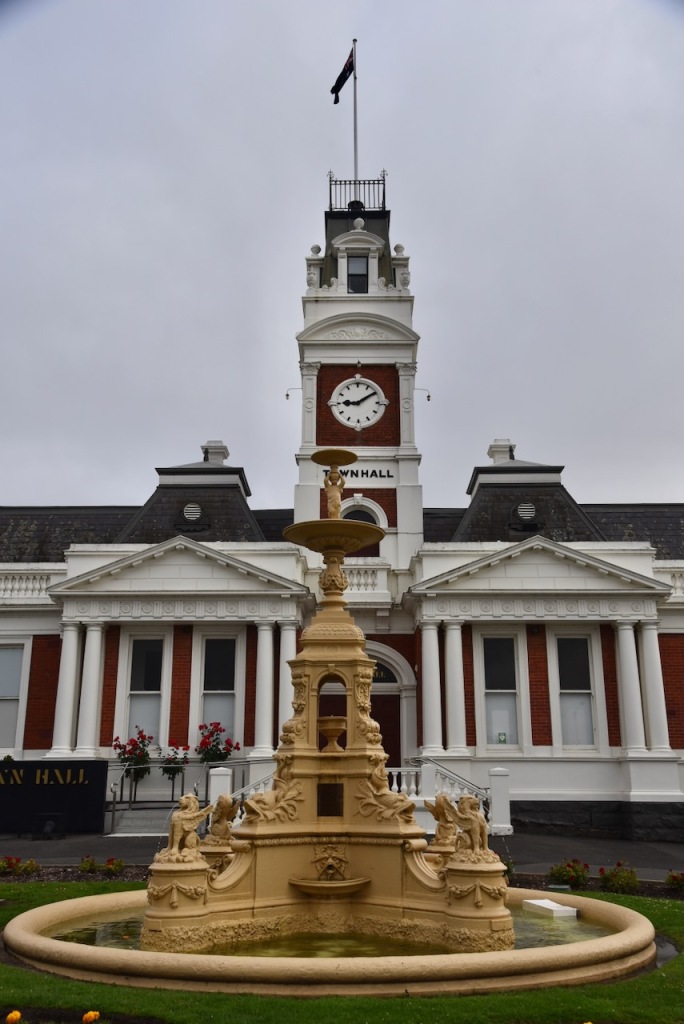
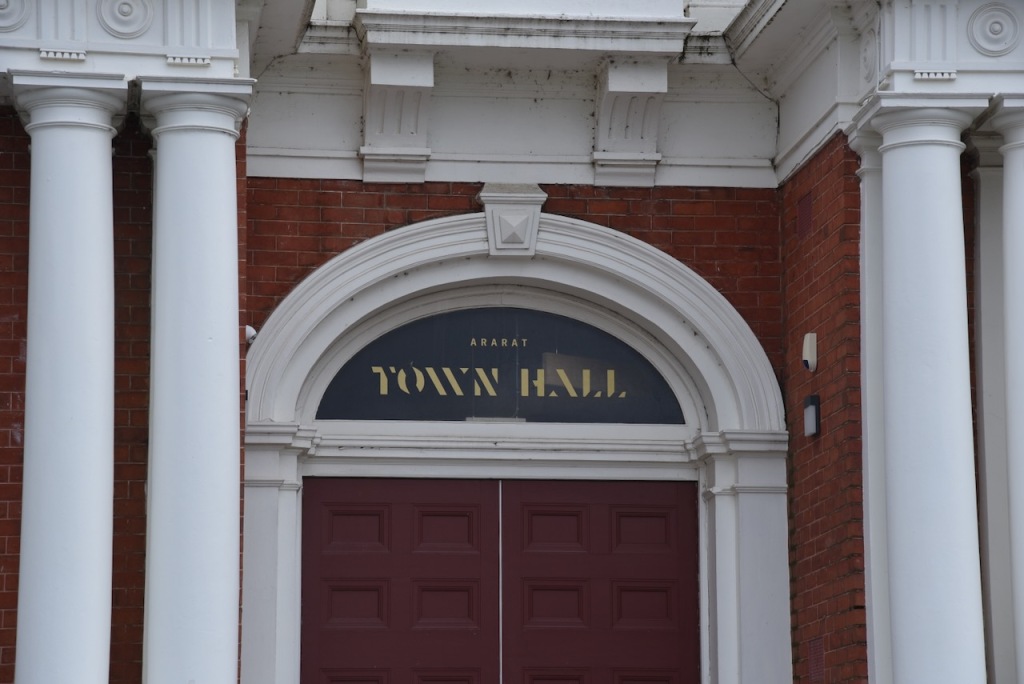
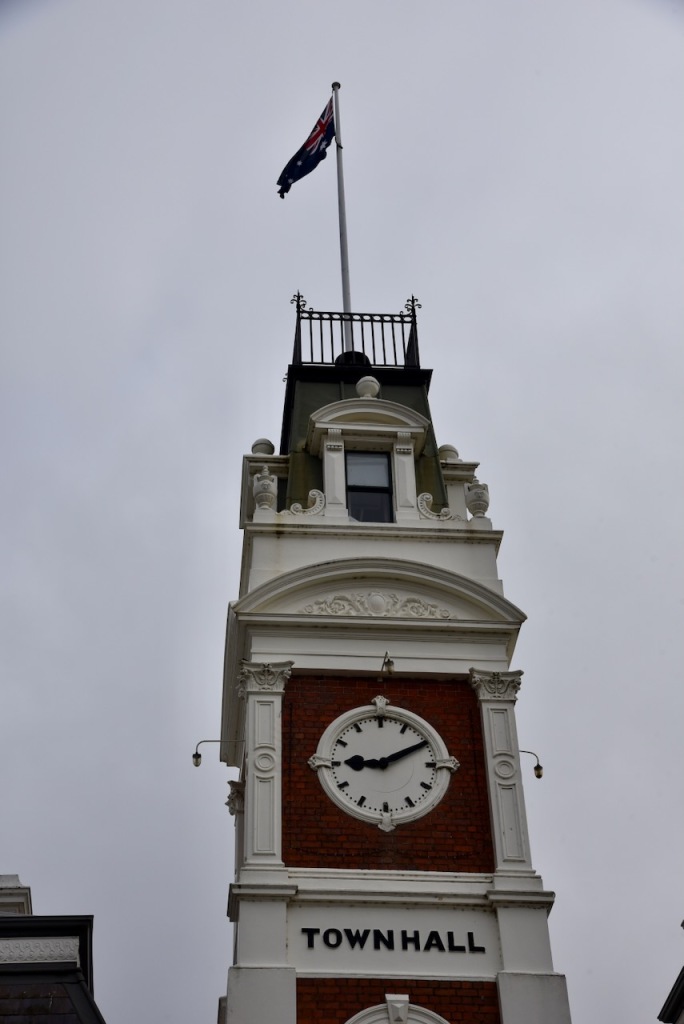
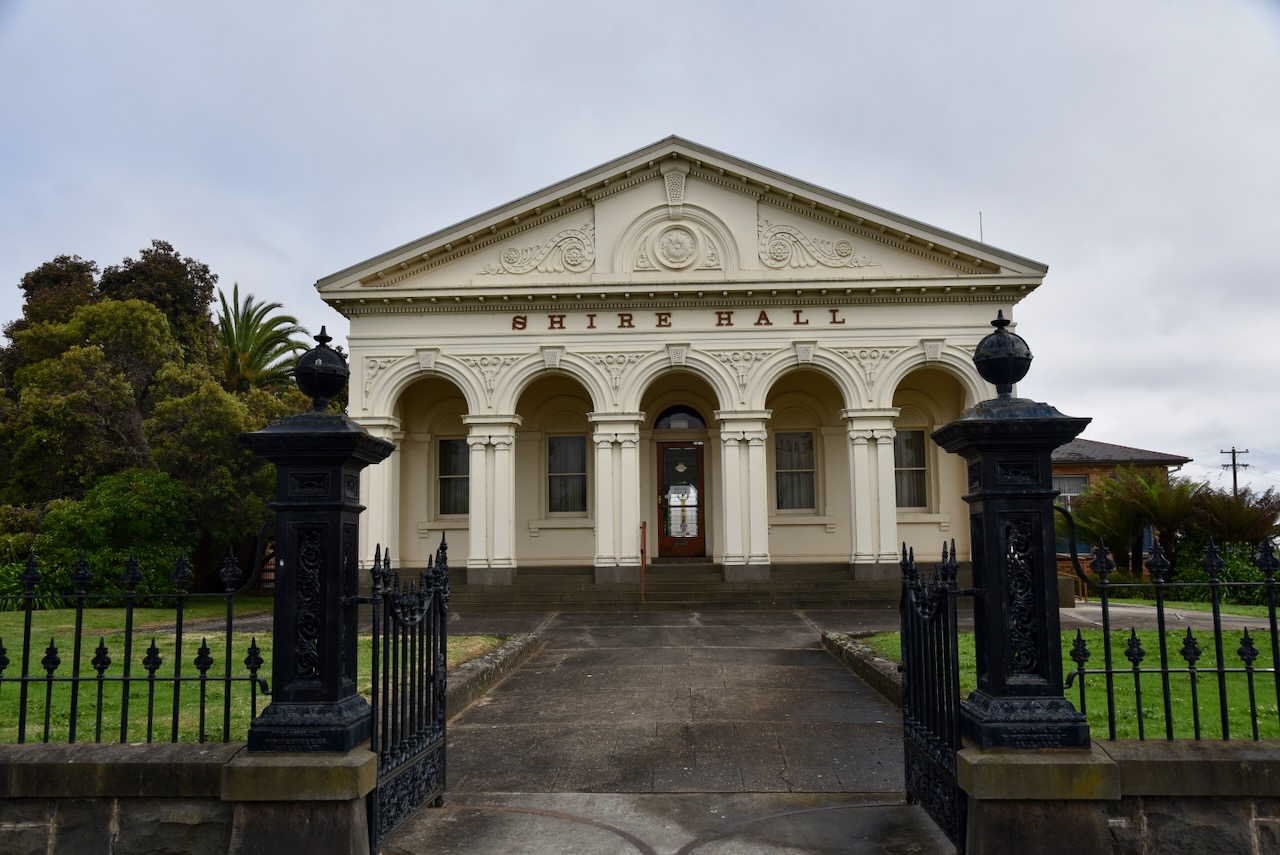
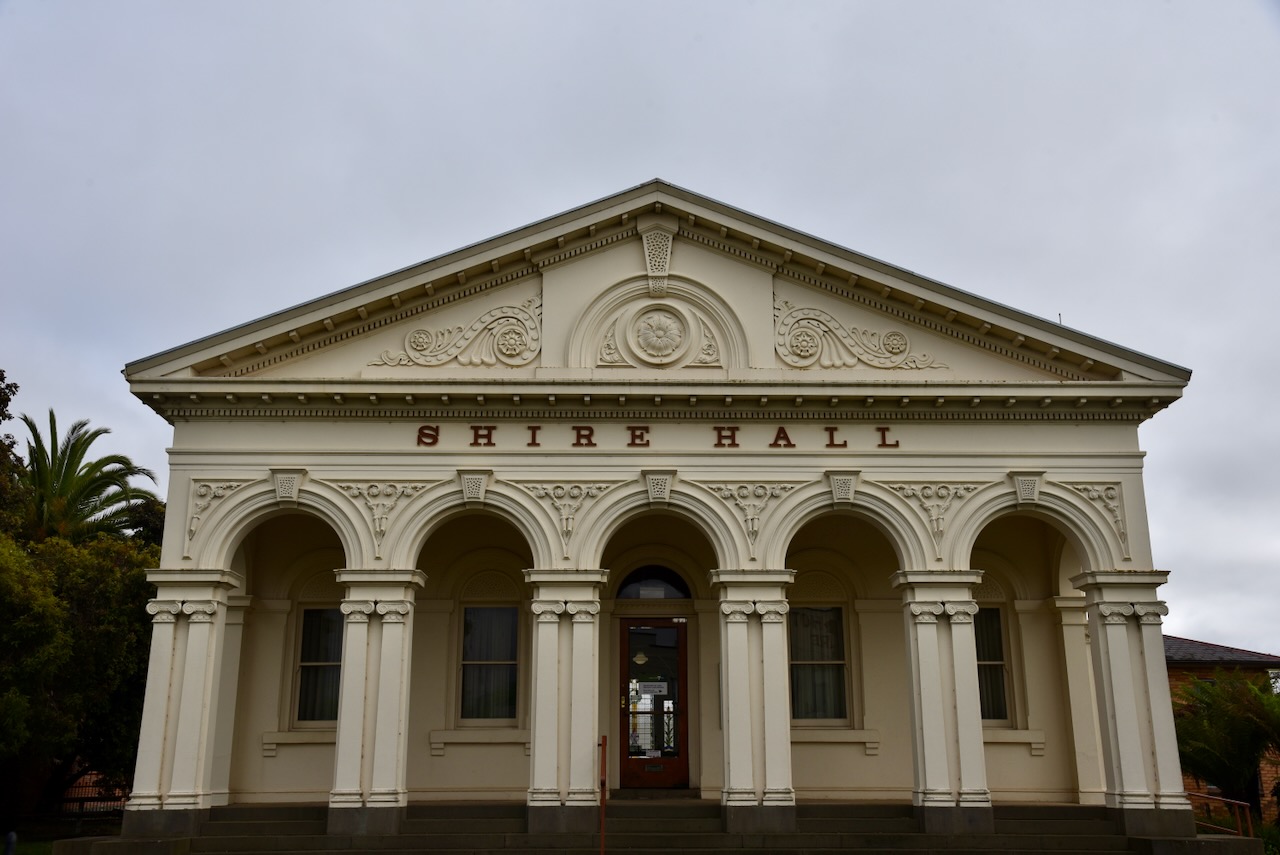
The Ararat Shire Hall was built in 1871 and is one of Ararat’s most distingished building. The hall houses a WW1 Honour Board and a beautiful stained glass window that honours the fallen. (Walking Maps 2024)
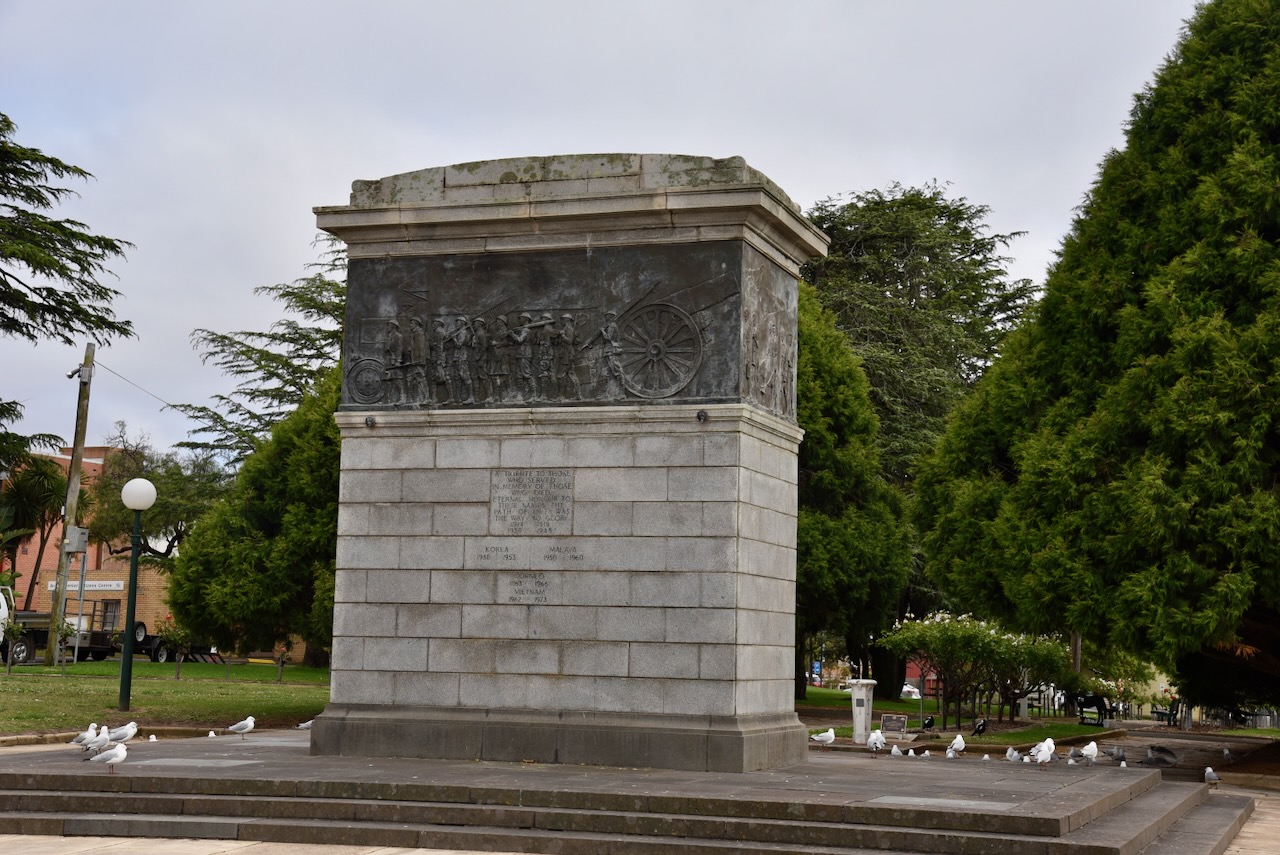
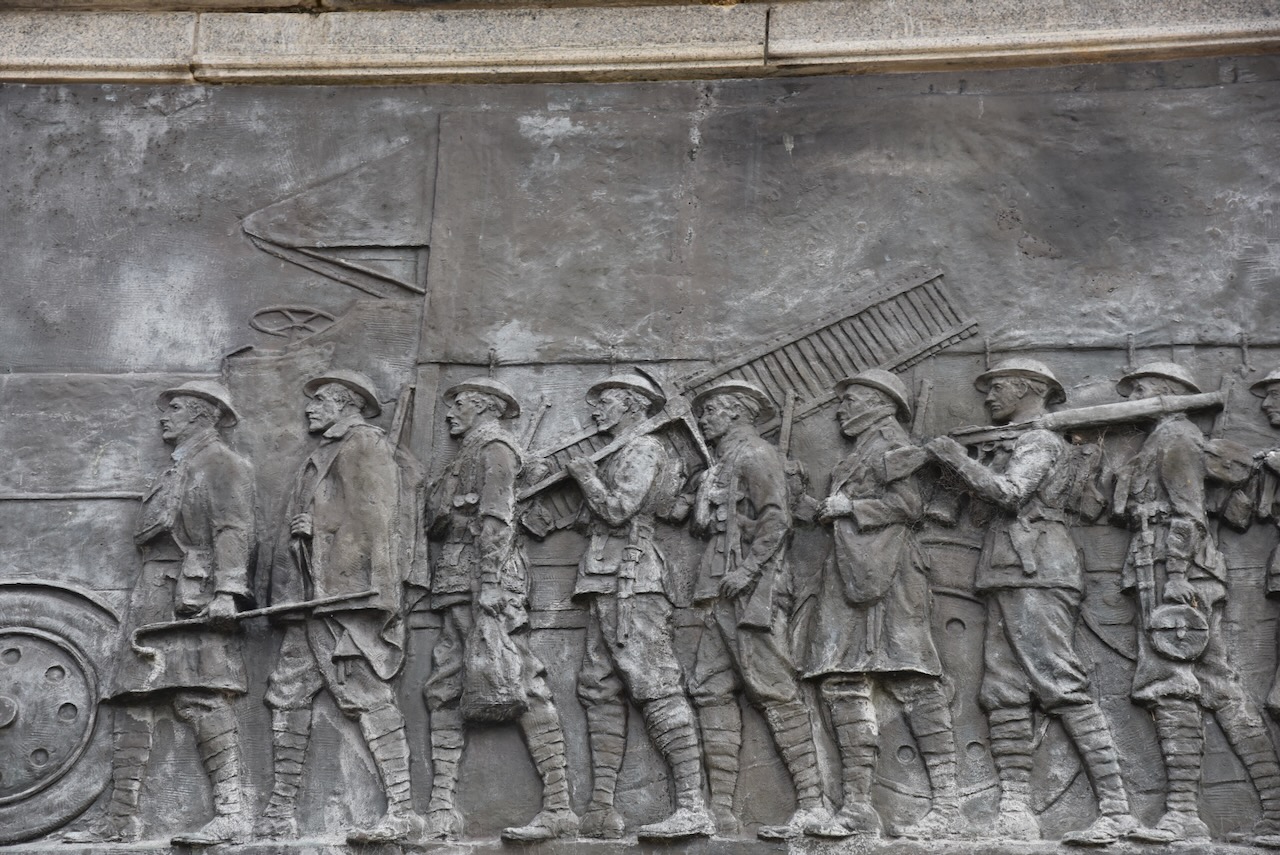
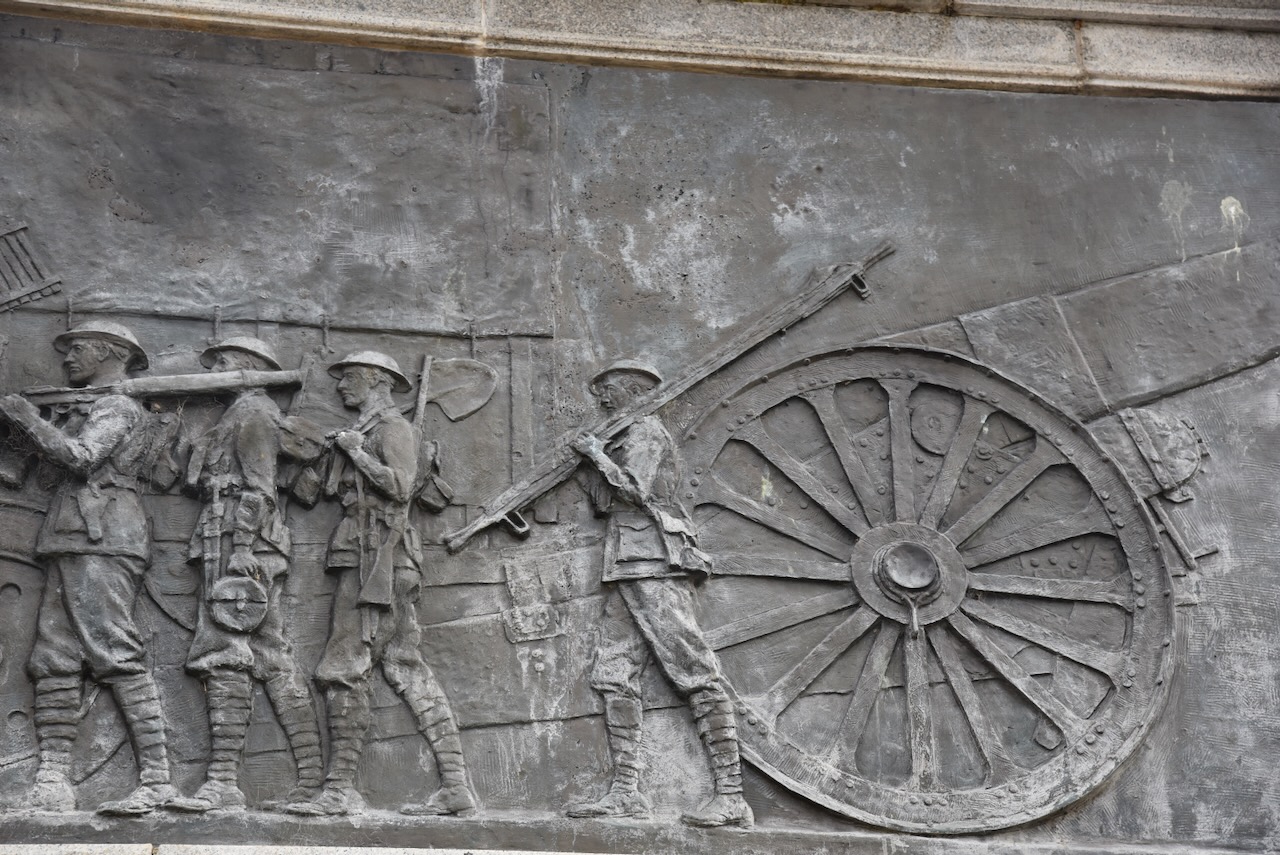
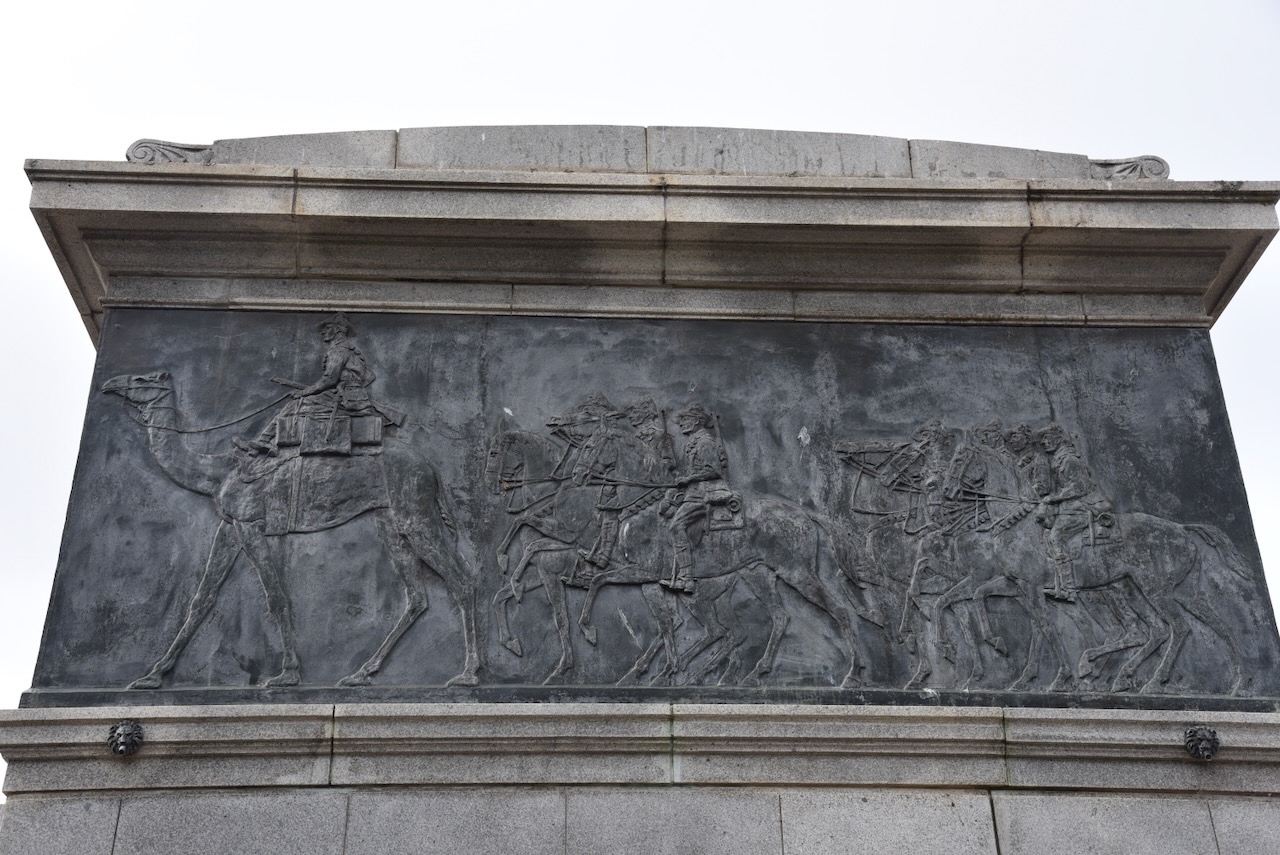
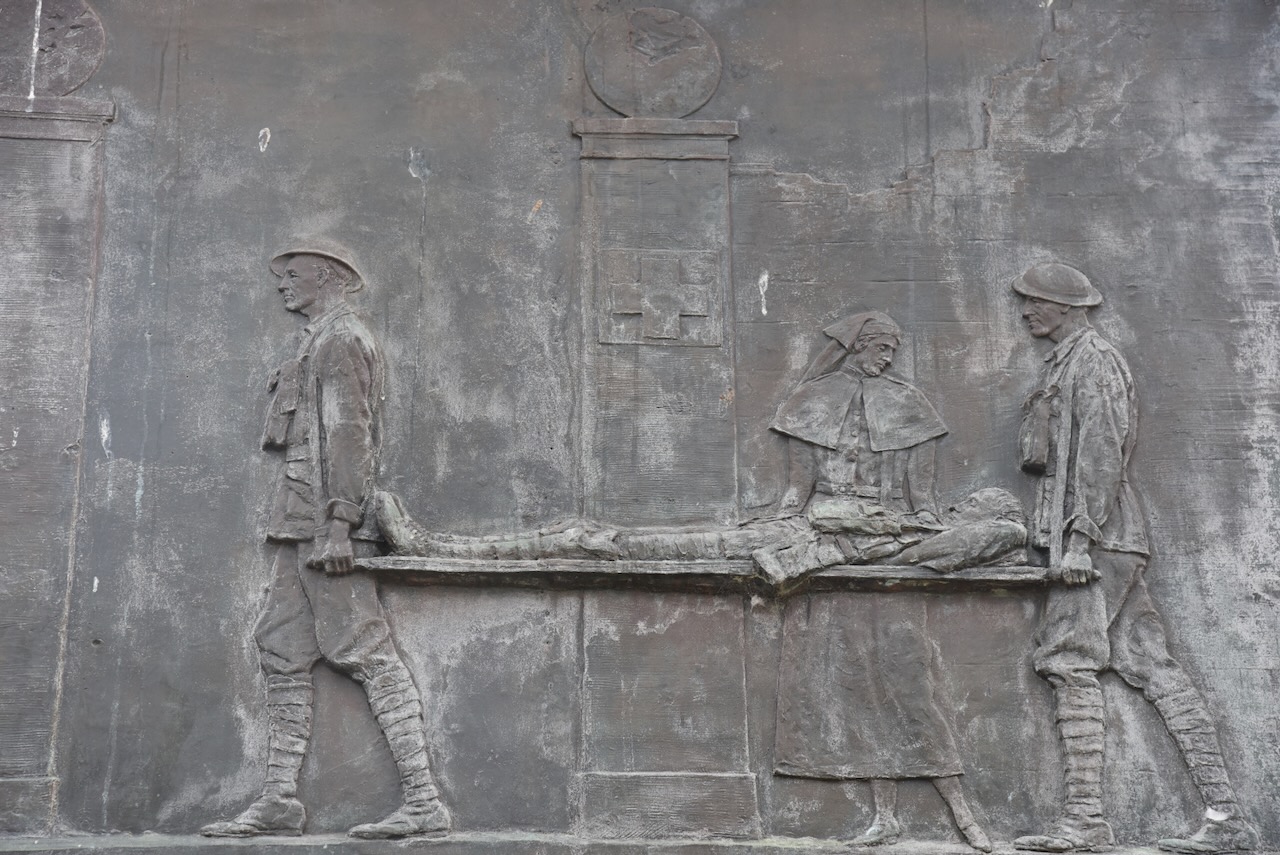
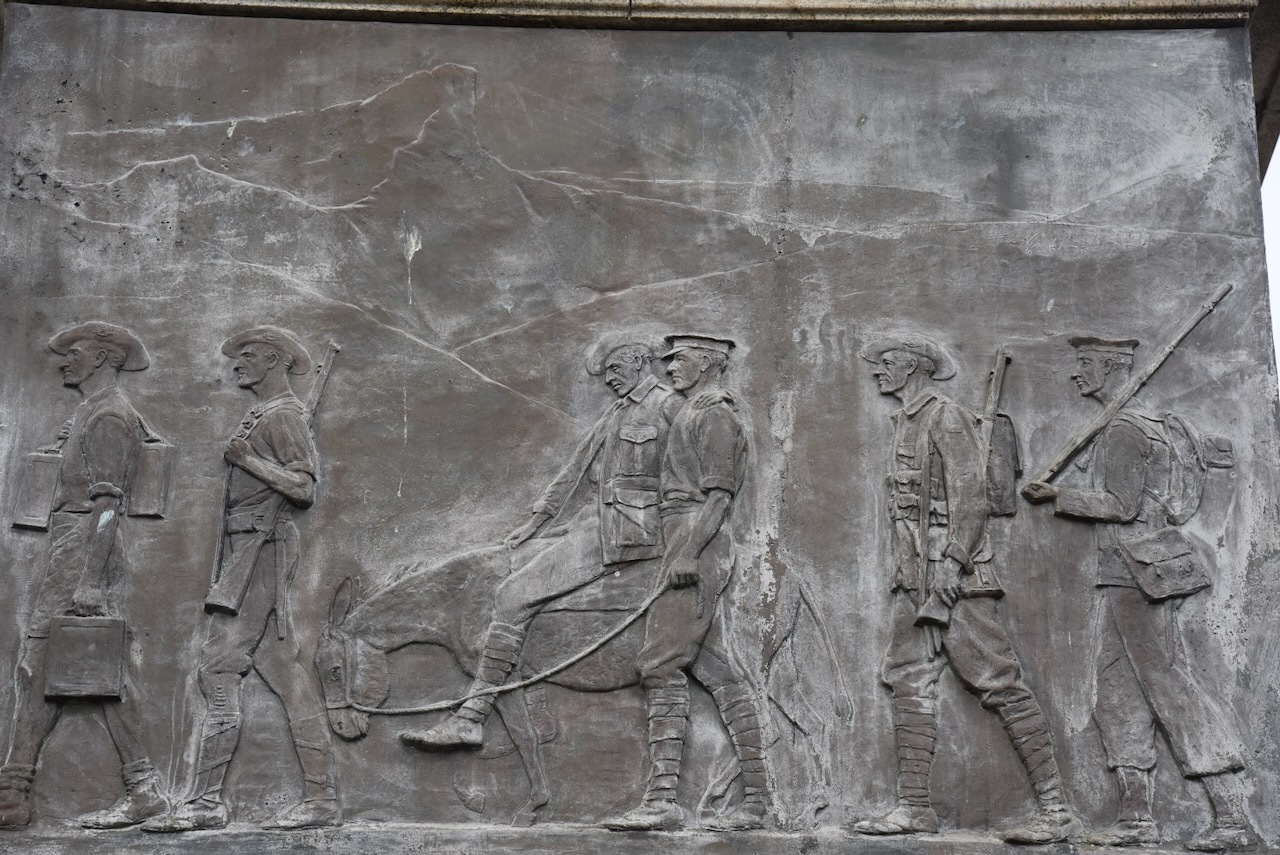
The Cenotaph monument was dedicated in 1930 to those who served Australia in various conflicts and in memory of those who died. (Walking Maps 2024)

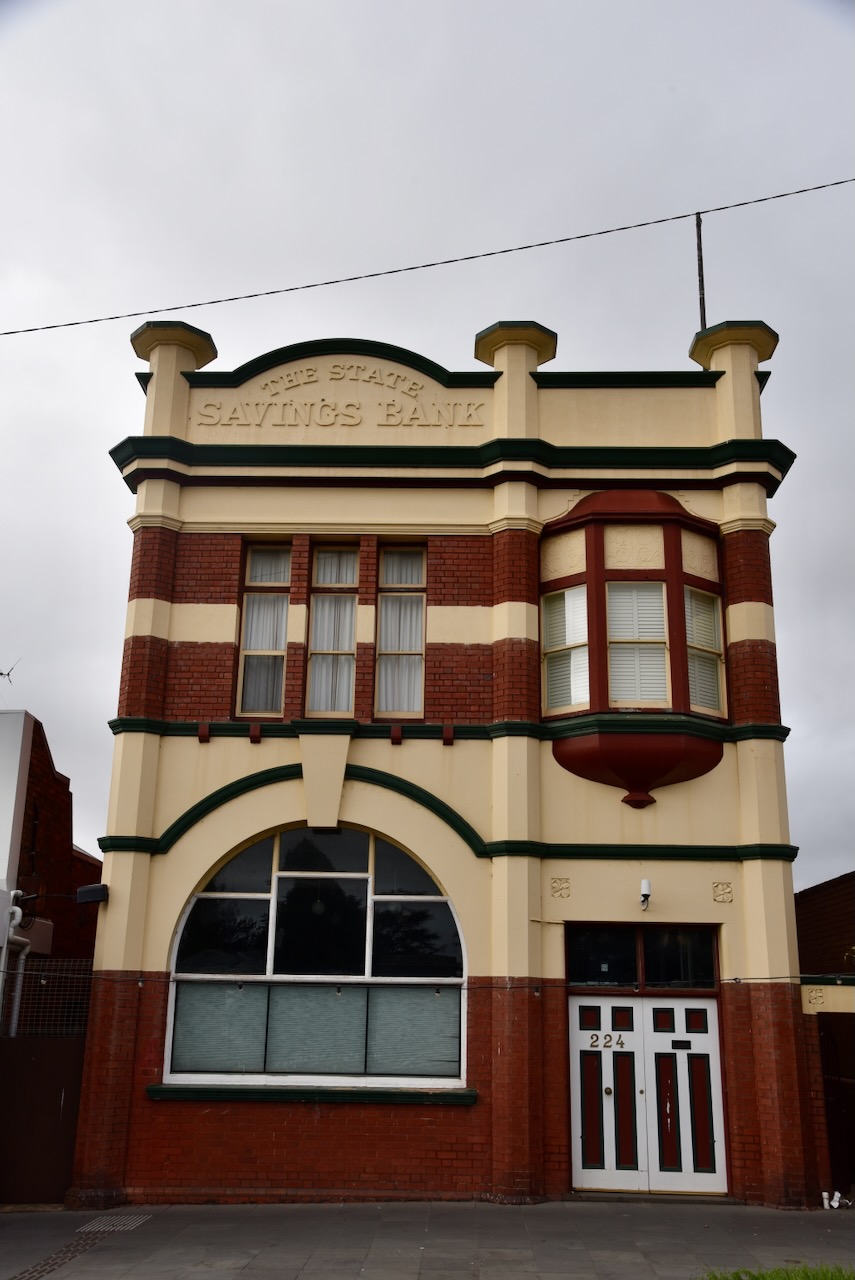
The old State Savings Bank building in Barkly Street operated as a bank from 1912 to 1962. It has an oriel window which is Queen Anne style and a large semi-circular window which is pure Romanesque Revival. (Aussie Towns 2024)
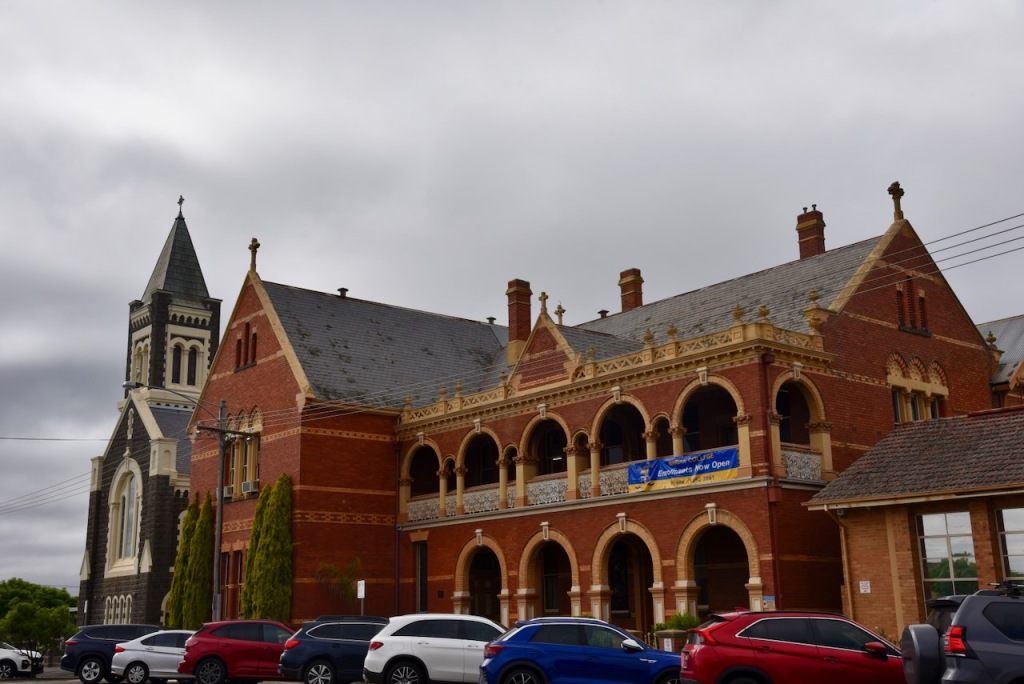
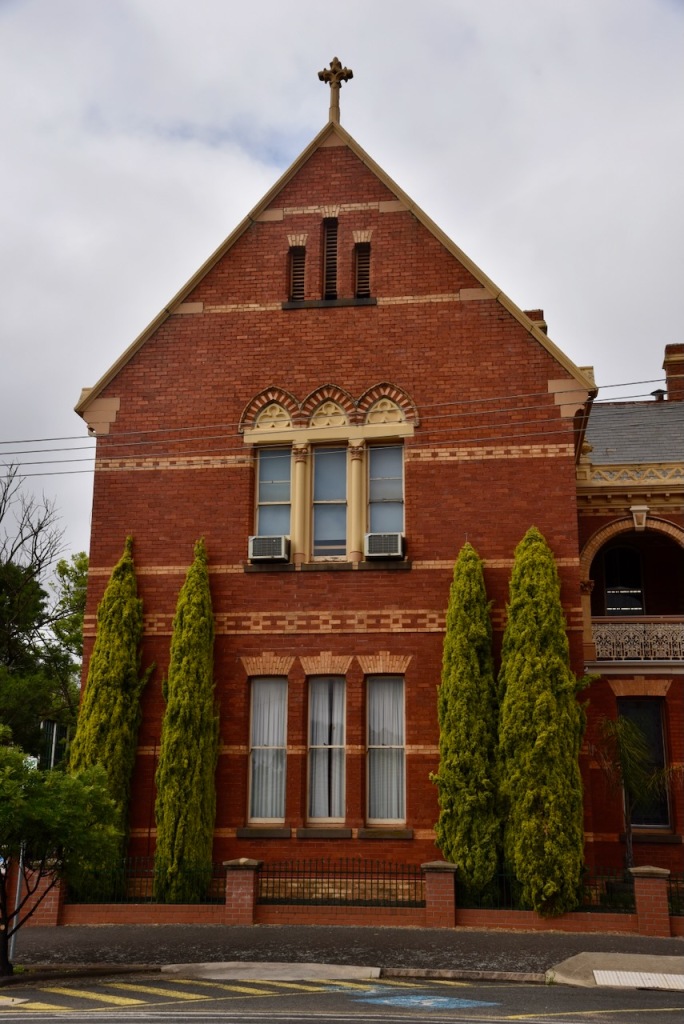
The Brigidine Catholic Convent was built in 1889 and is now part of the Marian Catholic College. The foundation stone was laid in August 1889. The convent was built in stages and was finally completed in 1900. (Marian College 2024)
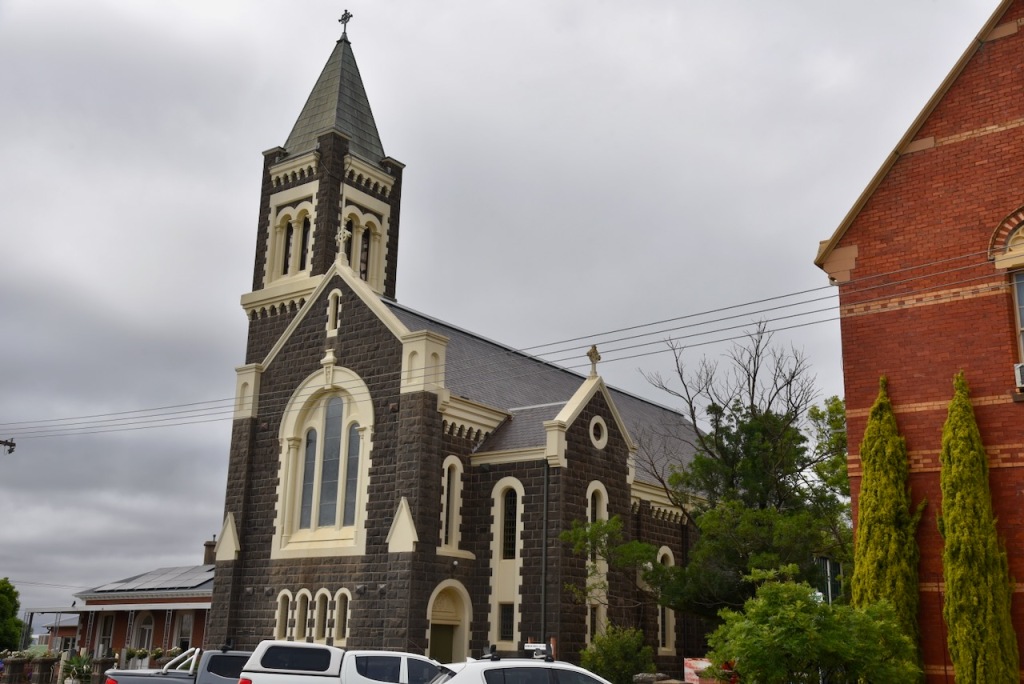
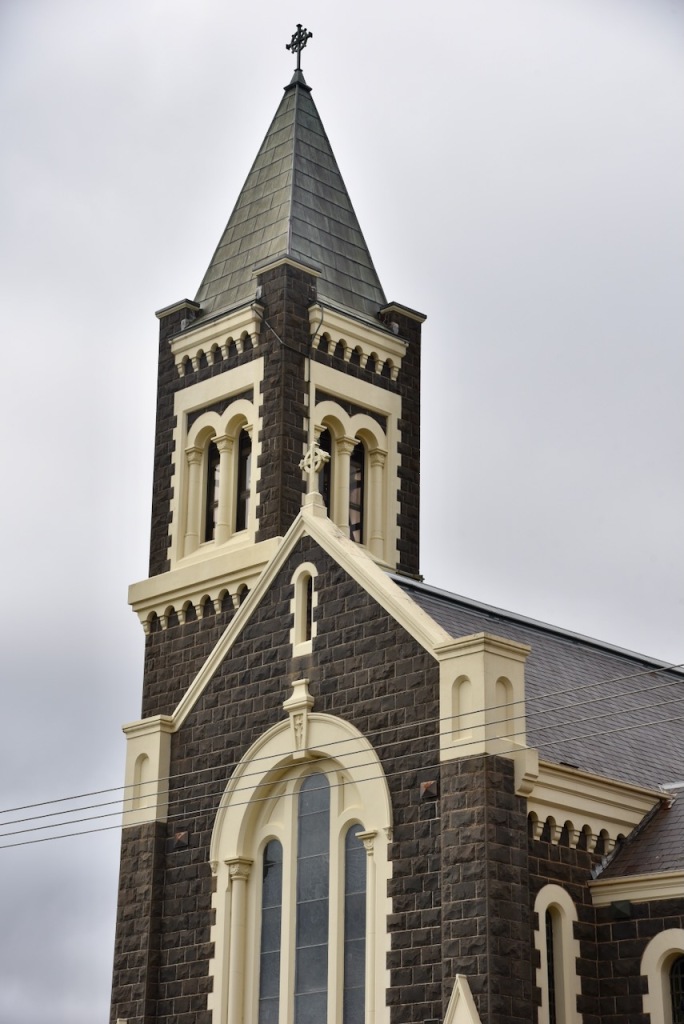
The Immaculate Conception church is a bluestone building designed by A.A. Fritsch in a Romanesque Revival style. (Aussie Towns 2024)
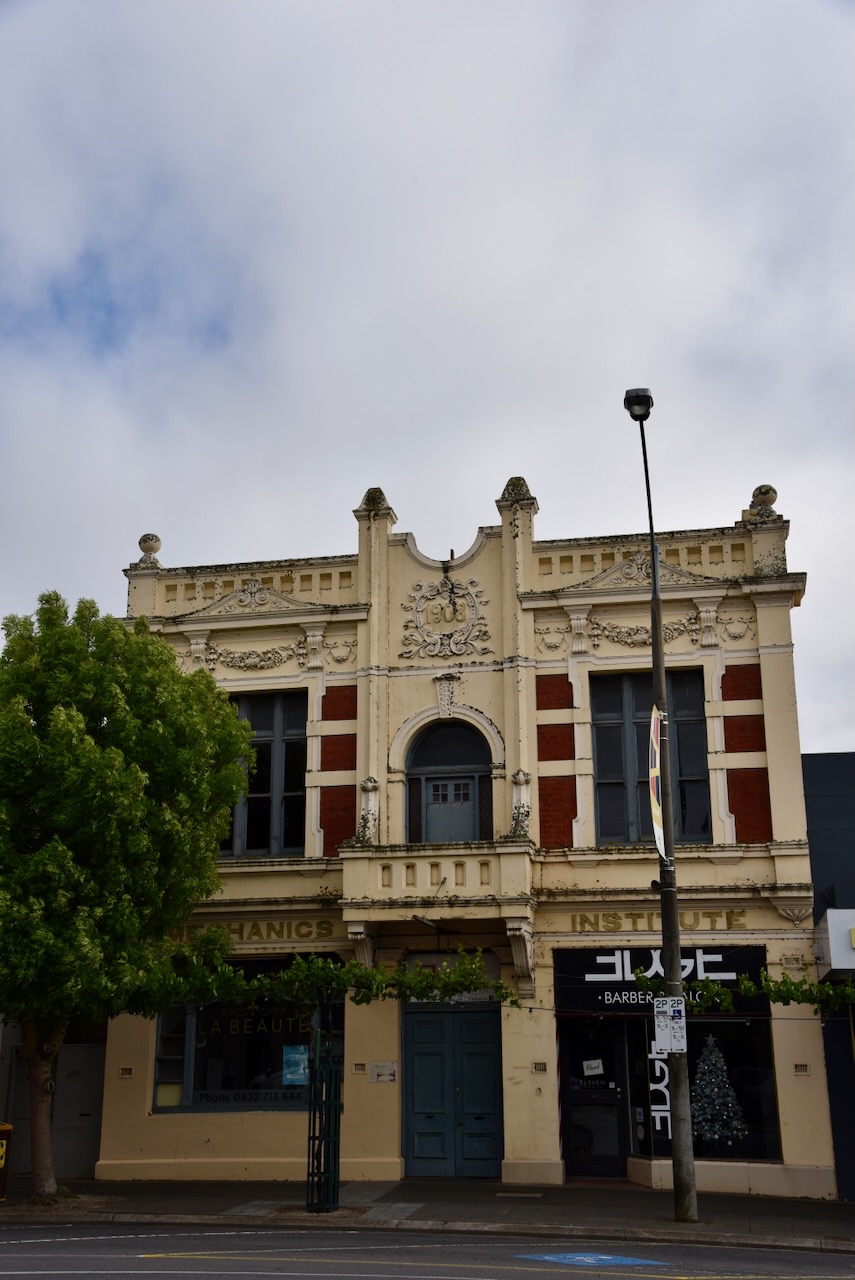
The Mechanics Institute was built in 1909 and was designed by James Irwin. (Aussie Towns 2024)
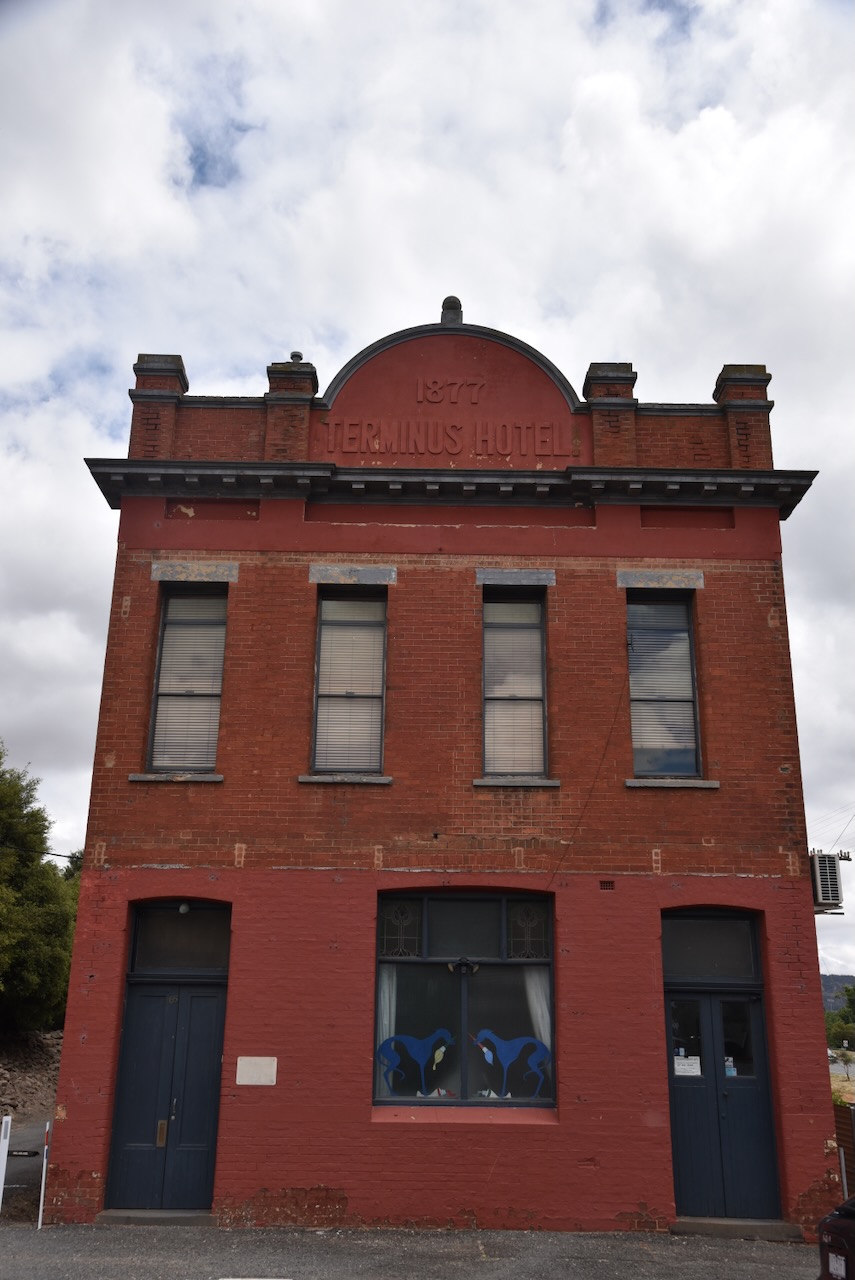
The old Terminus Hotel was built in 1877.
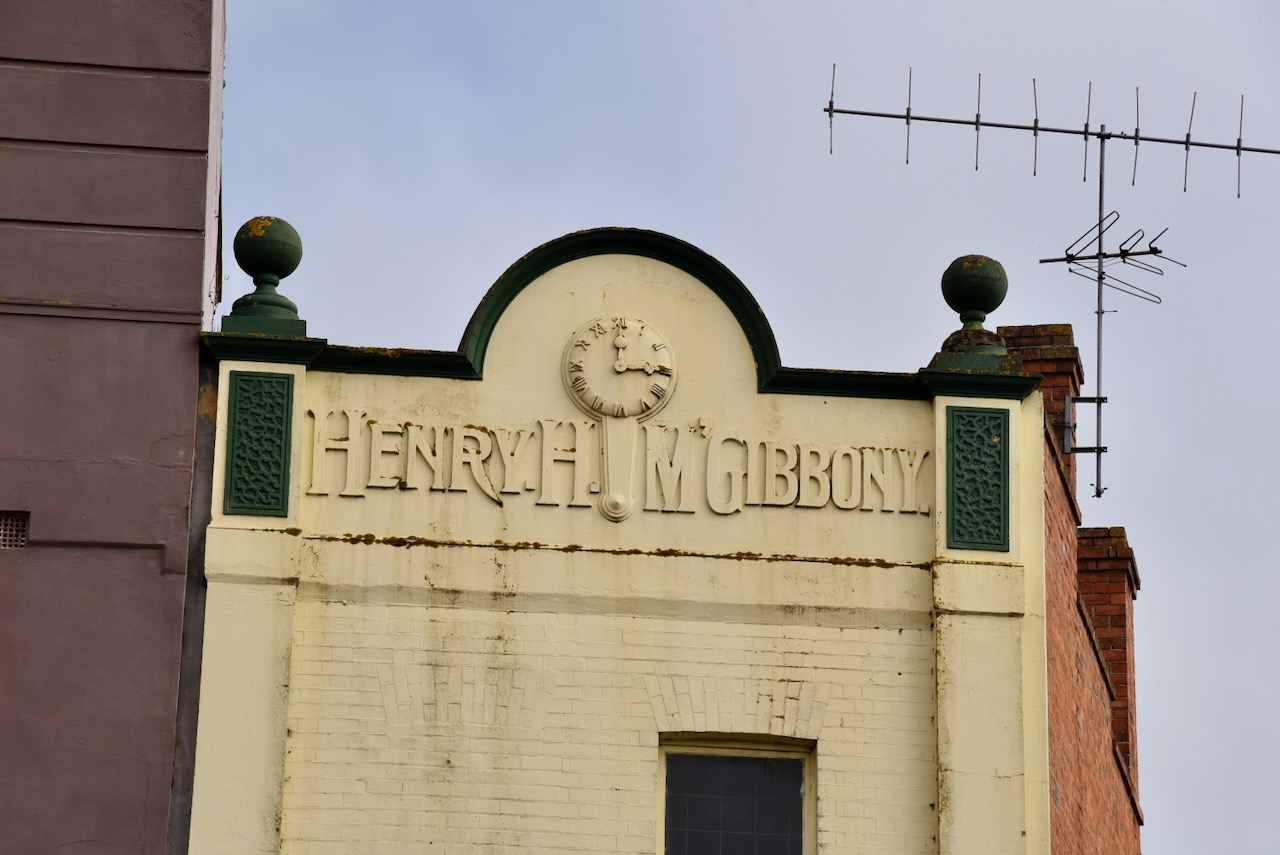
The McGibbony building located in Barkly Street was completed in 1865 and subsequently restored in 1870 and then remodelled in 1910. (Aussie Towns 2024)
Vindel House was built in two parts, the Sub-Treasury and Assay office in 1858, with the post office attached in 1862. The clock was installed in 1890. (Walking Maps 2024)

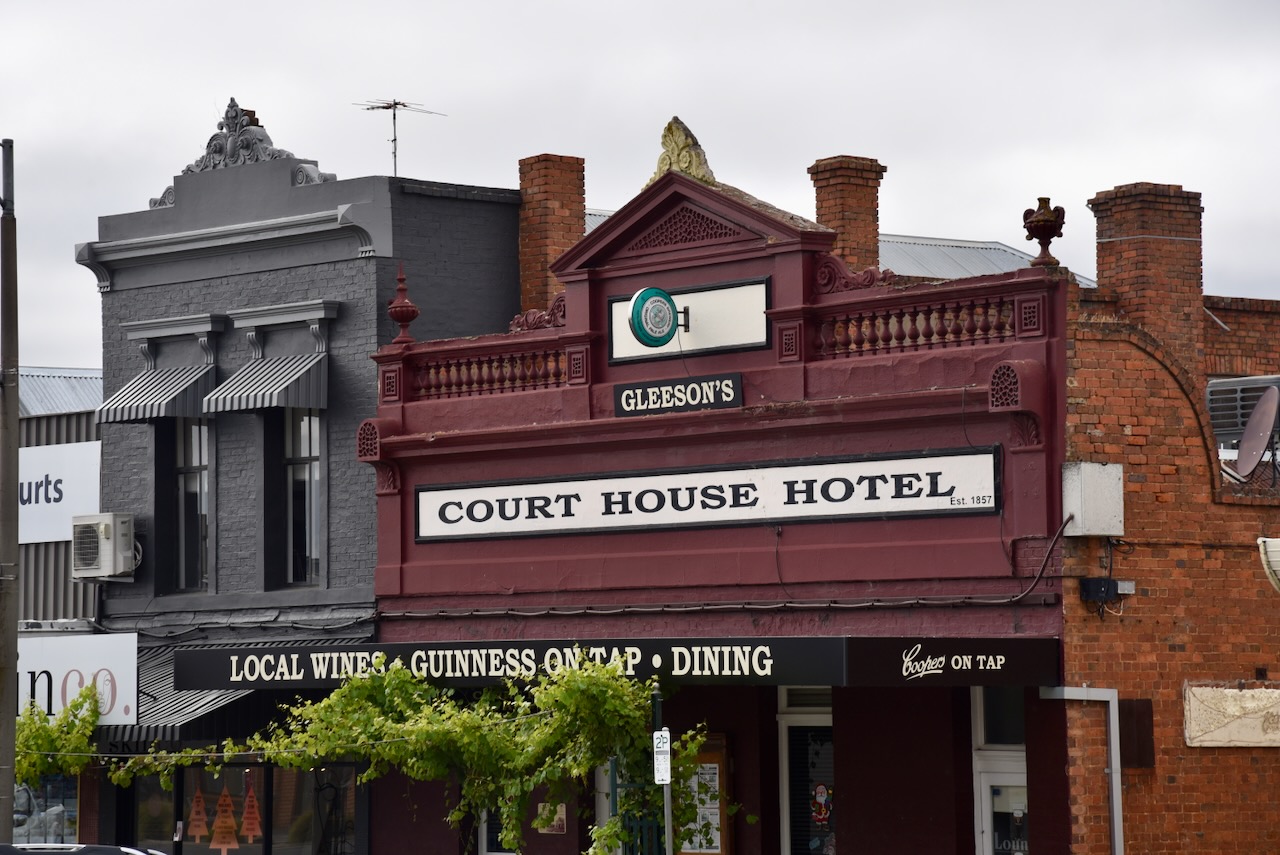
The original Court House Hotel was constructed on this site in 1848-1859, and was made from wood and iron. The hotel once had a huge ballroom and a special supper room. (Aussie Towns 2024)
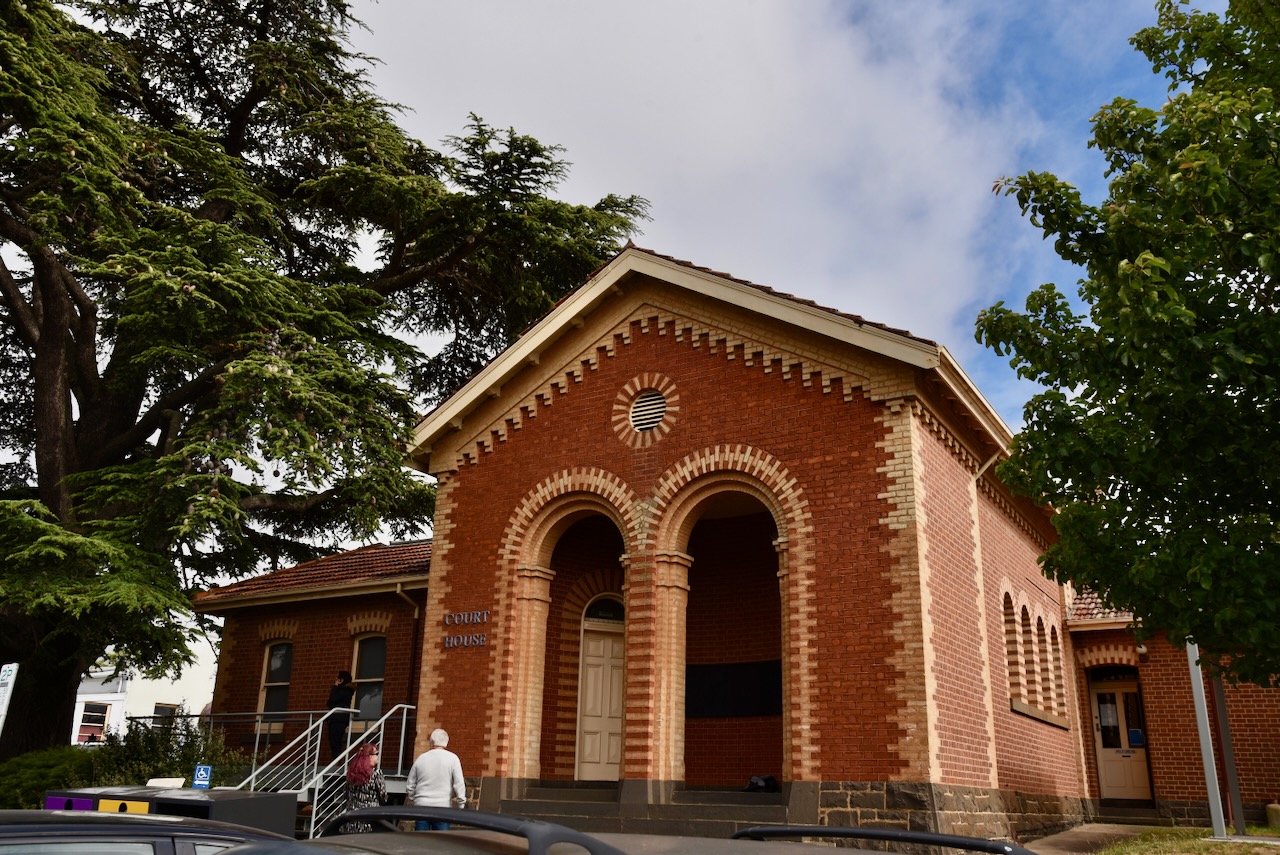
The Ararat Court House is located on the corner of Barkly Street and Ligar Street. It is Ararat’s second courthouse and was built in 1866-1867 to a Romanesque design. (Aussie Towns 2024)
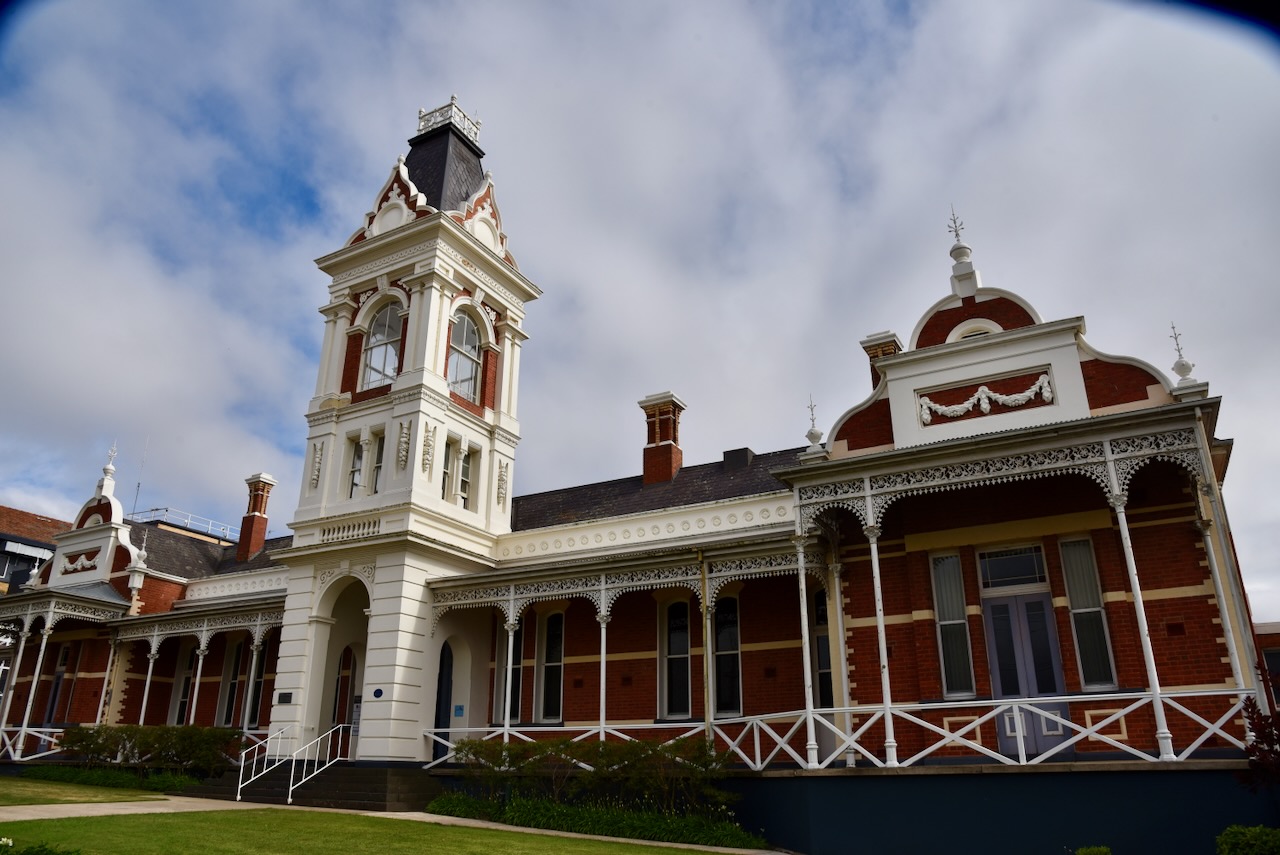
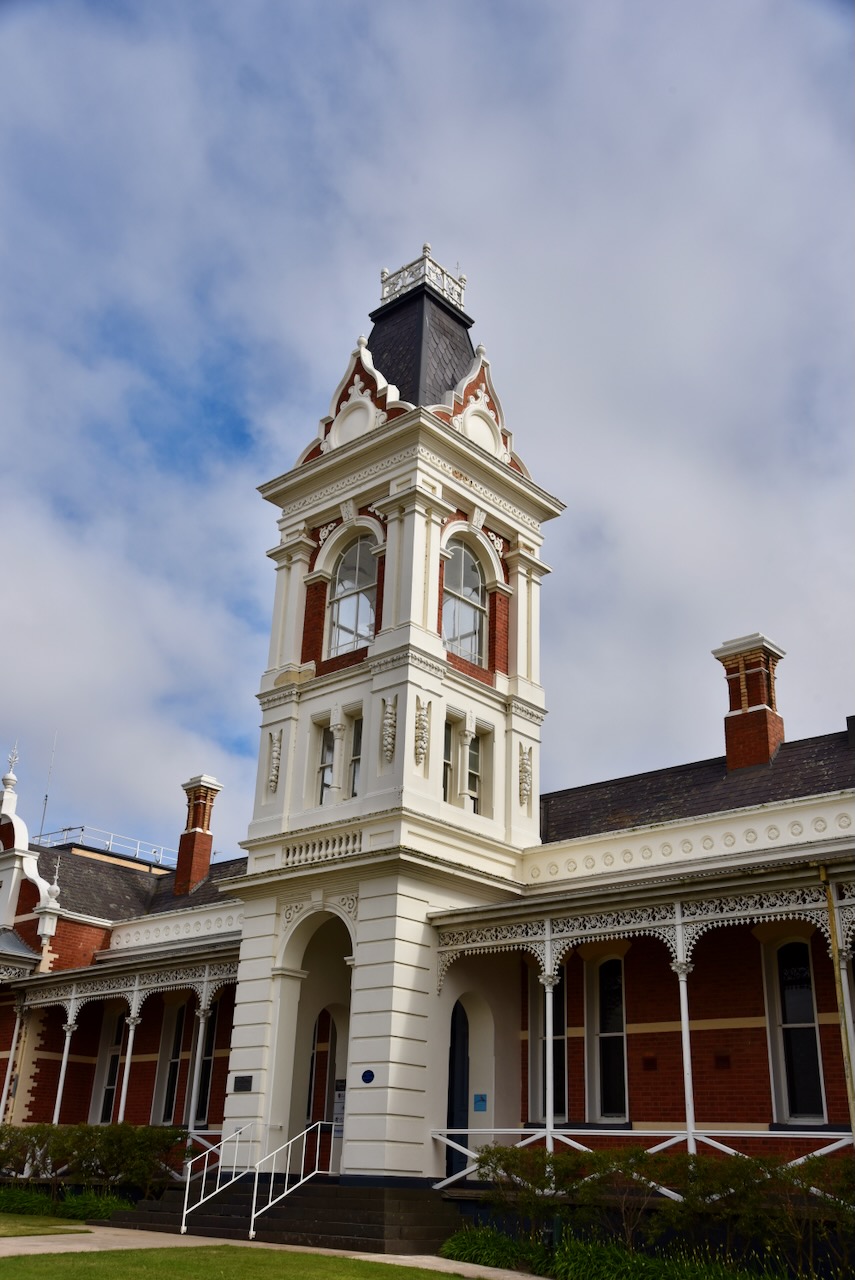
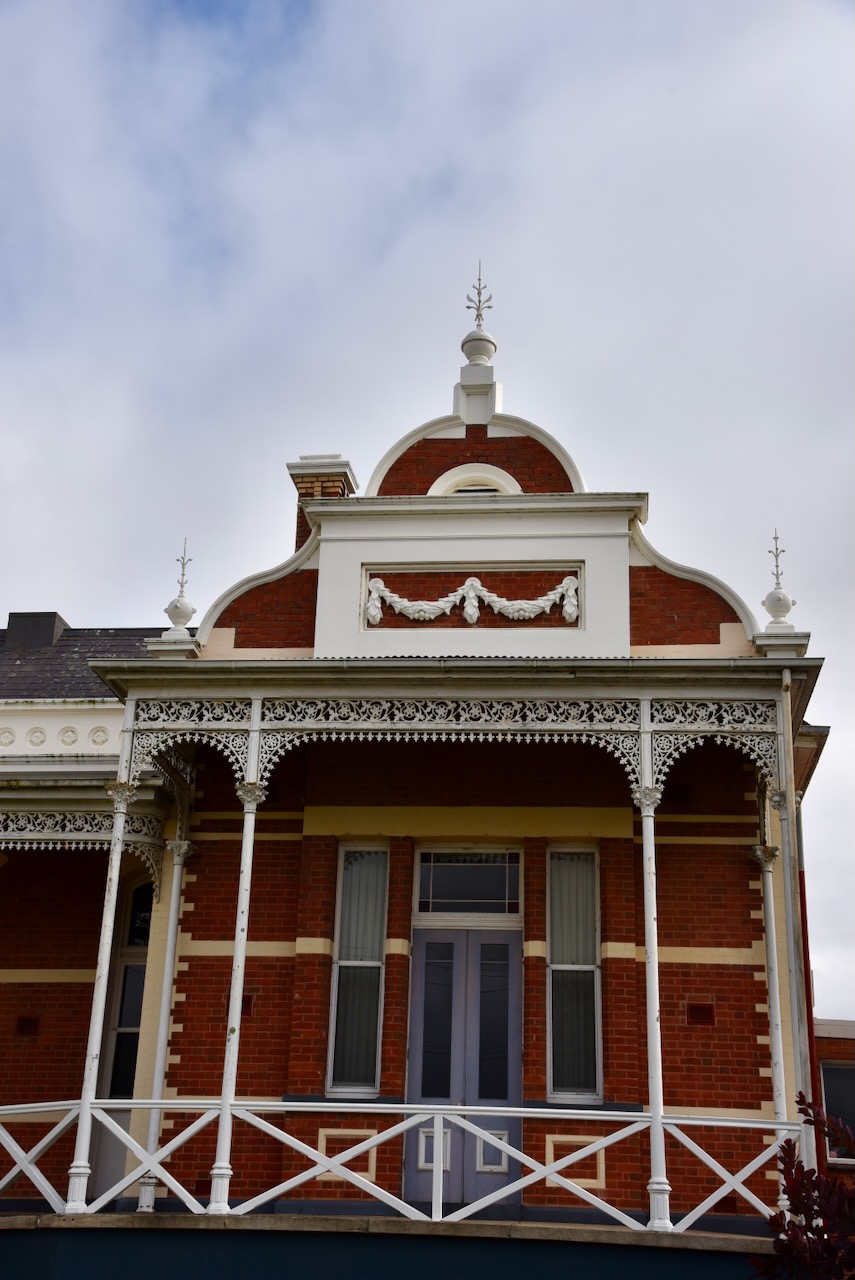
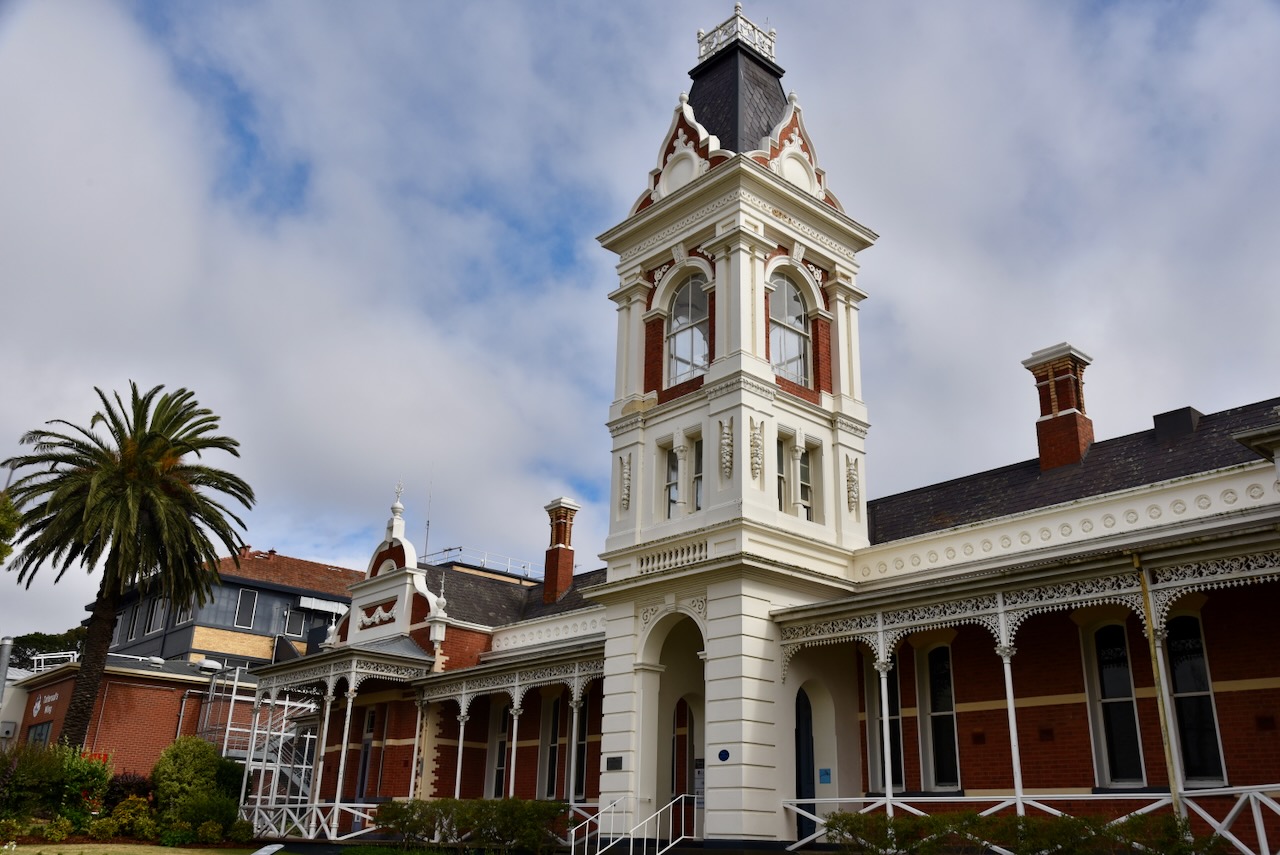
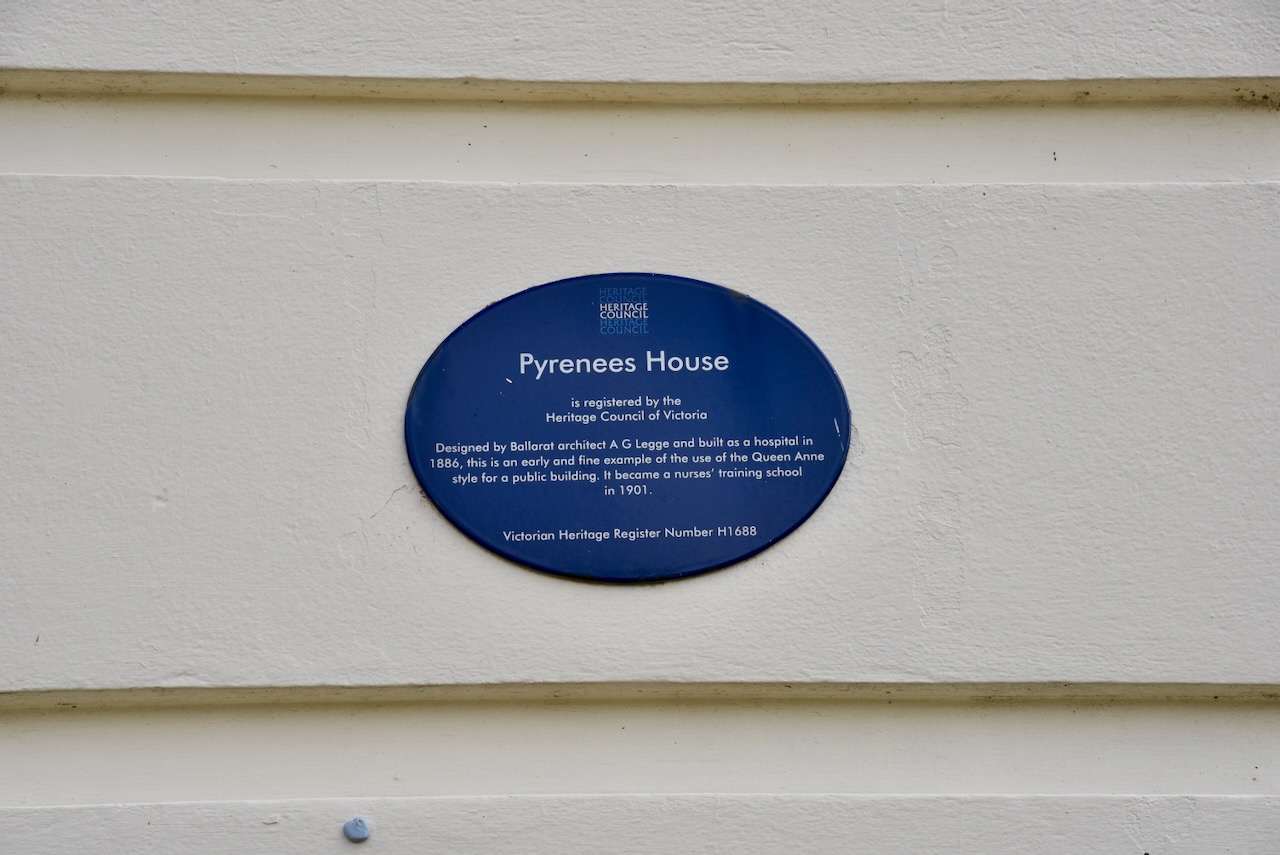
Pyrenees House was completed in 1886 in the Queen Anne style. The building operated as a general hospital until 1937. Since 1988 it has been used as administration offices and a nurse education centre. (Walking Maps 2024)
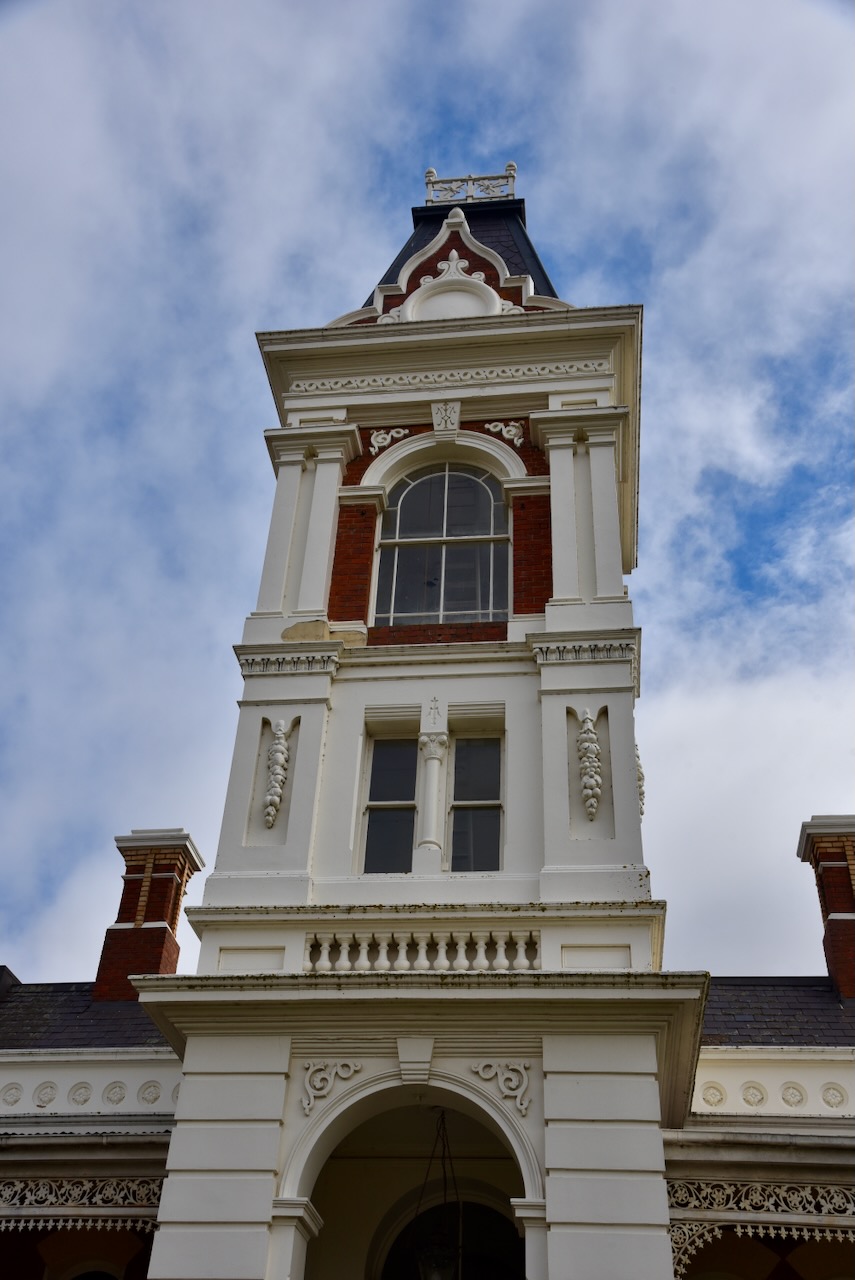
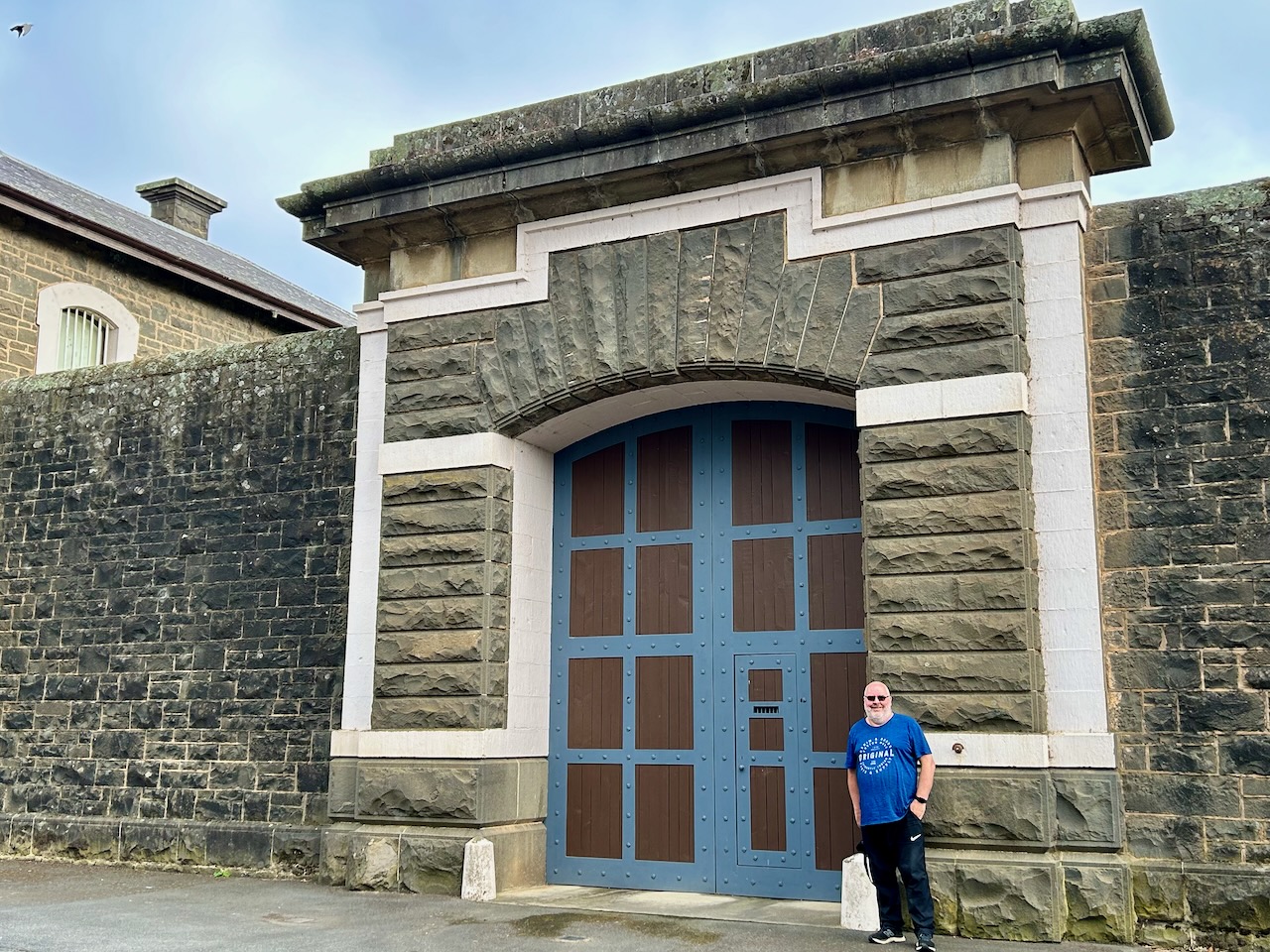
Although we had visited J Ward many times before, Marija and I decided to revisit this absolutely fascinating place.
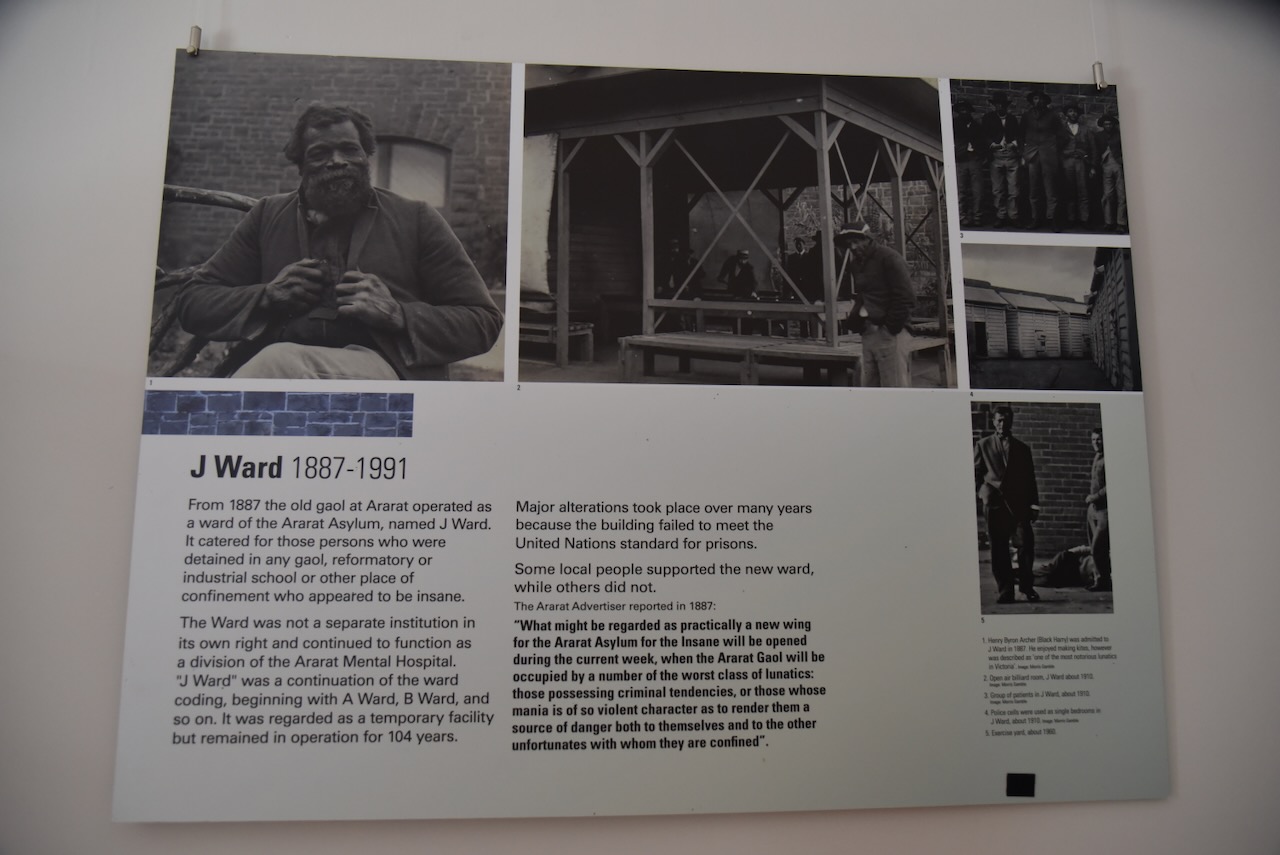
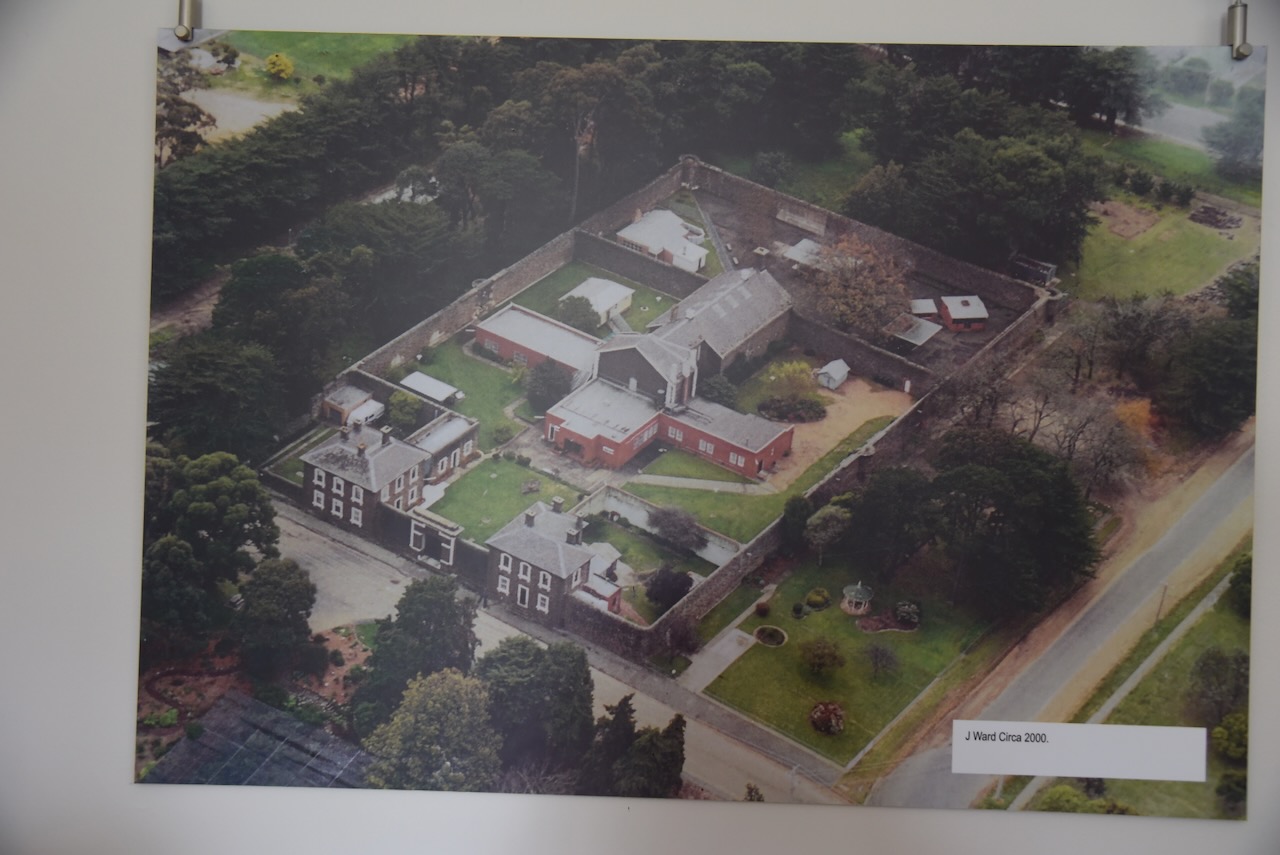
J Ward was originally the Ararat County Gaol with construction commencing om 1859. The gaol was opened in October 1861. In 1867 it was converted for use as a maximum security psychiatric ward for the criminally insane. It was officially closed in January 1991, and in 1993 was re-opened as a museum providing tours for the public.
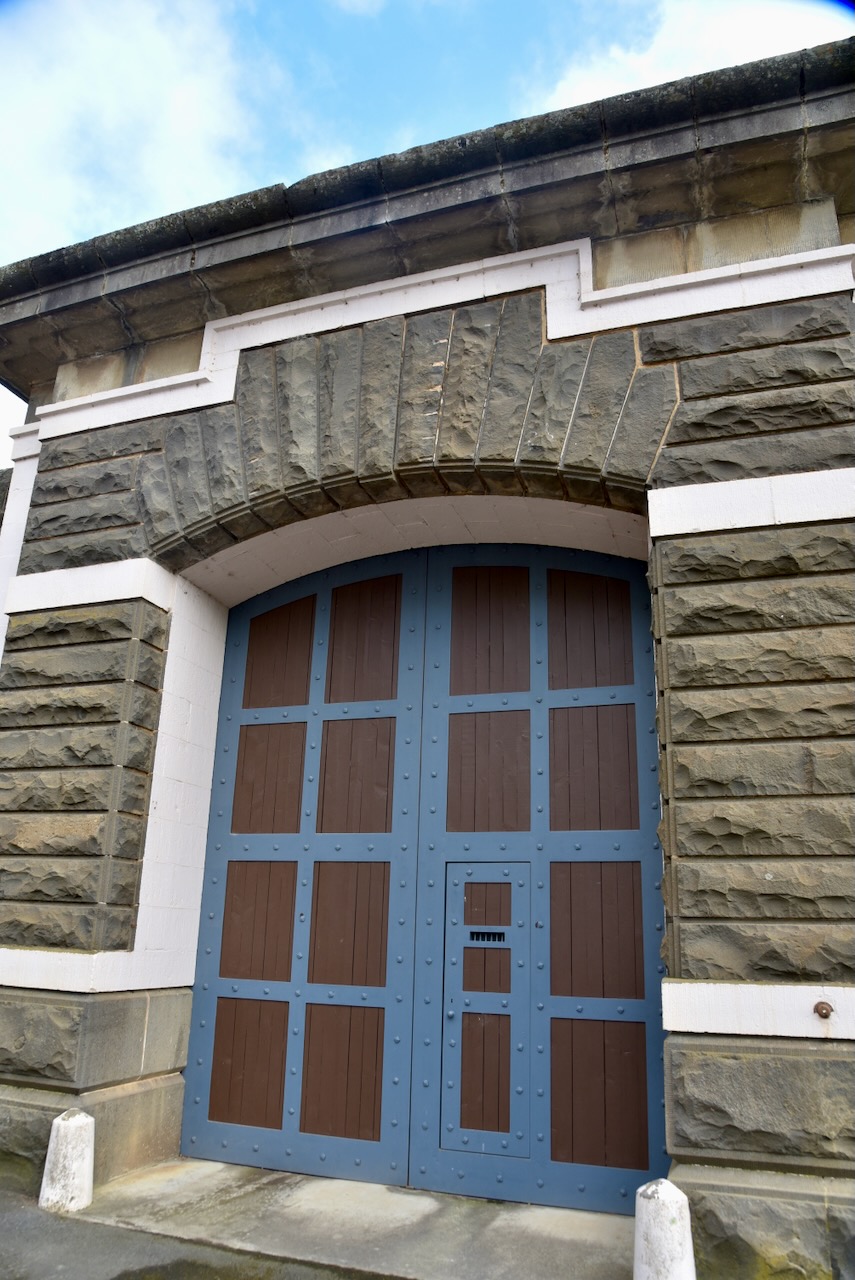
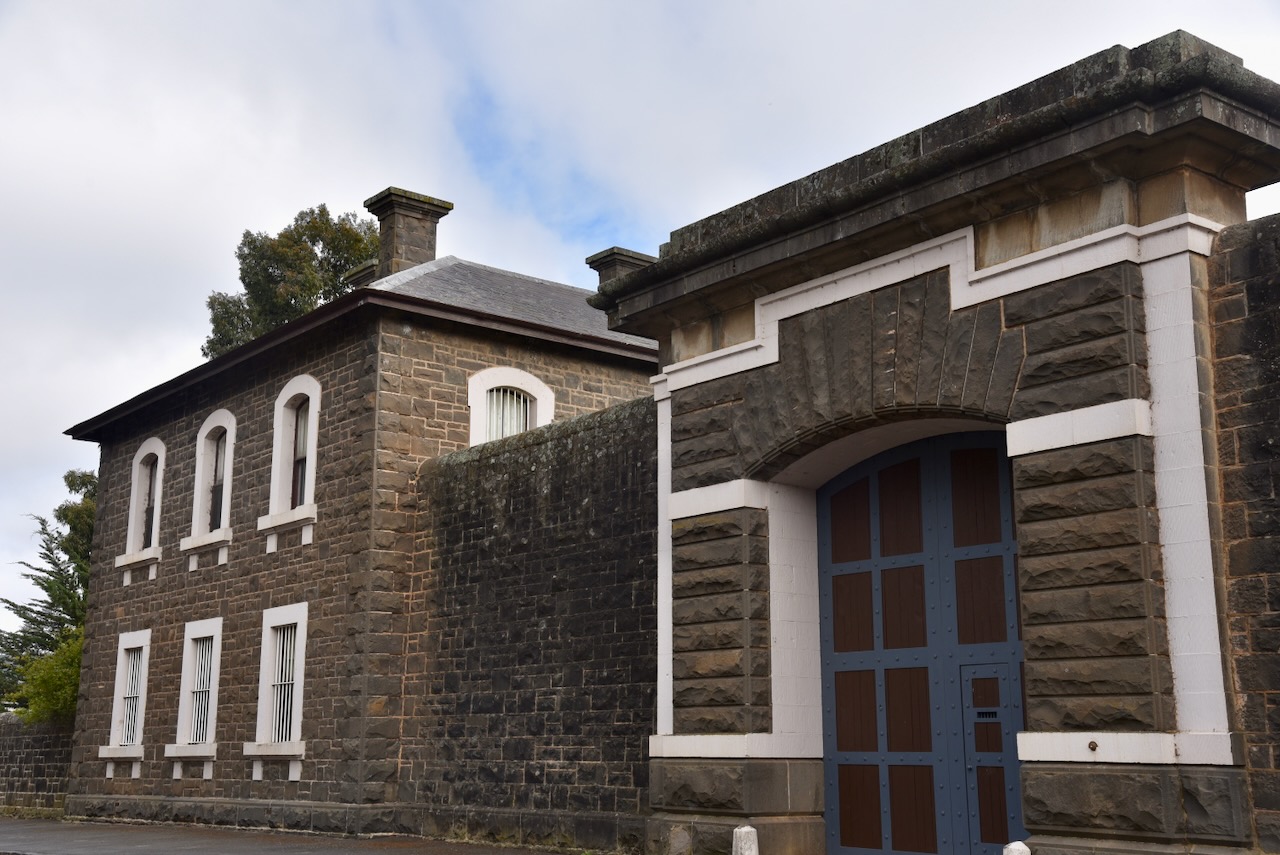
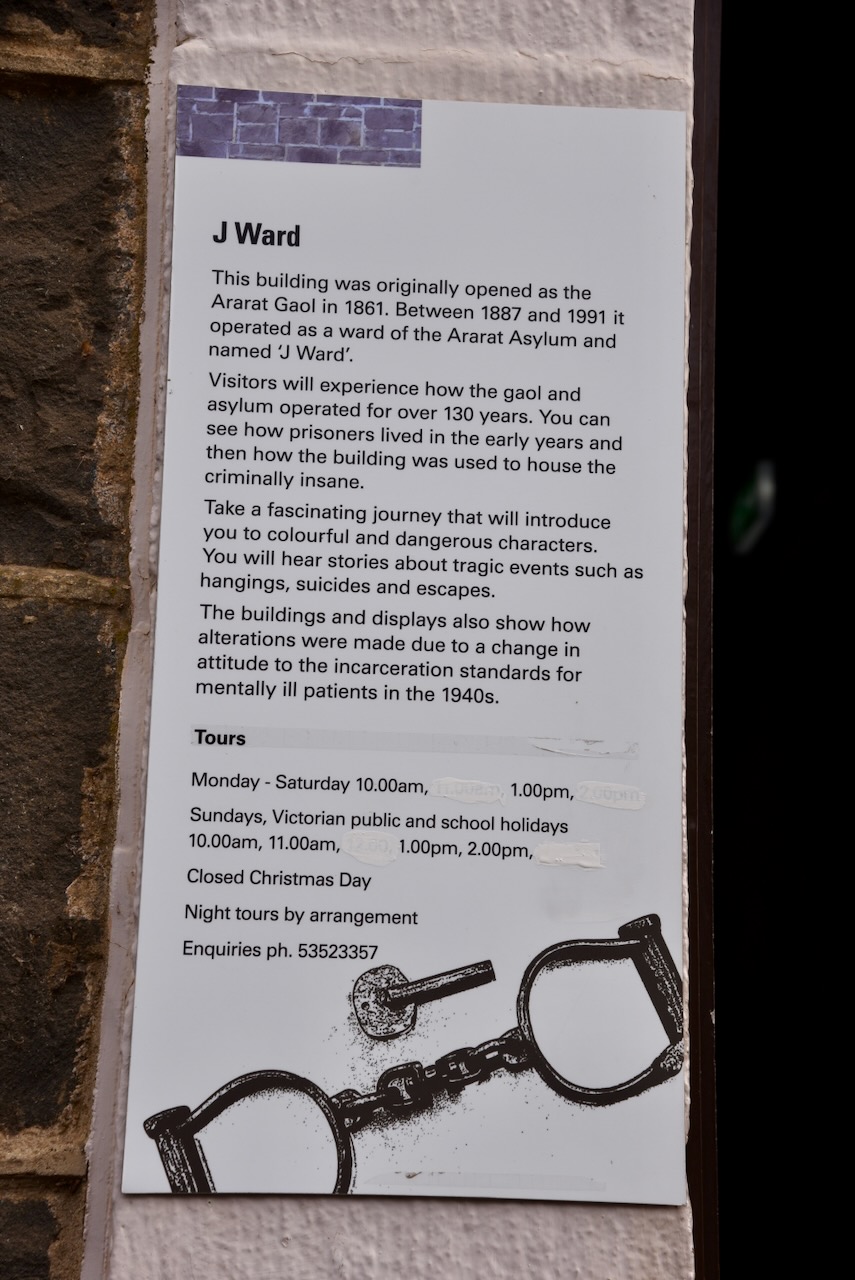
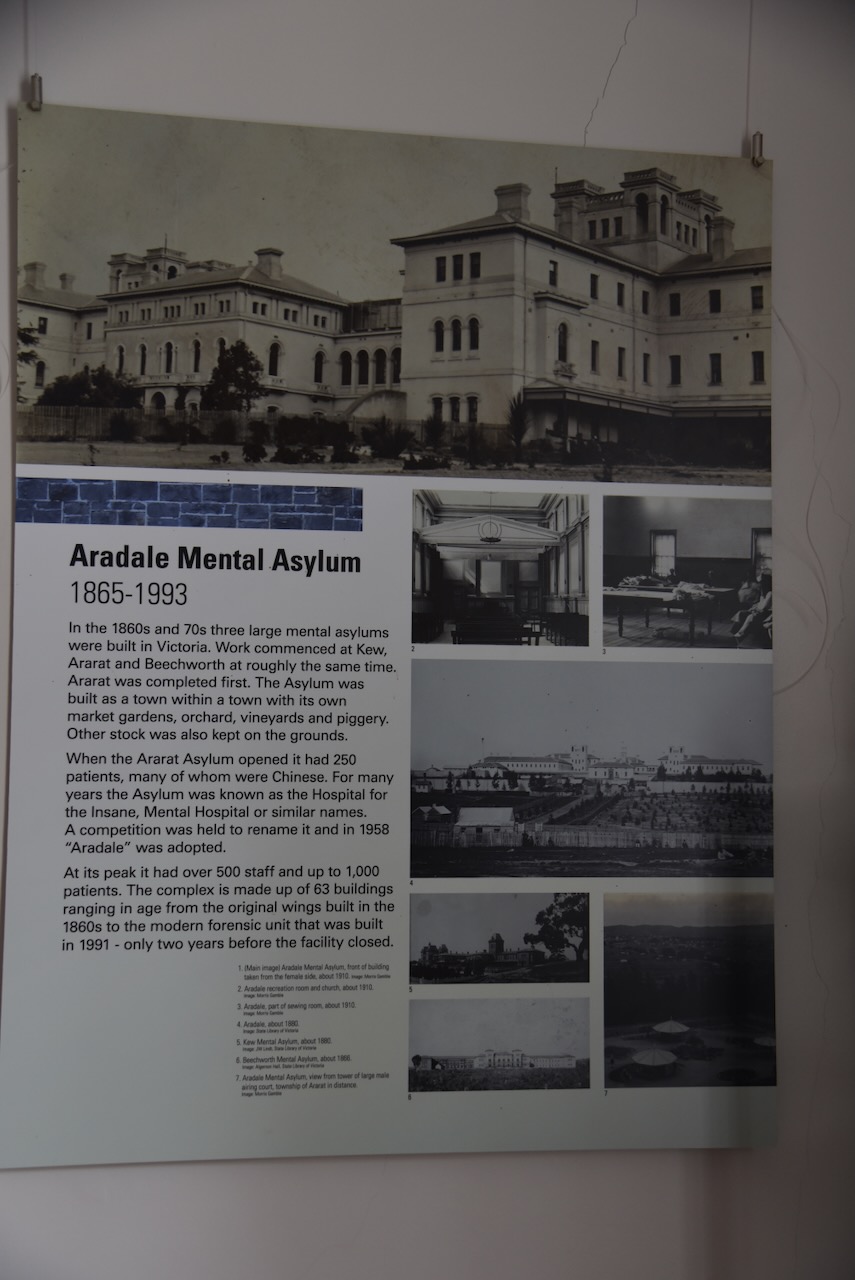
While waiting for your guide, there are a number of rooms to visit with various information about J Ward and the nearby Aradale Mental Asylum.
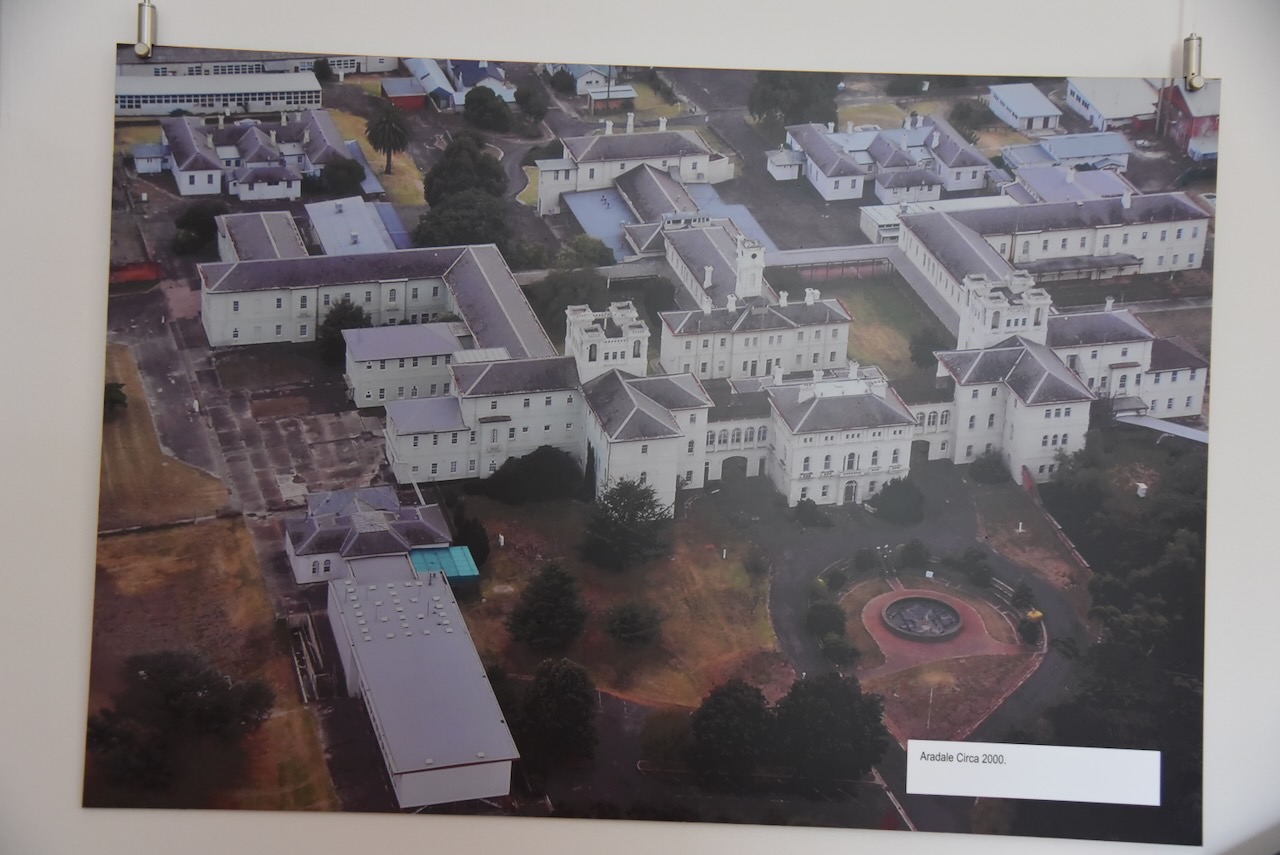
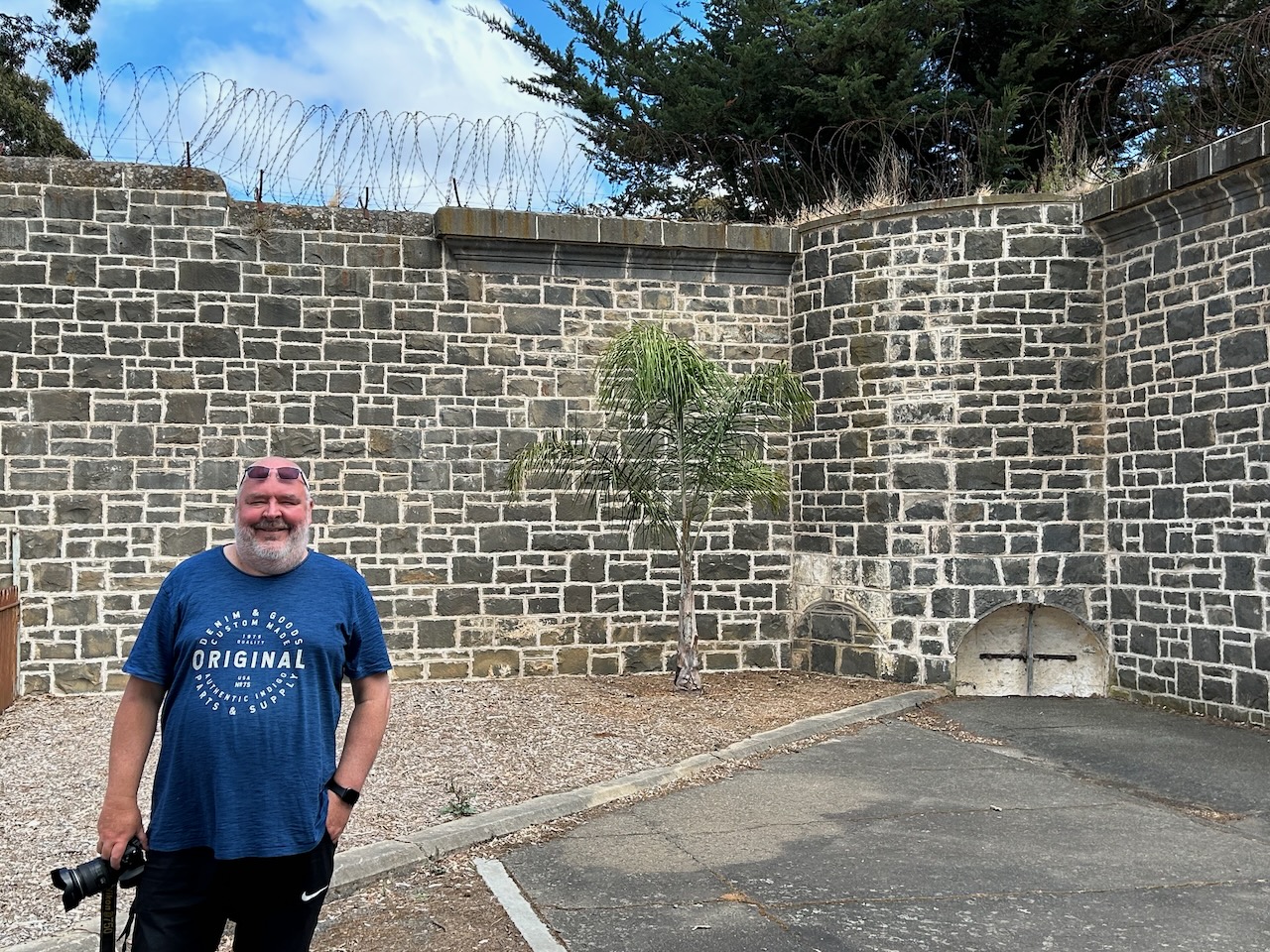
Our guide greeted us and we walked into the open garden area of J Ward.
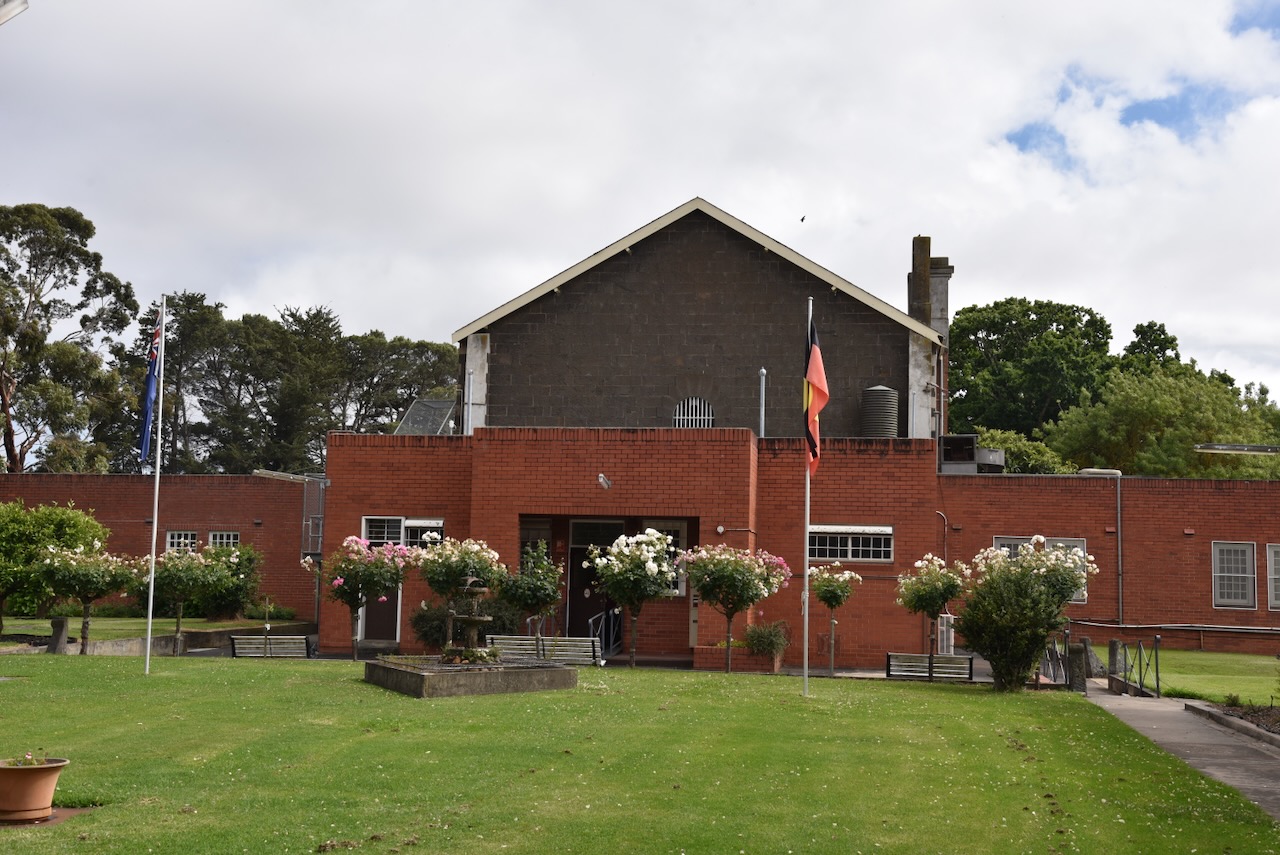
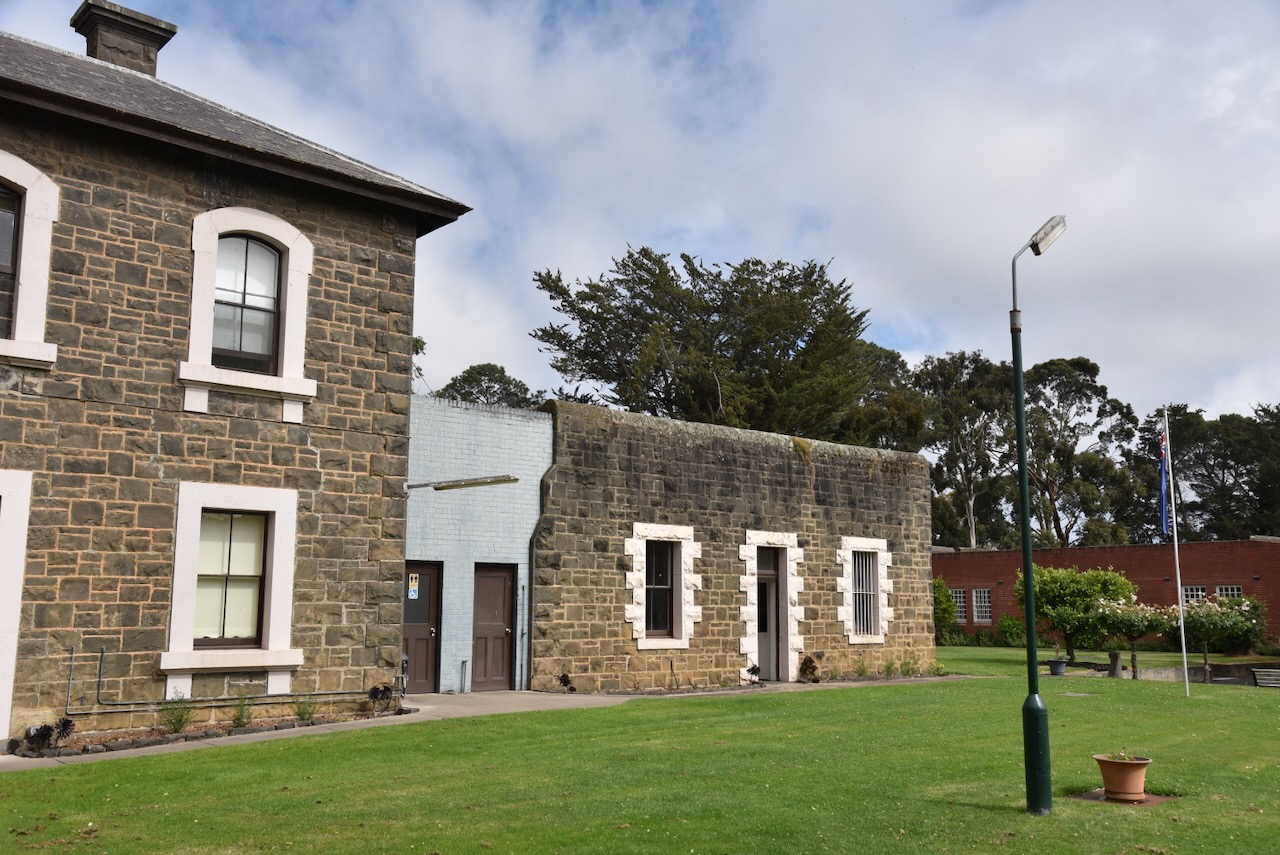
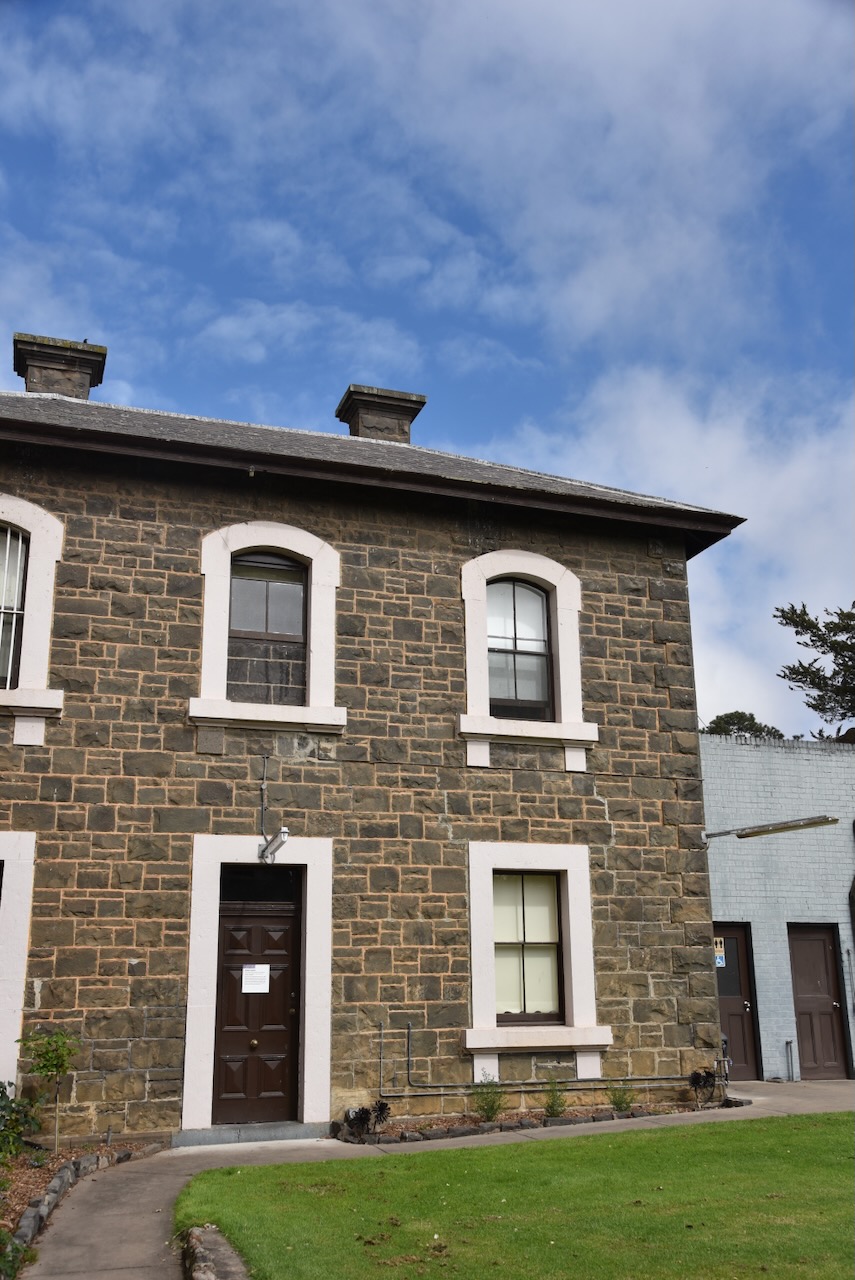
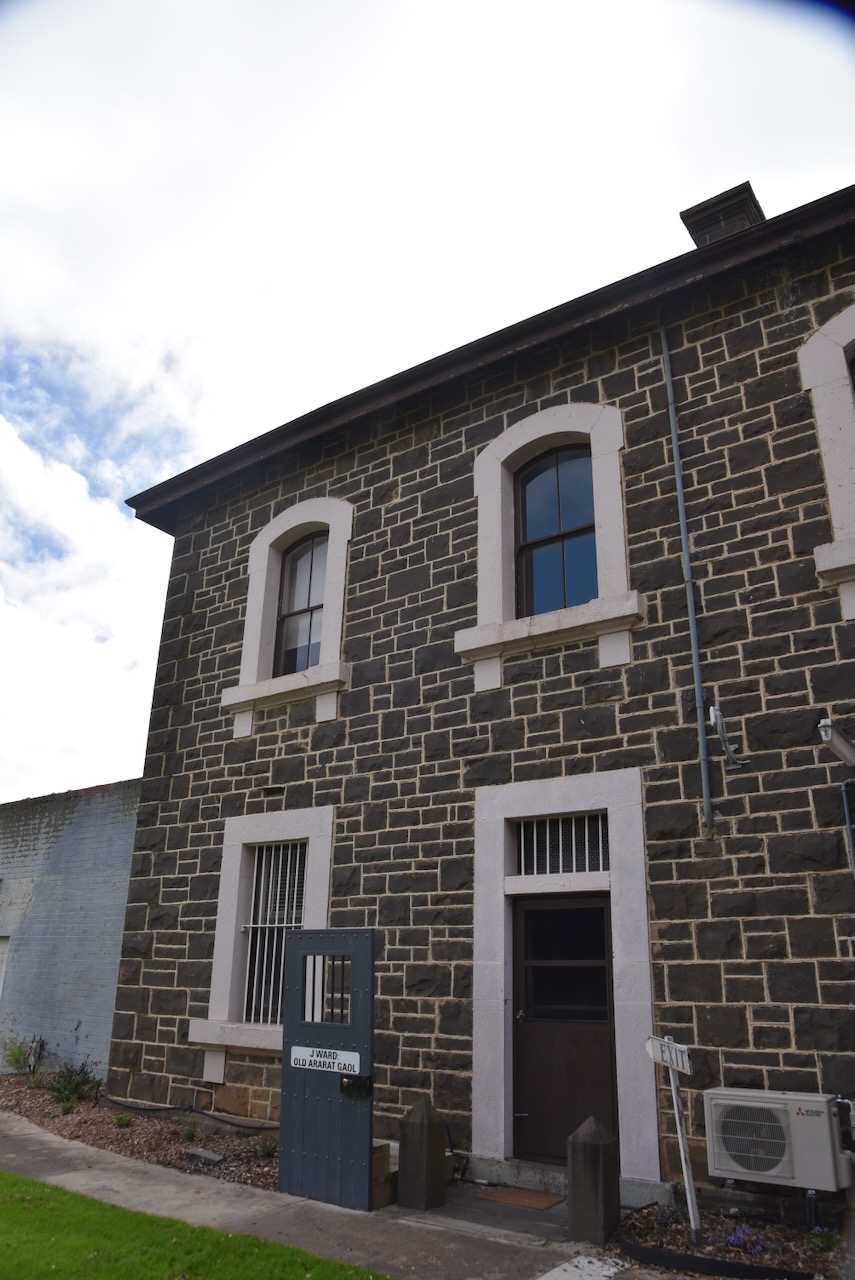
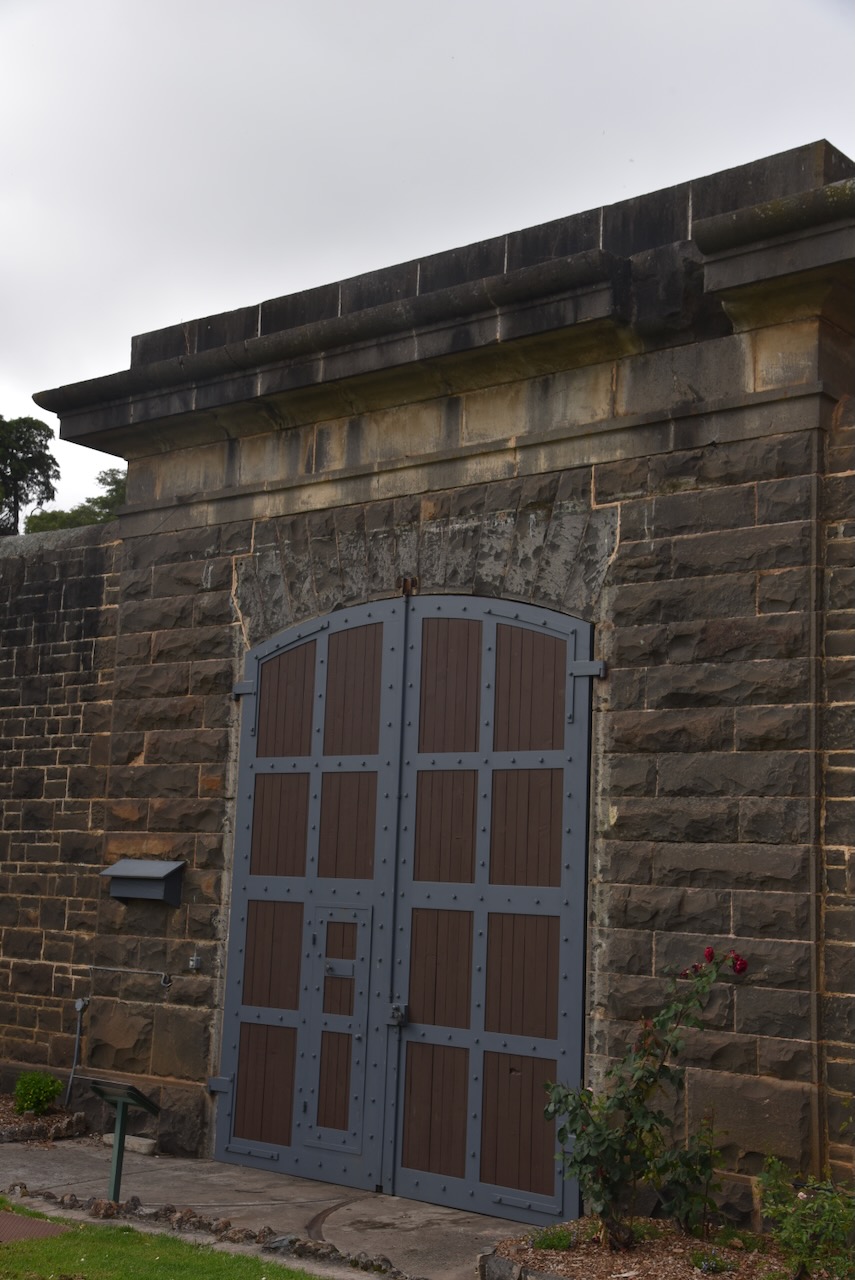
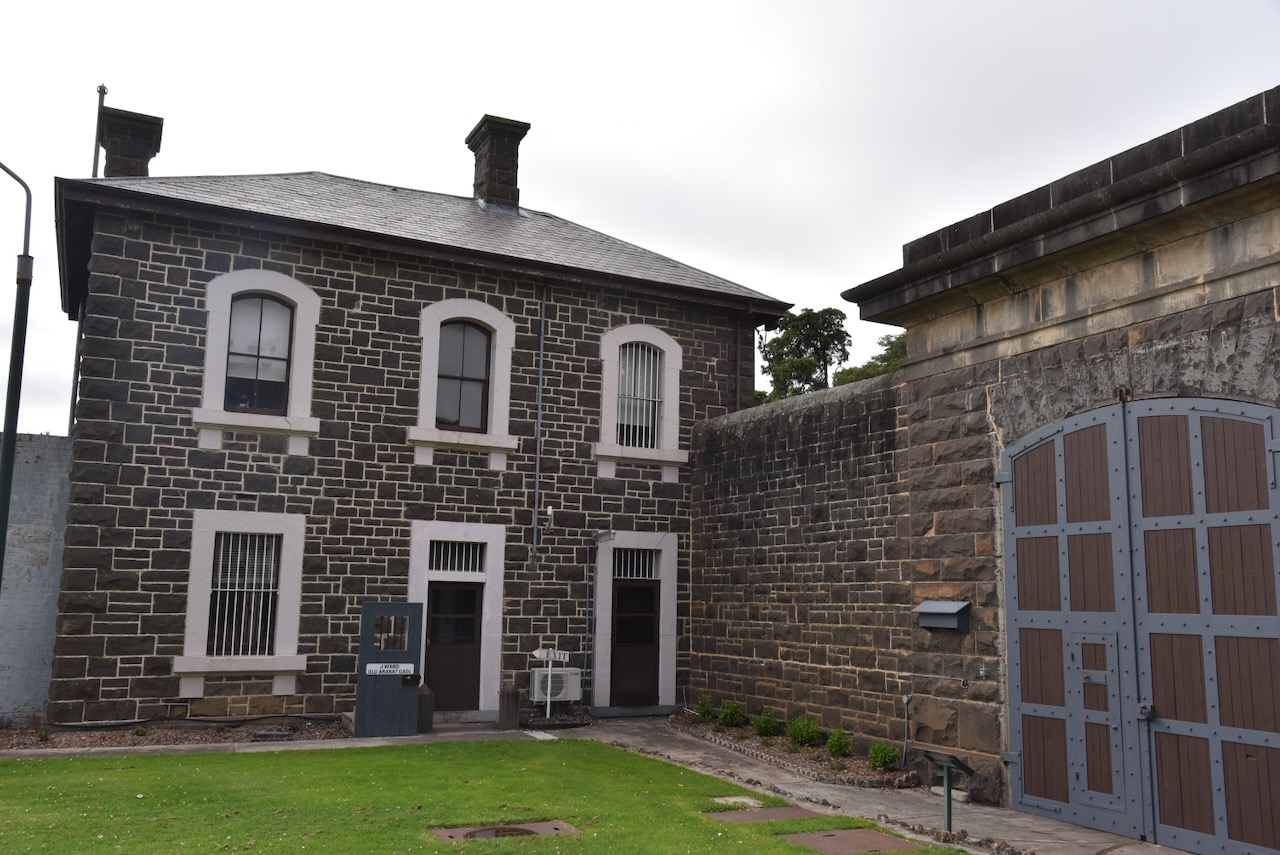
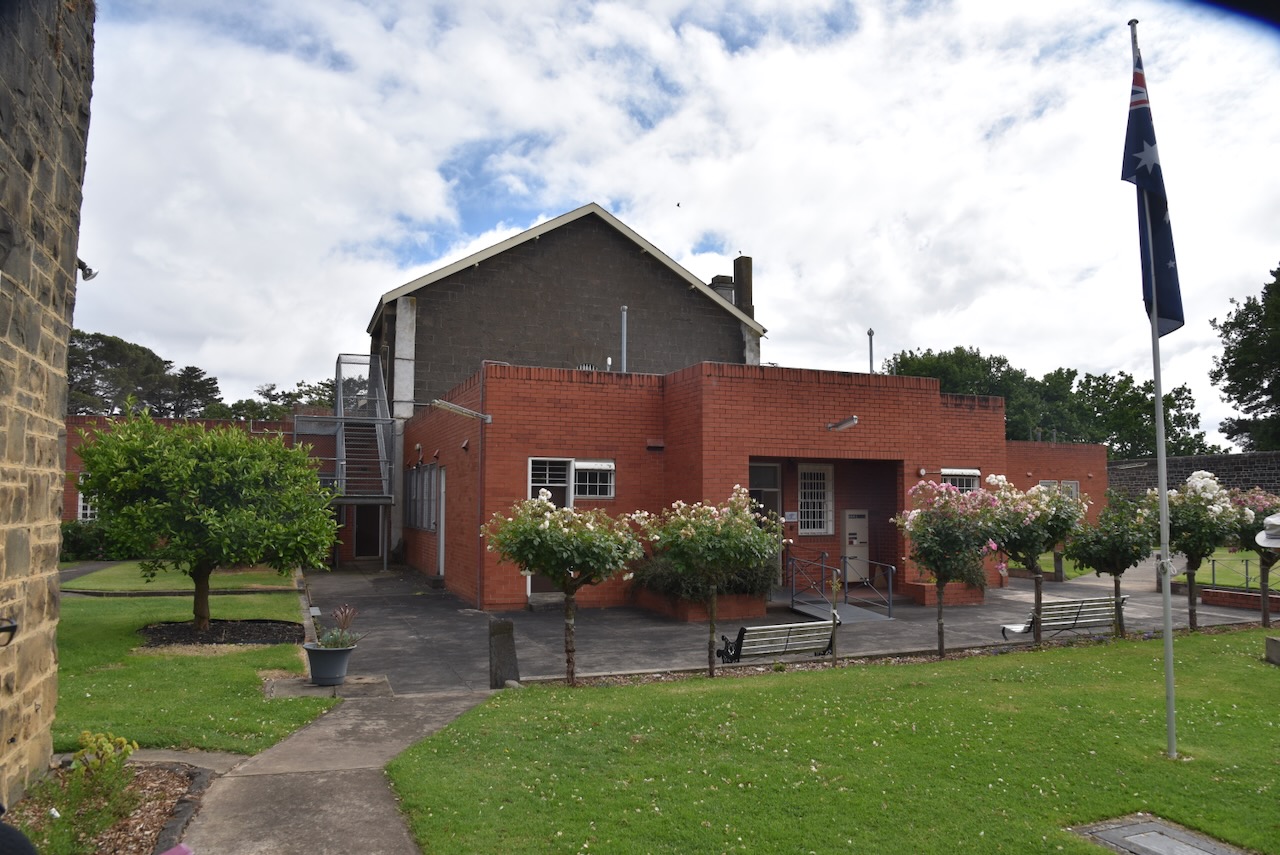
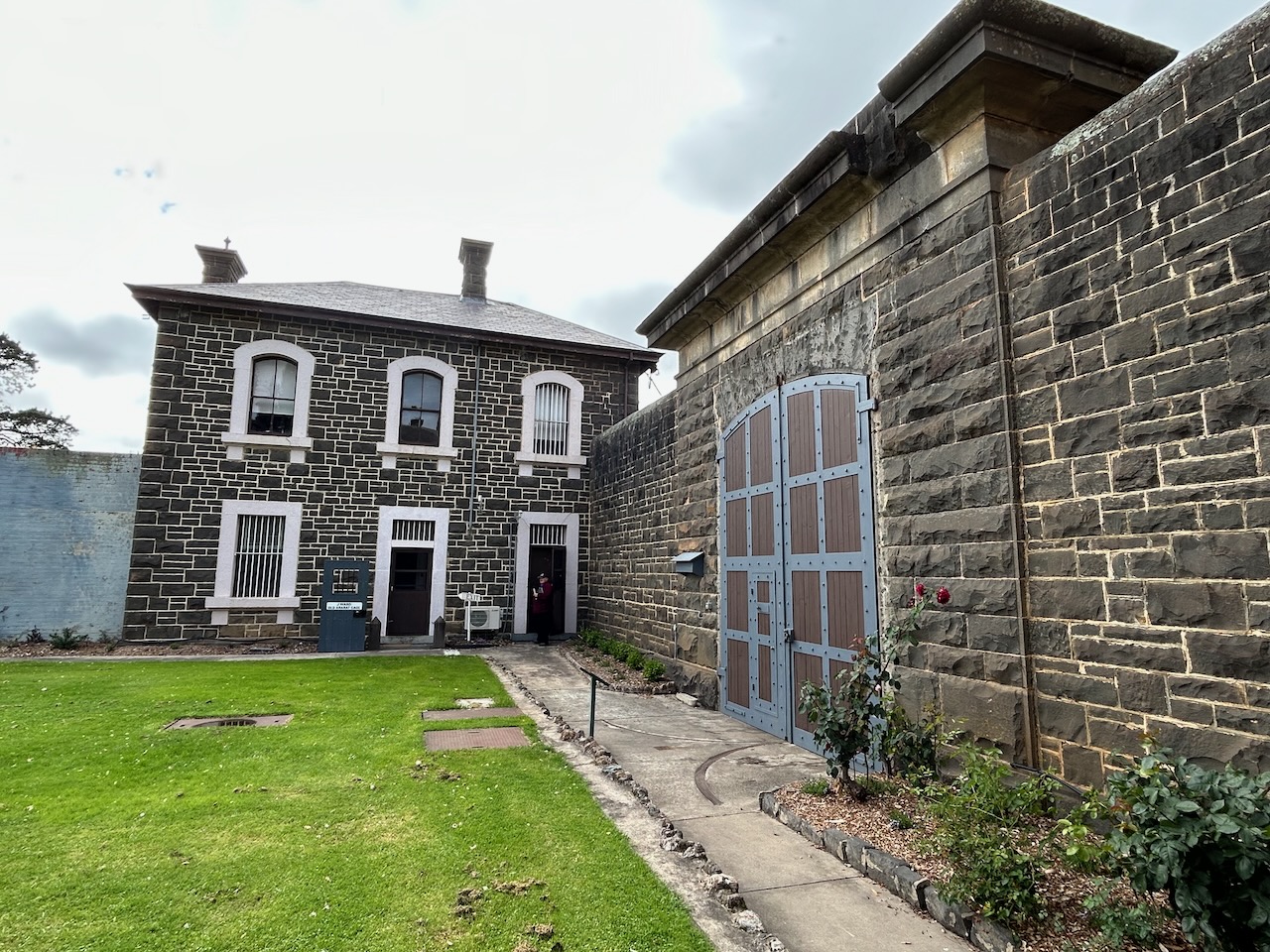

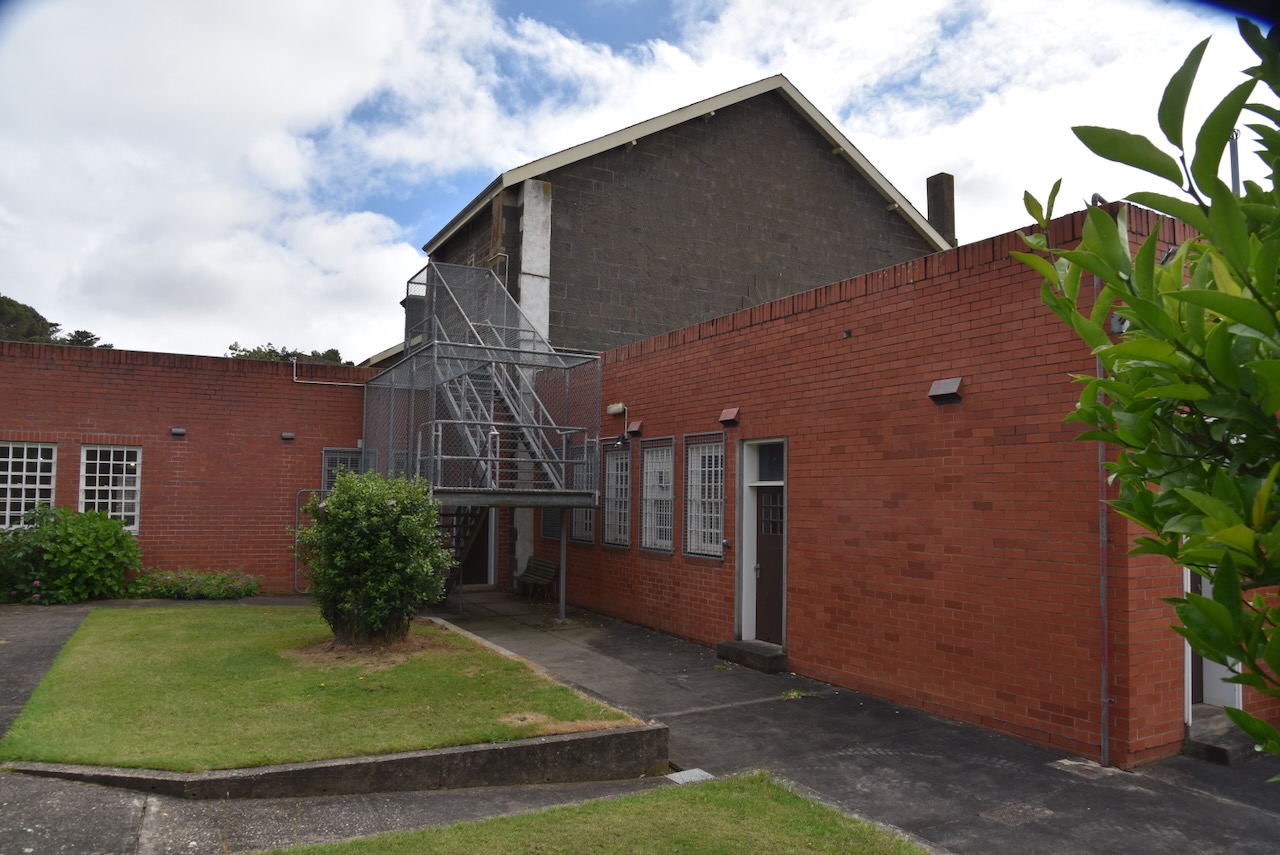
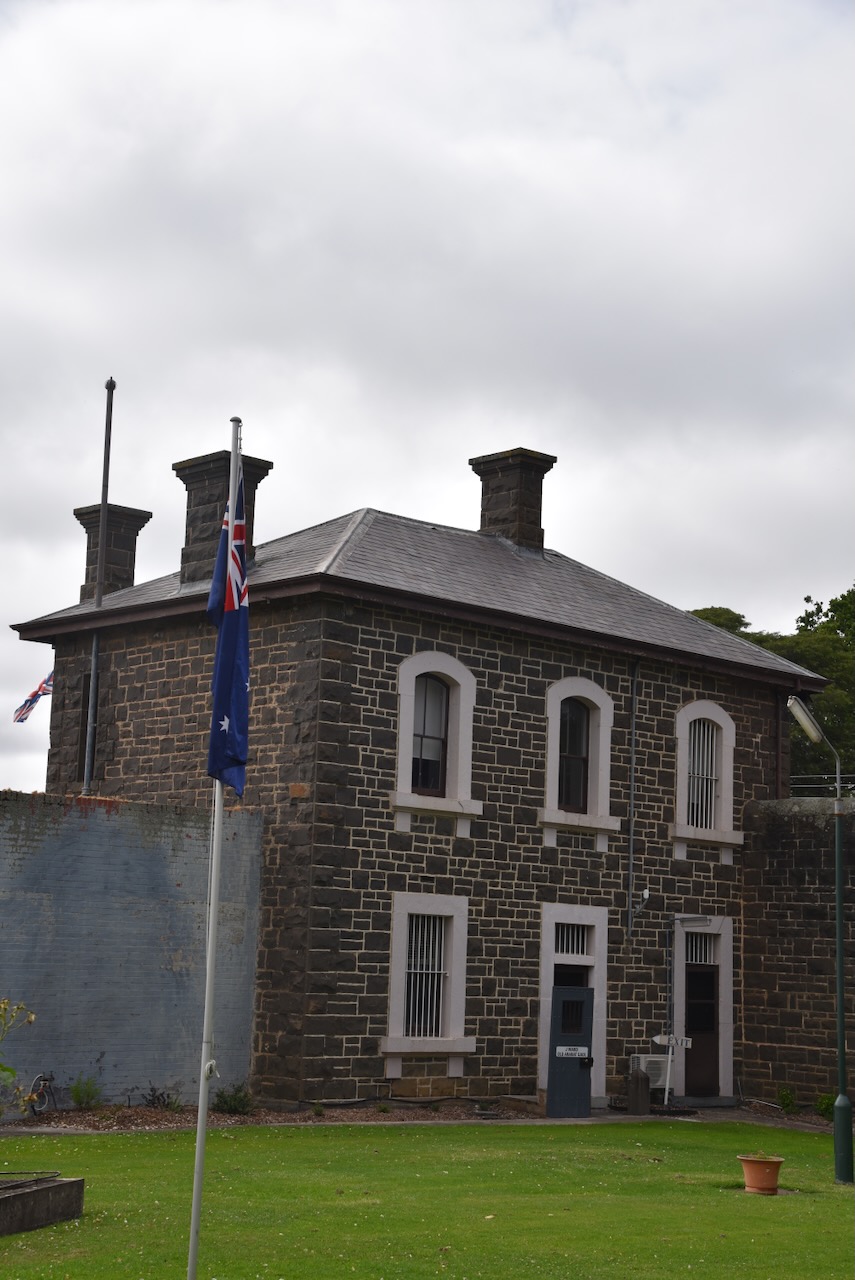
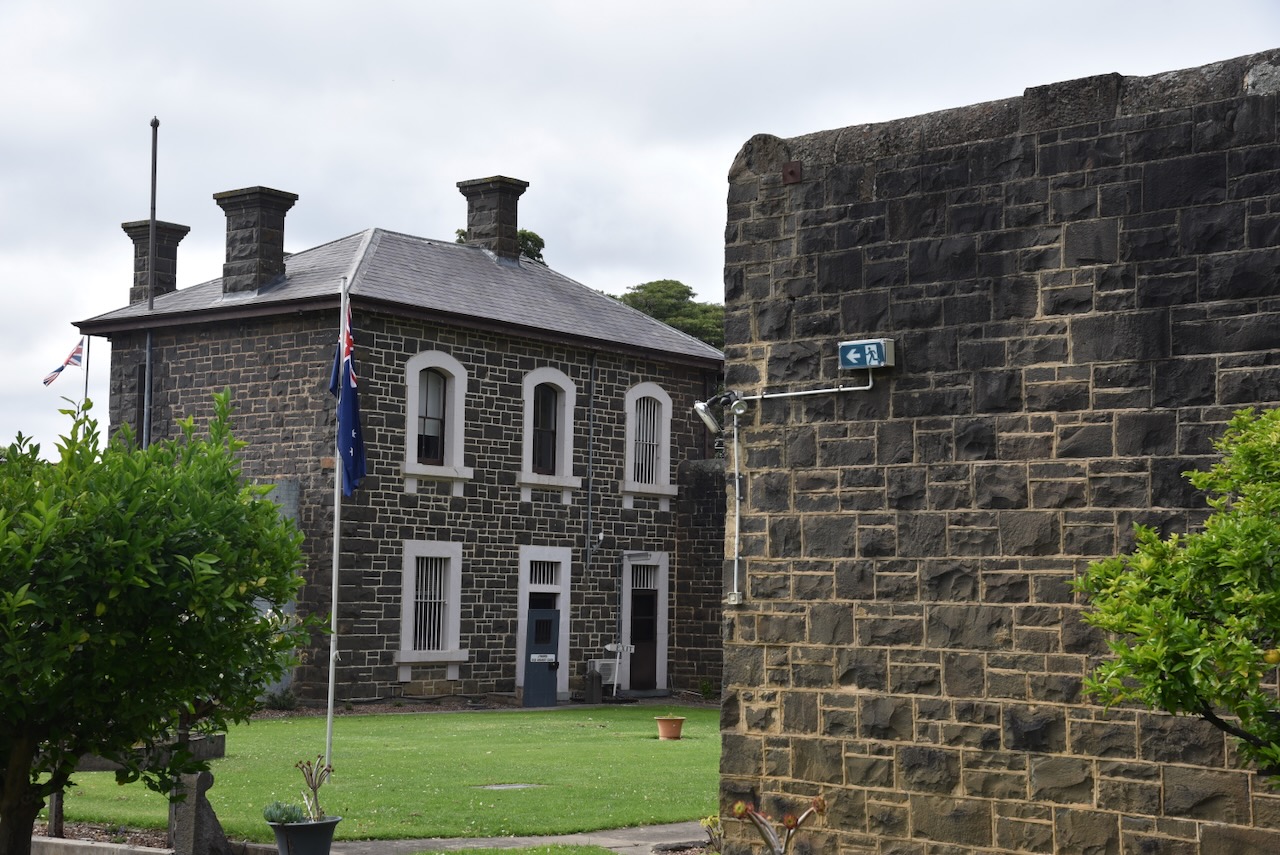
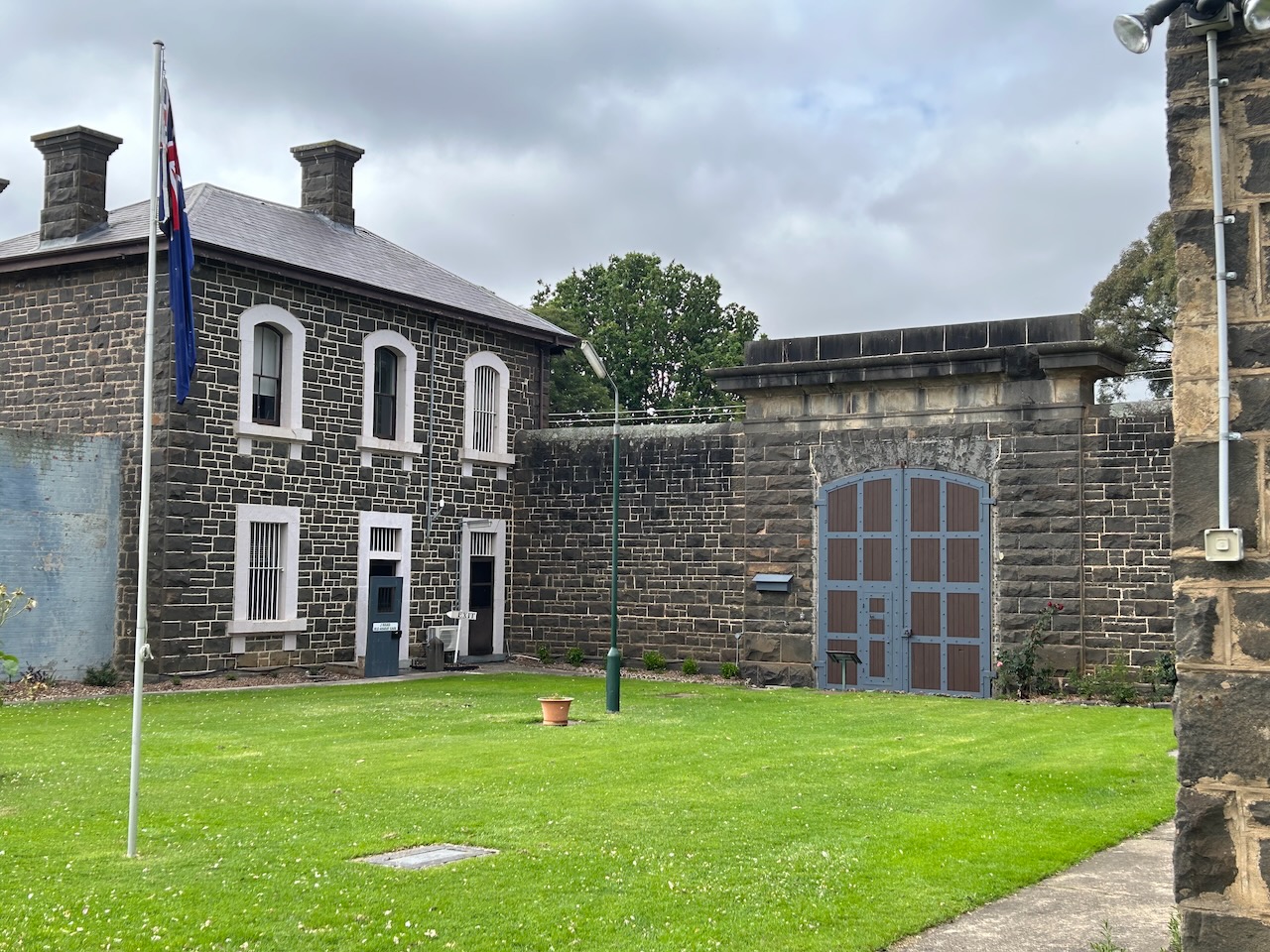
This is a place where it is a little hard to smile knowing what has occurred here over the years.
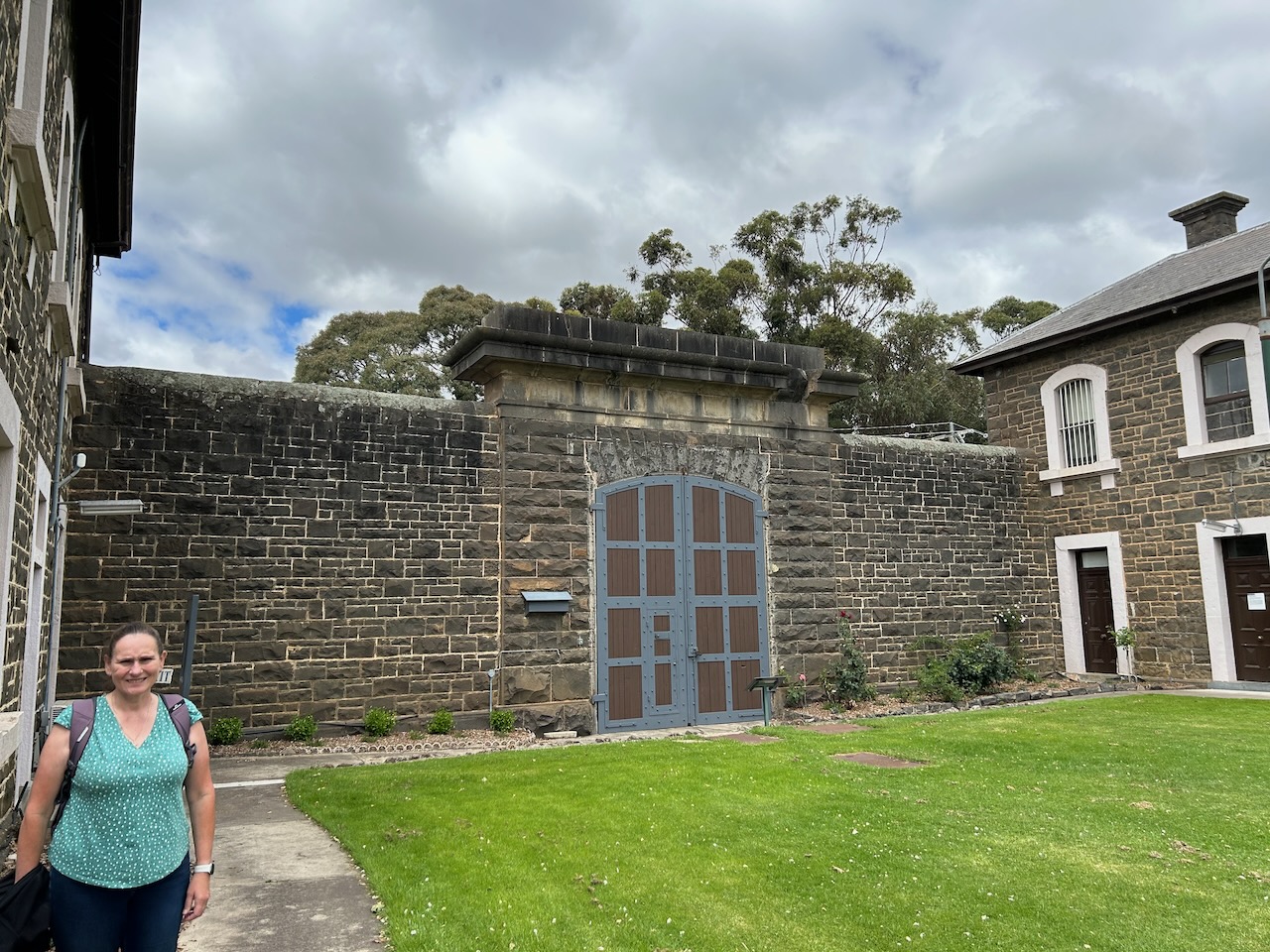

The Warden’s bedroom is contained in this area.
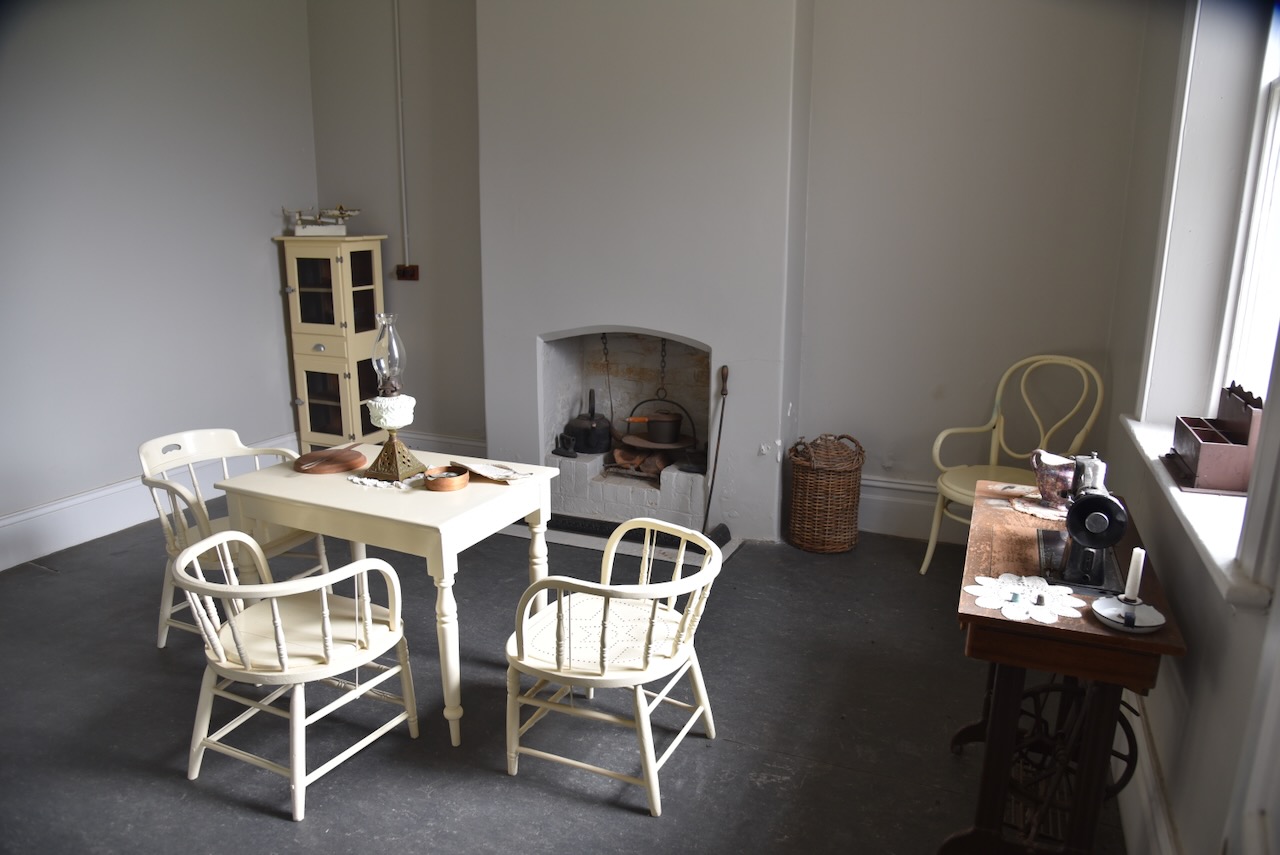
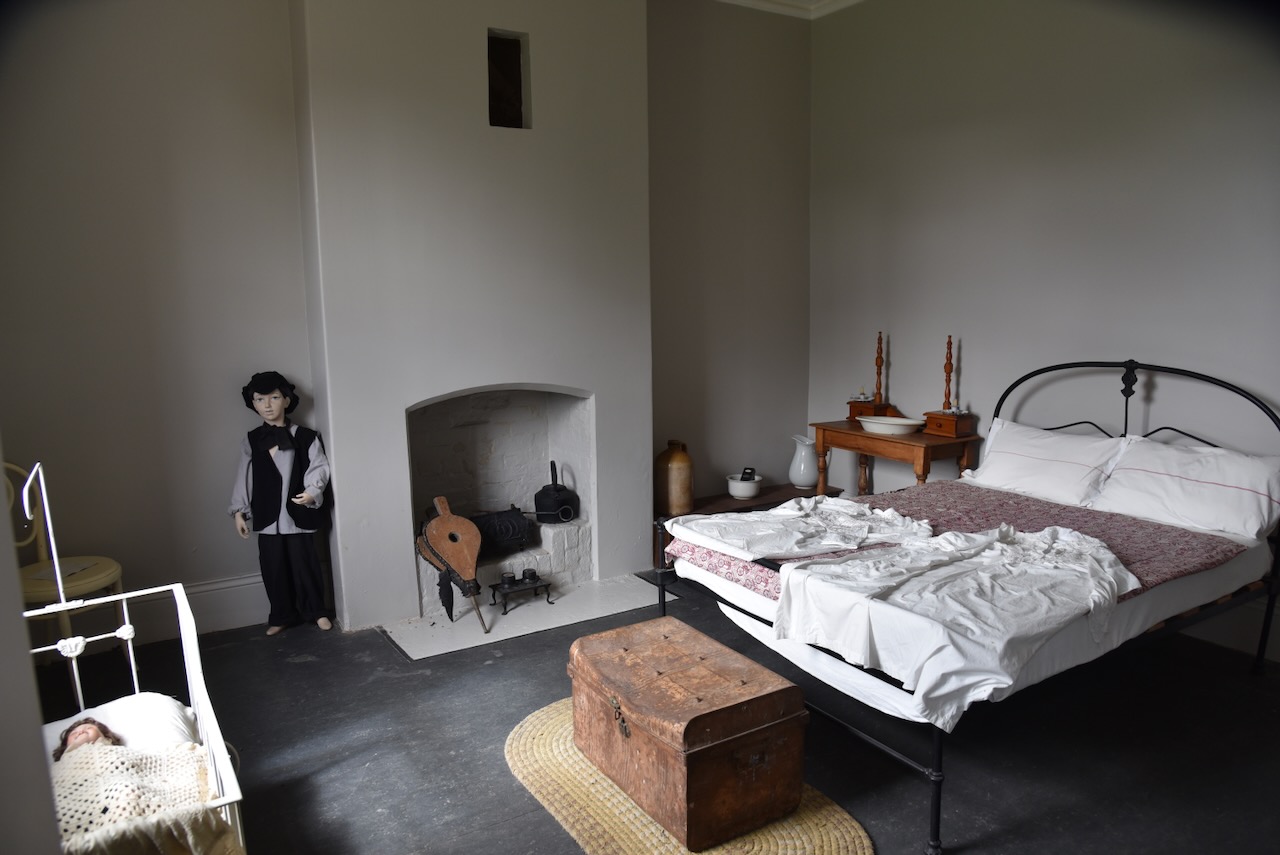
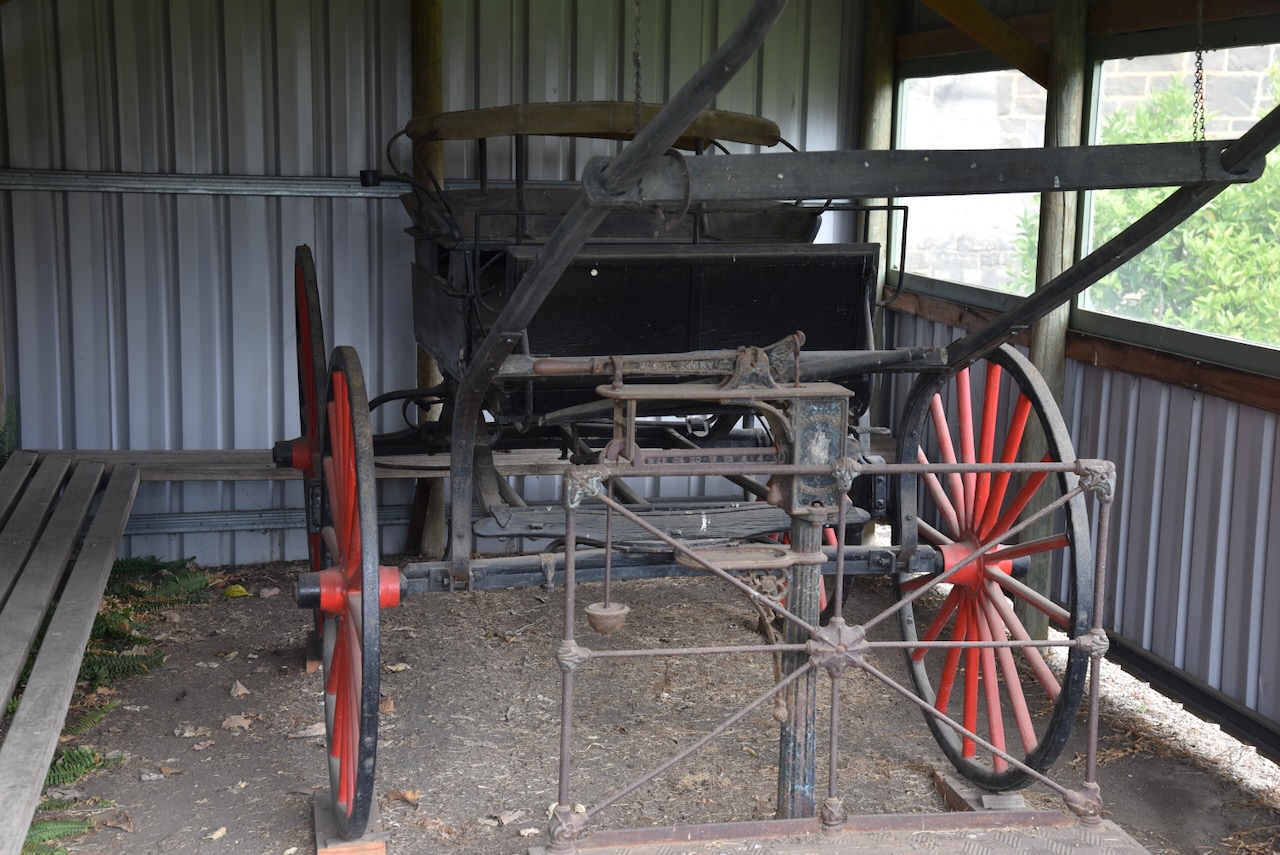
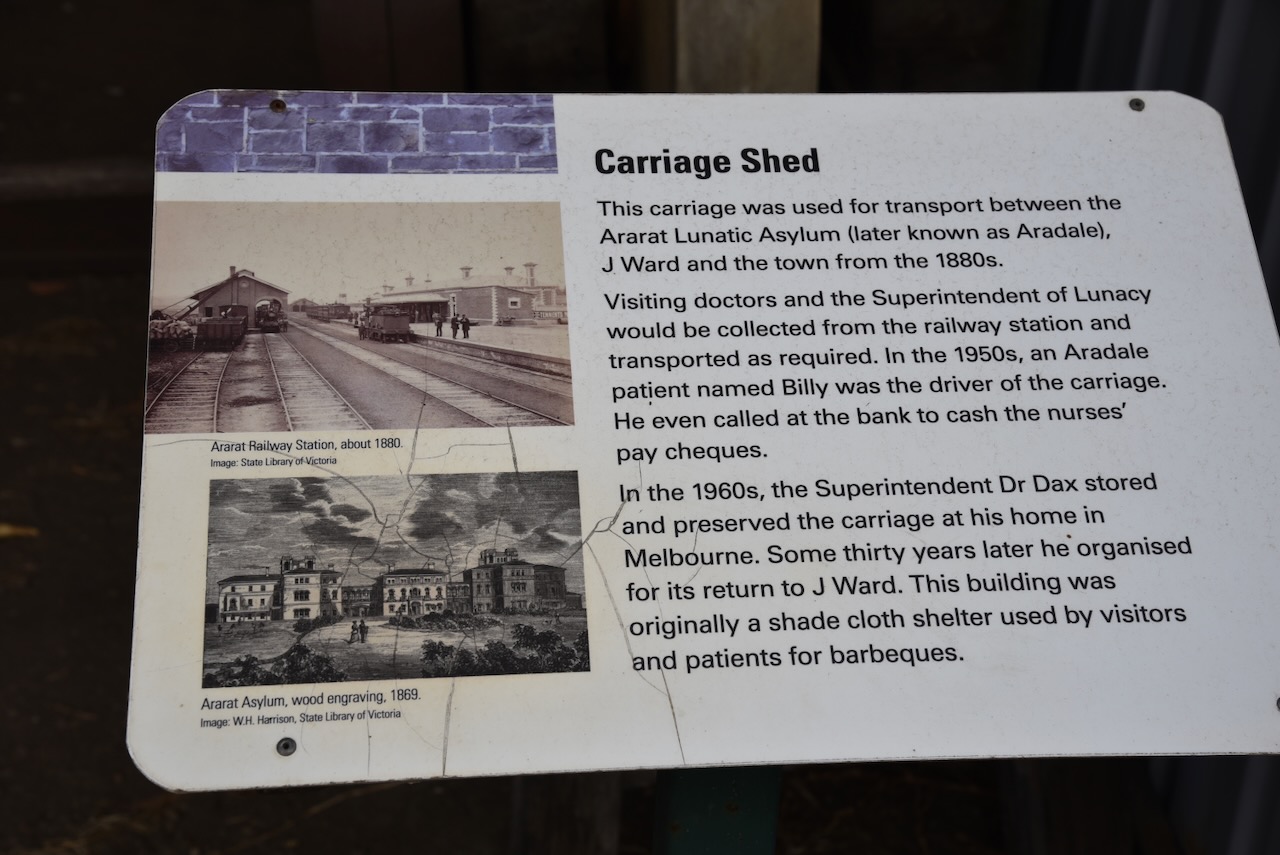
The carriage was used for transport between the Ararat Lunatic Asylum (later known as Aradale), J Ward and the town of Ararat from the 1880s. Visiting doctors and the Superintendent of Lunacy would be collected from the railway station and transported as required. In the 1950s an ARadale patient named Billy was the driver of the carriage. He even called at the bank to cash the nurses’ pay cheques. In the 1960s the Superintendent Dr Dax stored and preserved the carriage at his home in Melbourne. Some thirty years later he organised for its return to J Ward. This building was originally a shade cloth shelter used by visitors and patients for barbeques.
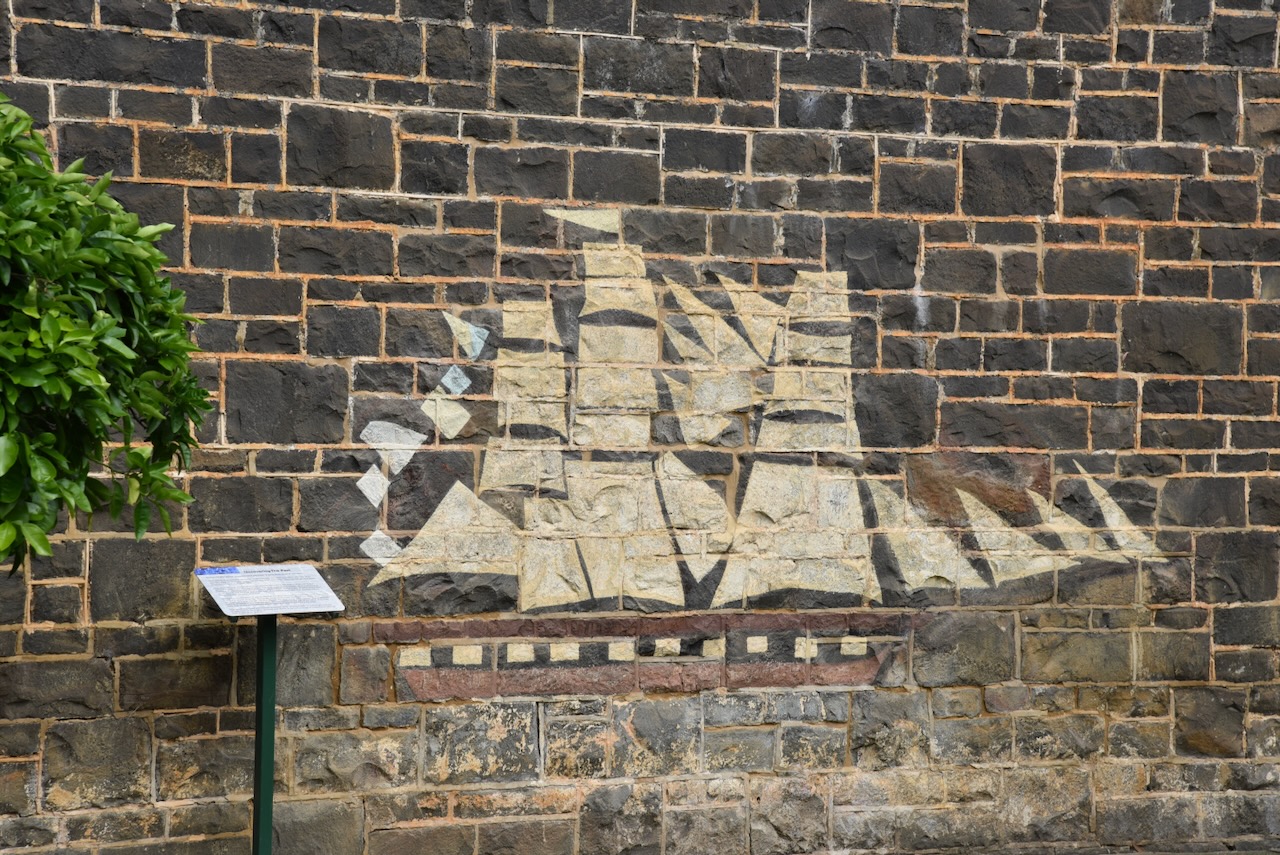
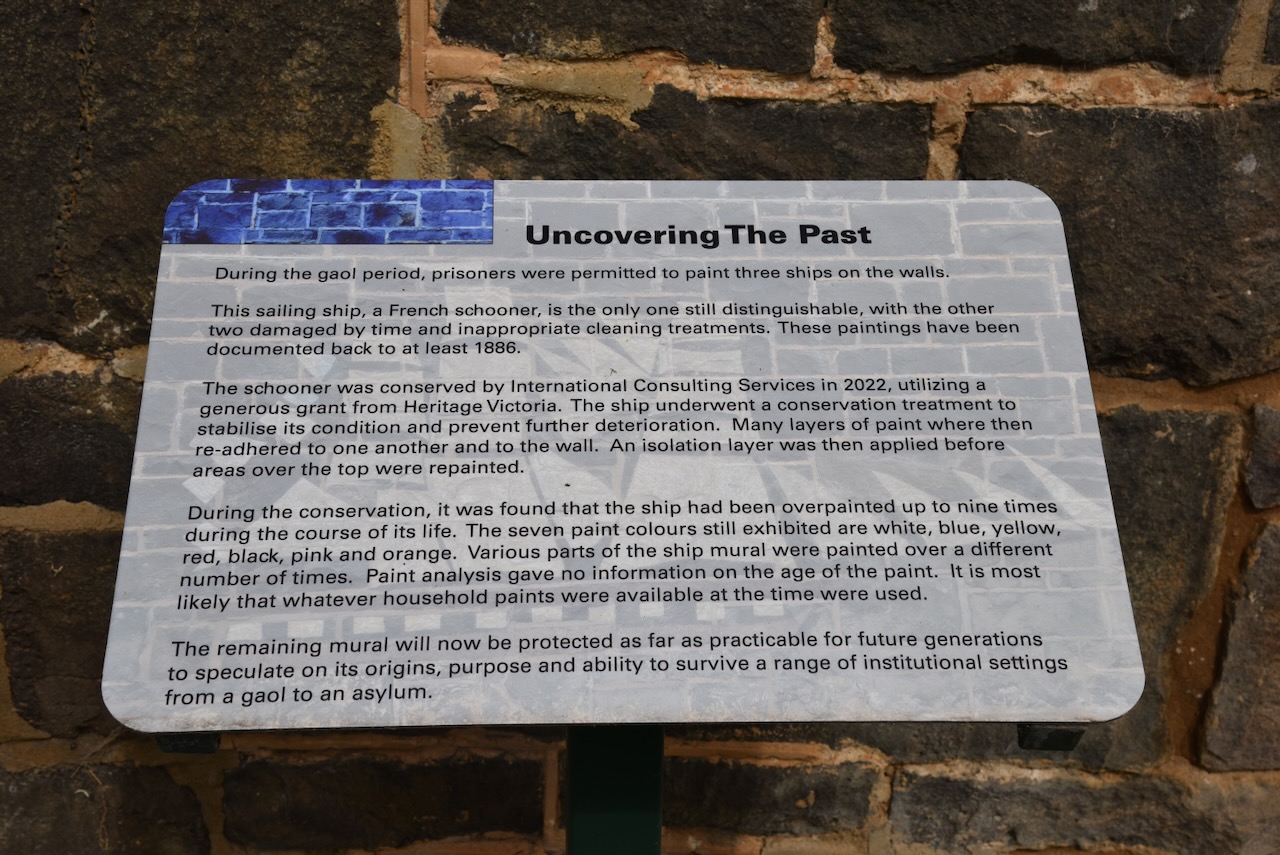
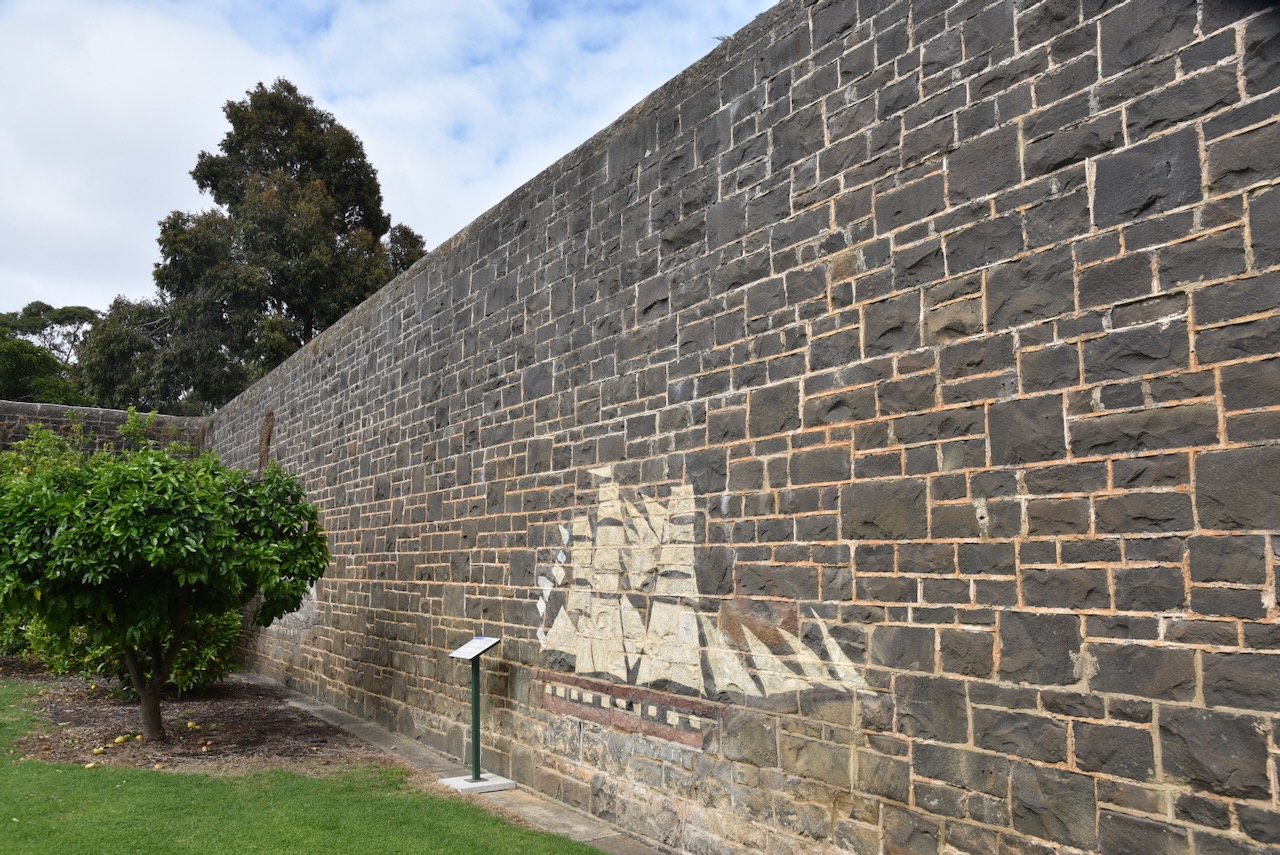
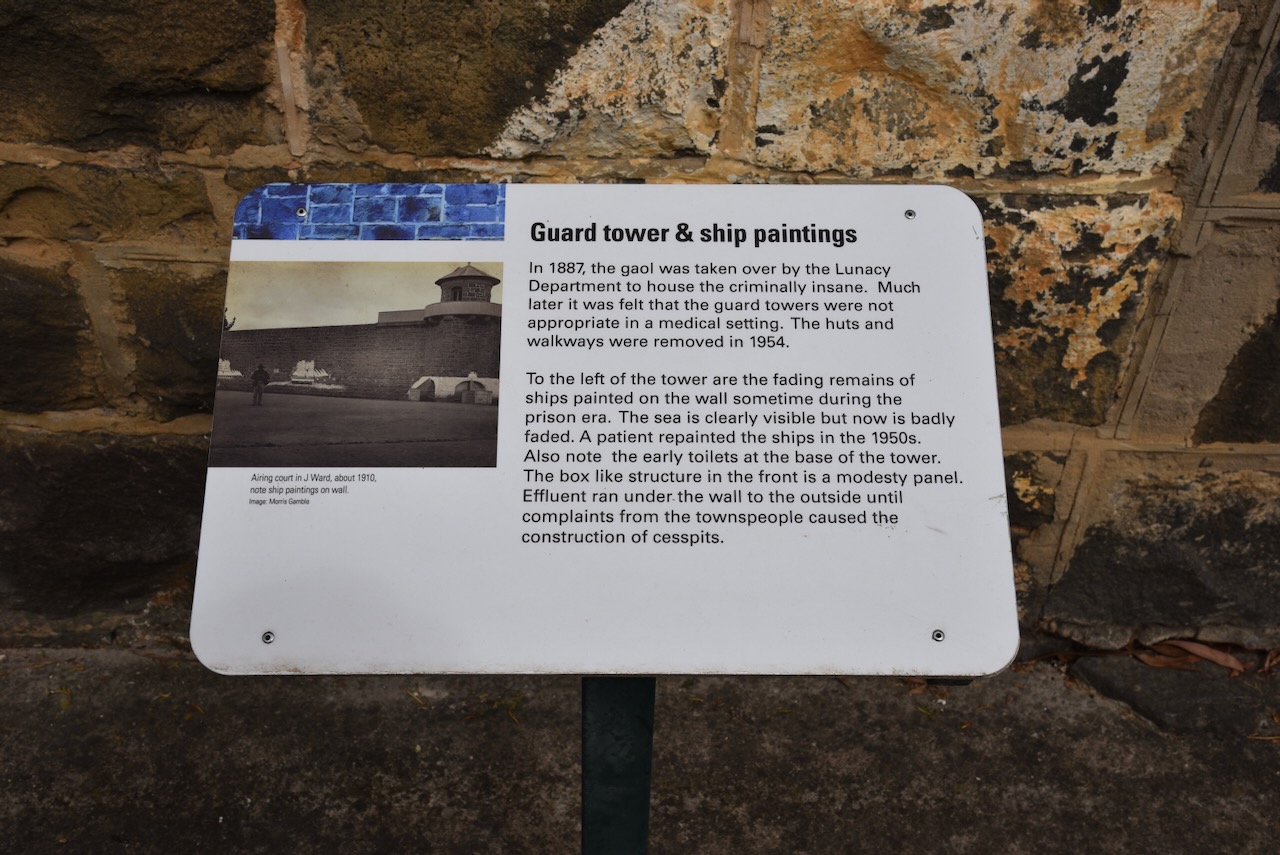
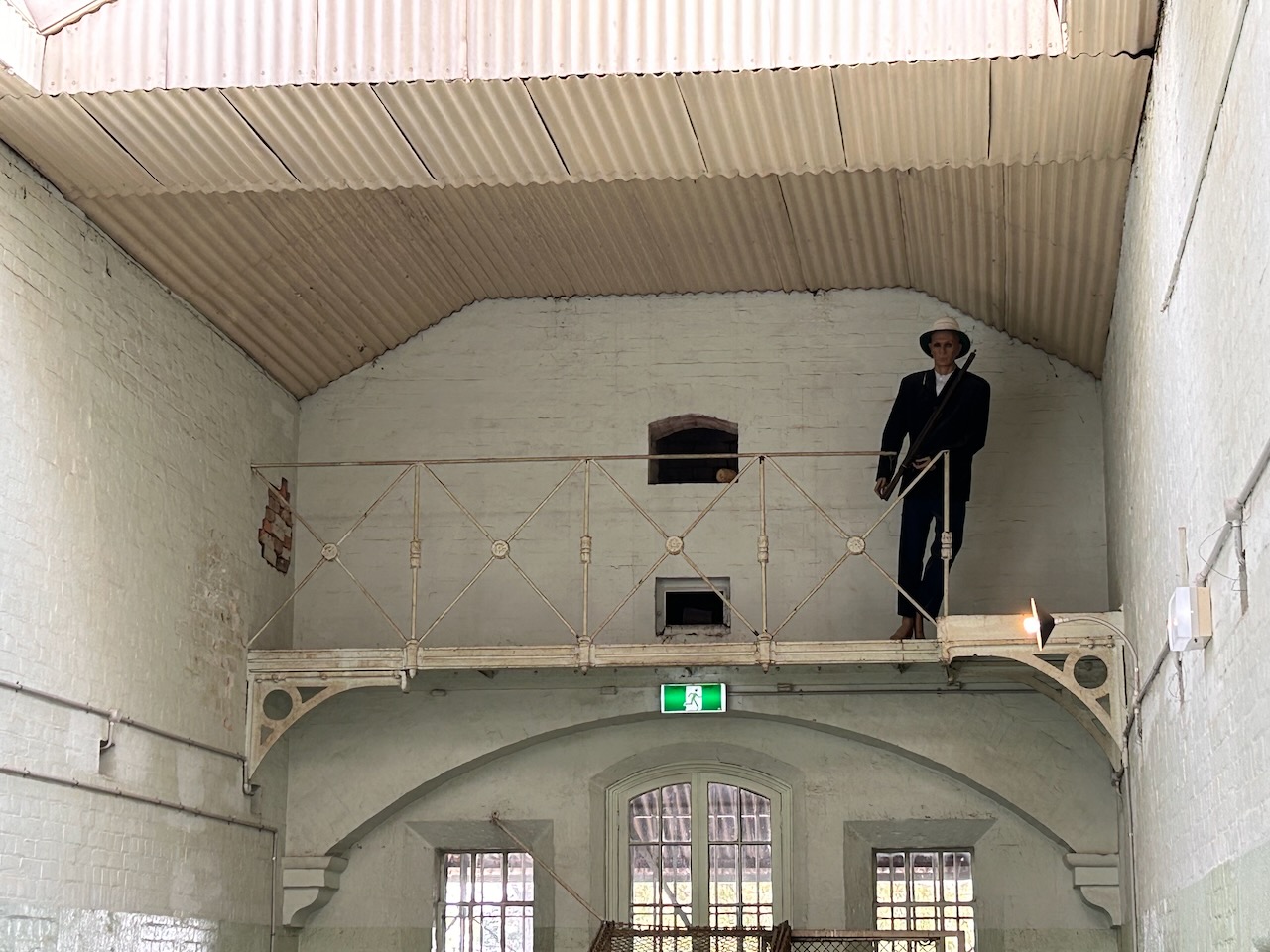
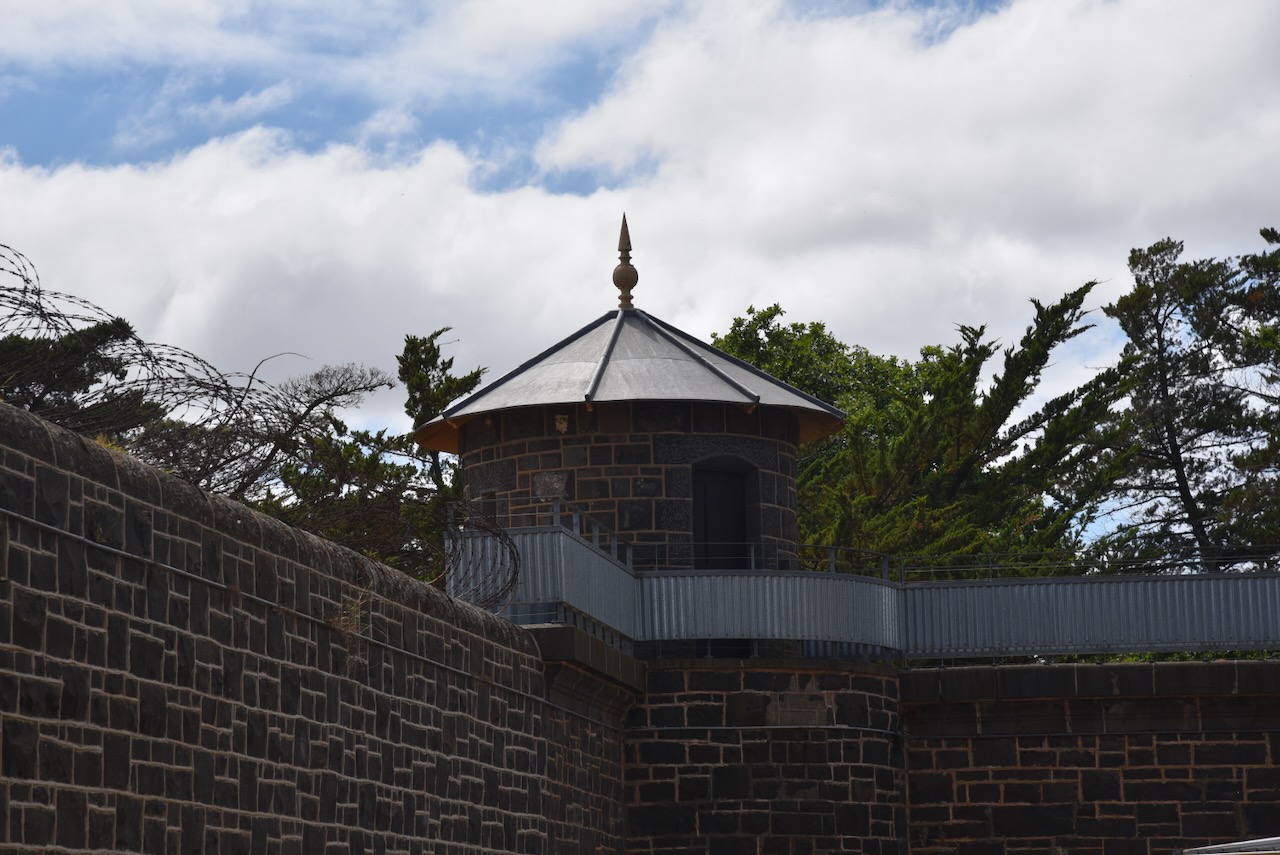
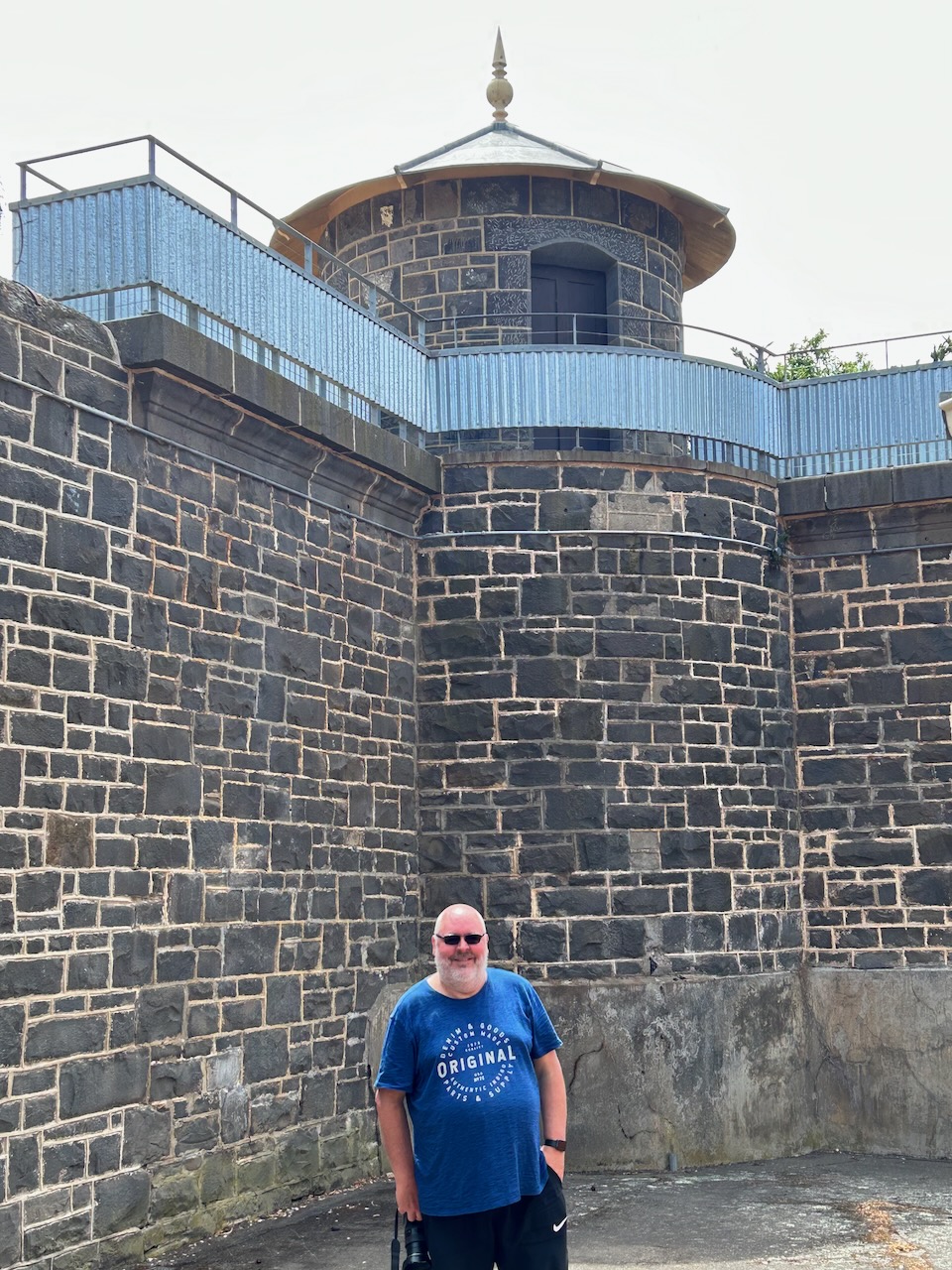
In 1887 the gaol was taken over by the Lunacy Department to house the criminally insane. Much later it was felt that the guard towers were not appropriate in a medical setting. The huts and walkways were removed in 1954. To the left of the tower are the fading remains of ships painted on the wall sometime during the prison era. The sea is clearly visible but now is badly faded. A patient repainted the ships in the 1950s.
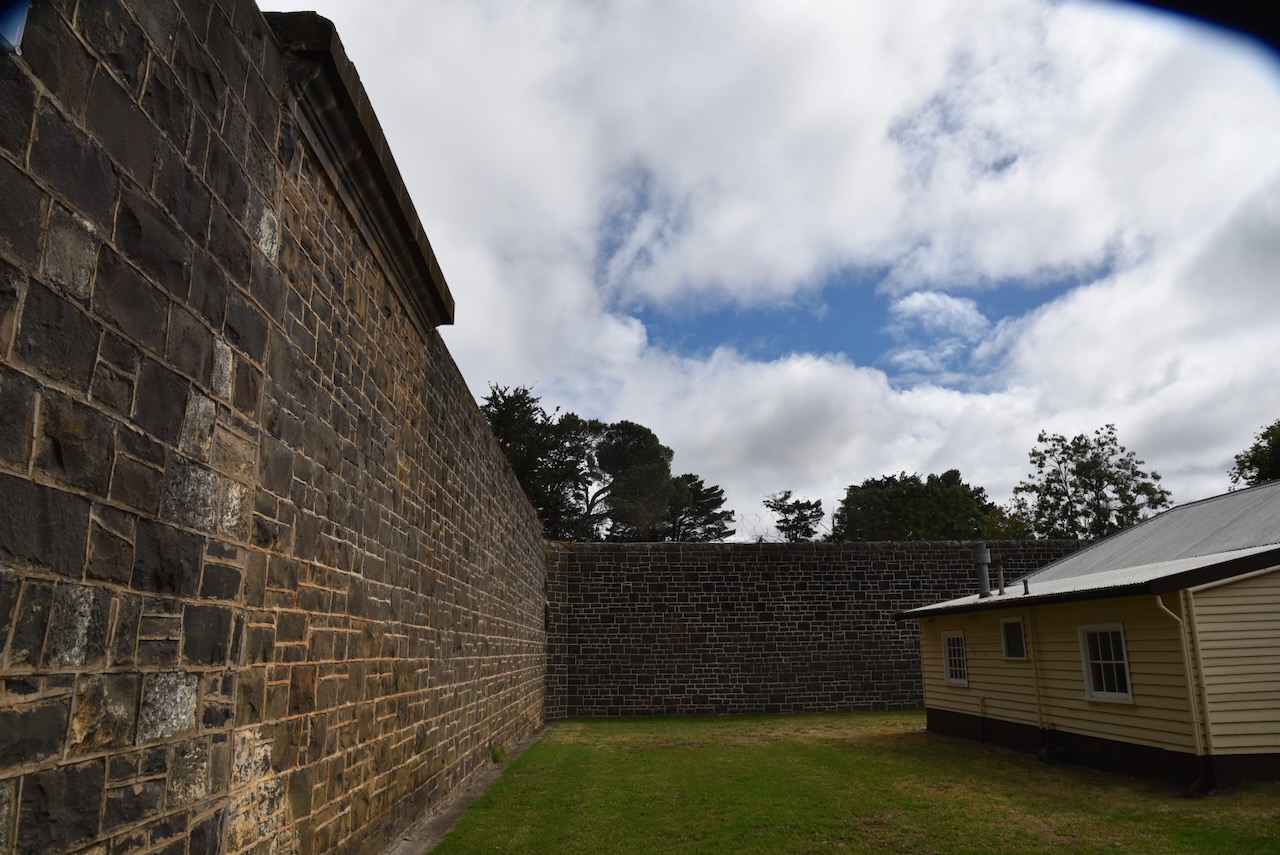
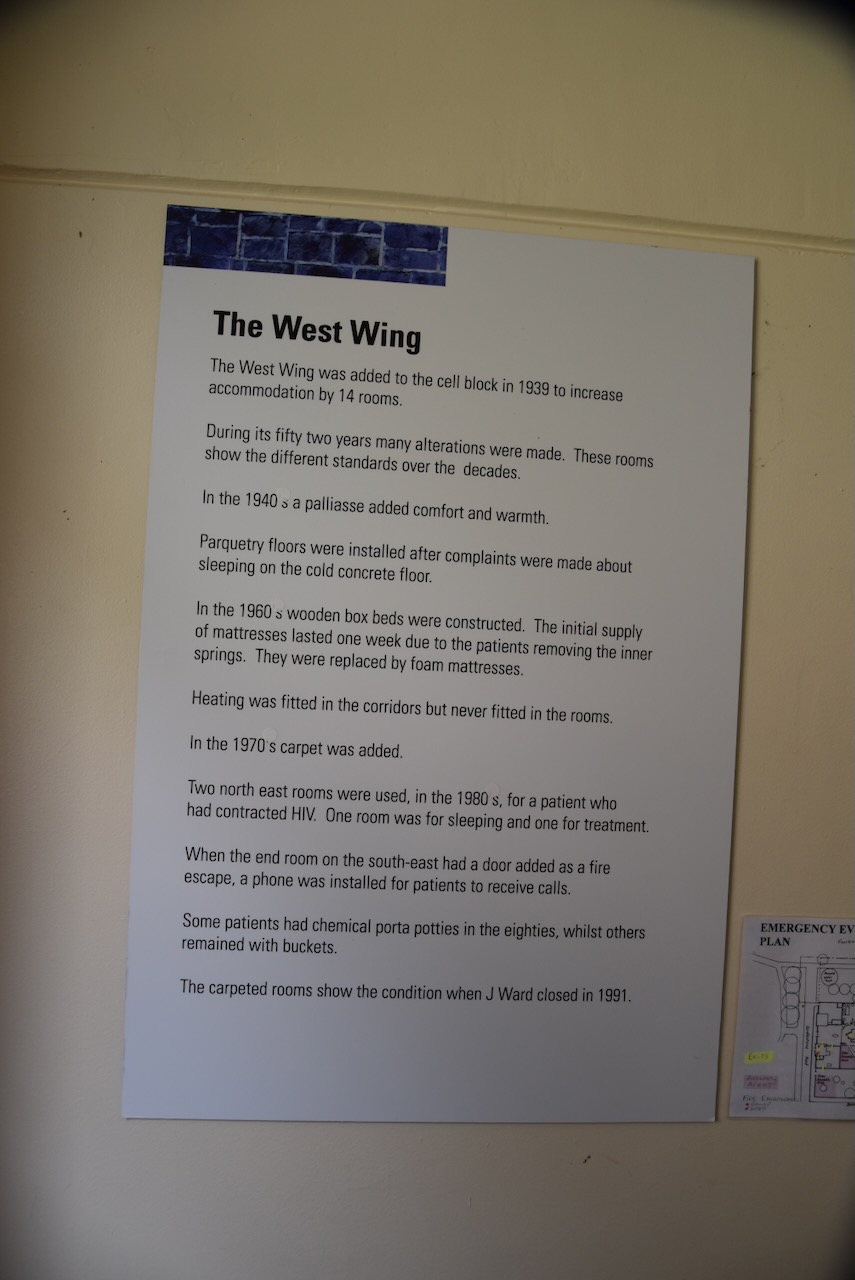
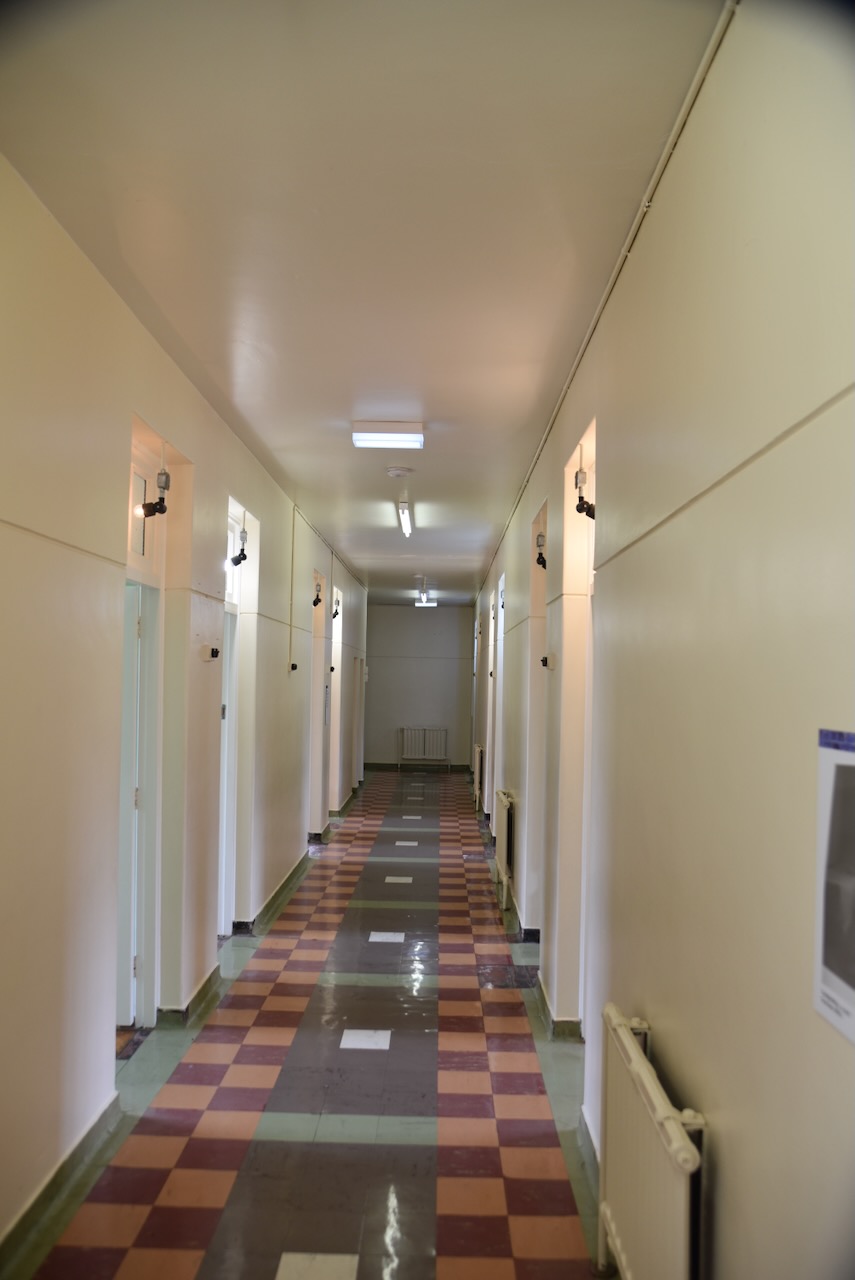
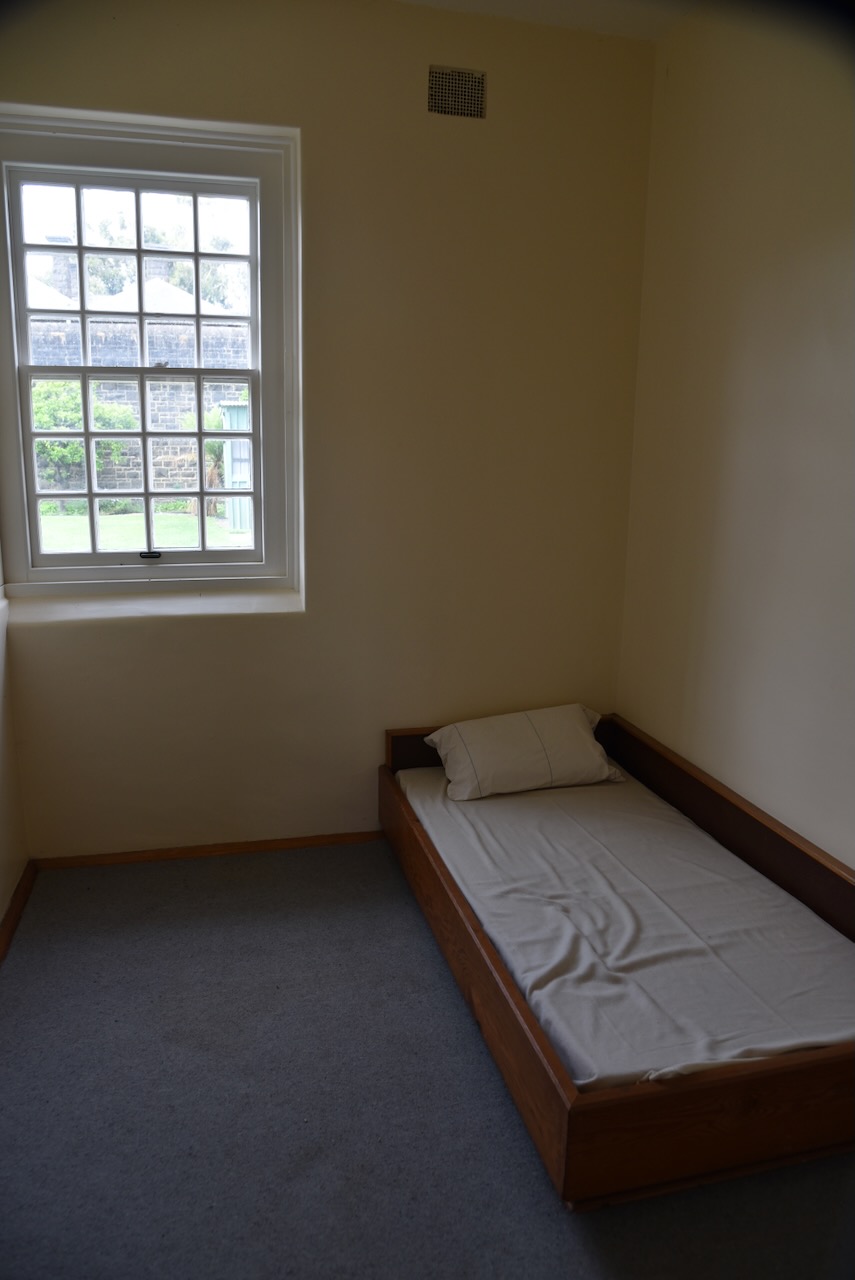
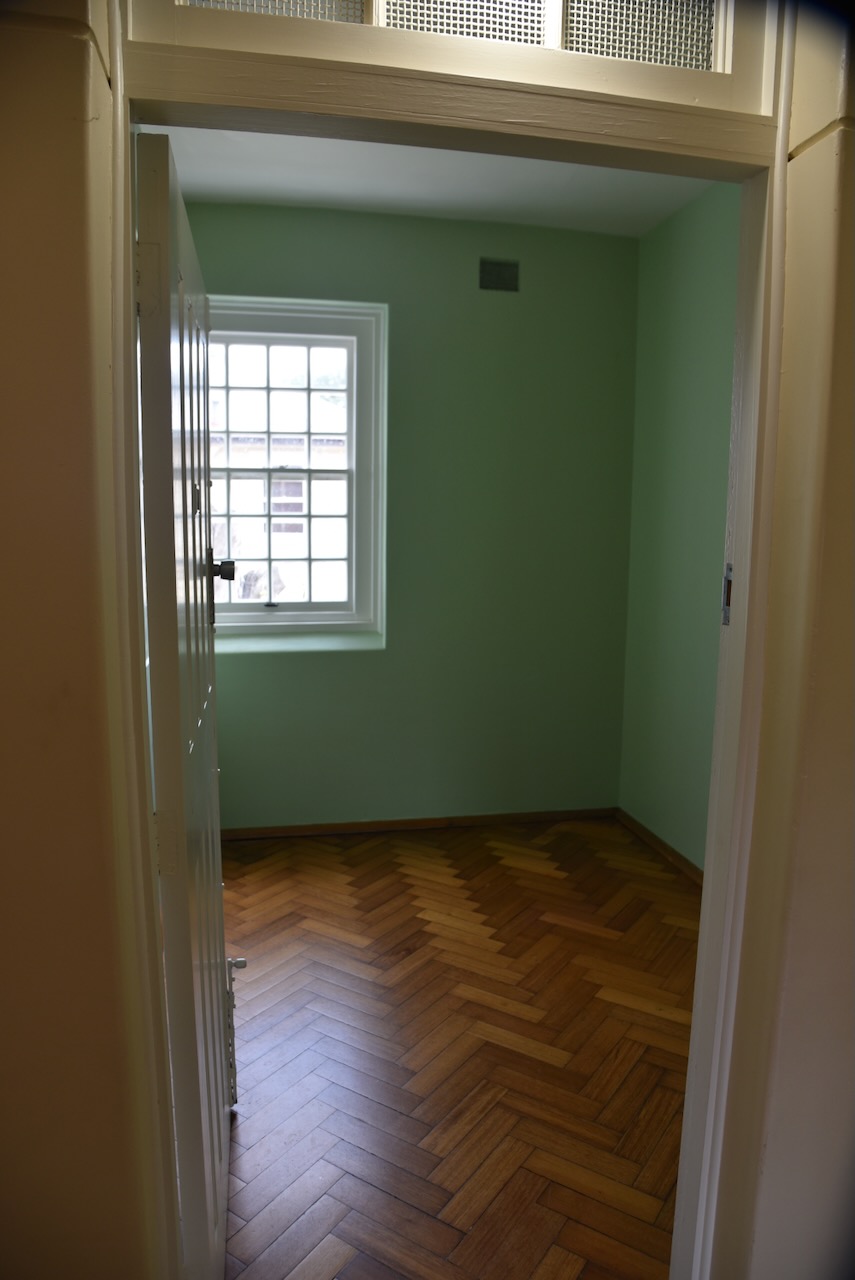
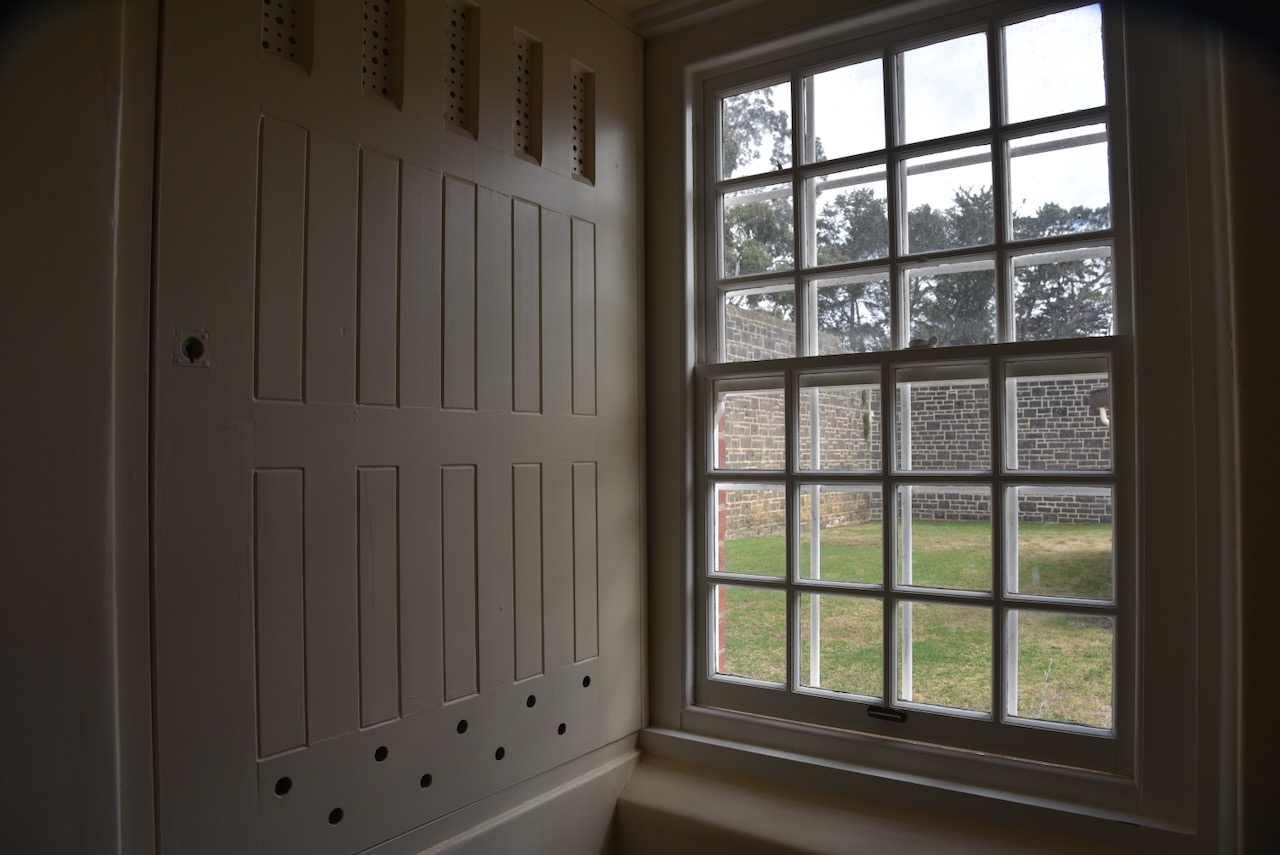
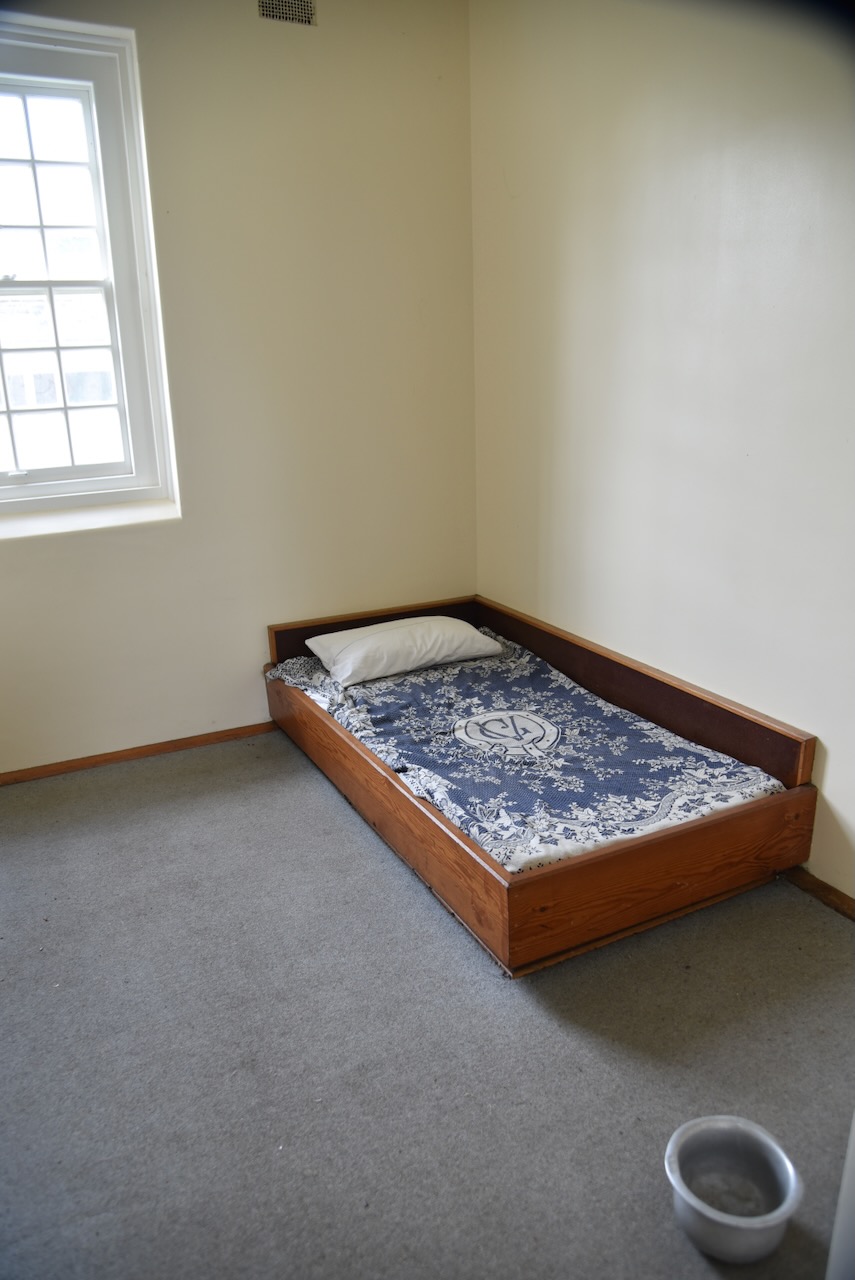
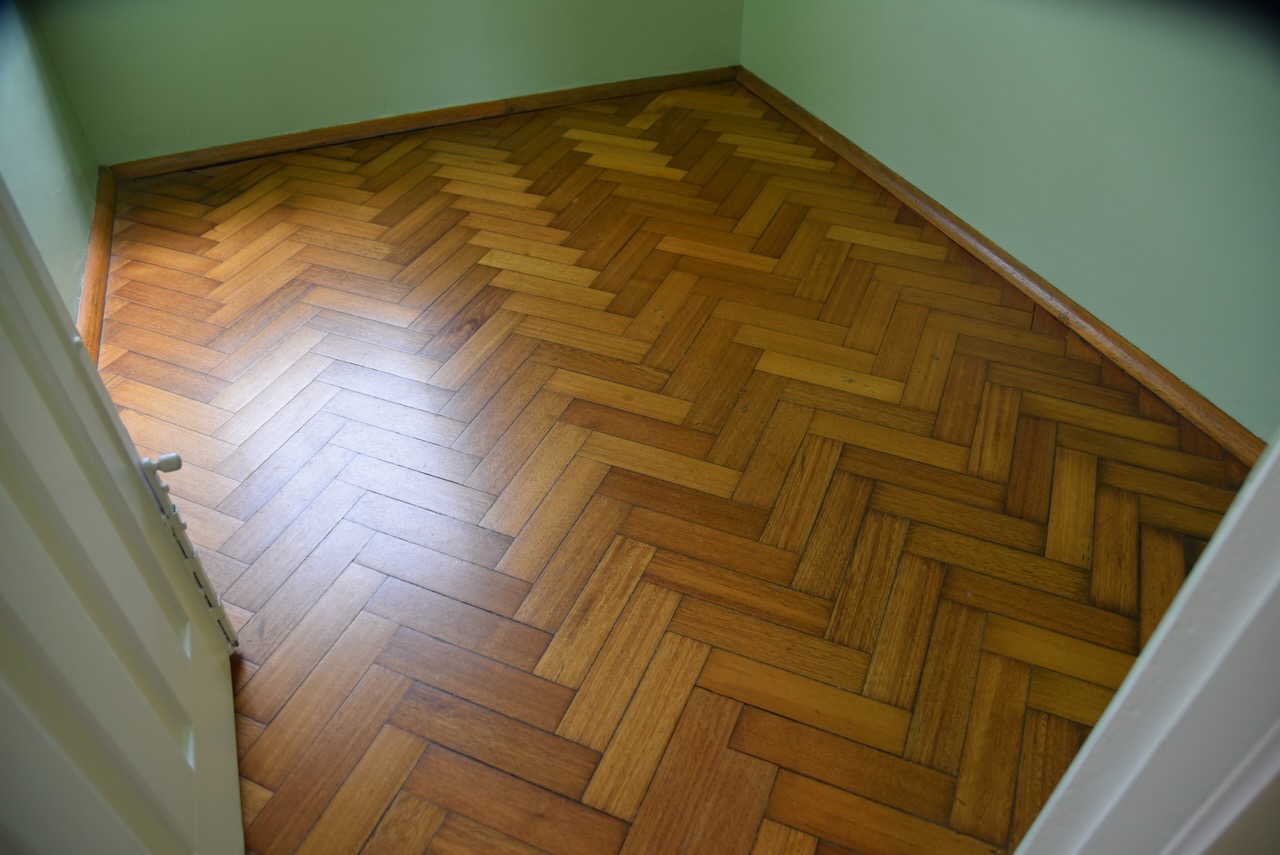
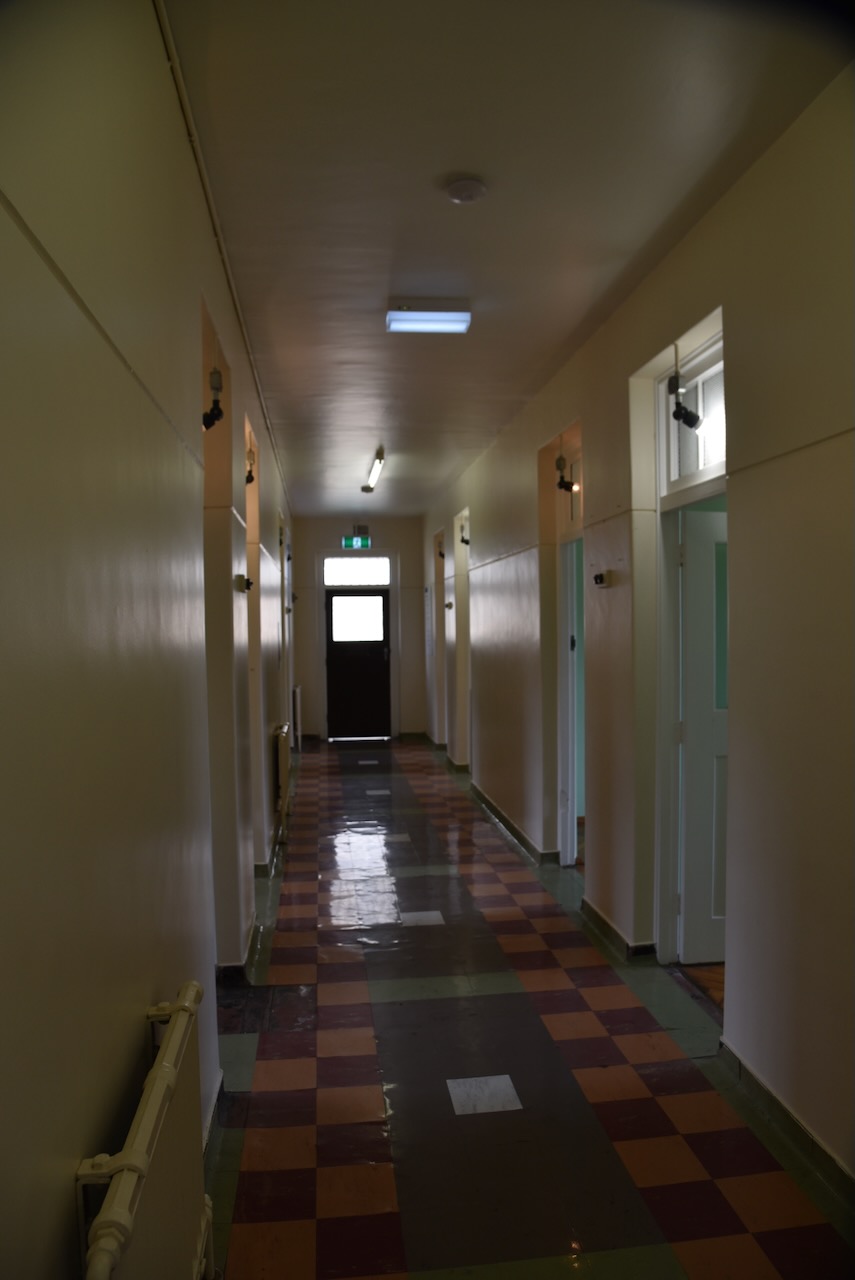
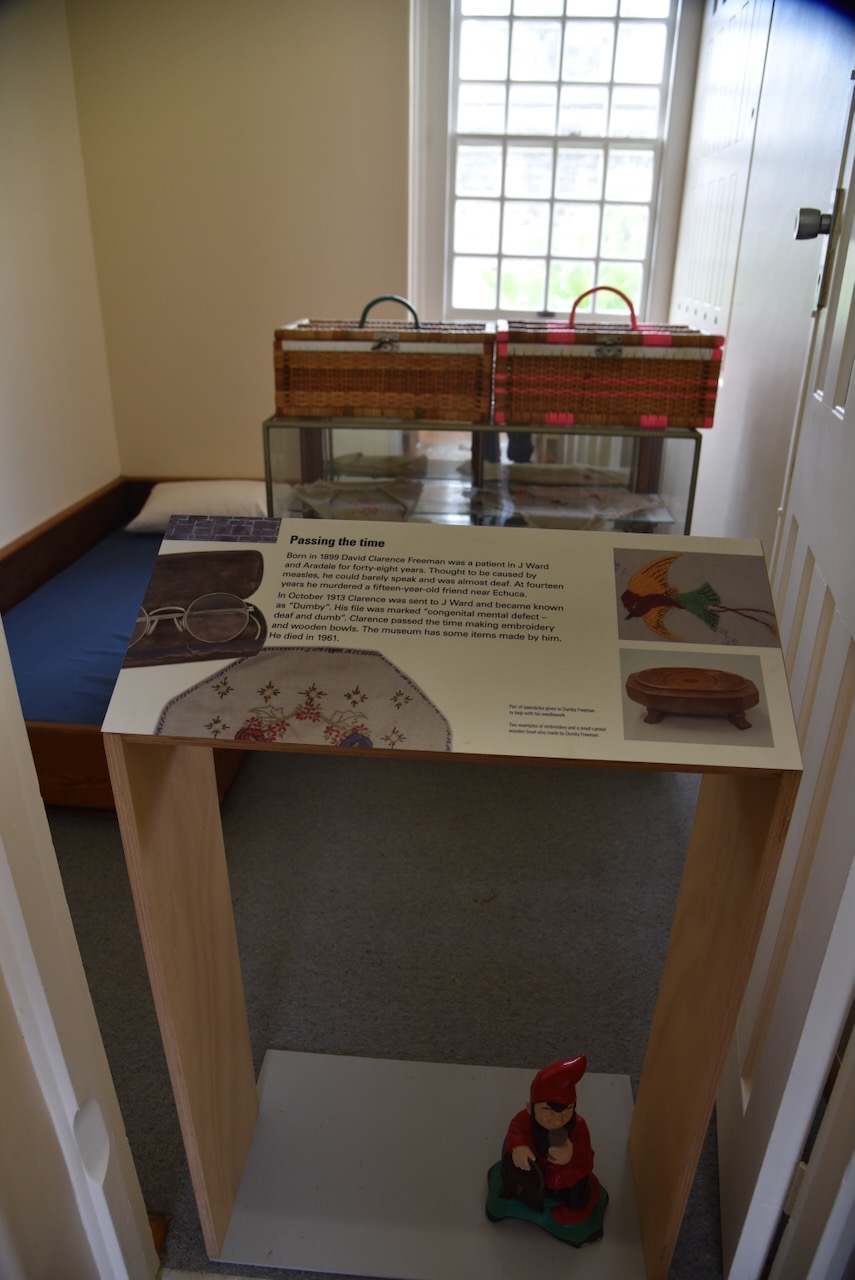
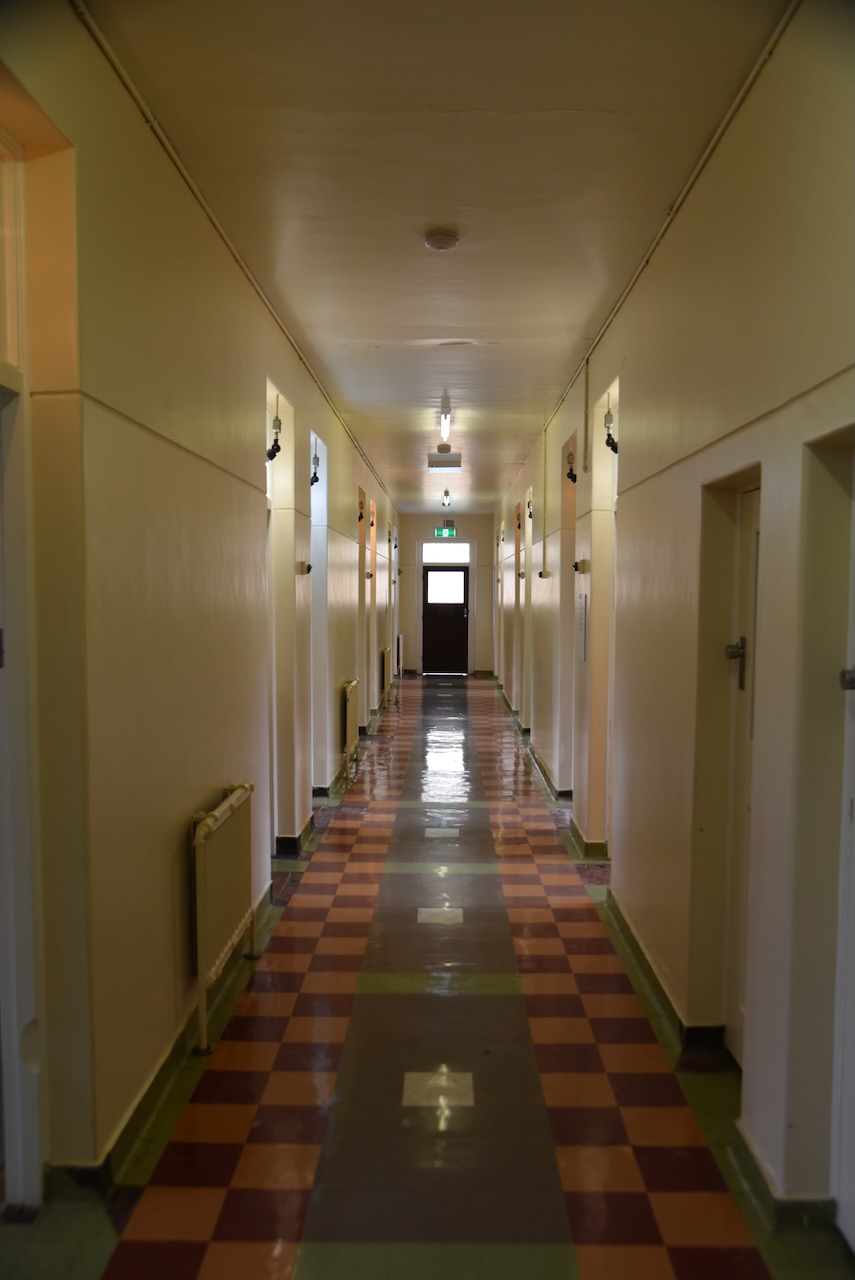
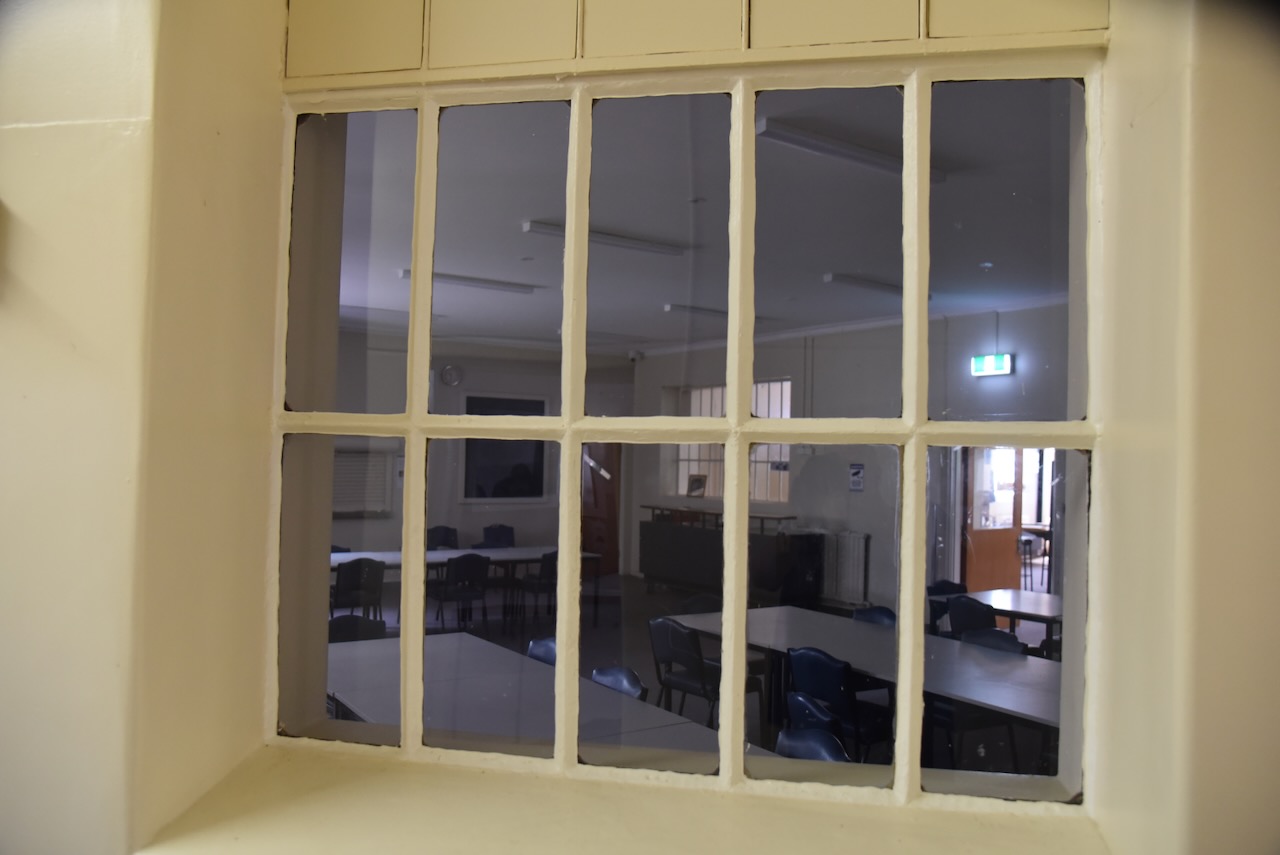
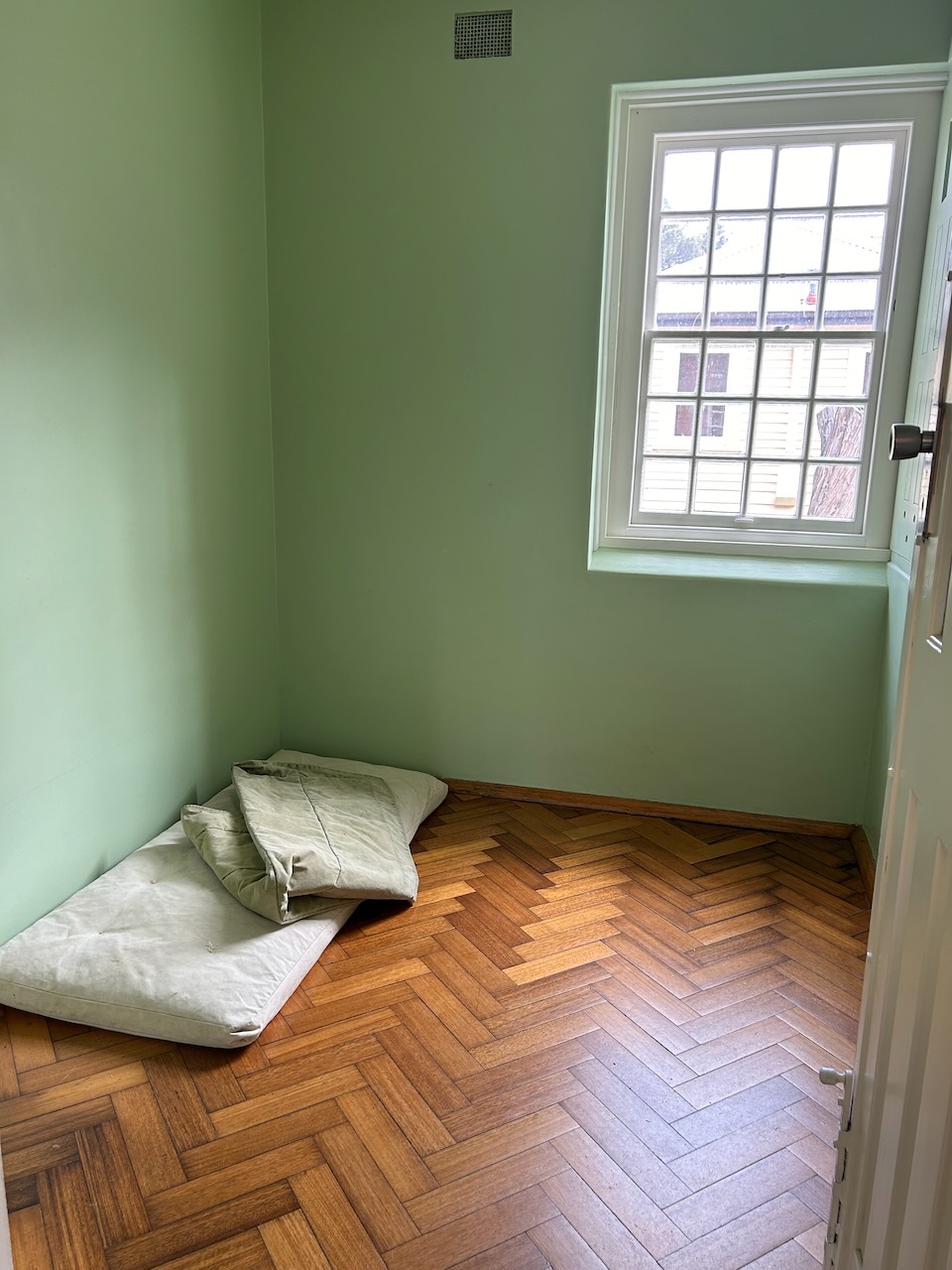
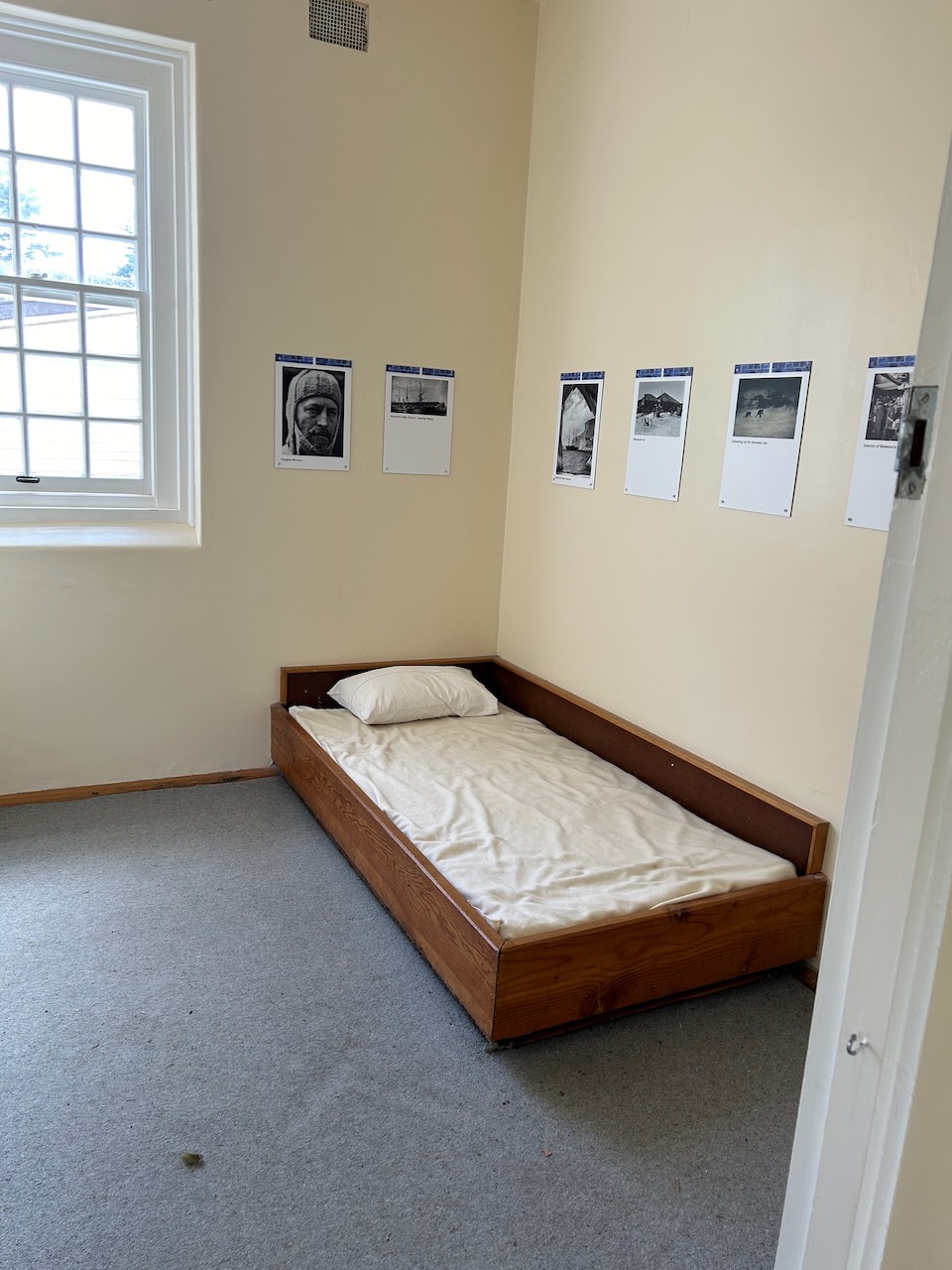
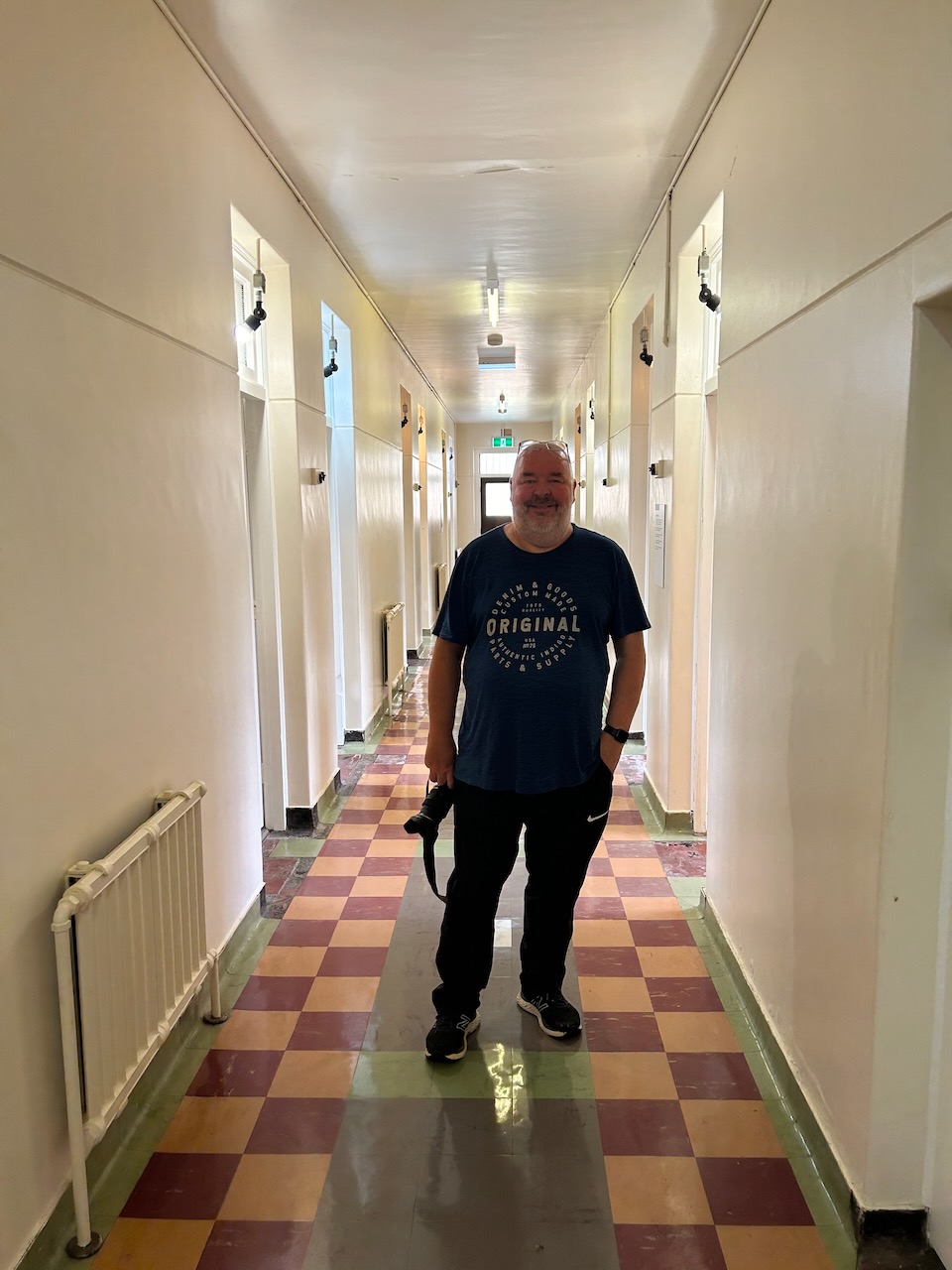
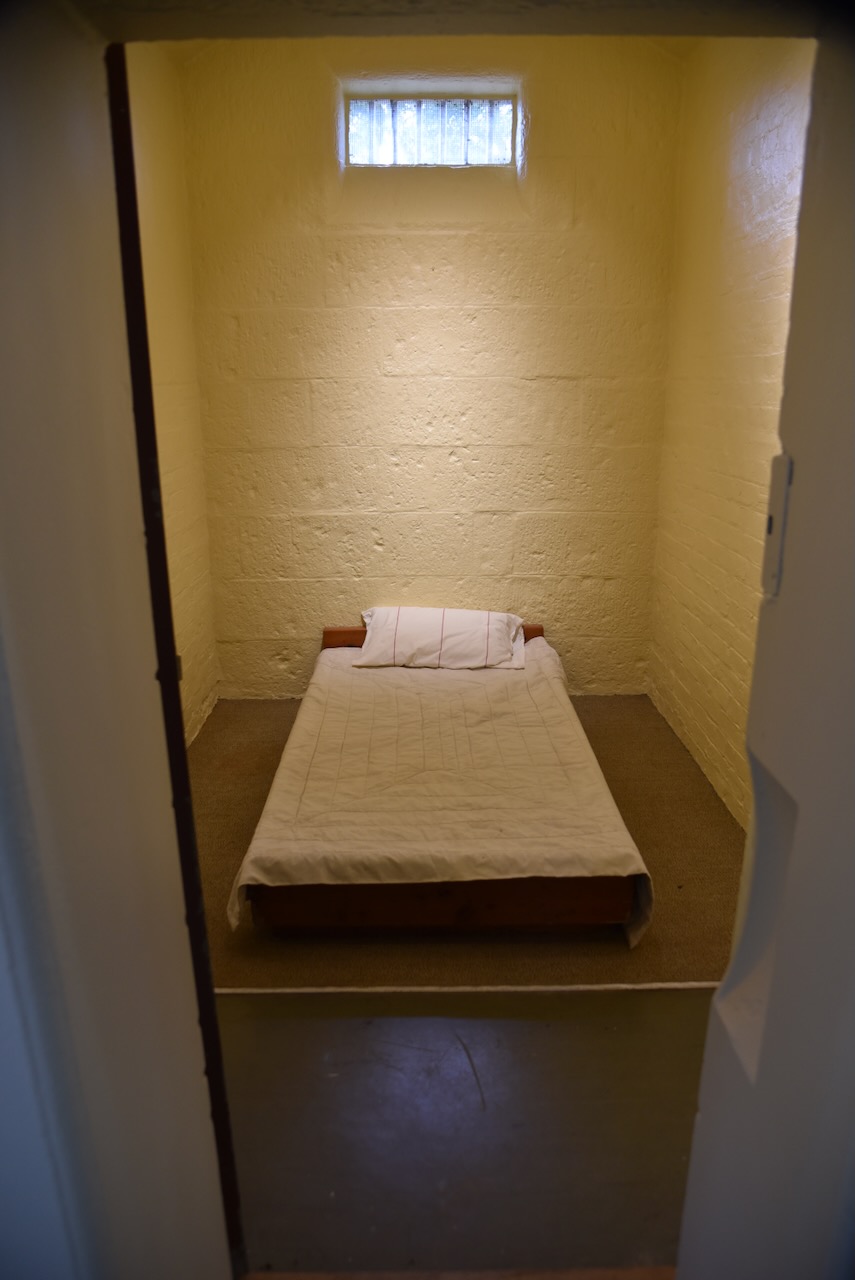
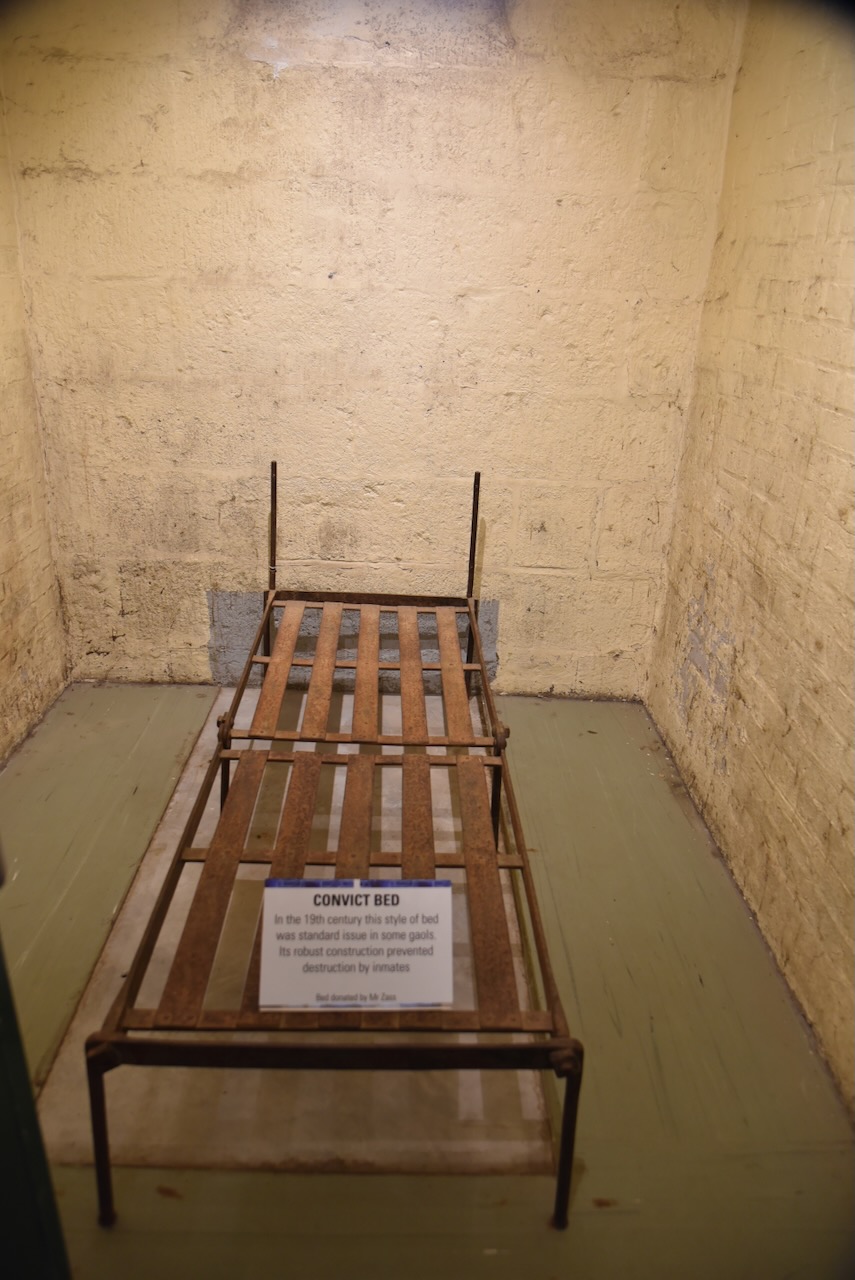
We then entered the West Wing which was added to the cell block in 1939 to increase accomodation by 14 rooms. During the 1940s a palliasse added comfort and warmth. Parquetry floors were installed after complaints were made about sleeping on the cold concrete floor. In the 1960s, wooden box beds were constructed. The initial supply of matresses lasted one week due to the patients removing the inner springs. They were replaced by foam mattresses. Heating was fitted in the corridors but never fitted in the rooms. Carpet was added in the 1970s.
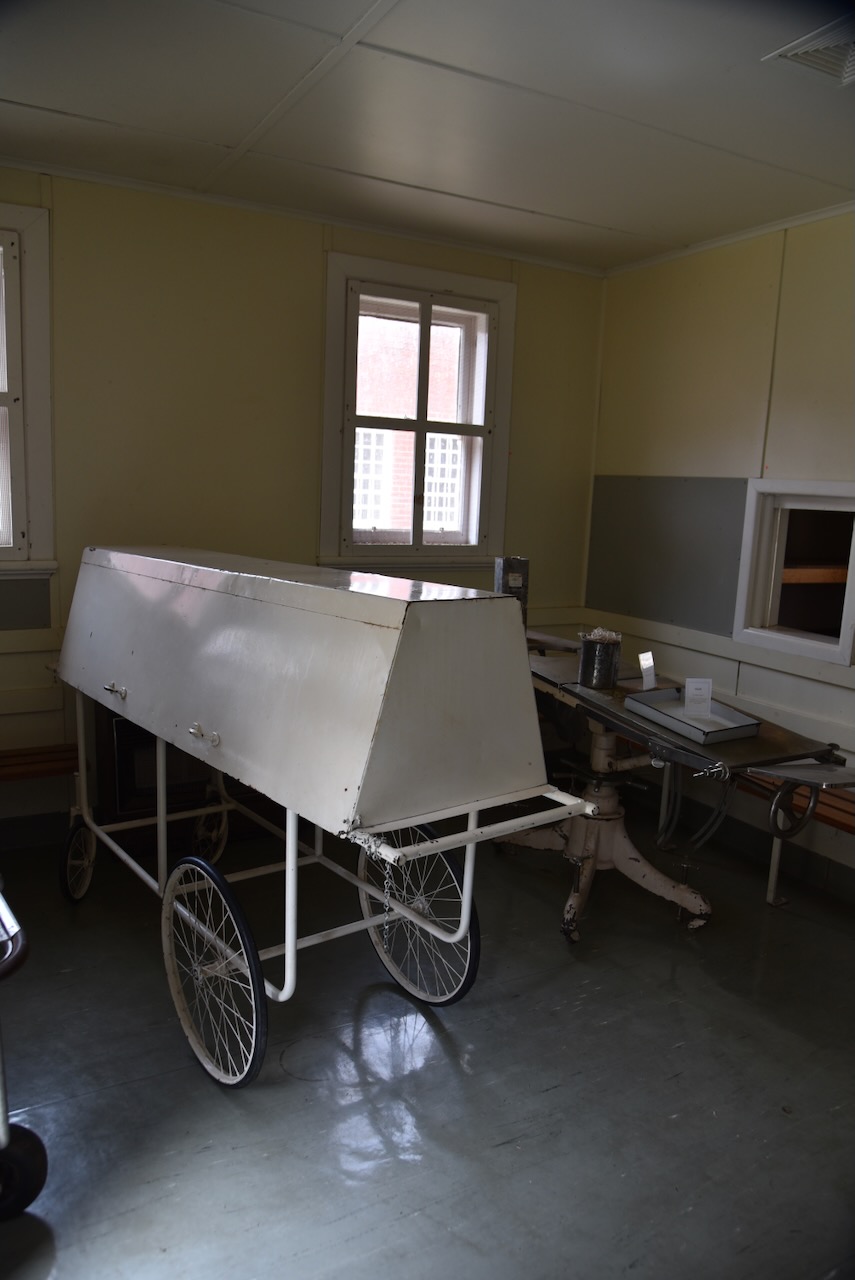
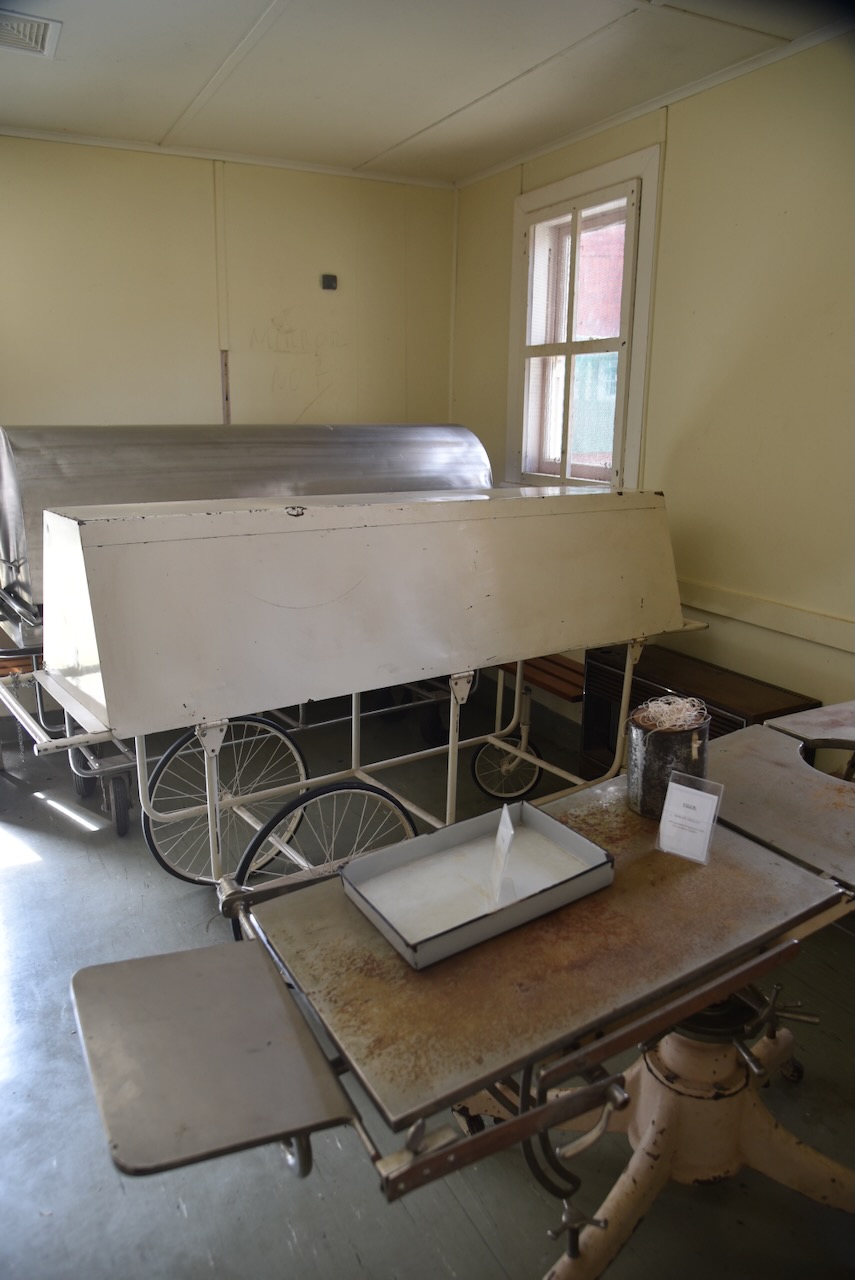
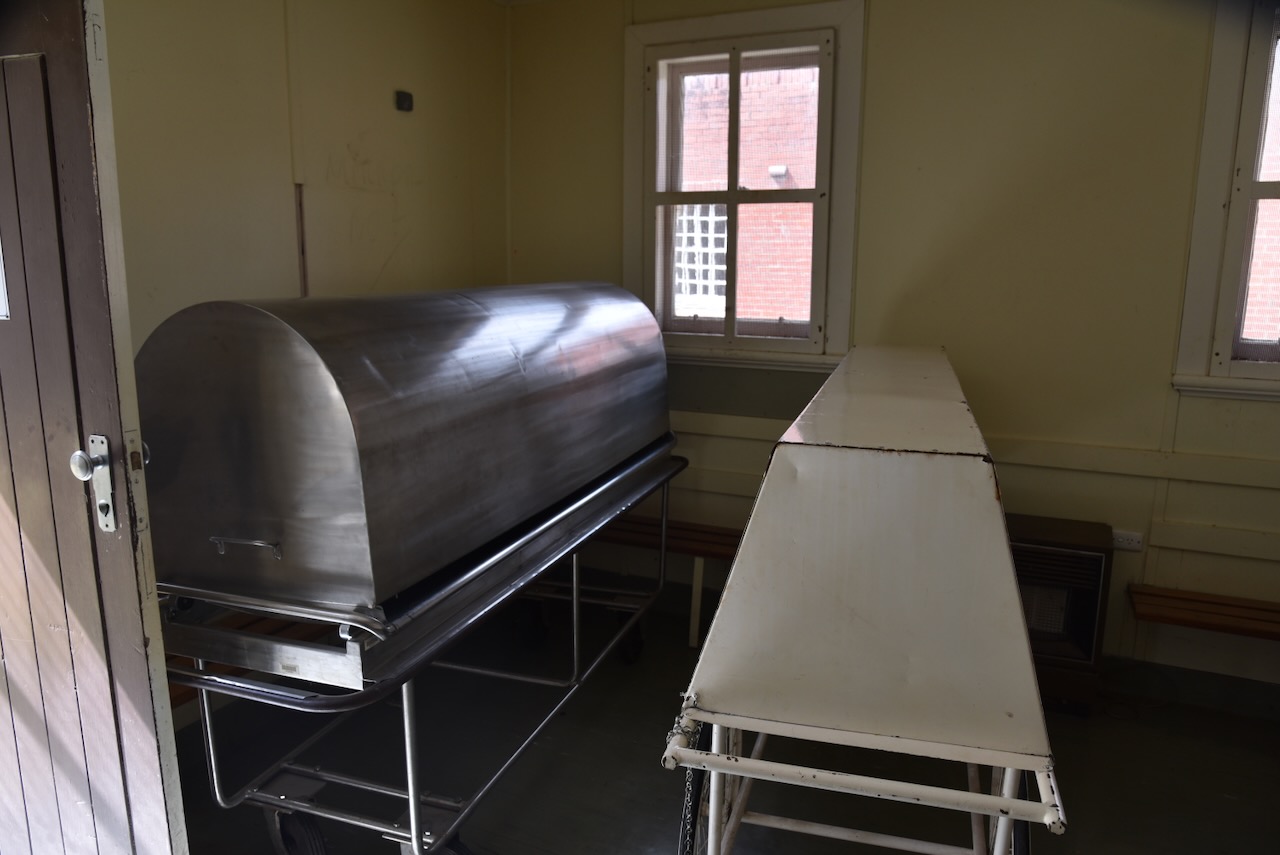
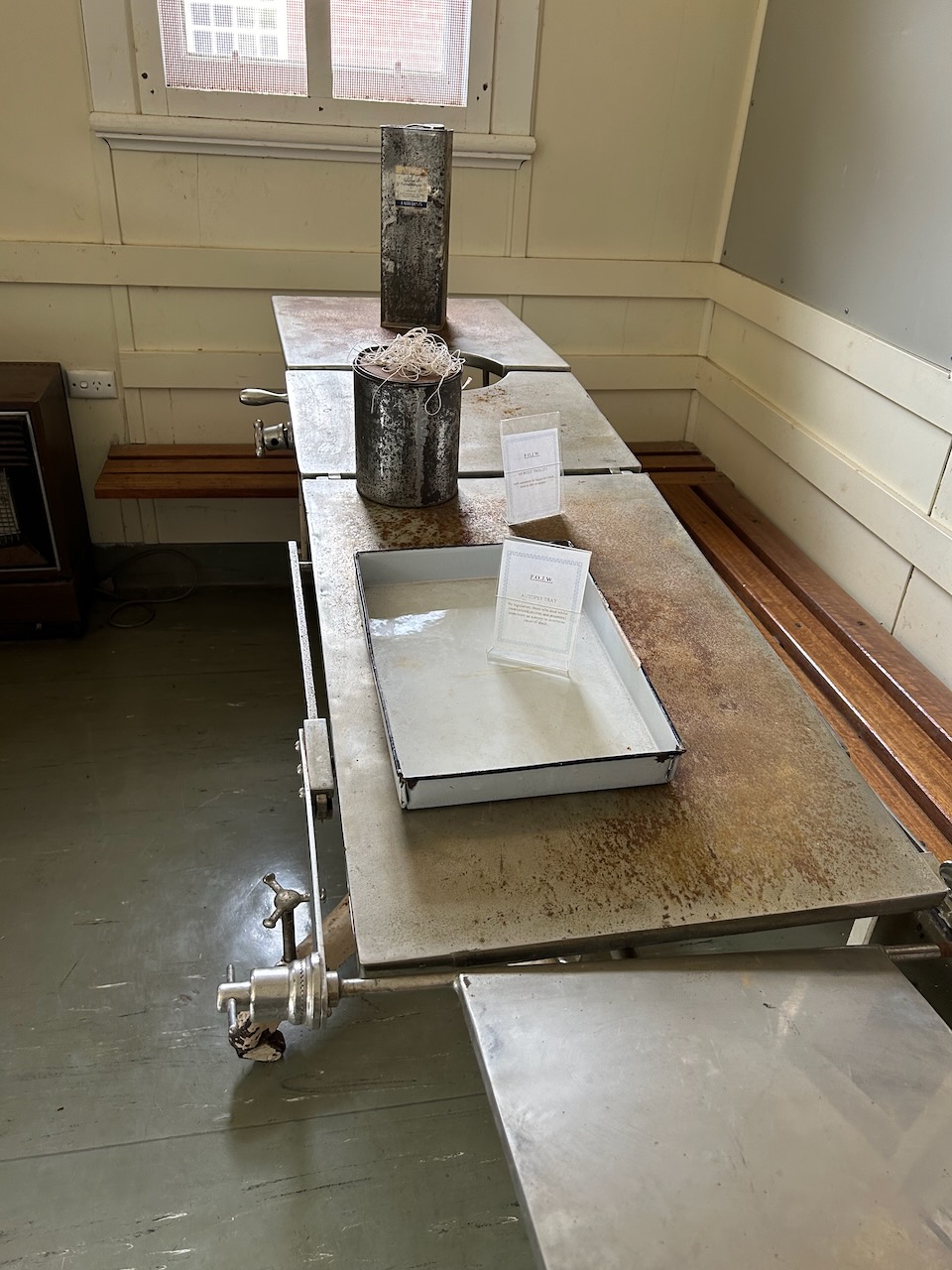
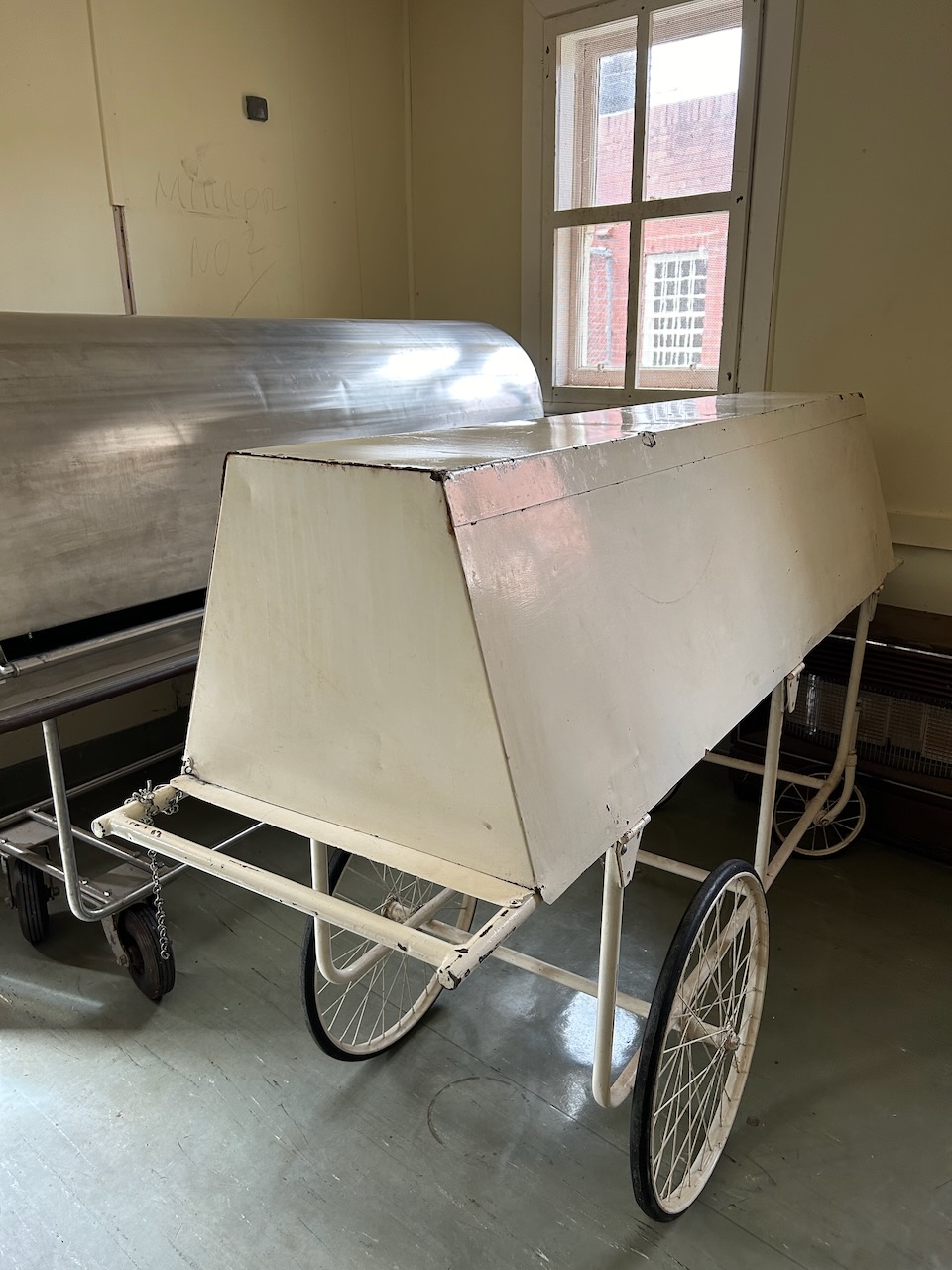
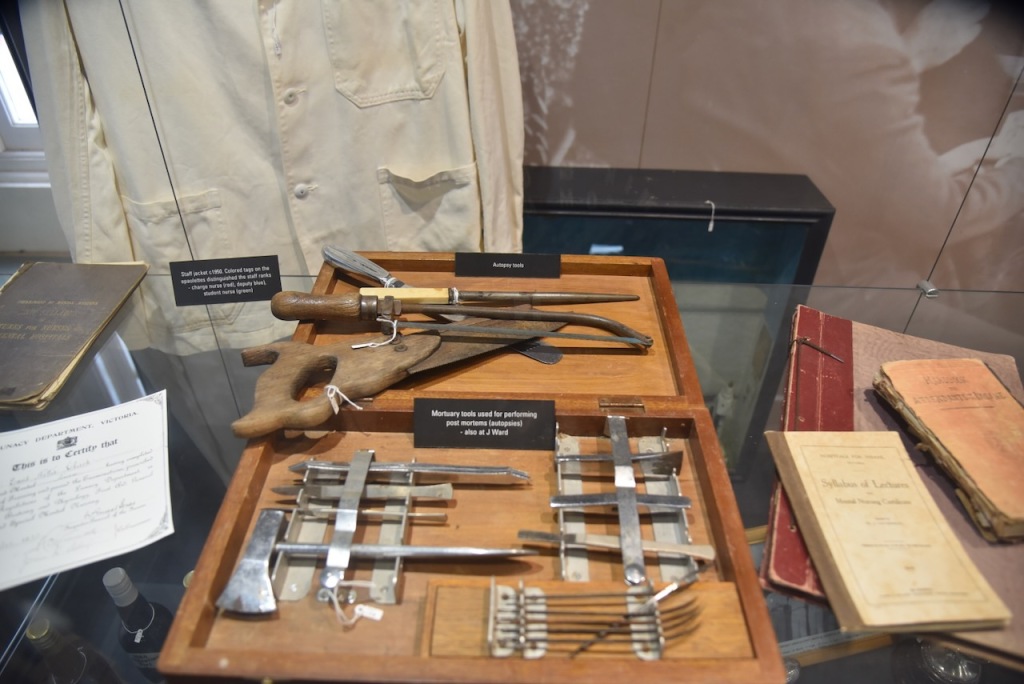
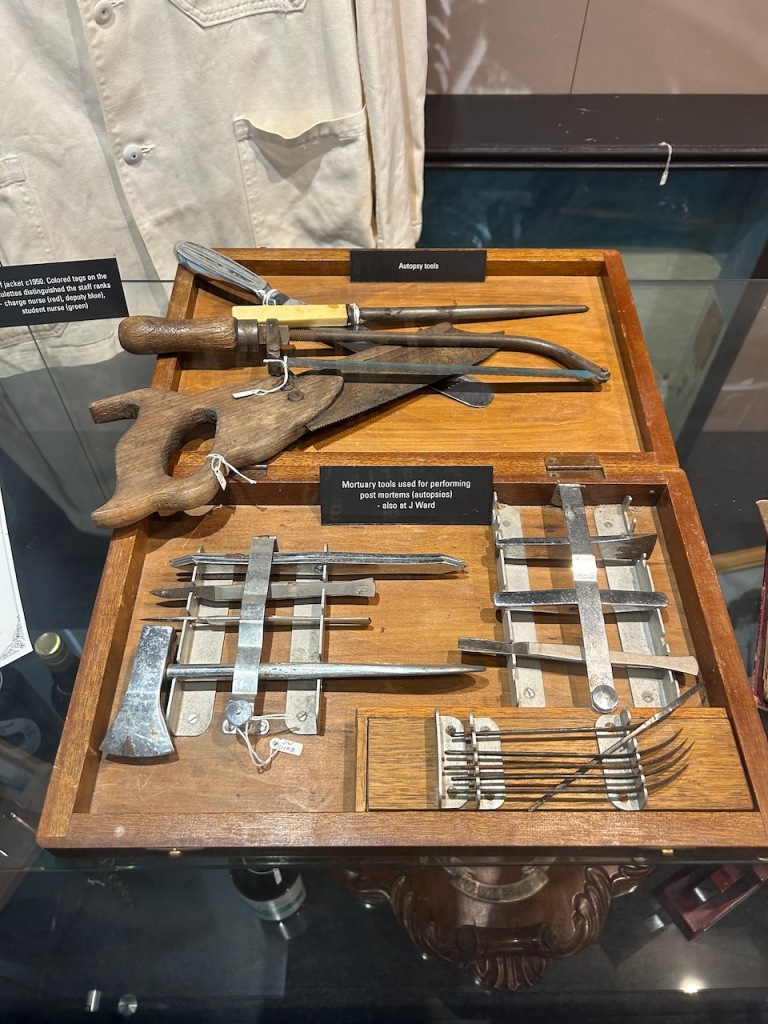
The J Ward mortuary contains a number of mortuary trolleys and various autopsy equipment.
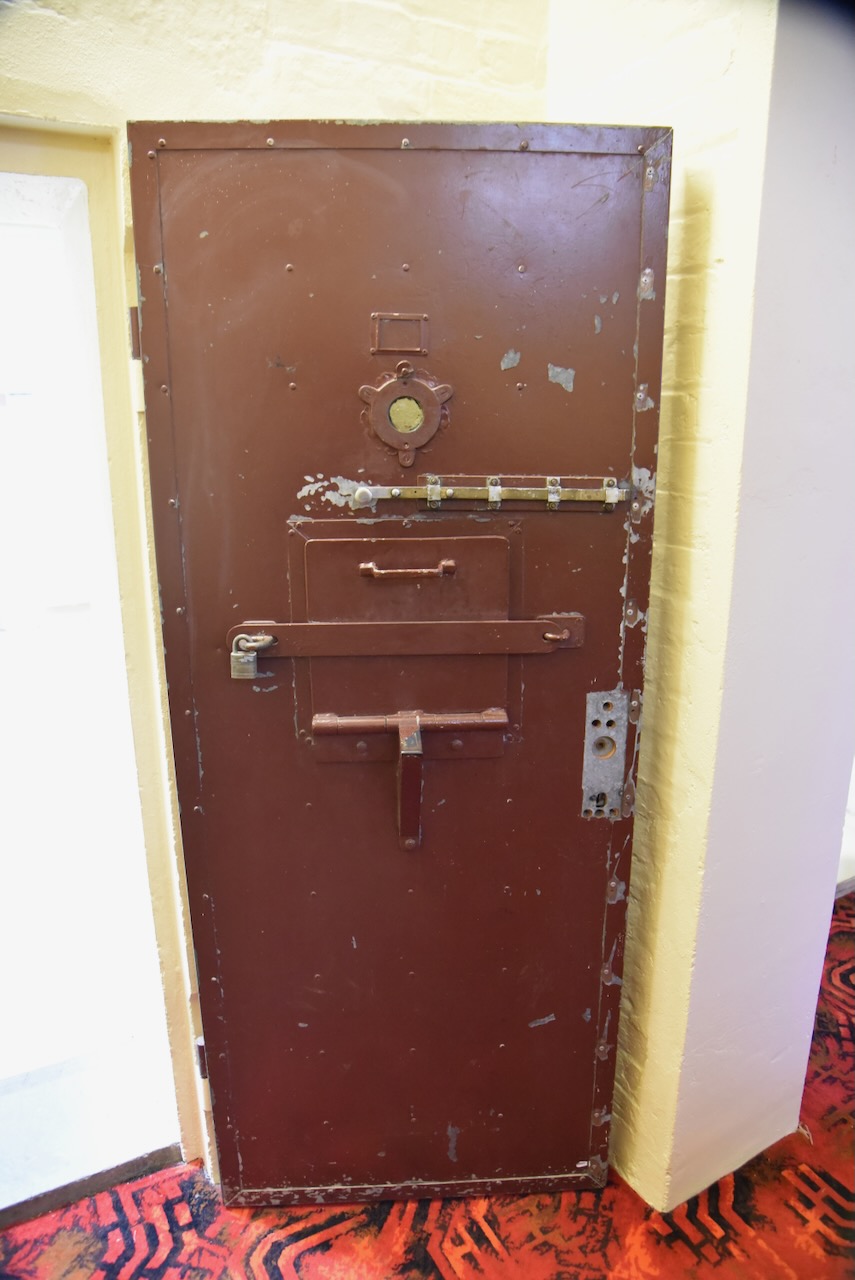
We then headed to the main cell area along a caged walkway.
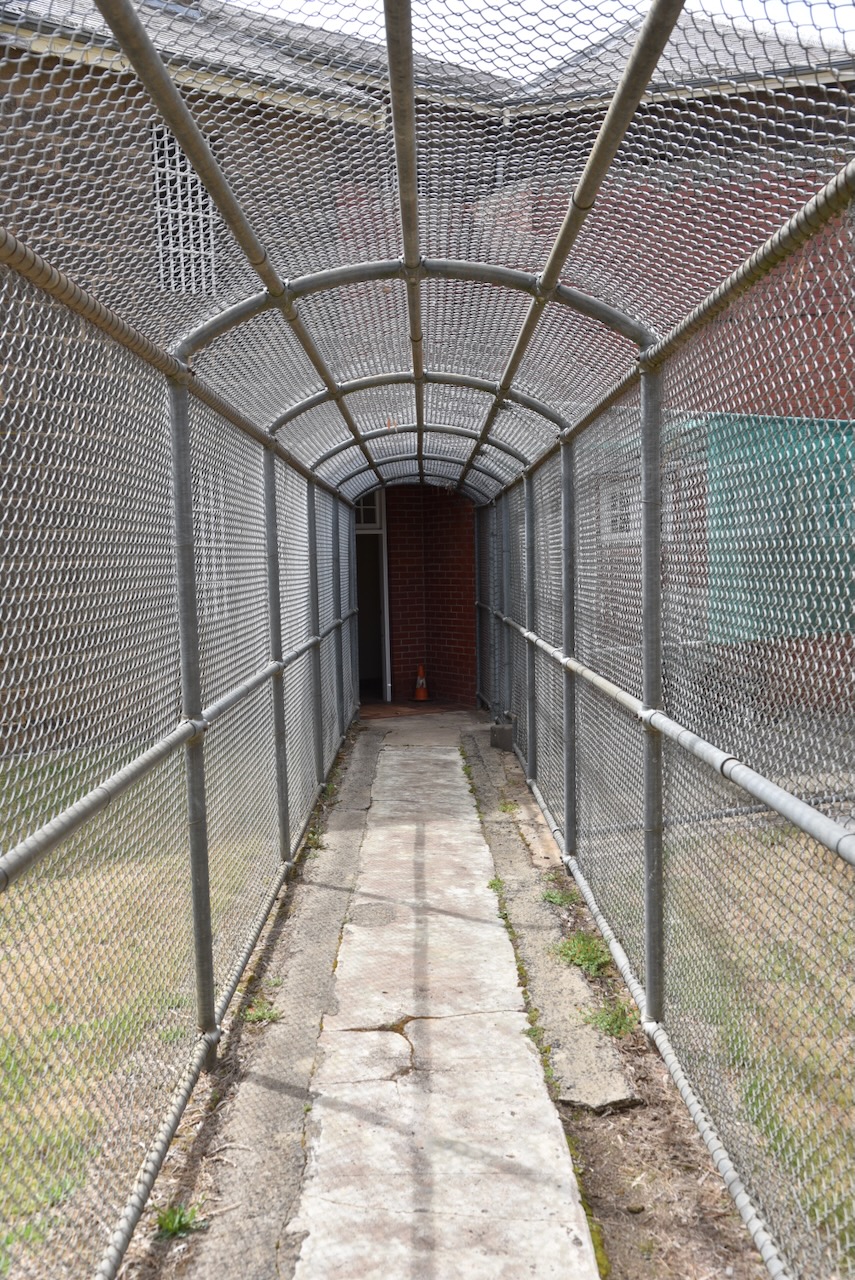
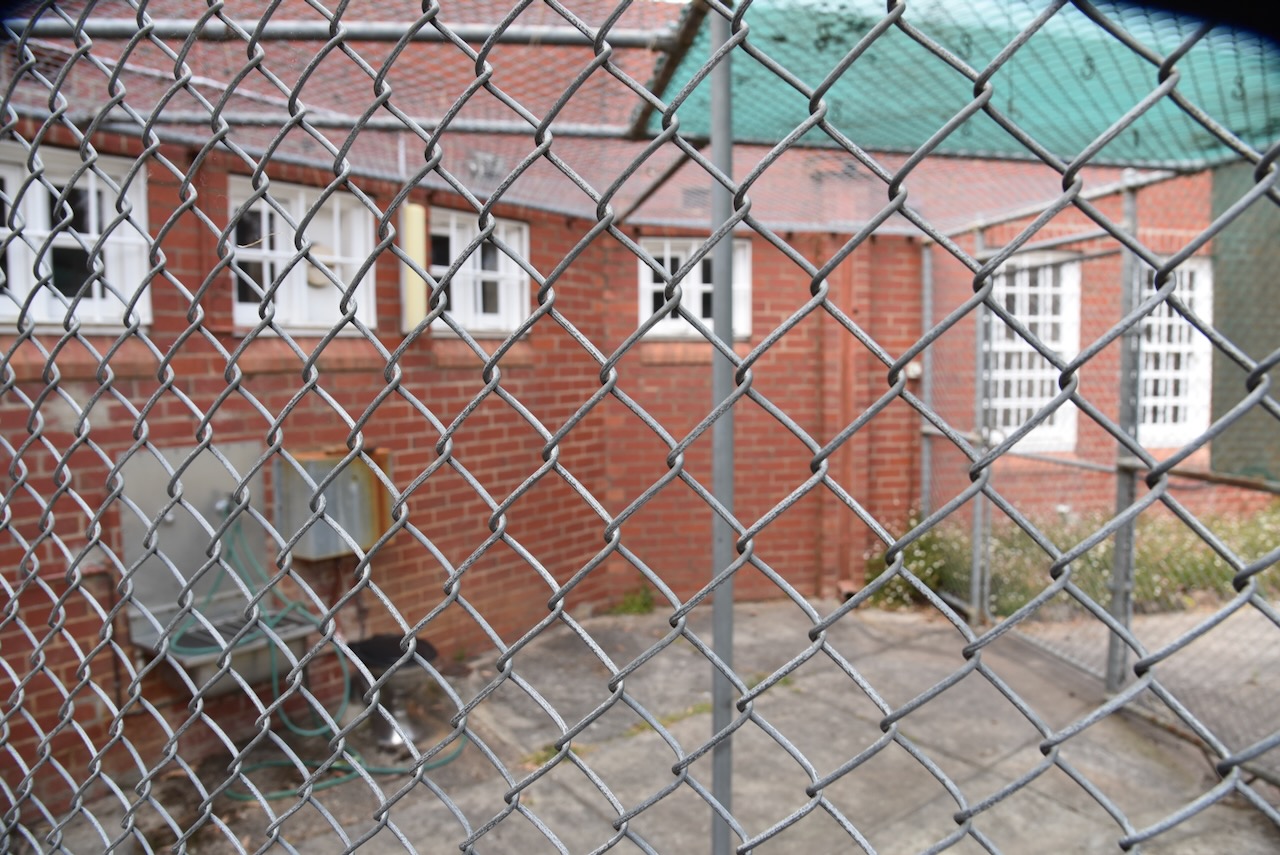
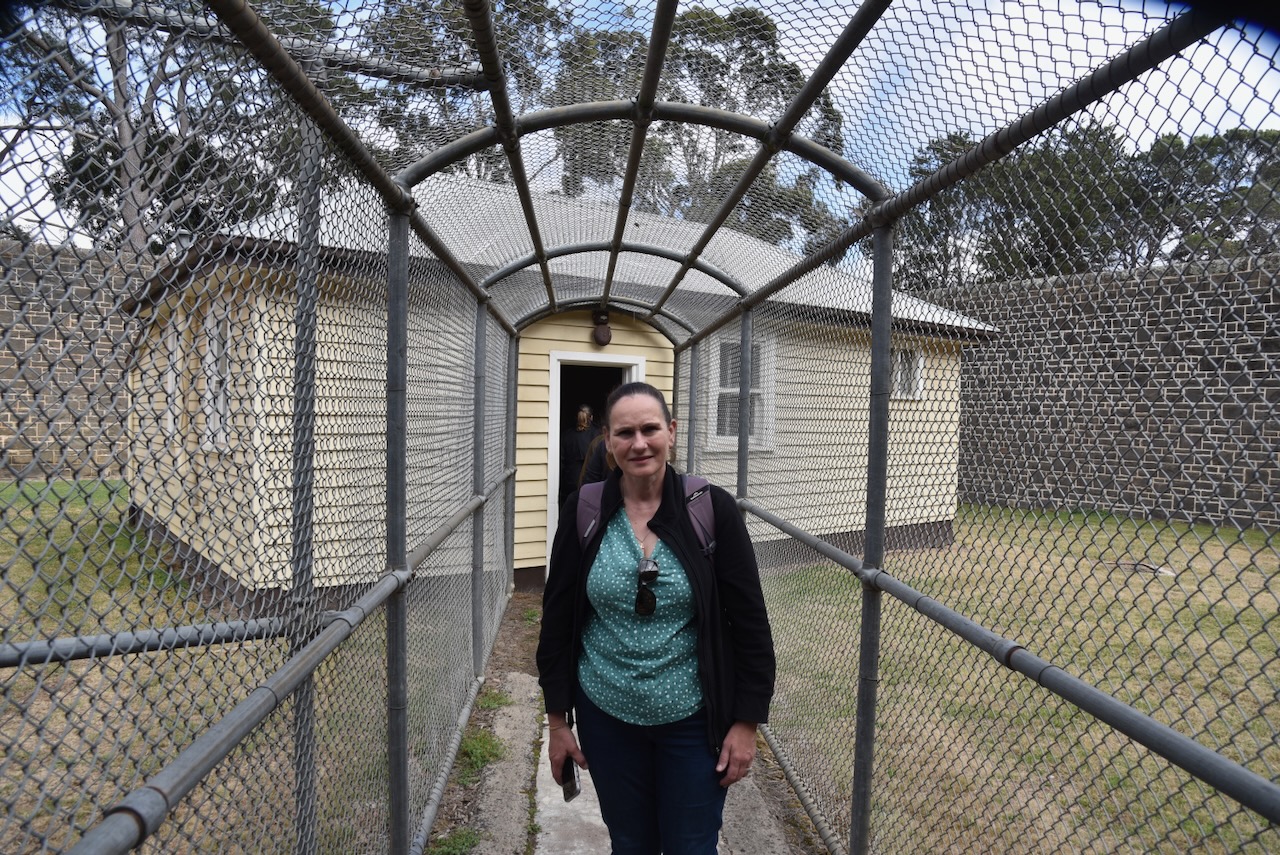
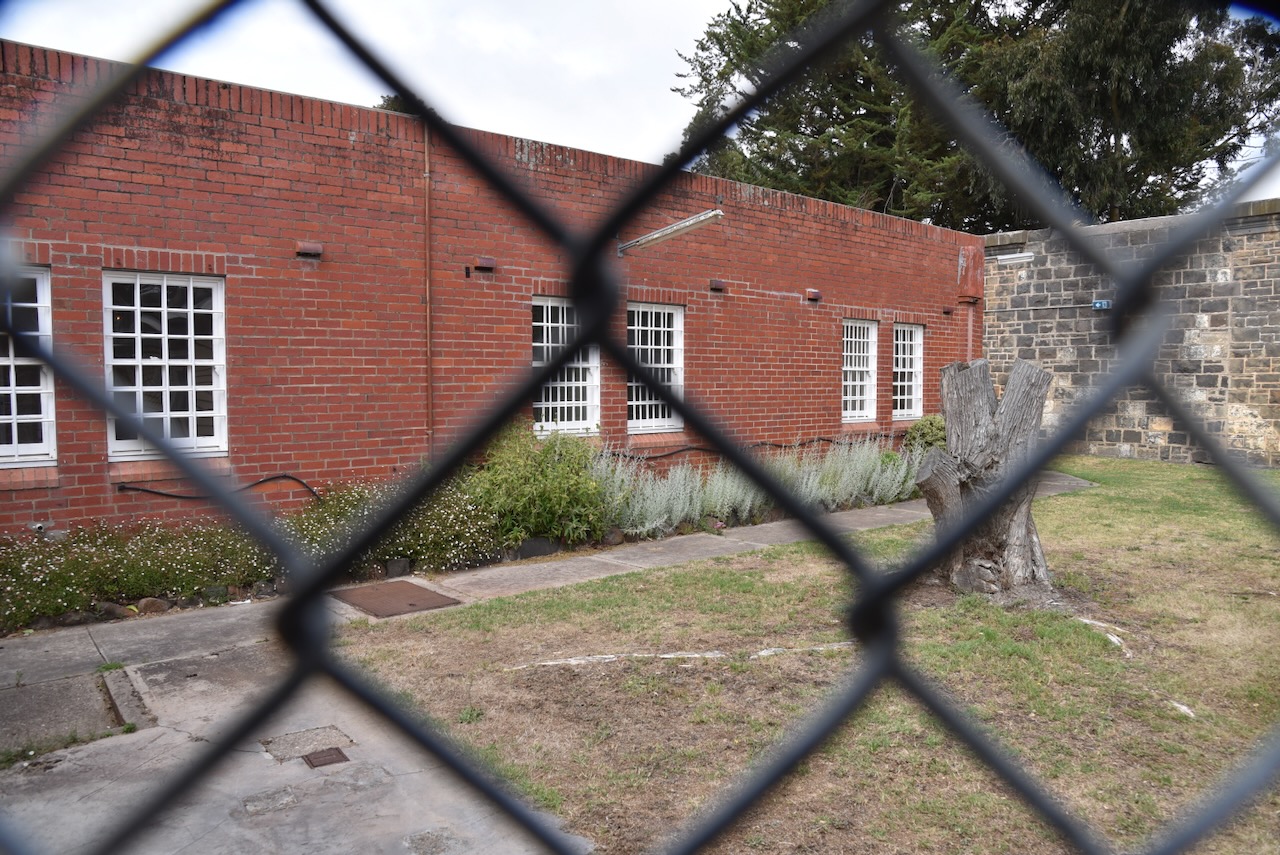
When the gaol was opened on the 10th day of October 1861, it held a total of 21 prisoners. By 1864 the faol housed 40 prisoners.

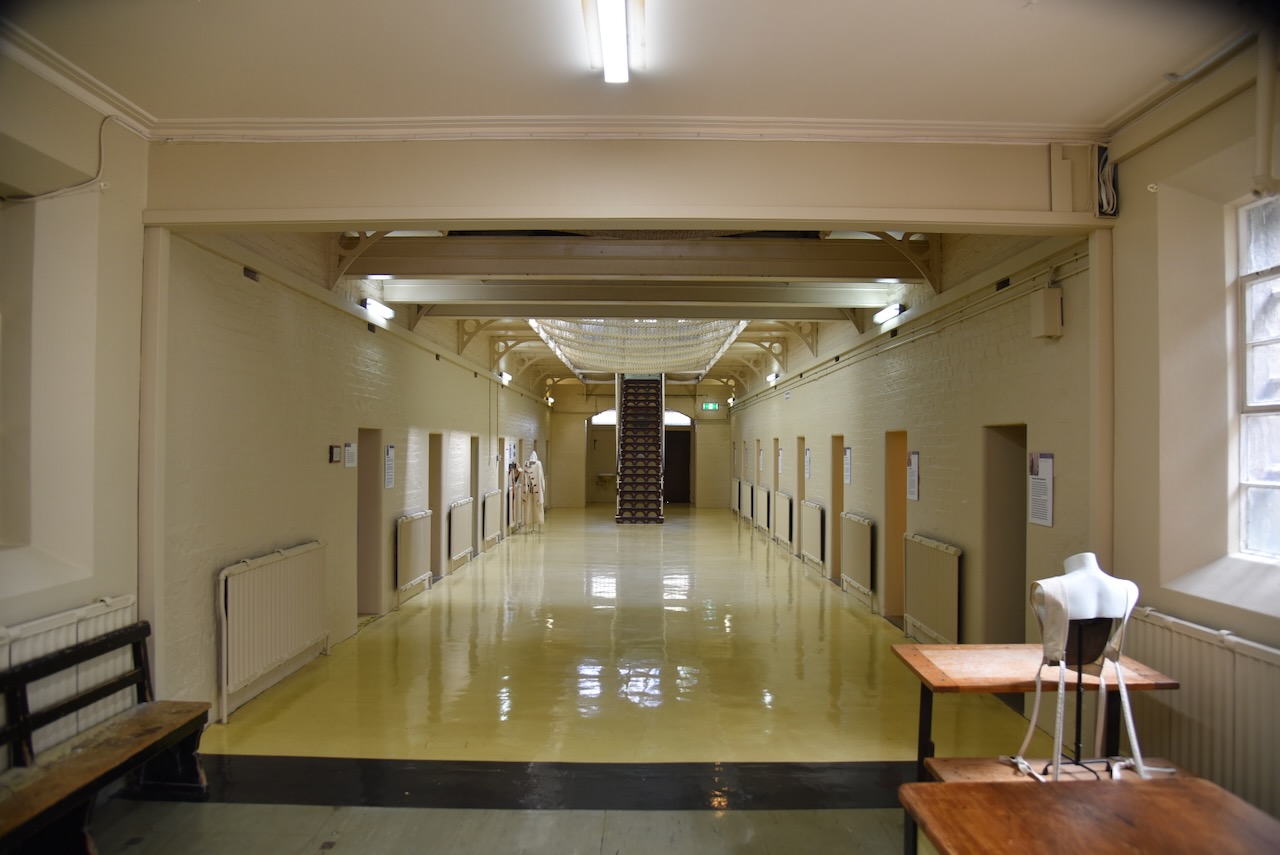
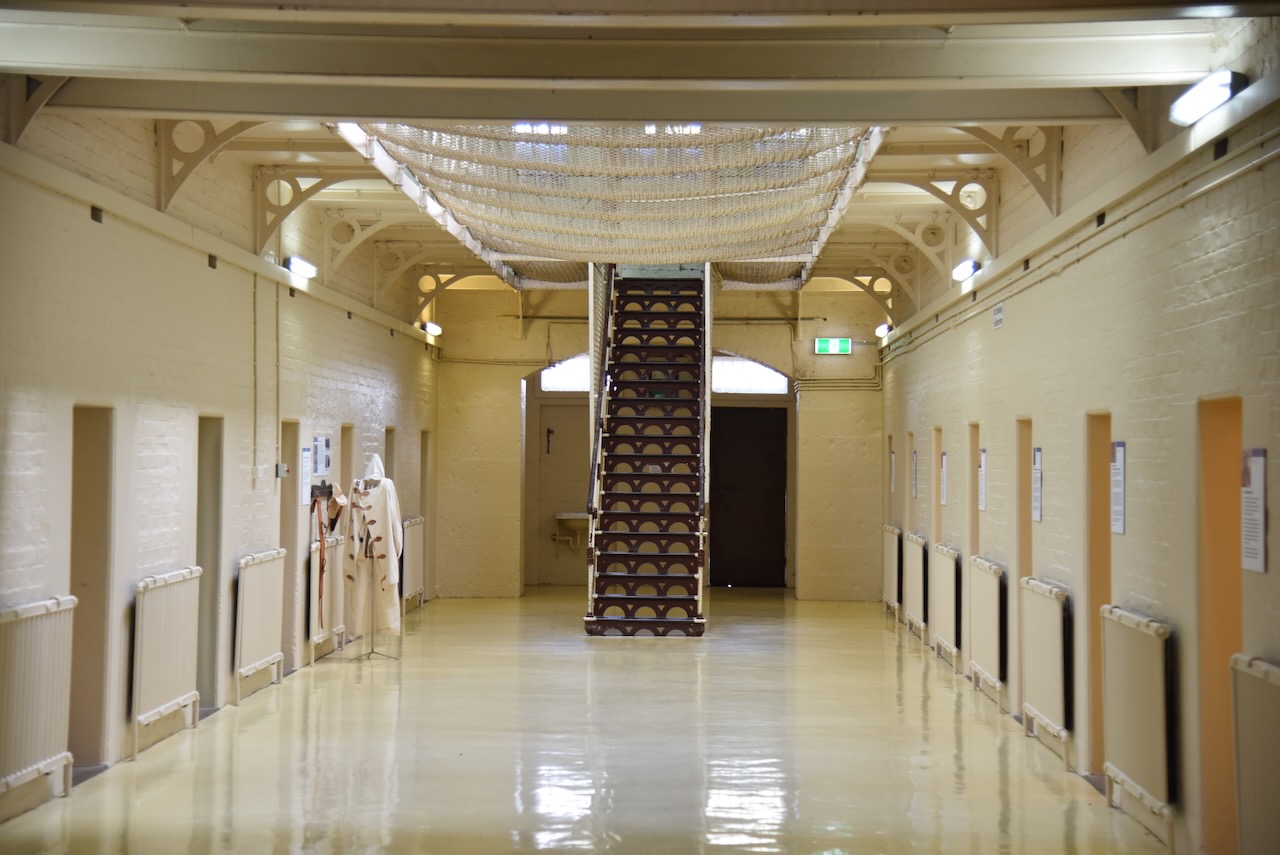
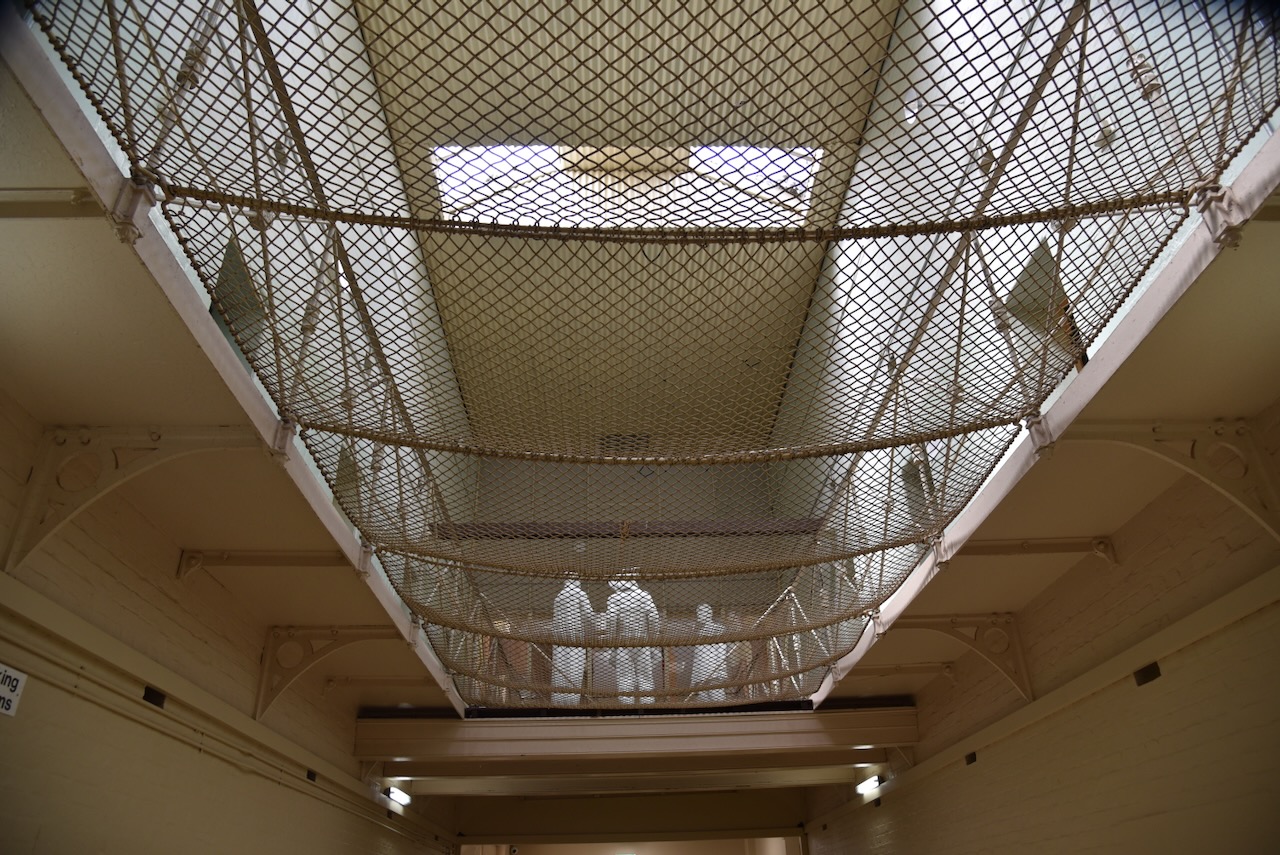
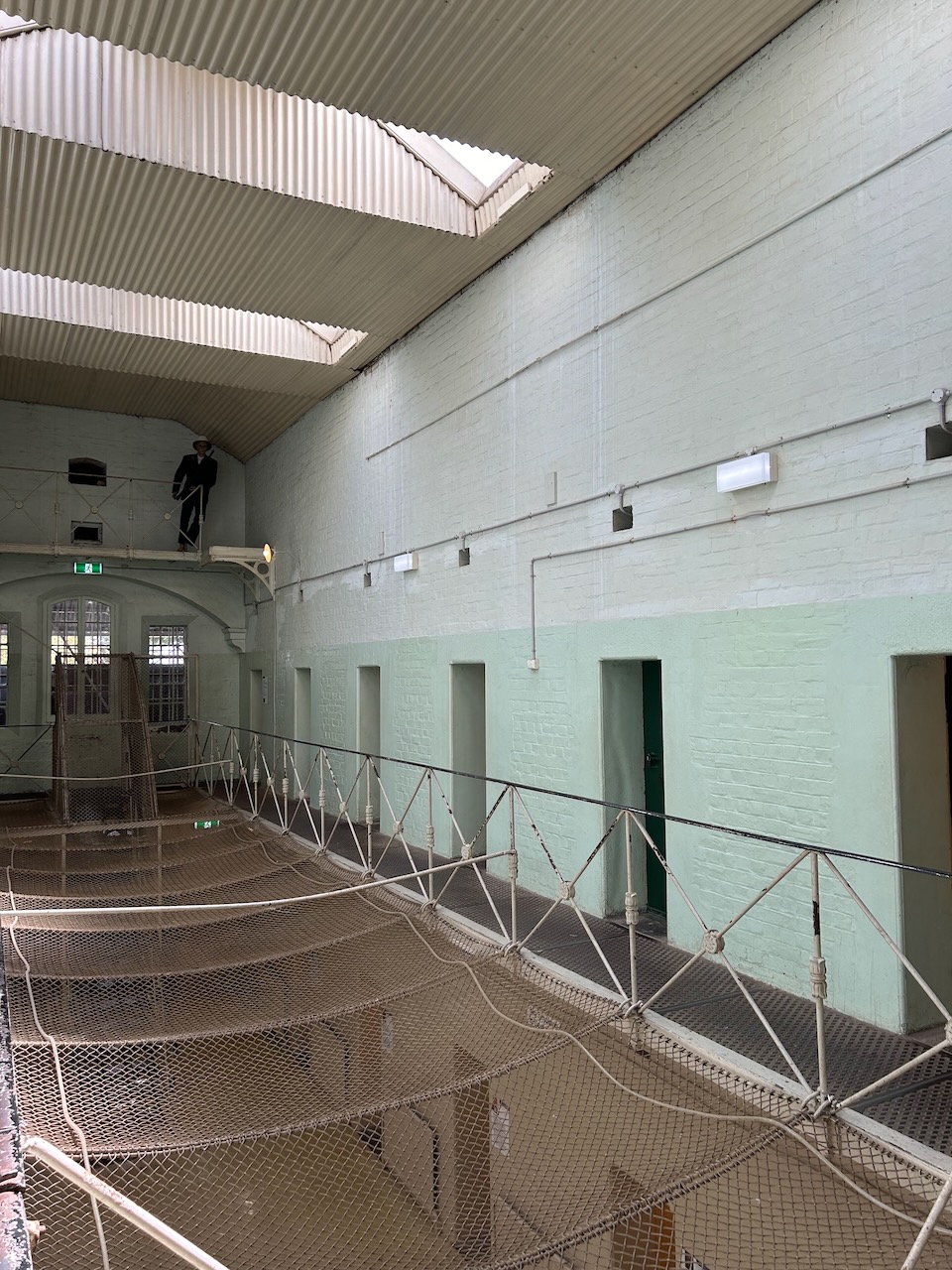

Bill Wallace was at one time the oldest incarcerated person in the world.In December 1925 a 23 year old man was shot in King Street Melbourne by Wallace who was aged 44 years. The shooting occurred after a dispute re the smoking of a cigarette inside the Waterloo Cafe. Wallace was found psychologically unfit to plead and was admitted to the Ararat Mental Hospital on the 20th day of February 1926 and was transferred to J Ward where he was held in maximum security for many years. Wallace returned to Aradalde for his final years and died in July 1989, aged 107 years and 11 months.
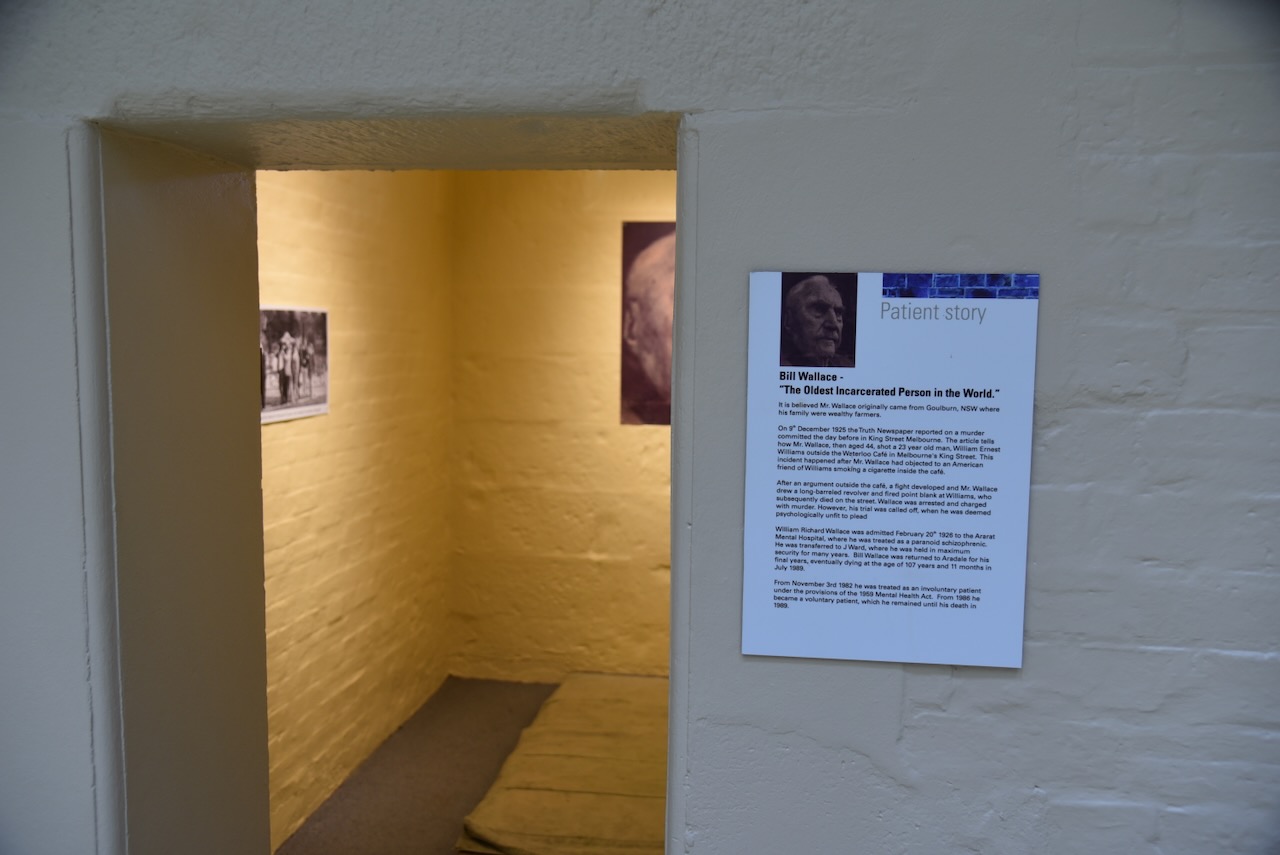
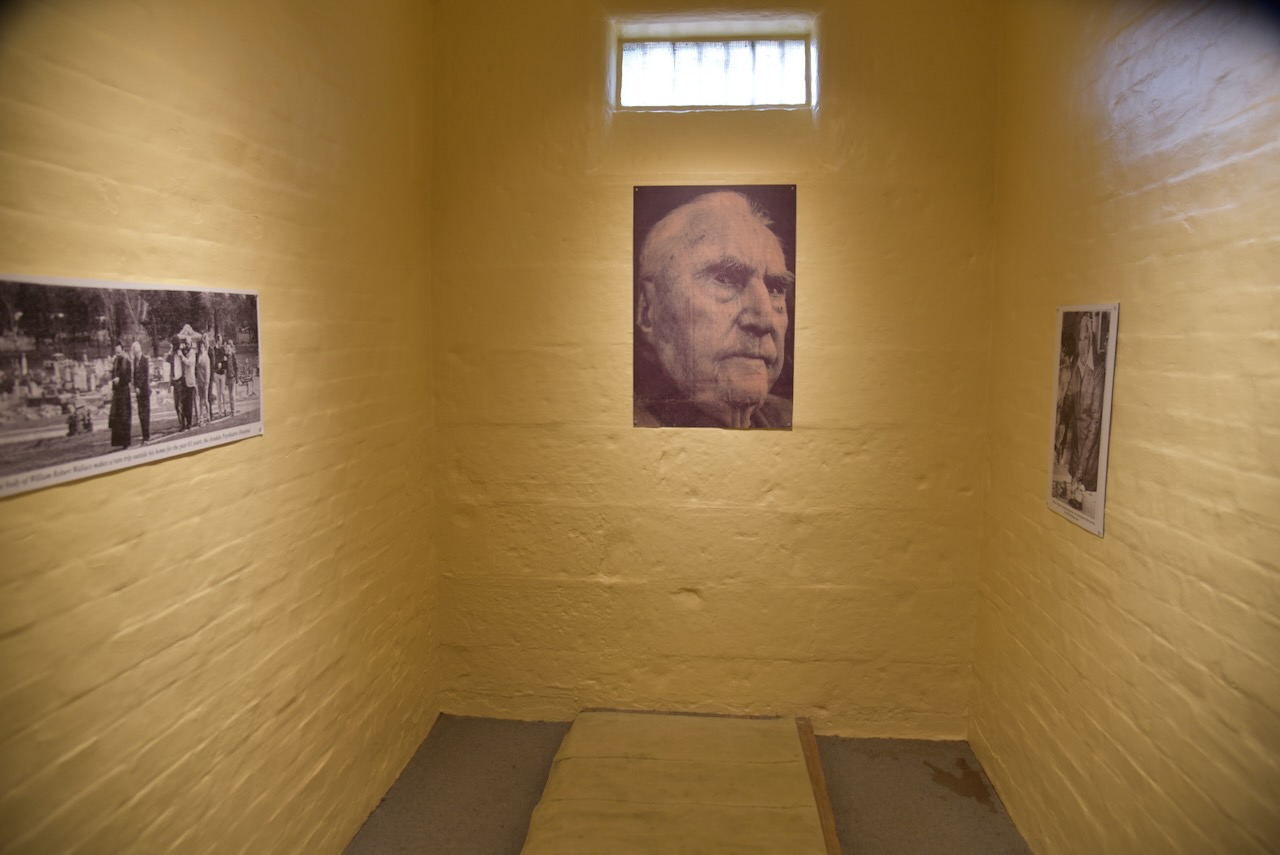
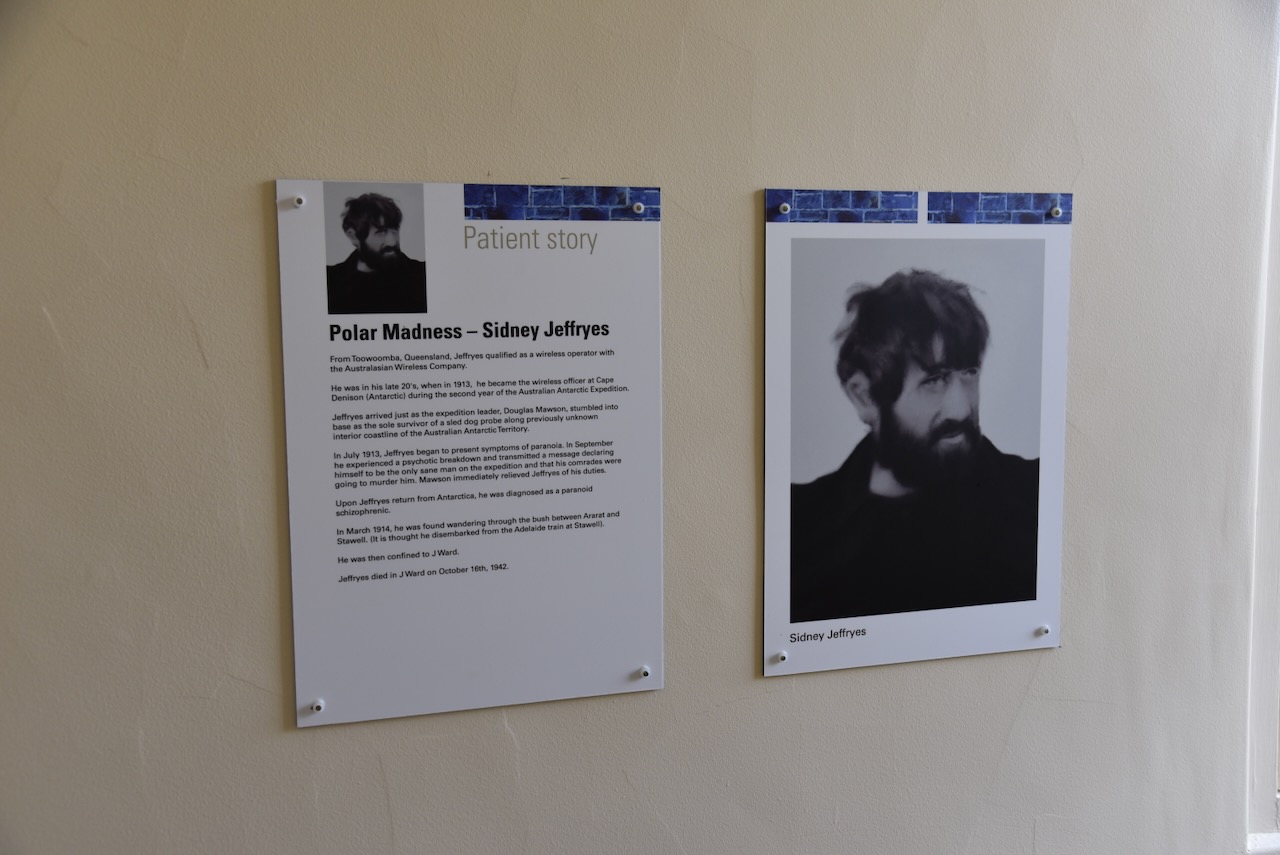
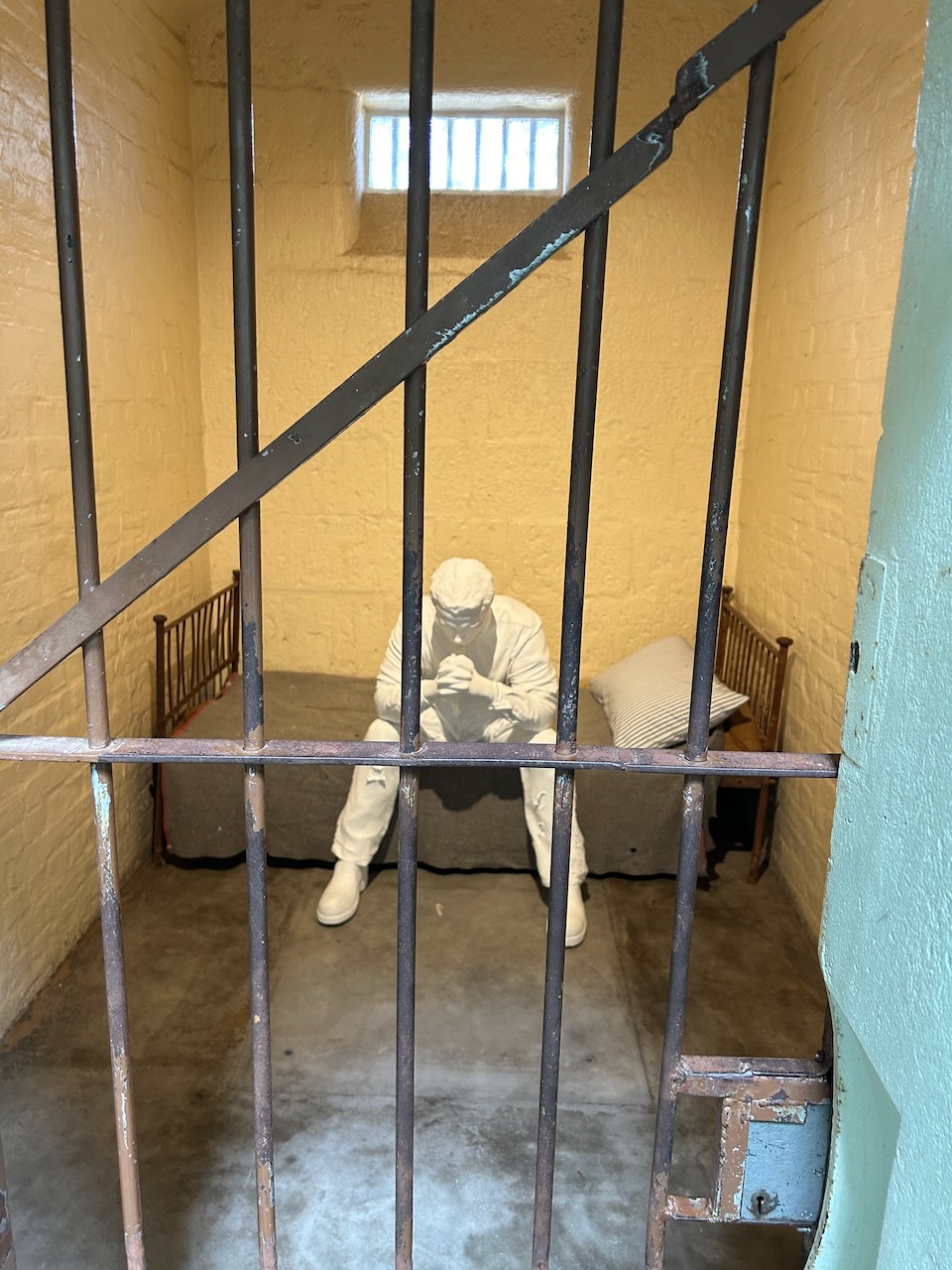
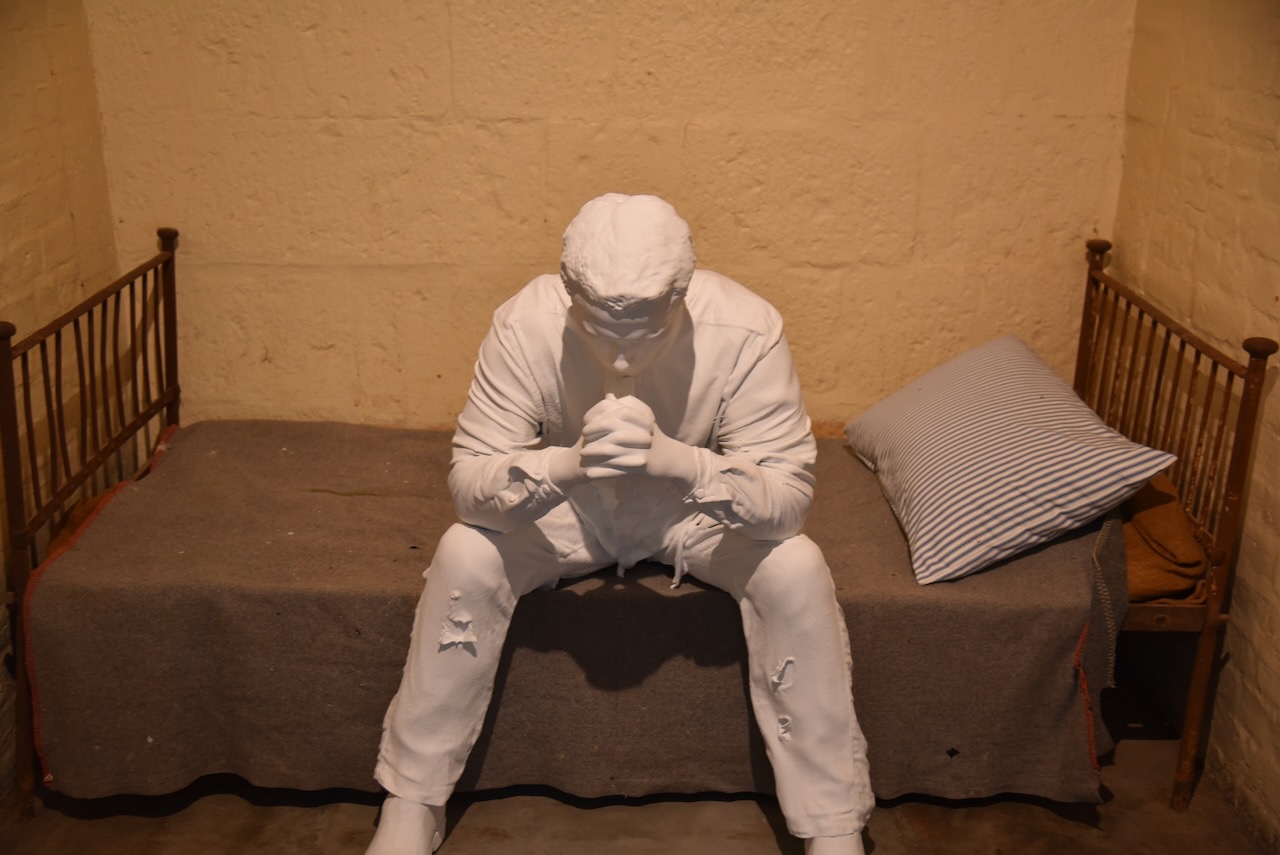
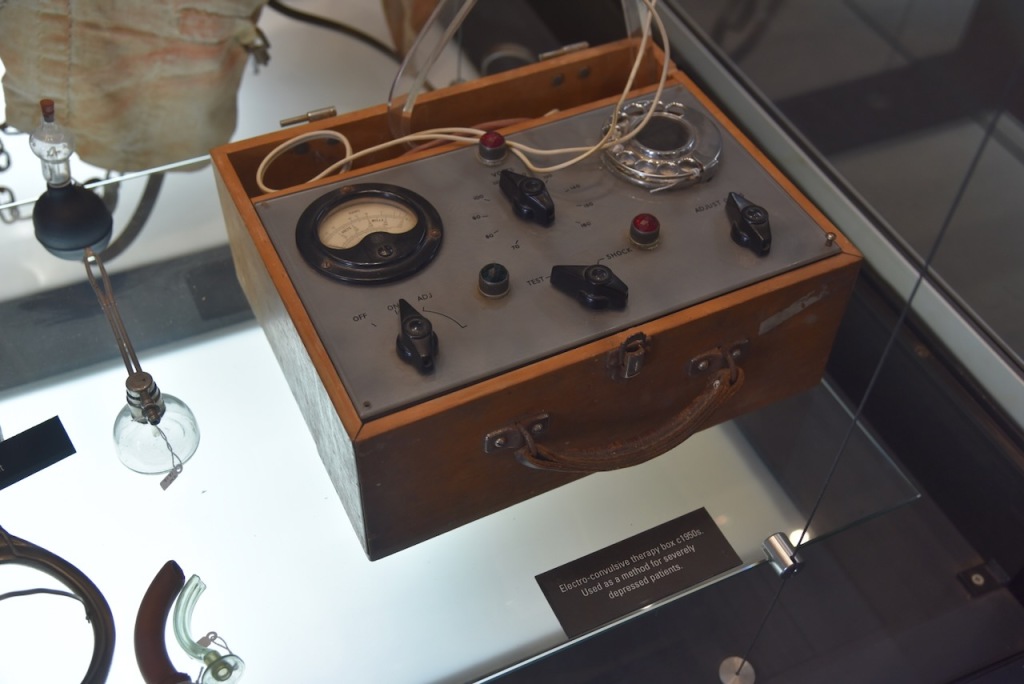
Many of the cells have information boards detailing various aspects of J Ward including electroconvulsive therapy.
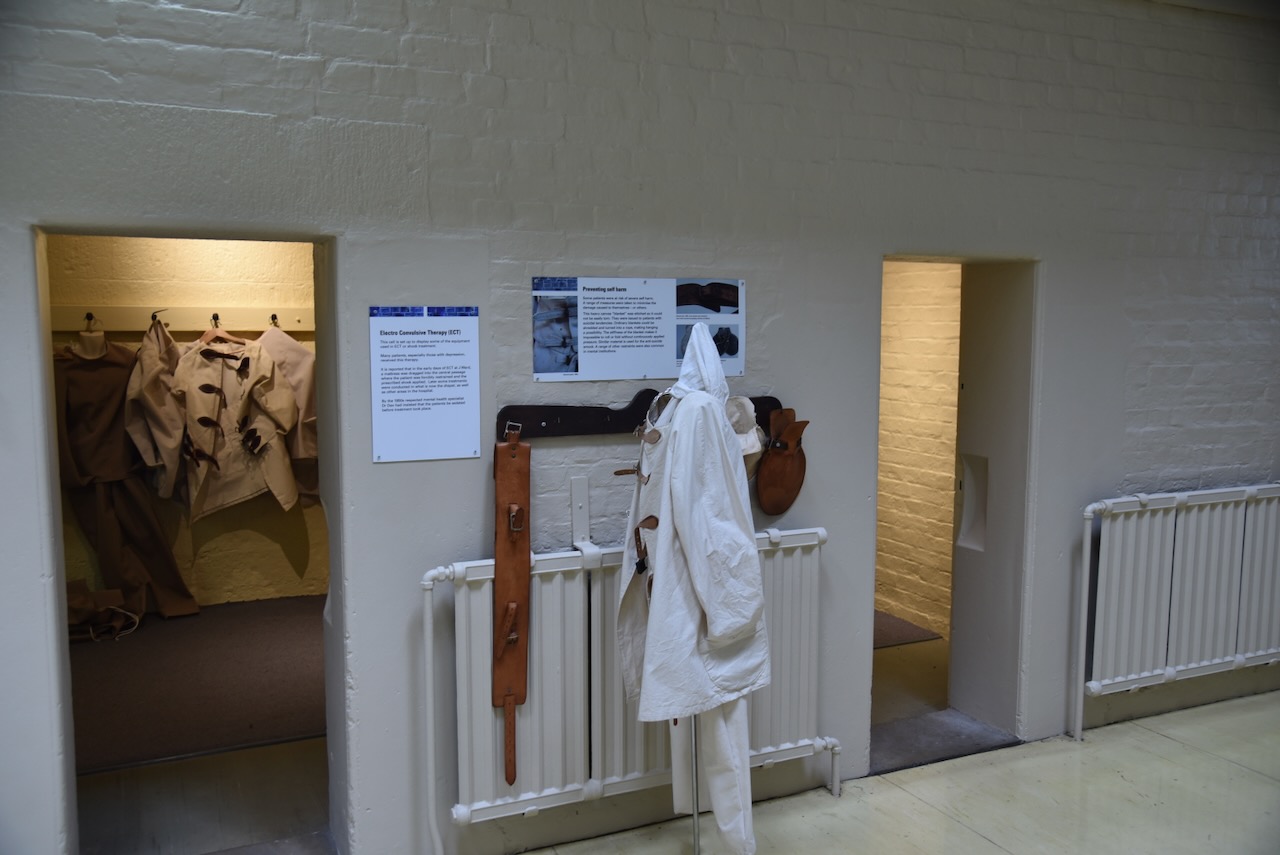
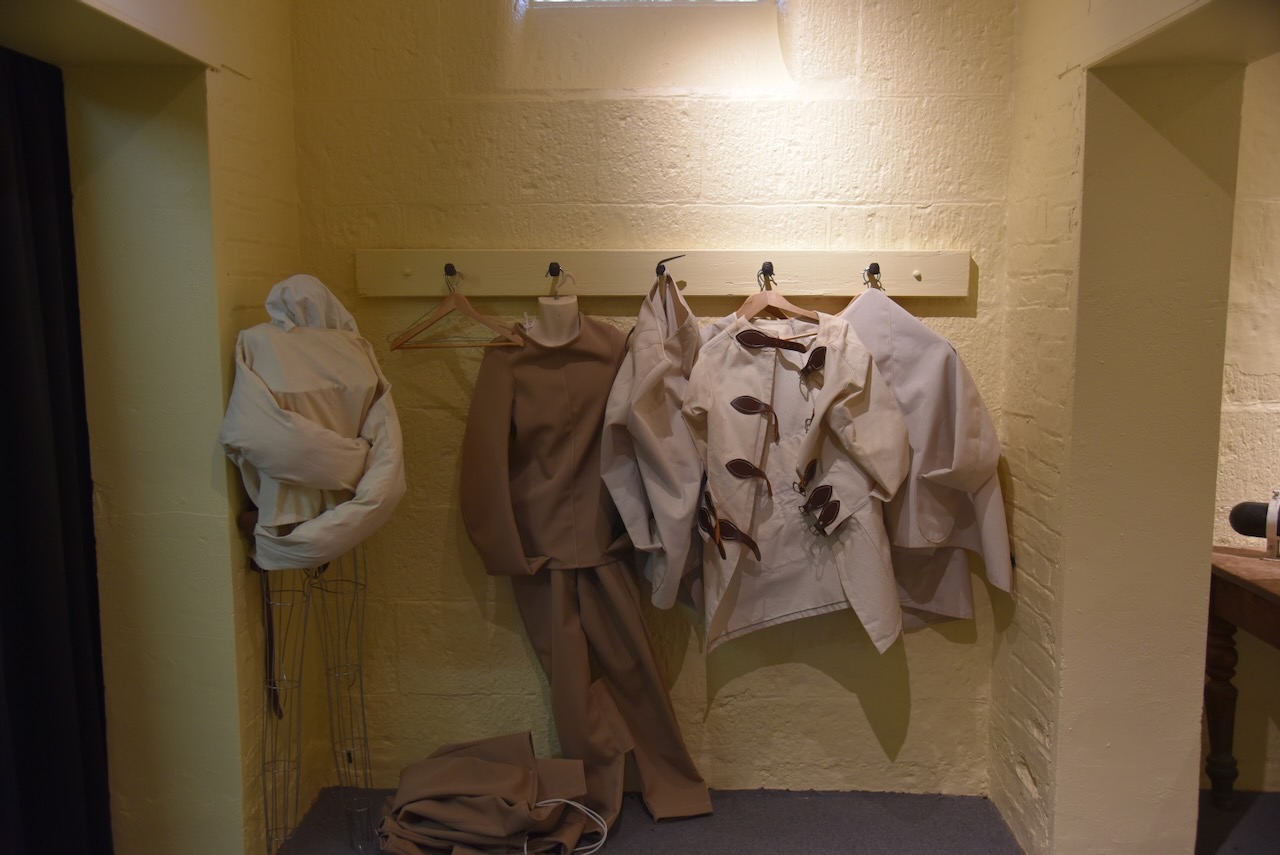
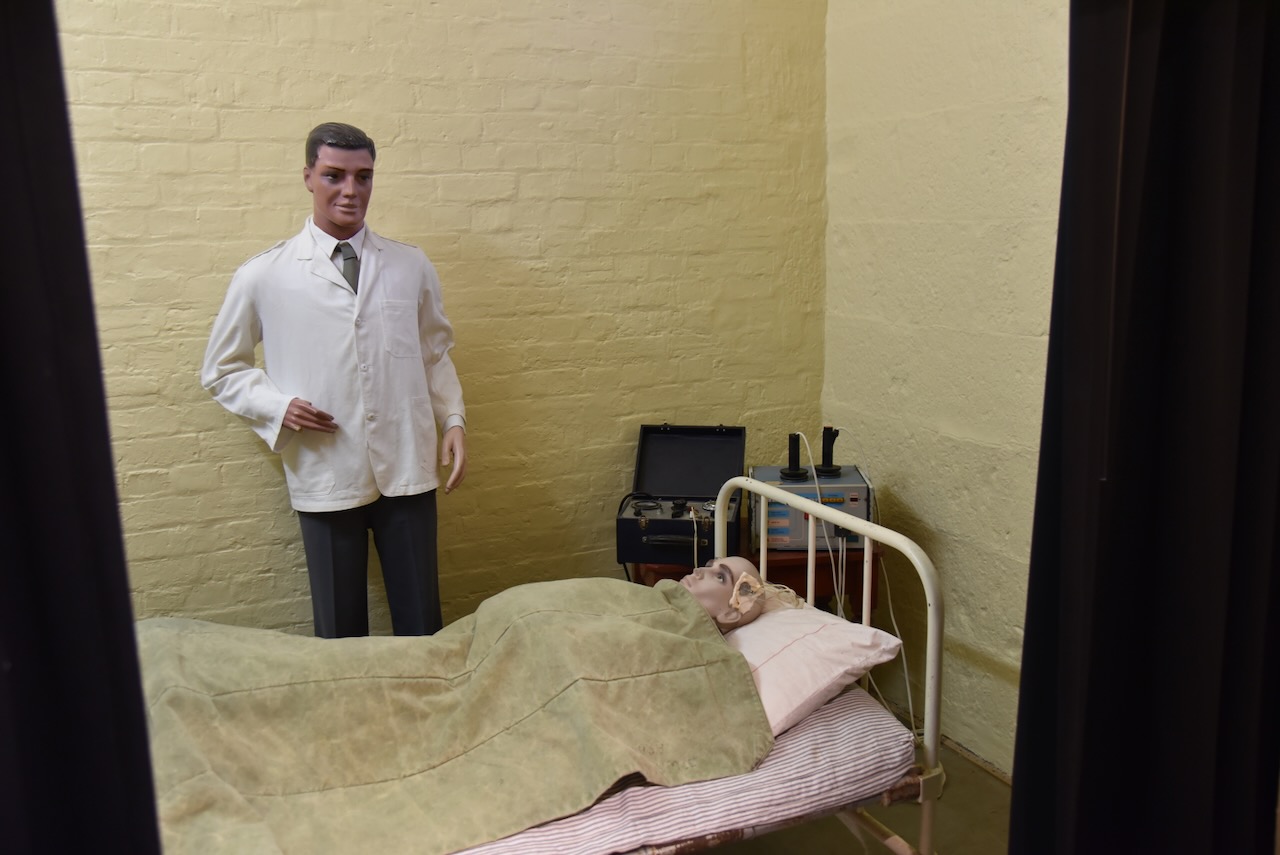
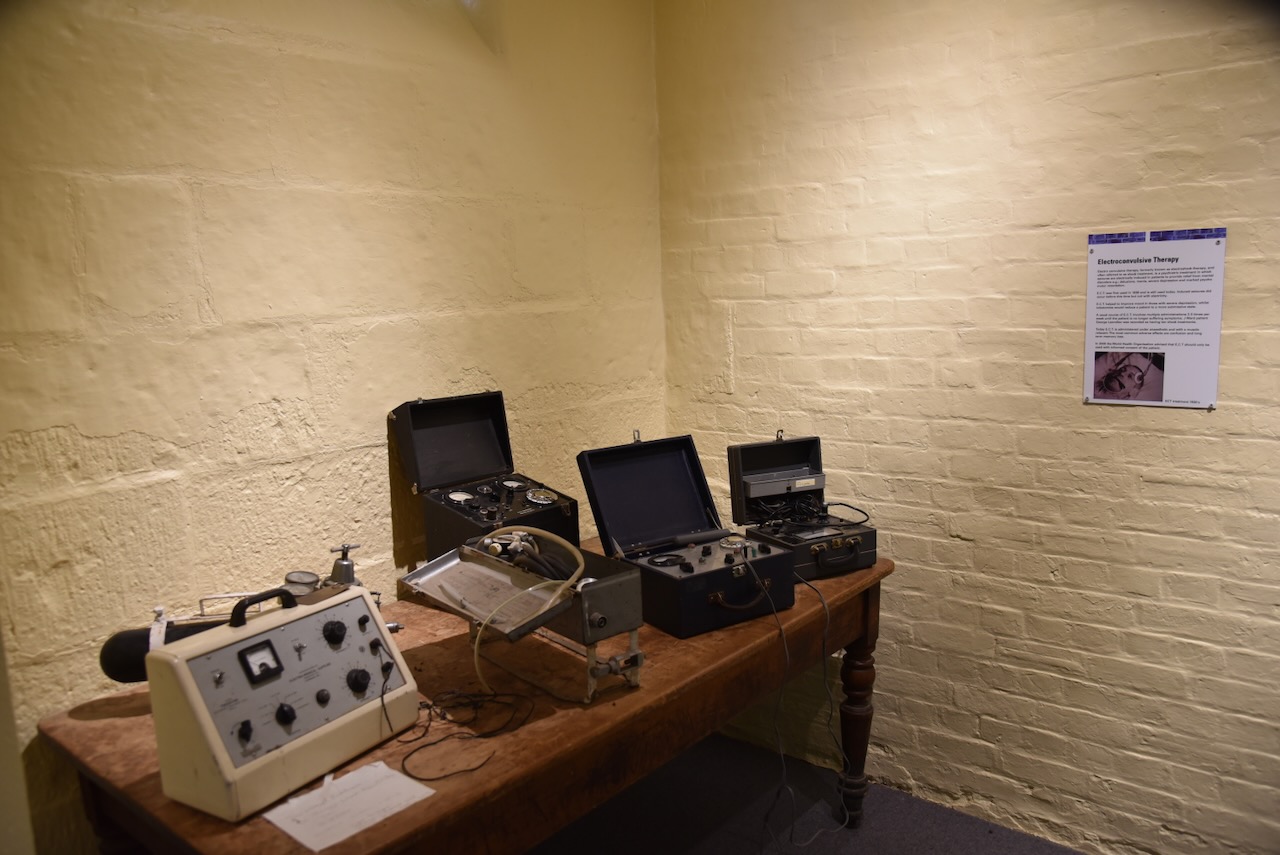
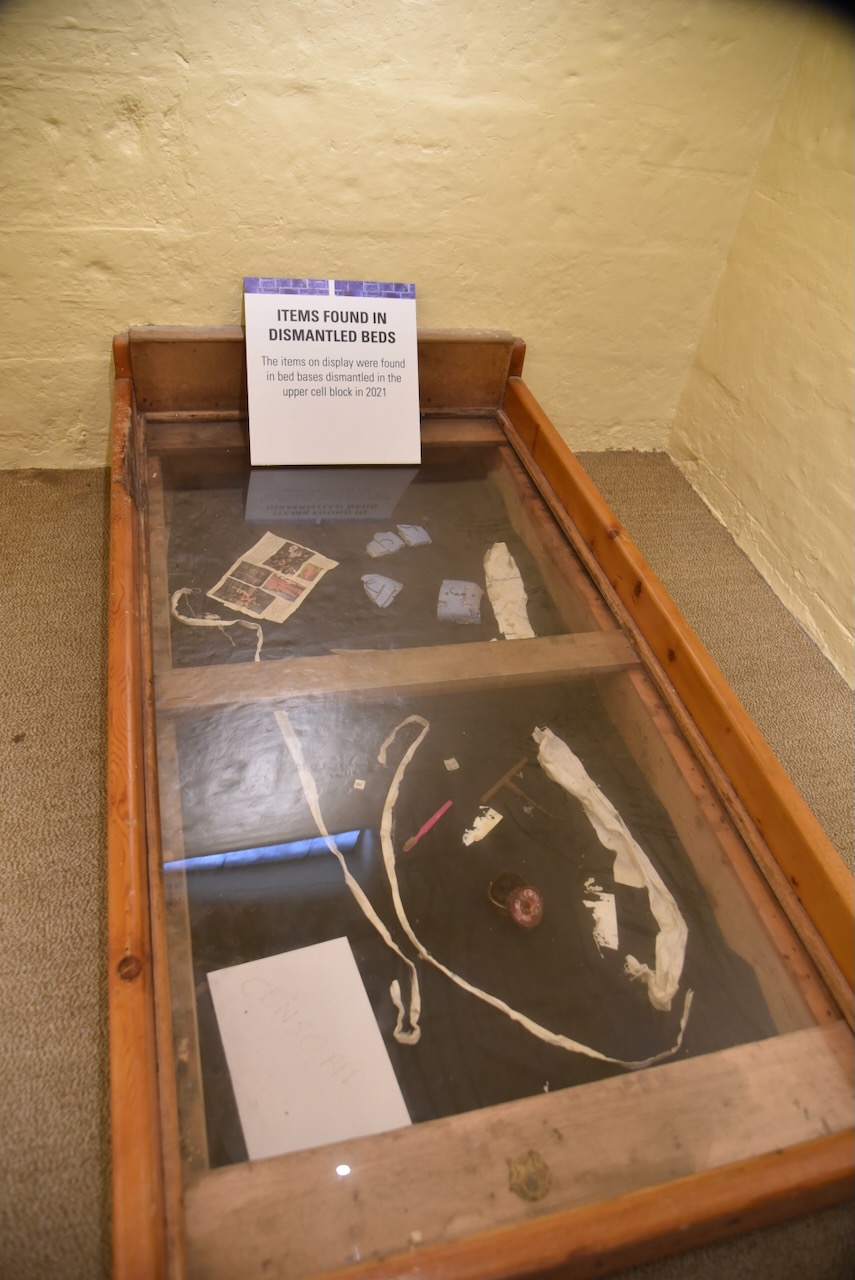
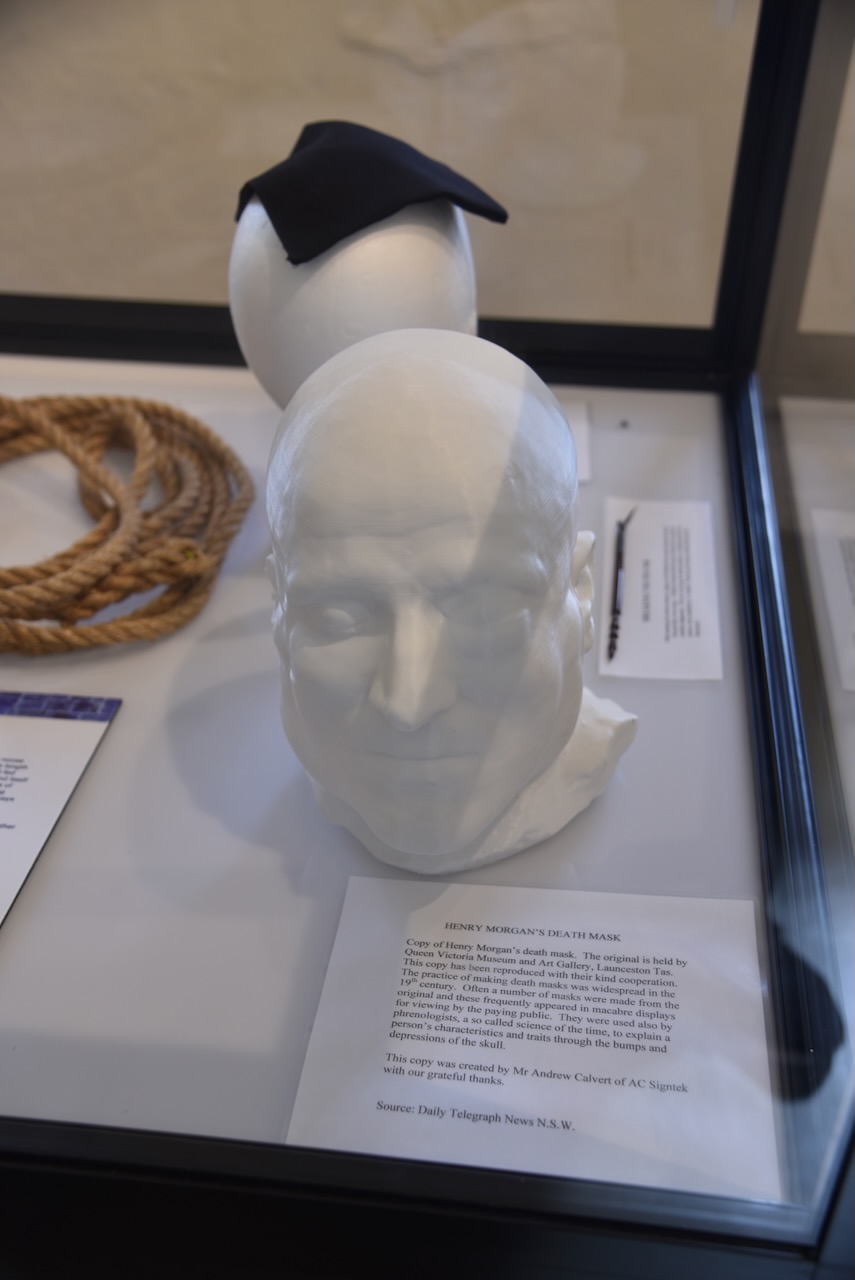
Other displays include items found in dismantled beds and death masks.
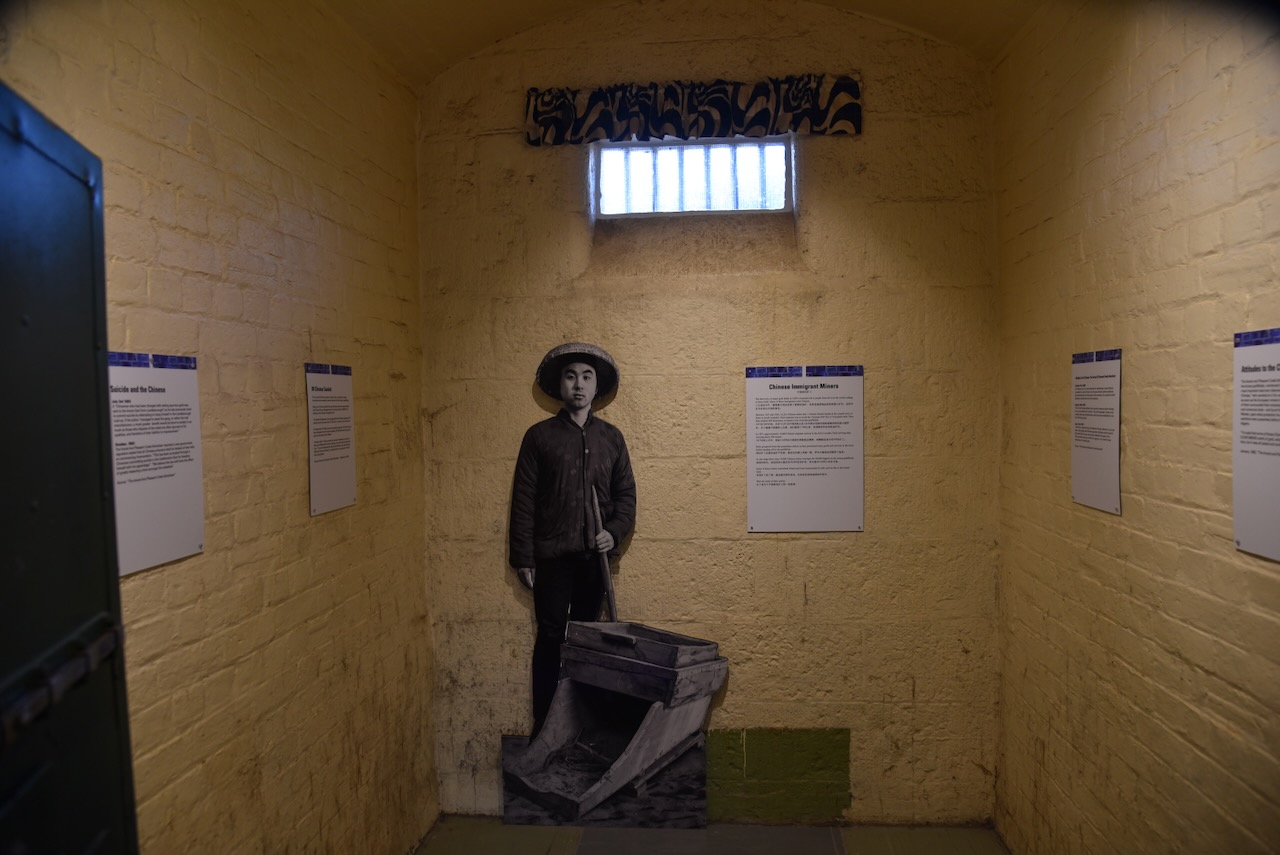


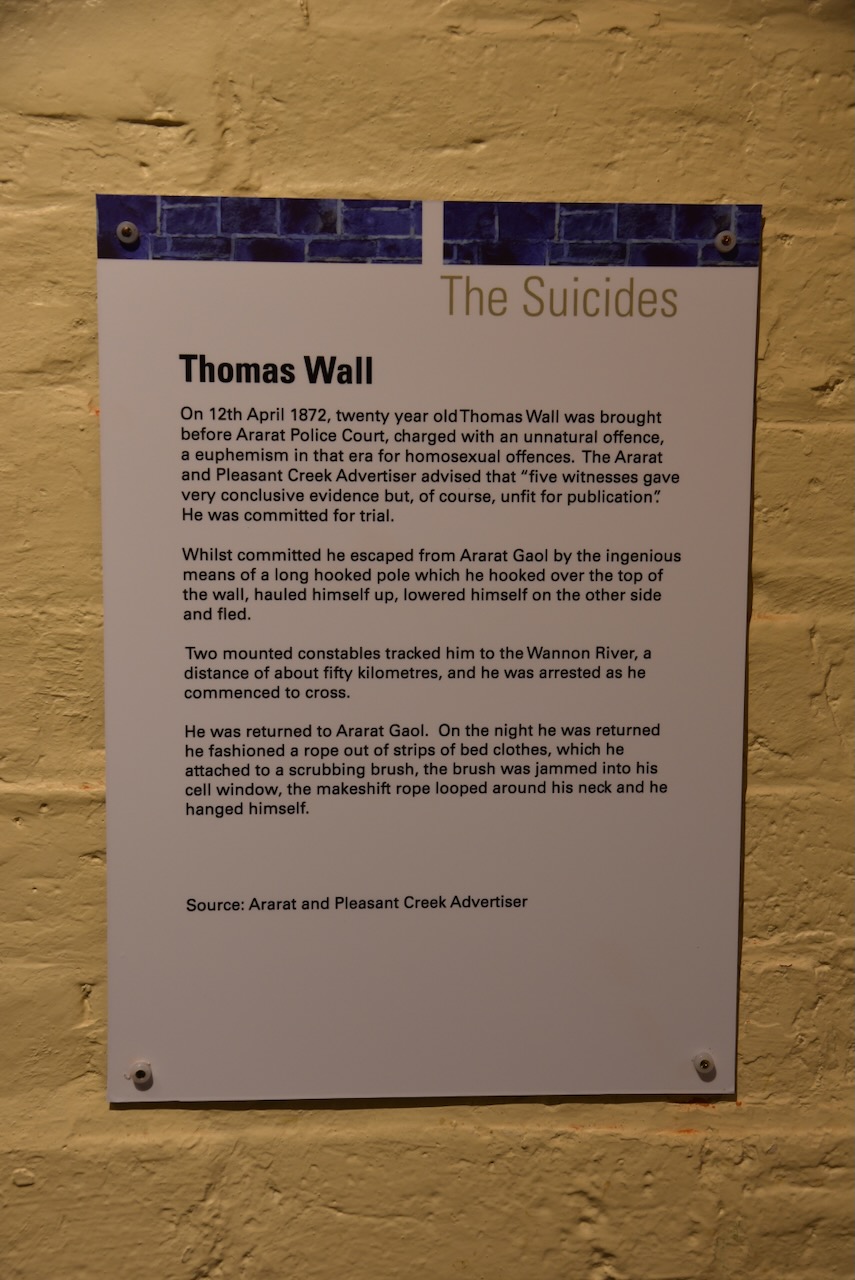
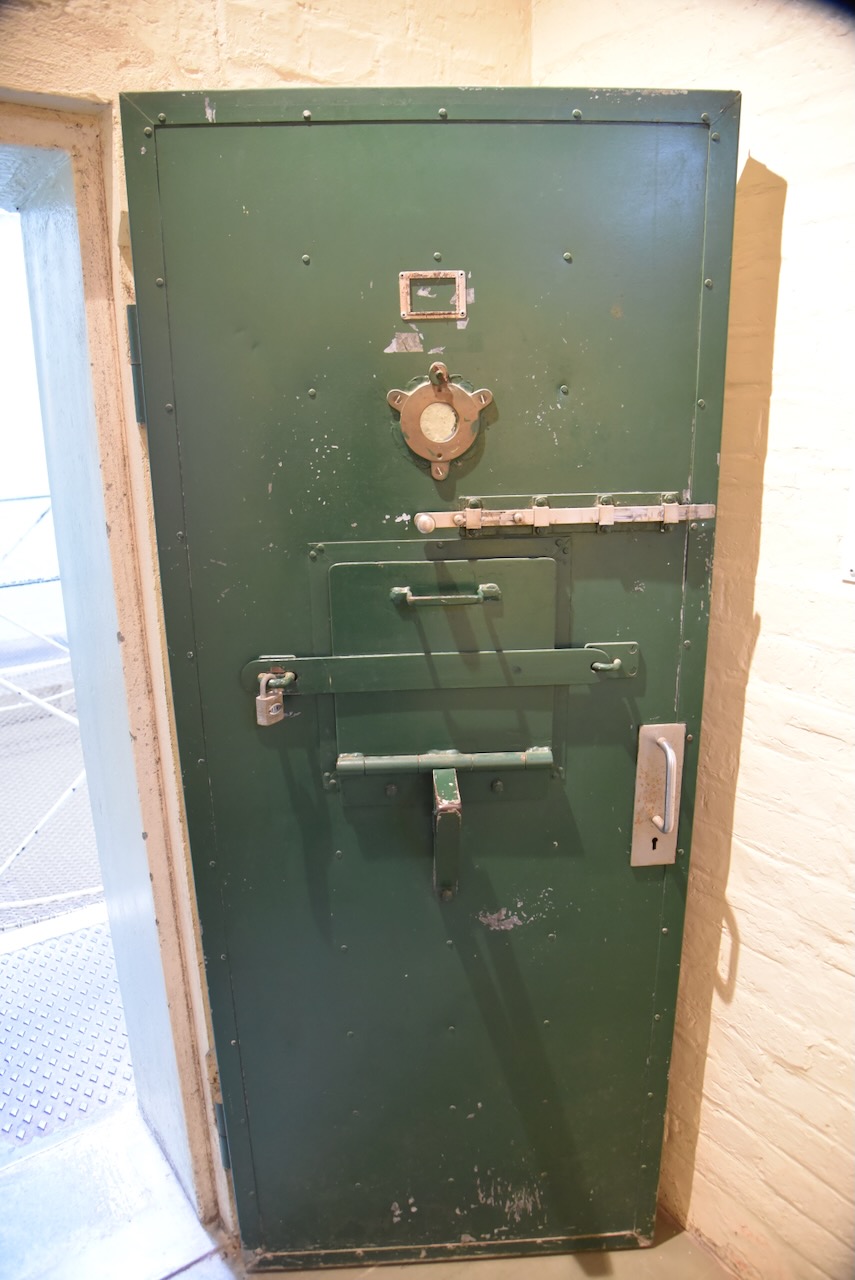

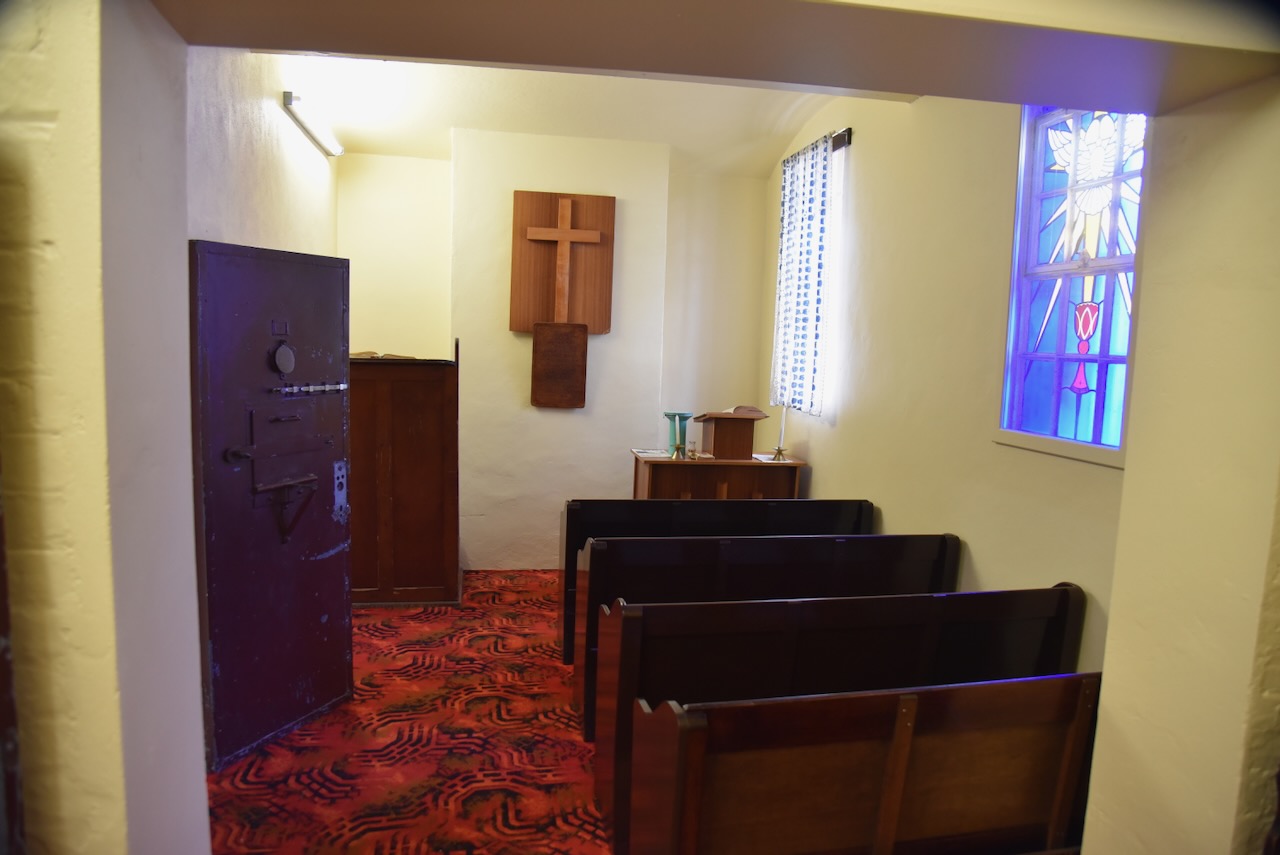
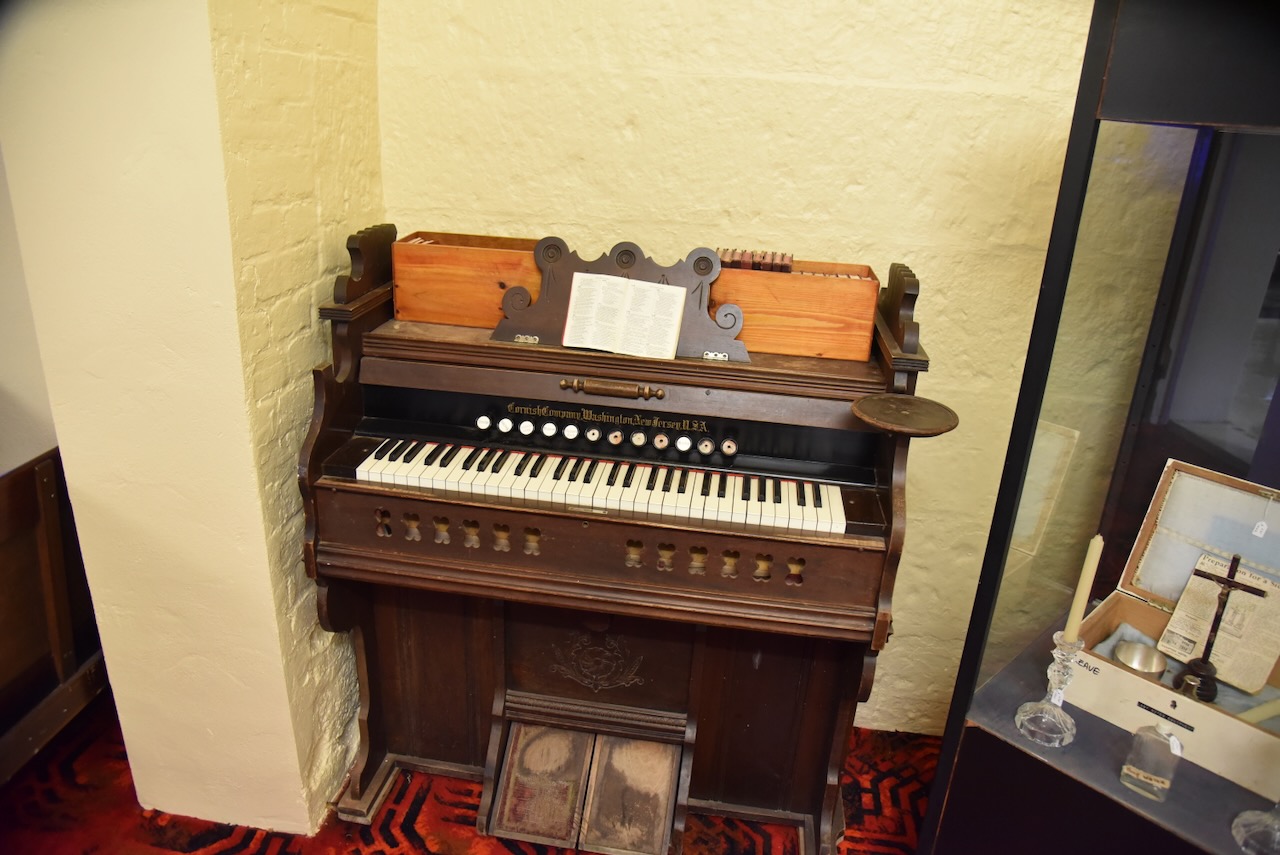
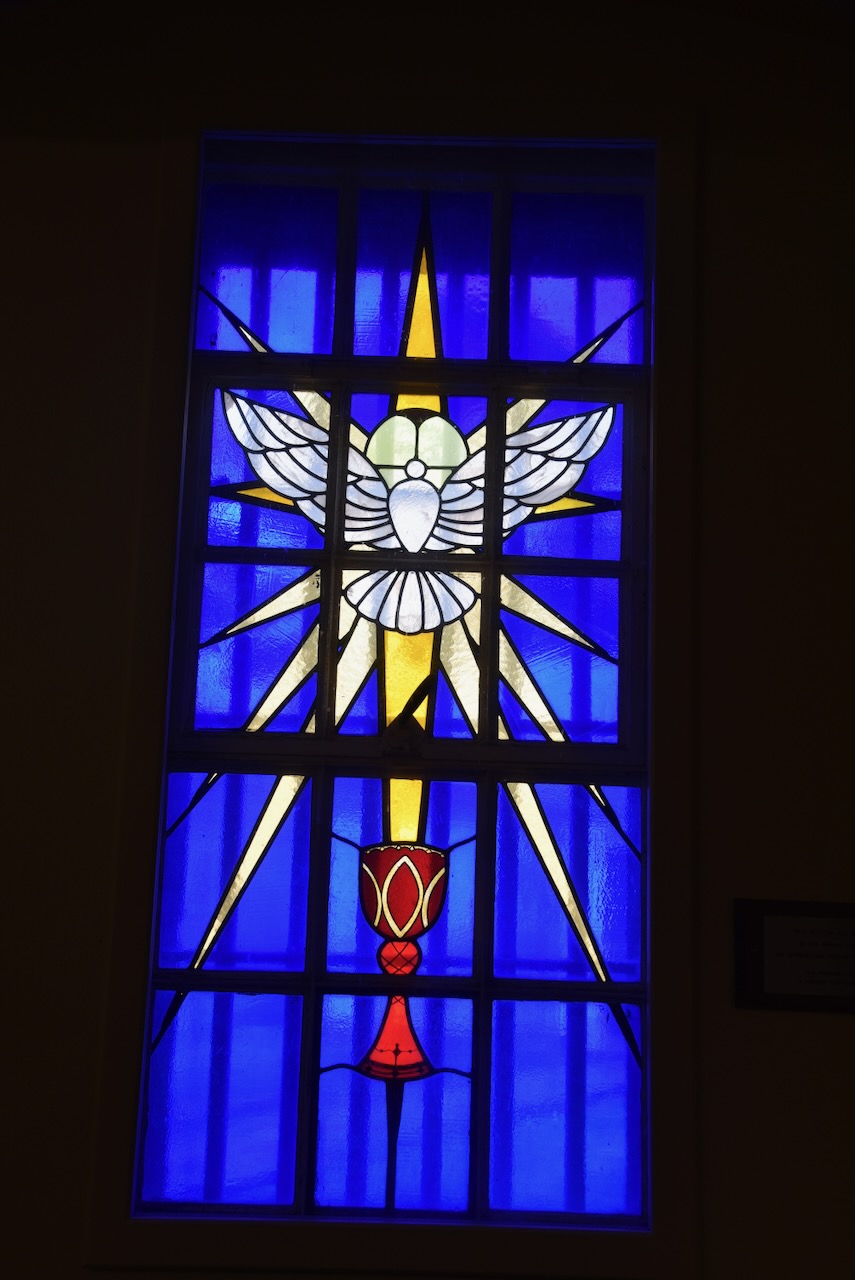
This section of J Ward also contains a small chapel.
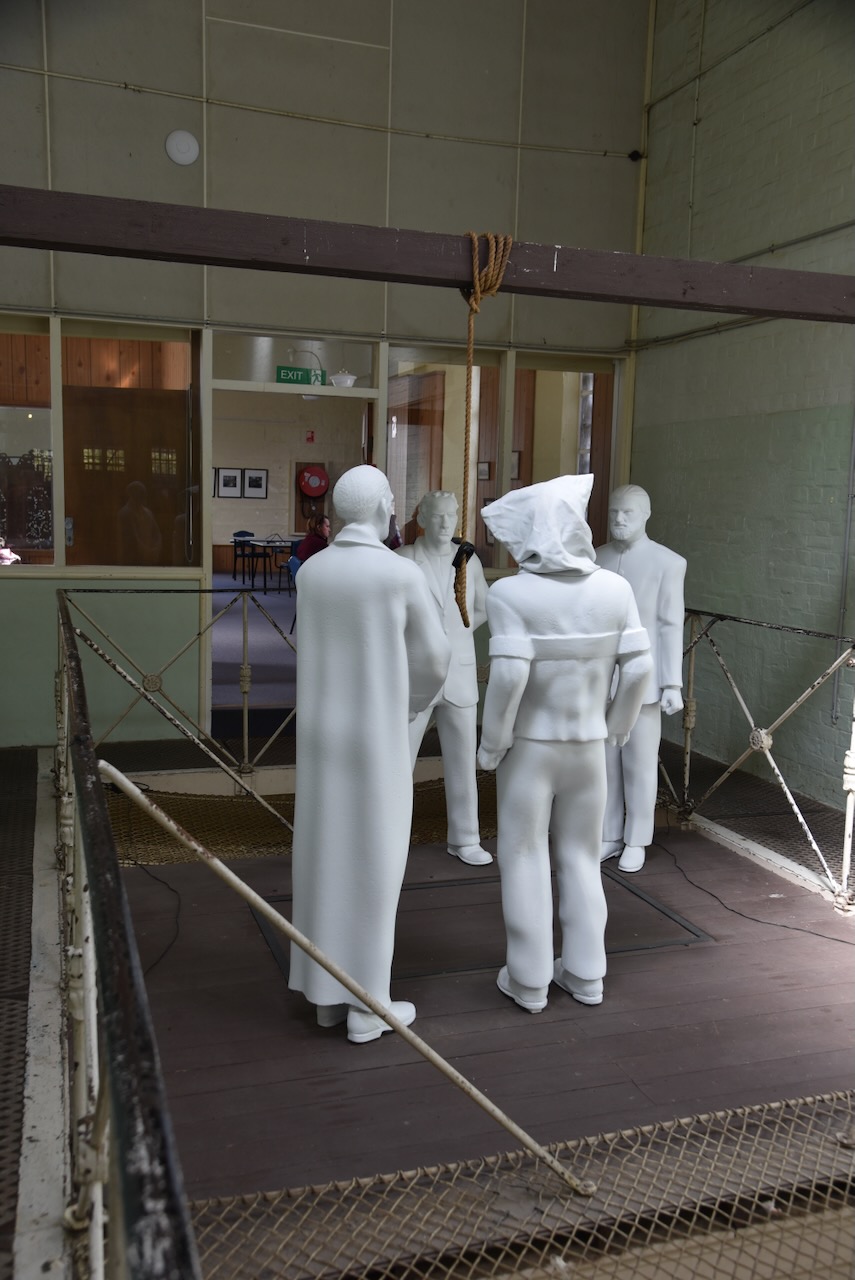
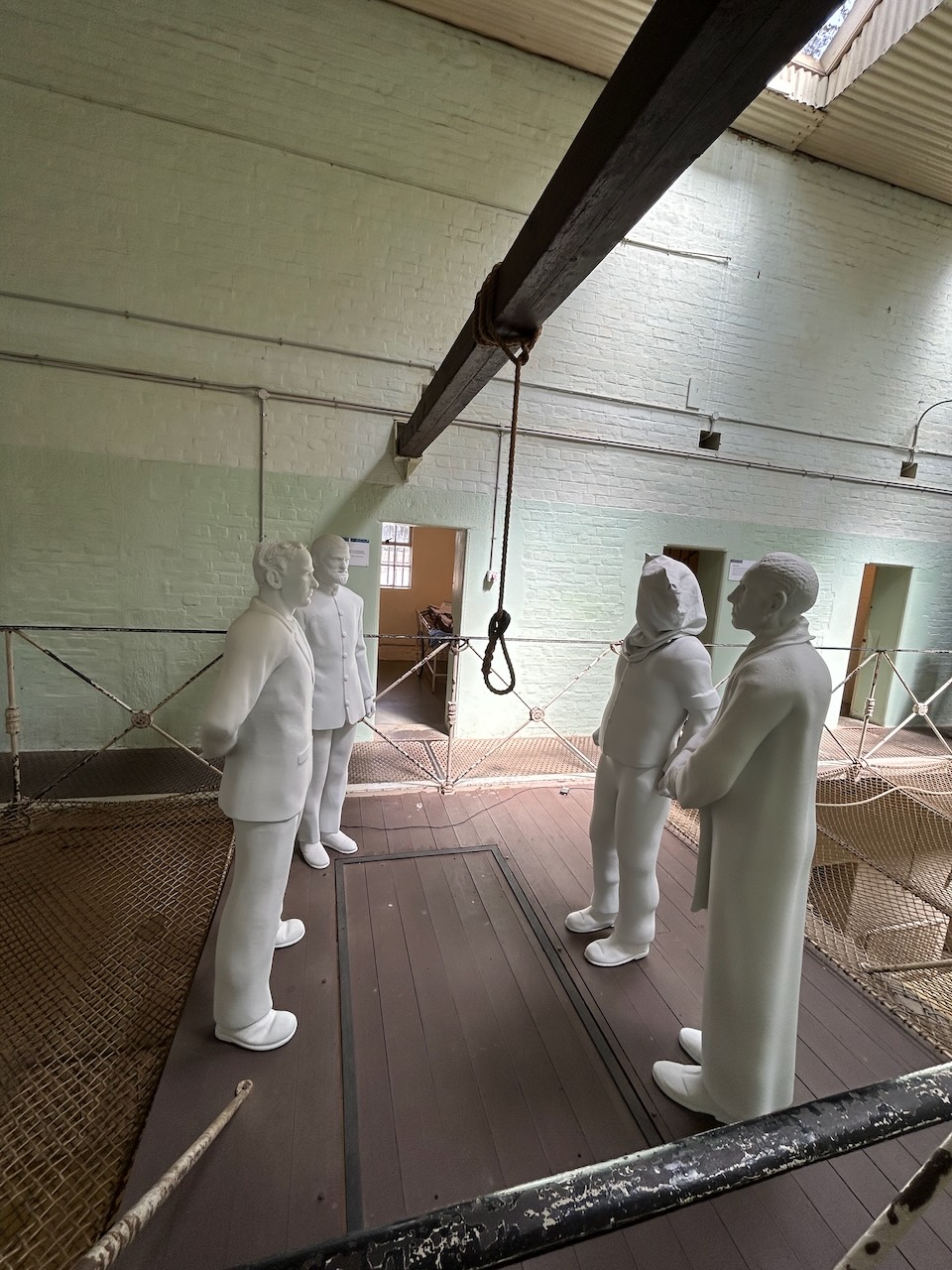
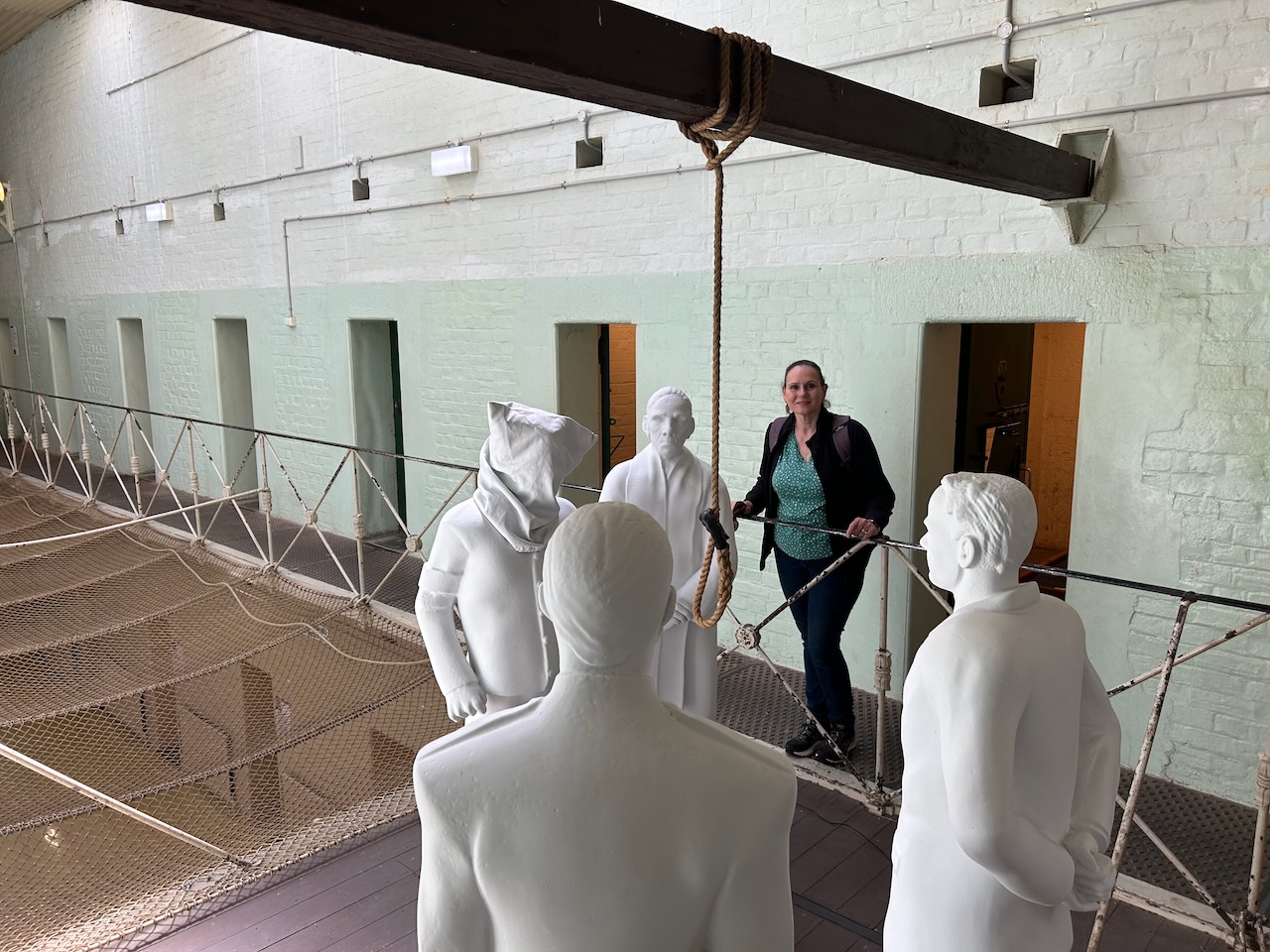
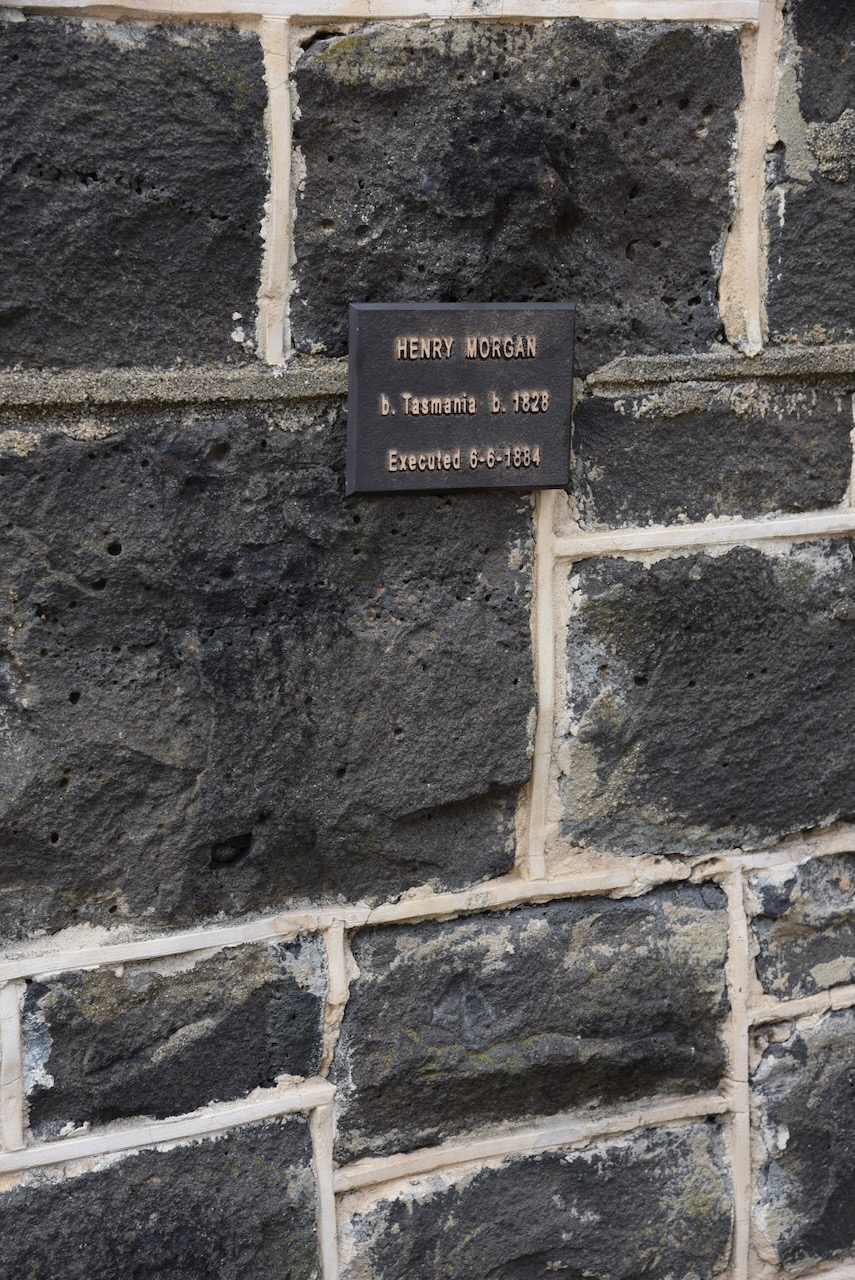
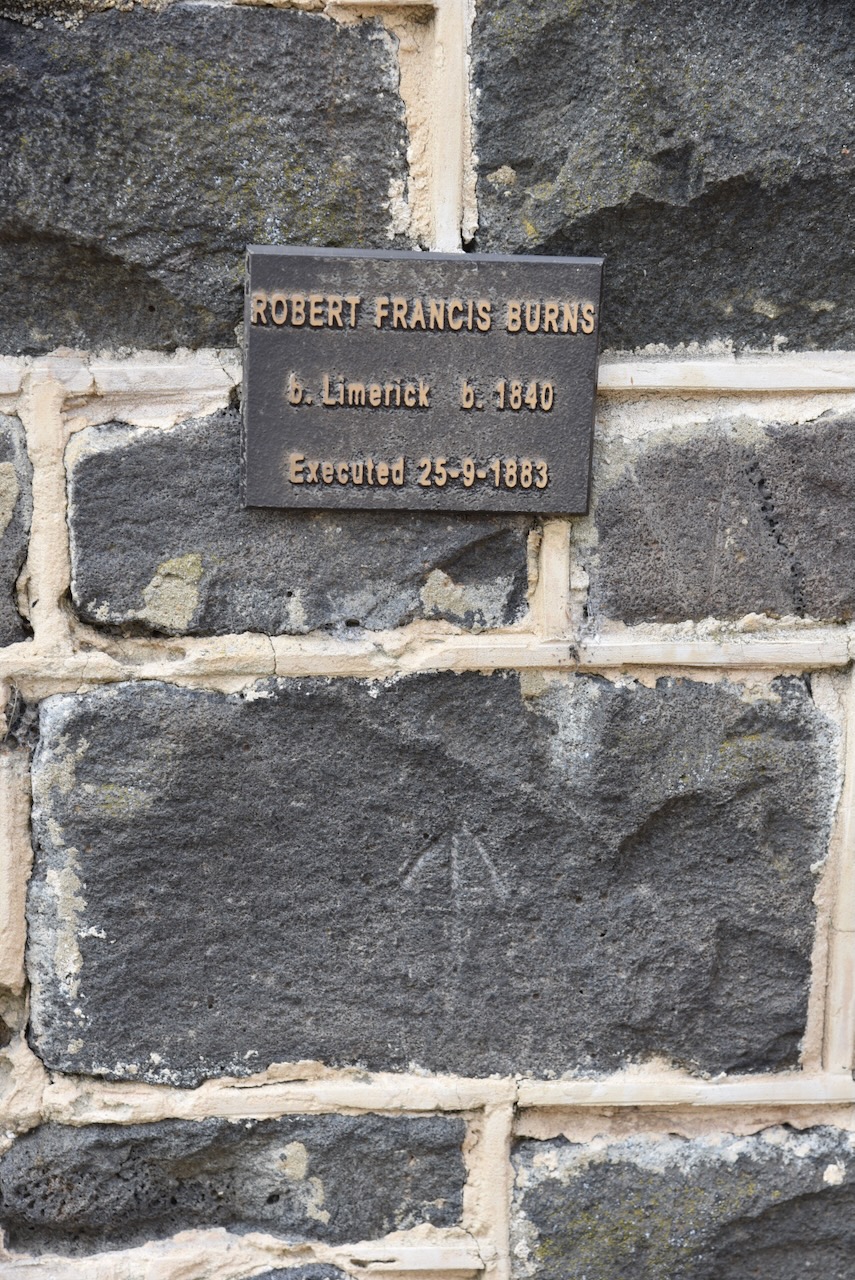
Executions at the gaol including Andrew Vere in 1870 who was convicted of a shooting murder. Robert Francis Burn was hung for muder in September 1883. Henry Morgan was hung after being convicted for murder where he cut the throat of 10 year old Margaret Nolan after sexually assaulting her.
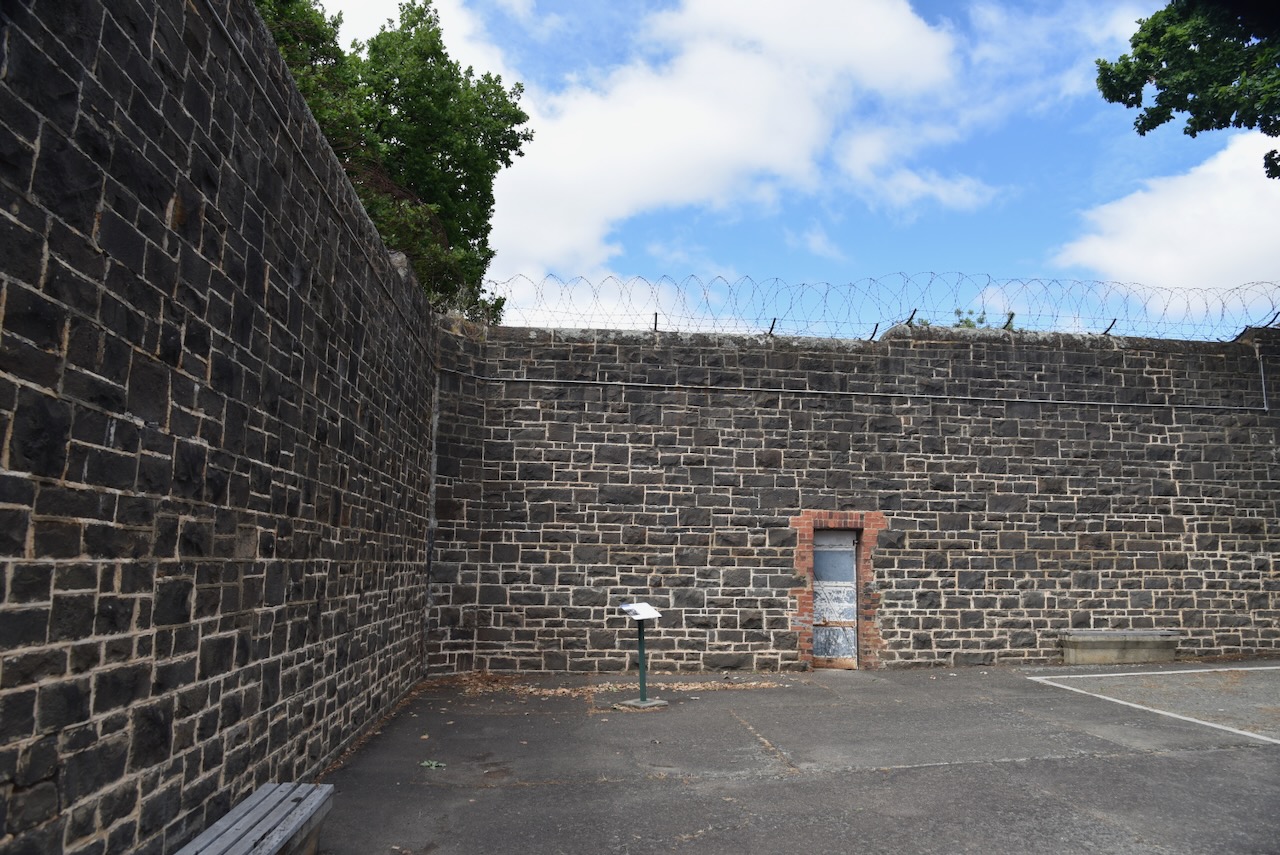
We then moved outside to the exercise yard.
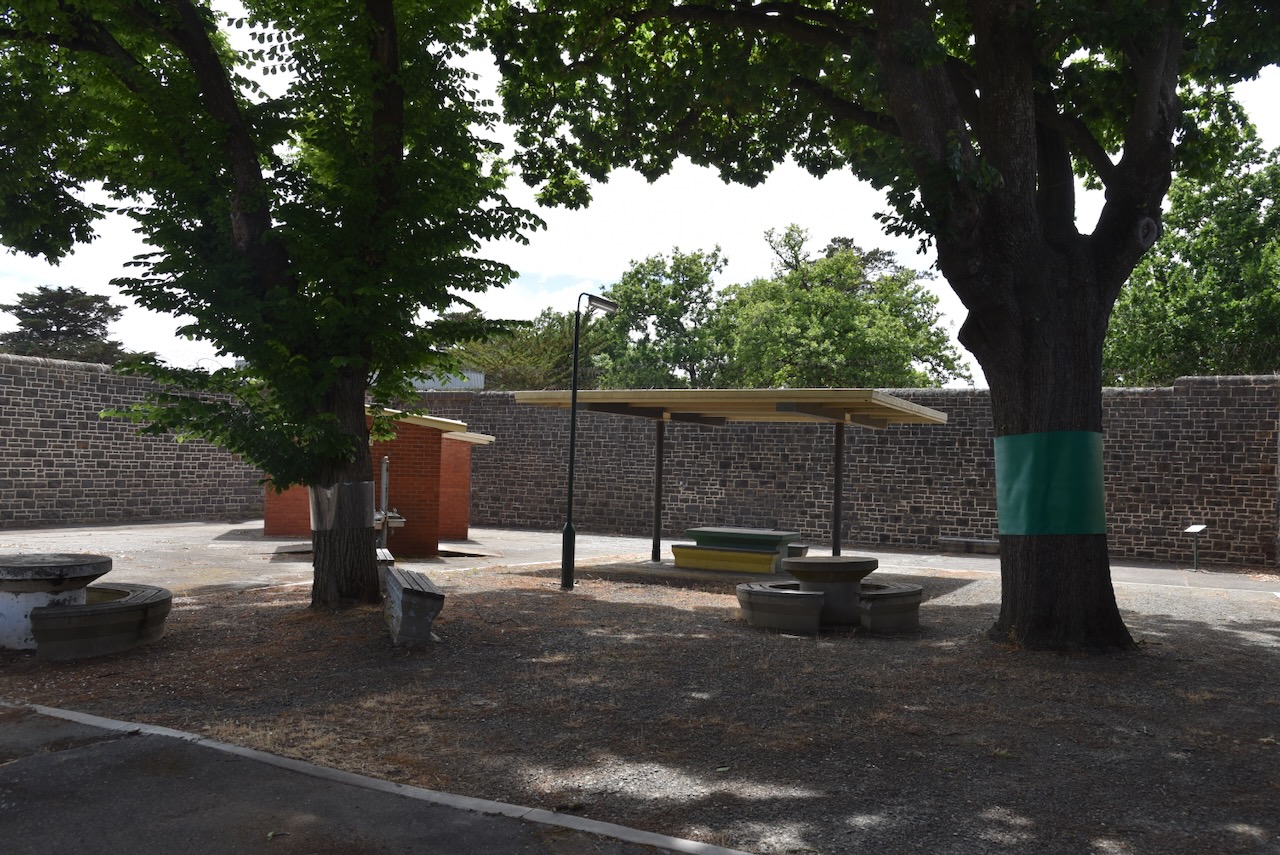
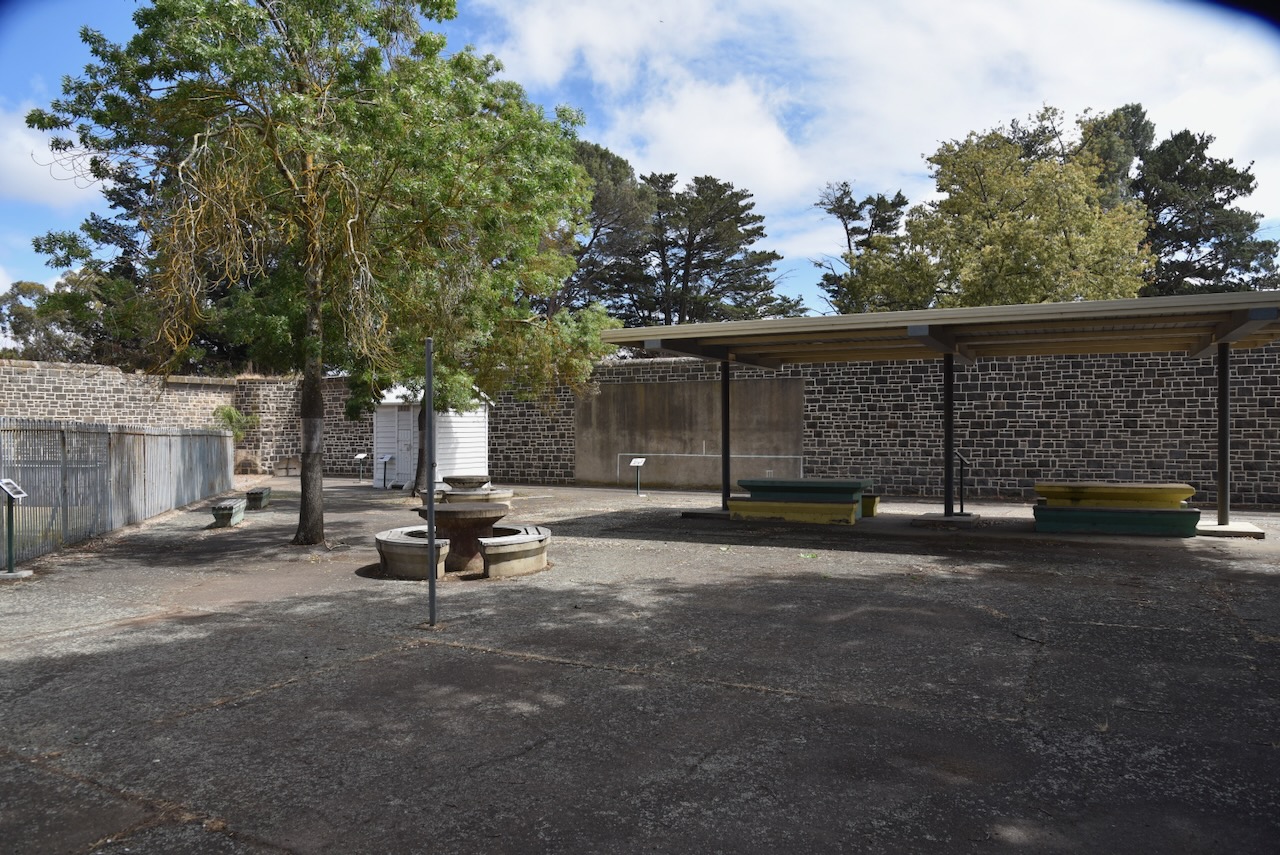

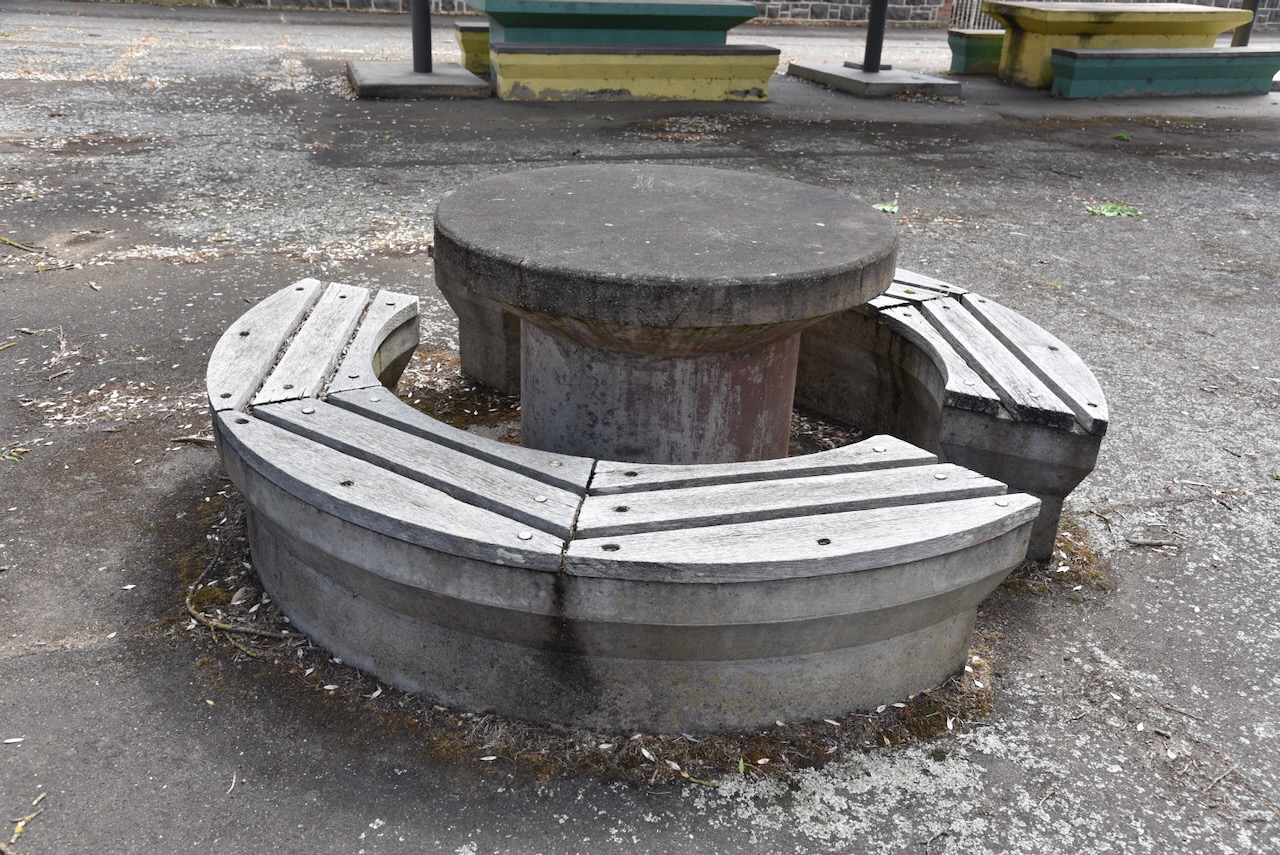

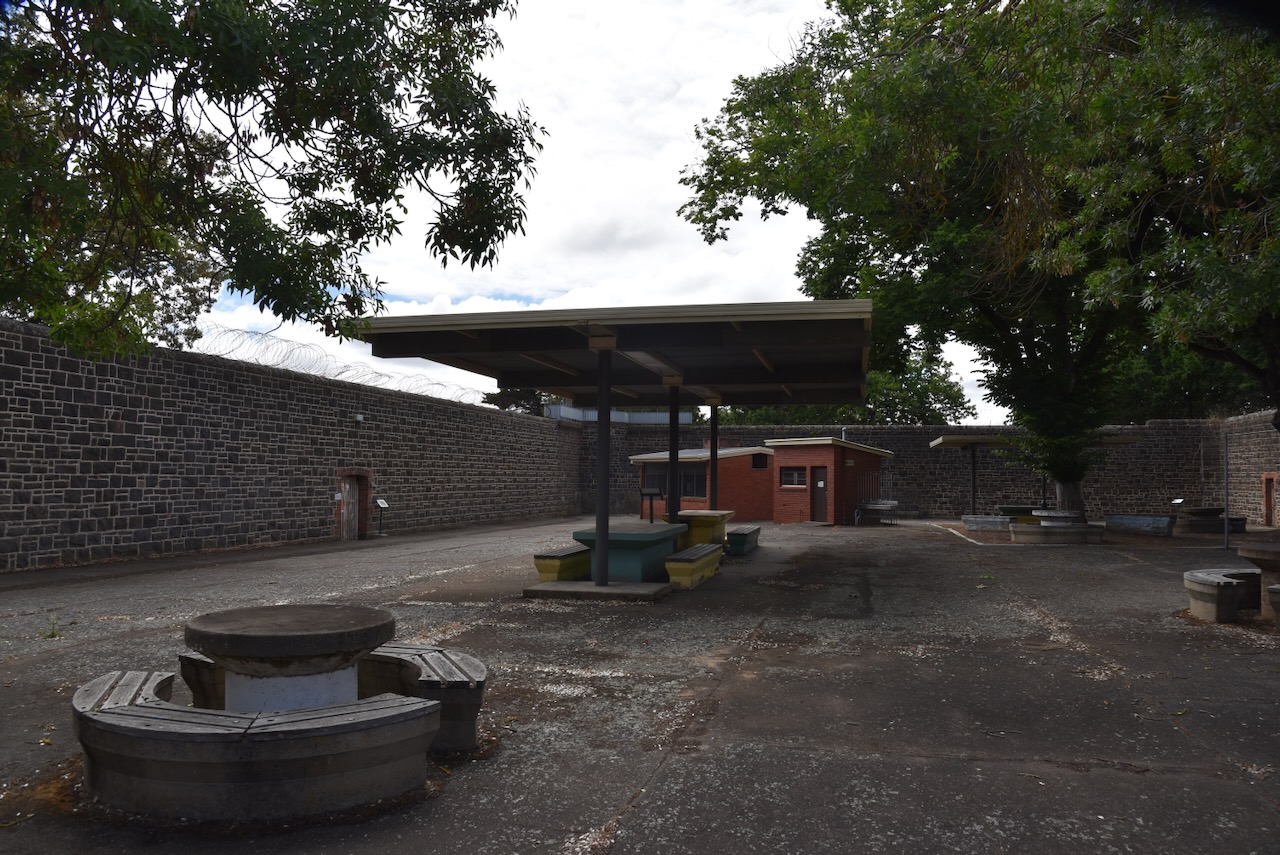
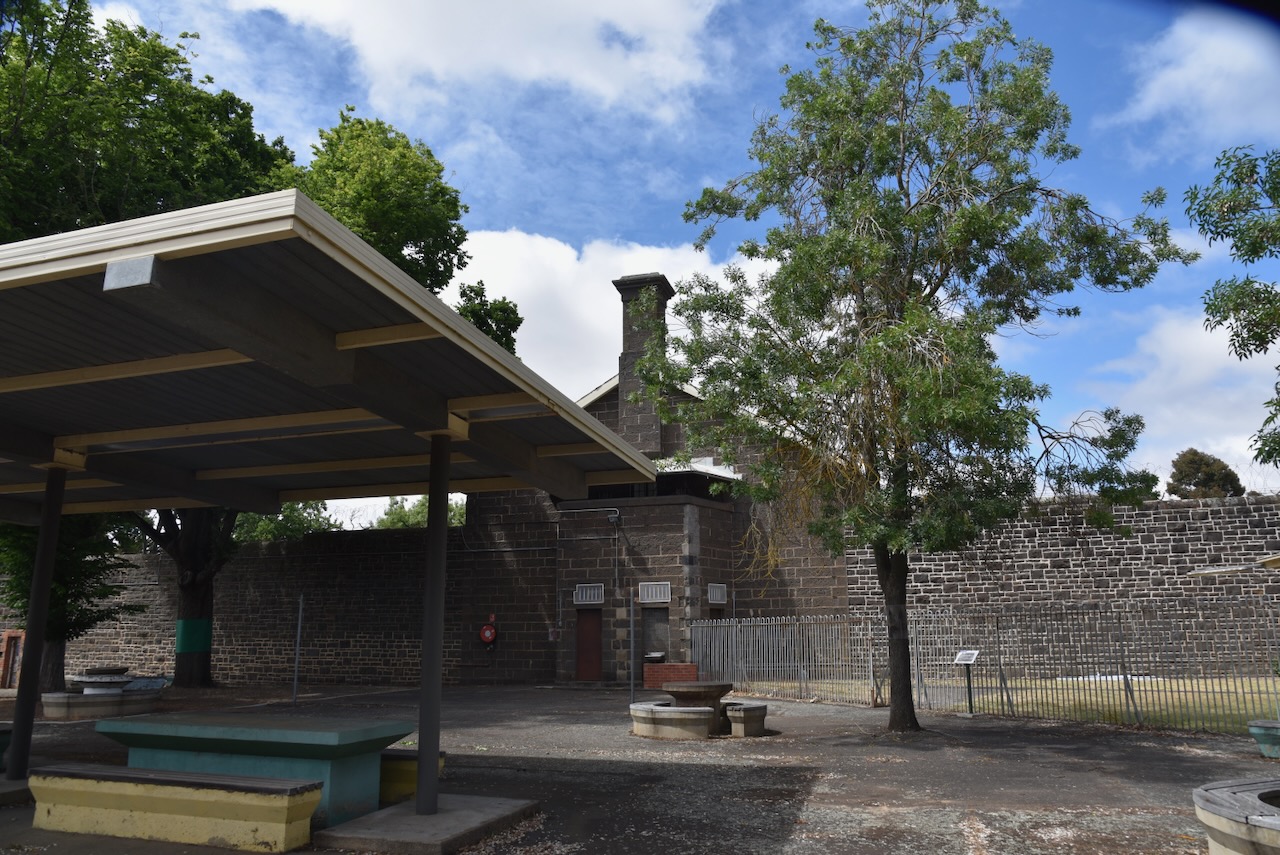
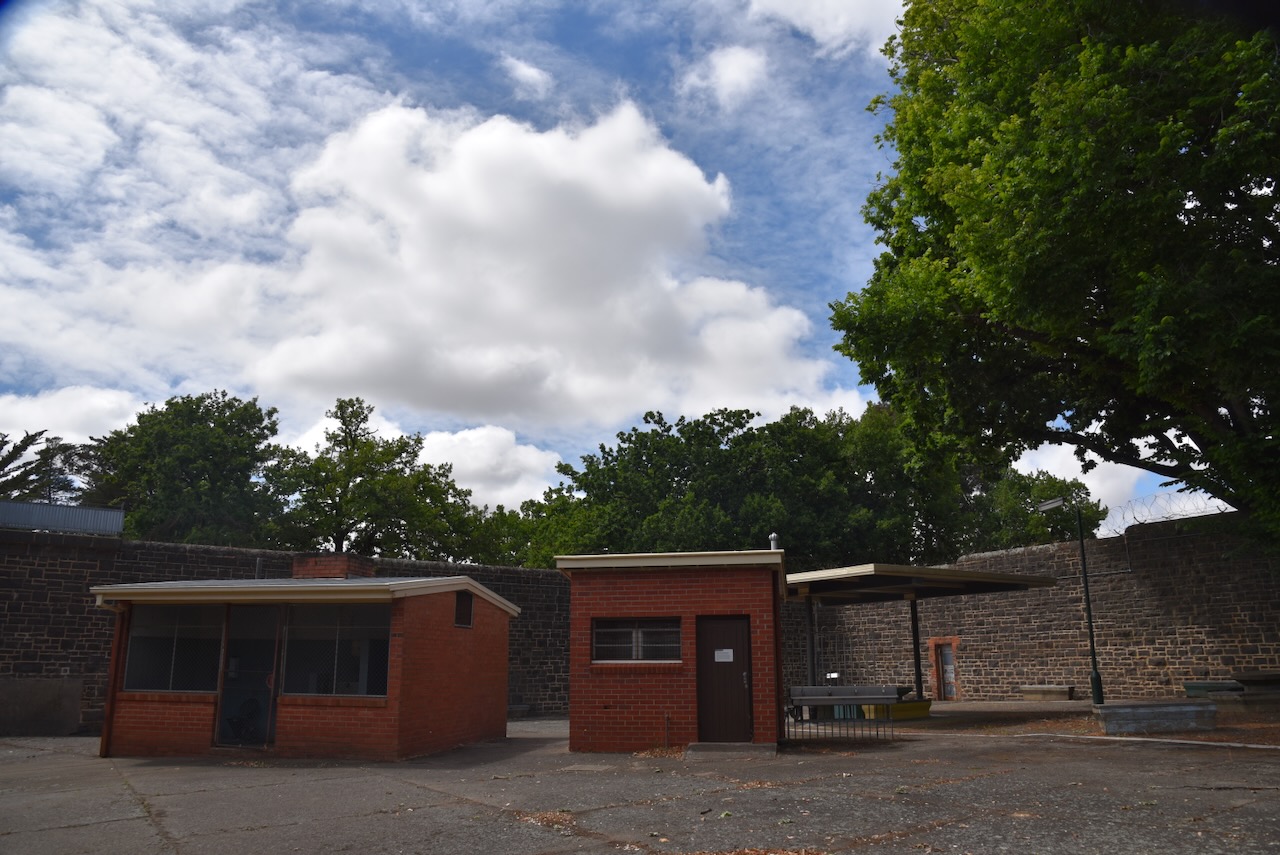
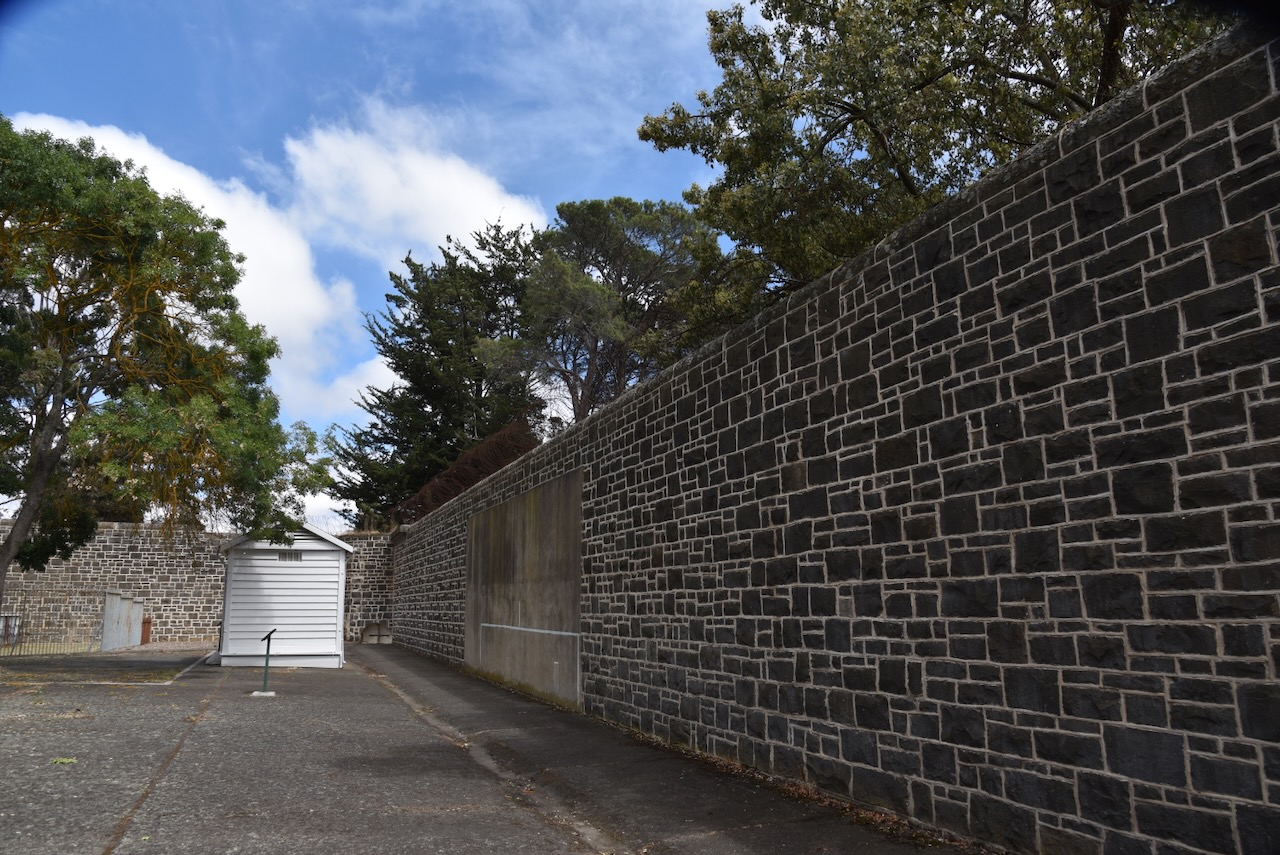
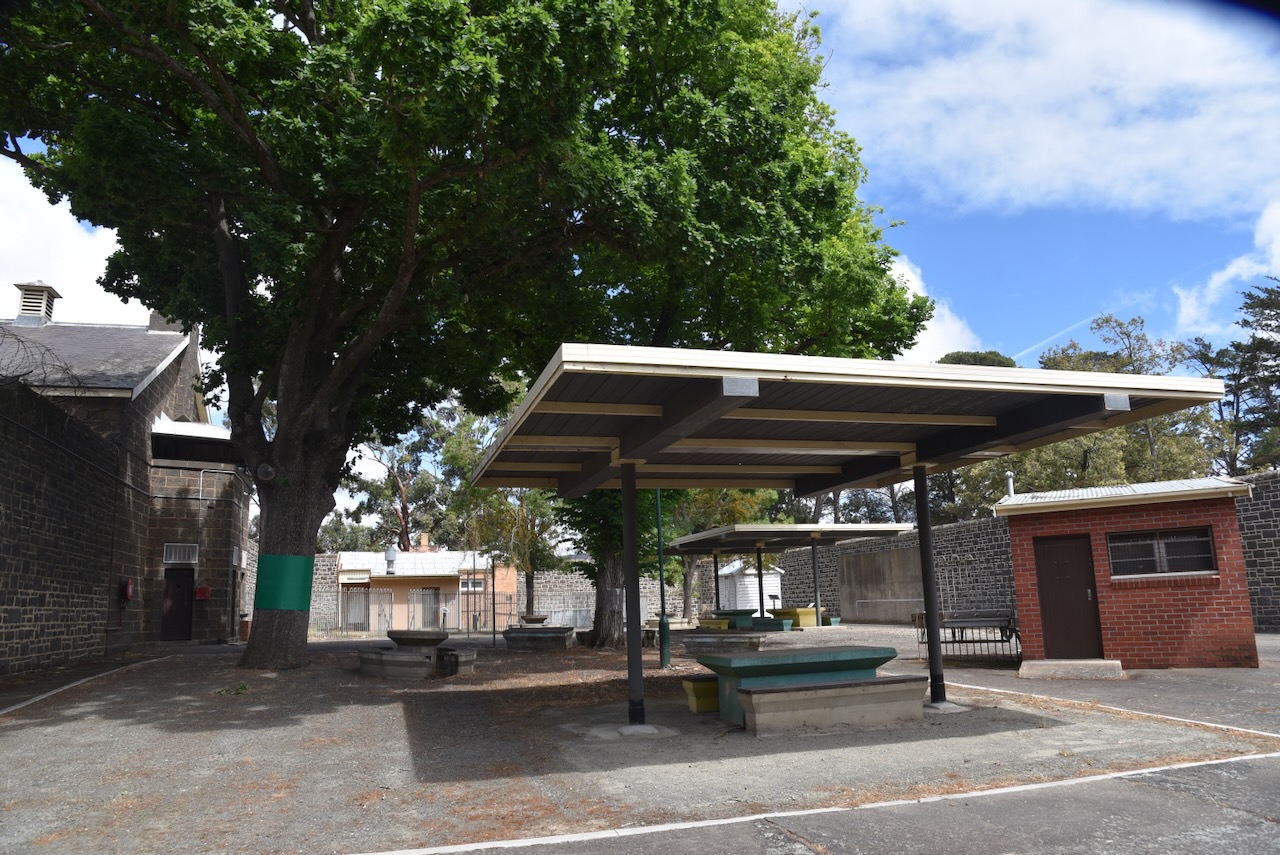
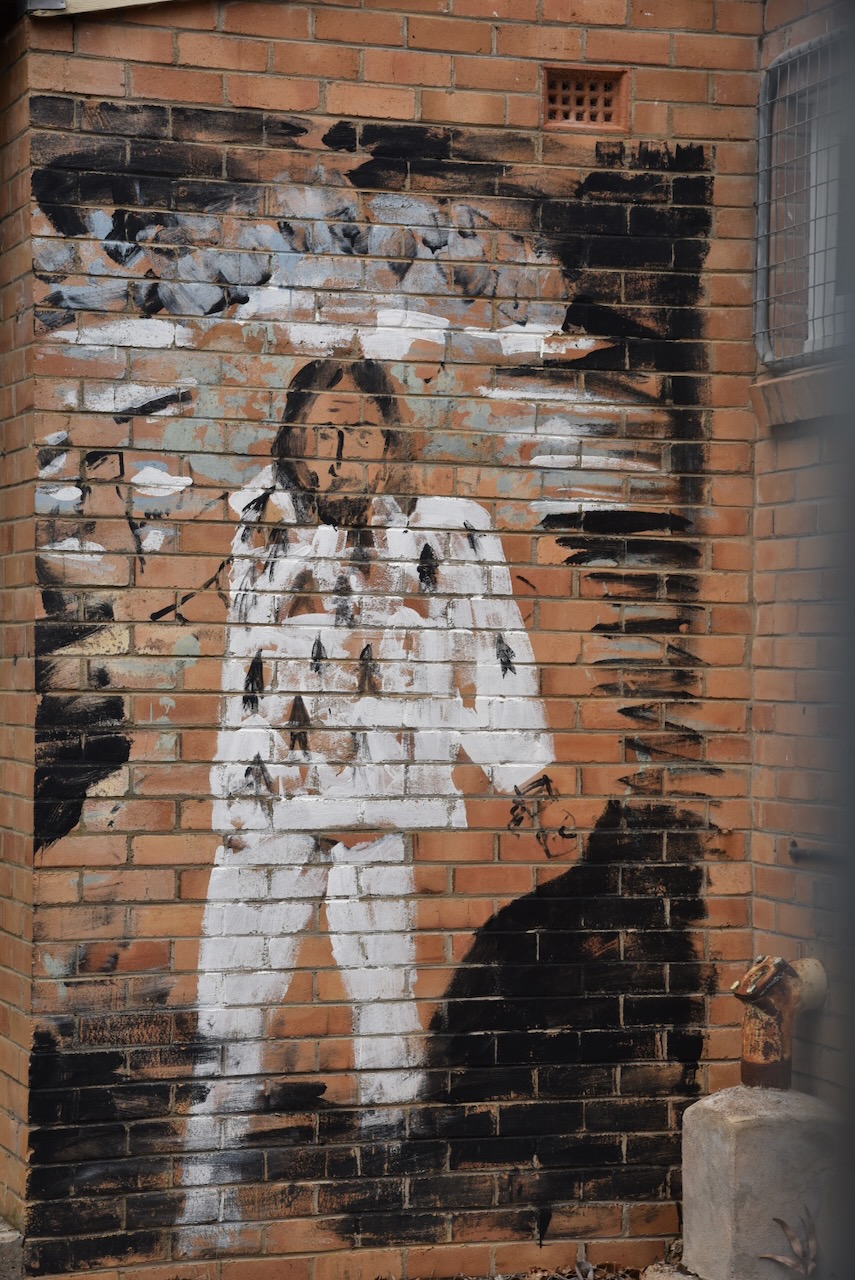
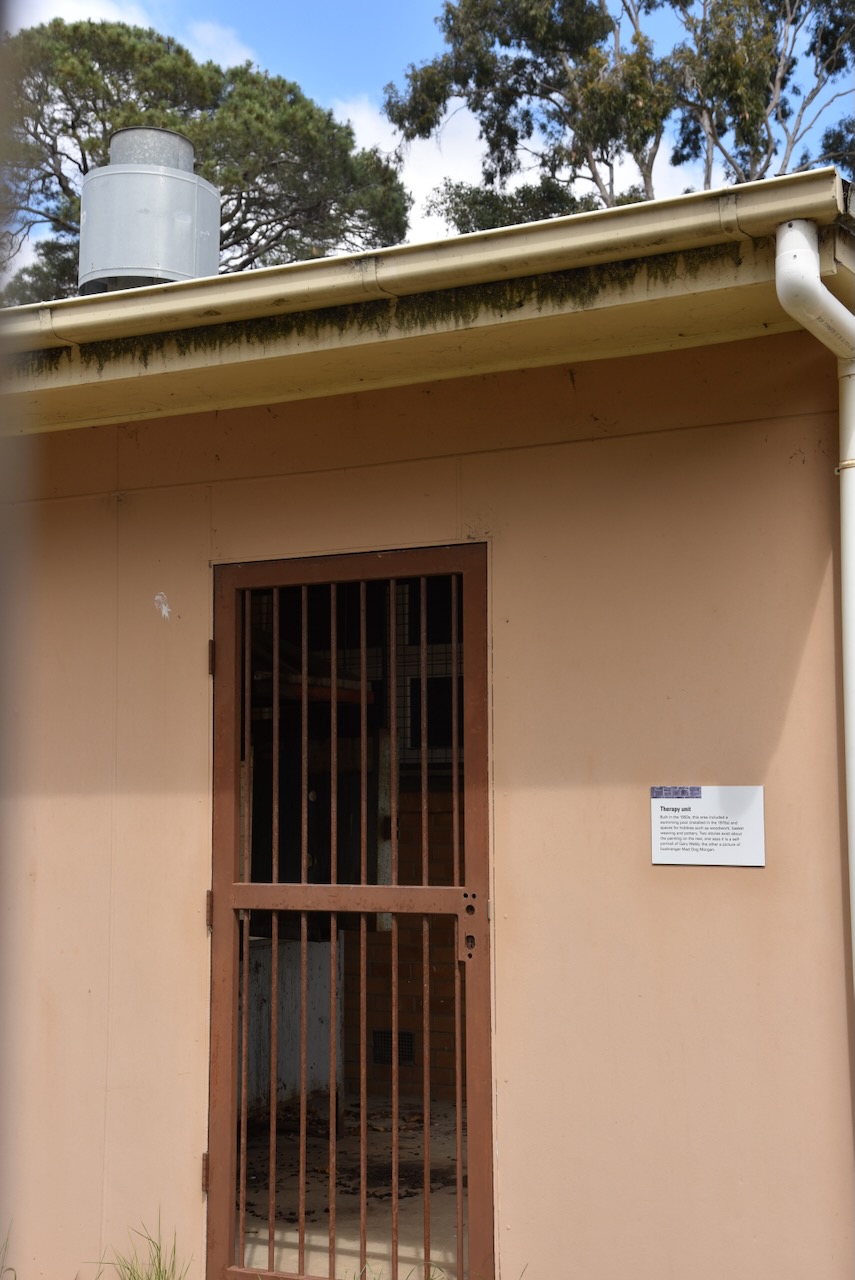
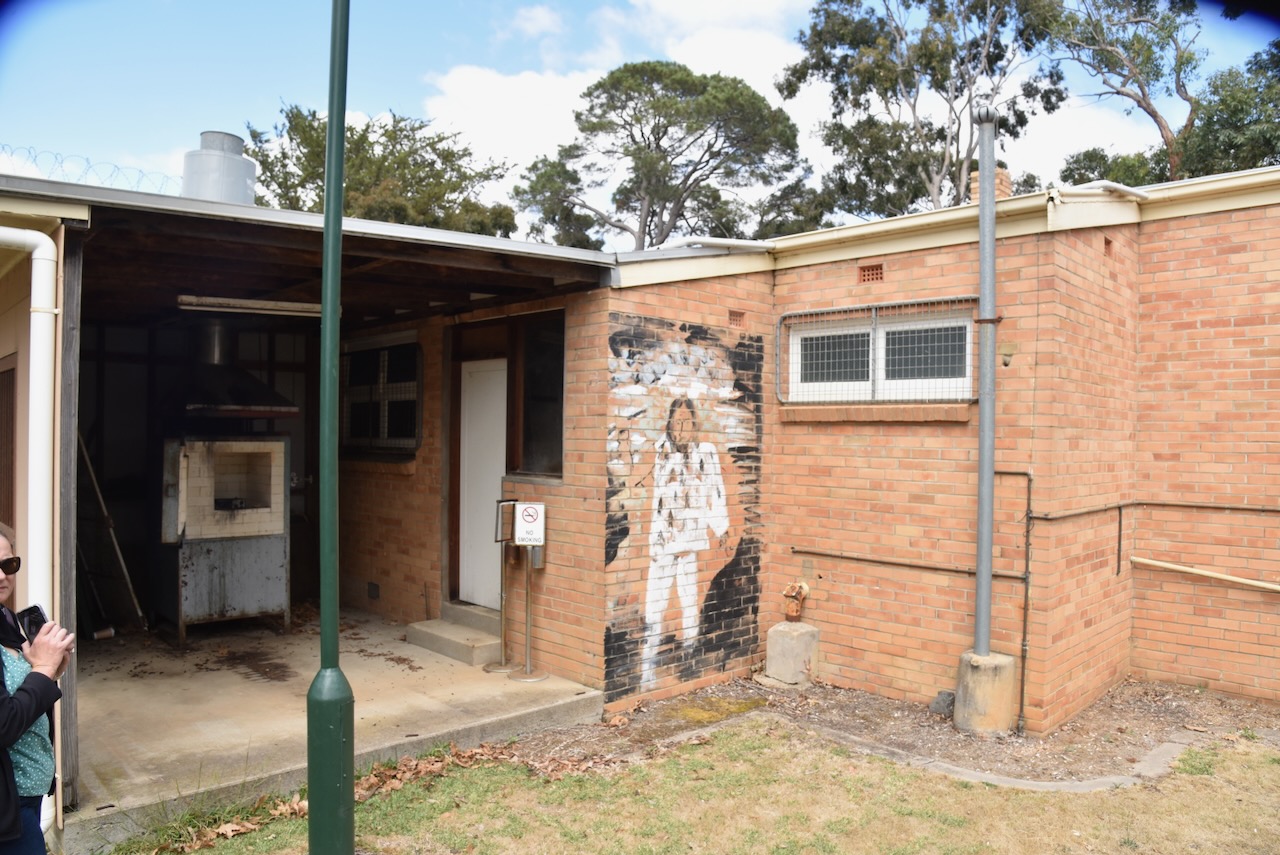
The therapy unit was built in the 1950s and included a swimming pool installed in the 1970s, spaces for hobbies such as woodwork, basket weaving and pottery. A picture can be found in the building. There are two stories about the painting, with once claiming it is a portrait of J Ward patient Gary Webb, while another is that it is bushranger Mad Dog Morgan.
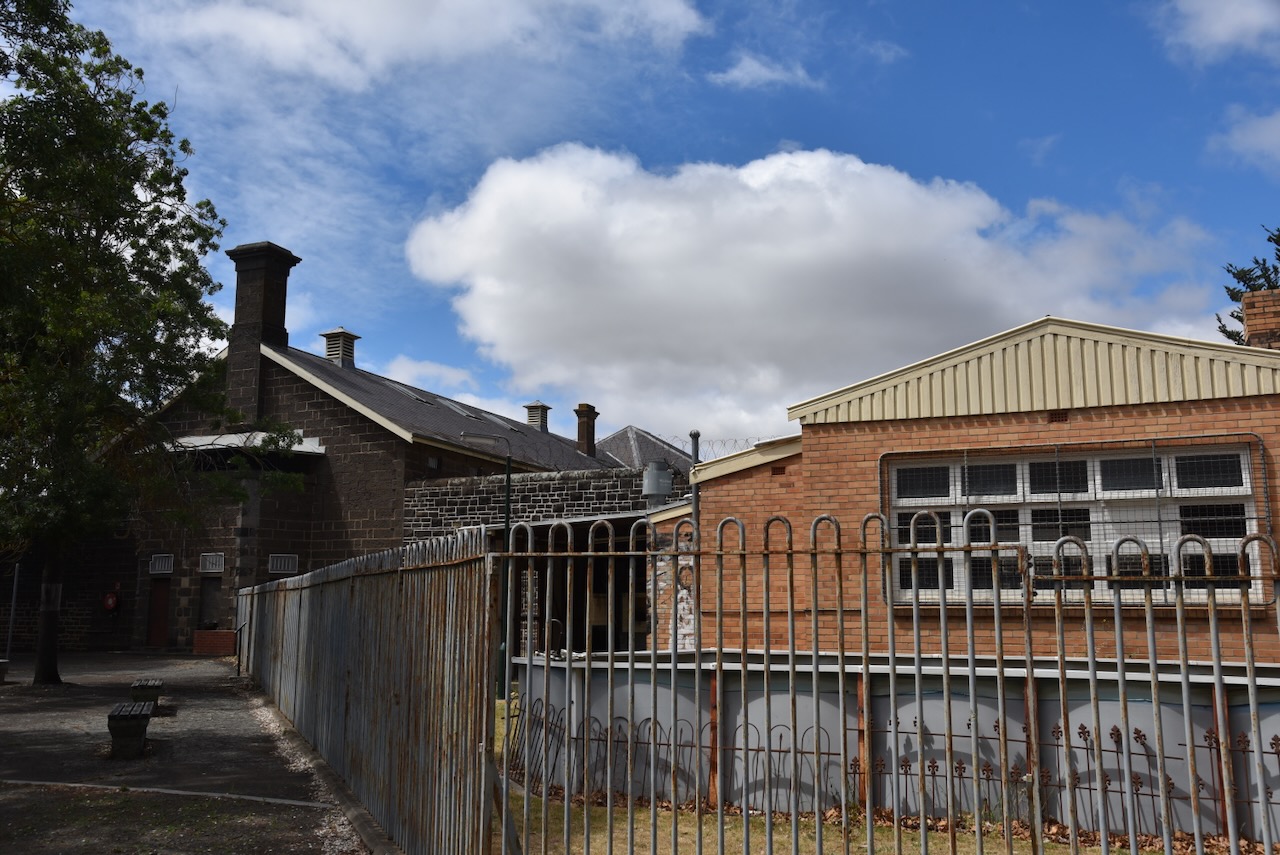
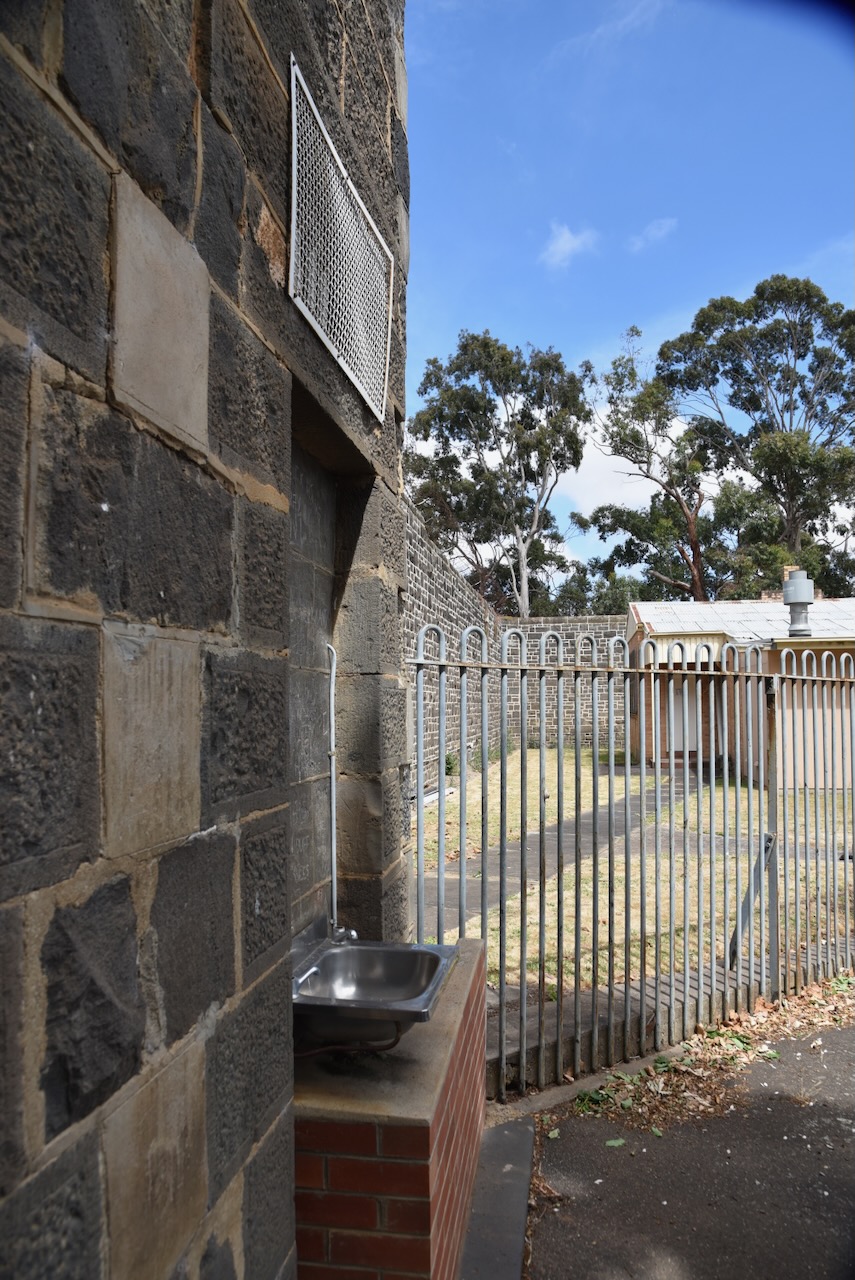
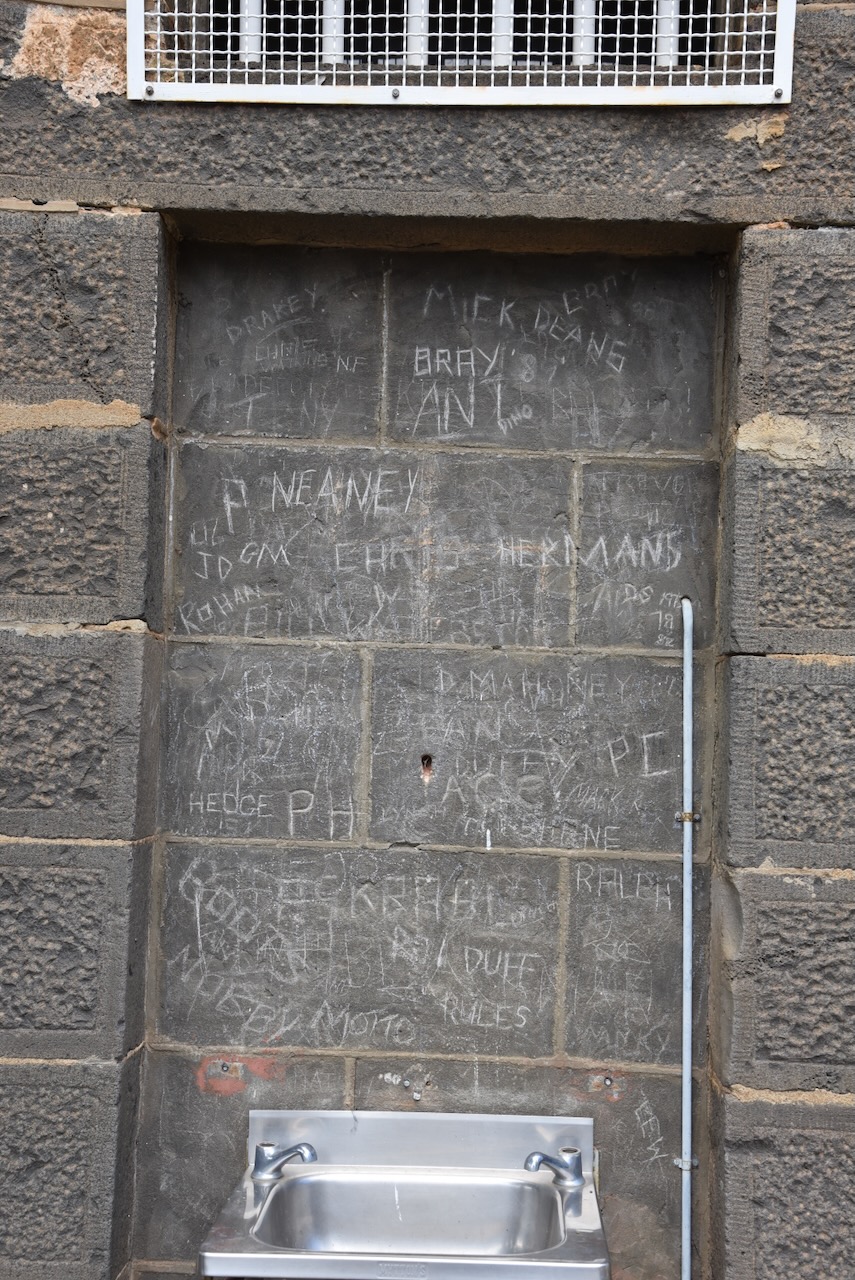
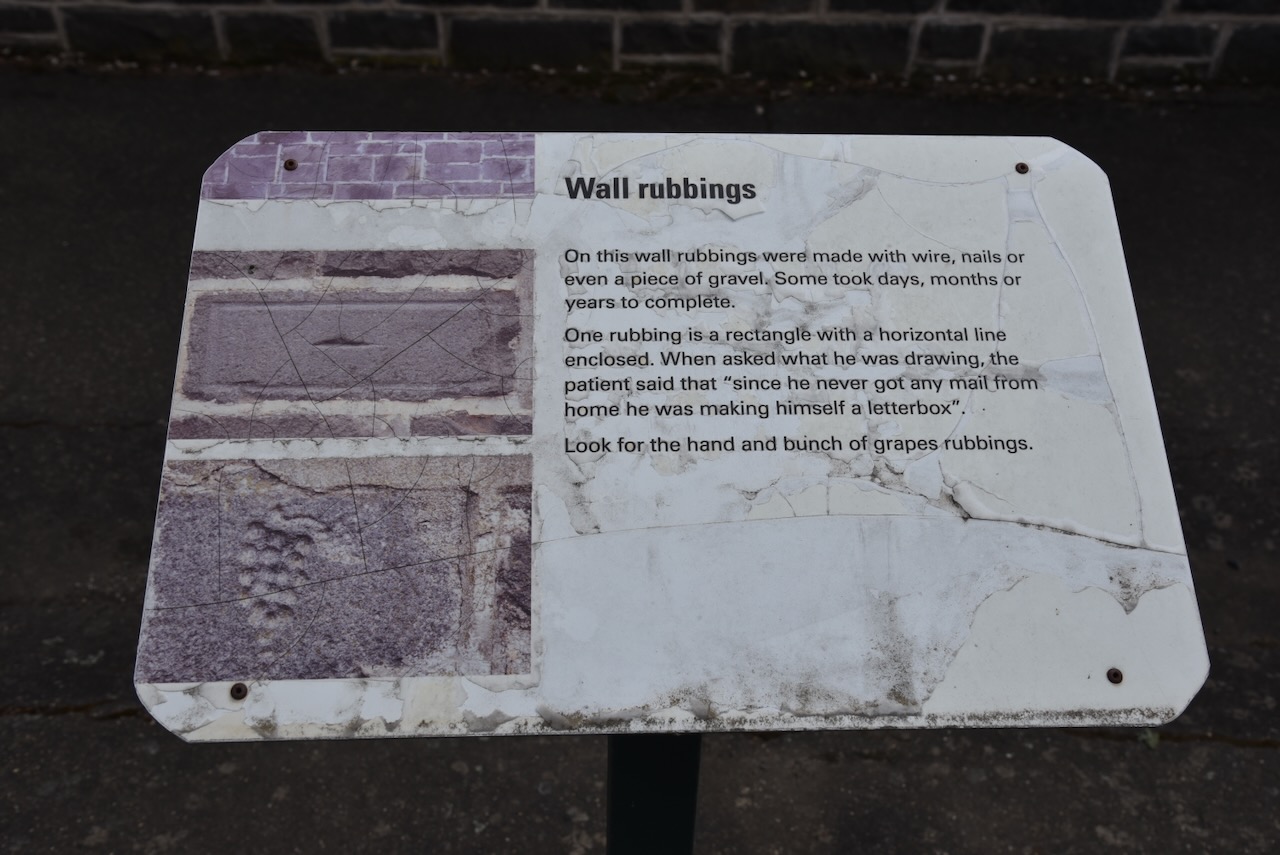
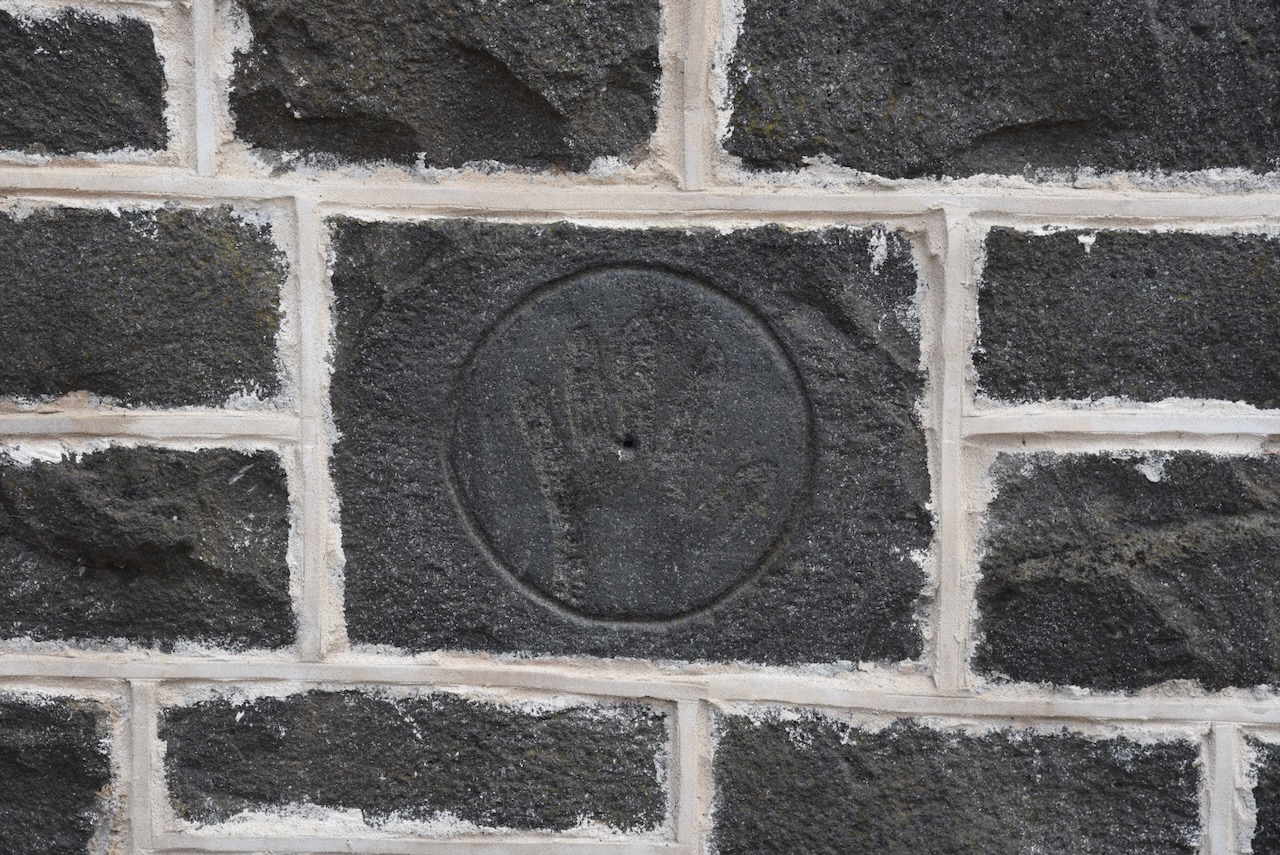
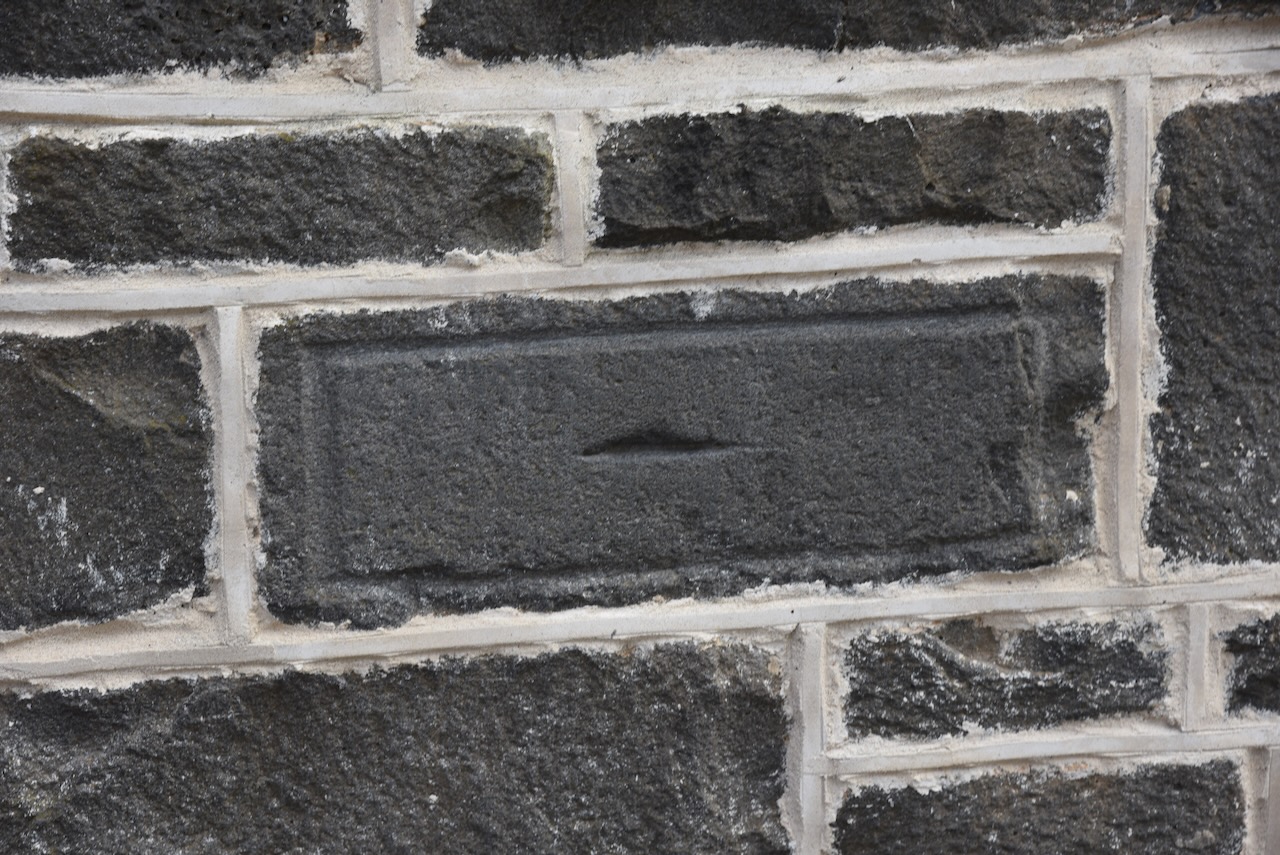
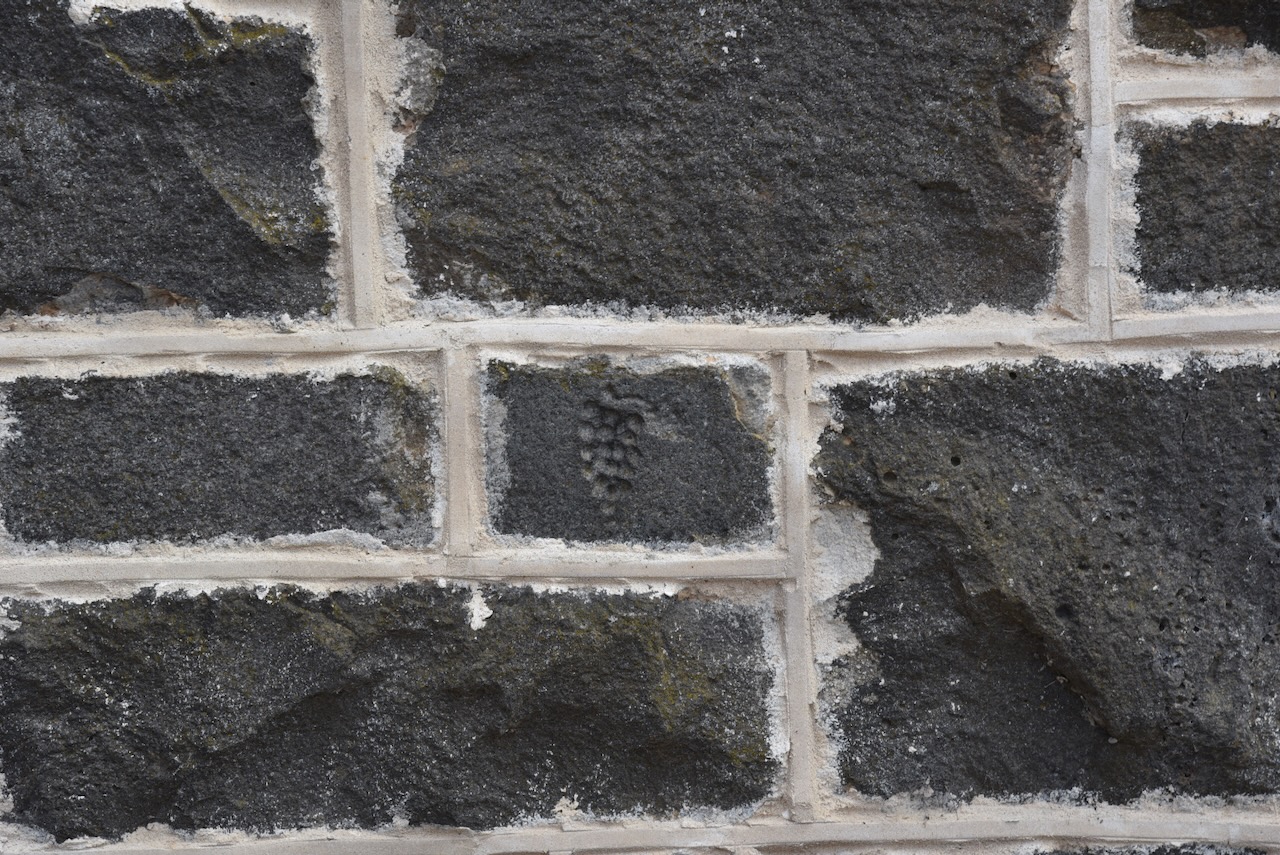
On the wall in the exercise yard you can view wall rubbings which were made with wire, nails, or even a piece of gravel. Some took days, months, or years to complete. One rubbing is a rectangle with a horizontal line enclosed. When asked what he was drawing, the patient said that ‘since he never got any mail from home he was making himself a letterbox.’ You can also see a bunch of grapes.
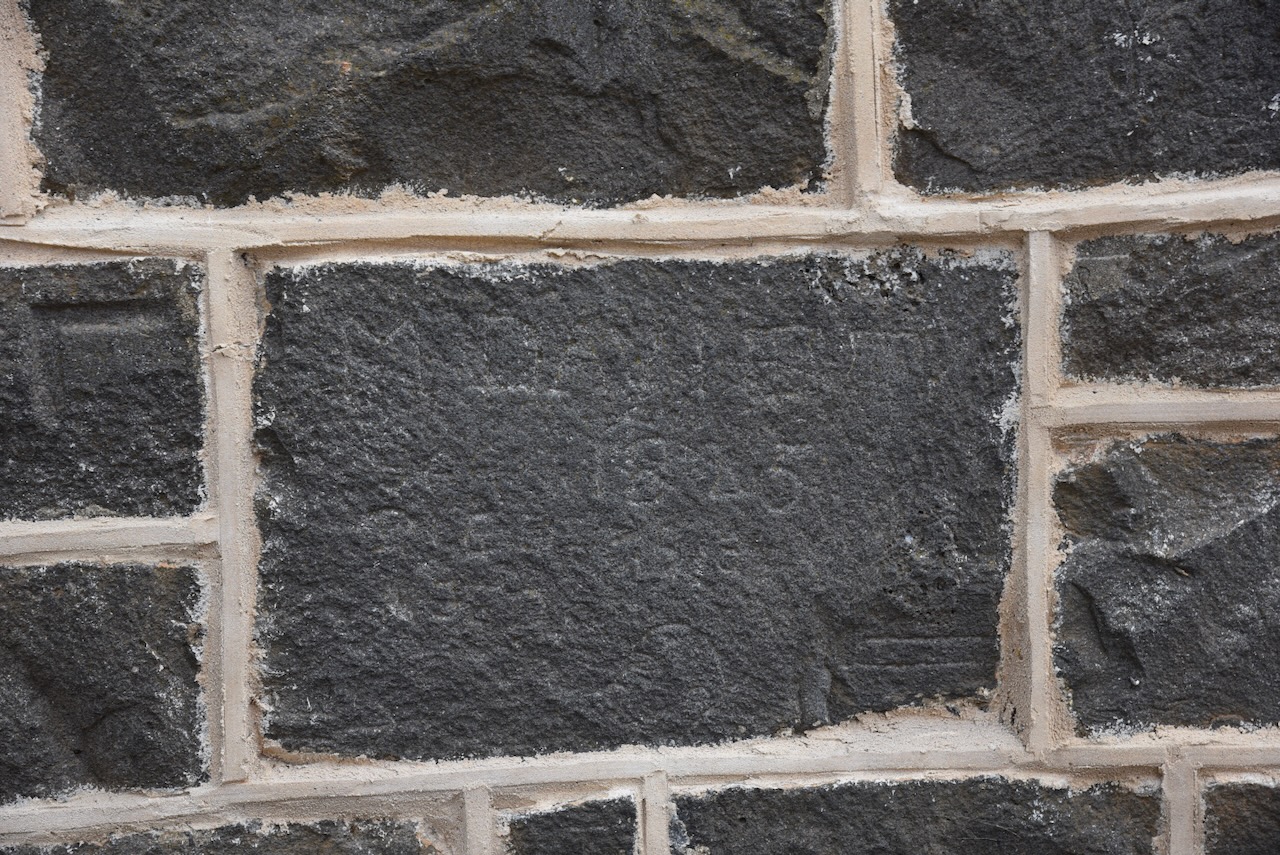
There are also a number of prisoners names and dates.

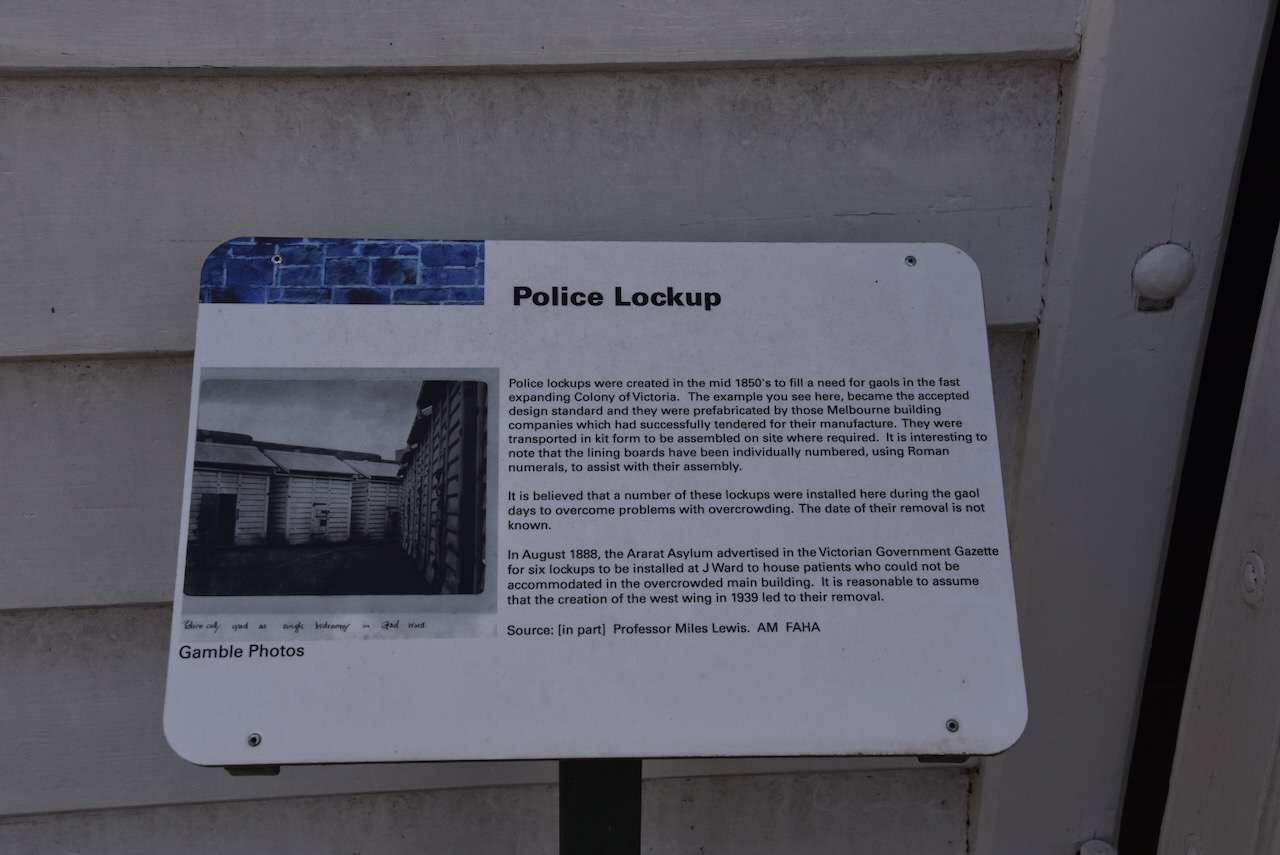
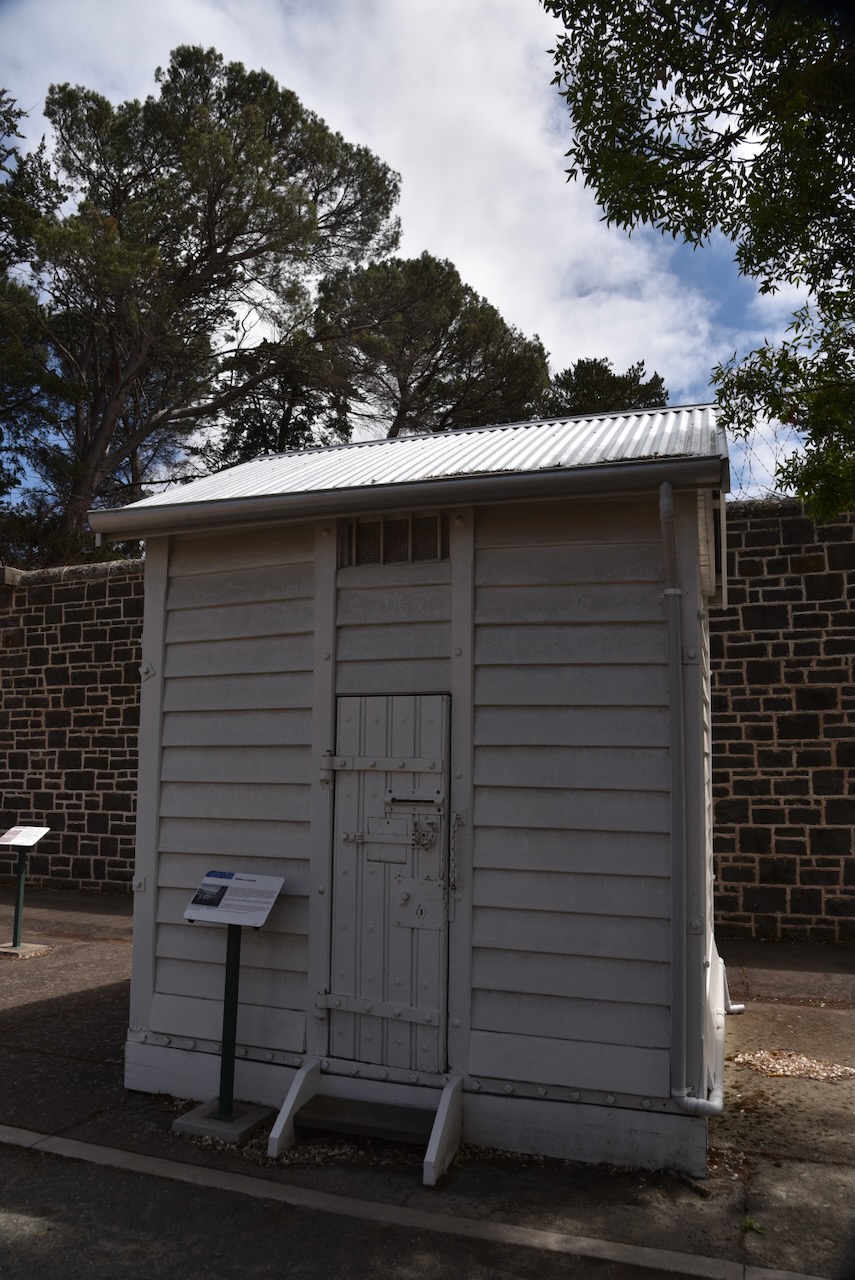
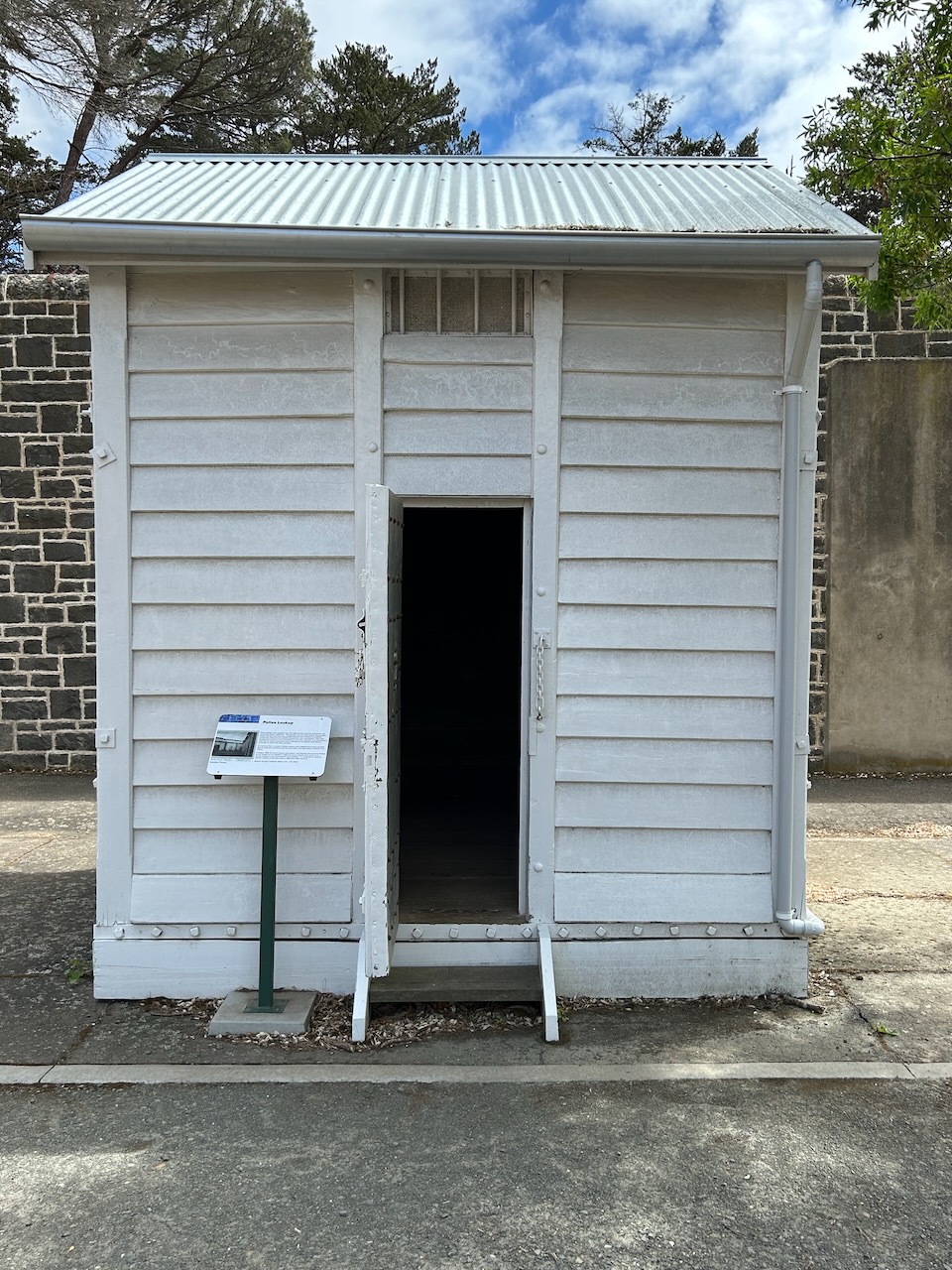
An old Victorian Police Lockup is on display in the exercise yard.
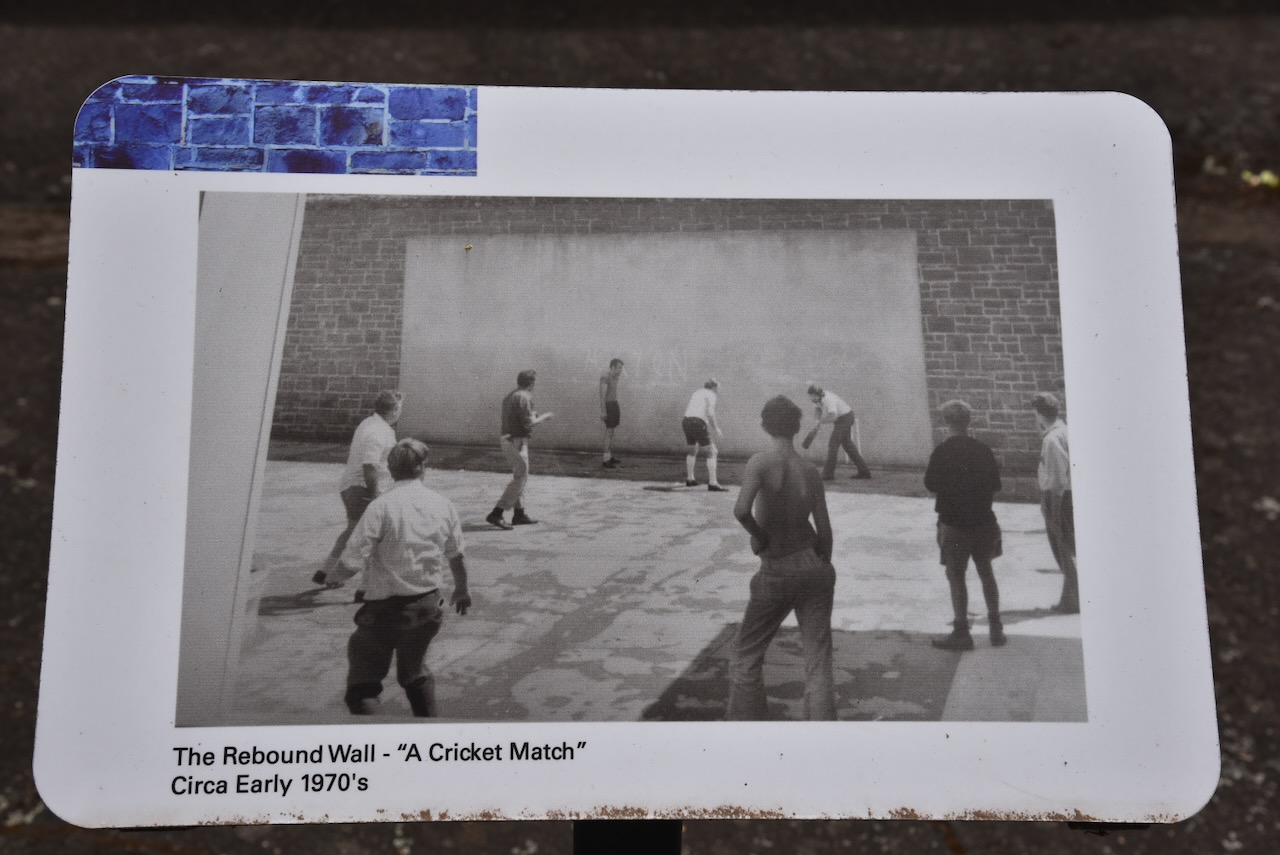
Another feature of the perimeter wall is the Rebound Wall.

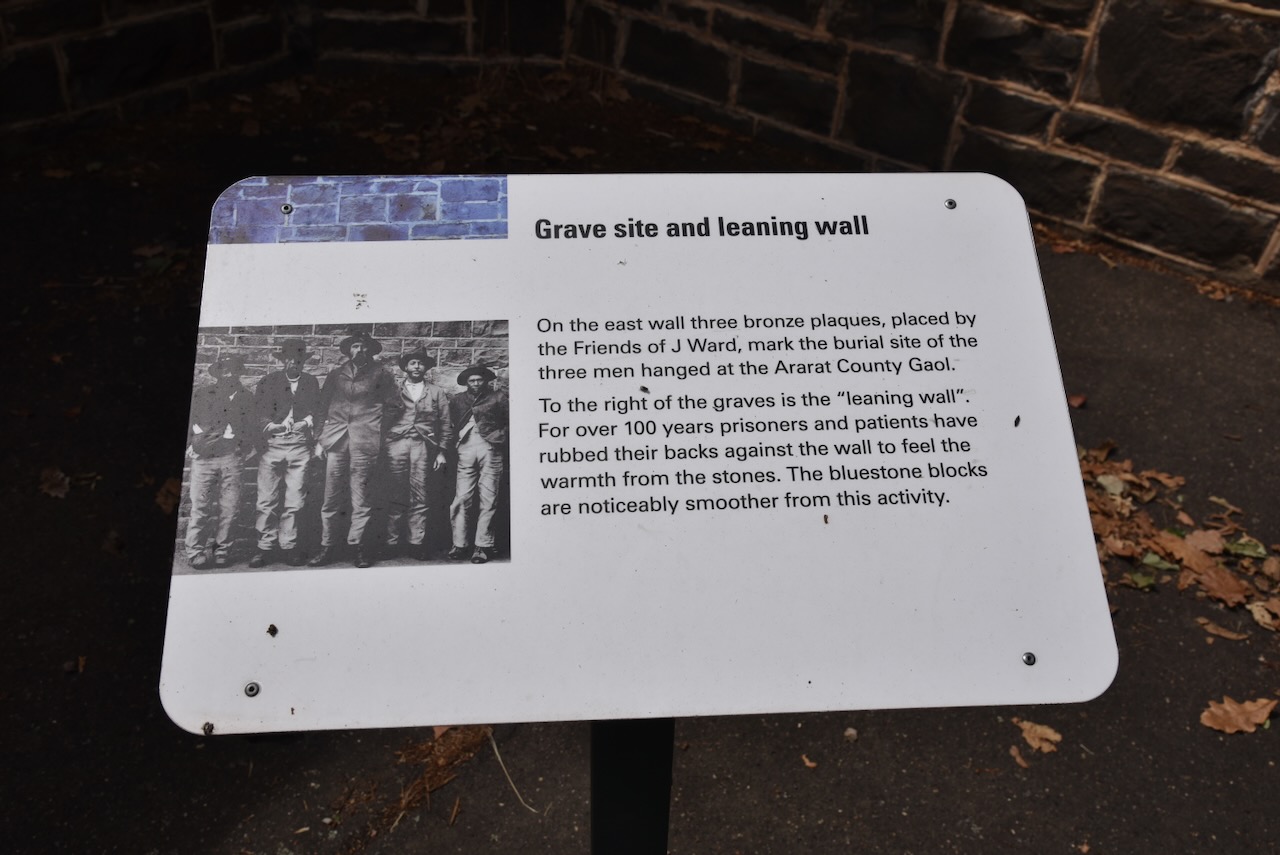
On the east wall there are three bronze plaques placed by the Friends of J Ward to mark the burial site of the three men hanged at the Ararat County Gaol. To the right of the graves is the ‘leaning wall’. For over 100 years prisoners and patients have rubbed their backs against the wall to feel the warmth from the stones. The bluestone blocks are noticeably smoother from this activity.
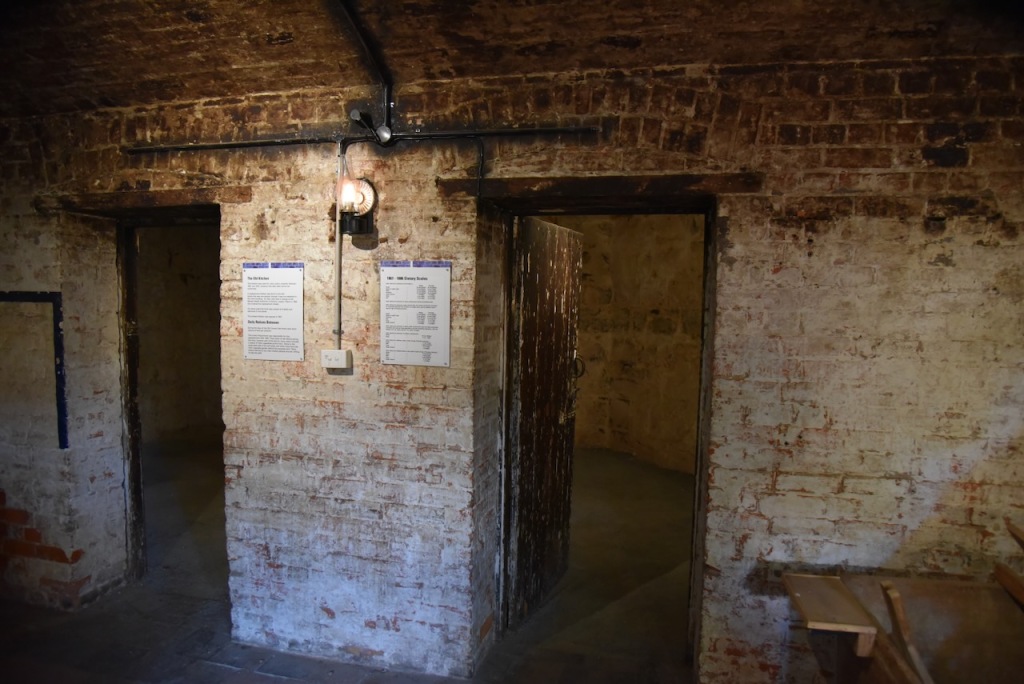
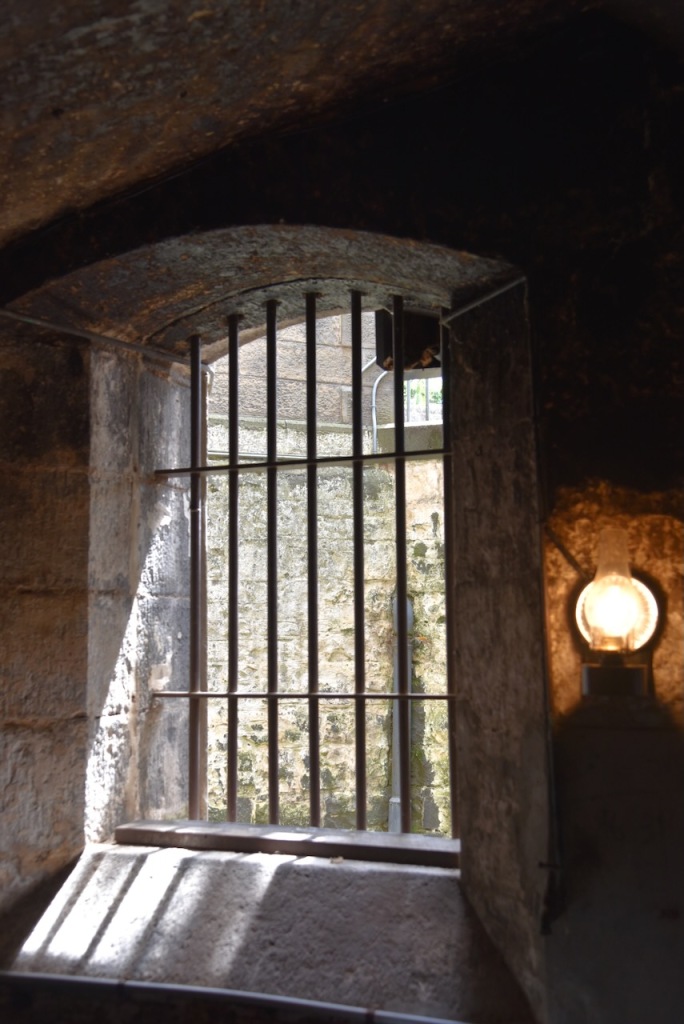
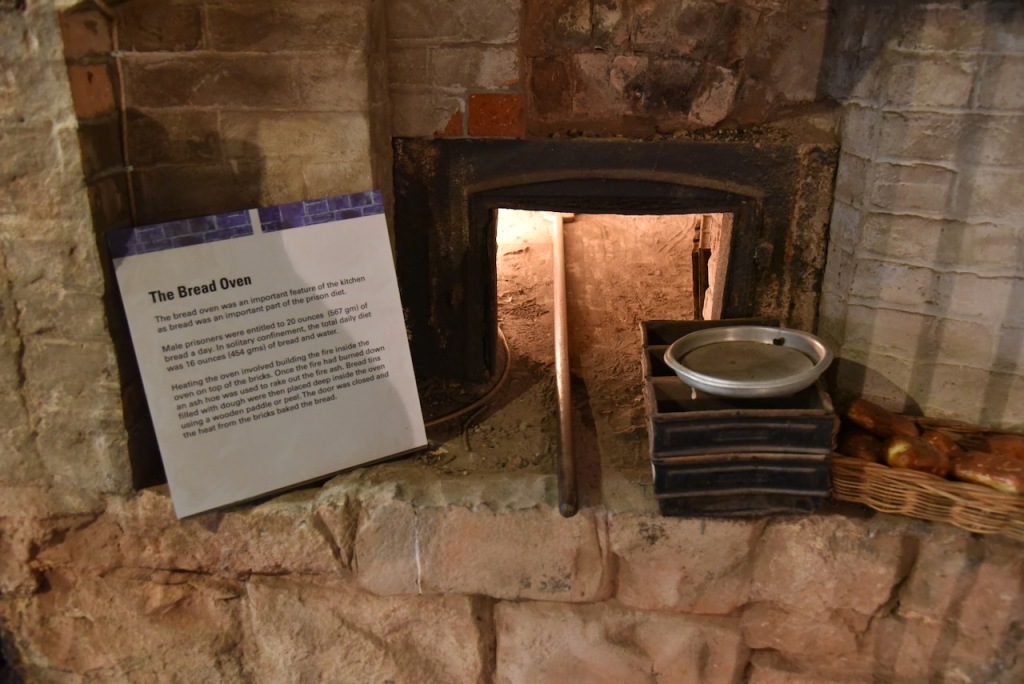
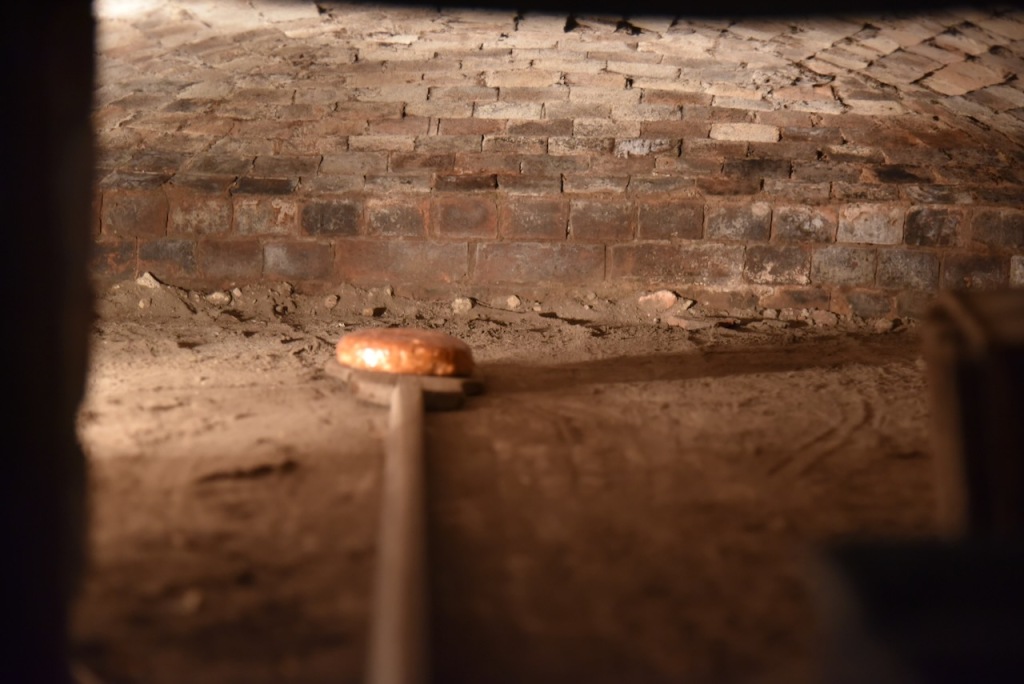
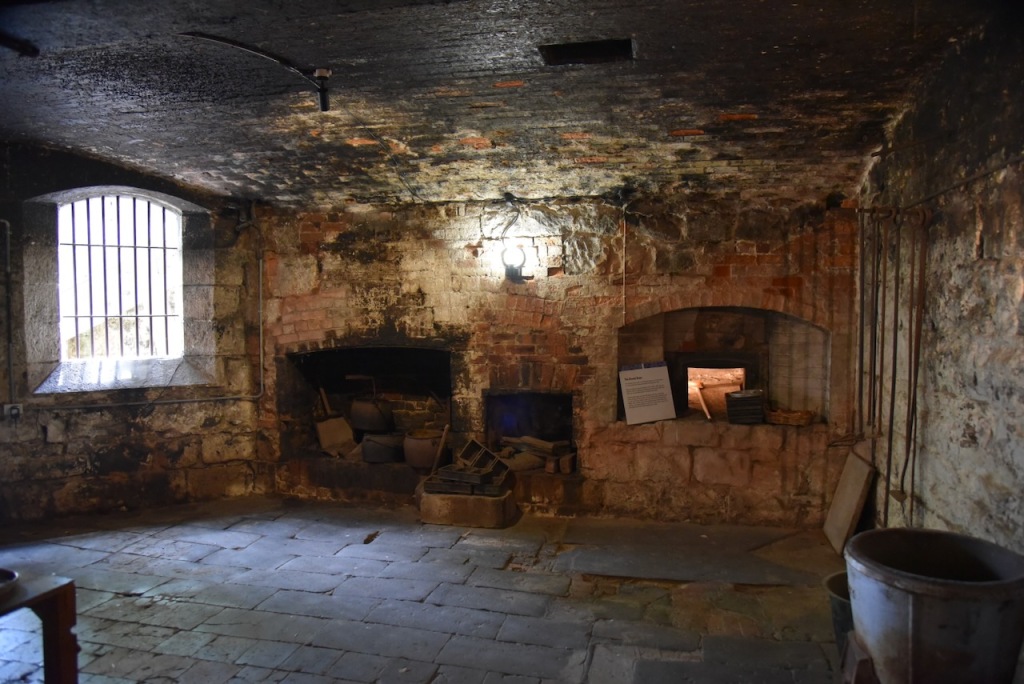
We then entered the kitchen, a gloomy downstairs section of J Ward.
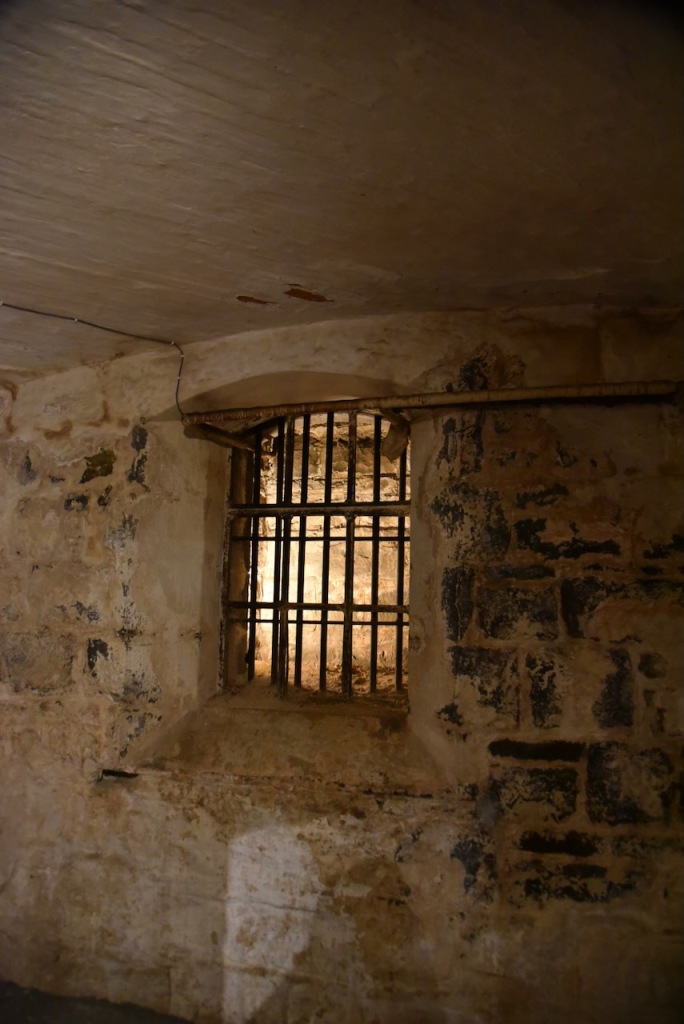

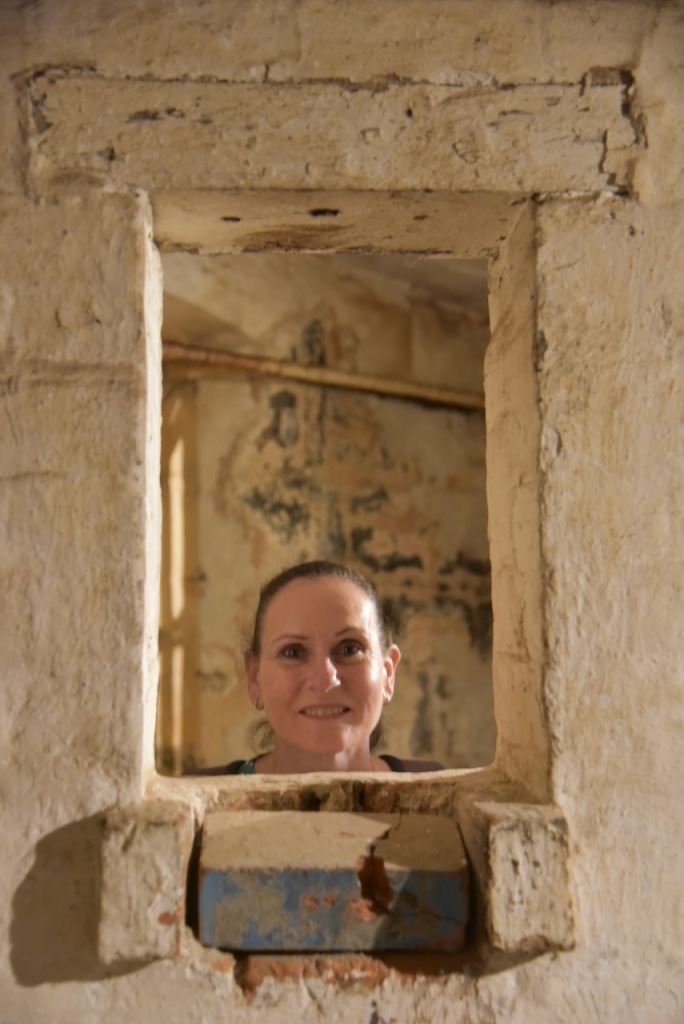
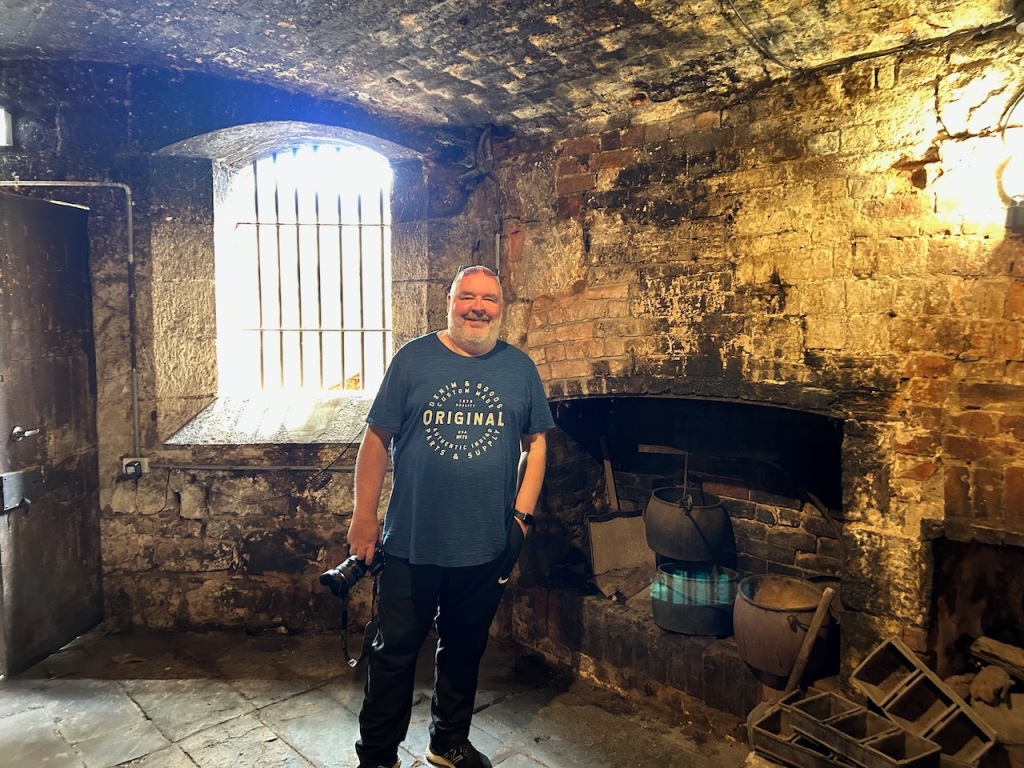
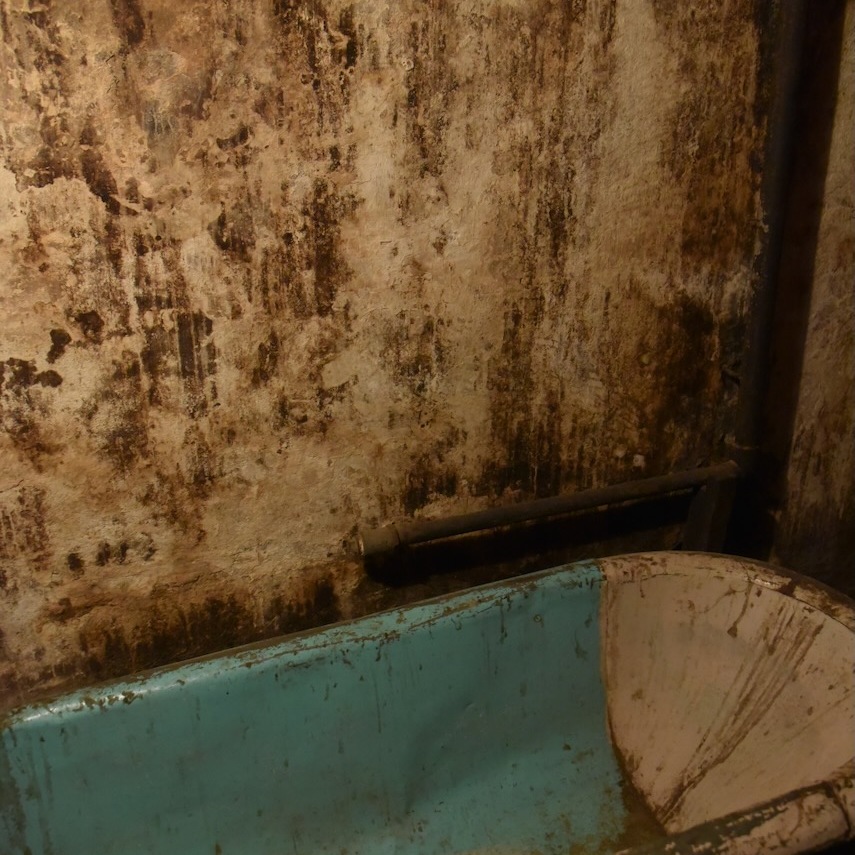
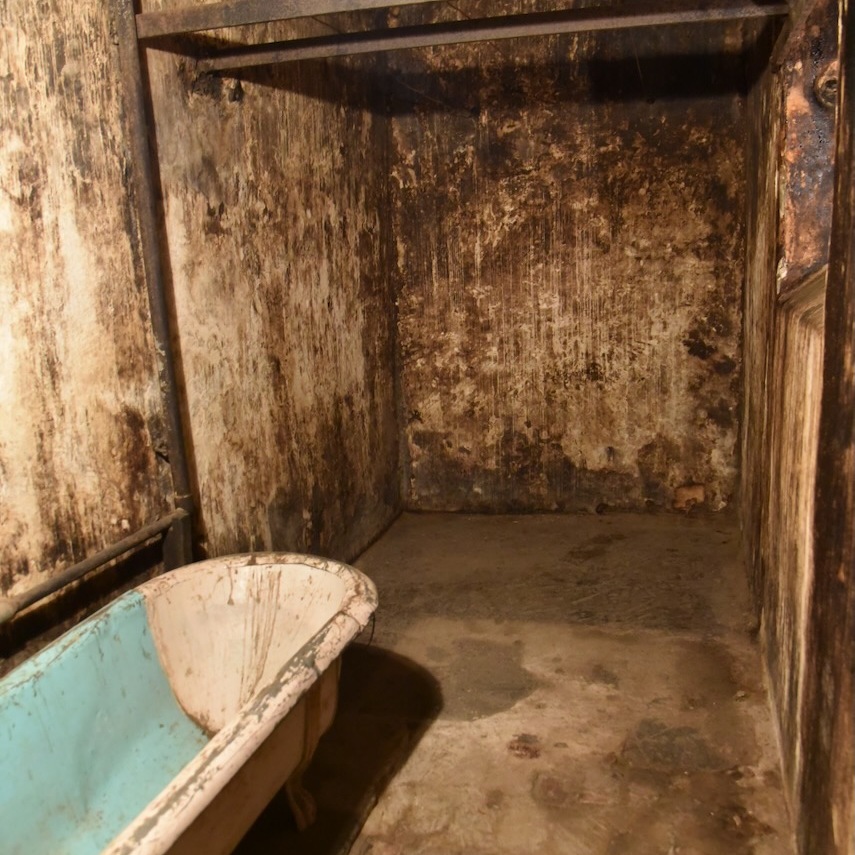
But perhaps the creepiest place in J Ward is the old bath area. This is something out of a horror movie.

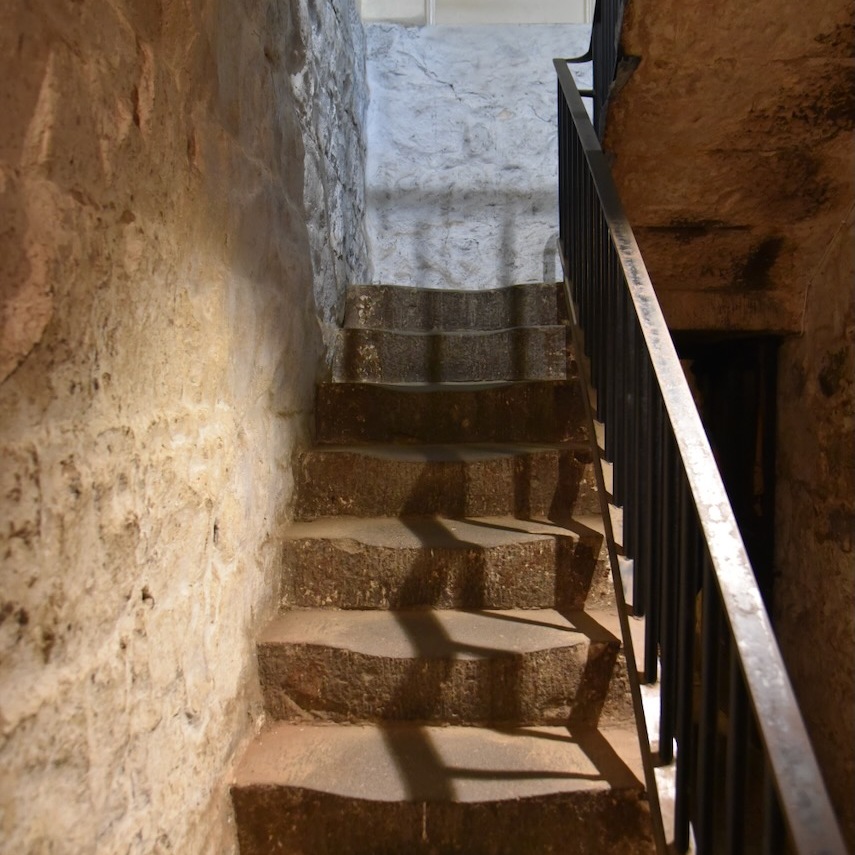
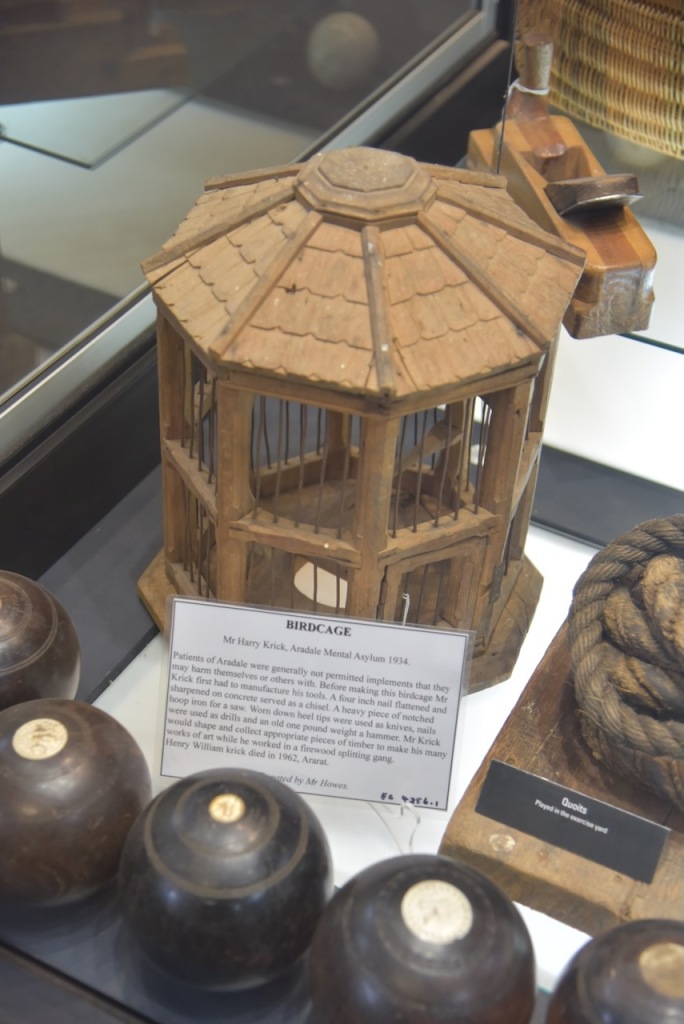
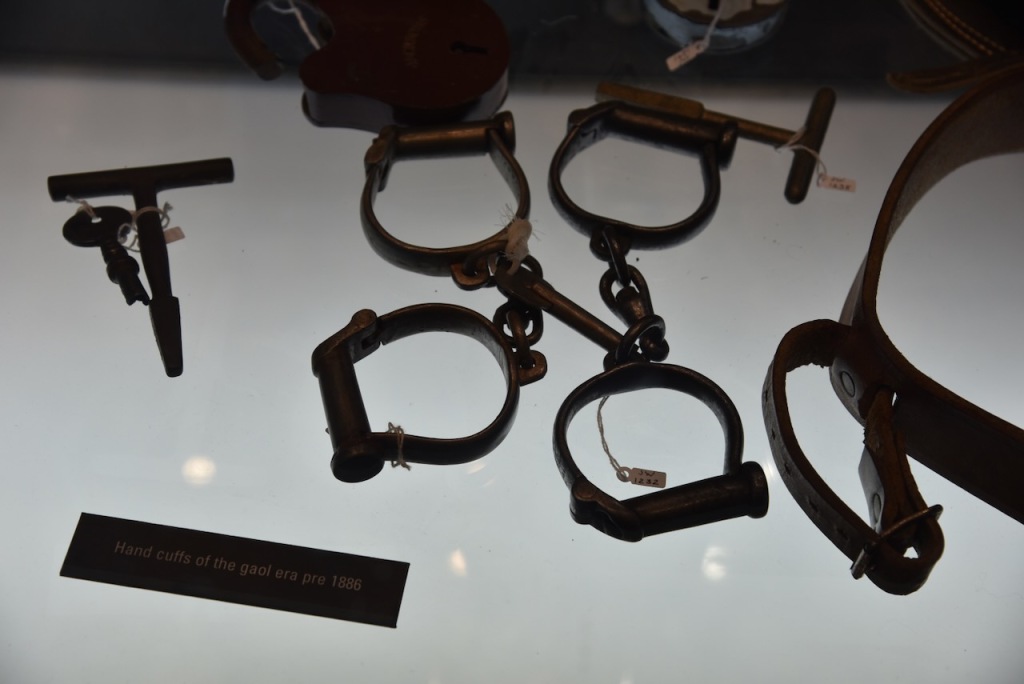
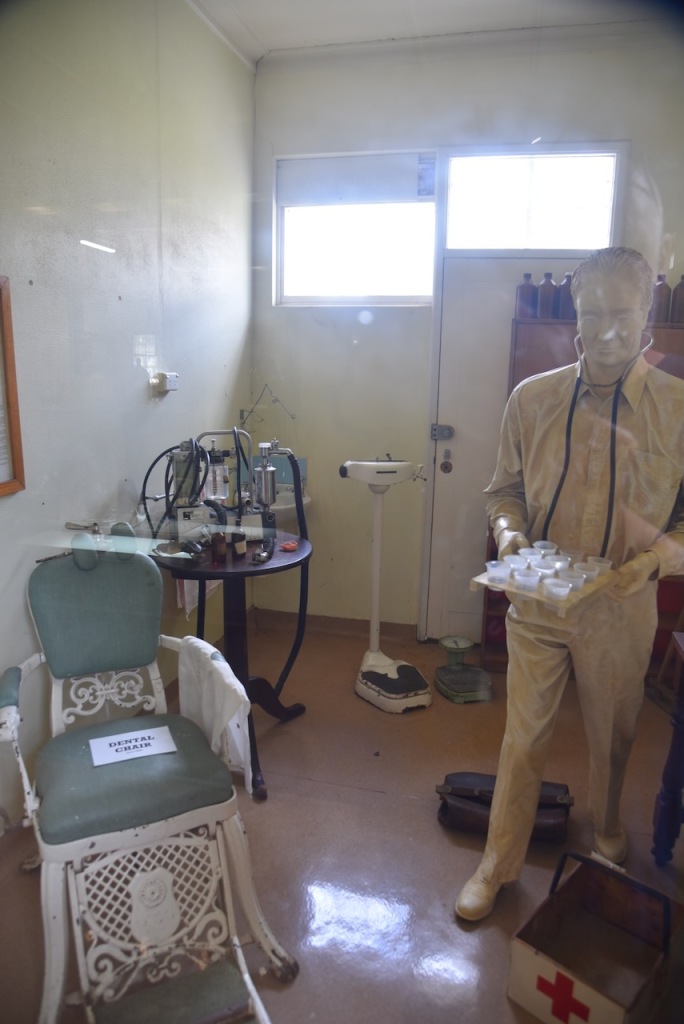
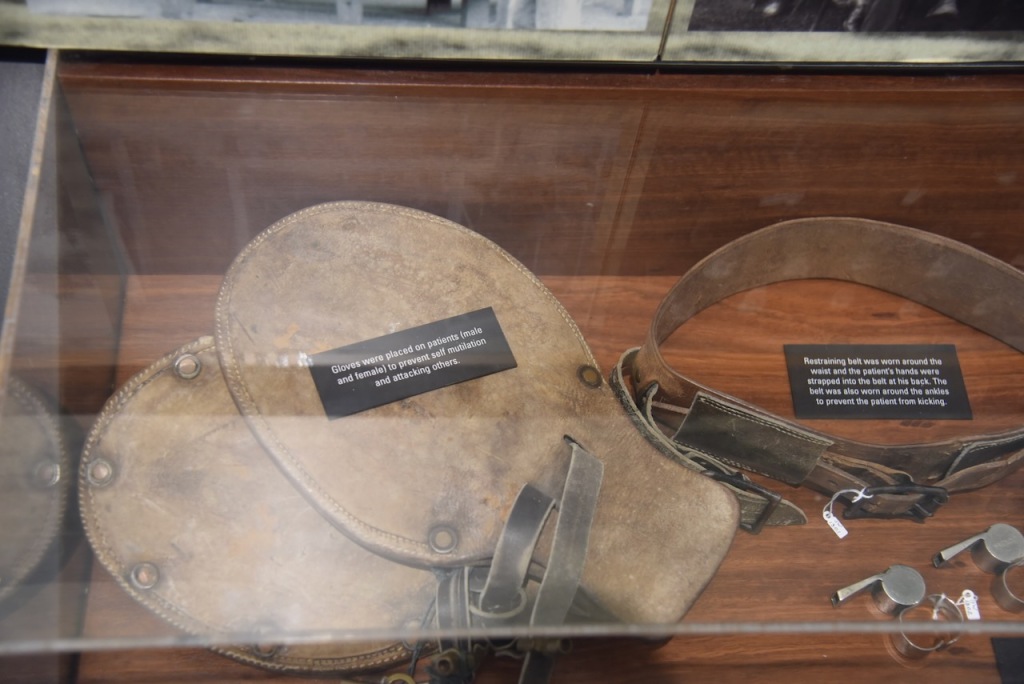
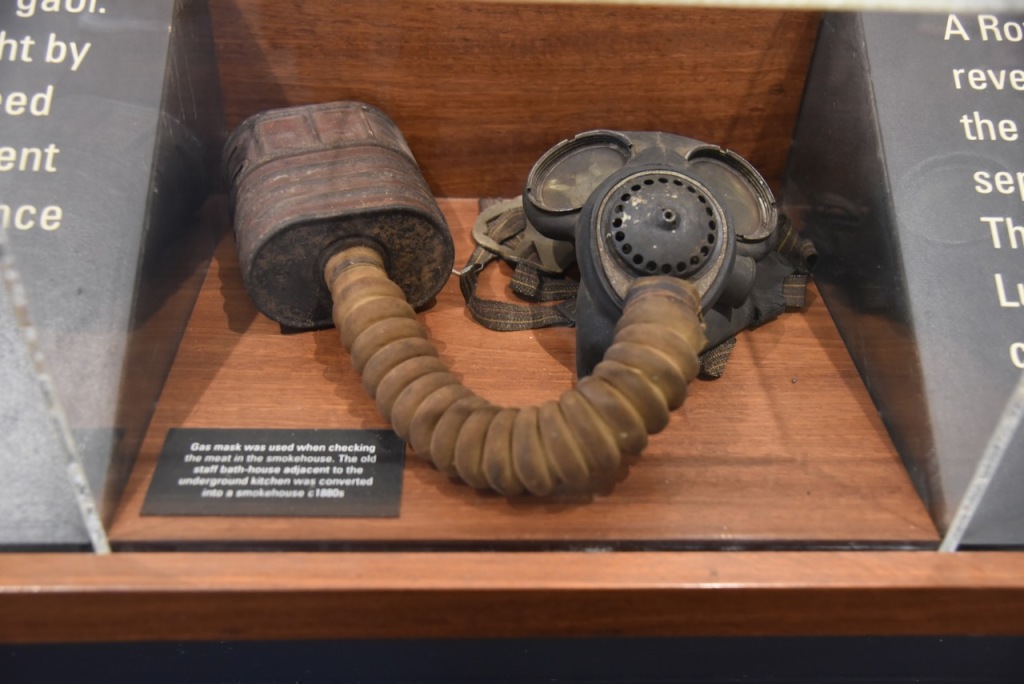
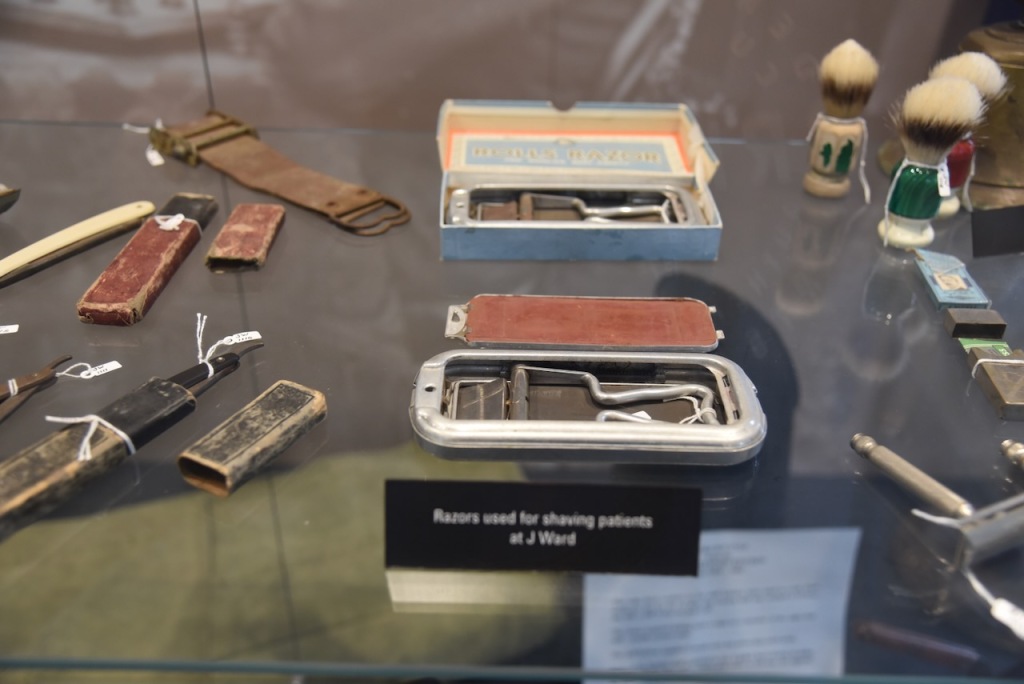
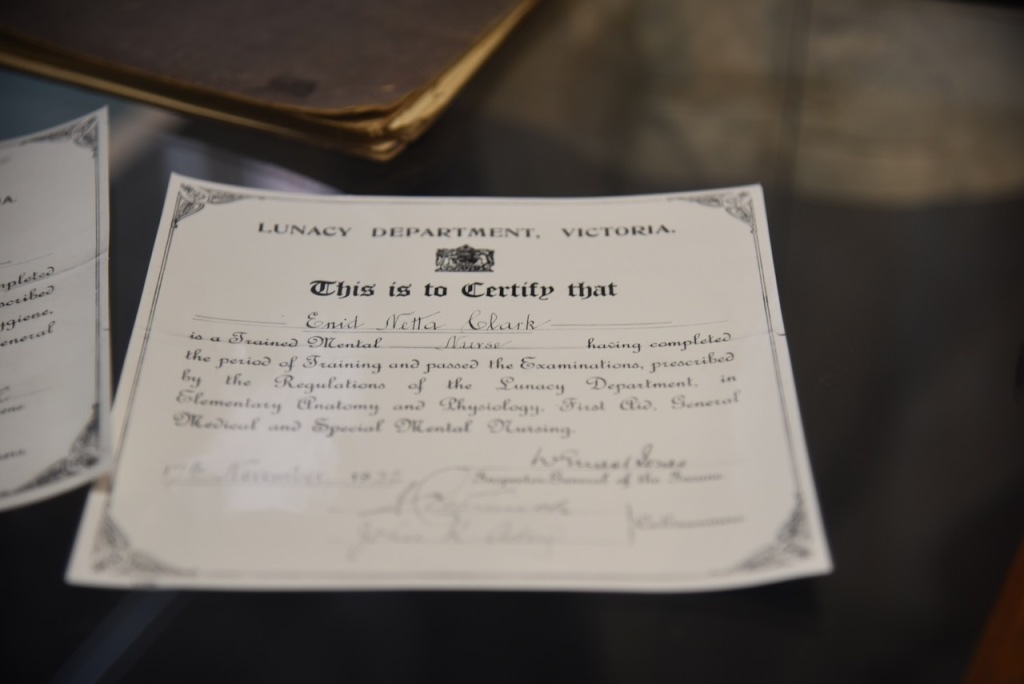
To finish the tour we spent some time wandering around the J Ward Museum which contains some fascinitating items.



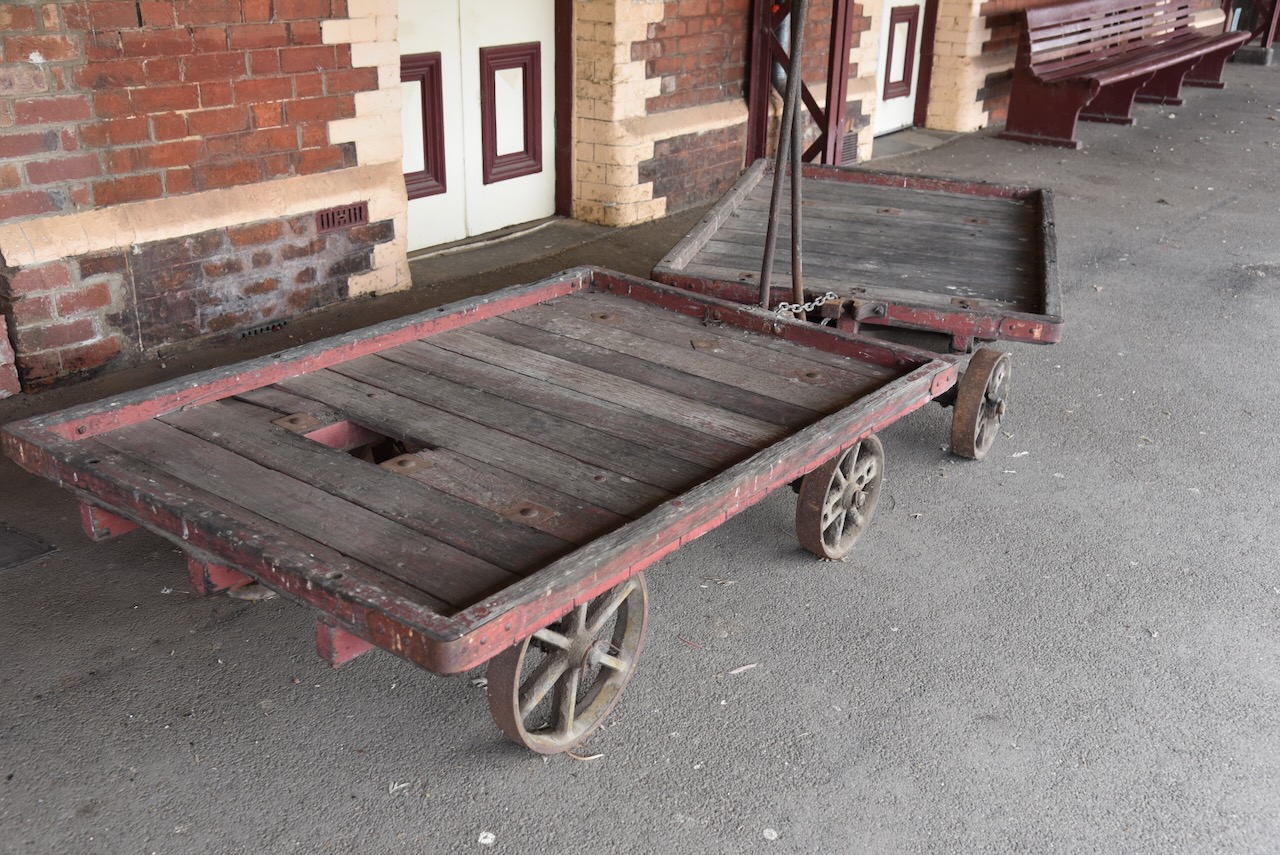
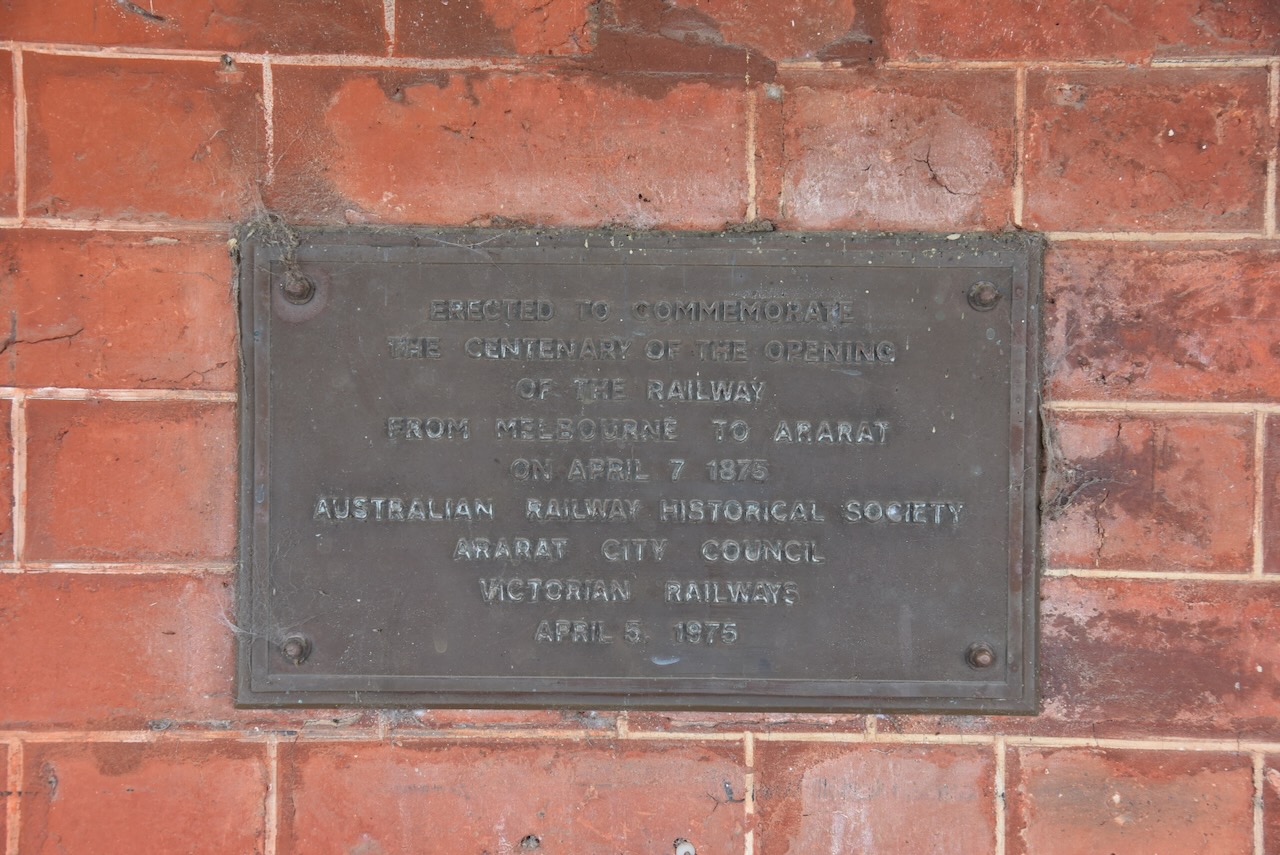
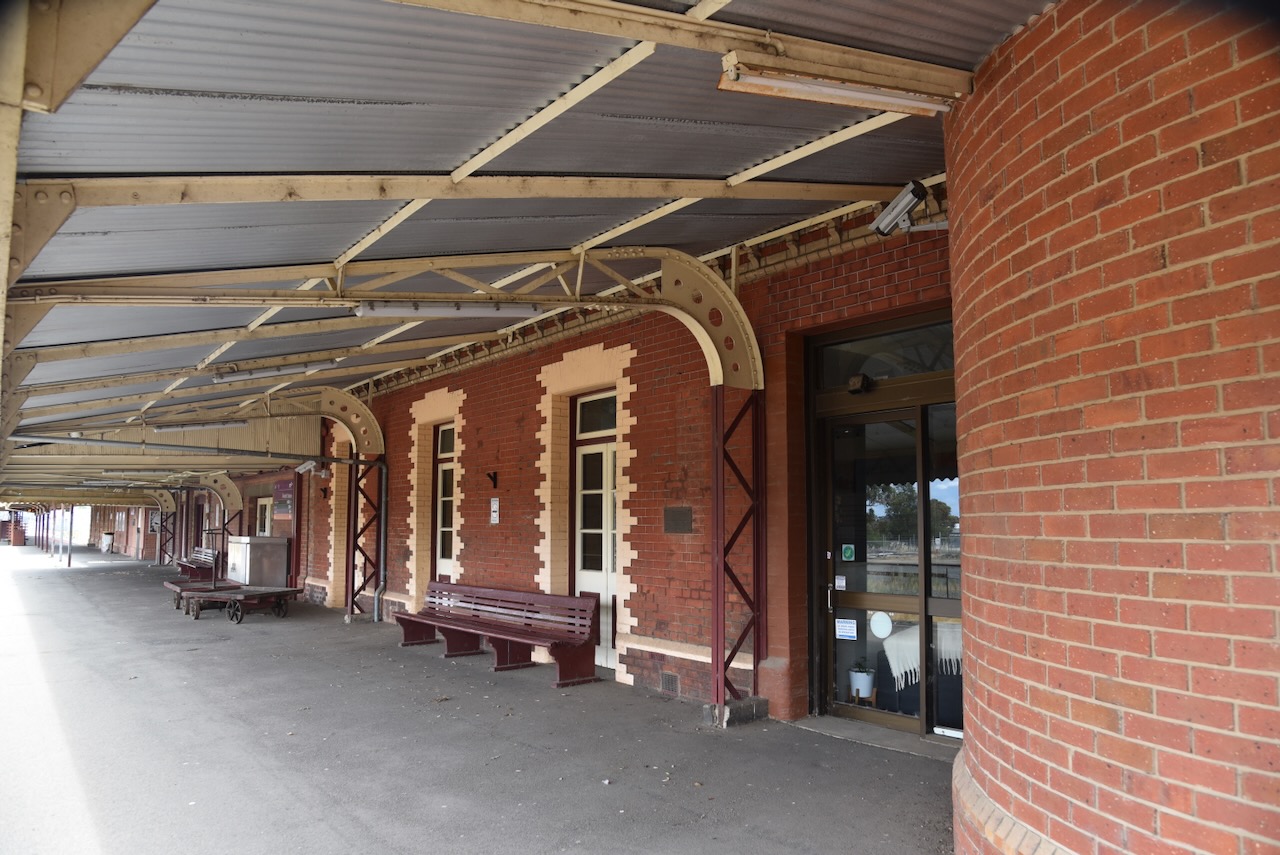
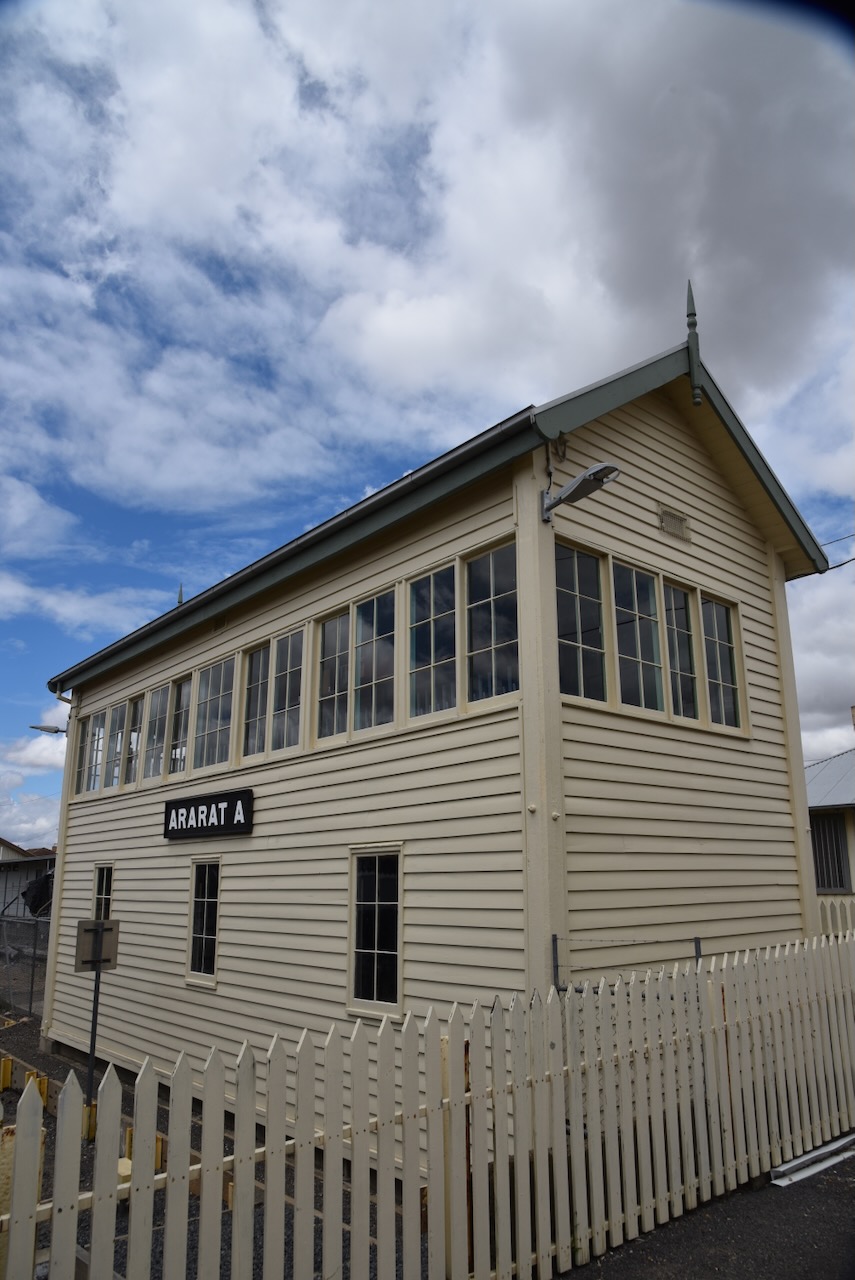
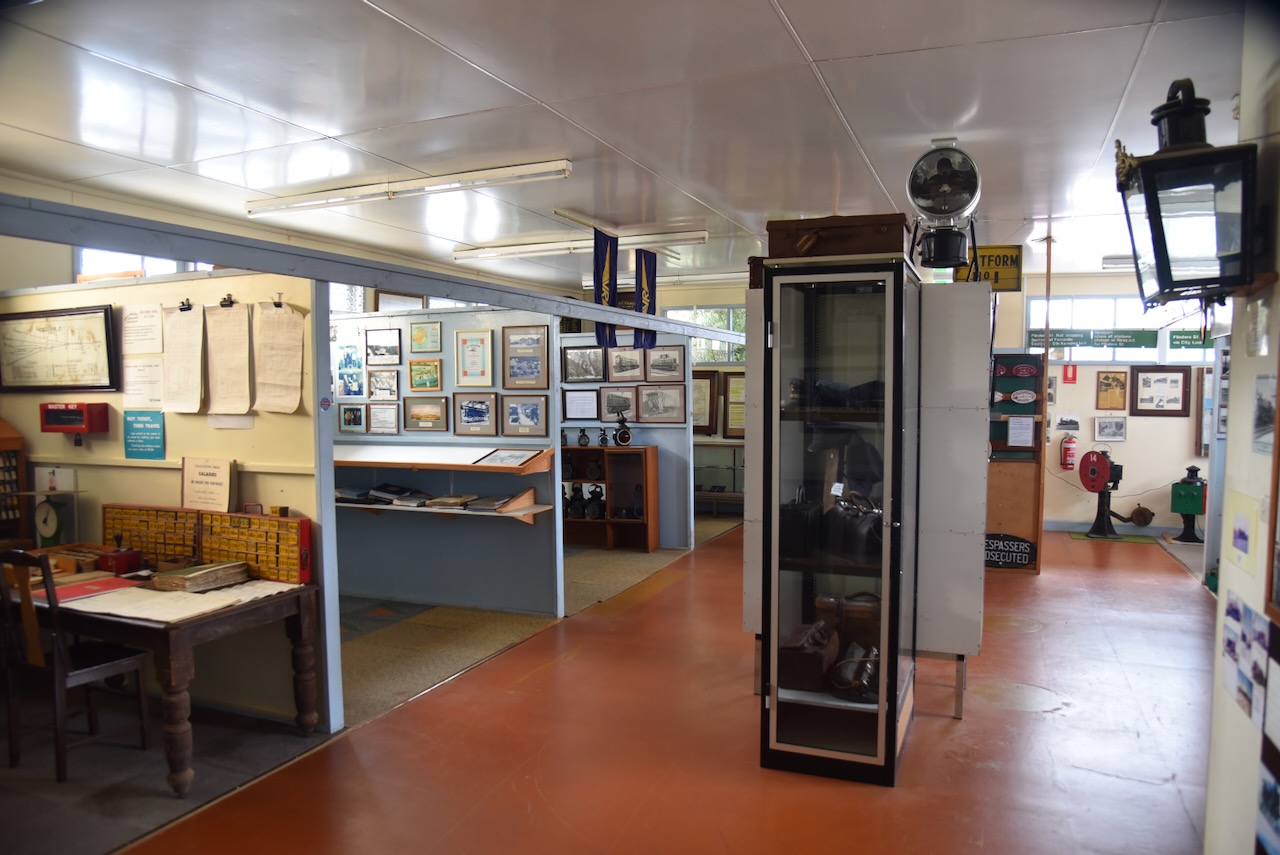
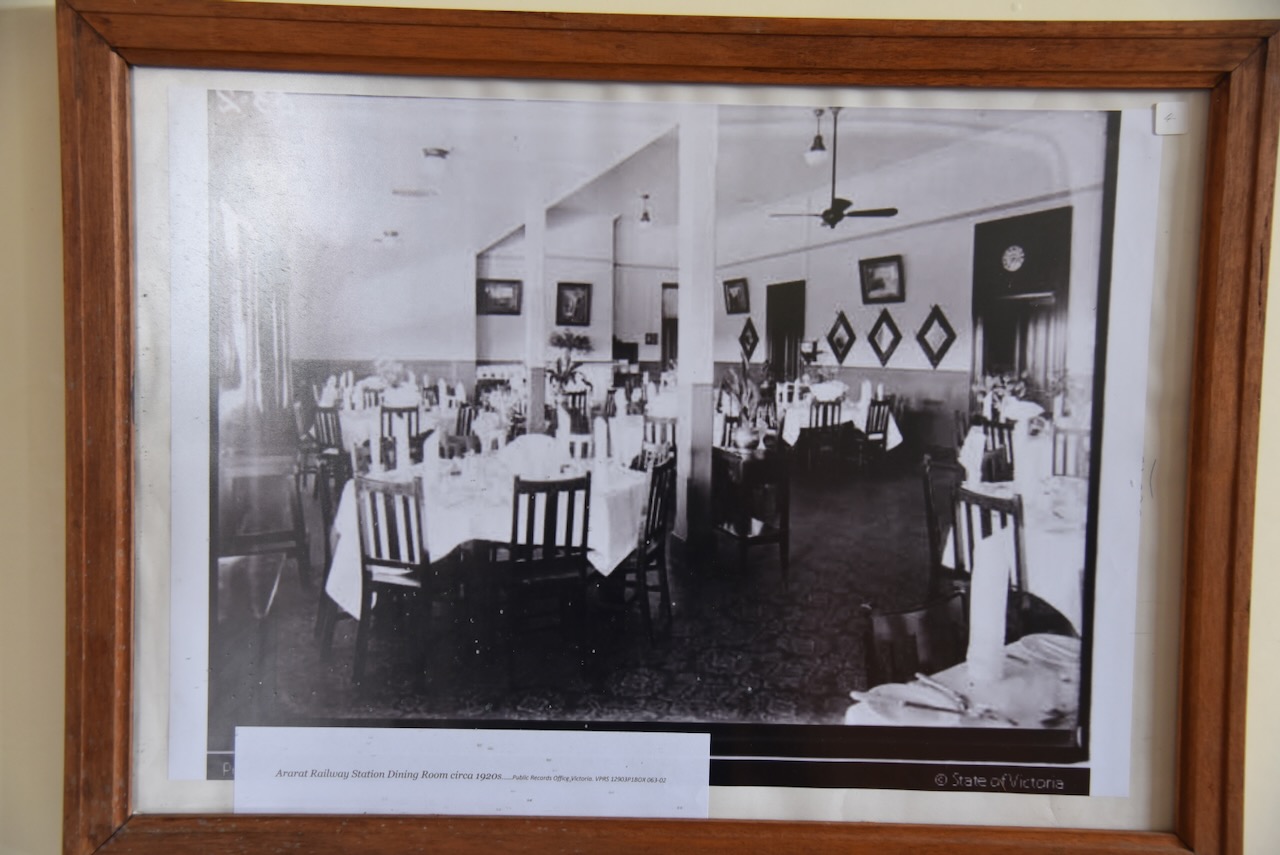
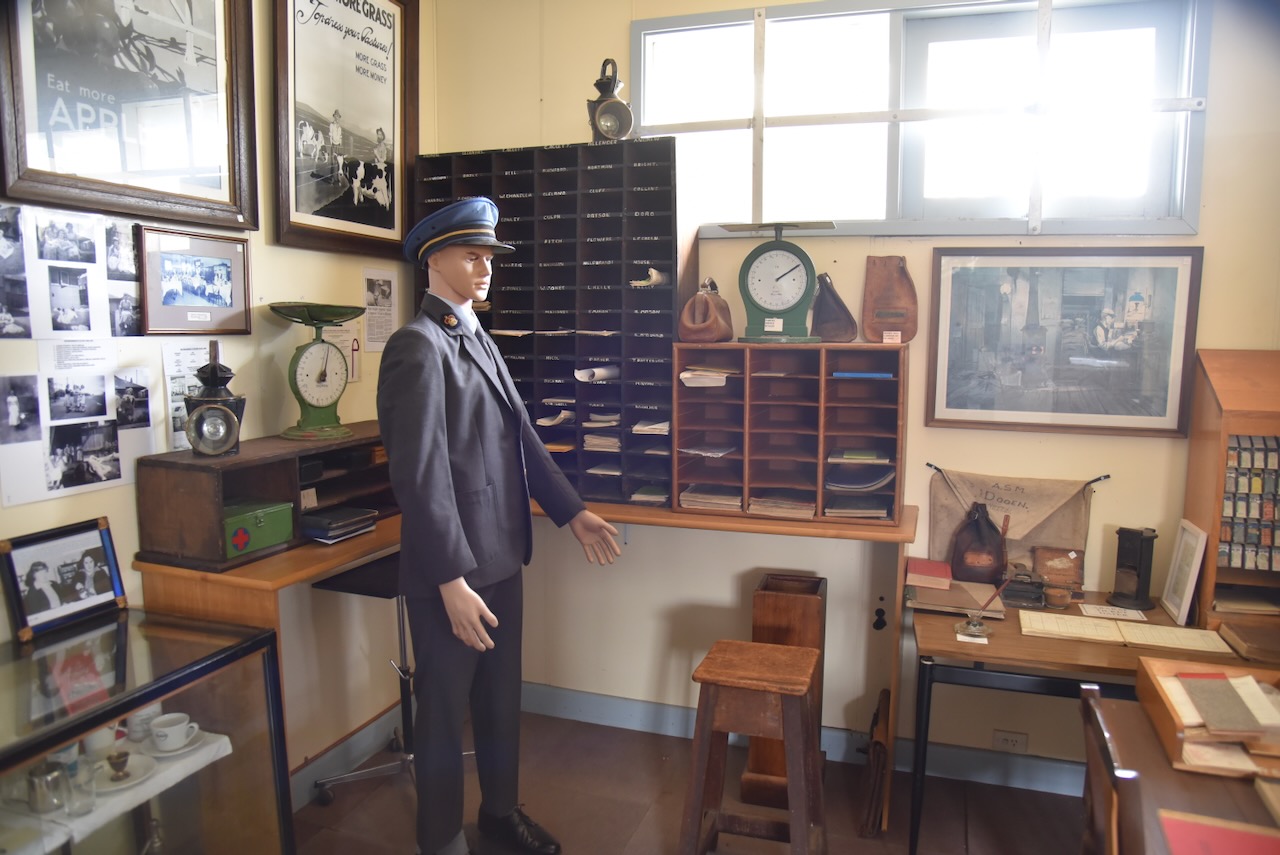
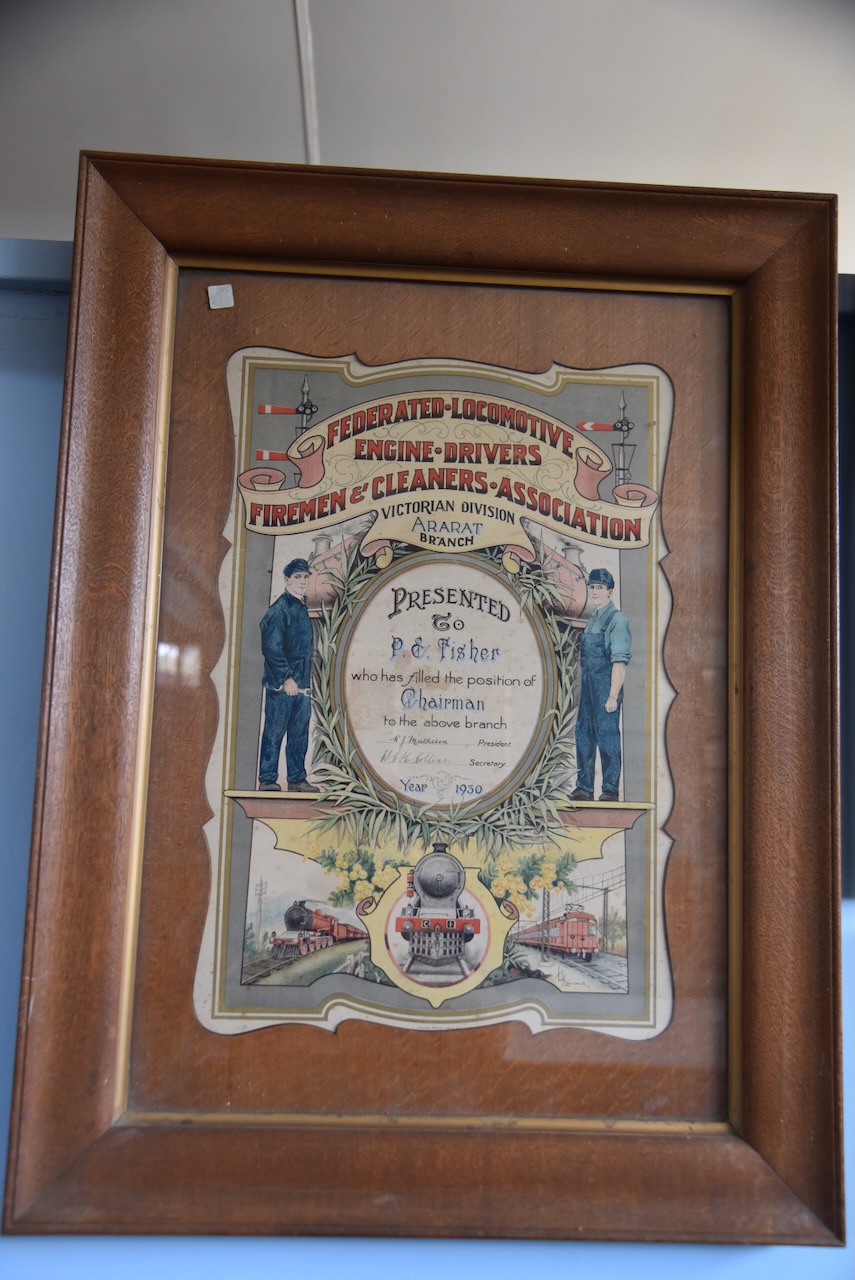
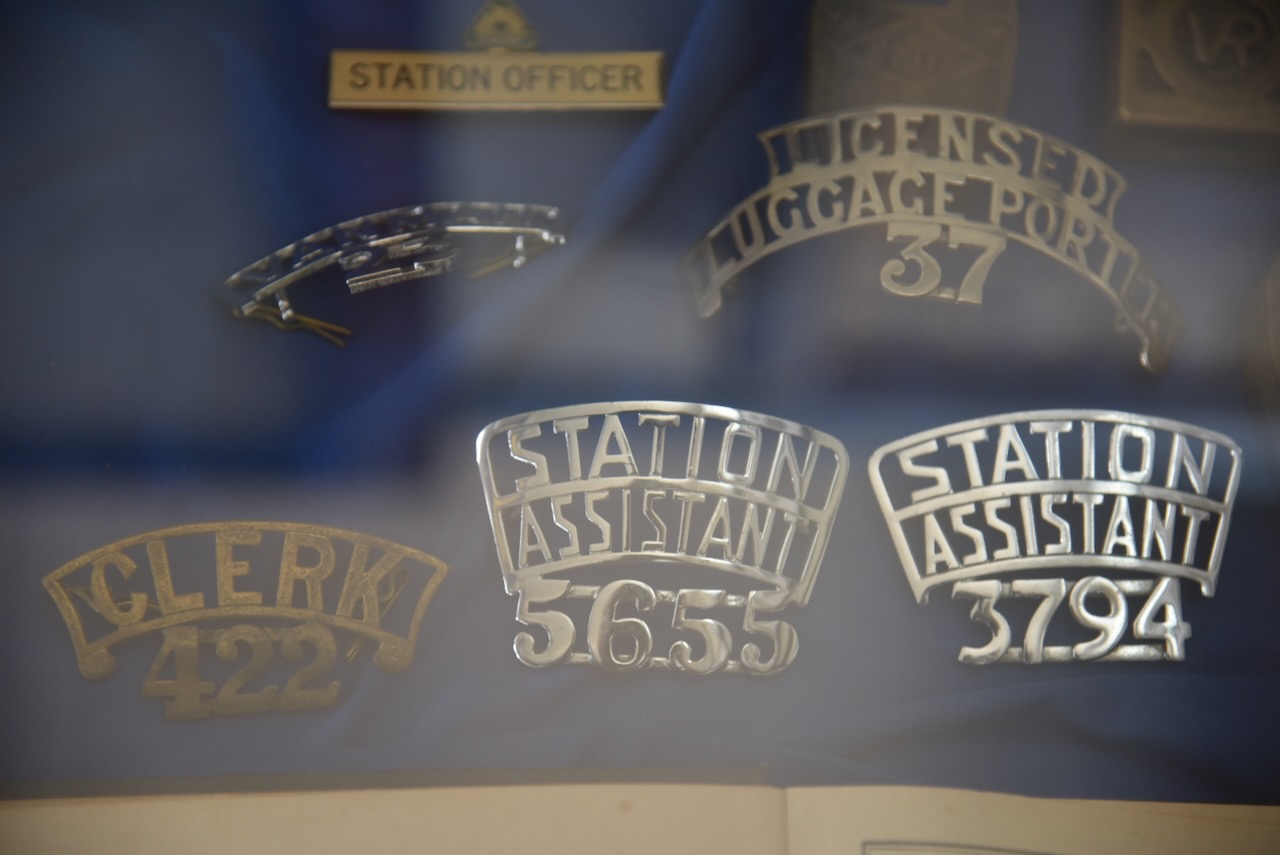
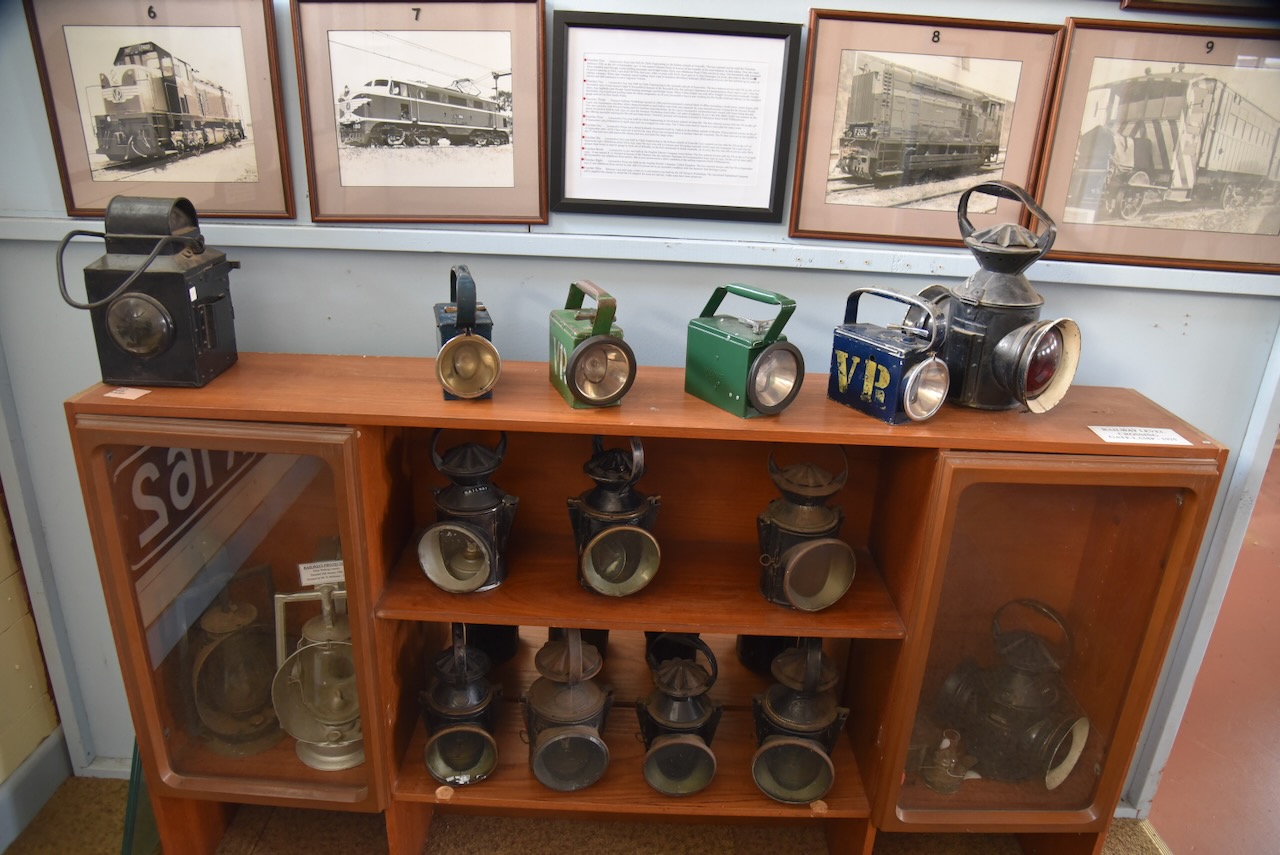
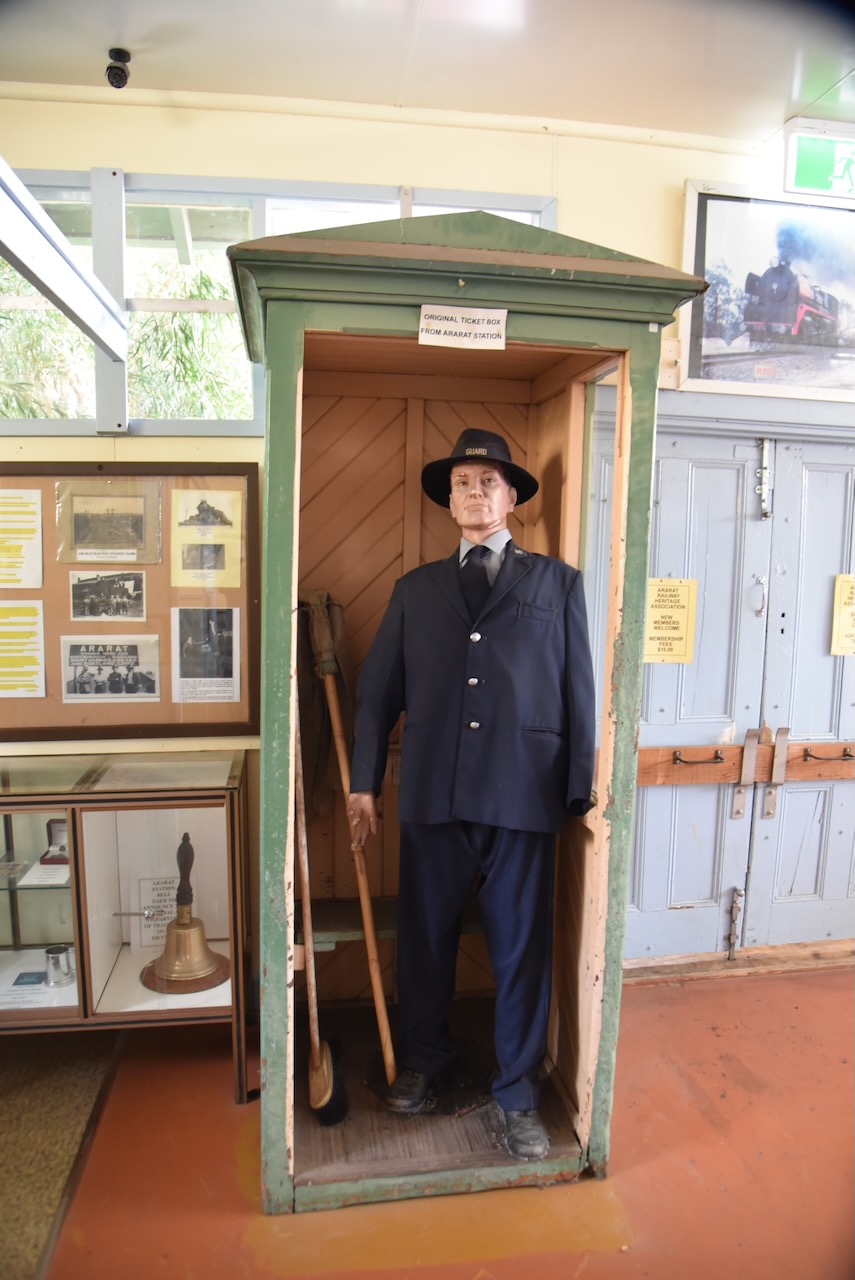
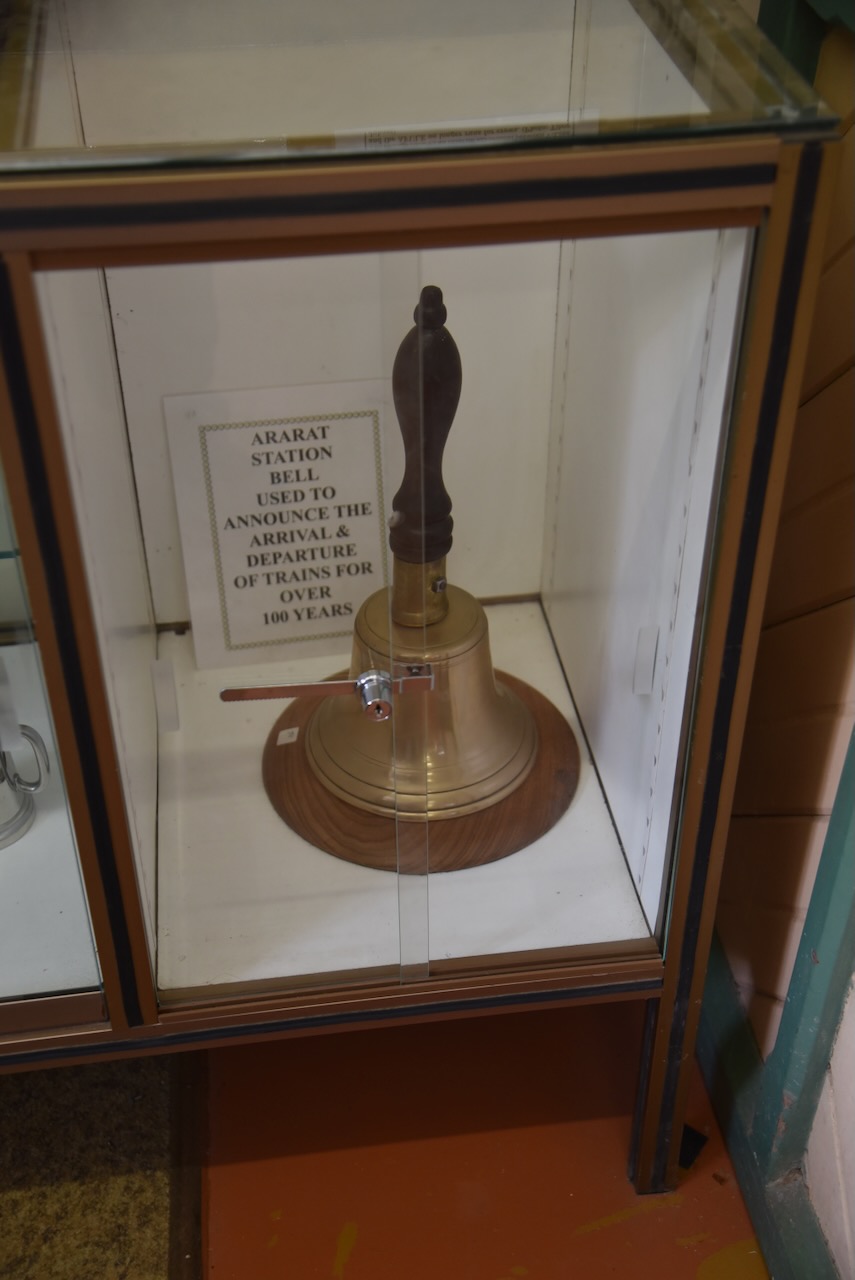
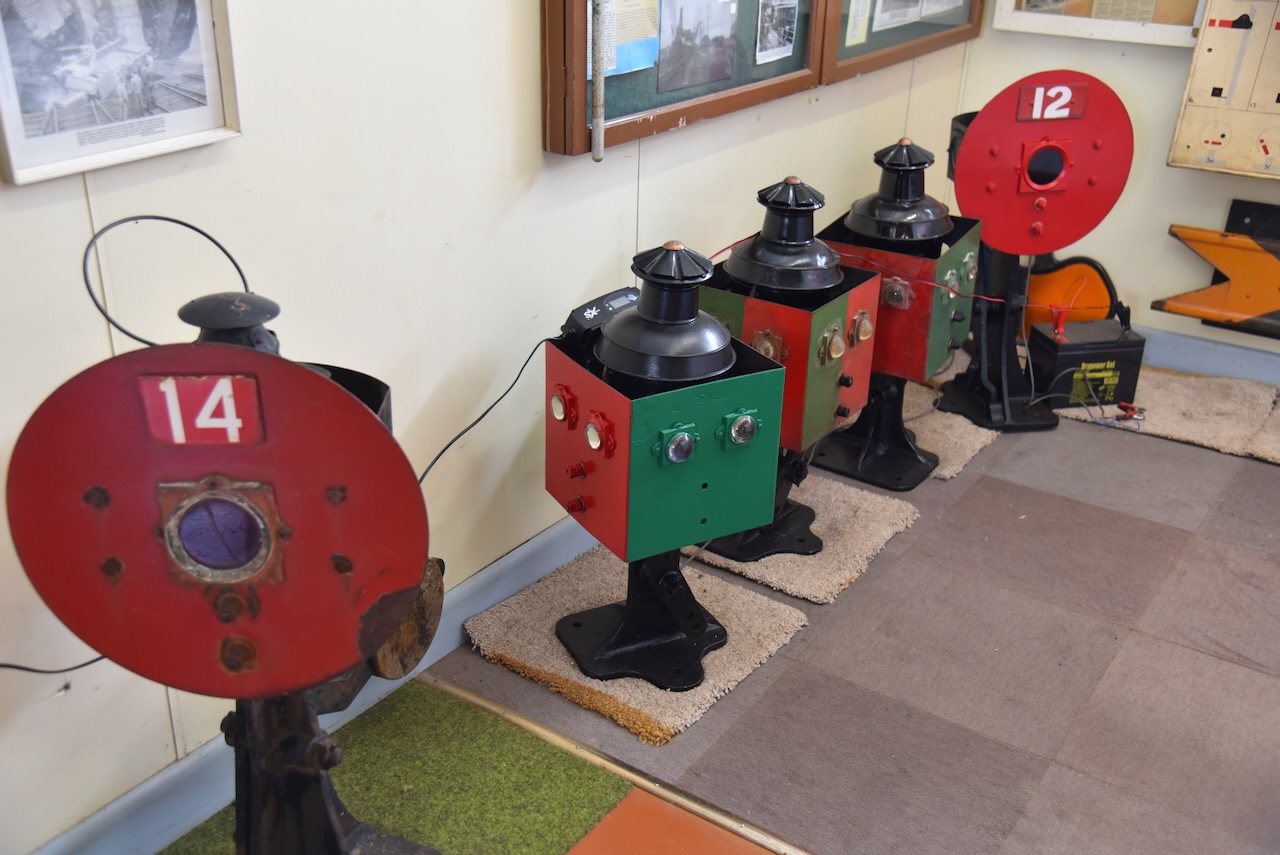
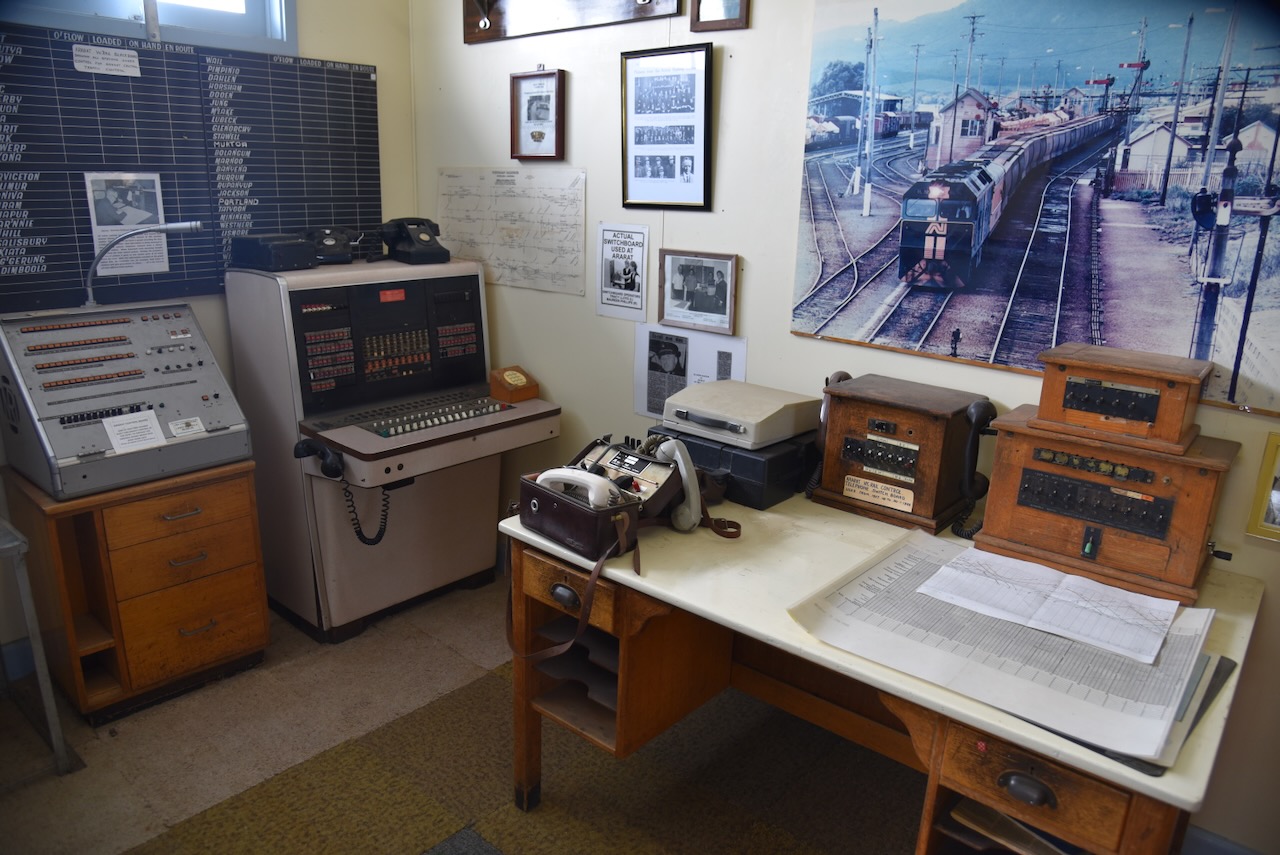
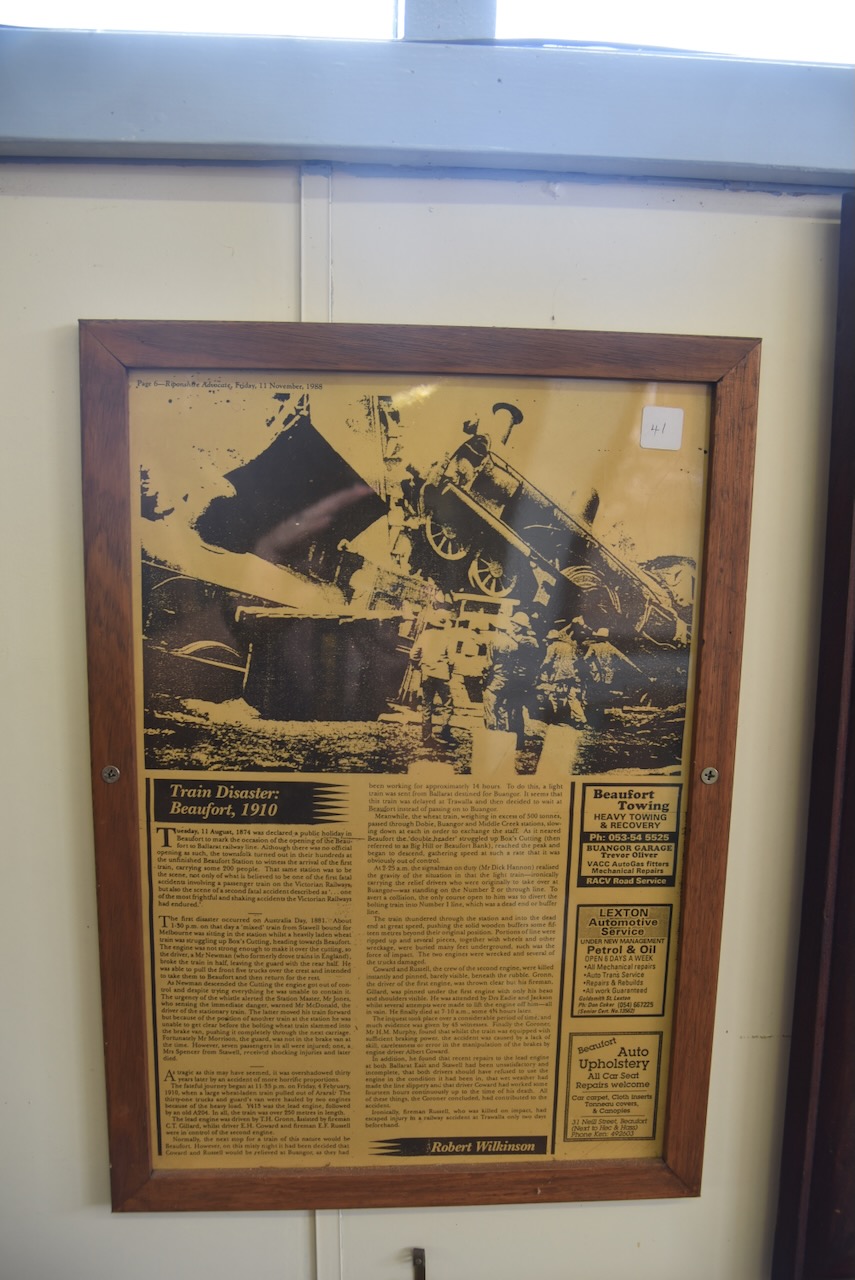
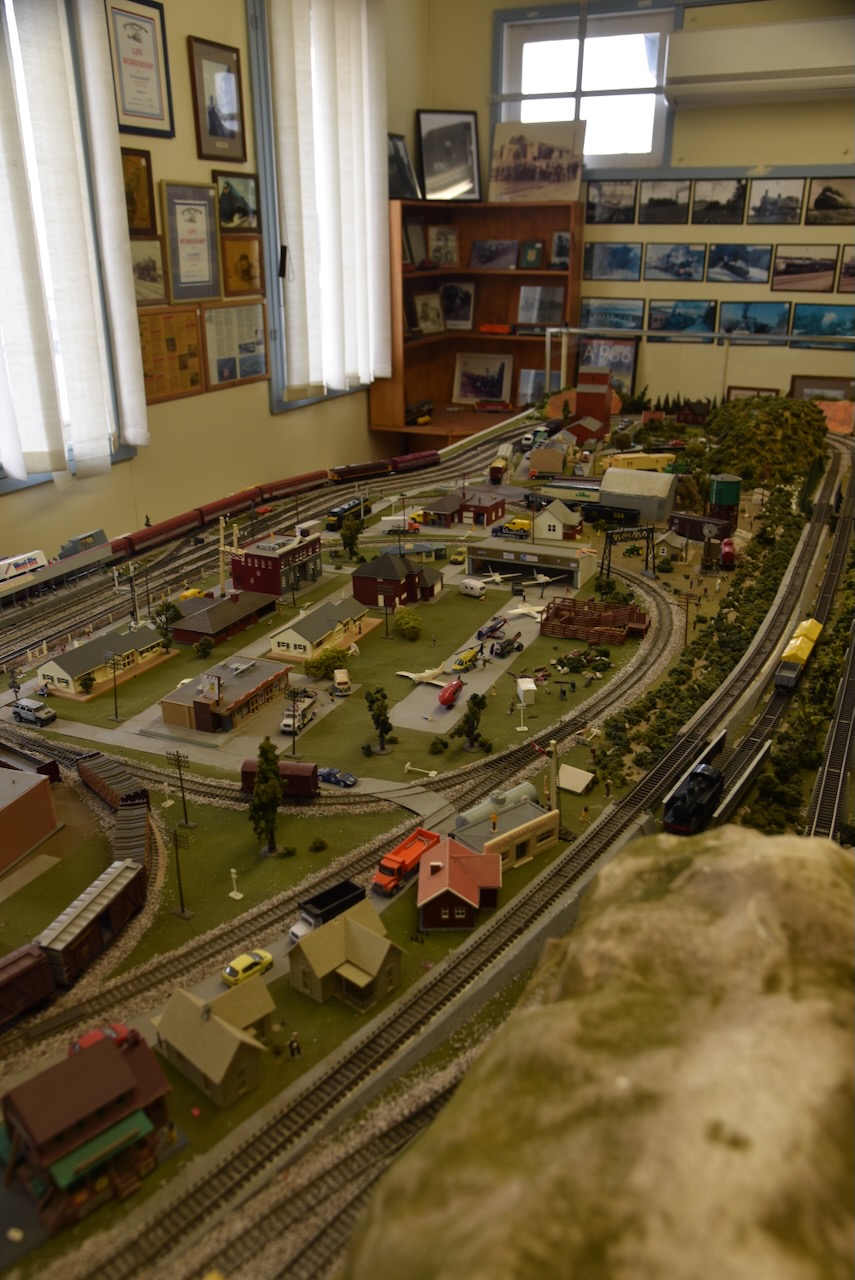
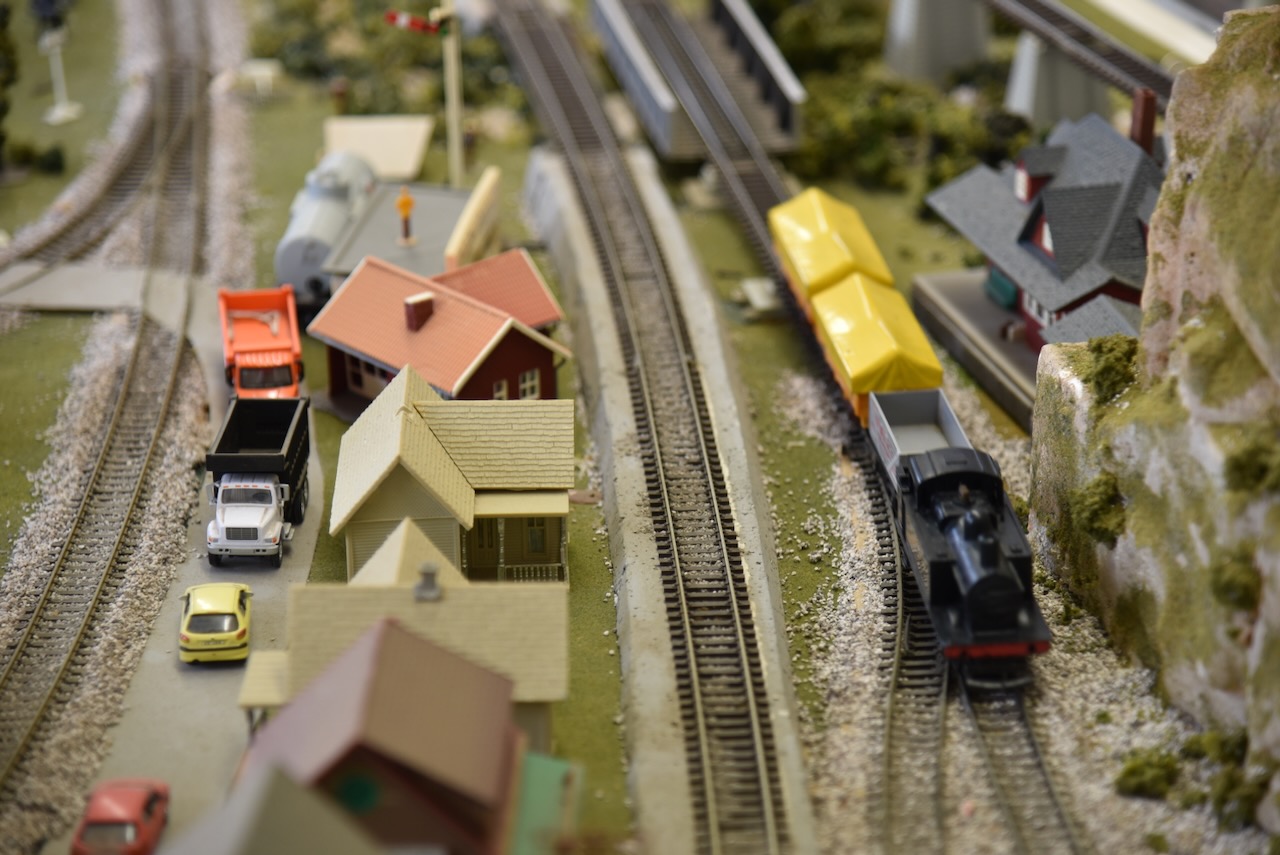
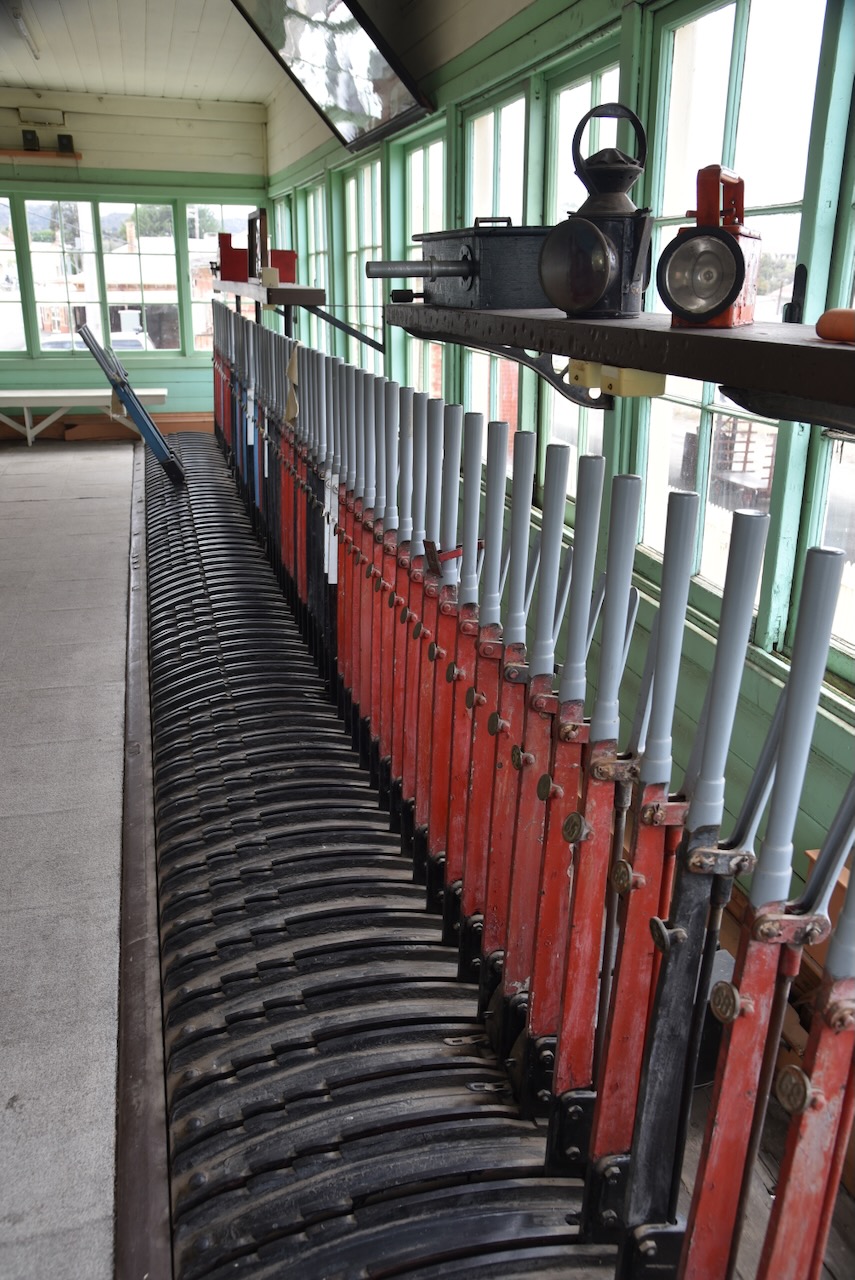
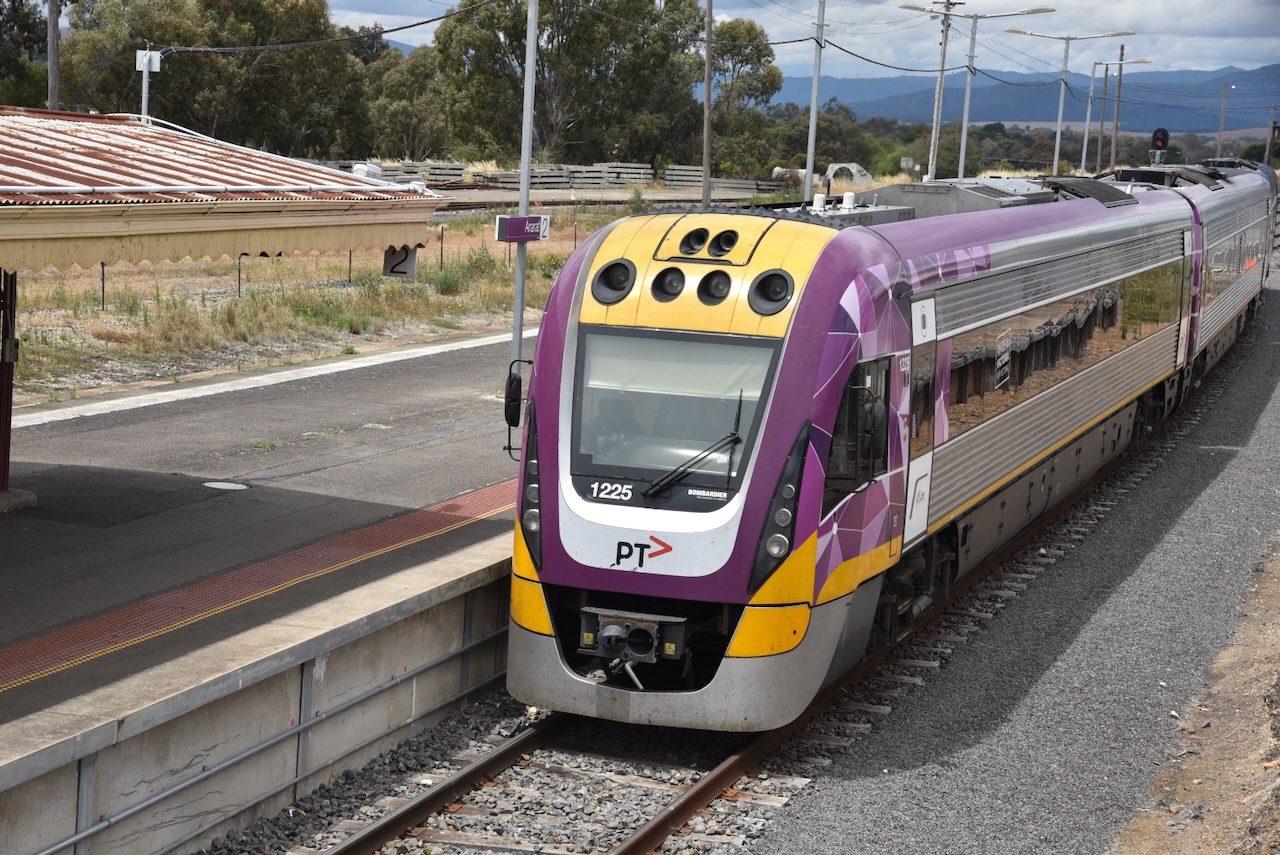
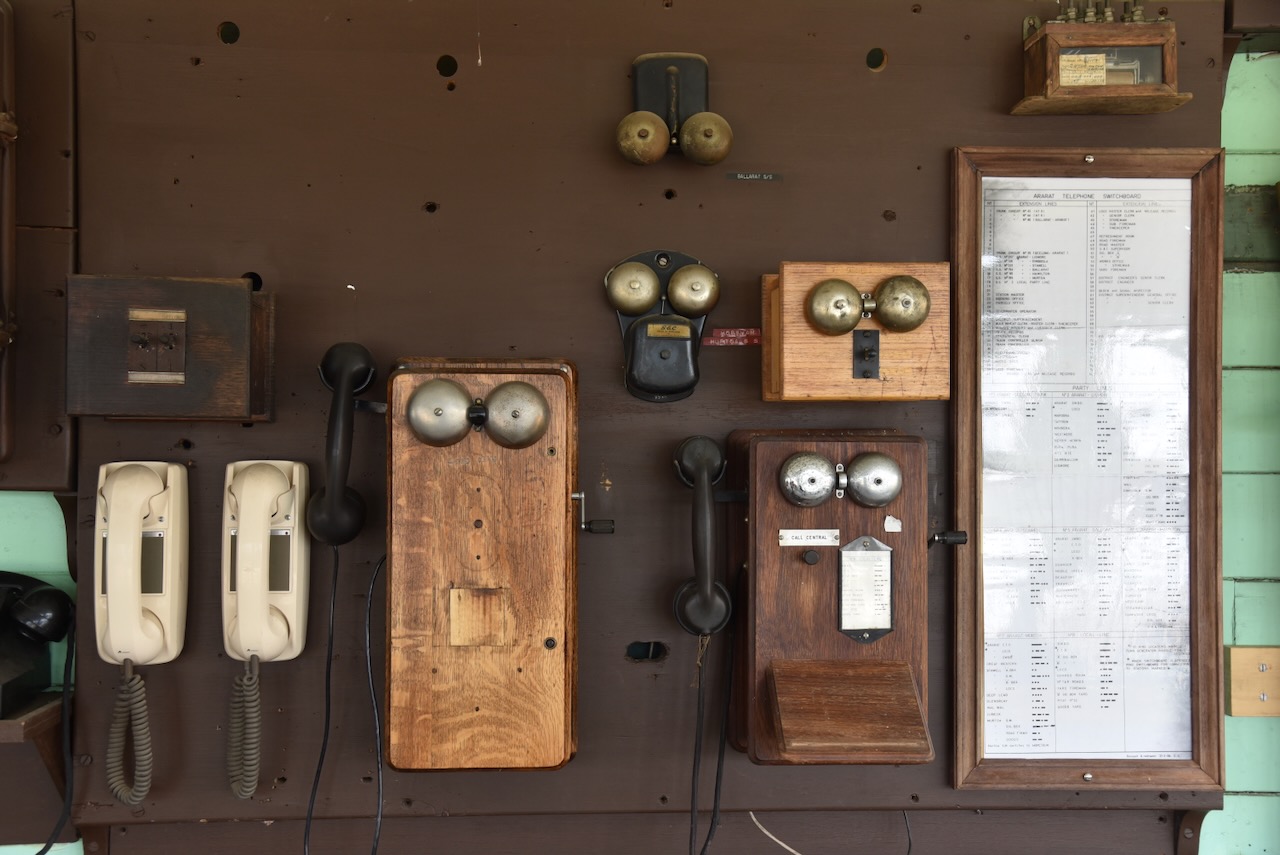
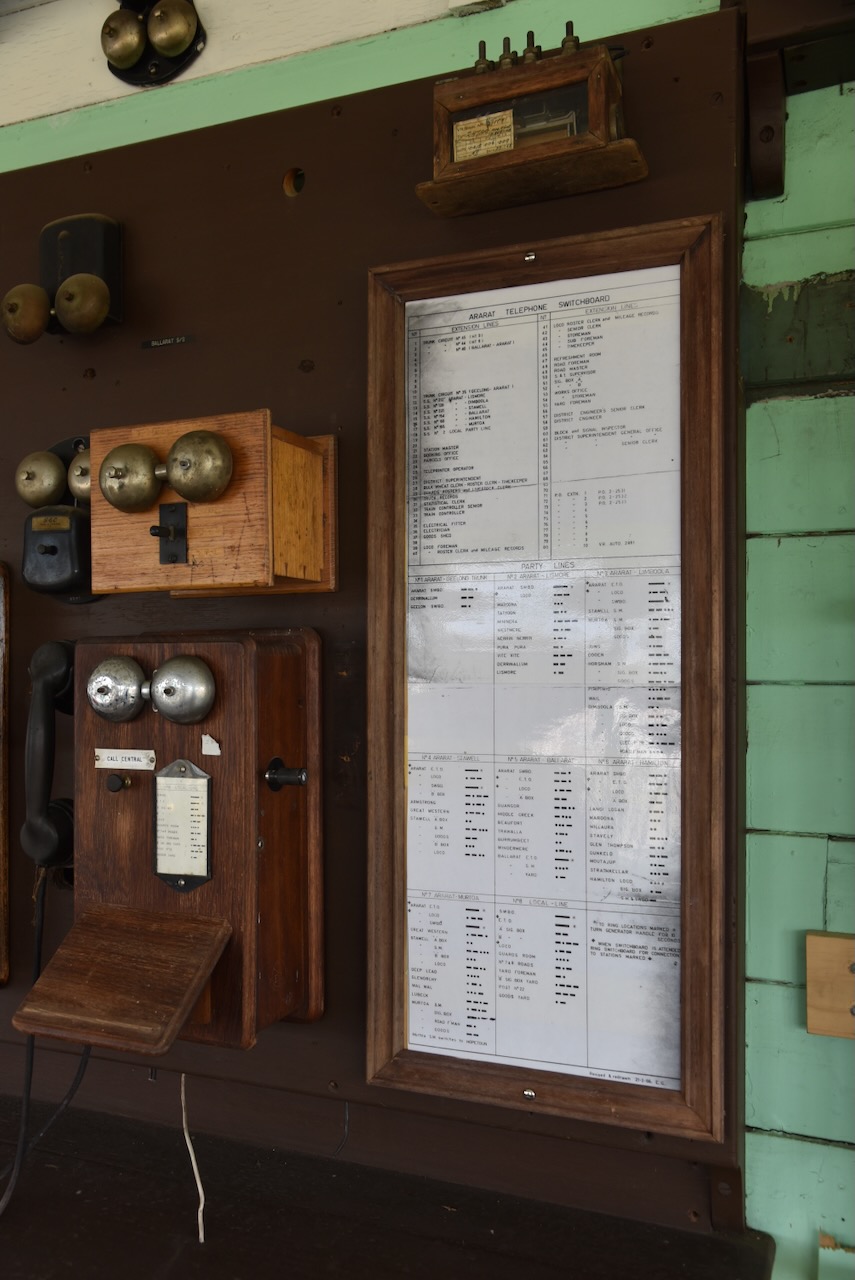
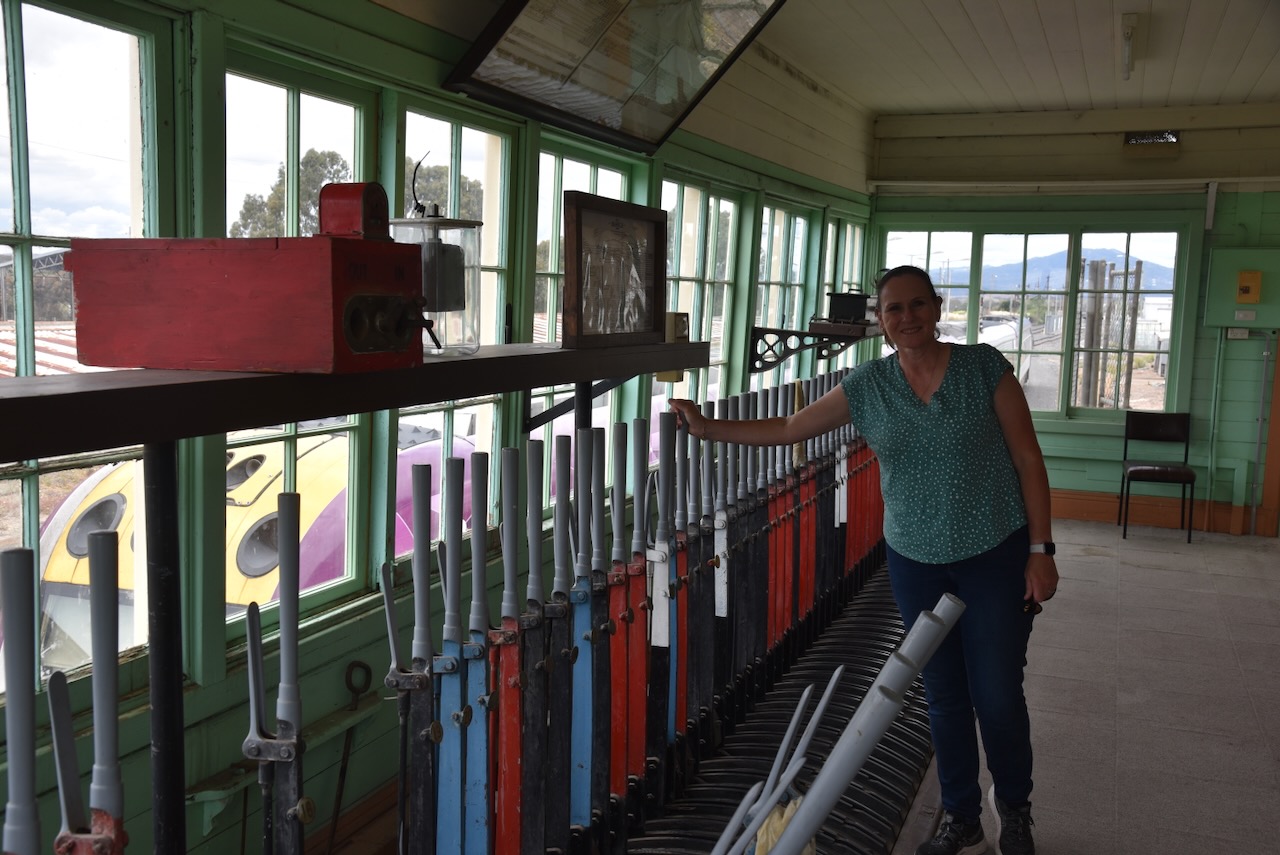
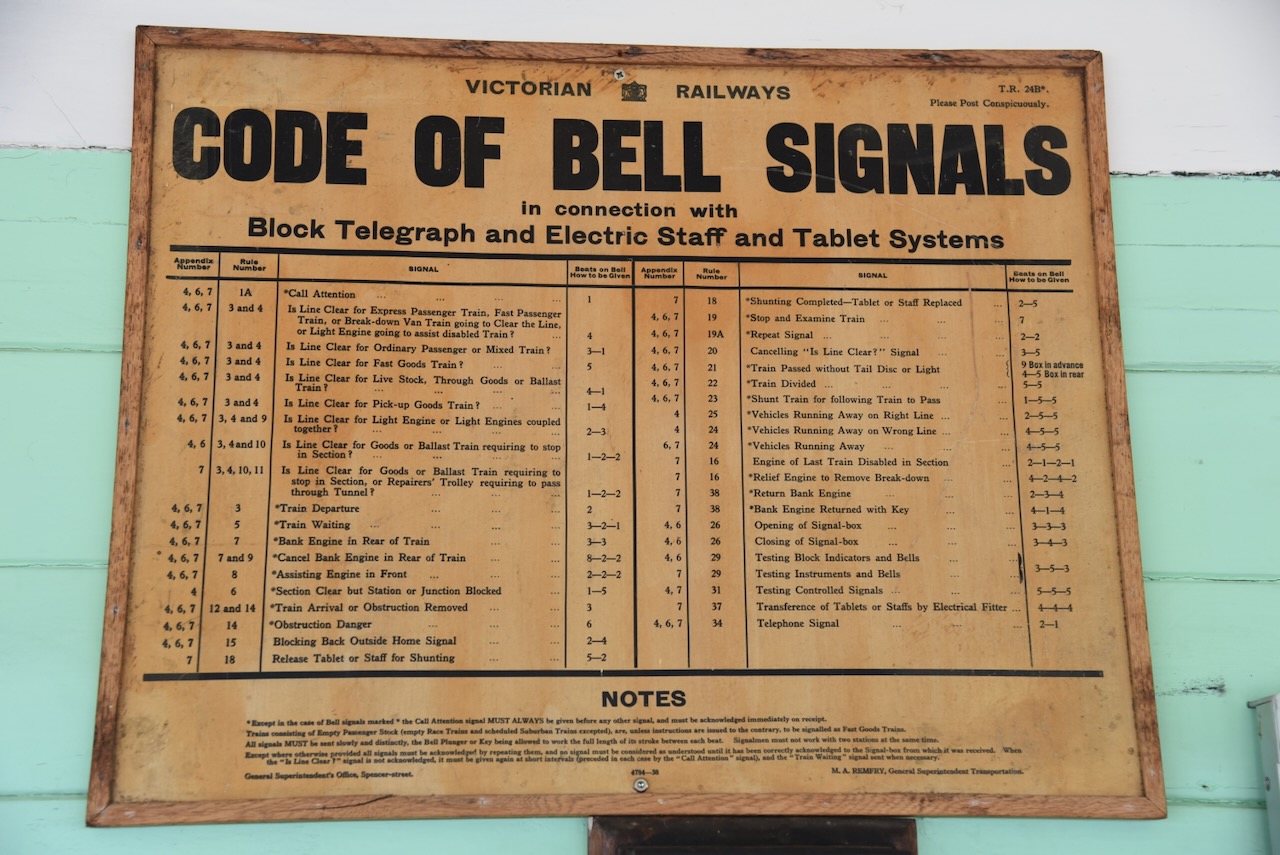
Our next stop of the day was the Ararat railway museum which contains a magnificent collection of railway memorabillia. The volunteers here were very friendly and took us up into the old Control Box.
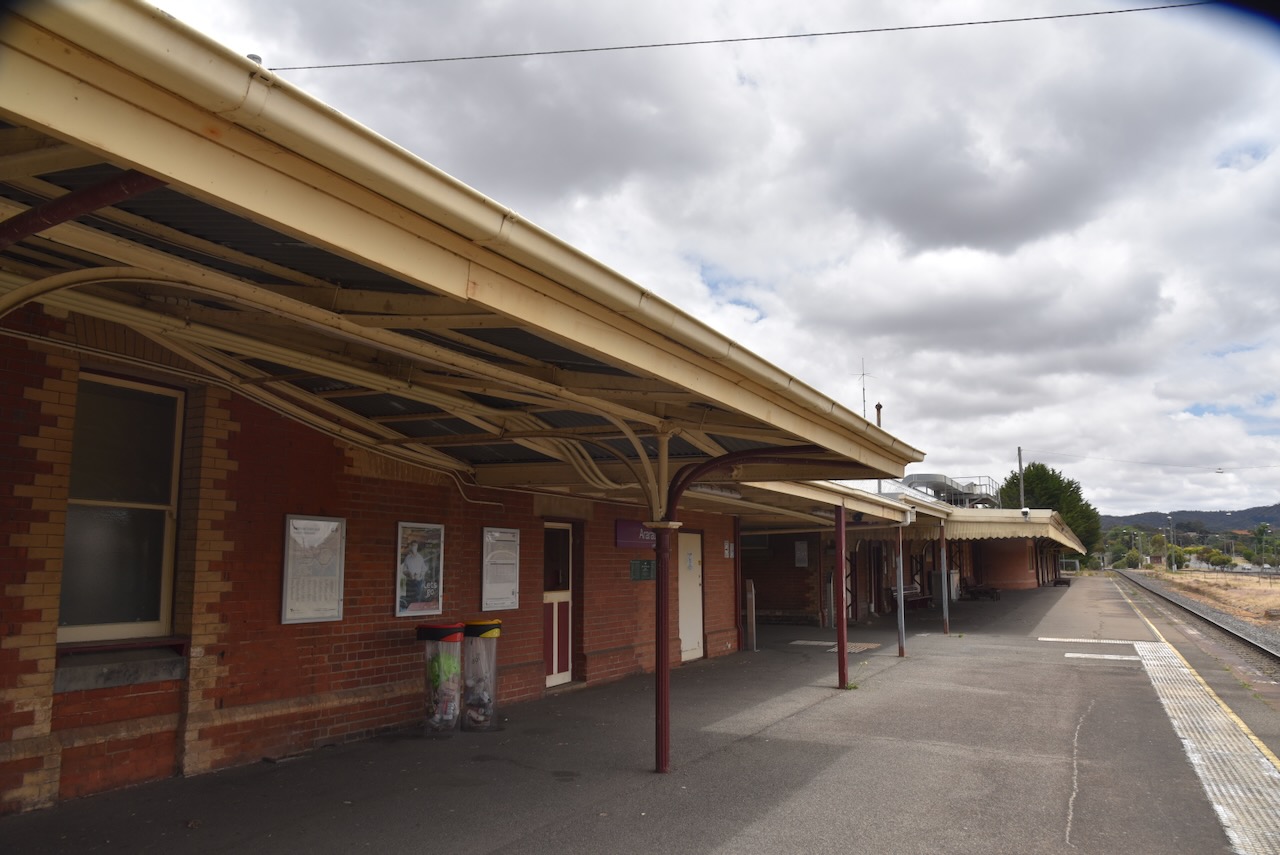





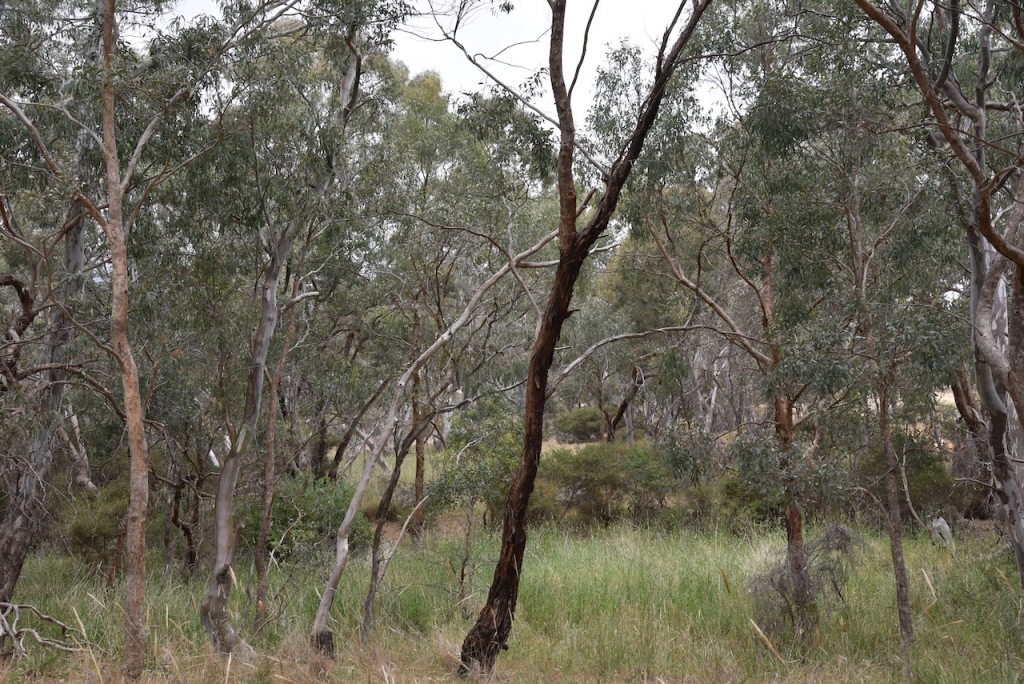
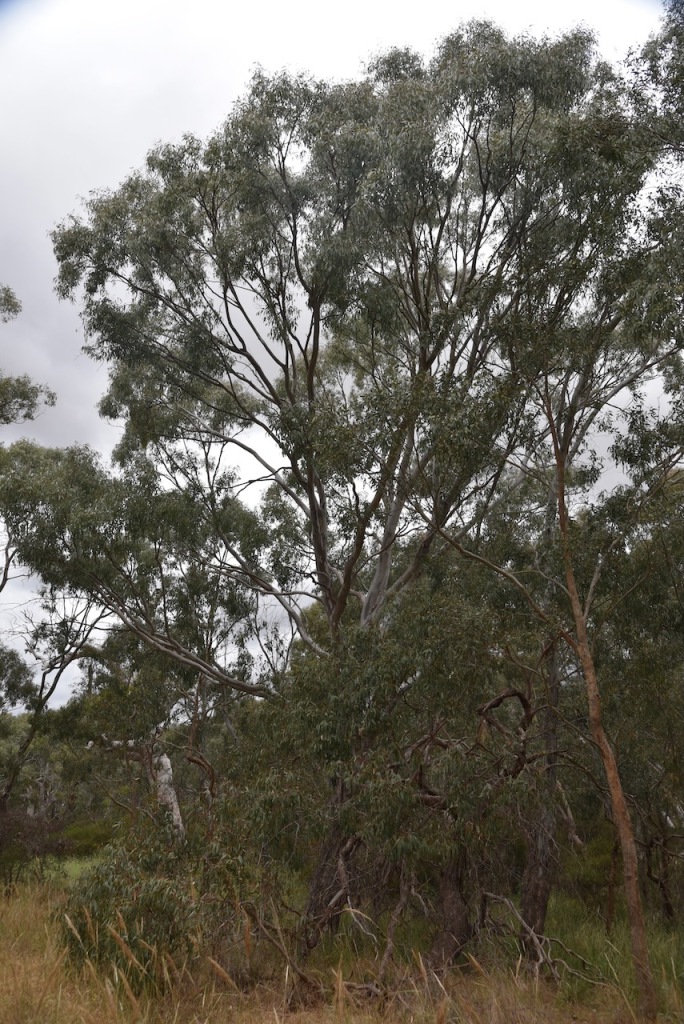
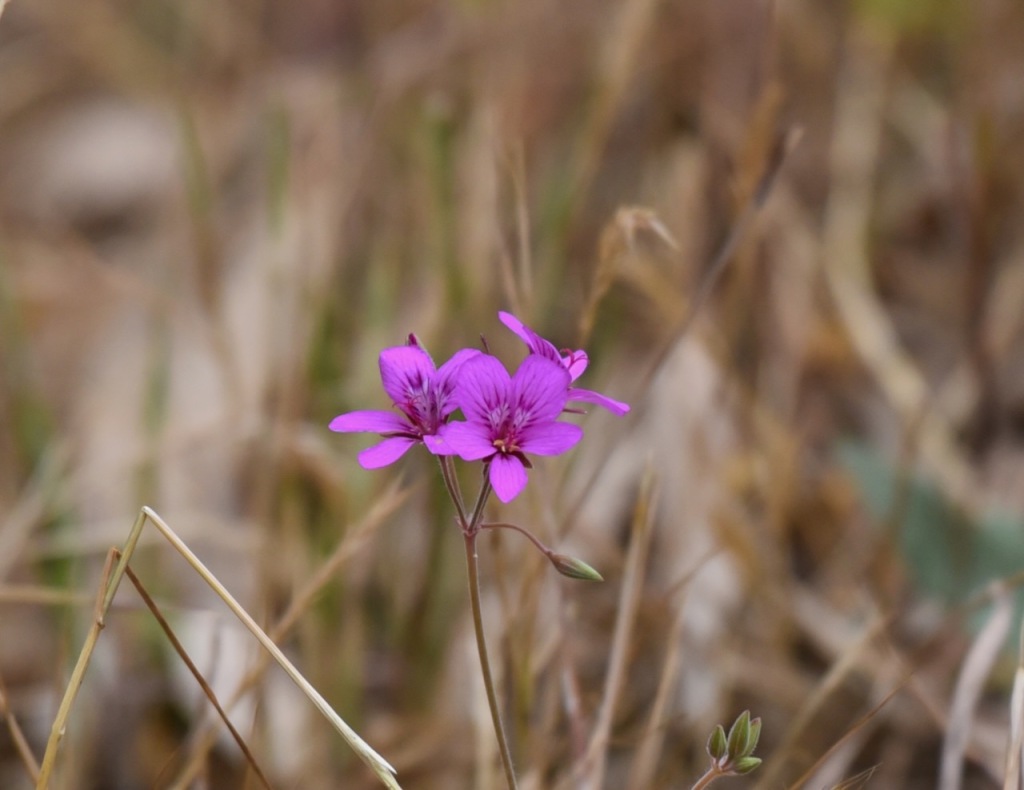
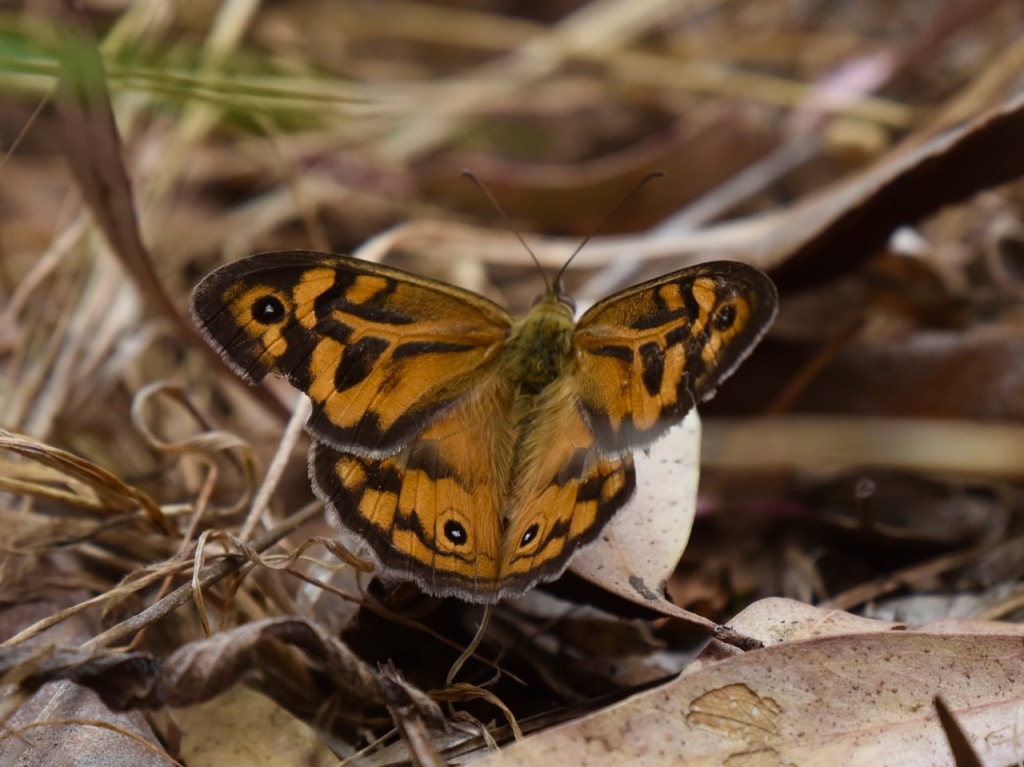
Our first activation for Friday 1st day of December 2023, was the Crochan Bushland Reserve VKFF-4302. The reserve is about 8km west of Ararat and about 217 km northwest of the city of Melbourne.
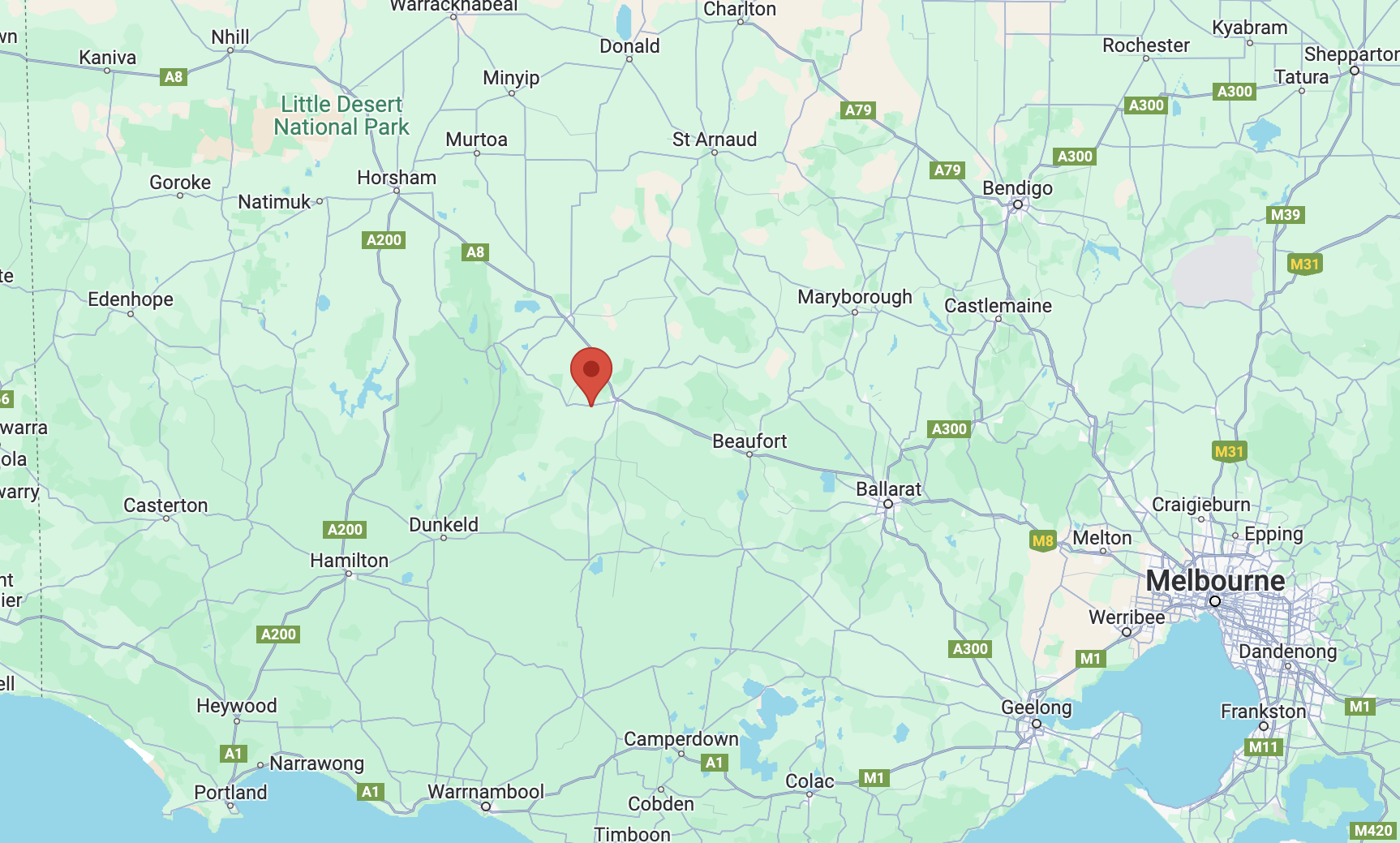
Above:- Map showing the location of the Crochan Bushland Reserve. Map c/o Google Maps.
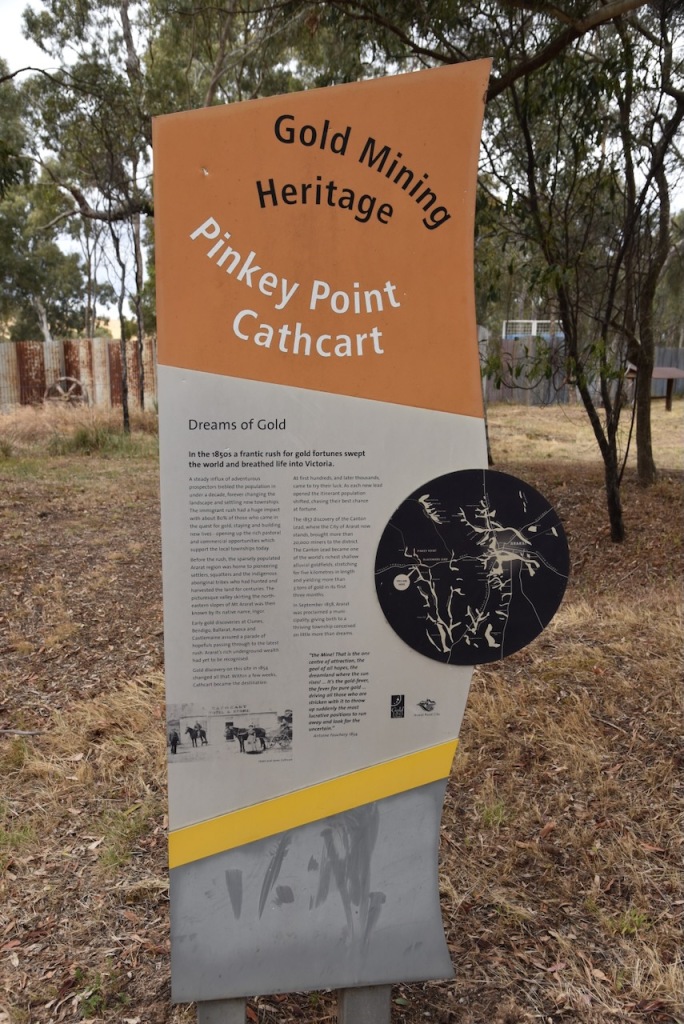
The reserve is located at Cathcart, a former gold mining town about 8 km southwest of Ararat. It was named in honour of Major General Sir George Cathcart (b. 1794. d. 1854) who was killed in the battle at the Crimean War. (Victorian Places 2024)

Above:- Major General Cathcart. Image c/o Wikipedia.
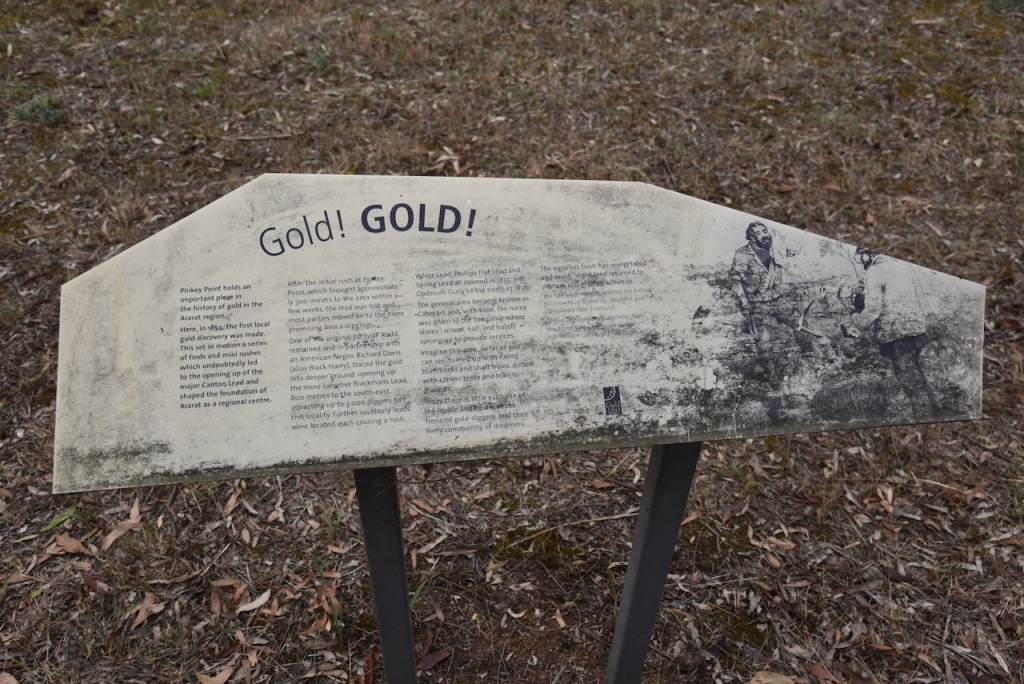
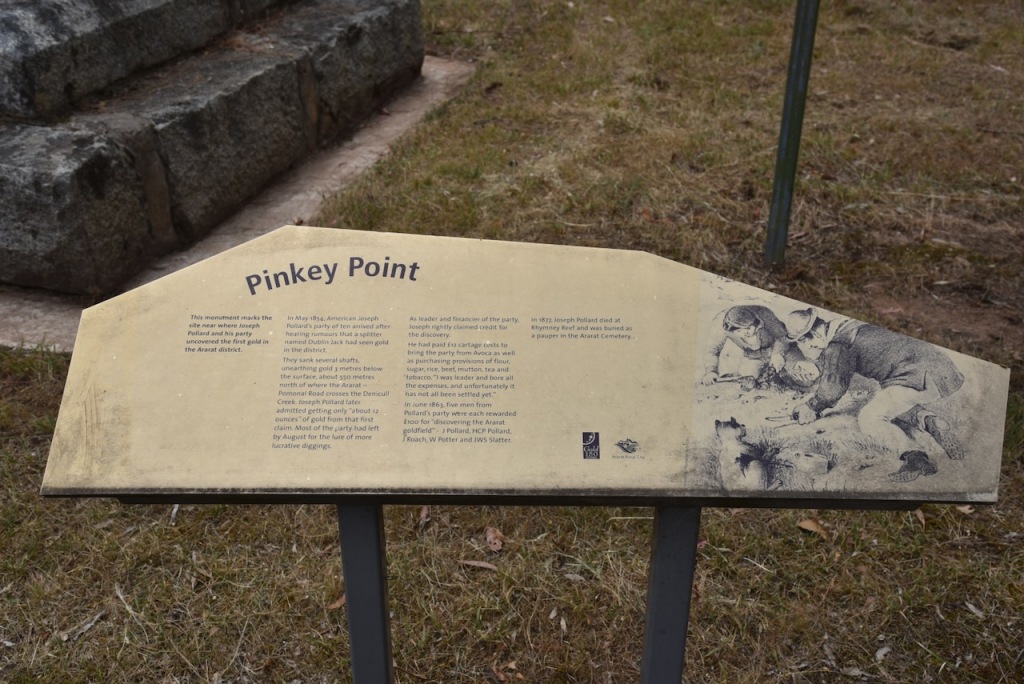
Gold was discovered at Cathcart in 1854, the earliest gold discovery in the Ararat district. Cathcart has also been known as Old Ararat. The town of Cathcart was surved in c. 1856 with a school opening in 1858. Bailliere’s Victorian gazetteer (1865) recorded Cathcart as having three hotels. (Victorian Places 2024)
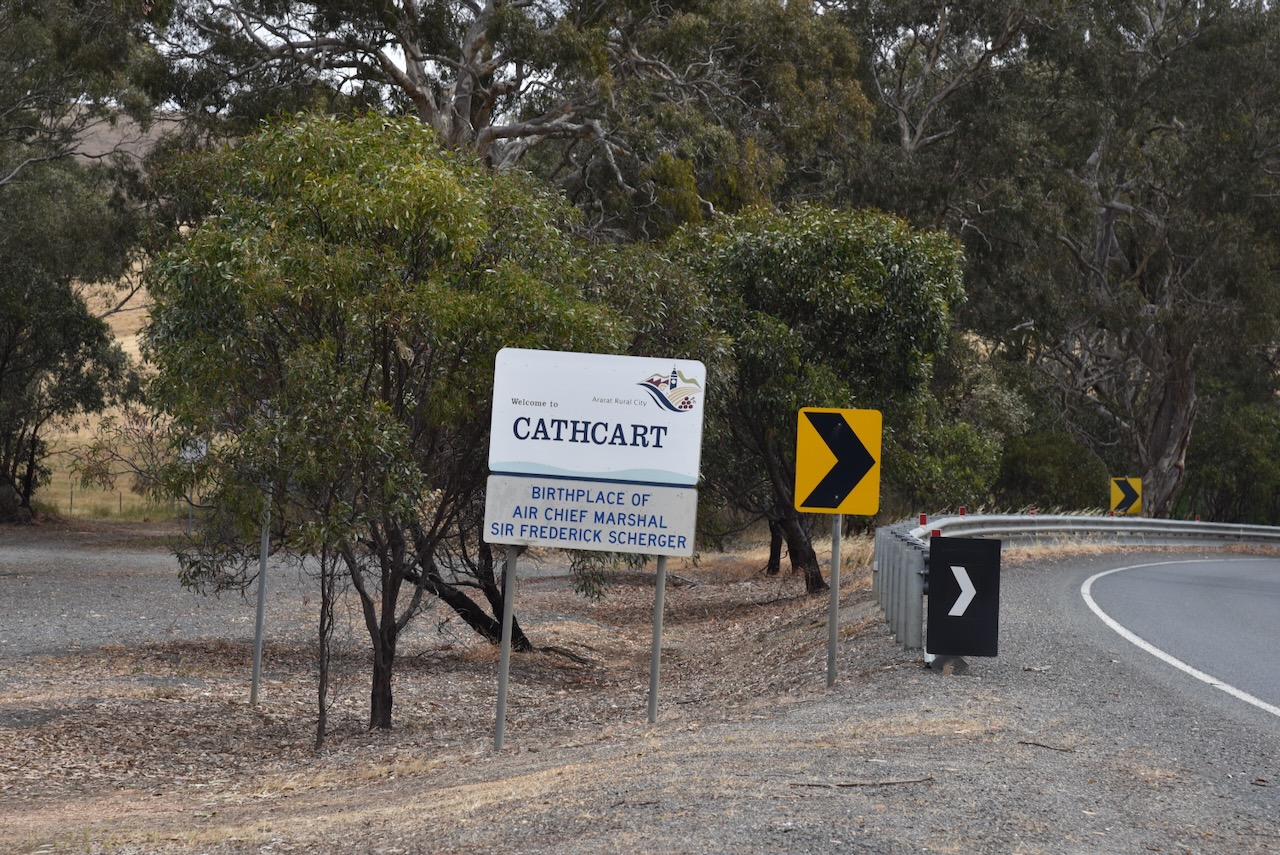
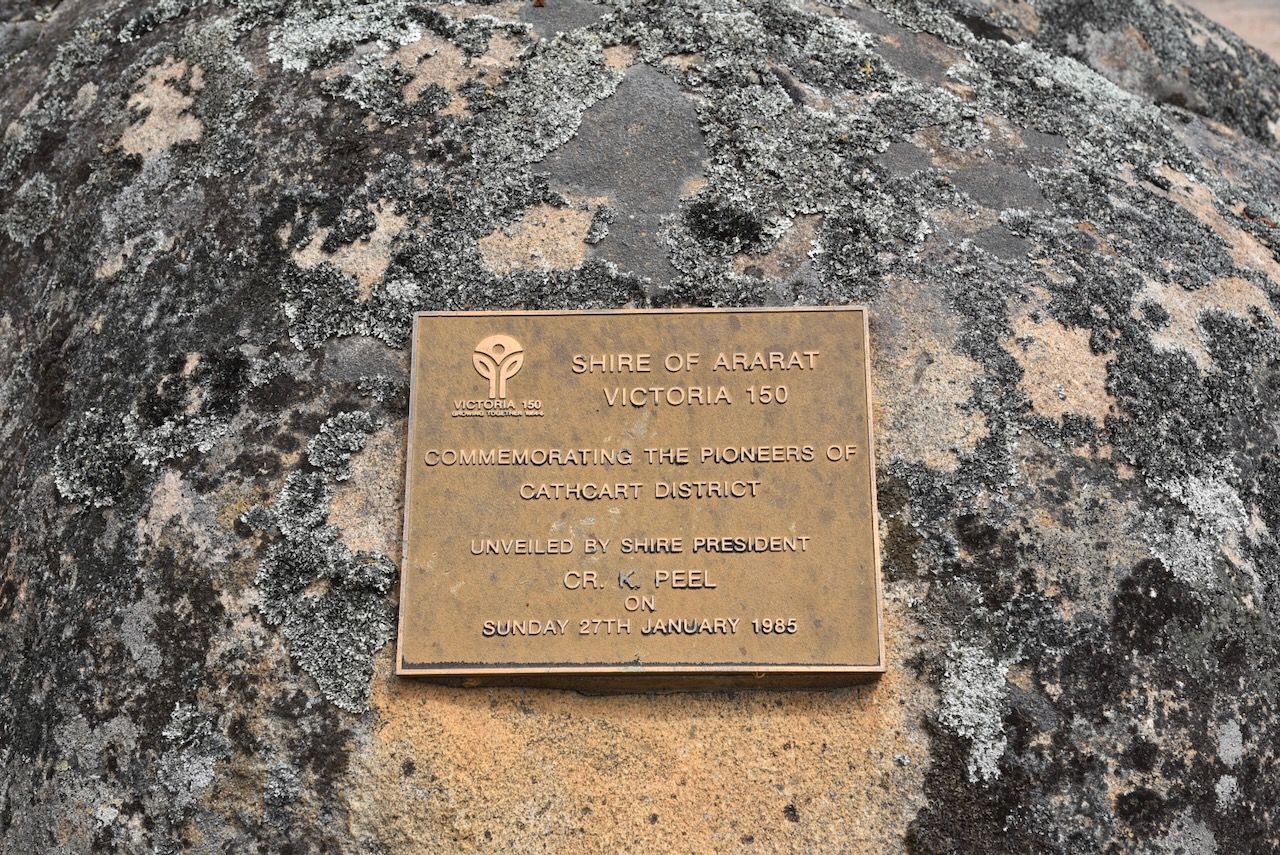
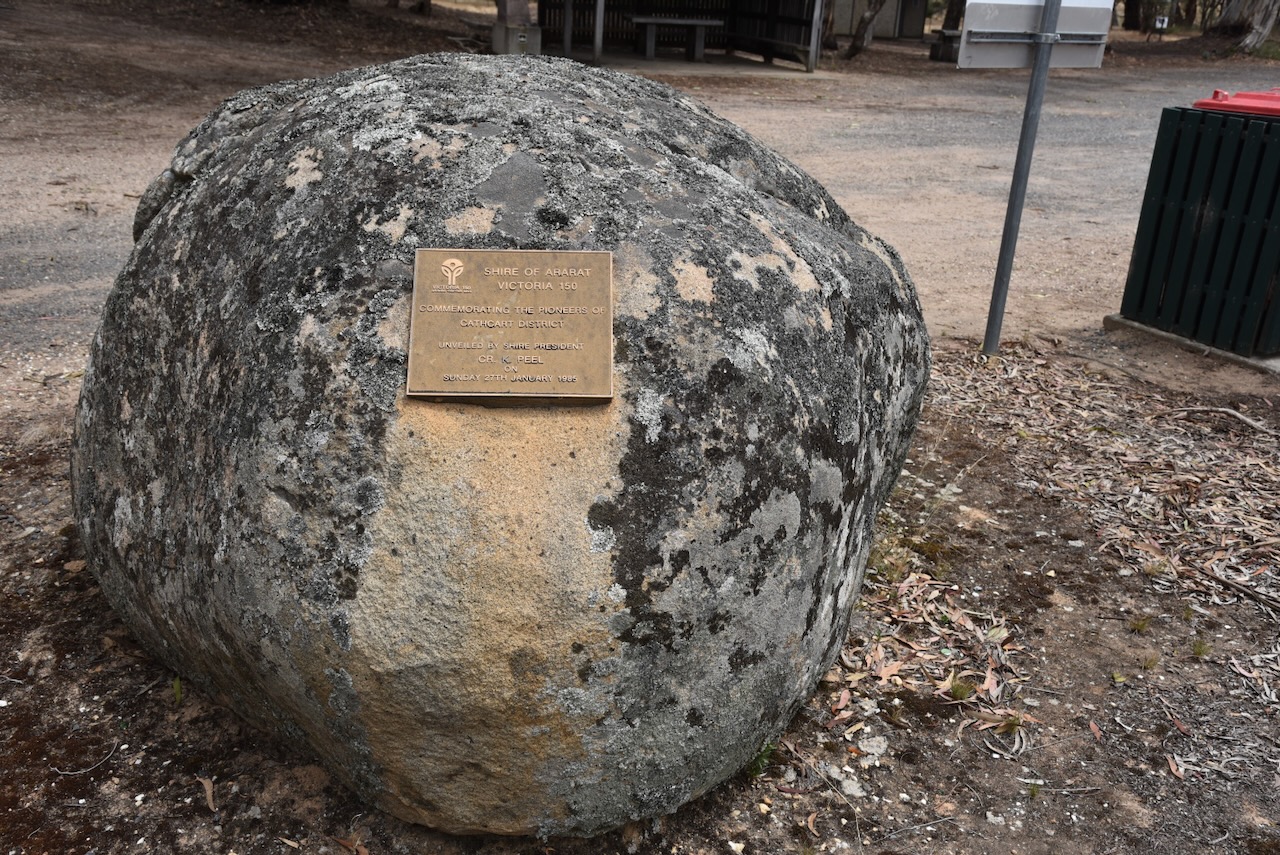
Gold was discovered at Cathcart in 1854. At first hundreds, and later thousands came to the Cathcart area to try their luck at finding gold. The 1857 discover of the Canton Lead where the city of Ararat now stands, brought more than 20,000 miners to the fistrict. The Canton Lead became one of the world’s richest shallow alluvial goldfields, stretching for 5 kms in length and yielding more than 3 tons of gold in its first 3 months.
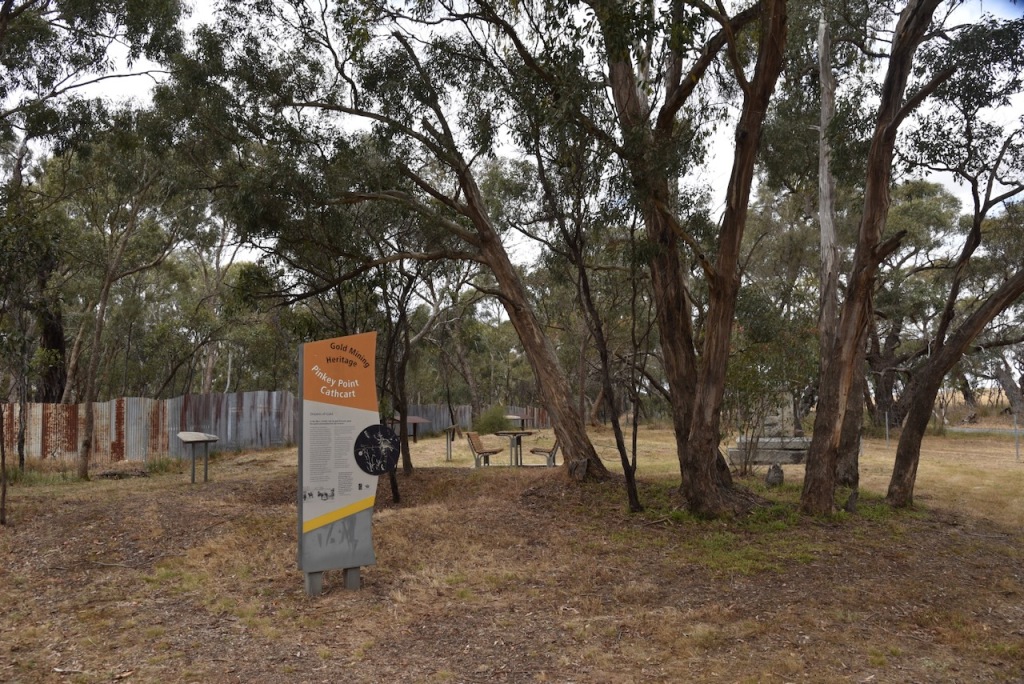


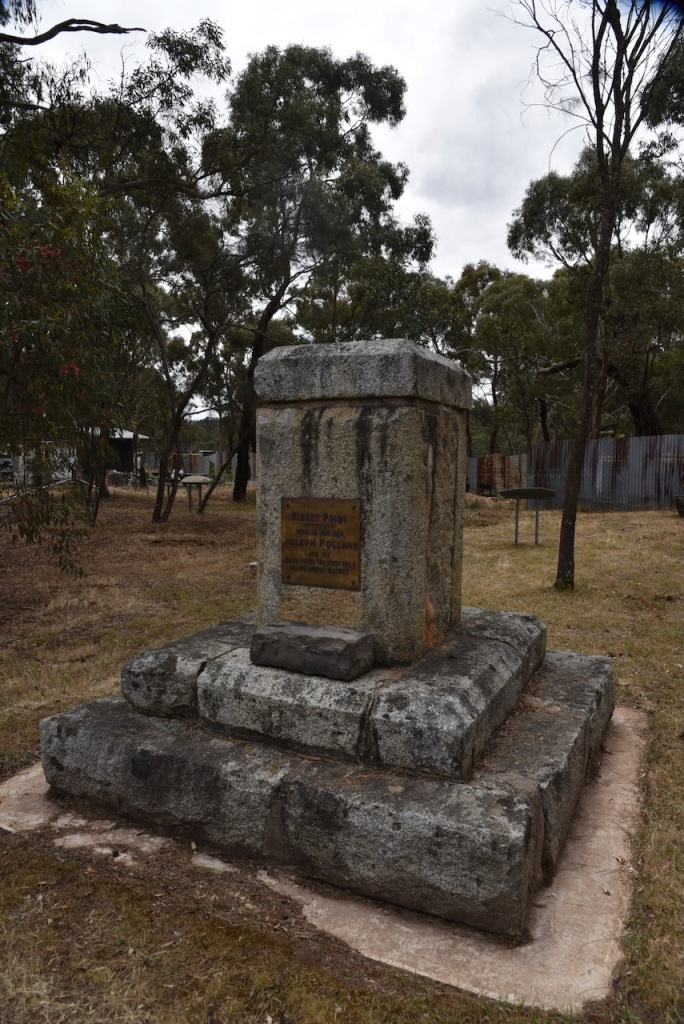
We then headed to the reserve, admiring the views of the surround countryside along the way.
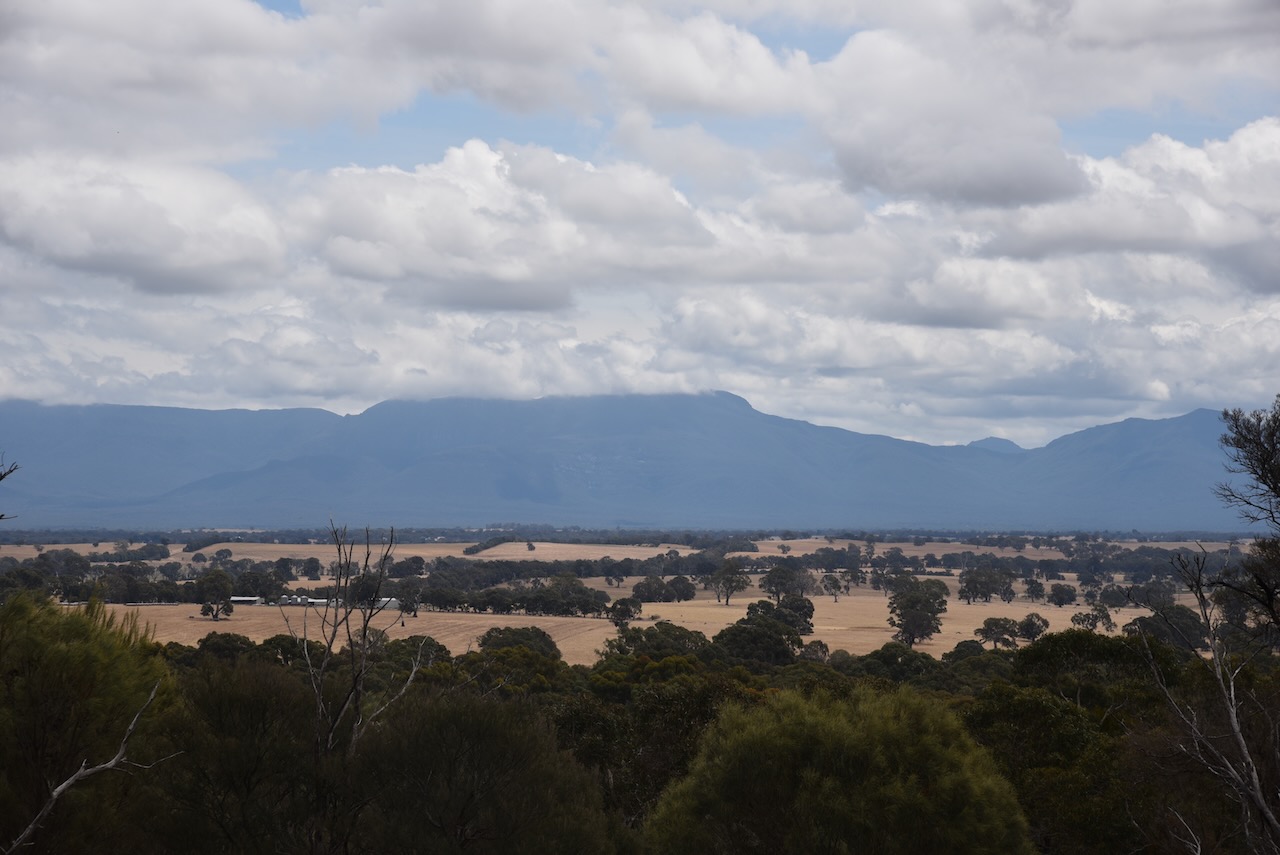

The reserve is located on the corner of Ararat-Halls Gap Road and Port Curtis Road.

Above:- Aerial view of the reserve showing its boundaries. Image c/o Google Earth.
The reserve is about 4.3 hectares in size and was established on the 22nd day of Novemner 1983. (CAPAD 2022)
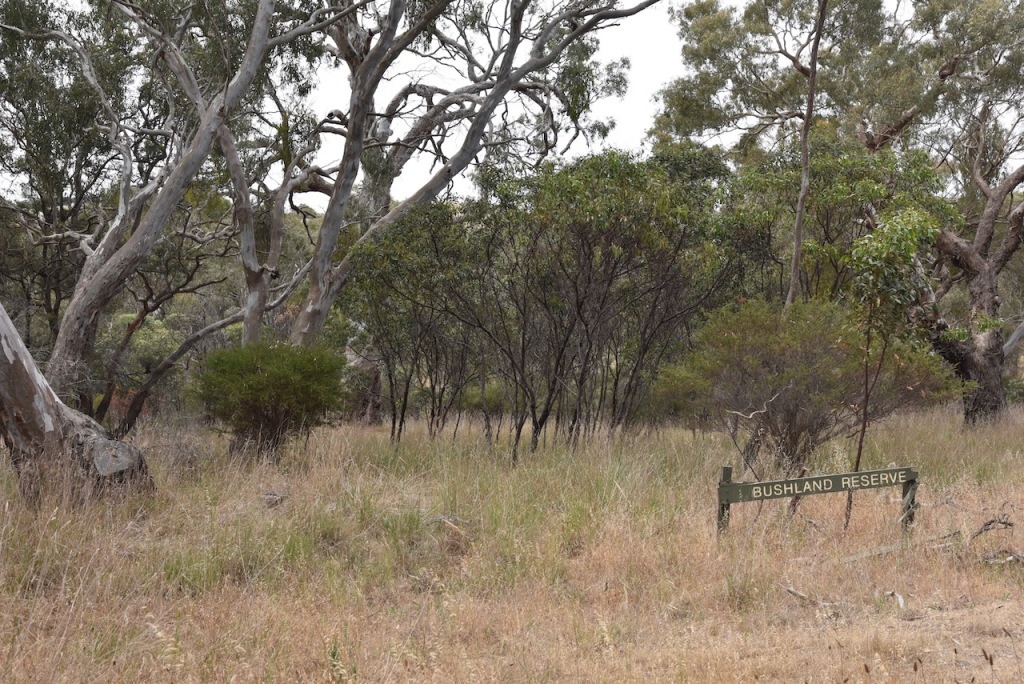
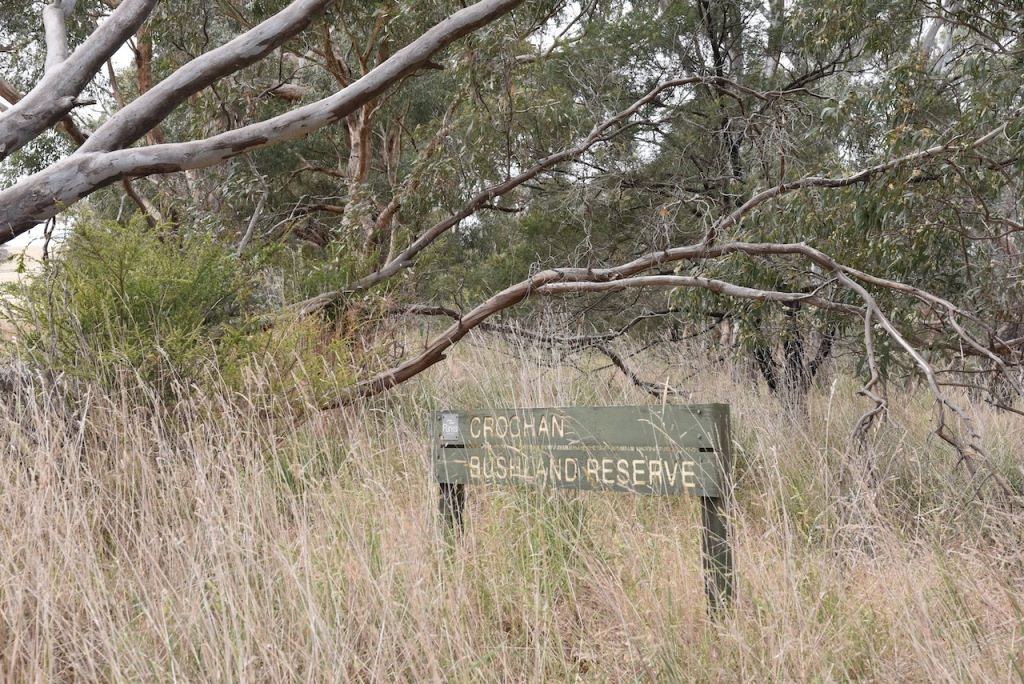
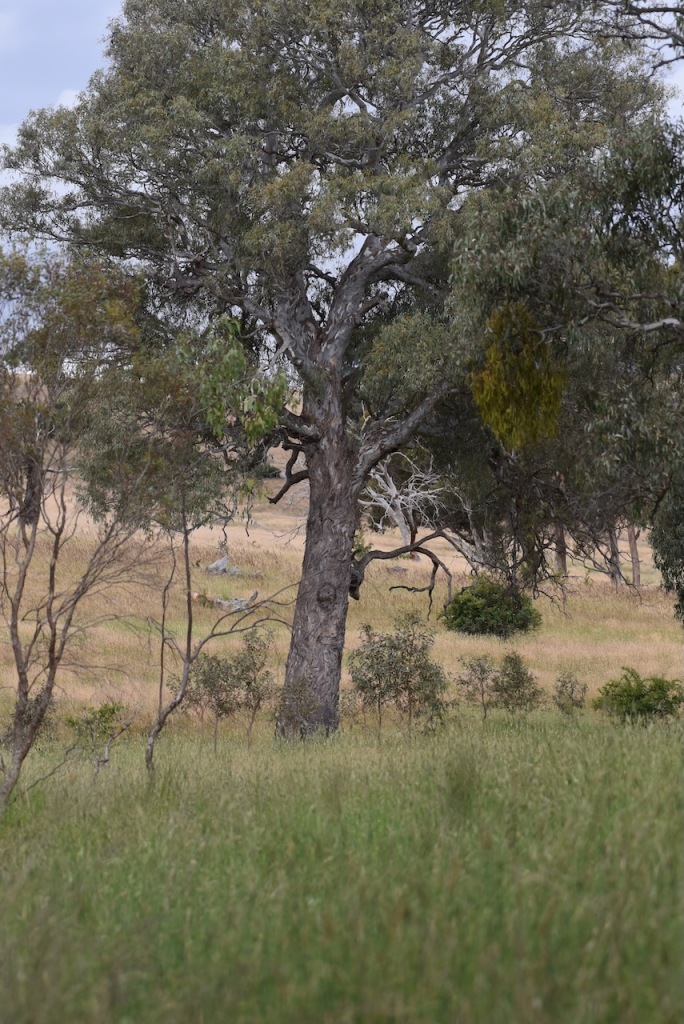

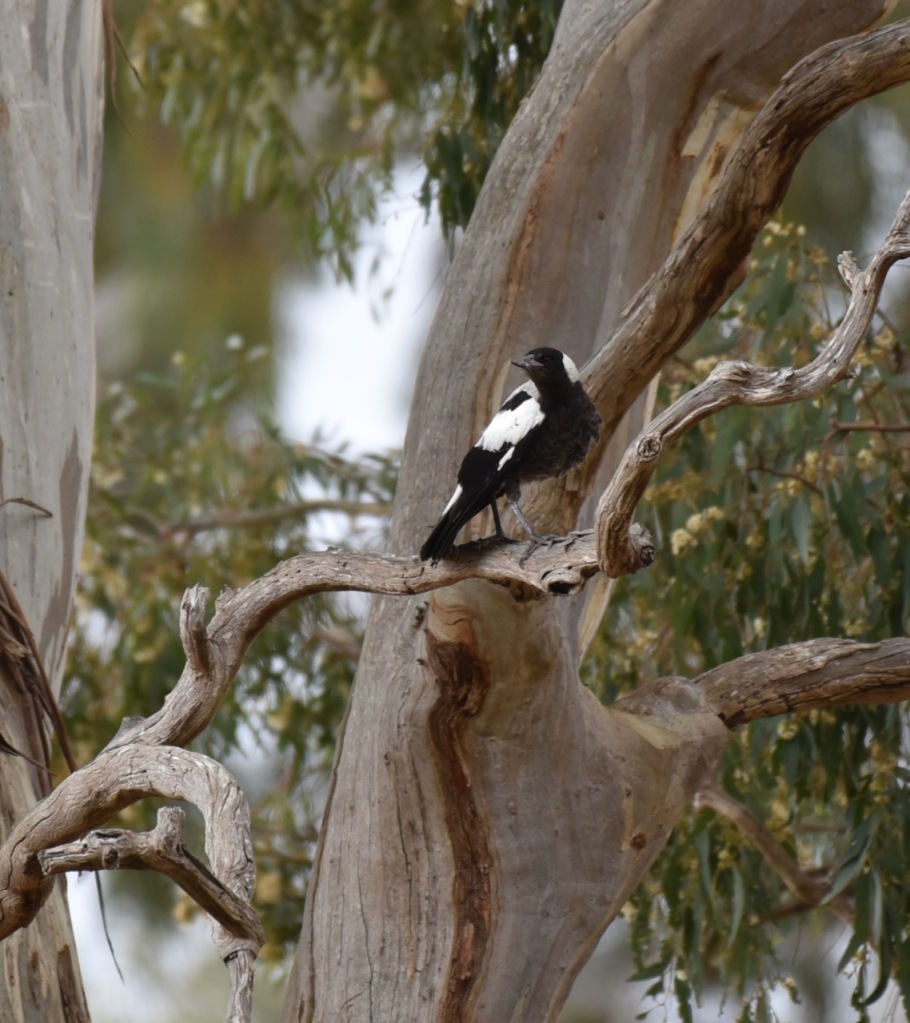

Marija worked the following stations on 40m SSB:-
- VK3PF
- VK3KAI
- VK5HS
- VK2USH
- VK5TN
- VK3PWG
- VK2SKI
- VK3KR
- VK3BEL
Marija worked the following stations on 40m AM:-
- VK3PF
- VK3KAI
I worked the following stations on 40m SSB:-
- VK3PF
- VK3KAI
- VK5HS
- VK2USH
- VK5TN
- VK3PWG
- VK2SKI
- VK3KR
- VK3BEL
- VK3CEO
- VK3MTV
- VK5FANA
- VK2HHA
- VK5KVA
- VK3NBV/p
- VK1AO
- VK2MET
- VK3DJC
- VK3MCK
I worked the following stations on 40m AM:-
- VK3PF
- VK3KAI
I worked the following station on 20m SSB:-
- VK2IO/m
References.
- Aussie Towns. (n.d.). Ararat, VIC. [online] Available at: https://www.aussietowns.com.au/town/ararat-vic [Accessed 2 May 2024].
- Dcceew.gov.au. (2023). Collaborative Australian Protected Areas Database (CAPAD) 2022 – DCCEEW. [online] Available at: https://www.dcceew.gov.au/environment/land/nrs/science/capad/2022 [Accessed 2nd May 2024].
- justwalkit (n.d.). Amazing Ararat. [online] Walking Maps. Available at: https://walkingmaps.com.au/walk/1650 [Accessed 2 May 2024].
- Marian College Ararat. (n.d.). Heritage – DNA College. [online] Available at: https://www.mcararat.catholic.edu.au/about-us/heritage [Accessed 2 May 2024].
- http://www.victorianplaces.com.au. (n.d.). Cathcart | Victorian Places. [online] Available at: https://www.victorianplaces.com.au/cathcart [Accessed 2 May 2024].
 VK5PAS