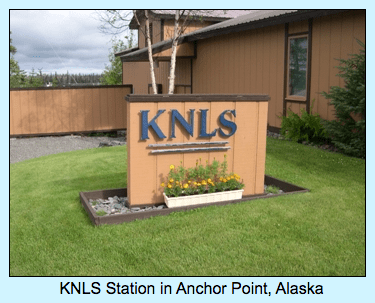
At about 1200 UTC on Tuesday, the 10th day of June 2025, I tuned in to KNLS Alaska, broadcasting on 9795 kHz in the English language.
The signal was coming from the 100 kW transmitter in Anchor Point. (Short Wave Info 2024)
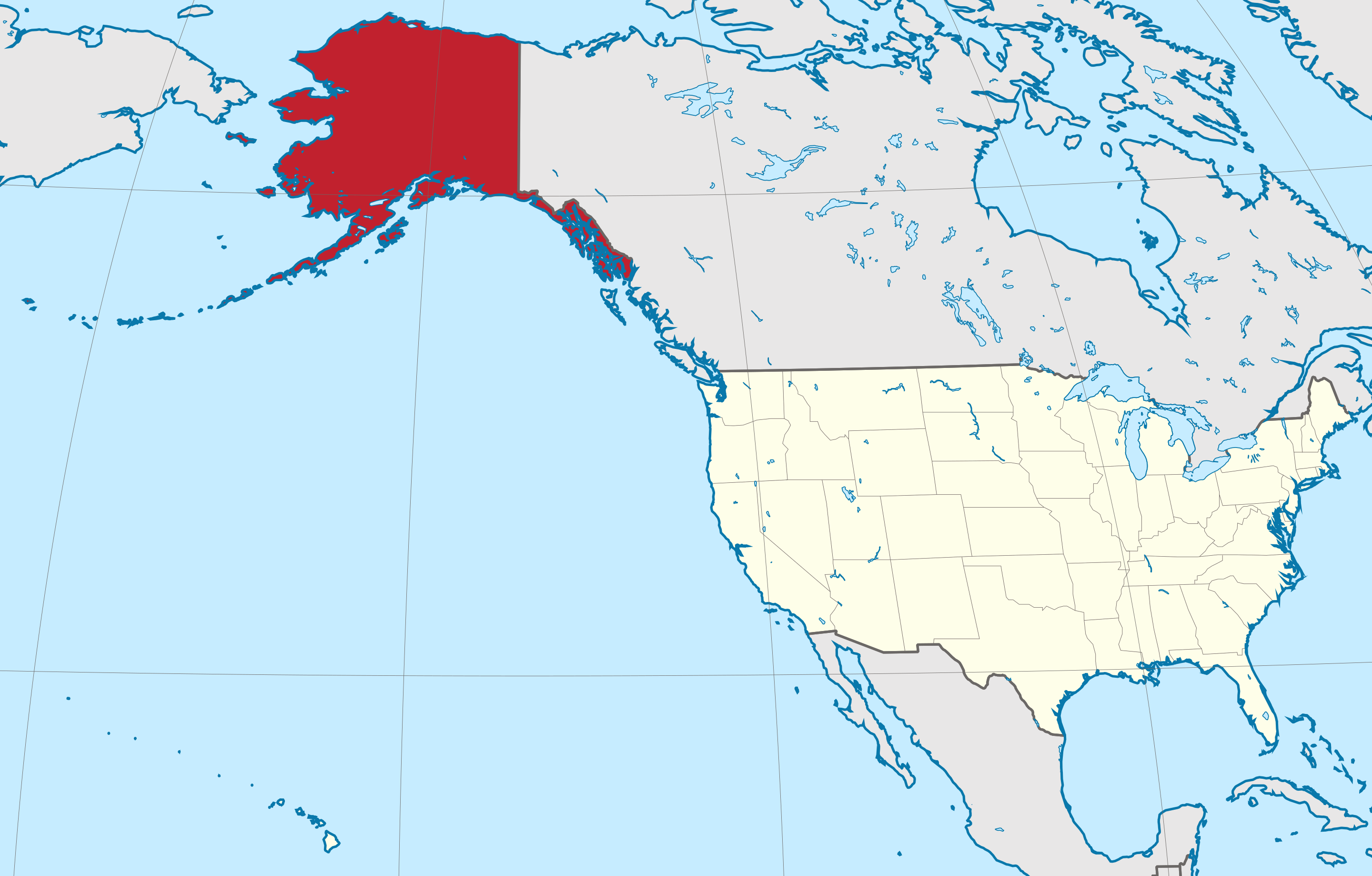
Above:- Map showing the location of Alaska. Image c/o Wikipedia.
The overall reception of KNLS was good. The signal strength was good, and there was slight interference from stations on adjacent frequencies. There were slight static crashes on the band from local storms here in Australia. There was no fading of the signal.
S
I
N
P
O
4
4
4
5
4
My equipment:-
Yaesu FTdx101MP
dipole antenna
Below is a short video showing my reception of KNLS.
References.
Short-wave.info. (2023). Short-Wave Radio Frequency Schedule. [online] Available at: http://www.short-wave.info/index.php [Accessed 10 Jun. 2025].
At about 1138 UTC on Tuesday, the 10th day of June 2025, I tuned in to FEBC Radio, broadcasting on 9795 kHz in the Vietnamese language.
The signal was coming from the Iba 100 kW transmitter in the Philippines. (Short Wave Info 2024)
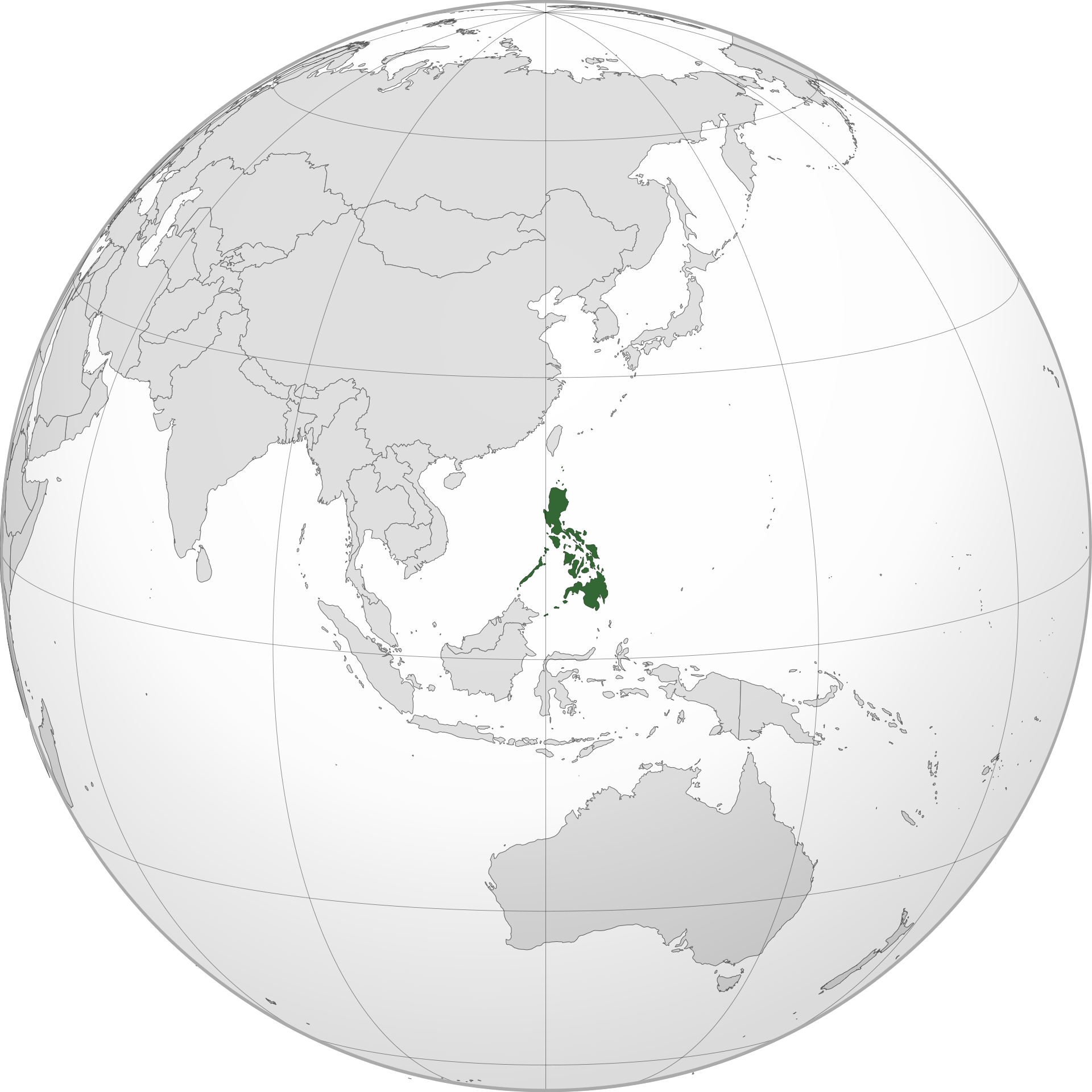
Above:- World globe showing the location of the Philippines. Image c/o Wikipedia.
The overall reception of FEBC Radio was poor. The signal strength was good; however, there was obvious deliberate interference in the form of a siren on the frequency. It made listening pleasure very difficult.
S
I
N
P
O
4
2
4
4
2
My equipment:-
Yaesu FTdx101MP
dipole antenna
Below is a short video showing my reception of FEBC Radio.
References.
Short-wave.info. (2023). Short-Wave Radio Frequency Schedule. [online] Available at: http://www.short-wave.info/index.php [Accessed 10 Jun. 2025].
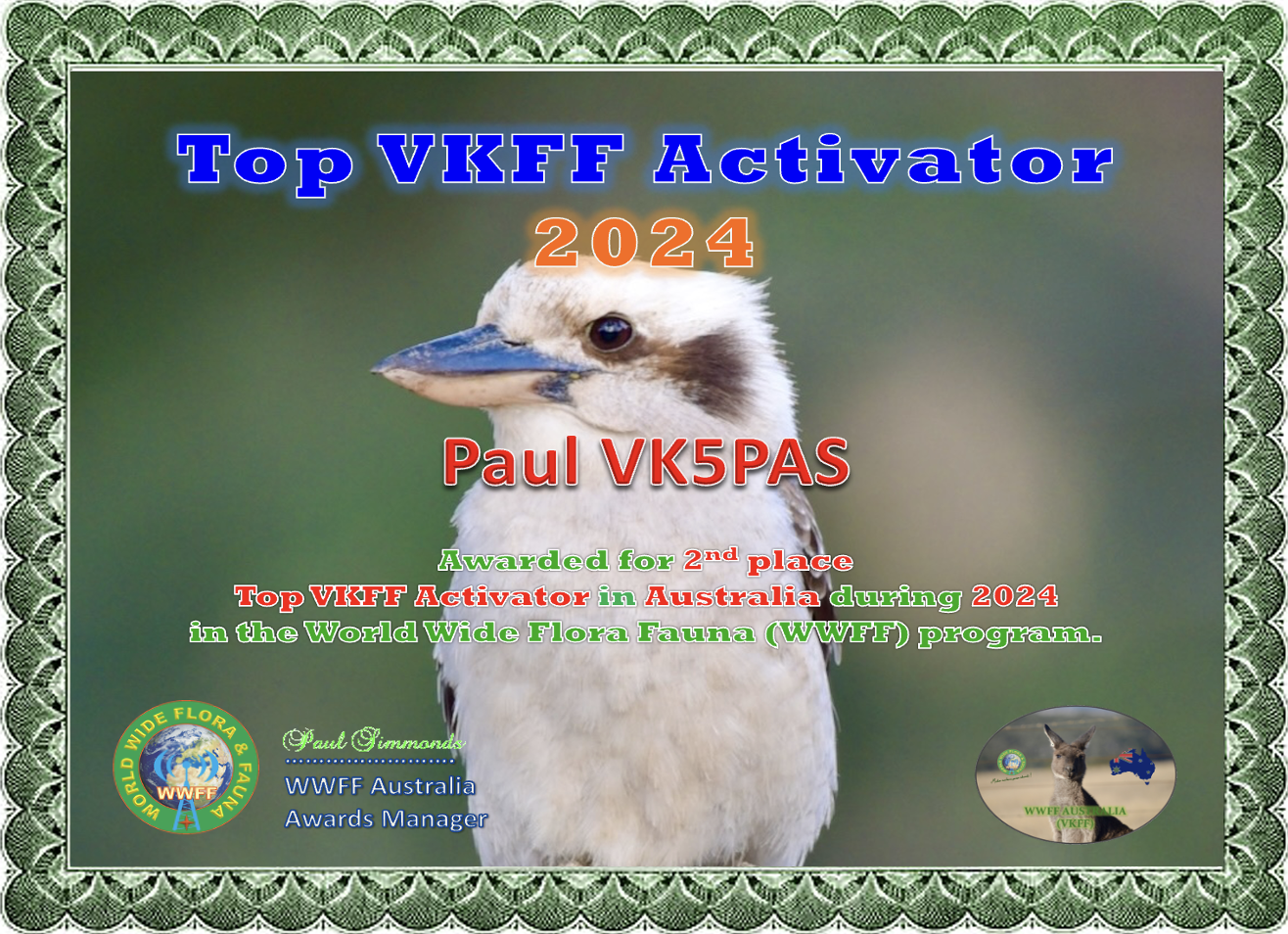
On Tuesday 20th May 2025, the Australia New Zealand Africa (ANZA) DX Net celebrated its 55 year anniversary. The net was started way back in 1970 by Percy VK3PA.
I decided to design a certificate for the occasion, which I emailed to each person who checked into the net on the day.
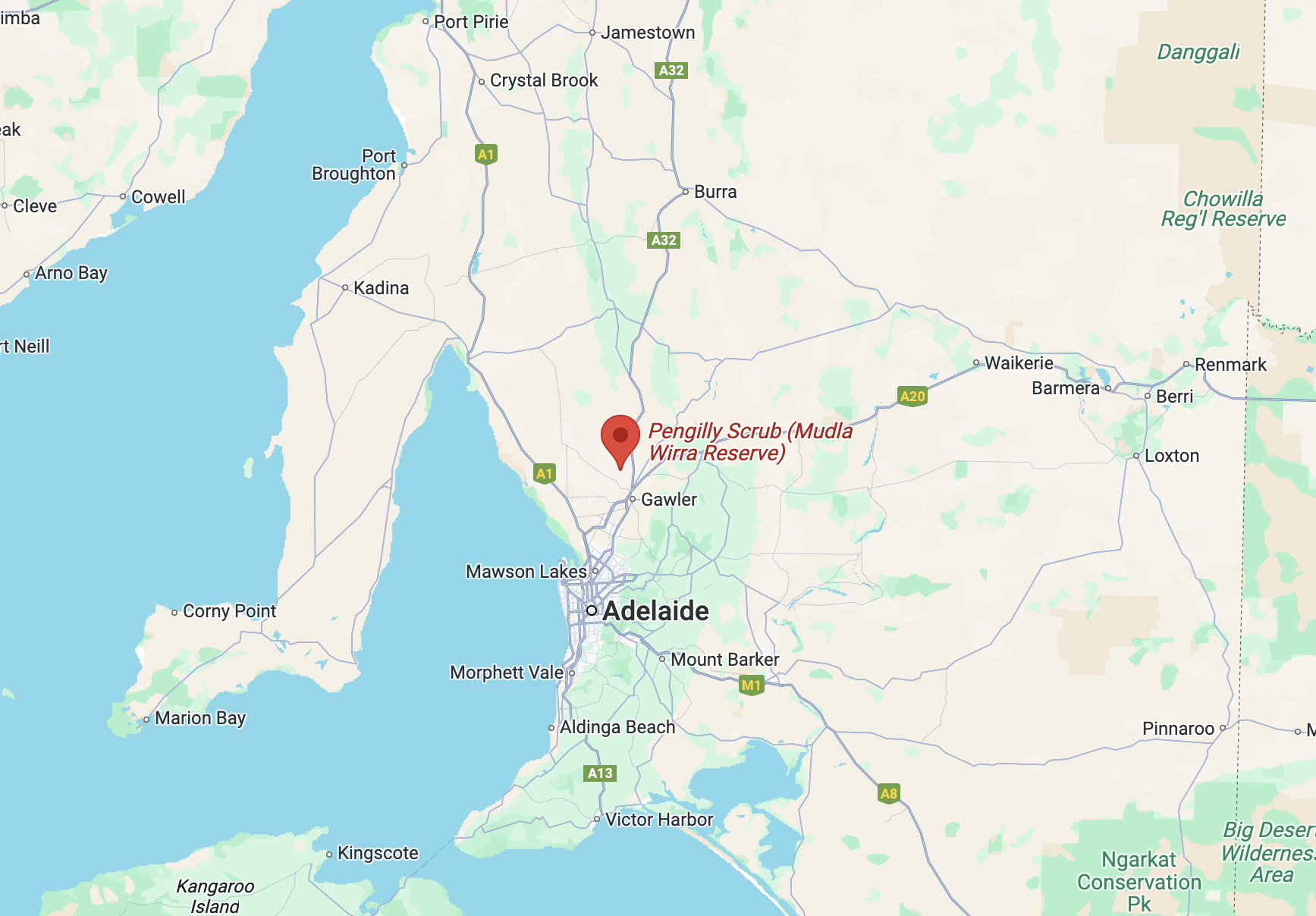
Our final activation for Monday 21st April 2025, was Pengilly Scrub (Mudla Wirra) VKFF-4050. The reserve is located about 16 km north of Gawler and about 66 km north of Adelaide.
Above:- Map showing the location of Pengilly Scrub. Map c/o Google Maps.
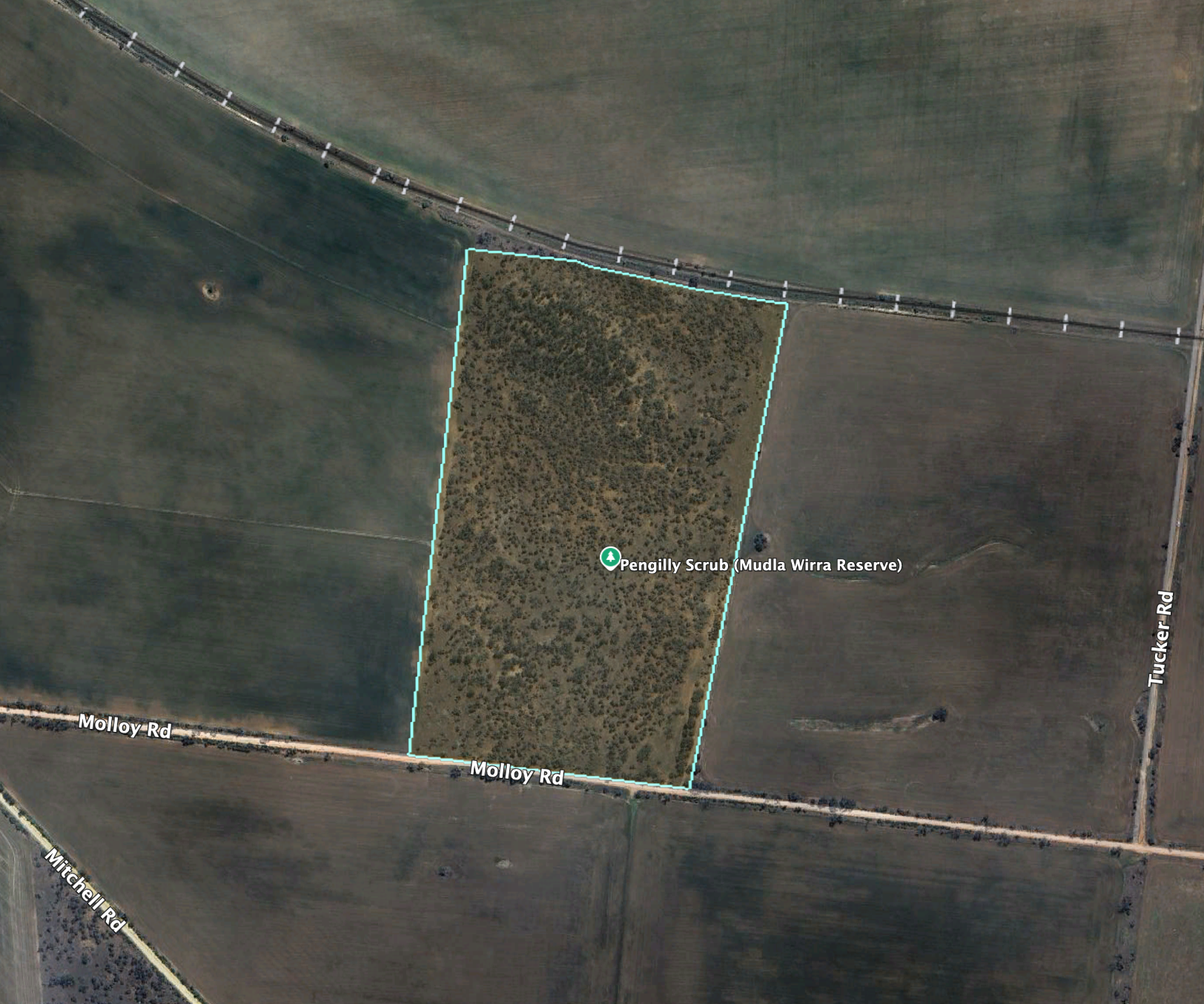
The reserve is located on the northern side of Molloy Road, Wasleys.
Above:- An aerial view of Pengilly Scrub. Image c/o Google Earth.
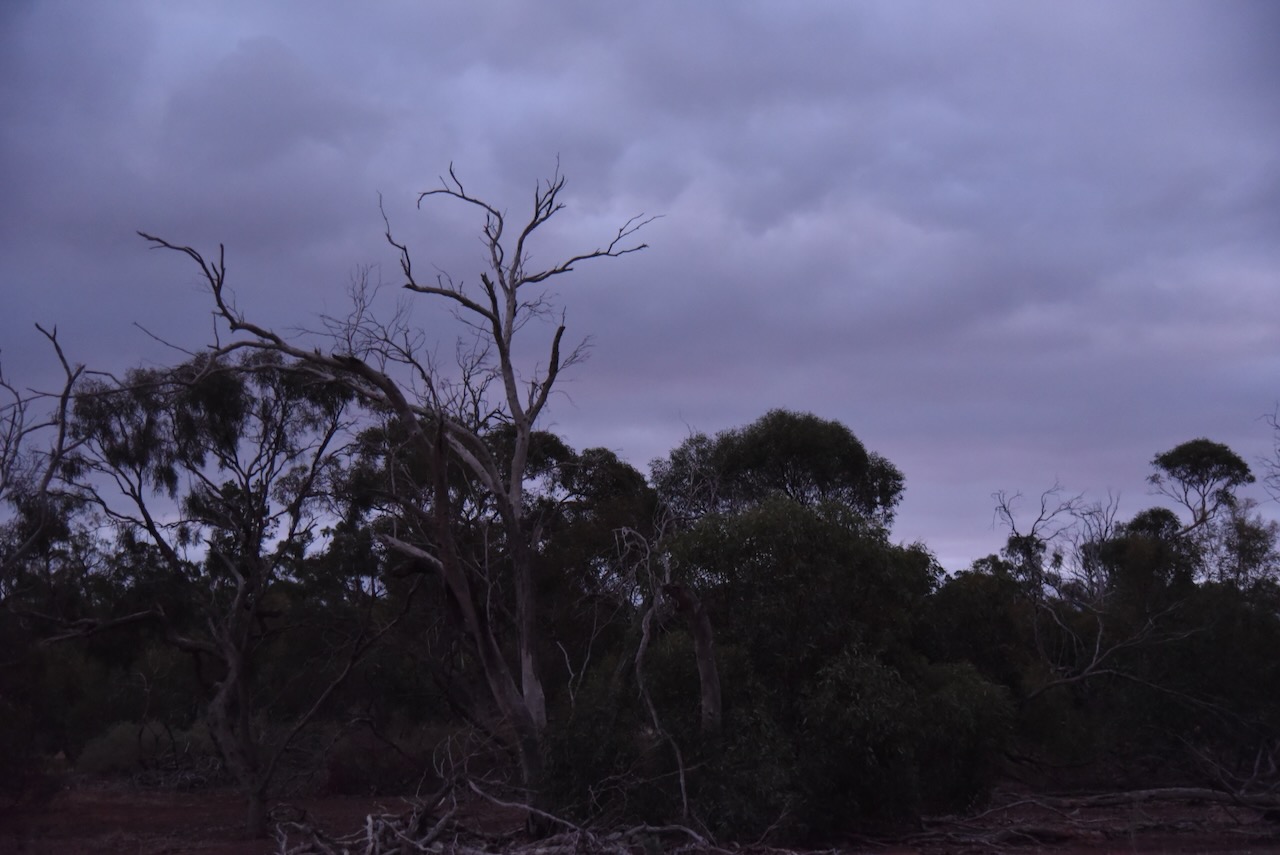
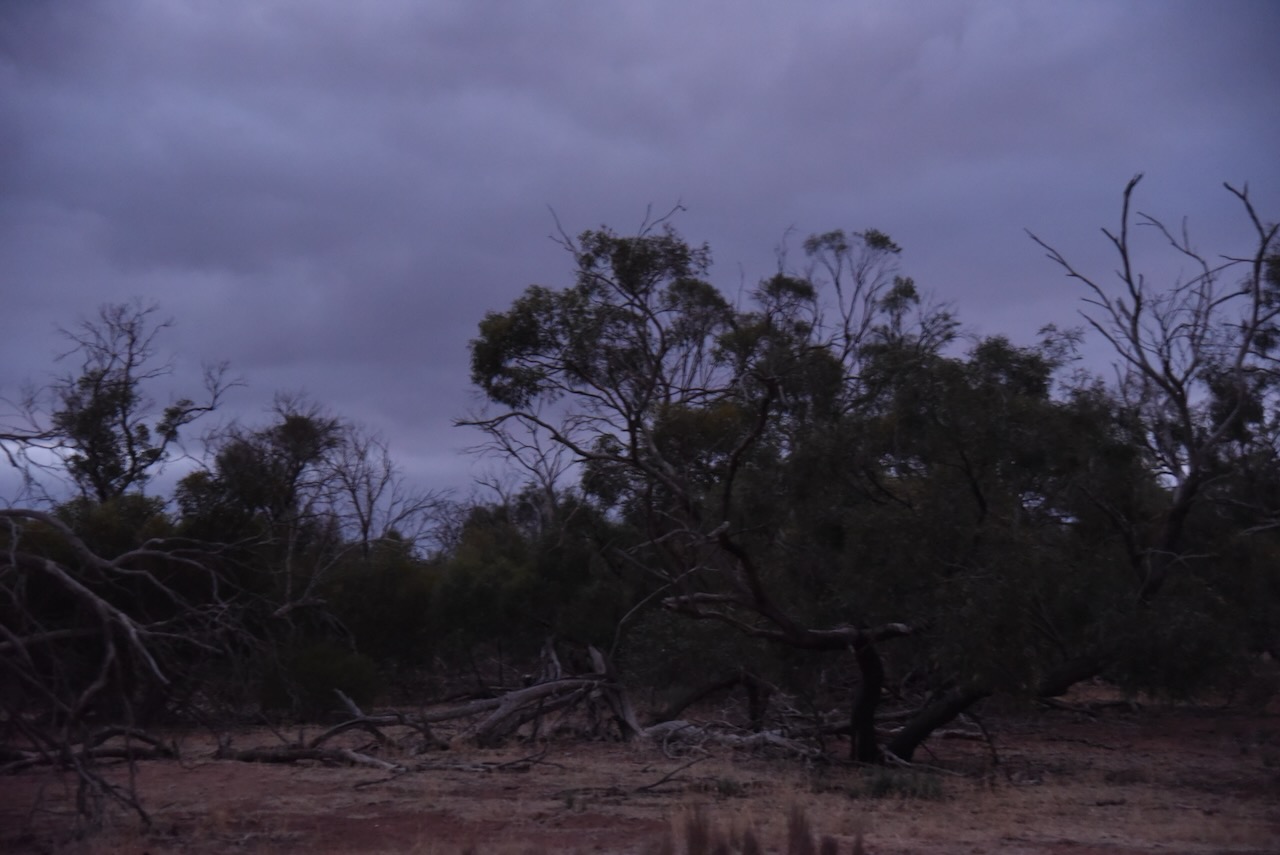
The reserve comprises 20 hectares of native scrub, which is surrounded by cleared land for farming. There are three main vegetation habitats in the reserve: Peppermint Box woodland, Native Pine woodland, and Mallee Woodland. Sadly, most of the scrub was burnt during the Pinery wildfire in November 2015. Over 85,000 acres were burned during the fire. 470 structures were destroyed, including 91 houses. Sadly, there were 2 fatalities. (Birds SA 2016) (Wikipedia 2021)
A total of 66 native birds have been recorded in the park, including Crested Pigeon, Red-rumped Parrot, Spiny-cheeked Honeyeater, Singing Honeyeater, White-browed Babbler, and Willie Wagtail. (Birds SA 2016)
Sadly, it was almost dark by the time we reached the park, so we did not get to enjoy this lovely piece of scrub.
We ran the Yaesu FT857, 40 watts, and the 20/40/80m linked dipole for this activation.
Marija worked the following stations on 40m SSB:-
VK3PF/M
VK3KAI/M
VK1AO
VK2MET
VK4SMA
VK3CEO
VK2LEE
VK5FC
VK3ANL
VK3APJ
VK3GJG/P (VKFF-0269)
VK2IO/P (VKFF-0191)
VK2GEZ/P (VKFF-0191)
I worked the following stations on 40m SSB:-
VK3PF/M
VK3KAI/M
VK1AO
VK2MET
VK4SMA
VK3CEO
VK2LEE
VK5FC
VK3ANL
VK3APJ
VK3JV
VK2EXA
VK3GXL
VK3CAL
ZL2BB
VK2YK
VK5GA
VK2EG
VK3WSG
VK3UCD
VK2ADI
VK7PJM
VK3GJG/P (VKFF-0269)
VK4HNS
VK4NH
VK4DXA
VK5AV
VK2USH
VK4HMI
ZL1GGL
VK6ALE
VK3GOW
VK2WJM
VK2MI
VK2IO/P (VKFF-0191)
VK2GEZ/P (VKFF-0191)
VK5CZ
VK6BSA
VK2LWK
VK3SPG
VK5JBJ
VK3SMW
VK5VST
VK6ACA
At the conclusion of the activation, we headed to the Roseworthy Hotel for an evening meal, before making our way back home. It had been a fun day out, with five new parks activated.
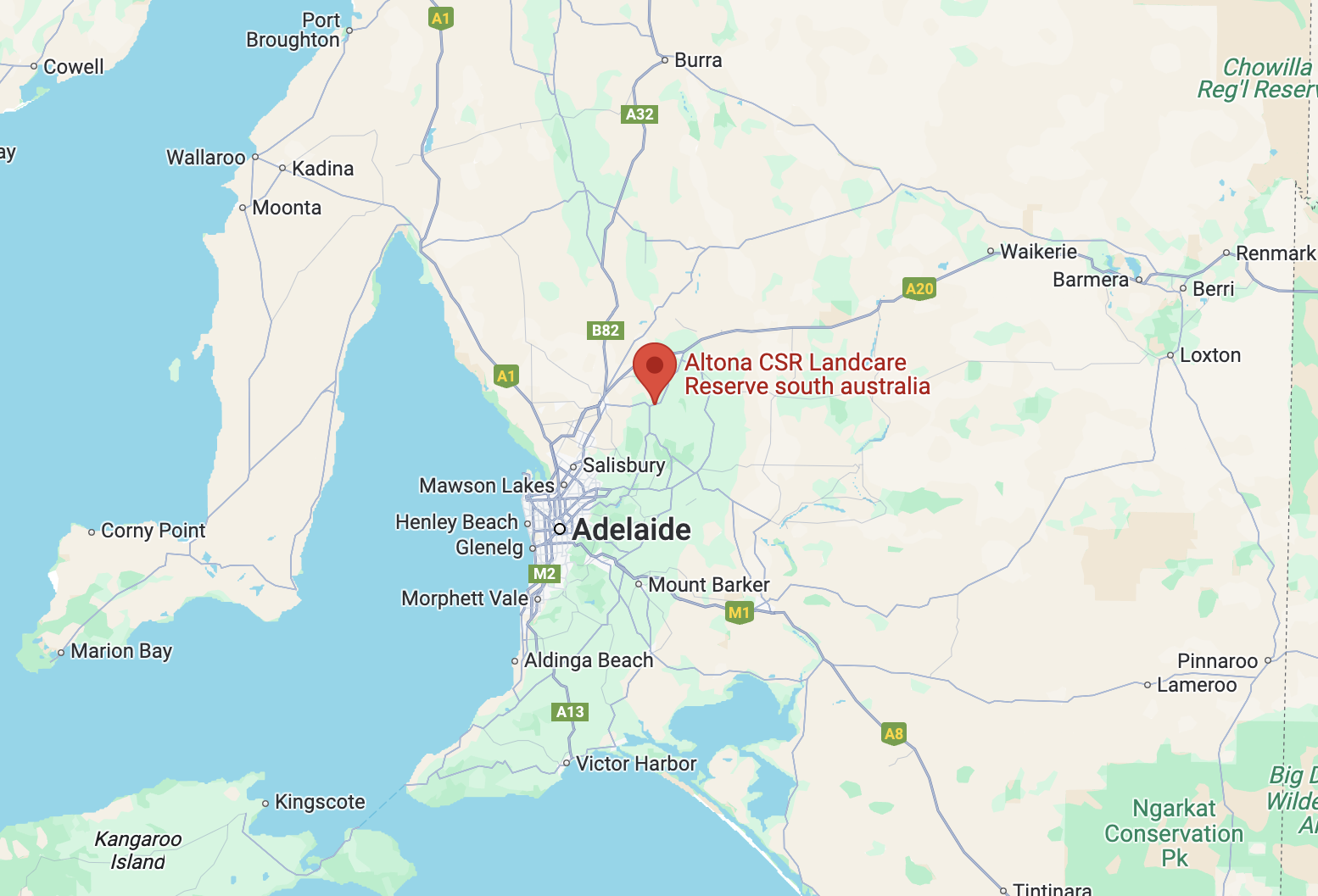
Our fourth park for Monday 21st April 2025, was the Altona Landcare Reserve VKFF-4028. The reserve is located about 3 km northwest of Lyndoch in the world-famous wine growing region of the Barossa Valley.
Above:- Map showing the location of the Altona Landcare Reserve. Map c/o Google Maps.
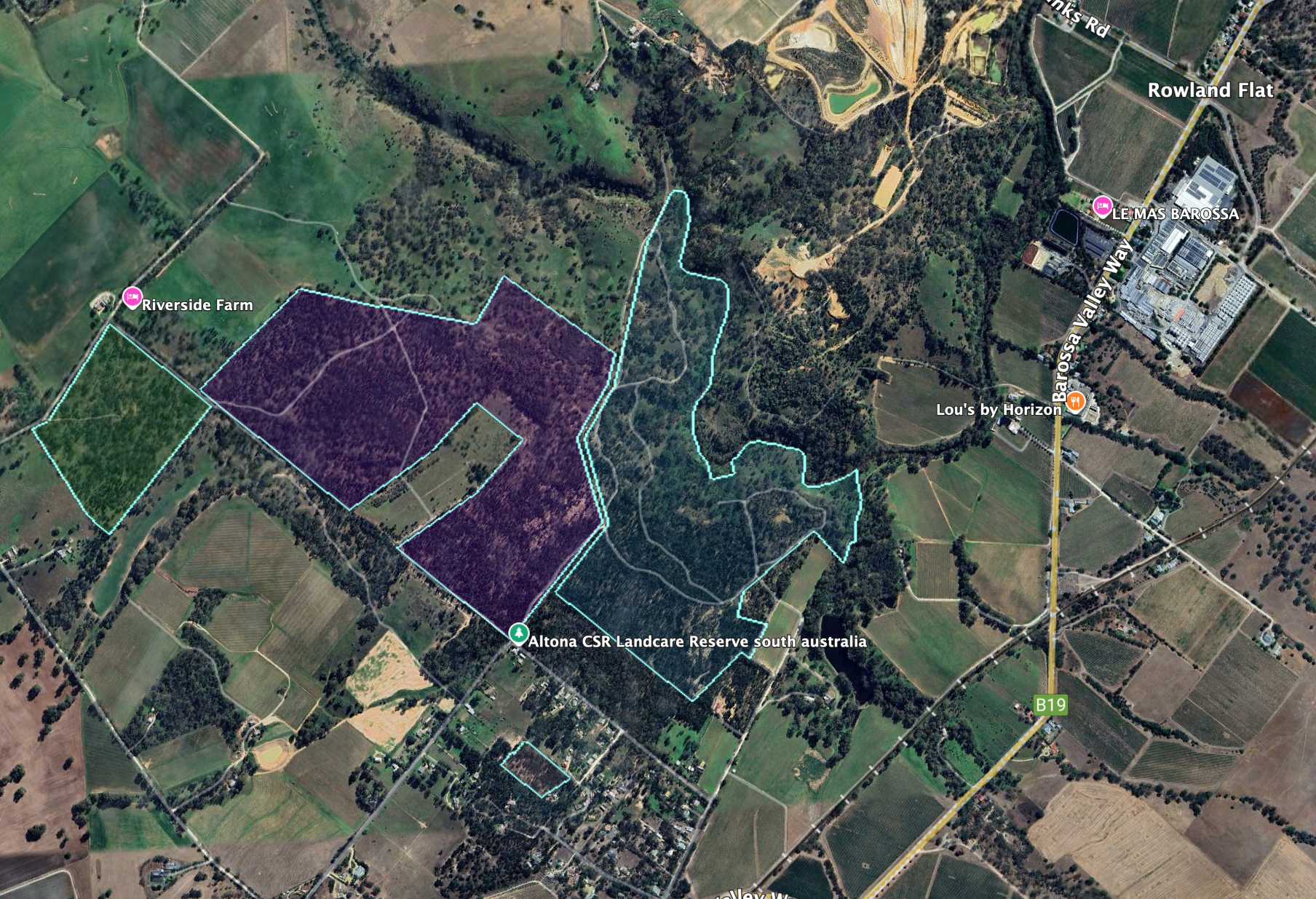
The park is located on Altona Road. A heritage agreement adjoins the western side of the reserve.
Above:- An aerial view of the reserve. Image c/o Google Earth.
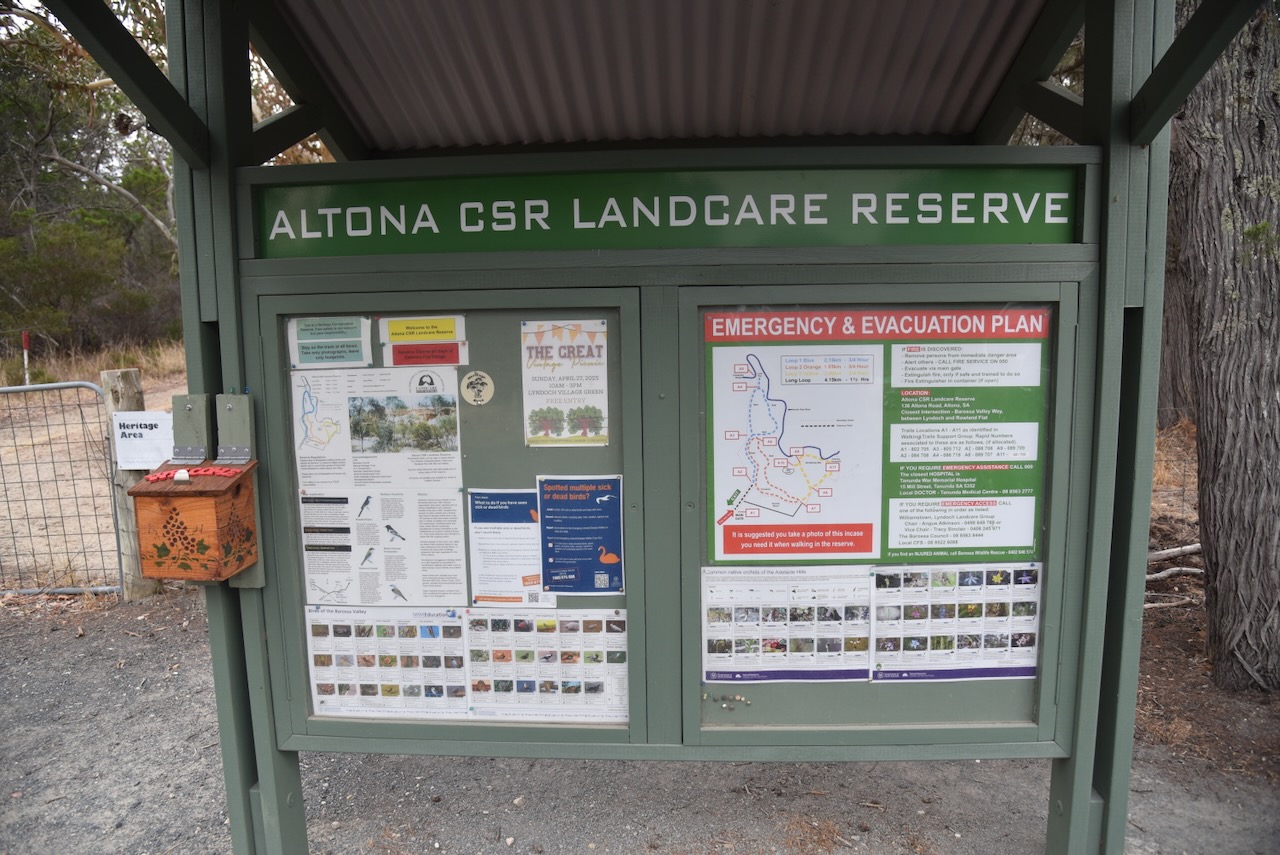
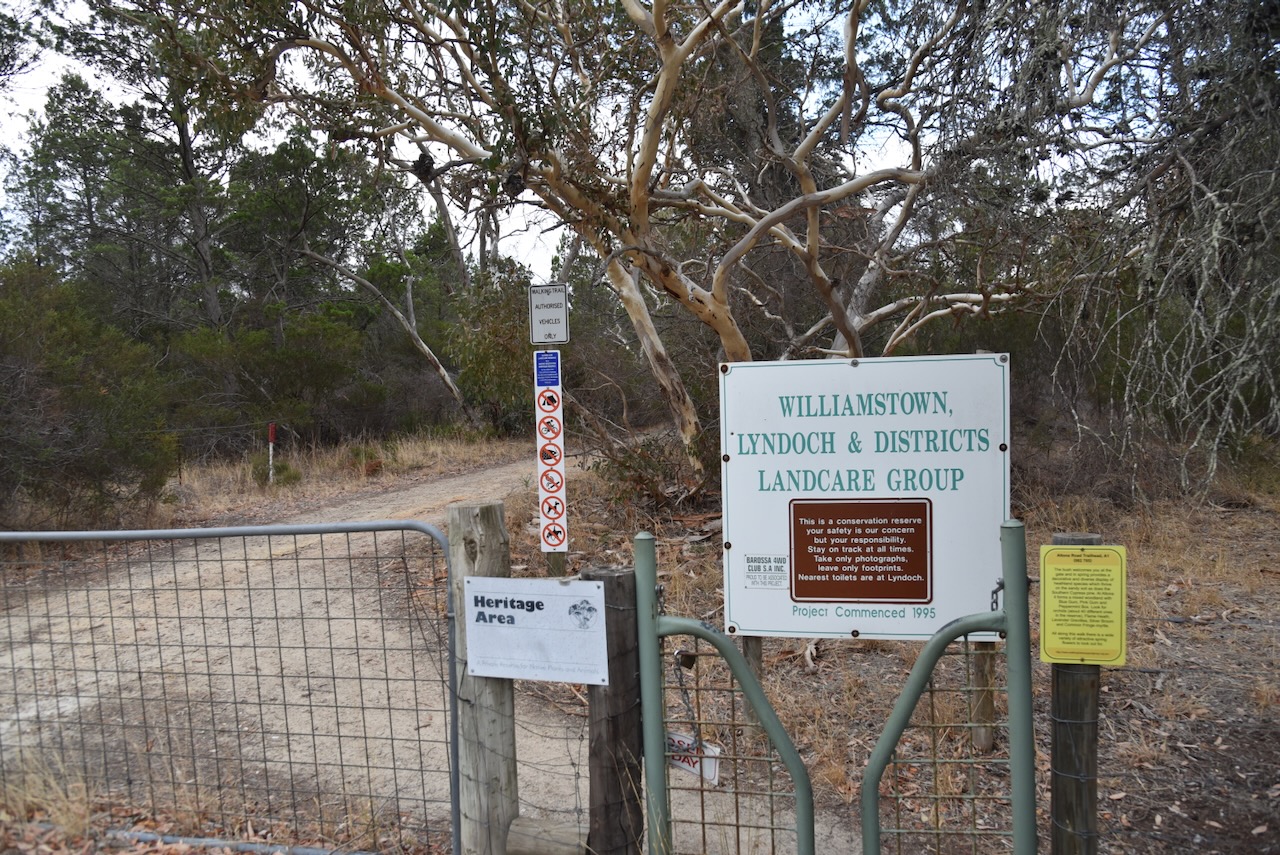
The reserve is a Heritage Agreement that is owned by the Williamstown, Lyndoch & Districts Landcare Group. It consists of 70 hectares of native scrub and is one of the last remaining areas of scrub in the district. The reserve is home to over 213 species of native plants. About 63 of those have national, state, or regional conservation status. A total of 96 species of native birds have been recorded, with 10 having national, state, or regional conservation ratings. (The Barossa Council, 2025)
Below is an excellent video on the reserve.
We ran the Yaesu FT857, 40 watts, and the 20/40/80m linked dipole for this activation.
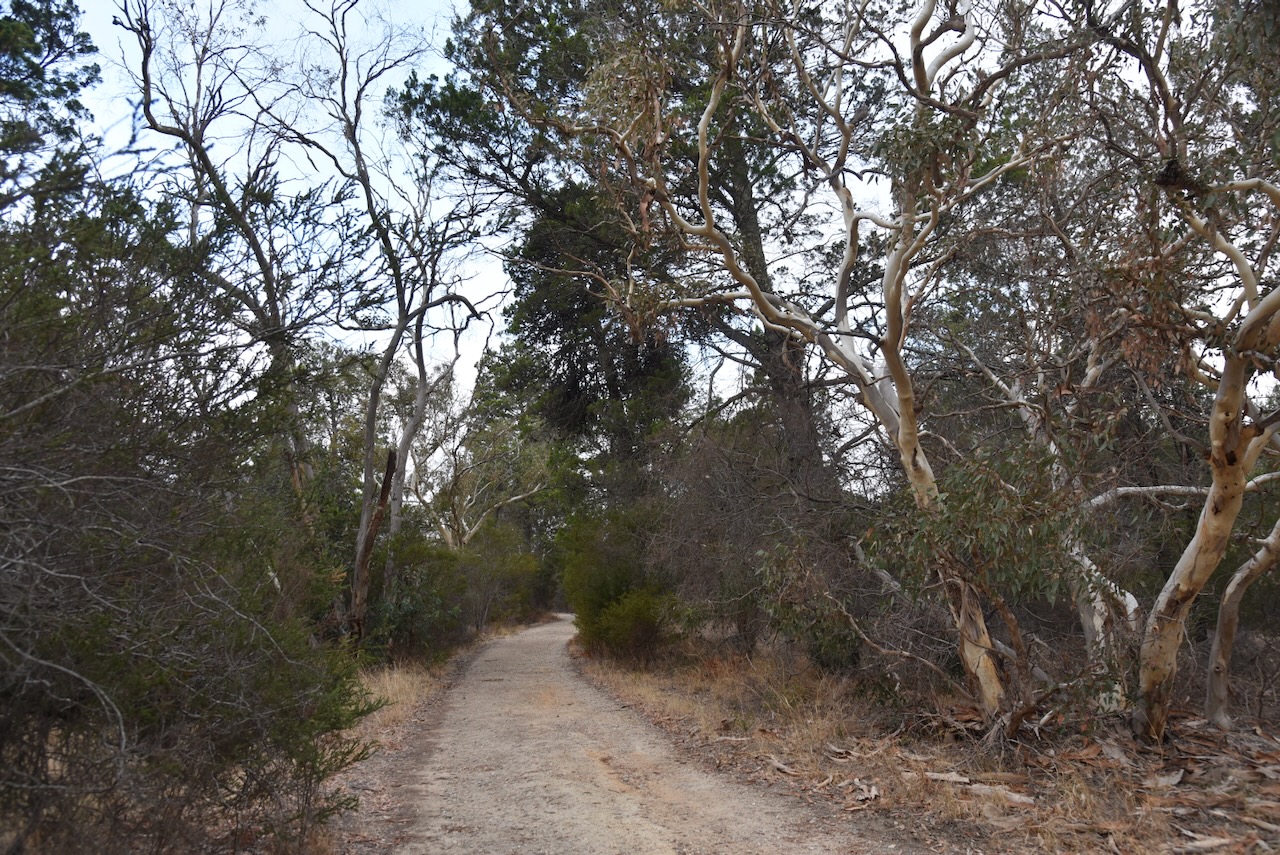
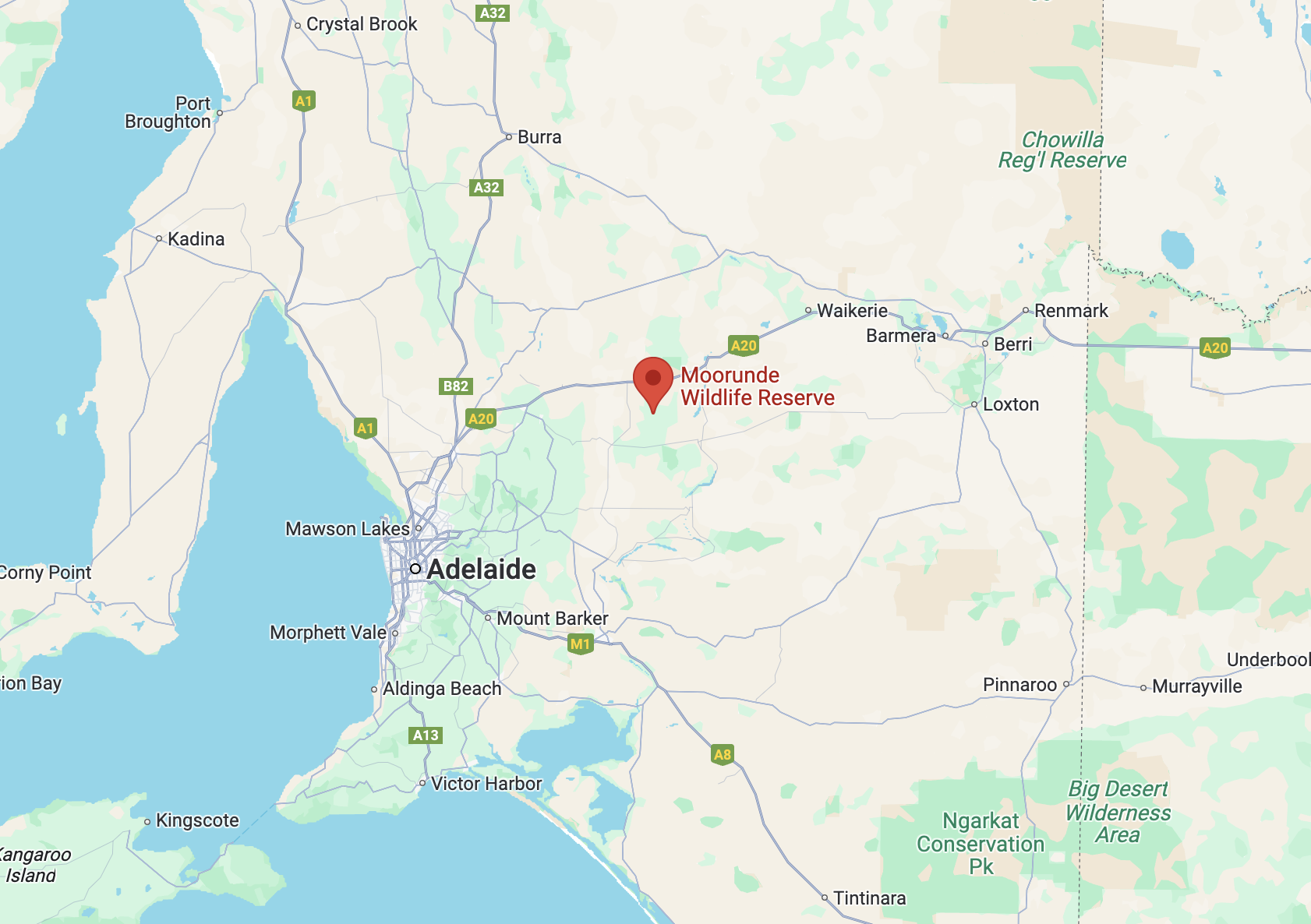
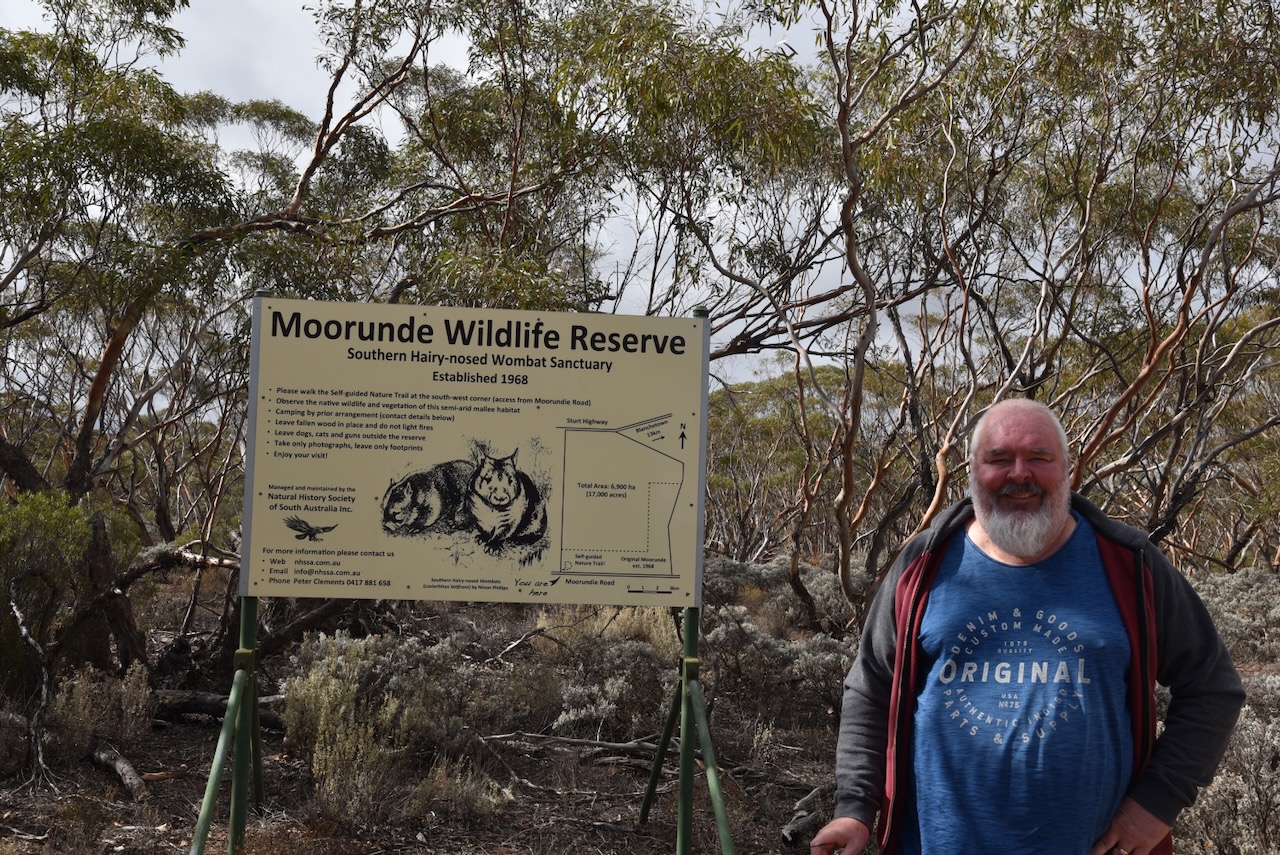
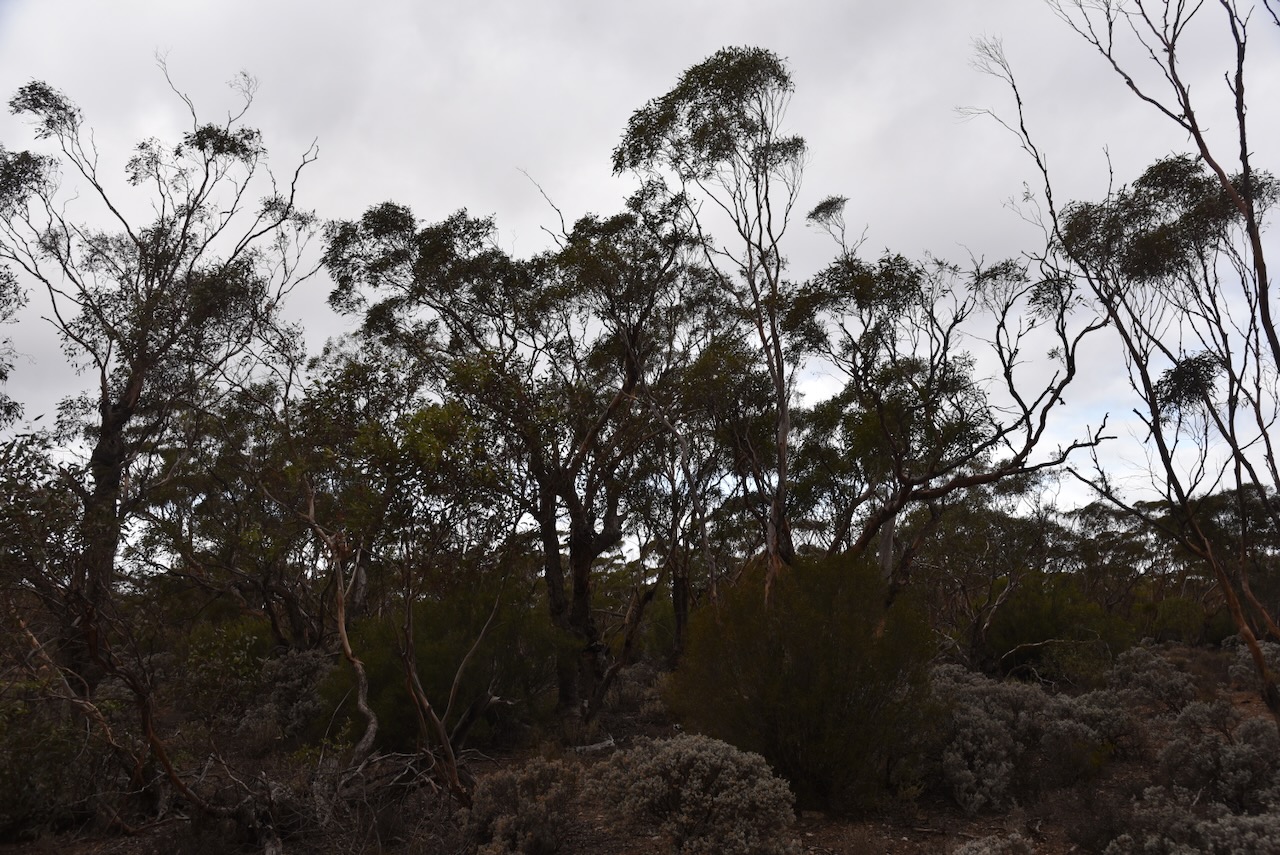
Our third park for Monday 21st April 2025, was the Moorunde Wildlife Reserve VKFF-4045. The reserve is located about 100 km northeast of Adelaide, between Blanchetown and Swan Reach.
Above:- Map showing the location of the Moorunda Wildlife Reserve. Map c/o Google Maps.
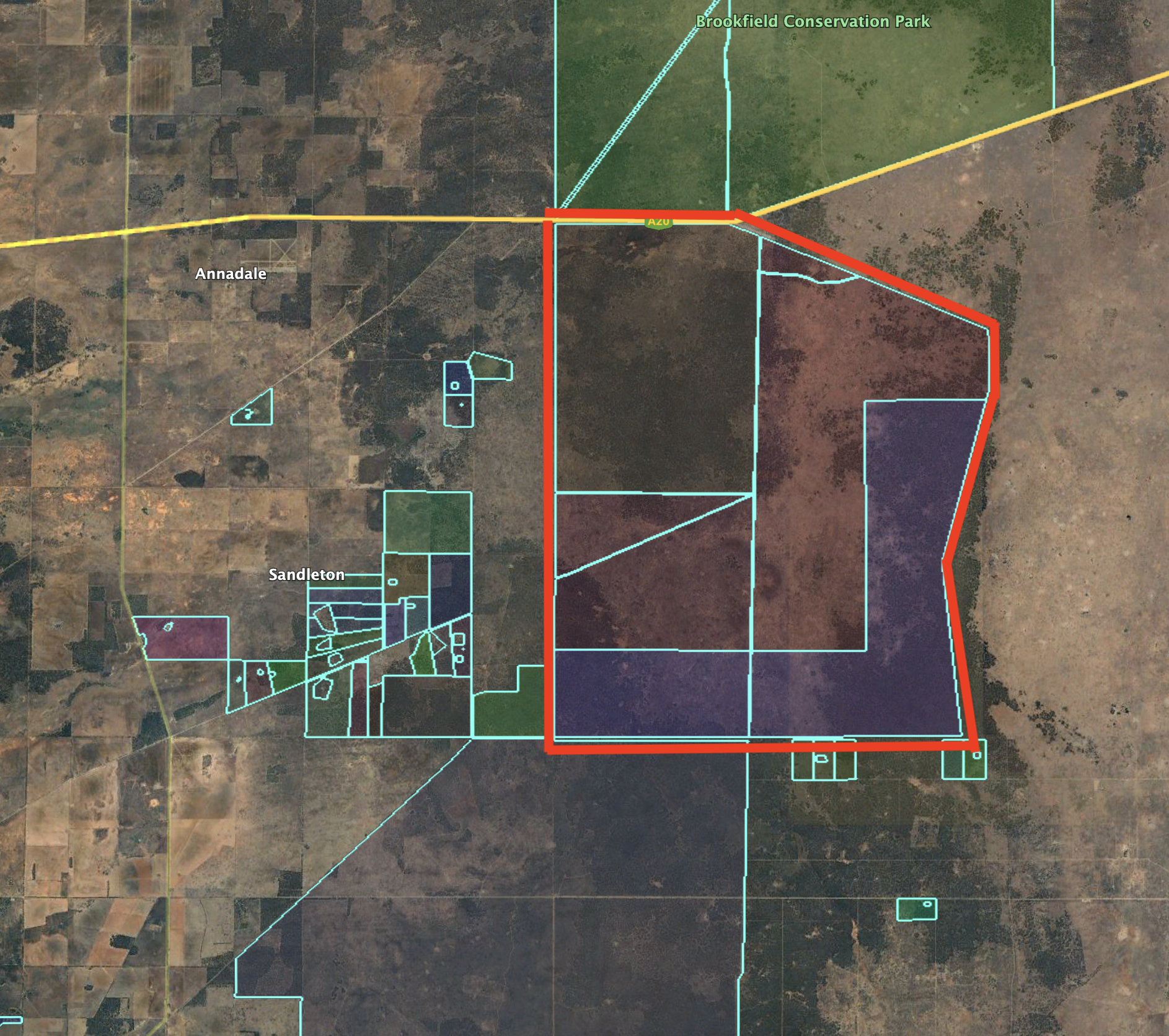
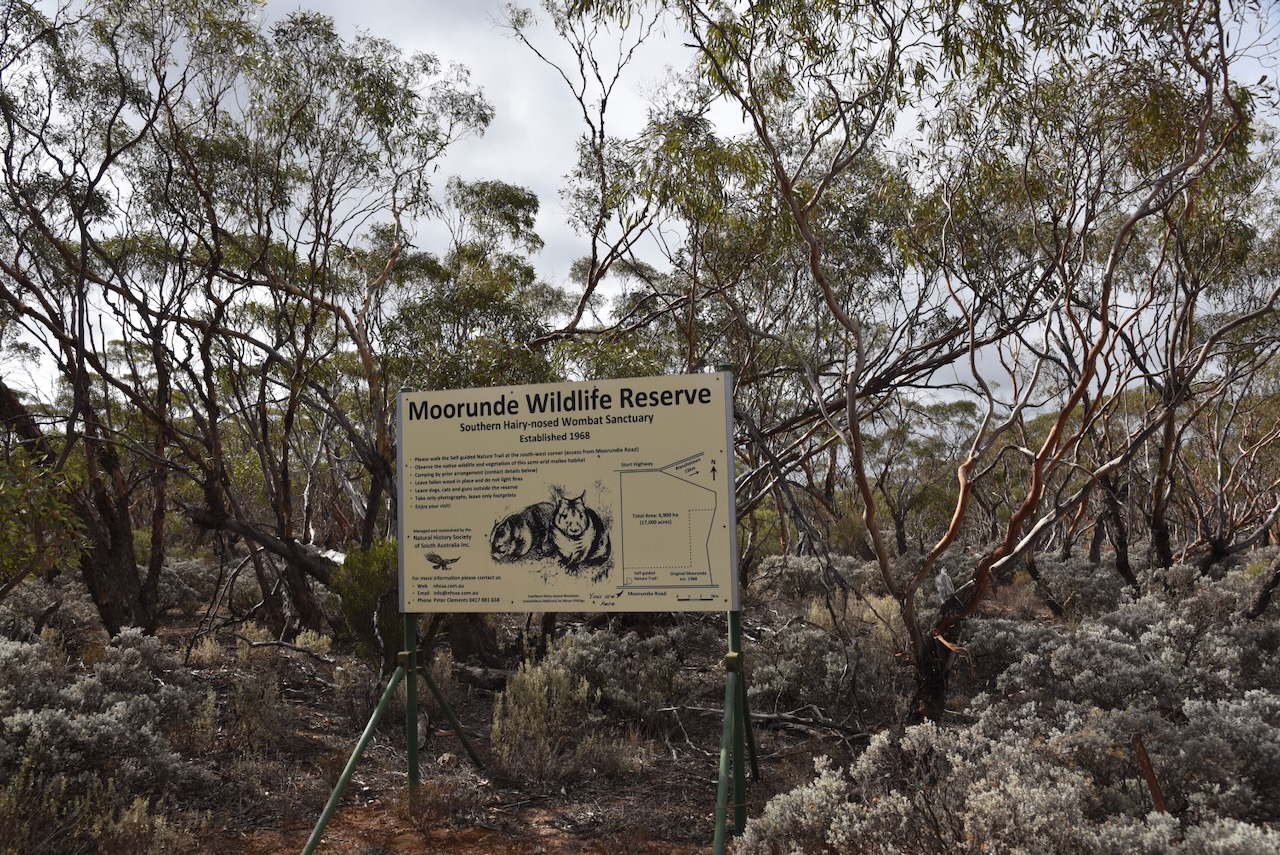
The Moorunde Wildlife Reserve is 6,900 hectares (17,000 acres) in size and comprises several Heritage Agreements of mallee country. The northern boundary of the reserve is Stury Highway. The southern boundary is Moorundie Road. To the north of the reserve is Brookfield Conservation Park, which was purchased by the Chicago Zoological Society in 1971 for the conservation of the Southern hairy-nosed wombat. (Nat Hist Soc SA 2014) (Wikipedia 2025)
Above:- An aerial view of the Moorundde Wildlife Reserve. Image c/o Google Earth.
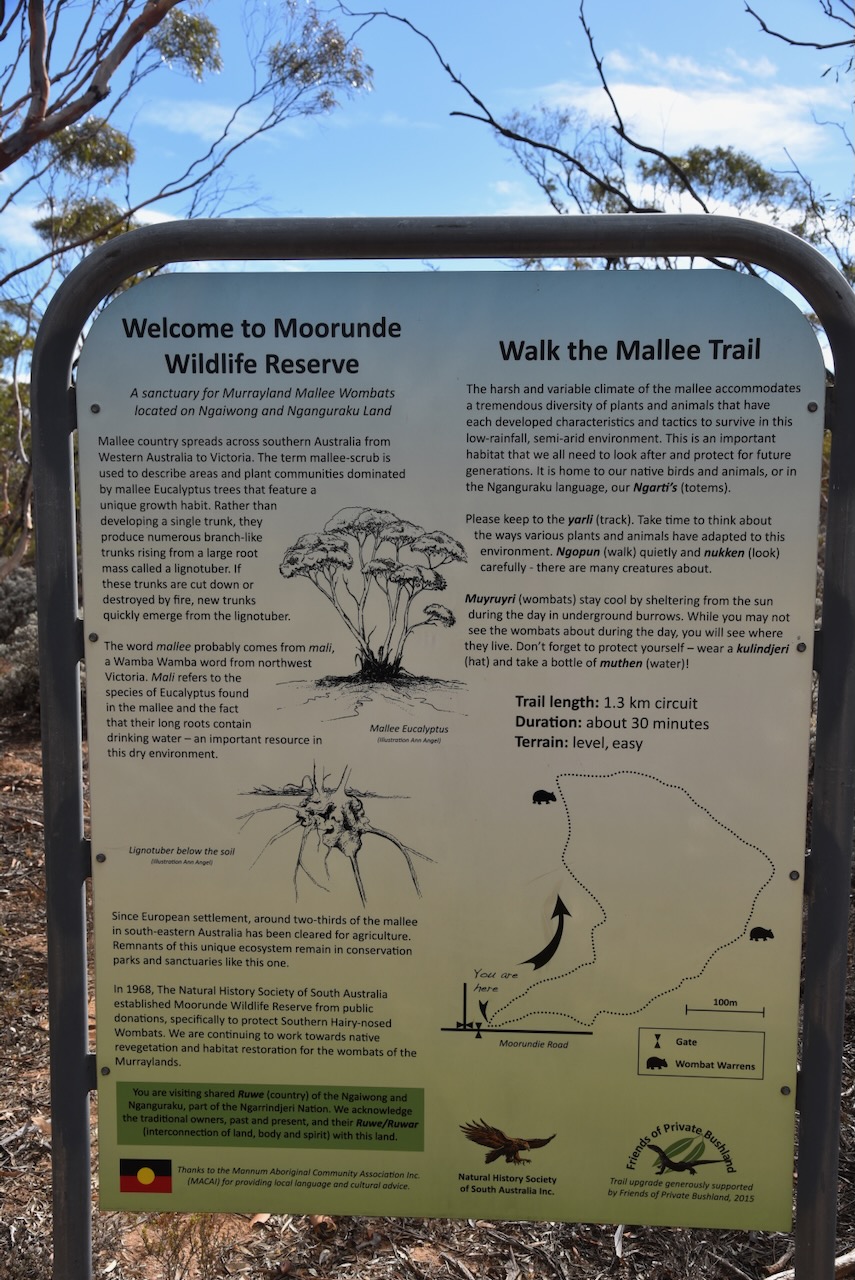
The Moorunde Wildlife Reserve was the first sanctuary established specifically to preserve the habitat of the Southern Hairy-nosed Wombat. It is one of the largest wombat sanctuaries in the world and is owned by the Natural History Society of South Australia. (Nat Hist Soc SA 2014)
Before the land was established as a Wildlife Sanctuary, it had been cleared for sheep grazing, wood fuel and charcoal production. (Wombats SA, 2020)
During the mid-1960s, the Natural History Society of South Australia lobbied the South Australian State Government to create a wombat sanctuary on the Nullabor Plains on the West Coast of South Australia. Sadly, this did not eventuate. In 1967, Jack and Peg Conquest approached the Natural History Society of South Australia. They were eager to establish a sanctuary for the Southern Hairy-nosed Wombat. (Nat Hist Soc SA 2014)
In 1968, the Society launched a public appeal to raise money to purchase land in the Murraylands. A total of $12,000 was required to purchase the property, and a further $6,000 for infrastructure. This appeal was very successful with the publicity and support of the Sunday Mail newspaper and the Adelaide Bank. The appeal also received donations from schools, community groups, private businesses and individuals. In the first week, a total of $4,000 had been raised. As a result of the appeal, the Society purchased 2,000 hectares of land near Blanchetown that was formerly part of Portee Station owned by Louis Power. (Adelaide AZ, 2025) (Nat Hist Soc SA 2014)
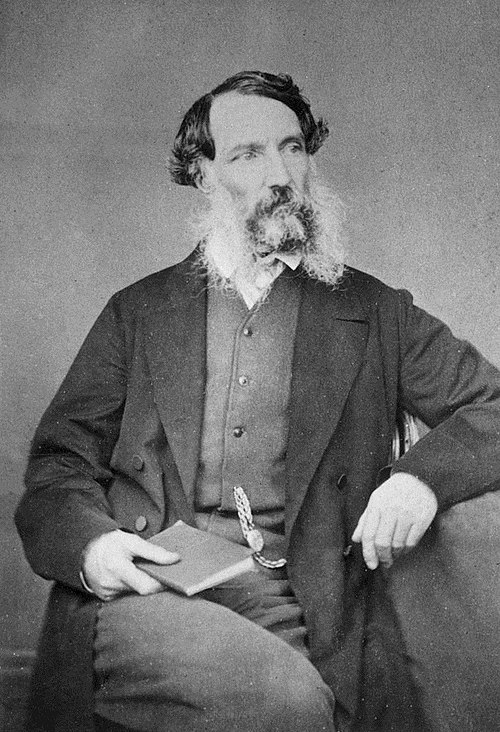
The name of the reserve was chosen as Moorunde to acknowledge the traditional owners of the land and the explorer Edward John Eyre (b. 1815. d. 1901). In 1841, he was appointed the ‘Protector of the Aborigines’. Near present-day Blanchetown, he established a station which he named Moorunde. Moorundi is an Aboriginal name for the Murray River. (Nat Hist Soc SA 2014)
Above:- Edward John Eyre. Image c/o Wikipedia.
In 1973, the Chicago Zoological Society purchased land north of the reserve and established the Brookfield Conservation Park as a wombat sanctuary. (Nat Hist Soc SA 2014)
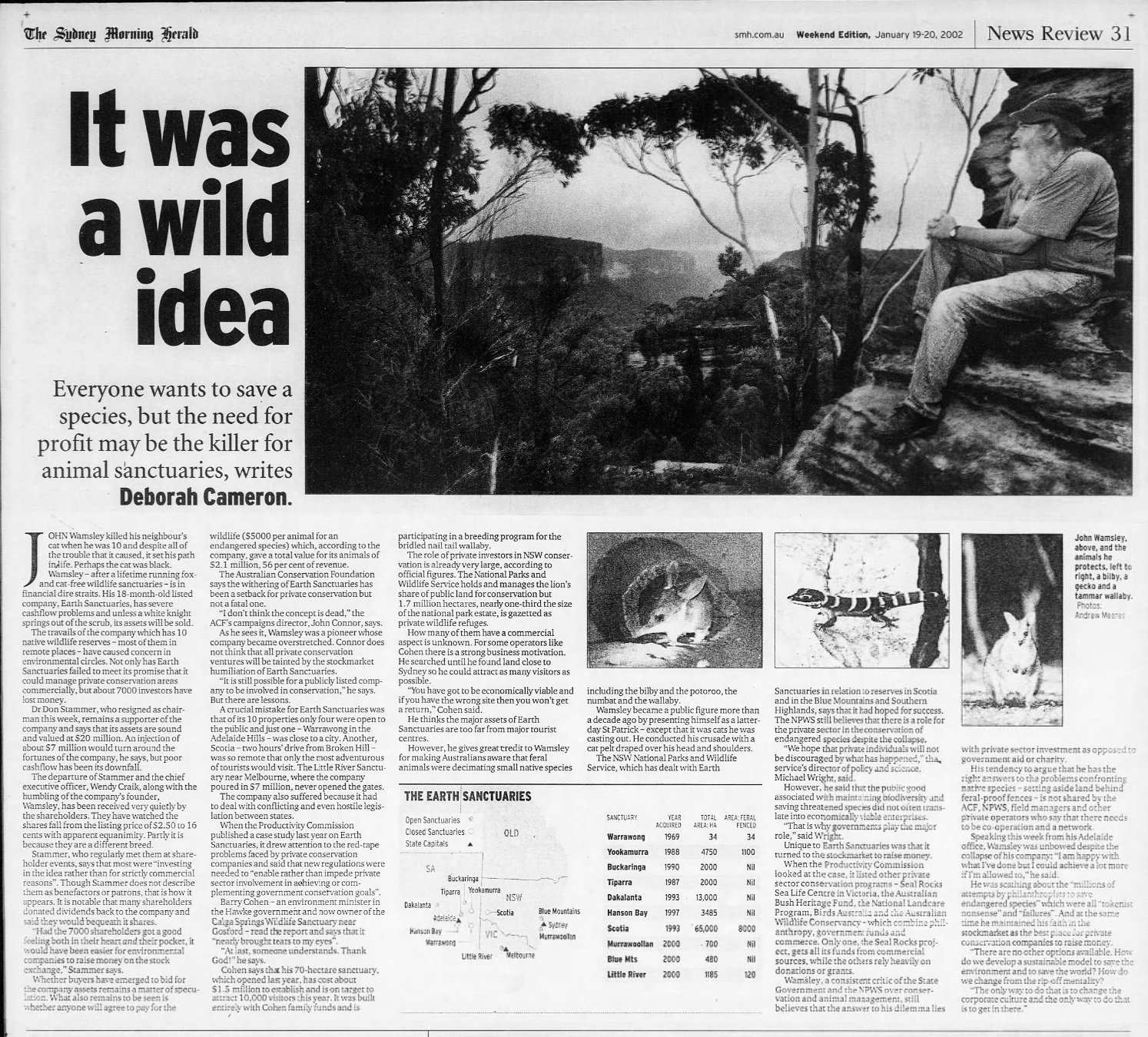
During the 1990s, Earth Sanctuaries established Yookamurra Sanctuary to the south of the Moorunde Reserve. (Nat Hist Soc SA 2014)
Above:- Article from The Sydney Morning Herald, 19 Jan 2002, re Earth Sanctuaries. Image c/o newspapers.com
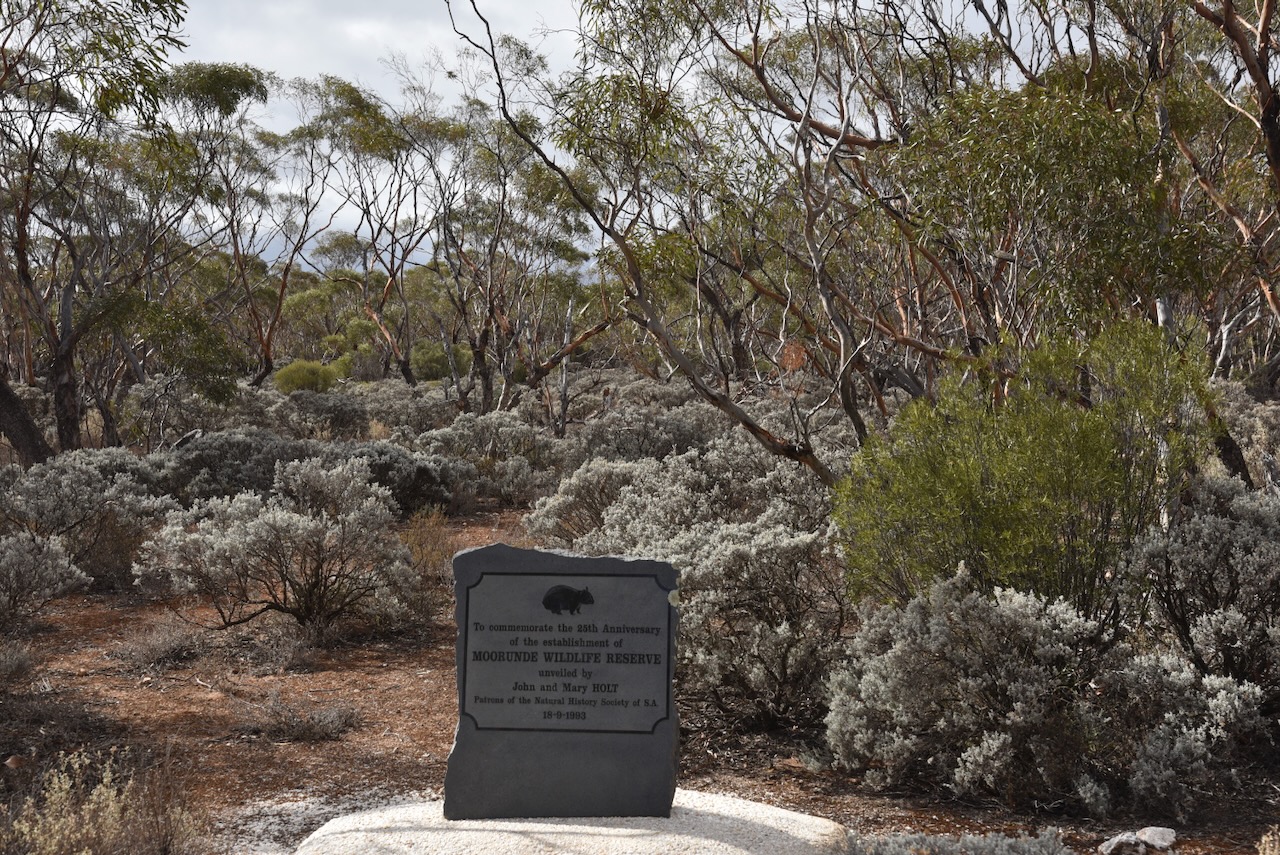
In 2007, the Society purchased a further 4,900 hectares of adjacent land on Portee Station known as the Twelve Mile Plain. This brought the total area of the reserve to 6,900 hectares. This was made possible with some bequests in the bank and donations from the Society’s patrons, John and Mary Holt, other members and organisations. (Nat Hist Soc SA 2014) (Wombats SA, 2020)
The Southern Hairy-nosed Wombat is one of three species of wombat. It lives in semi-arid regions of South Australia. This particular species of wombat was adopted by the South Australian State Government in 1970 as the faunal emblem of South Australia. (Nat Hist Soc SA 2014)
It is estimated by Wombats SA that in 1968, there were 150 wombats on the reserve. Today, it is believed that about 2,000 southern hairy-nosed wombats call the reserve home. (Adelaide AZ, 2025) (Wombats SA, 2020)
Below is a video detailing the history of the Moorunde Wildlife Reserve.
We ran the Yaesu FT857, 40 watts, and the 20/40/80m linked dipole for this activation.







 VK5PAS