Last night I spoke with Marko 4O9VIP who was maritime mobile in the middle of the Indian Ocean. Marko was on a container ship and was running just 10 watts and had a great signal.
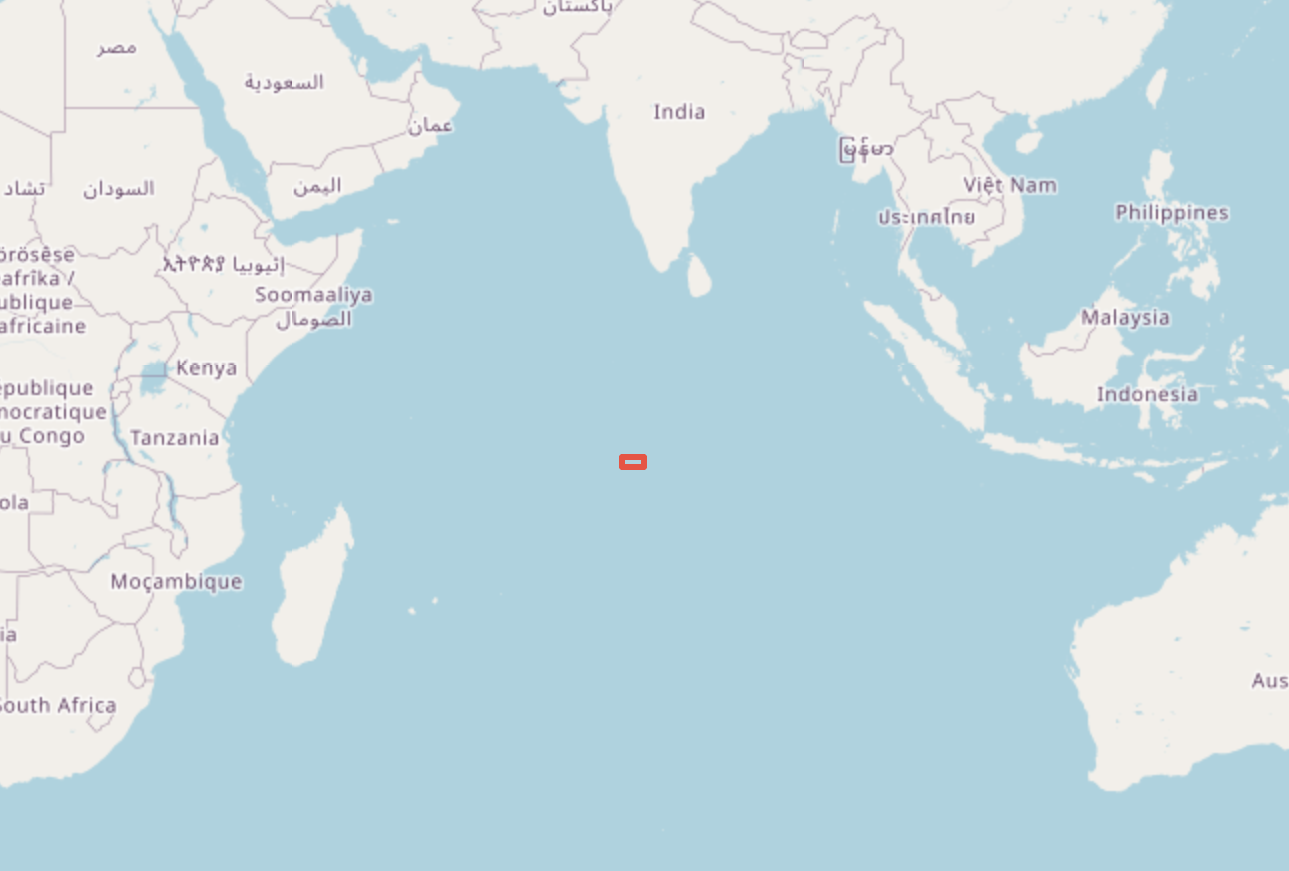

Last night I spoke with Marko 4O9VIP who was maritime mobile in the middle of the Indian Ocean. Marko was on a container ship and was running just 10 watts and had a great signal.
Yesterday (Tuesday, 1st September 2025) was National Wattle Day. Each VKFF activator would be sent a special certificate for National Wattle Day, so I was keen to get out into the field. However, I had several other commitments, including grandpa duties and assisting in the running of the ANZA DX Net. It was also a terrible day, with continual drizzling rain.
Following the conclusion of the ANZA DX Net, I headed down the road to the Cox Scrub Conservation Park VKFF-0824. Fortunately, the weather had cleared. The park is located about 65 km south of Adelaide.
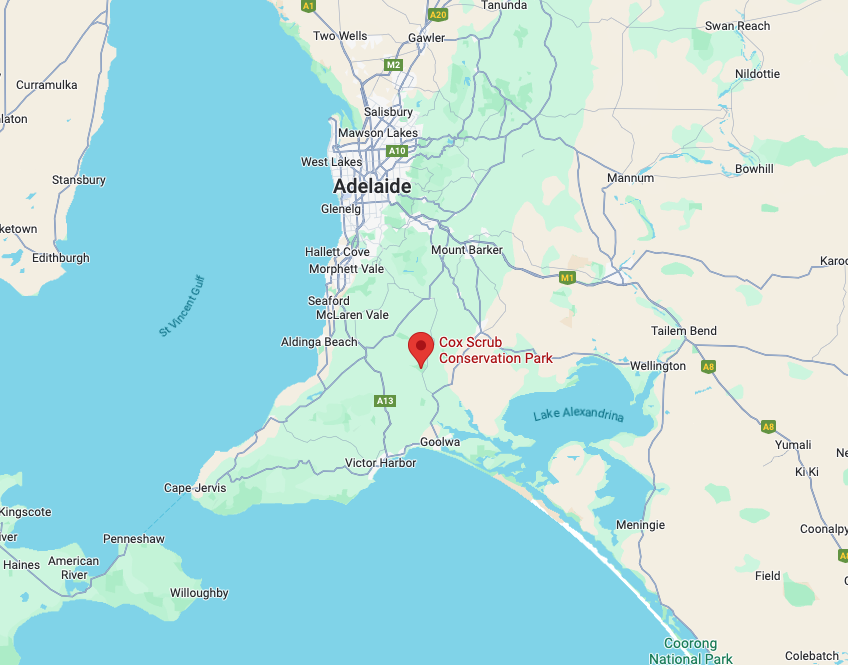
Above: Map showing the location of the Cox Scrub Conservation Park. Map c/o Google Maps.
I have previously activated the Cox Scrub Conservation Park several times. The last time was in 2024.
Access to the park is either via Bull Creek Road on the eastern side of the park or via Ridge Road on the western side of the park.
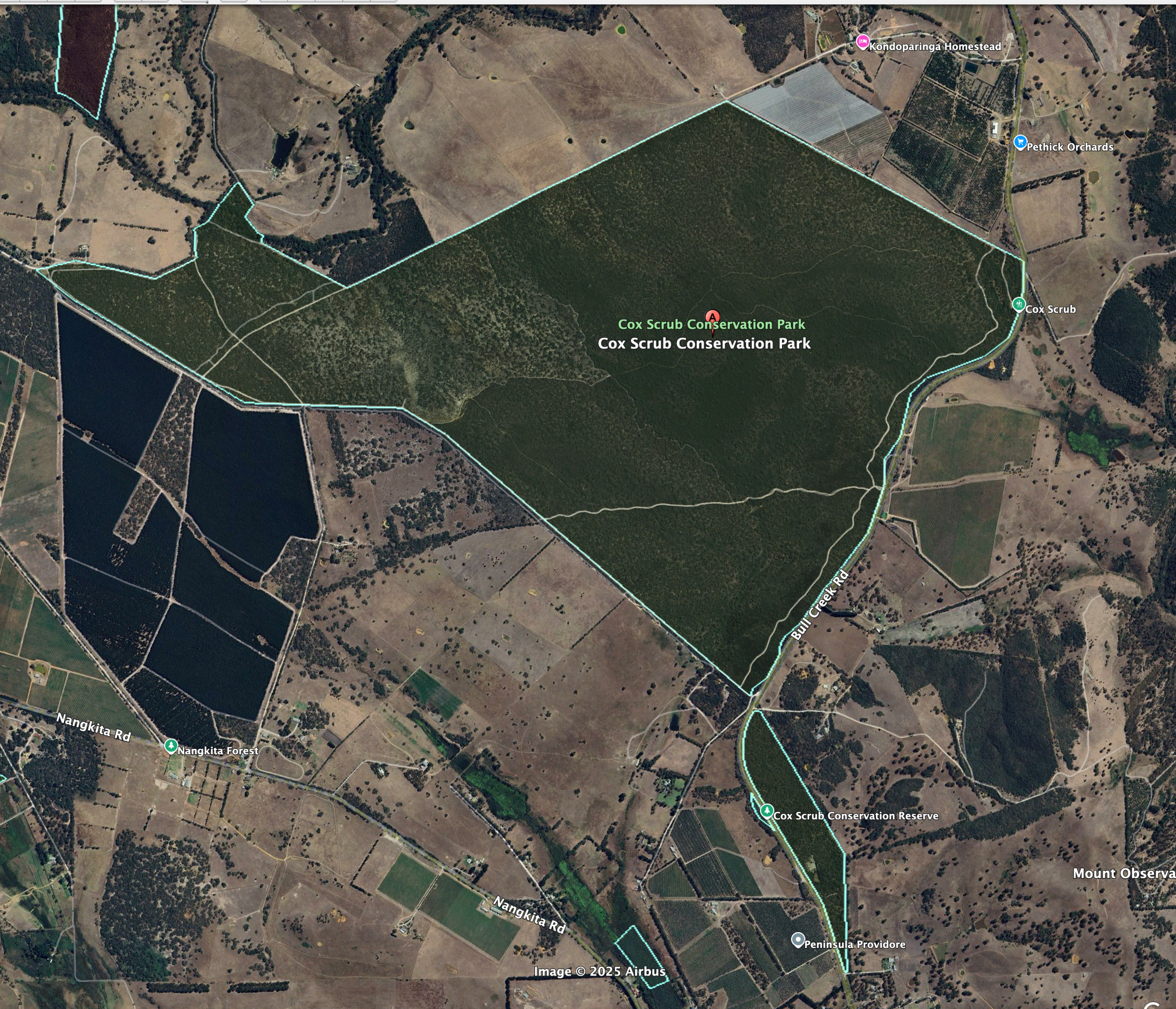
Above: An aerial view of the park showing its boundaries. Image c/o Google Earth.
Cox Scrub Conservation Park is about 563 hectares in size, making it one of the larger parks on the Fleurieu Peninsula. The park was established on the 5th day of March 1970, with further additions made in 1977 (30 hectares), 1982 (2 hectares), 1984 (8 hectares) and 2018 (19 hectares). (Birds SA 2016) (National Parks n.d.)
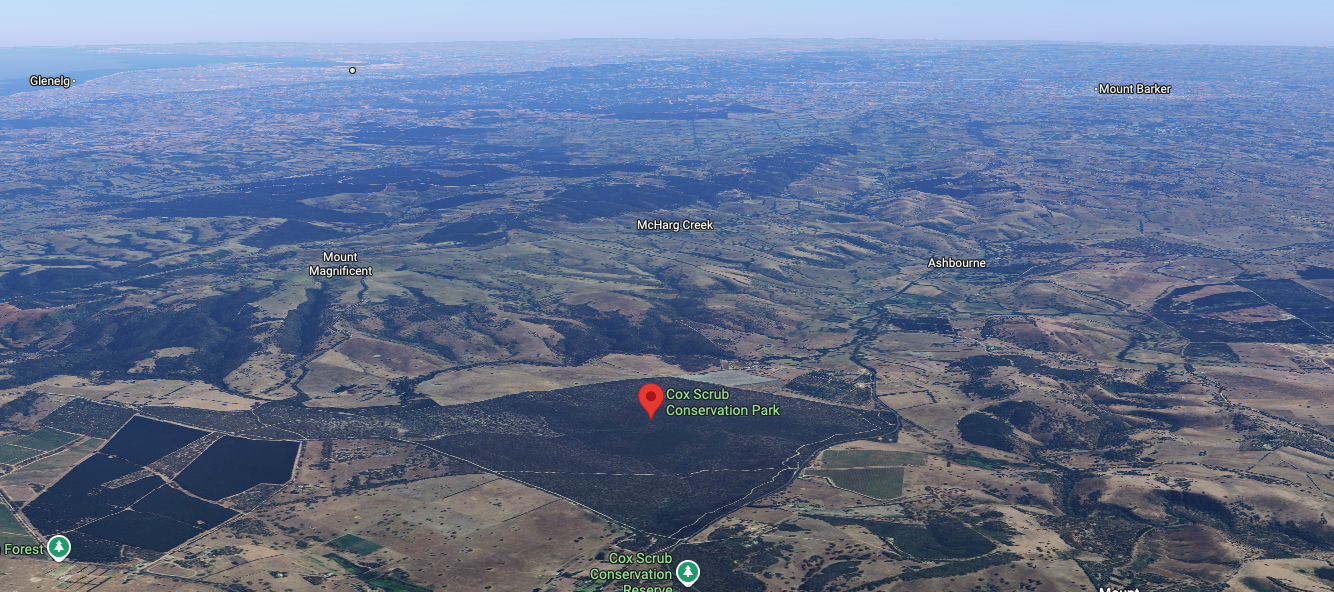
Above: Aerial view of the Cox Scrub CP. Image c/o Google Maps.
The majority of the park was previously owned by the late Mr. V. Cox of Ashbourne. He preserved the park in its natural state for the overwintering of his honey bees. In 1969, the land was purchased from Mr. Cox on the condition that he was still allowed to keep bees in the park. (National Parks n.d.)
The park was originally known as Cox’s Scrub National Park. On the 27th day of April 1972, it was reconstituted as Cox Scrub Conservation Park. (Wikipedia 2021)
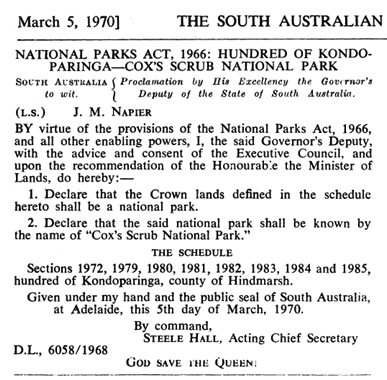
Above: SA Govt Gazette, 5 March 1970.
The park’s principal vegetation is low Eucalyptus naxteri open forest over banksia scrub. Other native plants include Hakea, Casuarina, Grevillia, Acacia and Calytrix. (Wikipedia 2021)
The Southern Brown Bandicoot, Australian swamp rat, and Western Grey kangaroos are just a few of the native mammals that call the park home. (Wikipedia 2021)
Birds SA have recorded 152 native bird species in the park, including Superb Fairywren, Red-browed Finch, Galah, New Holland Honeyeater, White-browed Scrubwren, Red Wattlebird, and Diamond Firetail. (Birds SA 2016)
Most of the park was completely burnt out during the devastating Ash Wednesday bushfires in 1983.
I ran the Yaesu FT857, 40 watts, and the 20/40/80m linked dipole for this activation. I logged a total of 81 stations on 20m SSB & 40m SSB in about an hour & 20 minutes.
DXCC worked:
I worked the following stations on 20m SSB:-
I worked the following stations on 15m SSB:-
I worked the following stations on 40m SSB:-
References.
Amateur Radio, Short Wave Listening, travel and history
Amateur radio experiences with VK1DA
Brisbane - Australia
german amateur radio station
Summits On The Air
SOTA on the peaks, wilderness QRP and some bushwalking
A fine WordPress.com site
Amateur Radio Adventures
Summits on the Ai
Amateur radio station from Belgium
Radio craft, homebrew, QRP/SOTA, AM
Ego loqui ad viros super montes
My adventures with Amateur Radio and Geocaching!
The rantings of VK2GAZ on his SOTA experiences in Australia
A survivor, with minor cuts and abrasions.
The Art and Craft of Blogging
The latest news on WordPress.com and the WordPress community.
Blog of Justin Giles-Clark VK7TW's SOTA and amateur radio adventures.
Occasional SOTA & Microwave operation
 VK5PAS