
Our next activation for Wednesday, 22nd October 2025, was The Rock Nature Reserve VKFF-2002. The Rock is located in the southern Riverina of New South Wales, about 30 km southwest of Wagga Wagga, and about 482 km southwest of the city of Sydney.
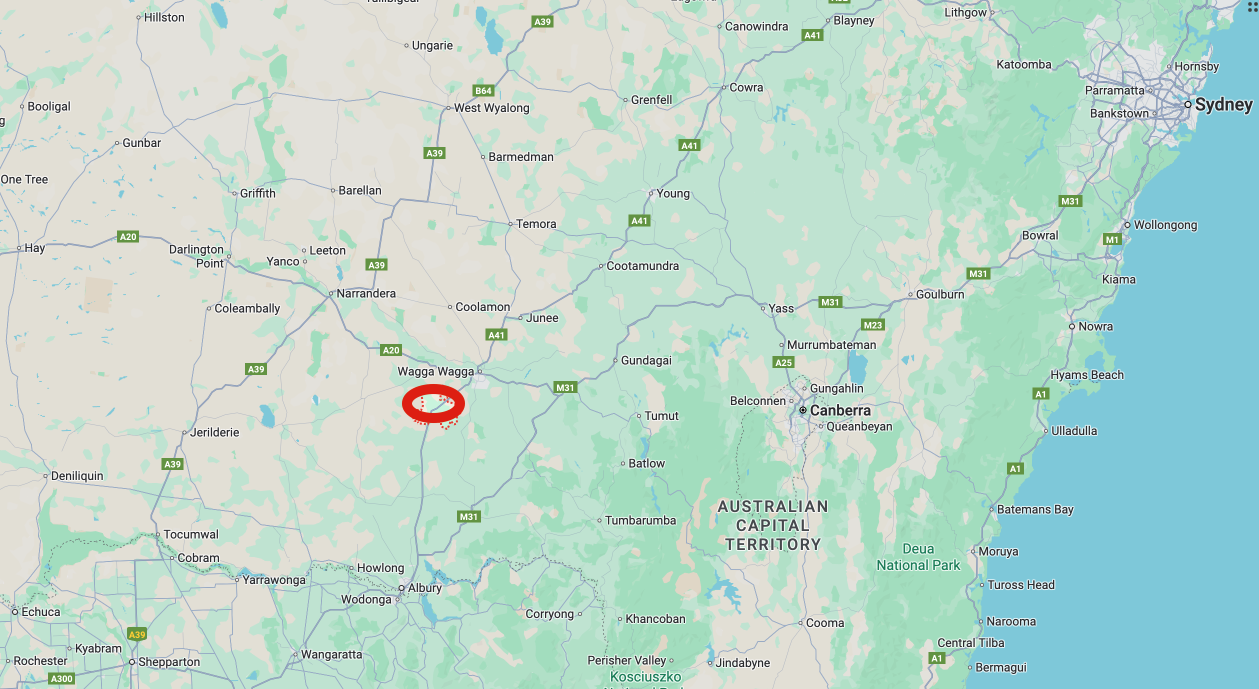
Above: Map showing the location of The Rock, NSW. Map c/o Google Maps
The township of The Rock takes its name from the large rocky hill that overlooks the town. The Rock is located in the traditional lands of the Wiradjuri Aboriginal people. The Aboriginal name for the summit is Kengol. The name of the creek just to the south of the reserve is known as Yerong, which is a corruption of the words ‘yirrang’ or ‘irang’ meaning ‘a place of initiation’ or ‘tooth’. It has been suggested that initiation ceremonies were held at The Rock, where young male Aboriginals had their front teeth knocked out. Tooth ablation has been recorded in several ancient and modern societies around the world. (NSW NPWS 2000) (Wikipedia 2022) (Wikipedia 2025)
The first known European in the district was the explorer Captain Charles Sturt, who in 1829, noticed a large overhanging rock on a summit. It became known as The Hanging Rock. On the eastern side of the summit was a spectacular overhang. (NSW NPWS 2000) (smh.com.au 2025)

Sturt wrote in his journal:
“ Sunday, December 7th: Passed at the base of some small hills shortly after leaving our encampment, the last of the elevations to the Westward – Altho’ of no great height, the view from them was extensive and enabled me to keep up my bearings. There was a broken and lofty country to the E.S.E. while to the North East and North it was comparatively flat, but from the last point to the Westward the eye wandered over woodland alone, if I except a solitary hill that bore by compass S 53 W. At about 12 miles distance, and a remarkable Mountain (Kengal) bearings S 32 W– travelled about ten miles on a W by N Course and halted on the Banks of the River………”.
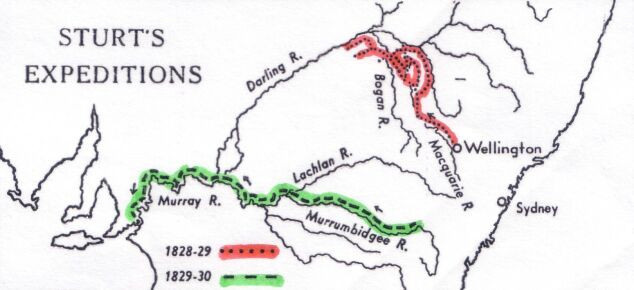
Above: Map showing the 1829 Charles Sturt expedition (in red). Image c/o Wikipedia
In 1847, James Eagan Wall held the licence for the Hanging Rock Run comprising about 60,000 acres. James was born in 1814 in Galway, Ireland. He emigrated to Australia in c. 1843, and in January 1845, he married Emma Anne Tooth. They initially lived at Tumut, and by 1847, they had moved to Hanging Rock Station, where they built a homestead. James was a mail contractor operating out of Wagga Wagga. He was a qualified chemist and also practised as a Doctor. (ancestry 2016) (NSW NPWS 2000) (smh.com.au 2025) (WWDHS 2025)
Many years after leaving Hanging Rock, Wall was arrested and charged with manslaughter in 1881. He carried out an abortion procedure on a young woman who died. He was subsequently found guilty in January 1882 and imprisoned for 12 months. (Trove 2026)
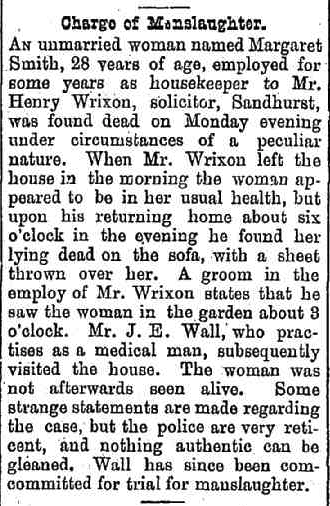
Above: article from the Newcastle Morning Herald, Mon 8 Aug 1881. Image c/o Trove
In October 1858, Wall had transferred his run to Susannah E Brown. Later that year, in December 1858, Wall was declared insolvent with debts of £997 and assets of £751. (WWDHS 2025)
In 1862, the area around The Rock was surveyed, and the immediate surrounds were gazetted as a crown reserve. (NSW NPWS 2000)
In 1863, the summit was recorded on a map as ‘Kengal’, although the European settlers referred to the summit as The Hanging Rock. (NSW NPWS 2000)
In February 1873, John King had purchased the Hanging Rock Run, along with 800 head of cattle. (WWDHS 2025)
John Thomas King was born in June 1825 in Cobbitty, New South Wales. In 1853, he married Isabella Elizabeth Cox in Albury, New South Wales. They had 11 children. (ancestry 2016)
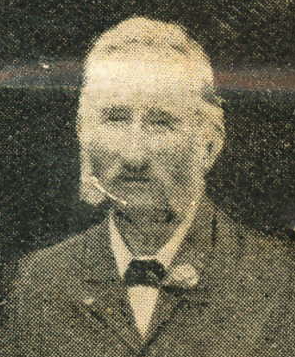
Above: John King. Image c/o ancestry.com.au
In 1874, the overhanging rock collapsed. The falling rock cut a swathe through the timber on the eastern side of the summit. Pieces of this large rock can still be seen today. (NSW NPWS 2000) (smh.com.au 2025)
The first known hotel was the Hanging Rock Hotel. The licence for the hotel was issued in December to Mary Ann Hines in 1879. Mary Ann Cox was born in 1837 in Sydney. She married Abraham Thomas Hines in 1854 in Sydney. They had 7 children. Abraham died in 1876, 3 years before the hotel licence was granted. By early 1880, Frederick ‘Fred’ Hines was managing the hotel for his mother. It appears the hotel ceased trading in the middle of 1880. (ancestry 2016) (WWDHS 2025)
In February 1880, Fred had left Wagga Wagga in a sprint cart loaded with goods and called in to the Hawkins Hotel. He spoke with a female at the bar who asked him for a ride. During the journey, the female asked to take the reins, and the cart subsequently rolled. The female was killed. An inquest was held before Mr District Coroner Tompson at the Drover’s Arms Hotel, Wagga Wagga. The jury returned the following verdict, exonerating Fred of any blame in the matter:
“that deceased met her death on the 12th of February instant, by the accidental upsetting of a loaded cart, which fell on her and caused her death by suffocation…’ (Trove 2026)
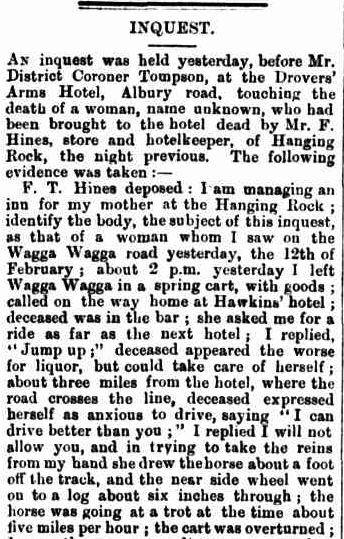
Above: part of an article from the Wagga Wagga Advertiser, Sat 14 Feb 1880. Image c/o Trove
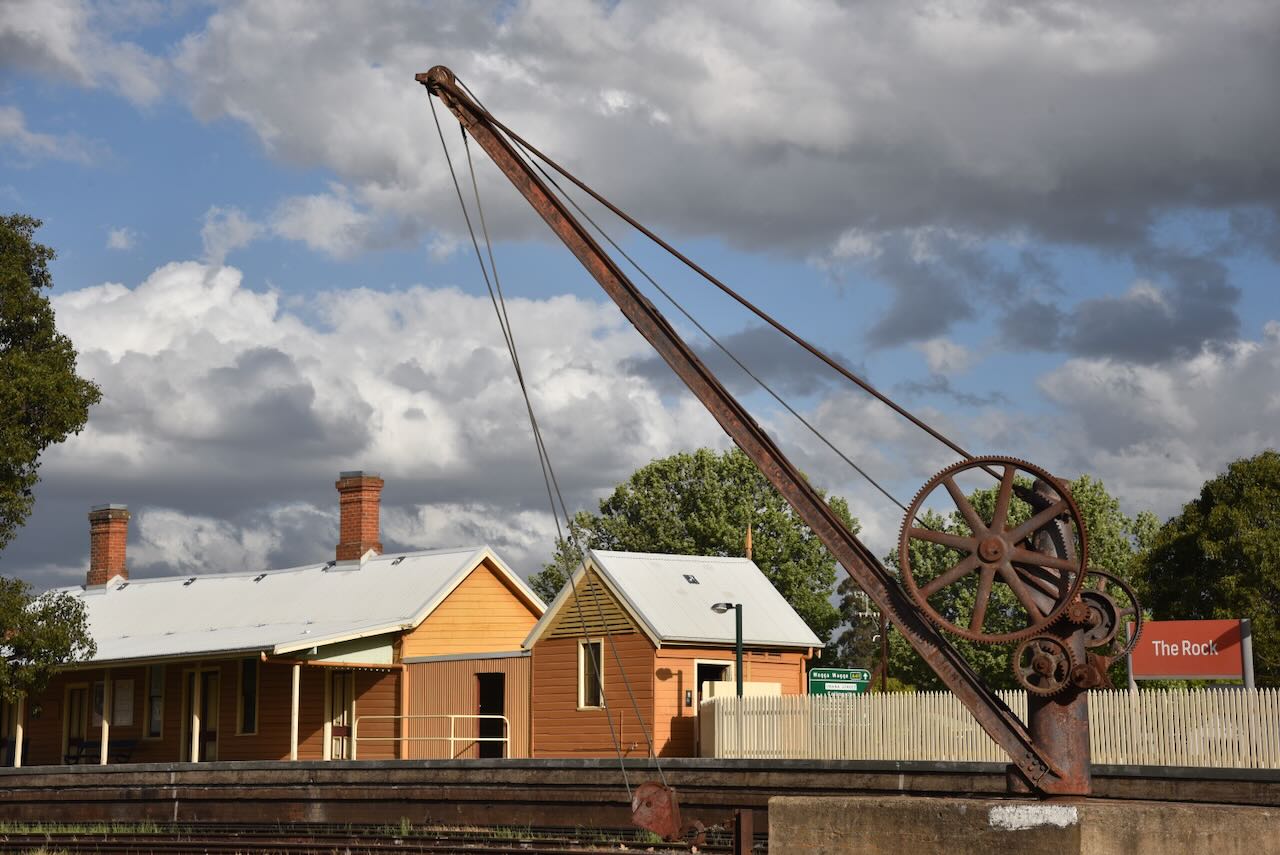
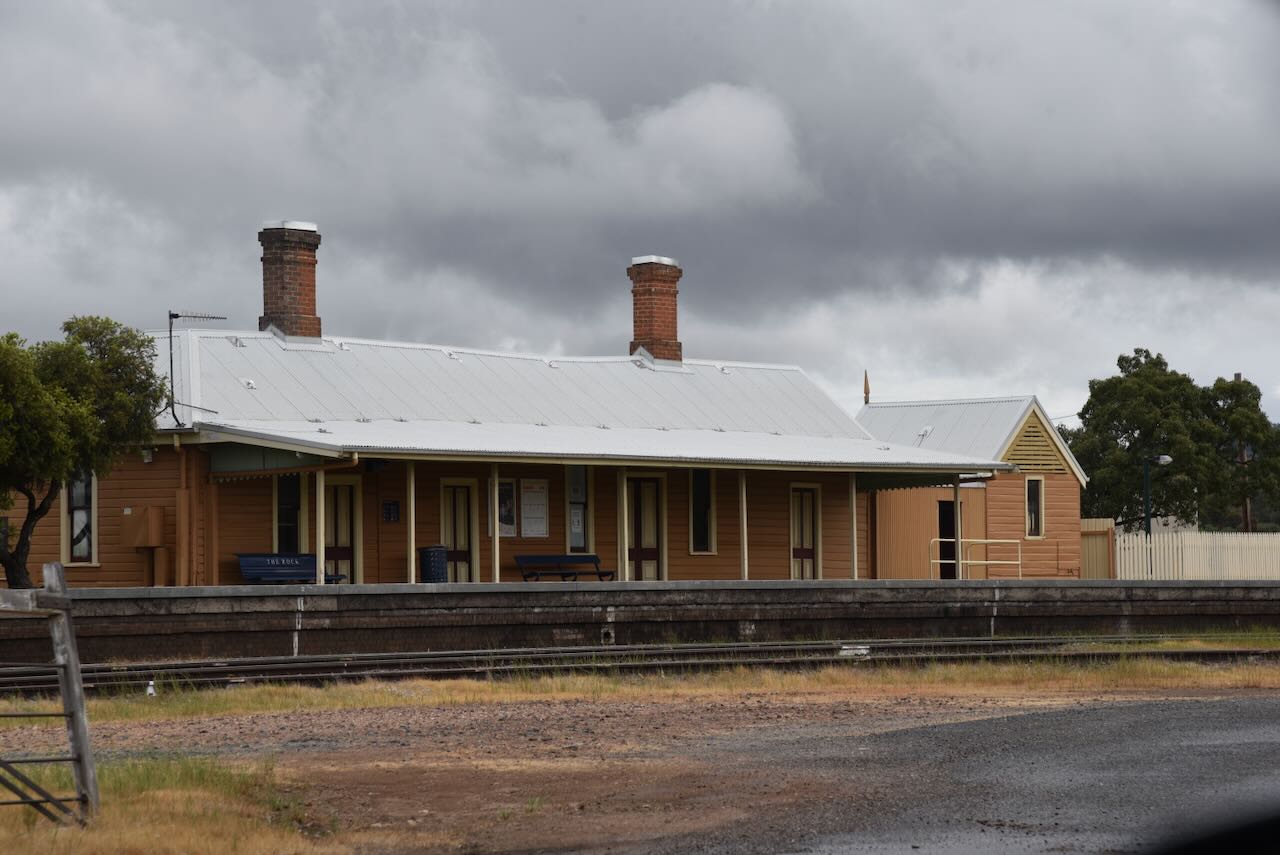
In 1880, the railway arrived. The railway station was opened on the 1st day of September 1880 and was initially known as Hanging Rock. It was renamed Kingston on the 28th day of December 1882, and The Rock on the 10th day of February 1883. In 1999, the railway station was added to the New South Wales State Heritage Register. (smh.com.au 2025) (Wikipedia 2025)
The King’s Own Hotel was established in 1881. But it was not without some opposition from the locals. In September 1881, a petition was delivered opposing the granting of the licence. (smh.com.au 2025)
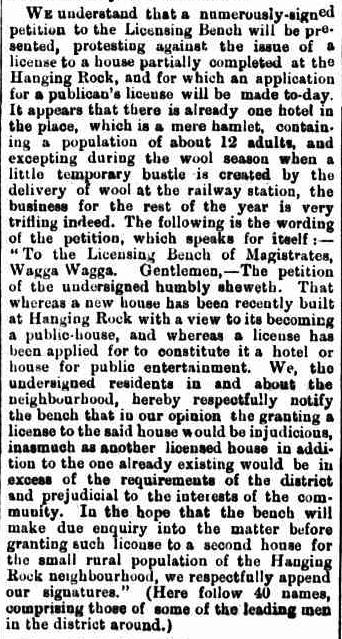
Above: an article from the Wagga Wagga Advertiser, Tue 13 Sept 1881. Image c/o Trove
The Licensing Bench subsequently sat and heard the application of John McDonough. Despite the objections of the locals, the licence was granted. (WWDHS 2025)
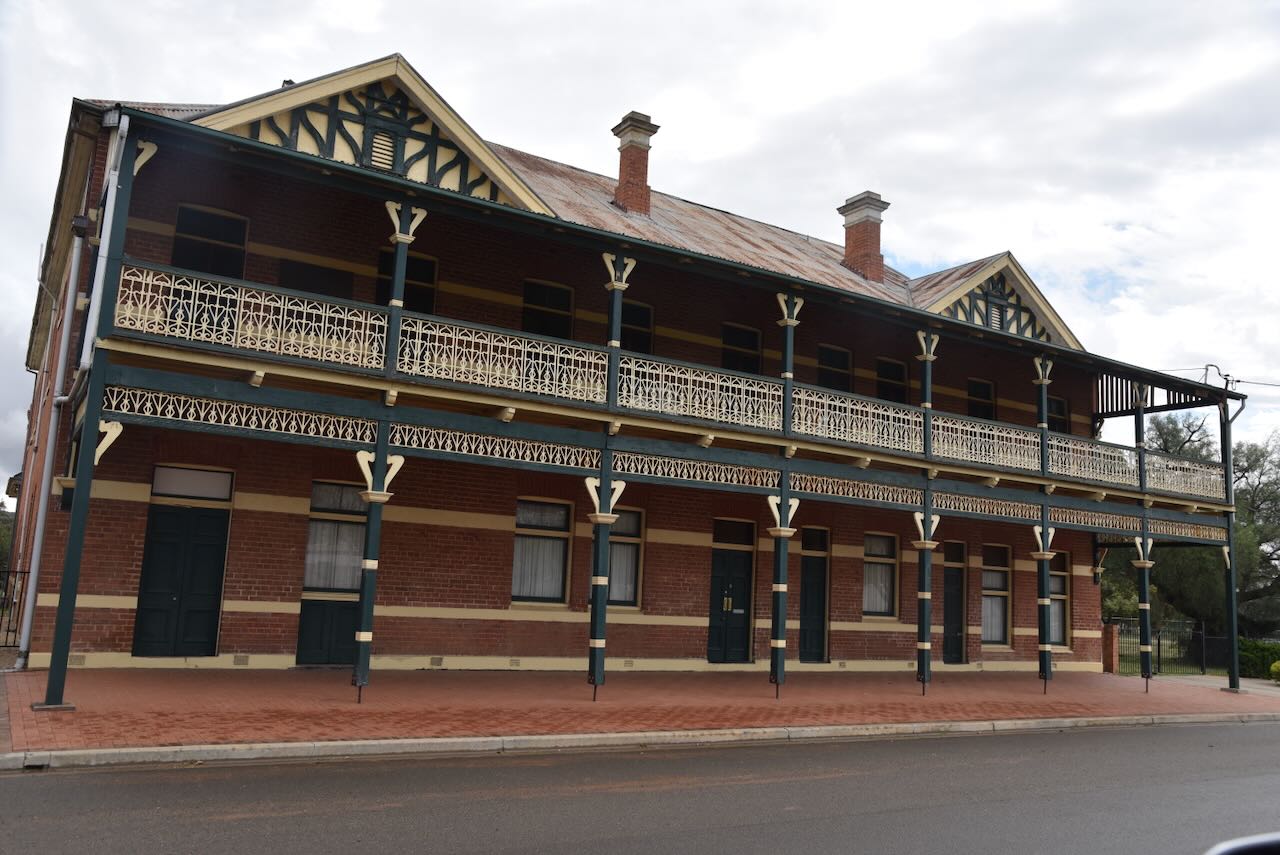
The current building, which no longer trades as a hotel, was built in the mid-1870s.
In 1882, the town was gazetted as Hanging Rock. (smh.com.au 2025)
The Rock Post Office opened on the 1st day of September 1890. Prior to 1919, the town was known as Kingston. (NSW NPWS 2000) (Wikipedia 2022)
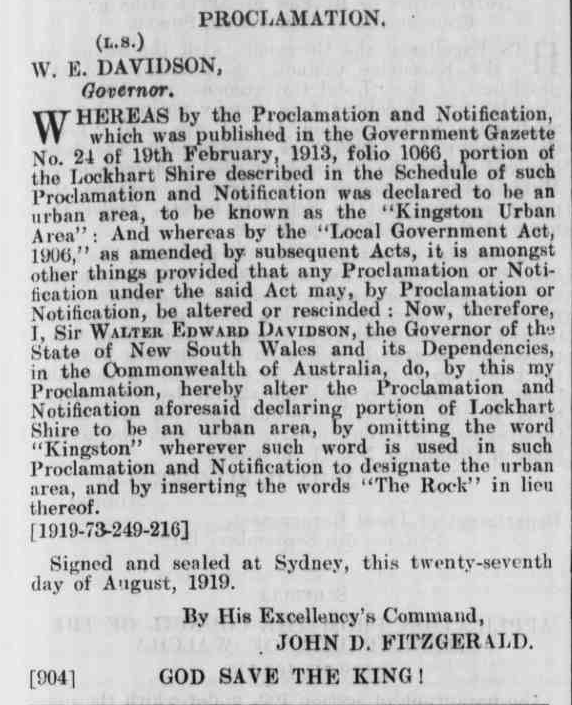
Above: Proclamation in the NSW Govt Gazette, 5th September 1919. Image c/o Trove
In 1891, quarrying commenced around the base of The Rock summit to provide ballast for the Sydney-Melbourne railway. Quarrying continued until about 1940. (NSW NPWS 2000)
By 1893, John King, the owner of the Hanging Rock run, had been declared bankrupt. His demise was due to the collapse of the Australian banks in 1893, which was a result of over-investing during the 1880s. (WWDHS 2025)
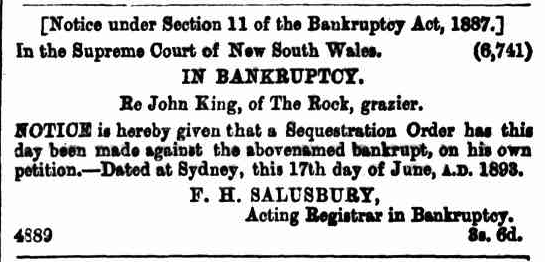
Above: Notice of bankruptcy, NSW Govt Gazette, Tue 20 Jun 1893. Image co Trove
John King died in August 1906 at Kingsleigh, The Rock. He was 81 years old. Upon his death, the Wagga Wagga Express newspaper reported:
“highly respected by all who knew him, and, in his old age, venerated as one foremost amongst the sturdy pioneers, who did so much to reclaim this rich district, and make it what it is…”
In 1911, the Hanging Rock Run, which had been renamed The Rock Estate, was broken up and sold into 47 blocks, which ranged from 68 to 500 acres. (NSW NPWS 2000)
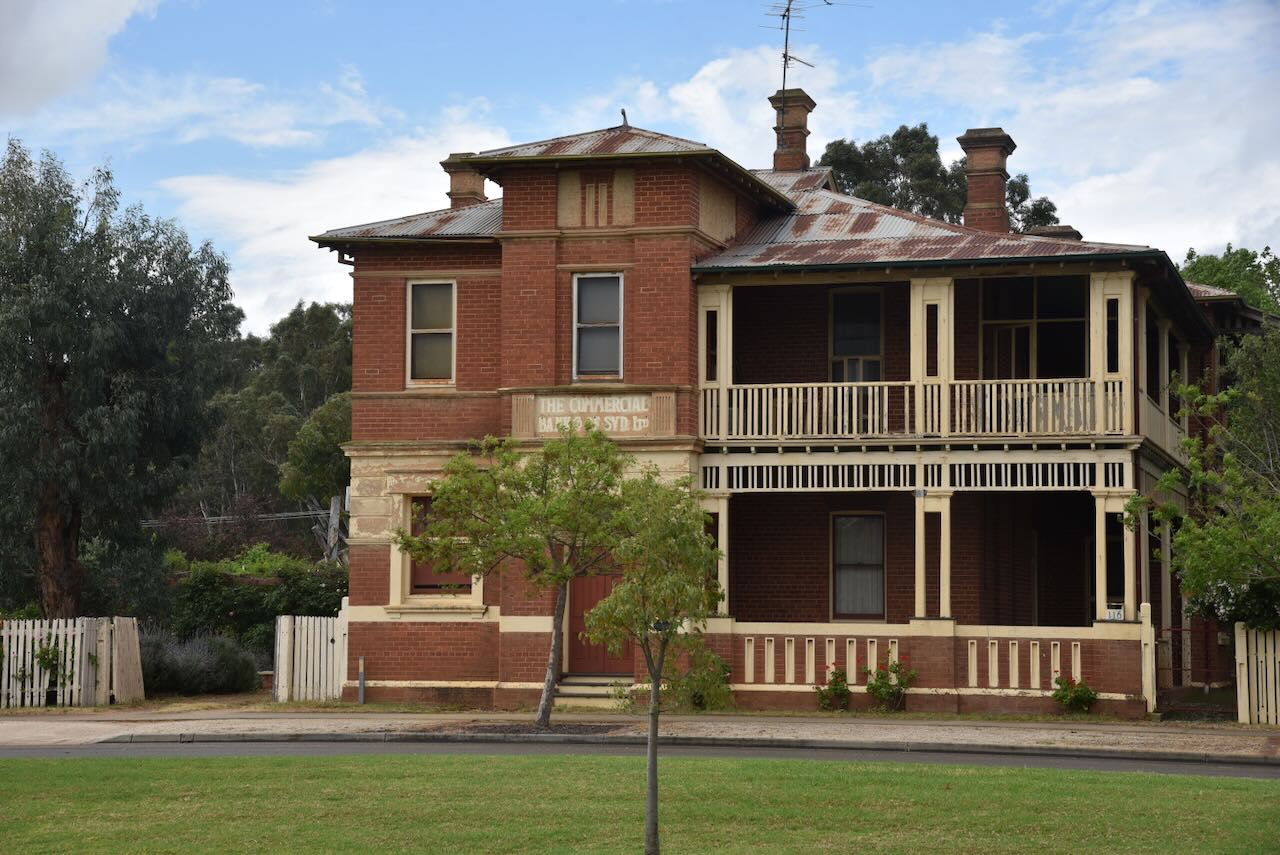
Other than some of the hotels I have already mentioned, several other historic buildings remain in The Rock.
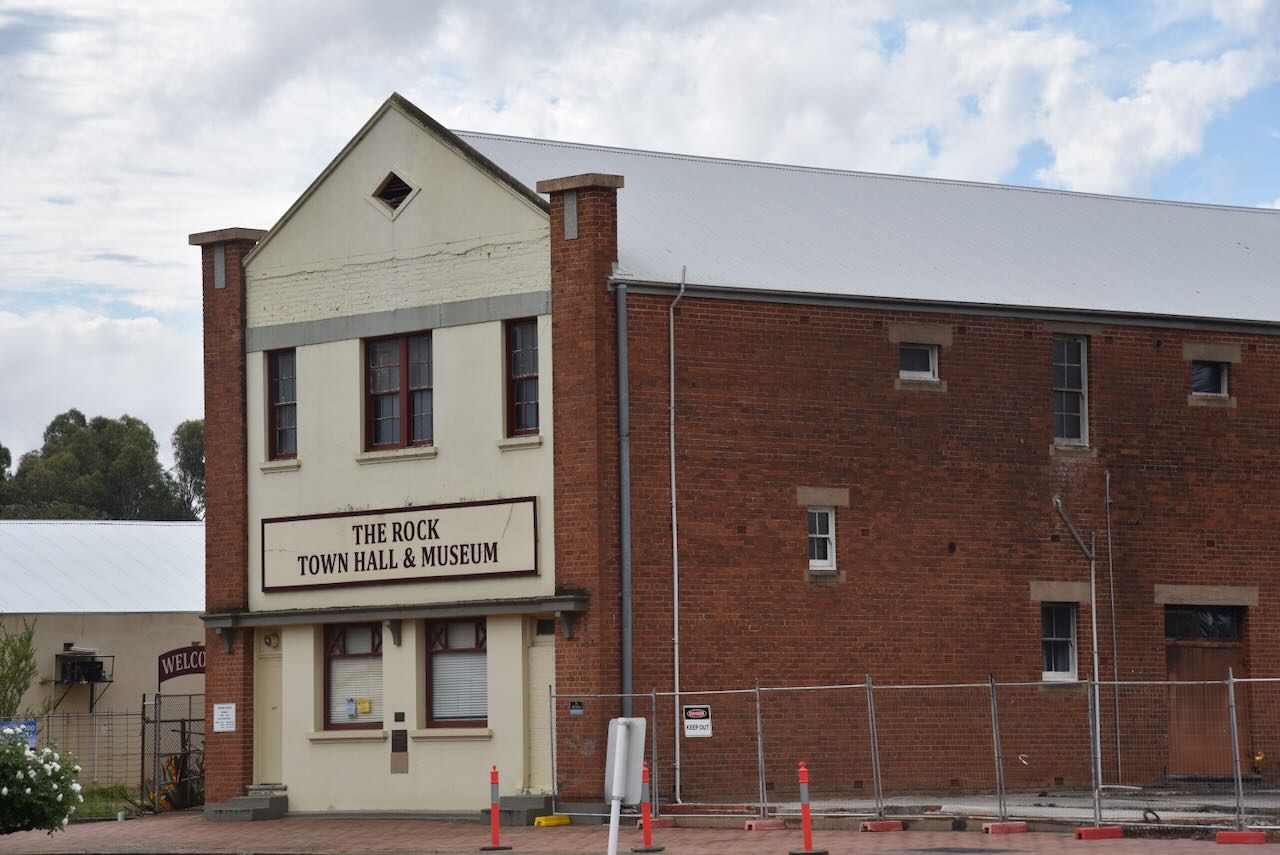

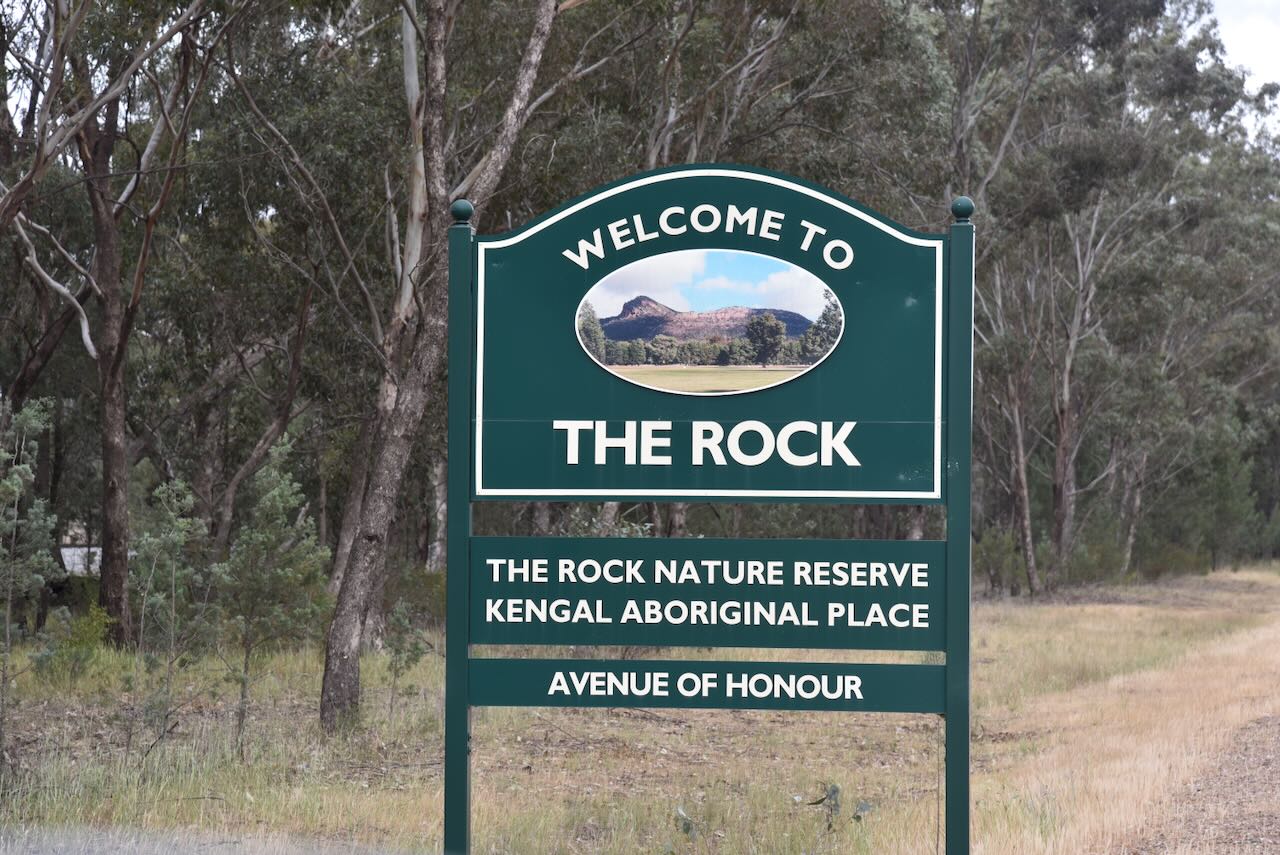
The Rock Nature Reserve is located about 6 km west of the township of The Rock. The reserve is about 340 hectares in size. (NSW NPWS 2000)
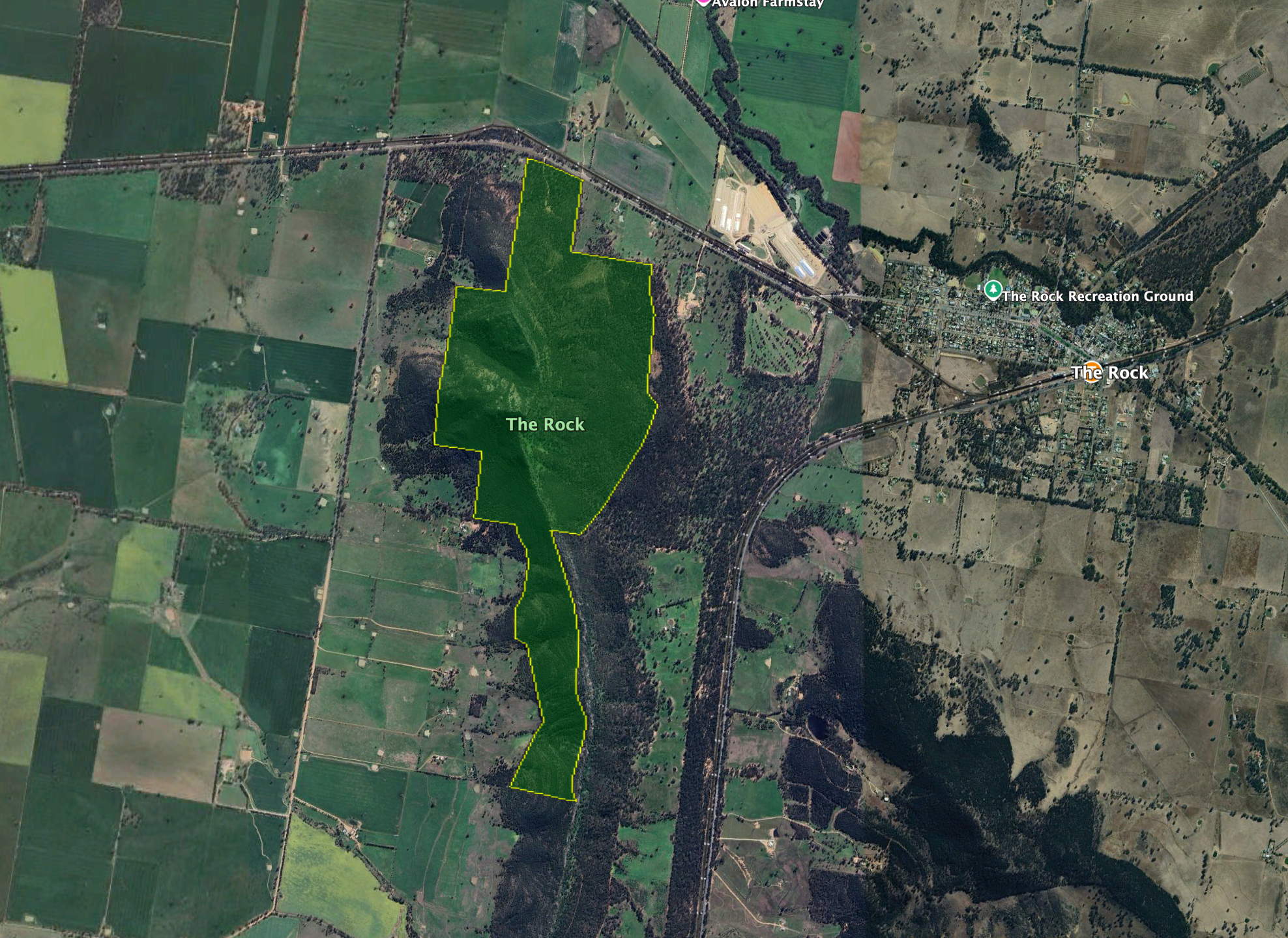
Above: the boundaries of The Rock Nature Reserve. Image c/o Google Earth
The Rock Nature Reserve was first gazetted in August 1962 with an area of about 271 hectares. In June 1970, an additional 70 hectares were added. (NSW NPWS 2000)
The Rock Nature Reserve is an important area for the protection of Senecio garlandii, which is a perennial shrub that is classified as vulnerable. It is one of the few protected areas where this species grows. The threatened plant species, the Woolly Ragwort, also grows in the reserve. (NSW NPWS 2000)


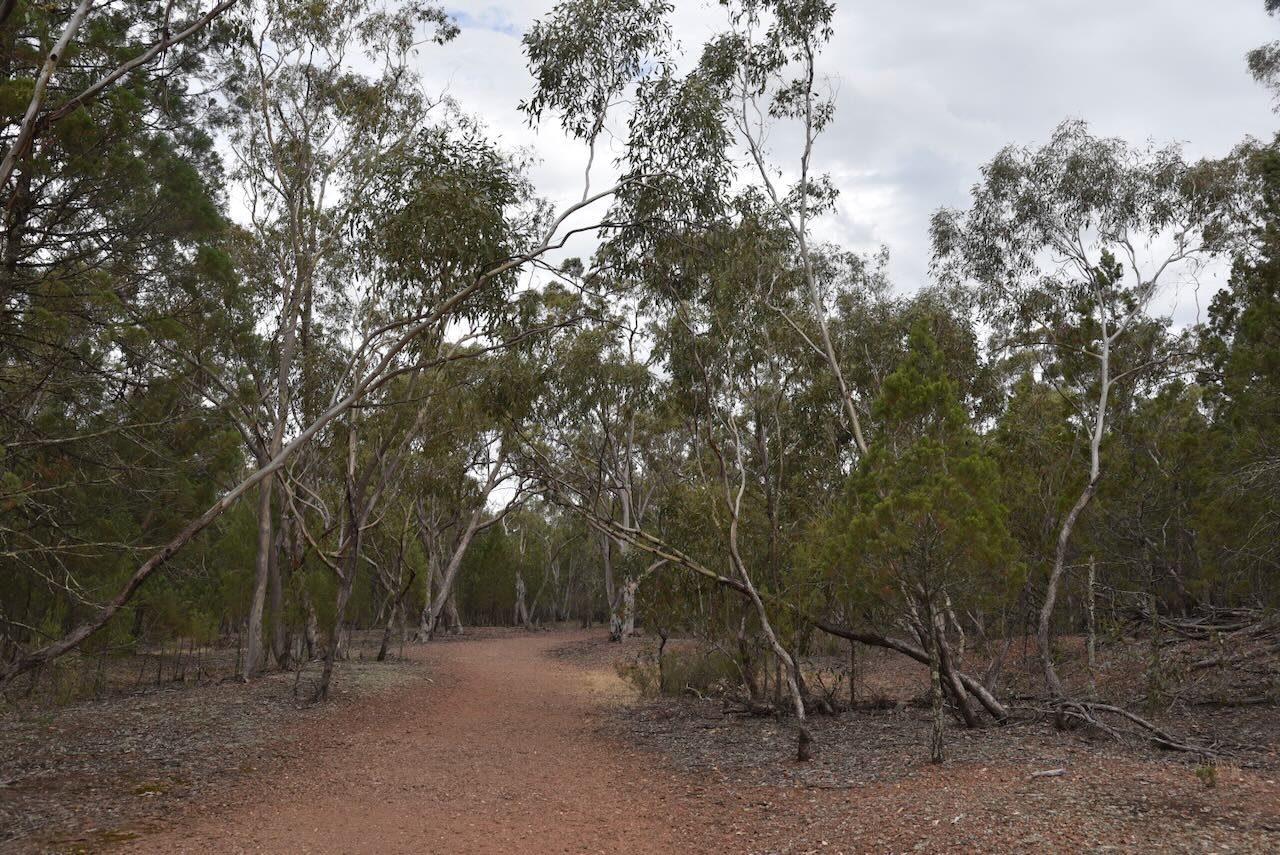
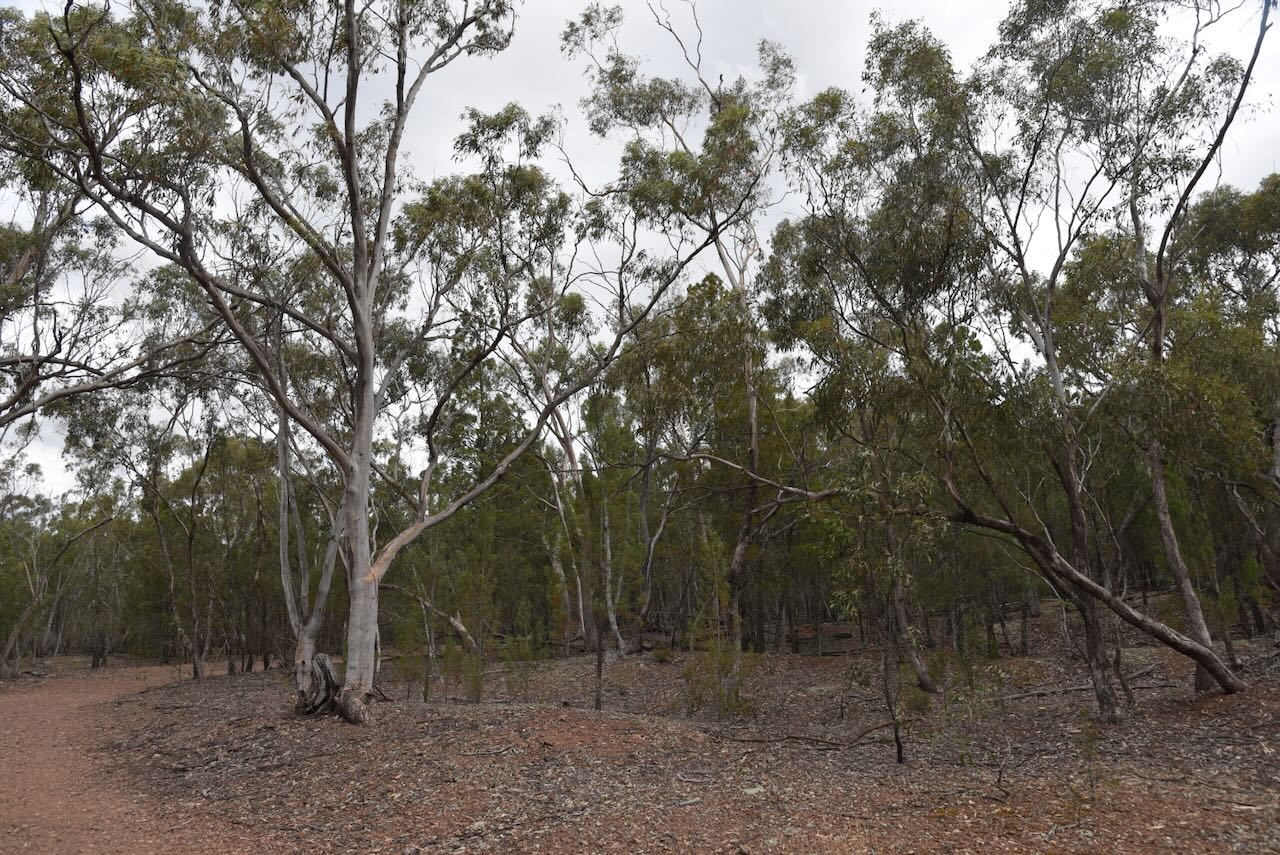

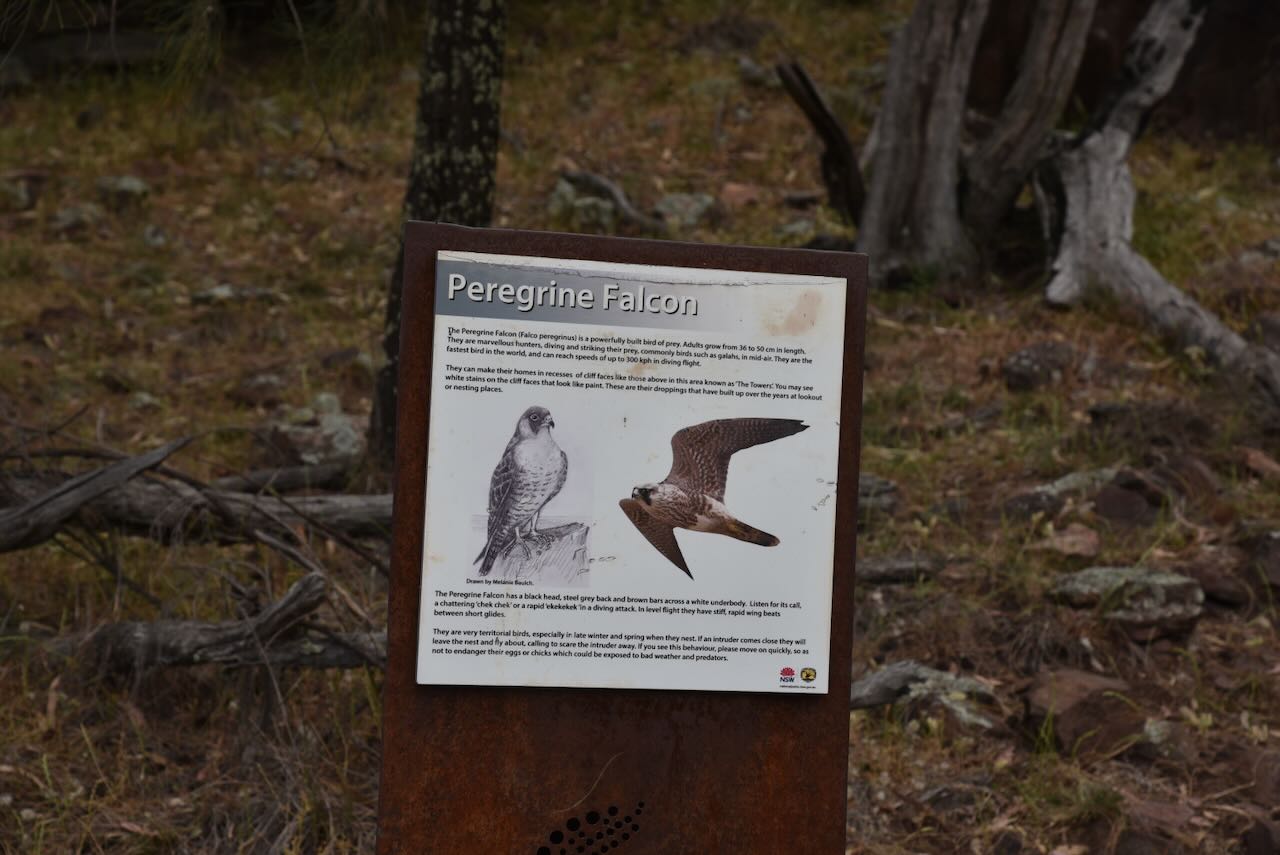
Over 100 species of birds have been recorded in the reserve. This includes the vulnerable listed Turquoise Parrot, the Pink Robin, and the Glossy Black-Cockatoo. Peregrine Falcons nest in the rocky outcrops. (NSW NPWS 2000)
The reserve is home to threatened mammal species, including the Squirrel Glider and the Greater Long-eared Bat. Other native mammals include the Grey Kangaroo, echidna, Common Ringtail possum, Common Brushtail possum, Yellow-footed Antechinus, and the Swamp Wallaby. (NSW NPWS 2000)
Reptiles include the Lace Monitor, Gould’s Goanna, Bearded Dragon, and several species of skinks and Geckos. (NSW NPWS 2000)
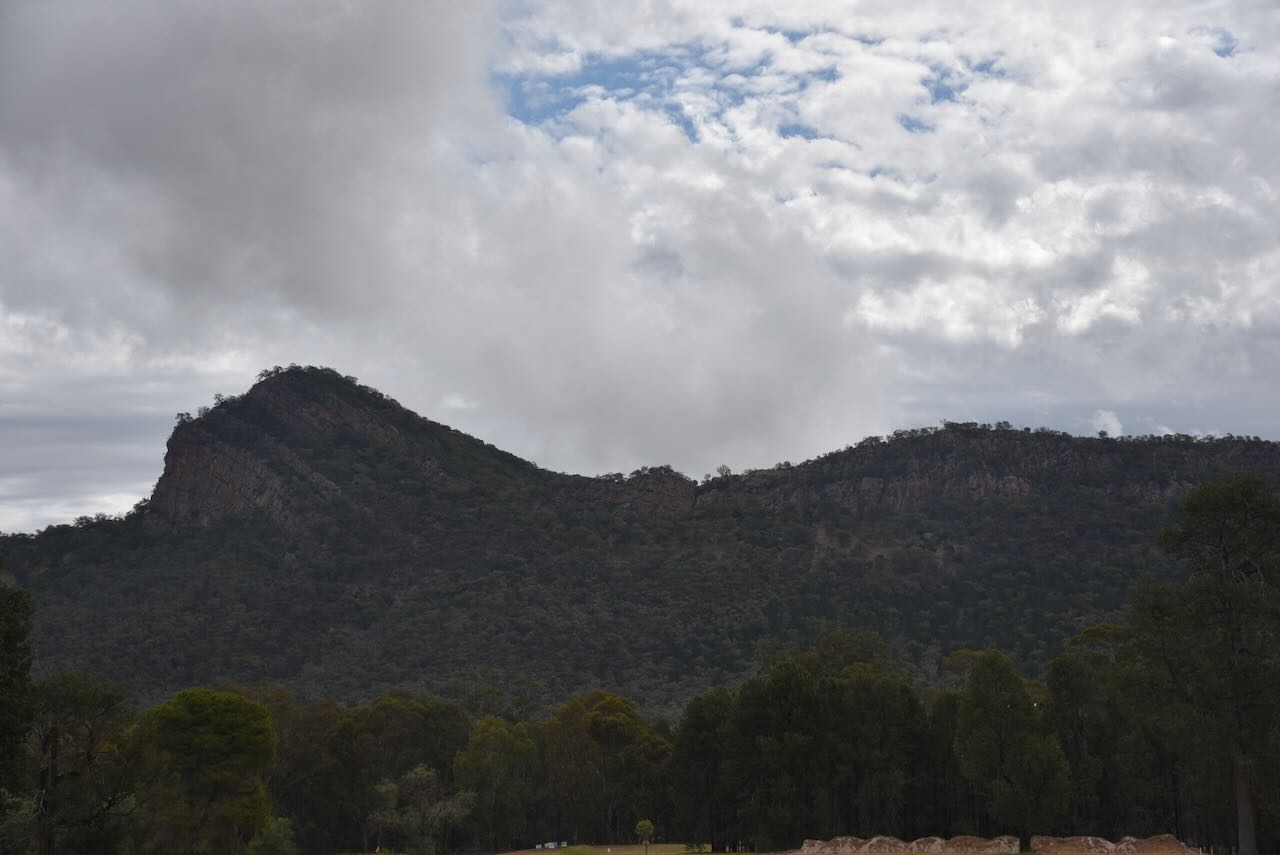
The Rock summit is about 364 metres above sea level. It qualifies for the Summits On The Air (SOTA) program. From the top, you can view Galore Hill, and on clear days, you can view Mount Kosciuszko, the Victorian Alps and the Bogong Range. (NSW NPWS 2000)
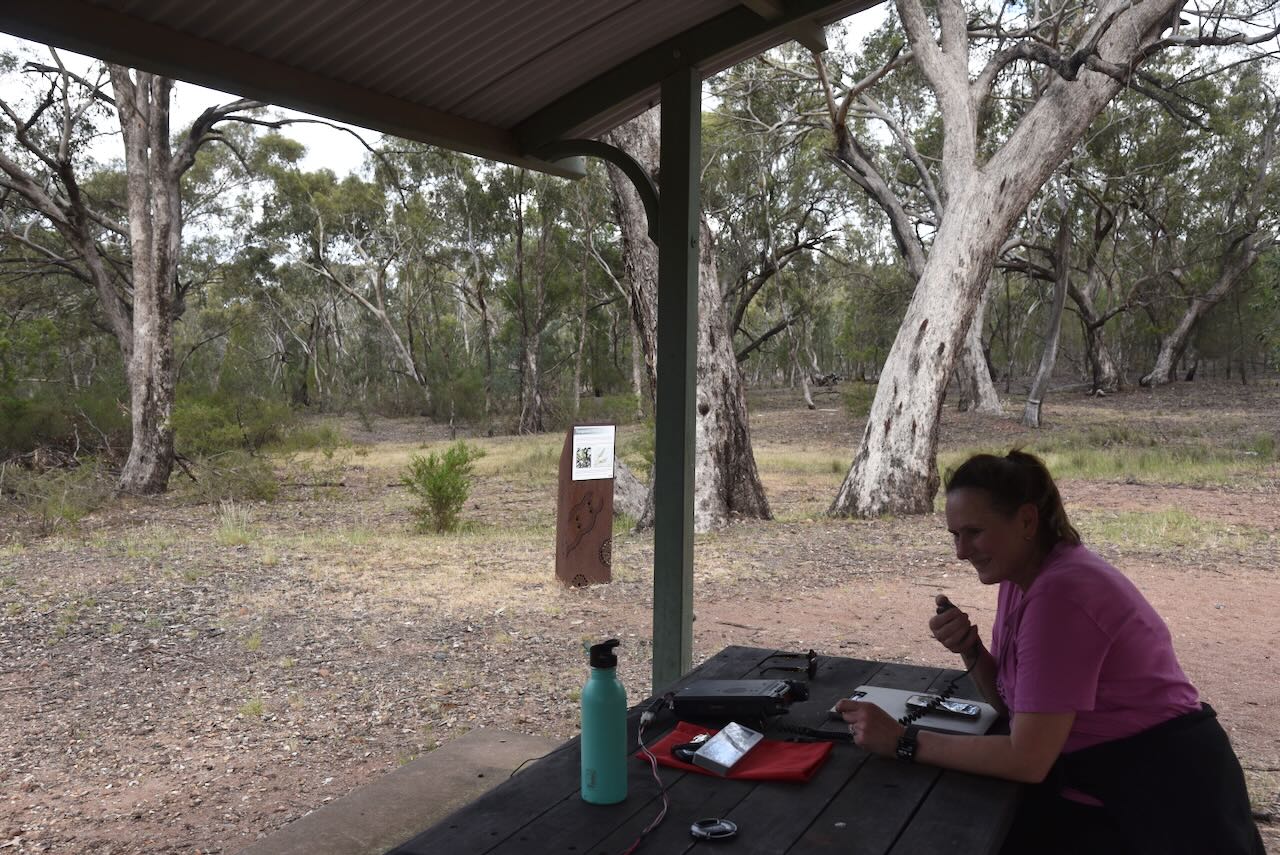
We set up in the picnic area. We ran the Yaesu FT857, 40 watts, and the 20/40/80m linked dipole.
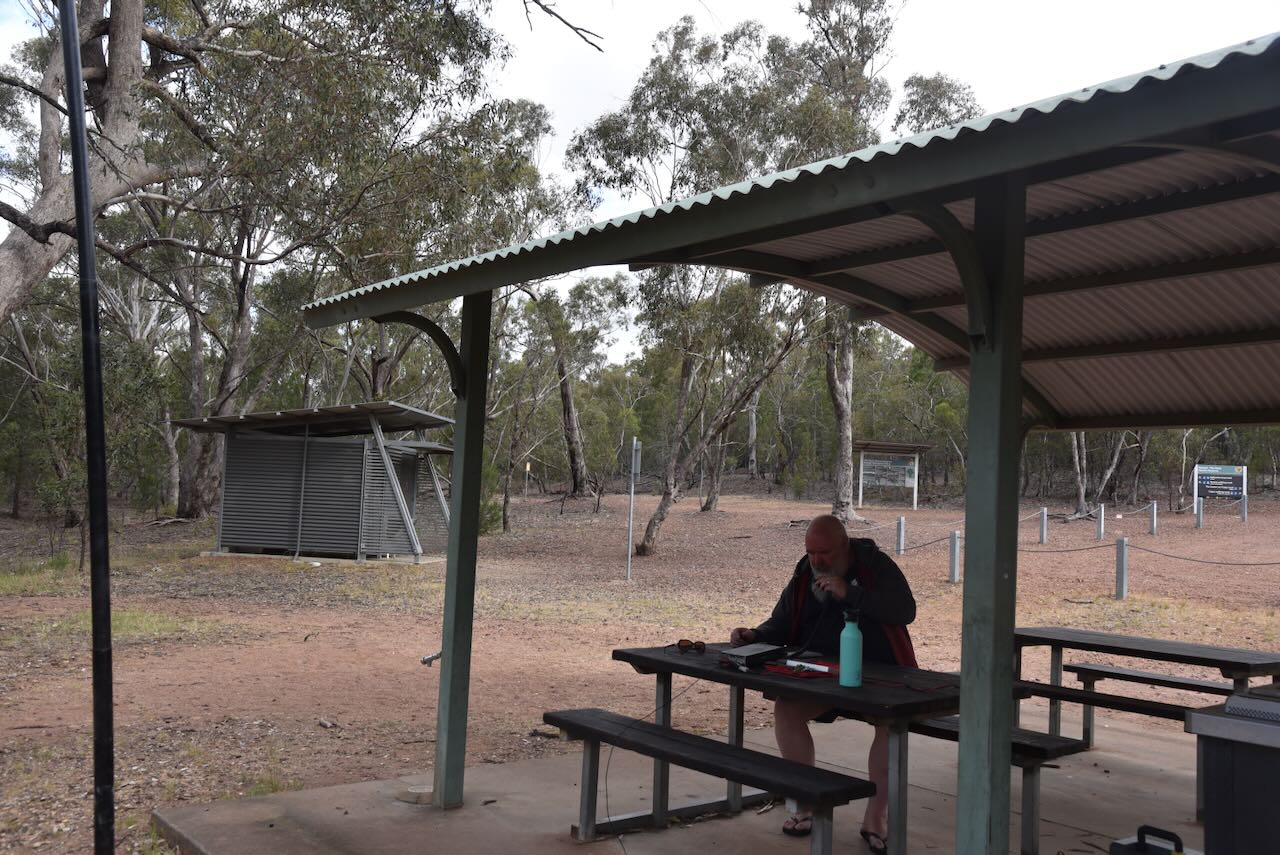
While I was activating, Marija went for a walk up the summit.
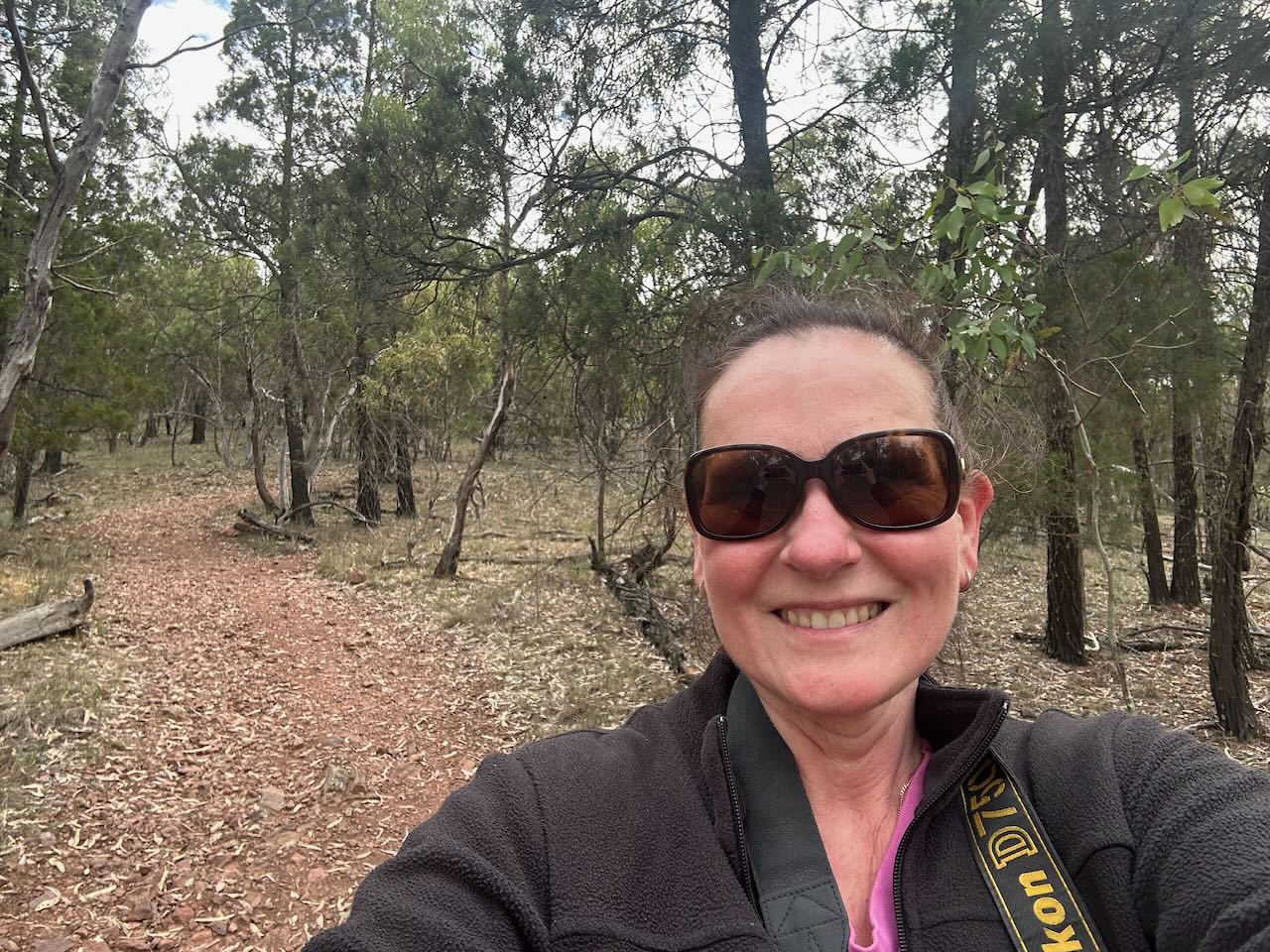
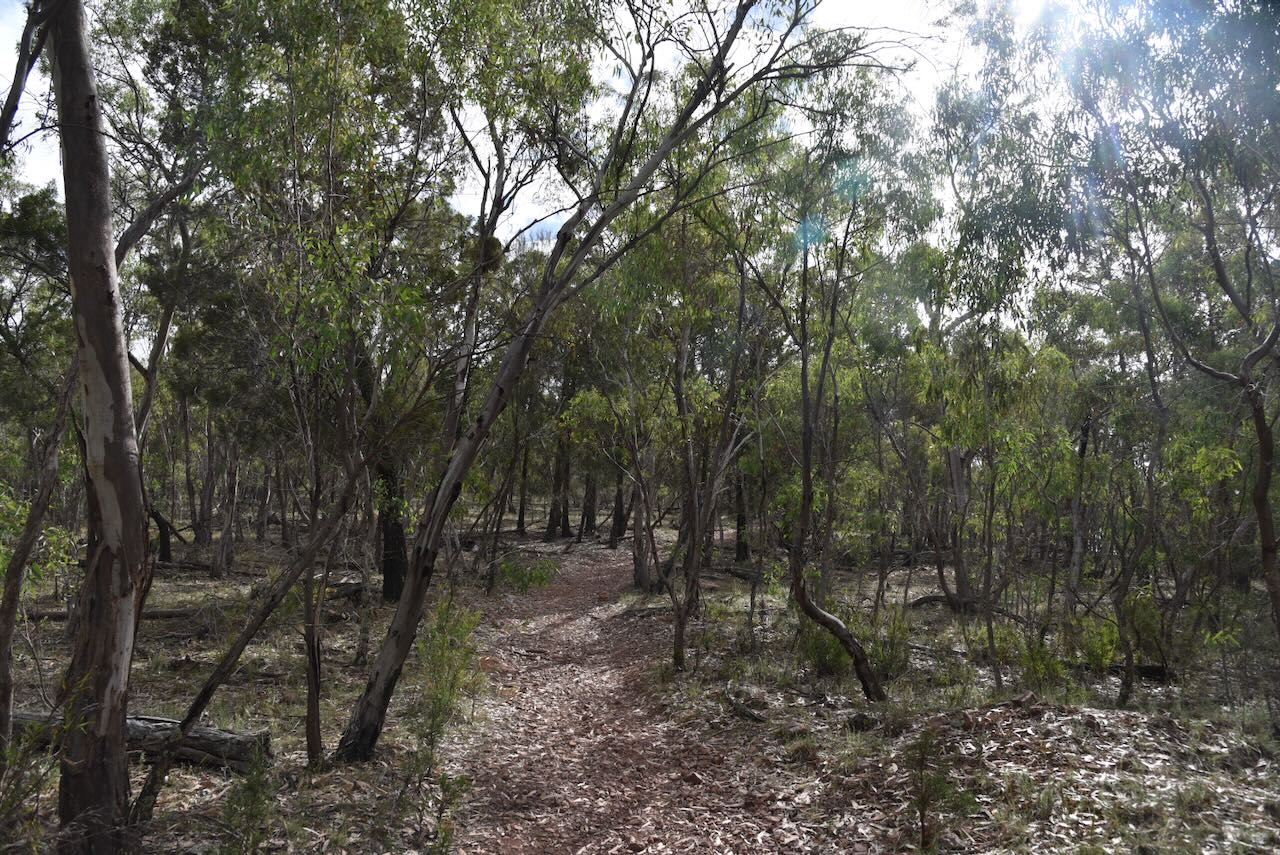
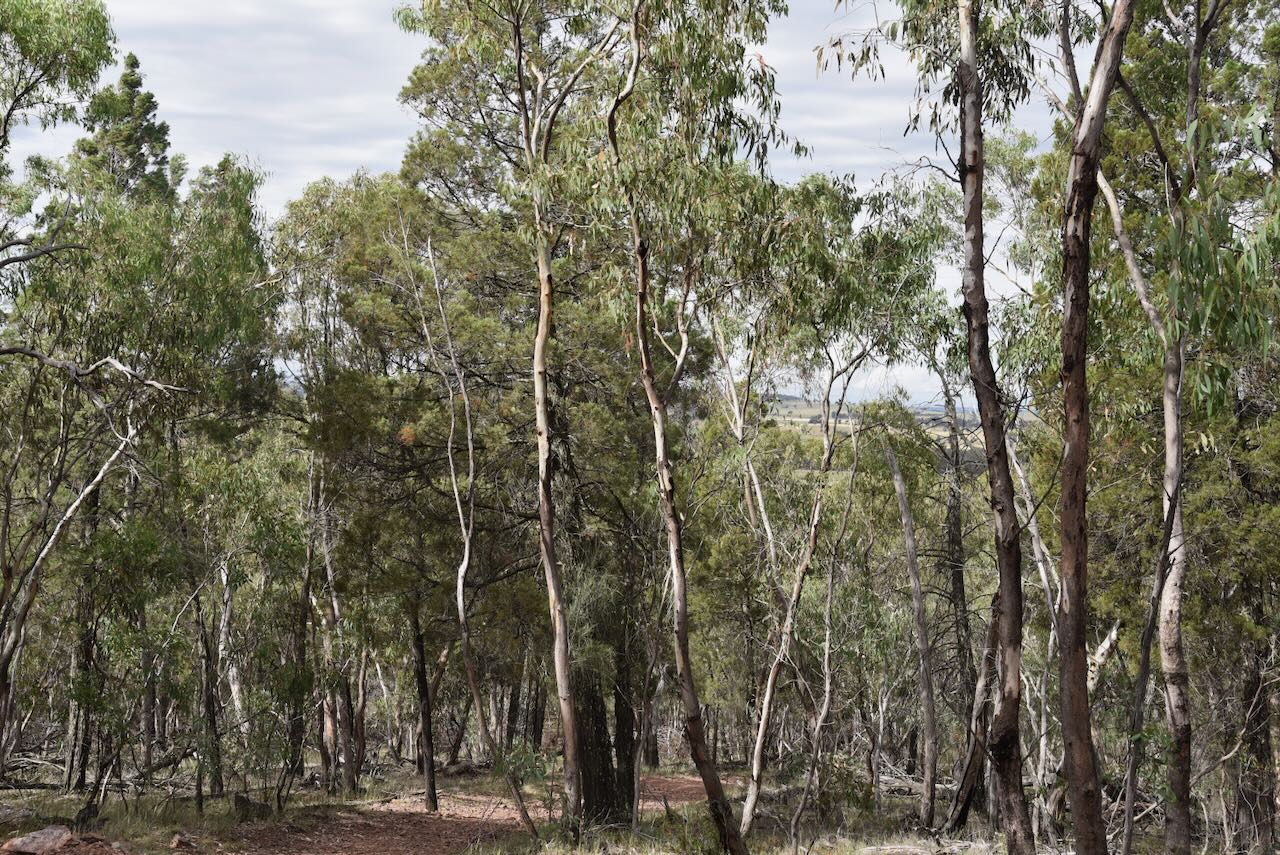
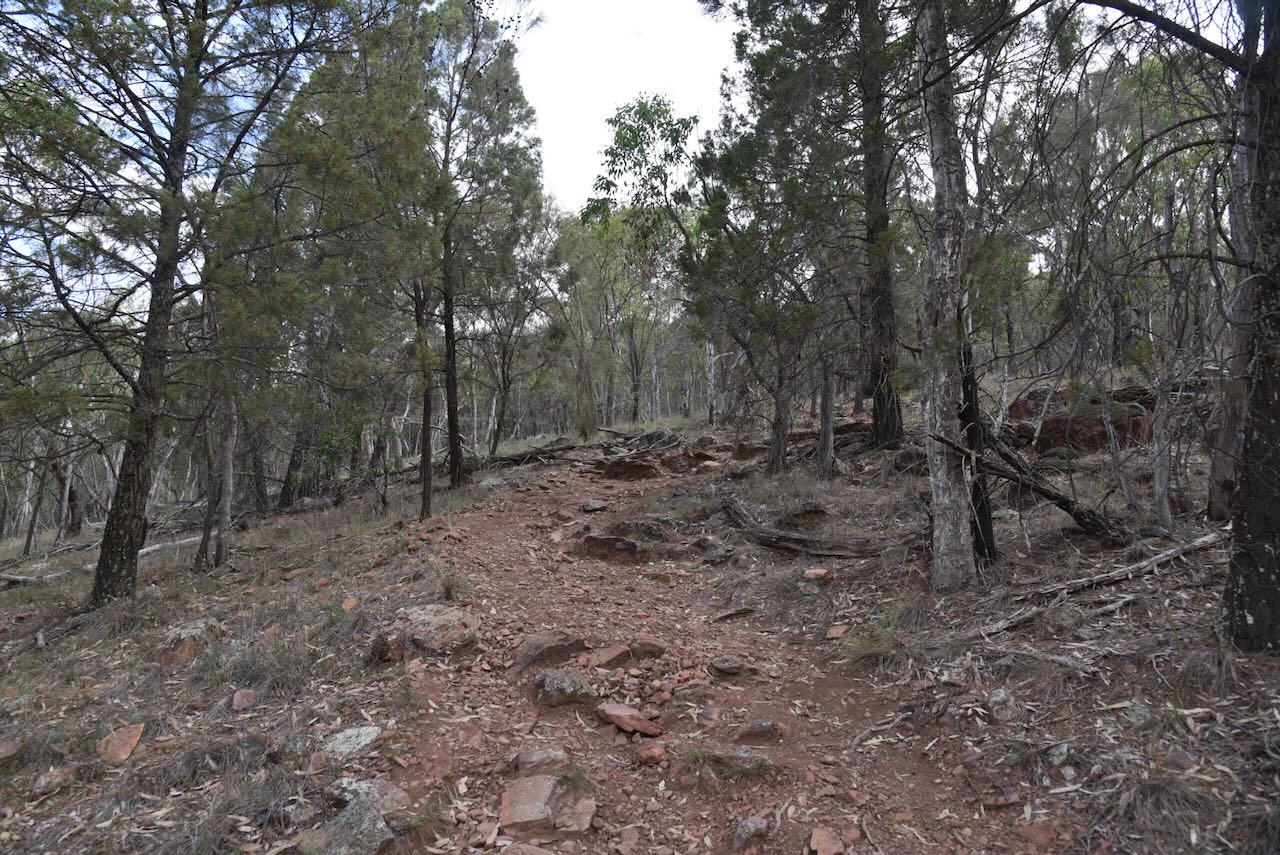
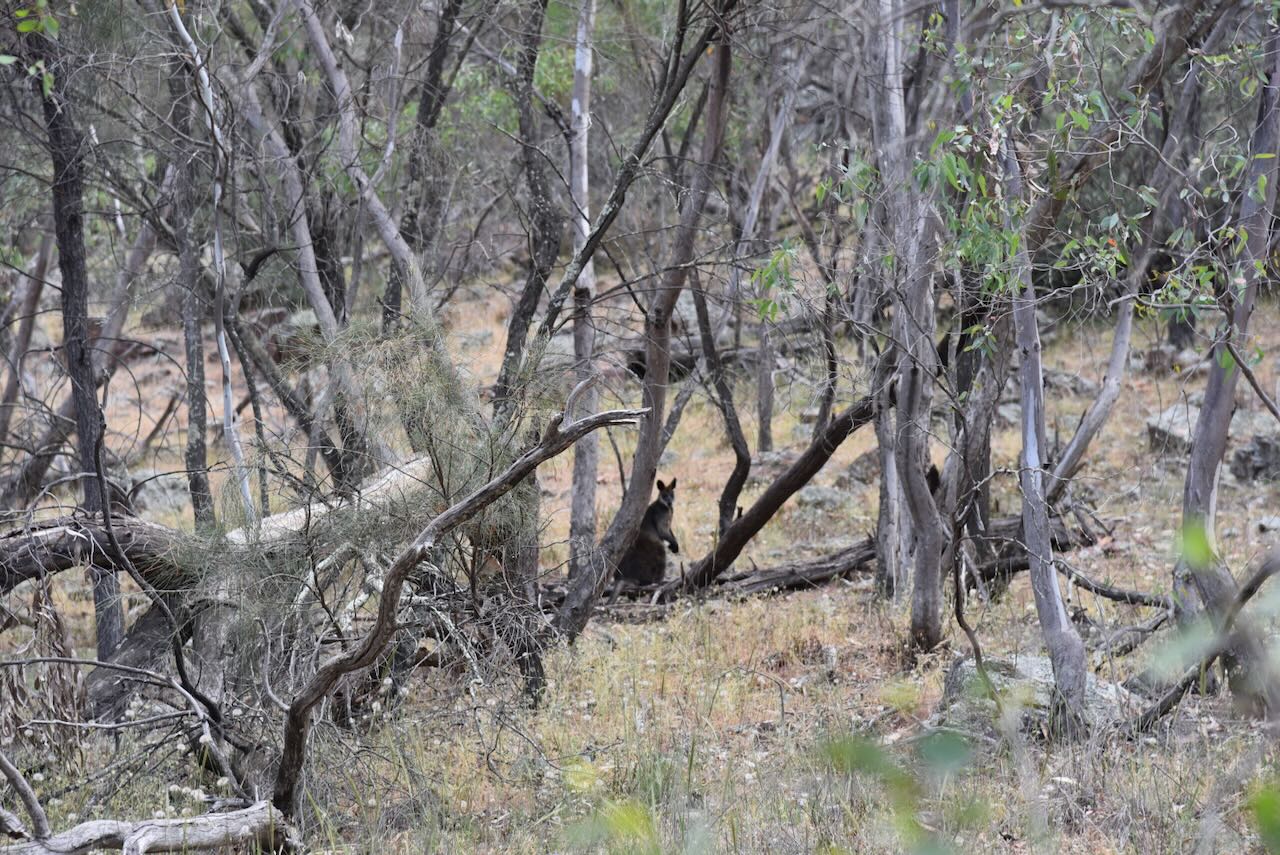
On the way up, Marija spotted several kangaroos and wallabies.
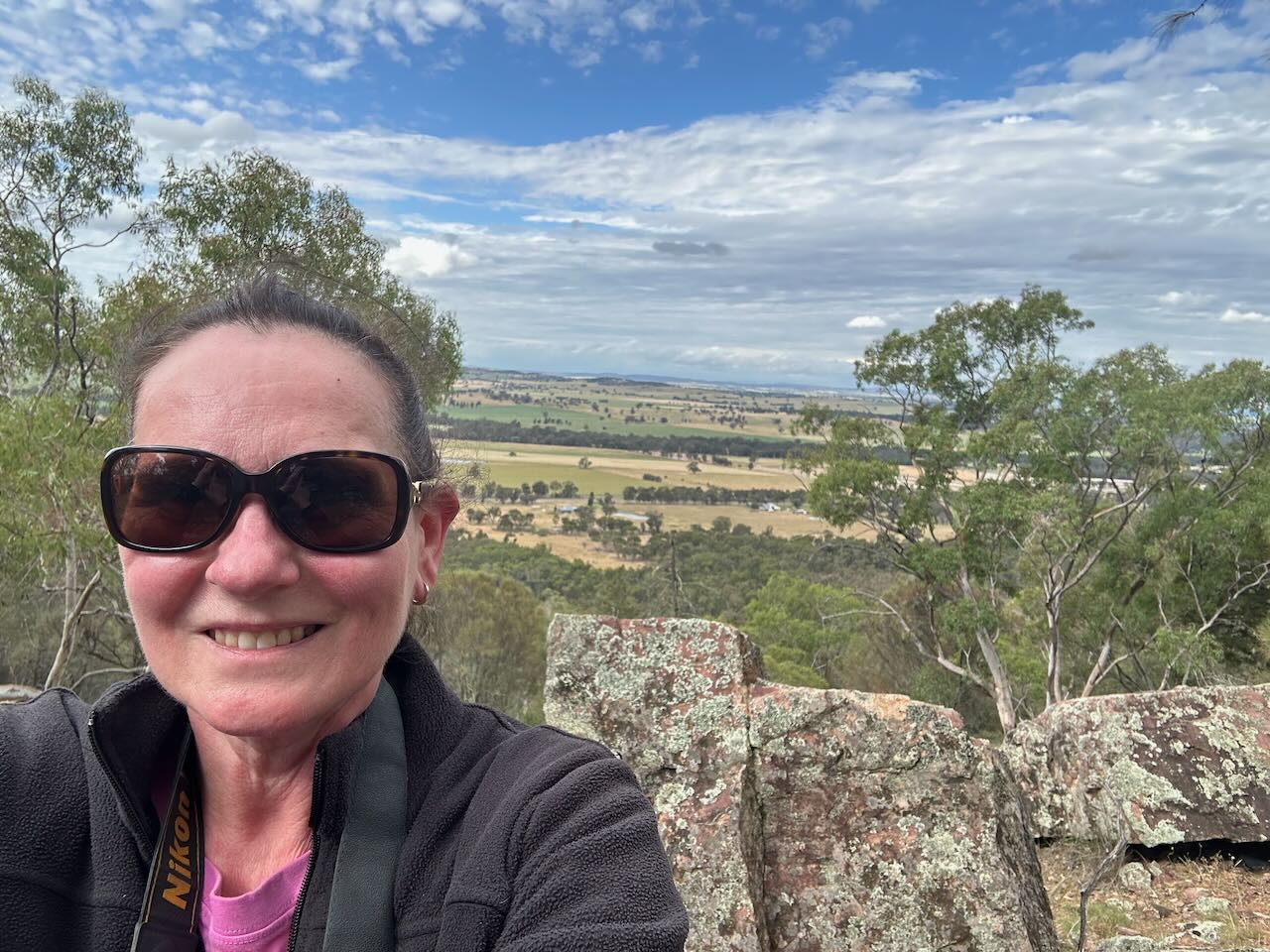
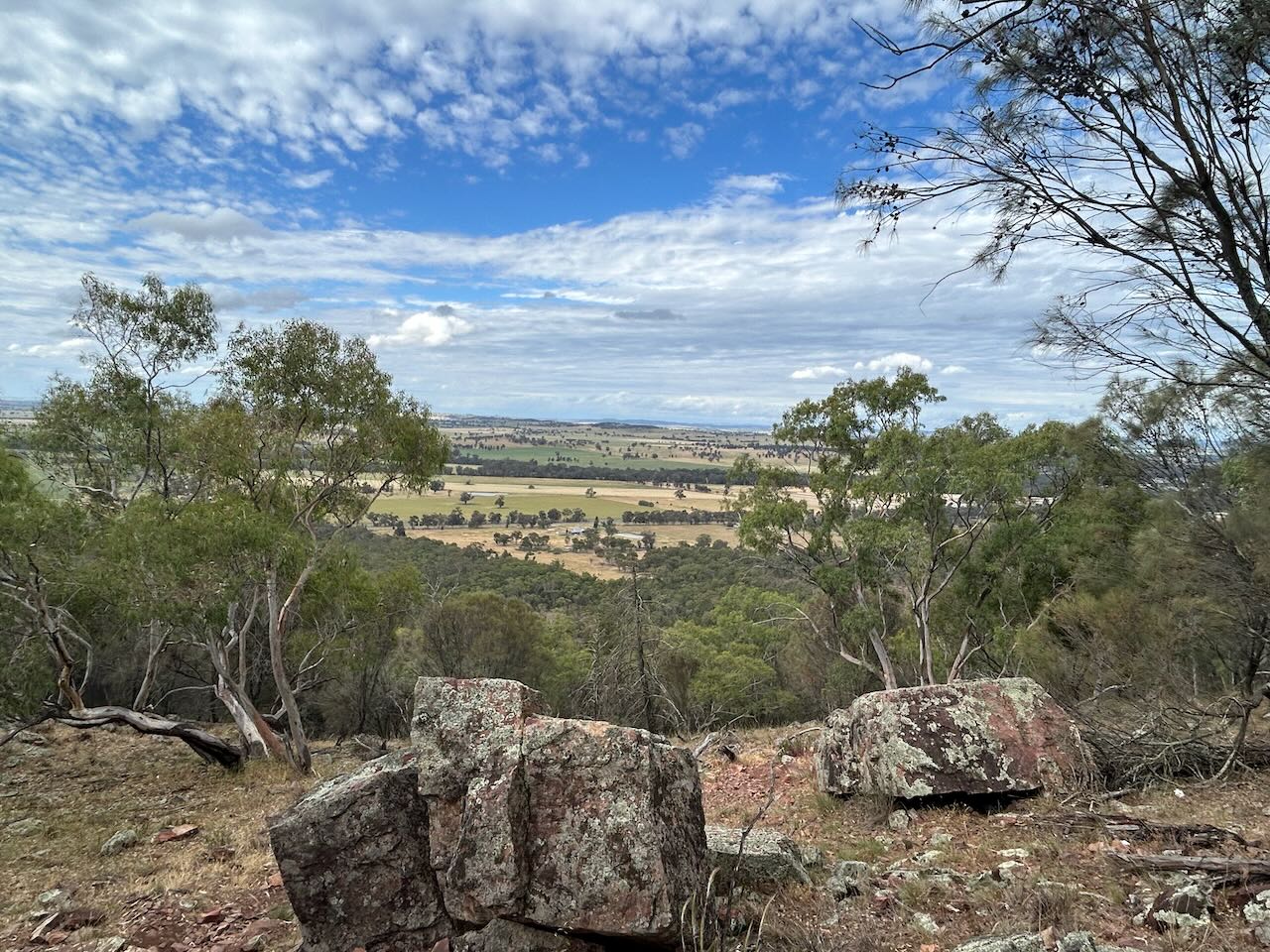
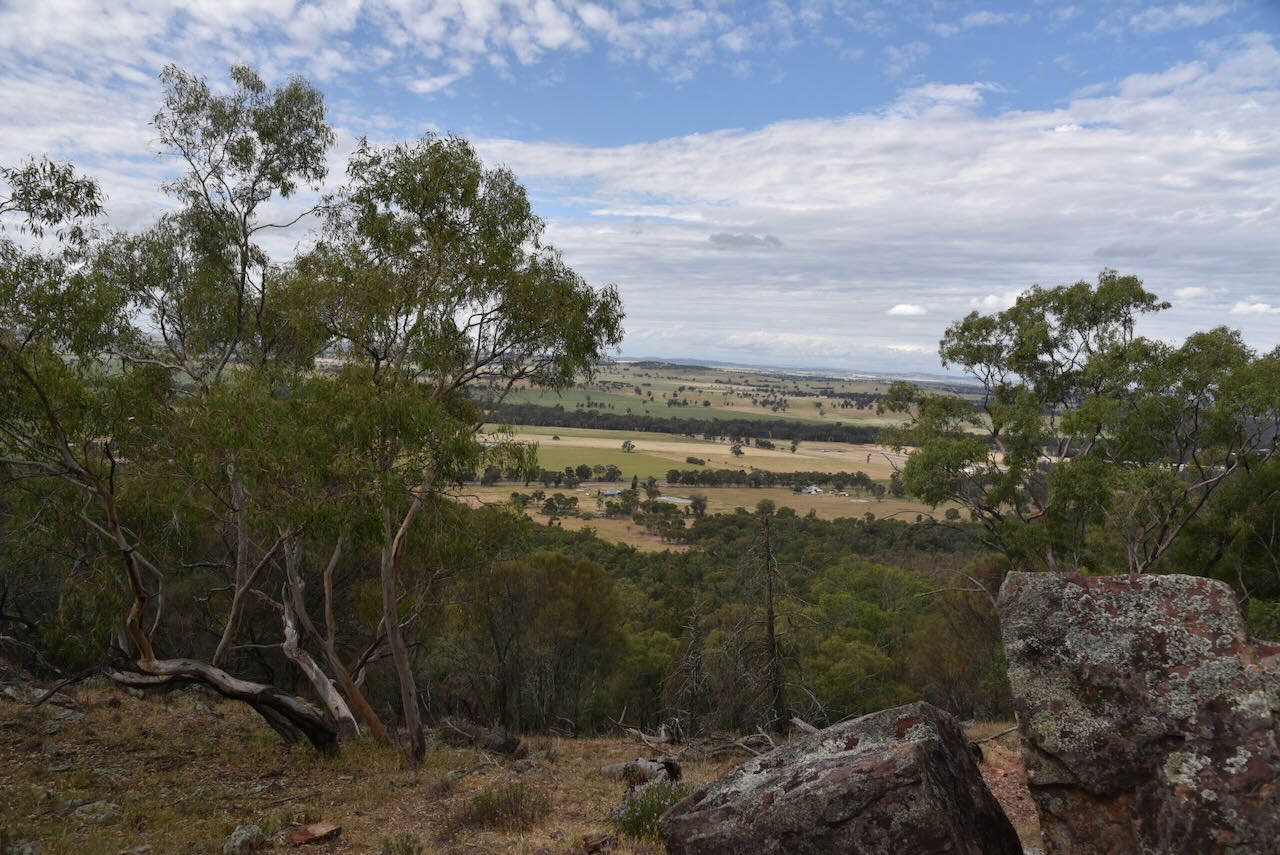
Marija informed me that the track got progressively harder, and she encountered an experienced local who informed her that the final stage was extremely difficult. As a result, Marija decided to turn back.
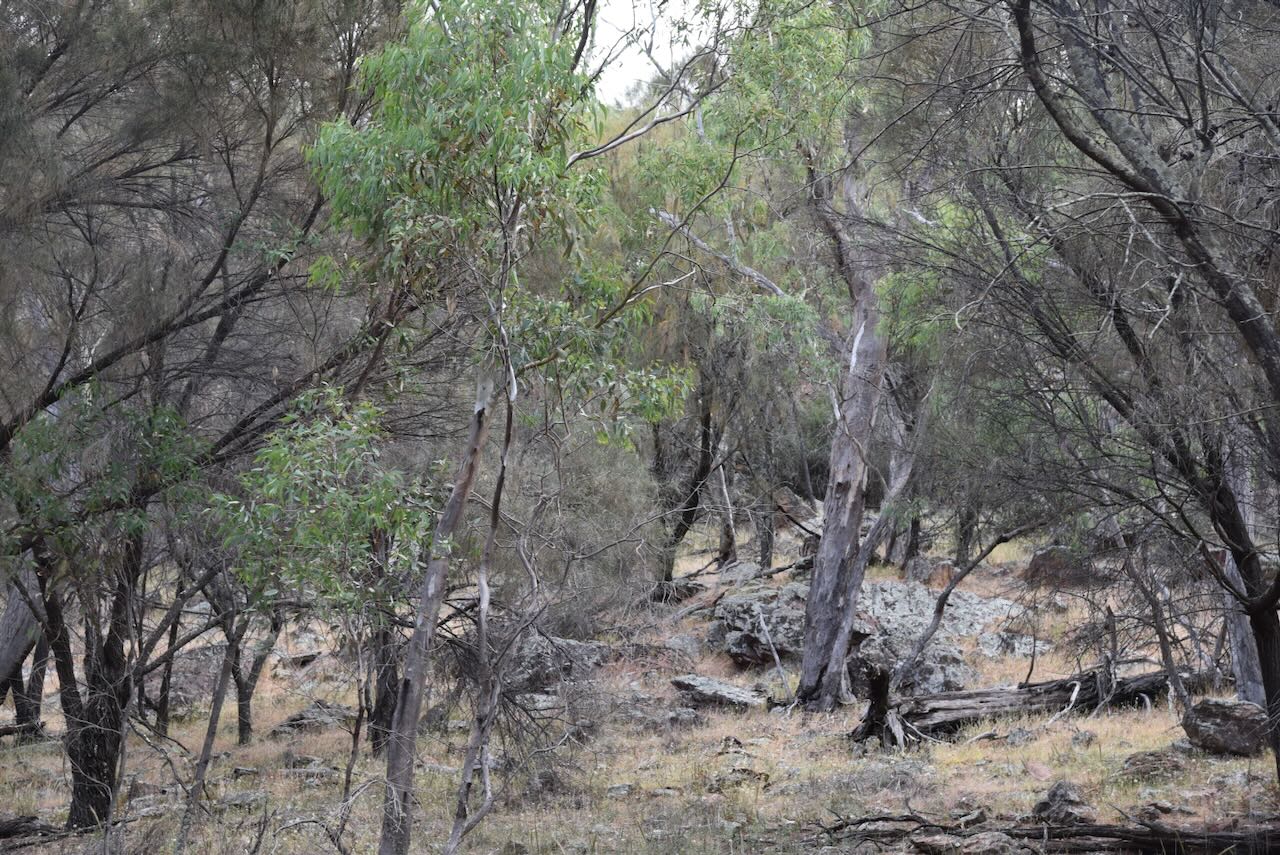
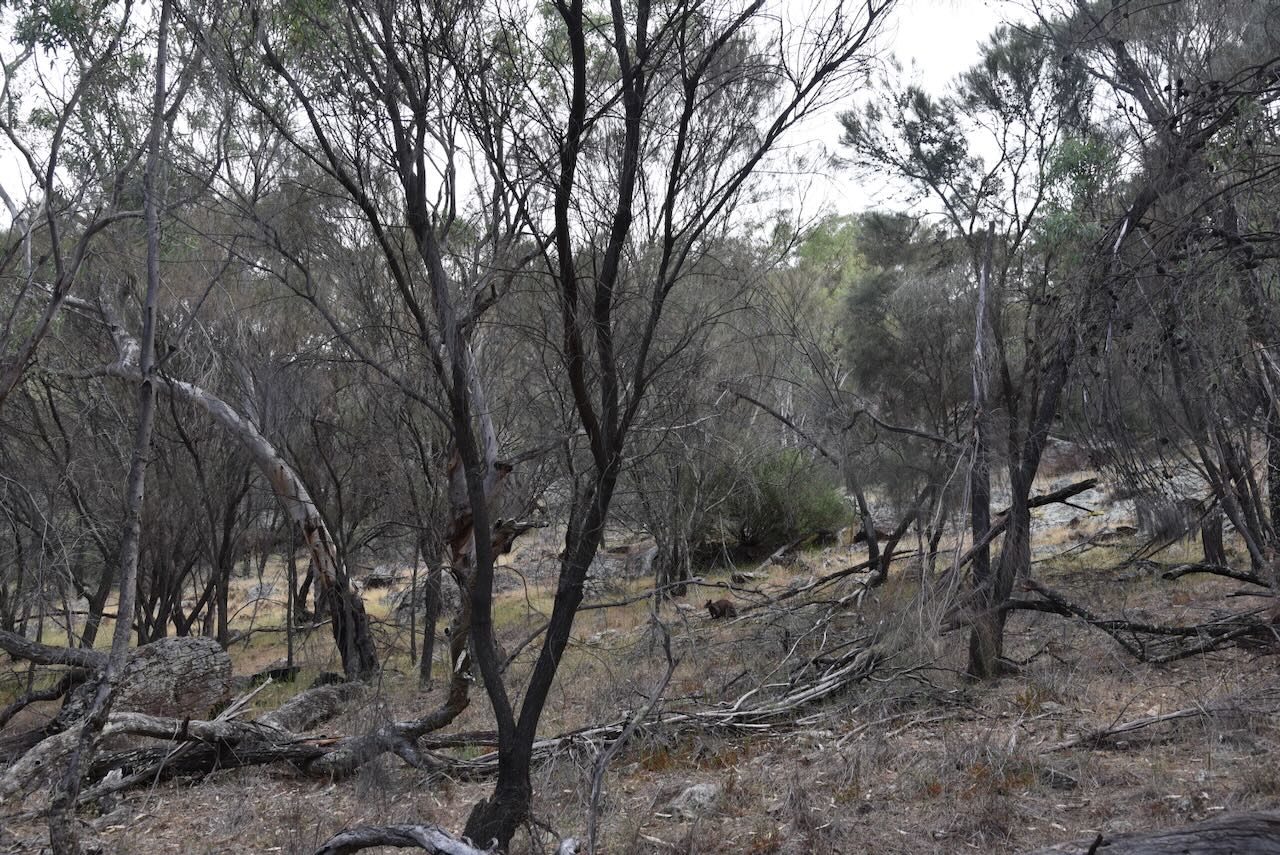
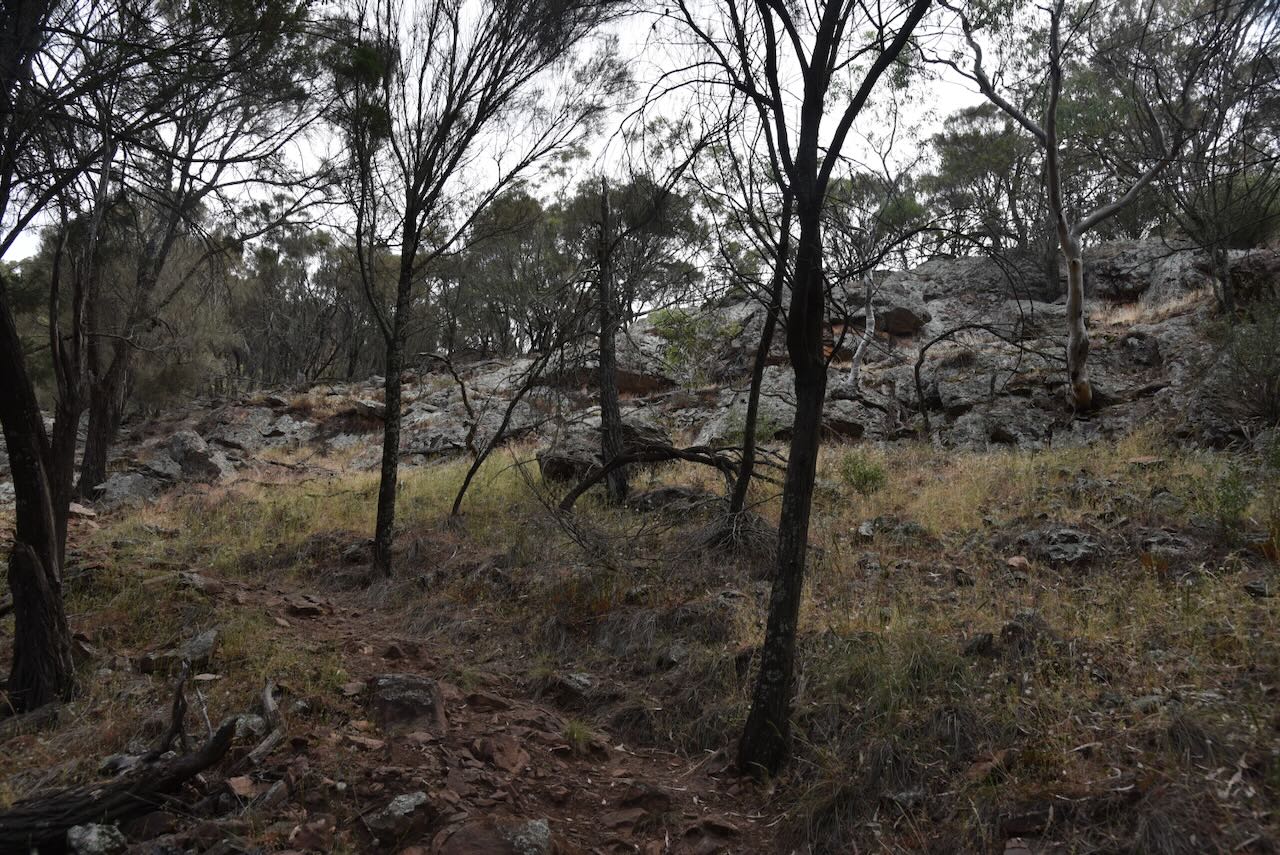
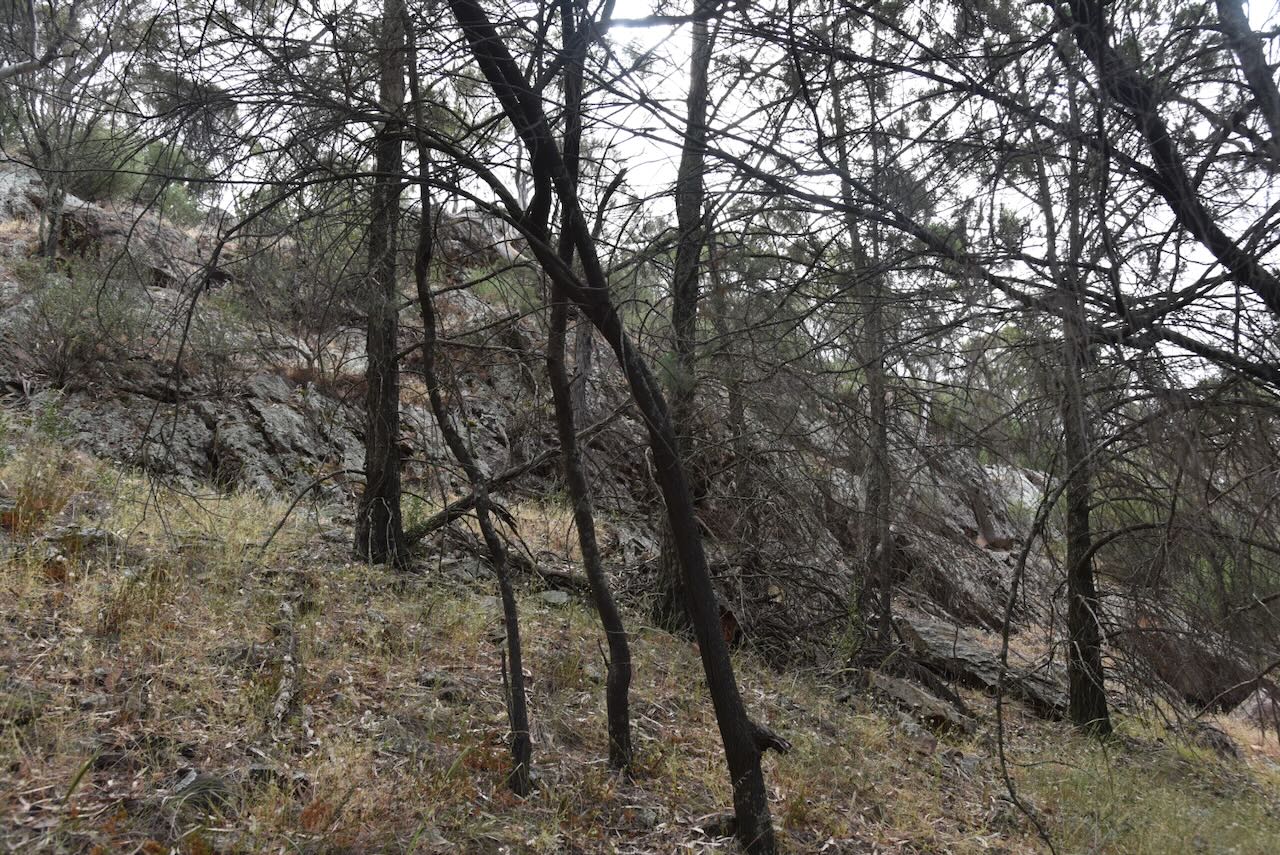
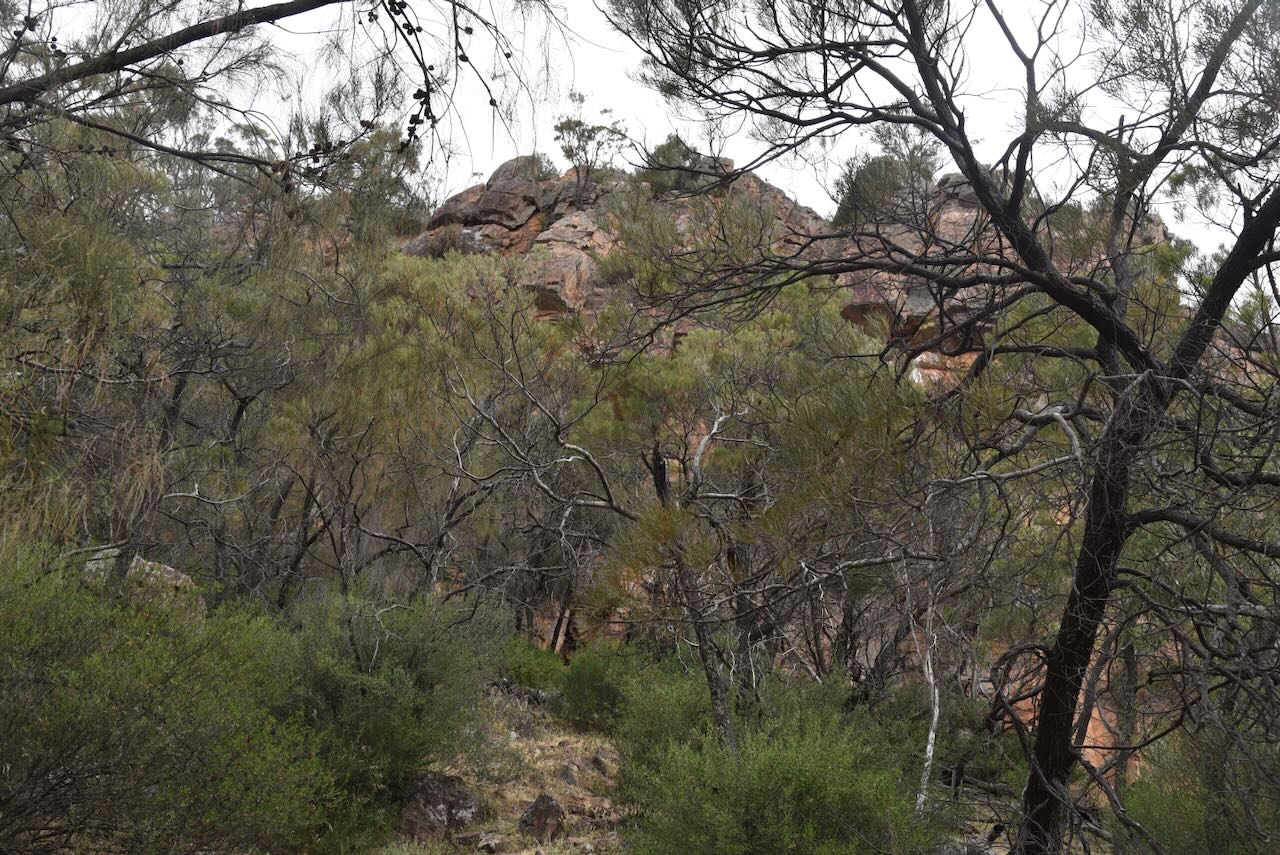

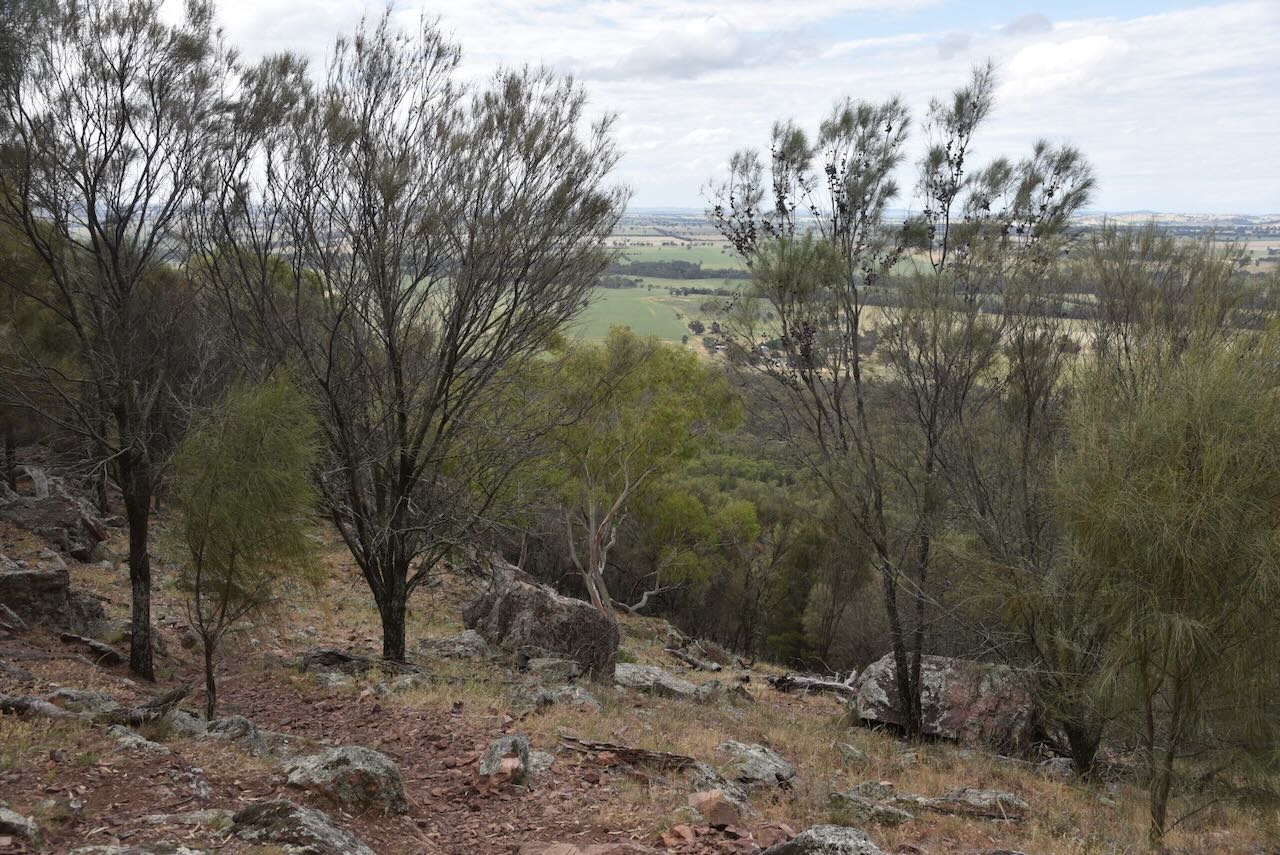
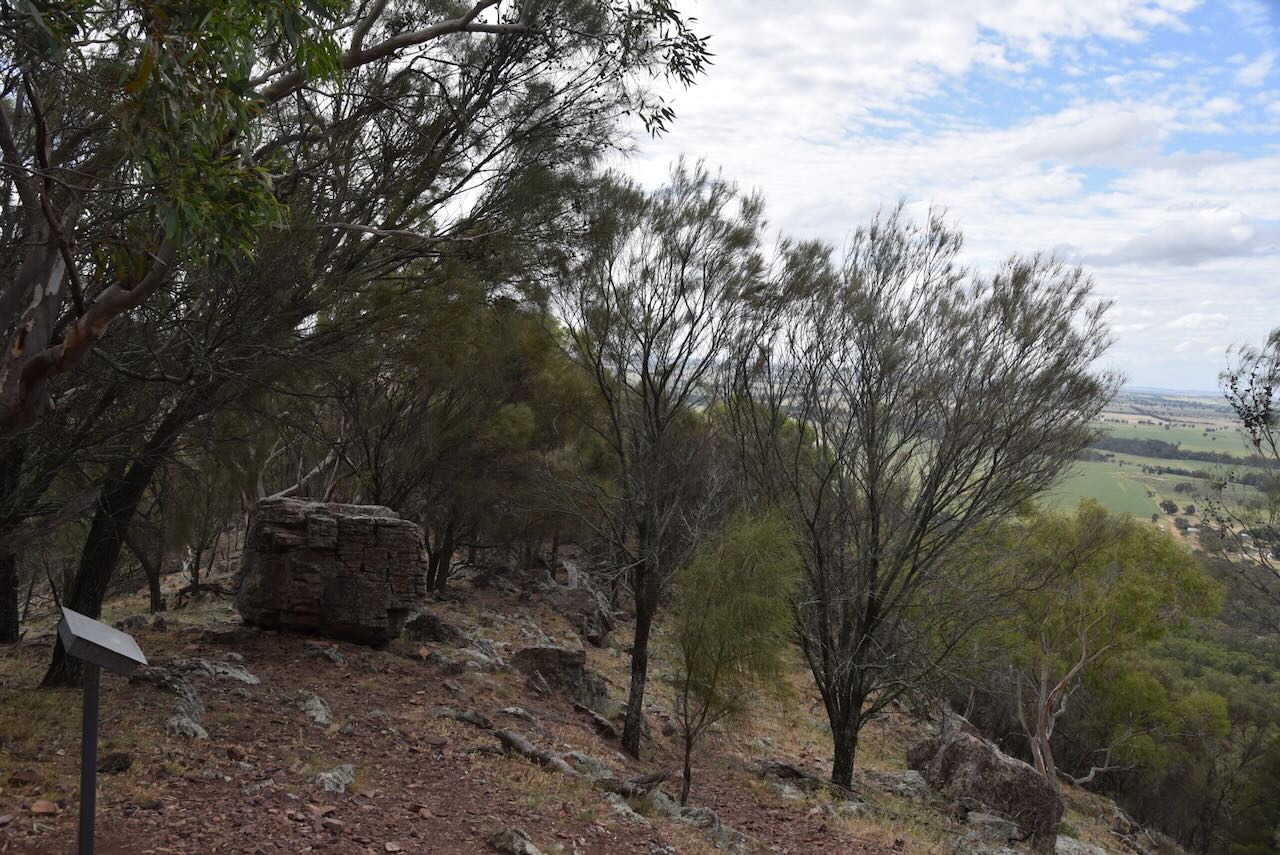


Despite not reaching the top, Marija did enjoy some amazing views of the surrounding countryside.

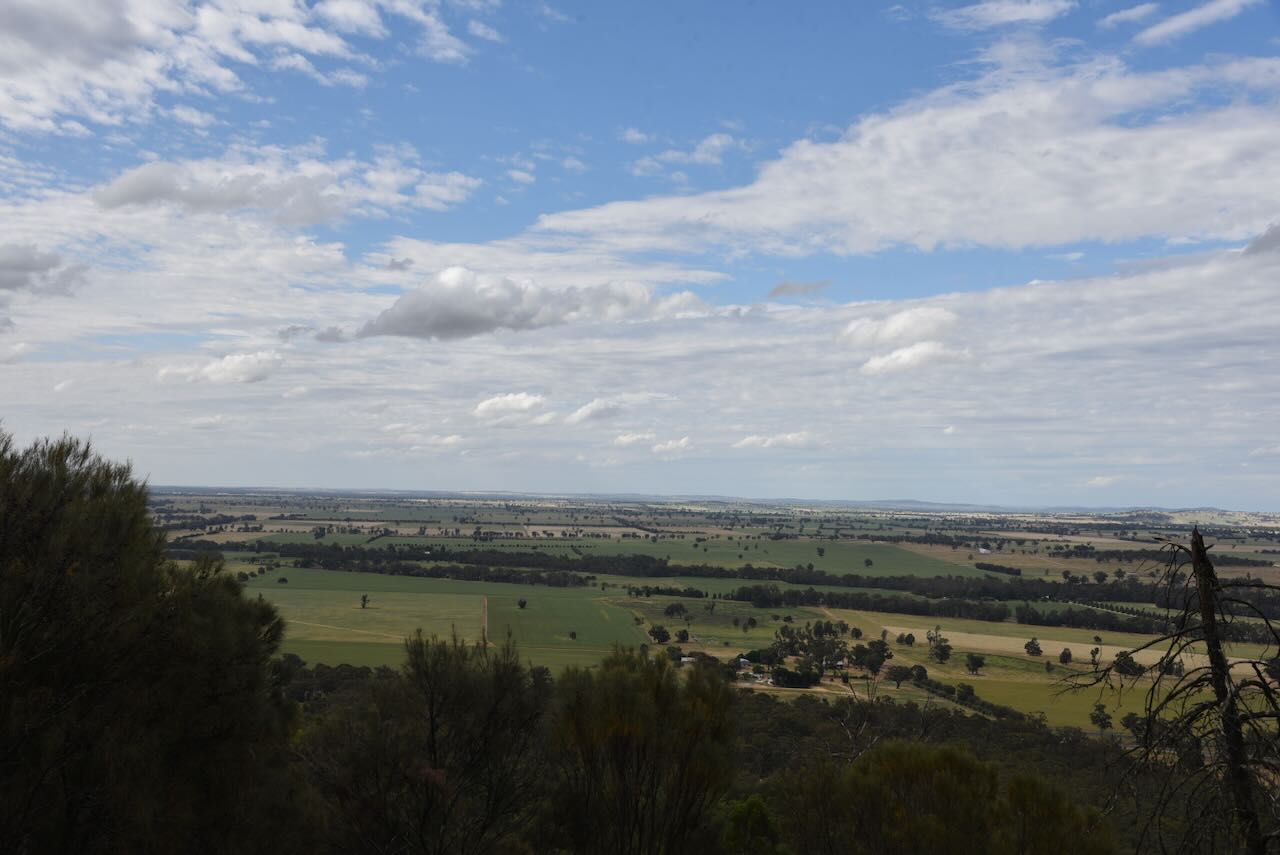
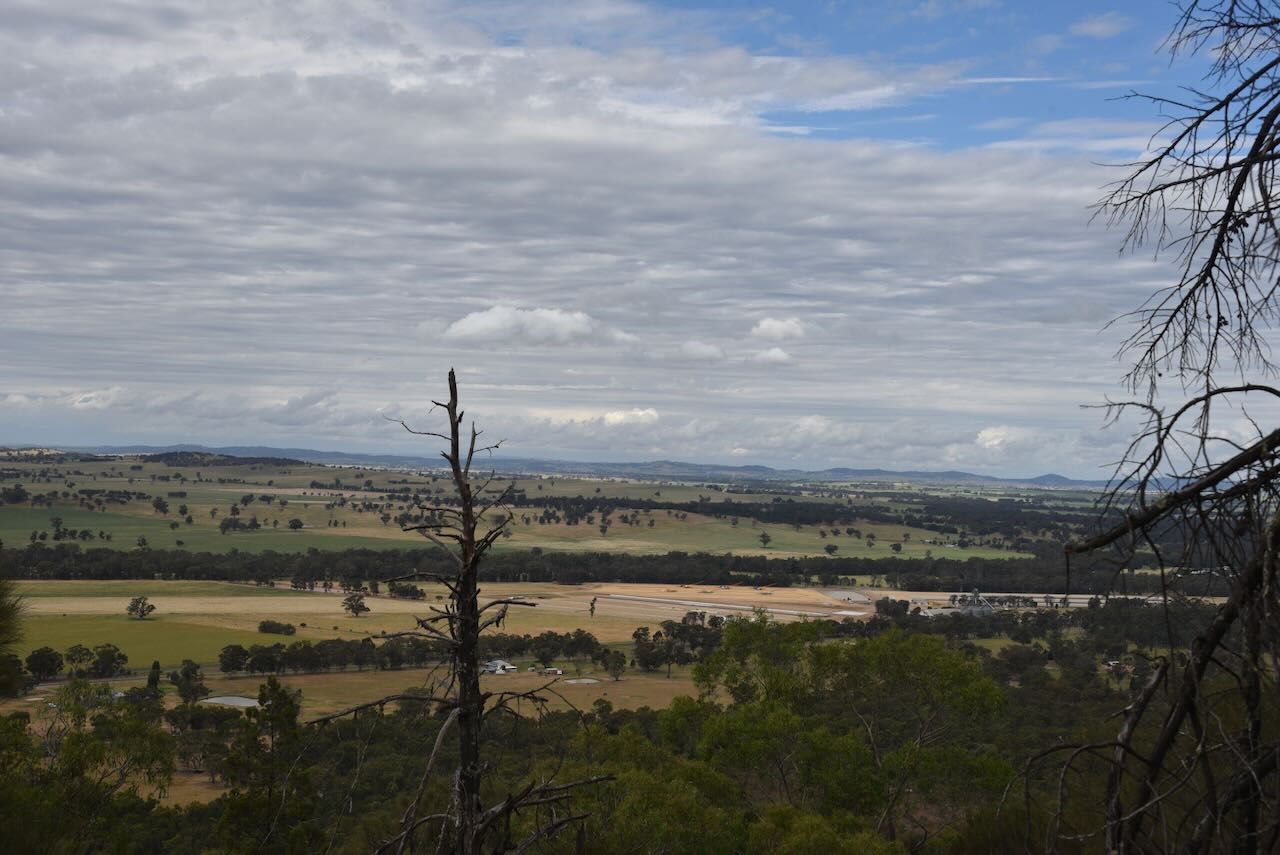
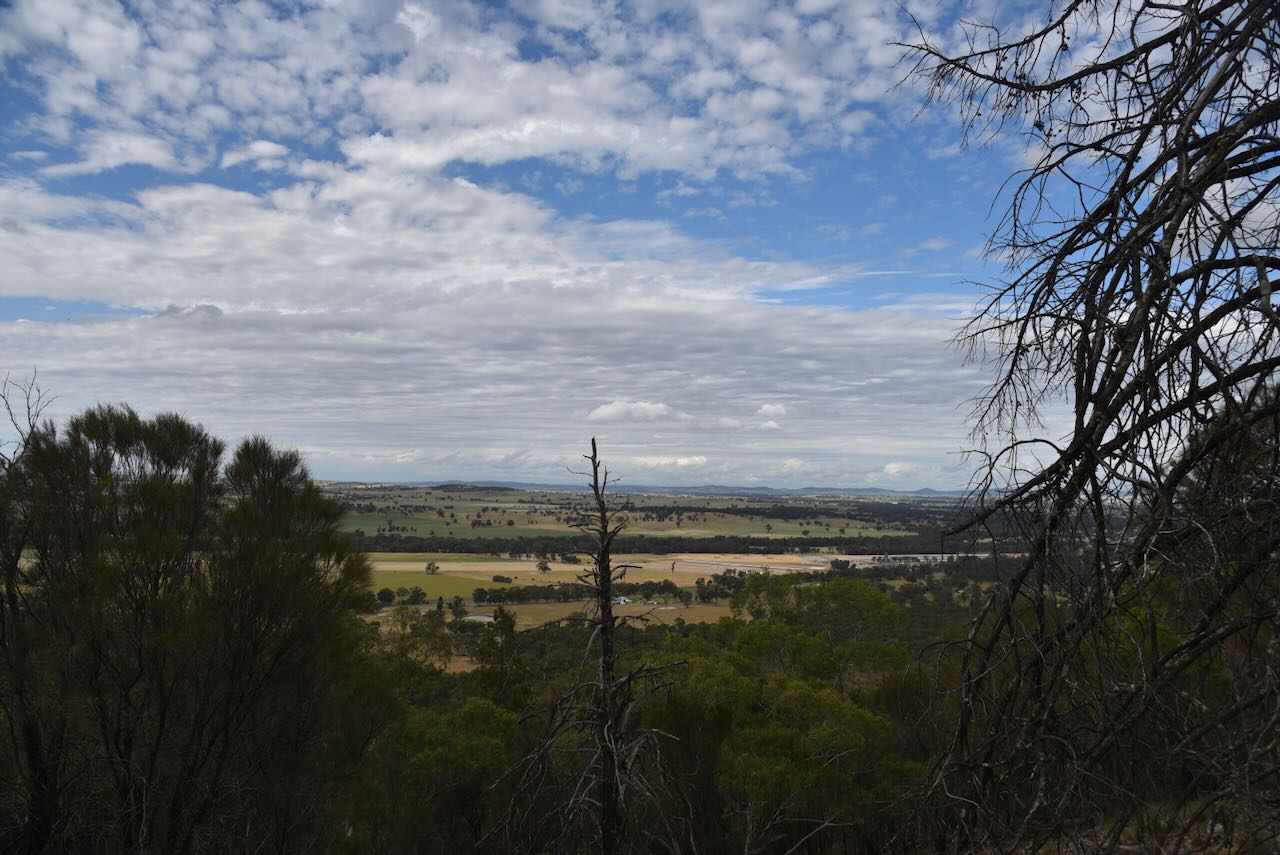
Marija worked the following stations on 40m SSB:-
- VK1AO
- VK2MET
- VK1AD
- VK2HAK
- VK5WU
- VK2UGB
- VK5FANA
- VK3CLD
- VK5QA
- VK2DBF
- VK2VW
- VK2HFI
- VK2AKA
- VK2BUG
I worked the following stations on 40m SSB:-
- VK1AO
- VK2MET
- VK1AD
- VK2HAK
- VK5WU
- VK2UGB
- VK5FANA
- VK3CLD
- VK5QA
- VK2DBF
- VK2VW
- VK2HFI
- VK2AKA
- VK2BUG
- VK3ALF
- VK2IO
- VK2GEZ
- VK3BWS
- VK3AMO
- VK3HJW
- VK3MCK
- VK7PJM
- VK3AKO
- VK2MO
- VK1MO
- VK3DCQ
- VK3TDK
- VK3NYC
- VK2KHA
- VK2JSW
- VK2YL
- VK7KF
- VK5DW
- VK2HLM
- VK5HS
- VK3MIJ
- VK3JSD
- VK1CHW
- VK2CHW
- VK3CNC
- VK2DWP
- VK5FR/m
- VK3PF
- VK3KAI
- VK3BEL
- BK3BEB
- VK3WSG
- VK5NRG
- VK3APJ
- VK3MLT
- VK2ZRD
- VK5VK
- VK3BMX/m
- VK5FB/m
- VK2ZR
- VK7AAE
- VK3ACZ
I worked the following stations on 20m SSB:-
- VK2ZR
- KG5CIK
- VK6XL
- VK5HS
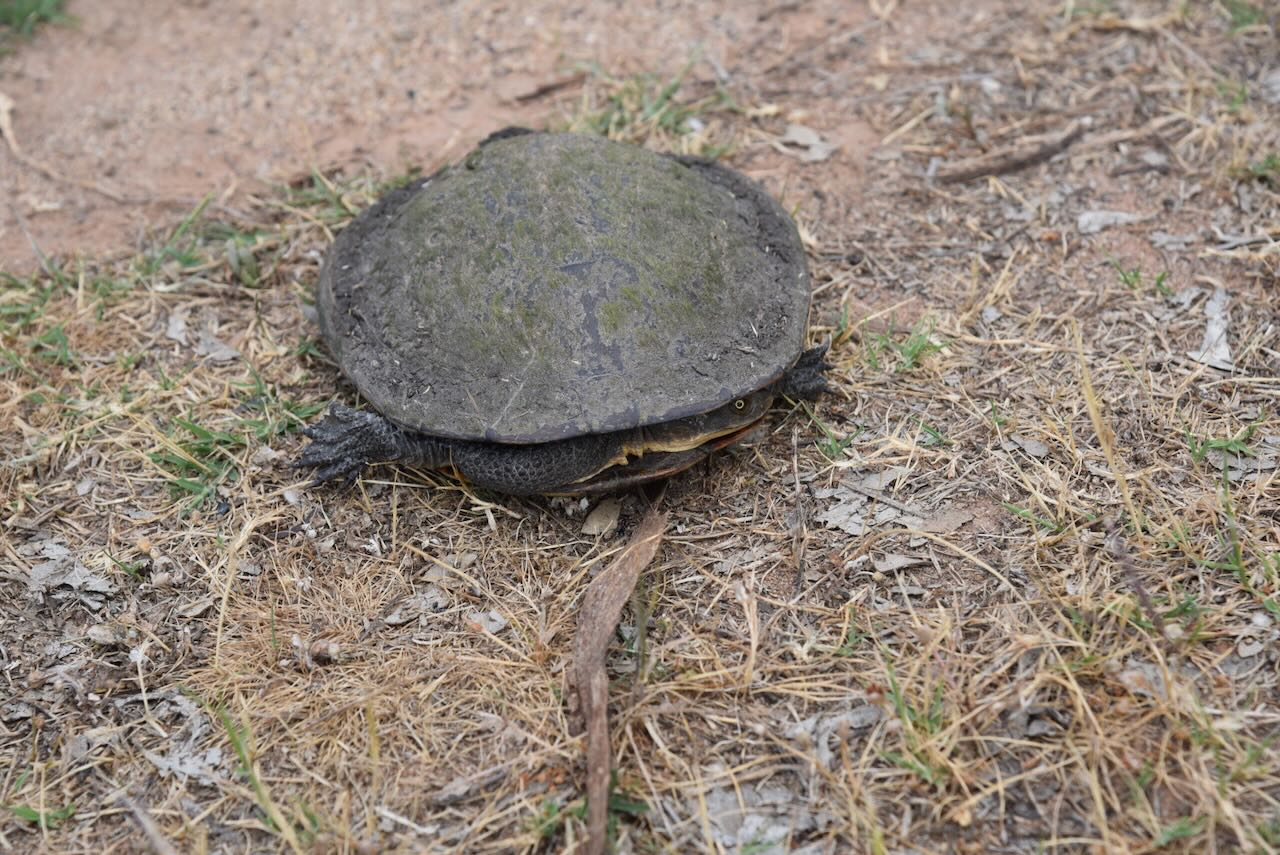
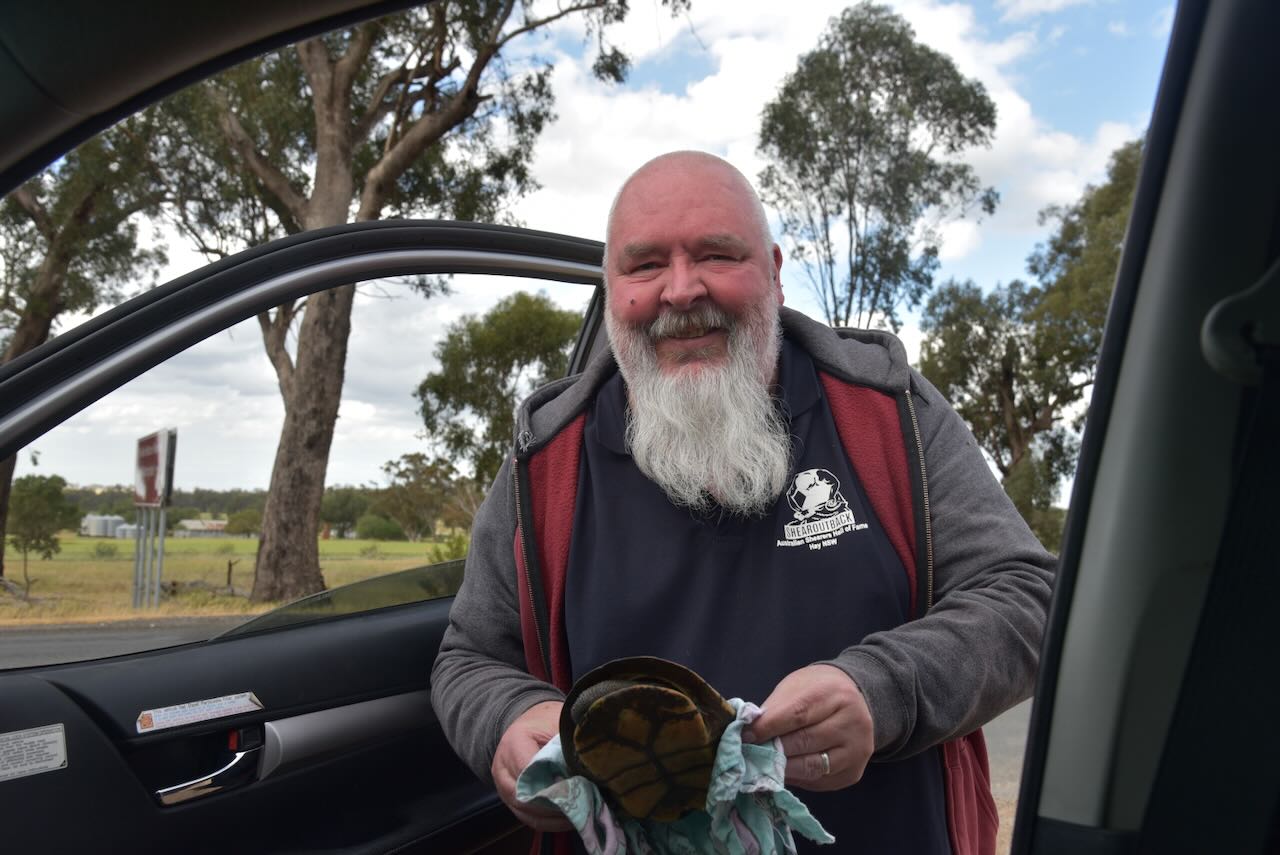
As we drove out of the reserve, we found this nappy little fella sitting in the middle of the road, so I picked him up and placed him out of harm’s way.
References.
- ancestry (2016). Ancestry® | Genealogy, Family Trees & Family History Records. [online] Ancestry.com.au. Available at: https://www.ancestry.com.au/. [Accessed 30 Dec. 2025].
- NSW National Parks and Wildlife Service, 2000, The Rock Nature Reserve Plan of Management
- Smh.com.au. (2025). Welcome To Zscaler Directory Authentication. [online] Available at: https://www.smh.com.au/traveller/inspiration/the-rock-culture-and-history-20081125-6ggj.html [Accessed 30 Dec. 2025].
- Trove. (2026). Wagga Wagga Advertiser (NSW : 1875 – 1910) – 14 Feb 1880 – p3. [online] Available at: https://trove.nla.gov.au/newspaper/page/10789175?searchTerm=hanging%20rock%20hotel [Accessed 2 Jan. 2026].
- Trove. (2026). AN EXTRAORDINARY CASE. – COMMITTAL OF MR. J. E. WALL FOR MANSLAUGHTER. – Bendigo Advertiser (Vic. : 1855 – 1918) – 3 Aug 1881. [online] Available at: https://trove.nla.gov.au/newspaper/article/88616826?searchTerm=margaret%20smith%20%2B%20j.e.%20wall [Accessed 2 Jan. 2026].
- Trove. (2026). SANDHURST. – The Age (Melbourne, Vic. : 1854 – 1954) – 24 Jan 1882. [online] Available at: https://trove.nla.gov.au/newspaper/article/202529318?searchTerm=james%20egan%20wall [Accessed 2 Jan. 2026].
- Wikipedia. (2022). The Rock. [online] Available at: https://en.wikipedia.org/wiki/The_Rock.
- Wikipedia Contributors (2025). Tooth ablation. Wikipedia.
- Wikipedia Contributors (2025). The Rock railway station. Wikipedia.
- WWDHS – Wagga Wagga & District Historical Society. (2025). Home – WWDHS. [online] Available at: https://www.wwdhs.org.au/ [Accessed 2 Jan. 2026].
 VK5PAS