
After a good night’s sleep in Gundagai, our first stop on Friday, 31st October 2025, was the famous Dog On The Tuckerbox at Snake Gully, just north of Gundagai, New South Wales.
Marija was expecting a large monument, but I had warned her that it was just a small monument, going by my memory. The last time I was there was when I was about 12 years old with my parents. Once seeing it, Marija exclaimed: ‘Is that it?” Nevertheless, we were both pleased to view one of Australia’s iconic monuments and a piece of unique Australian history.
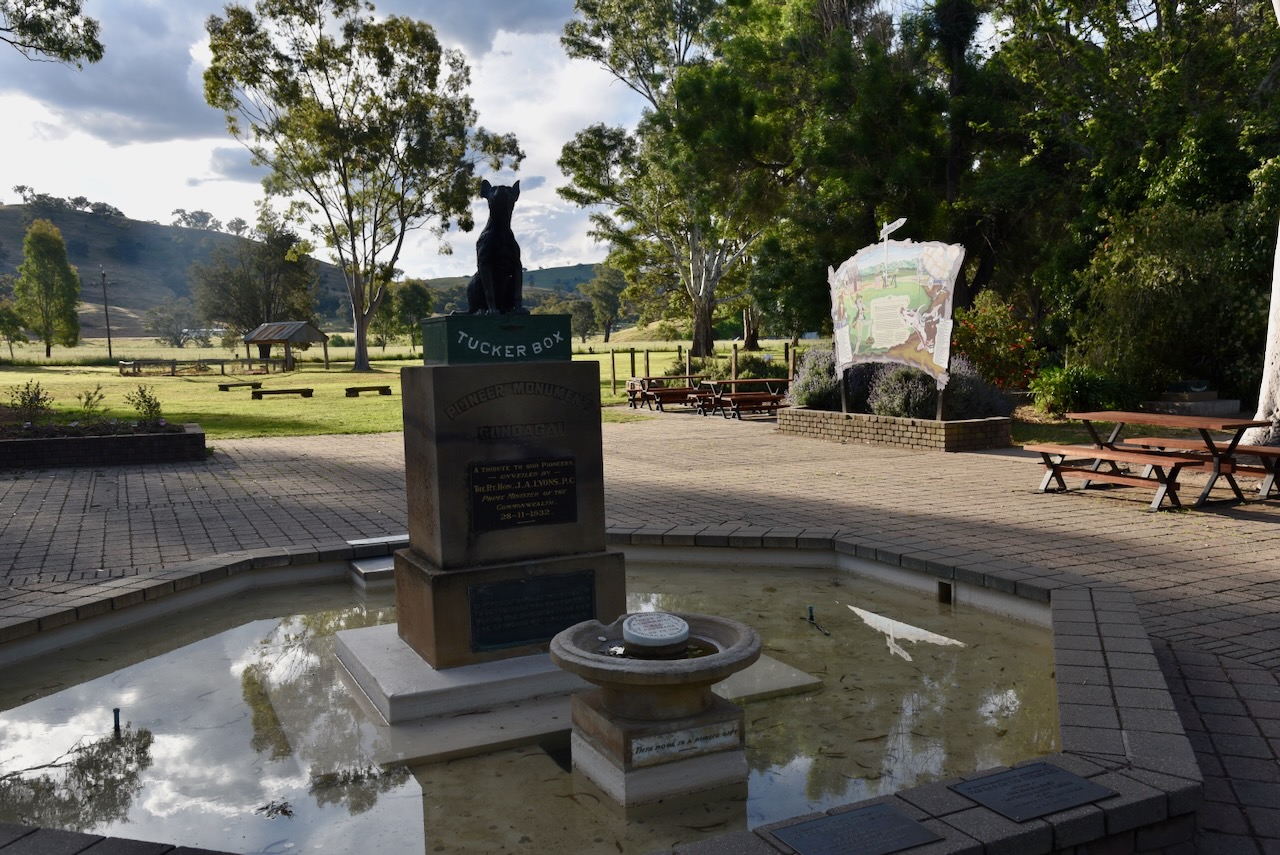
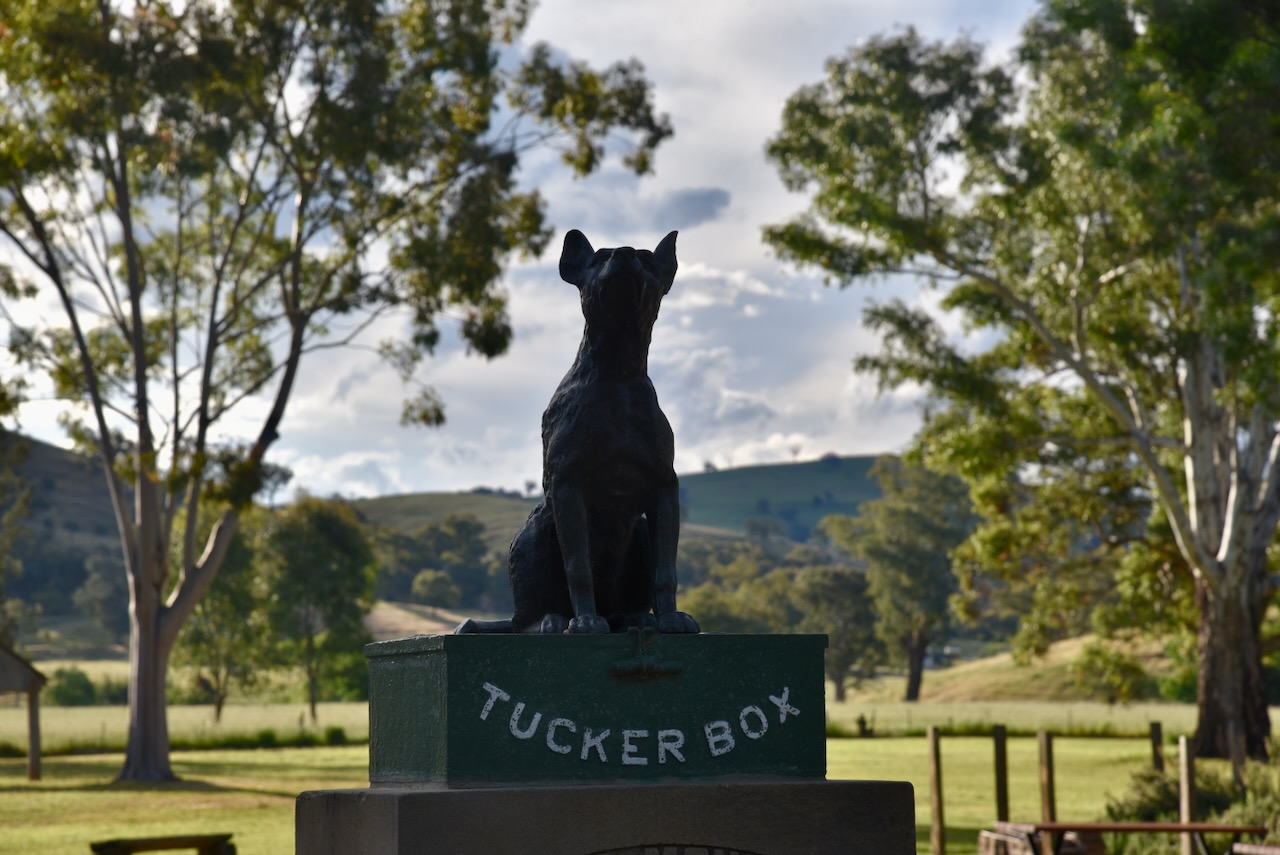
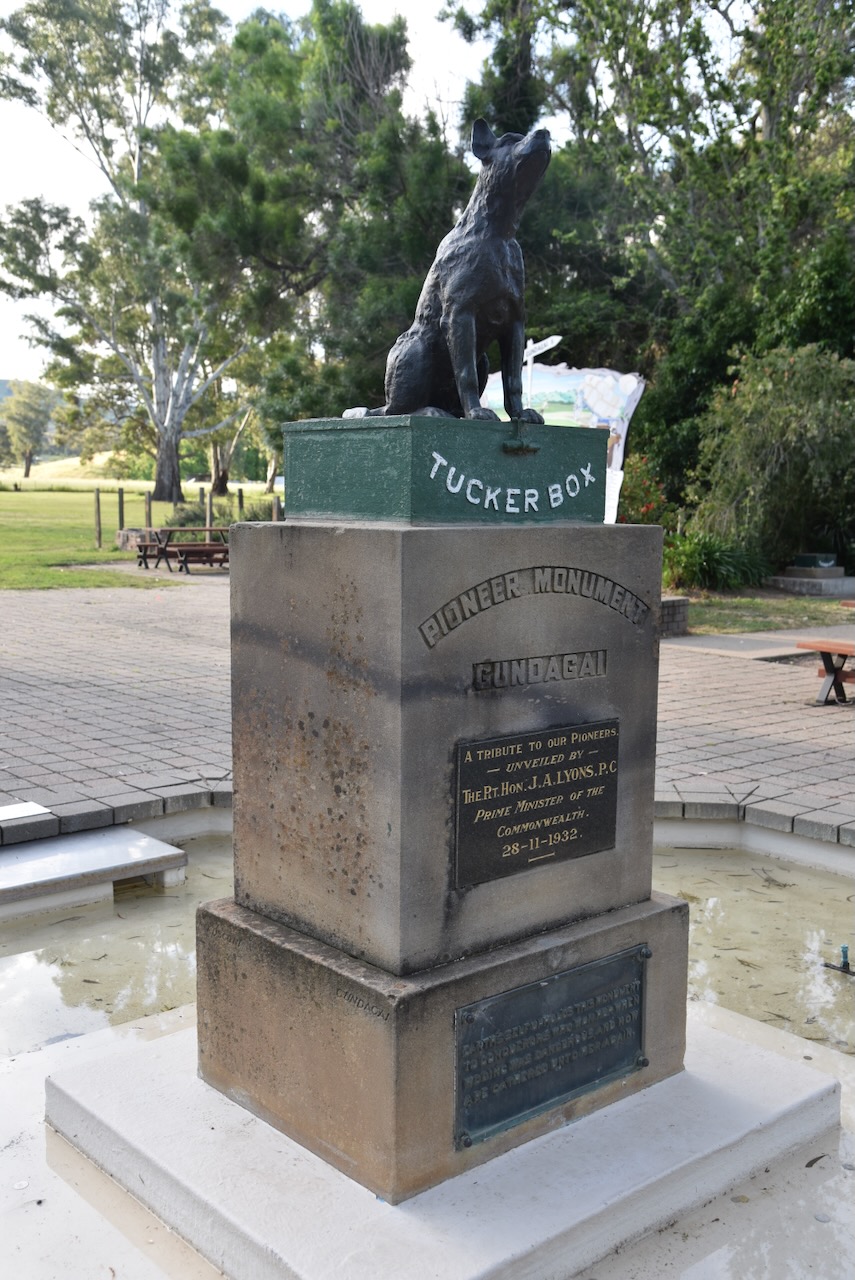
When I last visited the Dog On The Tuckerbox, the Hume Highway passed right by the Dog, and if my memory recalls correctly, there were lots of tourists stopping to admire the monument and visit the adjacent souvenir shop. While preparing this post, I went through some old photo albums and found the photo below showing myself, my Dad and my sister at the Dog On The Tuckerbox in c. 1977. The photo was taken on a Polaroid instant camera, which became very popular in Australia during the 1970s.
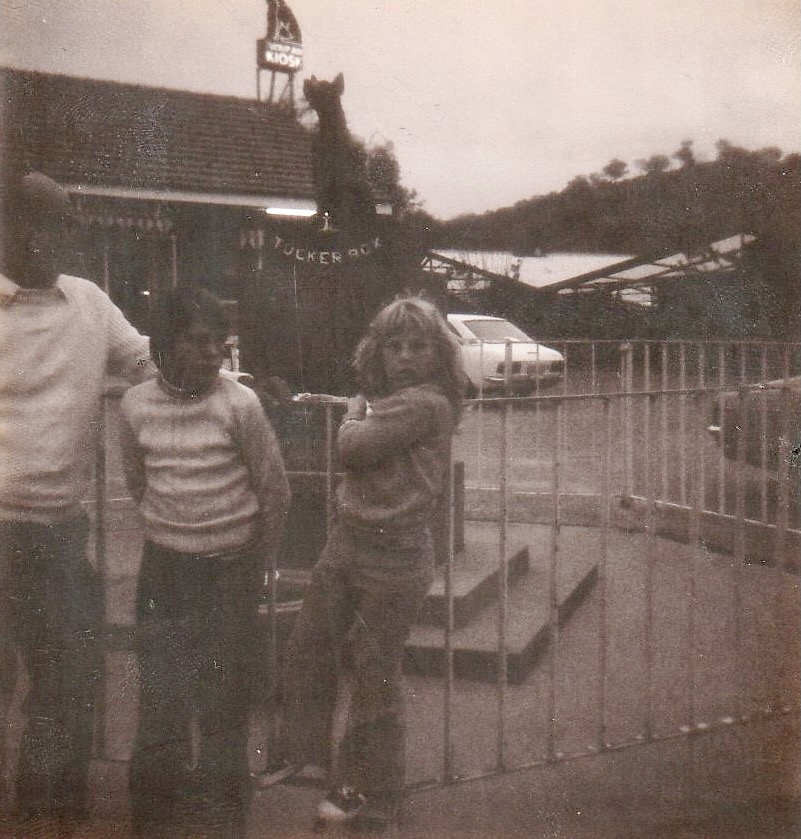
Today, the Hume Highway bypasses the statue. To access it, you need to take the highway exit to the service station/KFC/Subway, about 8 km from Gundagai and a little further along Annie Pyers Drive, you will find the statue. The old visitor shop is still there and was refurbished and reopened in late 2025. Annie Pyers Drive is named after the original shopkeeper. There are plans in place for a major redevelopment here, including accommodation, and it certainly needs it. The site was looking a little tired.
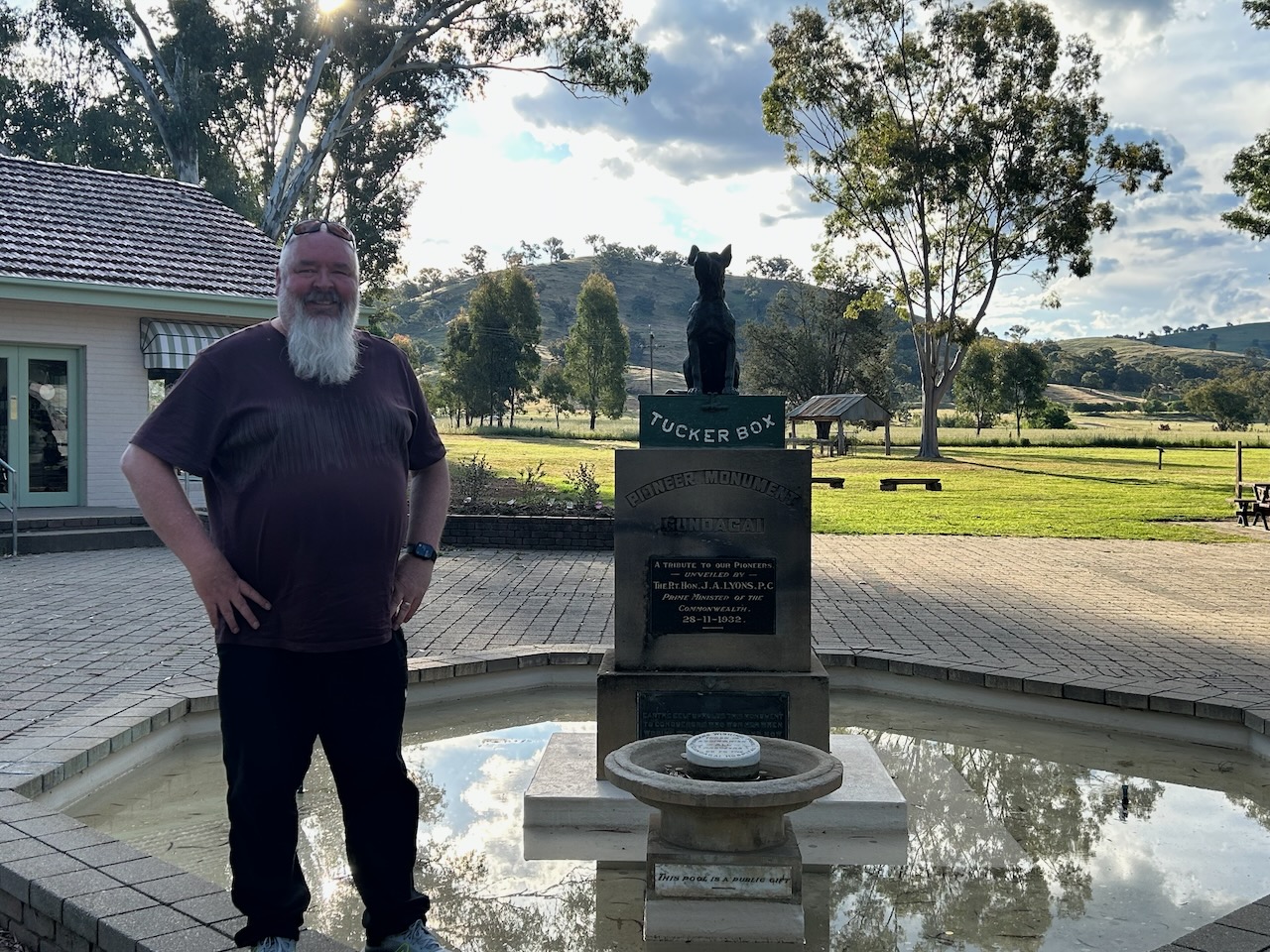
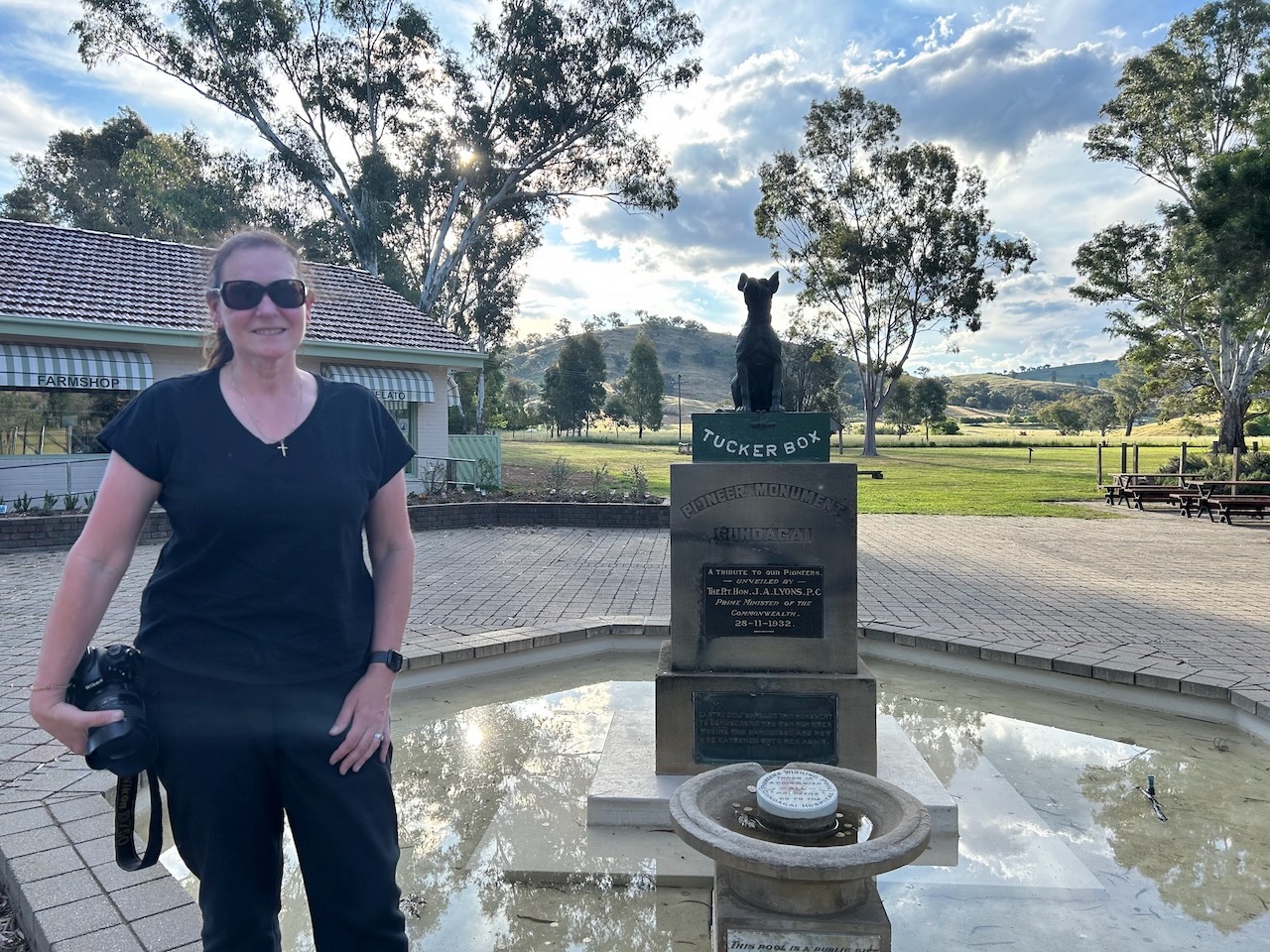
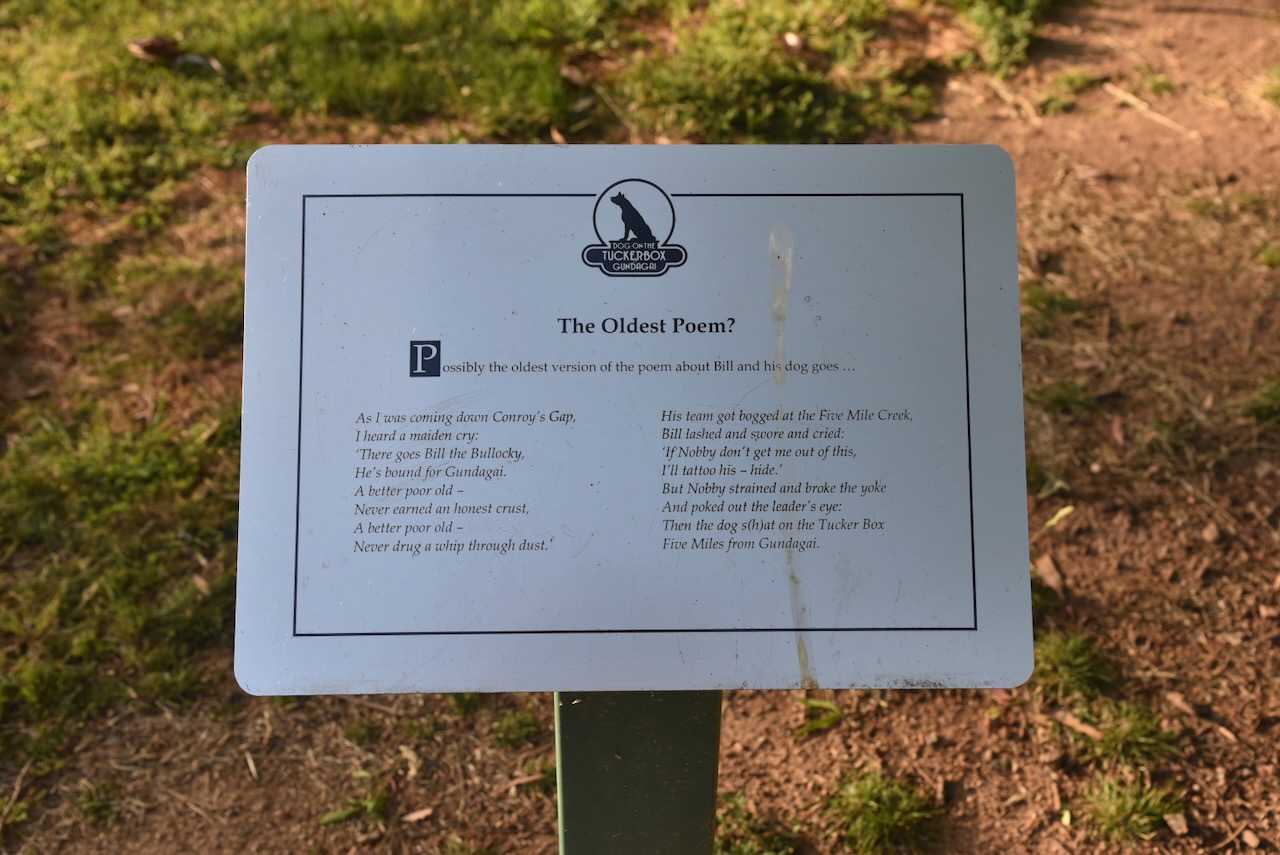
The inspiration behind the monument is the poem entitled ‘Bill, the Bullocky’, which was published in 1857. The poem describes a series of misfortunes faced by a bullock driver, which culminated in his dog sitting on the food in his tucker box. For those reading this from overseas, a tuckerbox is an Australian name for a box that holds food. A tucker box is similar to a lunchbox, but is larger in size. (Wikipedia 2026)
While going through my boxes of memorabilia, I also found this postcard that I purchased back in the 1970s when visiting The Dog On The Tuckerbox. It has the words to Bill the Bullocky on the rear.
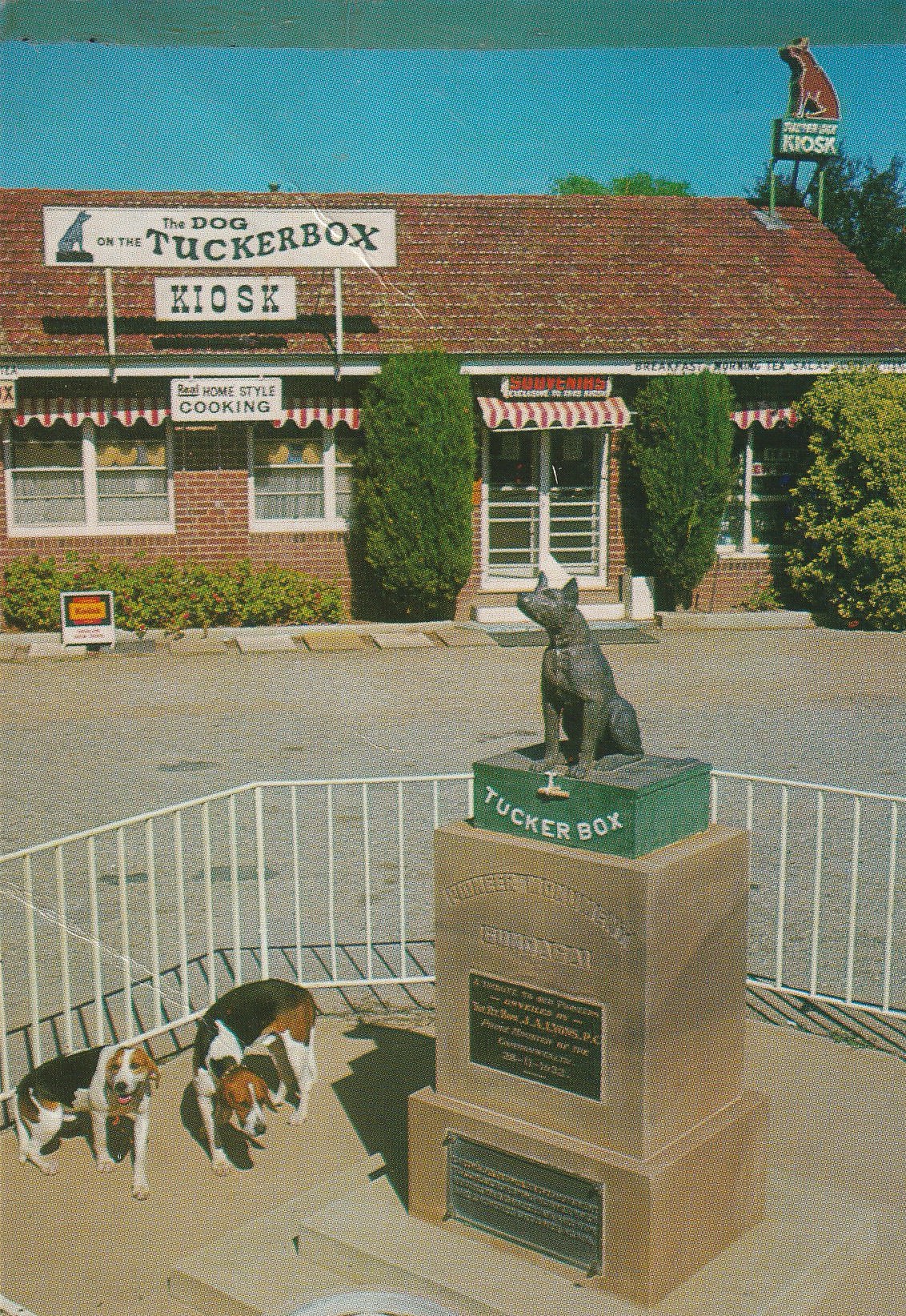
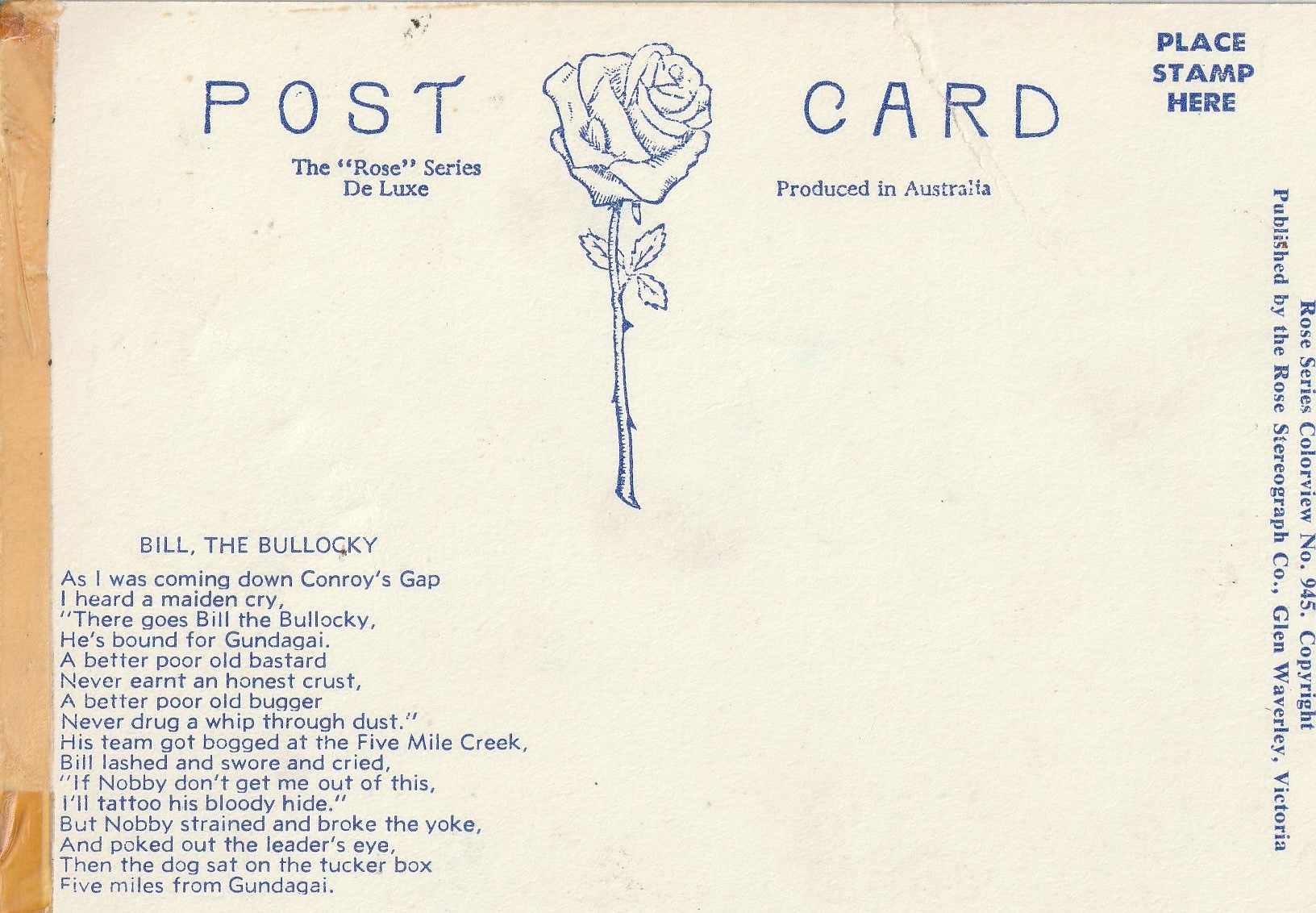
Many years later, in 1923, Australian poet Jack Moses penned another poem, called ‘Nine Miles from Gundagai.’ It relates to the story of his dog, which sat on the tucker box nine miles from Gundagai. (Wikipedia 2026)
Jack Moses was born on the 12th day of January 1861 at Haymarket, New South Wales. He became a wine and whiskey salesman and travelled around Australia. During his travels on Cobb & Co coaches, sulkies, trains and then motor vehicles, he wrote poetry. Moses died in July 1945, aged 84 years. (Wikipedia 2025)
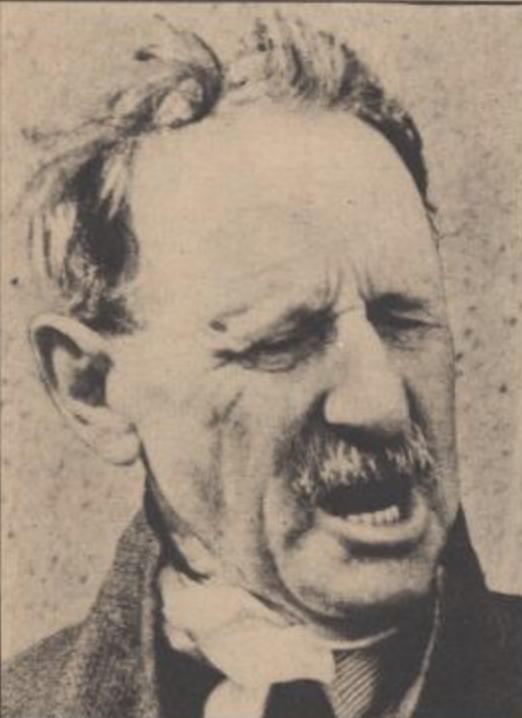
Above: Jack Moses. Image c/o Trove
And in 1937, ‘Jack’ O’Hagan immortalised the legend in his son entitled ‘Where the Dog Sits on the Tuckerbox.’ John Francis O’Hagan was born in November 1898 at Fitzroy, Victoria. Upon the introduction of radio in Australia, he was one of the very first to broadcast for radio stations 3LO and later on 3AW. He wrote over 600 songs. He was awarded the OBE in 1973. O’Hagan died on the 15th day of July 1986, aged 88. (Wikipedia 2025)
At the site, some signs describe the history of the Dog On The Tuckerbox and also show the words to both Bill the Bullocky and Nine Miles from Gundagai.
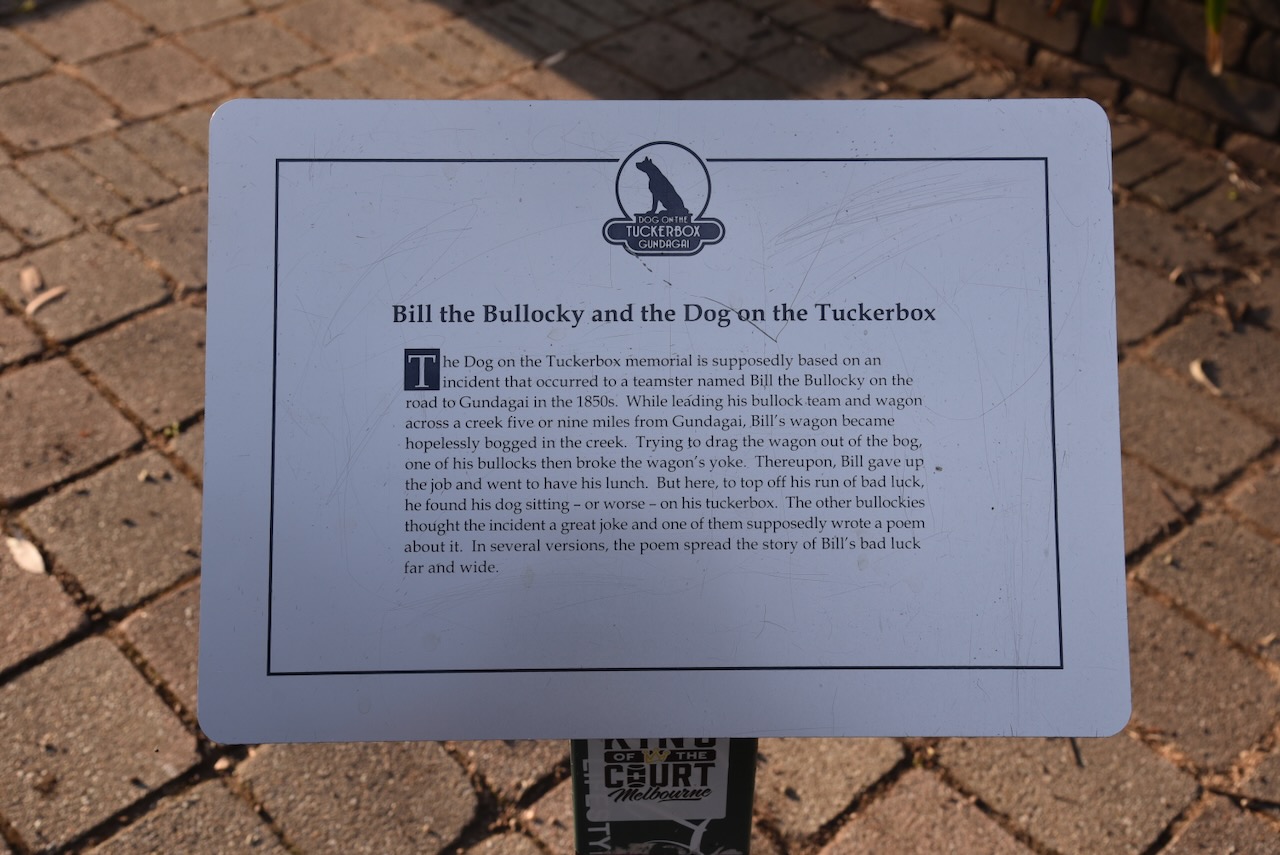
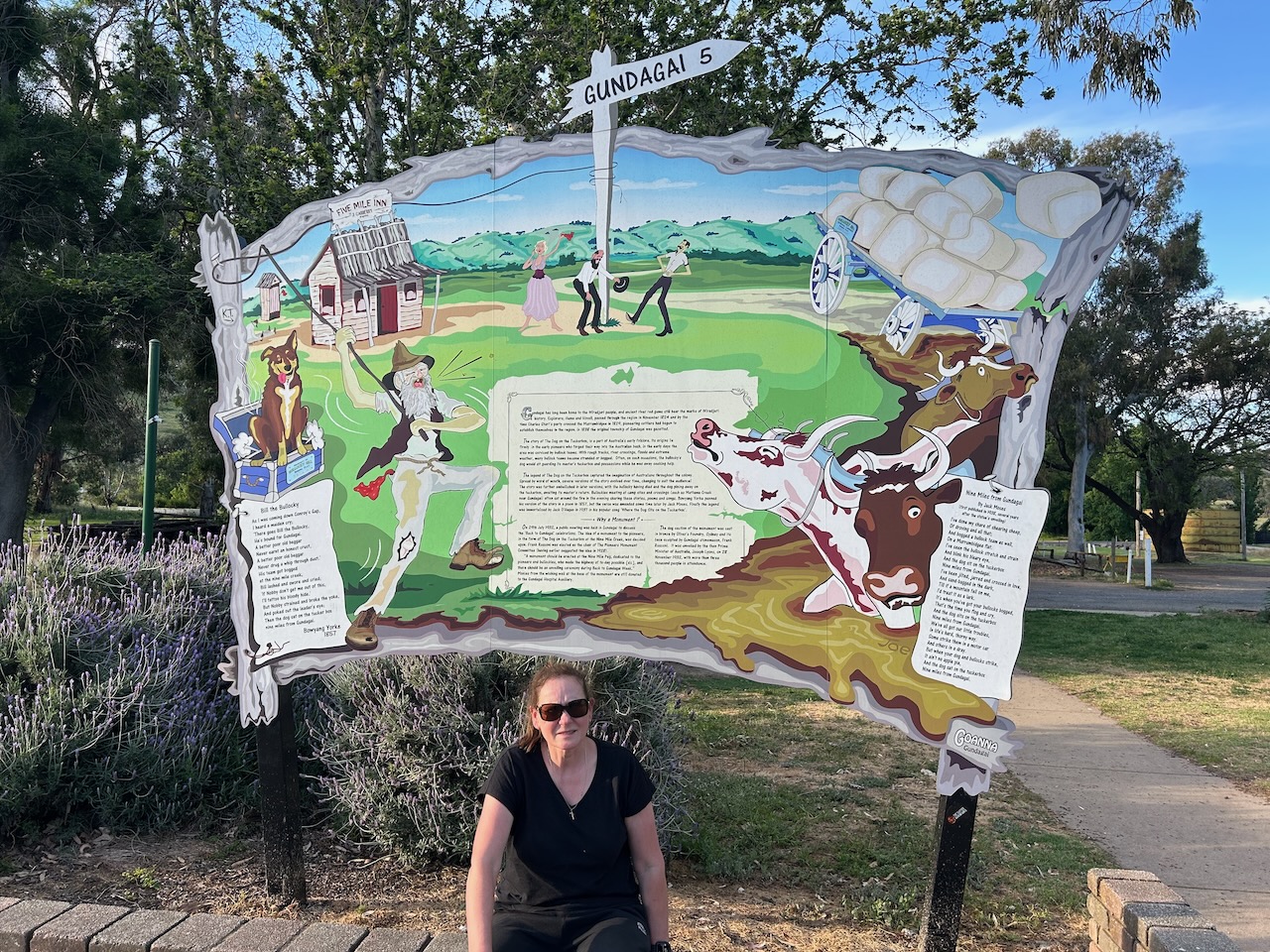
In 1926, a dog monument was erected on a site that was ‘nine miles’ from Gundagai. In 1928, Frank Rusconi, a Gundagai stonemason, suggested a more substantial monument. In 1932, this proposal was taken up by the local community. On the 11th day of August 1932, an article appeared in the Gundagai Independent which recommended that a monument be erected at the 9-mile peg dedicated to the pioneers and bullockies and that there should be an unveiling ceremony during the ‘Back to Gundagai Week.’ Wikipedia Contributors (2025).
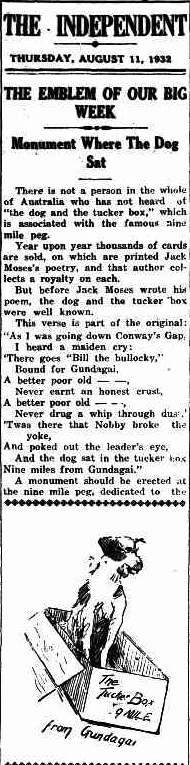
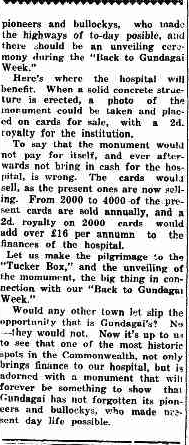
Above: article from The Gundagai Independent, Thu 11 Aug 1932. Image c/o Trove
Unfortunately, the Gundagai Shire did not support the proposal for the erection of the Dog On The Tuckerbox monument.
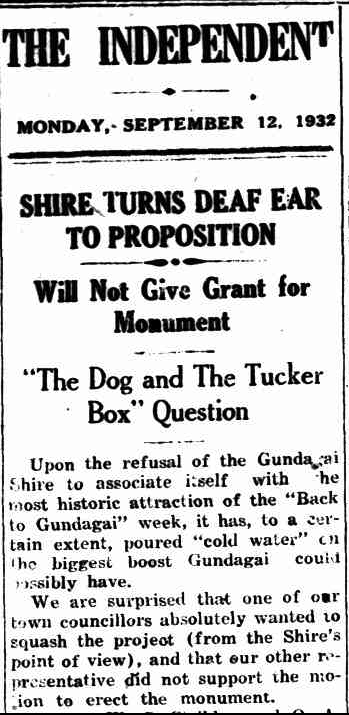
Above: part of an article from The Gundagai Independent, Mon 12 Sept 1932. Image c/o Trove
Despite the initial pushback from the Council, the construction of the monument went ahead. The dog component of the monument was designed by Frank Rusconi. It was cast in bronze at Oliver’s Foundry in Sydney. On the 28th day of November 1932, the Dog on the Tuckerbox was unveiled by Prime Minister Joseph Lyons. More than 3,000 people were in attendance. (Wikipedia 2025)
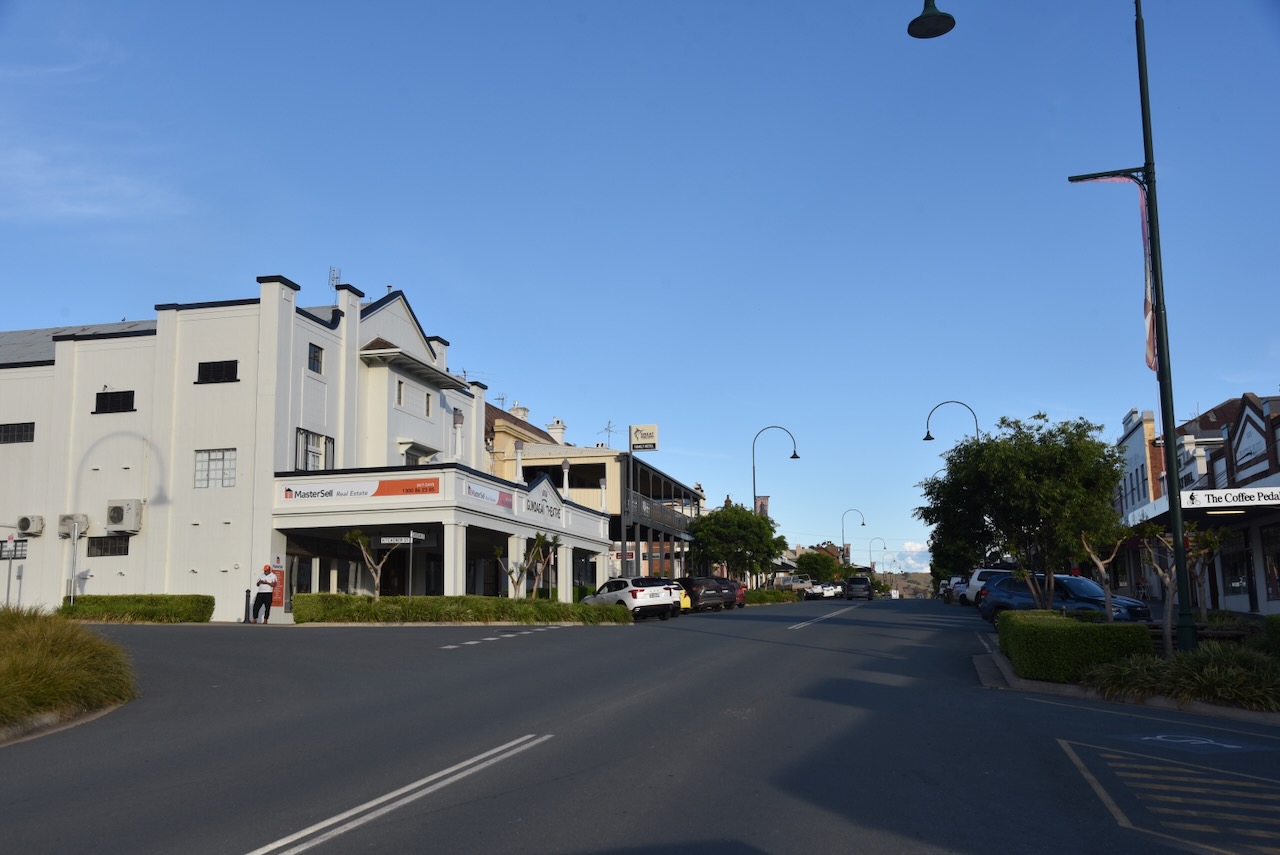
Marija and I then drove back into Gundagai to have a quick walk along the main street. We have travelled around Australia quite a bit, and we rate Gundagai as one of the nicest country towns we have visited, with an enormous amount of history and a range of things to see and do.
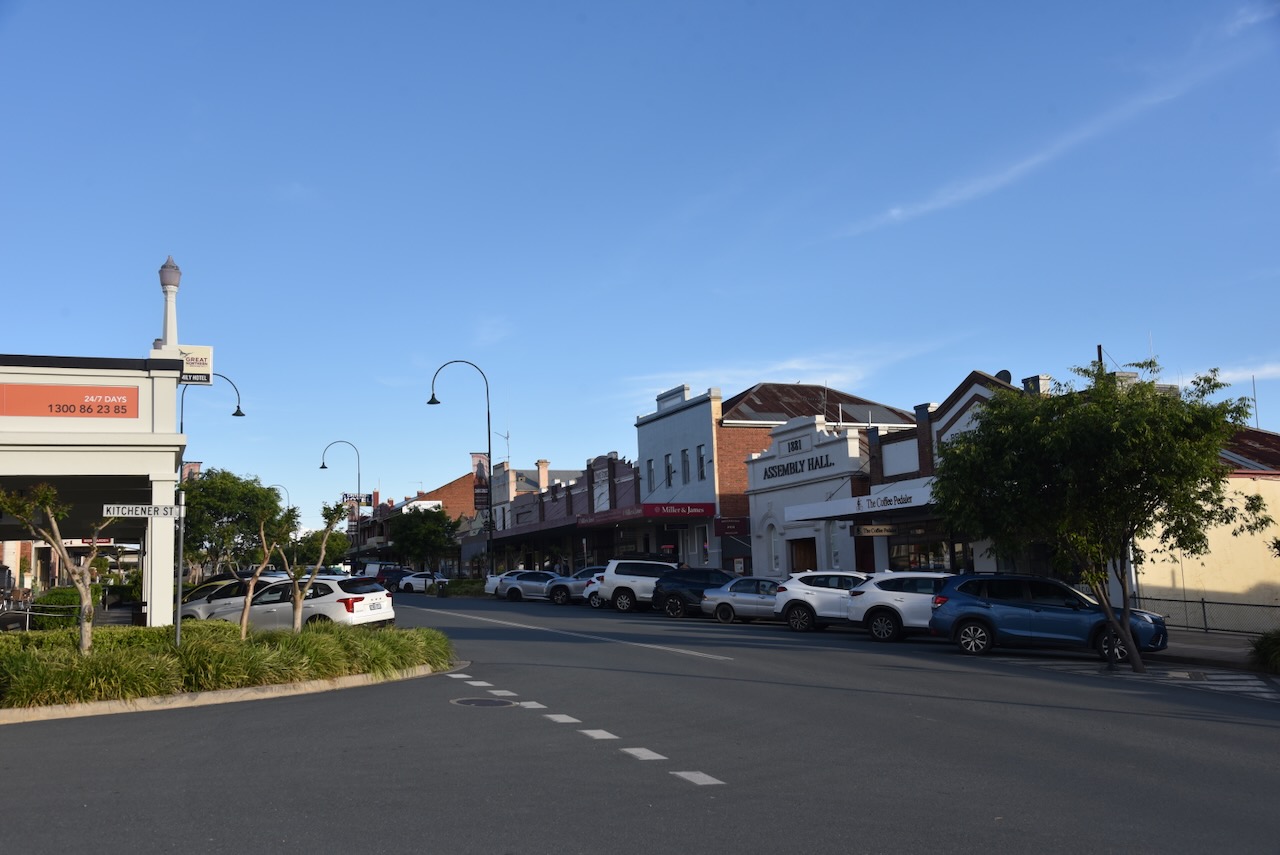
The first Europeans in the Gundagai district were explorers Hamilton Hume and William Hovell in November 1824. Five years later, in 1829, explorer Charles Sturt travelled through the area, and again in 1830 on his return journey. It is believed that Gundagai is derived from Gundagair’, a pastoral run established in 1838 by William Hutchinson, to the immediate north of present-day Gundagai. That name in turn derives from the Aboriginal word ‘gair’, meaning bird. (Gundagai 2023)
The original town of Gundagai was located on the Murrumbidgee floodplain at a location called ‘The Crossing Place.’ It was subject to several flooding incidents, including the 1844 floods. During those particular floods, Henry Bingham, the Crown Commissioner for the Murrumbidgee District, praised the Aboriginal people for their efforts in the rescue of people during the flood. (Gundagai 2023)
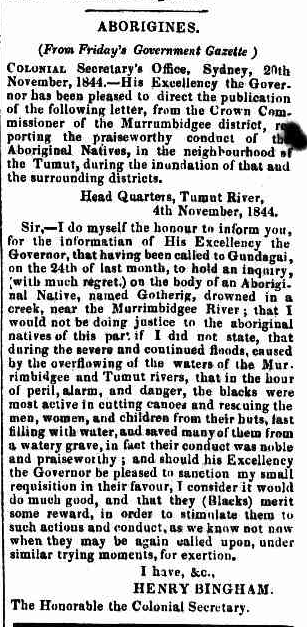
Above: article from The Colonial Observer, Thu 28 Nov 1844. Image c/o Trove
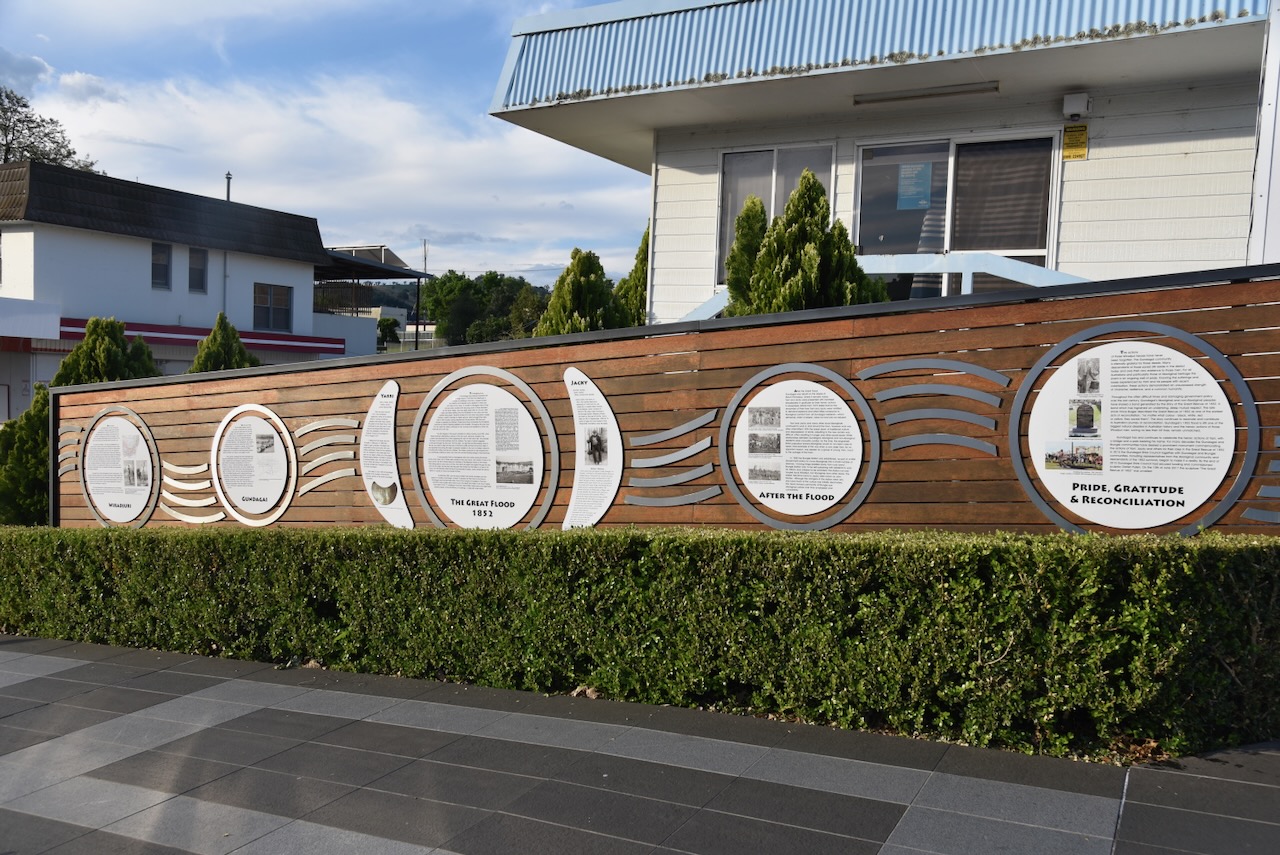
And then, 8 years later, a major flood on the 25th day of June 1852, swept the town away and killed at least 78 people. It is suspected that the death toll was higher. Considering Gundagai’s population was only about 250 people, this was a devastating event. It is one of the worst natural disasters in the history of colonial Australia. (Gundagai 2023)
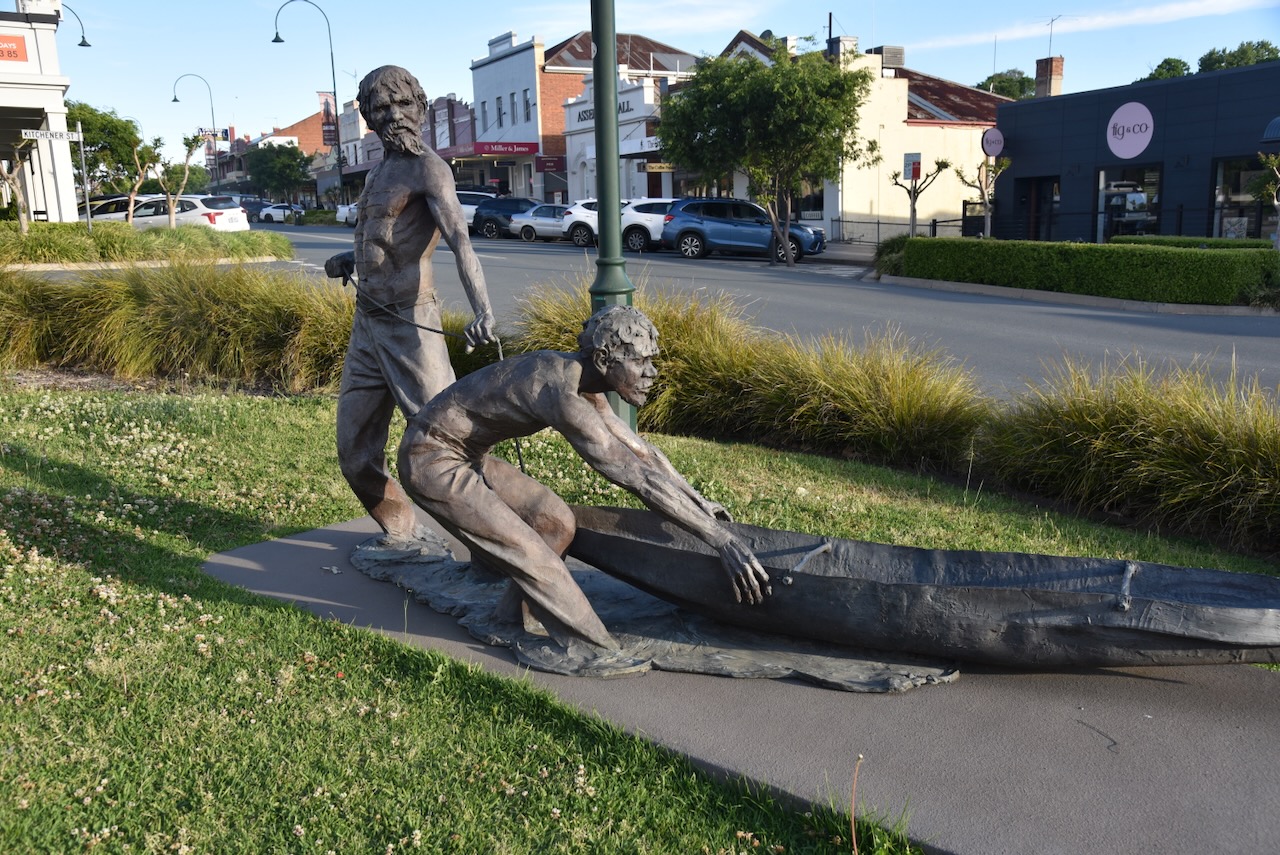
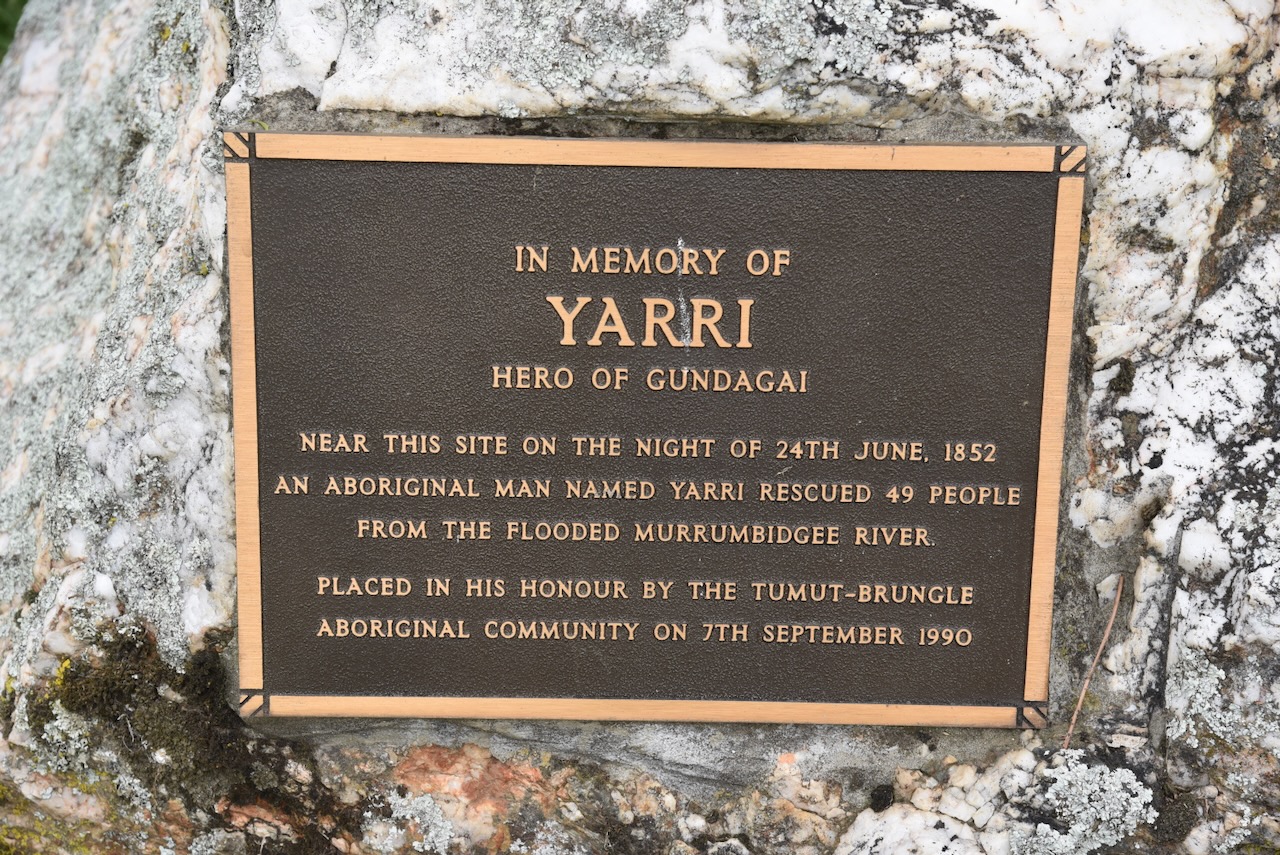
During the 1852 flood, local Aboriginal men Yarri, Jacky Jacky, and Long Jimmy played an important role in the rescue of residents of Gundagai. Using bark canoes, they rescued over 60 people, about one-third of Gundagai’s population. In the main street of Gundagai, you can find a bronze sculpture of Yarri and Jacky Jacky. (Gundagai 2023)
I mentioned Jack O’Hagan a little earlier in this post. In 1922, he released the song ‘Along The Road to Gundagai.’ It was used as the theme to the Dad and Dave radio show, which I will talk about shortly. The song sold nearly 50,000 copies in the first 3 months. (Wikipedia 2025)
The Family Hotel was originally John Spencer’s Thatched Cottage in South Gundagai, and was first licensed in 1843. In 1848, Spencer renewed the license under the name of the Gundagai Family Hotel. It acted as a Cobb & Co booking agent. (Burch 2022)
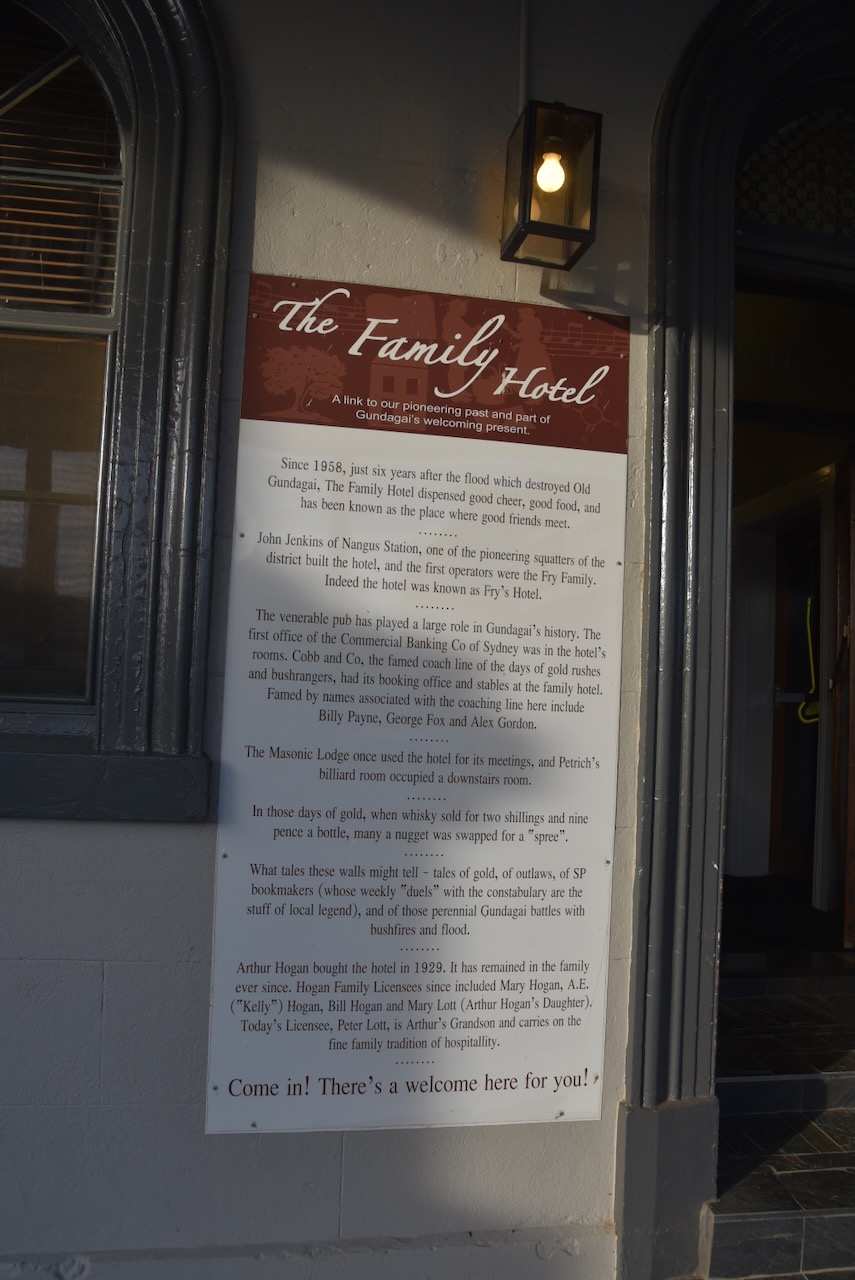
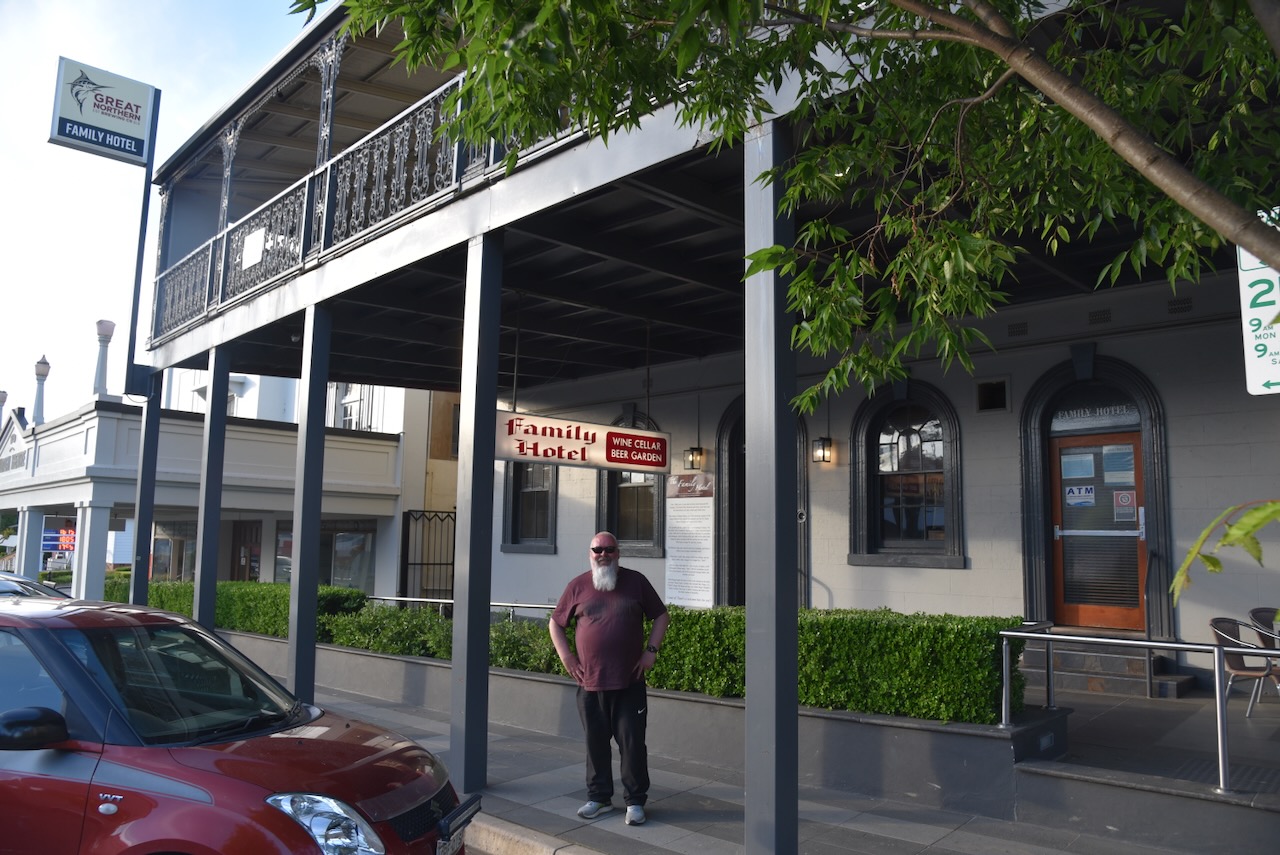
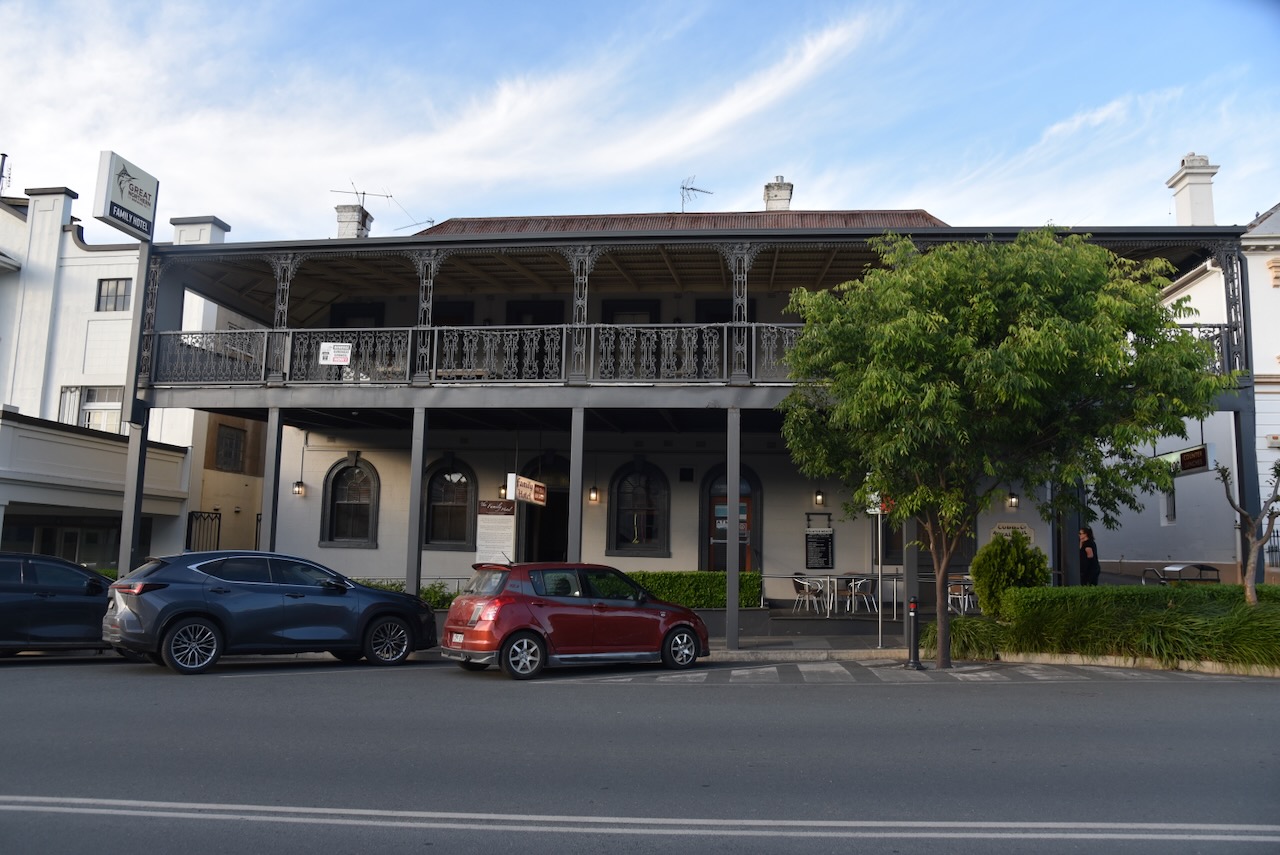
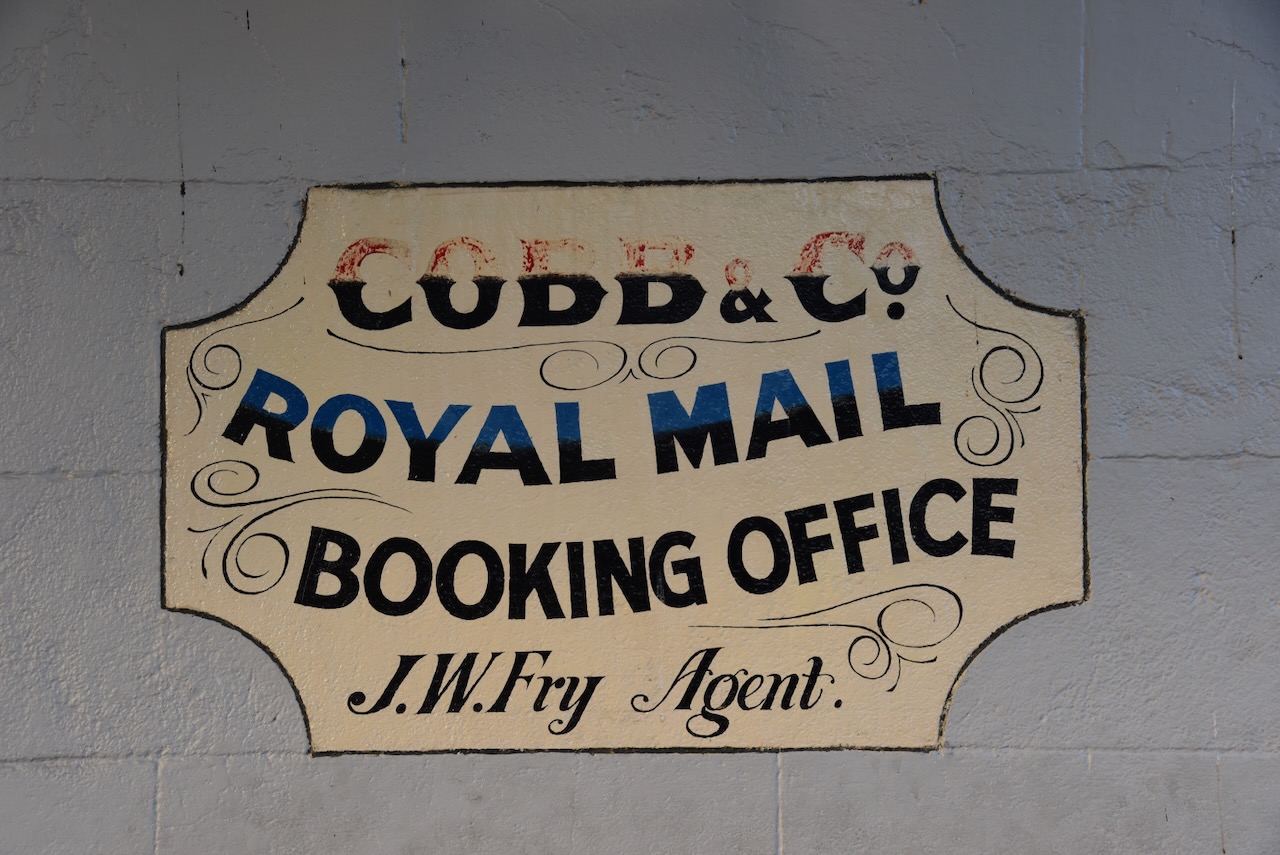
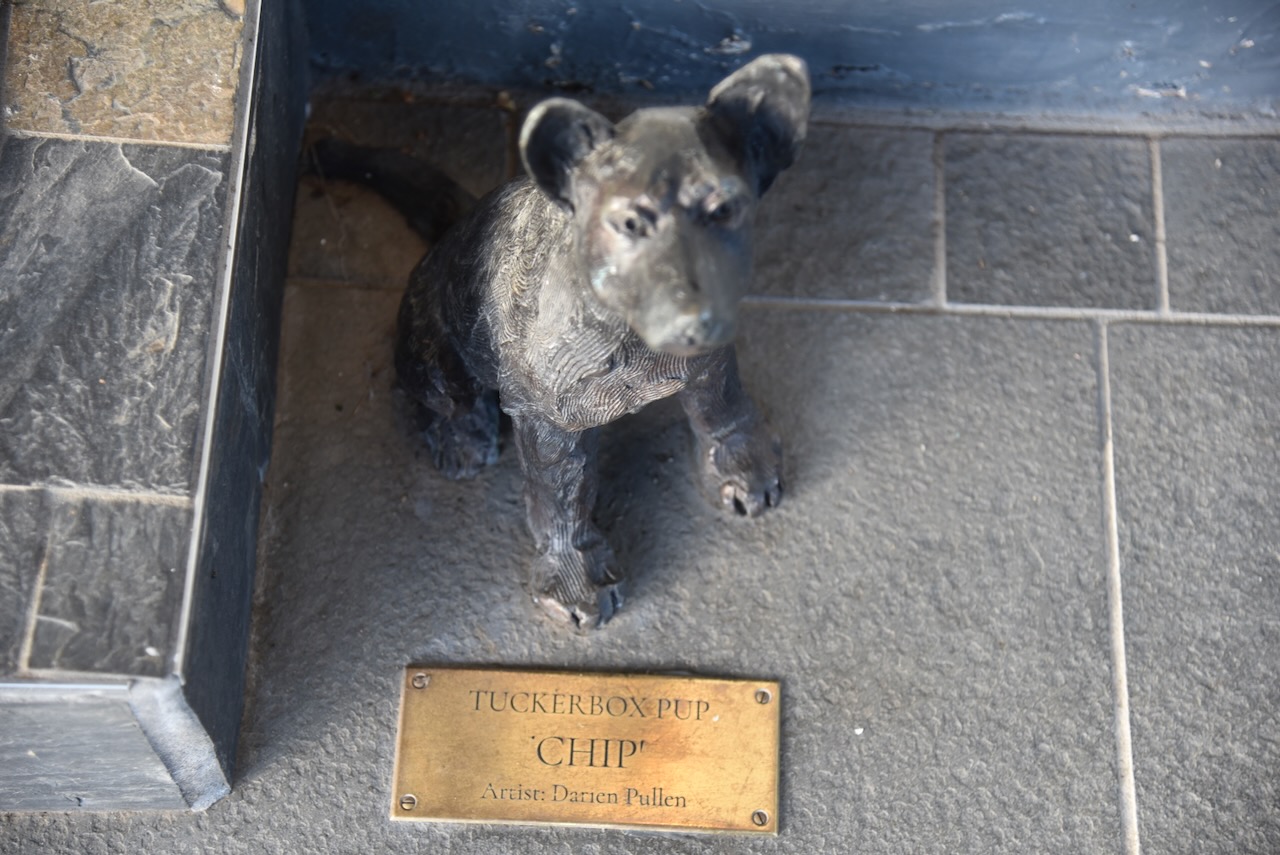
At the hotel, you can find the sculpture of ‘Chip’, the Tuckerbox pup. It is the work of artist Darien Pullen. He is the same artist who created the Great Flood monument. ‘Chip’ is one of three pup sculptures in Gundagai. (Visit Gundagai 2021)
Marija and I then drove up to the Mount Parnassus lookout at Gundagai. which can be accessed either via Hanley Street or Nurse Murray Street. It was a beautiful morning, and we enjoyed excellent views of Gundagai and its surrounds, including the Murrumbidgee River.
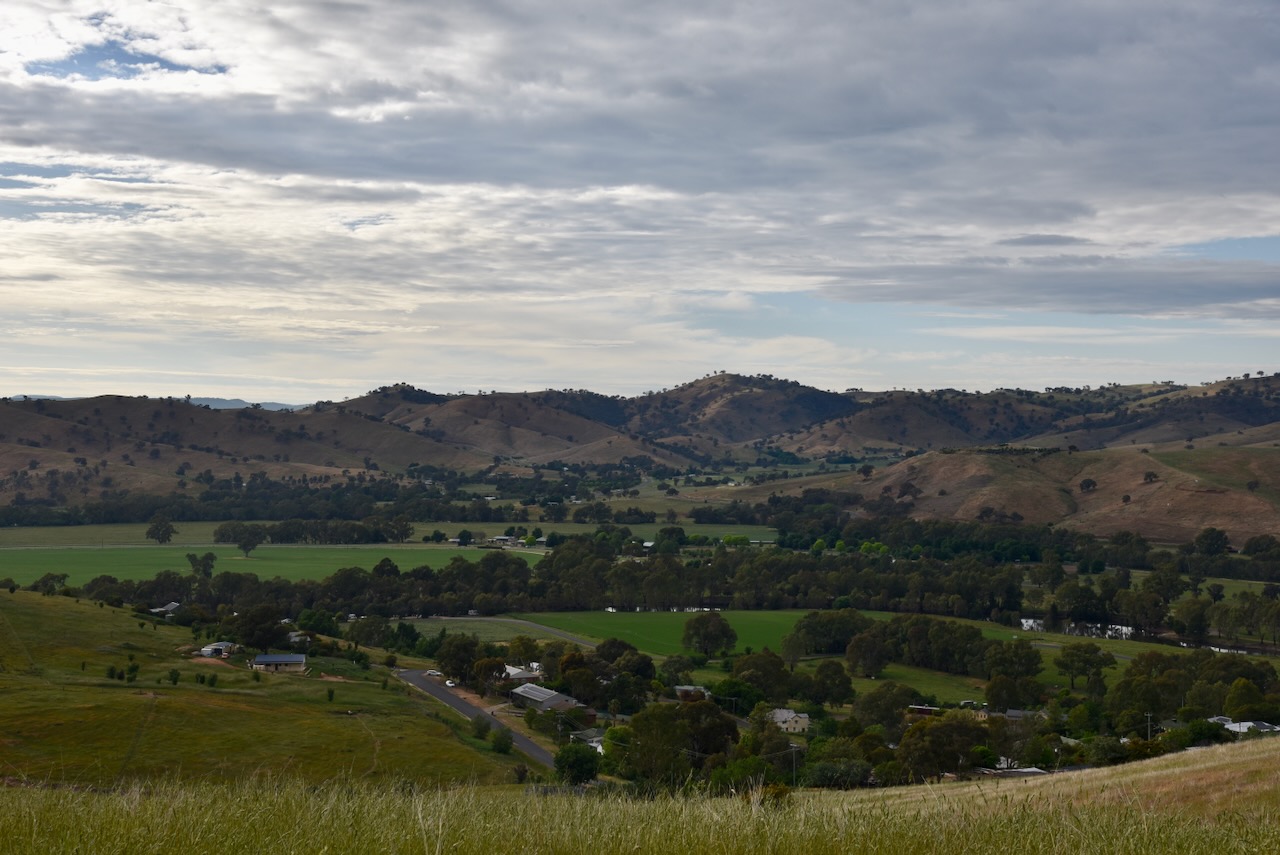
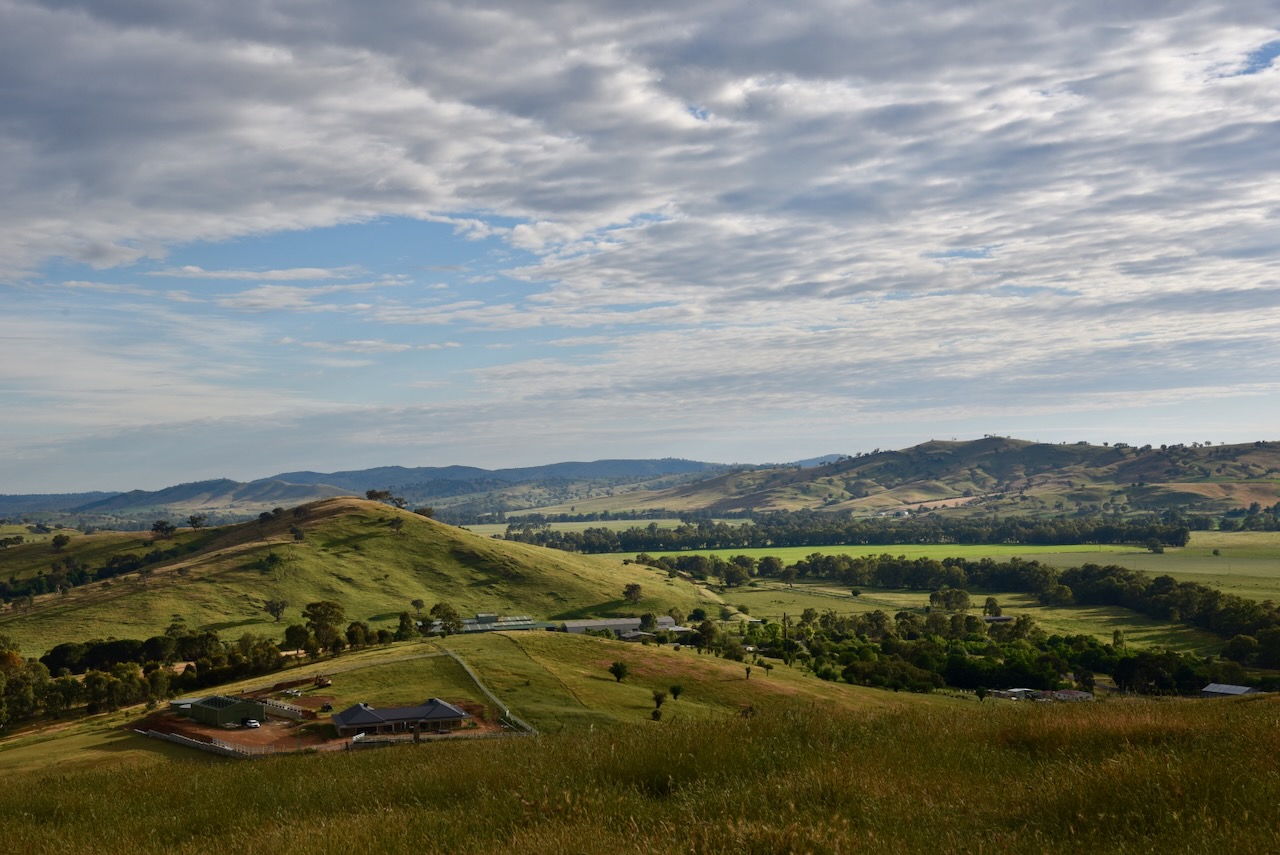
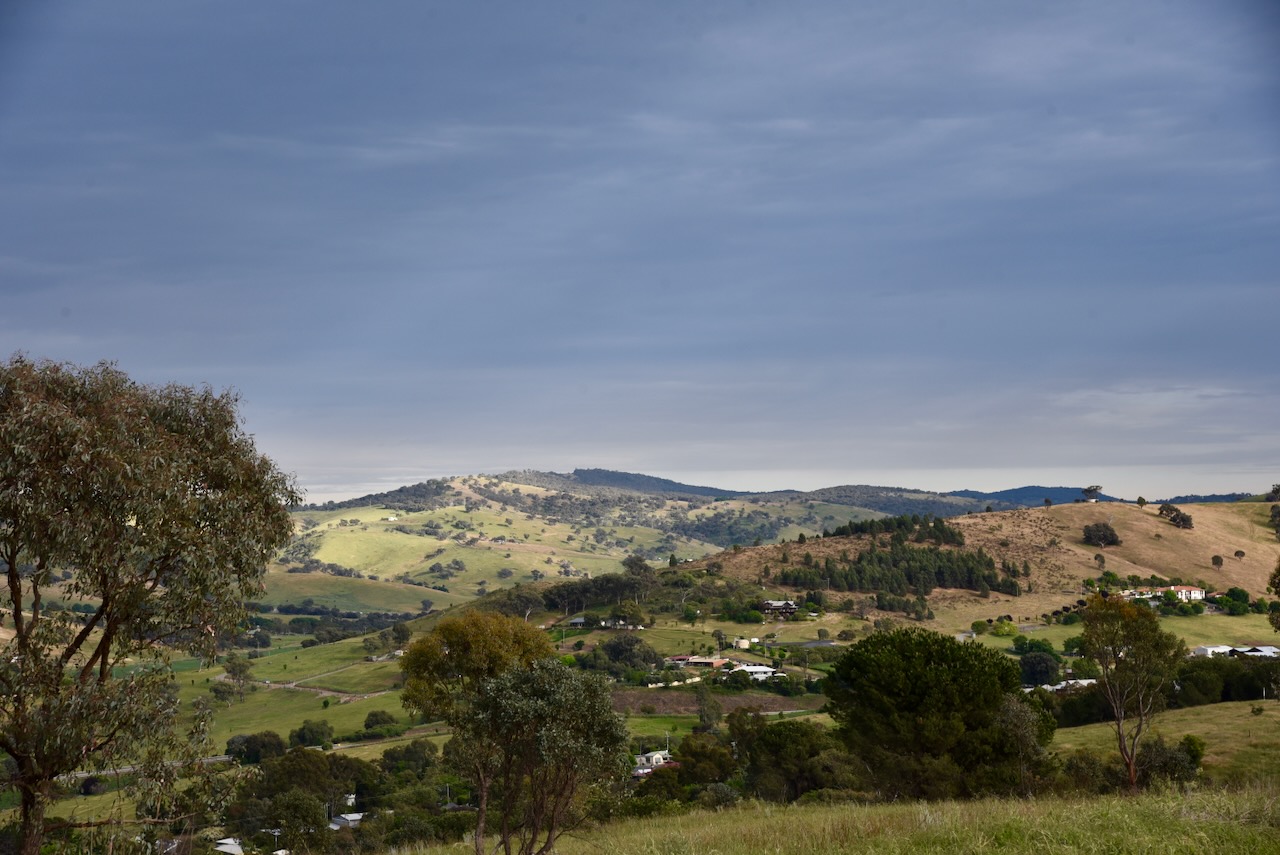
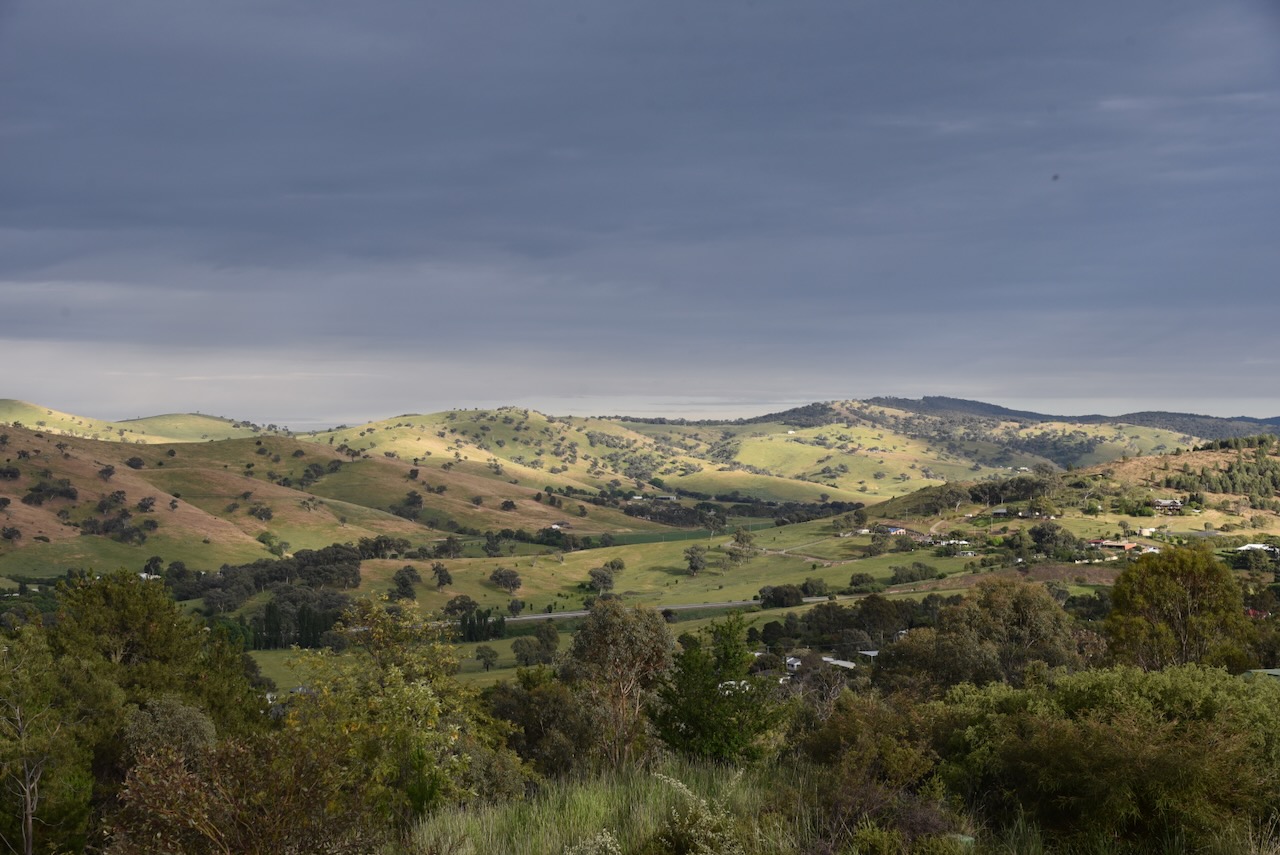
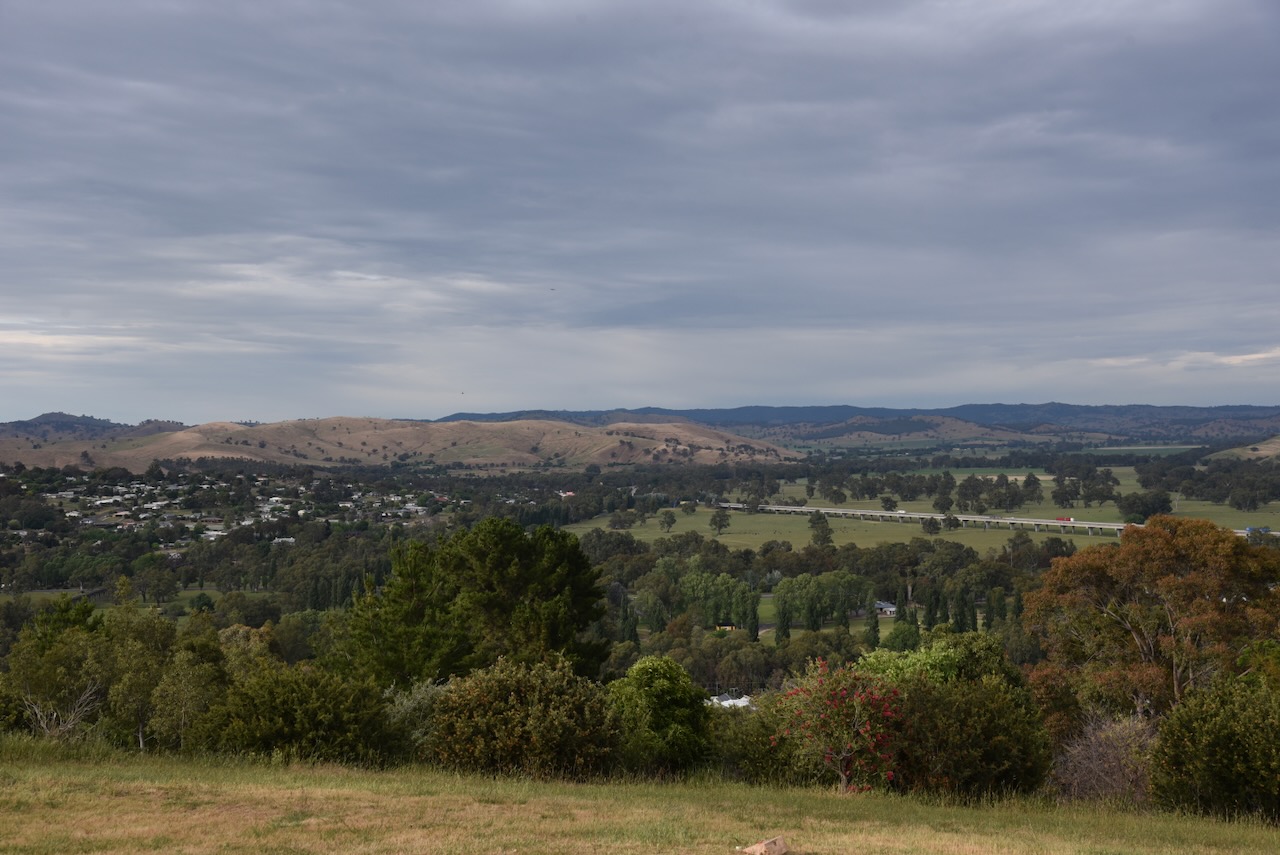
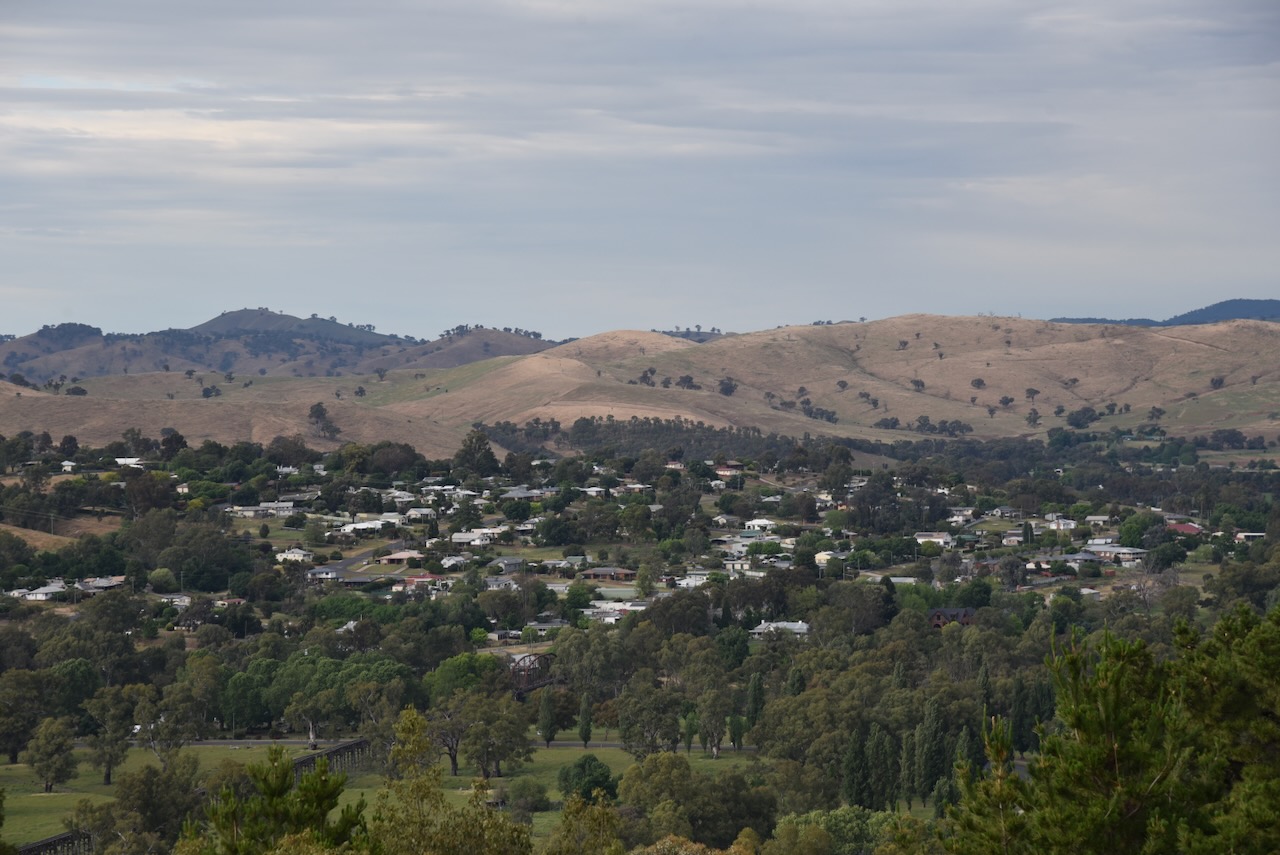
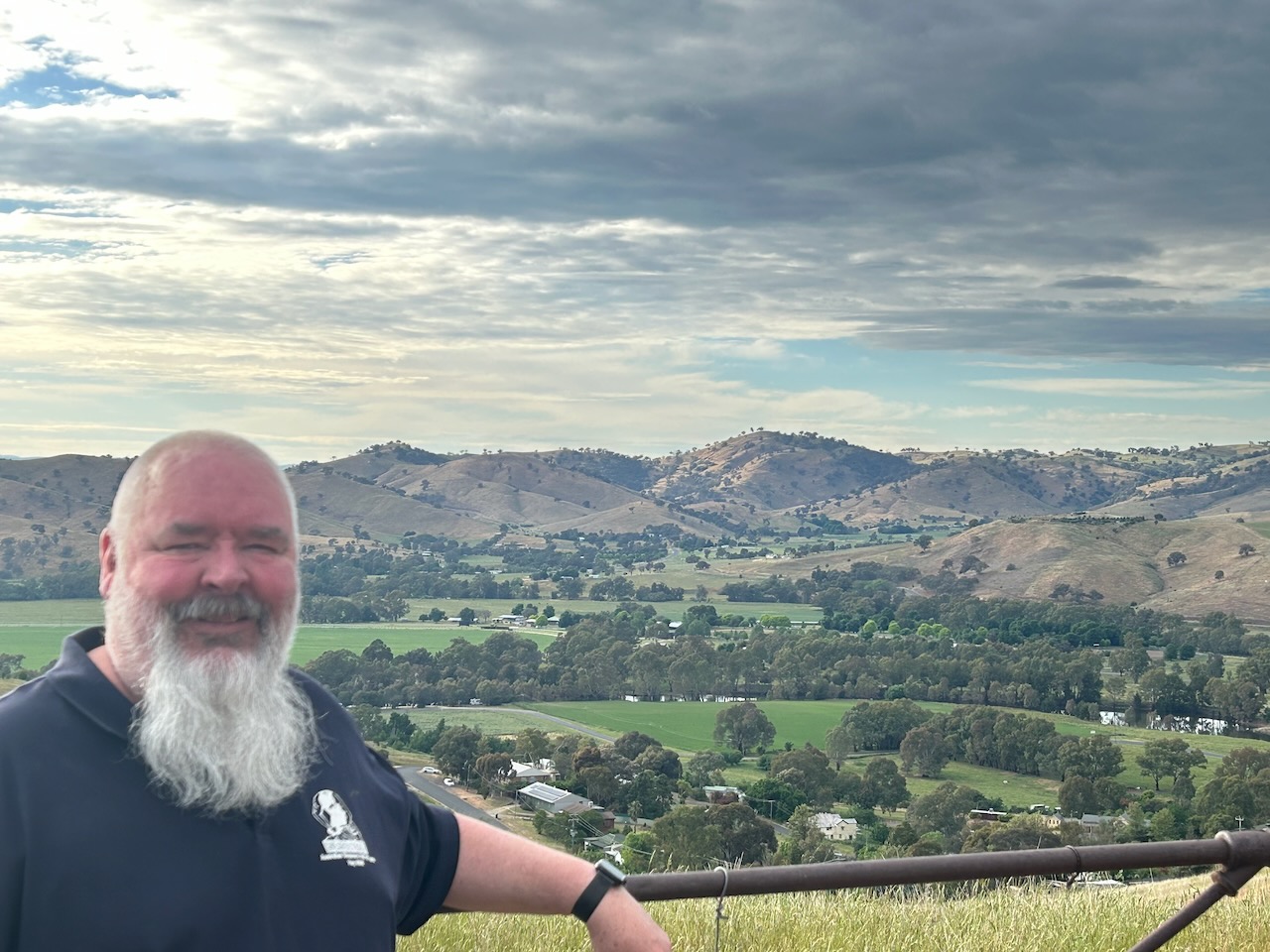
The dual carriageway Sheahan Bridge over the Murrumbidgee River is clearly visible from the lookout. It is the 3rd longest bridge in New South Wales. (Wikipedia 2024)
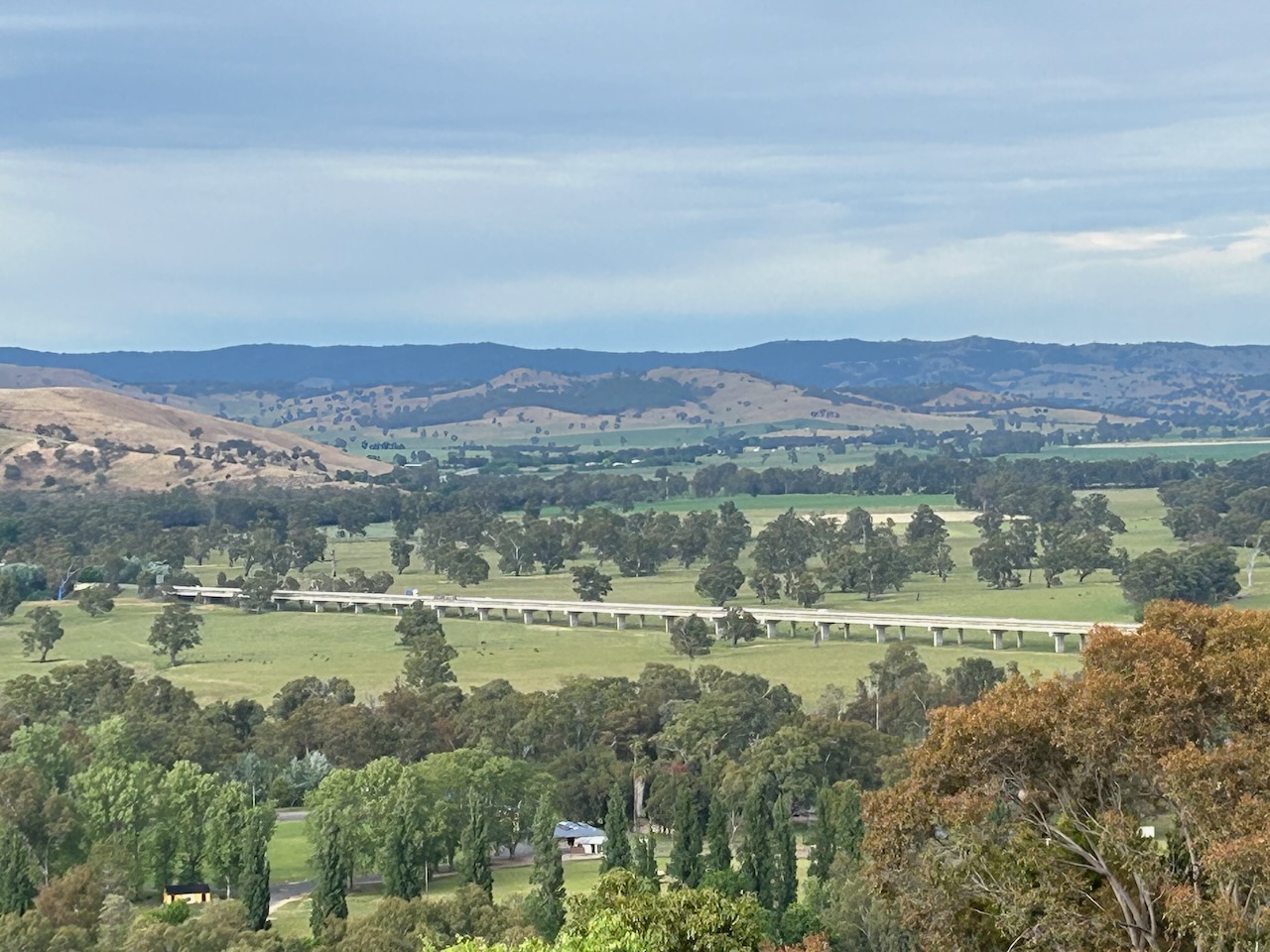
Mount Parnassus is hardly a mountain. It is really a hill, about 330 metres ASL, that overlooks Gundagai. It was named by surveyor Samuel Augustus Perry in 1838 after Mount Parnassus in central Greece. Perry was born in 1787 in Wales who emigrated to Australia in 1829 after being appointed Deputy Surveyor General of New South Wales. (Mapcarta n.d.) (Wikipedia 2026)
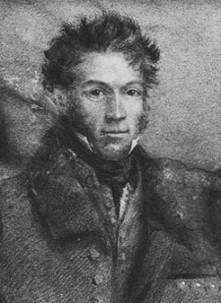
Above: Samuel Augustus Perry. Image c/o Wikipedia
We then visited the Dad and Dave, Mum and Mabel sculptures in Gundagai. The sculptures were originally located at the Snake Gully Tourist complex opposite the Dog On The Tuckerbox. When the complex closed, they were donated to the community and moved to its current location. (Gundagai Visitor Info Centre n.d.)
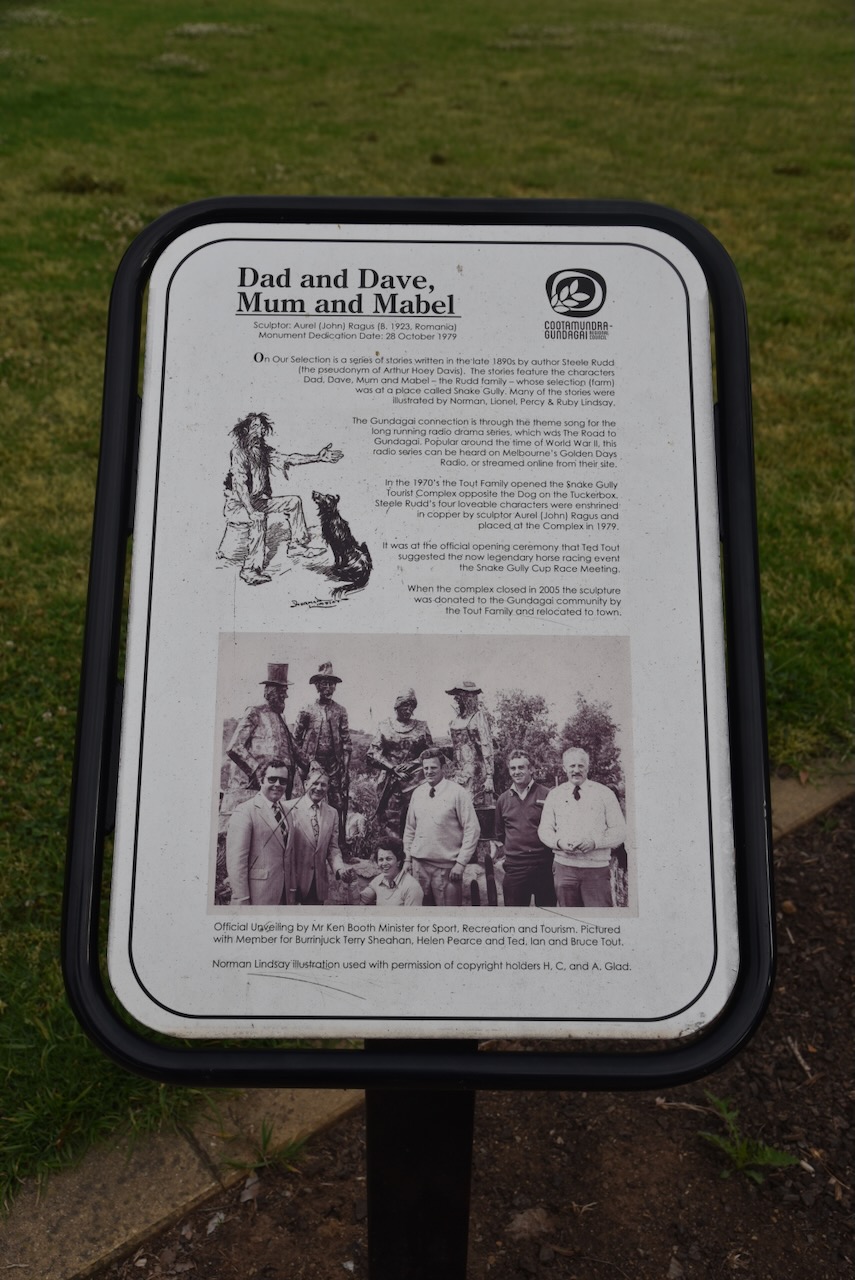
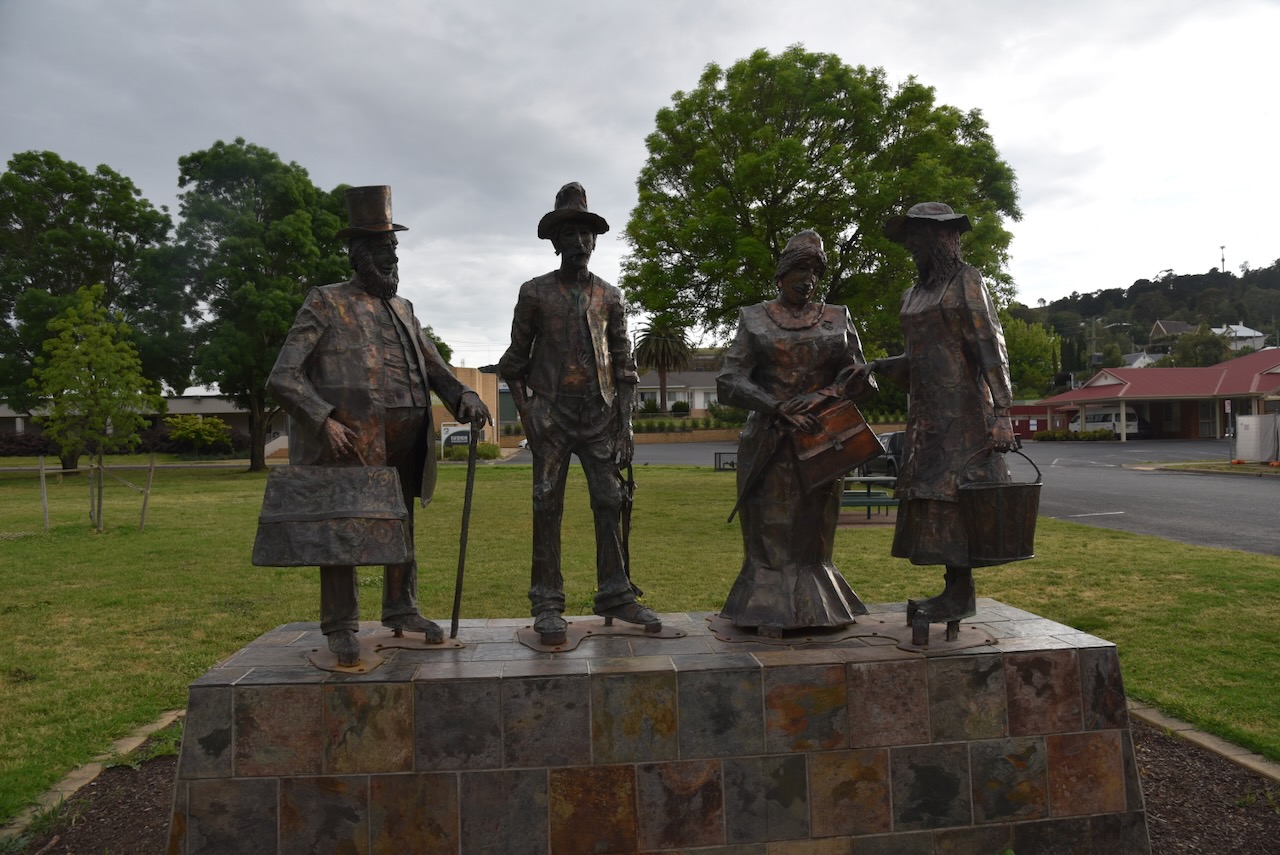
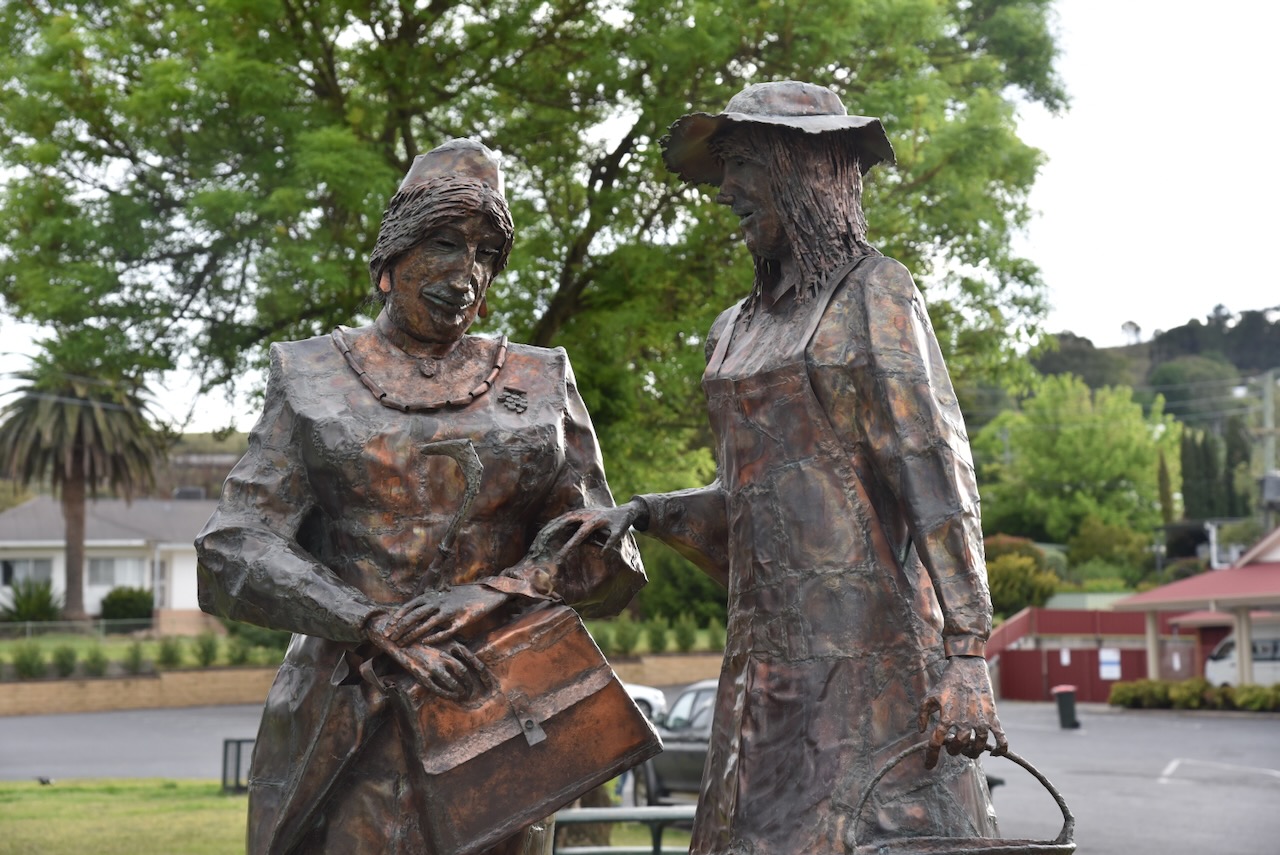
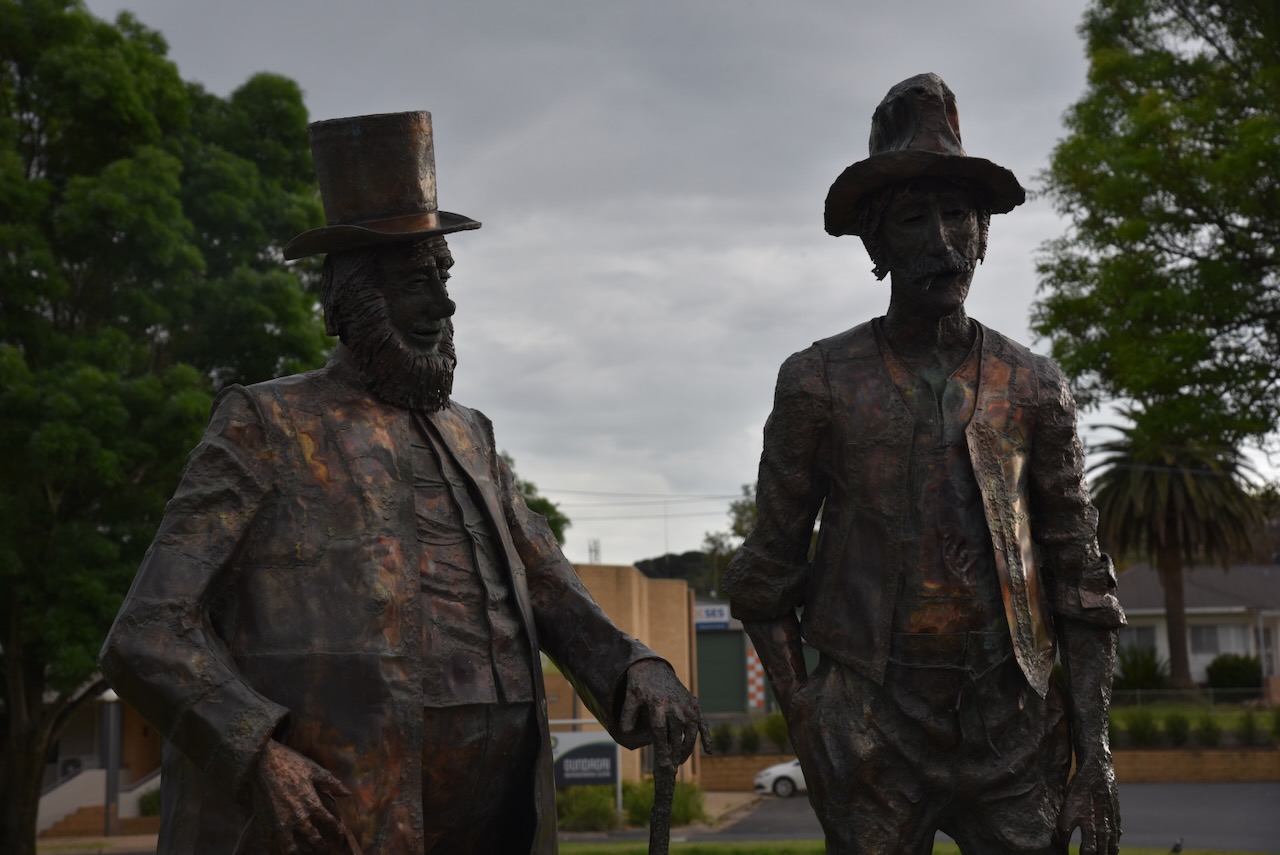
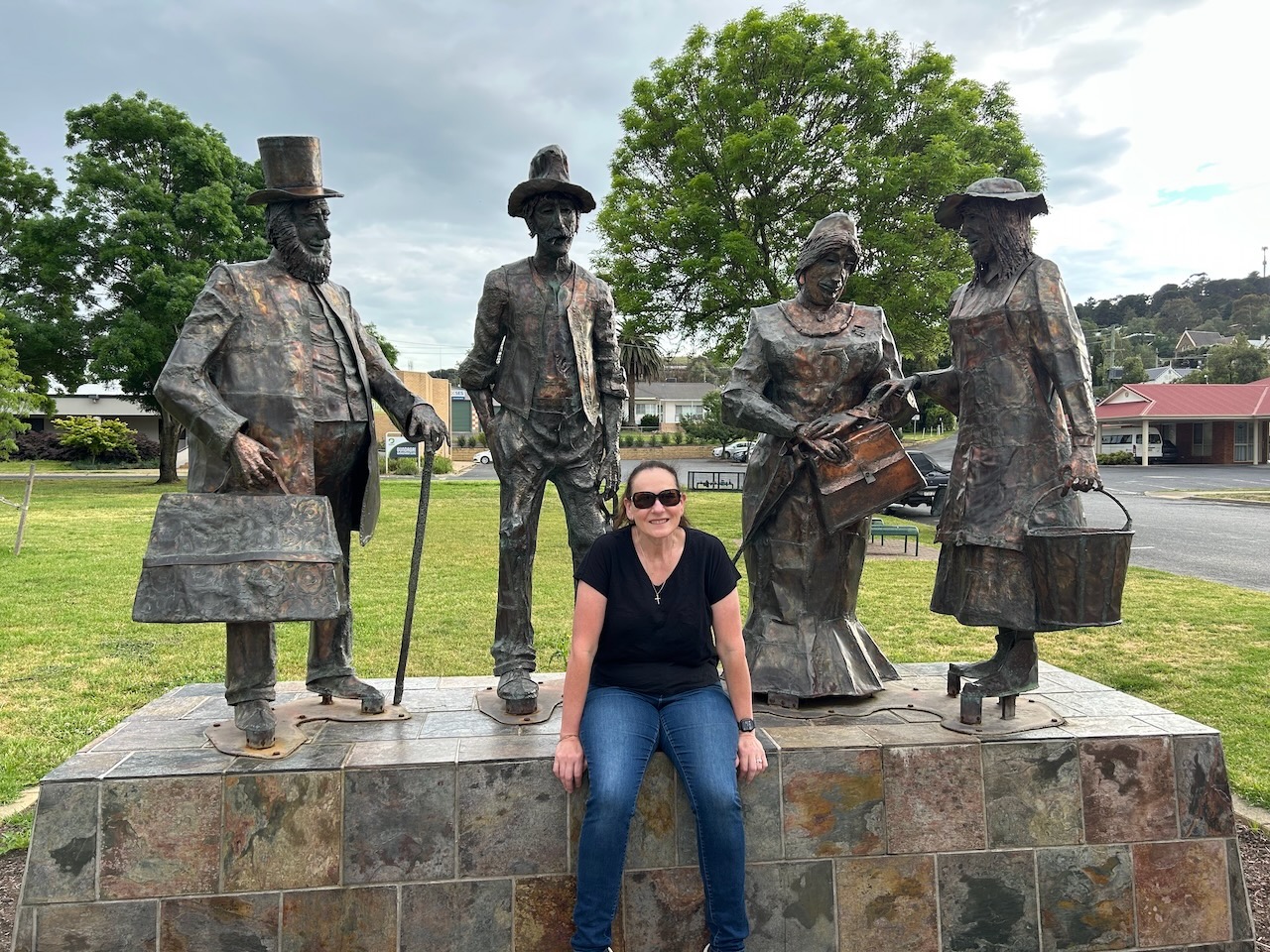
The Australian radio drama series Dad and Dave from Snake Gully was based on the On Our Selection stories of Steele Rudd. The series featured the characters Dad, Dave, Mum and Mabel. The theme tune was ‘The Road to Gundagai’. (Gundagai Visitor Info Centre n.d.) (Wikipedia 2025)
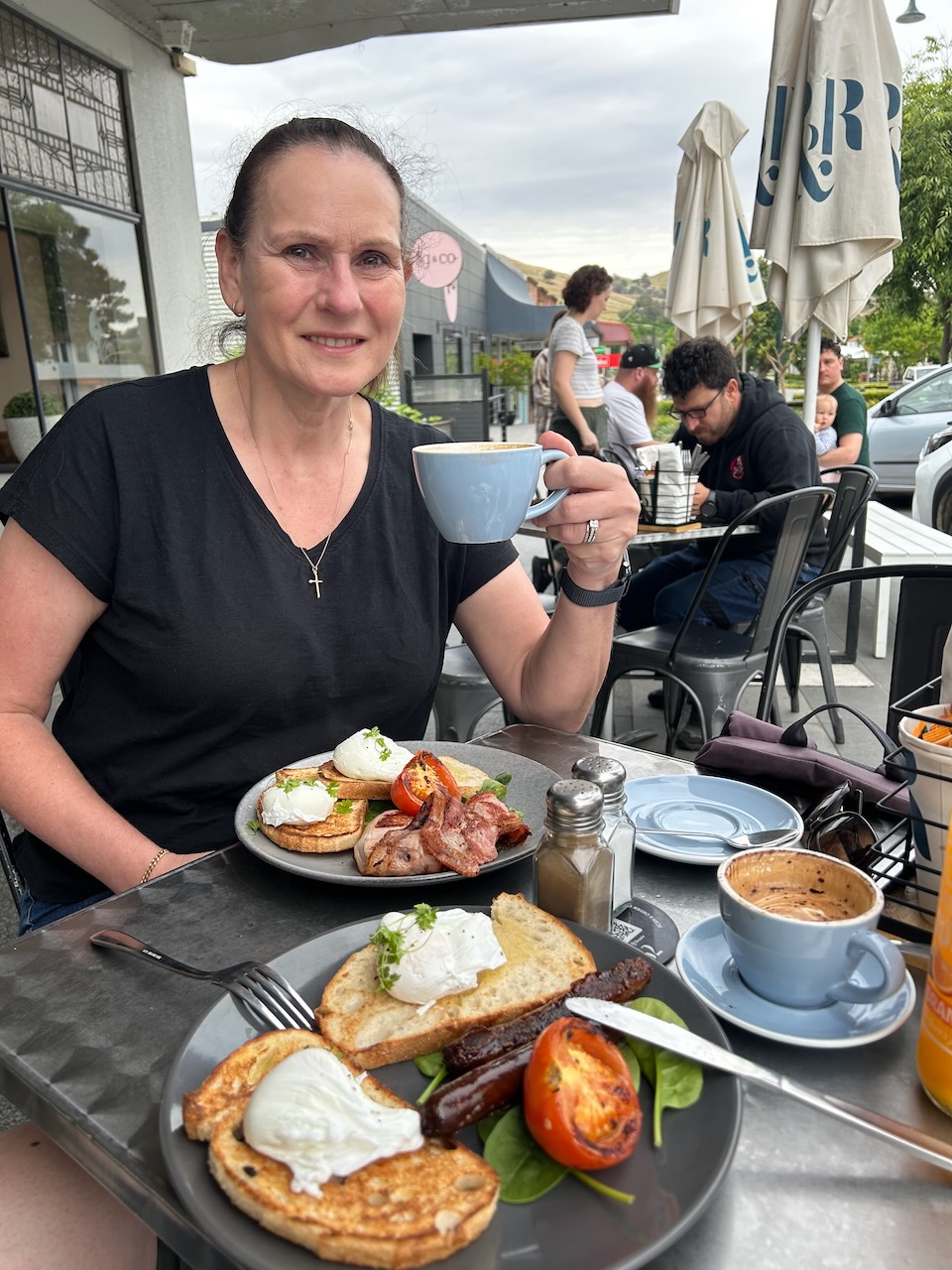
We then had a magnificent breakfast at The Coffee Pedaler, which is reputed to have the best coffee on the Hume Highway between Sydney and Melbourne. It was certainly very nice coffee, and the breakfast was sensational.
Following our excellent breakfast, we visited the North Gundagai Cemetery. Marija and I enjoy wandering around old cemeteries, viewing the historic headstones. They tell you so much about the local area. At Gundagai, we specifically wanted to see the headstone of the bushranger Captain Moonlite.
Andrew George Scott @ Captain Moonlitewas born on the 5th day of July 1842, in Rathfriland, Ireland. In 1861, Scott emigrated to New Zealand, where he intended to try his hand at the Otago goldfields. However, following the outbreak of the New Zealand Wars, he enlisted as an officer and fought in the Battle of Orakau. He was wounded and, following a long convalescence period, he was court-martialed, being accused of malingering. (Captain Moonlite 2024)
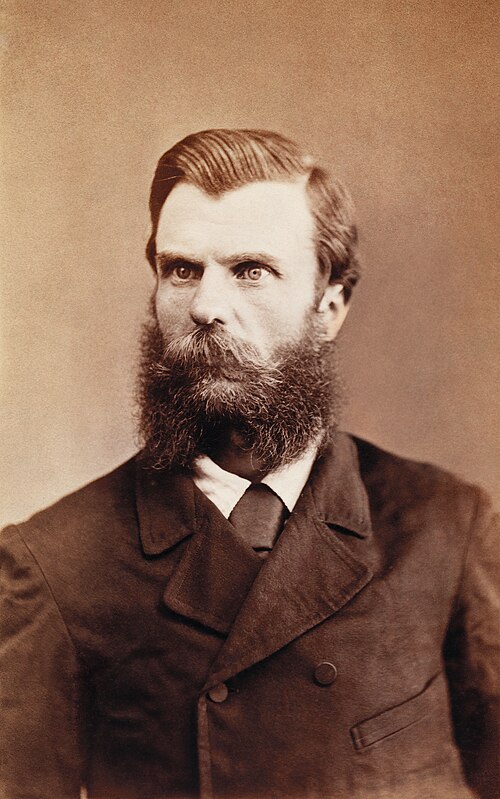
Scott left New Zealand and travelled to Australia, where in 1868 he was appointed lay reader at Bachus Marsh in Victoria, with the intention of entering the Anglican priesthood. Scott’s first brush with the law was in the following year in 1869, when he was accused of robbing a bank agent. The masked offender forced the agent to sign a note which read:
“I hereby certify that L.W. Bruhn has done everything within his power to withstand this intrusion and the taking of money which was done with firearms, Captain Moonlite.”
Scott was then imprisoned in New South Wales for 18 months for obtaining money by false pretences. In 1872, he robbed the London Chartered Bank of Australia. He escaped from custody but was recaptured. Following a term of imprisonment at HM Prison Pentridge, Scott commenced a career as a public speaker on prison reform. He met up with James Nesbitt, whom he had met in prison, and it appears that Nesbitt became his lover. (Captain Moonlite 2024)
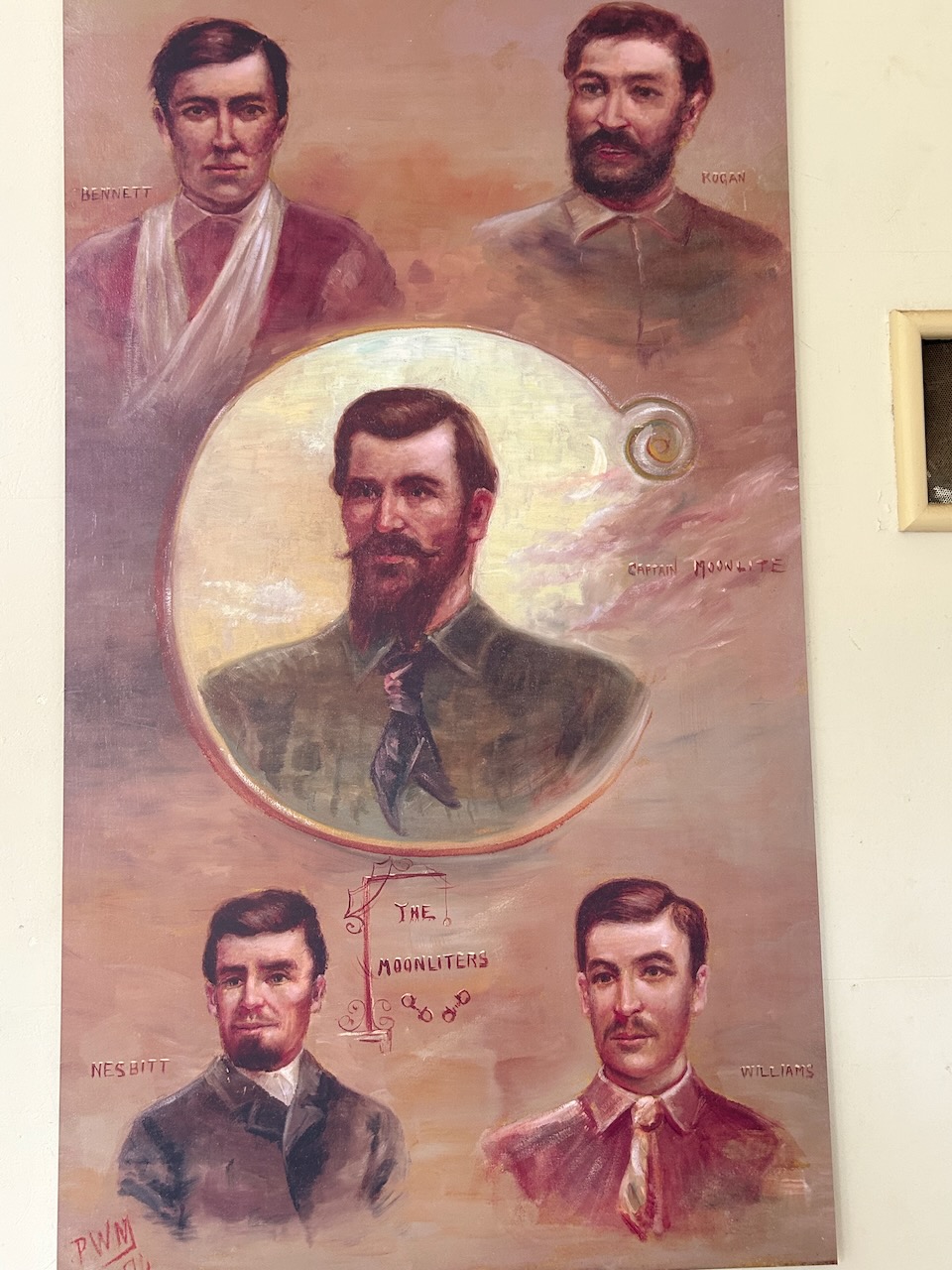
Despite Scott’s good intentions, he was allegedly harassed by the authorities, and he subsequently formed a gang and he commenced the life of a bushranger. The gang included Scott, Nesbitt, Thomas Rogan, Thomas Williams, Gus Wernickie, and Graham Bennett. (Captain Moonlite 2024)
In November 1879, Scott’s gang held up Wantabadgery Station, NSW, near Wagga Wagga. They also robbed the Australian Arms Hotel. They then held up the farmhouse of Edmund McGlede, where the gang was involved in a shootout with the police. It resulted in the death of Constable Edward Webb-Bowen. Scott was captured and charged with the shooting of the Constable, which he denied. Scott, along with his companion Rogan, was hanged at the Darlinghurst Gaol on the 20th day of January 1880. Scott was 38 years old. (Captain Moonlite 2024)
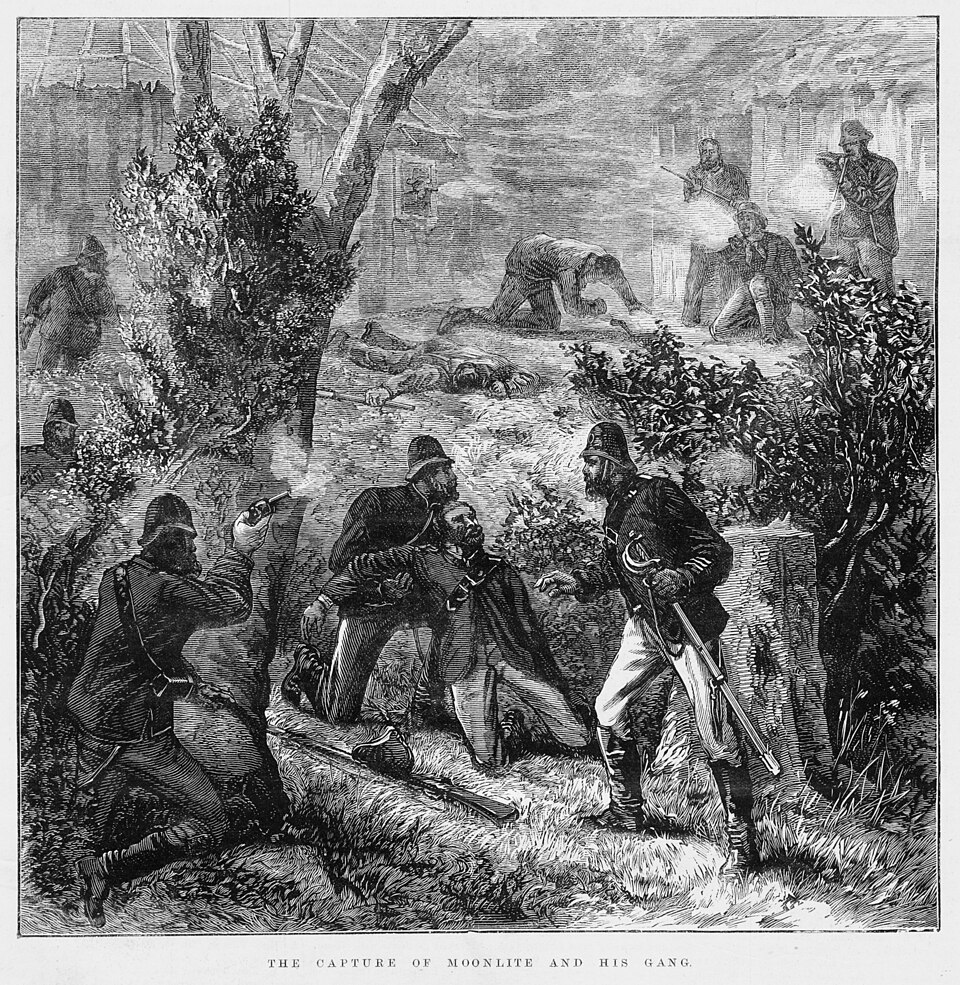
Above: the capture of Captain Moonlite. Image c/o Wikipedia
Below is a short video on the life of Scott @ Captain Moonlite. There are some other excellent videos on YouTube about Scott.
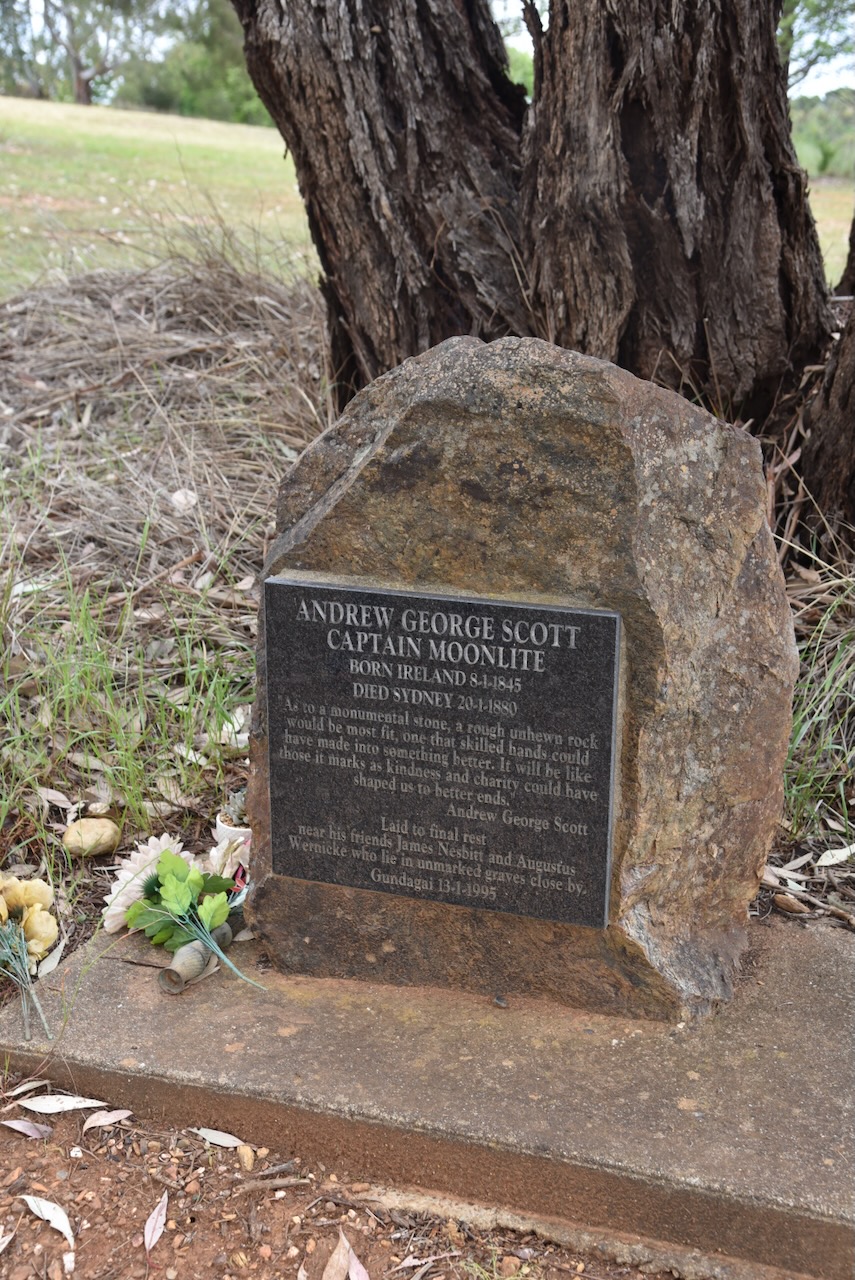
Scott’s final request before being hanged was to be buried in the same grave as his constant companion, James Nesbitt. This was denied by the authorities, and he was buried at Rookwood Cemetery. In January 1995, Scott’s remains were exhumed, and he was reinterred at the North Gundagai Cemetery alongside Nesbitt’s grave, which is unmarked. Gang member Augustus Ernest Diedrich William ‘Gus’ Wernicke is also buried nearby in an unmarked grave. He was just 15 years old when shot by police at Wantabadgery. (Captain Moonlite 2024) (Findagrave.com 2016)
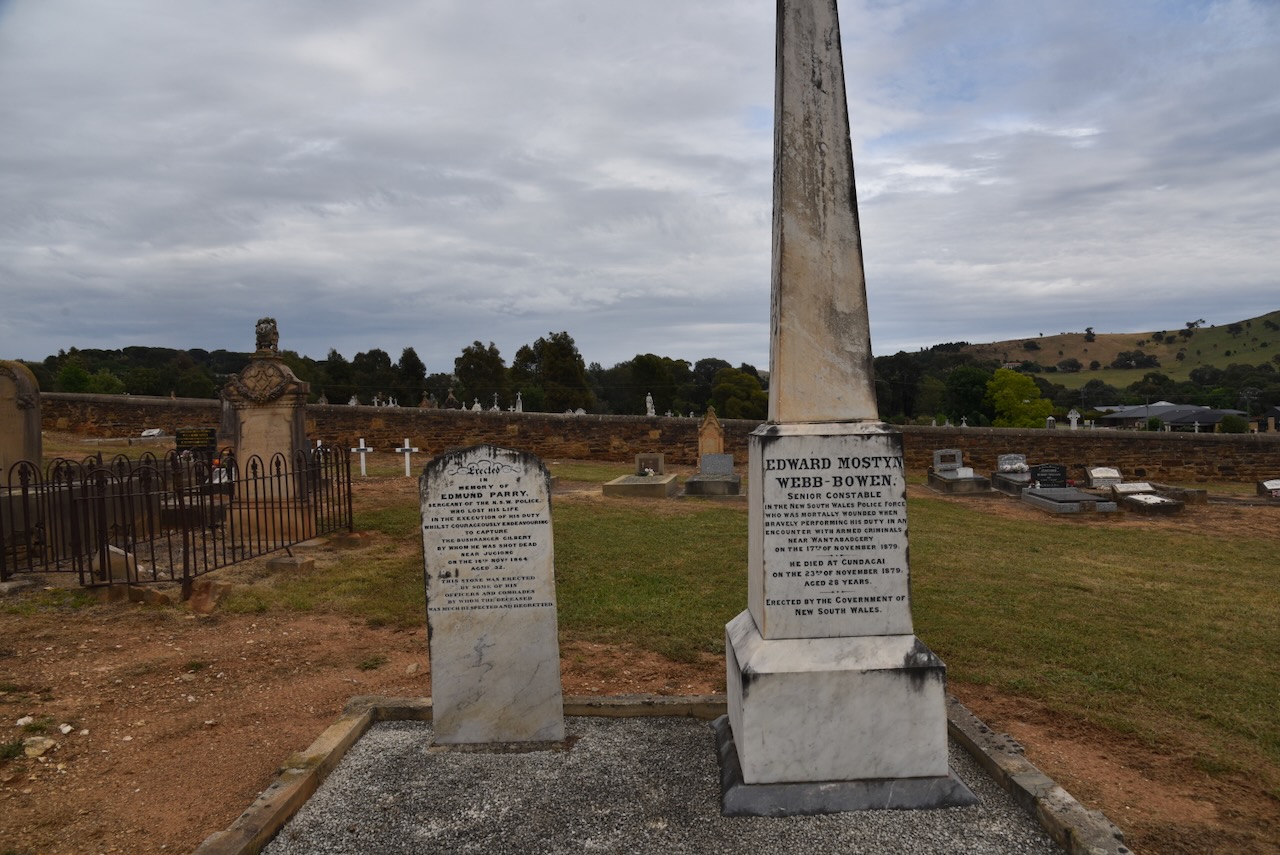
Constable Edward Mostyn Webb-Bowen, who was killed in the shootout with Scott’s gang, is also buried at the North Gundagai Cemetery. As is Sergeant Edmund Parry who I spoke about in my Tidbinbilla post.
Edward Mostyn Webb-Bowen was born in October 1851 in Pembrokeshire, Wales. He arrived in Australia in 1873 aboard the Marietta. In 1876, he married Bridget Maria Power. They had 2 children. He commenced service with the New South Wales Police Force in March 1875. He was shot in the neck during the 1879 shootout with Scott’s gang at McGlede’s Farm, Wantabadgery, NSW. (ancestry 2016) (UBC Web Design 2026)
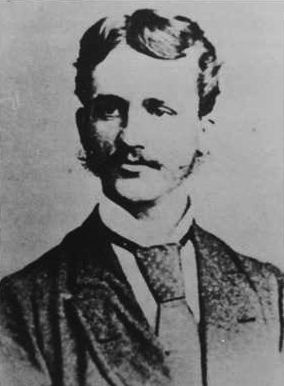
Above: Edward Webb-Bowen. Image c/o ancestry.com.au
Constable Webb-Bowen succumbed to his injuries a few days after being shot. His funeral took place in Gundagai on Monday 29th May 1899. It was reported to be one of the largest funerals that ever took place in Gundagai. (Trove 2026)
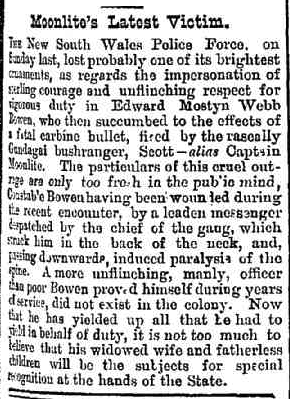
Above: article from the Newcastle Morning Herald, Tue 25 Nov 1879. Image c/o Trove
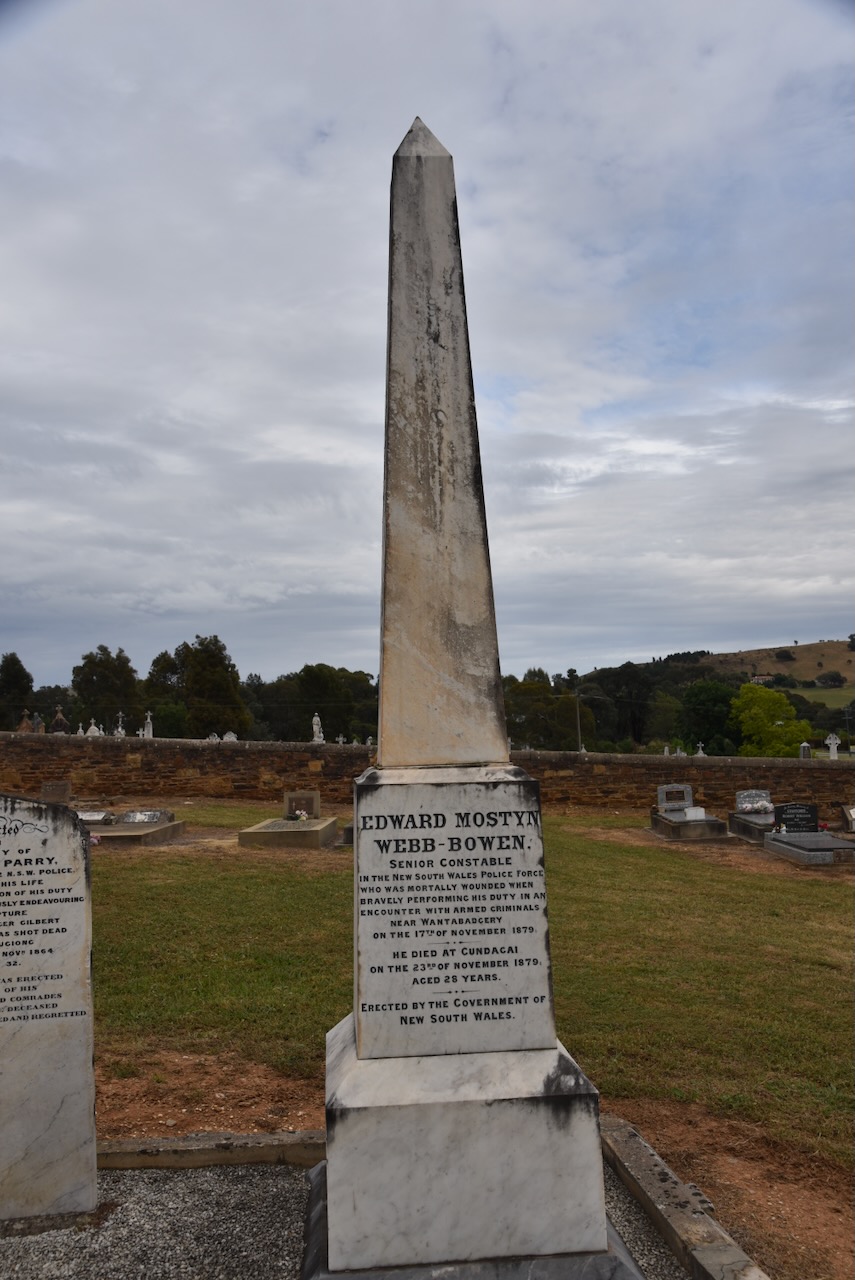
Constable Webb-Mostyn’s headstone was erected by the Government of New South Wales. It reads:
‘…was mortally wounded when bravely performing his duty in an encounter with armed criminals near Wantabadgery on the 17th of November 1879.’
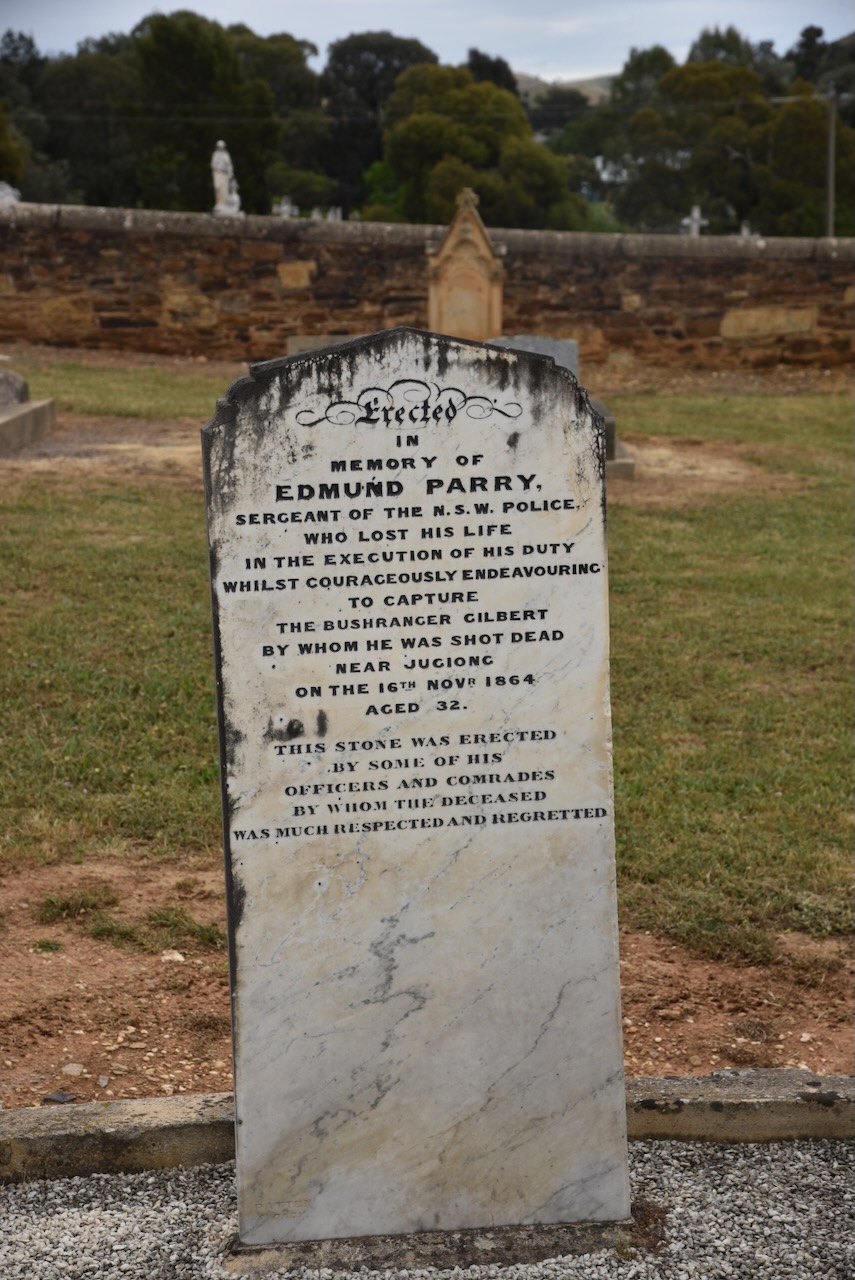
Sergeant Edmund Parry was shot dead whilst attempting to capture the bushranger John Gilbert near Jugiong. He was 32 years old. His headstone was erected by ‘some of his officers and comrades by whom the deceased was much respected nd regretted.’
For more information about Sergeant Parry and John Gilbert, please have a read of my Tidbinbilla post.
There is a Sergeant Parry Memorial Day Facebook page, which contains a significant amount of information.
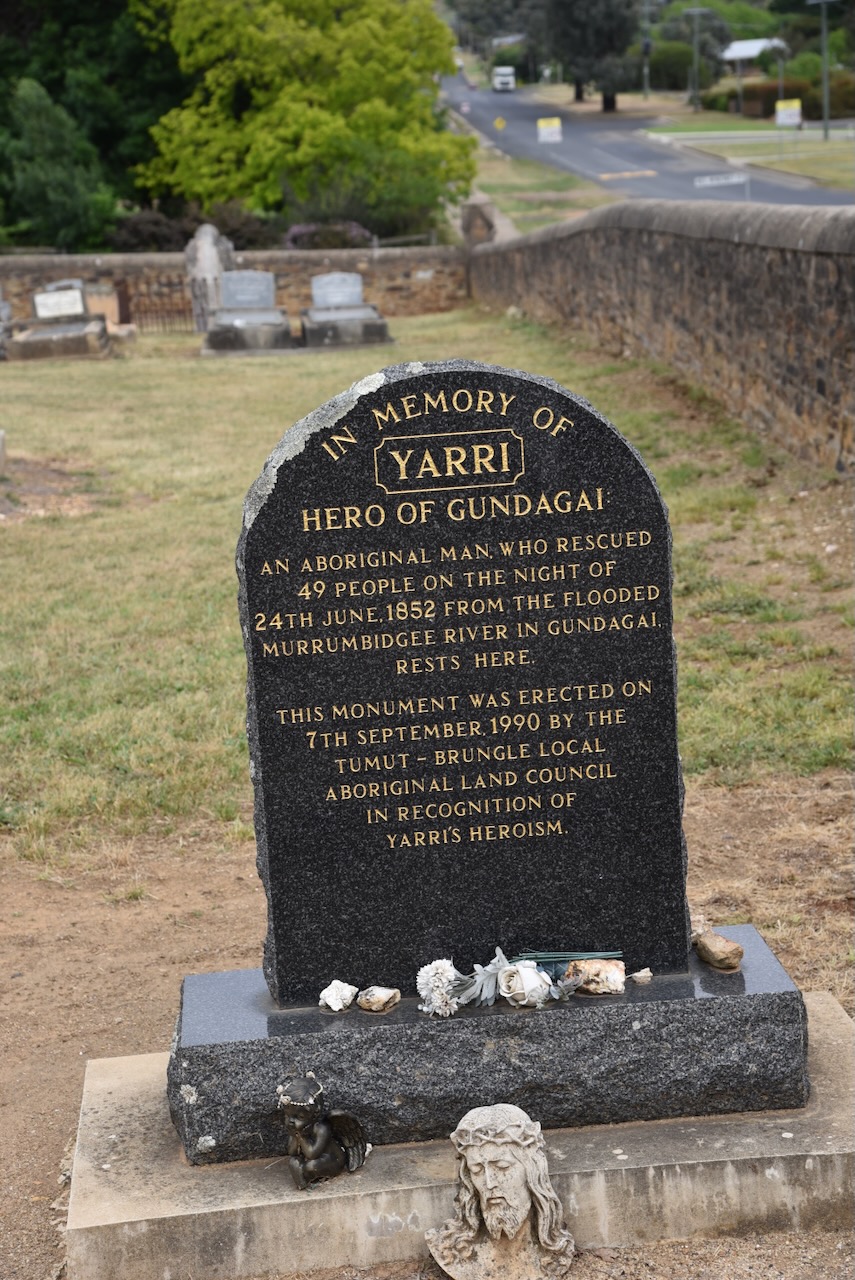
Yarri, the famous Aboriginal hero whom I mentioned earlier in this post, is also buried in the cemetery. His headstone was erected in September 1990 by the Tumur-Brungle local Aboriginal Land Council in recognition of his heroism.
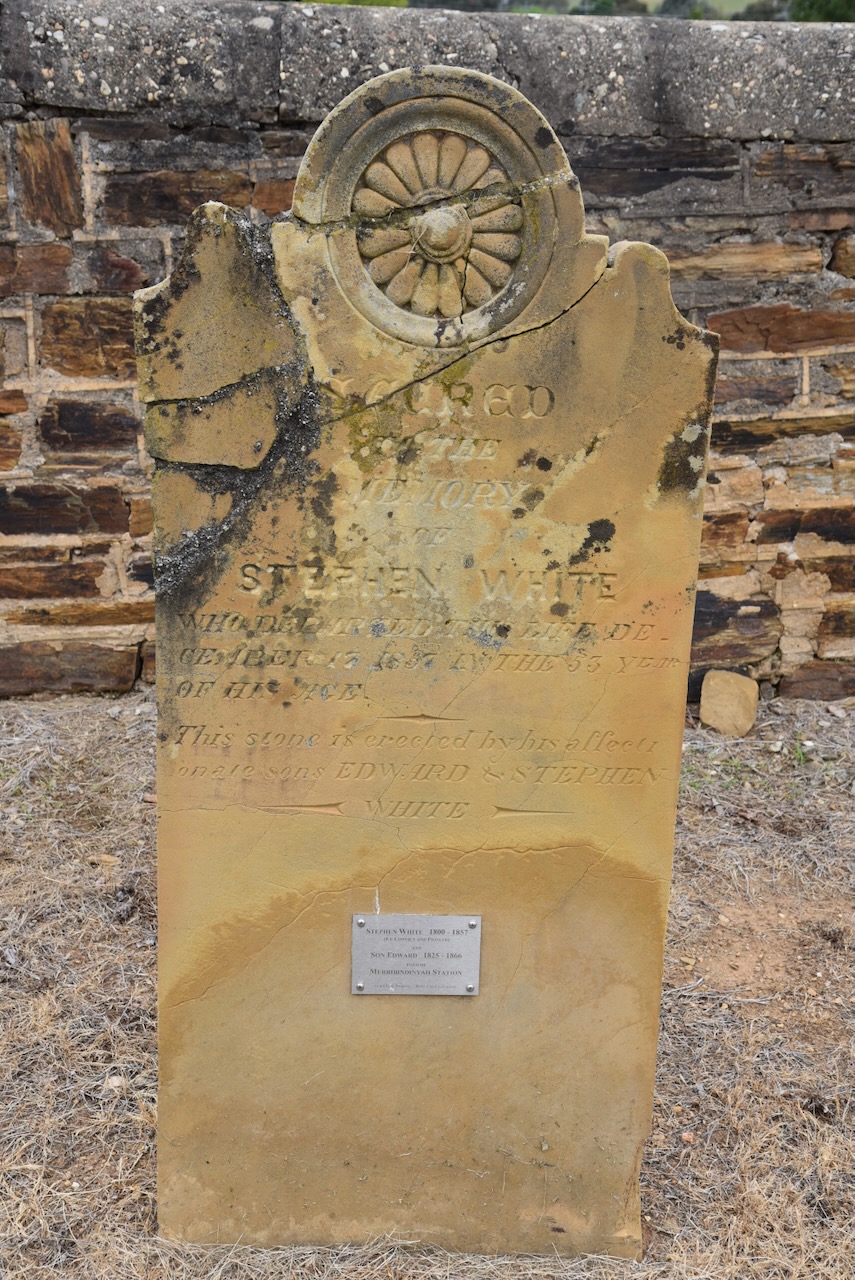
Stephen White was born c. 1800 in Wiltshire, England. On the 17th day of October 1820, he was sentenced to 7 years’ transportation to Australia. He arrived in Australia on the 16th day of September 1821 aboard the Grenada. On the 22nd day of September 1825, he was issued a Ticket of Leave. White died on the 16th day of December 1857, at Gundagai. (ancestry 2016) (convictrecords.com.au 2026)
His son Edward White was born in 1825 in New South Wales. He died on the 12th day of April 1866, at Gundagai, as a result of a drowning. (ancestry 2016)
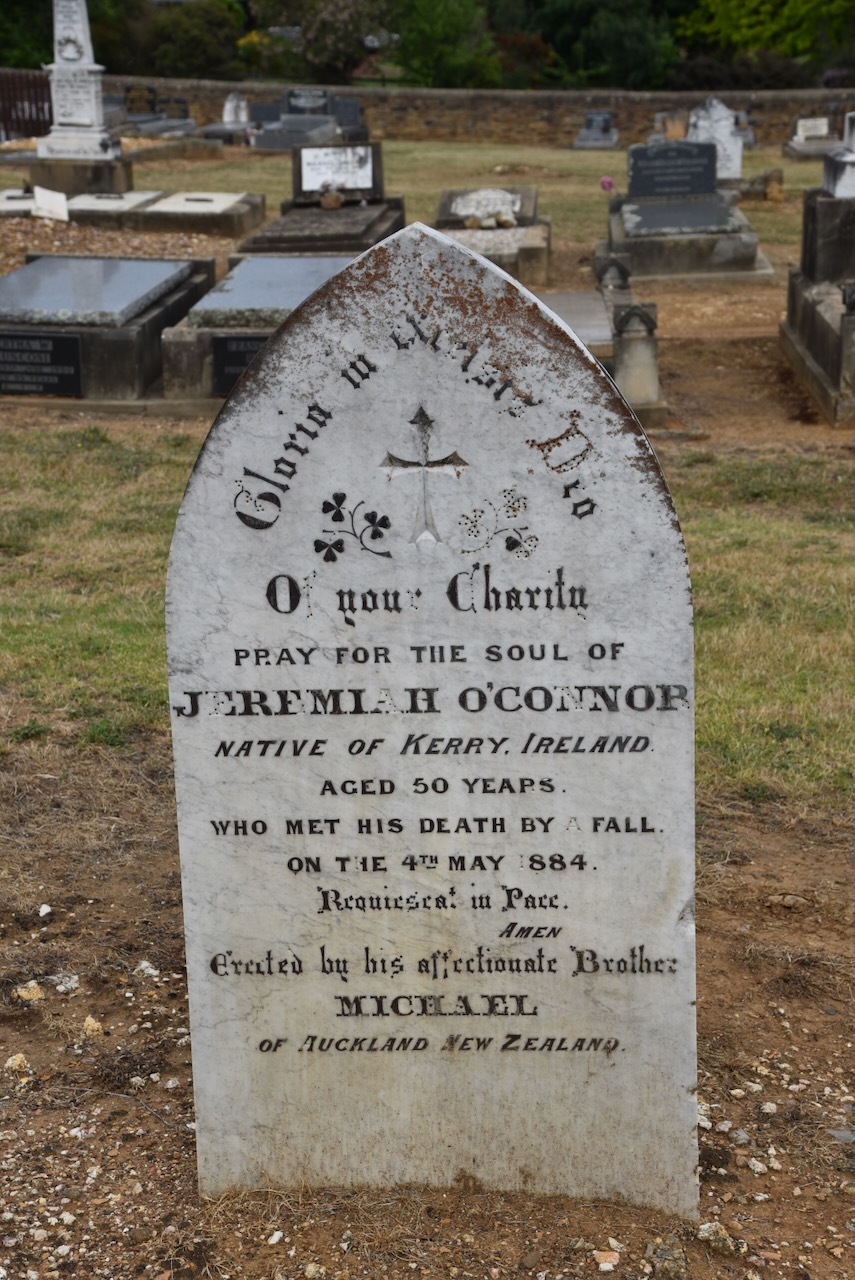
Jeremiah O’Connor was born in c. 1834 in County Kerry, Ireland. Five Mile Creek near Gundagai. (ancestry 2016) (Nla.gov.au 2026)
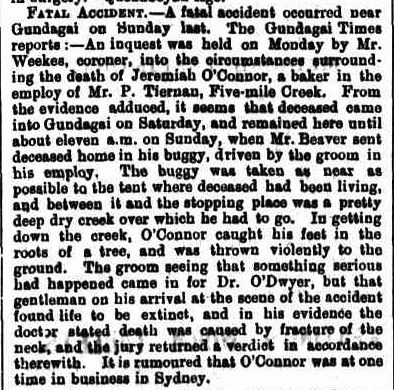
Above: article from the Goulburn Herald, Thu 8 May 1884. Image c/o Trove
Although the headstone states his date of death was 4th May 1884, it appears the correct date of death was 27th April 1884. (ancestry 2016)
Thomas Henderson was born on the 8th day of December 1829 in Midlothian, Scotland. After emigrating to Australia, he married Emily Martha Josephine Harricks at Tumut, NSW. They had 2 children. Thomas was a surgeon and chemist in Gundagai. He died on the 17th day of April 1874 at Gundagai, aged 44 years. (ancestry 2016)
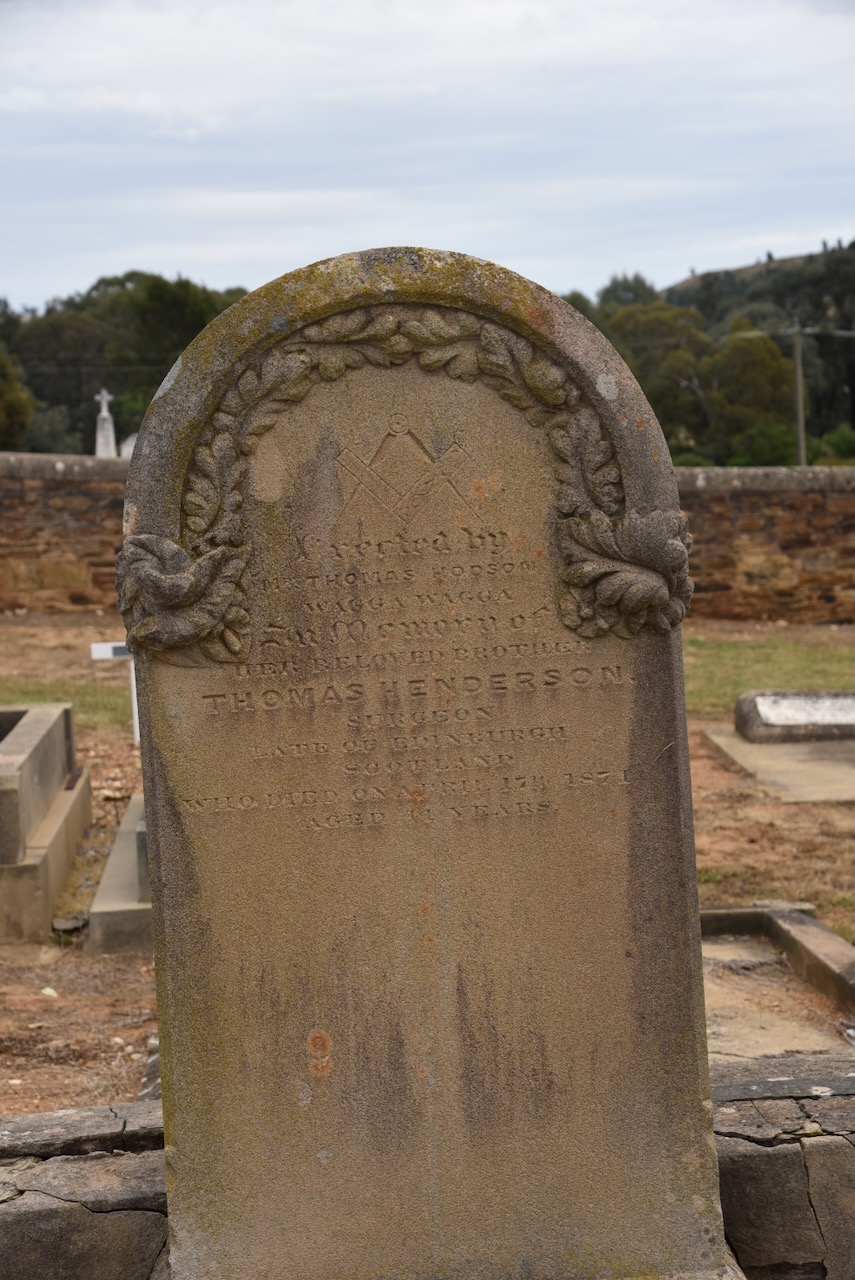
Dr Henderson suffered from neuralgia, which is an intense stabbing or burning nerve pain. He was discovered dead in bed. A coroner’s inquest was held, and after reviewing the evidence, the Coroner and Jury returned a verdict that his death arose from natural causes. (Trove 2026)
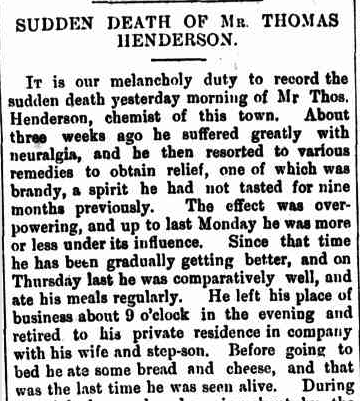
Above: part of an article from The Gundagai Times, Sat 18 Apr 1874. Image c/o Trove
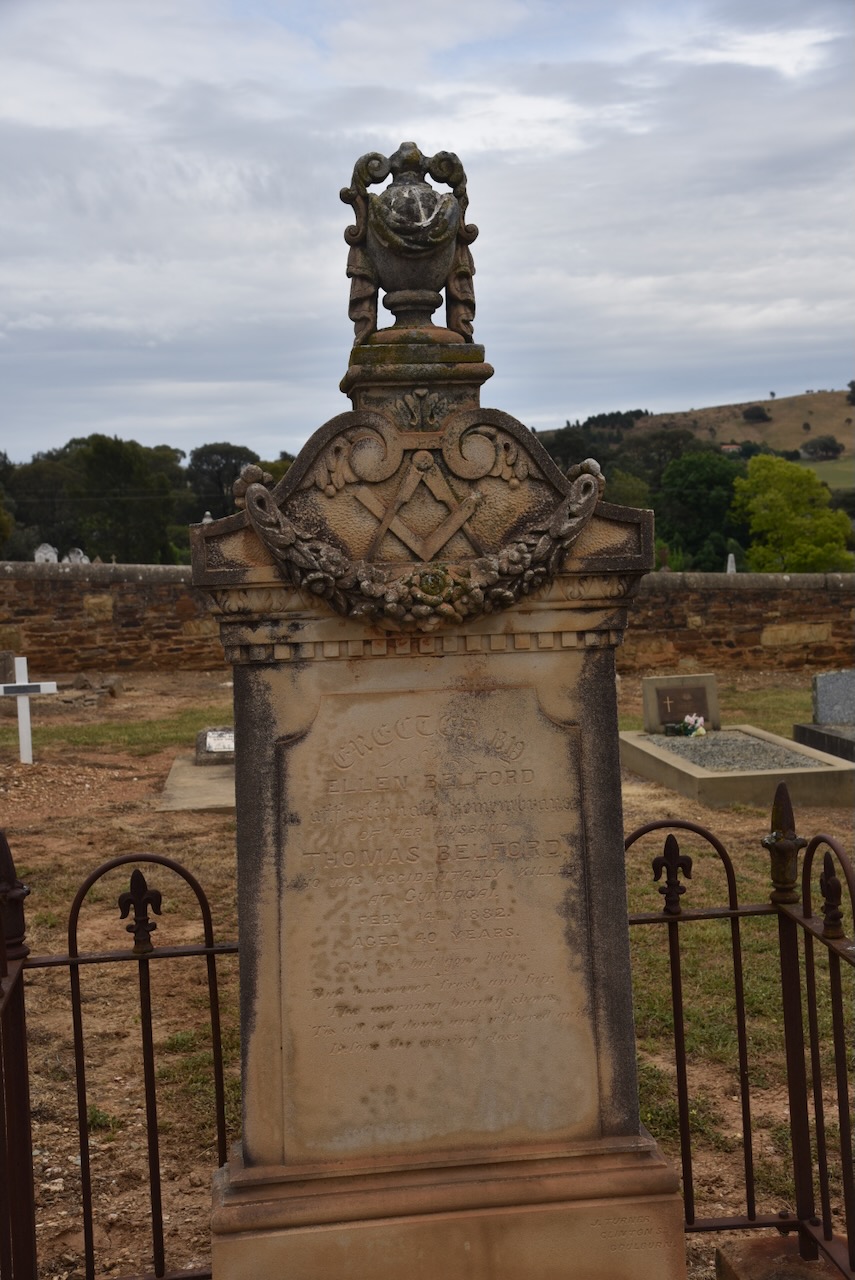
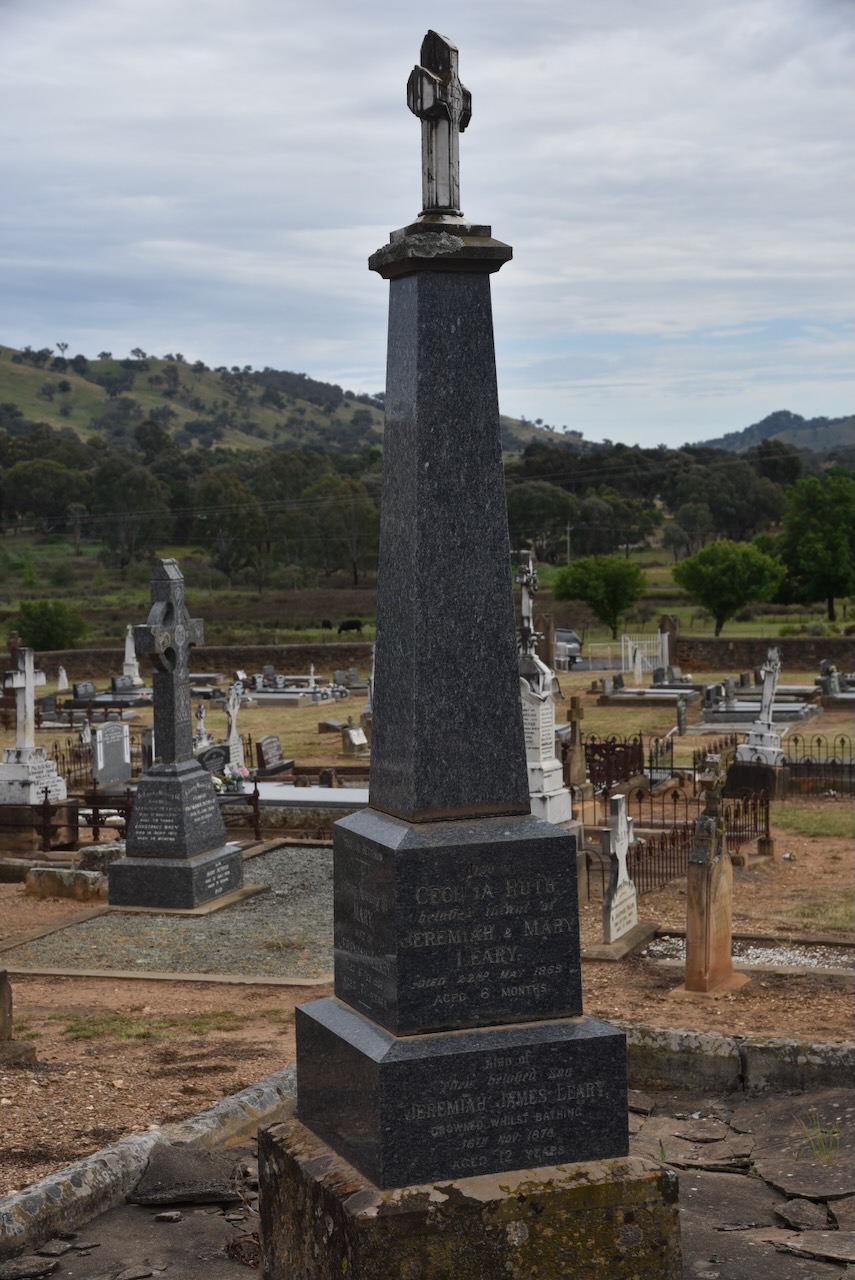
Thomas Belford was born in 1841 in Galway, Ireland. He emigrated to Australia, and in 1873, he married Ellen Ryan at Gundagai. They had four children. Thomas was a cordial manufacturer. Thomas died on the 14th day of February 1882, at Gundagai. He was attempting to cross a creek in a sprint cart when it capsized. Thomas was thrown on his head. It was reported that he was ‘removed in an insensible condition’ to Leary’s Hotel, where he was attended by Dr Ogg. Sadly, he died shortly afterwards. A boy who was in the cart at the time escaped unhurt. (ancestry 2016) (Nla.gov.au 2026)
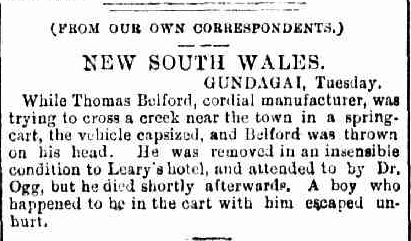
Above: article from The Sydney Daily Telegraph, Wed 15 Feb 1882. Image c/o Trove
The headstone was erected in ‘affectionate remembrance’ of his wife, Ellen.
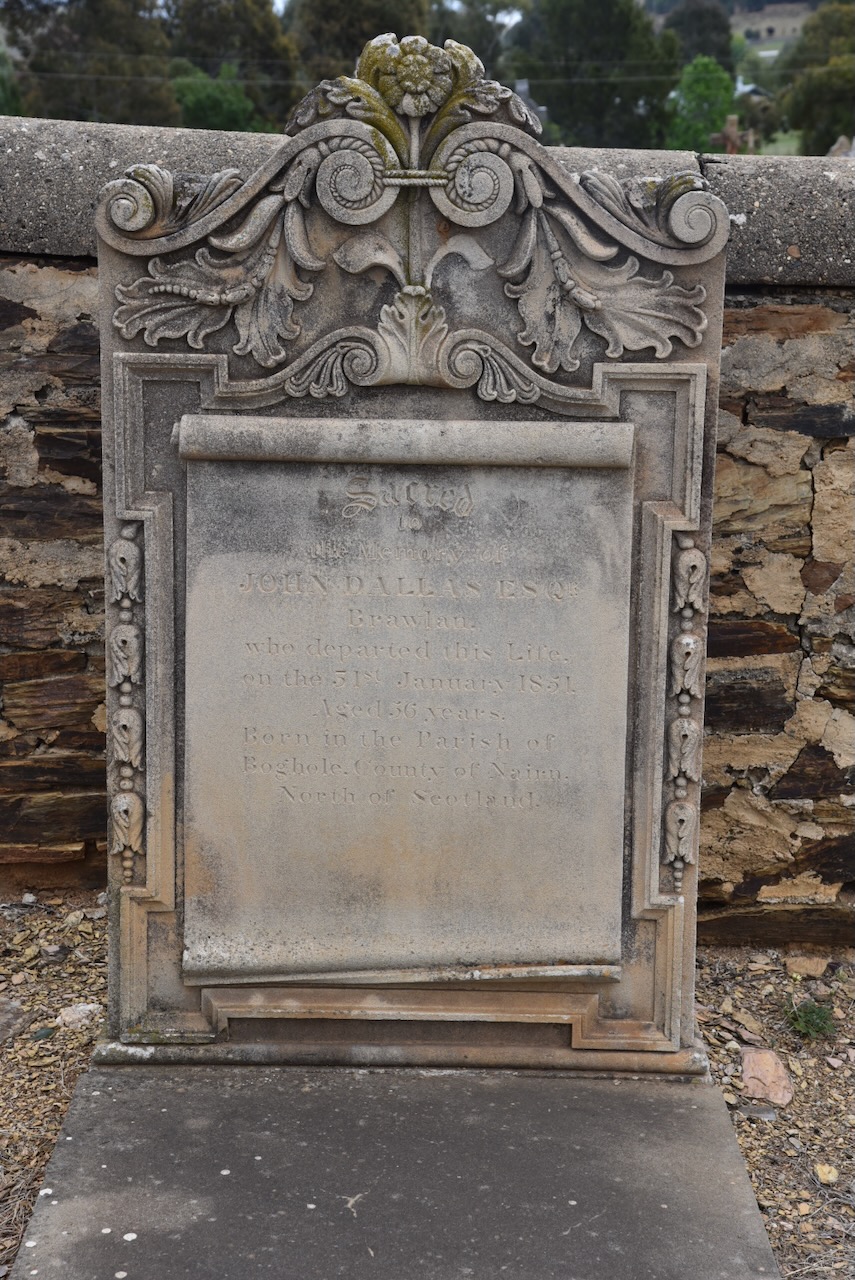
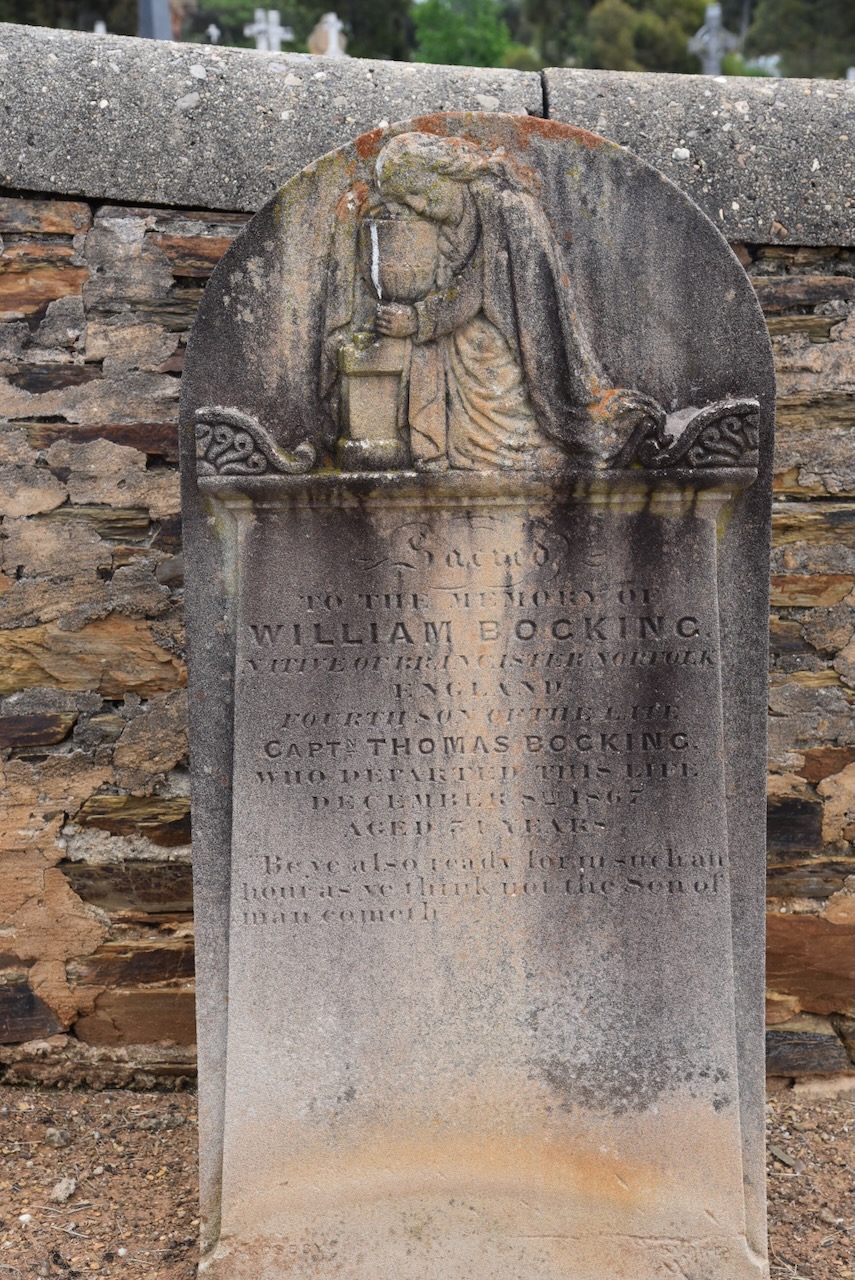
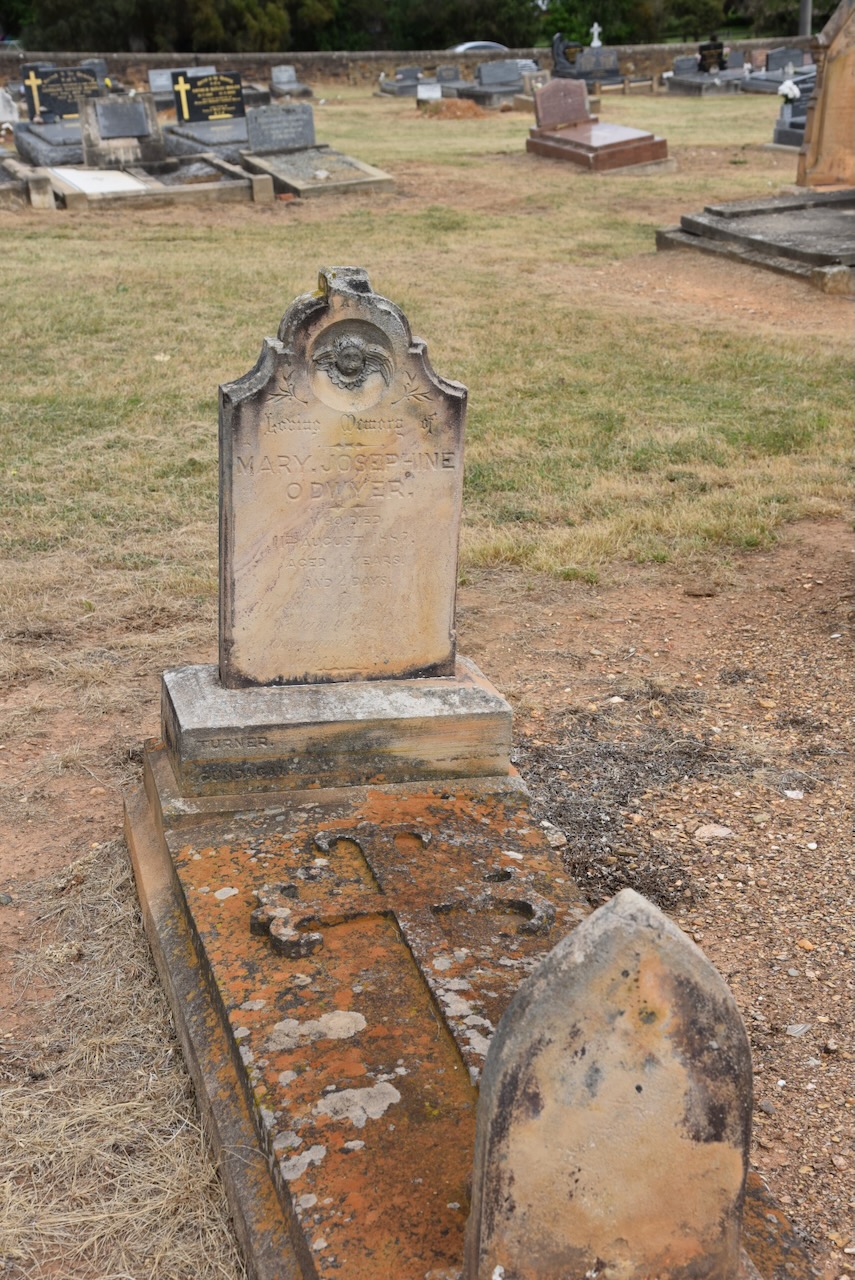
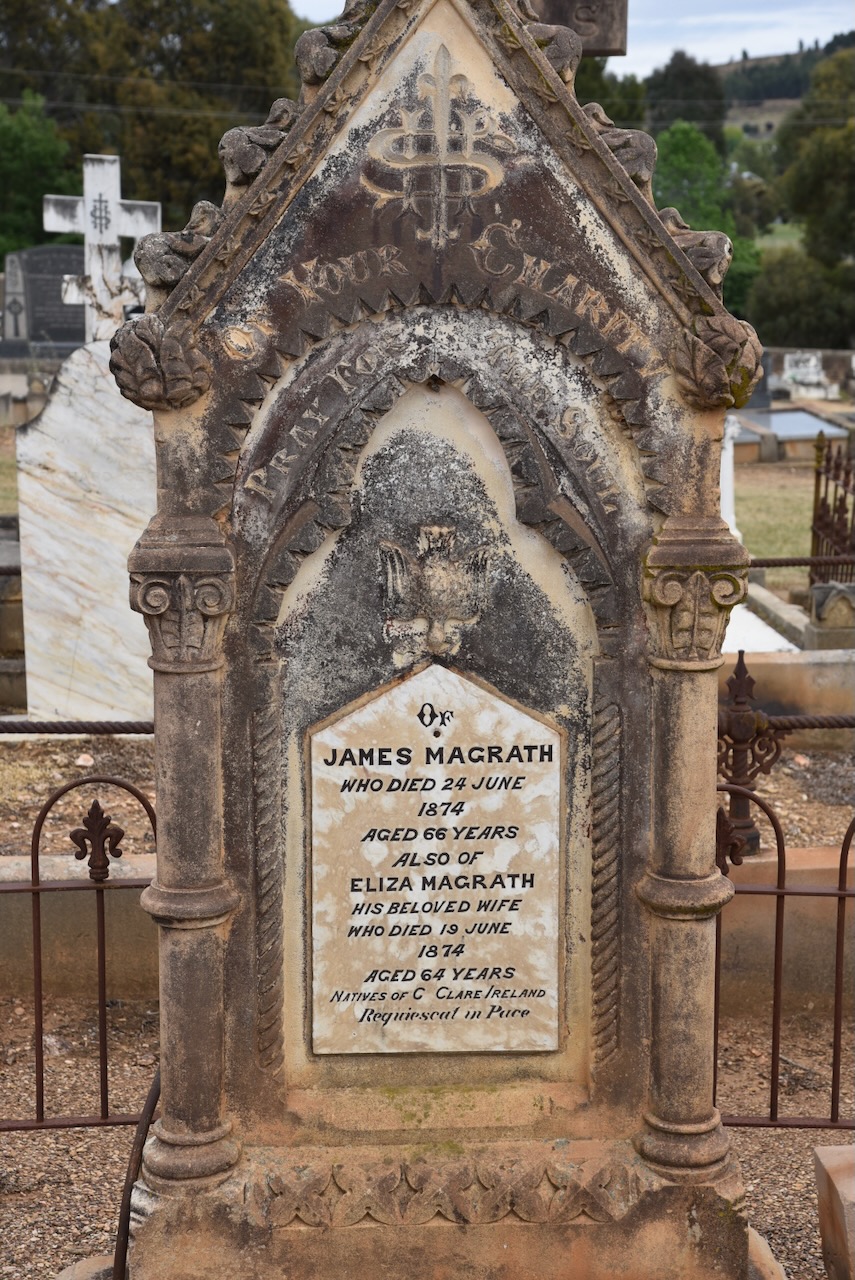
There are so many other historical headstones in the North Gundagai Cemetery. You could wander around here for hours.
Marija and I then visited the Gundagai Visitor Centre and collected a key to enter the old Gundagai Gaol. Ironic that it was a key to enter the Gaol. I am sure there were a lot of inmates over the years who would have paid good money for that key. You can undertake a self-guided audio tour for a small fee. We can highly recommend it.
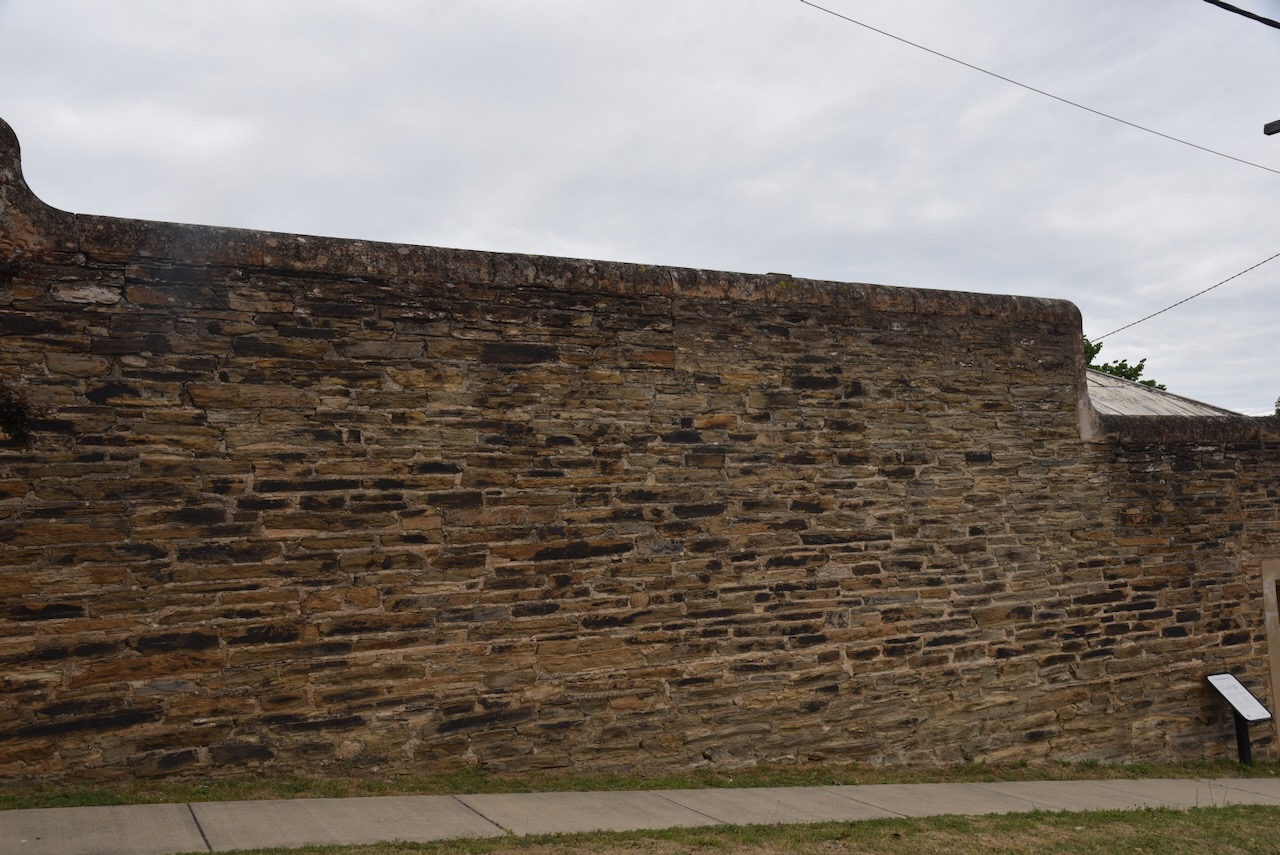
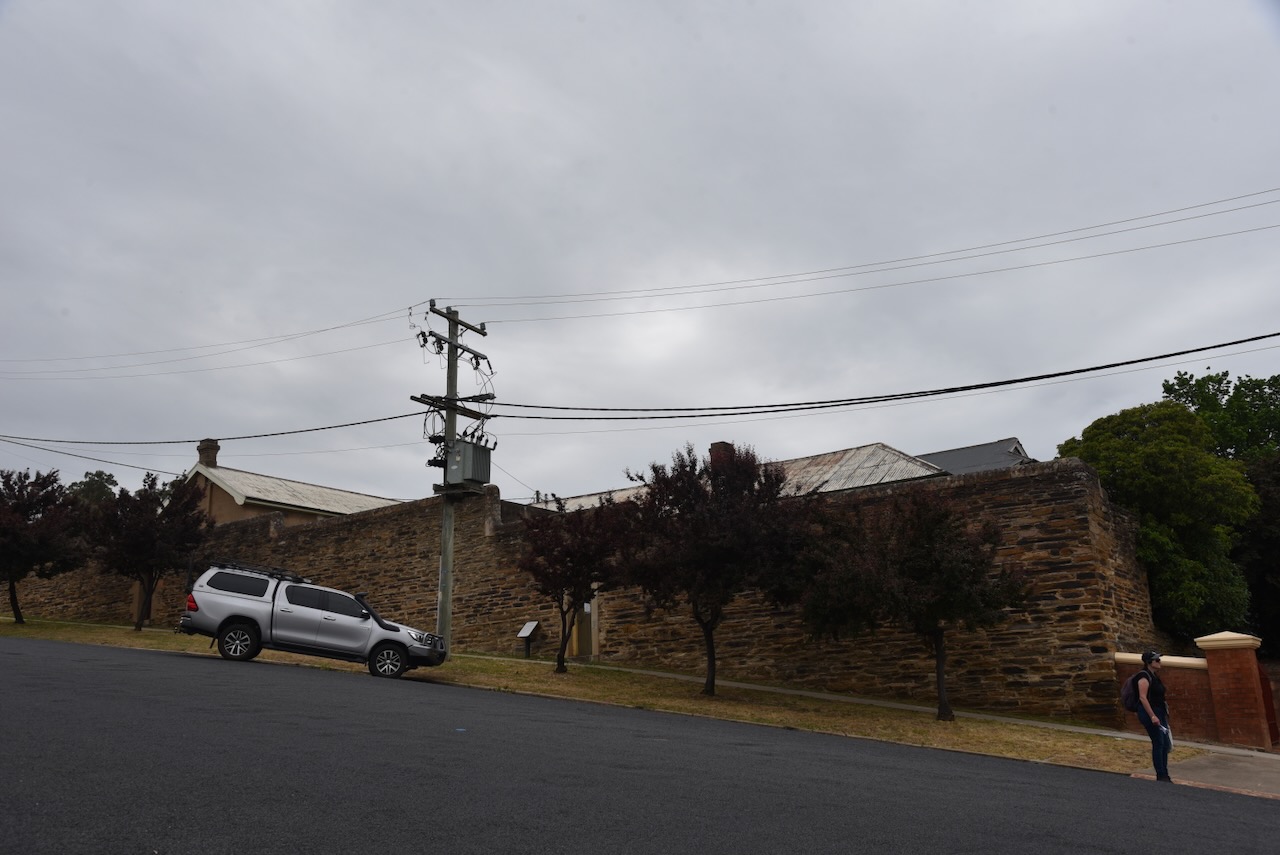
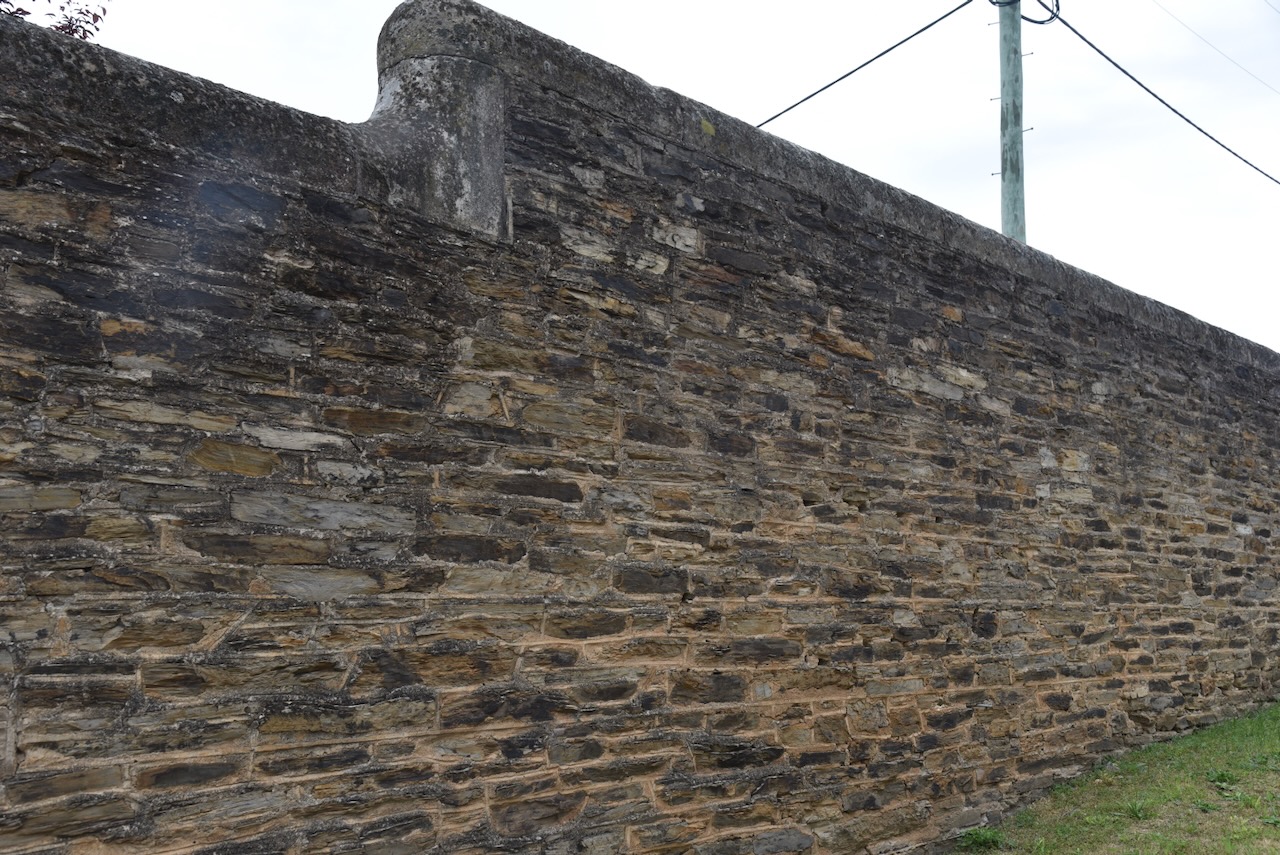
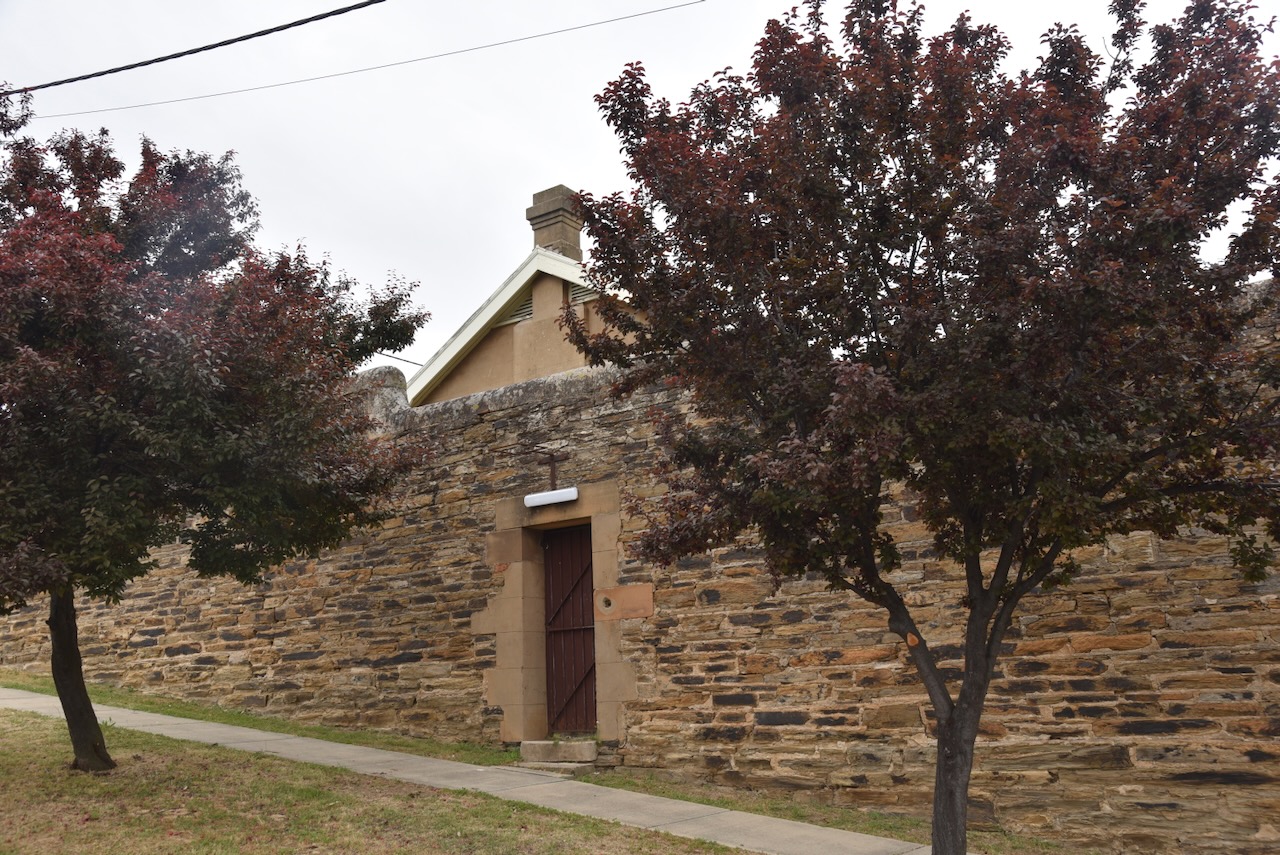
The gaol is located on the corner of First Avenue and Byron Street, Gundagai, and is surrounded by a high wall made of local slate with rendered capping.
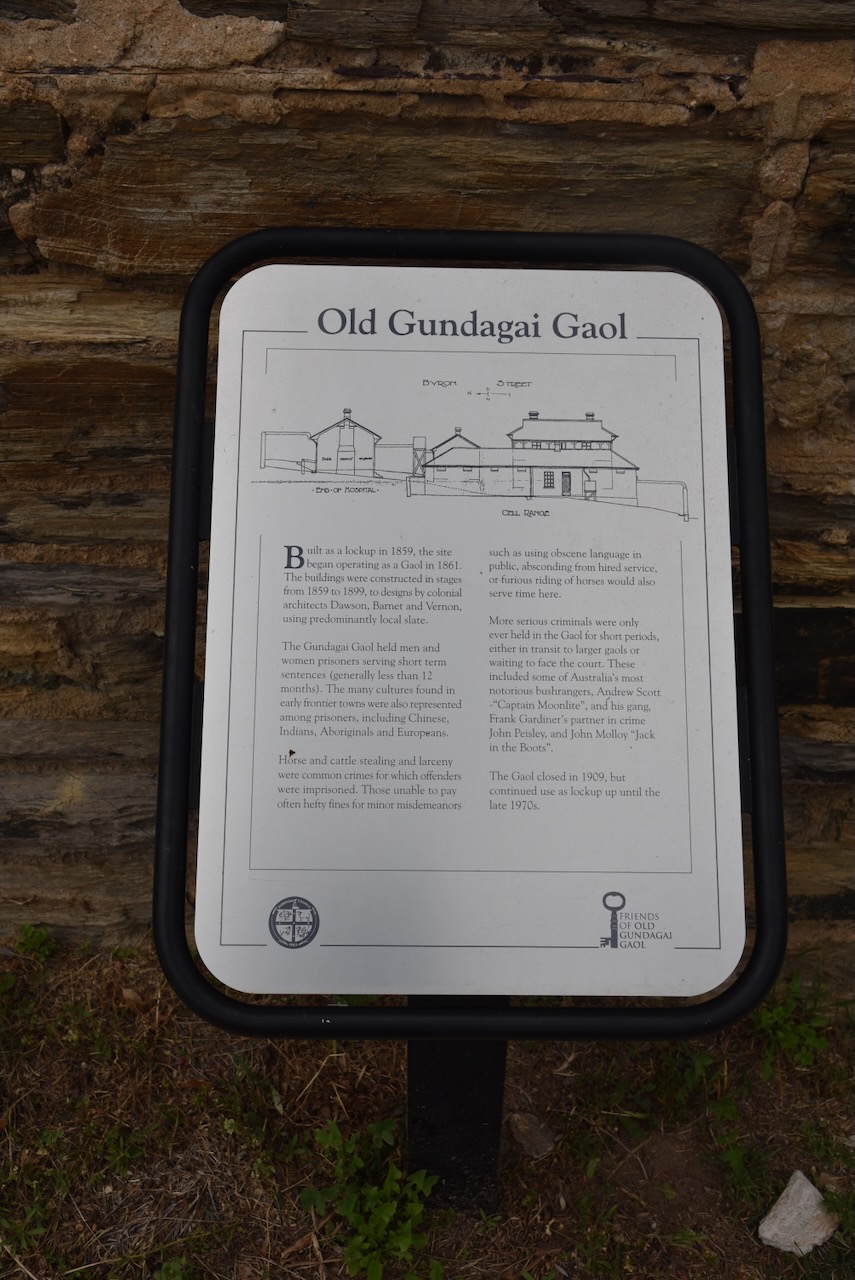
The Gaol was originally built as a lockup in 1859. In October 1859, two prisoners who were being held at the Gundagai Lockup, awaiting their trials at the Gundagai Sessions, escaped from the lockup. They struck Constable with the butt end of a pistol and batten. The two wives of the Constables were also injured while assisting their husbands in trying to prevent the escape of the men. (Nla.gov.au 2026)
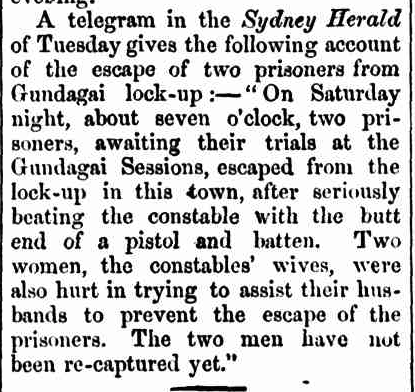
Above: article from the Wagga Wagga Express, Sat 1 Oct 1859. Image c/o Trove
It commenced operation as a Gaol in 1861. The buildings at the gaol were built in stages between 1859 and 1899, to designs by colonial architects Dawson, Barnet, and Vernon. The buildings were predominantly built from local slate.
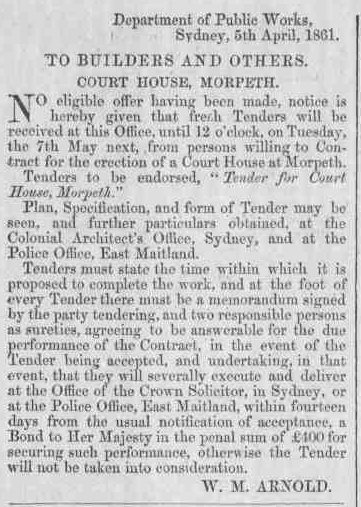
Above: NSW Govt Gazette, Tue 16 Apr 1861. Image c/o Trove
The Gundagai Gaol held men and women who were serving short sentences, generally less than 12 months. Cattle and horse theft, and larceny were common offences for which prisoners were held at Gundagai Gaol. Other minor crimes included obscene language, absconding from hired service, and furious riding of horses. Those who had committed more serious offences were only held at Gundagai Gaol for short periods of time. They were then transferred to larger gaols. The gaol closed in 1909. However, it continued to operate as a lockup until the late 1970s.
We unlocked the door on Byron Street and entered the gaol.
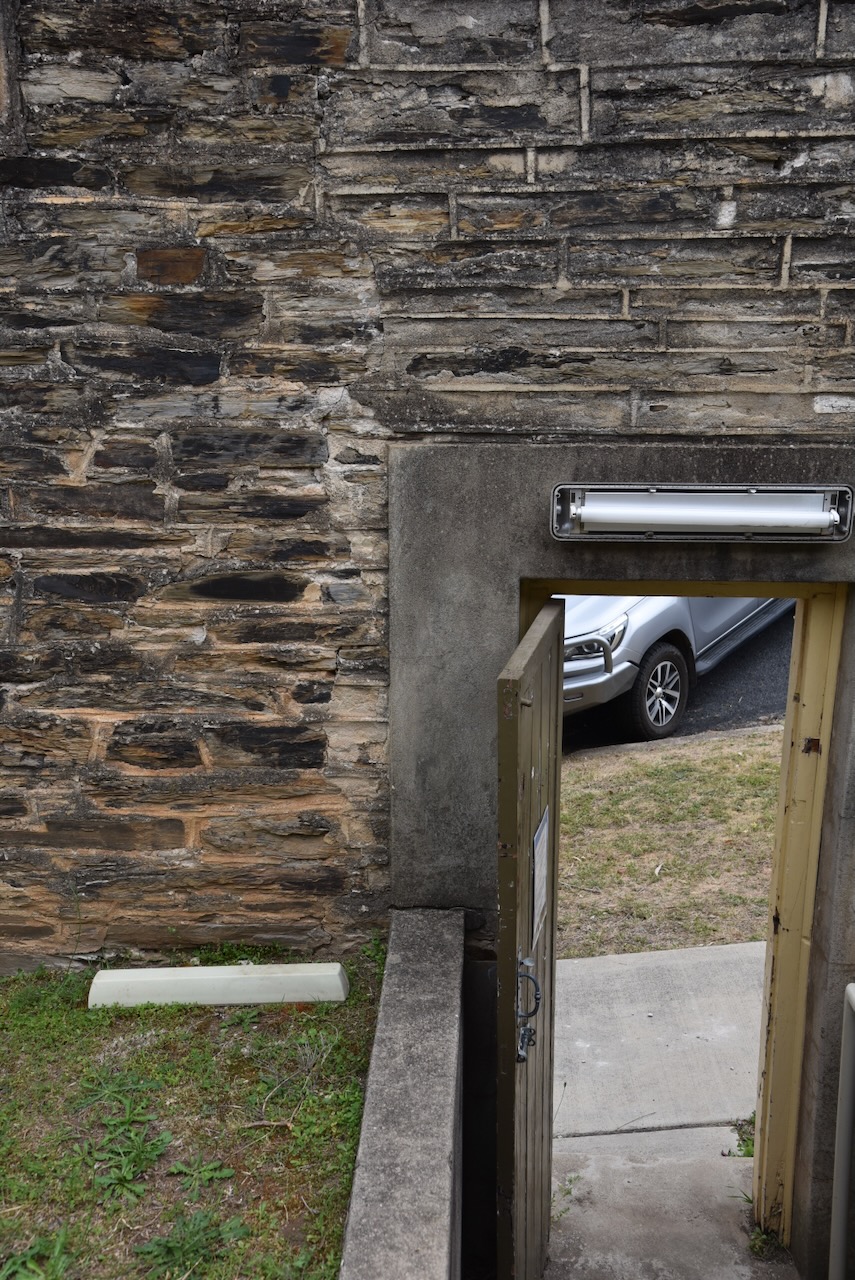
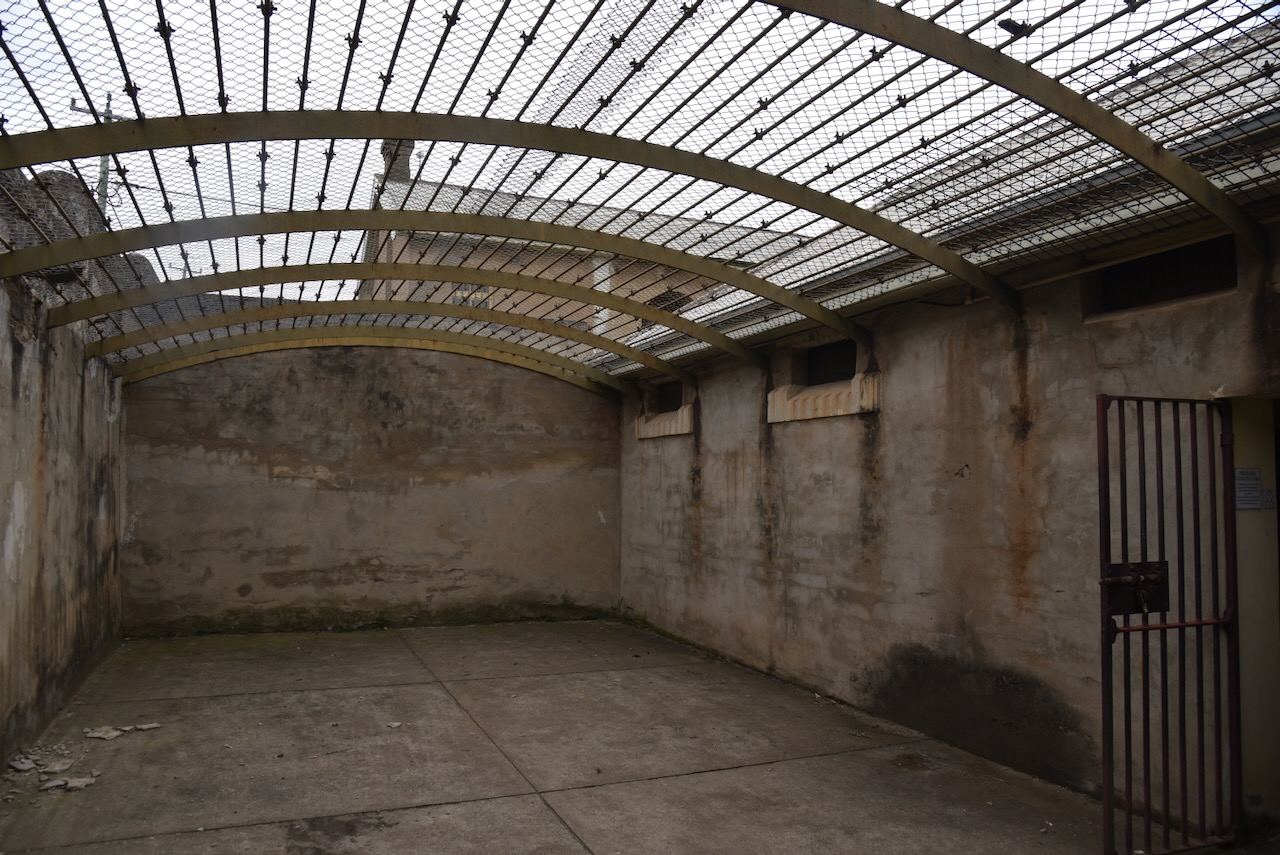
The first section of the gaol we visited was the Exercise Yard. The prisoners were unable to see the outside world due to the high walls, but they could view the sky through the caged roof.
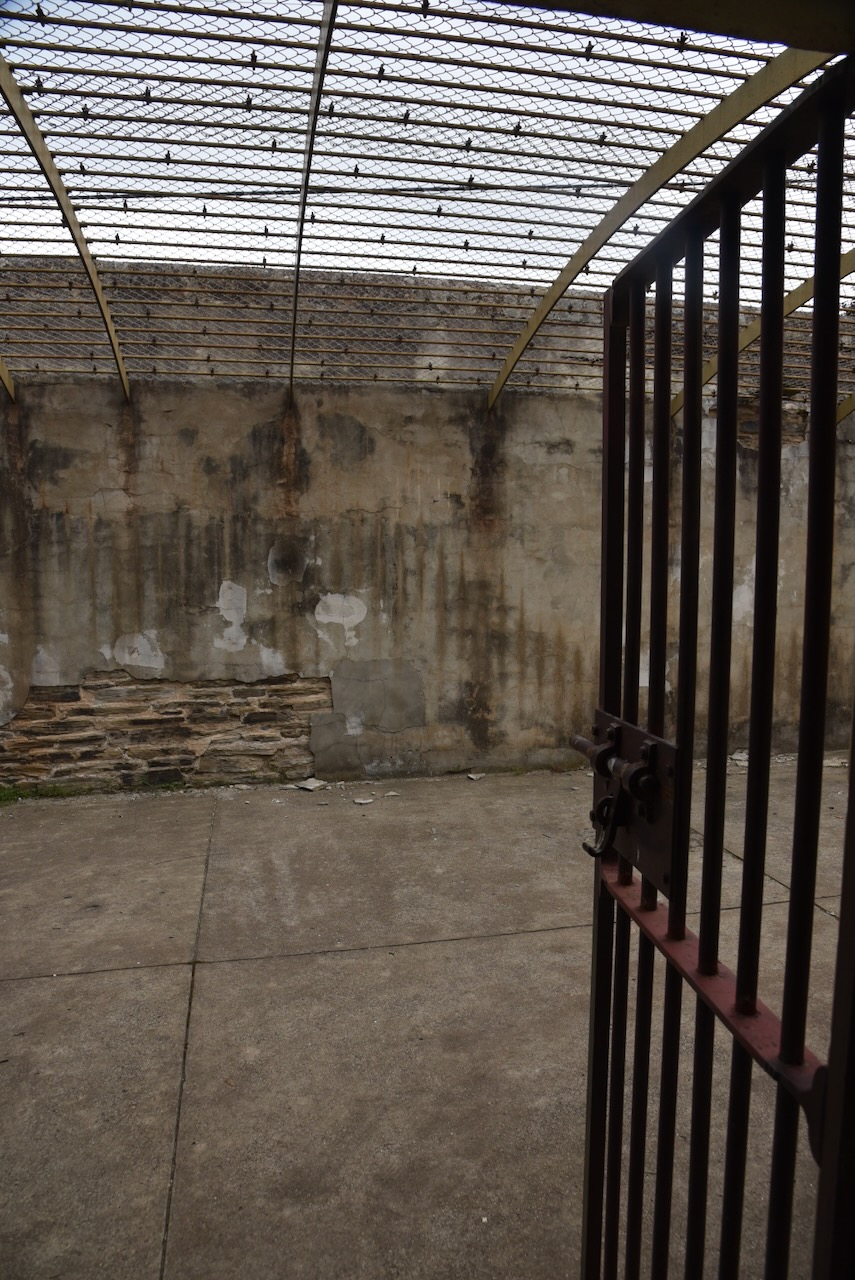
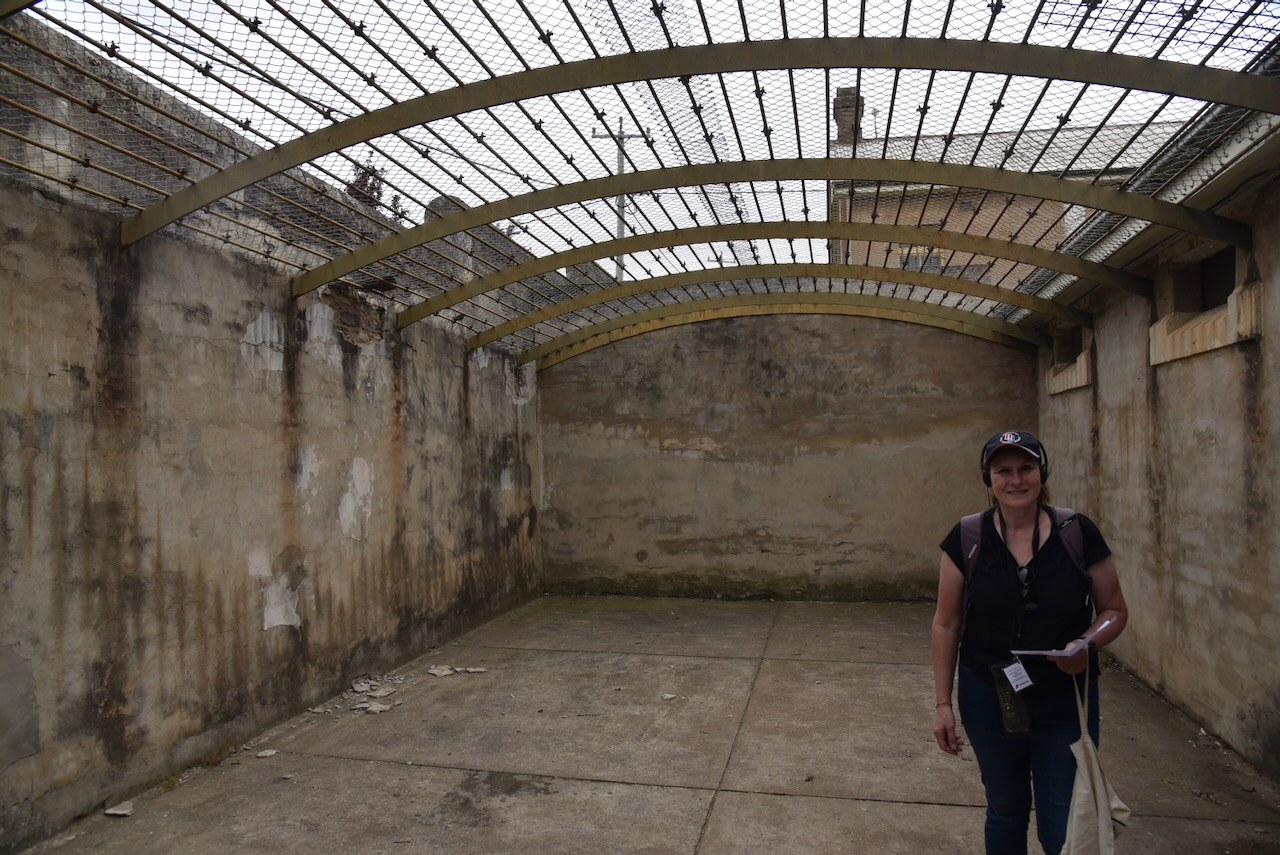
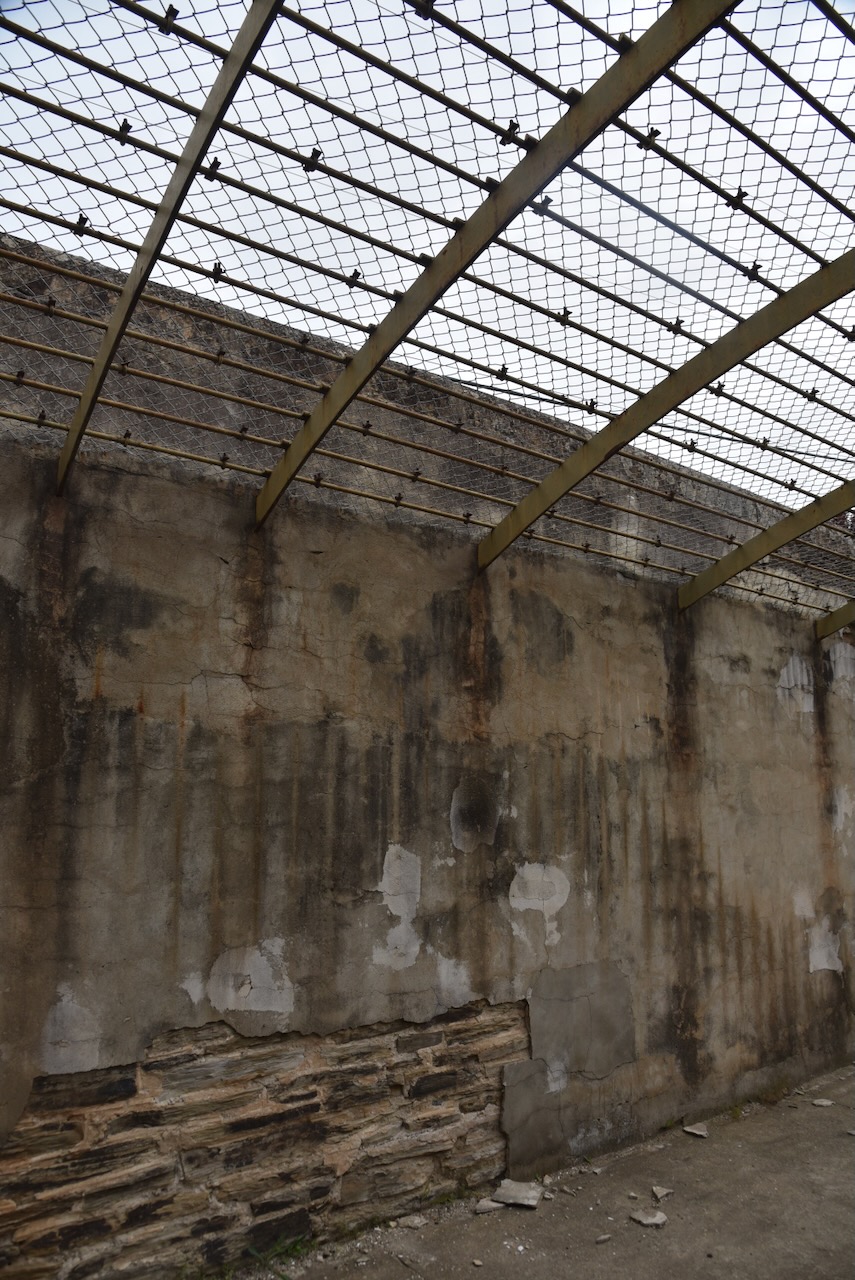
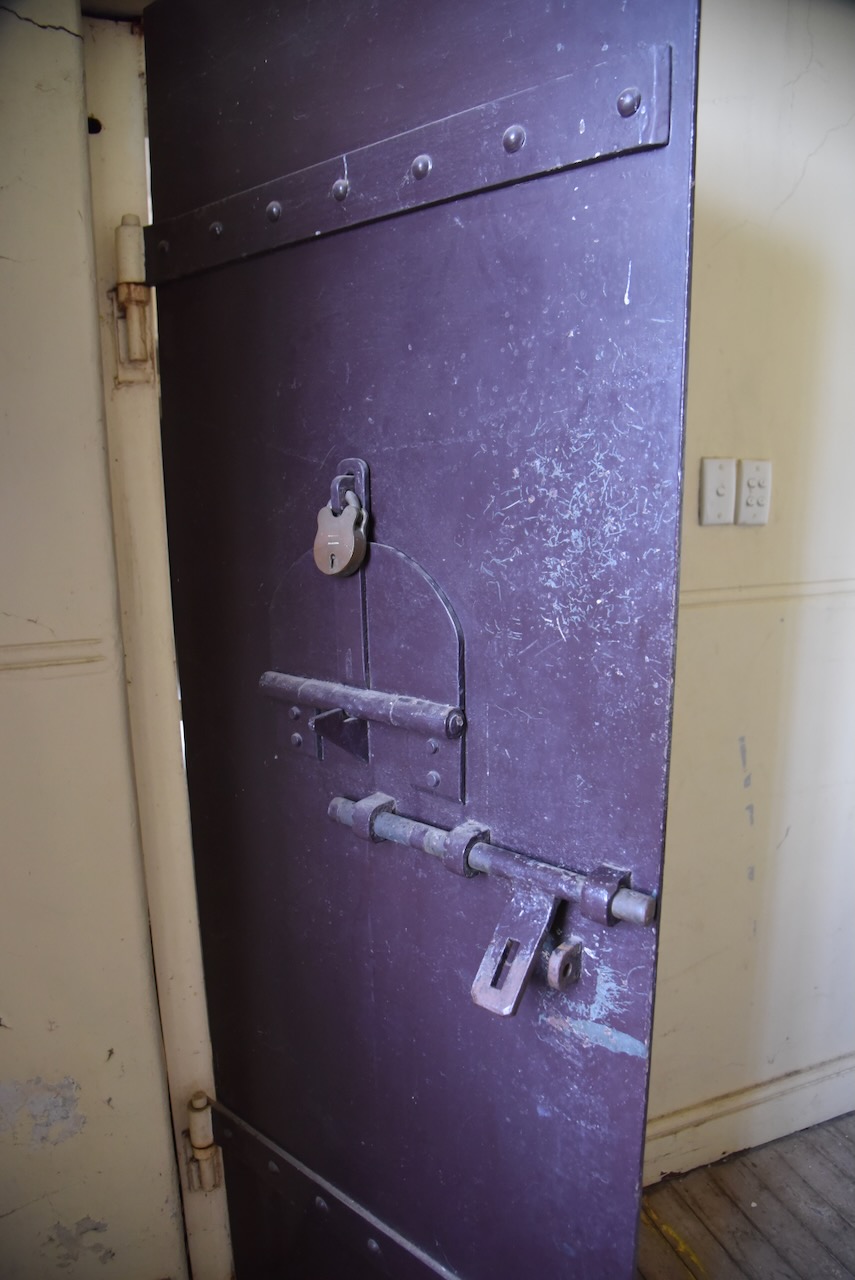
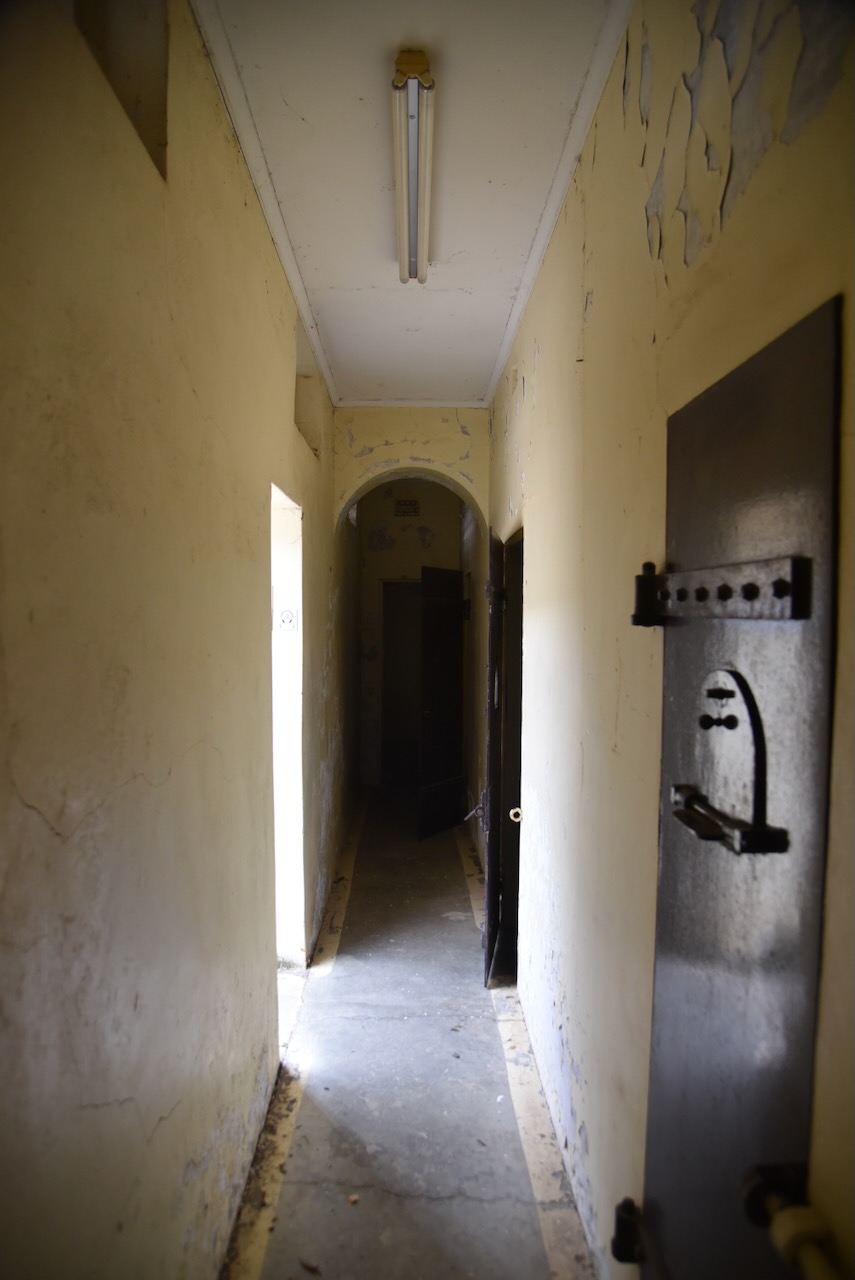
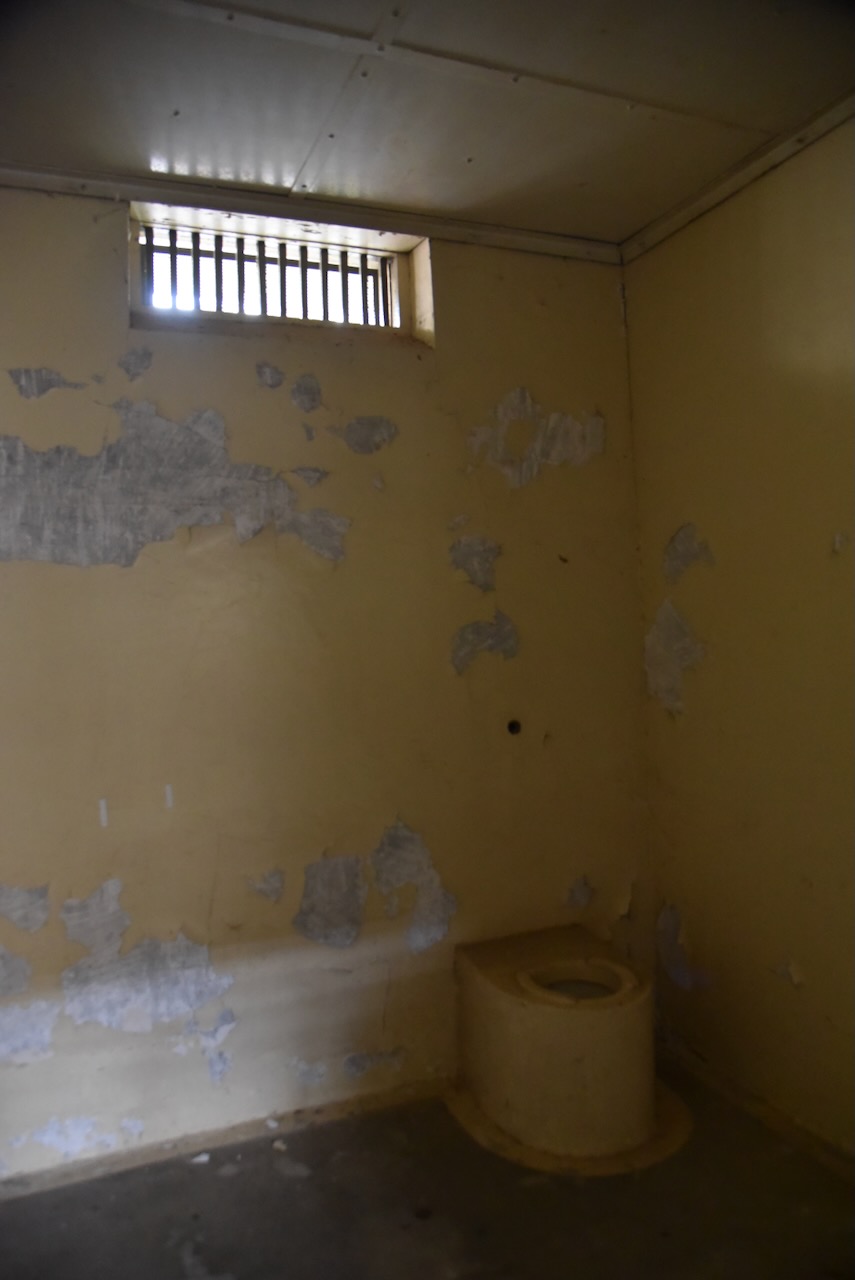
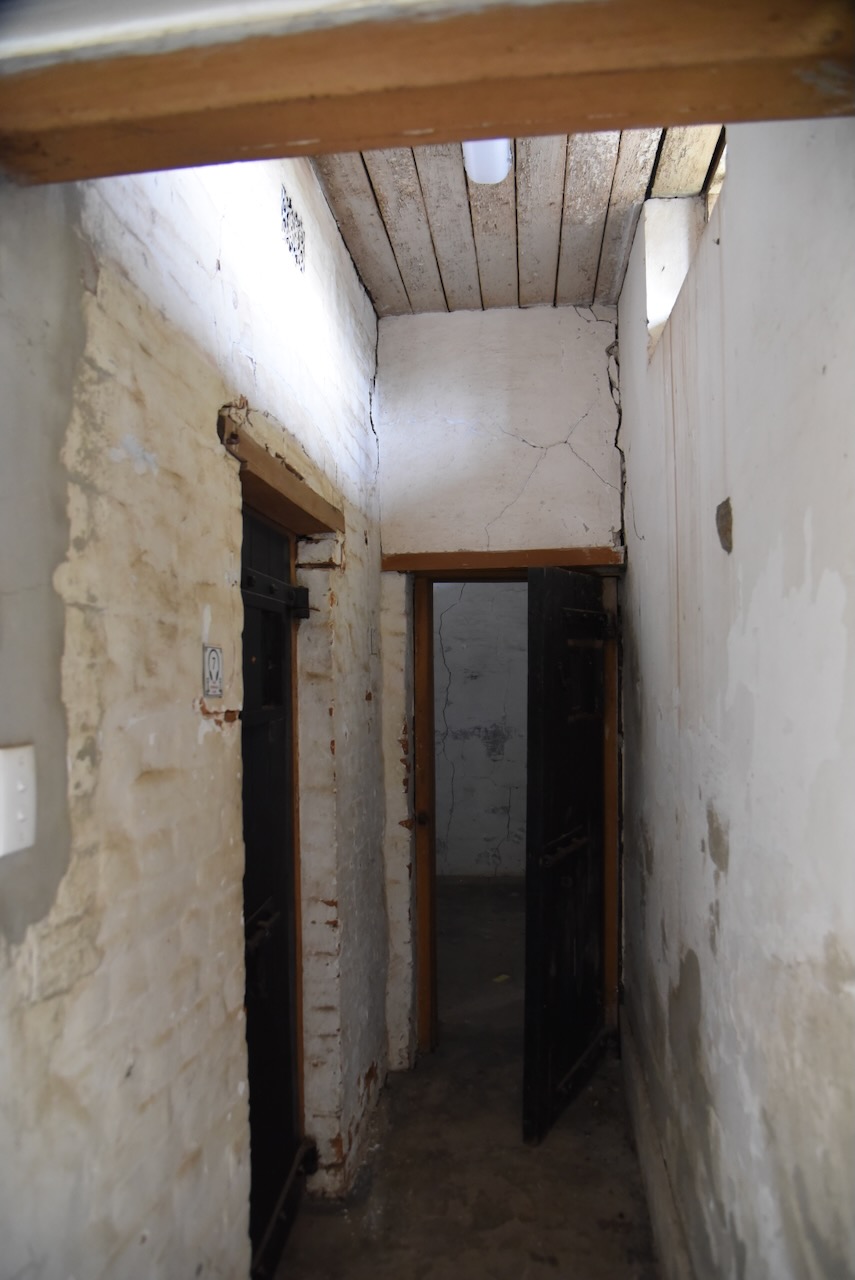
We then viewed the calls. Certainly nothing like the cells in modern-day prisons.
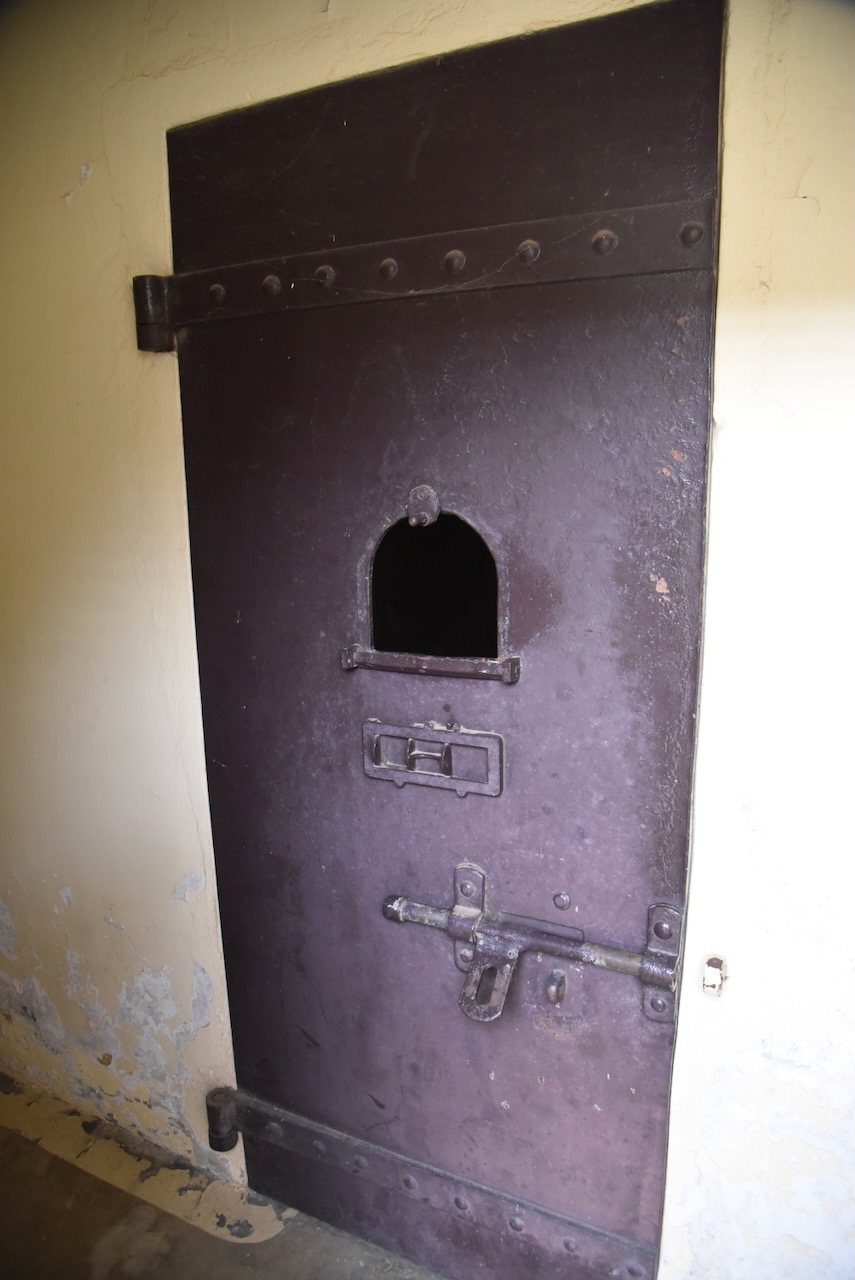
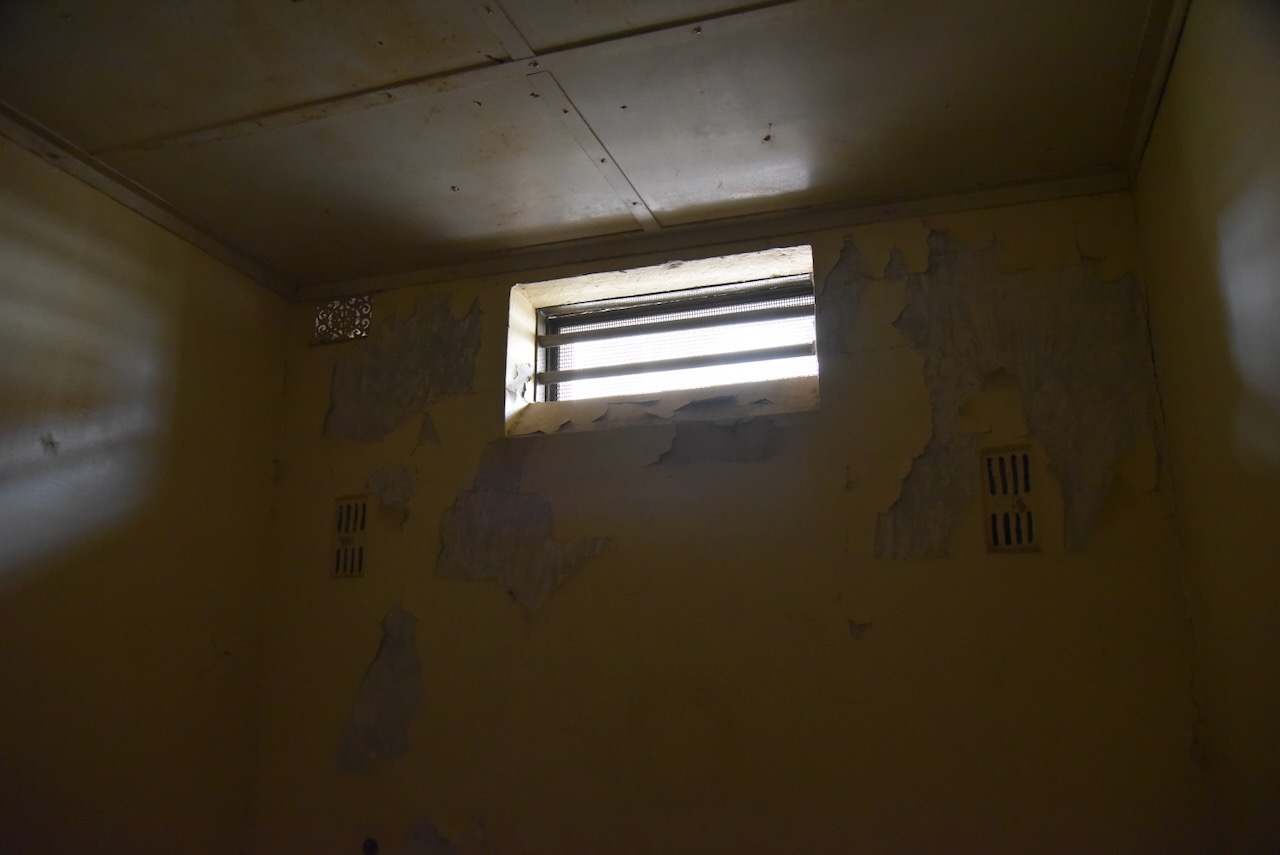
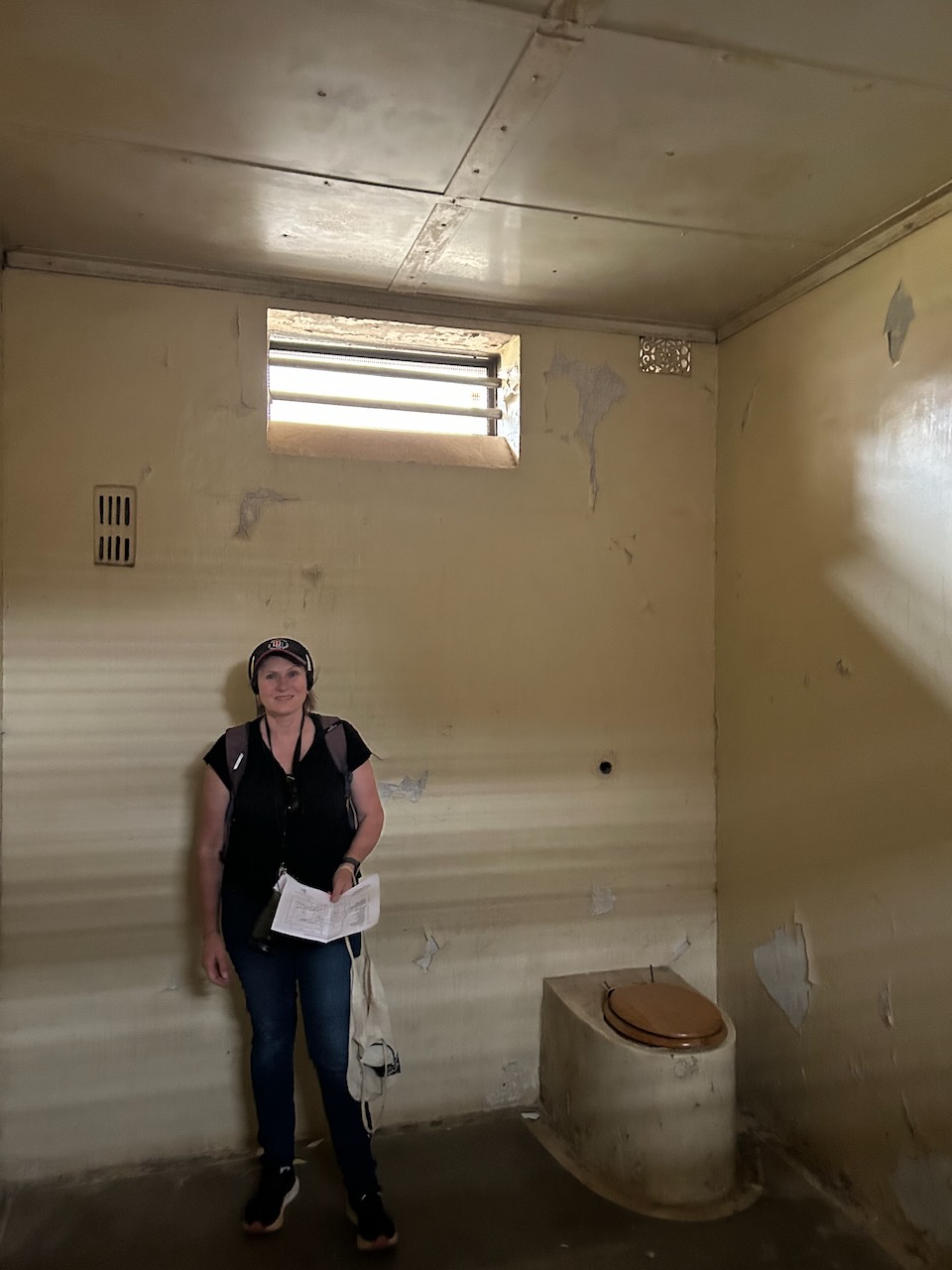
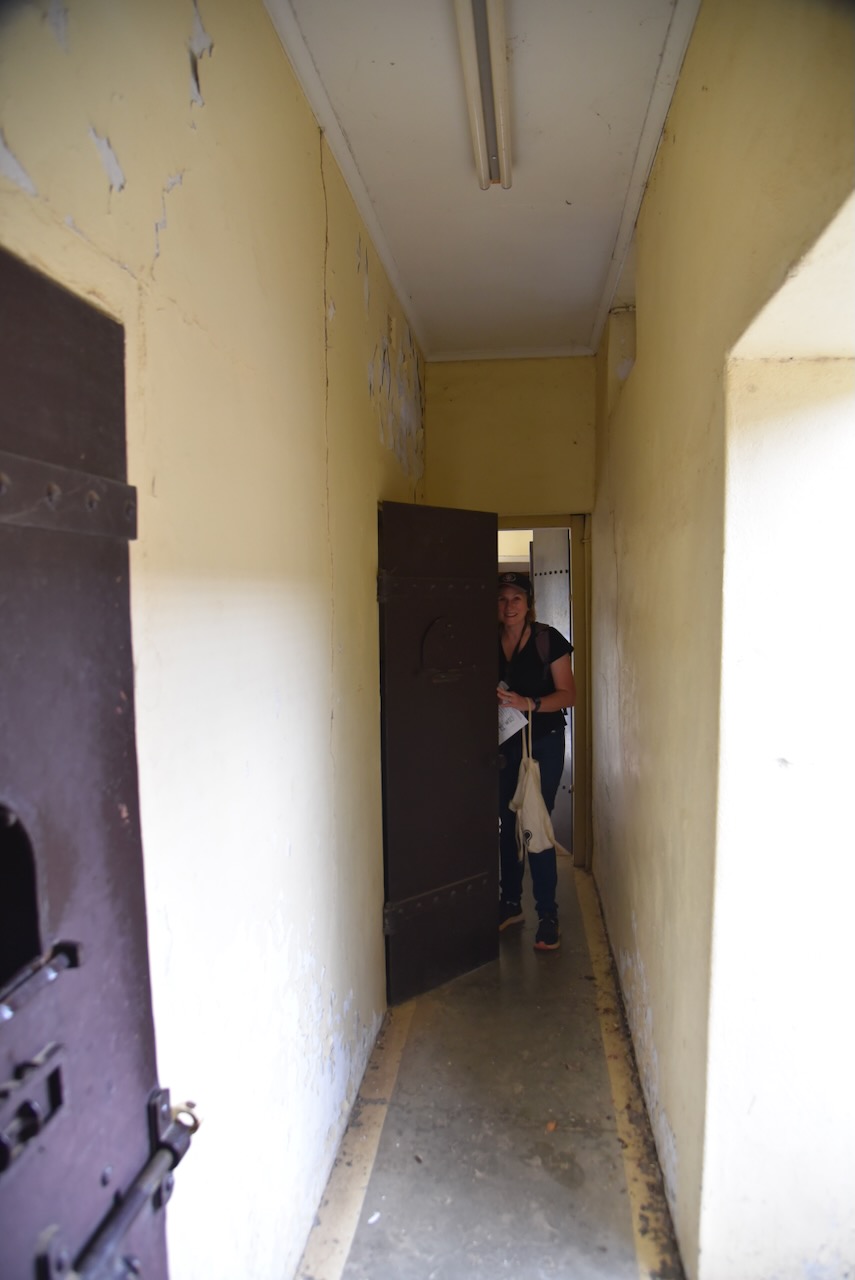
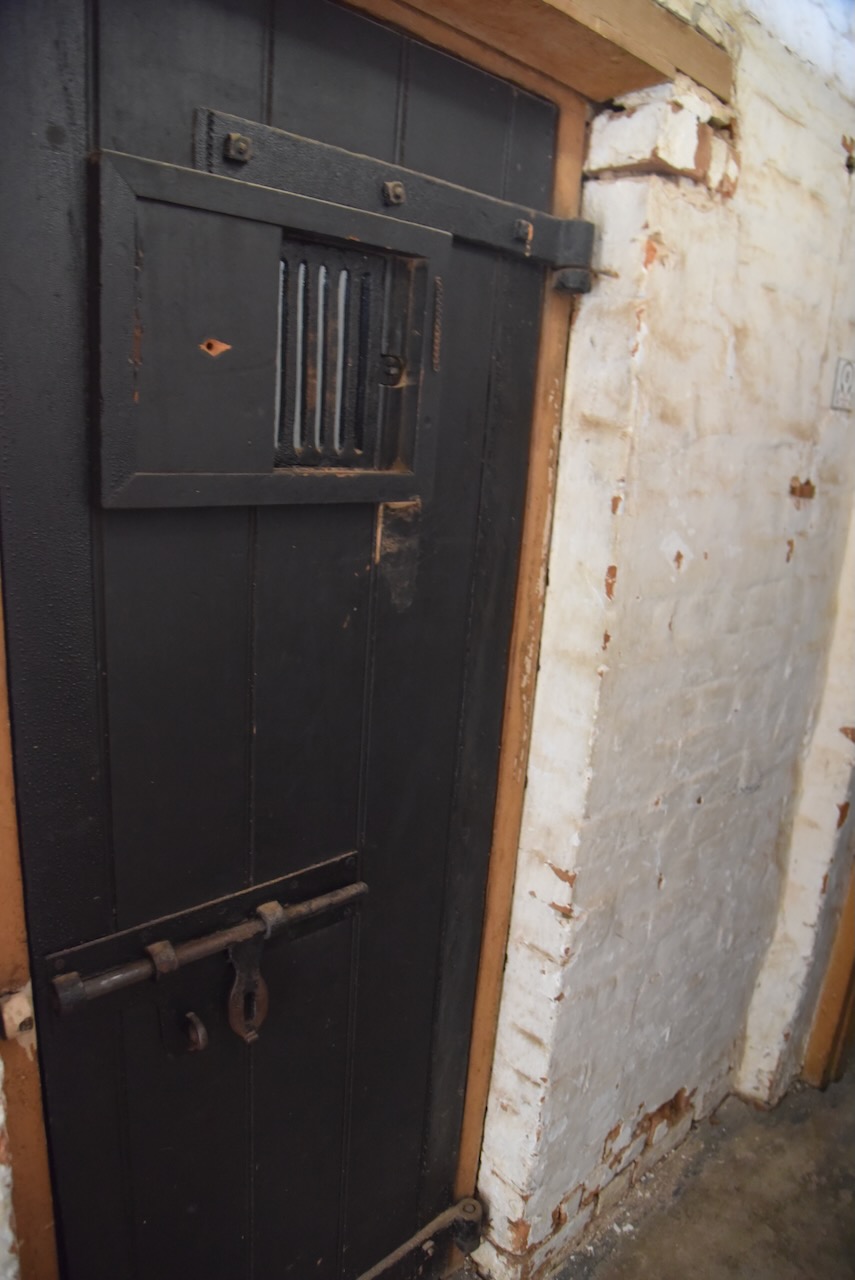
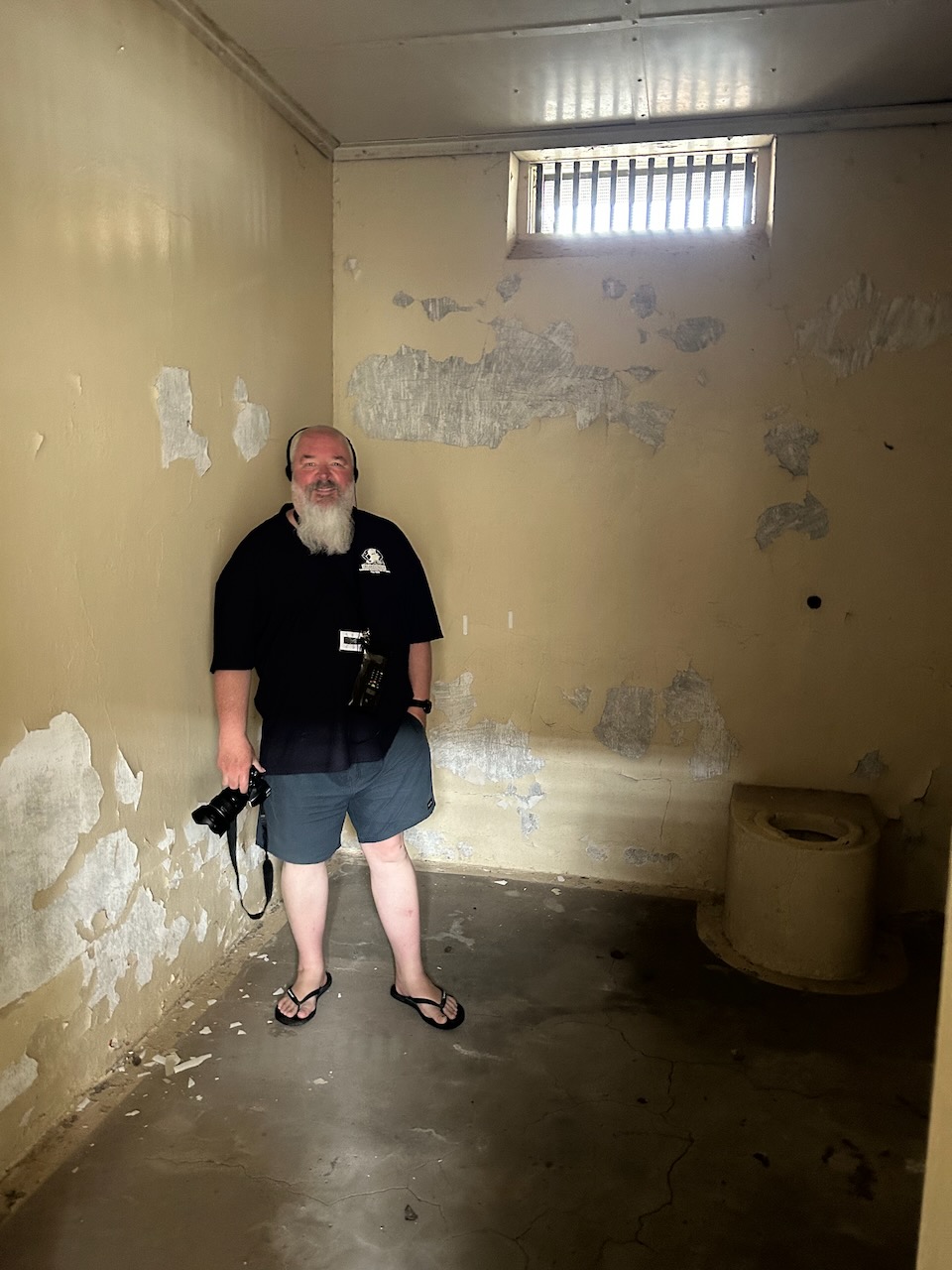
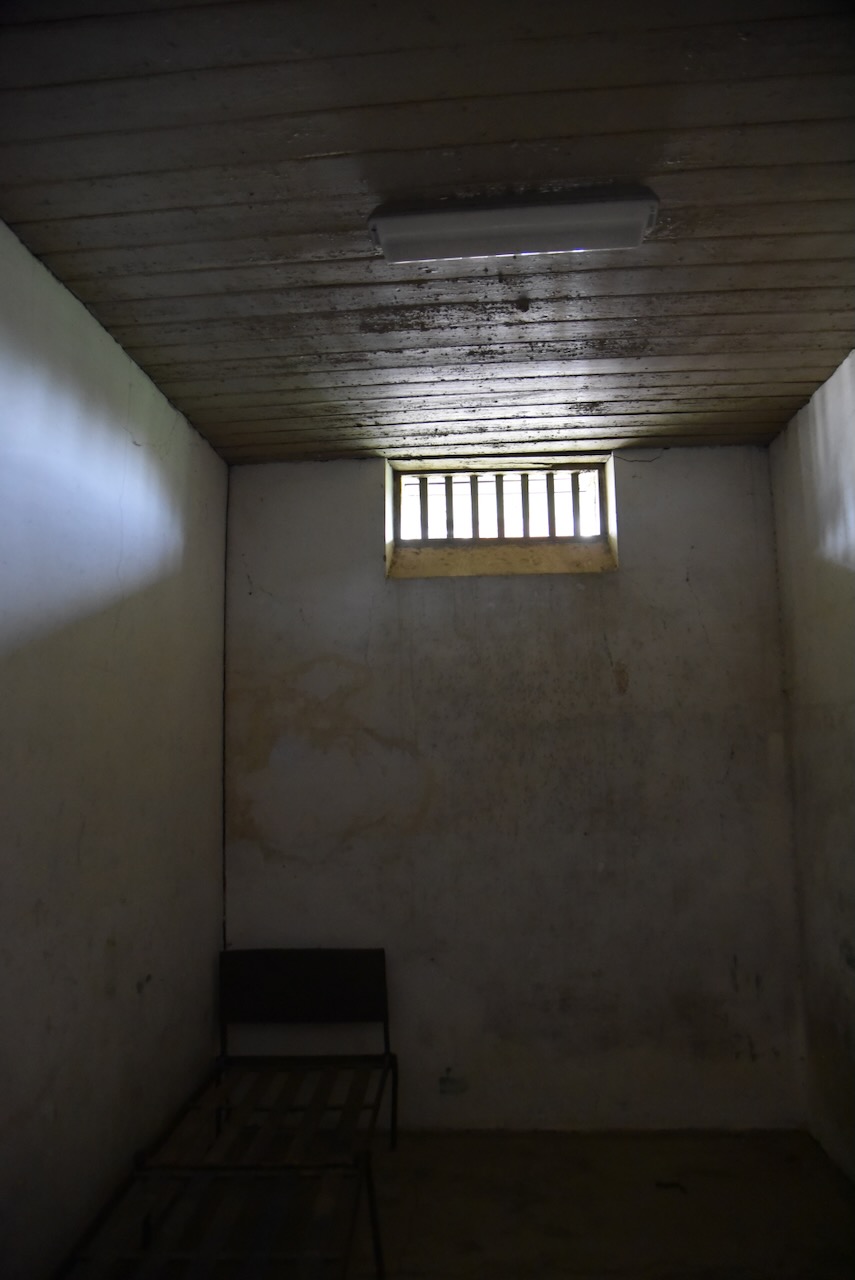
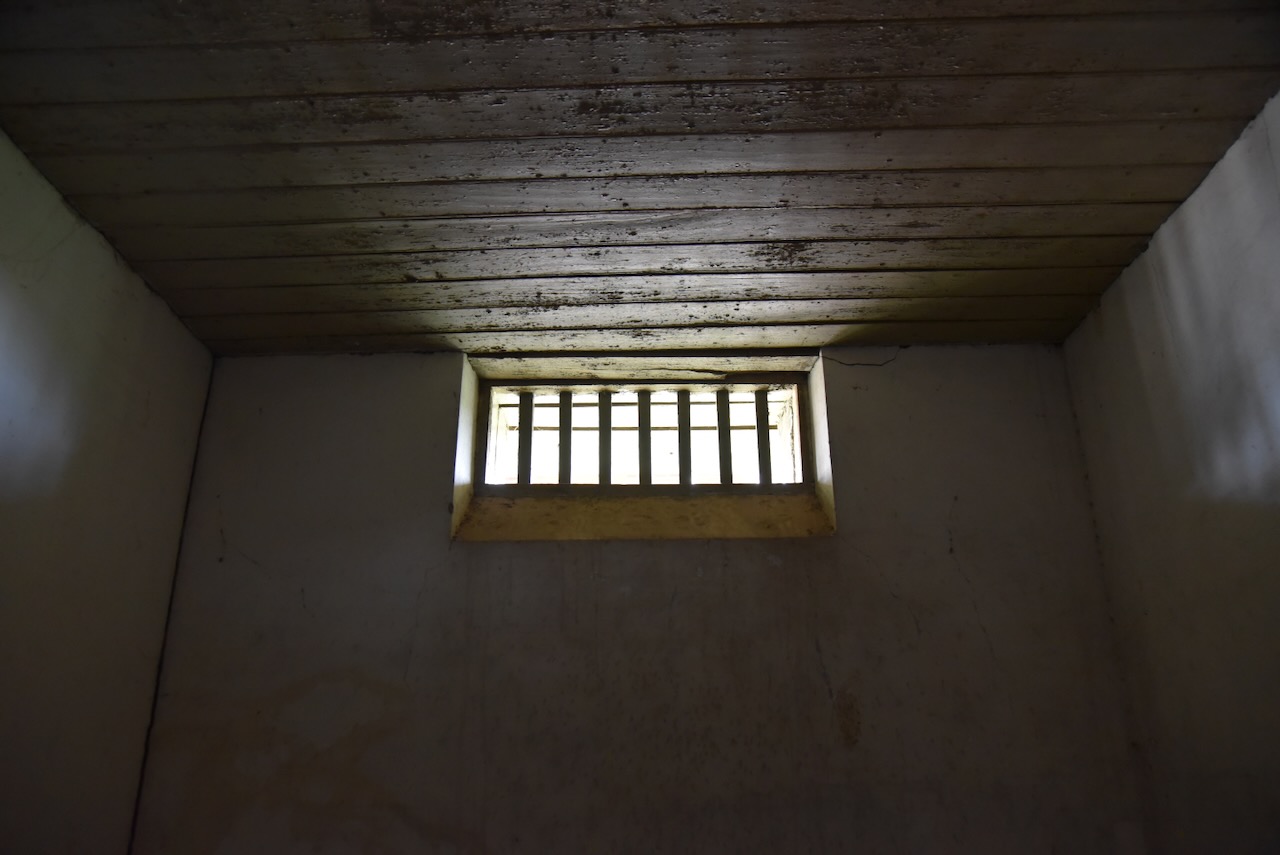
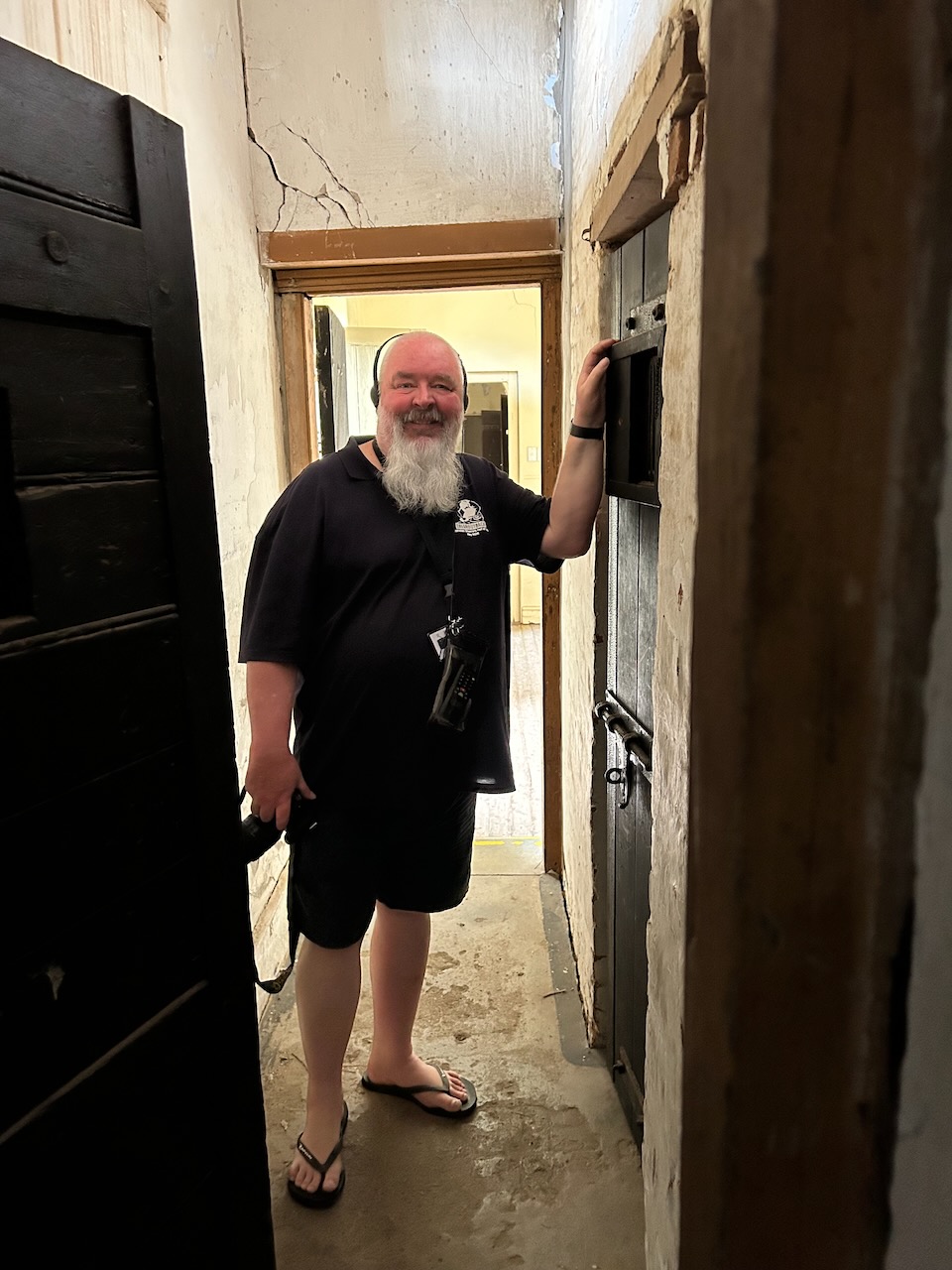
We then viewed the kitchen area.
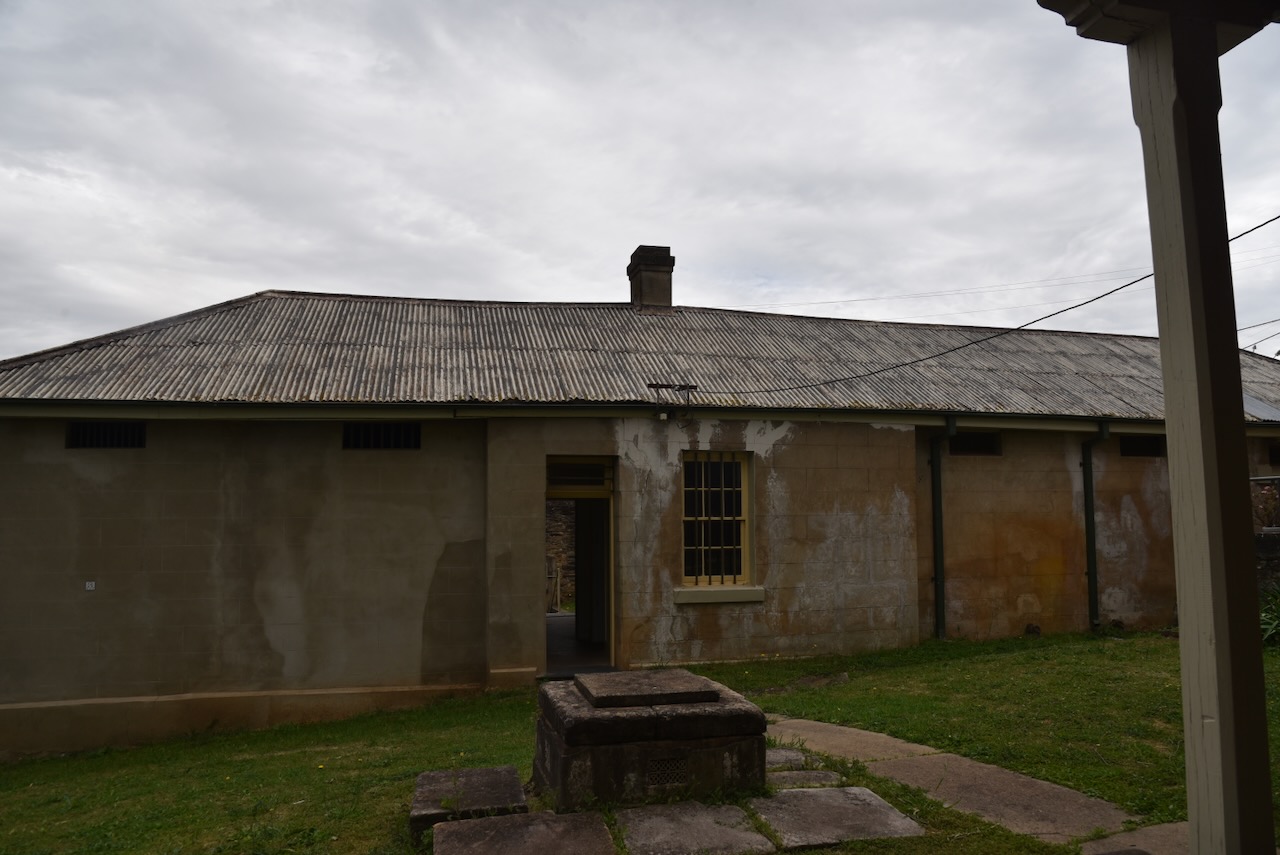
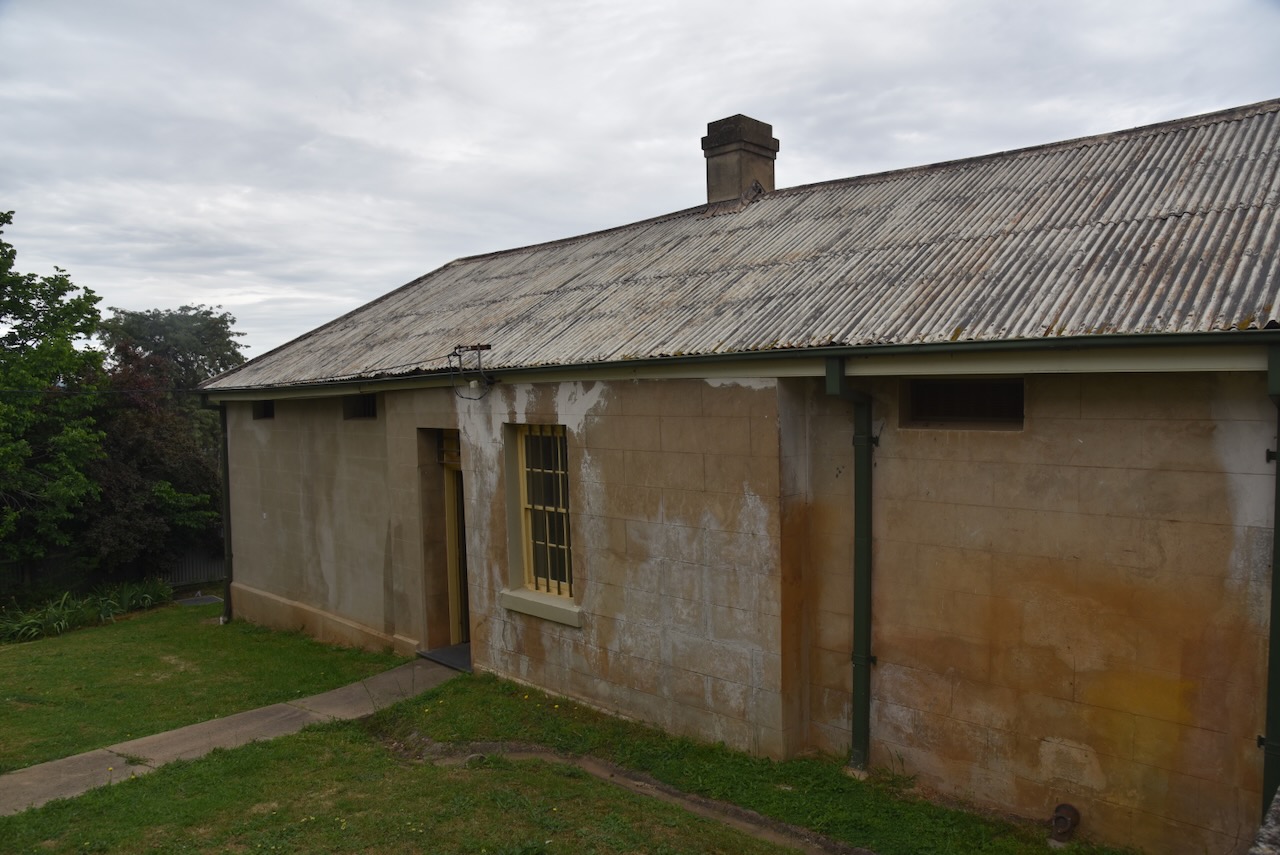
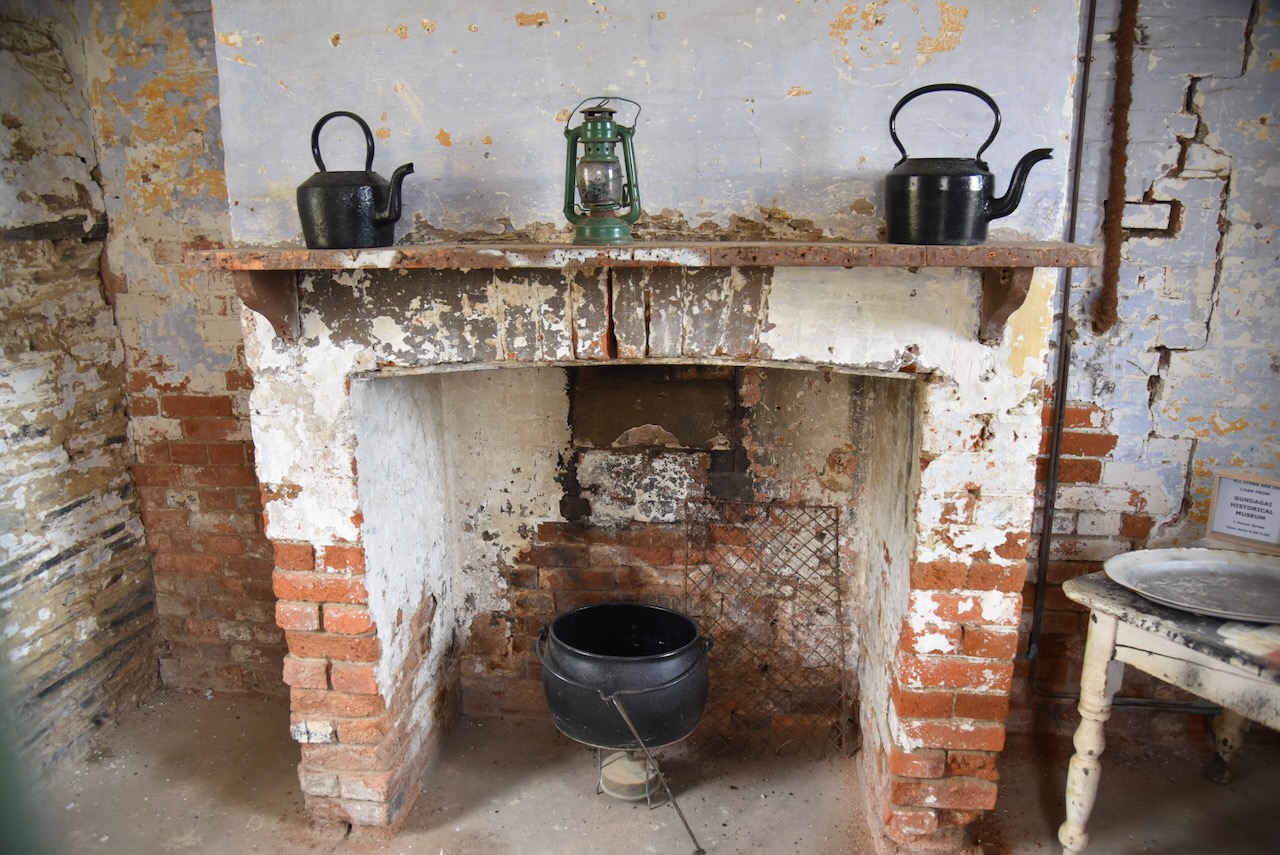
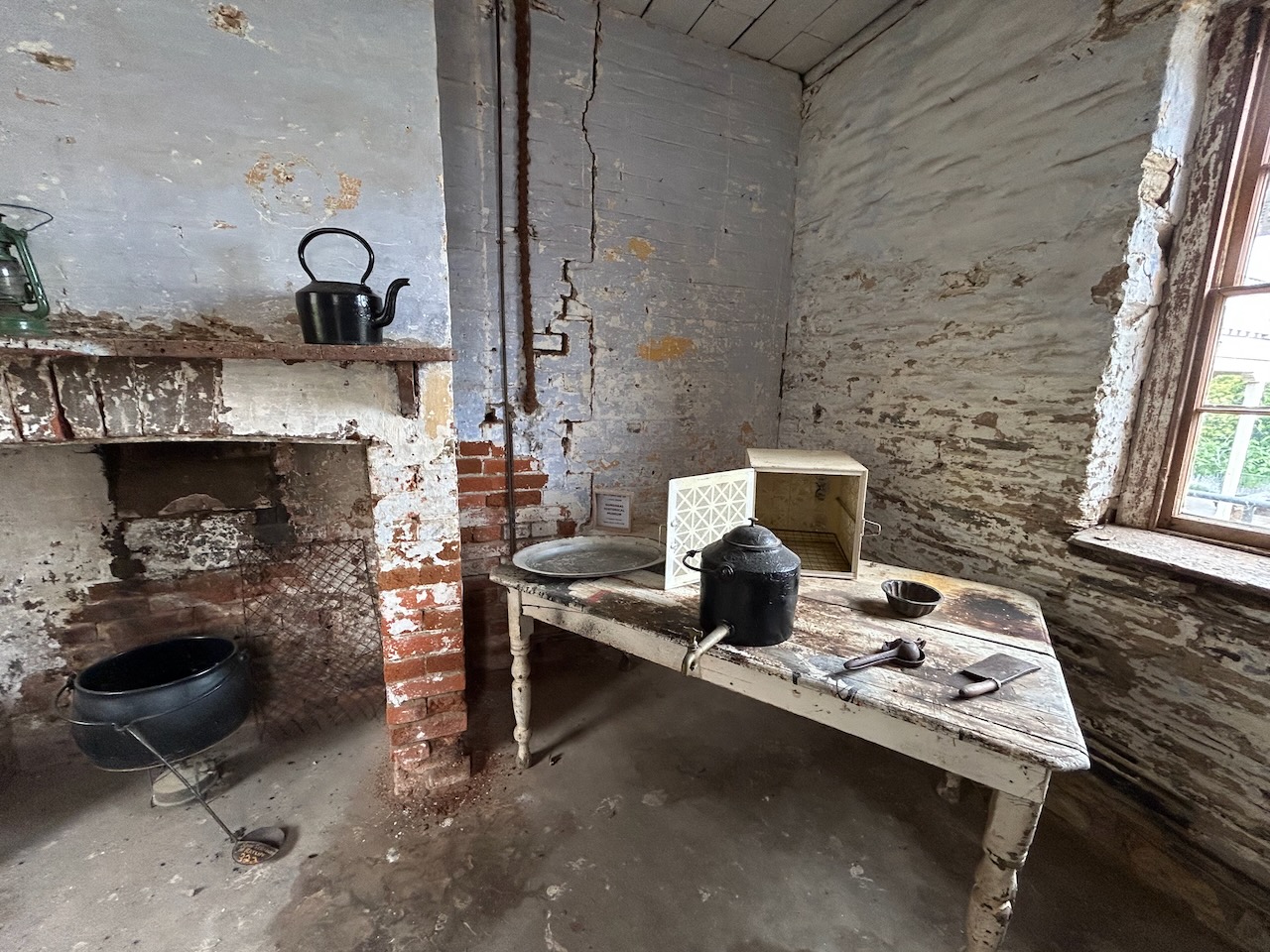
Marija and I highly recommend a visit to the gaol. You are issued with a headset with a commentary on the history of the gaol and its various buildings. You are free to wander around the gaol and enter the various buildings.
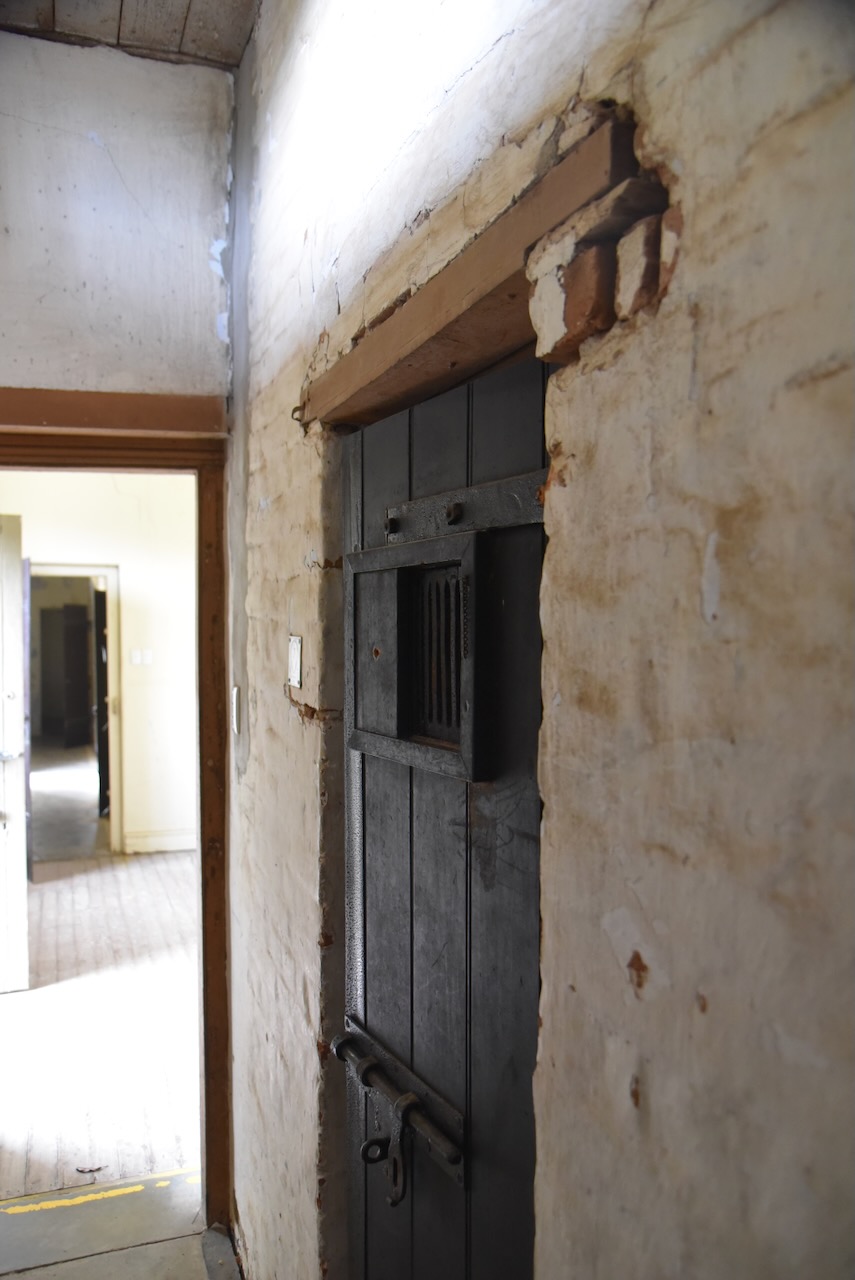
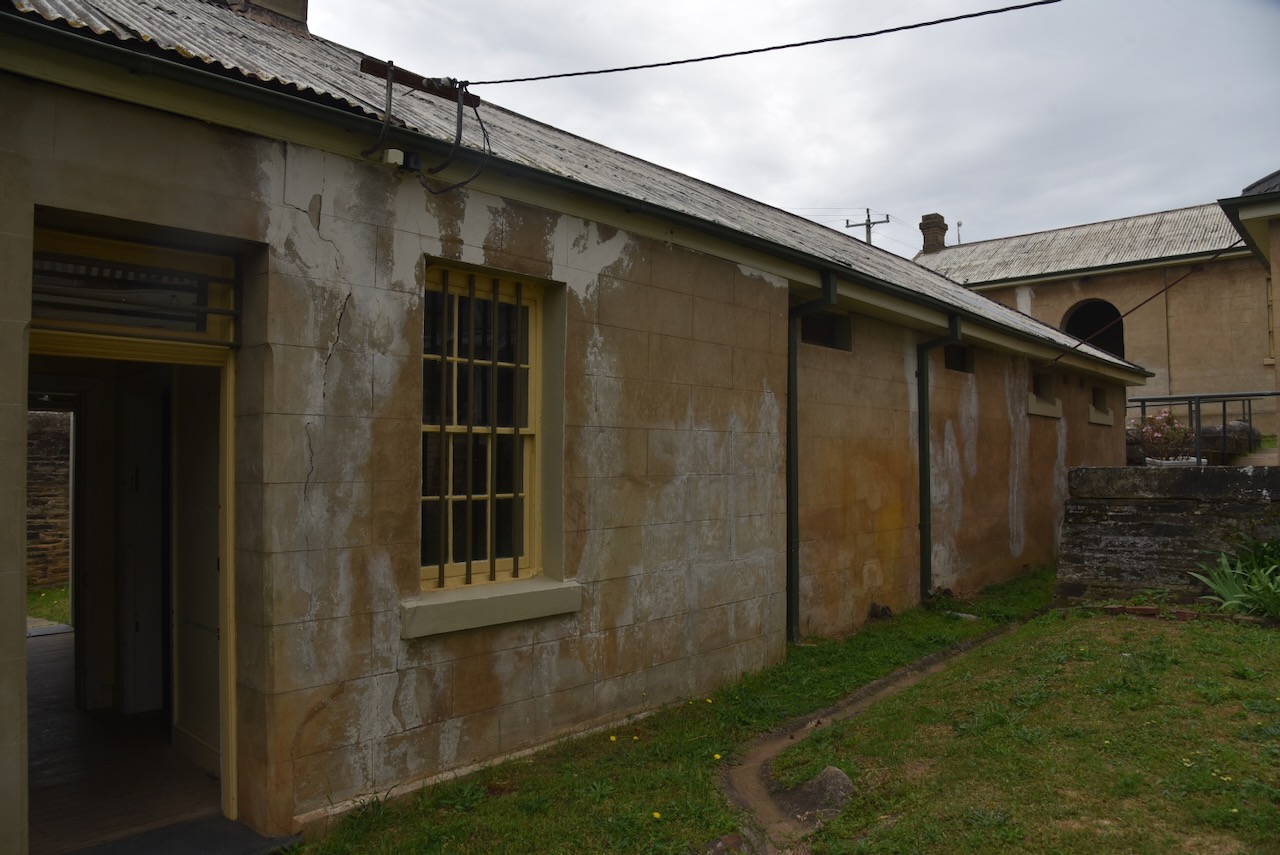
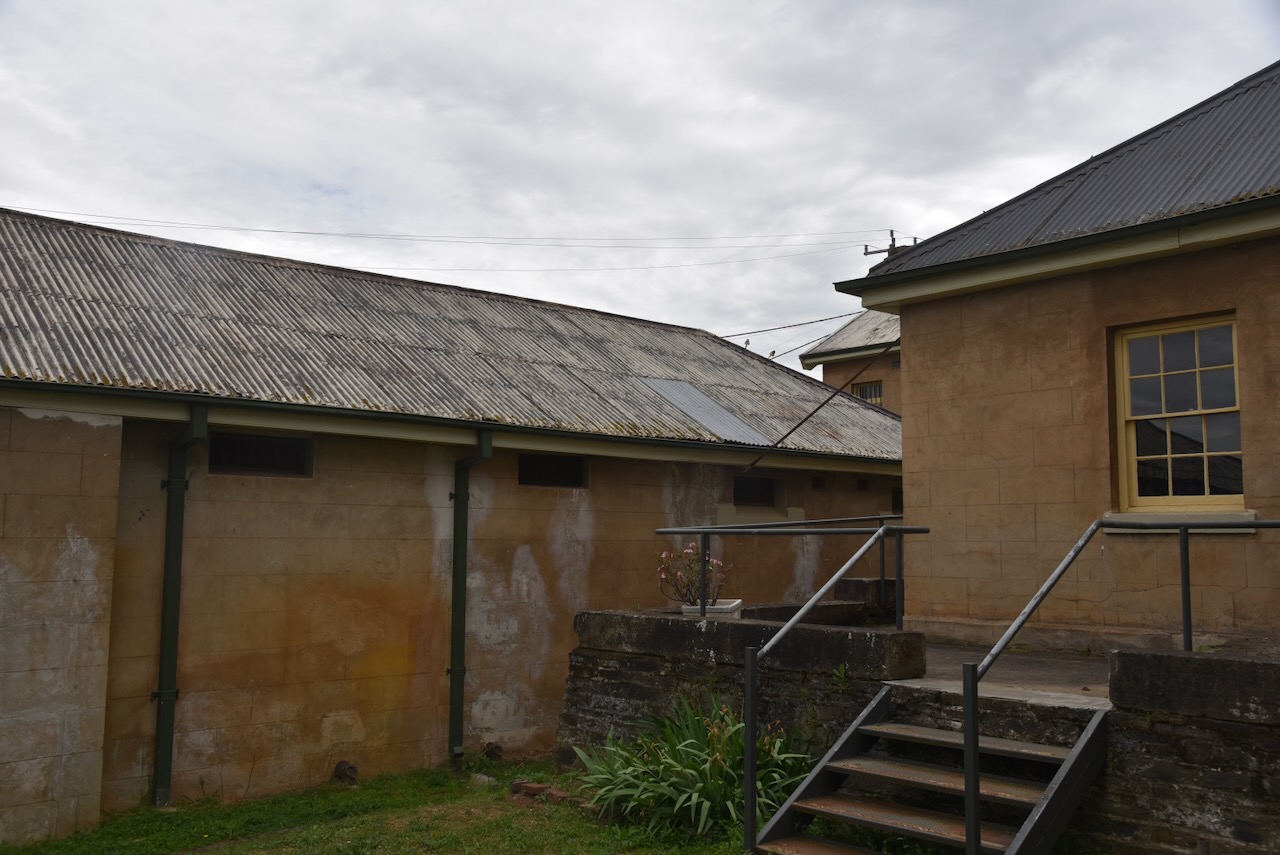
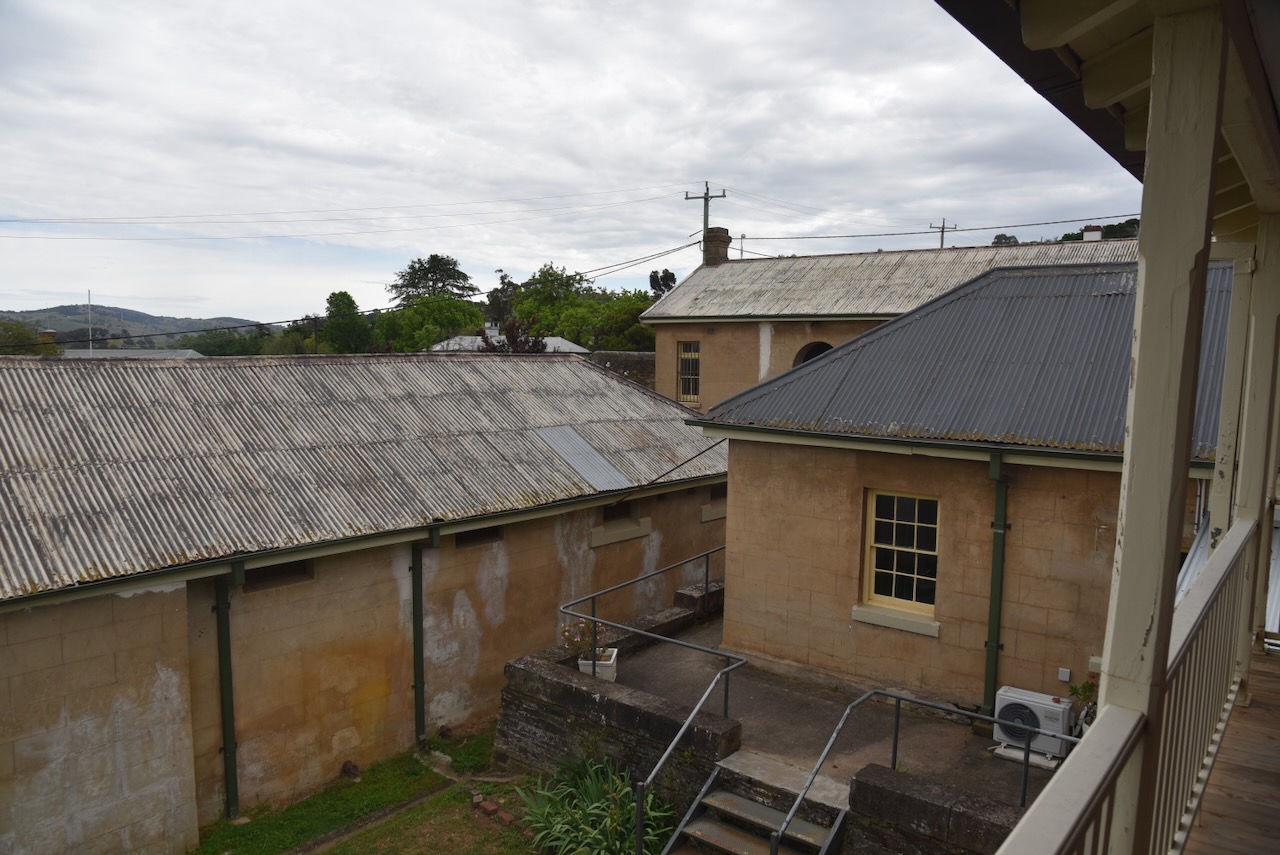
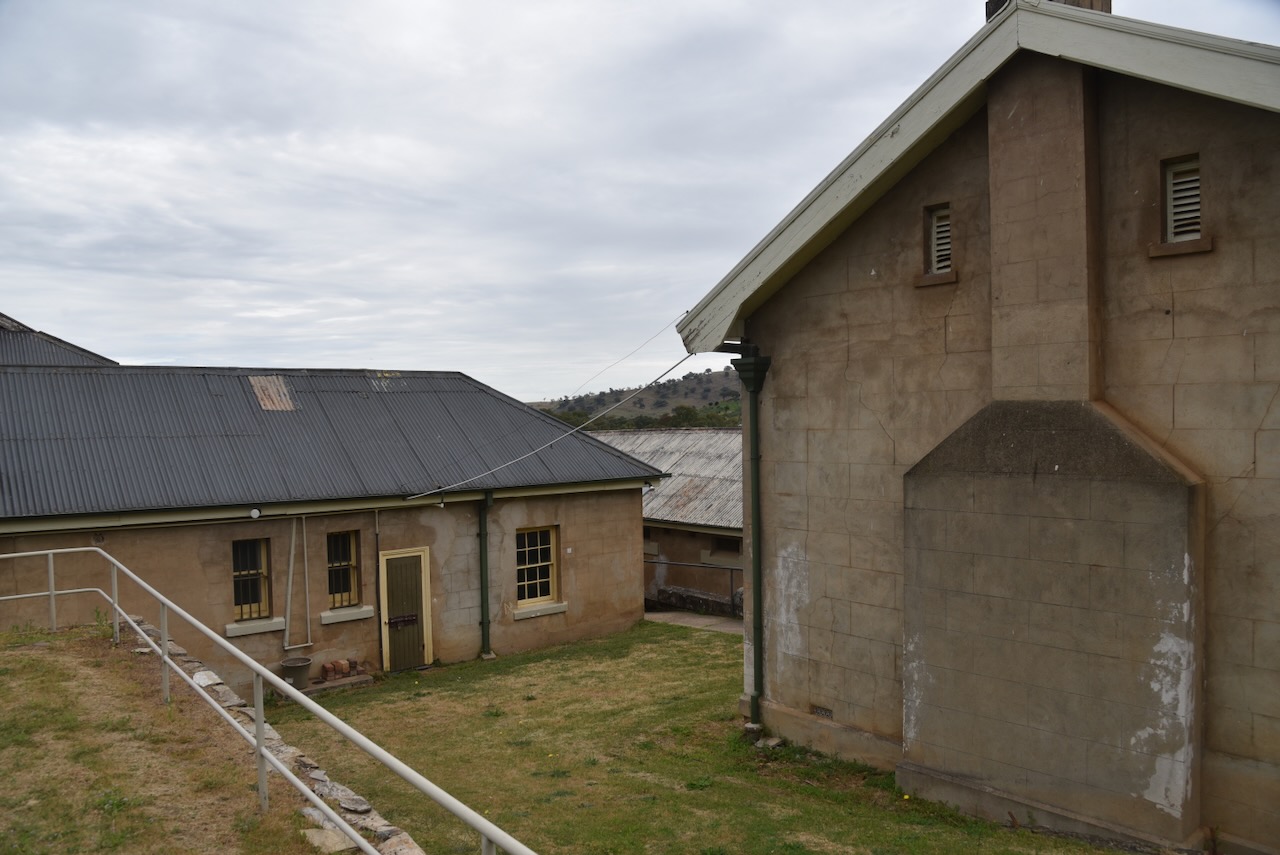
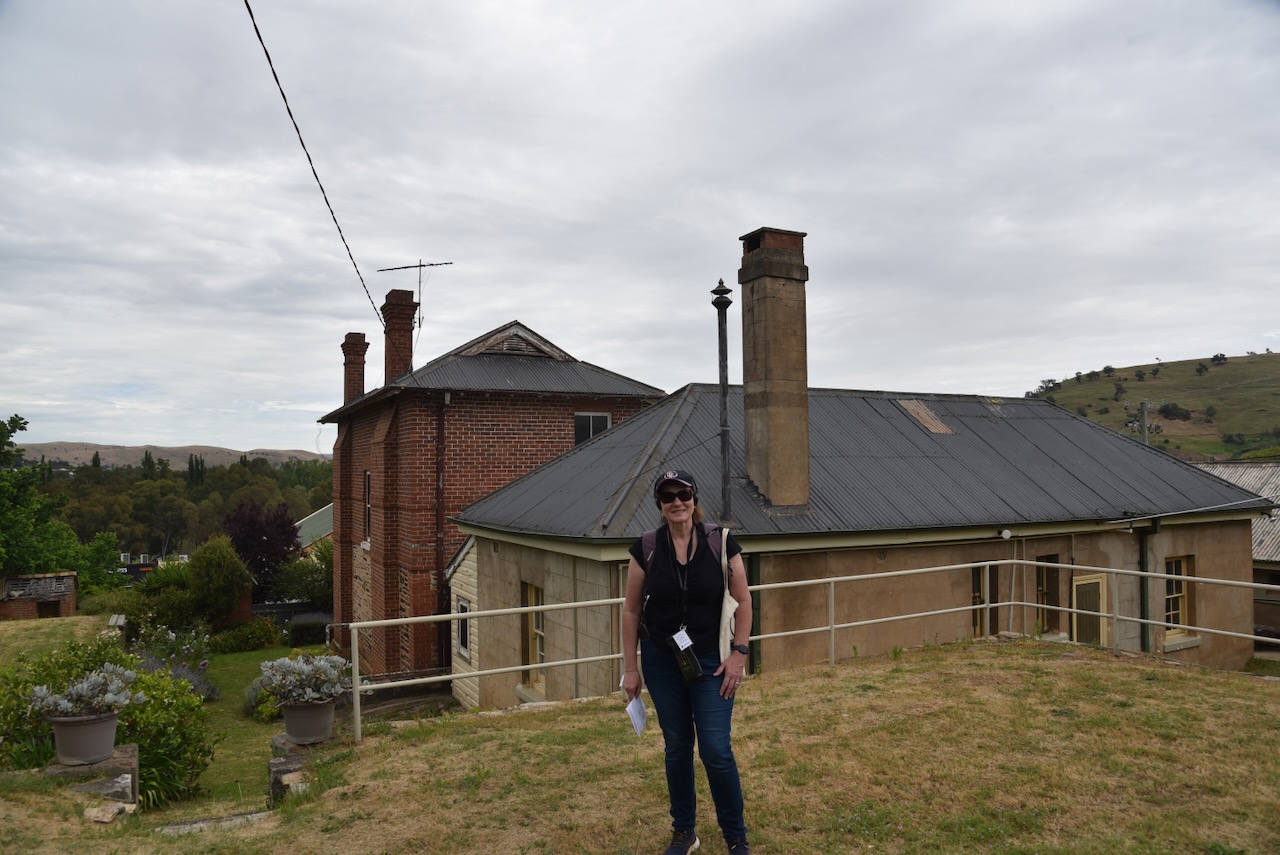
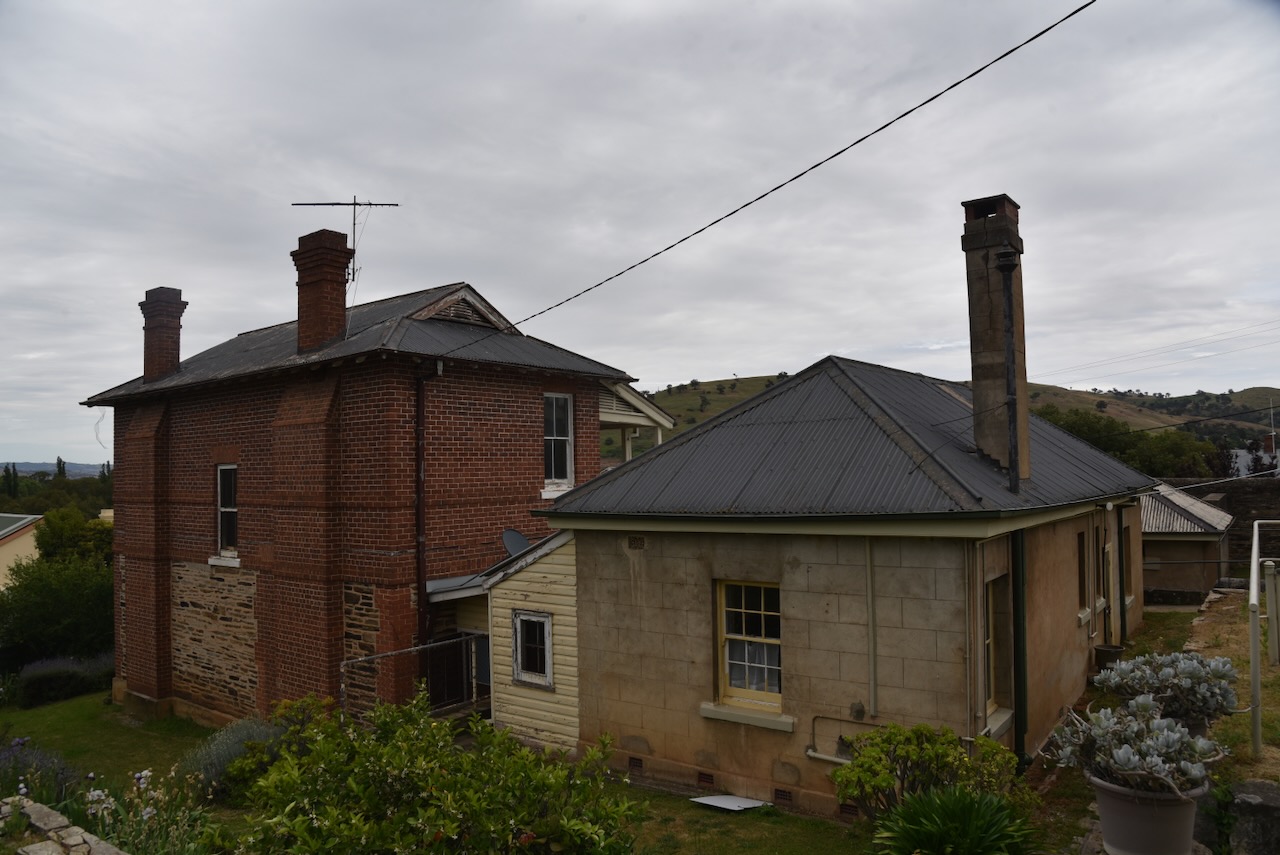
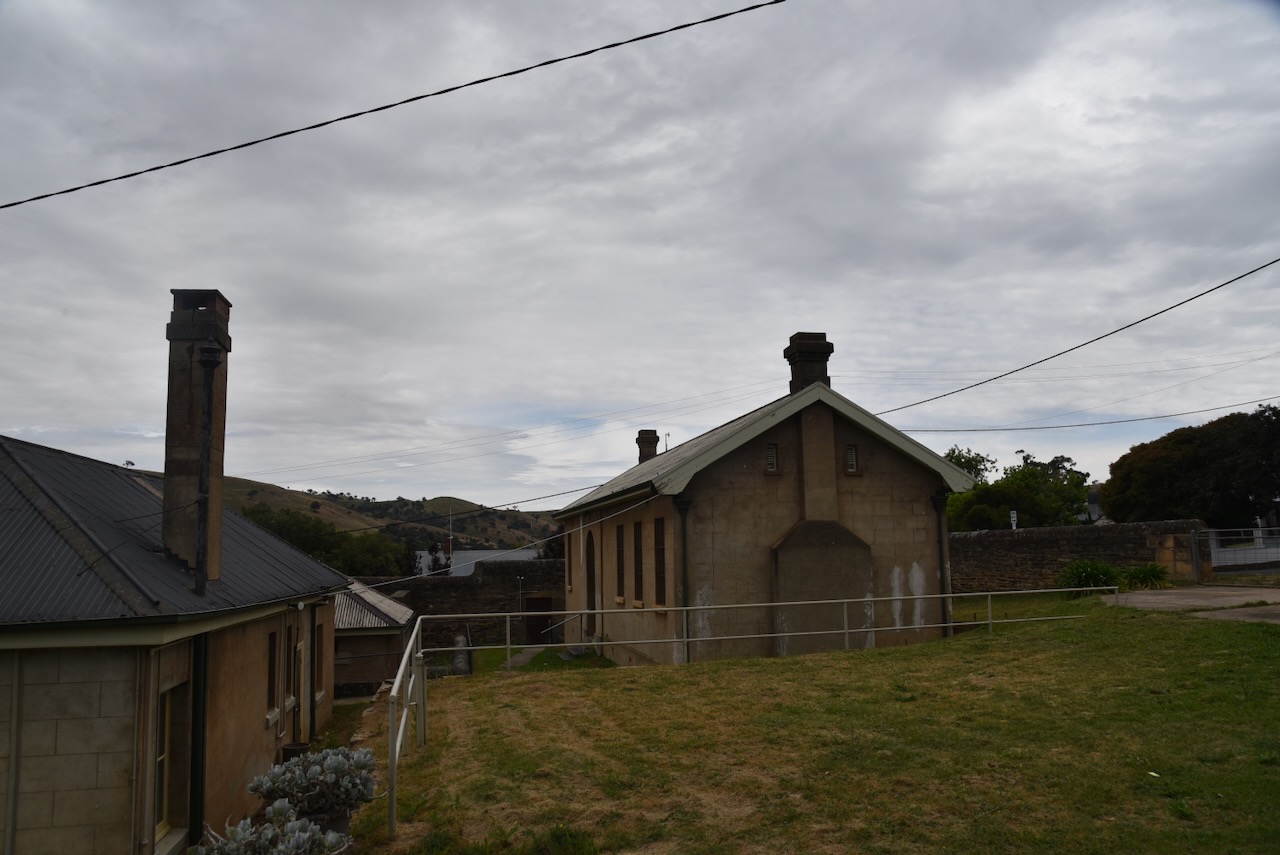
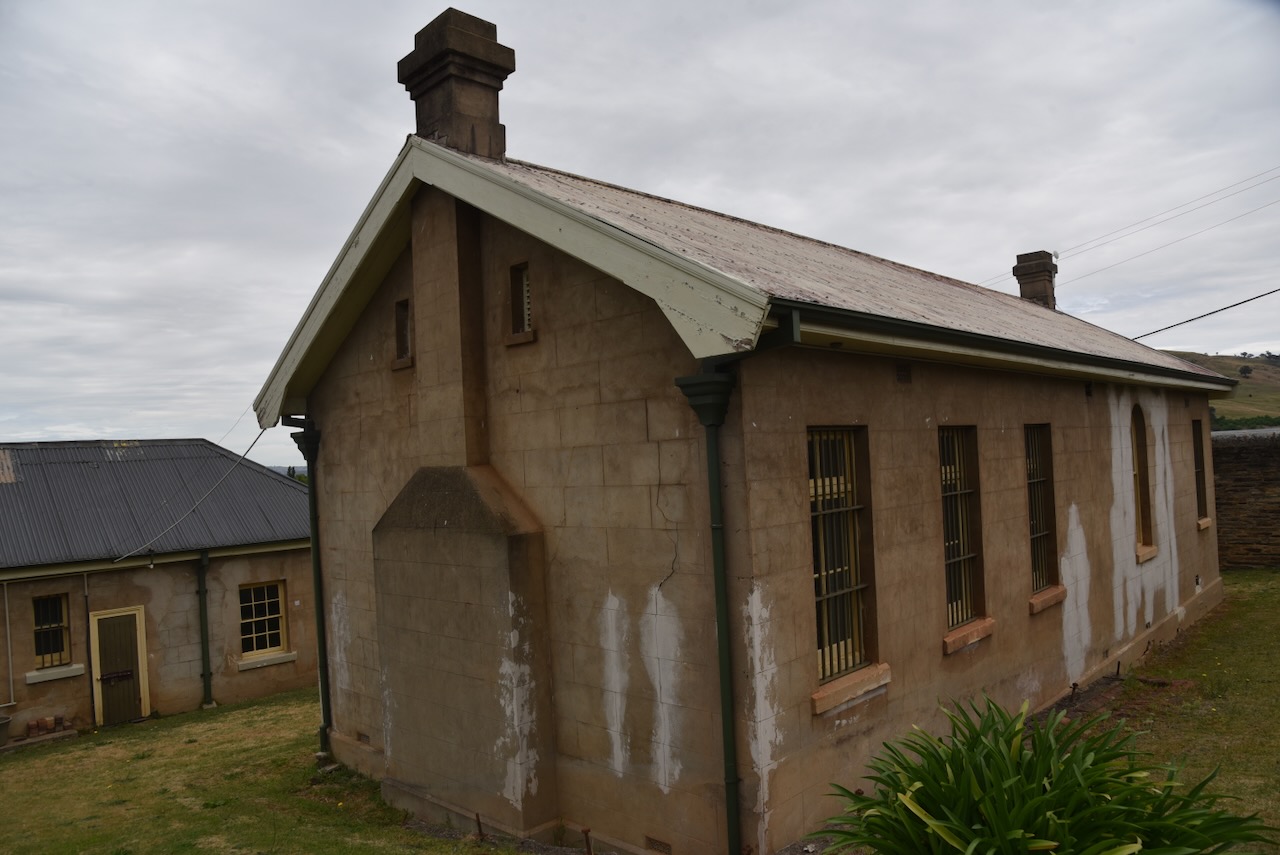
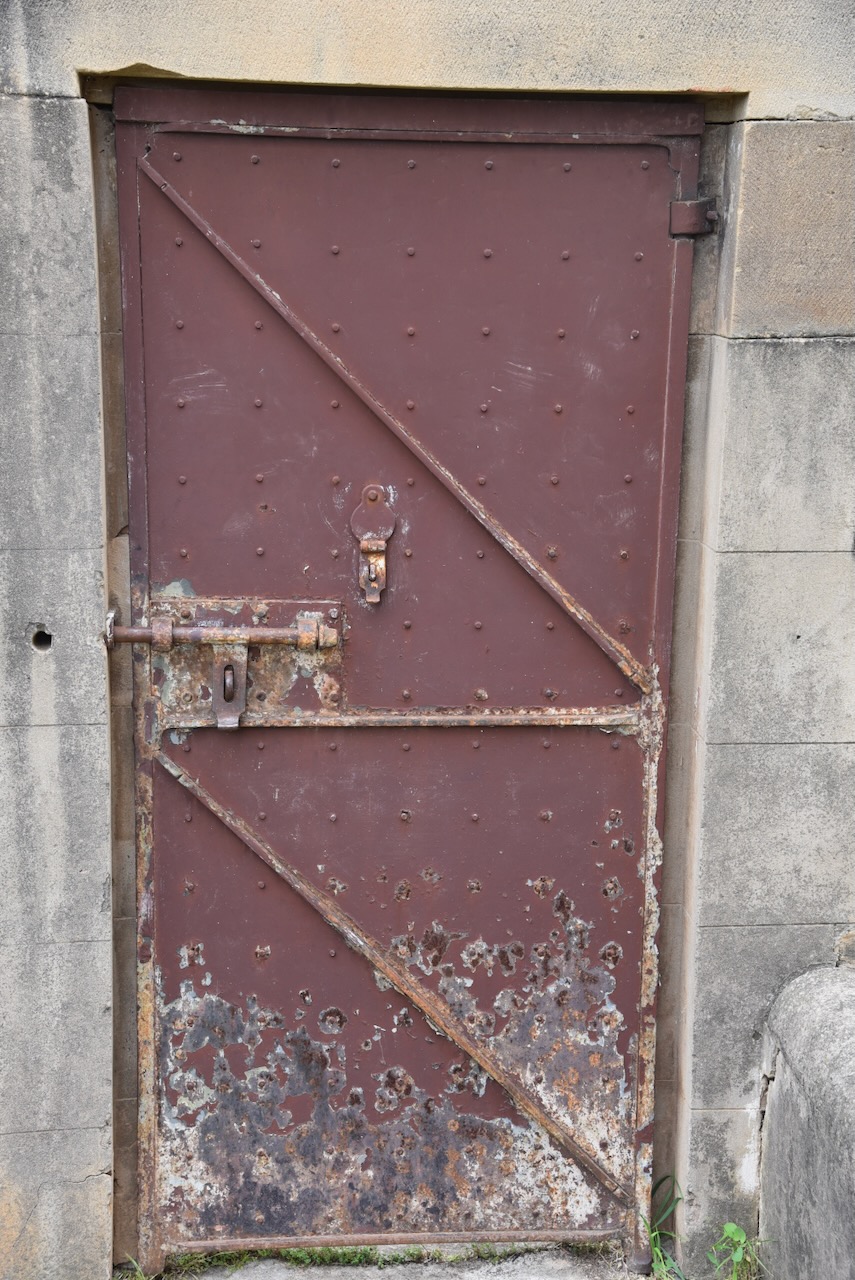
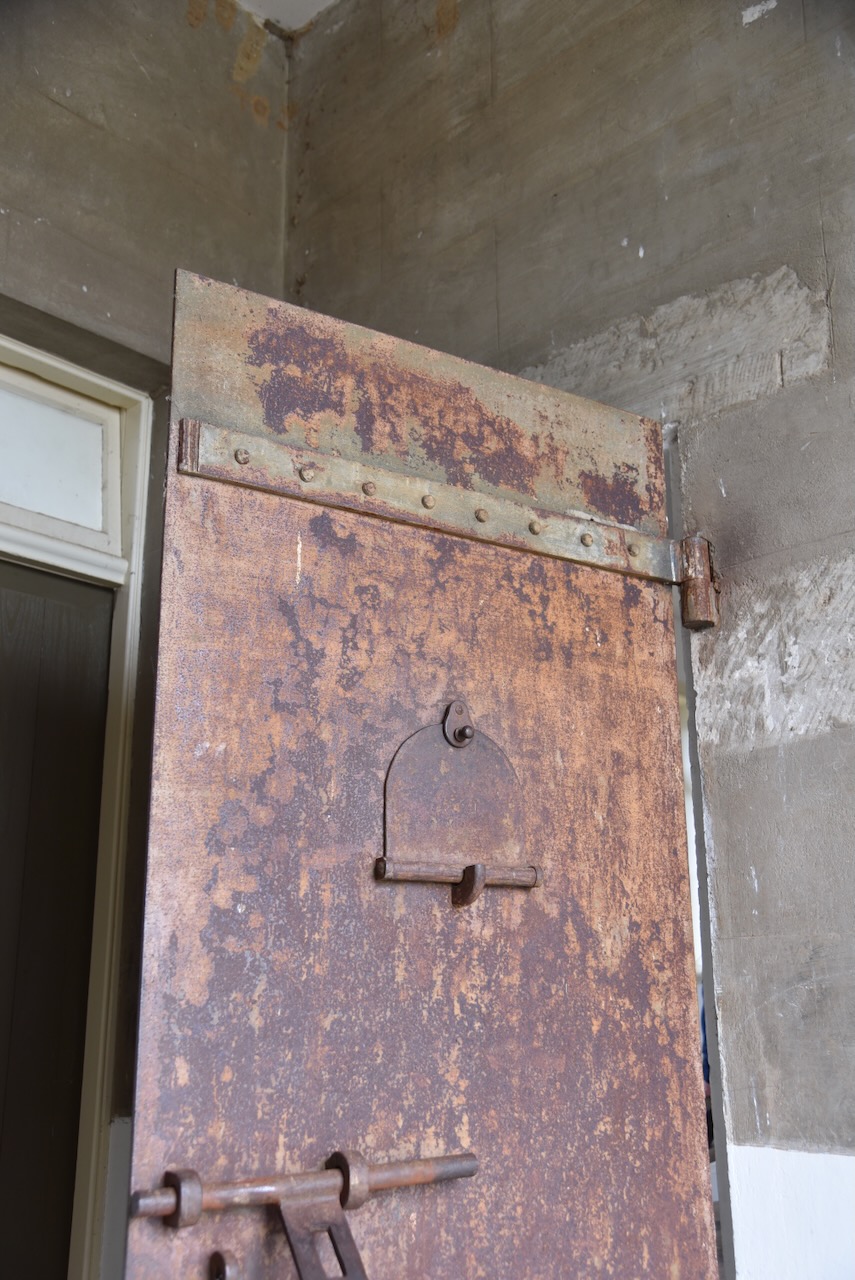
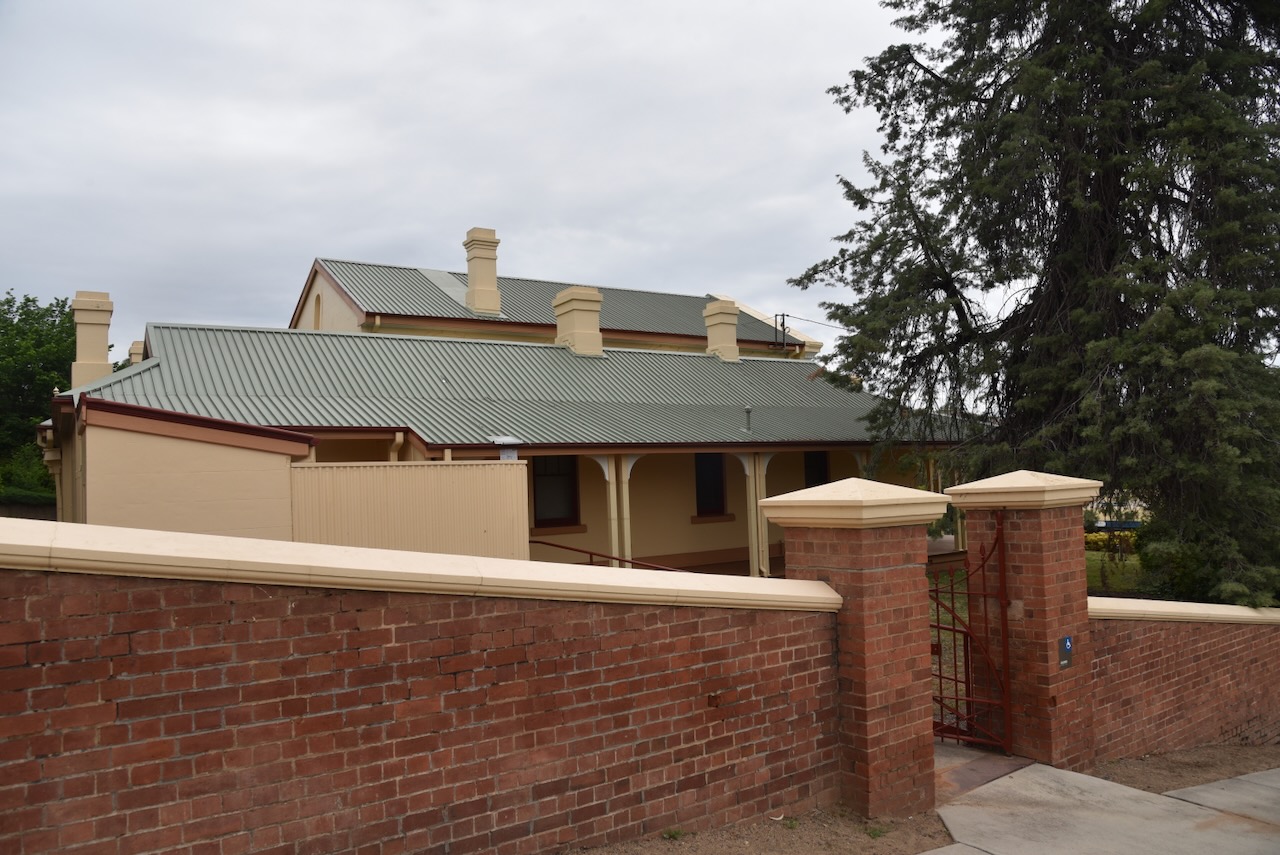
The Gaoler’s residence was originally built as a single-storey building. It was later expanded using the same bricks that were used to build the Gundagai Courthouse.
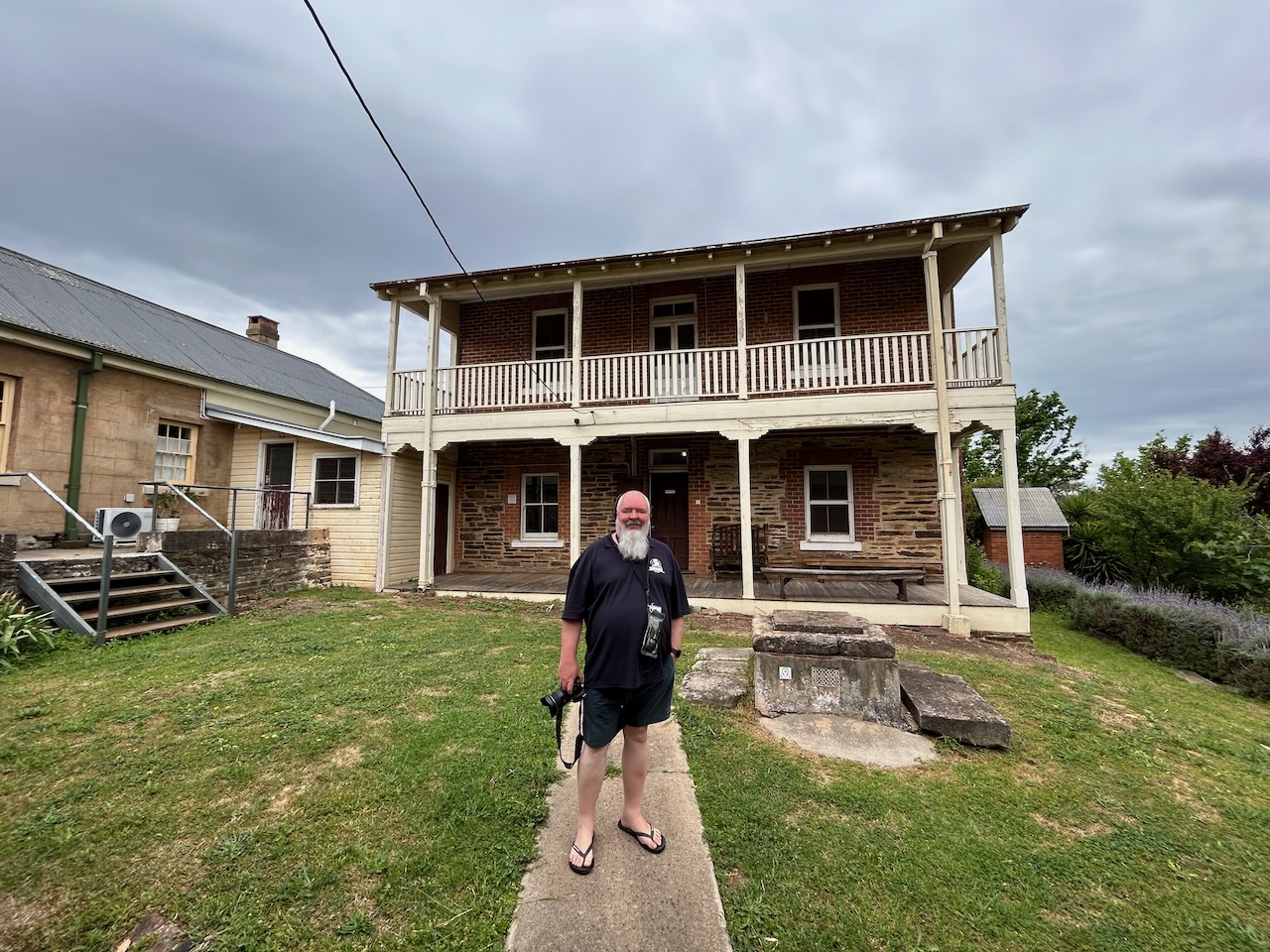
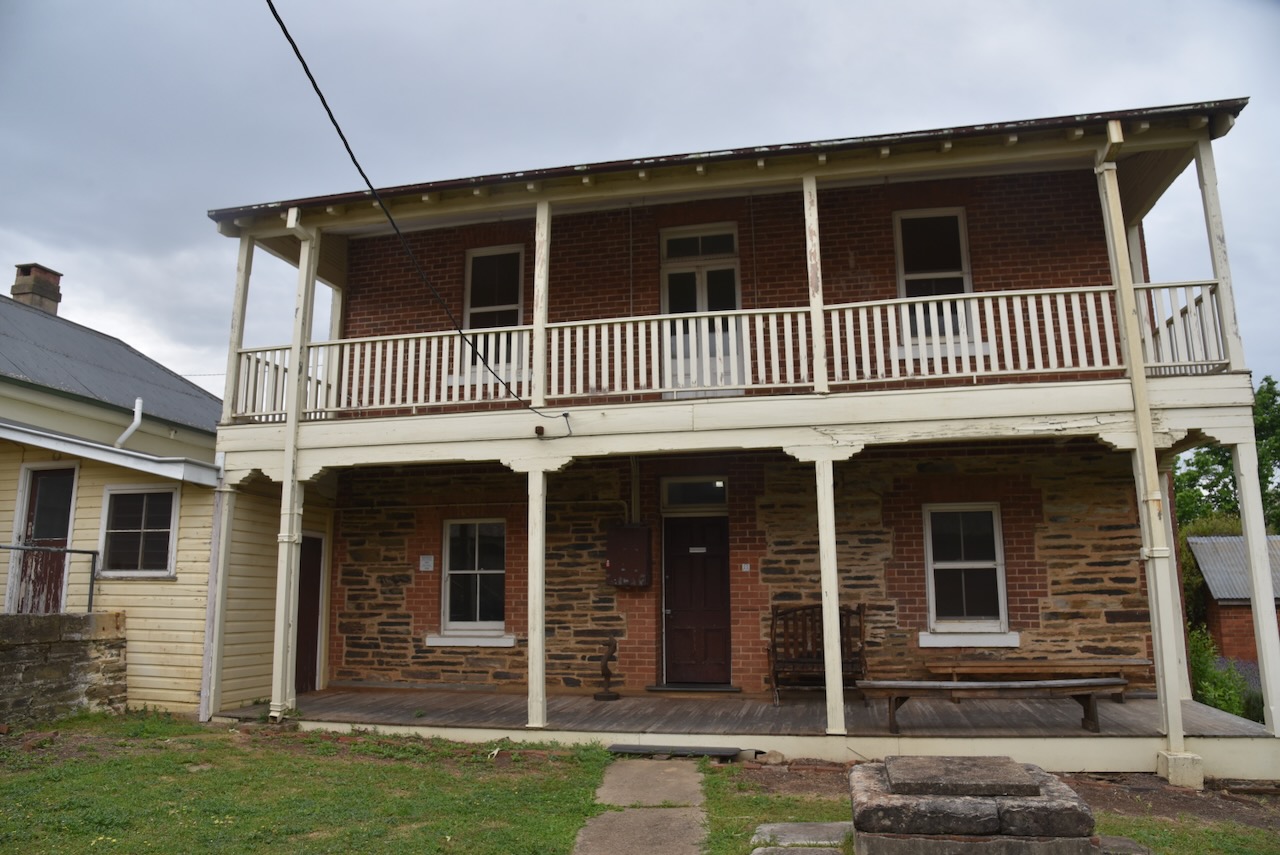
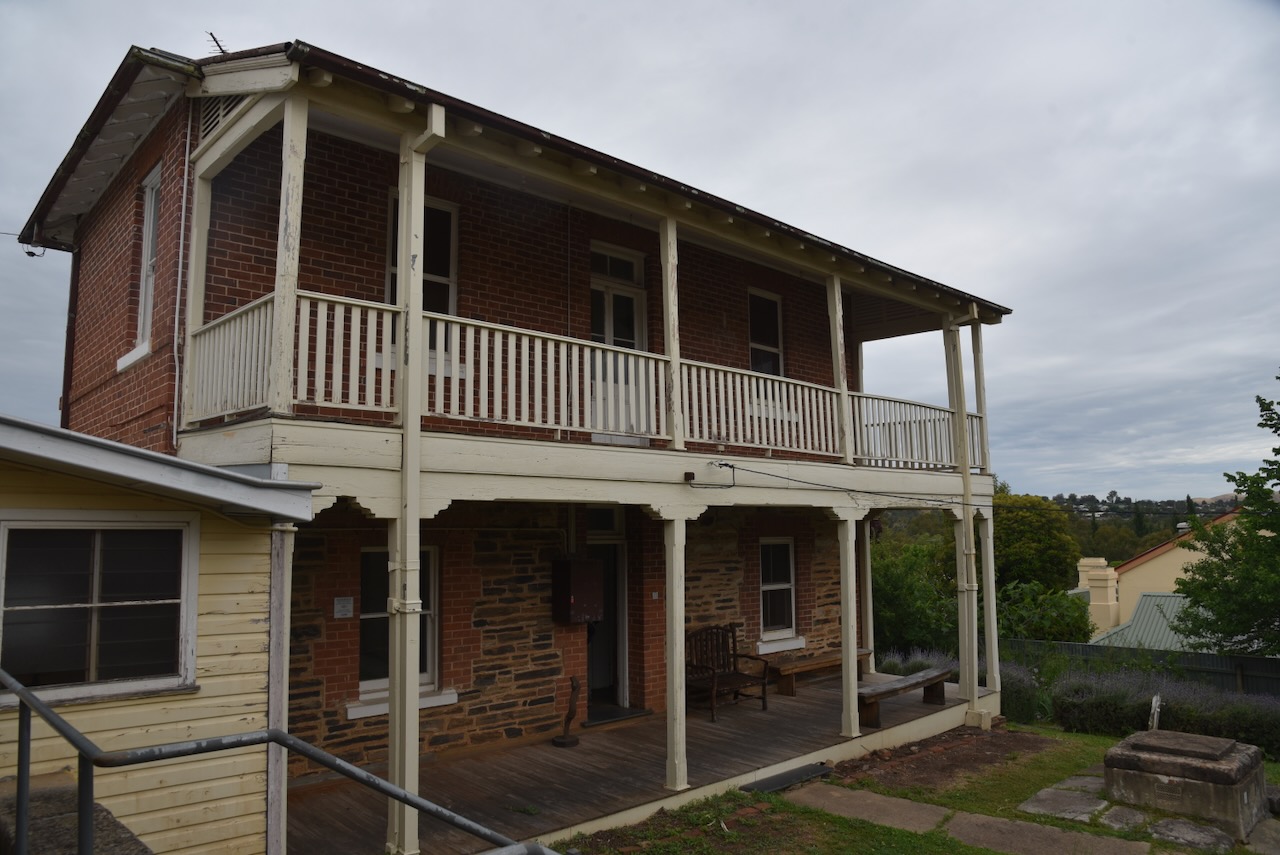
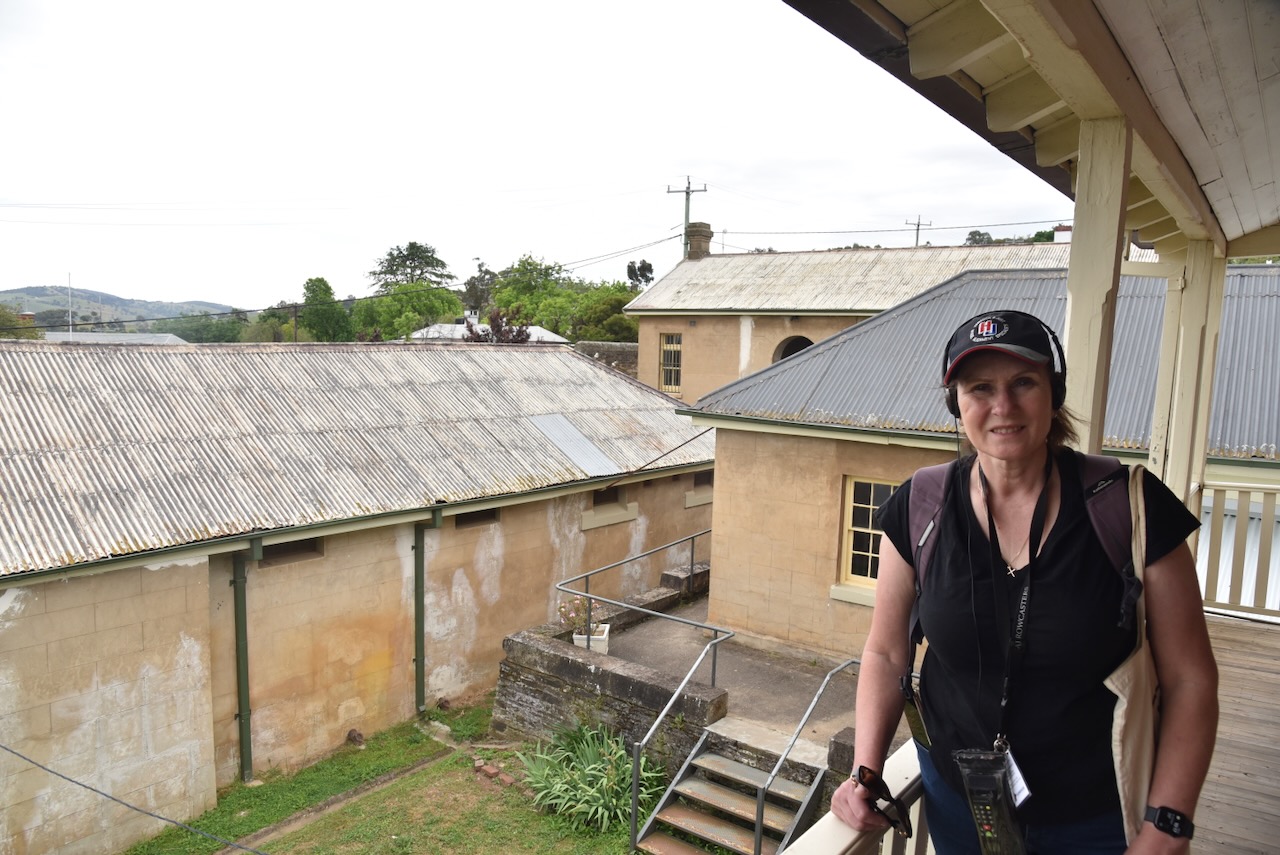
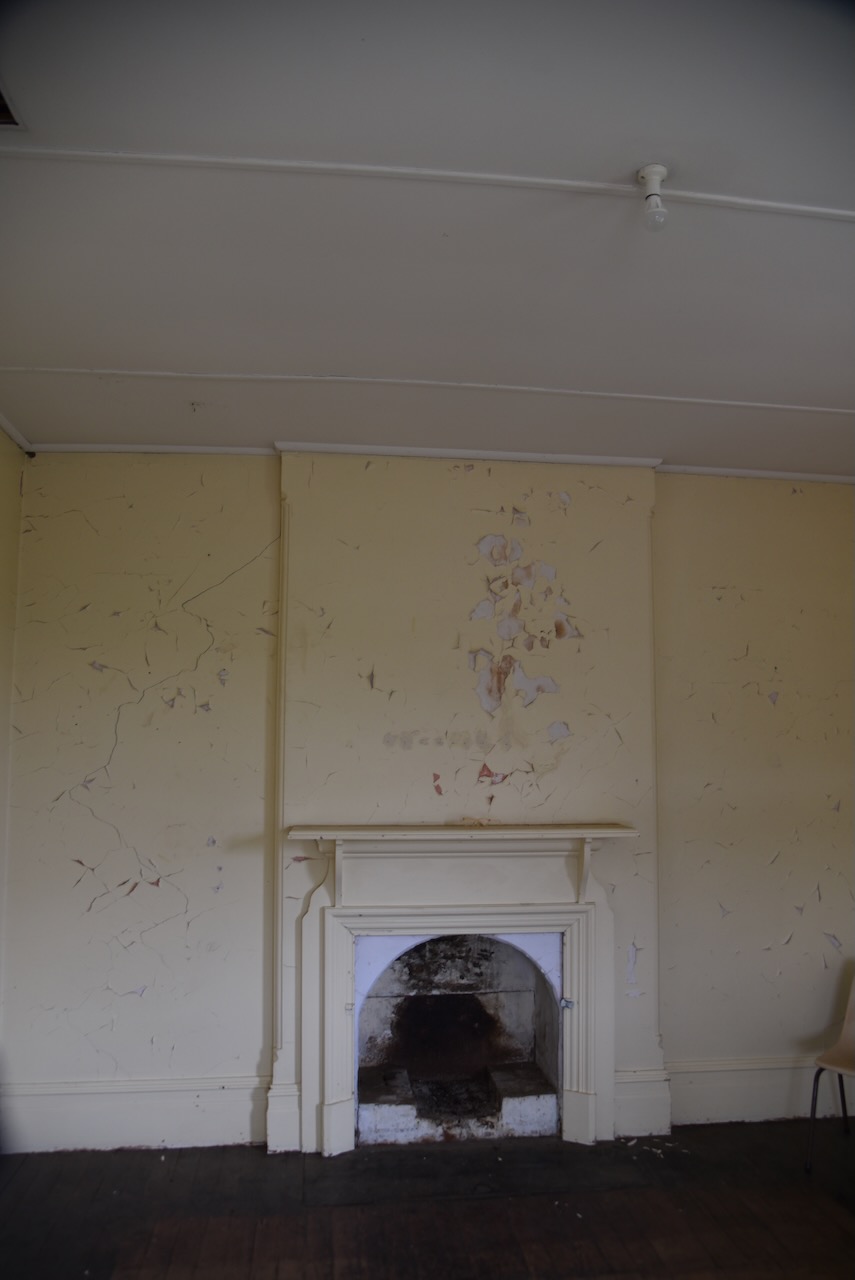
We then visited the Gaol’s infirmary which was built in 1863. A new ward was added in 1899.
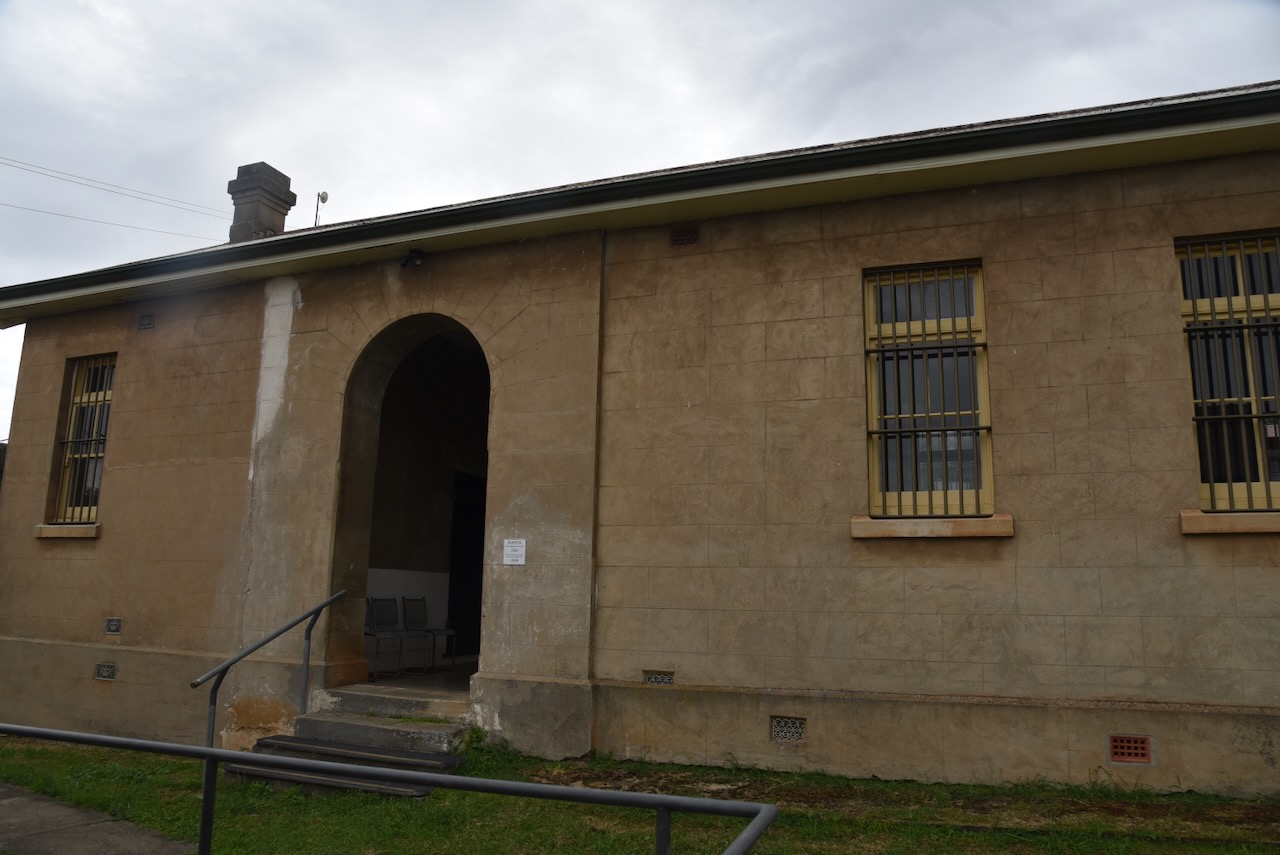
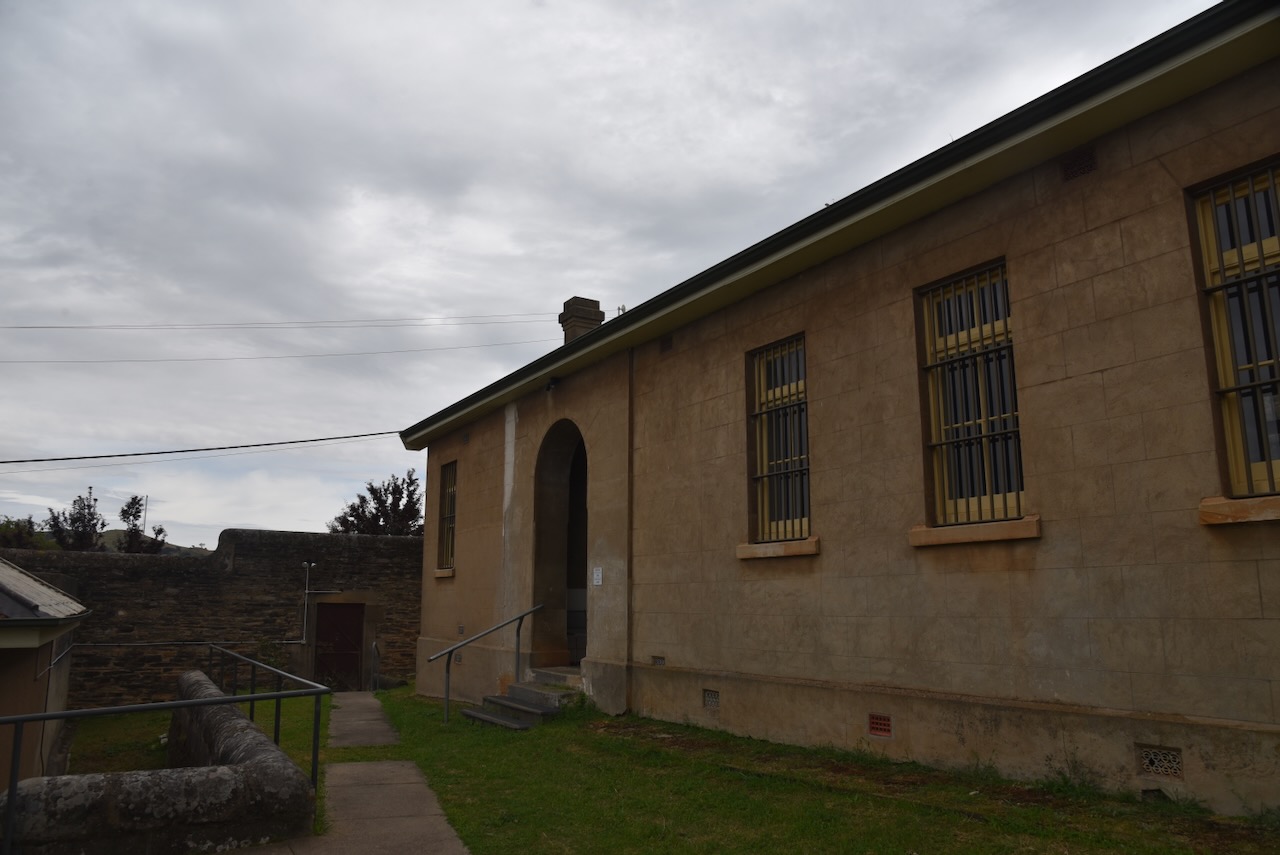
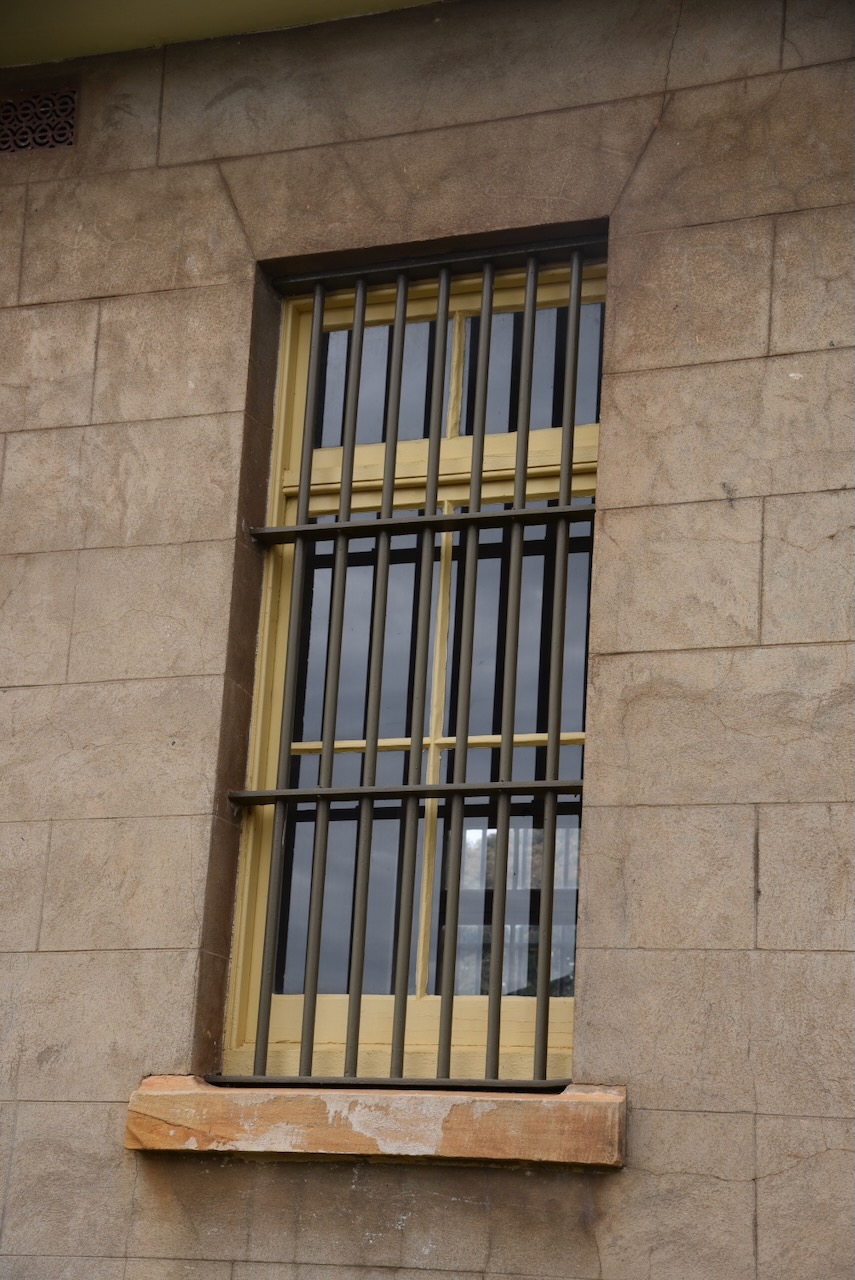
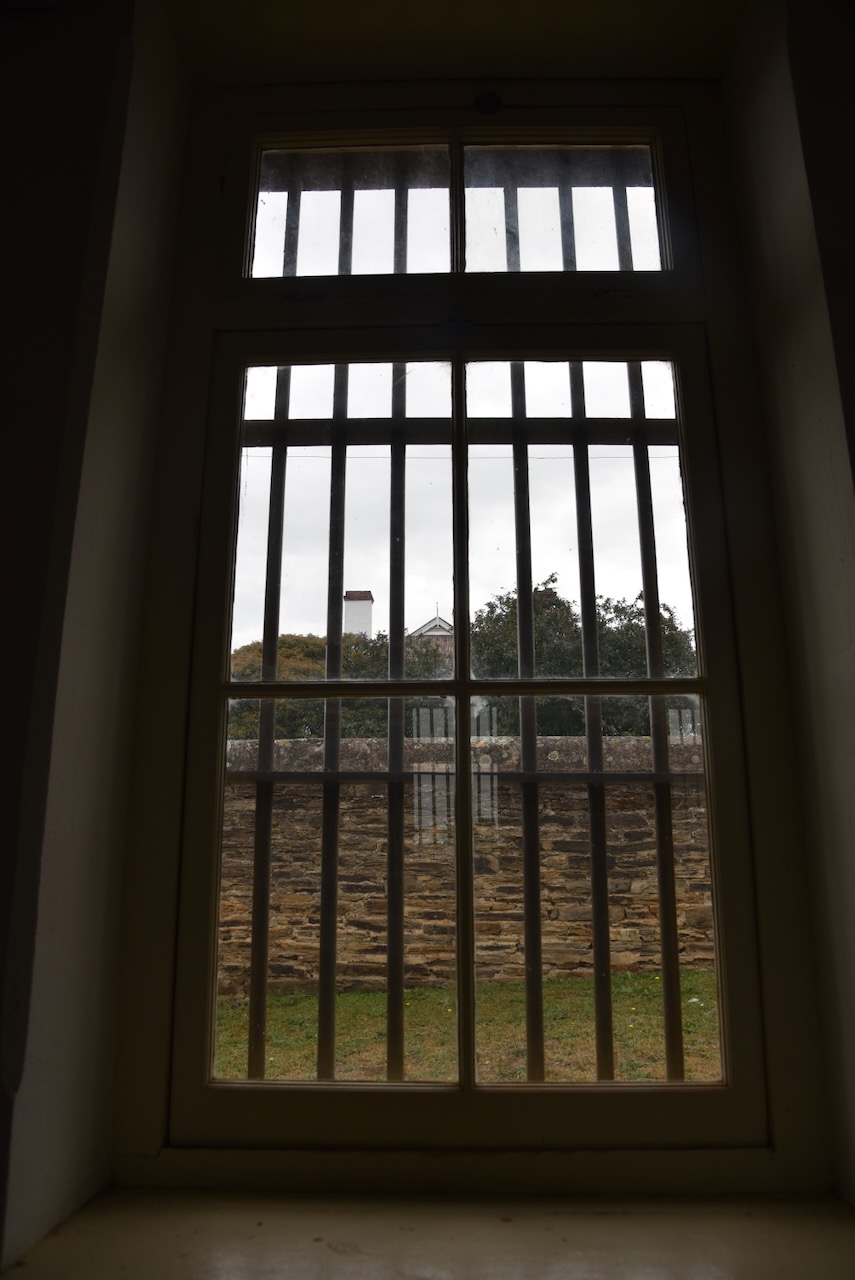
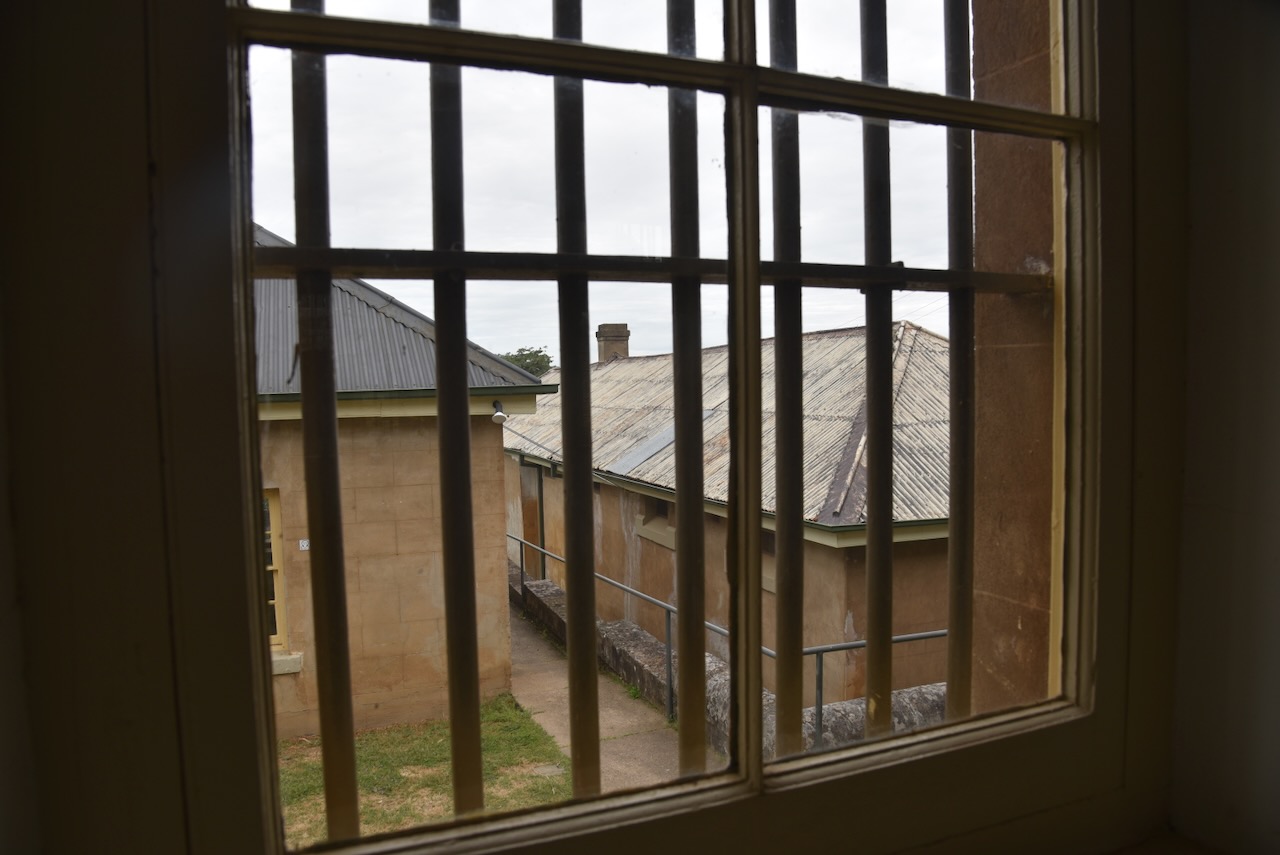
Inside the infirmary is an excellent display of Captain Moonlite.
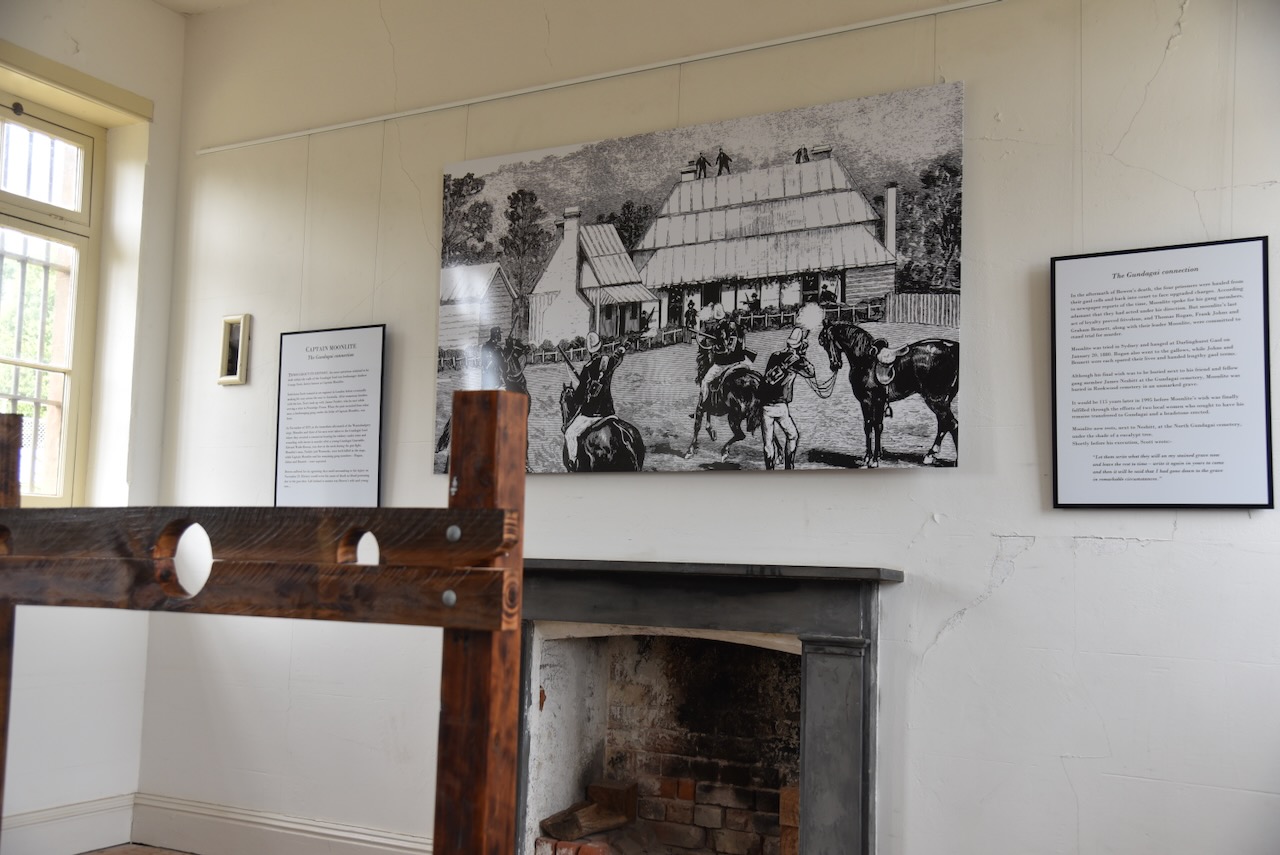
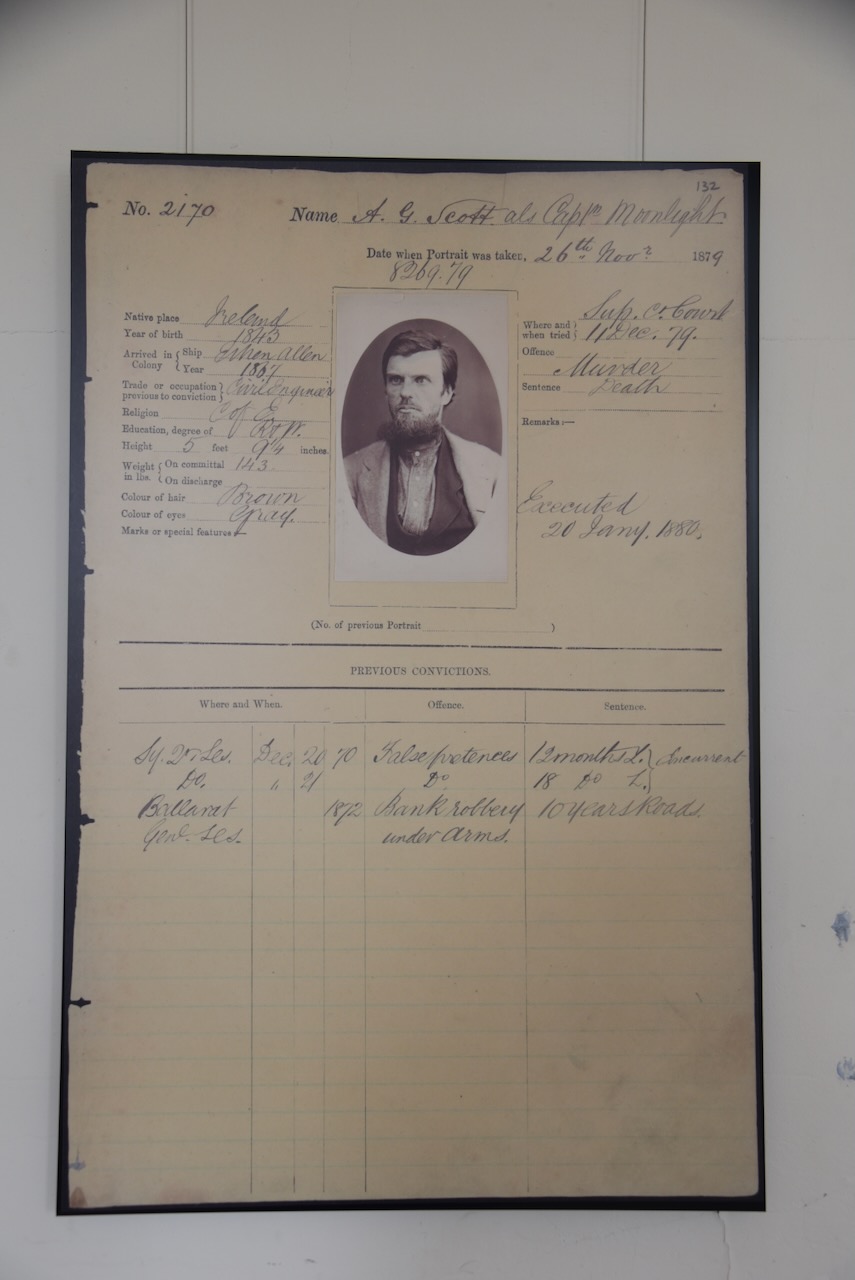
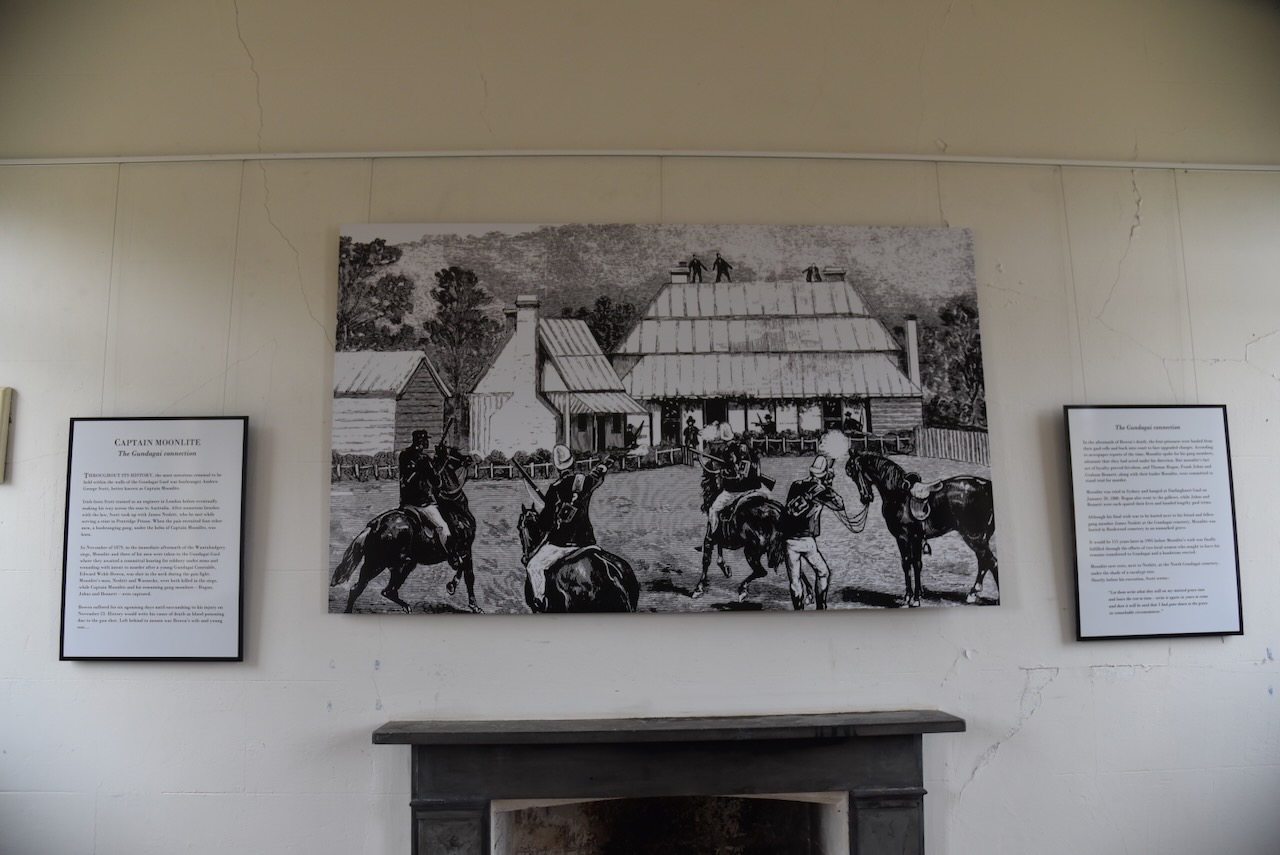
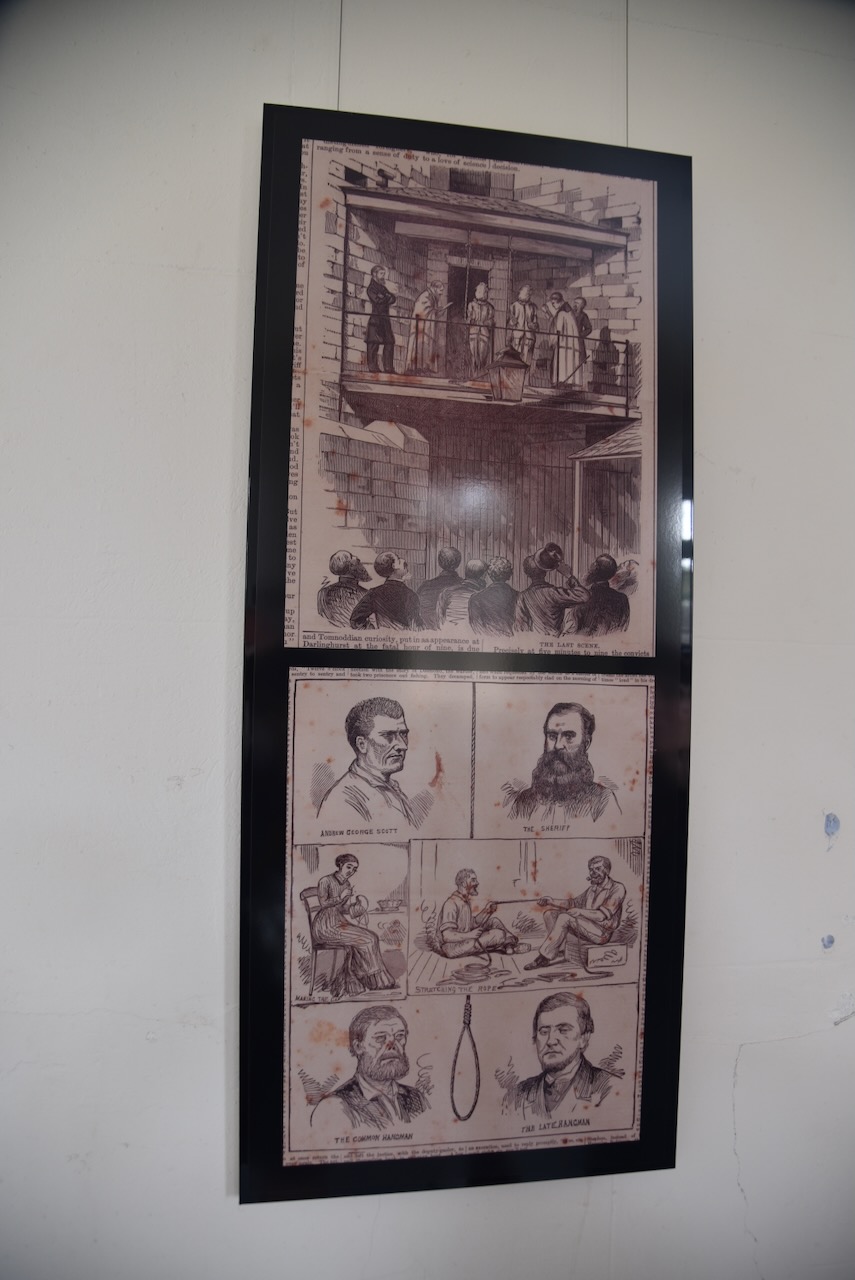
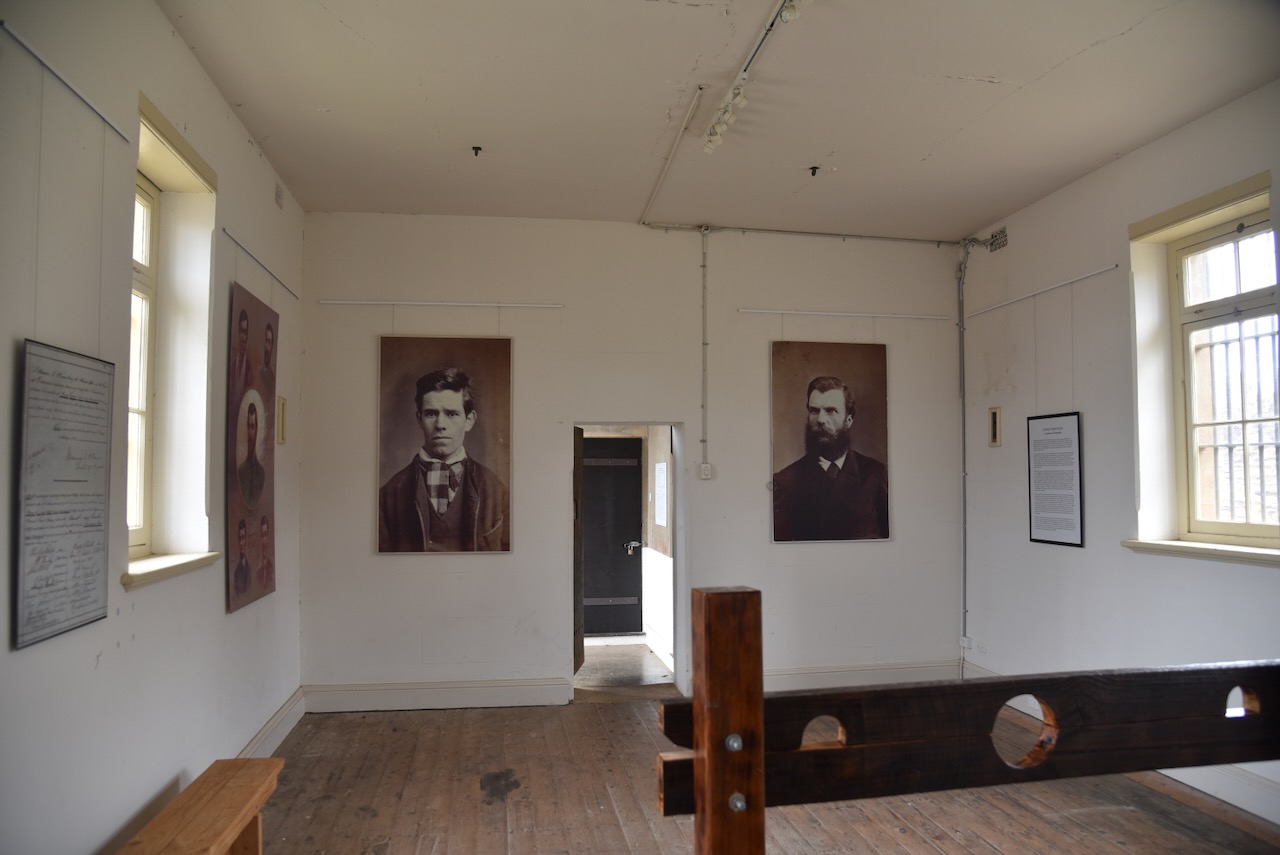
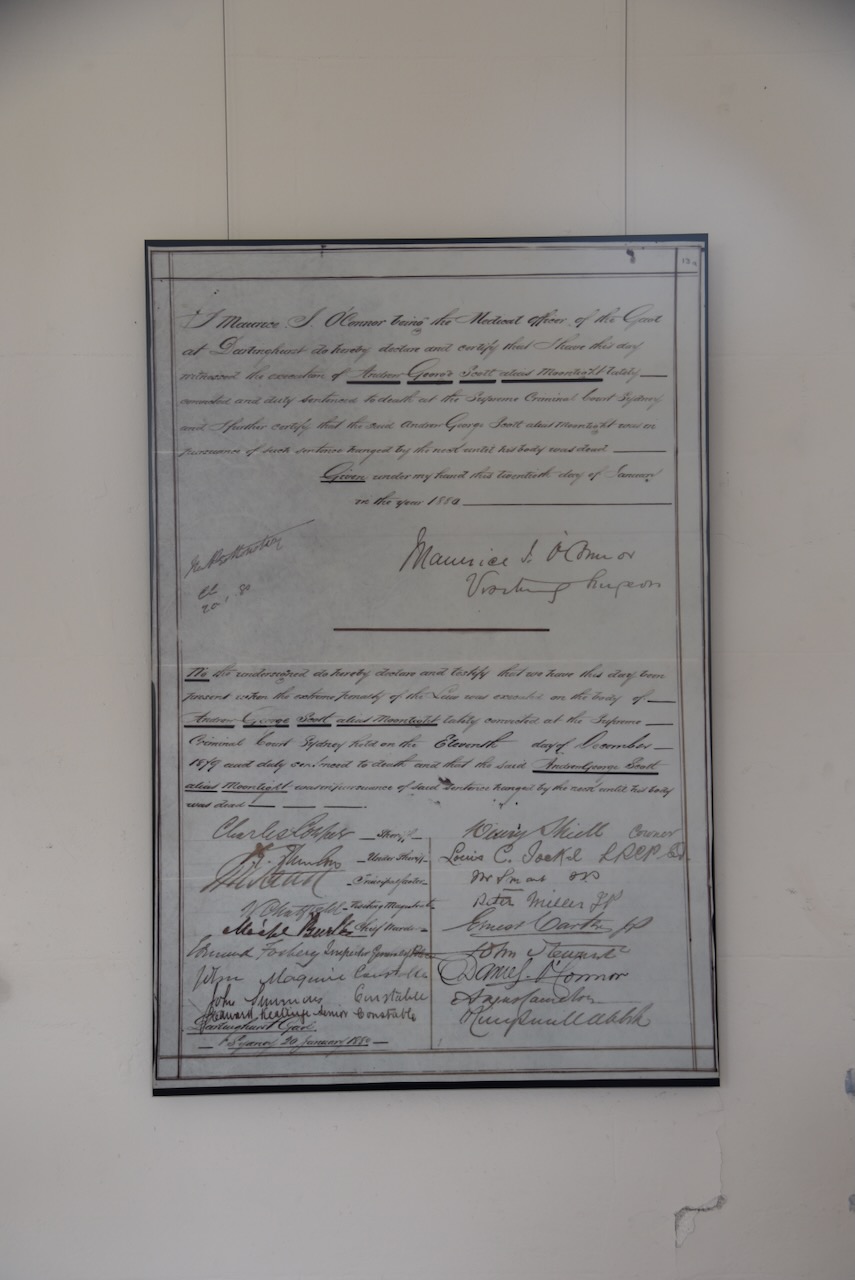
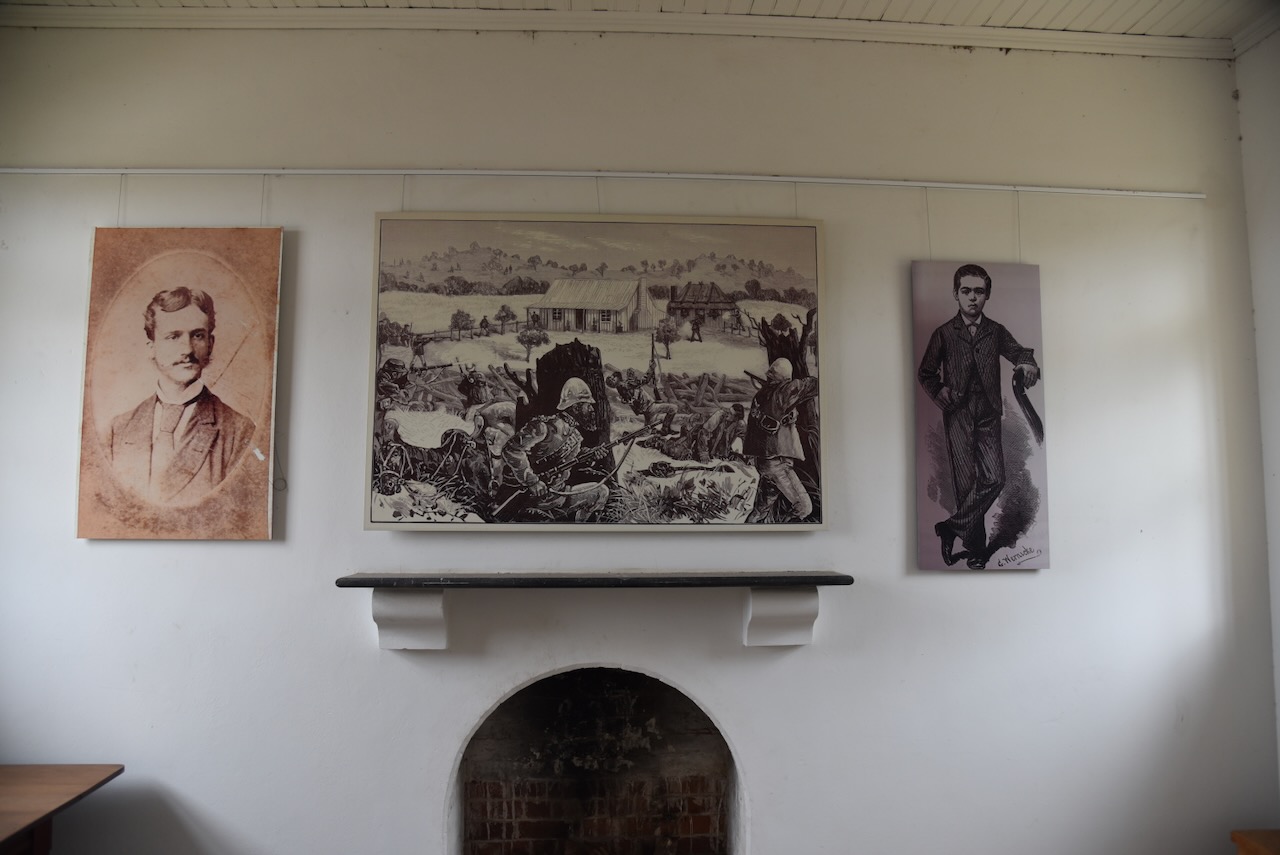
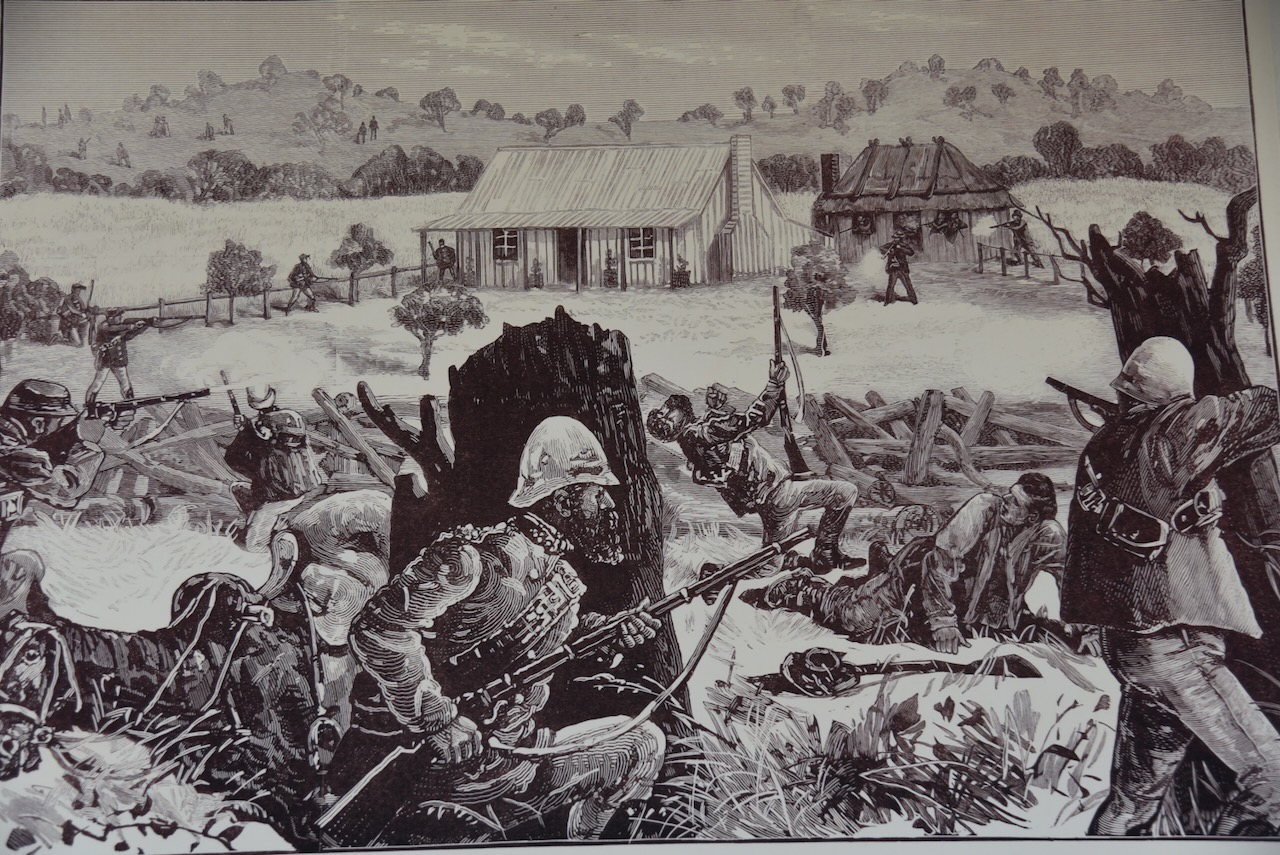
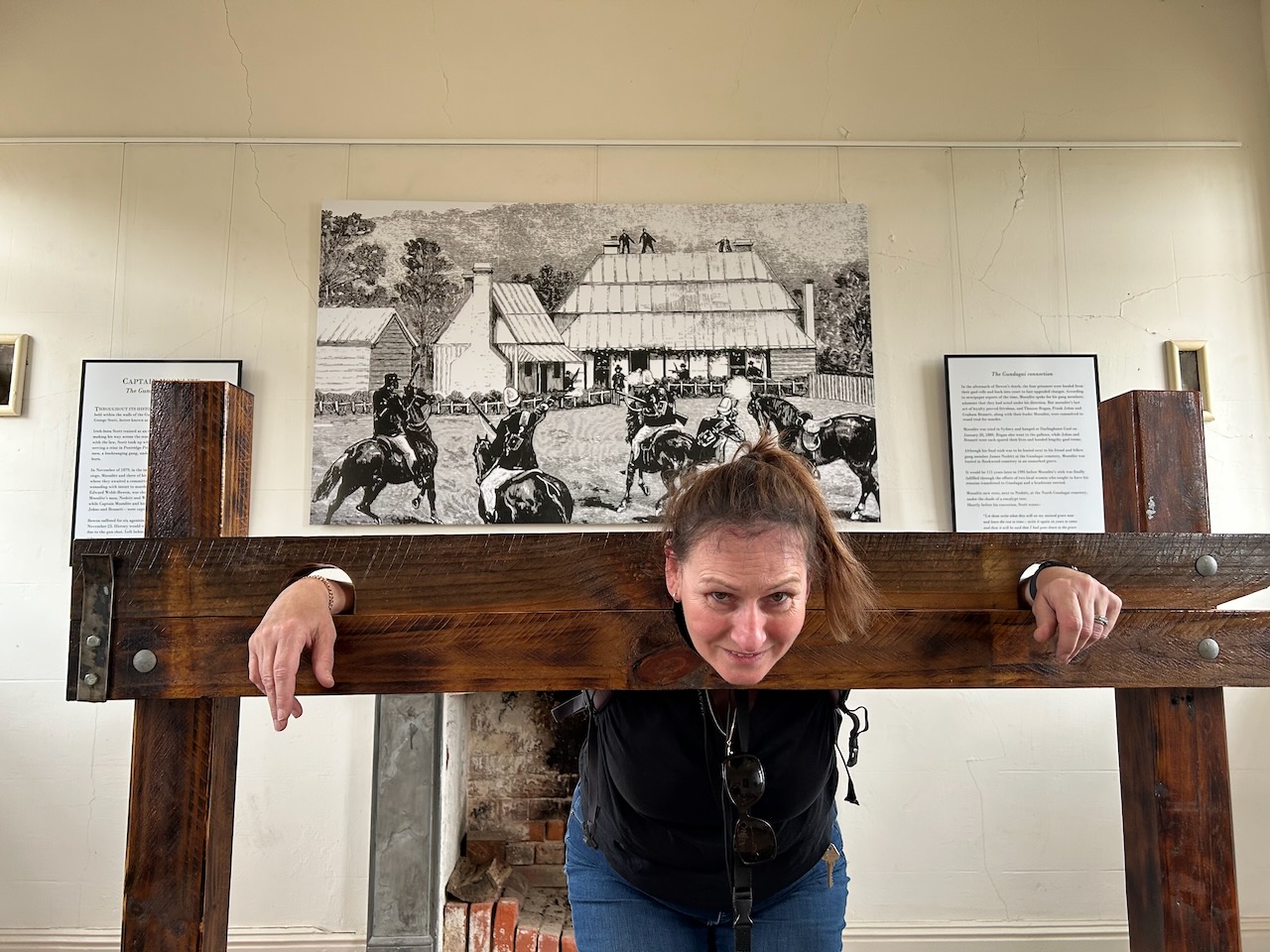
Marija was keen for me to get into the prison stocks below, but I was a bit concerned I might be left there.
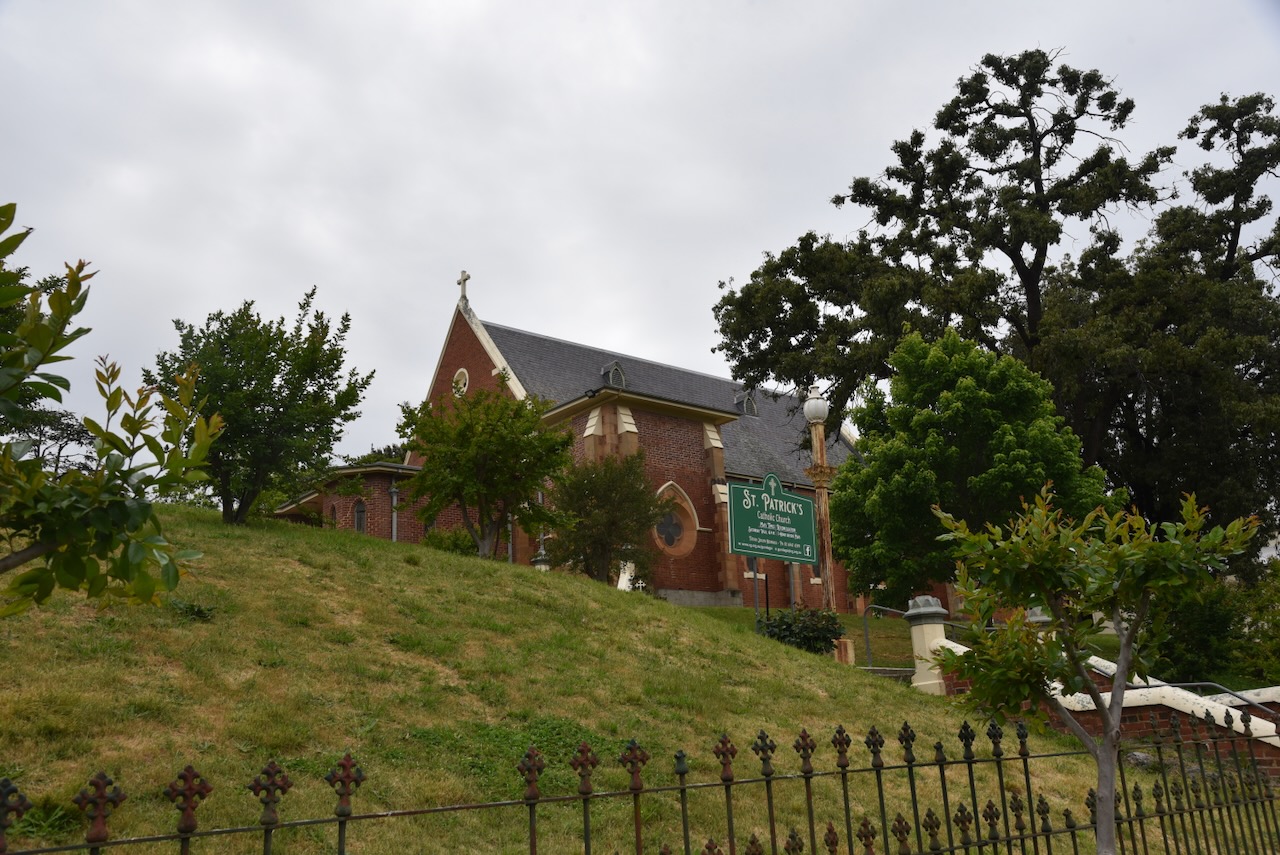
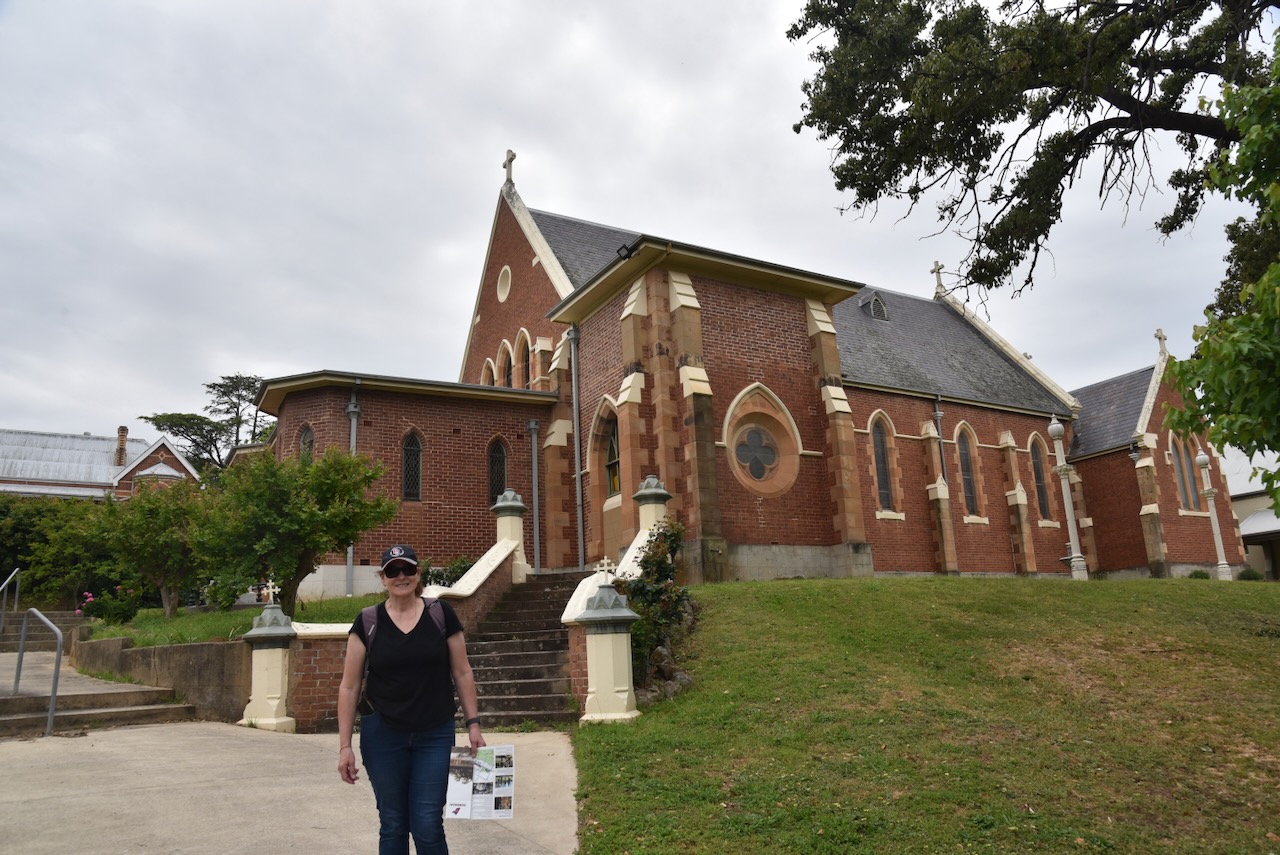
After leaving the old Gundagai Gaol, Marija and I headed back down the street for a walk. Our first stop was St Patrick’s Catholic Church. Mr Manfred of Goulburn was the architect. The foundation stone was laid on the 17th day of March 1885, by the Right Reverend Lannigan. About 1,200 people were present. There was a procession from the old church to the new. A Mass was celebrated by Father Hennessy, and the Very Rev Prior Butler gave an address. (Trove 2026) (UBC Web Design 2018)
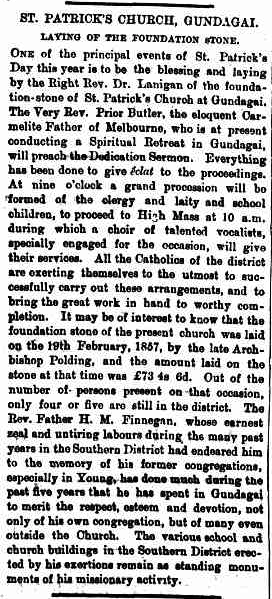
Above: article from The Gundagai Times, Tue 17 Mar 1885. Image c/o Trove
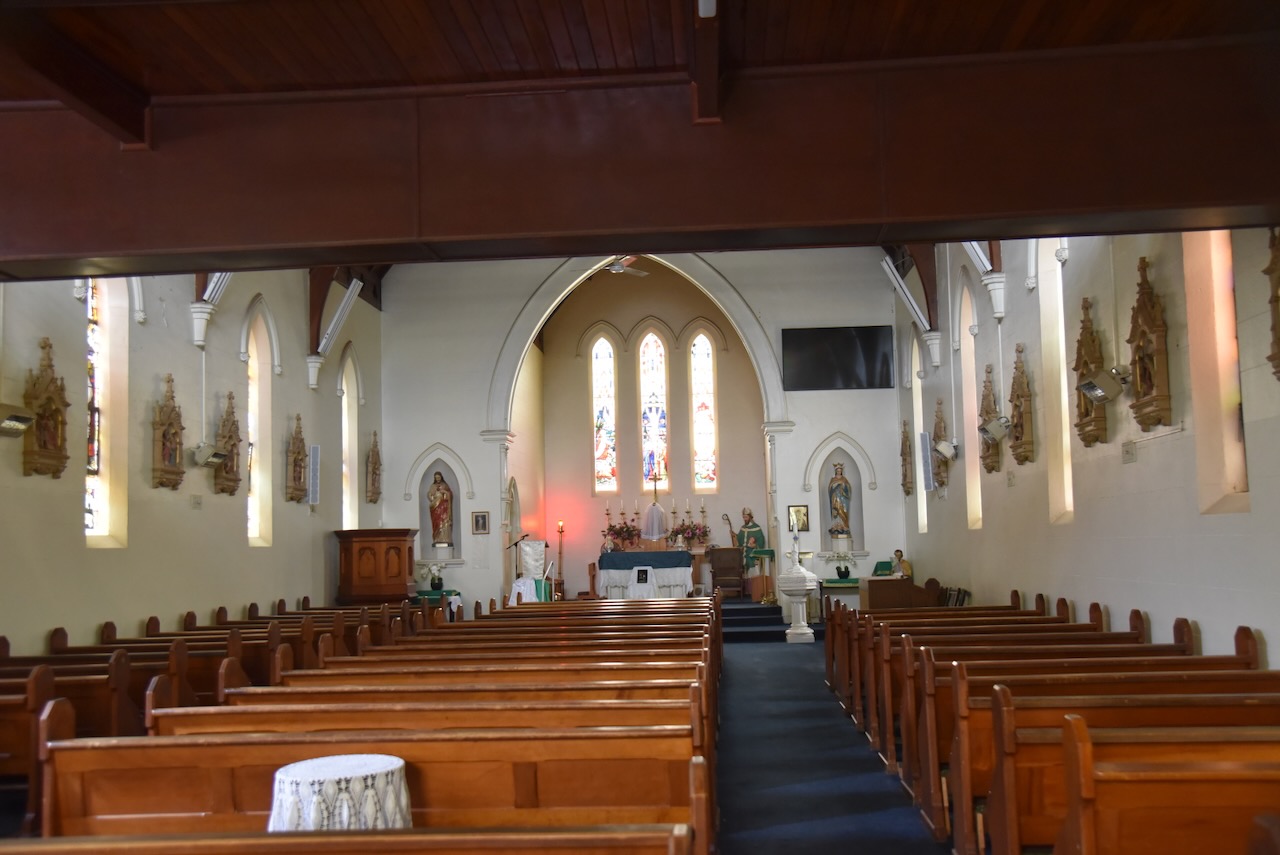
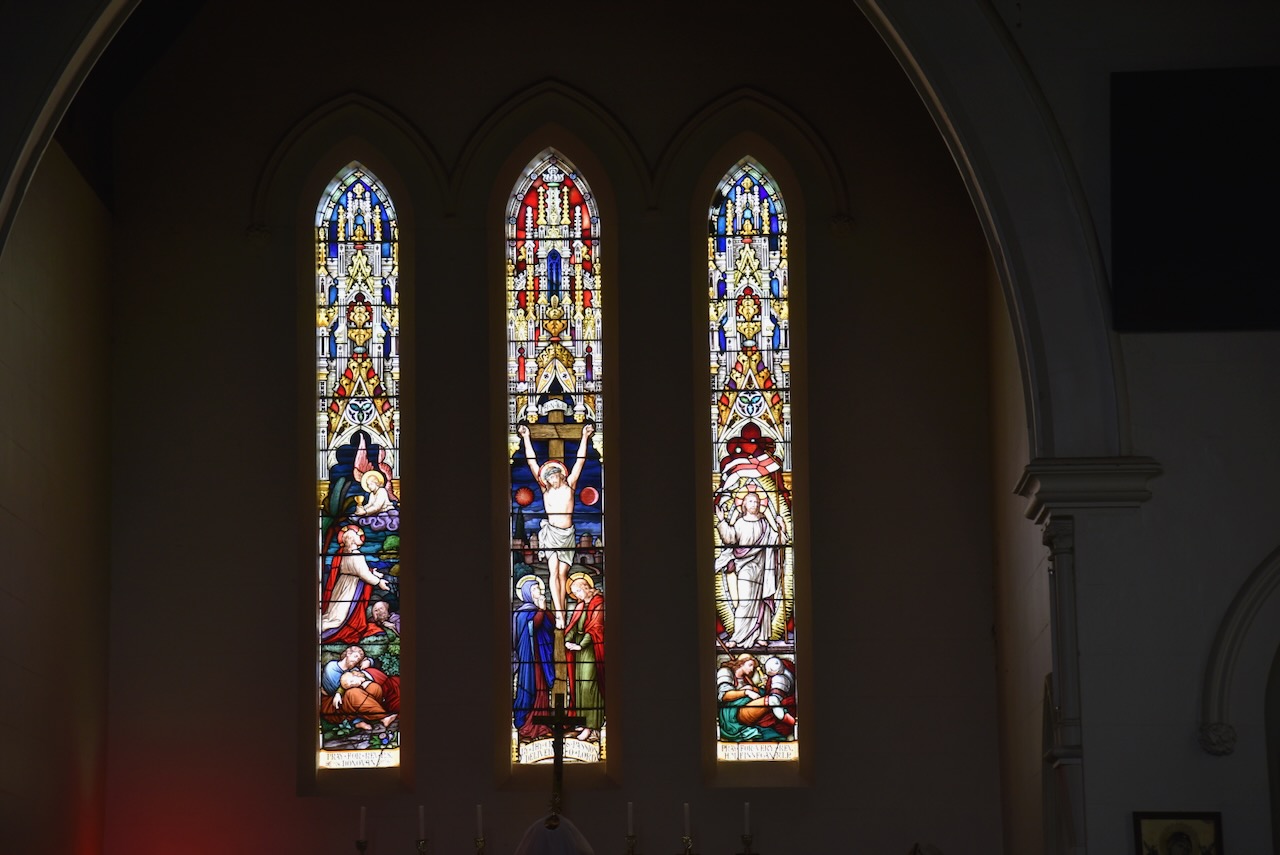
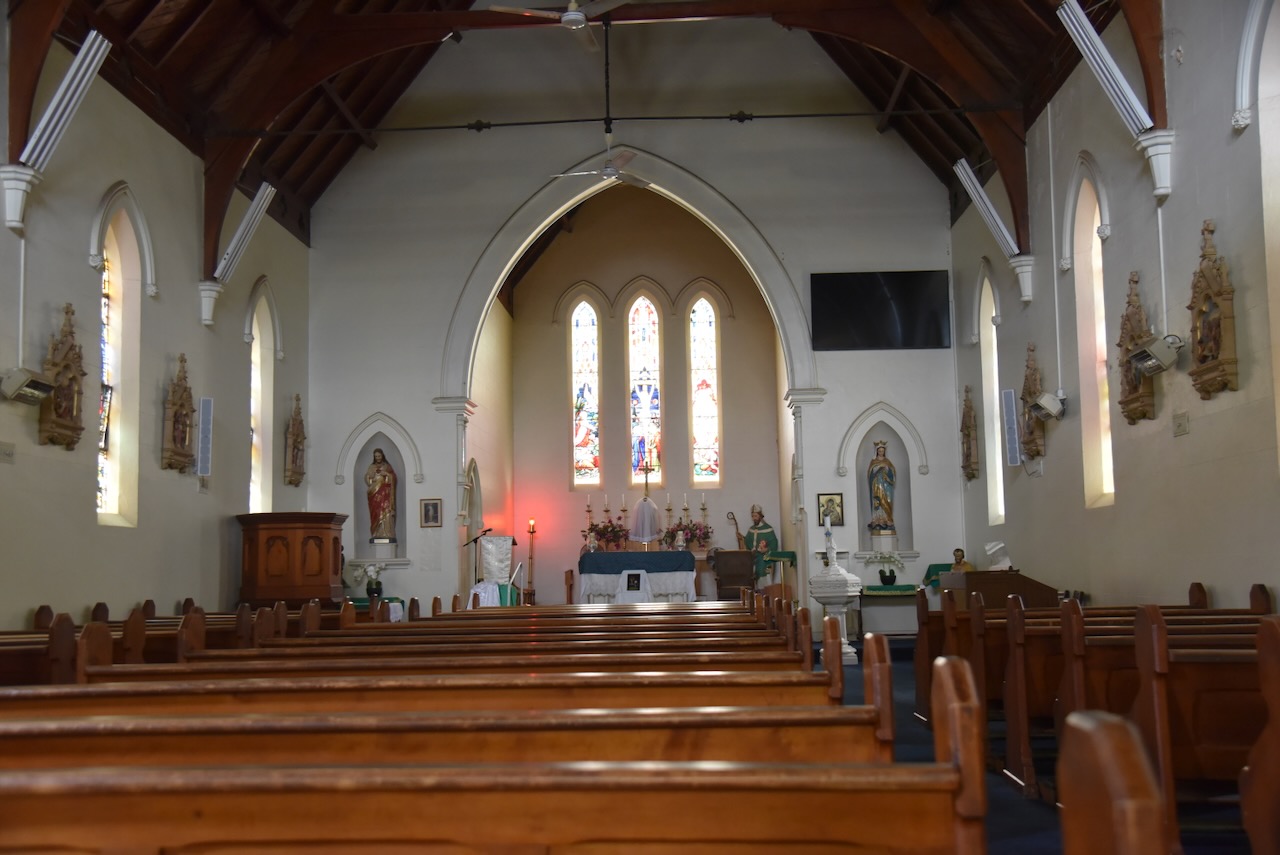
The church was open, so we ventured inside. Marija, being of Catholic faith, paid her respects. The interior of this church is beautiful.
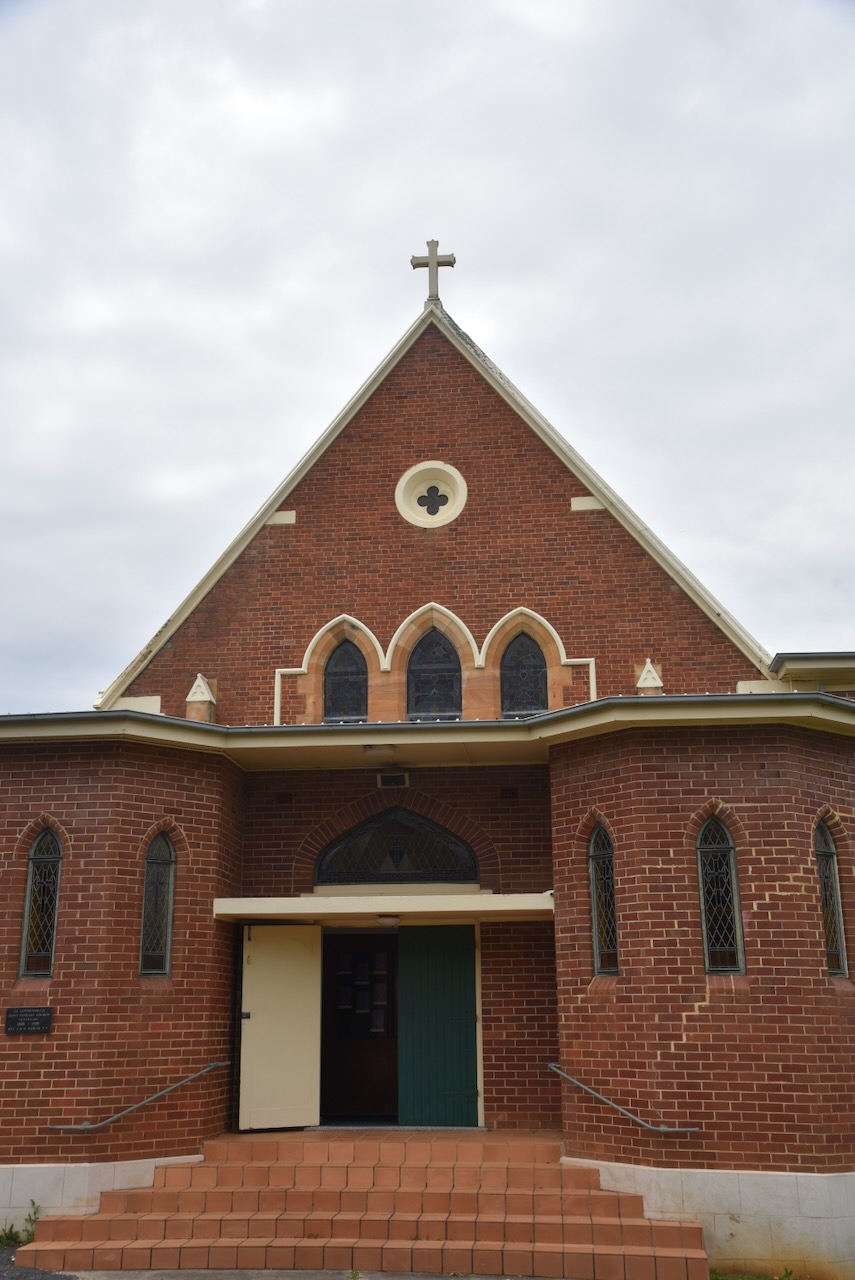
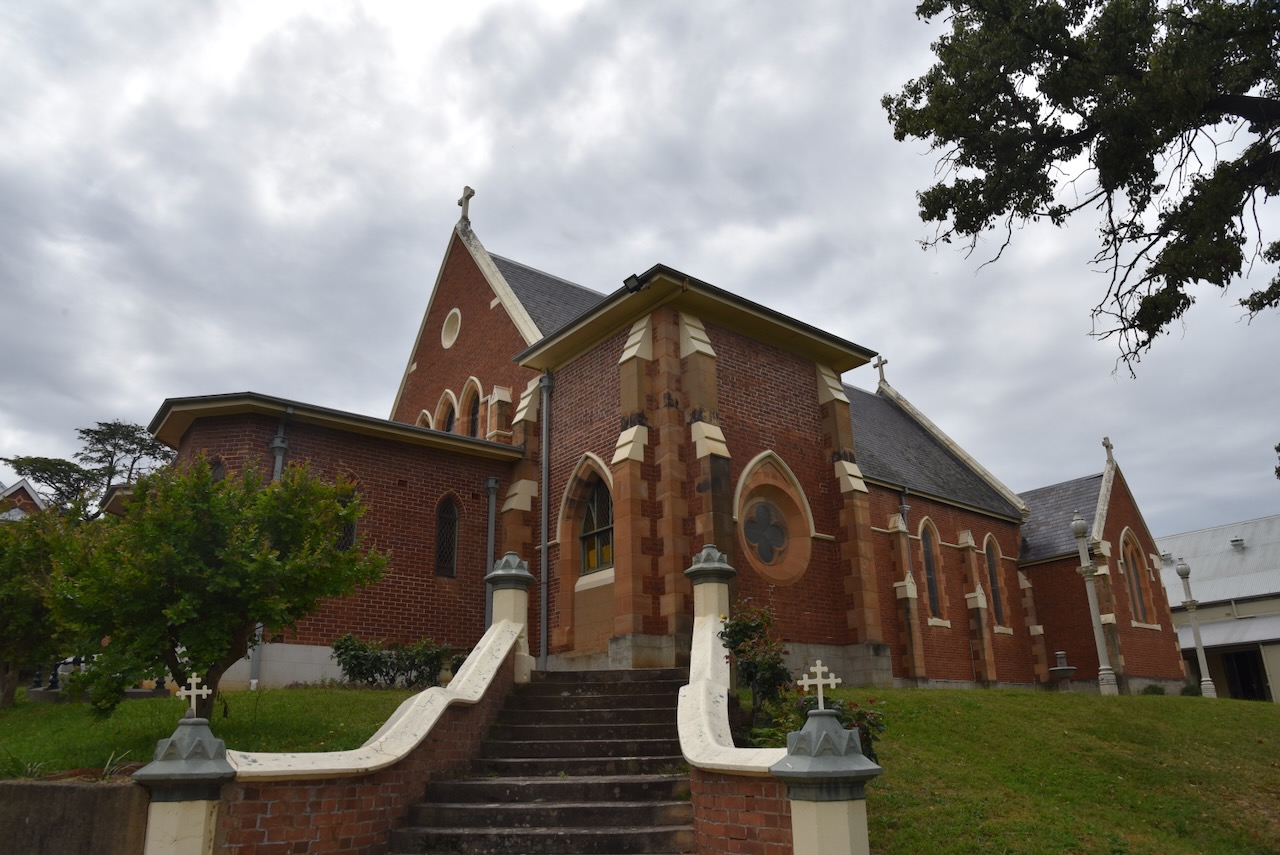
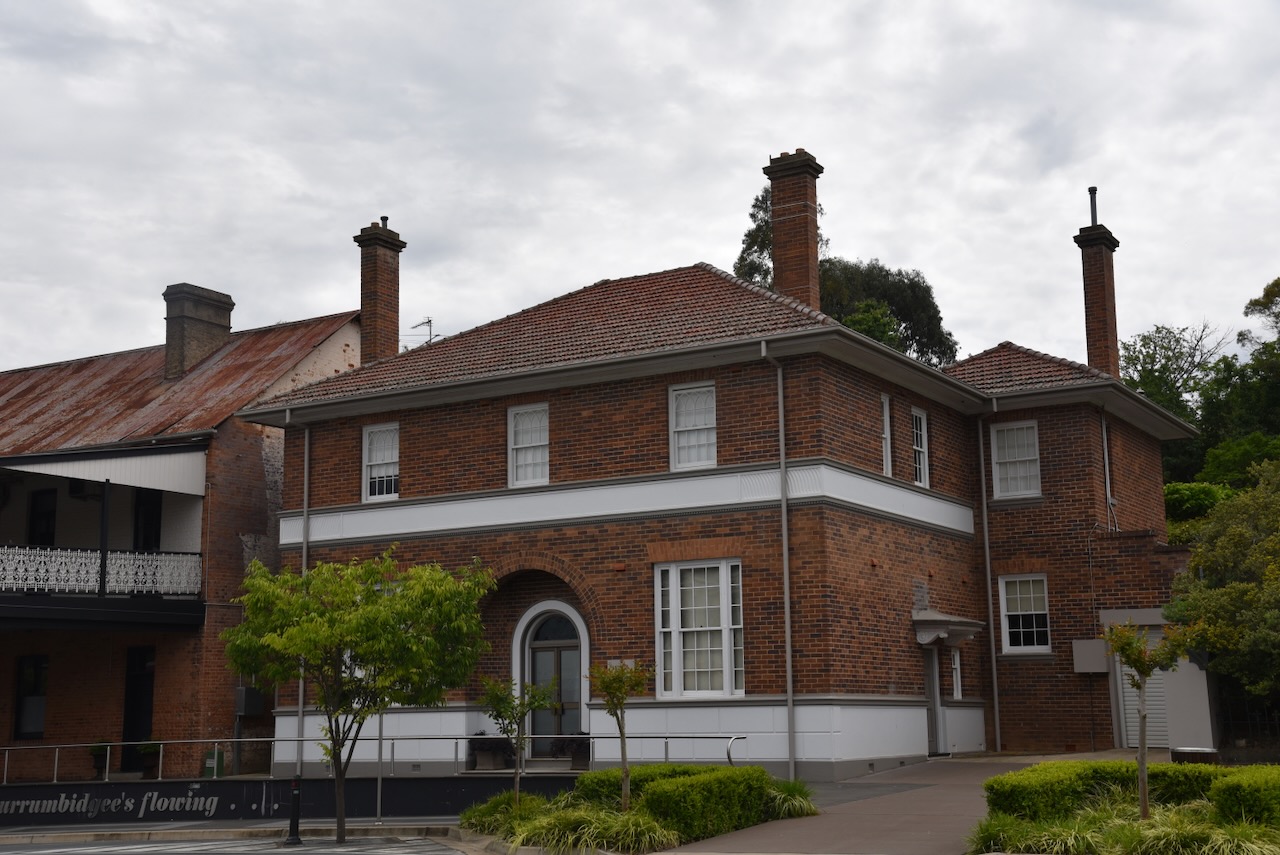
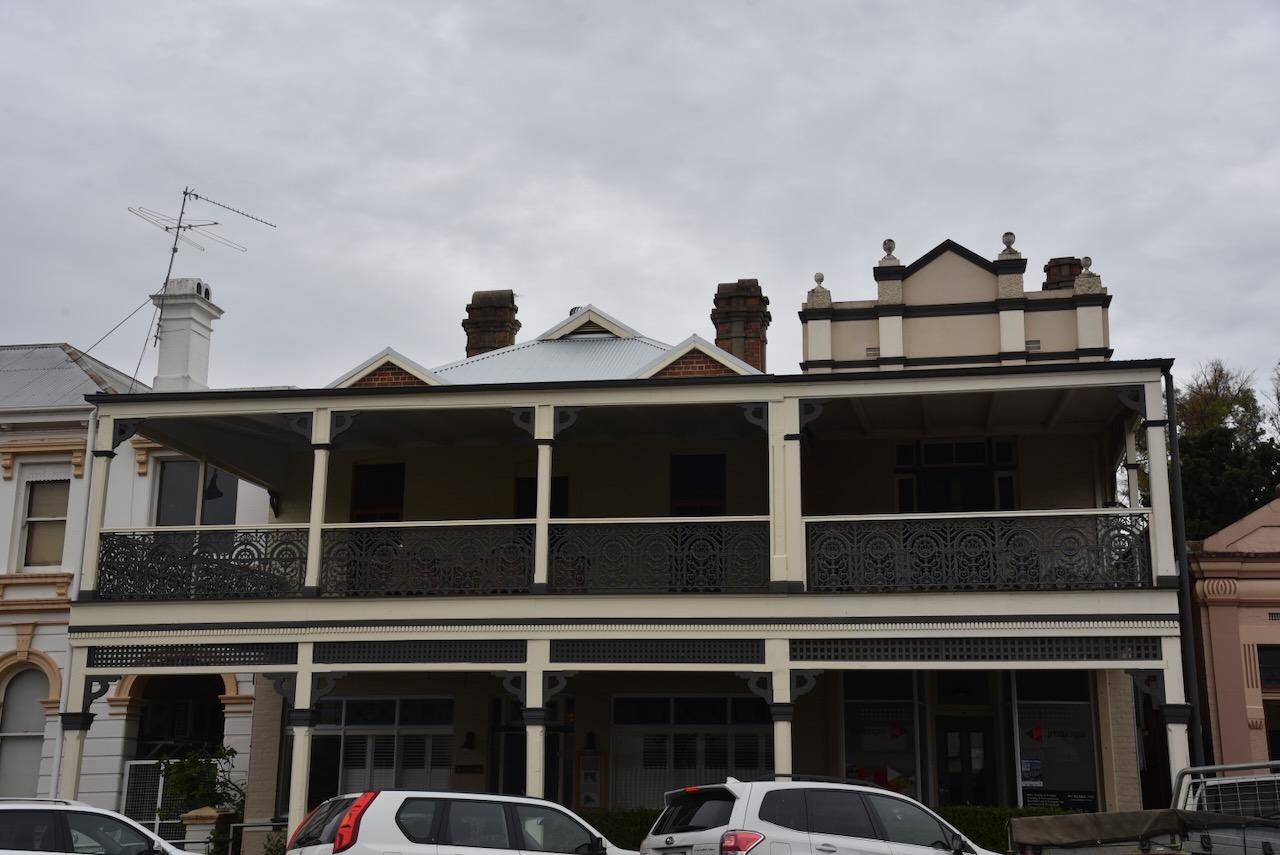
The former Commercial Banking Co of Sydney building is very impressive. The branch opened in 1877, and this building was erected in 1880. (Gundagaitouristpark.com.au 2024)
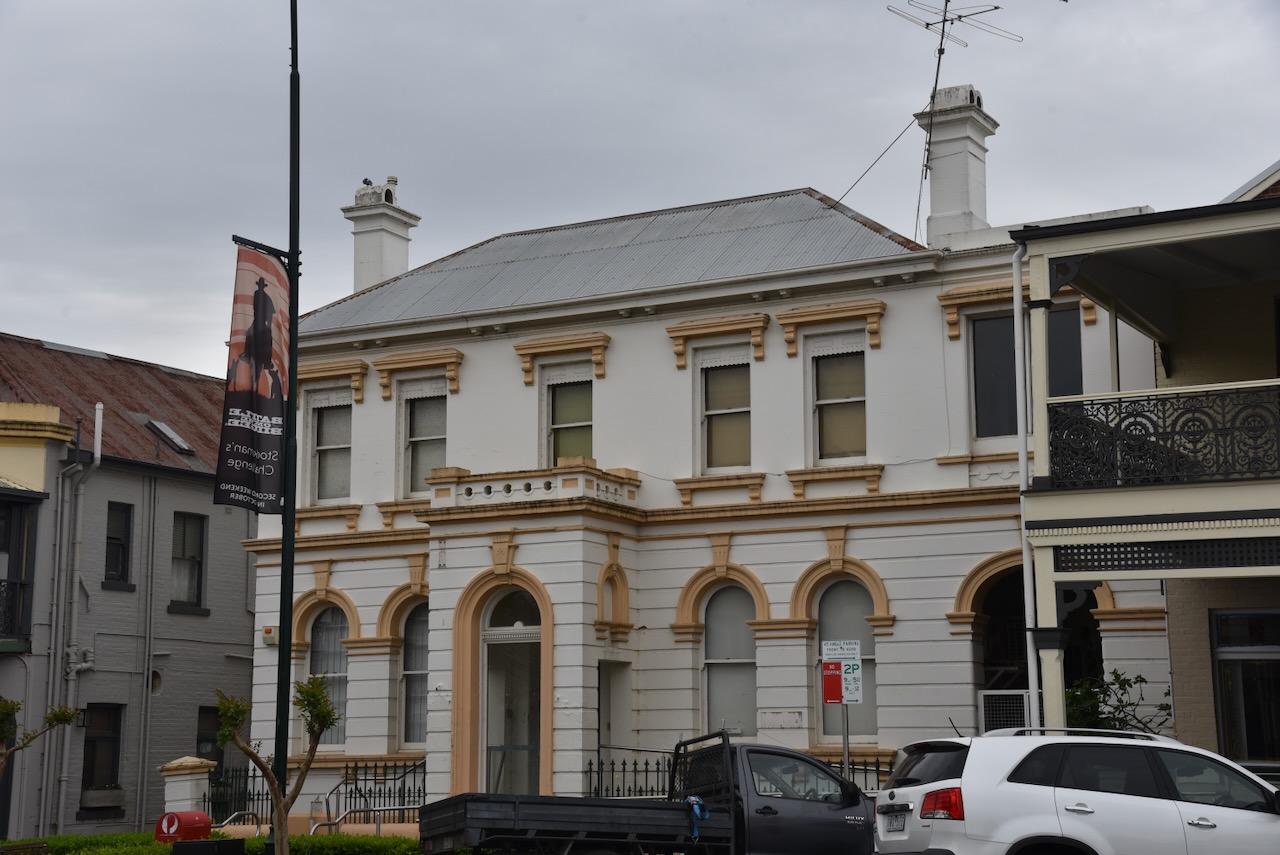
The grand old Royal Hotel on the corner of Sheridan Street and Homer Street was de-licenced in 1999. (Chirp 2026)
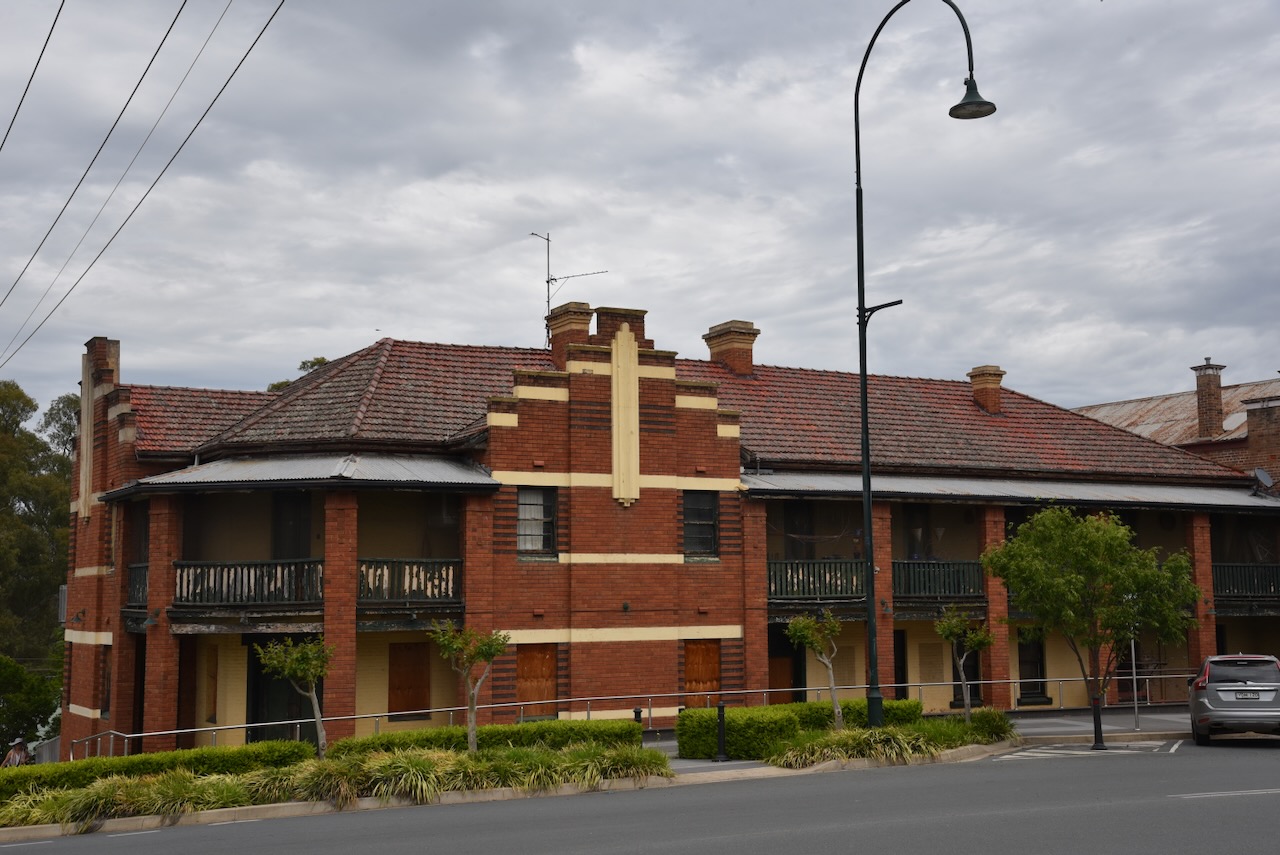
The old Blueheeler guesthouse was built in 1853. Over the years, it has been the Crown Inn, Tracey’s Club House Hotel and the Gresham Hotel. (Gundagaitouristpark.com.au 2024)
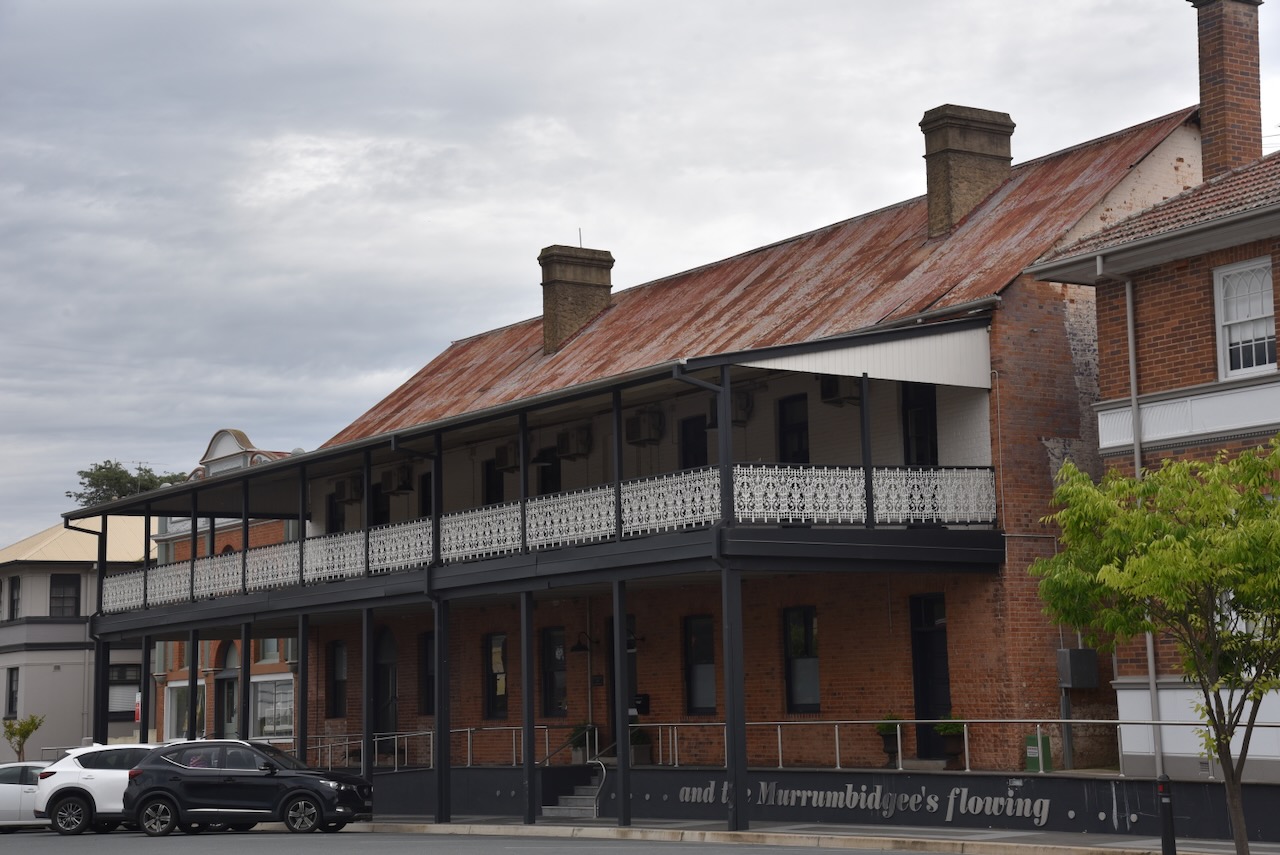
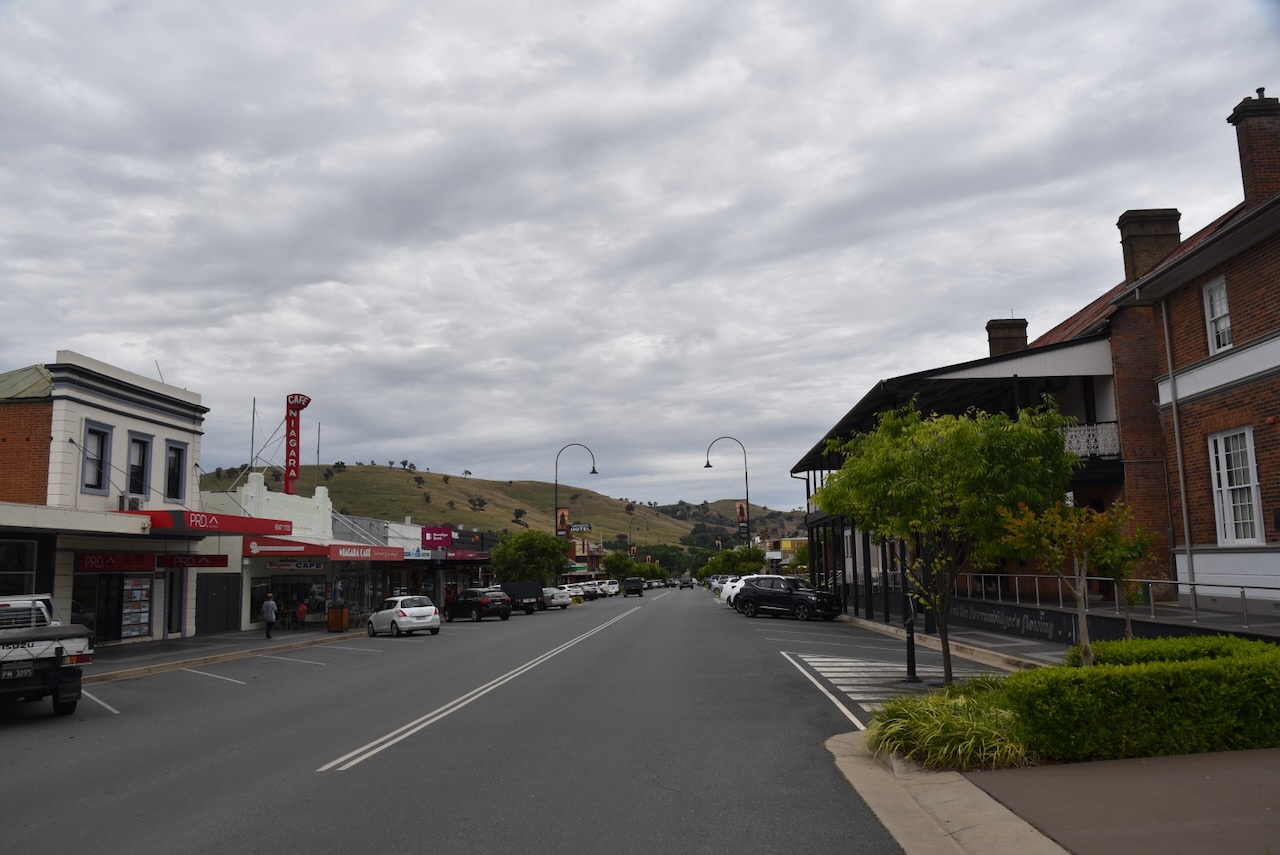
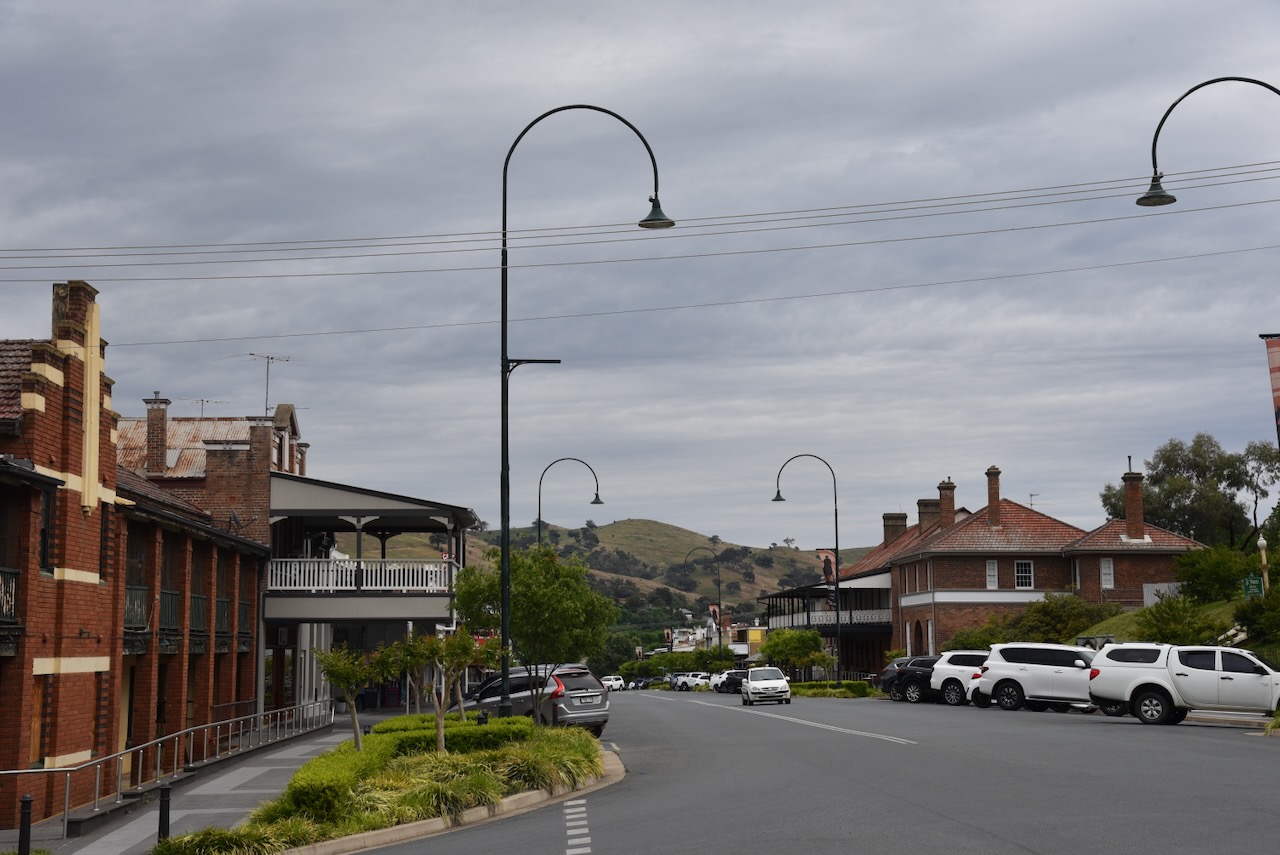
There is so much history in Gundagai, and fortunately, so many historic buildings have remained.
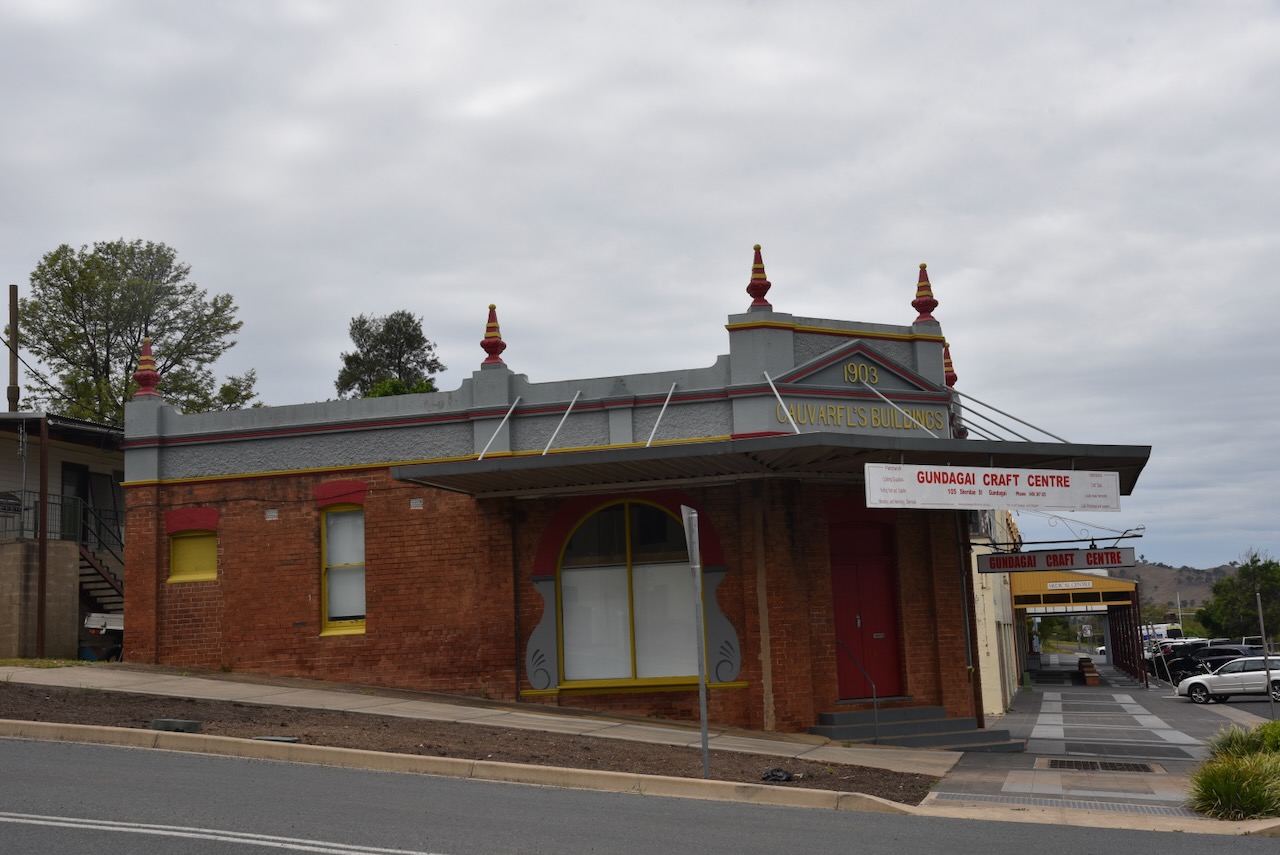
The Gundagai Courthouse was built in 1859 and opened in 1860. It was constructed after the devastating 1852 Gundagai flood. It was one of a handful of existing courthouses in New South Wales that were designed by Colonial Architect Alexander Dawson. The court held the trial of bushranger Captain Moonlite in 1879. (NSW Courts 2013( (Nsw.gov.au 2026)
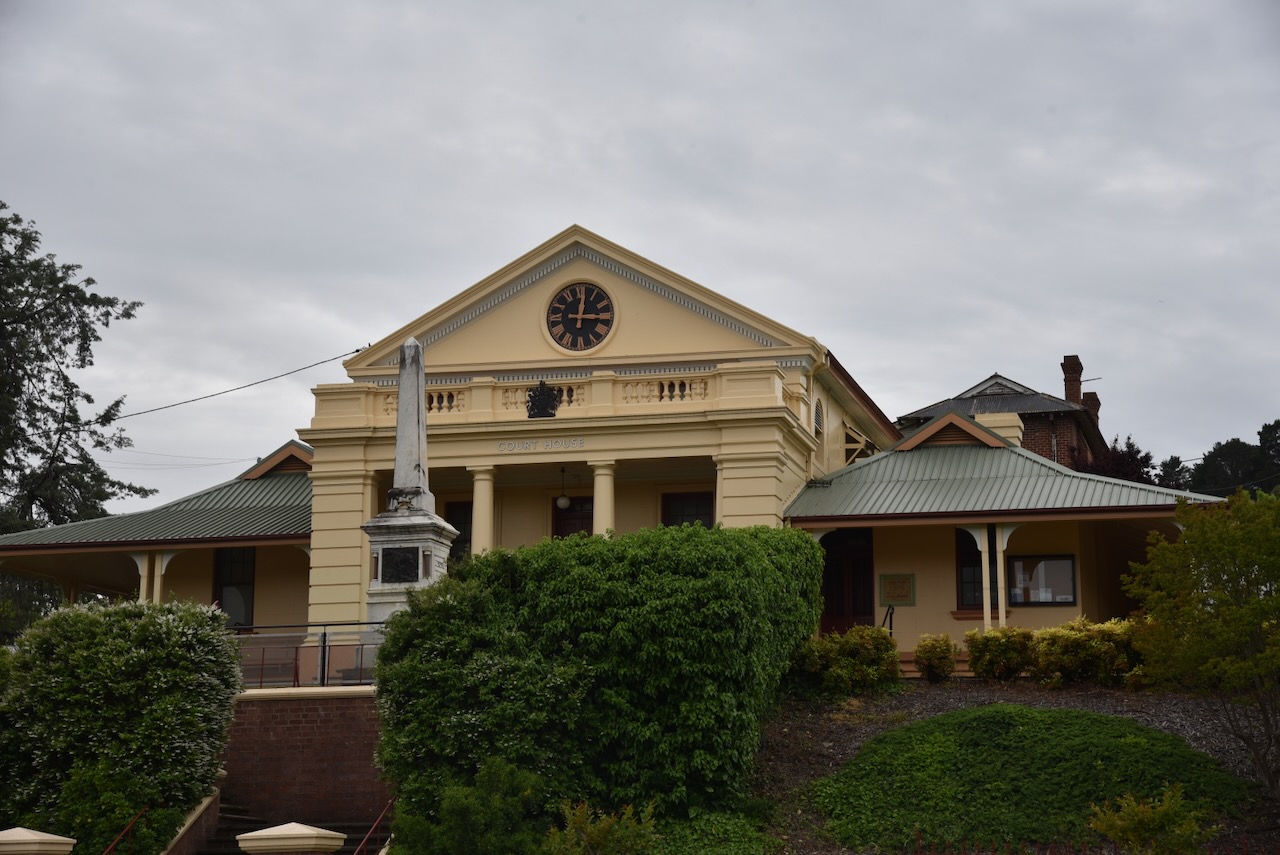
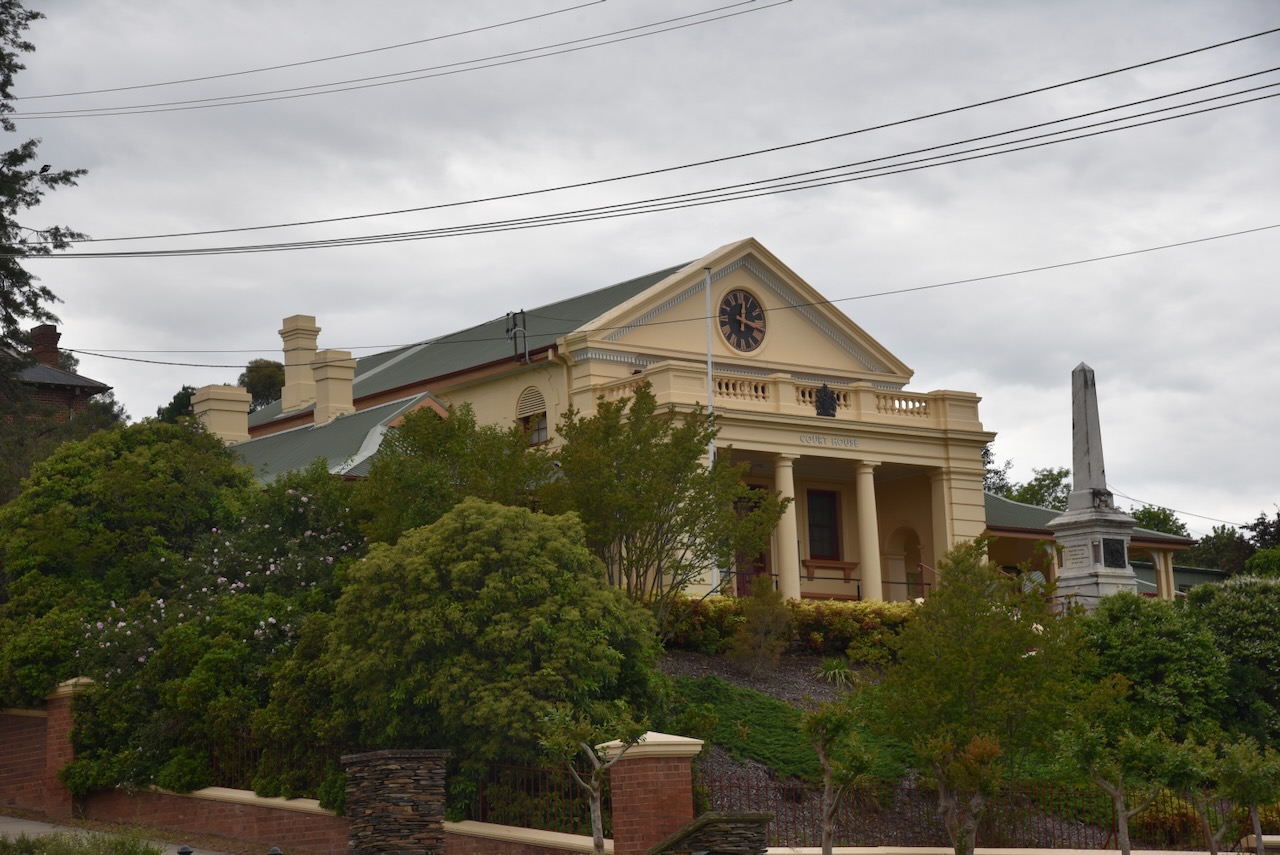
The interior of the courthouse was destroyed in a fire in 1943. It was rebuilt with an opening ceremony taking place on the 25th day of March 1944. Three days later, Gundagai’s first official visit from a State Governor occurred, with a visit to the courthouse by Lord Wakehurst. (Nsw.gov.au 2026)
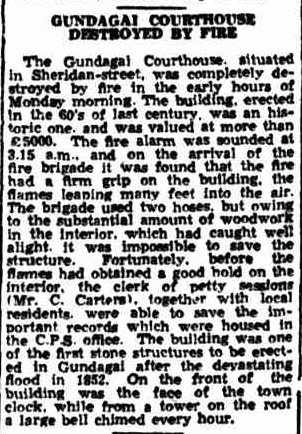
Above: article from the Daily Advertiser Wagga Wagga, Thu 18 Feb 1943. Image c/o Trove
The Gundagai Bakehouse is believed to be the oldest working bakery in Australia. It was built and opened by William Bibo in 1864.
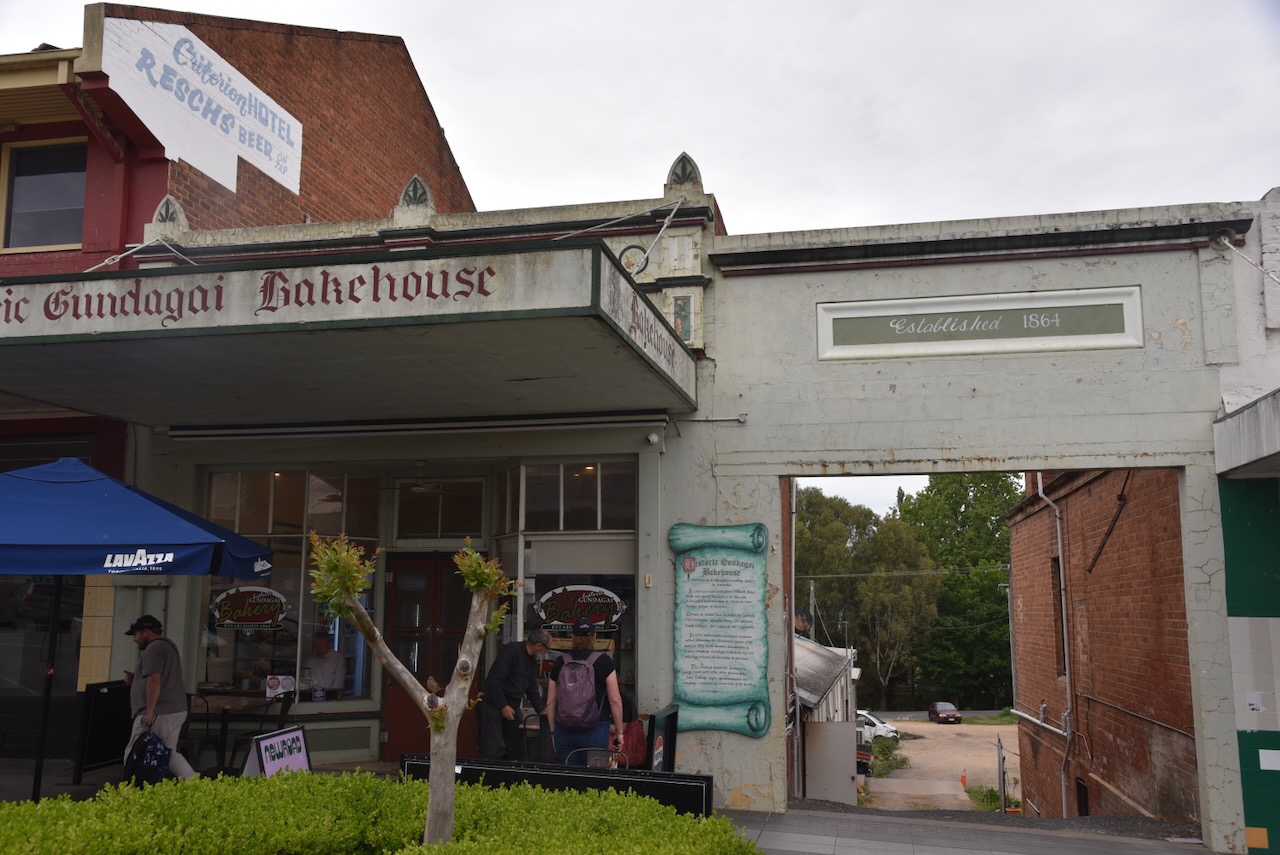
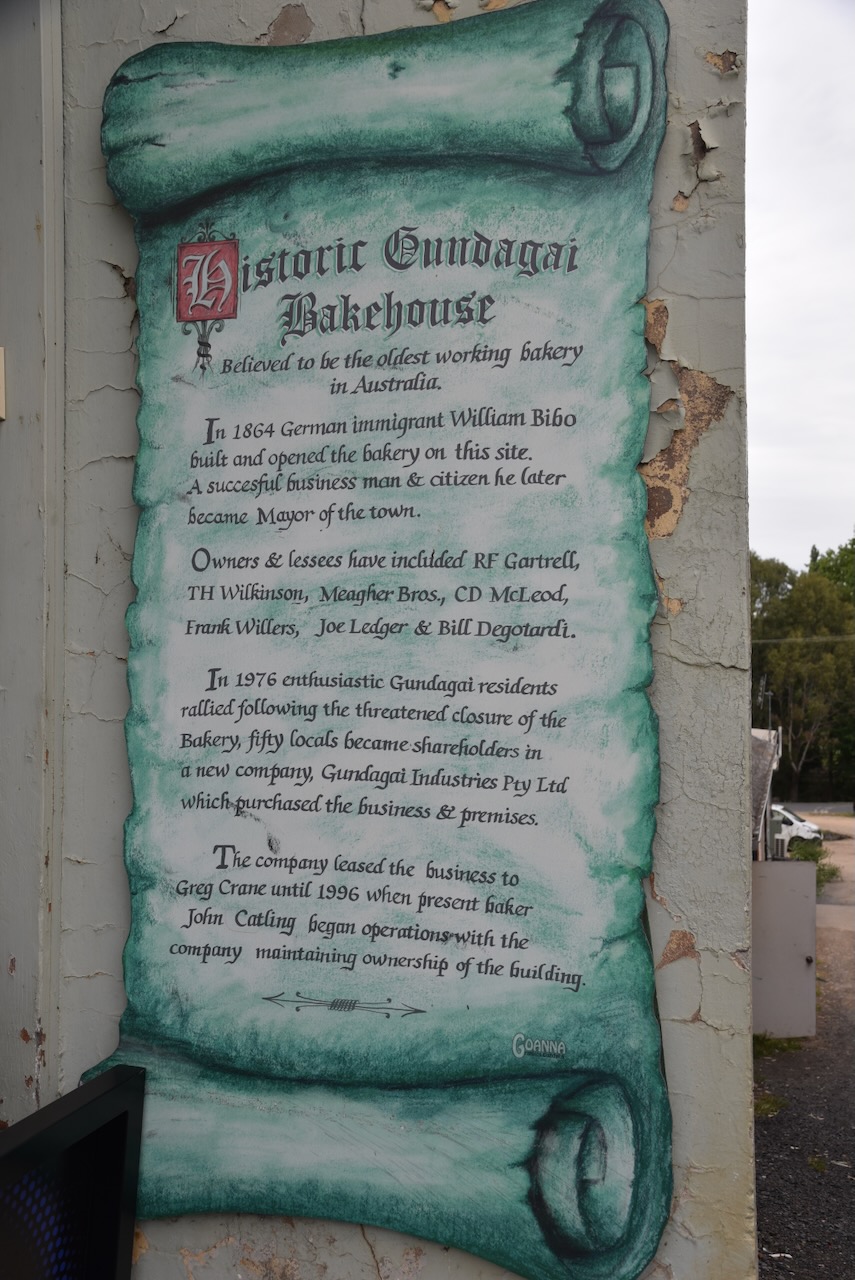
Wendelin ‘William’ Bibo was born in June 1826 in Sachsen-Anhalt in the Kingdom of Prussia. He was a baker by trade. He married Eva Pursch in 1855, and they emigrated to Australia shortly thereafter. They had three children. William became the Mayor of Gundagai and was a Justice of the Peace. He was also the chairman of the racecourse trust. William made fame as a maker of lollies, biscuits and fancy breads. Eva died in 1999. William died in May 1910. (ancestry 2016) (Trove 2026)
The Gundagai Post Office was opened on the 1st day of April 1843. The current building was built in 1879. (Gundagai Visitor Info Centre n.d.) (Wikipedia 2023)
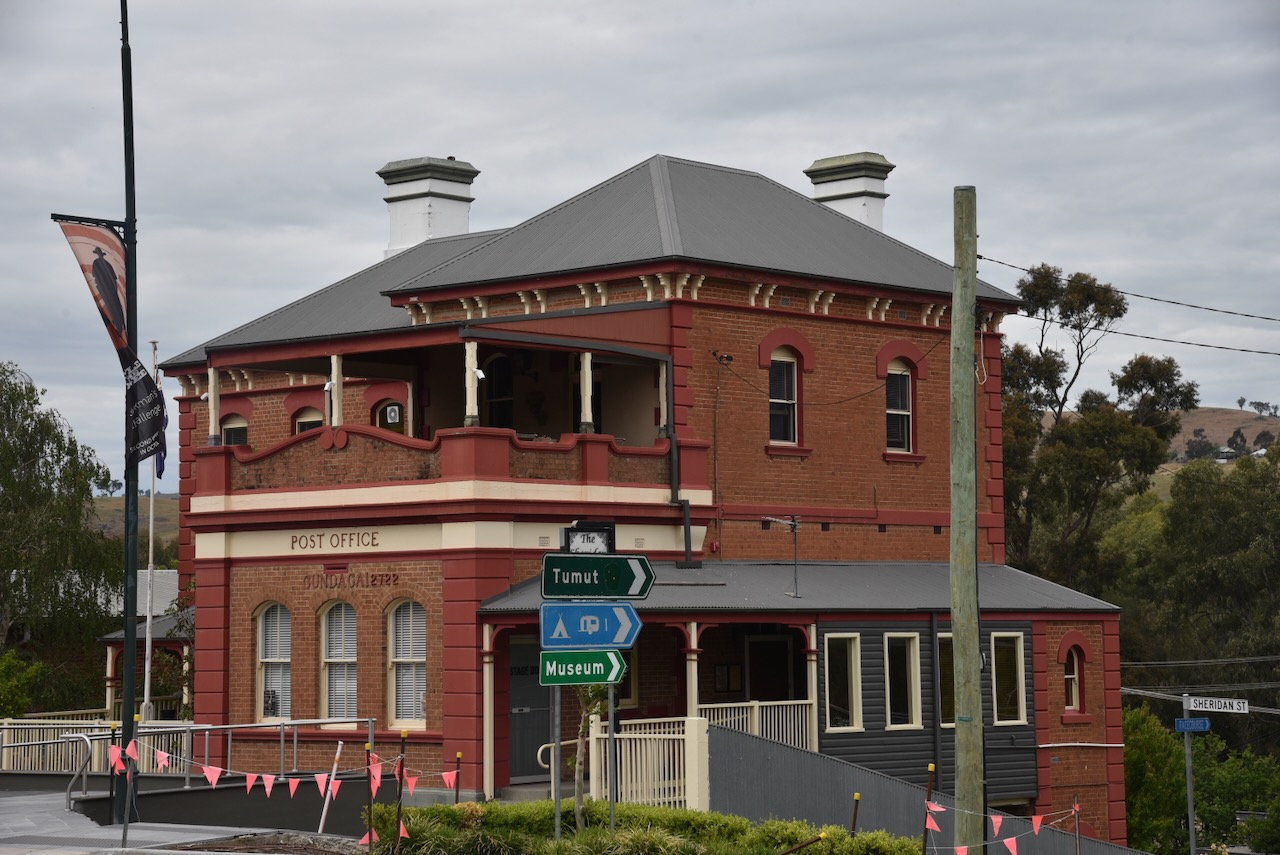
Gundagai had the last official ‘pony express’ who delivered mail on horseback. This ended in 1984. (Gundagai Visitor Info Centre n.d.)
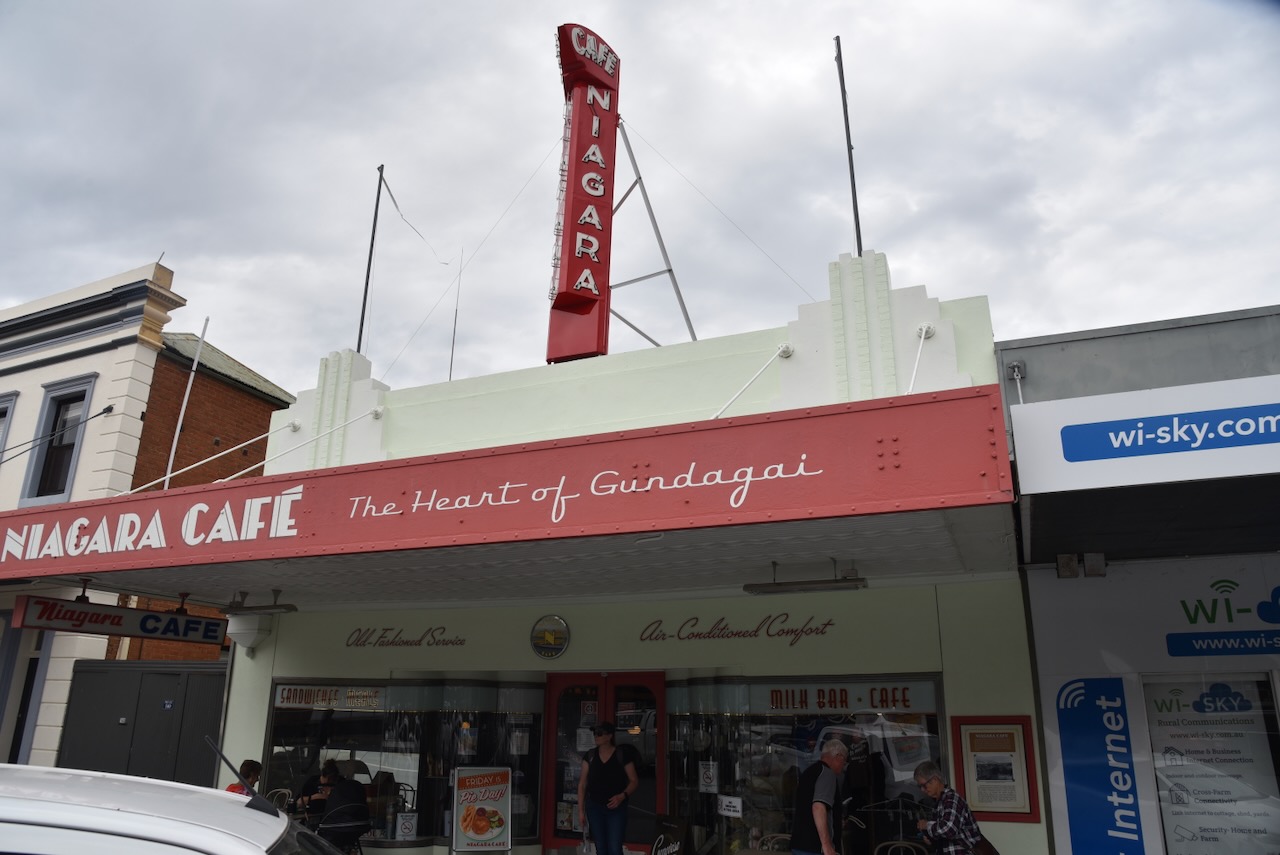
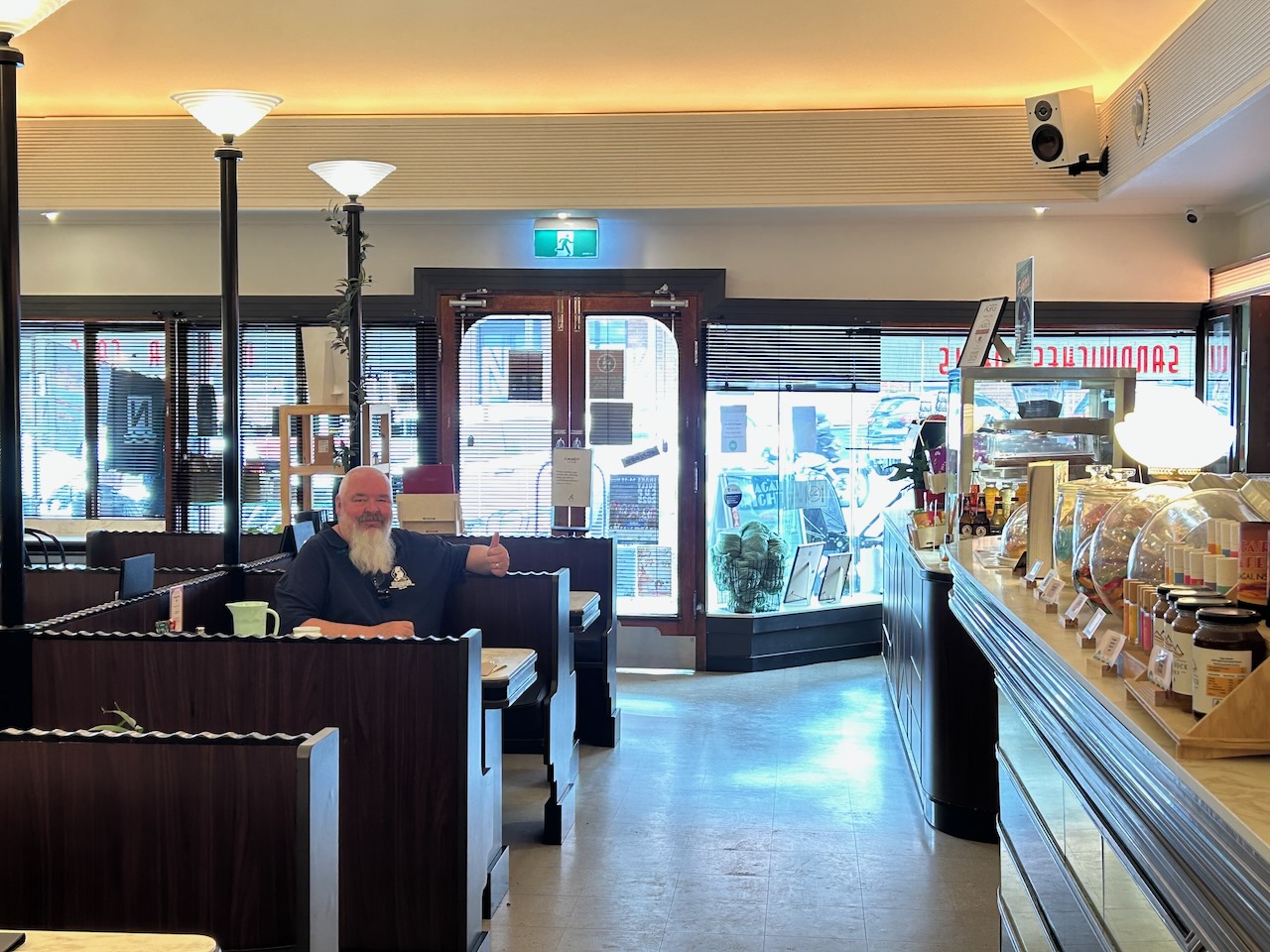
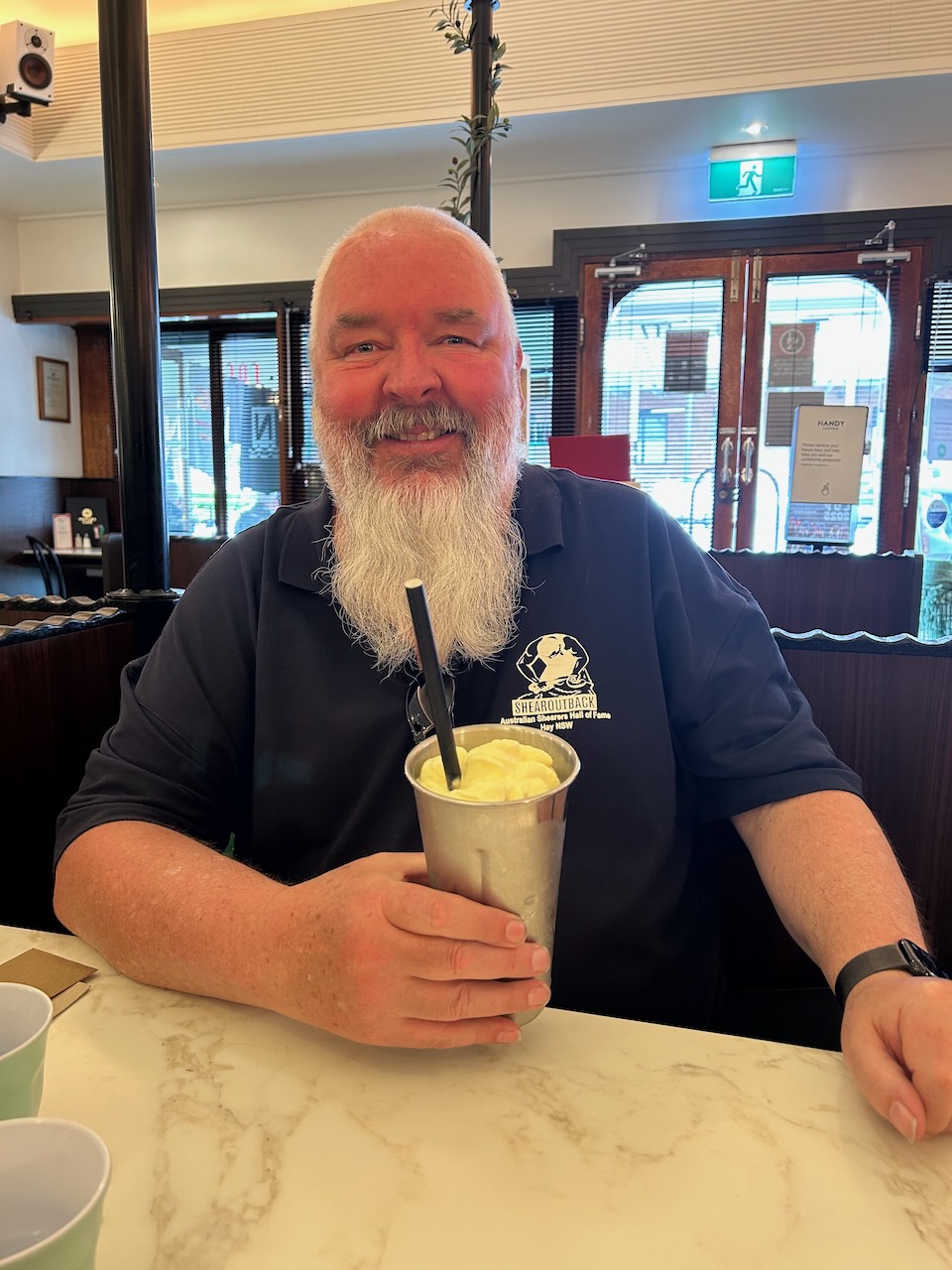
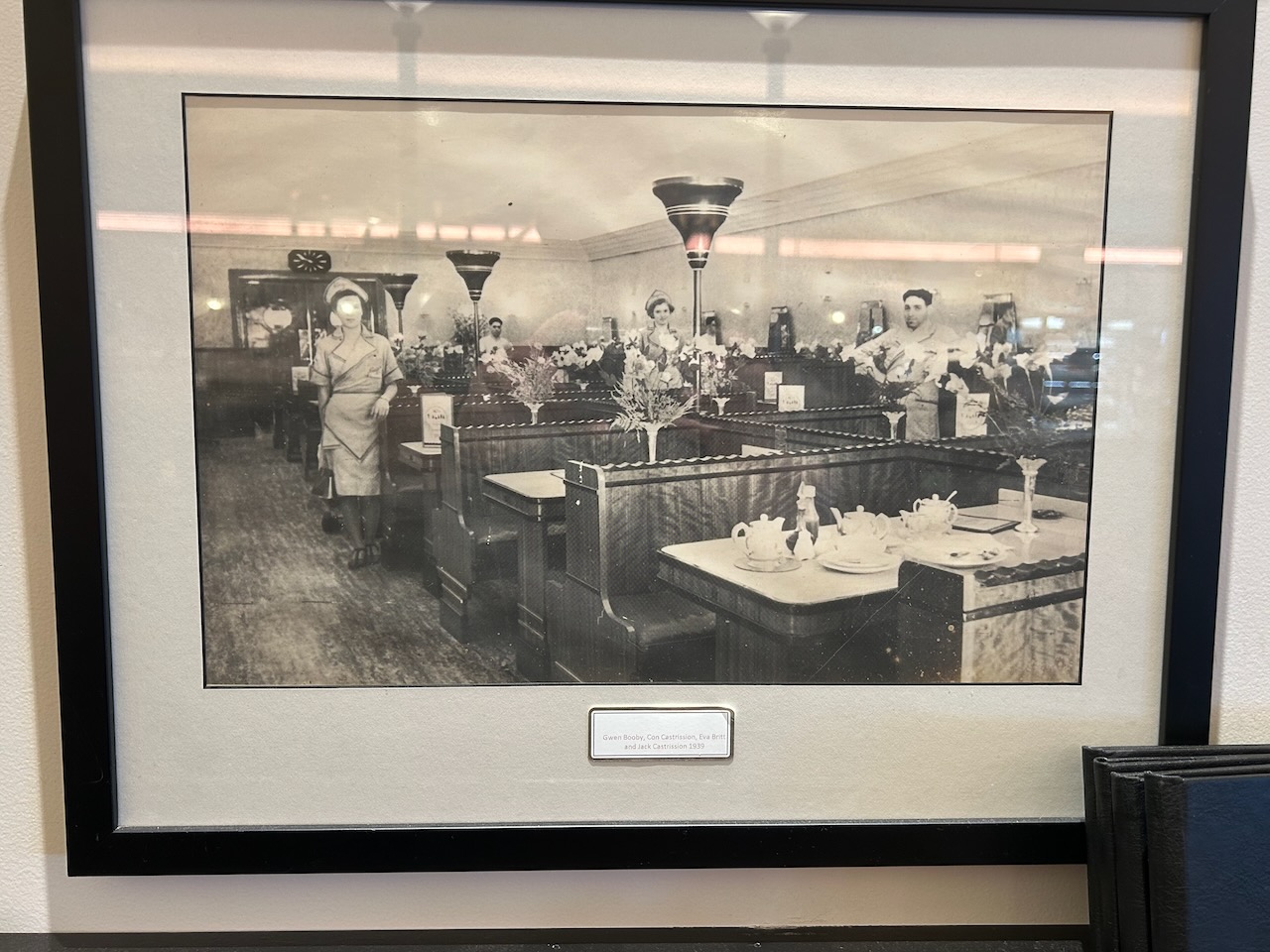
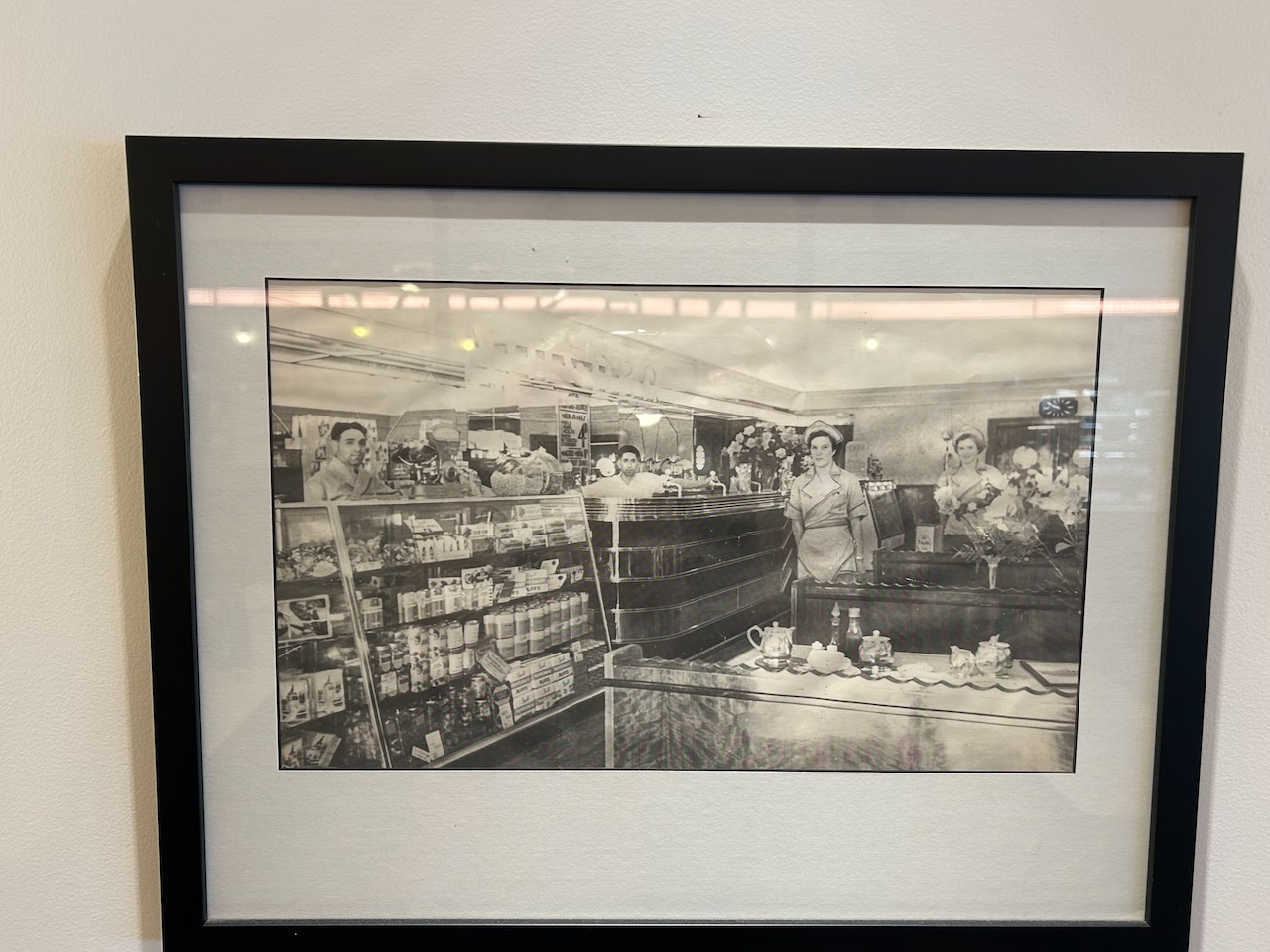
Marija and I then had lunch at Niagara Cafe. Wow, what a place. So much history, amazing decor, great food, and very friendly staff.
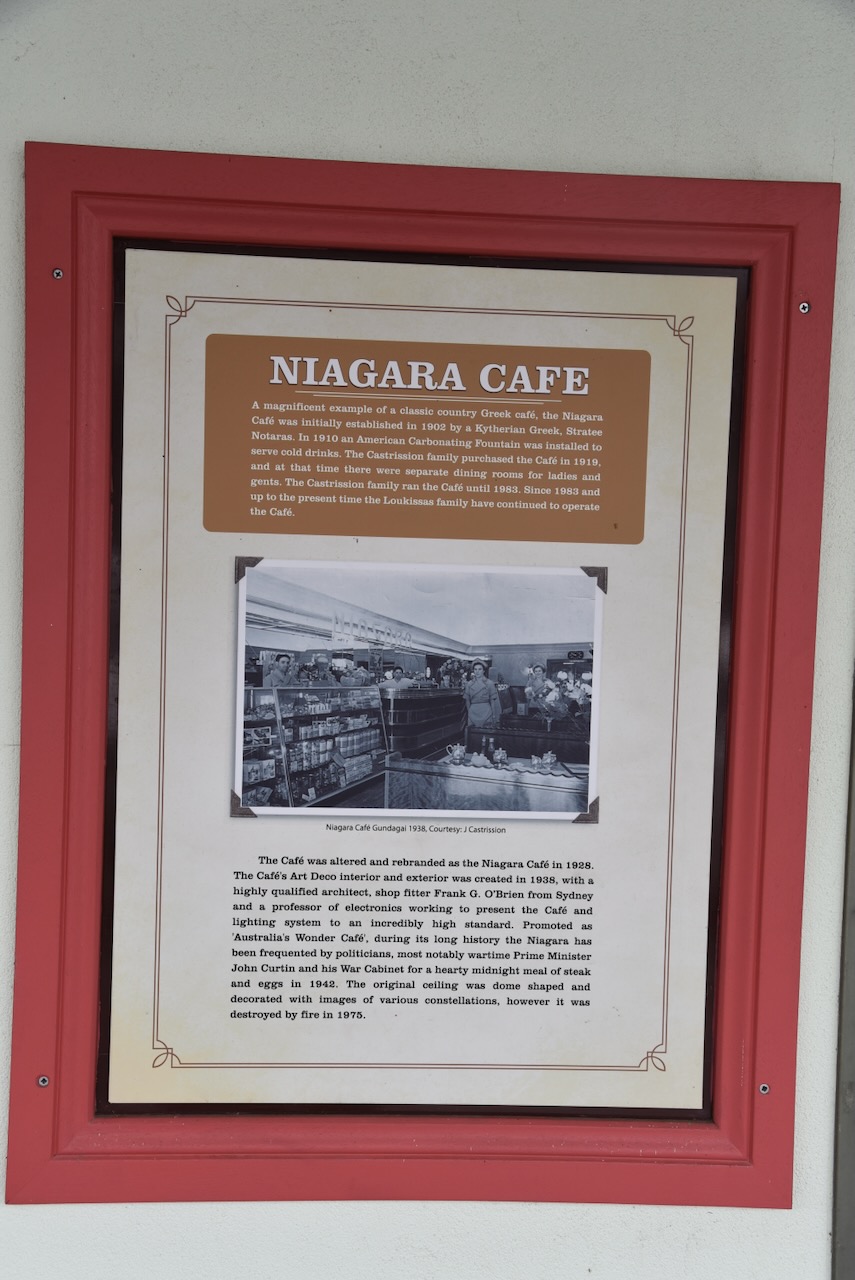
The cafe was initially established in 1902 by Stratee Notara, a Kytherian Greek. An American Carbonating Fountain was installed in 1910 to serve cold drinks. In 1919, the Castrission family purchased the cafe. At that time, there were separate dining rooms for the ladies and gentlemen. In 1928, the cafe was altered and rebranded as the Niagara Cafe.
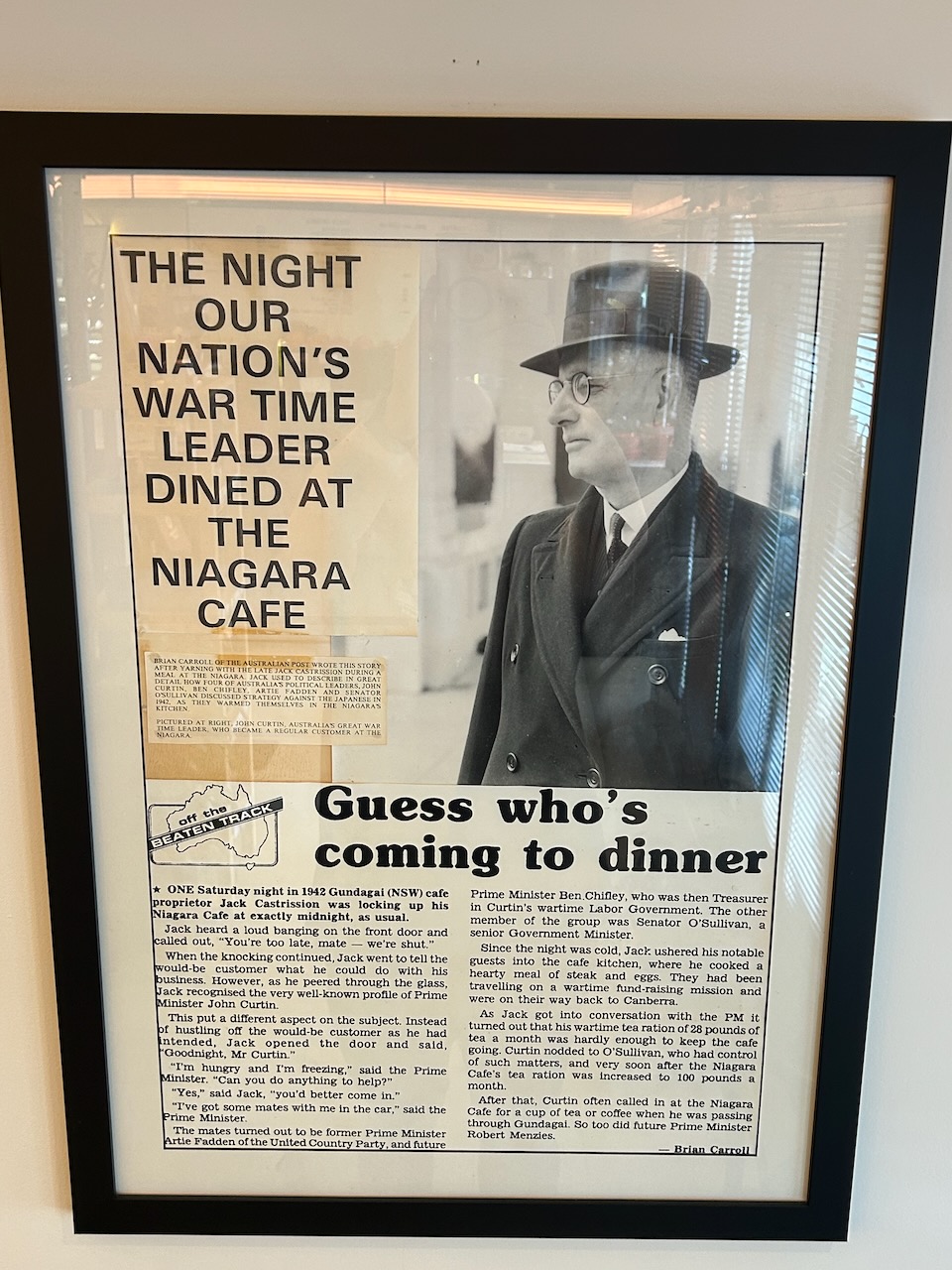
In 1938, the cafe’s Art Deco interior and exterior were created with the services of a highly qualified architect, shop fitter Frank G. O’Brien from Sydney and a professor of electronics working to present the cafe and lighting system to an incredibly high standard. The Niagara Cafe was promoted as ‘Australia’s Wonder Cafe’. It has been frequented by politicians, including Prime Minister John Curtin and his War Cabinet during the 1940s.
The cafe’s original ceiling was dome-shaped and was decorated with images of various constellations. Sadly, it was destroyed by fire in 1975.
The Castrission family operated the cafe until 1983. Since that time, the Loukissas family have operated the cafe.
After lunch, we strolled down the main street and visited the Australian Pen Museum. It is located in the old Fry’s Assembly Hall, which was built in 1881 as an entertainment venue for Fry’s Family Hotel, which is located opposite. (Gundagai Visitor Info Centre n.d.)
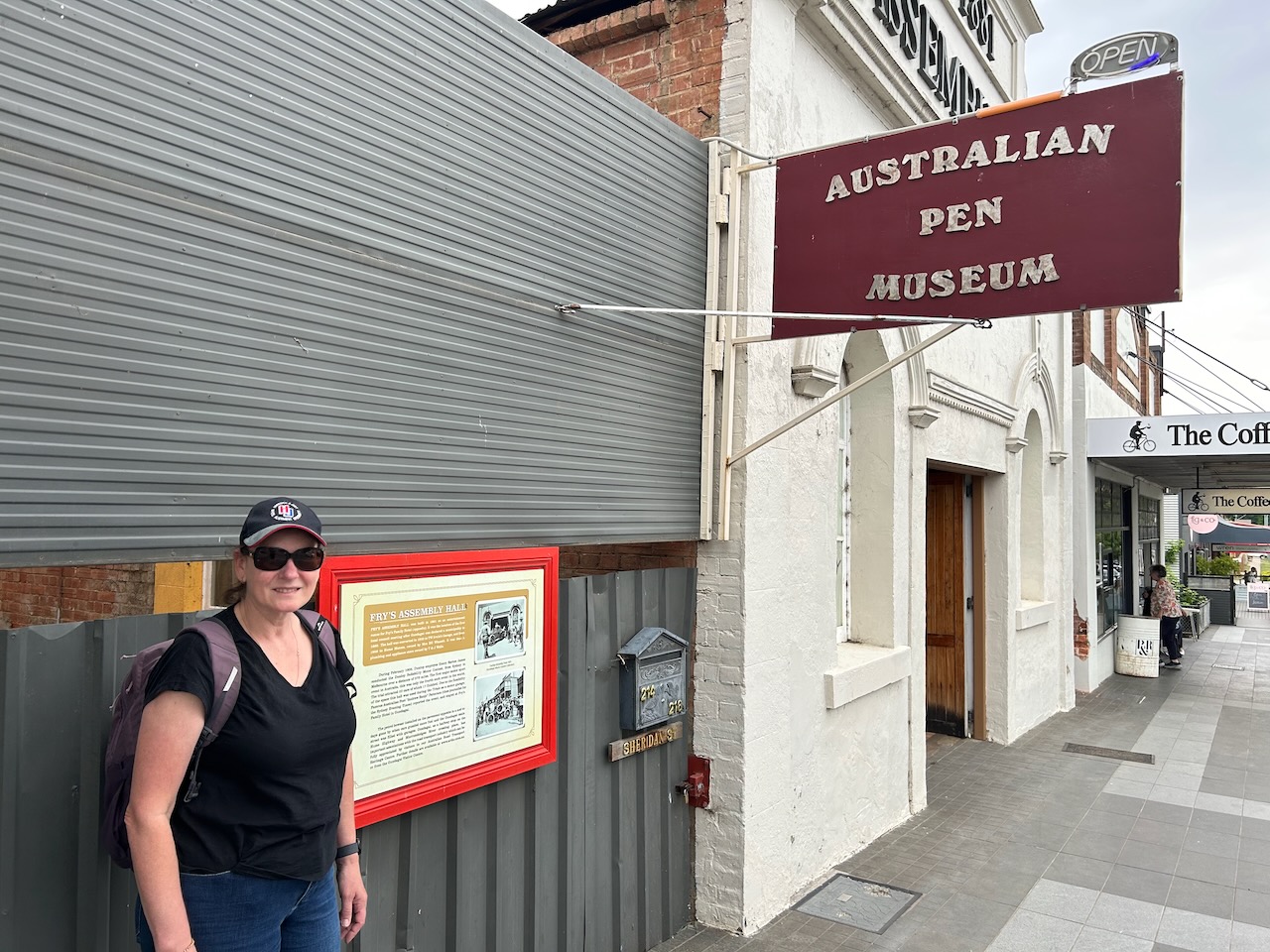
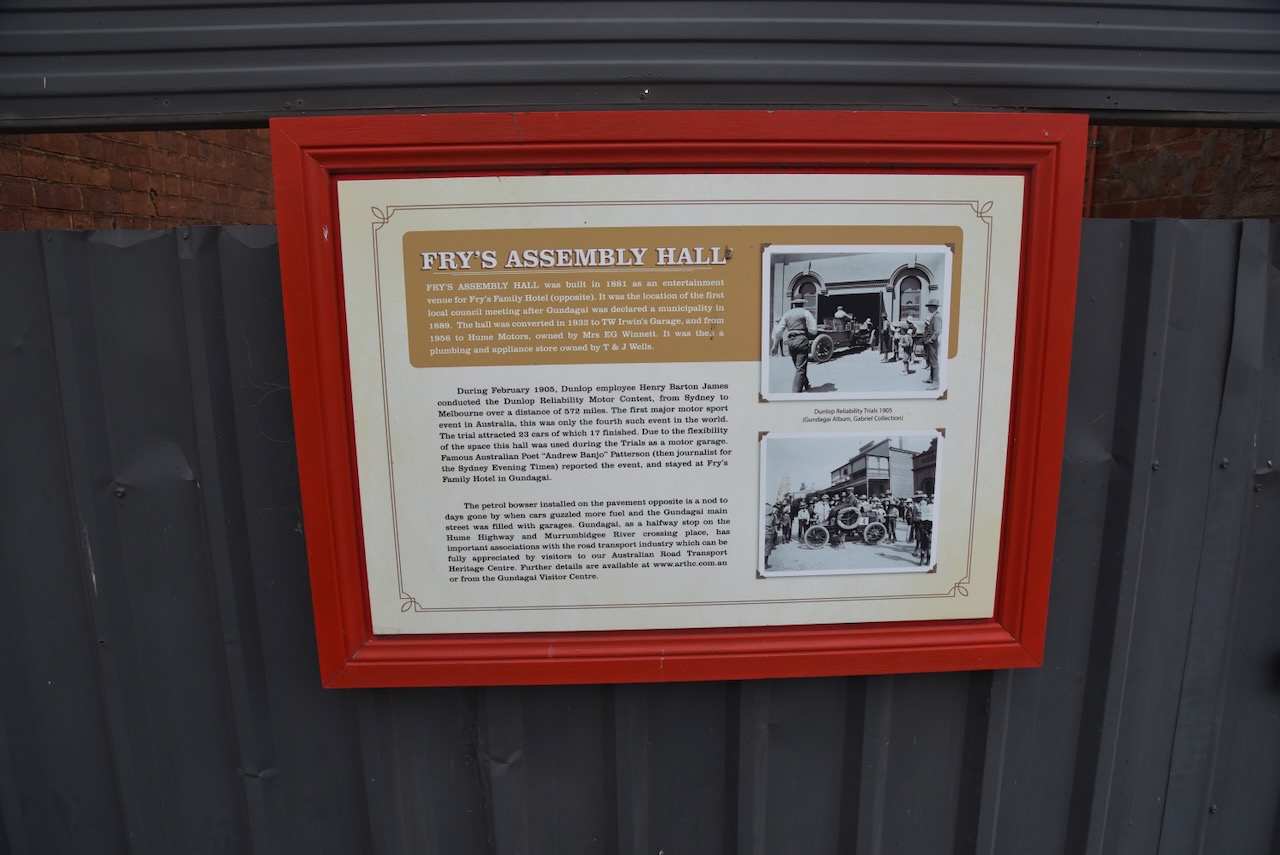
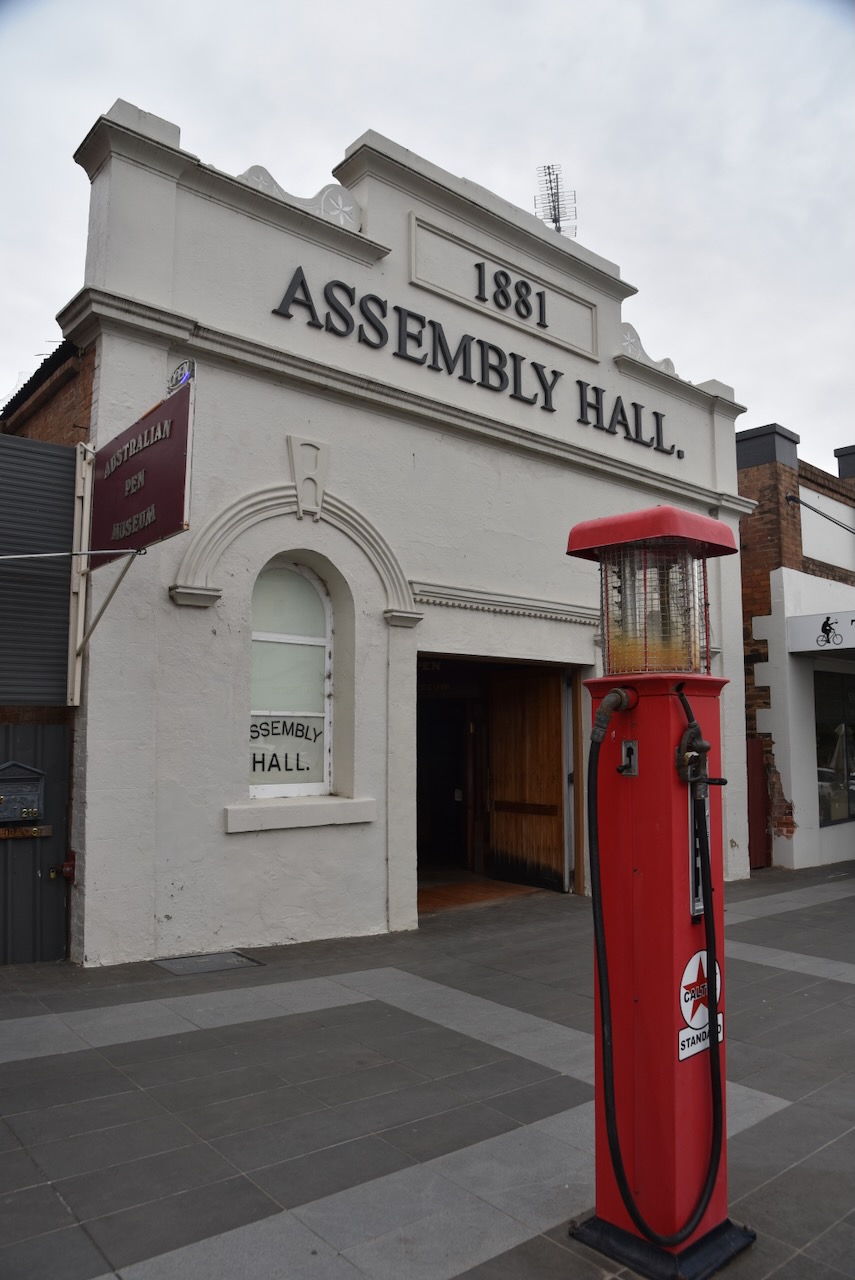
The hall was the location of the first local council meeting after Gundagai was declared a municipality in 1889. (Gundagai Visitor Info Centre n.d.)

Above: item from Australian Town and Country Journal, Sat 16 Nov 1889. Image c/o Trove
In 1932, the hall was converted to T.W. Irwin’s Garage. From 1956, it became Hume Motors, owned by Mrs E.G. Winnett. It was then used as a plumbing and appliance store owned by T & J Wells. (Gundagai Visitor Info Centre n.d.)
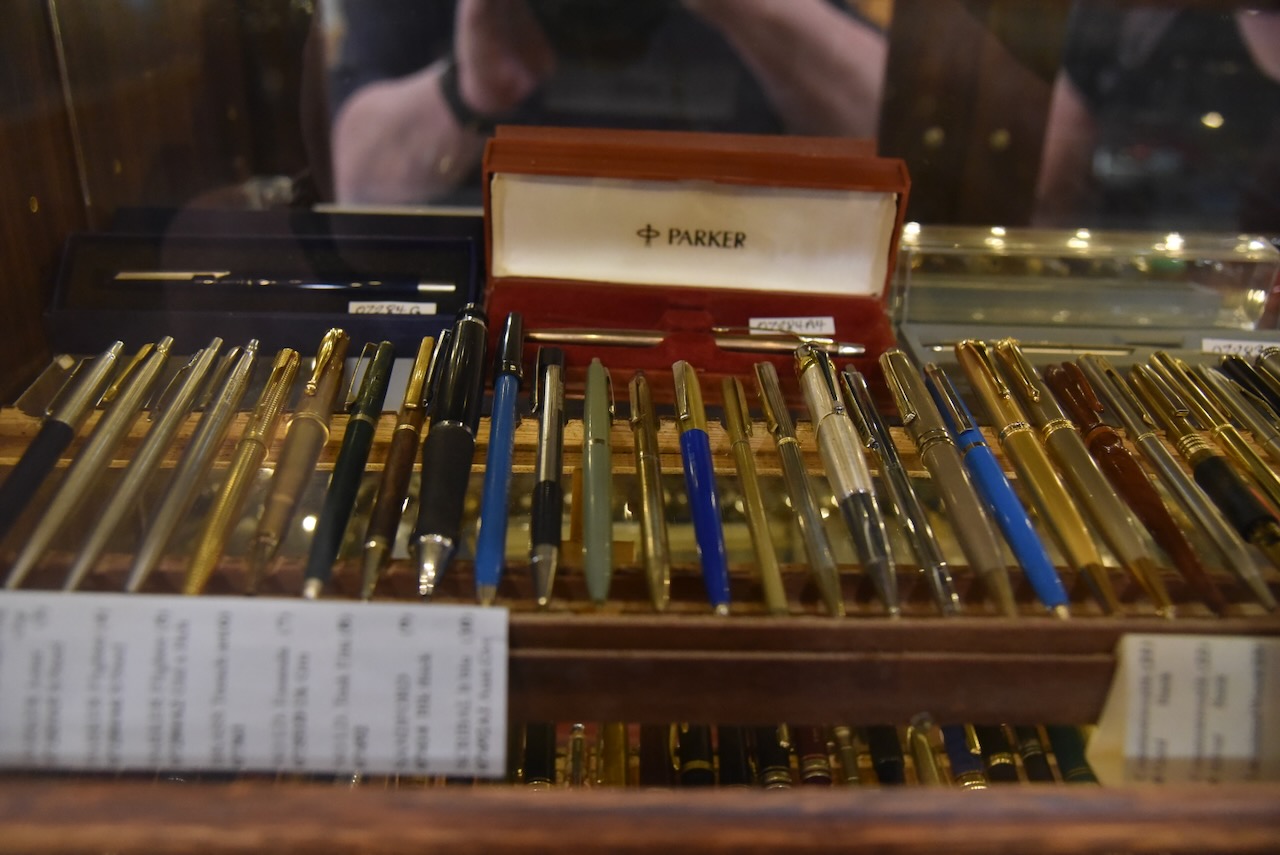
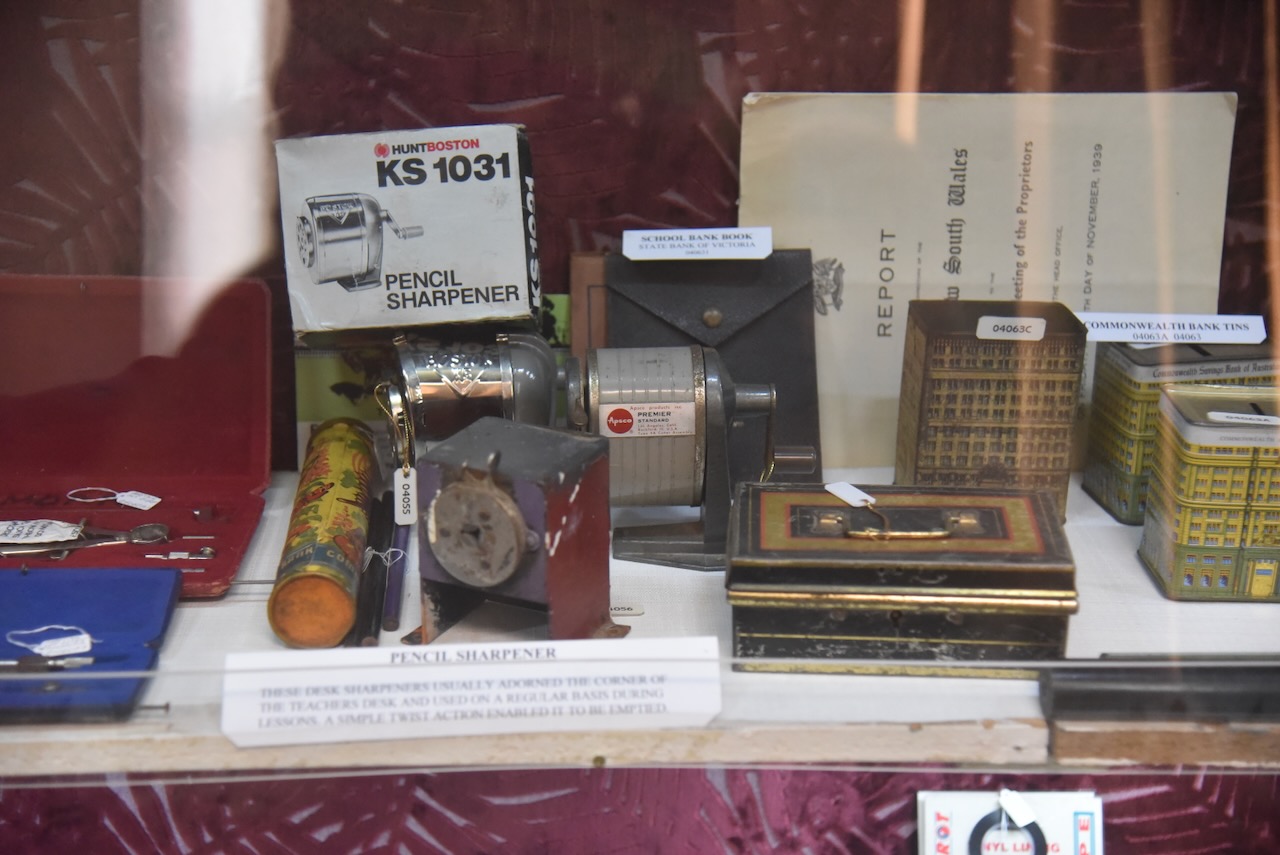
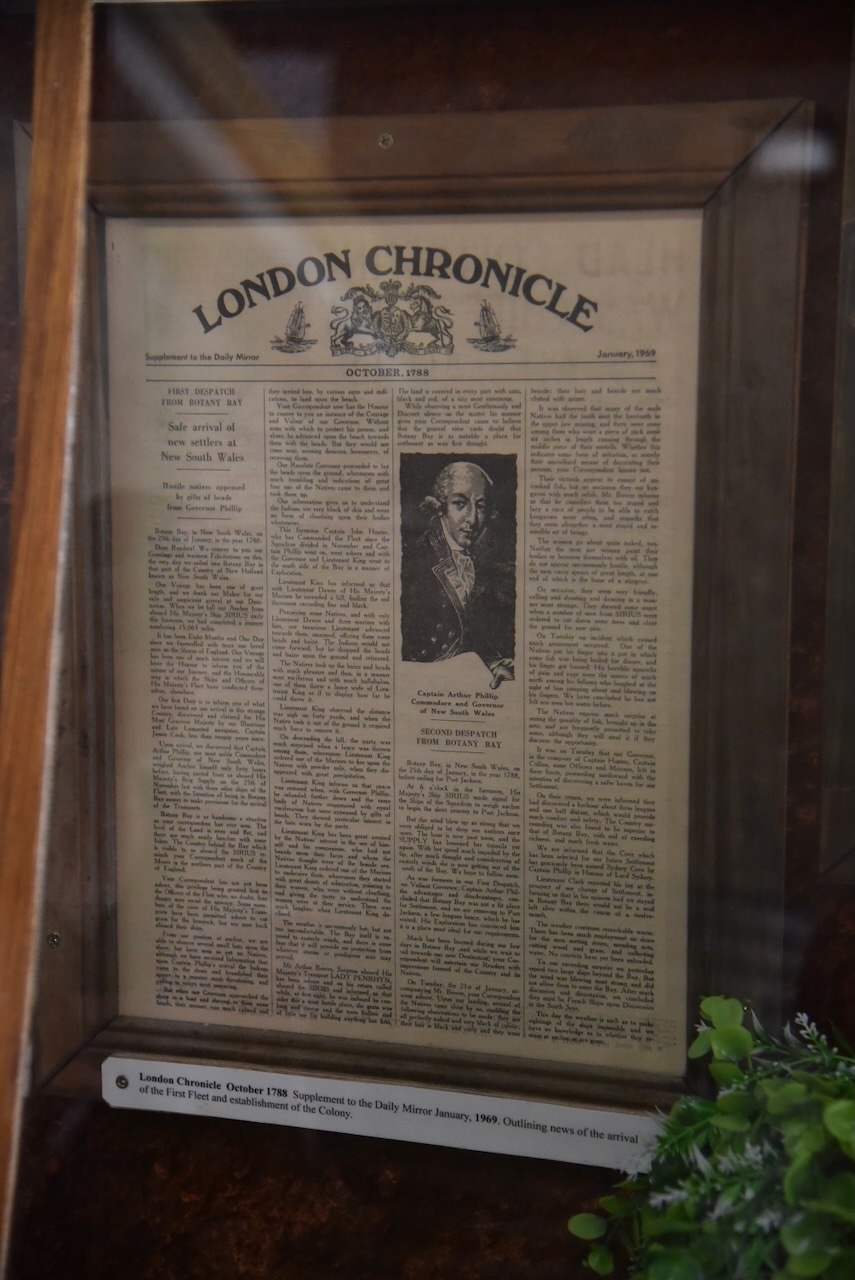
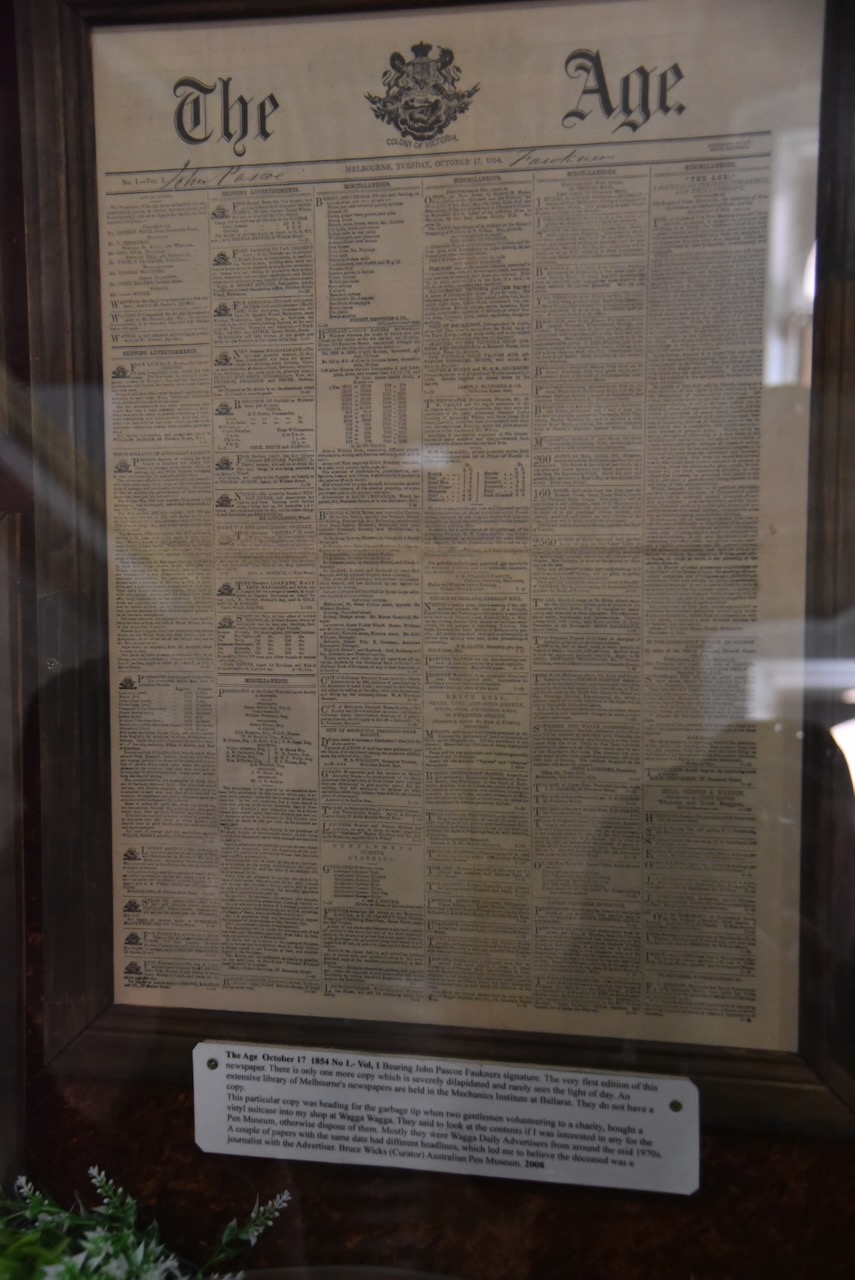
We spent quite some time wandering around the museum and chatting to the owner, admiring his amazing collection.
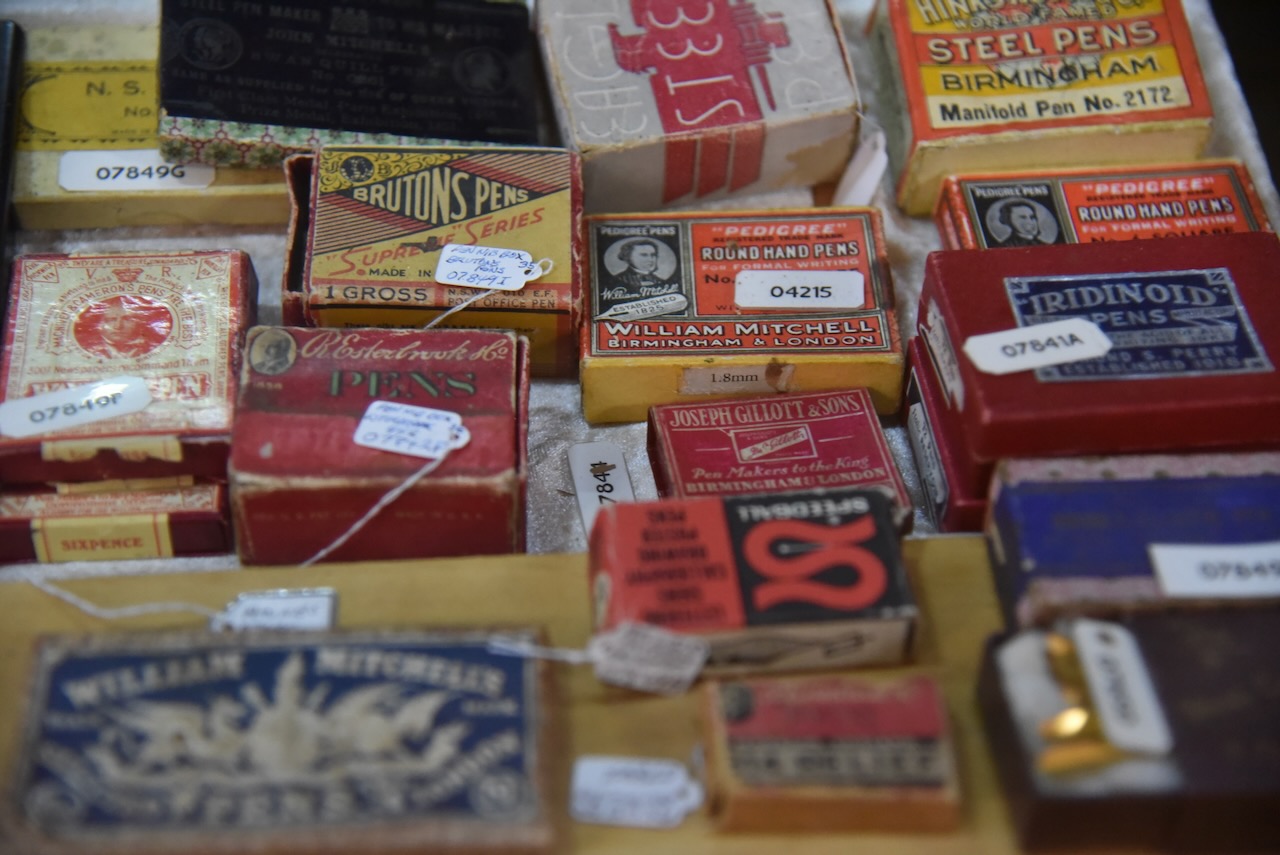
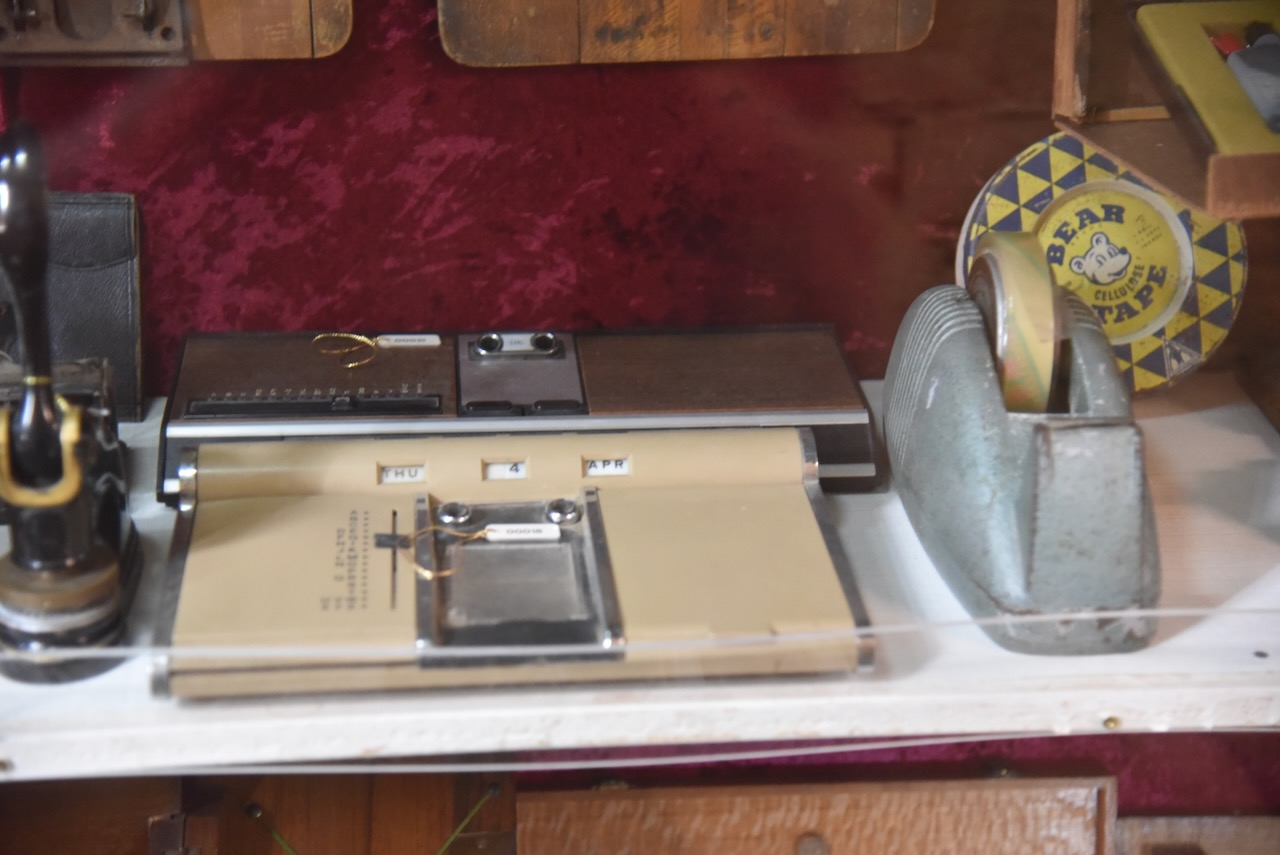
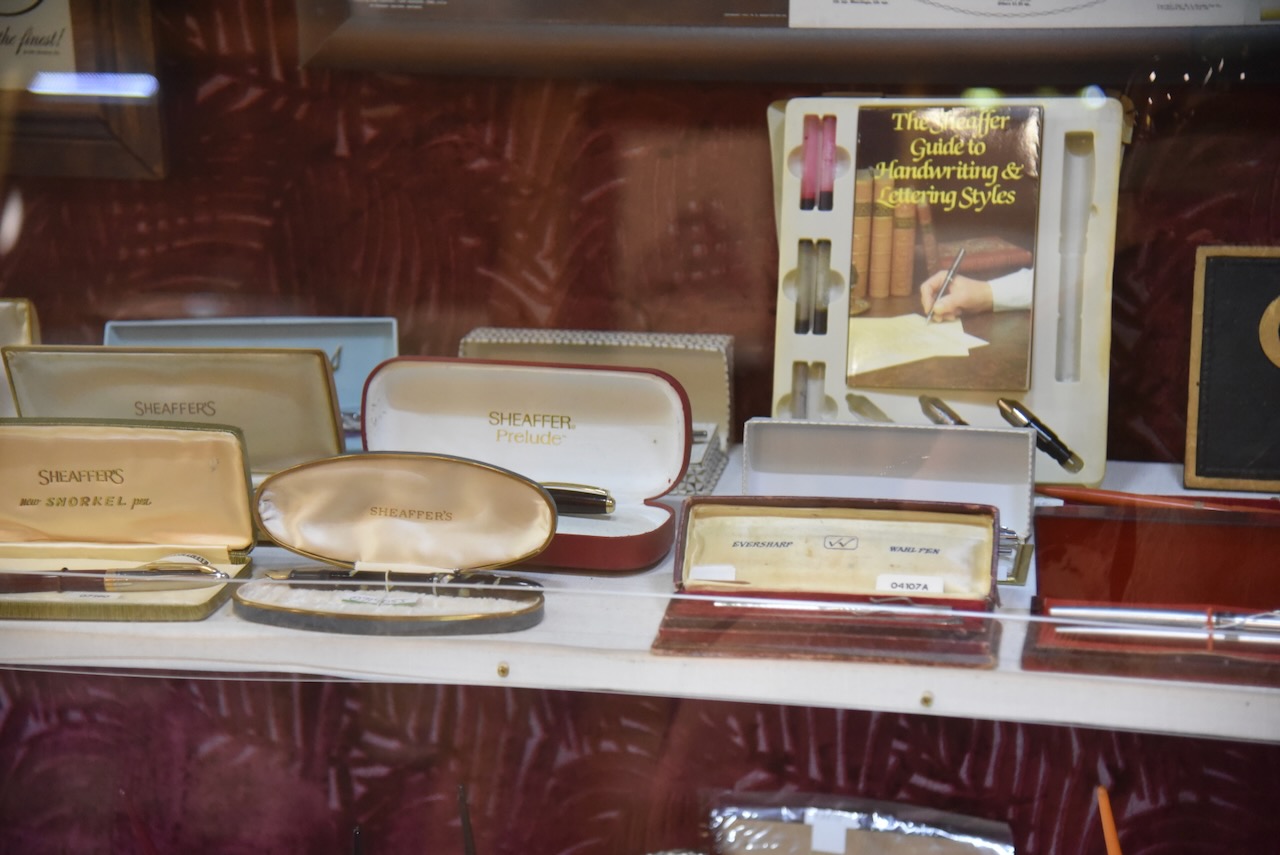
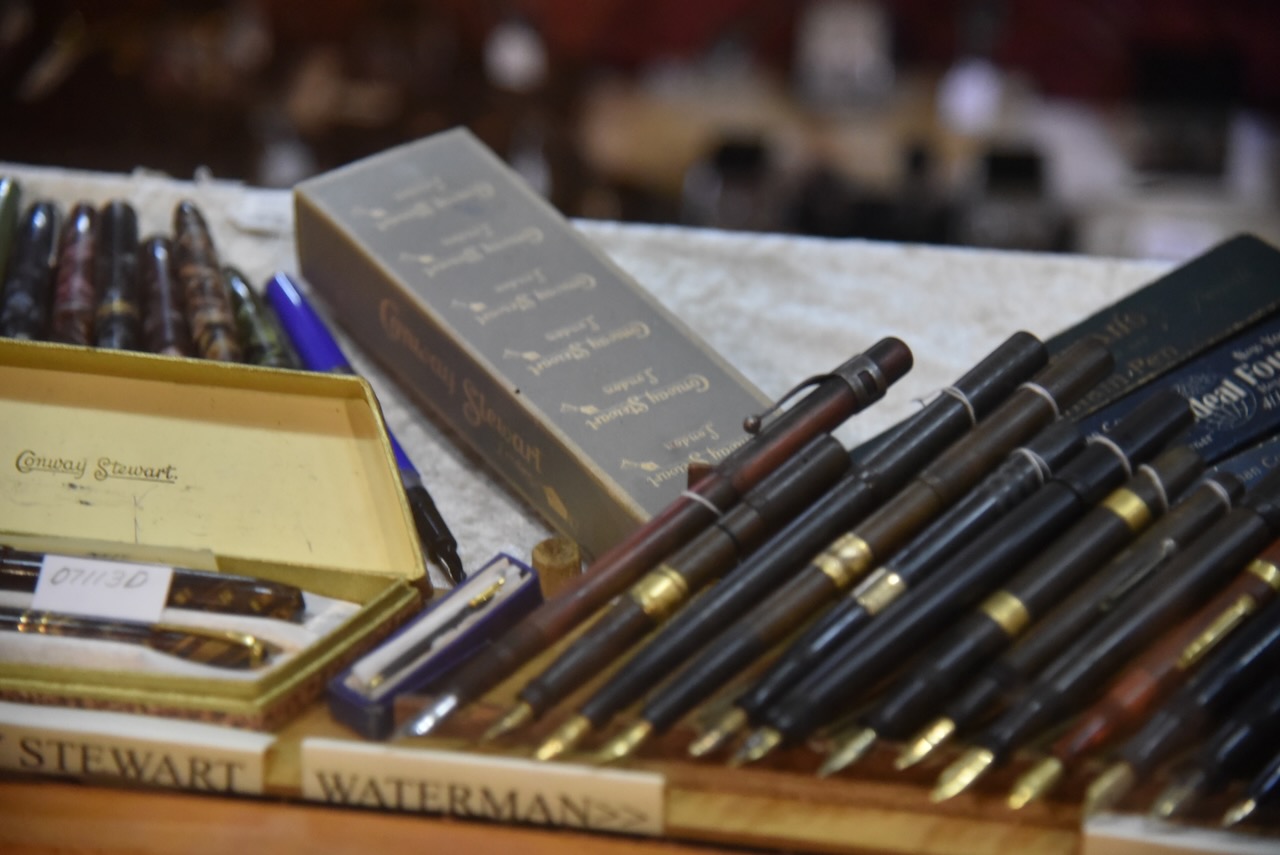
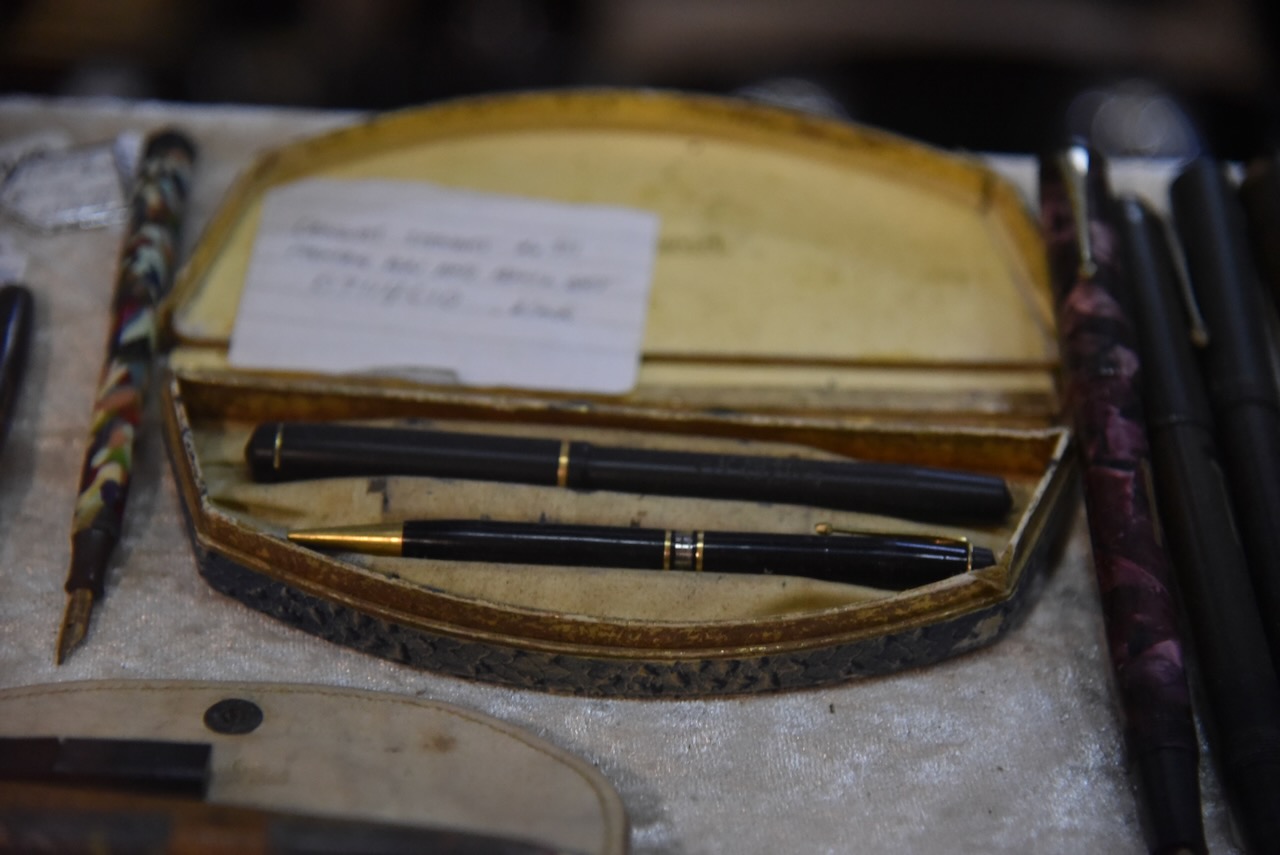
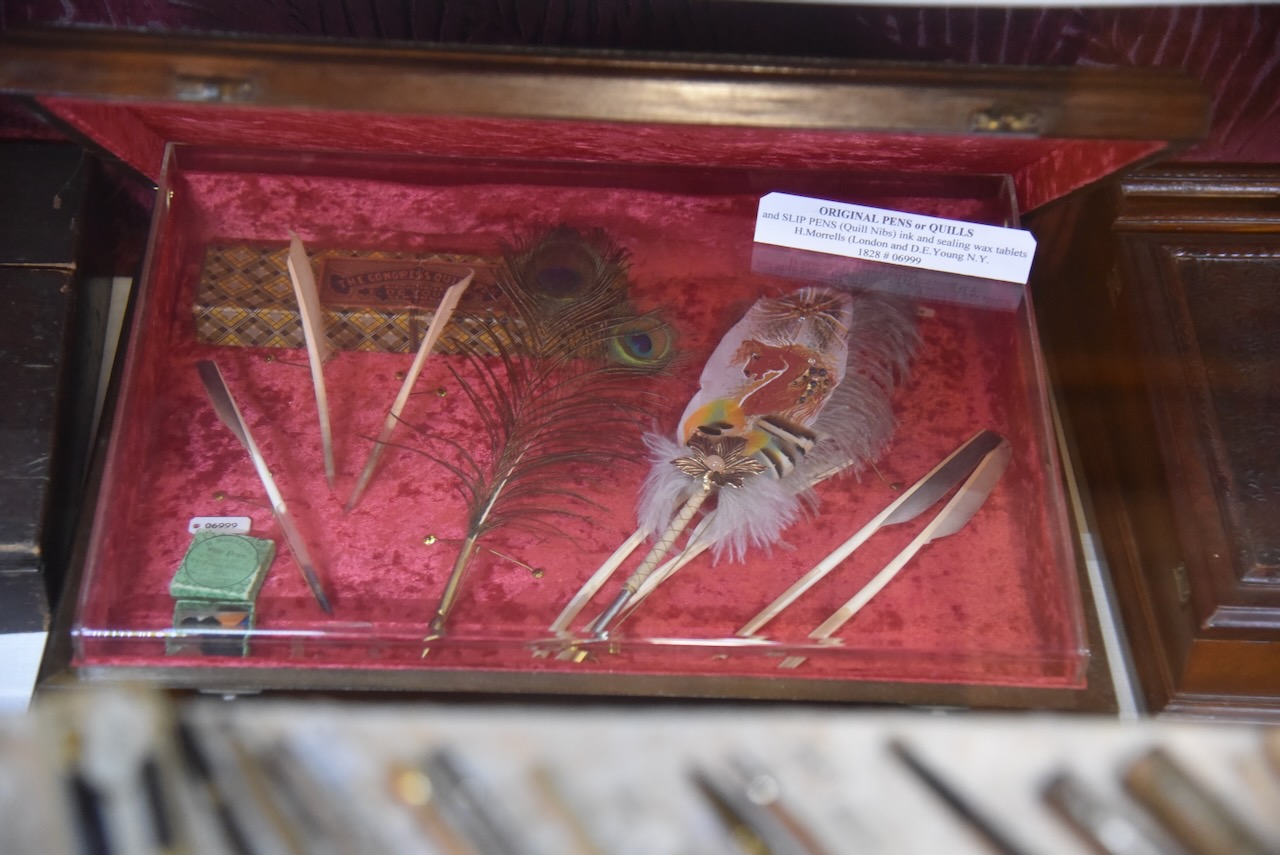
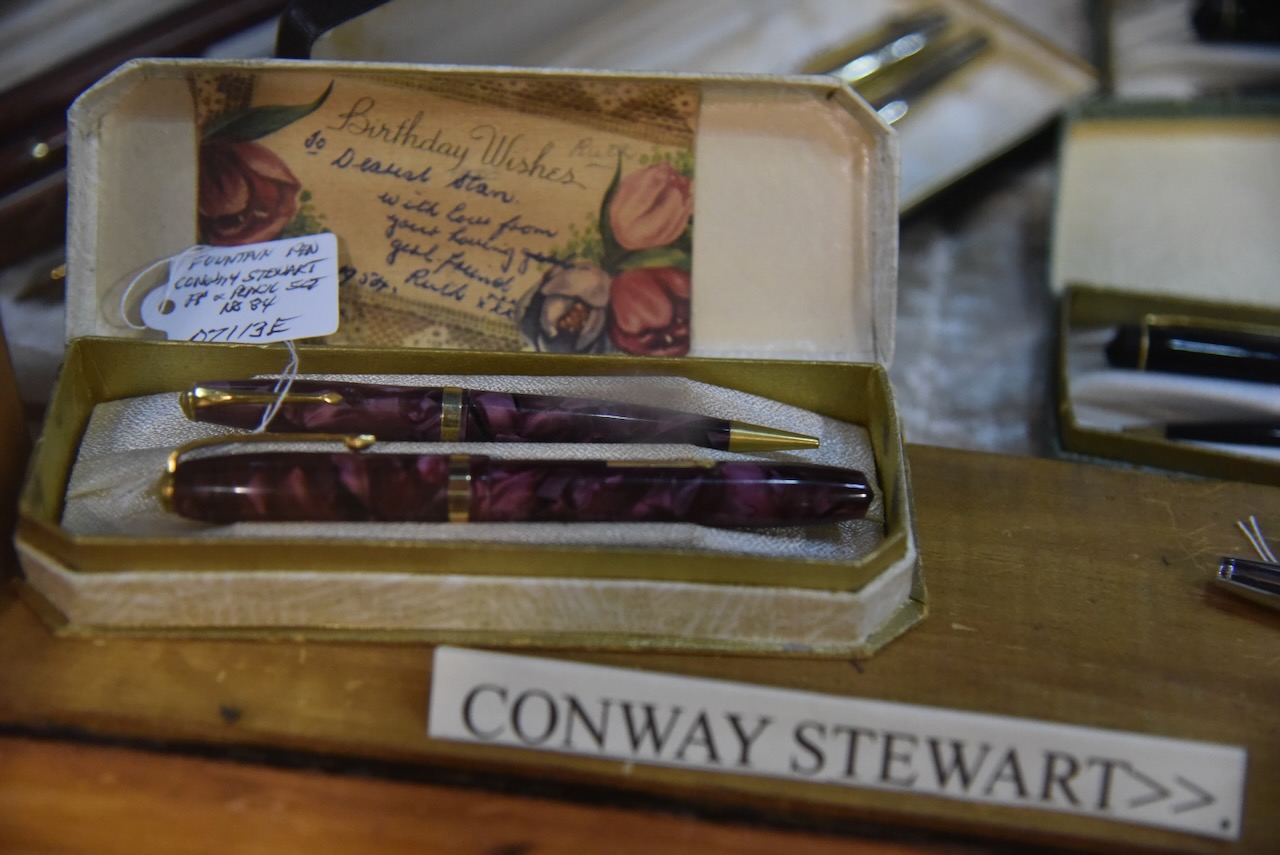
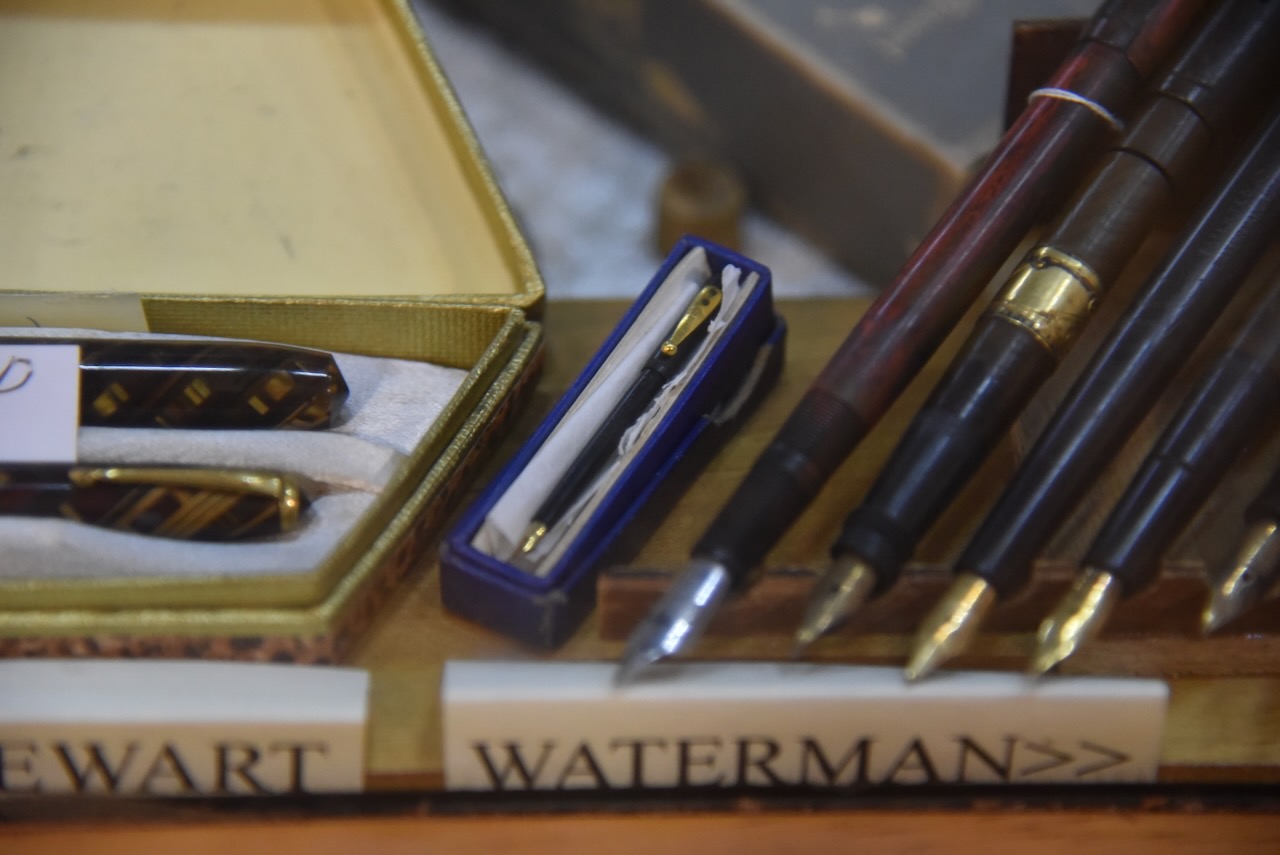
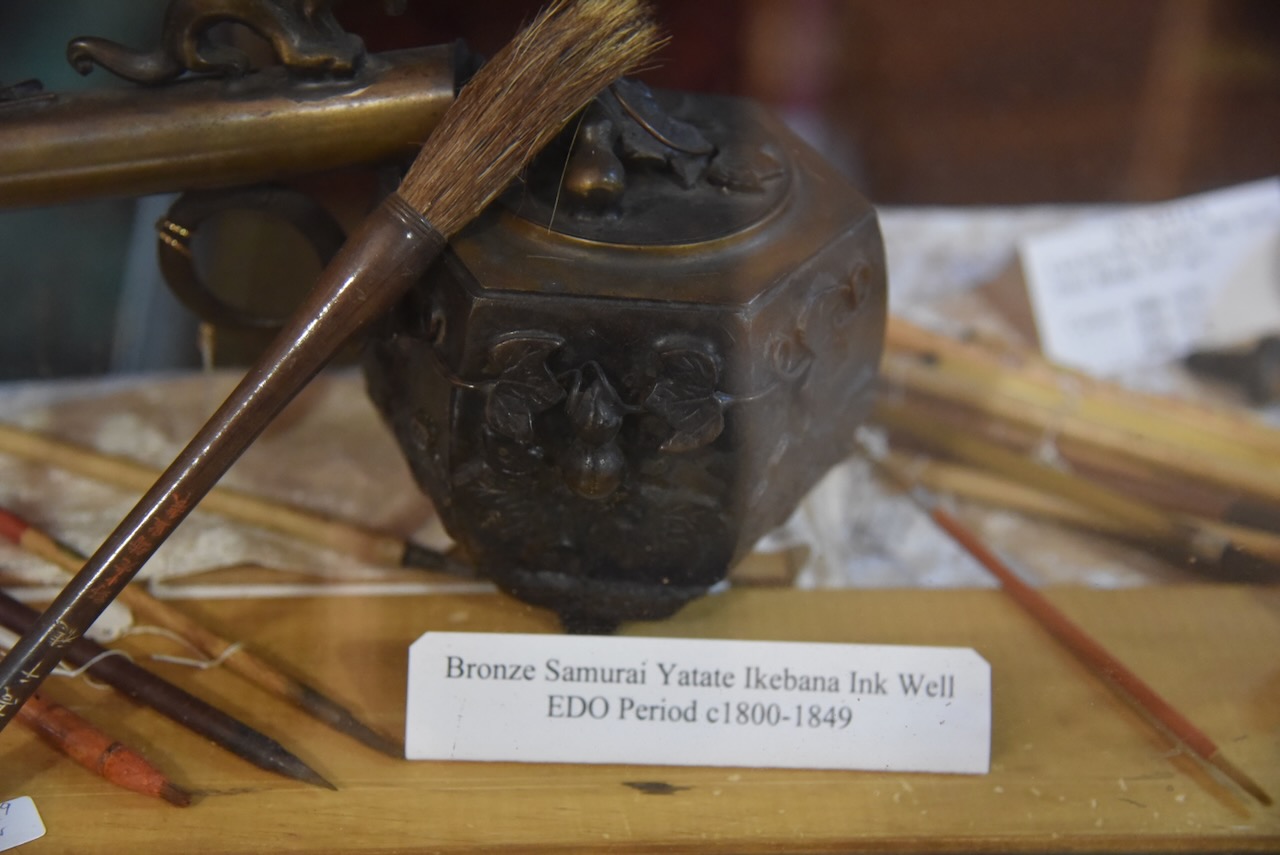
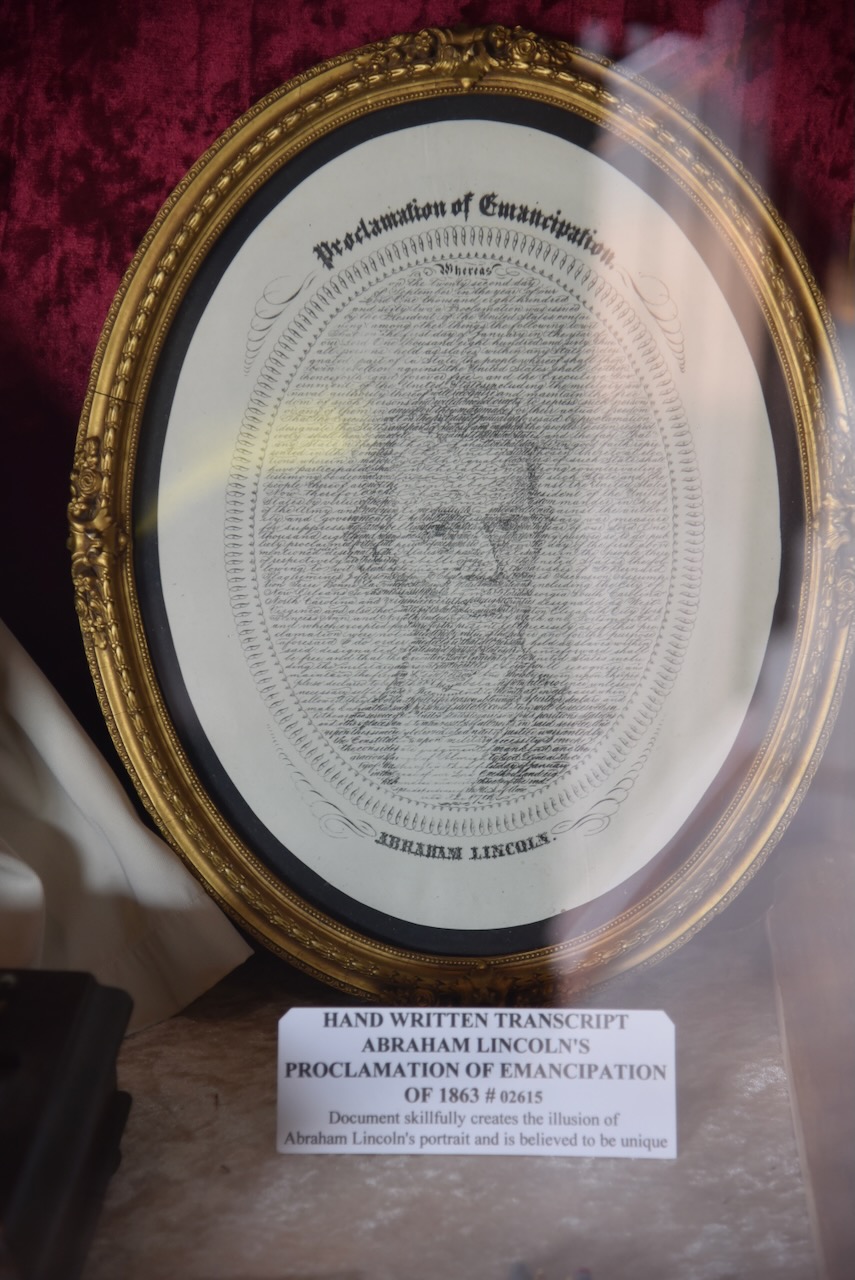
The museum also has several historic newspapers on display.
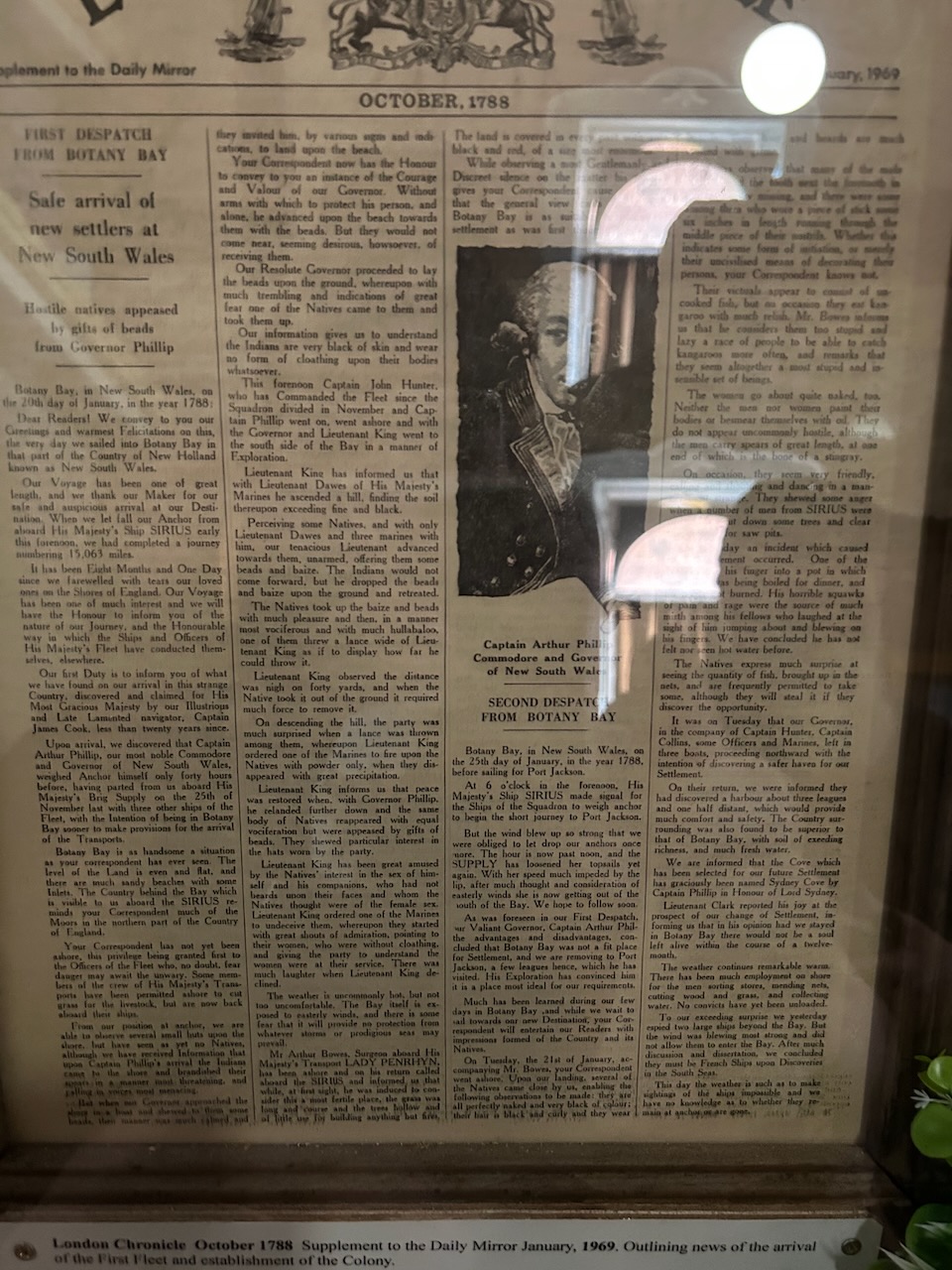
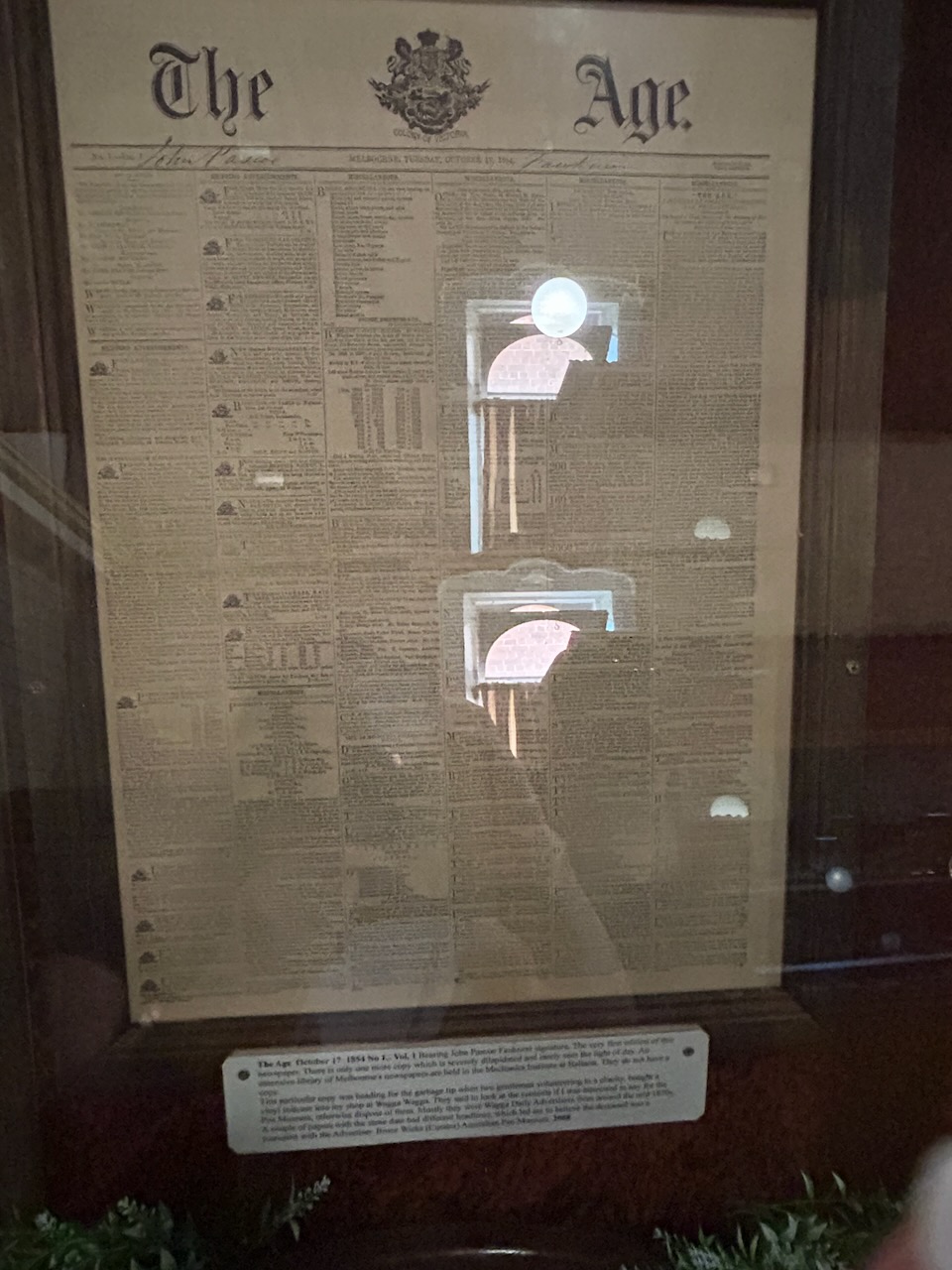
The museum includes a 1920s school.
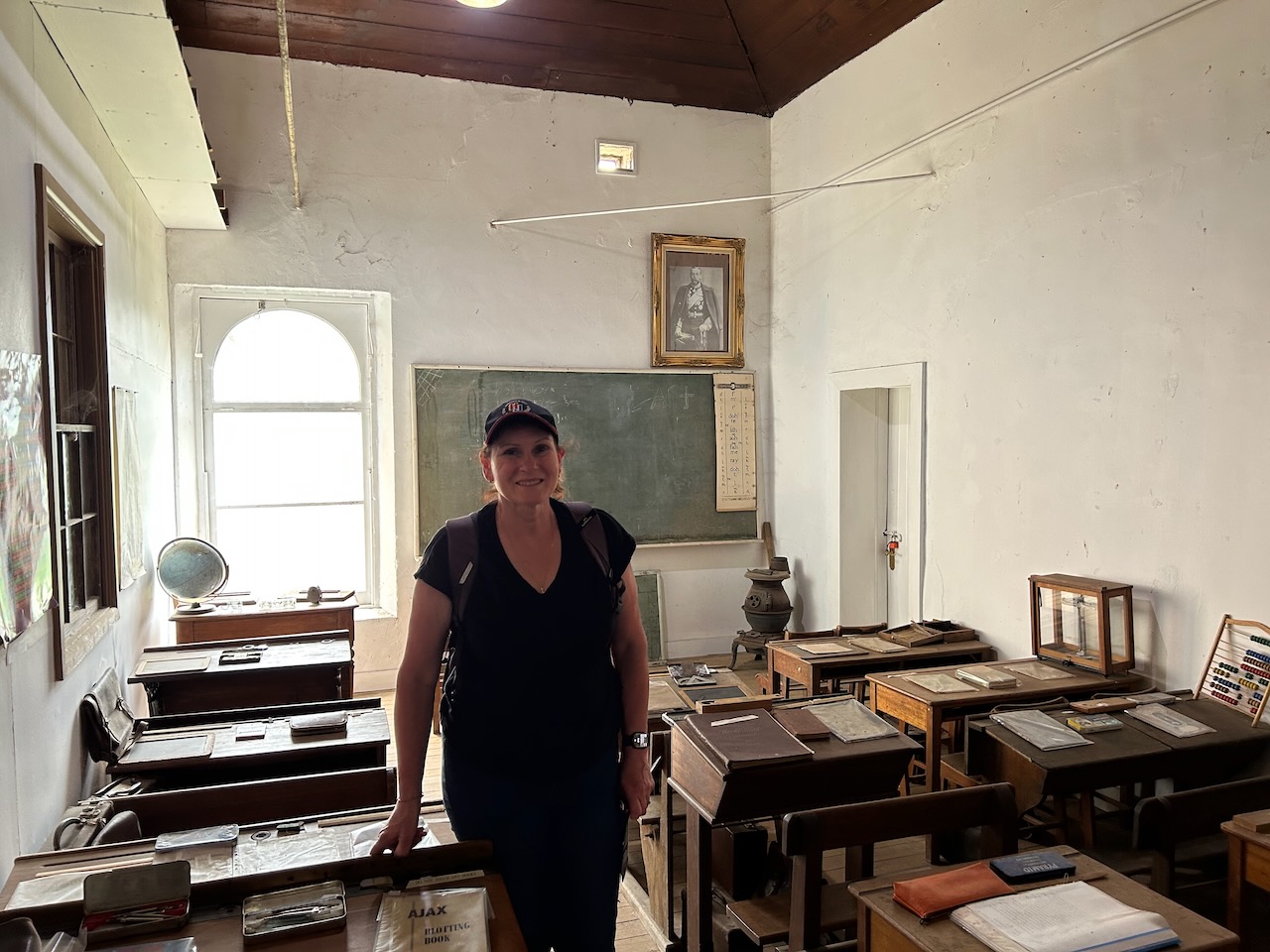
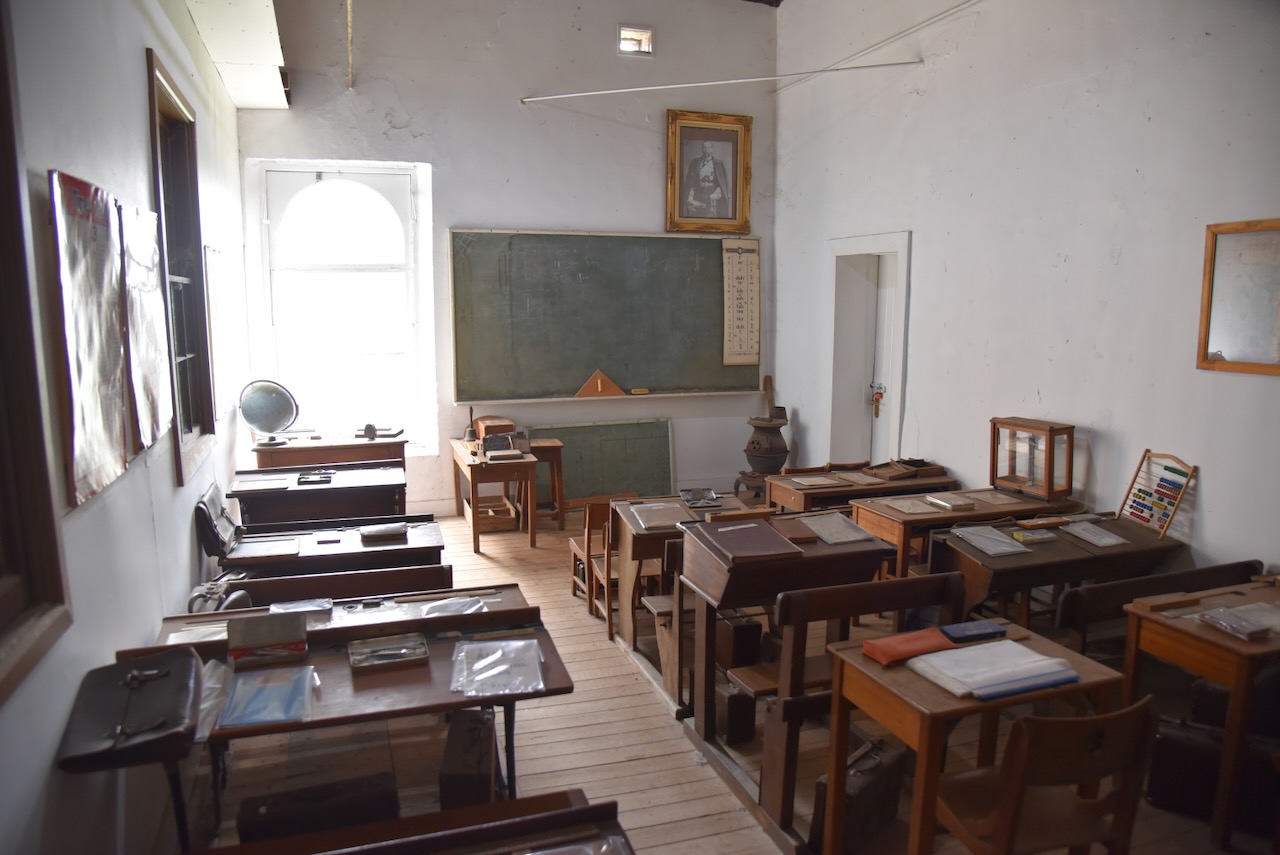
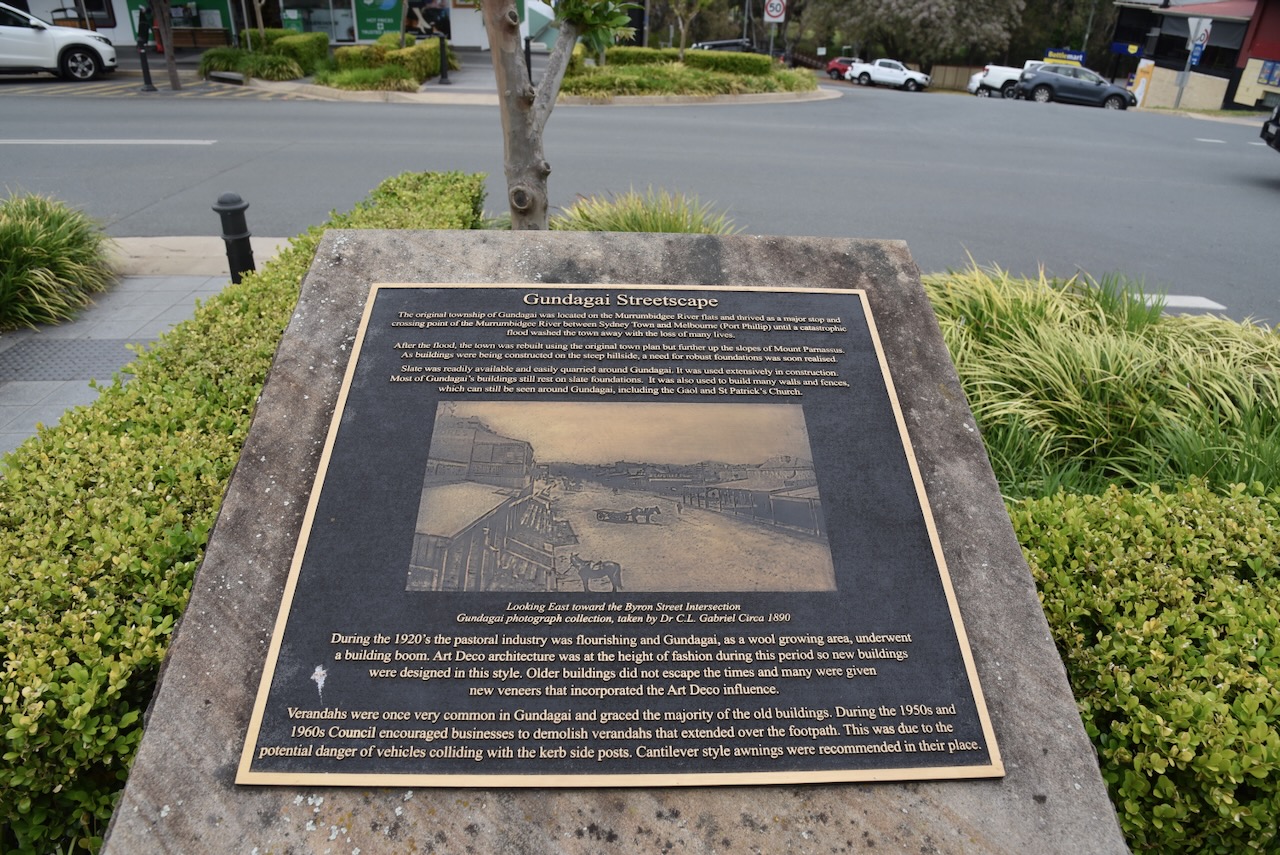
We left the museum and continued our stroll up and down Gundagai’s main street.
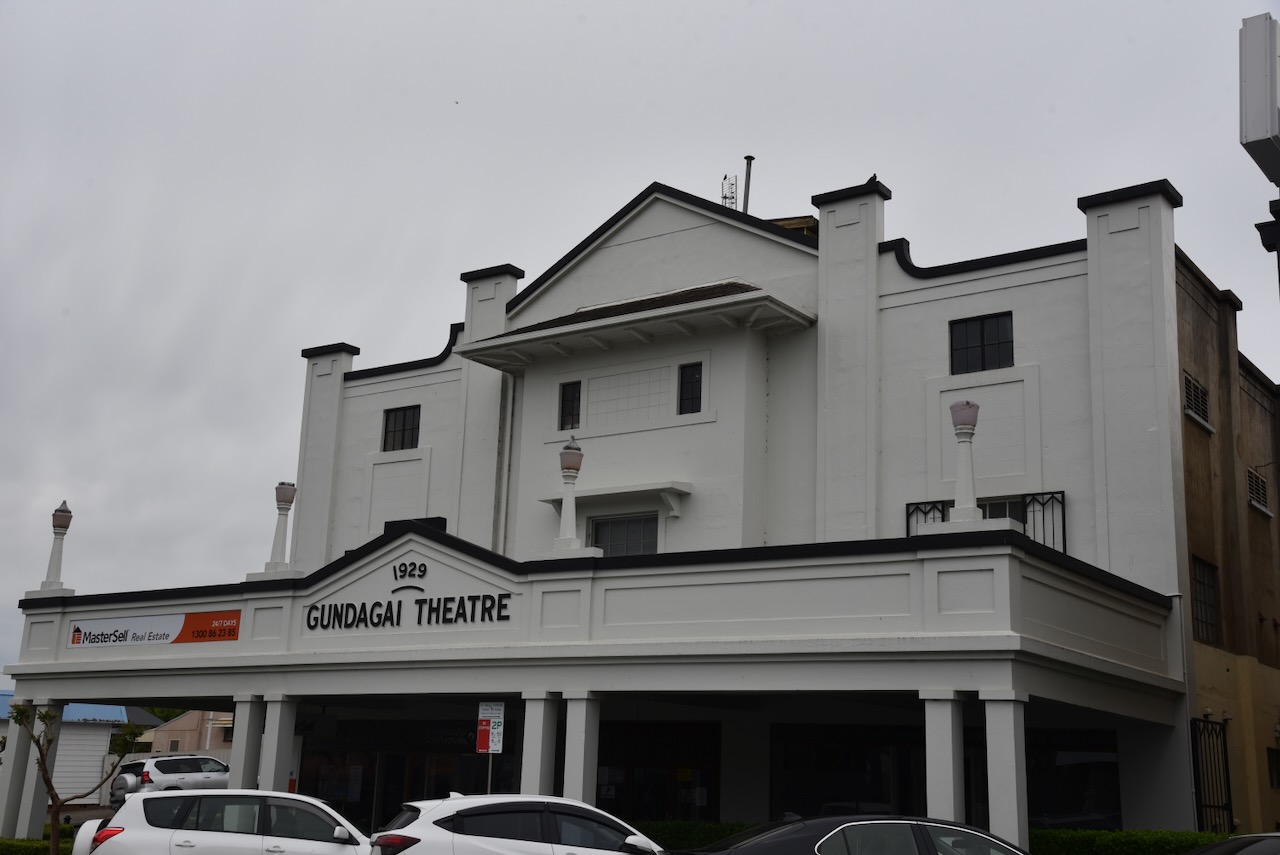
The Gundagai Theatre was built in 1928. with movie screenings commencing on the 15th day of June 1929. The theatre contained a total of 524 seats. Movie screenings ceased during the 1980s. (Gundagai Theatre 2026)
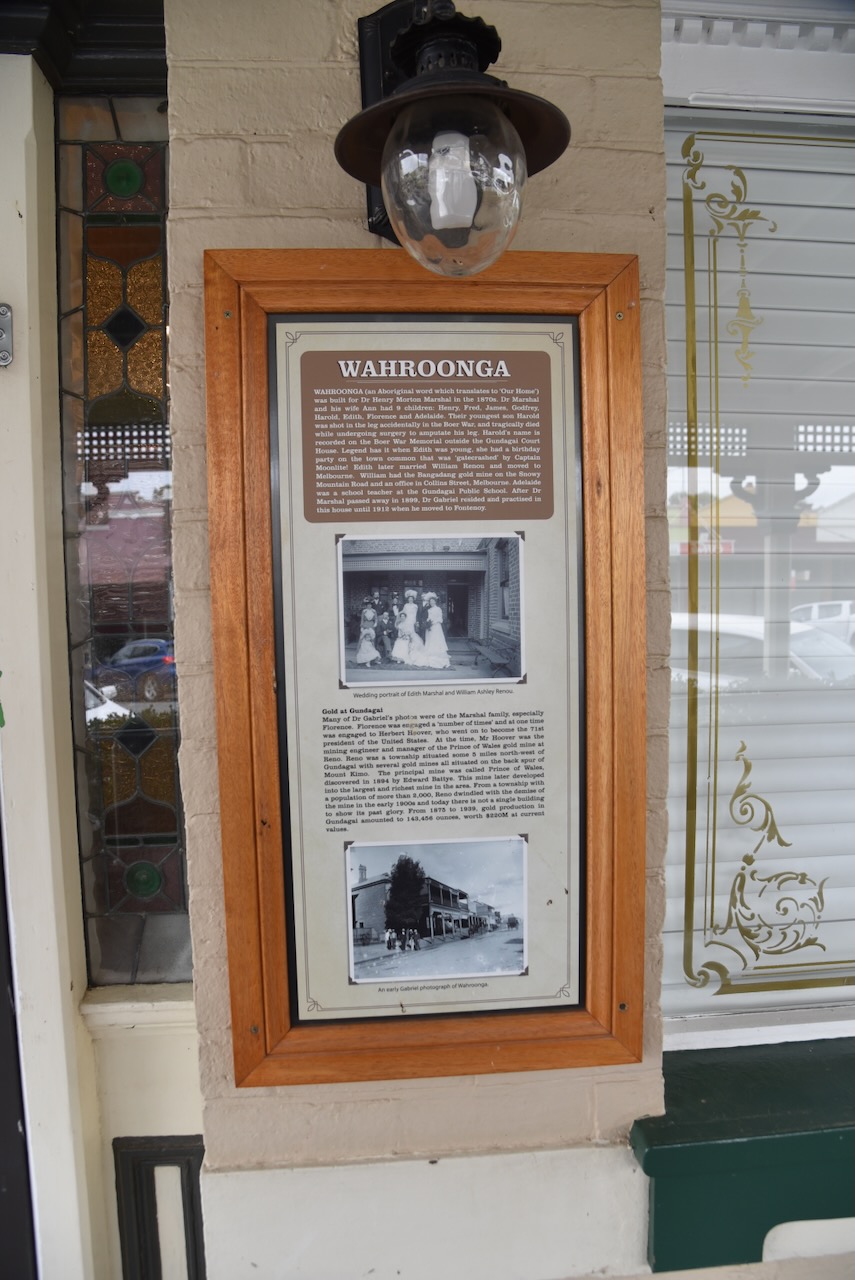
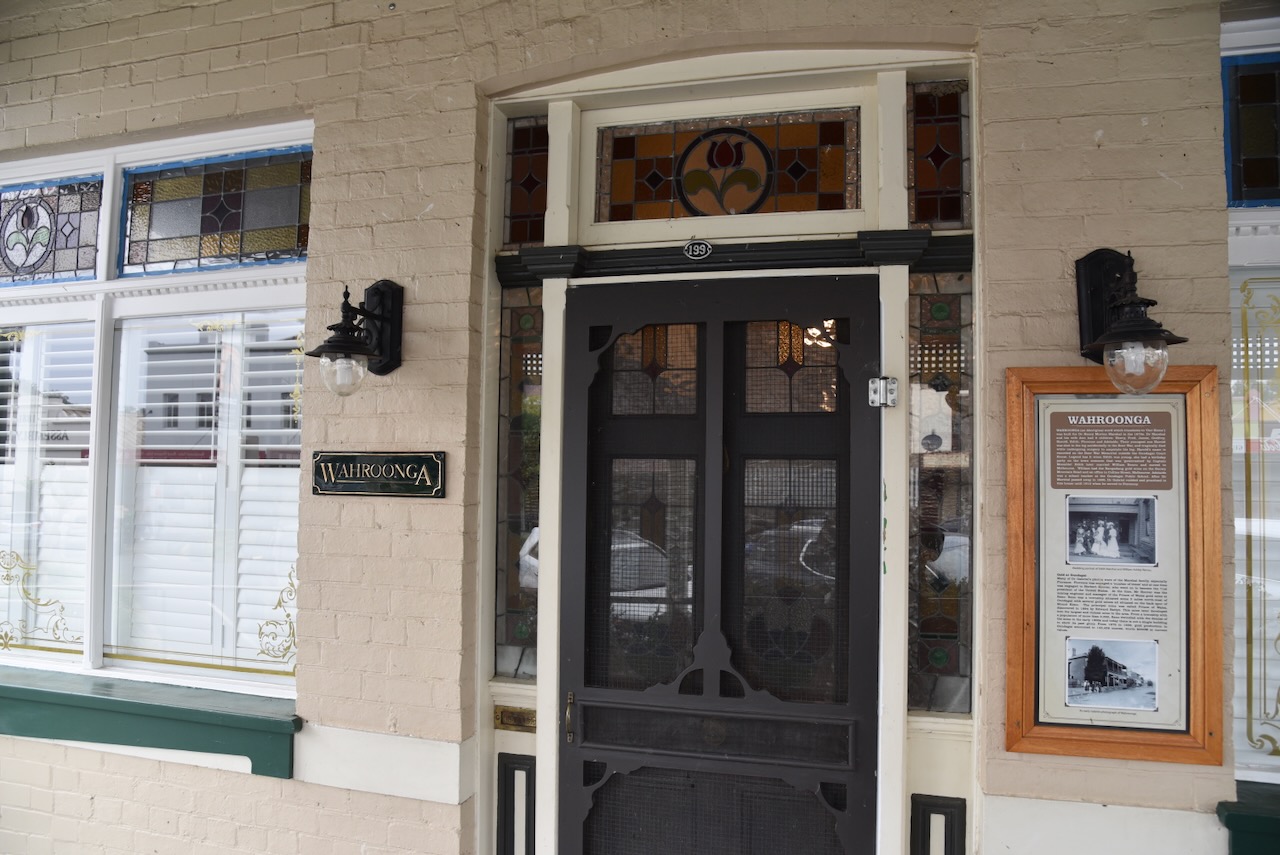
Wahroonga was built for Dr Henry Morton Marshall in the 1870s. Wahroonga is an Aboriginal word meaning ‘Our Home.’ Dr Marshall and his wife had 9 children. Their youngest son, Harold, was accidentally shot in the leg in the Boer War. He died whilst undergoing surgery to amputate his leg.
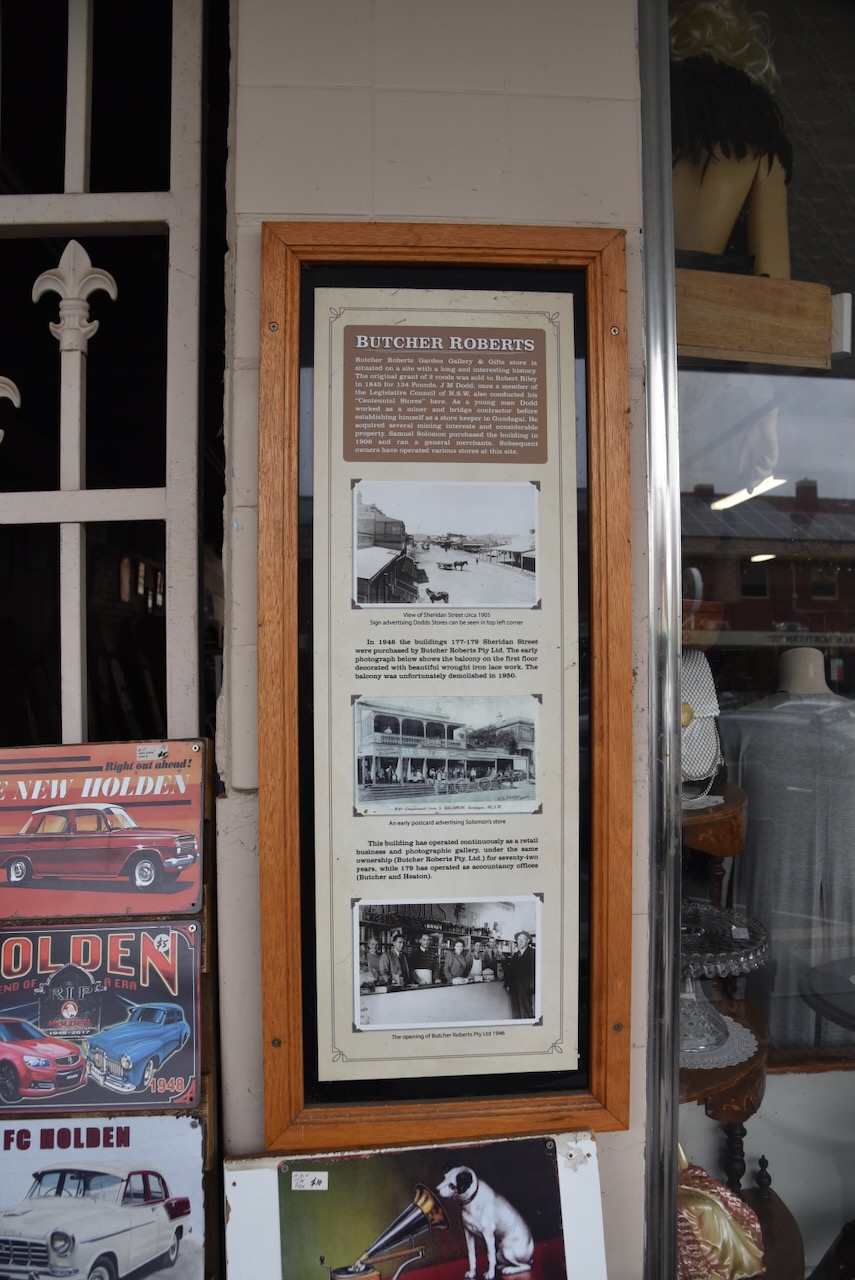
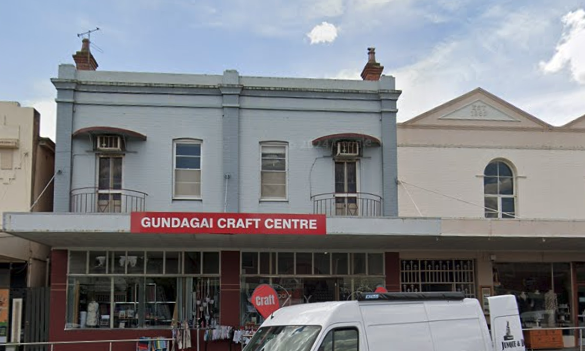
Butcher Roberts Garden Gallery & Gifts store is now an antiques store. The original grant of 2 roods was sold to Robert Riley in 1845 for £134. Mr. JM Dodd who was a member of the Legislative Council of NSW conducted his ‘Centennial Stores’ on this site. In 1908 Samuel Solomon purchased the building and ran a general merchants. Various other owners have operated various stores at the site. In 1946 the buildings were purchased by Butcher Roberts Pty Ltd, with the building being used as a retail business and photographic gallery.
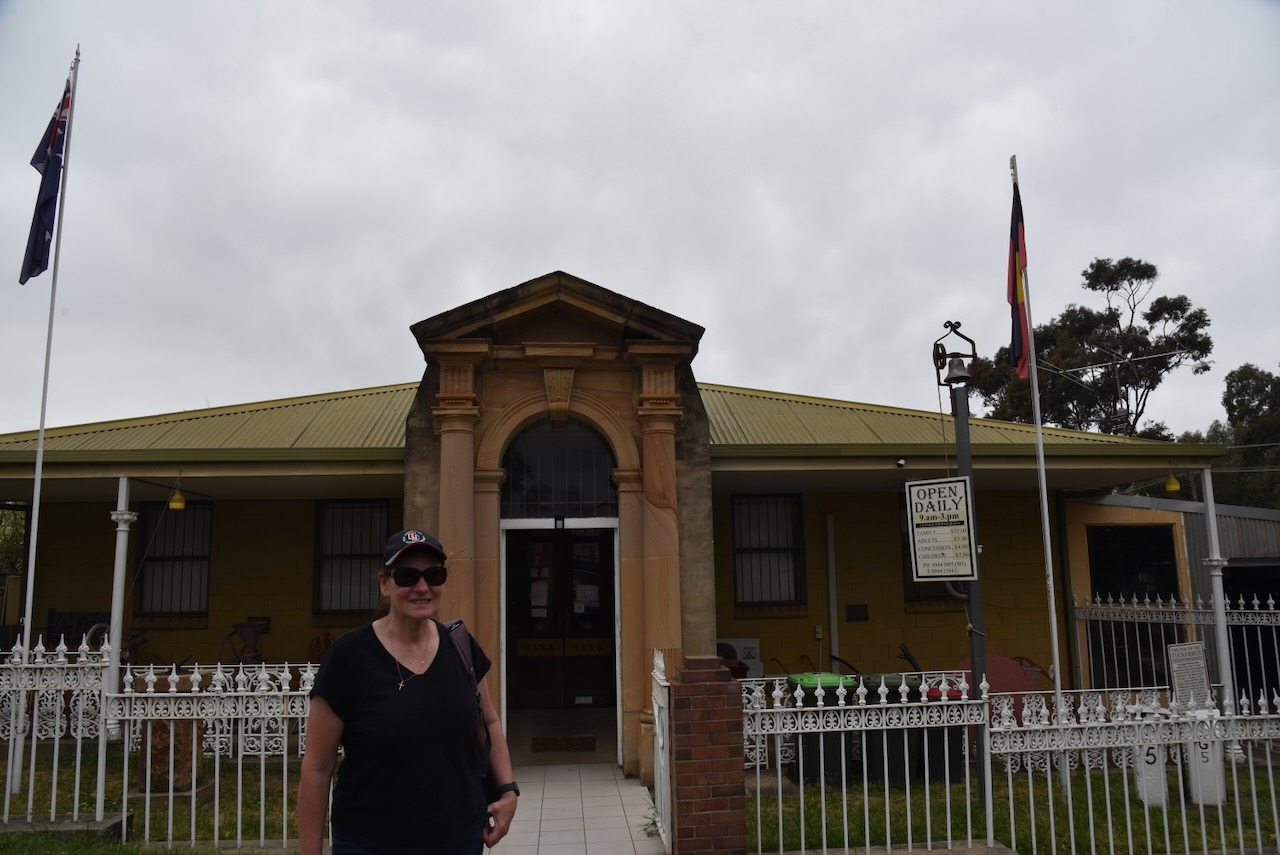
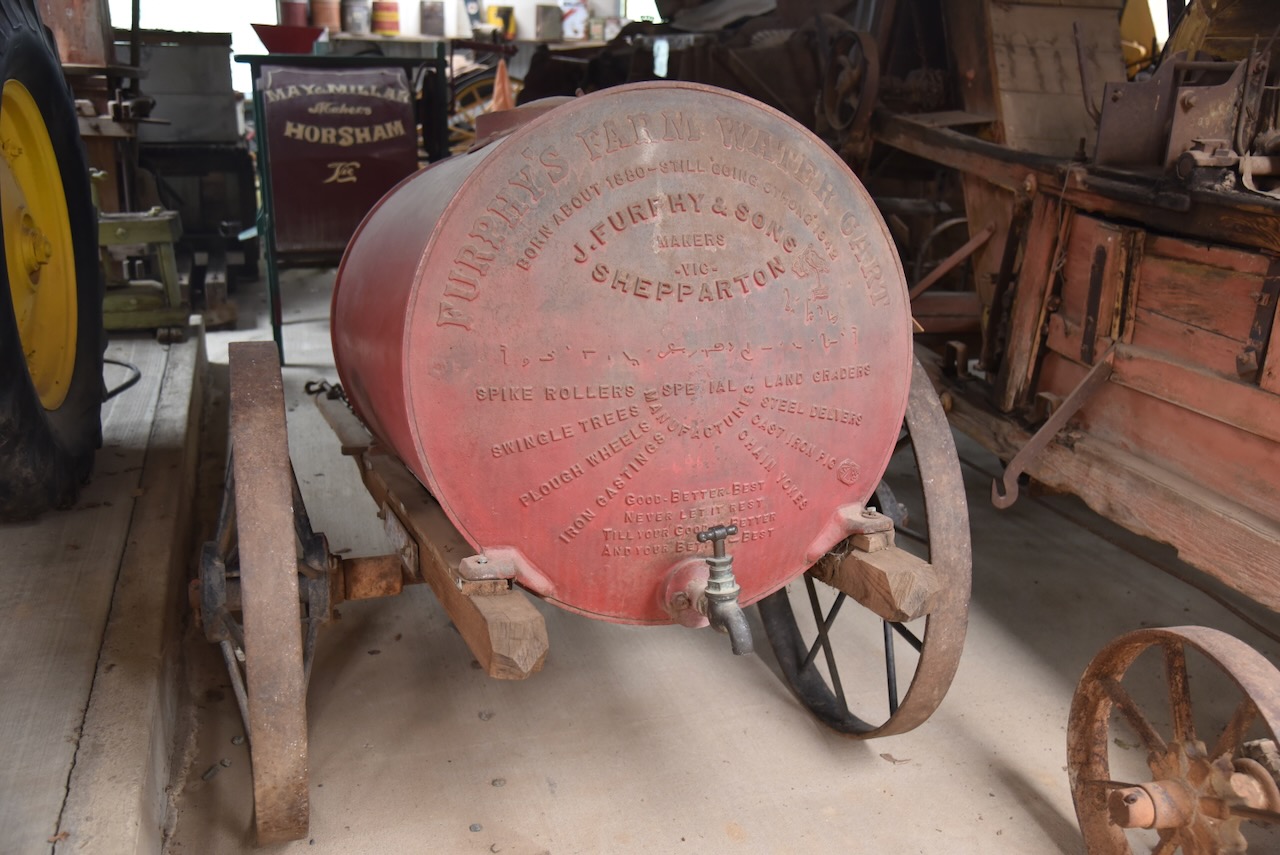
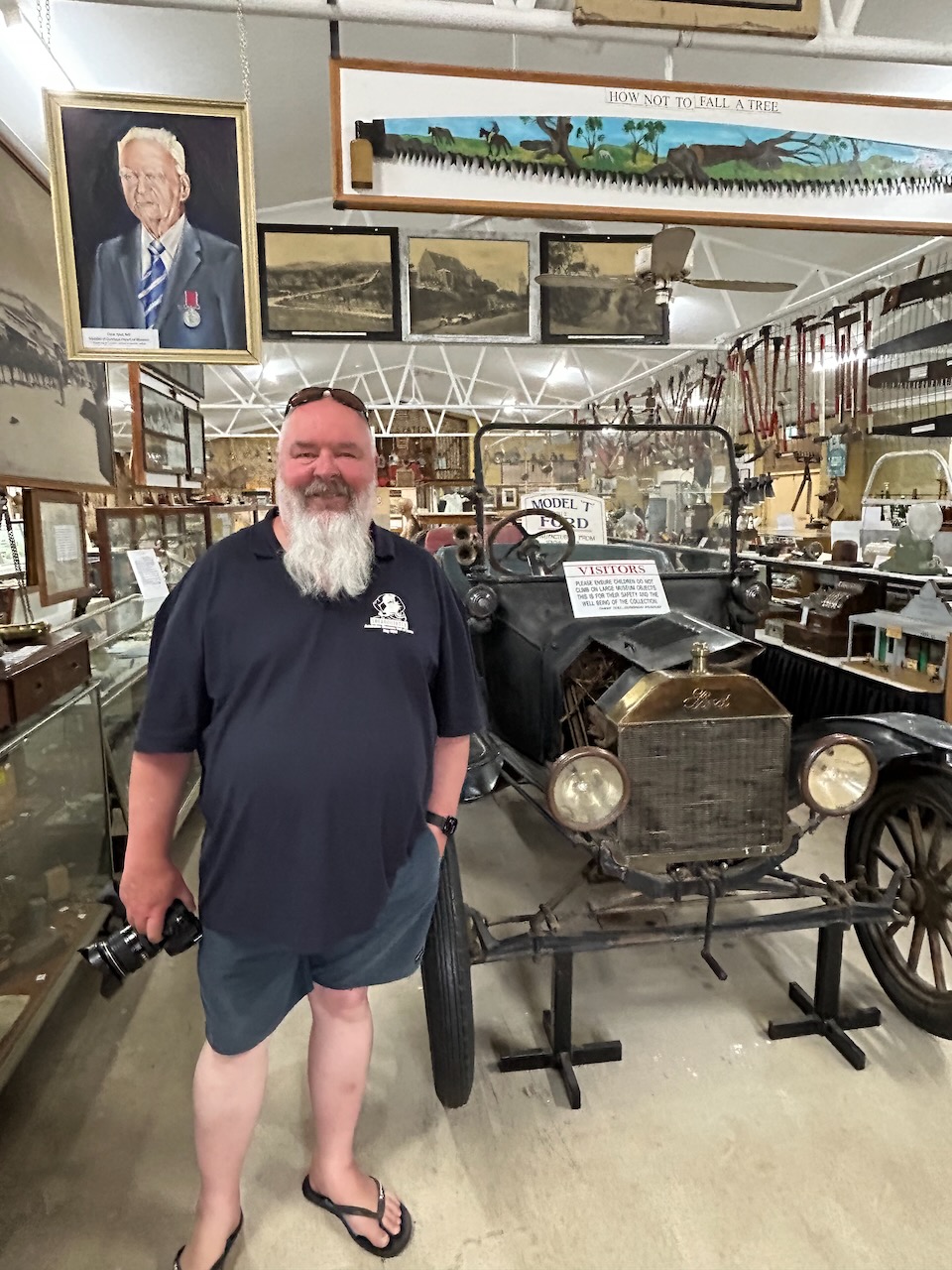
We then ventured down to the Gundagai Historical Museum.
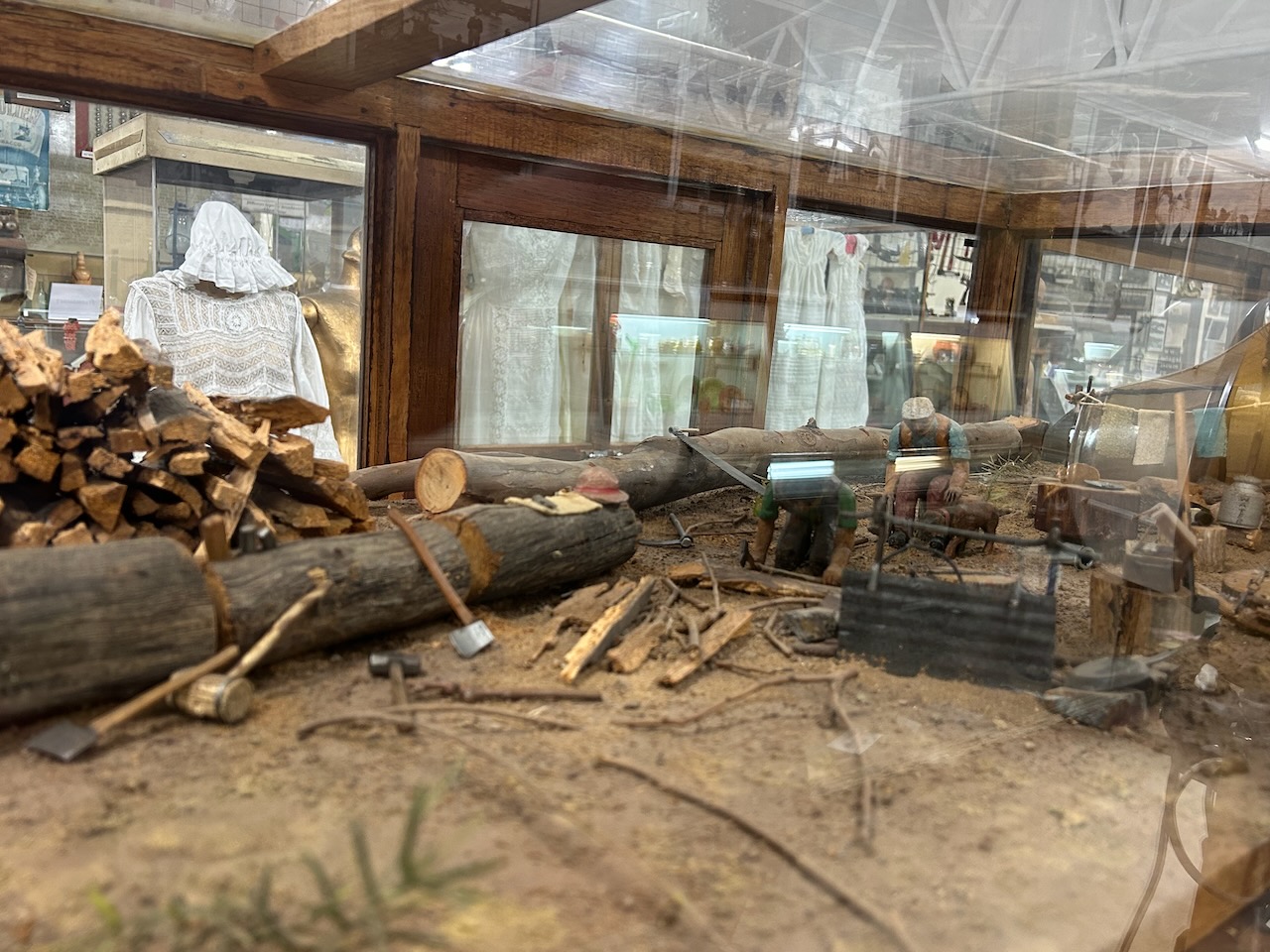
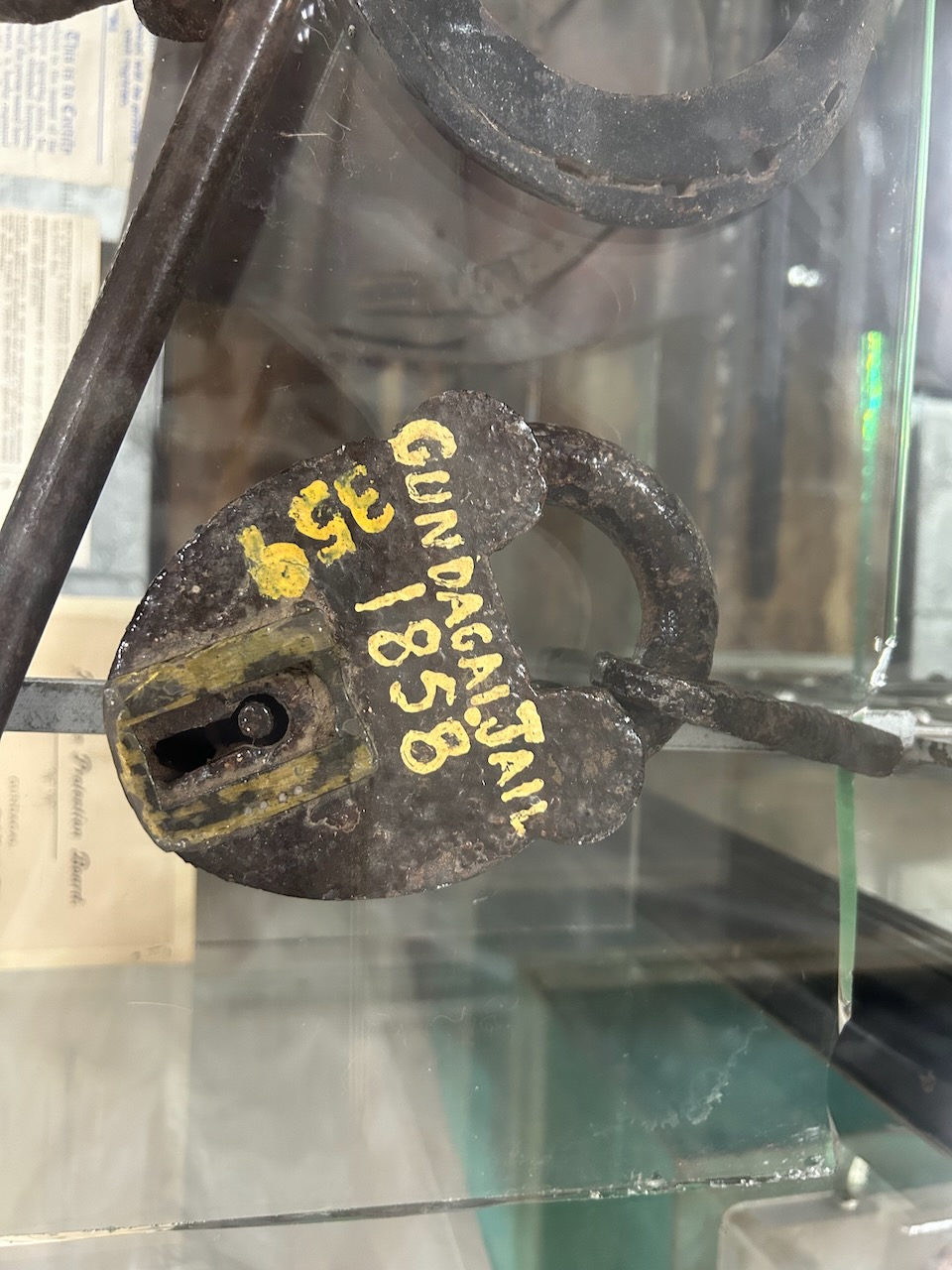
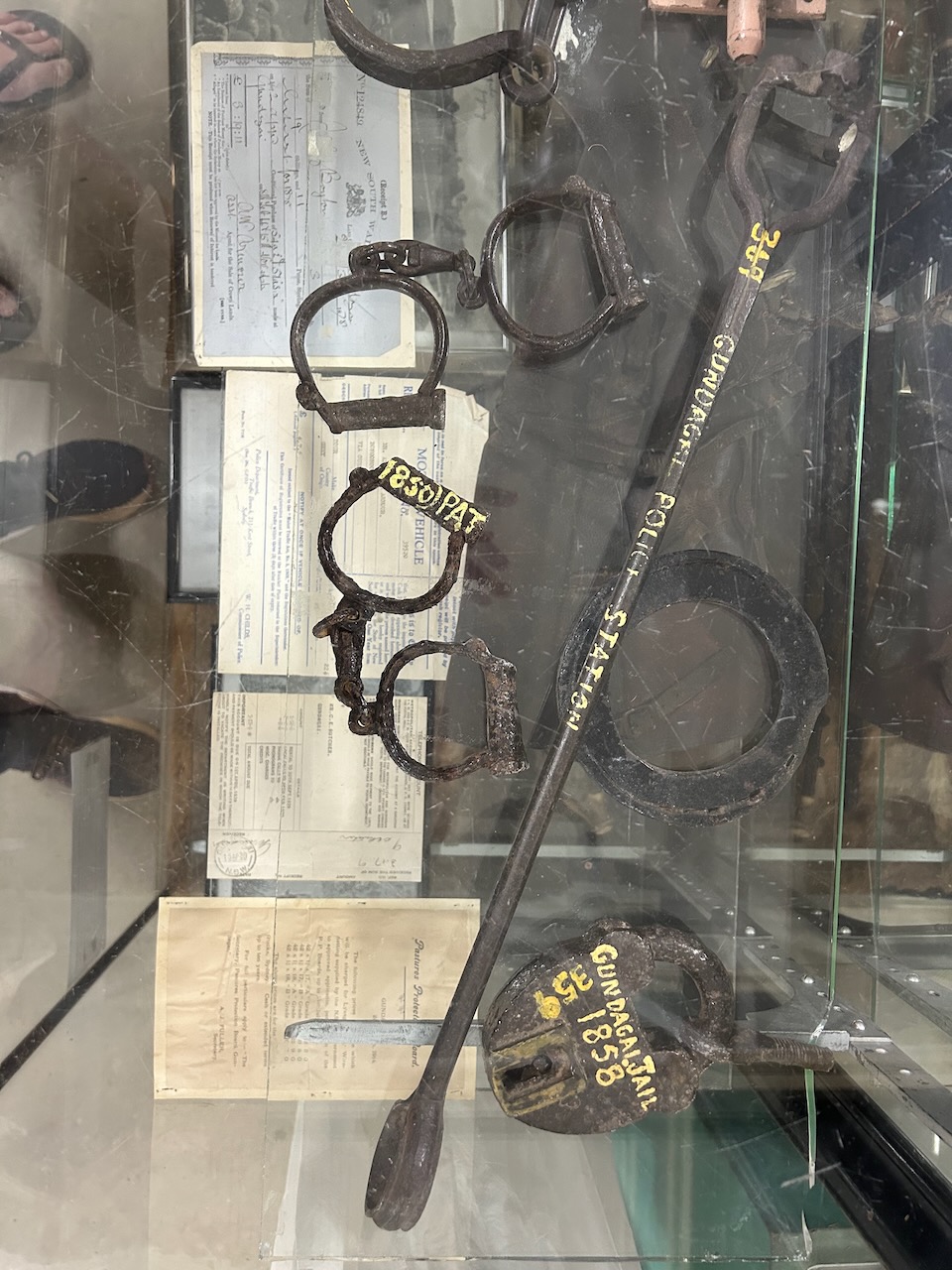
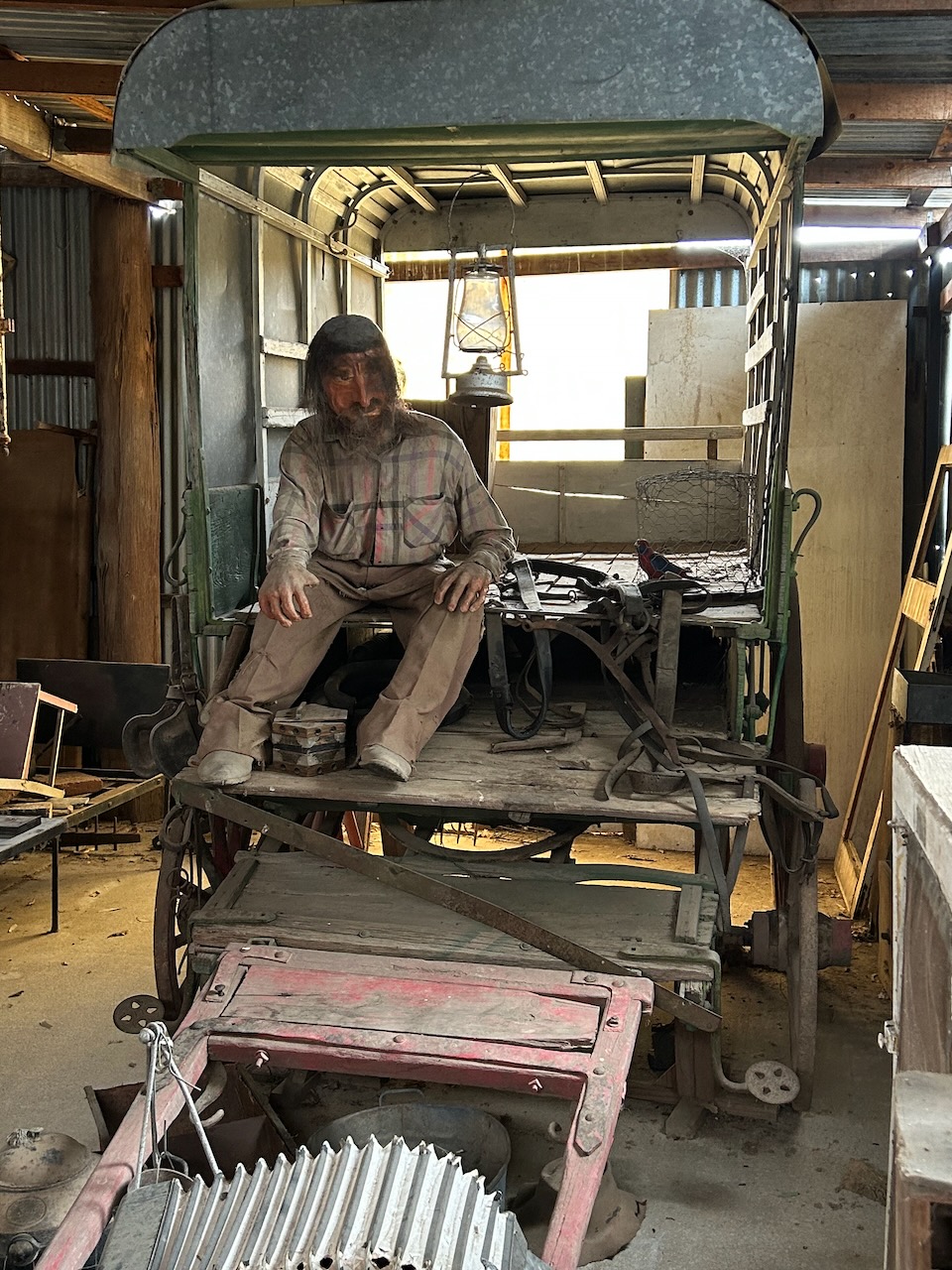
The museum contains a magnificent collection of memorabilia associated with Gundagai and the district.
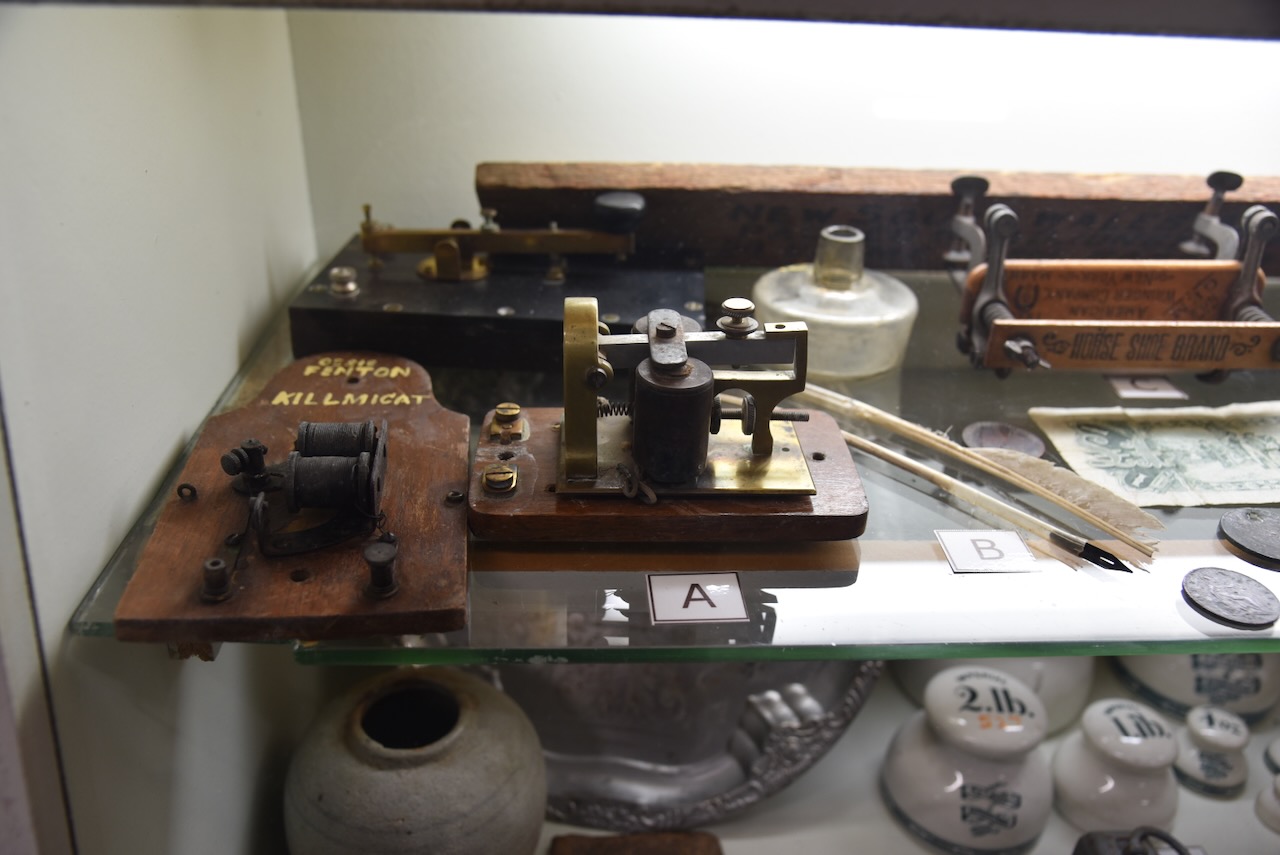
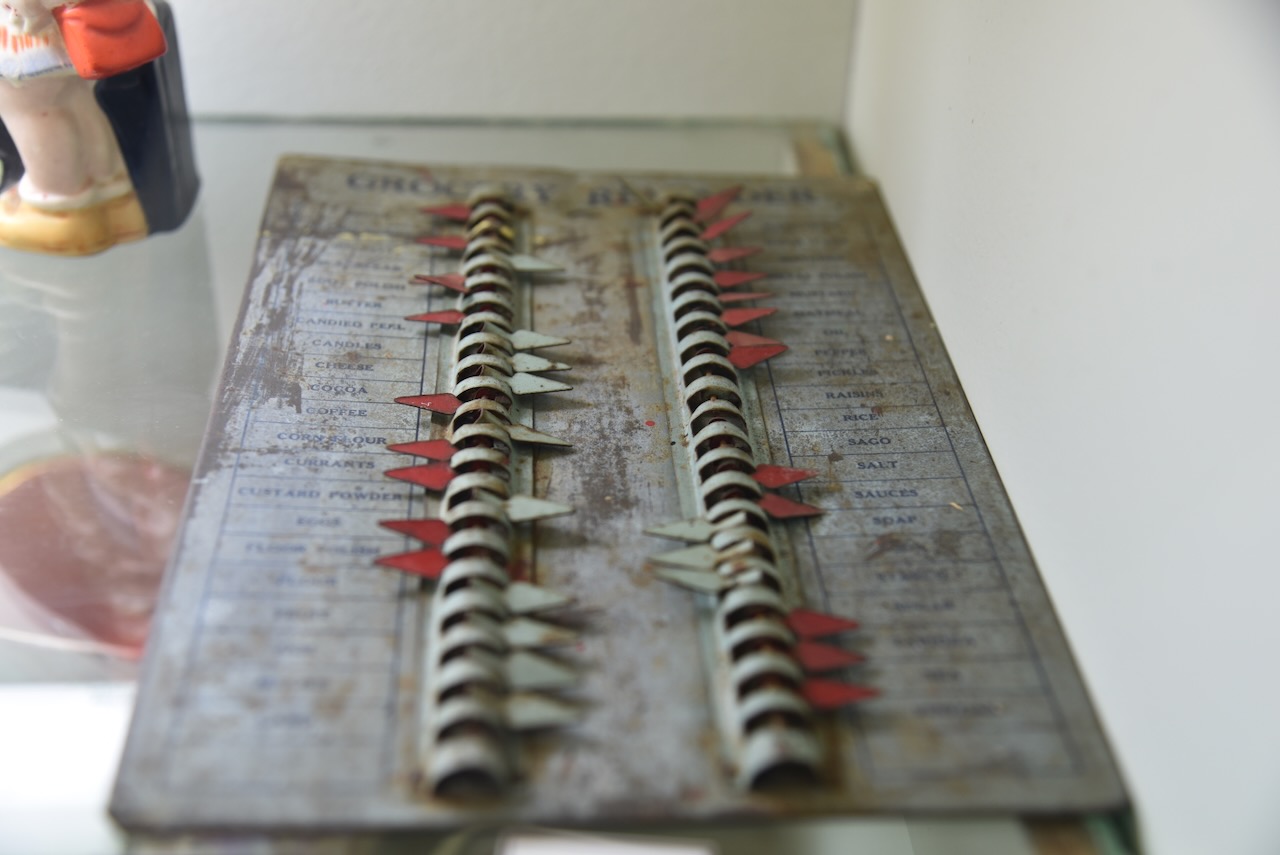
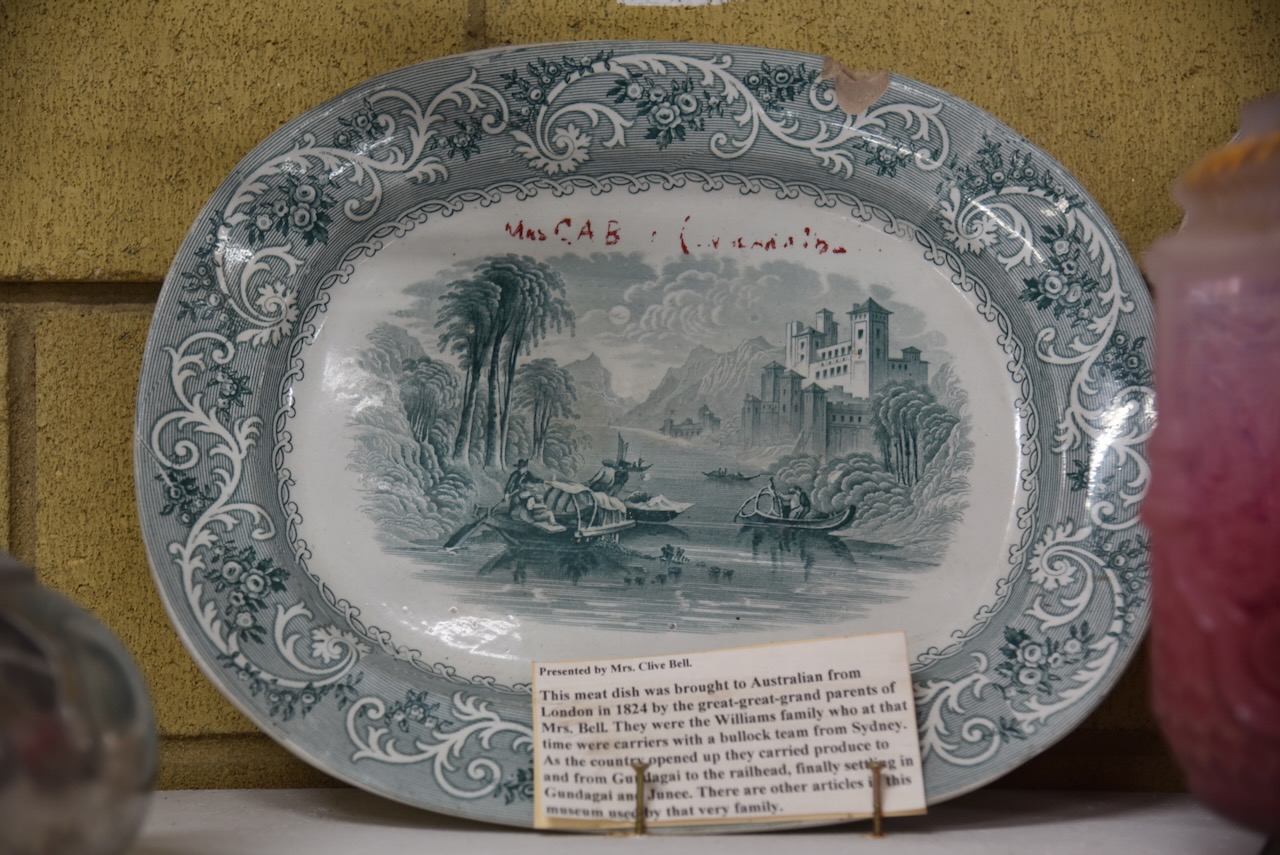
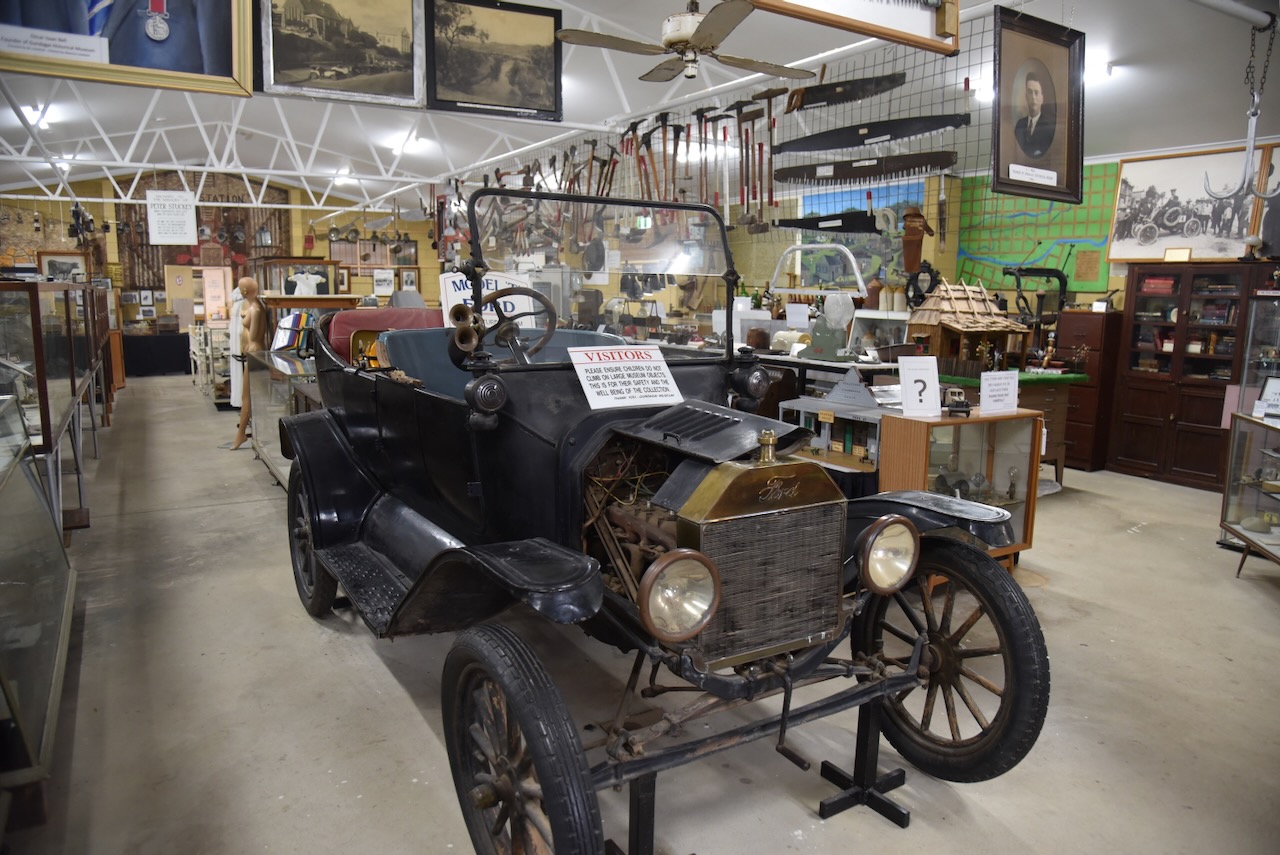
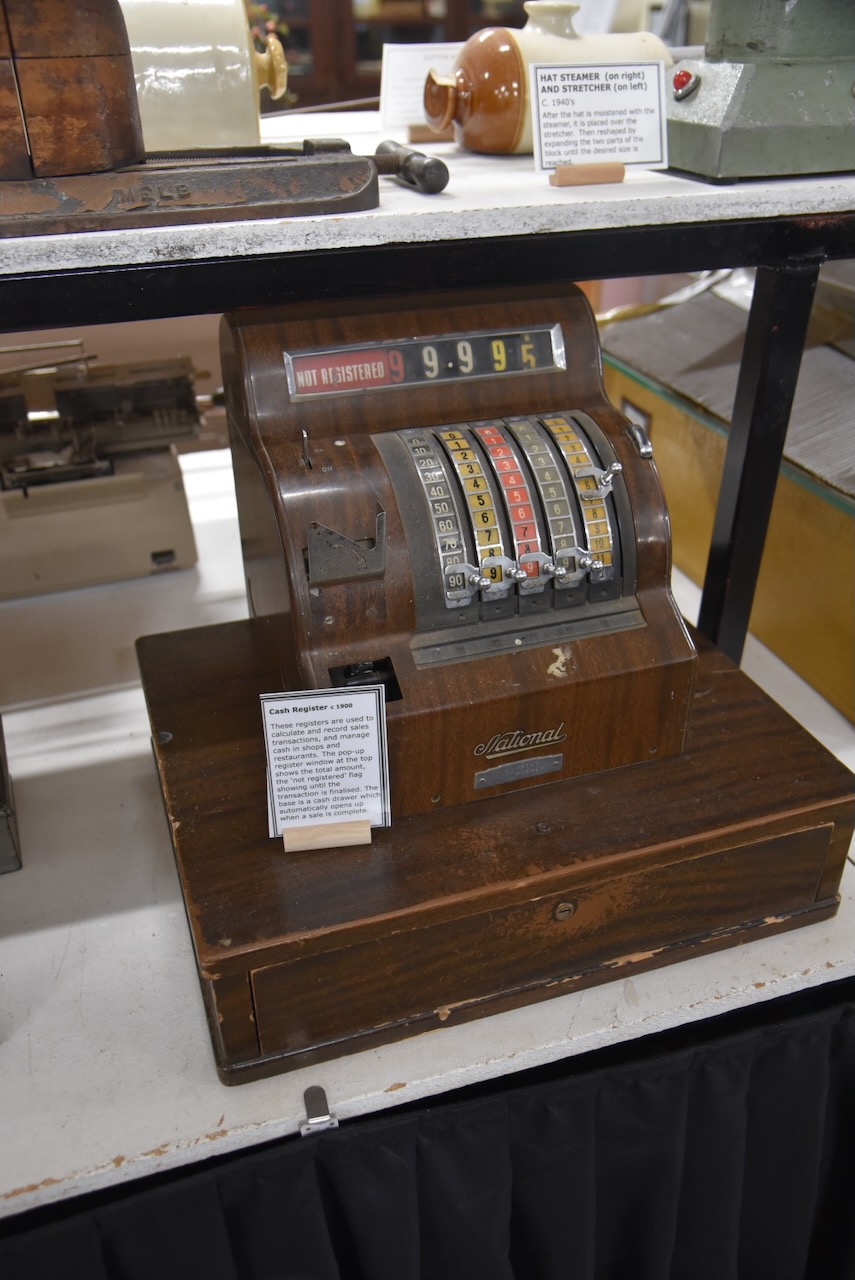
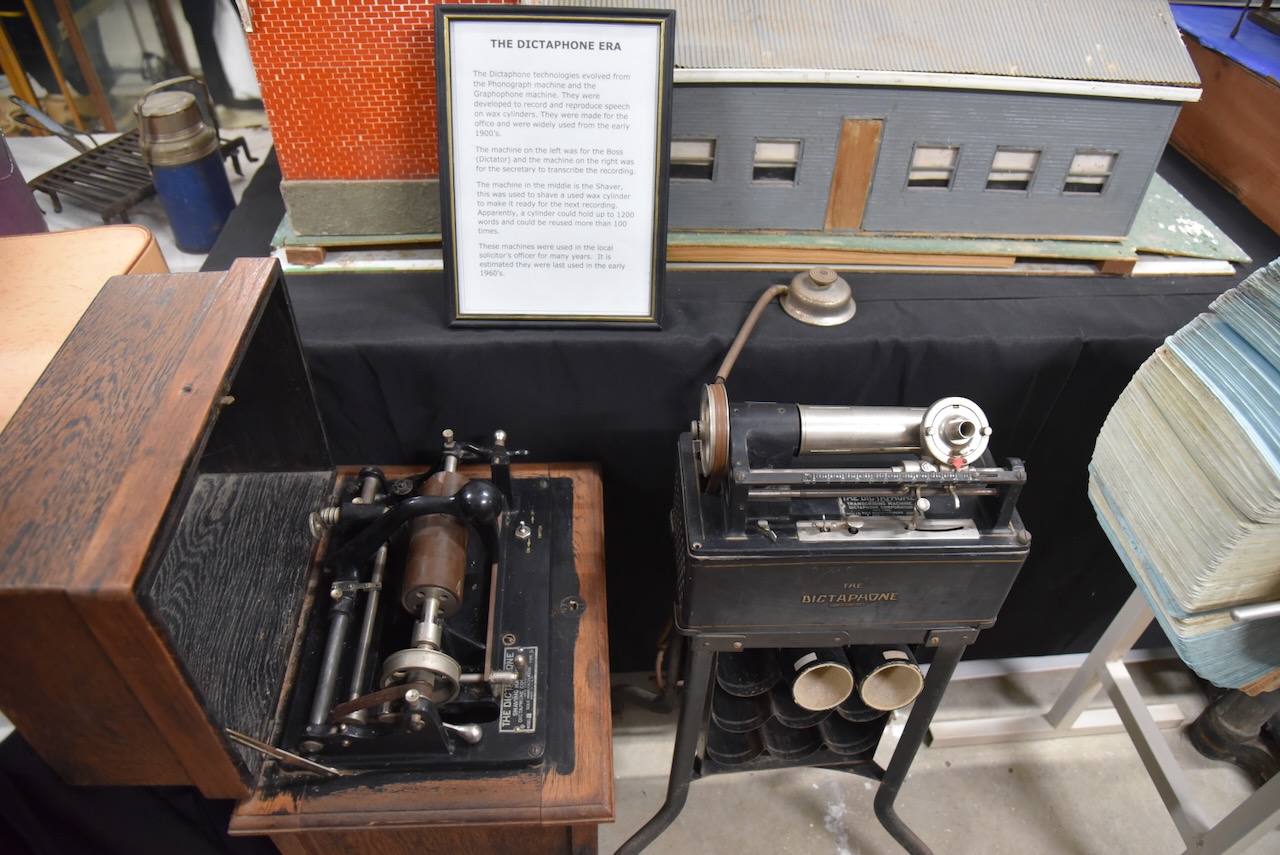
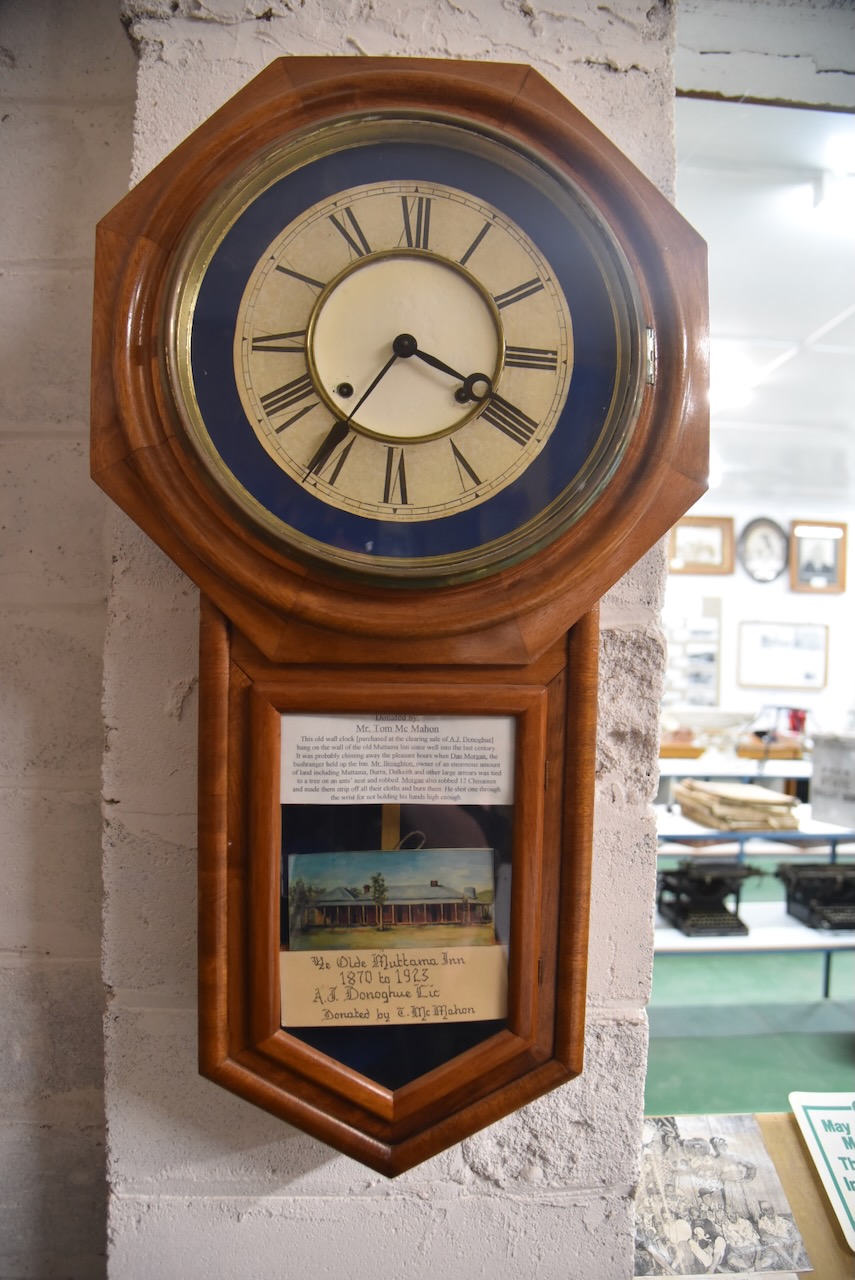
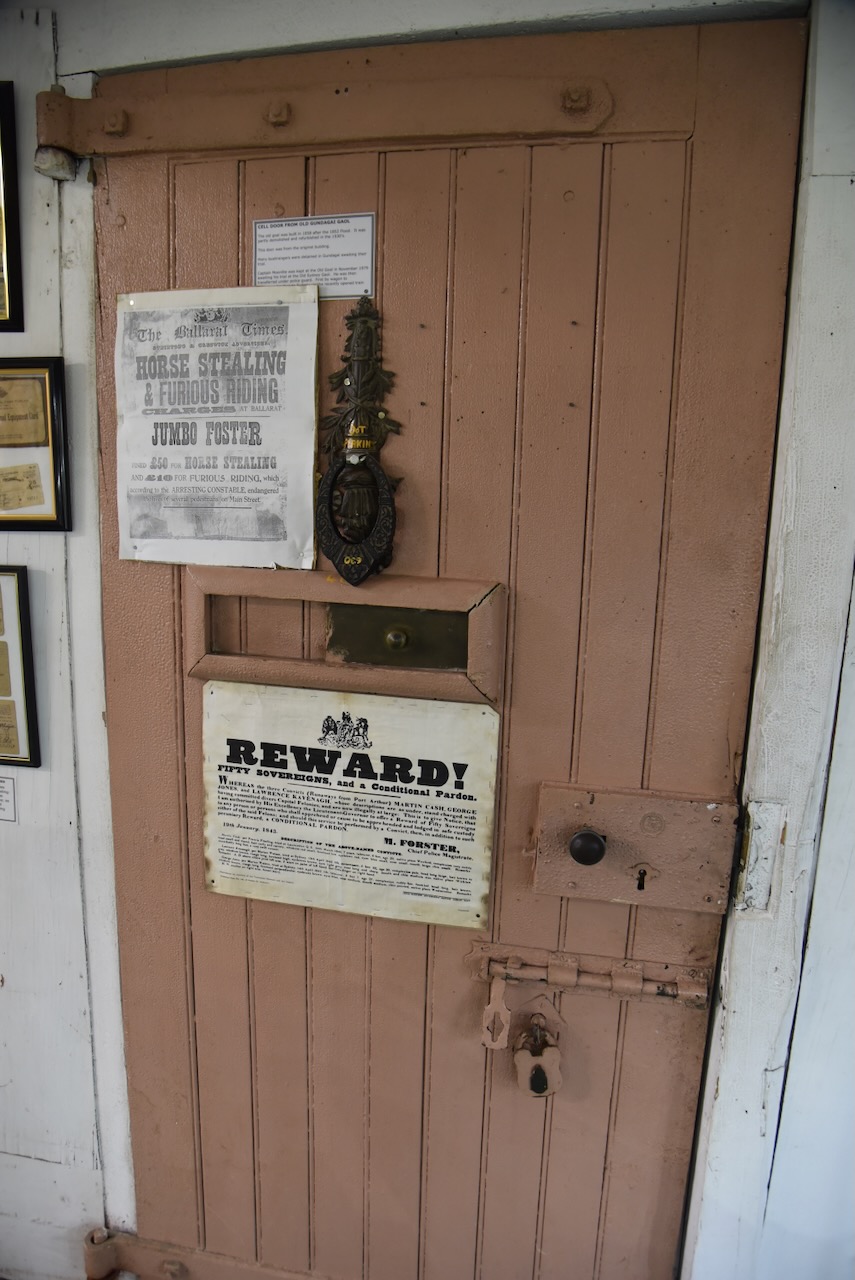
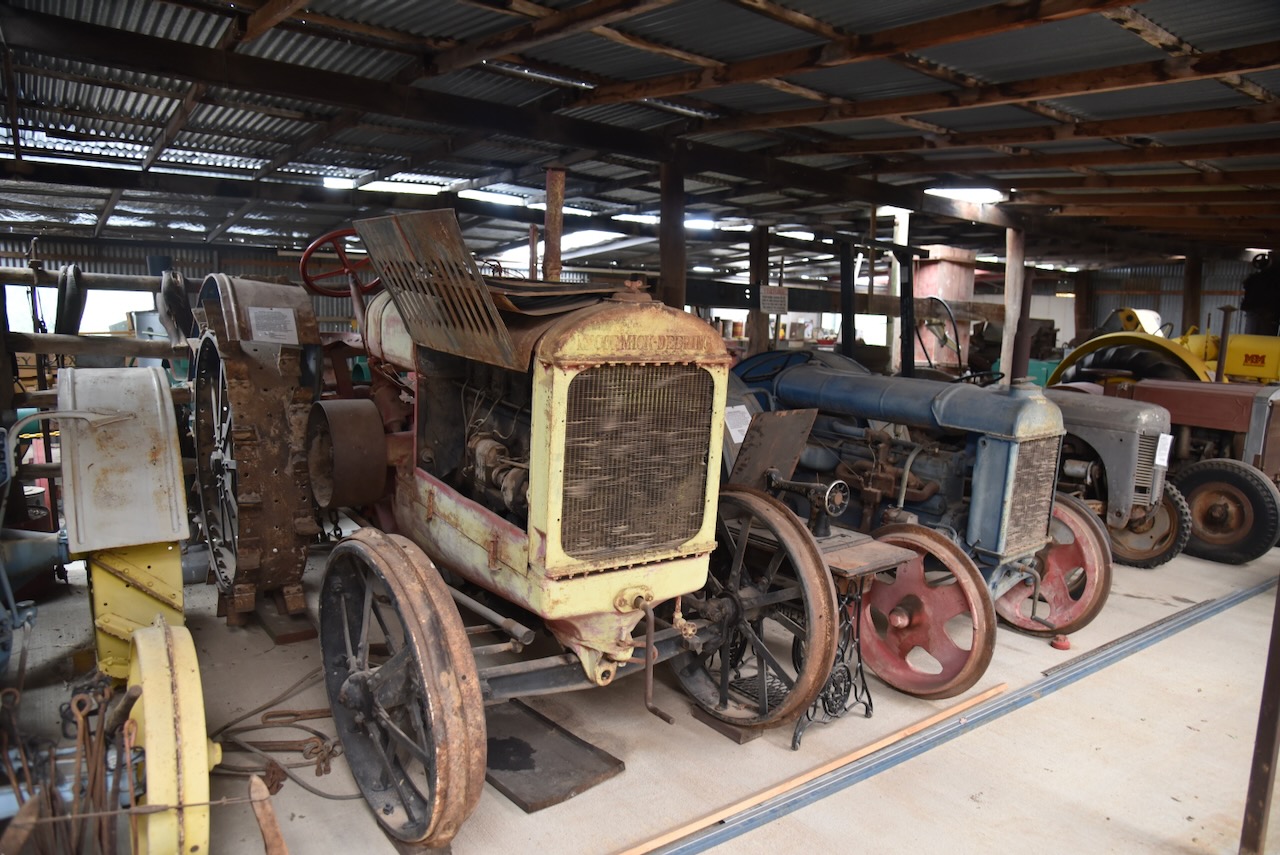
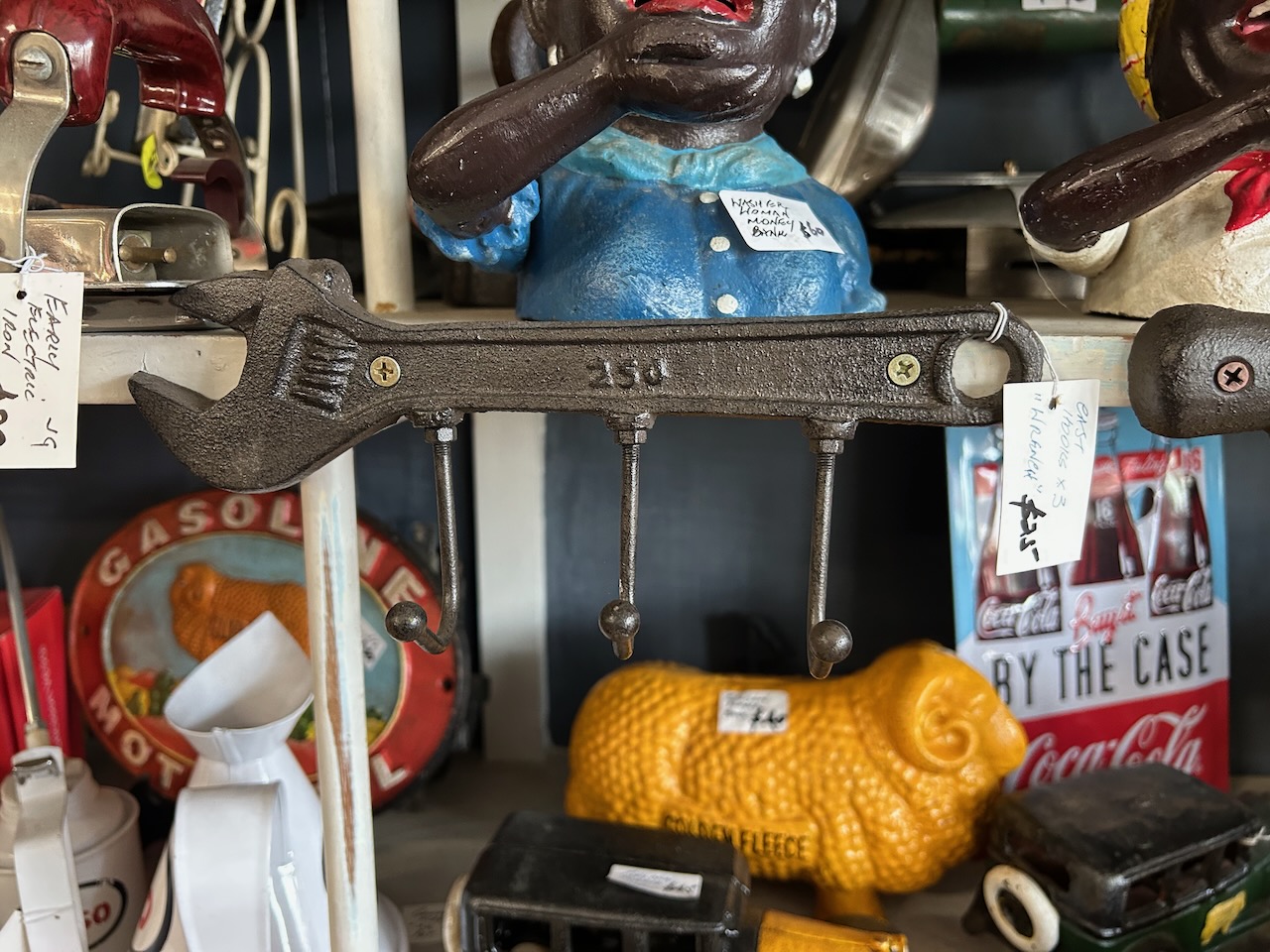
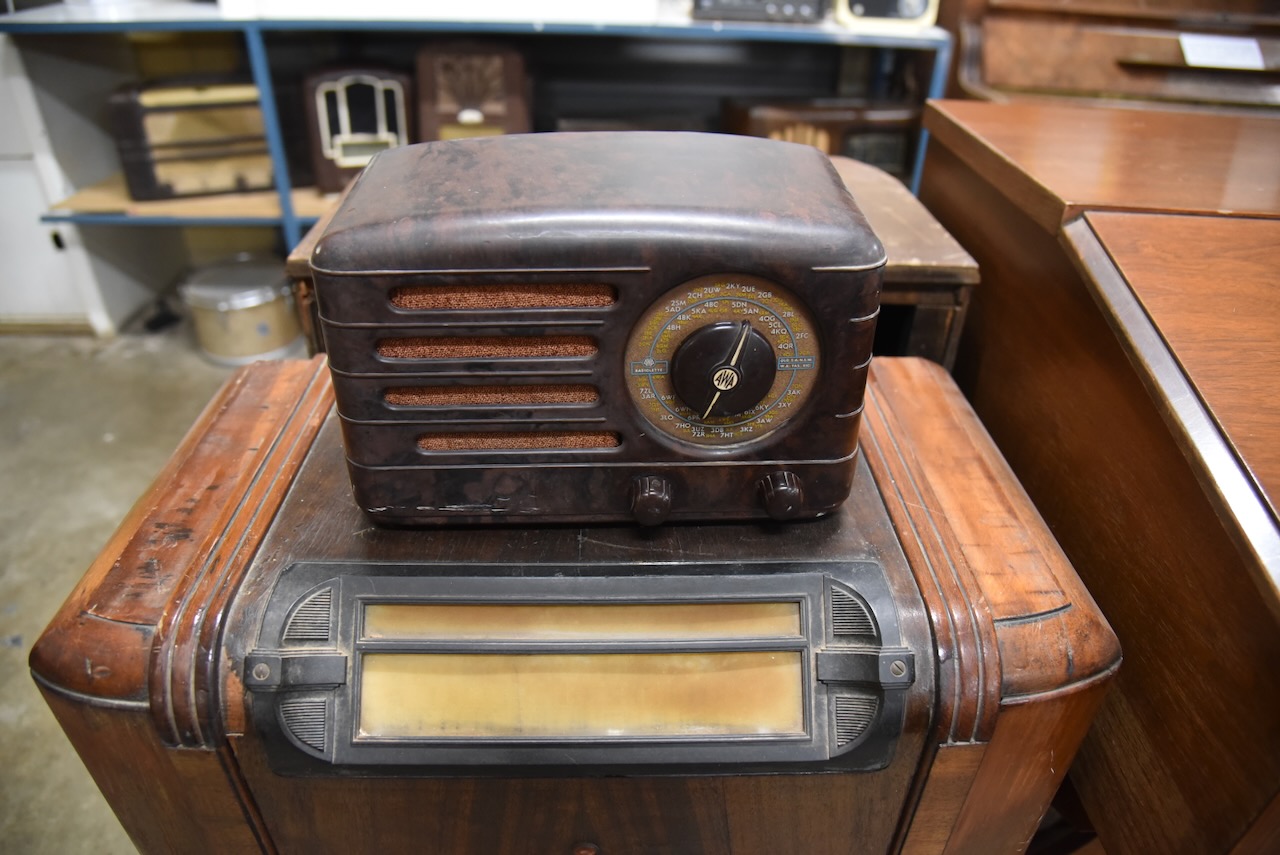
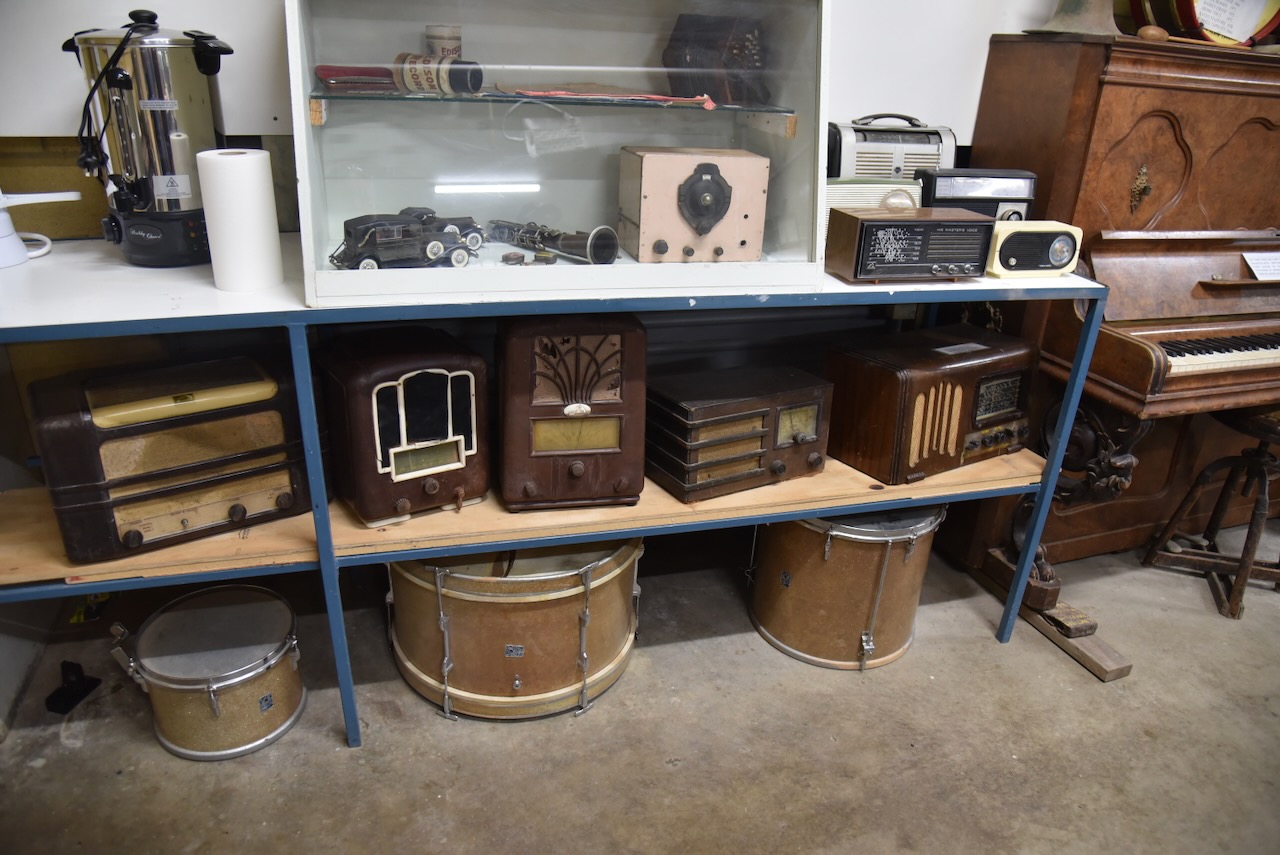
I even found a selection of old bakelite radios.
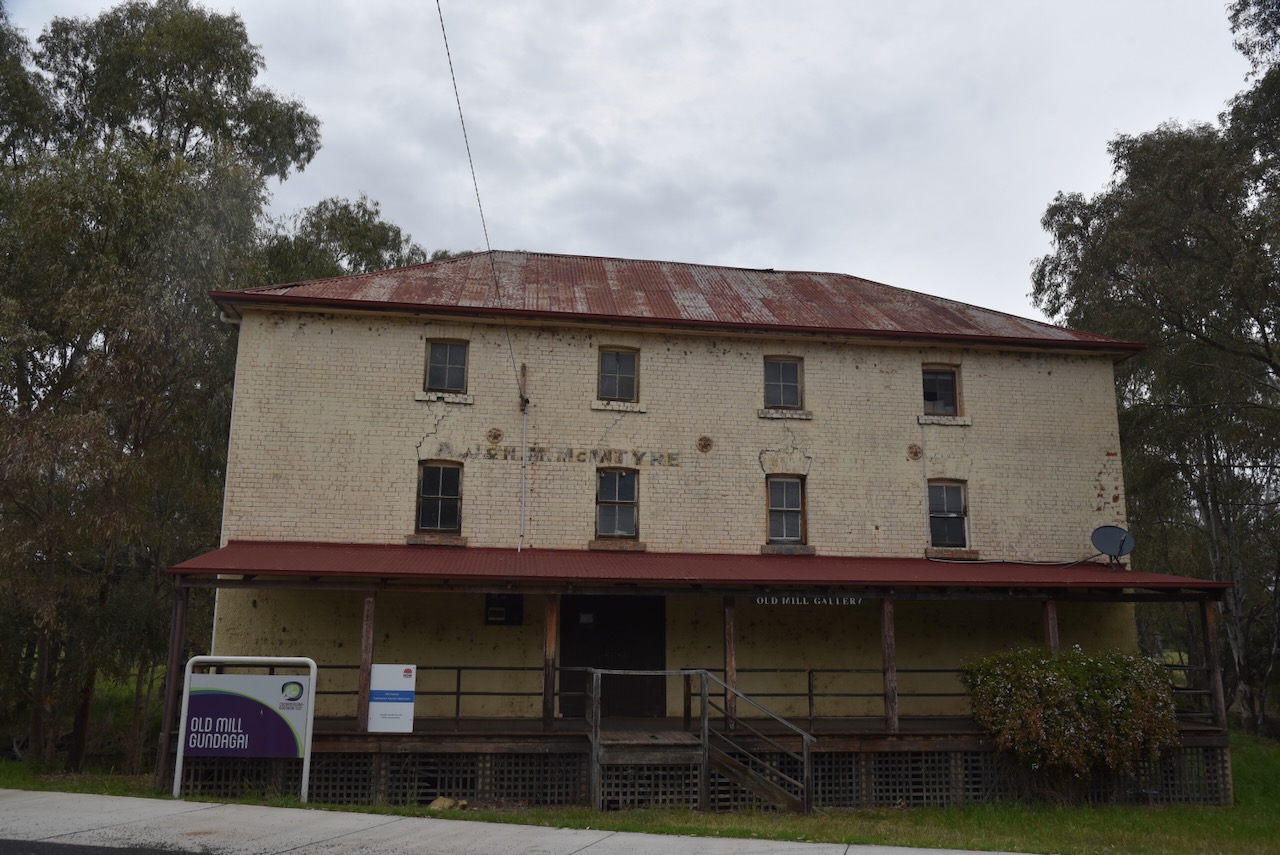
We drove a little further along Sheridan Lane and stopped to have a look at the old Gundagai Mill. It was built in 1848 by Mr Joseph Morley for Edward Flood and Thomas Hanley as Gundagai’s first flour mill. Joseph Dillon Morley was born on the 30th day of May 1813 in Sydney, New South Wales. He died on the 30th day of May 1886 at Gundagai. (ancestry 2016) (Service 2023)
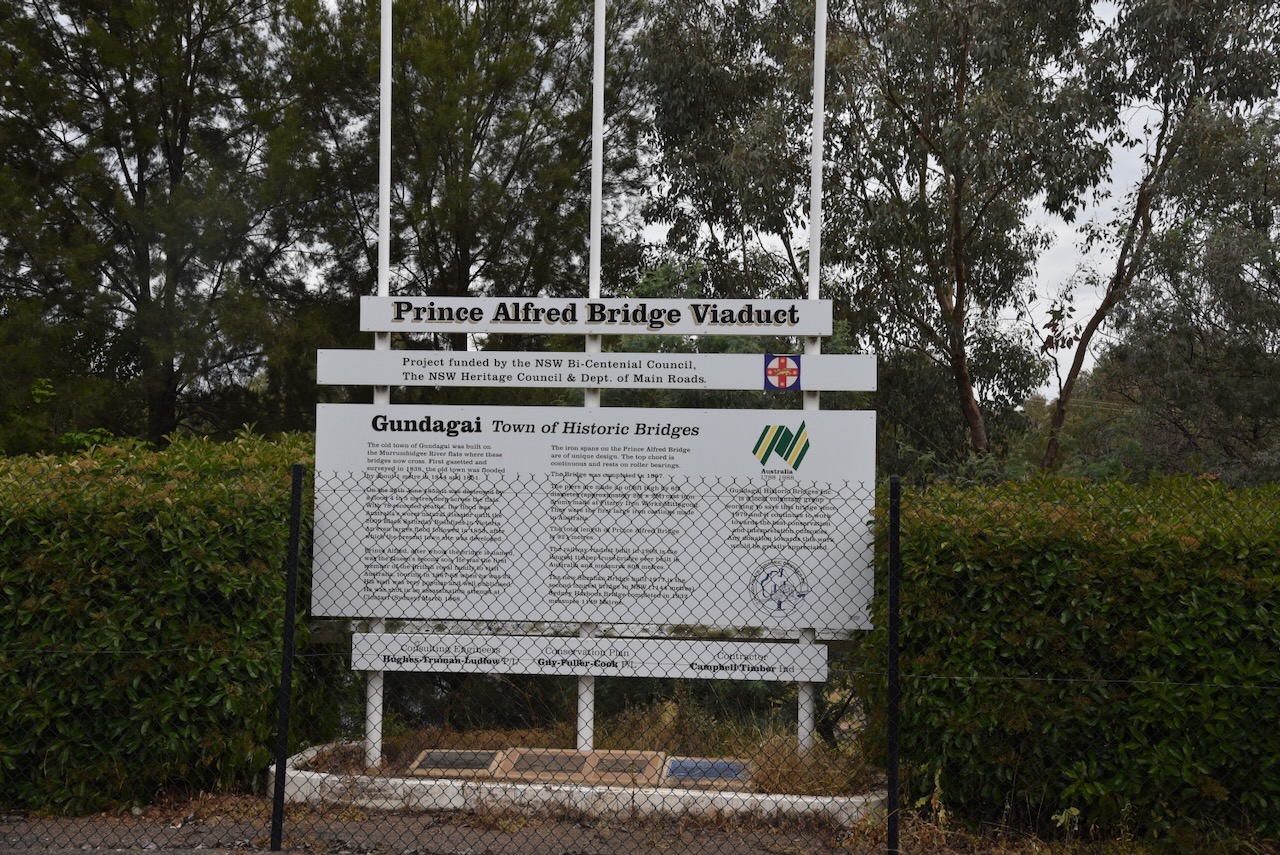
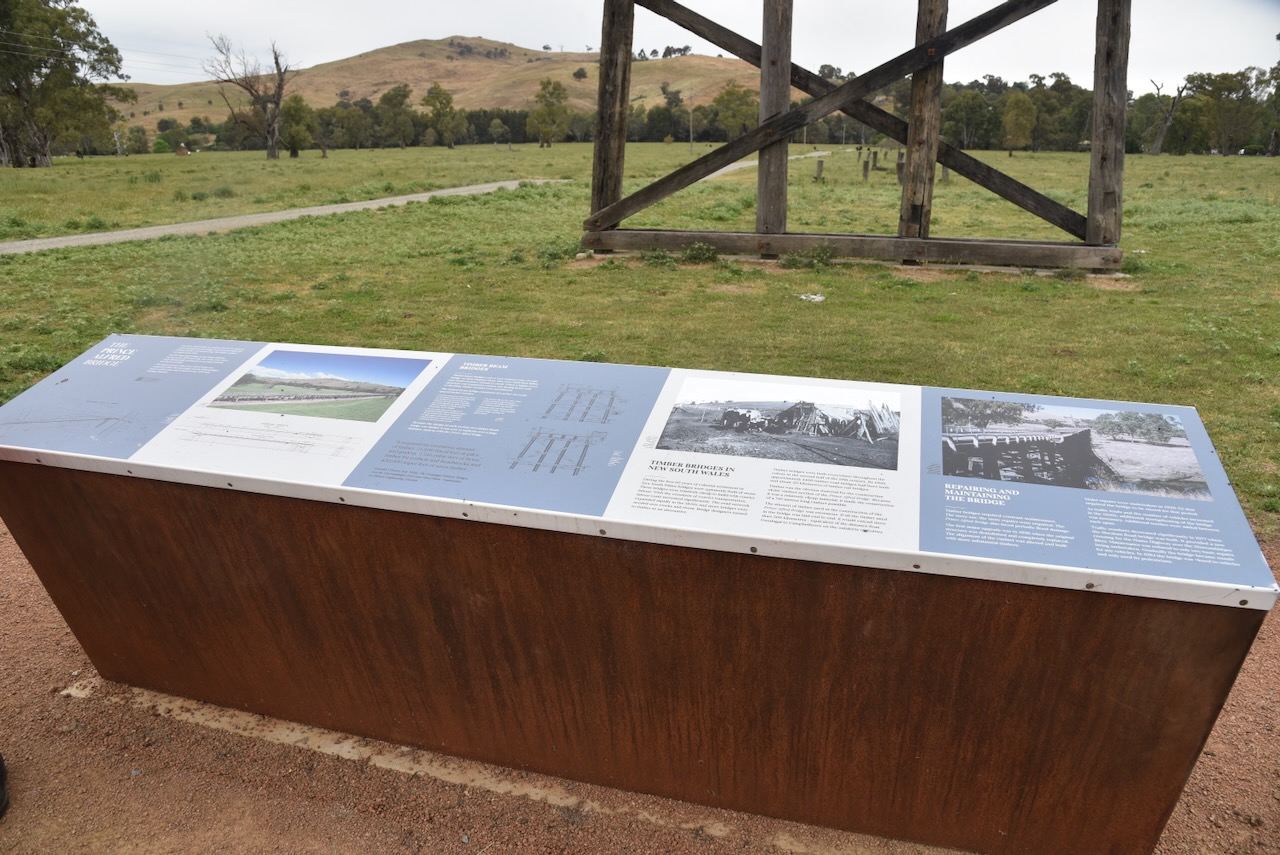
Our next stop was the Prince Alfred Bridge Viaduct. The old town of Gundagai was built on the flats of the Murrumbidgee River where the bridge now crosses. The bridge was named in honour of Prince Alfred, the second son of Queen Victoria. He was the first member of the British Royal family to visit Australia.
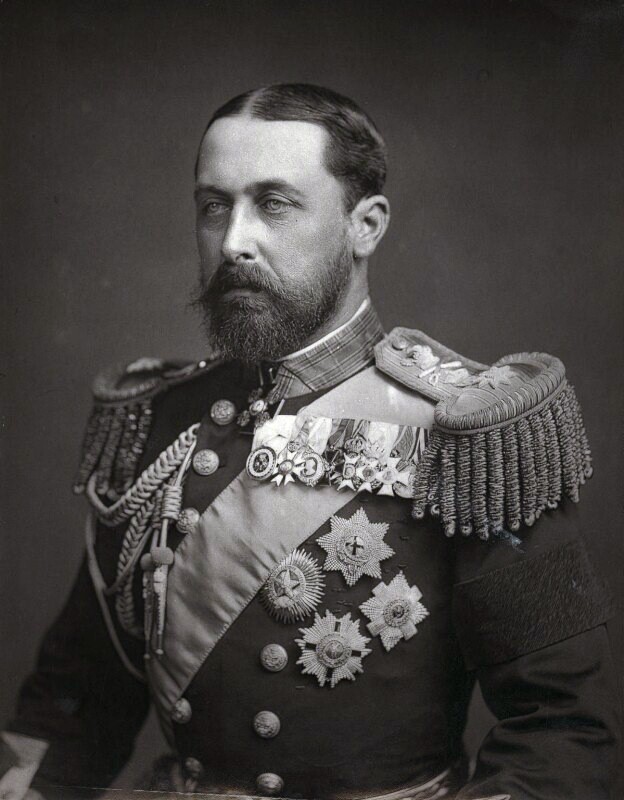
Above: Prince Alfred. Image c/o Wikipedia
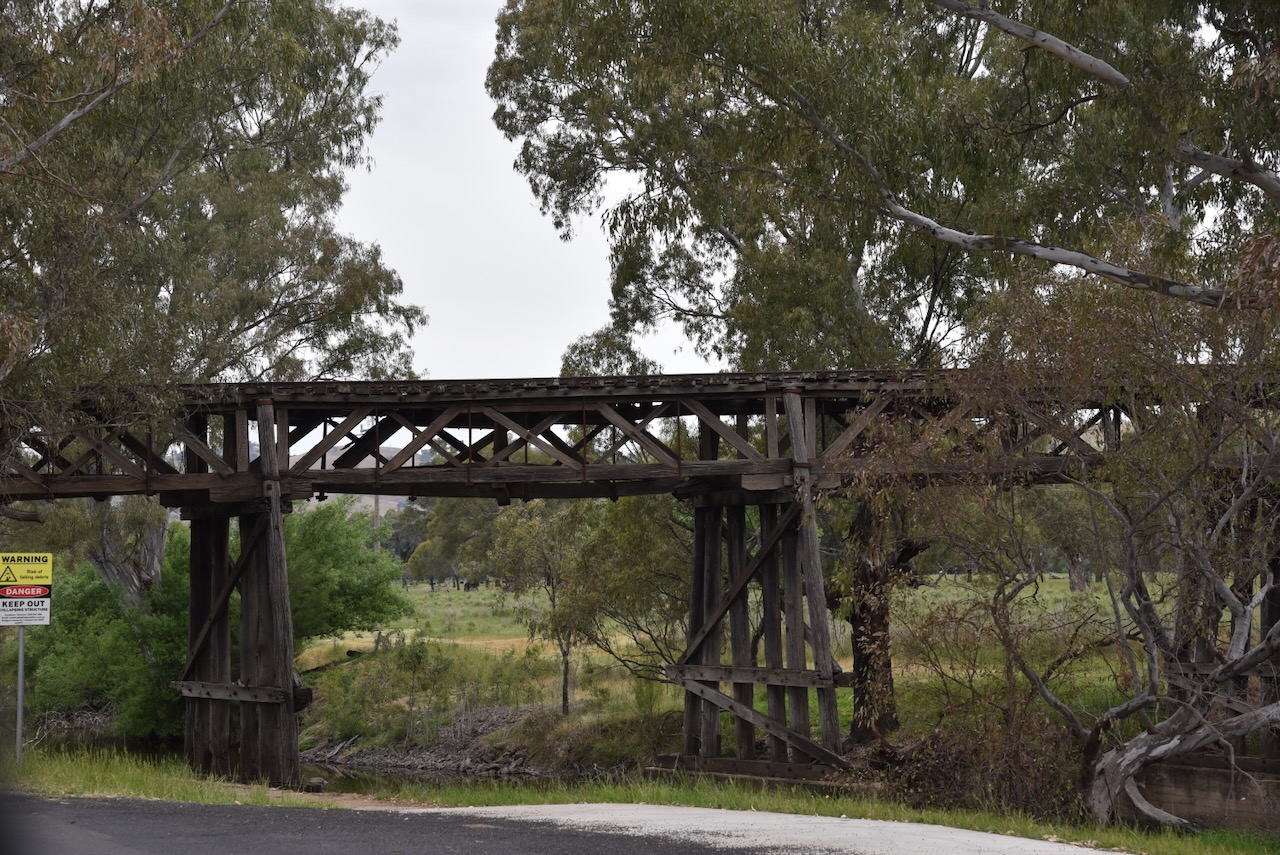
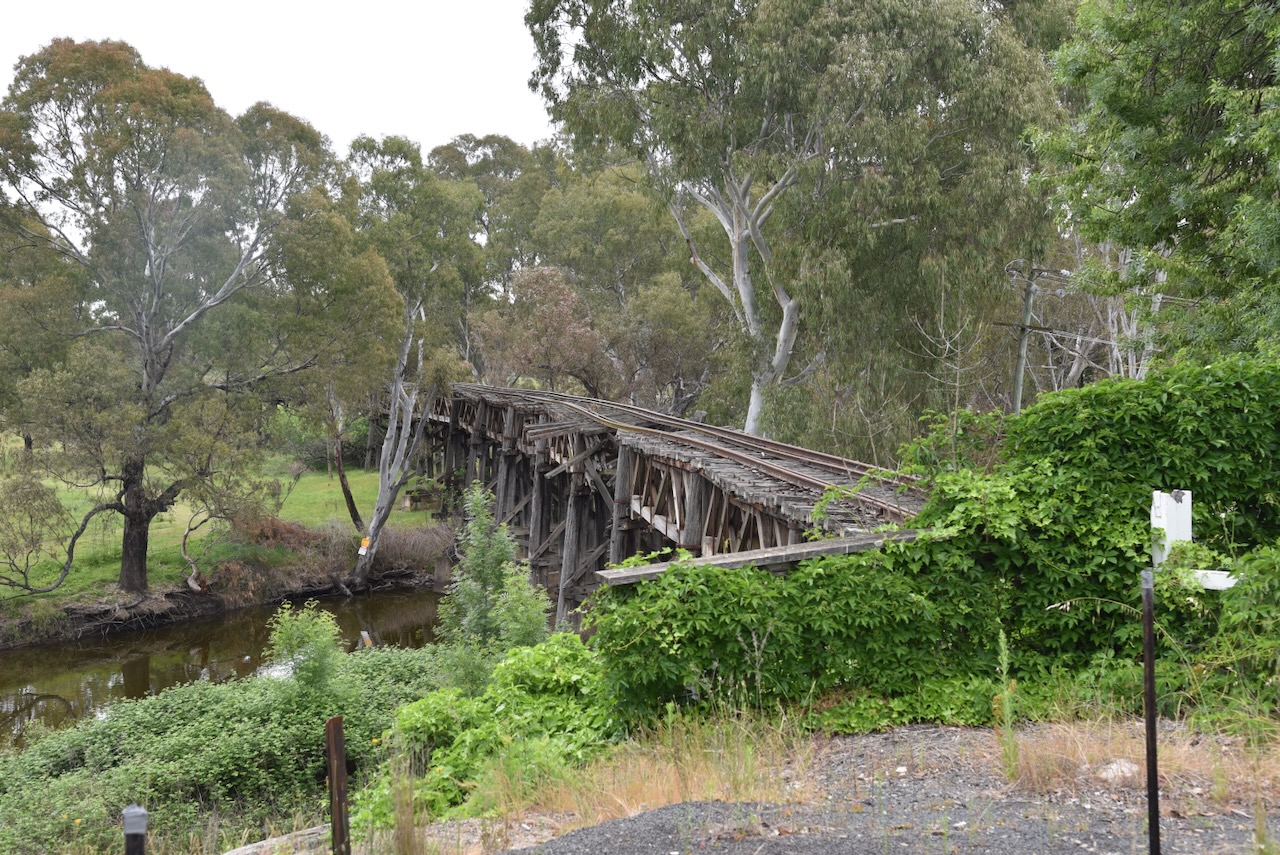
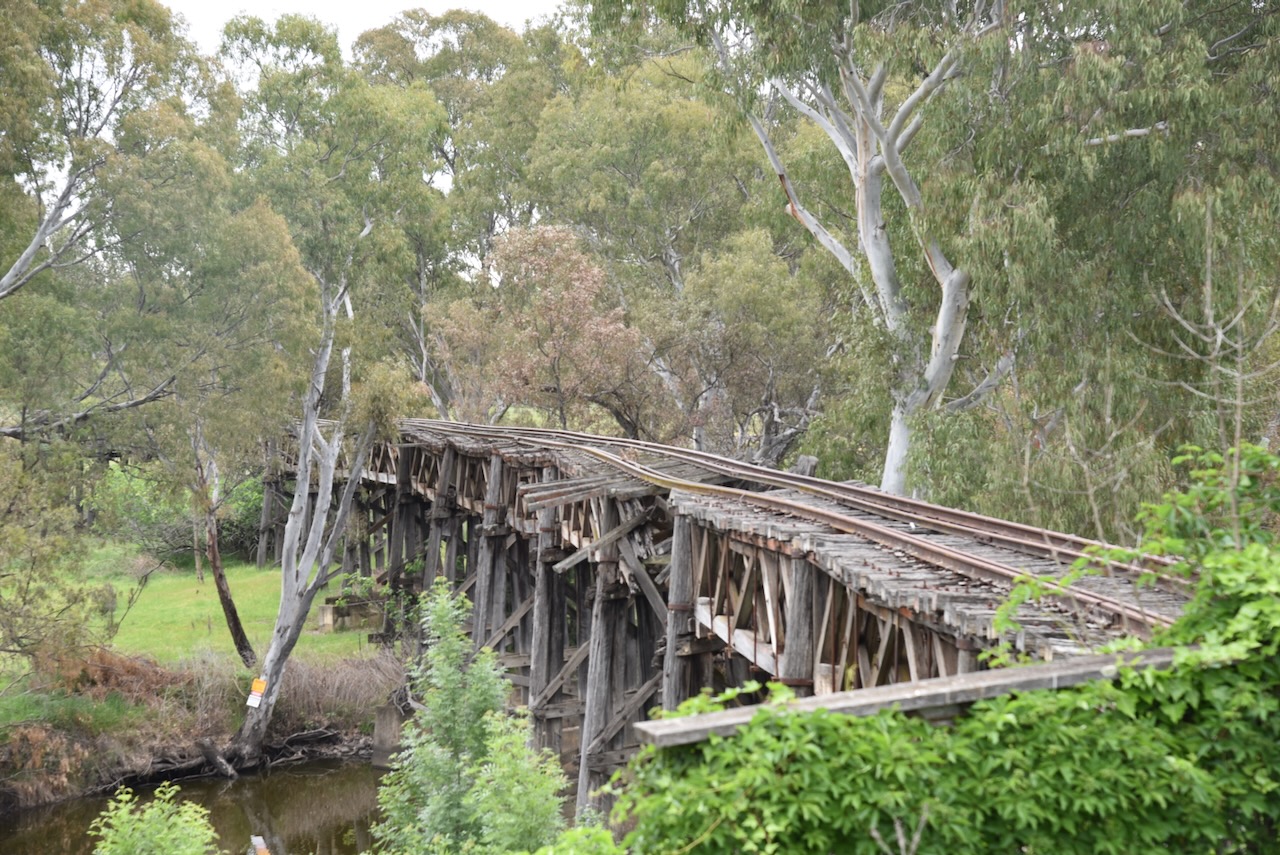
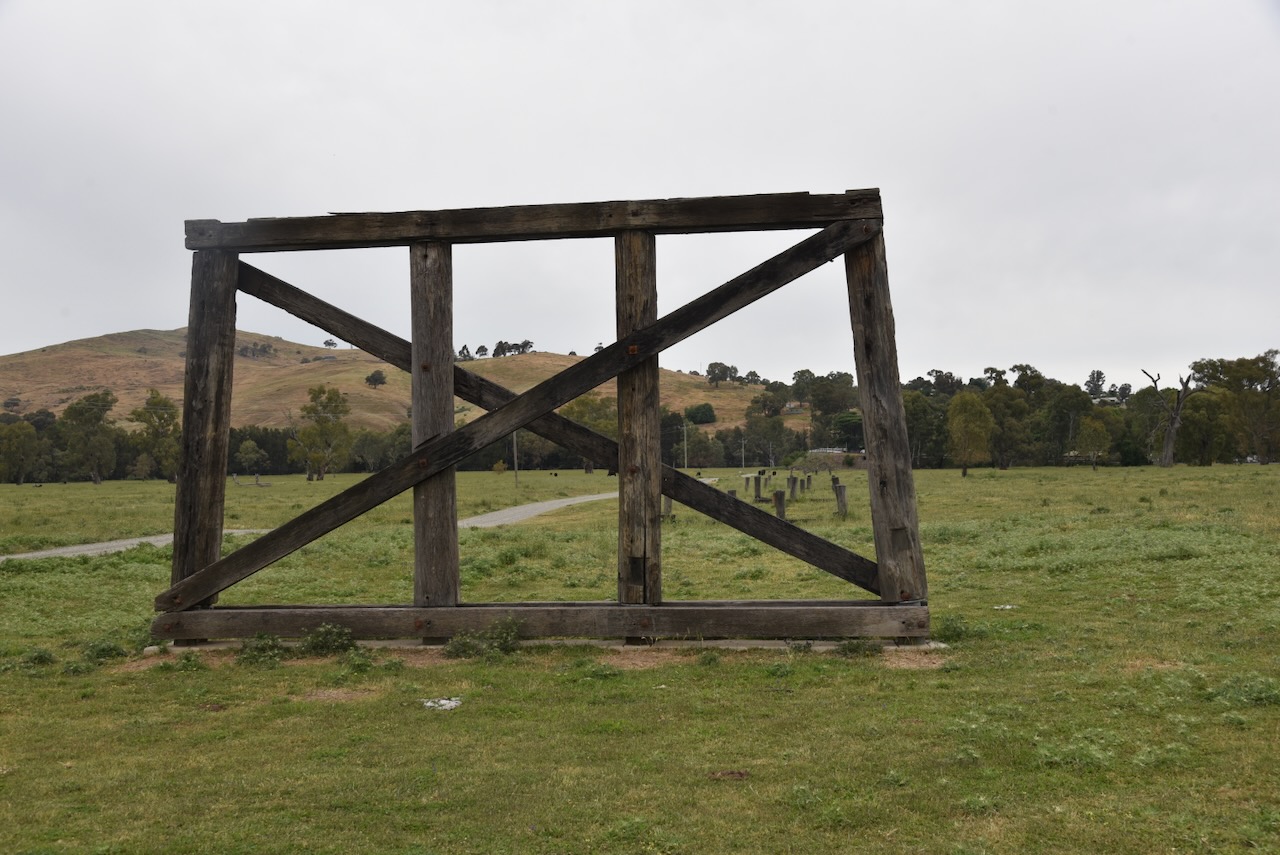
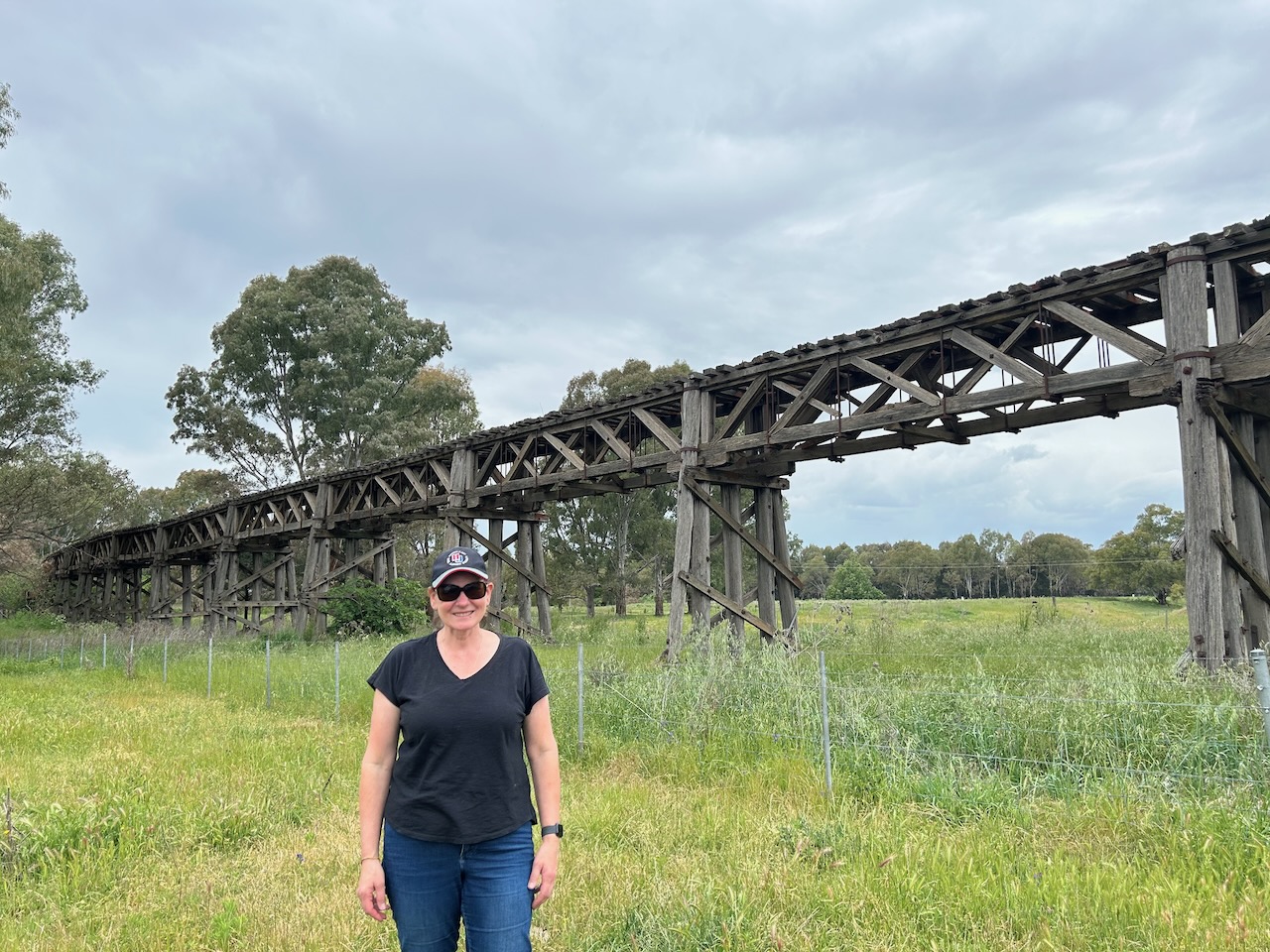
The bridge was completed in 1867. Its total length is 921 metres. The railway viaduct was built in 1903 and is the longest timber truss bridge ever built in Australia. It measures 809 metres.
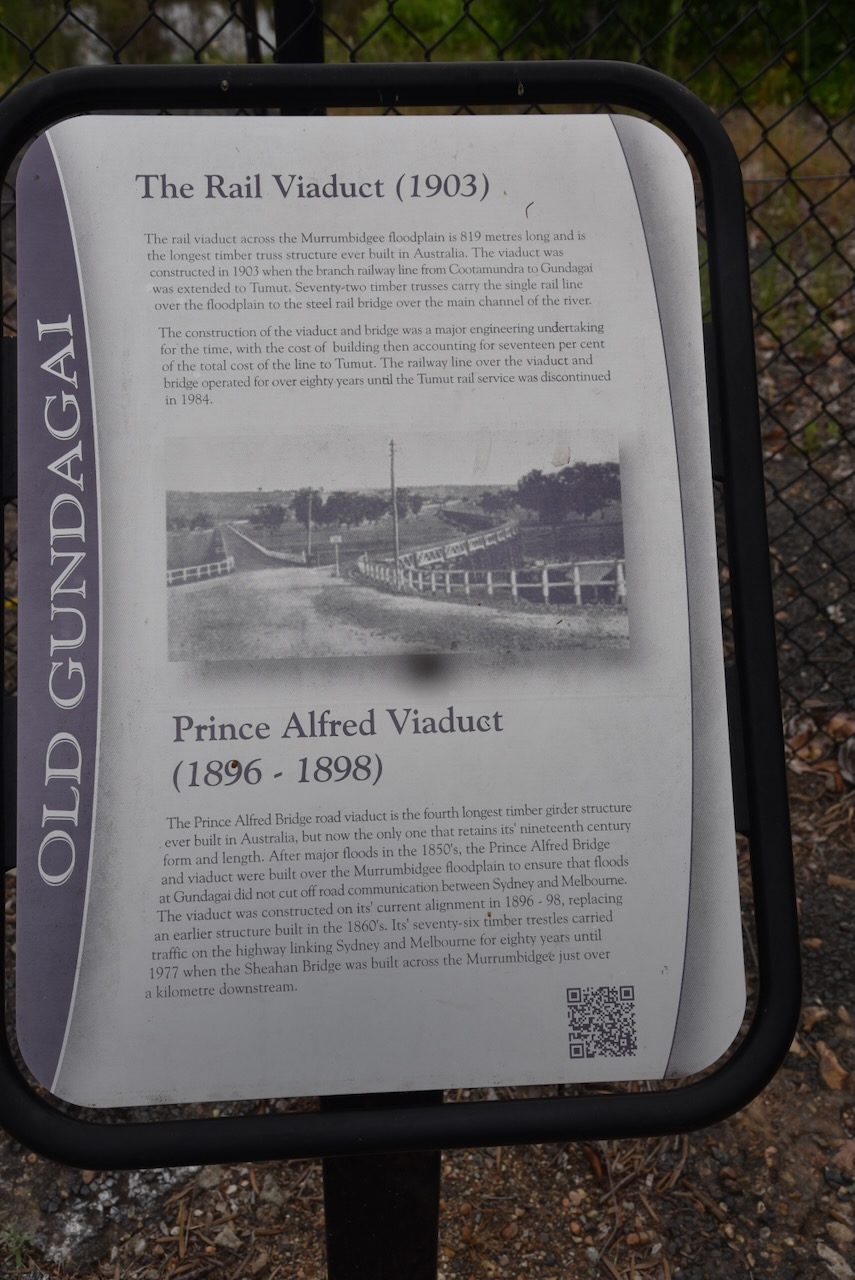
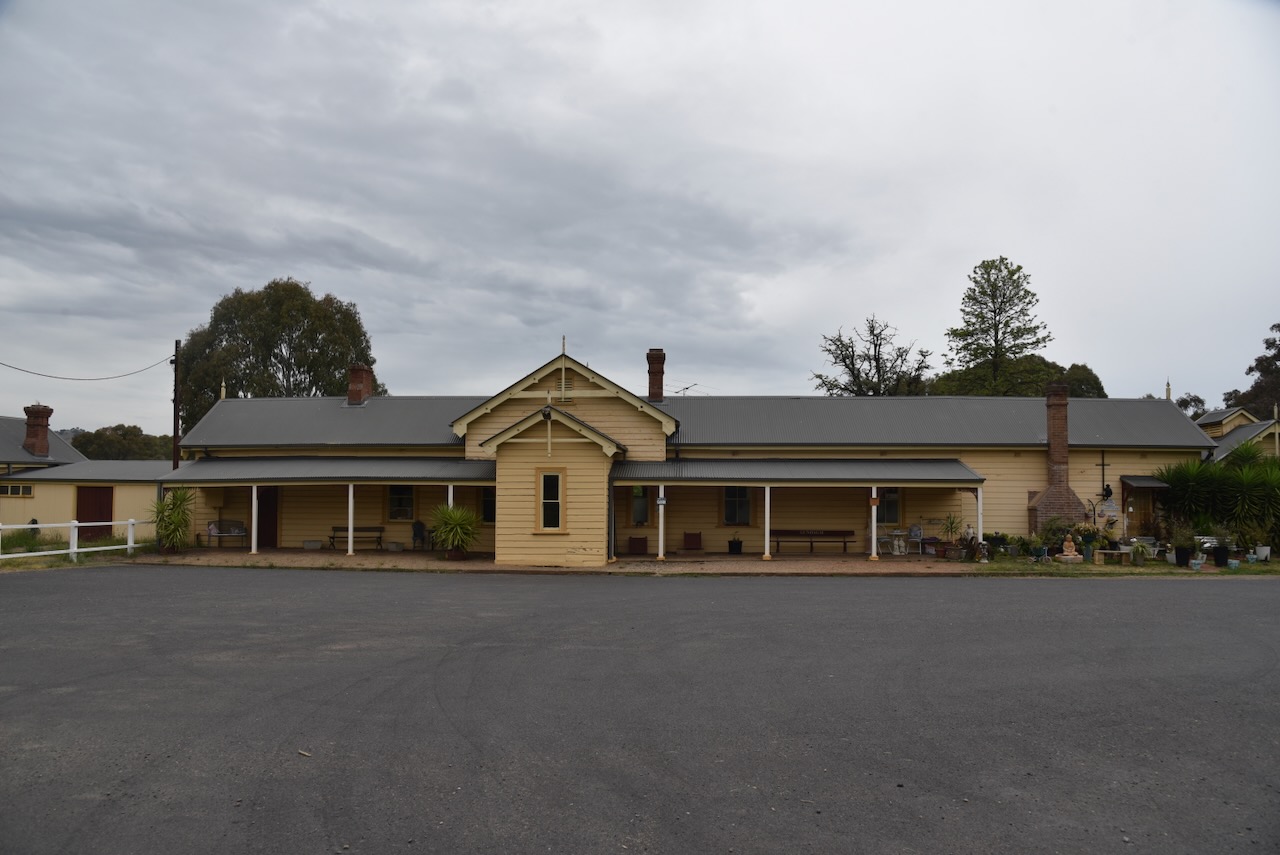
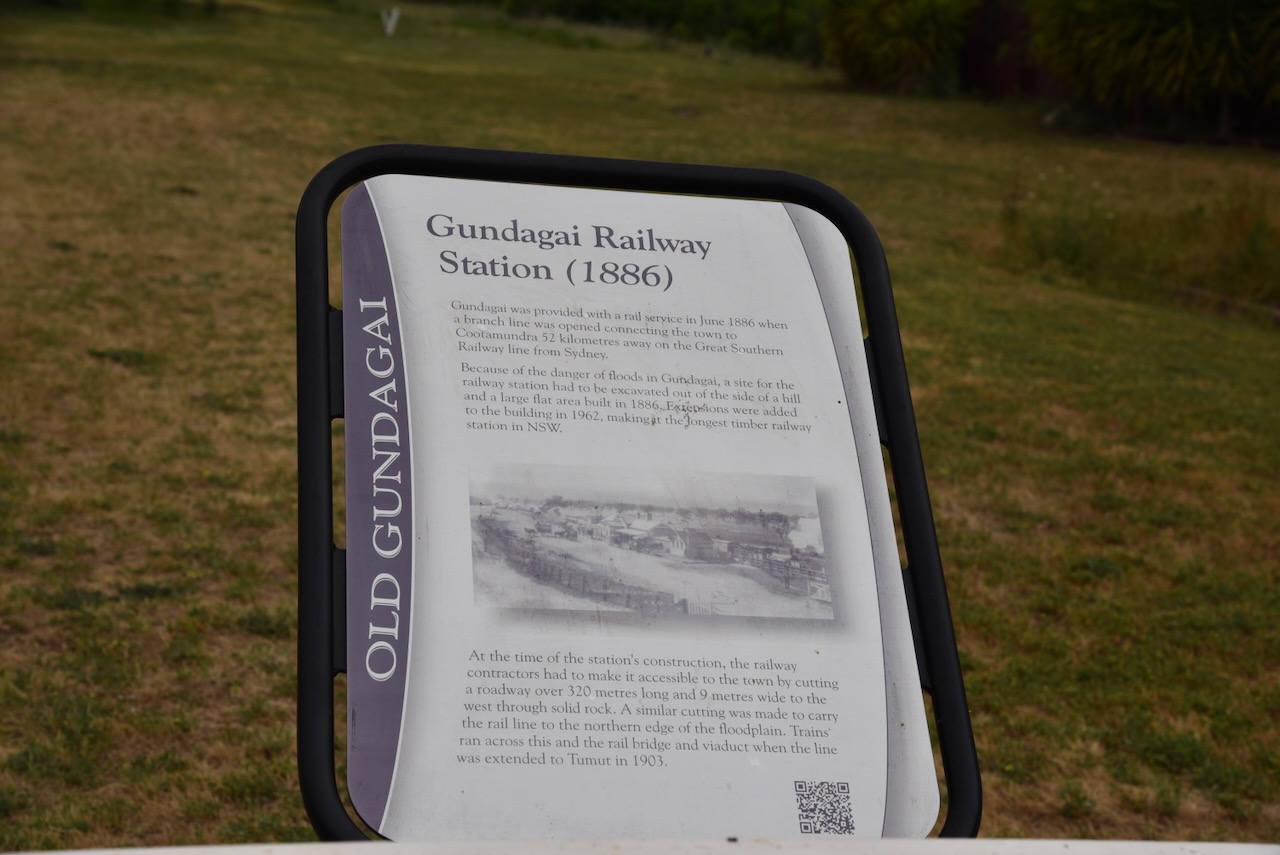
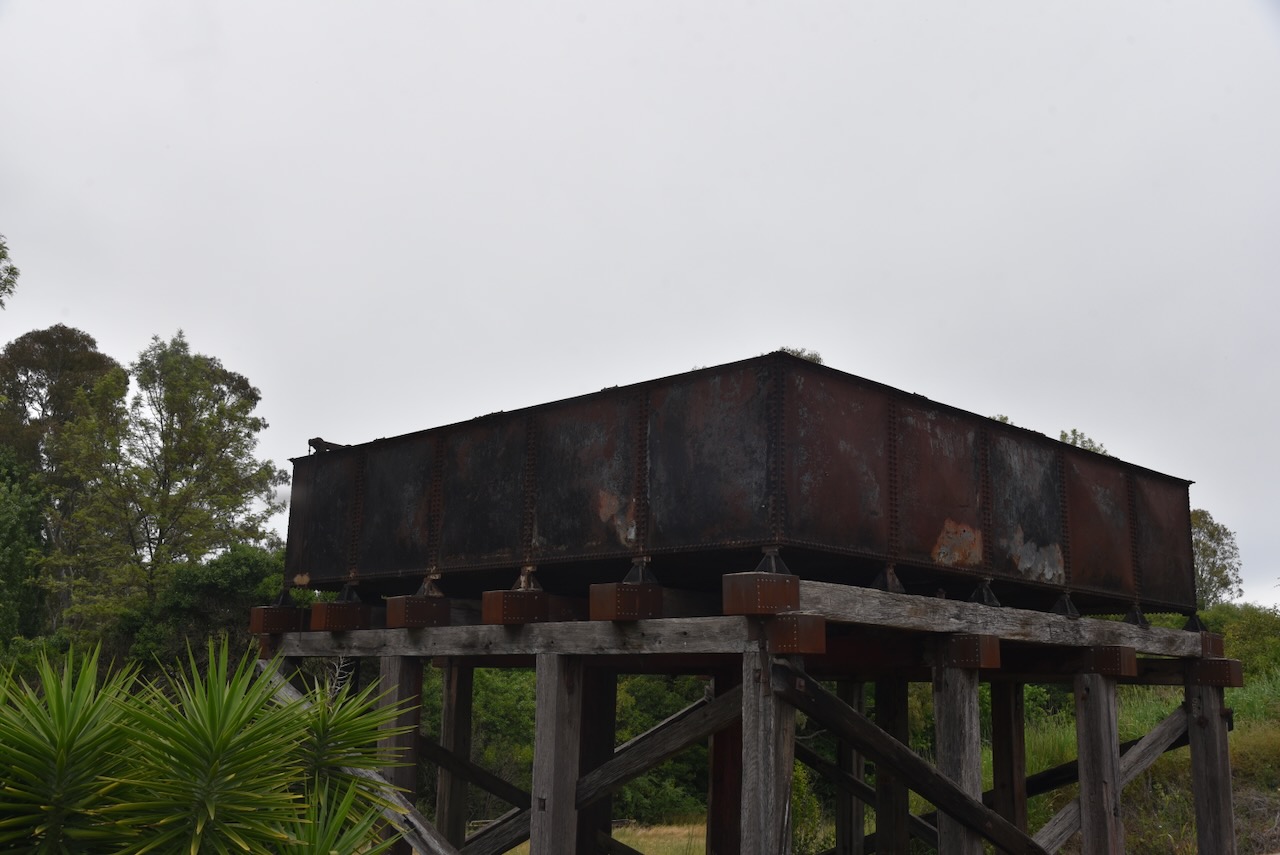
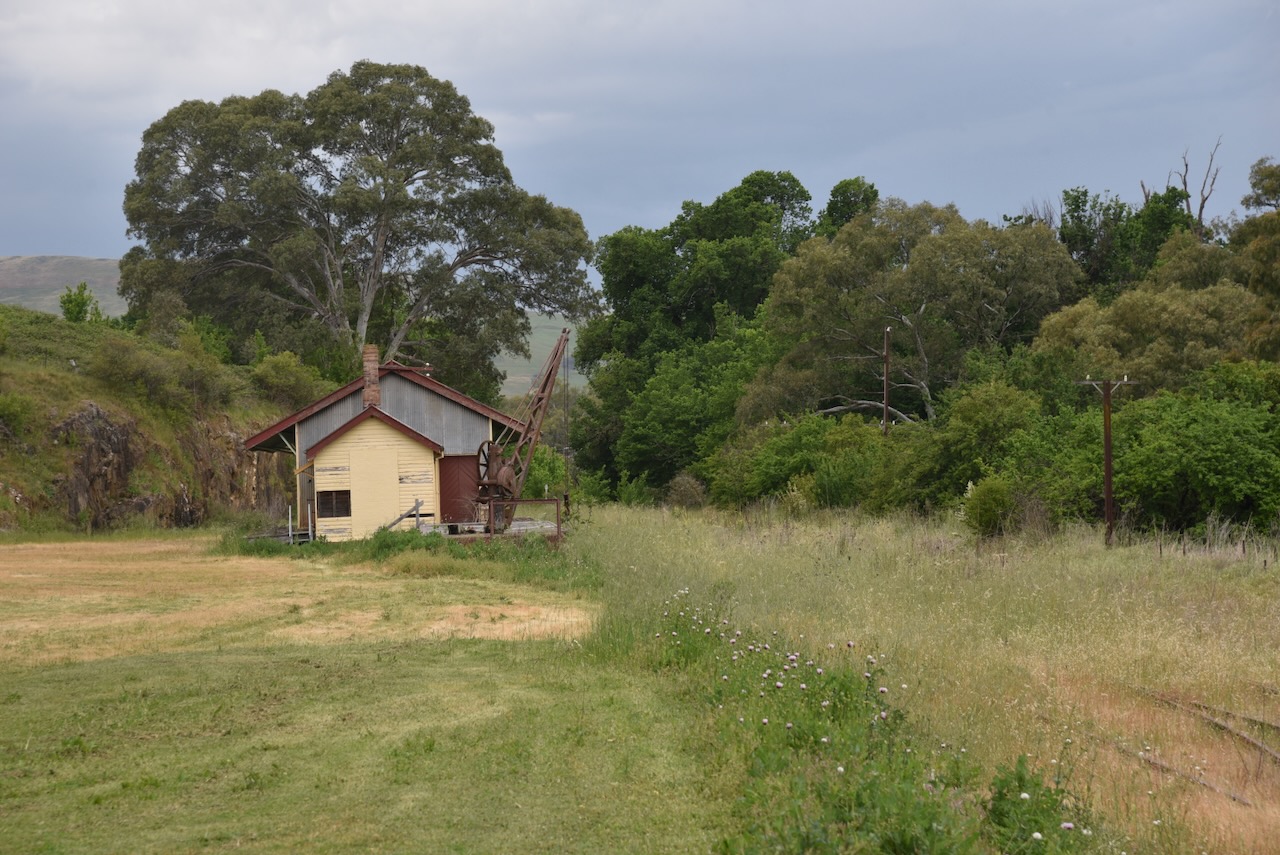
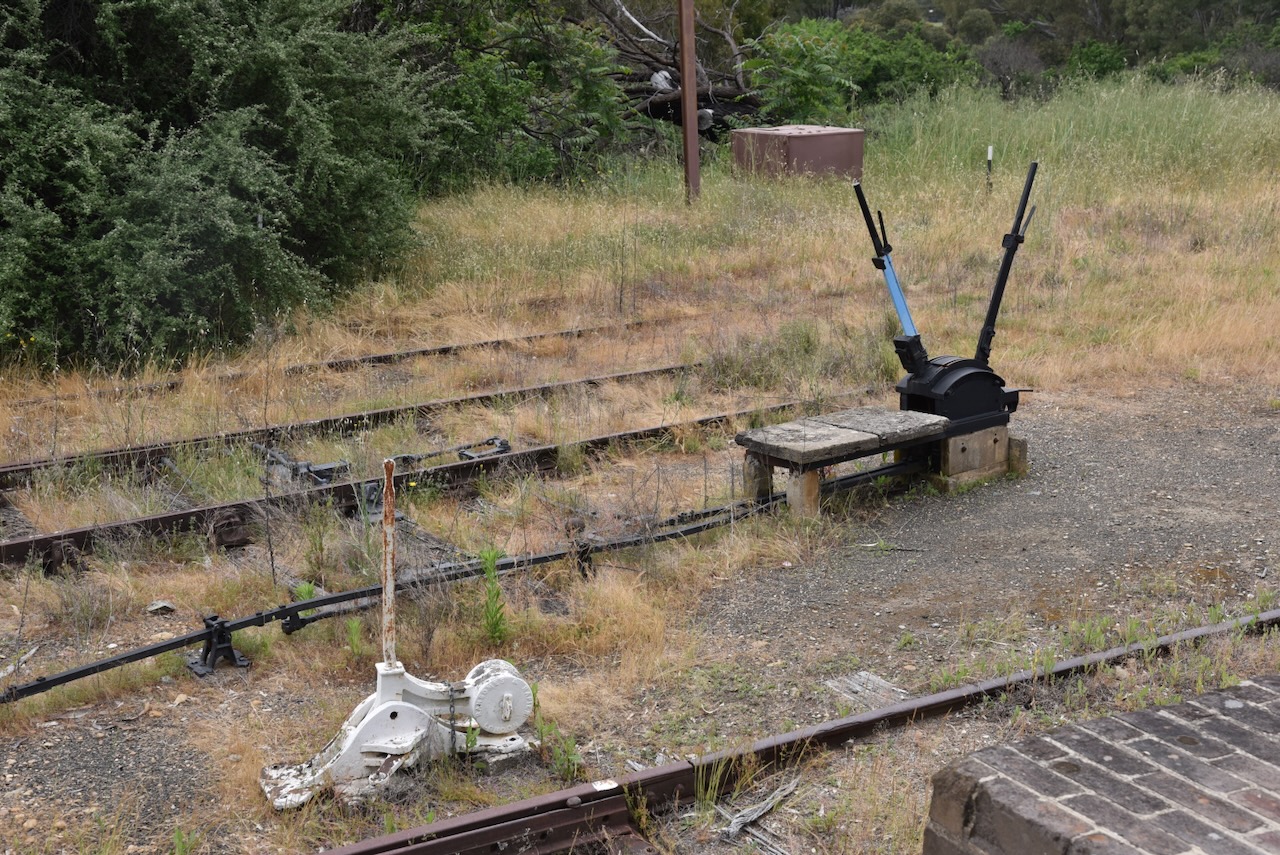
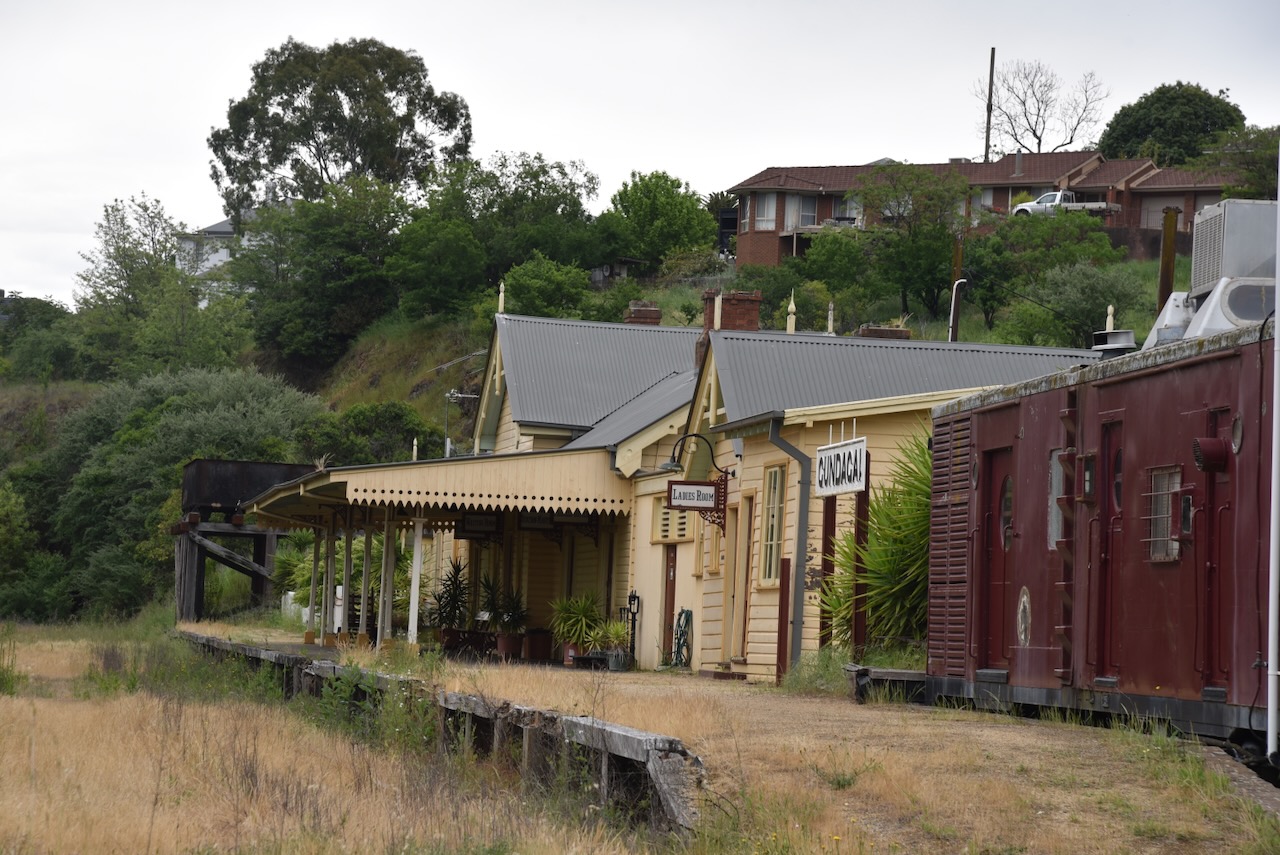
We then visited the old Gundagai Railway Station, which was built in 1886. The branch railway line from Cootamundra to Gundagai was opened in June 1886. Unfortunately, we were limited to what we could see as the caretaker was waiting for some pest control people to arrive regarding a bee problem.
We then drove out along Oibell Drive to admire the railway viaduct.
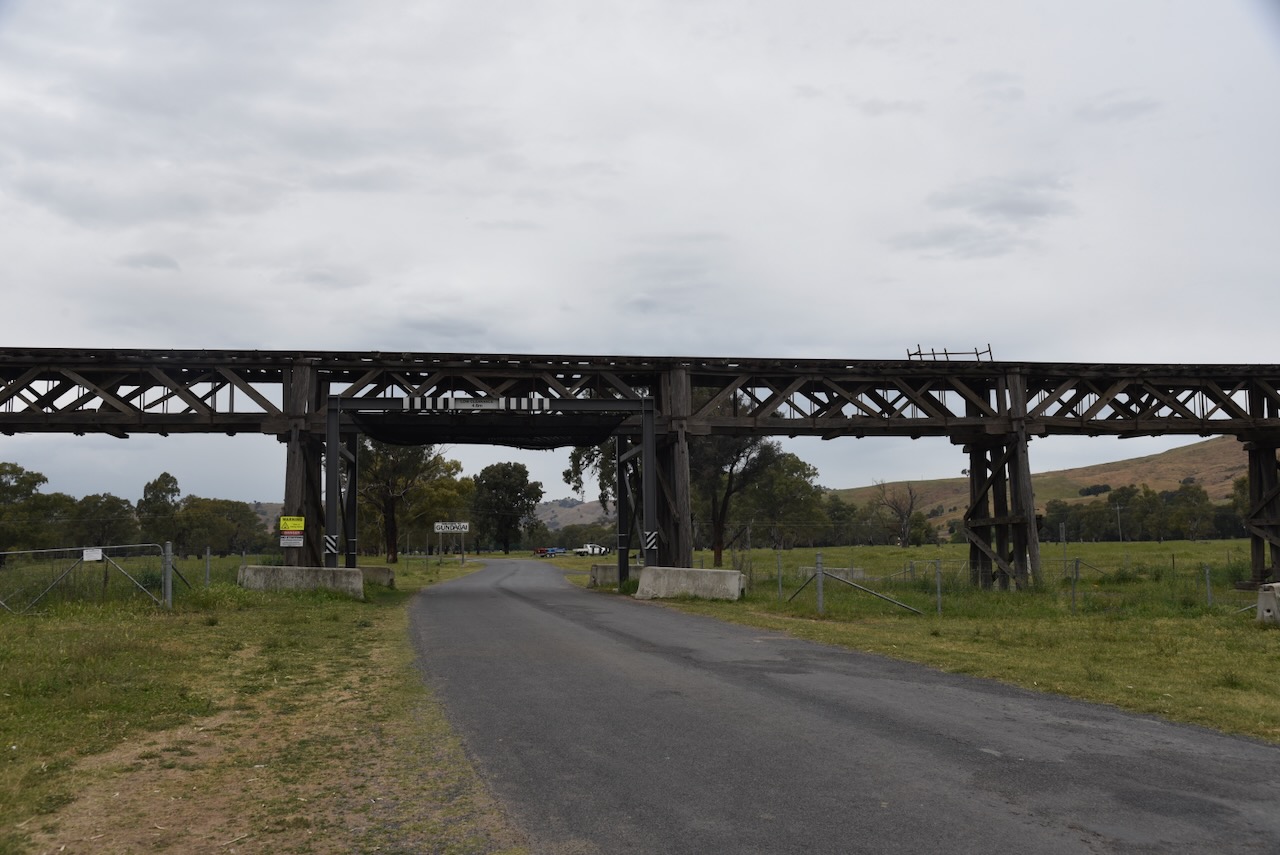
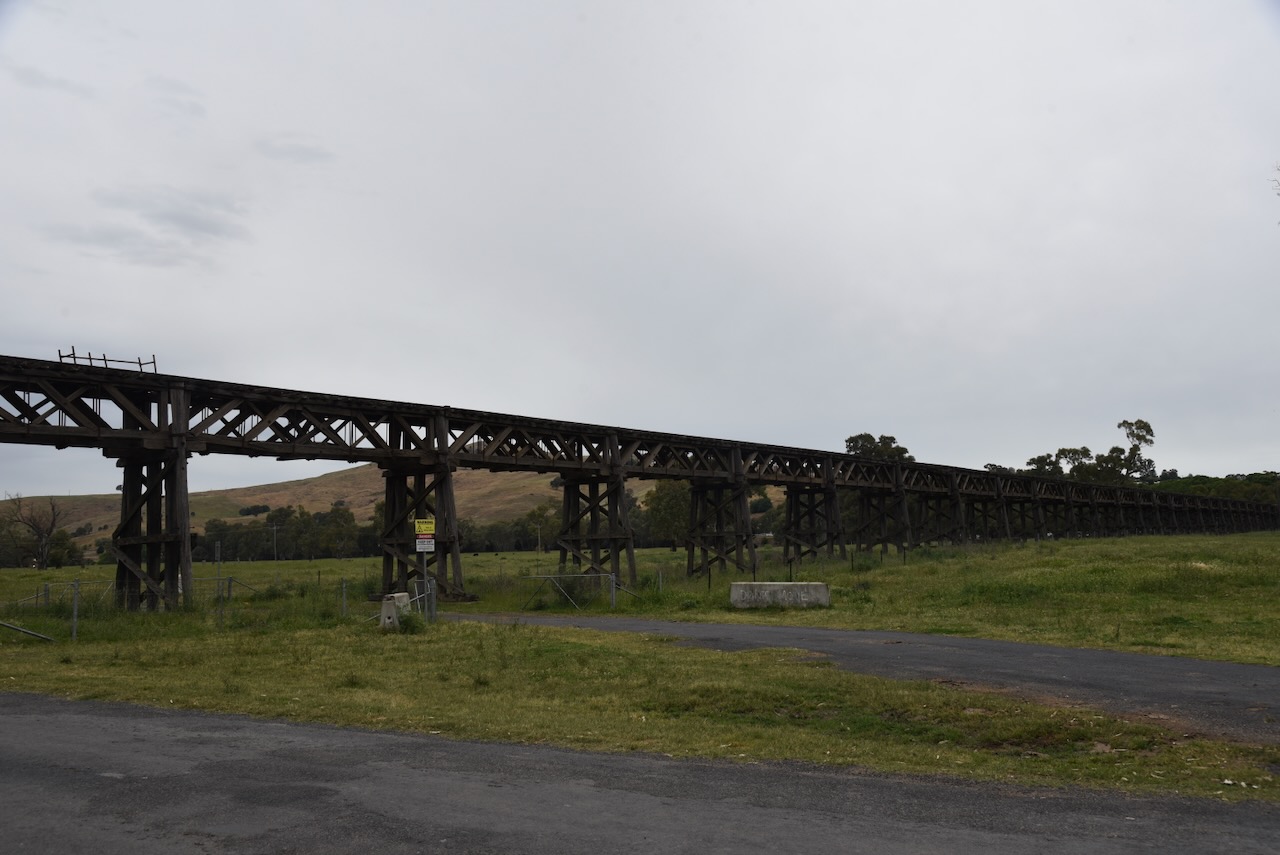
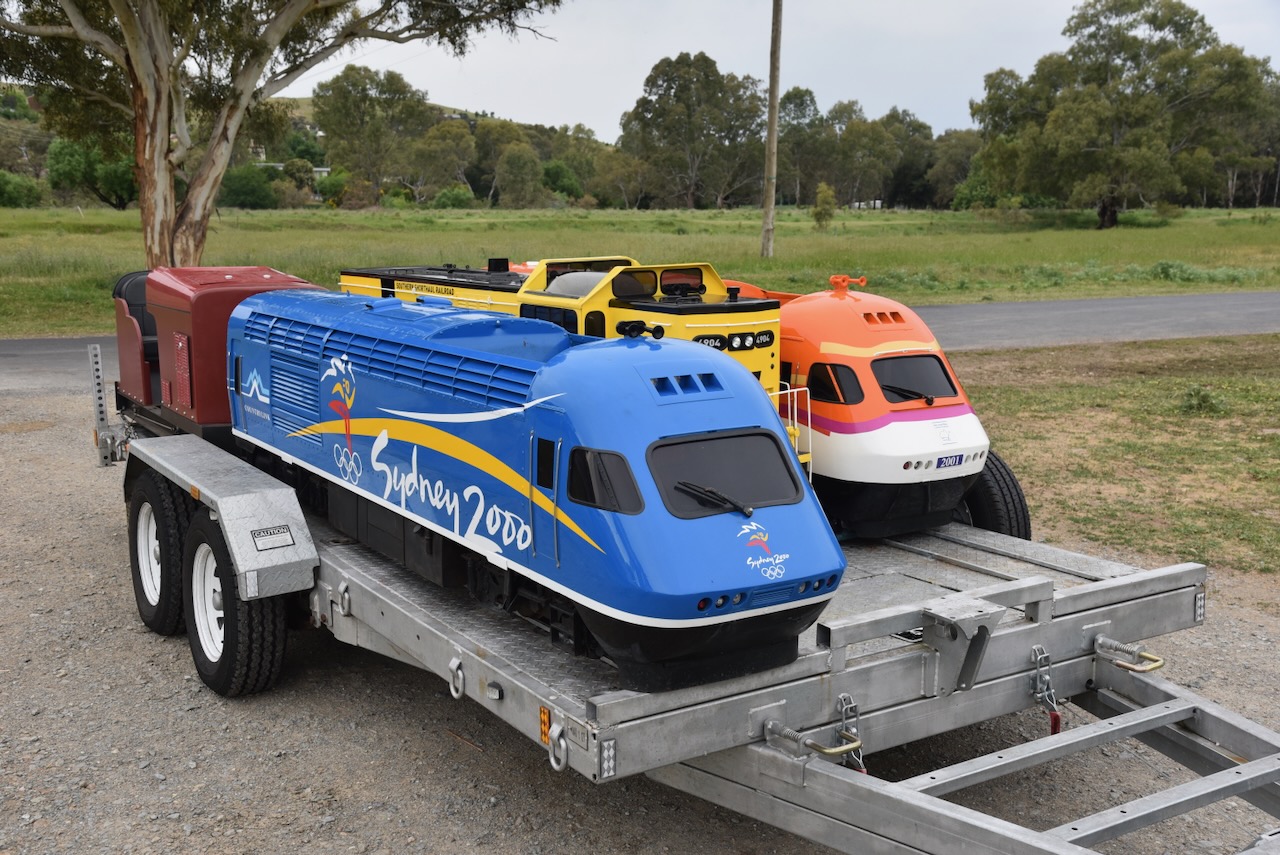
Whilst there, we met 2 gentlemen who were on their way home from a model train show. Wow, would our grandson Flynn have loved these!
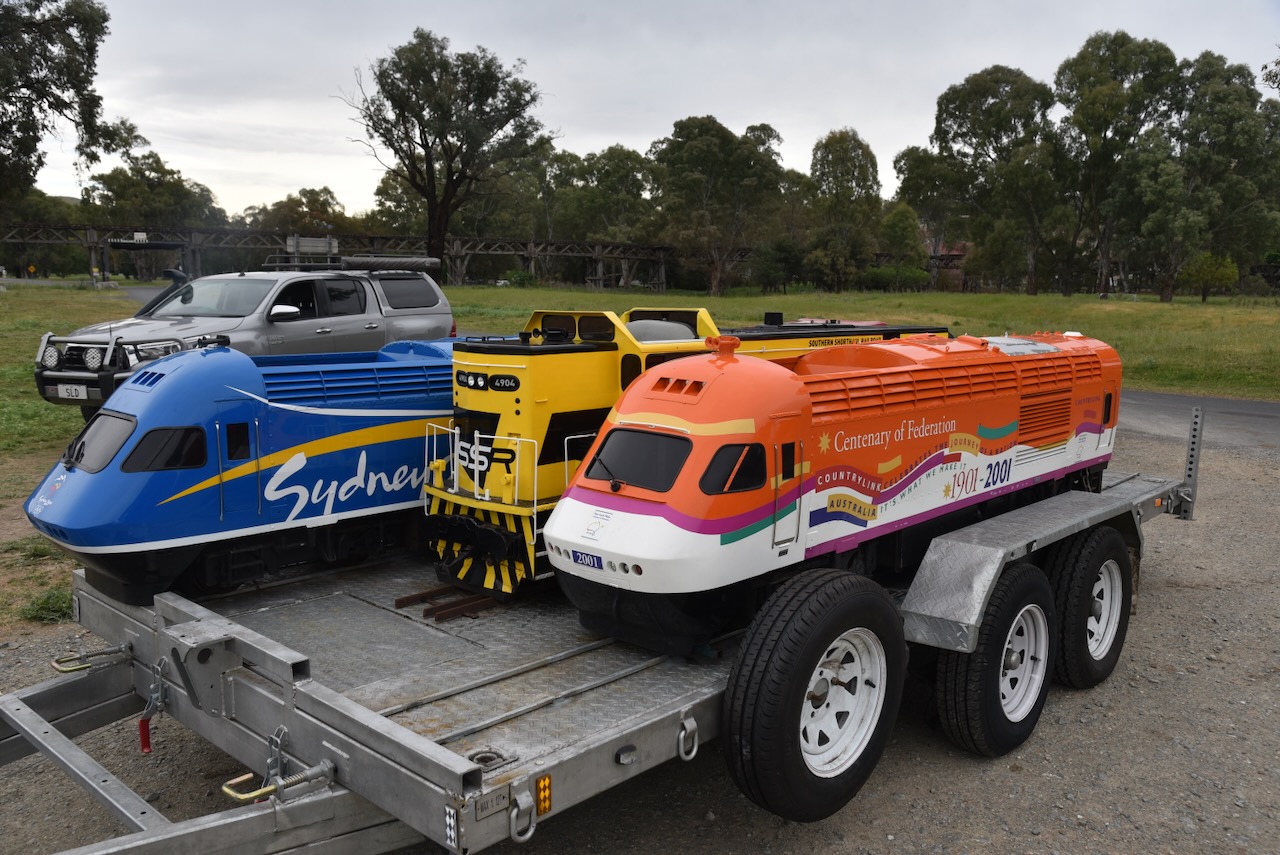
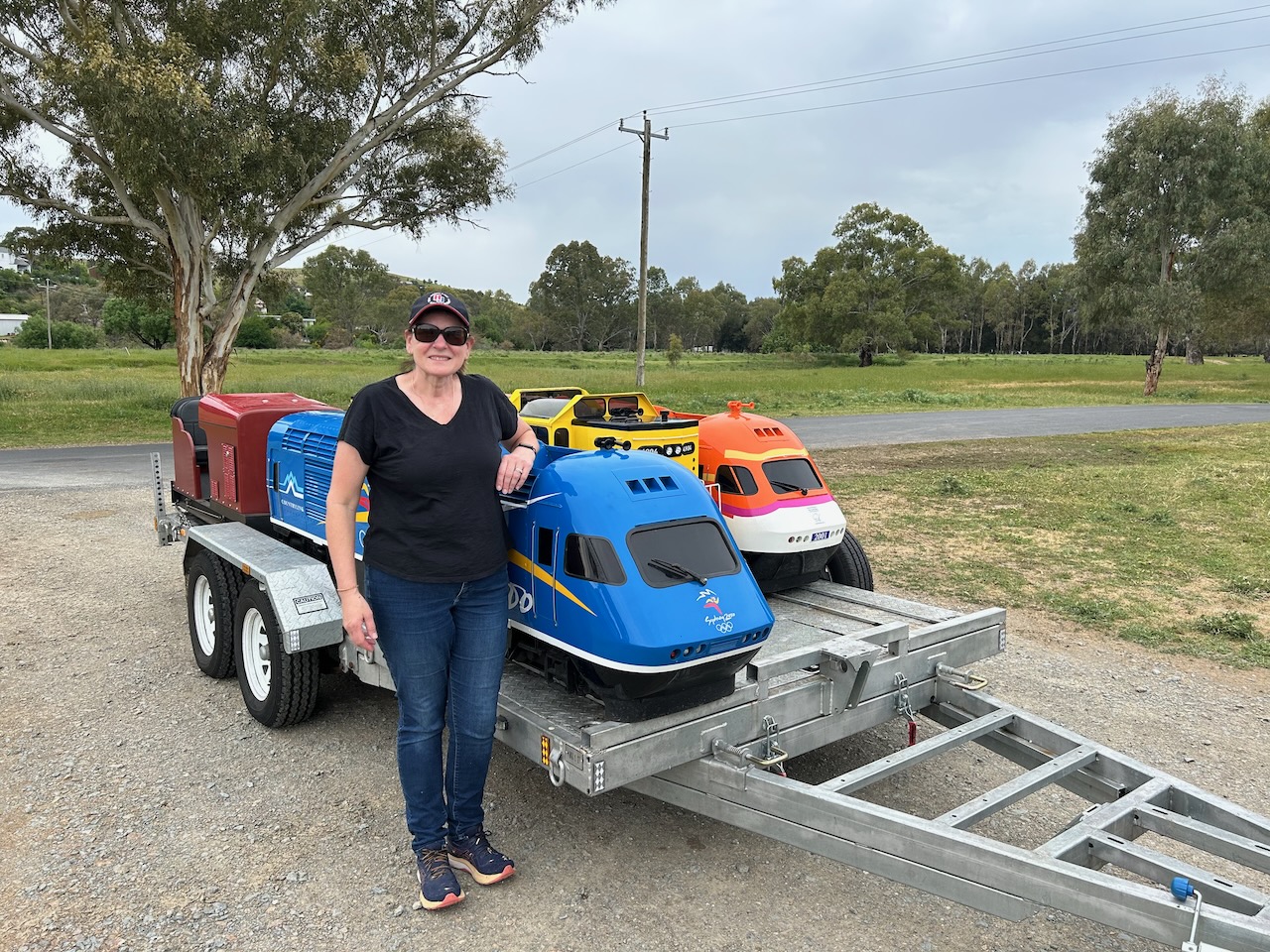
We then visited the Gundagai Rotary Lookout at the end of Luke Street.
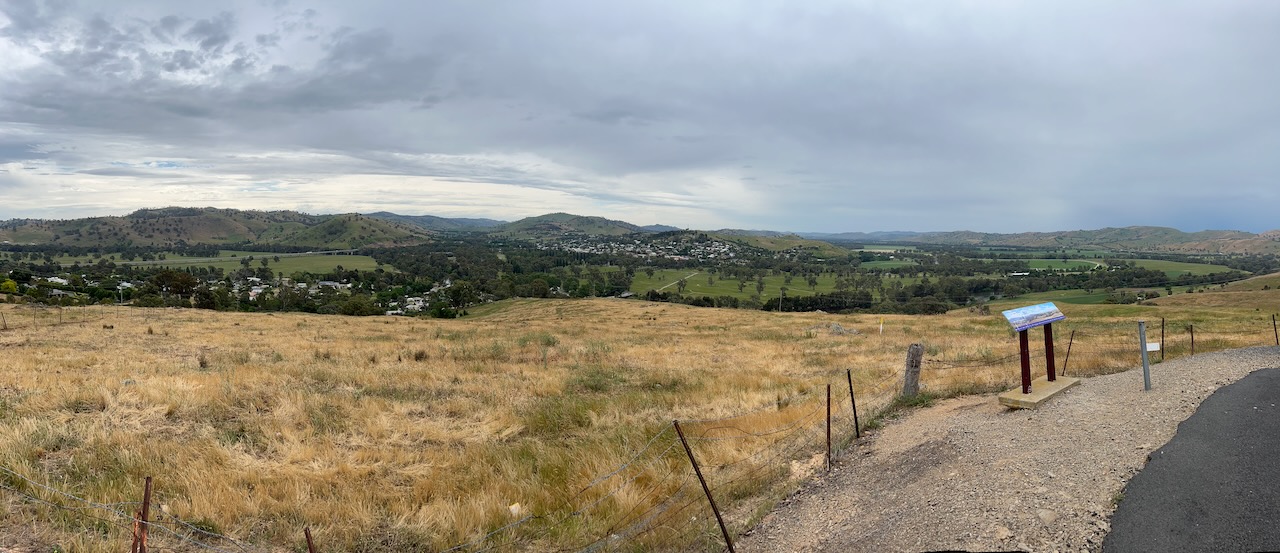
The lookout offers magnificent views of Gundagai, the Murrumbidgee River, and surrounds.
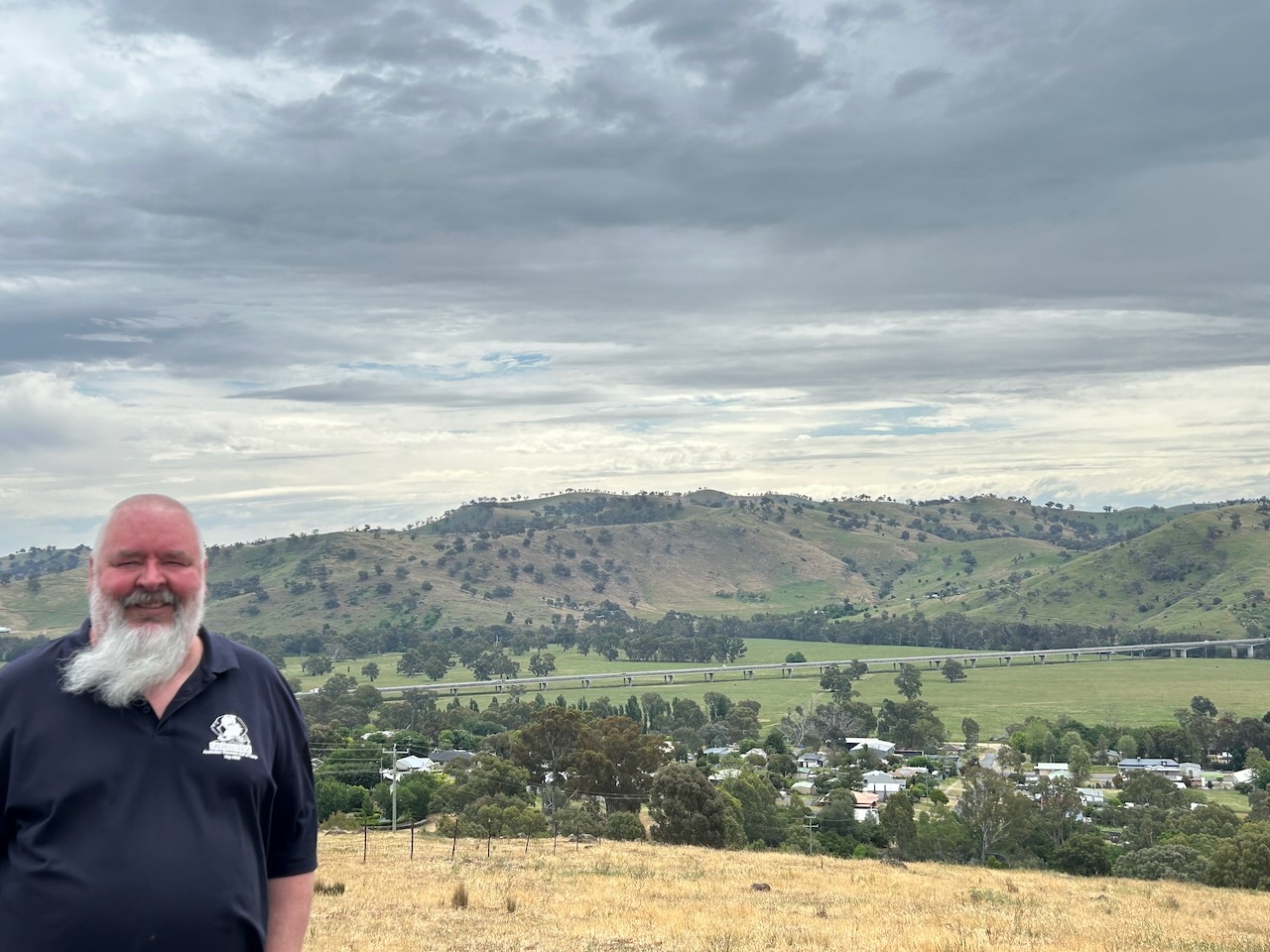
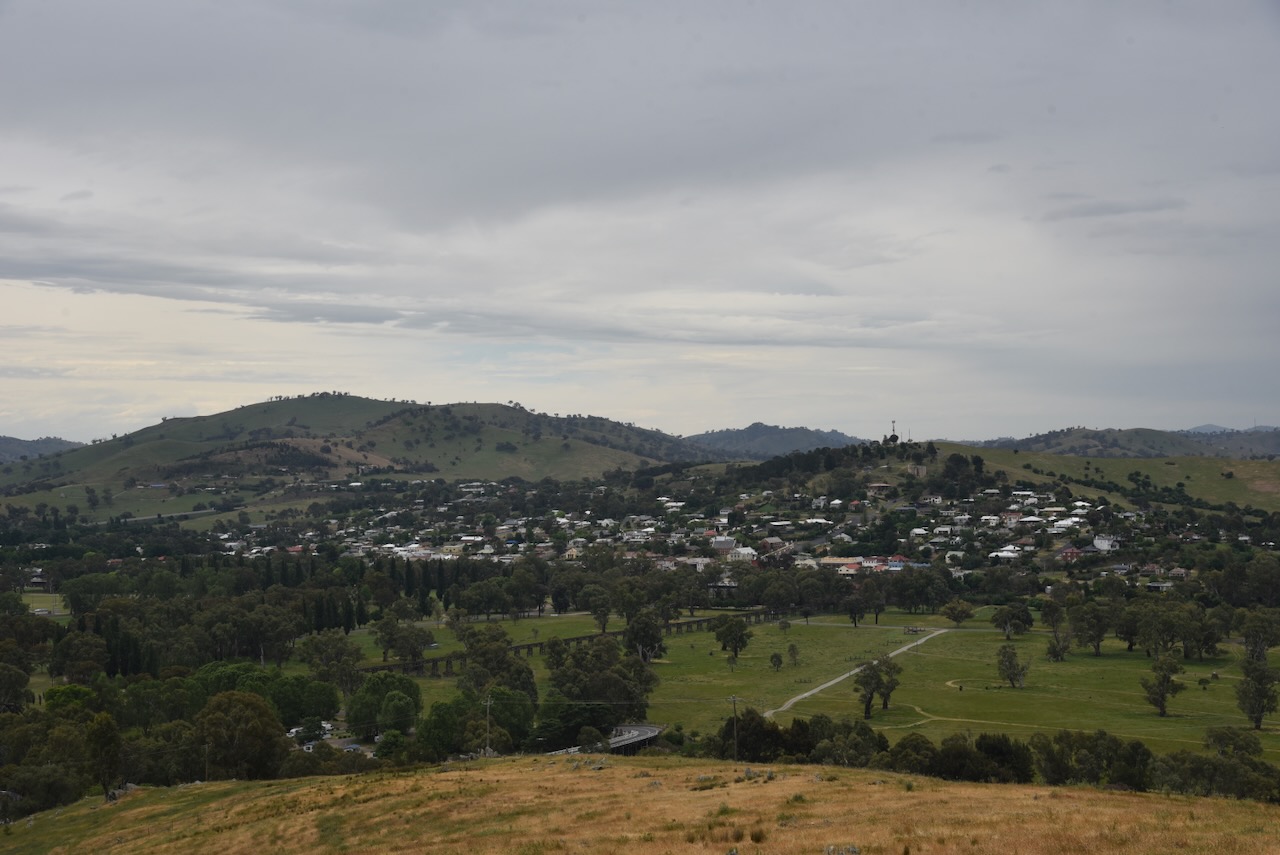
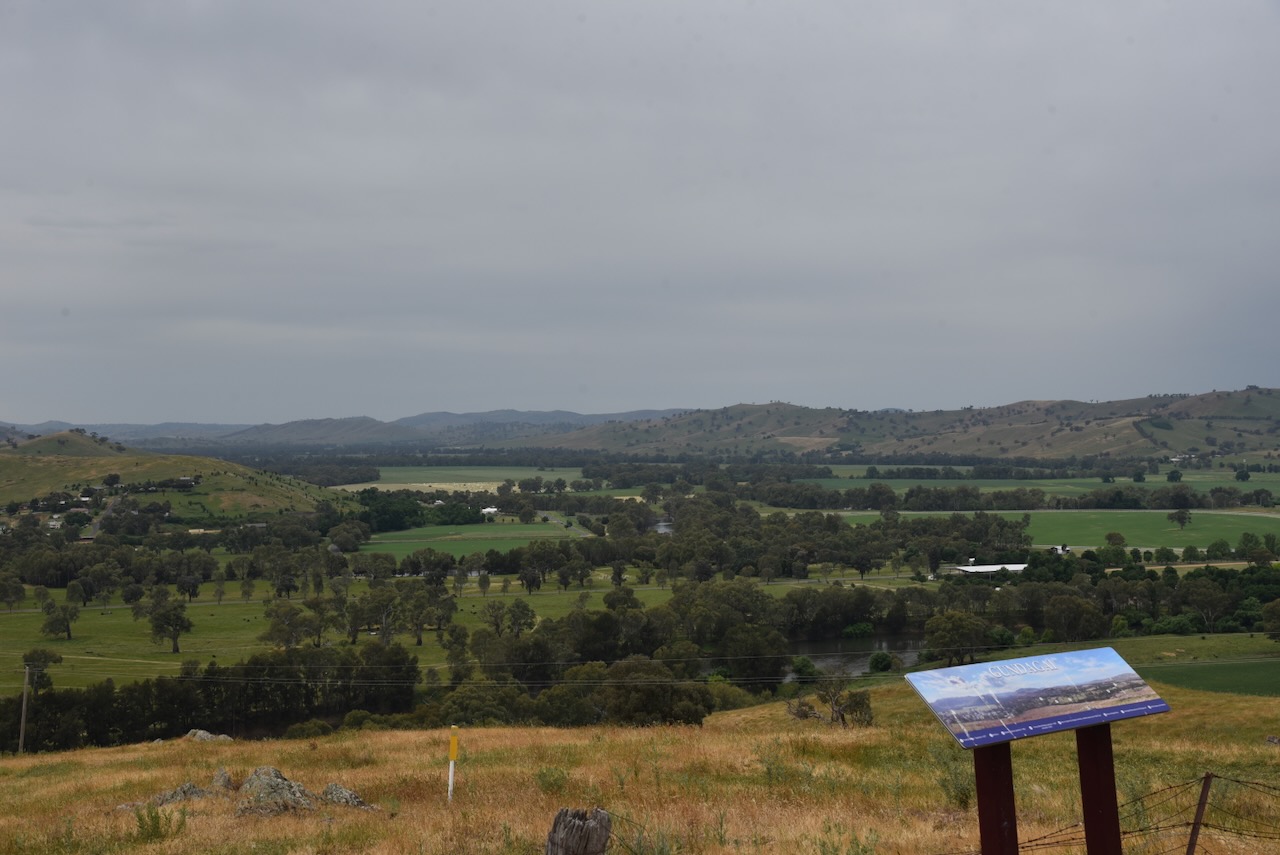
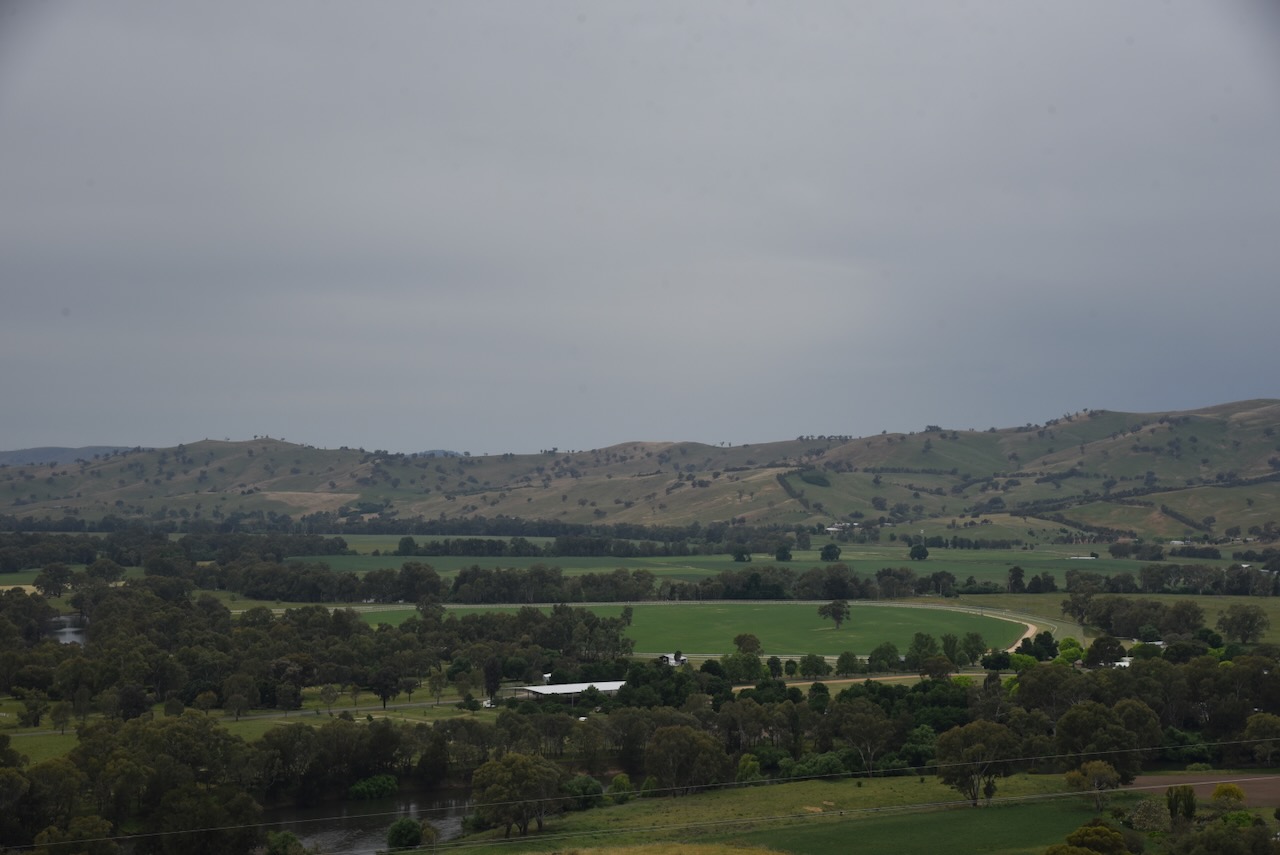
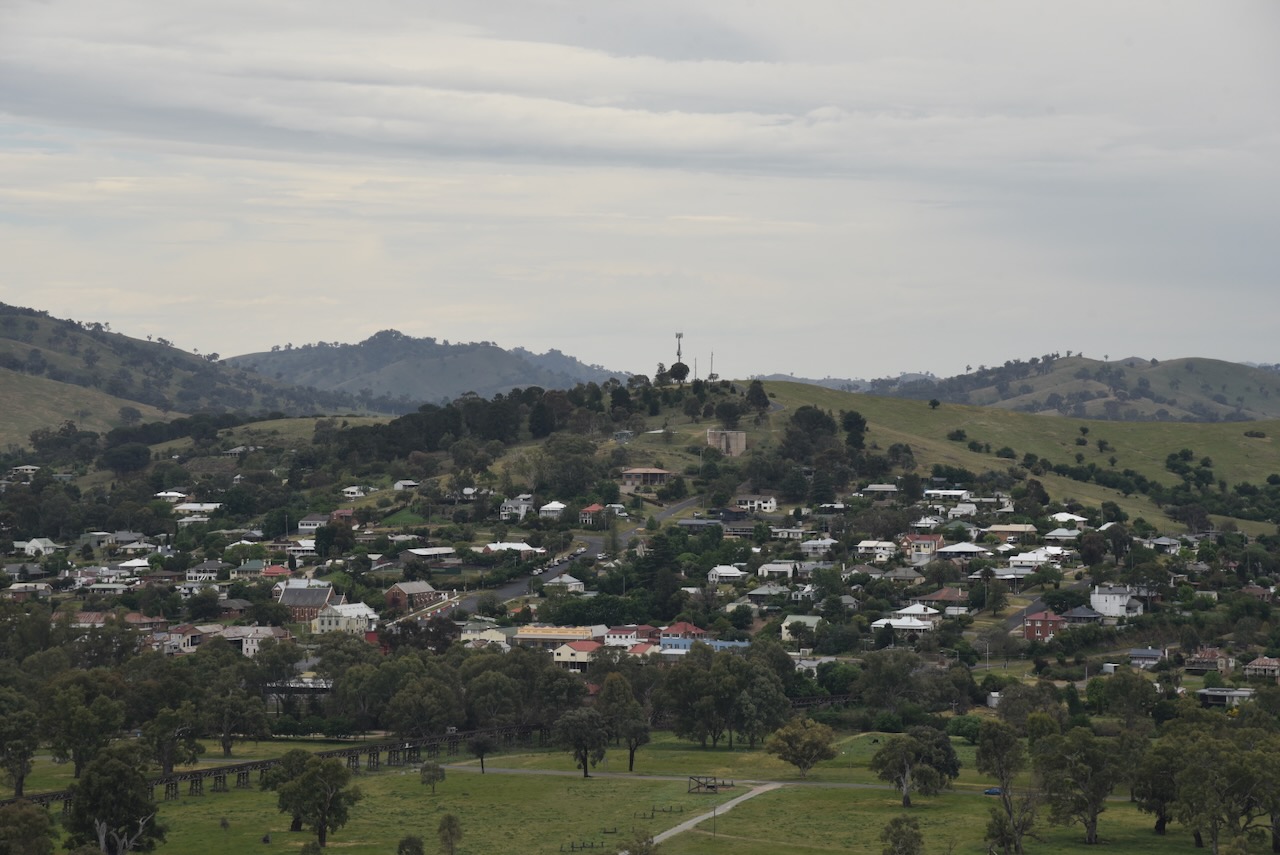
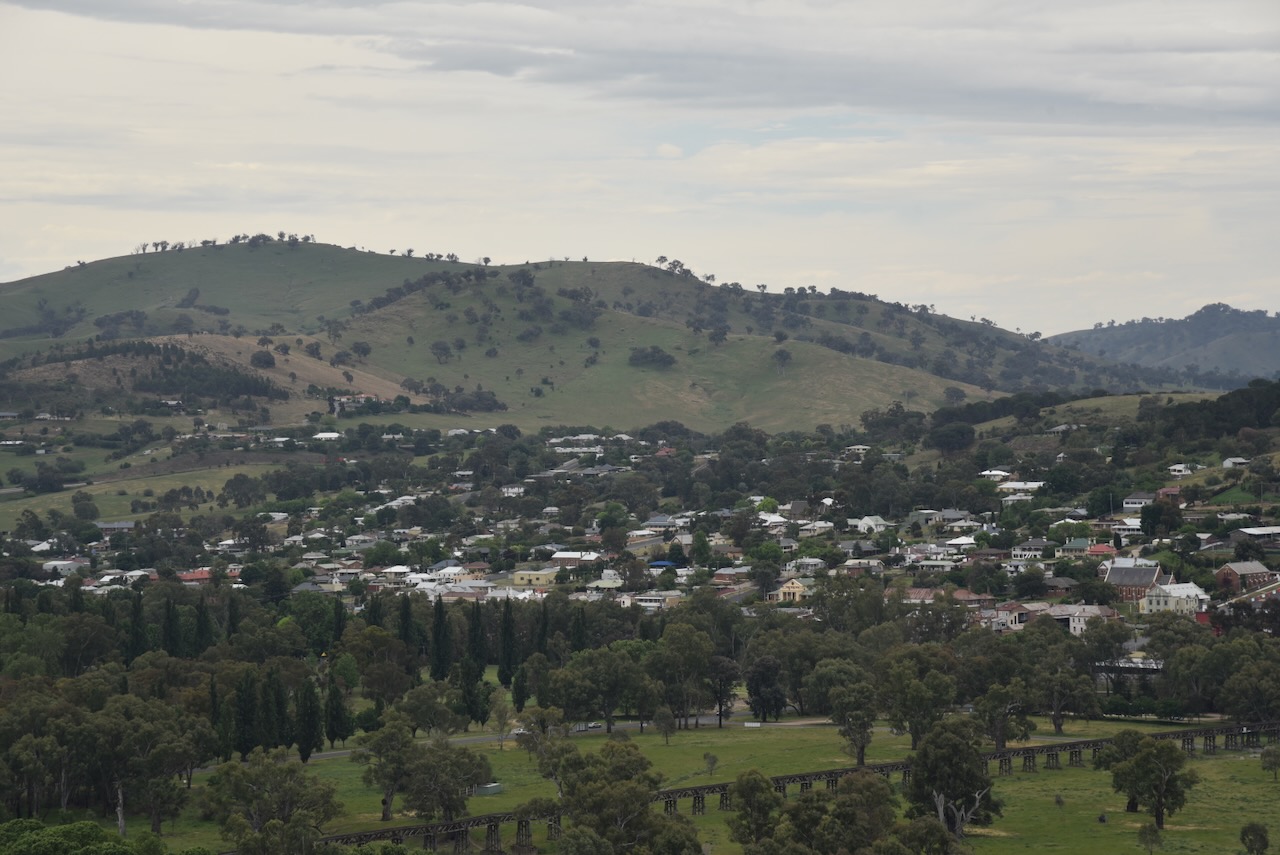
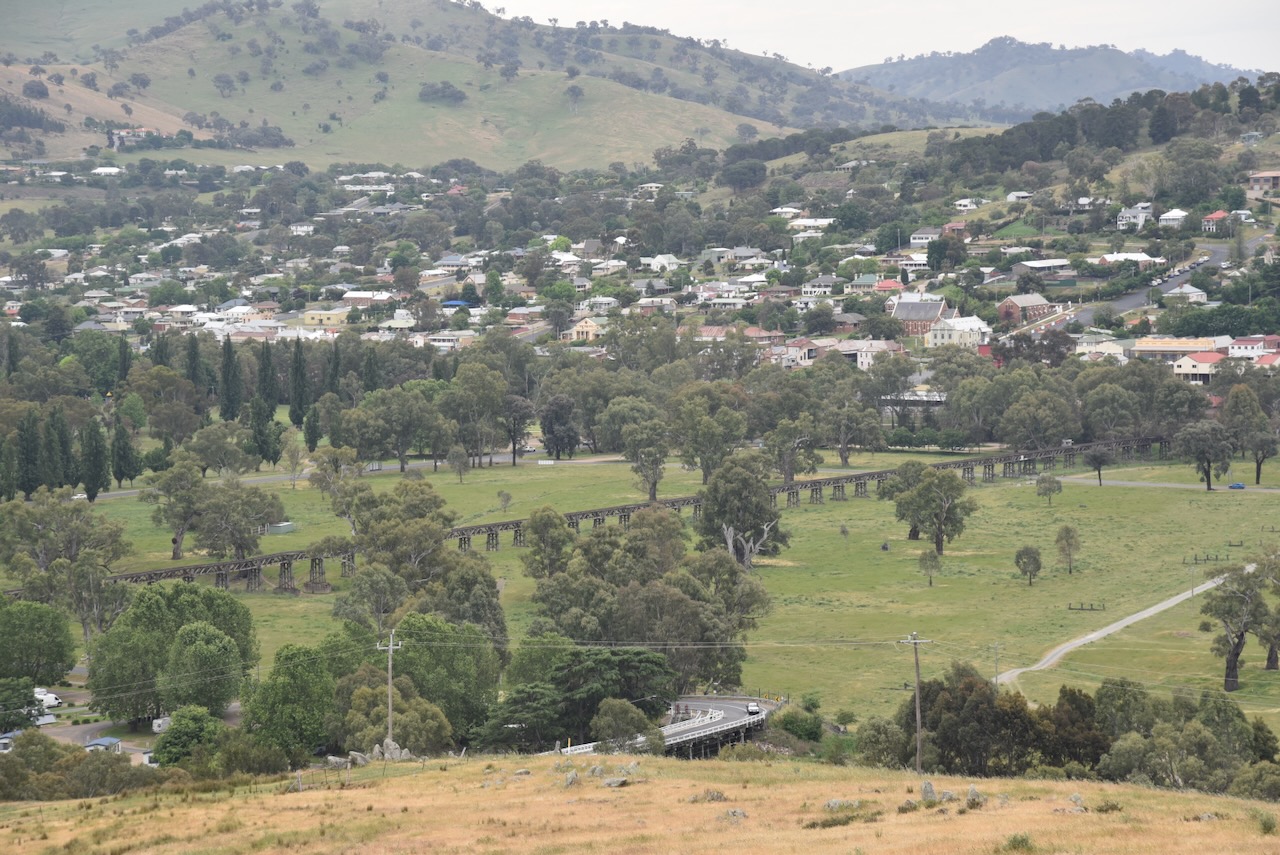
After leaving the lookout, we had a look around Gundagai South. One of the impressive buildings is the Star Hotel in Mount Street, which is now closed. It was established in 1855 by Scotsman Euan Cameron. The internet showed that the hotel was renovated back in 2011 and that it was sold in June 2017, and then sold again in July 2021. It did have a restaurant called Fangios. (Chirp 2026) (Real commercial 2025)
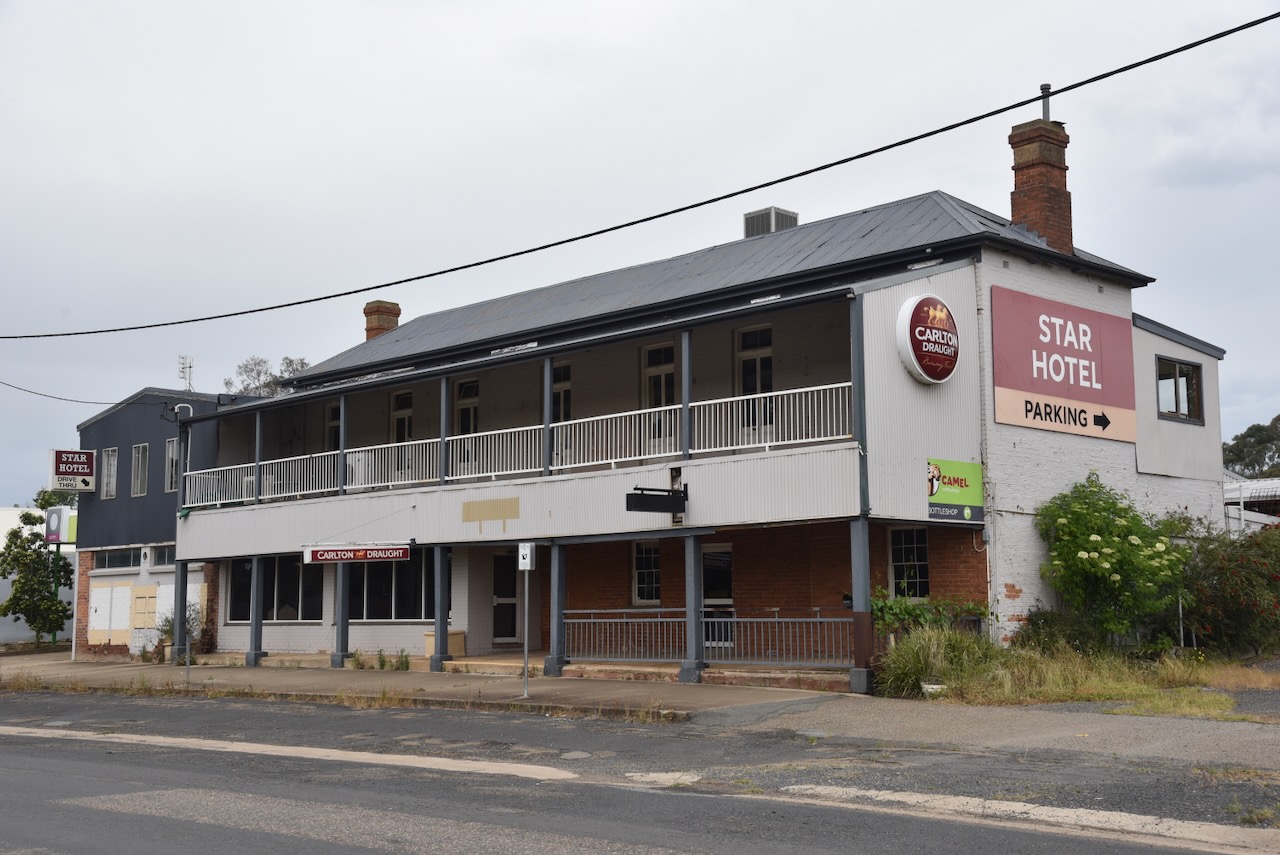
It is so sad to see these historic buildings sitting vacant. If only the walls could speak.
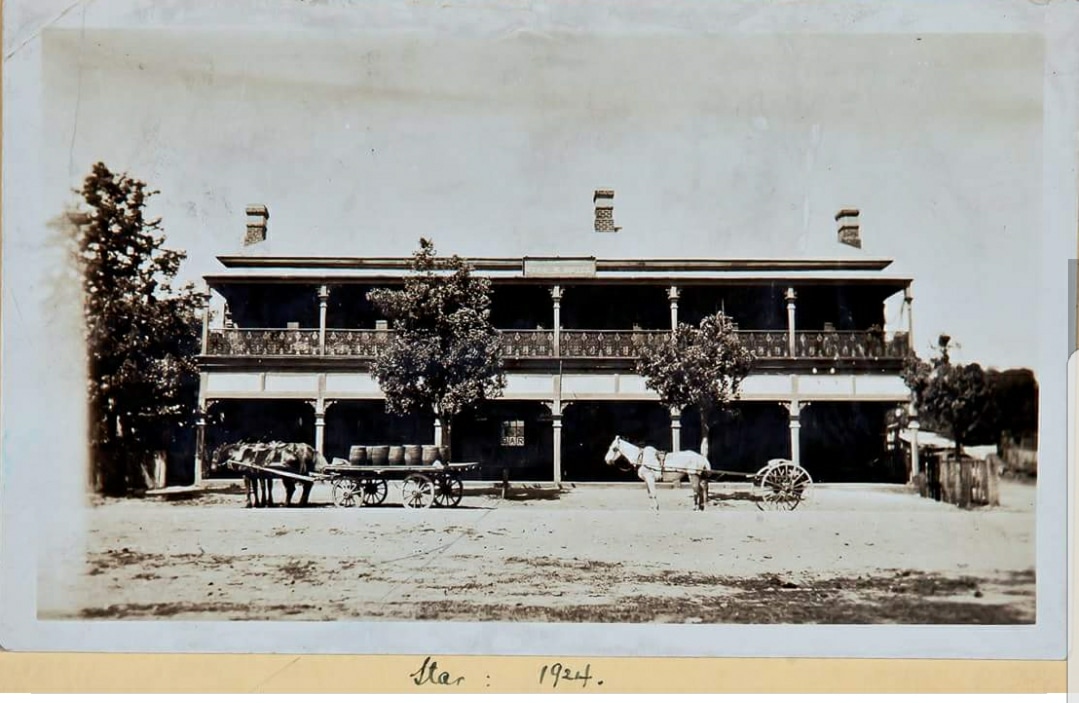
Above: the Star Hotel, 1924. Image c/o Star Hotel Facebook page
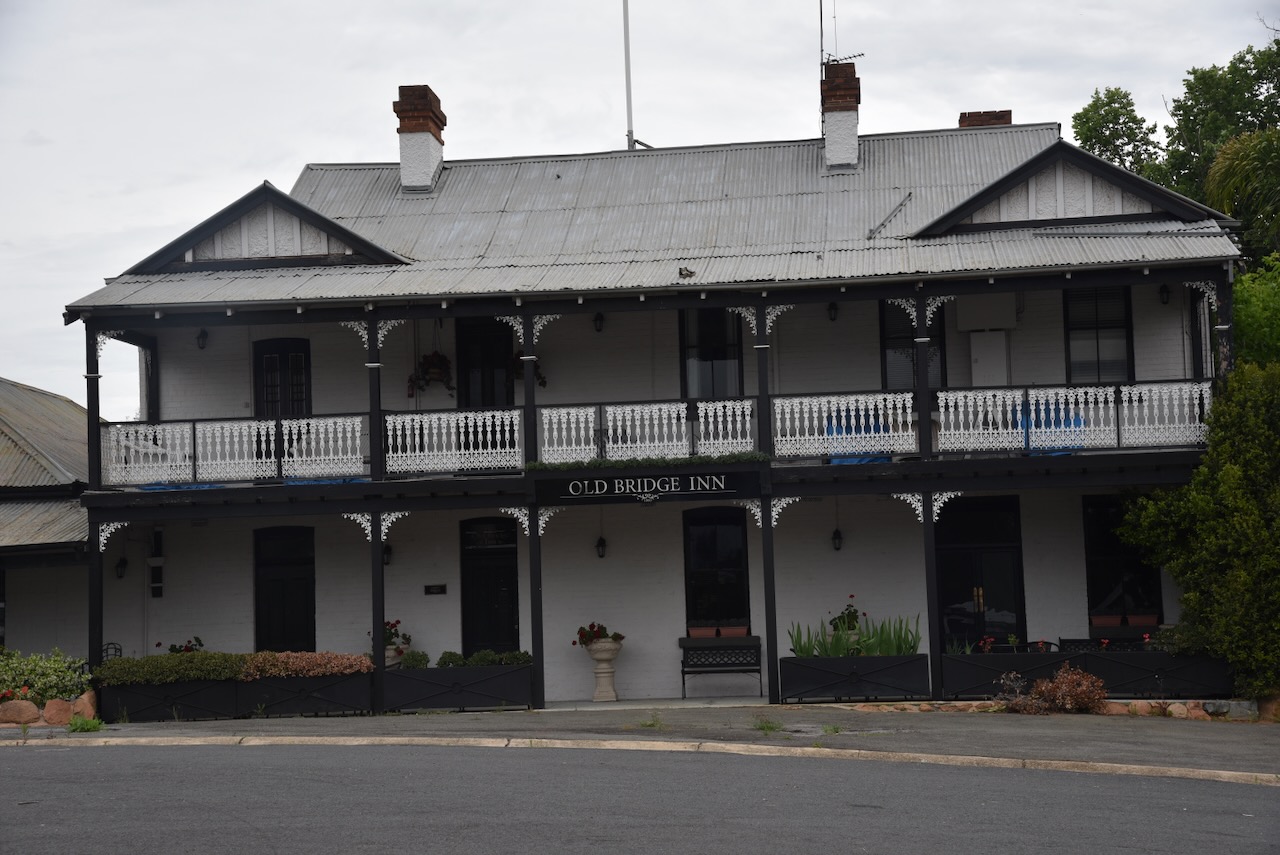
A bit further around the corner is the Old Bridge Inn. It was built in the 1860s and was known as the Bridge Hotel. The owner was Mr Fuller. He operated a punt across the Murrumbidgee River (About Regional n.d.)
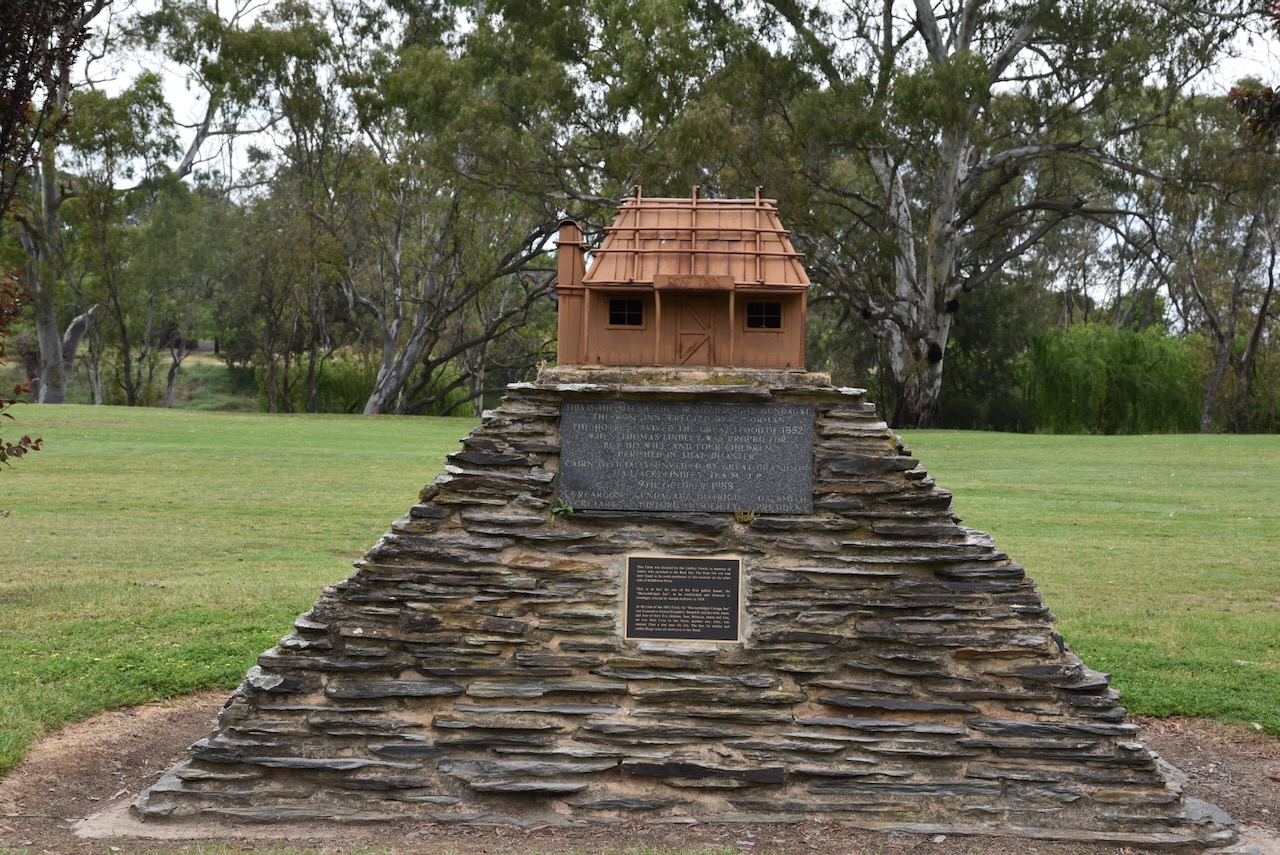
We then visited the cairn on Middleton Drive at the golf course, commemorating the site of the Murrumbidgee Inn. Now if you have visited Gundagai and visited this site and are confused, then you are not on your own. So were we, until we researched this a little deeper.
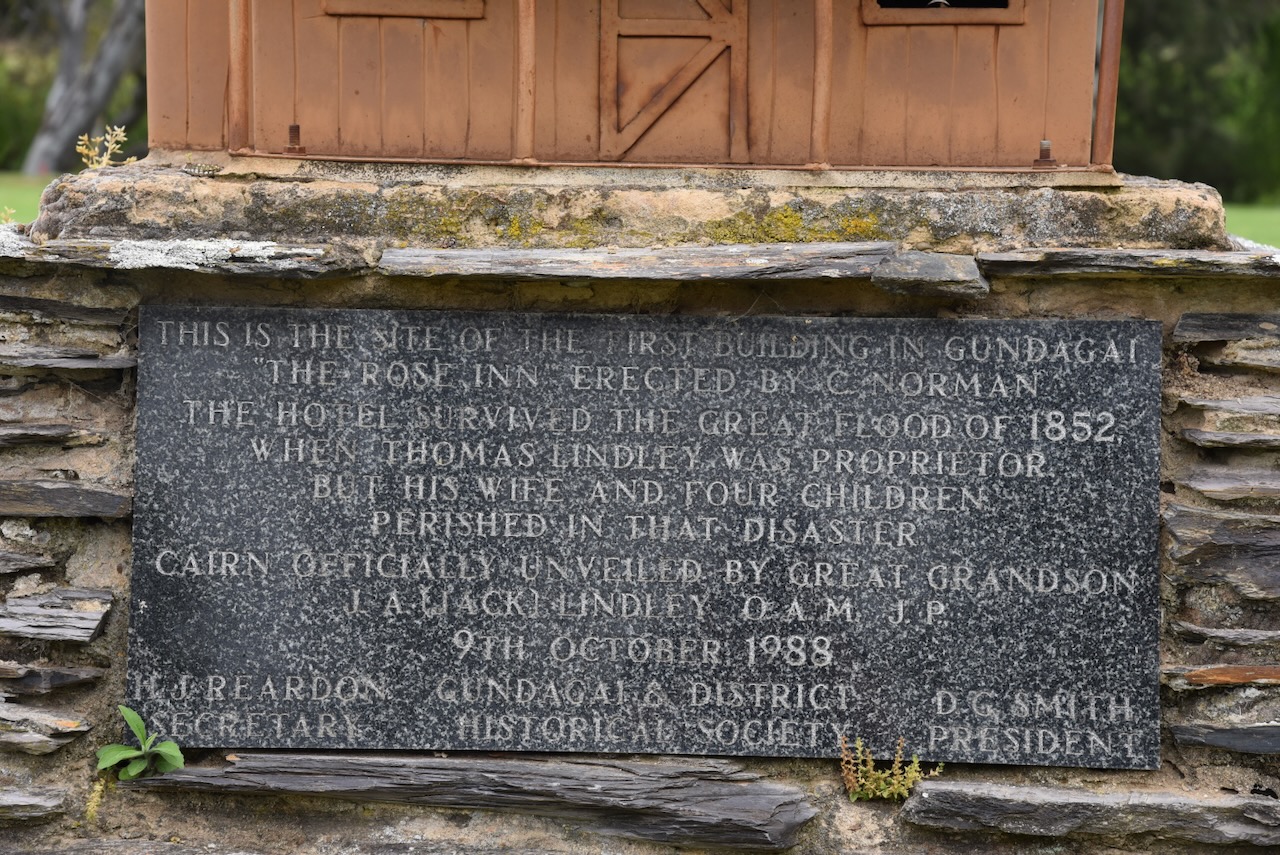
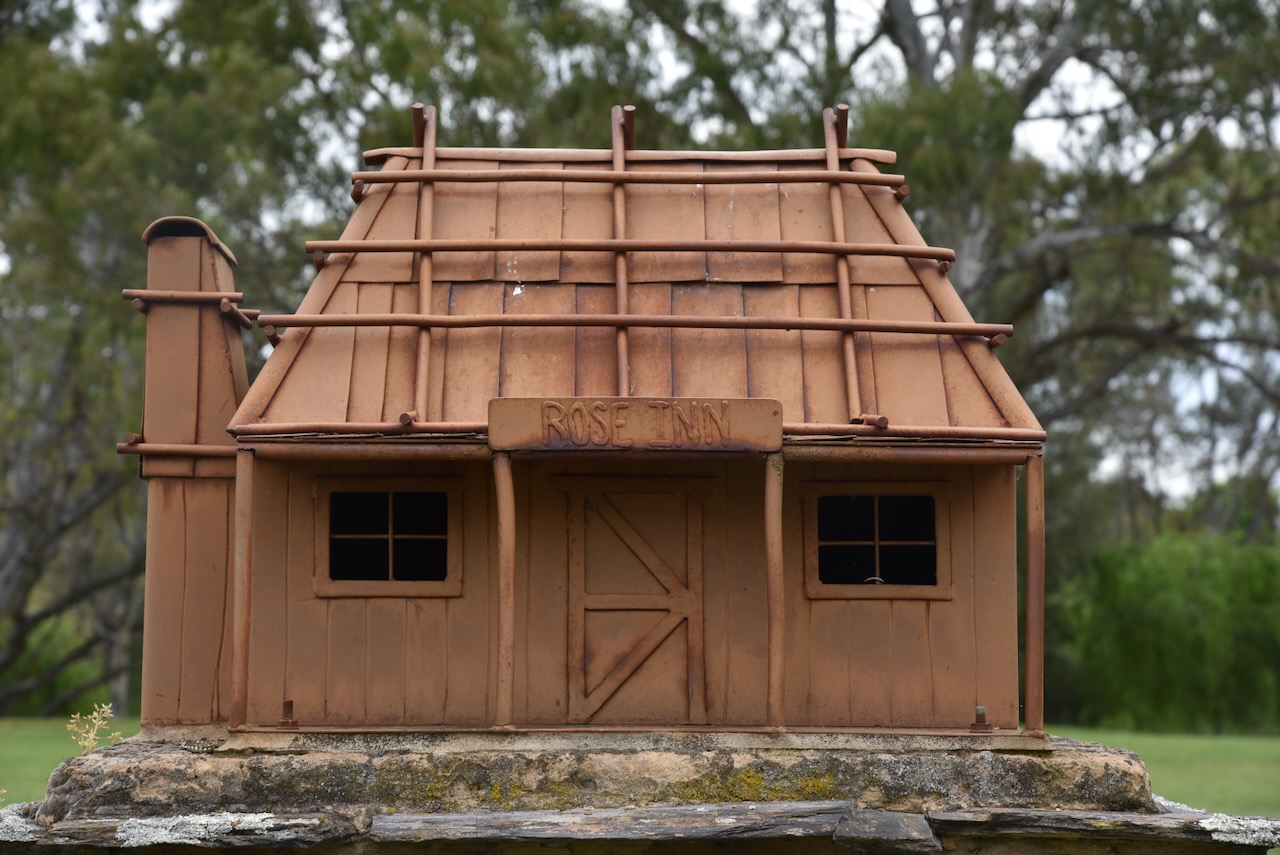
The cairn has two plaques. One indicates that it is the site of the Rose Inn, while another states it is the site of the Murrumbidgee Inn. The fact is, the site is that of the latter. The lower plaque specifies that it is the site of the Murrumbidgee Inn and corrects the upper plaque, which was erected in 1988 and incorrectly stated it was the site of the Rose Inn.
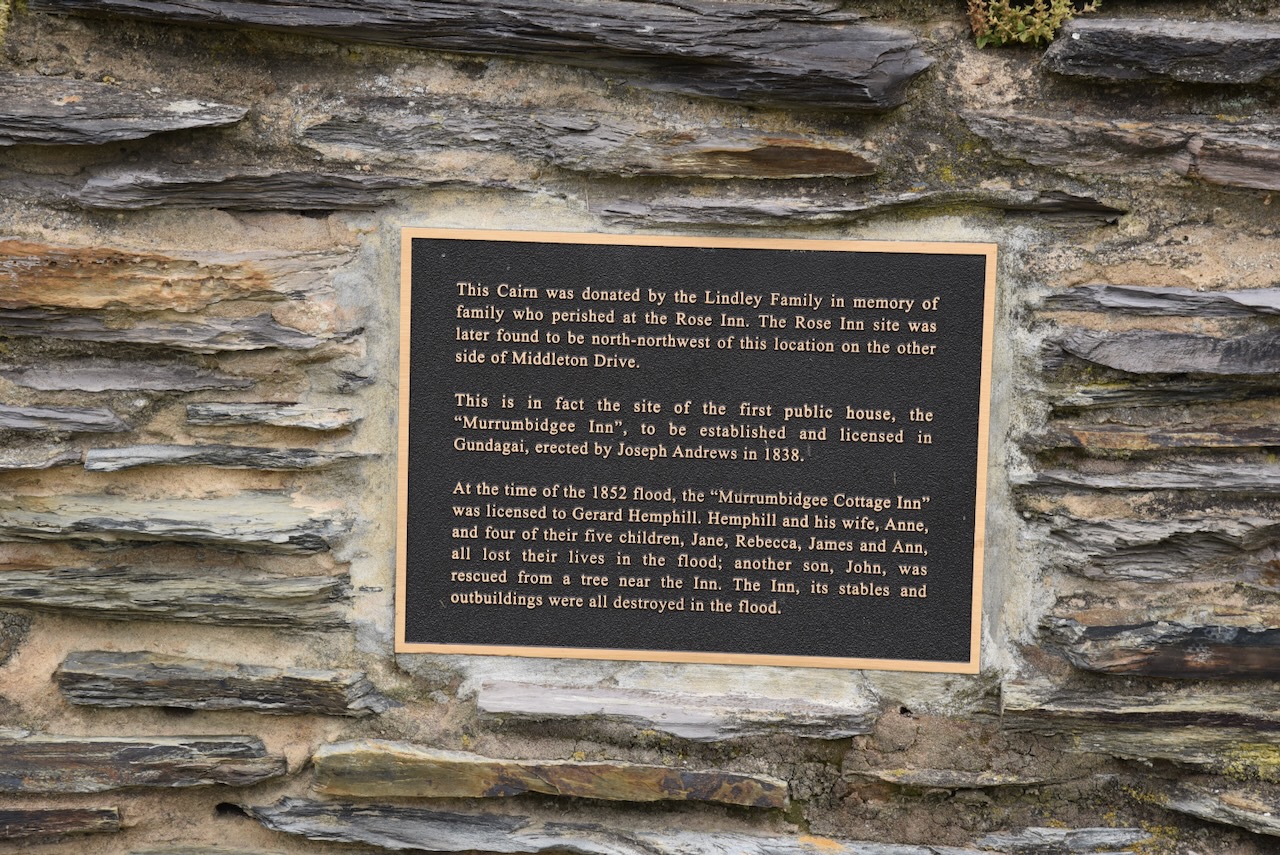
The Murrumbidgee Inn was licensed on the 19th day of June 1838. It was the first hotel to be licensed in Gundagai, with the licence being issued to Joseph Andrews. It was built by Edward Bernard Green and was originally a slab construction.
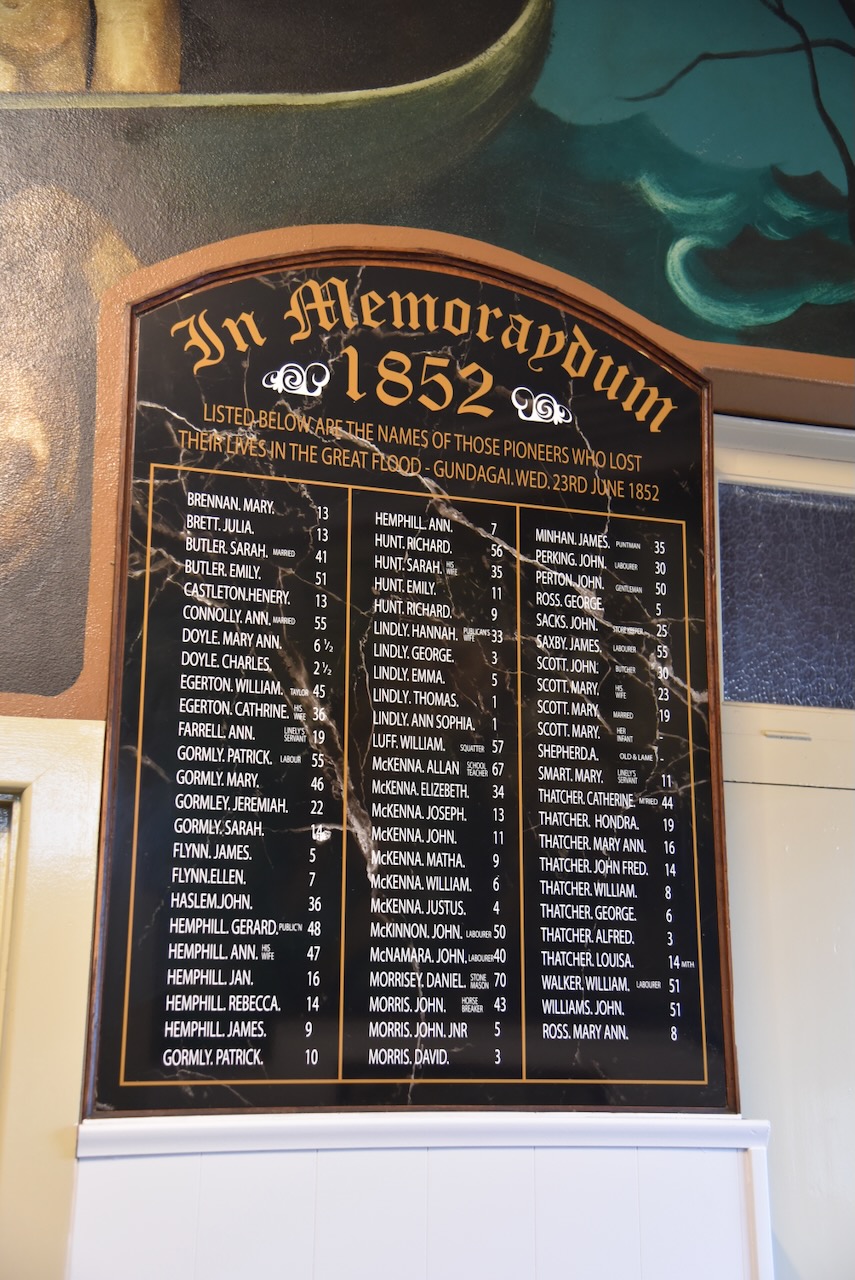
At the time of the 1852 Gundagai flood, the Murrumbidgee Cottage Inn was licensed to Gerard Hemphill. He was born in June 1804 in County Fermanagh, Ireland. He married Ann Amelia Clinton. They emigrated to Australia in 1841. Sadly, Hemphill, his wife Anne and four of their five children, Jane 16, Rebecca 14, Ann 4 and James 1, all lost their lives during the flood. Their son John 16, was rescued from a tree near the Inn. The Inn, the stables and the outbuildings were all destroyed in the flood. (ancestry 2016) (Burch 2022)
It was reported in the newspapers that ‘Miss Hemphill, who on Saturday night was alive in the tree, in which on Sunday she was found dead.’ It is presumed that this was one of the daughters, Jane or Rebecca. (Trove 2026)
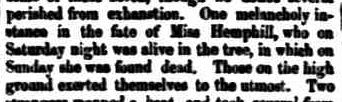

Above: extracts from the Geelong Advertiser, Wed 21 Jul 1852. Image c/o Trove
We also viewed more of the timber viaduct.
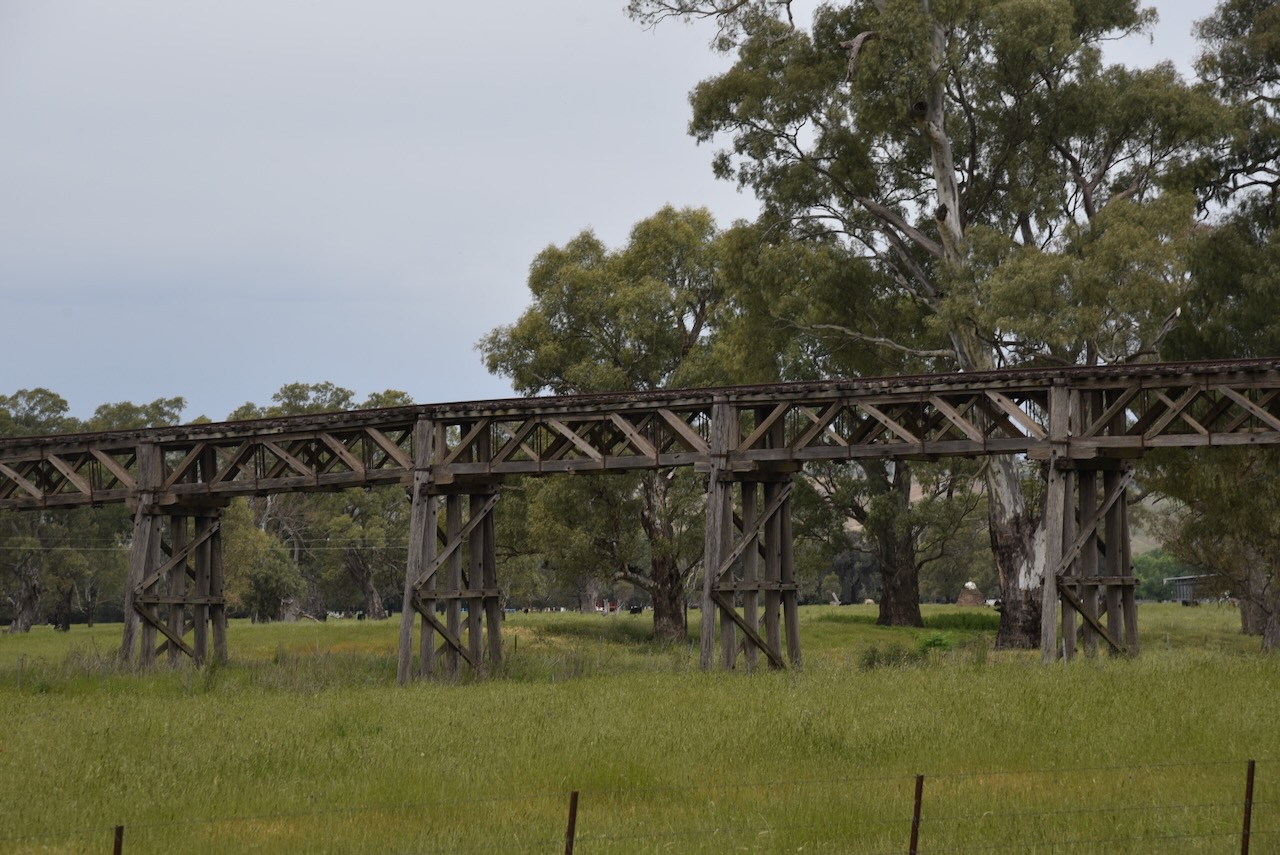
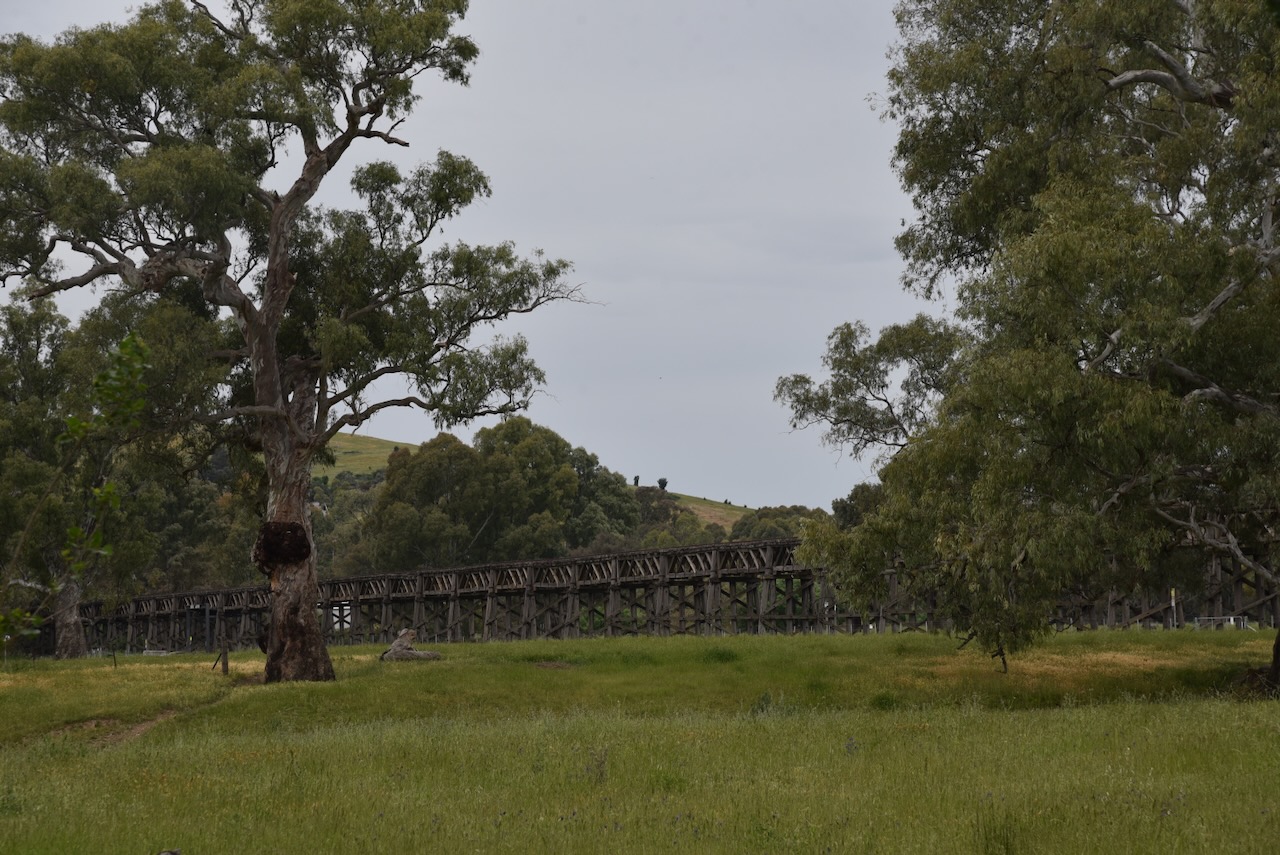
We then visited the actual site of the Rose Inn. On the 12th August 1841, Edward Norman purchased Section 2, Allotment 10 at a Crown land sale. He built the Rose Inn on the site and commenced trading. Four years later, in 1845, Charles Simpson purchased the Inn from Norman.
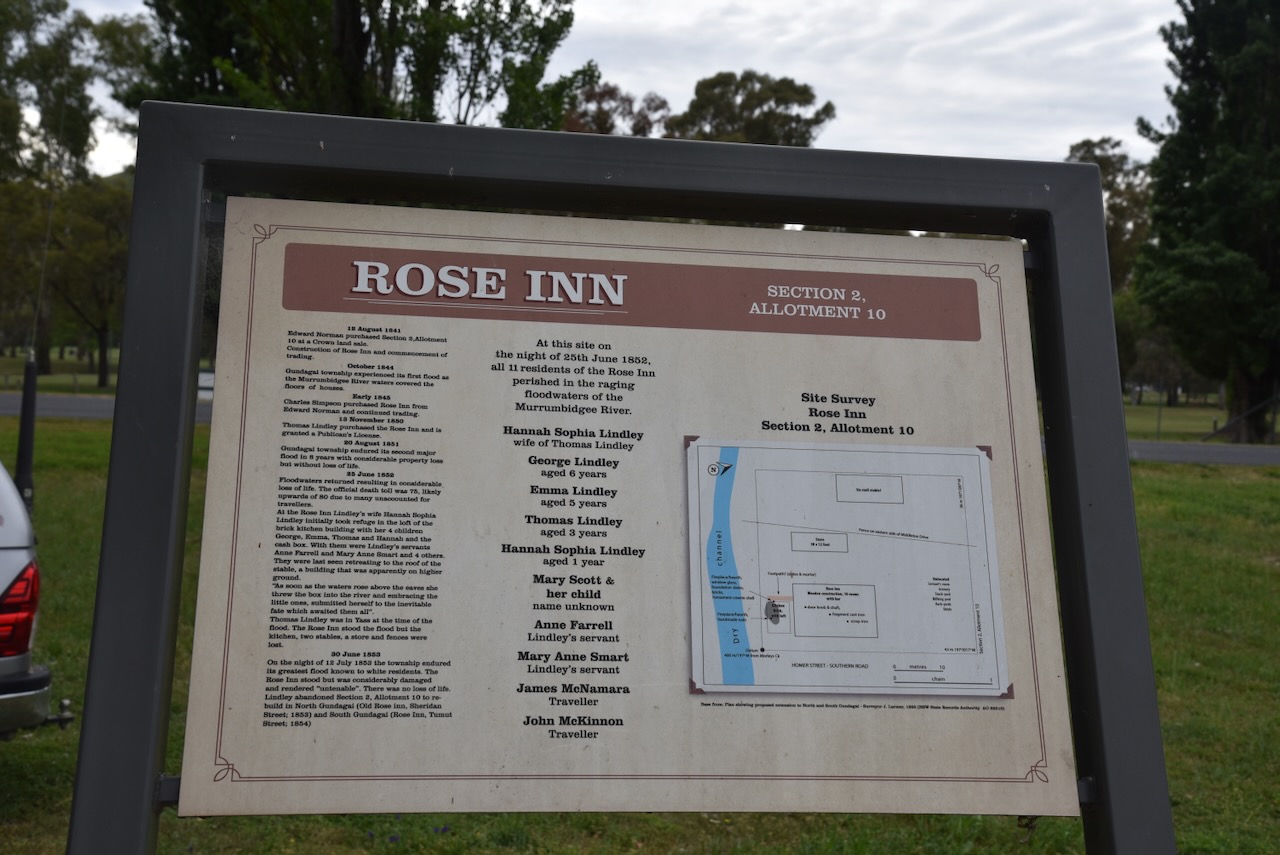
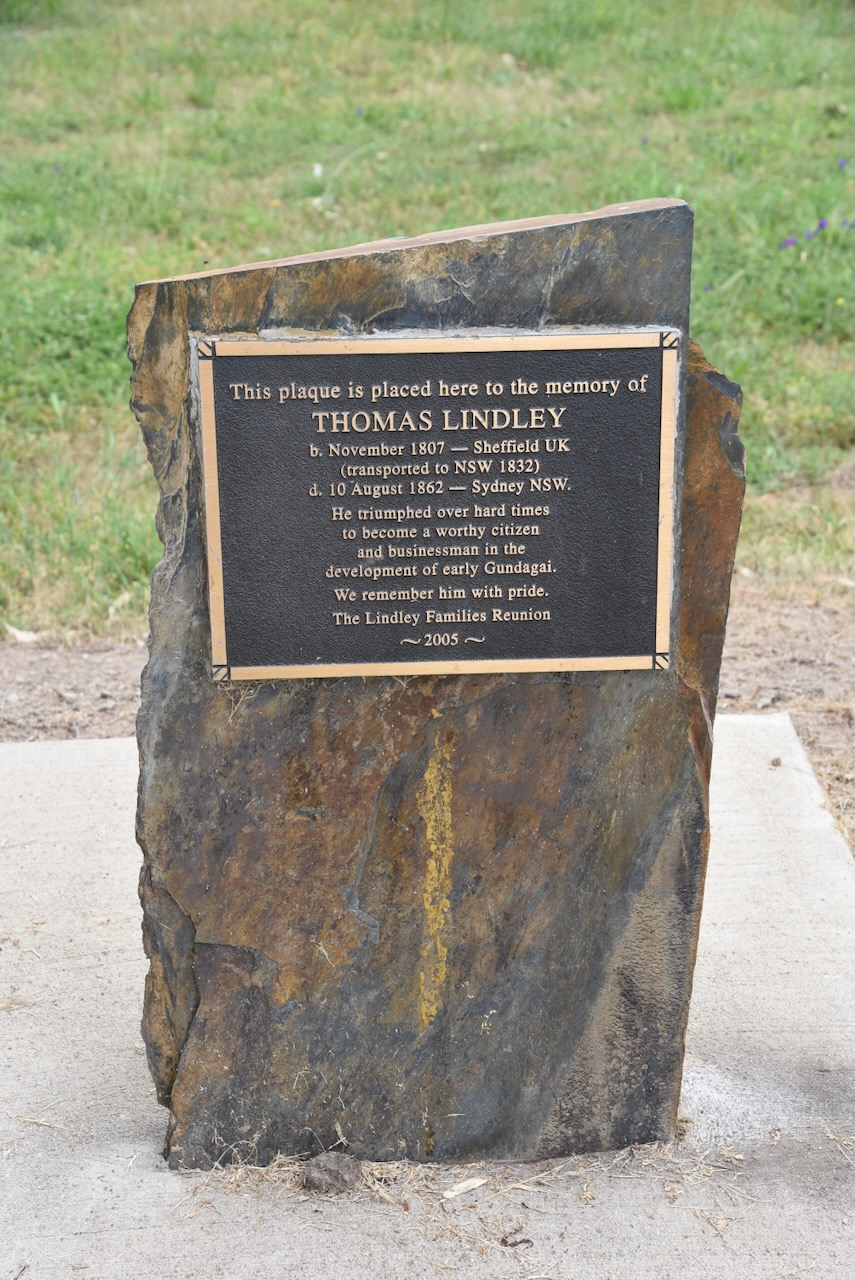
In November 1850, Thomas Lindley purchased the Rose Inn and was granted a publican’s licence. On the night of the 25th June 1852, all 11 residents of the Rose Inn lost their lives during the Gundagai flood. This included Hannah Lindley, the wife of Thomas, and their 4 children, George 6, Emma 5, Thomas 3, and Hannah 1. Thomas was away in Yass at the time of the flood. Hannah and the children initially took refuge in the loft and then on the roof of the stable, which was on higher ground, before losing their lives. Also killed were Mary Scott and her child, Lindley’s servants Ann Farrell and Mary Anne Smart, and travellers James McNamara and John McKinnon. The Rose Inn survived the floor, however the kitchens, stables, store, and fencing were destroyed.
Nearby is the cairn to commemorate Yarri, the Aboriginal man mentioned earlier in this post.
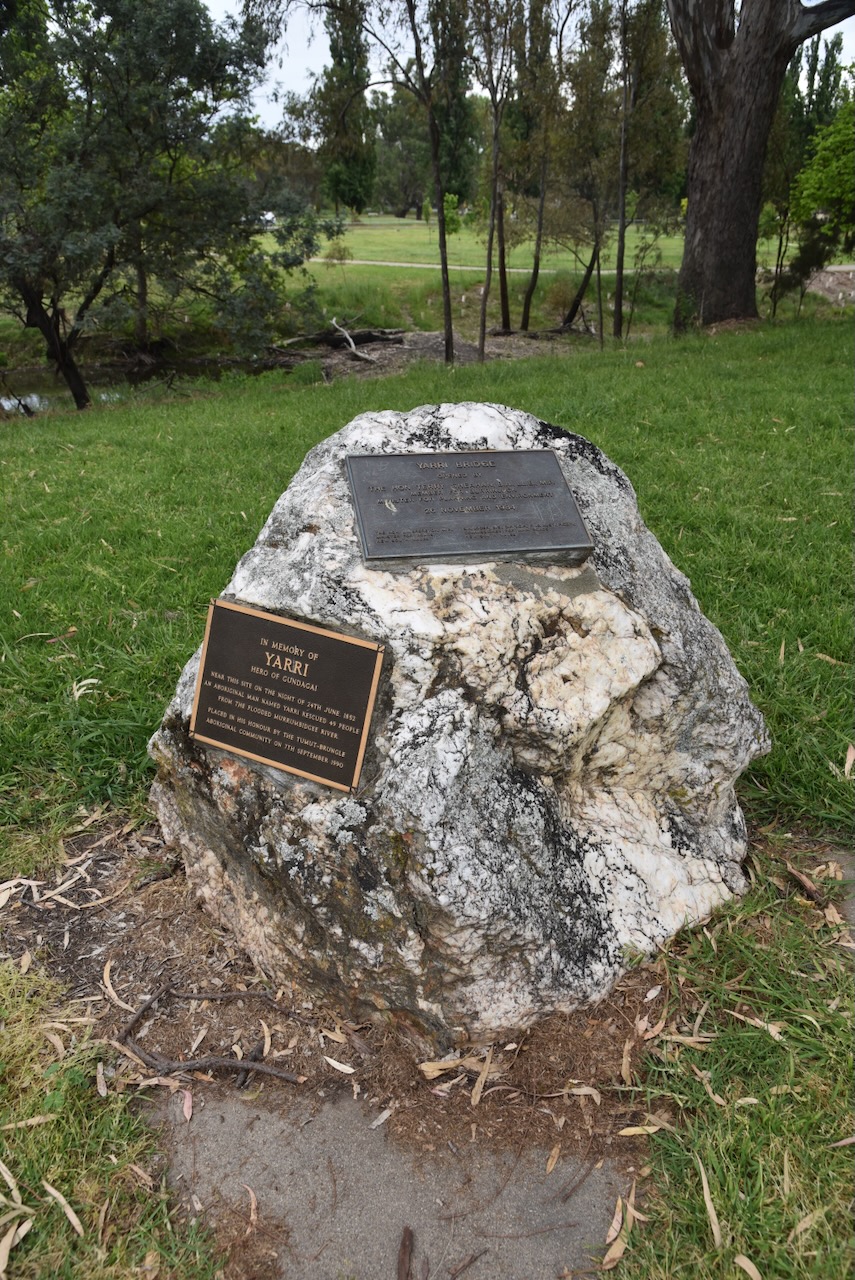
On the corner of Homer Street and Sheridan Lane, near Morley’s Creek, are flood markers which show the various flood levels at Gundagai.
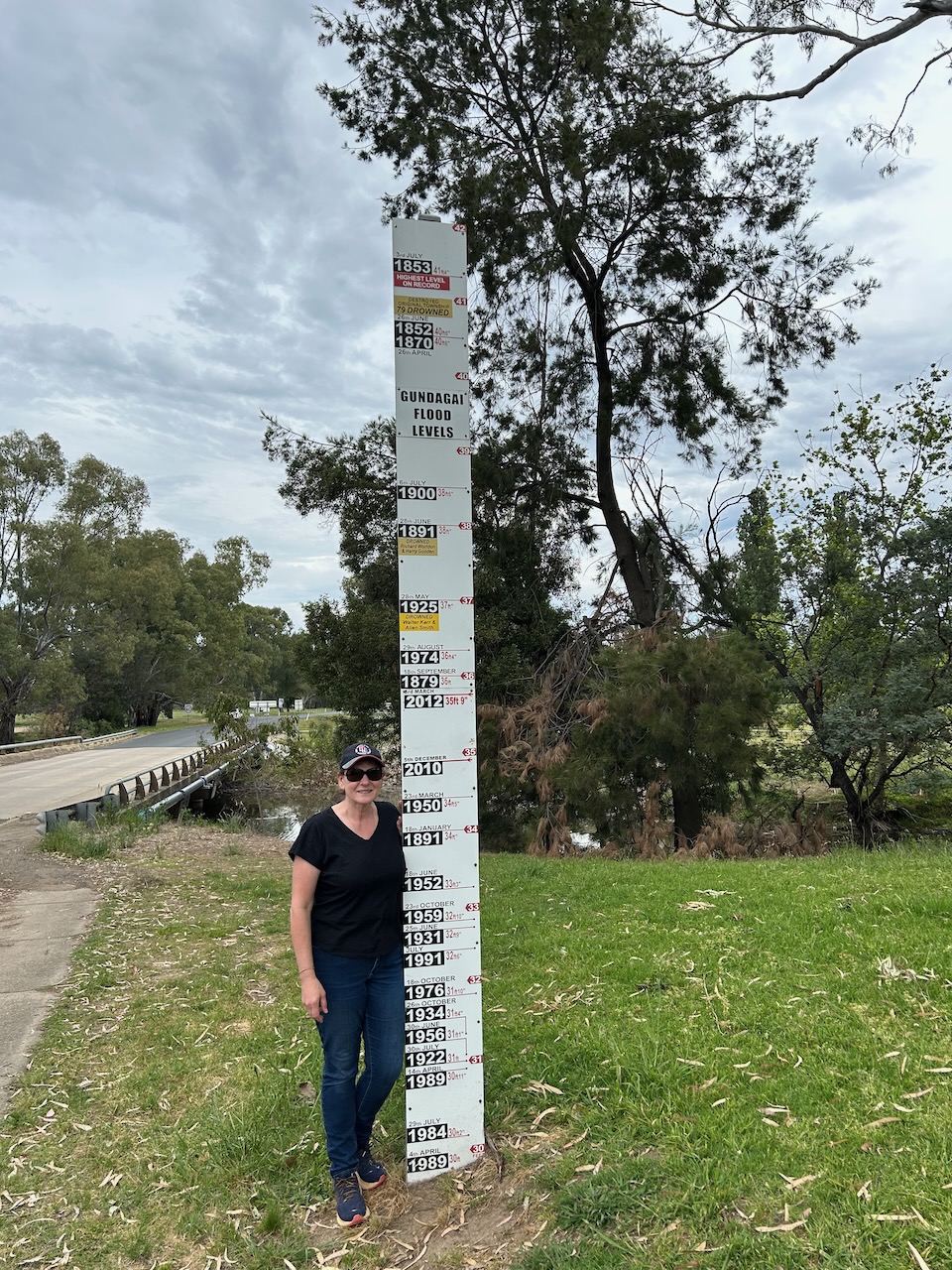
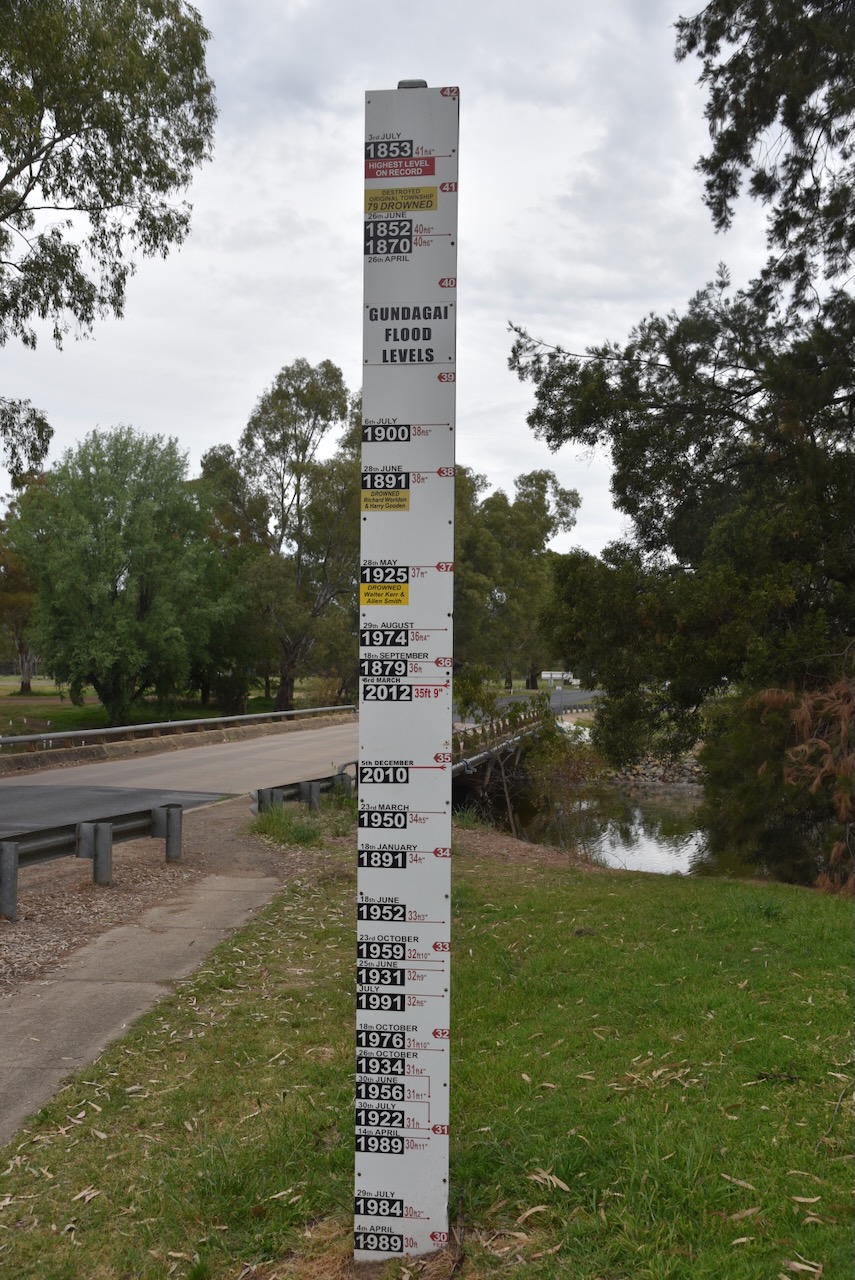
Marija and I then drove to Mount Burra VK2/ SW-054 for an activation for the Summits On The Air (SOTA) program. This was our only amateur radio activity for the day. We headed north out of town along the Burra Road and then Reno Road. There were some magnificent views across the hills.
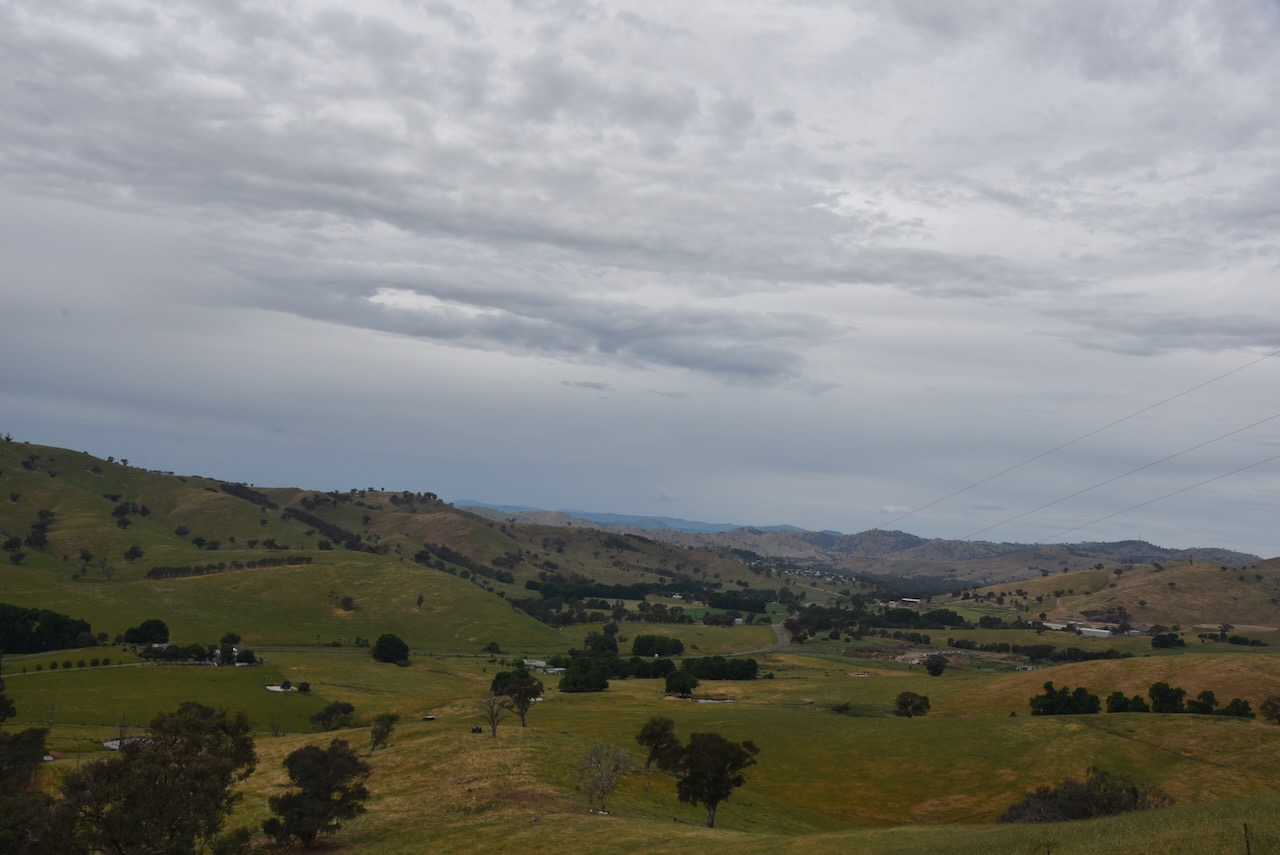
The summit is about 17 km northwest of Gundagai in the locality of Reno. Mount Burra is about 9 km (by road) west of Reno.
Up until 2016, the locality was known as Jones Creek. The locality of Reno takes its name from the old gold mining village of Reno, which was laid out in 1900. In turn, it was named after Reno in Nevada, USA. The town was proclaimed on the 28th day of August 1900. Prior to the town being gazetted, a settlement existed at Reno. In 1899, the population was about 700 people. By 1900, the population had reached 1,200 people. Reno once had a police station, a post office, a hotel, a public school, a church, and numerous dwellings (Wikipedia 2022)
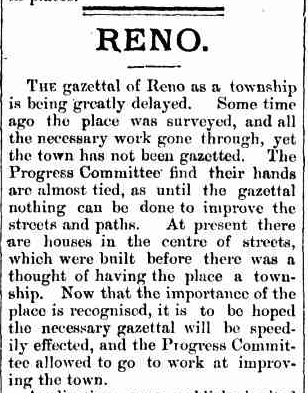
Above: part of an article from The Gundagai Independent, Wed 25 Apr 1900. Image c/o Trove
The two main mines were the Prince of Wales Gold Mine and the Long Tunnel Mine. (Wikipedia 2022)
The Prince of Wales mine commenced operation in 1896 and closed in October 1902. It produced about £100,000 worth of gold. (Wikipedia 2022)
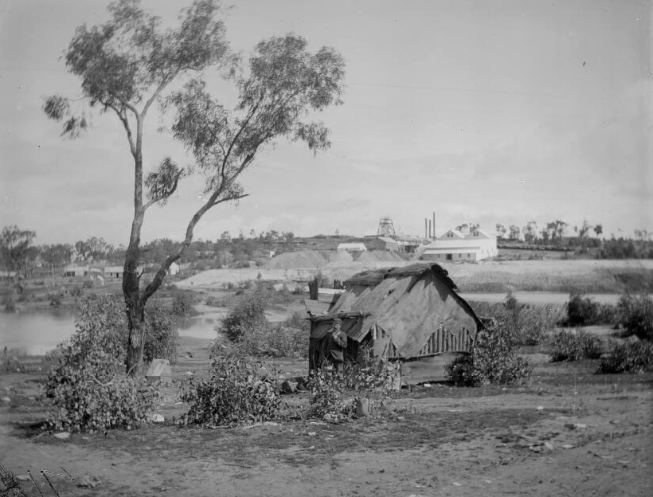
Above: The Prince of Wales mine. Image c/o Trove
The Long Tunnel mine was originally known as the Long Flat mine. Several rich patches of reef were located, including a ton of quartz that yielded £1,000 worth of gold. (Wikipedia 2022)
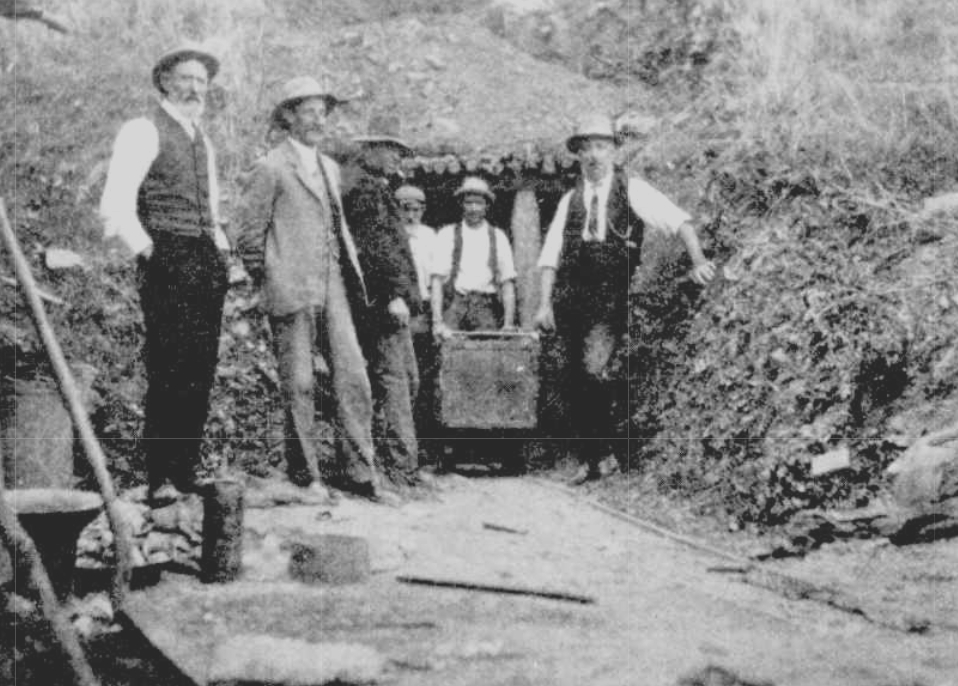
Above: Syndicate members at the entrance to the Long Tunnel mine, 1911. Image c/o Wikipedia
It was a beautiful drive to the summit through hilly and green countryside.
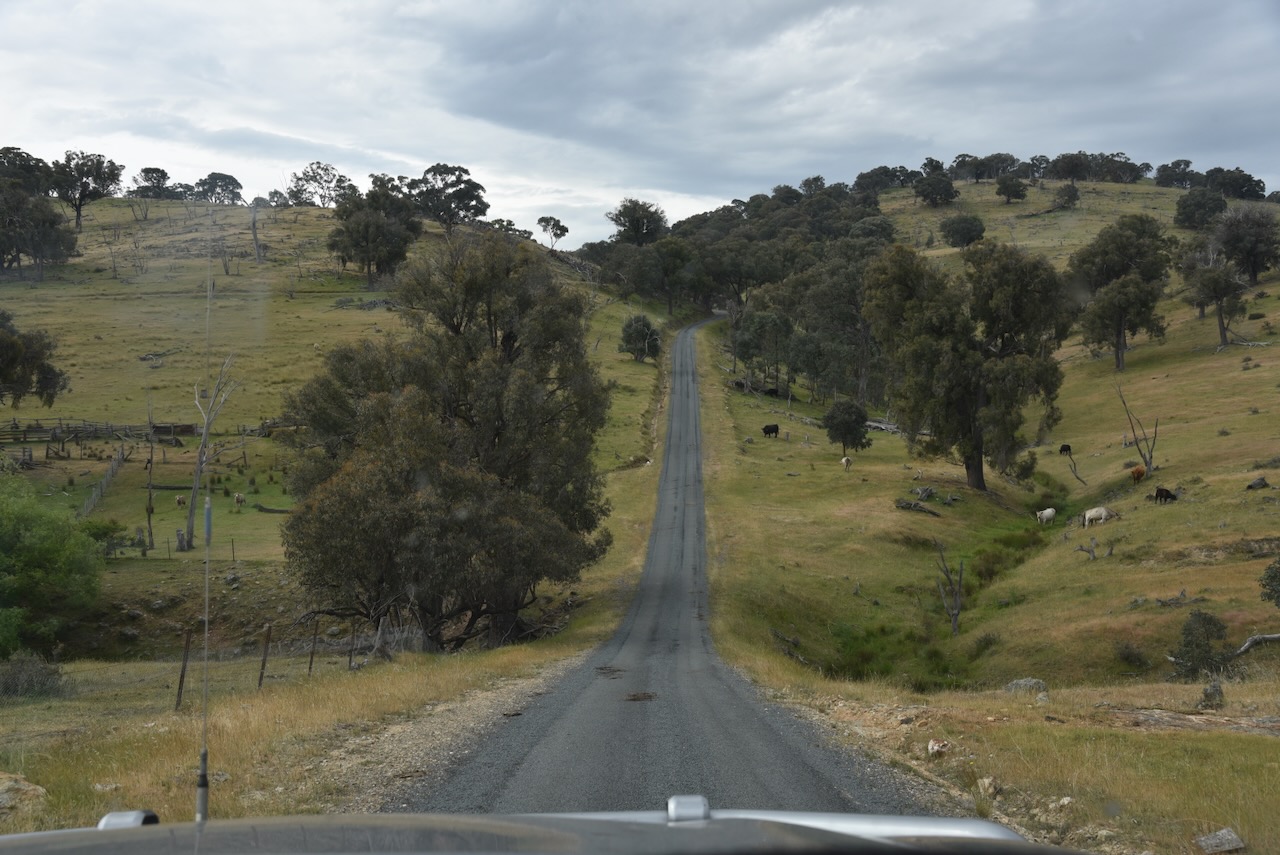
On our way to the summit, we encountered a few gates, grids, and warning signs. Marija and I knocked on 3 doors and spoke to the landowners who allowed us access up to the summit.
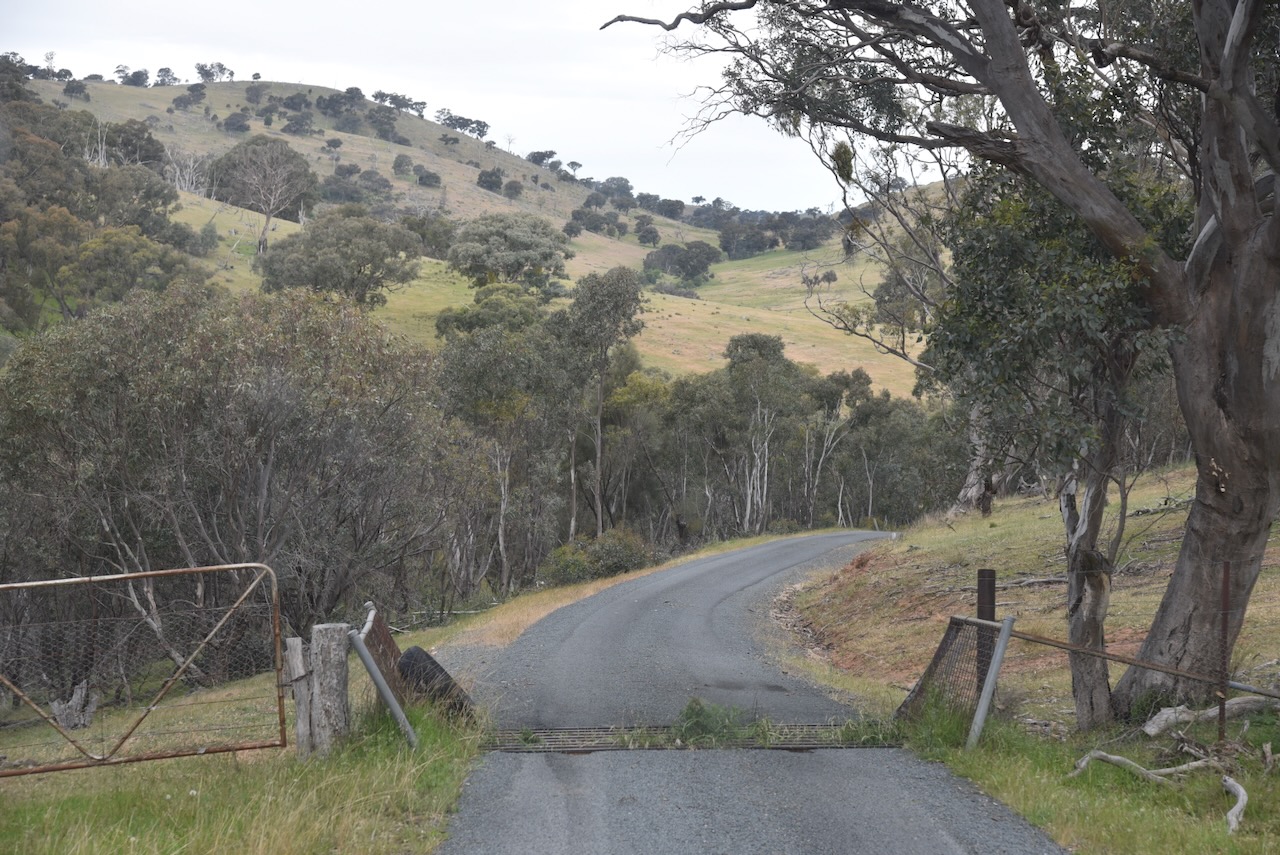
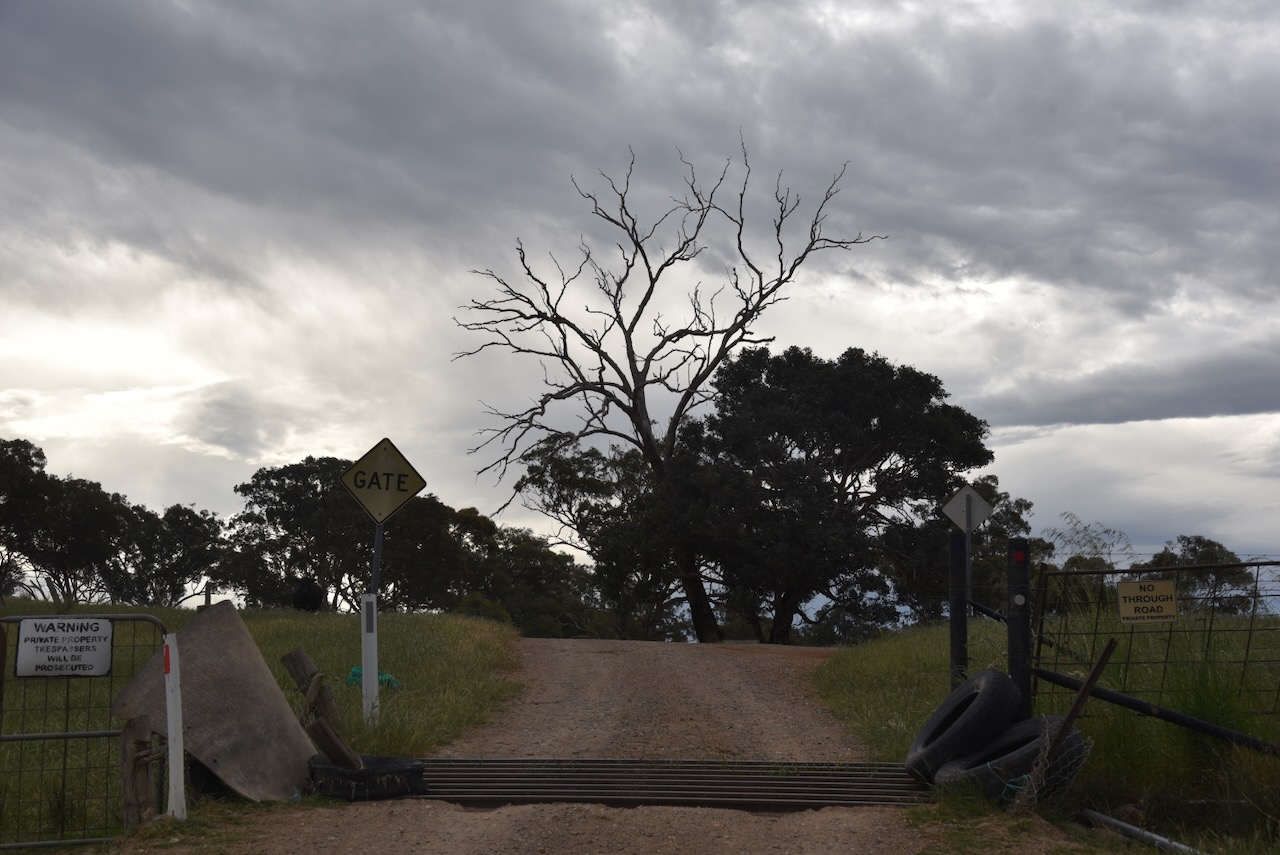
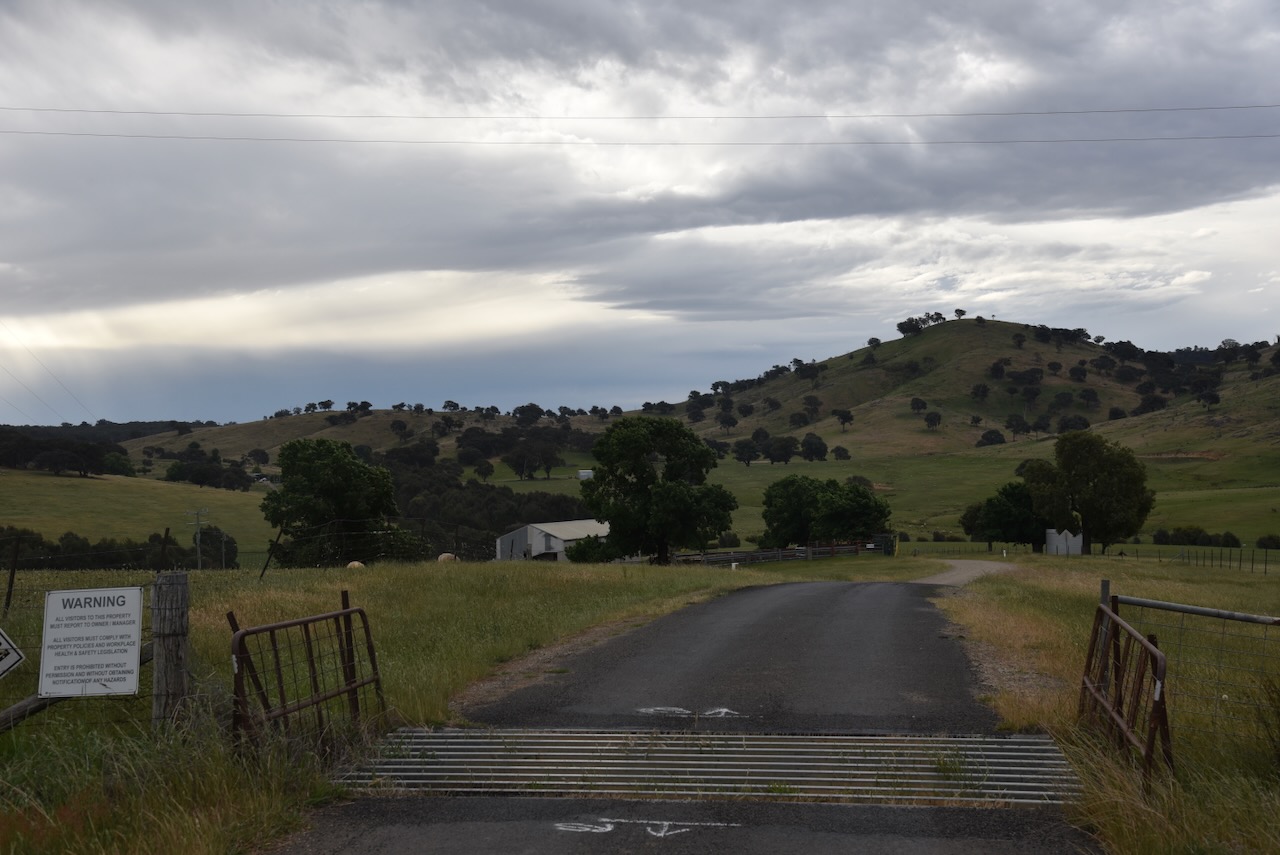
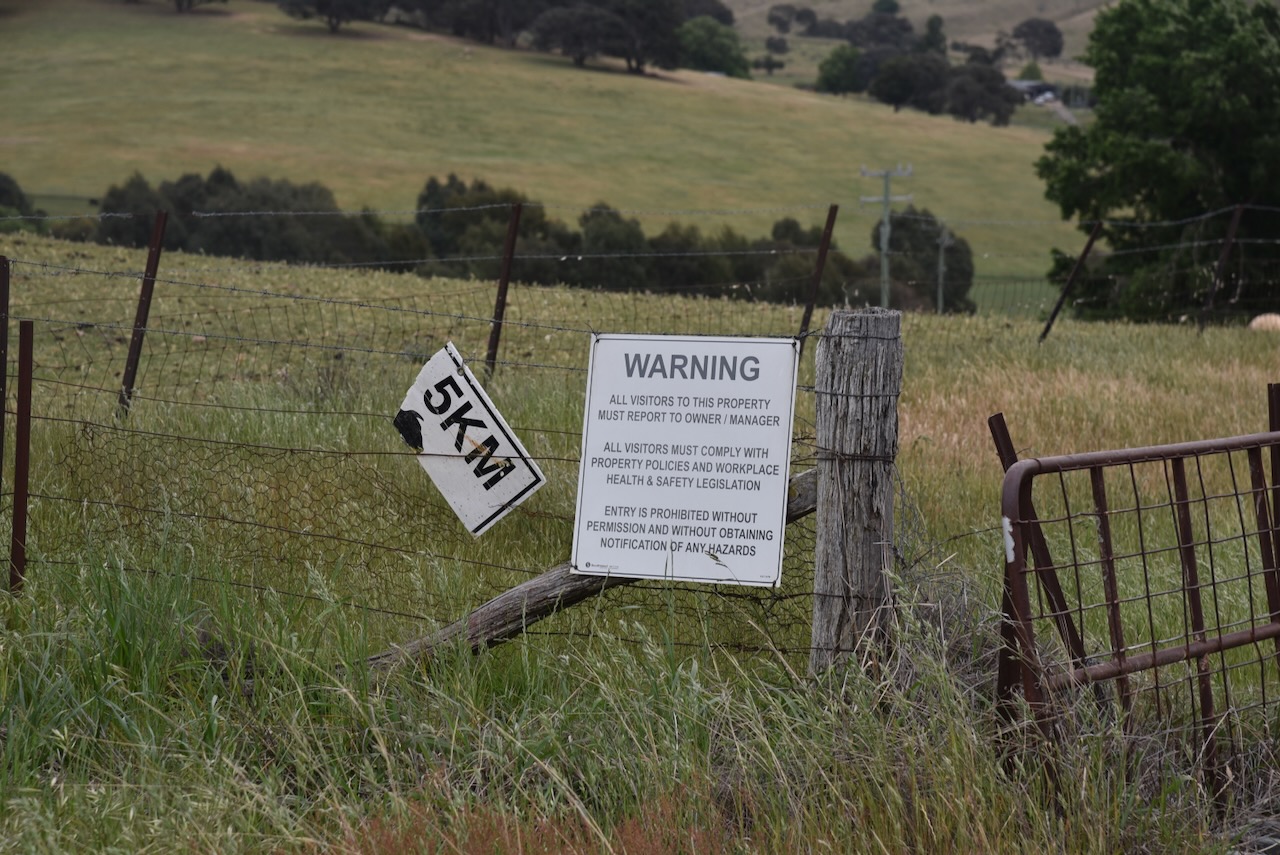
As we got higher in elevation, the views became even more spectacular.
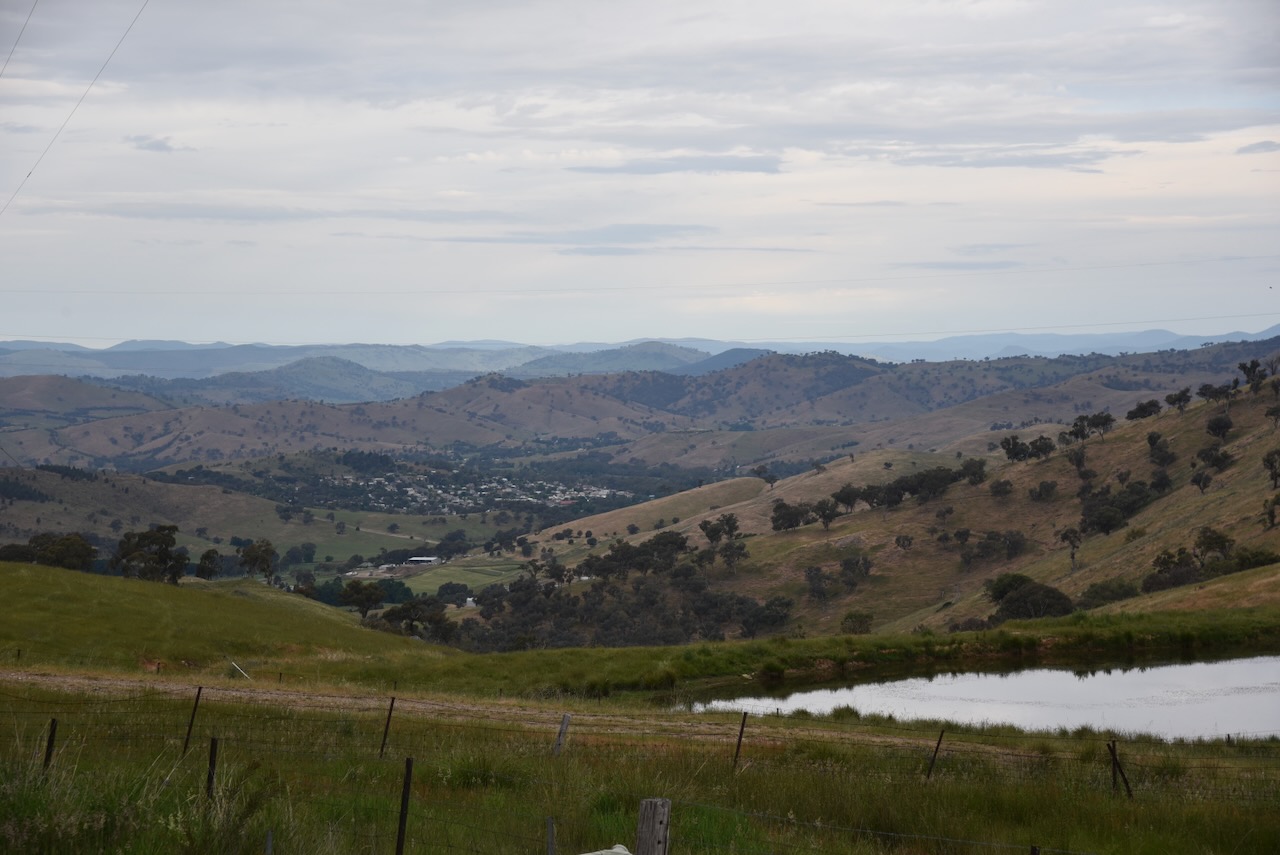
The bitumen soon became dirt, and we slowly had the towers on the summit in sight.
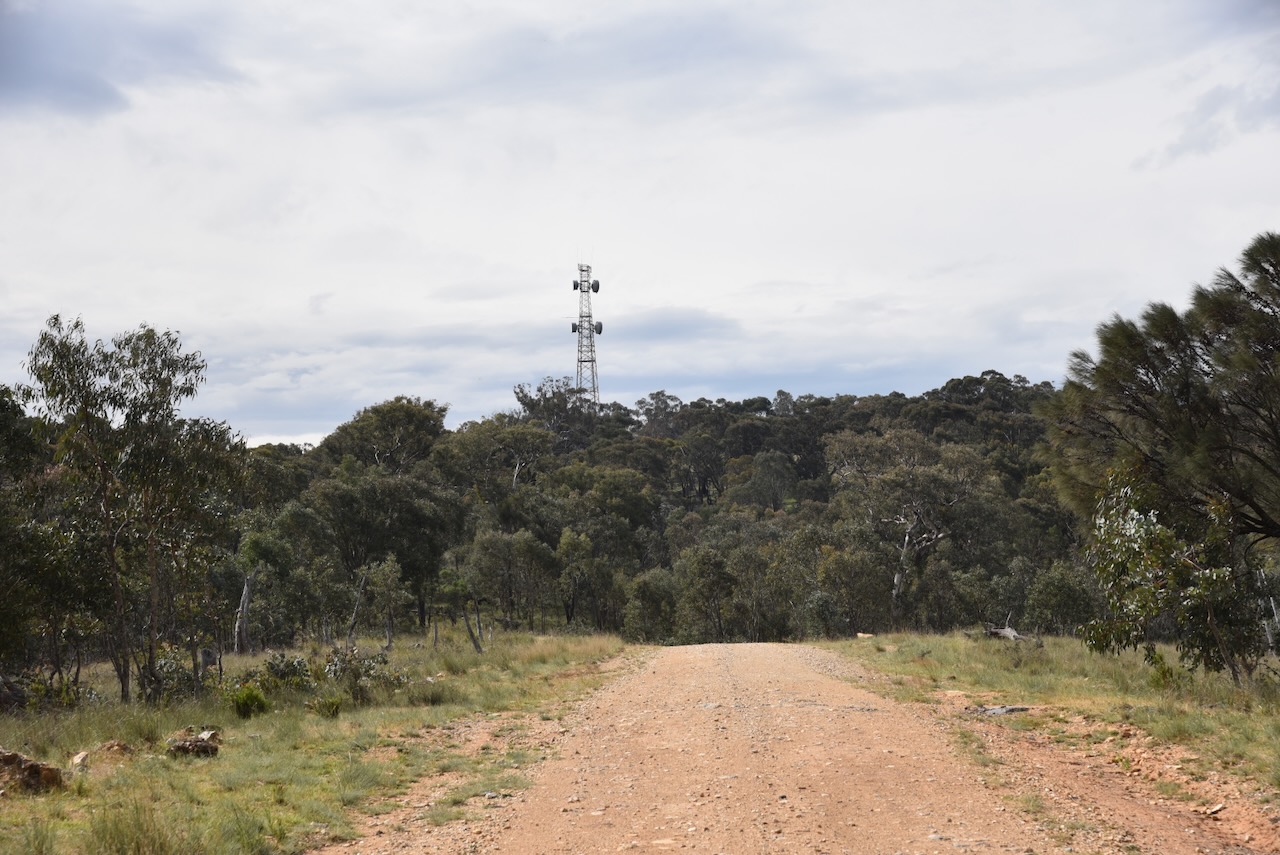
Mount Burra is worth 4 points in the Summits On The Air (SOTA) program. It is located in the South West Slopes region for SOTA. The summit is 722 metres above sea level. (Sotadata.org.uk 2026)
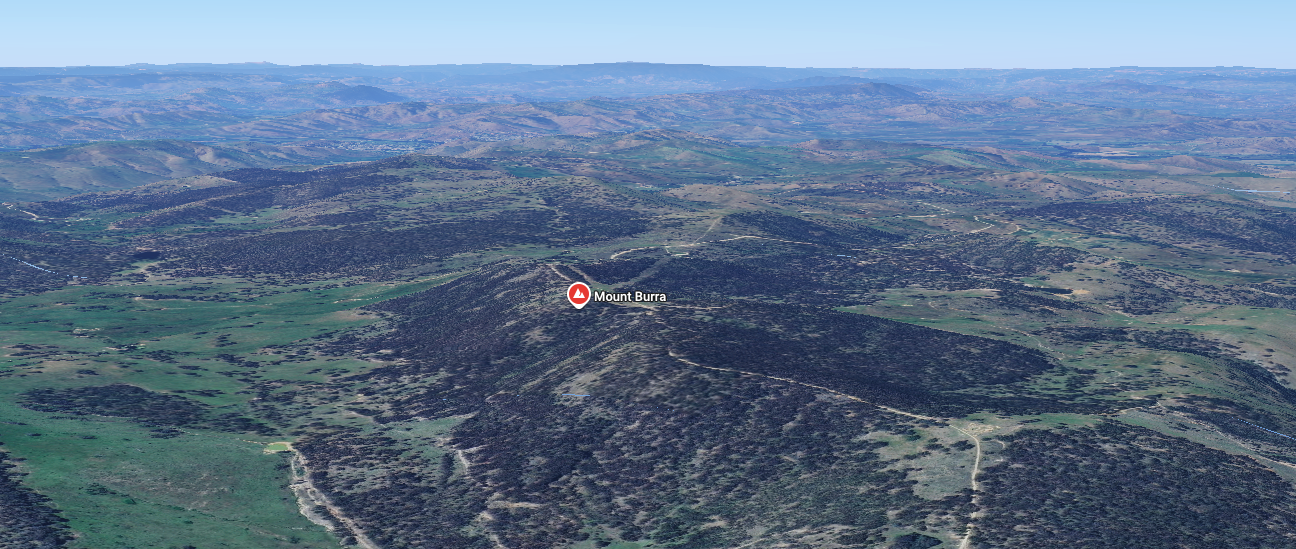
Above: an aerial view of Mount Burra. Image c/o Google Maps
There are a significant number of telecommunications towers on the top of the summit.
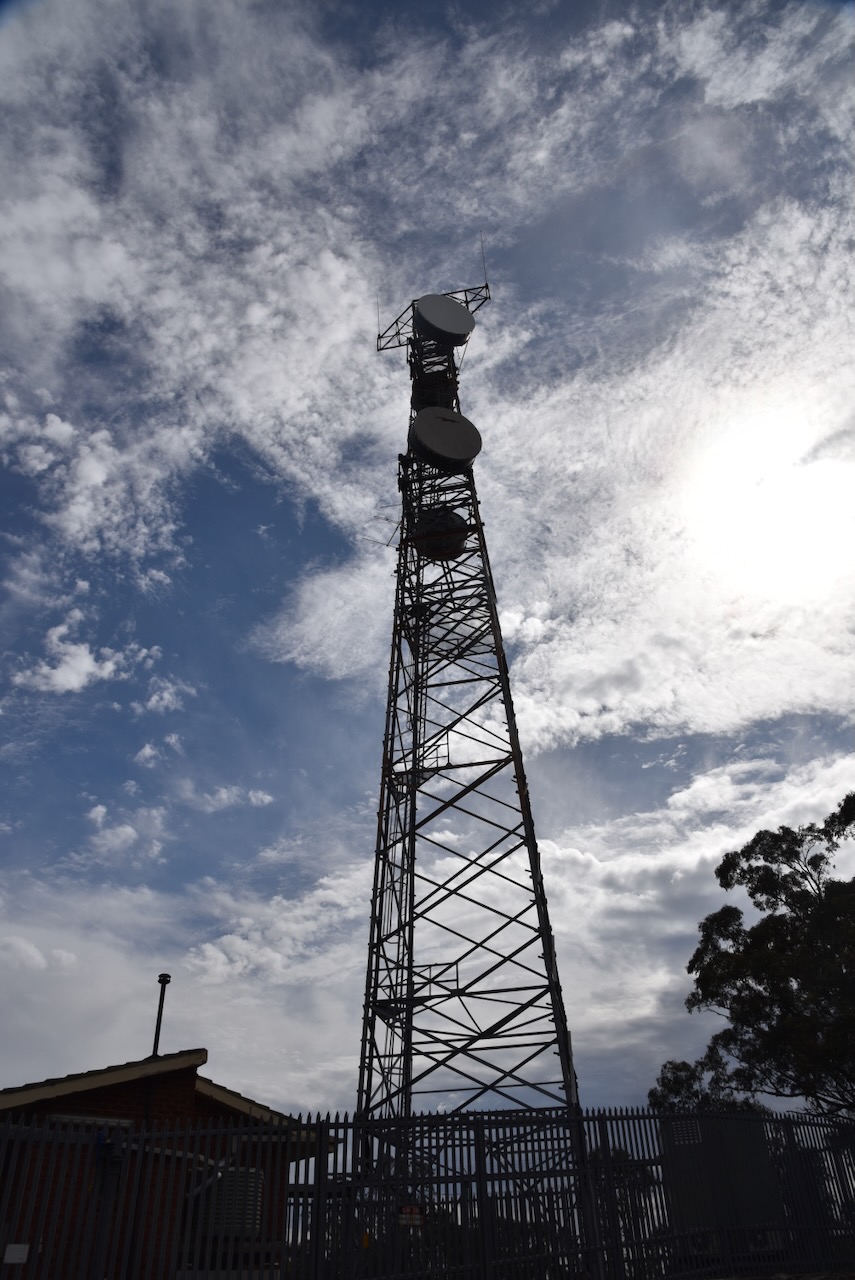
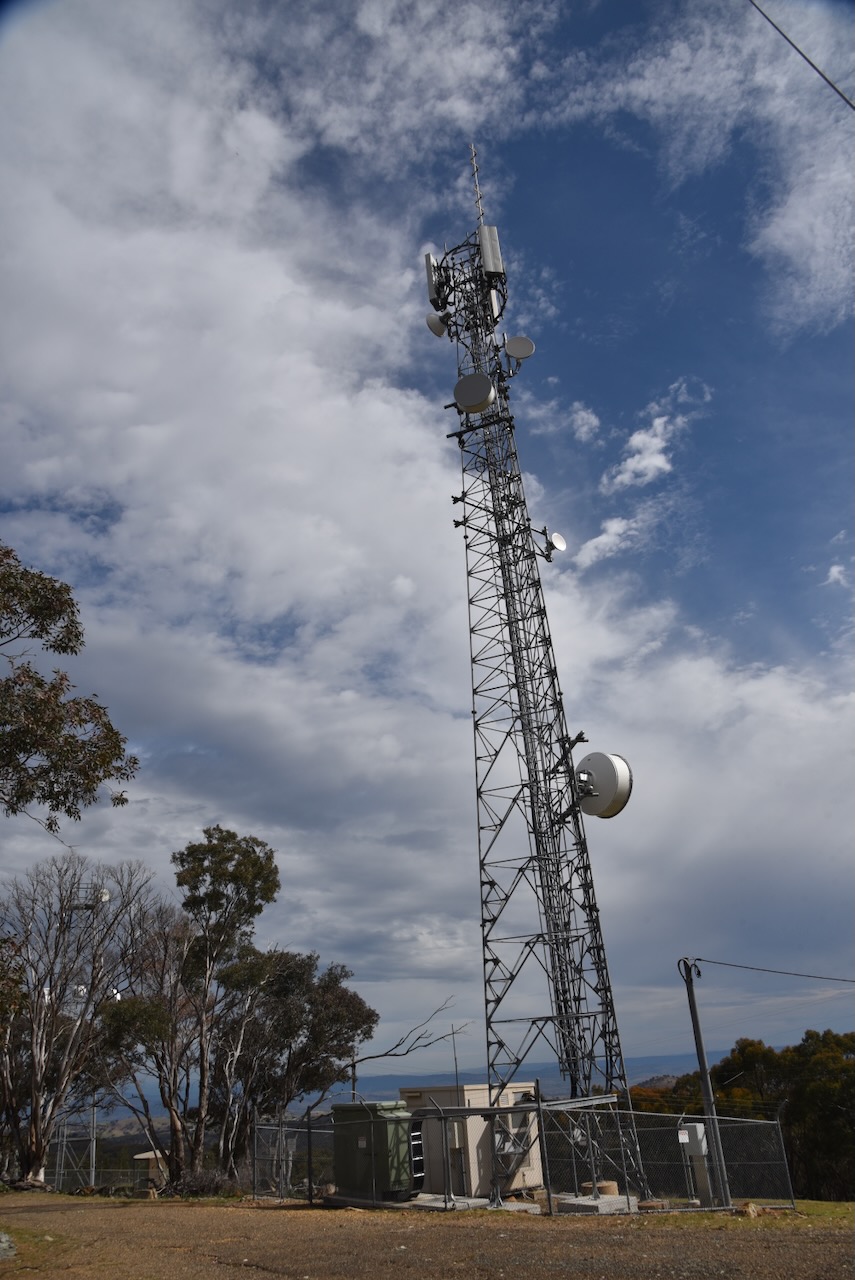
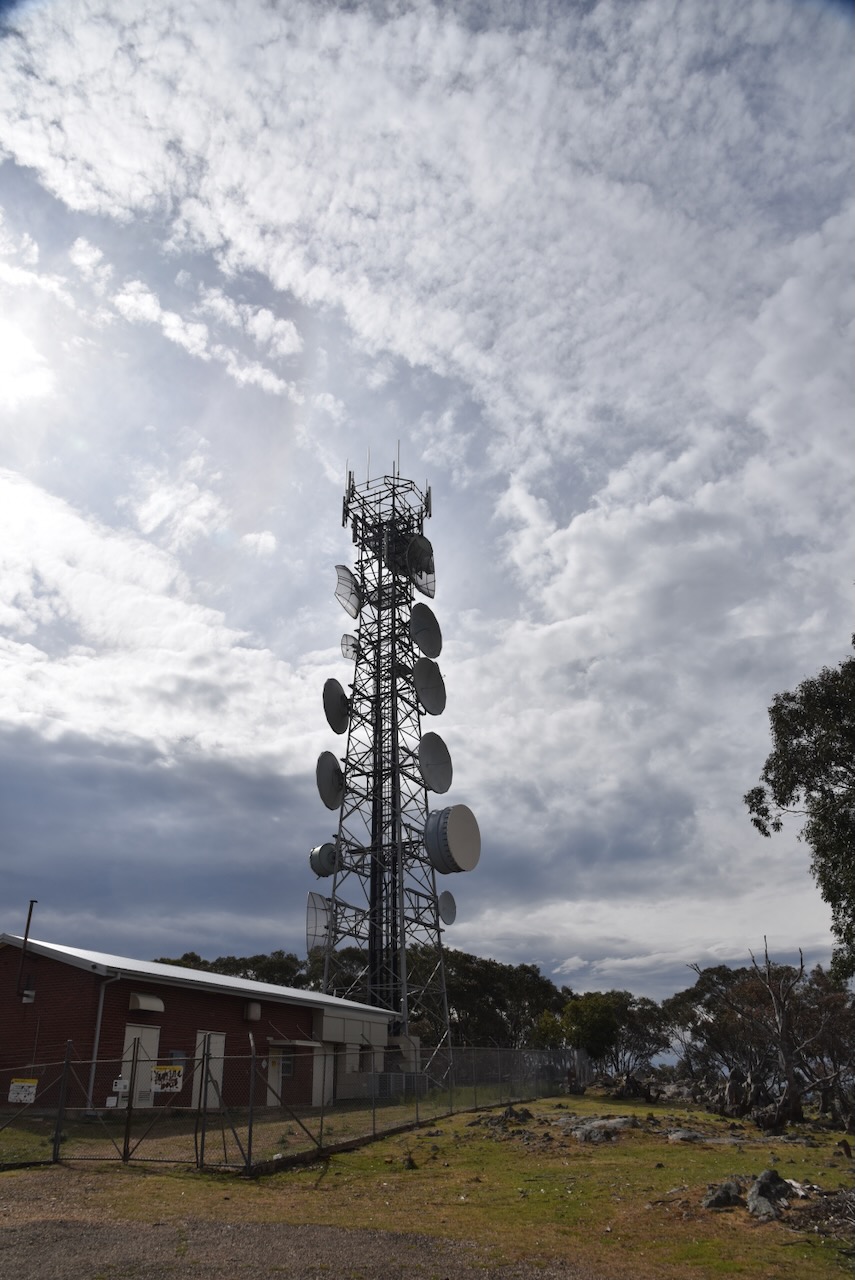
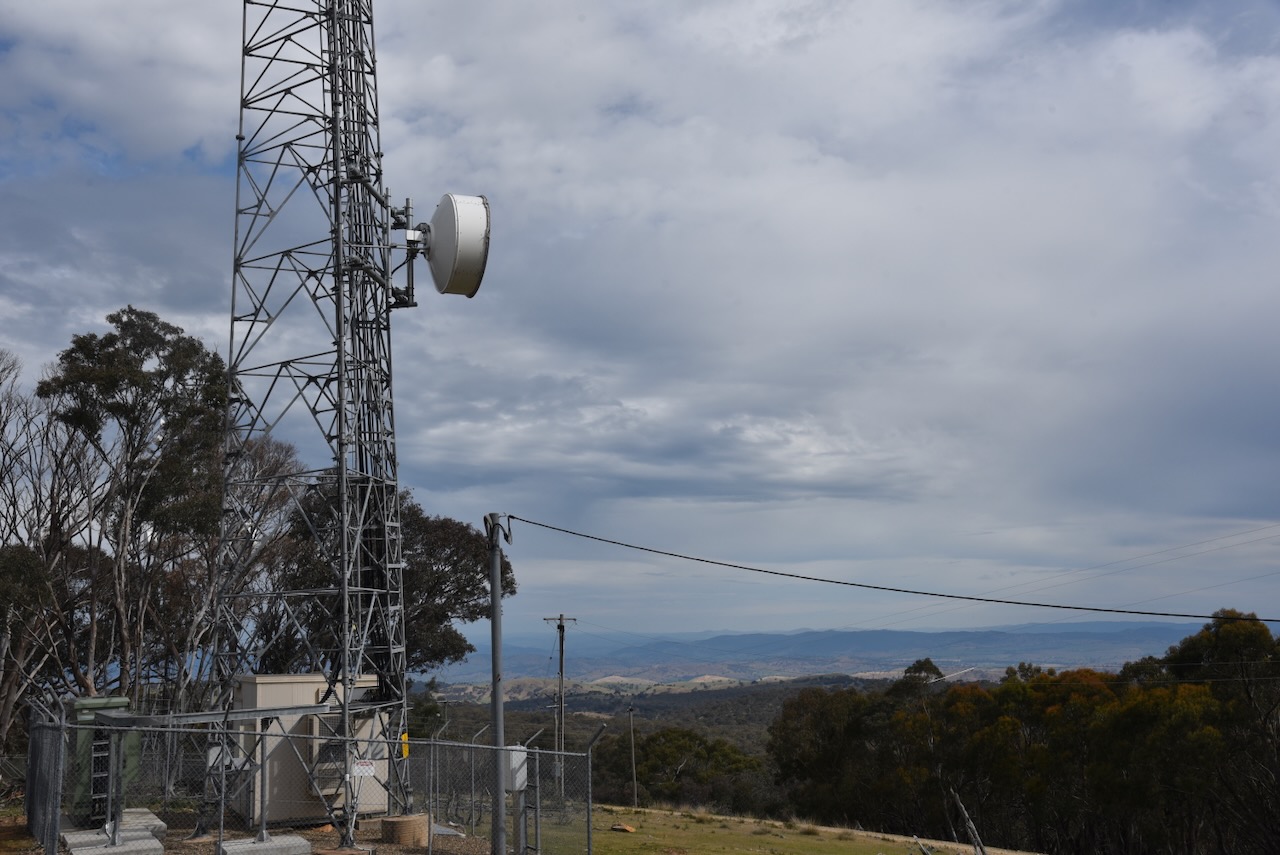
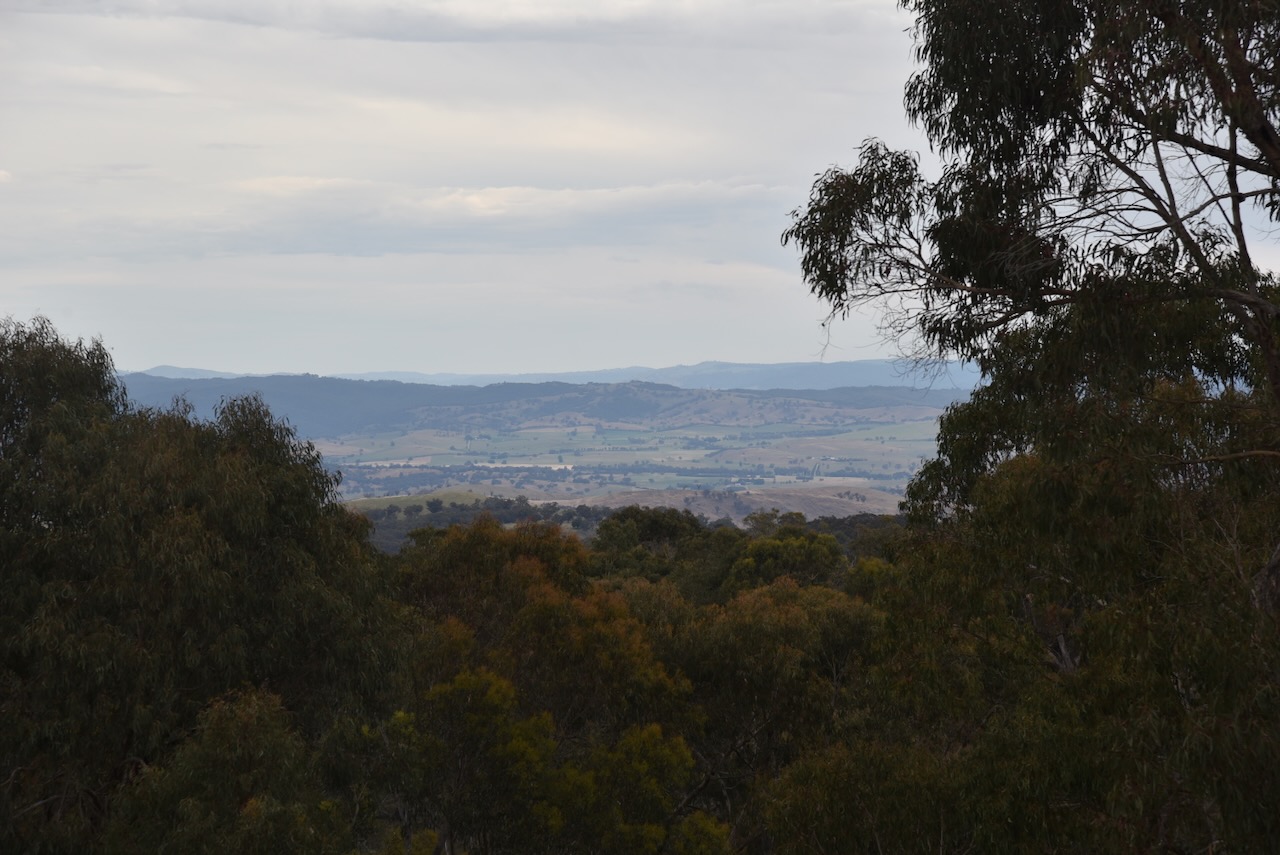
The views from the top are quite good and not obstructed by vegetation.
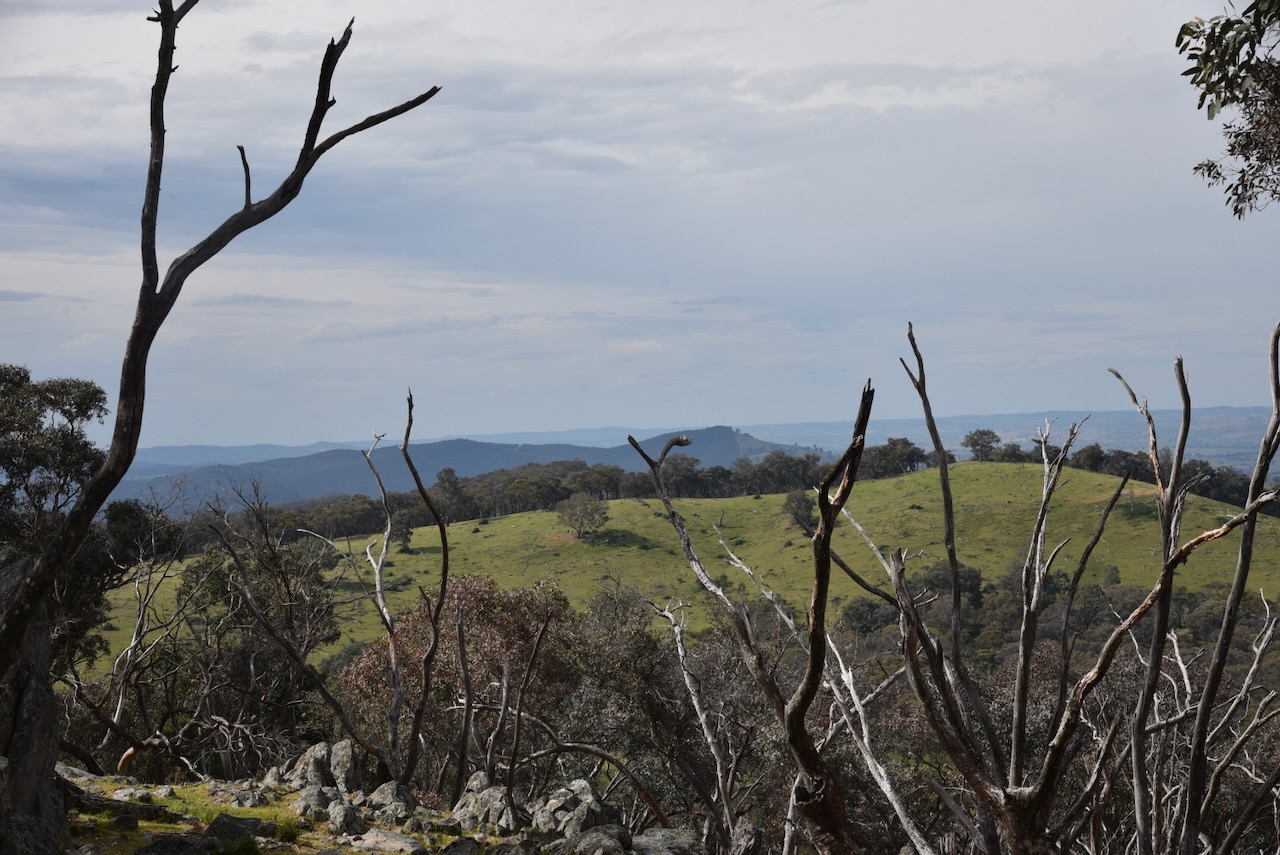
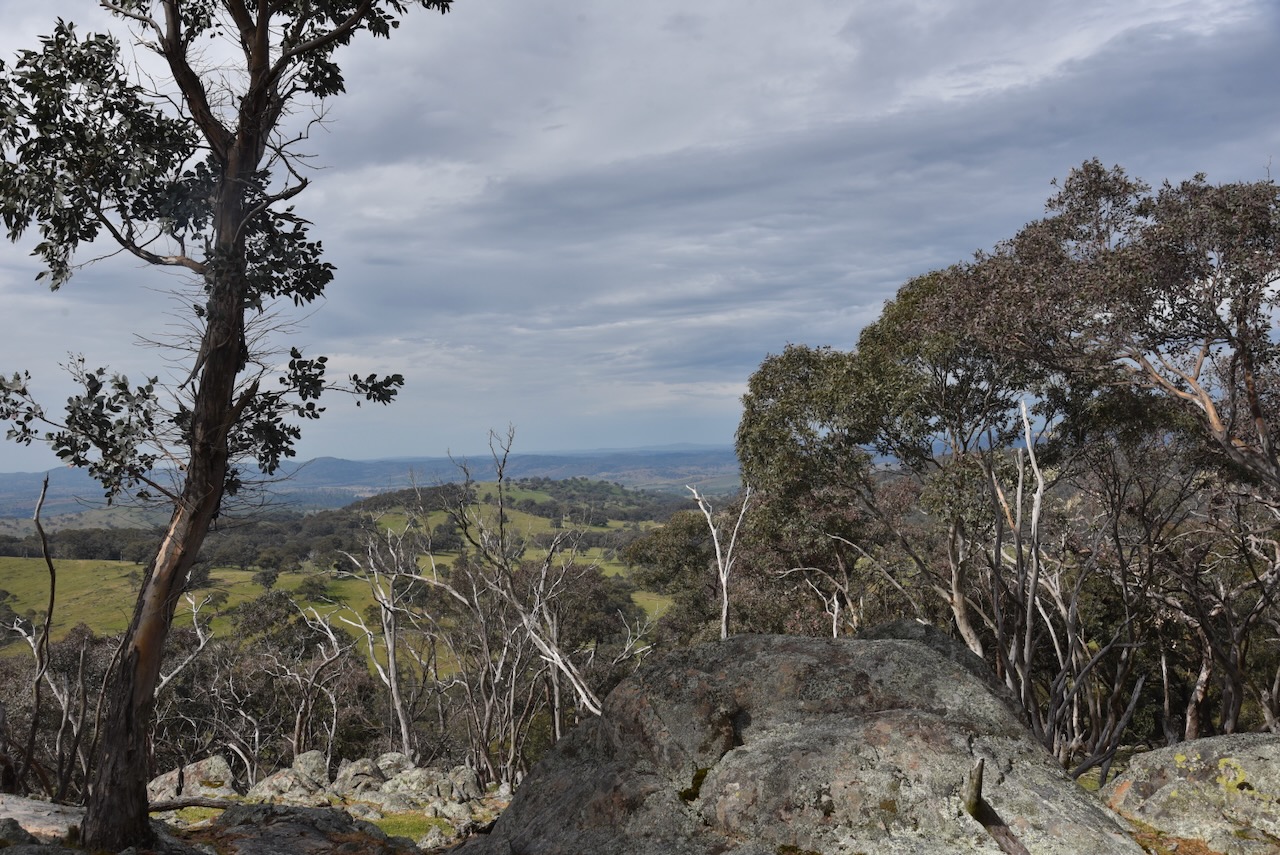
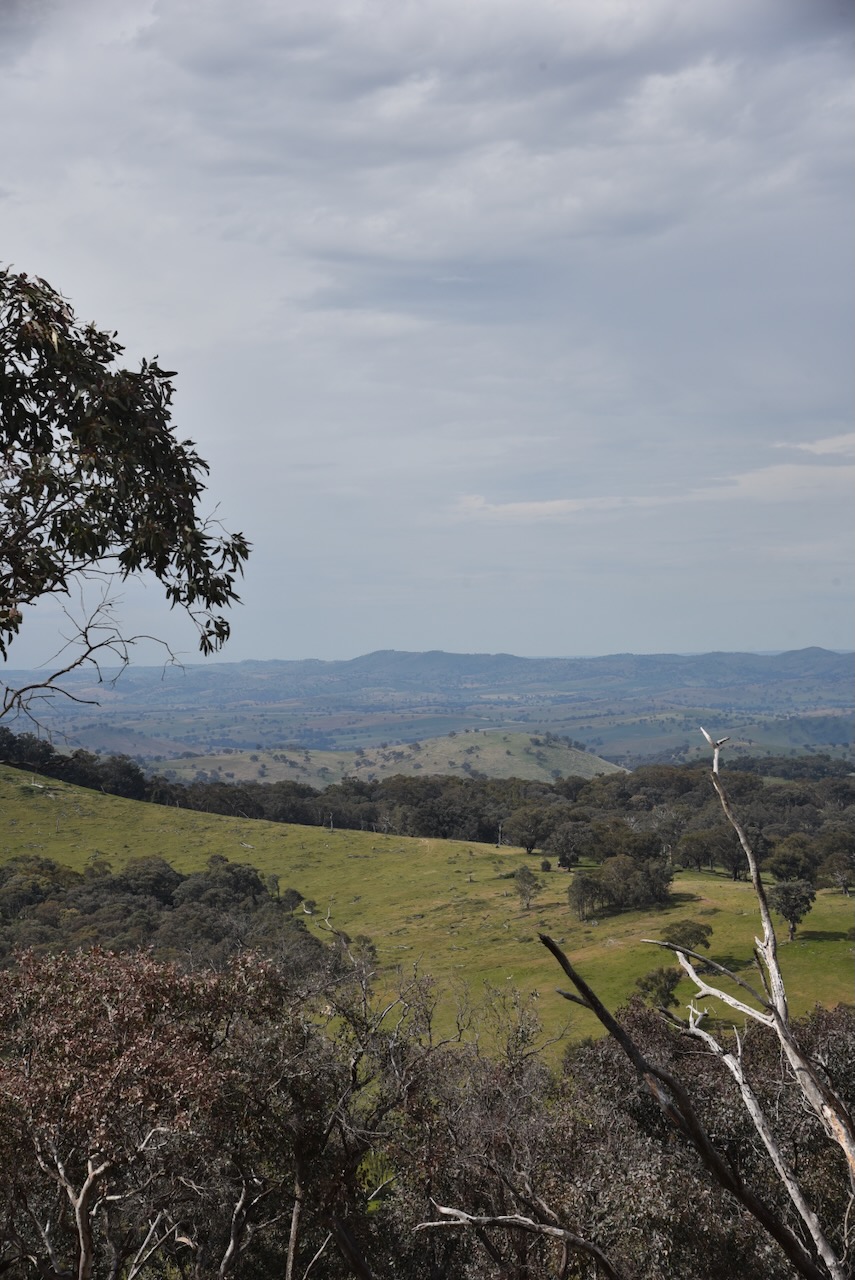
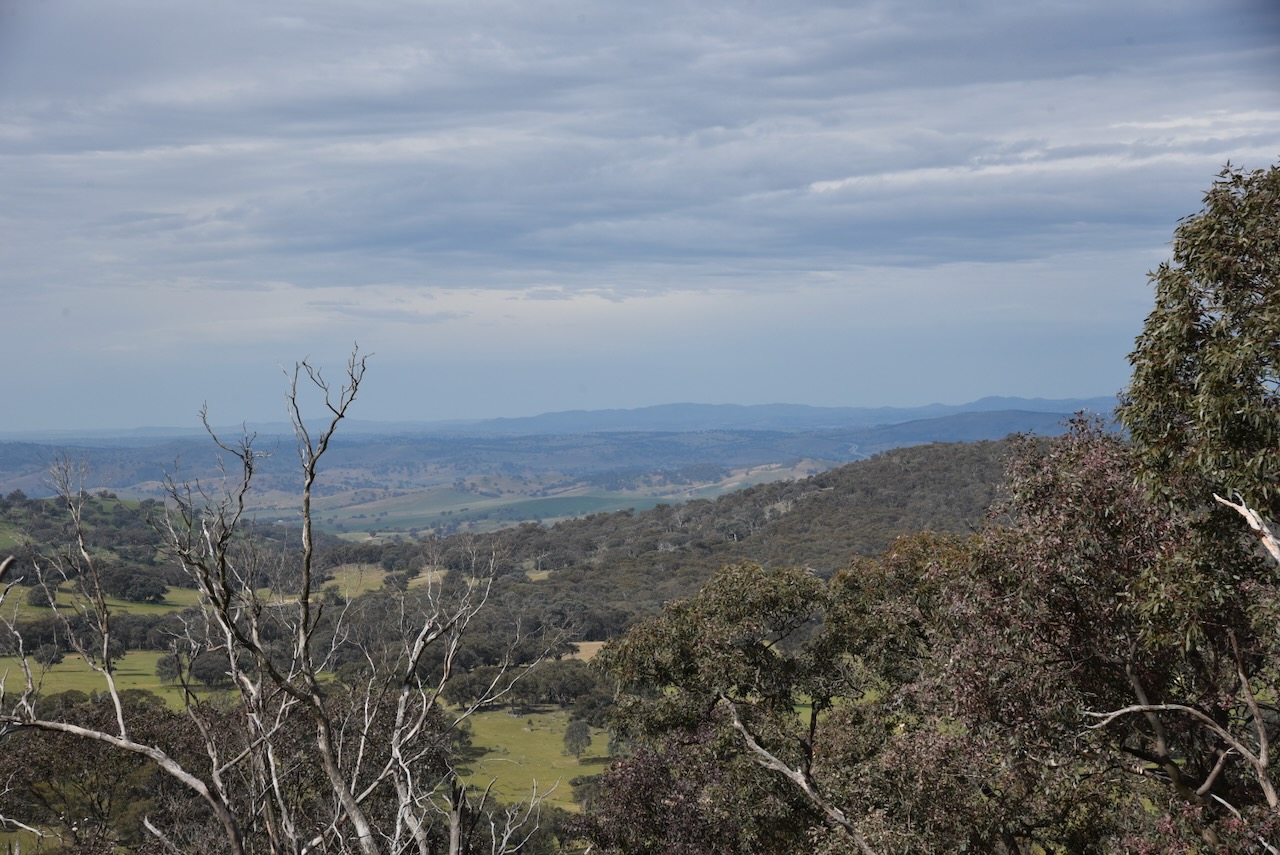
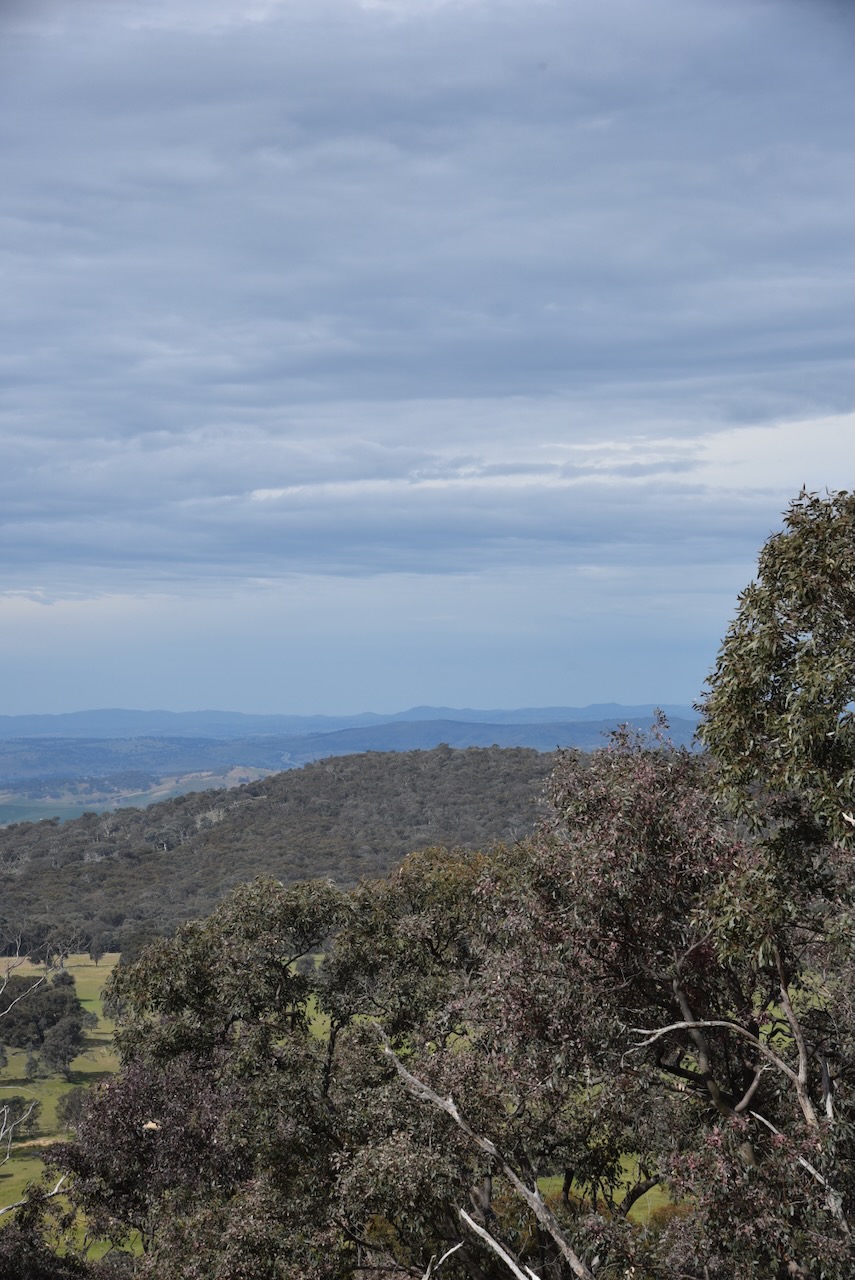
There is also a trig point at the summit.
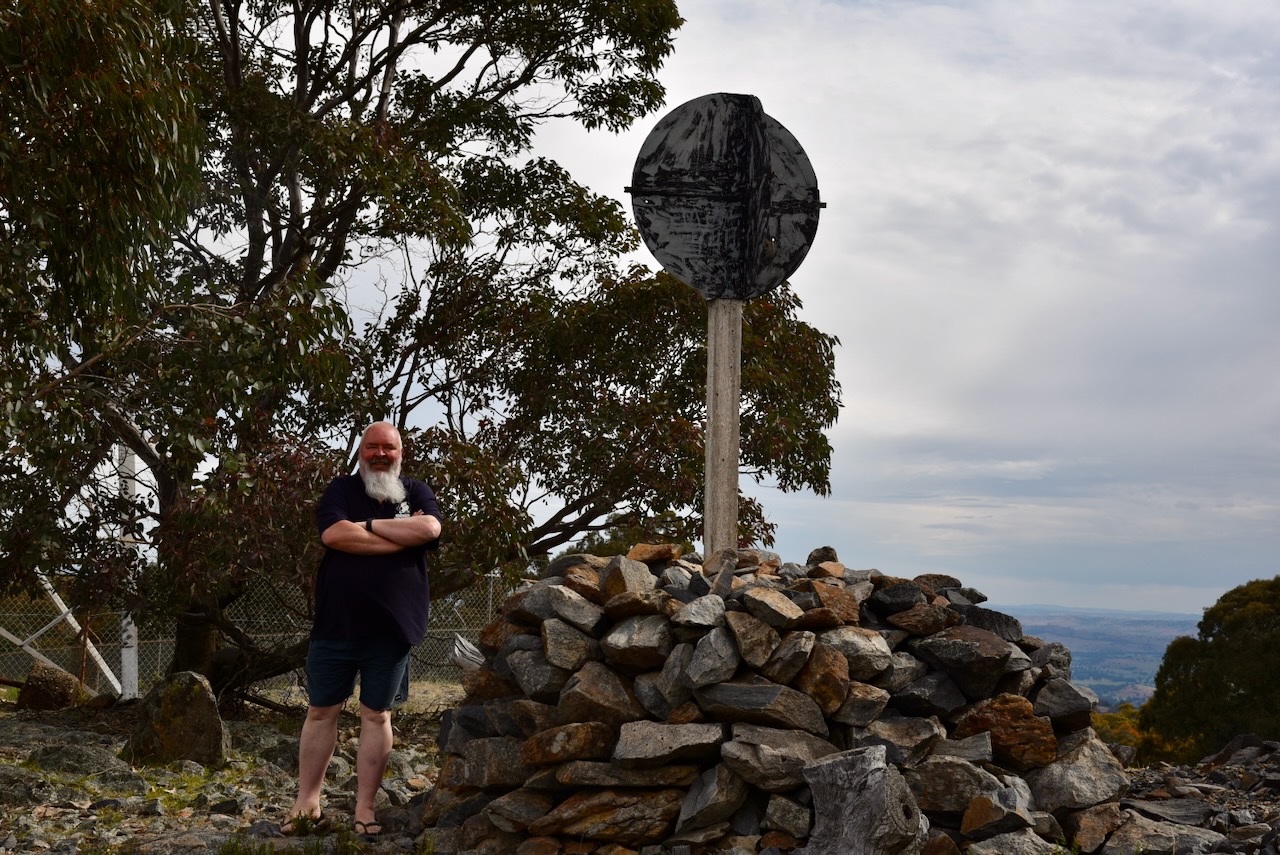
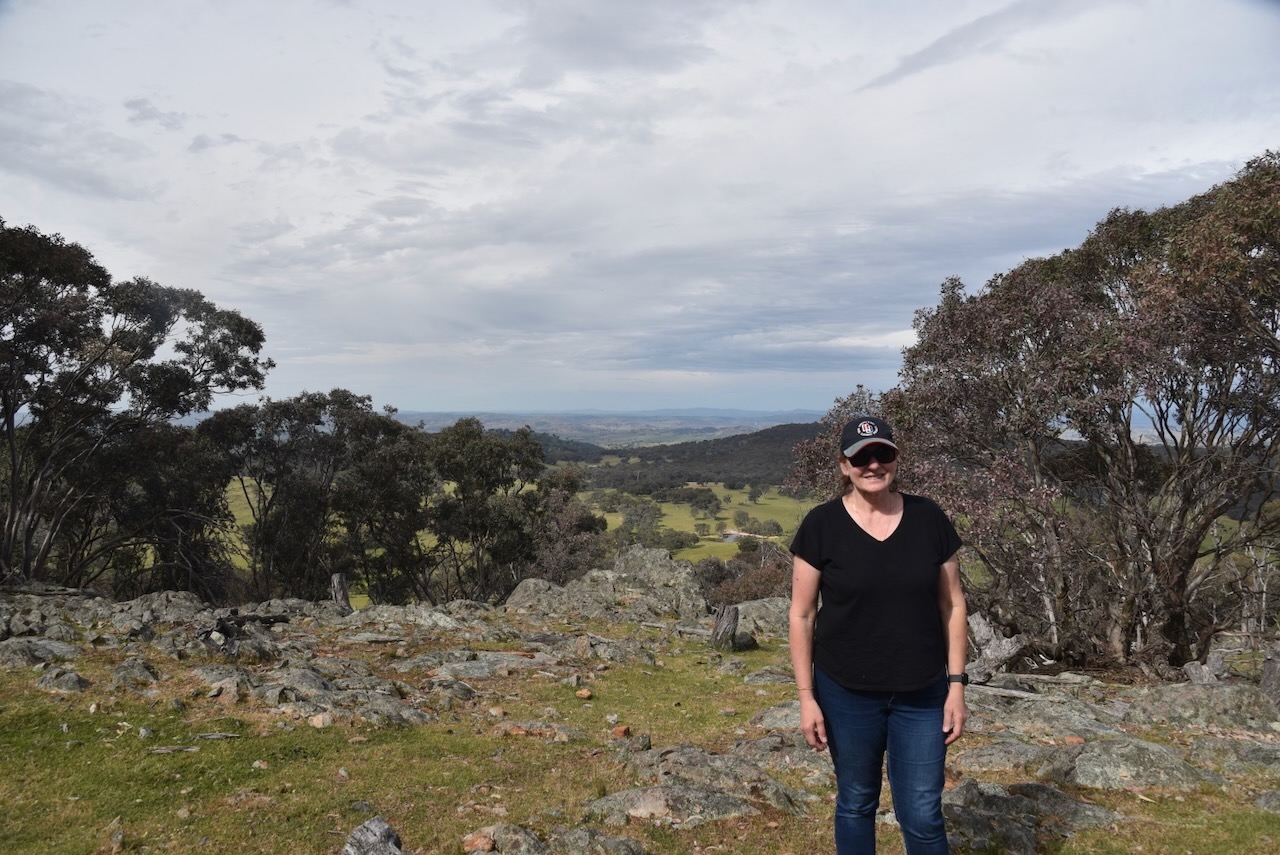
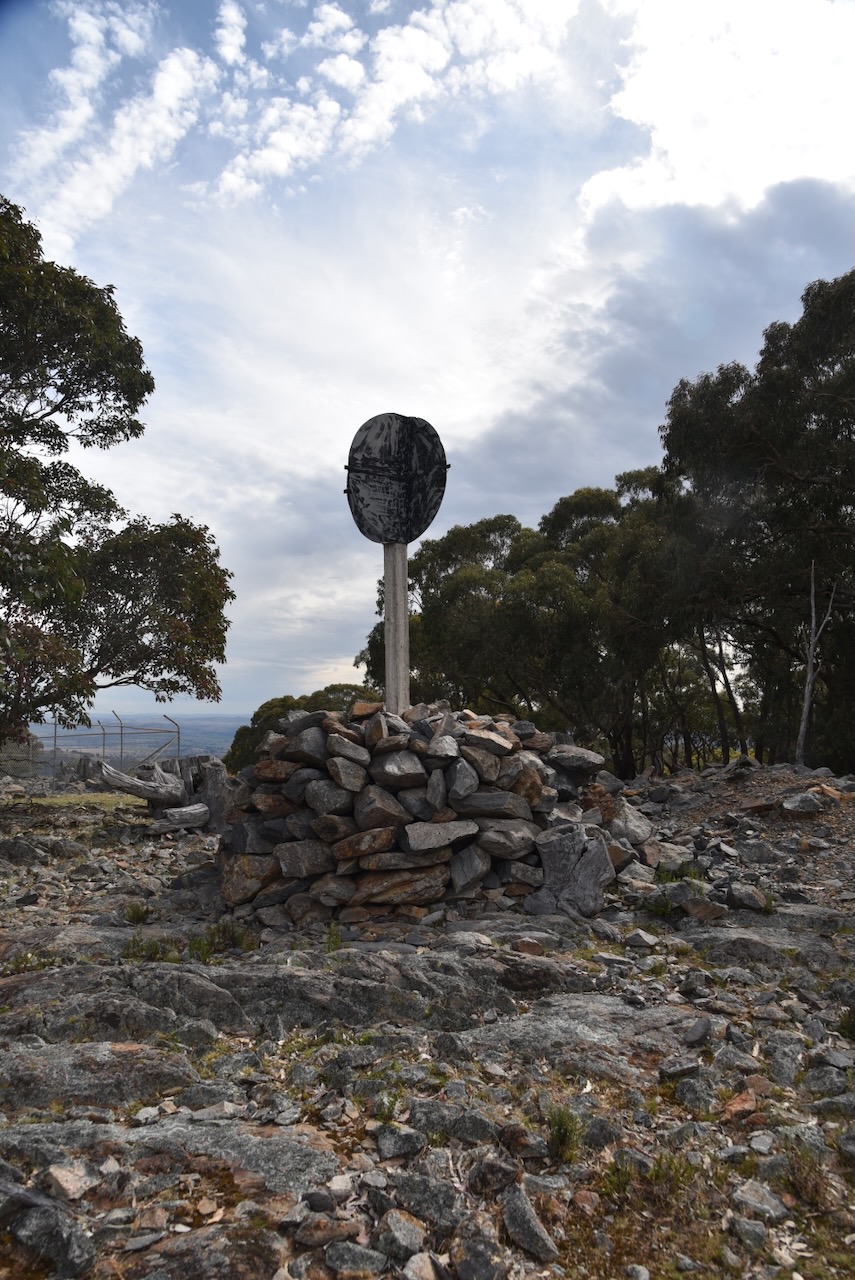
Before setting up, we took a few minutes to further admire the views from Mount Burra.
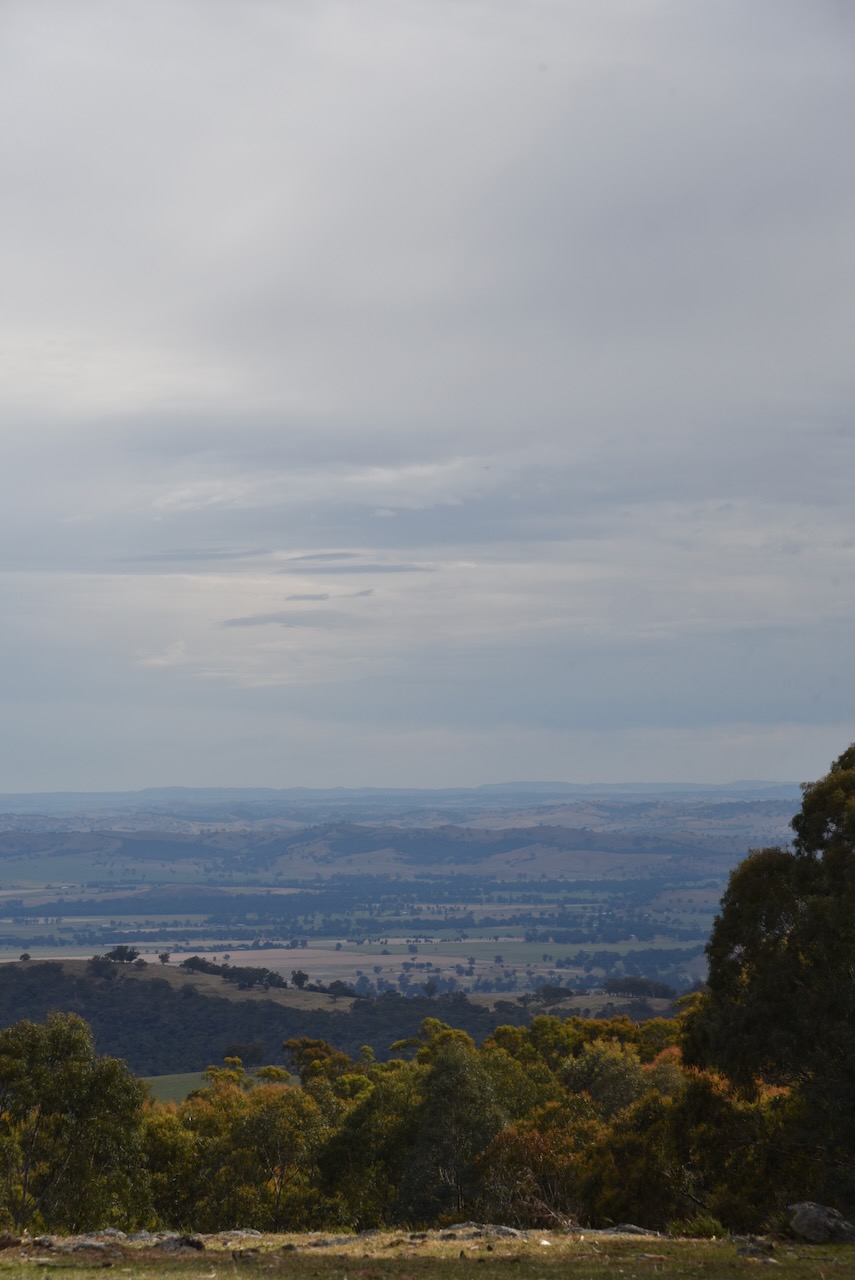
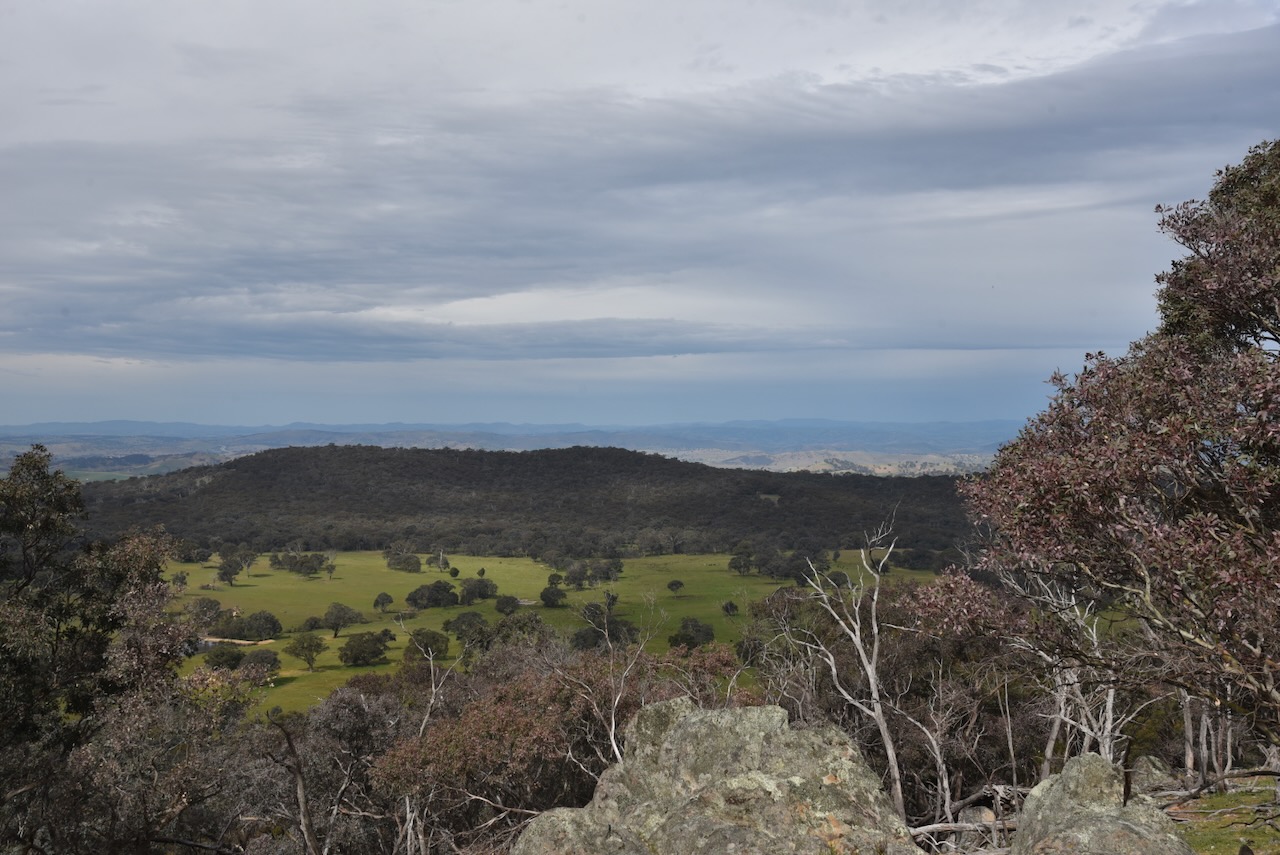
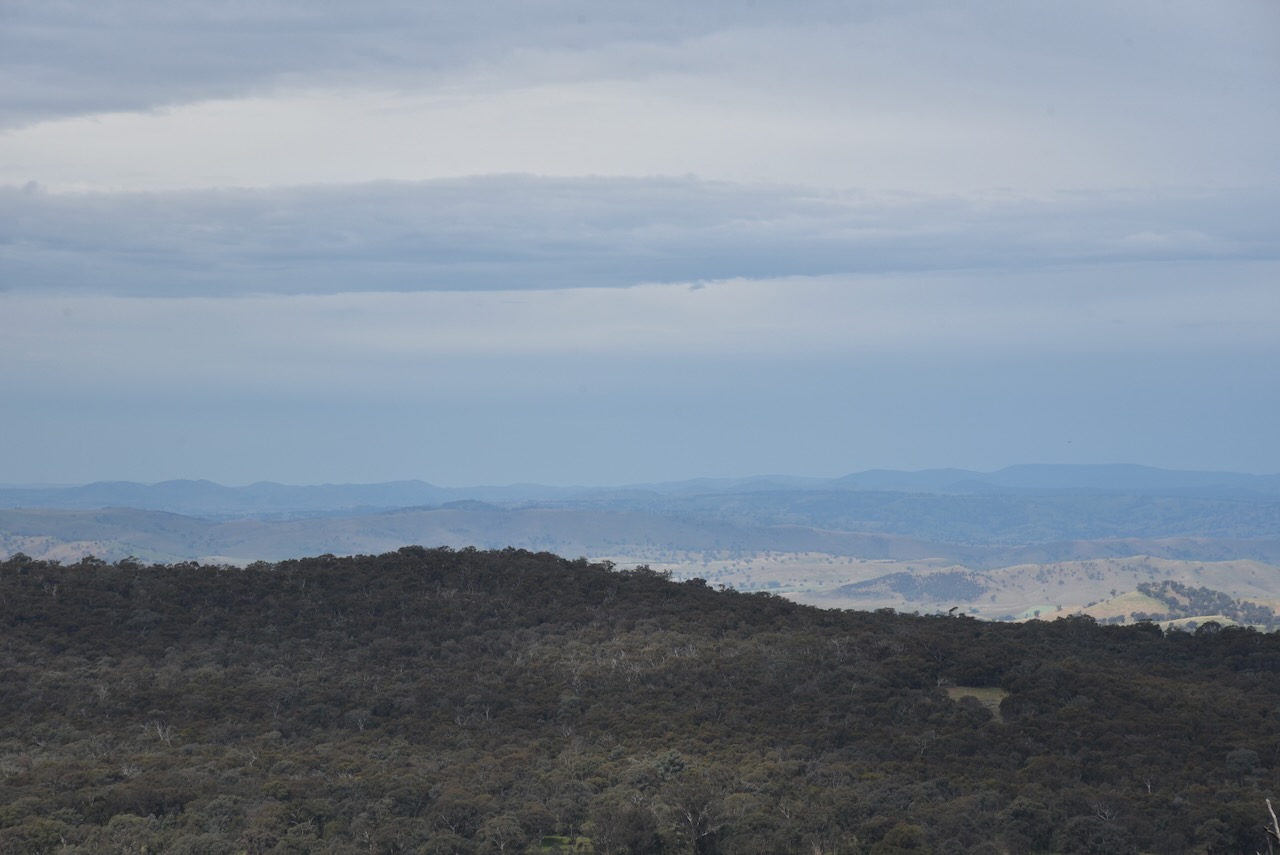
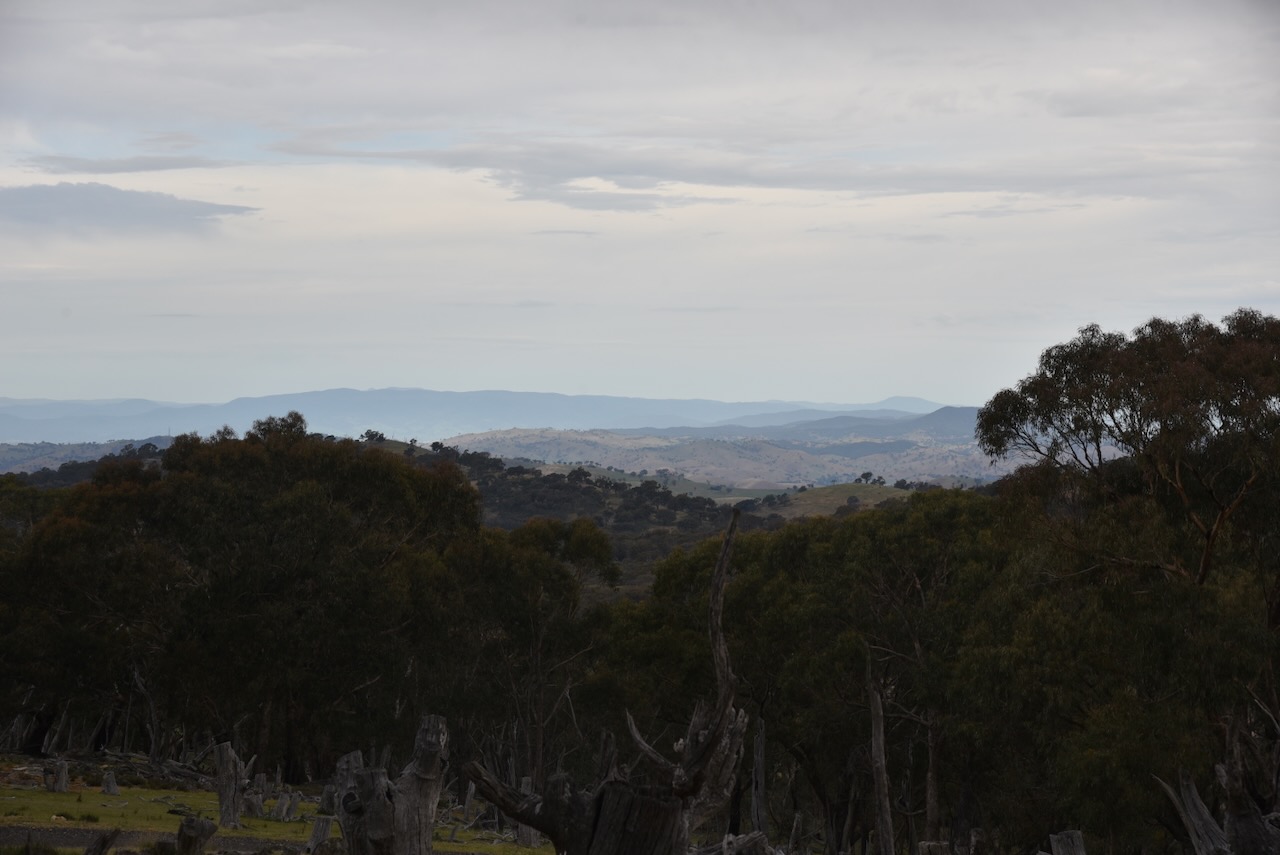
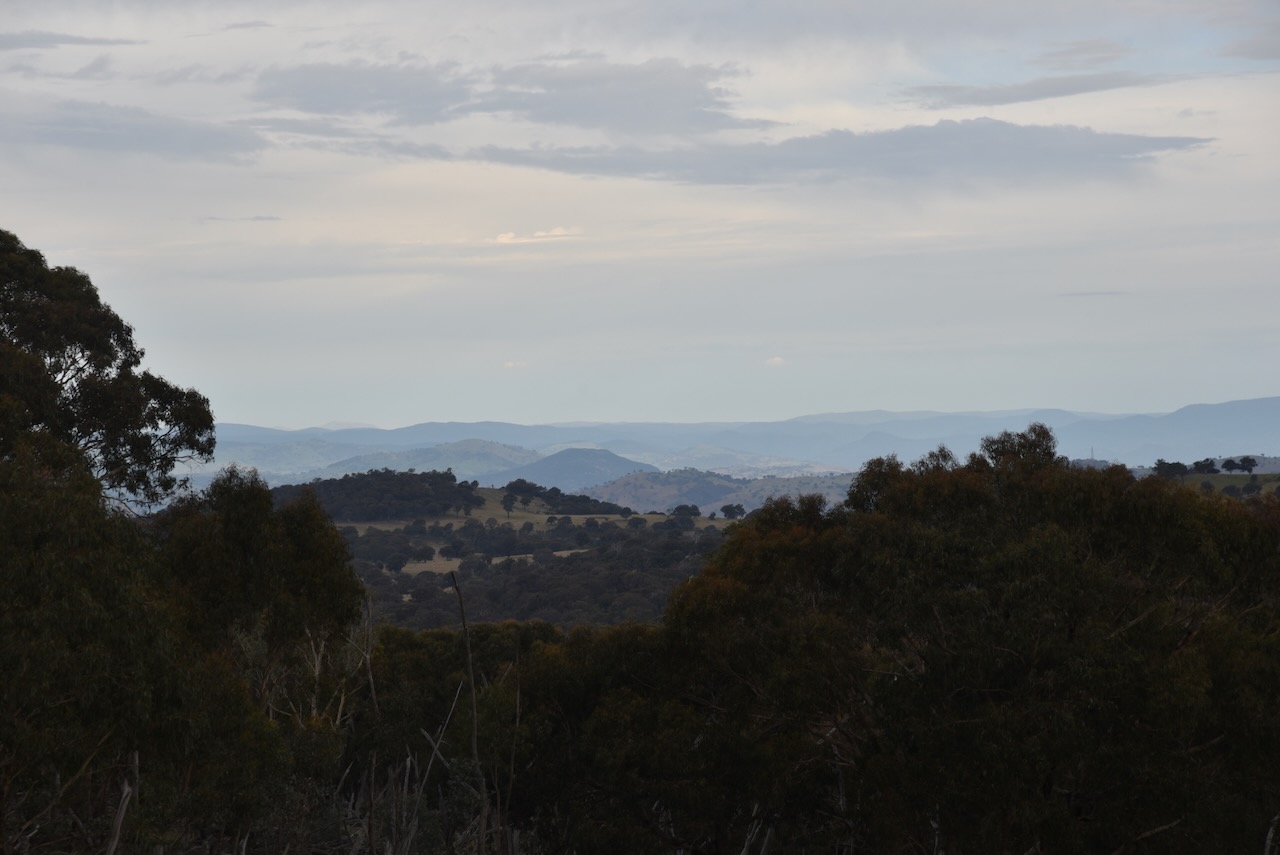
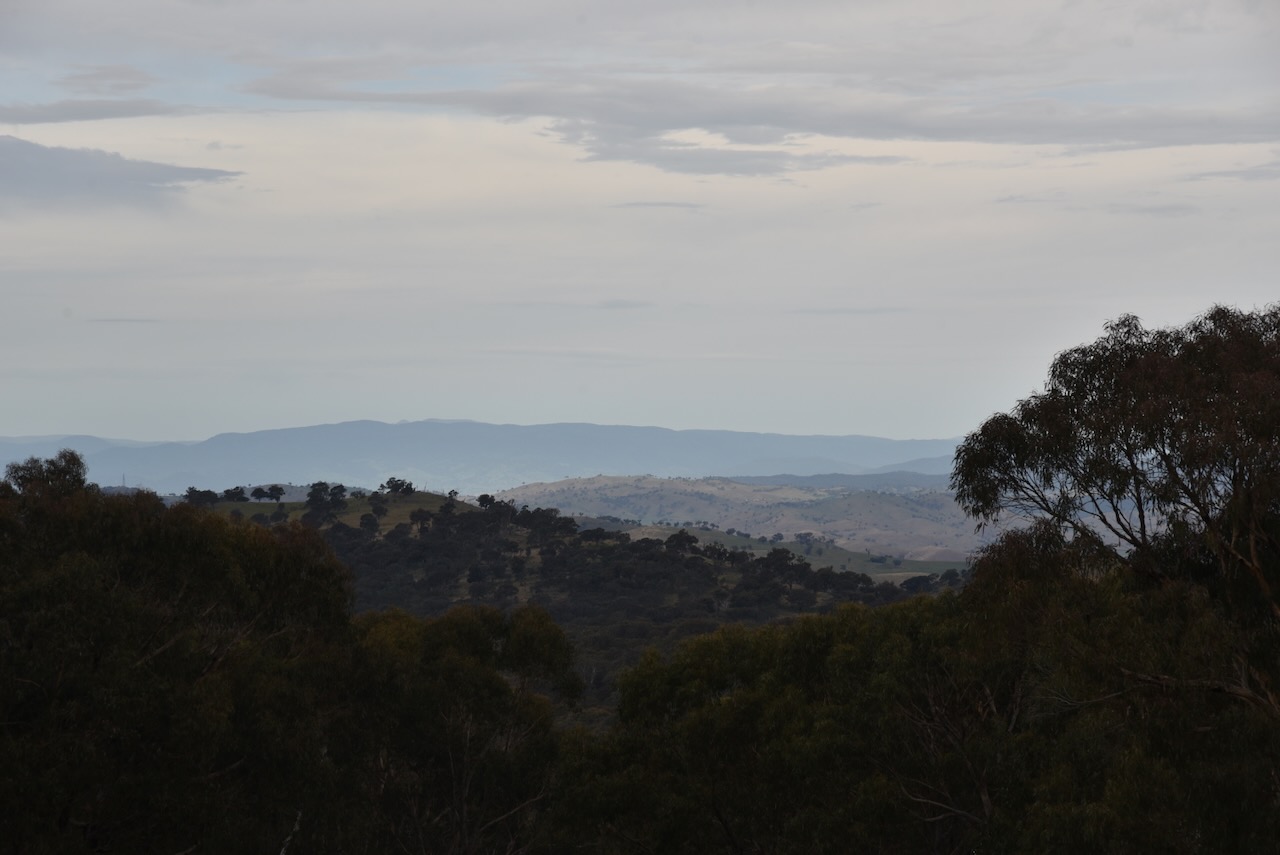
We ran the Yaesu FT857, 40 watts, and the 20/40/80m linked dipole for this activation. As this was a drive-up summit, we had the luxury of a deck chair and fold up table.
This was the first time that Mount Burra haad been activated for SOTA.
The band conditions were fair. We experienced very loud static crashes, which made it extremely difficult to pick up low signal stations that were calling us.
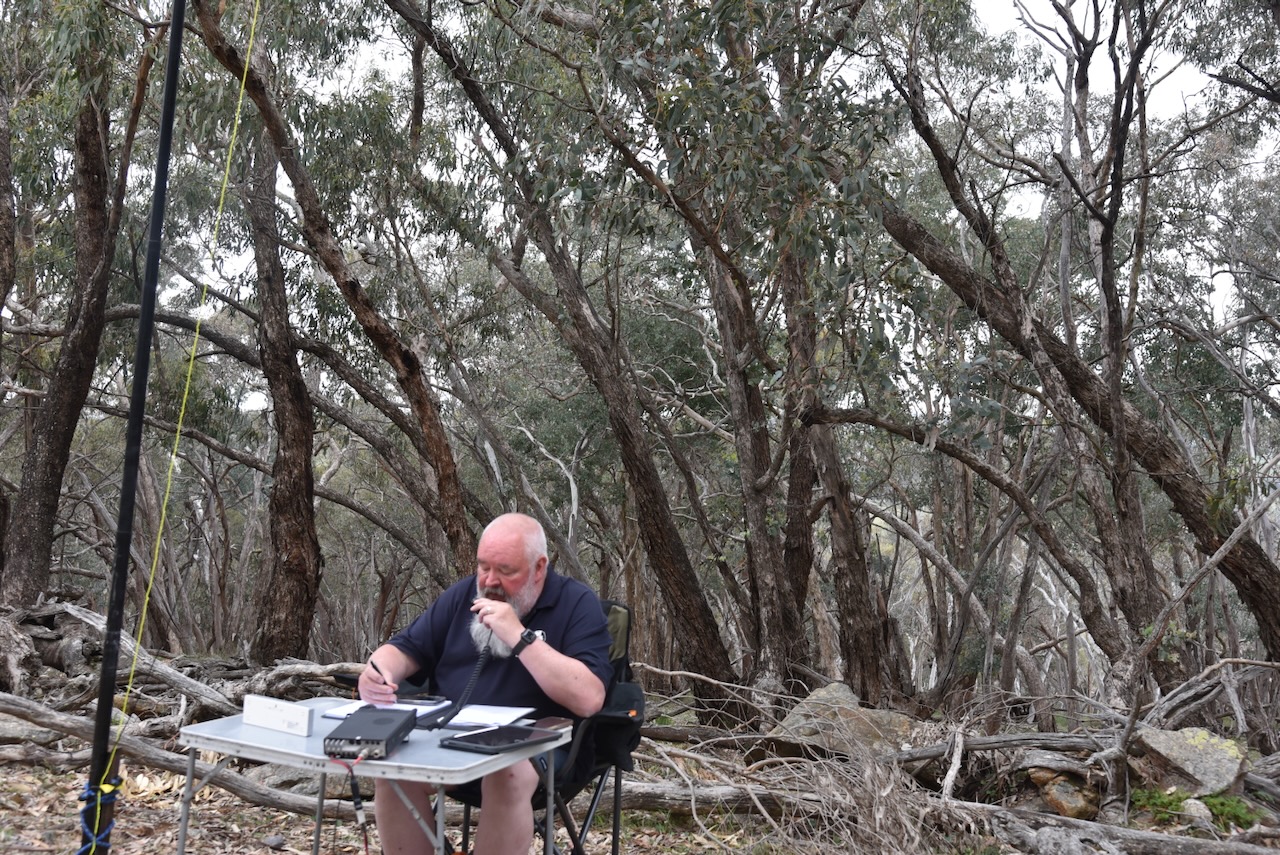
Marija worked the following stations on 40m SSB:-
- VK5PE/M
- VK2HLM
- VK5WU
- VK5CZ/P (VKFF-1159)
- VK5HS
- VK7EV
- VK5NHG
- VK1AO
- VK2MET
- VK5LA
- VK5KAW
Marija worked the following station on 20m SSB:-
- ZL1LD/P (SOTA ZL1/ AK-023)
I worked the following stations on 40m SSB:-
- VK5PE/M
- VK2HLM
- VK5WU
- VK5CZ/P (VKFF-1159)
- VK5HS
- VK7ZM/2
- VK7PJM
I worked the following stations on 20m SSB:-
- VK4JT
- ZL3ET
- W4RBN
- 3D2MP
- KH6KW
- ZL1LD/P (SOTA ZL1/ AK-023)
- VK4CK
- ZL2BEJ
- ZL1HIM
- ZL1IM
Whilst we were on the summit, Tim, the owner of the land paid us a visit. We explained the hobby of amateur radio to him and he was extremely interested.
Following our activation, Marija and I drove back into Gundagai and went out for dinner at the Criterion Hotel.
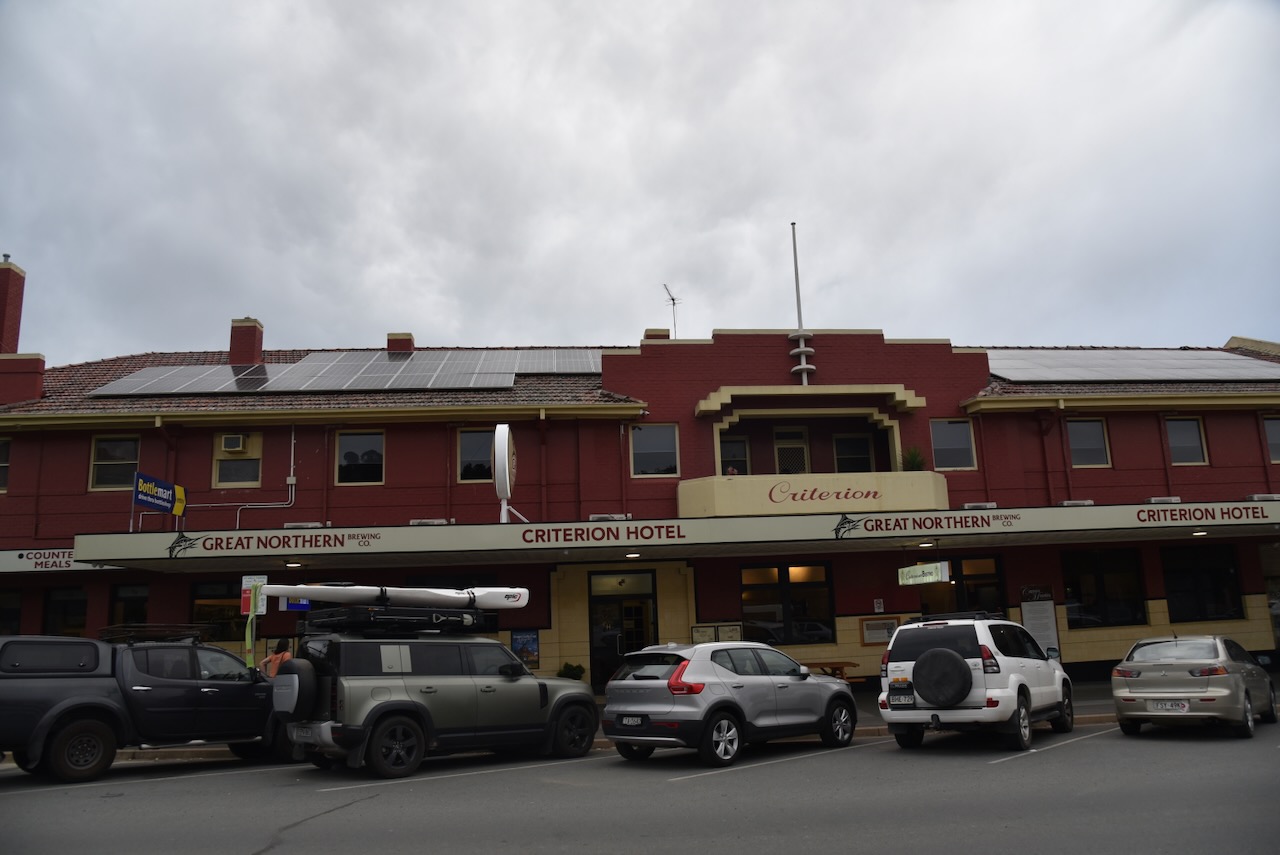
The hotel’s history dates back to 1847, when the original township of Gundagai’s 4th hotel was built by Robert Riley and John Massey. The hotel was called the Blacksmith Arms Hotel. The hotel was then purchased outright by Riley, who changed the name of the hotel to Milton’s Head Hotel. The hotel was destroyed in the 1852 flood, and it was rebuilt by Riley, who changed the name to Riley’s Hotel. (JAM Admin 2023)
In 1871 Jeremiah Leary became the licencee of Riley’s Hotel. (JAM Admin 2023)
The hotel later became the Criterion Hotel and was owned by the Leary family for several years. The hotel was rebuilt in 1939. (JAM Admin 2023)
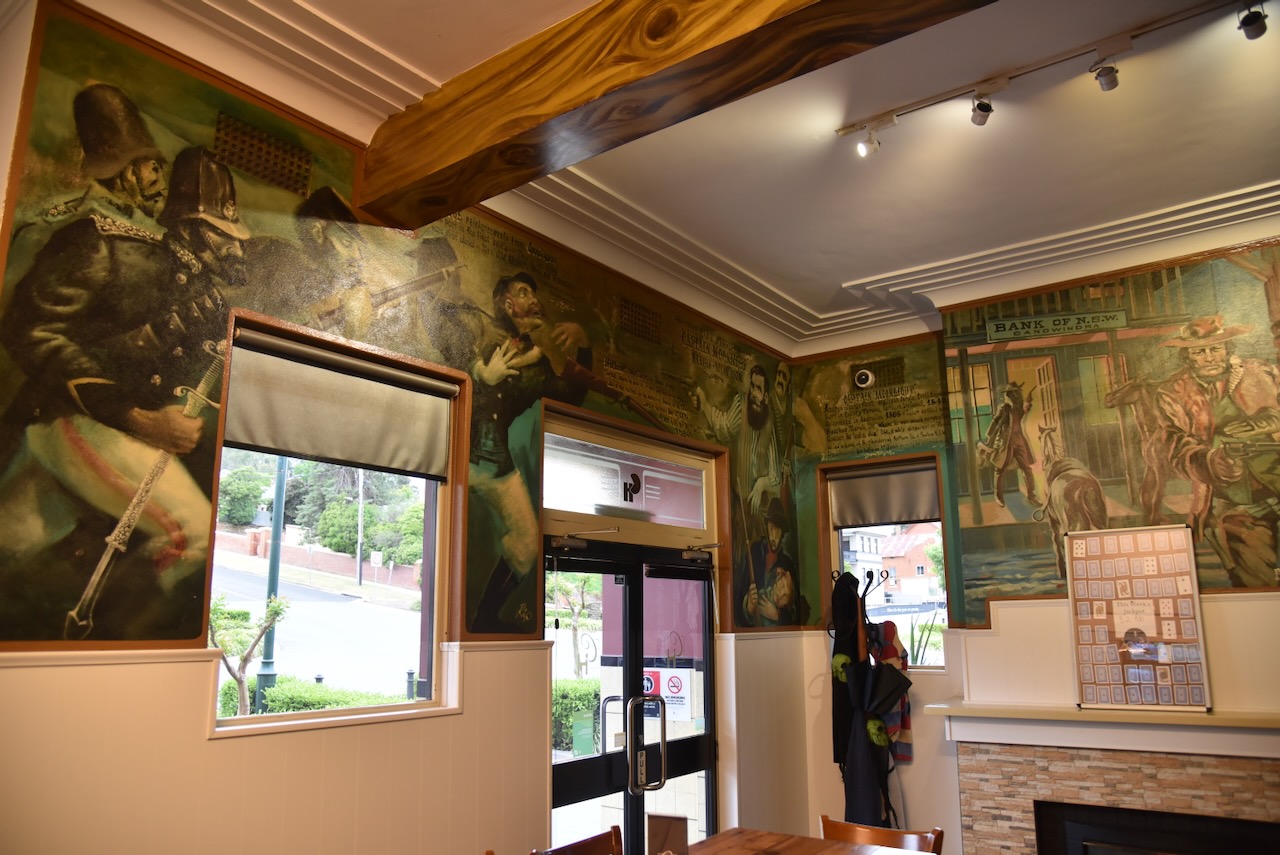
The hotel features some magnificent murals on its walls in the bar area. They depict the Gundagai flood and Captain Moonlite. The murals are the work of artist Arnold ‘Don’ St Claire who completed the murals during the 1960s. He was a finalist in the 1965 Sulman Prize and the Archibald Prize in 1966. (JAM Admin 2023)
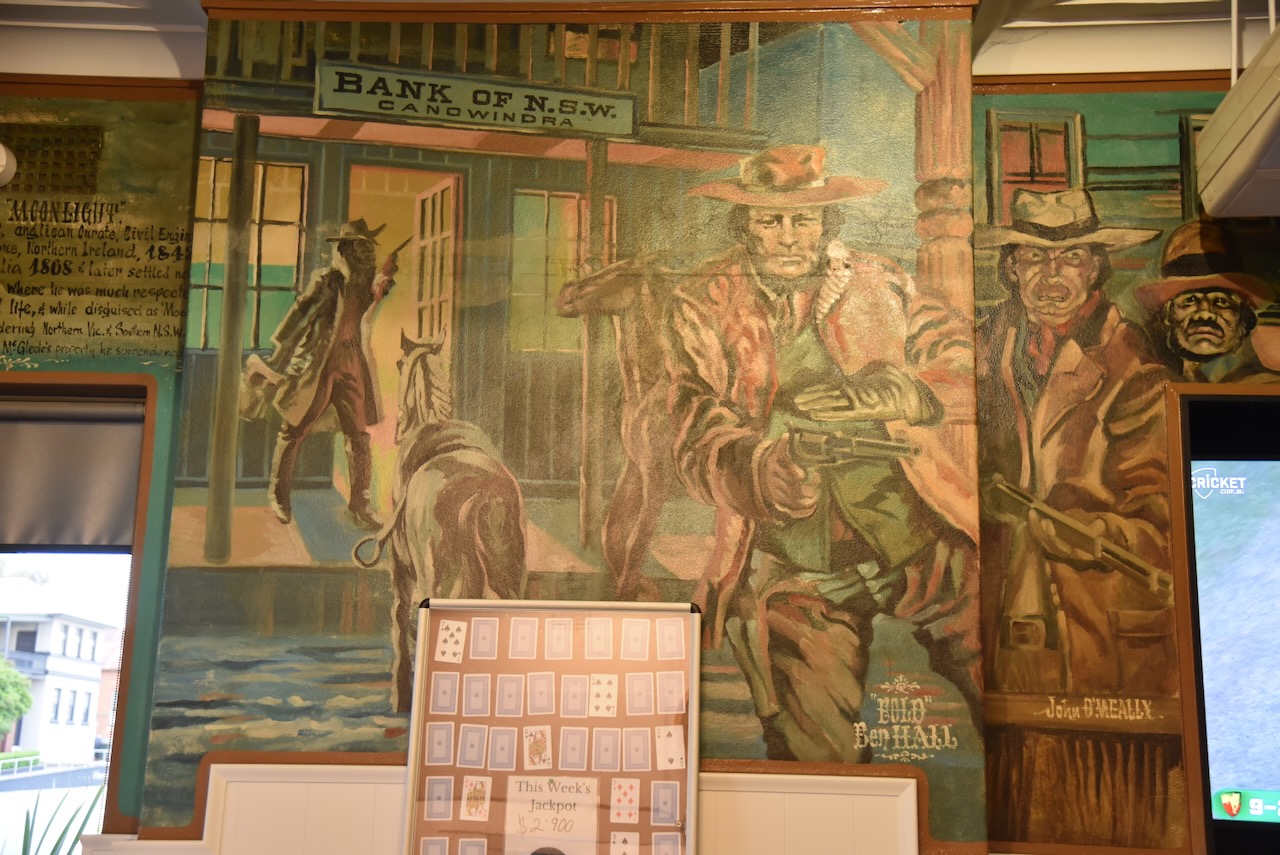
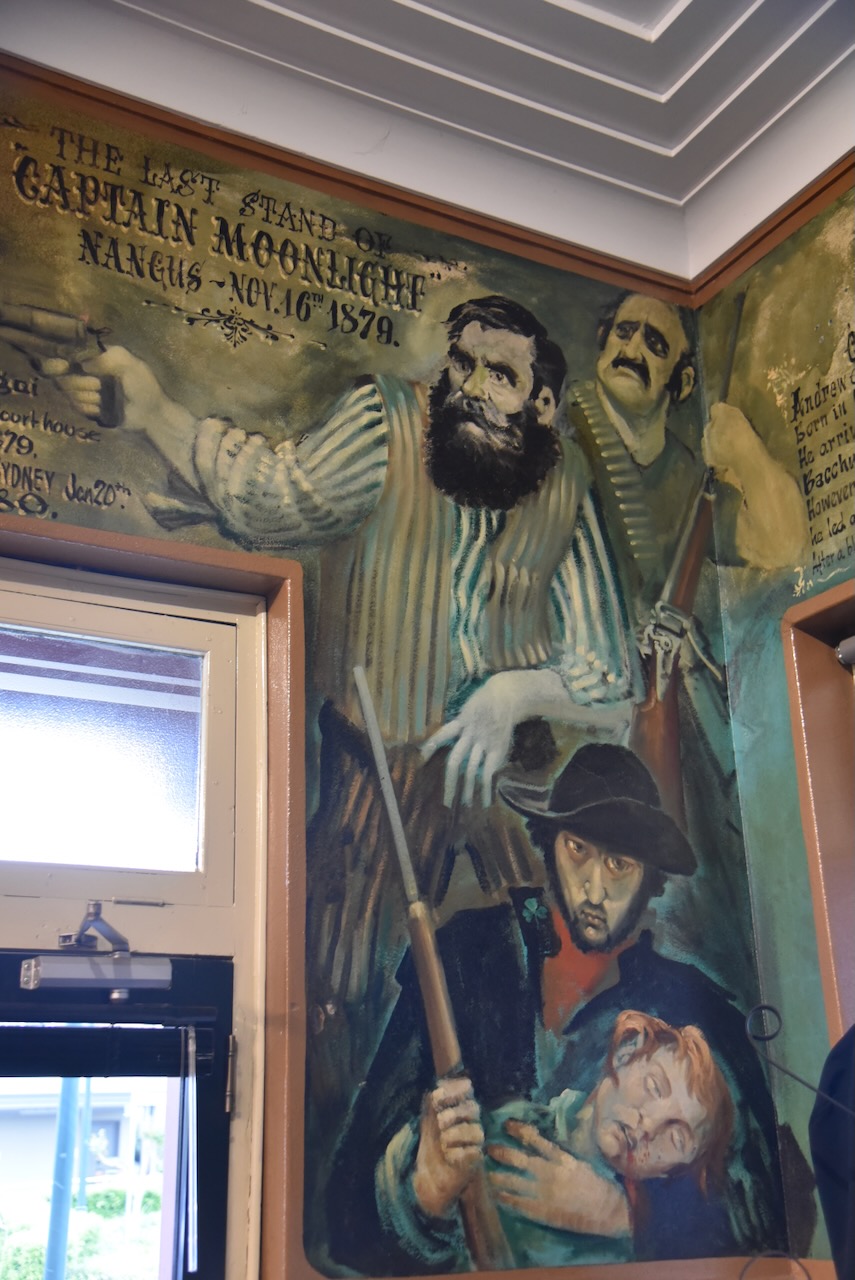
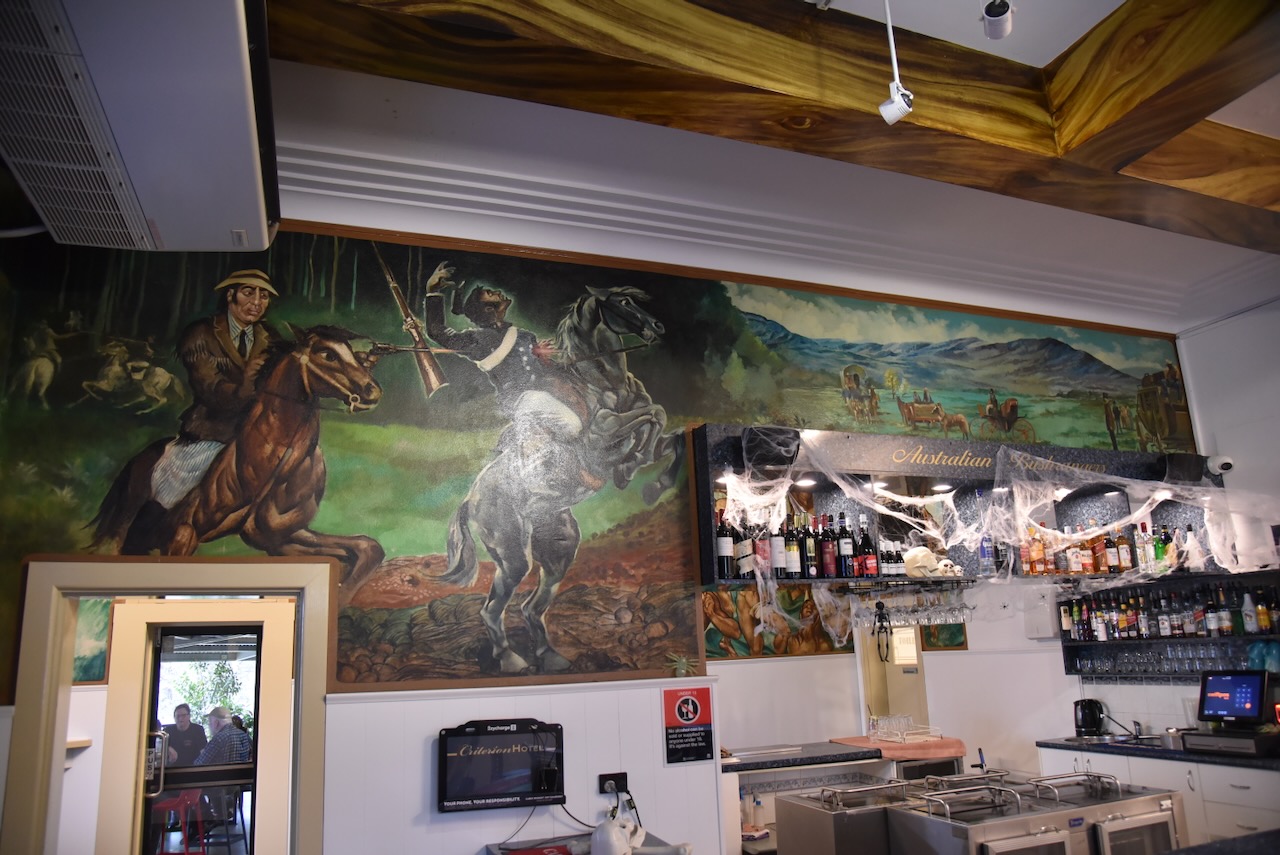
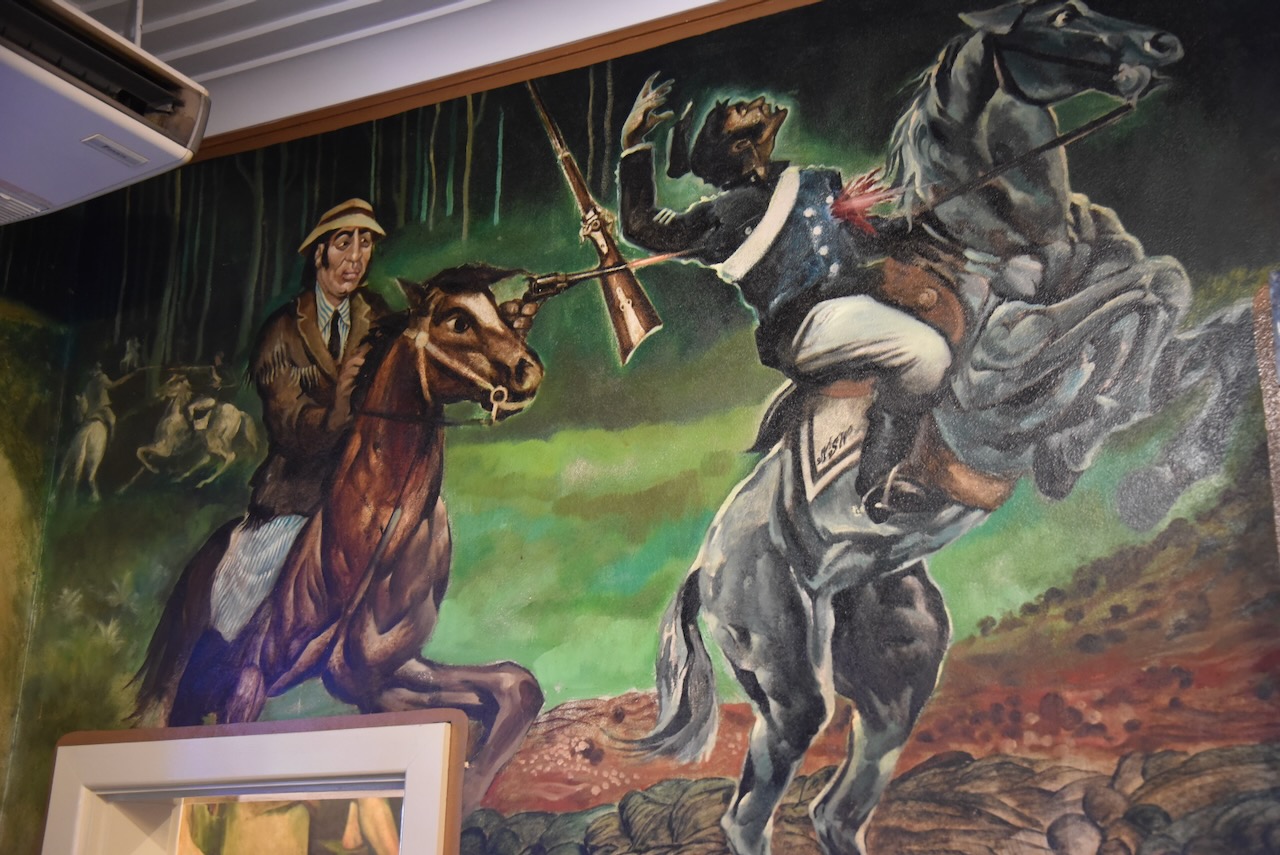
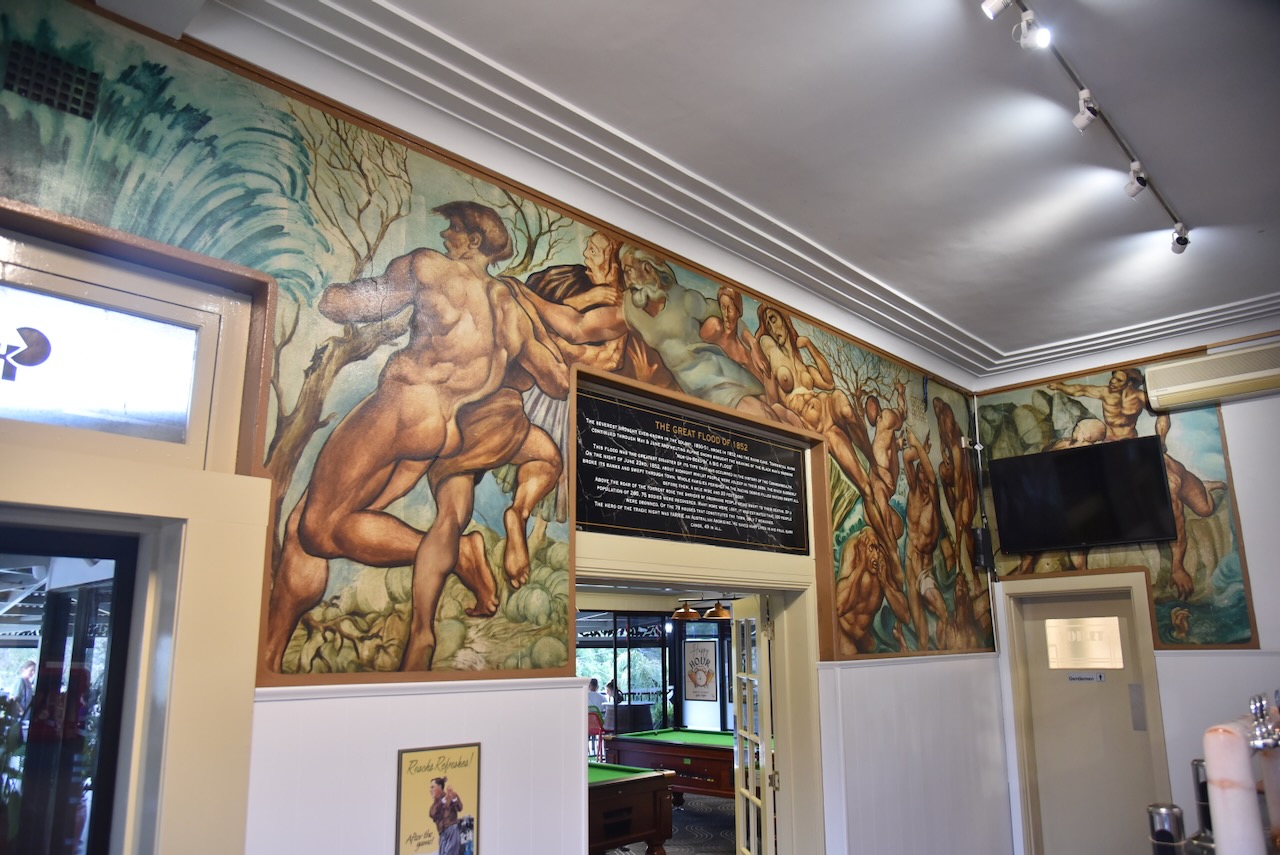
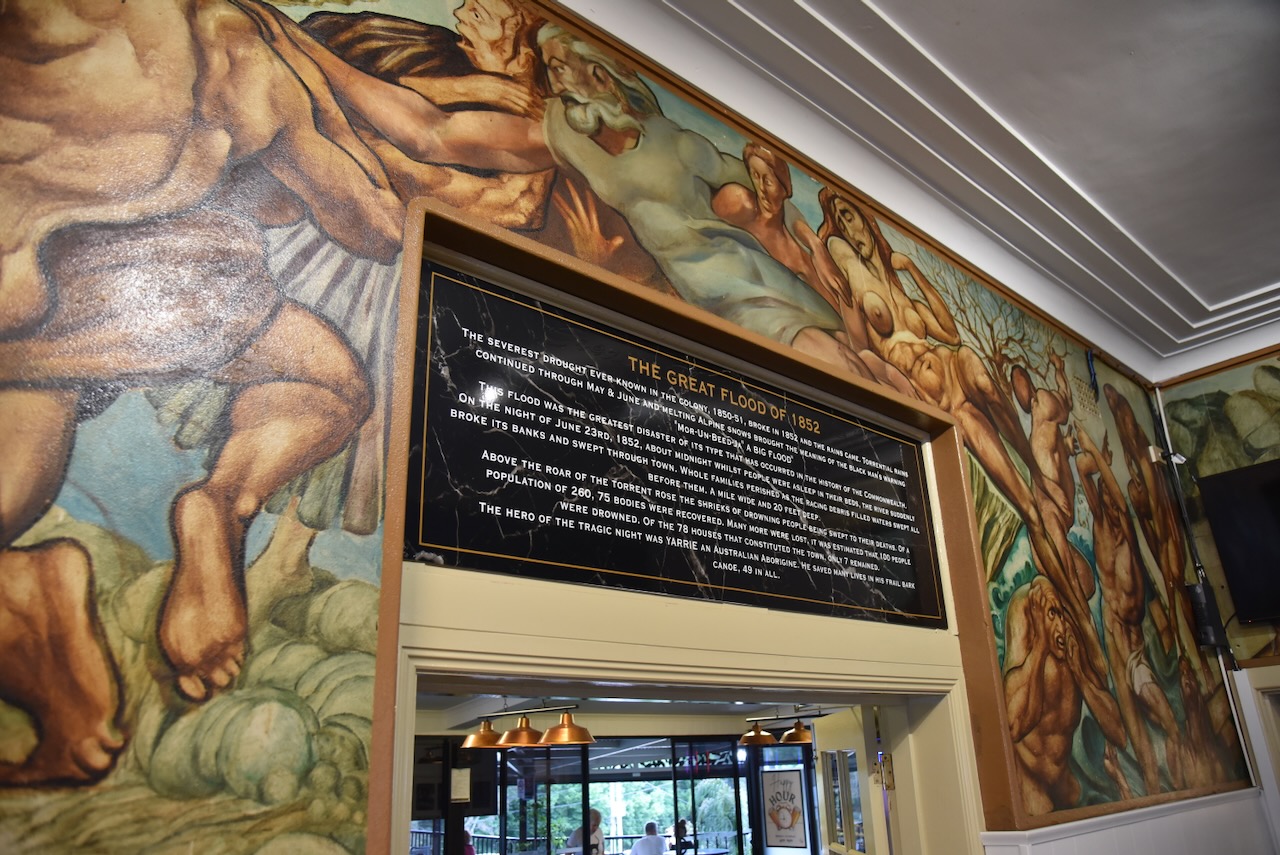
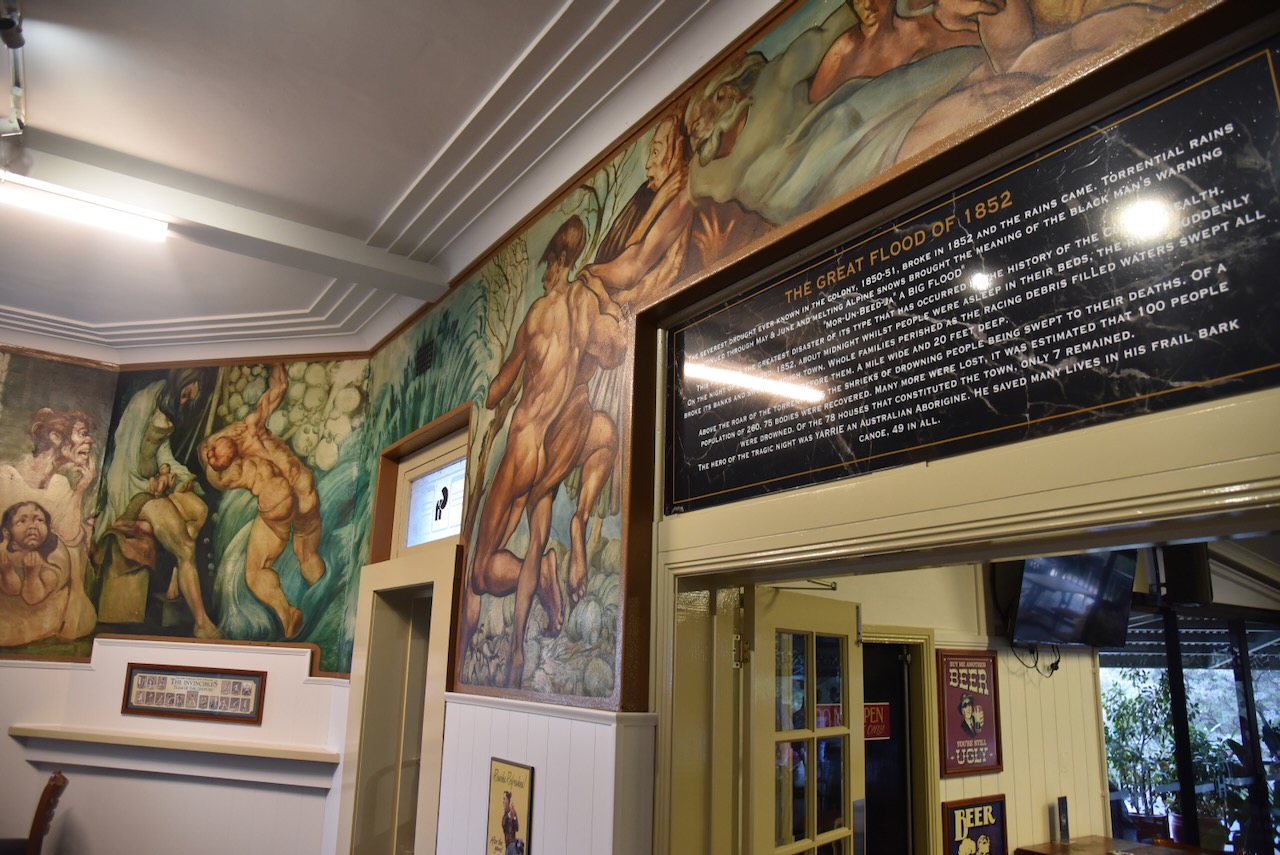
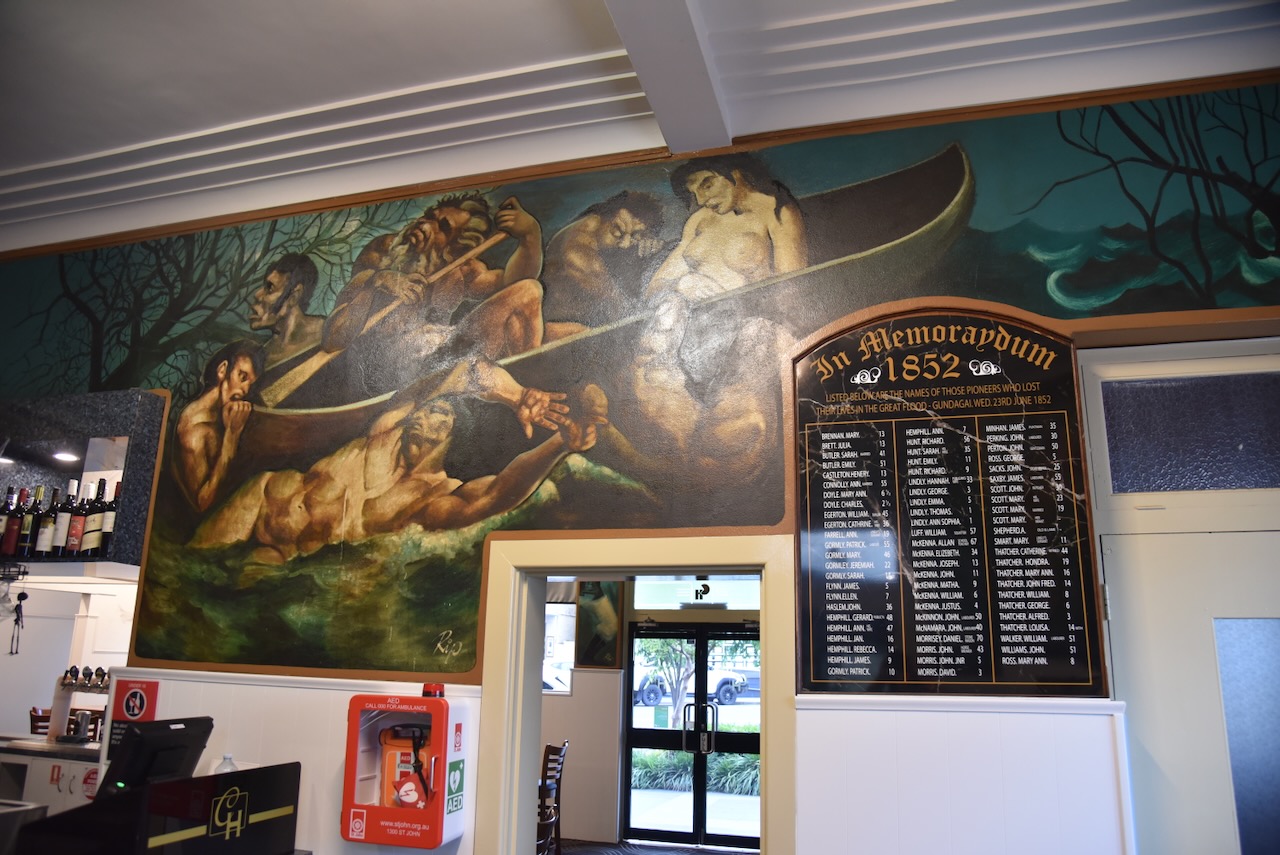
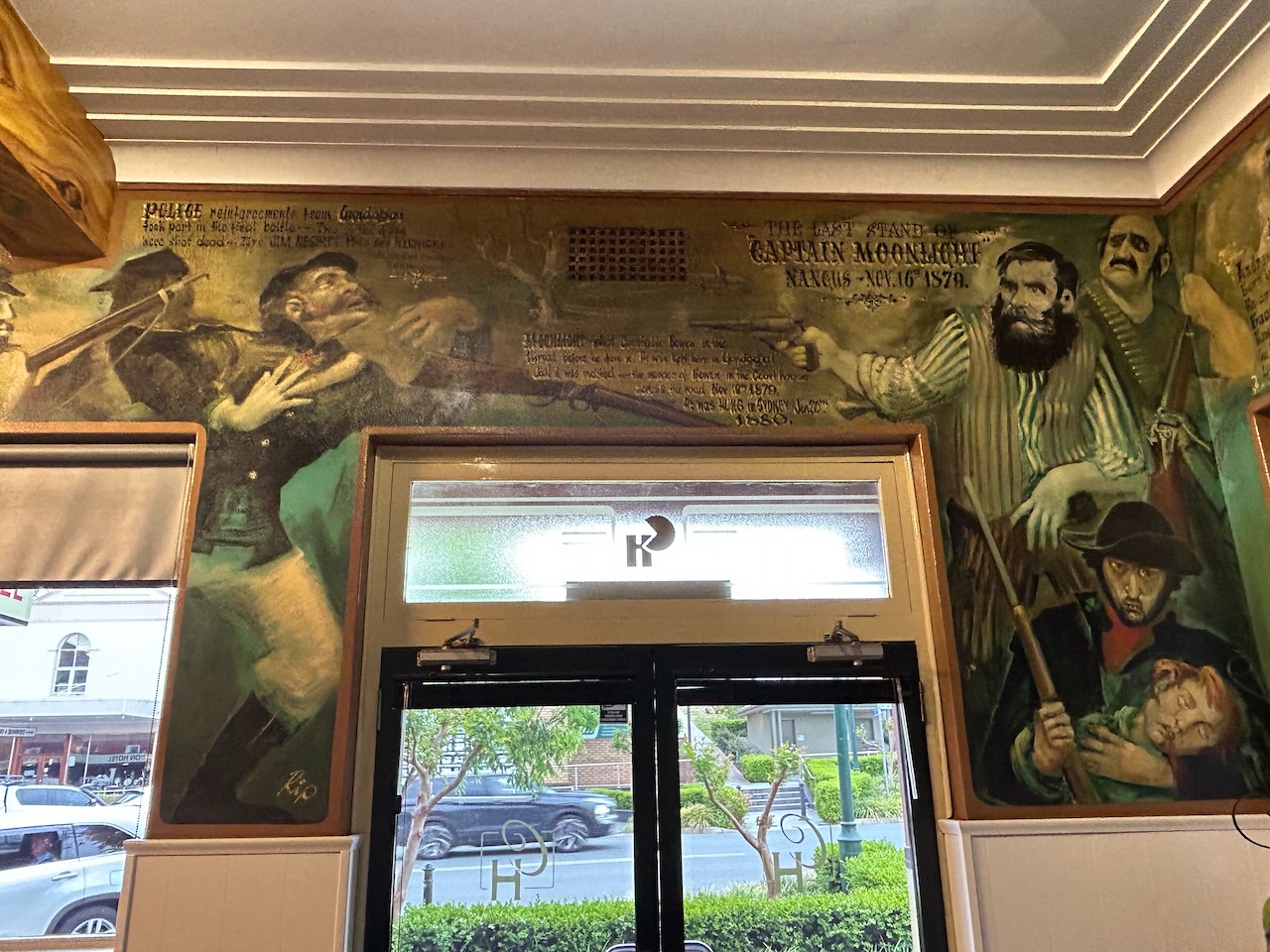
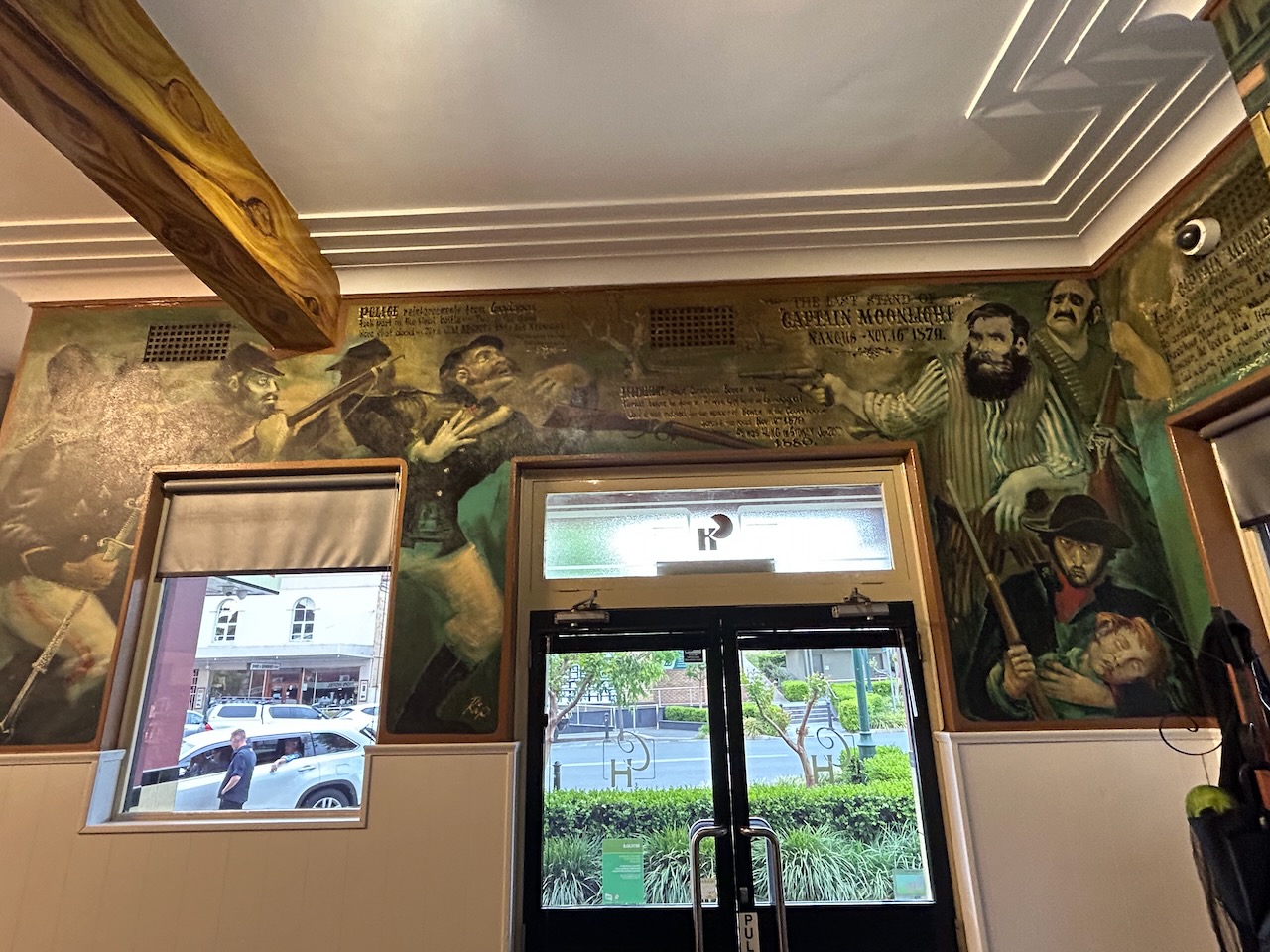
Arnold ‘Don’ St Claire was born c. 1926. I have not been able to find a record of his birth on the internet. During his life, St Claire was admitted to various mental health facilities and prisons across New South Wales and Victoria, largely due to his alcoholism and depression. It was reported by his de facto wife that he drank methylated spirits. (Slattery 1990)
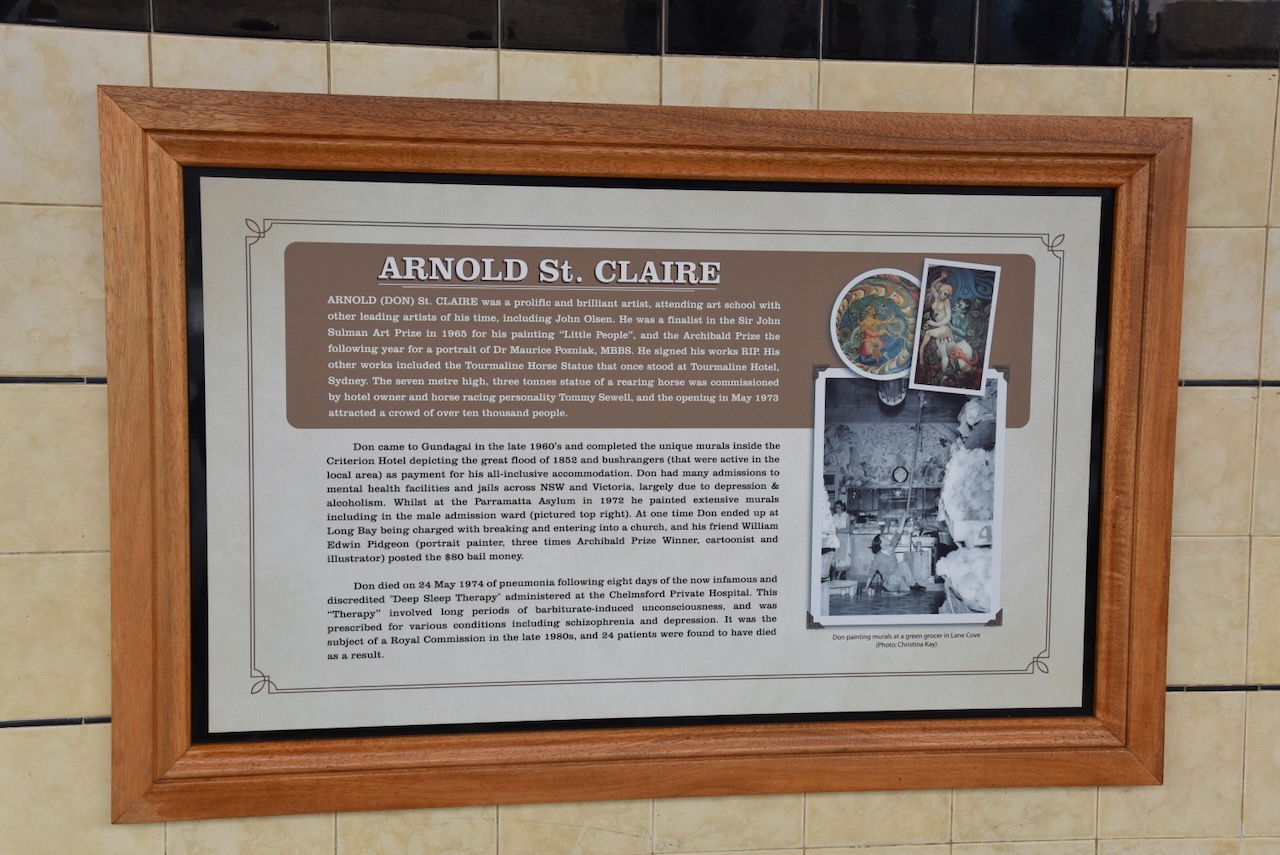
During his time at the Parramatta Asylum (now the Cumberland Hospital) in 1972, he painted several murals, including one in the male admission ward. Below is an excellent video on that particular mural.
St Claire was a regular cartoonist for the Campbelltown Ingleburn News. In 1966, St Claire held an art exhibition in a butcher’s shop. During the 1970s St Claire completed a 7 metre high statue of a rearing horse which stood in the forecourt of the Tourmaline Hotel. (Allen 2026)
Arnold died on the 24th day of May 1974 in the Horsnby Hospital, aged 48 years. His cause of death was recorded as pneumonia. For 8 days prior to his death, he had been subject to ‘Deep Sleep Therapy’ (DST) at Chelmsford Private Hospital. This is an infamous and discredited treatment that involved long periods of barbiturate-induced unconsciousness. It was prescribed for several conditions, including schizophrenia and depression. During the late 1980’s, the treatment was the subject of a Royal Commission when it was revealed that 24 patients had died as a result.
The Royal Commission concluded that Arnold was neglected during his last admission to Chelmsford and that they ‘were in no way equipped to care for him in his seriously ill condition’ and that he should have been transferred to a better-equipped hospital. The Royal Commission further stated that ‘he was a singularly inappropriate subject for DST’ and that ‘the treatment significantly contributed to his illness and eventually his death.’ (Slattery 1990)
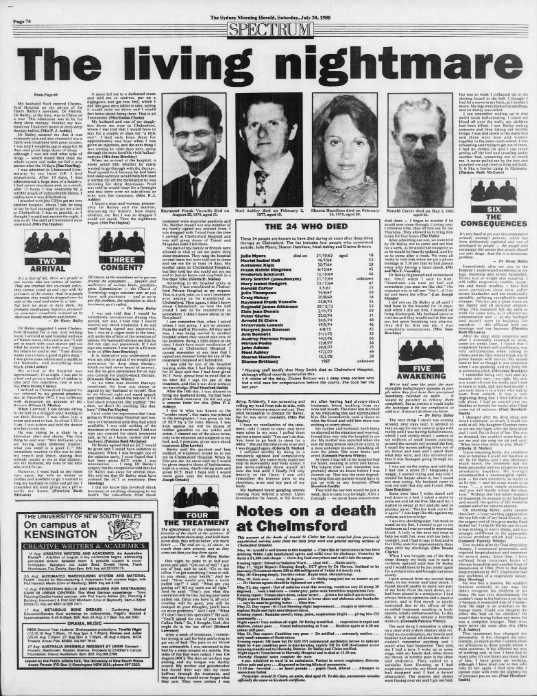
Above: article from The Sydney Morning Herald, Sat Jul 30, 1988. Image c/o newspapers.com
It was still daylight when we left the hotel, so rather than heading back to the hotel, we decided to have more of a look around Gundagai.
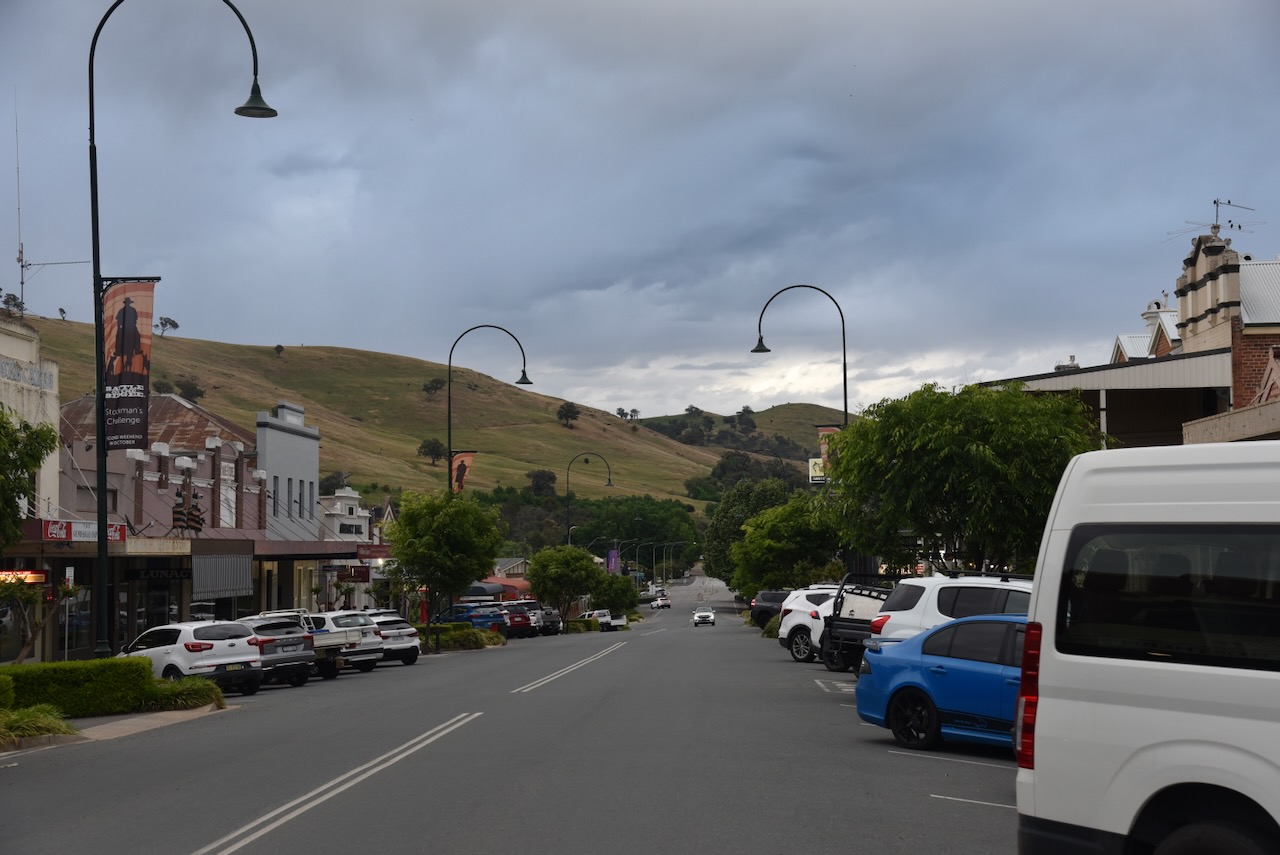
Marija and I walked down the street to have a look at the ‘Three Sisters of Gundagai’ mural. The mural was completed in 2021 and is the work of artist Yiannia Johns. The mural depicts Melba XV, a milking cow from Darbalara, who in 1924 became the world’s champion butter-fat cow. (Mural 2022)
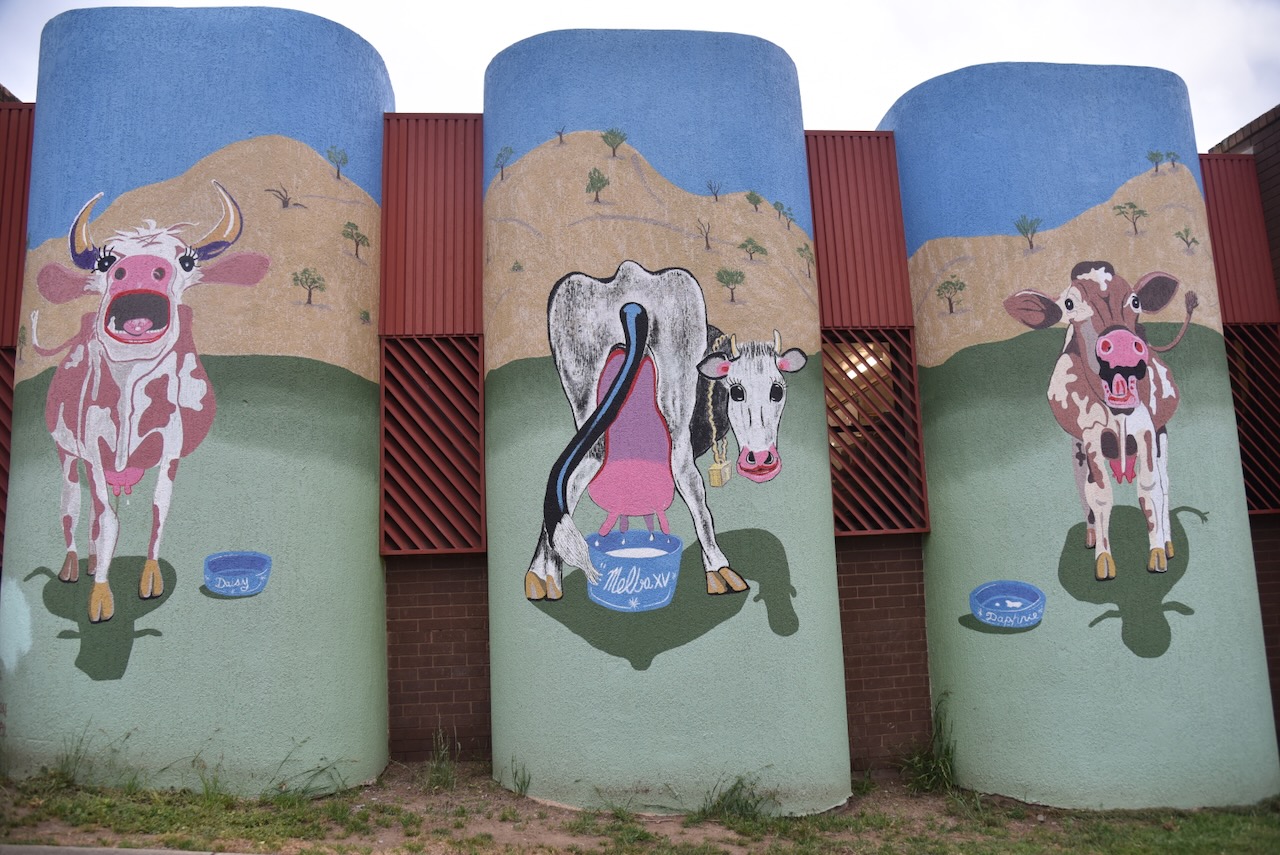
Melba XV, in her heyday, was able to produce 743.5 pounds of milk and 28.7 pounds of butter fat during a 7-day period.
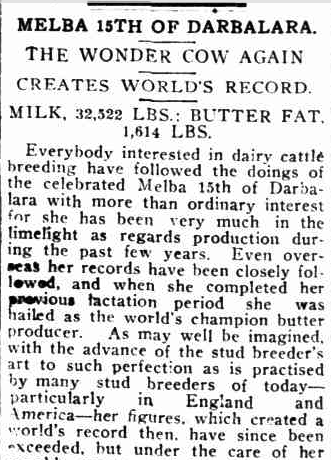
Above: part of an article from the Mount Barker Courier, Fri 4 Jul 1924. Image c/o Trove
Marija and I then paid a visit to the site of the old National School. A campaign by local Gundagai residents for a government school resulted in the erection of the National School in 1850. The school consisted of a two-room building with a loft that included accommodation for the teachers. Joseph McKenna and his wife Elizabeth, were the first teachers appointed to the school.
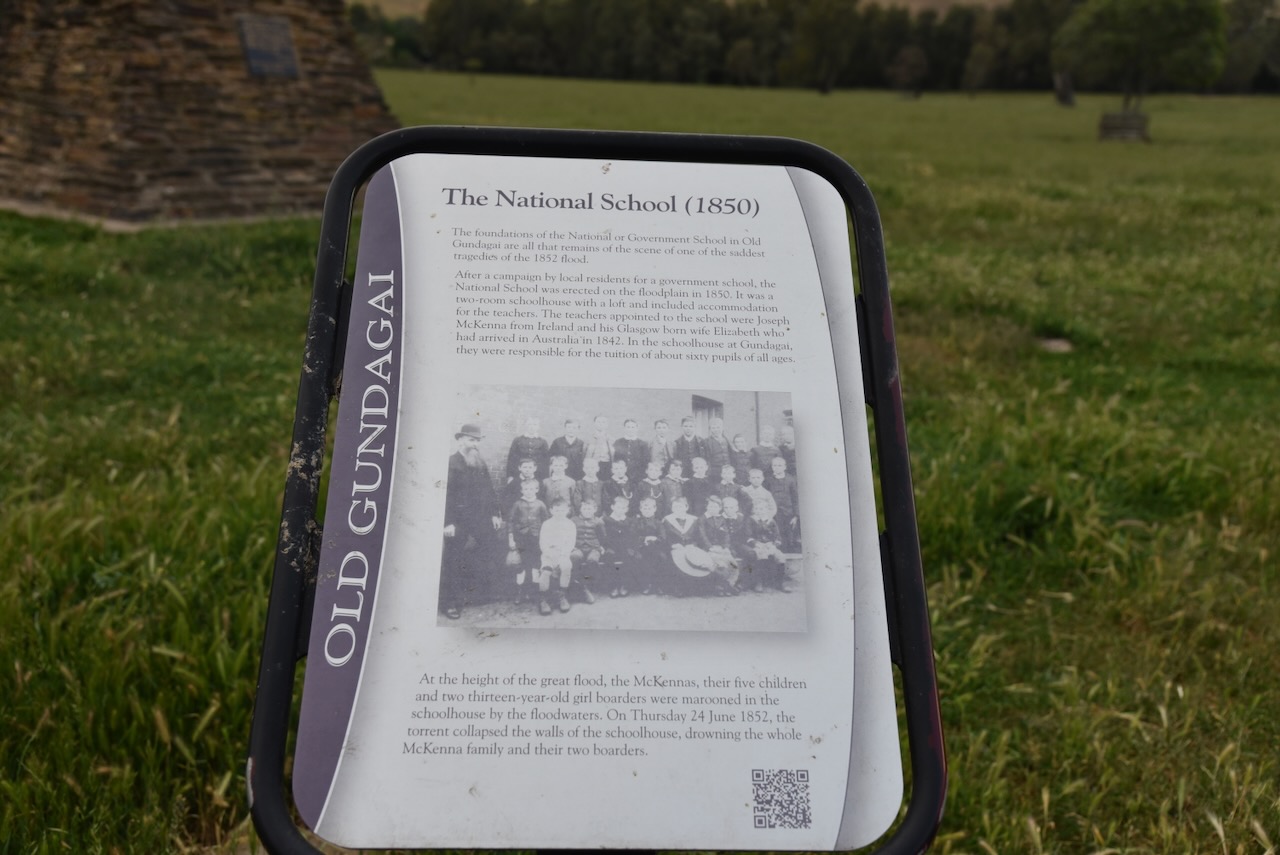
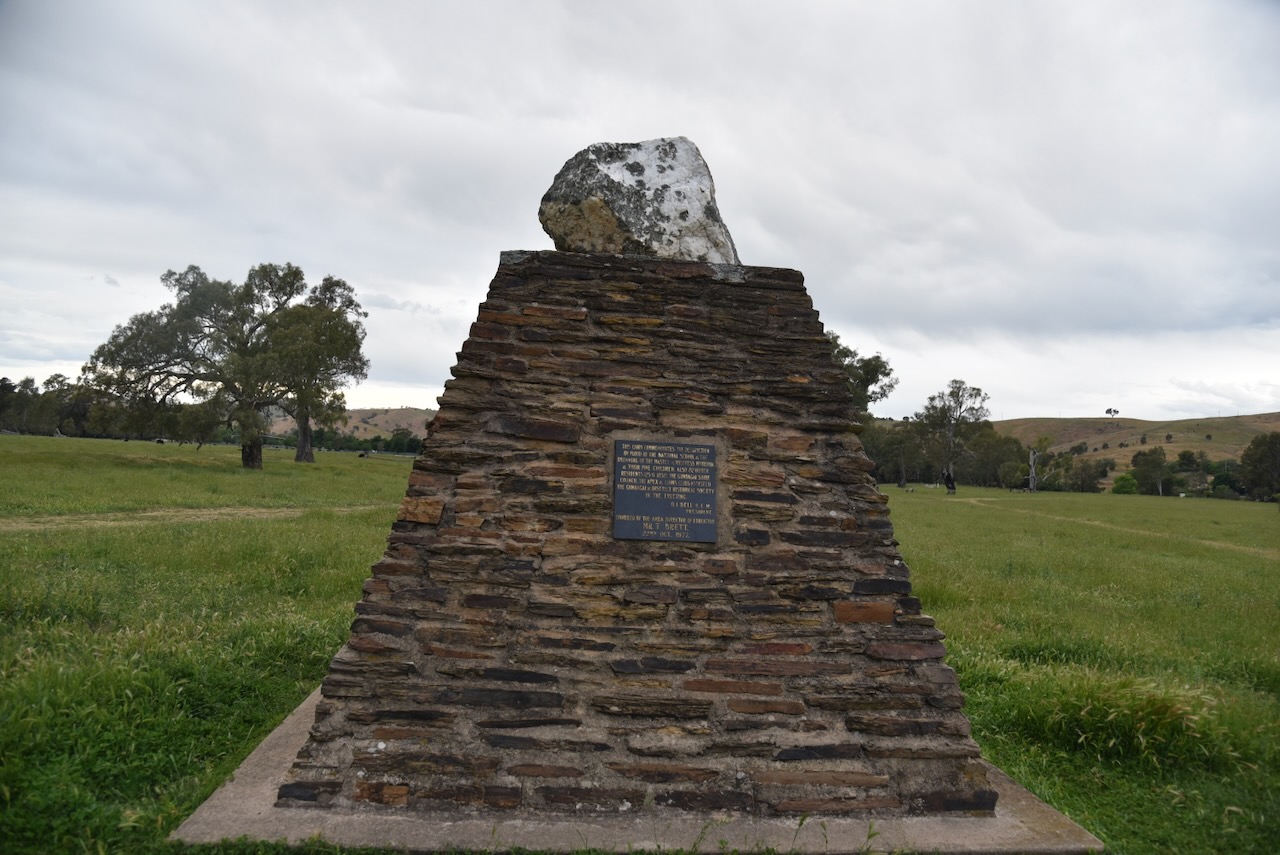
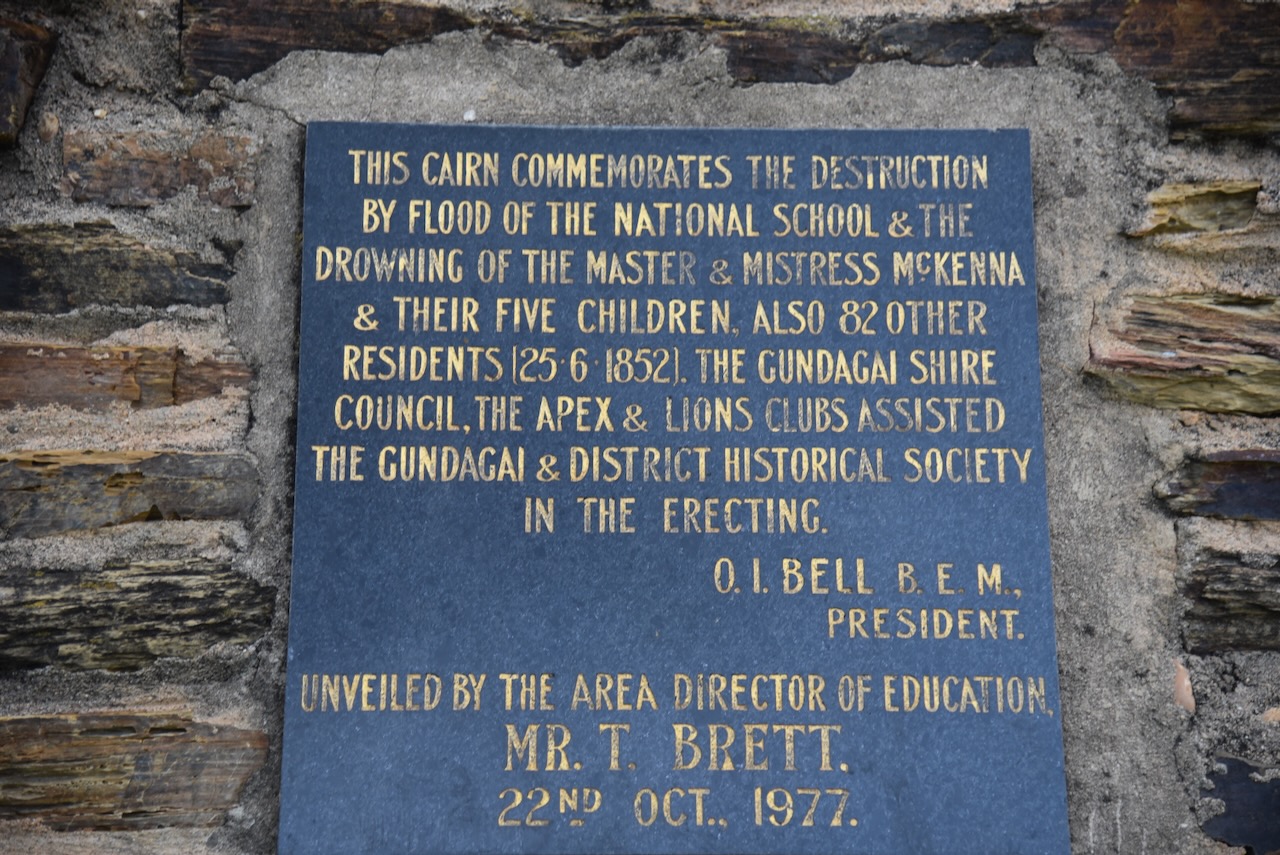
Tragedy struck the school during the Gundagai flood. At the peak of the flood, the McKennas, their 5 children and two 13-year-old female boarders were marooned in the schoolhouse. On Thursday the 24th day of June 1852, the flood consumed the school building which resulted in the drowning of all those at the school.
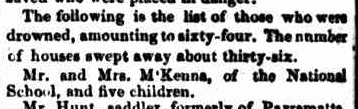
Above: part of an item in The Sydney Morning Herald, Mon 5 Jul 1852. Image c/o Trove
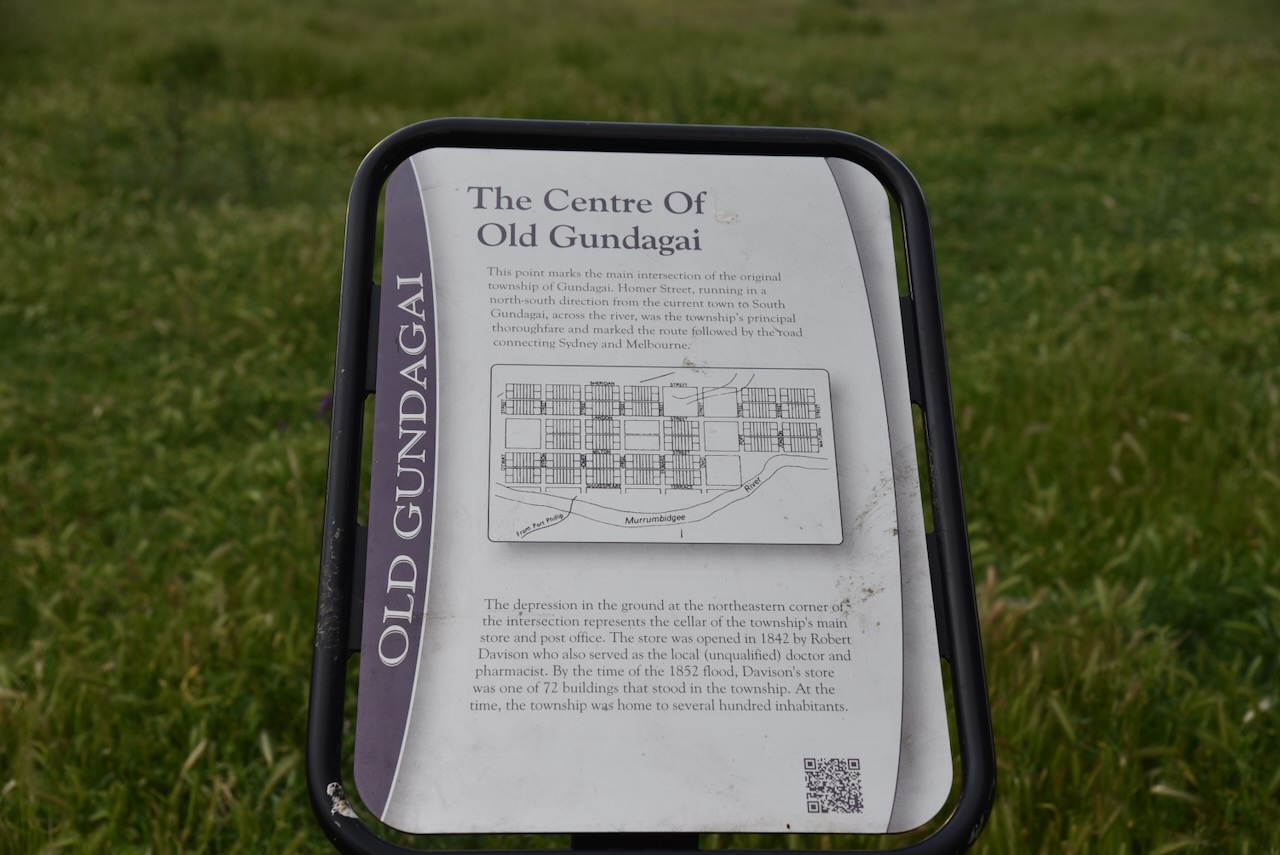
Nearby is a sign indicating the centre of Old Gundagai.
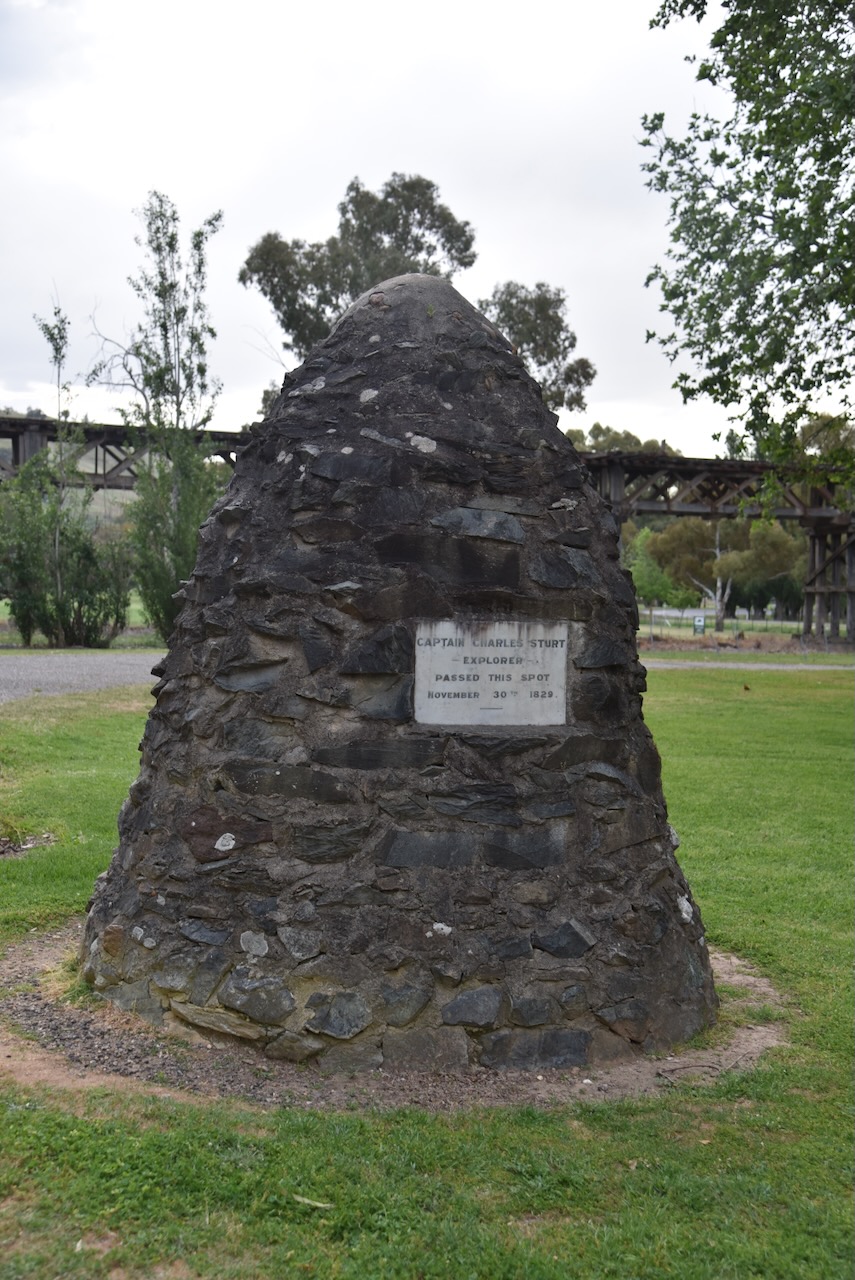
There is also a cairn commemorating the explorer Captain Charles Sturt, who passed through the district in November 1829.
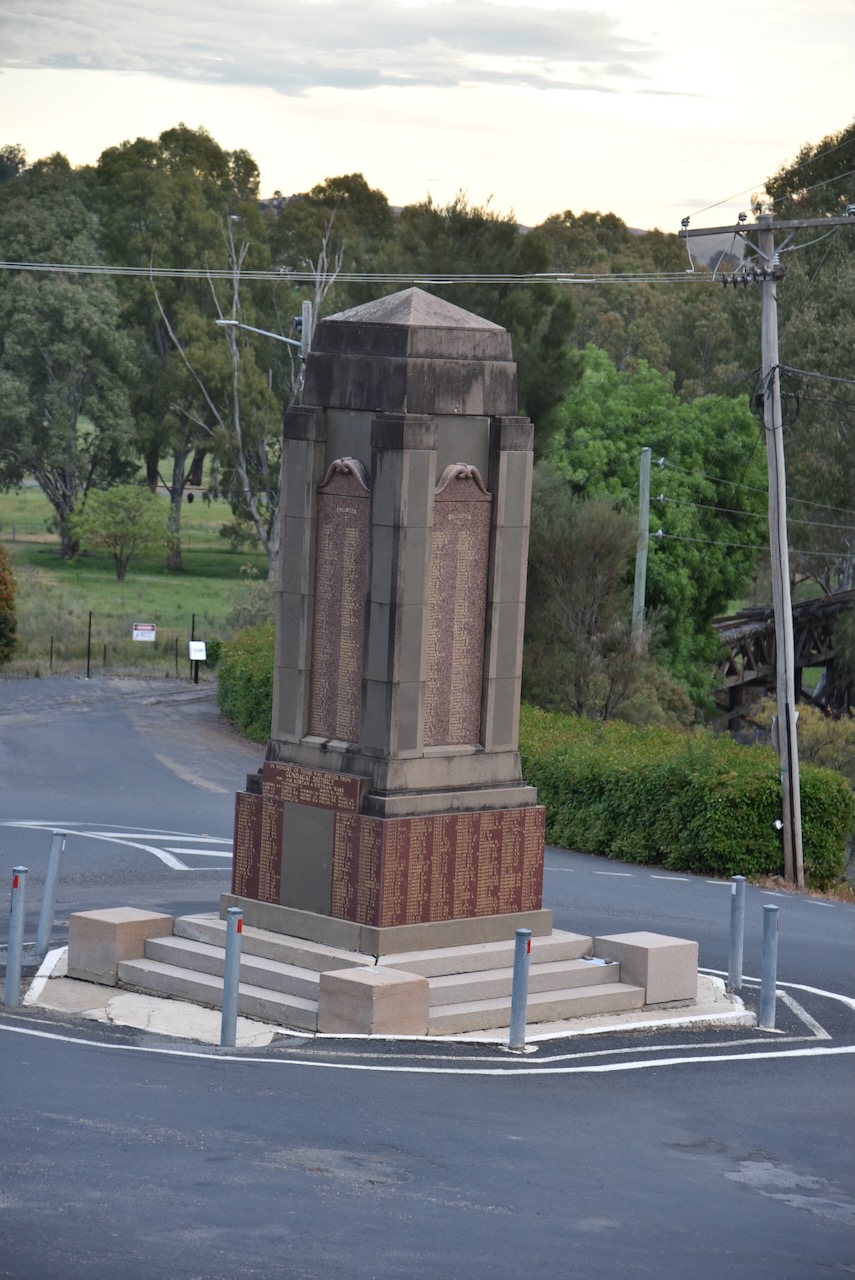
Our final ‘touristy’ visit that day was the War Memorial cenotaph, which was designed by Frank Rusconi to honour Gundagai’s fallen.
Marija and I then headed back to our motel and had an early night. It had been a big day.
References.
- About Regional. (n.d.). Homepage. [online] Available at: https://aboutregional.com.au. [Accessed 8 Mar. 2026]
- Allen, A. (2026). The History Buff. [online] Blogspot.com. Available at: https://campbelltown-library.blogspot.com/search/label/St%20Claire%20Arnold?fbclid=IwY2xjawQZ00tleHRuA2FlbQIxMABicmlkETFCYW50eVljekZkY0N3UDltc3J0YwZhcHBfaWQQMjIyMDM5MTc4ODIwMDg5MgABHpAZn7S9ec2_vw5XjO31sn6mqD8P77MkKGFqpBkixBnGEZifxBlFuSVaVTbB_aem_66cf8RB3KNlVxUaiKAvT1Q [Accessed 8 Mar. 2026].
- ancestry (2016). Ancestry® | Genealogy, Family Trees & Family History Records. [online] Ancestry.com.au. Available at: https://www.ancestry.com.au/. [Accessed 7 Mar. 2026]
- Burch, G, 2022, Gundagai 1829-1852
- ‘Captain Moonlite’ (2024) Wikipedia. 5 April 2024 [online]. Available from: https://en.wikipedia.org/wiki/Captain_Moonlite. [Accessed 9 Mar. 2026[
- Chirp Internet (2026). Hotels in Gundagai < New South Wales | Gday Pubs – Enjoy our Great Australian Pubs. [online] Gdaypubs.com.au. Available at: https://www.gdaypubs.com.au/NSW/gundagai.html [Accessed 8 Mar. 2026].
- Convictrecords.com.au. (2026). Available at: https://convictrecords.com.au/convicts/white/stephen/97106 [Accessed 3 Mar. 2026].
- Findagrave.com. (2016). Augustus Ernest Diedrich William ‘Gus’ Wernicke… [online] Available at: https://www.findagrave.com/memorial/178936973/augustus-wernicke [Accessed 9 Mar. 2026].
- ‘Gundagai’ (2023) Wikipedia. 25 July 2023 [online]. Available from: https://en.wikipedia.org/wiki/Gundagai. [Accessed 9 Mar. 2026]
- ‘Gundagai Theatre in Gundagai, AU – Cinema Treasures’ (2026) Cinematreasures.org. 2026 [online]. Available from: https://cinematreasures.org/theaters/54465 [Accessed 9 March 2026].
- Gundagaitouristpark.com.au. (2024). A two foot tour of Historic Gundagai – Gundagai Tourist Park. [online] Available at: https://gundagaitouristpark.com.au/2024/01/15/a-two-foot-tour-of-historic-gundagai/ [Accessed 9 Mar. 2026].
- JAM Admin (2023). History. [online] Criterionhotelgundagai.com.au. Available at: https://www.criterionhotelgundagai.com.au/history [Accessed 8 Mar. 2026].
- Mapcarta. (n.d.). Mapcarta. [online] Available at: https://mapcarta.com. [Accessed 8 Mar. 2026]
- Mural, G. (2022). Visit Gundagai. [online] Visit Gundagai. Available at: https://www.visitgundagai.com.au/discovergundagai/melbamural [Accessed 8 Mar. 2026].
- Nla.gov.au. (2026). Making sure you’re not a bot! [online] Available at: https://trove.nla.gov.au/newspaper/page/9702060?searchTerm=jeremiah%20O%27connor%20%2B%20gundagai [Accessed 3 Mar. 2026].
- Nla.gov.au. (2026). Trove. [online] Available at: https://trove.nla.gov.au/search/category/newspapers?keyword=thomas%20belford%20%2B%20gundagai&l-decade=188 [Accessed 4 Mar. 2026].
- Nla.gov.au. (2026). Making sure you’re not a bot! [online] Available at: https://trove.nla.gov.au/newspaper/page/10120764?searchTerm=gundagai%20lockup [Accessed 4 Mar. 2026].
- NSW Courts | New South Wales Courts. (2013). Gundagai Local Court – Lawyers for Gundagai Local Court | NSW Courts. [online] Available at: https://nswcourts.com.au/courts/gundagai-local-court/ [Accessed 7 Mar. 2026].
- Nsw.gov.au. (2026). Gundagai Courthouse | Heritage NSW. [online] Available at: https://apps.environment.nsw.gov.au/dpcheritageapp/ViewHeritageItemDetails.aspx?ID=3080066 [Accessed 7 Mar. 2026].
- Real commercial (2025). Commercial Real Estate & Commercial Property For Sale and For Lease. [online] http://www.realcommercial.com.au. Available at: https://www.realcommercial.com.au. [Accessed 8 Mar. 2026]
- Service, C. (2023) The Old Mill, NSW Government. Available at: https://www.nsw.gov.au/visiting-and-exploring-nsw/locations-and-attractions/old-mill (Accessed: 9 March 2026).
- Slattery, J.P., 1990, Royal Commission into Deep Sleep Therapy
- Sotadata.org.uk. (2026). Sotadata3. [online] Available at: https://www.sotadata.org.uk/en/summit/VK2/SW-054 [Accessed 3 Mar. 2026].
- Trove. (2026). ST. PATRICK’S CHURCH, GUNDAGAI. – The Gundagai Times and Tumut, Adelong and Murrumbidgee District Advertiser (NSW : 1868 – 1931) – 5 Jun 1885. [online] Available at: https://trove.nla.gov.au/newspaper/article/123467434?searchTerm=st%20patrick%27s%20church%20gundagai [Accessed 7 Mar. 2026].
- Trove. (2026). A PIONEER GONE. – DEATH OF MR. W. BIBO. – The Gundagai Independent and Pastoral, Agricultural and Mining Advocate (NSW : 1898 – 1928) – 7 May 1910. [online] Available at: https://trove.nla.gov.au/newspaper/article/121495882 [Accessed 7 Mar. 2026].
- Trove. (2026). Geelong Advertiser and Intelligencer (Vic. : 1851 – 1856) – 21 Jul 1852 – p2. [online] Available at: https://trove.nla.gov.au/newspaper/page/8163141?searchTerm=gundagai%20%2B%20hemphill [Accessed 8 Mar. 2026].
- Trove. (2026). THE FUNERAL OF CONSTABLE BOWEN – The Gundagai Times and Tumut, Adelong and Murrumbidgee District Advertiser (NSW : 1868 – 1931) – 2 Jun 1899. [online] Available at: https://trove.nla.gov.au/newspaper/article/122739675?searchTerm=constable%20bowen%20%2B%20funeral [Accessed 9 Mar. 2026].
- Trove. (2026). SUDDEN DEATH OF MR. THOMAS HENDERSON. – The Gundagai Times and Tumut, Adelong and Murrumbidgee District Advertiser (NSW : 1868 – 1931) – 18 Apr 1874. [online] Available at: https://trove.nla.gov.au/newspaper/article/122751795 [Accessed 9 Mar. 2026].
- Tuckerbox Pups — Visit Gundagai (2021). Visit Gundagai. [online] Visit Gundagai. Available at: https://www.visitgundagai.com.au/discovergundagai/tuckerboxpups [Accessed 9 Mar. 2026].
- UBC Web Design (2026). Senior Constable Edward Webb-Bowen | Monument Australia. [online] Monumentaustralia.org. Available at: https://www.monumentaustralia.org/themes/people/crime/display/109908-senior-constable-edward-webb-bowen- [Accessed 9 Mar. 2026].
- Wikipedia. (2023). Gundagai. [online] Available at: https://en.wikipedia.org/wiki/Gundagai. [Accessed 7 Mar. 2026]
- Wikipedia Contributors (2025). Dad and Dave from Snake Gully. Wikipedia.
- Wikipedia Contributors (2026) Nine Miles From Gundagai Wikipedia. 1 March 2026.
- Wikipedia Contributors (2025) Jack Moses Wikipedia. 6 June 2025.
- Wikipedia Contributors (2024) Sheahan Bridge Wikipedia. 19 September 2024.
- Wikipedia Contributors (2025). Jack O’Hagan. Wikipedia.
 VK5PAS