
After leaving Conargo on Wednesday, 5th November 2025, Marija and I headed south on the Conargo Road towards Deniliquin.
We stopped at the Peppinella monument on Conargo Road, south of Conargo. The story of the Peppin Merino is truly amazing. About 70-80% of the merino sheep in Australia today are derived from the Peppin Merino. The Peppin Merino is such an important strain that sheep breeders around Australia often classify their sheep simply as being either Peppin or non-Peppin. (Aust Assoc Stud Merino Breeders 2025) (Powerhouse 2022)
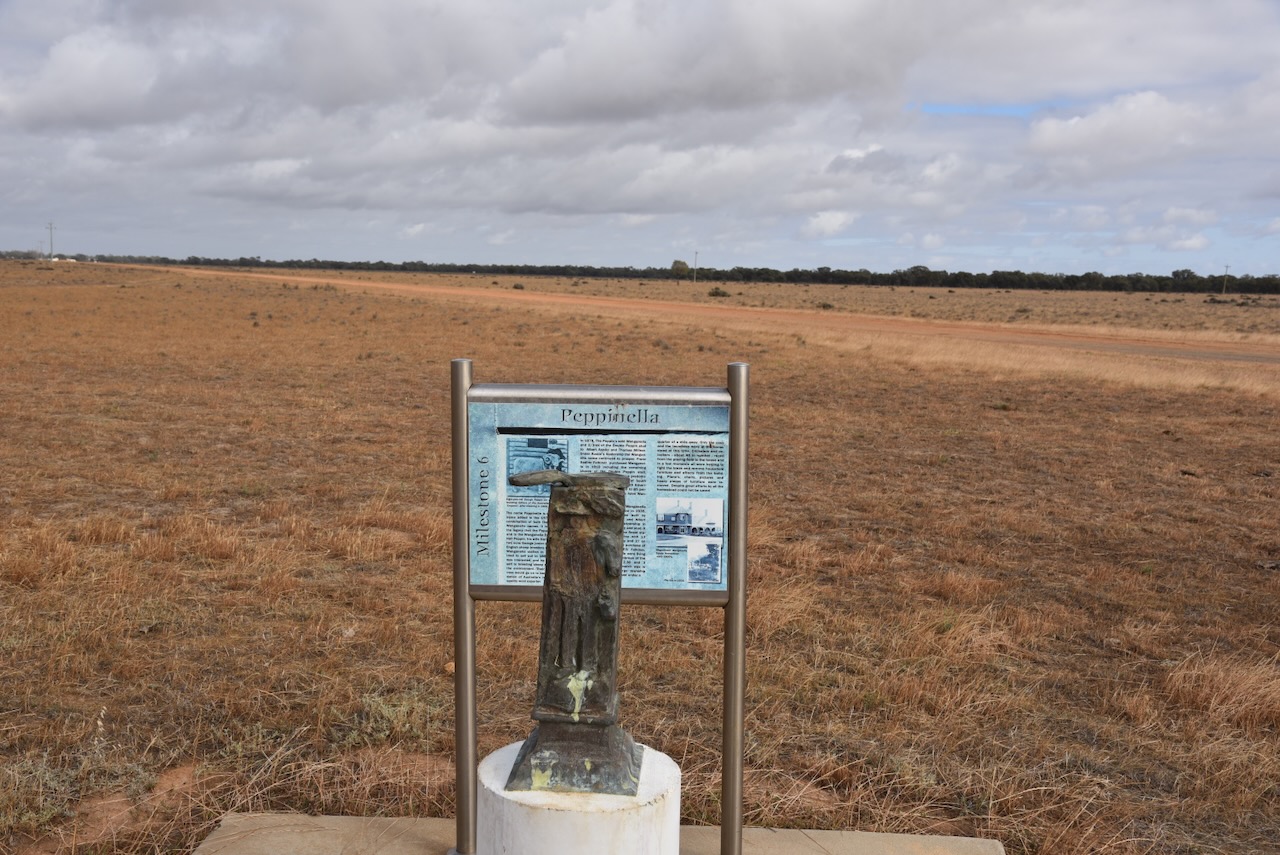
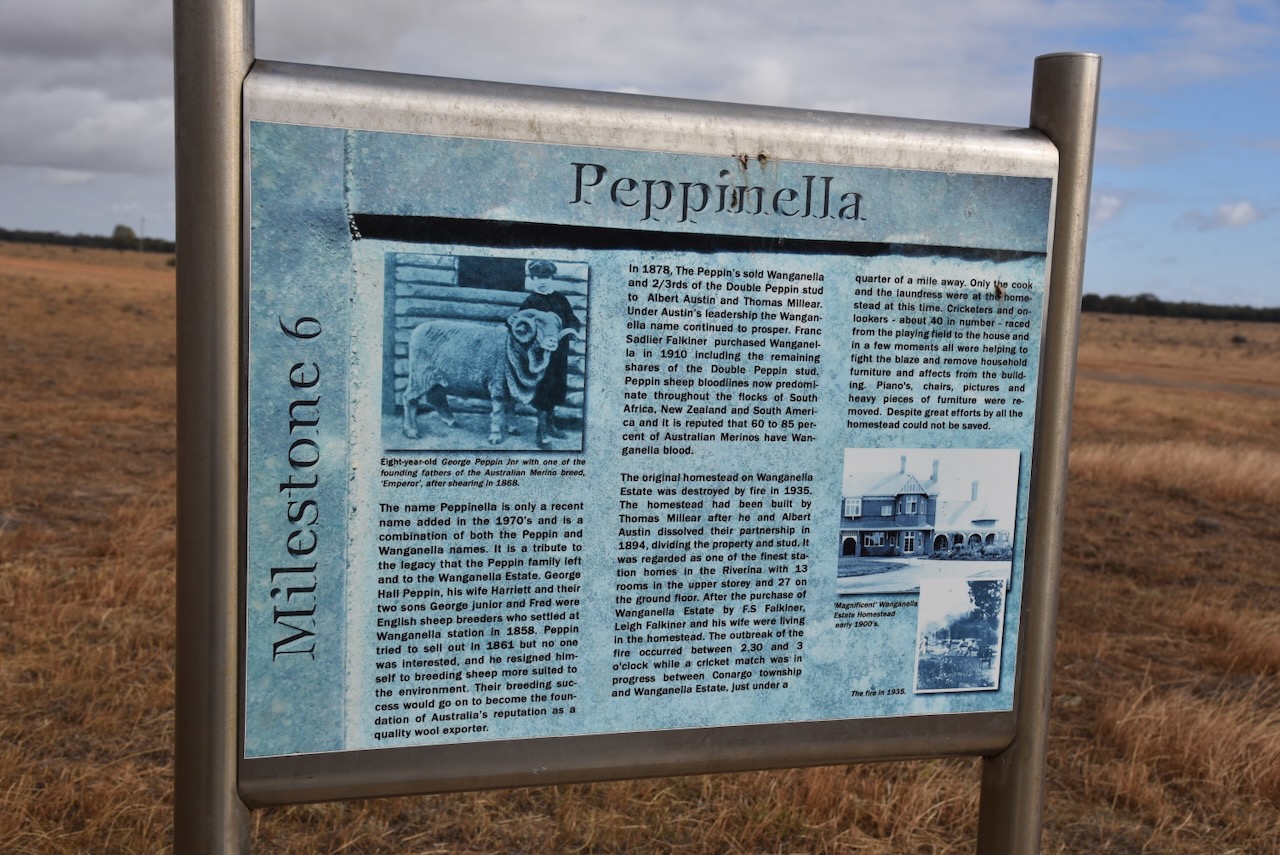
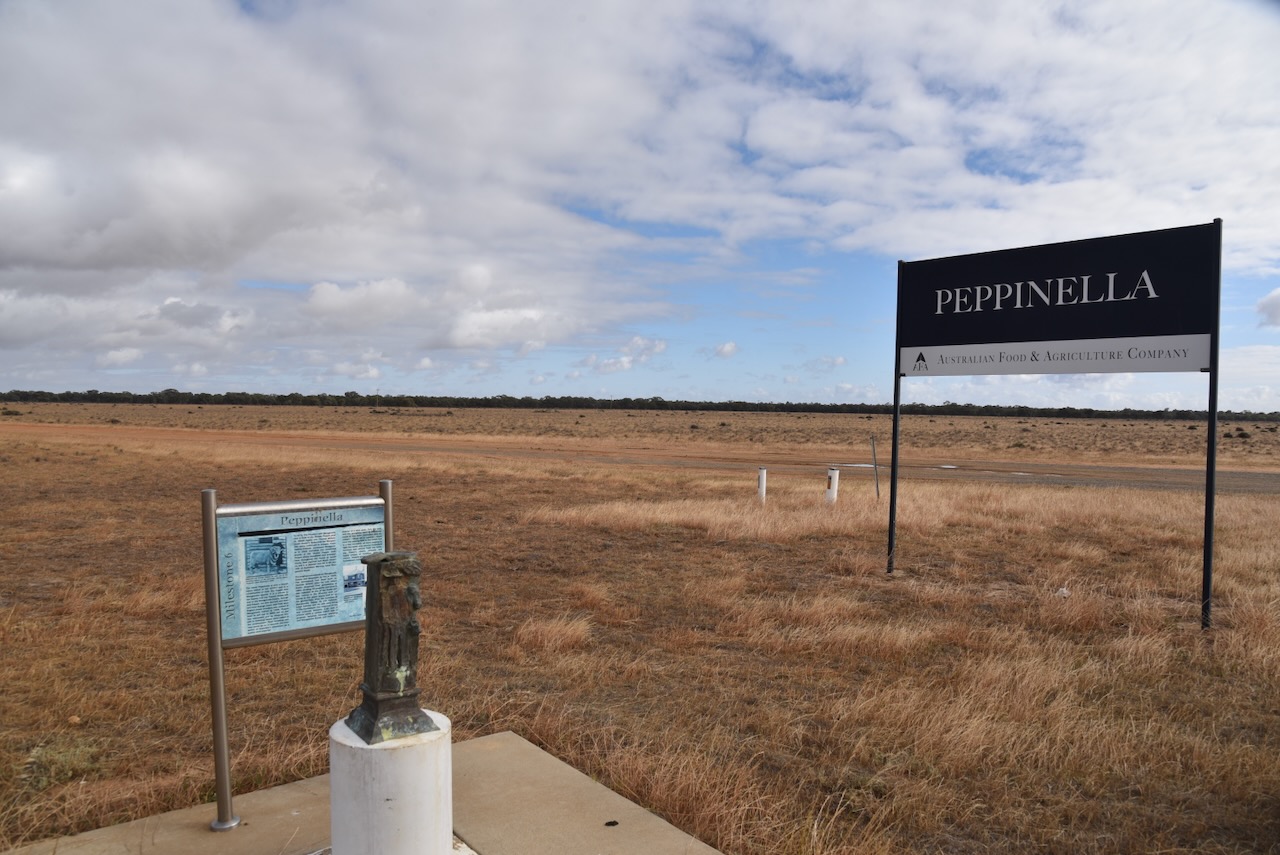
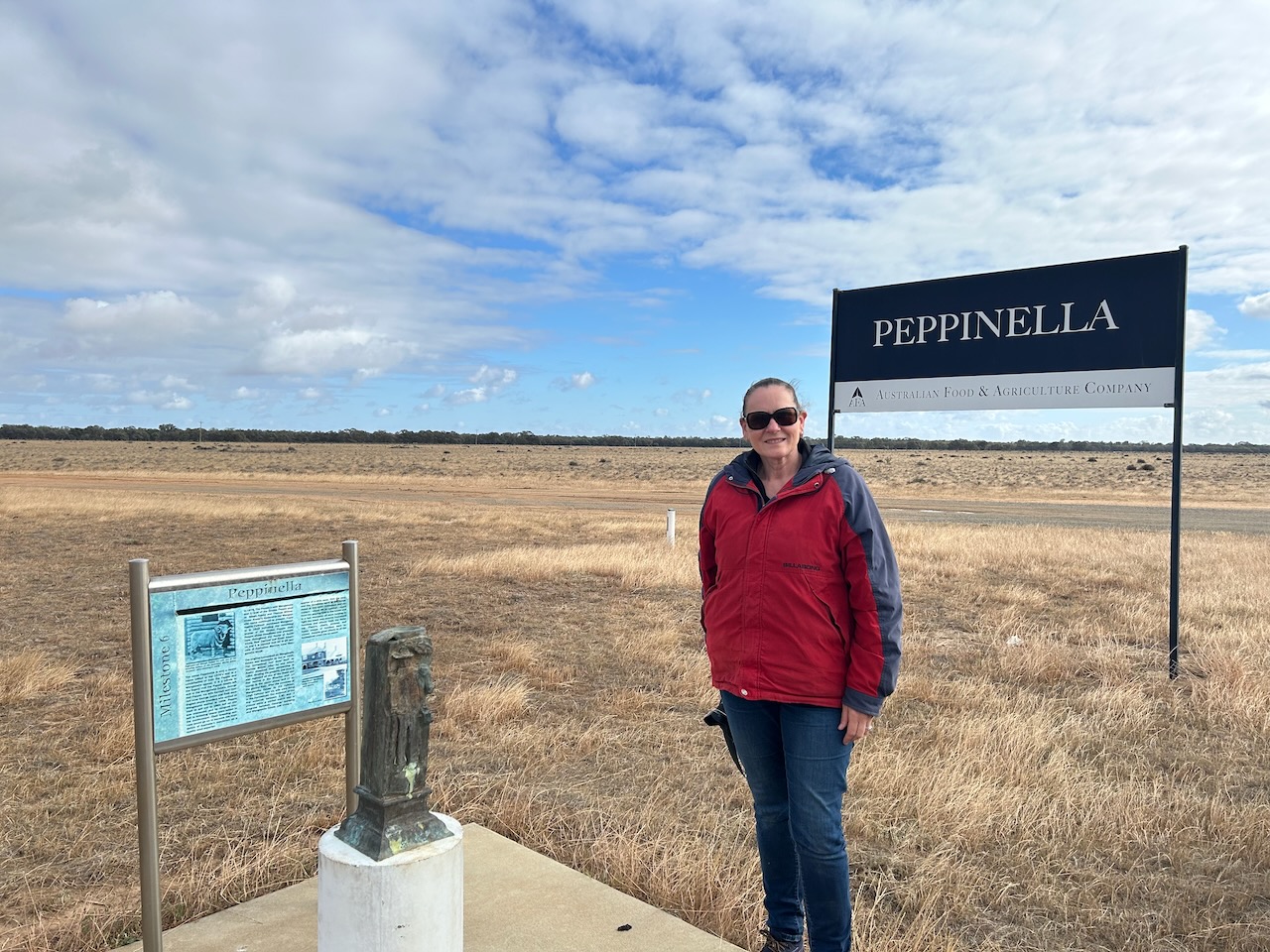
Sheep were introduced into Australia in 1788. They originated from Cape Town, South Africa. From 1807 to 1960, wool was the mainstay of the Australian economy. (Powerhouse 2022)
In 1847, Wanganella station, comprising about 100,00 acres on Billabong Creek, was established by James Hindmarsh. The station passed through several hands over the years until purchased by George Hall Peppin and his sons. (Powerhouse 2022)
George Hall Peppin was born on the 15th day of February 1800 at Old Shute Farm, Dulverton, Somerset, England. In 1825, he married Harriet Thompson in Gloucestershire, England. They had two sons, George, born in 1826, and Frederick, born in 1828. George farmed on the Old Shute property, but in the late 1840’s farming was at a low ebb in England. Seeking a better life for his family, he made the decision to leave his homeland. In 1850, George and Harriet and their two sons emigrated from Plymouth, England, to Australia aboard the Ann Maria. George was 50 years old. (ancestry 2016) (Trove 2026)
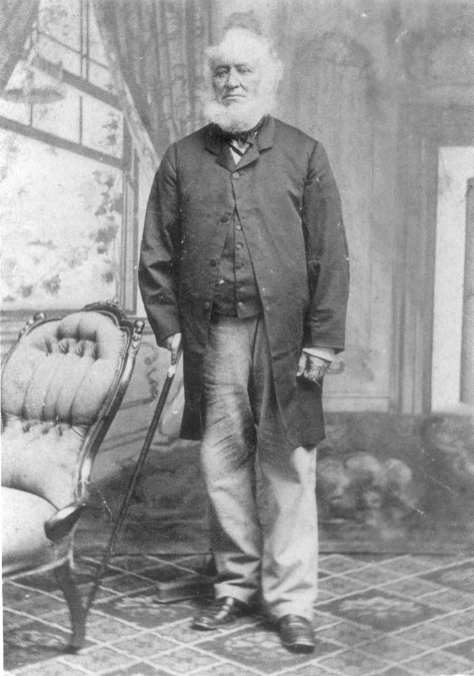
Above: George Peppin. Image c/o Wiki Tree
The Ann Maria arrived at Port Phillip in the Colony of Victoria in November 1850. Soon after arrival, George Peppin Jr married Maria Bowen Smith in Melbourne, Victoria. (ancestry 2016) (Trove 2026)
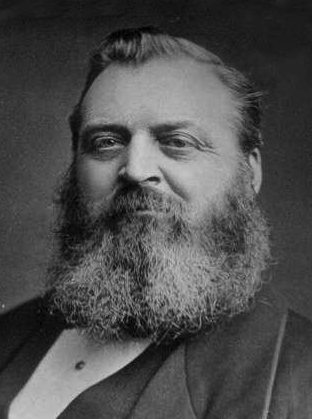
Above: George Peppin Jr. Image c/o ancestry.com.au
Initially, George Peppin Sr settled at Mimaluke run near Mansfield, Victoria, after travelling there in drays with their belongings from Port Phillip. Unfortunately, Victoria’s first outbreak of Fluke broke out on their run. Liver fluke is a serious and often fatal liver disease in sheep. An outbreak of scab also broke out. Their sheep holdings were decimated. In March 1858, Peppin & Sons purchased Wanganella Station in the Riverina region of New South Wales, with 8,000 sheep for £10,000 from William Brodribb. (ancestry 2016) (Hone 1974) (Trove 2026)
In 1861, the Peppins offered Wanganella for sale at Scott’s Hotel in Melbourne. However, they were unsuccessful and were unable to find a buyer. As a result, the Peppin family continued in their attempt to breed a type of Merino sheep that was suitable for the area. (Hone 1974) (Powerhouse 2022)
In 1862, Frederick Peppin married Sarah Ellen Morgan, in Victoria. (ancestry 2016)
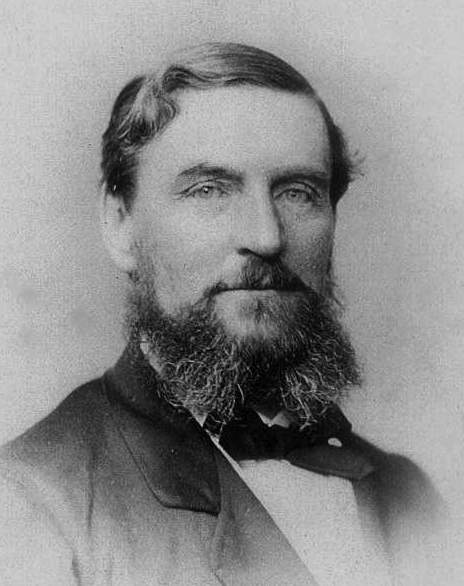
Above: Frederick Peppin. Image c/o http://www.ancestry.com.au
Following their unsuccessful sale of Wanganella, the Peppins employed the services of Thomas Shaw to select their ewes and provide advice on rams and breeding. (AFA 2018) (Powerhouse 2022)
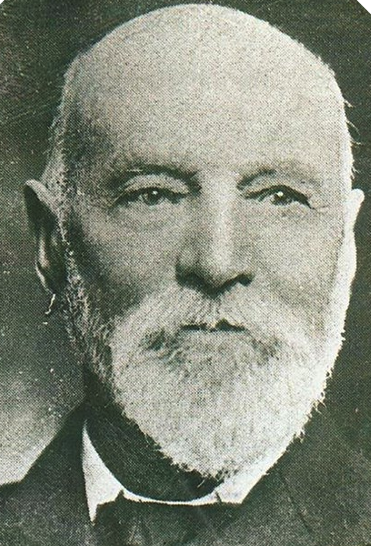
Above: Thomas Shaw.
In 1864, the Peppins exhibited six pens of sheep at the very first Echuca Agricultural Show. They were awarded four first prizes and one second prize. (Hone 1974)
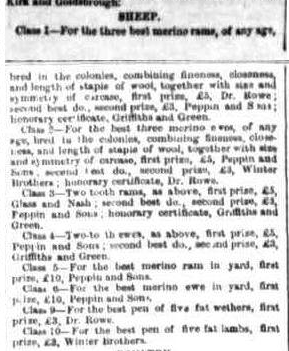
Above: article from The Australasian, Sat 10 Dec 1864. Image c/o Trove
The sheep displayed at Echuca were a result of the selection of 200 of Peppin’s best ewes and 100 Rambouillet-sired stud ewes from Nicholas Chadwick of Canally, New South Wales. They were mated with Rambouillet and Negretti rams. (Hone 1974)
In 1866, Peppin & Sons bought the French Rambouillet ram called Emperor, who annually yielded twenty-five (11 kg) pounds of greasy or twelve pounds (5 kg) of scoured wool when such weights were almost unknown. Peppin & Sons also purchased two sons of ‘Old Grimes’, a ‘celebrated ram’ bred by Mr E Campbell of Vermont in the United States of America. They also purchased two sons of Old Grimes, a famous Vermont ram, and acquired a few of the best Victorian rams. (Hone 1974) (Trove 2026)
Peppin & Sons acquired the neighbouring properties of Morago and Boonoke. Wanganella was managed by George Peppin Jr, while George Peppin Sr and Frederick resided at Morago. (Hone 1974)
George Peppin Snr died on the 16th day of April 1872, at Wanganella station. He was 72 years old. (ancestry 2026)
He was described in The Pastoral Times as being a ‘fine old English gentleman, one of the olden time’, and ‘full of hospitality – of a very genial disposition, and his death will be much regretted by all who knew his kindly heart.‘ (Trove 2026)
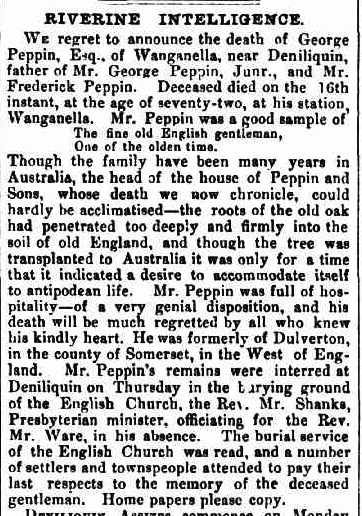
Above: article from The Pastoral Times, Sat 20 Apr 1872. Image c/o Trove
He was buried at the Deniliquin Cemetery. (ancestry 2016) (Trove 2026)
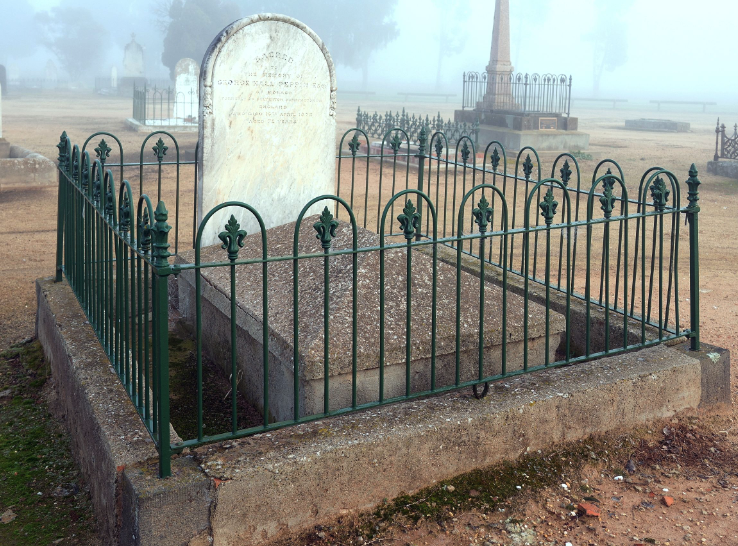
Above: George Peppin’s headstone at Deniliquin Cemetery. Image c/o findagrave.com
George Peppin Jr was a Magistrate, having been appointed in 1859. He regularly attended the Deniliquin Court and was Vice President of the Riverine Association, formed in 1863 to advocate separation from New South Wales. He died on the 12th day of June 1876, at Webb’s Hotel in Melbourne, Victoria. (ancestry 2016) (Hone 1974) (Trove 2026)
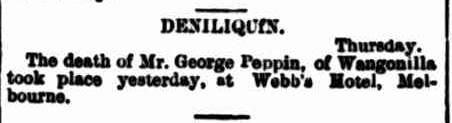
Above: article from Australian Town and Country Journal, Sat 17 Jun 1876. Image c/o Trove
By 1877, Frederick had invested in thirty runs in the South Gregory District of Queensland with John Webber. (Hone 1974)
In July 1878, Peppin & Sons won several awards at the Deniliquin Show. This included the Society’s Goldsbrough prize and the President’s prize. (Hone 1974)
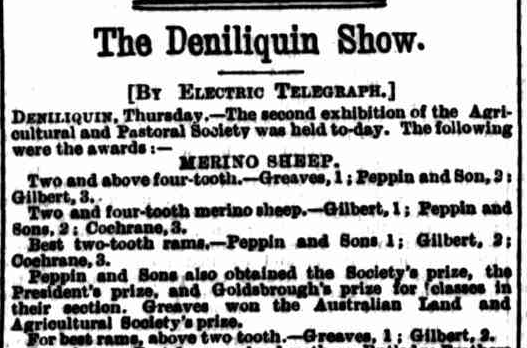
Above: part of an article from Australian Town and Country Journal, Sat 27 Jul 1878. Image c/o Trove
In the following year, 1879, at the Sydney International Exhibition, Peppin & Sons won first prize for the most valuable fleeces from six ewes at the Sydney International Exhibition. (Hone 1974)
In October 1878, Frederick sold off the family runs at an auction held at an aucction at Menzie’s Hotel, Melbourne, Victoria. He sold Wanganella, South Boonoke and Long Plains, comprising 32,857 acres of freehold land, with a total of 28,168 sheep, 837 stud sheep, 200 cattle, and 25 horses to Austin & Millear for £77,000. He sold North Boonoke station, comprising 31,844 acres of freehold land, with 26,788 sheep, 290 cattle, and 63 horses to F.S. Falkiner & J.R. Ross for £67,000. (Hone 1974) (Trove 2026)
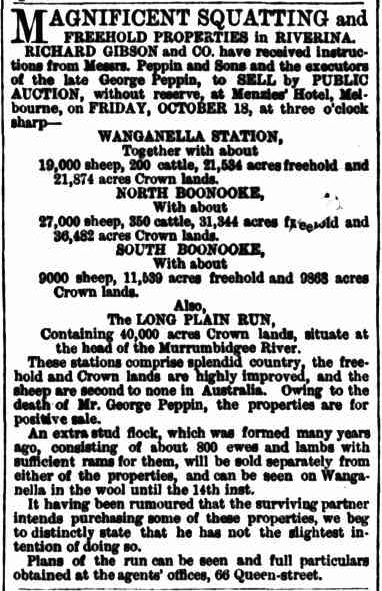
Above: article fom The Australasian, Sat 5 Oct 1878. Image c/o Trove
Frederick lived in Melbourne, where he was involved in the Australian Frozen Meat Export Company. He was a councillor of the Royal Agricultural Society of Victoria and served as President from 1893 to 1894. He was a councillor of the Pastoralists’ Association of Victoria and Southern Riverina, and assisted in the establishment of the Chamber of Agriculture. Frederick was also an original committee member of the Flock Book for British Breeds of Sheep in Victoria. He was Vice-President of the Federation League, a manager of the Alfred Hospital, a committee member of the Charity Organisation Society and the Austin Hospital for Incurables, and a manager of the Leongatha Labour Colony. (Hone 1974)
In 1888, Frederick purchased Fernbank near Loch in the South Gippsland region of Victoria, where he bred sheep and dairy cattle. Sadly, he lost about 90,000 sheep and all of his cattle on his Queensland stations due to drought. In 1902, the banks took control of the stations. (Hone 1974)
Frederick Peppin died on the 29th day of January 1911, at Loch, Victoria. He was 83 years old. (ancestry 2016)
The Peppin sheep gained in popularity and predominated among the flocks of South Africa as well as in New Zealand and South America. In Australia, over 60 per cent of merinos have Wanganella blood. The merino sheep that was first introduced into Australia in the 1700s was able to produce 1-2 kgs of wool each year. Today, a Peppin Merino stud ram can produce up to 20 kg of wool. (Aust Assoc Stud Merino Breeders 2025) (Powerhouse 2022)
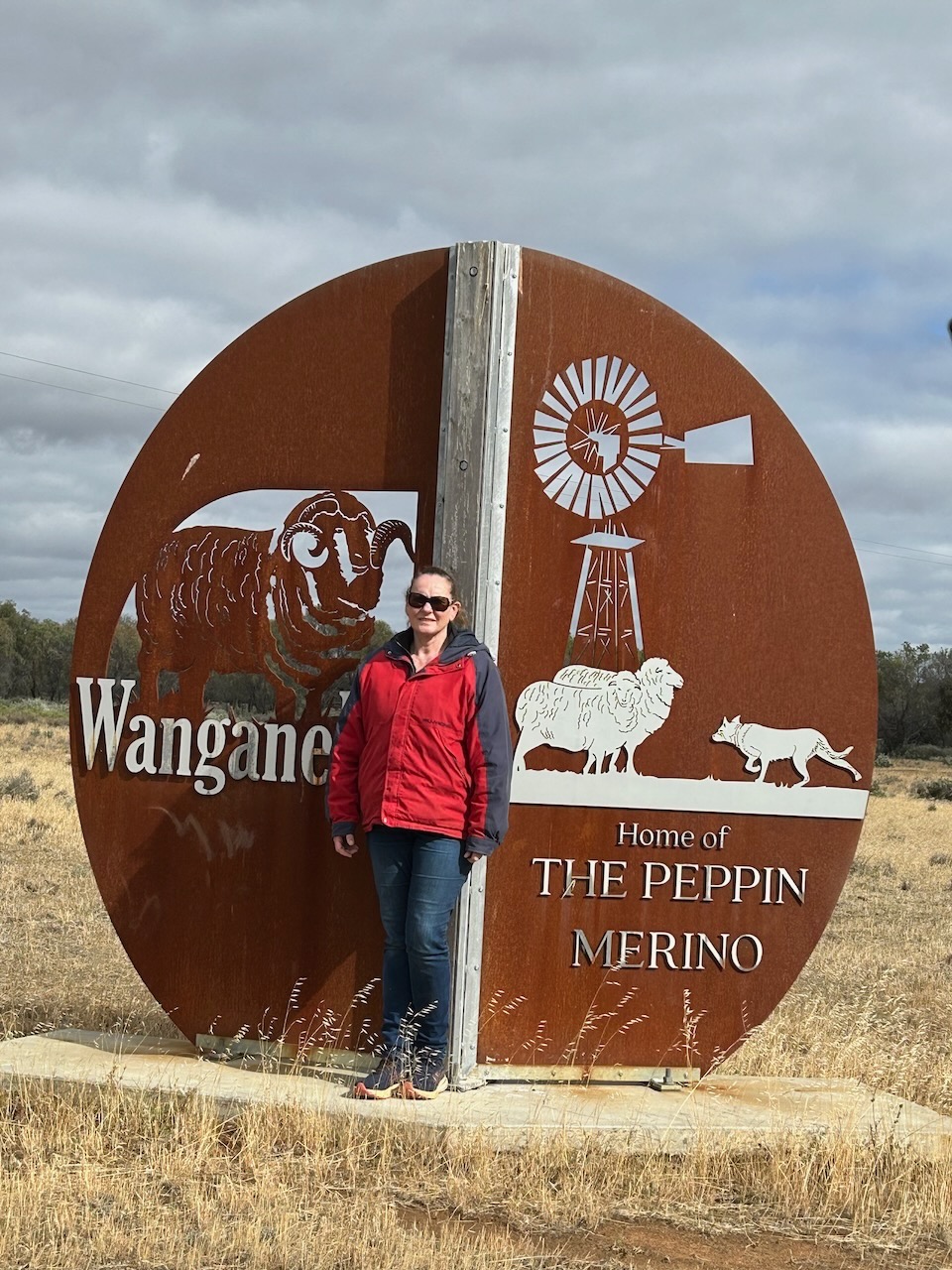
Marija and I then headed west and joined the Cobb Highway, and drove north towards Wanganella. Just before reaching the town, we stopped at the Wanganella sign.
We then turned onto Cobb Highway and stopped at the Wanganella Rest Area at the junction with Murray Street at the entrance to Wanganella Station, just south of Billabong Creek. There is a Peppin Memorial at this location.
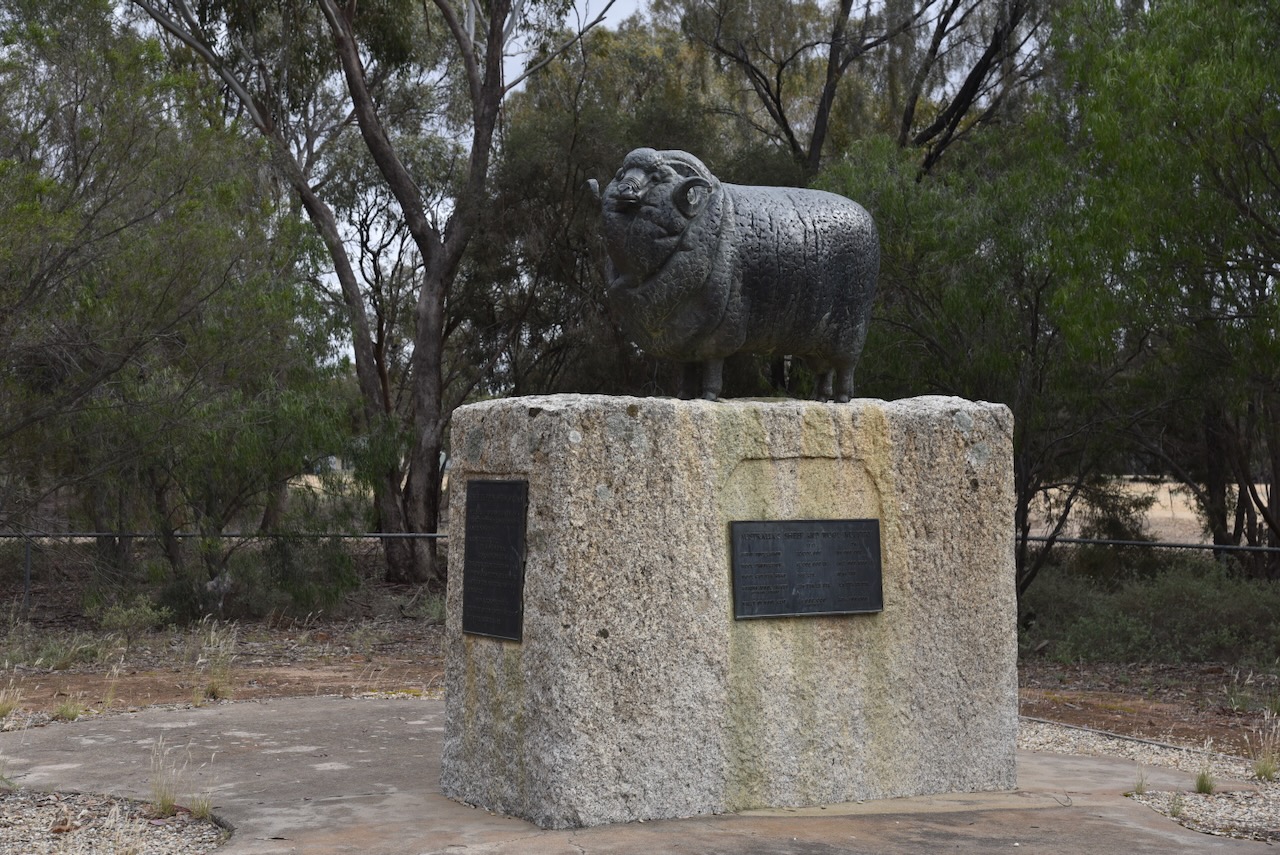
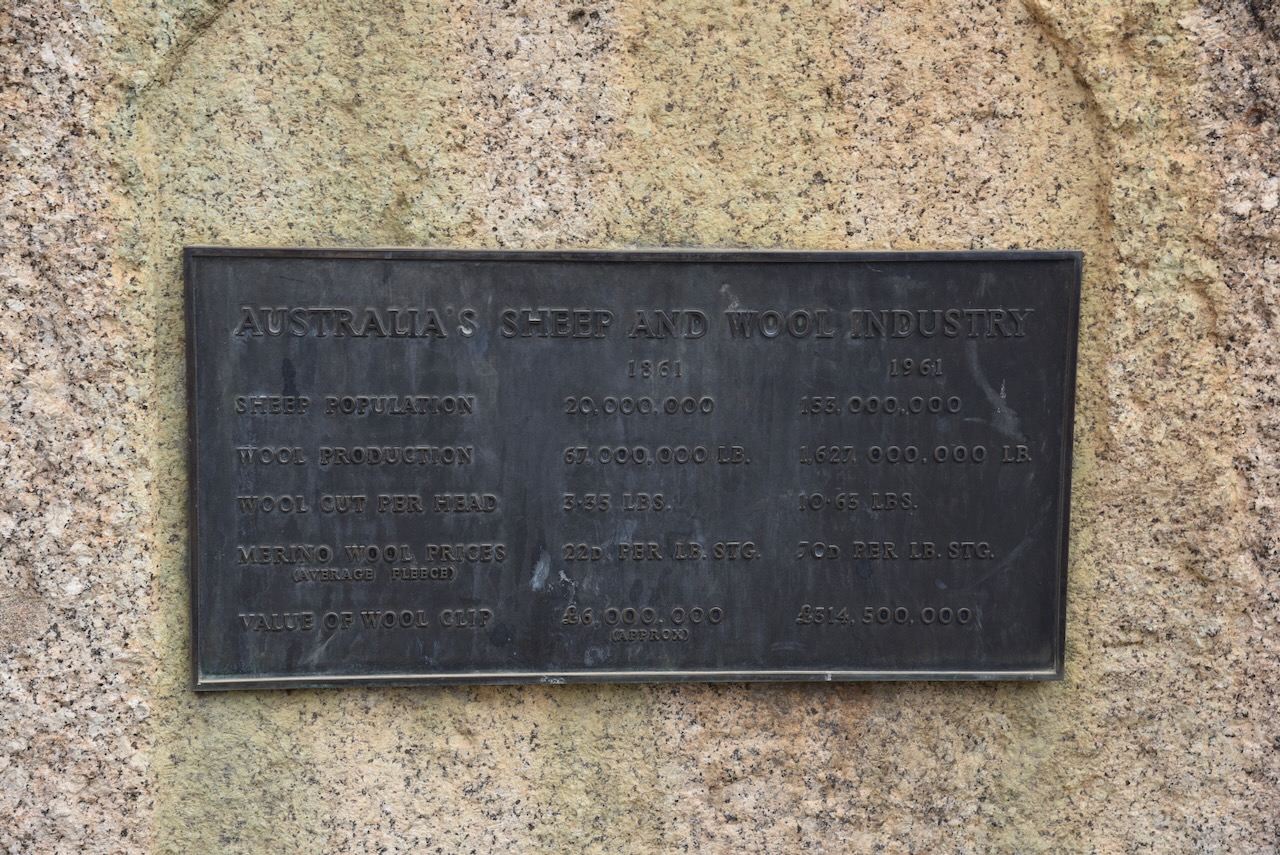
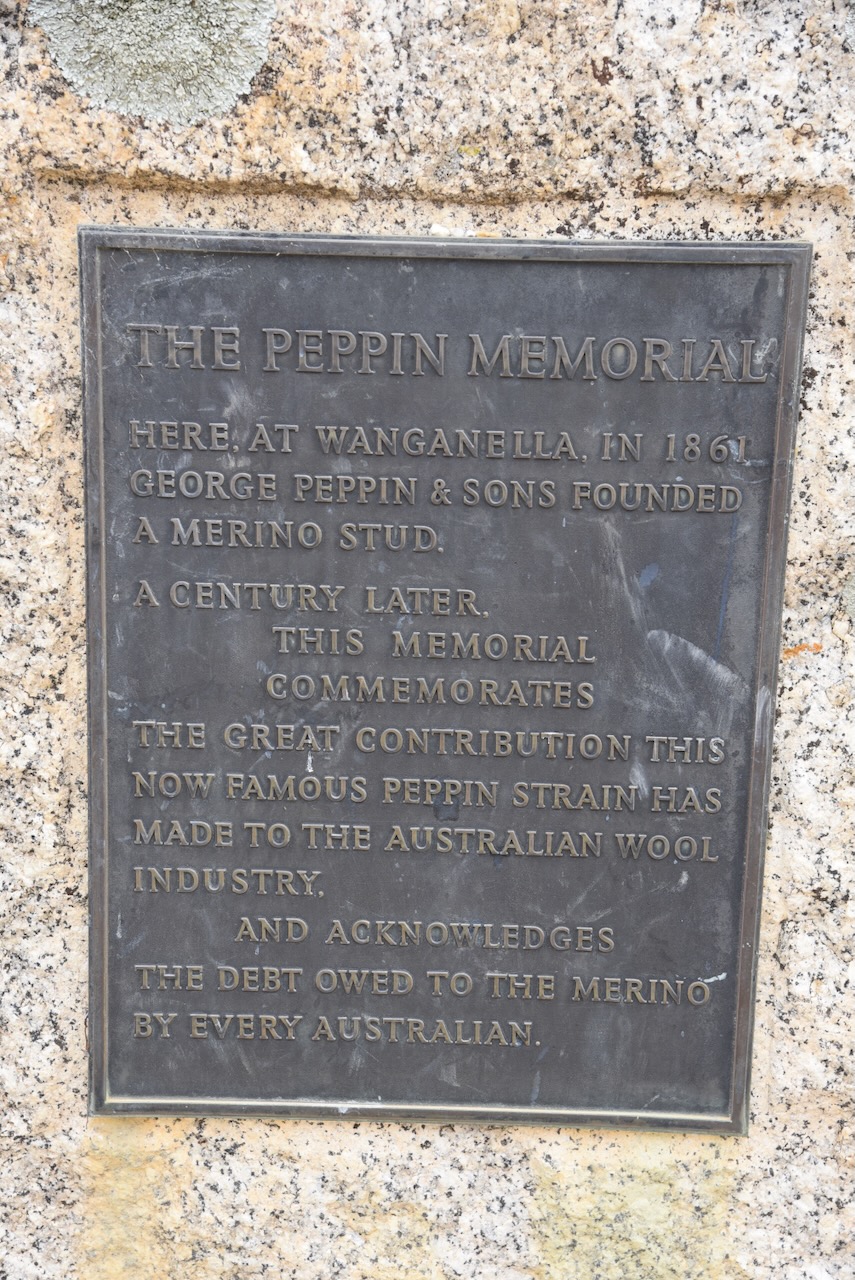
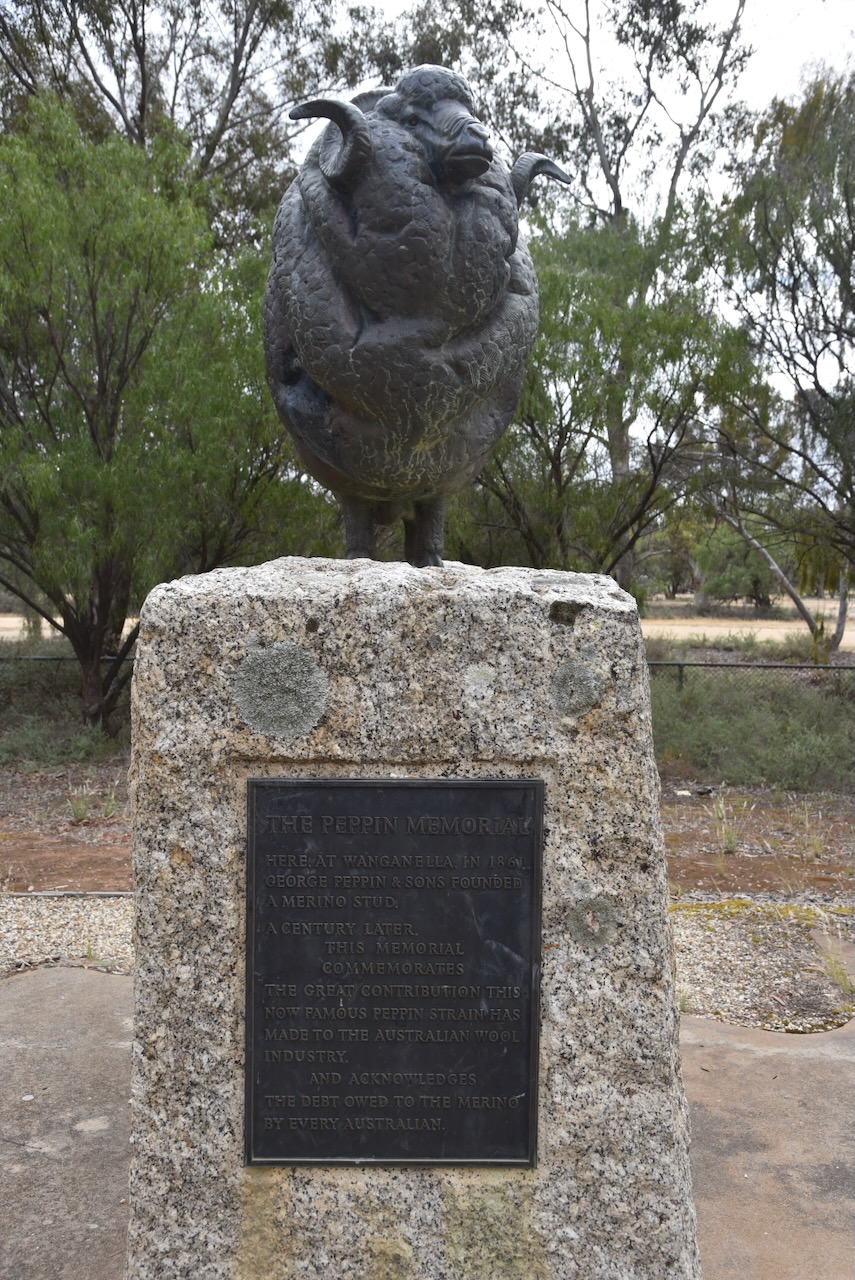
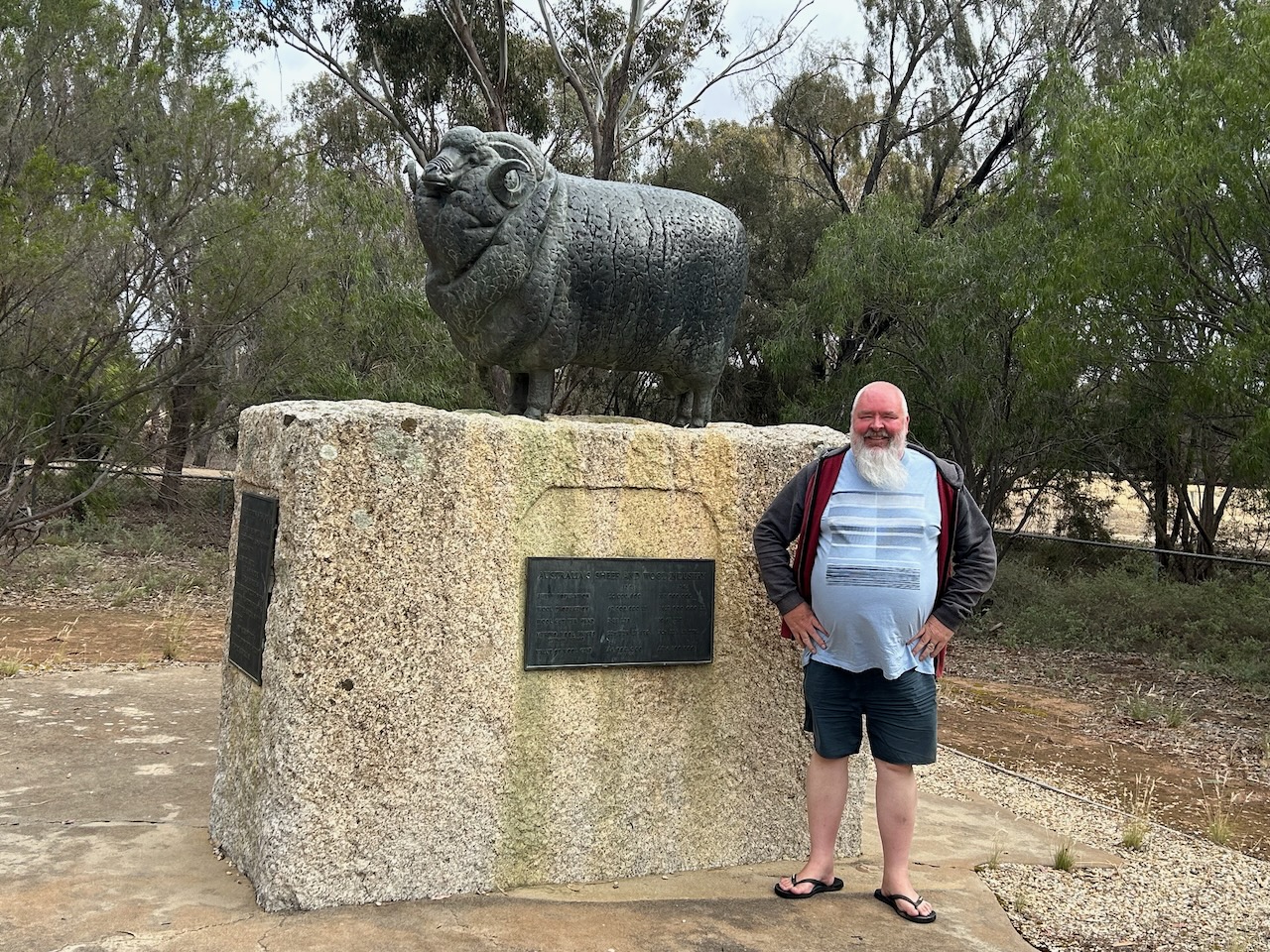
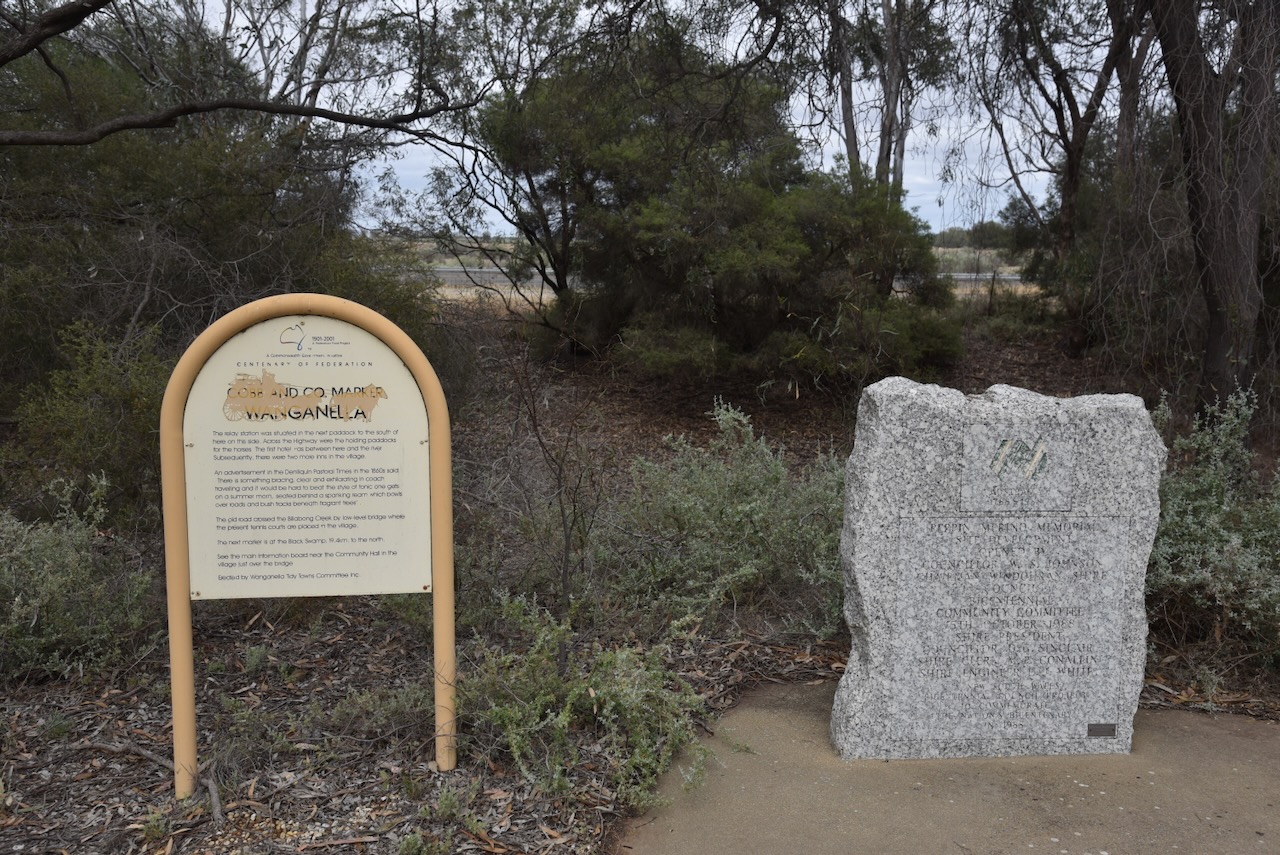
There is also a monument for the Cobb & Co relay station at Wanganella. The relay station was located in the next paddock to the south of the monument. On the opposite side of the highway were the holding paddocks for the horses.
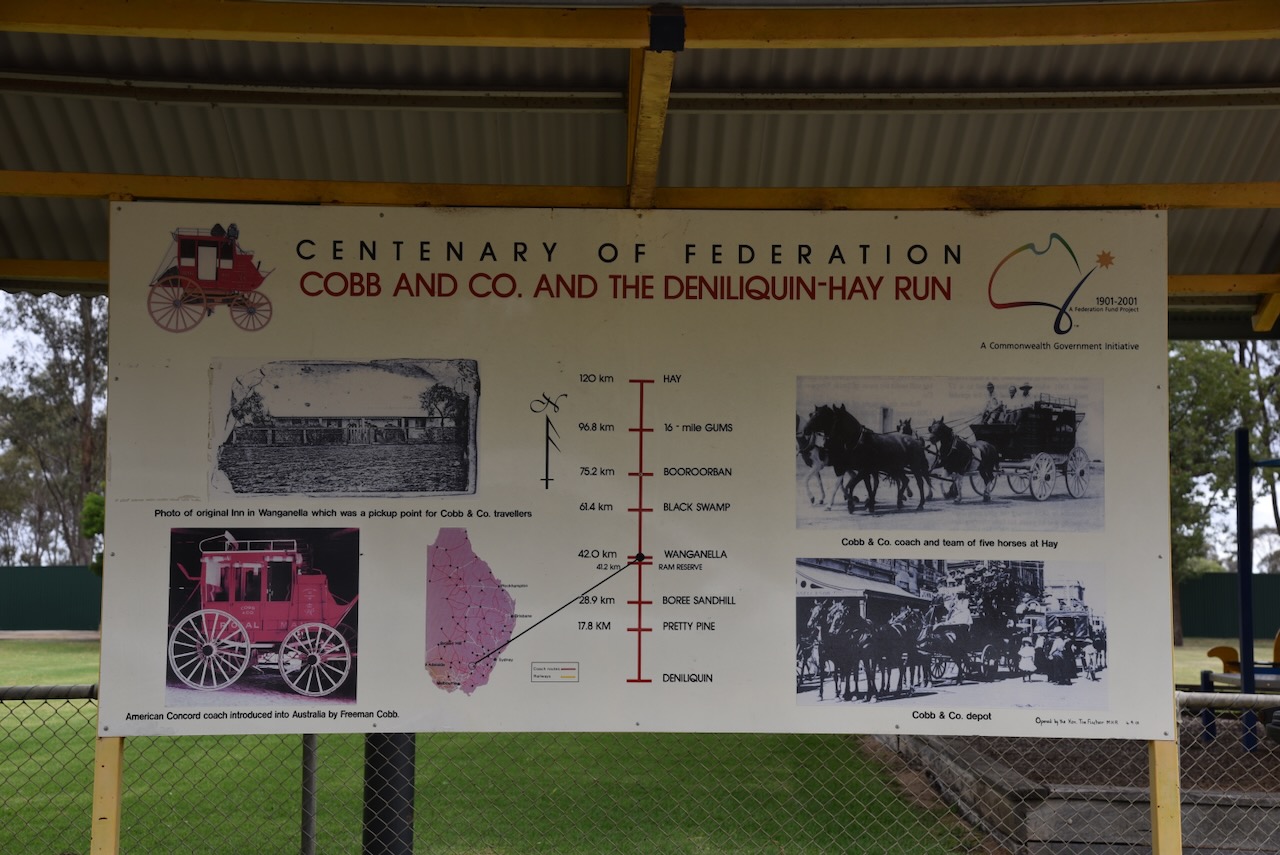
We then stopped to view the Cobb and Co information board near the Community Hall in Wanganella.
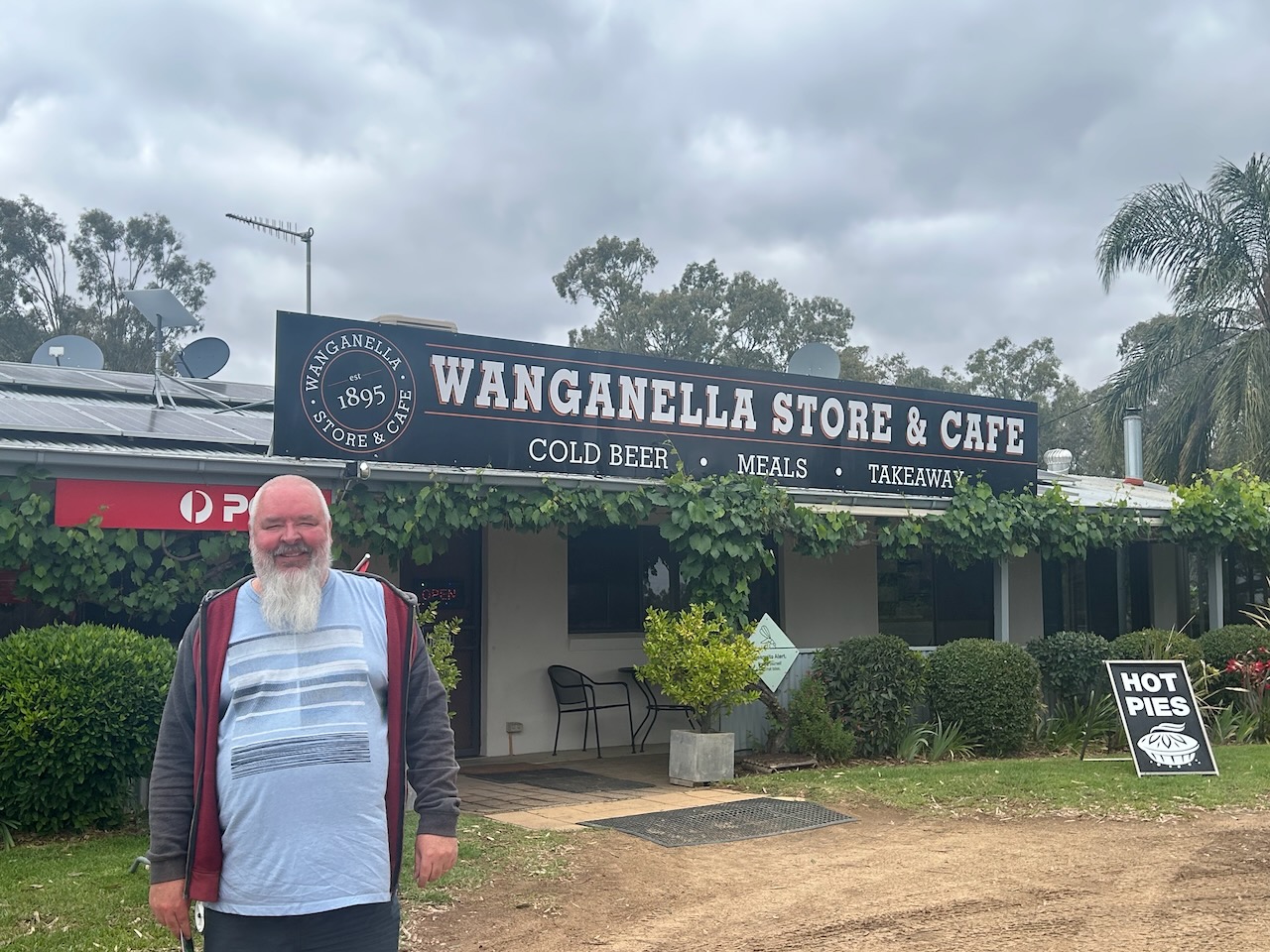
Marija and I then called in to the Wanganella Store for a bite to eat and a coffee.
We continued north on the Cobb Highway to the Black Swamp and the Headless Horseman Sculpture on Old Man Plain on the Cobb Highway between Deniliquin and Hay.
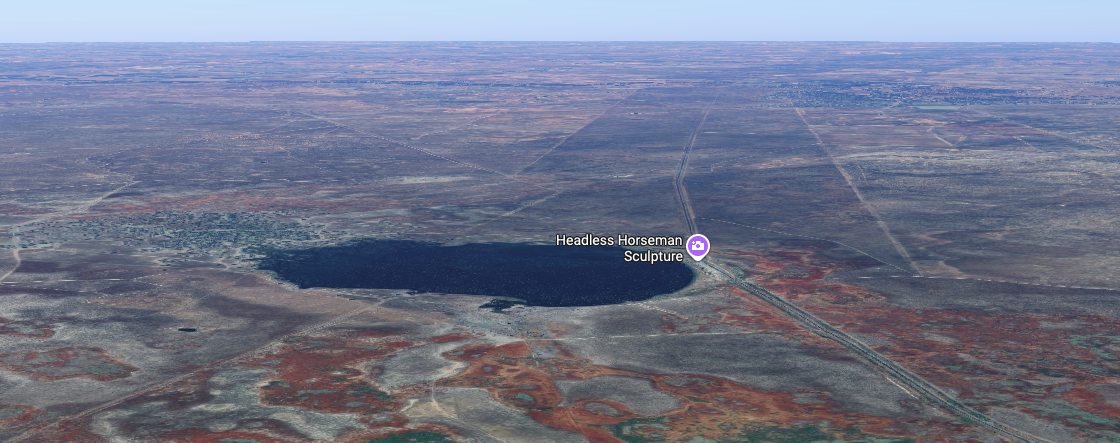
Above: an aerial view of the Black Swamp. Image c/o Google Maps
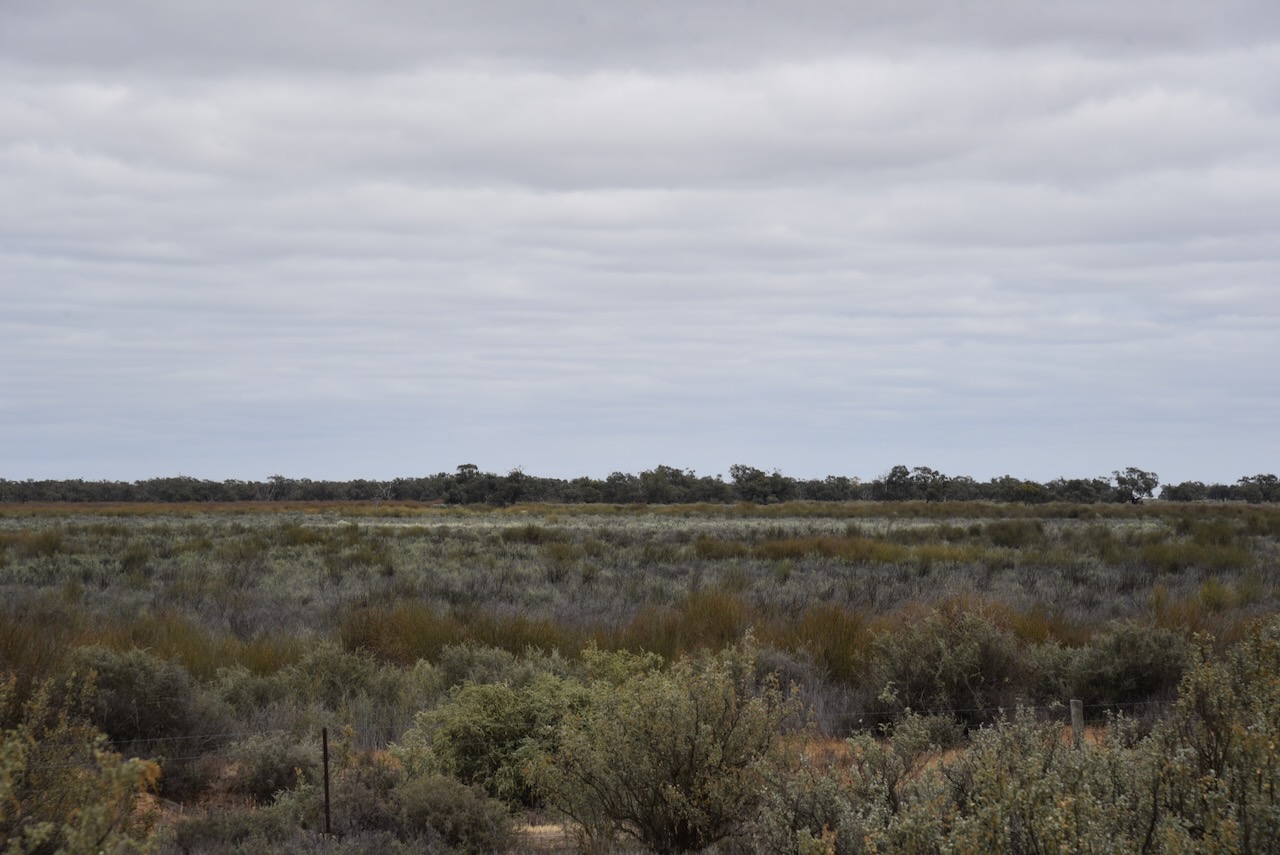
The Black Swamp would have provided a source of water for travellers between Deniliquin and Hay. A coach changing station existed here in 1859. The Black Swamp is a shallow basin, about one kilometre across at its widest point. It was once believed that the swamp’s name originated from the often black appearance of the water. However, early maps show the swamp as Black’s Swamp, and it was named as such due to Aboriginals camping there. The swamp fills either partially or fully on rare occasions, every 20-30 years.
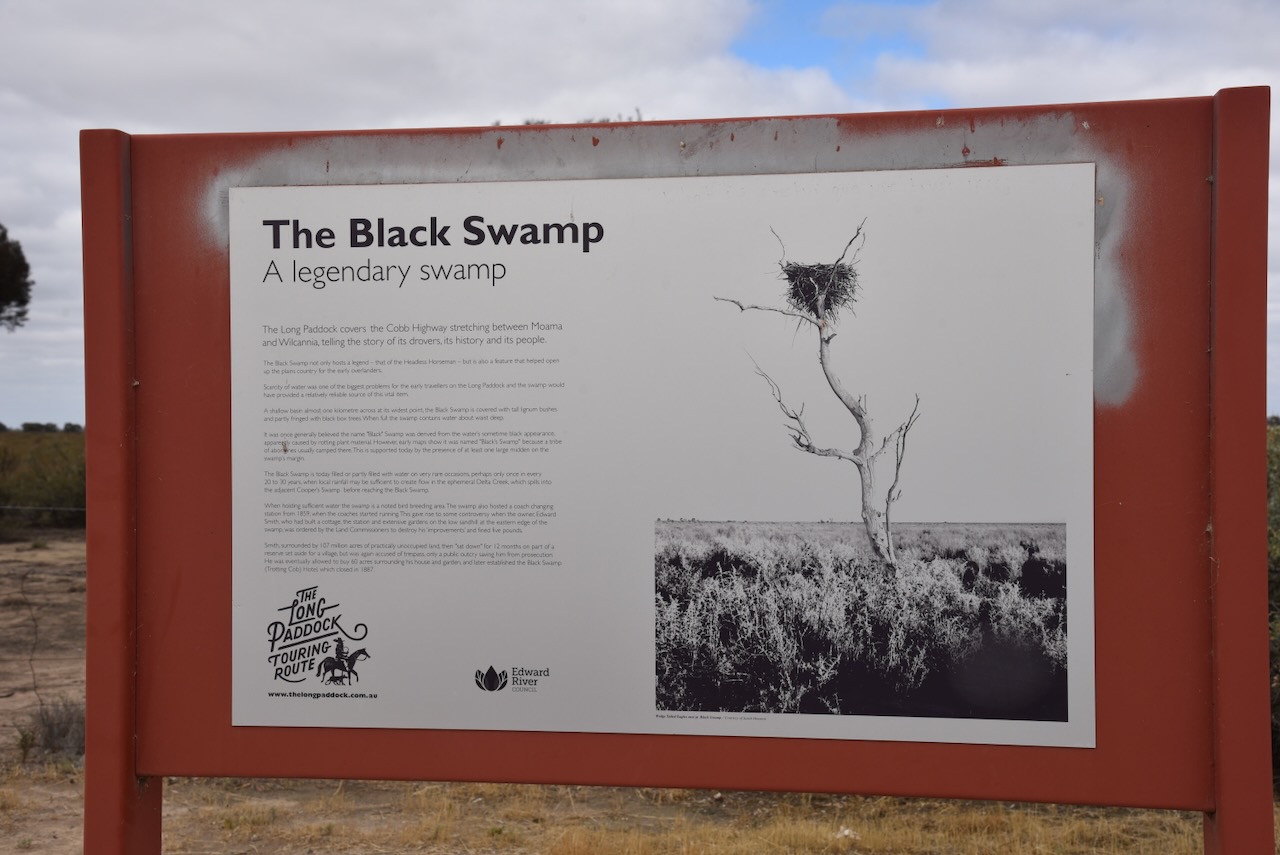
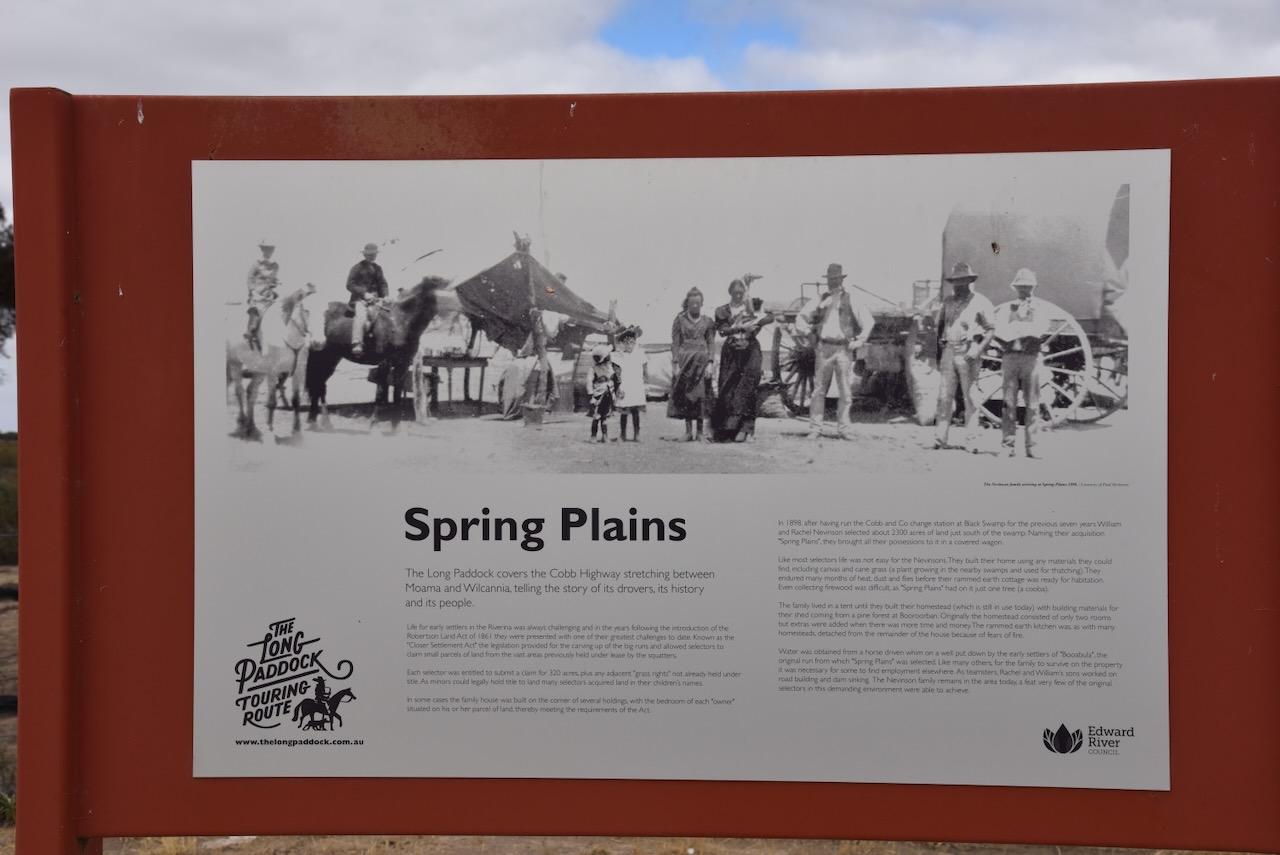
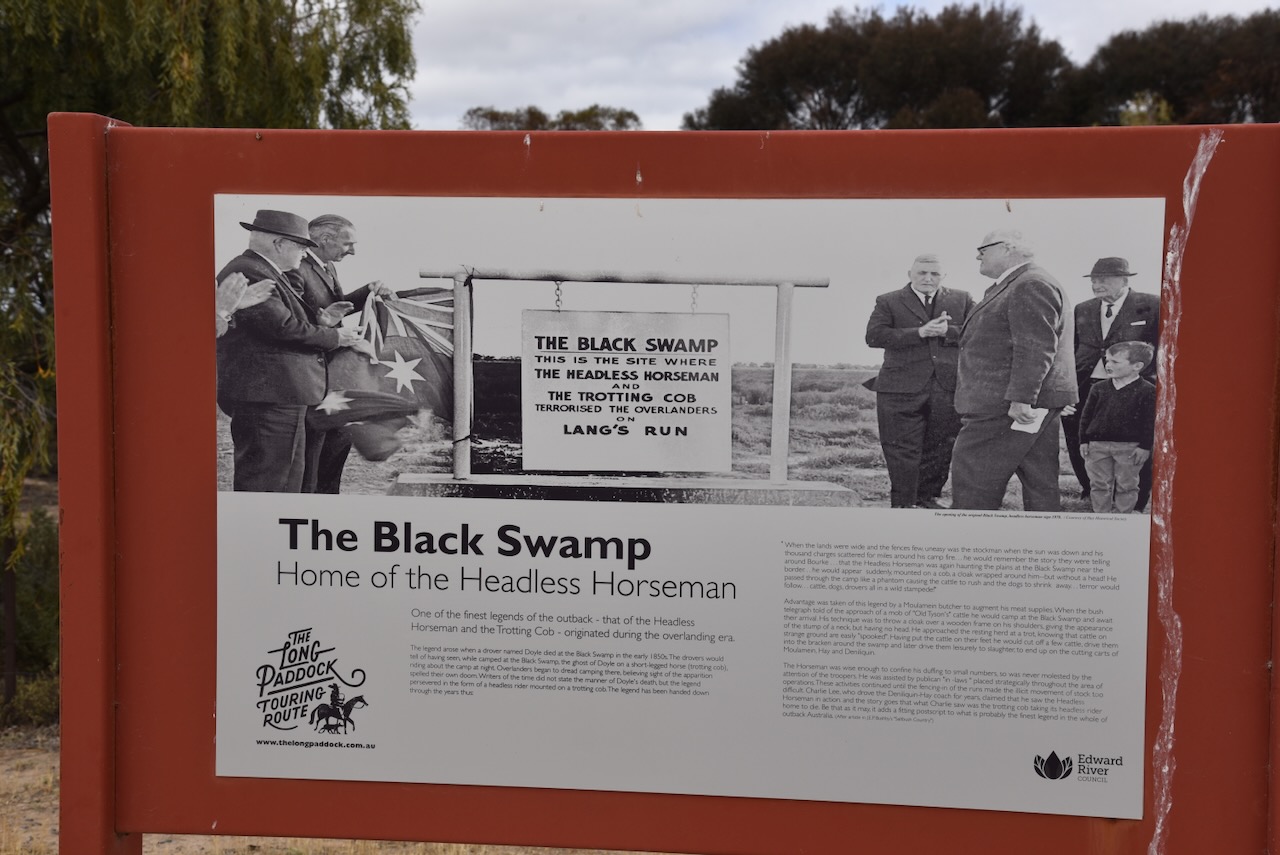
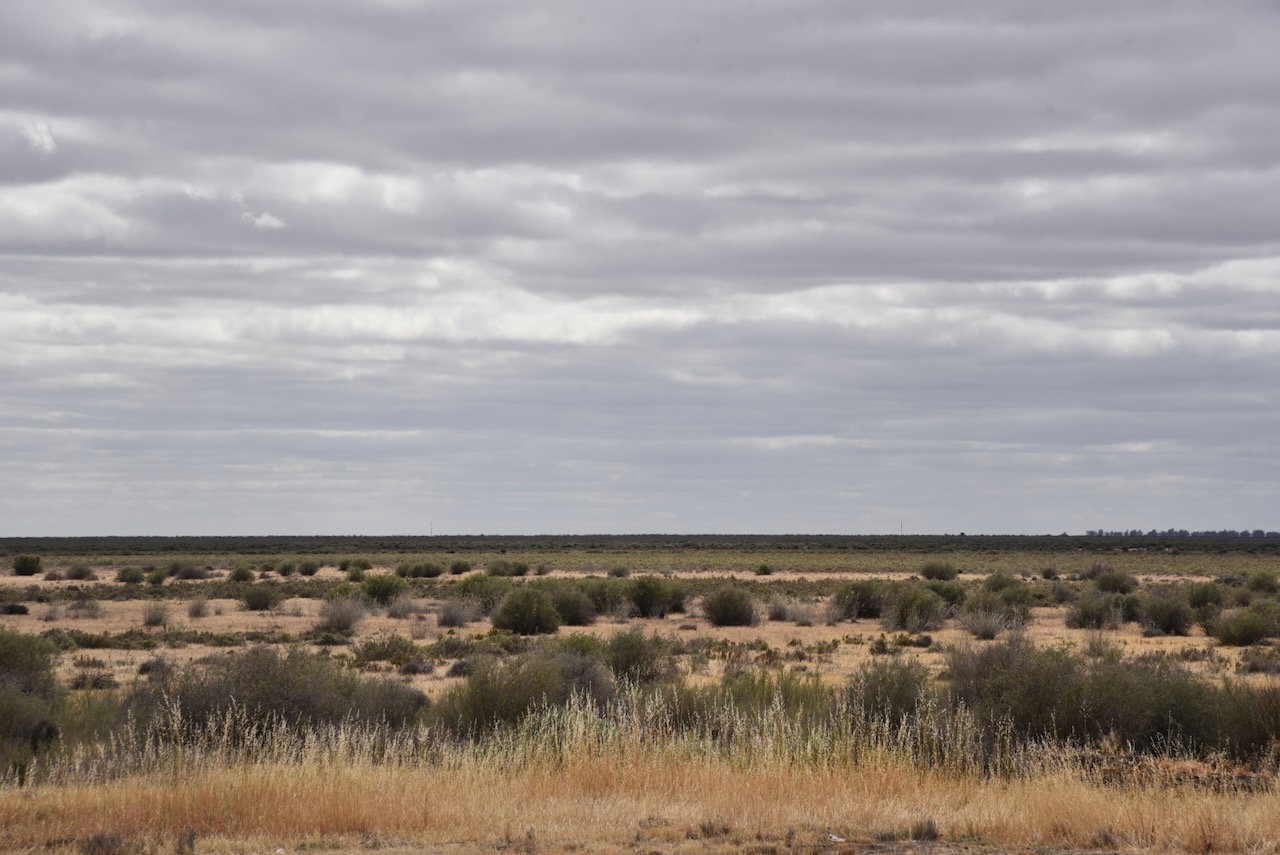
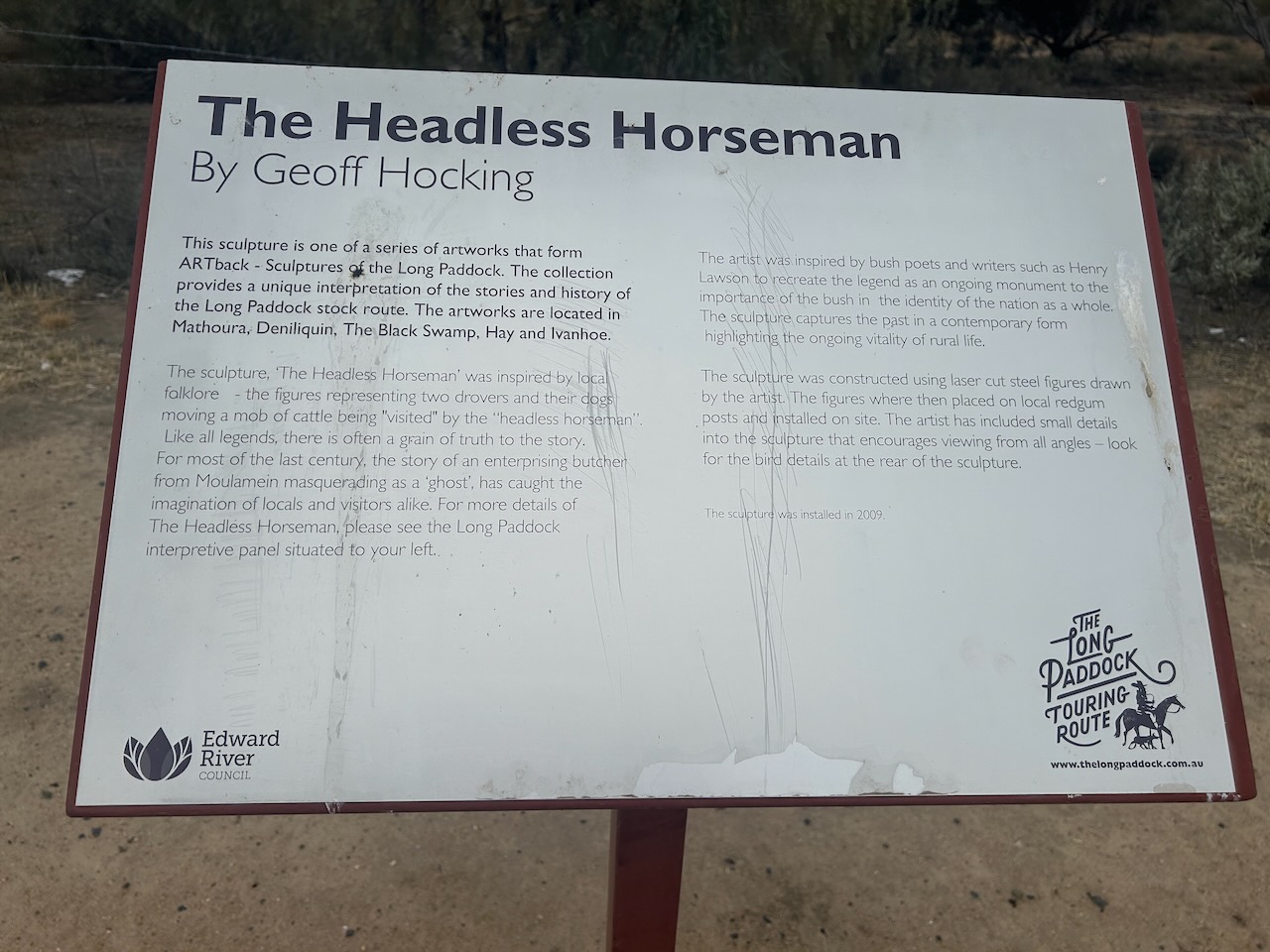
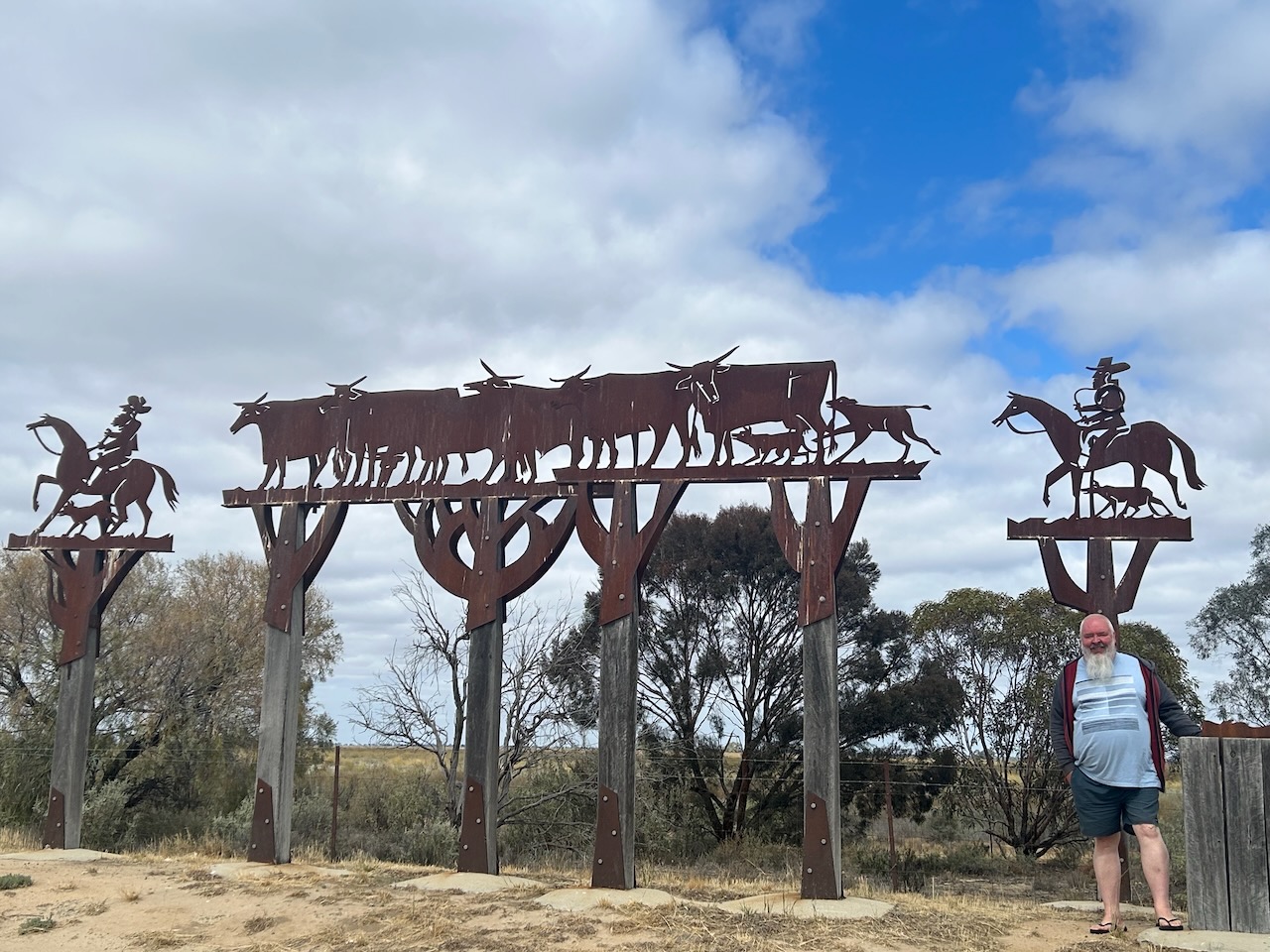
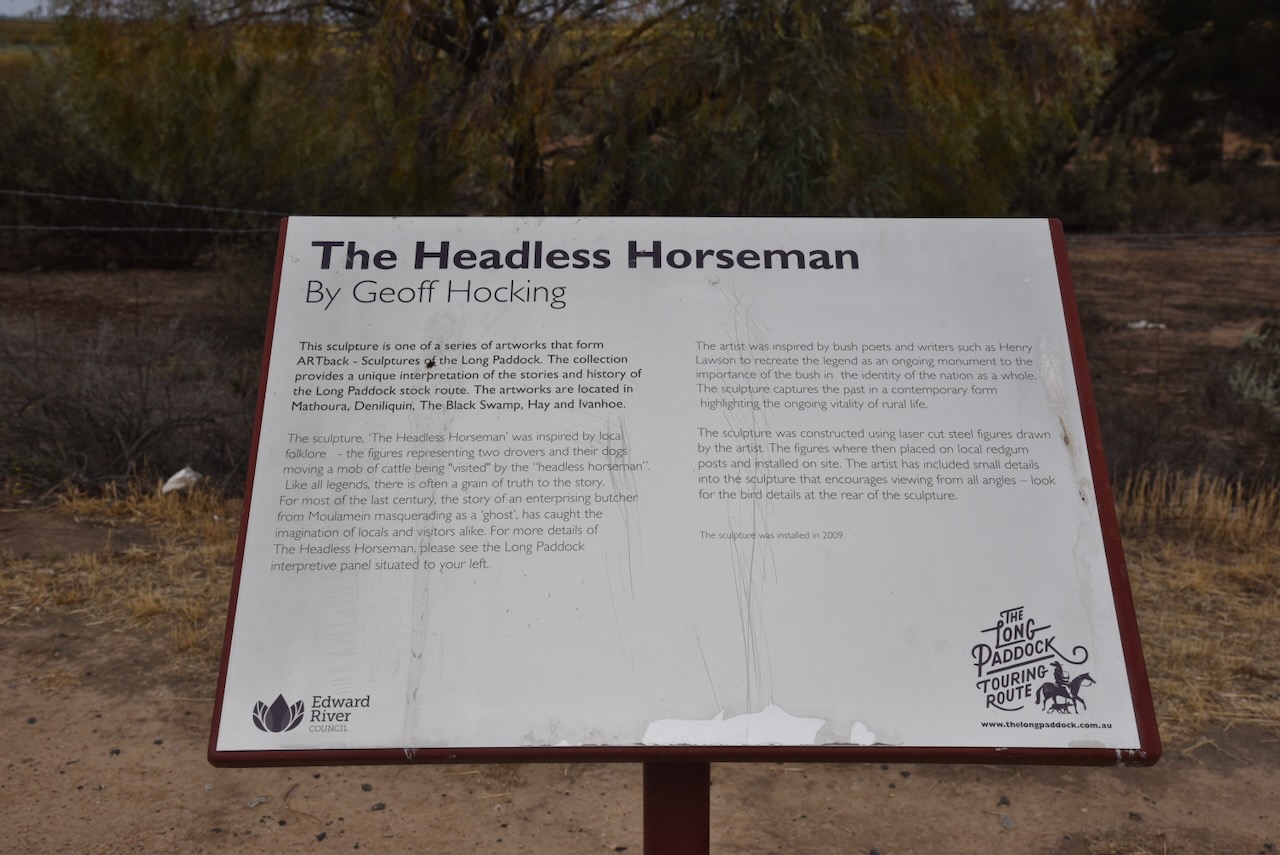
One of the famous legends of the outback is that of the Headless Horseman and the Trotting Cob. The legend arose following the death of a drover called Doyle, who died at the Black Swamp in the early 1850s. Drovers who camped at the swamp reported seeing the ghost of Doyle on a short-legged horse (trotting cob) riding about their campsites at night.
The Headless Horseman sculpture was erected in 2009 and is the work of Geoff Hocking. It features laser-cut steel figures.
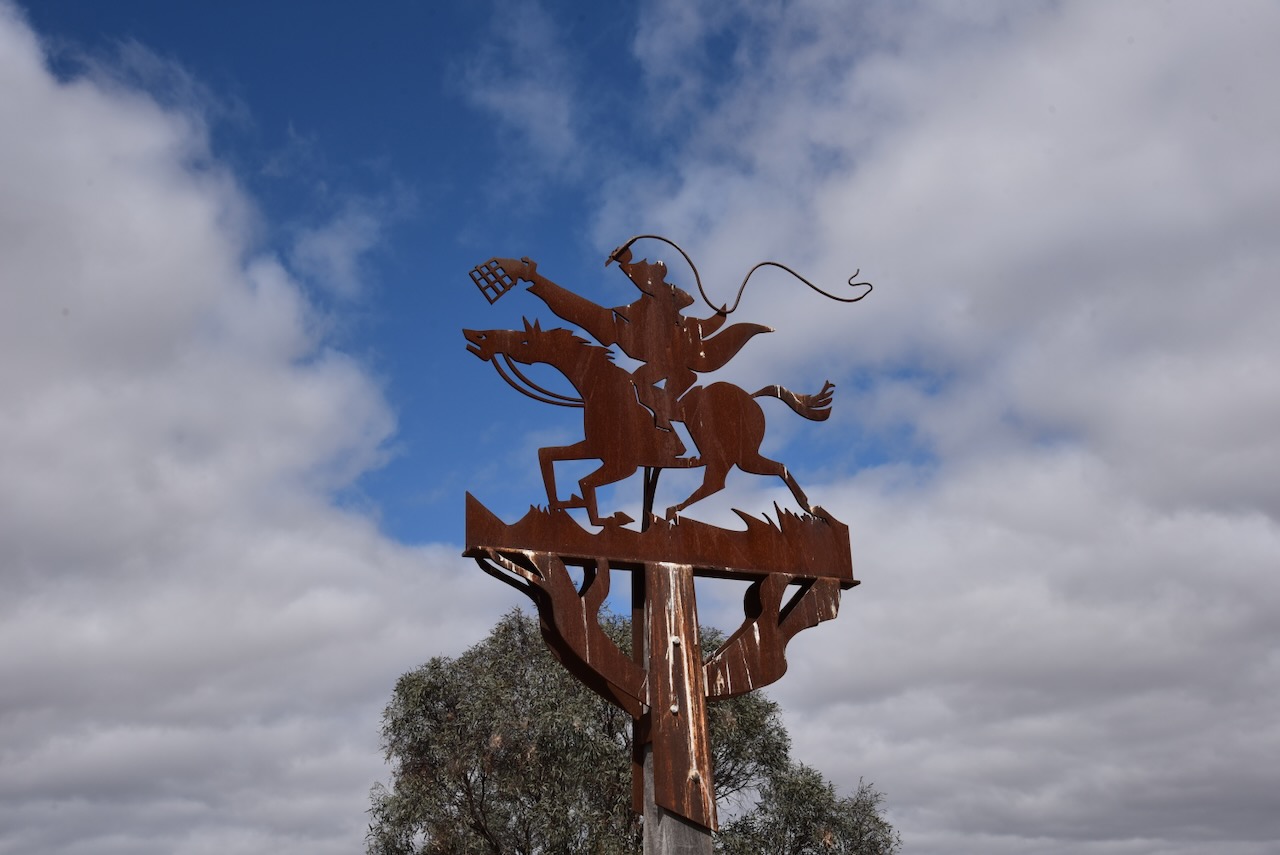
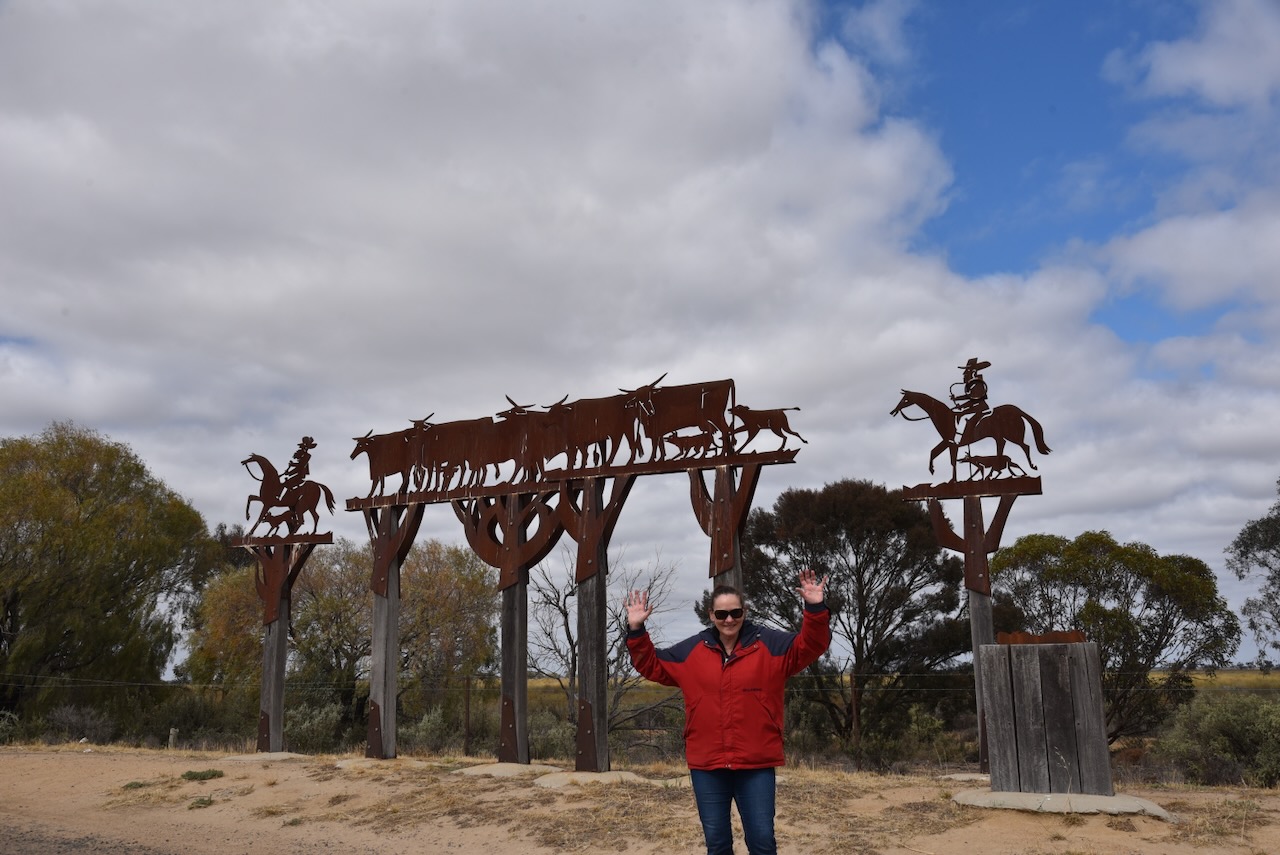
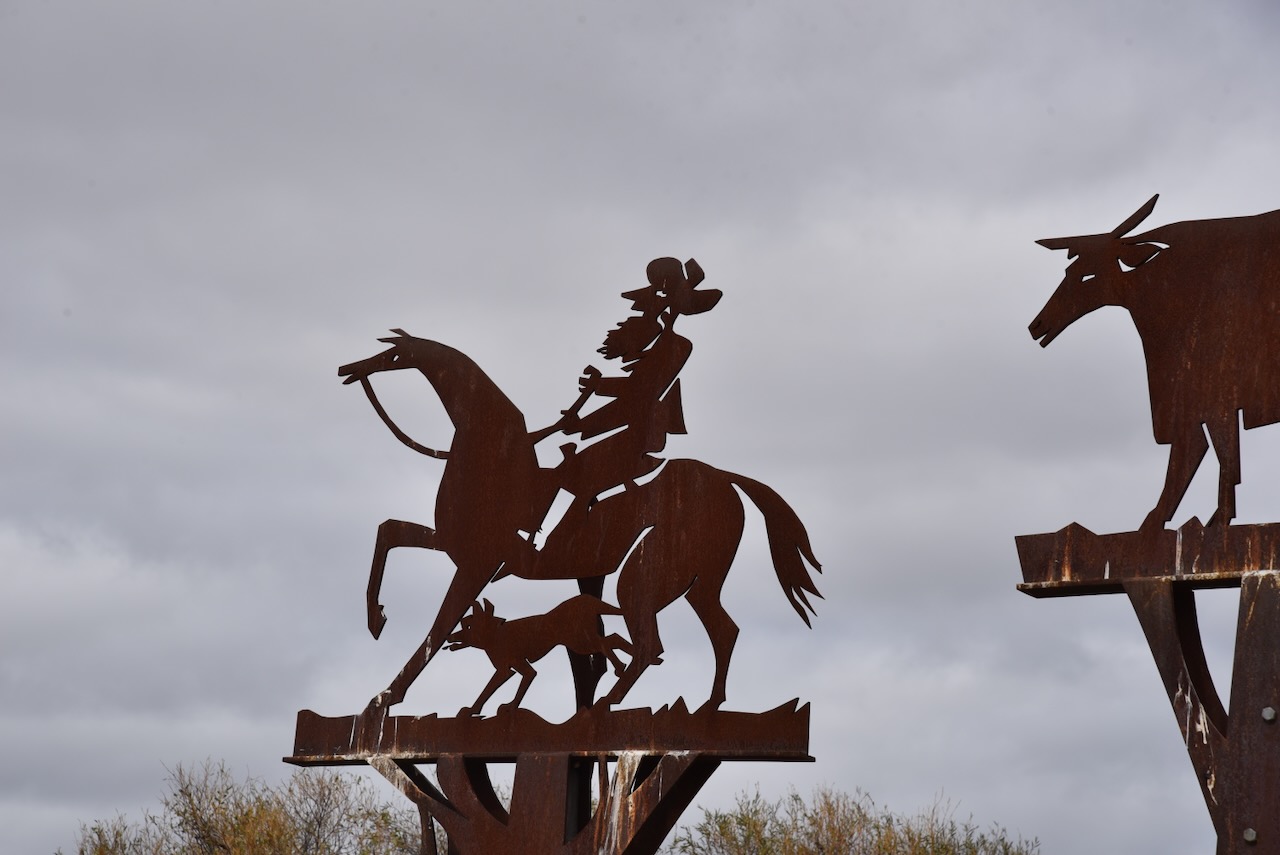
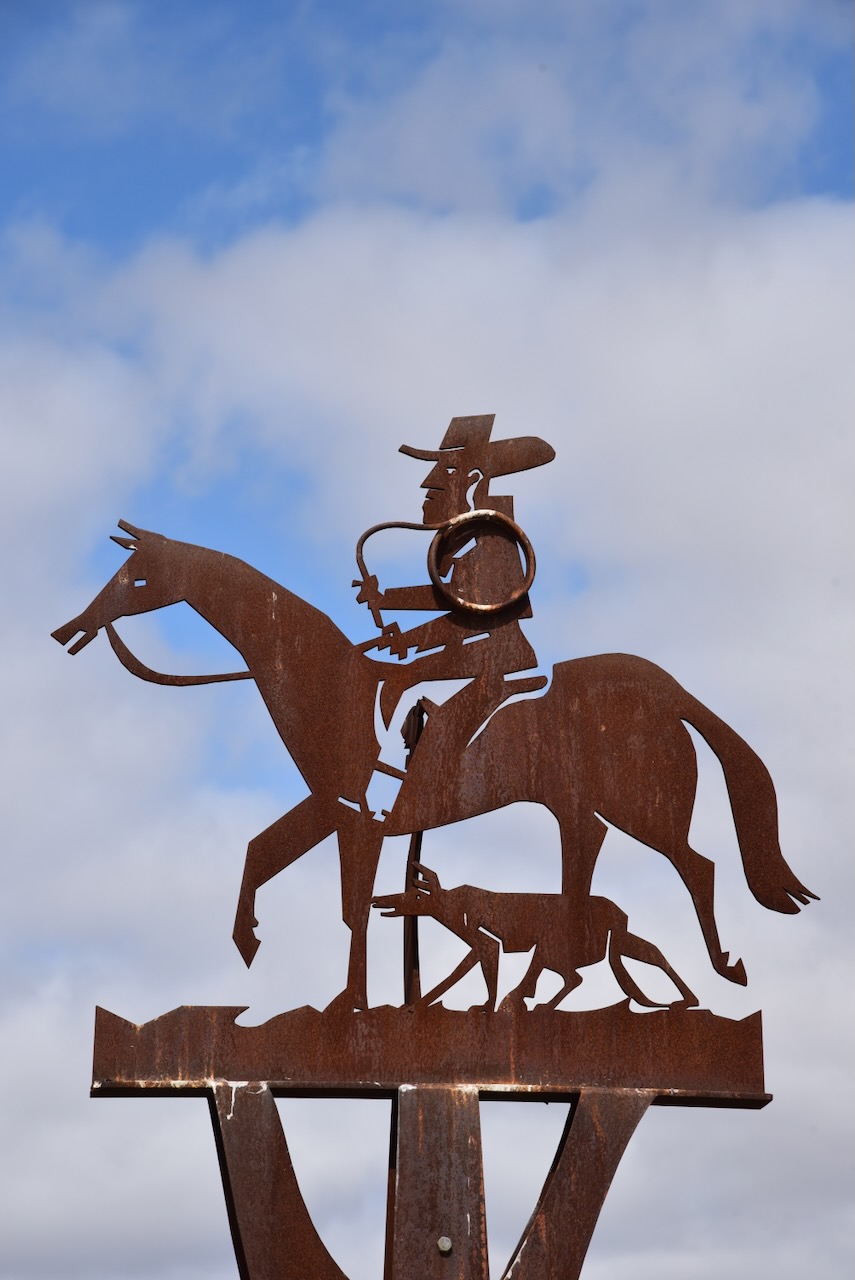
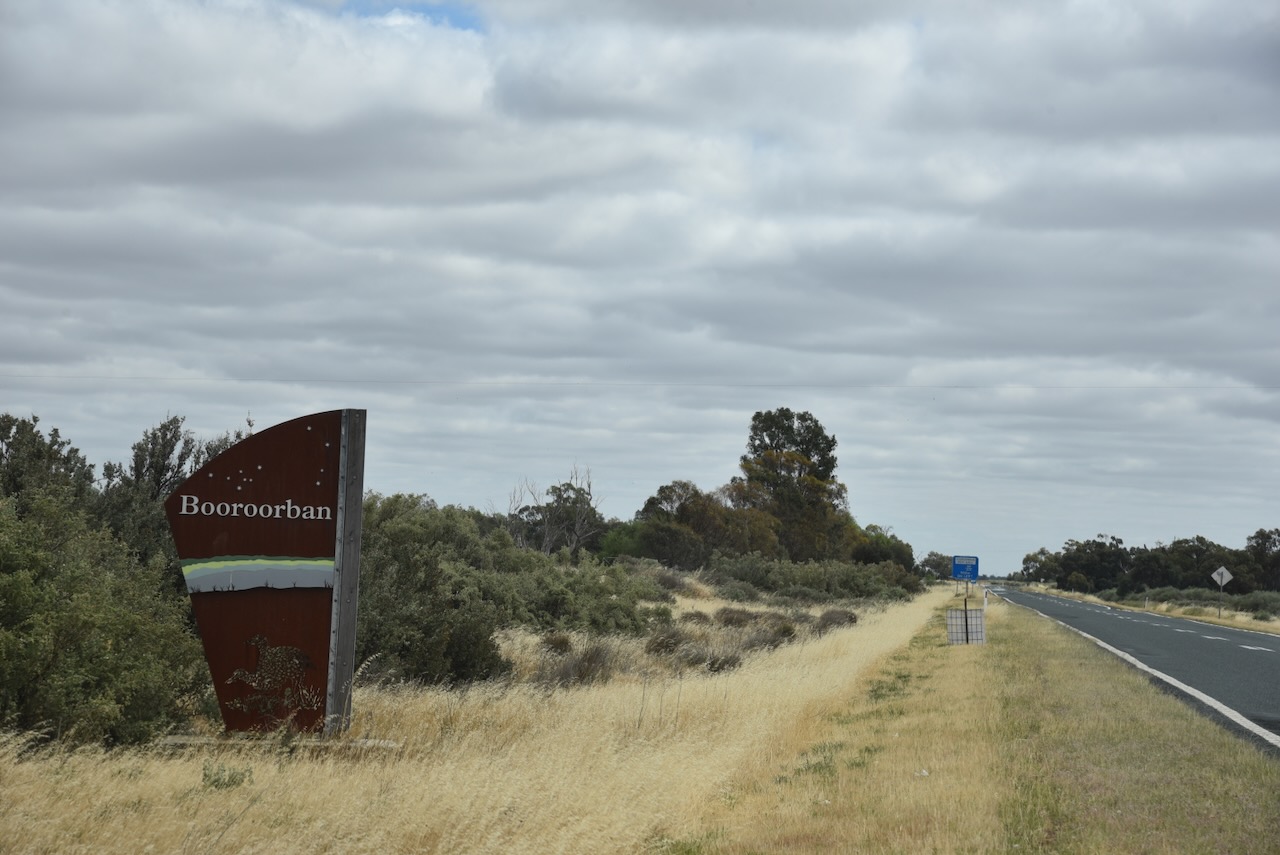
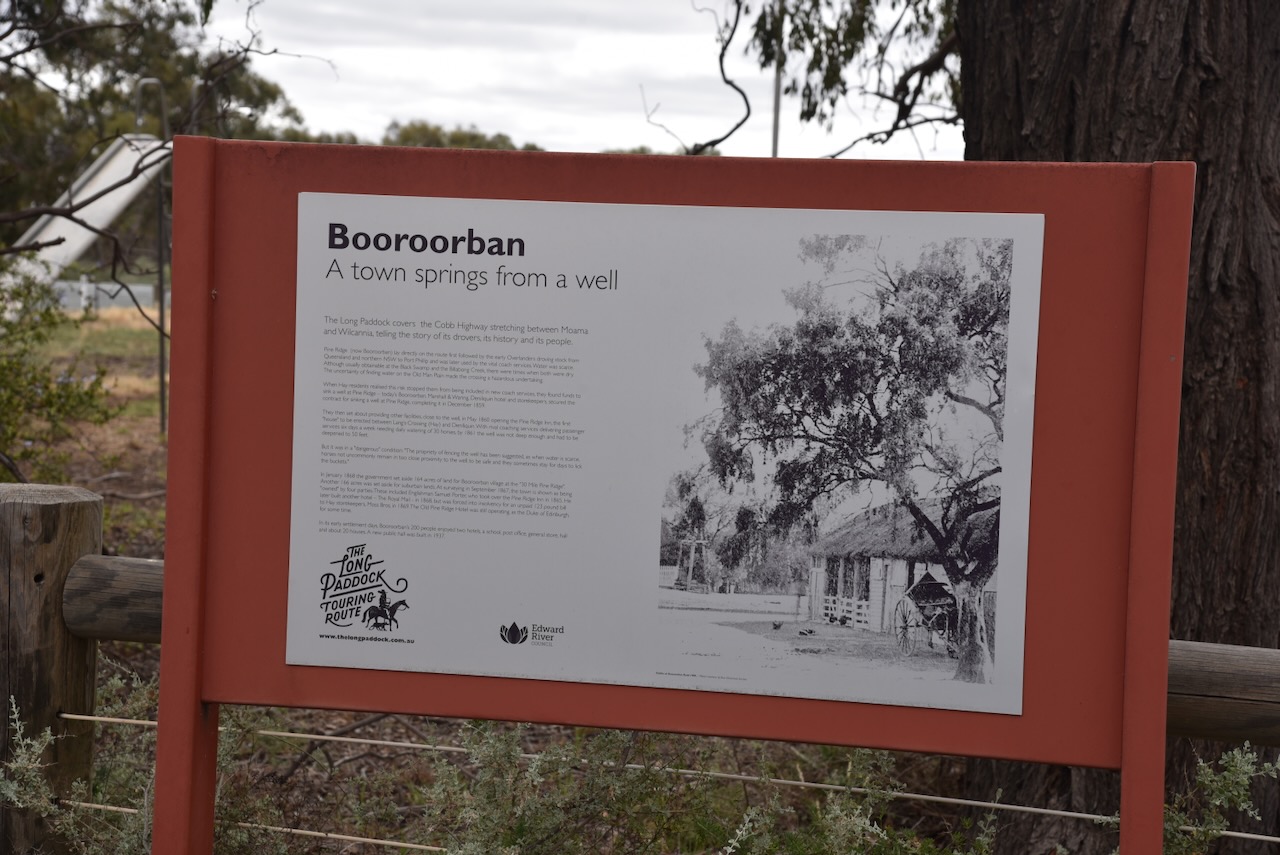
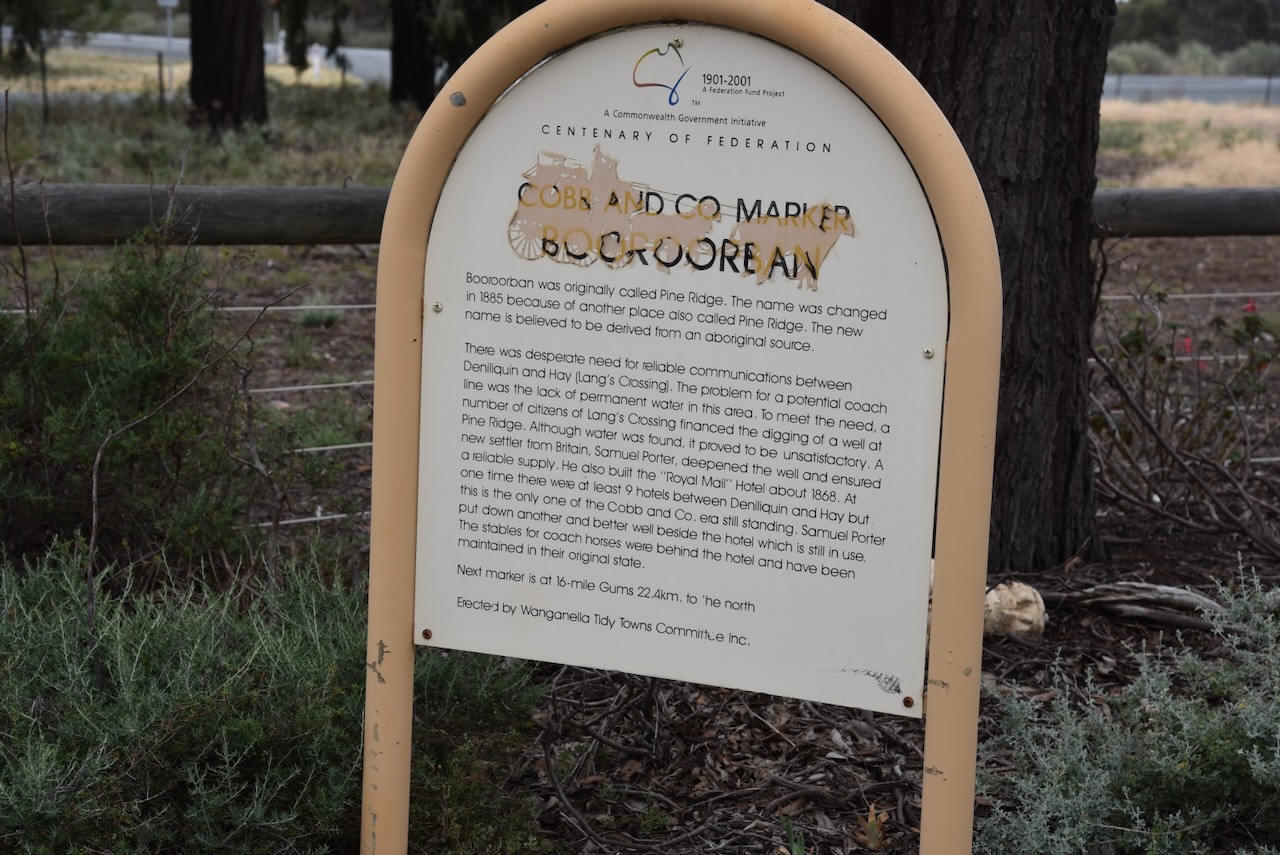
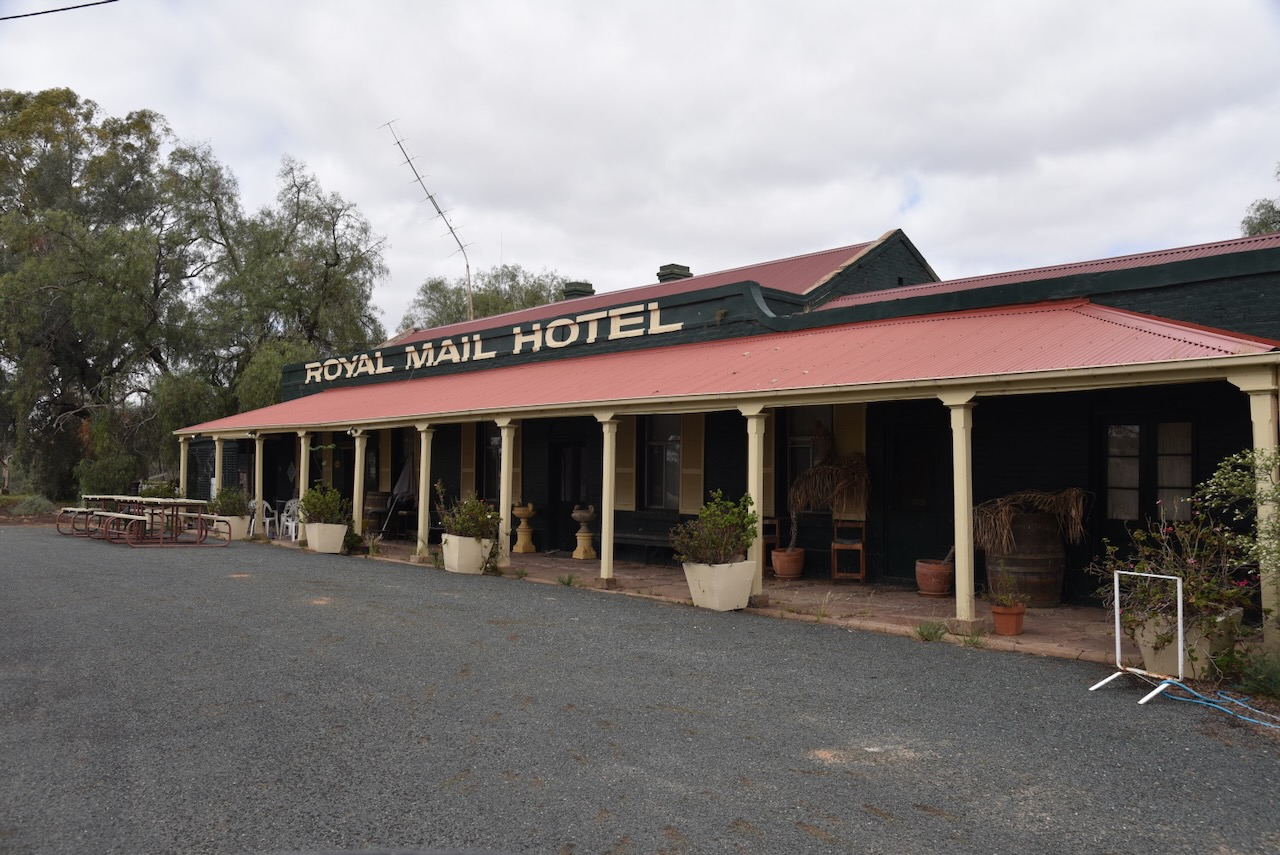
Marija and I decided to continue on to Booroorban. There is not much here anymore other than a few houses, the school, the hall and the old hotel. Booroorban was originally known as Pine Ridge. In December 1859, a well was sunk at Pine Ridge to provide a water source for travellers on The Long Paddock. In May 1860, the Pine Ridge Inn was opened, and in 1868, the Royal Mail Hotel was established.
Marija and I then drove back south on the Cobb Highway to the locality of Pretty Pine. The Australian Town and Country Journal in September 1875 reported that it took its name from ‘a very handsome specimen of what is commonly known here as the colonial pine.‘ (Trove 2026)
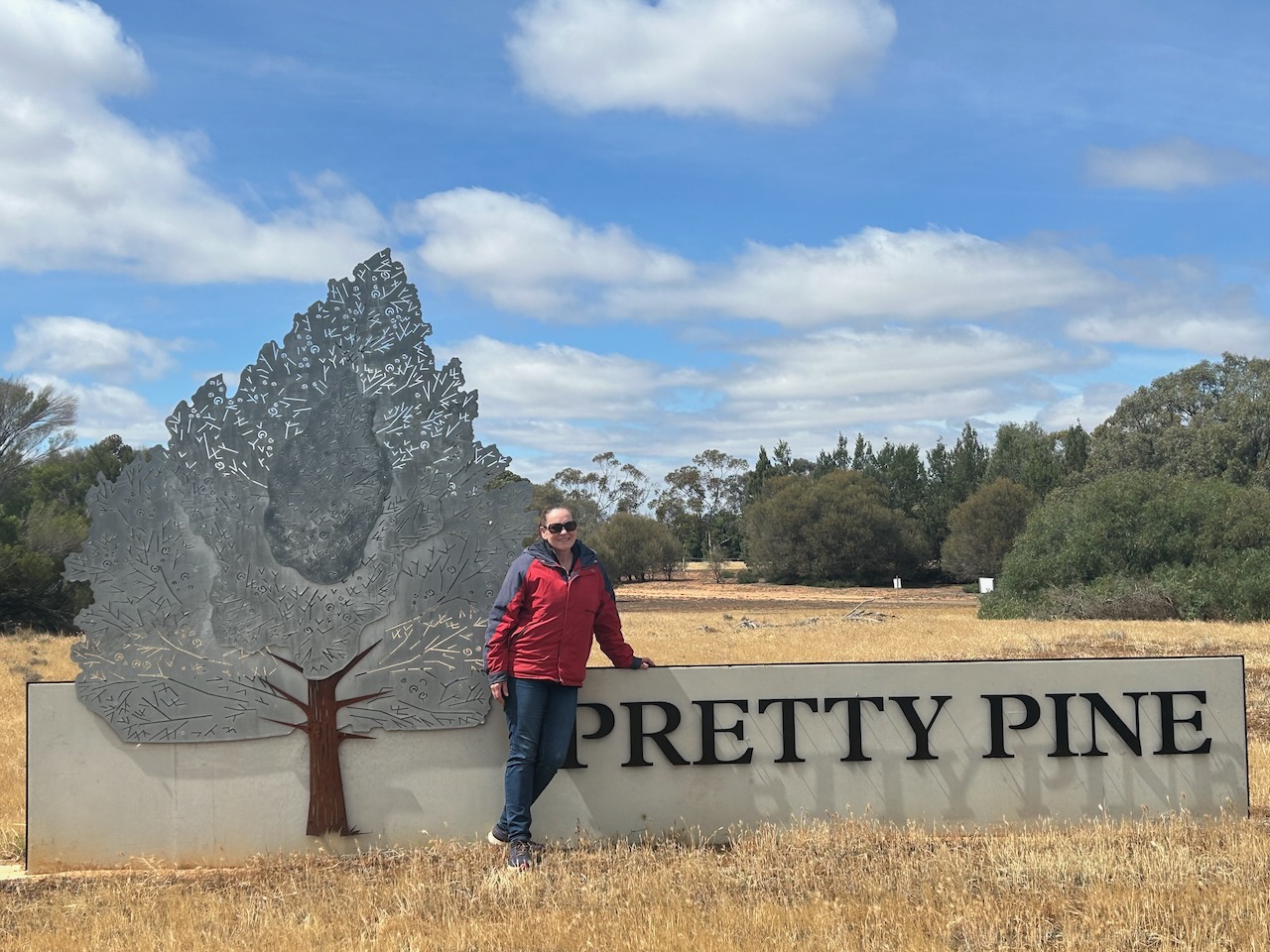
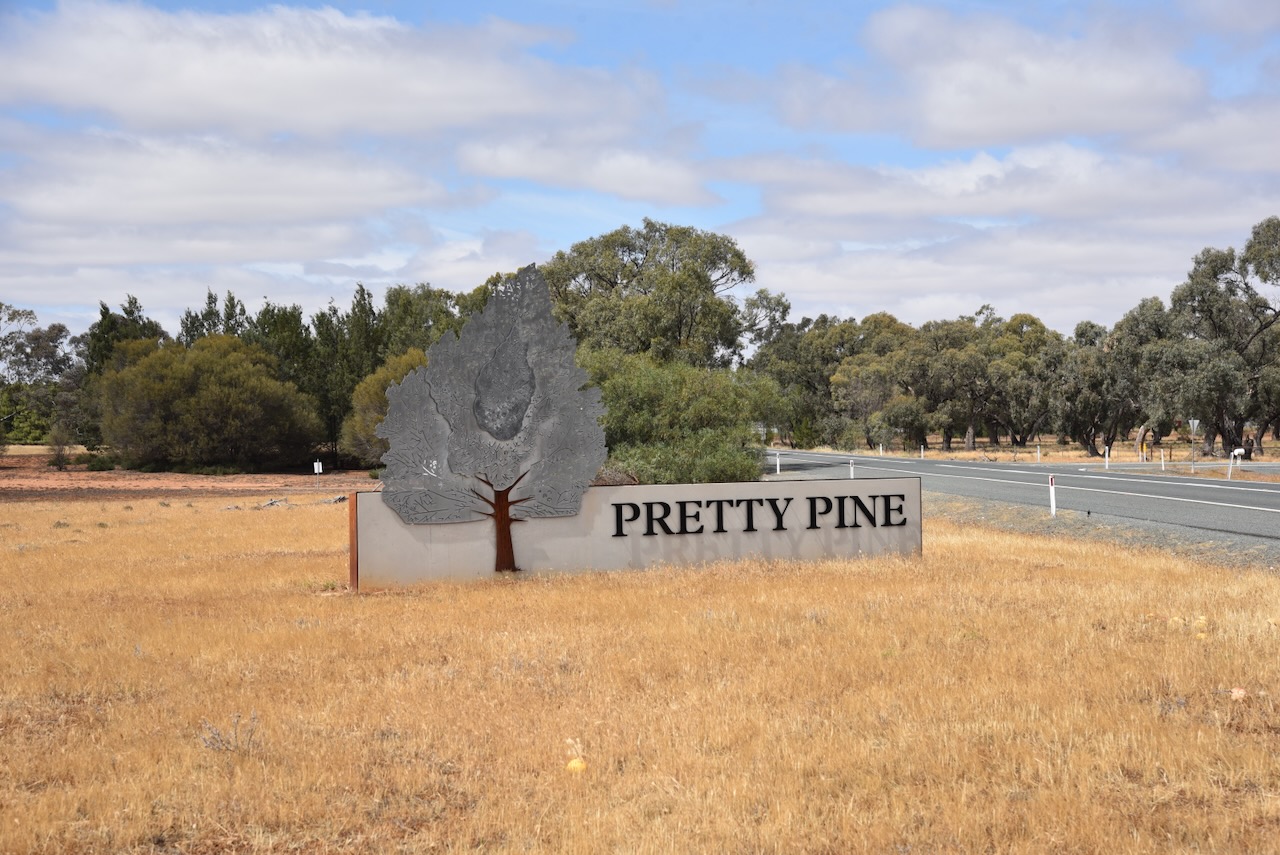
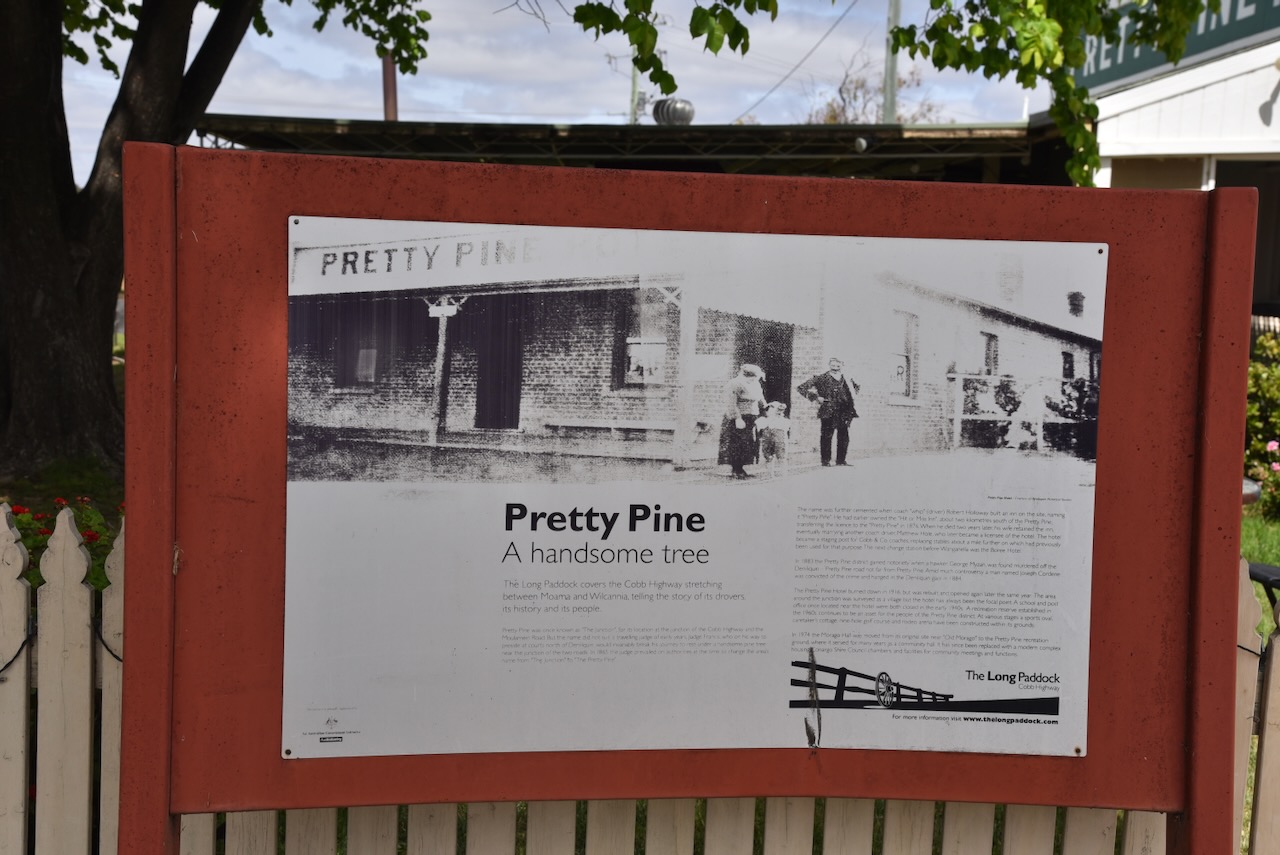
Marija and I then stopped in for a drink at the historic Pretty Pine Hotel.
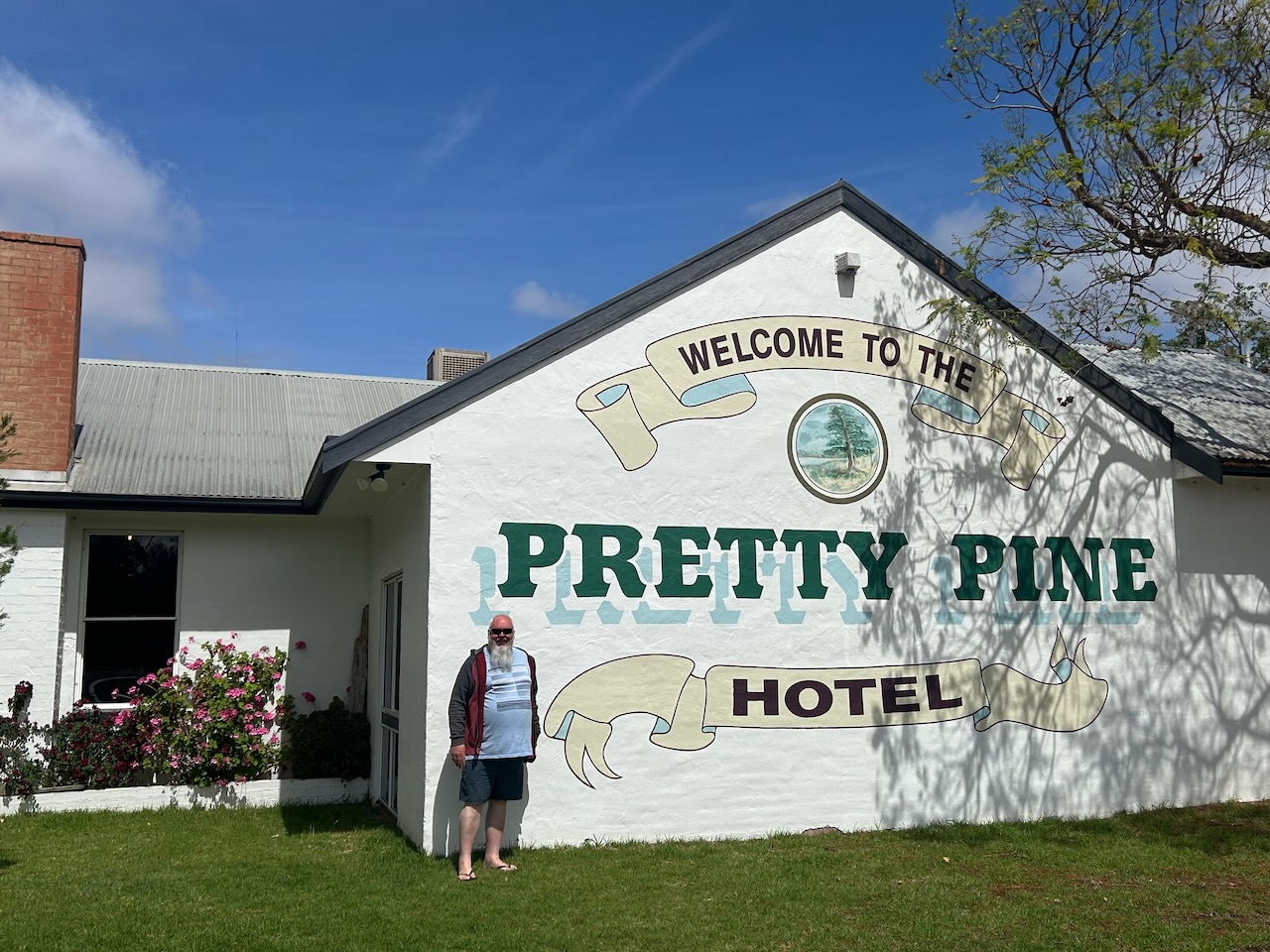
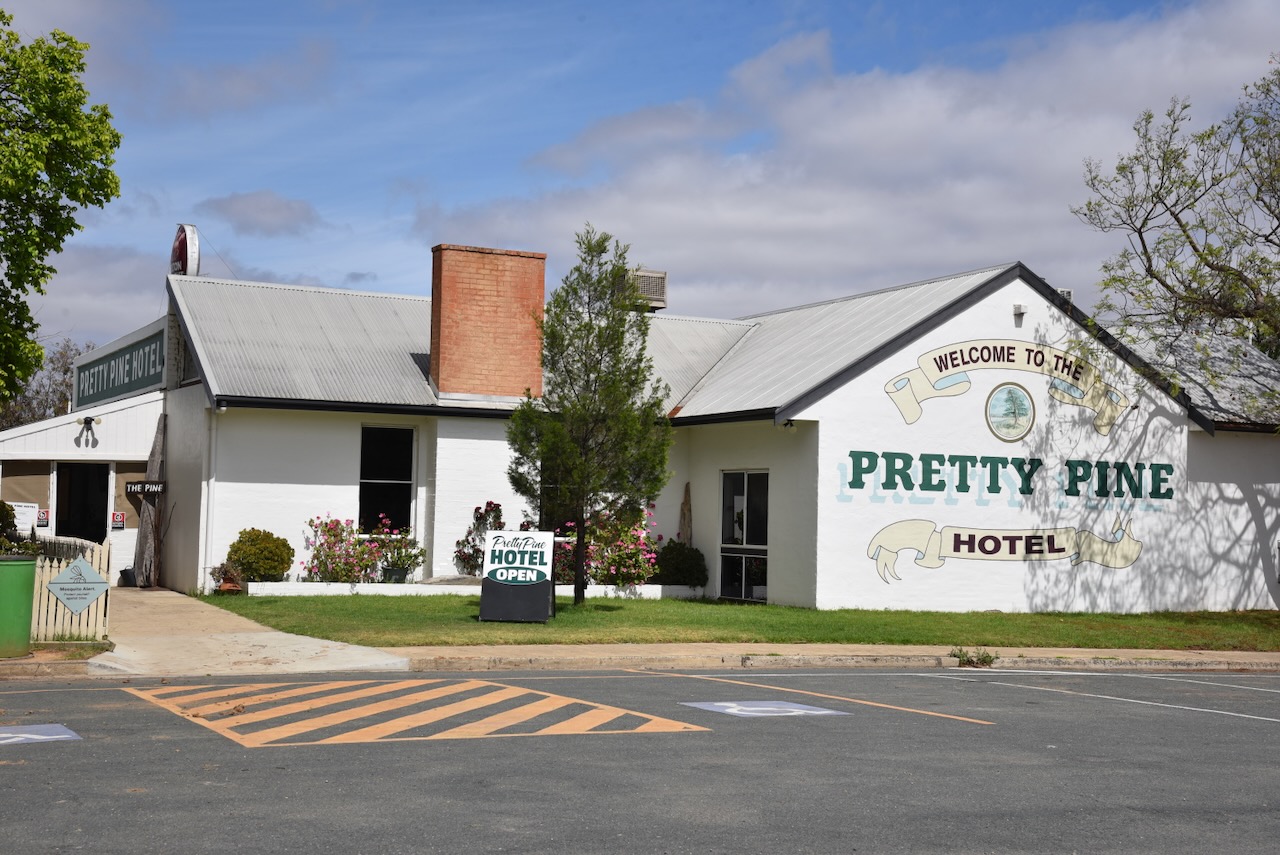
The hotel was built in 1875 for Robert Holloway, who was the publican of the Carrier’s Arms Hotel at Deniliquin. He had previously been a coach driver for Cobb and Co. (Wikipedia 2025)
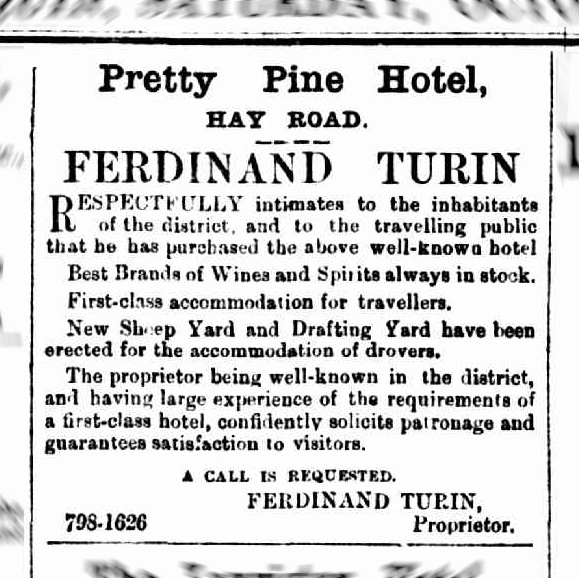
Above: advertisement for the Pretty Pine Hotel, The Pastoral Times, 25 Oct 1890. Image c/o Trove
Holloway died in July 1878 during a visit to Baalpool station near Moulamein. Following his death, Holloway’s wife, Anastasia, took over the license of the Pretty Pine Hotel. In 1880, Anastasia married Matthew Hole who was a former Cobb & Co driver. In September 1881 the publican’s license for the hotel was transferred to Matthew Hole.
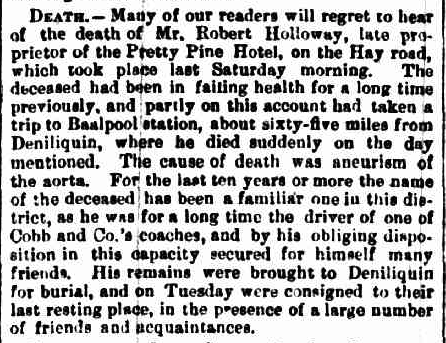
Above: article from The Pastoral Times, Sat 3 Aug 1878. Image c/o Trove
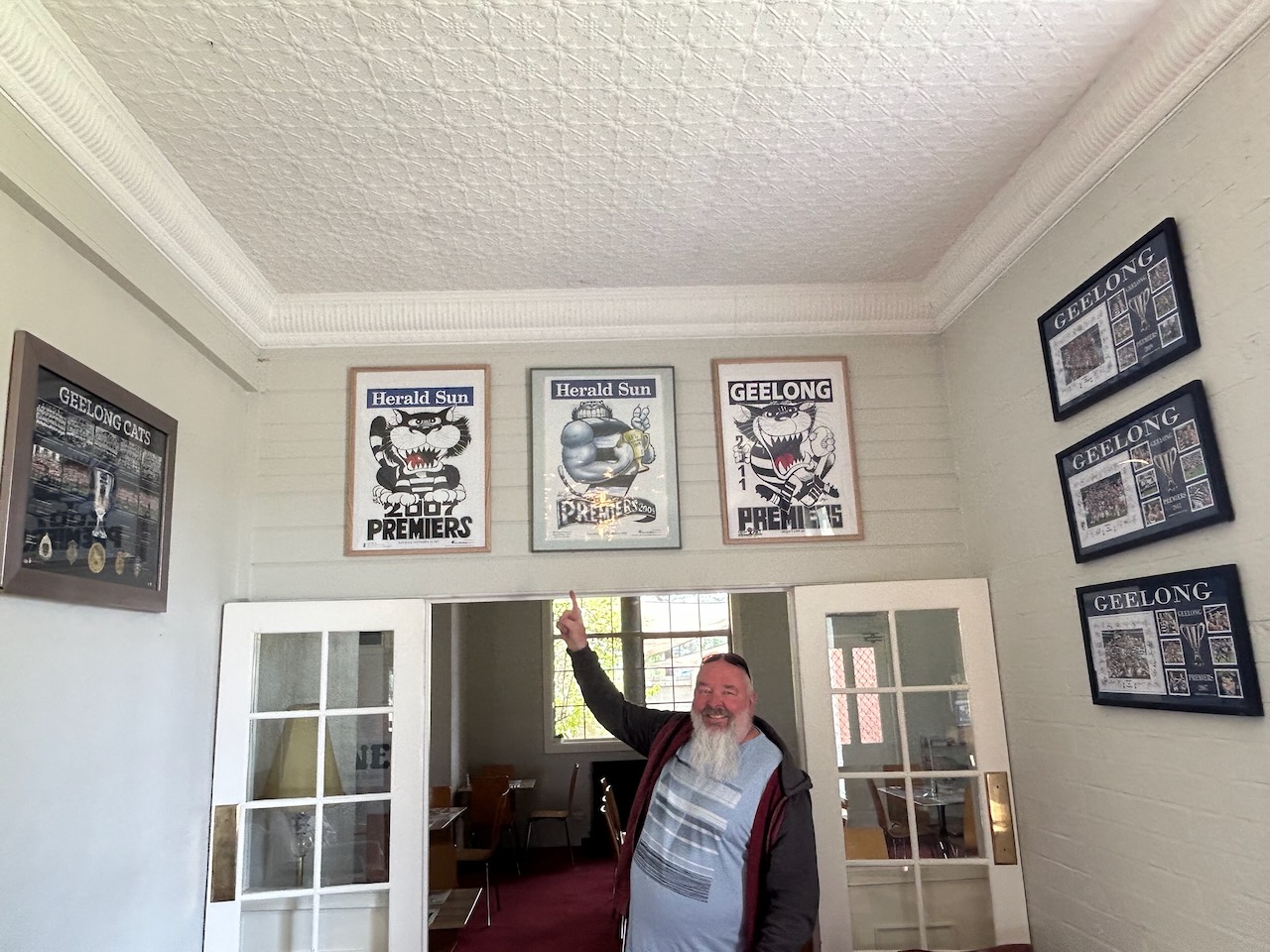
It was clear that after entering the hotel, the current licensee was a big fan of the Geelong Cats Football Club in the AFL competition.
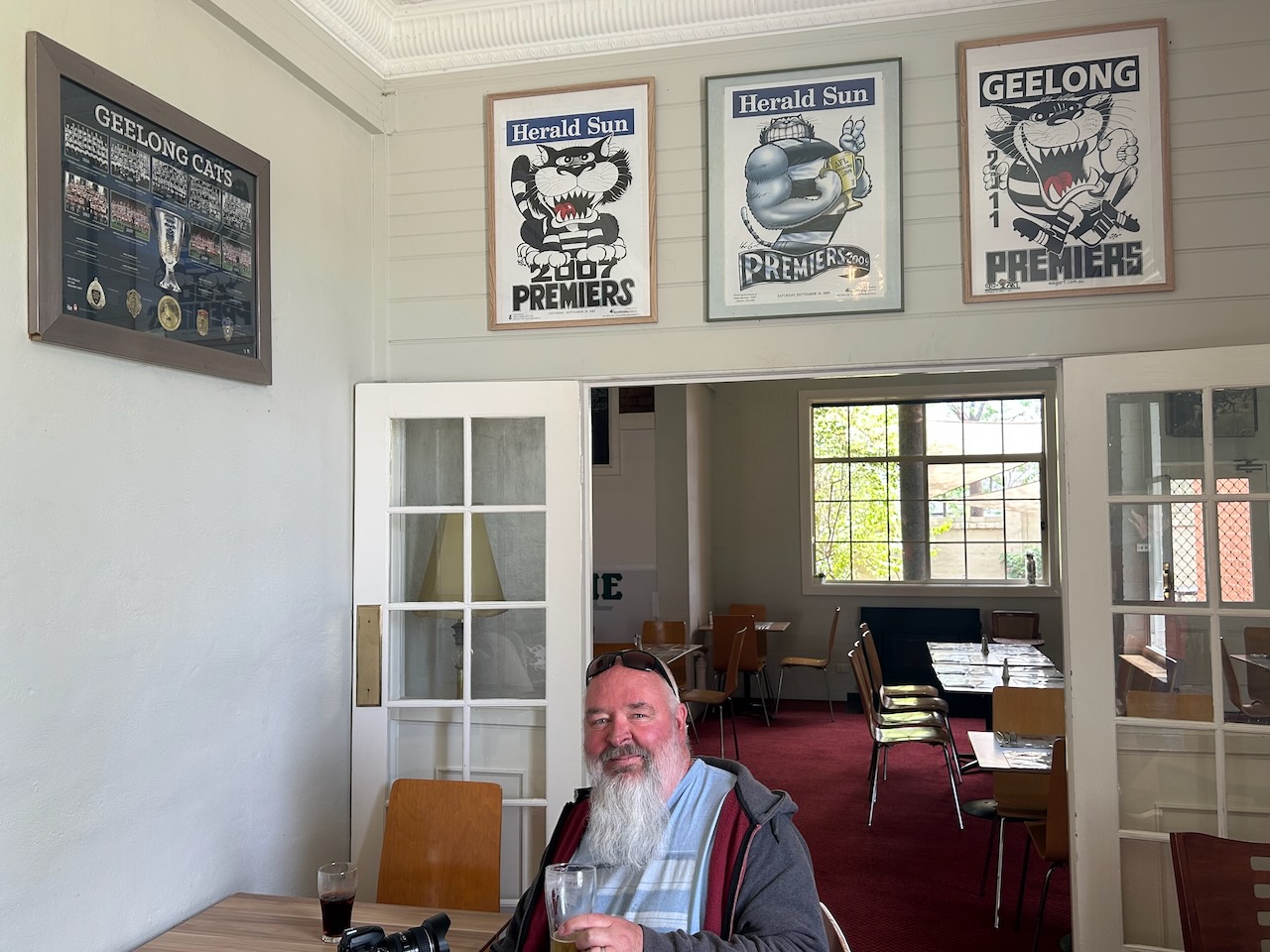
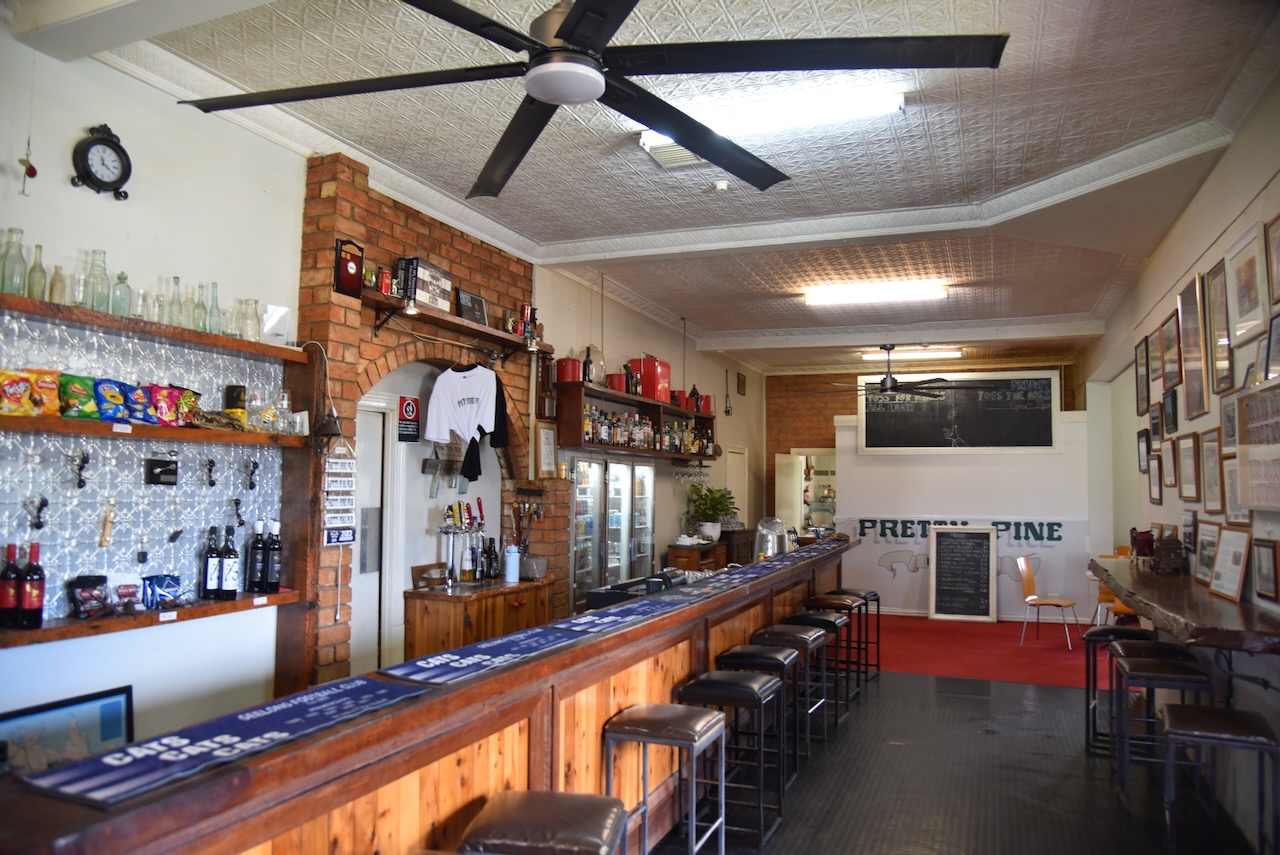
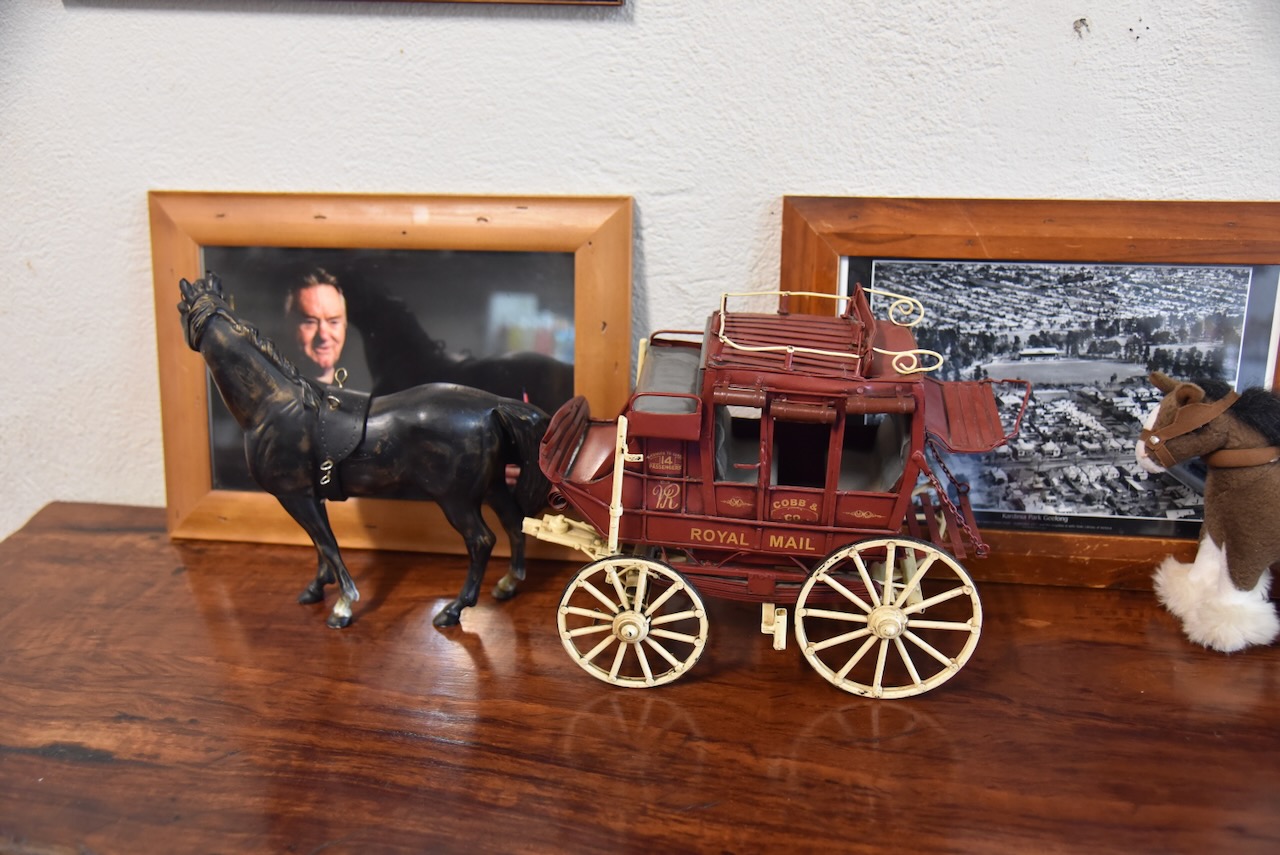
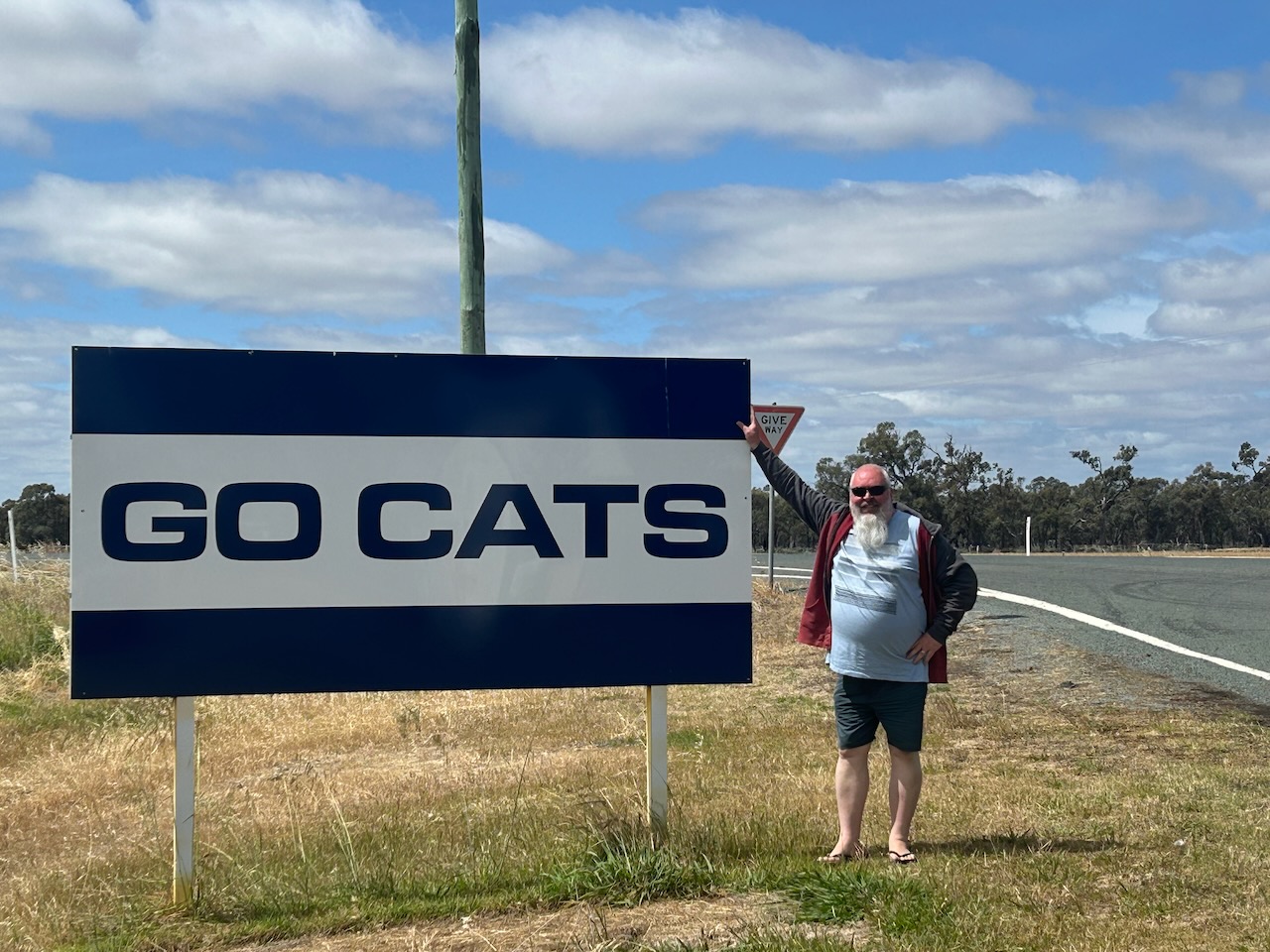
Even out front of the hotel was a ‘Go Cats’ sign.
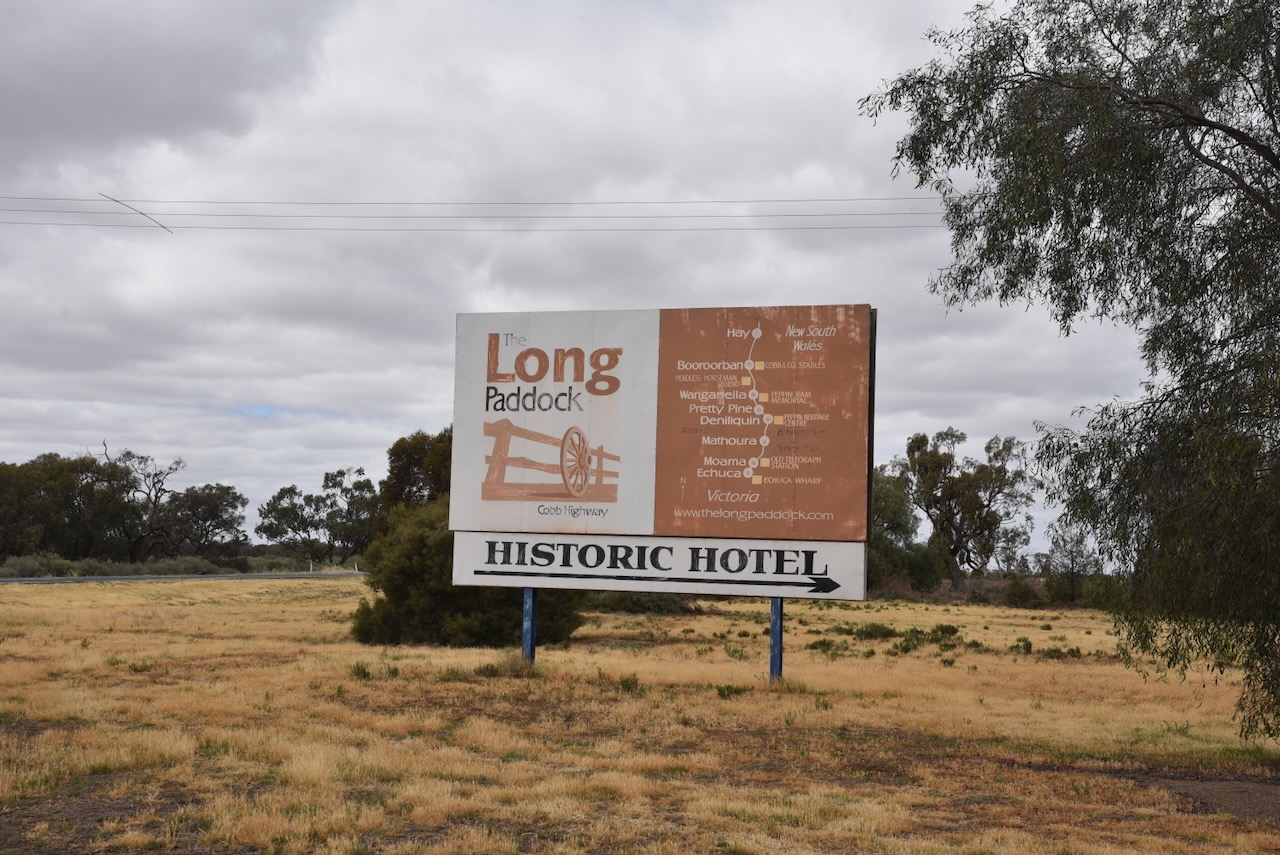
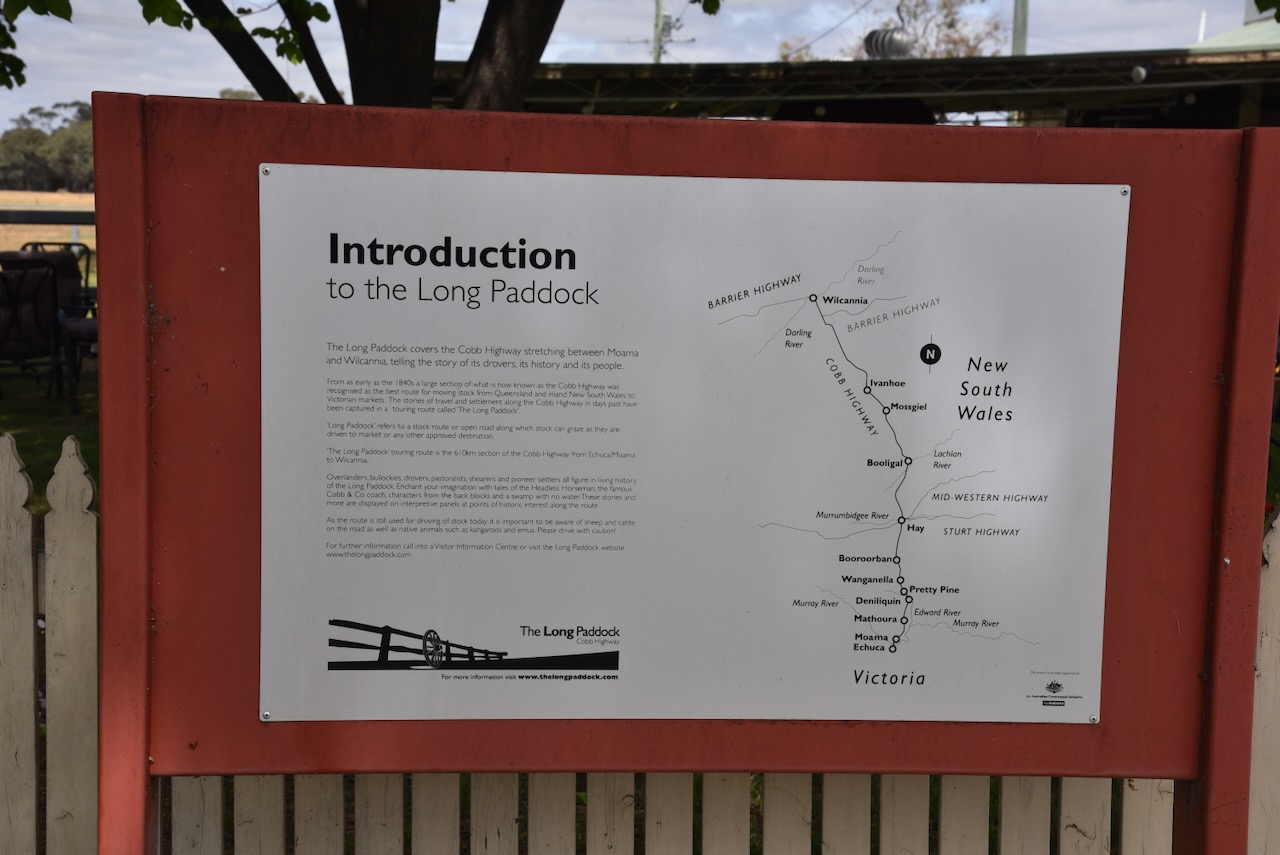
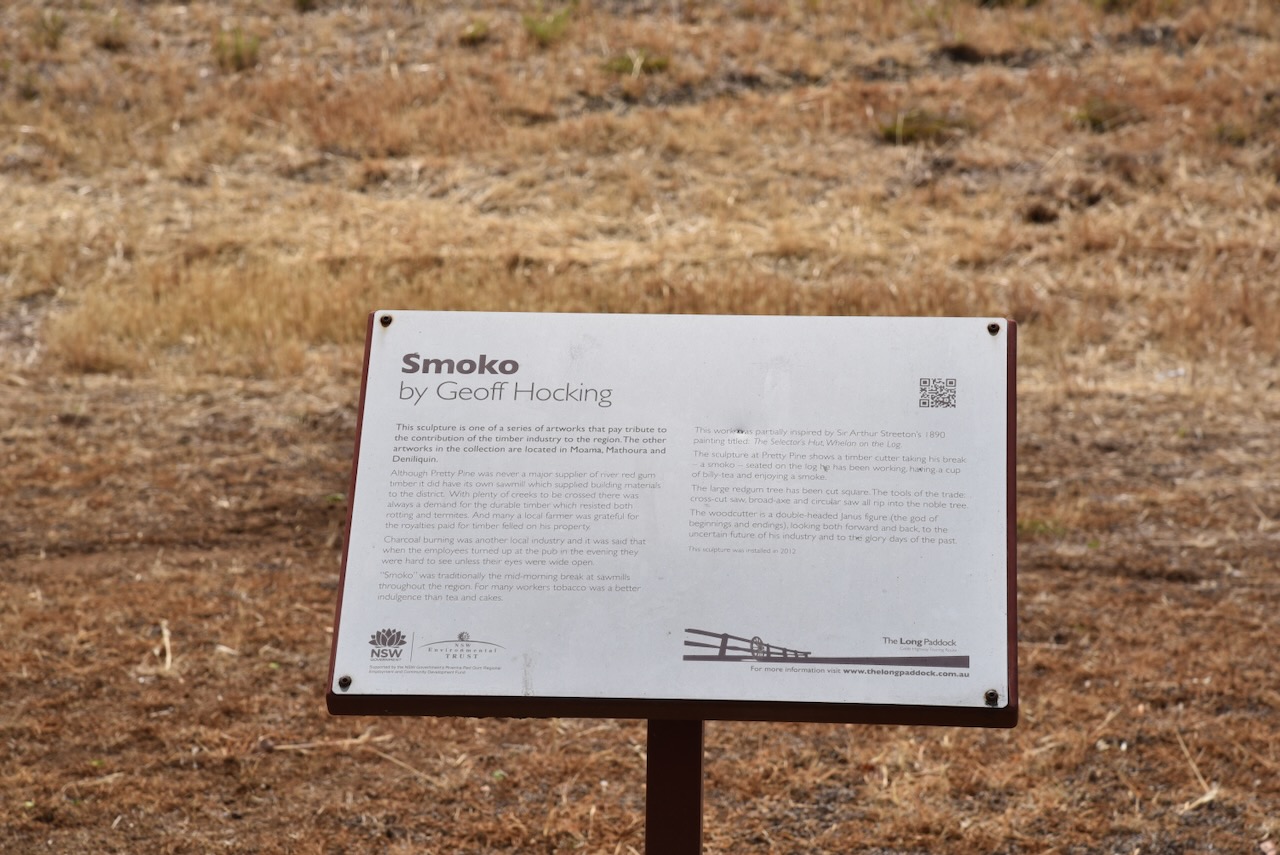
Also, in front of the hotel is the Smoko sculpture. It is the work of Geoff Hocking, who was also responsible for the Headless Horseman Sculpture.
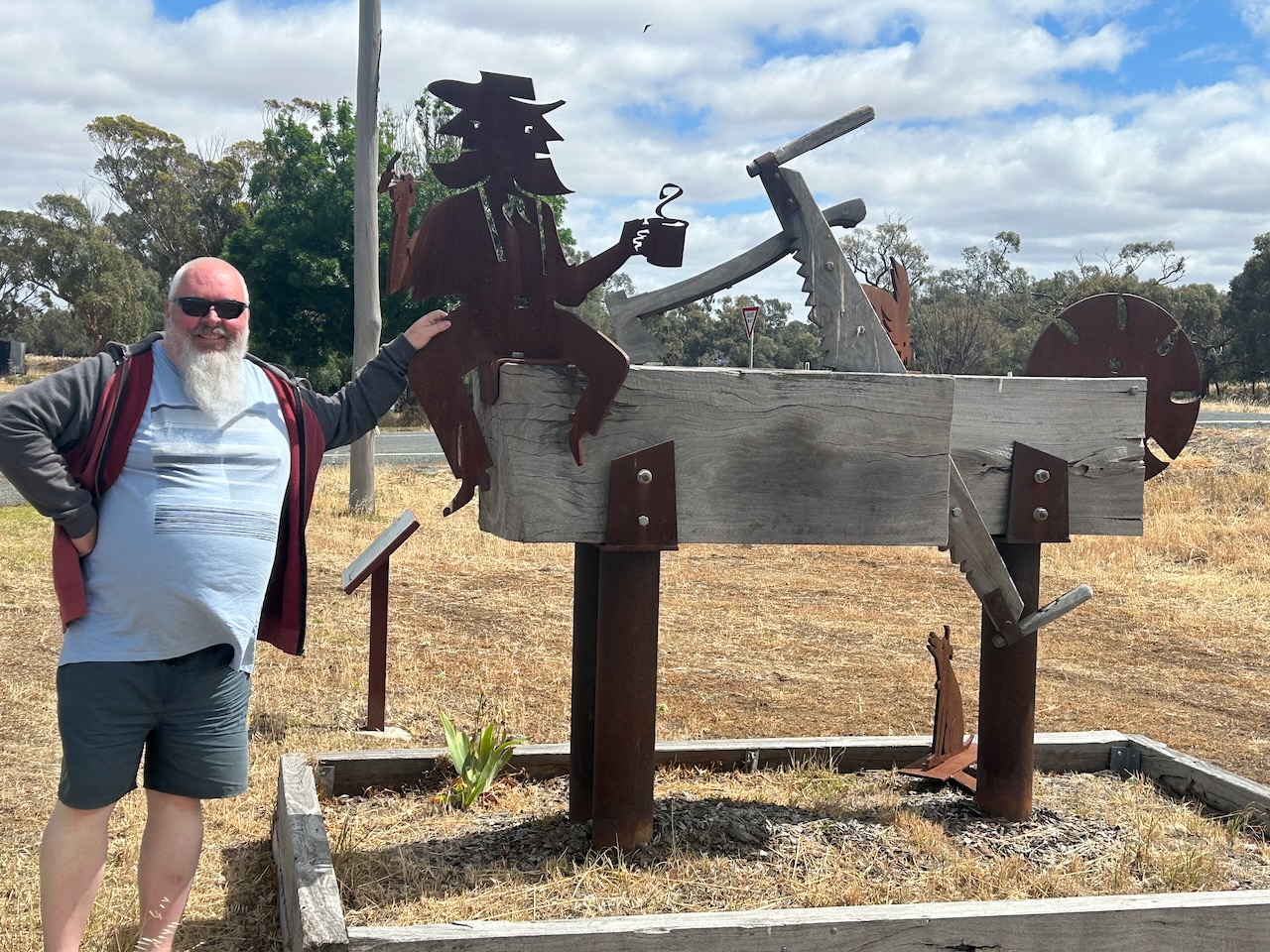
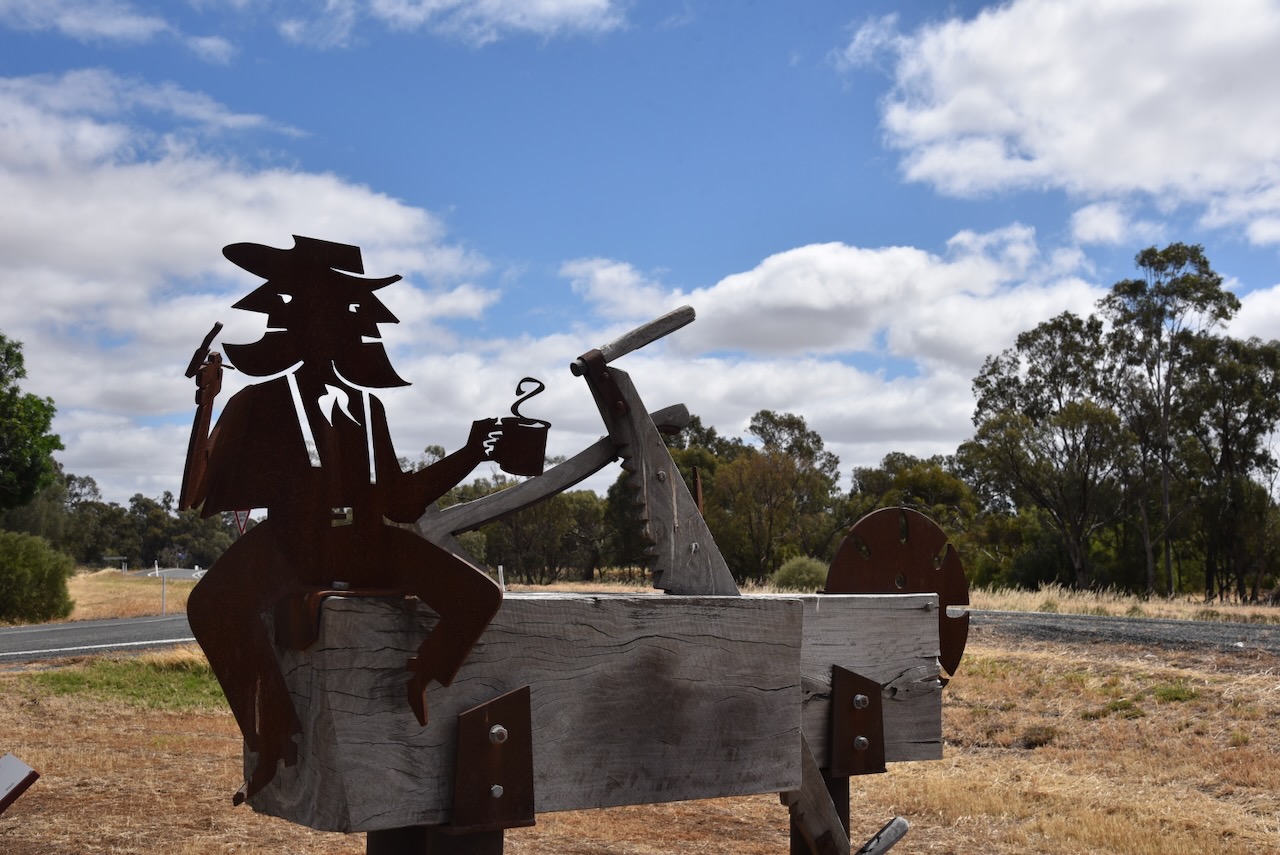
Marija and I then drove south to the town of Deniliquin, which is referred to as the ‘Ute Capital of the World.’
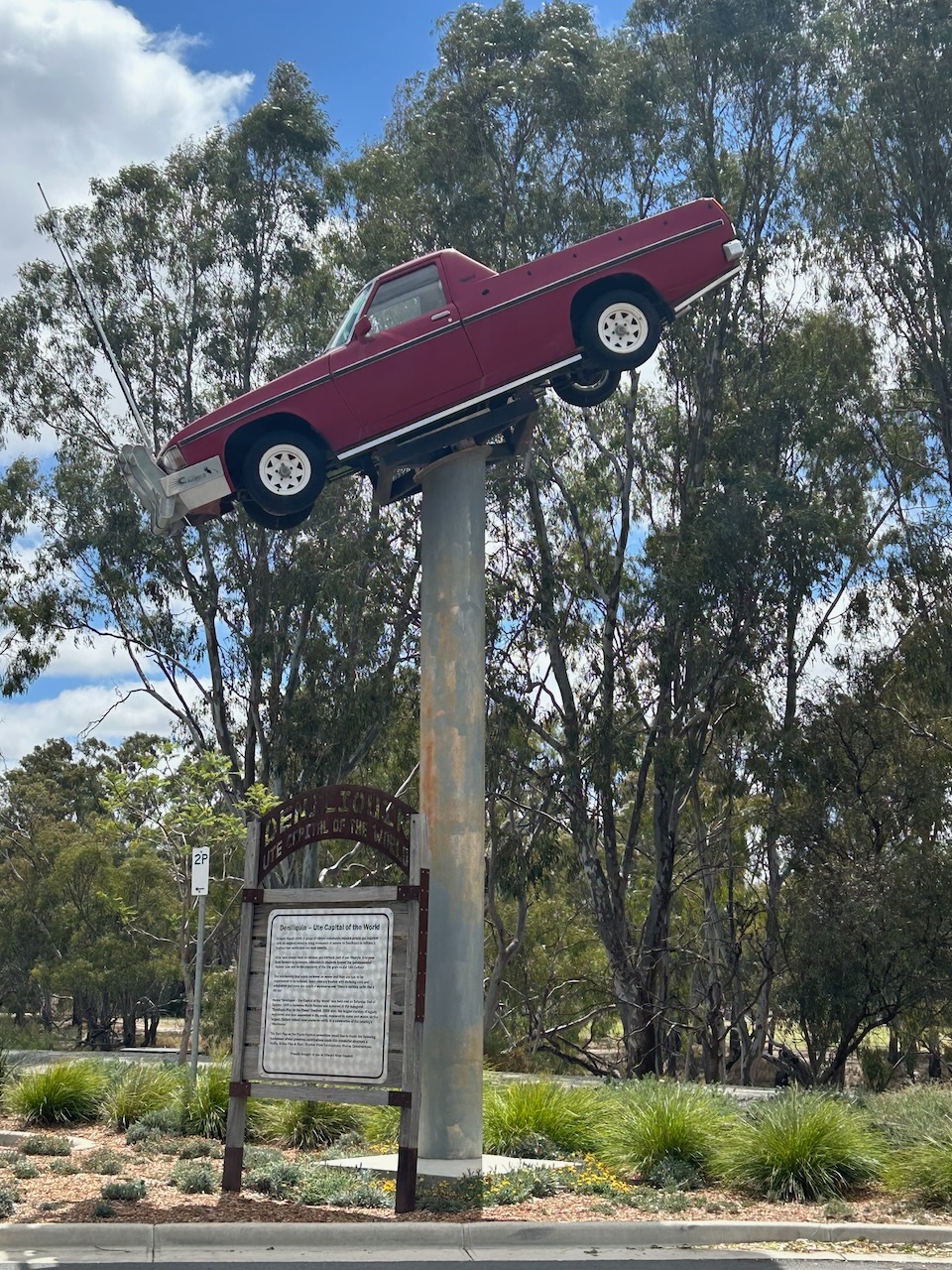
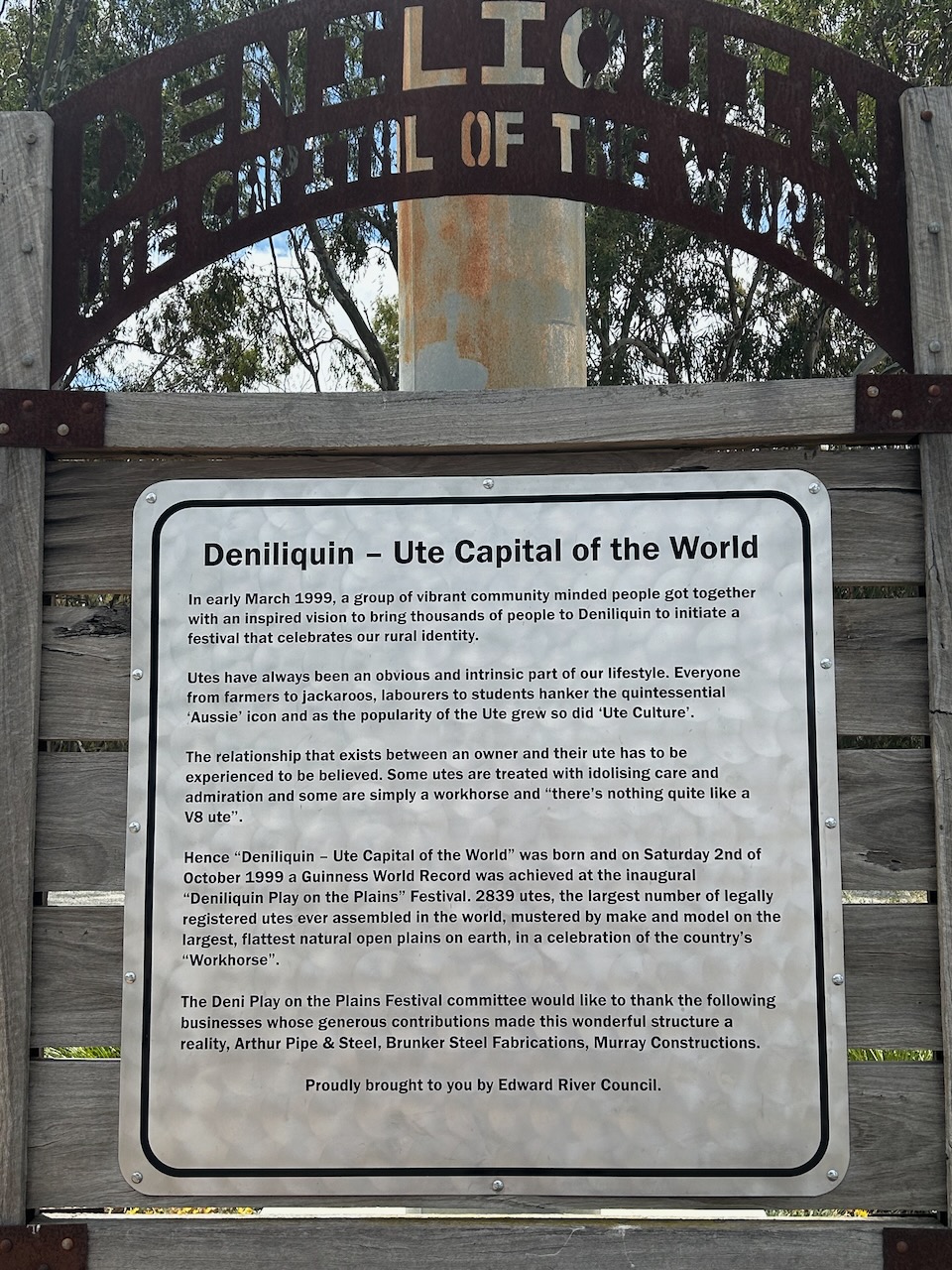
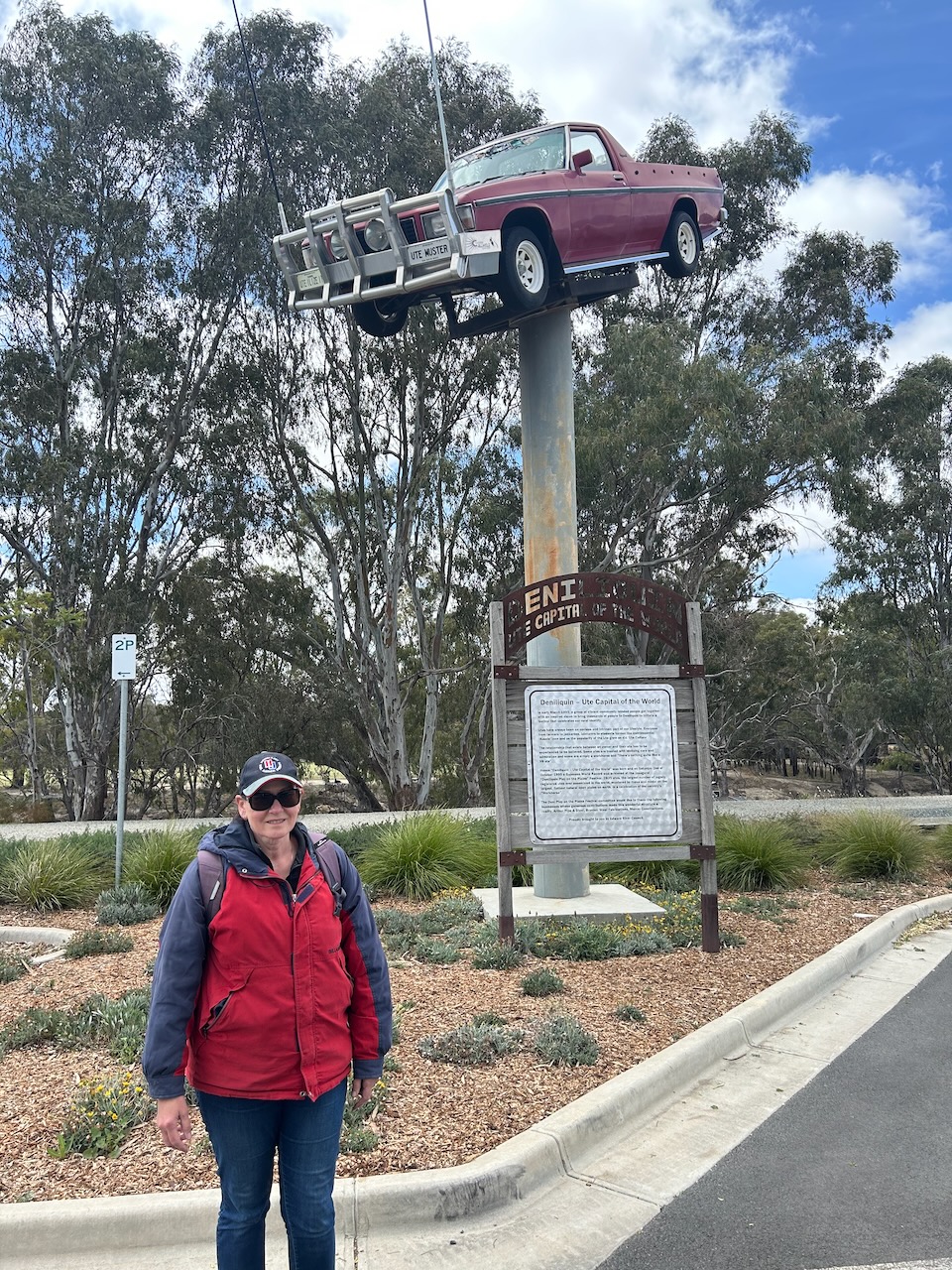
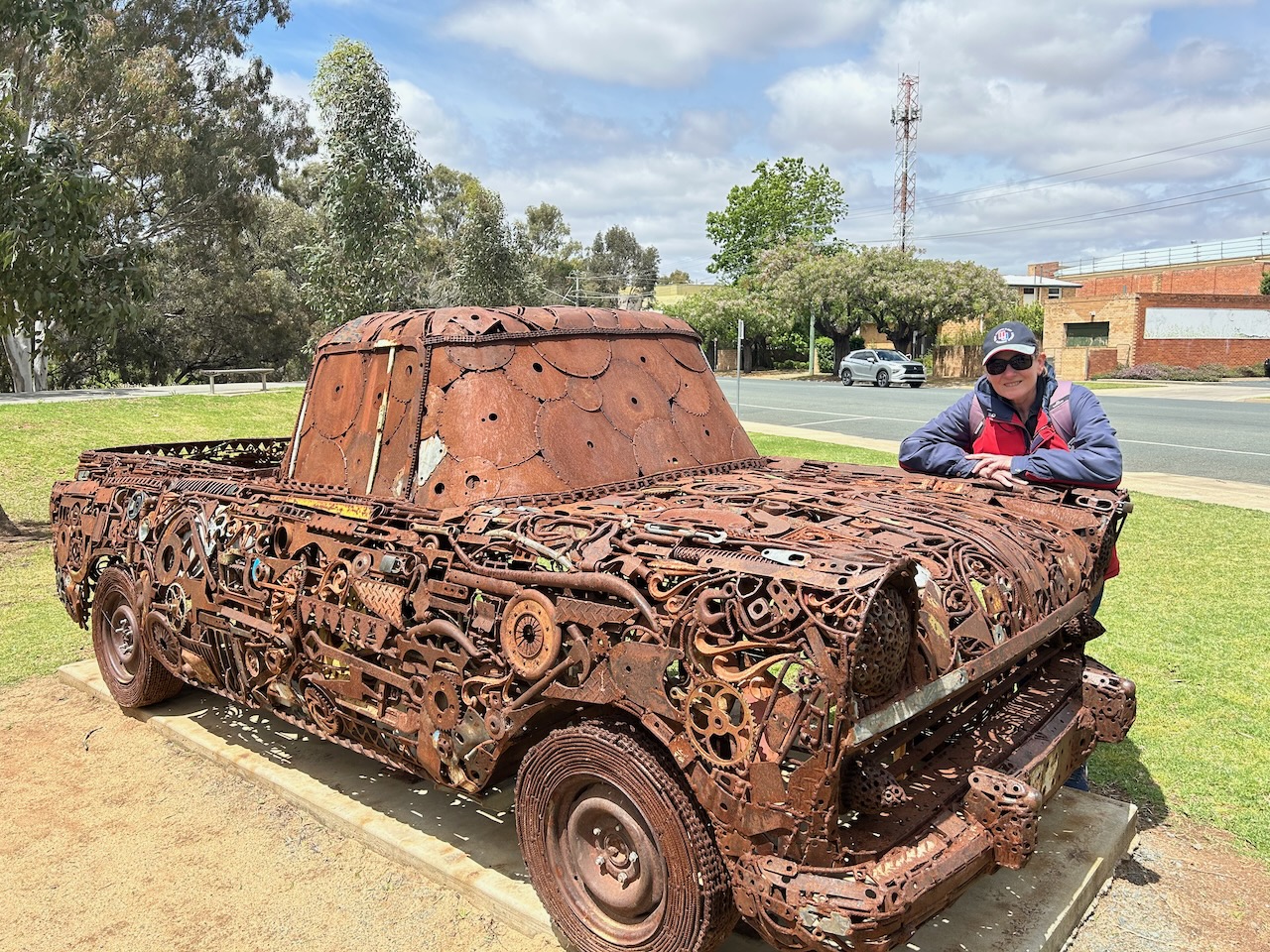
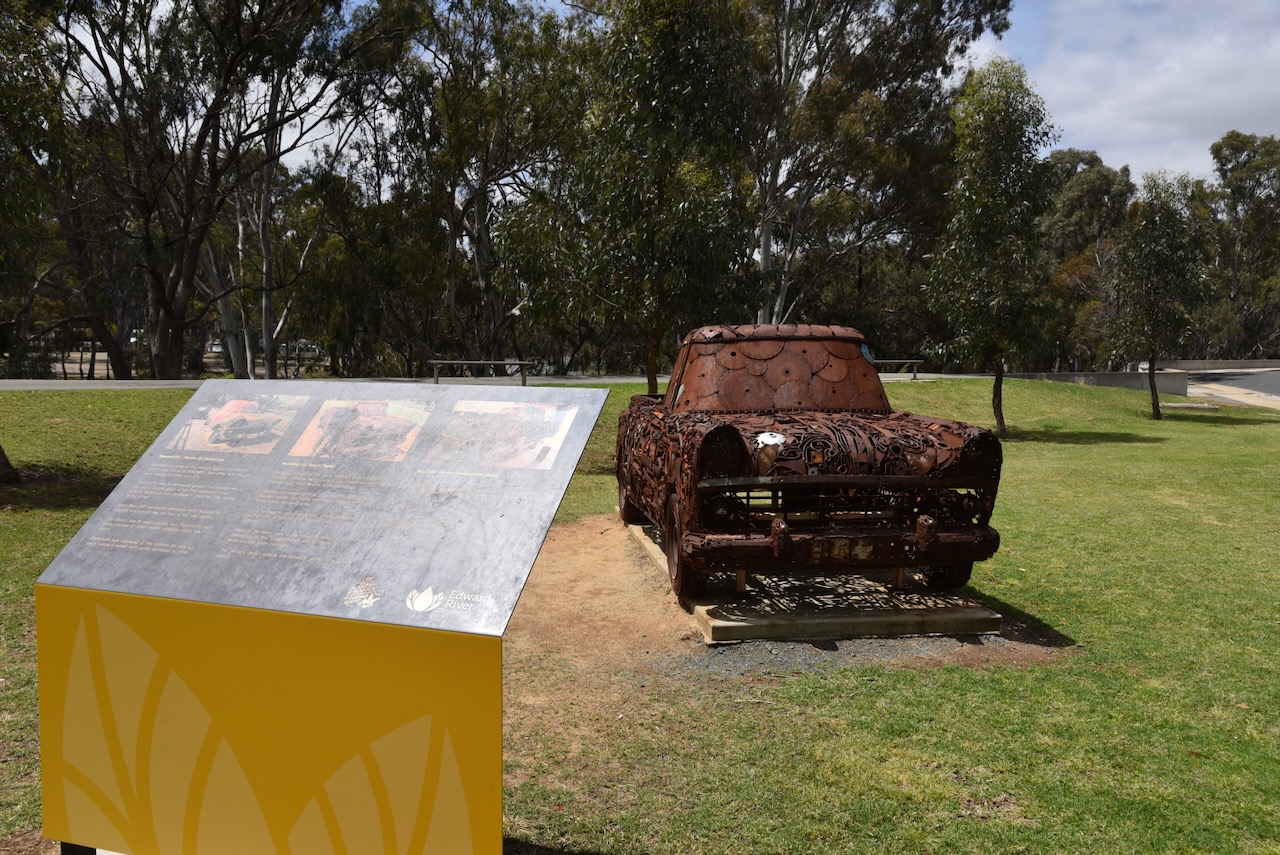
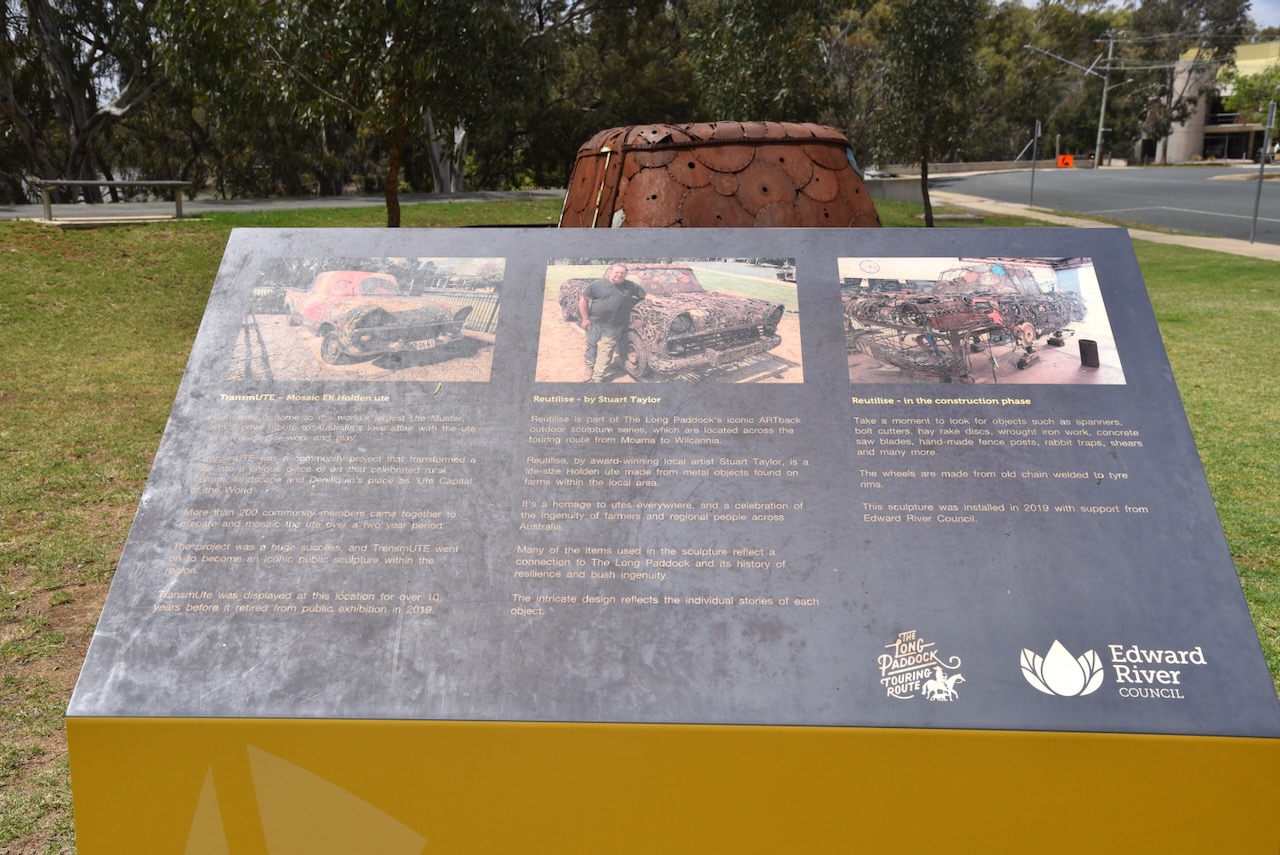
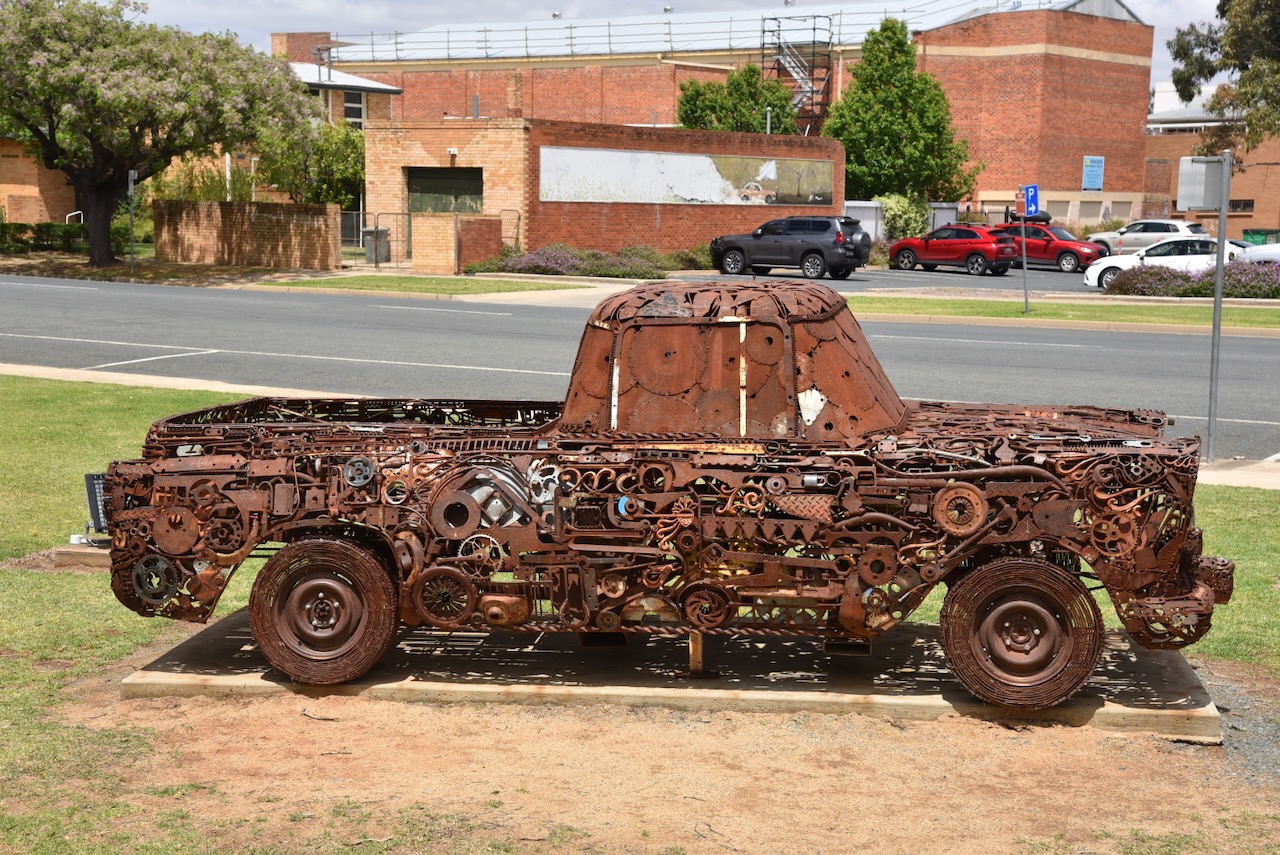
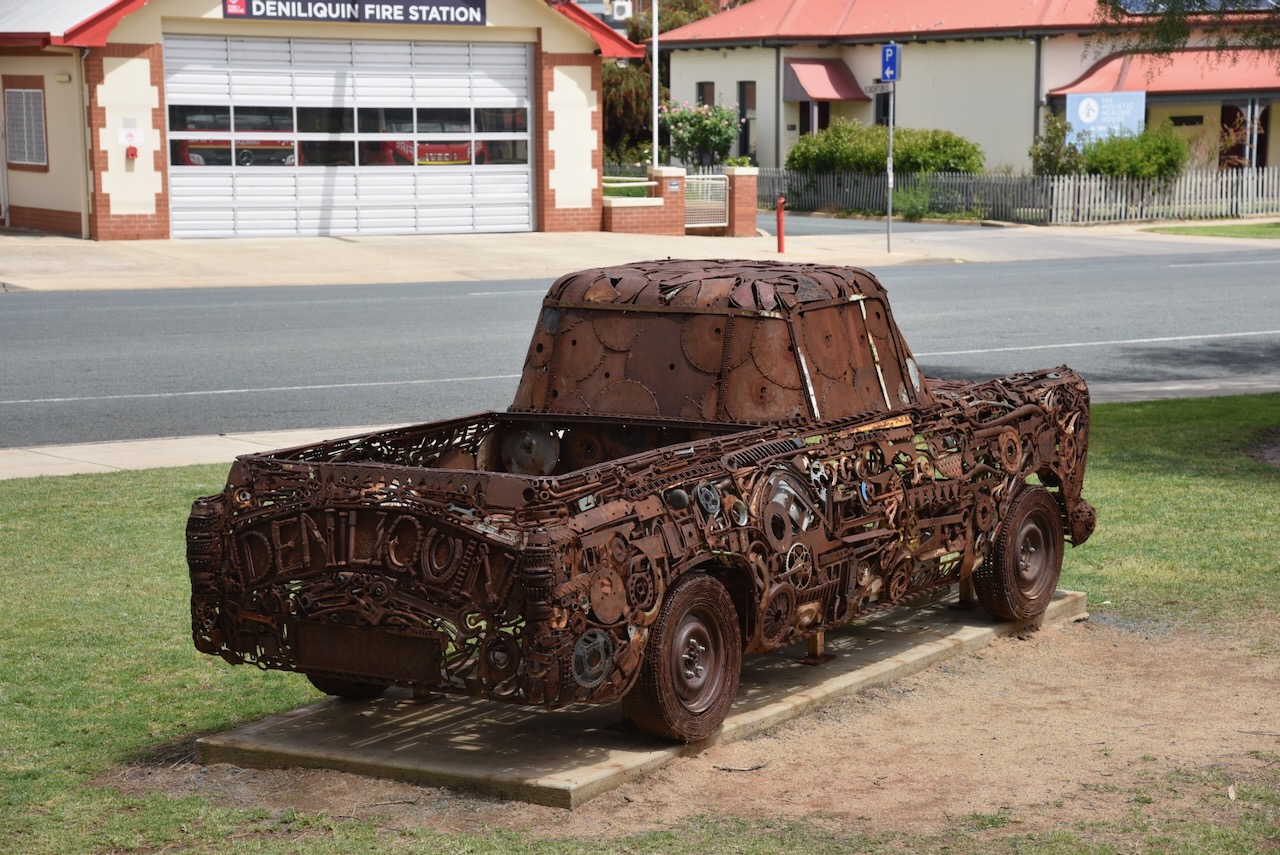
An interesting attraction in Deniliquin is the mosaic EK Holden ute, which was installed in 2019. It is constructed from various old items, including spanners, bolt cutters, hay rake discs, wrought iron work, concrete saw blades, hand-made fence posts, rabbit traps, and shears.
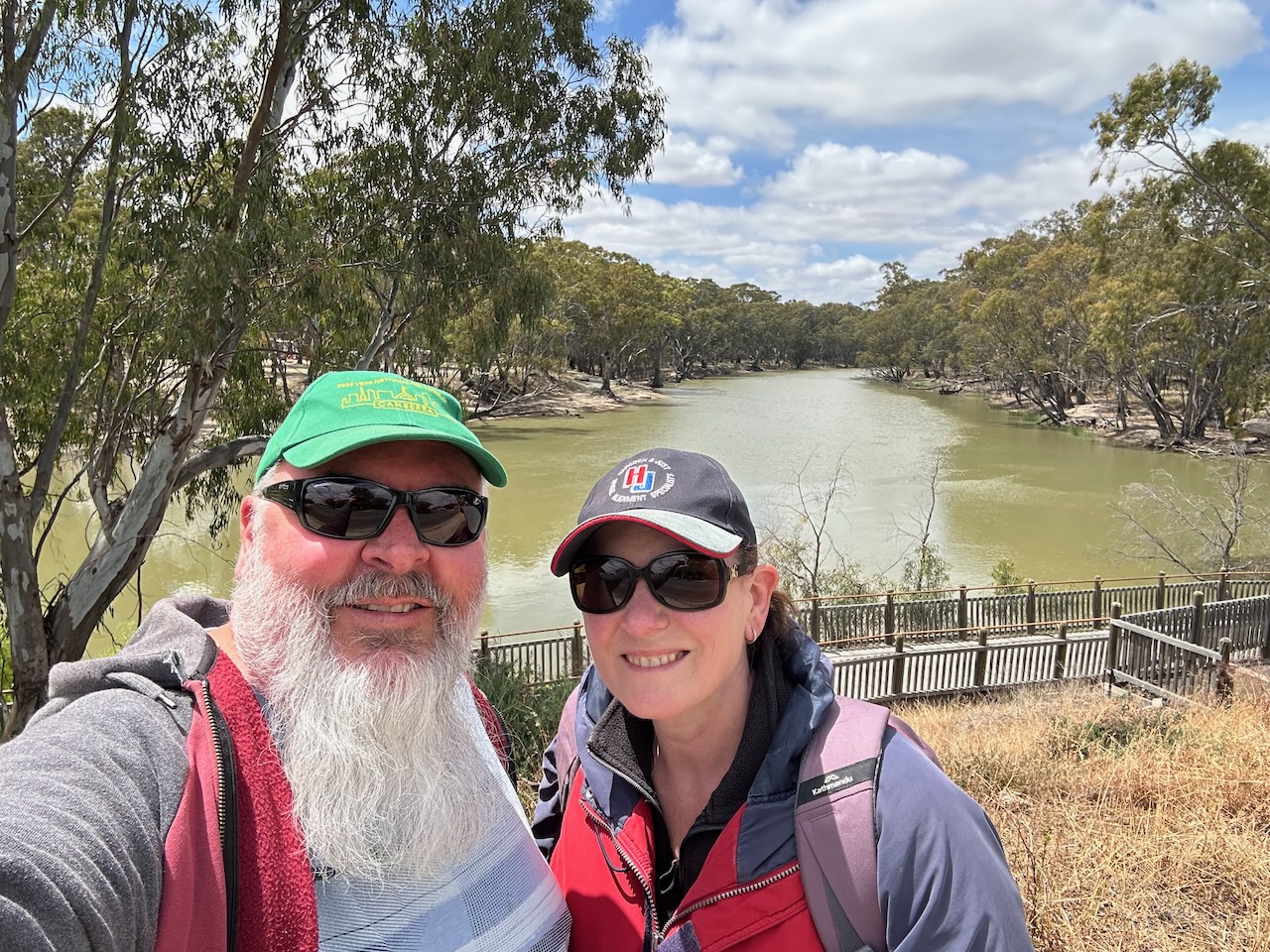
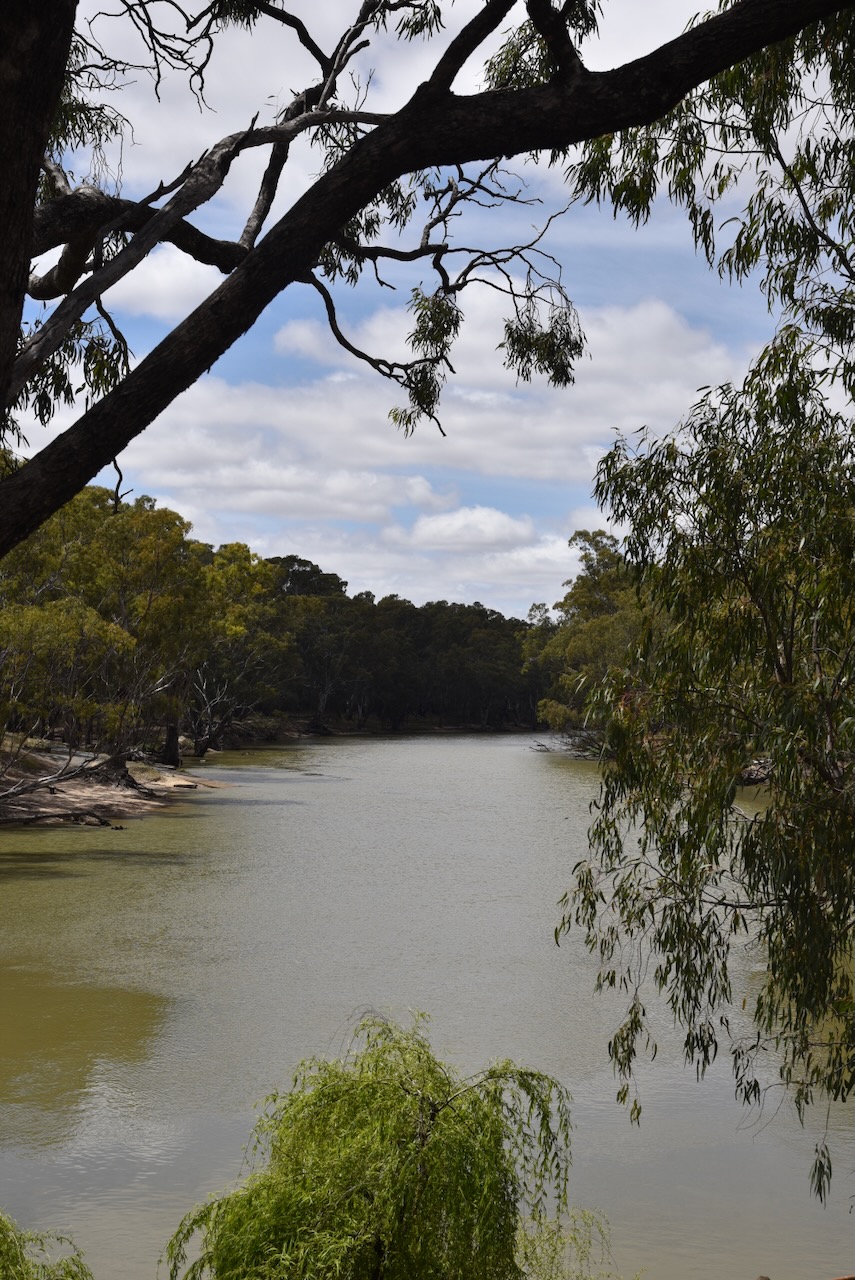
We then took some time to admire the Edward River which passes through Deniliquin.
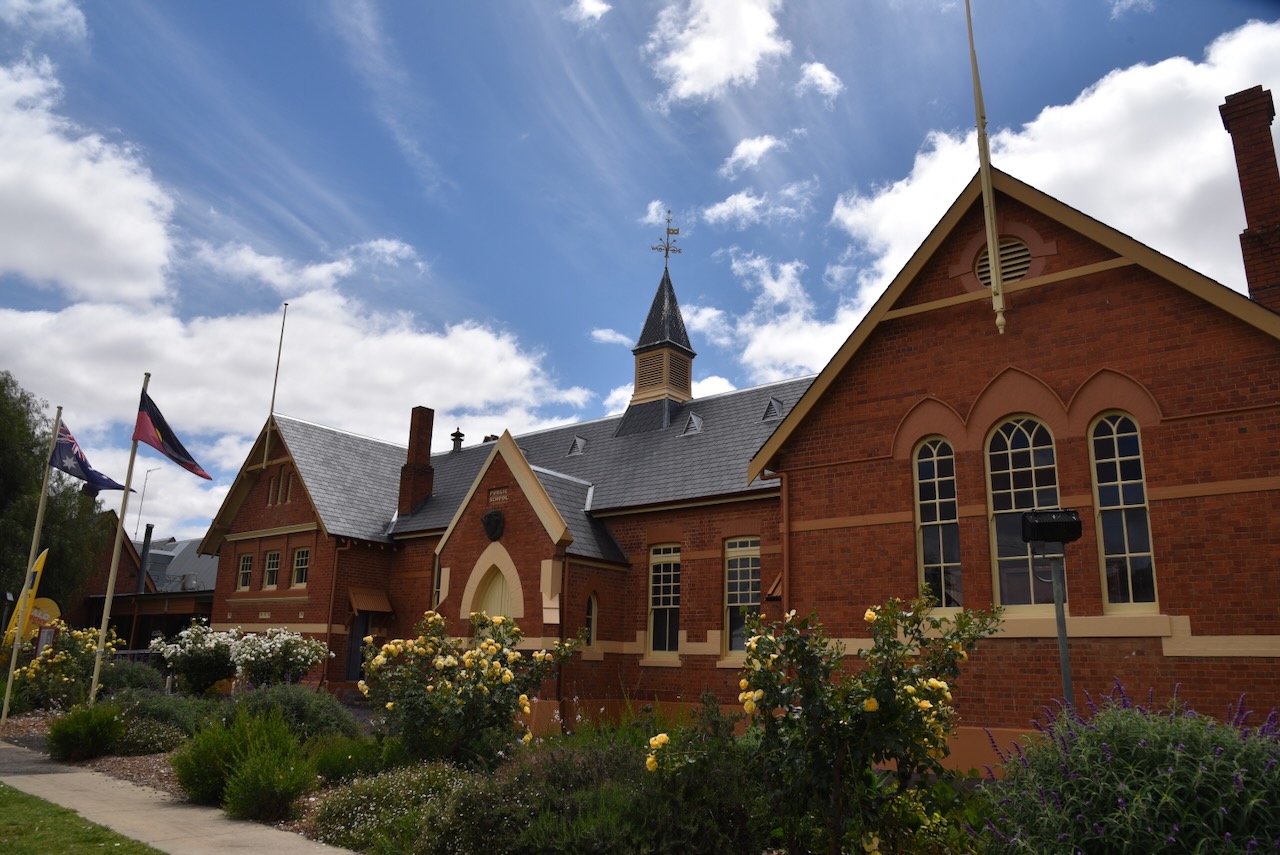
Sadly, we didn’t have much time in Deniliquin. We paid a quick visit to the Visitor Centre and Peppin Heritage Centre, which is housed in Deniliquin’s first public school.
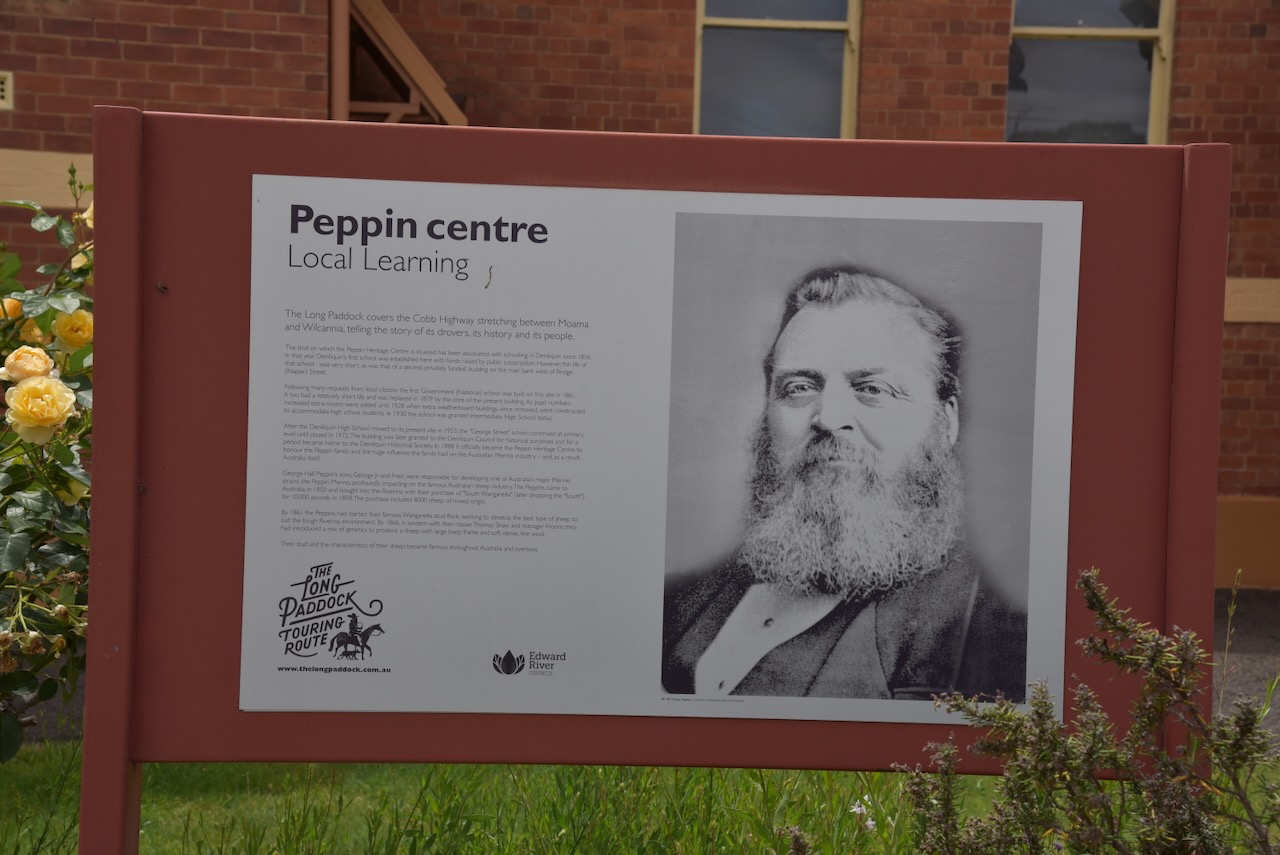
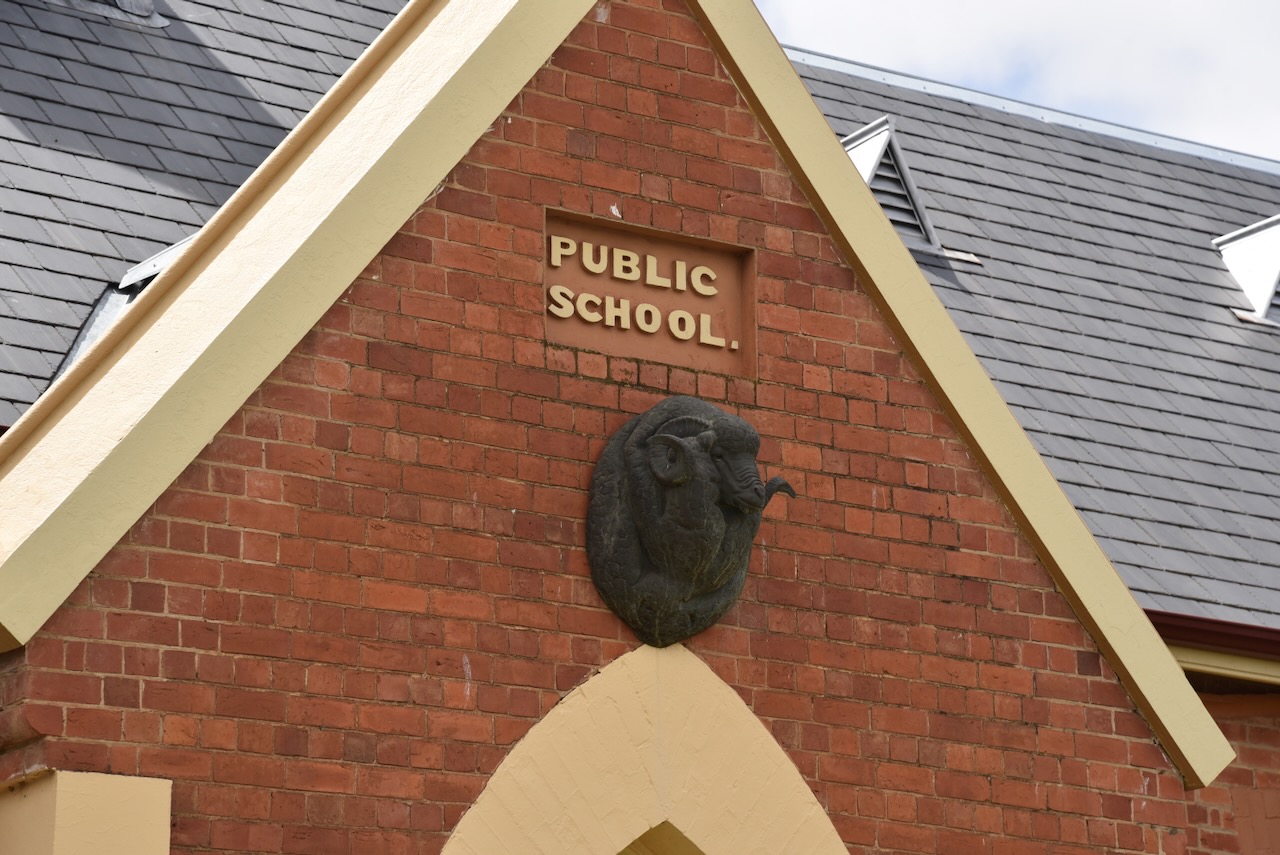
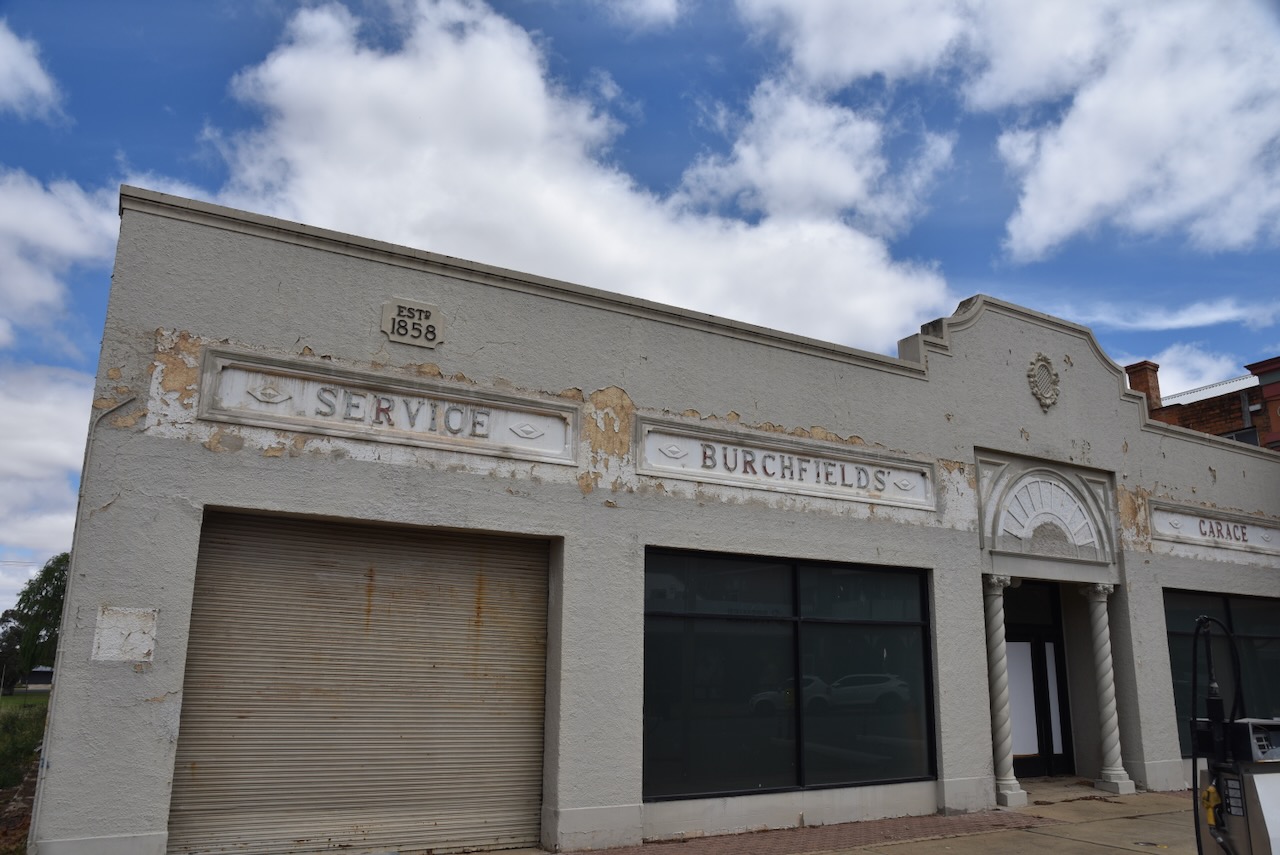
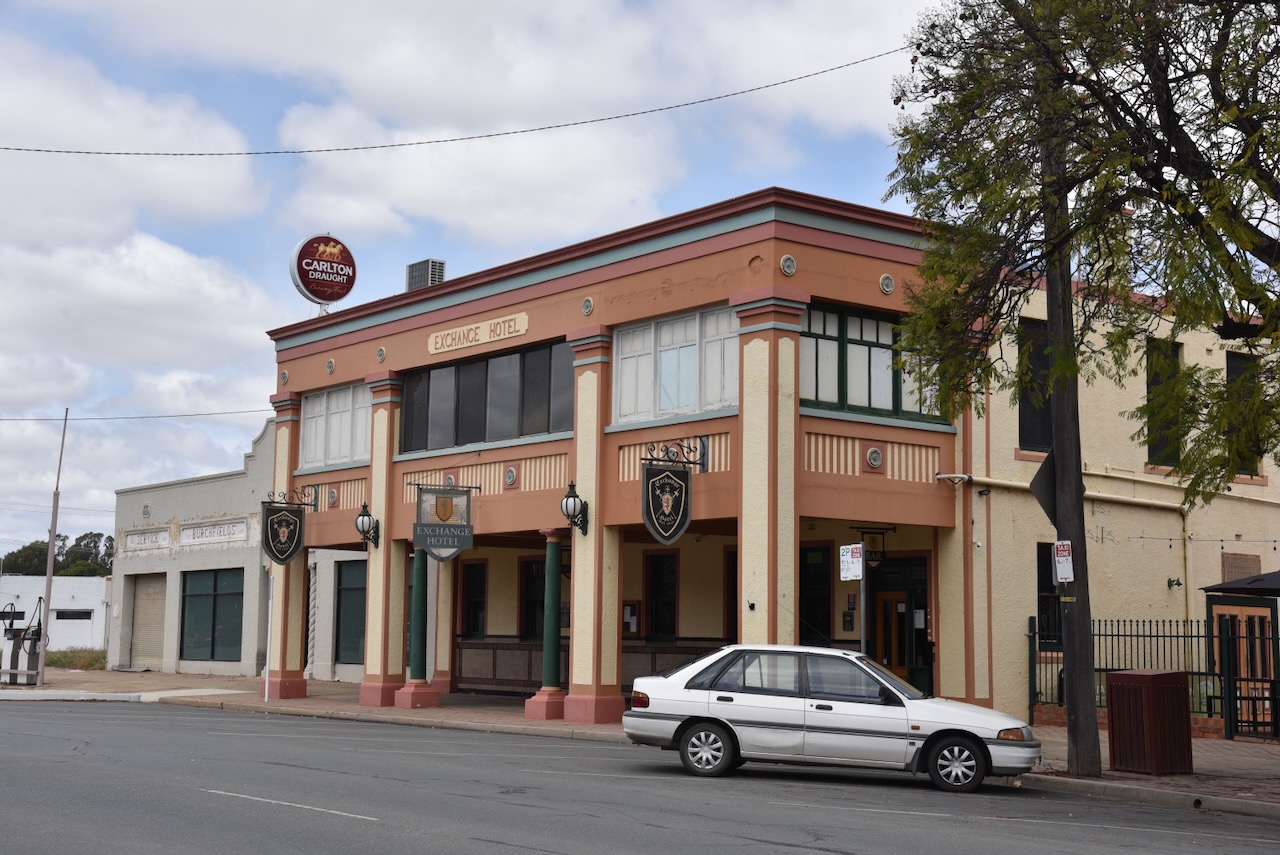
We then took a quick drive around Deniliquin, admiring the numerous historic buildings.
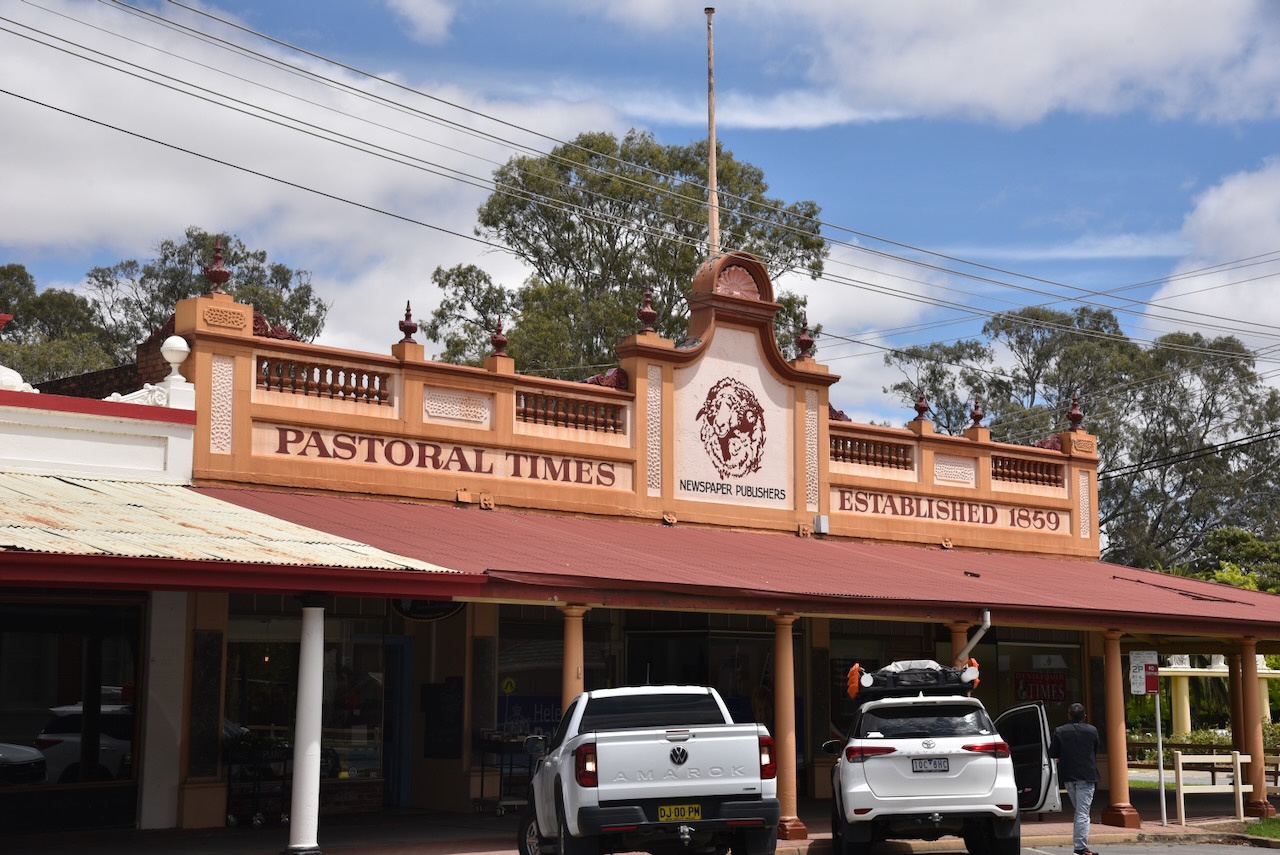
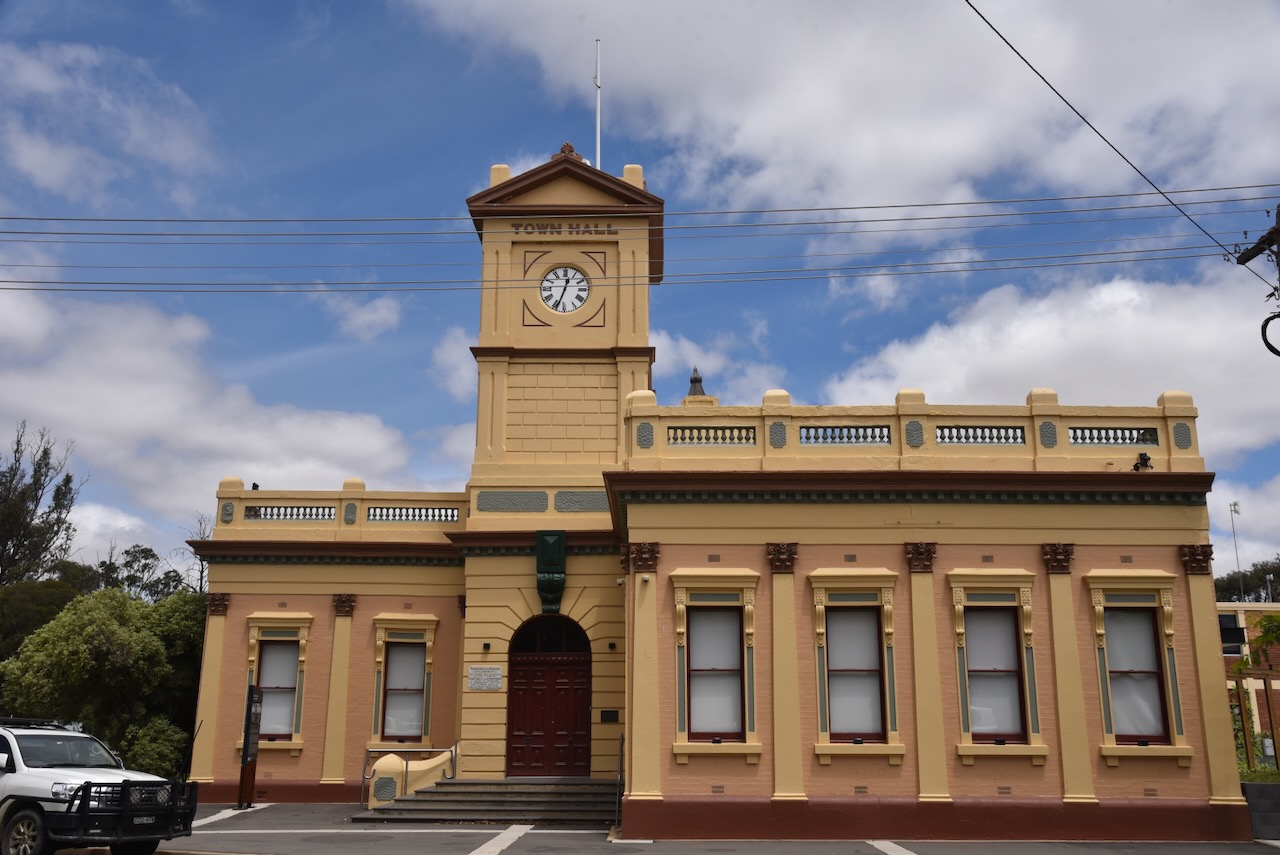
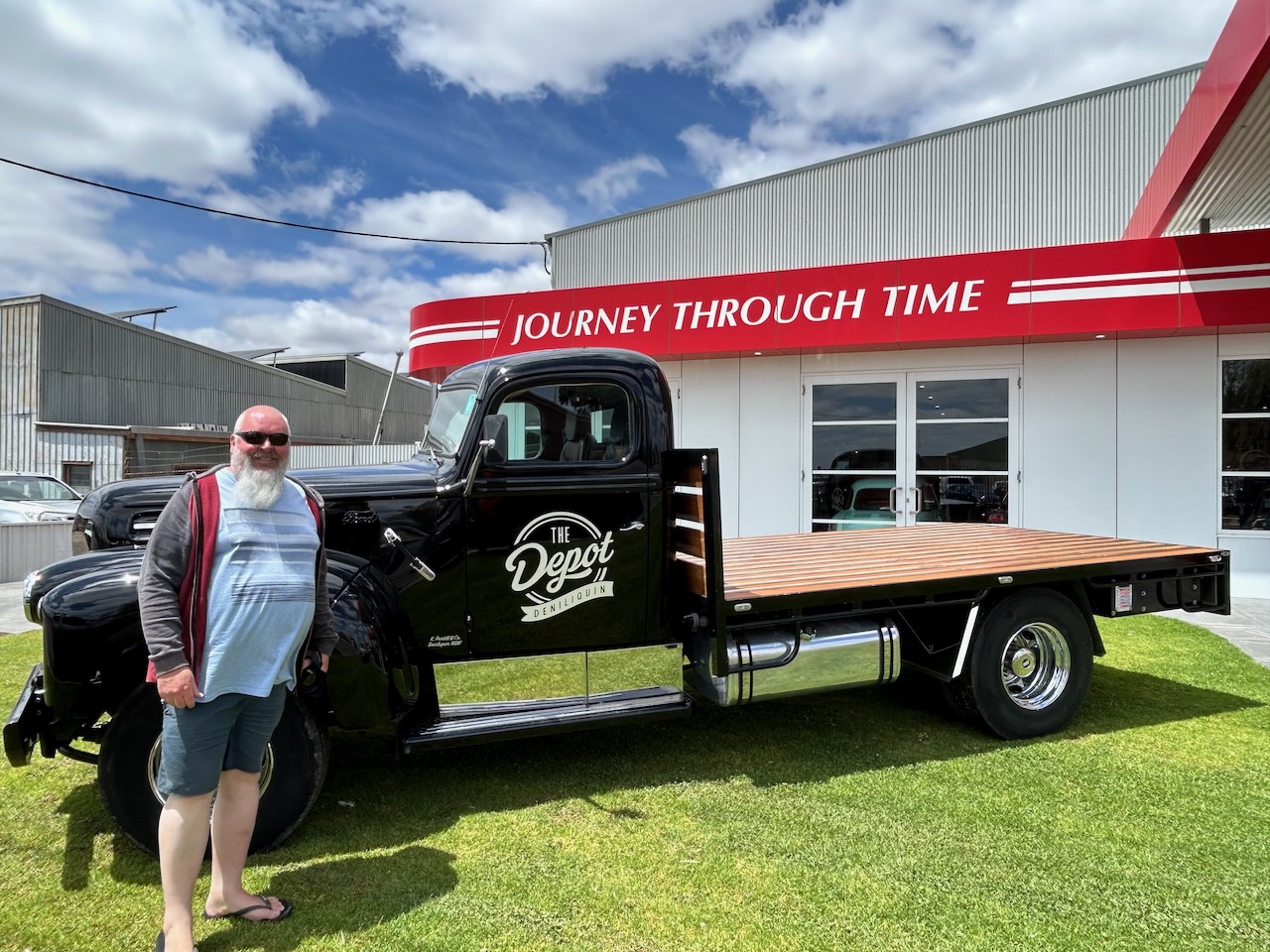
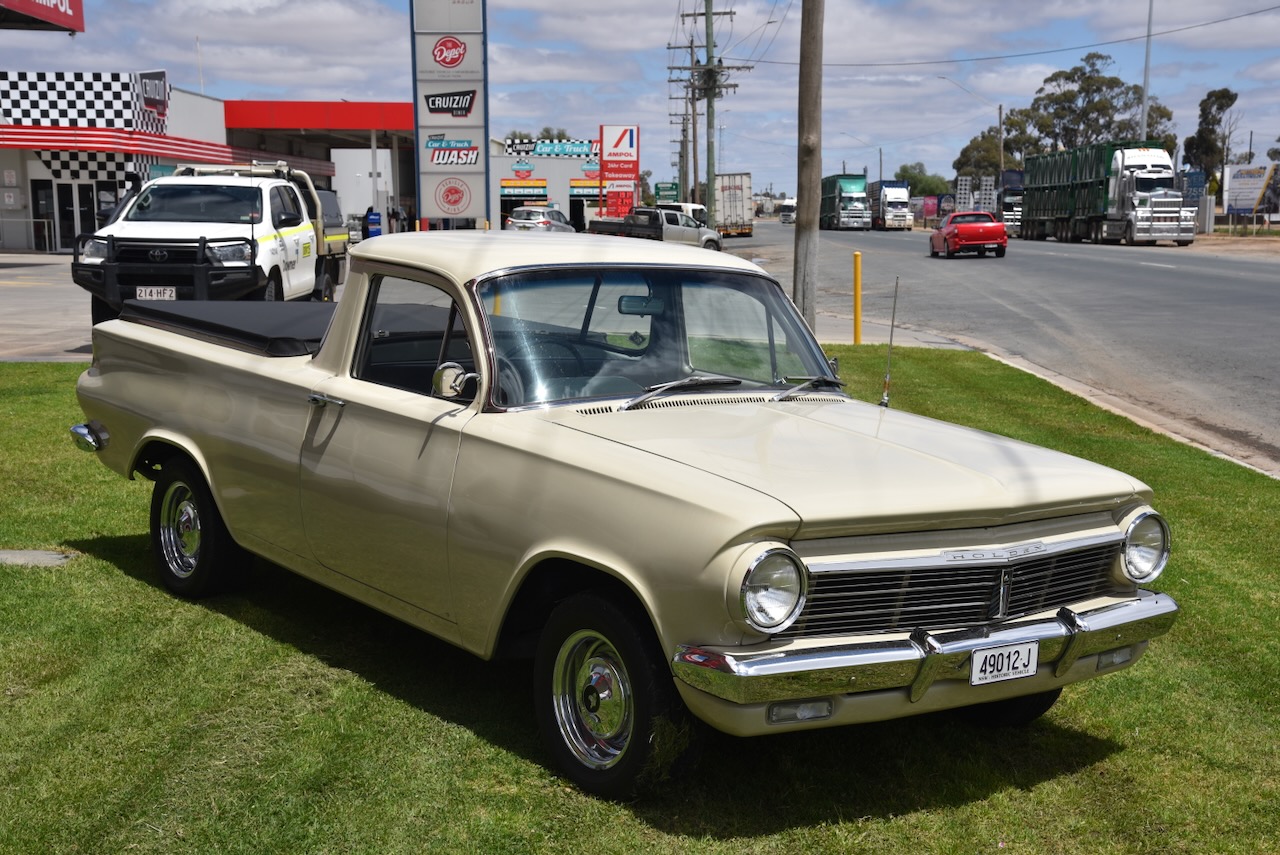
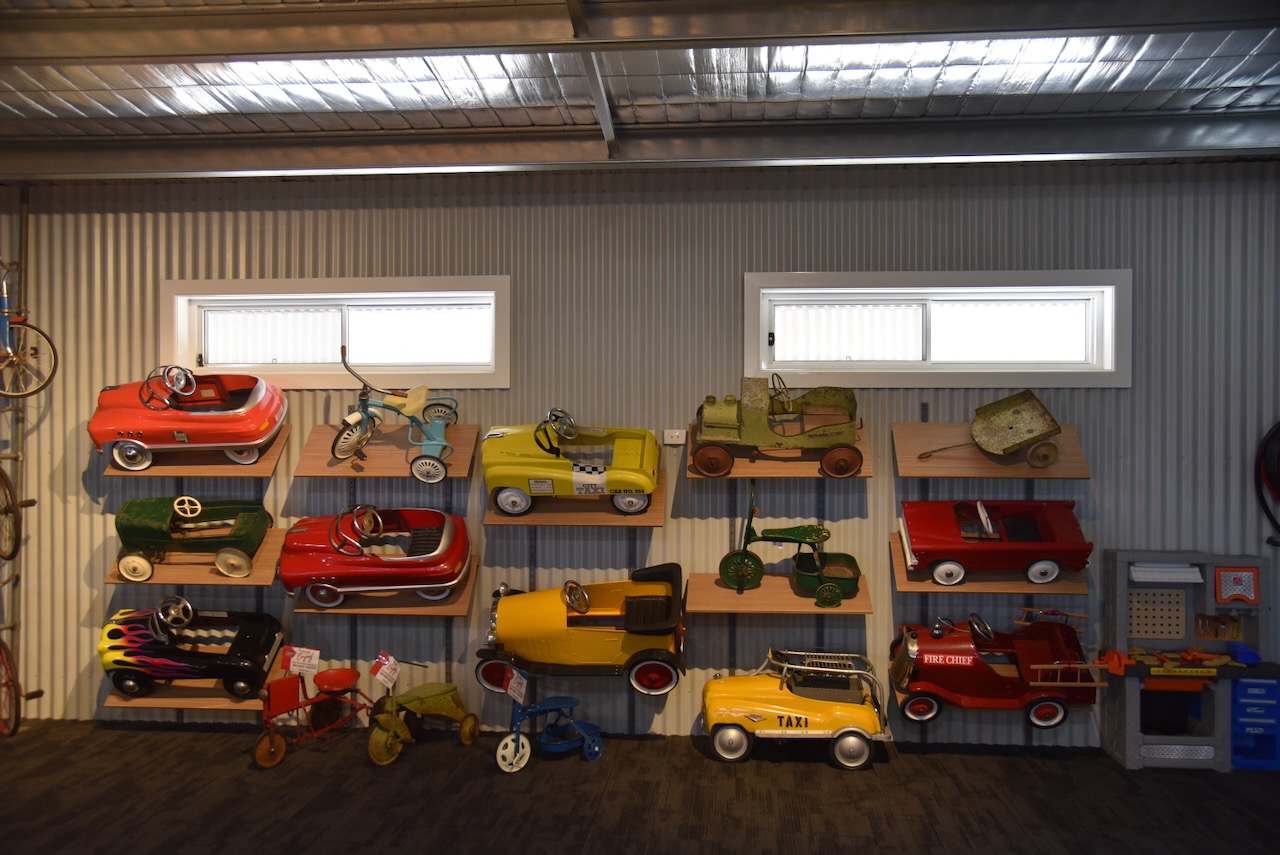
Marija and I then visited The Depot – Historic Vehicle and Memorabilia Collection at Deniliquin. Don’t let the outside deceive you; this is an absolutely magnificent motor museum. Parked out the front was a beautiful 1946 Ford Kailbar and an iconic Holden EH ute.
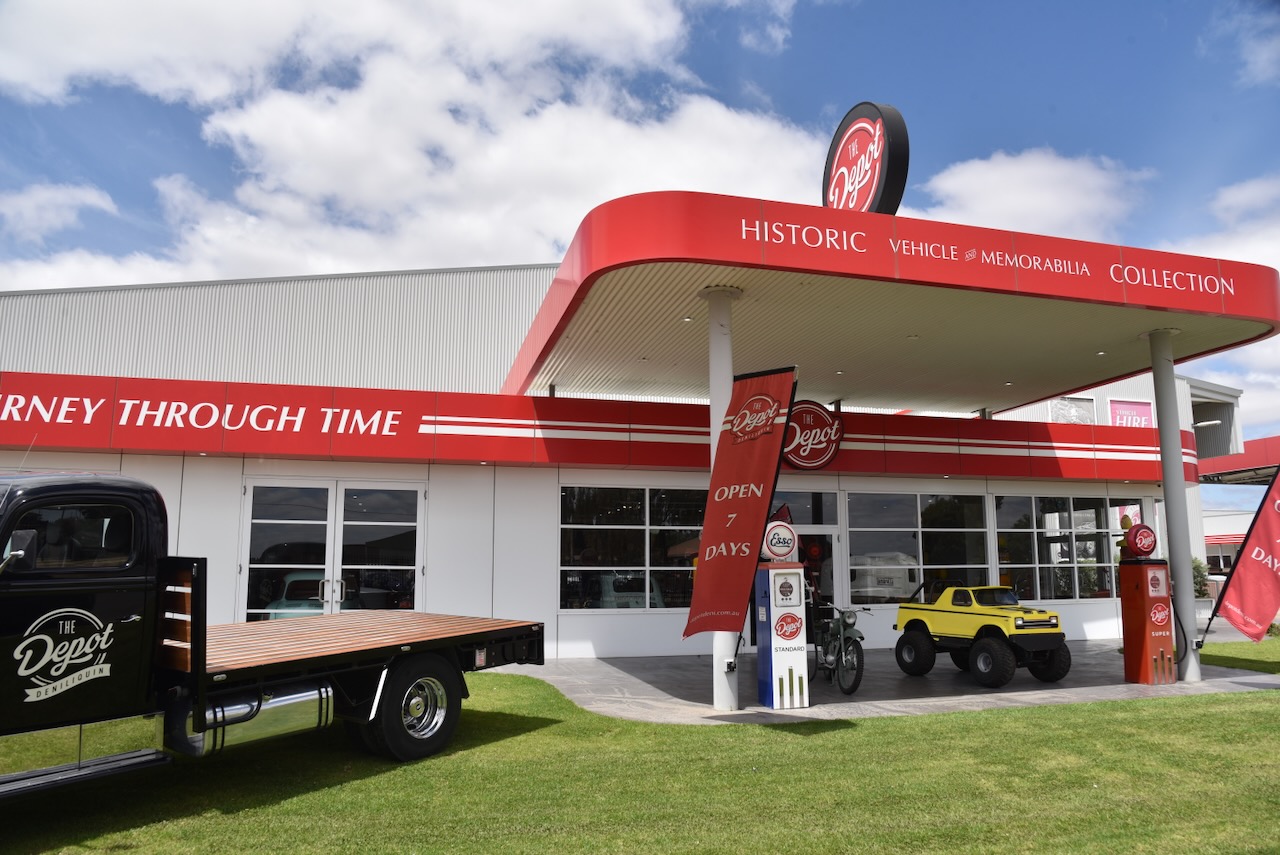
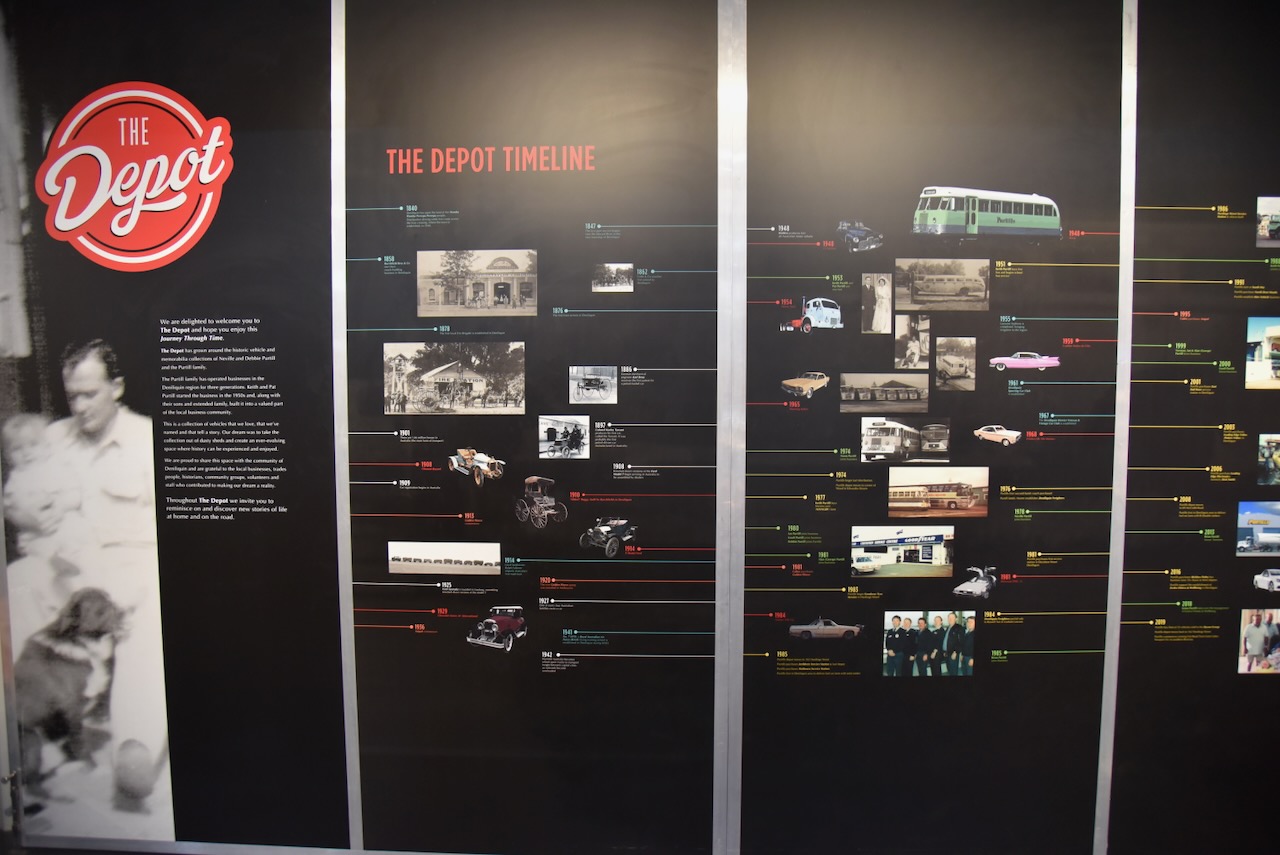
You can read about the history of The Depot on the museum’s Depot Timeline.
In the foyer, you can find the quirky vehicles below, including the Italian-manufactured Lambretta three-wheeler.
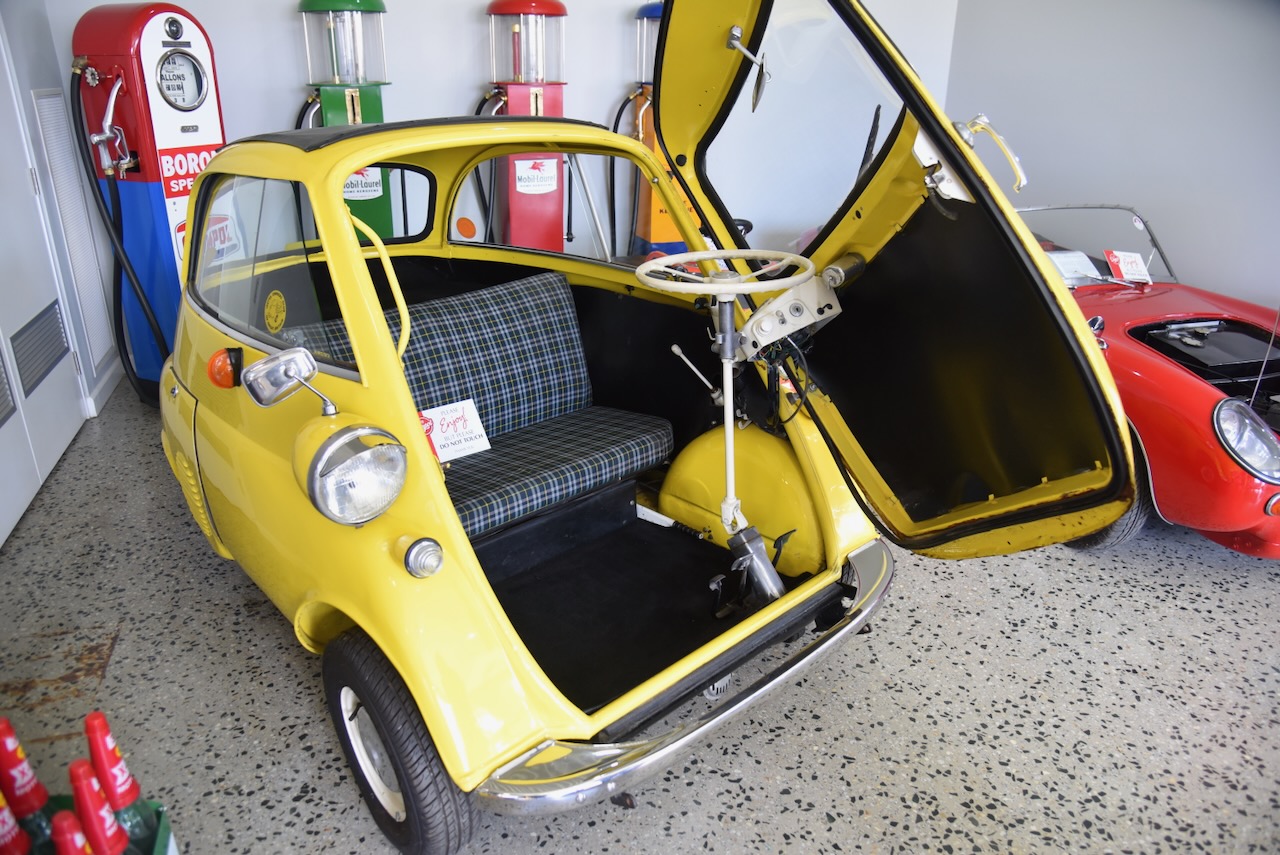
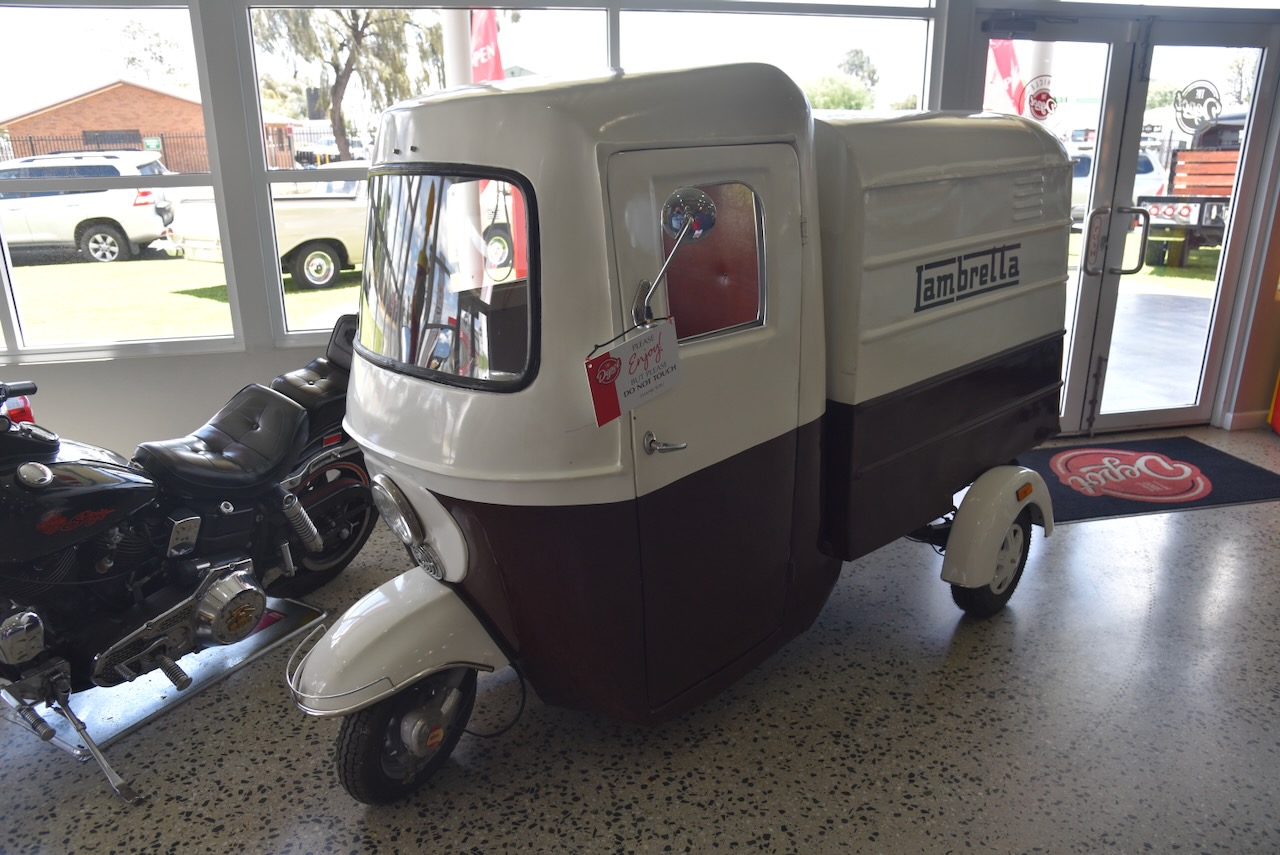
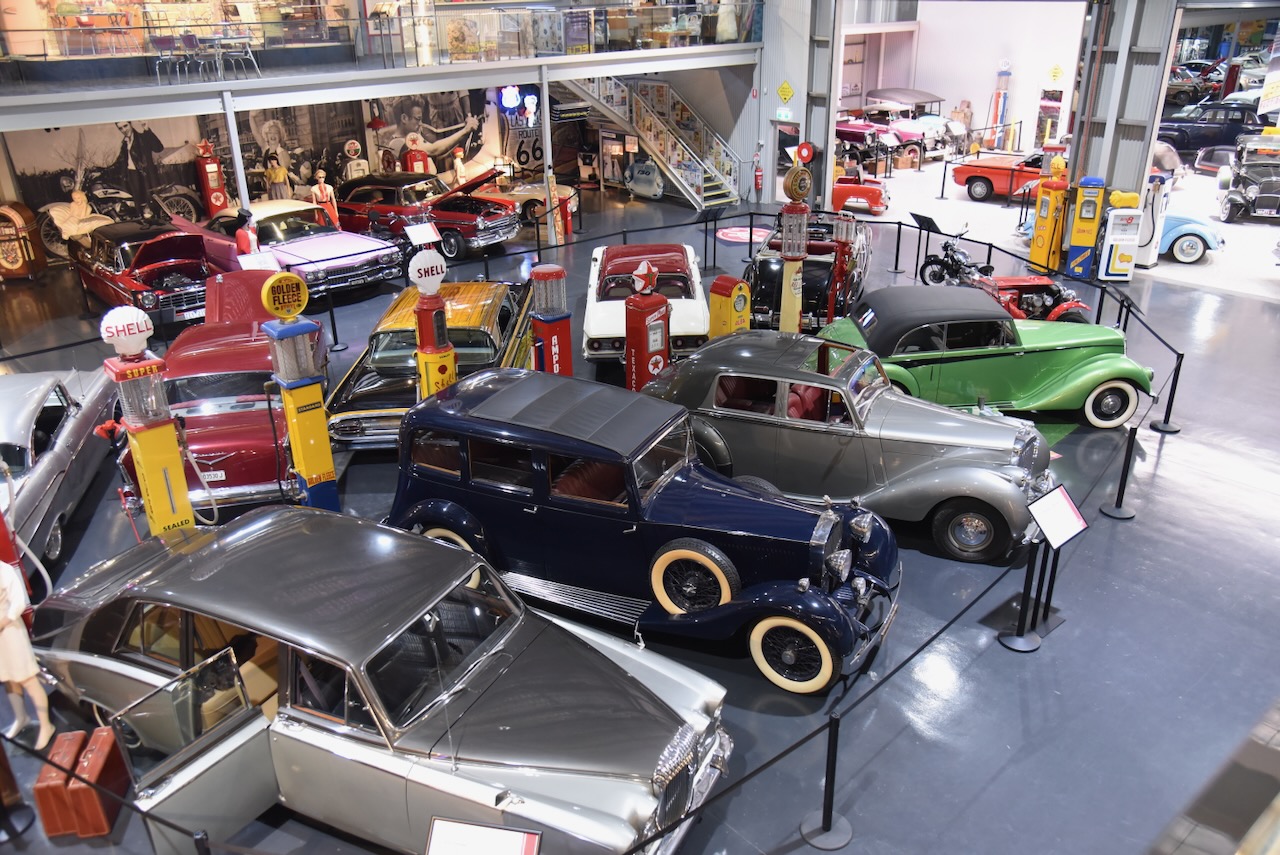
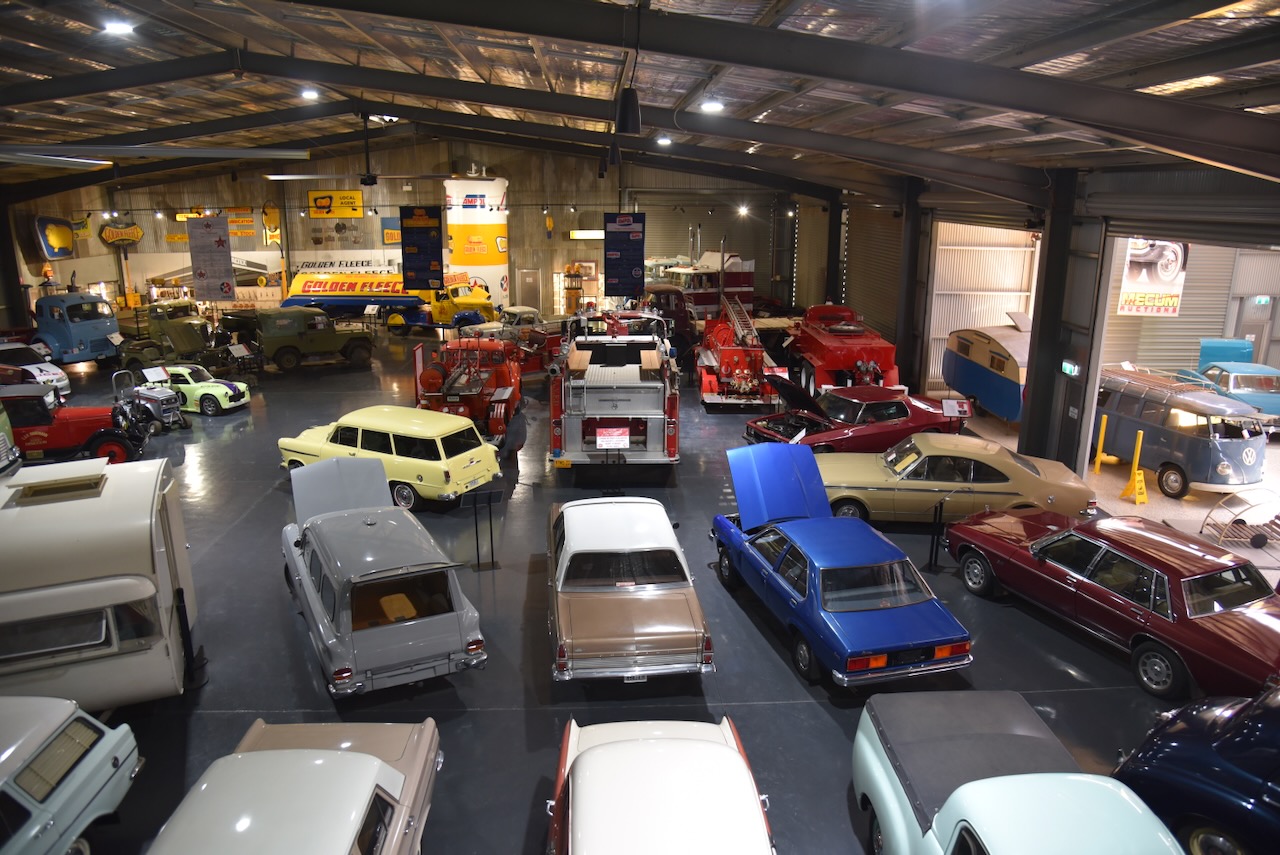
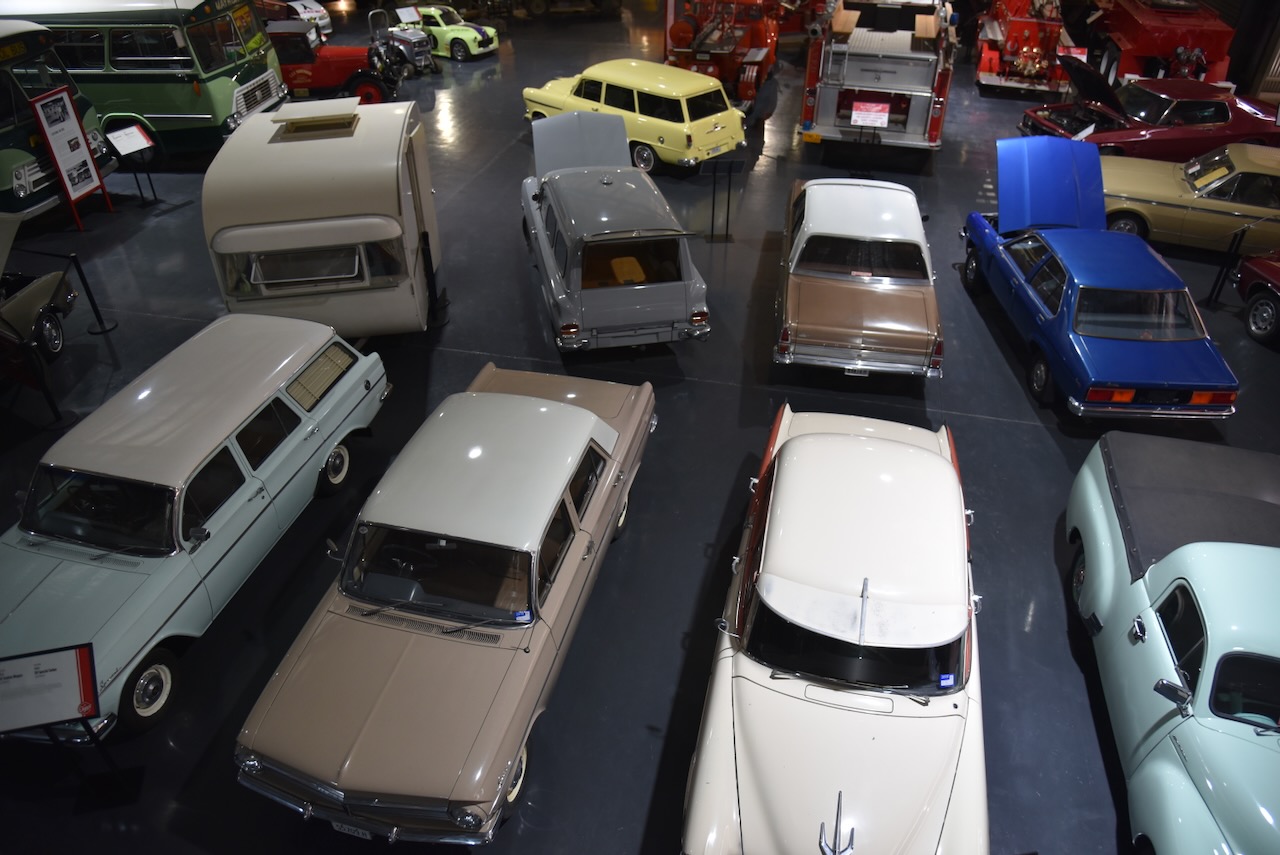
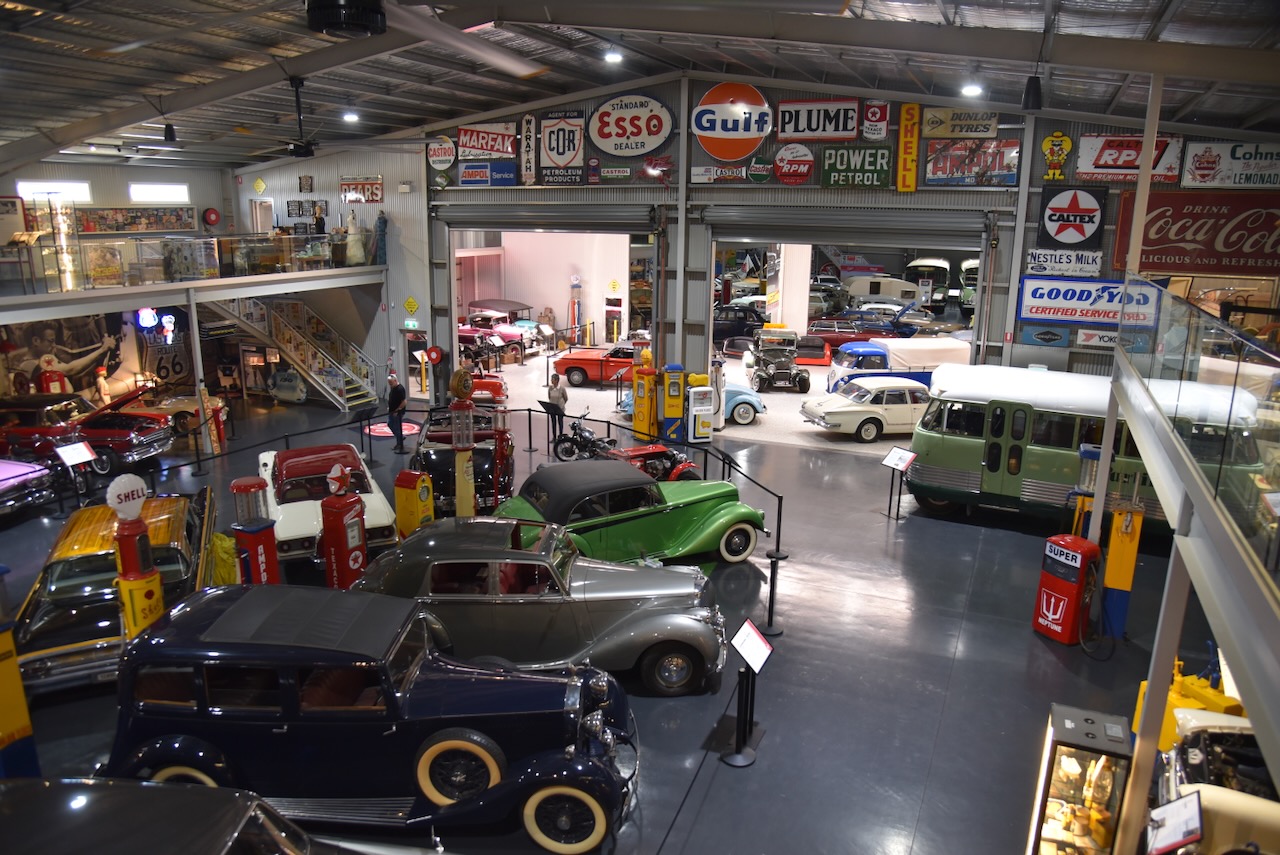
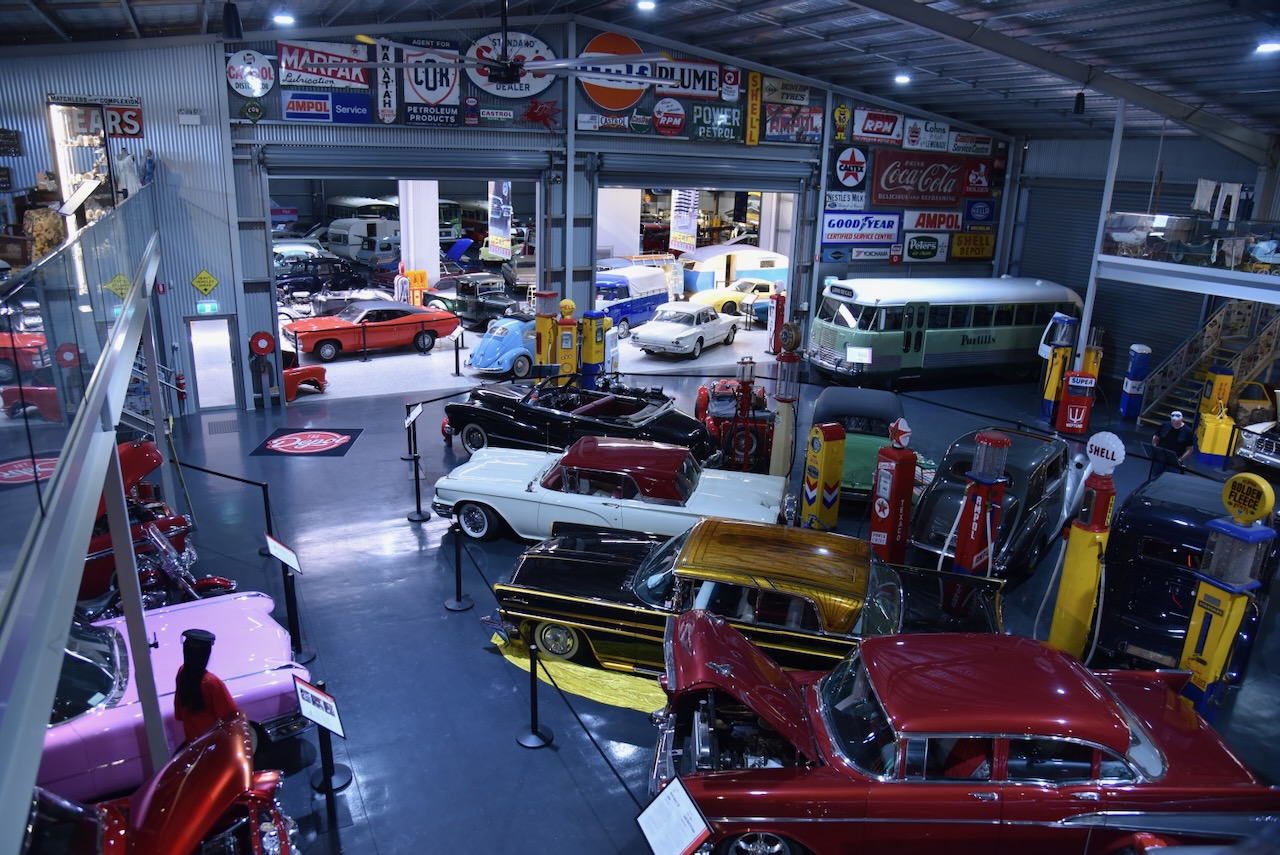
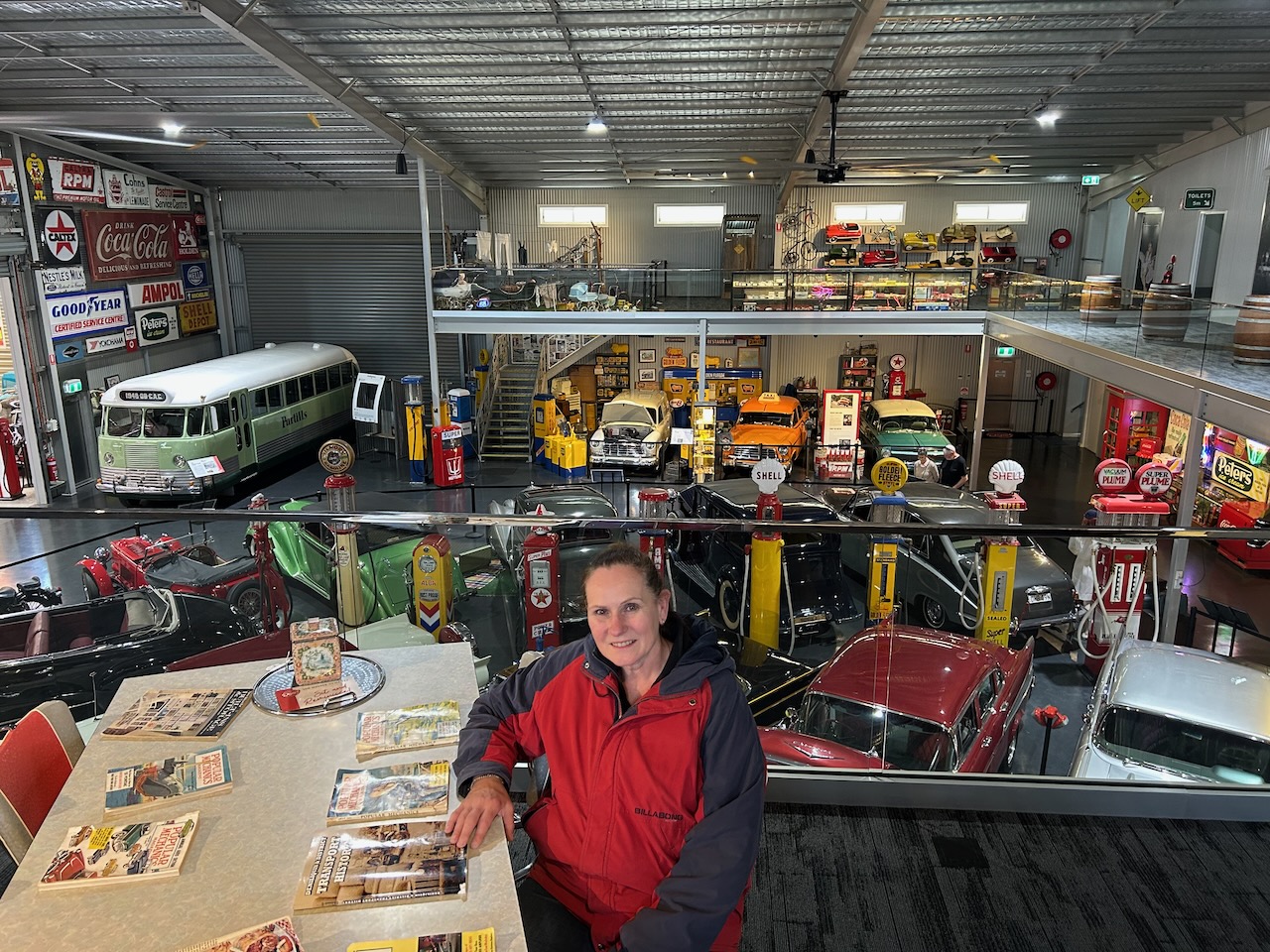
After entering the museum foyer and paying for our tickets, we walked into the display area. Wow, wow, and wow! You are rewarded with a large display of vehicles on two levels.
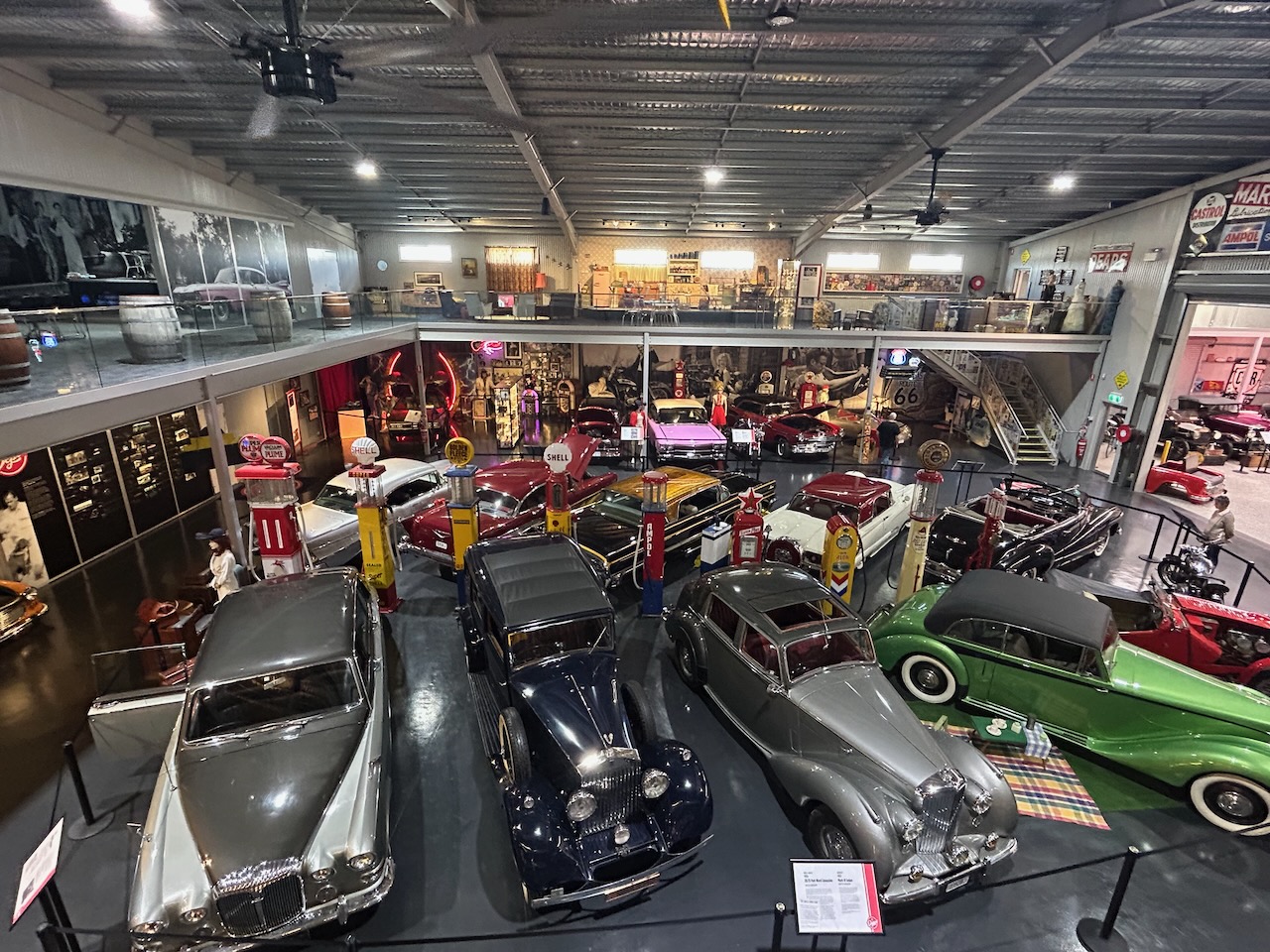
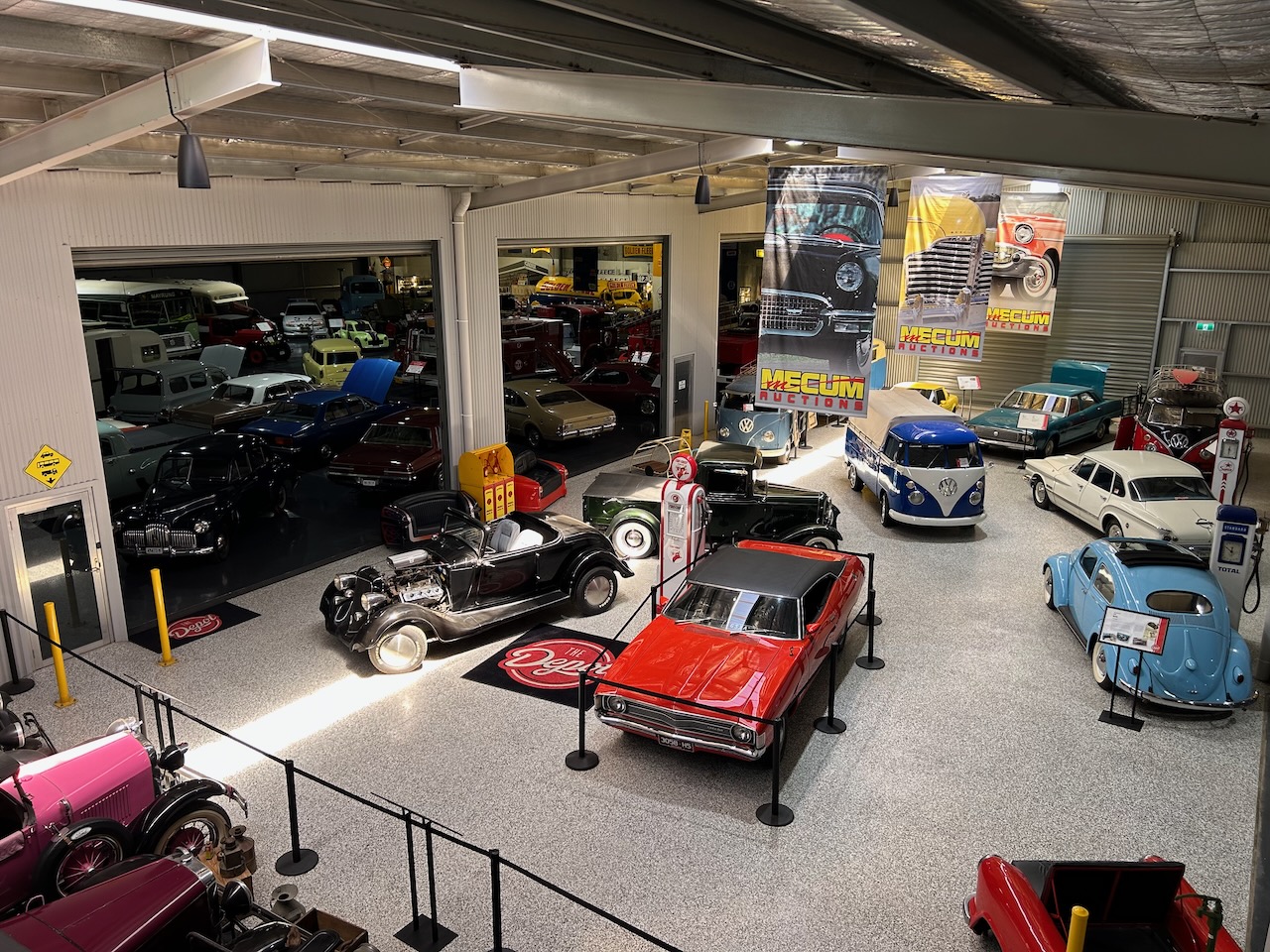
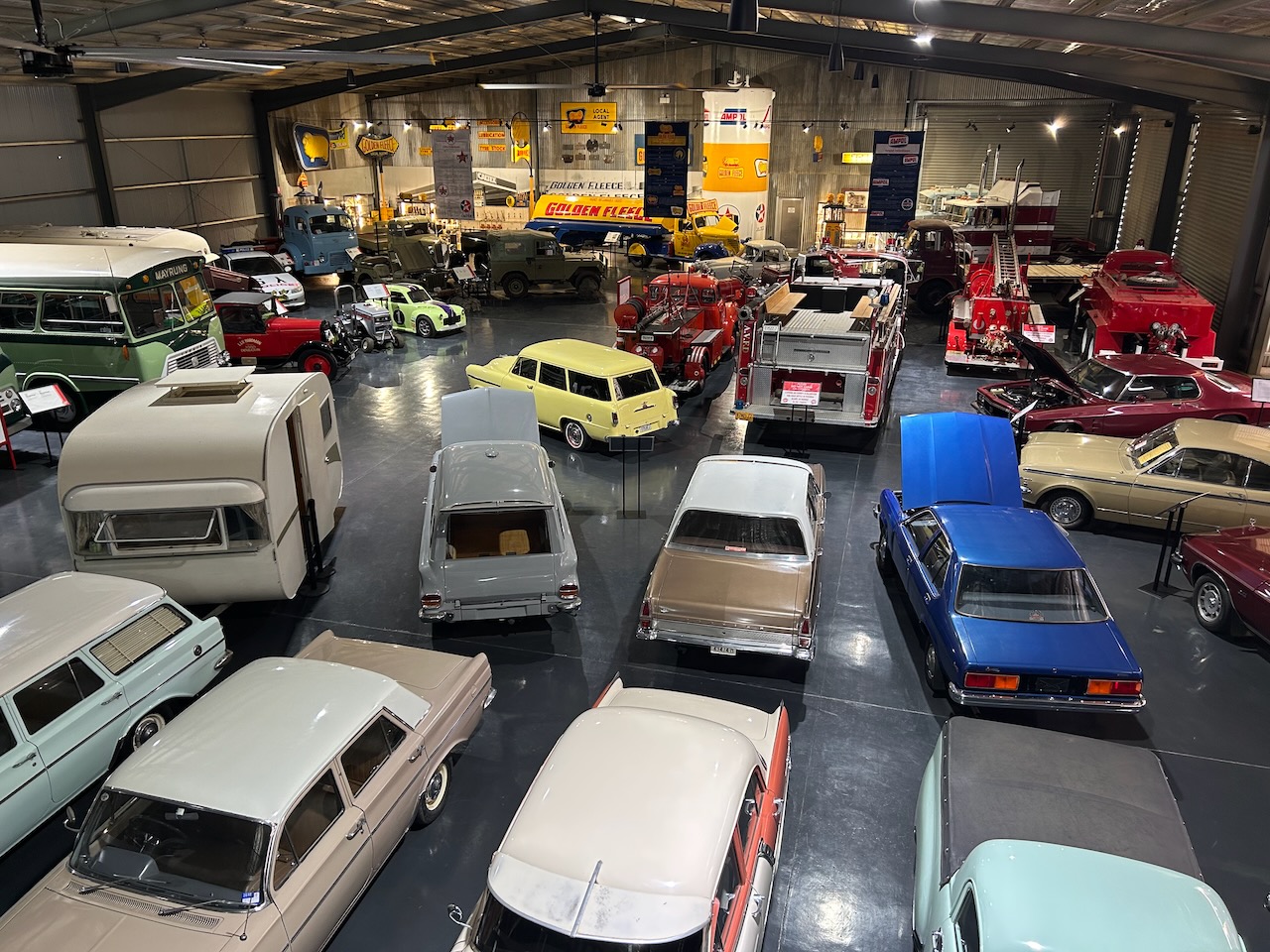
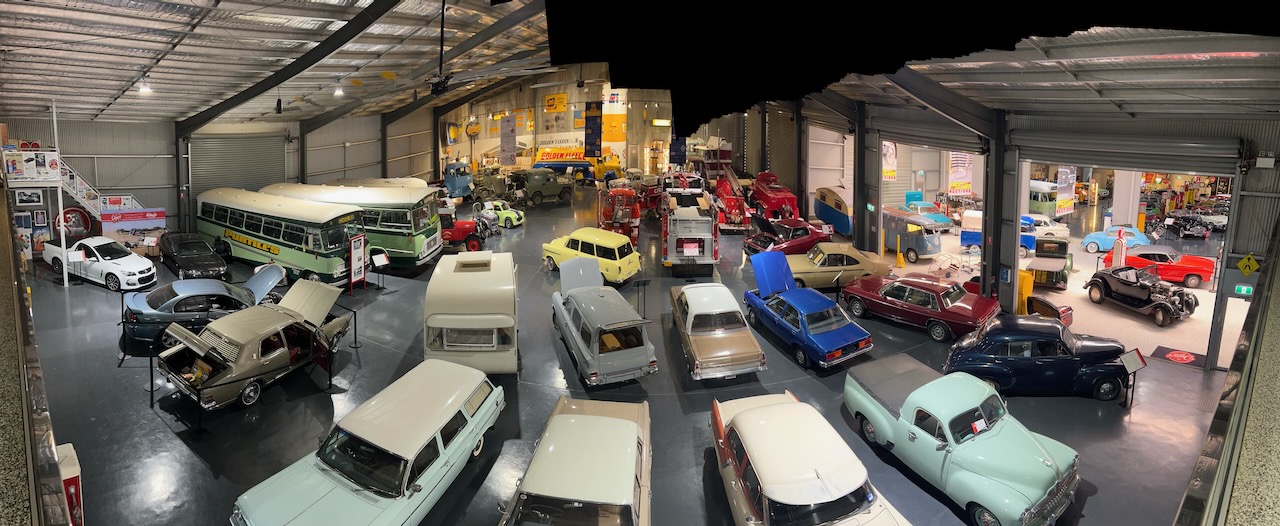
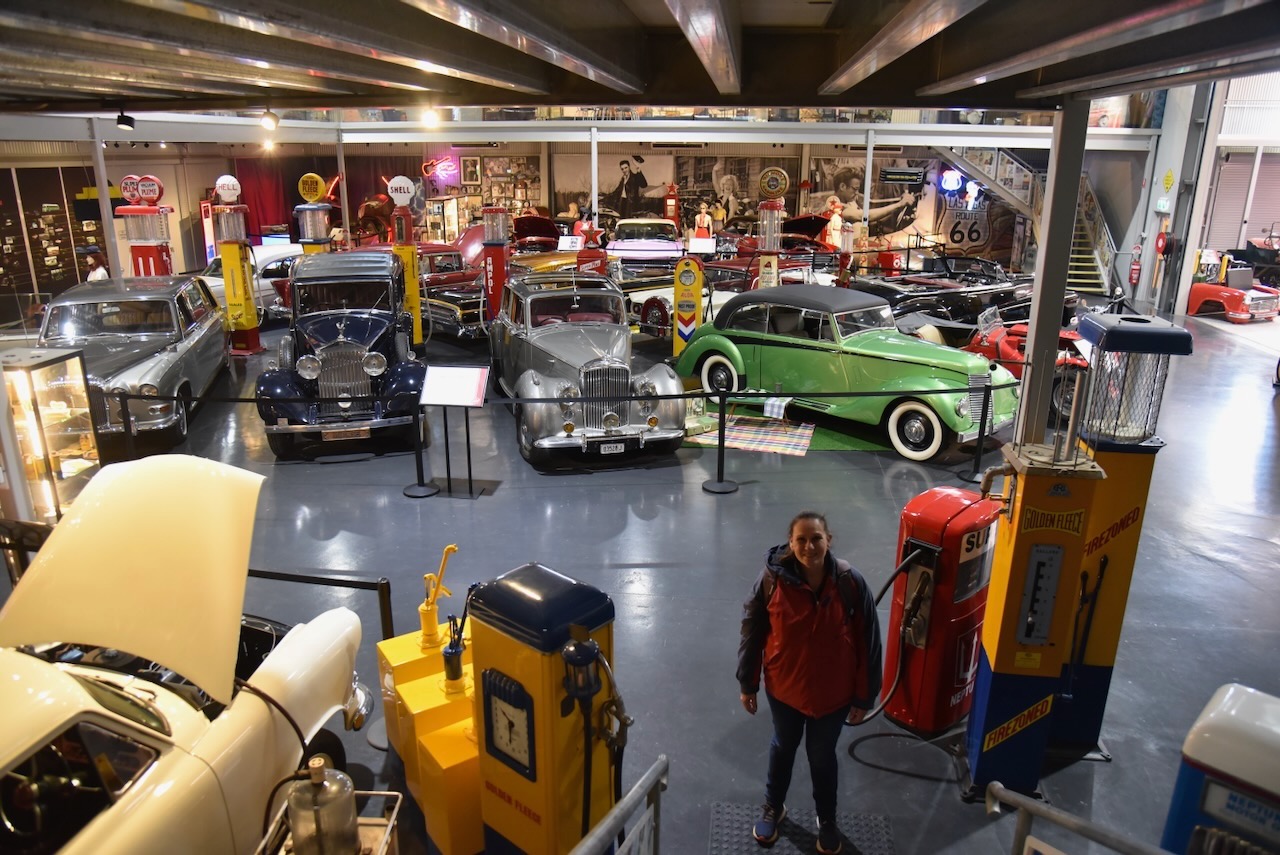
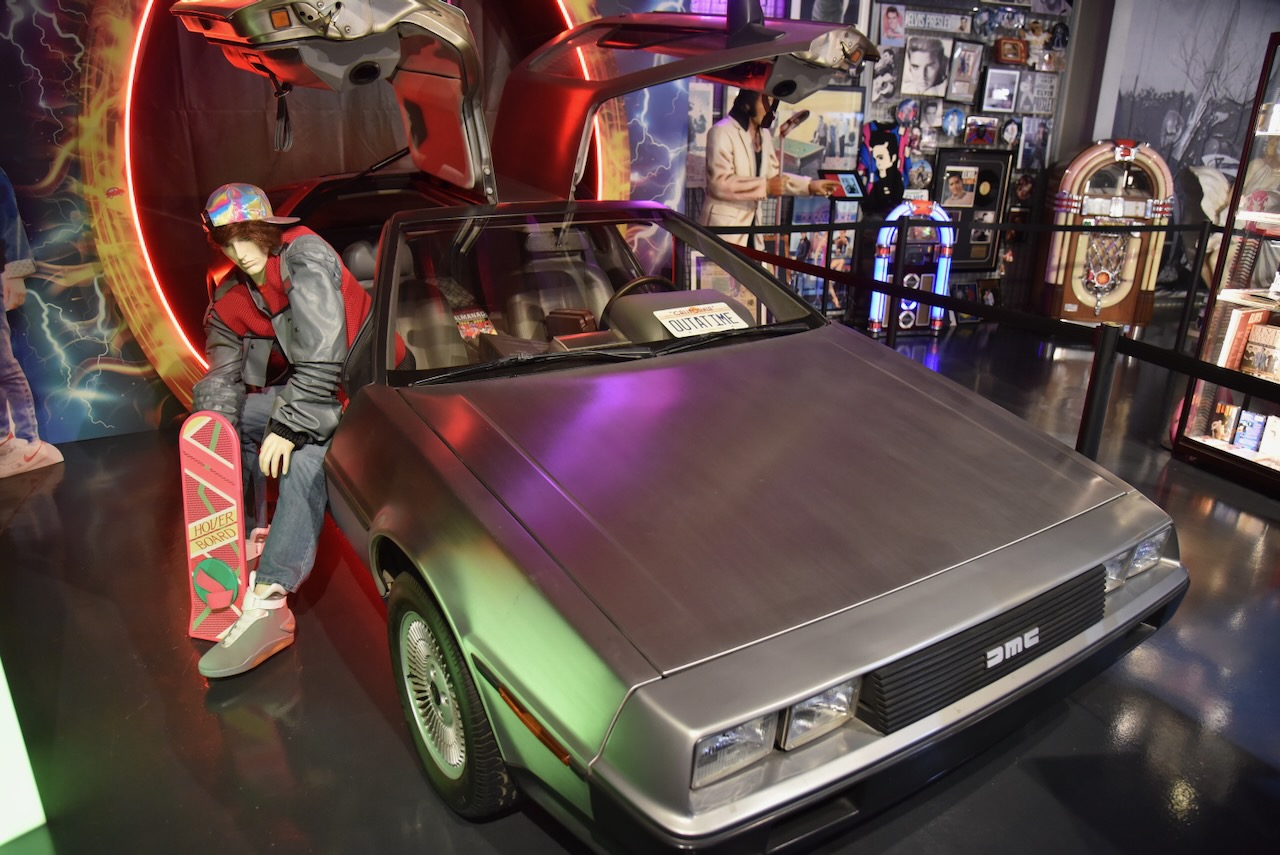
One of the first displays we looked at was a DeLorean DMC-12, an iconic 1980s sports car that was designed by Giorgetto Giugiaro. This is the type of vehicle that featured in the Back to the Future movies. I have just made one of these on my 3D printer.
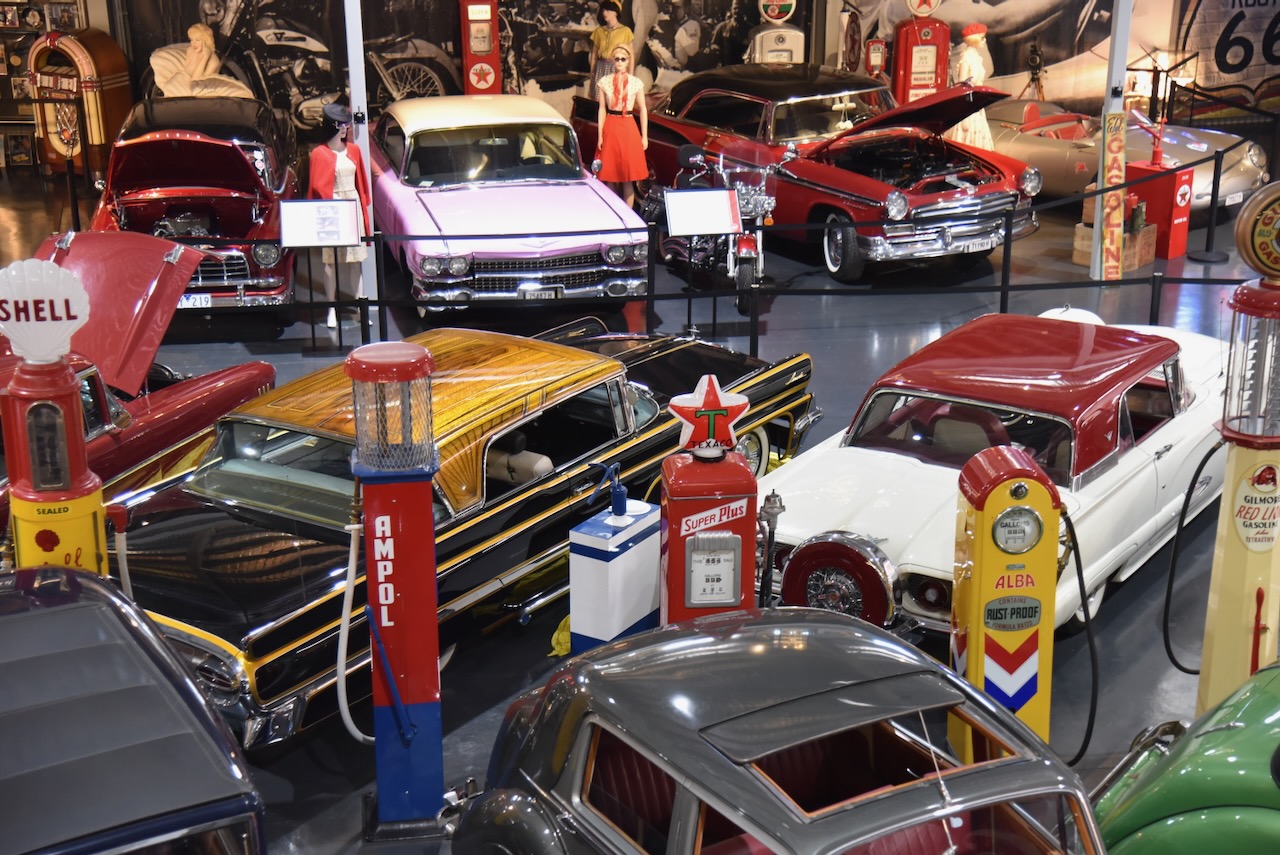
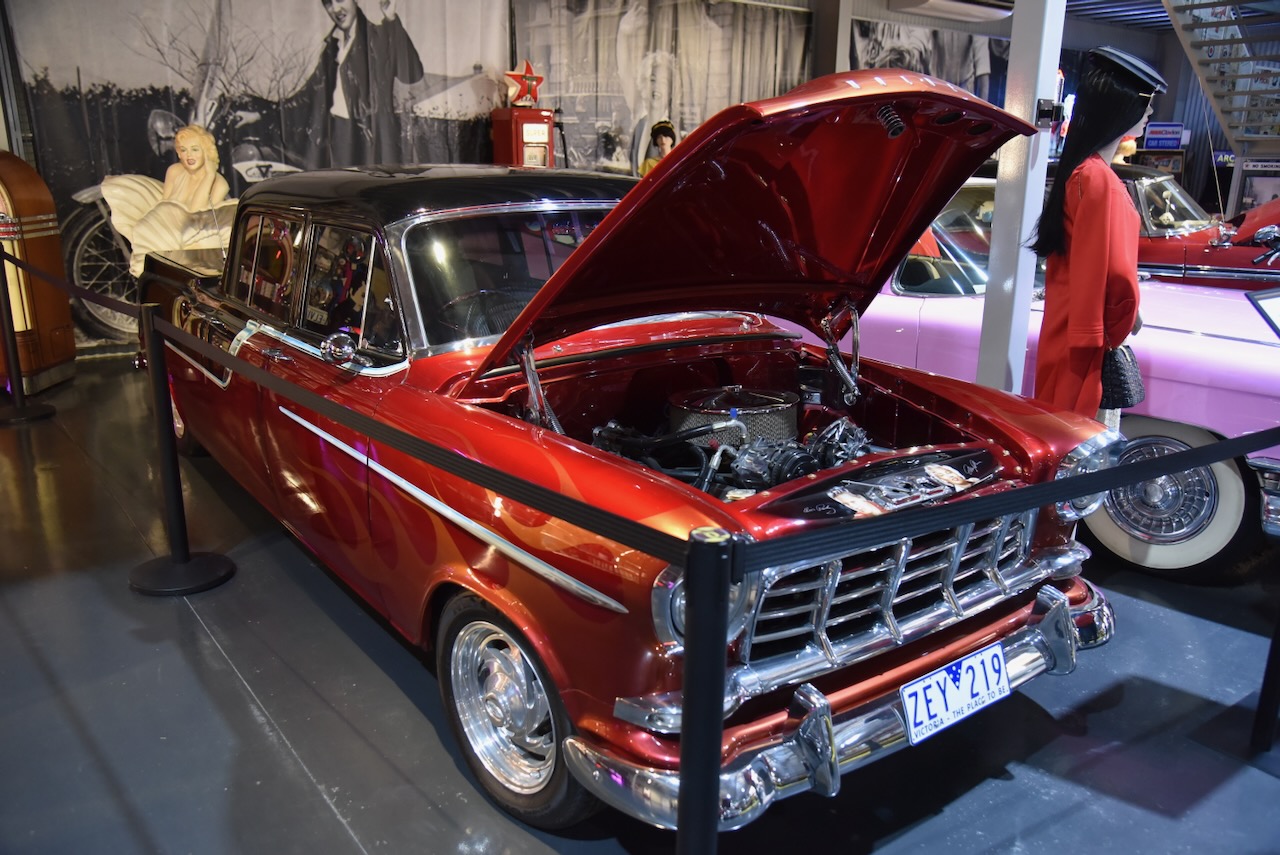
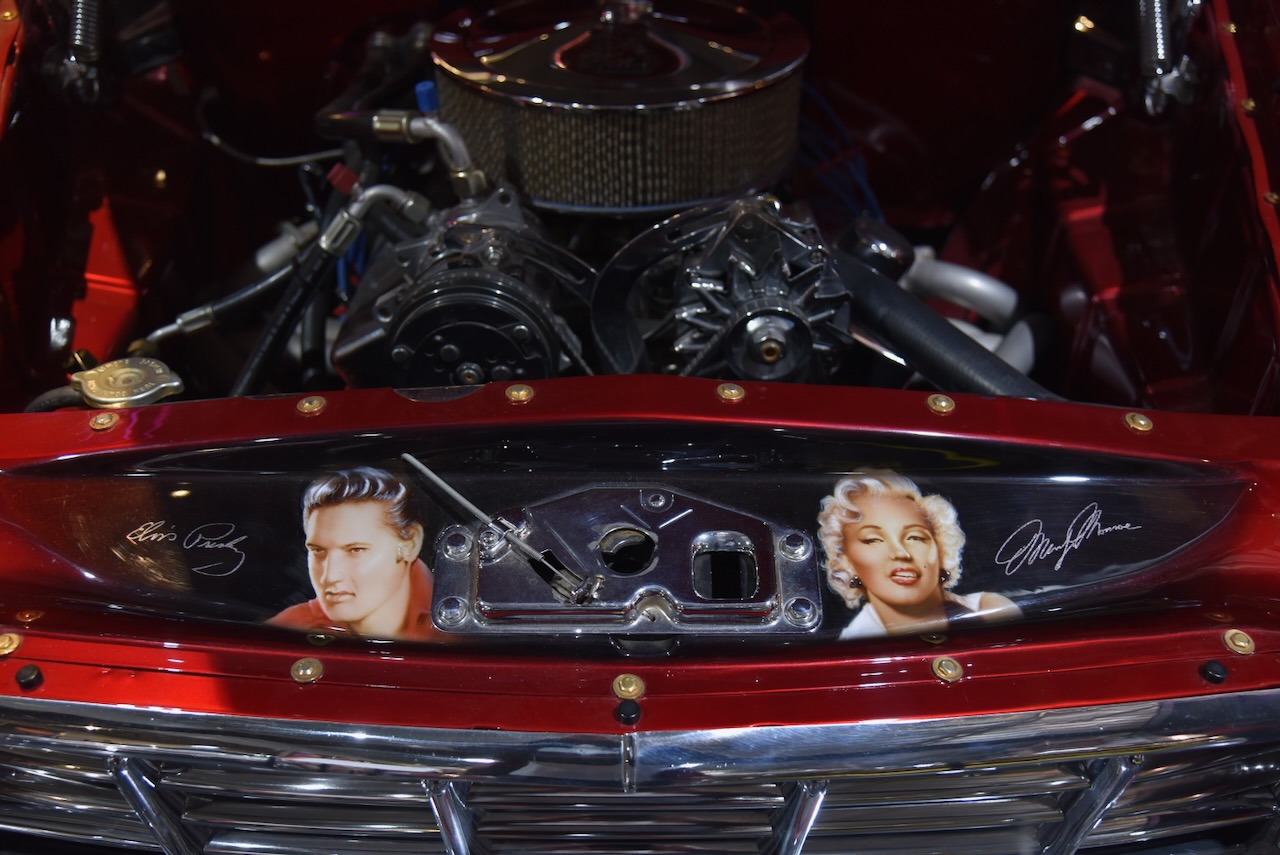
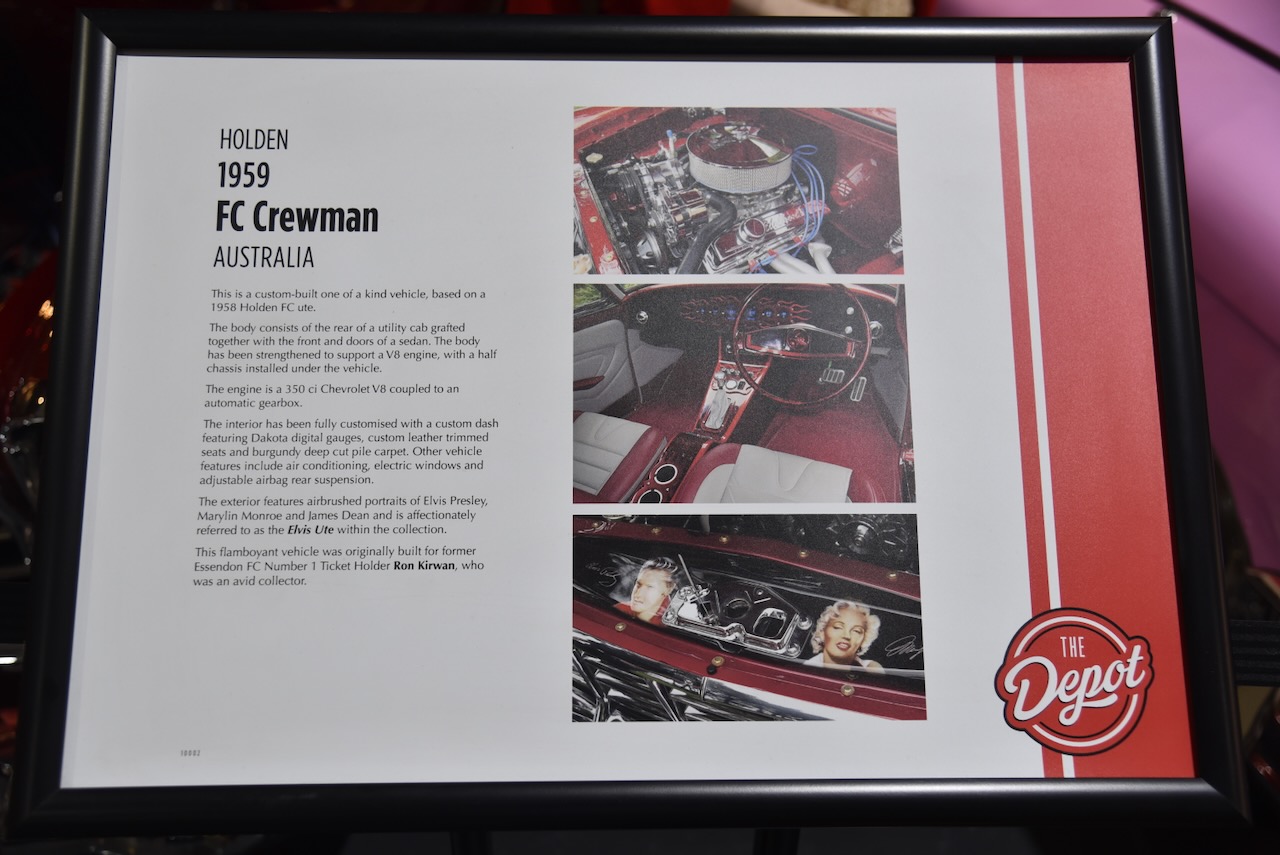
There is a very impressive custom-built 1958 Holden FC Crewman. It contains a 350 ci Chevrolet V8 engine. It was originally built for Ron Kirwan, the former Essendon Football Club number 1 ticket holder. It features airbrushed portraits of Elvis Presley and Marilyn Monroe.
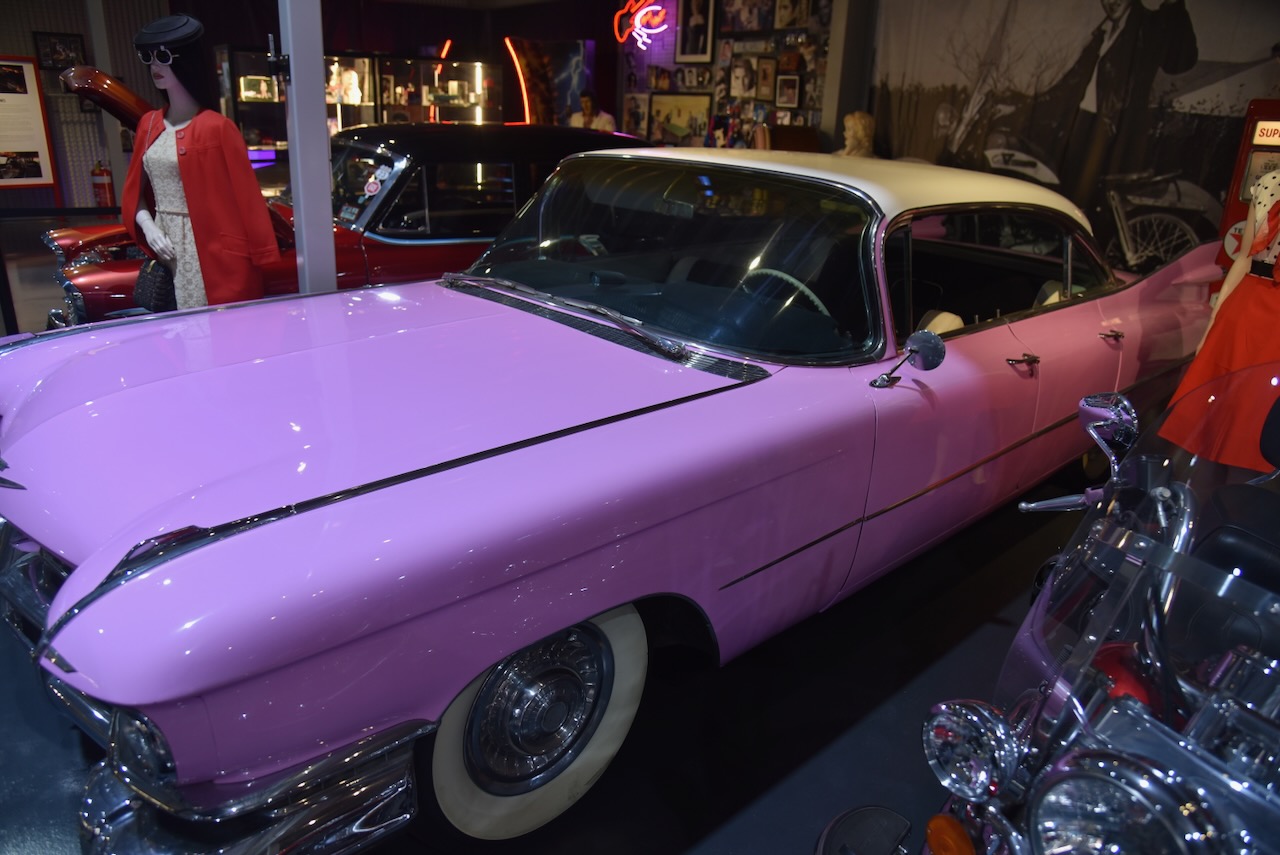
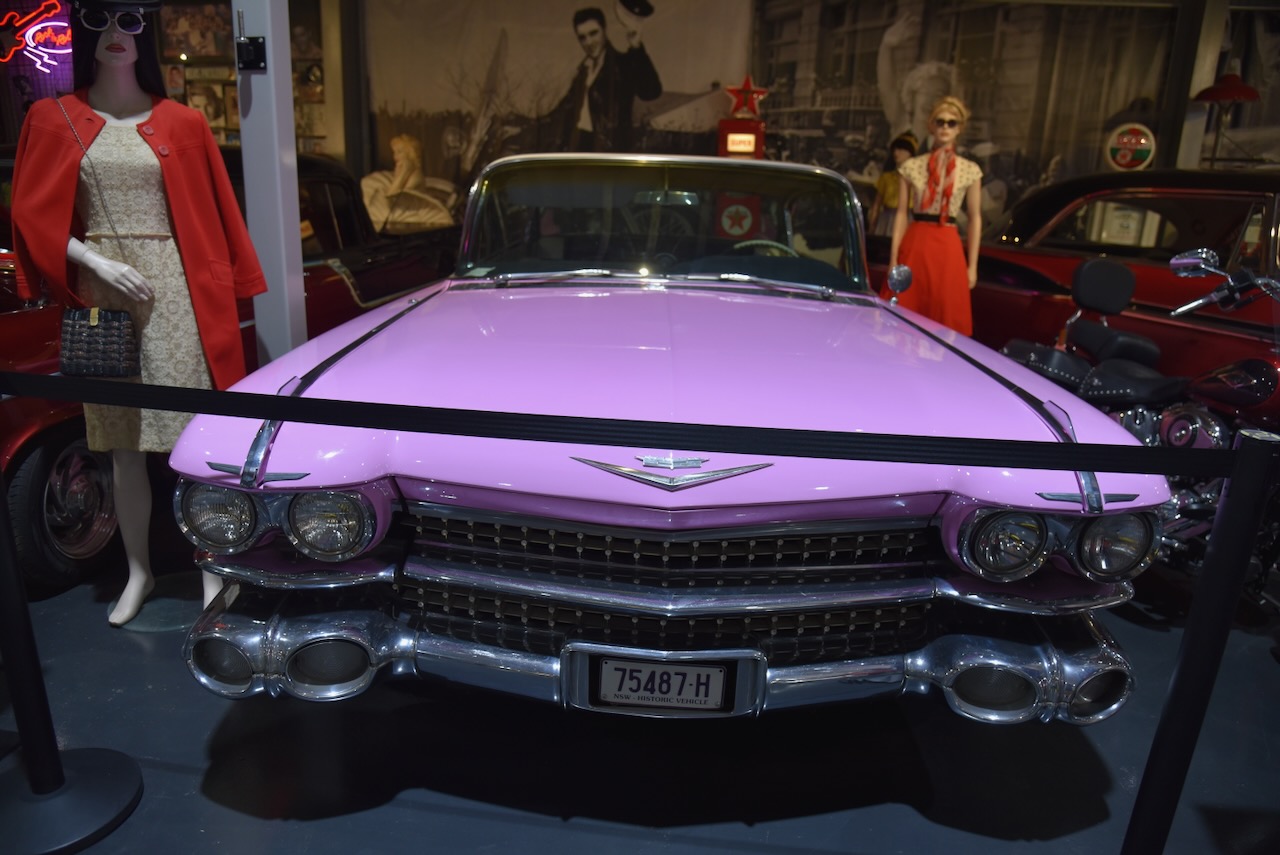
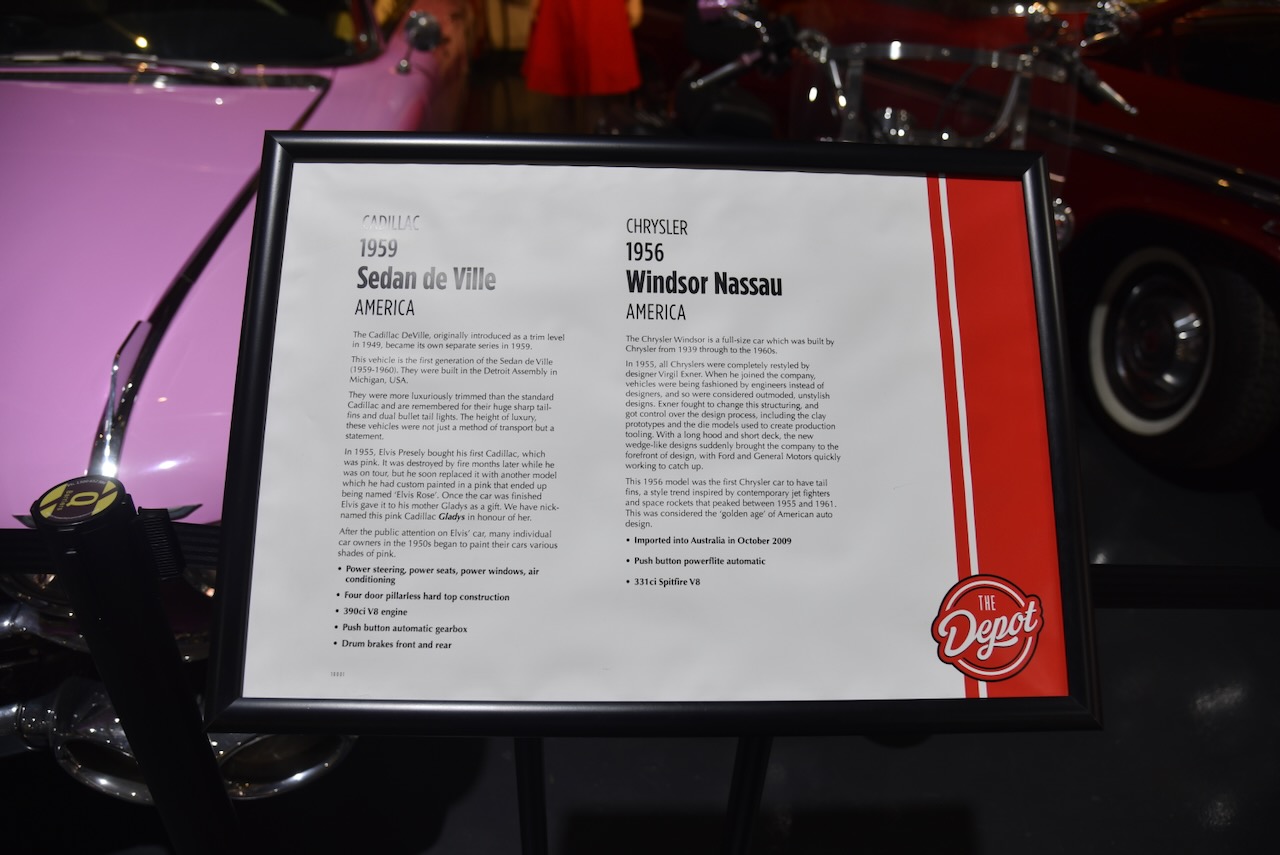
There is an impressive pink coloured 1959 Cadillac Sedan de Ville. In 195, Elvis Presley purchased his first Cadillac, which was pink in colour. Sadly, it was destroyed by fire a few months later whilst he was on tour. He replaced it with another pink Cadillac, which he named ‘Elvis Rose’ and presented to his mother as a gift. During the 1950s, many Elvis fans commenced painting their cars pink.
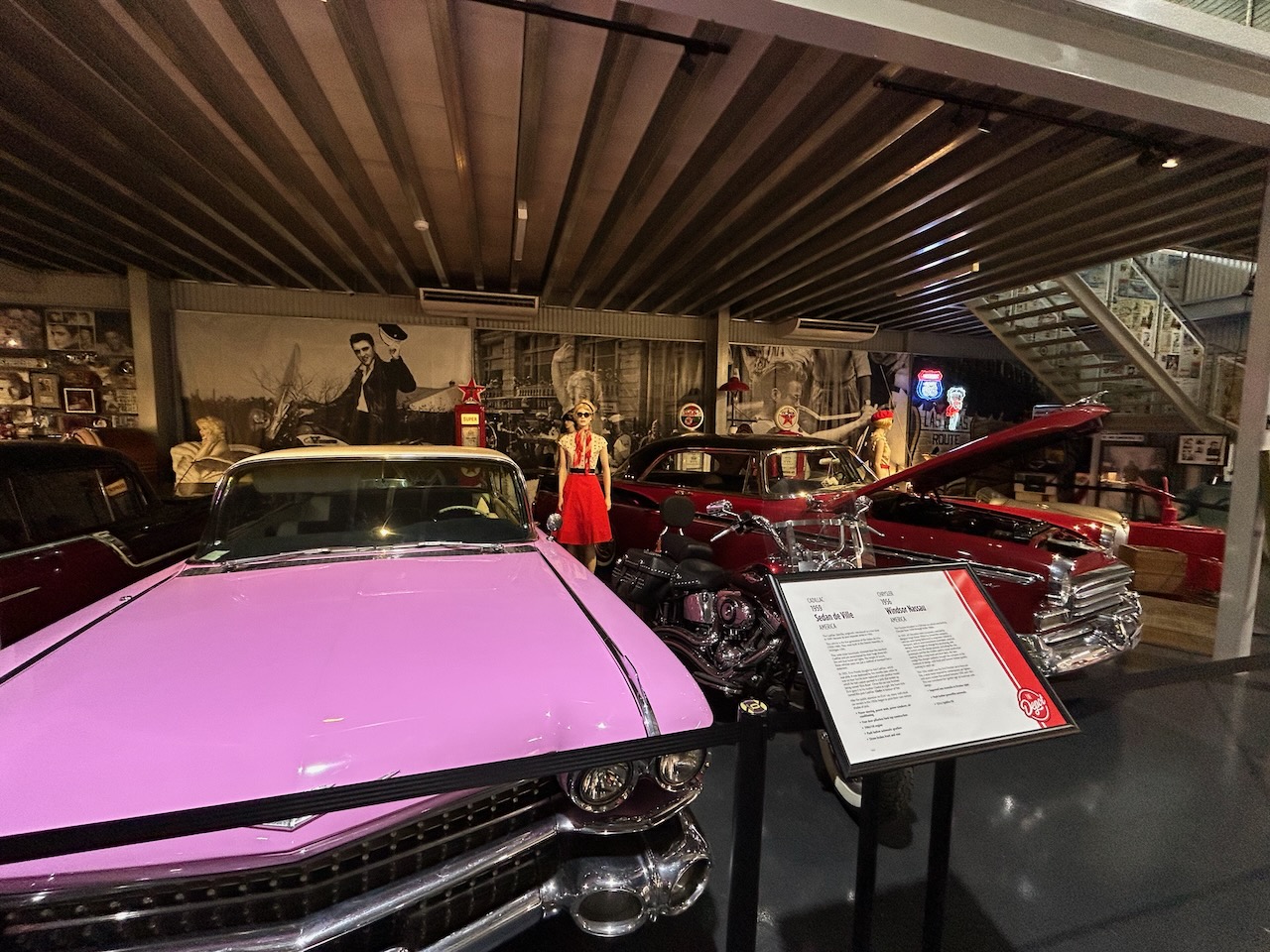
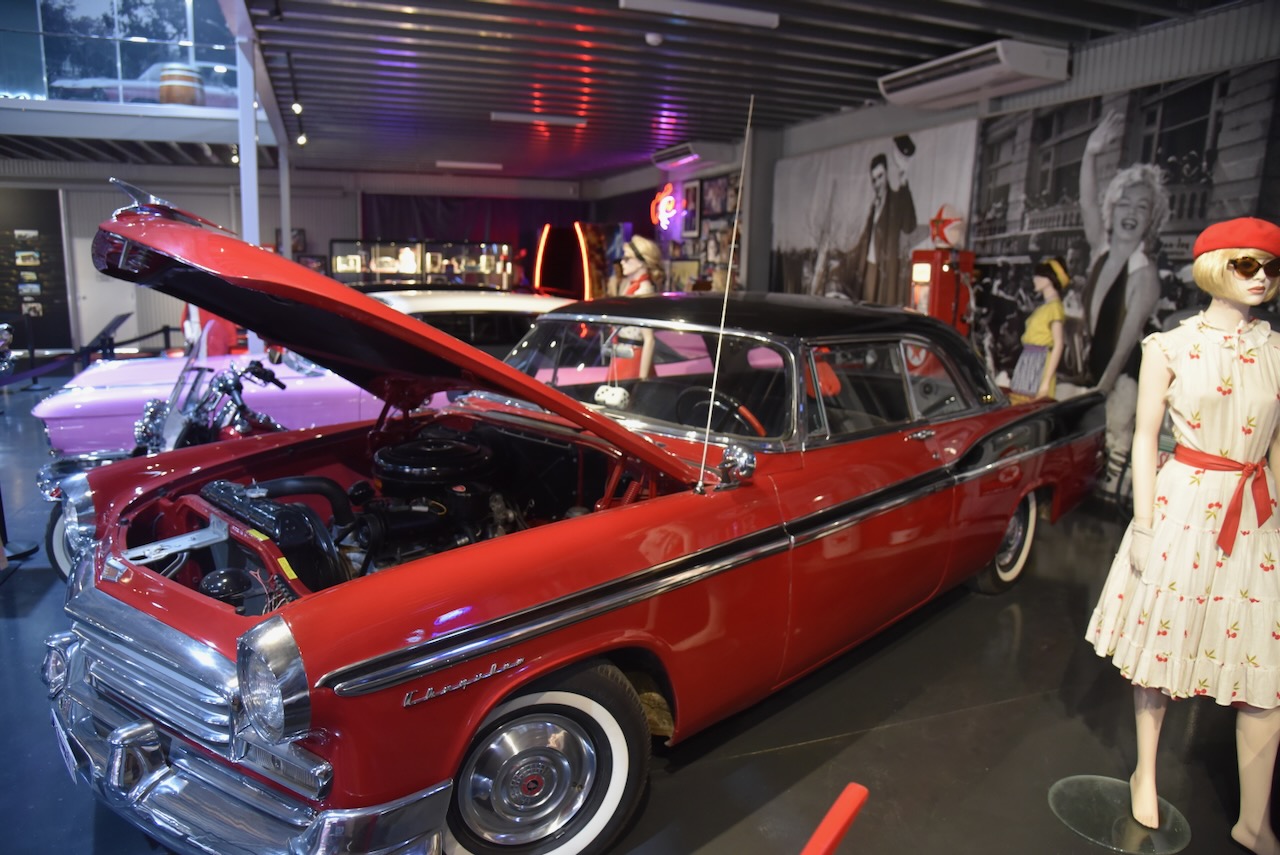
Alongside is a 1956 Chrysler Windsor Nassau that was imported into Australia in October 2009. This model was the first Chrysler to have tail fins, which was a style trend inspired by contemporary jet fighters and space rockets that peaked between 1955 and 1961.
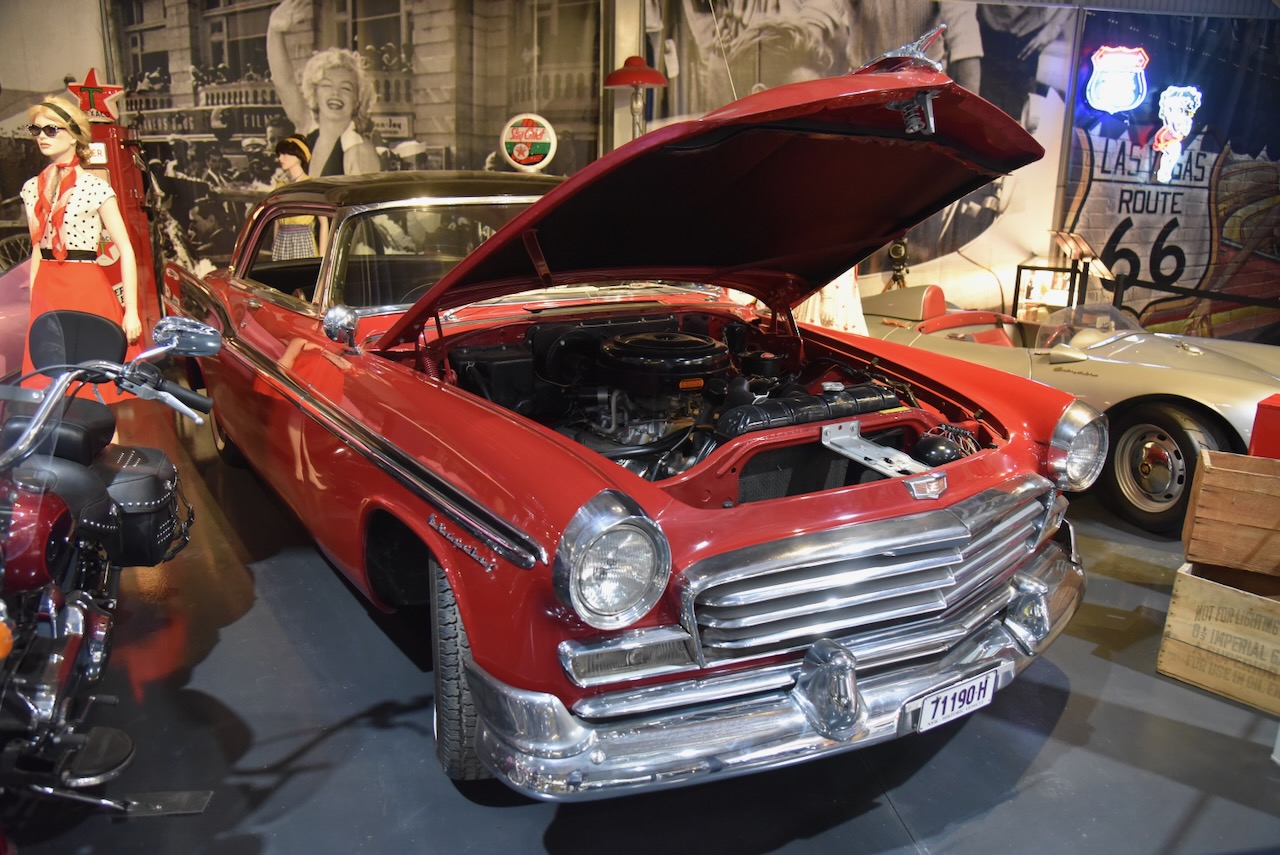
I have a 1972 Chrysler Ranger and, in recent years, have taken up an interest in collectable cars. As I walked around The Depot, I salivated at the thought of owning some of these amazing motor vehicles.
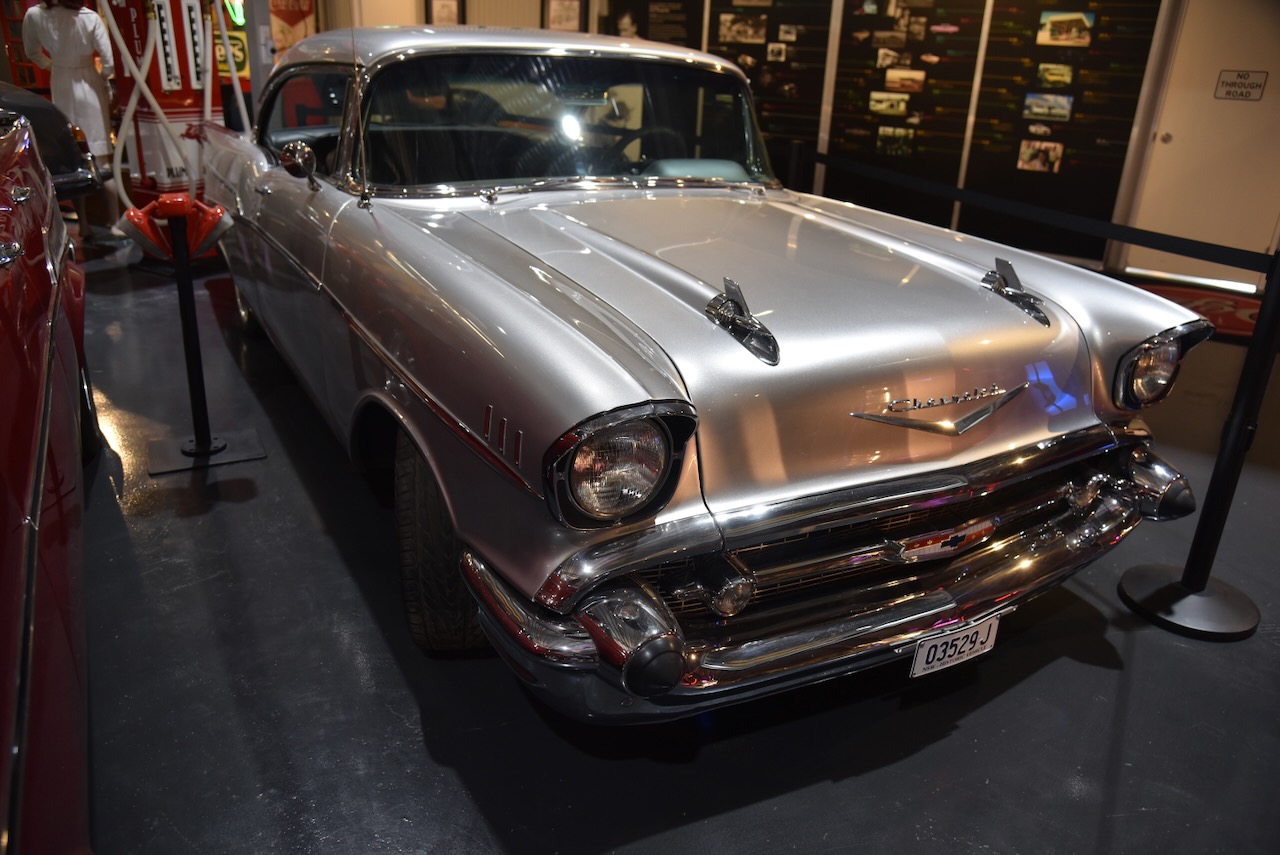
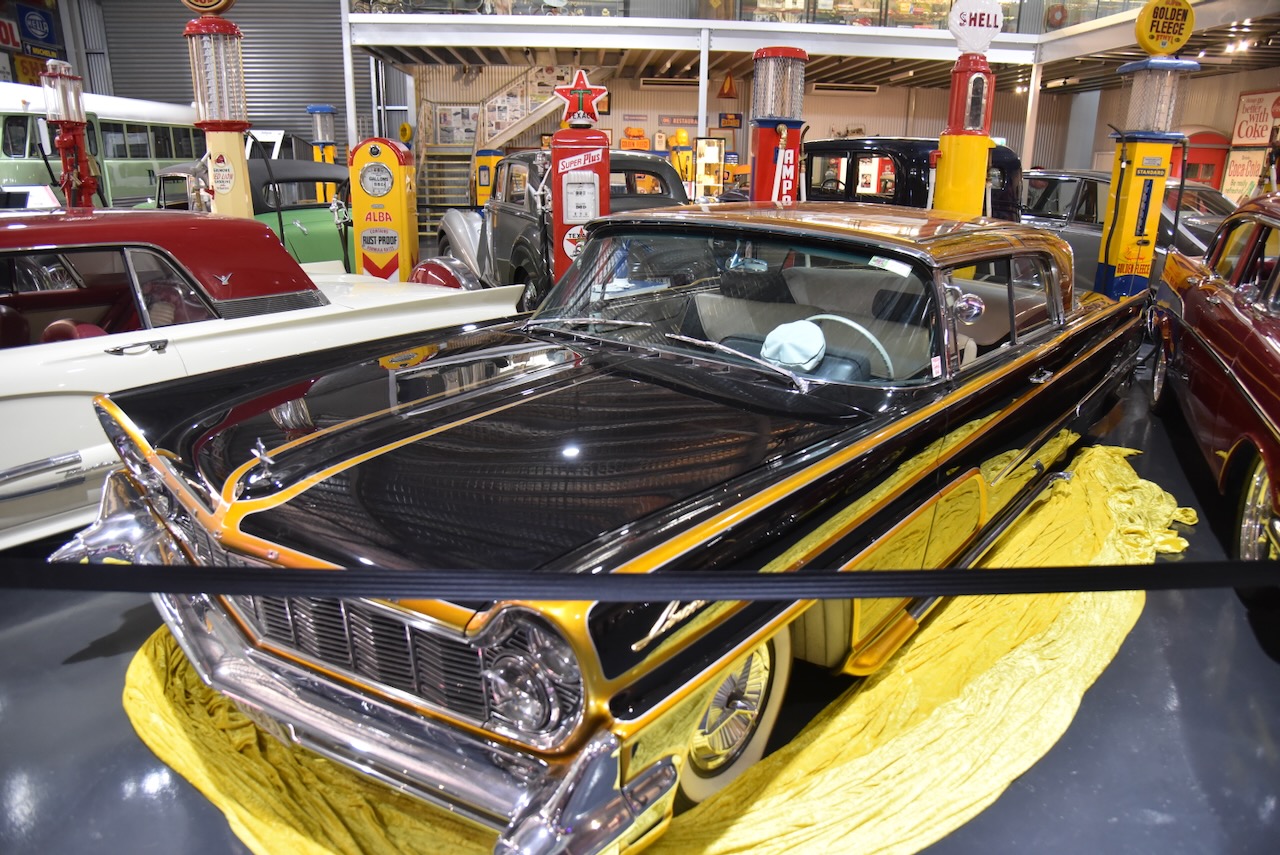
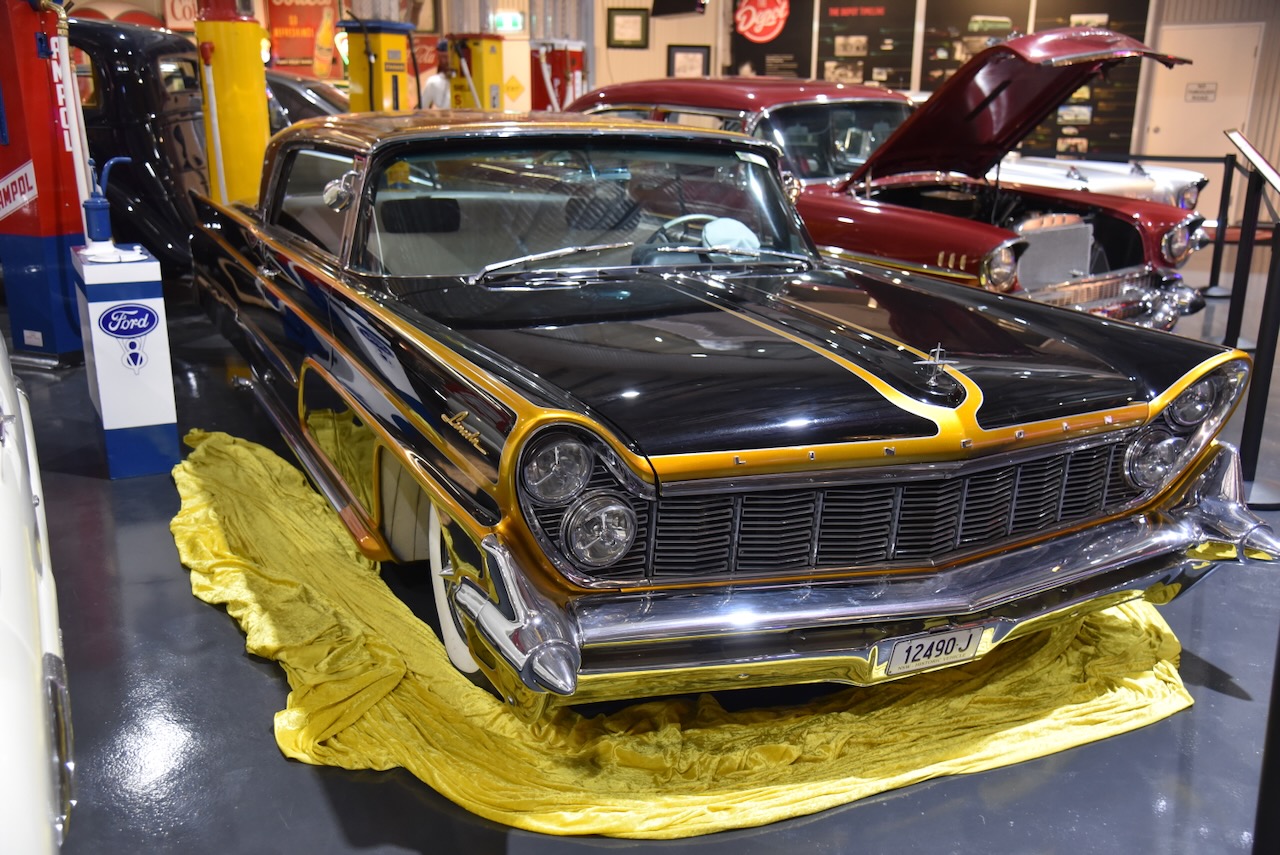
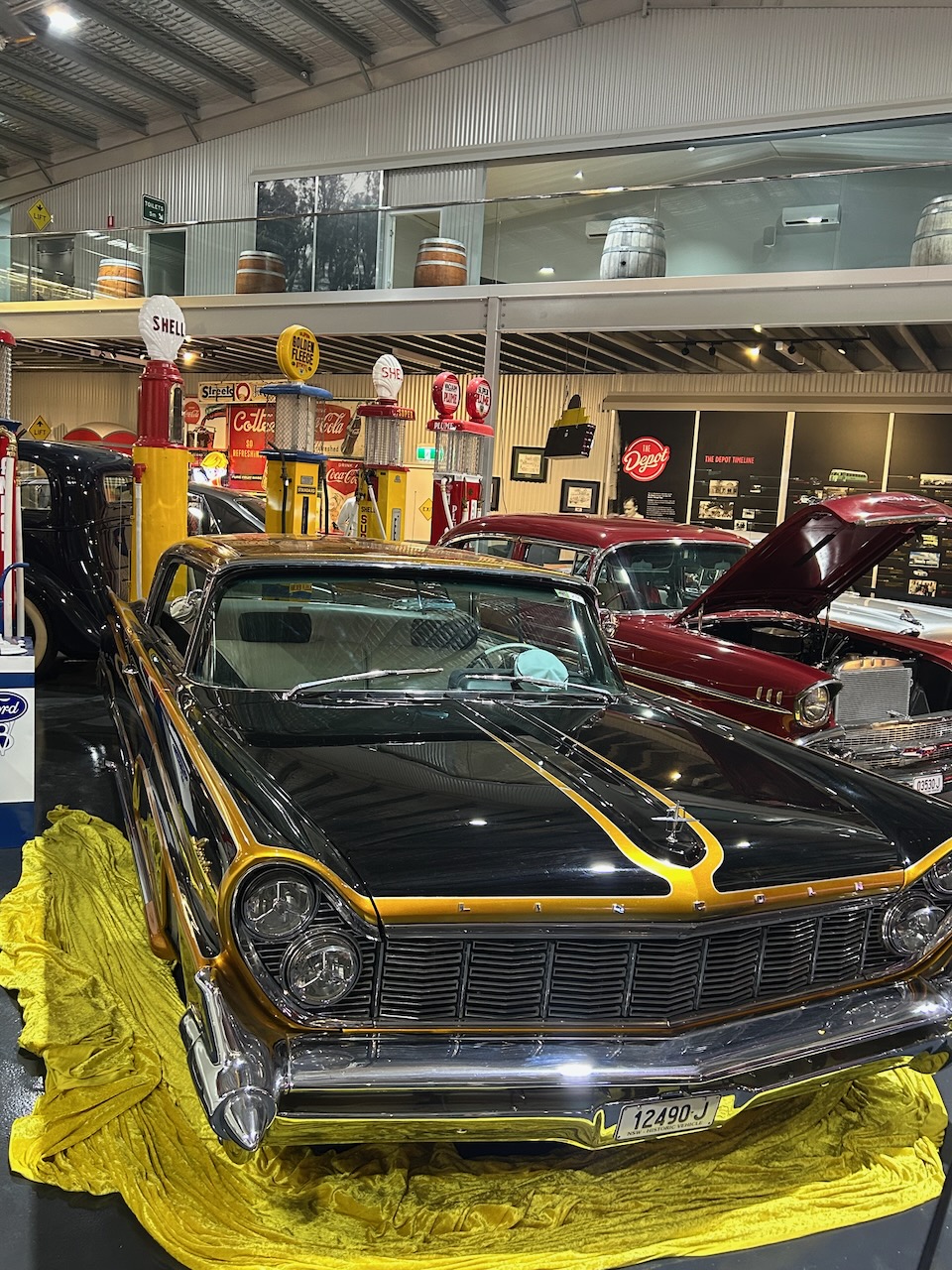
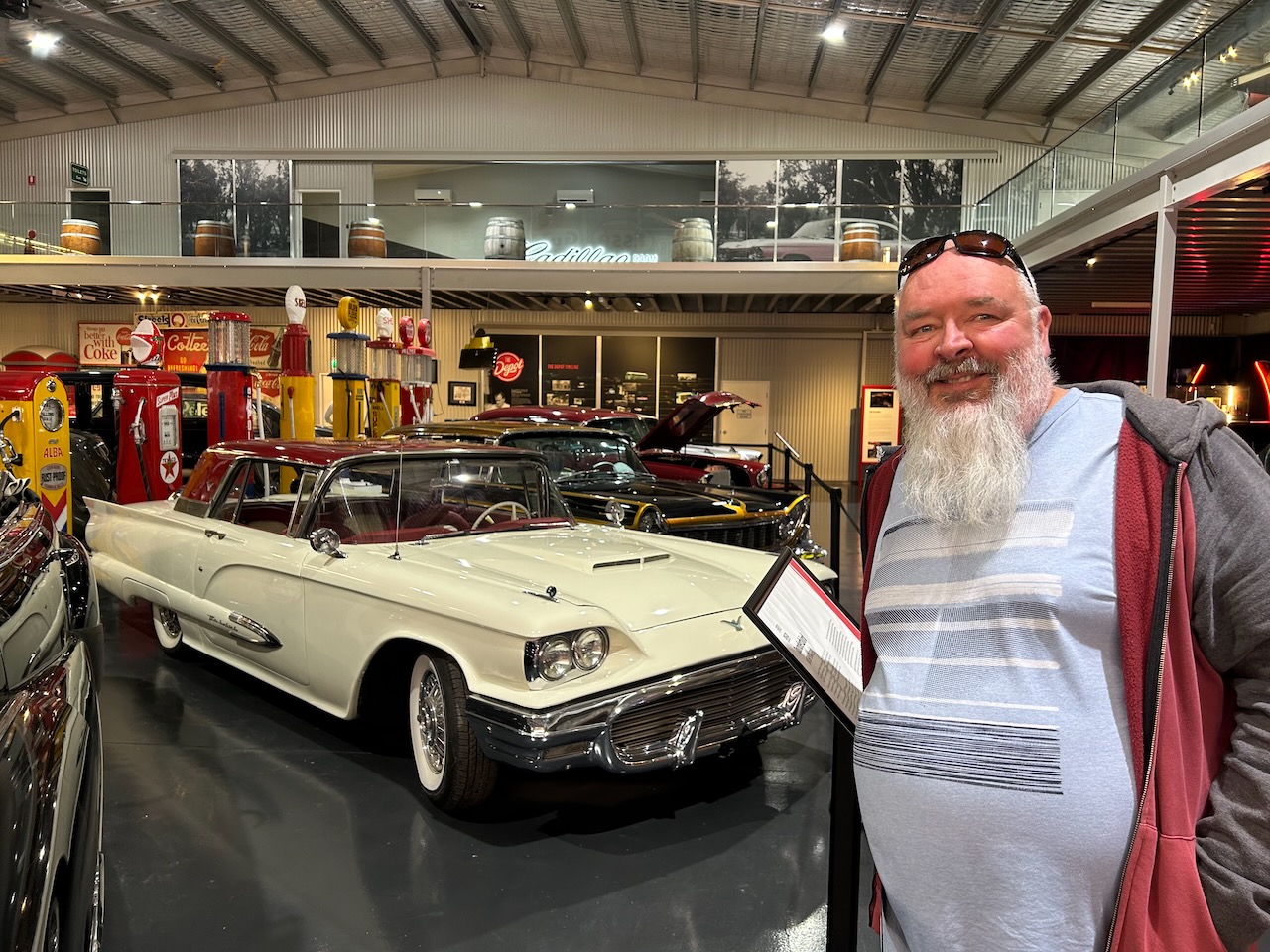
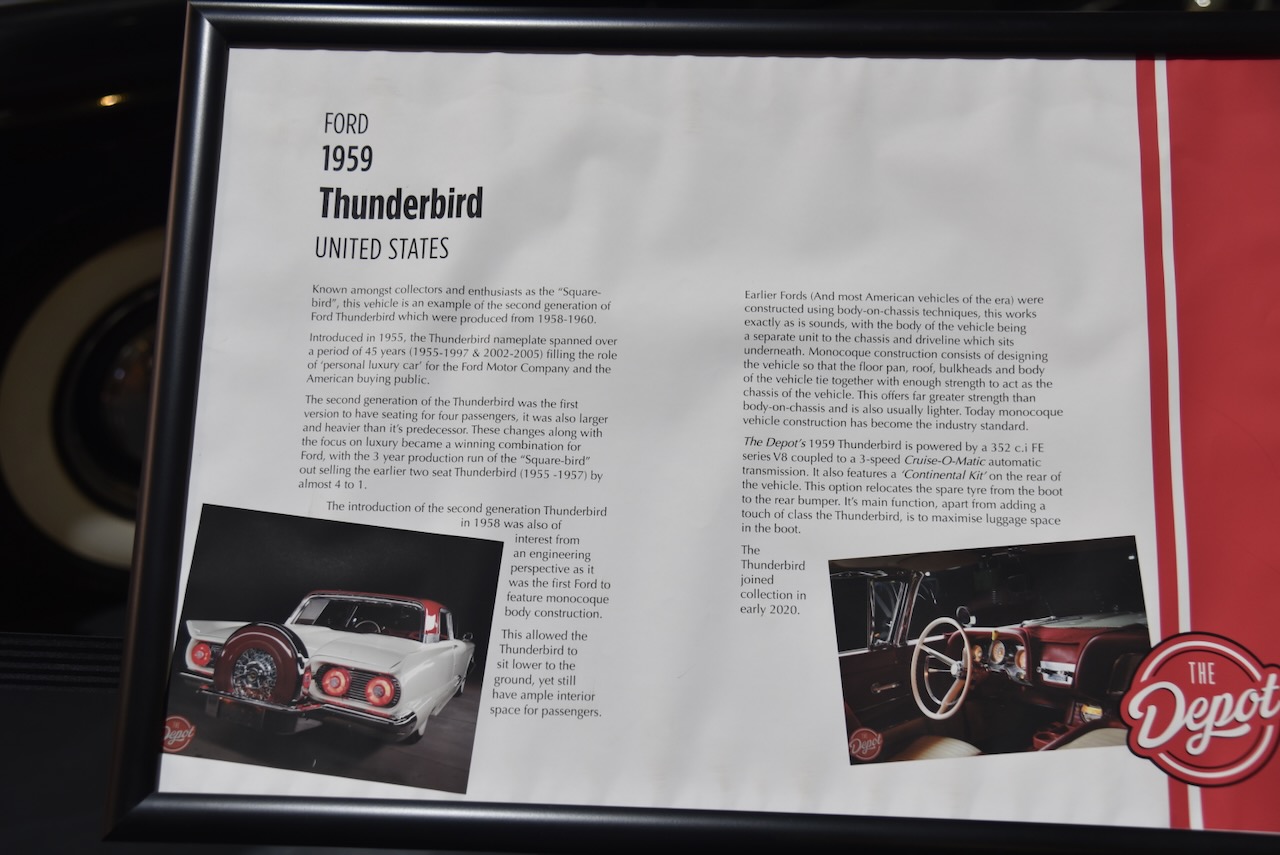
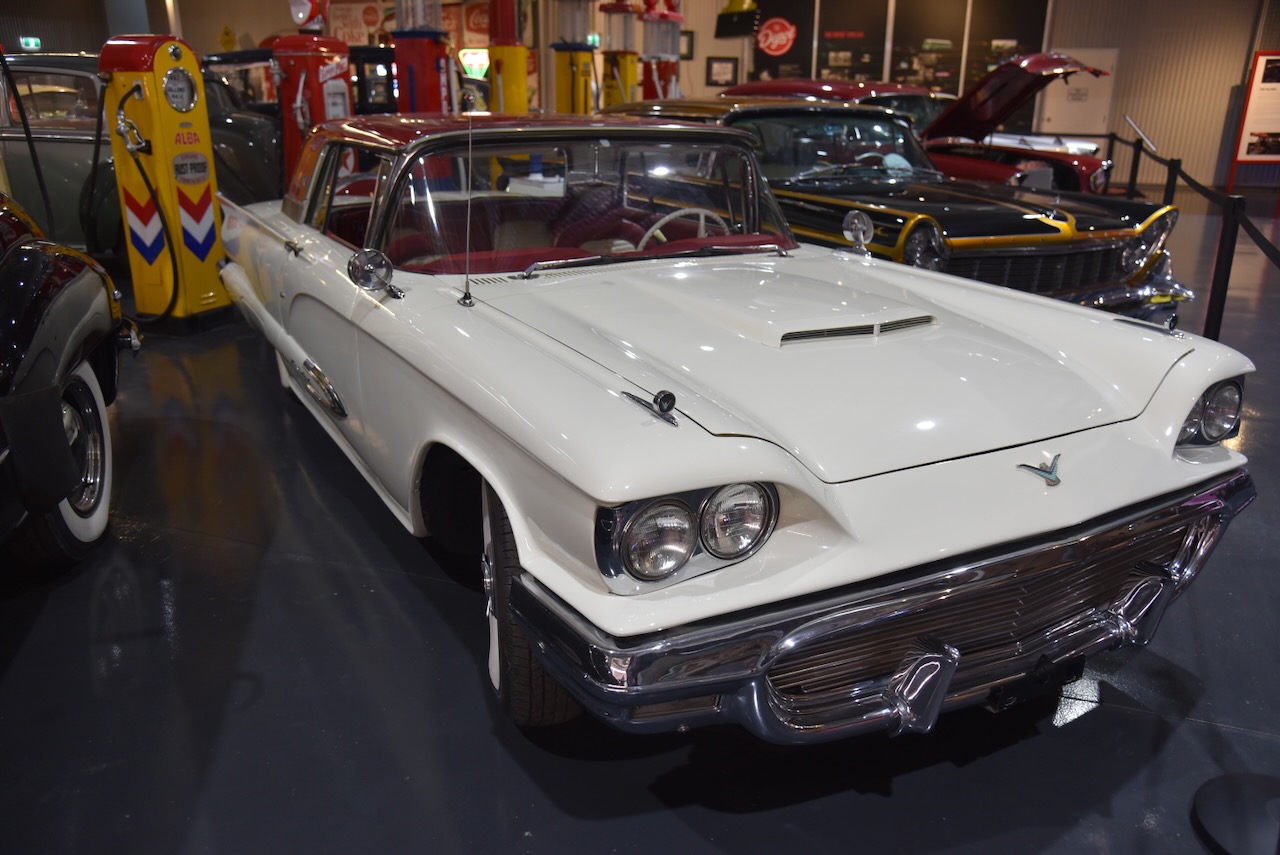
One car that I have always dreamed of owning is a Ford Thunderbird. And The Depot features a magnificent 1959 Ford Thunderbird powered by a 352 c.i. FE series VK8 motor.
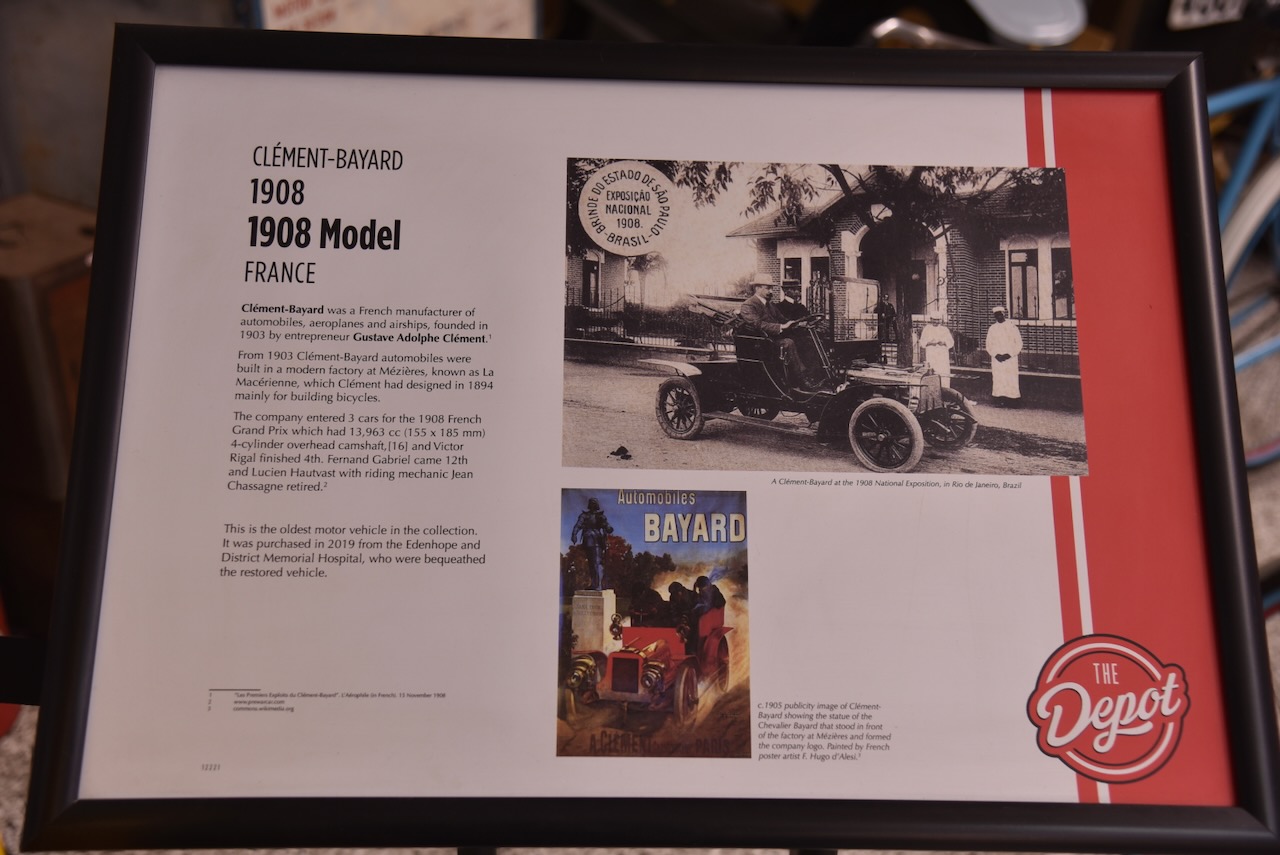
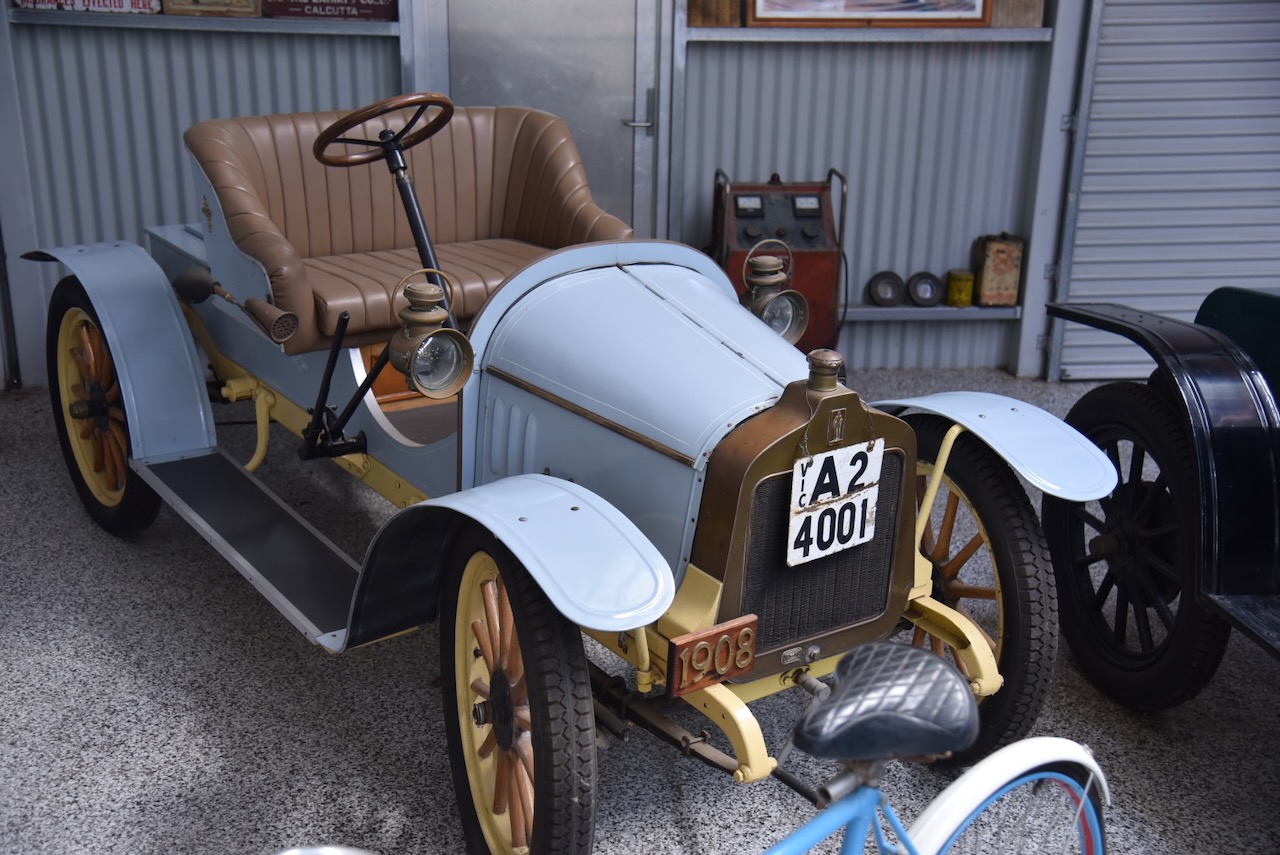
The Depot also includes several early model vehicles. This includes a 1908 Clement Bayard, the oldest motor vehicle in the collection. It was purchased in 2019 from the Edenhope and District Memorial Hospital, who were bequeathed the restored vehicle.
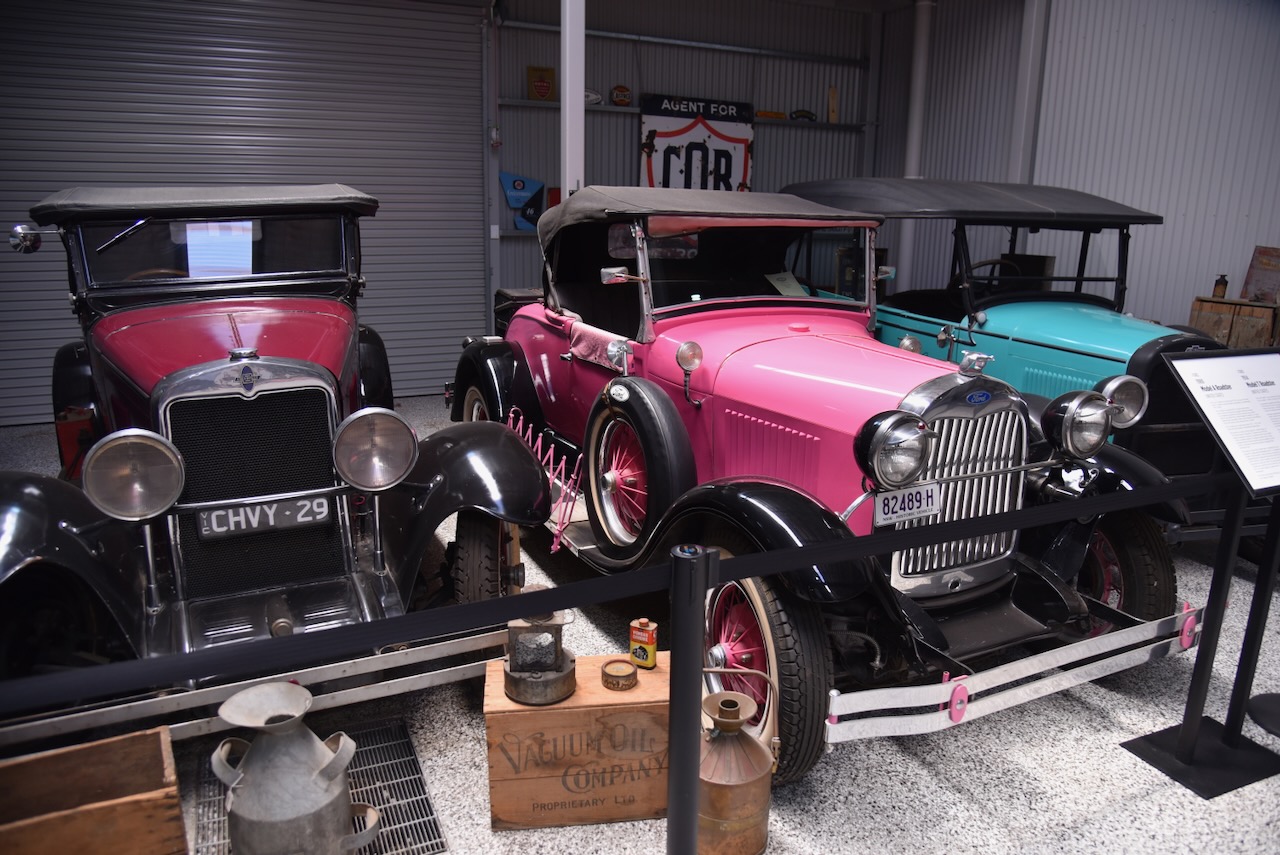
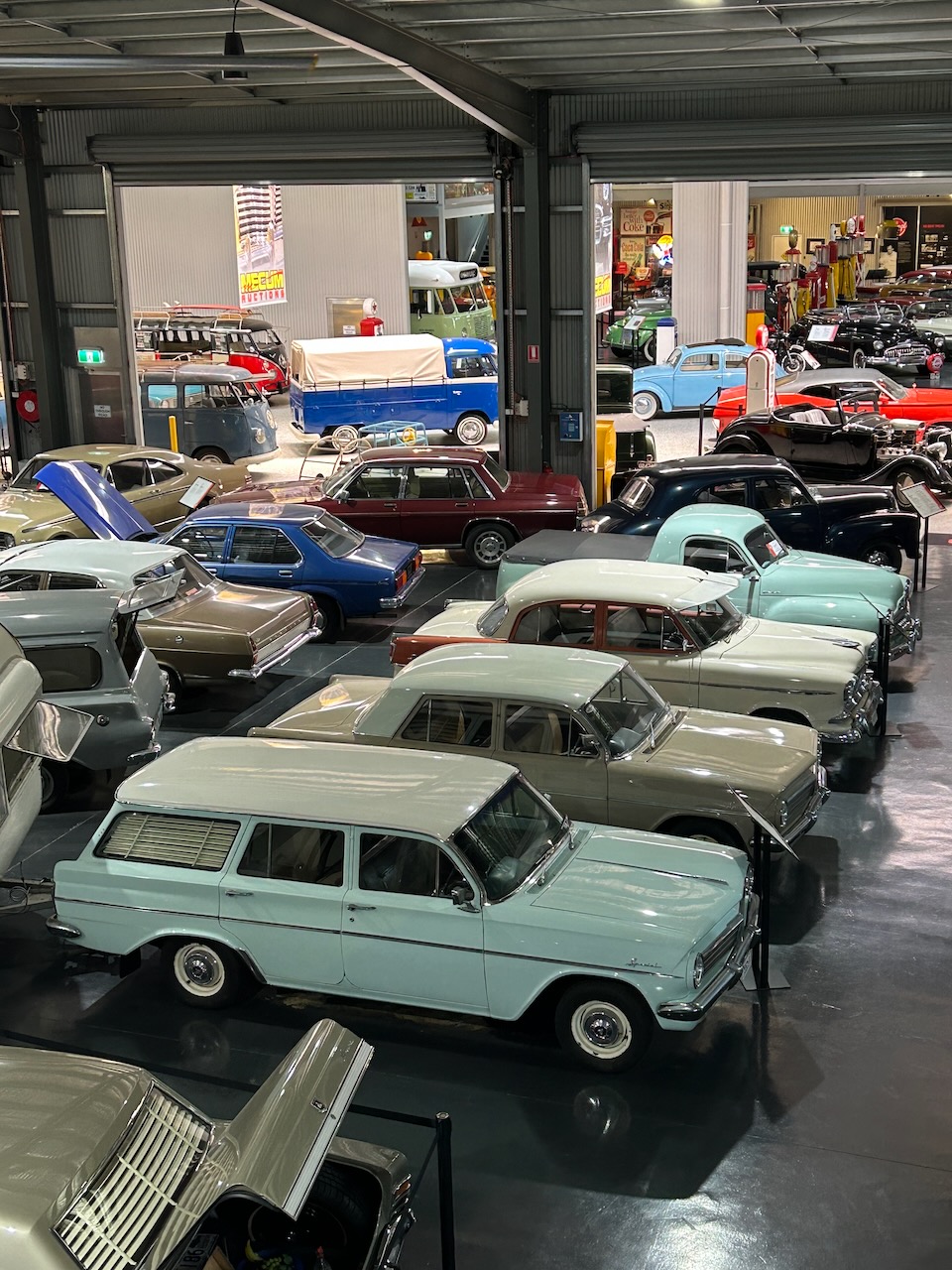
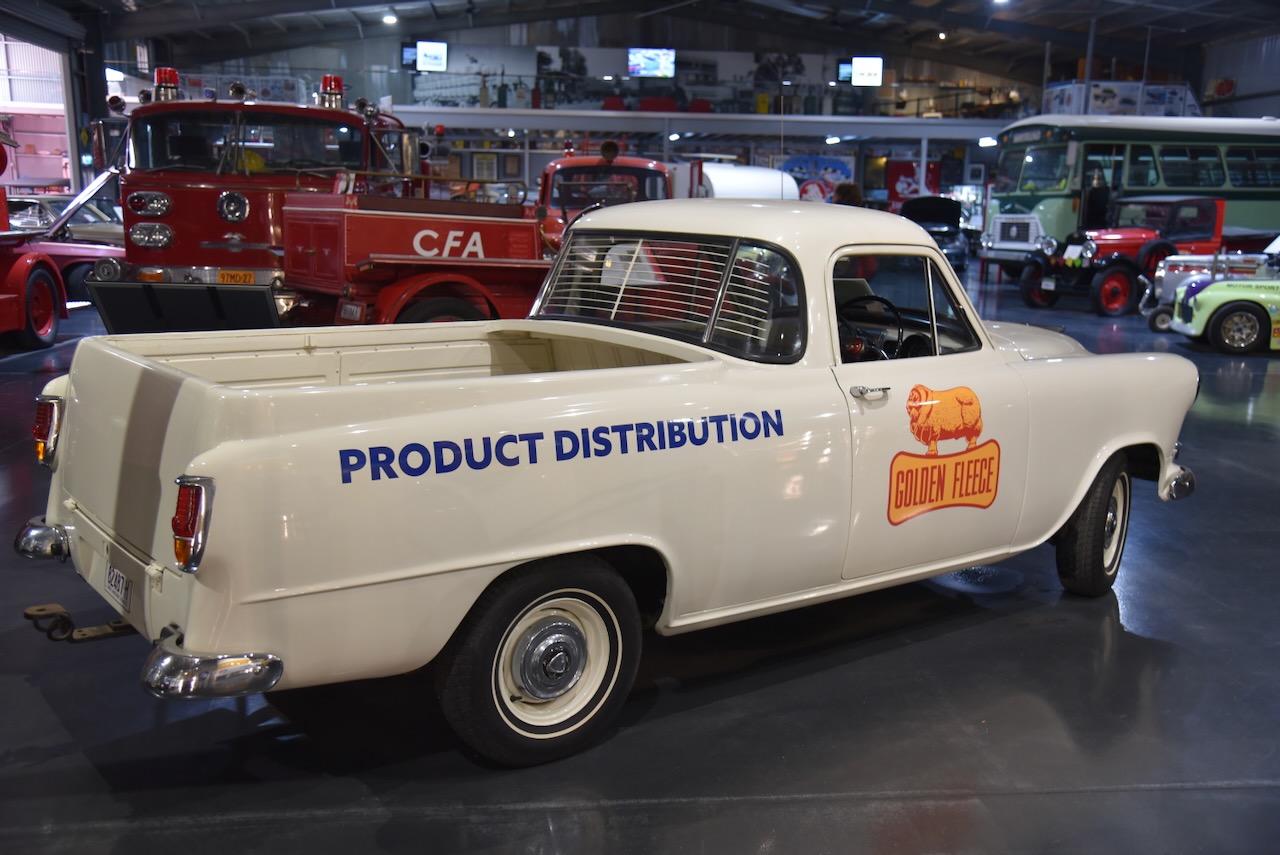
And there are numerous iconic Australian-made motor vehicles. Many that I remember my parents owning.
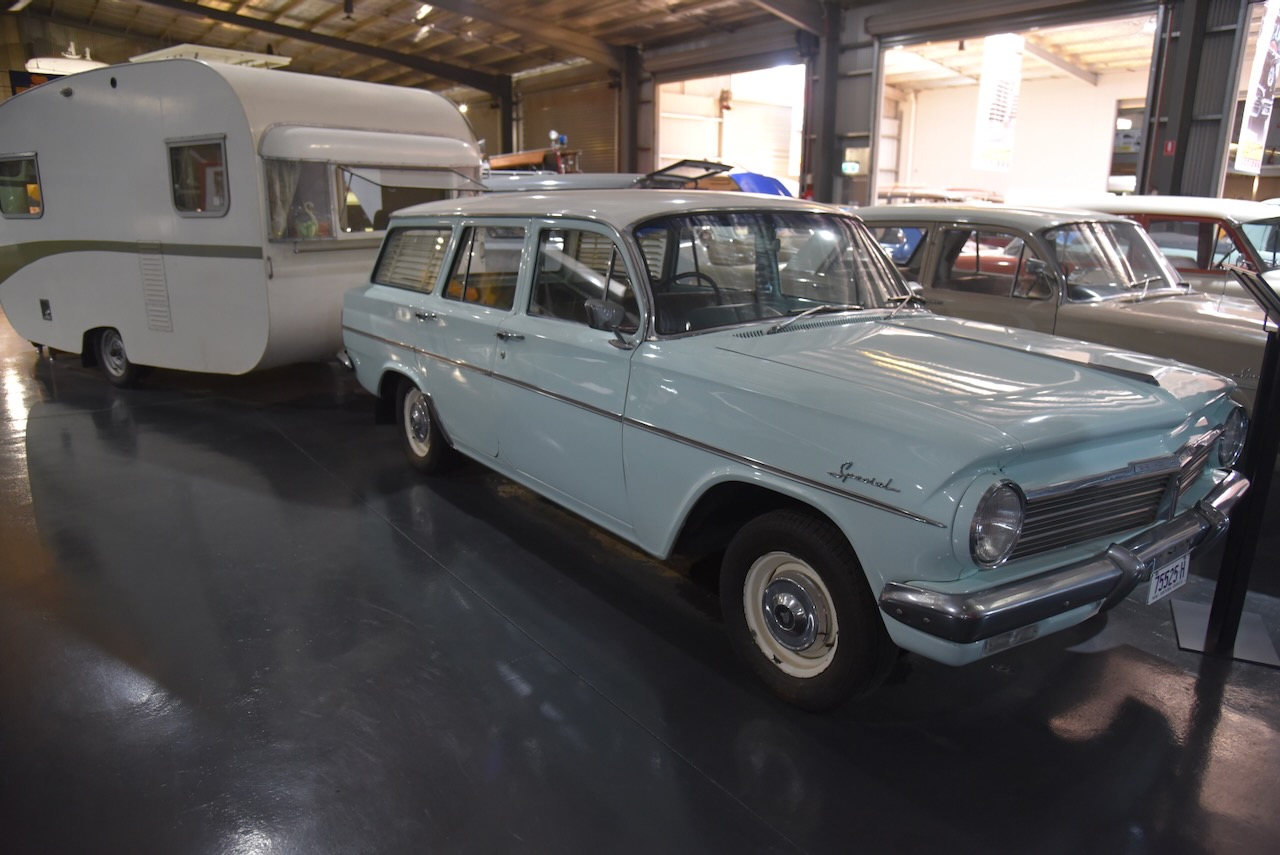
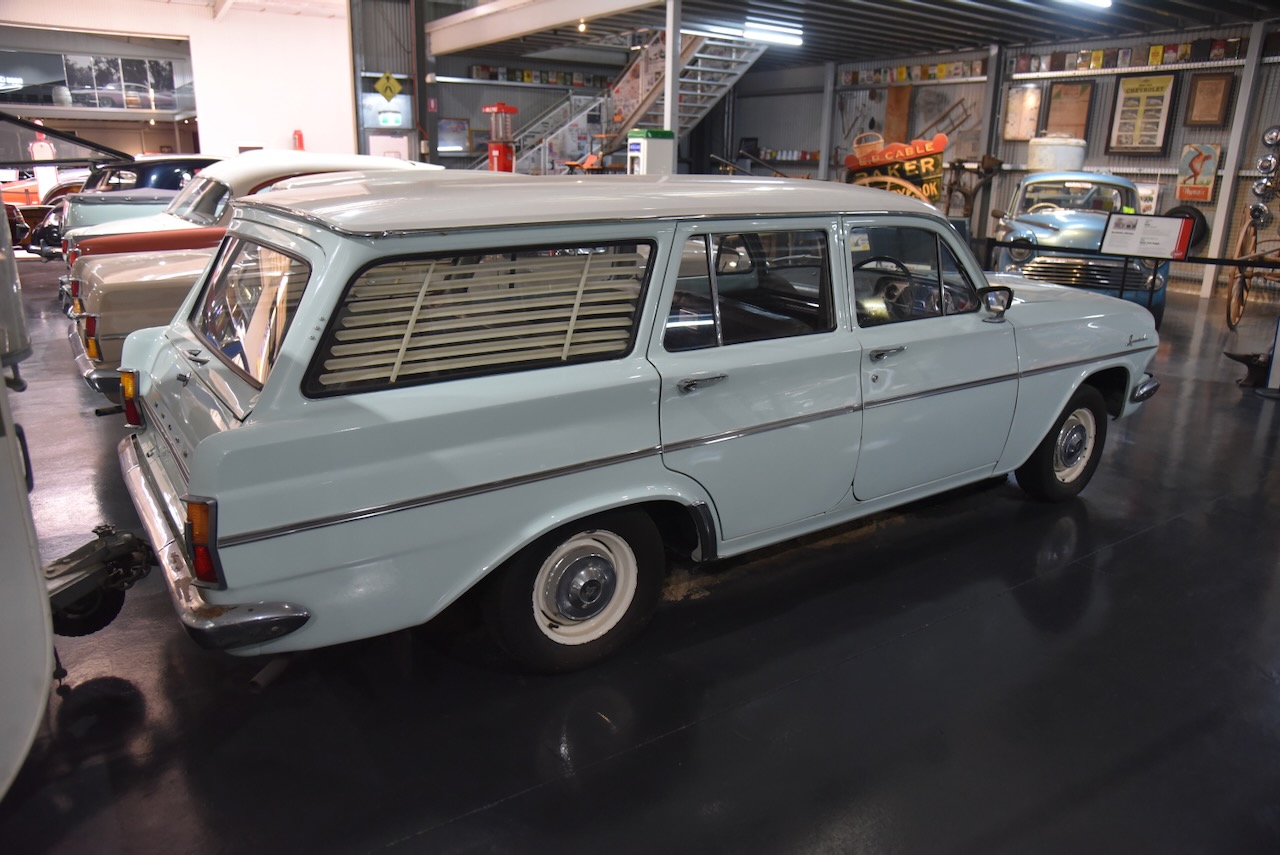
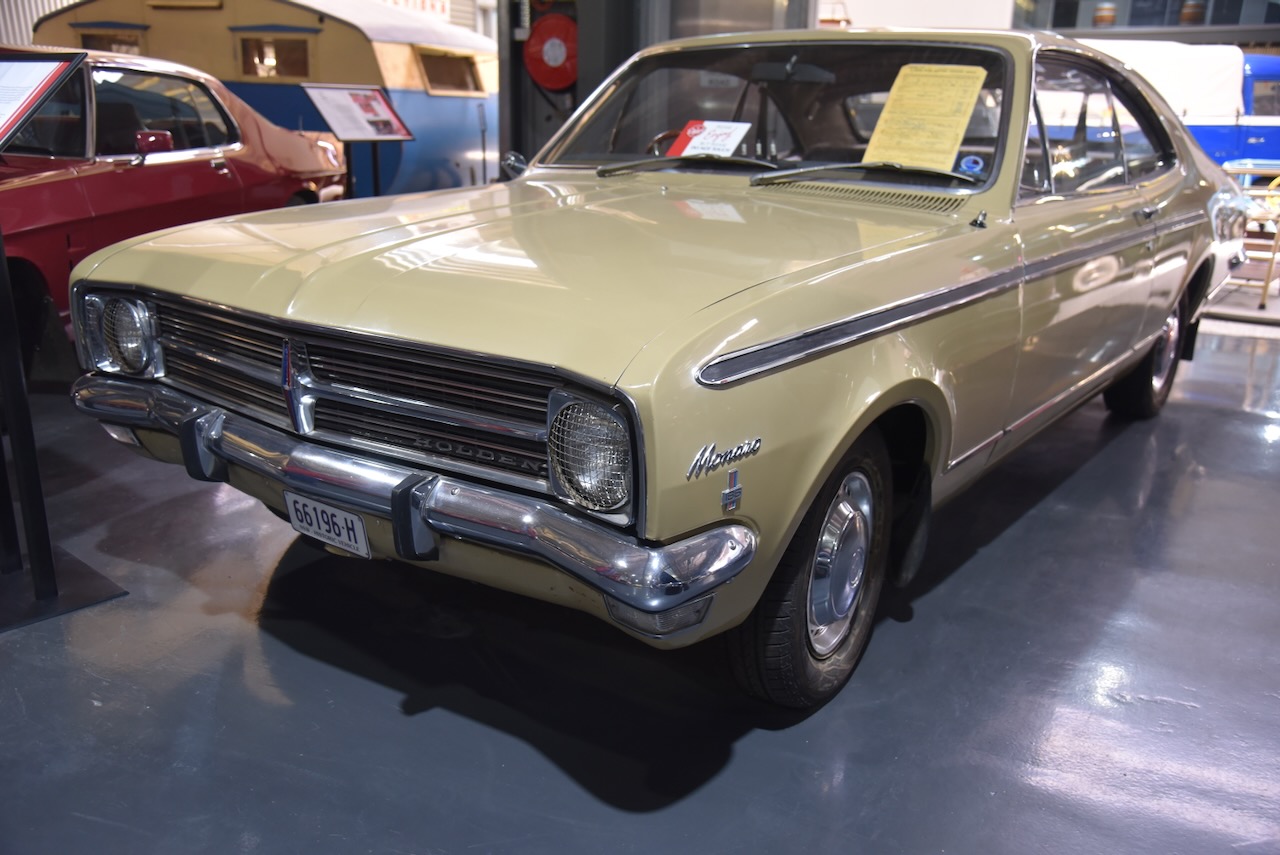
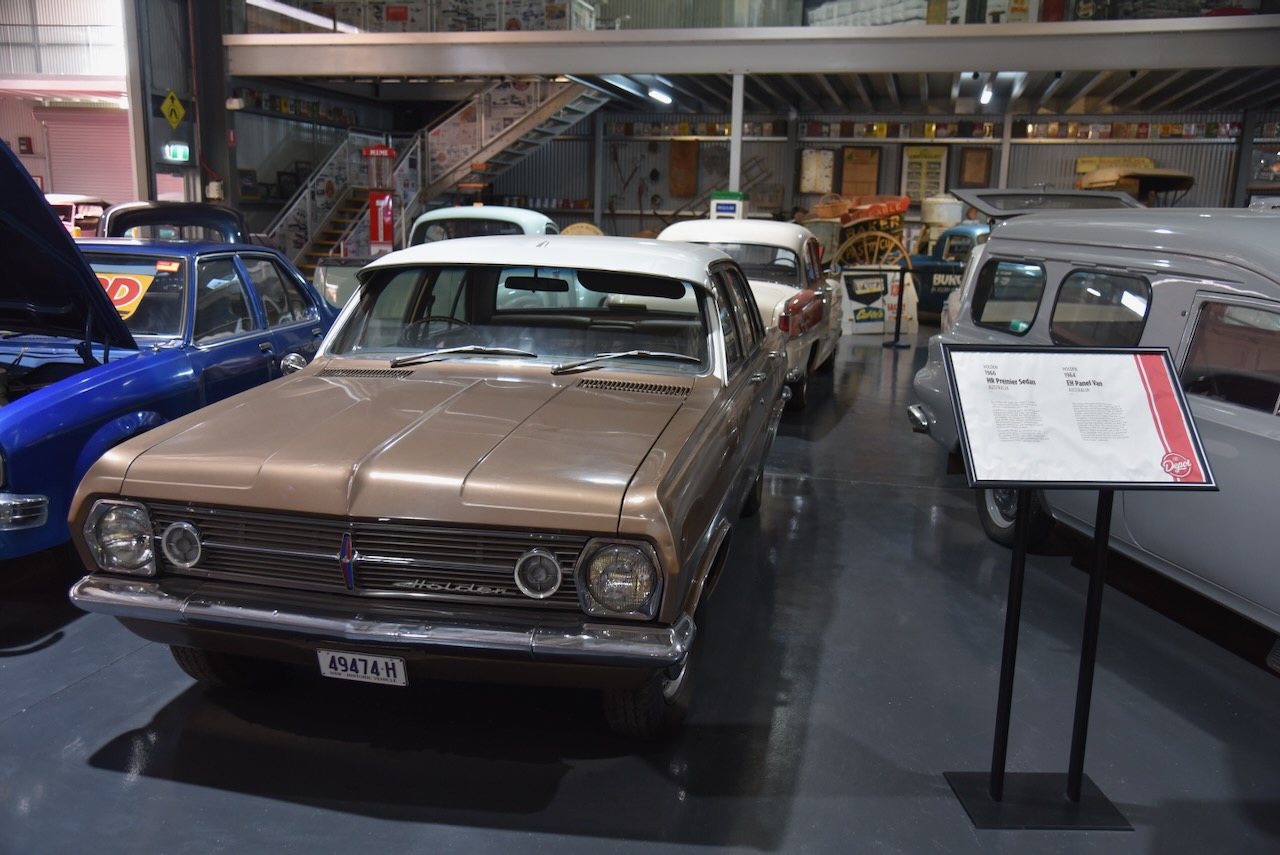
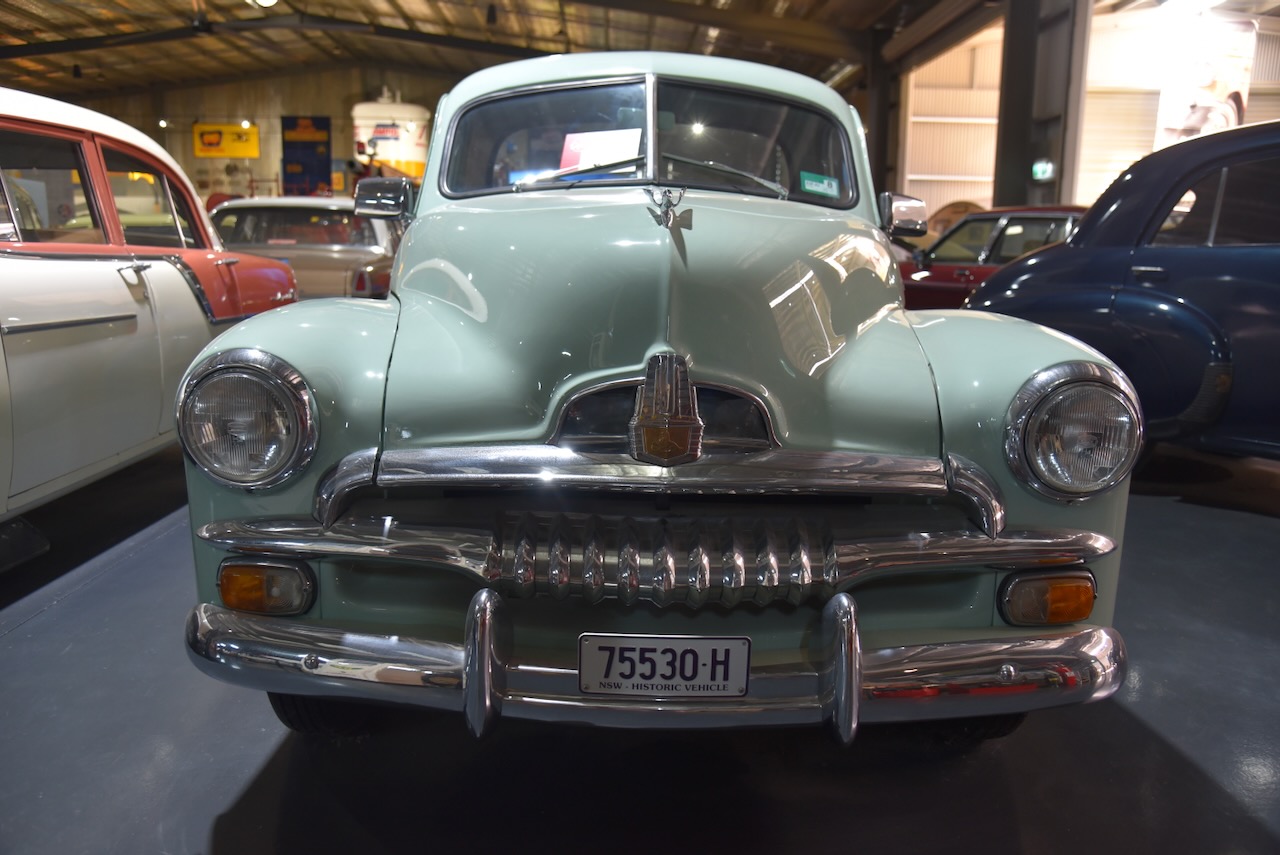
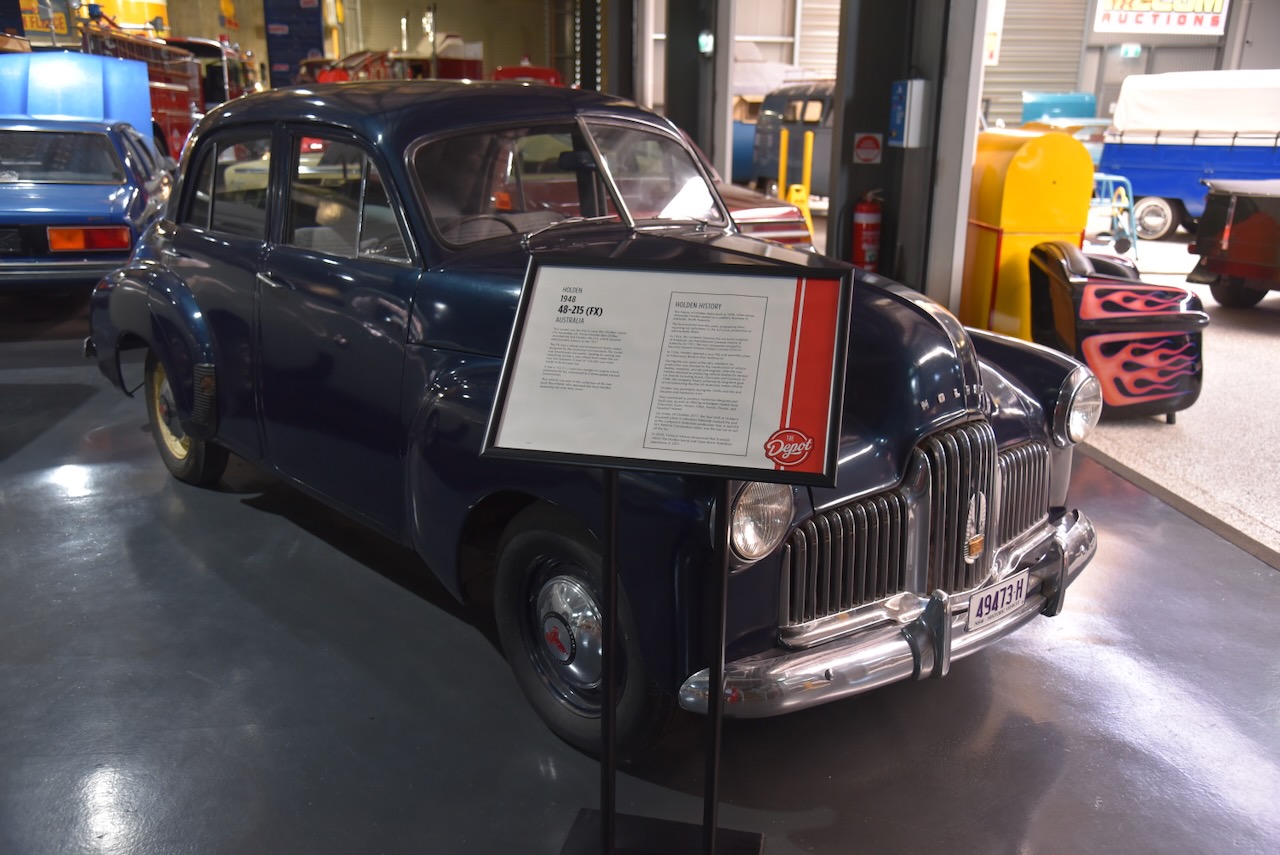
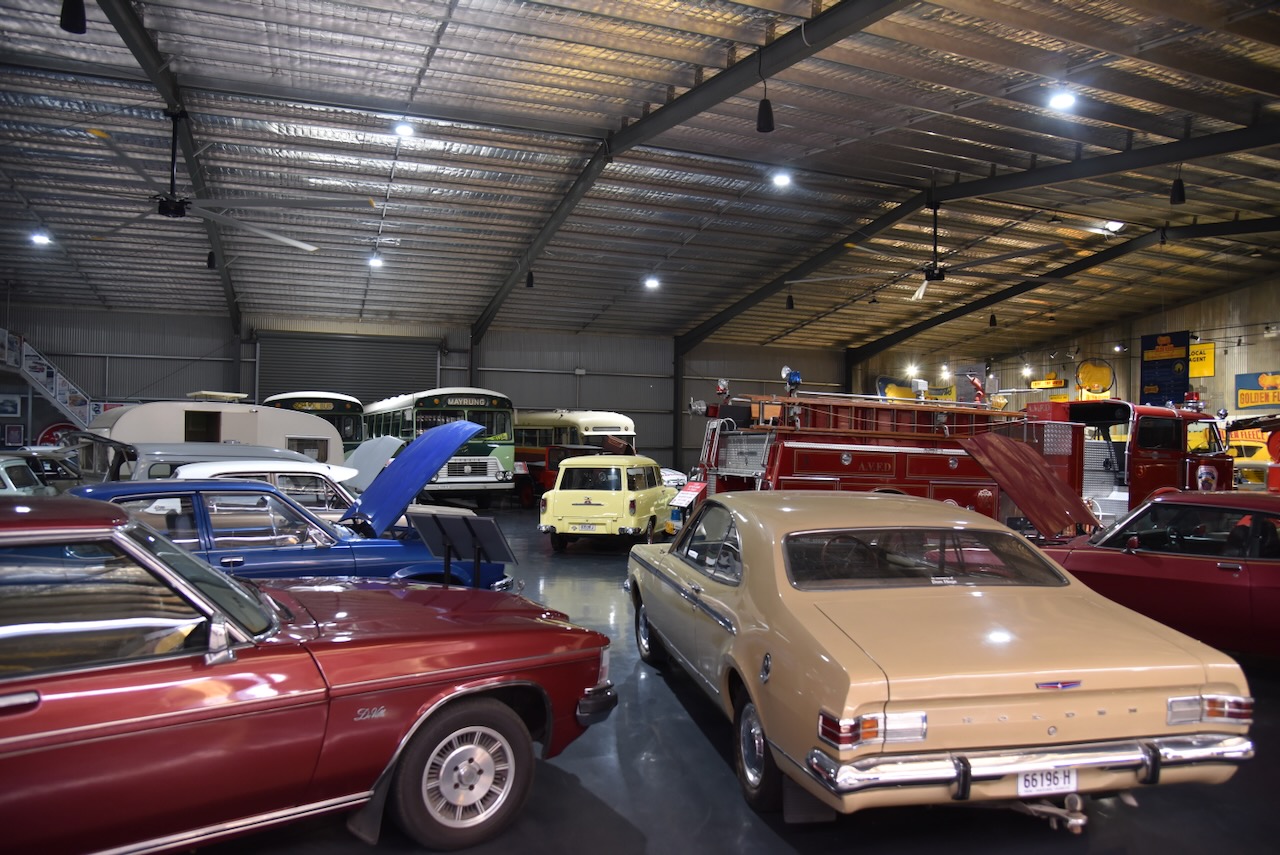
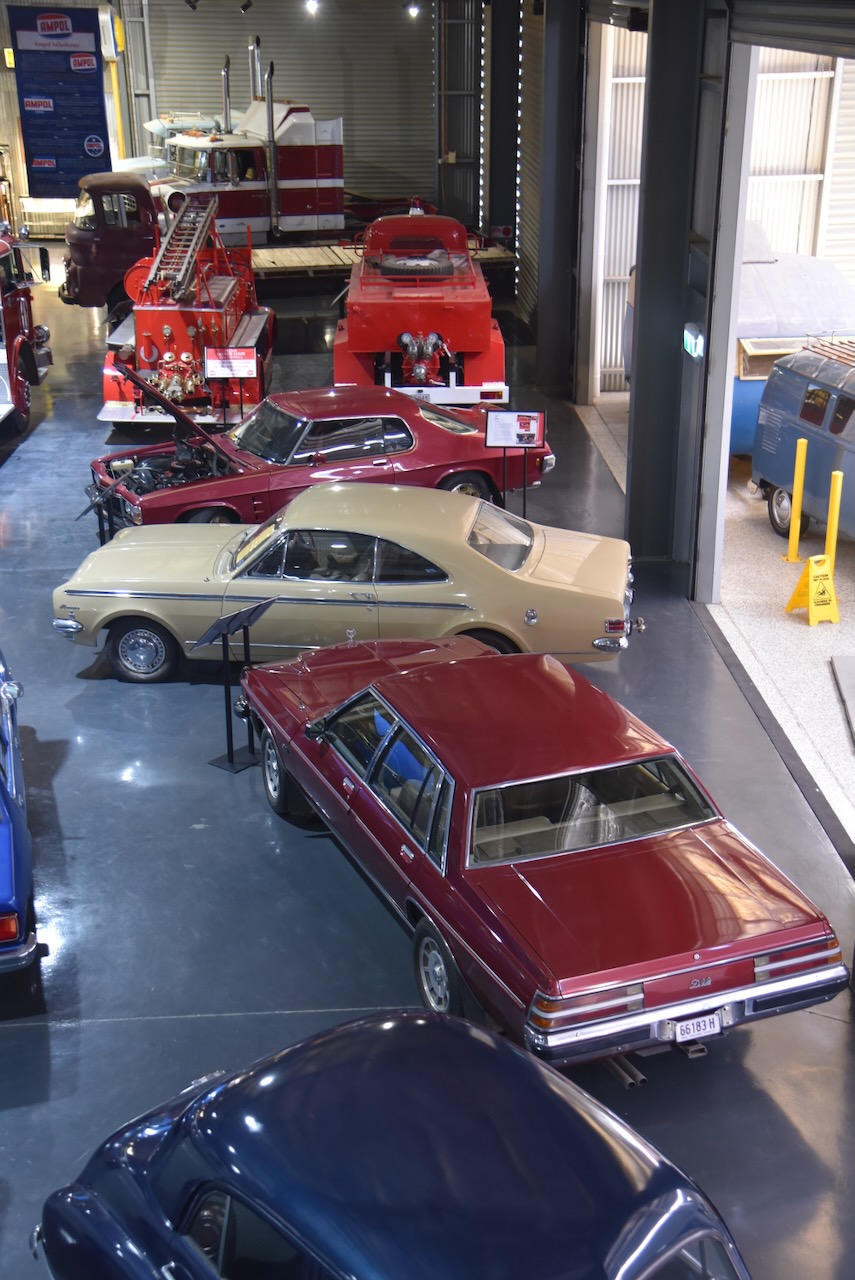
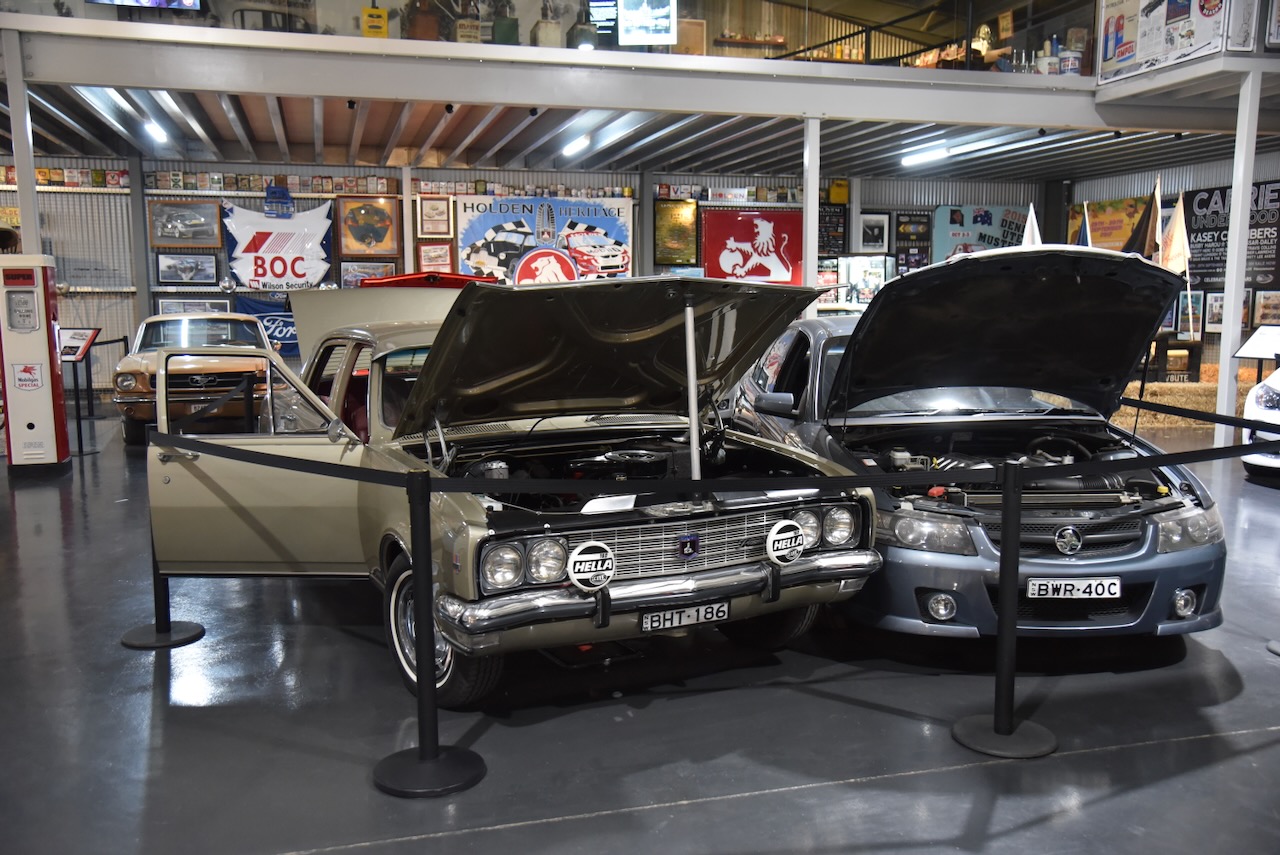
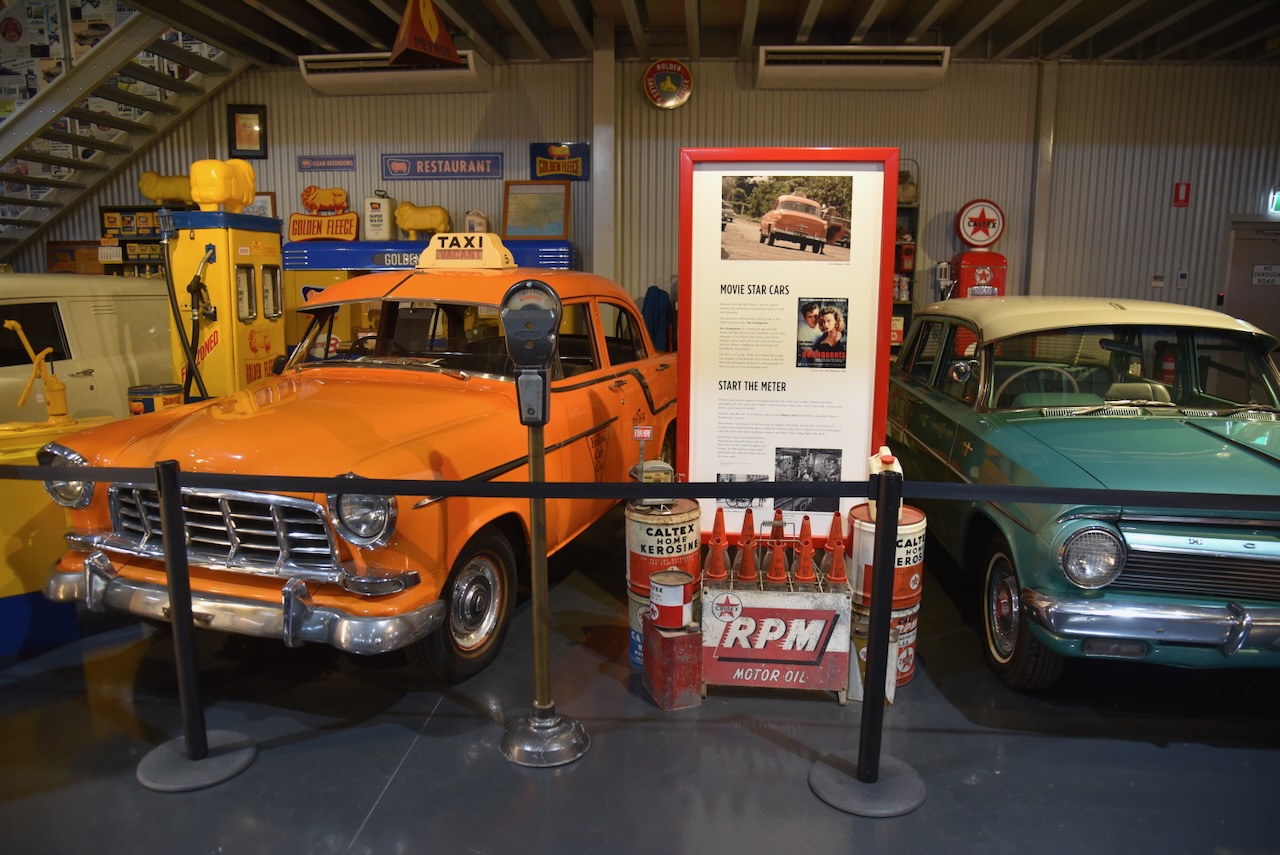
You can view a restored Holden FC Yellow Cab that was featured in the 1989 Australian film, The Delinquents, which featured Kylie Minogue in her feature film debut.
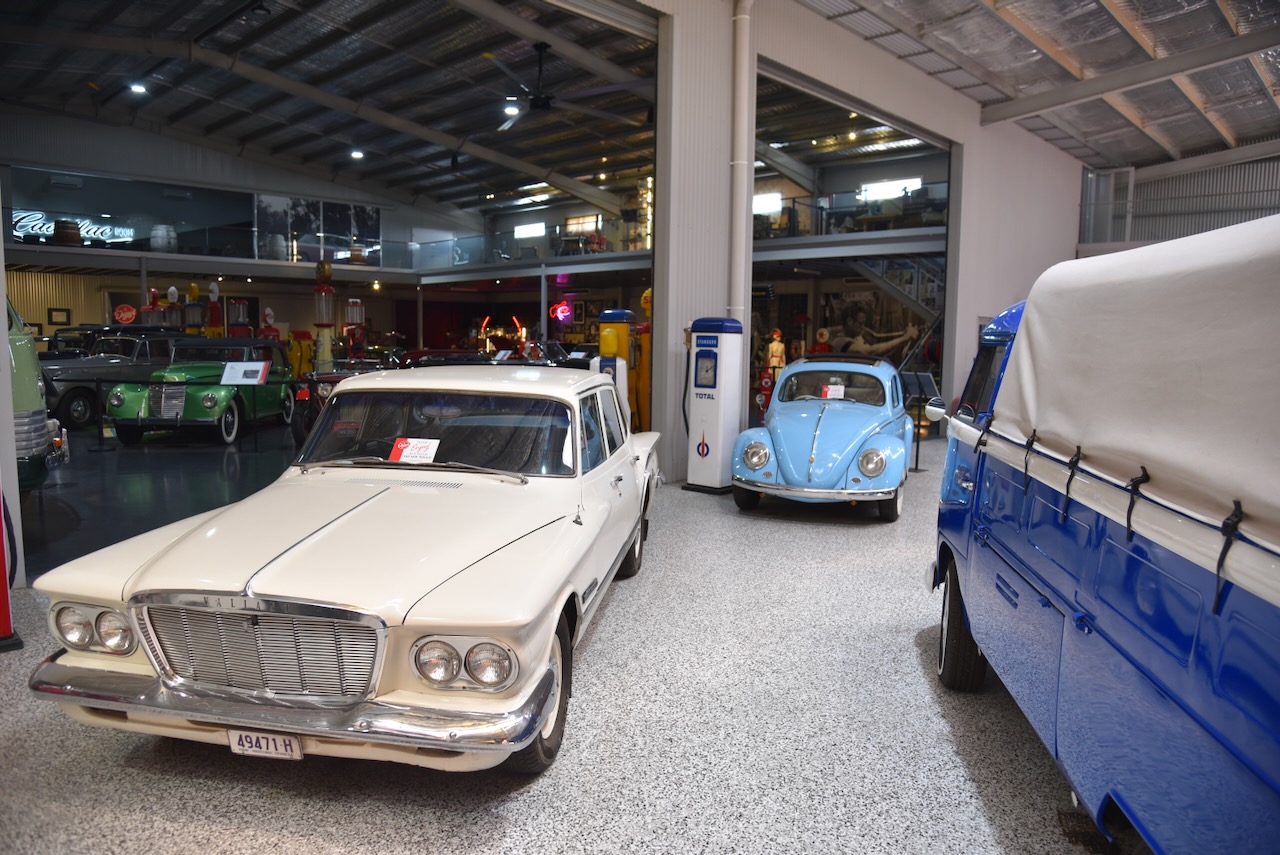
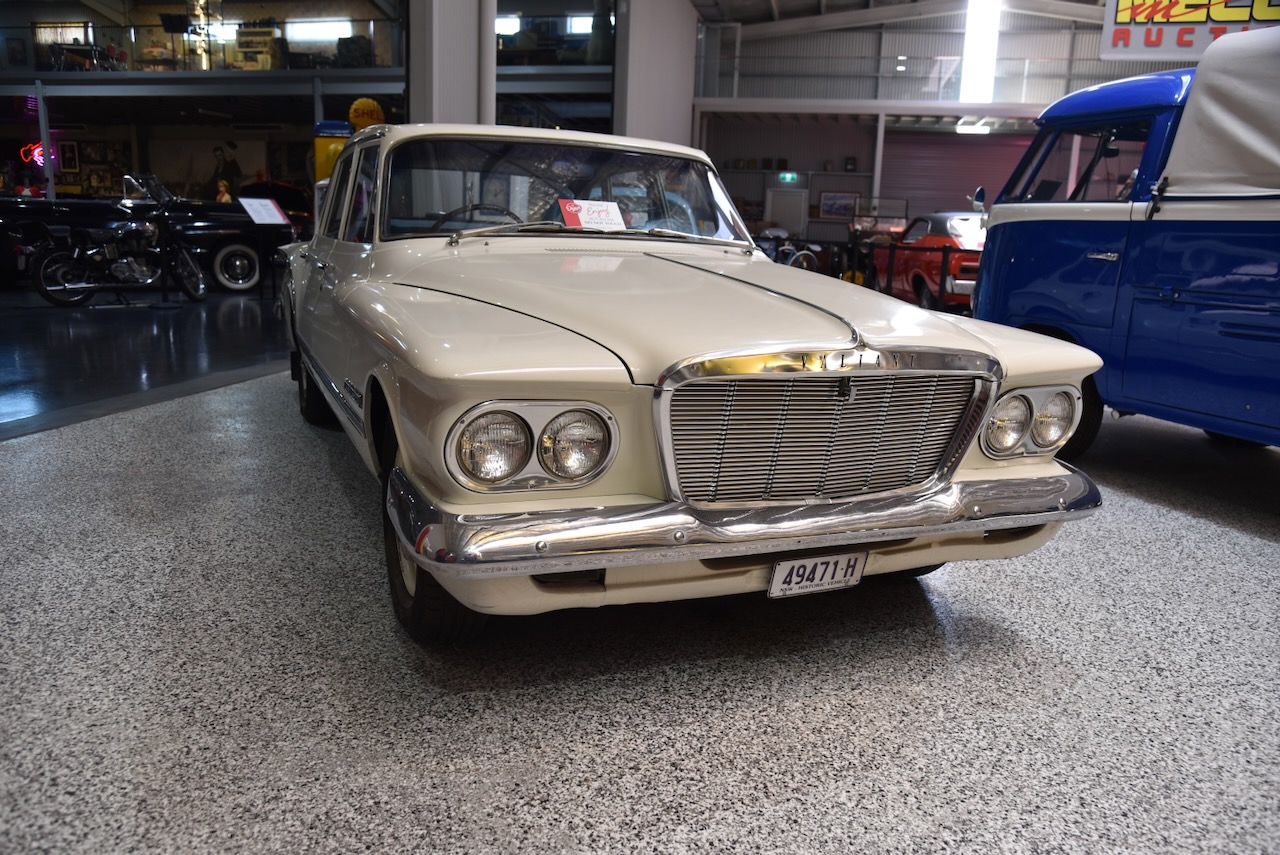
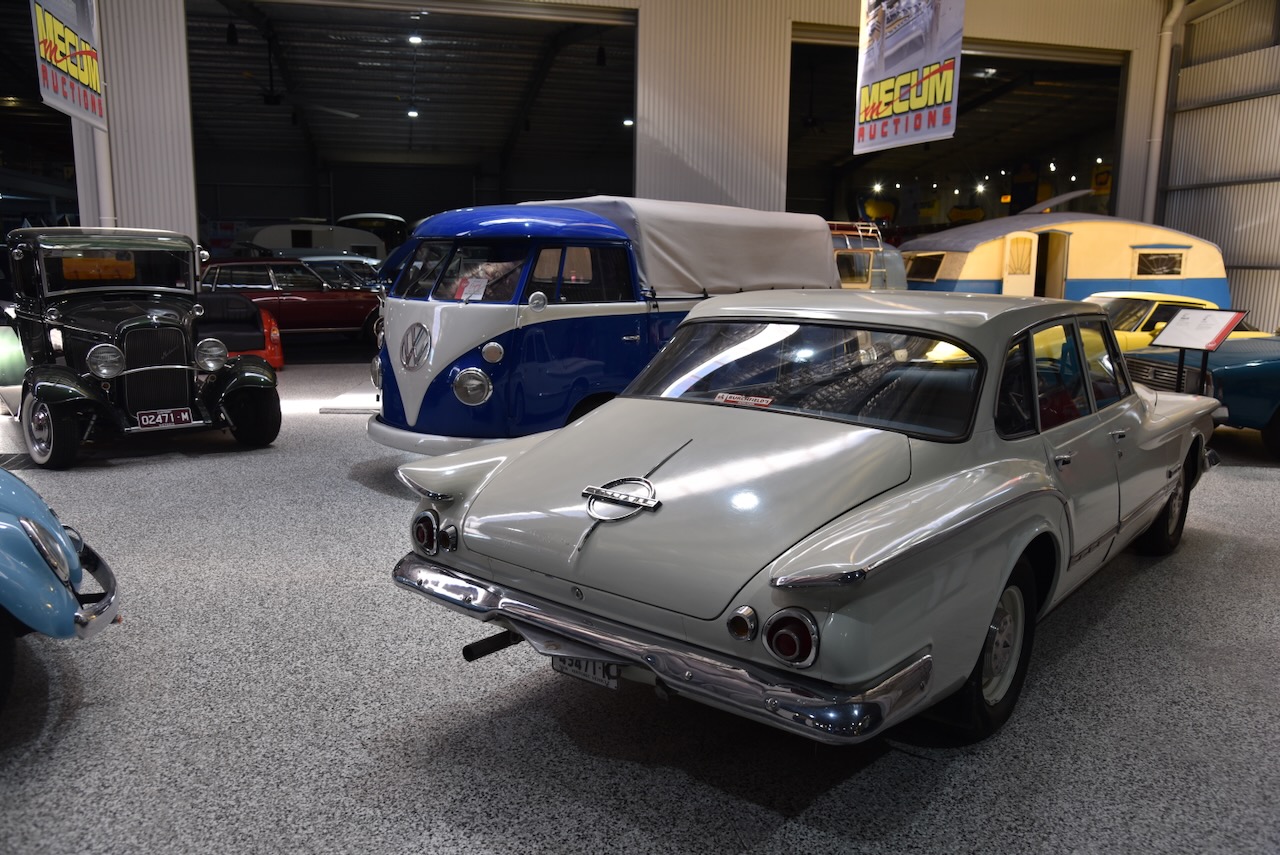
I am a Valiant owner, so it was nice to see a Valiant in the collection.
One of the striking vehicles on display is the fully restored 1948 Fargo petrol tanker used by Golden Fleece.
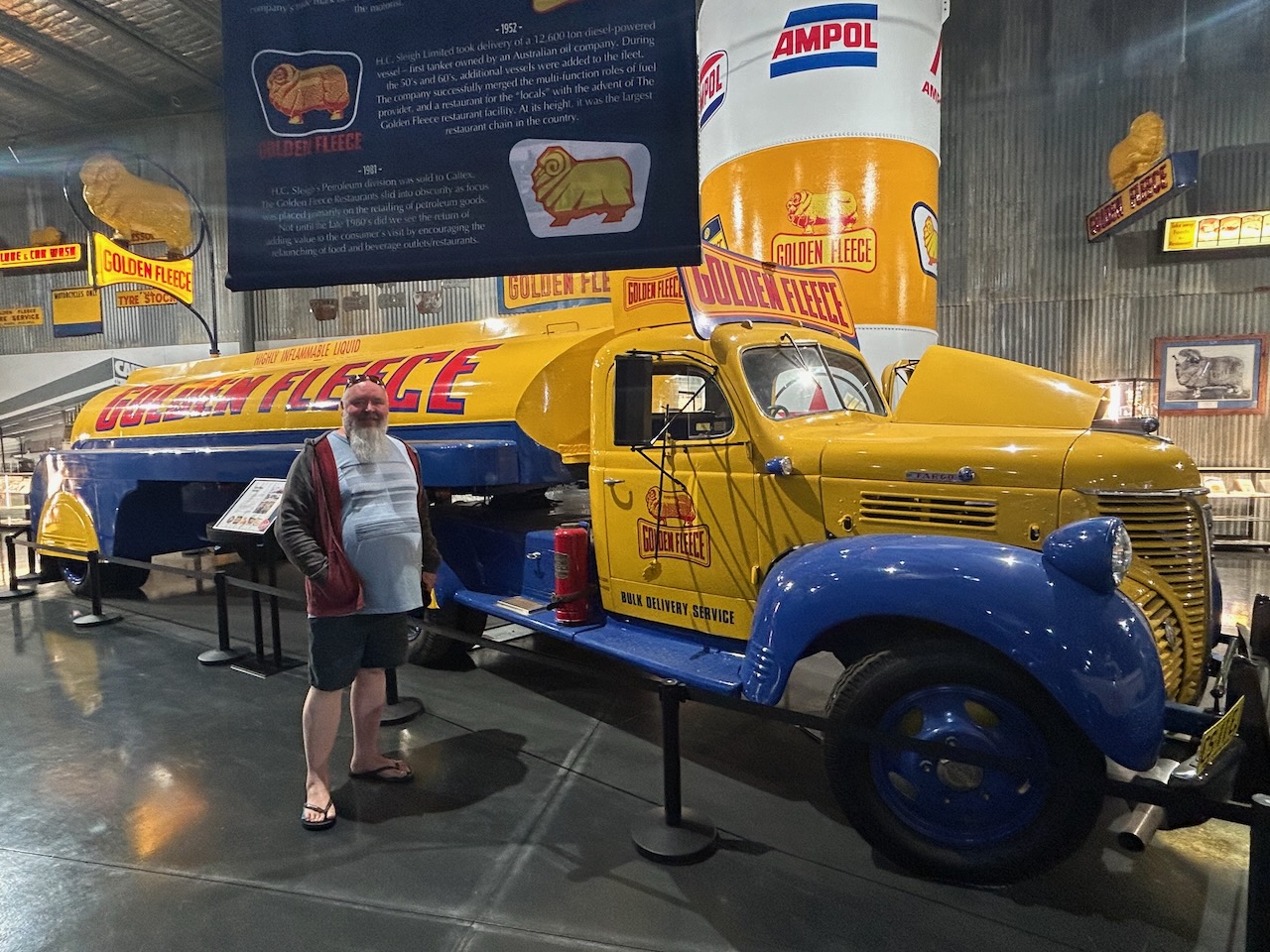
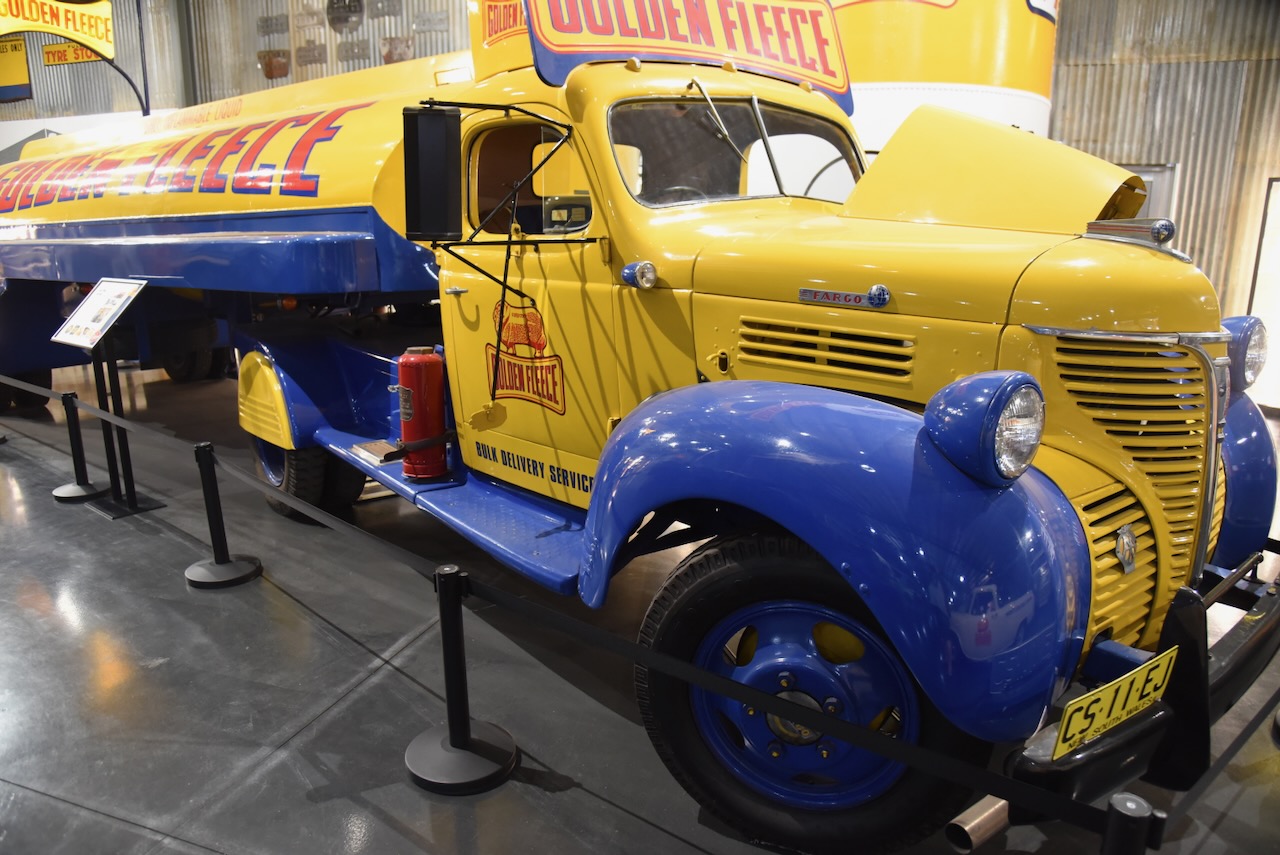
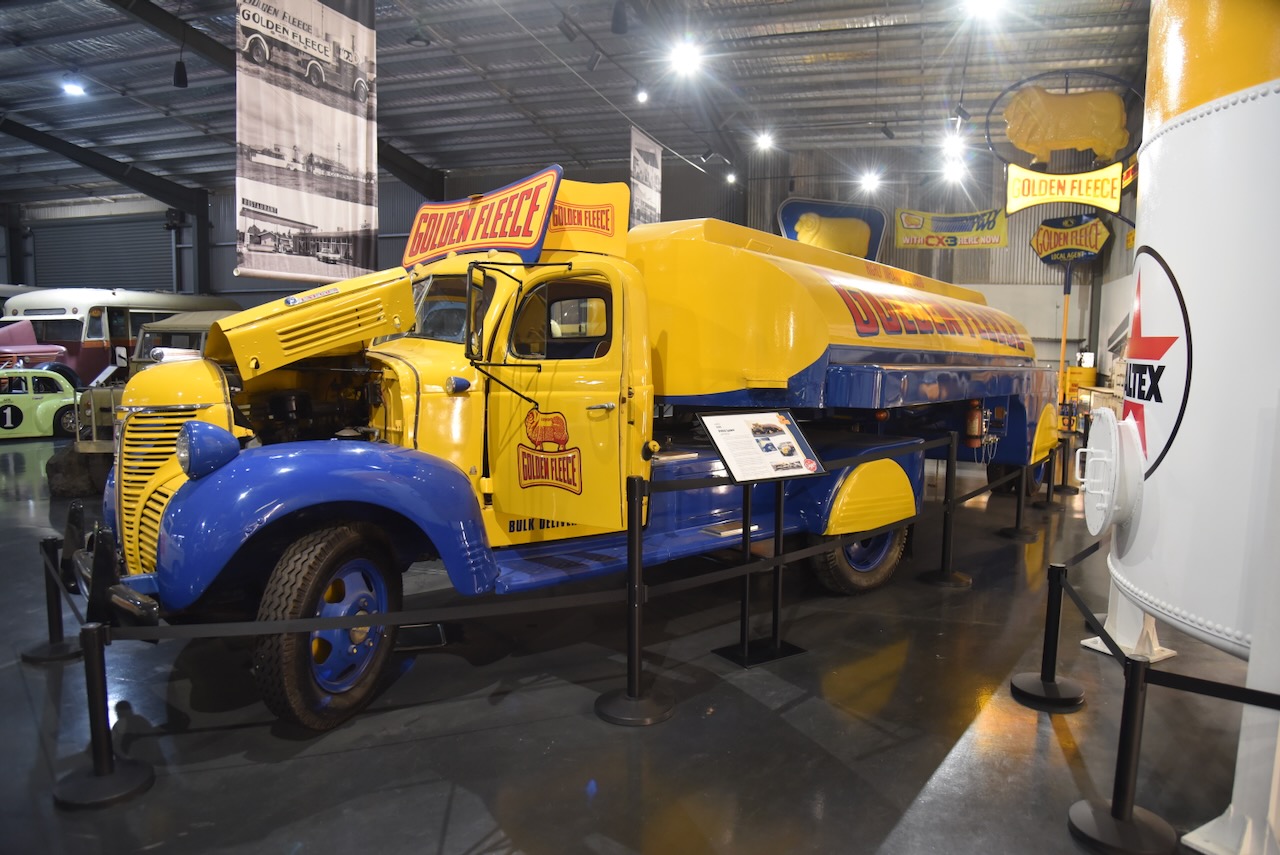
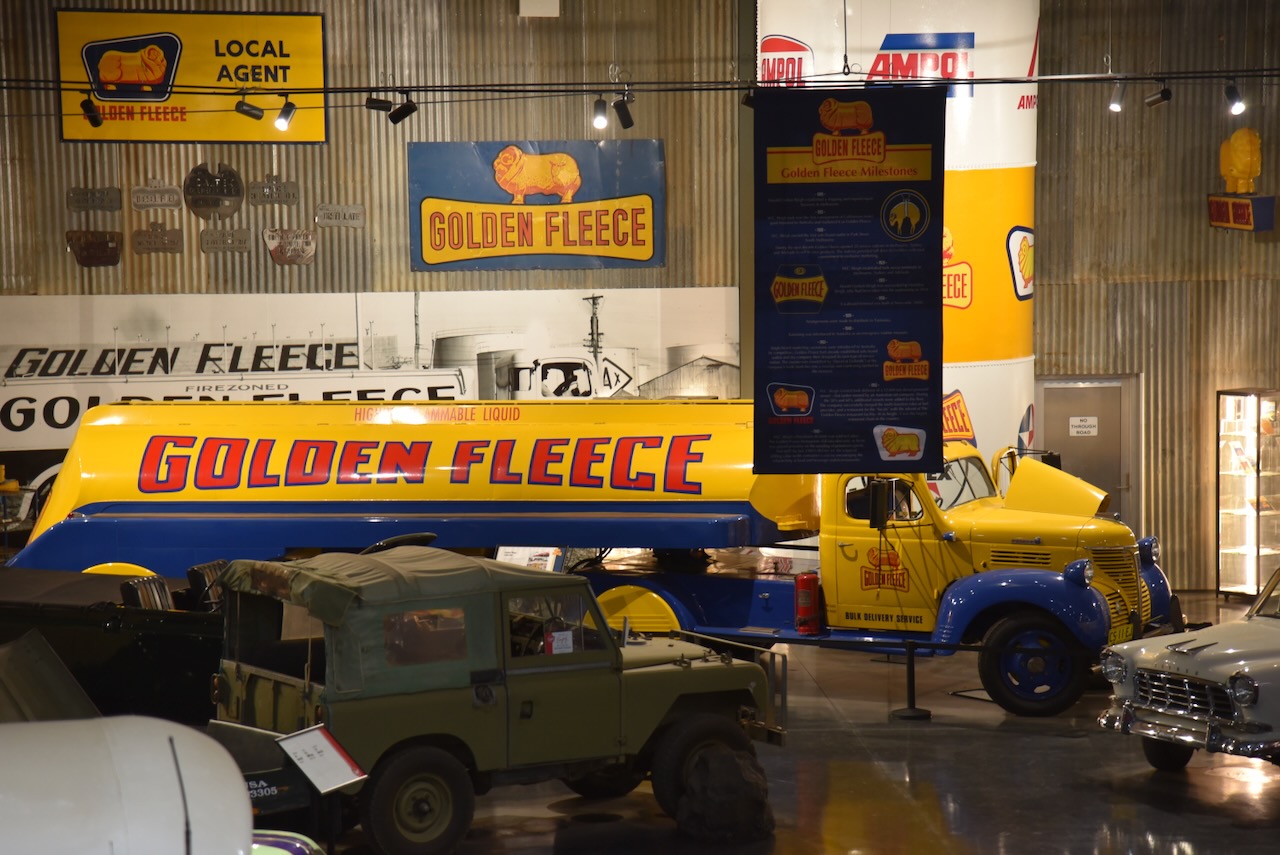
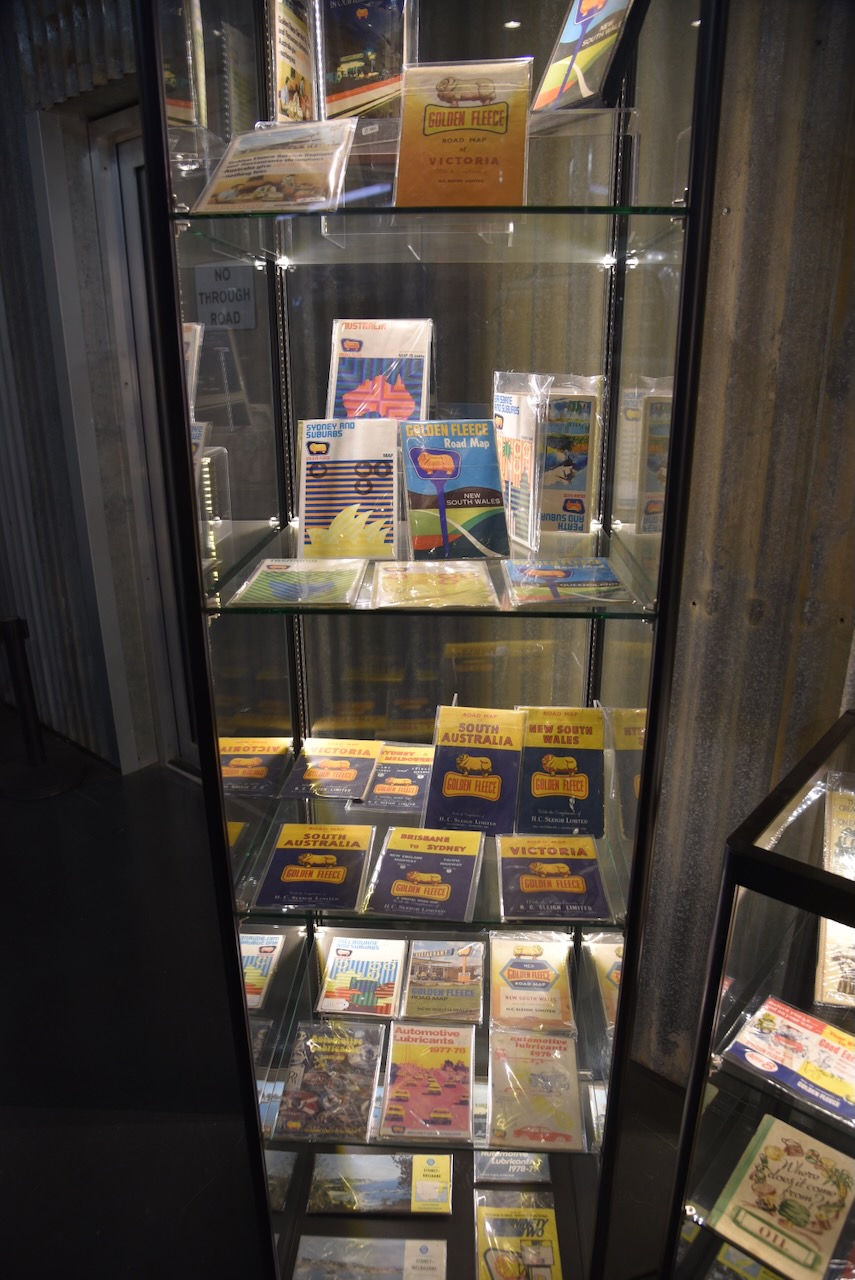
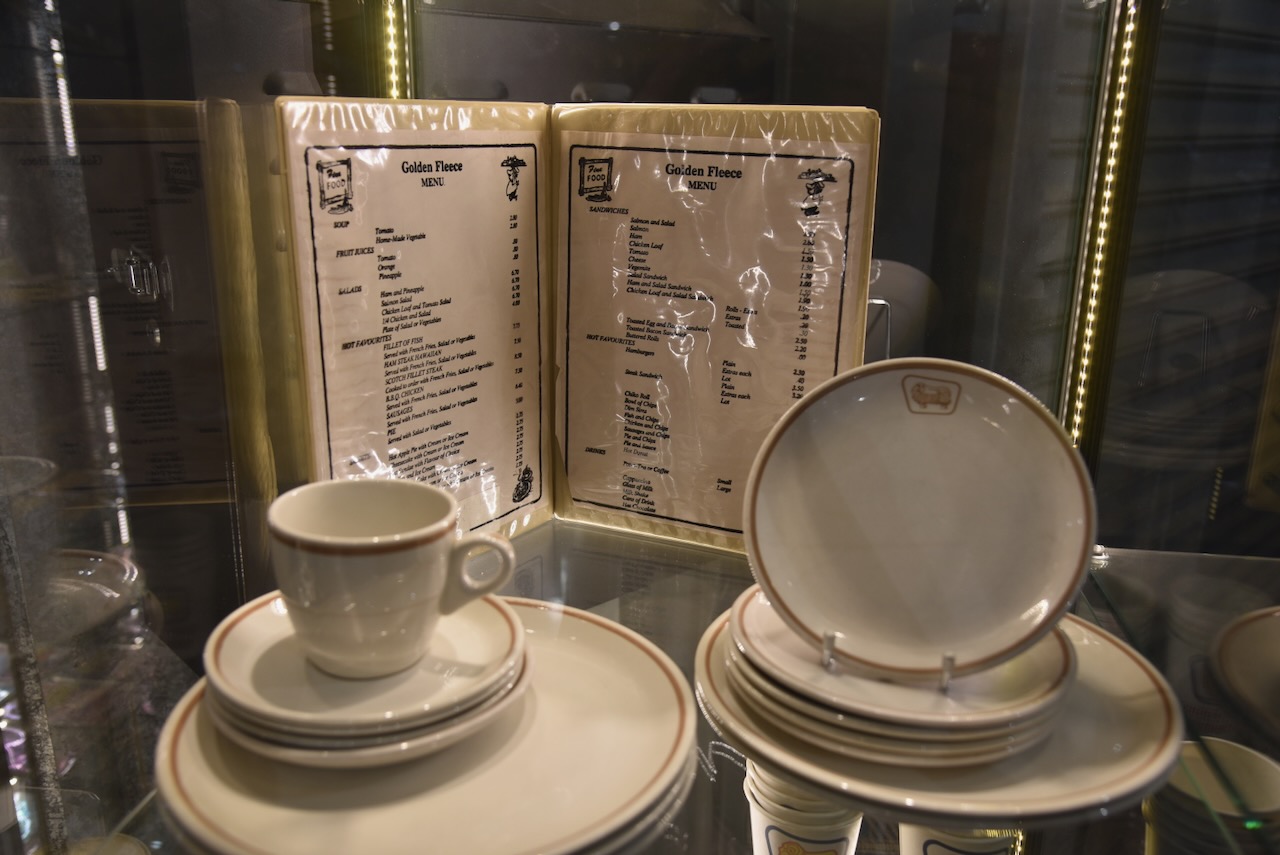
The Golden Fleece Collection includes more than 450 pieces of memorabilia on display. It includes road maps, menus, and signage. This was originally a private collection, but was purchased by Ampol in 2018 and offered the collection to The Depot to be placed on display. (Deniliquin Pastoral Times 2023)
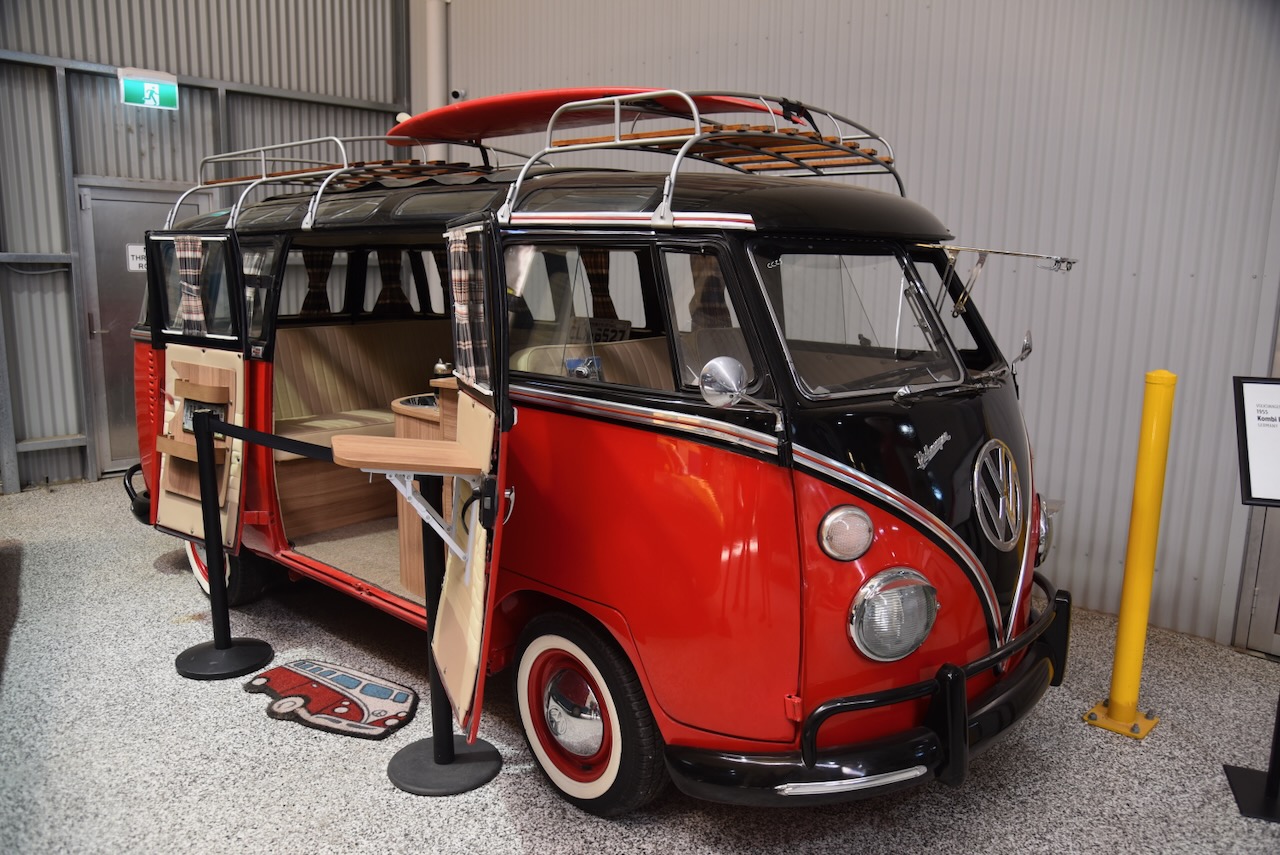
If you are a fan of Volkswagen Combi vans, you can find a few at The Depot.
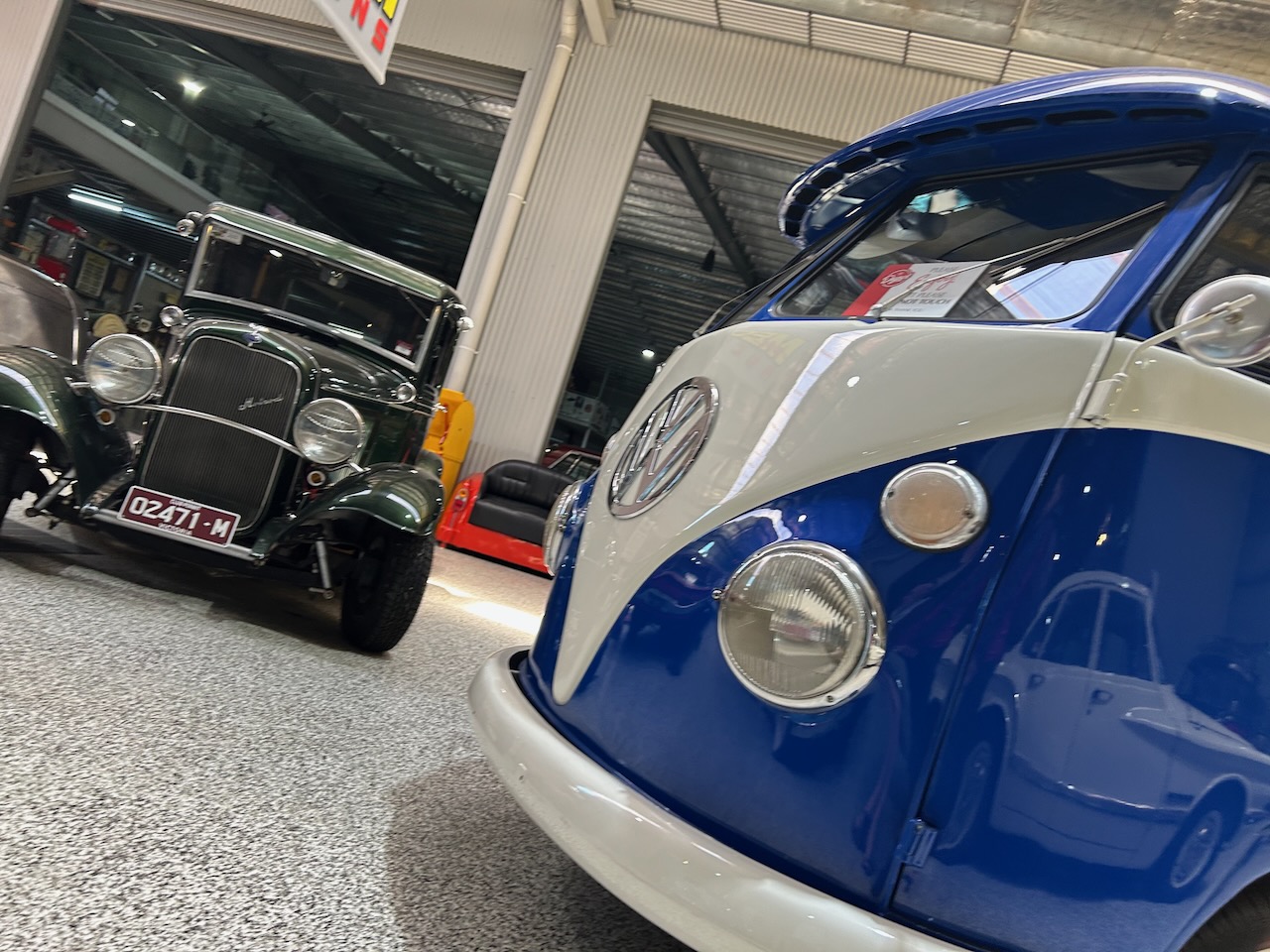
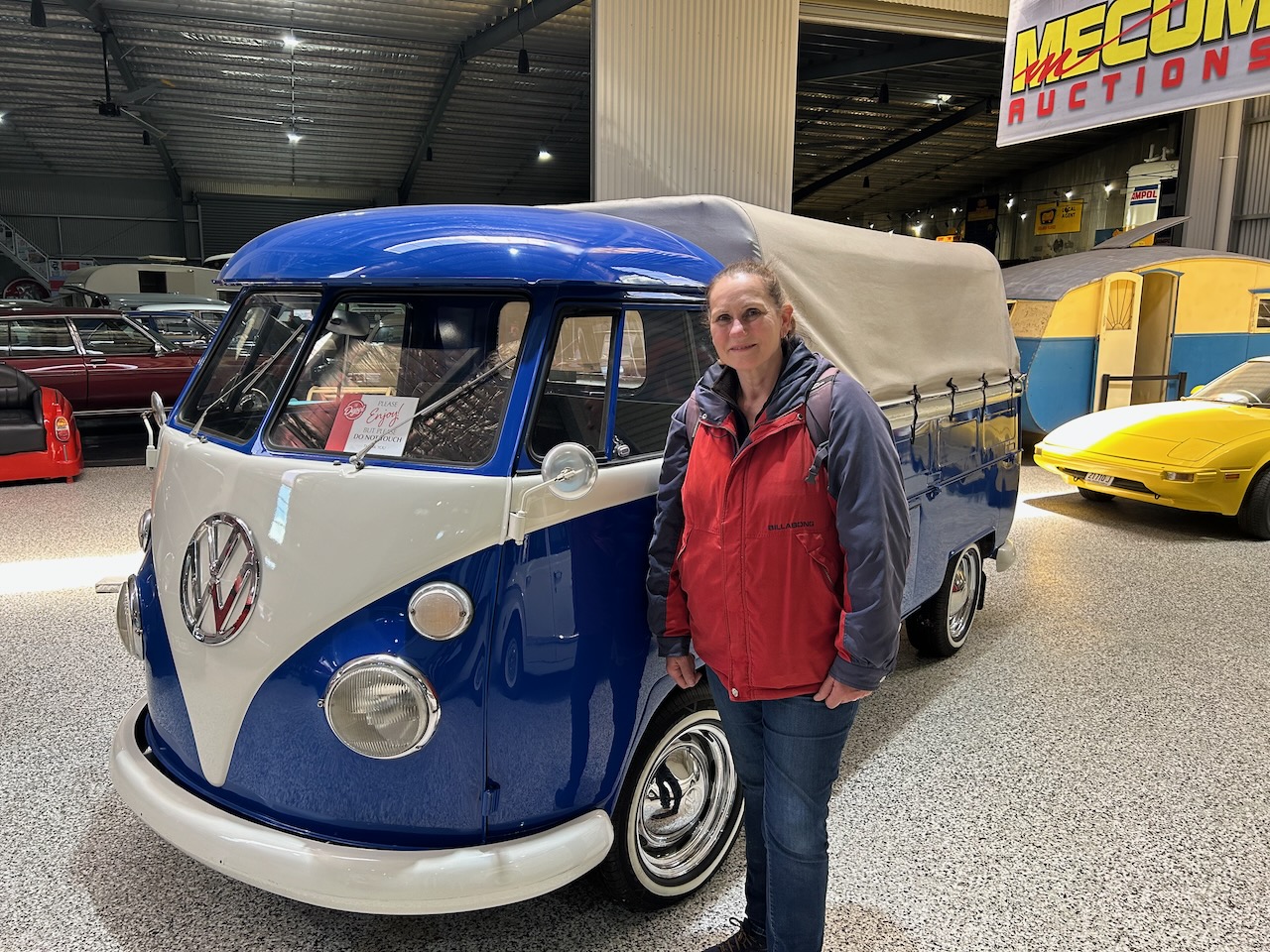
This includes the very impressive 1955 Volkswagen Kombi seen below.
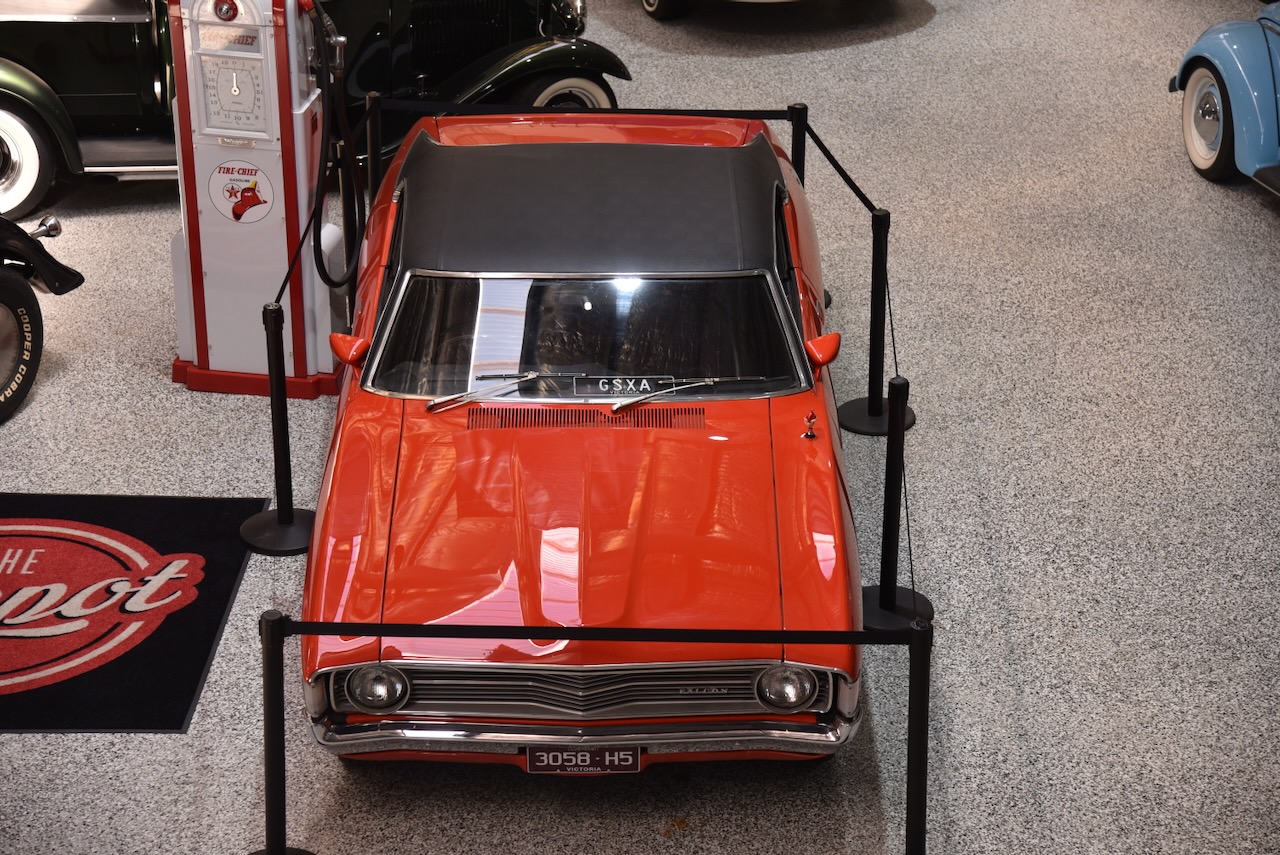
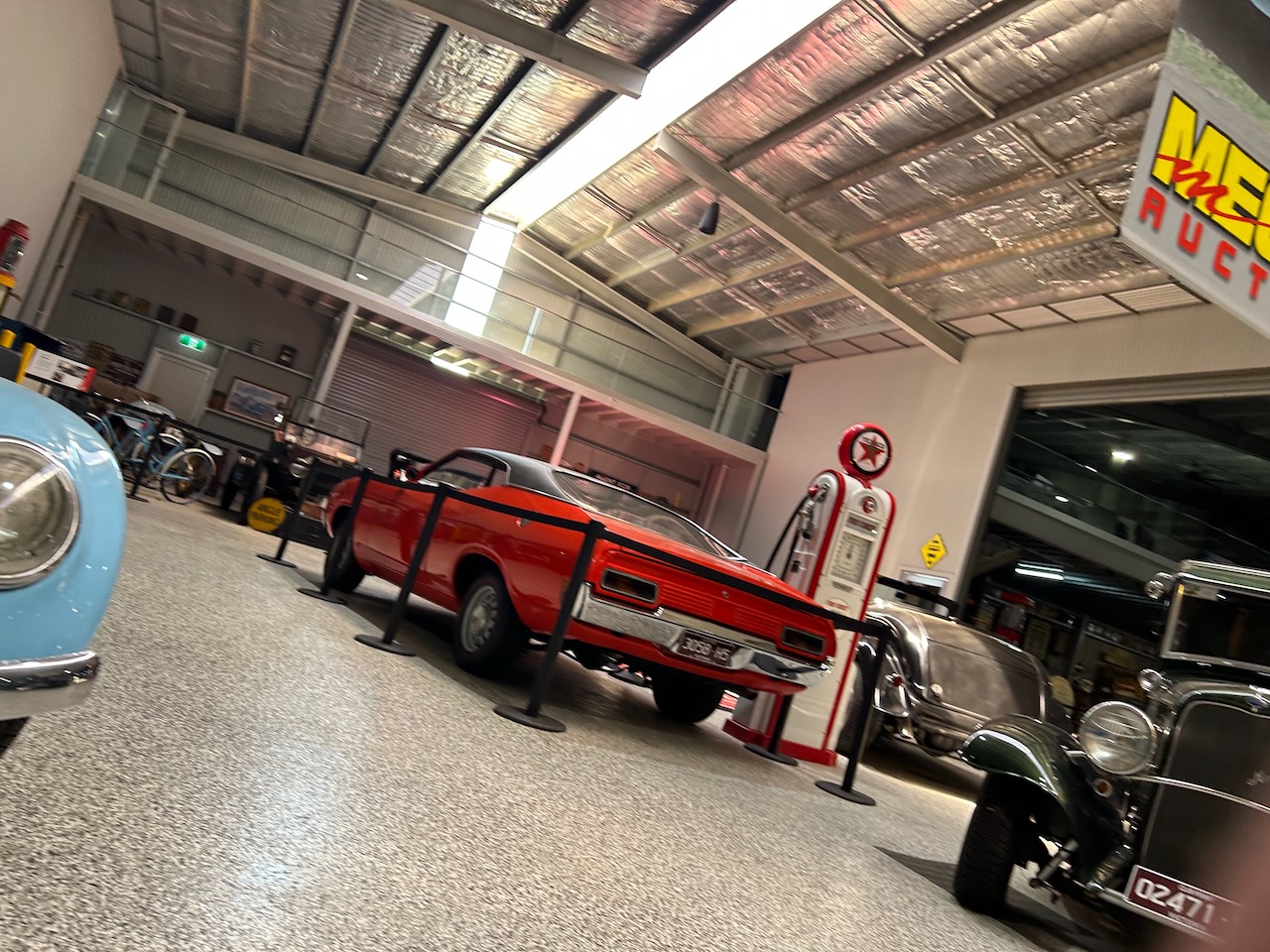
Another car that I would love to own was on display, a very impressive, striking red Ford Falcon XA coupe.
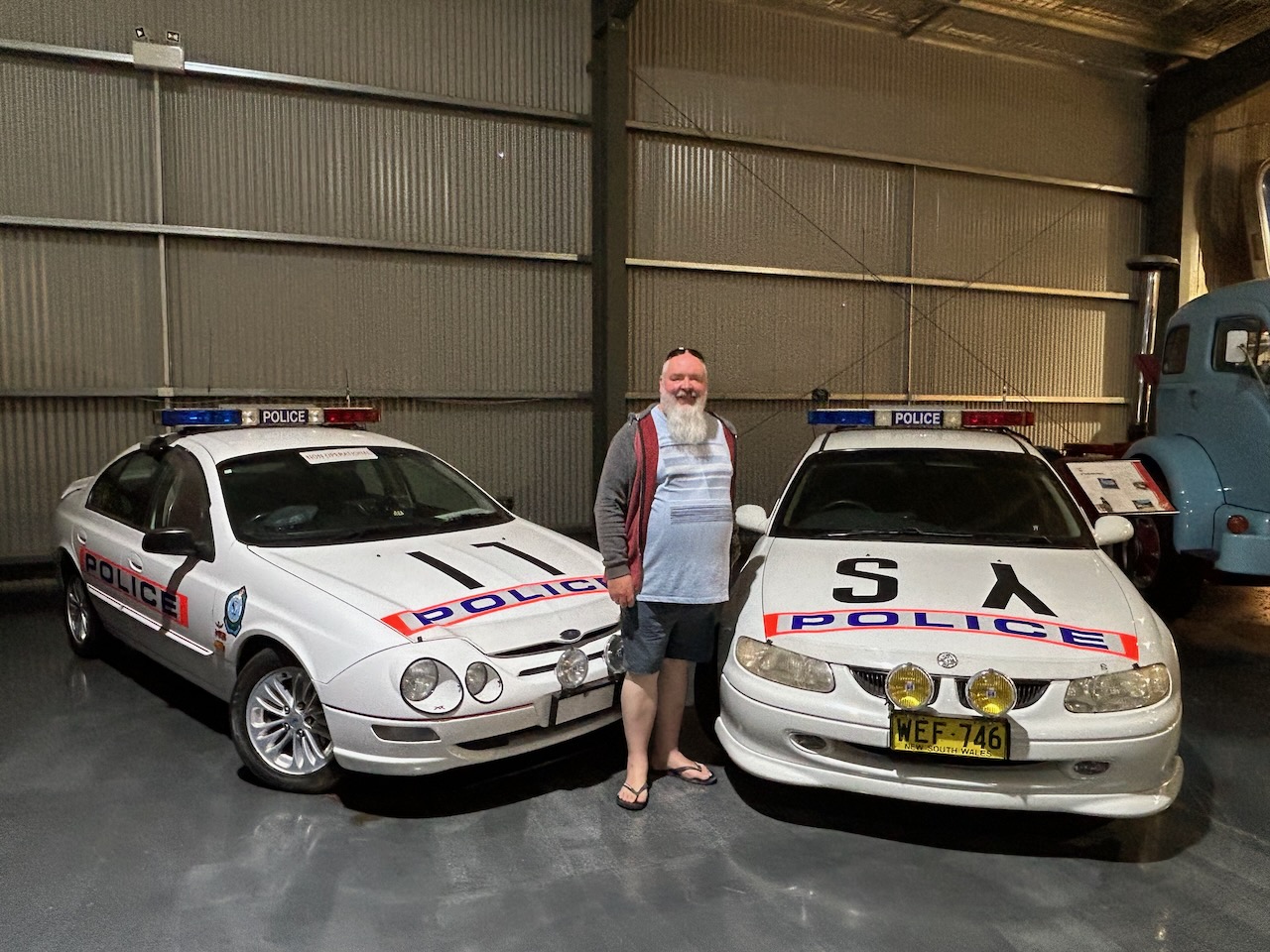
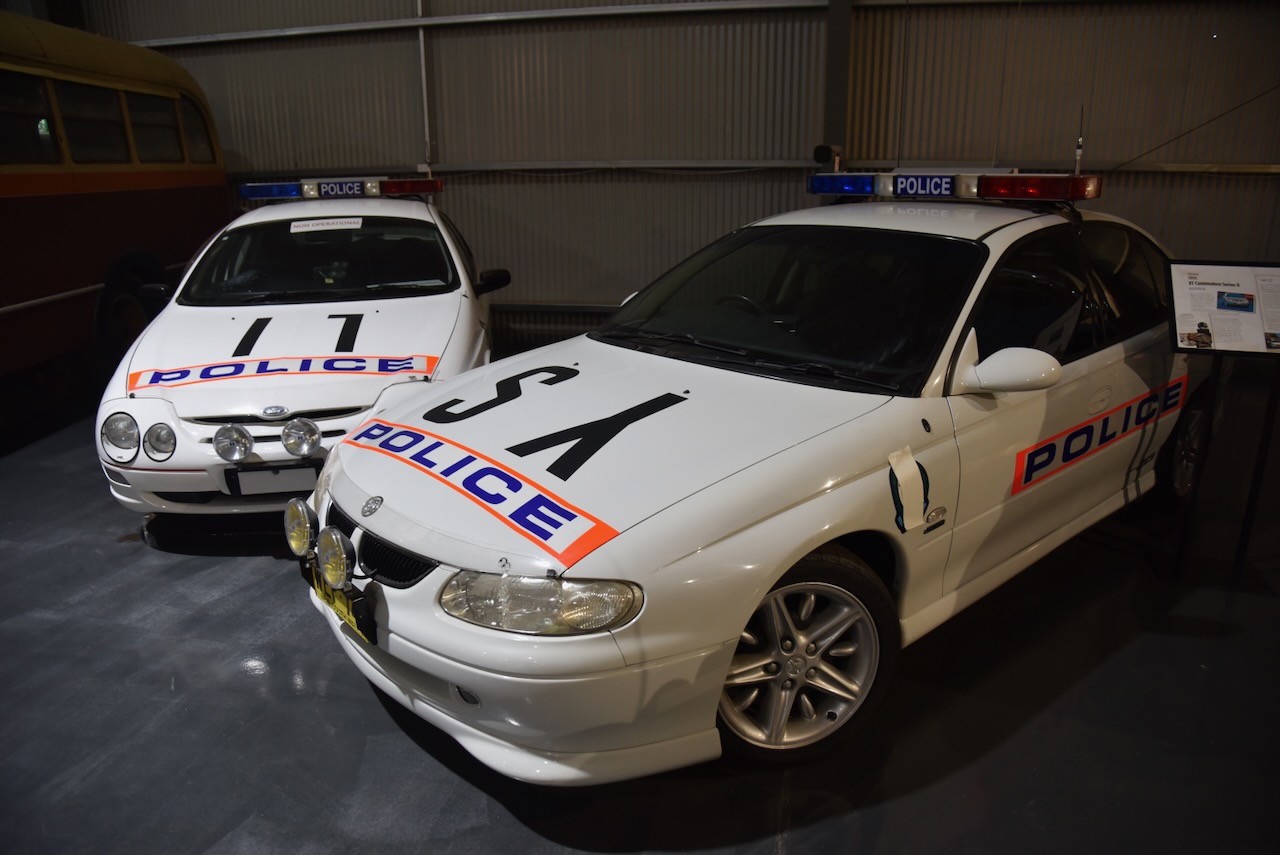
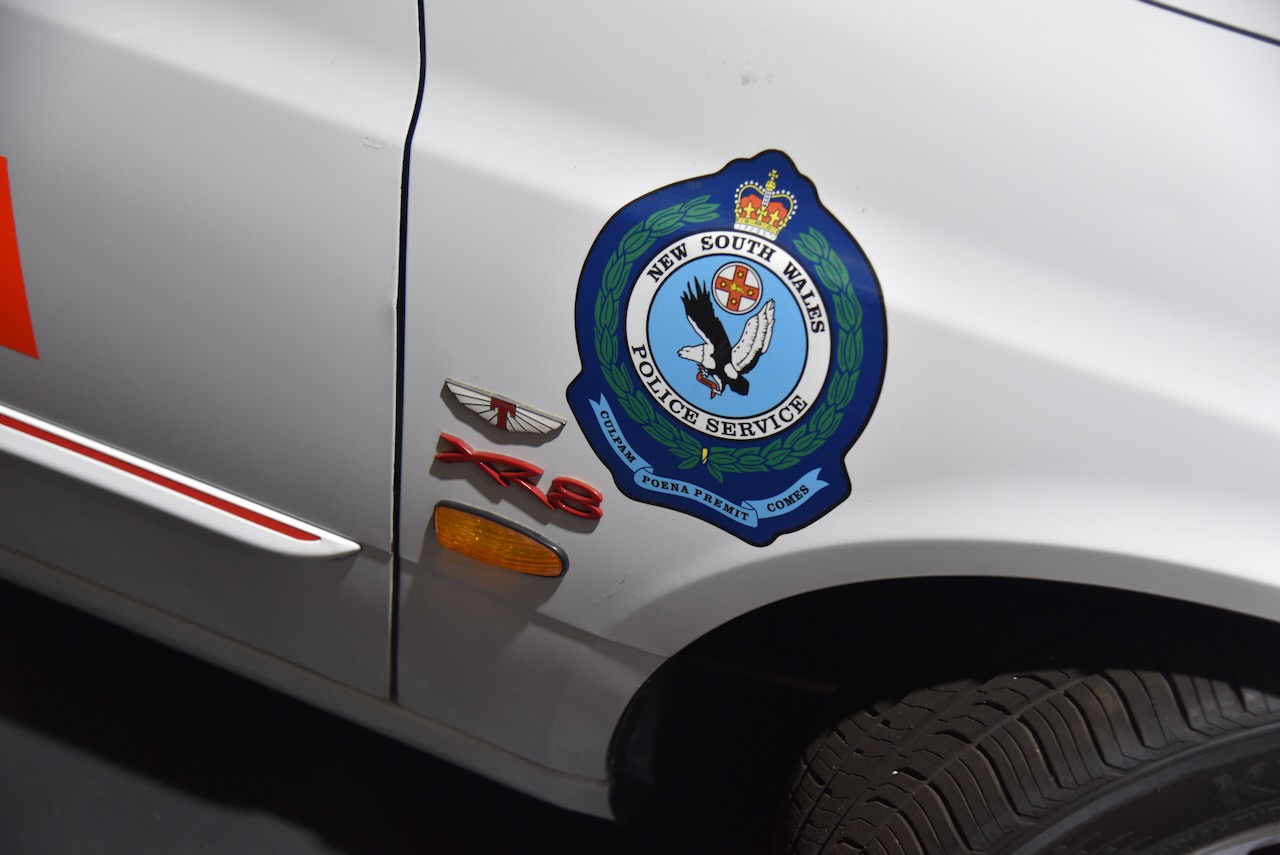
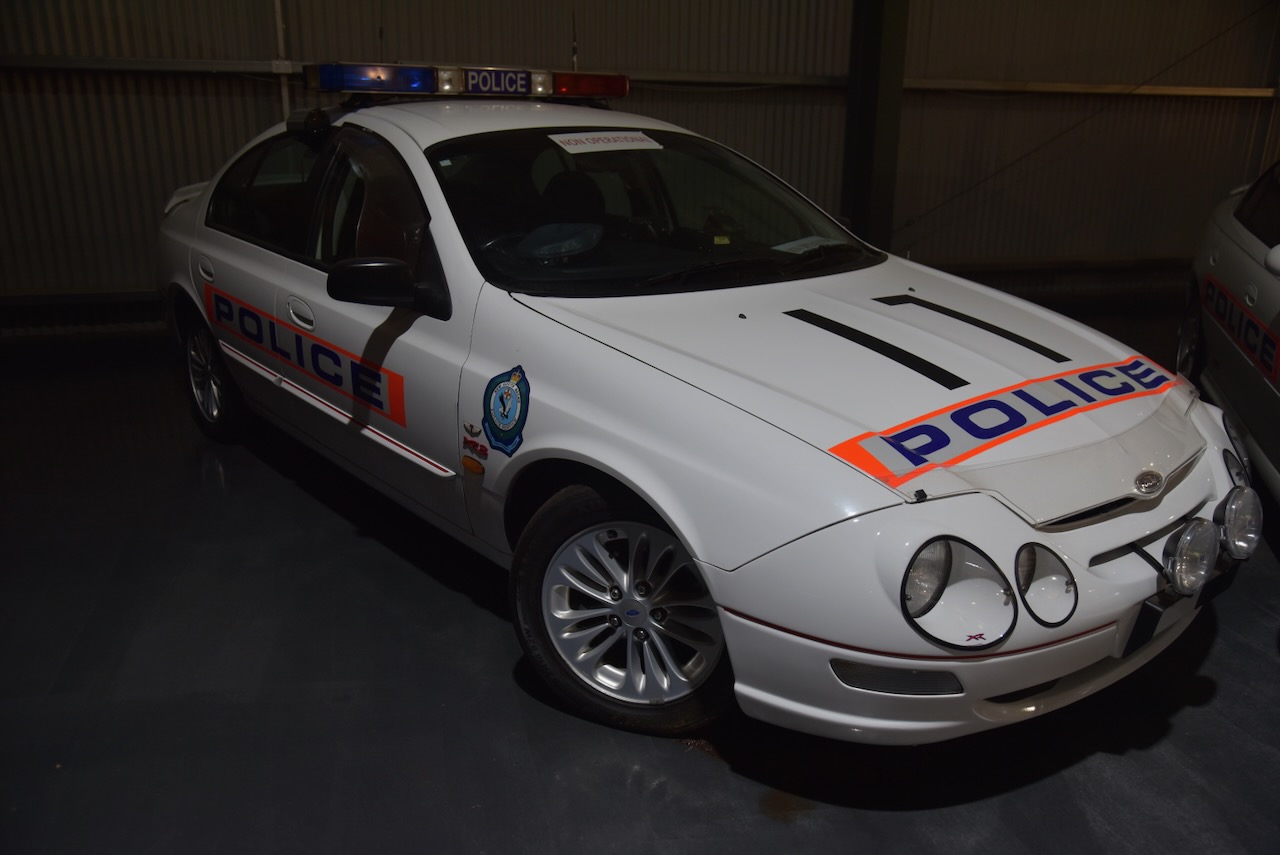
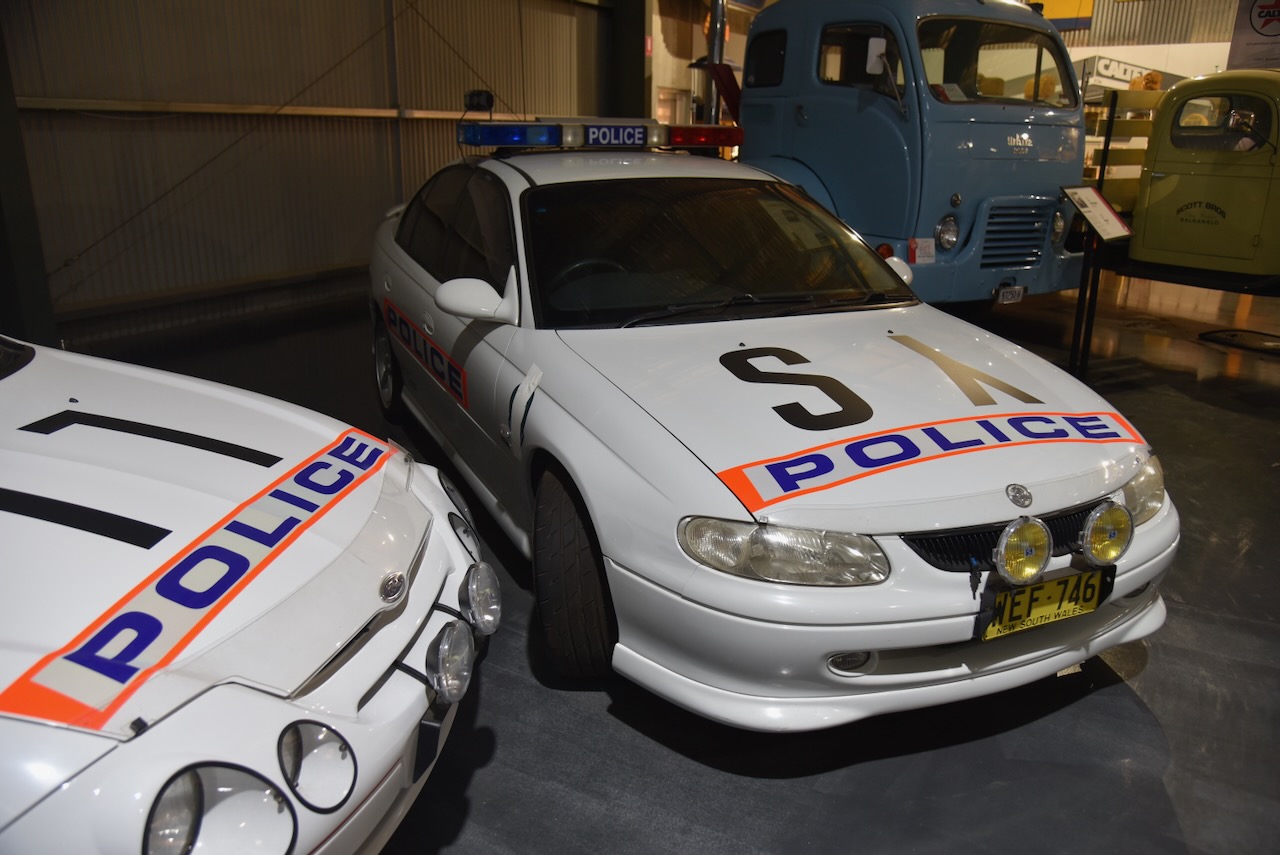
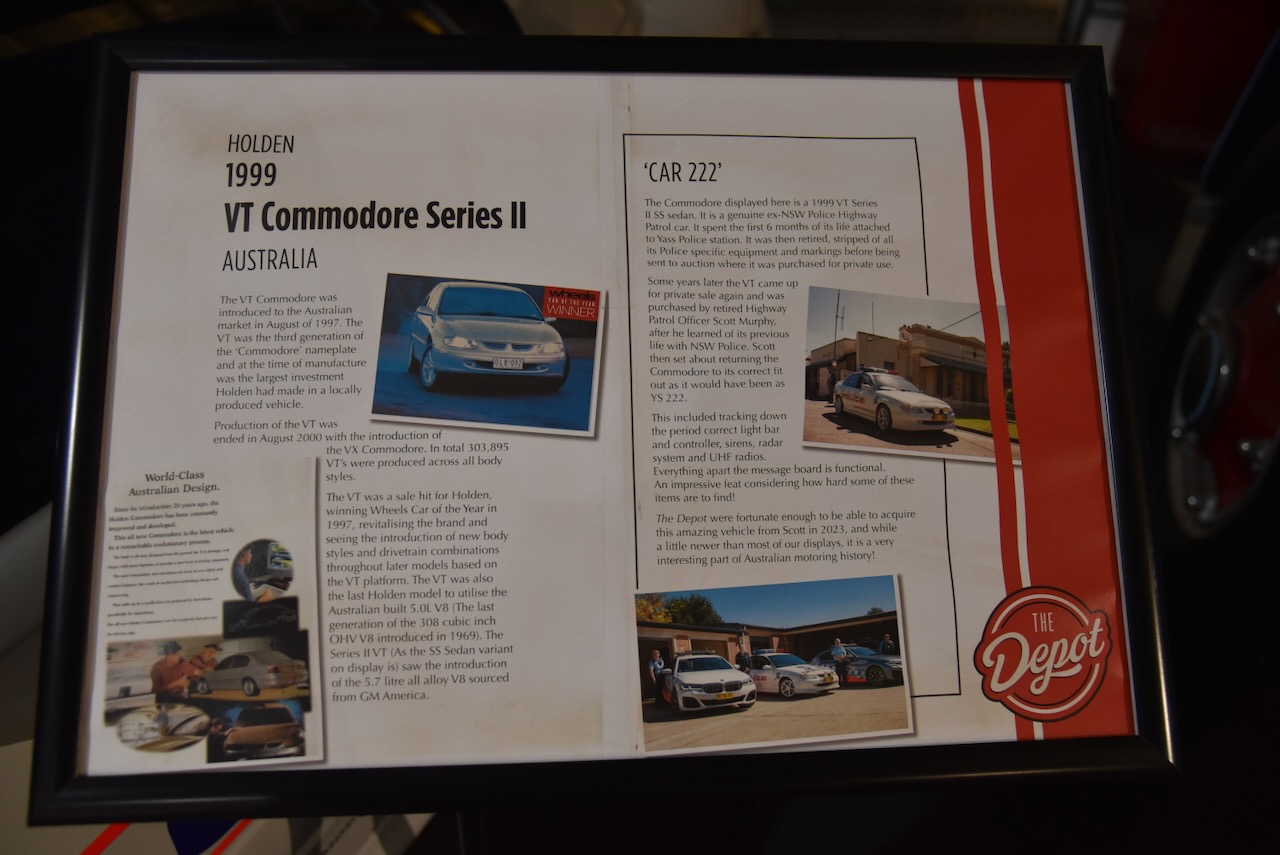
The Depot also has on display two historic police vehicles. This includes Car 222, a 1999 VT SS Series II Holden Commodore, which was used as a Highway Patrol vehicle by the New South Wales Police Force.
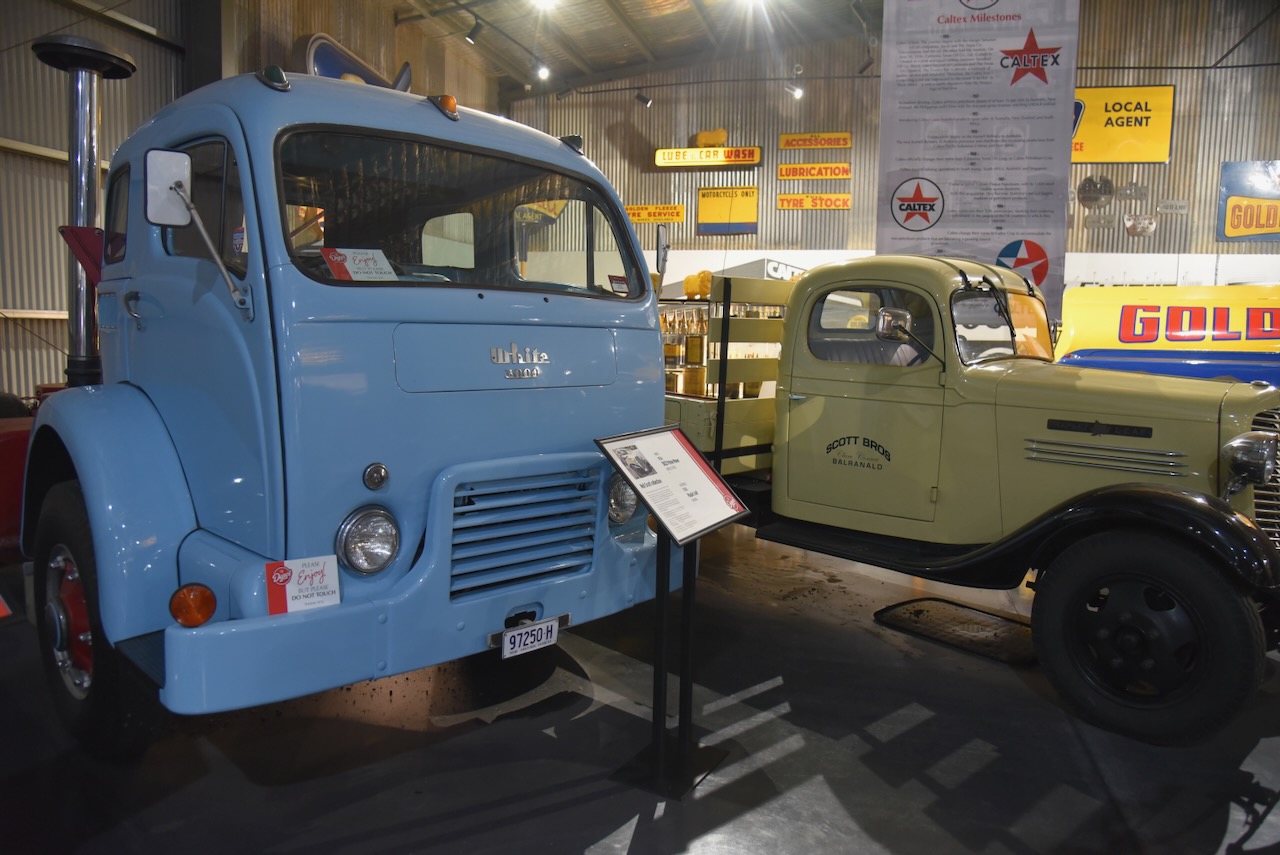
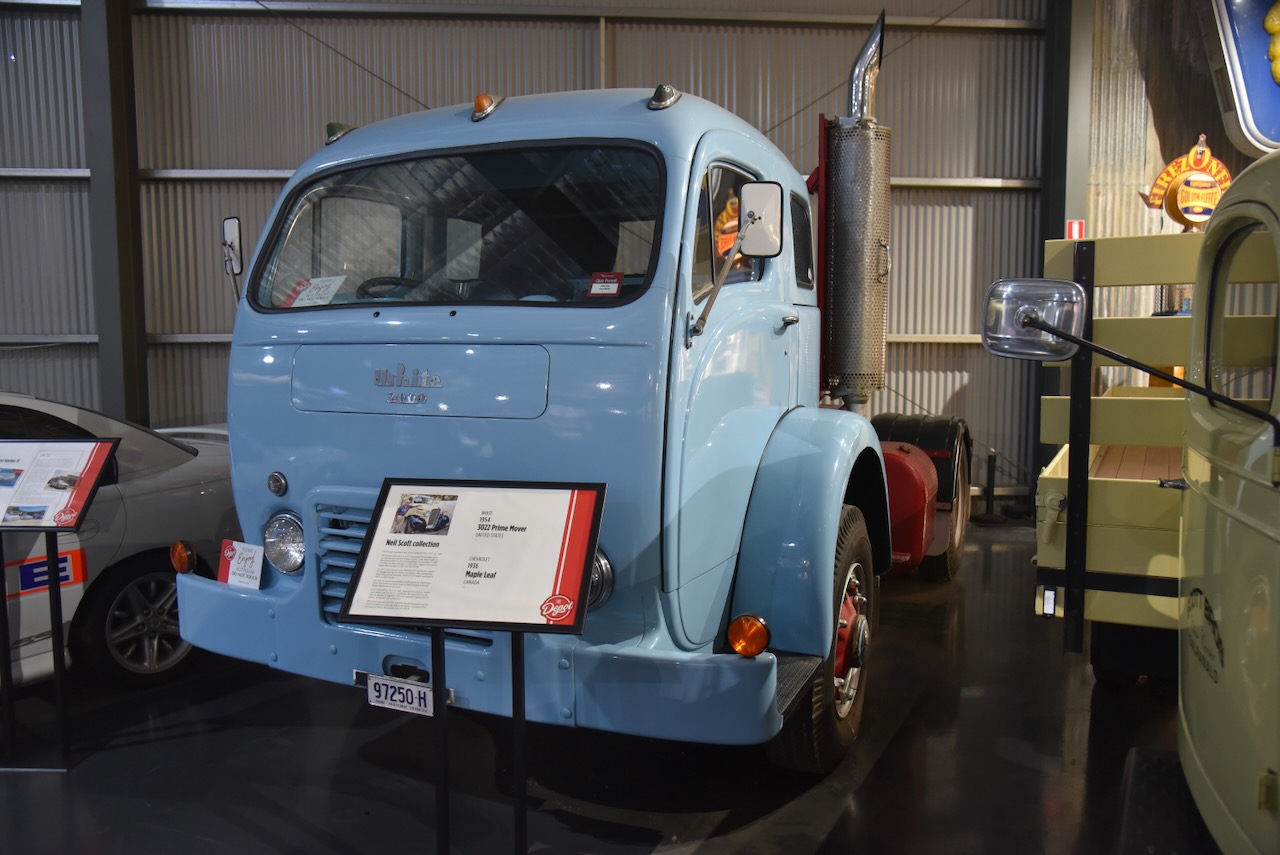
I have always been a truck enthusiast since my childhood. The Depot contains the 1954 White 3022 Prime Mover seen below.
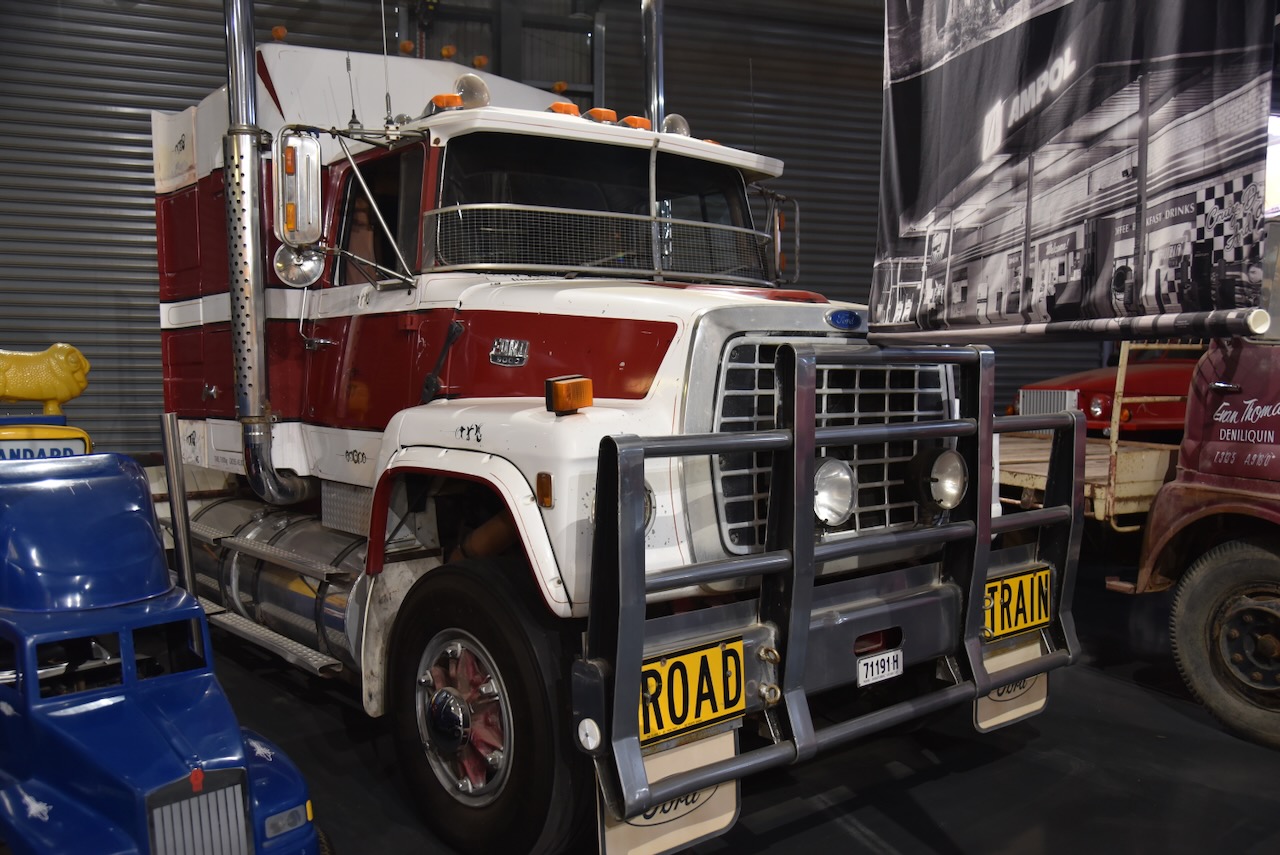
The museum also has an iconic Ford Louisville. The L-Series, known as the ‘Louisville Line’ was manufactured between 1970 and 1998. They were the first conventional trucks developed by the Ford Company. (Wikipedia 2025)
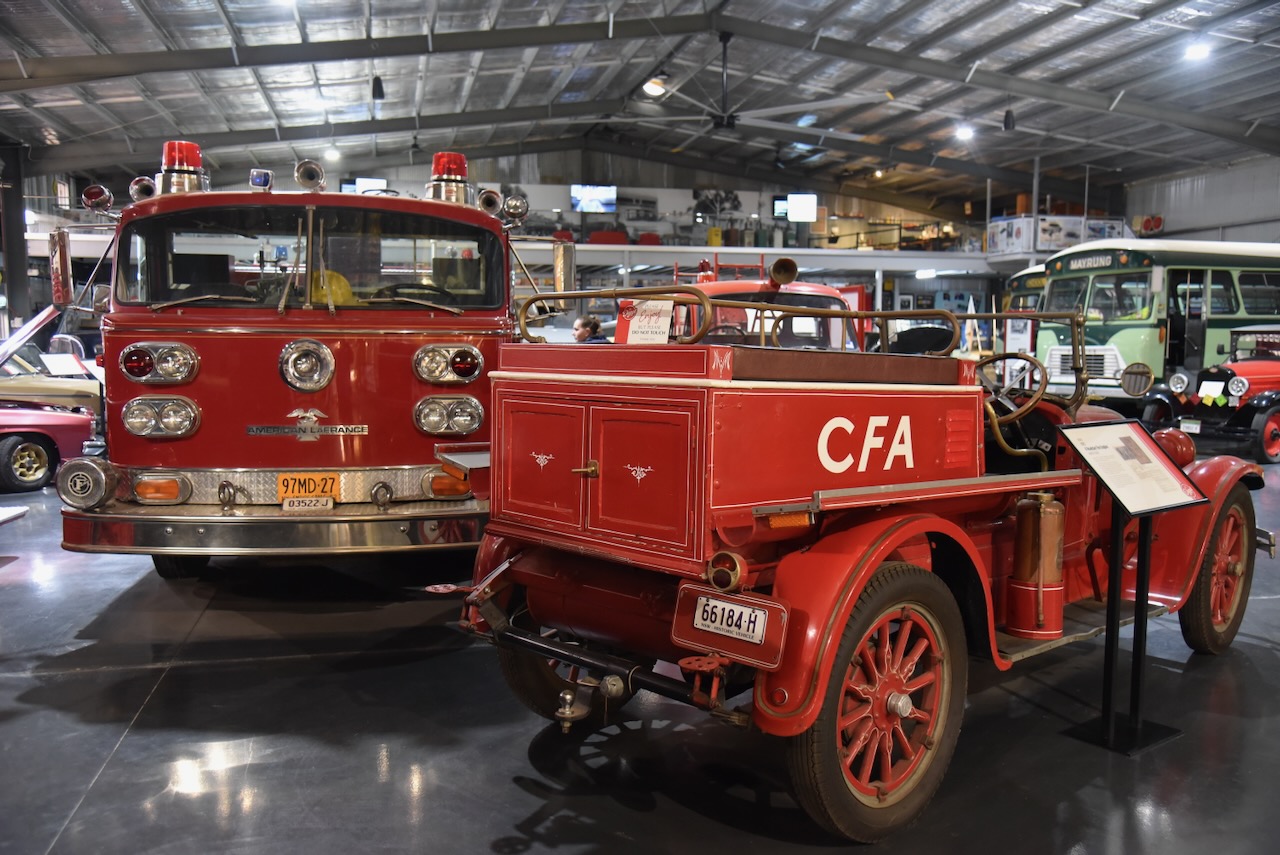
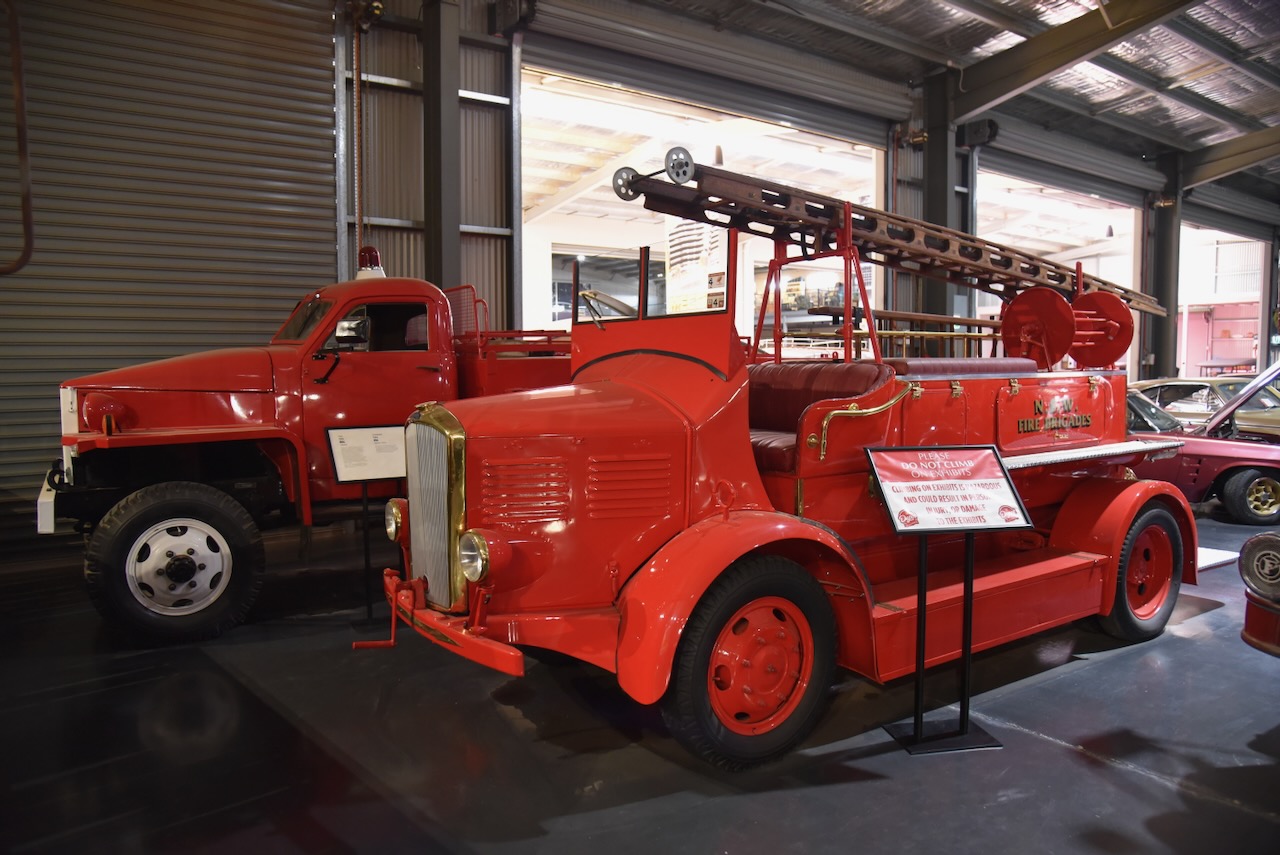
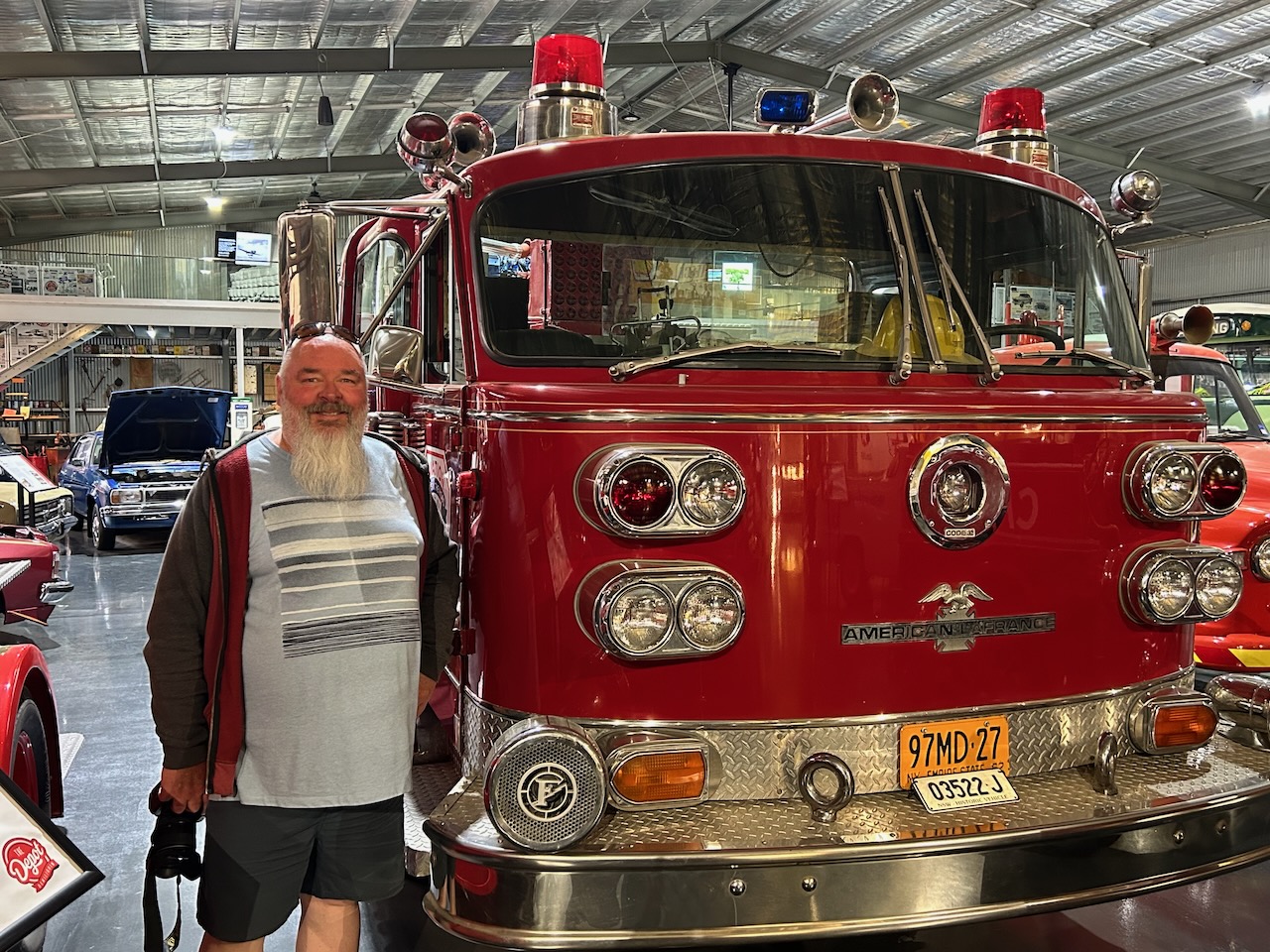
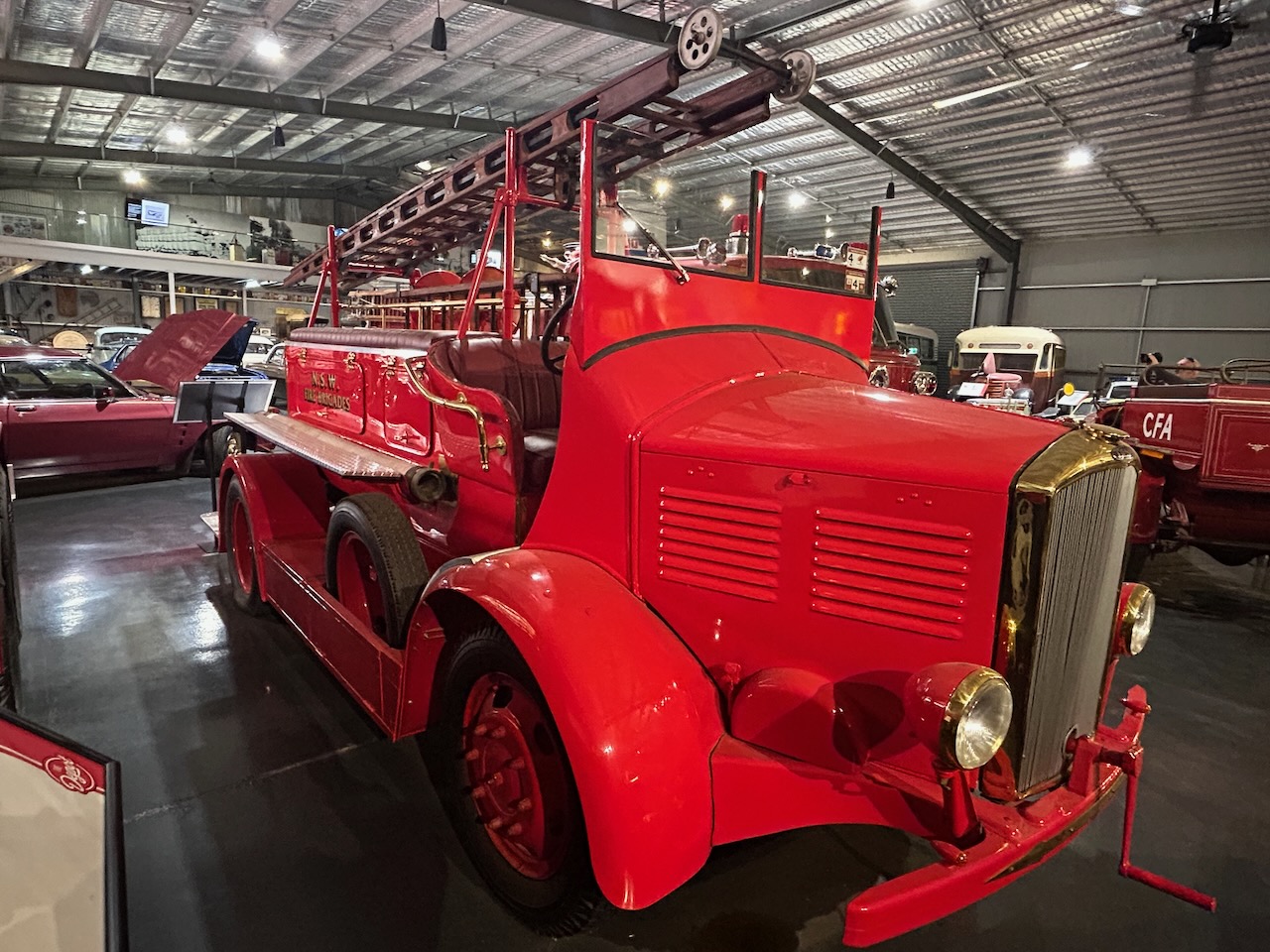
You can also find several historic fire engines on display. This includes a 1940 American Lafrance fire engine.
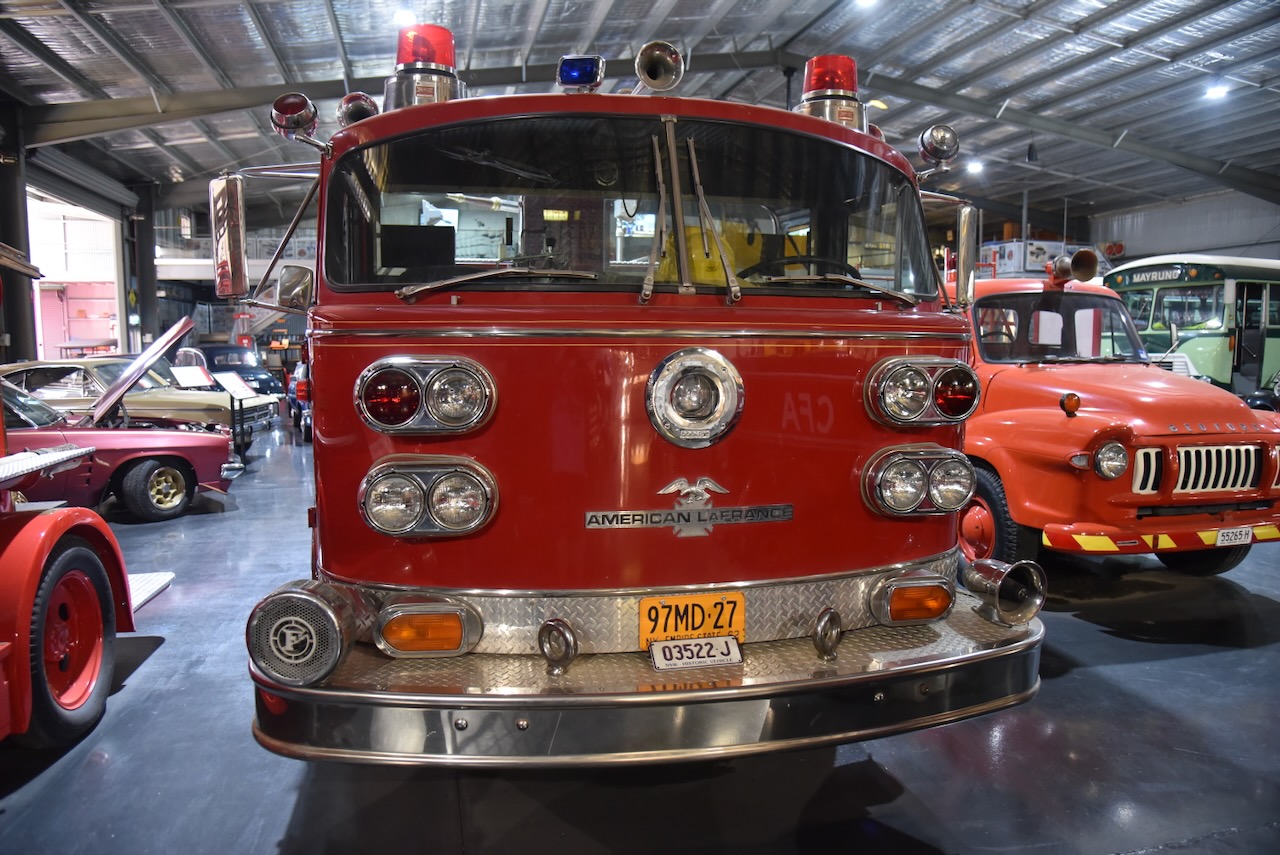
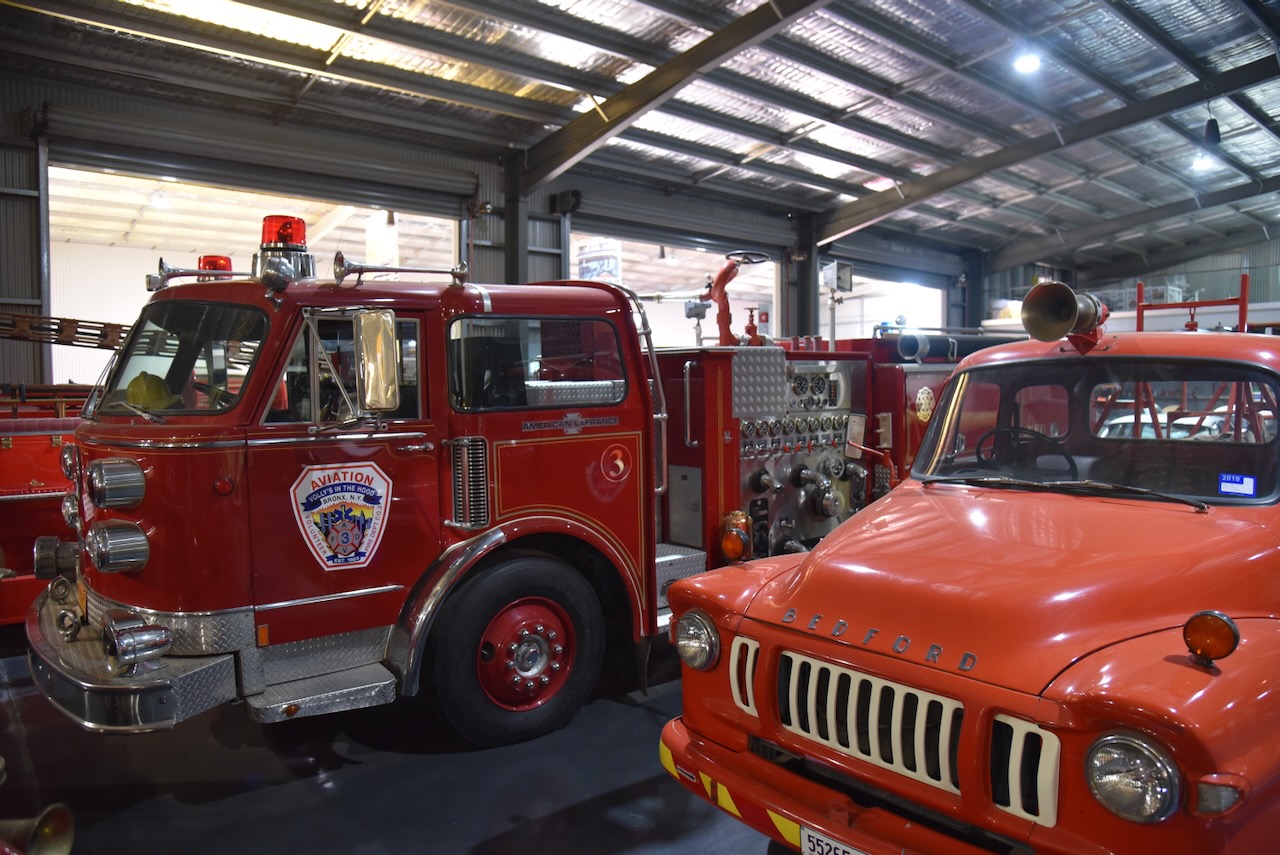
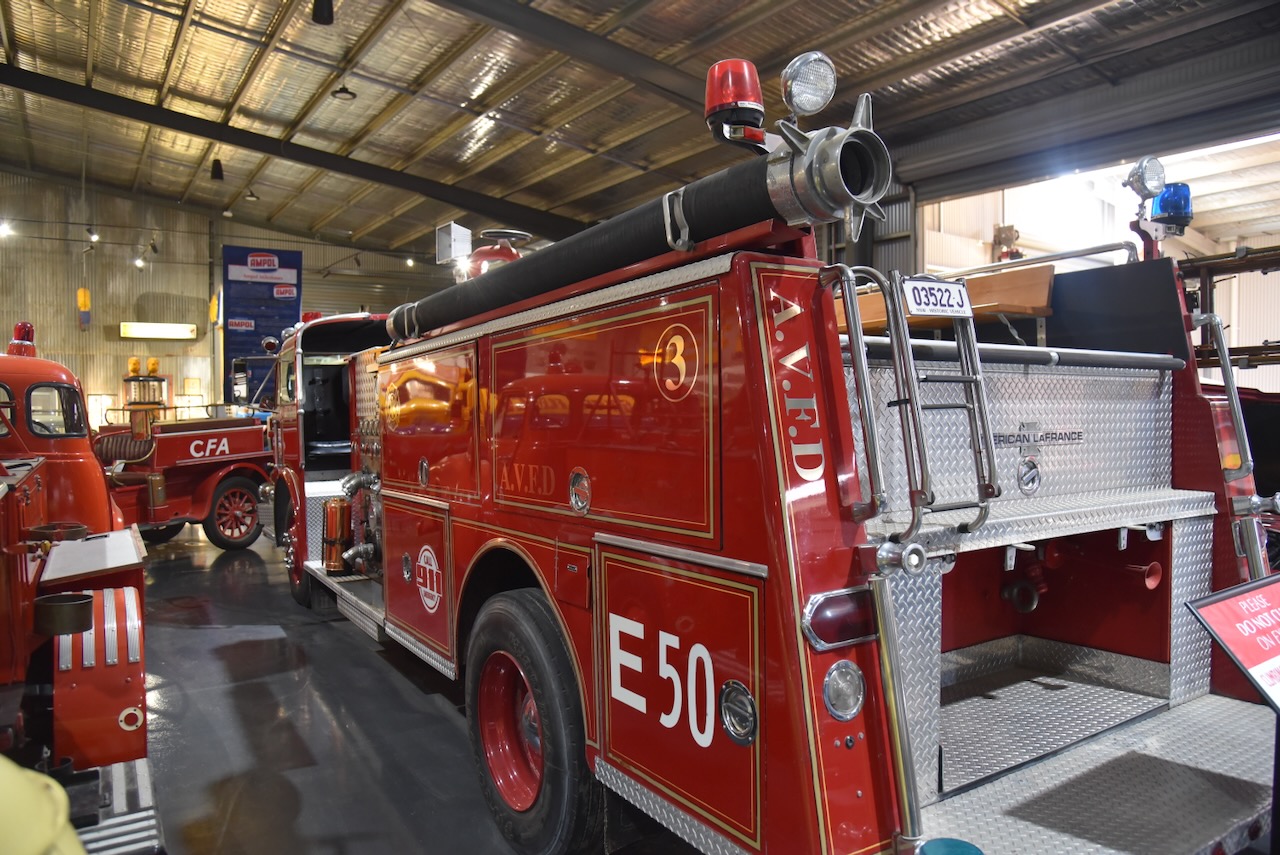
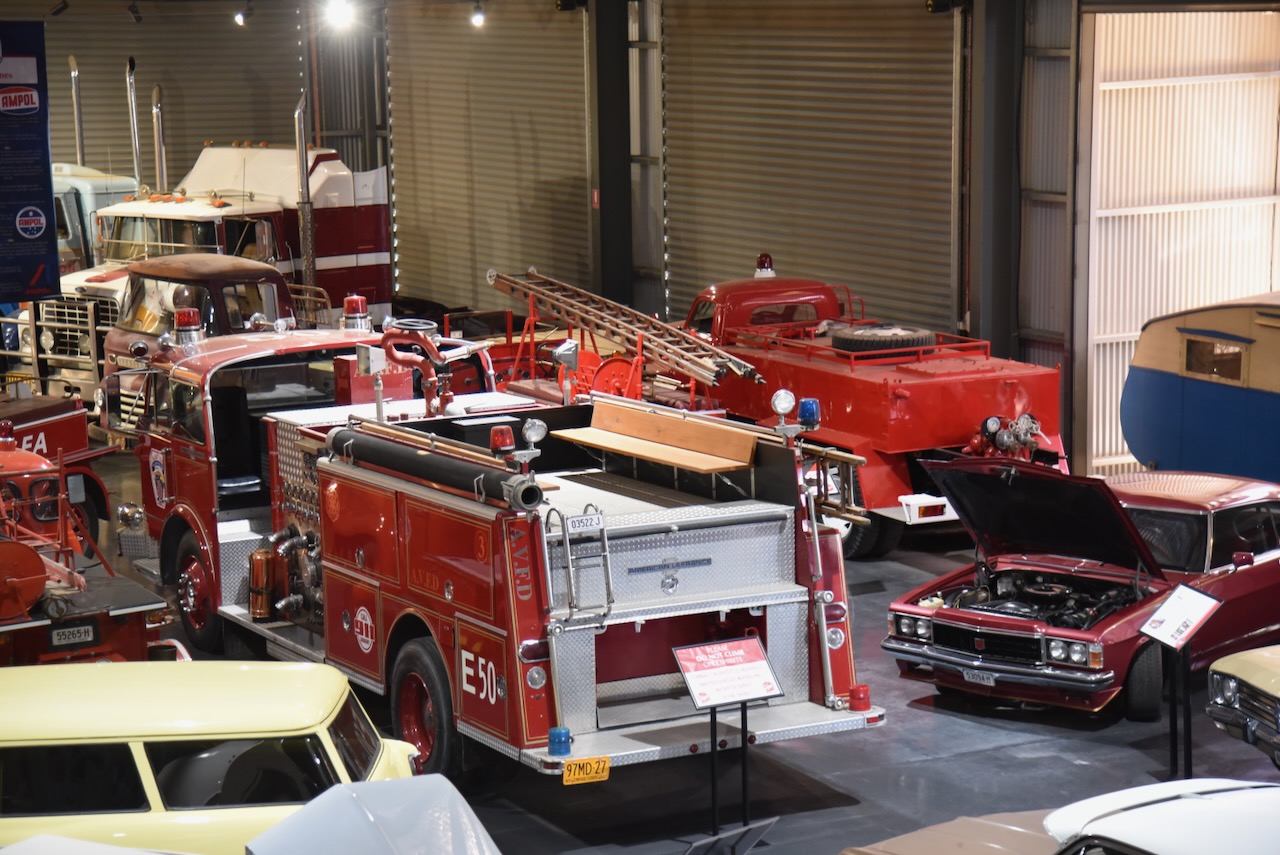
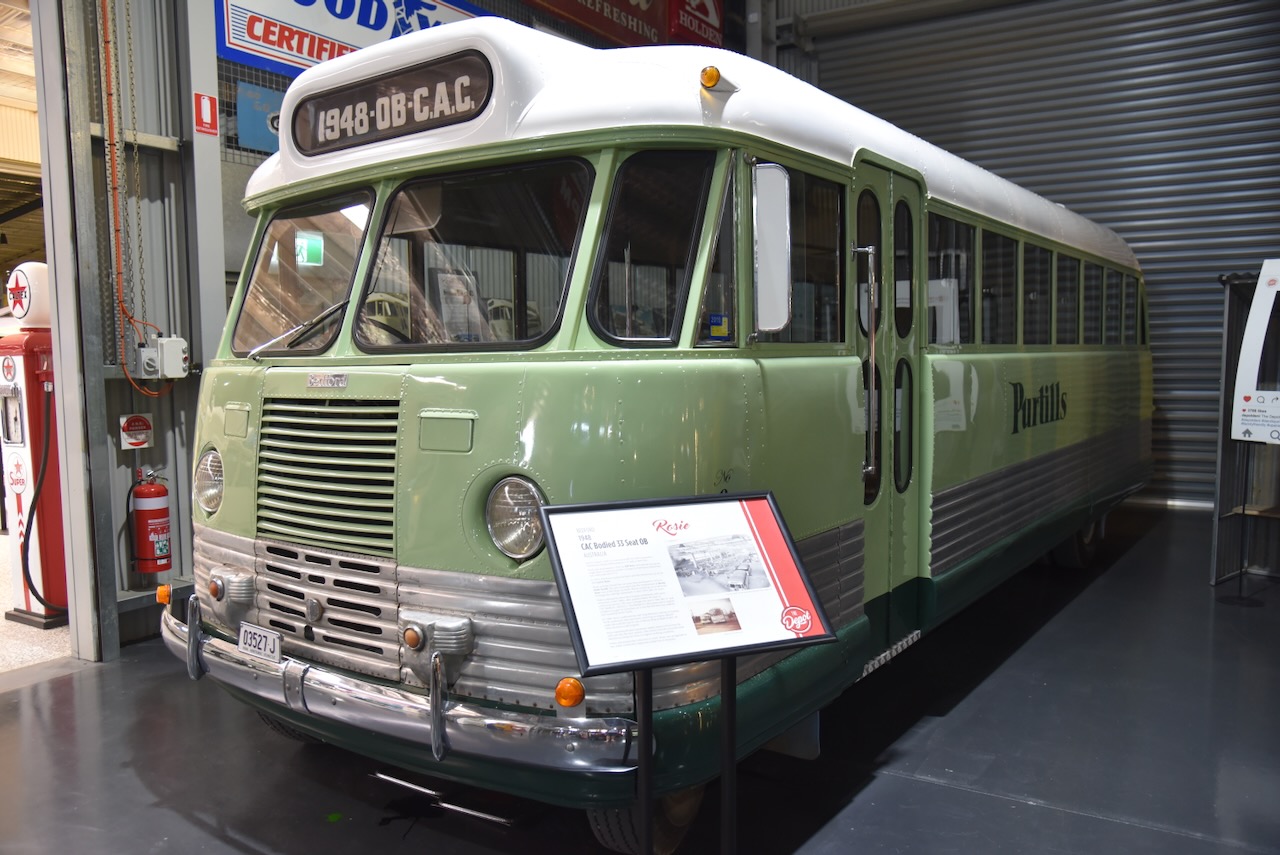
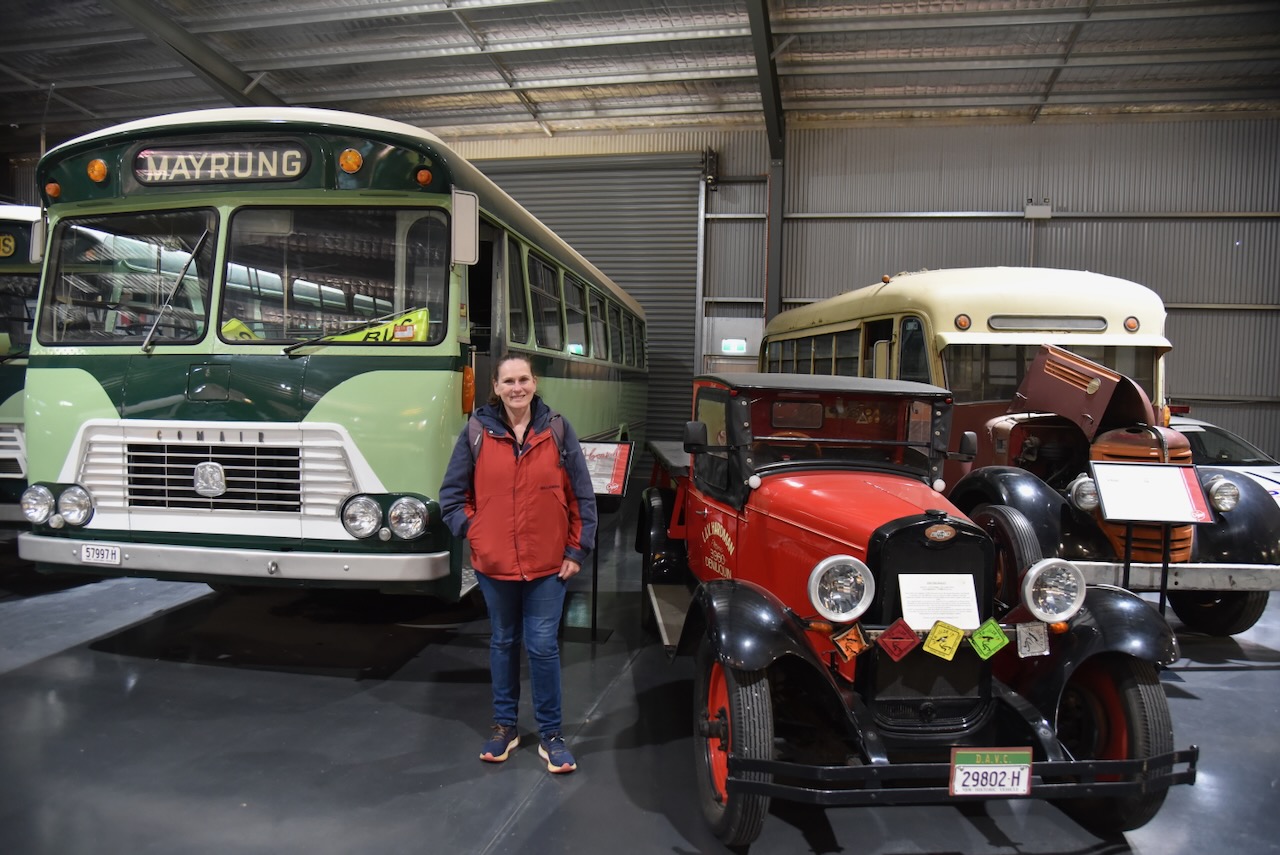
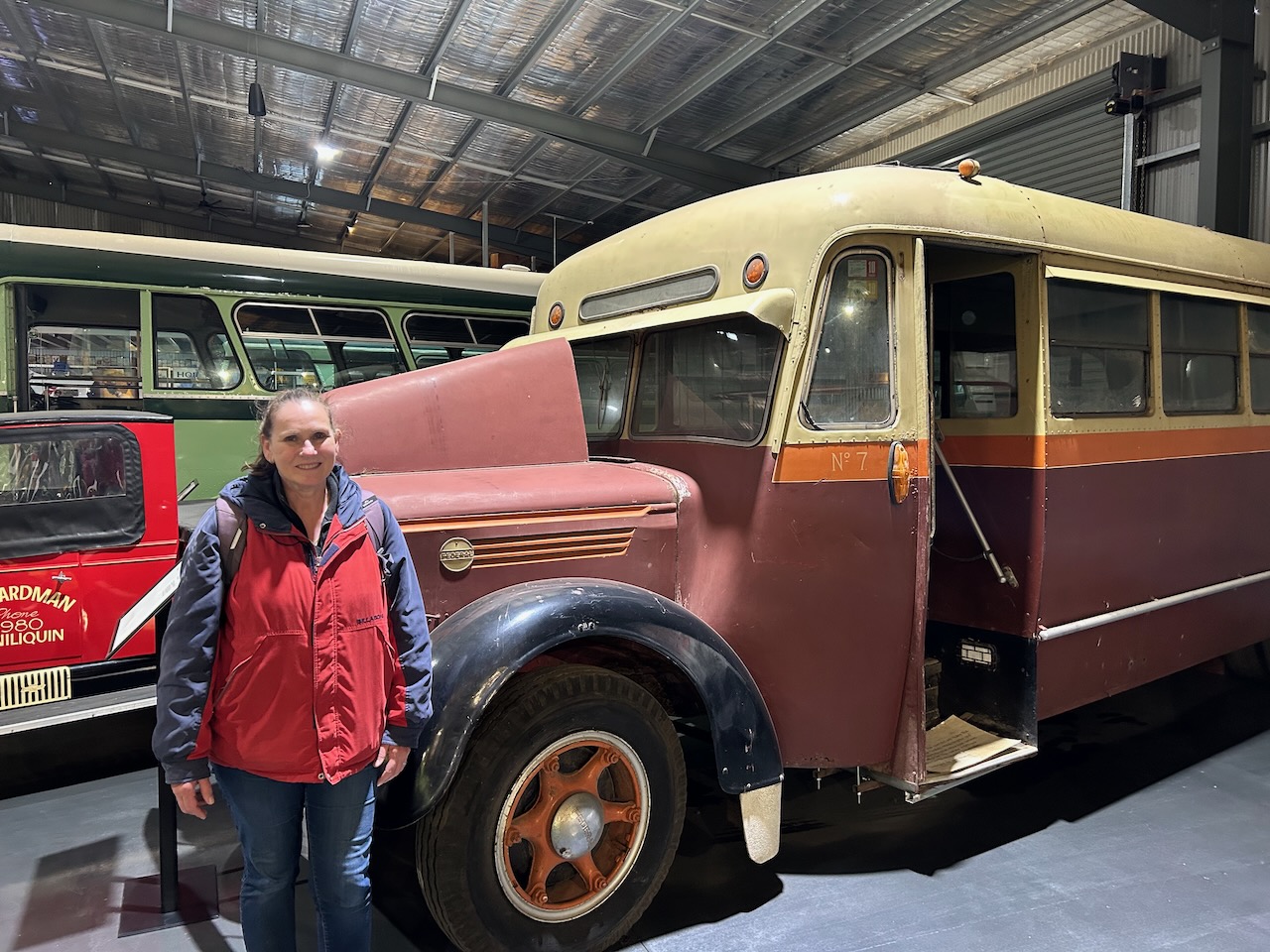
There are also several buses on display, including a 1948 Bedford named ‘Rosie’. It was the oldest school bus in operation in Australia.
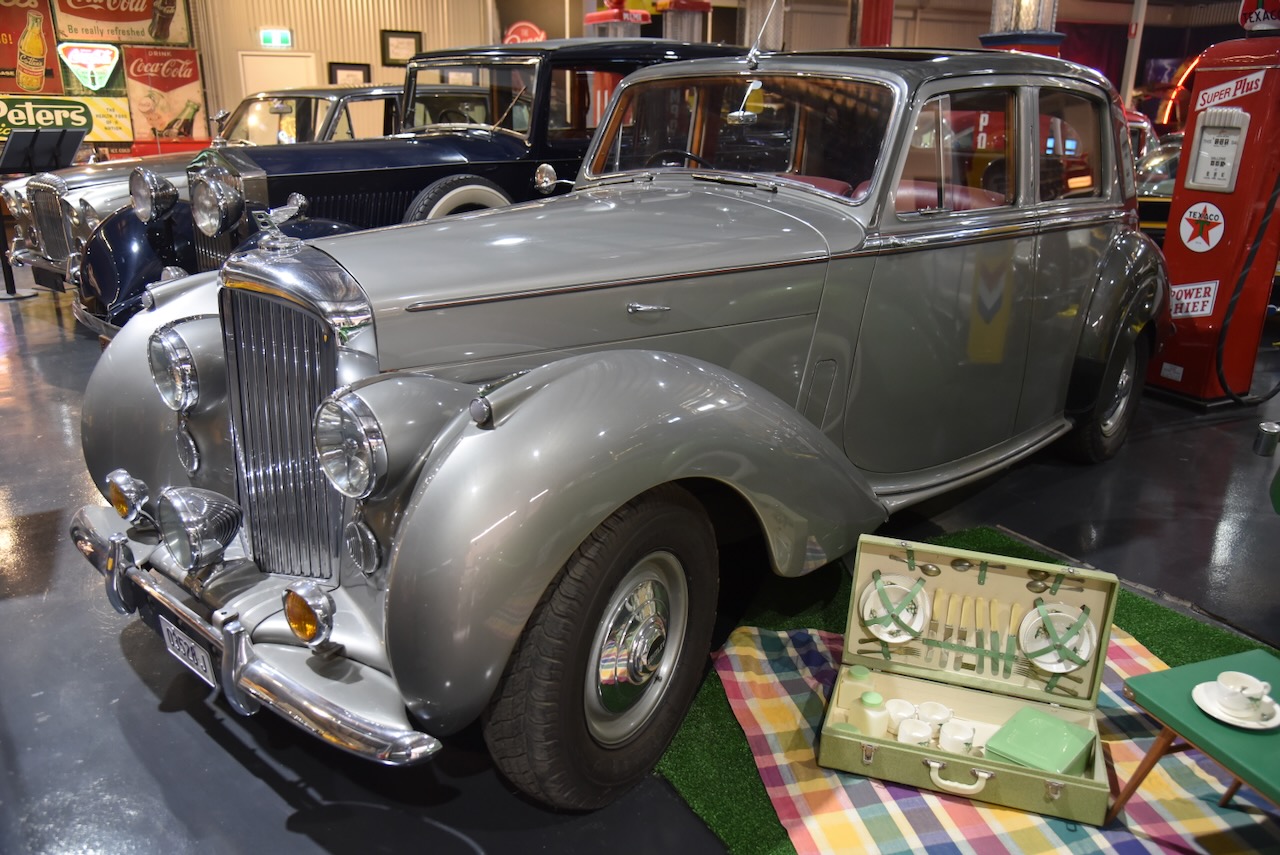
Historic 1930 and 1950 vehicles can also be viewed, including a 1934 Tolls Royce and a 1952 Bentley Mark V1 sedan.
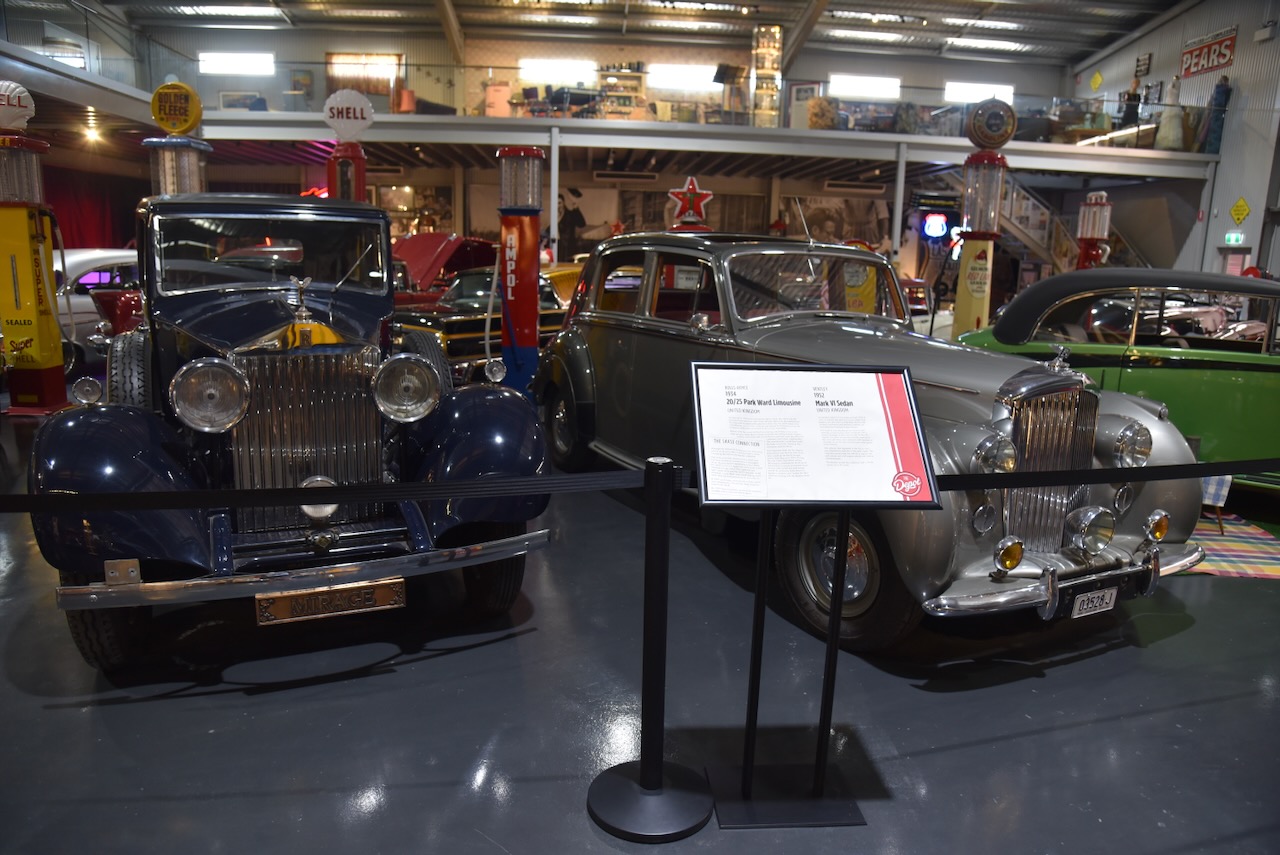
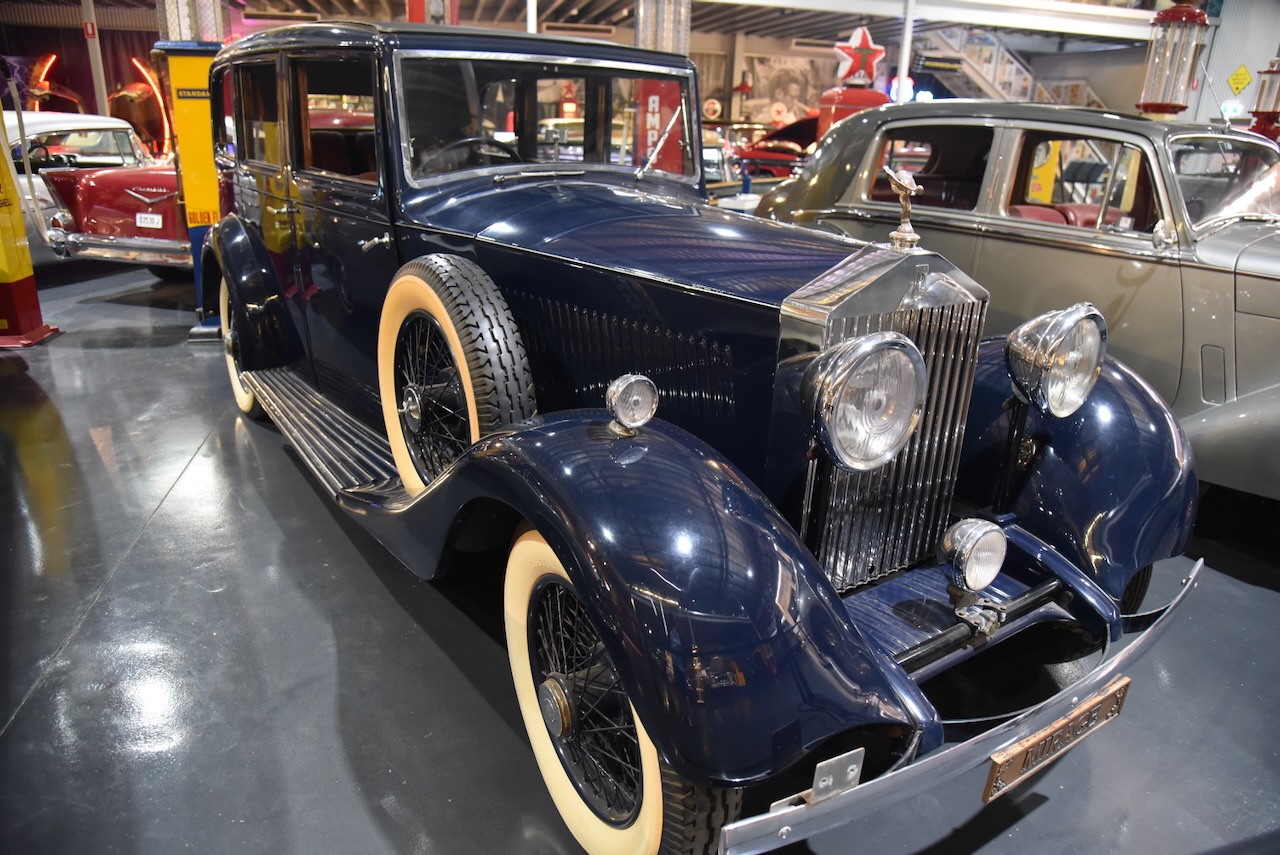
We spent a few hours at the museum wandering around admiring this very impressive collection.
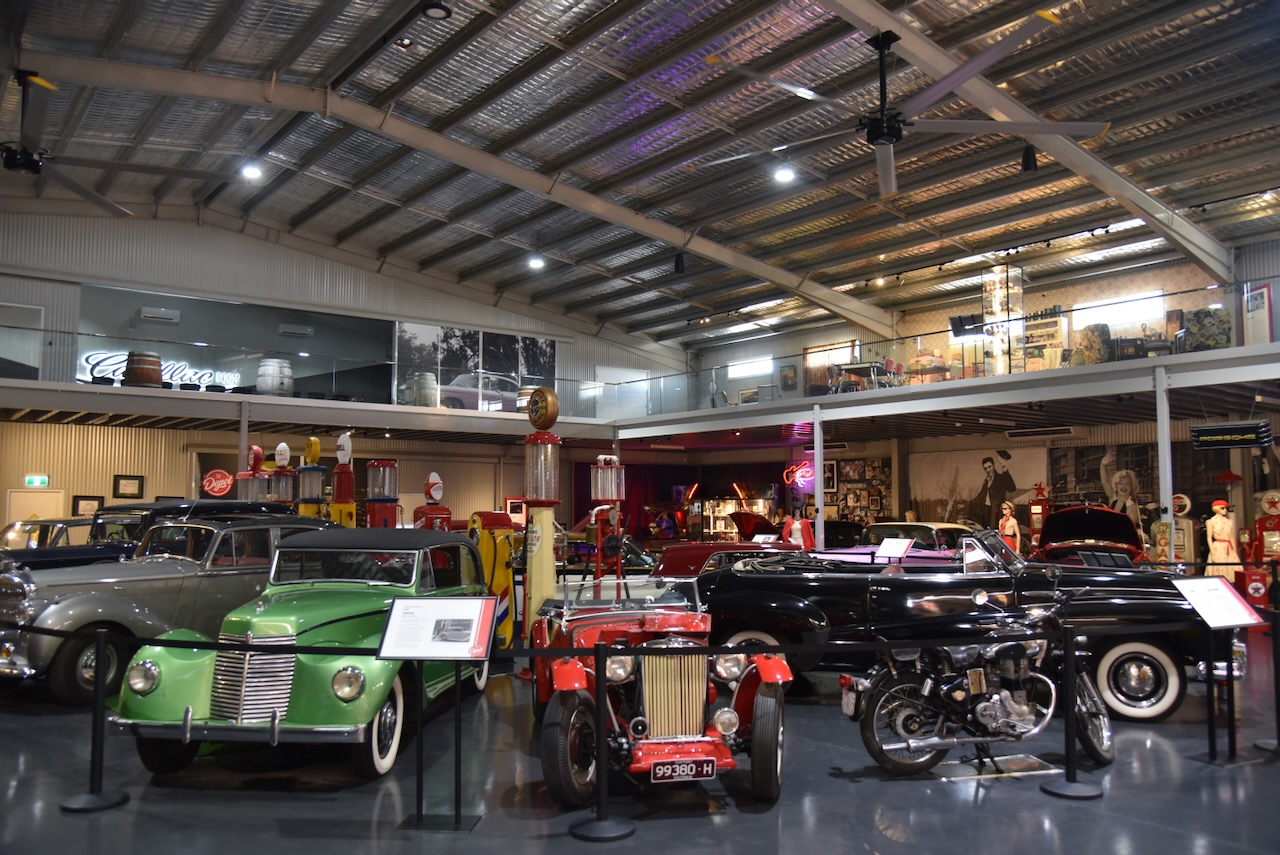
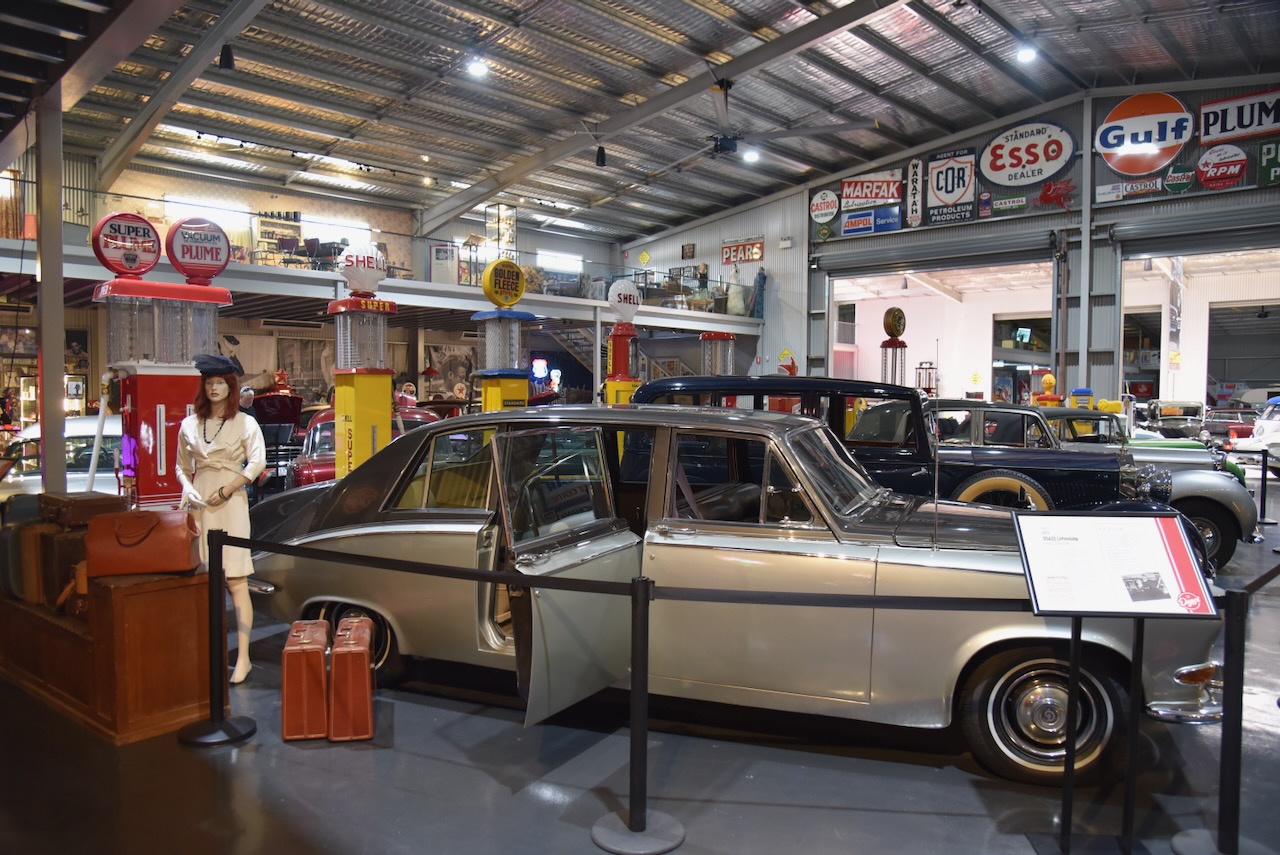
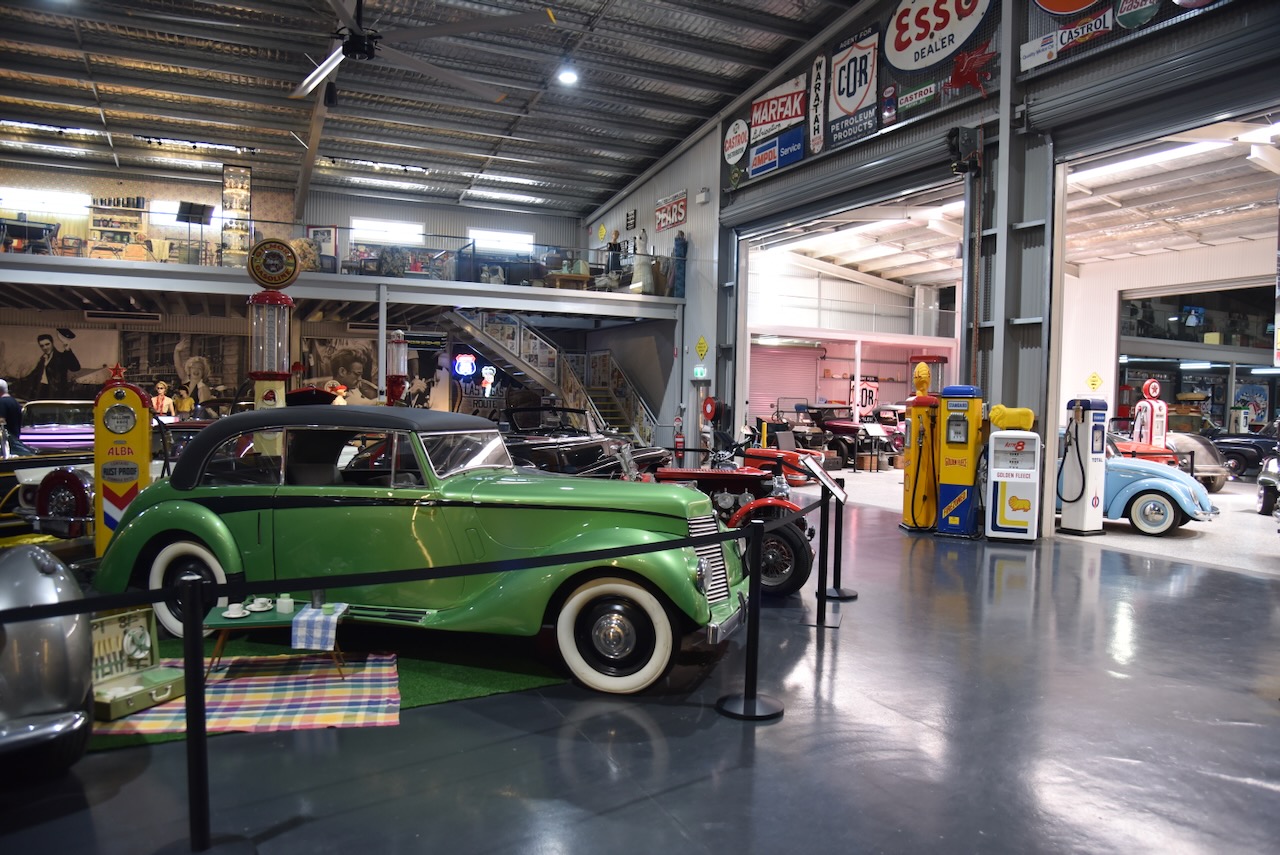
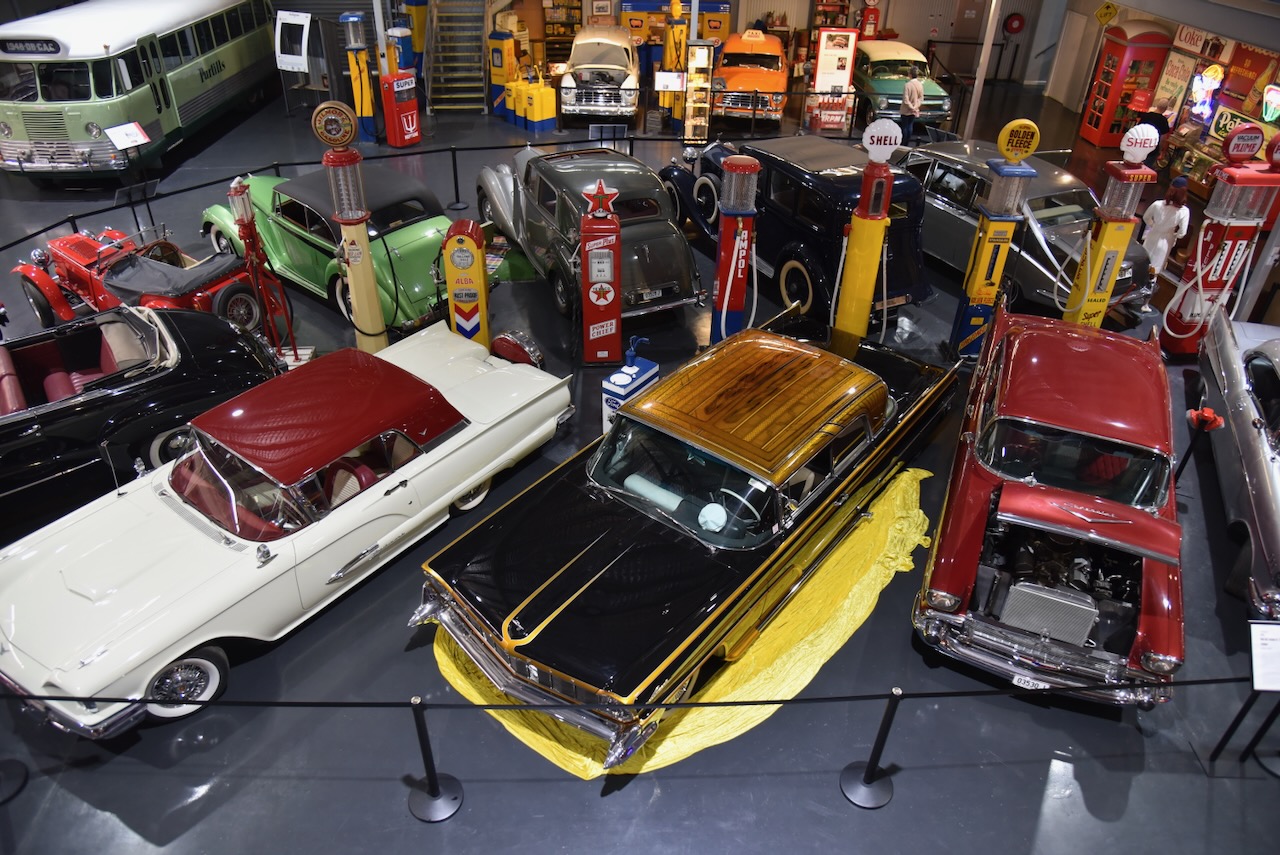
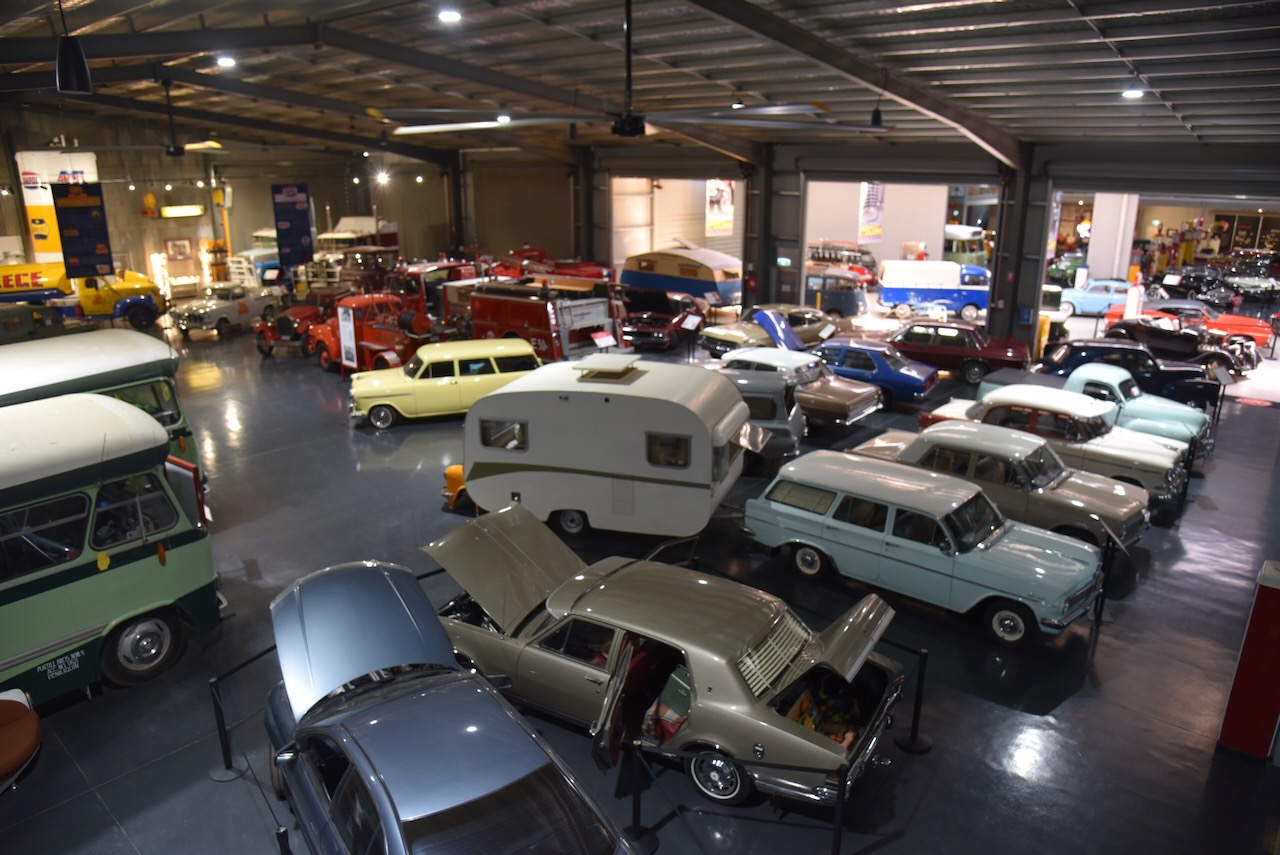
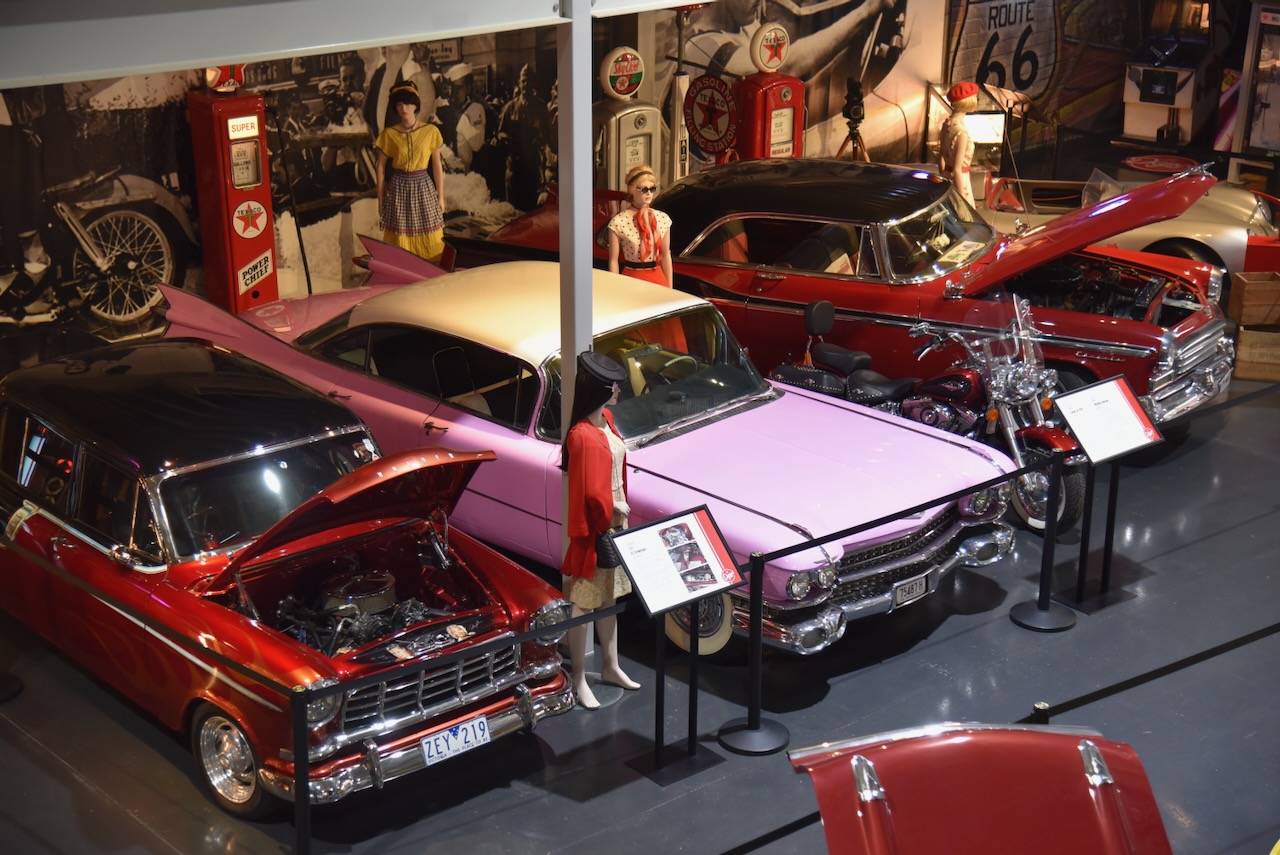
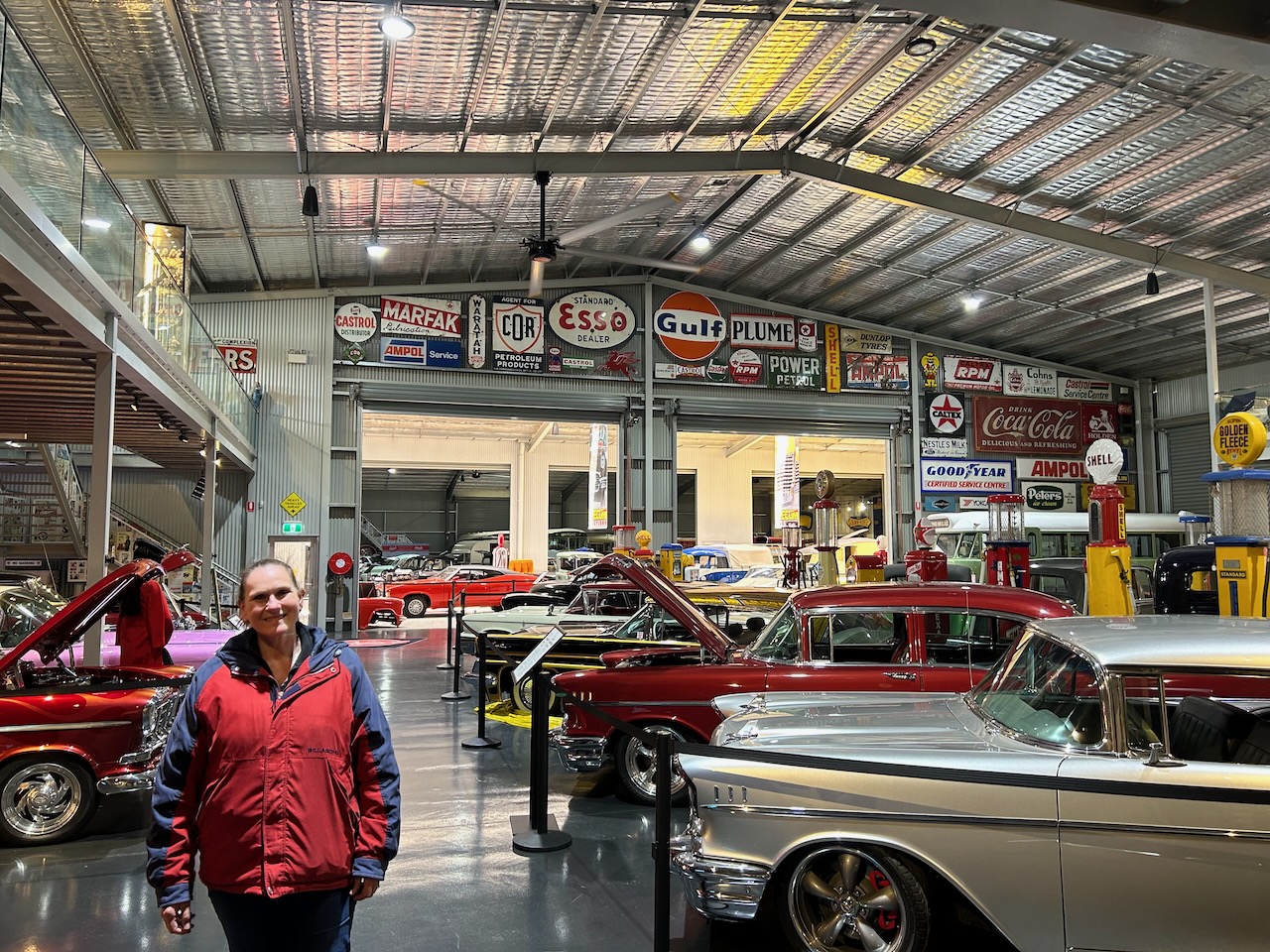
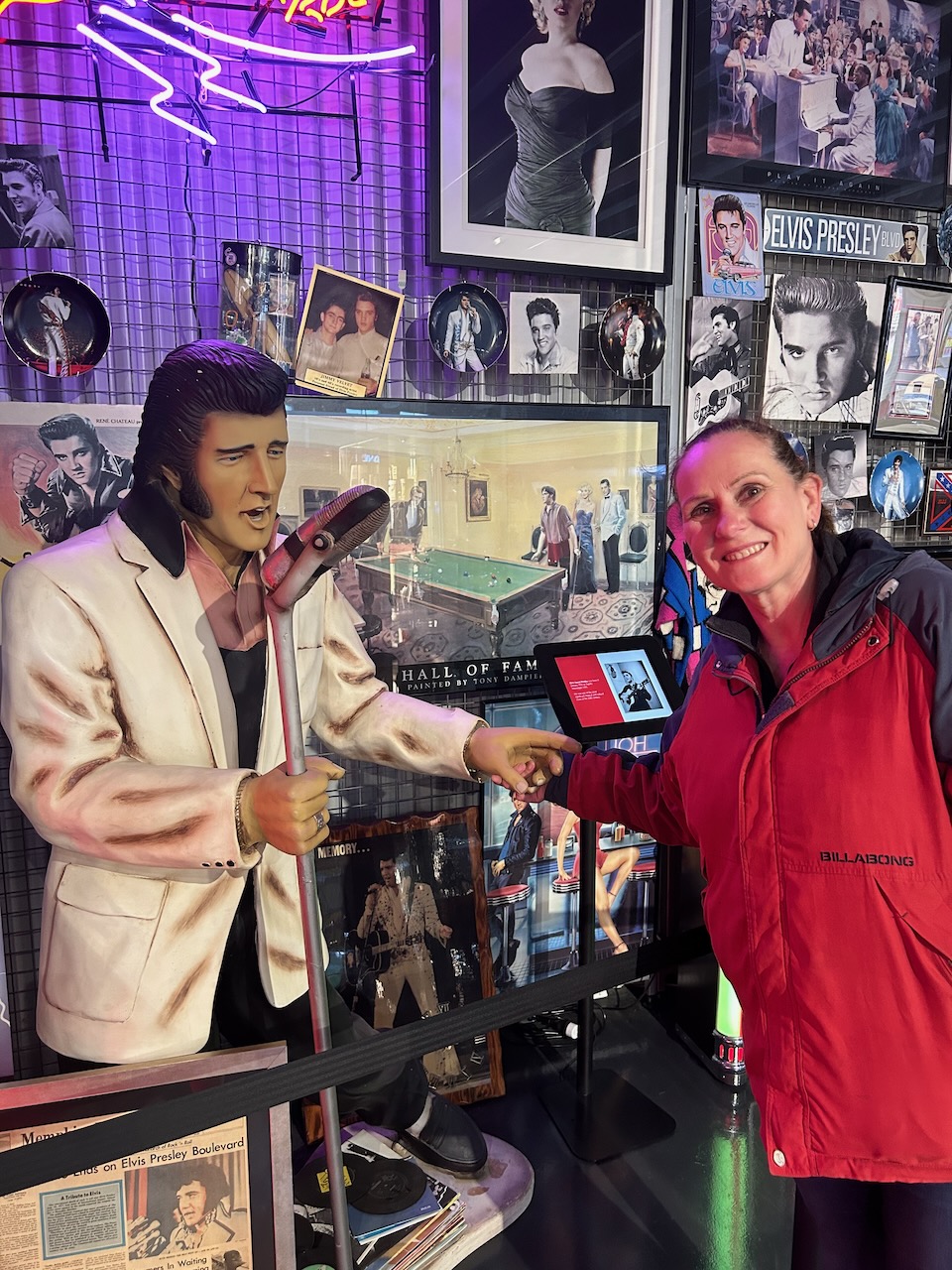
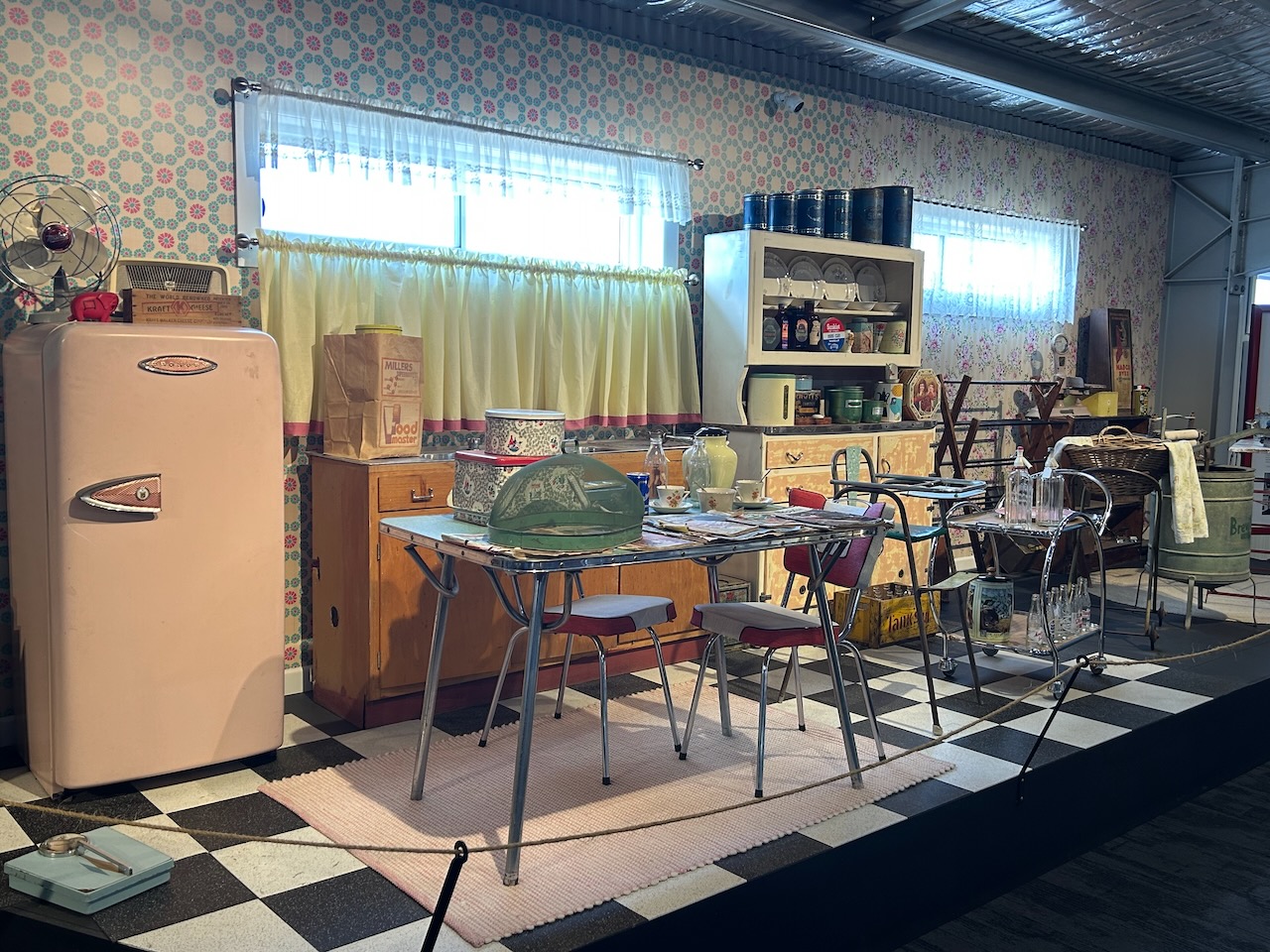
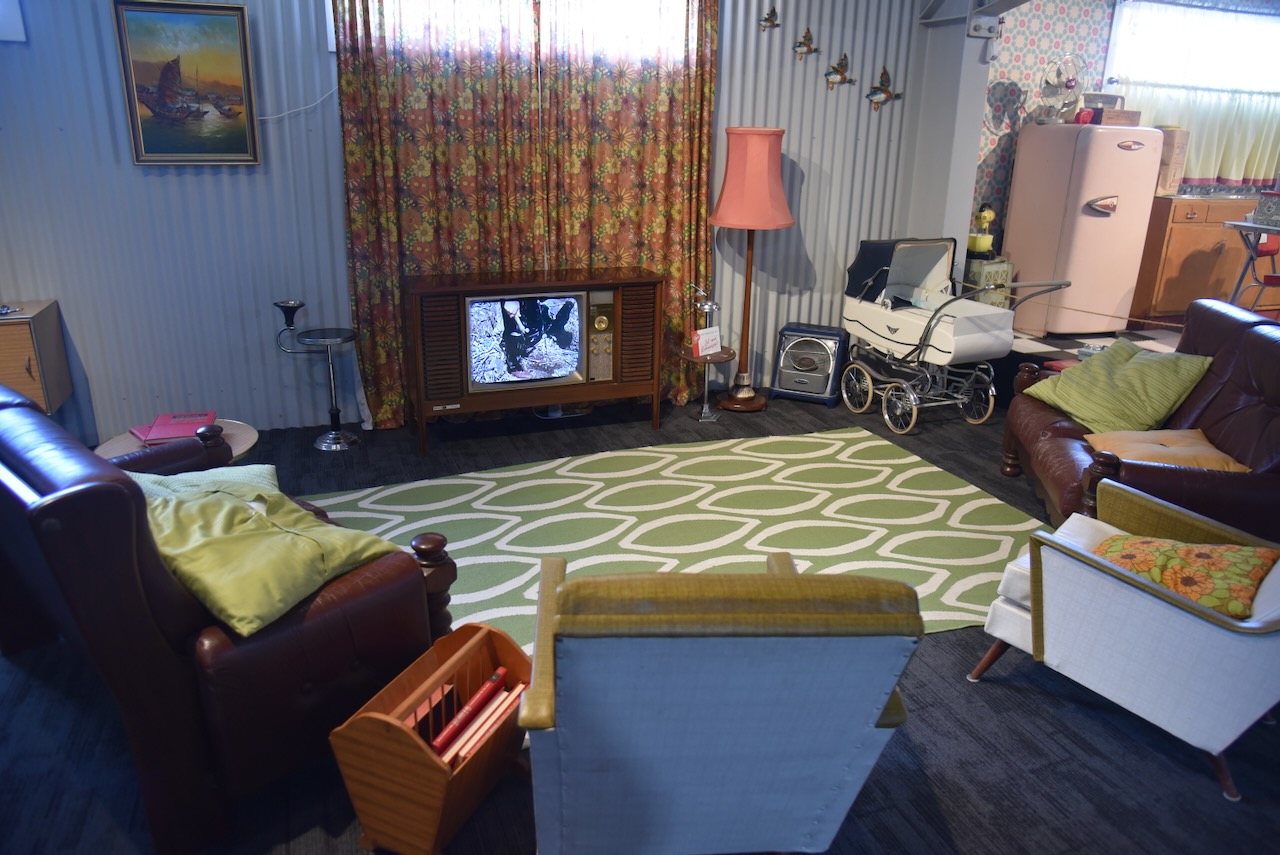
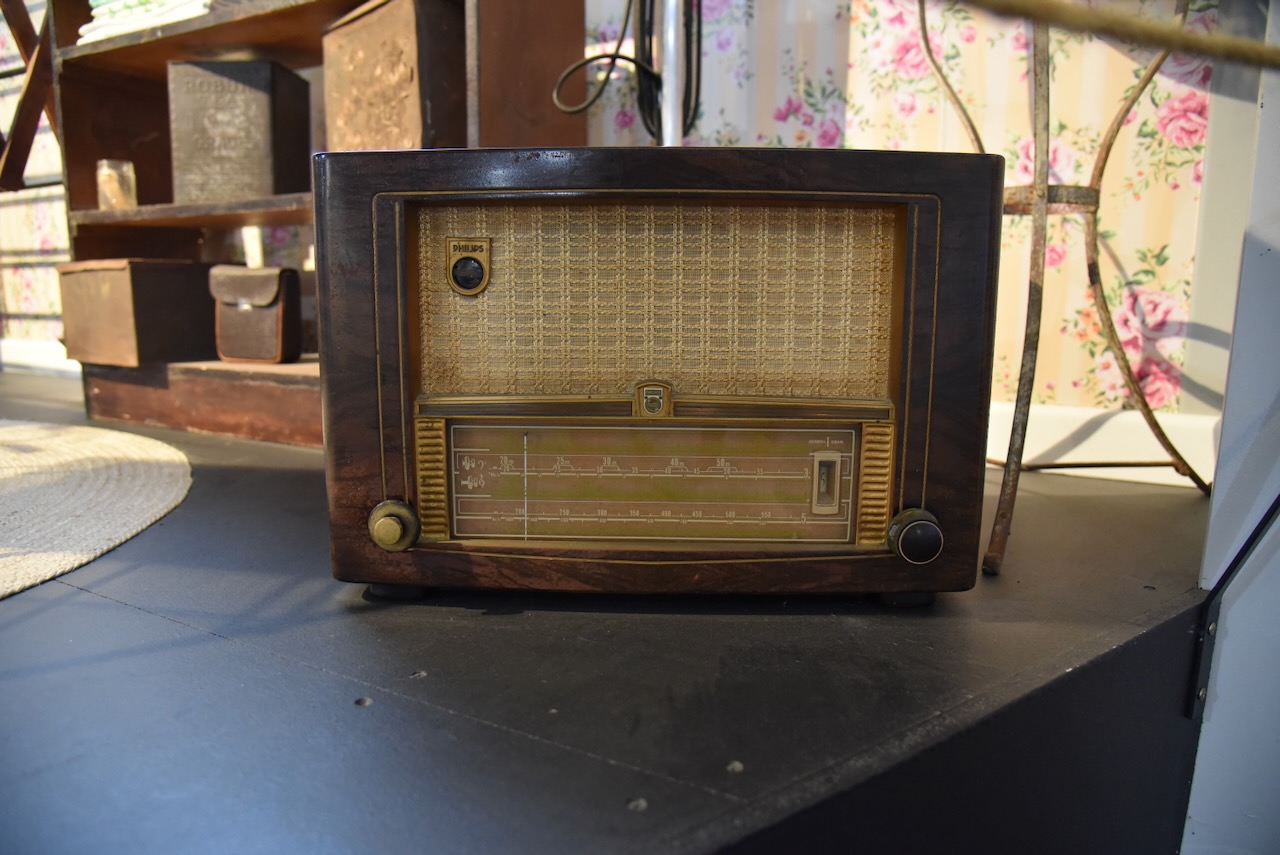
The museum also features a 1960s display. Marija and I were able to relate to some of the furniture and other items in the display, reminiscing from our childhood.
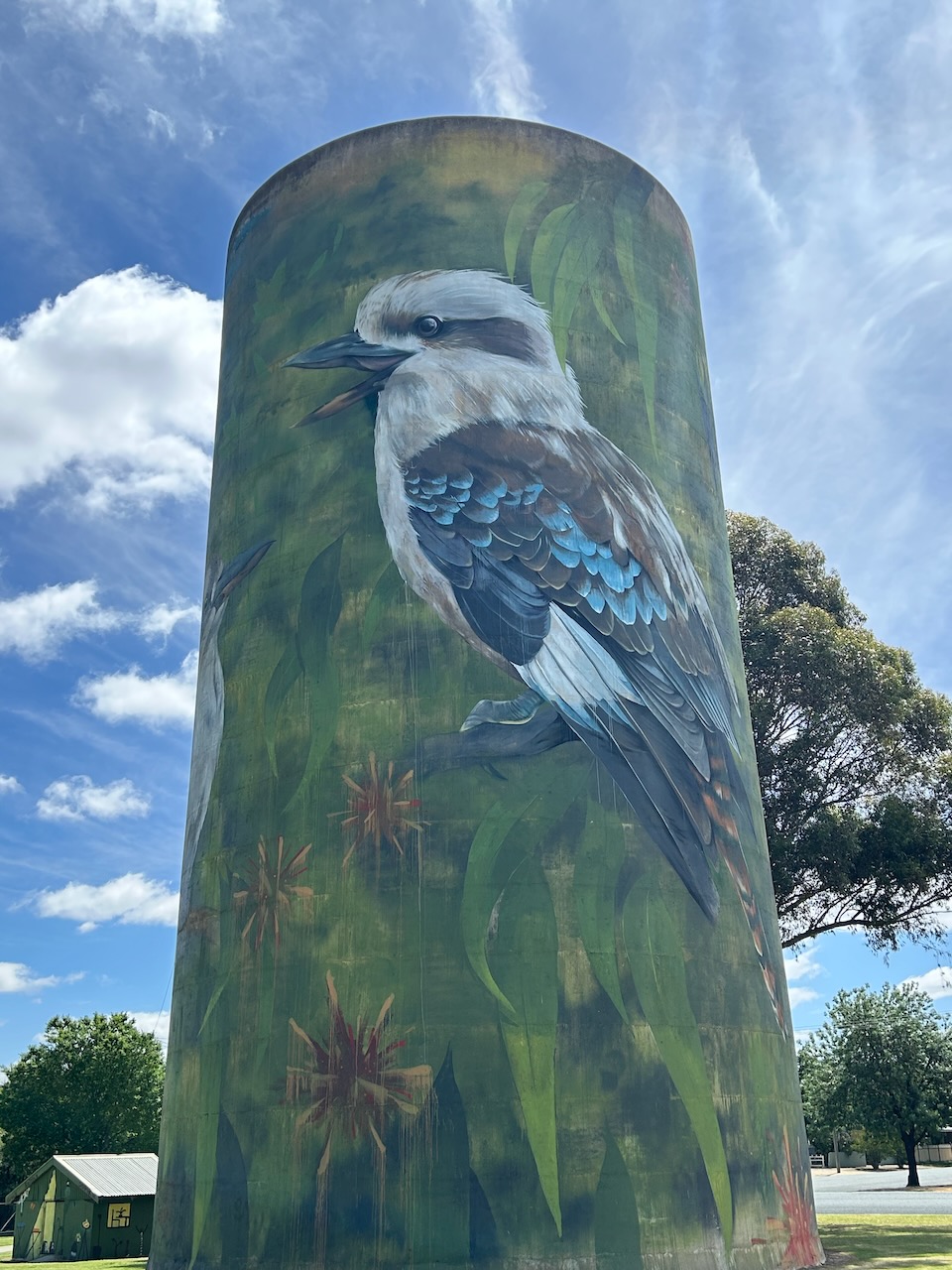
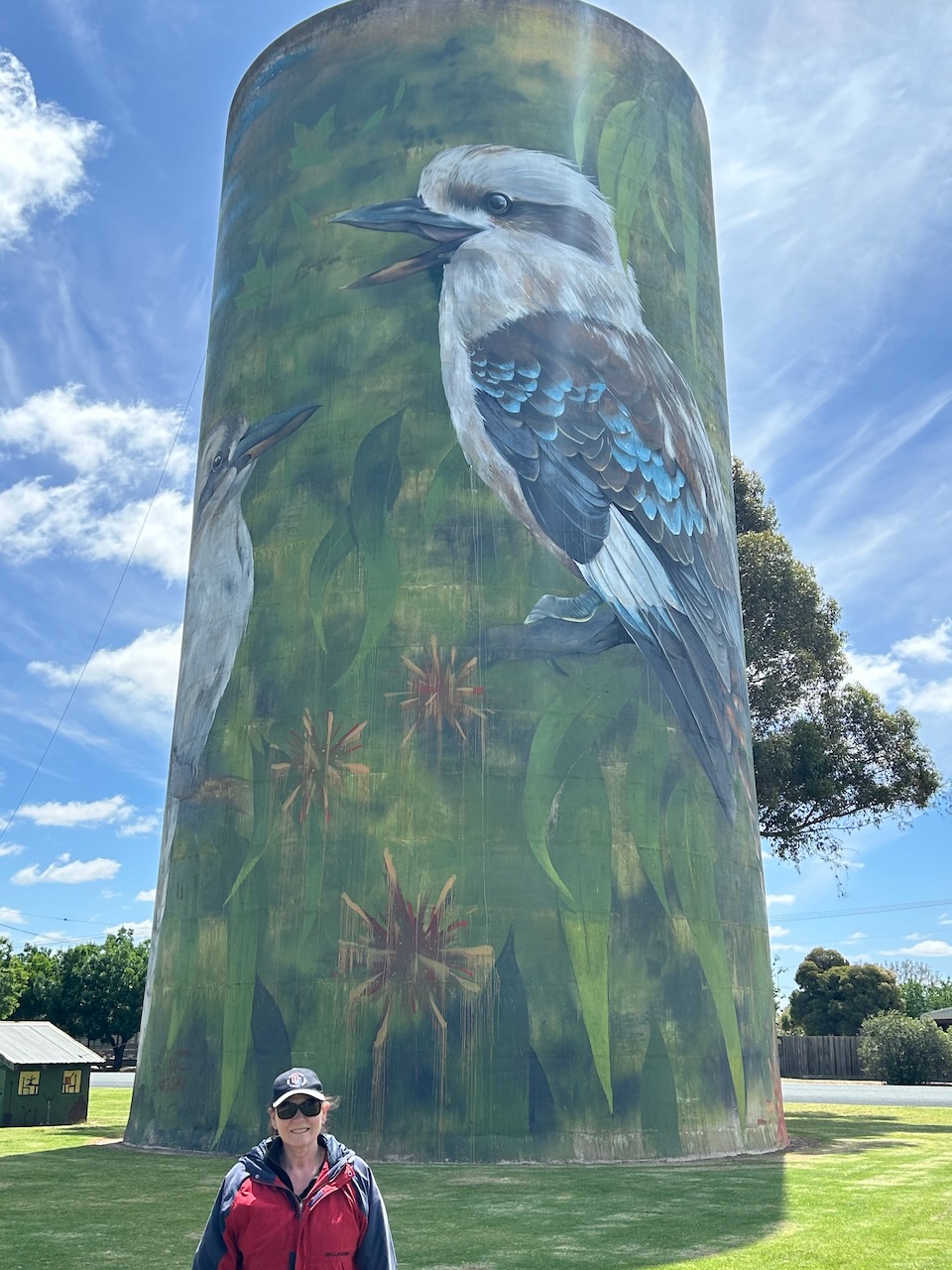
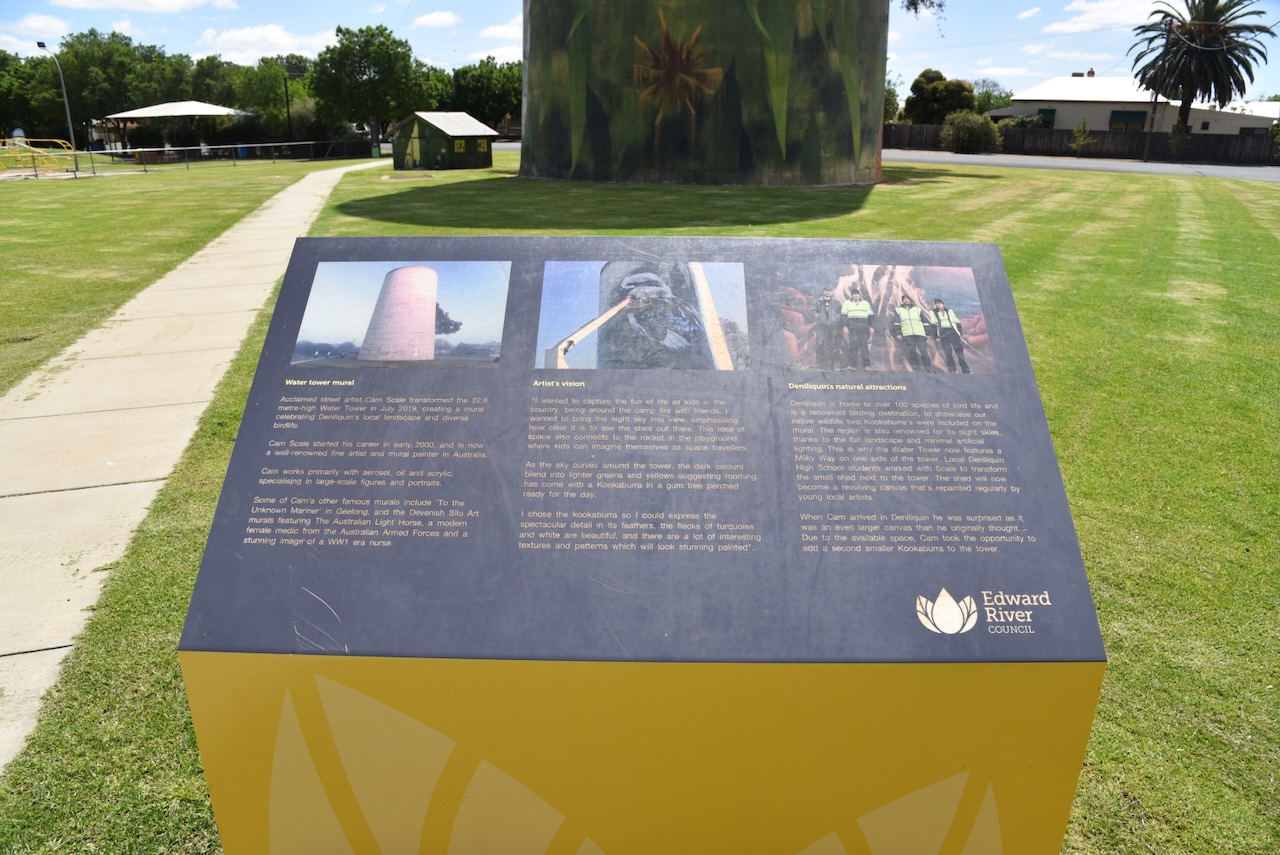
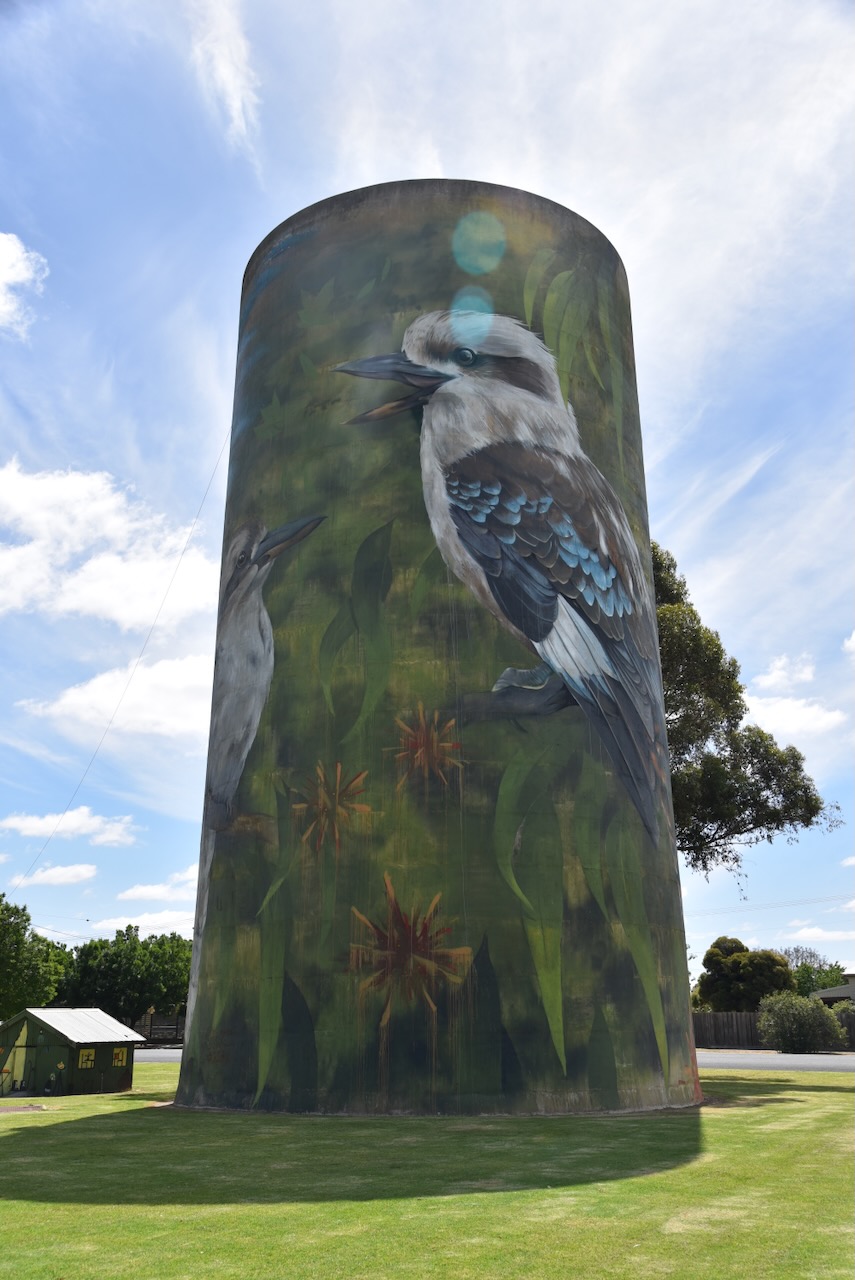
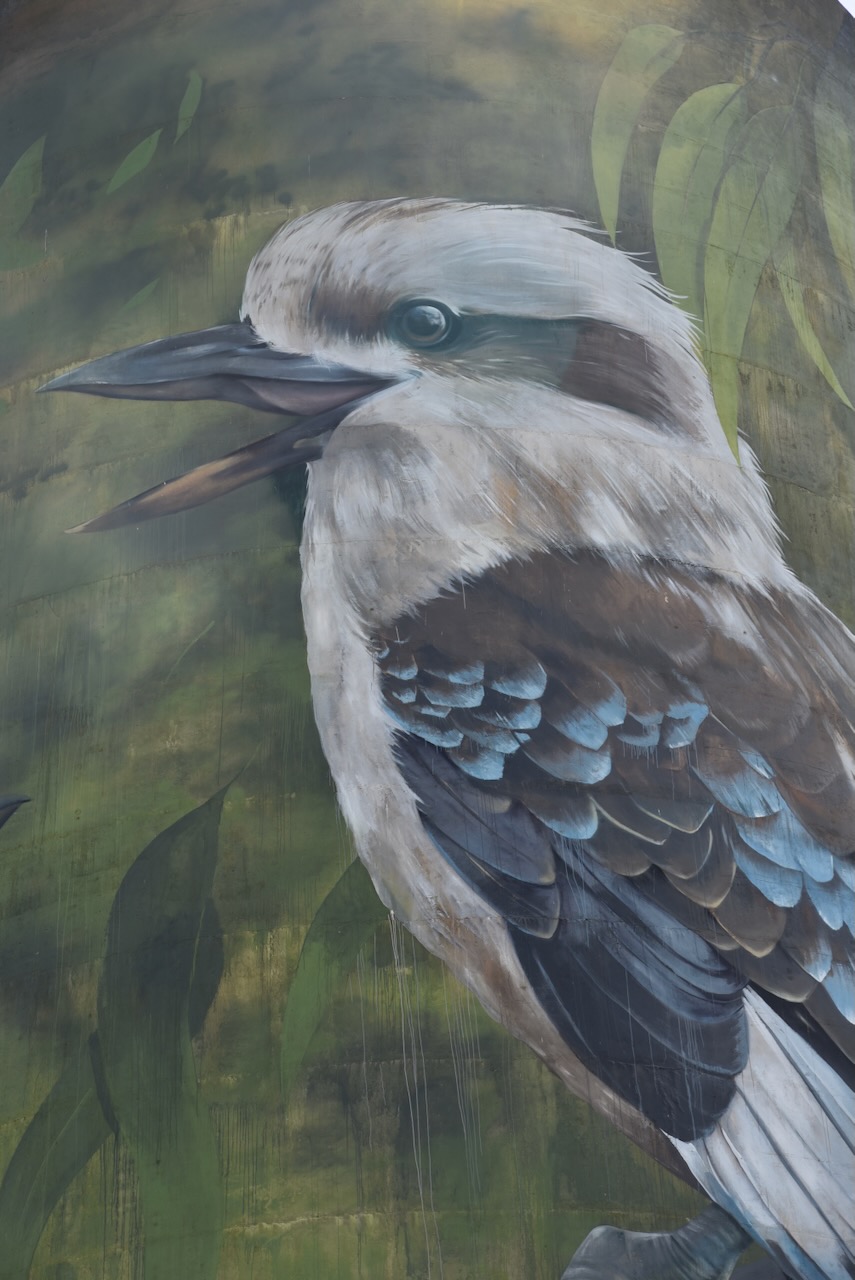
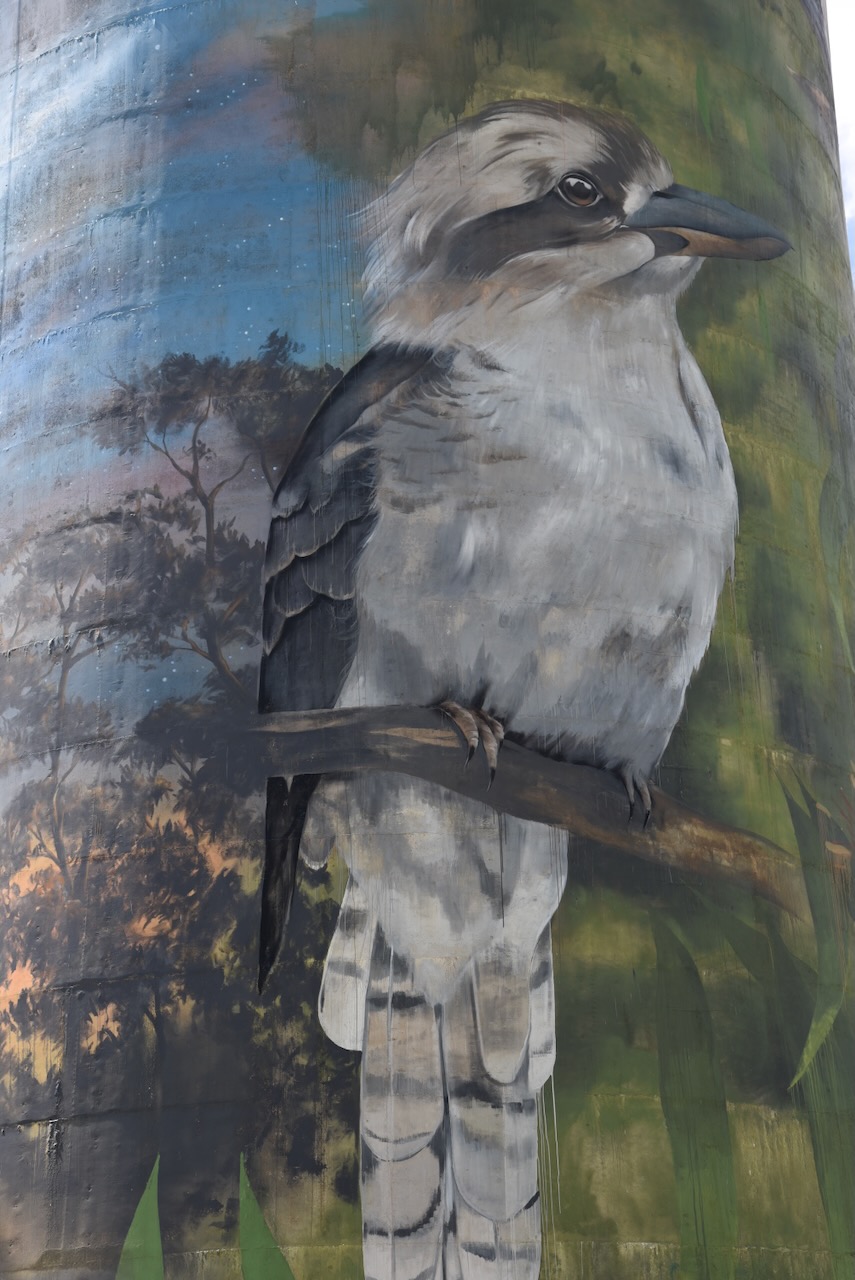
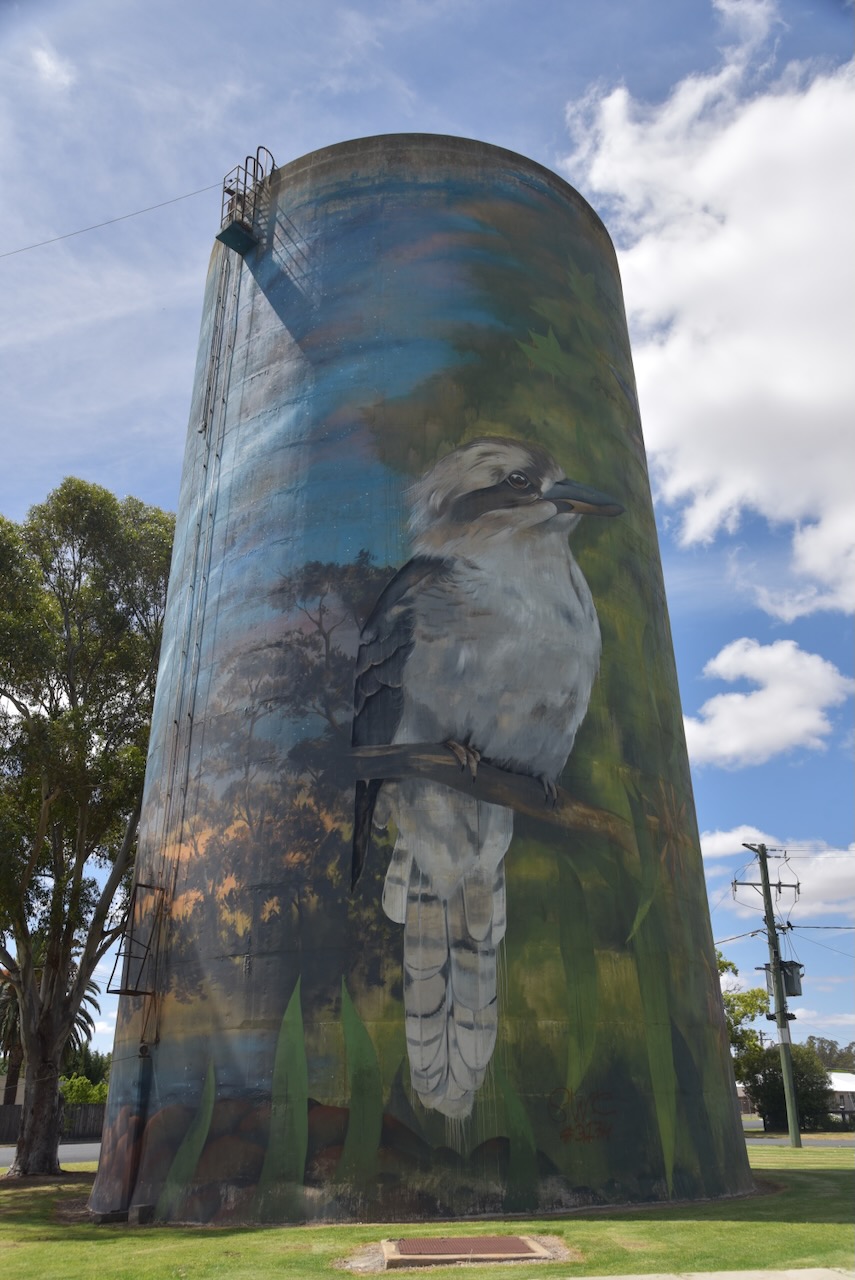
After leaving the motor museum, Marija and I visited the Deniliquin Water Tower Art on the corner of Whitelock and Russell Streets. It was completed in July 2019 by artist Cam Scale. The tower features two Kookaburras and an outback night sky. (Australiansiloarttrail.com 2026)
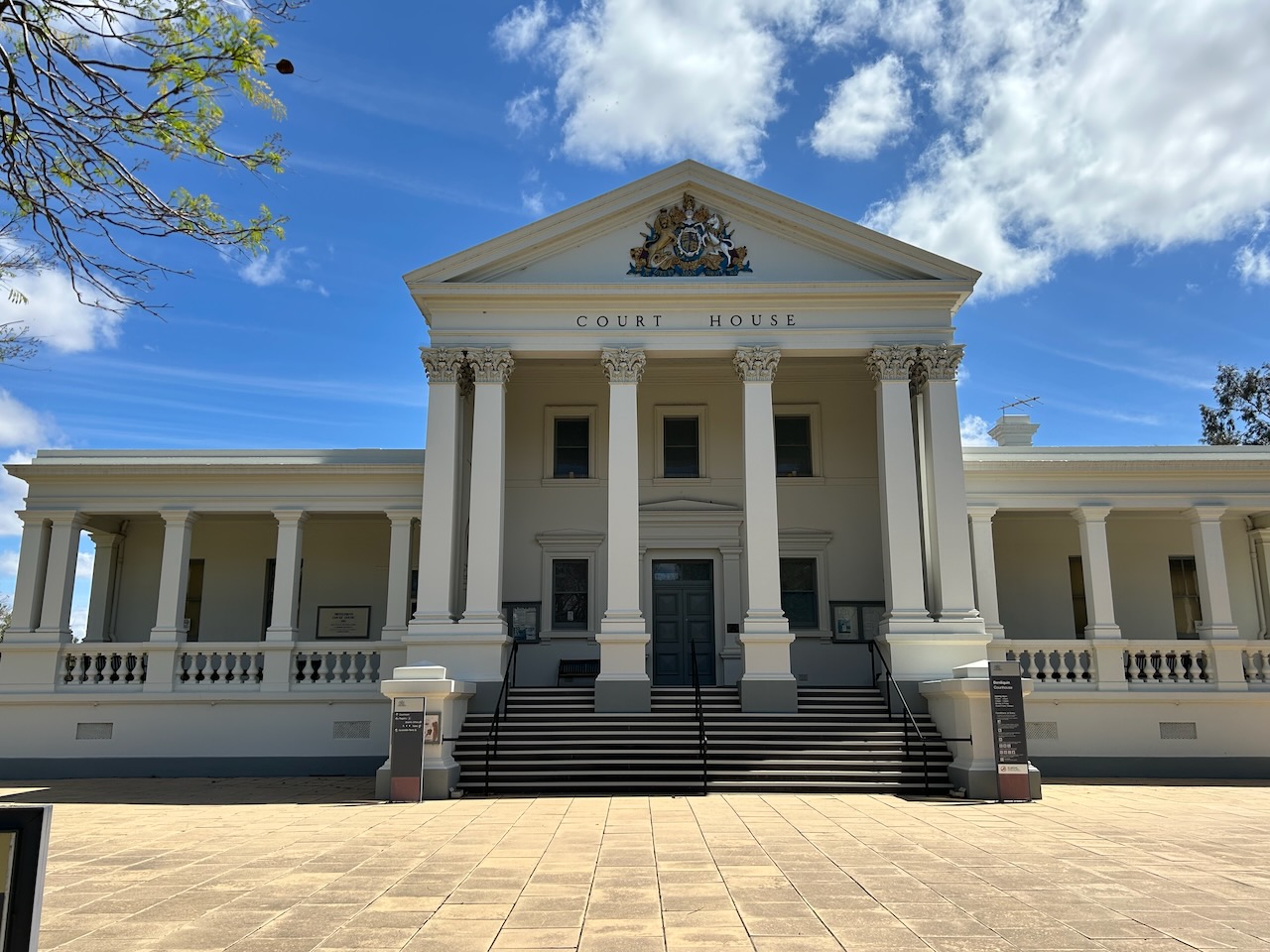
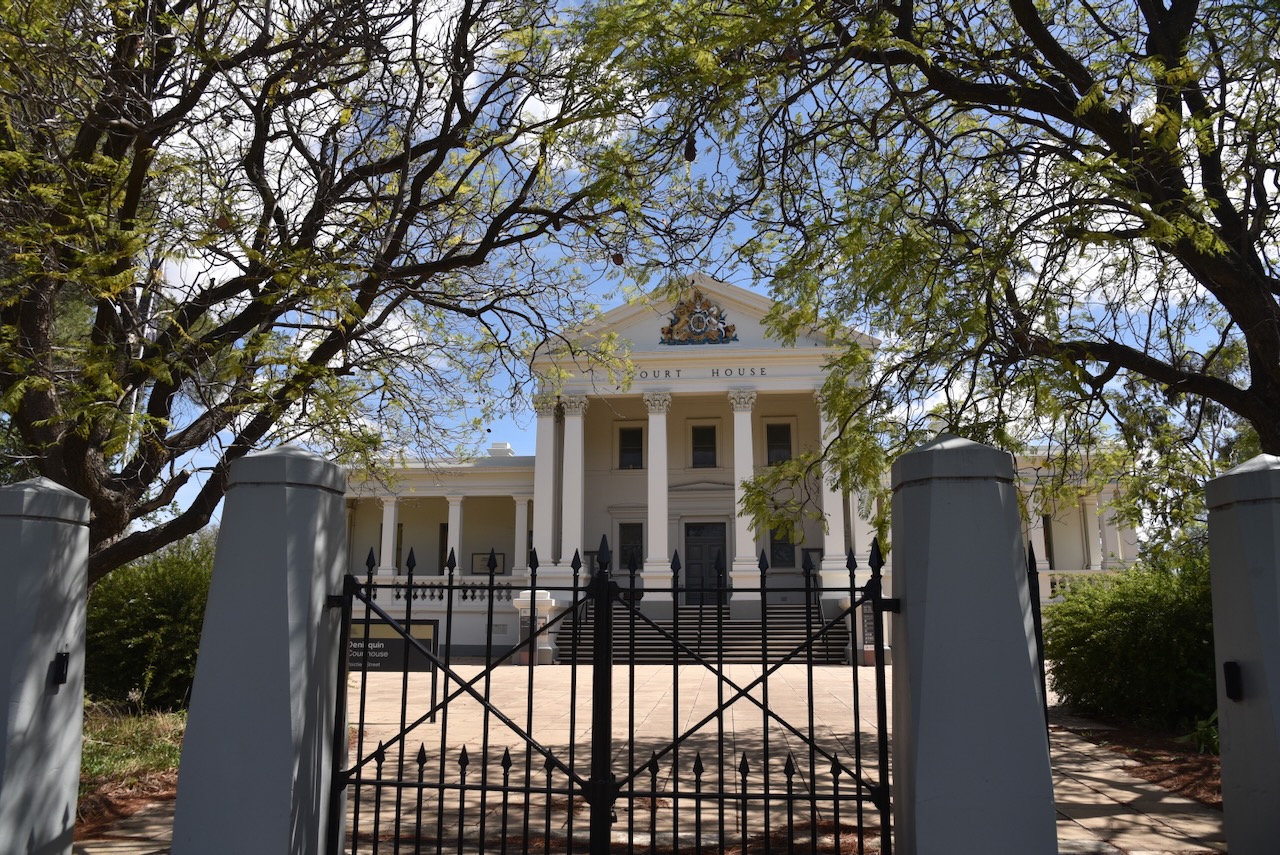
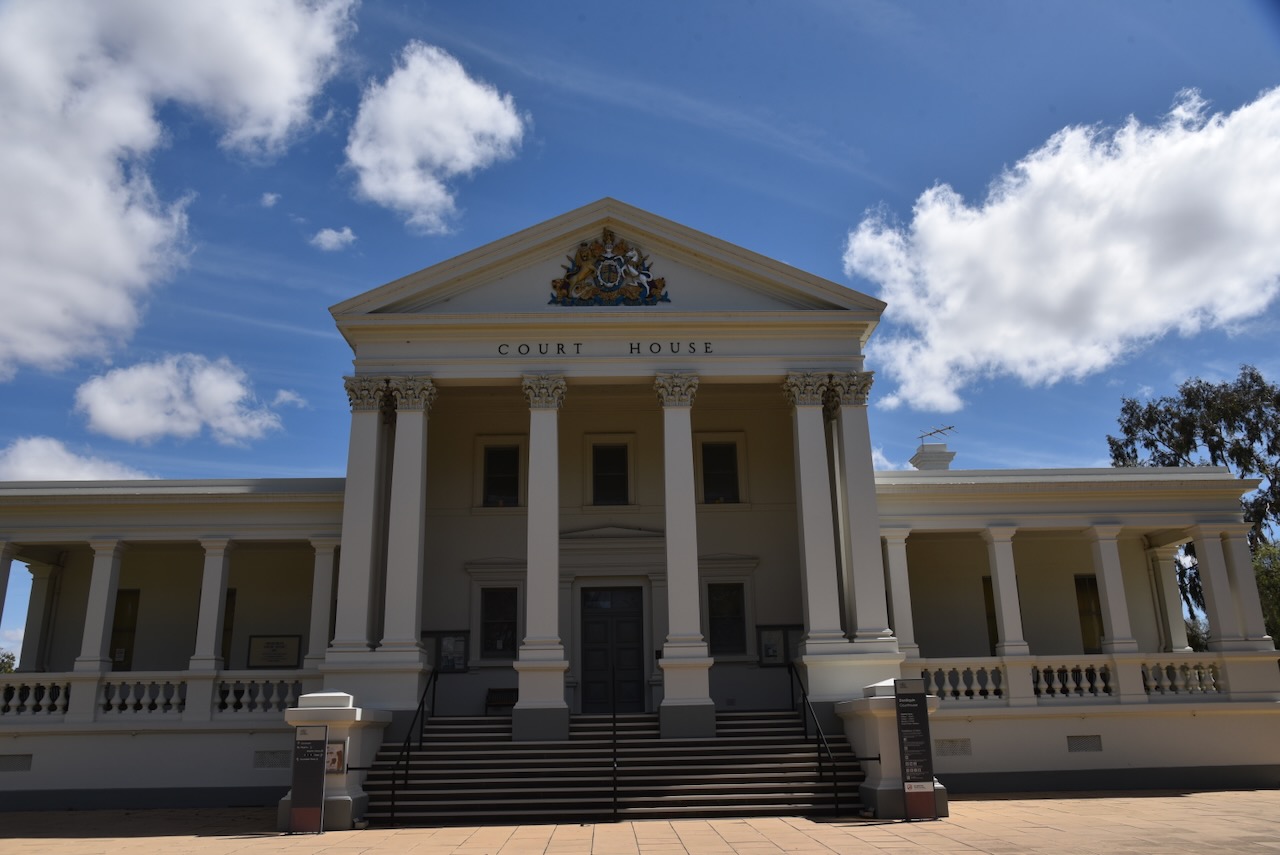
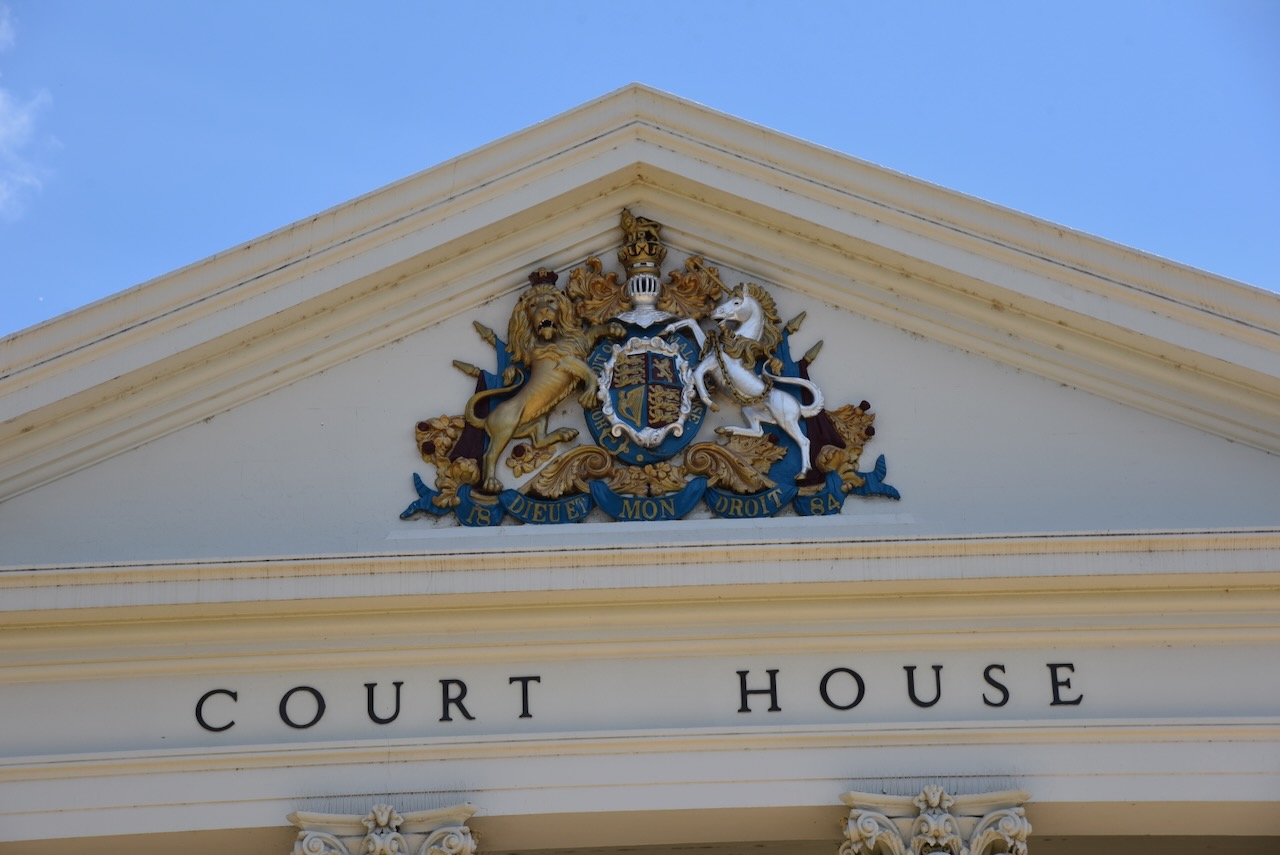
Deniliquin has a magnificent courthouse. In 1846, Deniliquin was proclaimed as a place for a court. Prior to the construction of the first courthouse in 1858, legal proceedings were held in local hotels. In 1863, a replacement courthouse was constructed. The tender for the current Deniliquin courthouse was gazetted in 1883. The contract was awarded to Hunter & Son, who were local builders. The courthouse was designed by the New South Wales Colonial Architects Office, which was headed by James Barnet. Construction of the courthouse commenced in 1884 and was completed in 1885; however, it was unfurnished. (Denipt.com.au, 2025)
One year passed, and in November 1886, the Sheriff of New South Wales, Charles Cowper, visited the courthouse and made an assessment on what was required for the completion of the building. However, there was no progress, and in October 1887 the courthouse was described as a ‘white elephant’ by the Pastoral Times newspaper. One year later, in October 188, the courthouse was described as an “extravagant edifice”. (Denipt.com.au, 2025)
In April 1892, Sir Frederick Darle, the Chief Justice, assured the Deniliquin Mayor that something would be done to ensure the courthouse would be fit for occupation. By late 1892, the courthouse was finally in use. (Denipt.com.au, 2025)
After a full day of sightseeing, it was time to play a bit of radio. We headed to activate a couple of silos for the Silos On The Air (SiOTA) program.
There are 3 silos in Deniliquin, but you cannot position yourself so that you are in the activation zone of all three silos. For SiOTA, the activation zone is within 1km of the silo. We chose to activate the Deniliquin West silo VK-DNT2 and the Rice Growers silo VK-RCG2.
The Deniliquin West silos are located on Abbatoir Road on the southwest side of Deniliquin. They are operated by Graincorp.
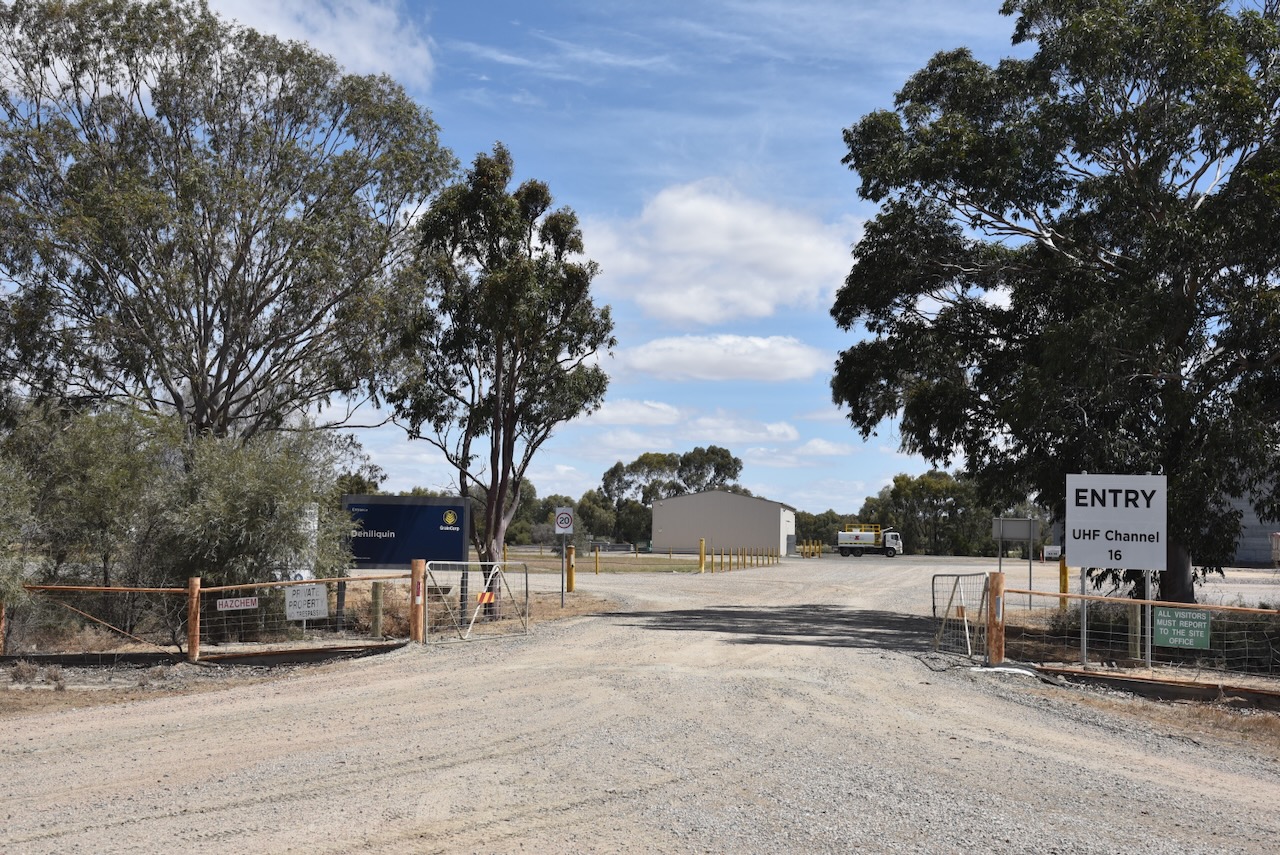
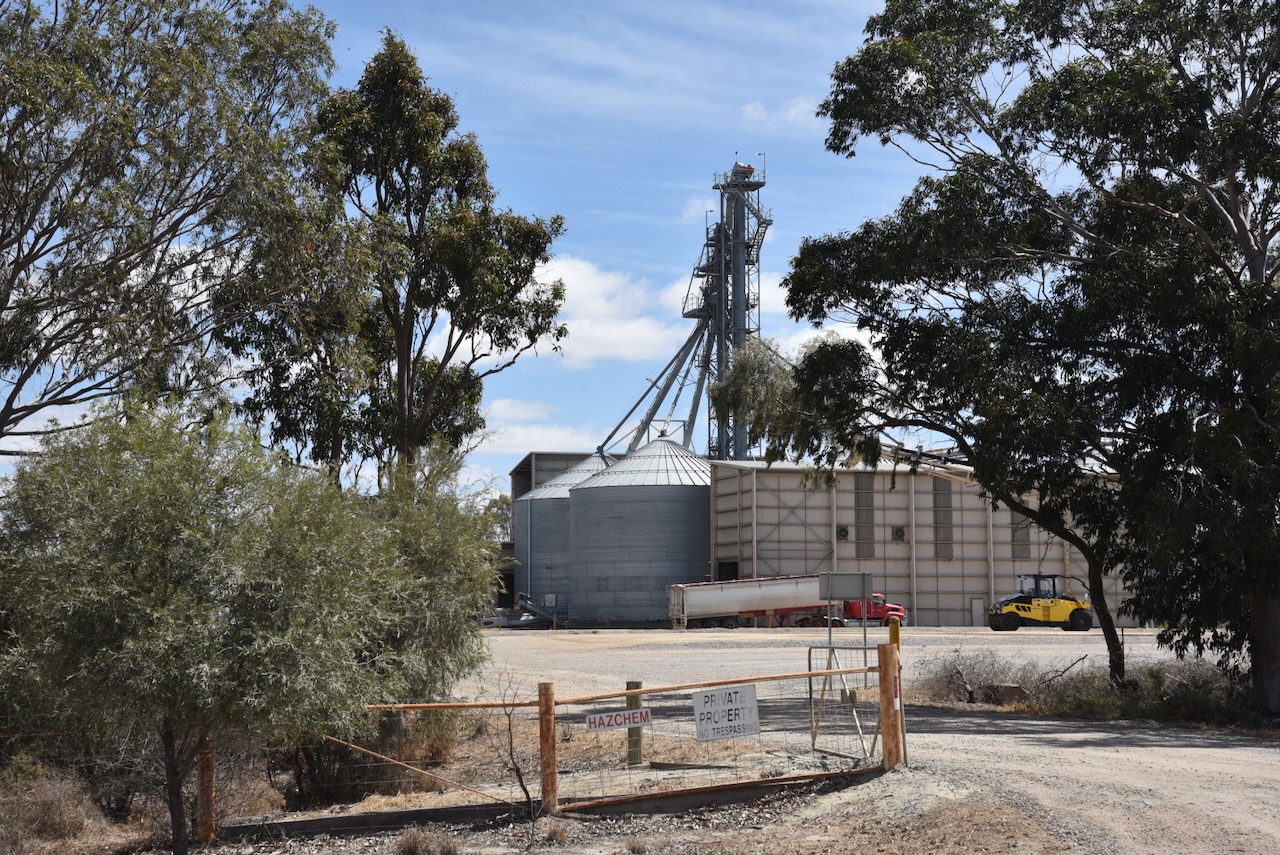
The Rice Growers Siding silos are located on Cemetery Road, a short distance to the northeast of the Deniliquin West silos. This is a large complex and is operated by SunRice, which is one of Australia’s leading branded food exporters. (Sunrice 2024)
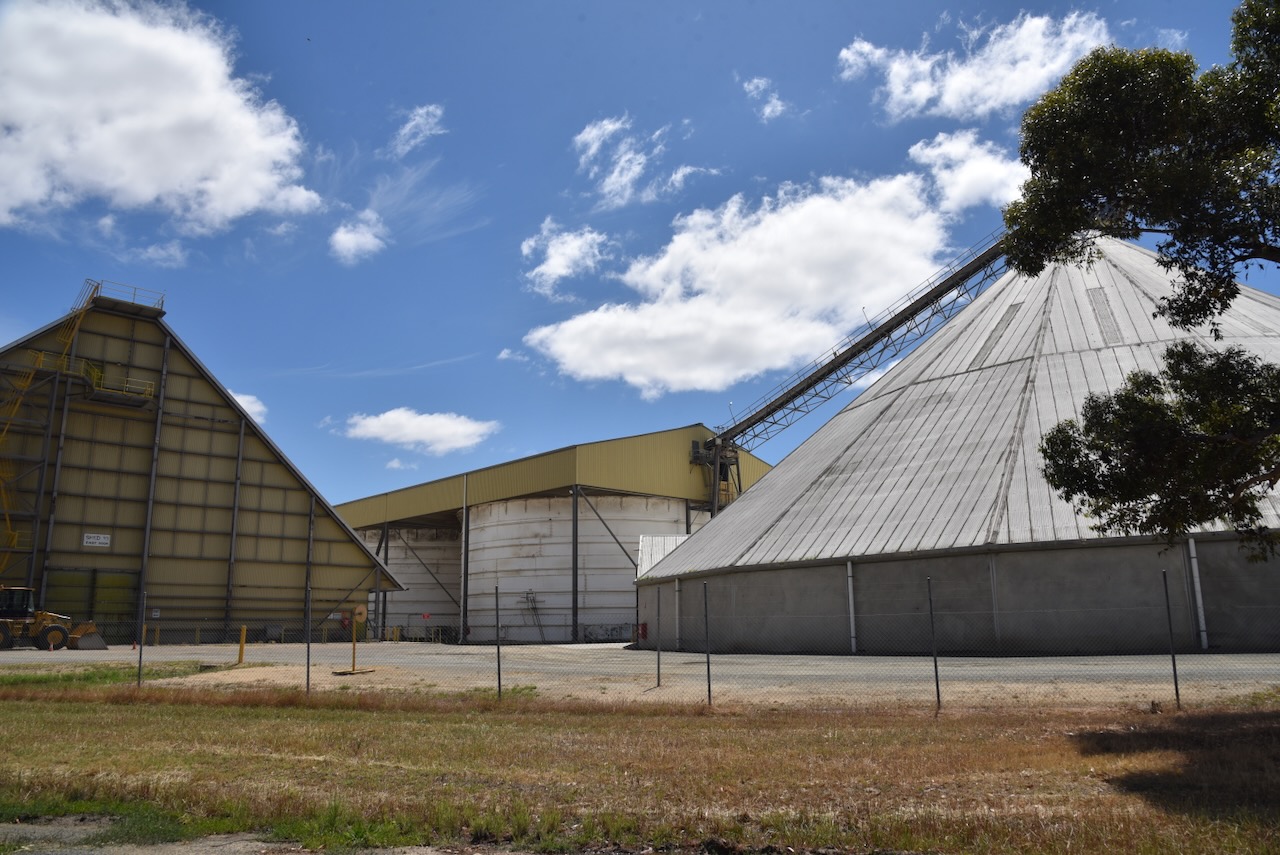
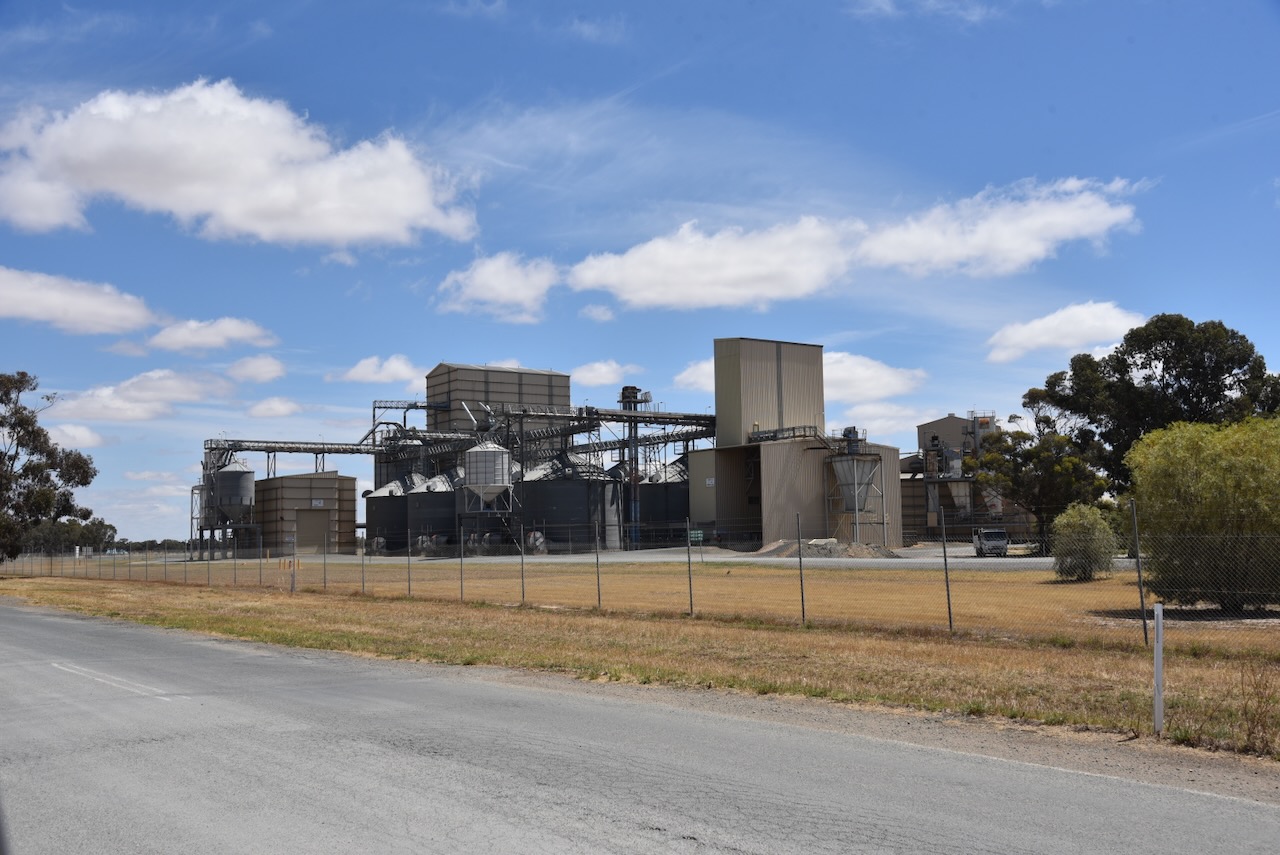
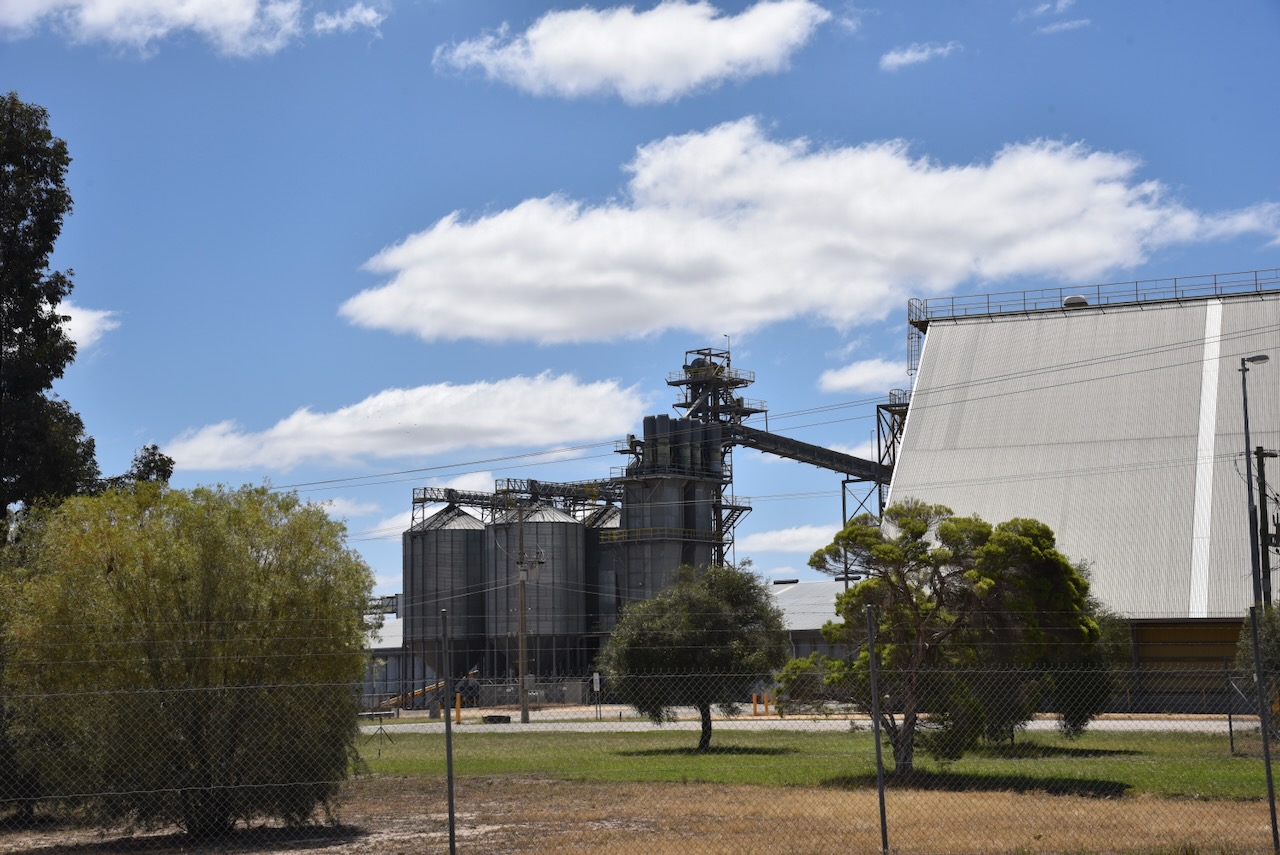
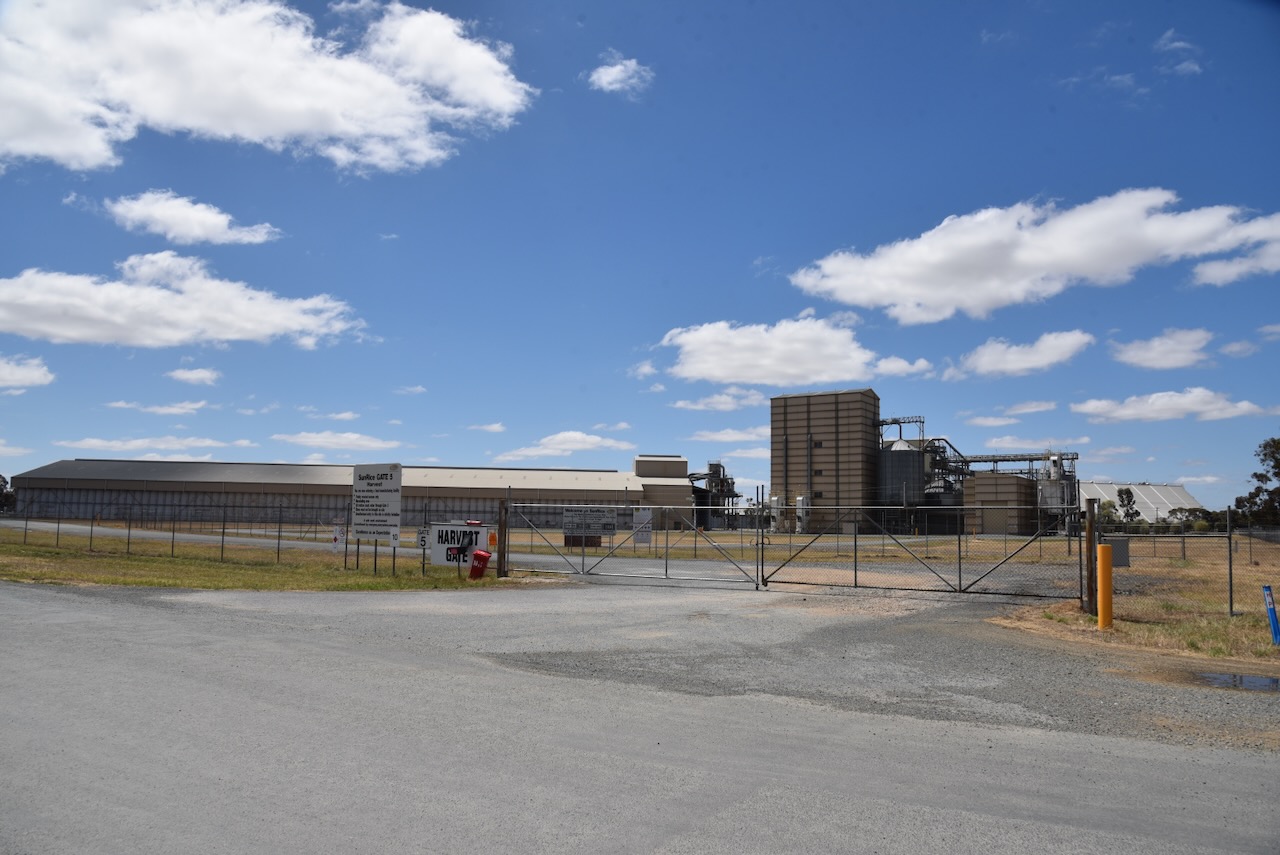
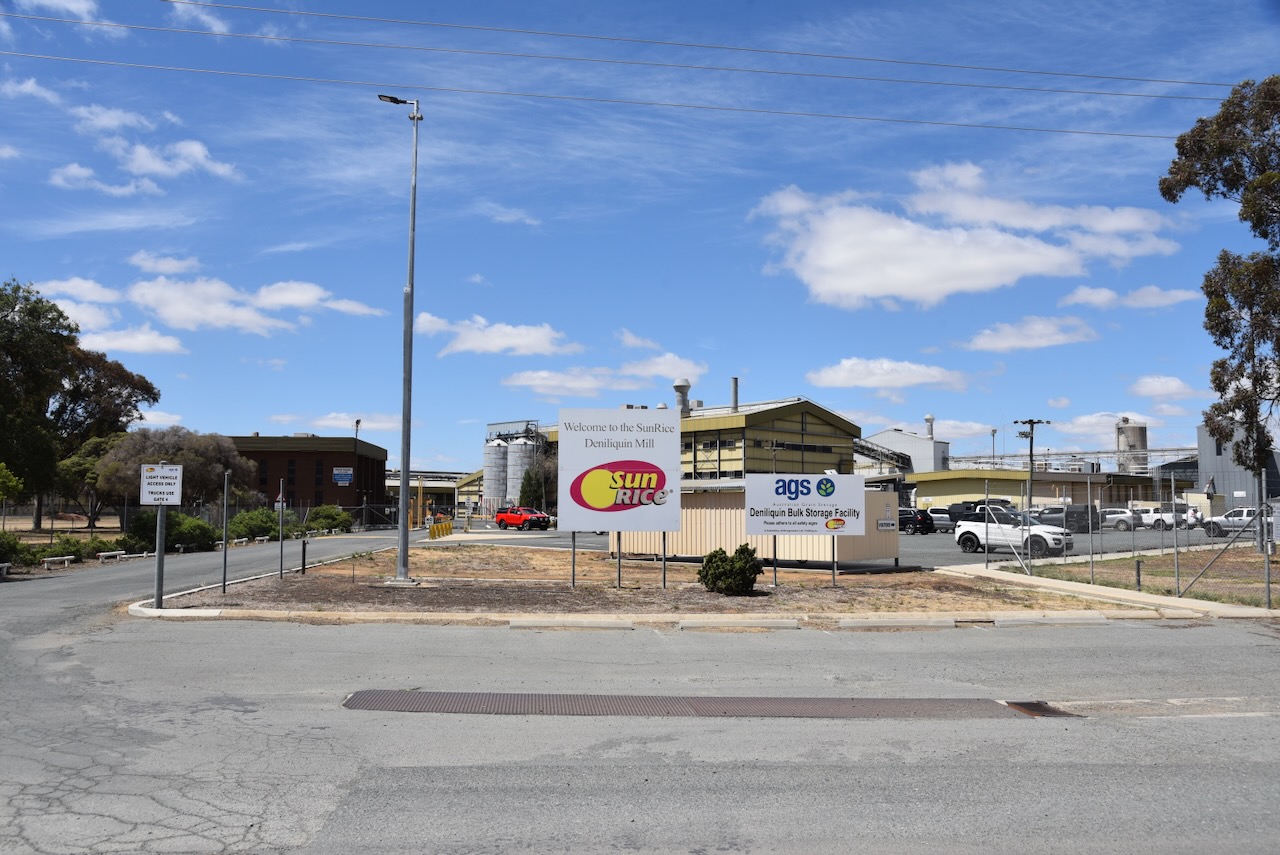
Marija and I parked on Ricemill Road and operated from the 4WD, running the Icom IC7000, 100 watts, and the Codan 9350 antenna with the 1.5 metre stainless steel whip.
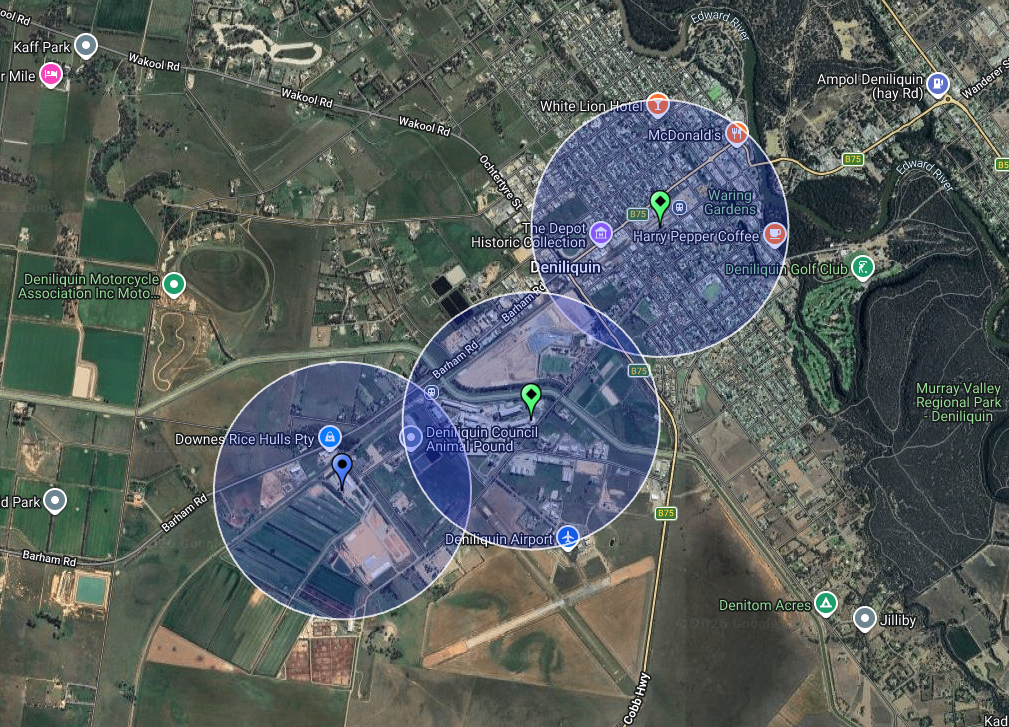
Above: the activation zones at the three silos in Deniliquin. Image c/o SiOTA website
Marija worked the following stations on 40m SSB:-
- VK2DA
- VK1DA
- VK5HS
- VK1AO
- VK2MET
- VK2VW
- VK2HFI
- VK2AKA
- VK2BUG
I worked the following stations on 40m SSB:-
- VK7EE
- VK3PF
- VK2YAK
- VK4YAK
- VK2DA
- VK1DA
- VK5HS
- VK1AO
- VK2MET
- VK2NP
- VK2VW
- VK2HFI
- VK2AKA
- VK2BUG
- VK2VH
- VK4AAC
References.
- AFA | Australian Food & Agriculture. (2018). History – AFA | Australian Food & Agriculture. [online] Available at: https://austfood.com.au/merino-studs/history/. [Accessed 8 Apr. 2026]
- ancestry (2016). Ancestry® | Genealogy, Family Trees & Family History Records. [online] Ancestry.com.au. Available at: https://www.ancestry.com.au/. [Accessed 8 Apr. 2026]
- Australiansiloarttrail.com. (2026). Deniliquin Water Tower Art. [online] Available at: https://www.australiansiloarttrail.com/deniliquin [Accessed 8 Apr. 2026].
- Deniliquin Pastoral Times. (2023). The Depot chosen to house previously unseen Golden Fleece collection. [online] Available at: https://www.denipt.com.au/news/the-depot-chosen-to-house-previously-unseen-golden-fleece-collection/ [Accessed 8 Apr. 2026].
- Denipt.com.au. (2025). Welcome To Zscaler Directory Authentication. [online] Available at: https://www.denipt.com.au/news/deni-court-house-our-white-elephant-in-the-bush/. [Accessed 5 Apr. 2026]
- Hone, J.A. (1974). Peppin, George Hall (1800–1872). [online] Anu.edu.au. Available at: https://adb.anu.edu.au/biography/peppin-george-hall-4388 [Accessed 8 Apr. 2026].
- Powerhouse.com.au. (2022). Powerhouse Collection – Two wool specimens. [online] Available at: https://collection.powerhouse.com.au/object/229182 [Accessed 8 Apr. 2026].
- Sunrice.com.au. (2024). Our Story. [online] Available at: https://www.sunrice.com.au/our-story. [Accessed 9 Apr 2026]
- Trove. (2026). Local Intelligence. – The Border Watch (Mount Gambier, SA : 1861 – 1965) – 12 Sep 1866. [online] Available at: https://trove.nla.gov.au/newspaper/article/77132673?searchTerm=vermont%20ram%20%2B%20old%20grimes [Accessed 8 Apr. 2026].
- Trove. (2026). BENILIQUIN. – Thursday. – Australian Town and Country Journal (Sydney, NSW : 1870 – 1919) – 17 Jun 1876. [online] Available at: https://trove.nla.gov.au/newspaper/article/70592263?searchTerm=george%20peppin [Accessed 8 Apr. 2026].
- Trove. (2026). RIVERINE INTELLIGENCE. – The Pastoral Times (South Deniliquin, NSW : 1866 – 1963) – 20 Apr 1872. [online] Available at: https://trove.nla.gov.au/newspaper/article/268006962?searchTerm=george%20peppin [Accessed 8 Apr. 2026].
- Trove. (2026). DENILIQUIN. – August 26. – Australian Town and Country Journal (Sydney, NSW : 1870 – 1919) – 4 Sep 1875. [online] Available at: https://trove.nla.gov.au/newspaper/article/70585087 [Accessed 8 Apr. 2026].
- Wikipedia Contributors (2025). Pretty Pine, New South Wales. Wikipedia.
- Wikipedia Contributors (2025). Ford L series. Wikipedia.
 VK5PAS