On 24th August 2025, I decided to fire up the Pearce Simpson Super Bengal and have a listen. There was quite a bit of action with the USA and New Zealand coming in, along with the Northern Territory.
My CB antenna is a Horizons Australia 5.2 metre long vertical on the top of one of my towers.
At about 0855 UTC on Saturday 23rd day of August 2025, I tuned in to the Austravel Safety Net, transmitting on 5127 kHz, from Western Australia.
Austravel Safety Net Inc. is a not-for-profit HF radio club that is run by volunteers and was established to provide an affordable recreational HF radio communications network for its members. (Austravel 2023)
Below is a link to the Austravel Safety Net website:
Austravelsafetynet.org.au. (2023). Austravel Safety Net Inc. | The HF Radio Network For Those Who Trip, Trek, Track and Tour. [online] Available at: https://www.austravelsafetynet.org.au/ [Accessed 31 Aug. 2025].
At about 0805 UTC on Saturday, the 23rd day of August 2025, I tuned in to an unknown station, broadcasting on 12085 kHz.
The broadcast consisted of music including The Rolling Stones, Duran Duran, and Harry Styles.
I have been unable to identify what station this is. I initially thought it may have been Radio Delta International, but the music did not match what was being played on their livestream on their website.
The overall reception was fair. By 0825 UTC, the station had severely faded into the static crashes.
S
I
N
P
O
3
4
3
3
3
My equipment:-
Yaesu FTdx101MP
dipole antenna
Below is a short video showing my reception.
References.
World Radio TV Handbook 2025
Shortwaveschedule.com. (2024). ShortwaveSchedule.com. [online] Available at: https://shortwaveschedule.com/ [Accessed 23 Aug. 2025].
Short-wave.info. (2023). Short-Wave Radio Frequency Schedule. [online] Available at: http://www.short-wave.info/index.php [Accessed 23 Aug. 2025].
At about 0609 UTC on Saturday, the 23rd day of August 2025, I tuned in to Radio Romania International, broadcasting on 9700 kHz in the German language.
The broadcast was coming from the 300 kW transmitter at Tiganesti, Romania. The target audience was Western Europe.
The overall reception of Radio Romania International was good.
S
I
N
P
O
4
5
4
4
4
My equipment:-
Yaesu FTdx101MP
dipole antenna
Below is a short video showing my reception of Radio Romania International.
References.
World Radio TV Handbook 2025
Shortwaveschedule.com. (2024). ShortwaveSchedule.com. [online] Available at: https://shortwaveschedule.com/ [Accessed 23 Aug. 2025].
Short-wave.info. (2023). Short-Wave Radio Frequency Schedule. [online] Available at: http://www.short-wave.info/index.php [Accessed 23 Aug. 2025].
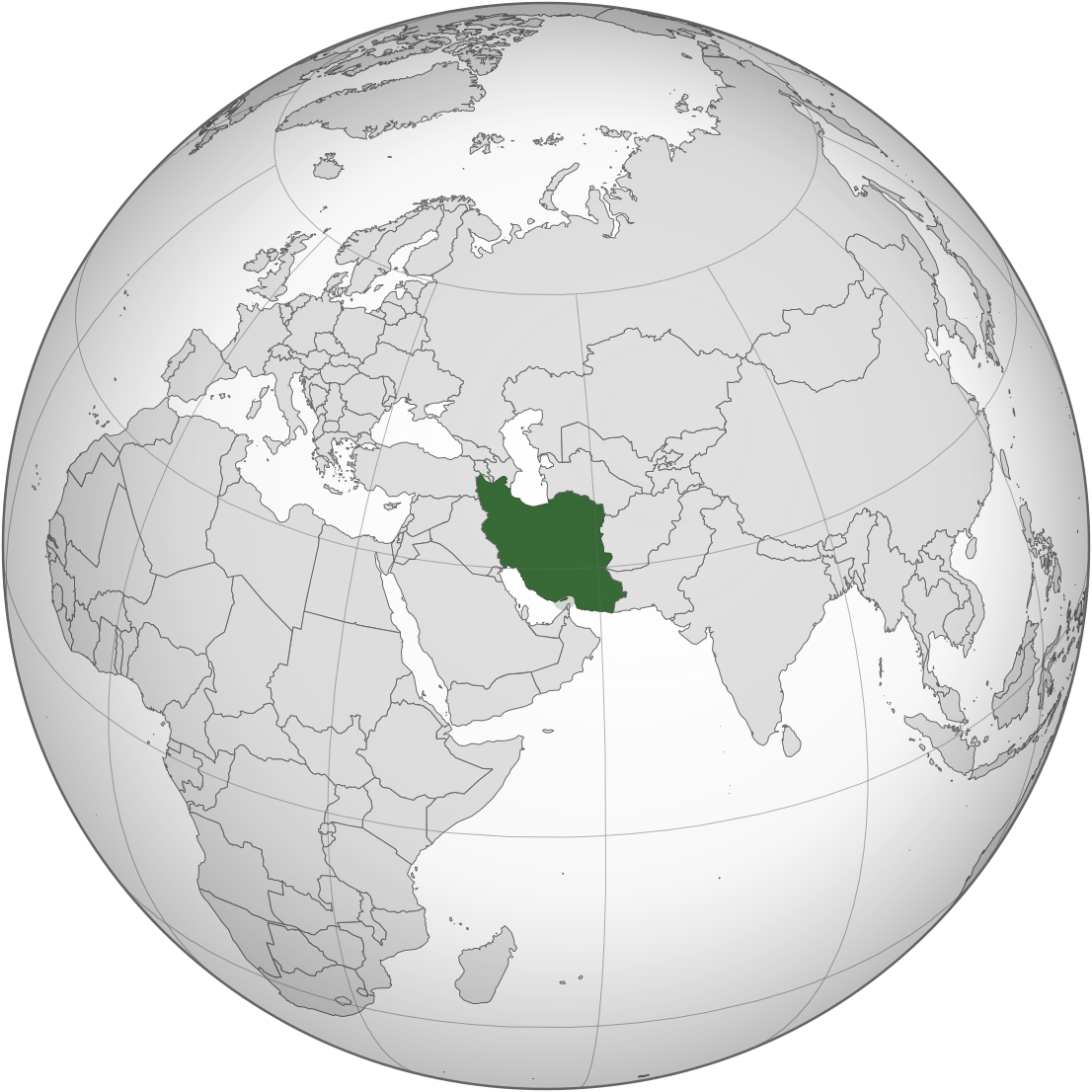
At about 0537 UTC on Saturday, the 23rd day of August 2025, I tuned in to the Voice of the Islamic Republic of Iran, broadcasting on 15240 kHz in the Turkish language.
Above:- World globe showing the location of Iran. Image c/o Wikipedia.
The broadcast was coming from the 500 kW transmitter at Sirjan, Iran. The target audience was the Middle East.
The overall reception of the Voice of the Islamic Republic of Iran was good.
S
I
N
P
O
4
4
4
4
4
My equipment:-
Yaesu FTdx101MP
dipole antenna
Below is a short video showing my reception of the Voice of the Islamic Republic of Iran.
References.
World Radio TV Handbook 2025
Shortwaveschedule.com. (2024). ShortwaveSchedule.com. [online] Available at: https://shortwaveschedule.com/ [Accessed 23 Aug. 2025].
Short-wave.info. (2023). Short-Wave Radio Frequency Schedule. [online] Available at: http://www.short-wave.info/index.php [Accessed 23 Aug. 2025].
At about 1309 UTC on Wednesday, the 20th day of August 2025, I tuned in to the Voice of Korea, North Korea, broadcasting on 15245 kHz in the English language.
The broadcast was coming from the 200 kW transmitter at Kujang, North Korea.
The overall reception of the Voice of Korea was good.
S
I
N
P
O
4
4
4
4
4
My equipment:-
Yaesu FTdx101MP
dipole antenna
Below is a short video showing my reception of the Voice of Korea.
References.
World Radio TV Handbook 2025
Shortwaveschedule.com. (2024). ShortwaveSchedule.com. [online] Available at: https://shortwaveschedule.com/ [Accessed 20 Aug. 2025].
Short-wave.info. (2023). Short-Wave Radio Frequency Schedule. [online] Available at: http://www.short-wave.info/index.php [Accessed 20 Aug. 2025].
At about 1253 UTC on Wednesday, the 20th day of August 2025, I tuned in to KTWR, Guam, broadcasting on 15400 kHz in the English language.
Above:- World globe showing the location of Guam. Image c/o Wikipedia.
The broadcast was coming from the 90 kW transmitter at Merizo in the Northern Mariana Islands. The target audience was South Asia. The broadcast contained religious programs.
The overall reception of KTWR was good.
S
I
N
P
O
4
5
4
4
4
My equipment:-
Yaesu FTdx101MP
dipole antenna
Below is a short video showing my reception of KTWR.
References.
World Radio TV Handbook 2025
Shortwaveschedule.com. (2024). ShortwaveSchedule.com. [online] Available at: https://shortwaveschedule.com/ [Accessed 20 Aug. 2025].
Short-wave.info. (2023). Short-Wave Radio Frequency Schedule. [online] Available at: http://www.short-wave.info/index.php [Accessed 20 Aug. 2025].