Aldinga Scrub Conservation Park

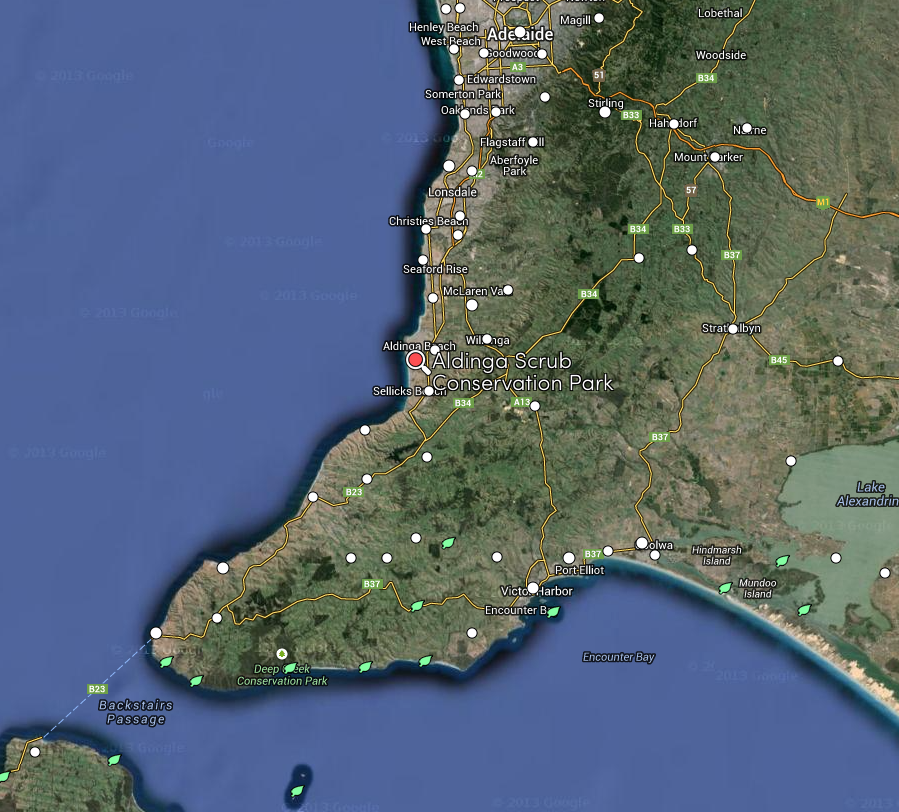
This afternoon (Sunday 19th October, 2014),as promised I headed down south with the intention of activating the Aldinga Scrub Conservation Park, and then the Moana Sands Conservation Park.  First up, was the Aldinga Scrub Conservation Park, which is situated about 46 km south of Adelaide.

Screenshot 2014-10-19 19.08.55

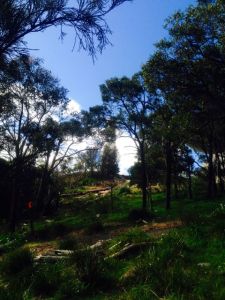
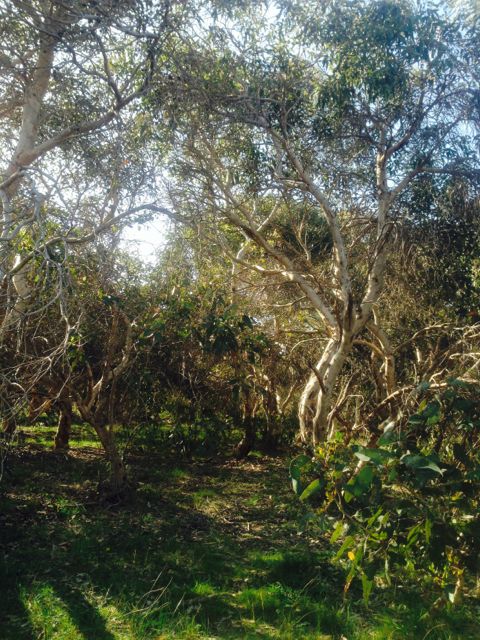
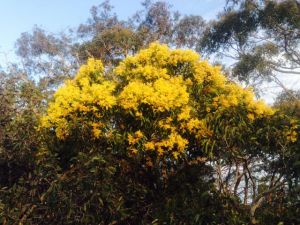
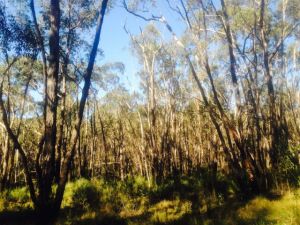
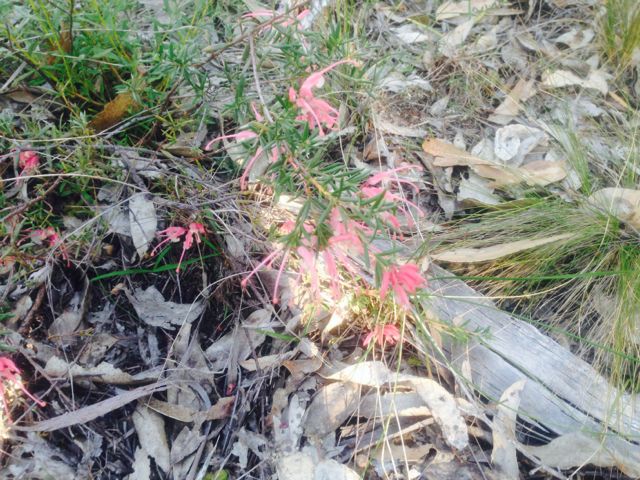
The park, which is 300 hectares in size, is home to a diverse range of rare plants and is recognised as a significant area for the conservation and protection of the region’s flora.  The park consists of sand dunes, sand blows, mallee scrub, lacy coral lichen, closed heaths, and remnant red gum forests.  A variety of wildlife lives in the park including Brush-tailed possums, and Short-beaked echidnas.  Over 166 species of birds have been recorded in the park.  The park is also home to numerous reptiles including the dangerous Brown snake, and the Red Bellied snake.  Fortunately I did not encounter any of these, making as much noise as possible to discourage them from paying me a visit.

Prior to European settlement, the area was part of the territory of the Kaurna Aboriginal people.  The scrub provided an abundance of food and materials used for utensils.  Shellfish, fish, marsupials, reptiles, birds and plant foods such as nerd, moonrise, yams, and quandongs were abundant in the area.

Aldinga is the final spelling of a word that has masqueraded as Ngalti-ngga, Audlingga and Alinghi.  The meaning of which nobody has ever been able to establish with any degree of authority.  There are widely differing opinions suggesting that this means ‘tree district’, ‘much water’, ‘battle or burial ground’, and ‘open wide plain’.

Mr. F. Culley was the first European settler in the area, in 1857.  Prior to World War One, the scrub was subdivided and several attempts were made to farm the area.  However, this did not prove to be viable, due to the sandy soil.  During the 1960’s, the local Willing Council became concerned that the subdivision of the area would cause erosion.  As a result, between 1965 and 1982, 300 hectares were purchased at Aldinga, to be managed by the State Planning Authority as an Open Space Reserve.  It was not until 1985, that the reserve was declared Aldinga Scrub Conservation Park.

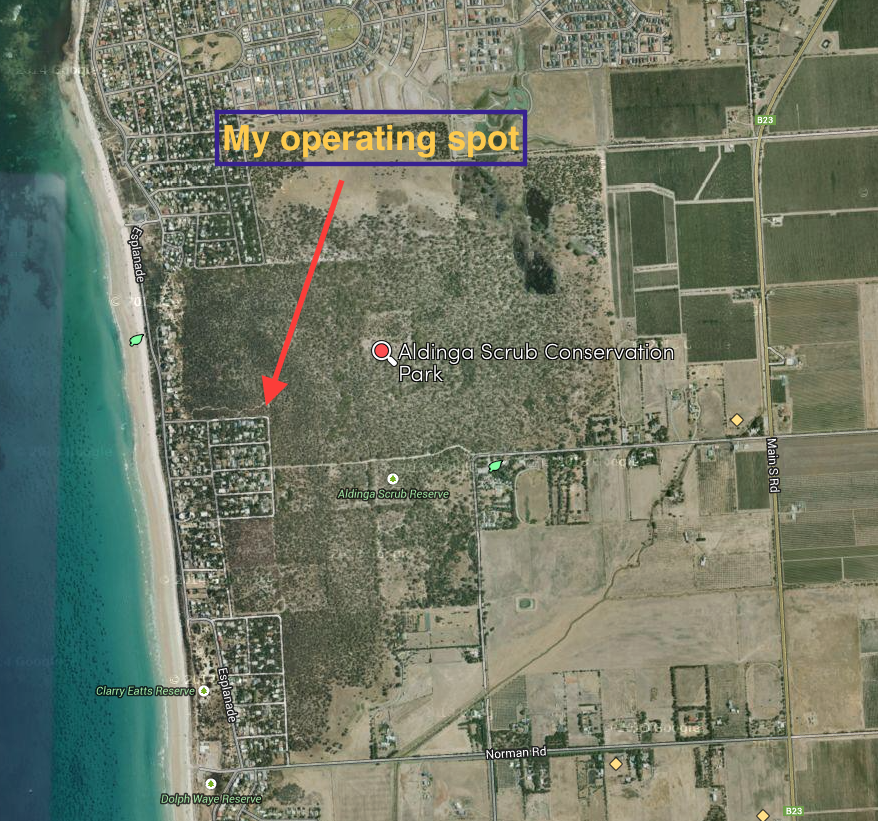
To get to the park I travelled south through Echunga, on to Meadows and then Willunga.  This is a beautiful drive through the southern Mount Lofty Ranges.  I then travelled west along Aldinga Beach Road, towards the ocean, and then along the Esplanade and then left into Quandong Avenue.  I parked the car at the corner of Quandong Avenue and Acacia Terrace, and entered the park via Gate 3.

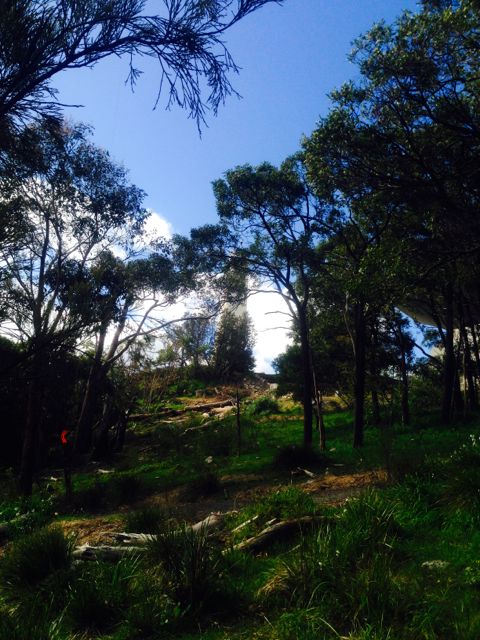
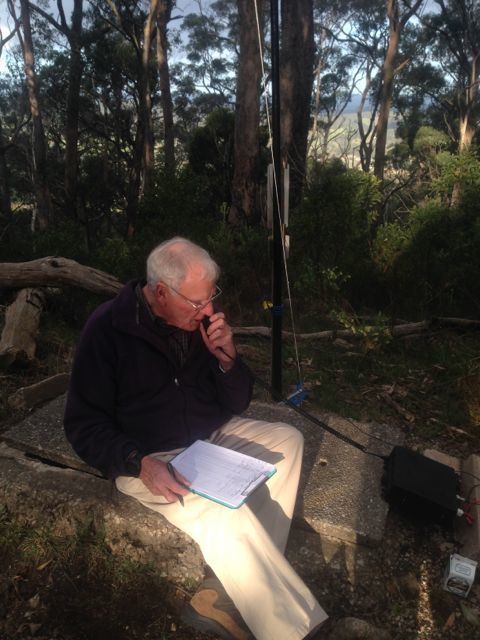
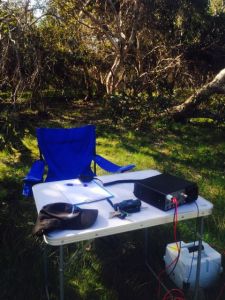
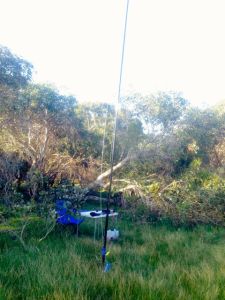
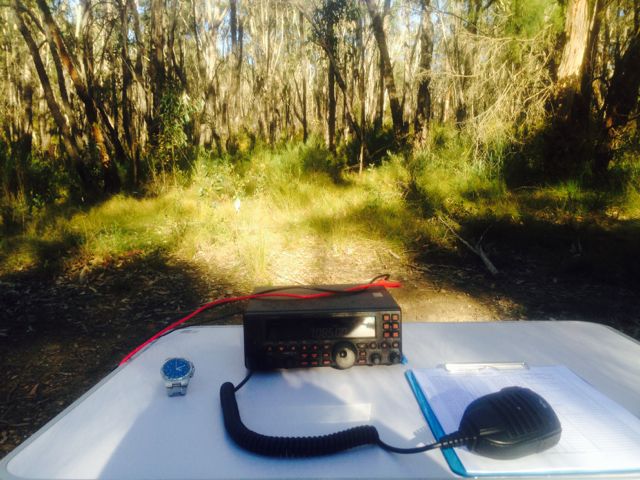
I set up about 50 metres inside the park boundary, under the shade of some gum trees, as it was a warm afternoon.  The temperature was about 30 degrees C.

Screenshot 2014-10-17 20.03.21

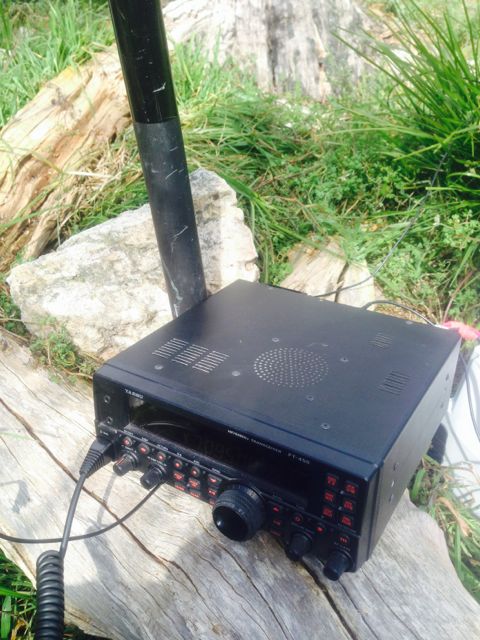
After setting up the linked dipole, I turned the radio on to find that the 40m band was very noisy.  Prior to calling CQ, I tuned across the band and did not hear a single station.  But what I did hear was a lot of noise.  And to make things worse, there was some form of pulsing noise every 10kc.  Not sure if it was a nearby electric fence.

So back to 7.095 I went and put out a CQ call.  No takers.  This was very strange.  The park hunters are normally queued up waiting to work the activators.  Another CQ call, and no takers.  This was the pattern for the next 5 minutes, despite me sending out a few SMS messages to advise that I was on air.  No takers.  Finally I received a call from Mark, VK5QI, who was operating portable in the Black Hill Conservation Park.  So, despite a very slow and not very promising start, it was refreshing to get my first call.  And a ‘park to park’ contact to boot!  Mark was initially a good 5/6, but then he was GONE!  It was as if the band had dropped out.

This slideshow requires JavaScript.

But I persevered and continued to call CQ.  Tony VK5FTVR from Strathalbyn then called in.  However, Tony’s signal was well down on what I accustomed to.  This was followed by Greg VK5GJ from Meadows, who normally always calls me using just QRP 5 watts.  Today he was running 100 watts and was only a 5/3 at very best.  And Greg was really struggling with me.  Wow, this was not good.  Despite a number of further CQ calls I had no takers.  I did receive some SMS replies from John VK2AWJ and Larry VK5LY, advising that they had no reception and that the band was ‘dead’.

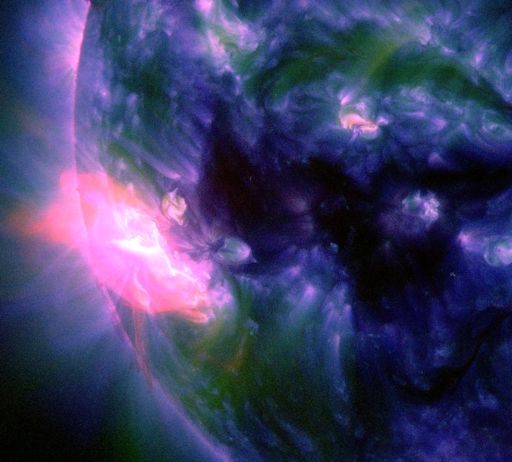
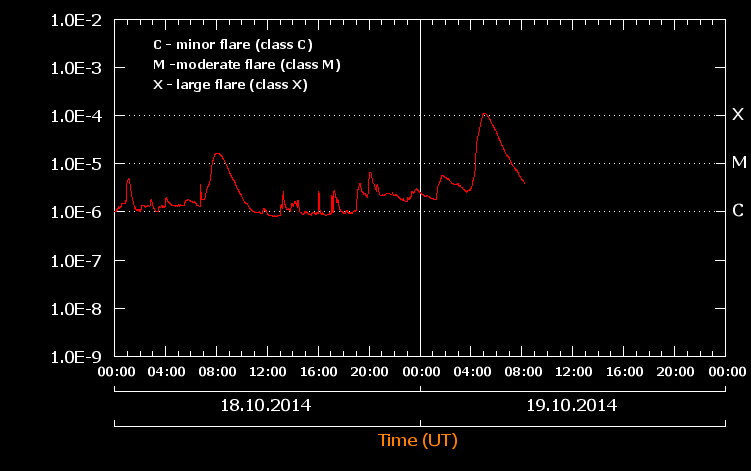
So I lowered the squid pole, and removed the links in the dipole for 20m, hoping that conditions there would be a little better.  I was to be very let down.  I called CQ for about 5 minutes on 14.310 and did not have a single caller.  So I tuned around the 20m band, and the only signals I could hear were those of Col VK4CC and John VK4LJ, running the ANZA DX Net on 14.183.  But their signals were extremely low as well.  I was starting to think there was a problem with the antenna.  But the VSWR was showing no indication of an issue.  Then I heard Col mention that there had been an X class flare.  There was the explanation.  It was time to pack up the gear and head home.  No reason to persevere.

If you want to read a bit more on solar flares, have a look at the following…..

http://spaceweather.com/glossary/flareclasses.html?PHPSESSID=2kq1a2unf15t8rk9ieiaik2no4

The image below shows today’s Class X-1 flare from Behemoth sunspot AR2192.

x1_strip2

Image courtesy of http://spaceweather.com

The graph below shows the X class flare.  It commenced at 0417 UTC, and it peaked at 0503 UTC.  My QSO with Mark was right in between this.

flares_20141019

Image courtesy of http://www.tesis.lebedev.ru/en/sun_flares.html

I had a grand total of 4 QSO’s for this activation.  This was by far, the most least successful activation I have every undertaken.

The following stations were worked on 40m SSB:-

Mark VK5QI/p (Black Hill CP); Tony VK5FTVR; and Greg VK5GJ.

The following stations were worked on 20m SSB:-

Greg VK5GJ.

References.

Cockburn, R, 2002, ‘South Australia.  What’s in a Name?

Department for Environment and Natural Resources, 2014, ‘Aldinga Scrub Conservation Park‘.

Giles Conservation Park

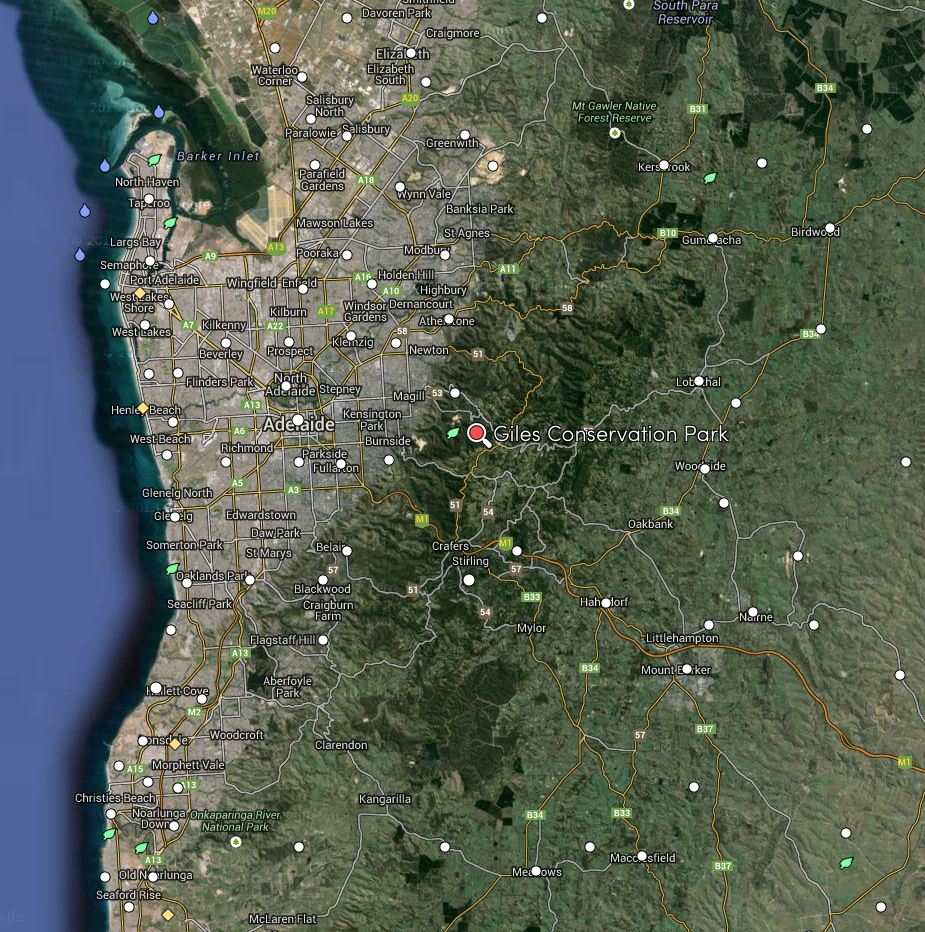
After packing up at the Horsnell Gully Conservation Park, I headed for the Giles Conservation Park, which was just a short drive away.  The park is located about 10 km east of Adelaide in the Mount Lofty Ranges ‘Adelaide Hills’.  I had activated this park in August 2013.  For information on the park and the previous activation, please have a look at my previous post….

https://vk5pas.wordpress.com/2013/08/04/giles-conservation-park/

Screenshot 2014-10-18 21.39.22

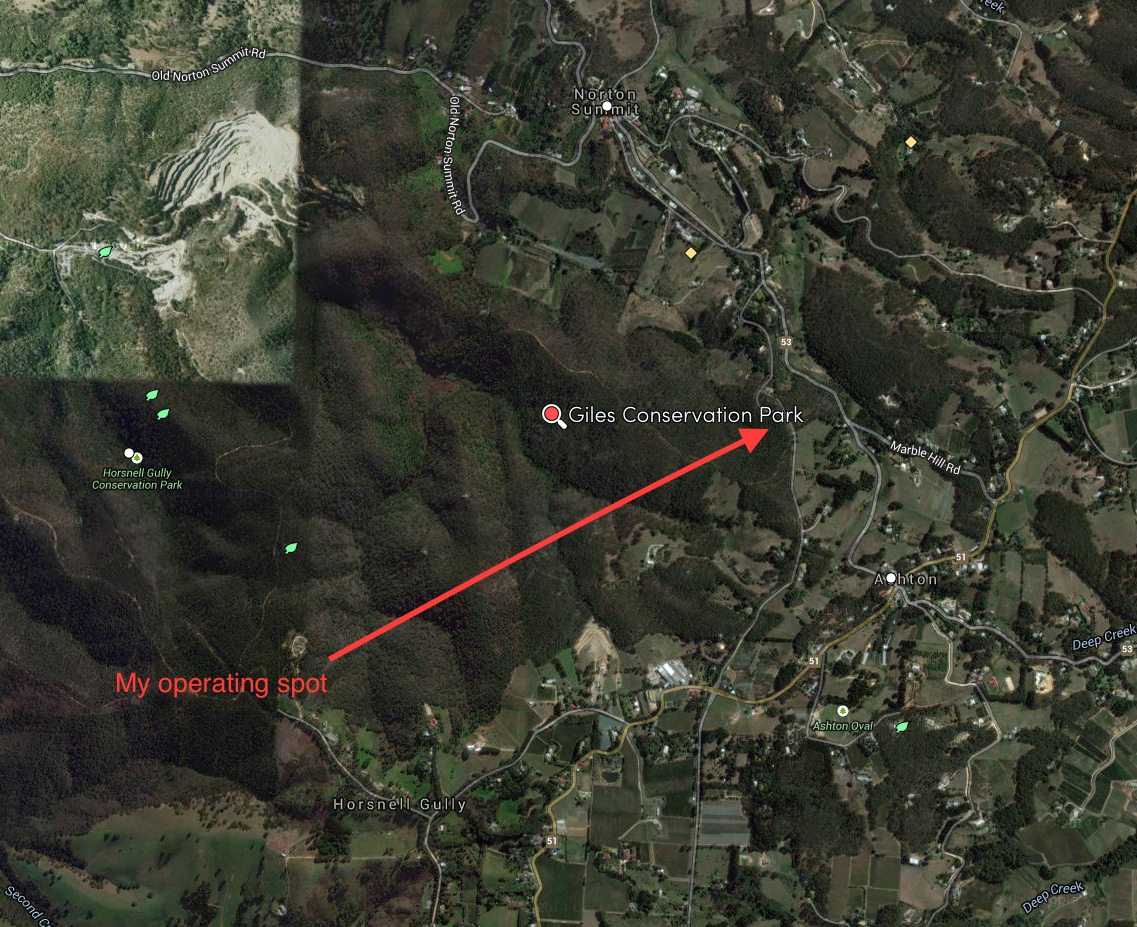
I operated from the same spot as last year, which was off Woods Hill Road.  There is a locked gate here, and the commencement of a section of the famous Heysen Trail.  There is also a small parking spot just outside the gate, so you do not have to walk far at all.  The park is well sign posted, with a ‘Giles Conservation Park’ sign visible from the road.  I used the park sign, to secure my squid pole with an octopus strap.

Screenshot 2014-10-18 21.39.38

Again, for this activation, I started off on 40m.  I tuned to 7.095 and asked if the frequency was in use.  I was immediately greeted by Brian VK5FMID in Mount Gambier.  Brian is a real stalwart of the VK5 Parks award and as per usual, had a very nice 5/9 signal coming in from the South East.  This was followed by Greg VK5GJ, again using his home brew transceiver, running just 5 watts from Meadows in the southern Adelaide Hills.  It was a little later in the afternoon now, and the 40m band had started to come to life.  Greg’s signal was a good two S points stronger than in the Horsnell Gully Conservation Park.

Conditions on 40m appeared quite good.  There were some static crashes making it a little difficult at times with some of the weaker stations.  And there was some European DX on the frequency.

This slideshow requires JavaScript.

Peter VK3YE was out and about again on the beach, pedestrian mobile.  Peter was ankle deep in water, operating with his vertical antenna, and had a good 5/6 signal with just 5 watts.  Bernard VK3AV called in again, stationary mobile at Port Franklin in Victoria, operating with his IC7000 and Terlin trap whip.  Bernard’s signal had also increased since working him from Horsnell Gully.

After working a total of 27 stations on 40m from VK2, VK3, & VK5, I QSYd to 20m to my nominated frequency of 14.310.  However, when I arrived there I found that it was unusable, as there was Over the Horizon Radar there.  I tuned down the band to 14.263 and put out multiple CQ calls but had no callers.  So I tuned around the band, but found it rather empty.  Those signals coming in from Europe were quite low.  I heard my friend Marnix OP7M, but his signal was just too low for me to work.  However, I did manage to work 2 stations from Spain.

After an hour and twenty minutes in the park, I had a total of 29 contacts in the log.  The vast majority of those were on 40m SSB, with just 2 contacts (both being DX) on 20m SSB.

The following stations were worked on 40m SSB:-

Brtian VK5FMID; Greg VK5GJ; Les VK5KLD; Rob VK5FRGM/3; Nev VK5WG; Adam VK2YK; Tony VK5FTVR; David VK5NQP; Peter VK3YE/p; Shirley VK5YL; Peter Vk5PET; David VK5HYZ; John VK2AWJ; David VK5KC; Tom VK5FTRG; Jim VK5TR; Matt VK5MLB; Ian VK5CZ; Steve VK5ARC/p; Colin VK3ZZS/p; Matt VK5ZX; Bernard VK3AV/m; Ron VK3JP; Peter VK3PF; Tony VK3CAT; Greg VK5LG; and Peter VK3TKK.

The following stations were worked on 20m SSB:-

Juan EA5IDG; and Gustavo EB1IRJ

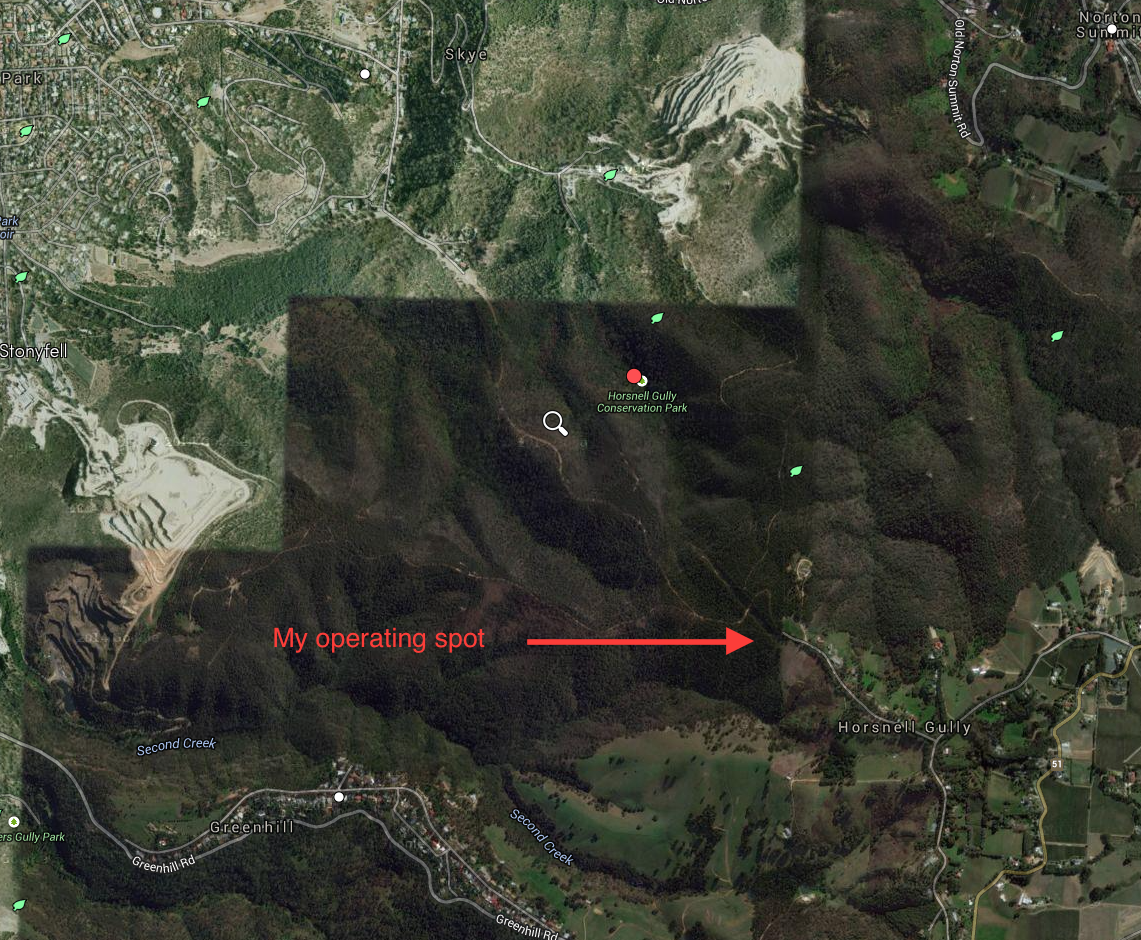
Horsnell Gully Conservation Park

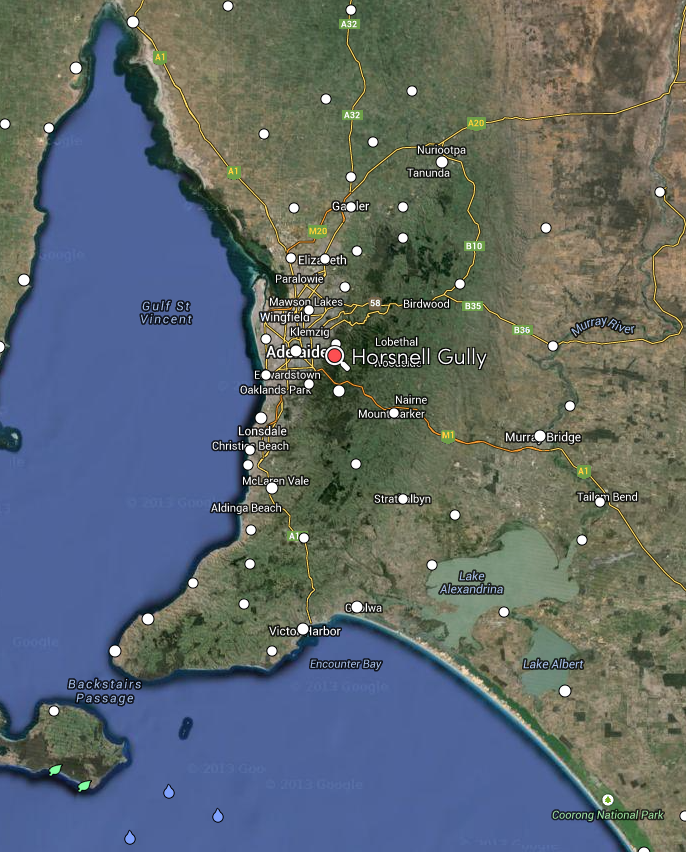
Late this afternoon (Saturday 18th October, 2014), I headed out to activate the Horsnell Gully Conservation Park, which is situated about 10 km east of Adelaide in the Mount Lofty Ranges ‘Adelaide Hills’.  I previously activated this park in August 2013.  You can read about that activation and the history of the park in my previous post…..

https://vk5pas.wordpress.com/2013/08/04/horsnell-gully-conservation-park/

Screenshot 2014-10-18 20.59.01

It is a beautiful drive from my home at Mount Barker, to the park, through the Adelaide Hills.  It takes me out through Piccadilly and Summertown and on towards Norton Summit.  I drove to the end of Coach Road, as I did for my last activation.  Coach Road does not continue down to the suburb of Magill through the park, as many maps indicate.  In fact the road finishes where the eastern edge of the park starts.  There is a locked gate at this point which prevents vehicular access down through the park.  There is however a small car parking area here at the start of the park.

Coach Road was once the principal road into Adelaide from the east during the 1870s and 1880s.  There was a coach gate located on the highest point, known as ‘Coach Hill’.  Today, this area is the suburb of Skye.  The coach driver blew a trumpet to let the settles know that the coach had passed through the gate and that they had to climb up to close the gate.  A hut for the team keepers was located near the spot where the powerlines cross Coach Road.  The team keepers kept fresh horses here for the coaches.

The park was named after pioneer, John Horsnell.  An interesting piece in Horsnell can be found at…..

http://parkfriends.com.au/more-on-john-horsnell/

And here is some more information, including some audio…..

http://parkfriends.com.au/prog-05-john-horsnell-legacy/

Screenshot 2014-10-18 21.08.05

I set up my deck chair and fold up table on the dirt track (which is Coach Road in the maps) on the other side of the locked gate.  Last year I set up just on the other side of the large rocks that you will see.  However, it was a little noisy there, with the overhead power lines.  So I decided to walk down the track a little this year, away from the power lines.  It was a warm day, with the temperature being about 26 degrees C, so I chose a nice shady spot under the gum trees.  Over my shoulder (to the west) was a very deep valley, and to my east, was a gentle slope covered in gum trees and scrub.  What was very evident in the park, were the many wildflowers and native plants in flower, including the grevillias.  It was quite spectacular.  I was also fortunate enough to see a number of the impressive Yellow tailed Black cockatoos.  They are a large cockatoo, easily identified by their black plumage, and yellow cheek patch and yellow panels on the tail.

The operating equipment was my standard gear, the Yaesu FT-450, 40 watts, and a 40m/20m linked dipole.  I started off on 40m and my first contact was with Peter VK3TKK.  Peter’s signal was a little down.  However, it was only 0430 UTC (3.00 p.m. local time), so the 40m band was still asleep.  Brian VK5FMID was the next to call in, from Mount Gambier, and this was followed by John VK2AWJ in Gol Gol in New South Wales.  My fourth contact was with Ian VK5CZ in the beautiful Clare Valley.

I went on to work a total of 20 stations on 40m SSB in VK2, VK3, & VK5.  This included Greg VK5GJ operating QRP 5 watts with his home brew transceiver.  Nigel VK5NIG also called in, operating portable for Jamboree on the Air (JOTA), using just 1 watt from Tranmere.  Nigel had a great 5/9 signal despite being a short distance away.  And my last QRP contact for the activation was with Gary VK5PCM, who was operating with just 2 watts.  It was quite a struggle with Gary at times, with very deep QSB.

I also made contact with Bernard VK3AV who was mobile, and Colin VK3ZZS who was portable on the banks of the Murray River at Wentworth in New South Wales.

Sadly, I experienced a lot of QRM on 40m from some JOTA stations, who came up on the same frequency in the middle of QSO’s.  Clearly they couldn’t hear us at this time of the day.

This slideshow requires JavaScript.

When things started to slow down on 40m, I lowered the squid pole and removed the links and changed to the 20m band, where I put out a CQ call on 14.310.  This was answered by Daniel VK6LCK who was a good 5/7 signal.  I received a 5/8 signal report from Daniel.  Daniel is quite keen on commencing portable activities, so we had a discussion on the Summits on the Air (SOTA) program and the various park activities.  And then Bill VK2MWG called in from his mobile.  This was followed by Anthony VK6MAC.  Despite a number of CQ calls and a ‘self spot on the parksnpeaks site, I had no further callers on 20m.  It was interesting to note that the static crashes appeared a lot louder on the 20m band than on 40m.

After an hour & 20 minutes in the park, it was time to pack up and head off to the Giles Conservation Park.  I had a total of 23 contacts in the log.

The following stations were worked on 40m SSB:-

Peter VK3TKK; Brian VK5FMID; John VK2AWJ; Ian VK5CZ; David VK5KC; Fred VK3DAC/m; Jerry VK7EE; Terry VK5ATN; Peter VK5PET; Tony VK5FTVR; Greg VK5GJ; Nev VK5WG; Jim VK5TR; David VK5NQP; Les VK5KLD; Les VK5KLV; Bernard VK3AV/m; Colin VK3ZZS/p; Nigel VK5NIG/p; and Gary VK5PCM.

The following stations were worked on 20m SSB:-

Daniel VK6LCK; Bill VK2MWG/m; and Anthony VK6MAC.


References.

Department of Environment and Natural Resources, 2014, ‘Horsnell Gully Conservation Park and Giles Conservation Park’.

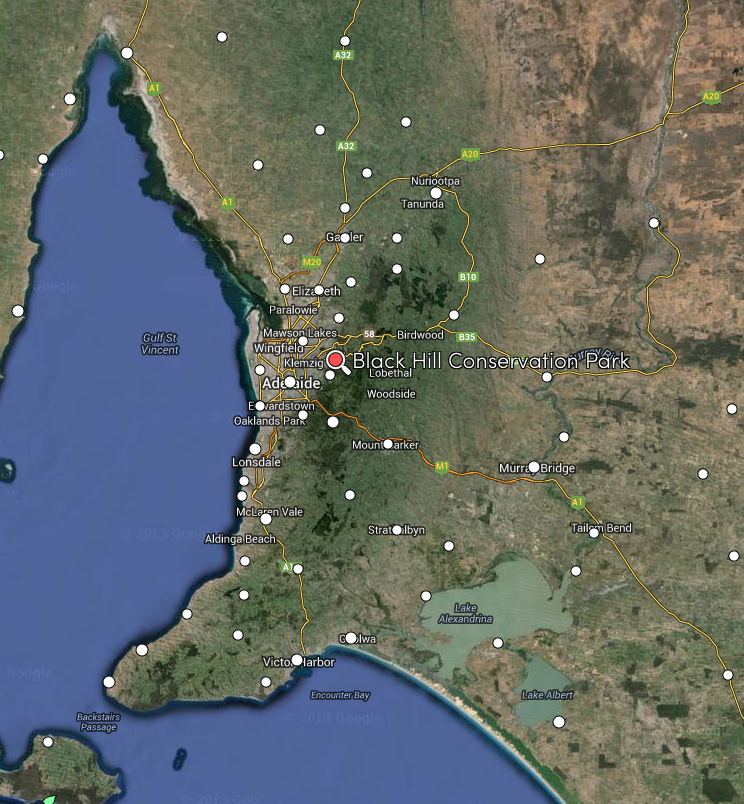
Black Hill Conservation Park

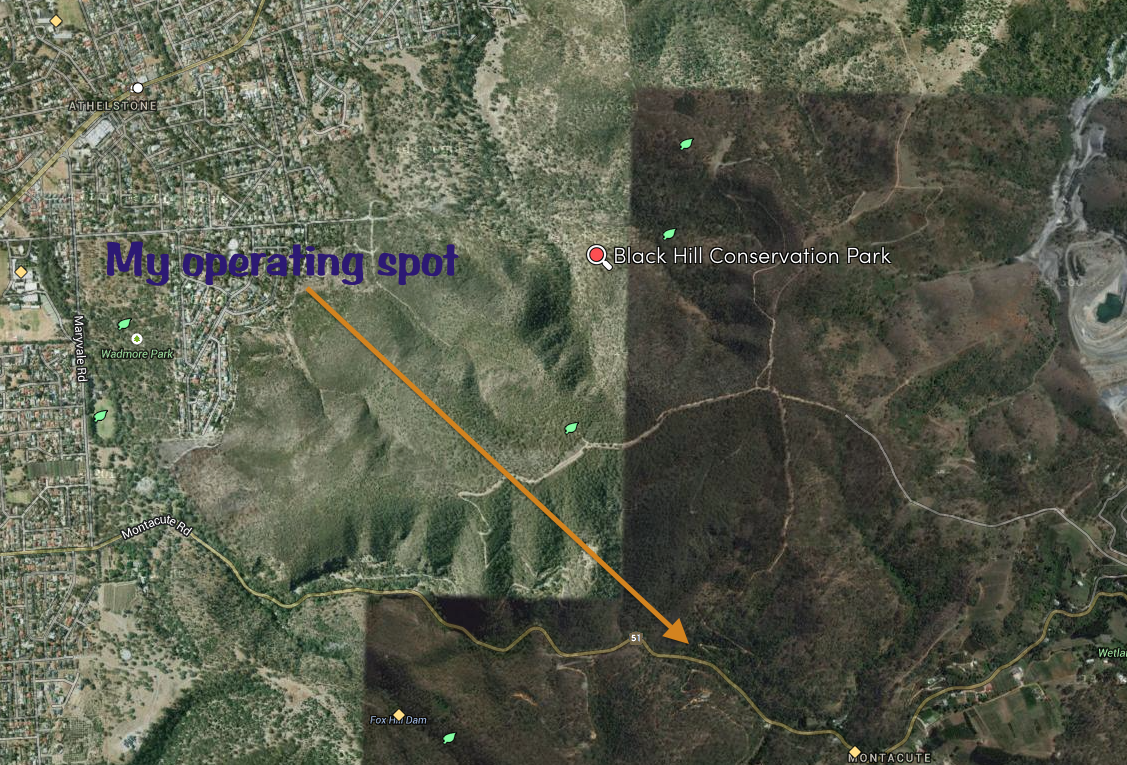
After activating the Montacute Conservation Park, I headed to the Black Hill Conservation Park (CP).  It was just a  short drive away, as the parks border each other, along Montacute Road.  I travelled out of Moores Road and left onto Montacute Road and continued west on Montacute Road, through the gorge which separates the two parks.

Screenshot 2014-10-14 20.37.42

Black Hill CP is located about 10 km north east of Adelaide.  The park covers an area of 684 hectares and features the low sheoaks which give Black Hill its name. The foliage of the sheoaks gradually matures to a dark rusty, almost black colour, as summer progresses. As you look from the Adelaide Plains, the hills appear to be black in colour.  For more information on the park, please have a look at my previous post…..

https://vk5pas.wordpress.com/2013/11/07/black-hill-conservation-park/

I set up in a small carpark on the northern side of Montacute Road, near the eastern boundary of the park.  It was a quite location, and was situated at the base of the Orchard Track, which leads up into the hills.  There was a small creek flowing nearby and large hill faces on both my northern and southern sides.

Screenshot 2014-10-14 20.38.29

My first contact was with Brian VK5FMID in Mount Gambier, and this was followed by Norm VK5GI in Willunga.  I was then called by Tony VK5FTVR and then Darren VK5DT.  My fifth caller was Mark VK5QI who was portable in the Morialta Conservation Park.  As you would expect, Mark was very strong, being just a short distance away.  After working Greg VK5GJ on his home brew QRP rig, I was called by Chris VK4FR5 who was portable in the Swan Reach Conservation Park.

I was also called by Bob VK5FO, who was on Mount Gawler, VK5/ SE-013, participating in the Summits on the Air (SOTA) program.

This slideshow requires JavaScript.

My second to last contact on 40m was with George VK6FADD.  It was a real struggle to pull George through, due to the very severe static crashes.  But we did make it.  After working my final contact on 40m, Nigel VK5NIG, I lowered the squid pole and removed the links in my dipole, and then tuned around the 20m band.  However, there was very little activity, other than some stations calling CQ Contest.  I’m not sure which contest was on?  My only contact on 20m was with Juan EA5CTE.

After operating for a little over an hour in the park, I had 29 QSOs in the log.  Of those, 28 were on 40m SSB and just 1 on 20m SSB.  Contacts were into VK1, VK2, VK3, VK5, VK6, & VK7 on 40m, and Spain on 20m.

The following stations were worked on 40m SSB:-

Brian VK5FMID; Norm VK5GI; Tony VK5FTVR; Darren VK5DT; Mark VK5QI/p (Morialta CP); Greg VK5GJ; Chris VK4FR/5 (Swan Reach CP); Peter VK3TKK; Ian VK5CZ; Amanda VK3FQSO; Peter VK5KPR; Ian VK3VIN; David VK5NQP; Jim VK2LC/m; Phil VK3BHR; Ian VK3AXF; Ian VK5KKT; Hauke VK1HW; Greg VK7FGGT; Damien VK5FDEC; Chris VK4FR/5 mobile; Paul VK7CC; Ian VK6SKY/p; Bob VK5FO/p S(OTA; Ron VK3JP; Peter VK3ABN; VK6FADD; and Nigel VK5NIG.

The following station was worked on 20m SSB:-

Juan EA5CTE.


References.

Natural Resources Adelaide and Mount Lofty Ranges, 2014, ‘Morialta and Black Hill Conservation Parks‘

Morialta Conservation Park

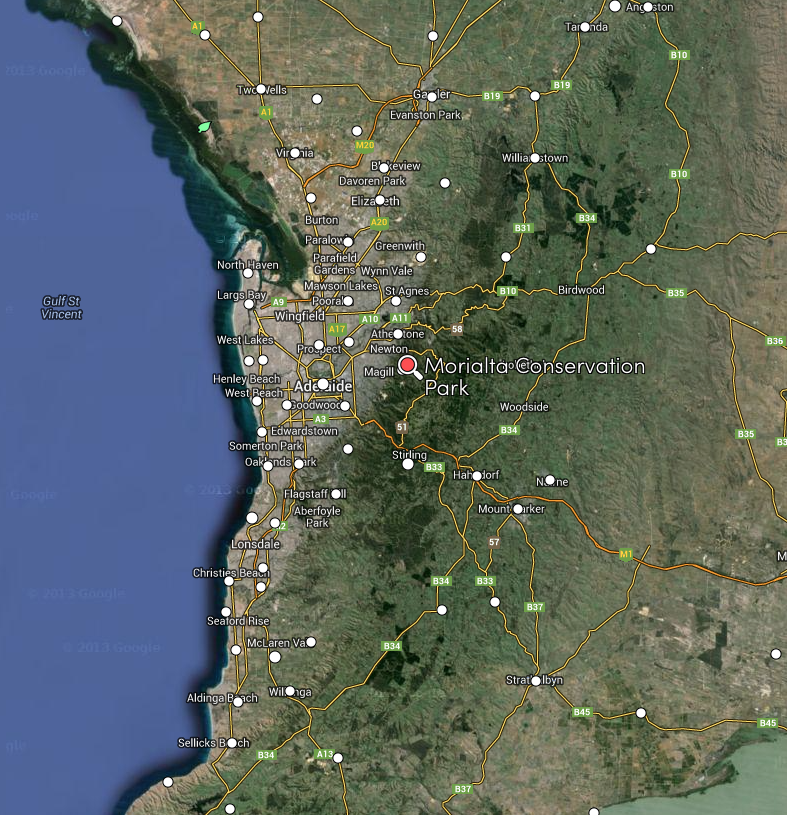
On Sunday afternoon, 12th October, 2014, I headed over to the Morialta Conservation Park (CP), which is about 30 km north west from my home (by road).  This was to be the first time that I had activated the Morialta CP.  On my way to the park I spoke with Mark VK5QI who advised that he was heading out with Gary VK5FGRY to activate some parks that afternoon and would meet up with me in the Morialta CP.

Morialta CP is located 10 km from Adelaide, in the Mount Lofty Ranges ‘Adelaide Hills’.  The park which is 5.33 km² in size (533 ha), contains three seasonal waterfalls located alongside Fourth Creek which runs through the park.  Morilata CP has an extensive network of walking trails and is also popular for rock climbing and abseiling.  The park supports a wide variety of wildlife.  The rock pools and creeks provide habitat for many small reptiles and frogs.  Western Grey kangaroos, koalas, Southern Brown bandicoots, and echidnas call the park their home.  Numerous birds can be found in the park including hornbills, wattlebirds, treecreepers, finches, lorikeets and several birds of prey.  The threatened species, the Chestnut-rumped Heathwren can be found in the park.

Screenshot 2014-10-14 19.13.03

Morialta derives its name from the local aboriginal Kaurna language meaning “ever flowing” or “running water”.  The area which is now Morialta Conservation Park was originally acquired by pastoralists in 1839.  In 1847, John Baker bought the land and built the grand Morialta House and Morialta Barns on Fourth Creek, near the head of the gorge.  John Smith Reid was also a major landholder in the area, and in 1911, he offered to donate part of his land as a national reserve.

Reid donated 218 hectares (540 acres) in 1913, and in 1915 the area was declared a National Pleasure Resort. Much of the construction work in the park was begun in the 1920s and 1930s, although floods and bushfires have destroyed much of this original work.  In 1966 additional property to the east was added, and the park was declared a National park. In 1972 the park was re-proclaimed as Morialta Conservation Park.

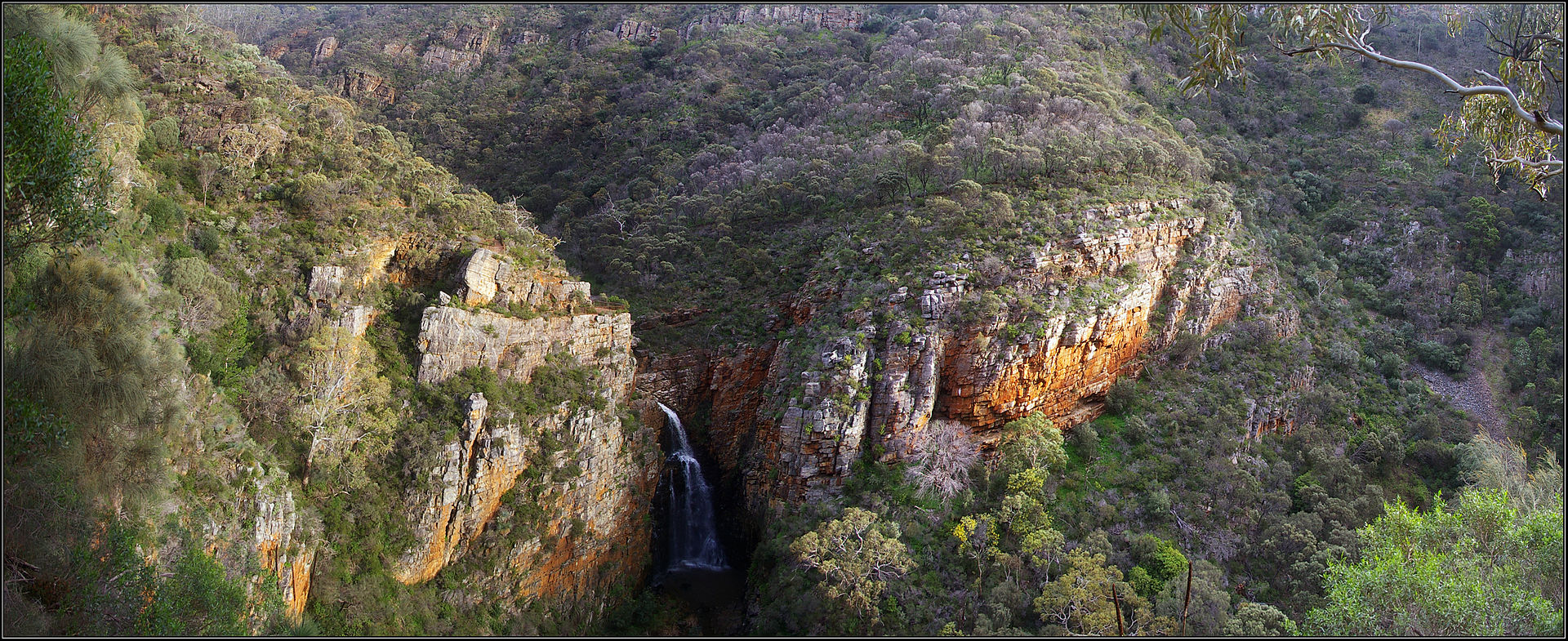
Panorama,_Morialta_Conservation_Park.

Above picture is courtesy of wikipedia.org

Click on the link below to view a historic video on the Morialta Conservation Park…..

http://www.salife7.com.au/adelaide-hills/places/historical/that-morialta-magic

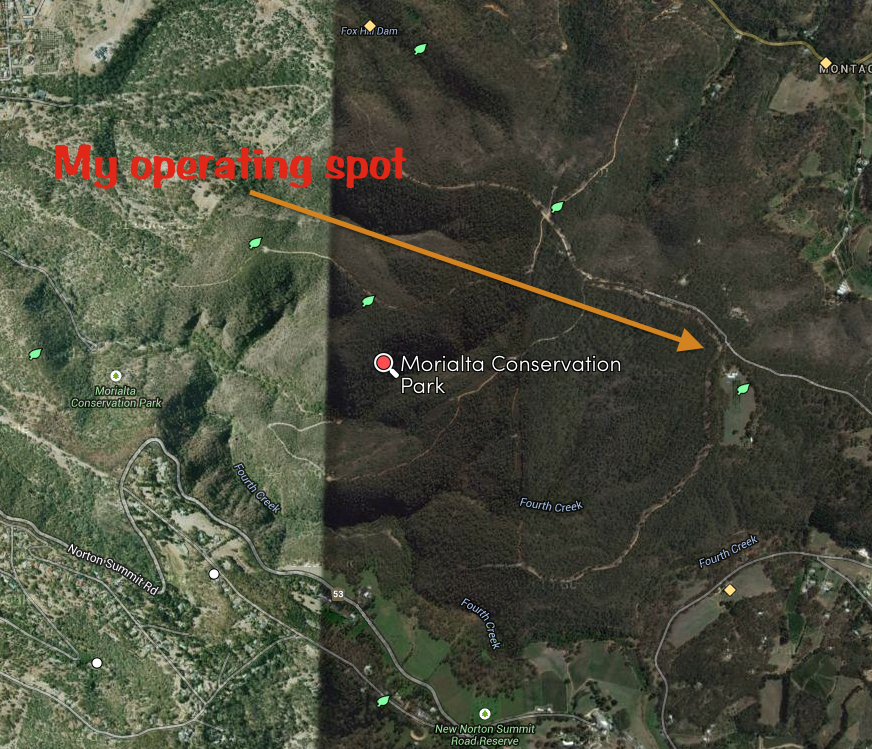
I drove up Moores Road, which runs off Marble Hill Road, and continued west until I reached the north eastern corner of the park on the southern side of Moores Road.  There is a carpark here on the northern side of Moores Road.  Moores Road is a dirt road, but is easily passed by 2WD vehicle.  I set up on Third Falls Track, just inside the park boundary.

Screenshot 2014-10-14 19.13.39

I used my Yaesu FT-450 and the 20m/40m linked dipole for this activation, and ran 40 watts.  After making myself comfortable on my deck chair, at the fold up table, I tuned around the 40m band and found Mark VK5QI who was portable in the Horsnell Gully Conservation Park, operating on 7.105.  That was a nice start, to get a park to park contact.  I then tuned down to 7.100 and spoke with Chris VK4FR/5 for another park to park contact.  Chris was operating from the Morgan Conservation Park in the Riverland region of South Australia.

I then went down to 7.085 and first station worked there was Steve Vk5SFA, followed by John Vk5FTCT, and Greg VK5GJ operating QRP again (5 watts) with his home brew transceiver.  A nice signal as always Greg.  Seven contacts later I was called by Damien VK5FDEC who was portable in the Port Gawler Conservation Park, operating with Steve VK5AIM.  It was great to see so many activators out and about in the parks, enjoying the sunshine.

I continued to work a steady flow of callers from VK2, VK3 & VK5, and was then called by Mark again, VK5QI, who this time, was operating portable from the Giles Conservation Park.  This made four park to park contacts for this activation.  Many thanks to the other park activators.

This slideshow requires JavaScript.

After working a total of 23 stations on 40m SSB, I lowered the squid pole and removed the links in the dipole, and then out our a few CQ calls on 20m.  First taker there was Greg VK5LG, followed by Adam VK2YK, and then Mike VK6MB.  It was a little too early for any DX on 20m.  In fact the band was very quiet, with some very low down signals from eastern Europe.  Thanks to Col VK5HCF for spotting me on parksnpeaks.

The goat bleated on my SOTA Goat app on the iPhone, alerting me to Peter VK3PF, being on 7.090.  So the squid pole was lowered again, and the crocodile clips attached, allowing me to operate on the 40m band.  I quickly tuned the VFO to 7.105 and worked Peter who was on Sams Hill, VK3/ VG-049, for the Summits on the Air (SOTA) program.

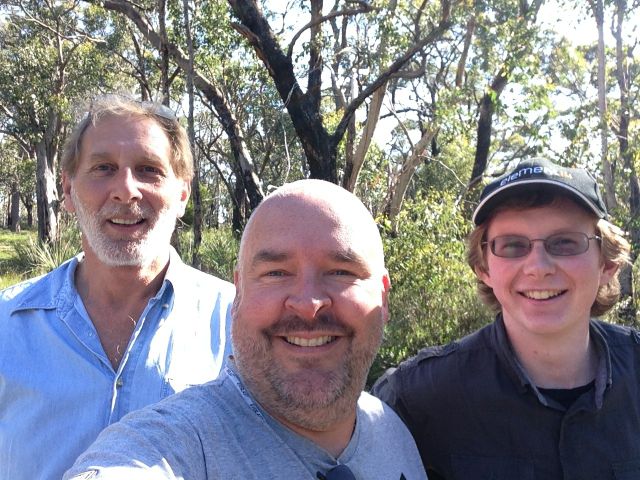
After an hour in the park, Mark VK5QI and Gary VK5FGRY arrived.  After a chat and a quick inspection of each others gear, they set up their station and started calling CQ.  I was the first in their log, whilst in was mobile along Moores Road, on my way to my next activation at the Black Hill Conservation Park.

IMG_1607

The following stations were worked on 40m SSB:-

Mark VK5QI/p (Horsnell Gully CP); Chris VK4FR/5 (Morgan CP); Steve VK5SFA; John VK5FTCT; Greg VK5GJ; Larry VK5LY; Arno VK5ZAR; David VK5NQP; Tony VK5FTVR; Stu VK5STU; Col VK5HCF; Damien VK5FDEC/p (Port Gawler CP); Brian VK5FMID; Bob VK5FO; Bon VK5FPAC; Paul VK3FALC; Amanda VK3FQSO; Ian VK3VIN; Nick VK3ANL; Joe VK3YSP/m; John VK2AWJ; Peter VK3TKK; Mark VK5QI/p (Giles CP); and Peter VK3PF/p (SOTA).

The following stations were worked on 20m SSB:-

Greg VK5LG; Adam VK2YK; & Mike VK6MB.


References.

Natural Resources Adelaide and Mount Lofty Ranges, 2014, ‘Morialta and Black Hill Conservation Parks

Wikipedia, 2014, ‘Morialta Conservation Park, viewed 14th October 2014 <http://en.wikipedia.org/wiki/Morialta_Conservation_Park&gt;

Mokota Conservation Park

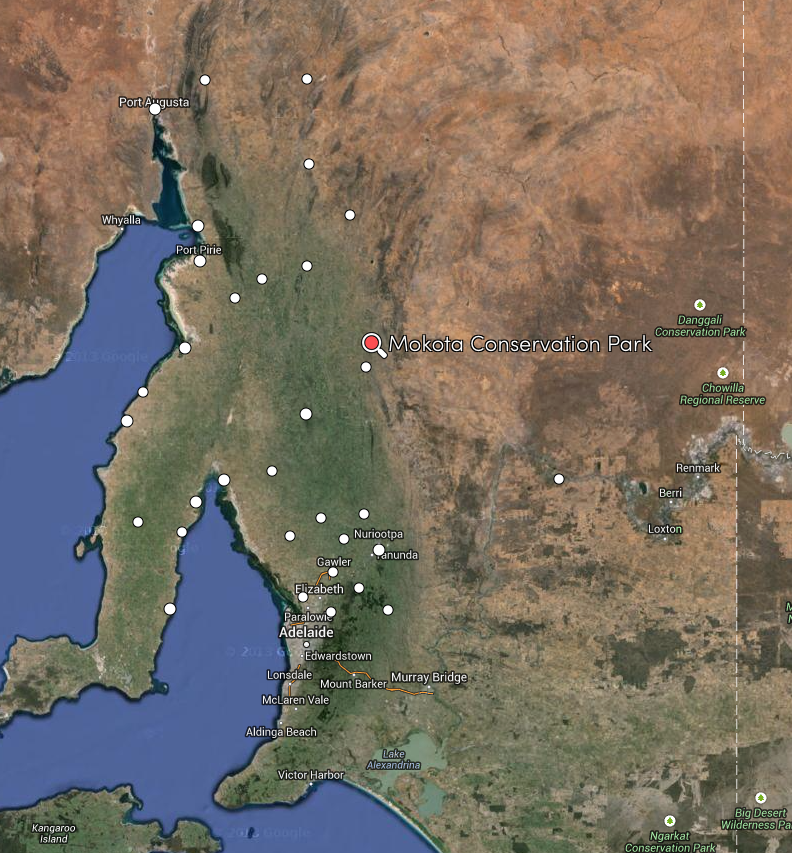
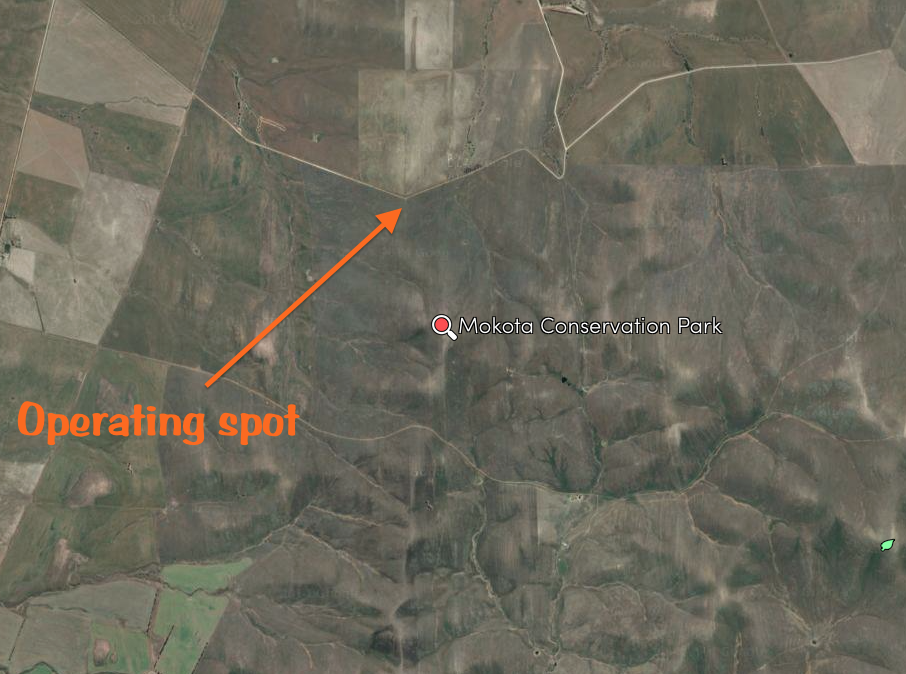
After packing up at the Hallett Hill summit, I headed back into Mount Bryan township, and then headed north for the Mokota Conservation Park (CP), which is located about 180 km north of Adelaide, and about 5 km north east of the little township of Mount Bryan.

Screenshot 2014-10-07 17.00.15

Map courtesy of mapcarta.com

I drove out along White Hill Road, which is a dirt road, but easily passable with 2wd.  White Hill Road runs off the western side of the Goyder Highway, just outside of Mount Bryan.  As I drove out towards the park, I was surrounded by summits; Mount Bryan VK5/ SE-001 to my north; Hallett Hill VK5/ SE-004 to my west; and Mount Cone VK5/ SE-002 to my south.  I had never been to Mokota CP before, and this was s spur of the moment activation, so I didn’t know what to expect.  The land out here is quite barren, and as I headed east, the land was quite unmentionable.  It was the last place I expected to find a conservation park.

Screenshot 2014-10-07 17.00.00

map courtesy of mapcarta.com

I had travelled along White Hill Road for quite a few km, expecting to see a patch of scrub.  But there was none to be seen.  However, as I reached a bend in the road, out the corner of my right eye, I saw a few interpretive signs in what looked like a paddock.  It was in fact the Mokota Conservation Park.

Mokota CP is about 455 hectares in size and was the first reserve in South Australia to be acquired with the priority aim of protecting a native grassland.  The park, which was first proclaimed on 26th October, 2000,  plays an important role in protecting native grassland and is one of the largest remaining examples of an open grassy vegetation community.  It is one of the best examples of tussock grassland remaining in South Australia.   There are a number of interpretive signs in the park which give an insight into the unusually high quality grassland, including 150 indigenous flora species surrounding it.  A total of 32 of the species are of particular conservation significance to South Australia.

The park also provides habitat for about 28 native animal species, including Western Grey kangaroos, Red Kangaroos, and Euros.  It was absolutely full of Western Grey kangaroos during my visit.  They were everywhere….grazing in the grasslands, and drinking at the nearby dam.  Quite rare really, because generally on a hot day, kangaroos are seeking shelter from the sun.  But they were certainly out in large numbers whilst I visited the park.  The rare white spotted skipper butterfly is of particular interest and is listed as vulnerable.  The park also provides habitat for the Flinders worm lizard whose conservation status is listed as vulnerable at national and state levels.

This slideshow requires JavaScript.

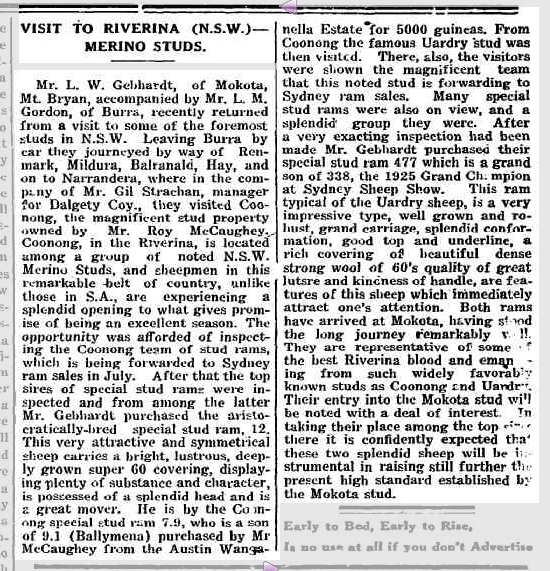
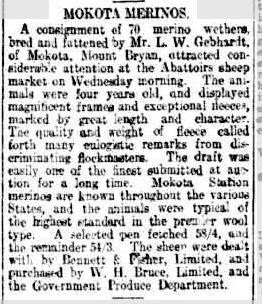
The park is in the area of the original Mackerode estate, founded by G.A. Gebhardt.  Mokota is a Maori name, chosen by L.W. GEBHARDT, meaning ‘fine view’.  Interesting that he chose a Maori name.  Prior to European settlement, the land was occupied by the Ngadjuri aboriginal people.  The area of the park had been grazed from about the 1860’s right up until 199, when the land was acquired by the South Australian Government.  I found some interesting newspaper articles from the early 1900’s re L.W. GERBHARDT.

Screenshot 2014-10-07 21.38.32

Above: from The Register, May 1935.  Courtesy of trove.nla.gov.au

Screenshot 2014-10-07 21.38.50

Above: from The Register, Sept 1919.  Courtesy of trove.nla.gov.au

I used the Yaesu FT-817nd and ran just 5 watts for this activation, and my Band Hopper 40m/20m linked dipole.  I used one of the interpretive signs to secure the 7 metre squid pole, with a few octopus straps, weighting down the ends of the dipole with some moss rocks.

I had sent out an SMS to the normal gang of park hunters prior to the activation, hoping that I would get a few calls.  I’ve found the SMS group message works really well.  Sadly at the moment, the VK5 Parks award does not have an audible alerting system like SOTA Goat or Rucksack radio.  So activators rely on any method of getting the word out that they are in a park.  Allen VK3HRA has developed parksnpeaks, but at this stage there is no audible app for mobile phones.

http://www.parksnpeaks.org

I started off on 7.105 on 40m and put out a CQ call and was greeted immediately by the normal crew: Col VK5HCF, Larry VK5LY, Brian VK5FMID, and John VK5BJE.  Col was a good 5/8 signal with his normal QRP 5 watt signal.  The other motley crew were all 5/9 or 5/9 plus.  I was also called by John VK5DJ in Millicent, David VK5NQP, and Andrew VK2UH.  It was quite a struggle with Andrew, as it was the middle of the day and the 40m band had gone to sleep.  Andrew was a good 5/6 but he was only receiving me 4/3.

It was very slow going with not many contacts for this activation.  I put out numerous CQ calls but didn’t get any respond, so I tuned around the band and managed to make contact with Andrew VK1NAM who was on SOTA peak, Baldy Range, VK2/ ST-008.  Andrew was quite weak, 5/3, and I received a 5/1 signal report from Andrew.  But that is the beauty of operating portable.  The noise floor is generally very low and that was certainly the case in Mokota CP.  You could hear a pin drop, and thus, able to work the weakest of weak stations.

I then lowered the squid pole, and removed the crocodile clips in the linked dipole for 20m, and then raised the squid pole back into position.  I put a few calls out on 14.200 but didn’t receive any replies.  I tuned across the band and found it was very quiet, with very few stations active.  I did hear a few amateurs from the United States, but their signals were very low.  Certainly too low to even attempt to give them a call.

It was starting to creep up into the mid 30 degrees, so I decided to pack up and head back home to Mount Barker in the Adelaide Hills.  I had just 8 contacts in the log on 40m SSB.  However, this was a very interesting park, and was certainly well worth a visit.

The following stations were worked:-

Col VK5HCF; Larry VK5LY; Brian VK5FMID; John VK5BJE; John VK5DJ; David VK5NQP; Andrew VK2UH; and Andrew VK1NAM/2 (SOTA)


References.

Cockburn, R, 2002, South Australia.  What’s in a Name?, 4th edition, Adelaide

Government of South Australia, 2003, Mokotoa Conservation Park Management Plan.

Government of South Australia, ‘Parks of the Mid North‘.

National Library of Australia, 2014, viewed 8th October 2014, <http://trove.nla.gov.au&gt;

Spring Gully Conservation Park

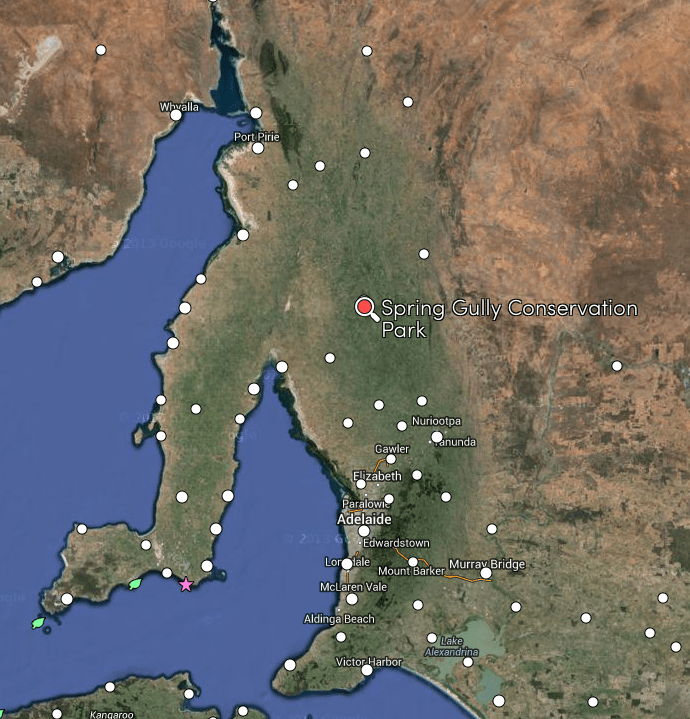
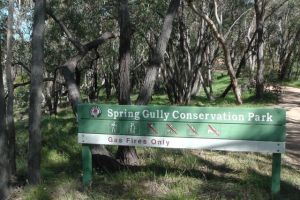
On Thursday 2nd October 2014, I activated the Spring Gully Conservation Park (CP) in the Clare Valley.  I left work early on the Thursday afternoon, and headed towards Jamestown in the Mid North of South Australia, where I planned to stay for 2 nights and activate some of the nearby summits for the Summits on the Air (SOTA) program.  However, I had a little time up my sleeve on the Thursday afternoon, so I popped in to the Spring Gully CP on the way.  And why not, it was a beautiful sunny day….temperature about 25 deg c.

The park is located about 8 km south of Clare in what is called the Skilly Hills, in the Mid North of South Australia.  The park is about 400 hectares in size, and conserves a considerable area of grassy woodland in what is generally a cleared and settled landscape in the Clare district.  In 1962, the original 15 acres of the park was gazetted as a wildlife reserve.  This was later extended to include the springs that give the park its name.  There is a seasonal waterfall within the park, which plunges from a height of 18 metres following rain.

Screenshot 2014-10-05 20.41.48

Spring Gully CP was originally created to protect the only stand of Red Stringybark (Eucalyptus macrorhyncha) trees in South Australia.  This eucalypt  is widespread in eastern Victoria and eastern New South Wales, but is very rare in South Australia.  The trees gain their name from their red trunk once their fibrous bark is removed.  These trees are delicately placed, as thousands died following the extremely dry period between mid 1007 to early 2008.  A small section of the park was also burnt during a lightning ignited bushfire in November, 2009.  The park also protects White Spider Orchids, Donkey Orchid, and Sun Orchid, and other smaller plants below the canopy in the grassy woodland ecosystem.

IMGA0027

Prior to European occupation of the area, the land on which the park is located on, was frequented by the local Ngadjuri aboriginal people, providing an abundance of food.  However, upon the arrival of the Europeans, the area was extensively used for logging timber and for the grazing of stock.

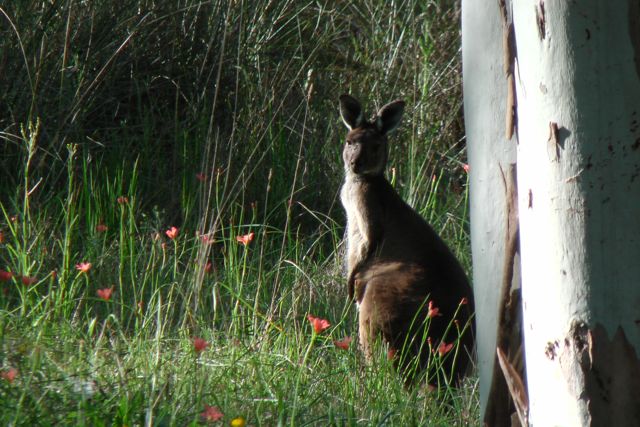
The park is inhabited by a variety of wildlife including Western grey kangaroos, euros, echidnas, and Common brush tail possums.  Over fifty species of birds have been recorded in the park including numerous parrots, and kookaburras.  There was certainly no shortage of kangaroos, with quite a few spotted both on the way to the park, and also within the park itself.

IMGA0041

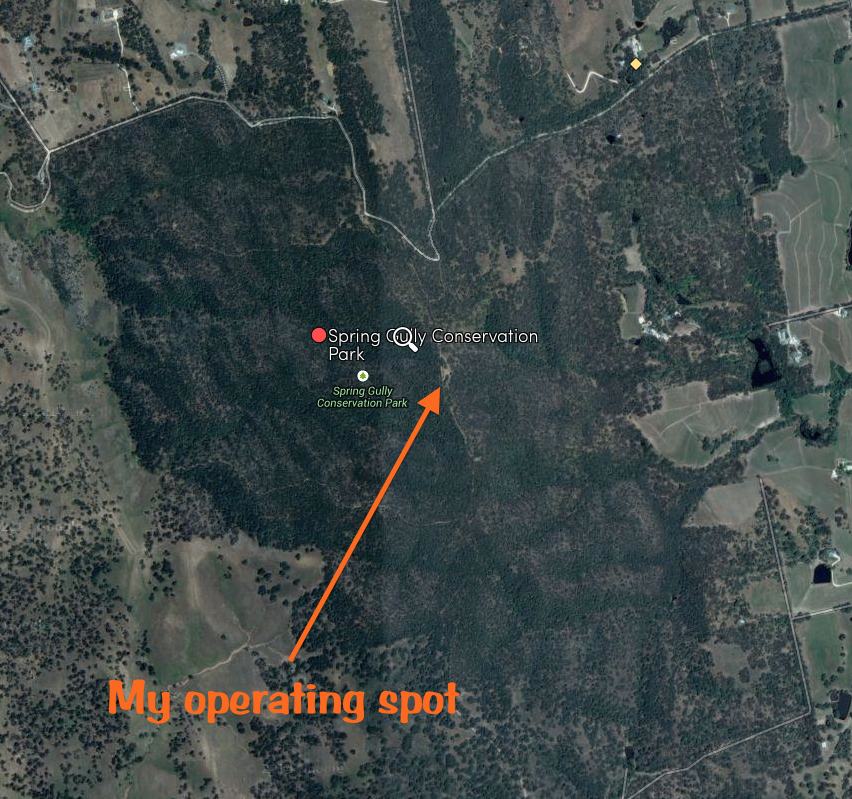
I accessed the park by travelling off Horrocks Highway, onto Bayes Road, then left onto Hughes Park Road, and then right onto Sawmill Road.  At the hairpin on Sawmill Road, there is a dirt track (Ridgetop Track), which will take you all the way up to the lookout within the park.  The lookout is where I decided to set up.  There are a number of other possibilities in the park, including the Blue Gum Lookout day visitor area.

Screenshot 2014-10-05 20.42.20

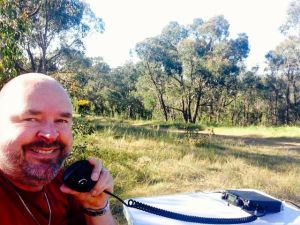
There is plenty of room at the lookout to string out a dipole, which is exactly what I did…erecting my 20m/40m Band Hopper linked dipole, which I supported on the 7 metre squid pole.  For this activation I ran QRP 5 watts with the Yaesu FT-817nd, powered by a 12 volt 4 ah sealed lead acid battery.

IMGA0028I had notified some of the keen VK5 Park Hunters of my intentions, so when I asked if the frequency was in use on 40m, I was welcomed by a number of the regulars.  My first contact was with Col VK5HCF down in Mount Gambier in the South East of South Australia.  Col was running his usual QRP 5 watts and had a very nice 5/9 signal to the park.  This was followed by David VK5KC and John VK5BJE, who were both portable at the caravan park at Clare, just down the road.  Not surprising that they had 5/9 signals.  Greg VK5ZGY then called in and this was followed by Nick VK3NAL who was low down in signal strength and was also struggling with my low powered signal.  Nether less, we managed to make the contact which is all that counts.

IMG_1560A number of the regular VK5 Park Hunters called in after this, along with Ron VK3JP who has become a regular park hunter during my recent activations.  I also received a call from Bill VK5WCC at Millicent in the South East.  I was Bill’s first ever park contact.  Welcome to the world of park hunting Bill.  It was also good to speak with Ivan VK5HS who was mobile with a very good 5/8 signal.

About half way through the activation, I had some visitors….. David VK5KC and John VK5BJE.  After a quick chat, we organised to catch up for a quick ale once my activation was complete, and advised that Ian VK5CZ would also be joining us.

My last contact was with Brian VK3MCD who was portable on Mount Baranduda, VK3/ VE-189, for the SOTA program.  Brian and a good 5/5 signal coming in from north eastern Victoria, and I received a 5/7 signal report from Brian.

IMGA0031

IMGA0035

So after 30 minutes in the park, I had a total of 16 contacts in the log, from VK3 and VK5.  It was time to pack up and head off to catch up with David, John, and Ian at the caravan park.  ‘Beer o’clock’!  Thanks to everyone that called in.

The following stations were worked:-

Col VK5HCF; David VK5KC/p; John VK5BJE/p; Greg VK5ZGY; Nick VK3ANL; Ian VK5CZ; Bill VK5WCC; Matt VK5MLB; Larry VK5LY; Tom VK5FTRG; Ron VK3JP; Brian VK5FMID; Arno VK5ZAR; Col VK5FCDL; Ivan VK5HS/m; and Brian VK3MCD/p (SOTA).


References.

National Parks South Australia, 2014, viewed 5th October 2014, <http://www.environment.sa.gov.au/parks/Find_a_Park/Browse_by_region/Clare_Valley/Spring_Gully_Conservation_Park&gt;

Weekend Notes, 2014, viewed 5th October 2014, <http://www.weekendnotes.com/spring-gully-conservation-park/&gt;

Wikipedia, 2014, viewed 5th October 2014, <http://en.wikipedia.org/wiki/Spring_Gully_Conservation_Park&gt;


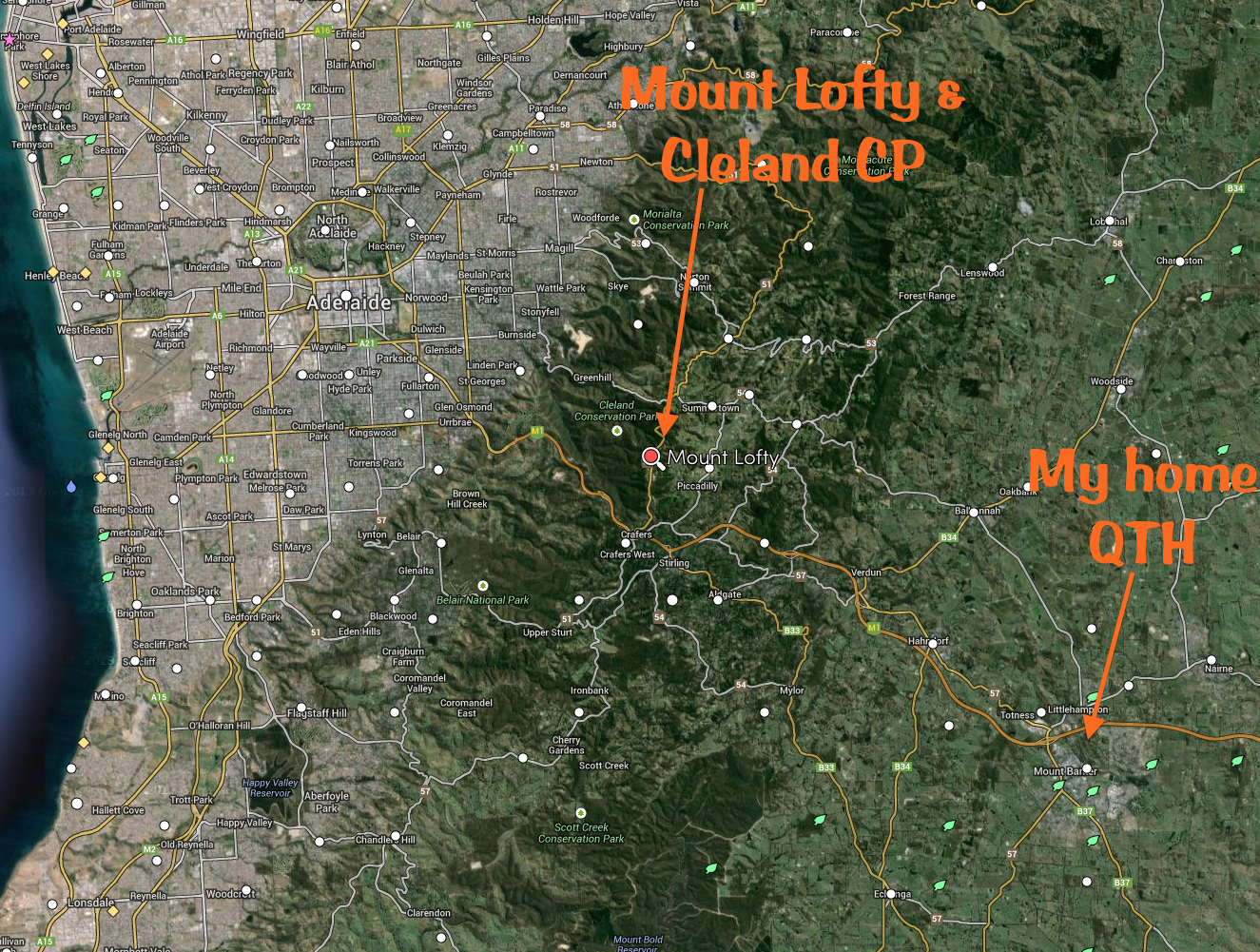
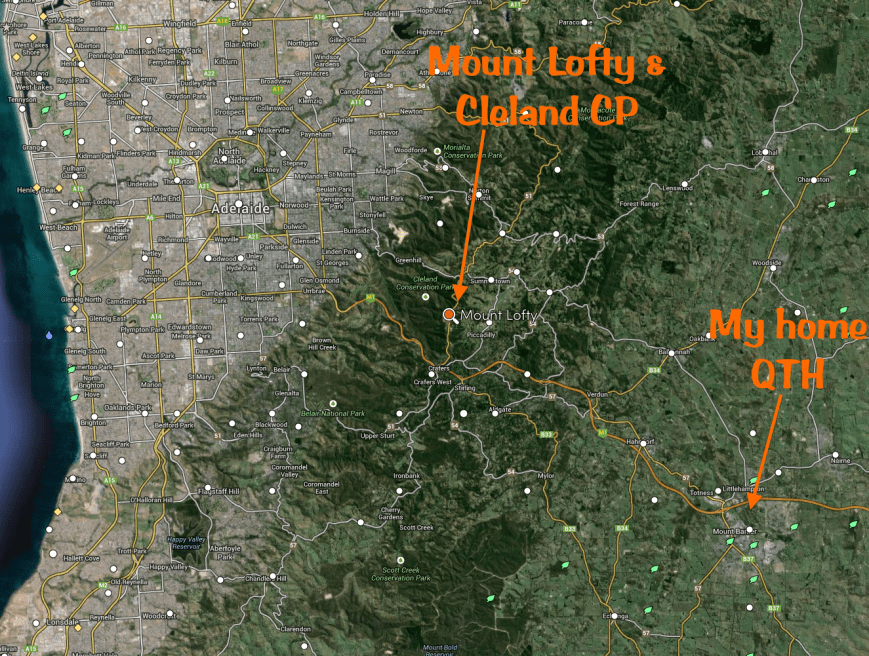
Mount Lofty VK5/SE-005 and Cleland Conservation Park

Yesterday afternoon (17th September, 2014) I headed over to Mount Lofty summit, VK5/ SE-005, which is located within the Cleland Conservation Park.  I had already activated this summit earlier in the year on two occasions, so there were no Summits on the Air (SOTA) activation points up for grabs for me.  But I could earn 1 point for the VK5 National and Conservation Parks Award.  My main motivation for heading to the summit was that I had seen a number of alerts on SOTA Watch for that afternoon, from activators in the United Kindgom and Europe, and I was hoping to make some ‘summit to summit’ contacts.

However, the weather was a bit ‘iffy’.  We had received a large amount of rain overnight and early in the morning here in the Mount Lofty Ranges, and it was still drizzling after lunch.  So I toyed with the idea of cancelling the activation.  About an hour out from the activation, I jumped onto the weather bureau website and saw that the weather was supposed to clear up.  So, with a degree of hesitation, I prepared the gear and loaded my equipment into the car, and headed towards Mount Lofty, which is just a short 15 minute drive from home.
Screenshot 2014-09-18 11.43.14

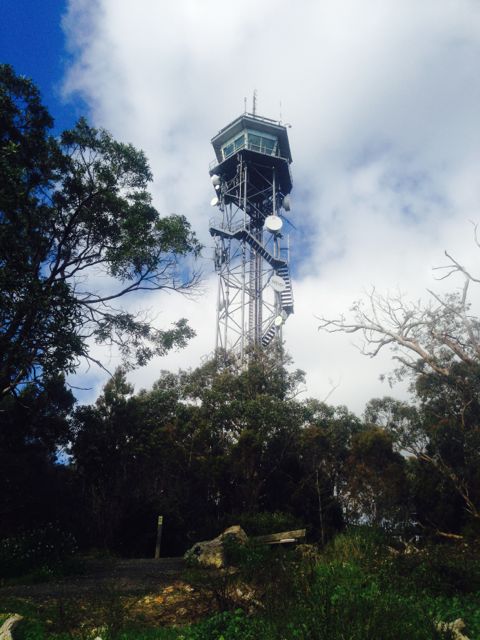
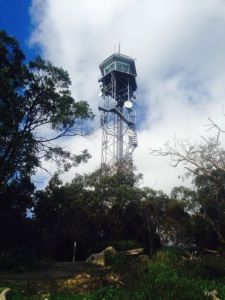
For this activation, I decided to set up in a different spot as opposed to my previous activations.  I normally set up my station on the eastern side of the summit away from the tourists at the lookout and the restaurant.  Mount Lofty offers spectacular views of the city of Adelaide, so the summit is generally quite busy.  But this time I headed very close to the summit obelisk, and set up my antenna a short distance from the Country Fire Service fire spotting tower.  This was to be a big mistake!
IMG_1548

IMG_1549

Because I had driven into the activation zone, I had to walk out of the activation zone and back in again with all of my gear.  Not easy work, considering I hard brought along the Yaesu FT-450 and my 44 amp hour power pack, so that I could run a bit of extra power (40 watts on 40m and about 60 watts on 20m).  And the fact that I had put on a fair bit of weight during my recent trip to Europe.  Fortunately there was a track leading down towards Waterfall Gully.  So I walked down the track, and slowly, slowly walked back up the track to my operating position.

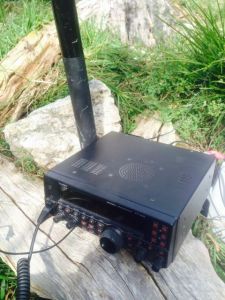
I took some minutes of well earned rest, under the watchful eye of some visitors to the restaurant, above me.  This location was a little more of a challenge in setting up the station.  My operating spot was on a slope which had a lot of fallen branches and rocks.  I secured the 7 metre squid pole to a fallen tree stump, which I also used as a seat and a bench for the radio.  I had some issues with the bottom cap of the squid pole coming apart, resulting in the squid pole de-telescoping.  Time for some running repairs.  And then with the squid pole falling down in the breeze, so I propped it up with a large rock.  Not a great start to the activation!

Upon turning on the radio, there was quite a bit of noise on the 40m band.  A lot more than I normally hear at Mount Lofty.  Obviously emanating from the nearby tower with its array of communications equipment.  My nominated frequency of 7.090 was impossible to work on.  There was simply too much noise.  Strike two!  So I headed up to 7.095 after sending out an SMS message to some of the keen park hunters here in VK5.

My first contact was with Larry VK5LY in Renmark who had a very strong 5/9 plus signal.  This was followed by Col VK5HCF in Mount Gambier who was also 5/9.  My third contact was a bit of a surprise.  I was contacted by Colin VK4FAAS who had a good 5/6 signal coming down from Brisbane in Queensland.  My fourth contact was with regular park hunter, Brian VK5FMID, also located down in Mount Gambier.
IMG_1547

Conditions on 40m appeared good, but not as good as they were on the weekend when signals were incredibly strong.  The noise floor was certainly not enjoyable either.  And the fallen log was not the most comfortable.  But I pressed on, and made a further 10 contacts on 40m SSB into VK3, VK5, and VK7.  I did note that there was not the normal pile up, most likely due to it being a week day.  After the first 7 contacts on 40m, I had to QSY up to 7.098, due to the Kandos Net on 7.093.

After working Peter VK3FPSR, the SOTA Goat application on my i-phone bleated, alerting me to the fact that Mike 2E0YYY was now on 20m on a summit in England.  So with no further takers on 40m, I lowered the squid pole and took out the crocodile clip links and then re-erected the squid pole.  I changed bands to 20m, but was greeted with noise, noise, and more noise.  Much worse than 40m.  It was clear that I had to change locations.  Strike three, but not quite out!

So, with a fair degree of frustration, I quickly took down the antenna, and lugged the equipment back to the car and drove a short distance away to the eastern side of the summit.  Where again, I had to walk out and walk back into the activation zone with all the heavy gear.  By the time I got back to my operating spot, I was exhausted.  I layed down on the ground to recuperate, only to be approached by a bushwalker to make sure I was still alive.

After re-erecting the antenna, I tuned to 14.333 and heard Mike 2E0YYY calling CQ from SOTA peak, Shining Tor, G/ SP-004.  Mike was not as strong as I normally hear him at home.  However he still had a good 5/5 signal and pleasingly, the noise floor here at the new location, had dramatically dropped.  Although it was noisier than usual.  I called Mike and received a 5/7 signal report from him.  I was very excited to get a summit to summit (S2S) in the UK.  Although I have worked a lot of DX from summits, I have not worked anywhere near the number of DX S2S contacts that some of the other Australian SOTA activators have.

I sas Barry M0IML also spotted on SOTAWatch and I tuned to Barry’s frequency, but his signal was a little too low to work.  For whatever reason, the noise on 20m was a little higher than normal at Mount Lofty.  I also saw a spot for Allan GW4VPX, but he too was just too weak for me to work.  This was very frustrating.

I then moved to 14.315 and put out a CQ call.  I was greeted by Borek, OK1SDE in the Czech Republic with a nice strong 5/9 signal.  I went to log Borek, only to find that in my haste to get to the 2nd operating spot, I had left my watch back at the original operating spot.  Strike four, if you can have such a thing!  So I was forced to use my i-phone to check the time.  This was to cause me problems later as well, with my phone going flat.

Five QSOs later I was thrilled to receive a call from Barry, M0IML who was portable on SOTA peak, Detling Hill, G/ SE-013.  Barry was not as strong as Mike, but was still a good 5/4 to Mount Lofty.  His signal had come up considerably from when I first heard him.  I received a 5/5 signal report from Barry who was one of the activators I was hoping to log during the afternoon.

This was followed by a contact with Hans DL6UHA, who informed me that I was his 1st ever VK summit.  This was followed by contacts into the USA, Belgium and VK1.

My next contact was with Martin OE5REO who was portable on SOTA peak, Grillenparz, OE/ OO-316.  Martin’s signal was a bit low (5/3), but as the noise floor was much lower here, I was able to hear Martin without too many difficulties.  I received a 5/5 signal report from Martin.  Martin was using just 10 watts into an inverted vee dipole.

This contact was immediately followed by a call from Erwin, OE5PEN, who was portable on SOTA peak, Kaiblinger Kogel, OE/ OO-325.  Erwin’s signal was stronger than Martin’s.  Erwin was a good 5/7 and I received a 5/7 signal report back from Erwin.  I was absolutely thrilled to now have four S2S contacts in the log.

I continued to work a steady flow of callers, including John VK6NU in Western Australia, and Ed DD5LP in Germany.  However, the band was a little noisier than usual, and I found that signals were either very good or extremely low.  I had enormous problems with one station, G0XQX or similar, who sadly I just couldn’t pull out of the noise.  And there were lots of other stations who I know were calling, but I was just unable to receive well enough to copy.

I was pleased to make contact with Kurt, ON3VHK, who was operating portable with 50 watts, from his camper van.  I was also Kurt’s first ever VK contact.  Kurst has sent me some photos (as seen below) of his operating set up.

IMG_0583[1]IMG_0517[1]

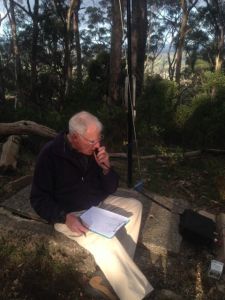
John VK5BJE and his wife Jenny then arrived.  I had spoken with John a bit earlier in the day and informed him of my intentions to activate the summit and the park, and I had invited him to join me if he was free.  They had even brought along an iced coffee for me.  So the ever keen, John took control of the mic and made some contacts, while Jenny and I returned to my original operating spot and retrieved my watch.  There it was, in the spot that I had left it.  At least I was out of a bit of trouble when I got home!
IMG_1553

After returning to John, Jenny and I and a bit of a chat.  Out of one ear I heard John being called by Andrew VK1NAM who was on SOTA peak, Mount Stromlo, VK1/ AC-043.  After John had logged Andrew, I also spoke with Andrew who had a beautiful 5/9 plus signal coming in from the Australian Capital Territory.  Andrew had called me on 20m earlier but it was a real struggle to try to make the contact.  Unfortunately we were not helped by the European chasers who were trying to relay at the time.  But there were certainly no issues here on 40m with hearing Andrew.

John continued on, and a few callers later was called by another Andrew.  This time, Andrew VK1MBE who was on SOTA peak, Mount Ainslee VK1/ AC-040.  I also logged Andrew, who again had a fantastic 5/9 plus signal.

John and I then took a break from the radio and the three of us chatted for a while.  Whilst doing so, keeping a watchful eye on a big koala that had placed himself in a very precarious position on the limb of a gum tree, about 30 metres away from us.  It was a long way down to the ground, and we were waiting for the sound of the limb snapping under his weight.  Fortunately this didn’t occur.  John and Jenny then headed off home to the warmth.

It was now approaching 5.30 p.m. and I toyed with the idea of whether I should stay or head home as well.  But my eagerness took control, and I put out another call on 40m to be greeted by Brian VK3MCD.  Lamont ZL2ALK then called in with a very good 5/9 plus 10 db signal.  This was followed by Julie VK3FOWL, Mark VK7FMPR, and Joe VK3YSP.
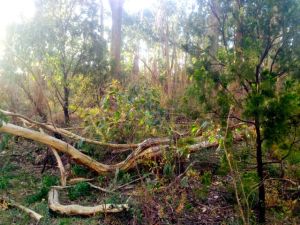
IMG_1554

I decided to head back to 20m and see if the long path to Europe was still open.  And I am pleased I did.  Despite the fact it was getting a bit late, and starting to get dark, the 20m band appeared to have improved, with some very strong signals coming in from Europe and the United Kingdom.  Those noise level appeared to have abated a little.

As I tuned across the band, I heard John, EA7/G1WUU calling CQ with no takers, so I gave him a call.  John had a beautiful 5/9 signal and I received a 5/7 signal report back from England.  John and I had a bit of a ‘chinwag’ for a while, before I wished him 73.  I then decided to try my luck and call CQ on 14.201 mhz.  First taker was Tom G0LVX, followed by Bjoern DG2BHB and then Derek MI0SDR in Northern Ireland.  Pat K4OAR from North Carolina then called me, and this was followed by Chris, N1GHZ/KH6 portable in Hawaii.  Oliver F4FSV then called, using just 5 watts and a dipole.  Oliver had a nice steady 5/3 signal.

A steady flow of callers continued from Europe, with very strong signals.  I was a little surprised, as it was starting to get dark, and normally by now the 20m band had closed for me.  So it was a real surprise to get a call from Sal, TI2SSO in Costa Rica (5/7 send and 5/5 received).

Daylight now was rapidly fading, and it was starting to get very cold.  But conditions were just too good to go QRT.  I was having too much fun.  I continued to work a steady flow of callers from Belgium, Portugal, Italy, Scotland, France, Russia, and Spain.  And I was then pleasantly surprised to receive a call from my old mate, Eddy ON6ZV.  Eddy is mates with Marnix OP7M, who I had stayed with during my recent trip to Europe.  Other than being an amateur, Eddy is also a police officer, like me.  And we had spent a lot of time with Eddy and his wife Carine whilst we were in Belgium.  So it was a real pleasure to have a chat to Eddy who was a good 5/8 signal.  Eddy returned a 5/5 signal report to me.

And then a further 6 QSOs down the log I received a call from Albert, ON2WAC, who I had also visited whilst I was in Belgium.  Albert was a little weaker than Eddy, but still had a good 5/5 signal to Mount Lofty.  Albert gave me a 5/7 signal report.

It was now totally dark, and I had mountain bikers passing me with their lights on, going for a night ride.  But the European stations kept calling with good signals, so I persevered despite the cold.   I’m pleased I did, because the word must have got out in Belgium.  I was called by Marnix OP7M with a very nice 5/7 signal, despite the fact that it was total darkness, and the local time was 6.53 p.m.  Marnix even lowered his power down to 30 watts and I was still able to hear him well with a 5/4 signal.  And then Wim ON7AB called in with a very strong 5/9 signal.  I had also met Wim whilst in Belgium so I was particularly pleased with being able to make contact with Wim from Mount Lofty.

Before I knew it, the time had crept up to 7.00 p.m. local time and I was now freezing.  There were still some European stations calling, but I decided to head to 40m quickly and I joined Roy VK7ROY on the 7.130 DX Net.  Whilst on the net, I made a total of 14 contacts including three into New Zealand, two into the United States of America, three into VK7, one into VK2, two into VK6, one into VK8, and two into VK3.

My fingers had almost frozen over by this time and I informed Roy that I would be leaving the net, but that I would be on 7.145 for any last ‘desperadoes’ that would like Mount Lofty and Cleland CP in their log.  I worked Terry VK3UP/p, Mark VK1EM, followed by Adrian VK4FBMW, Brian VK5FMID, and VK2FJ, before deciding that it was time to pack up and head home to a warm bath and a bottle of Cab Sav.

I had a total of 104 contacts in the log.  I was very satisfied.  This was one of the best SOTA and park activations I had ever experienced, with some amazing conditions on 20m.  Despite some hiccups, including a lost but recovered watch, and some very sore legs, I headed home with a real smile on my face.

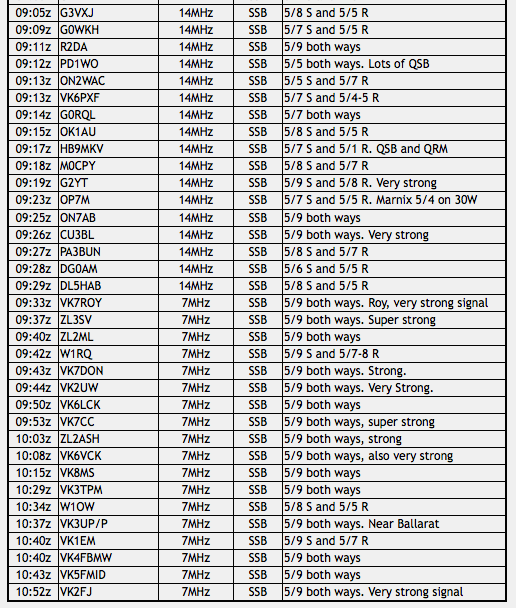
The following stations were worked:-
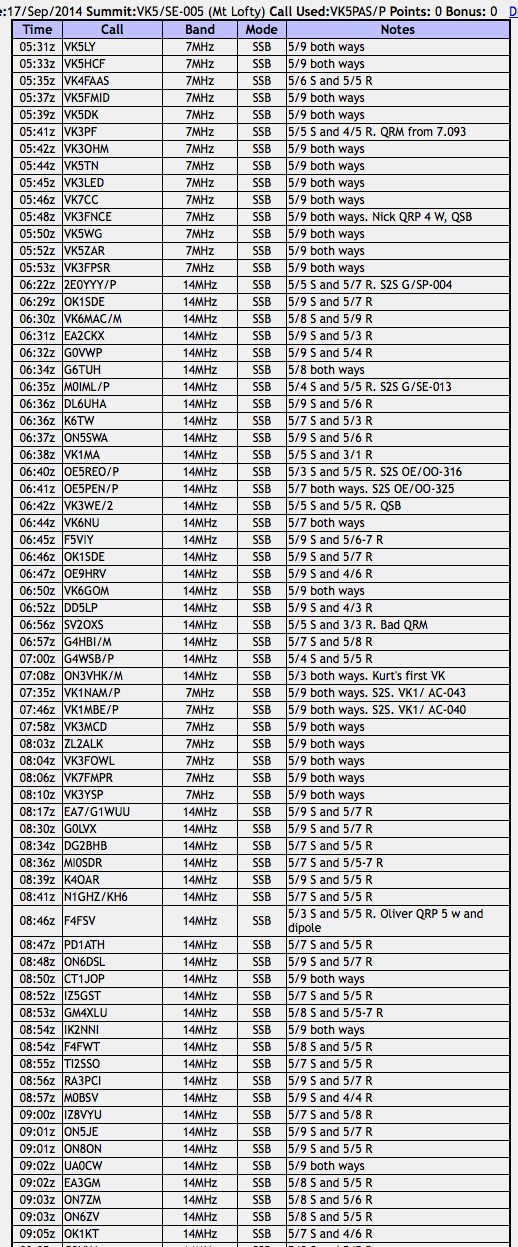
Screenshot 2014-09-18 11.36.18 Screenshot 2014-09-18 11.36.20

Kyeema Conservation Park

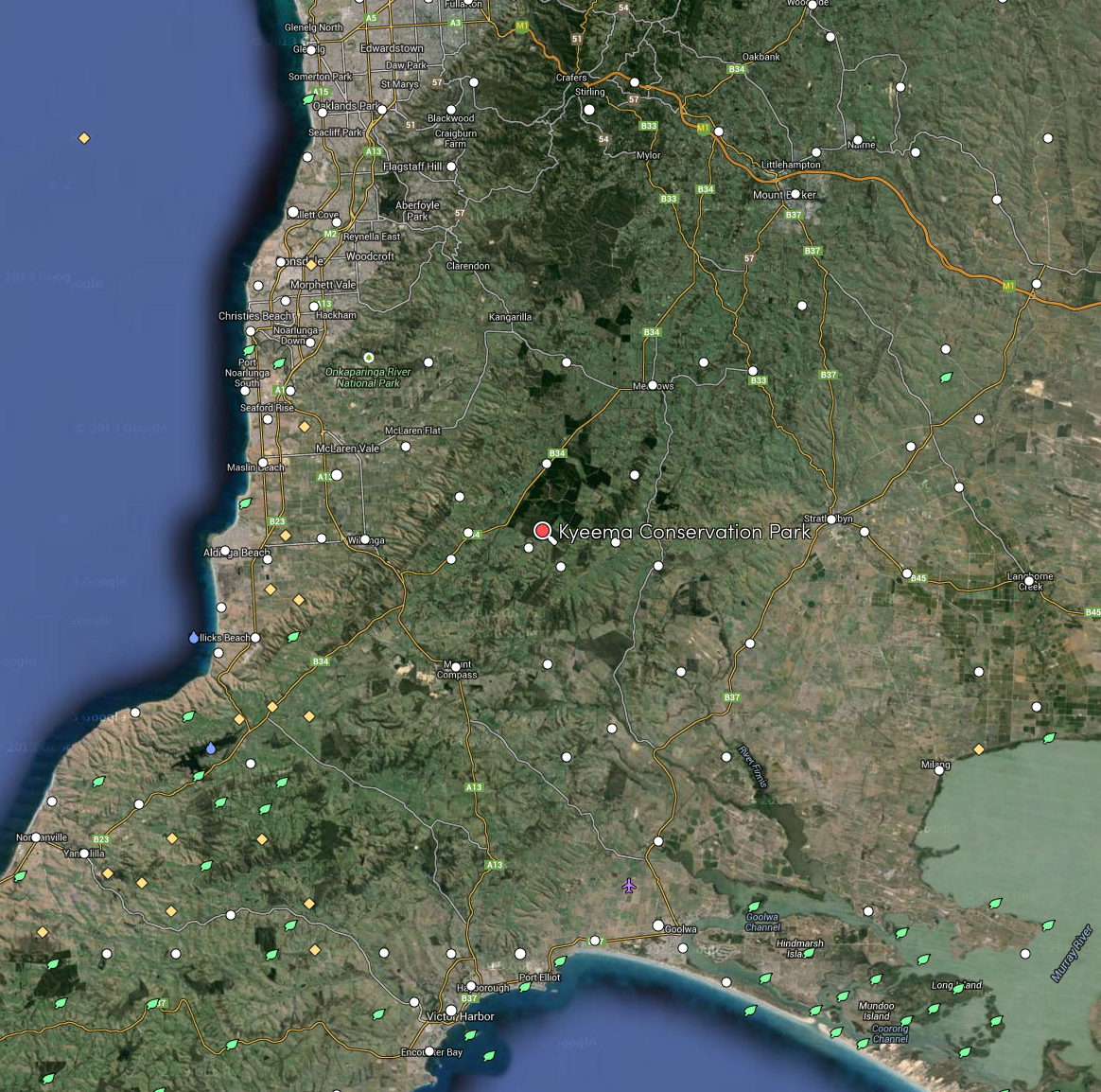
This afternoon, I travelled down to the Kyeema Conservation Park, which is located just off the road between Meadows and Willunga.  It is located about 60 km south east of the city of Adelaide.

Screenshot 2014-09-14 20.55.12

Screenshot 2014-09-14 21.15.33

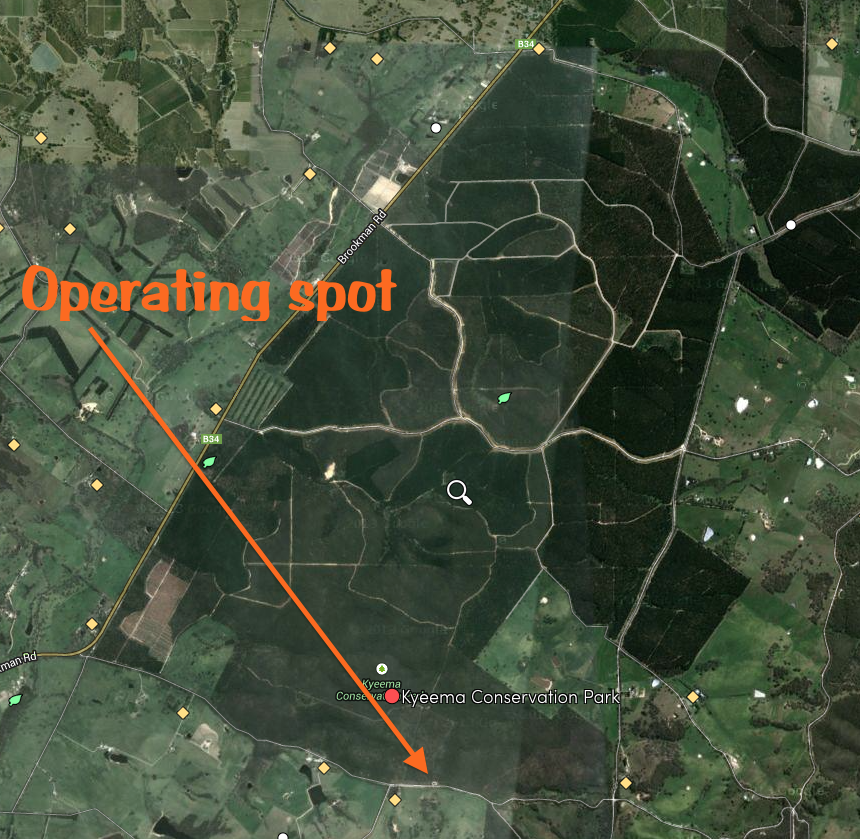
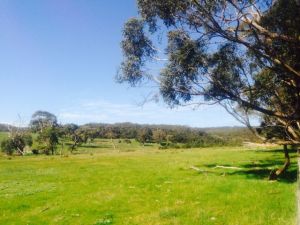
It was another beautiful day in the Mount Lofty Ranges, with a temperature of about 21 deg C and bright blue sky.  The drive from my home, which is also in the Mount Lofty Ranges (Adelaide Hills), takes you through some beautiful countryside.  I travelled to the little town of Echunga and then on to Meadows, passing lush green countryside consisting of small farming properties and quite a bit of remnant scrub.  From Meadows, I headed towards the town of Willunga. IMG_1522 I had activated Kyeema CP last year in May, so this was another 1 point for me for the VK5 National and Conservation Parks Award.  I set up in exactly the same spot as last year.  This is a cleared area on the western side of the carpark which runs off Woodgate Hill Road, which in turn runs off the road between Meadows and Willunga (Brookman Road).  There really aren’t too many other options here, as the scrub is very thick. IMG_1525 For more information and history on the Kyeema Conservation Park, please have a look at my previous post….. https://vk5pas.wordpress.com/2013/05/18/kyeema-conservation-park/

It is worth reading, as Kyeema has a very interesting history, including being a former labour prison reserve.  The ‘prison reformation camp’ was established in 1932.  A total of 11 names were suggested for the camp.  Eventually, the Controller of Gaols and Prisons, E.H. Whittle, chose ‘Kyeema’, which in aboriginal means ‘dawn’.  The name was chosen to associate the spirit of hope with the new movement. IMG_1530 I managed to find a bit of shade as the afternoon sun had a bit of a bite to it.  I set up my deck chair and fold up table under the shade of some gum trees.  I used my Yaesu FT450, running about 60 watts, and my 40m/20m linked dipole, supported on a 7 m squid pole.  The squid pole in turn was supported by a squid pole holder which I had driven into the ground.

I started off calling CQ on 7.095 on 40m SSB and my first caller was Jaimie VK3TZE with a very strong 5/9 plus signal.  This was followed by regular park ‘hunter’ Arno VK5ZAR and then Tim VK5AV from the South East.  Both were 5/9 plus.  It seemed the 40m band was in veery good shape again.  The normal steady flow of park ‘hunters’ followed from VK1, VK2, VK3, VK5, and VK7. IMG_1527 IMG_1531 After operating for about 25 minutes, I was called by Steve VK5AIM, who was portable in the Kaiser Stuhl Conservation Park in the Barossa Valley.  Steve was using an Icom IC703 and his ‘slinky squid’ antenna.  Although his signal was down a little, I was still able to copy very well, as the noise floor in the park was negligible.  It was great to hear someone else out in a park. And then, just 2 QSO’s down the track, I was called by Steve VK5SFA who was also out portable.  Steve was operating from the Morialta Conservation Park, and had a very strong 5/9 plus signal.  Another ‘park to park’ contact which was very pleasing. A further 2 QSOs on, I was called by Damien VK5FDEC, who was operating with Steve VK5AIM, in the Kaiser Stuhl Conservation Park.  Damien’s signal was well over the 5/9 mark.  This was Damien’s first every park activation.  Welcome to the fold Damien.  I am sure you will have a lot of fun.  And with a signal like today’s, you will have no problems getting plenty of contacts in the log. IMG_1540 And to top the day off, a few QSO’s later, I was called by Matt VK5MLB, who also had a very strong signal.  Matt was operating from the Onkaparinga River National Park.  This was also Matt’s first ever park activation. So welcome to you as well Matt. It was pleasing to get a few calls from QRP operators.  This included Greg VK5GJ running just 5 watts from his home brew tx, Peter VK3TKK running just 2.5 watts, Wolf VK5WF running 4 watts into an inverted fee G5RV, Andrew VK3ARR running just 5 watts, Ian VK3VIN running QRP from his Argonaut, Robin VK5TN operating portable from his front yard, Erik VK3FMSC running 4 watts, and Peter VK3YE.  Peter was running just 1 watt from a recently completed home brew tx.  I was only his 2nd contact using his new home brew equipment.  All had great signals.

Things started to slow down a little, so I handed the frequency over to Steve VK5AIM.  I then tuned across the band and found Lee VK3GK operating as VK9NT from Norfolk Island, calling CQ on 7.160.  Only problem was, he was working split.  How do I get the FT450 to operate split?  After a couple of minutes, I had worked it out and gave Lee a call and got him in the log. IMG_1539 I then tuned down and found avid park hunter, John VK5BJE talking with Matt VK5MLB.  I quickly jumped in to tell John to head up the band after he had finished speaking with Matt.  John is a really keen park ‘hunter’ so I didn’t want him to miss out on Kyeema CP.  After working John, I was called by Terry VK3ASU who had just completed some antenna repairs, and this was followed by Ian VK5CZ with a huge signal from Clare.

There were no more callers, so I lowered the antenna and took the links out of the dipole, so I could operate on 20m. However, as per yesterday, the 20m band was full of contesters for the Worked All Europe Contest.  I couldn’t find a single station calling anything other than CQ Contest.  So I headed down to 14.156 to say hello to the regular crew that operate on that frequency each day.  I was lucky enough to make contact with John EA7BA in Spain, Ted G4TLY, Alan G0CRJ, and John M0CJW, all in England.  And signal reports were quite good.  I received a 5/9 from EA7BA, 5/8 from Ted, 5/6 from Alan, and 5/5 from John M0CJW. IMG_1534 It was starting to get late in the afternoon, and I still wanted to go for a walk through the park, so I quickly tuned across the 20m band and worked Duncan EA5ON who was mobile at the marina at Valencia in Spain.  Duncan had a very good signal and we had a very comfortable QSO.  However this was my last contact on 20m for the day.  I could not find anyone calling CQ.  The only stations other than contesters that I heard were VK6IA and VK6ANC working Europe, and Jason ZL3JAS.

So I decided to venture back quickly to 40m, and I am pleased I did.  I managed to work the Chatham Islands DXpetition, ZL7X, who were operating split on 7.174. So after about 2 and 1/2 hours operating, I had worked a total of 46 stations, including some interesting DX.

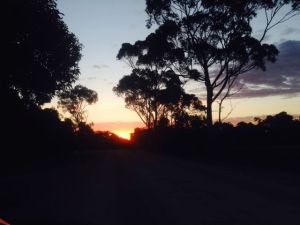
Time to pack up and go for a walk in the park, and then head home.  The sunset photo below is what greeted me when I returned to the car following my walk.  The native birds including the cockatoos, galahs, lorikeets and parrots were all very active at this time, getting ready to roost down for the night.IMG_1544 The following stations were worked:-

VK3TZE; VK5ZAR; VK5AV; VK3MRG/p; VK3ANL; VK5KLT; VK5GJ; VK5FMID; VK5IS; VK3AFW; VK5HCF; VK1MA; VK3TKK; VK5LY; VK2HHA; VK5AIM/p (Kaiser Stuhl CP); VK7NWT; VK5SFA/p (Morialta CP); VK5ZAT/m; VK5FDEC/p (Kaiser Stuhl CP); VK5WF; VK3ARR; VK5FTVR; VK2WGW; VK3VIN; VK5OB; VK5TN/p; VK3FMSC; VK5HS; VK5MLB/p (Onkaparinga River NP); VK5FTCT; VK3CM; VK3YE; VK5BW; VK3HRA; VK5TR; VK9NT (Norfolk Island); VK5BJE; VK3ASU; VK5CZ; EA7BA; G4TLY; G0CRJ; M0CJW; EA5ON/m; and ZL7X (Chatham Islands).


References.

Cockburn; R; ‘South Australia.  What’s in a Name?, 2002.

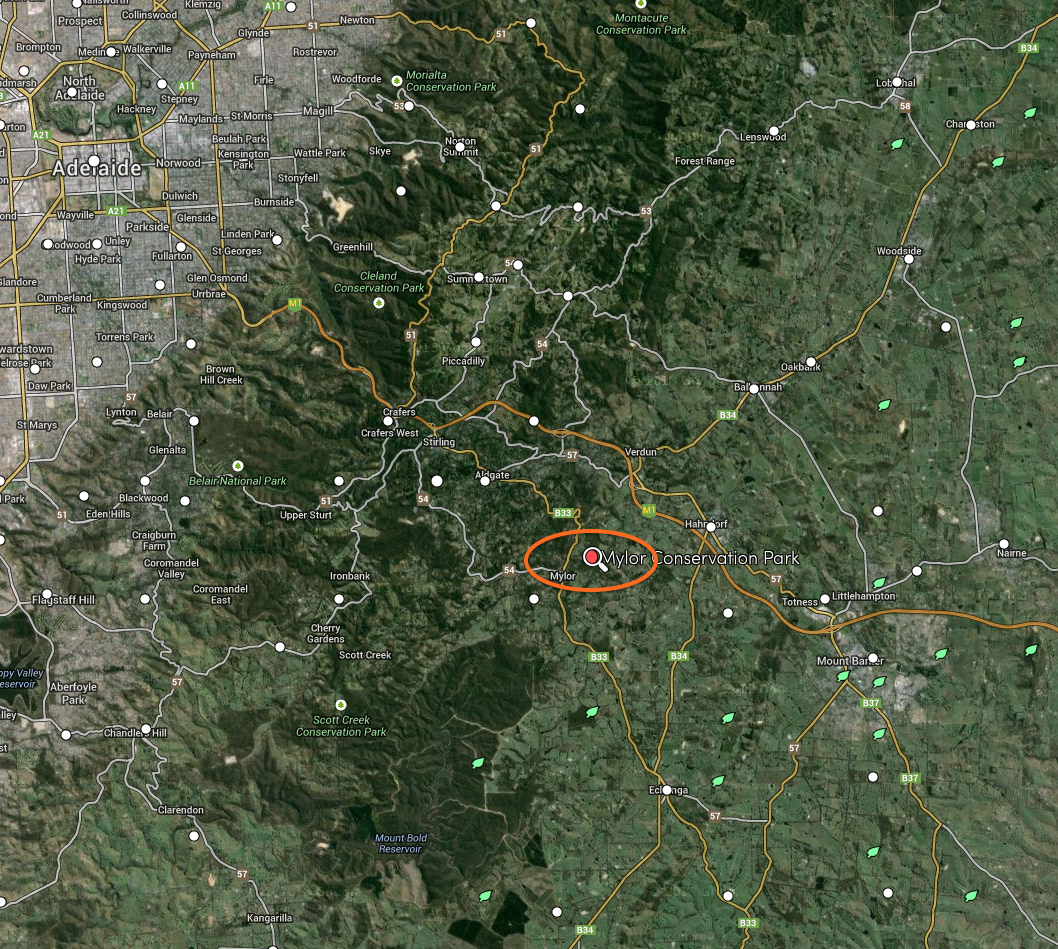
Mylor Conservation Park

Yesterday afternoon I headed out to the Mylor Conservation Park (CP), which is just a short distance from home.  The afternoon was just too beautiful to be sitting at home.  Not a cloud in the clear blue sky and a temperature of 21 deg C.  I had activated Mylor Conservation Park in September last year, so this was another 1 point to add to my activator tally.

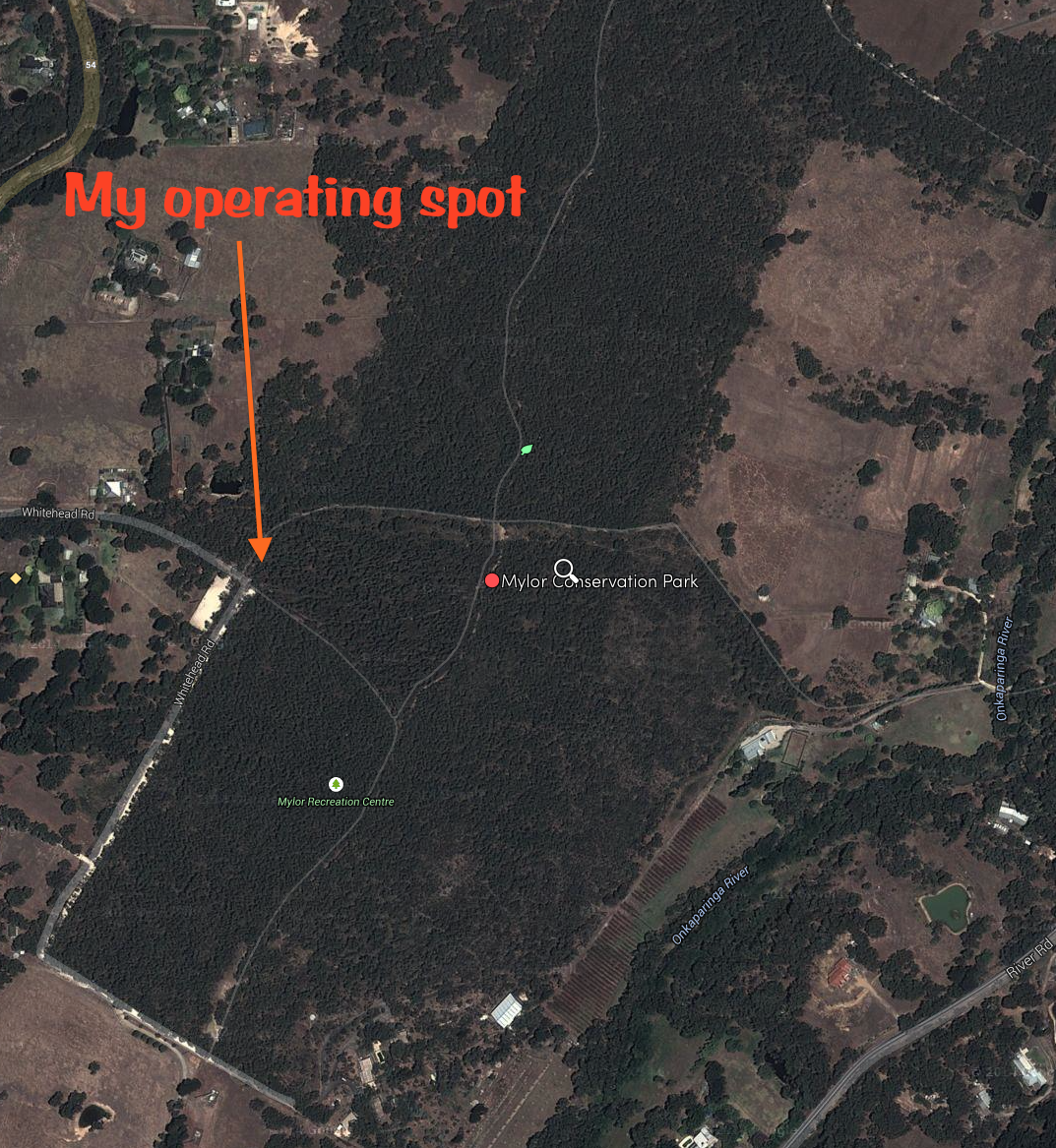
Screenshot 2014-09-14 10.57.40

Photo/map courtesy of mapcarta.com

Screenshot 2014-09-14 10.57.14

Photo/map courtesy of mapcarta.com

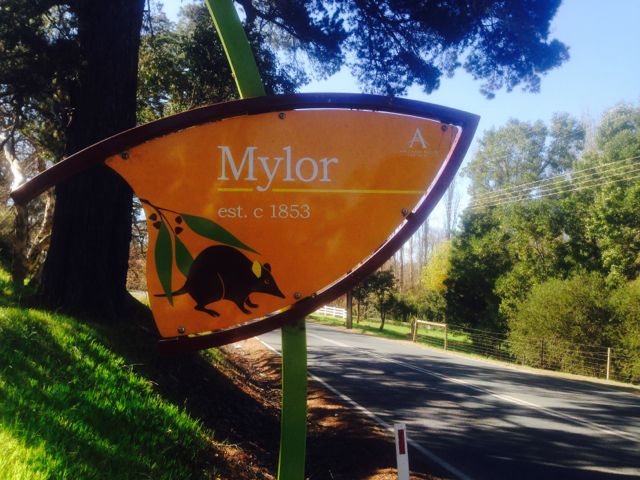
It is a beautiful drive from my home to the park.  I travelled through the little town of Echunga, where I lived a number of years ago, and then on towards Mylor along the Strathalbyn Road.  The countryside is lush and green, a contrast to the aerial photographs above.  I then drove in to the little town of Mylor, which has a population of less than 1,000 people.

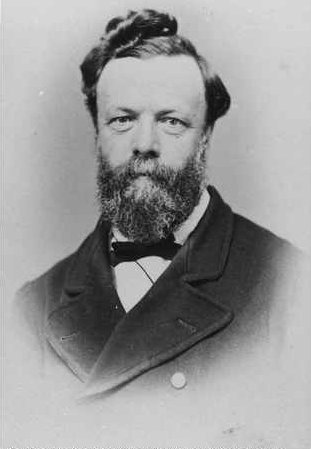
Mylor is sometimes referred to on some maps as Warrakilla Hill.  During the 1800’s, ‘Warrakilla’ was the name given by George Woodroffe Goyder to his estate and homestead in the vicinity.   Goyder was South Australia’s Surveyor-General and it was he who suggested some relatively flat ground in the area as a town site.  This was at a time when service centres were needed to support the new workingmen’s blocks.  Mylor was proclaimed in 1891 by Acting Governor Sir James Boucaut, who named it after his Cornish birthplace.

George_Woodroffe_Goyder

Above: – Surveyor General Goyder.  Photo courtesy of wikipedia.

The village of Mylor was effectively a replacement for a little community which had informally developed on a property named Rockford.  Mylor thus gained instant substance as established businesses transferred to the new location and it quickly provided supplies and services.  Some settlers formed a co-operative store, while others handled anything from bread to bookmaking.  This co-operative store still stands today.

Some churches and a school were subsequently established, but not a hotel.  A fact that remains to this day.  The nearest hotel is at either Echunga or Bridgewater.  So no watering stop for me!  Apparently every attempt to establish a hotel in the area during the late 1800’s was frowned upon by the temperance-minded Methodists.

IMG_1504

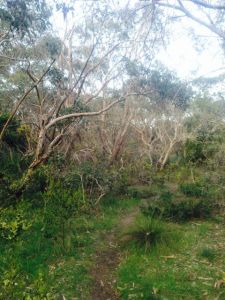
Mylor CP is located about 15 km south east of Adelaide and contains remnant bushland of the Mount Lofty Ranges.  Most of the surrounding land has been cleared for residential and agricultural use.  A section of the famous Heysen trail runs through the park, and two fully laden bushwalkers walked passed my location whilst I was operating.

IMG_1515

I set up in the same spot as last year, which was at the end of Whitehead Road, which runs off the Strathalbyn Road. There is a small car park here and it is a short walk of just a few metres to the entrance gate to the park. Again, as per last year, I used the boundary fence as a securing point for my 7 metre squid pole and 40m/20m linked dipole.

IMG_1508

I set up my fold up table and deck chair just off the path which runs alongside the western boundary of the park.  There are beautiful shady gums here, so I was out of the afternoon sun.  As per my recent park activations, I operated with the Yaesu FT-450 and ran about 60 watts output power.  The power source was my 44 amp hour power pack.

IMG_1505

IMG_1506

As we are going into warmer weather, many of the native plants were in flower, including the grevillias and wattle.  But the warm weather, also meant snakes.  The park si well known for its Eastern brown snakes, so I kept an ever vigilant watch.  Fortunately none were seen.

IMG_1509

IMG_1510

IMG_1512

IMG_1518

IMG_1519

Prior to putting out a CQ call, I tuned across the band and found Tony VK3CAT who was portable on a Summits on the Air (SOTA) peak, Mount Donna Buang, VK3/ VC-002.  Tony had a very good 5/9 signal coming into the Adelaide Hills.  After working Tony, I ventured up to 7.095 which was the frequency I had posted on the VK5 Parks Yahoo group, I would activate from.  But it was in use, so I moved down to 7.085 and started calling CQ.  It wasn’t long before the steady flow of park ‘hunters’ commenced.

First taker was Barry VK5BW, just up the road at Bridgewater.  Barry’s signal almost knocked the FT-450 off the table.  This was followed by Brian VK5FMID down in the South-East, who also had a strong 5/9 signal.  I was then pleasantly surprised to get a call from Gordon VK5GY who was operating portable from the Cox Scrub Conservation Park.  Gordon also had a good strong 5/9 signal.  It was great to get a ‘park to park’ contact in the log.

The signals on 40m were excellent.  Almost all stations that I worked were well over the S9 mark.  Some in fact were reaching 30 db – 40 db over strength 9.  The noise floor within this park is non existent, so I was even able to hear some very weak signals including Bob VK5FO and Ray VK5RR, who were both mobile.

After working a number of stations on 40m, I ventured over to 20m but found that the Worked All Europe contest was in full swing, so I did not hear many European stations calling anything but ‘CQ Contest’.  However I did find Nardo EC1DD who was portable on SOTA peak, Gabineira, EA1/PO-015.  I called a number of times, before getting through to him.  I was competing with a lot of European SOTA chasers and lots of QRM from the contesters.  Nardo was 5/5 and I received a 5/9 signal report.  I kept tuning across the band, hoping to find a station wanting to work some DX, and stumbled across Jo LX/PA9JO, amongst the contesters.

Marija and I were heading out for tea, so it was time to pack up and head home so I didn’t get into strife.  But whilst I was taking down the linked dipole, the i-phone bleated and I saw that Scott, VK2SWD was on a SOTA peak in New South Wales, VK2/ SM-053.  I couldn’t help myself.  Despite the squid pole being lowered and the dipole being very close to the ground, I put back in the crocodile clips for 40m and gave Scott a call and managed to get him in the log.  Matt VK1MA asked me to QSY up 5, and I had my last QSO with Matt before going QRT.

So after about 2 hours in the park, I had a total of 49 QSO’s in the log, with the majority of those being on 40m SSB.  A fun afternoon in the sun.  Thanks to everyone that called in.

The following stations were worked:-
VK3CAT/p (SOTA), VK5BW, VK5FMID, VK5GY/p (Cox Scub CP), VK5NIG, VK2NEO/m, VK5VRB, VK5GJ, VK5TR, VK3FQSO, VK5ZAR, VK5NJ, VK5FTCT, VK3AXF, VK5HCF, VK5LY, VK1NAM, VK3PI, VK1EM/m, VK7TW/p, VK5FTVR, VK3OB, VK5FTRG, VK2FV, VK5FBAC, VK5TN, VK5XY, VK5RR/m, VK2HHA, VK3XP, VK3MCX, VK5FGRY, VK7FMPR, VK5VH, VK5AW, VK2LAW, VK4XAC, VK3FIAN, VK5HS, VK3JP, VK3ARR, VK2NNN, VK5FO/m, VK3MRG, VK5WG, EC1DD/p (SOTA), LX/PA9JO, VK2SWD/p (SOTA), and VK1MA.


References

Mylor Tourism Information Section, 2014, viewed 14th September 2014, <http://www.adhills.com.au/tourism/towns/mylor/&gt;

National Parks South Australia, 2014, viewed 14th September 2014, <http://www.environment.sa.gov.au/parks/Find_a_Park/Browse_by_region/Adelaide_Hills/Mylor_Conservation_Park&gt;