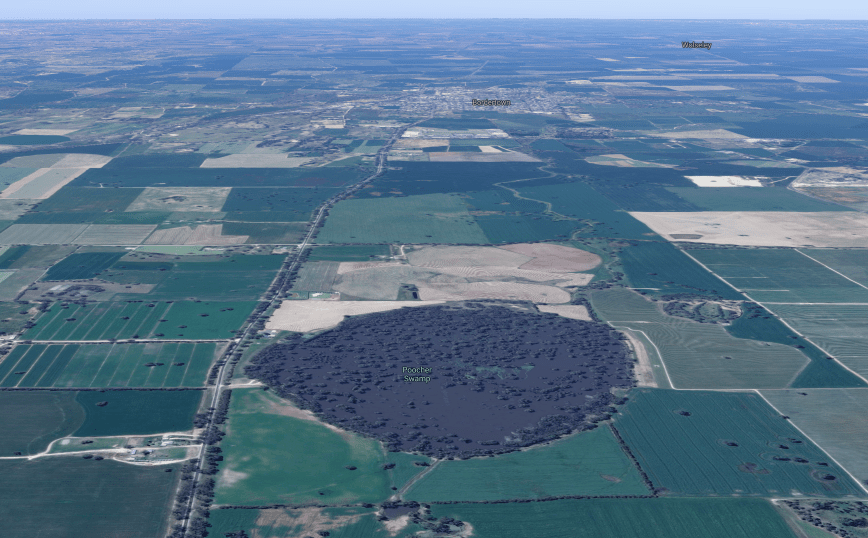
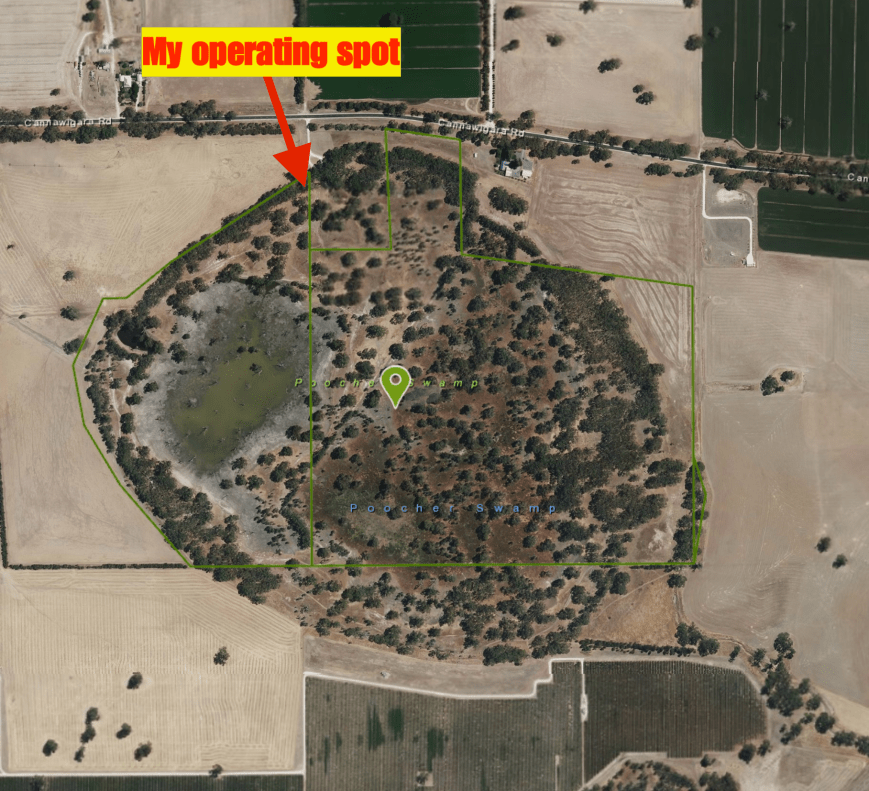
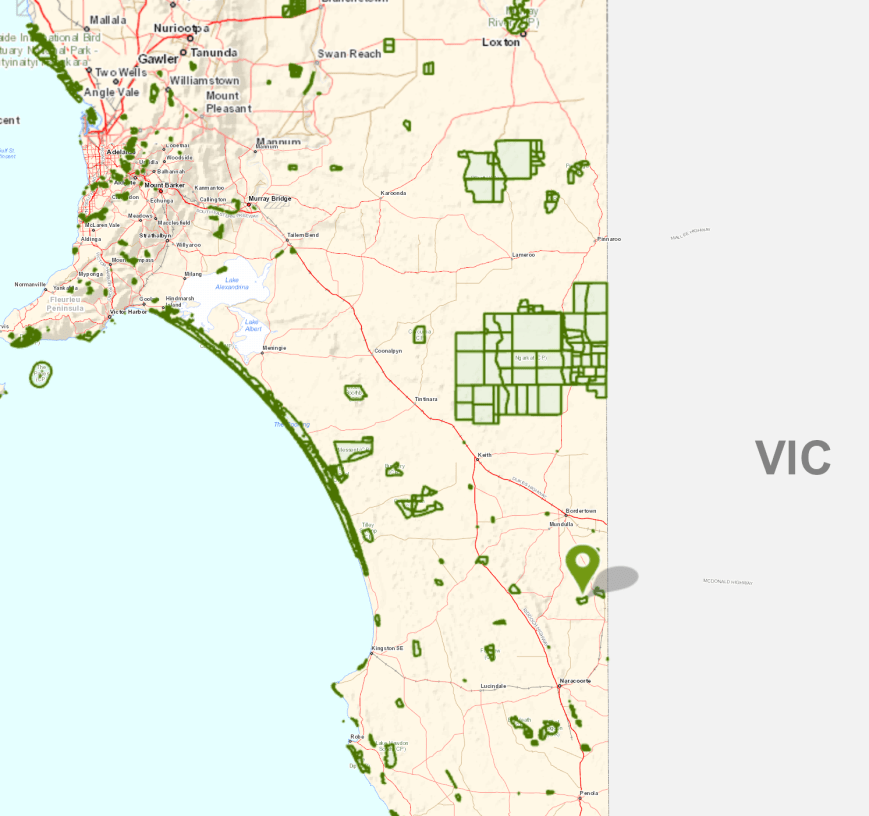
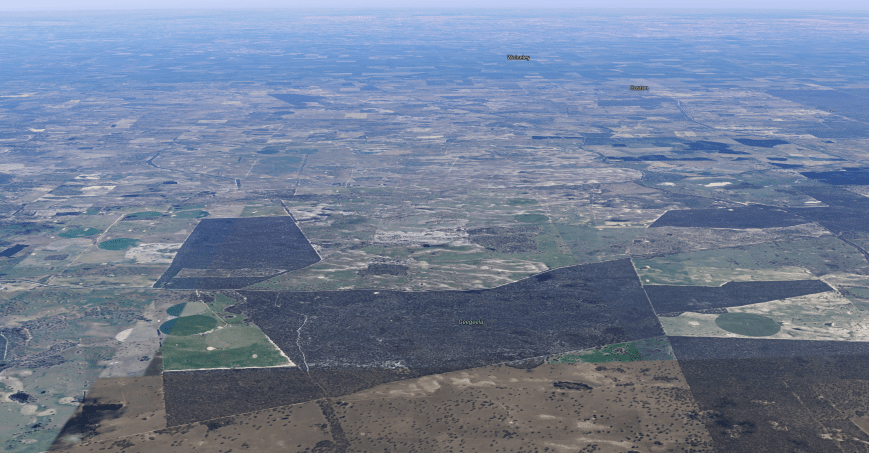
Mumbannar Nature Conservation Reserve VKFF-2161

It was now day three (Sunday 10th June 2018) of our trip.  We had one planned park activation for the day, over the border in Victoria.  After a warm shower Marija and I headed to Subway again for breakfast, comprising a coffee and an egg & bacon roll.  We then drove around the Valley Lake in Mount Gambier.  It was a sunny but very chilly morning, with lots of mist still hovering around the surface of the lake.

DSC_1578.jpg

Above:- Valley Lake

We then decided to take a walk up to the top of the Centennary Tower which commemorates the naming and the European discovery of Mount Gambier by Lieutenant James Grant in December 1800.  The tower sits 190 metres above sea level.

DSC_1579

This is not an easy walk.  It is a very steep walk.  However, I need the exercise, and the walk would burn off some of the red wine consumed the night before.  Along the way, the track was alive with Superb Fairy Wrens.

DSC_1588

And once you have got to the top, and have taken a number of breaths and regained your composure, you are rewarded with the best views of Mount Gambier and the surrounding countryside.

We had read on the internet that the tower was open at times, selling refreshments and souvenirs.  However it was not open during our visit.

We then walked back to the vehicle and took a drive around the famous Blue Lake at Mount Gambier.  The Blue Lake is a crater lake which between December to March turns to a vibrant cobalt blue colour.

Marija and I then attended the scout hall in Mount Gambier, the venue for the South East Radio Group’s annual convention.  We caught up with Col VK5HCF and a number of other SERG members.  We also said g’day to Joe VK3YSP and Julie VK3FOWL who were busy with some students , undertaking some activities including soldering.  Joe and Julie do magnificent work with children through the School Amateur Radio Club Network.

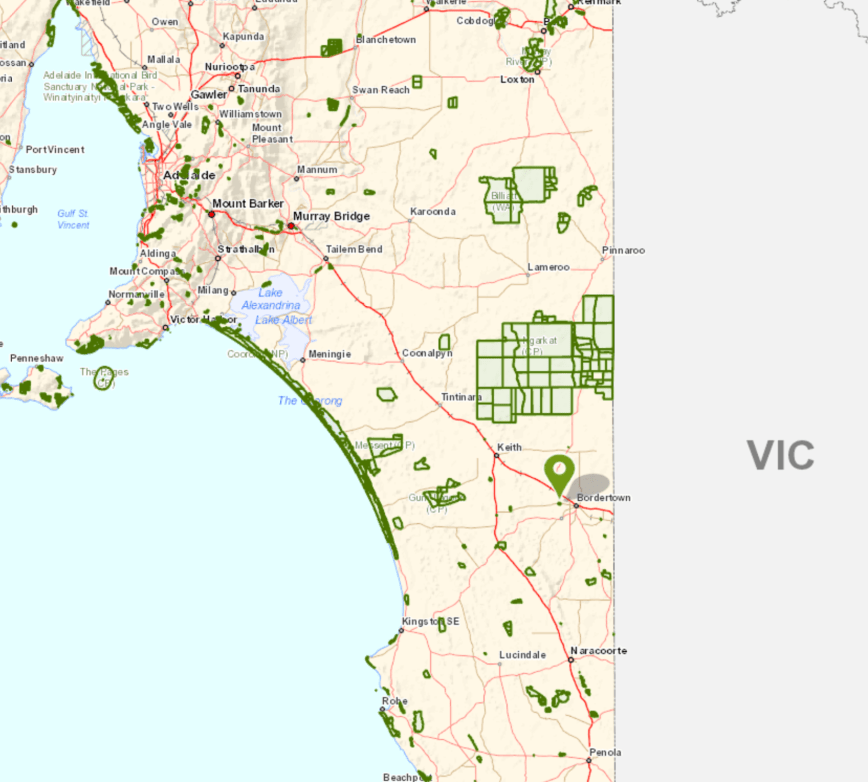
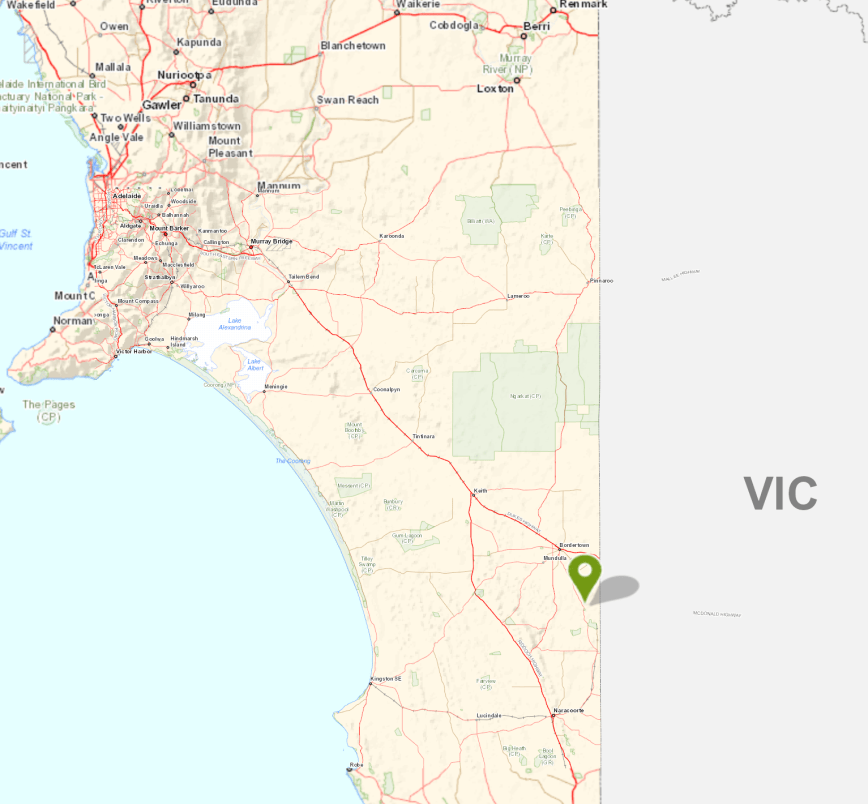
Marija and I then headed to our first park activation for the day, the Mumbannar Nature Conservation Reserve VKFF-2161.  The park is located about 40 km east of Mount Gambier, and 12 km (by road) west of the town of Mumbannar in south western Victoria.

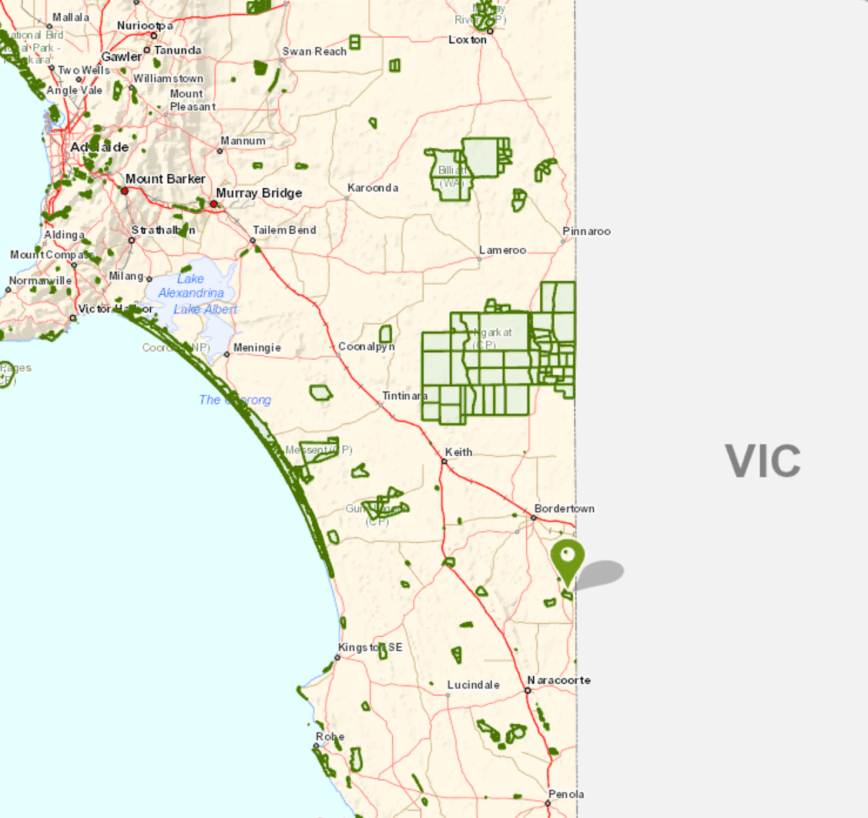
Screen Shot 2018-06-18 at 4.56.57 pm

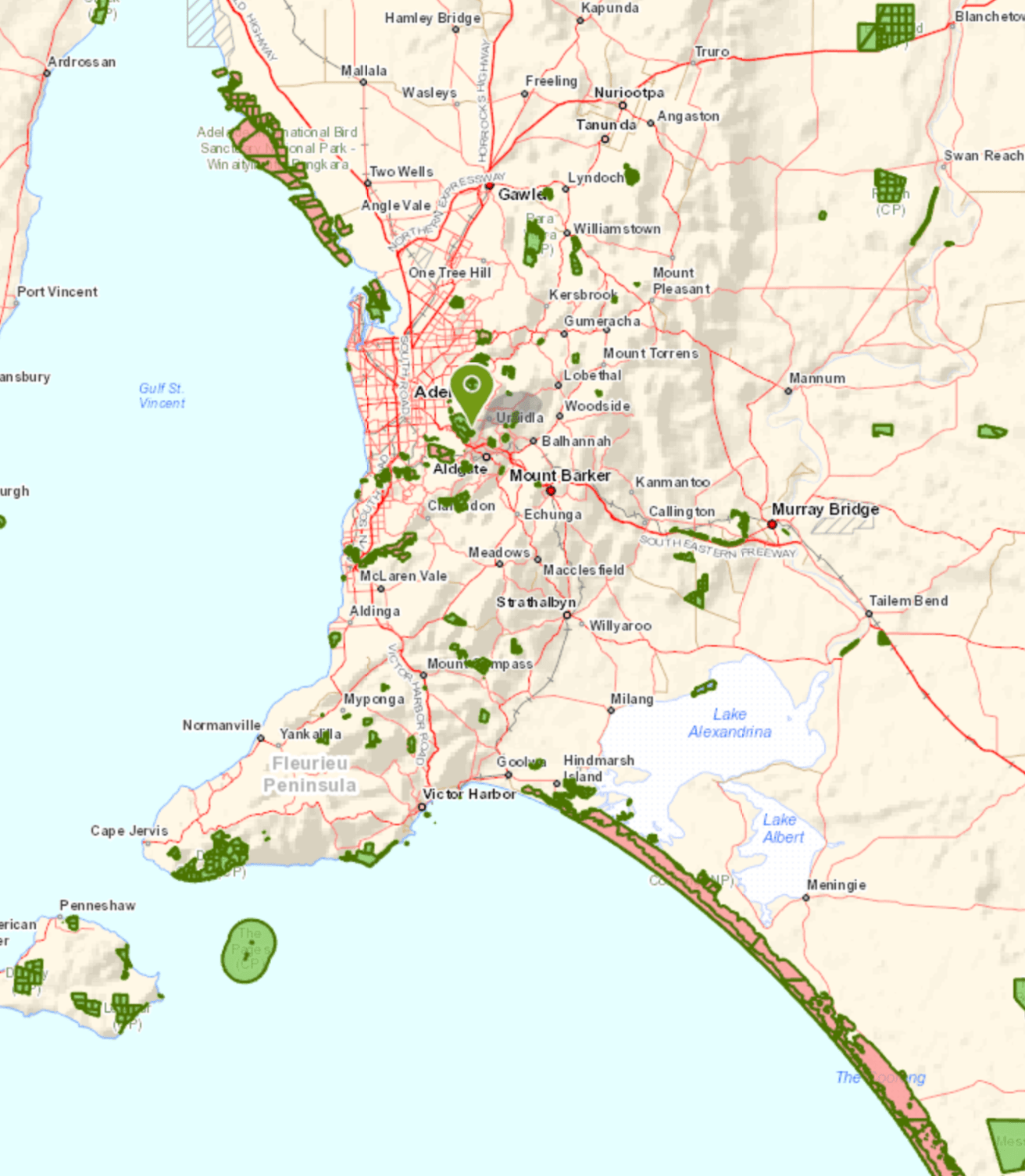
Above:- Map showing the location of Mumbannar Nature Conservation Reserve.  Map courtesy of google maps

We headed out of Mount Gambier on the Princes Highway and soon reached the State border of South Australia and Victoria.  We stopped briefly for a photograph and then continued on to the park.

DSC_1607

Above:- Marija at the State border.

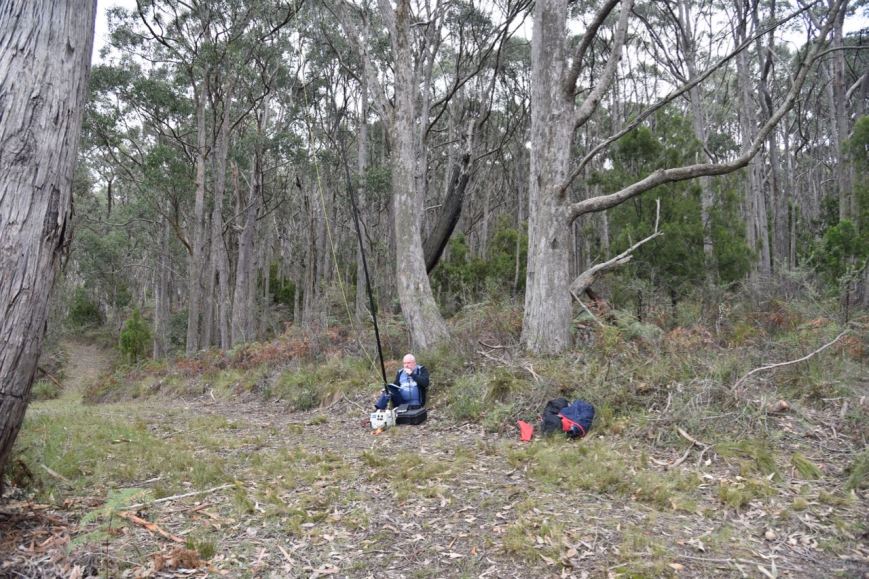
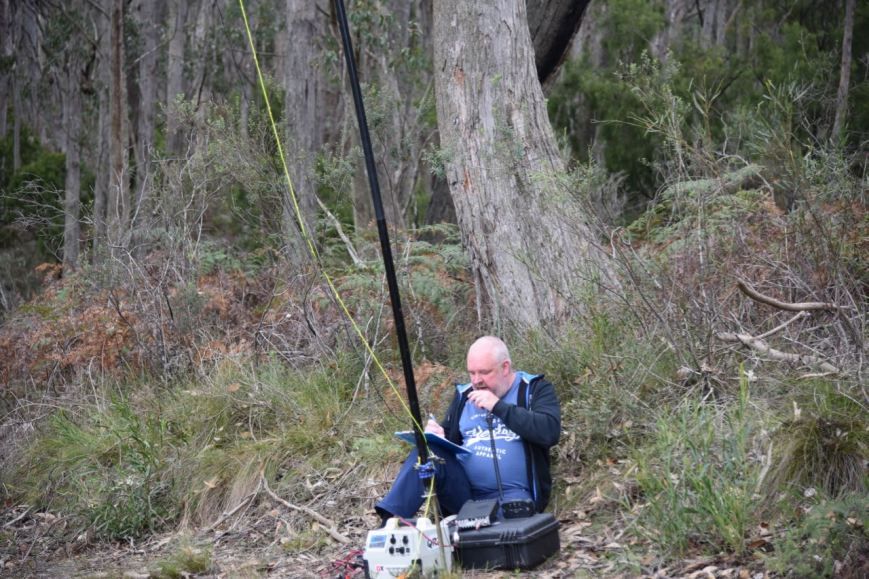
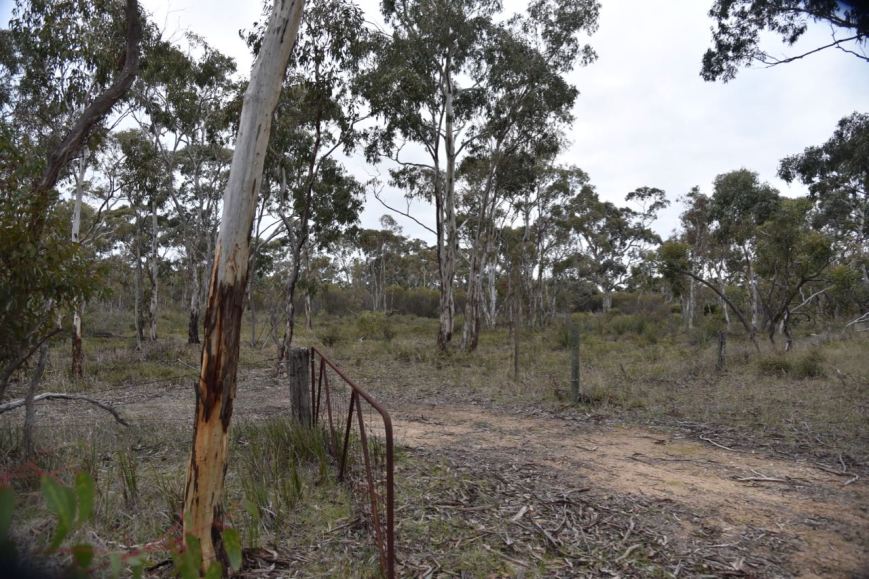
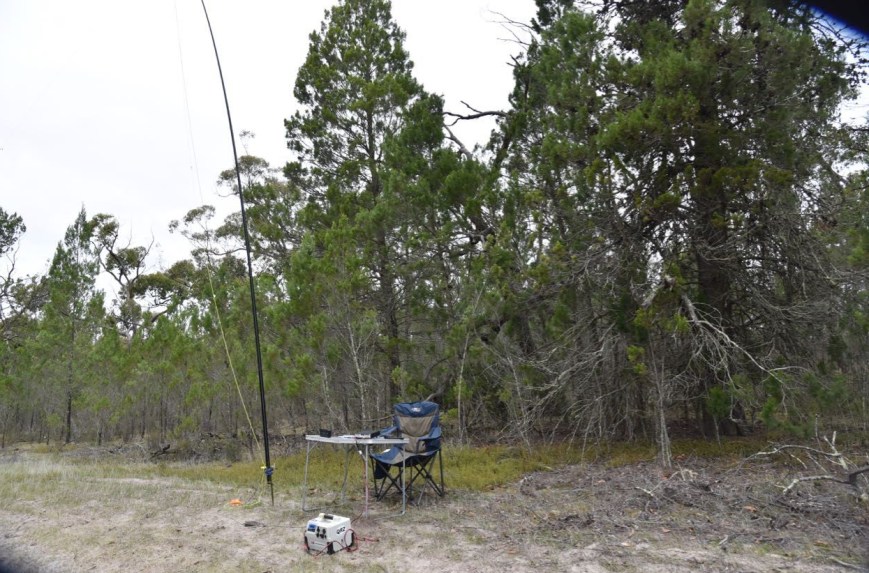
We turned off the Princes Highway onto Faheys Settlement Road.  We soon reached the park on the eastern side of the road.  The park was well signposted.  There were no gates into the park, so we pulled over to the side of the road and then climbed the fence with our gear and set up.

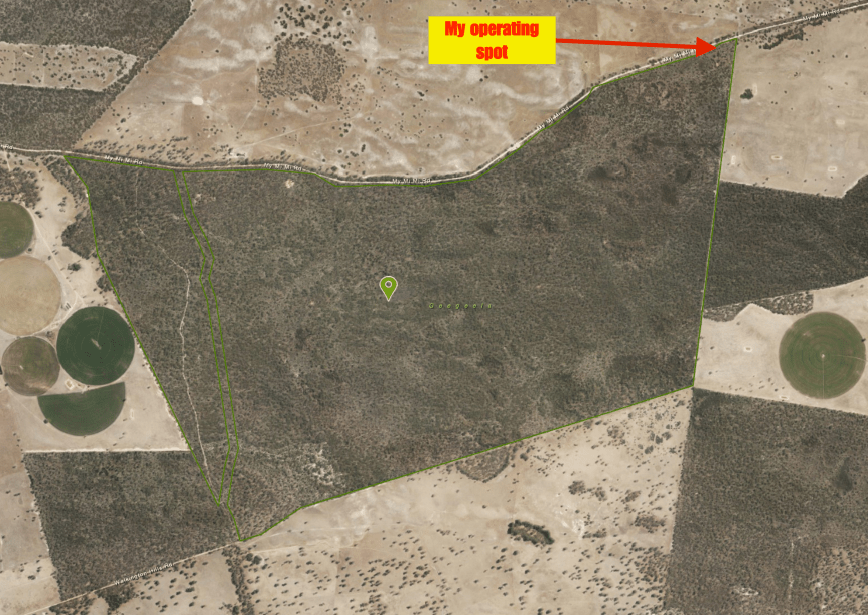
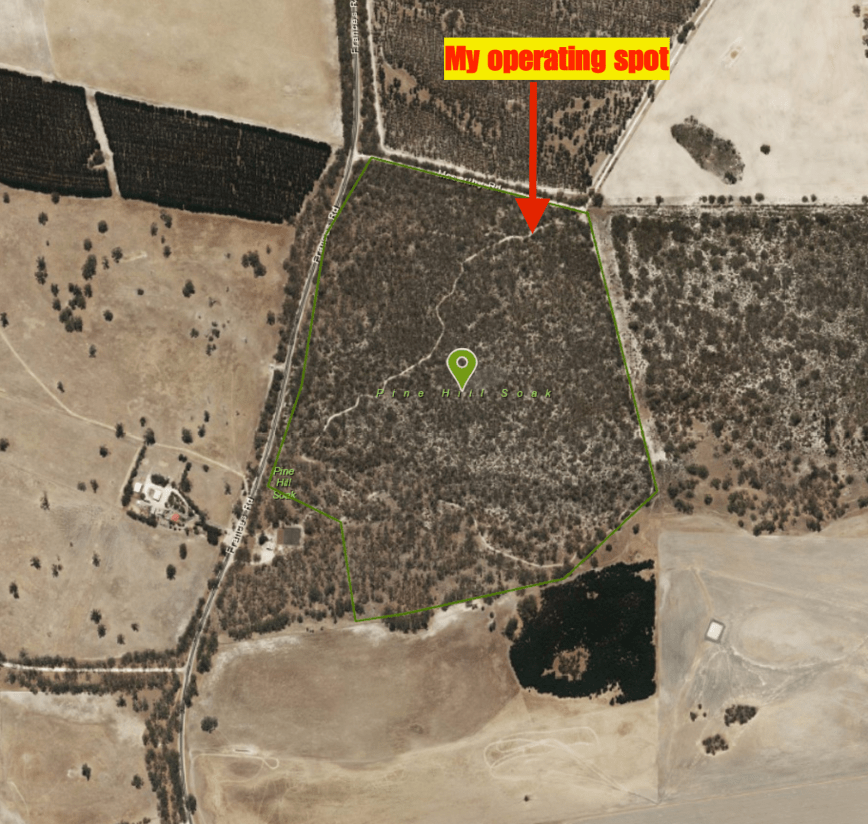
Screen Shot 2018-06-18 at 4.58.38 pm

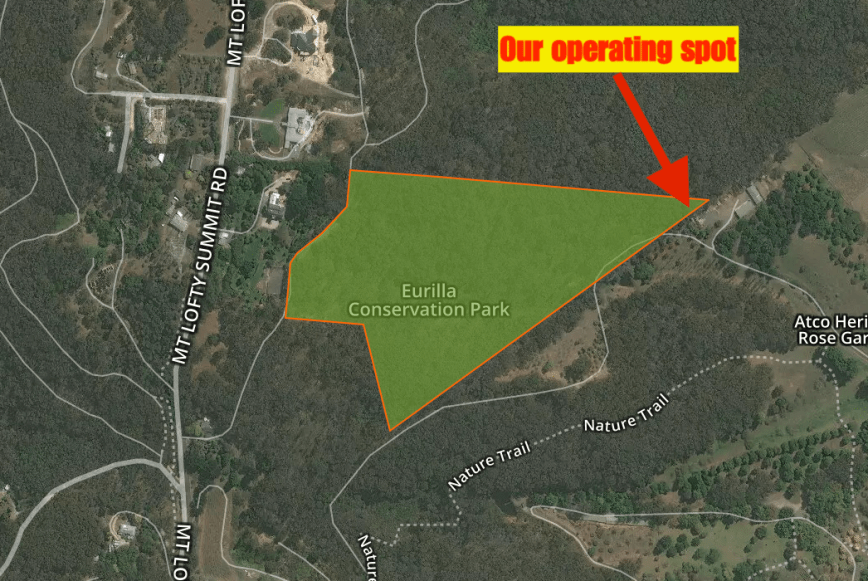
Above:- Aerial view of the park showing our operating spot.  Image courtesy of google maps

I have not been able to find out information on this park on the internet.  It is recorded on the Parks Victoria website, but there is no associated information.

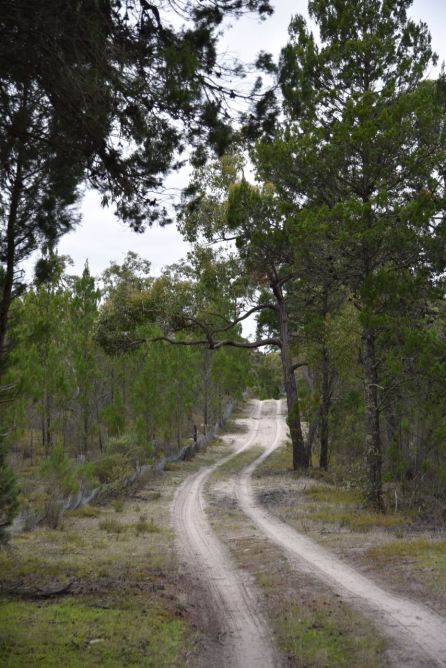
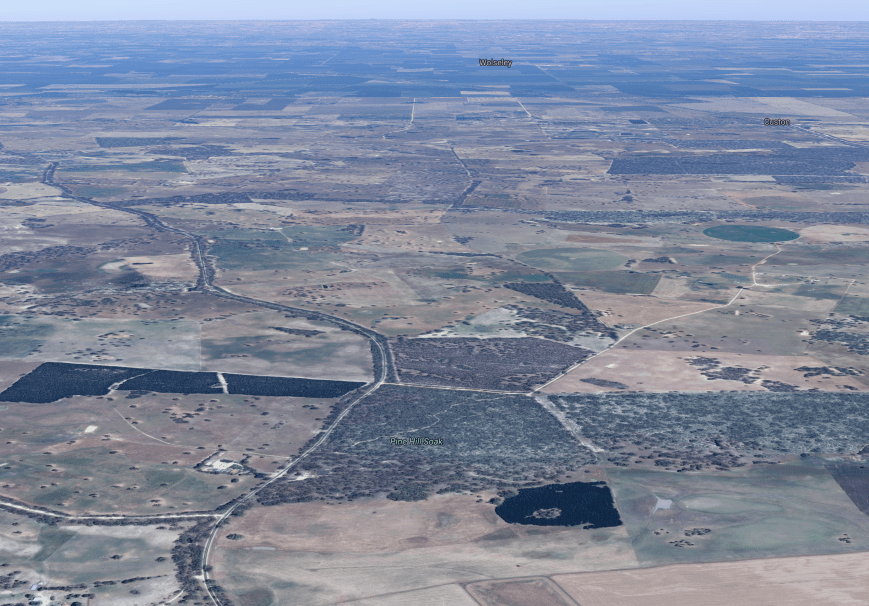
The park is a piece of remnant scrub which is surrounded by cleared land for farming, and also pine plantations.

Screen Shot 2018-06-18 at 8.25.26 pm.png

Above:- Aerial shot of the Mumbannar NRC, looking west back towards the SA/Vic border.  Image courtesy of google maps

This was the weekend of the VK Shires Contest, so Marija and I intended on handing out some exchanges for the contest, as well as activating the park.  The objectives of this contest are for amateurs around the world to contact as many VK shires as possible in the contest period.  Our shire for this park was Glenelg Shire (GL3).

Mumbannar was to be a unique park for both Marija and I in the World Wide Flora Fauna (WWFF) program.

After setting up we headed to 7.144 and found Tony VK3XV/p activating the Kara Kara National Park VKFF-0629 in western Victoria.  After logging Tony we tuned across the band and found Marc VK3OHM/p in the Terrrick Terrick National Park VKFF-0630.  Next was another Park to Park contact, this time with Gerard VK2JNG/p in the Beni State Conservation Area VKFF-1277.

I then propped on 7.160 and called CQ.  First in the log following my CQ call was Les VK5KLV, followed by Garry VK7JGD and then Mark VK7ME.  I logged a total of 33 stations on 40m including some more Park to Park contacts as follows….

  • Ian VK1DI/2 – The Rock Nature Reserve VKFF-2002
  • Rob VK4AAC/5 – Telford Scrub Conservation Park VKFF-0805
  • VK4HNS/p – Archer National Park VKFF-0336
  • Brian VK3BCM/p – Alpine National Park VKFF-0619

With 33 contacts in the log I headed off to 3.610 on the 80m band.  John VK5BJE was first in the log, followed by Rob VK4AAC/5, and then Sue, both in the Telford Scrub Conservation Park.  Adrian VK5FANA then gave me a shout, followed by Peter VK3PF.  Despite band conditions on 80m being quite good, they were my only 5 contacts on that band.

I then moved back to 40m and called CQ on 7.140.  This was answered by Ivan VK5HS mobile.  My 44th contact, qualifying the log for the global WWFF program was with Nick VK3ANL/p in the Gresswell Forest part b Nature Conservation Reserve VKFF-2103.  I logged a further 2 stations, and with 46 contacts in the log, it was time to swap the mic with Marija.

Marija then called CQ on 7.140 and logged Nick VK3ANL/p in the Gresswell Forest part b Nature Conservation Reserve VKFF-2103, followed by John VK2YW/p, and then Greg VK4VXX/8.  Marija’s 10th contact, qualifying the park for VKFF was a QSO with Bill ZL2AYZ in New Zealand.  Bill was a strong 5/8 and gave Marija a 5/6 signal report.

Marija logged a further 6 stations on 40m from VK2, VK3, VK4, VK5, & VK8.  This included a contact with our friend Greg VK8GM in Alice Springs.  Marija and I decided to give 80m a go again.  Marija called CQ on 3.610 and logged Ivan VK5HS/m, Adrian VK5FANA, and then Nick VK3ANL/p in the Gresswell Forest part b Nature Conservation Reserve.

To complete the activation we moved back to 40m where we logged another Park to Park contact, with Gerard VK2JNG/p in the Sappa Bulga National Park VKFF-1180.

Marija had qualified the park, with a total of 19 contacts.  I had qualified the park for both VKFF and WWFF with 48 conatcts.  Between us we had 16 Park to Park contacts.

Marija worked the following stations on 40m SSB:-

  1. VK3XV/p (Kara Kara National Park VKFF-0629)
  2. VK3OHM/p (Terrrick Terrick National Park VKFF-0630)
  3. VK2JNG/p (Beni State Conservation Area VKFF-1277)
  4. VK3ANL/p (Gresswell Forest part b Nature Conservation Reserve VKFF-2103)
  5. VK2YW/p
  6. VK4VXX/8
  7. VK5LA/m
  8. VK7QP/p
  9. VK5HS
  10. ZL2AYZ
  11. VK5KLV
  12. VK3AHR
  13. VK2KJJ
  14. VK2MT
  15. VK8GM/p
  16. VK4FDJL

Marija worked the following stations on 80m SSB:-

  1. VK5HS/m
  2. VK5FANA
  3. VK3ANL

I worked the following stations on 40m SSB:-

  1. VK3XV/p (Kara Kara National Park VKFF-0629)
  2. VK3OHM/p (Terrick Terrick National Park VKFF-0630)
  3. VK2JNG/p (Beni State Conservation Area VKFF-1277)
  4. VK5KLV
  5. VK7JGD
  6. VK7ME
  7. VK1DI/2 (The Rock Nature Reserve VKFF-2002)
  8. ZL2AYZ
  9. VK3AHR
  10. VK2AB
  11. VK5LA/p
  12. VK5FANA/m
  13. VK2VEX
  14. VK2MTM
  15. VK4AAC/5 (Telford Scrub Conservation Park VKFF-0805)
  16. VK3ZD/p
  17. VK2FSAV
  18. VK4HNS/p (Archer National Park VKFF-0336)
  19. VK3BCM/p (Alpine National Park VKFF-0619)
  20. VK6MN
  21. VK2LKW
  22. VK3FXBR
  23. VK2KJJ
  24. VK2YE
  25. VK2VW
  26. VK5FANA
  27. VK2NP
  28. VK4TJ
  29. VK4/AC8WN
  30. VK4/VE6XT
  31. VK2AZ
  32. VK3SG
  33. VK5KFB
  34. VK5HS/m
  35. VK2BBQ
  36. VK2MT
  37. VK7EK
  38. VK8GM
  39. VK3ANL/p (Gresswell Forest part b Nature Conservation Reserve VKFF-2103)
  40. VK2YW/p
  41. VK4VXX/8
  42. VK2JNG/p (Sappa Bulga National Park VKFF-1180)

I worked the following stations on 80m SSB:-

  1. VK5BJE
  2. VK4AAC/5 (Telford Scrub Conservation Park VKFF-0805)
  3. VK5AYL/p (Telford Scrub Conservation Park VKFF-0805)
  4. VK5FANA
  5. VK3PF
  6. VK3ANL/p (Gresswell Forest part b Nature Conservation Reserve VKFF-2103)


References.

Monument Australia, 2018, <http://monumentaustralia.org.au/themes/landscape/exploration/display/51260-centenary-tower>, viewed 18th June 2018

Wireless Institute of Australia, 2018, <http://www.wia.org.au/members/contests/wavks/>, viewed 18th June 2018

Wikipedia, 2018, <https://en.wikipedia.org/wiki/Blue_Lake_(South_Australia)>, viewed 18th June 2018
Canunda National Park 5NP-002 and VKFF-0075; and the Lower South East Marine Park VKFF-1725

After leaving the Tantanoola Caves Conservation Park we headed to the nearby town of Tantanoola, intending to visit the historic Tantanoola Pub.  But we were a little too early for lunch as it was only 11.30 a.m.  In fact as we pulled up in Tantanoola, they were only just opening up the hotel.  So we decided to do the Woakwine Range WInd Farm tourist drive.

We travelled out of town along the Poonada Road and then onto the Canunda Frontage Road.  We were soon amongst the wind turbines in the largest wind farm in the Southern Hemisphere.  When fully operational, the 123 spectacular turbines at Canunda and Lake Bonney wind farm development will generate almost 300 megawatts which represents the equivalent of one eighth of South Australia’s energy needs.  The turbines are about 100 metres tall.

DSC_1457

Above:- Marija standing in front of the wind turbines, giving you a good idea of just how big they are.

As we headed out along the Canunda Frontage Road we encountered some other road users (see below).

DSC_1458

Above:- Some of the other road users

A little further along we spotted a flock of Yellow Tailed Black Cockatoos.  They are a large cockatoo which has a yellow cheek patch and yellow panels on the tail.  In South Australia they are listed as being vulnerable.

As we drove along Canunda Frontage Road we enjoyed some great views of Lake Bonney S.E.  This is not to be confused with Lake Bonney in the Riverland region of South Australia.  Lake Bonney S.E. is a coastal freshwater lake. With a surface area of 5,056 square kilometres, Lake Bonney S.E. is one of the largest freshwater lakes in Australia.

As we drove along the Canunda Frontage Road we decided to activate the Canunda National Park 5NP-002 & VKFF-0075.  I had activated and qualified this park previously, so our intention was to get the park qualified for Marija and then head back into Tantanoola to the hotel.

Screen Shot 2018-06-18 at 1.19.01 pm.png
Above:- Map showing the location of the Canunda National Park.  Map courtesy of Location SA Map Viewer.

We turned off the Canunda Frontage Road and onto the Canunda Causeway and soon reached the park boundary.  We continued through the park along the Oil Rig Square Road.  A short distance later we reached the coastline.

It was here that we made the decision to head down onto the beach as it was quite a nice afternoon.  We lowered the tyre pressure down to around 12 psi and then drove through the dunes down onto the beach.

We drove about 1km along the beach and pulled off the trail made by other 4WDers and rolled out the awning of the Toyota Hi Lux.  Once down on the beach I realised that we were also within the Lower South East Marine Park.

DSC_1515

Above:- Our operating spot.  A beautiful view.

Unfortunately I had no internet coverage so I was unable to self spot on parksnpeaks and/or Facebook, and I was unable to look up the VKFF number for the Marine Park.  So Marija put out some CQ calls on 7.135 and these were answered by Adrian VK5FANA.  Adrian kindly looked up the VKFF reference for us for the Marine Park and also spotted us.  I cannot encourage enough, that hunters spot activators.  Not only does it greatly assist the activators, but it also helps your fellow park hunters.

As a result of Adrian’s spot, Marija soon had a number of amateurs giving her a shout.  Within 9 minutes Marija had qualified the park for the VKFF program, with 10 contacts in the log.  QSO number 10 was with Charlie VK3FCIA.

Marija logged a total of 23 stations including three Park to Park QSOS:

  • Stef VK5HSX/3 – Croajingolong National Park VKFF-0119
  • Andrew VK7DW/p – Trevallyn Nature Recreation Area VKFF-1156
  • Mark Vk4SMA/p – Samford Conservation Park VKFF-1639

It was an amazing day for this time of the year down in the South East.  It is normally cold and raining.  But today we were blessed with quite a bit of sunshine.  It was a beautiful spot, with the sound of the waves rolling in.  Occasionally we had some trailbikes and other 4WDers travelling passed us.

Other than that the only onlookers were some of the local birds (of the feathered variety).

Marija worked the following stations on 40m SSB:-

  1. VK5FANA
  2. VK3AZN
  3. VK4VXX/5
  4. VK3HOT
  5. VK2HHA
  6. VK3MIJ
  7. VK3SQ
  8. VK3ER
  9. VK5HSX/3 (Croajingolong National Park VKFF-0119)
  10. VK7FCIA
  11. Vk2RP/m
  12. VK2BDR/m
  13. VK5TT
  14. VK3ELH
  15. VK2NP
  16. VK3UH
  17. VK3ANL
  18. VK2VW
  19. VK3PF
  20. VK3IRS
  21. VK2LEE
  22. VK7DW/p (Trevallyn Nature Recreation Area VKFF-1156)
  23. VK4SMA/p (Samford Conservation Park VKFF-1639)

After Marija had qualified Canunda for the VKFF program, I jumped on the mic to activate the Lower South East Marine Park VKFF-1725.  The Lower South East Marine Park is divided into two sections: the first adjacent to Canunda National Park and the second from MacDonnell Bay just west of French Point to the Victorian border.  At 360 km2, it represents 1% of South Australia’s marine parks network.

Screen Shot 2018-06-18 at 2.13.06 pm.png
Above:- Map showing the two sections of the Lower South East Marine Park.  Image courtesy of DEWNR.

First in the log for me were two Park to Park contacts, with Mark VK4SMA/p and Ade VK4SOE/p who were activating the Samford Conservation Park VKFF-1639.  As this was a new park there was quite a flurry of activity at the commencement of the activation.  But this slowed down quite quickly, and with 37 contacts in the log on 40m, callers dried up.  I was 7 short of qualifying the park for the global WWFF program.

The 37 contacts were spread across VK2, VK3, VK4, VK5 and VK7.  Other than the Park to Park contacts with Mark and Ade, I had made the following Park to Park QSOS.

  • Alan VK2MG/p -Wyrrabalong National Park VKFF-0550
  • Andrew VK7DW/p – Trevallyn Nature Recreation Area VKFF-1156

I also logged Graham VK3SOL/p operating portable at the Echuca Moama Steam Rally.

DSC_1516

I then headed to 3.610 on the 80m band where I called CQ.  This was answered by Adrian VK5FANA, followed by Ivan VK5HS/mobile and then Andy VK5LA/mobile.  I logged a further 5 stations, all from Victoria.  Peter VK3ZPF was contact number 44.

To complete the activation I QSY’d to the 20m band where I found Mike VK6MB/8 in the Uluru-Kata Tjuta National Park VKFF-0505.  Mike had a brilliant 5/9 signal down to the beach from his iconic location in the Northern Territory.  I then moved up to 14.315 and worked Hans VK6XN.  Sadly Hans was my only caller.

I worked the following stations on 40m SSB:-

  1. VK4SMA/p (Samford Conservation Park VKFF-1639)
  2. VK4SOE/p (Samford Conservation Park VKFF-1639)
  3. VK5FANA
  4. VK2RP/m
  5. VK2BDR/m
  6. VK5LA/m
  7. VK5HS/m
  8. VK2HPN/1
  9. VK3ELH
  10. VK2MG/p (Wyrrabalong National Park VKFF-0550)
  11. VK3SOL/p
  12. VK2LEE
  13. VK3NXT
  14. VK2NP
  15. VK2HHA
  16. VK3SQ
  17. VK3PF
  18. VK3ZPF
  19. VK4TJ
  20. VK4CPS
  21. VK2IO/m
  22. VK3TKK/m
  23. VK7DW/p (Trevallyn Nature Recreation Area VKFF-1156)
  24. VK7FGRA
  25. VK3MAB
  26. VK5TT
  27. VK4VXX/5
  28. VK3ER
  29. VK2QK
  30. VK5PL
  31. VK3ARH
  32. VK3AHR
  33. VK7CC
  34. VK3ANL
  35. VK2VW
  36. VK7ME
  37. VK3KAI

I worked the following stations on 80m SSB:-

  1. VK5FANA
  2. VK5HS/m
  3. VK5LA/m
  4. VK3PF
  5. VK3KAI
  6. VK3ARH
  7. VK3ZPF
  8. VK3SQ

I worked the following stations on 20m SSB:-

  1. VK6MB/8 (Uluru-Kata Tjuta National Park VKFF-0505)
  2. VK6XN

It was now coming up to 2.15 p.m. and time for us to pack up.  Marija had qualified Canunda for VKFF and I had qualified the Marine park for VKFF and WWFF.  We drove back down the beach and up the sand dunes, where we got the air pressure generator out and put the tyres back up to their correct psi.

DSC_1556

We drove back into Tantanoola and called into the Tantanoola Pub for a few drinks.  The hotel is well known for having the ‘Tantanoola Tiger’ on display.  During the late 1800’s it is reported that a Bengal tiger escaped from a travelling circus.  Soon after, locals started reporting missing sheep and cattle, but despite extensive searches, no animal was found.  And then in August 1895, a local man, Thomas Donovan shot an animal believed to the the tiger.  However it appears that it was not the tiger, but most likely a Eurasian wolf.

We drove back to Mount Gambier and had a shower and then headed to Jens Hotel for dinner.  We had an arranged dinner with a group incuding Rob VK4AAC and his wife Doris, John VK5NJ and his wife Tanina, Joe VK3YSP and his wife Julie VK3FOWL, Ross from Strictly Ham and his son.  This was a great night with lots of laughs.


References.

Attractions online directory, 2018, <http://www.attractions.net.au/attractions/sa/tantanoola/woakwine-range-wind-farm-tourist-drive/21341/>, viewed 18th June 2018

Govt of South Australia, ‘Marine Park 19 Lower South East Marine Park’

Mount Gambier Point, 2018, <https://www.mountgambierpoint.com.au/attractions/tantanoola-tiger/>, viewed 18th June 2018

Wikipedia, 2018, <https://en.wikipedia.org/wiki/Lake_Bonney_SE>, viewed 18th June 2018

Tantanoola Caves Conservation Park 5CP-225 and VKFF-0804

It was now day two (Saturday 9th June 2018) of our trip to the south east of South Australia.  Despite it being a very chilly morning, Marija and I were very pleased to see some blue sky outside.  The weather forecasters had predicted some wet weather, but there appeared to be no sign of that at Mount Gambier.

We hit the road quite early and headed Subway in Mount Gambier for a coffee and an egg and bacon roll.  We then headed out to the historic Glencoe Woolshed, about 25 km north west of Mount Gambier.

We picked up the key and paid a small fee at the local Glencoe General Store.

The Glencoe district was first settled in 1844, just 8 years after the colonisation of South Australia.  Edward and Robert Leake established a sheep shearing station and had named the property after Glen Coe in Scotland.  The Leake holdings comprised about 90,000 acres stretching from Mount Muirhead near Millicent encompassing the Mount Gambier region to the Penola Road.

The Leake brothers were originally from Rosedale in Tasmania and then moved to South Australia, bringing with them Saxon Merino sheep.  In around 1857 they built a two storey home, calling it Frontier House.  Sadly this building has now been demolished.  However the two storied coach house, stables, and groom’s quarters are still standing.

One of the brothers, Robert, died in 1860.  This left Edward to manage the property on his own.  When his flock of sheep reached 50,000, he decided that a good shearing shed was required.  In 1863 the Glencoe Woolshed was constructed.

The shearing shed has hand adzed, cathedral like arched blackwood beams with supporting posts of pit sawn blackwood.  The roof timbers were laid on the ground and marked with Roman numerals to assist in their assembly.  The roman numerals are still clearly visible today.

Glencoe is unique in that it was never converted to a mechanised shearing.  At its peak there were about 38 shearers at Glencoe, as well as roust-a-bouts, wool classers and shed hands.  The most sheep shorn in one year at Glencoe is 53,000.  A total of 2,000 sheep were shorn in that year, with an extra 100 men employed.

We then left Glencoe and headed to the Tantanoola Caves Conservation Park 5CP-225 & VKFF-0804.  The park is situated about 36 km north west of Mount Gambier and about 434 km south east of Adelaide.

Screen Shot 2018-06-18 at 10.39.58 am.png

Above:- Map showing the location of the Tantanoola Caves Conservation Park.  Image courtesy of Location SA Map Viewer.

The Tantanoola Caves Conservation Park is about 14 hectares in size and features the Tantanoola Cave, a dolomite cavern which contains spectacular stalactites and helictites.  The park is one of South Australia’s oldest reserves.  It was first dedicated in 1930 and was the first in Australia to provide wheelchair access to a show cave.  The park also contains the Up-and-Down Rocks, a stranded marine cliff which towers over the Princes Highway which runs passed the park.

The park was discovered in 1930 by Boyce Lane, a 16 year old boy who was out rabbit hunting with his pet ferret in an area known as Hanging Rocks.  Boyce’s ferret disappeared down a small hole in the cliffs whilst chasing a rabbit and would not come back out of the hole.  Boyce returned to his nearby home to collect a torch and notify his brother.  They returned and climbed through the small hole and then shined their torches around to discover the cave.

6979594-3x4-700x933.jpg

Above:- Boyce Lane, aged 21.  Image courtesy of ABC

The two boys shared their discovery with their father George Lane, and later that day a group of men returned later that day to investigate.  It did not take long for news of the discovery of the cabe to spread throughout the local community.  The Lane family then opened up the cave to the public.  The entrance to the cave was only.  The Lane family later increased the size of the opening and hand rails and electric lighting were used to make the cave more accessible for visitors.

Screen Shot 2018-06-18 at 12.32.15 pm.png

Above:- Article from The Mail, Adelaide, Sat 12 April 1930.  Courtesy of Trove

Sadly, by the 1980’s, Occupational Health and Safety had taken hold and due to safety issues the cave was declared as unsafe and was closed.  The cave was subsequently taken over by Parks Australia and was reopened in 1983.

Screen Shot 2018-06-18 at 10.44.06 am.png

Above:- Aerial view of the Tantanoola Caves Conservation Park and the surrounding countryside.  Image courtesy of google maps

The name Tantanoola is derived from the aboriginal word ‘tentunola’ which means boxwood/brushwood hill of camp.  The town of Tantanoola is situated a few kms to the north west of the park.  Tantanoola was originally named ‘Lucieton’ by Governor Jervois after his daughter Lucy Caroline, on 10th July 1879.  It was changed by Governor Robinson to ‘Tantanoola’ on 4th October 1888.

Screen Shot 2018-06-18 at 12.45.20 pm.png

Above:- Aerial view showing the location of the park to the east of the town of Tantanoola.  Image courtesy of Location SA Map Viewer.


We had arrived at the caves just at the start of a tour, so we had a look through the small but very interesting visitor centre.

We then did the Clifftop Look walk which offers some terrific views of the surrounding countryside, including the nearby Lake Bonney and Woakwine Range wind farms.

The original entrance to cave is visible above the current day entrance.

After our walk we joined the tour guide who explained the history of the park and then took us inside the cave which is truly quite spectacular.  The cave measures 25 metres by 18 metres and is 8 metres in height.  It is believed the age of the cave is more than 300,000 years.

Numerous fossil remains have been located in the park including bryozoa, brachopods,  molluscs, shark teeth and extinct megafauna Zygomaturus trilobus and sthenurine kangaroos, and fossils of an unidentified seal.

Once we completed the tour we returned back to the vehicle where Marija quickly activated the park for the World Wide Flora Fauna (WWFF) program.  As we were activating from the car, the activation would not count for the VK5 National & Conservation Parks Award.

I spotted Marija on parksnpeaks whilst she called CQ on 7.139.  First in the log was Adrian VK5FANA on the Yorke Peninsula.  Within 10 minutes Marija had contact number 10 in the log, with a QSO with Rod VK7FRJG in Tasmania.  Marija had qualified the park for VKFF and it was time for us to hit the road for our next stop for the day.

Marija worked the following stations on 40m SSB:-

  1. VK5FANA
  2. VK2IO/p (Dooragan National Park VKFF-0143)
  3. VK5NJ
  4. VK2VW
  5. VK5KX/3
  6. VK4VXX/5
  7. VK3PF
  8. VK2MKE
  9. VK4TJ
  10. VK7FRJG

I worked the following station on 40m SSB:-

  1. VK2IO/p (Dooragan National Park VKFF-0143)


References.

ABC, 2018, <http://www.abc.net.au/news/2015-11-27/boy-loses-ferret-finds-tantanoola-caves/6979856>, viewed 18th June 2018

Department for Environment and Heritage, 2008, Tantanoola Caves Conservation Park Management Plan.

National Trust, 2018, <https://www.nationaltrust.org.au/places/glencoe-woolshed/>, viewed 18th June 2018

National Trust South Australia, ‘Visitor Guide to the Glencoe Woolshed’

Wikipedia, 2018, <https://en.wikipedia.org/wiki/Tantanoola,_South_Australia>, viewed 18th June 2018

Desert Camp Conservation Reserve VKFF-1705

After packing up at the Aberdour Conservation Park, Marija and I continued south on the Riddoch Highway.  As it was only just after lunch, and the weather was holding up nicely, we decided to activate the Desert Camp Conservation Reserve VKFF-1705.  The park is located about 235 km south east of Adelaide and about 17 km north west of the town of Padthaway.

This was to be a unique park for both Marija and I as activators in the WWFF program.

Screen Shot 2018-06-14 at 9.26.50 pm.png

Above:- Map showing the location of the Desert Camp Conservation Reserve in the south east region of South Australia.  Map courtesy of Location SA Map Viewer.

The Desert Camp Conservation Reserve is not to be confused the with Desert Camp Conservation Park.  The reserve is the much larger piece of scrub located on the eastern side of the Riddoch Highway.  The Desert Camp Conservation Park is a small section of Scrub to the east of the Riddoch Highway, on the Rowney Road West.

Desert Camp Conservation Reserve is 882 hectares in size and was proclaimed on the 11th November 1993.  I have not been able to find out the origin of the park name, as there is certainly no desert here.

Screen Shot 2018-06-14 at 9.31.25 pm.png

Above:- Aerial view of the Desert Camp Conservation Reserve.  Image courtesy of google maps

About 248 species of native plants have been recorded in the park.  Of these, 17 are considered rare or threatened in the south east, and 10 are either threatened or rare in South Australia.  One species, the Metalic sun-orchid is considered endangered nationally.

The park comprises Brown stringybark Low Woodland; Pink gum Woodland over a Mixed Heath; Pink gum Low Woodland over a desert banksia, heath yacca and heath tree; Open South Australian Blue Gum; Dwarf hakea, dwarf sheoak, honey myrtle; Coastal white mallee; Broombush, silver broombush Open Heath; and Mixed Herbland.

The reserve is recorded as being “the largest block of remnant vegetation in the Hundred of Marcollat” and which “accounts for over half of the remaining native vegetation in blocks greater than 25 hectares in that Hundred.”  It is surrounded by cleared farming land.

DSC_1389

Above:- Cleared farming land to the east of the park.

Birds SA have recorded a total of 93 native birds in the park including Peaceful Dove, Galah, Australian Magpie, Superb Fairywren, New Holland Honeyeater, Red Wattlebird, Buff-rumped Thornbill, Southern Emuwren, Grey Butcherbird, White-winged Triller, and Eastern Yellow Robin.

I snapped the photo below of a Whistling Kite, which was perched up high in a tree in the park.  He/she kindly sat there allowing me to snap off some shots.

DSC_1376

The park is easily located, just to the south of the intersection of the Riddoch Highway and Rowney Road.  The park is well signposted.

DSC_1377

We continued south on Riddoch Highway, passing Rowney Road and followed a 4WD track into the park, which followed a fenceline.

DSC_1388

We drove a few hundred metres along the track and found a clearing which allowed us to set up the 20/40/80m linked dipole.  As the weather was a little inclement, we rolled out the awning on the Toyota Hi Lux and sat underneath that in the deck chairs.

Screen Shot 2018-06-14 at 9.27.44 pm.png

Above:- Aerial view showing the Desert Camp Conservaiton Reserve, showing our operating spot.  The dark green area is the adjacent Desert Camp Conservation Park.  Image courtesy of Location SA Map Viewer.

Marija started off the activation, calling CQ on 7.139 after I had placed a spot up on the WWFF Australia Facebook page and on parksnpeaks.  Gerard VK2IO/p was first in the log, with a Park to Park contact into the Booti Booti National Park VKFF-0046.  Next in the log was Brett VK2VW, followed by John VK4TJ.  Within 10 minutes Marija had qualified the park for VKFF, with 10 contacts in the log.  Contact number 10 was with Greg VK4VXX/5.

We then swapped the mic and I called CQ on 7.139.  Peter VK3PF was first in the log, followed by Cliff VK2NP and then Andrew VK7DW.  Six minutes later I had contact number 10 in the log, with a QSO with Glenn VK4FARR.  After working Glenn, both Marija and I logged Neil VK4HNS/p who was activating the Conway National Park VKFF-0110.  This was followed by another Park to Park contact, this time with David VK5HYZ/p in the Ikara-Flinders Ranges National Park VKFF-0176.

I kept calling CQ on 7.139 and had a steady flow of callers from all across Australia.  This included another Park to Park, this time with Bill VK4FW/p in the Goat Island Conservation Park VKFF-1549.  I ended up logging a total of 52 stations on 40m from VK1, VK2, VK3, VK4, VK5, VK7 and New Zealand.  It was nice as always to log Andre ZL1TM who has become a regular VKFF Hunter.  I was also pleased to work Geoff VK3MCM who had only been on air for around 2 weeks and I was his 4th contact.  Welcome to the hobby Geoff.

We then lowered the squid pole and inserted the 80m links and headed to 3.610.   I called CQ and this was answered by Rob VK3FKL who had followed me down from 40m.  Conditions on 80m were brilliant, with absolutely no noise.  I logged 11 stations on 80m from VK2, VK3, VK5 and VK7.

To complete the activation I called CQ on 14.310 on the 20m band, but sadly only logged 1 station there, Cliff VK2NP.

DSC_1390

It was time to pack up and head off to Mount Gambier.  Desert Camp was another successful activation, with a total of 76 contacts between the 2 of us, including 7 Park to Park contacts.

Marija worked the following stations on 40m SSB:-

  1. VK2IO/p (Booti Booti National Park VKFF-0046)
  2. VK2VW
  3. VK4TJ
  4. VK3SQ
  5. VK3HOT
  6. VK4CZ
  7. VK3PF
  8. VK7DW
  9. VK2KYO
  10. VK4VXX/5
  11. VK4HNS/p (Conway National Park VKFF-0110)
  12. VK5HYZ/p (VKFF-0176)

I worked the following stations on 40m SSB:-

  1. VK2IO/p (Booti Booti National Park VKFF-0046)
  2. VK3PF
  3. VK2NP
  4. VK7DW
  5. VK4CZ
  6. VK2KYO
  7. VK4VXX/5
  8. VK7ME
  9. VK3SQ
  10. VK4FARR
  11. VK4HNS/p (Conway National Park VKFF-0110)
  12. VK5HYZ/p (Ikara-Flinders Ranges National Park VKFF-0176)
  13. VK2FOUZ
  14. VK3GGG/p
  15. VK3PMG/p
  16. VK3ANL
  17. VK2HHA
  18. VK2STO/p
  19. VK2SMS/p
  20. VK3OHM
  21. VK2GKA
  22. VK3FKAR
  23. VK3FNQS
  24. VK3VHF
  25. VK3VFO
  26. VK4FE
  27. VK3MCM
  28. VK3ZZS/7
  29. VK2QK
  30. VK4FW/p (Goat Island Conservation Park VKFF-1549)
  31. VK4FDJL
  32. VK2ARL
  33. VK2VOO
  34. VK5WG
  35. VK2WE
  36. VK3ANP
  37. VK3ATO
  38. VK5KLV
  39. VK1AT
  40. VK3ZIG/m
  41. VK7FRJG
  42. VK3FLJD
  43. VK2LEE
  44. VK3ZMD
  45. VK5CZ
  46. VK4TJ
  47. VK2WR
  48. VK2KDP/m
  49. VK3FKL
  50. VK7TZ
  51. ZL1TM

I worked the following stations on 80m SSB:-

  1. VK3FKL
  2. VK5MRE
  3. VK5PL
  4. VK4AAC/5
  5. VK3SQ
  6. VK3PF
  7. VK5CZ
  8. VK7TZ
  9. VK3PAT
  10. VK2HHA
  11. VK5BJE

I worked the following station on 20m SSB:-

  1. VK2NP

We had missed the predicted wet weather, but that did not last.  We had timed our activations well, as not long after getting mobile, the heavens really opened up.  We arrived at Mount Gambier at around 5.00 p.m. and booked into our accomodation, the Motel Mount Gambier.  After freshening up we headed out for tea at the Mount Gambier Hotel.


References.

Birds SA, 2018, <https://birdssa.asn.au/location/desert-camp-conservation-reserve/>, viewed 14th June 2018.

Department of Environment and Natural Resources, 1997, ‘Desert Camp Conservation Reserve Management Plan’.

Aberdour Conservation Park 5CP-001 and VKFF-0994

Last Friday (8th June 2018) Marija VK5FMAZ and I had an early start from home, heading to the south east of South Australia.  Our intended destination was Mount Gambier, to attend the South East Radio Group’s annual convention.

Marija and I had hoped to activate some parks over the weekend, but had not made any firm plans and had not added any alerts on parksnpeaks, as we were not sure what the weather was going to do.

We left home at around 8.30 a.m. and had a 400 km drive ahead of us, taking us through the Murray Mallee and on to the beautiful Coonawarra wine growing region.

Screen Shot 2018-06-14 at 9.01.49 pm.png

Above:- Map showing our route to Mount Gambier.  Map courtesy of Plot a route.

Our first stop was the little town of Cookes Plains.  Don’t blink as you will miss it.  There isn’t much here, but I had never detoured off the highway into Cookes Plains previously, so we decided to have a sneak peak.  It was named after pastoralists James and Archie Cooke and was originally a private subdivision.  Cooke Plains boundaries now also include the former government town of Bedford which was surveyed in August 1871 and declared ceased to exist on 28 April 1960.

There is a beautiful old hall in Cookes Plains, along with a monument to commemorate the construction of the first patented concrete filled railway wheel stone roller, used to break down rough limestone ground into arable cropping land.

We then stopped off at our usual coffee stop, the Coonalpyn Silo Cafe.  I enjoyed a hot cup of coffee and an egg and bacon roll.  We were soon on the road again, travelling through Culburra, Tintinara and on to Keith.  We then turned off the Dukes Highway, onto the Riddoch Highway.  The highway is named after John Riddoch, the first white settler landholder and vigneron in Coonawarra.

As we drove south we decided to activate the Aberdour Conservation Park VKFF-0994 which is situated about 35 km south of Keith, on the corner of Cannawigara Road and Nankivell Road.

Screen Shot 2018-06-12 at 6.33.42 pm

Above:- Map showing the location of the Aberdour Conservation Park.  Map courtesy of Location SA Map Viewer.

I had activated the Aberdour Conservation Park back in June 2016 but had to cut the activation short because of poor weather, and had only got 28 contacts in the log.  So although having qualified the park for VKFF, I was 16 QSOs short of the required 44 to qualify the park for the global WWFF program.  So I was hoping to pick up those during this activation to qualify the park.

Aberdour Conservation Park is about 145 hectares in size and comprised Hundred of Willalooka, Sections 7 and 80.  Section 7 comprises 131 hectares of native bush.  While the southern section of the park, Section 80 comprises 14 hectares of native bush.

The park name is derived from Aberdour Homestead which is located to the west of the conservation park on the east side of the Riddoch Highway.

The park is dominated by three main landforms: Coastal Mallee; Yellow Mallee; and Pink Gum.  The endangered Jumping Jack Wattle can be found in the park.

The Nankivell family made a gift of 131 hectares and this was proclaimed as a park on the 28th February 1991.   The remaining 14 hectares was added on 16th February 2006. This smaller section was previously a Stone Reserve under the control of the Tatiara District Council.

There has been extensive clearing of the land surrounding the park for farming purposes.  The park preserves an area of remnant vegetation typical of undulating dune and limestone country.

DSC_1343

Above:- Cleared farming land on the western side of the park.

Birds SA have recorded a total of 7 native species of bird in the park including Galah, Red-rumped Parrot, Superb Fairywren, New Holland Honeyeater, Red Wattlebird, Purple-gaped Honeyeater, Cockatiel, Purple-backed Fairywren, Yellow-faced Honeyeater, Striated Thornbill, and Black-faced Cuckooshrike.

Screen Shot 2018-06-12 at 6.37.06 pm.png

Above:- Aerial shot showing the Aberdour Conservation Park.  The red star indicates our operating spot.  Image courtesy of google maps

Marija and I drove down Cannawigara Road from the Riddoch Highway and we soon reached the south western corner of the park.  There is a park sign at this location and a 4WD track which travels south-north, following the western boundary of the park.

DSC_1324

Above:- at the south western corner of the park.

We continued along Cannawigara Road and then turned left onto Nankivell Road following the eastern boundary of the park.  We then turned left onto the 4WD track which follows the northern boundary of the park, and found a clearing and set up there.  We ran the Yaesu FT-857d and the 20/40/80m linked dipole for this activation.

Screen Shot 2018-06-12 at 6.33.14 pm

Above:- Aerial shot of the park showing our operating spot in the northern section of the park.  Image courtesy of Location SA Map Viewer.

I kicked off the activation by calling CQ on 7.144 which was answered by Brett VK2VW who kindly spotted me on parksnpeaks.  Within 13 minutes I had 10 contacts in the log, with contact number 10 being Peter VK3PF.

DSC_1332

I logged a total of 28 contacts on 40m before Marija and I decided to try 80m.  Band conditions on 40m had been quite good, with contacts logged from VK1, VK2, VK3, VK4, and VK7.  Clearly there was no close in propagation, with no South Australian stations logged.

I logged 4 stations on 3.610 on 80m, from VK2 and VK3.  This included a Park to Park contact with Gerard VK2IO/p on SOTA peak VK2/ MN-216 in the Booti Booti National Park VKFF-0046.

DSC_1325

Marija then jumped into the operators seat and logged 5 stations on 80m including a Park to Park with Gerard VK2IO/p.  Despite conditions being quite good on 80m and some self spots on parksnpeaks we had no further callers on 80m.

We then headed back to 40m where Marija called CQ on 7.144, logging 5 stations from VK2, VK3, VK5 & VK7.  Marija had now qualified the park for the VKFF program, with contact number 10 being with Jonathan VK7JON.

I then put out some calls on 14.310 on the 20m band, which was answered by Scott VK4CZ, and then Gerard VK2IO/p for another Park to Park.  But they were my only 2 callers.

It was now approaching 12.15 p.m. and we still had a way to go to get to Mount Gambier, so we packed up and hit the road once again.

DSC_1335

We had a little surprise during the activation, with a visit from Alan VK5ZLT, who it turns out owns the land on the northern side of the park.  Alan had said he had heard someone calling CQ and had followed our voices from his property to our operating spot.

DSC_1342

Above:- with Alan VK5ZLT

Marija worked the following stations on 40m SSB:-

  1. VK3UH
  2. VK2VW
  3. VK5FANA
  4. VK2HHA
  5. VK7JON

Marija worked the following stations on 80m SSB:-

  1. VK2IO/p (SOTA VK2/ MN-216 & Booti Booti National Park VKFF-0046)
  2. VK3GGG/p
  3. VK3PMG/p
  4. VK5GJ
  5. VK3SQ

I worked the following stations on 40m SSB:-

  1. VK2VW
  2. VK4CZ
  3. VK2XSE/m
  4. VK2KNV/m
  5. VK7JON
  6. VK2LEE
  7. VK2HHA
  8. VK7OT
  9. VK1AT
  10. VK3PF
  11. VK2PKT
  12. VK3ANL
  13. VK1FTRK
  14. VK4TJ
  15. VK4/AC8WN
  16. VK4/VE6XT
  17. VK3ARH
  18. VK7FGRA
  19. VK4FE
  20. Vk2VK
  21. VK2ZVG
  22. VK4KX
  23. VK4UMS
  24. VK3SQ
  25. VK2MTC
  26. VK3CM
  27. VK2RP/m
  28. VK2BDR/m

I worked the following stations on 80m SSB:-

  1. VK3GGG/p
  2. VK3PMG/p
  3. VK3SQ
  4. VK2IO/p (SOTA VK2/ MN-216 & Booti Booti National Park VKFF-0046)

I worked the following stations on 20m SSB:-

  1. VK4CZ
  2. VK2IO/p (SOTA VK2/ MN-216 & Booti Booti National Park VKFF-0046)


References.

Birds SA, 2018, <https://birdssa.asn.au/location/aberdour-conservation-park/>, viewed 12th June 2018

Department of Environment and Natural Resources, 1997, ‘Aberouder Conservation Park Management Plan’

Wikipedia, 2018, <https://en.wikipedia.org/wiki/Aberdour_Conservation_Park>, viewed 12th June 2018

Wikipedia, 2018, <https://en.wikipedia.org/wiki/Cooke_Plains,_South_Australia>, viewed 13th June 2018

Spring Mount Conservation Park 5CP-219 and VKFF-0789

Saturday just gone (2nd June 2018) was another lovely day for this time of the year.  So I packed the 4WD and headed down to the Fleurieu Peninsula south of Adelaide, hoping to activate the Gum Tree Gully Conservation Park.  I have never activated this park previously and have tried to access it previously without success.  And I was to be disappointed again this time around.  I drove down Hammond Road and spoke with one of the land owners and I found that access gates to the park from this road was now locked.  I obtained the actual farmers name and tried to make contact them without success.  So there is more work to be done before I can get into this park.

So option number two was the Spring Mount Conservation Park 5CP-219 & VKFF-0789.  I have activated this park previously, but it is such a beautiful park I decided to head back there.

Screen Shot 2018-06-04 at 7.29.30 pm.png

Above:- Map showing the location of the Spring Mount Conservation Park.  Map courtesy of Location SA Map Viewer.

The Spring Mount Conservation Park is 279 hectares in size and is located about 15 km south east of the town of Myponga.  Sections 633 and 715 of the park were first proclaimed on the 3rd February 1966 as Spring Mount Wild-Life Reserve.  The reserve was re-proclaimed on 27th April 1972 as Spring Mount Conservation Park.  Additions were made to the park on 13th September 1973 and 17th October 2013.

The park is mostly Open Forest of Brown Stringybark and Messmate Stringybark with understorey plants including Myrtle Wattle, Beaked Hakea, and Yacca.

Screen Shot 2018-06-04 at 7.45.32 pm.png

Above:- Aerial view of the Spring Mount Conservation Park, looking west.  Image courtesy of google maps.

Birds SA have recorded a total of 90 species of native bird in the park including Adelaide Rosella, White-throated Treecreeper, Yellow-tailed Black cockatoo, Superb Fairywren, Crescent Honeyeater, Grey Shrikethrush, Grey Fantail, Scarlet Robin, Brush Bronzewing, Sacred Kingfisher, Yellow-faced Honeyeater, Buff-rumped Thornbill, Bassian Thrush, and Beautiful Firetail.

DSC_1297

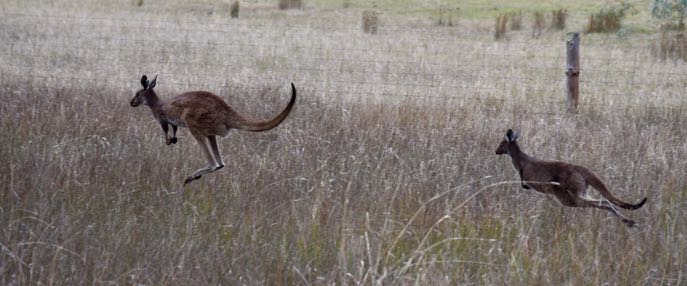
Each time I visit the park I always see a lot of Western Grey kangaroos.  And I wasn’t disappointed on this visit.  They were in abundance.

I drove along Mount Alma Road and enjoyed some great views of the surrounding countryside.

DSC_1293

Above:- Typical Fleurieu Peninsula countryside.

I then along Strangways Road and set up along a walking track at gate 10.  I ran the Yaesu FT-897, 40 watts, and the 20/40/80m linked dipole and the 1/2 wave 15m dipole for this activation.

Screen Shot 2018-06-04 at 7.27.20 pm.png

Above:- Aerial view of the park showing my operating spot.  Image courtesy of Location SA Map Viewer.

My first contact was a Park to Park contact, with a QSO with Rob VK4AAC/3 in the Buckley Nature Conservation Reserve VKFF-2054.  Rob was calling CQ on 7.144.  I then moved down the band to 7130 and started calling CQ.  Phil VK3MB came back to my CQ call, followed by Shaun VK3VLY/p and then Gerard VK2IO.  The 40m band was in quite good condition and I had a steady flow of callers.  Contact number 12 was Peter VK3PF/p who was activating SOTA summit VK3/ VE-168.  Contact number 32 was with Mike VK4DX/p activating IOTA OC-137.

I logged a total of 36 stations before I headed to the 80m band, hoping to get some of the local South Australian amateurs in the log.  My wife Marija VK5FMAZ had sent me an SMS message telling me she was listening on 40m but was unable to hear me.

First in the log on 80m was Adrian VK5FANA who was 5/9 plus.  Adrian gave me a 5/9 plus 30 signal report.  Next up was Marija VK5FMAZ and then Greg VK5GJ who was running QRP.  Rob VK4AAC/3 then called in for another Park to Park from the Buckley Nature Conservation Reserve.  My fifth and final caller on 80m was Peter VK3ZPF.

DSC_1304

Above:- my shack for the afternoon

I then headed to the 20m band and found John VK6NU/p calling CQ from SOTA peak VK6/ SW-042.  John was a strong 5/8 signal and he reciprocated with a 5/8 for me.  I headed up to 14.315 and called CQ, and called CQ, and called CQ.  But sadly no takers.  This was a little disappointing as the band was definitely open to Western Australia.

I then lowered down the squid pole and put up the 1/2 wave 15m dipole and started calling CQ on 21.245, but sadly I had no takers.  So I tuned across the band and found Ken JA2GPR calling CQ.  Ken was 5/8 and gave me a 5/6 signal report.

I then headed back to 40m and logged a further 10 stations from VK2, VK3, VK4, VK7 and New Zealand.  Regular park hunter Andrei ZL1TM made it into my log once again.  I was also called by Gar ZL3SV who was a super strong signal.  Gary advised I was peaking 20/9 to Nelson on the top of the South Island of New Zealand.  But, that was all due to Gary’s antenna, a 2,000 foot long (640 metre) centre feed sloper.

DSC_1305

Above:- View of my operating position on the edge of the walking track

To finish off the activation I headed back to 80m as I had seen a spot pop up for Peter VK3PF/p who was on 3.615 activating SOTA peak VK3/ VE-163.  After logging Peter I moved down to 3.610 and logged a further 6 stations from VK2, VK3, and VK5.

It was time to pack up and make the 1 hour journey back home.  I had a total of 60 contacts in the log.  It was slow going on the way home as the sun was just starting to set and as a result the roos were out in great numbers.

DSC_1307

Above:- One of the other road users

I worked the following stations on 40m SSB:-

  1. VK4AAC/3 (Buckley Nature Conservation Reserve VKFF-2054)
  2. VK3MB
  3. VK3VLY/p
  4. VK2IO
  5. VK3CWF
  6. VK2LEE
  7. VK7QP
  8. VK3FRC
  9. VK3FLES
  10. VK2PKT
  11. VK3PAT
  12. VK3PF/p (SOTA VK3/ VE-168)
  13. VK3MPR
  14. VK3ZPF
  15. VK7KR
  16. VK6KRC
  17. VK4SMA
  18. VK6XN
  19. VK4NH
  20. VK4DXA
  21. ZL4TY/VK4
  22. VK3ZZS/7
  23. VK4TJ
  24. VK3ANL
  25. VK4FDJL
  26. VK1NP
  27. ZL1TM
  28. VK3FRAB
  29. VK3SQ
  30. VK2JXA
  31. Vk7FRJG
  32. VK4DX/p (IOTA OC-137)
  33. VK2APL
  34. VK2YK
  35. VK3EI
  36. VK2KYO
  37. VK7JON
  38. VK4FW
  39. VK7ME
  40. VK4VXX/5
  41. VK8PAT
  42. VK7DW
  43. ZL3SV
  44. VK4MDZ
  45. VK2ZK
  46. VK2MCG

I worked the following stations on 80m SSB:-

  1. VK5FANA
  2. VK5FMAZ
  3. VK5GJ
  4. VK4AAC/3 (Buckley Nature Conservation Reserve VKFF-2054)
  5. VK3PF/p (SOTA VK3/ VE-163)
  6. VK5BJE
  7. VK3KWB
  8. VK3UH
  9. VK2NP
  10. VK3SQ
  11. VK3ARH

I worked the following stations on 20m SSB:-

  1. VK6NU/p (SOTA VK6/ SW-042)

I worked the following stations on 15m SSB:-

  1. JA2GPR


References.

Birds SA, 2018, <https://birdssa.asn.au/location/spring-mount-conservation-park/>, viewed 4th June 2018.

2017 stats and highlights

2017

2017

During 2017 I conducted 65 park activations for the VK5 National & Conservation Parks Award, and a total of 123 for the World Wide Flora Fauna program.  This was a mixture of parks in South Australia, Victoria, and New South Wales, with 18 of those activations counting towards the Keith Roget Memorial National Parks Award.  Marija and I continued to activate a number of parks together.

The Friday afternoon/evening activation event for the VK5 Parks Awards continued to be very popular.  I activated a number of unique parks in 2017 including the Blackwood Forest Recreation Park, the Adelaide Dolphin Sanctuary, the Lawari Conservation Park, and the Nurragi Conservation Reserve.

I conducted 13 activations for the Summits on the Air (SOTA) program during 2017.  Four of those summits were in South Australia, while the remaining nine were in Victoria.

The year 2017 kicked off for Marija and I with a SOTA activation of Mount Bryan VK5/ SE-001 on New Years Day.  This was as part of the regular VK New Years Day SOTA event.  Marija and I spent New Years Eve in Burra at one of the local pubs, and on NY Day we headed out to the summit.  After 2 hours on Mount Bryan I had a total of 76 QSOs in the log including 41 S2S contacts.  Marija had a total of 39 QSOs in the log including 37 S2S contacts.  It had been an amazing activation.

Marija and I then did the Dare Hill Drive.  This was a very enjoyable and scenic drive through spectacular countryside in the north of South Australia.  The drive took us to the homestead of Sir George Hubert Wilkins, and through the historic Collinsville Station property.  On the drive we stopped off to activate two rarely activated parks, the Caroona Creek Conservation Park and the Pandappa Conservation Park.

In mid January I had a fun afternoon out with Chris VK5FR and David VK5KC, at the Encounter Marine Park VKFF-1707.  We drove down along Goolwa Beach to the mouth of the mighty Murray River and set up on the sand.  We had a number of interested onlookers, one lady being game enough to pick up the mic.  The video below is a little bit of footage of the activation.

In February Marija and our daughter Olivia headed to Victoria.  Our main reason for travelling there was to go to Sovereign Hill at Ballarat as Olivia has an interest in Australian history.  Whilst away on the trip I activated SOTA peak Mount Warrenheip VK3/ VC-019, the Creswick Regional Park VKFF-0964, and Mount Buninyong VK3/ VC-018.  Whilst at Mount Buninyong, Allen VK3ARH paid us a visit.

March 4th to March 12th 2017 was Parks Week.  I had a little bit of free time from work and undertook 2 activations during the event.

static1-squarespace-1

On Friday 10th March I headed out to activate the Lowan Conservation Park 5CP-121 & VKFF-1052.  This was another successful activation, with a total of 87 contacts in the log including a number of Park to Park contacts, including Ken ZL4KD and his wife Margaret ZL4YS who were in ZLFF-0026.

And then on Saturday 11th March Marija and I activated Mount Lofty VK5/ SE-005 which is located within the Cleland Conservation Park 5CP-042 & VKFF-0778.  This was as part of an afternoon/morning of VK/Europe/UK SOTA activations, in which it was hoped that a number of Summit to Summit contacts would be obtained between VK & Europe/UK.  Band conditions on 20m had been quite ordinary in preceding weeks, so I didn’t expect to work much DX during this activation, yet alone any of the DX SOTA activators.  I ended up with 113 contacts in the log, included twenty (20) Summit to Summit contacts and six (6) Park to Park contacts.  This included numerous DX S2S contacts into Spain, Switzerland, England, Romania, Wales, and Germany.

Screen Shot 2018-06-02 at 11.31.50 am

Above:- racking up the QSOs at Mt Lofty/Cleland CP

Later in March I headed out to the Totness Recreation Park for the John Moyle Memorial Field Day.  I entered in the Six Hour Portable Operation category.  Specifically the Single Operator, Phone Only, HF Bands section.  Within my 6 hour block of operating I made a total of 241 contacts with a score of 482 points.  I came in 1st place in the 6 hour portable section, running the Yaesu FT-857d, 40 watts and the linked dipole.

In April the special activation weekend was held for the 4th year anniversary of the VK5 National & Conservation Parks Award.  Marija and I headed down the Fleurieu Peninsula, south of Adelaide.  We activated 4 different parks and made a total of 532 QSOs.

A total of 20 amateurs took part in the weekend, activating 29 different parks across Australia.  A total of 1,311 QSOs were made over the weekend, including 410 Park to Park contacts.  Each activator who took part in the weekend received a special participation certificate.

vk5pas

Above:- participation certificate for the 4th year anniversary of the VK5 Parks Award.

A few weeks later I headed to Victoria to Foster to attend Antennapalooza run by the Gippsland Gate Radio & Electronics Club.  The them for the 2017 event was operating portable, and I was asked to deliver a presentation on the parks awards.  Whilst away I activated a number of parks and SOTA summits.

One of my activations whilst away was a joint activation with Chris VK3QB and Chris VK3PAT at the Shallow Inlet Marine Coastal Park VKFF-0749.  This was a really enjoyable morning on the beach under the shade of the awning of the Toyota Hi Lux.

On Easter Sunday Marija and I activated the Scott Creek Conservation Park in the Adelaide Hills.  After Marija had qualified the park I jumped on the mic using the special call of VK5WOW, issued for the 2017 WIA AGM at Hahndorf.  I ended up with a total of 157 contacts as VK5WOW, on the 20, 40 and 80m bands, including 11 Park to Park contacts.  A small amount of DX was logged from New Zealand, Croatia, Finland, Italy, France, Germany, Japan, and Belgium.  Below is a short video of the activation.

Later in April Marija and I drove to the Riverland and attended the BRL Gathering.  Whilst away we activated a number of parks.  Once again I set up a small display at the event, showing various portable transceivers, antennas, power sources, and awards.  I also delivered a presentation on operating portable.

A highlight of this year’s BRL Gathering was a high altitude balloon launch by the Amateur Radio Experimenters Group.

One of my activations whilst in the Riverland was at the Cooltong Conservation Park.  Marija activated & qualified the park first and I then operated as VK5WOW, making a total of 161 contacts.  Whilst activating the park Shaun VK5FAKV came out to pay us a visit.

On Anzac Day Marija and I activated the Tolderol Game Reserve VKFF-1752, using the special AX prefix.  We made a total of 176 contacts between the two of us.

In late April I activated the Monarto Conservation Park using the special call of VK5WOW.  I made a total of 113 QSOs.

Screen Shot 2018-06-03 at 7.04.02 pm

In early May I activated the Totness Recreation Park, again using the special call of VK5WOW.  I made a total of 130 contacts.

On 6th May I activated the Ferries McDonald Conservation Park for the Harry Angel Memorial 80m Sprint.  I worked a total of 63 stations during the Sprint from VK2, VK3, VK4, VK5, VK6, VK7, and VK8.

The weekend of 13th & 14th May was the Mills on the Air Weekend.  On Saturday I activated Nixon’s Mill at Hahndorf using the special VK5WOW call.  I made a total of 89 QSOs, including making contact with hams at the Dunn Mill at Mount Barker, and Andersons Mill at Smeaton in Victoria.  Later that day I also activated the Kenneth Stirling Conservation Park as VK5WOW and made a total of 107 contacts.  On Sunday I activated the old Laucke Flour Mill at Strathalbyn and made a total of 87 QSOs.  I was joined briefly by Tony VK5MRT.

On 17th May I activated the Mount George Conservation Park with the special VI5WOW call.  I made a total of 84 contacts.

This was my 6th activation using VK5WOW or VI5WOW.  During April & May under these calls I made a total of 872 contacts.  Sadly, propagation was not great when it came to DX.

imageedit_1_7675210881

During May the Annual General Meeting & Convention of the Wireless Institute of Australia was held at Hahndorf, just down the road from my home.  Andrew VK6AS, and Heath VK3TWO & his wife Monique stayed with us.  The theme of the convention was ‘Radio is Magic’.

The event kicked off on the Friday evening with drinks and gourmet pizza at the Hahndorf Convention Centre.  Saturday saw the AGM and presentations.  I delivered a presentation on ‘Operating field portable in the great outdoors’.  The Saturday night formal dinner was at the convention centre.

On Sunday morning, myself and 4 other team leaders (John VK5BJE, Peter VK5PET, Les VK5KLV, & Chris VK5FR) took a number of amateurs out into the field to activate parks.  For many it was their first park activation.  One of my team was Gerard VK2JNG, who has taken to park activating like a duck to water.  Later that day there was a Come and Try event at the Hahndorf Oval.  Chris VK5FR and I set up a parks display table.

I received a Certificate of Appreciation at the Convention for delivering my parks presentation.  I would like to express my sincere thanks to the Organising Committee for the 2017 WIA AGM & Convention: David VK5KC, John VK5BJE, Jim VK5TR, Shirley VK5YL, Stuart VK5STU, Roy VK5NRG, Grant VK5GR, Matt VK5ZM, David VK5KK, Ian VK5ZD, Joy Robbins, & Daniel VK5DF.

There was also a special 2017 WIA AGM & Convention award on offer, which both Marija and I qualified for.  The certificate was actually designed by myself.

On the Sunday afternoon of the Convention I headed out to the Mylor Conservation Park for one final run of the special call of VI5WOW.  I logged a total of 56 stations and hopefully gave a few more people a chance to get the special call in their log.  So all up I ended up with 928 QSOS whilst using VK5WOW and VI5WOW.

In June Marija and I headed down to the South East for the annual convention and National Fox Hunting Championships held by the South East Radio Group.  Whilst down that neck of the woods we activated 7 parks in South Australia and Victoria, and made a total of 567 contacts, with 44 of those being Park to Park contacts.

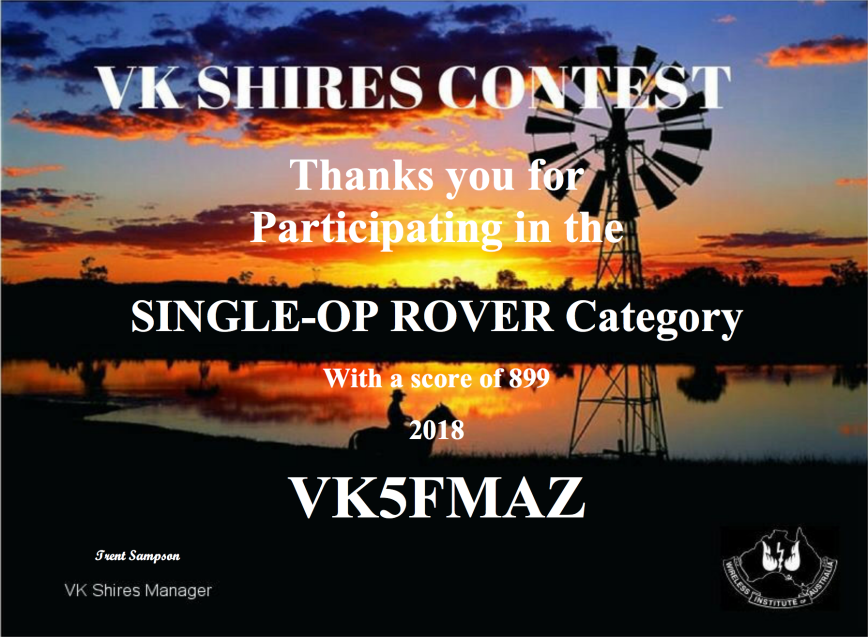
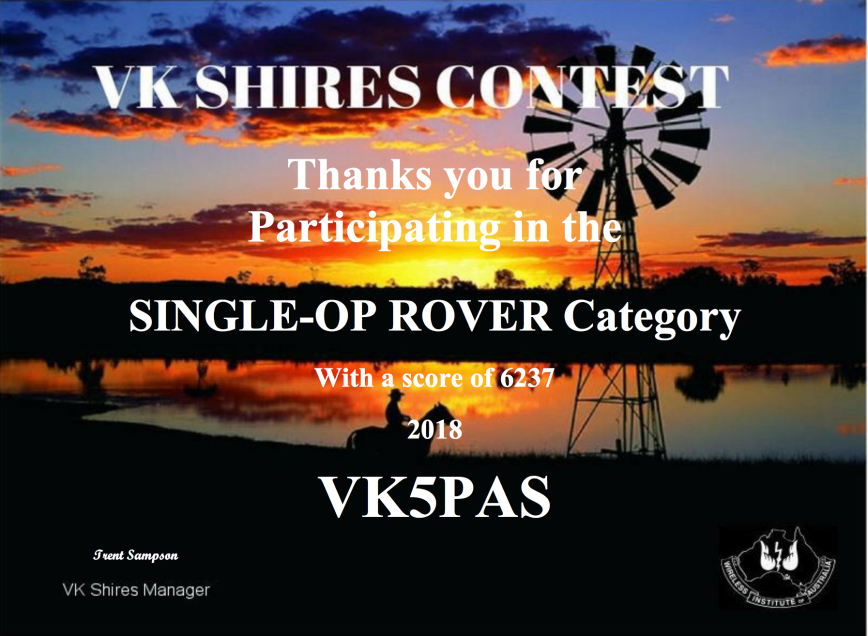
The SERG event coincided with the VK Shires Contest.  Marija and I activated three shires – GD5, MG5, & GL3.  I made 193 QSOs.  Marija made 78 QSOs in her very first contest.  Congratulations to Tony VK3XV who came in at number one in this category with 173 QSOs and 182 Shires and a score of 31,486 points.  I managed to get position number 2 with a total of 167 QSOs and 180 Shires and a score of 30,060 points.  And well done to Marija who came in at number 3, with 70 QSOs and and a score of 5,180 points.

We enjoyed a fantastic night at the SERG Convention dinner on the Sunday evening.  We shared a table with my good mate John VK5NJ and his wife Tanina, and Tony VK5ZAI and his wife Jill.  Marija even drew the first winning raffle ticket, winning a little BaoFeng hand held tx.  I can highly recommend the SERG Convention to anyone who has not been before.

In July I activated the Totness Recreation Park for the Trans Tasman Low Band Contest.  The aim of the contest is to encourage Low Band activity Trans-Tasman, that is between VK and ZL.  The contest is divided into three 2 hour periods.  I remained out in the field until just after the commencement of the third period which was at 1200 UTC (9.30 p.m. local time).  The cold weather got the better of me (got down to 4 deg C) and I packed up and headed home with a total of 171 contacts in the log.

Screen Shot 2018-06-03 at 8.21.48 pm.png

Above:- ‘the shack’ at Totness for the Trans Tasman.

In August for the 2017 International Lighthouse & Lightship Weekend, Marija and I activated the Marino Rocks lighthouse AU-0018 located within the Marino Conservation Park 5CP-126 & VKFF-1056.  We made a a total of 210 contacts, including 22 different Australian lighthouses and one NZ lighthouse.  Amongst that were 10 Park to Park contacts.  Ian VK5MA visited us during the activation.

Below is a short video of our activation at Marino lighthouse.

On October 22nd the 2nd VKFF Team Championship was held.  Six teams took part in the event.  Marija and I entered the event as ‘The Walkie Talkies’ and activated the Monarto Woodlands Conservation Park.  The weather was less than ideal, and Marija and I huddled underneath the awning of the 4WD during the activation.  We made a total of 197 QSOs, which included 32 Park to Park (P2P) contacts under some very trying band conditions.  Marija and I took 1st place this year, pipping last years winners Team Kookaburra.

In late October between 23rd-29th October, National Bird Week was held.  I headed down to the Coorong National Park for an activation and some bird photography.

Screen Shot 2018-06-03 at 8.43.36 pm.png

I managed to get some good photographs during my visit to the Coorong.  However, not everything went to plan.  I blew up my Yaesu FT-857d.  Fortunately it has been fixed.

In early November I activated the Scott Creek Conservation Park with my good mate John VK5BJE.  During the activation I tested my newly acquired Yaesu FT-897 which I had obtained through a deceased estate auction with my local radio club.  We had a great afternoon out in the park and ended up with 102 stations in the log between us, including some nice Pacific DX contacts on 20m, and five Park to Park contacts.


In November Marija and I enjoyed 2 great weeks away in Victoria and New South Wales.  Whilst away from home we activated a total of six (6) summits for the Summits on the Air (SOTA) program, and a total of twenty seven (27) parks for the World Wide Flora Fauna (WWFF) program and the Keith Roget Memorial National Parks Award.  We made a total of 1,680 QSOs under some pretty trying band conditions at times.  This included x 2 Summit to Summit contacts, and 138 x Park to Park contacts.  We travelled a distance of 4,450 km.

Both Marija and I received an activator certificate for taking part in the KRMNPA Weekend.  Many thanks to Tony VK3XV, the KRMNPA Awards Manager.

Screen Shot 2018-05-25 at 11.11.22 am.png

Radio wasn’t the only thing on the agenda during the trip away.  We did a lot of sightseeing including a really enjoyable cruise in the Croajingolong National Park viewing the majestic White Bellied Sea Eagles.

And whilst away we met up with a number of amateurs.  We called in to see Paul VK3SS at Stratford, and enjoyed a nice evening out with some of the local hams at Traralgon.  Whilst at Malacoota we bumped in to John VK2AWJ.  And on the way home we caught up with Kev VK3VEK and Peter VK3TKK.

Later in November the 2017 VKFF Activation Weekend was held.  Marija and I stayed at Morgan for a few nights and activated 6 parks whilst we were away.  We made a total of 490 QSOs including 138 Park to Park QSOs.

Each activator who took place in the 2017 VKFF Activation Weekend received a special participation certificate.

Screen Shot 2018-05-25 at 12.02.10 pm.png

During November the VKFF Annual Photographic Competition was held.  There were a total of 31 entries. Thankyou to everyone who submitted photos (VK3FLCS, VK3GGG, VK3PF, VK3ZPF, VK4HNS, VK4JAZ, VK4SMA, VK4SOE, VK5FMAZ, VK5PAS, VK7JON).  A total of 17 amateurs took the time to cast their vote/s.  First place was shared by myself and Neil VK4HNS.  Second place was shared by Grant VK4JAZ, Marija VK5FMAZ & Paul VK5PAS.  Third place was shared by Jonathan VK7JON, Peter VK3ZPF, Peter VK3PF, & Paul VK5PAS.

During 2017 I was issued with a number of awards including the following:-

  • WWFF Park to Park 264
  • WWFF Park to Park 308
  • WWFF Park to Park 352
  • WWFF Park to Park 396
  • WWFF Park to Park 444
  • WWFF Park to Park 544
  • DXFF 40
  • YOFF Diploma 10 x 200 QSOs
  • WWFF Activator 154
  • WWFF Activator 165
  • WWFF Activator 176
  • WWFF Activator 187
  • WWFF Hunter 944
  • WWFF Hunter 1044
  • Murray River Parks Activator 20
  • NSW National Parks 50 year
  • VKFF Activator Honour Roll 175
  • VKFF Activator 200
  • VKFF Hunter Honour Roll 600
  • VKFF Hunter Honour Roll 625
  • VKFF Hunter Honour Roll 650
  • VKFF Hunter Honour Roll 675
  • VKFF Hunter Honour Roll 700
  • VKFF Hunter Honour Roll 725
  • VKFF Hunter Honour Roll 750
  • VKFF Hunter Honour Roll 775
  • VKFF Hunter Honour Roll 800
  • VKFF Hunter Honour Roll 825

This slideshow requires JavaScript.

Each year the VKFF program issues certificates to the Top VKFF Hunter and the Top VKFF Activator.  This year the Top VKFF Hunter with a total of 548 different VKFF references during 2017 was Peter VK3PF.  An amazing effort.  Coming in at 2nd place was Gerard VK2IO with 547 different VKFF references, just 1 behind Peter.

The Top VKFF Activator turned out to be myself with 102 different VKFF references activated during 2017.  This was very closely followed by Gerard VK2JNG with 99 different VKFF references activated.  Gerard has certainly taken to park activating.

vk5pas-top-activator-2017.png

And each year the global WWFF program issued Top 44 certificates.  The first Top 44 certificate is issued each year for the Top 44 activators in the world, and is based on activations where 44 QSOs are achieved.  I came 13th in the world with 90 activations.  The top activator in the world was SP5UUD with 505 activations. Now that is an achievement.

The other Top 44 certificate is issued to activators who have made it into the Top 44, with respect to the number of QSOs made during activations.  In 2017 I came in at position number 27 with a total of 7,037 QSOs from 102 different references.  That works out to around 69 contacts per activation.

Some of my best DX contacts whilst out portable in 2017 was with Grant E6AG on Nieue, A25BE in Botswana.


2016 stats and highlights

2016

2016.png

During 2016 I undertook a total of 74 activations for the VK5 National & Conservation Parks Award.  This included a number of parks for the ever popular Friday afternoon/evening activation event.  During one of those Friday activations, in the Mark Oliphant Conservation Park, I spoke with Joe W5JI, who was previously K5THB many many years ago.  I have very good memories of listening as an SWL, to Joe some 35 plus years ago when I was a teenager.  Joe was a regular on 40m talking with W4MIP and W2GO and other USA stations.

The Wiljani Conservation Park was gazetted and in April I headed out to the park to activate it for the very first time.  As this was a new park I had plenty of callers.  In fact I ended up with 101 contacts in the log.  And in August, a park very close to home was added to the VKFF program.  This being the Totness Recreation Park, which I activated for the very first time on 3rd August, making a total of 77 contacts.  And in December I activated the newly gazetted Adelaide International Bird Sanctuary National Park.

During the year I activated a number of parks with other amateurs including my good wife Marija VK5FMAZ (who obtained her licence in 2016), Marcus VK5WTF at the Kaiser Stuhl Conservation Park, and John VK5BJE at the Scott Creek Conservation Park.

The WWFF program increased dramatically in popularity during 2016.  I conducted a total of 100 park activations for WWFF/VKFF in 2016.

I activated a total of 11 SOTA summits in 2016.  Four of those were in South Australia, six in Victoria, and one on Norfolk Island.

The highlight of 2016 for SOTA for me was receiving my Super Sloth certificate, issued for having reached 10,000 points as a SOTA chaser.

vk5pas-sota-10000.png

The year 2016 kicked off for me with an activation of Mount Lofty summit VK5/ SE-005 in the Cleland Conservation Park 5CP-042 & VKFF-0778.  This was on New Years Day as part of the annual VK NY Day SOTA event.  I spent about 3 hours on the summit and made a total of 93 contacts, including 36 Summit to Summit contacts.

Screen Shot 2018-06-01 at 12.02.32 pm

Above:- at Mount Lofty VK5/ SE-005 & the Cleland Conservation Park.

On Australia Day I activated Mount Gawler summit VK5/ SE-013 using the special AX prefix.  Stuart VK5STU & Nigel VK5NIG joined me for the activation.  I made a total of 82 contacts.  Later that day I activated The Knoll Conservation Park and made a total of 60 QSOs.

In early 2016 I became a Director on the Board of the Wireless Institute of Australia.

image_1_hires.jpg

I took part in the John Moyle Memorial Field Day during March, activating the Monarto Conservation Park.  I entered into the 6 hour portable section and made a total of 229 contacts.  I came in at First Place for this category with a total of 458 points.

The VK5 National & Conservation Parks Award celebrated its 3rd birthday in 2016, and during April a special activation weekend was held.  A total of 26 amateurs took part in the weekend, activating a total of 62 different parks.  I activated a total of 6 parks on the Fleurieu Peninusla south of Adelaide, and made a total of 602 QSOs.

In March 2016 my lovely wife Marija undertook the Foundation licence course held by the Adelaide Hills Amateur Radio Society.  She was later issued with the call of VK5FMAZ.

img_2106

On the 10th April 2016 Marija undertook her first park activation at the Kenneth Stirling Conservation Park in the Adelaide Hills.  Marija made a total of 69 QSOs including 4 Park to Park contacts.  Below is a short video showing some of her contacts during the activation.

Later that month in April, Marija I drove up to the Riverland and attended the BRL Gathering at the historic Overland Corner Hotel.  A boot sale was one of the features of the gathering, with a number of bargains on offer.  I was fortunate to come away with a few goodies, including an IC751 transceiver, a Mini Palm Paddle and two antenna tuners (all previously owned by Larry VK5LY-now silent key).  I gave a very short talk on the WIA and the recent proposal submitted to ACMA.

The BRL Gathering is a great social event and each Saturday night a group of us normally head out for tea.  In 2016 Marija and I were joined by Ivan VK5HS and his wife Sheryl, Di (wife of Larry VK5LY), and Peter VK5PE.

Whilst away Marija and I activated a number of parks in the Riverland.  It was great having Marija doing the activating with me, with her brand new Foundation call.

On the 25th April, Anzac Day, I activated the Ferries McDonald Conservation Park using the special AX prefix.  I made a total of 120 contacts including five Park to Park contacts, and numerous DX contacts on both 15m & 20m.

Screen Shot 2018-06-01 at 3.15.23 pm.png

In May Marija and I flew to Norfolk Island to attend the Annual General Meeting of the Wireless Institute of Australia.  This was a very memorable trip and was well organised.  On Saturday, following the AGM, I delivered a presentation on operating portable.

Norfolk Island was a very social event, with the opportunity of catching up with many amateurs.  One of the highlights was a night out at the Jolly Roger, with Peter VK3PF, Heath VK3TWO and his wife Monique VK6FMON.

Whilst on Norfolk I managed to get on air as VK9PAS on 6 occasions activating from both VKFF-0392 and Mount Bates VK9/ NO-001.  Marija also operated from Mount Bates.  All up I made a total of 599 contacts, working 19 different DXCC entities.  I was pretty happy with this considering all of my activations were portable, using the Yaesu FT-857, about 40 watts and the linked dipole.  We powered the radio with a car battery which was kindly loaned to us by the hire car company.

Whilst on Norfolk I was also fortunate to be able to operate with the special call of VI9ANZAC.

Screen Shot 2018-05-26 at 11.38.51 am

Above:- On air from Norfolk Island as VI9ANZAC

We also paid a visit to the VK9NT DXpedition team: Chris VK3QB, Luke VK3HJ, Lee VK3GK, Brenton VK3YB, and Allan VK2CA.

Screen Shot 2018-06-01 at 3.36.53 pm

Above:- at the VK9NT accomodation

For anyone that worked me during my visit to Norfolk, I have a special VK9PAS QSL card which is available through my QSL Manager, Charles M0OXO.

vk9pas.png

There was also a special Norfolk Island Award which was on offer.

vk9pas-norfolk-island.png

In June I drove down to the South East to attend the South East Radio Club’s annual convention and the National Fox Hunting Championships.  I delivered a presentation on the WIA at the convention to around 75 people.

The SERG Convention coincides with the VK Shires Contest.  So when I had some time I headed out for some VK Shire activity.   I operated during the contest from the Telford Scrub Conservation Park 5CP-226 & VKFF-0805, and the Carpenter Rocks Conservation Park 5CP-038 & VKFF-1018.  I came first in the Rover section with a total score of 16,704 points.

Screen Shot 2018-05-25 at 2.31.38 pm.png

In late June the very first ‘Freeze your Butt Off’ contest was held in Australia.  I activated the Ettrick Conservation Park and made a total of 151 contacts in 8 deg C and rainy conditions.  I came first in the portable section with a total of 22,550 points.

In July I took part in the Trans Tasman Low Band Contest.  The contest has an aim to encourage Low Band activity trans Tasman, that is between VK and ZL, on the 160, 80 and 40m bands.  I activated the Mowantjie Willauwar Conservation Park on the way home from the Coorong, and made a total of 90 contacts in about 90 minutes.  I received a certificate of merit for taking part in the contest.

In August the ACT Summits on the Air (SOTA) enthusiasts held their annual VK1 SOTA Winter QSO Party.  Marija and I headed down the Fleurieu Peninsula to the little one point summit of Black Bullock Hill VK5/ SE-016 to take part in the event.   At the end of the activation I had a total of 65 contacts in the log, including 35 Summit to Summit contacts (113 S2S points).  Marija had also qualified the summit with a total of 9 contacts and 8 Summit to Summit contacts (19 S2S points).

The John Moyle Memorial Field Day took place on Saturday 13th & Sunday 14th August.  I decided to go portable this year and I activated the Totness Recreation Park just down the road from home.  I made a total of 426 contacts during the contest and came in 2nd place in VK5, and 14th overall in the Single Operator-Phone section.  I was really pleased with this considering I was operating portable.

A little later in August and it was time for the International Lighthouse & Lightship Weekend (ILLW).  Together with a number of other amateurs from the Adelaide Hills Amateur Radio Society, I headed over to Kangaroo Island to activate the Cape WIlloughby lighthouse, using the special call of VK5CWL.

Our final QSO count for the 2016 ILLW was 547 contacts on the 160, 80, 40, 30, 20 and 2 m bands, on PHONE, CW, PSK, and JT65.  We worked a total of 36 different countries.

Other than a lot of contacts being made, this was a terrific social event, with plenty of great food and lots of red wine.

I remained on Kangaroo Island following the ILLW and activated 10 different Conservation Parks, making a total of 542 QSOs.  Many of these parks had only been activated once before, so they were in high demand by the WWFF hunters.

screen-shot-2016-08-30-at-9-26-37-am.jpg

On Sunday 11th September, the Belair National Park celebrated its 125 year anniversary.  And as part of these celebrations, an Open Day was held at the park.  My good friend John VK5BJE was approached by the Senior Ranger for the Mount Lofty Parklands, asking if he would be interested in setting up an amateur radio station in the park as part of the Open Day.  John kindly invited myself and my wife Marija VK5FMAZ, to come along and participate.

We had quite a bit of interaction with the public during the day, including a visit by a scout group.  We even convinced a number of people during the day to pick up the mic and say g’day.

John, Marija, and I made a total of 221 contacts over the duration of the day.

A few of the highlights of the day for me were:-

  • convincing some of the children to pick up the microphone to say hello
  • contact with newly licenced amateur, Helen VK7FOLK/p
  • contact with Stephen VK2LAD, activating his very first park
  • contact with Chris VK5CP, operating portable with just 200 milliwatts
  • contact into St Lucia in the Carribean with J68HZ, a rare DXCC entity.
  • contact on 40m with my mate Danny ON4VT in Belgium
  • contact with Peter VK2PV using 300m of fencing wire as his antenna

Also in September Marija and I travelled to Whyalla in the ‘Iron Triangle’ region of South Australia.  This trip was to stay with, and visit family and friends, but whilst there I activated a number of parks.

Screen Shot 2018-06-01 at 5.10.16 pm.png

Above:- Activating the Whyalla Conservation Park, with Wild Dog Hill in the background

In early October 2016 Andrew VK6AS and I travelled around South Australia to deliver a number of presentations to various clubs about the WIA.  We covered around 1,100 km in 3 days.  Whilst away we activated a handful of parks including Mount Monster Conservation Park, Peebinga Conservation Park, and Loch Luna Game Reserve.

On the 16th October, Marija and I activated the Monarto Conservation Park as part of the inaugural VKFF Team Championship.  A total of 8 teams took part in the event.  Sadly band conditions and weather conditions were pretty average.  But we did make a total of 138 contacts.  This included 23 Park to Park contacts.  Marija made 70 contacts and I made 68 contacts and won the 2 ops/single tx/40m & 15m/100 watts or less section.  The overall winners were Team Kookaburra consisting of Tony VK3XV and Mick VK3GGG.

National Bird Week was held between 17th-23rd October 2016, and this aligned nicely with two newly gazetted Conservation Parks in South Australia.  So for Bird Week I activated one of those parks, the Monarto Woodlands Conservation Park.  I made a total of 60 contacts from the park.  I have a special QSL card for anyone who worked me.

screen-shot-2016-10-19-at-10-35-26-pm.png

In late October I headed over to Western Australia, where Andrew and I delivered another presentation on the WIA.  Andrew was kind enough to put me up at his house.  Whilst in VK6 I also snuck in a few park activations.  It was certainly very different operating over in VK6, with the number of callers during activations far less than over in VK5 and on the east coast.

The Adelaide Hills Amateur Radio Society held their annual Buy and Sell on  Sunday 6th November 2016.  Myself and Ian VK5CZ, the SOTA VK5 Manager, set up a display at the Buy and Sell, promoting the various Parks programs (including World Wide Flora Fauna, & VK5 Parks Award), and the Summits on the Air (SOTA) program.

Screen Shot 2018-05-26 at 10.56.26 am.png

Above:- Our SOTA & Parks display at the AHARS Buy and Sell

On Friday 11th November 2016 I headed to Victoria for the annual parks activation weekend for the Keith Roget Memorial National Parks Award.  And whilst interstate I had arranged to team up with fellow Director of the Wireless Institute of Australia (WIA), Andrew VK6AS to deliver some presentations.  I returned home on Thursday 17th Nov 2016, after delivering 4 WIA presentations and activating a total of nine parks and five summits of the Summits on the Air (SOTA) program.

screen-shot-2016-11-20-at-12-43-38-pm

Above: delivering a presentation at the Eastern Mountain Districts Radio Club clubrooms

I made a total of 570 contacts whilst away.

Screen Shot 2018-05-26 at 10.53.20 am.png

Above:- a top spot alongside the Murray River in the Gunbower National Park.

Whilst in VK3 I caught up with my good mate Bob VK3SX at ‘the ranch’ at Gunbower.  We even did an activation together at the Gunbower National Park.  I also called in to see Peter VK3FPSR in Cobram.

In late November the 2016 VKFF Activation Weekend was held.  This proved to be a very popular weekend, with a total of 43 activators taking part.  A total of 2,655 QSOs were made over the weekend.  Of those, a total of 1,373 QSOs were made on the Saturday, whilst a further 1,282 were made on the Sunday.  There were an amazing number of Park to Park (P2P) contacts over the weekend.  In fact, a total of 1,010 P2P QSOs (490 on the Saturday and 520 on Sunday).

Marija VK5FMAZ and I activated 2 parks on Saturday 26th: Poonthie Ruwe Conservation Park VKFF-1082, and Mowantjie Willauwar Conservation Park VKFF-0919. We made a total of 233 QSOs including 74 Park to Park contacts.  On Sunday 27th I activated 3 parks: Marne Valley Conservation Park VKFF-0906, Swan Reach Conservation Park VKFF-0832, and Ridley Conservation Park VKFF-0932. I made a total of 191 QSOs including 48 Park to Park contacts.

All activators who took part in the weekend received a participation certificate.

vk5pas.png

In 2016 I decided that my wife deserved a little token of my appreciation, so I made up a Certificate of Appreciation.  This became so popular that I was asked by a number of other amateurs to make up a certificate for their wives.

vk5pas1.png

During 2016 I met a number of amateurs.  This included Brian VK3MCD who was visiting from Victoria.  We also had a handful of SOTA/Parks coffee mornings, where hams who are interested in portable activity had a chance for a chat and to exchange ideas.

I delivered a number of presentations during 2016 to various clubs which included the South Coast Amateur Radio Club, the South East Radio Group, the Elizabeth Amateur Radio Club, and the Amateur Radio Experimenters Group.

Screen Shot 2018-06-01 at 4.03.01 pm.png

Above:- delivering a presentation on operating portable, for the Amateur Radio Experimenters Group.

I received a number of awards during 2016 including the following:-

  • SOTA Summit to Summit 500 points
  • SOTA Super Sloth 10,000 chaser points
  • SOTA Platinum Mountain Hunter
  • SP500YFF
  • 5BFF (Cyprus) 3 references worked
  • Keith Roget Activated 10 parks
  • Pine Cone Award 50 QSOs 10 locations
  • Pine Cone Award 75 QSOs 15 locations
  • Pine Cone Award 100 QSOs 20 locations
  • Pine Cone Award 125 QSOs 25 locations
  • DLFF (Germany) Silver Hunter
  • Murray River Parks Hunter 10
  • Murray River Parks Hunter 20
  • Murray River Parks Hunter 30
  • DXFF Activator 6
  • WWFF Park to Park 10
  • WWFF Park to Park 44
  • WWFF Park to Park 88
  • WWFF Park to Park 132
  • WWFF Global Hunter 544
  • WWFF Global Hunter 644
  • WWFF Global Hunter 744
  • OCCFF-H-14
  • VKFF Activator Honour Roll 100
  • VKFF Activator Honour Roll 125
  • VKFF Hunter Honour Roll 350
  • VKFF Hunter Honour Roll 375
  • VKFF Hunter Honour Roll 400
  • VKFF Hunter Honour Roll 425
  • VKFF Hunter Honour Roll 450
  • VKFF Hunter Honour Roll 475
  • VKFF Hunter Honour Roll 500
  • VKFF Hunter Honour Roll 525
  • VKFF Hunter Honour Roll 550
  • VKFF Hunter Honour Roll 575
  • WWFF Activator 77
  • WWFF Activator 88
  • WWFF Activator 99
  • WWFF Activator 110
  • WWFF Activator 121
  • WWFF Activator 132

This slideshow requires JavaScript.

In 2016 I featured in the Top 44 list again.  I received a certificate for being number 12 in the world for activated references, and another certificate for being number 33 in the world for the number of QSOS whilst activating.

Propagation during 2016 continued to be quite good, with a number of DX SOTA & Parks activators appearing in my log including Andy G7SQW, Bernard PB7Z, Chris OU7M, Iratxe EA2DNQ, Antonio EX2AG, Dariusz SP9DPM, and Nadika 4S7RS.

Screen Shot 2018-06-01 at 4.59.20 pm.png

Above:- Iratxe EA2DNQS sent me this photo of her during her SOTA activation.


VI50IARU3 activation/s coming up

Between 11th June 2018 – 17th June 2018 I will be active with the special call of VI50IARU3, to help celebrate the IARU Region 3’s 50th anniversary.

Weather & work permitting I will try to get out to activate some parks with this call. I will place some alerts on parksnpeaks and on Facebook as the dates draw closer and I have an idea on what the weather is going to do.

The IARU region 3 have an award. The award details can be found on the IARU Region 3 web site. A summary of the award is – radio amateurs who certify having contacted at least 5 (five) contacts (QSO)s on different modes or bands with Special Event Station for commemorating the 50th Anniversary of IARU Region 3 from eligible countries are those in Region III whose amateur societies are members of IARU Region 3.

Also a QSL confirming the contact is available as a downloadable item on the IARU web site.

http://awards-iaru-r3.org/

Hope to get you in the log.


Screen Shot 2018-06-01 at 11.10.14 am