Yesterday (Saturday 19th August 2017) my wife Marija VK5FMAZ and I headed down to the southern suburbs of Adelaide and activated the Marino Rocks lighthouse AU-0018 and the Marino Conservation Park 5CP-126 & VKFF-1056 for the 2017 International Lighthouse and Lightship Weekend (ILLW).
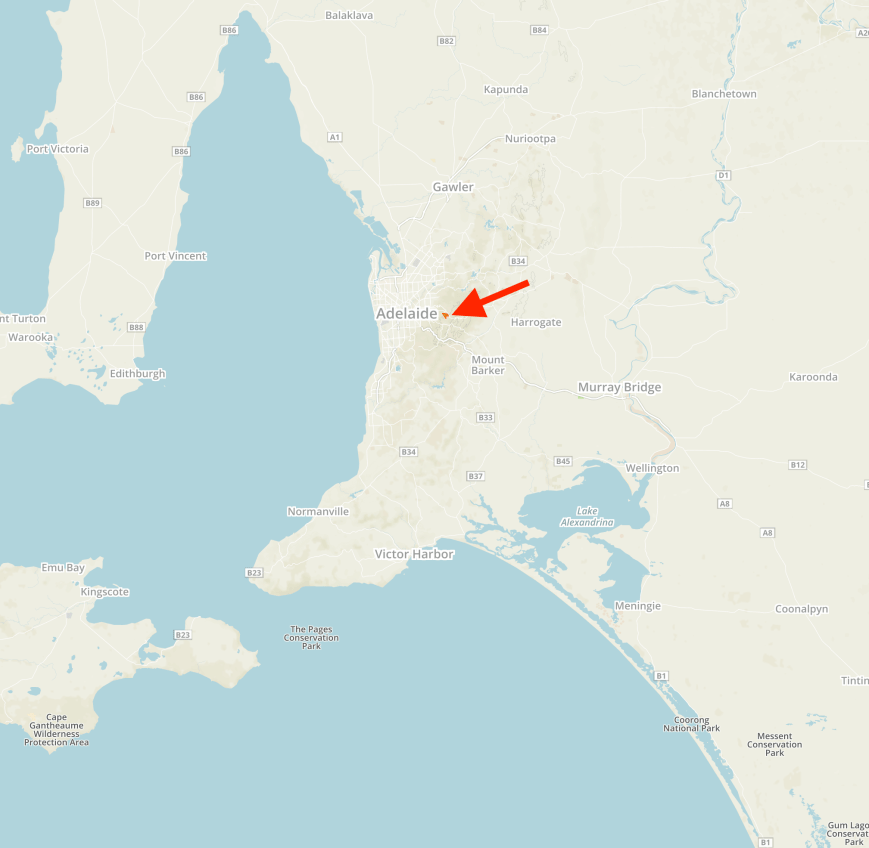
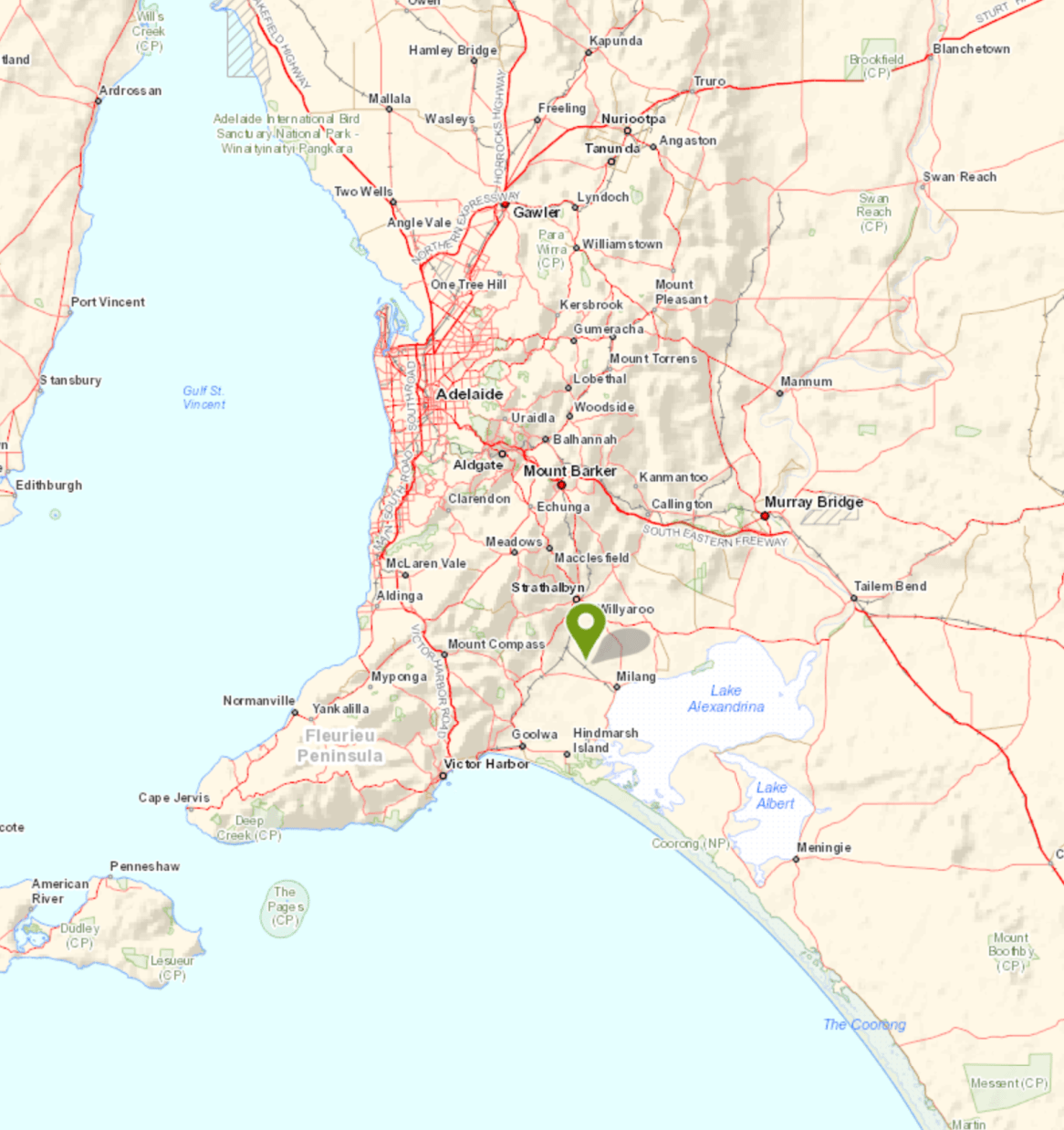
The park is located about 44 km from our home in the Adelaide Hills, and about 19 km south of the city of Adelaide.
This was to be a unique park for both Marija and I as activators for both the World Wide Flora Fauna (WWFF) program, and the VK5 National & Conservation Parks Award.
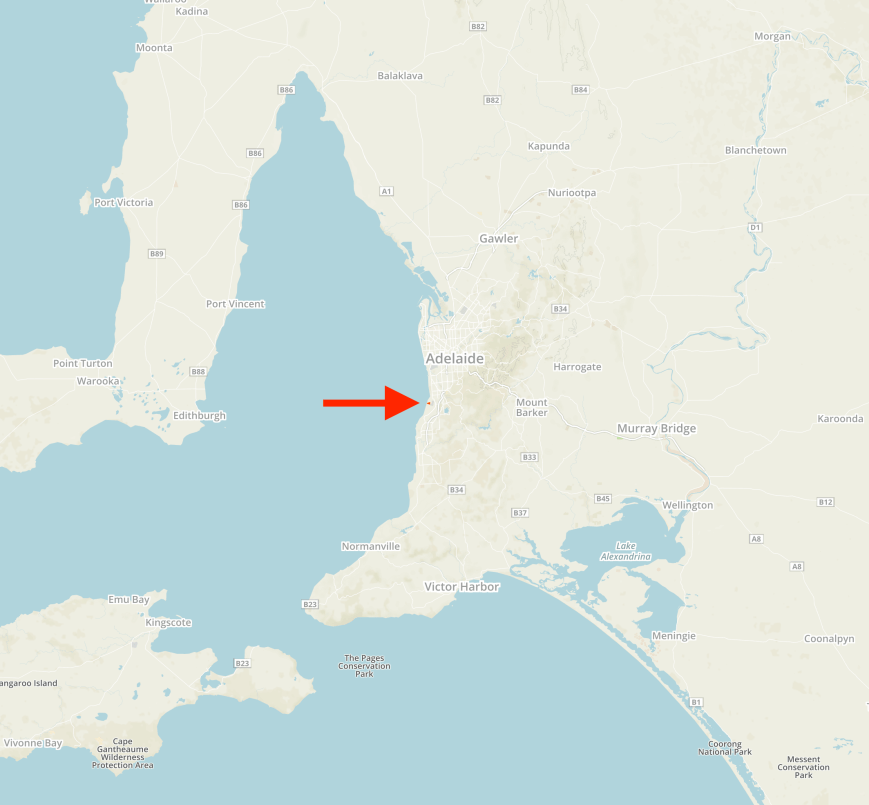
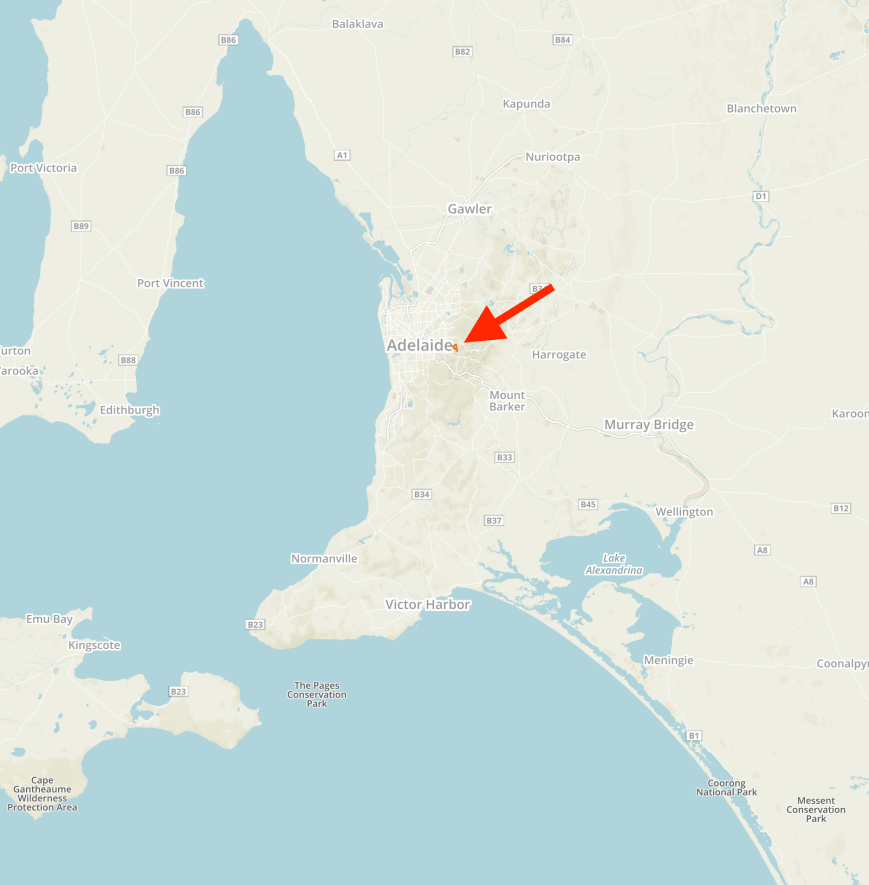
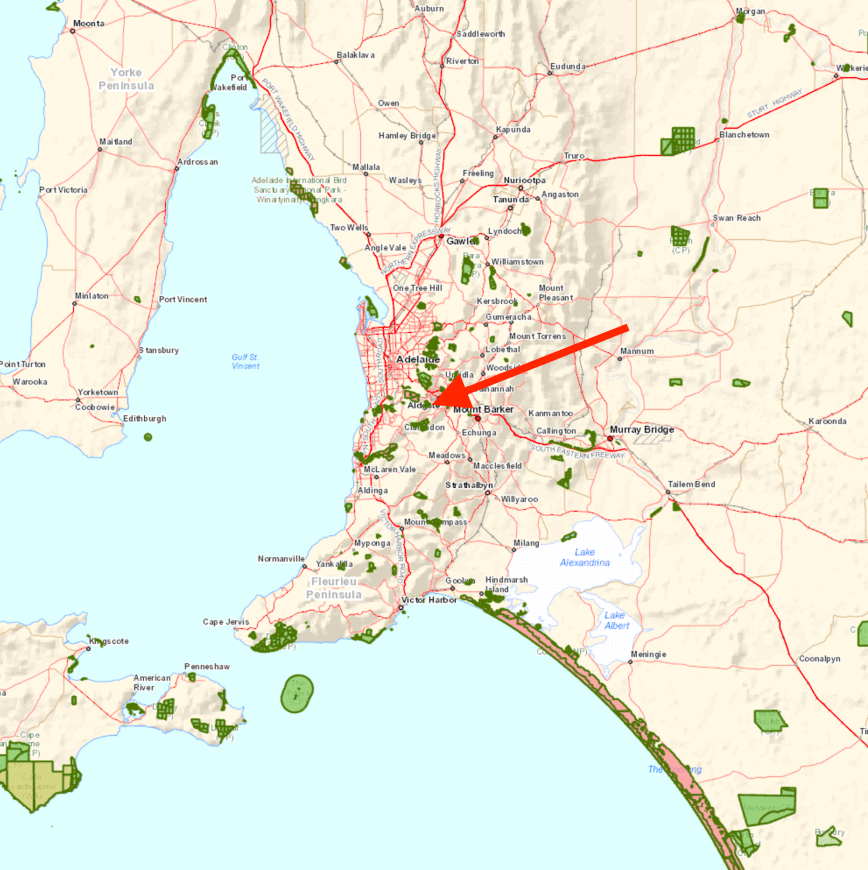
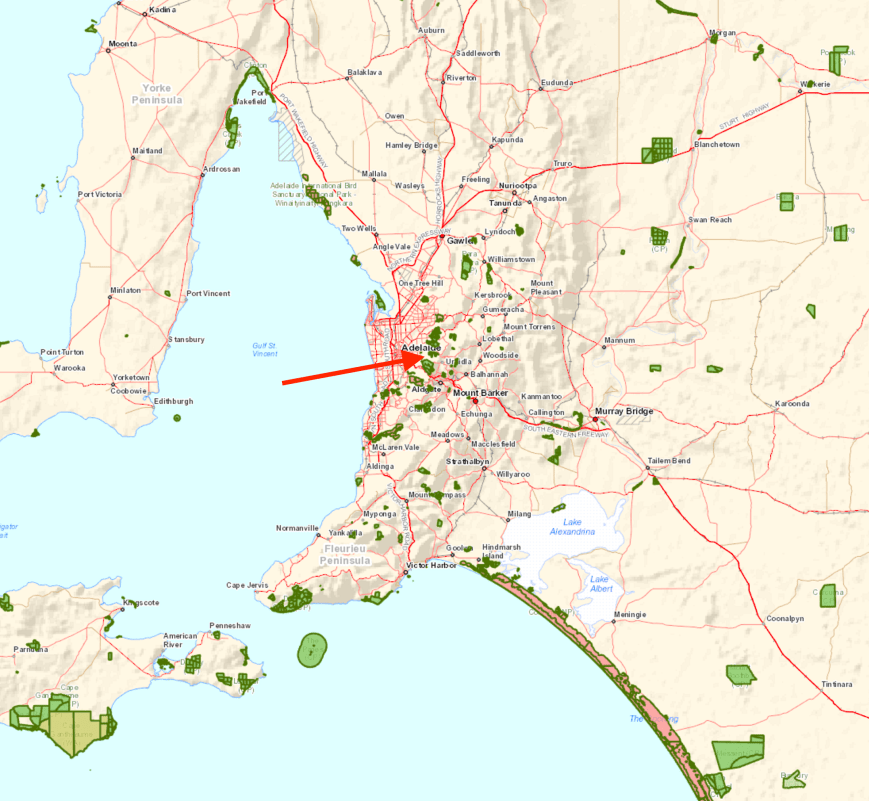
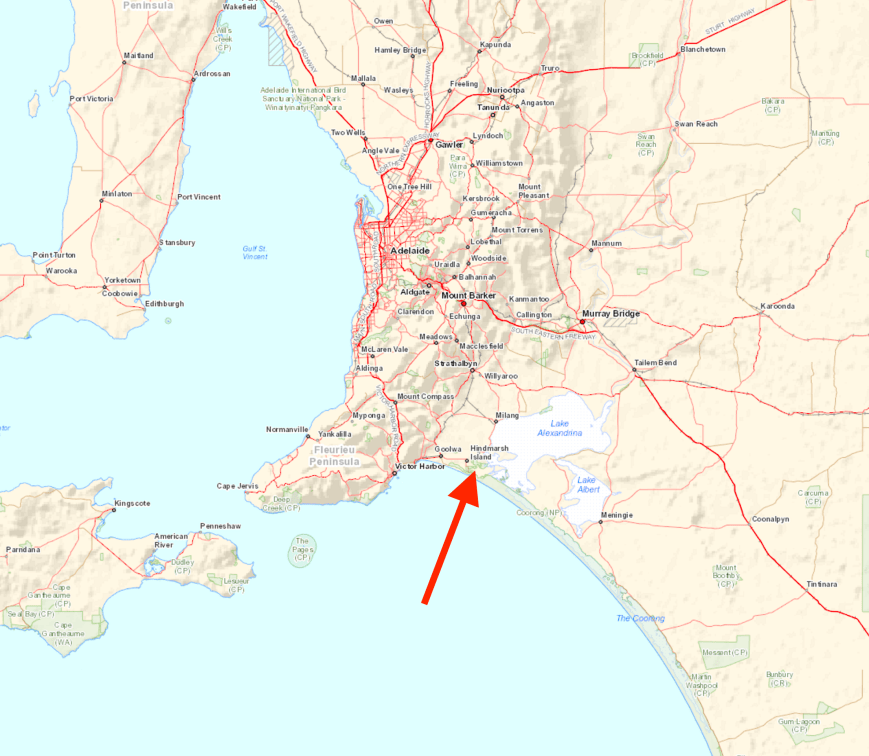
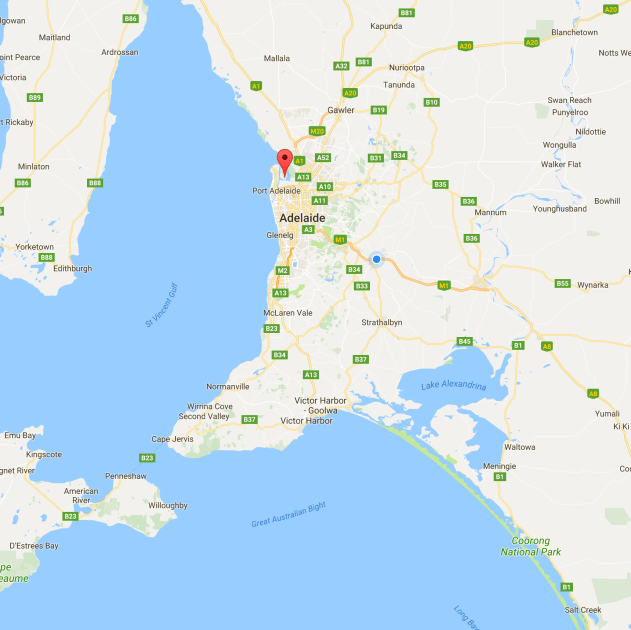
Above:- Map showing the location of the Marino Conservation Park. Image courtesy of Protected Planet.
The International Lighthouse and Lightship Weekend is held annually every August. The ILLW is not a contest. It is a fun weekend to raise the profile of lighthouses, lightvessels and other navigational aids, and preserve our maritime heritage.
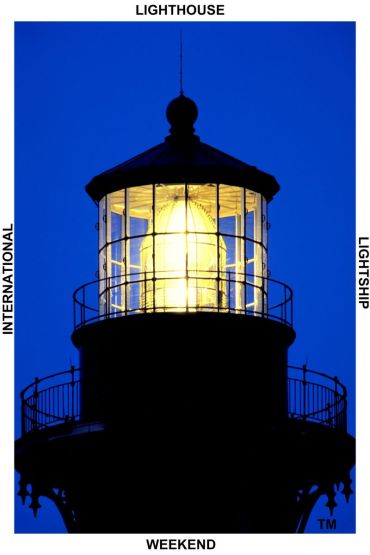
The Marino Rocks lighthouse is a white coloured concrete structure, 14.9 metres (49 feet) high. The lighthouse is 128 metres (420 feet) above sea level. It was constructed in 1962 so in relative terms is a young lighthouse. It shows 2 flashes every 15 seconds with an intensity of 1,000,000 candelas having a range of 42 km.
The Marino Rocks lighthouse supersedes the Wonga Shoal beacon erected on a sandy shoal off Semaphore, which was knocked down by the sailing ship ‘Dimsdale’ in 1912. Consturction of the Wonga Shoal lighthouse was completed by July 1901. It was an iron structure on screw piles with accommodation for two keepers. The revolving light, weighing 11 tons floating on a bath of mercury weighing 5 tons, was 74 feet above the highwater and was visible for 19 miles.
On the evening of 16th November 1912 the British ship Dimsdale sailed up Gulf St Vincent, in ballast, seeking cargo. The Dimsdale’s captain, Captain John Jones had laid a course for the Wonga light and as he drew near, he ordered the course altered to keep the long on his port bow. However the Dimsdale was slow to respond and despite desperate efforst to avert the accident, the ship struck the lighthouse which crashed into the sea. Both lighthouse keepers, Henry Franson and Charles McGowan drowned as a result.

Wonga Shoal

the Dimsdale

Clearing of the wreckage of Wonga Shoal
A court of inquiry found Captain Jones guilty of negligence and as a result his master’s certificate was suspended for 12 months. He was acquitted of the criminal offence of manslaughter.
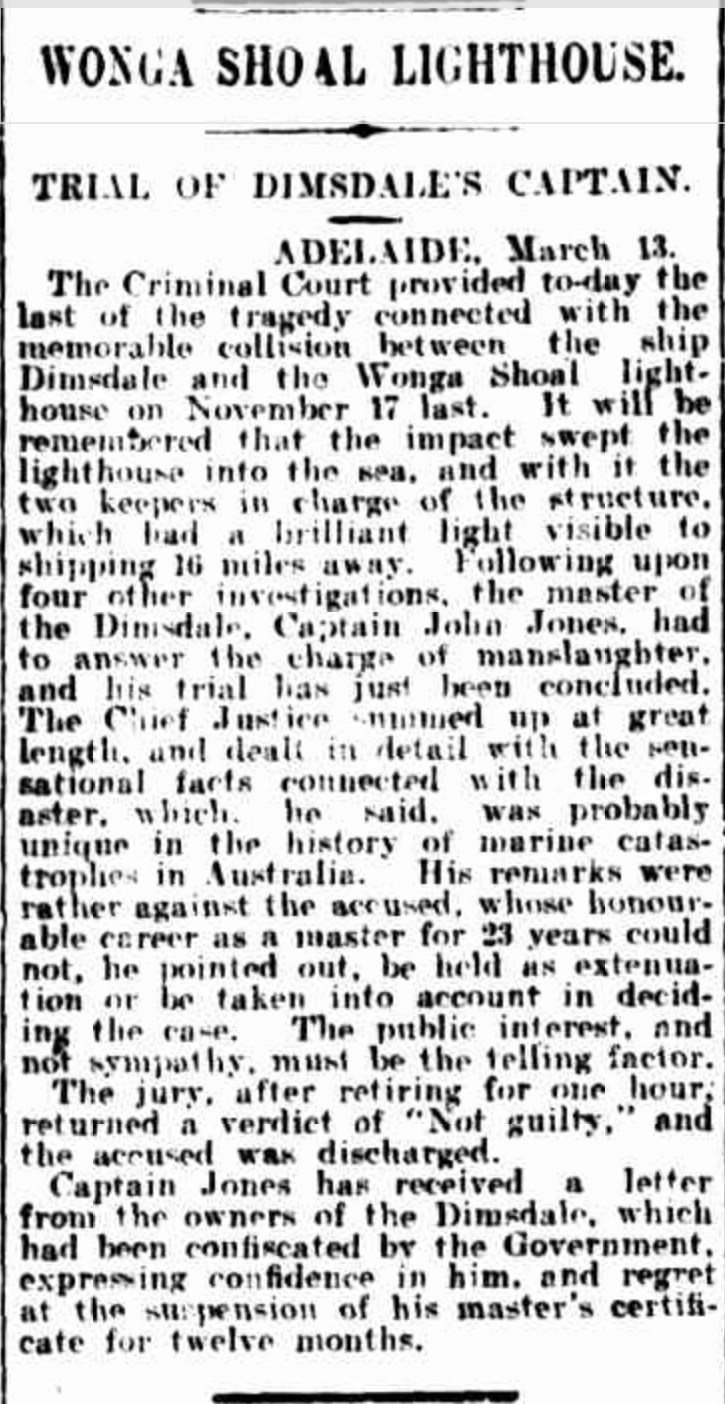
Above:- A 1913 news article on the outcome of the court case. Courtesy of Trove.
Following the tragedy, the destroyed lighthouse was replaced temporarily by a lightship, and later by a new steel structure. When the Marino Rocks lighthouse was completed in the early 1960’s the Wonga Shoal Light was finally extinguished.
The Marino Conservation Park which is 30 ha (74 acres), was established on the 2nd November 1989. It is located in the southern Adelaide suburb of Marino. In 1875 a proposal was put forward to build an outer harbour at Marino. The proposal was furthered in 1880 in a report by Captain H.S. Stanley, R.N. and in 1901 a Marino Outer Harbour League was formed. However, in 1908 the construction of the Outer Harbour near Port Adelaide finally laid these plans to rest.
The exact origin of the name of Marino is unclear. It is generally believed that Marino is named after two landmarks known to Charles Kingston, who bought property in the area in 1849. Charles Kingston, an Irishman who came out to South Australia on board the Cygnet. He would often boast that he was “the first Irishman to set foot in the colony”. Kingston was born in Bandon, County Cork, 19 km from a prominent point called Marino Point. There was also a Marino district in Dublin.
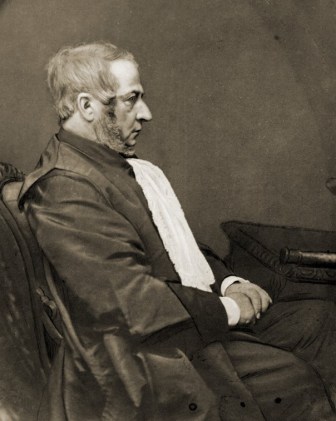
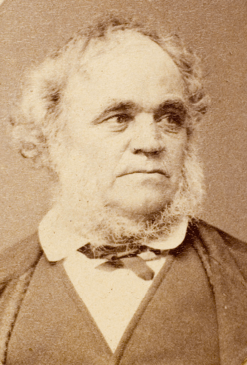
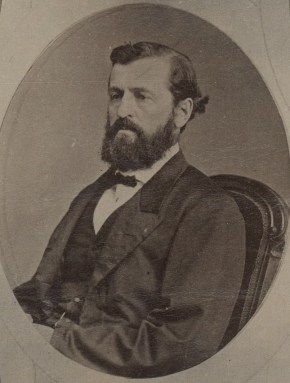
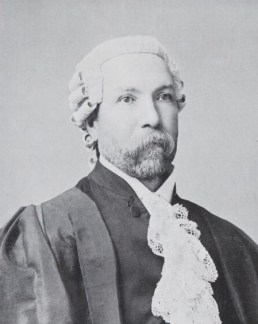
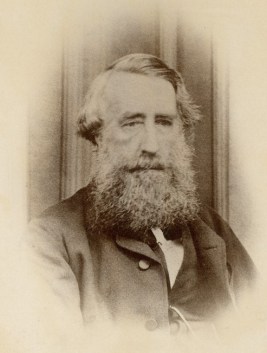
Above:- George Strickland Kingston. Courtesy of wikipedia.
In 1840 a small wooden Marino Inn was built in the area. Three years later, the Inn closed as the expected trade did not eventuate. Some years later George Kingston decided to convert it into an ‘occasional residence’. It eventually grew into a large stone home for the Kingston family. Following the death of George Kingston the home was occupied by his son Charles, and following his death was the home of his eccentric widow, Lucy Kingston who was known as ‘Mad Lucy’. She is reported to often carry a big stick and knife with her. A resident at the time reported that he saw a person ‘chatting pleasantly with Mrs Kingston, who had in her possession a razor, a revolver and a bludgeon, when suddenly she made a blow at his head’. Fortunately we did not encounter anybody like ‘Mad Lucy’ during our activation.
In the local Aboriginal Kuarna language marra is hand and marrana is the plural – hands. In early maps the area was referred to as Marina. In the book ‘South Australia. What’s in a name’ dated 1908, there is a suggestion that the name represents the Italian spelling of the word marine. A writer in the South Australian Magazine in 1842 states: “Marino was not named as some suppose, from a seaport of Italy, but probably from San Marino, the inland town in a Republic of the same name, situated on that side which is bounded by the Adriatic Sea, and called after its founder, San Marinus”.
The Marino Conservation Park aims to protect flora such as the ground cover Desert Saw Sedge and Twiggy Daisy Bush Oleria ramulosa. Native grass species such as Danthonia species and Stipa species as well as groundcovers dominate the central and eastern portions of the conservation park. The Elegant Wattle can also be seen in the conservation park. The steep west-facing hillside above the railway line contains a very significant remnant area of coastal heath vegetation, including rare plants such as lemon beauty heads, shiny ground berry and native apricot.
Over 39 species of native bird have been recorded in the park including Crested Pigeon, Singing Honeyeater, Australian Magpie, Little Raven, Willie Wagtail, Silvereye, Australian Pipit, Australian Hobby, Yellow-rumped Thornbill, Black-faced Cuckooshrike, and Brown Songlark.
There is a 1.5 km self-guided botanical trail in the park which starts from the car park with two gentle hills to climb. There are also a number of wooden benches allowing you to catch your breath and enjoy the amazing views.
There is an active Friends of the Parks group for Marino. We spoke with a few of those during our activation and they were both very interested in what we were doing.
We accessed the park via Nymboya Road. There is a car parking area here. There is no vehicular access into the park beyond the locked gate here. So we loaded up the gear on a sack trolley and in a backpack, and commenced the 1.5 km walk to the lighthouse. We followed the 4wd track which ran towards the southern section of the park and then followed the southern boundary of the park.

Marija loading up the backpack

Gate 1 at the Nymboya car parking area

VK5PAS carting the gear using the sack trolley
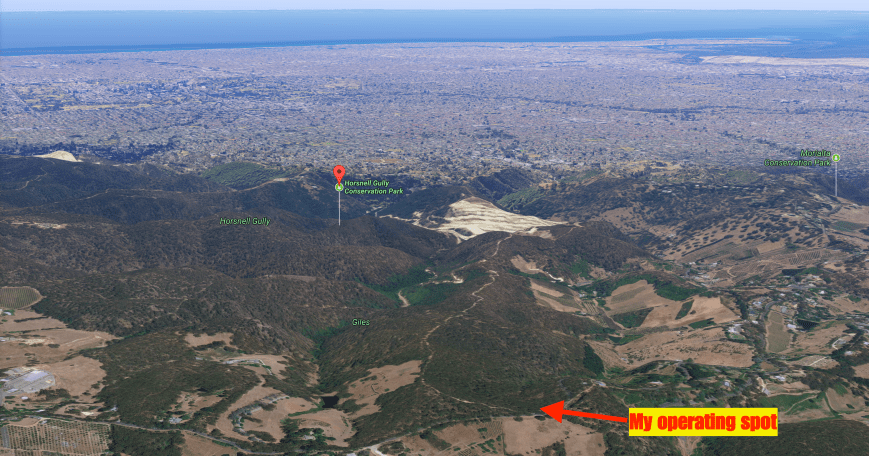
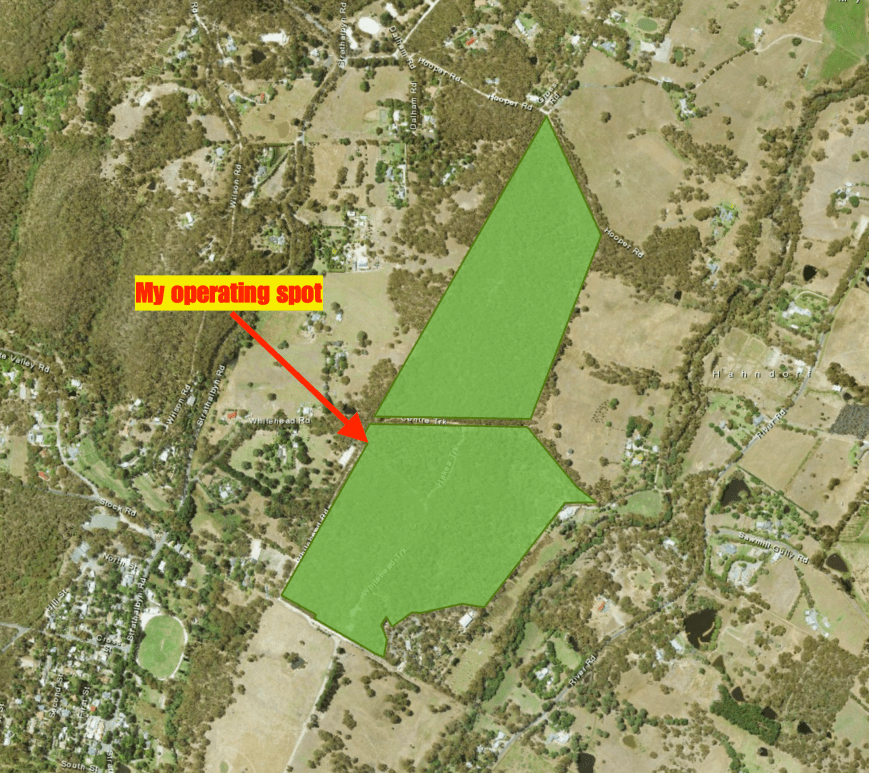
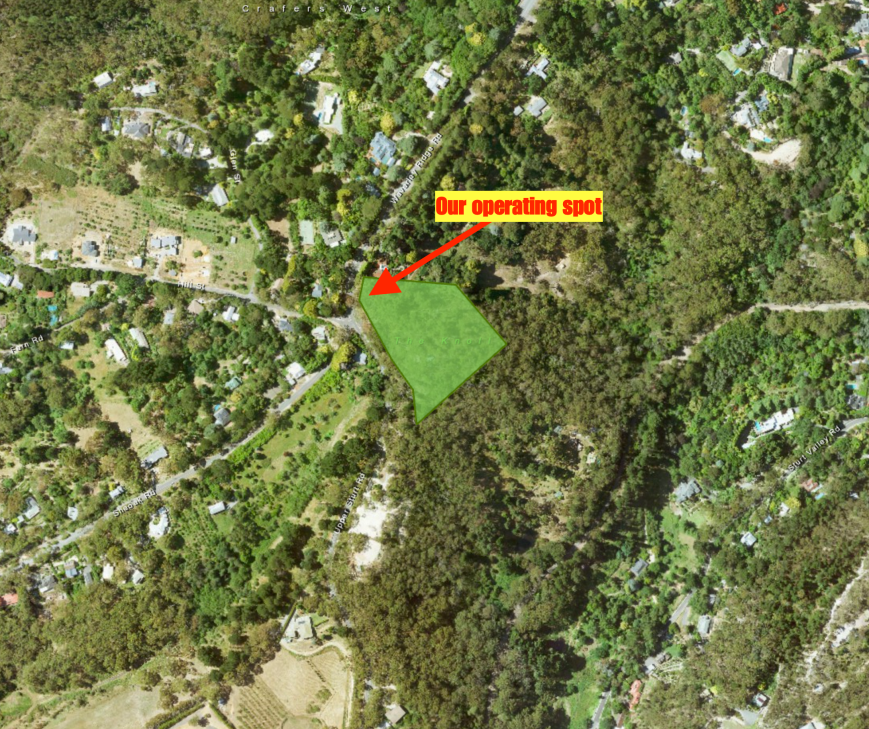
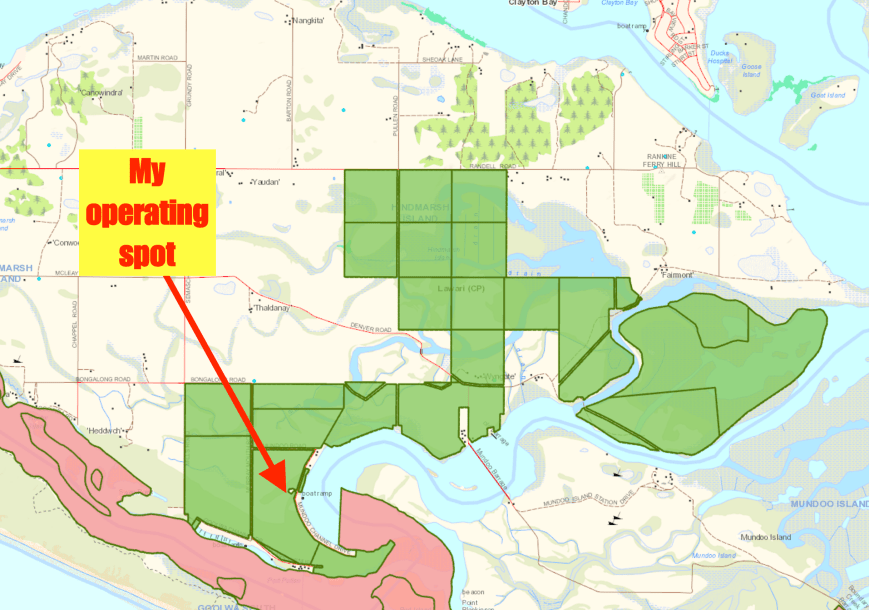
We set up under the shade of some trees near a walking trail to the north west of the lighthouse.
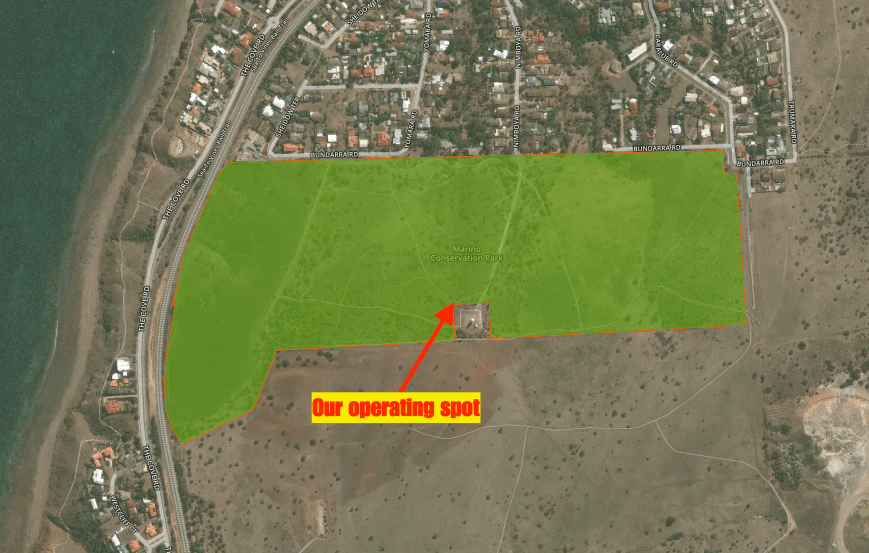
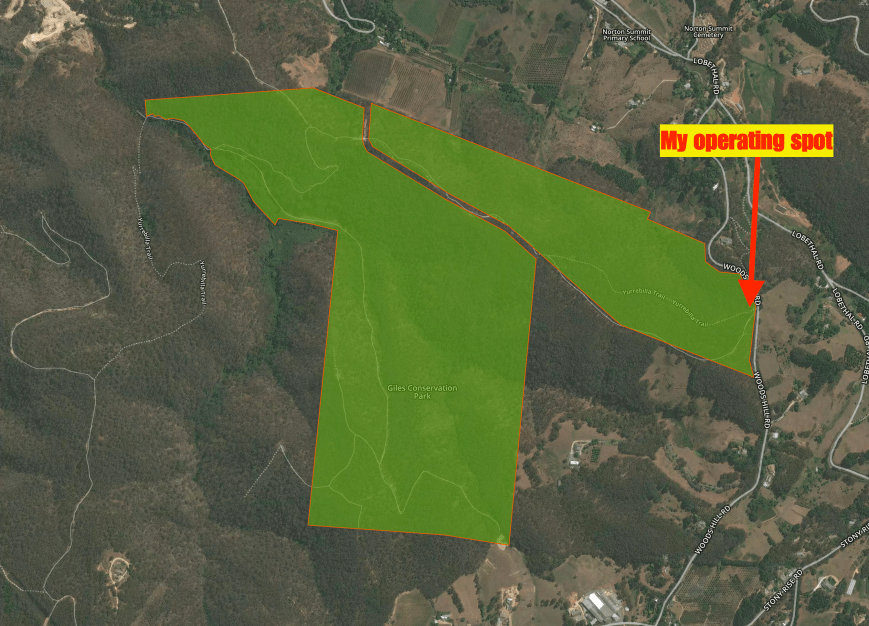
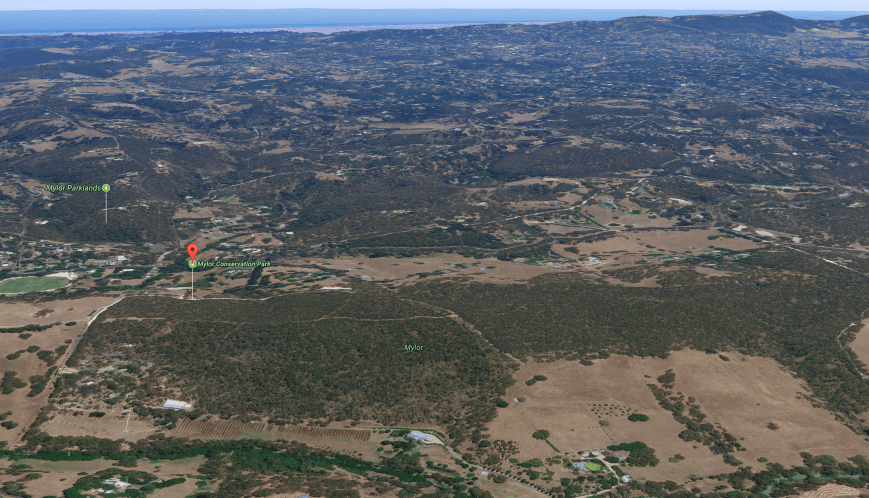
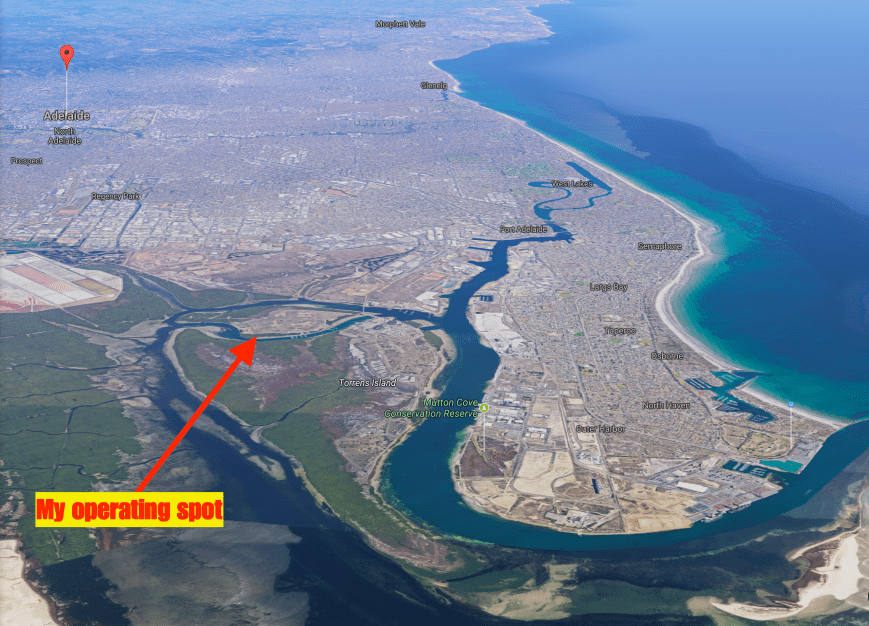
Above:- Aerial view of the park showing our operating spot. Image courtesy of Protected Planet.
Once we got to the lighthouse we took a breather and enjoyed the sensational views back towards the Adelaide CBD and along the Adelaide coastline.

The view north along the Adelaide coastline

The city of Adelaide

View south towards Hallett Cove
There were also some sensational views out across the Gulf St Vincent towards Yorke Peninsula. There were quite a few boats out in the Gulf taking advantage of the fantastic weather.

helicopter following the coastline

looking west towards Yorke Peninsula
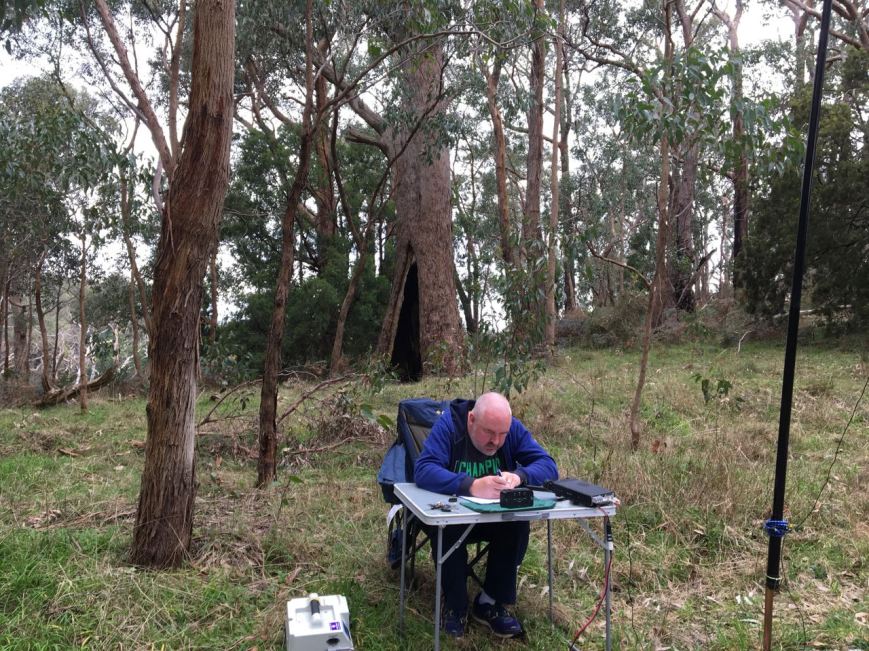
For this activation we ran the Yaesu FT-857d set at 10 watts PEP for Marija, and 40 watts for me. Our antenna was a 80/40/20m linked dipole, inverted vee, supported on a 7m heavy duty telescopic squid pole.
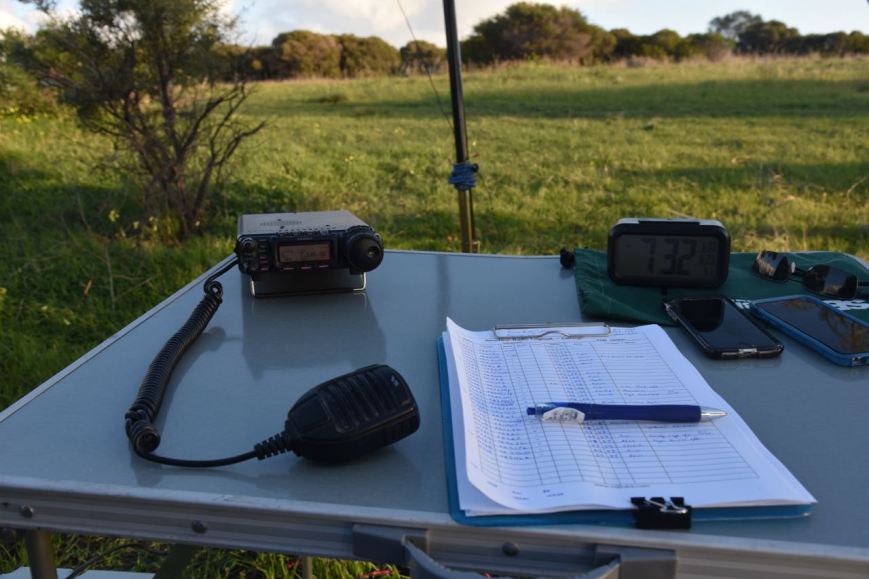
Above:- ‘the shack’
Despite literature and signs stating that dogs may be walked in the park along designated trails, and that they must remain under your control on a lead at all times, this didn’t occur in practice at the park during our visit. We even had a woman walking her dog off the lead, with the dog running up to us and peeing alongside our table just after we had set up.
I started off the activation, with number one in the log being Geoff VK3SQ at Beechworth. This was followed by Julie VK3FOWL, Brett VK2FSAV and then Stuart (VK3STU) VK3SPL at the Split Point lighthouse. Sadly band conditions on 40m were less than ideal, with lots of fading (QSB) on signals. Many of the regular Victorian park hunters who are normally S9, were a number of S points lower. Ten contacts are required to qualify a park for the VKFF program, and these normally come very quickly. It took me 20 minutes to get to contact number 10, which was with Peter VK3KU.
I continued on until I had 44 contacts in the log. Contact number 44, qualifying the log for me for the global WWFF program, was with VK5BWR at the Point Lowly lighthouse near Whyalla. It was a little disappointing, as number one the band was in quite poor shape. And secondly there did not seem to be a lot of lighthouse stations on air. I had logged just 5 lighthouse activators. I had managed three Park to Park QSOs. They being with Stef VK5HSX/2 in VKFF-0065, Gerard VK2JNG/p in VKFF-1778, and Phil VK6CLL in VKFF-0283.
We then swapped ‘driver’s seats’, with Marija taking charge of the mic. The power was lowered down to 10 watts PEP, the allowable amount under Marija’s Foundation licence. Marija’s first contact after calling CQ was with VK5BWR at the Point Lowly lighthouse, followed by VK3OLS at the Cape Otway lightstation, and then Geoff VK3SQ. Marija’s 10th contact, qualifying the park for her for VKFF was with Garry VK7GG. Whilst I went off for a walk in the park, Marija continued on and had soon racked up 44 contacts. QSO number 44 for Marija was with Ken VK3UH. Marija had seven lighthouse stations in the log, and three Park to Park contacts.
I then jumped back on air on 40m, and logged a further 27 stations from Vk1, VK3, VK4, VK5, and VK7, including five more lighthouse stations and another Park to Park with Gerard VK2JNG/p who had moved to a new park, the Glenrock State Conservation Area VKFF-1319.
I took a short lunch break whilst Marija again took charge of the mic logging another 9 stations including VK3OLS at the Cape Otway lightstation AU-0011 and VK3ATL at Point Lonsdale lighthouse AU-0028.
After lunch I jumped back on the mic, and whilst activating, Ian VK5MA arrived to say g’day. Marija kept Ian company for about 20 minutes whilst I continued to work the steady pile. Eventually the callers dried up and it was a good opportunity of putting down the mic to say hello to Ian and catch up on his recent trip to VK6, where he activated a number of parks.
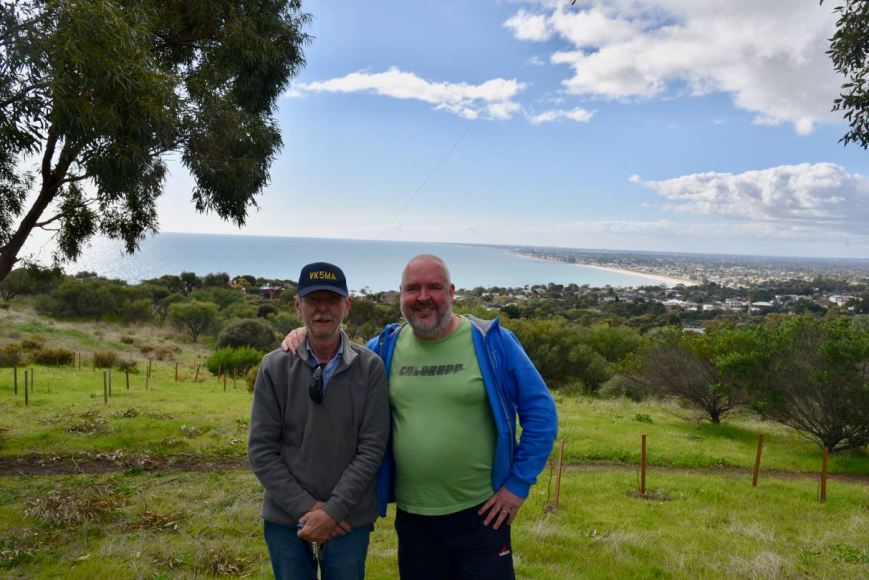
Above:- with Ian VK5MA. Adelaide in the background.
After Ian had left, I tried my luck on the 80m band. Although there had been a small opening on 40m locally, I was hoping to work a lot more VK5’s on 80m. Sadly, I logged just 4 stations on 80m, with one of those being VK5ARC at the Point Malcolm lighthouse. It was a real shame that there were not more callers as the band conditions on 80m were excellent.
I then headed to 14.310 on the 20m band where I logged 13 stations, including a few more lighthouse stations. My only DX worked on 20m was with Barrie W7ALW in Montanna. No long path Europe was heard. Being at the bottom of the solar cycle means that the pile up from Europe which I experienced from many parks years ago, is certainly a thing of the past. Lets hope conditions improve!
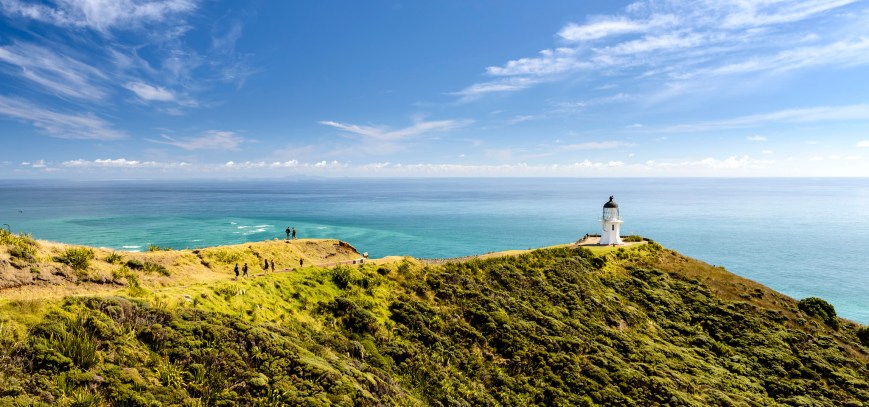
I then moved back to 40m where I logged a further 48 stations. This included a nice contact with ZL1LIG at the Cape Reinga lighthouse NZ-0020 at the very top of the North Island of New Zealand. As it was now late afternoon, the European & USA stations were starting to come through. I had 2 USA stations come up on 7.140 where I was operating, with one of those being very loud. I apologise to those who were calling that I wasn’t able to pull through, as the QRM was just too great. I boxed on for a few minutes before QSYing to 7.137 where I worked 5 stations before going QRT.
It was fast approaching 5.30 p.m. local time and it was starting to get very cold. The temperature had dropped dramatically to around 8 deg C. I had pushed my luck with Marija, having been in the park all day. Marija and I packed up, with a total of 210 contacts in the log, including 22 different Australian lighthouses and one NZ lighthouse. Amongst that were also 10 Park to Park contacts. Whilst packing up and walking back to the vehicle we enjoyed a magnificent sunset.
We worked the following lighthouses:-
- VK2BOR, Tacking Point lighthouse AU-0034
- VK2EP, Smoky Cape lighthouse AU-0031
- VK2HBG, Warden Head lighthouse AU-0035
- VK3DNQ, Cape Nelson lighthouse AU-0055
- VK3APC, Eastern Light McCrae AU-0017
- VK3ATL, Point Lonsdale lighthouse AU-0028
- VK3DJ, Queenscliff ‘Black’ lighthouse AU-0049 & AU-0096
- VK3ILH, Citadel light Port Albert AU-0110
- VK3OLS, Cape Otway lightstation AU-0011
- VK3SPL, Split Point lighthouse AU-0032
- VK3WI, Williamstown Time Ball Tower AU-0036
- VK5ARC, Point Malcolm lighthouse AU—29
- VK5BWR, Point Lowly lightstation AU-0021
- VK5CJL, Cape Jervis lighthouse AU-0094
- VK5ZGY/p, Cape Banks lighthouse AU-0121
- VK5ZII, Tipara Reef lighthouse AU-0053
- VK6CLL, Cape Leeuwin lighthouse AU-0008
- VK6CNL, Cape Naturaliste lighthouse AU-0010
- VK7LH, Low Head lighthouse AU-0048
- VK7GG, Rocky Cape lighthouse AU-0066
- VK7TZ, Round Hill Point lighthouse AU-0111
- ZL1LIG, Cape Reinga lighthouse NZ-0020
Marija worked the following stations on 40m SSB:-
- VK5HSX/2 (Bundjalung National Park VKFF-0065)
- VK2JNG/p (Blue Gum Hills Regional Park VKFF-1778)
- VK6CLL (Cape Leeuwin lighthouse AU-0008 and Leuwin-Naturaliste National Park VKFF-0283)
- VK5BWR (Point Lowly lighthouse AU-0021)
- VK3OLS (Cape Otway lightstation AU-0011)
- VK3SQ
- VK3GGG
- VK3PMG
- VK7KJL
- VK7GG
- VK5FANA
- VK5FMWW
- VK3TKK/m
- VK3BNC
- VK3SFG
- VK7JON
- VK3ARH
- VK3NLK
- VK3PF
- VK7TZ (Round Hill Point lighthouse AU-0011)
- VK5VCO
- VK3MKM
- VK5MK
- VK3SPL (Split Point lighthouse AU-0032)
- VK3ZPF
- VK3DX (Lady Bay Upper & Lower lighthouses AU-0049 & AU-0096)
- VK5ZGY/p (Cape Banks lighthouse AU-0121)
- VK2BOR
- VK5KBF
- VK3LCW
- VK3AFB
- VK7RX/3
- VK3FLJD
- VK3FRDL
- VK2PKT
- VK5EMI
- VK3FOWL
- VK2KYO
- VK3ANL
- VK5DWC
- VK3FMMB
- VK6JAH/p
- VK3HKV
- VK3UH
- VK5NAL
- VK1AT
- VK2JNG/p (Glenrock State Conservation Area VKFF-1319)
- VK7HSC
- VK2YW
- VK3FI
- VK3OAK
- VK3MBW
- VK3OLS (Cape Otway lightstation AU-0011)
- VK2MTC
- VK3ATL (Point Lonsdale lighthouse AU-0028)
- VK2HHA
- VK3APC/p (Eastern Light McCrae AU-0017)
- VK3ILH (Citadel light, Port Albert AU-0110)
I worked the following stations on 40m SSB:-
- VK3SQ
- VK3FOWL
- VK2FSAV
- VK3SPL (Split Point lighthouse AU-0032)
- VK3MKM
- VK4HNS/p
- VK5HYZ
- VK2WQ
- VK3ER
- VK3KU
- VK5HSX/2 (Bundjalung National Park VKFF-0065)
- VK3SFG
- VK2VW
- VK3DNH
- VK2NP
- VK3ARH
- VK4PDX
- VK2UH
- VK4RF
- VK4HA
- VK3PF
- VK3ZPF
- VK1DI
- VK3DJ/p (Queenscliff ‘Black’ lighthouse AU-0050)
- VK7VKV/6
- VK1HW
- VK3KYO
- VK3IRM
- VK2JNG/p (Blue Gum Hills Regional Park VKFF-1778)
- VK3TKK/m
- VK6CLL (Cape Leeuwin lighthouse AU-0008 and Leuwin-Naturaliste National Park VKFF-0283)
- VK5MK
- VK2PKT
- VK3PAT
- VK3FOGY
- VK3JDA
- VK3MNZ
- VK3MCK
- VK3GGG
- VK3PMG
- VK3OLS (Cape Otway lightstation AU-0011)
- VK5FILL
- VK7GG
- VK5BWR (Point Lowly lighthouse AU-0021)
- VK1AT
- VK5NAL
- VK5ZGY/p (Cape Banks lighthouse AU-0121)
- VK5NM
- VK5FMLO
- VK4QQ
- VK5KIK
- VK3LCW
- VK3PP
- VK3RW
- VK3GMC
- VK3WI (Williamstown Timeball Tower AU-0036)
- VK3XV/p
- VK2BOR (Tacking Point Lighthouse AU-0034)
- VK3UH
- VK2HBG/p (Warden Head lighthouse AU-0035)
- VK5MR
- VK3DNQ/p (Cape Nelson lighthouse AU-0055)
- VK3ANL
- VK7DW
- VK2HHA
- VK2JNG/p (Glenrock State Conservation Area VKFF-1319)
- VK3MRH
- VK2GKA
- VK4FARR
- VK7HSC
- VK2YW
- VK3APC (Eastern Light McCrae AU-0017)
- VK7OT
- VK5ND
- VK1RZ
- VK1MTS
- VK7JON
- VK7GG/m (Rocky Cape lighthouse AU-0066)
- VK3QS
- VK3TCT
- VK3YE
- VK5YX
- VK3MBW
- VK2YK
- VK2WWV
- VK3CCW
- VK5FANA
- VK2BHO
- VK3ILH (Citadel light, Port Albert AU-0110)
- VK5DWC
- VK5GI
- VK5LA
- VK5FMWW
- VK5DW
- VK3FI
- VK3PI
- VK3LK
- VK7LH/p (Low Head lighthouse AU-0048)
- VK5NPP/p
- VK6CNL (Cape Naturaliste lighthouse AU-0010)
- VK2FOUZ
- VK5ZII/p (Tipara Reef lighthouse AU-0053)
- VK5FPAC
- VK4TMZ
- VK5XY
- VK4CGW/p
- VK1MDP
- ZL1LIG (Cape Reinga lighthouse NZ-0020)
- VK5KC
- VK2EP (Smoky Cape lighthouse AU-0031)
- VK5CJL (Cape Jervis lighthouse AU-0094)
- VK3SPL (Split Point lighthouse AU-0032)
- VK3MCD
- VK2HLK
- VK3NUC
- VK3NU
- VK2LEE
- VK6FFAR
- ZL4KD
- VK4ZD
- VK6BSA
- VK4TUB
- VK2QK
- VK6EA
- VK5HBE
- VK4PDR
- VK2DE
- VK4QP/p
- VK3MPR
- VK2JAZ
- VK6FNLW
- VK6NTE
- VK2PDW
- VK5FIVE
- VK7FRJG
I worked the following stations on 80m SSB:-
- VK5FANA
- VK5ARC/p (Point Malcolm lighthouse AU-0029)
- VK5SF
- VK5GJ
I worked the following stations on 20m SSB:-
- VK2VOL
- VK6CLL (Cape Leeuwin lighthouse AU-0008 and Leuwin-Naturaliste National Park VKFF-0283)
- VK6ADF/p (Cape Leeuwin lighthouse AU-0008 and Leuwin-Naturaliste National Park VKFF-0283)
- VK6XN/p (Cape Leeuwin lighthouse AU-0008 and Leuwin-Naturaliste National Park VKFF-0283)
- VK2LEE
- VK6SN
- VK4FI
- VK4DP
- W7ALW
- VK4DL
- VK4SMA
- VK6NU
- VK5NRG
References.
Birds SA, 2017, <http://www.birdssa.asn.au/location/marino-conservation-park/>, viewed 20th August 2017
Cockburn, R., 2002, ‘South Australia What’s in a Name?’
Nicol; S., 1997, Adelaide Region RAA Touring book
Professional Historians Australia, 2017, <http://www.sahistorians.org.au/175/chronology/november/17-november-1912-wonga-shoal.shtml>, viewed 20th August 2017
SeaSide Lights, 2017, <http://www.seasidelights.com.au/au/sa/marinorocks.asp?fState=SA>, viewed 20th August 2017
State Library South Australia, 2017, <http://www.samemory.sa.gov.au/site/page.cfm?u=638&c=2684>, viewed 20th August 2017
Wikipedia, 2017, <https://en.wikipedia.org/wiki/Marino_Conservation_Park>, viewed 20th August 2017
Wikipedia, 2017, <https://en.wikipedia.org/wiki/Marino,_South_Australia>, viewed 20th August 2017
Wikipedia, 2017, <https://en.wikipedia.org/wiki/George_Strickland_Kingston>, viewed 20th August 2017