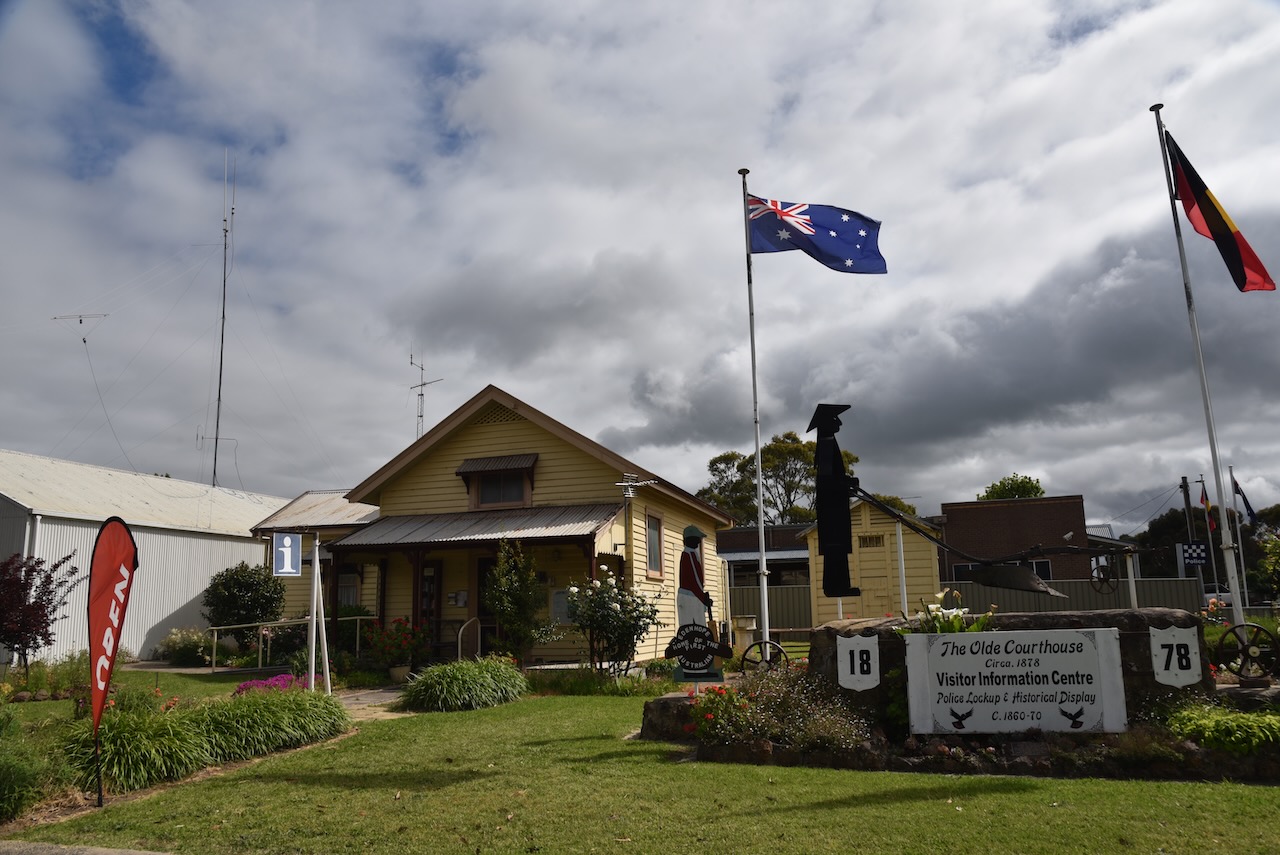
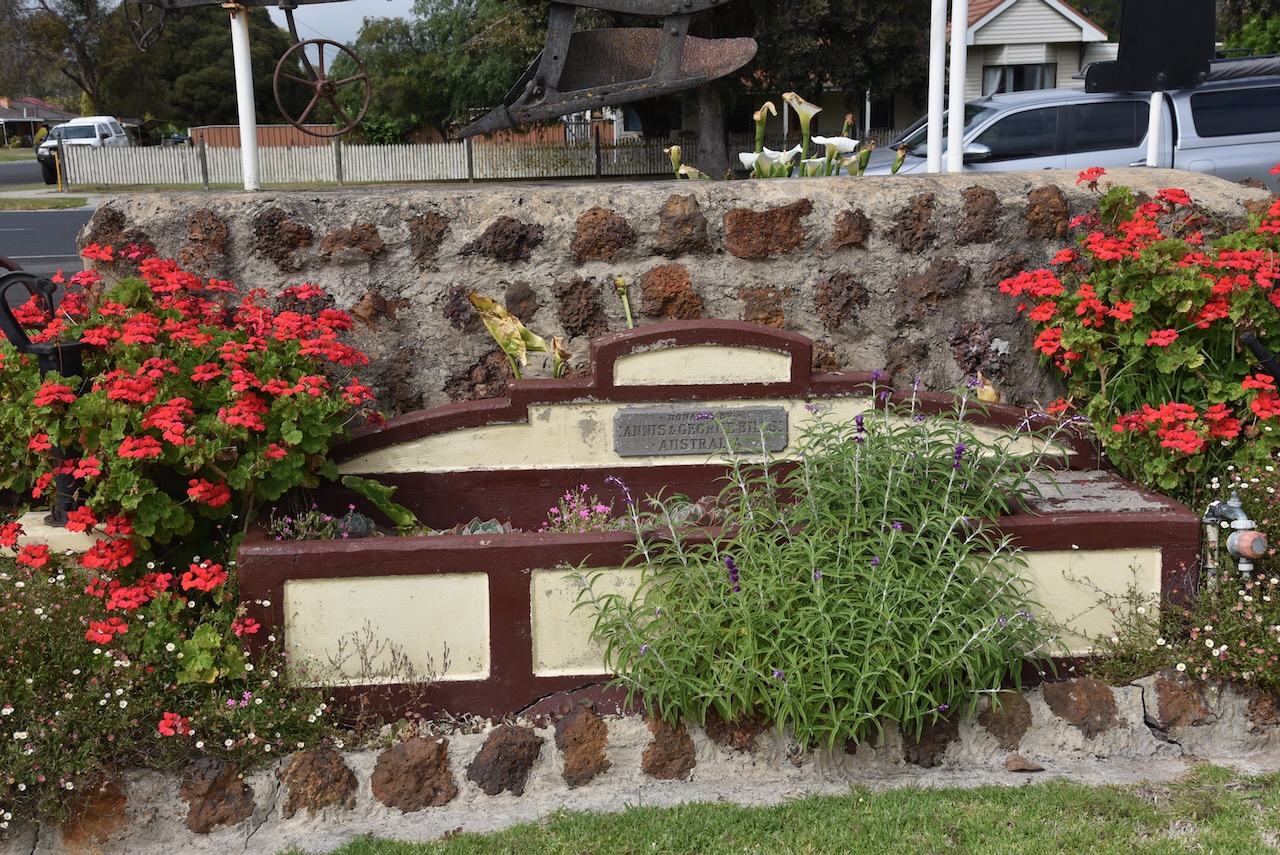
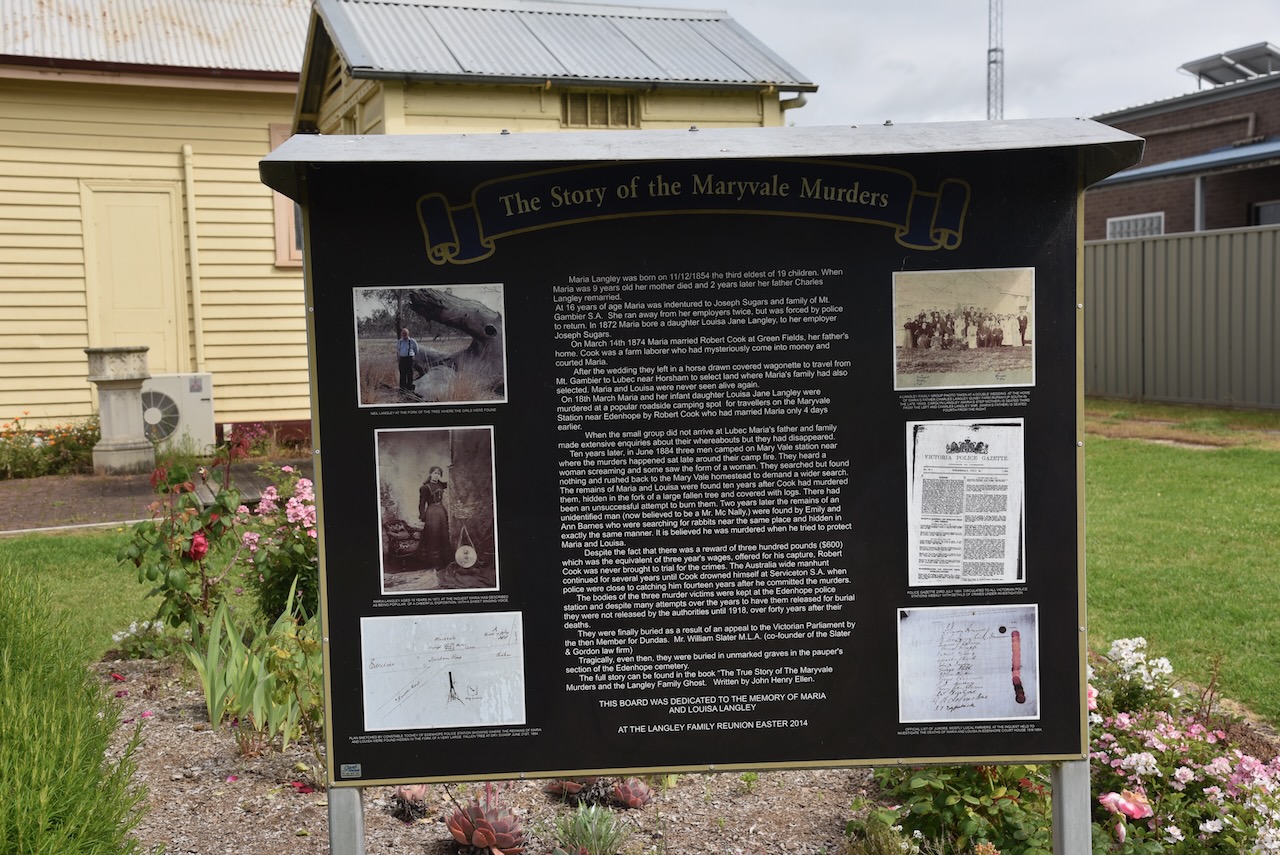
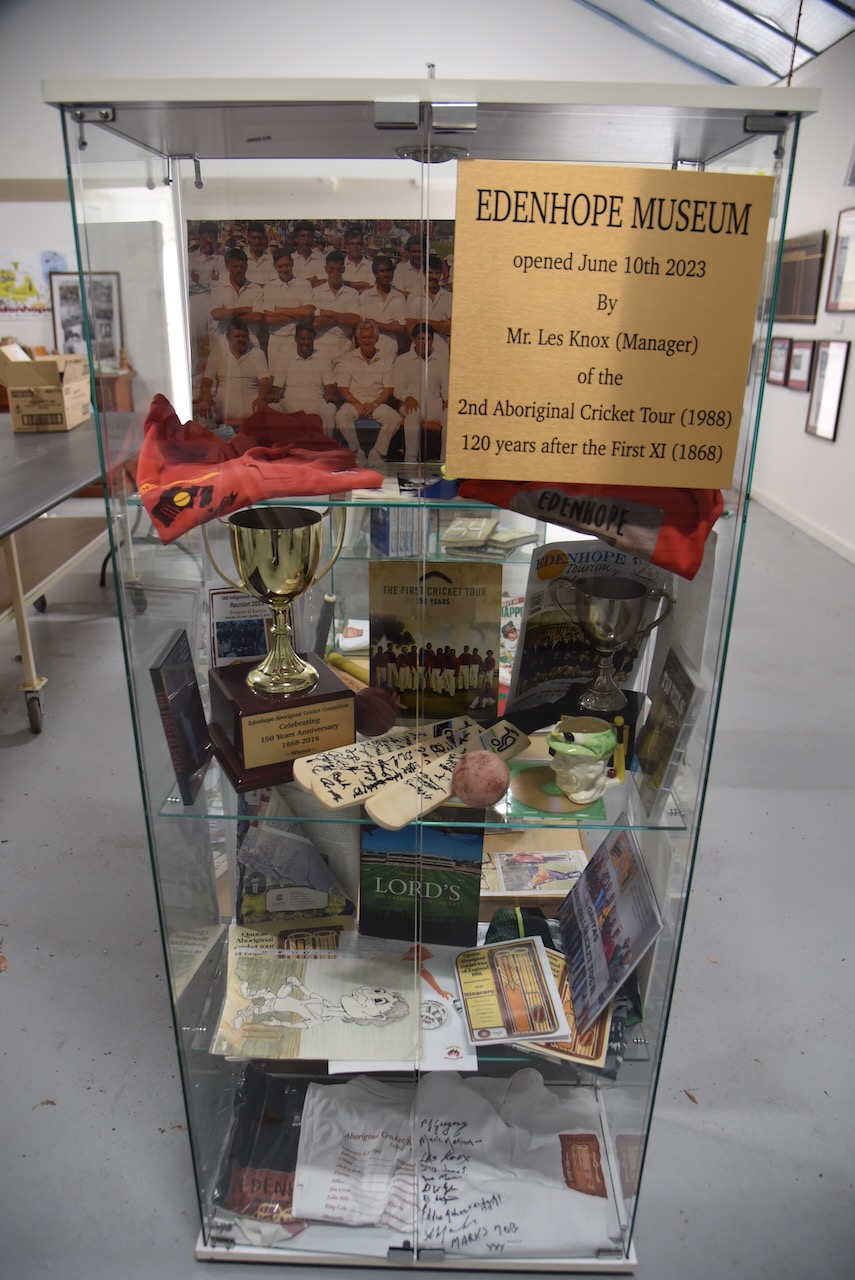
After leaving Hurleys Bank Wildlife Reserve on Thursday, 31st October 2024, we headed back into Edenhope and visited the Edenhope Visitor Information Centre. The lady who was volunteering for at the centre for the day was very friendly and incredibly informative.
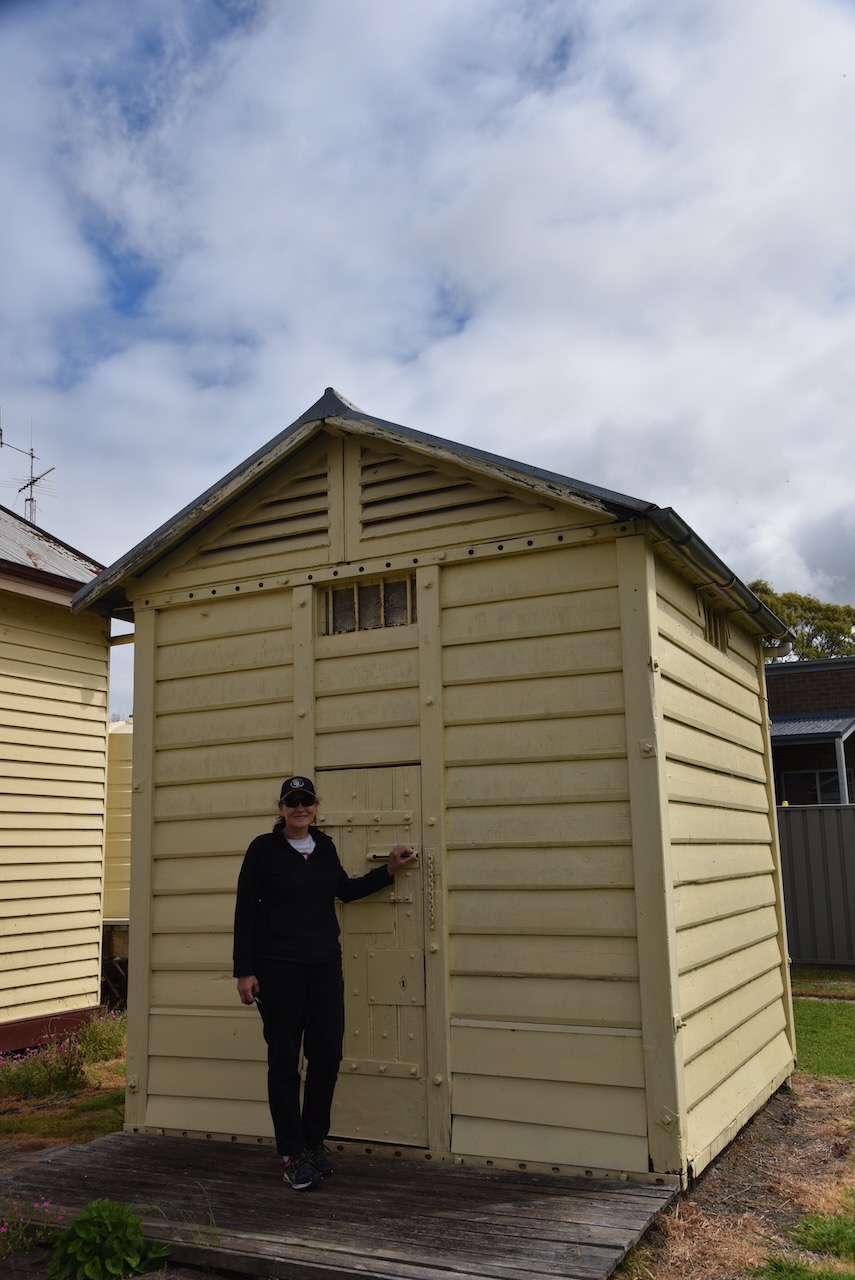
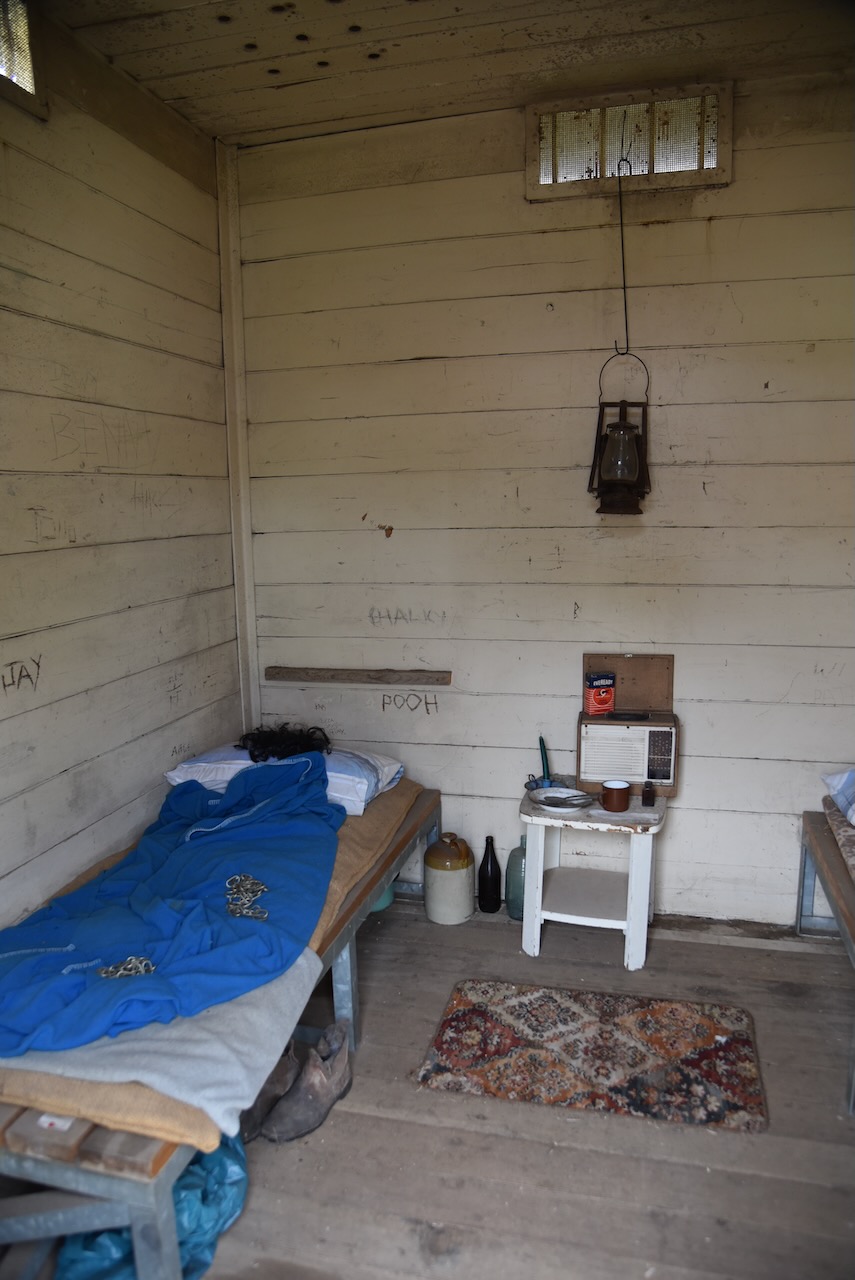
The centre is located in the former Edenhope Courthouse, which was built in 1878. You can also view the old wooden prison lockup that was built between 1860 and 1870. (Visit Wimmera Mallee, 2025)
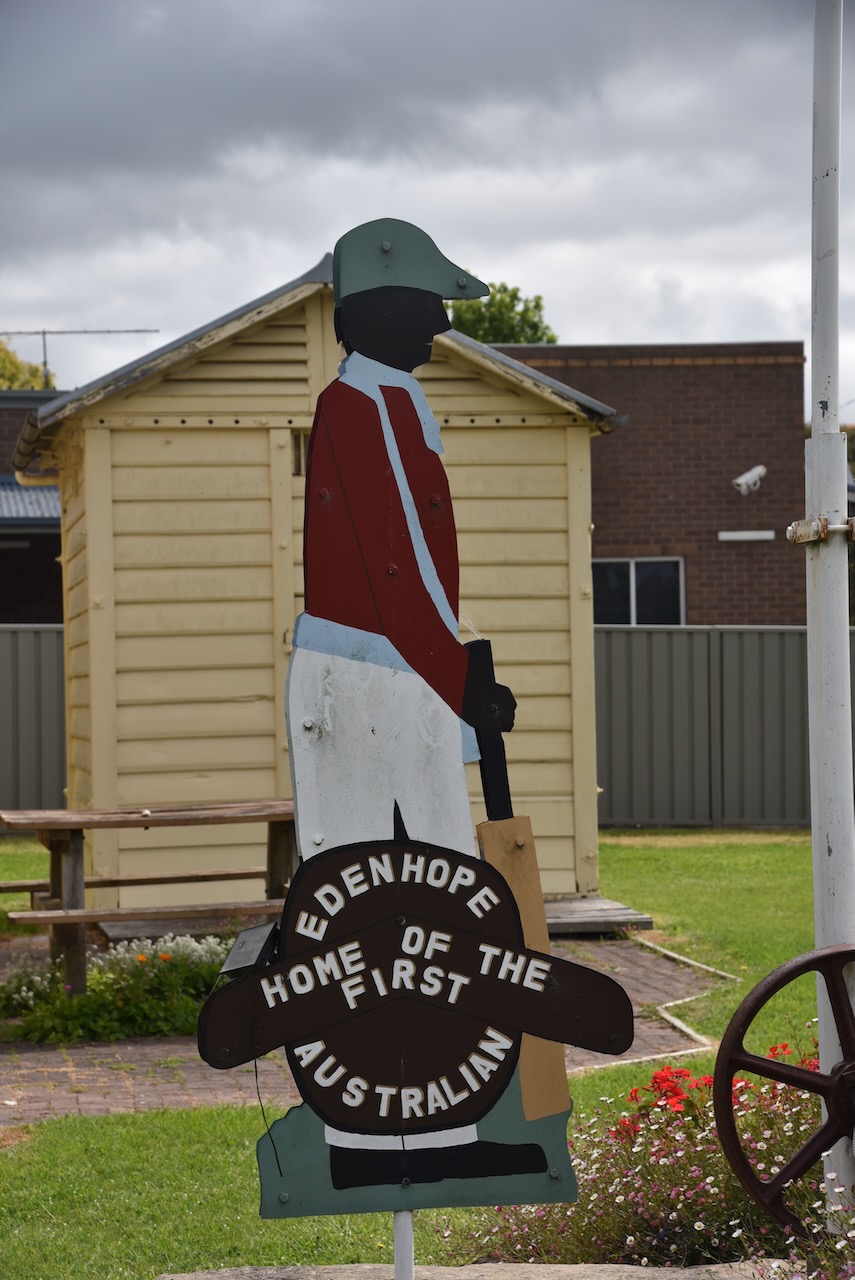
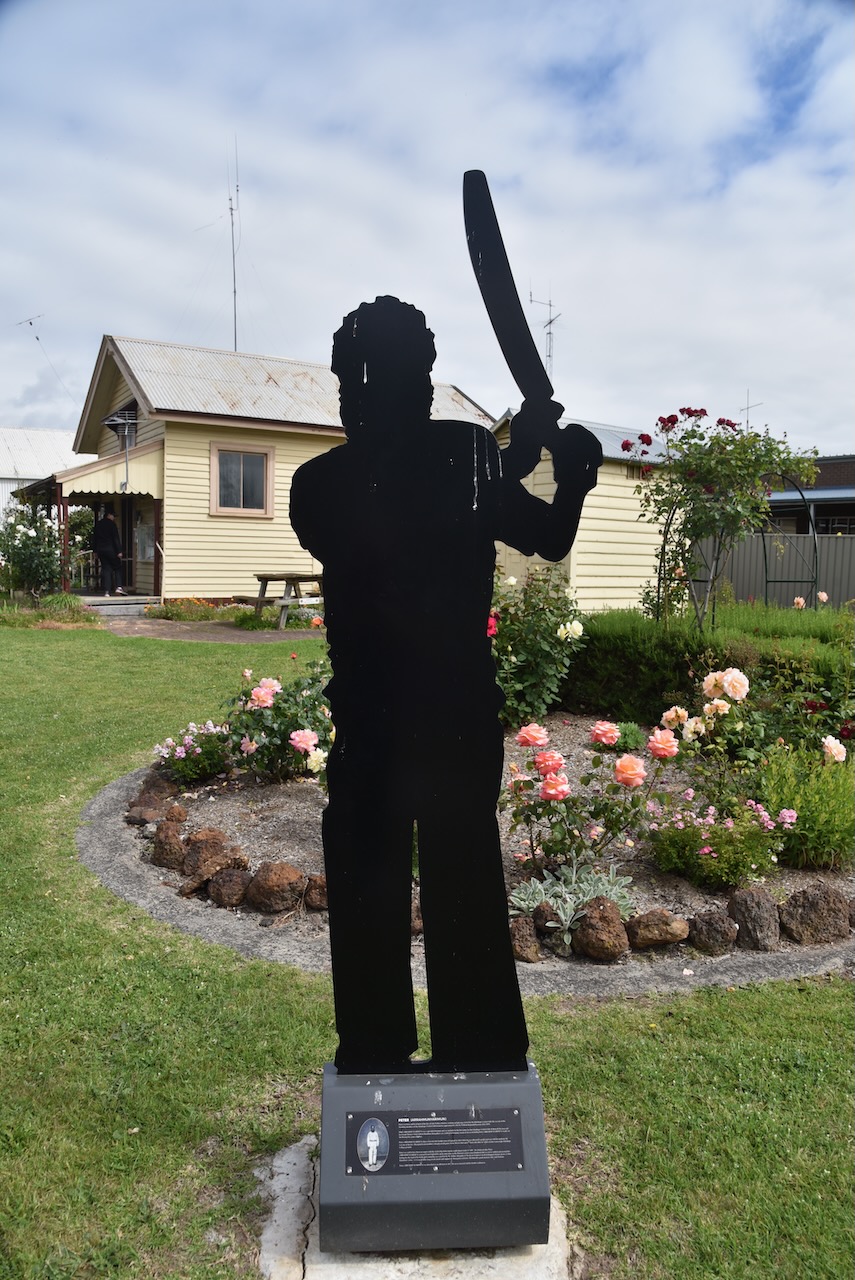
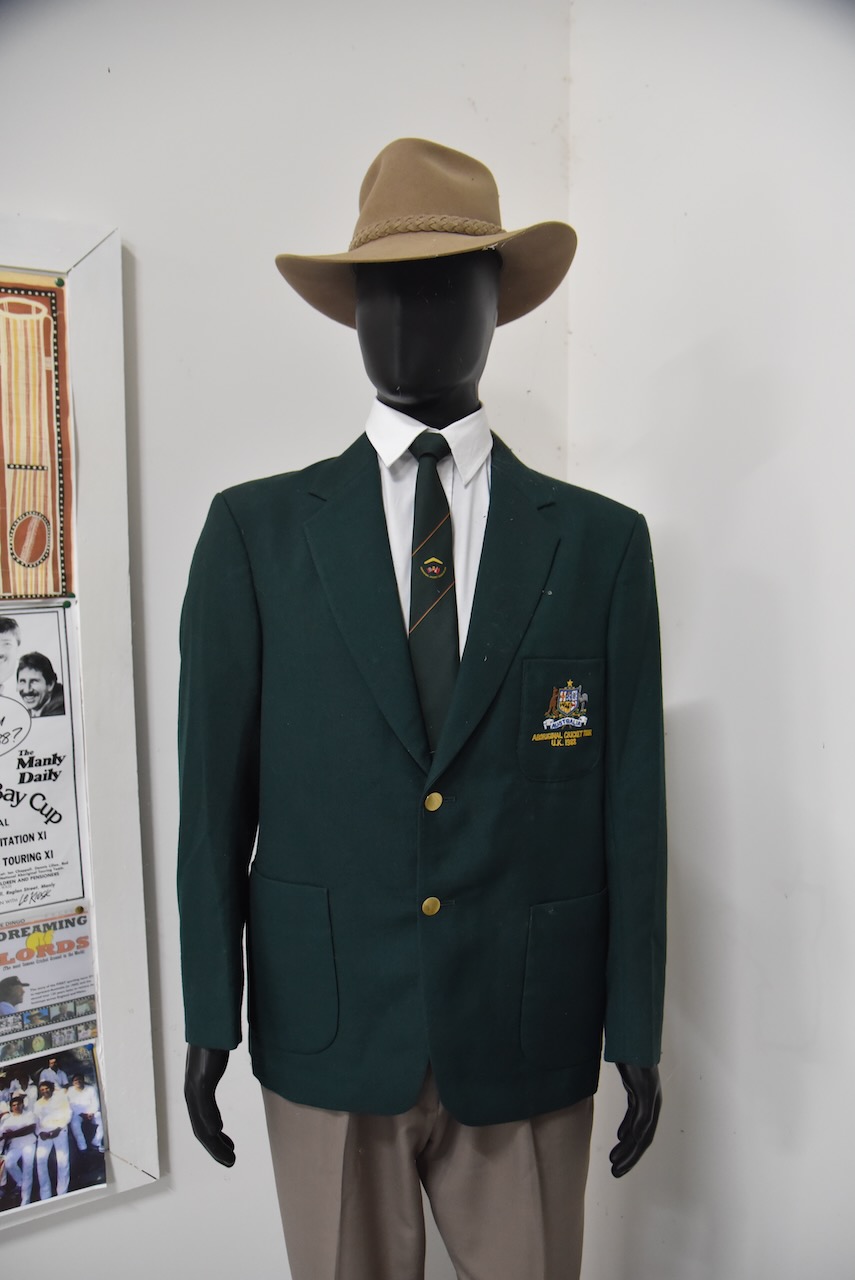
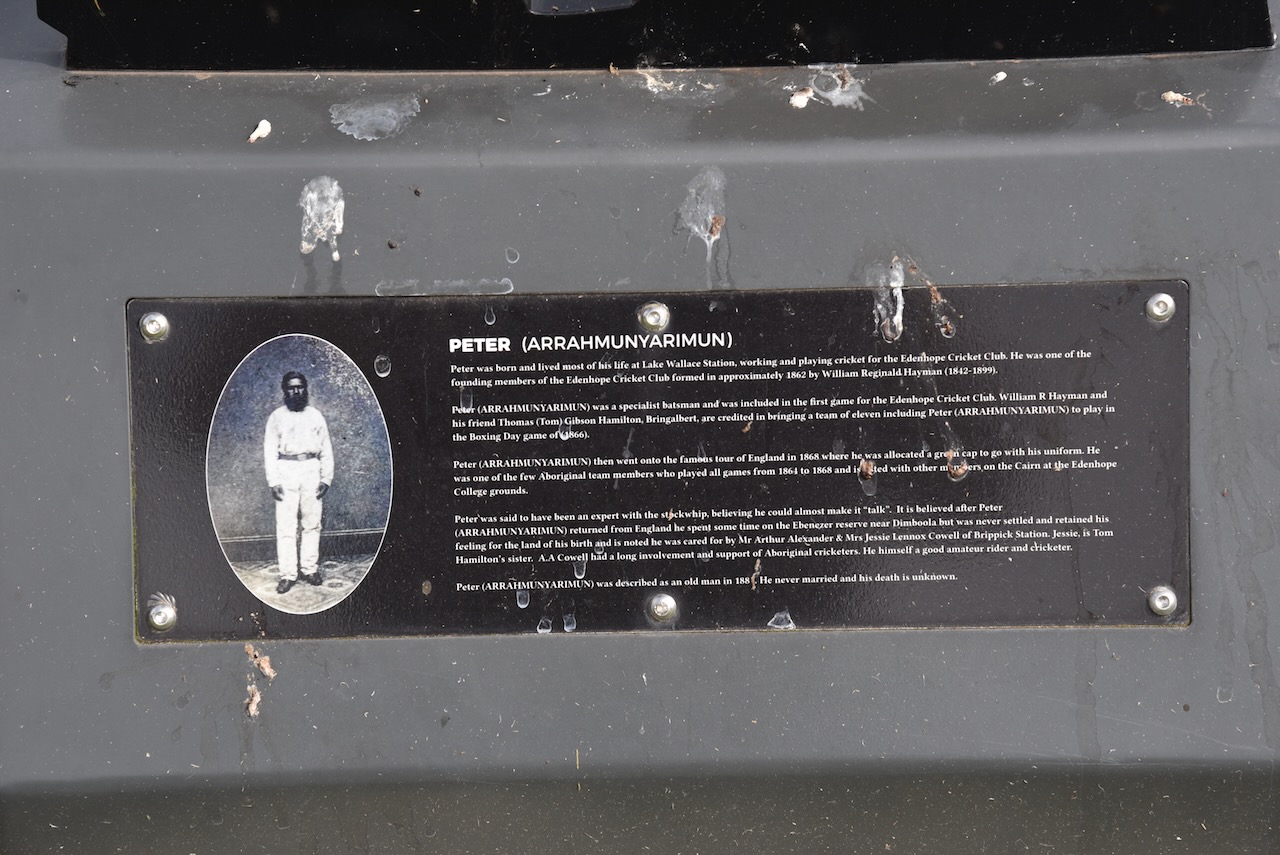
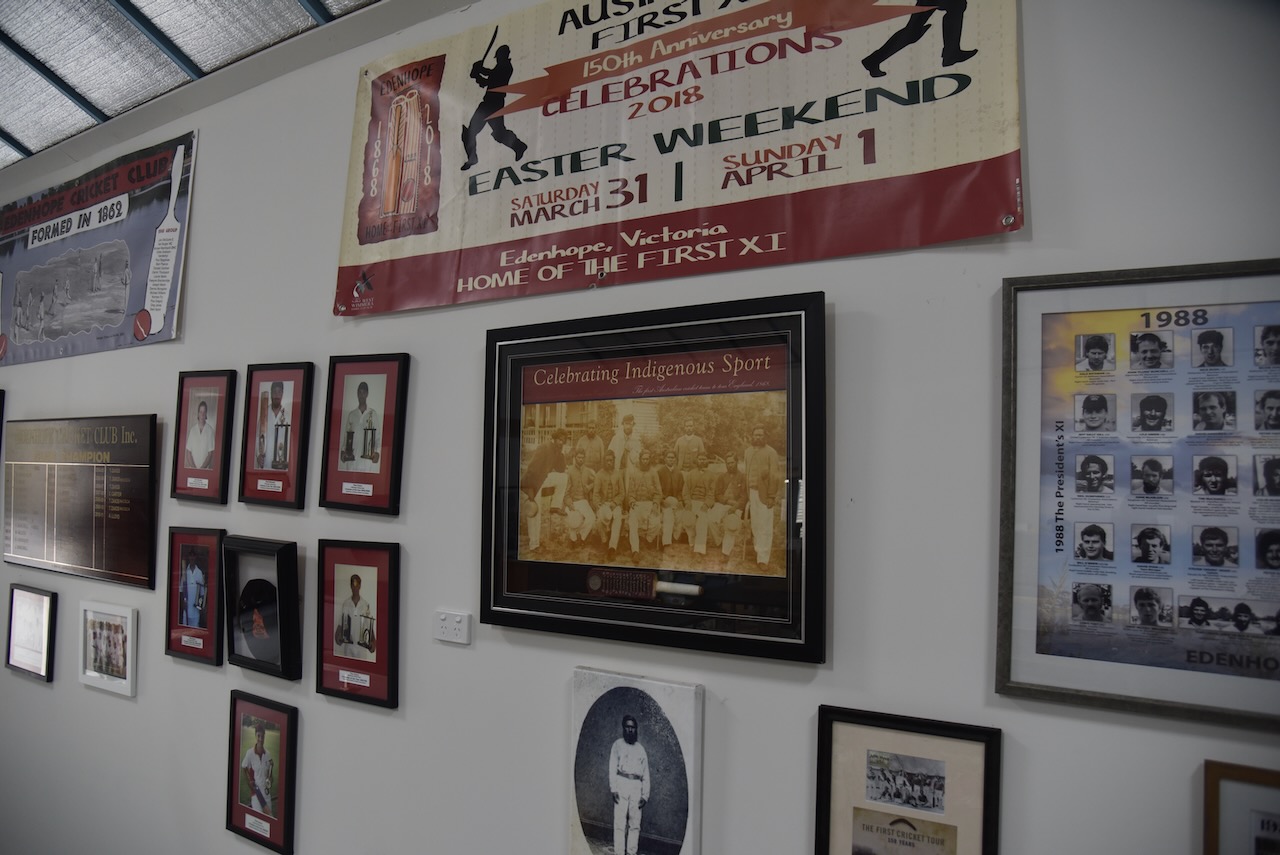
The museum has a good collection of cricket memorabilia, particularly related to the Aboriginal cricket team that toured England in 1868.
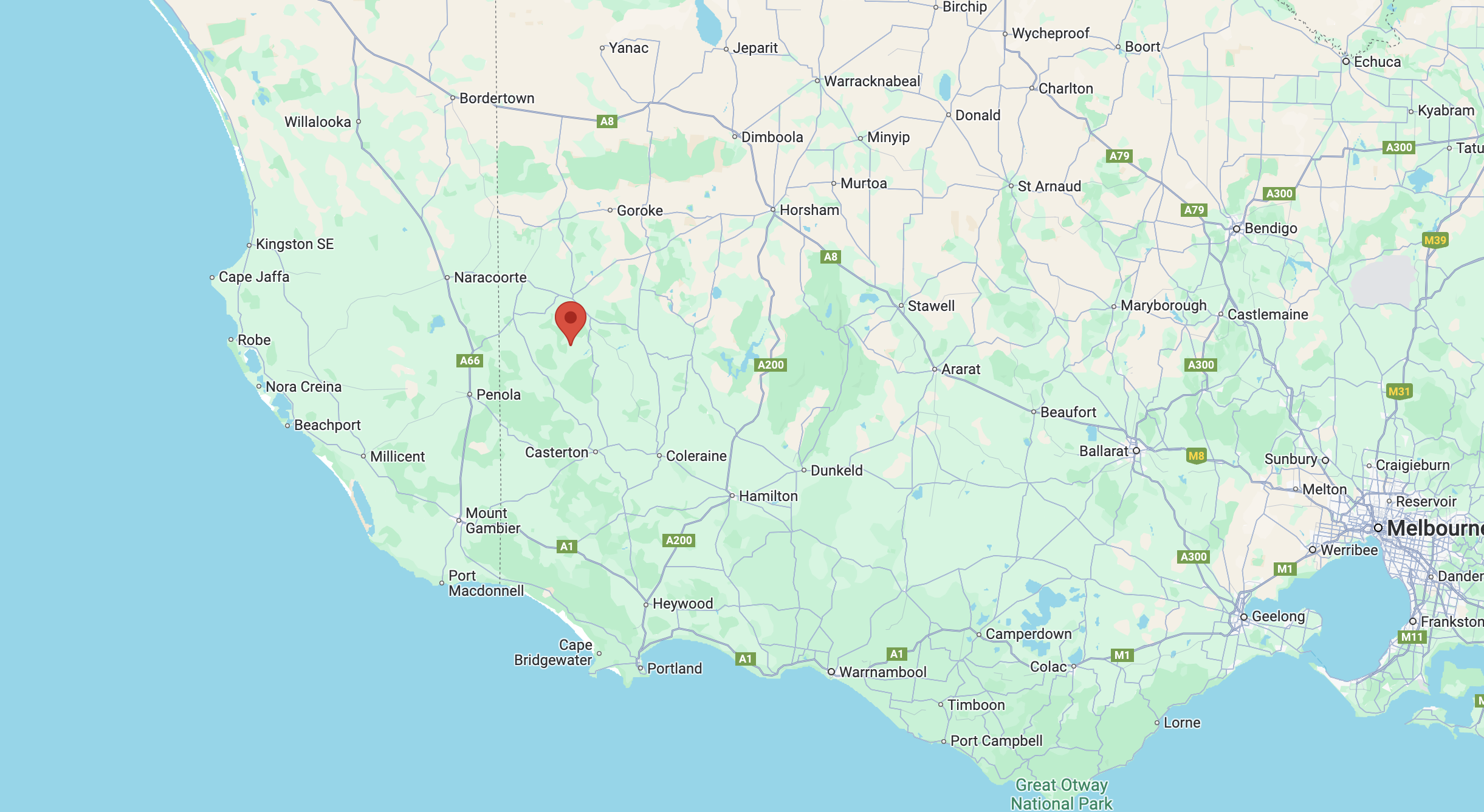
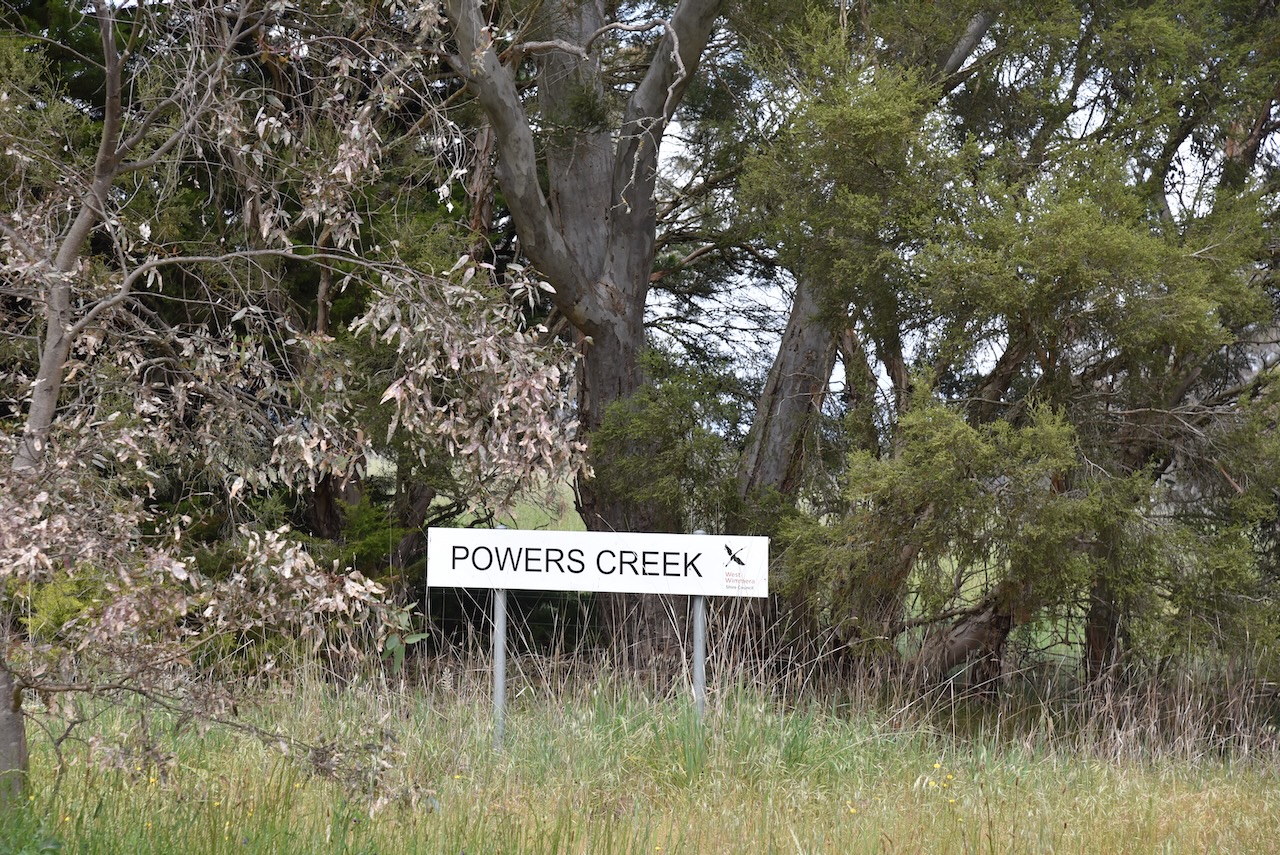
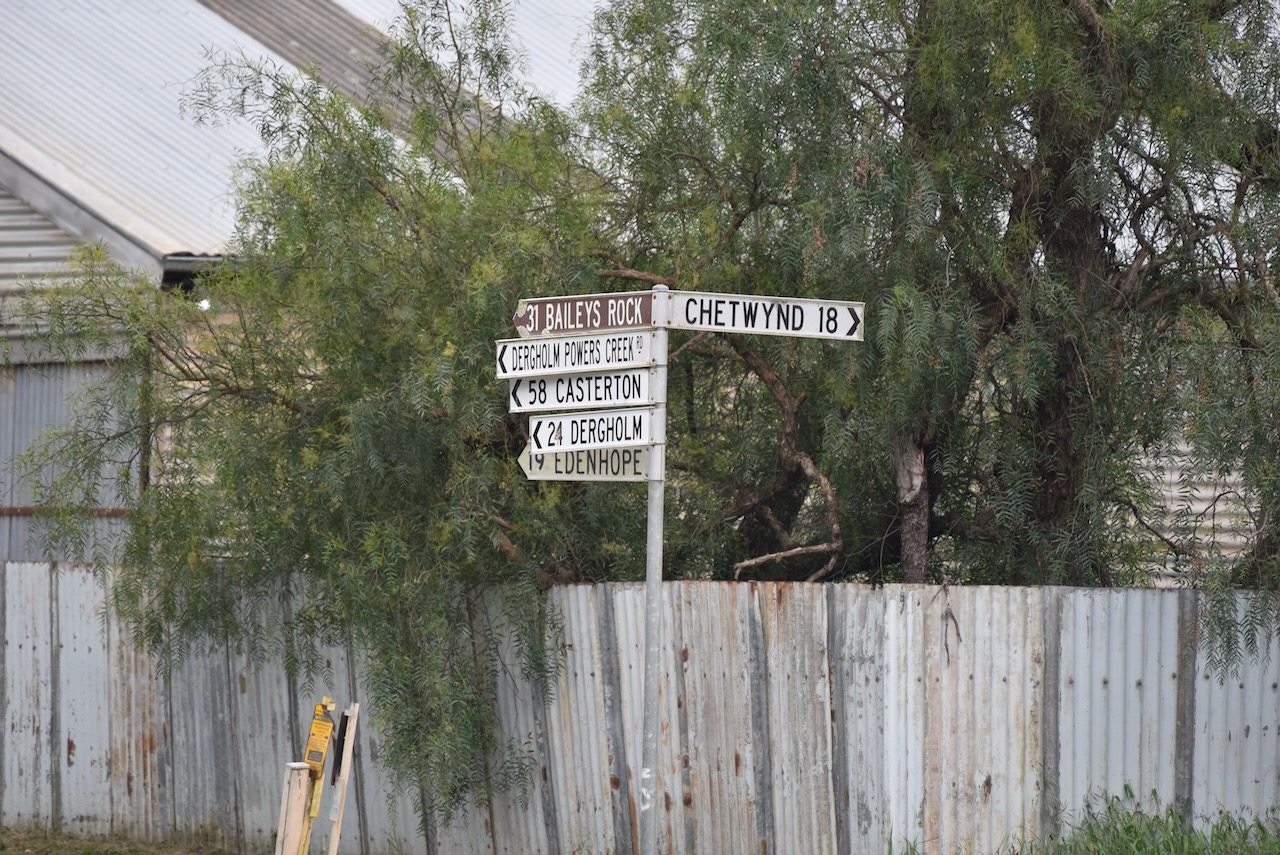
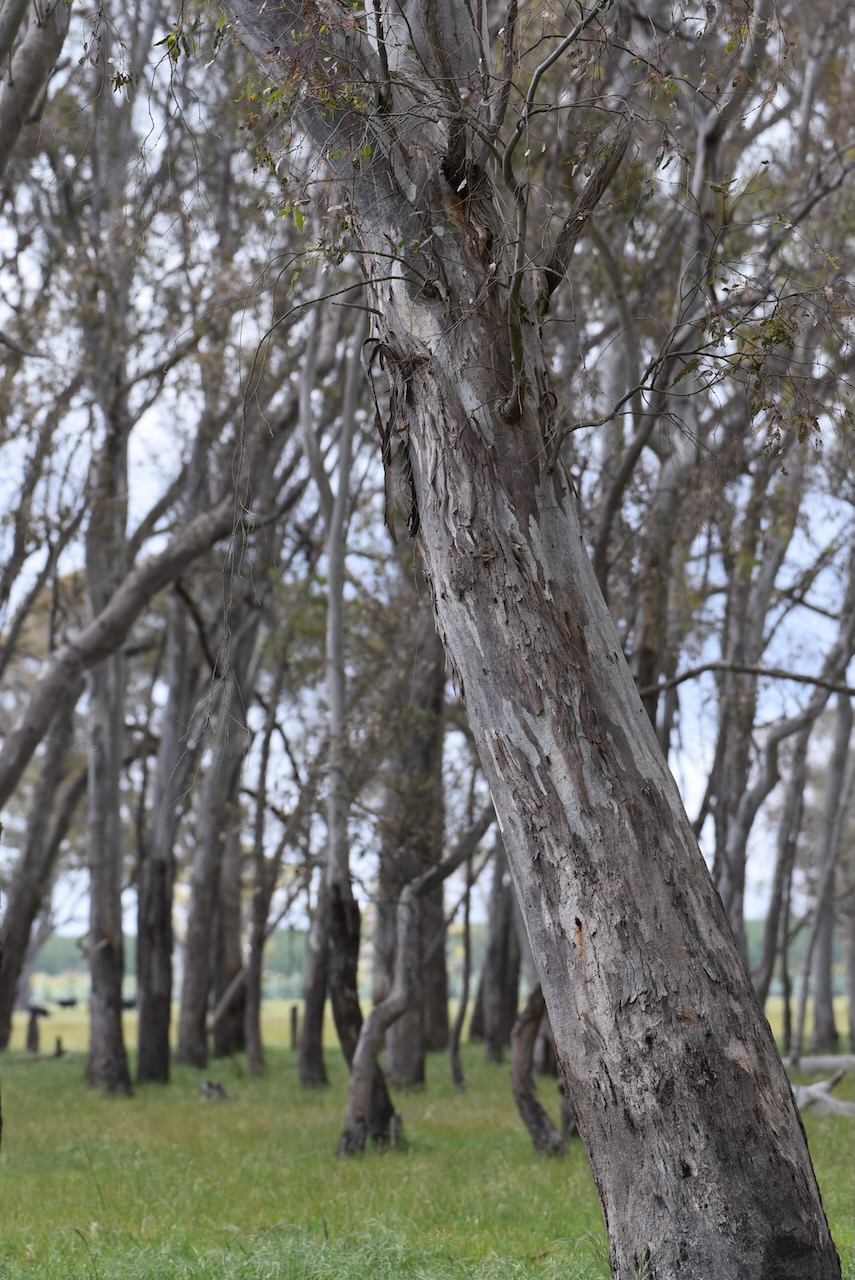
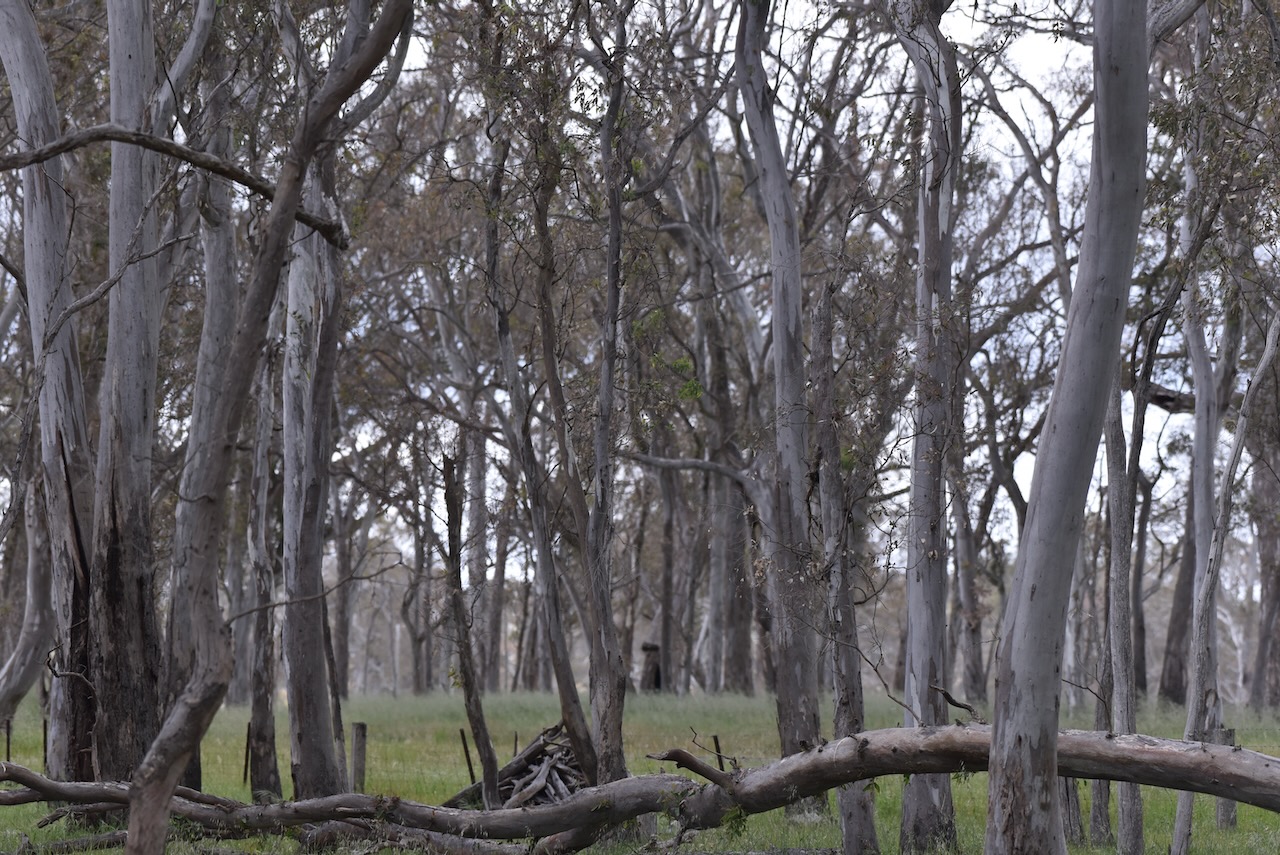
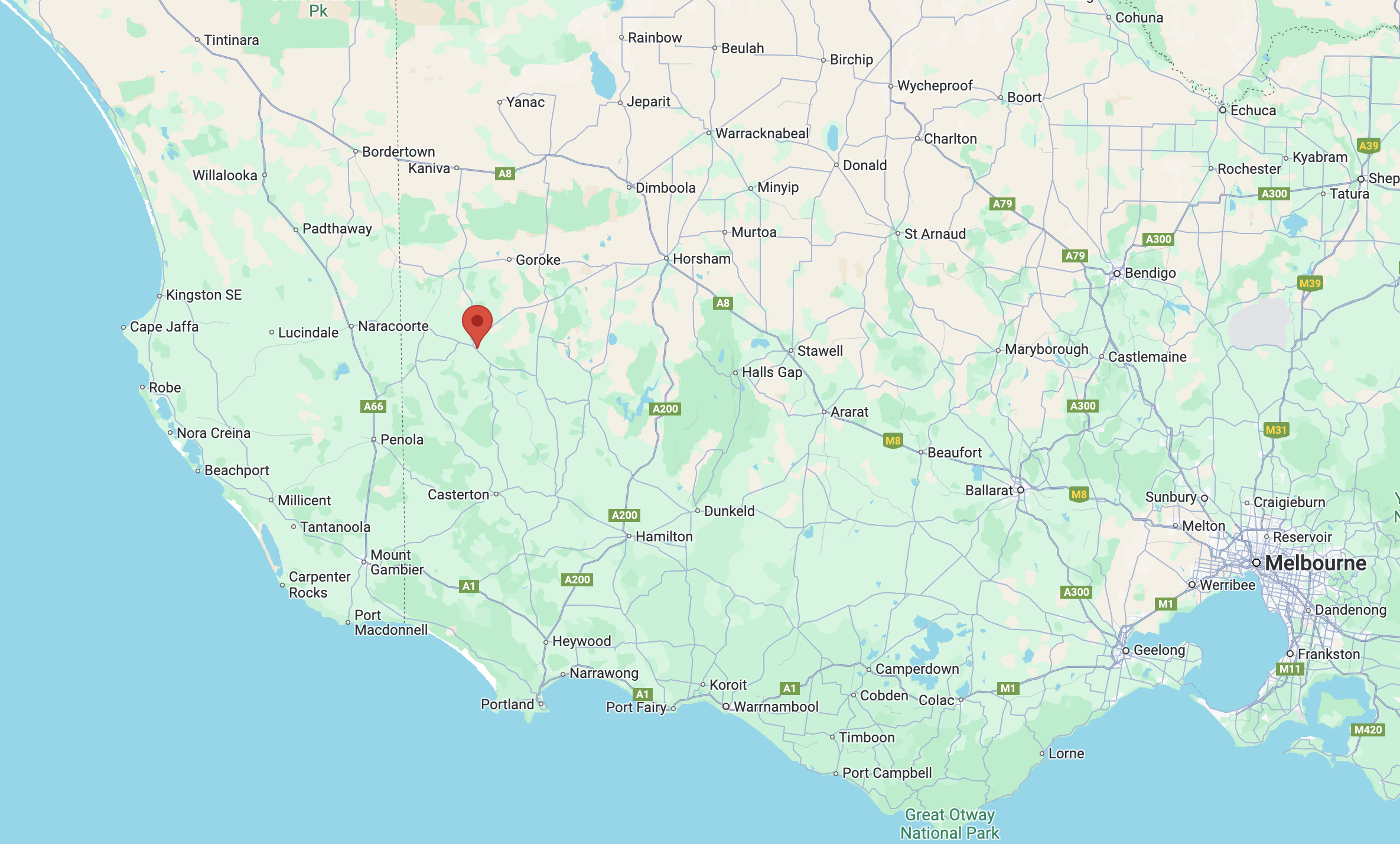
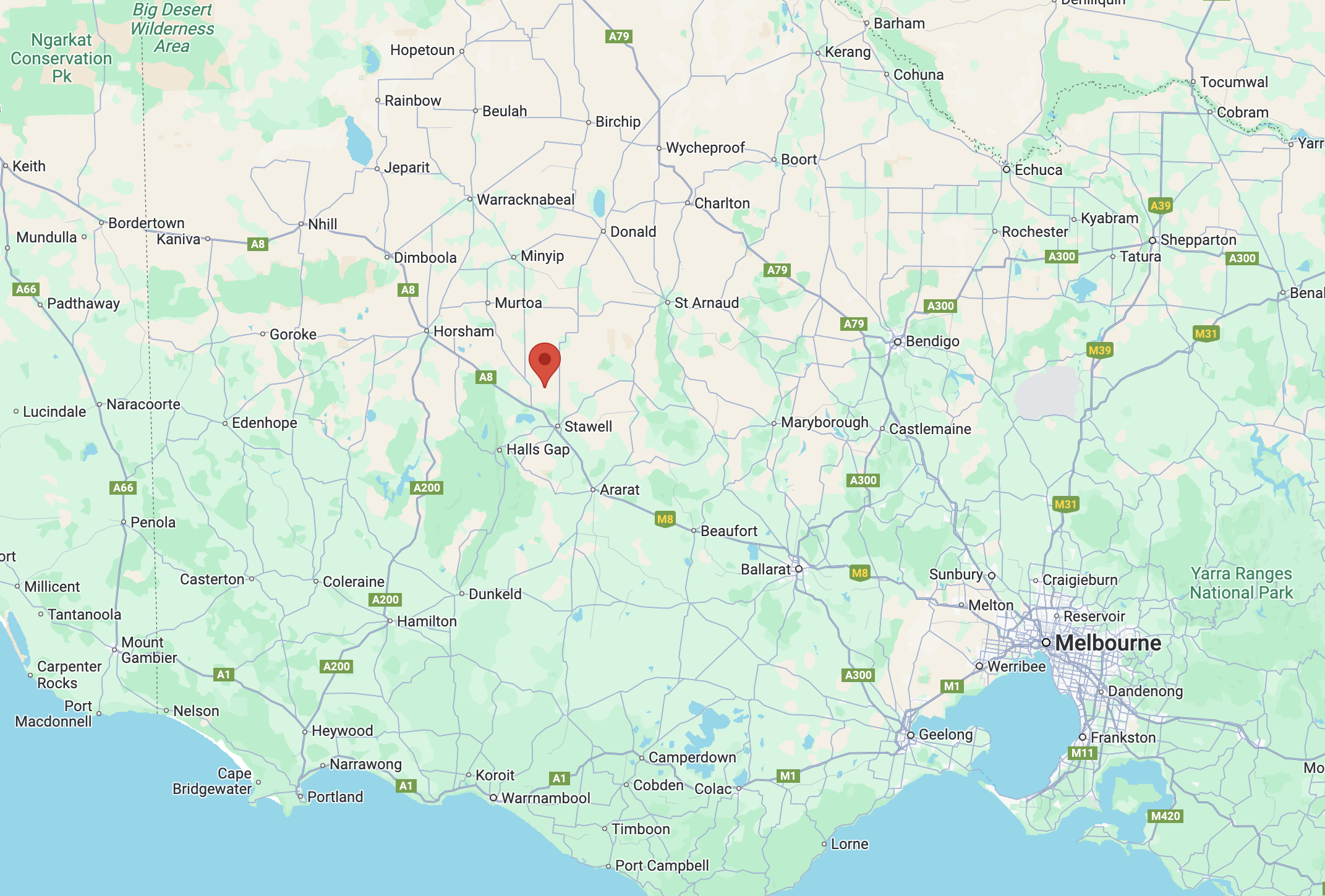
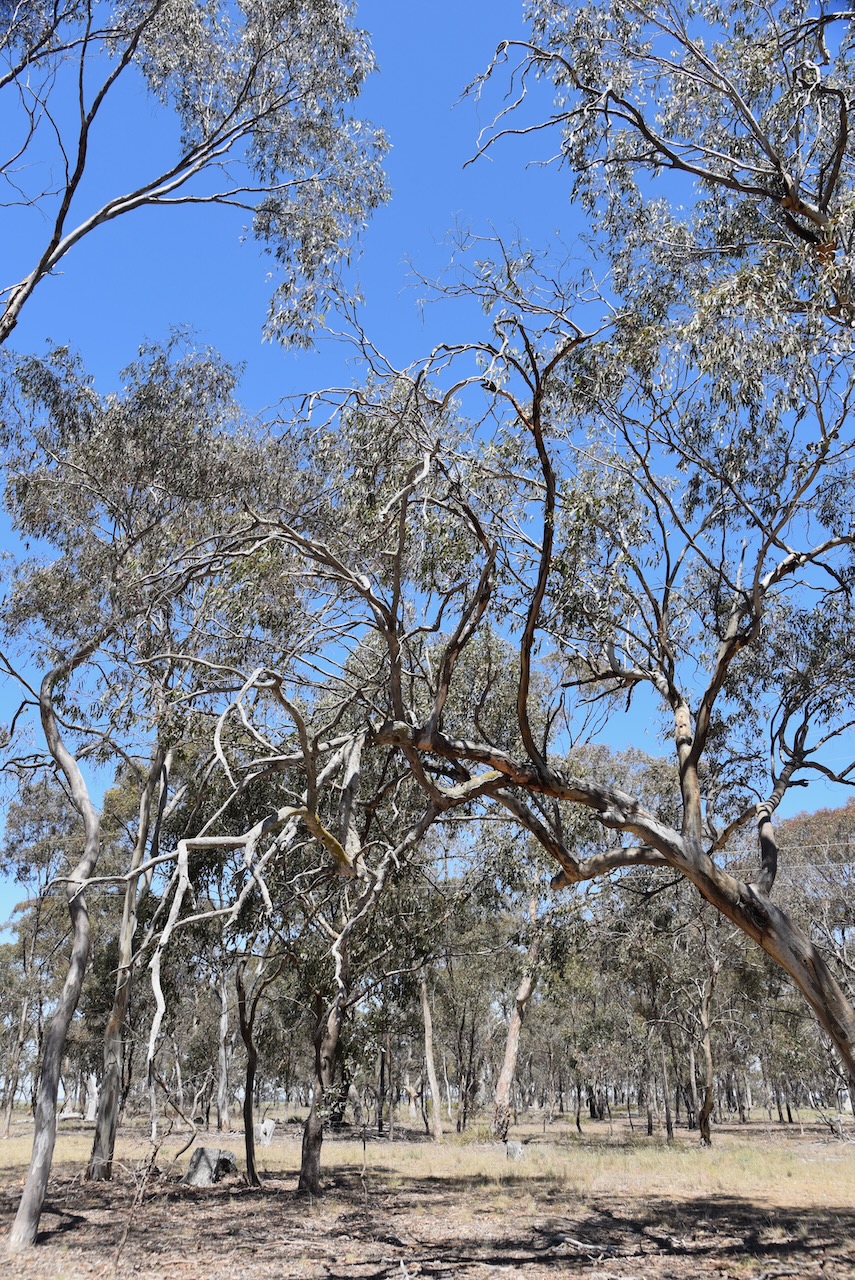
We then headed to our second park activation for the day, the Powers Creek School Bushland Reserve VKFF-5744. The reserve is about 20 km south of Edenhope.
Above:- Map showing the location of Powers Creek School Bushland Reserve. Map c/o Google Maps.
I have been unable to find out any information on this particular Powers Creek. There is another Powers Creek in the Gippsland region of Victoria.
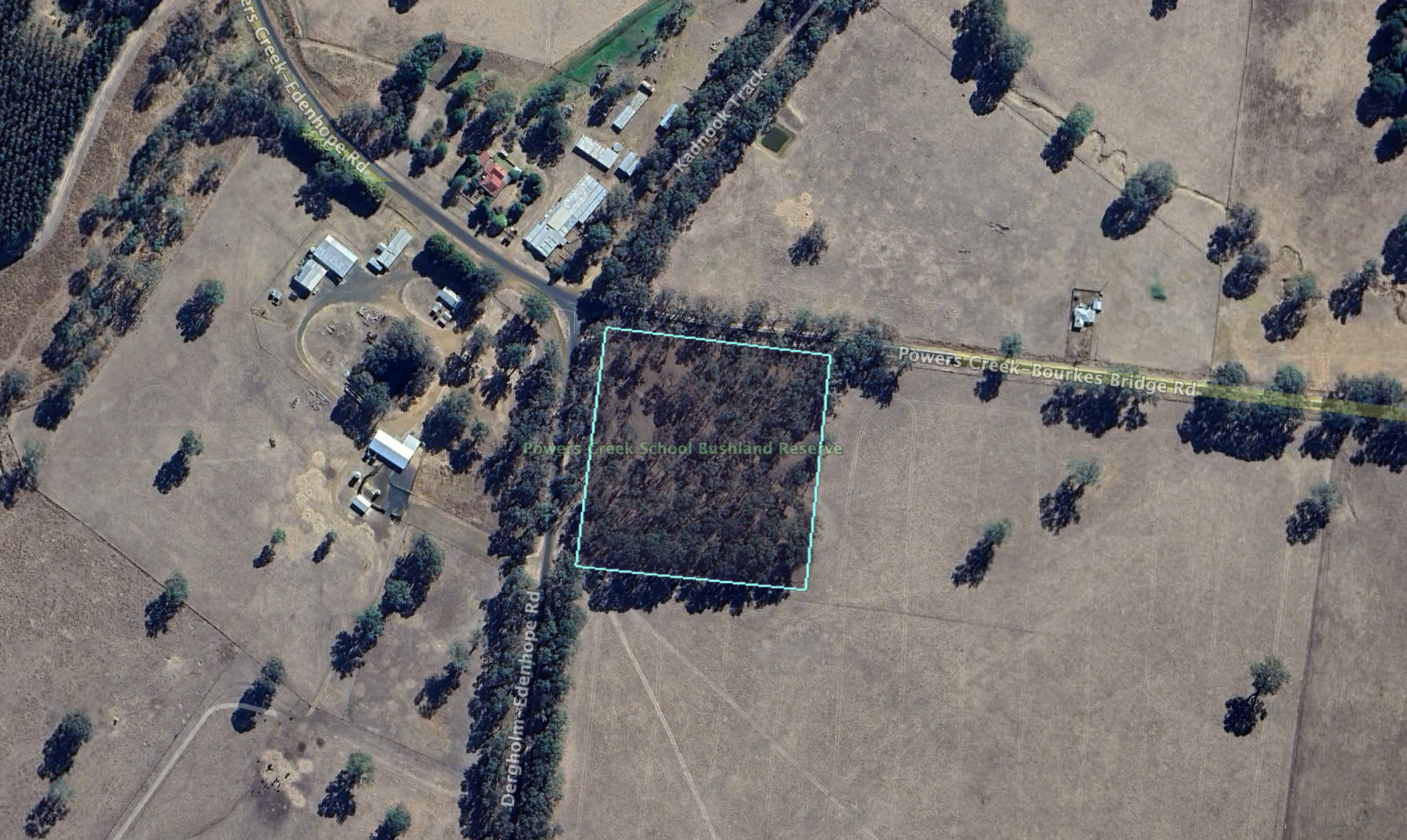
The reserve is located at the intersection of Powers Creek-Bourke Bridge Road, Dergholm-Edenhope Road, and Kadnook Track.
Above:- An aerial view of Powers Creek School Bushland Reserve. Image c/o Google Earth.
The reserve is about 3 hectares in size and was established on the 22nd day of November 1983. (CAPAD 2022)
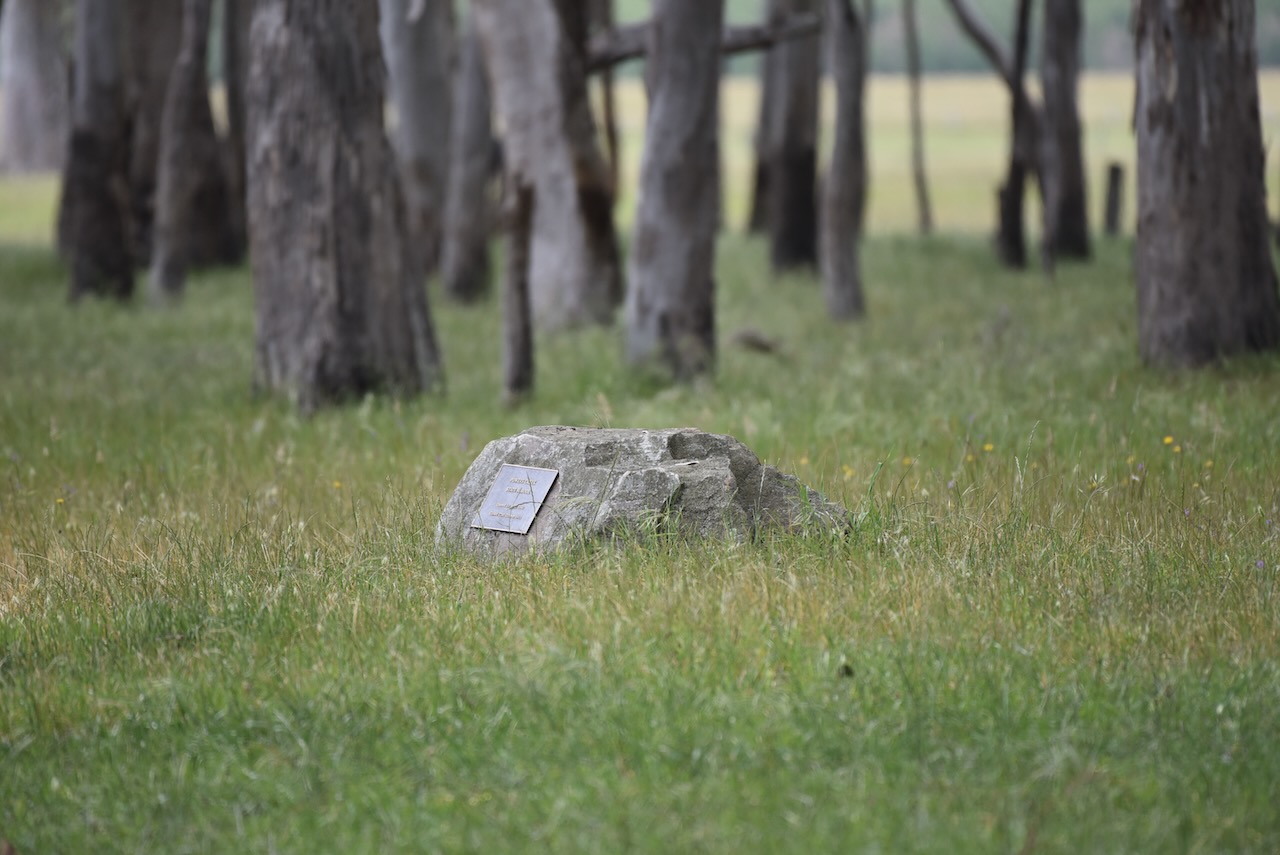
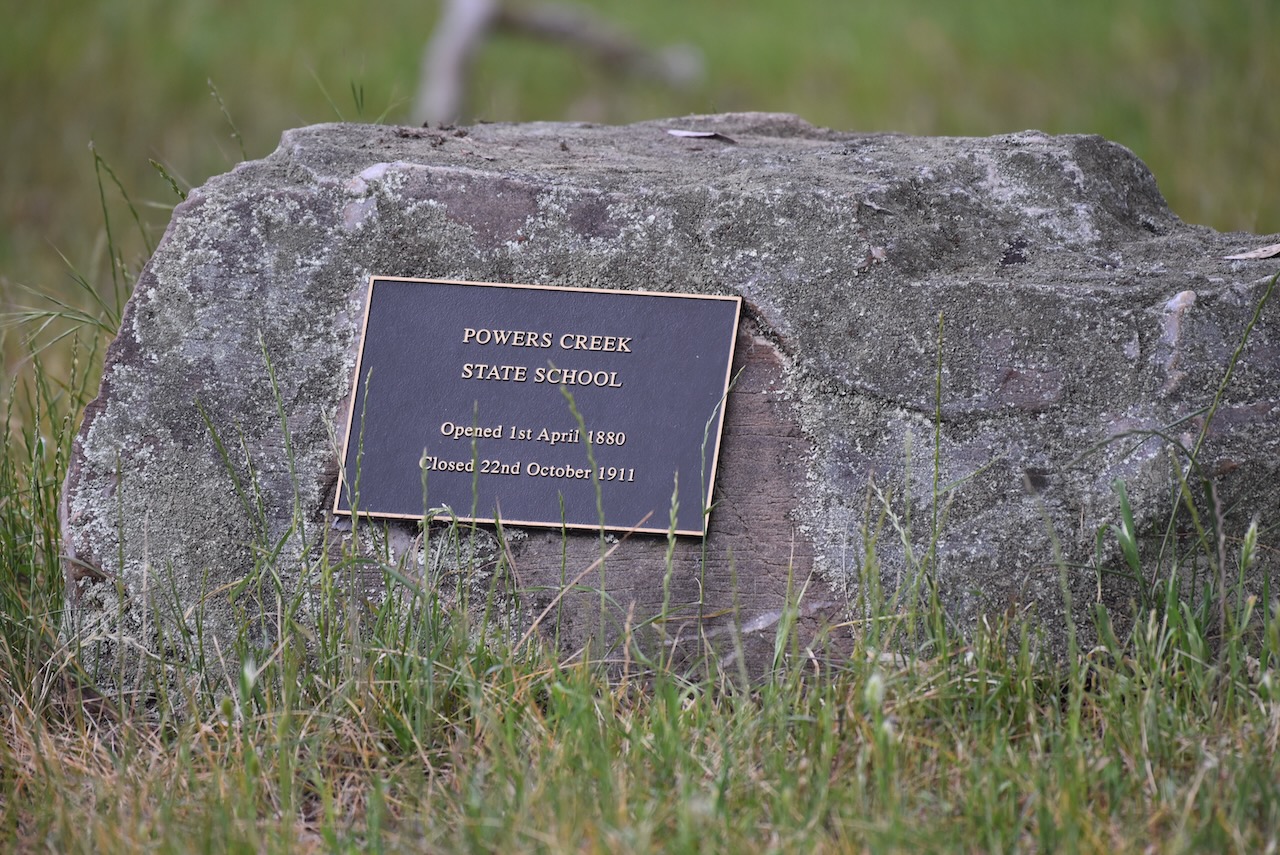
The reserve contains a monument for the Powers Creek State School, which opened on the 1st day of April 1880 and closed on the 22nd day of October 1911.
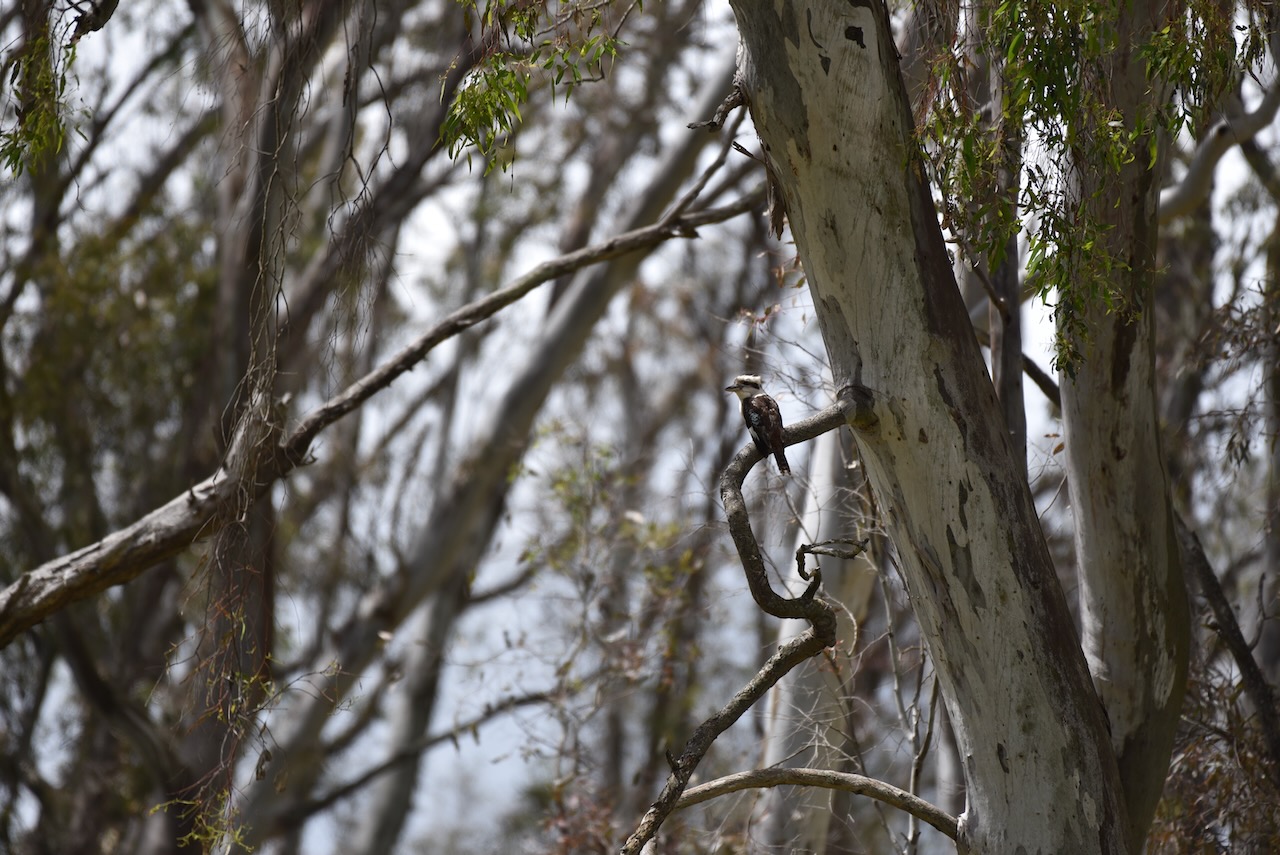
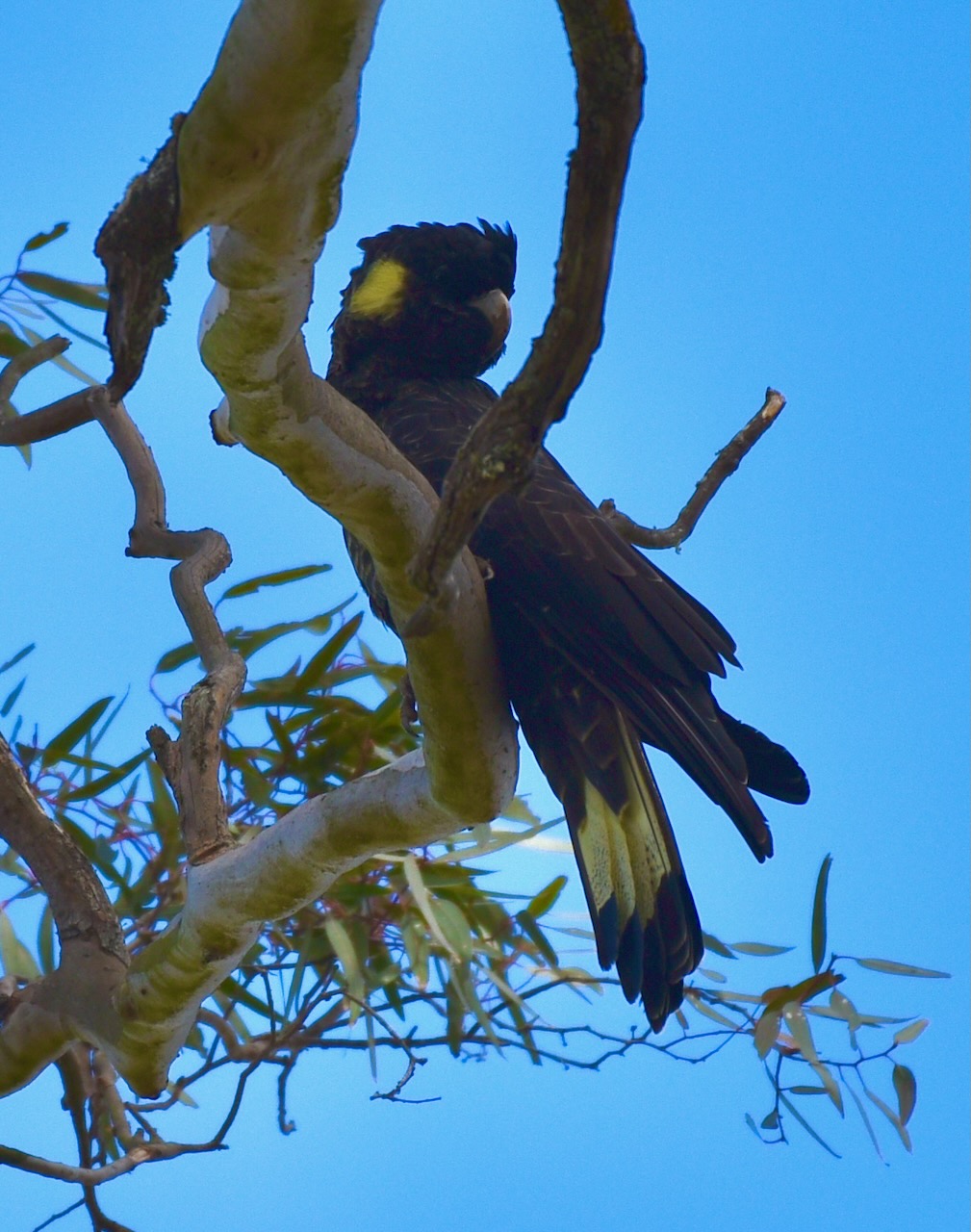
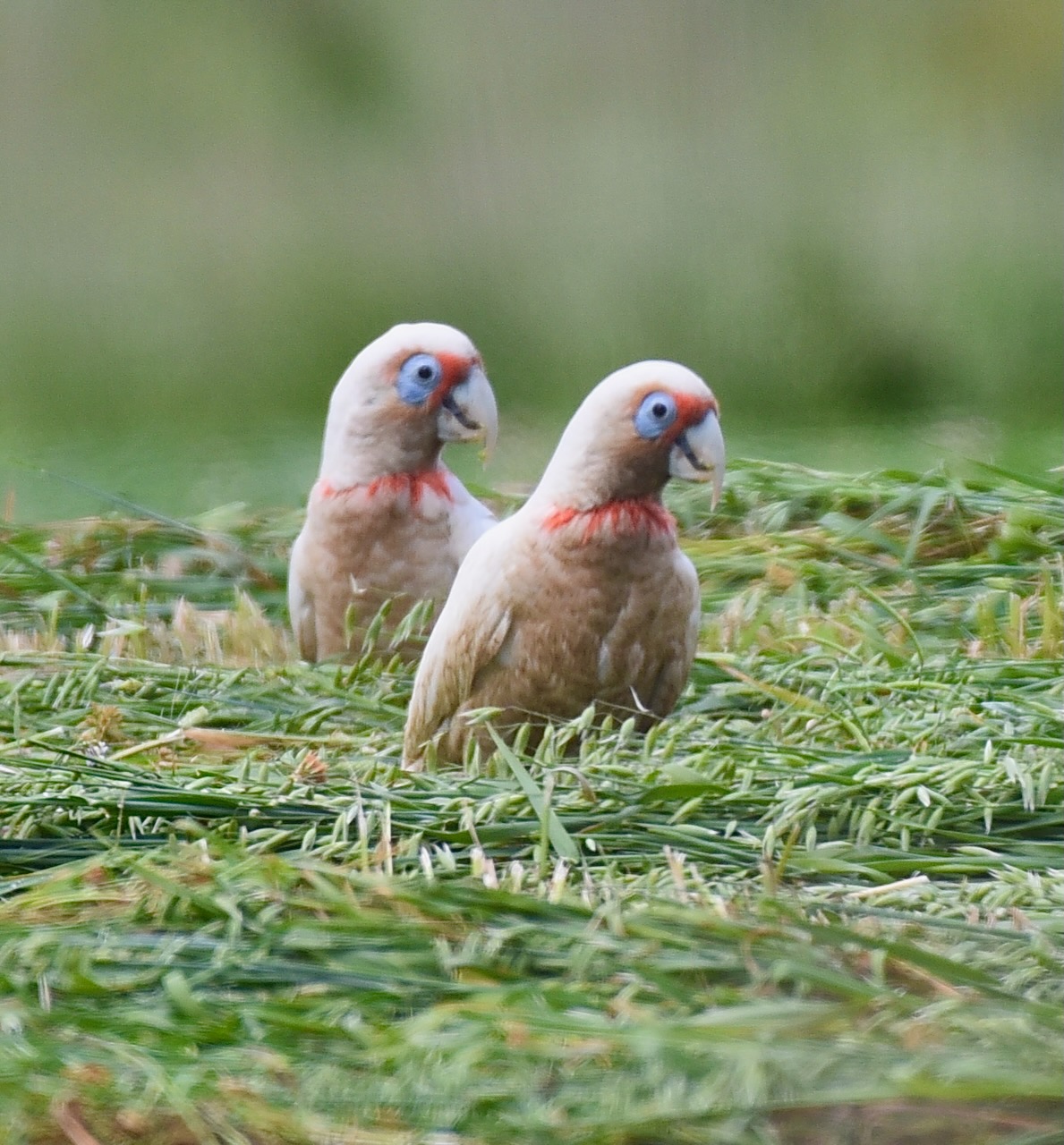
Marija and I were hoping to spot some Red-tailed Black Cockatoos. Unfortunately, we were not so lucky, but we did see several Yellow-tailed Black Cockatoos and Long-billed Corellas.
The park had an unlocked gate. We set up just inside the gate and ran the Yaesu FT857, 40 watts, and the 20/40/80m linked dipole.
Sadly, the band conditions were very poor, and it started raining during the activation, so we packed up and headed off to activate another park.
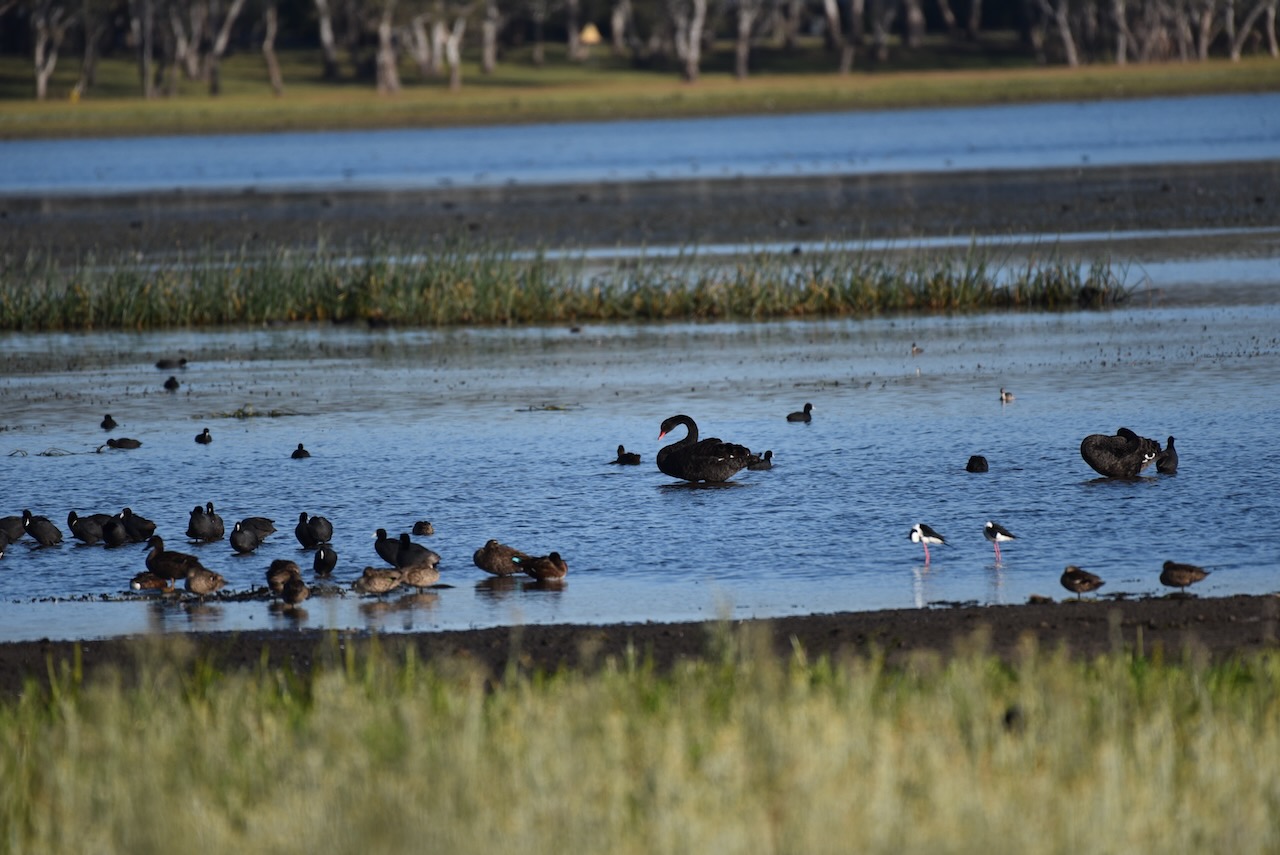
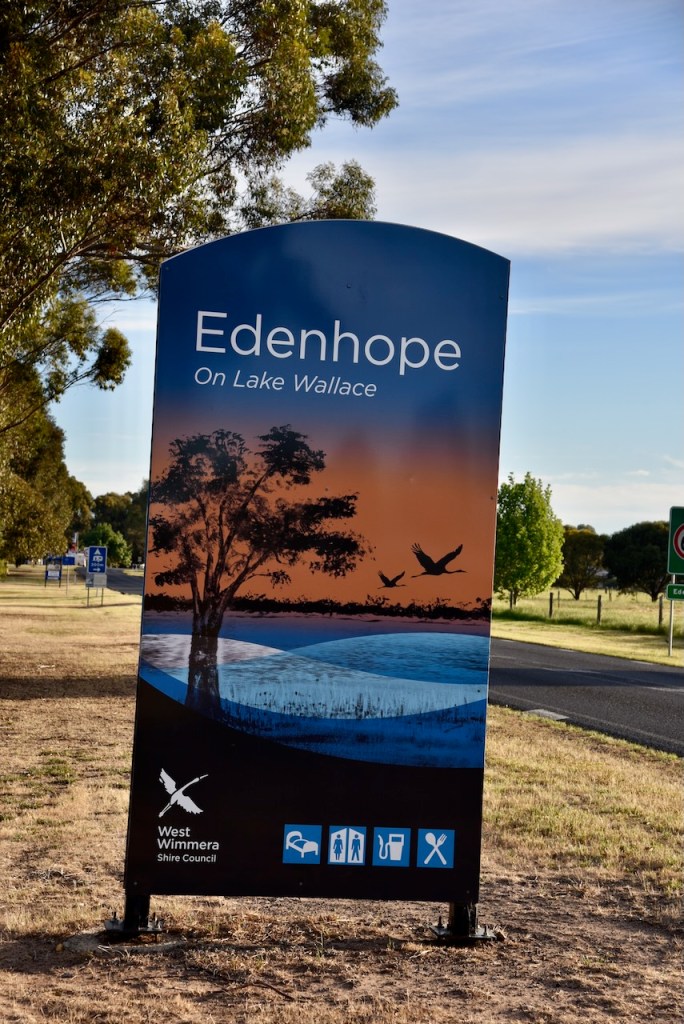
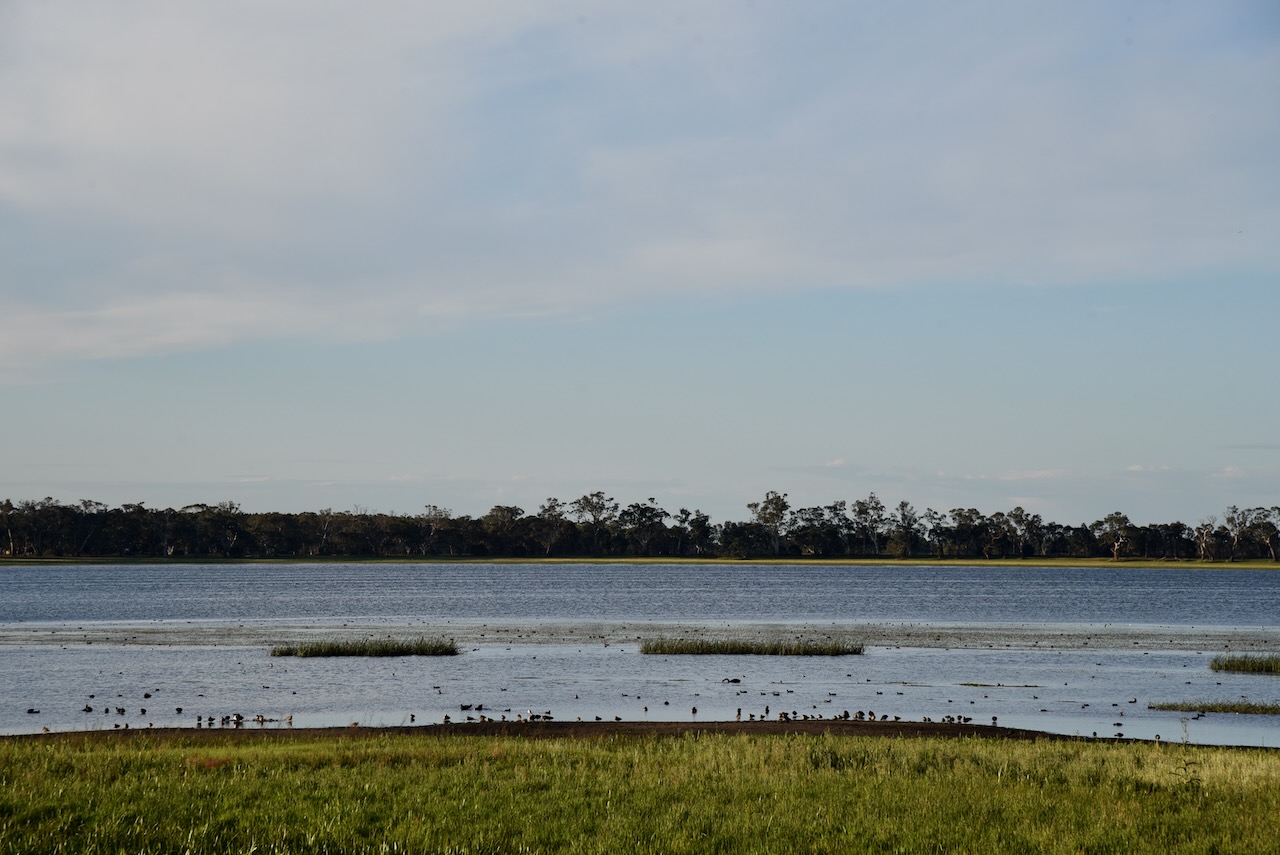
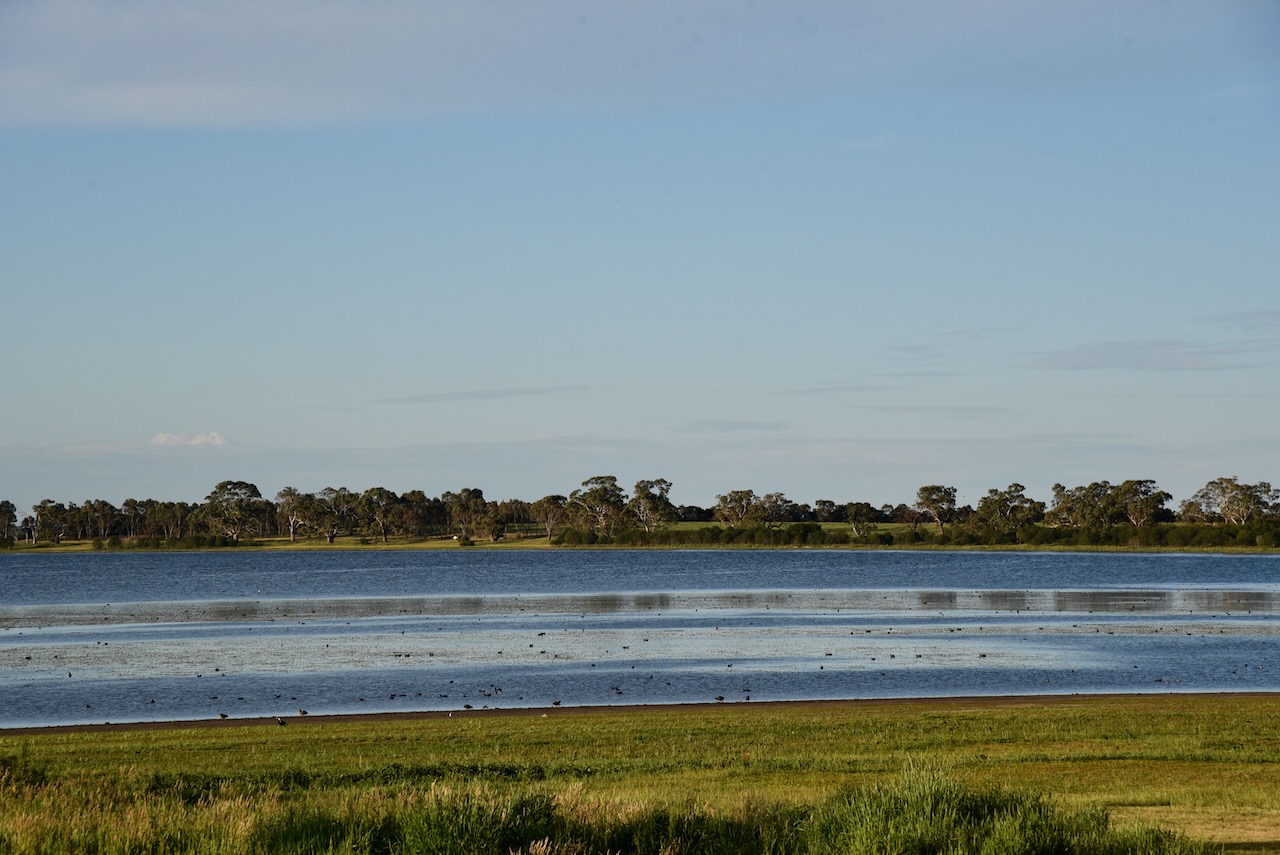
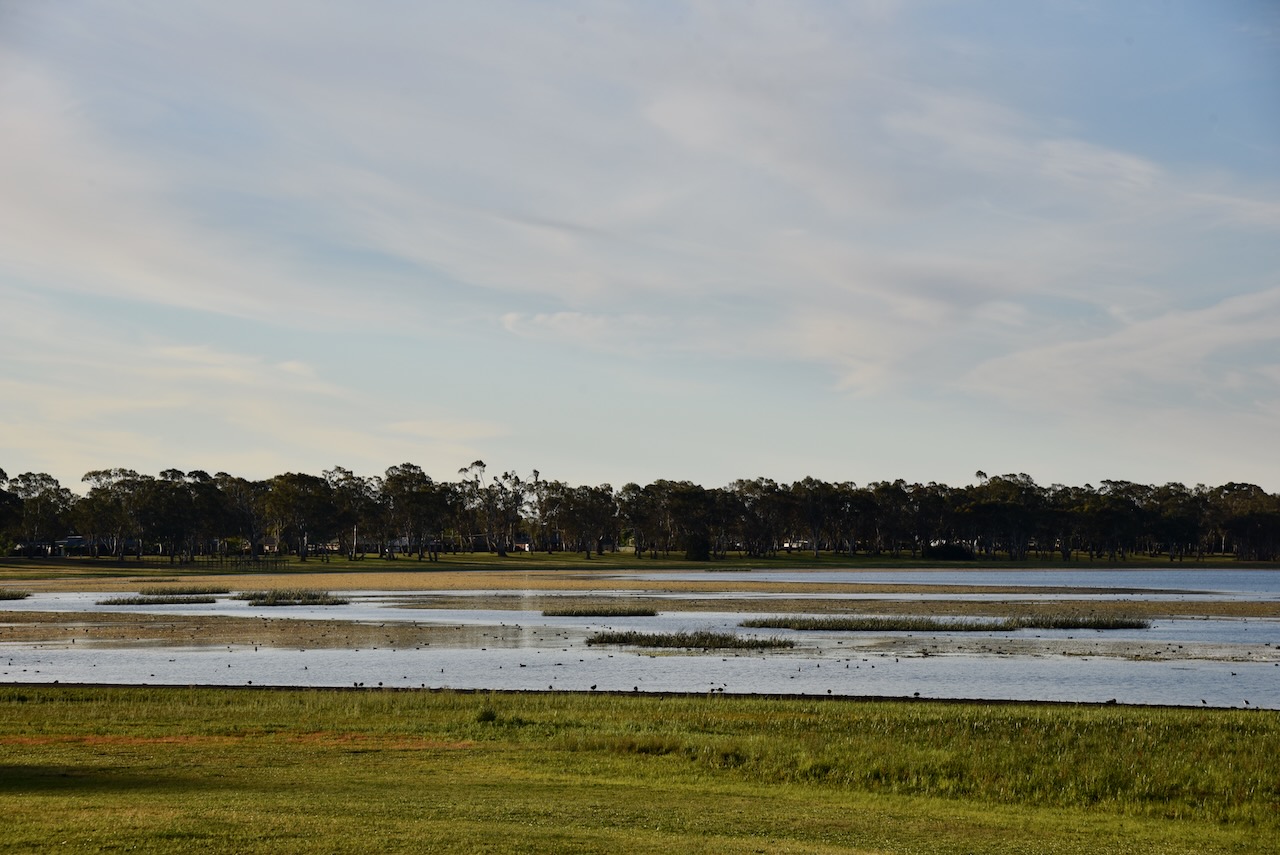
It was now Thursday, 31st October 2024, and getting towards the end of our Bendigo trip. We had breakfast at the cabin and enjoyed the view of Lake Wallace from our front verandah. The lake was teeming with birdlife, but they were very squittish and it was difficult to get close for some good photographs.
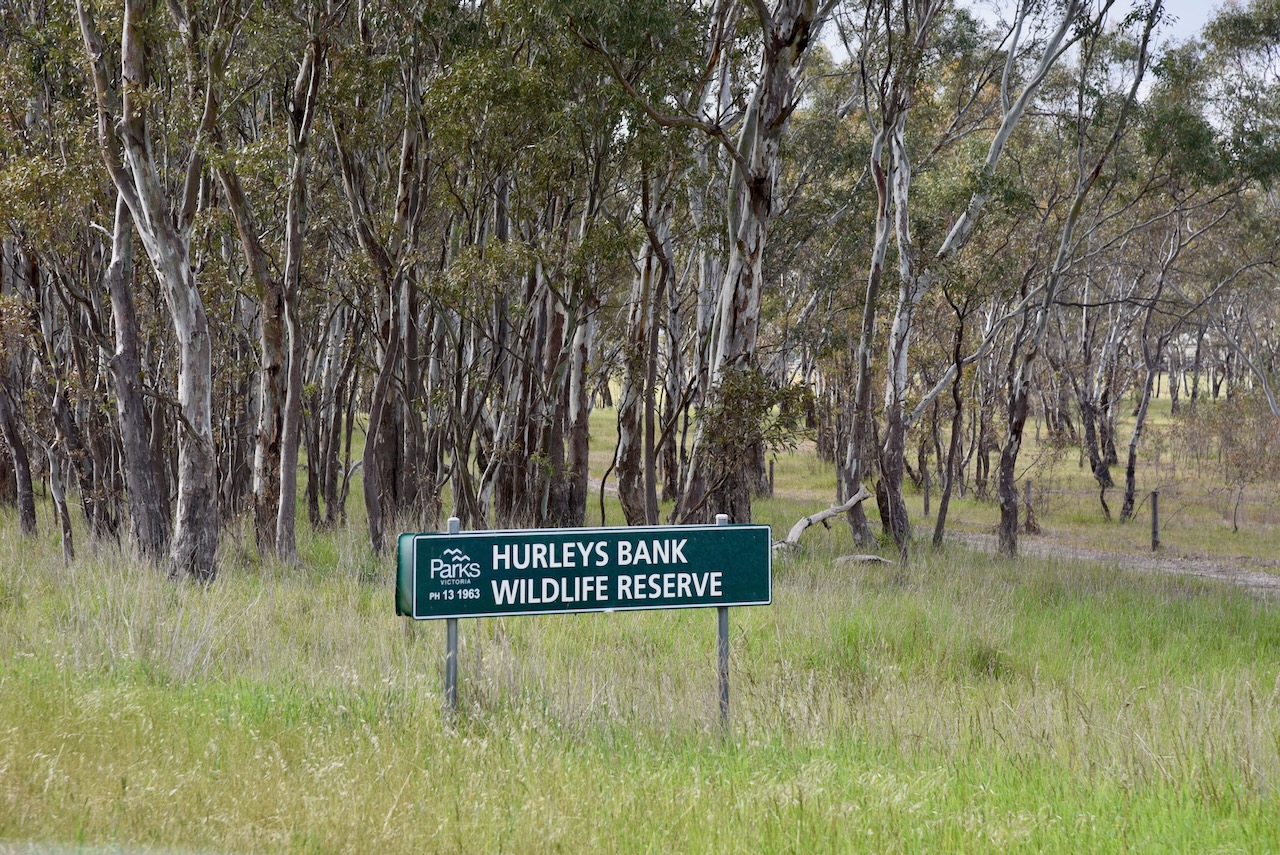
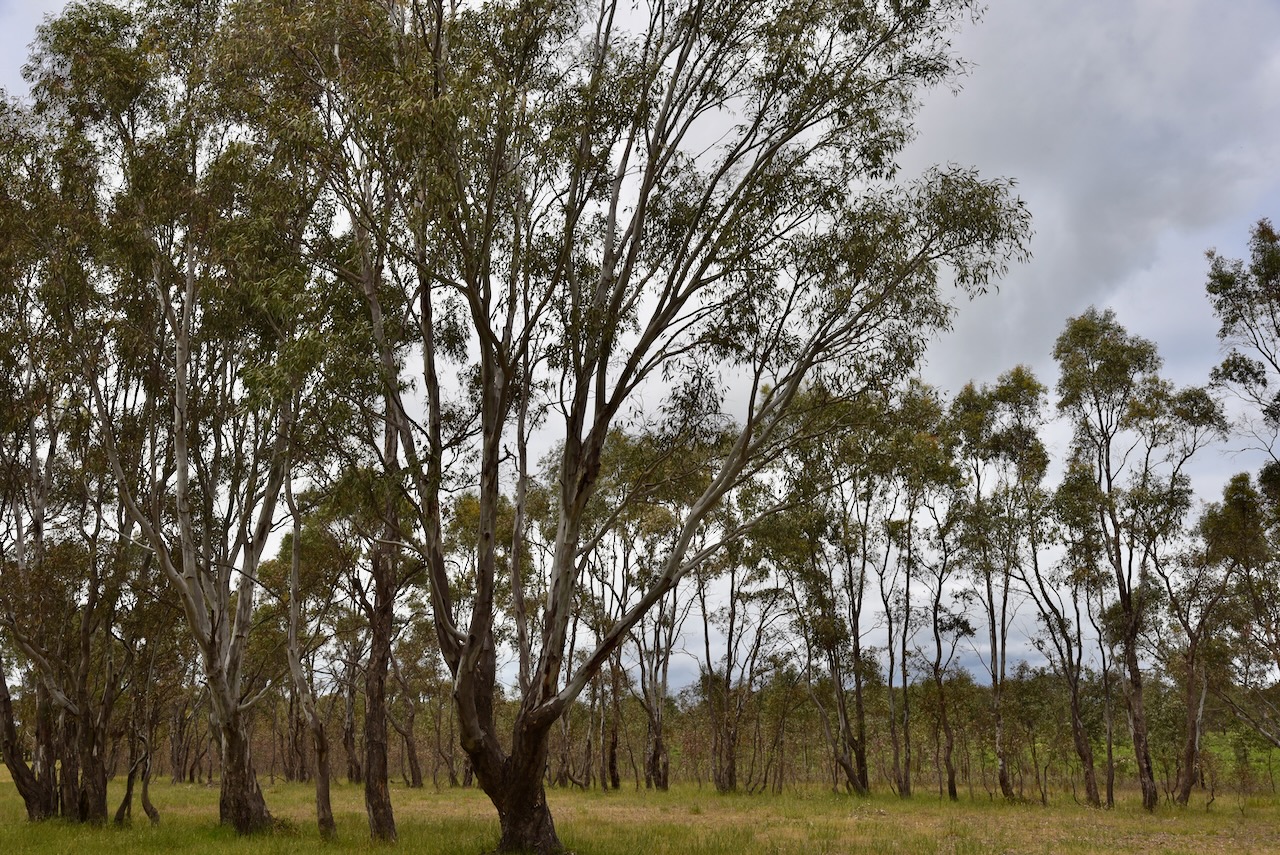
After breakfast, we headed to our first park activation for the day, the Hurleys Bank Wildlife Reserve VKFF-5152. The park is just 2.5 km east of Edenhope in southwest Victoria.
Above:- Map showing the location of Hurleys Bank Wildlife Reserve. Map c/o Google Maps.
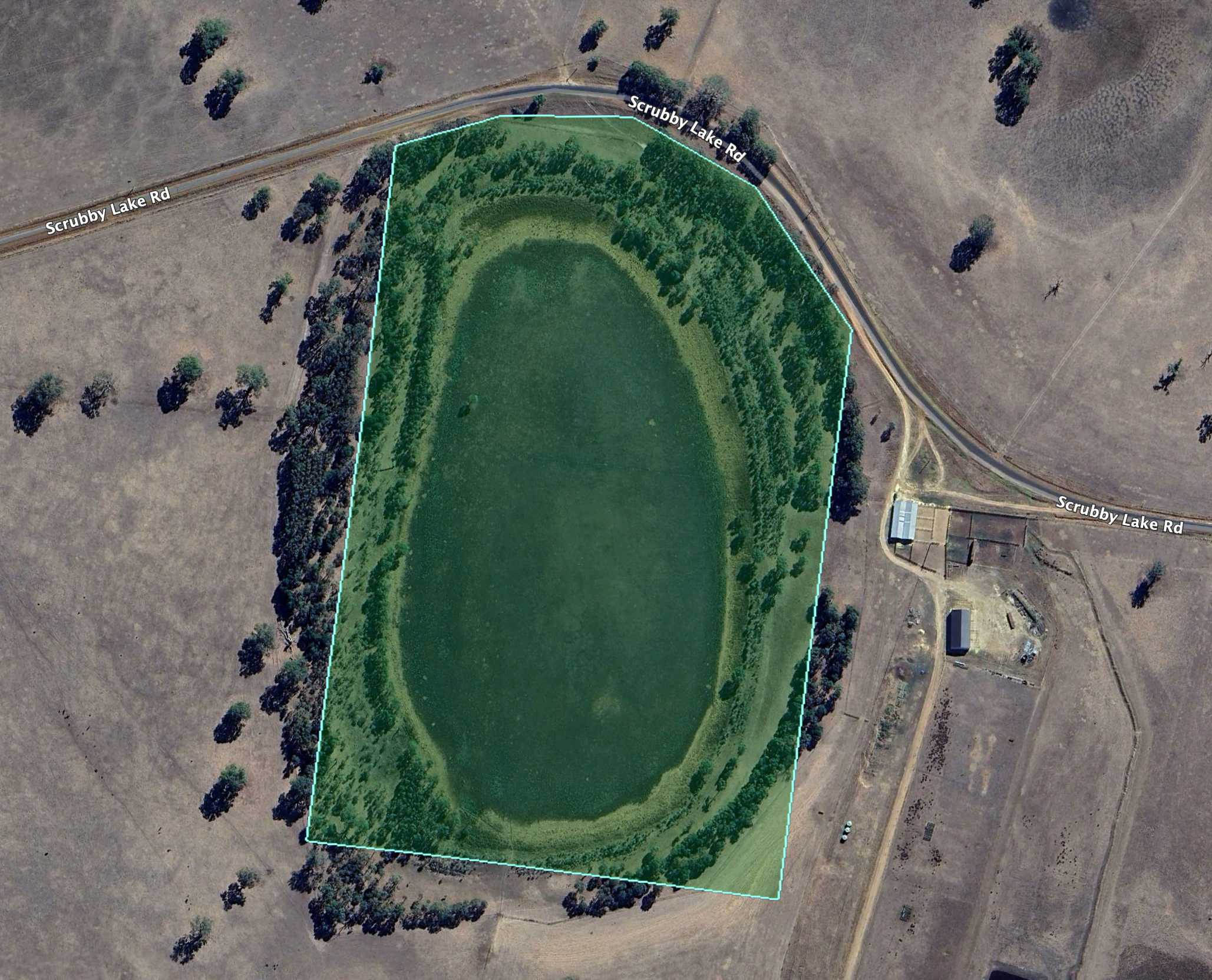
The reserve is located on the southern side of Scrubby Lake Road.
Above:- An aerial view of Hurleys Bank Wildlife Reserve. Image c/o Google Earth.
The reserve is about 22 hectares in size and was established on the 22nd day of November 1983. (CAPAD 2022)
There was a fence surrounding the park, so we sought permission from the farmer to access the reserve. We ran the Yaesu FT857, 40 watts, and the 20/40/80m linked dipole.
Late on the afternoon of Wednesday, 30th October 2024, Marija and I arrived at Edenhope, where we had planned to stay for a few nights on the final leg of our Bendigo trip.
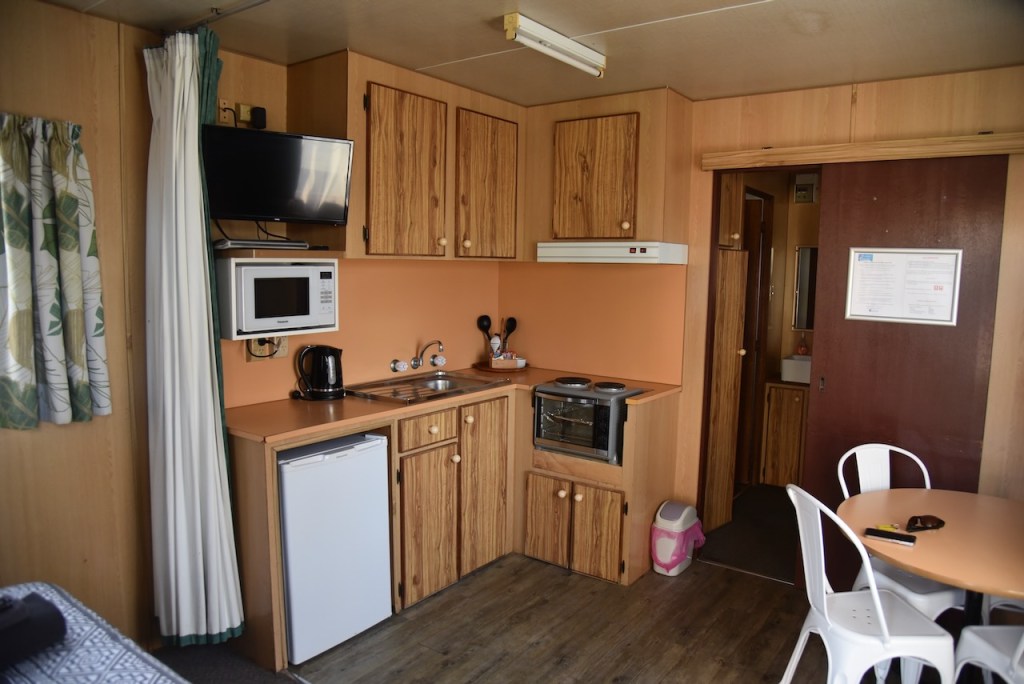
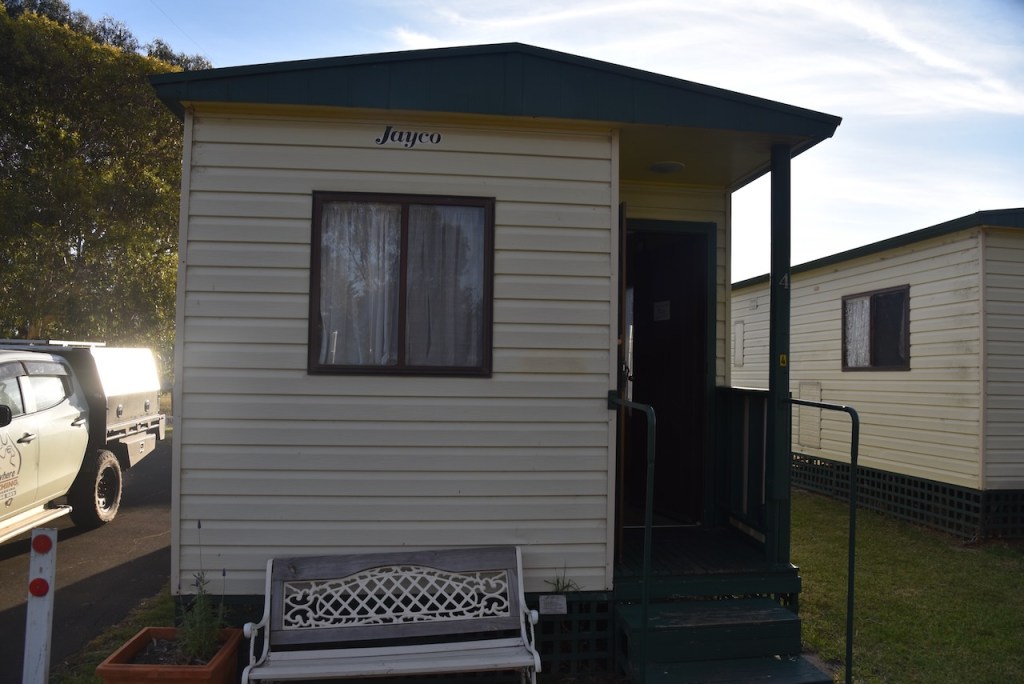
We booked into our accommodation at the Edenhope Lakeside Tourist Park.
The park is located on the shores of Lake Wallace. The lake was discovered in 1843 by William Wallace. (Blake 1978)
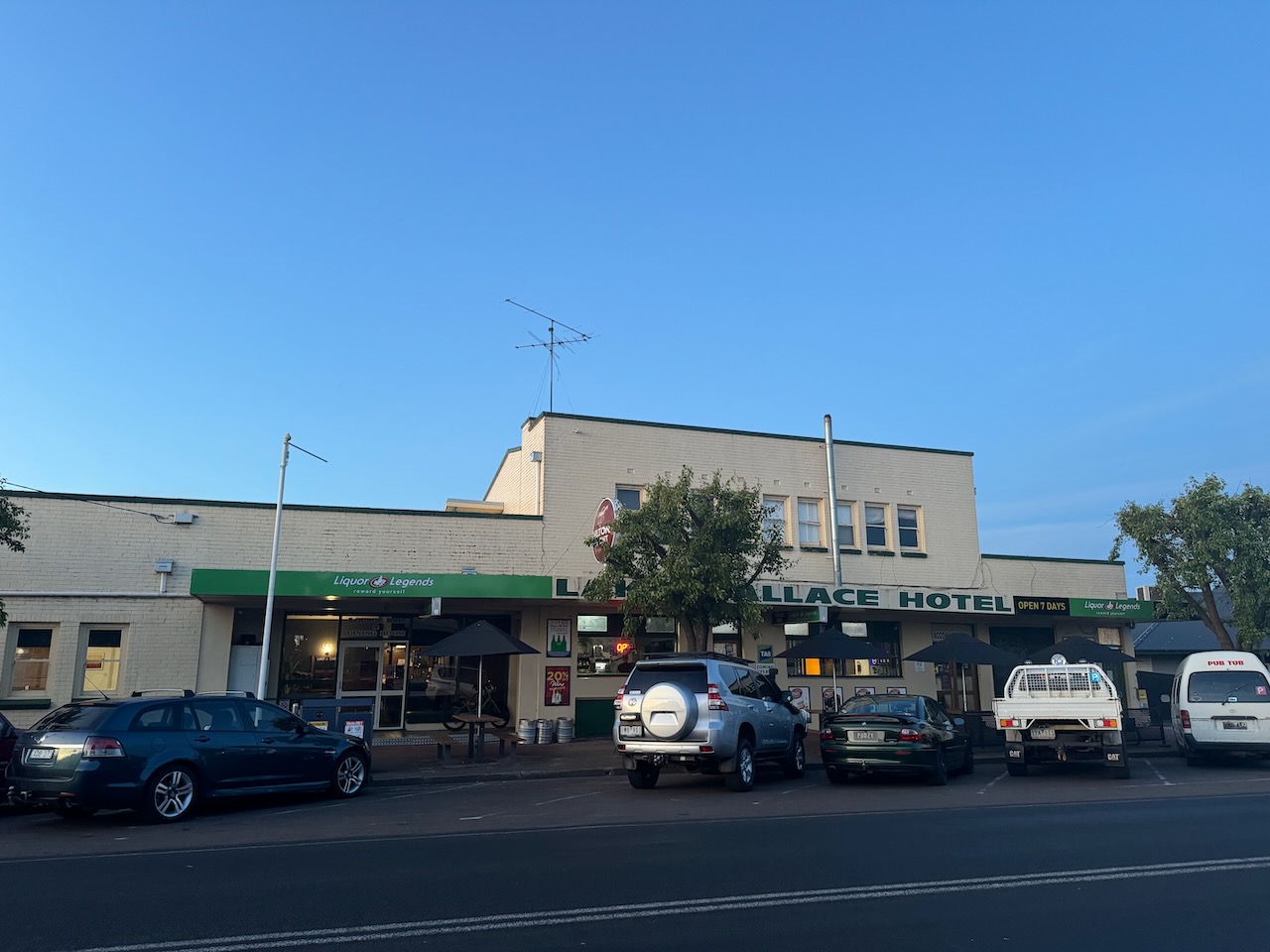
We then headed out for a very nice evening meal at the Lake Wallace Hotel.
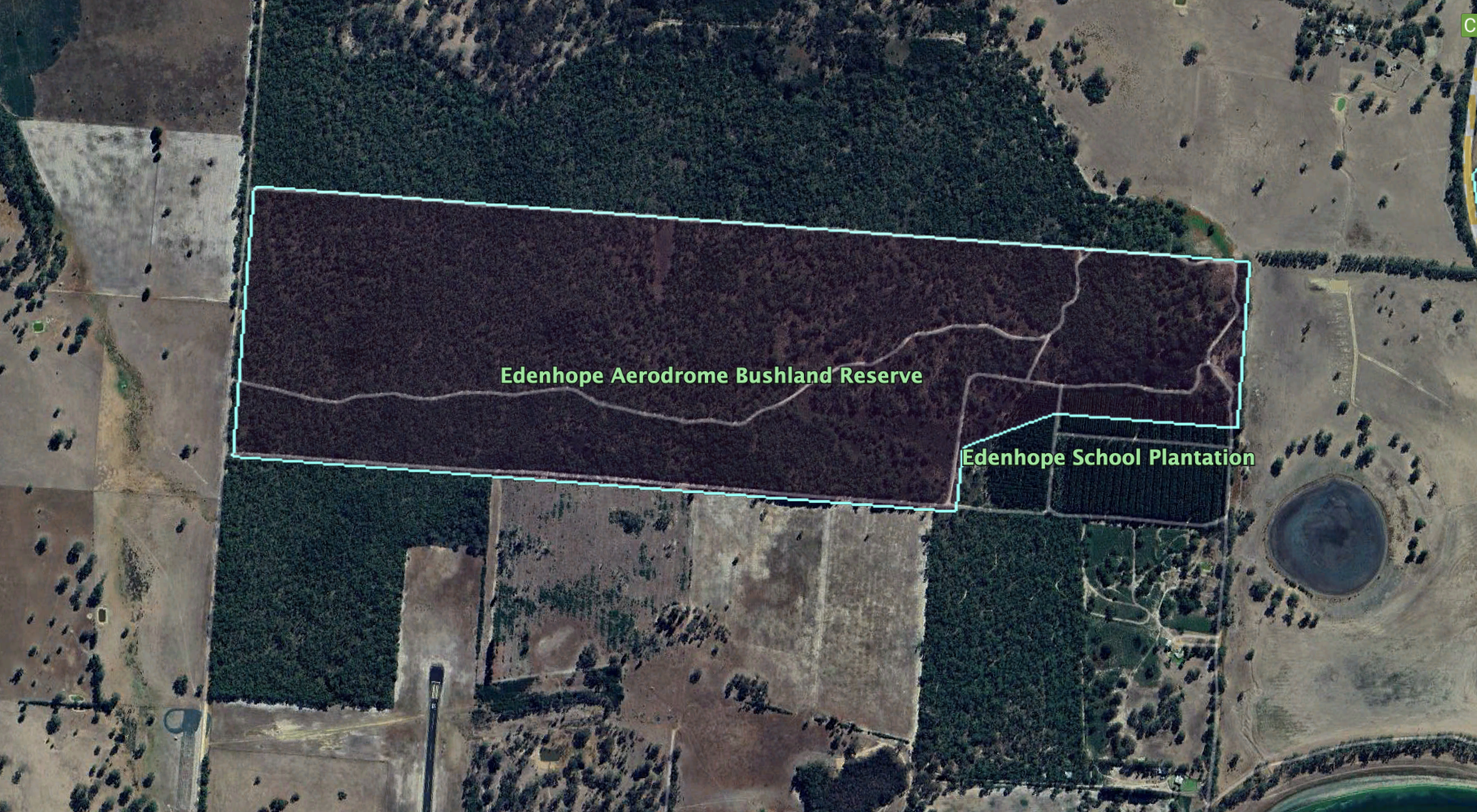
After dinner, we decided to head out to activate the Edenhope Aerodrome Bushland Reserve VKFF-4954.
The reserve is located north of the town of Edenhope, with its southern boundary being the Edenhope Airport.
Above:- An aerial view of the Edenhope Aerodrome Bushland Reserve. Image c/o Google Earth.
The reserve is about 121 hectares in size and was established on the 22nd day of November 1983. (CAPAD 2022)
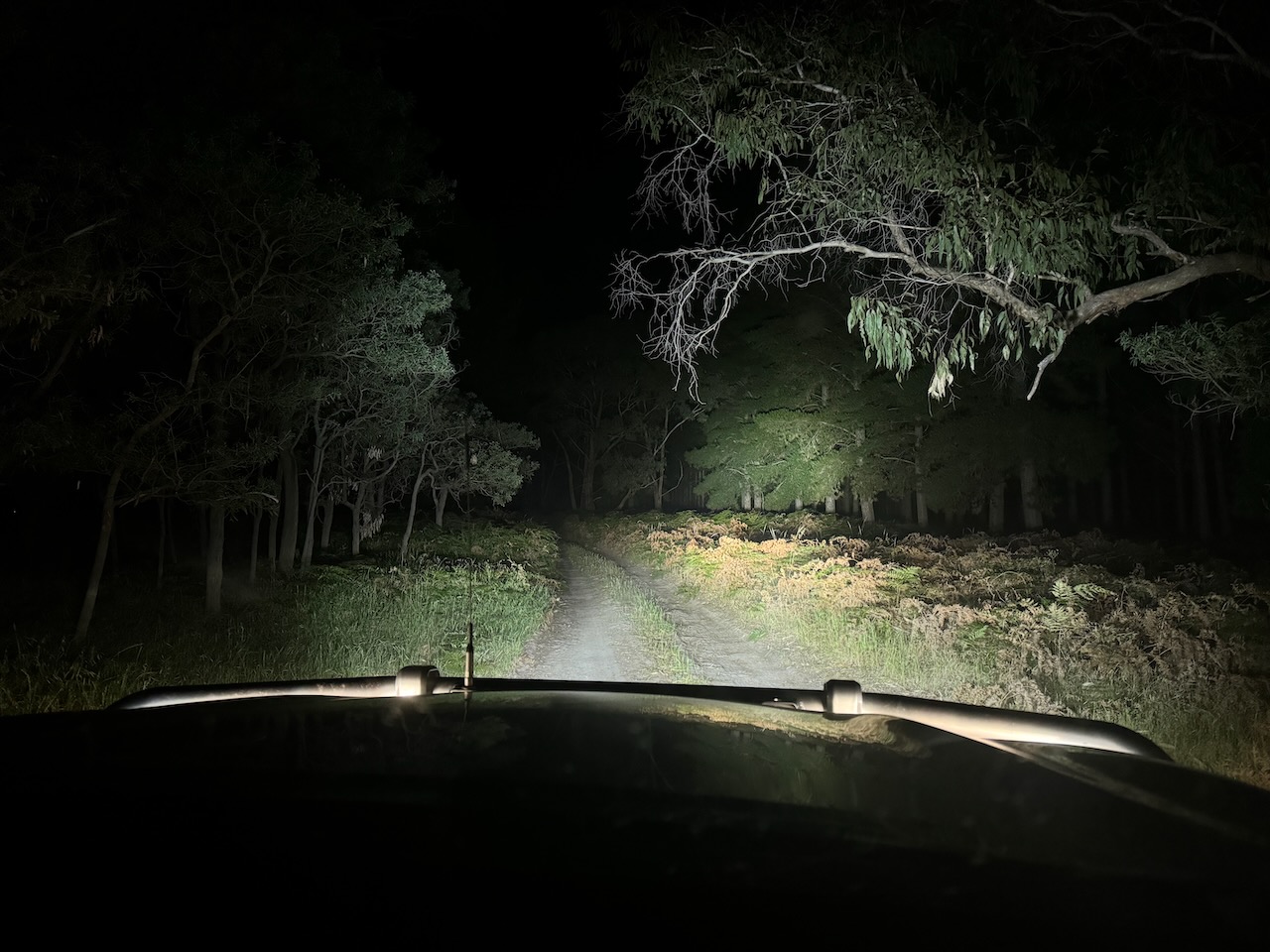
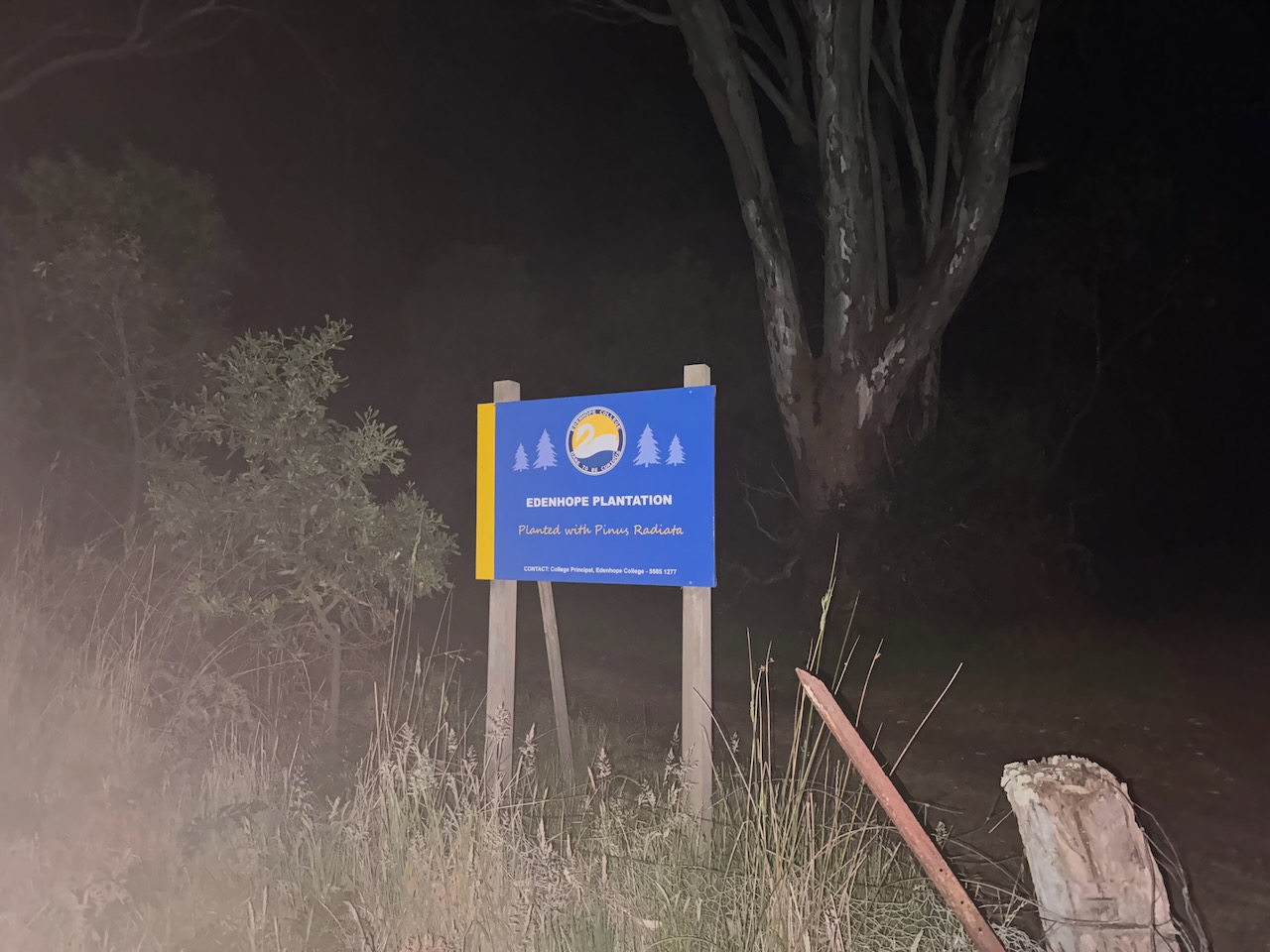
We accessed the park via a dirt track at the end of Lake Street, passing through the Edenhope School plantation.
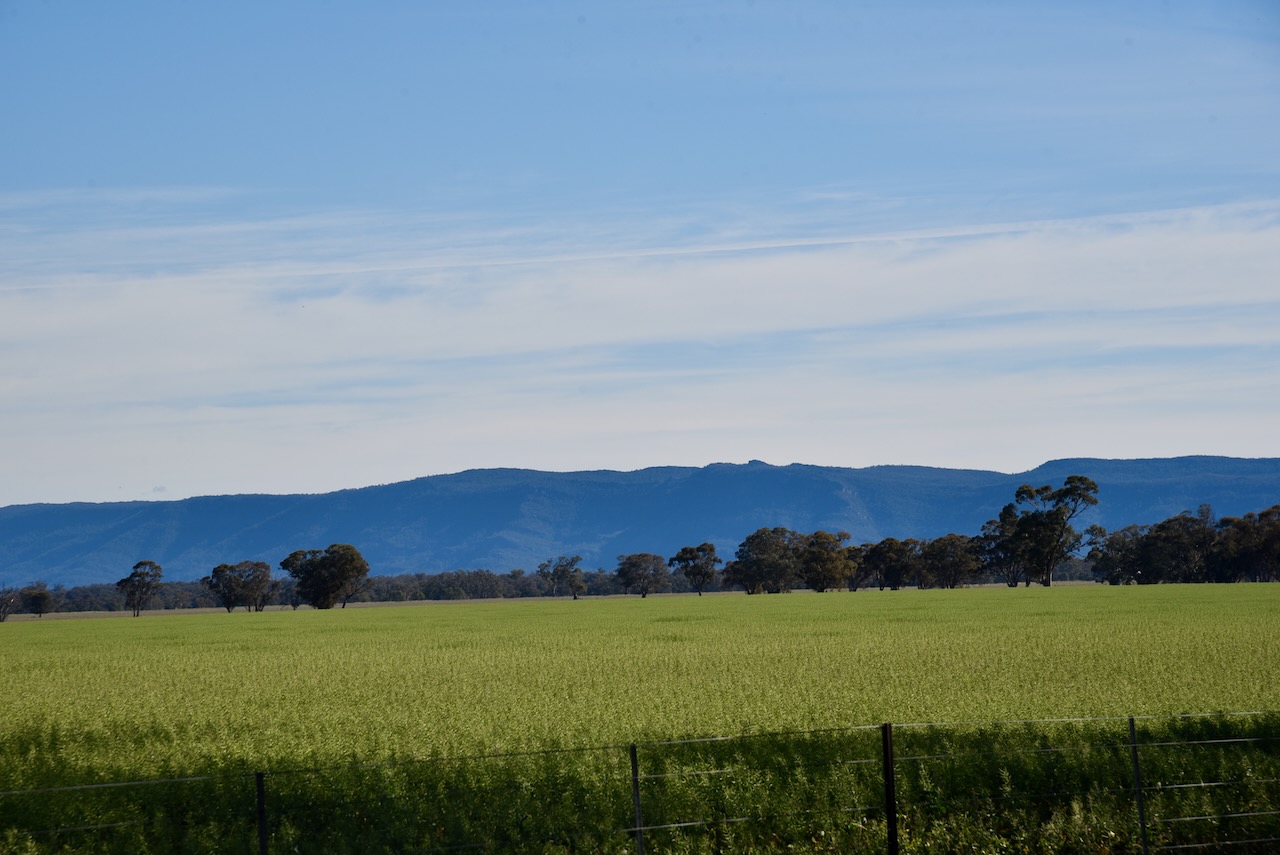
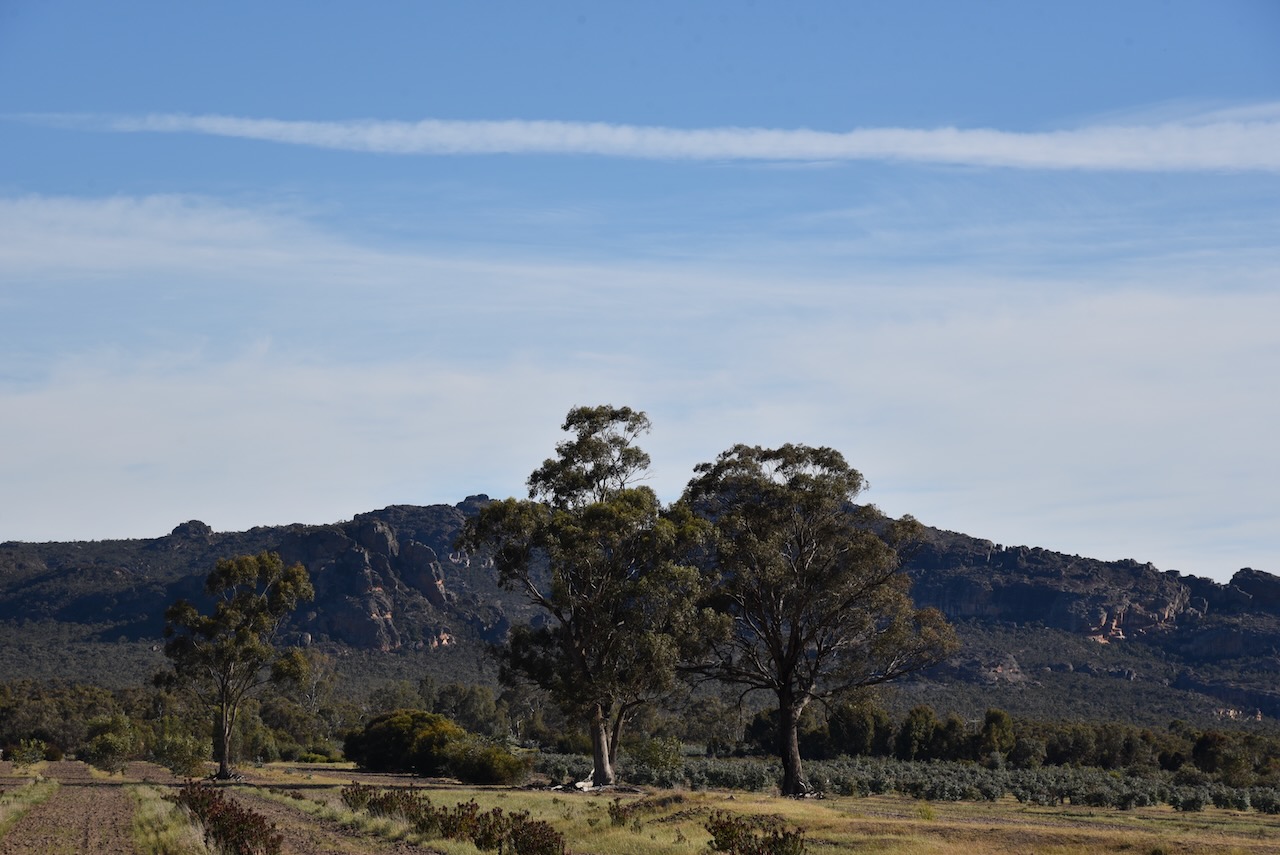
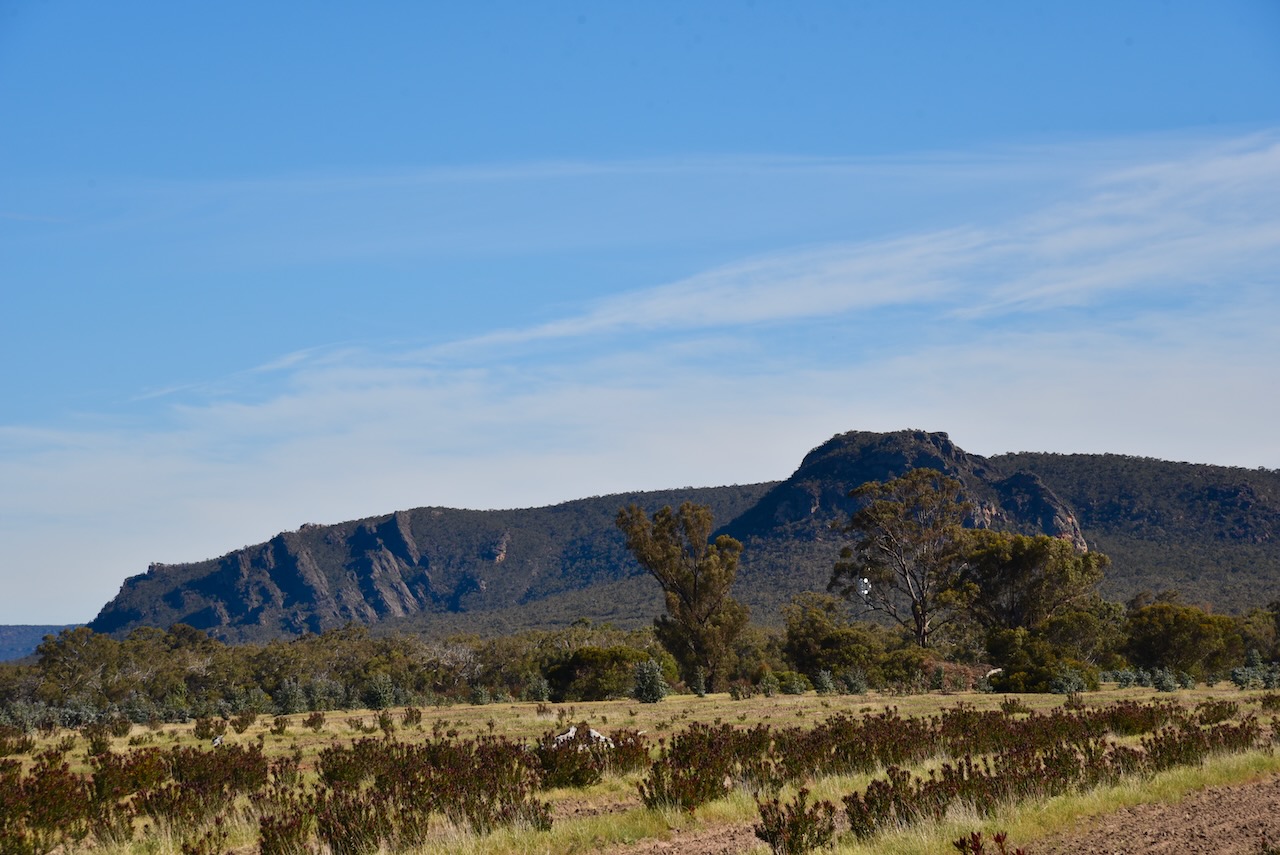
Marija and I packed up at Glenorchy and continued on our way to Edenhope in southwest Victoria. We were rewarded with some very nice views of the Grampians National Park along the way.
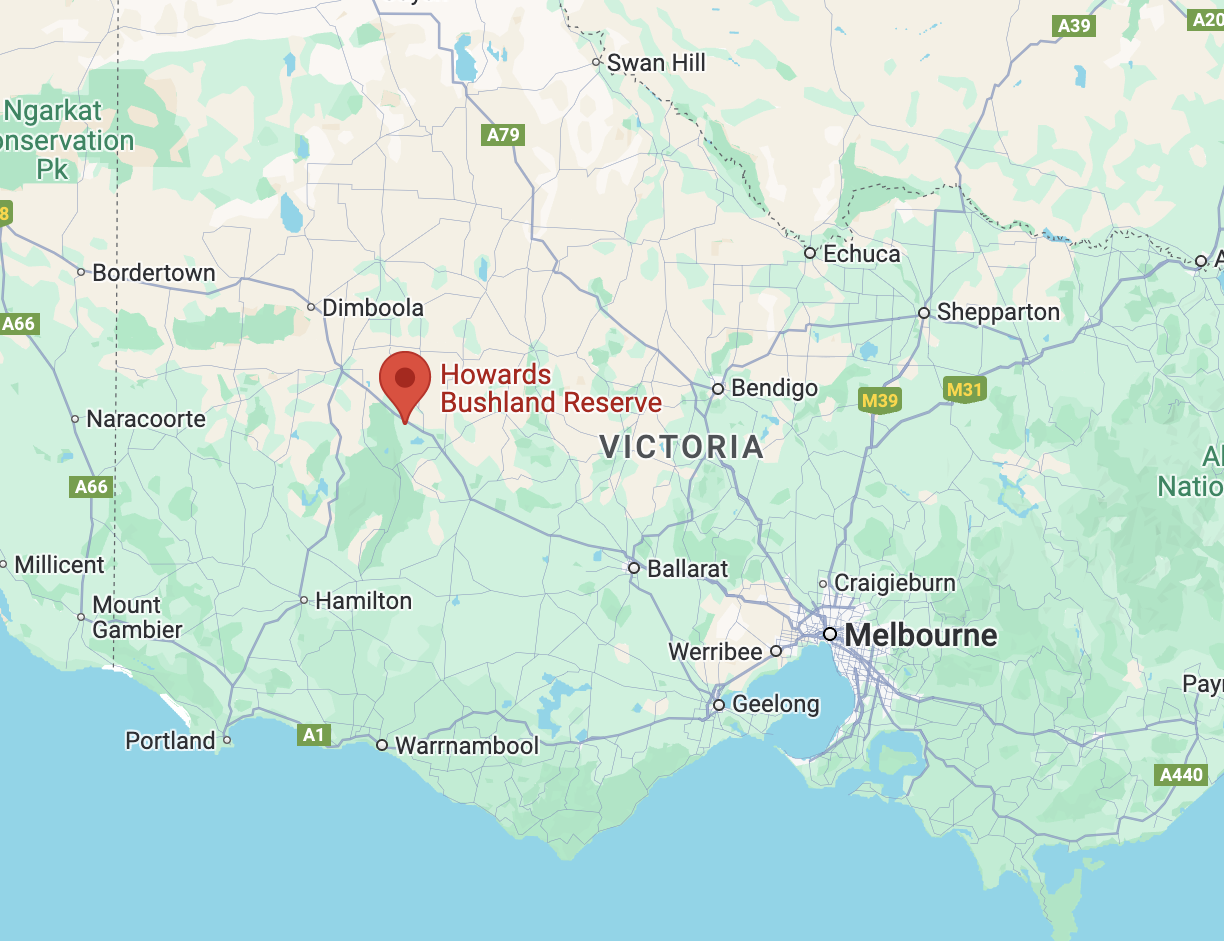
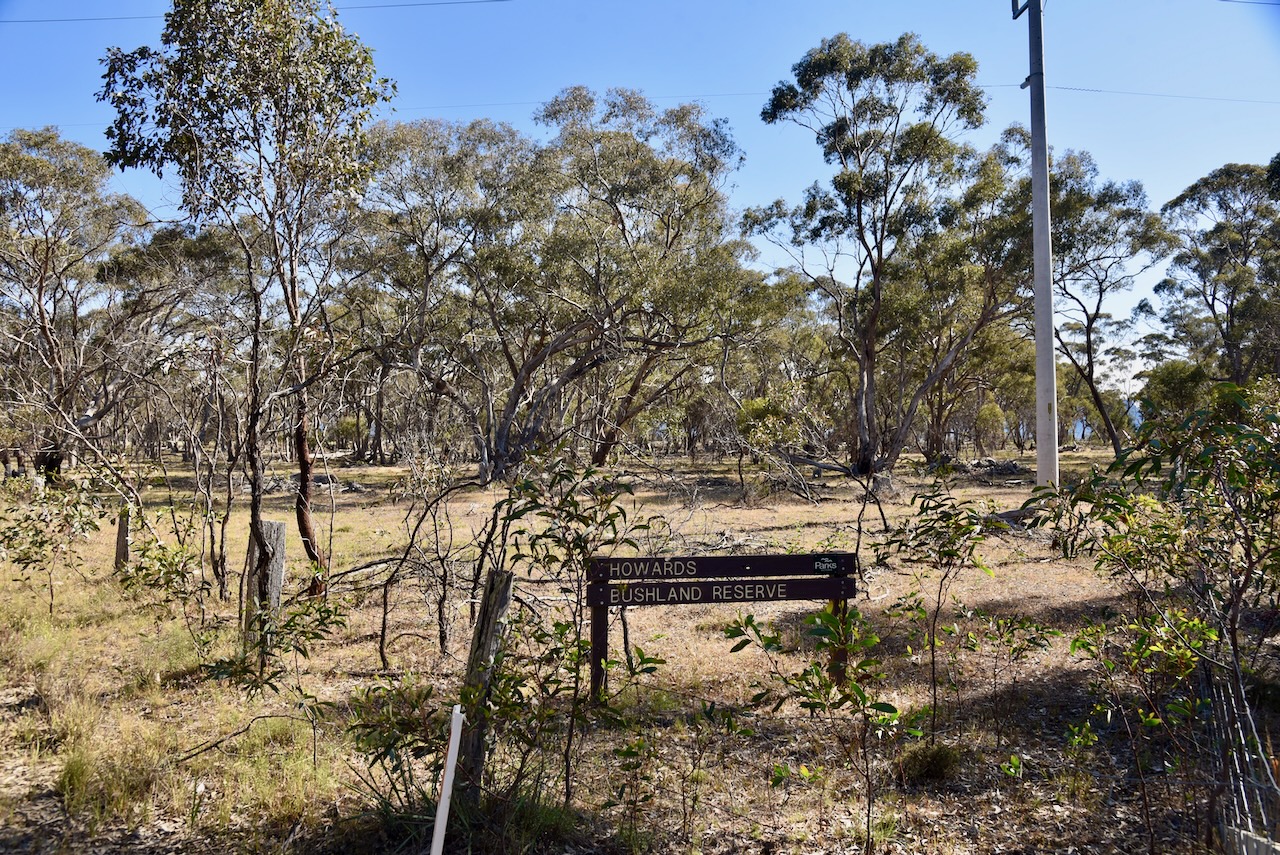
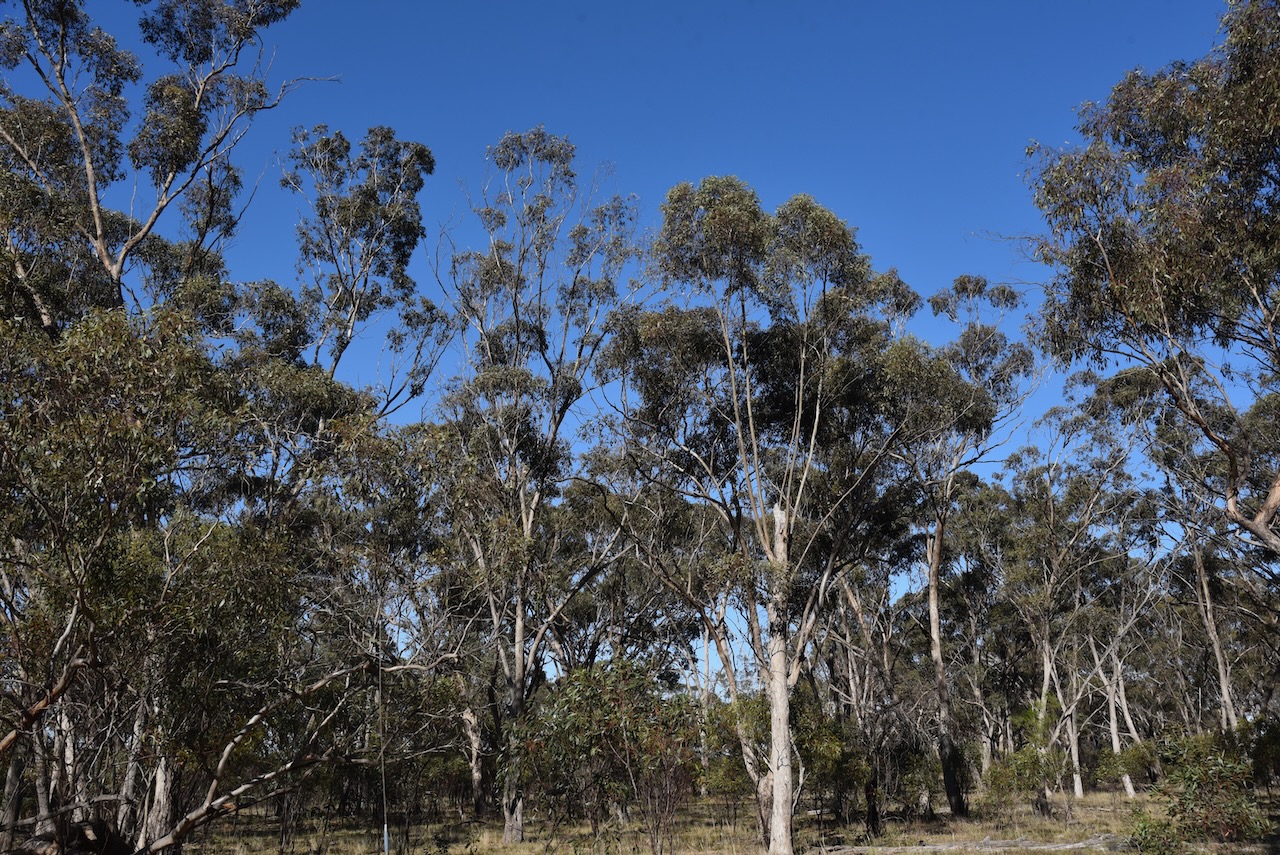
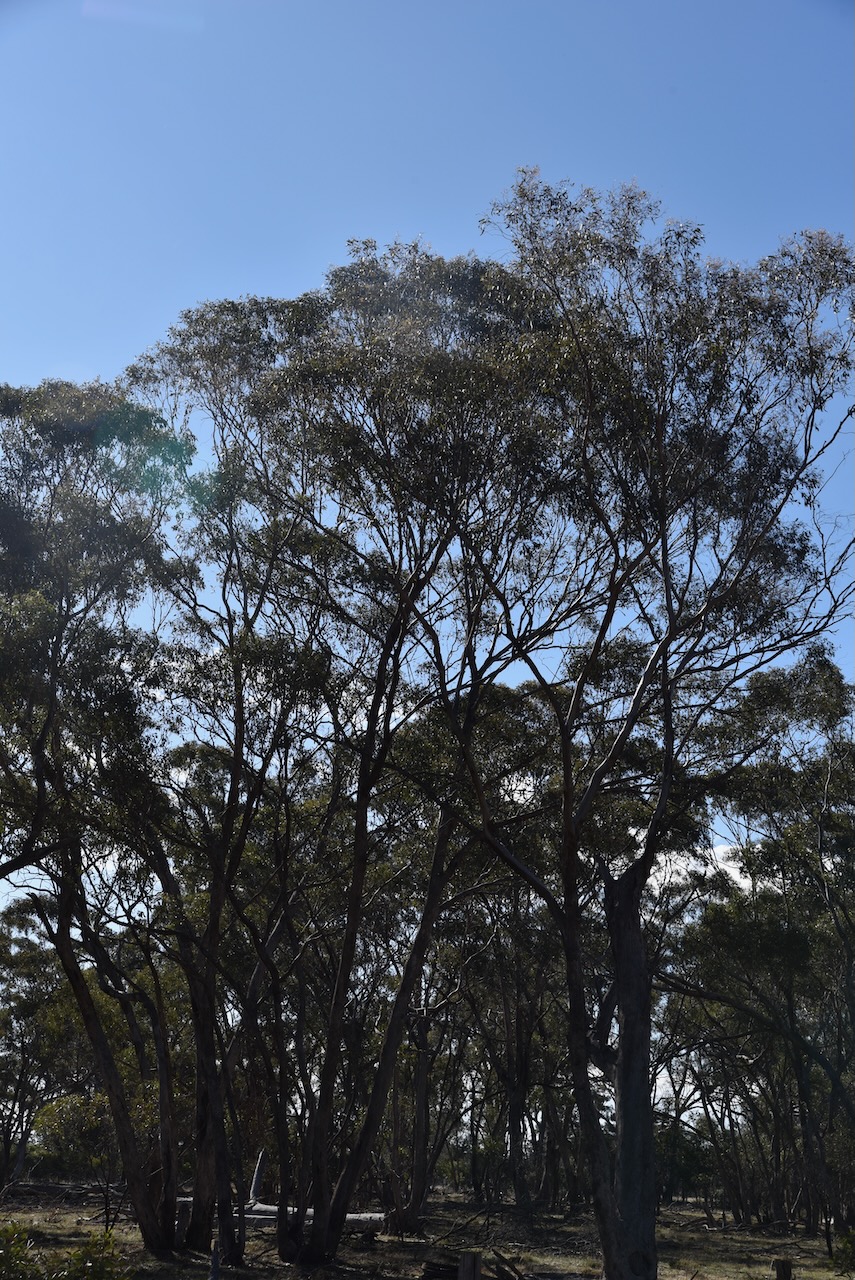
Our next park activation for the day was Howards Bushland Reserve VKFF-5143. The park is located about 24 km northwest of Stawell in western Victoria.
Above:- Map showing the location of Howards Bushland Reserve. Map c/o Google Maps.
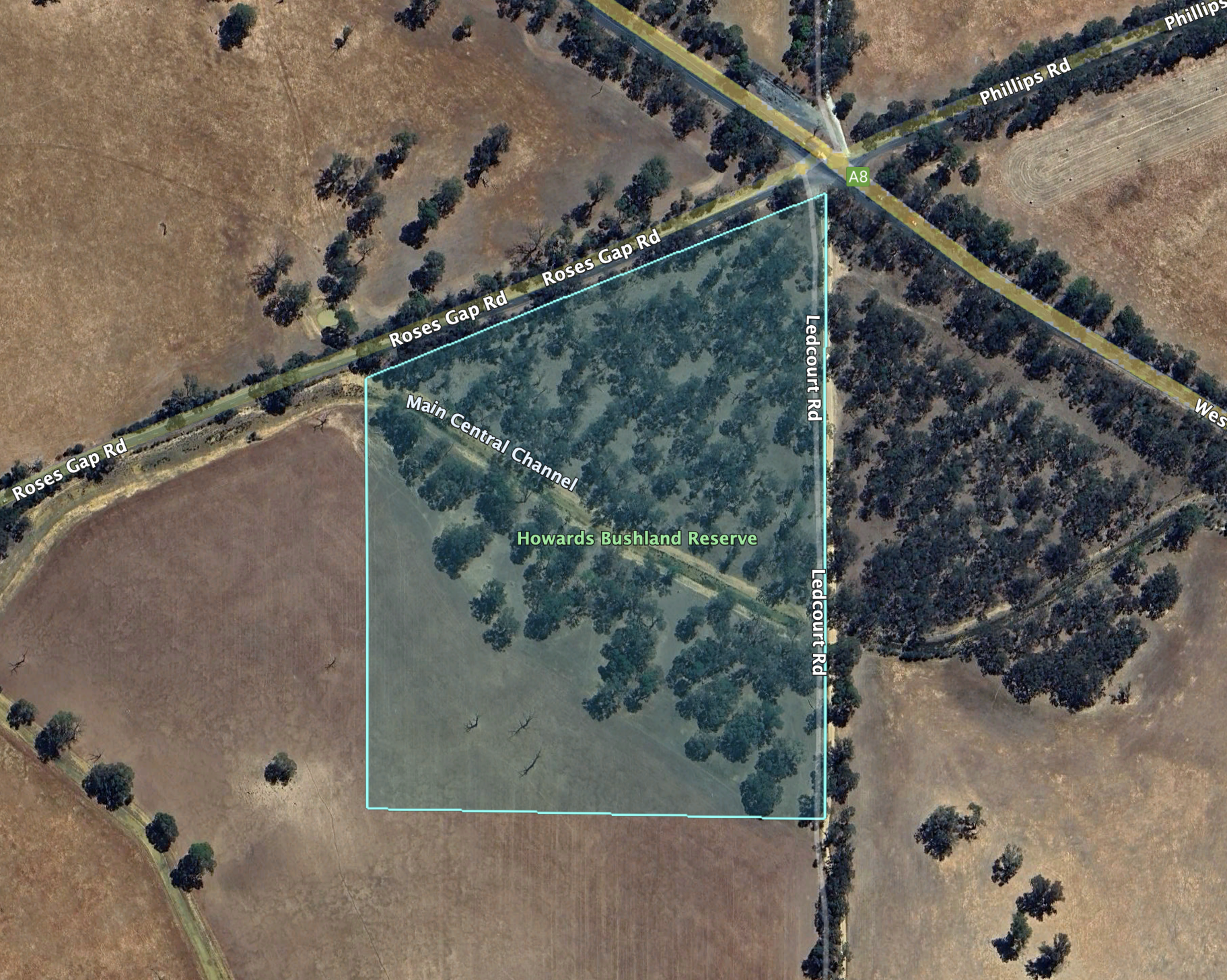
The reserve is located on the corner of Western Highway, Roses Gap Road, and Ledcourt Road.
Above:- Aerial view of Howards Bushland Reserve. Image c/o Google Earth.
The reserve is about 12 hectares in size and was established on the 22nd day of November 1983. (CAPAD 2022)
Marija worked the following stations on 20m SSB:-
OH1MM
VK2VW
VK2HFI
VK2AKA
VK2BUG
ZL4NVW
VK1AO
VK2MET
OH1XT
Marija worked the following stations on 40m SSB:-
VK3PF
VK3WSG
I worked the following stations on 20m SSB:-
OH1MM
VK2VW
VK2HFI
VK2AKA
VK2BUG
ZL4NVW
VK1AO
VK2MET
OH1XT
I worked the following stations on 40m SSB:-
VK33PF
VK3WSG
VK3MGM
VK2LEE
VK3DL
VK5HS
VK2USH
VK2GQR
Marija and I packed up and continued towards Edenhope, enjoying the views of the Grampians National Park.
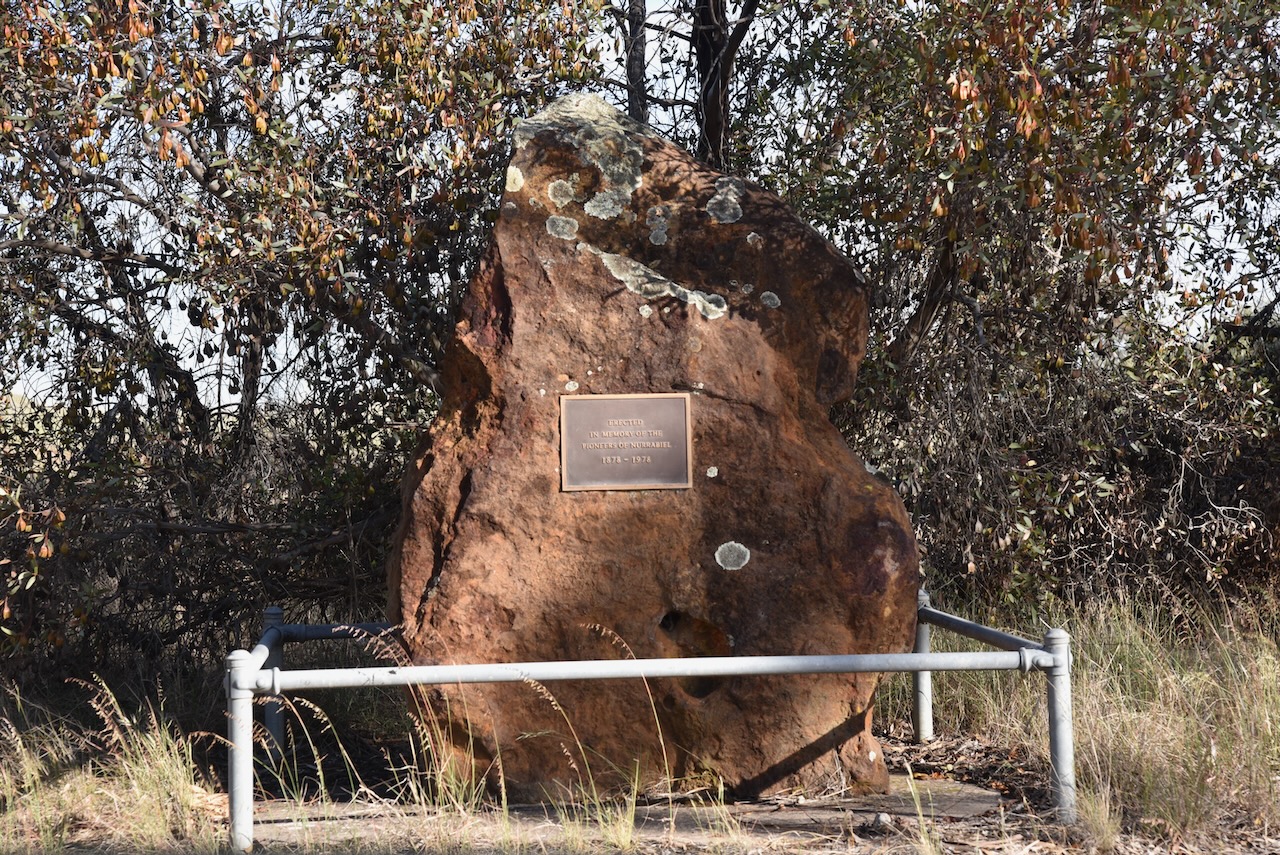
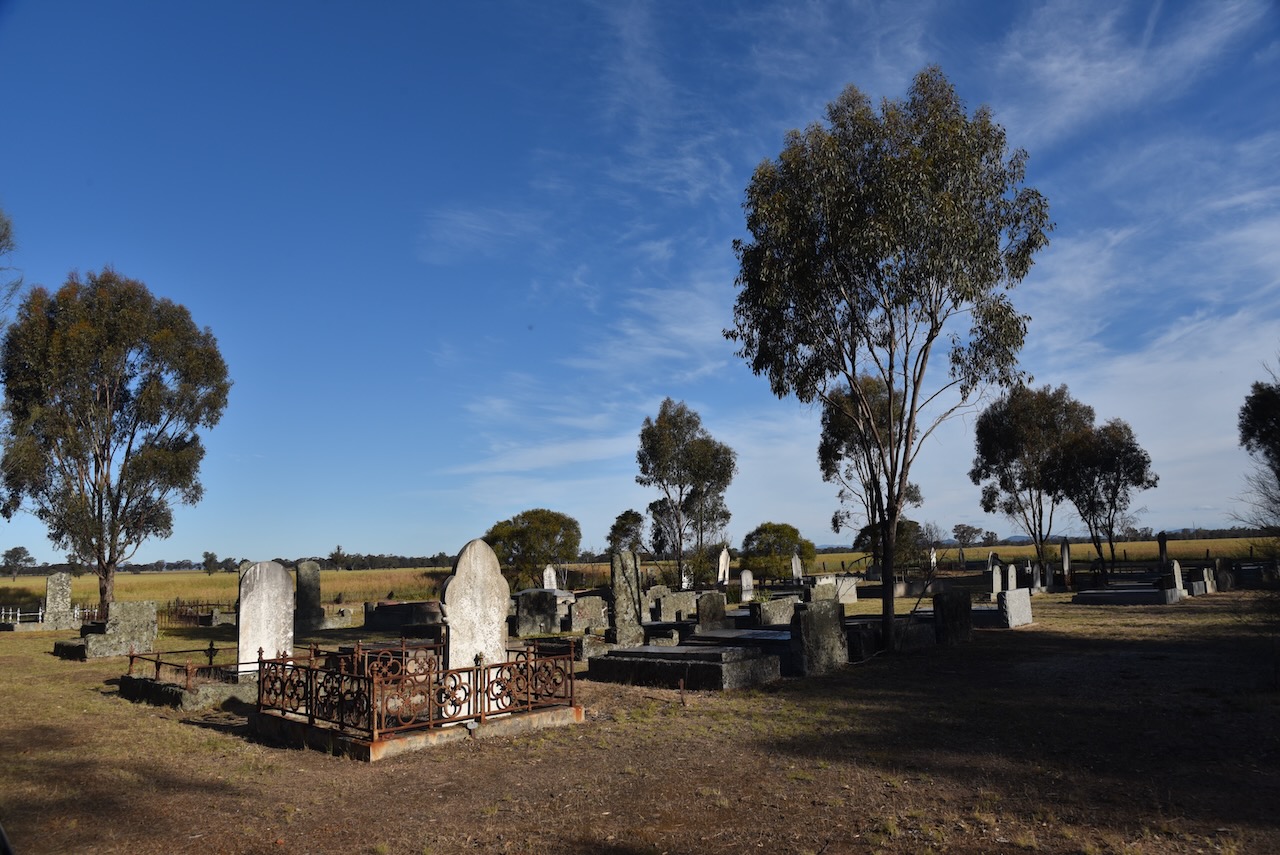
We detoured to have a look at the Nurrabiel cemetery. There is a monument here to commemorate the pioneers of the Nurrabiel district.
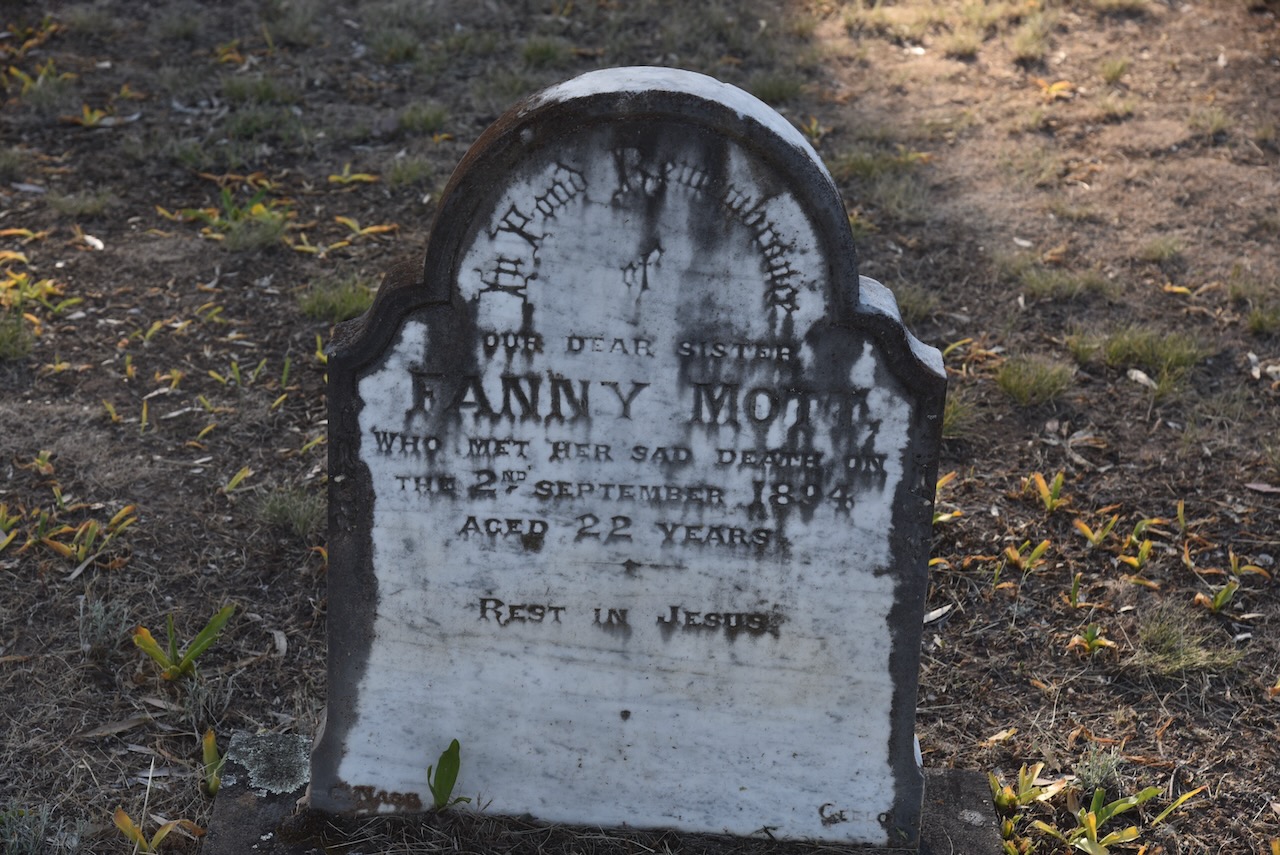
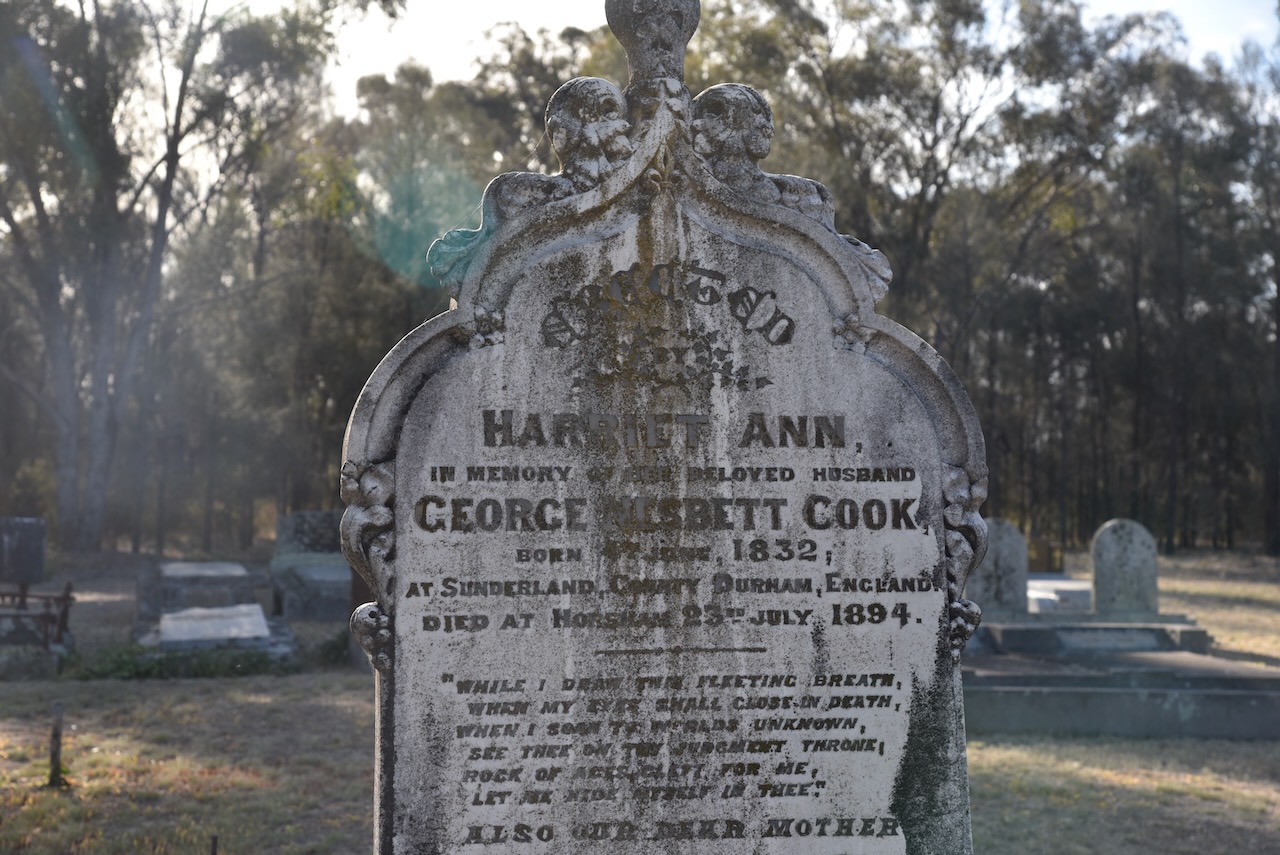
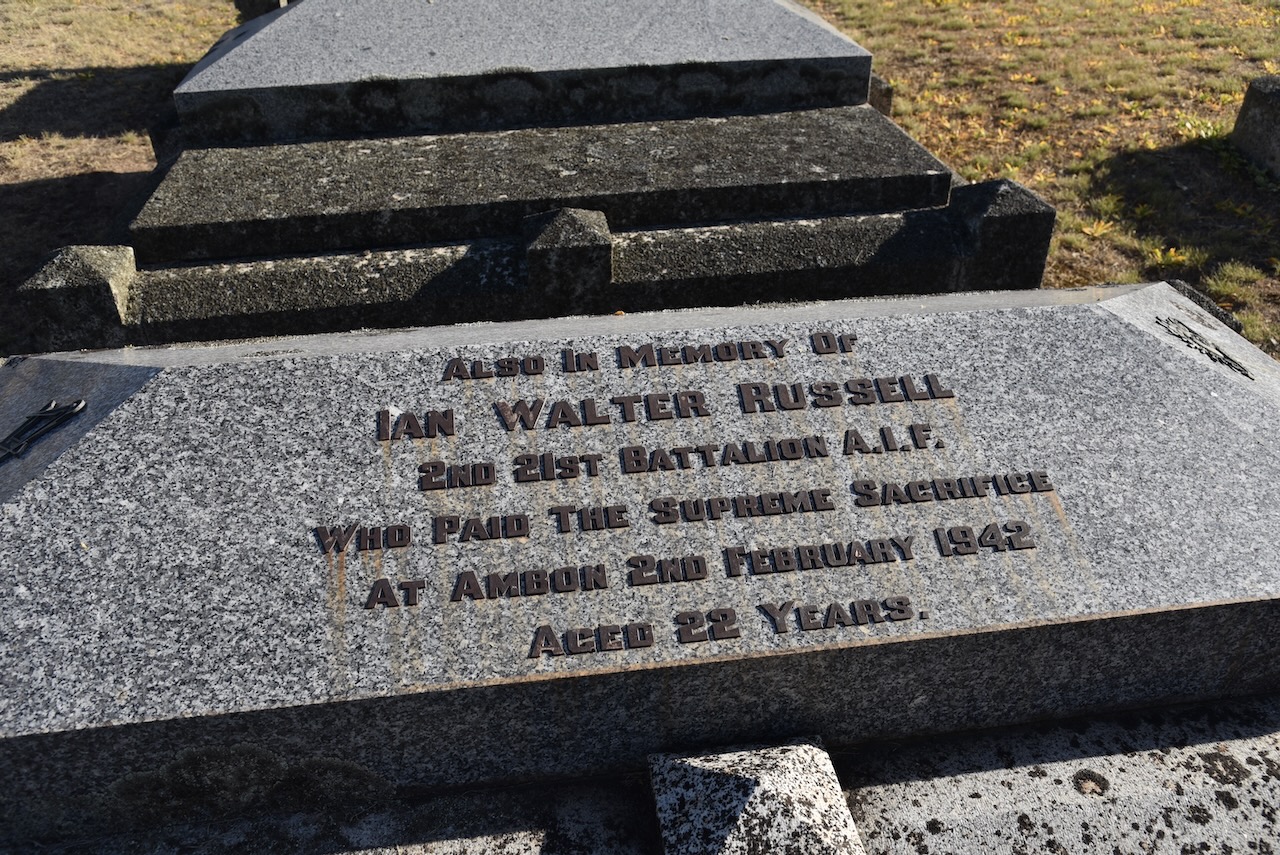
There are several historic headstones in the cemetery, including some of my ancestors from the Mott family.
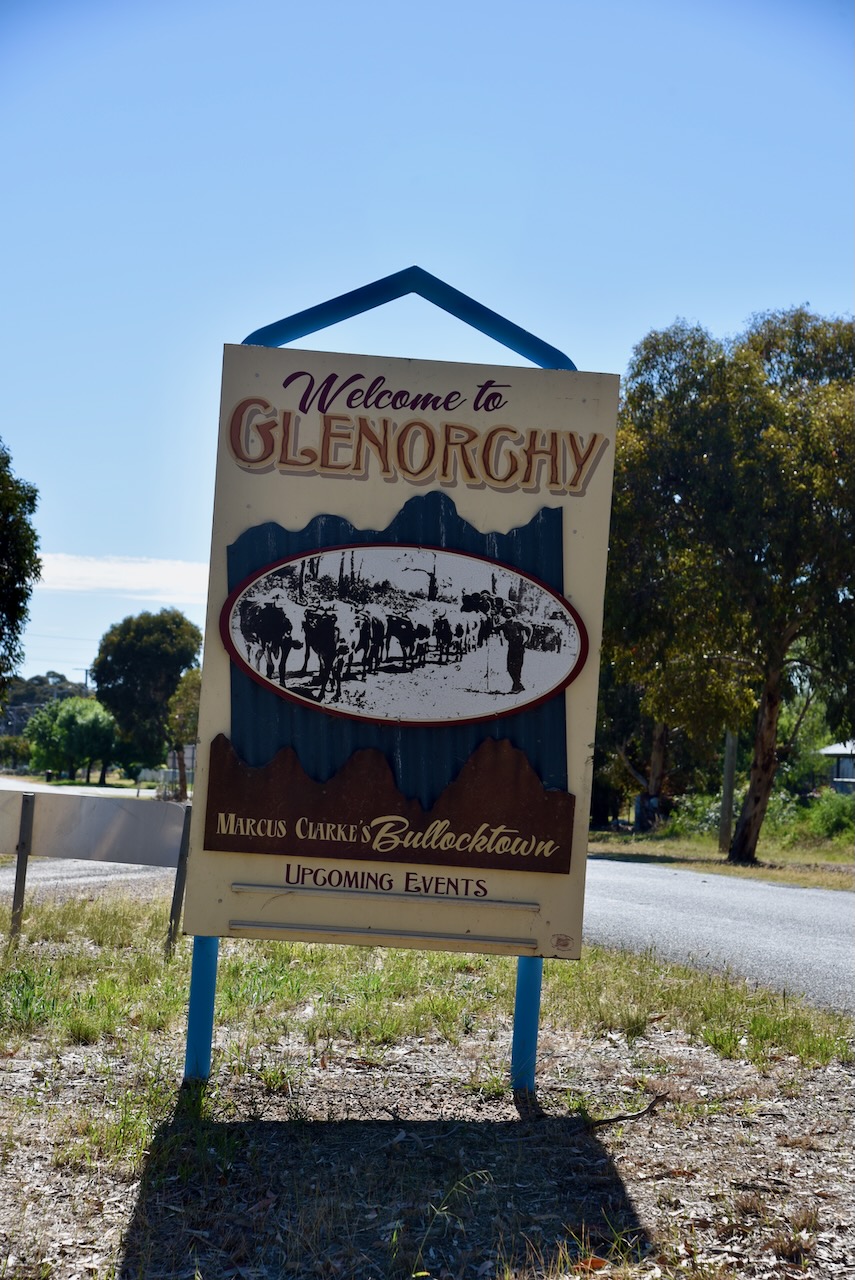
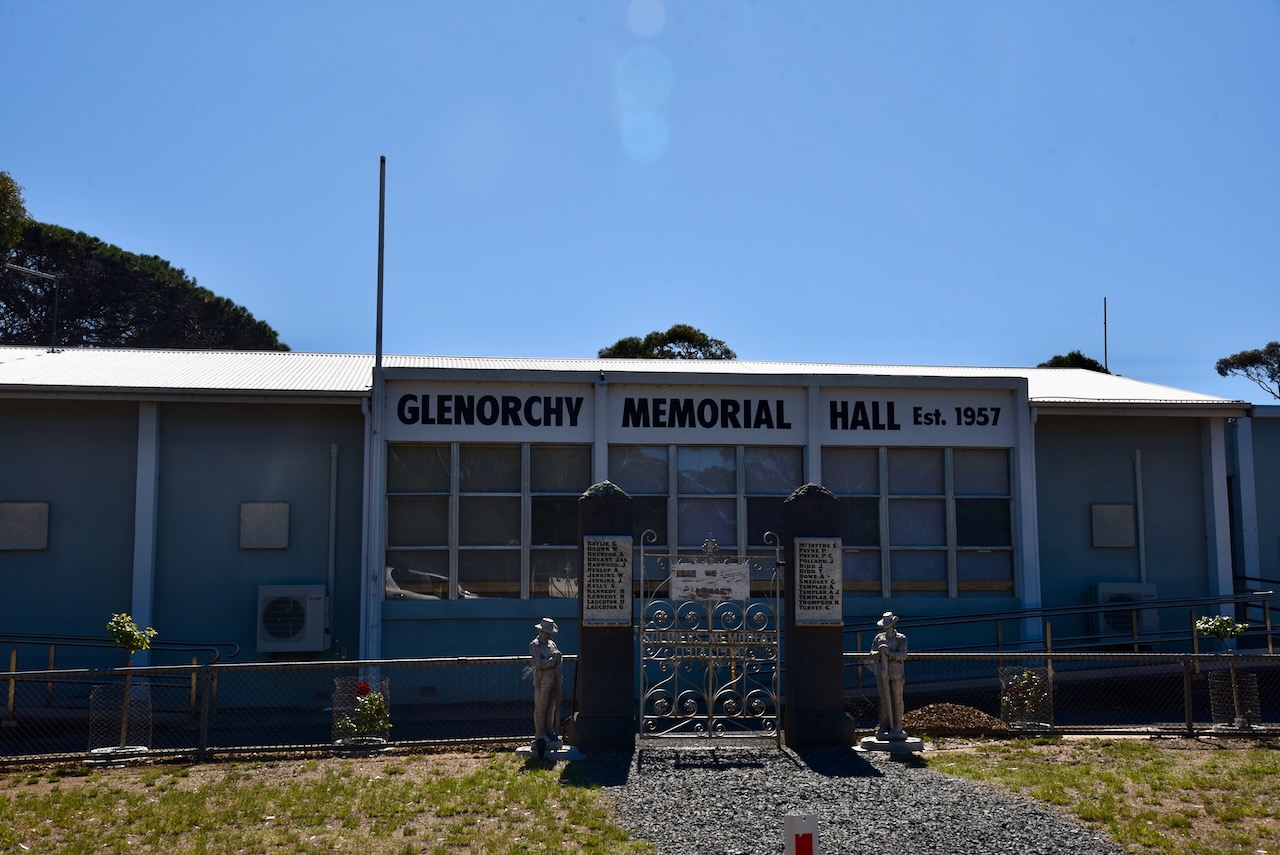
Our next activation for Wednesday, 30th October 2024, was the Glenorchy I5 Bushland Reserve VKFF-5041, and the Glenorchy silo VK-GLY3. Glenorchy is located about 22 km northwest of Stawell and about 256 km northwest of Melbourne.
Above:- Map showing the location of Glenorchy, Victoria.
The town of Glenorchy was established around the Four Posts Inn, which was opened in 1847. It was patronised by pastoral workers and was located at a crossing place on the Wimmera River. By 1849, Glenorchy had a store, a blacksmith and a post office. In 1850, the town of Glenorchy was surveyed by Robert Buchanan and township allotments were sold. By the mid-1850s, Glenorchy had several other hotels, including the Royal Hotel, which was built in 1855 and demolished in 1968. Glenorchy’s first school was opened in 1858. The current school was built in 1875. (Victorianplaces.com.au, 2015)
The town was named after Glen Orchy in Argyllshire, Scotland. Glenorchy is a Gaelic word meaning ‘glen of tumbling waters’. (Blake 1978)
Glenorchy was described as Bullocktown by the English-born Australian novelist Marcus Andrew Hislop Clarke in his Bullocktown Sketches published in the Australasian newspaper. Clarke is best known for his 1874 novel For the Term of His Natural Life. (Blake 1978) (Victorianplaces.com.au, 2015) (Wikipedia Contributors, 2025)
Above:- Marcus Clarke. Image c/o Wikipedia.
Glenorchy’s population in 2021 was 131 people. (Wikipedia Contributors, 2025)
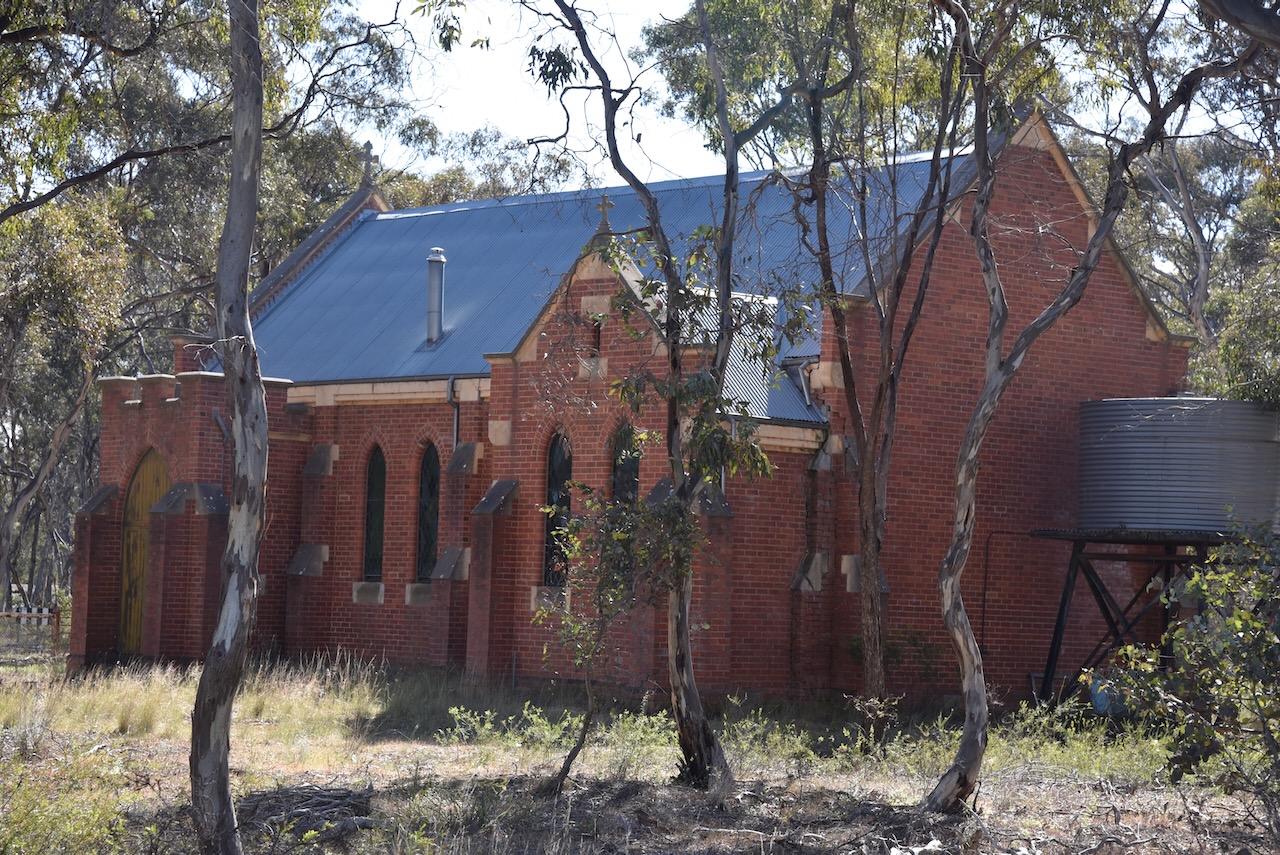
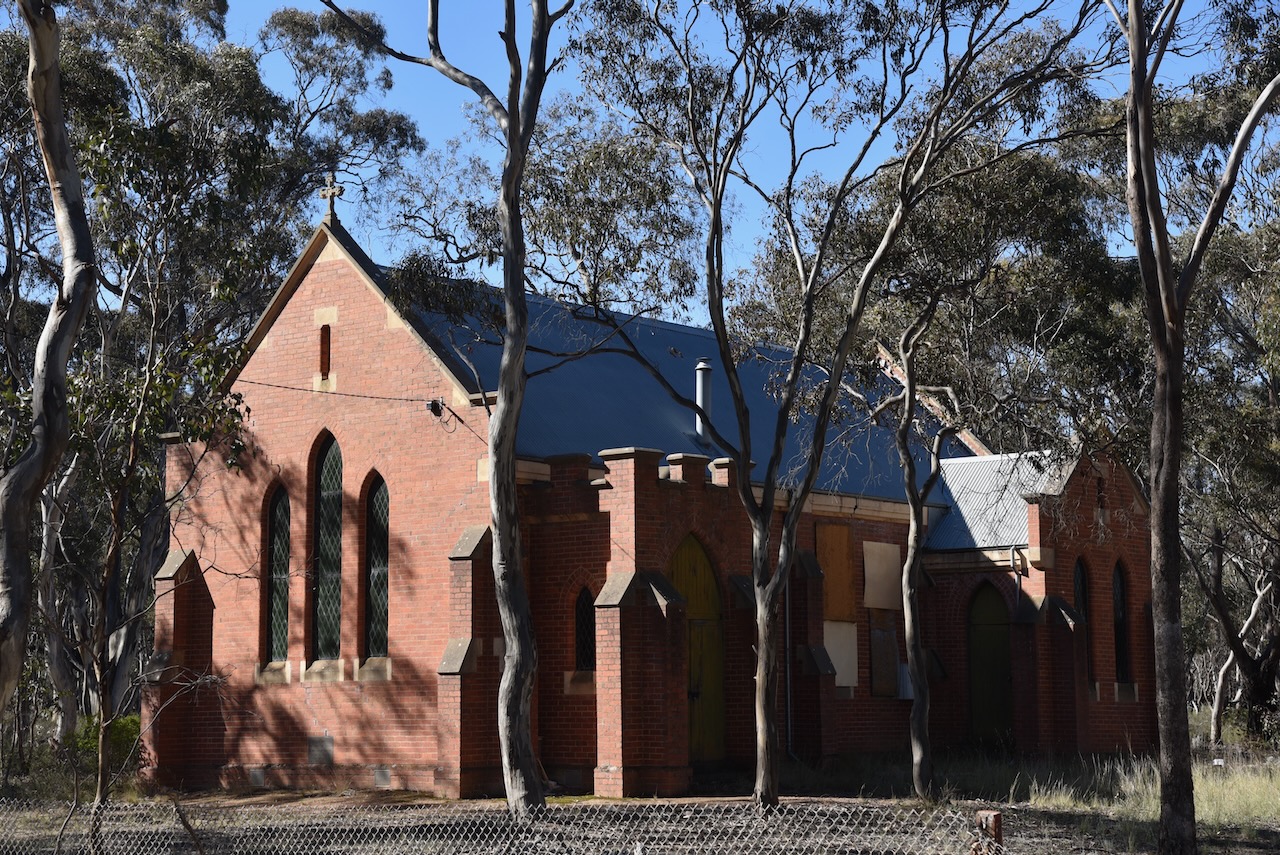
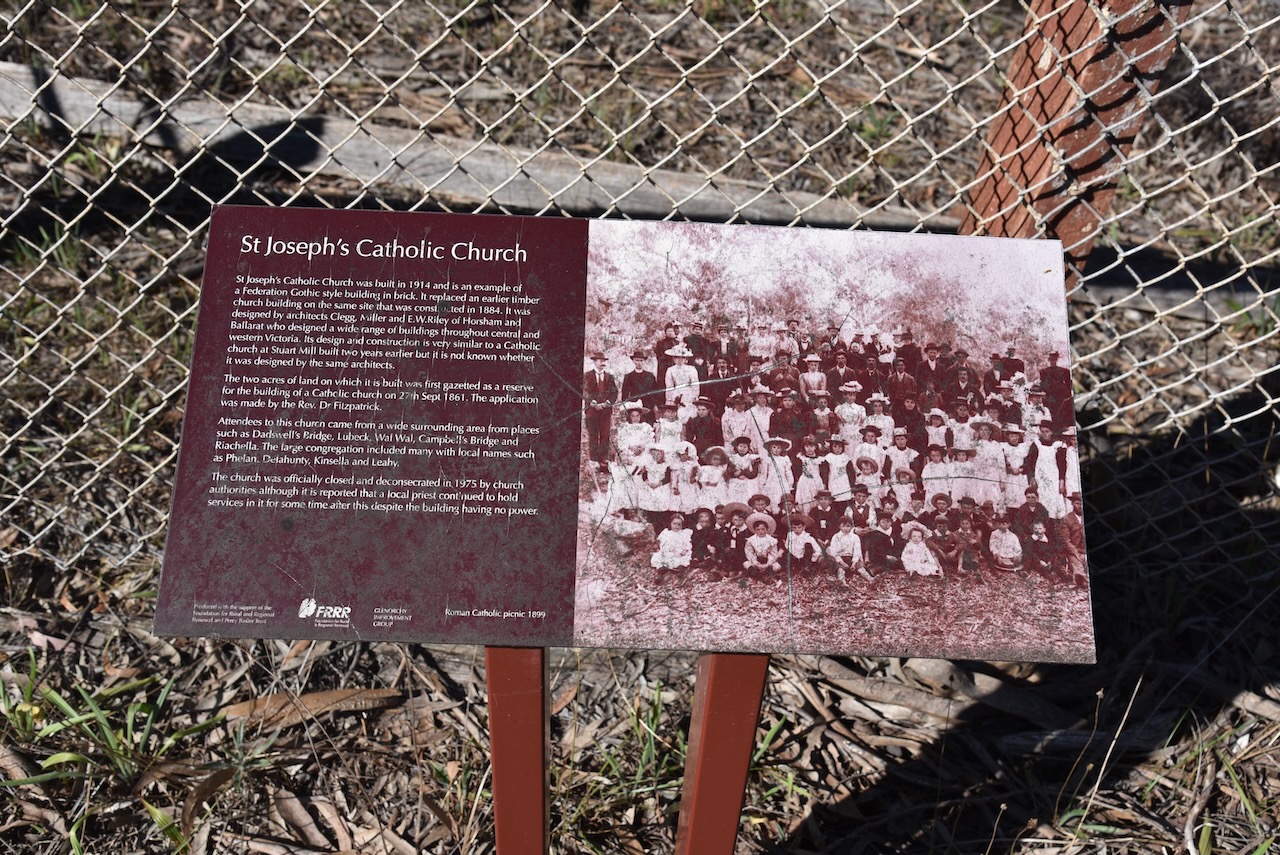
One of the historic buildings remaining in Glenorchy is the former St Joseph’s Catholic Church, which was built in 1914. It replaced an earlier timber church on the same site.
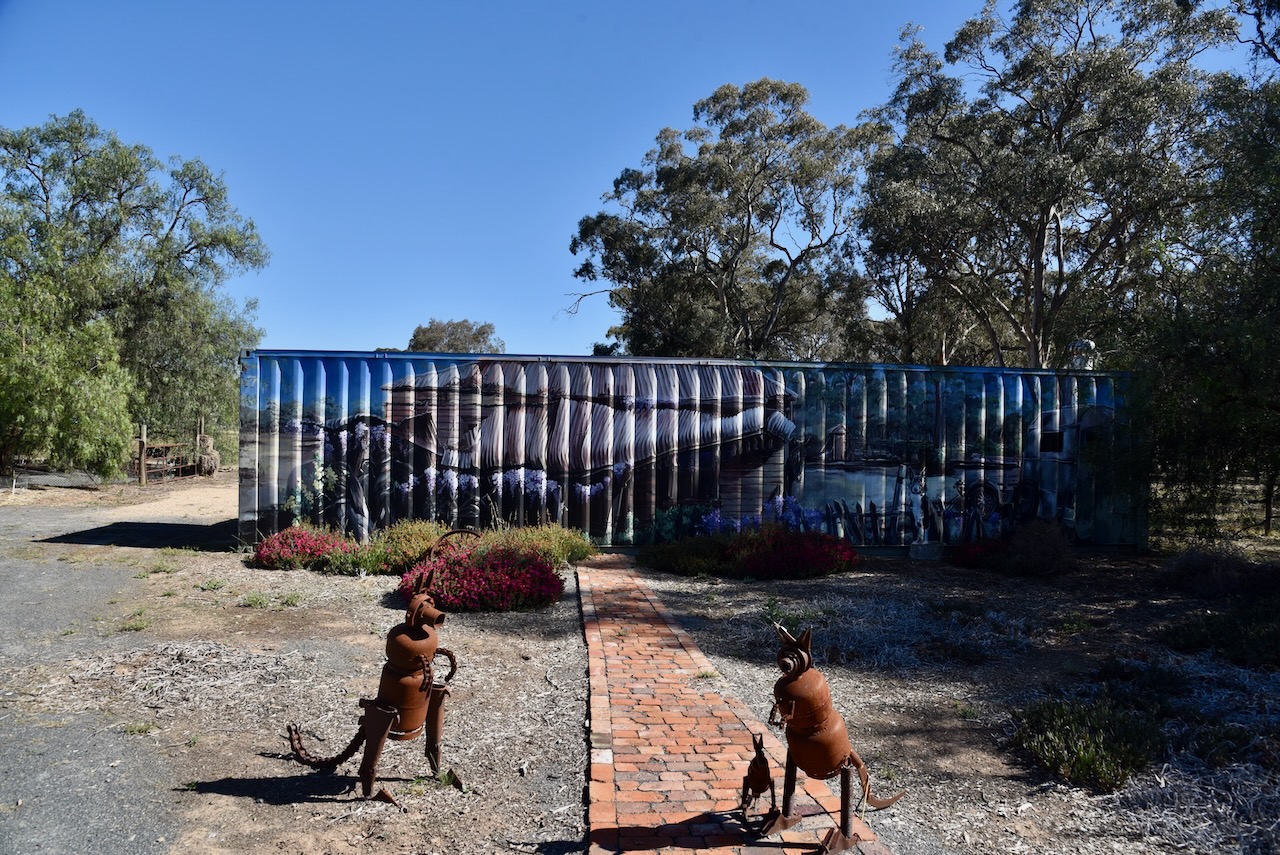
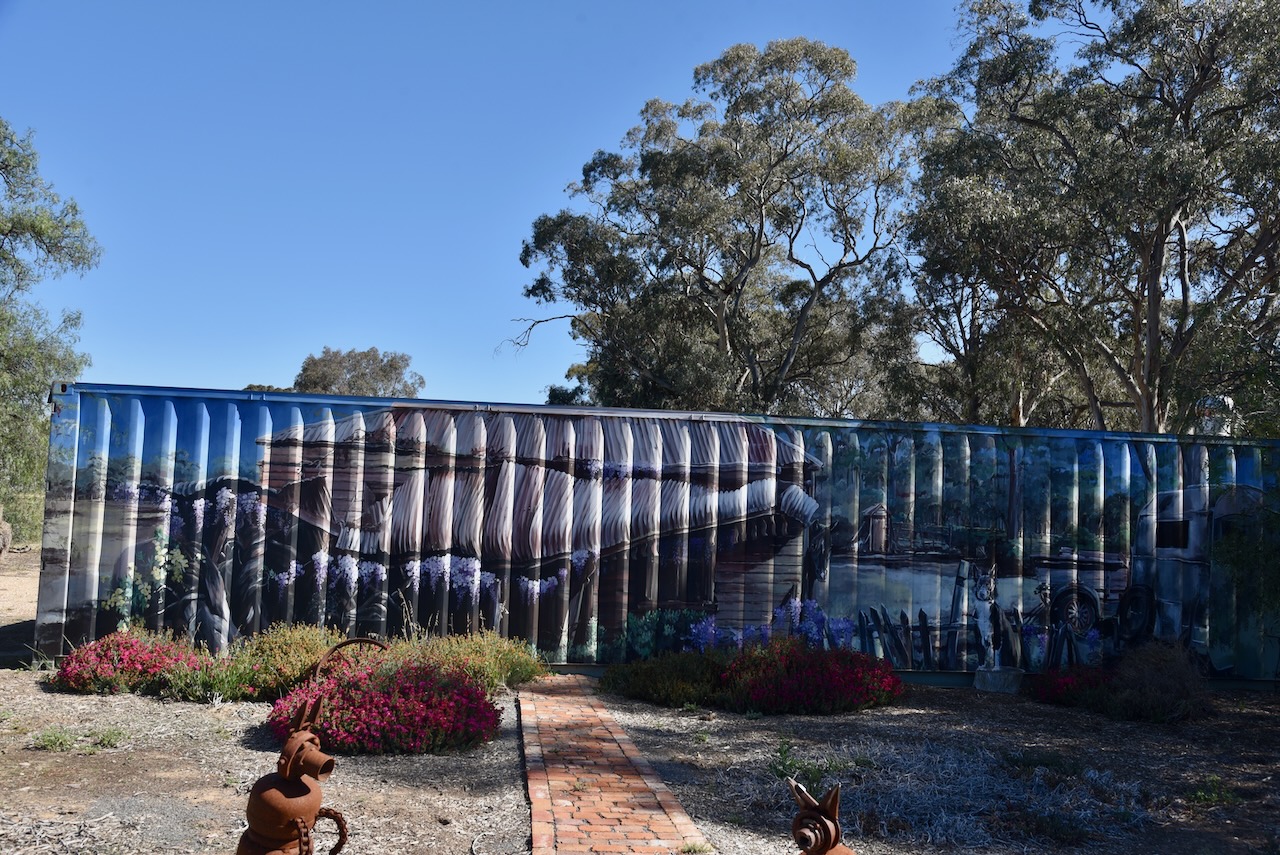
On Forest Street, Glenorchy, you can find the Glenorchy Vic Open Garden and Roadside Art. There is a shipping container that features a mural.
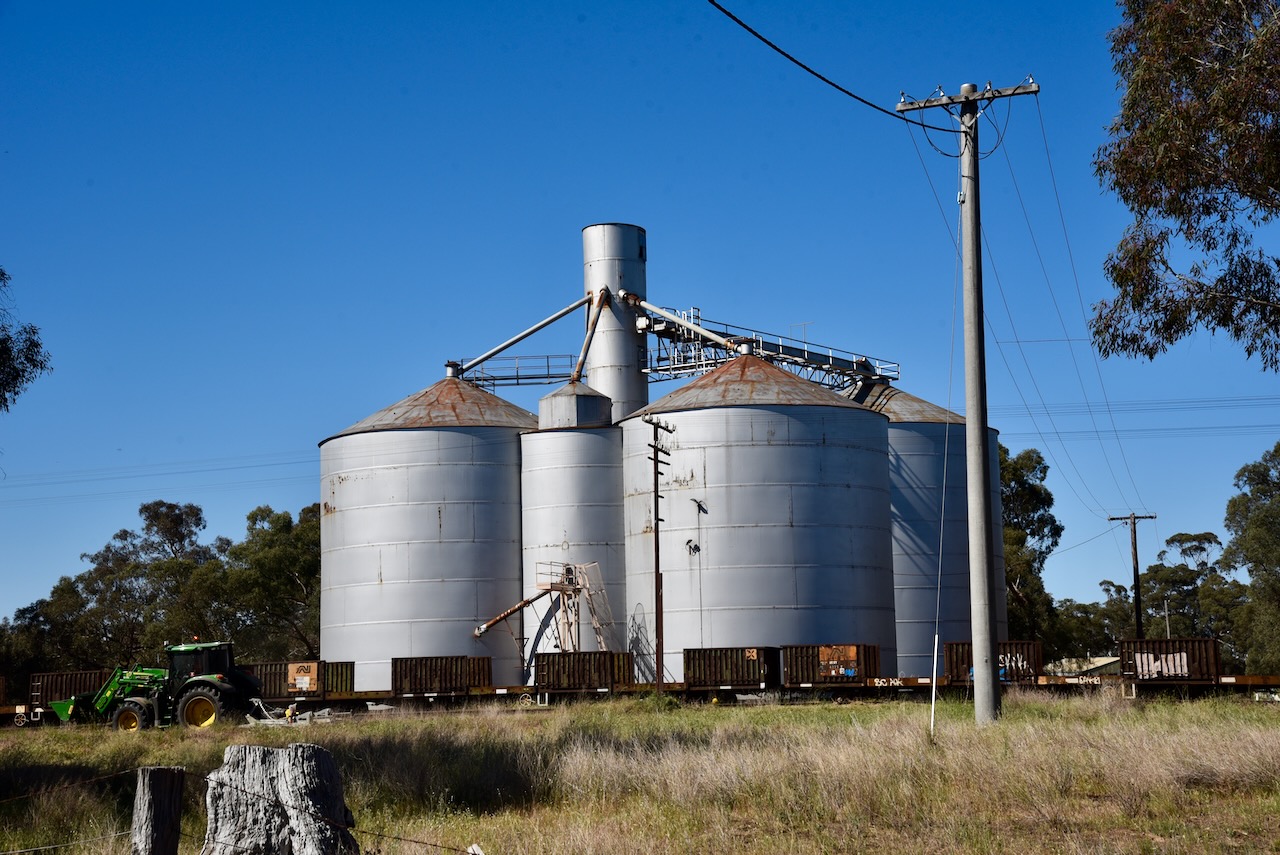
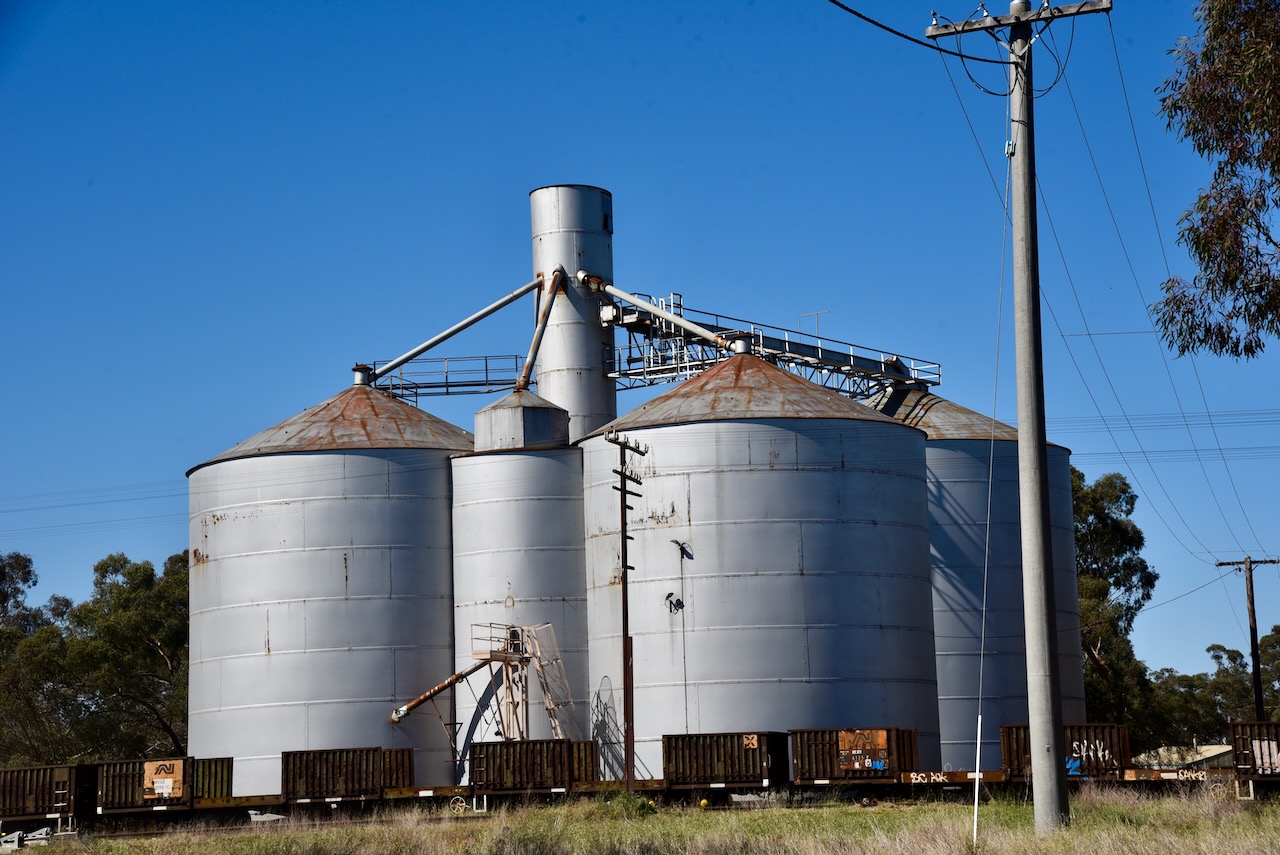
The Glenorchy silos are located adjacent to the railway line on MacKay Road.
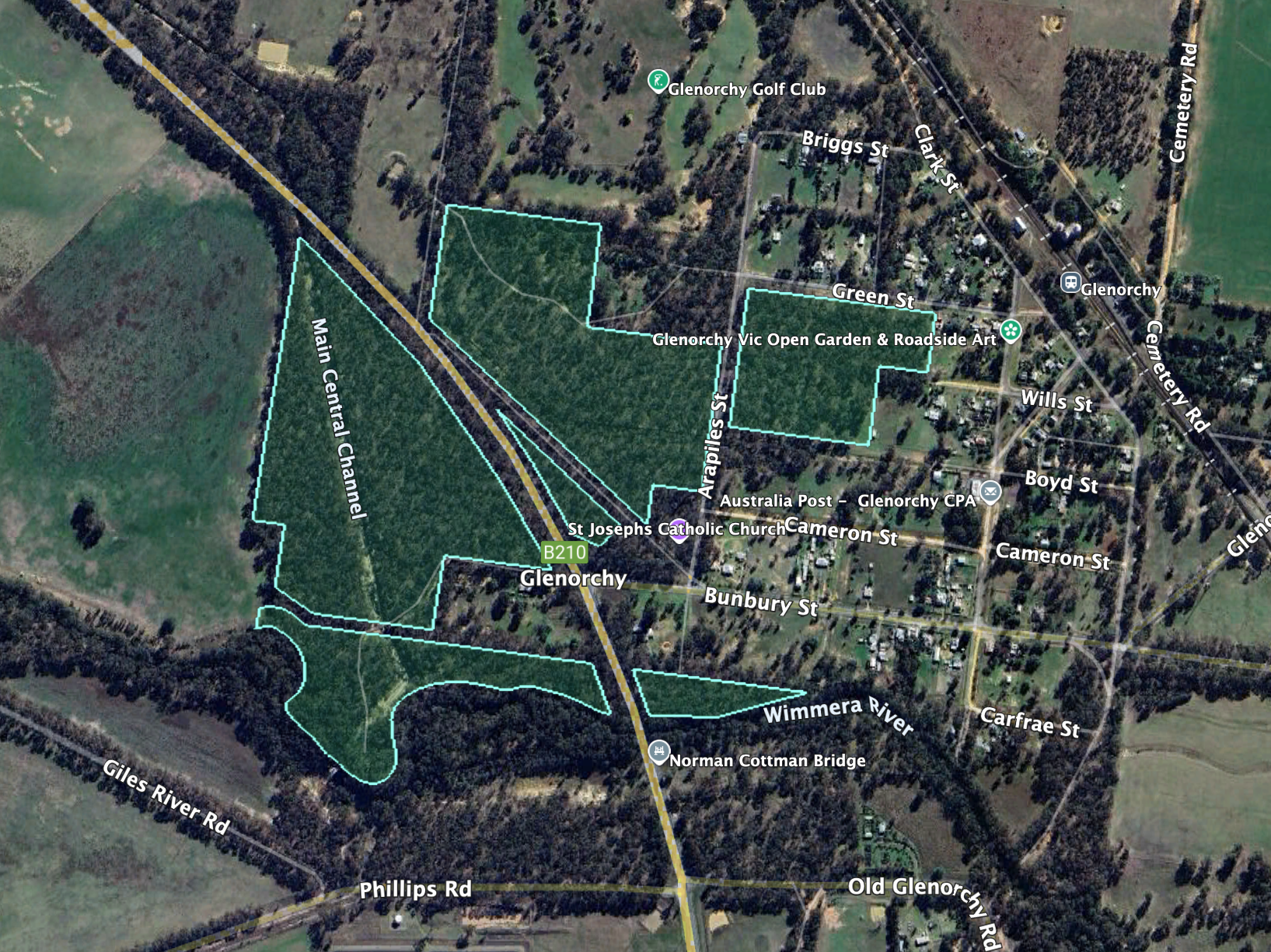
The Glenorchy I5 Bushland Reserve consists of six separate pieces of remnant bushland surrounding the town of Glenorchy.
Above:- An aerial view of the Glenorchy I5 Bushland Reserve. Image c/o Google Earth
The reserve is about 44 hectares in size and was established on the 24th day of August 1982. (CAPAD 2022)
Marija and I set up off Arapiles Street in the reserve, in the activation zone of the silo.
Above:- Map showing the activation zone at the Glenorchy silo. Map c/o SiOTA website.
After activating Hunts Bushland Reserve on 30th October 2024, Marija VK5MAZ and I crossed Campbells Bridge Road and activated the Glenorchy Streamside Reserve VKFF-3707.
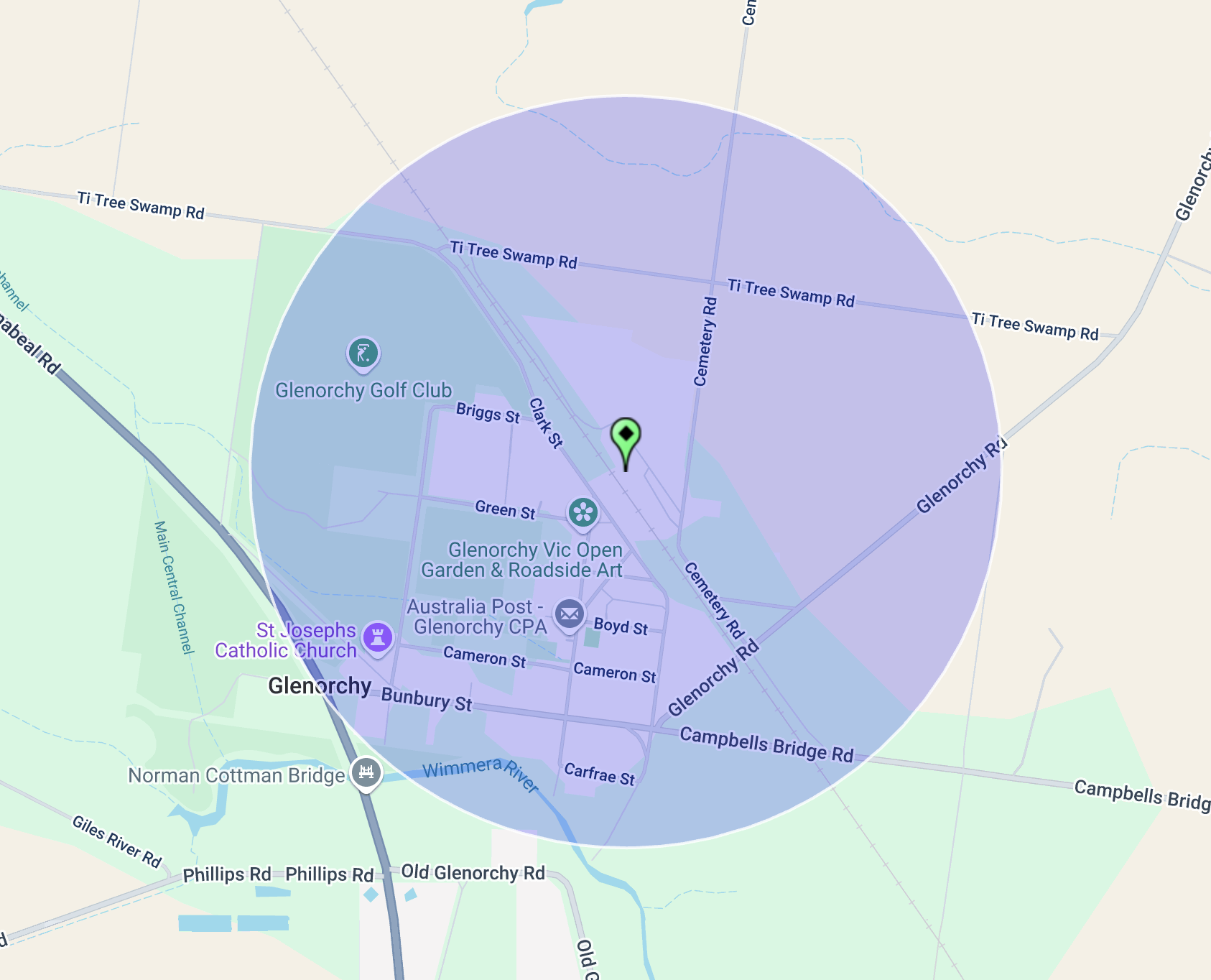
Above:- Map showing the location of the Glenorchy Streamside Reserve. Map c/o Google Maps.
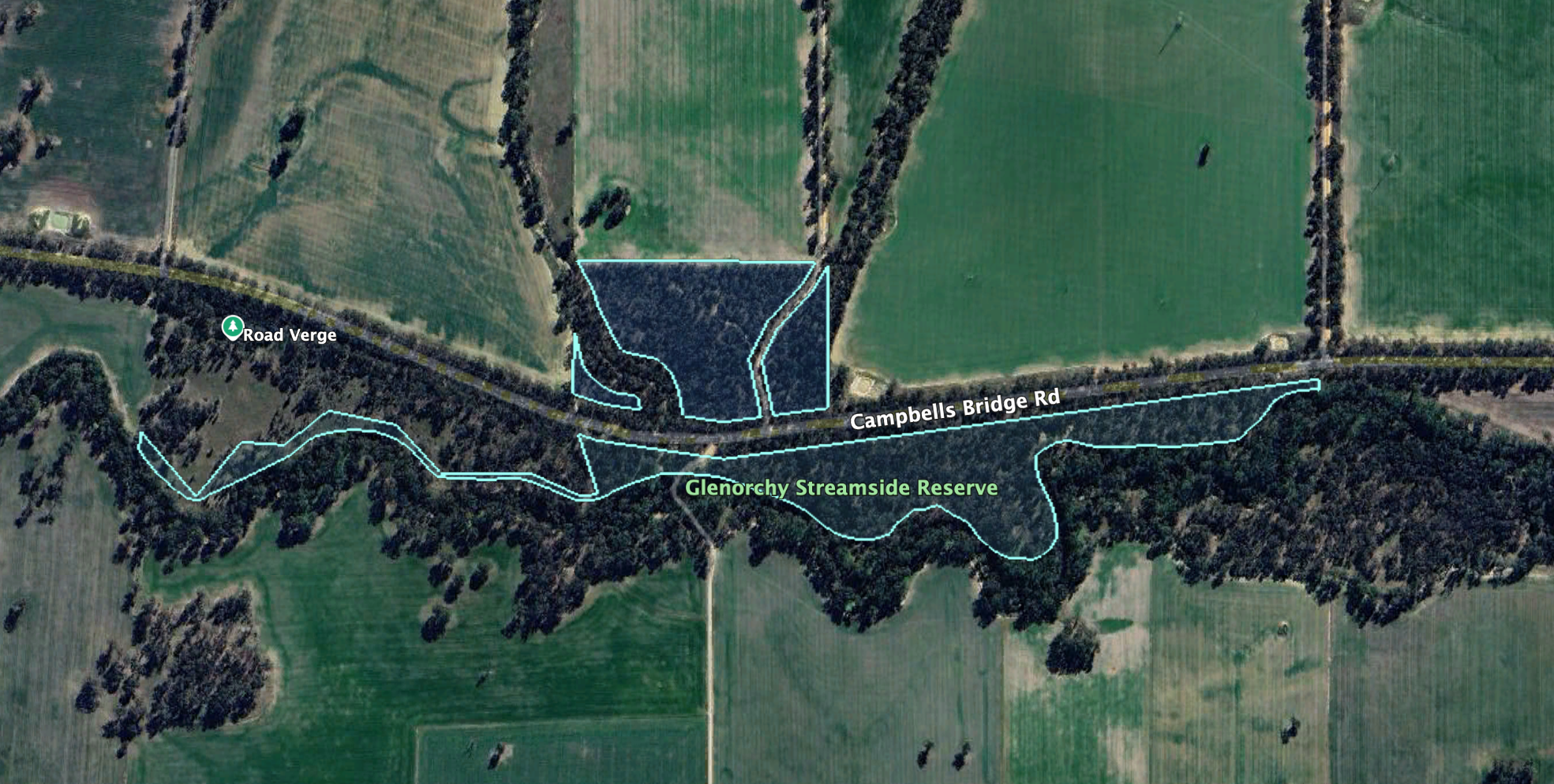
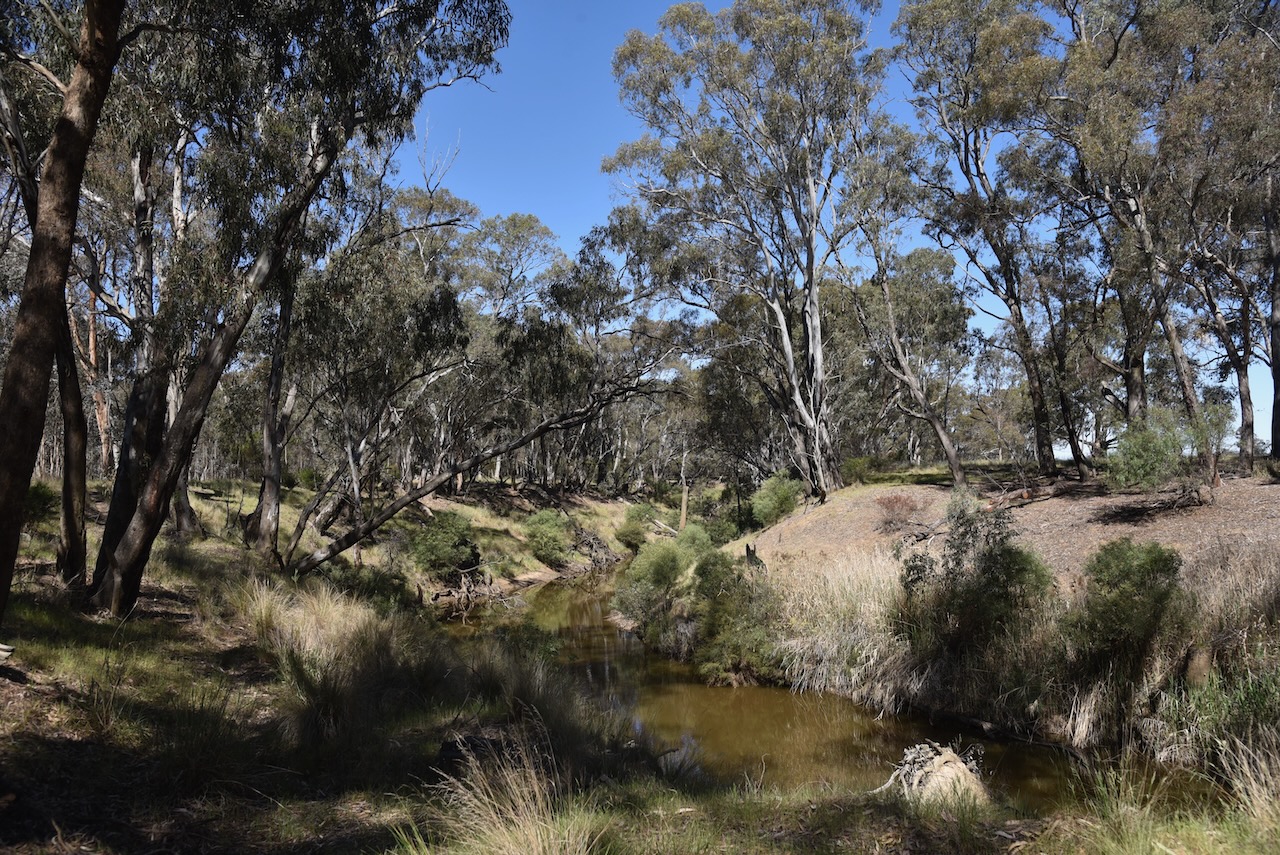
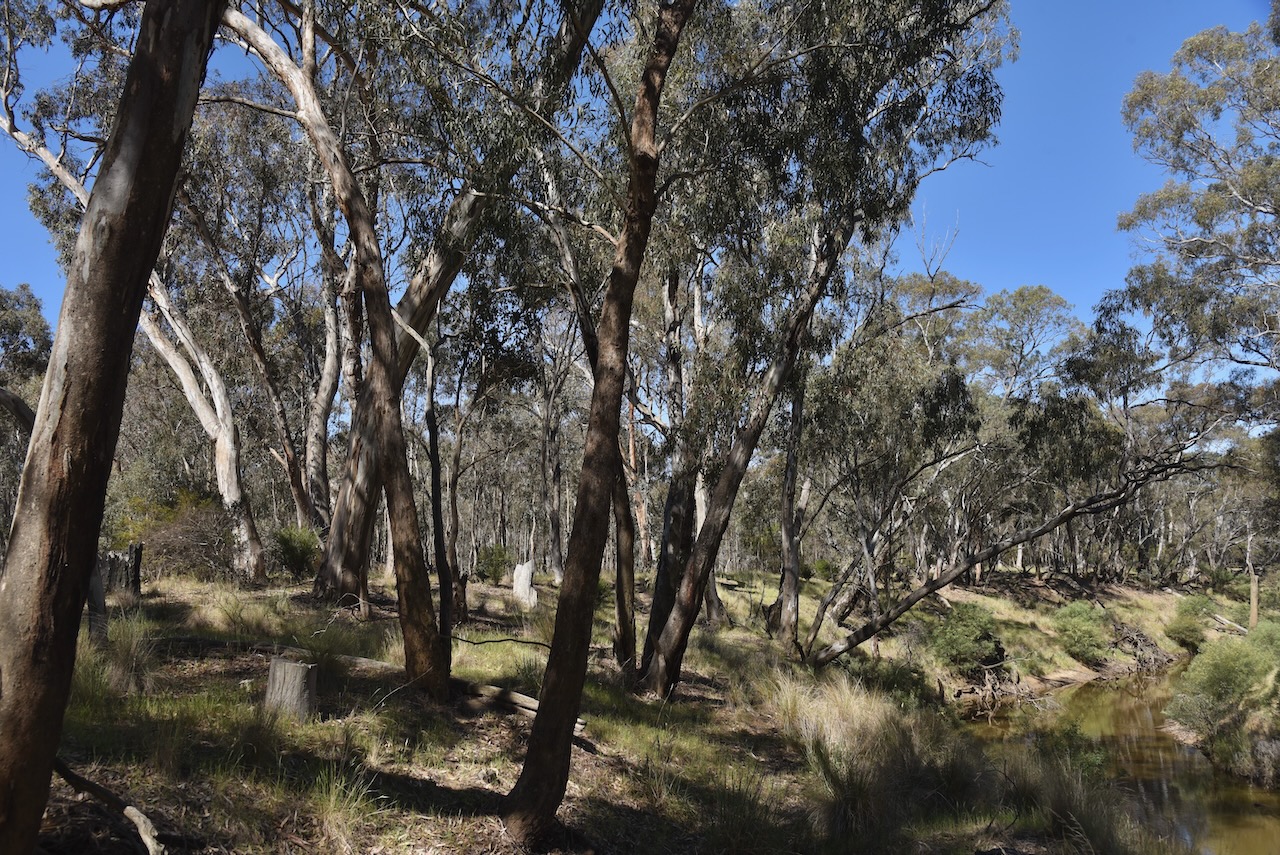
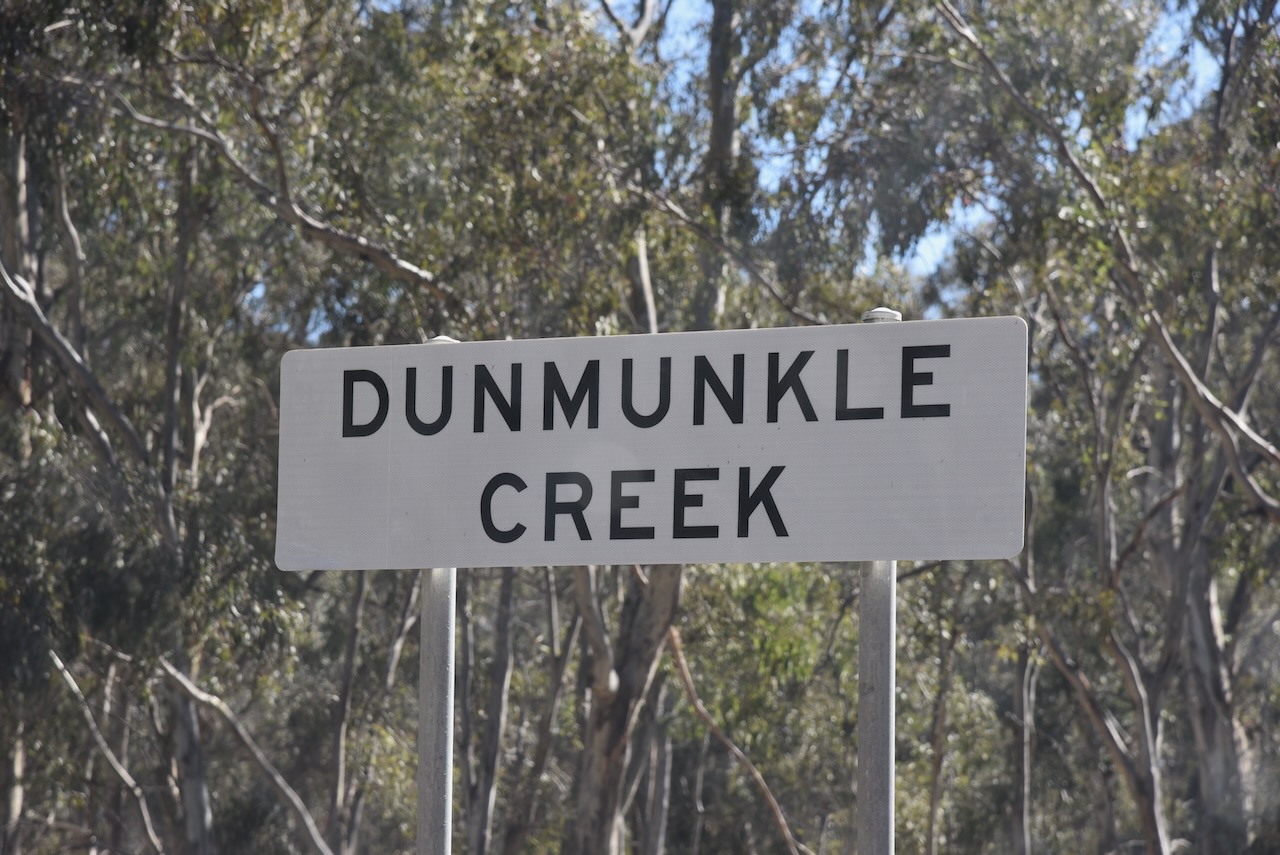
The reserve is located on the southern side of Campbell’s Bridge Road. The southern boundary of the park is the Wimmera River. Dunmunkle Creek, a distributary of the Wimmera River, can be found here. The creek takes its name from the Celtic word dun, meaning chief’s dwelling, and muckle, meaning great. (Blake 1978)
Above:- An aerial view of the reserve. Image c/o Google Earth.
The reserve is about 13 hectares in size and was established on the 24th day of August 1982. (CAPAD 2022)
Our next activation for Wednesday, 30th October 2024, was the Hunts Bushland Reserve VKFF-5151. The reserve is located about 21 km north of Stawell in western Victoria.
Above:- Map showing the location of Hunts Bushland Reserve. Map c/o Google Maps.
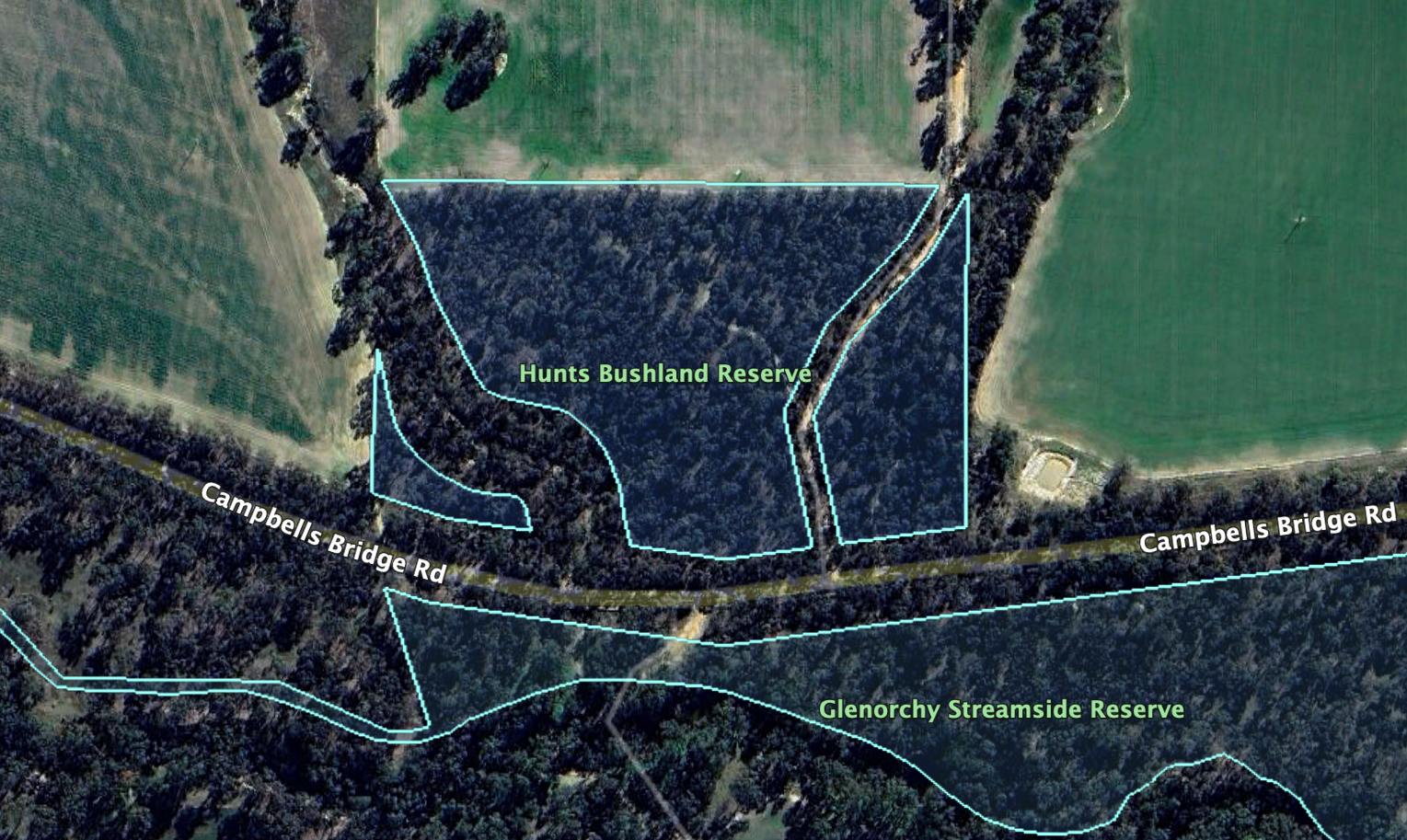
The park is located on the northern side of Campbells Bridge Road at the junction with Swedes Creek Road.
Above:- An aerial view of Hunts Bushland Reserve. Image c/o Google Earth
The reserve is about 8 hectares in size and was established on the 24th day of August 1982. (CAPAD 2022)
The highlight of this activation was working Tim VK3IFR aeronautical mobile.
On Wednesday, 30th October 2024, Marija and I left the Waanyarra Nature Conservation Reserve and headed towards our next activation.
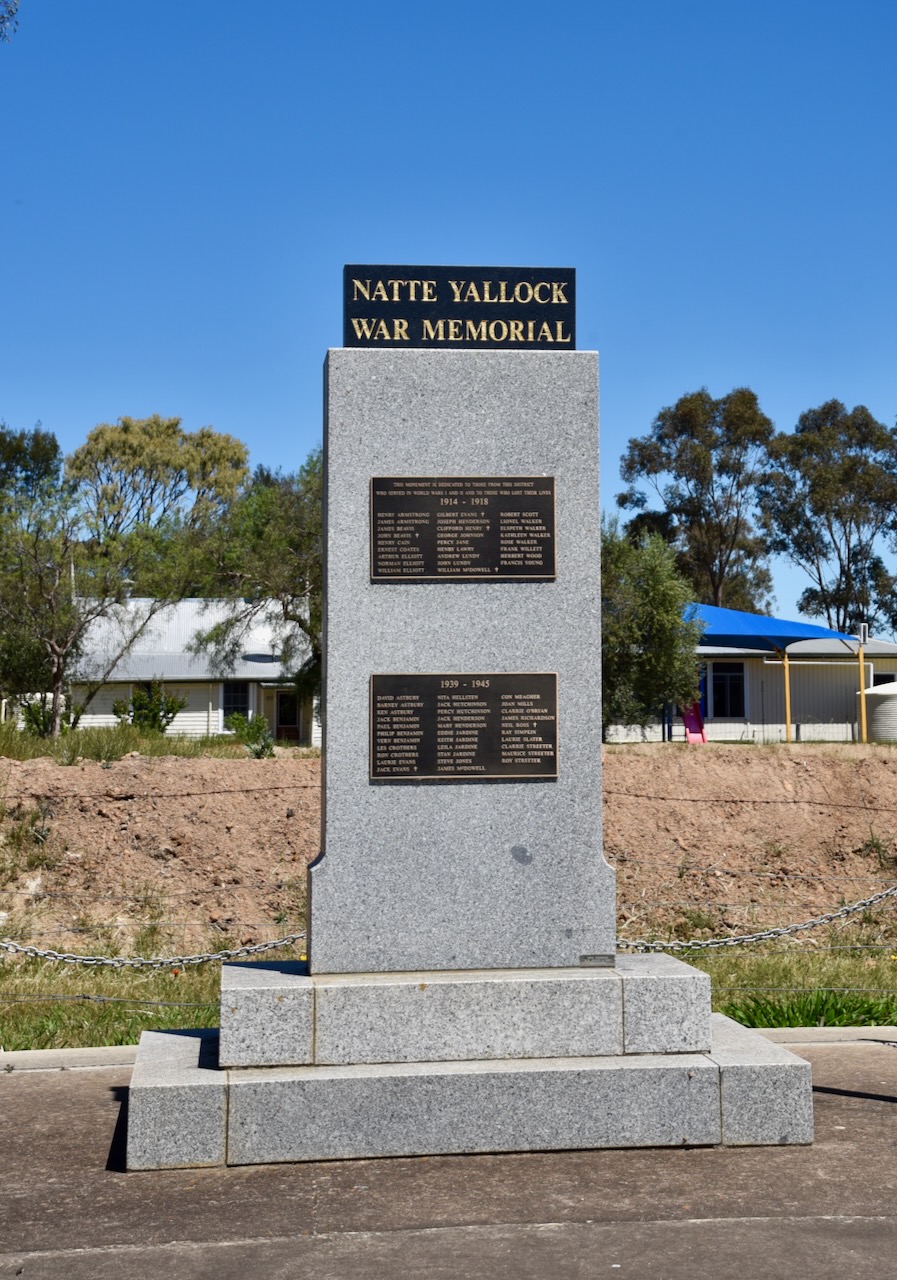
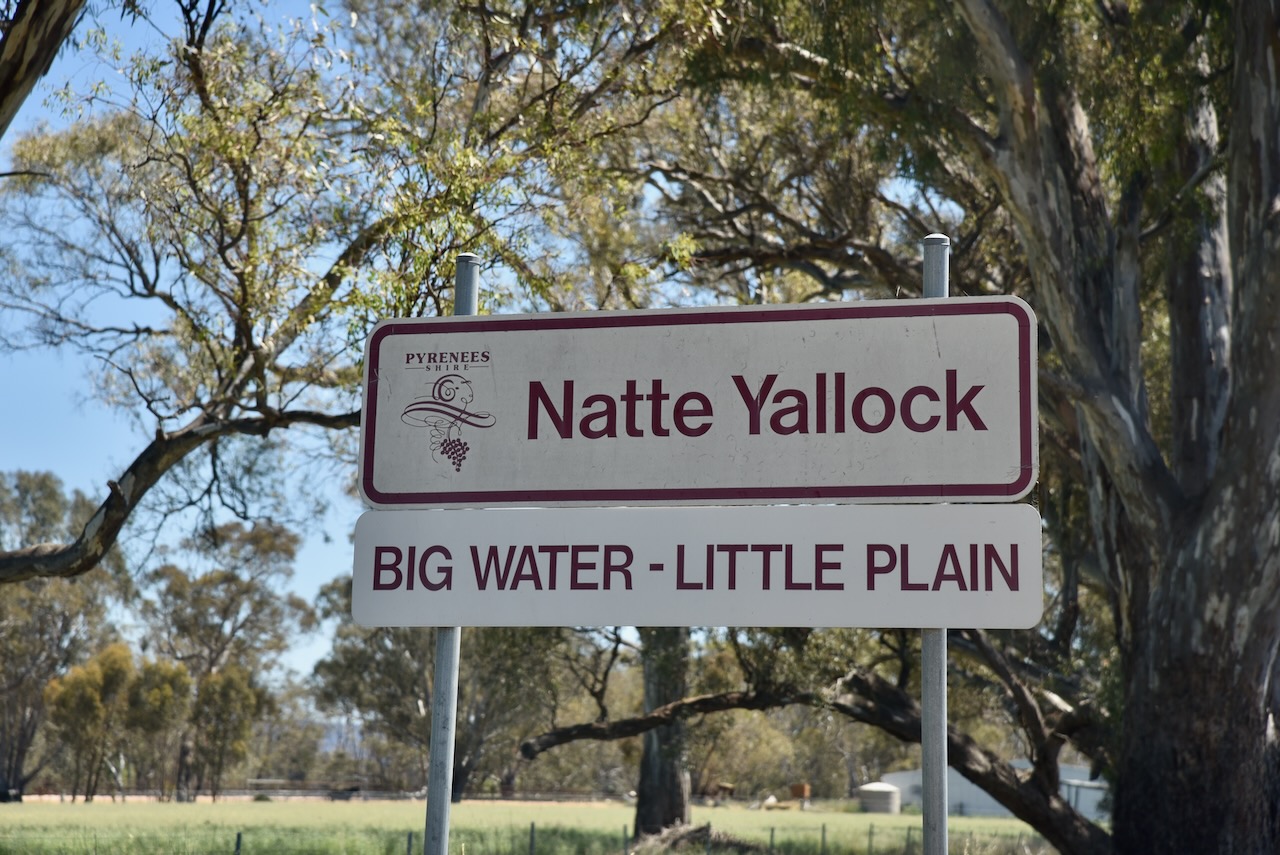
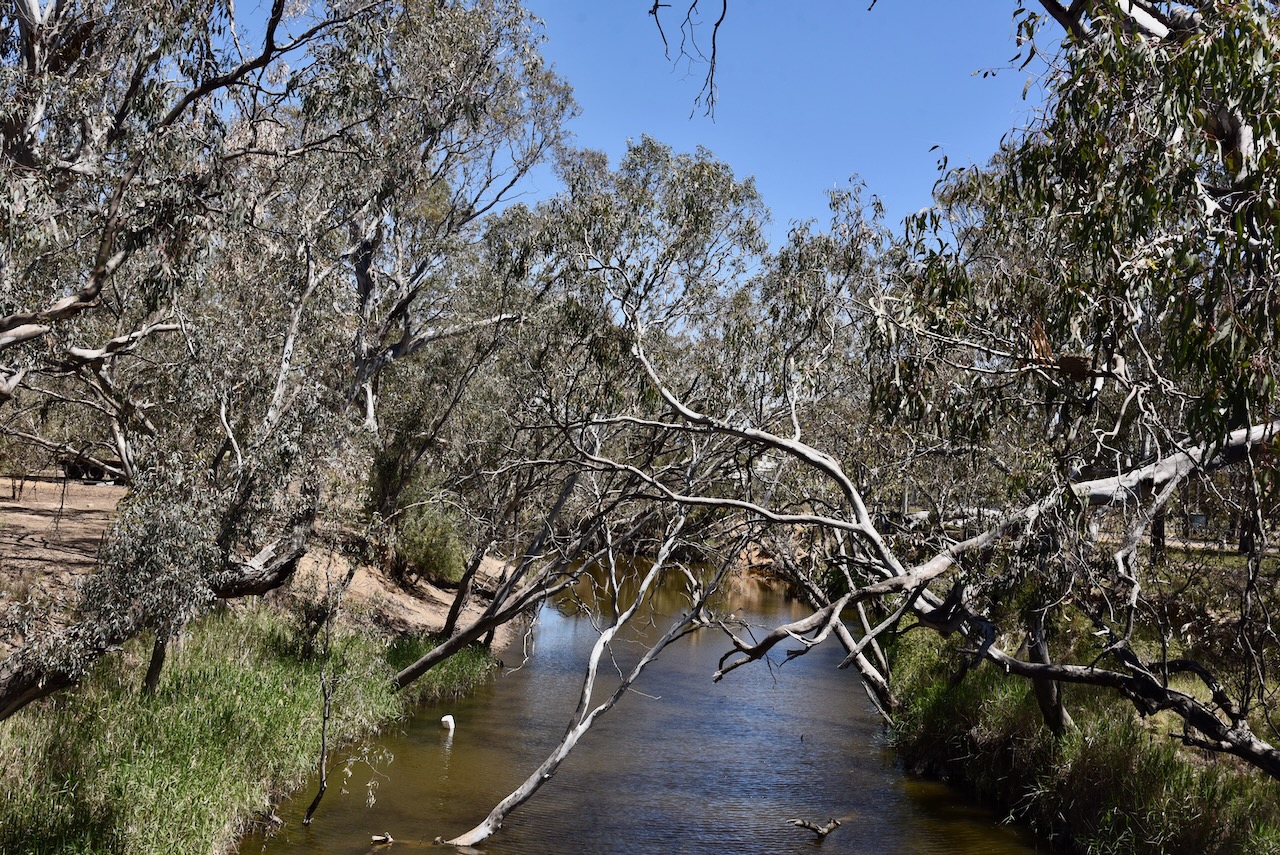
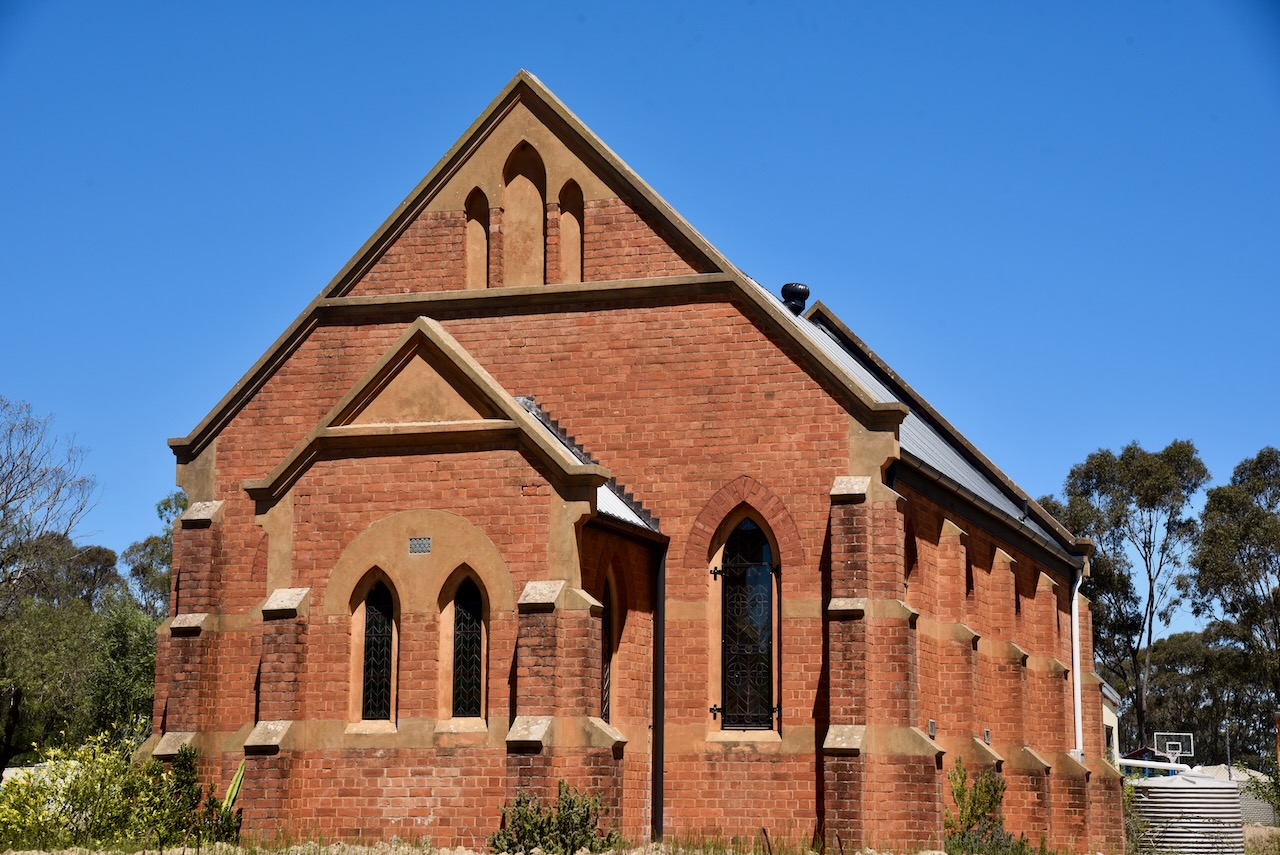
We stopped briefly at Natte Yallock, a small town on the Avoca River, about 200 km northwest of Melbourne. It was named in the 1840s after Nettylloc pastoral run, which was taken up in 1841. It is taken from the Aboriginal words nattai and yalloc, both meaning water. Land in the area was taken up for farm selections in the 1860s. The village sprang up as it was located at a ford across the Avoca River. By 1862, Natte Yallock had two hotels and a school. By 1864, a bridge had been constructed on the Avoca River. In 1868, a Wesleyan chapel was built, which was utilised as a school, replacing the leaky timber slab school structure. (Victorianplaces.com.au, 2015)
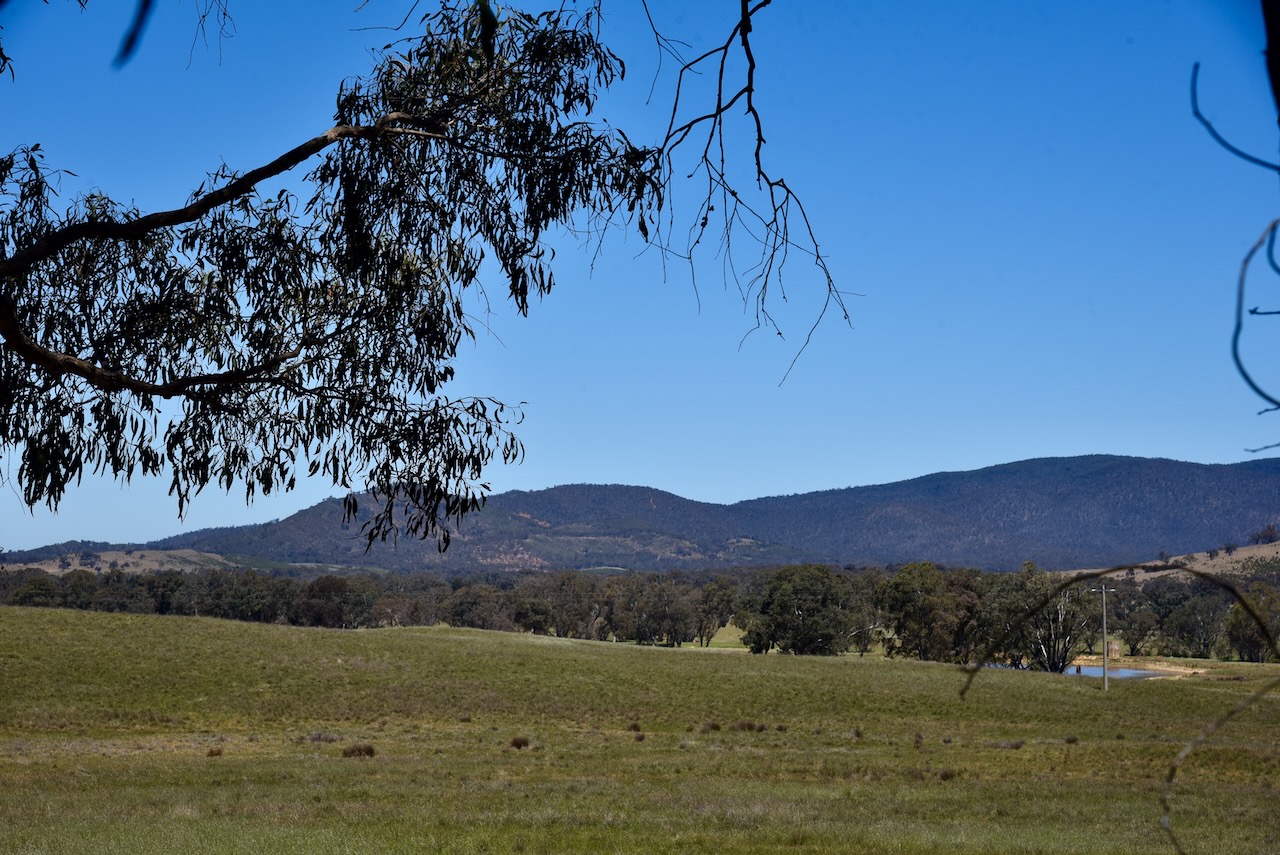
We left Natte Yallock and continued on towards Edenhope. There were some nice views of Kara Kara National Park along the way.
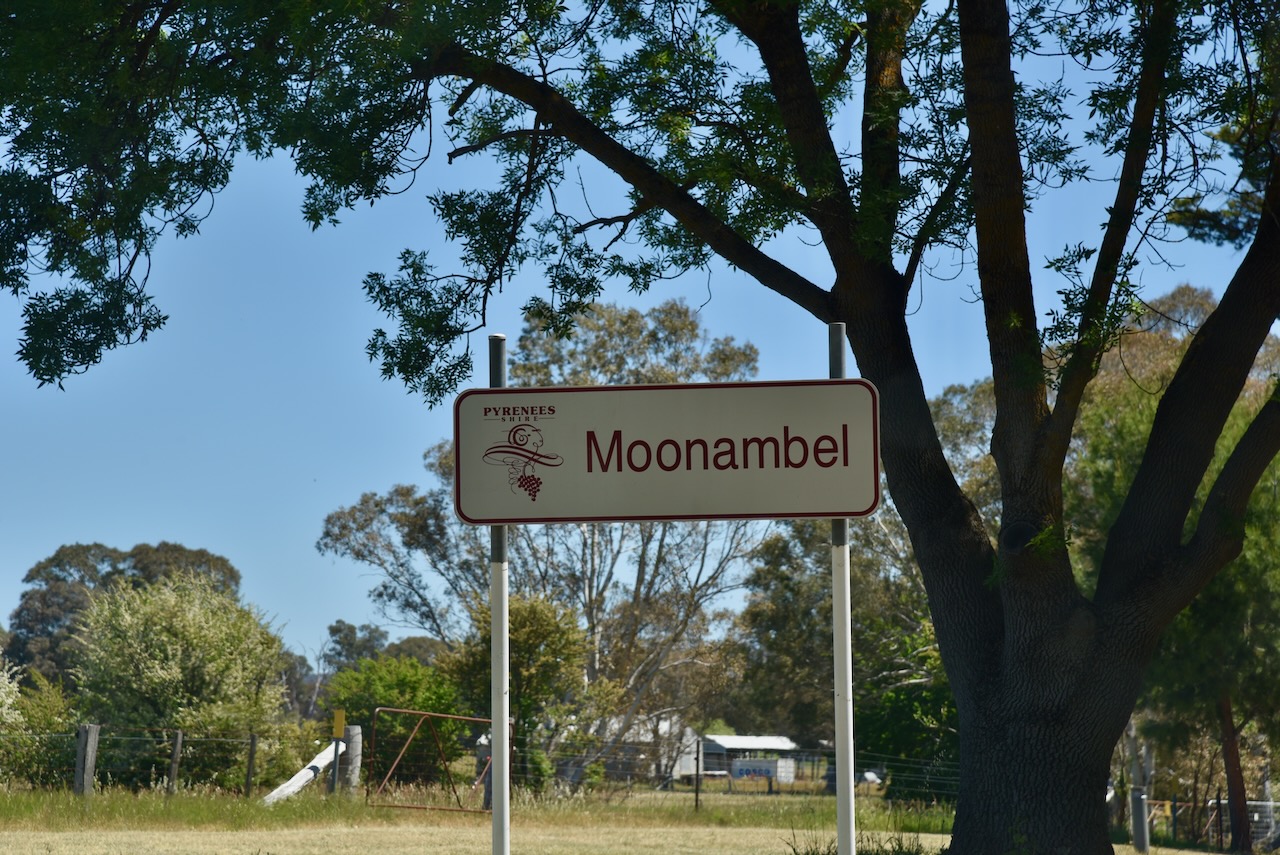
Our next stop was the little town of Moonambel, located south of the Kara Kara National Park, in the Pyrenees region of Victoria.
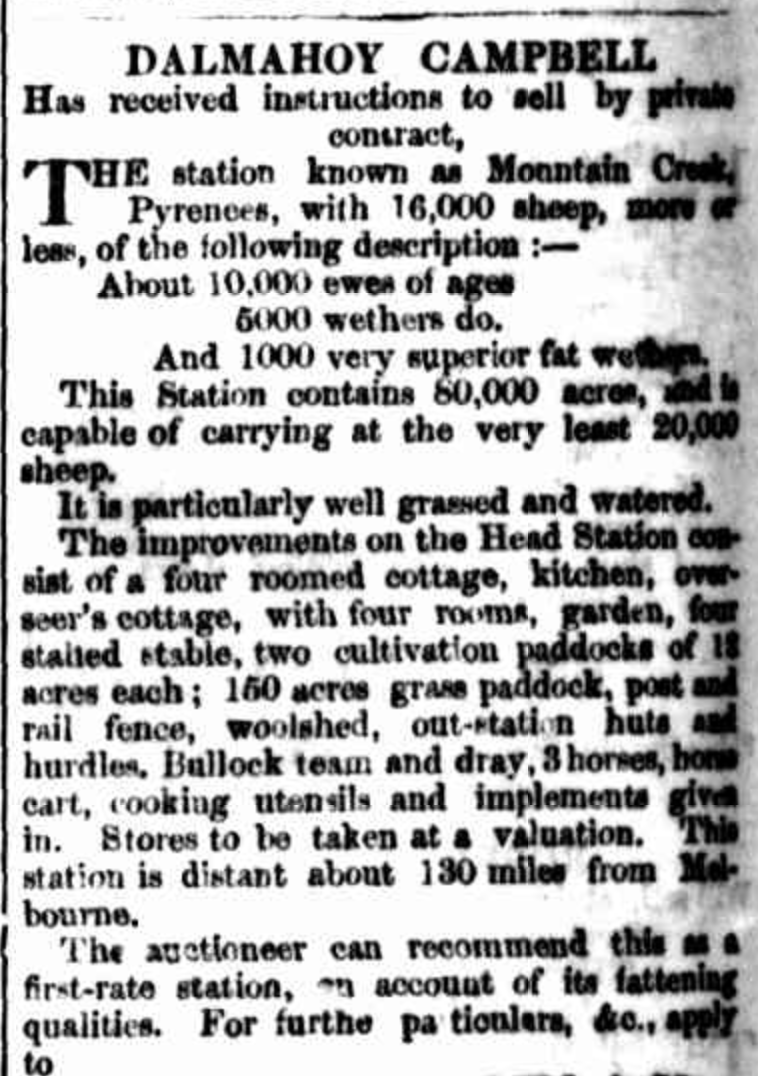
The site of Moonambel was part of the Mountain Creek pastoral run, established by Colin McKinnon in the 1850s, which was 80,000 acres in size and had 16,000 sheep. (Avoca Heritage 1995)(Trove 2025)
Above:- Article re the sale of Mountain Creek station, from The Argus, Fri 8 Apr 1853. Image c/o Trove.
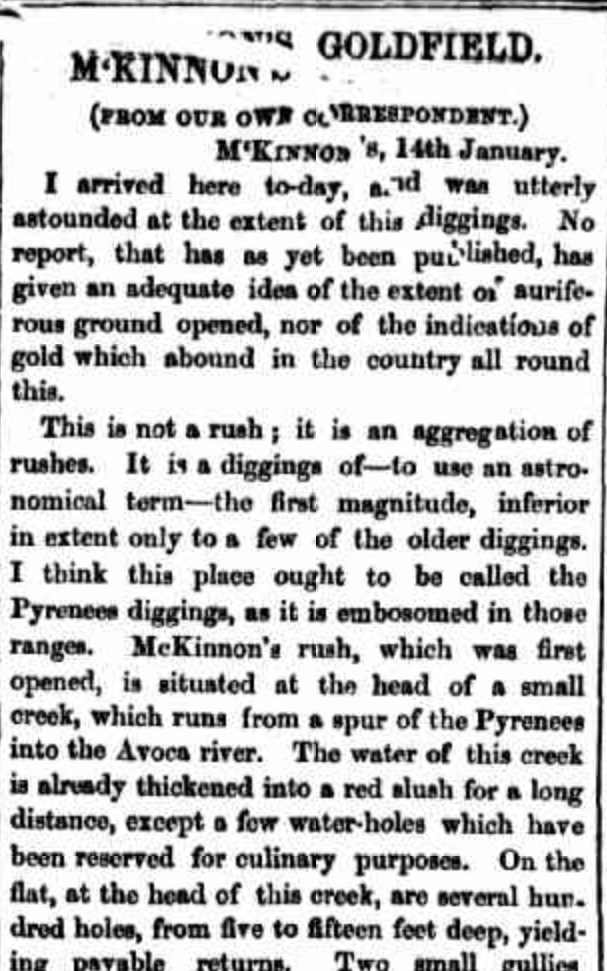
The creek valley was used from about 1852 as a gold escort route between the Victorian goldfields and Adelaide. Gold was discovered in the Moonambel district in late 1860, and the settlement was originally known as Mountain Creek. By December 1860, it was estimated that there were between 10,000 to 12,000 miners on the goldfield. (Avoca Heritage 1995) (Victorianplaces.com.au, 2015)
Above:- part of an article from The Herald, Fri 18 Jan 1861. Image c/o Trove
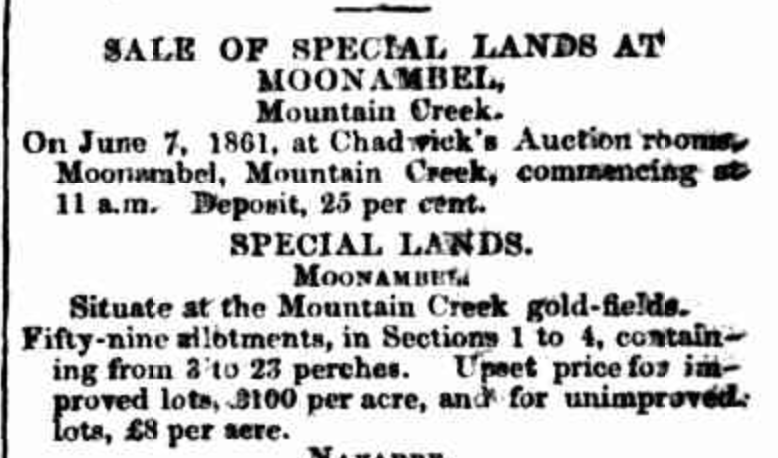
By December 1860, the town had been surveyed and there were several substantial buildings being built. By May 1861, the township that had developed on the Mountain Creek diggings was named Moonambel and town allotments were offered for sale at Moonambel. (Avoca Heritage 1995)
Above:- Advertisement from The Age, Fri 24 May 1861. Image c/o Trove
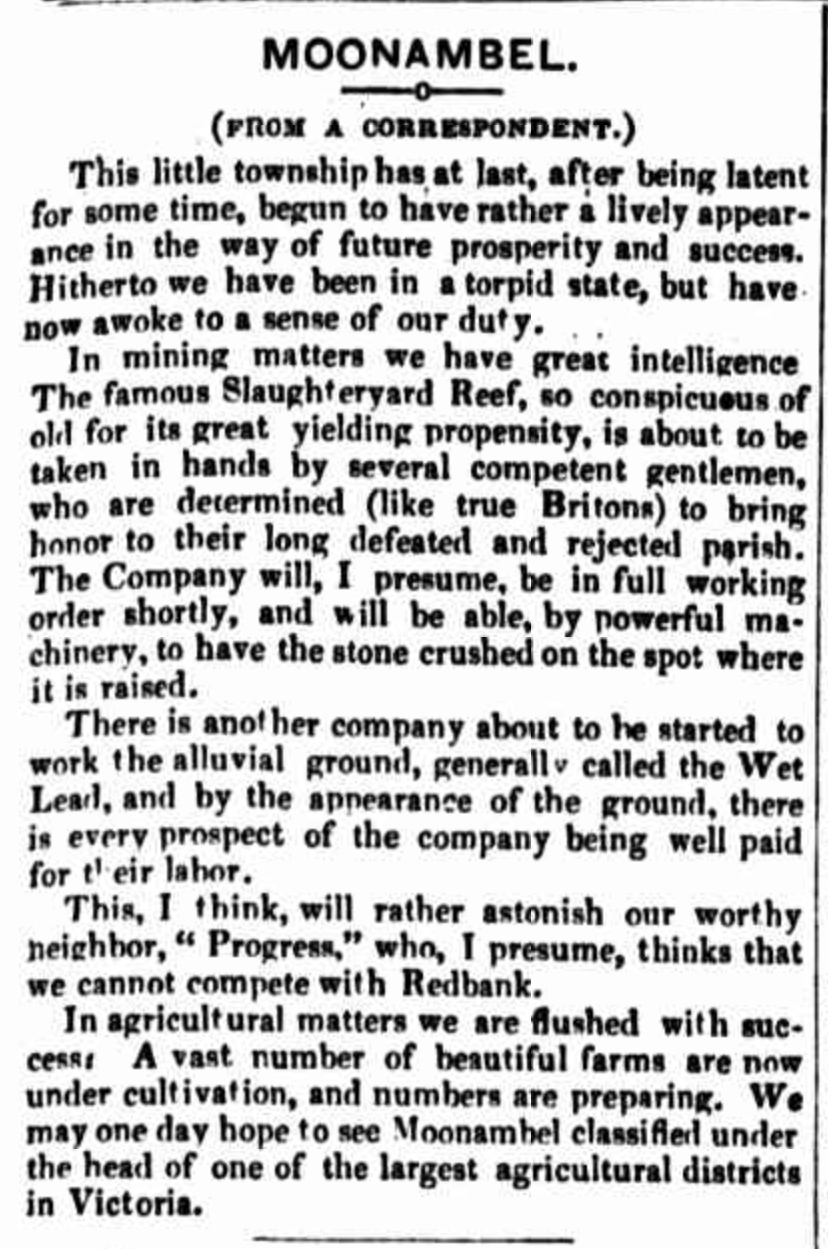
In October 1861, Moonambel was proclaimed as a municipality. It is believed that Moonambel is an Aboriginal word meaning ‘hollow in the hills’. In 1864, it was united with the Avoca Shire. By 1861, an Anglican school had opened, and this was replaced by a brick government building in 1875. In its early days, Moonambel had several hotels, but this was reduced to one, the Commercial Hotel, which was built in 1861. In 1871 Moonambel’s population was 280 people. (Avoca Heritage 1995) (Victorianplaces.com.au, 2015)
Above:- An article from The Avoca Mail, Sat 1 Jul 1865. Image co Trove
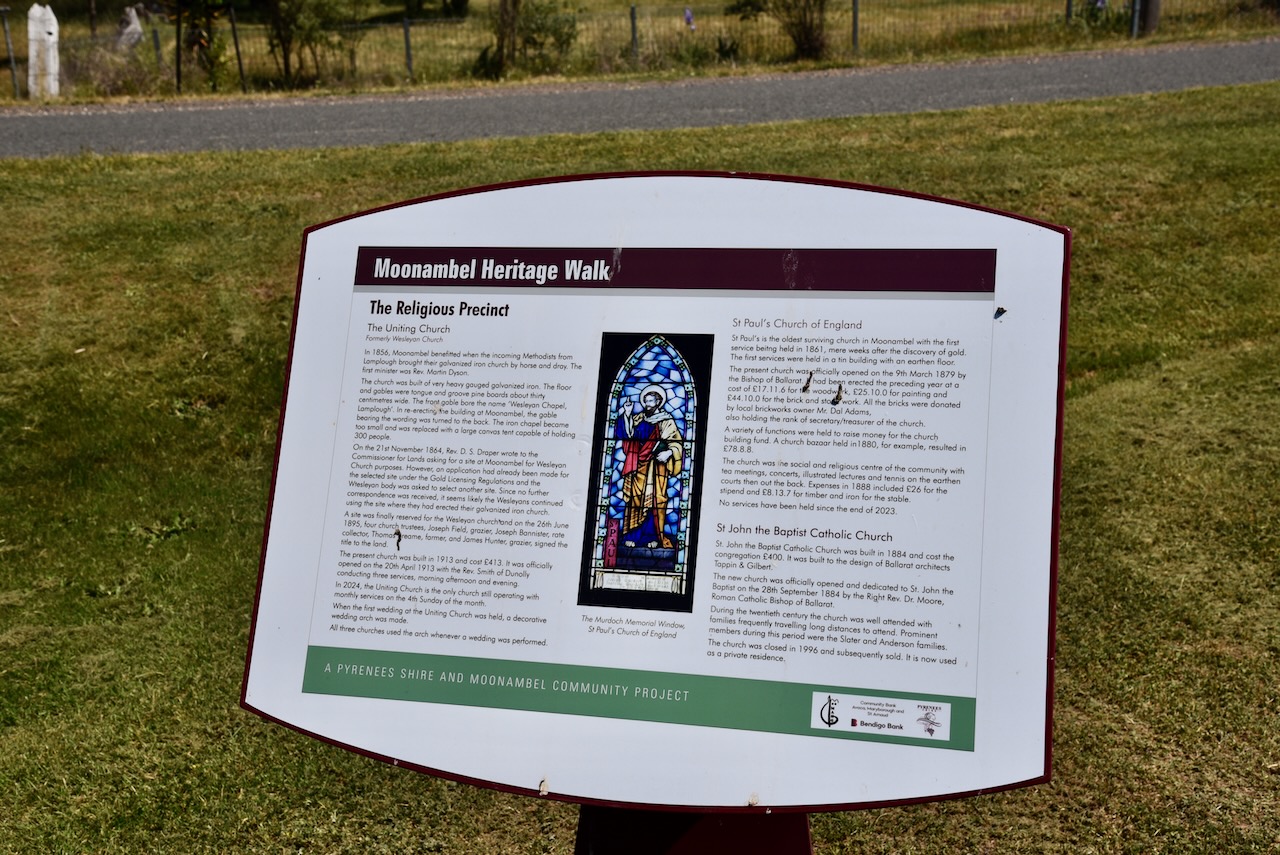
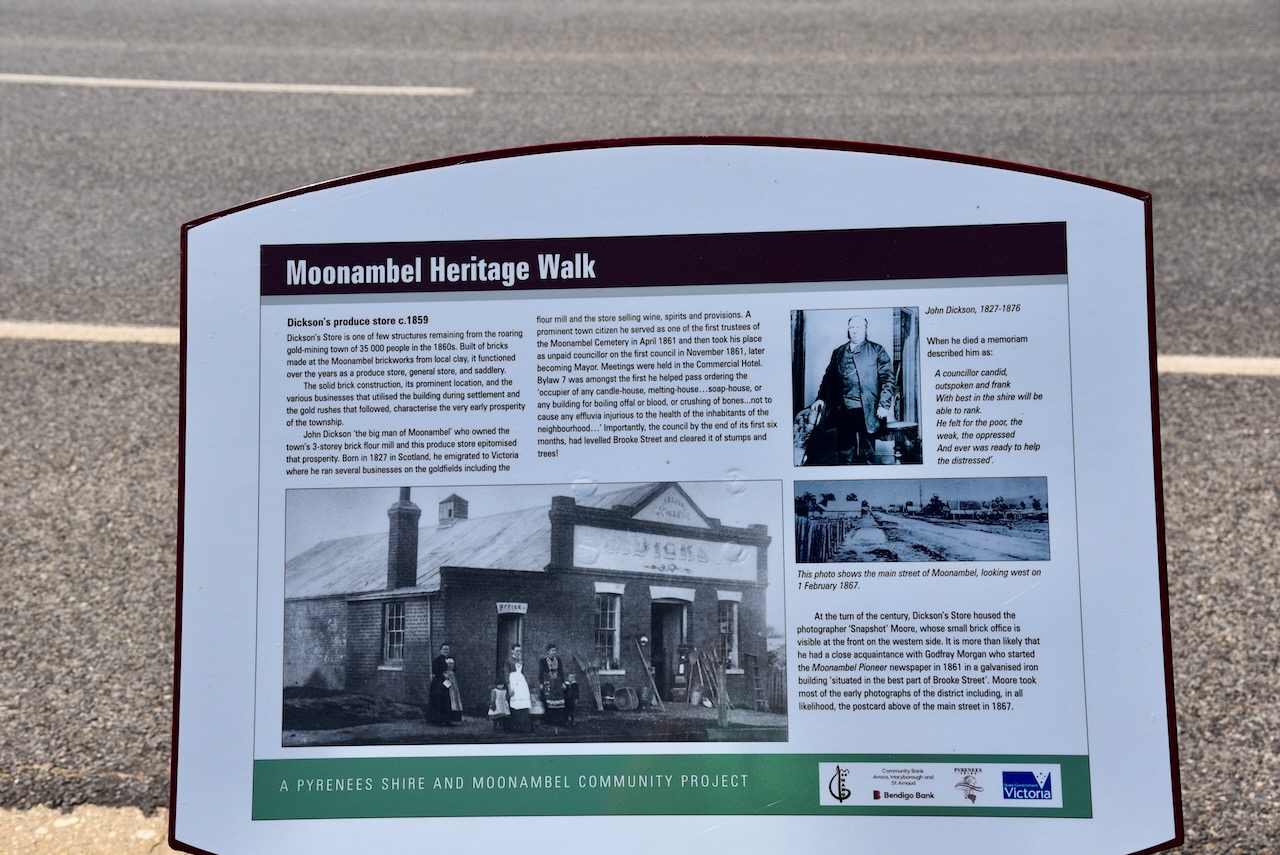
Moonamble has a magnificent heritage walk, with the many historic buildings featuring information boards detailing the history of the building.
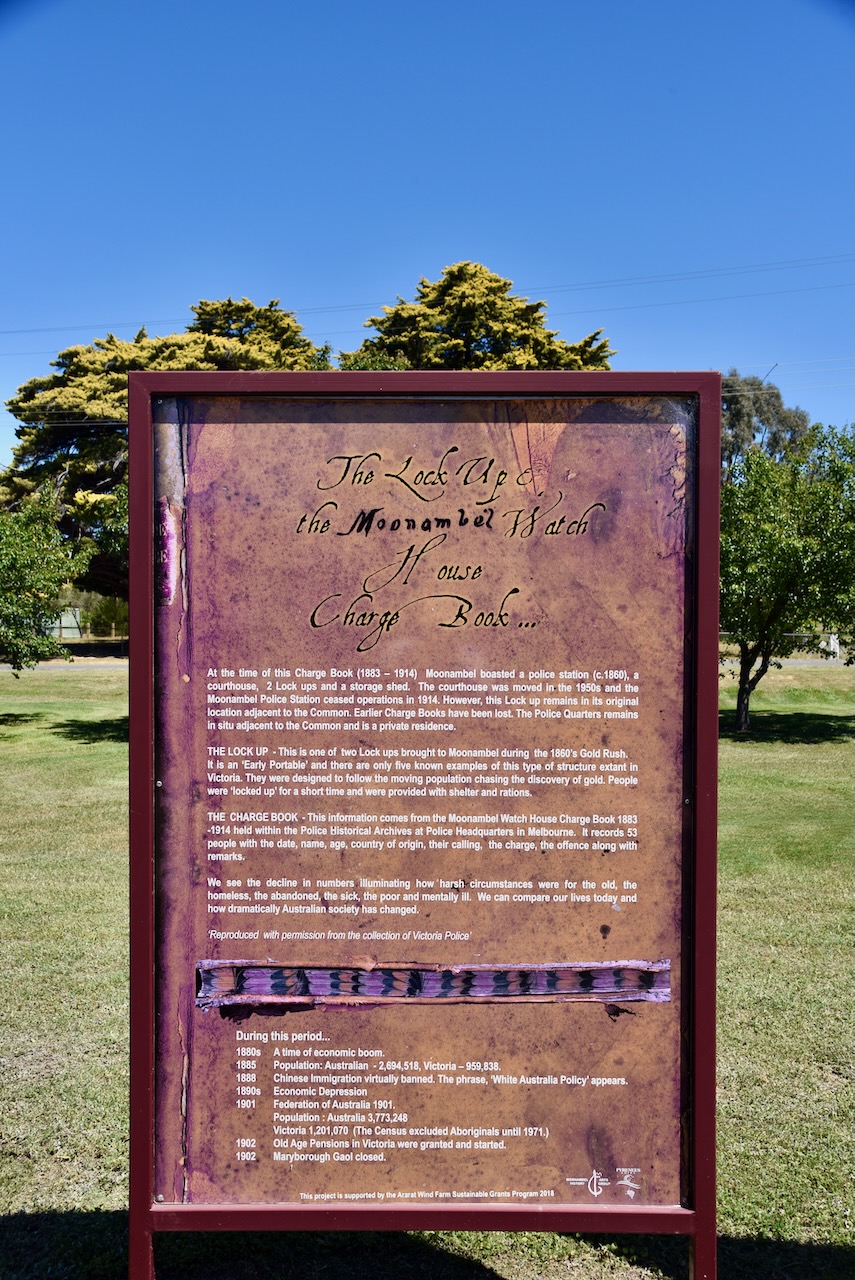
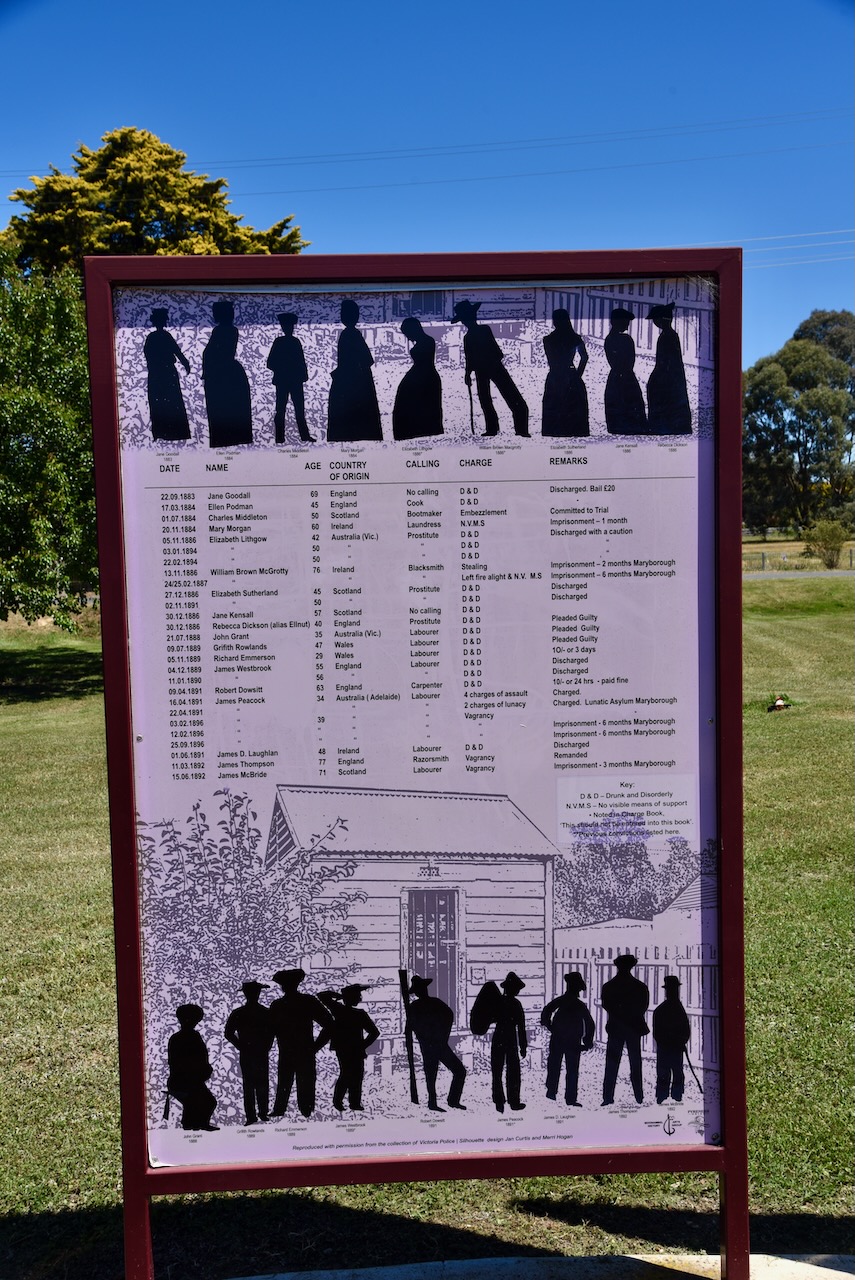
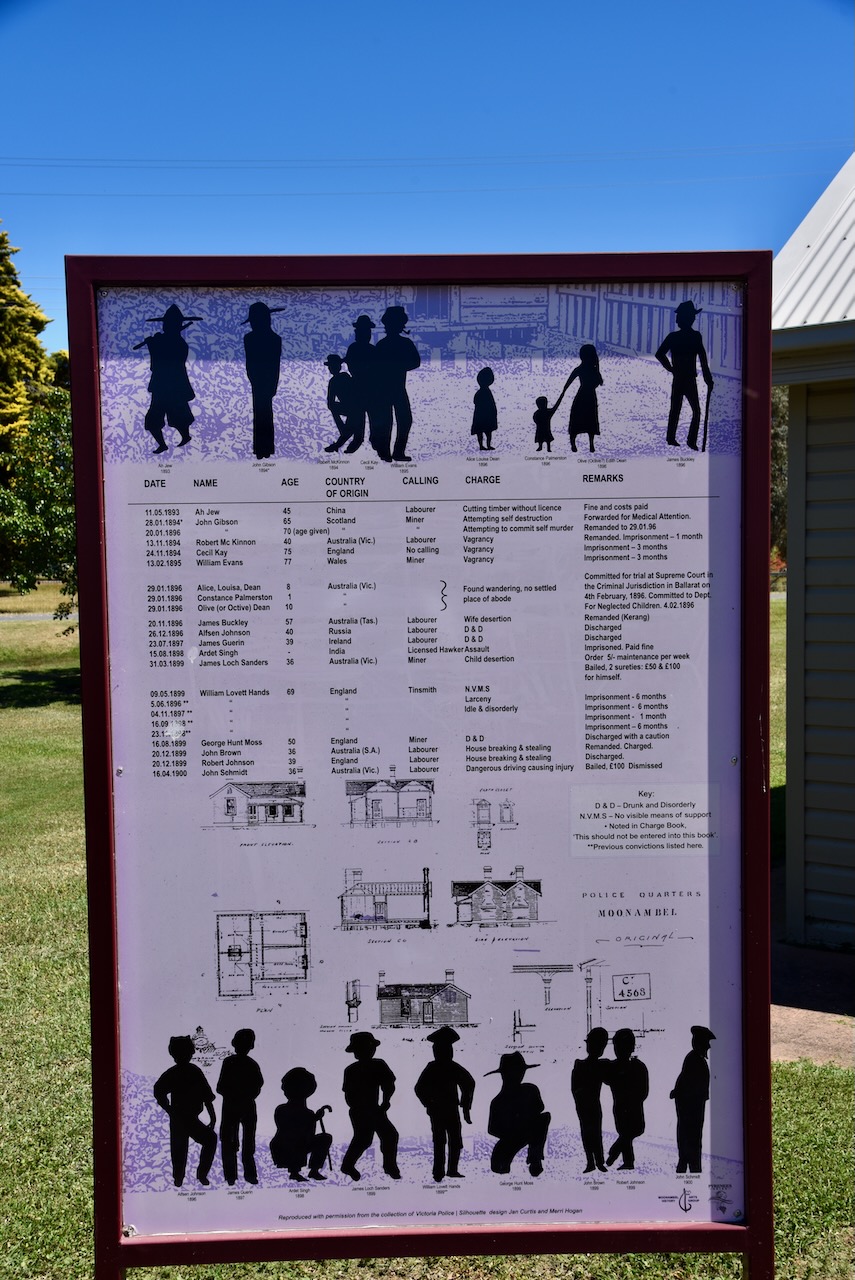
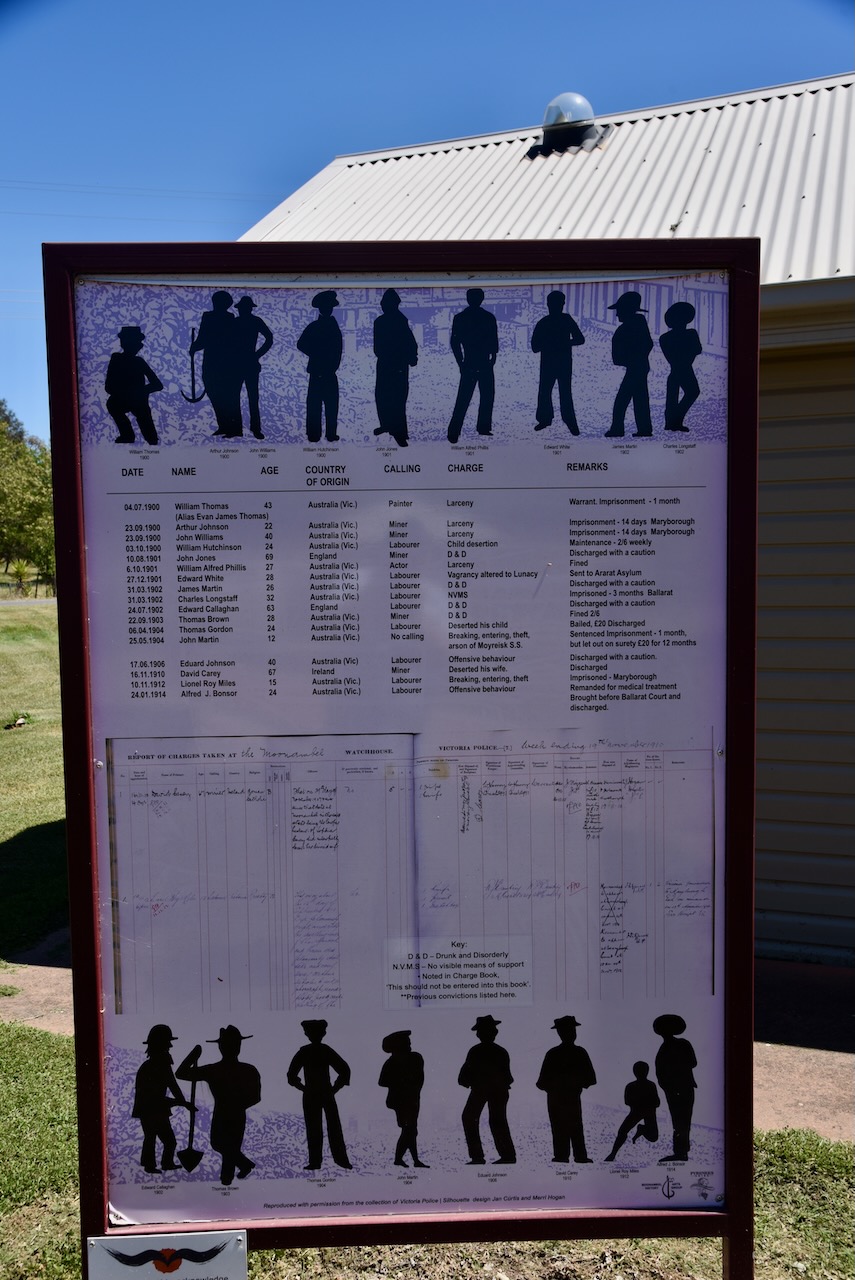
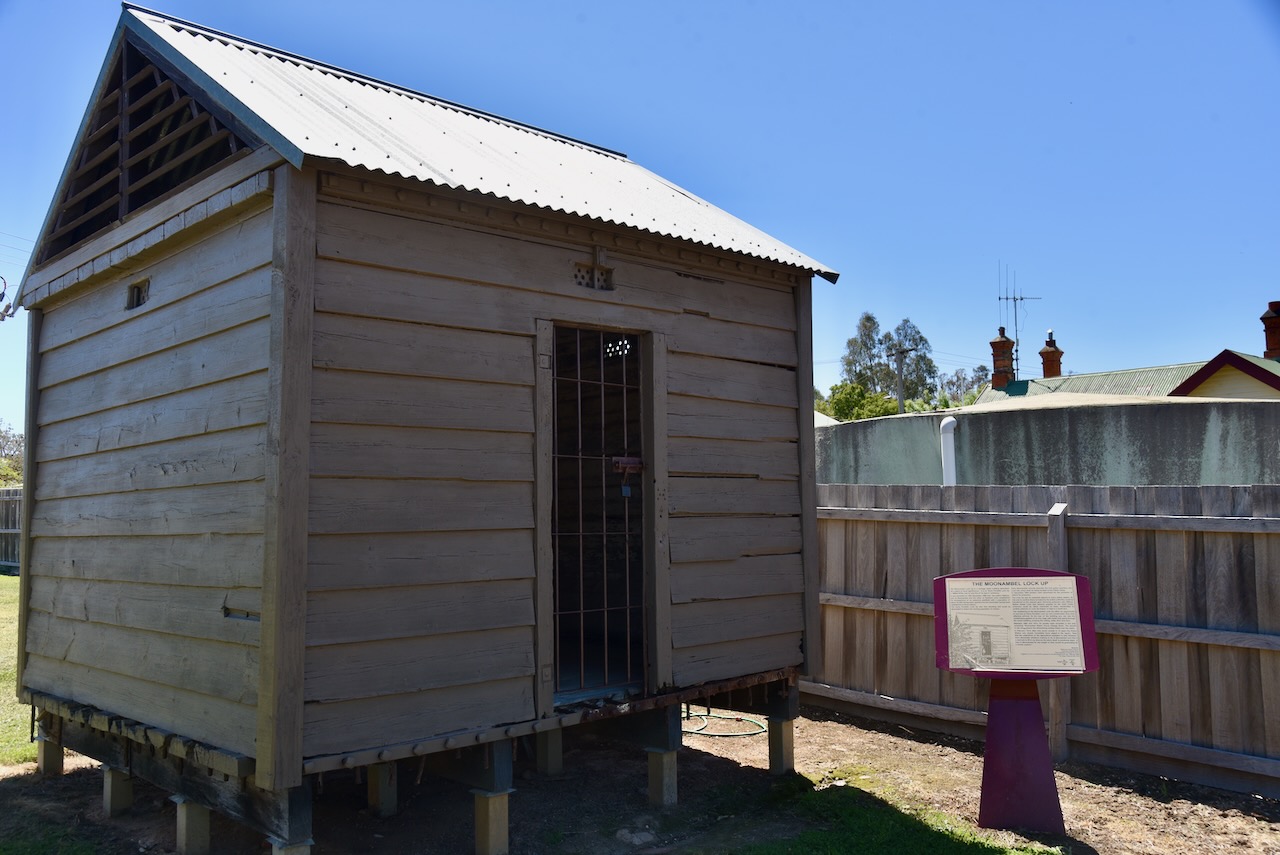
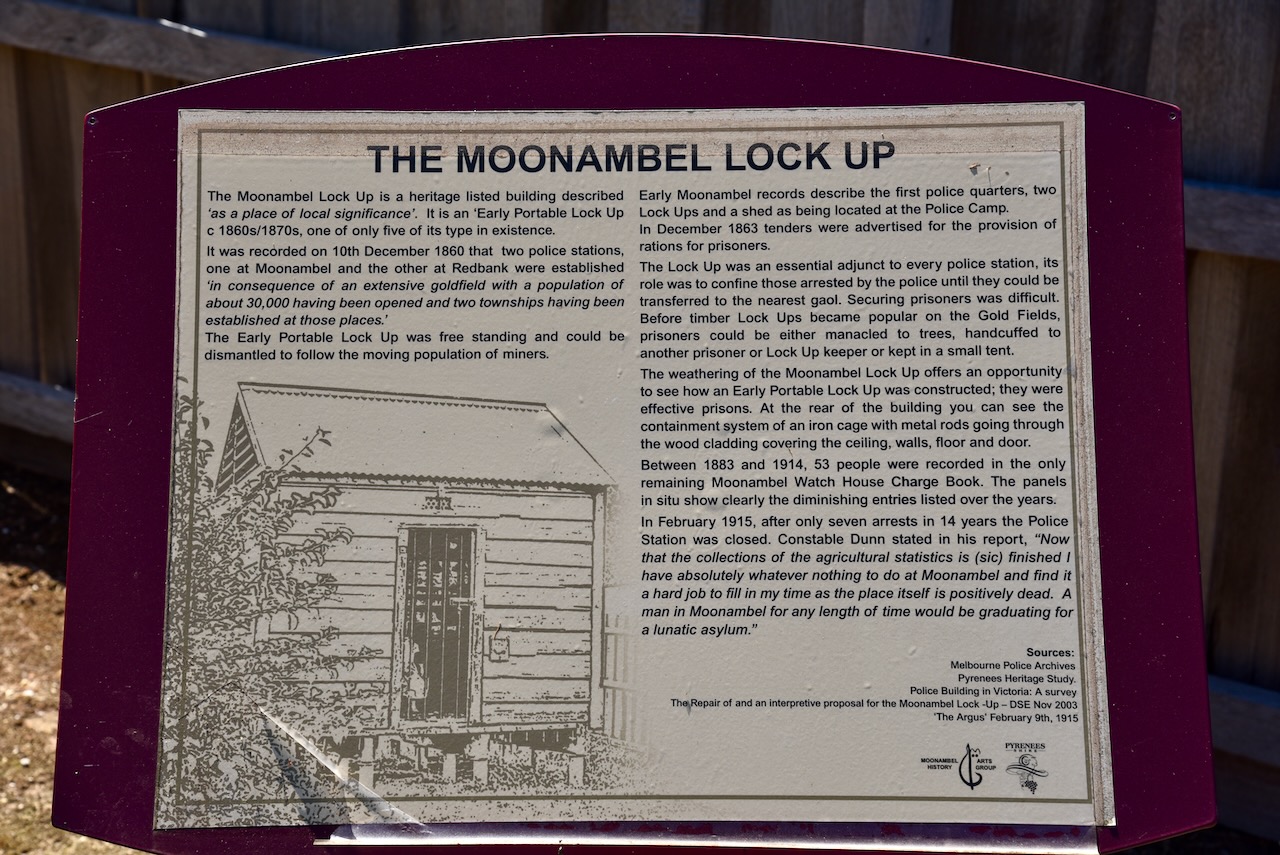
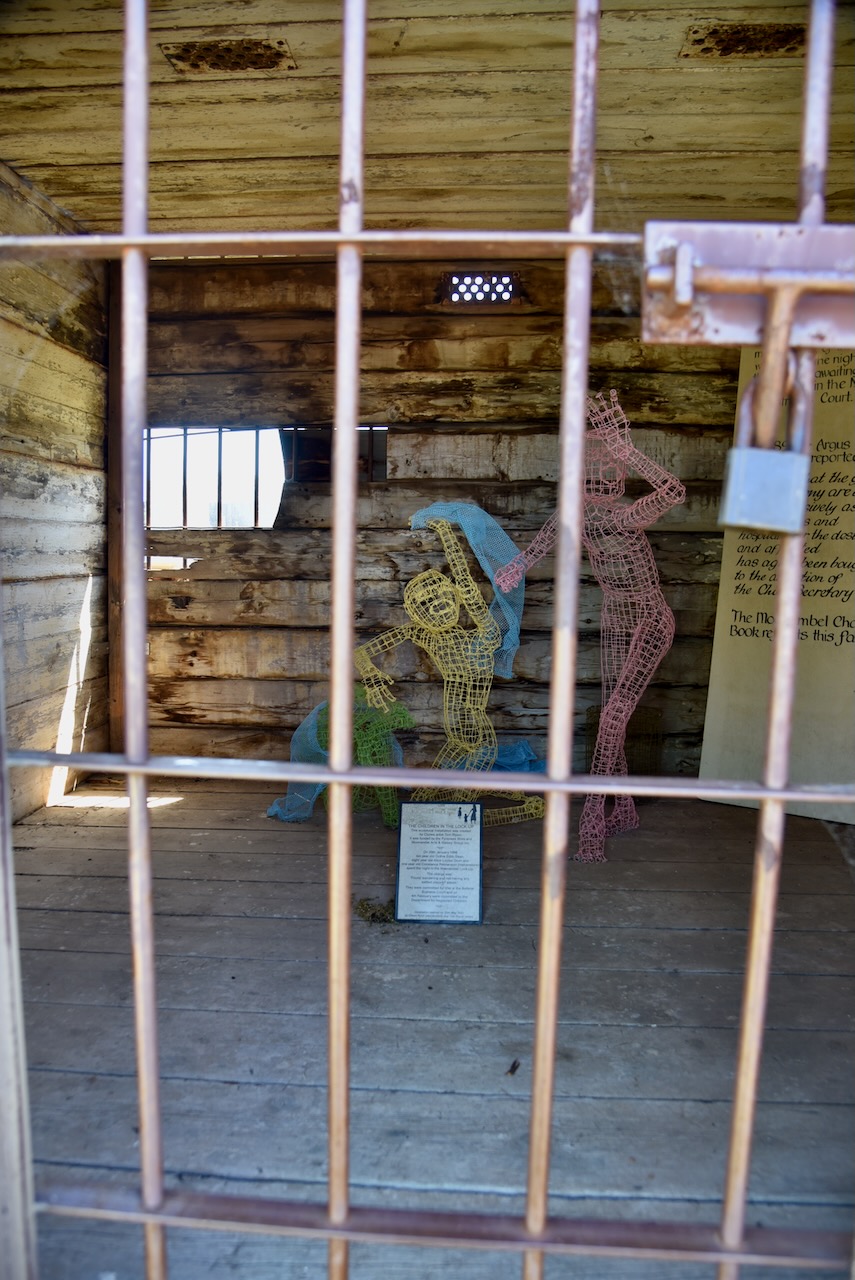
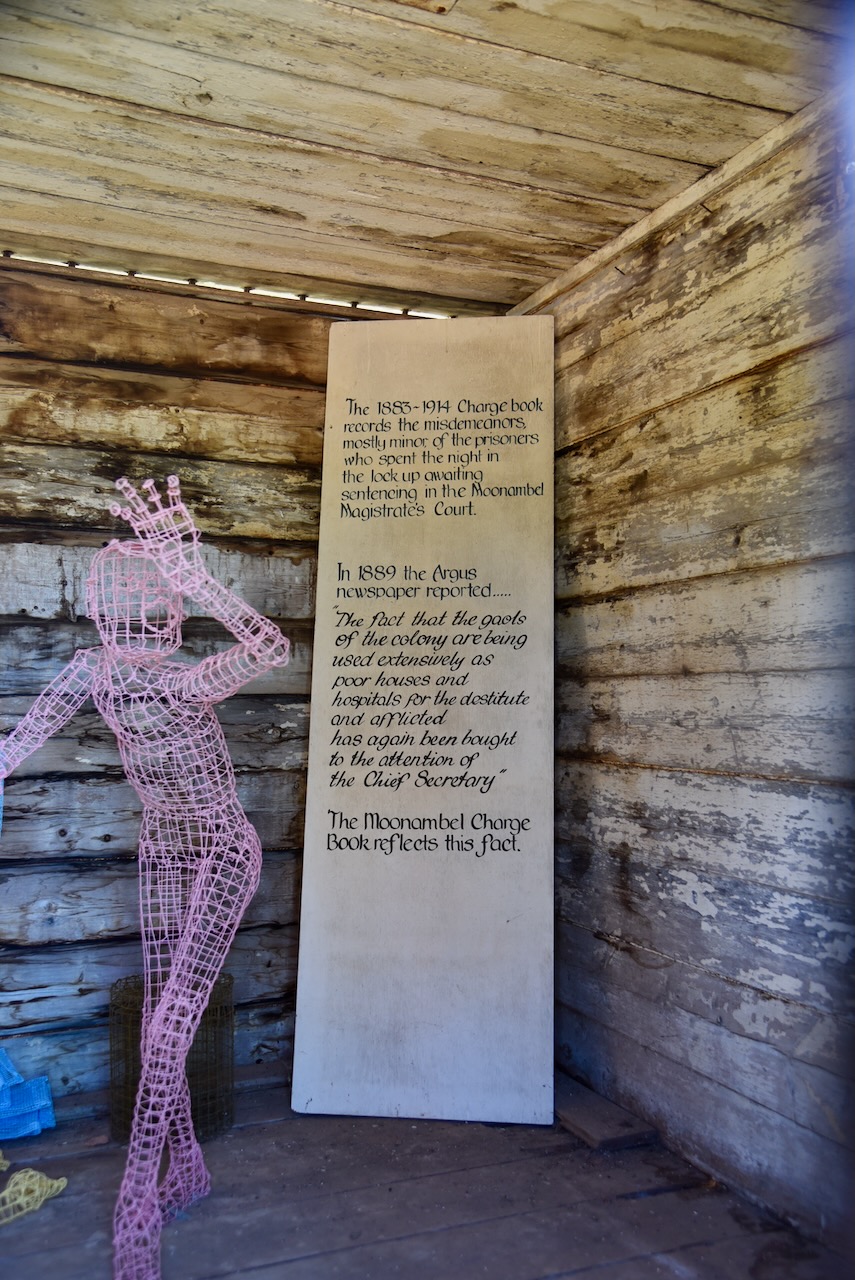
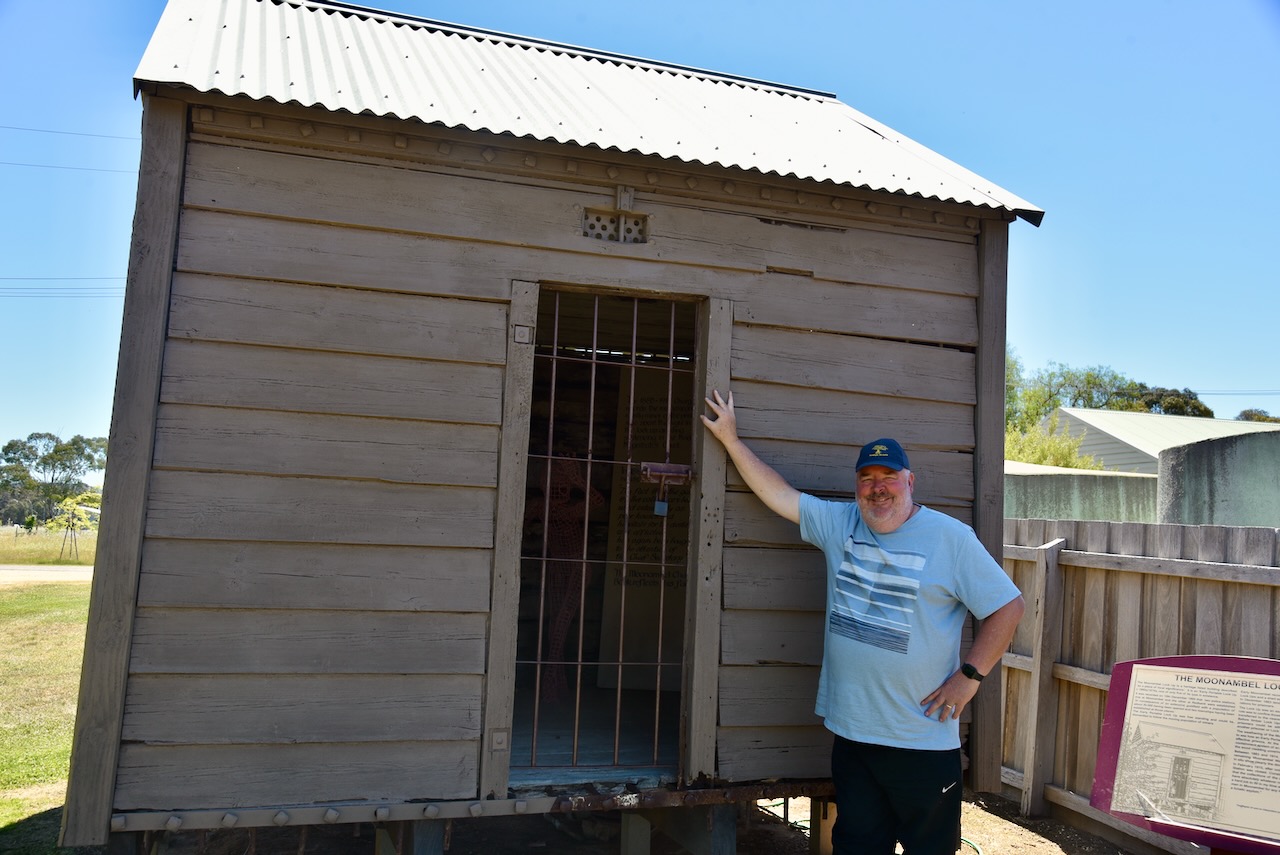
One of the interesting structures is the Moonambel Lock-up, which was one of two lock-ups that were brought to Moonambel during the 1860s gold rush. There are only five examples of this type of early portable lock-up in Victoria.
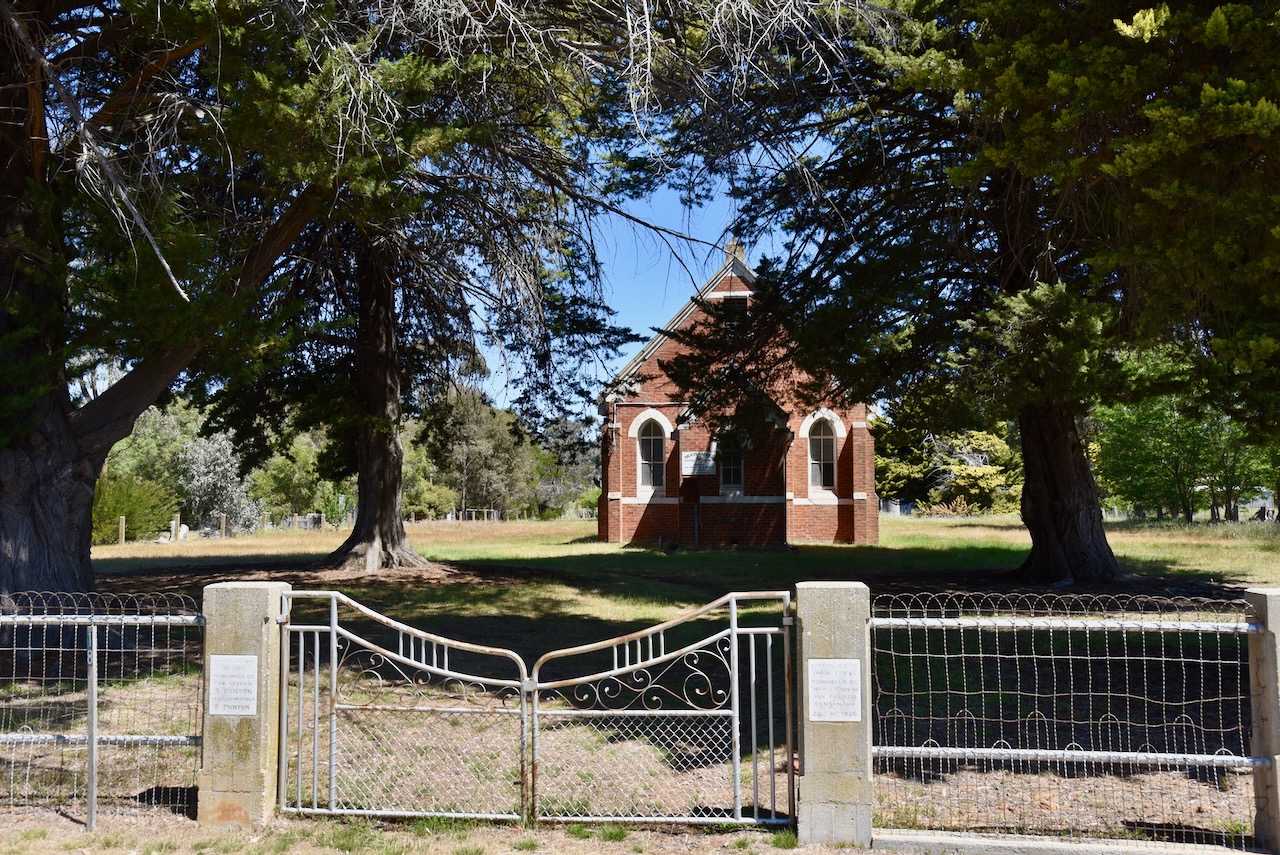
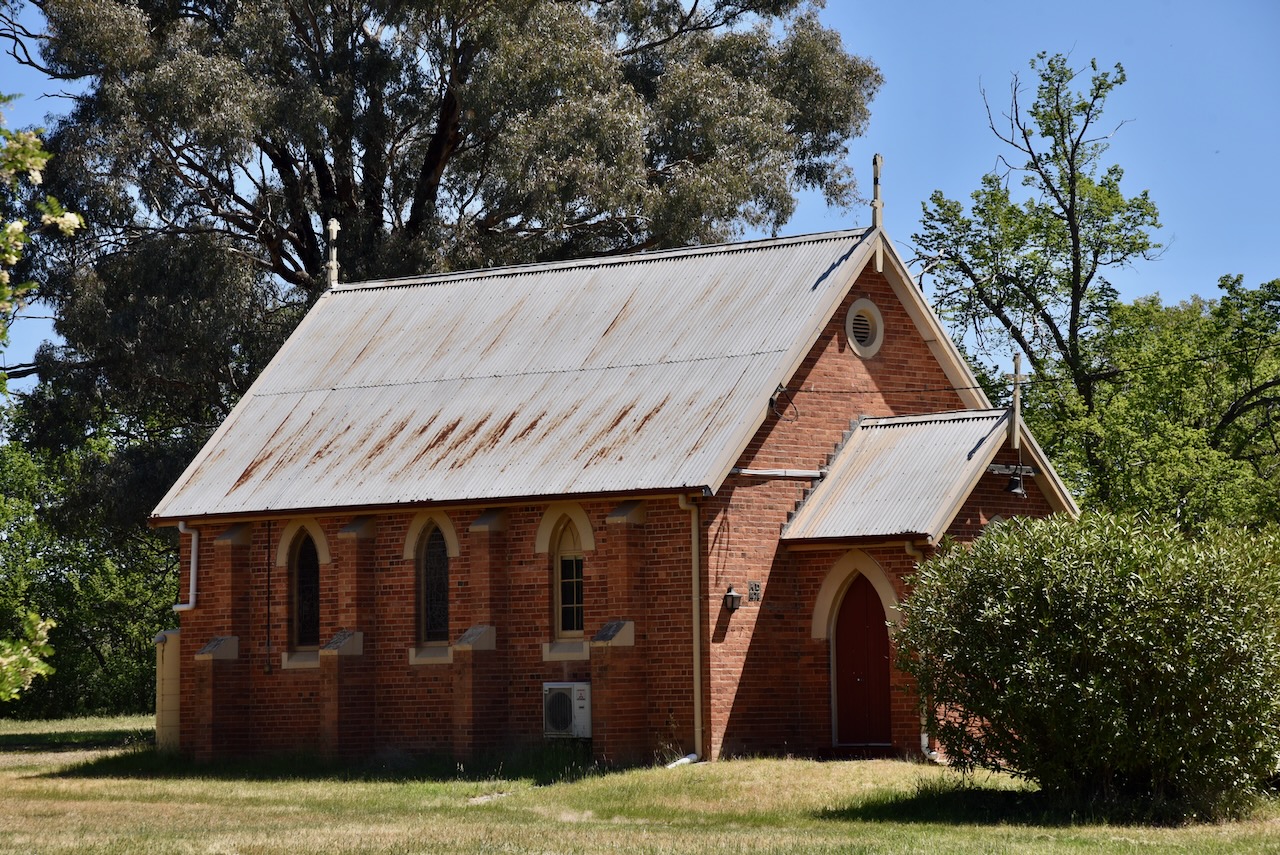
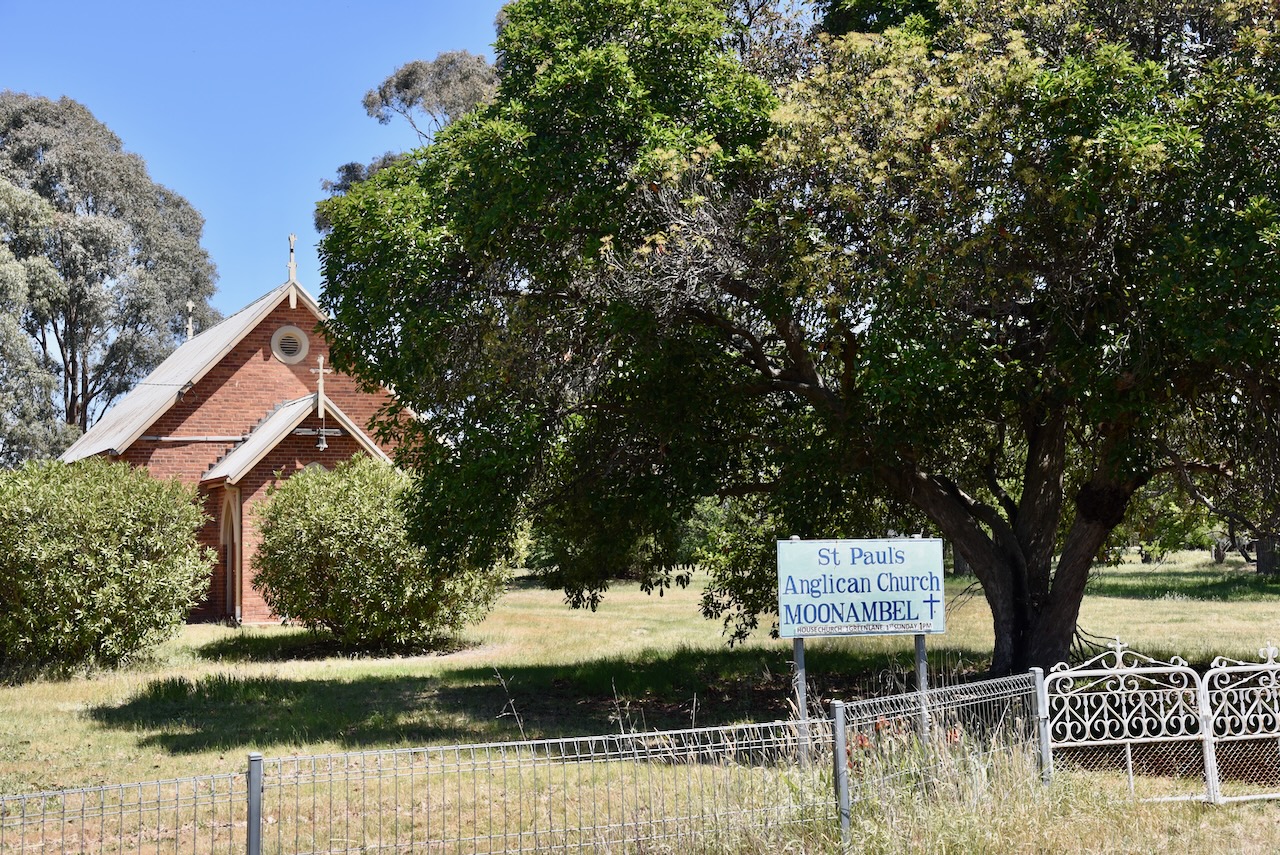
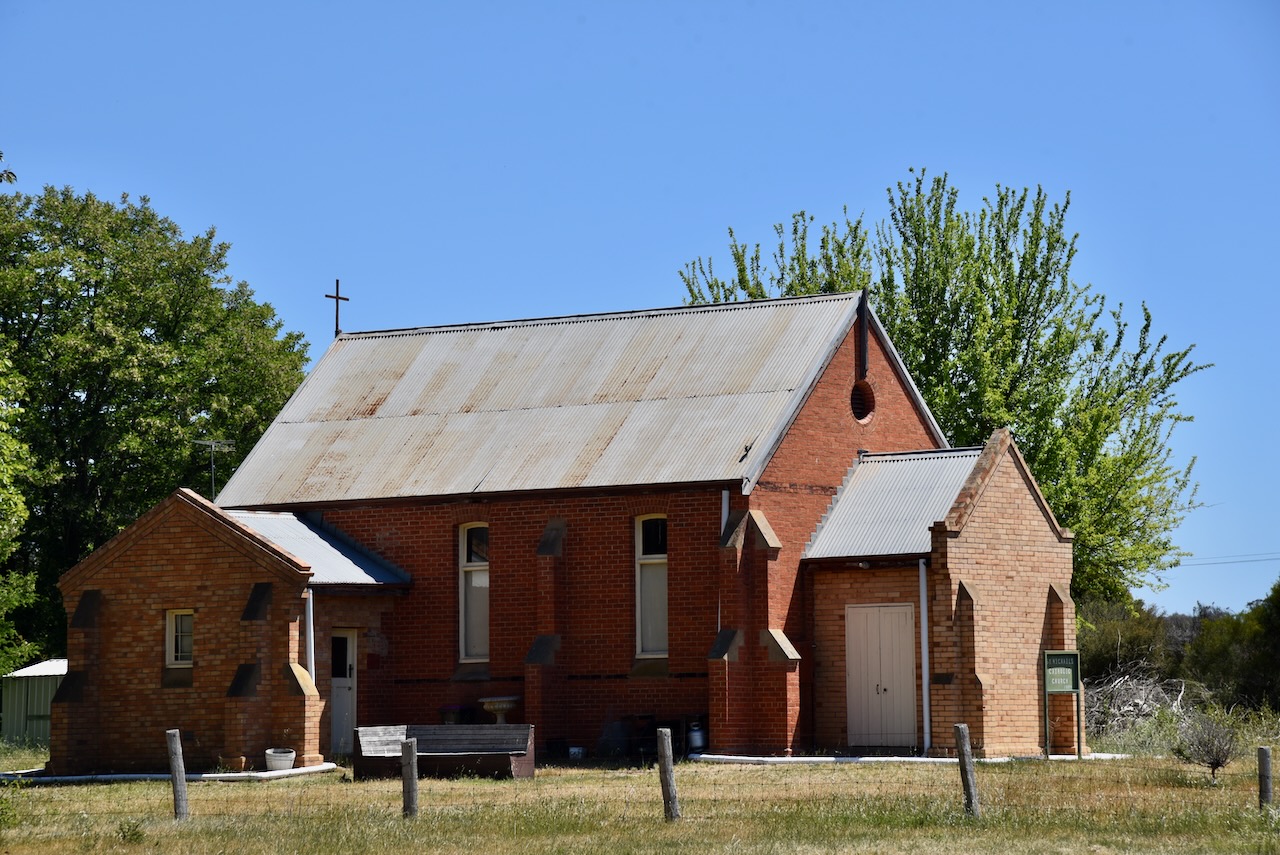
Moonambel contains the Uniting Church, St Paul’s Church of England, built in 1861, and St John the Baptist Catholic Church, built in 1884.
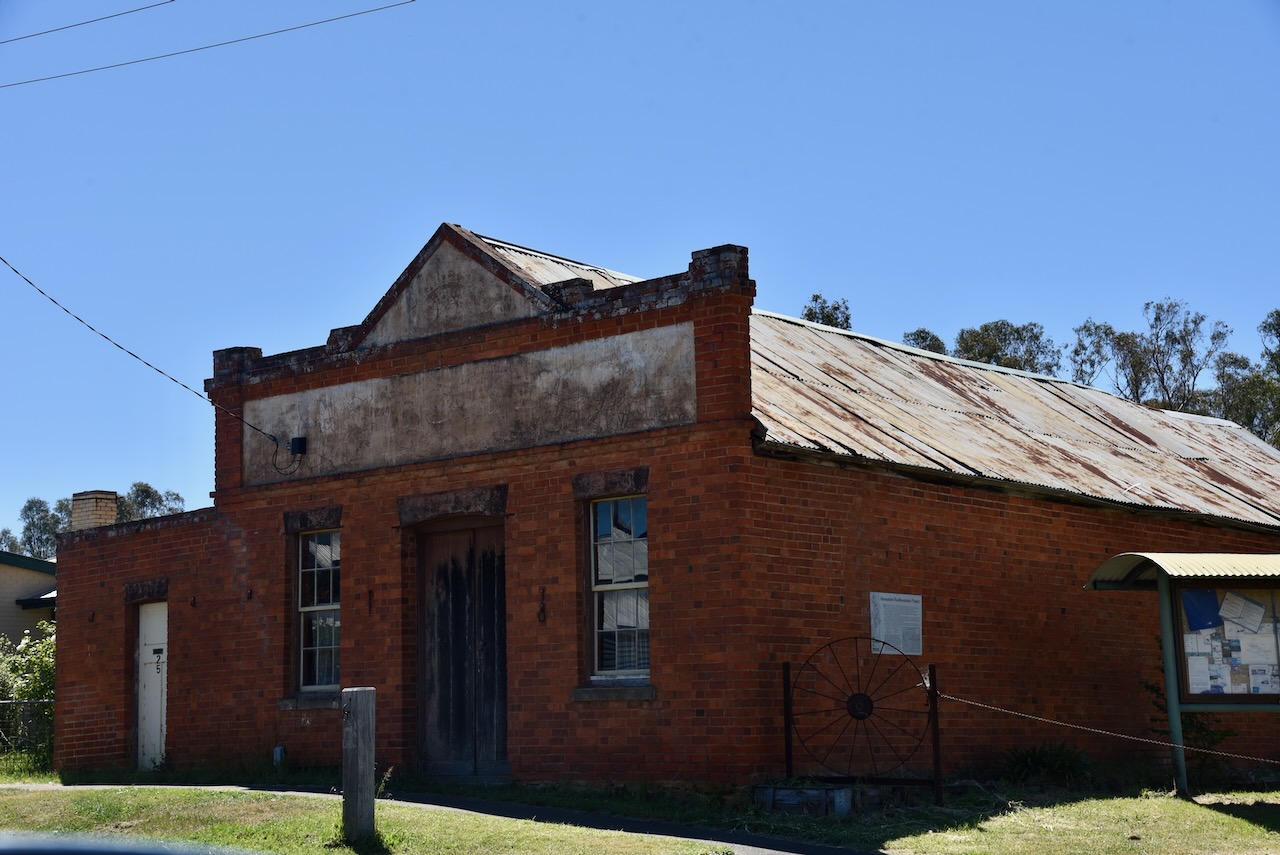
Another building of note is Dickson’s produce store, which was built in 1859.
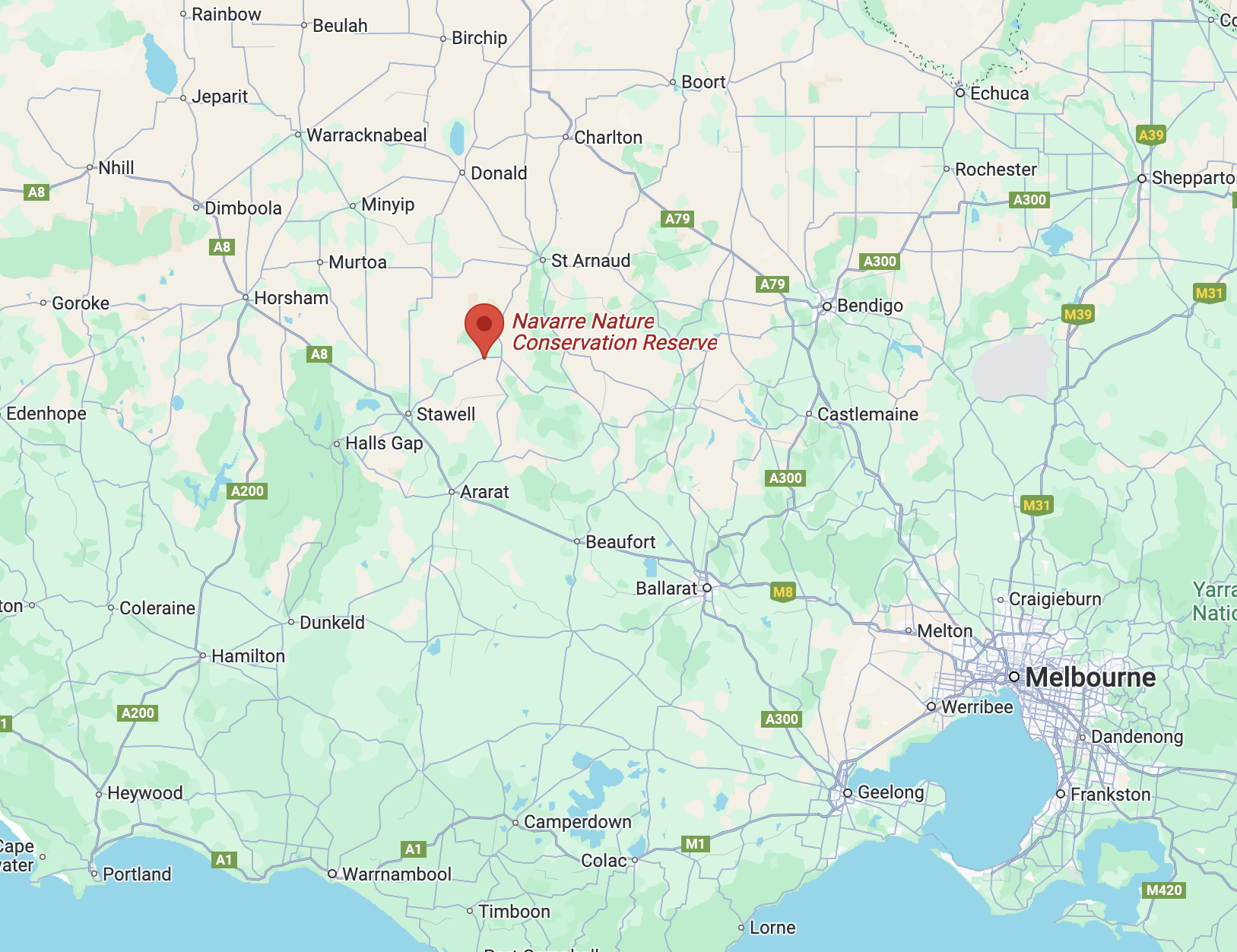
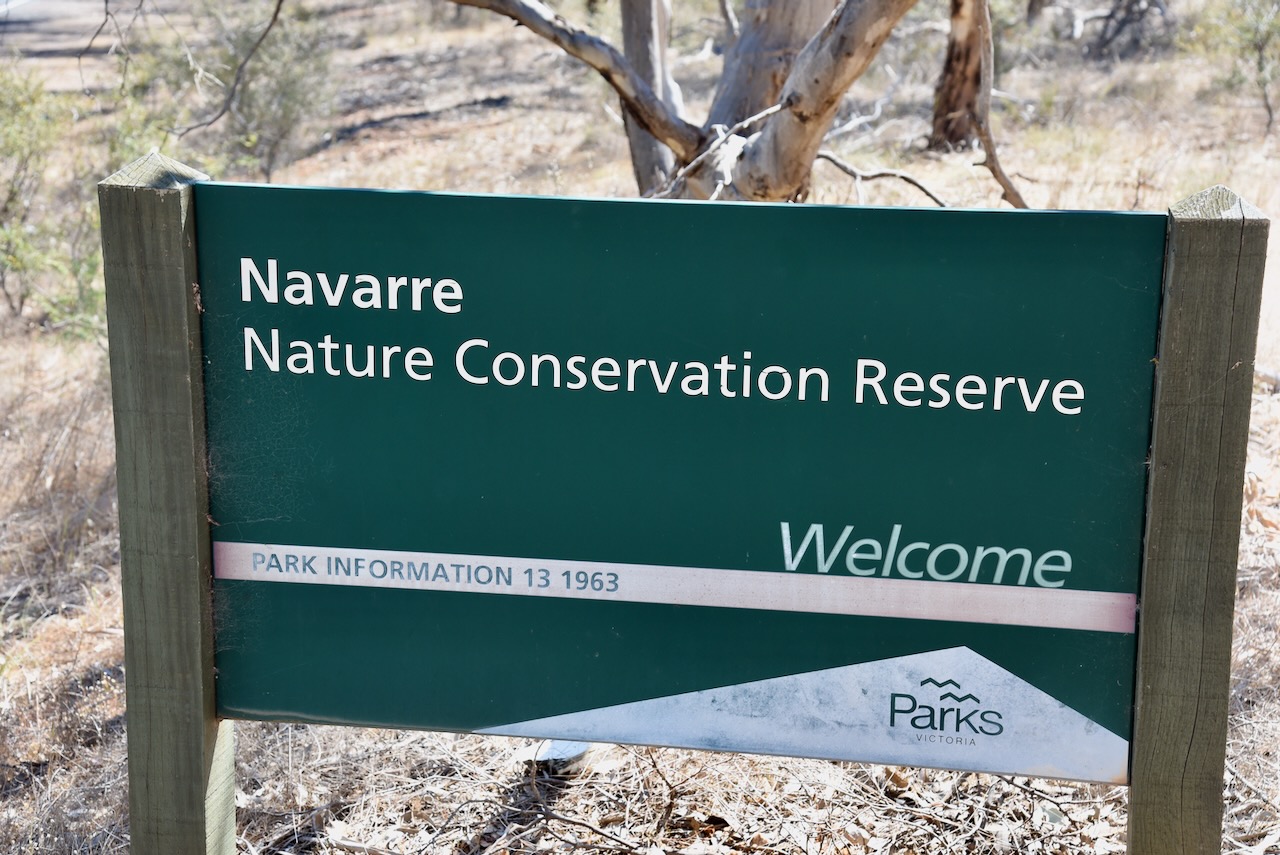
We continued west to our next park activation, the Navarre Nature Conservation Reserve VKFF-2164. The park is located about 232 km northwest of Melbourne, between Stawell and St Arnaud
Above:- Map showing the location of the Navarre Nature Conservation Reserve.
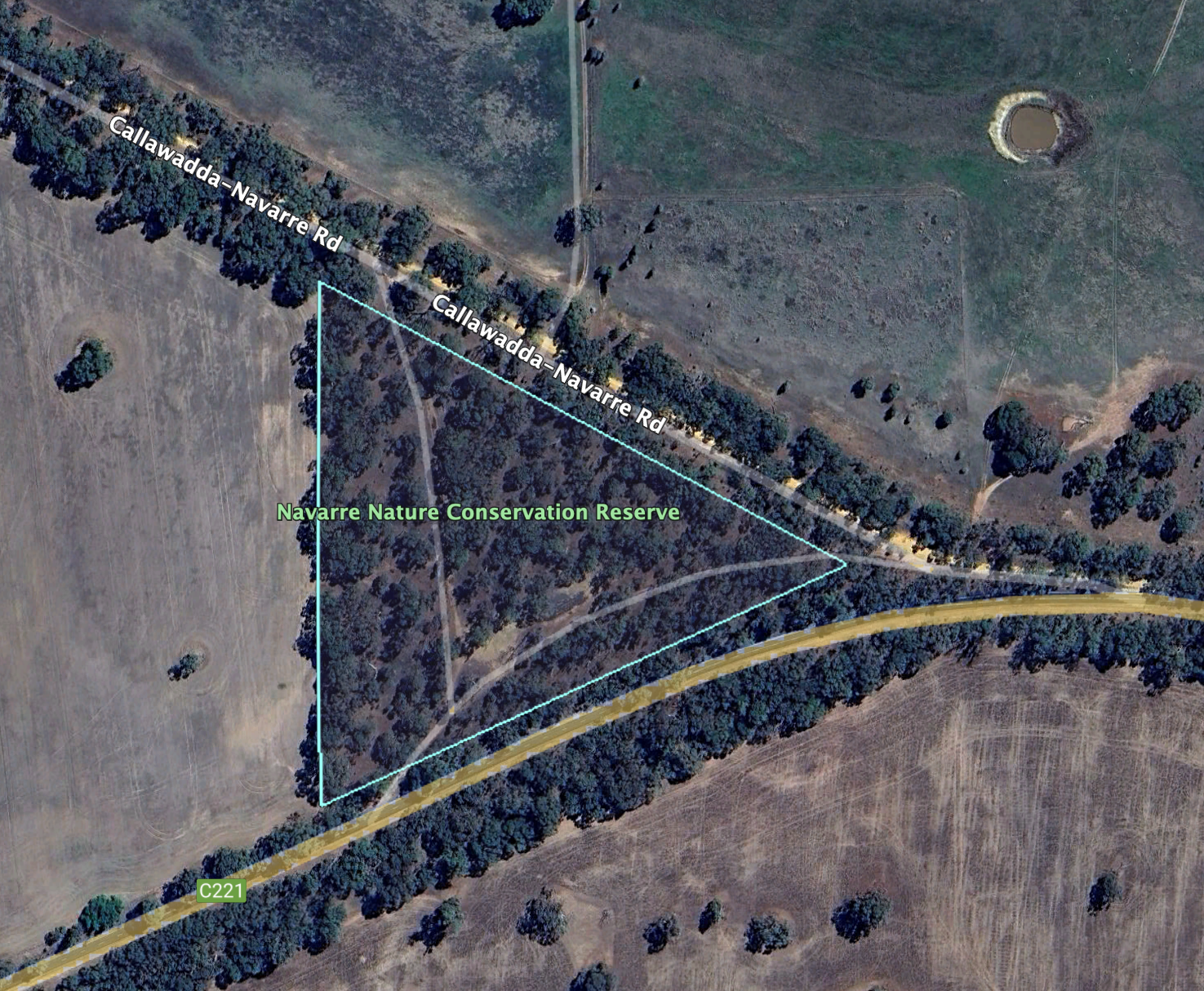
The reserve is located on the corner of Callawadda-Navarre Road and Stawell-Avoca Road.
Above:- An aerial view of the Navarre Nature Conservation Reserve. Image c/o Google Earth.
The Navarre area was part of the Decameron station in the 1840s, owned by James Allan Cameron. Navarre commenced as the site of an inn, which was established by Robert Beazley in 1848 alongside a stock route that was located on the boundary between Decameron run and Woodlands run. In 1850, a second inn was established by Robert Beazley. (Blake 1978) (Filmballarathepburnandbeyond.com.au, 2025)
Gold was discovered at Mount Alexander in 1851, and this saw the two inns become a popular stopping point for the gold miners on their way to the diggings. In 1855, the town was surveyed. Navarre takes its name from the ancient Spanish kingdom in the Pyrenees Mountains. The Navarre Post Office opened in February 1856. On the 13th day of September 1861, the town was officially proclaimed. By 1868, the town had a store, a post office and a school. (Blake 1978) (Filmballarathepburnandbeyond.com.au, 2025)
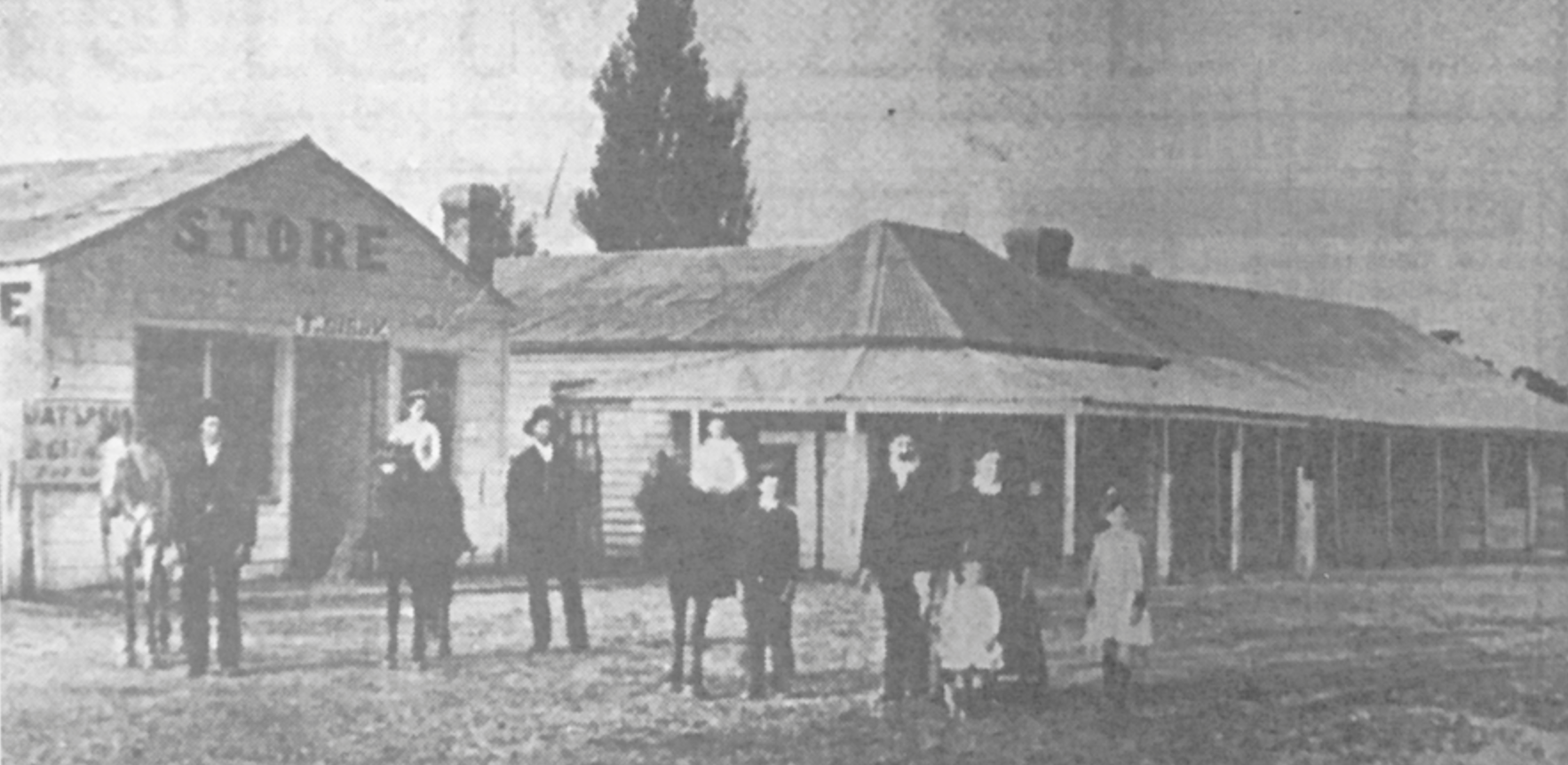
Above:- the old Navarre Inn and general store. Image c/o Victorian Collections.
The reserve is about 4 hectares in size and was established on the 26th day of February 2002. (CAPAD 2022)
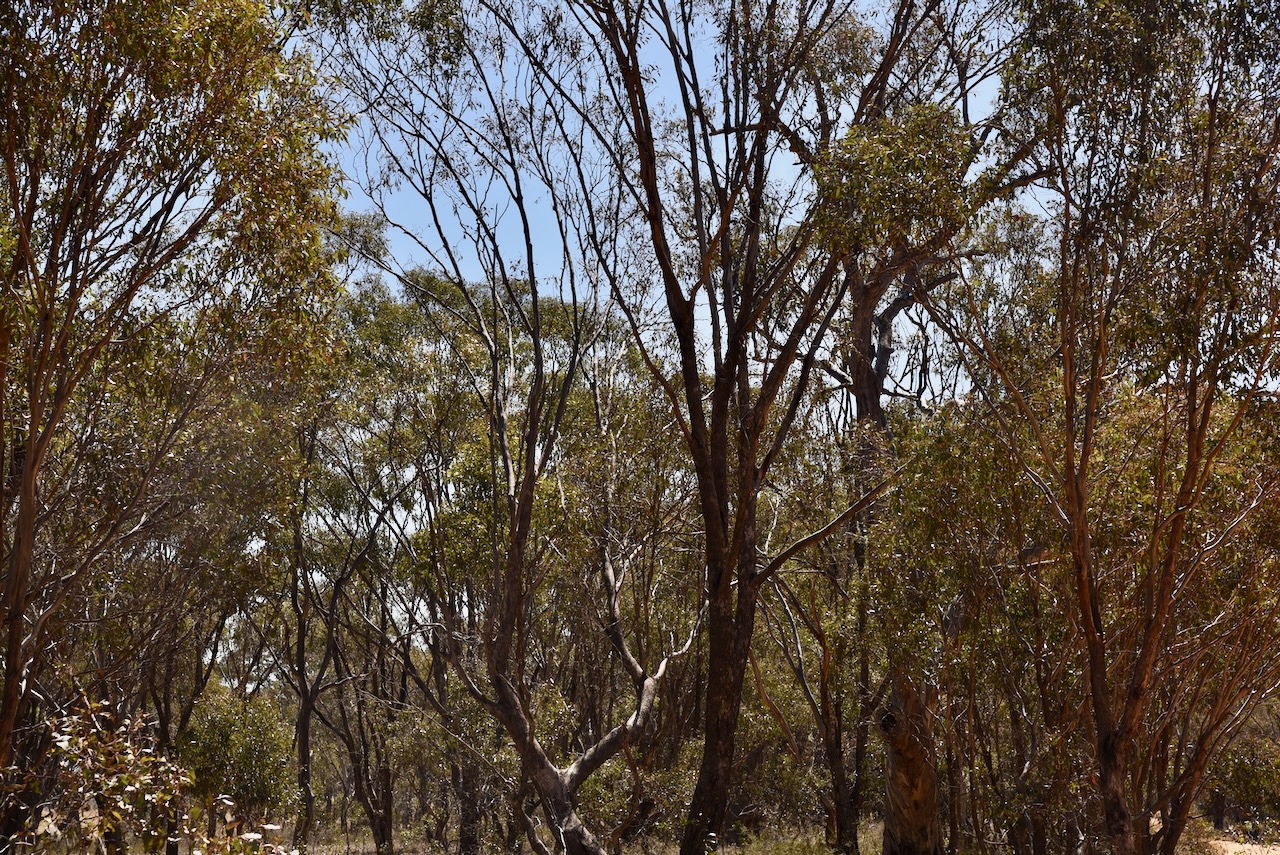
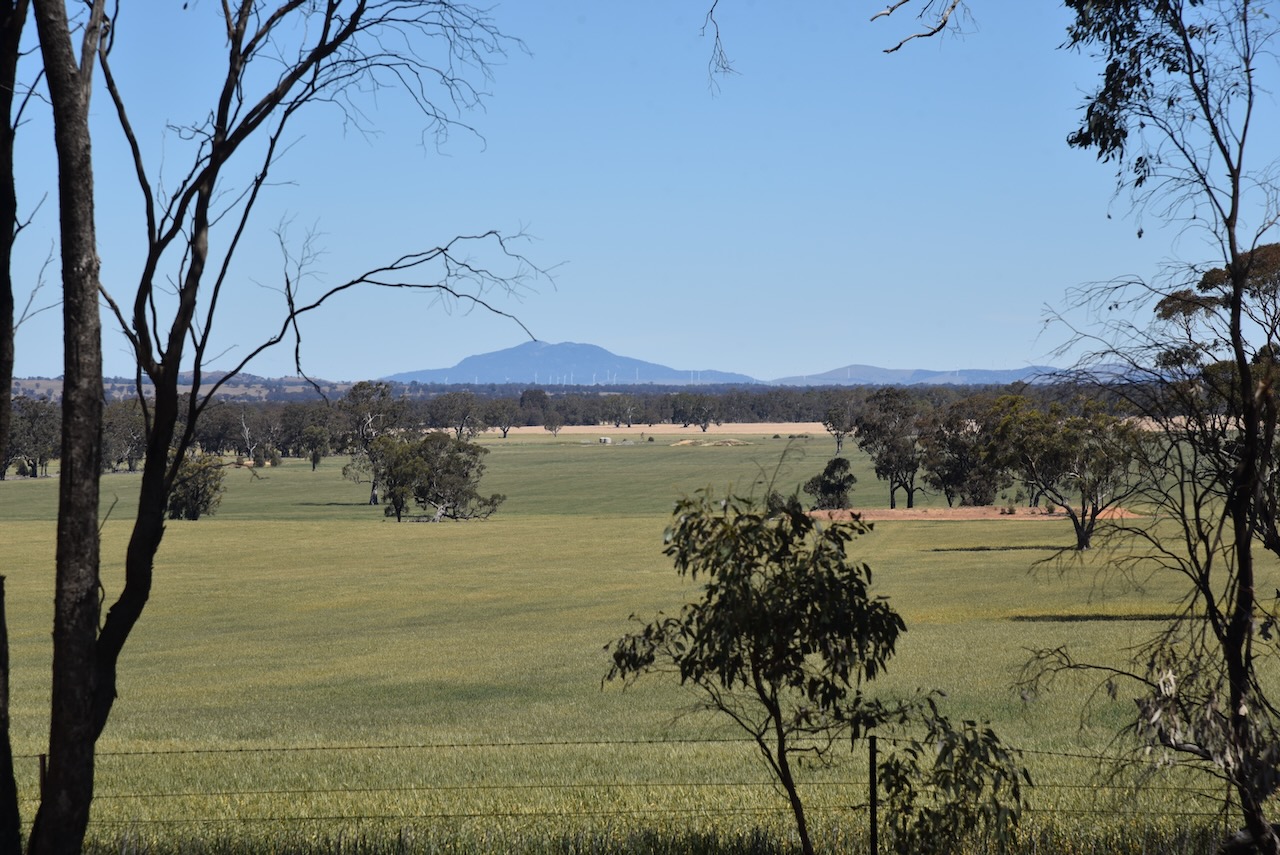
There were some nice views of the Kara Kara National Park and the Grampians National Park from Navarre.
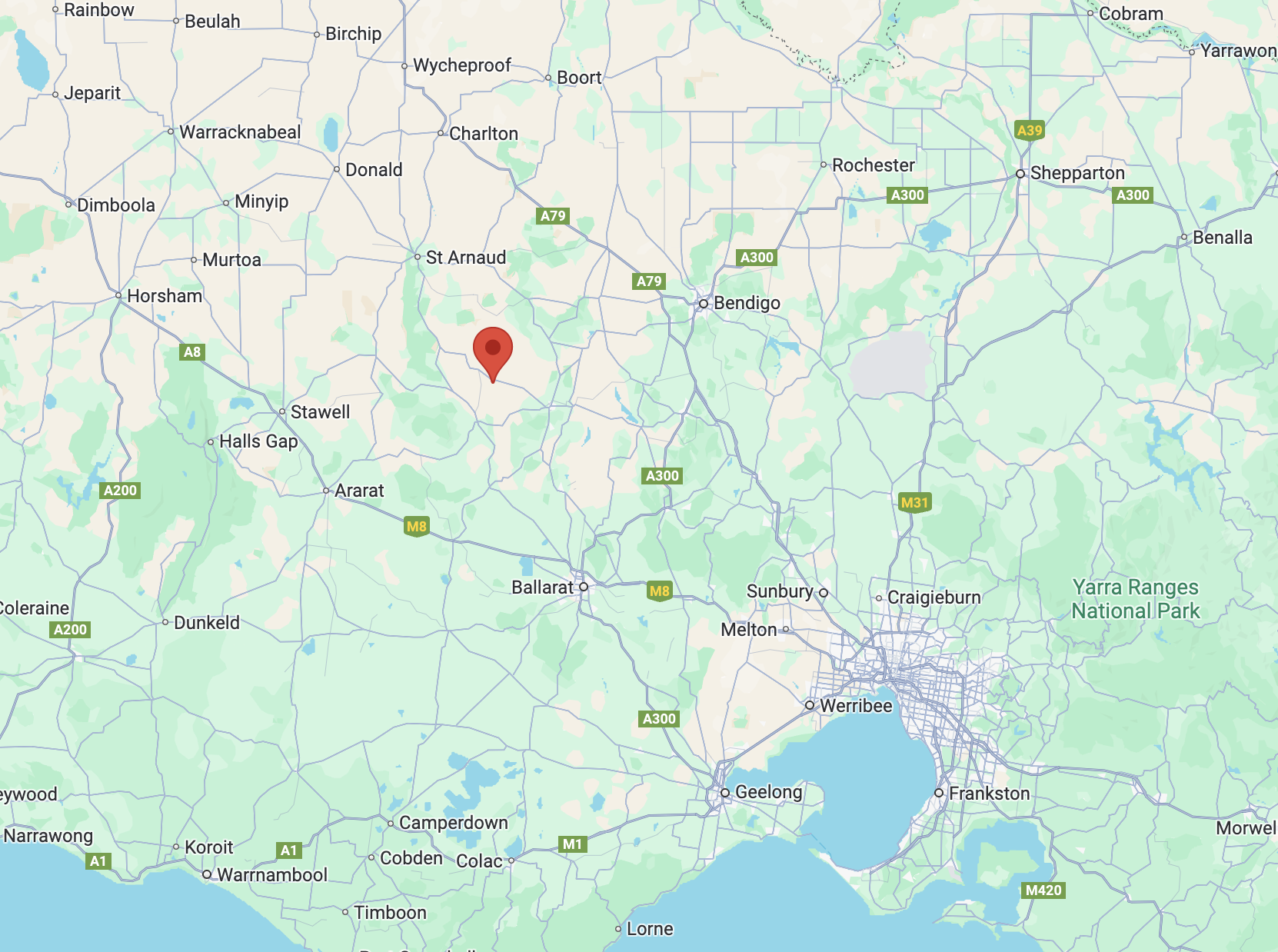
Our next activation for Wednesday, 30th October 2024, was the Rathscar Bushland Reserve VKFF-5760. The park is located about 21 km northwest of Maryborough and about 204 km northwest of Melbourne.
Above:- Map showing the location of the Rathscar Bushland Reserve. Map c/o Google Maps.
Rathescar Station was taken up by Mervyn Archdale in 1841. The name is derived from Irish rath, meaning earthworks or court, and scar, meaning crag or cliff. Rathescar was about 43,000 acres in size and had a grazing capability of 11,000 sheep. (Blake 1978) (Trove 2025)
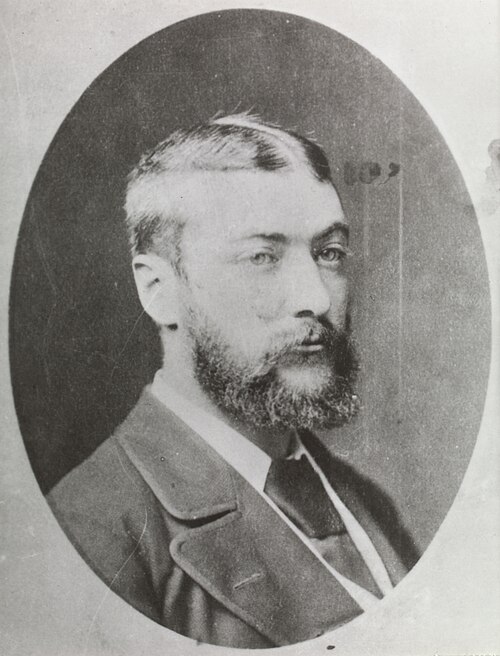
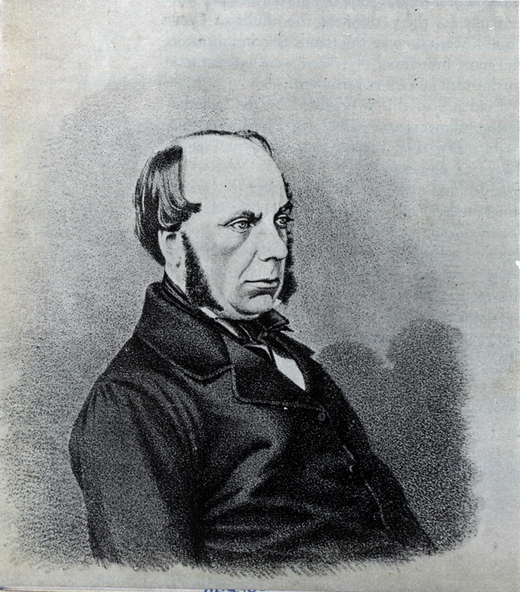
John Leslie Fitzgerald Vesey Foster (b. 1818 d. 1900) acquired part of the Rathescar Run in the 1850s. Foster was a civil servant, landowner and author, who was born in Dublin, Ireland.
Above:- John Leslie Fitzgerald Vesey Foster. Image c/o Victorian Collections.
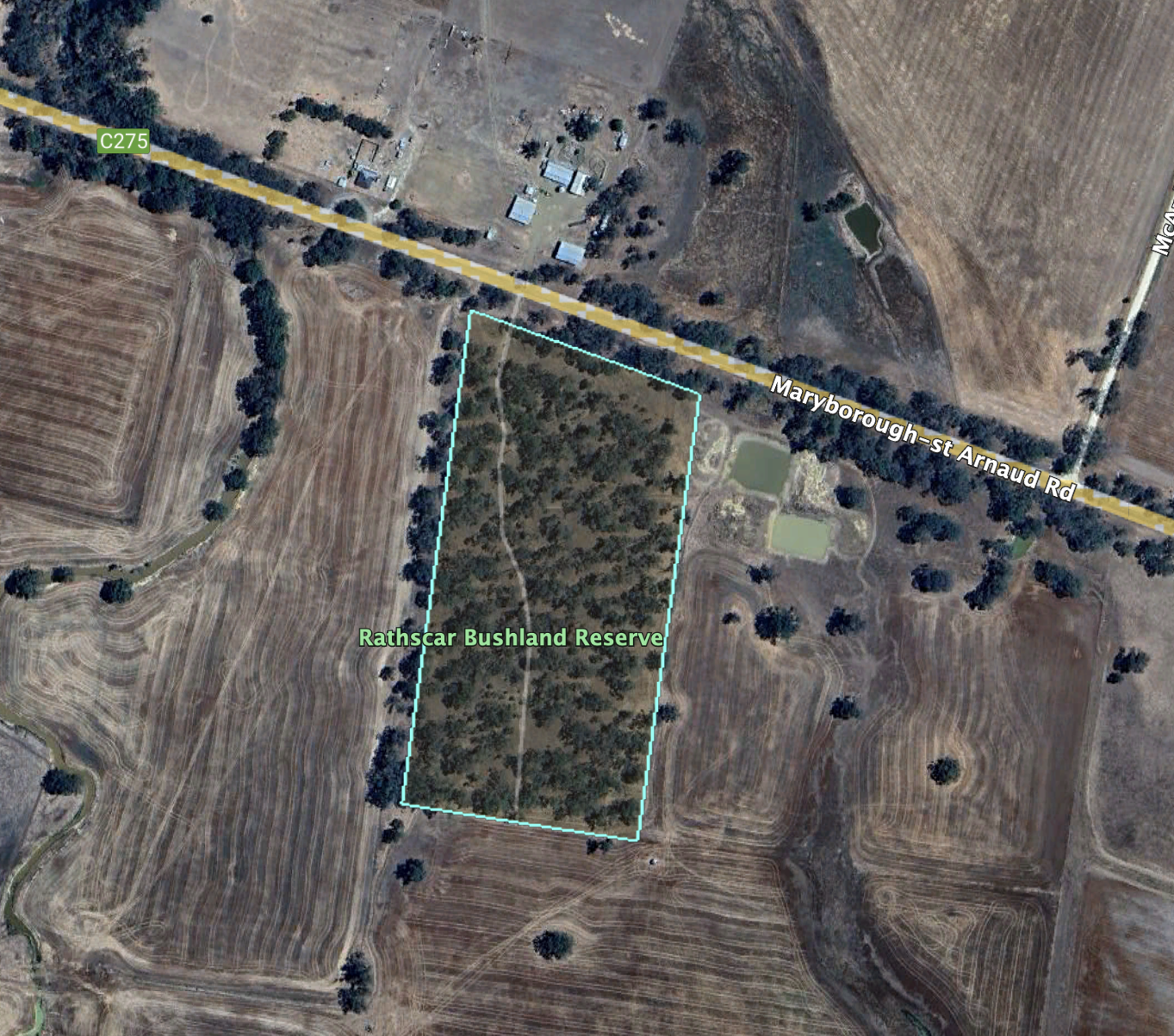
The park is located on the southern side of the Maryborough-St Arnaud Road, near McArdles Lane.
Above:- An aerial view of the Rathscar Bushland Reserve. Image c/o Google Earth.
The reserve is about 8 hectares in size and was established on the 24th day of August 1982. (CAPAD 2022)
We ran the Yaesu FT857, 40 watts, and the 20/40/80m linked dipole for this activation.
Leslie James Blake, 1978, Place Names of Victoria.
Trove. (2025). CLAIMS TO LEASES OF CROWN LANDS BEYOND THE SETTLED DISTRICTS. – WESTERN PORT DISTRICT. – The Sydney Morning Herald (NSW : 1842 – 1954) – 23 Oct 1848. [online] Available at: https://trove.nla.gov.au/newspaper/article/12906207 [Accessed 24 May 2025].





 VK5PAS