I had a family/friends Easter lunch on Saturday, so I did not get into the radio shack until late Saturday afternoon.
I initially was not going to participate in the contest and for the first few hours, Marija VK5MAZ and I just hunted around the bands looking for new DXCC entities/slots. But on Saturday evening when I heard the 20m band so good into North America, I decided to get involved as a participant.
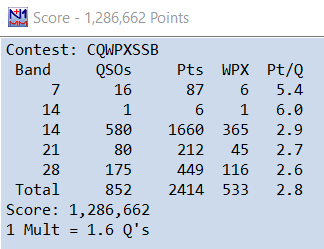
Despite a late start to the contest, I logged 853 QSOs with a claimed score of 1,286,662 points.
I ran N1MM logging during the contest.
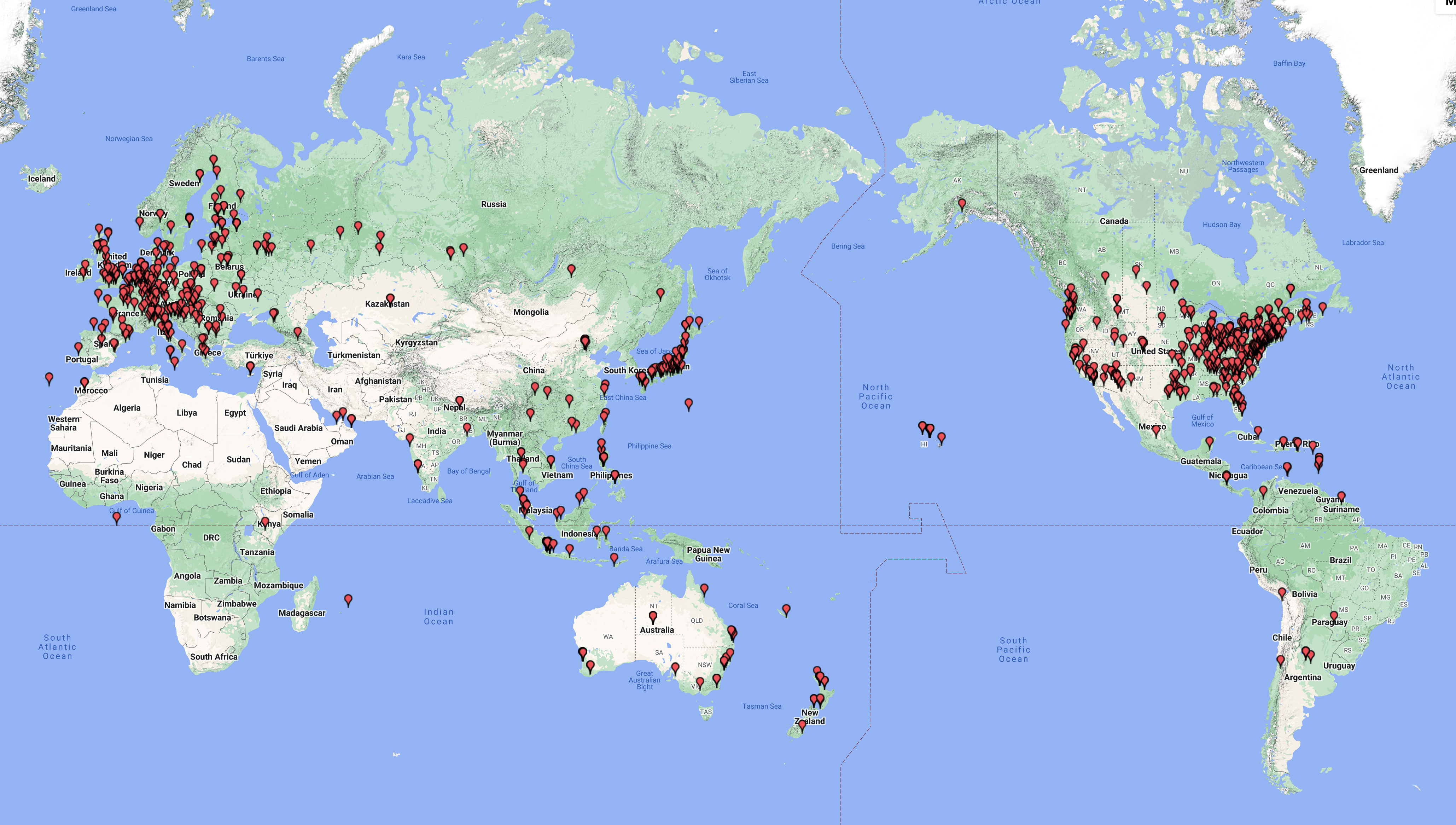
Below is a map of the world showing my QSOs during the contest.
I worked a total of 87 different DXCC entities:
Alaska
Andorra
Argentina
Asiatic Russia
Australia
Austria
Belarus
Belgium
Belize
Bonaire
Bosnia-Herzegovina
Brunei Darussalam
Bulgaria
Canada
Chile
China
Colombia
Costa Rica
Croatia
Cuba
Curacao
Cyprus
Czech Republic
Denmark
Dominican Republic
East Malaysia
England
Estonia
European Russia
Federal Republic of Germany
Finland
France
Georgia
Greece
Hawaii
Hong Kong
Hungary
India
Indonesia
Ireland
Italy
Japan
Kazakhstan
Kenya
Latvia
Liechtenstein
Lithuania
Luxembourg
Madeira Island
Malta
Martinique
Mauritius
Mexico
Morocco
Nepal
Netherlands
New Caledonia
New Zealand
Norway
Ogasawara
Oman
Paraguay
Philippines
Poland
Portugal
Puerto Rico
Romania
Saint Kitts & Nevis
Saint Lucia
Saint Vincent
Scotland
Serbia
Slovak Republic
Slovenia
Spain
Suriname
Sweden
Switzerland
Taiwan
Thailand
Turks & Caicos Islands
Ukraine
United Arab Emirates
United States
Vietnam
Wales
West Malaysia
The majority of my QSOs were on the 20m band.
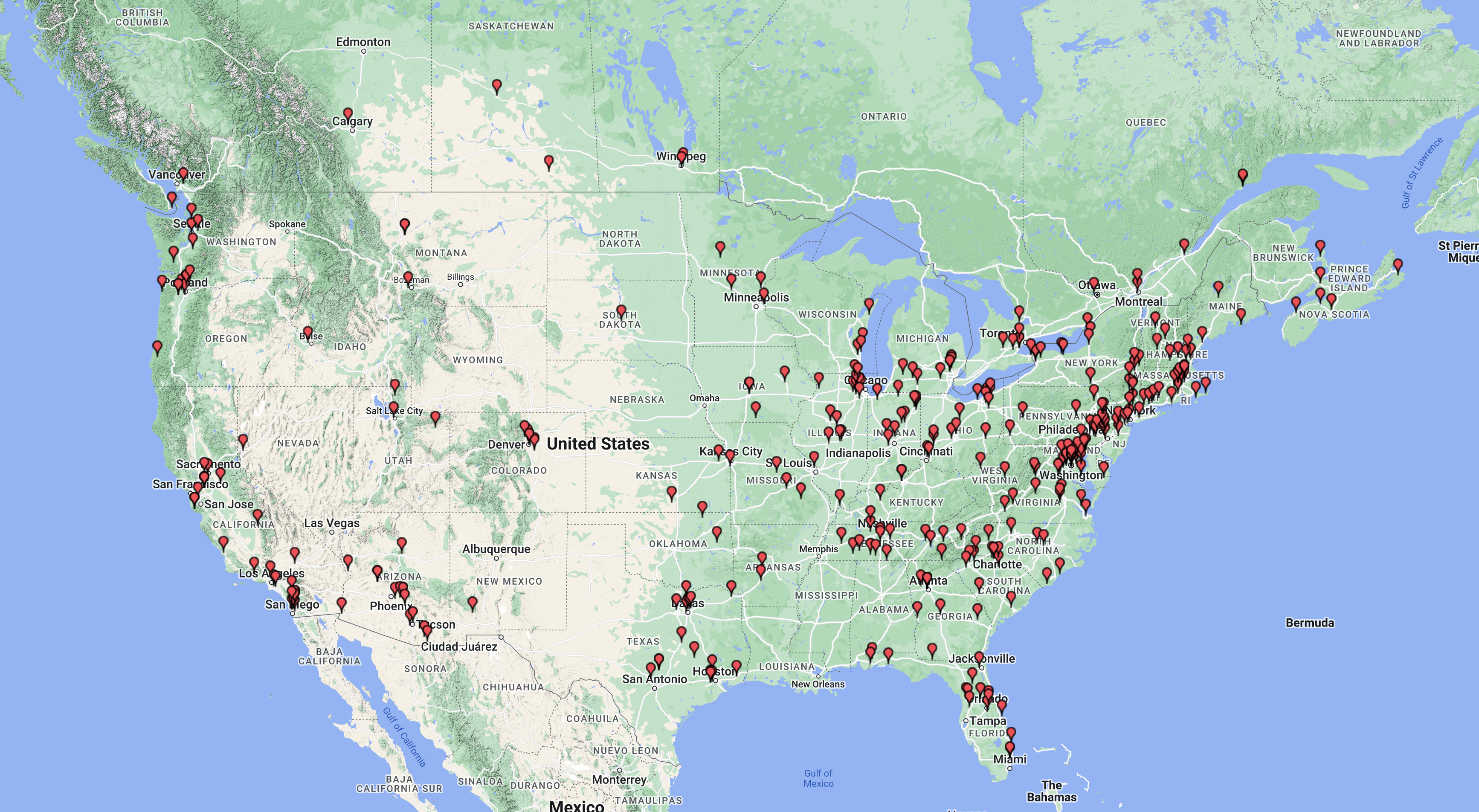
Short path 20m conditions on Saturday night into the North America, and again on Sunday night, were excellent. The map below shows my contacts into the USA & Canada.
Long path propagation on 20m into Europe/UK was very good on Sunday afternoon. The map below shows my contacts into Europe & the UK.
One of the interesting contacts I made during the contest was with Nate N7NWT who was in the cockpit of an Airbus A321 flying over Louisiana, USA.
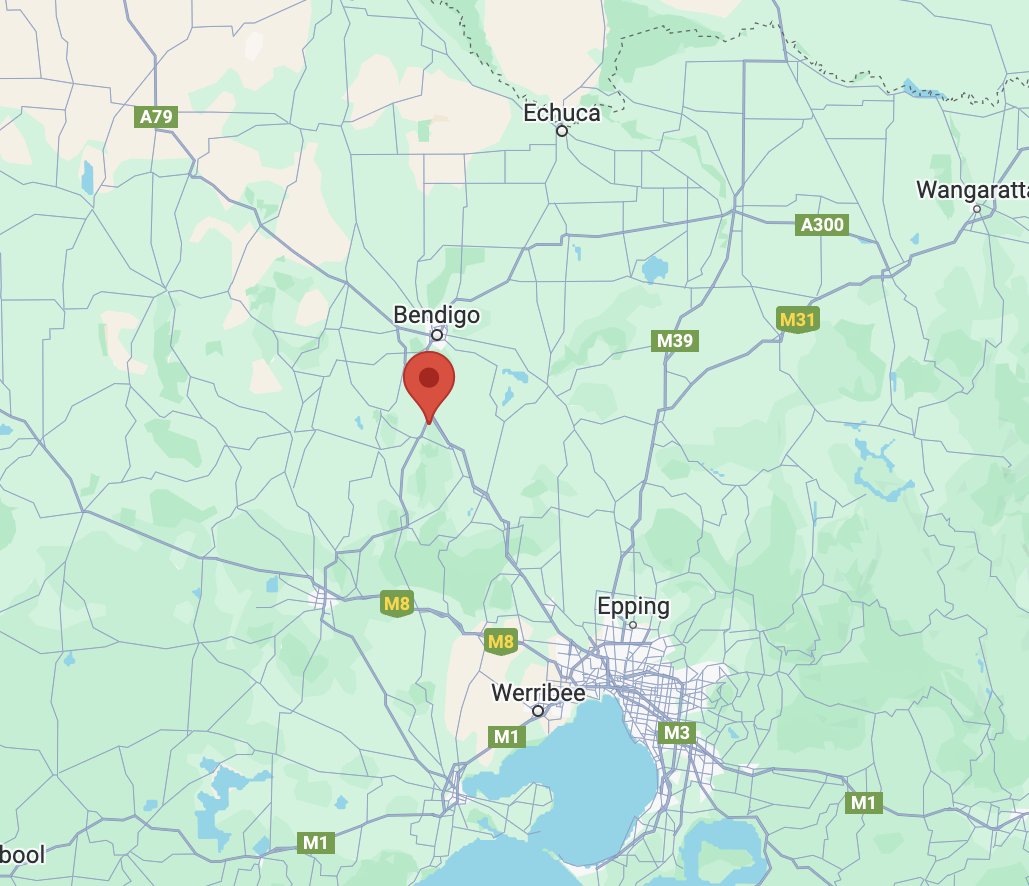
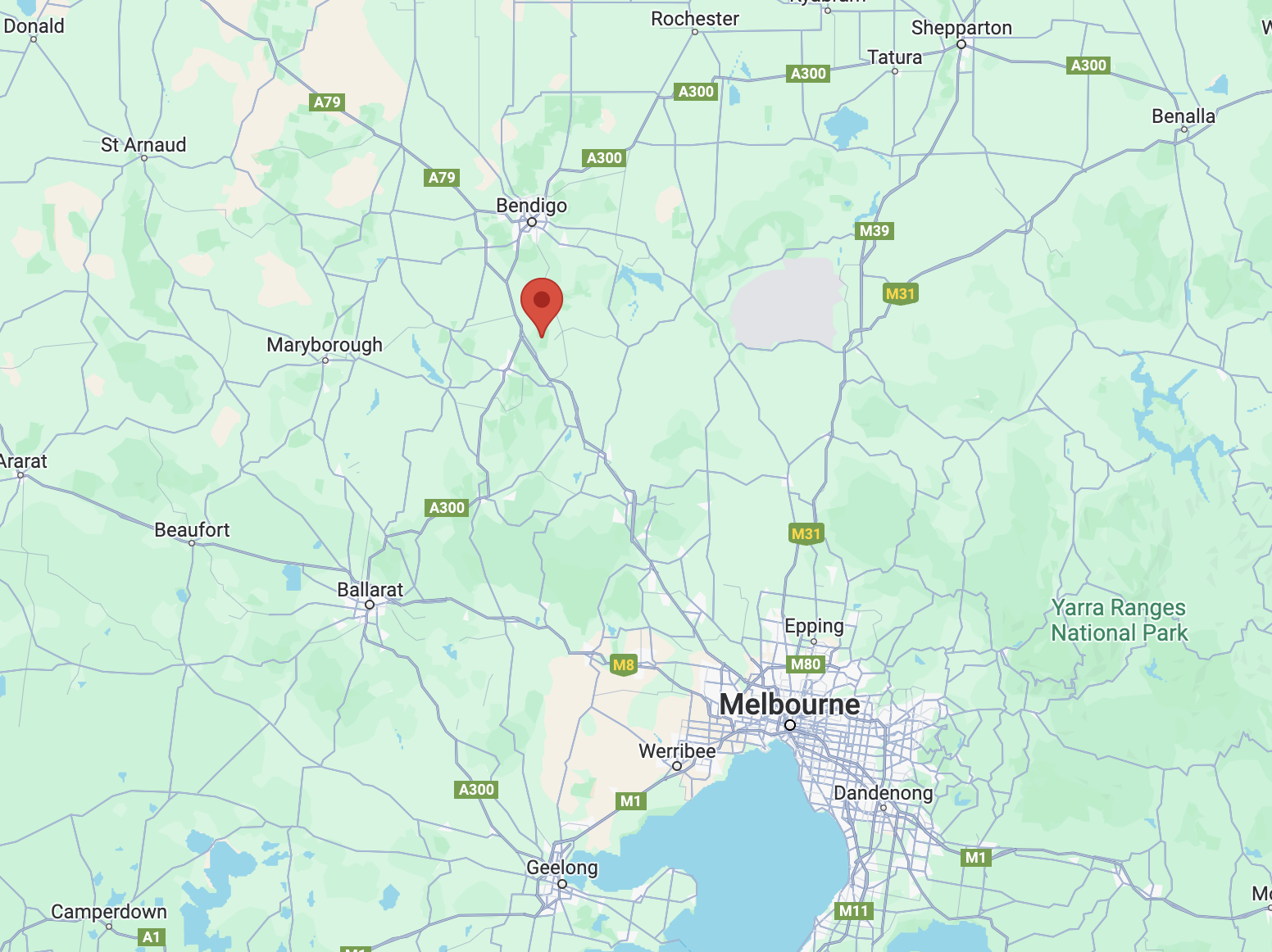
Our next activation for Saturday 25th November 2023 was the Harcourt Bushland Reserve VKFF-4295. The park is located about 9km northeast of Castlemaine and about 125 km northwest of Melbourne.
Above:- Map showing the location of the Harcourt Bushland Reserve. Map c/o Google Maps.
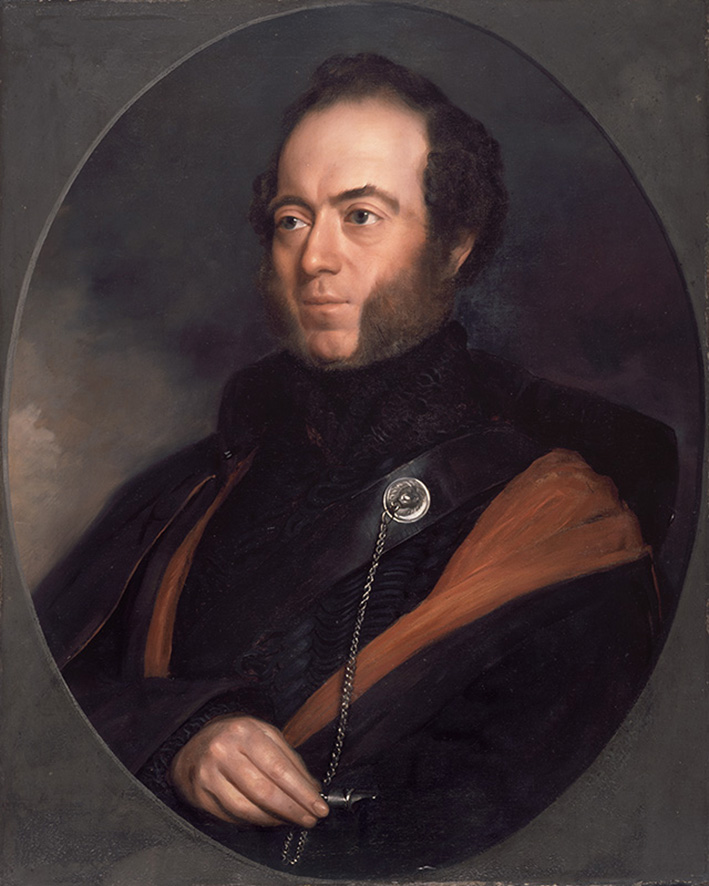
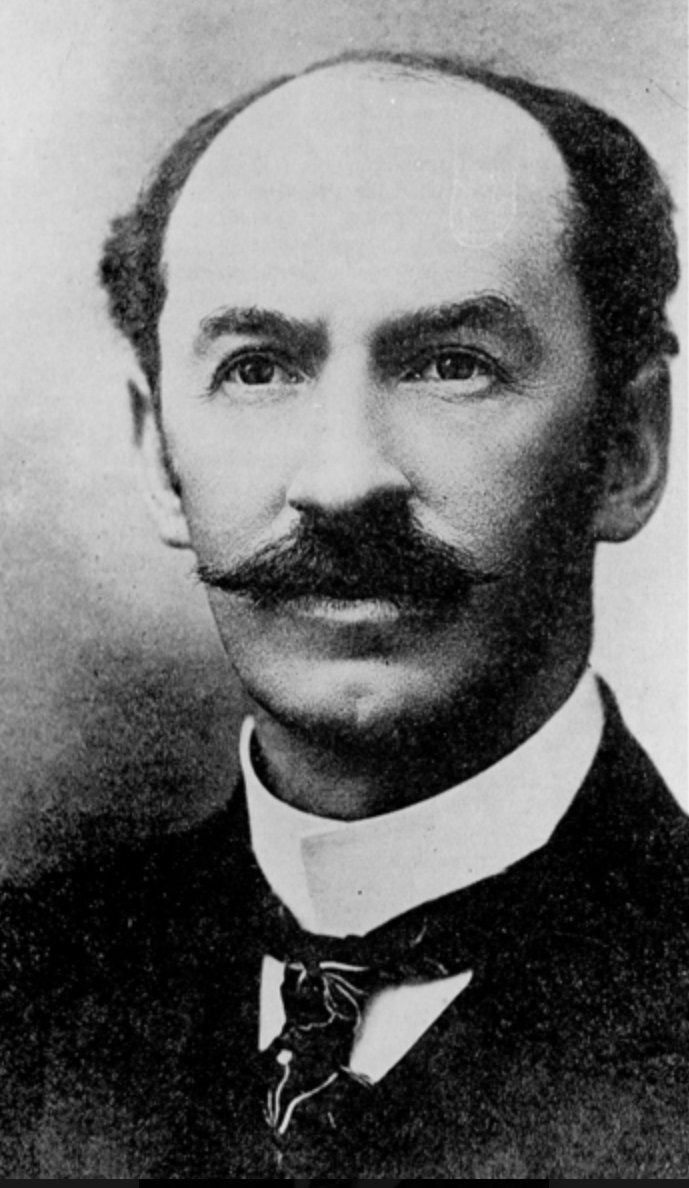
The first European settler in the Harcourt district was Dr WIlliam Barker who ran the Mount Alexander pastoral run. He built a homestead alongside Barkers Creek at Harcourt North. The township of Harcourt was surveyed in 1853 at the junction of the roads to Bendigo and Castlemaine, near Barkers Creek. The town was named in honour of Sir William George Granville Venables Vernon Harcourt (b. 1827. d. 1904), English Chancellor of the Exchequer.
Above:- Sir William Harcourt. Image c/o Wikipedia
A school was opened at Harcourt in 1859, followed by a railway station in 1863 when the railway line was opened between Kyneton and Bendigo. A Methodist church was opened in 1863. (Victorian Places 2024)
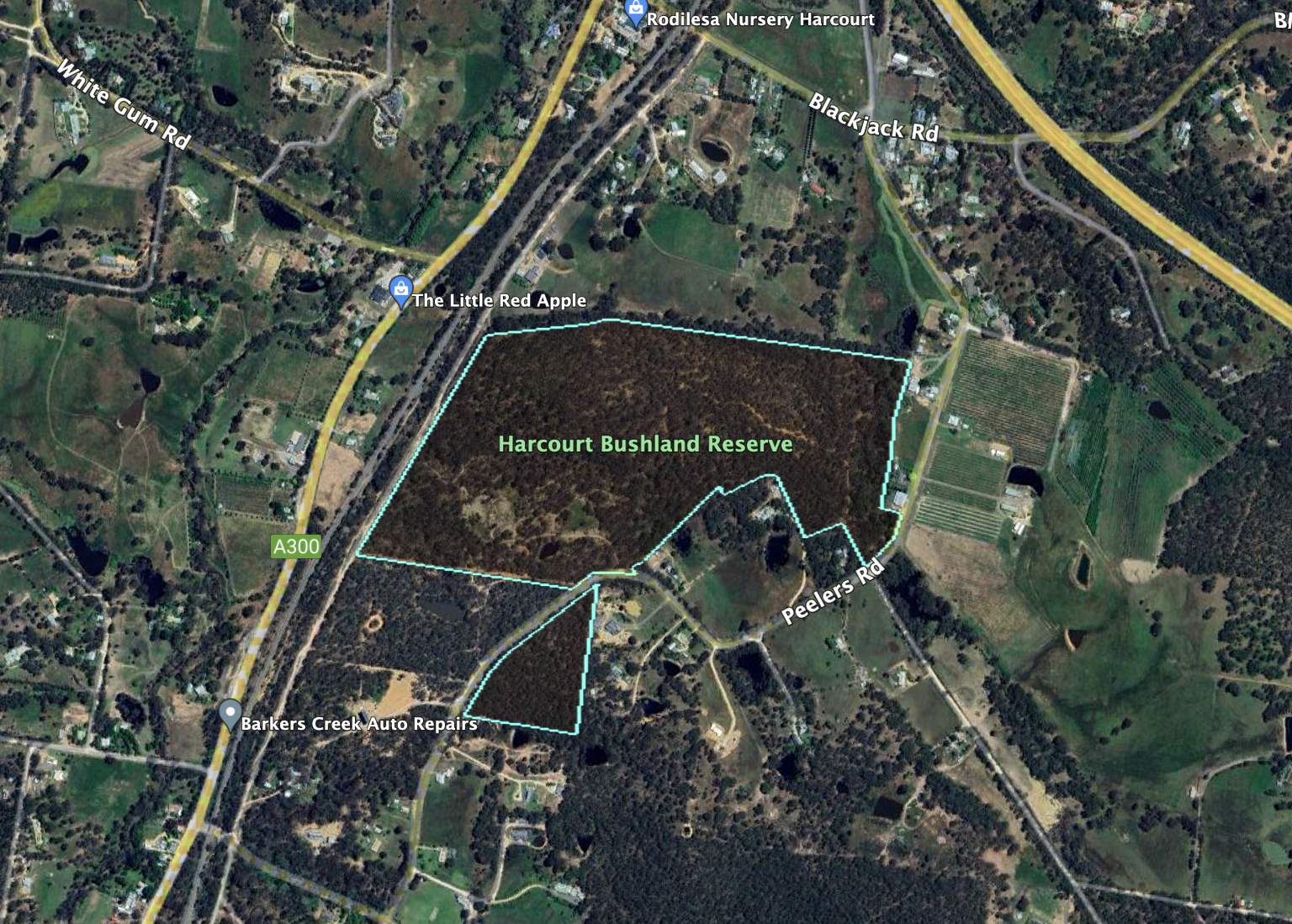
The Harcourt Bushland Reserve is also referred to as Barkers Creek Bushland Reserve. The reserve is about 36 hectares in size and was established on the 26th day of February 2002. (CAPAD 2022)
Above:- An aerial view of the Harcourt Bushland Reserve. Image c/o Google Earth.
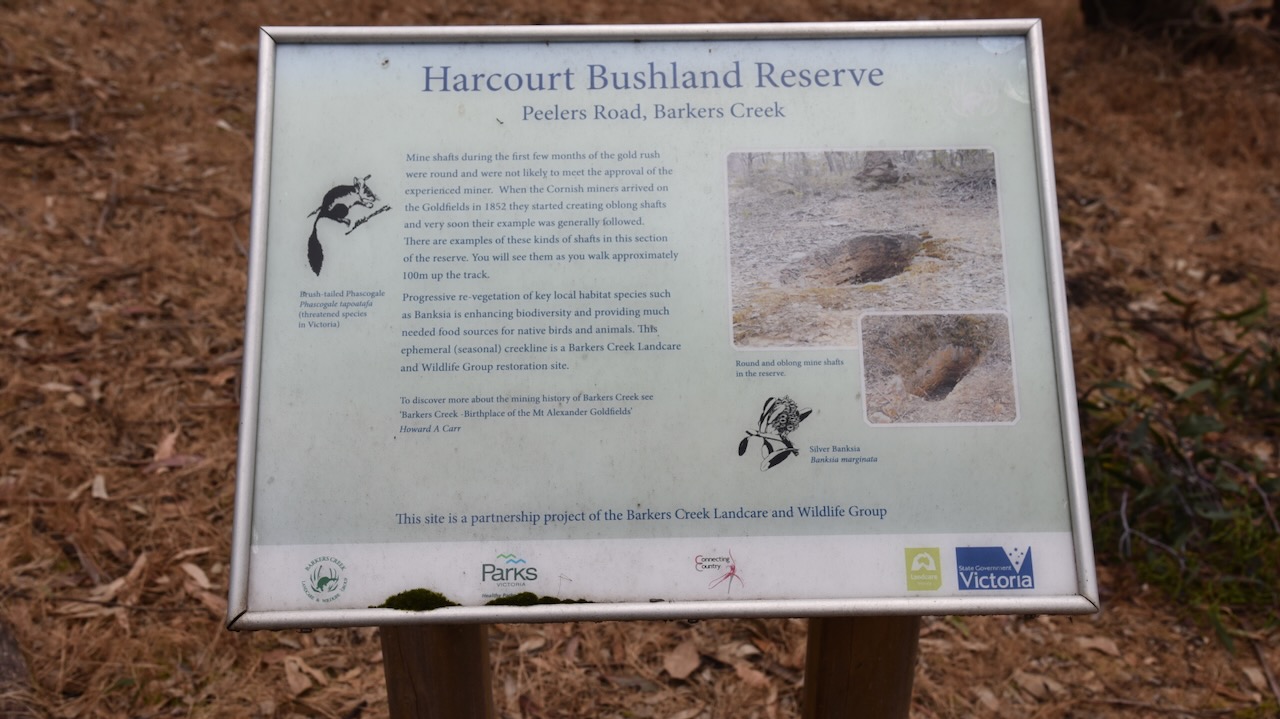
Several mineshafts can be found in the reserve from the 1850 gold rush period. The original mineshafts were round. When the Cornish miners arrived at the goldfields in 1852, they commenced creating oblong shafts, and their example was followed by subsequent miners.
We ran the Yaesu FT857, 40 watts, and the 20/40/80m linked dipole for this activation. I used the special call of VI10VKFF. Band conditions were quite good apart from some loud static crashes on 40m.
It was now Saturday 25th November 2023, and day one of the 2023 VKFF Activation Weekend for the World Wide Flora Fauna (WWFF) program. The VKFF Activation Weekend was initiated in 2015. The weekend is designed to promote the World Wide Flora Fauna (WWFF) program in Australia, by encouraging amateurs to get out into the field and operate portable from a qualifying VKFF reference area. It is generally a very popular weekend.
Our first activation of the day was the Mount Alexander Regional Park VKFF-0973 and the SOTA summit Mount Alexander VK3/ VN-016.
The park is about 19 km (by road) northeast of Castlemaine and about 125 km northwest of Melbourne.
Above:- Map showing the location of Mount Alexander. Map c/o Google Maps.
The Mount Alexander region is the traditional home of the Jaara Jaara aboriginal people. The summit of Mount Alexander is known as Lanjanuc or Lenganook and was the location of a sacred ceremonial ground and was used as an outlook due to its high vantage point. (Mt Alexander Regional Park Visitor Guide 2010)
The first European to climb Mount Alexander was the explorer Major Thomas Livingstone Mitchell (b. 1792. d. 1855). He conquered the mountain on the 28th day of September 1836 during his Australia Felix journey.
Above:- Major Thomas Mitchell. Image c/o Wikipedia.
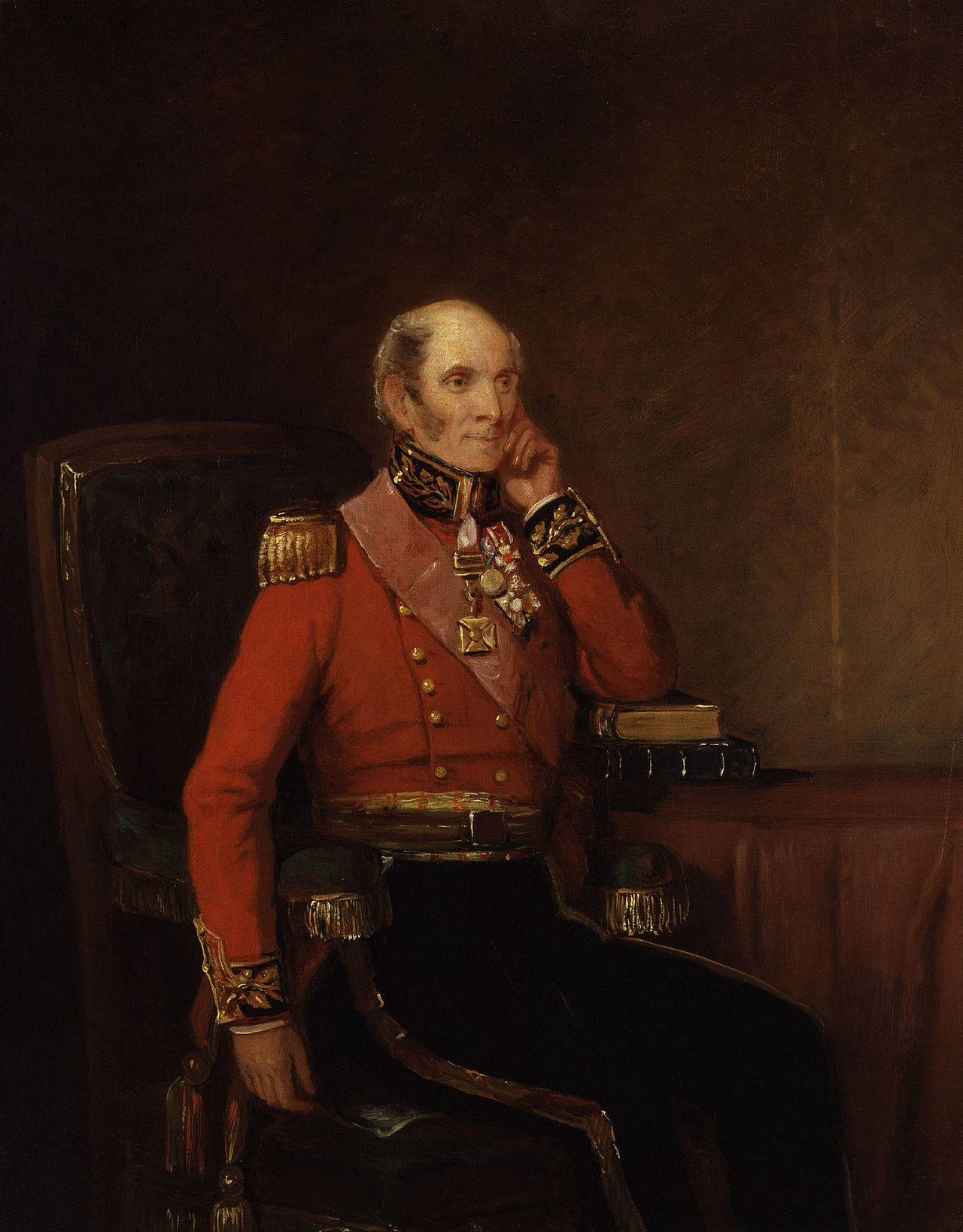
Mitchell initially named the mountain Mount Byng in honour of John Byng, 1st Earl of Strafford, a Field Marshal during the Peninsular War. (Victorian Places 2024)
Above:- John Byng. Image c/o Wikipedia.
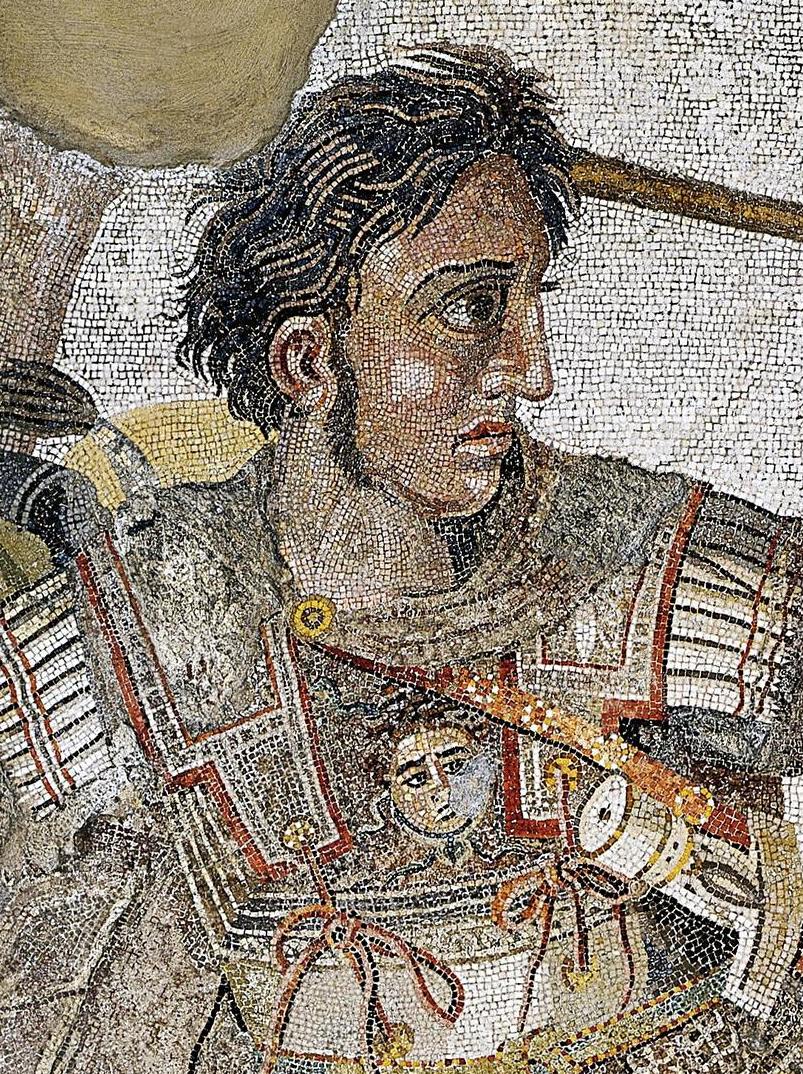
The mountain’s name was changed to Mount Alexander in honour of Alexander the Great, emperor of ancient Macedonia. (Victorian Places 2024)
Above:- Alexander the Great. Image c/o Wikipedia.
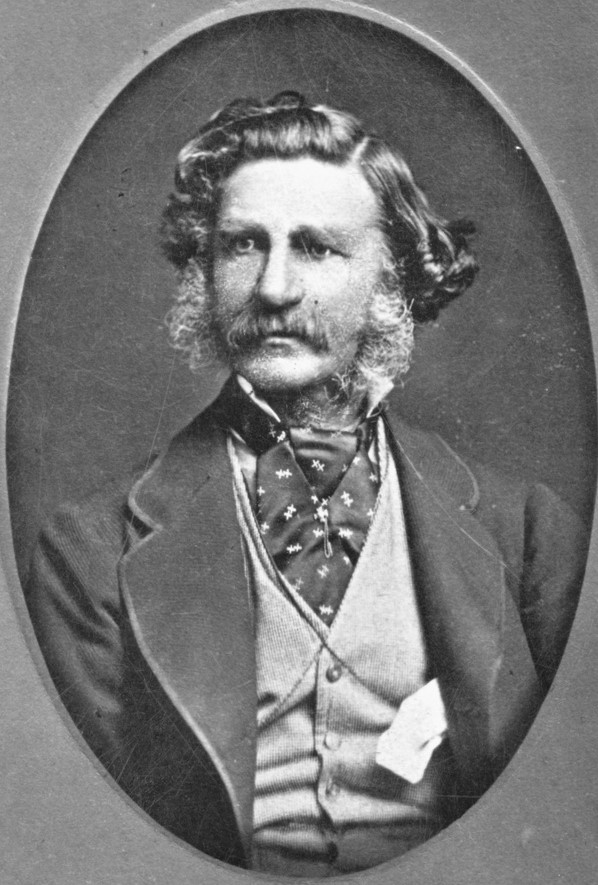
A few years later, on the 8th day of February 1838, explorer Edward John Eyre (b. 1815. d. 1901), camped on the northwest slope of Mount Alexander. (Waterhouse)
Above:- Edward John Eyre. Image c/o Wikipedia.
In 1851 gold was discovered close to Mount Alexander and tales that the area was the new ‘Eldorado’ swept across the world. The goldfields became known as Forest Creek or Castlemaine and they became the richest shallow alluvial goldfields in the world and one of the largest goldrush areas of the 1800s. (Mt Alexander Regional Park Visitor Guide 2010)
Gold was first discovered on the 20th day of July 1851 at Specimen Gully on Barkers Creek by a shepherd, Christopher Thomas Peters. He worked for Dr. William Barker on his Mount Alexander Run. When the gold was shown, Peters was mocked as it was believed the gold was ‘fool’s gold’ and it was thrown away. Dr. Barker did not want his workers to abandon his sheep.
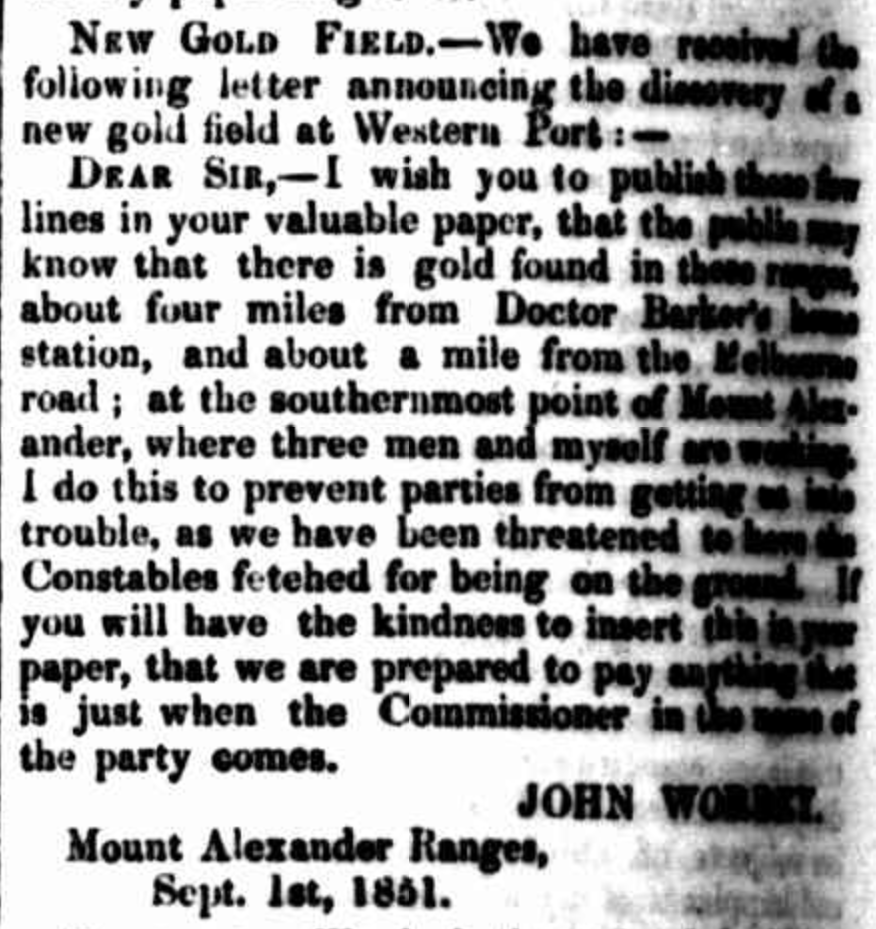
In September 1851 the workers sent a letter to The Argus declaring the ‘new goldfield’.
Above:- Letter from The Argus, Melbourne, Mon 8 Sep 1851. Image c/o Trove.
Within a month, about 8,000 miners were working on the alluvial gold fields at Mount Alexander. By the end of 1851, an estimated 25,000 diggers were working on the gold fields.
Above:- The Mount Alexander Gold diggings. Image c/o State Library Victoria.
During the 1850s a gold escort route was established by Alexander Tolmer (b. 1815. d. 1890) between Mount Alexander and Adelaide, South Australia. Tolmer would later become the Commissioner of Police in South Australia.
Above:- Alexander Tolmer. Image c/o Wikipedia.
The first escort undertaken contained about 270 kg of gold and arrived in Adelaide on the 20th day of March 1852. The second escort contained even more gold, about 730 kg of gold.
Above:- Gold escort 1852. Image c/o Wikipedia.
About 110,00 kg of gold was extracted from the Mount Alexander goldfields in the first 2 years of the gold rush.
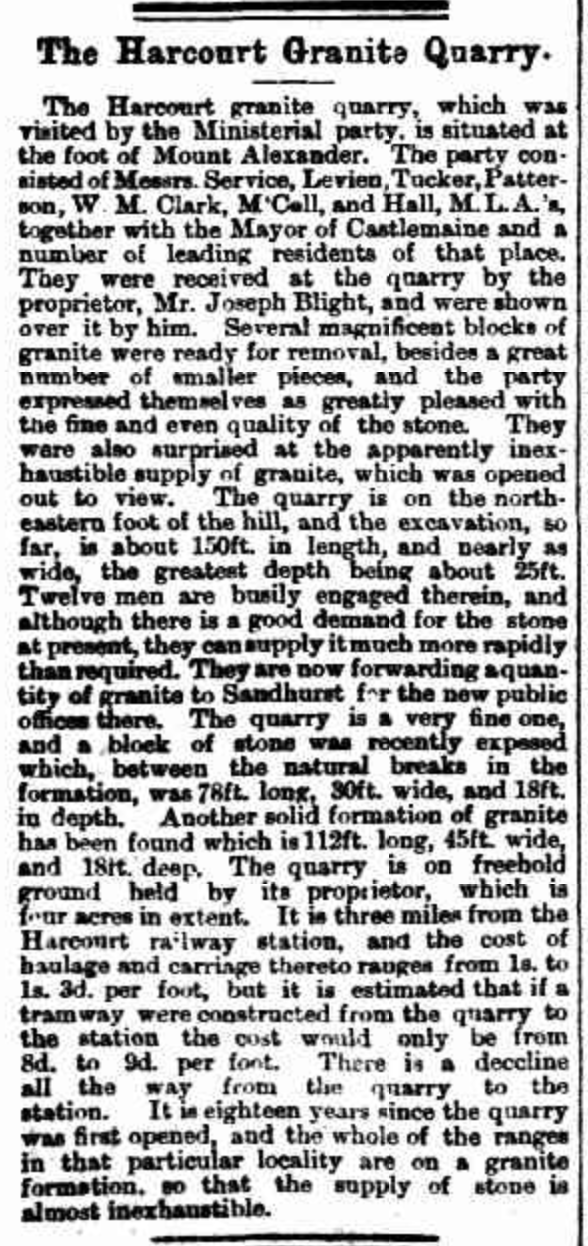
By the 1860s, quarries had opened at Mount Alexander to provide stone for the Northern Railway (Melbourne to Echuca Railway). Granite was subsequently used for buildings in Melbourne. One of those involved in this industry was Joseph Blight (b. 1832. d. 1897), a Cornish quarryman who had been involved in quartz reef mining at Eureka Reef. He commenced work at Blight’s Quarry in 1862. By the 1870s Mount Alexander had been stripped of vegetation to provide timber for the goldfields. (Ancestry.com.au 2024) (Mt Alexander Regional Park Visitor Guide 2010)
Above:- An article from the Weekly Times, Melbourne, Sat 24 Mar 1883. Image c/o Trove.
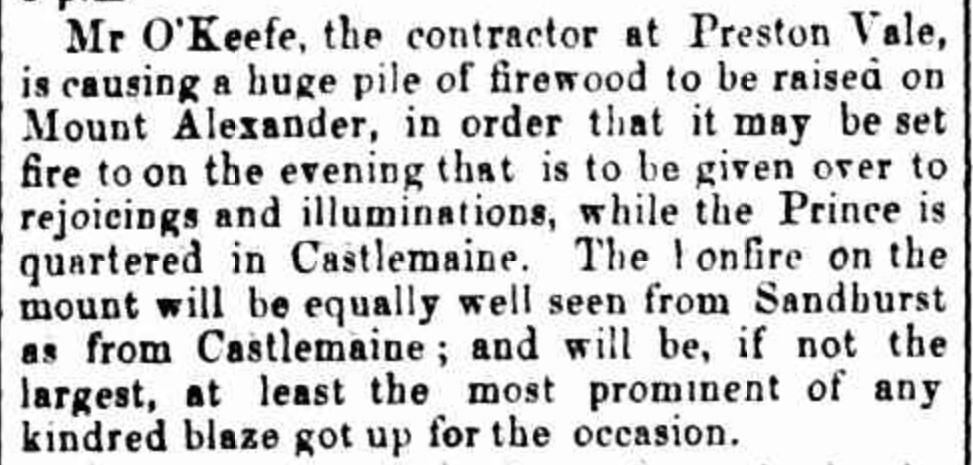
In 1867, a huge bonfire was constructed on the top of Mount Alexander to be lit in honour of the visit of the Duke of Edinburgh. (Mt Alexander Mail 1867)
Above:- Article from the Mount Alexander Mail, Sat 23 Nov 1867. Image c/o Trove.
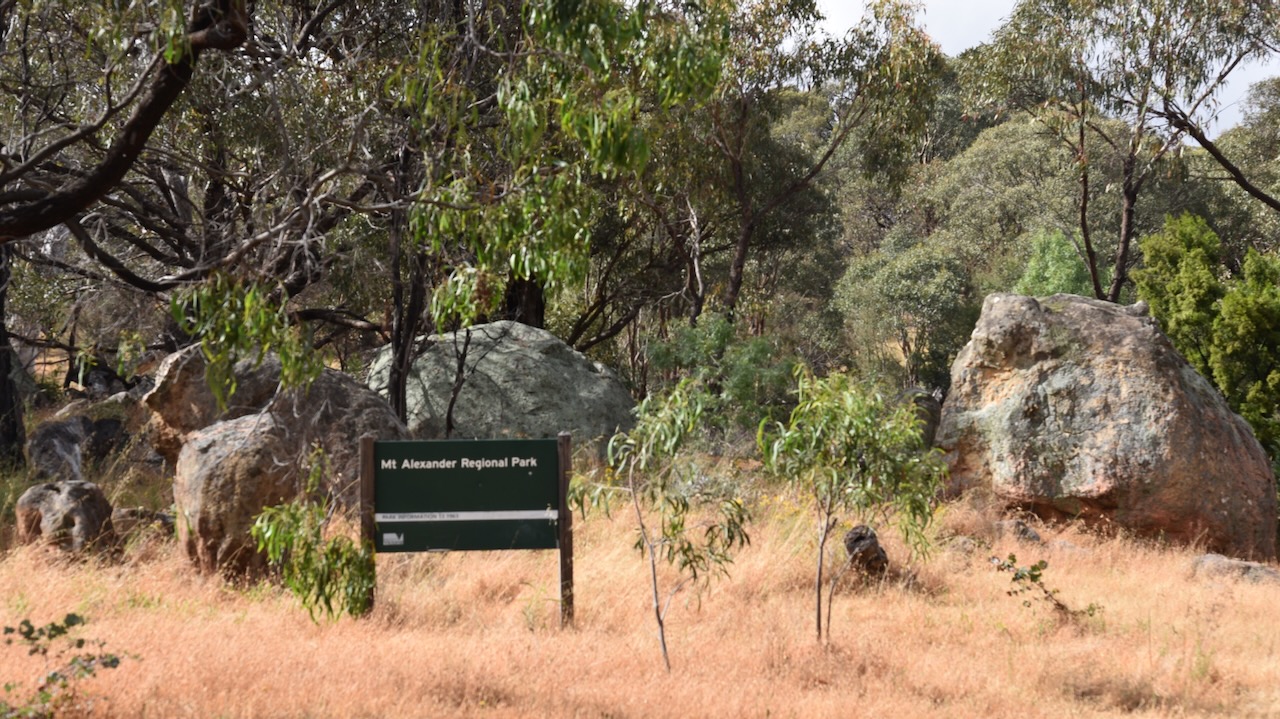
The Mount Alexander Regional Park is about 1,400 hectares in size and lies within the Harcourt granite intrusion that is believed to be about 367 million years old. You can view numerous rock boulders in the park. The park has steep slopes, tall trees and rocky outcrops. (Mt Alexander Regional Park Visitor Guide 2010)
Native animals that can be found in the park include koalas, Eastern Grey kangaroos, echidnas, Brushtail and Ringtail possums, Sugar Gliders and the Brush Tailed Phascogale. (Mt Alexander Regional Park Visitor Guide 2010)
A popular abseiling spot in the park is Dog Rocks, a large outcrop of granite boulders on the western slopes of Mount Alexander. In 1846, Lockhart Moton, the manager of Sutton Grange Station, named the rocks as they were a favourite lair of a pack of dingoes. (Gold Fields Guide 2024)
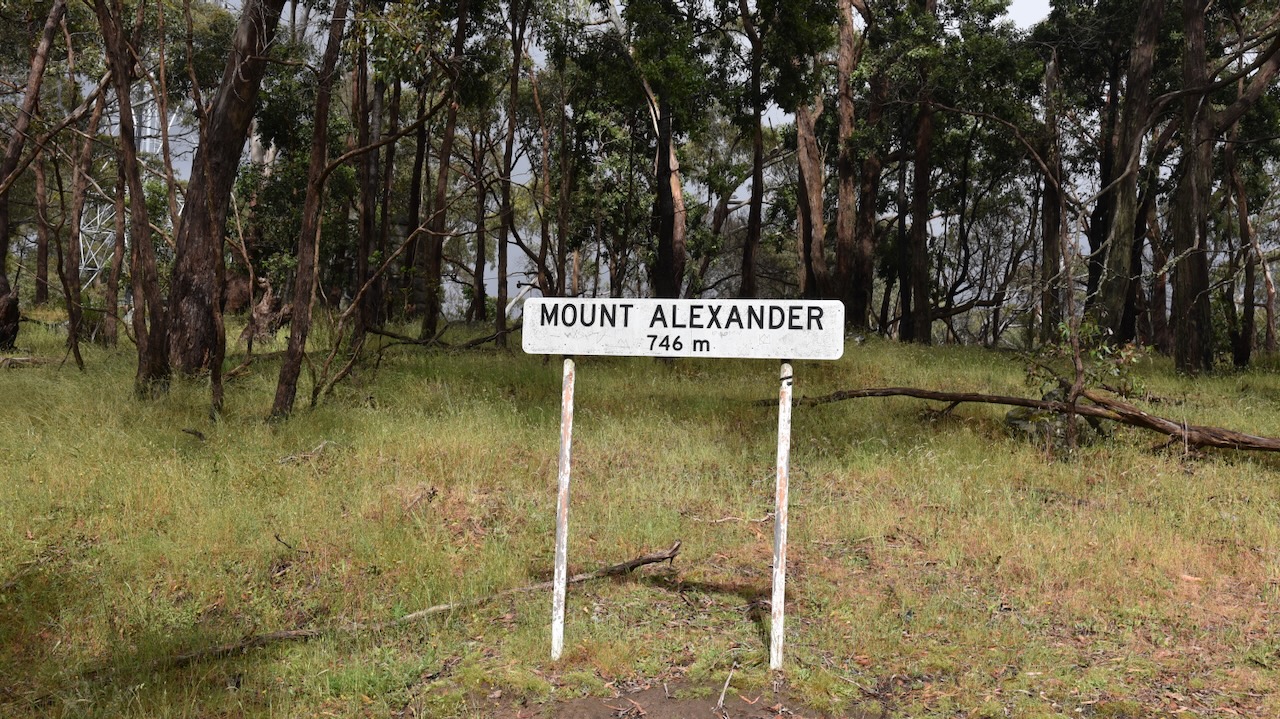
The Mount Alexander summit is 741 metres above sea level and is worth 4 points in the Summits On The Air (SOTA) program. It has been activated a total of 111 times. It was first activated on the 13th day of May 2012 by Wayne VK3WAM. (SOTA 2024)
Above:- An aerial view of Mount Alexander looking towards Bendigo. Image c/o Google Maps.
Although there are communication equipment towers on the top of Mount Alexander, Marija and I did not experience any interference.
Marija and I drove along Joseph Young Drive and found a clearing in the scrub, south of the communication towers and within the activation zone.
Joseph Young Drive is named in honour of long-serving Metcalfe Shire councillor Joseph Young. The road was pioneered by a group who wanted a tourist road constructed across the top of Mount Alexander. In 1928, Colonel James H. Lang the Vice President of the Royal Automobile Club of Victoria (RACV) pushed for the road to be constructed.
In June 1928, James Lang and his 24-year-old son Alan Lang in a Buick, and the Mayor of Councillor. J.R. Duggan in a Chevrolet accompanied by Mr A.S. Collings Borough Surveyor and the Hon. S.W. Lawson, drove across Mount Alexander in a zig-zag fashion to prove that a tourist road was feasible. In 1930 the road was constructed for £23.
Above:- Article from The Argus, Melbourne, Mon 15 Dec 1930. Image c/o Trove.
For this activation, we ran the Yaesu FT857, 40 watts, and the 20/40/80m linked dipole. I used the special event callsign of VI10VKFF.
As this was a ‘drive-up’ SOTA summit we had the luxury of a fold-up table and deck chair. We were also set up before the ‘UTC rollover’.
We logged a total of 78 QOS, including 28 Park to Park contacts.
Marija worked the following stations on 40m before the UTC rollover:-
VK3GJG/p (Sassafras Creek Nature Conservation Reserve VKFF-2187)
VK2YAK/p (Barrington Tops National Park VKFF-0017)
VK2PKT/p (South West Woodland Nature Reserve VKFF-2724)
VK7PAL
VK3GTV
VK21IO/m
VK3SO
VK3UAO
I worked the following station on 40m AM:-
VK3BEL
I worked the following stations on 20m SSB before the UTC rollover:-
VK4NH
VK4DXA
VK3GTV
ZL3MR
VK4FO
VK6LMK
ZL4NVW
VK4FOX
I worked the following stations on 20m SSB after the UTC rollover:-
VK4FOX
VK6LMK
VK4FO
References.
Ancestry.com.au. (2016). Ancestry® | Genealogy, Family Trees & Family History Records. [online] Available at: https://www.ancestry.com.au/ [Accessed 1 Apr. 2024].
Autobiographical Narrative of Residence and Exploration in Australia 1832–1839 by Edward John Eyre. Edited by Jill Waterhouse, published by Caliban Books Page 127
Harcourt News The Core, Edition 93, May 2022
Parks Victoria, 2010, Mount Alexander Regional Park Visitor Guide.
Our final park activation for Friday 24th November 2023 was the Glamorgan Reef Bushland Reserve VKFF-4279. The park is about 20 km south of Newstead and about 130 km northwest of Melbourne.
Above:- Map showing the location of the Glamorgan Reef Bushland Reserve. Map c/o Google Maps.
The Glamorgan Reef Bushland Reserve is about 9 hectares in size and was established on the 26th day of February 2002. (CAPAD 2022)
The reserve takes its name from the Glamorgan Reef gold mine which opened in 1859. (South West Victoria Historic Mining Plots 1980)
Above:- Part of an article from The Age, Melbourne, Thu 5 Aug 1858. Image c/o Trove.
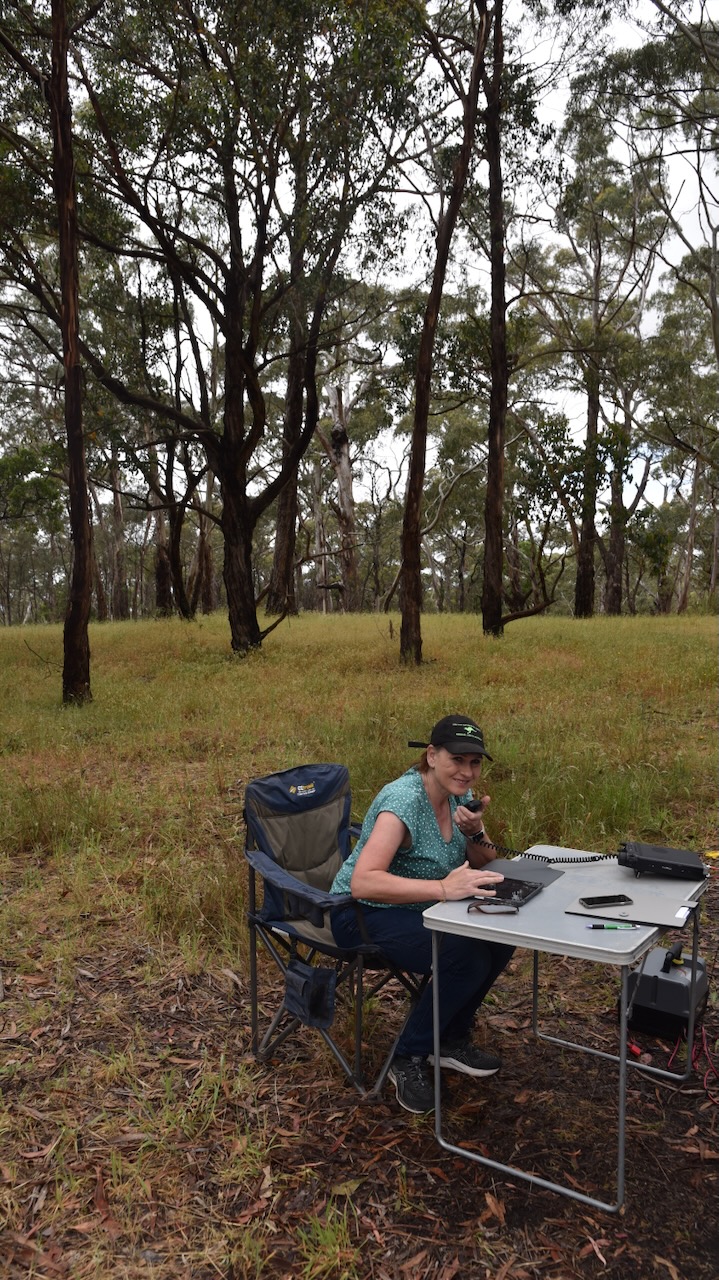
We found a little track running off Glamorgan Road. We ran out the 20/40/80m linked dipole and used the Yaesu FT857 and 40 watts output. I used the special call of VI10VKFF.
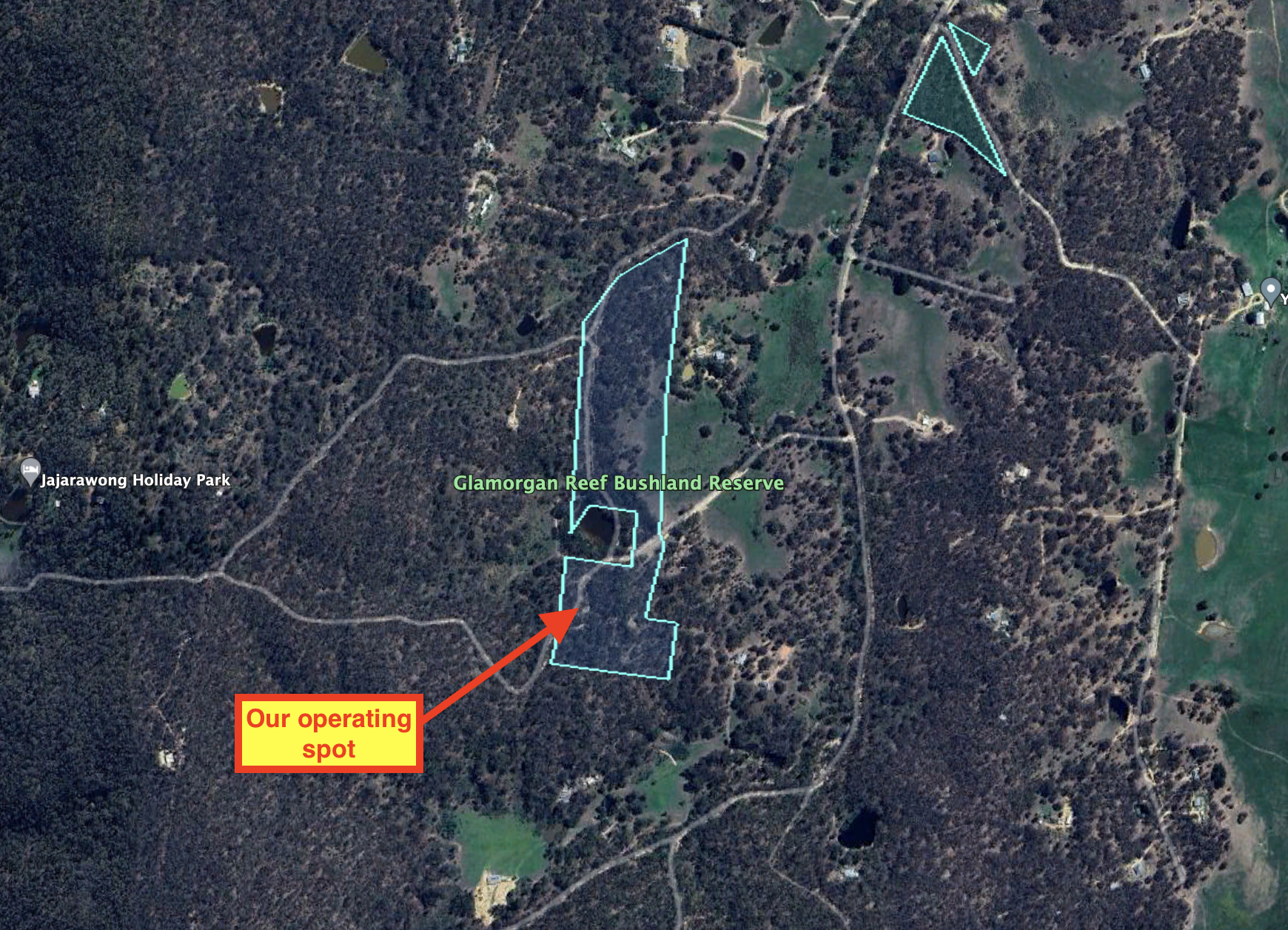
Above:- An aerial view of the Glamorgan Reef Bushland Reserve, showing our operating position. Image c/o Google Earth.
Marija worked the following stations on 40m SSB:-
VK3PF
VK3KAI
VK4SMA
VK3VIN
VK5PE/m
VK1AO
VK2MET
VK3CEO
VK3SG
VK4NH
VK4DXA
VK2IO/p (Molonglo Gorge Nature Reserve VKFF-0991)
I worked the following stations on 40m SSB:-
VK3PF
VK3KAI
VK4SMA
VK3VIN
VK5PE/m
VK1AO
VK2MET
VK3CEO
VK3SG
VK4NH
VK4DXA
KD1CT
ZL3ASN
VK3CLD/2
VK5LA
VK5KAW
VK5FANA
VK3APJ
VK5KLV
VK7HBR
VK7JGD
VK2IO/p (Molonglo Gorge Nature Reserve VKFF-0991)
VK2PBC
VK4HMI
VK7AAE
VK3EJ
VK3SO
VK3EI
VK3UAO
VK4GJW
VK5VST
VK3ZK
VK2AX
JF7RJM
VK3BLG
VK5DW
VK5VK
I worked the following stations on 40m AM:-
VK3CEO
VK2IO/p (Molonglo Gorge Nature Reserve VKFF-0991)
VK5DW
I worked the following stations on 80m SSB:-
VK3PF
VK3KAI
VK2IO/p (Molonglo Gorge Nature Reserve VKFF-0991)
VK5DW
VK5VK
References.
Bannear; D, 1980, South West Victoria Historic Mining Plots
The Yandoit Bushland Reserve VKFF-4280 was an unplanned and quick activation for Friday 24th November 2024.
Yandoit is located about 17 km northwest of Daylesford and about 110 km northwest of Melbourne.
Above:- Map showing the location of Yandoit. Map c/o Google Maps.
Yandoit is believed to be an aboriginal word meaning ‘travel’.
The first European settler in the area was John Stuart Hepburn. He was born in 1803 in Scotland and emigrated to Australia.
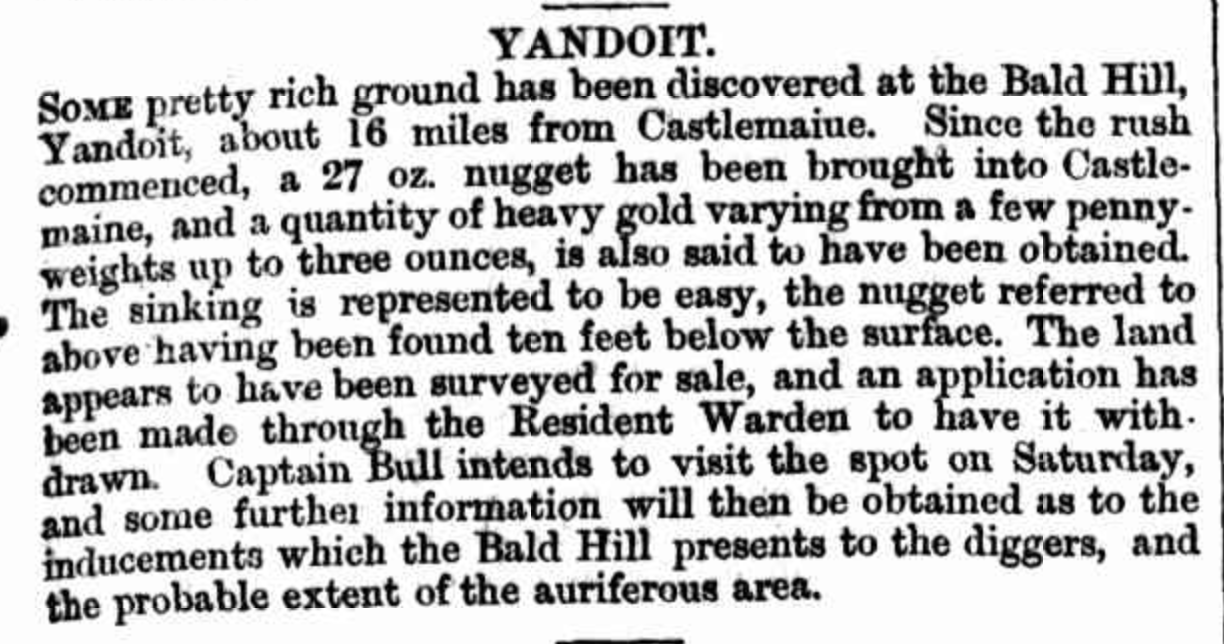
In 1854 gold was discovered in a gully about 2 km northwest of Yandoit. (Victorian Places 2024)
Above:- An article from The Colonial Mining Journal, Thu 7 Jul 1859. Image c/o Trove.
By the following year, 1855, farm allotments in the district were offered for sale. Many of the settlers in the district were of Swiss-Italian background. One of those was the Gervasoni family who emigrated to Australia in the 1850s. Carlo Gervasoni built the homestead that included wine and cheese cellars, stables and farm buildings. The ruins of their large homestead are on the Victorian Heritage Register. (Victorian Heritage Database 2024) (Victorian Places 2024)
Above:- The Gervasoni homestead. Image c/o Heritage Council Victoria.
Below is an excellent video on the Gervasoni family estate.
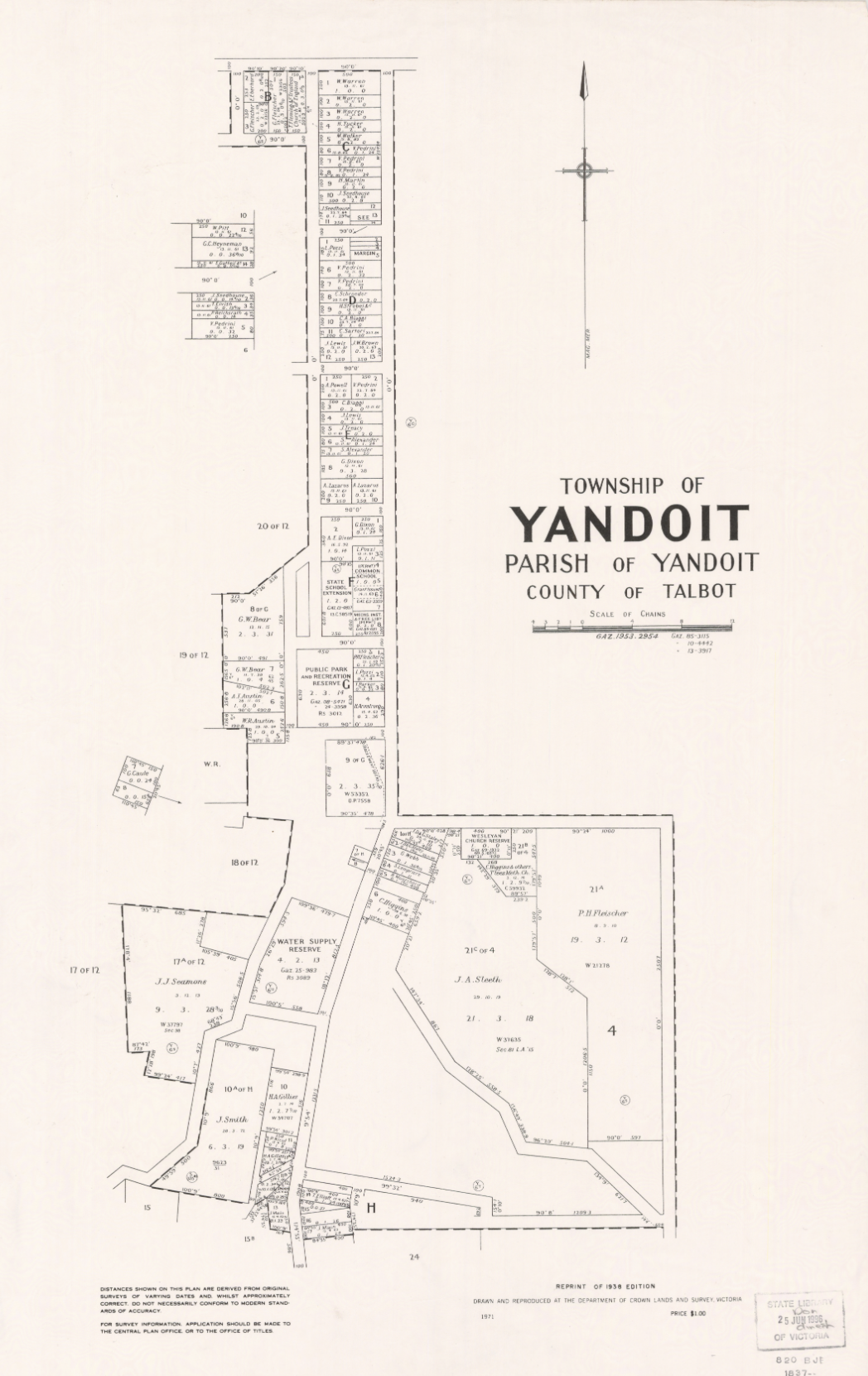
In 1861 Yandoit was surveyed. In that same year, a school was opened at Yandoit, and Yandoit’s population was about 232 people. By 1865 Yandoit had four hotels and an estimated population of about 950 people. Yandoit was proclaimed in 1885. (egold 2015) (Victorian Places 2024)
Above:- a plan of the town ship of Yandoit. Image c/o State Library Victoria.
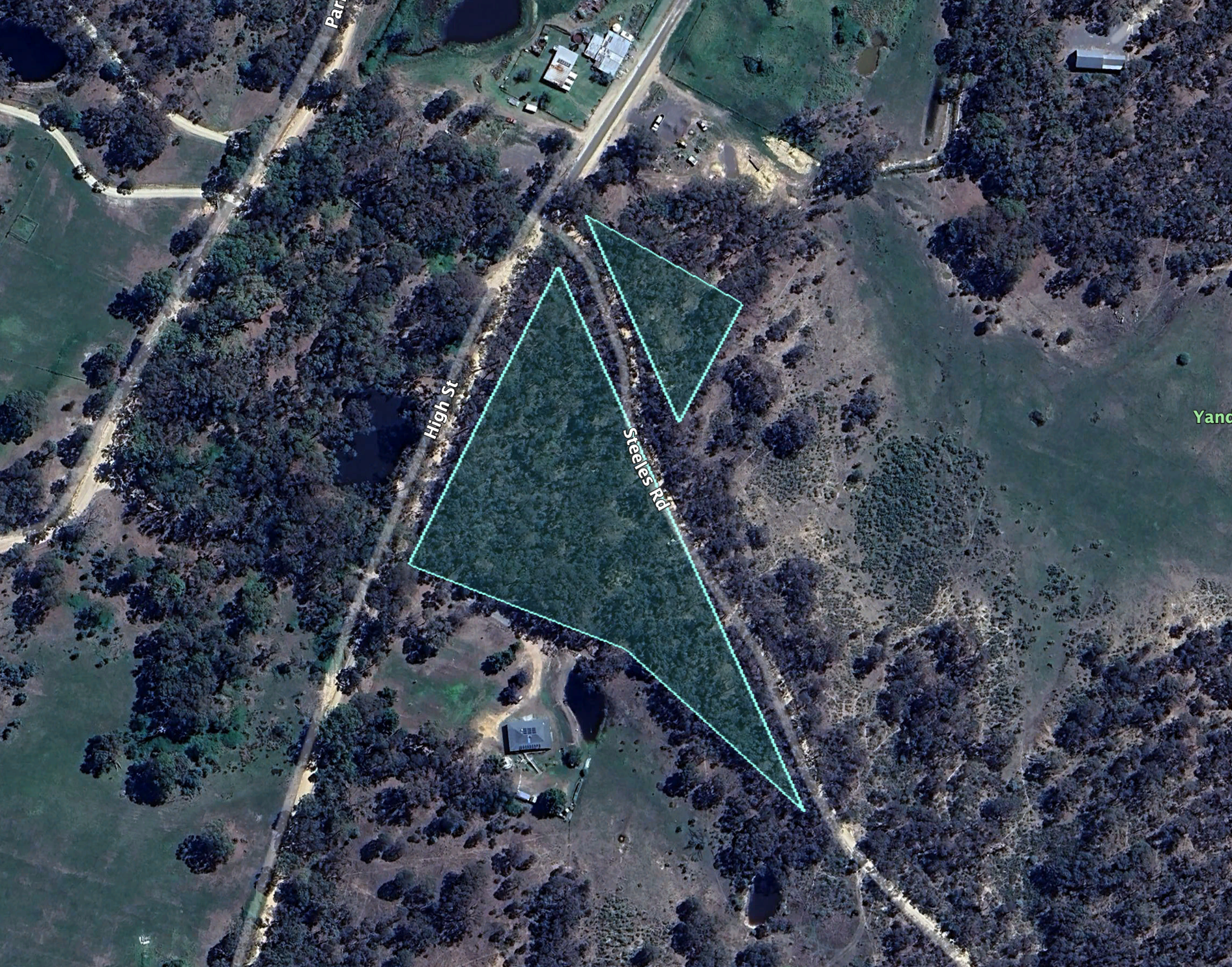
The Yandoit Bushland Reserve is small, comprising just 1.5 acres of remnant bushland. It was established on the 13th day of June 2006. (CAPAD 2022)
Above:- An aerial view of the Yandoit Bushland Reserve. Image c/o Google Earth.
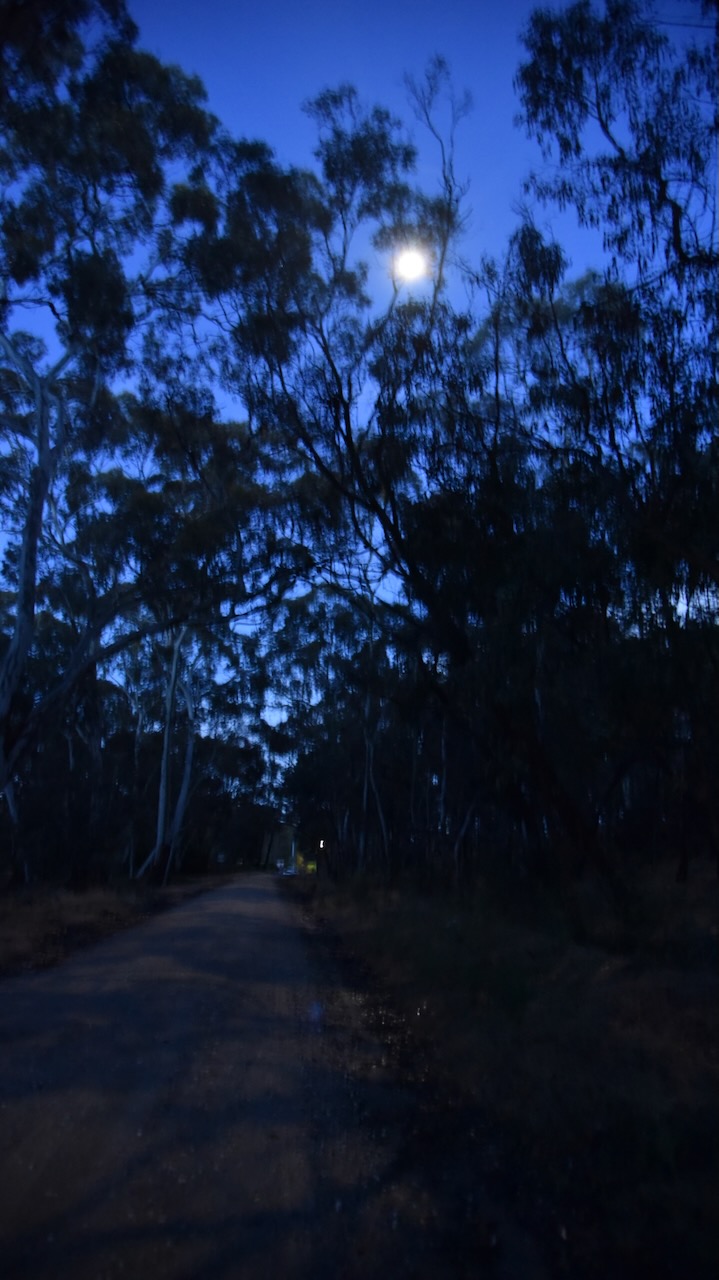
It was completely dark by the time we arrived at the park. We found a break in the scrub and ran out the 20/40/80m linked dipole. We ran the Yaesu FT857 and 40 watts. I used the special callsign of VI10VKFF.
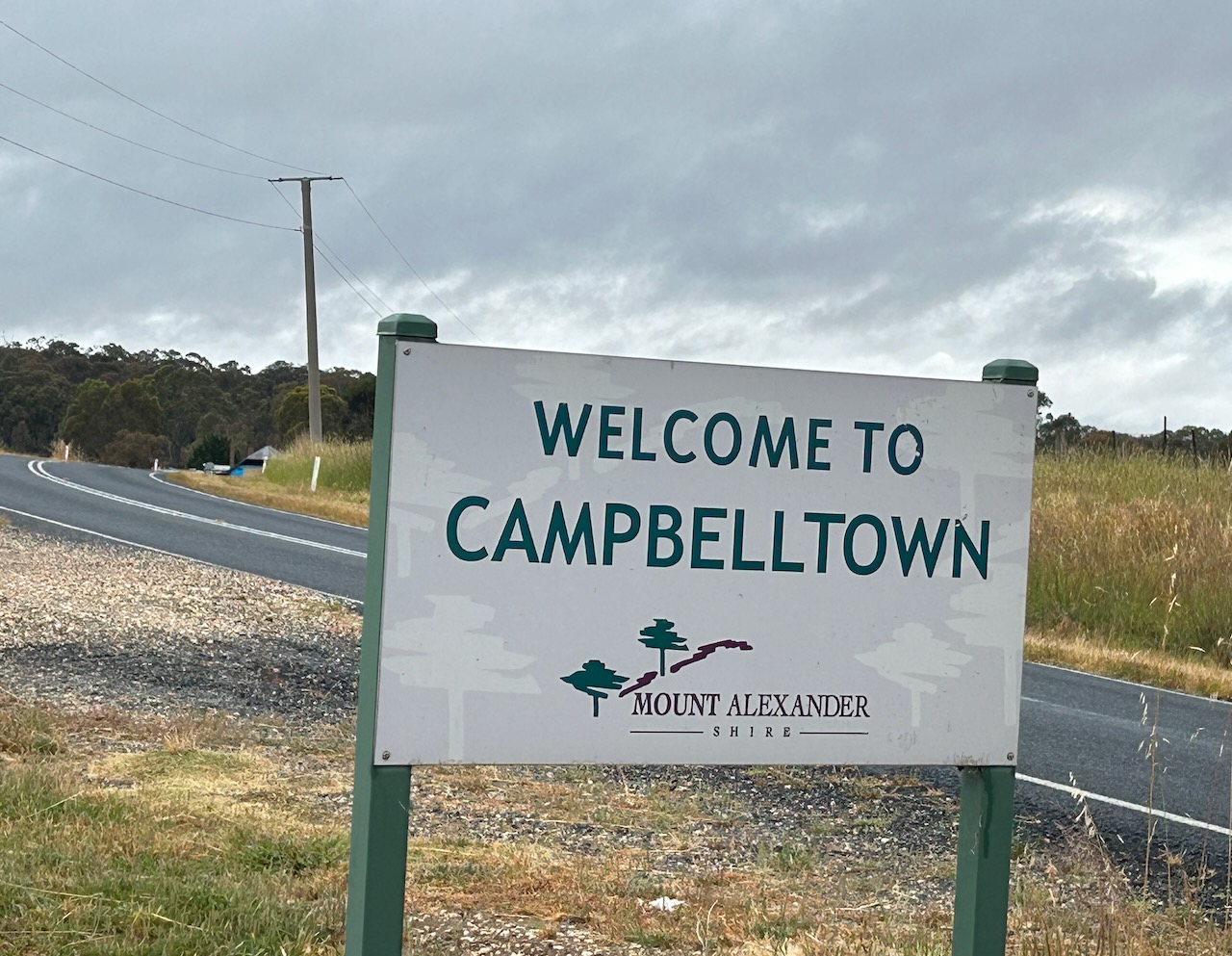
Our next destination for Friday 24th November 2023 was the town of Guildford. Marija and I travelled back into Clunes and headed northeast on Glengower Road. Along the way, we passed through the little town of Campbelltown. Don’t blink….there is not much here nowadays.
One of the historic buildings that does remain is the Black Duck Hotel. Originally known as the Campbell Town Hotel, it was built in 1871. It is the only surviving hotel from this once thriving town. (State Library Victoria 2024)
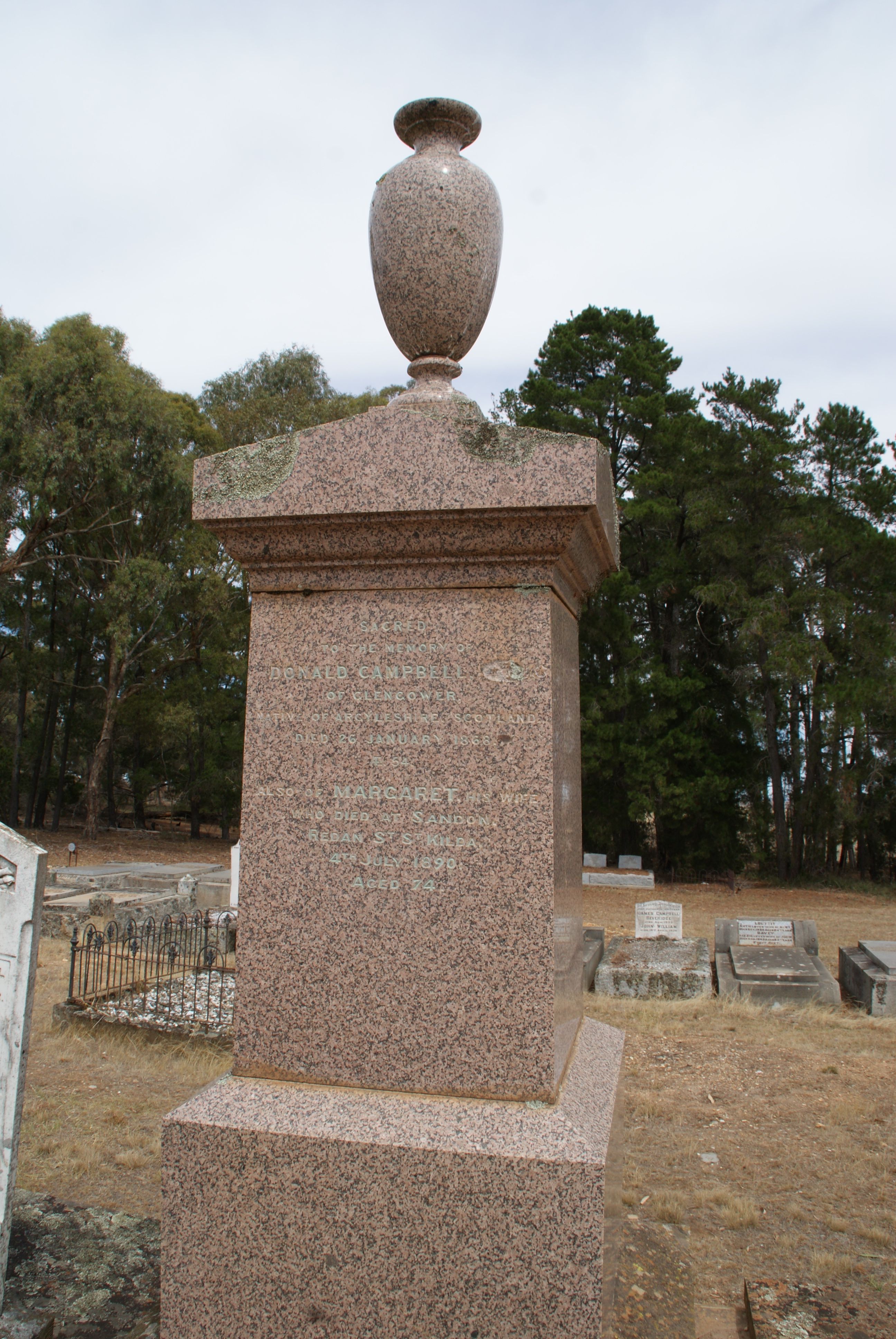
Campbelltown takes its name from Donald Campbell (b. 1813. d. 1868) who settled in the area following his emigration from Scotland to Australia. Donald arrived in Sydney in November 1841 aboard the Trinidad as a bounty immigrant. In 1842 he overlanded to Gippsland with sheep and squatted at Bullock Creek, near current day Bendigo. He opened Campbell’s (or Bullock Creek) Camping Ground and Inn. In 1851 he married Margaret Sinclair in Melbourne. By 1854, Hugh Glass employed Campbell to manage Glengower pastoral run, a 44,000-acre property. At the time, Glass was one of the richest men in Victoria. In February 1866, Campbell acquired Glengower from Glass. Campbell built the Glengower Hotel catering for miners from the nearby goldfields. Campbell died suddenly in January 1868 leaving an estate valued for probate at £18,000. He is buried at the Campbelltown cemetery. (Ancestry.com.au 2024) (Andrew Warland 2024) (Aust Dict of Biography 2024) (Blake 1998)
Above:- the headstone of Donald Campbell. Image c/o Find a Grave
We continued to Guildford, about 126 km northwest of Melbourne and about 10 km south of Castlemaine.
It is believed that the name comes from Guildford in Surrey, England (geltford meant a crossing where a toll was paid). Prior to European settlement, the area was inhabited by the Jaara Jarra aboriginal people who called the area ‘Yarrayne’. The first known European settler in the Guildford area was John Stuart Hepburn (b. 1803. d. 1860).
Above:- John Stuart Hepburn. Image c/o WIkipedia.
Gold was discovered in the Guildford area during the early 1850s. In 1860 a school was opened. The Guildford borough was created in November 1866. (Amcestry.com.au 2024) (Aussie Towns 2024) (Victorian Places 2024)
Guildford is another small Victorian town whose many historic buildings have survived.
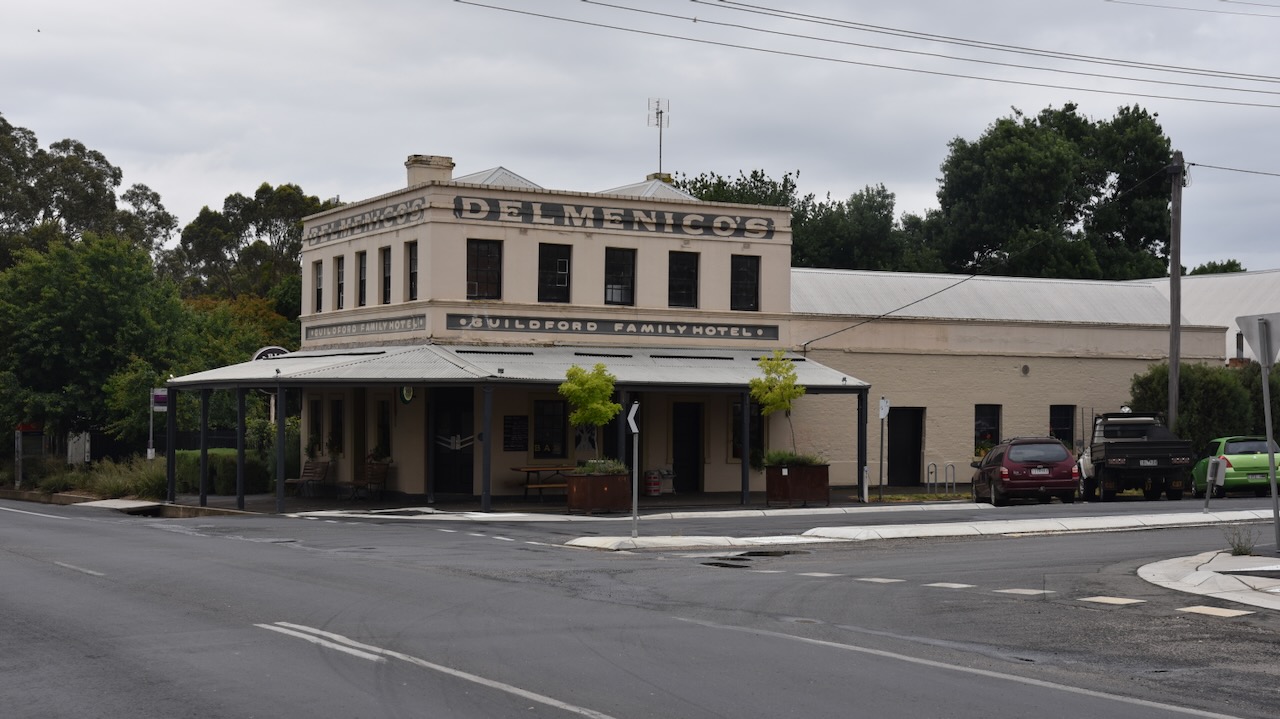
The Guildford Hotel was built in 1856 for Joseph Sherer (b. 1829. d. 1898). Sherer had acquired an acre of land in 1859 and the eleven-room hotel was built. In 1857 the hotel was offered for lease and it was described as having a large bar, parlours, dining rooms and bedrooms, and a newly erected concert hall and stable which could accommodate 16 horses. (Victorian Heritage Database Report 2007)
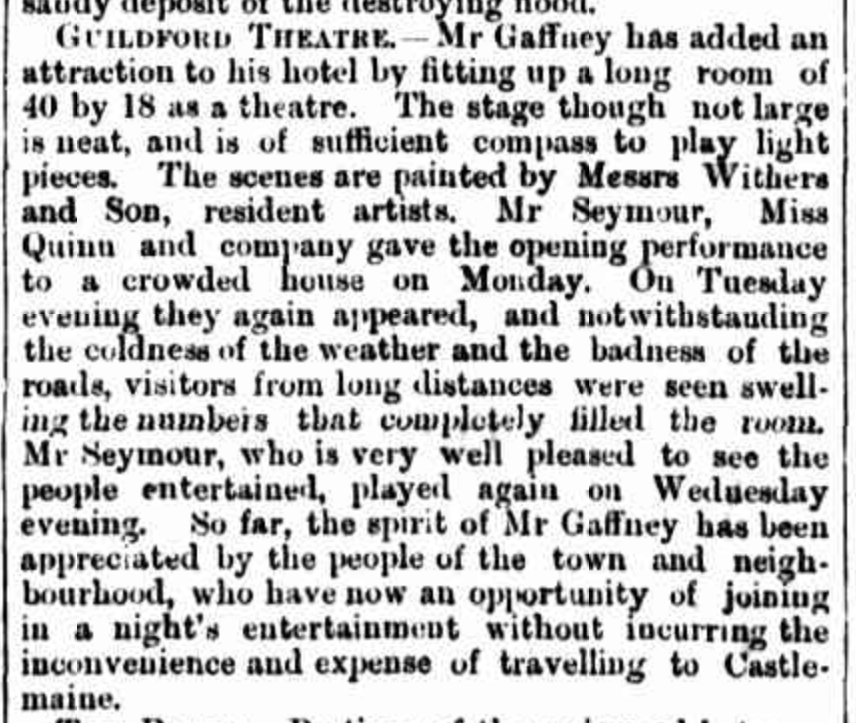
In 1861 William Gaffney became the hotel licensee. The hotel was reported as having stabling for 50 horses and a long room fitted as a theatre. It was used as a Cobb & Co coach office. (Victorian Heritage Database Report 2007)
The Mount Alexander Mail, Friday 7th August 1863 reported:
“…the spirit of Mr Gaffney has been appreciated by the people of the town and neighbourhood, who have now an opportunity of joining in a night’s entertainment without incurring the inconvenience and expense of travelling to Castlemaine.” (Mount Alexander Mail 1863, Trove)
Above:- Article from the Mount Alexander Mail, Fri 7 Aug 1863. Image c/o Trove.
In 1865 the hotel was sold to Giles Church who was a local hotelier. Guildford Borough Council meetings were held at the hotel. An ornamental verandah was added to the hotel in 1885 by the new owner, Wearn Dunstan. The hotel was known as Dunstan’s Family Hotel. (Victorian Heritage Database Report 2007)
During the early 1920s, Pasqual Delmenico (b. 1872. d. 1948) purchased the Guildford Hotel. His family had arrived in Guildford in 1855 as part of a significant number of Swiss immigrants who settled in the Guildford district. The hotel remained with the Delmenico family until 1922. (Banjo Jamboree 2022)
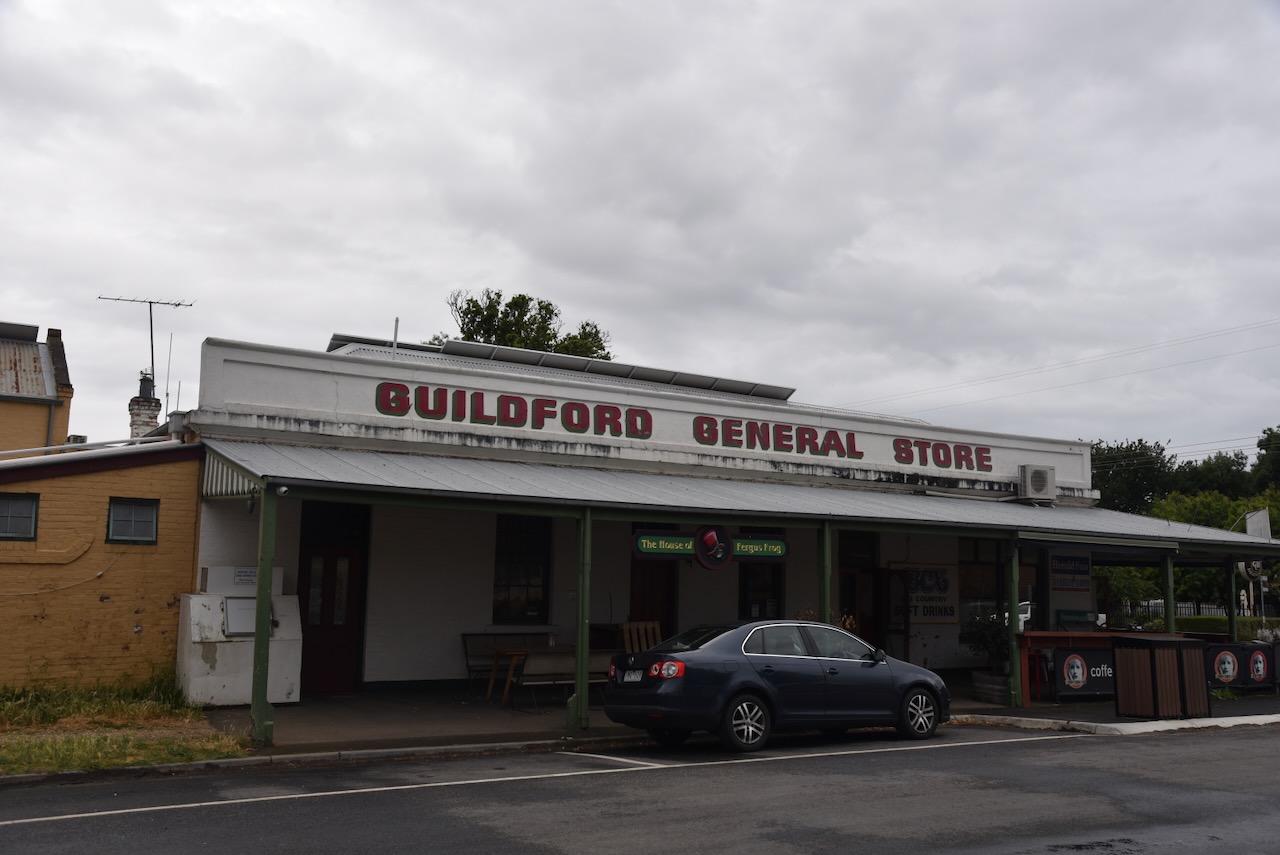
The Commercial Hotel was built in 1865 and now serves as the Guildford general store. On its northern side are the stables and outbuildings of a large department store that burned down in 1916. (Aussie Towns 2024)
Several Swiss-Italian families settled in Guildford. Perhaps the most famous descendant of those settlers is Ronald Dale Barassi AM, an Australian Rules footballer, coach, and media personality. Barassi was a third-generation Australian. He was born in nearby Castlemaine in 1936. He spent a significant part of his early years and attended school at Guildford. (Victorian Places 2024) (Wikipedia 2024)
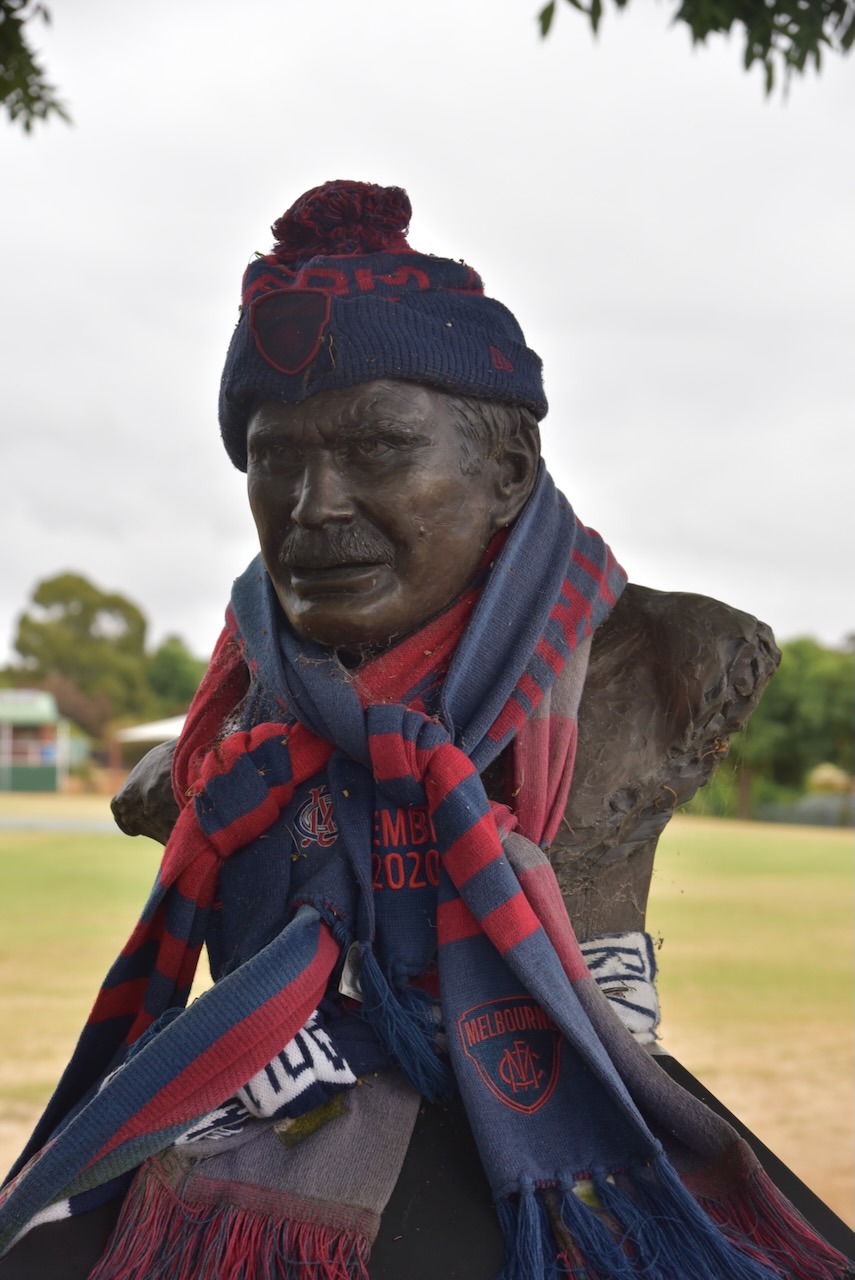
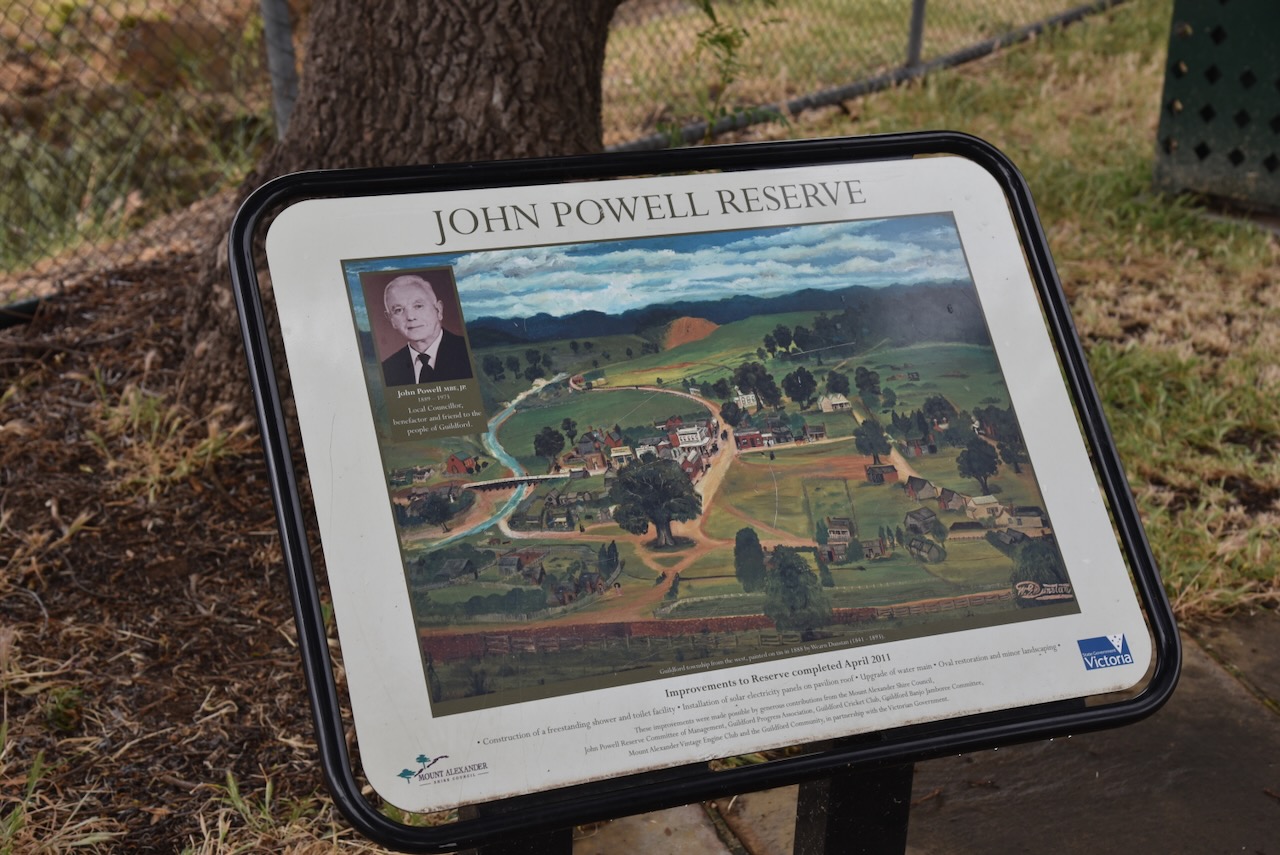
We then visited John Powell Reserve at Guildford. The park is named in honour of John Powell MBE, JP (b. 1889. d. 1973) who was a local Councillor, benefactor and friend to the people of Guildford.
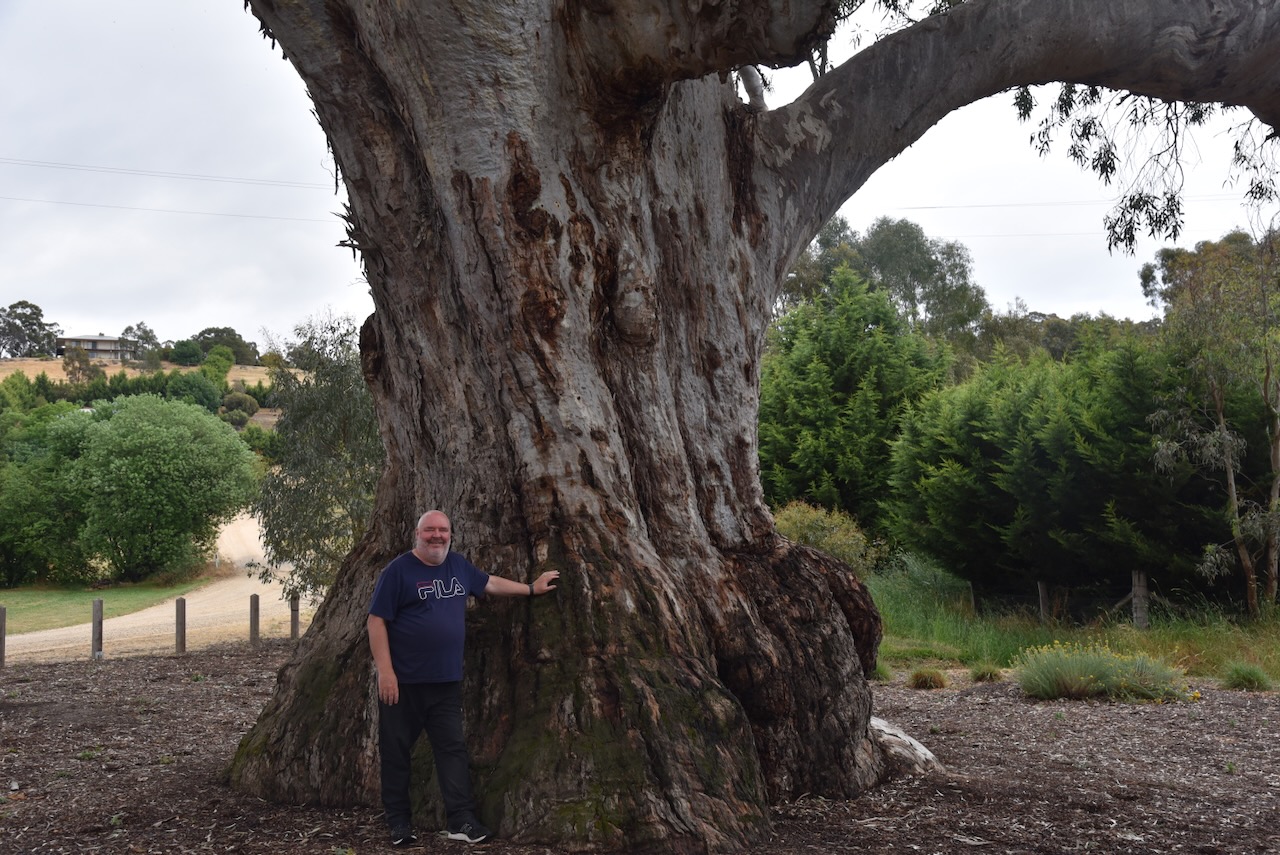
If you are in Guildford, you can’t miss a visit to ‘The Big Tree’ (Eucalyptus camaldulensis). It is located at the intersection of Fryers Street and Ballarat Street. The Big Tree is a large River Red Gum which is believed to be the largest of its species in the state of Victoria. Its base is 12.8 metres while its height is 25.9 metres. It is believed that Buke and WIlls camped beneath the tree on their journey from Melbourne to the Gulf of Carpenteria. (Aussie Towns 2024)
After leaving Guildford we visited the old Chinese cemetery at Vaughan Springs. The cemetery was established during the great Mount Alexander gold rush during the early 1850s. The cemetery is located on a small hill overlooking one of the richest locations on the goldfields. It was located at this position as gold was not likely to be discovered at this spot. The cemetery was used until 1857. (Goldfields Guide 2024)
We also got a glimpse of the old bridge between Vaughan and Tarilta. The bridge was built in 1868 and was closed in September 2012. (stackunderflow.com 2023)
One of the impressive surviving historic buildings in Vaughan is the Bank of Victoria building, built in the early 1850s. It is now a private residence.
Marija and I then stopped at the former site of Ball & Welch Ltd. The company was a prominent department store in Melbourne from the 1800s through to the 1970s. In its heyday, the company was Melbourne’s leading family draper.
In May 1862 Charles Ball married Tabitha Reardon. About 3 weeks later her sister Eliza married William Welch. In some sources, Charles and Williams are credited as forming Ball & Welch. Other sources, including one of Tabitha’s daughters, claim that Tabitha and Eliza were responsible for starting the drapery store as they imported ‘silks and fashionable furbelows’ from London and their lady friends in Vaughan would often ask for some themselves. Charles and William had been drapers and silk mercers in England and were apparently encouraged by their wives to commence the business. (Inner City News 2024)
Above:- Advertisement from The Herald, Melbourne, Mon 24 Dec 1906. Image c/o Trove.
We stopped to have a look at the cliffs at Vaughan known as Red Knob. These red cliffs are the result of hydraulic sluicing operations during the mid-1900s. (Goldfields Guide 2024)
We then drove on to the little town of Fryerstown, about 10km southeast of Castlemaine.
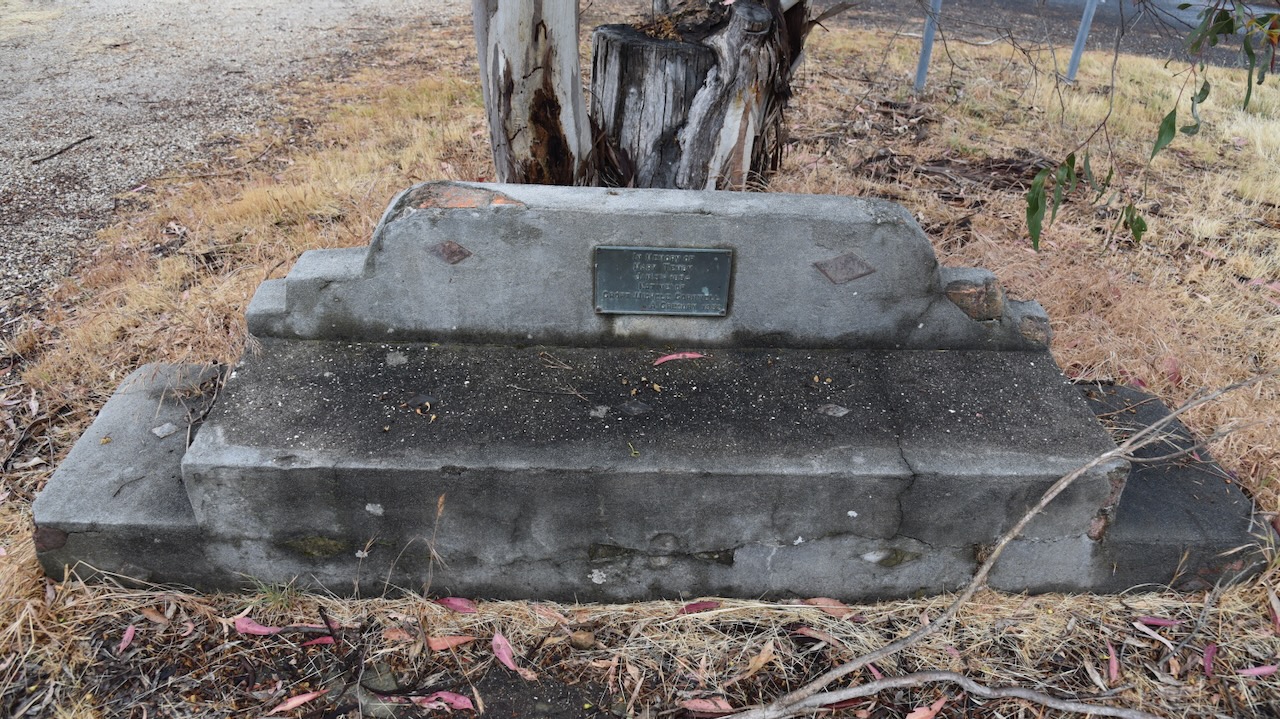
The town is located on the banks of Fryers Creek, a tributary of the Loddon River, and was named after pastoralist Peter Fryer who settled in the area during the 1840s. In October 1851 gold was discovered in Fryers Creek, with a significant number of the miners being of Metholidst faith. By 1853 a school had opened. One of the school’s most famous students was Frank Tate (b. 1864. d. 1939). He was born in Mopoke Gully, east of Fryserstown. He was Director of Education from 1902 to 1928. (Victorian Places 2024)
Above:- Frank Tate. Image c/o Victorian Collections.
The Post Office opened on the 19th day of April 1854 as Fryer’s Creek, and in 1856 was renamed Fryerstown. It closed in 1975. The old Methodist church at Fryerstown was opened in 1861. The Anglican church was also opened in that year. The predominant mining method in the area by the 1860s was auriferous quartz mining. However, Chinese miners continued with alluvial gold mining and formed a substantial portion of the Fryerstown community. (Phoenix 2005) (Victorian Places 2024)
Some historic buildings remain at Fryerstown. This includes the Fryerstown mechanics institute.
The locals of Fryerstown decided to construct a memorial mechanics institute for the explorers Burke and Wills. In November 1861 they raised £300 and the institute was built. In Mid 1863 the foundation stone was laid and the building was completed about 4 months later. (burkeandwills.net.au 2024)
Above:- part of an article from the Mount Alexander Mail, Thu 9 April 1863. Image c/o Trove.
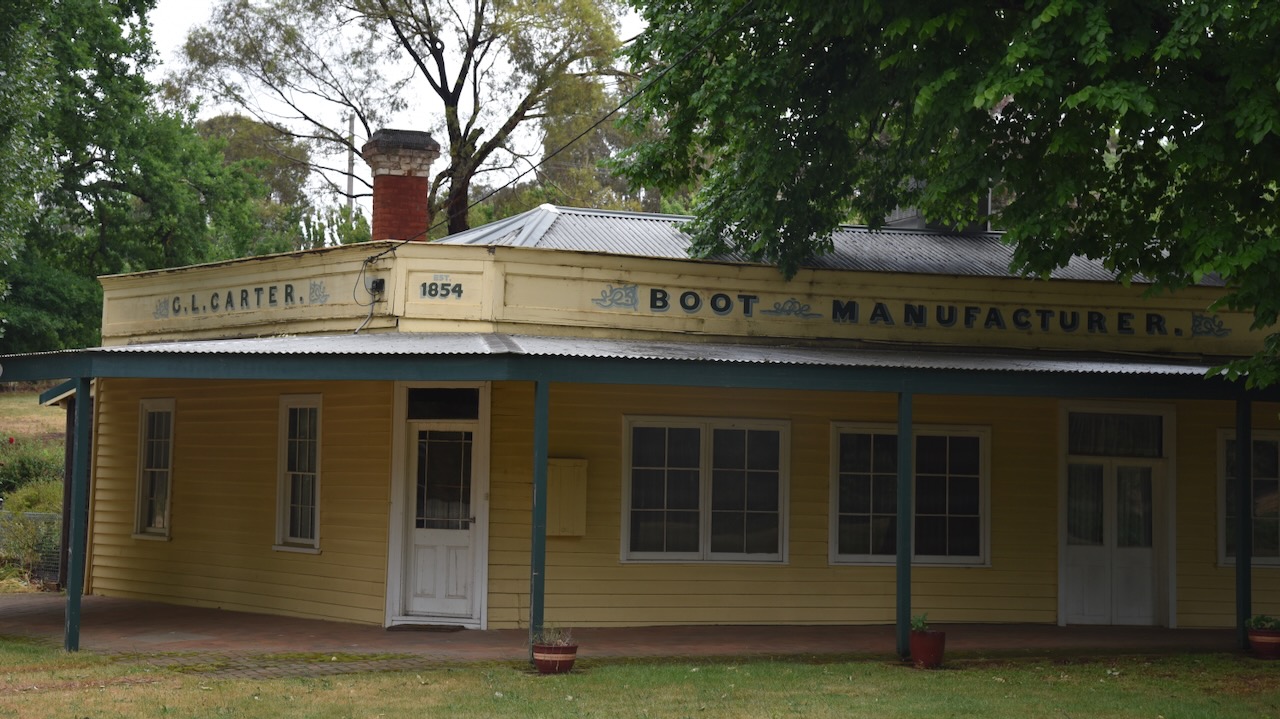
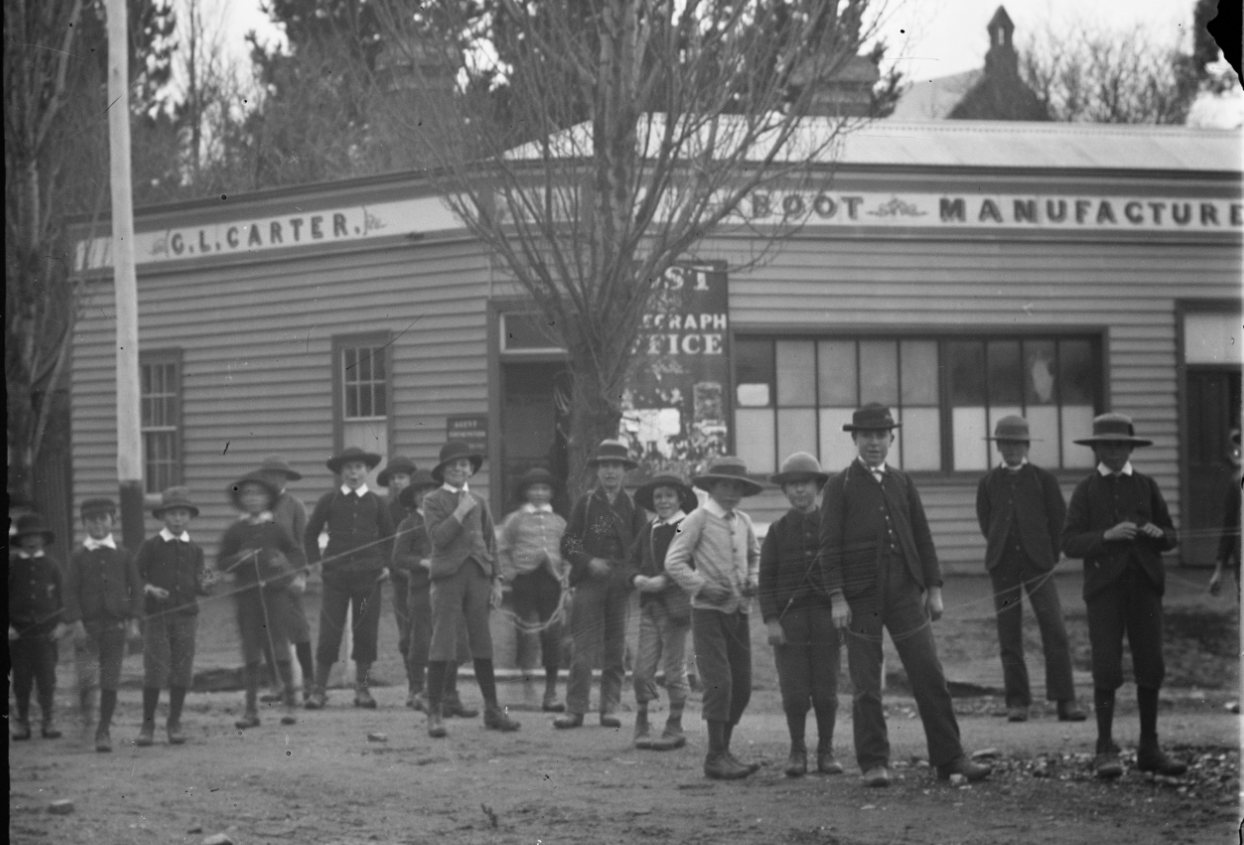
Another historic building is the old boot manufacturer building built in 1854, run by George Levi Carter. George was born in 1845 in Middlesex, England and emigrated to Australia. He established a boot manufacturing business. He died in 1941 at Fryserstown. (ancestry.com.au 2024)
Above:- a groupf of boys in front of the shop (between 1870-1910. Image c/o State Library Victoria.
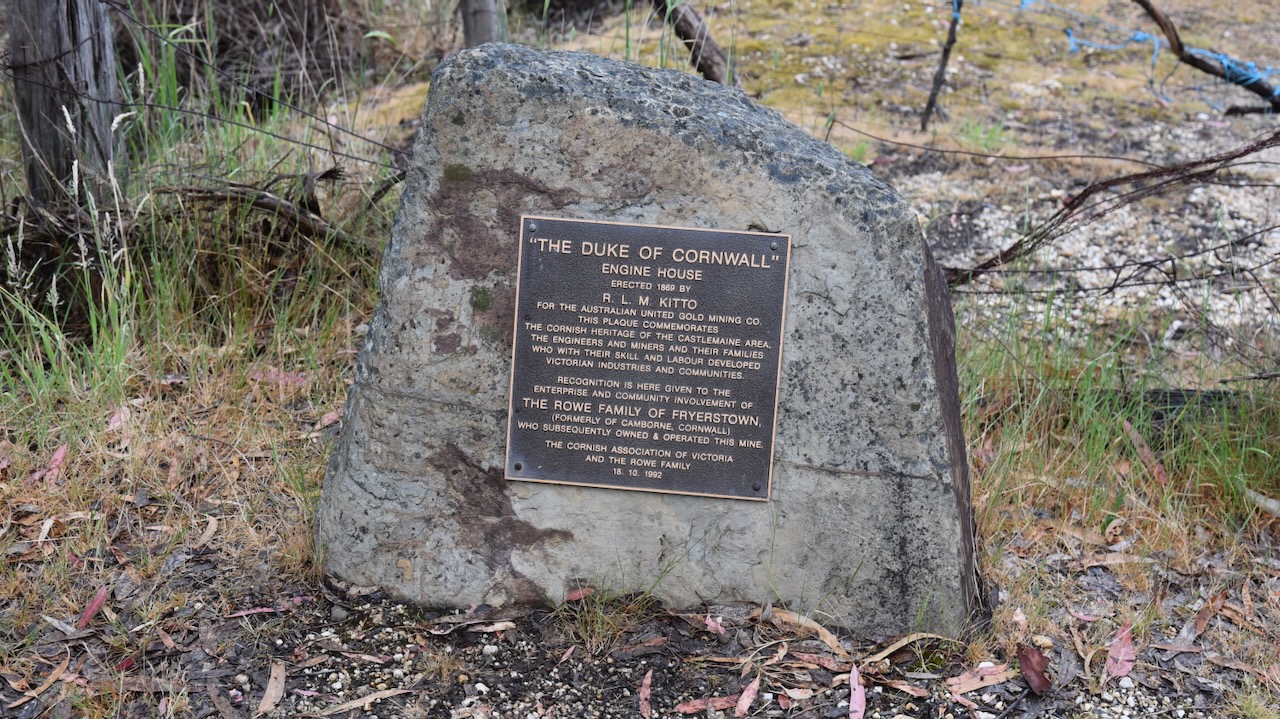
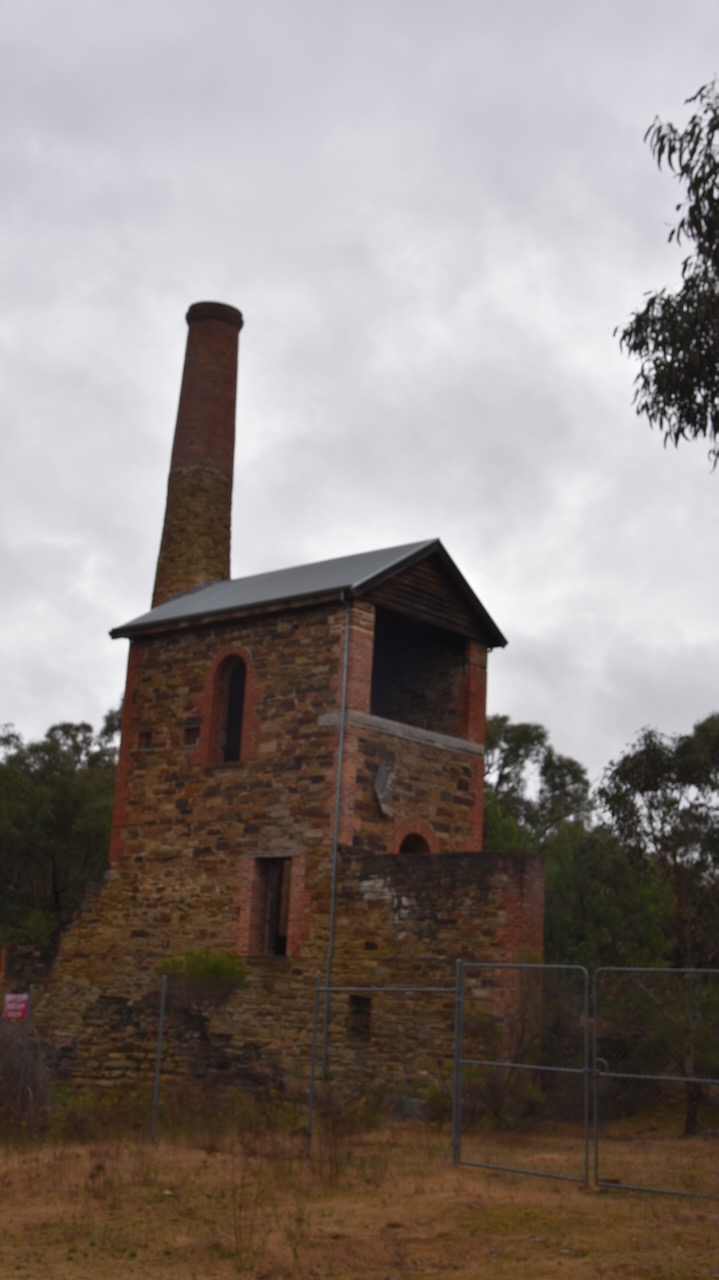
The Duke of Cornwall mine engine house was built c. 1865. The ruin is now on the Victorian and Australian historic buildings registers. (Victorian Places 2024)
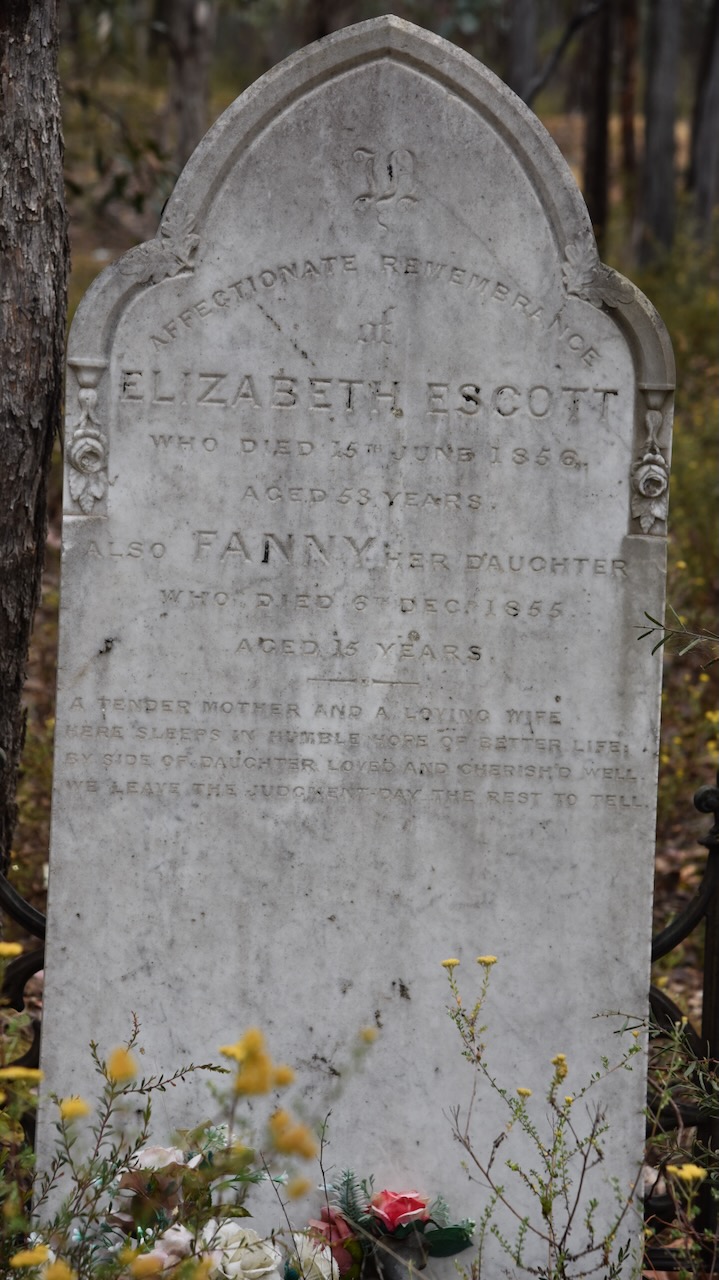
We then visited the remote gravesite of Elizabeth and Fanny Escott. It is located on Evanmore Track in Chewton.
Elizabeth Bruford was born in August 1803 in Somerset, England. In 1825 she married Thomas Escott. Following his death, Elizabeth emigrated to Australia in 1853 with her children. Upon arrival in Australia they headed to Fryerstown in the goldfields. Sadly, after only a few years in Australia, Elizabeth’s daughter Fanny died in Decenber 1855. Six months later in June 1856, Elizabeth also died. (Ancestry.com.au).
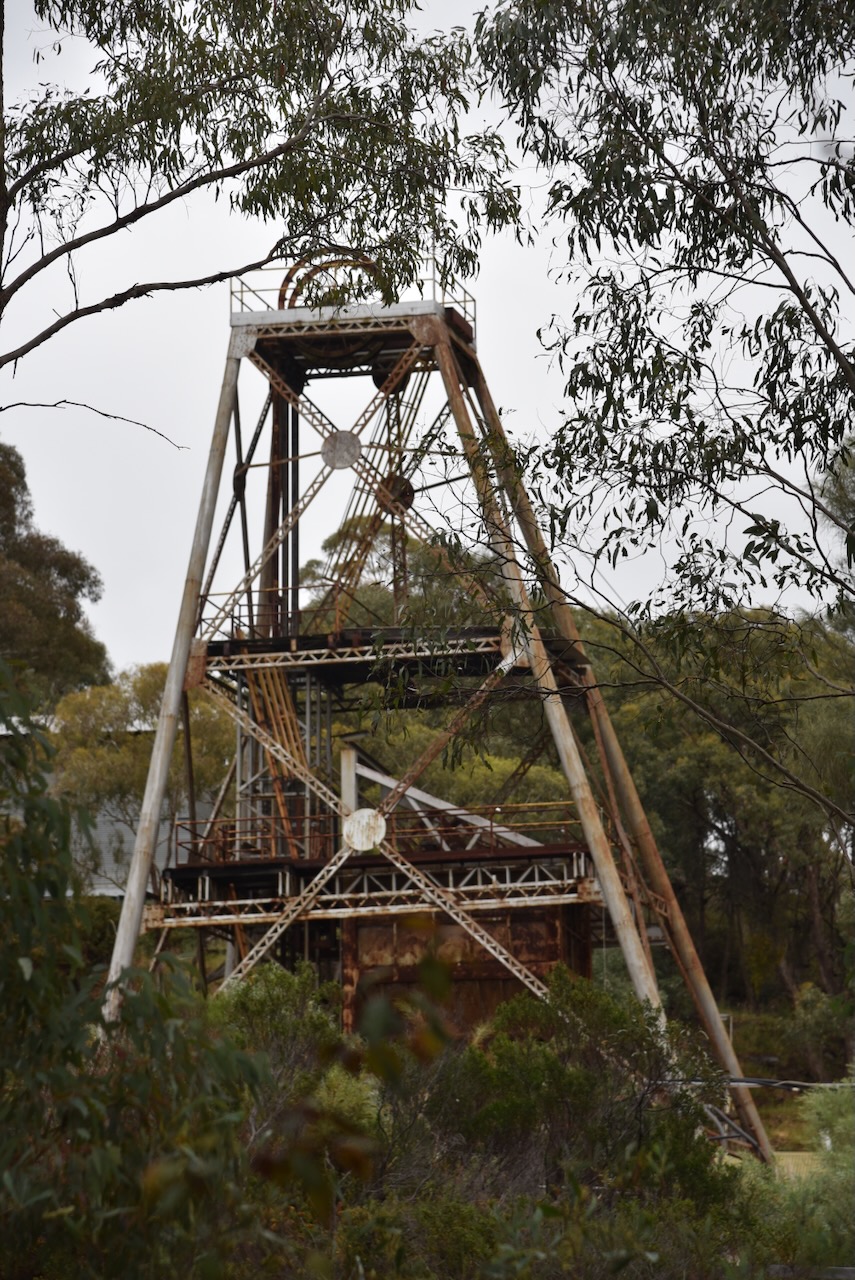
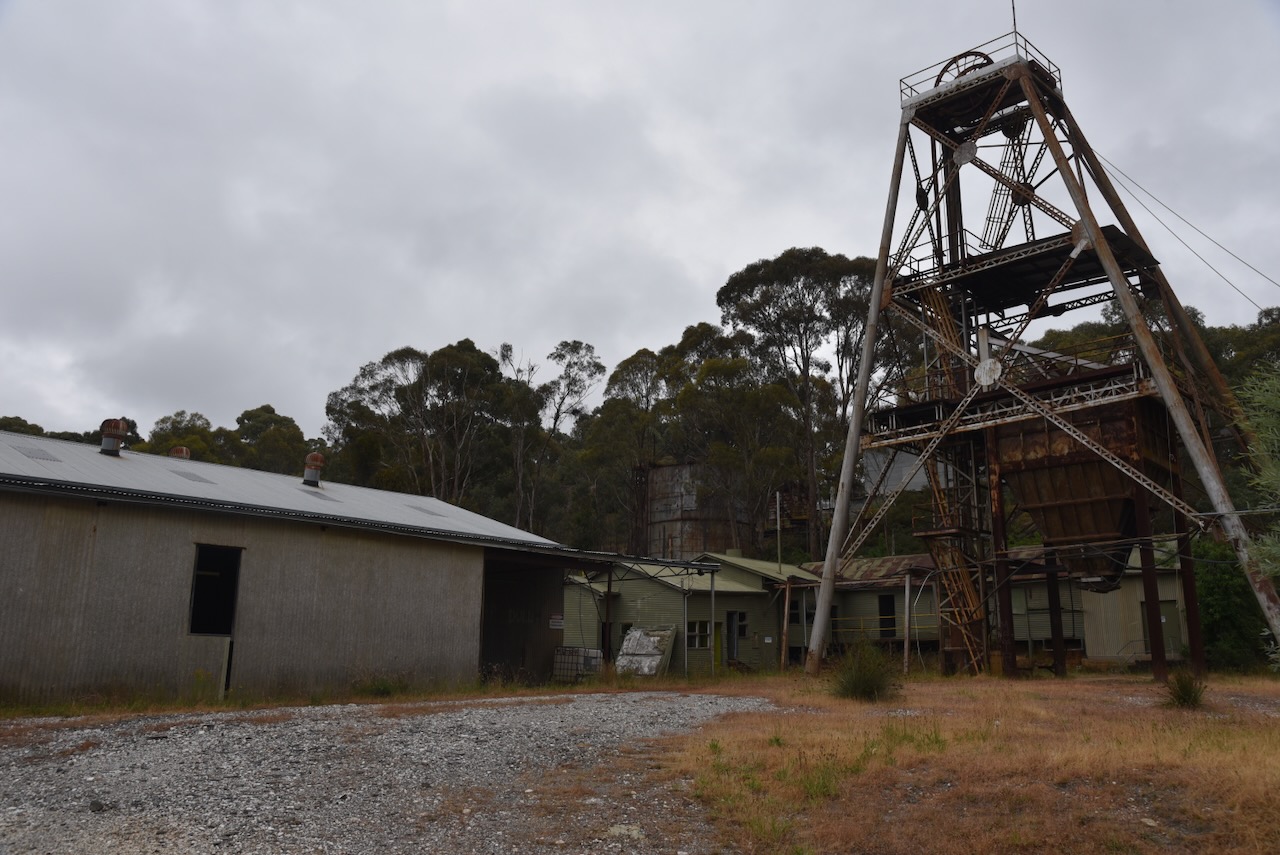
Our next stop was the Wattle Gully Mine at Chewton.
Wattle Gully was first worked in 1853. The miners located large amounts of alluvial gold, and also unearthed a quartz reef studded with gold. (FOMAD 2010)
About 80 years after the first discover of gold, a shaft was sunk in 1934 from the bottom of an old 1890s shaft to intersect the gold reef. However, when the correct depth was reached scarcely any gold was found. A survey was conducted and this found that the drill had been deflected westwards and struck a new lode of gold. By chance, the area’s largest and richest quartz gold deposit had been located. Over the next 30 years the mine would yield 350,000 ounces of gold worth about $140 million. (FOMAD 2010)
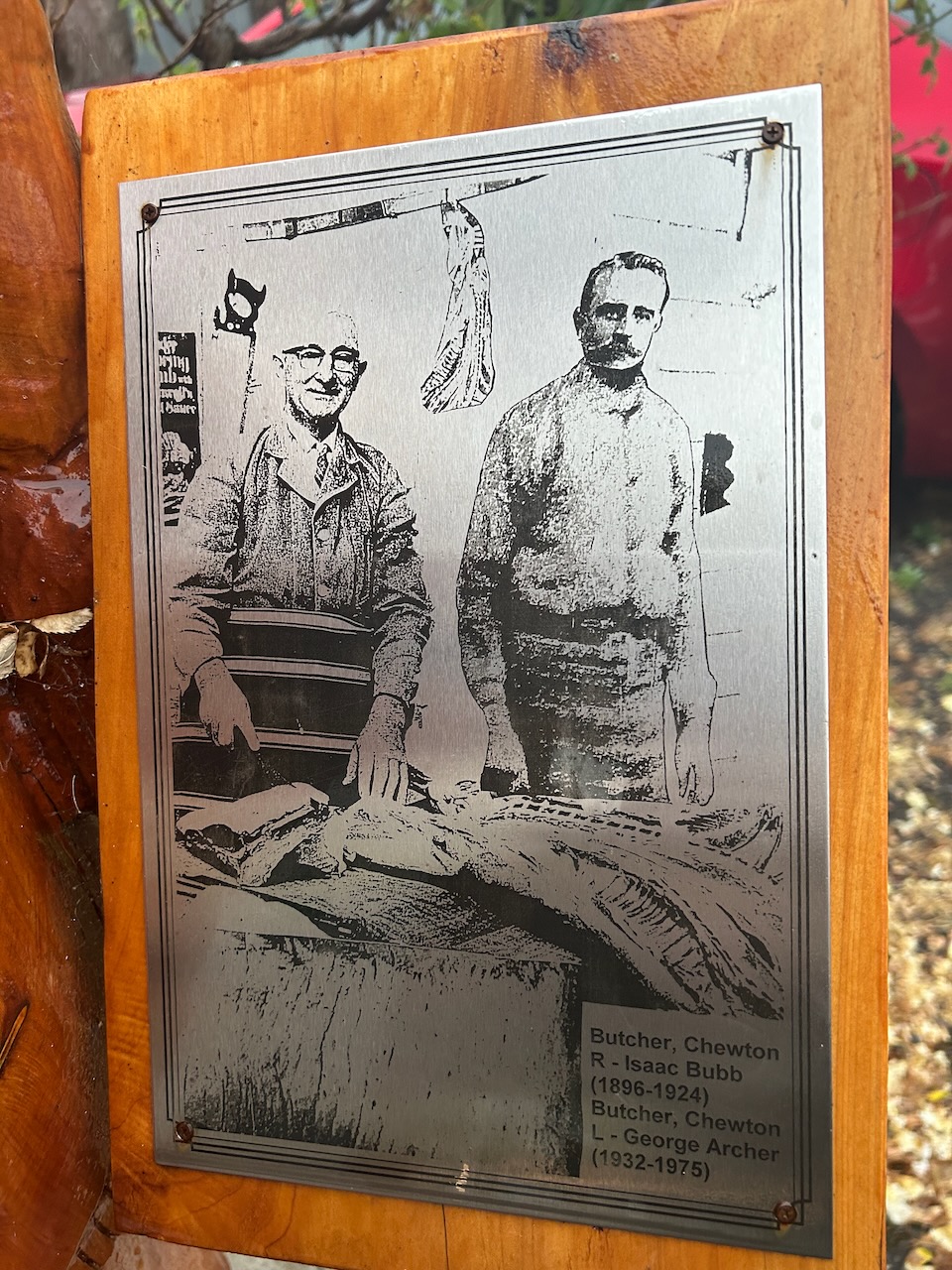
As we drove along Fryers Road we came across the old Blackwall Arms Hotel & Store that was built c. 1865. It was established by John Lockwood Westoby (b. 1827. d. 1880) and serviced the miners of the Chewton goldfields. Westoby was born in London, England in Decenber 1827 and emigrated to Australia in 1852. In 1911 George Archer purchased the property and it remained with the family until 2014. (Ancestry.com.au 2024) (Real Estate 2023)
As we approached Chewton we drove under the historic granite and red brick railway bridge.
We then reached the town of Chewton, about 4 km east of Castlemaine.
Chewton was first known as Forest Creek, named after Forest Creek which flows from Chewton to Castlemaine. The name was changed to Chewton, in honour of Lord Chewton, an acquaintance of Lady Castlemaine. Chewton initially started as a canvas town with gold miners and soon became a brick and timber township. Several of the town’s historic 1860 and 1870 buildings still remain. During the 1860s Chewton had a court, a mining survey office, two banks, 14 hotels, butchers, grocers and blacksmiths. In December 1860, Chewton had been proclaimed a borough. (Victorian Places 2024)
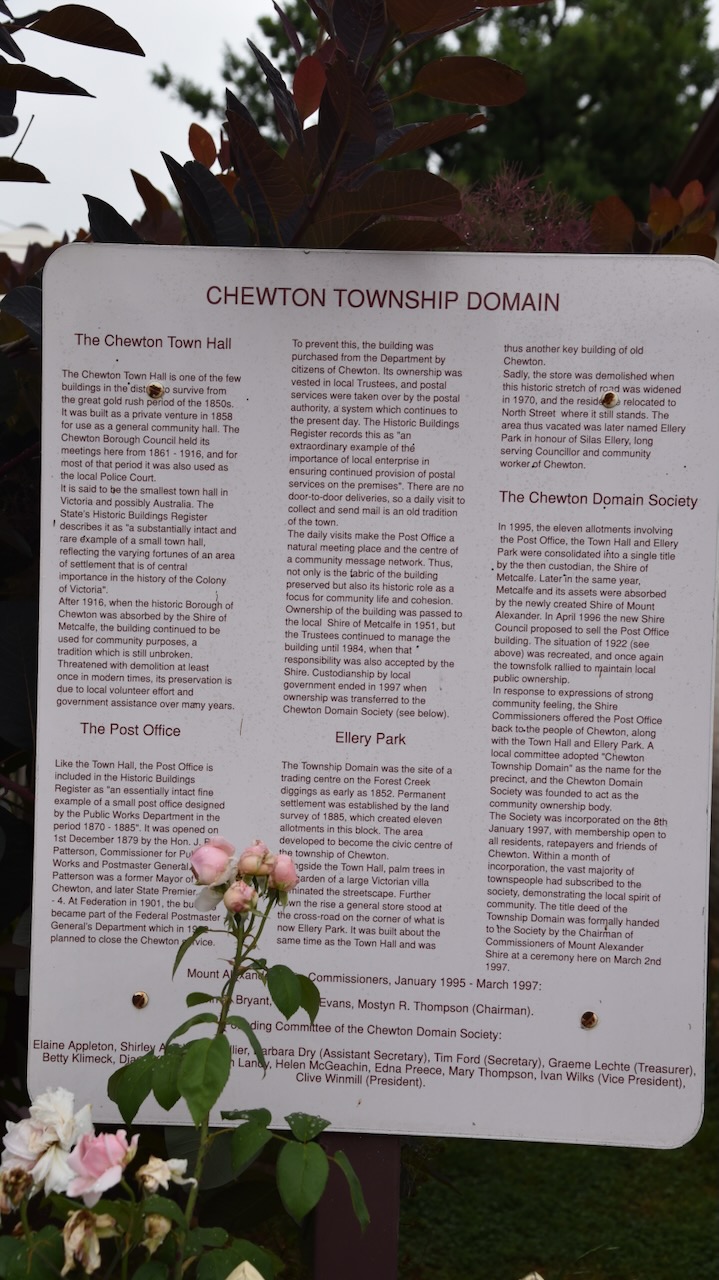
The old Chewton Town Hall was built in 1858 as a private venture for use as a general community hall. From 1861 to 1916 the Chewton Borough Council held its meetings in the building. During that time it was also used as a local Police Court. (chewton.net 2024)
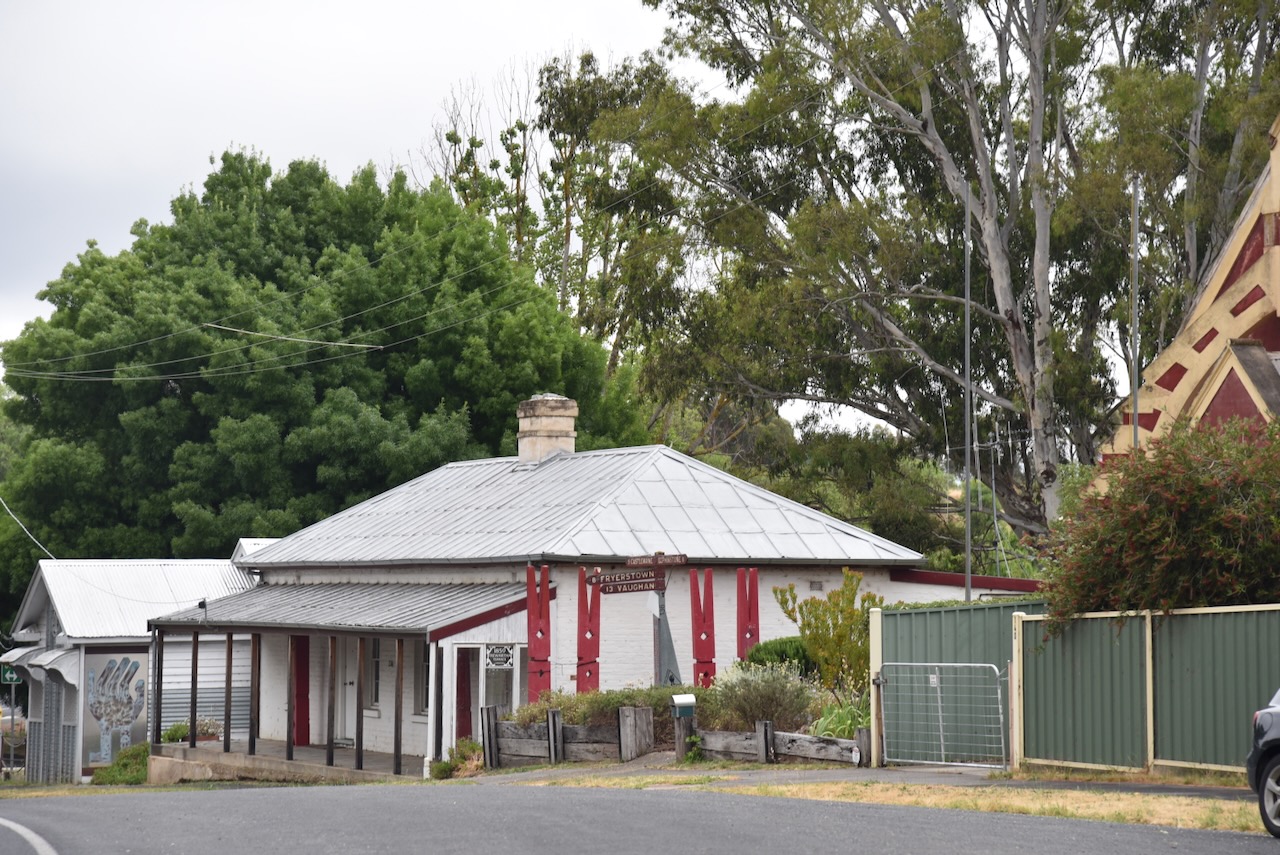
The Chewton Post Office was opened on the 1st day of December 1879 by Victoria’s Commissioner for Public Works, the Hon. J.B. Patterson, formerly a Mayor of the Borough of Chewton, and later a Premier of Victoria from 1893 to 1894. In 1901 at Federation the building became part of the Postmaster-General’s Department. In 1922 there were plans to close the Post Office, but this was overcome by the purchase of the building by the citizens of Chewton. (chewton.net 2024)
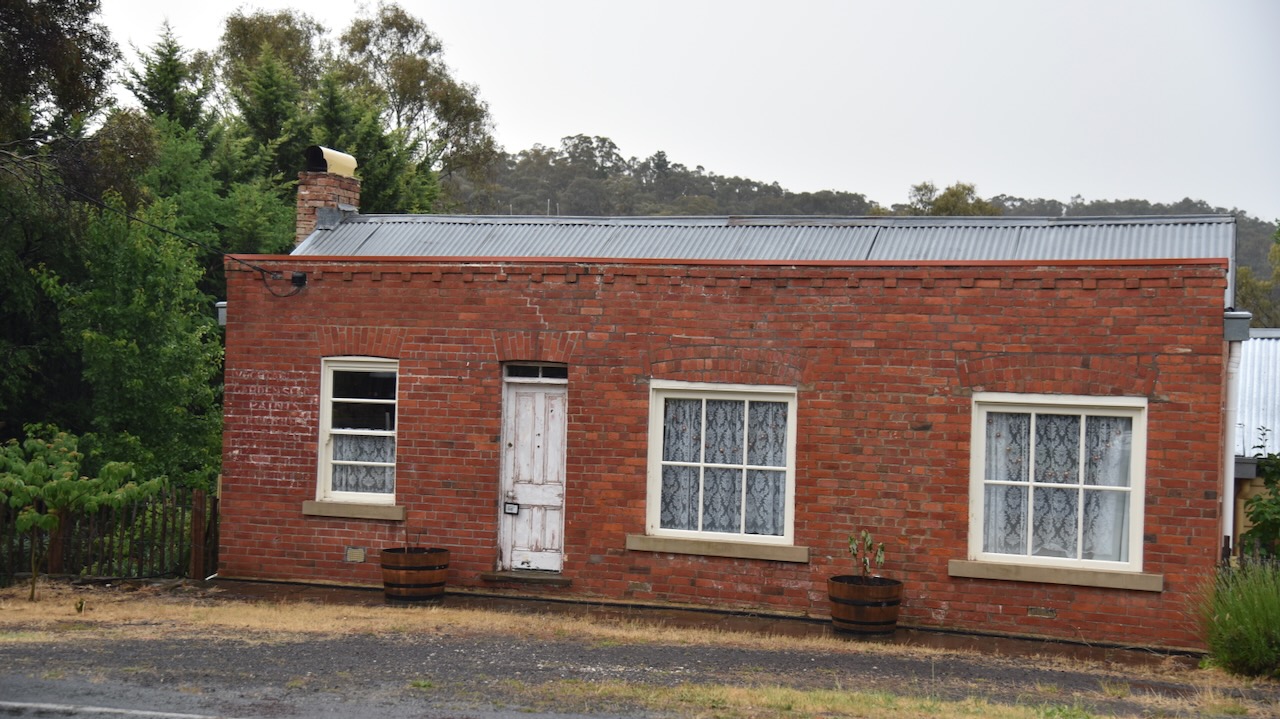
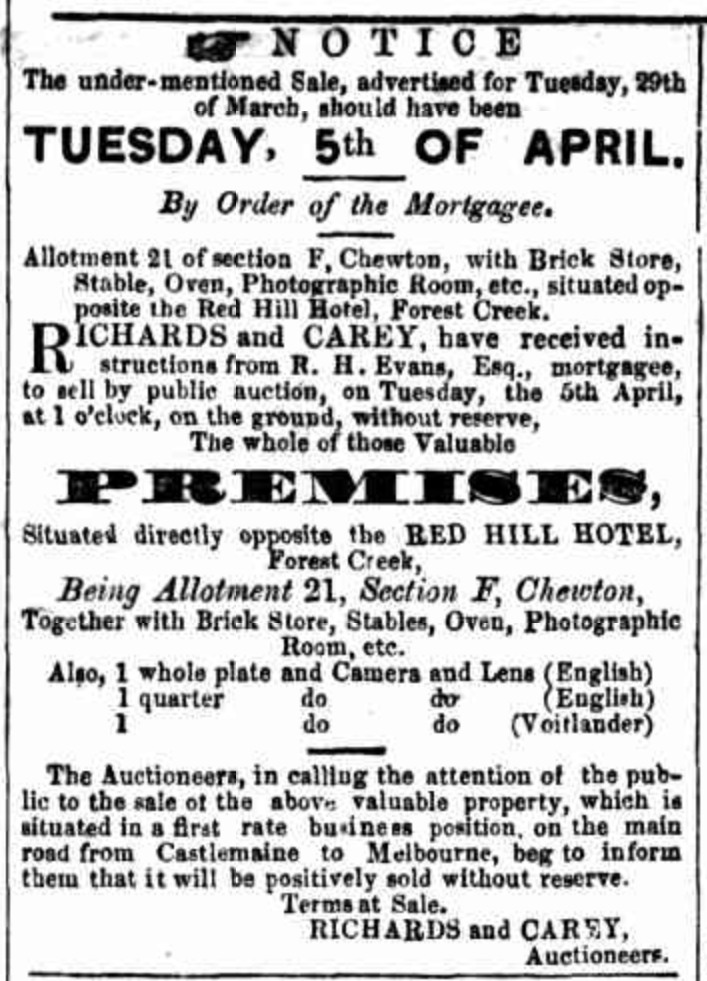
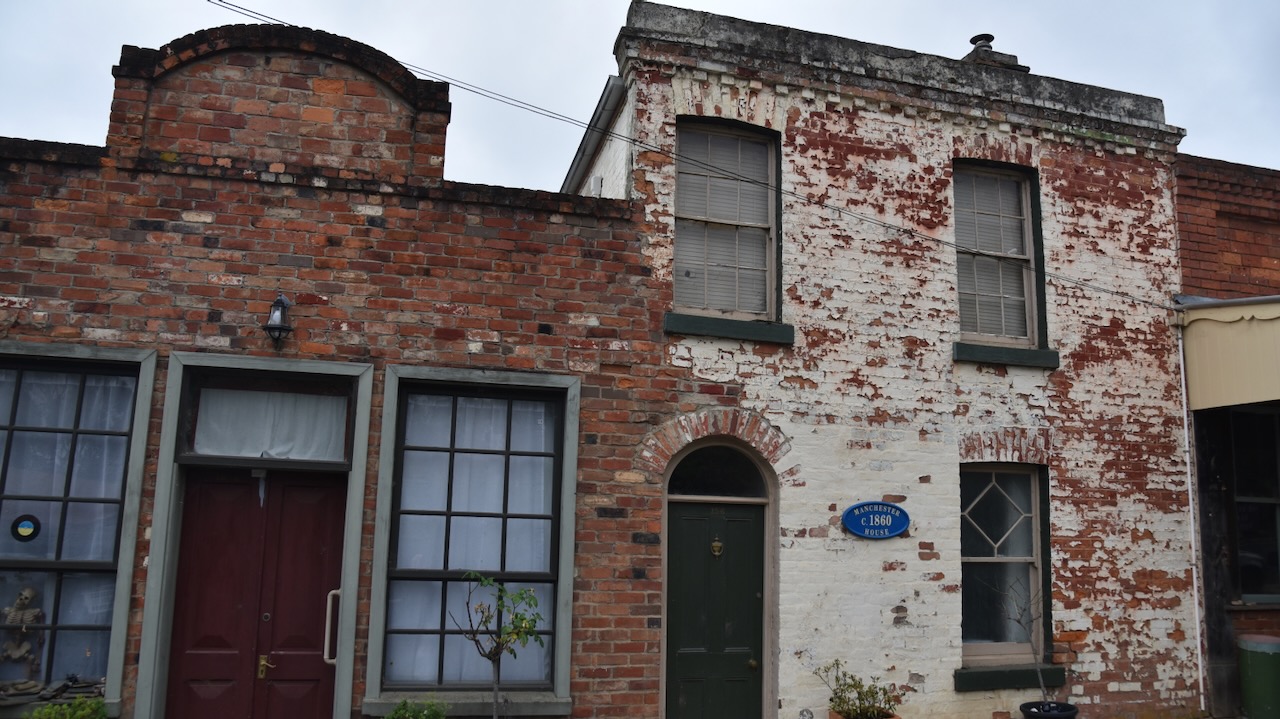
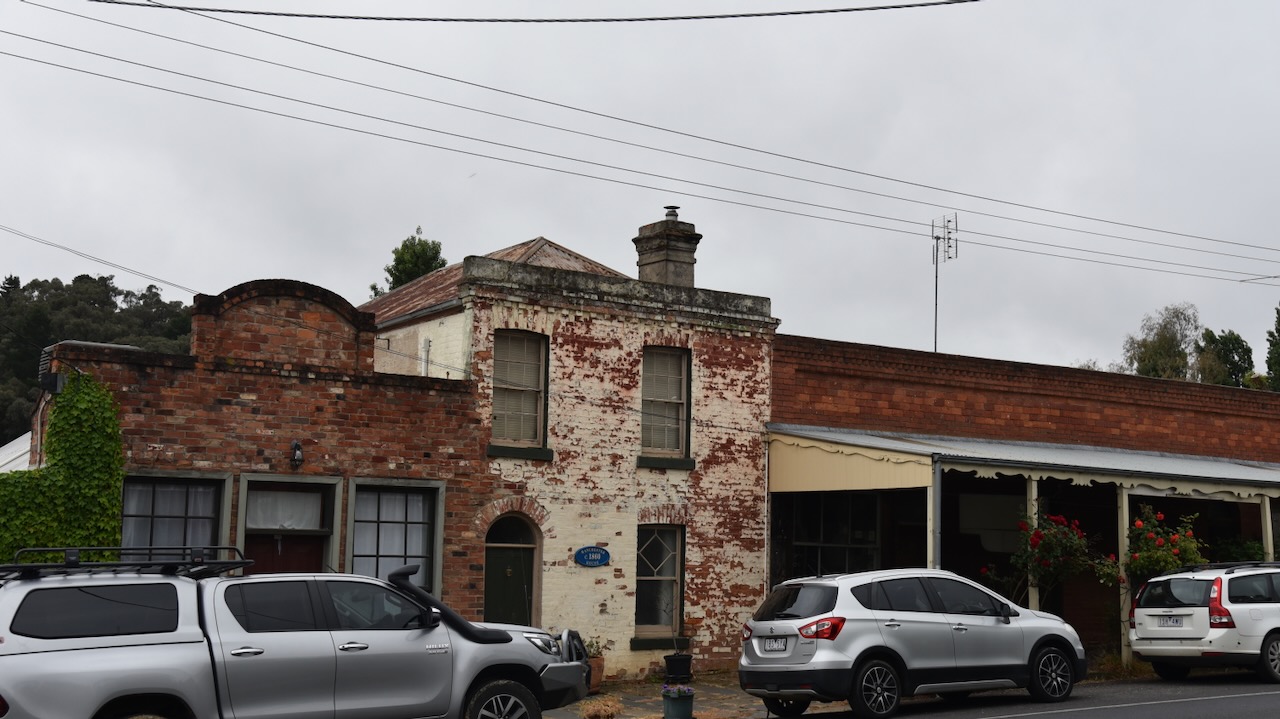
The Chewton bakery building was built in 1858/1859. C. McDonald, a photographic artist was one of the first owners of the building, who conducted a photography business from the building for a short time.
In 1859 the Mount Alexander Mail listed a mortgagee’s auction of the property as a brick store, stables, oven, and photographic room. (Trove, Mount Alexander Mail 1859)
Above:- Article from the Mount Alexander Mail, Fri 1 Apr 1859. Image c/o Trove.
During the 1860s the building was referred to as ‘Manchester House’ and was used for board and lodgings.
In the 1870s Robert Penney (b. 1848. d. 1932) purchased the building and ran his ‘Bread and Biscuit Baker, Confectioner & General Grocer’ business for about 50 years.
Above:- Advertisement in the Mount Alexander Mail, Thu 9 Apr 1903. Image c/o Trove.
In 1912 the building was sold to John White, and then to William Minhan in 1926. In 1955 it was purchased by Earl Ralph and it operated as a bakery until 1976. Following this the building functioned as a Tea Rooms, an Antique store, and a private residence
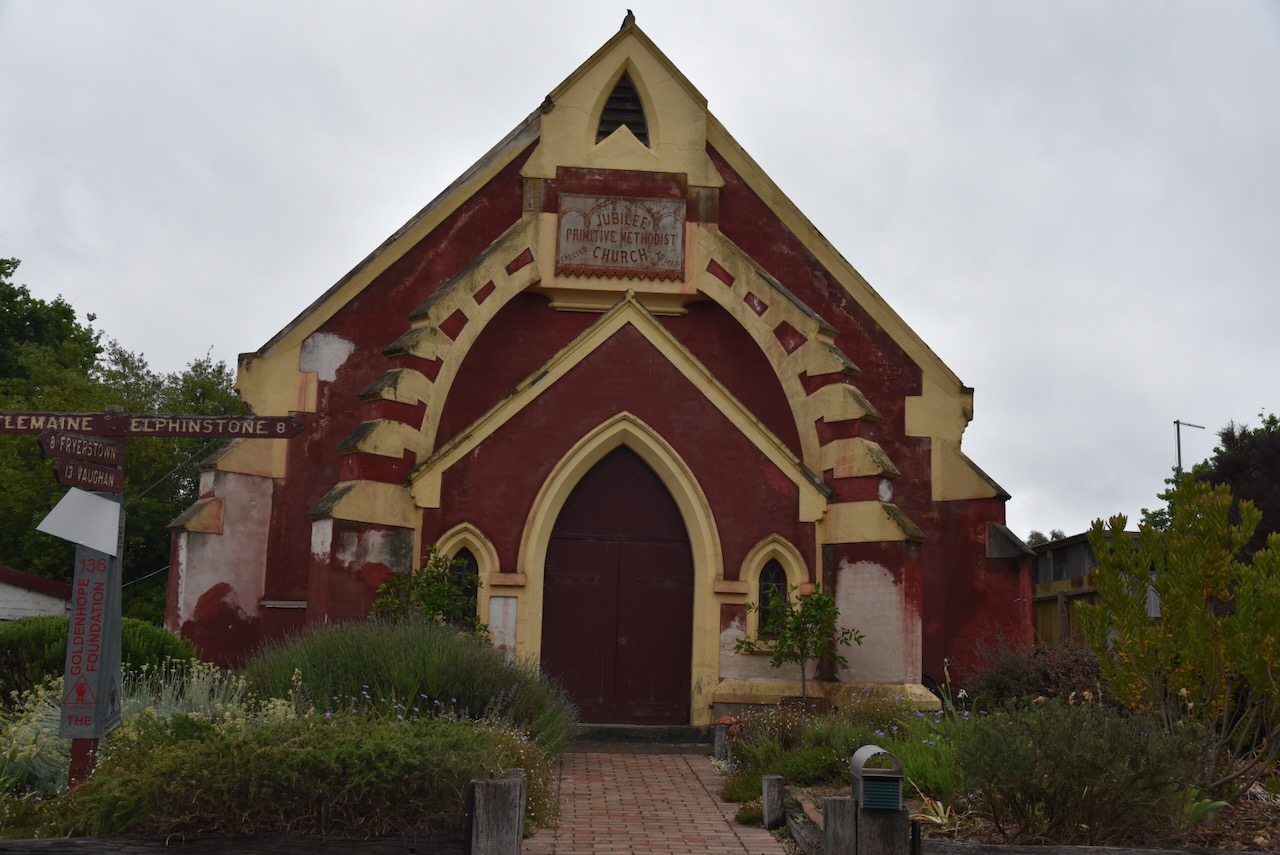
The former Primitive Methodist Church was built in 1860 and was designed by Crouch and Wilson. The church is an unusually early use of the Gothic style by the Primitive Methodists. (Victorian Heritage Database 1989)
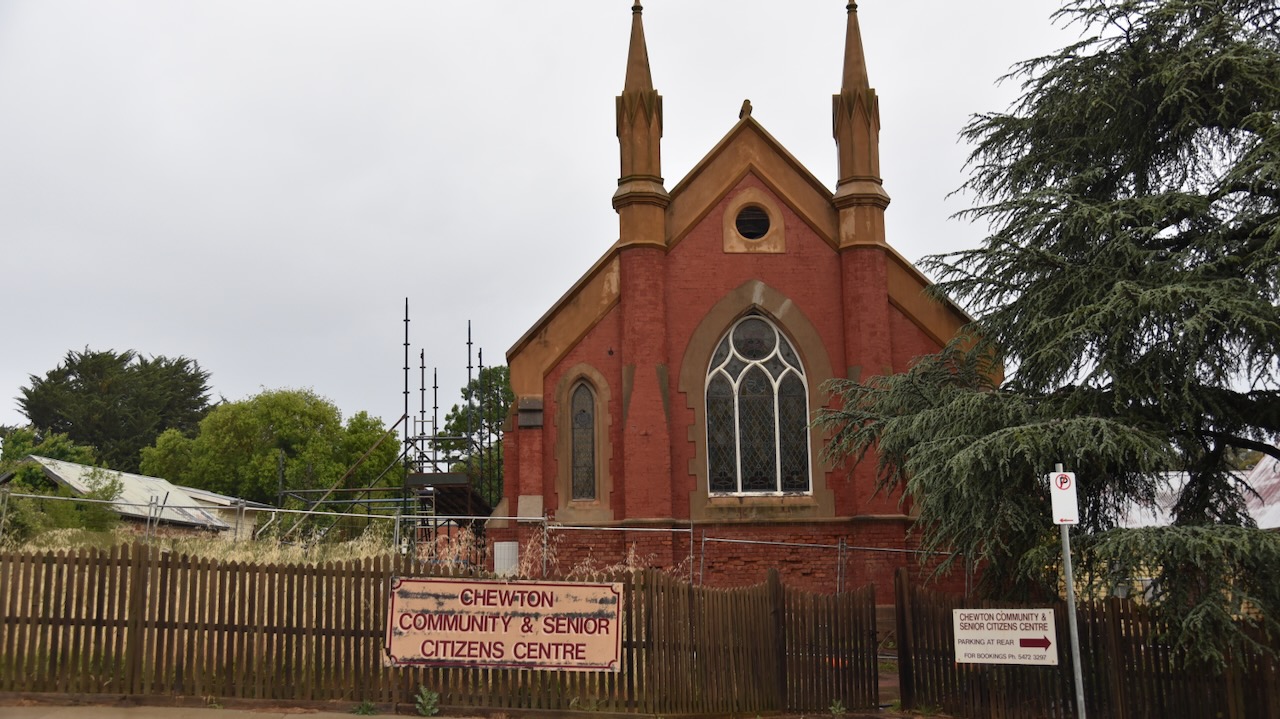
The former Wesleyan church at Chewton was opened in 1861.
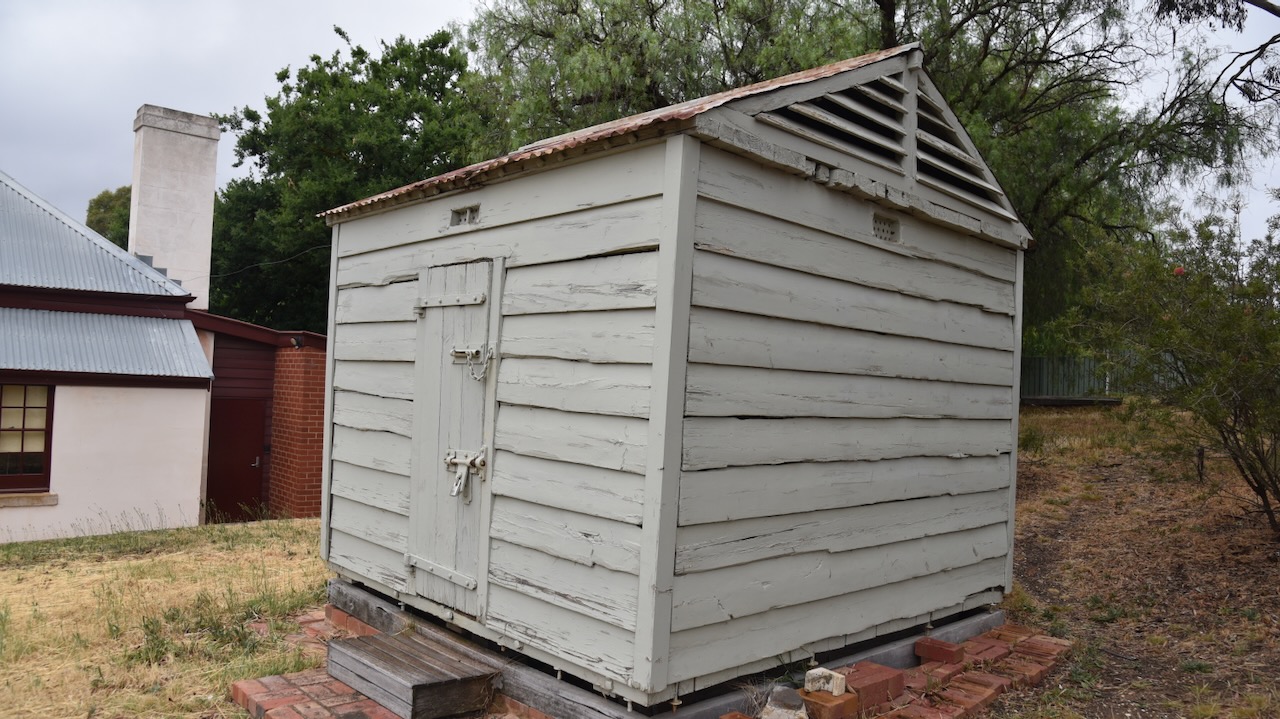
One of the oldest portable police lockups can be found in Chewton. It was built in the 1860s and was relocated from the former police quarters behind the town hall following restoration in 1994/1995.
In June 1948, a Chewton resident miraculously survived a freak accident at her home. Mrs. Frances White was at her home in Main Road Chewton, when part of her backyard suddenly caved in and left her hanging precariously at the edge of a hole 80 feet deep and 8 feet in diameter. Her home was located on an old disused Gold mine shaft.
There is a magnificent wooden sculpture of Mrs. White at this location.
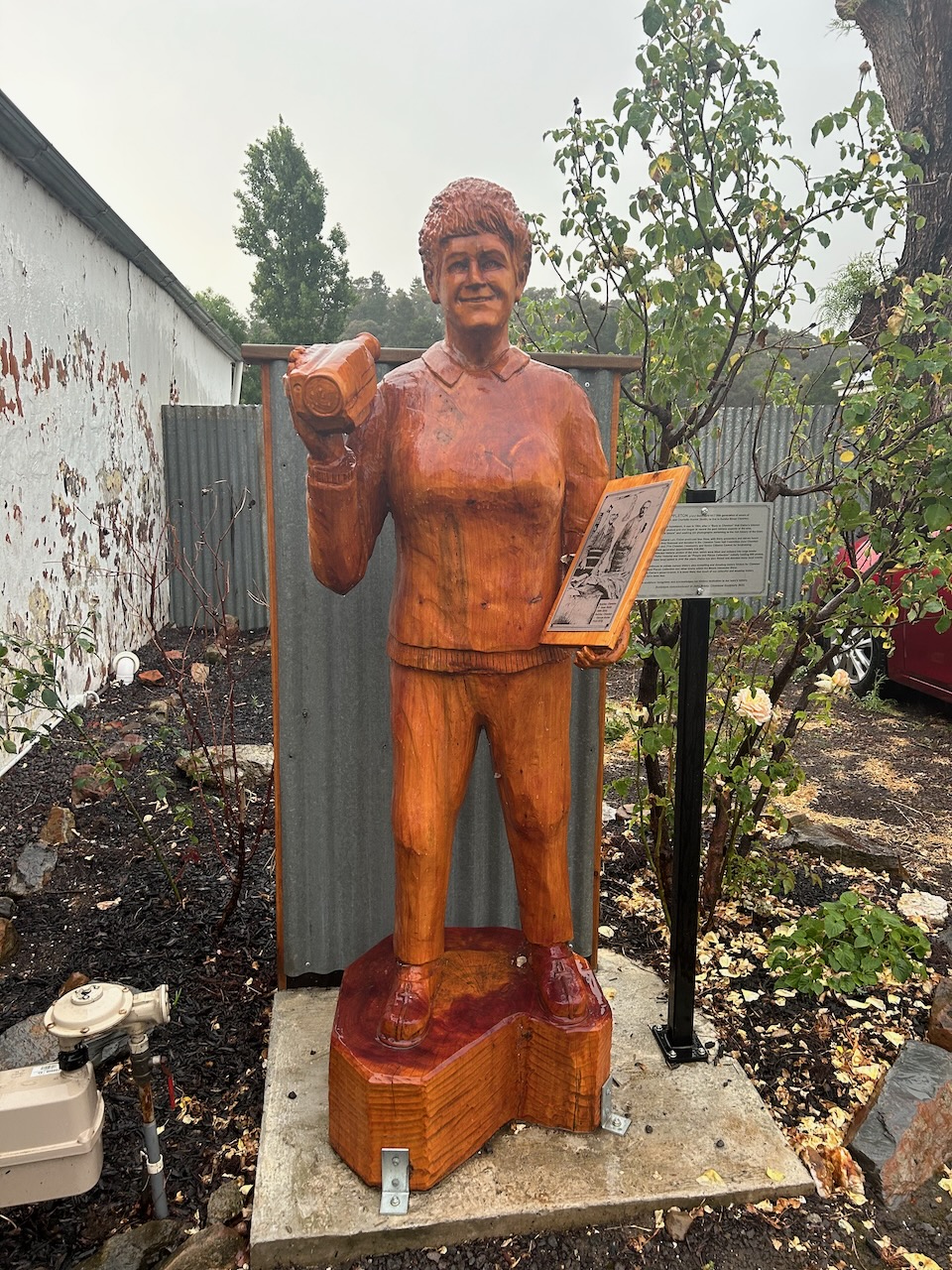
Another wooden sculpture to be found in the town is that of Elaine Mary Appleton who has been passionate in capturing Cheston’s history.
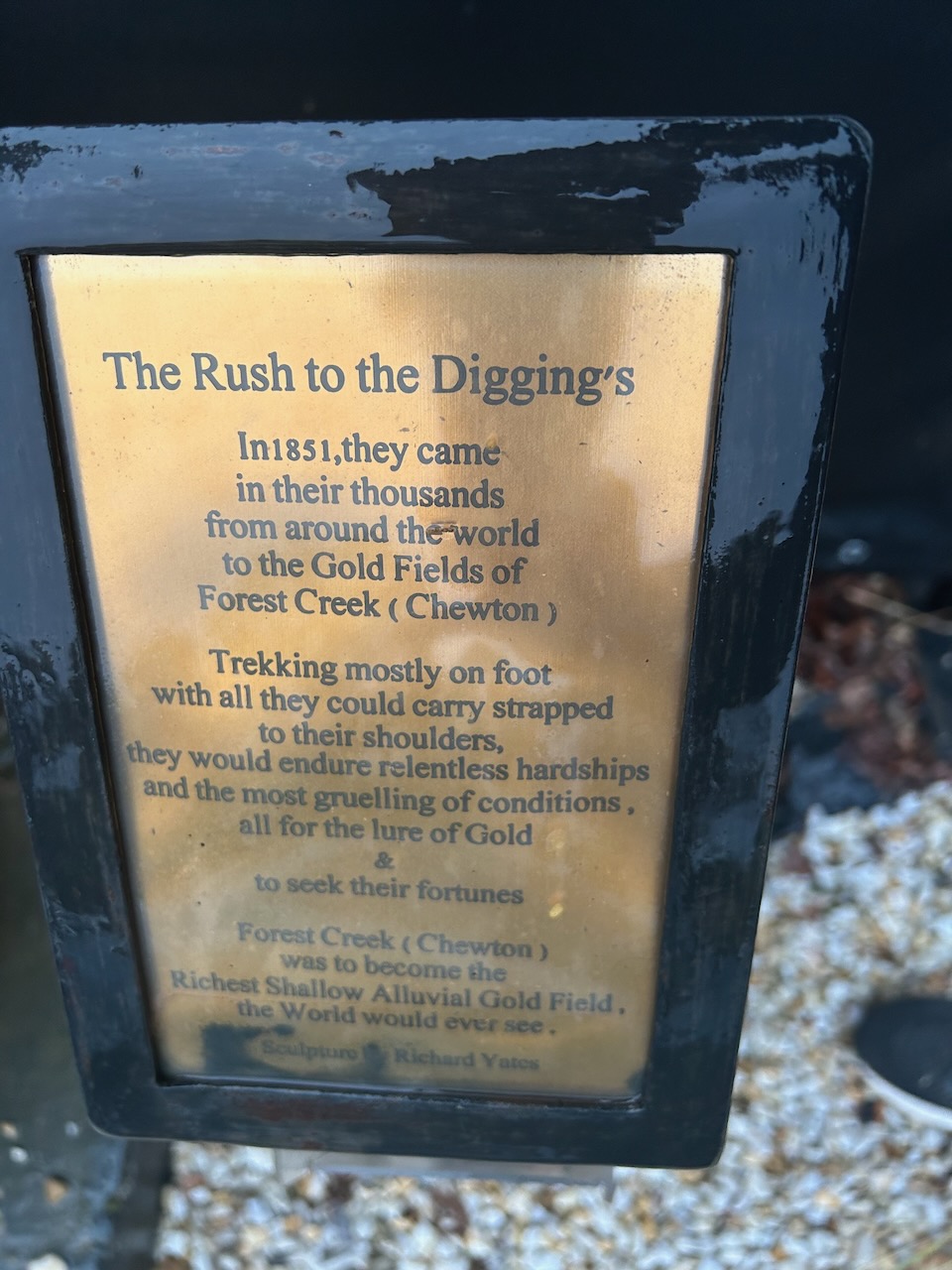
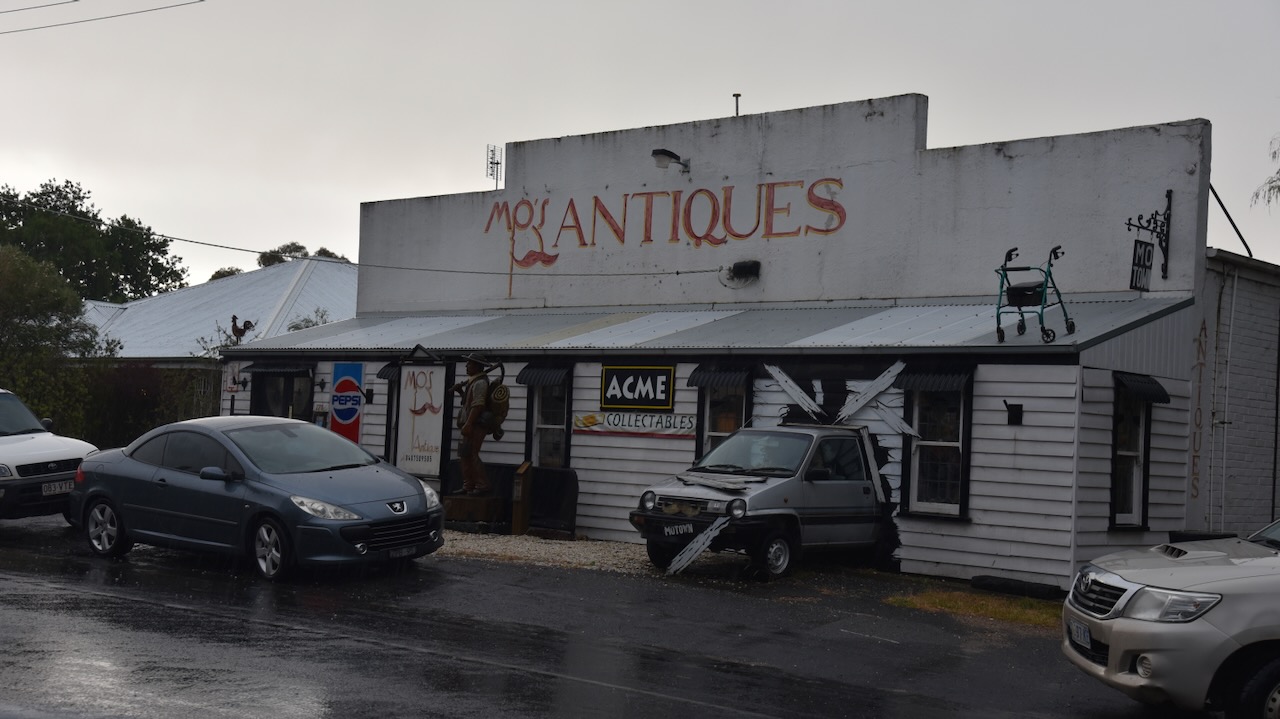
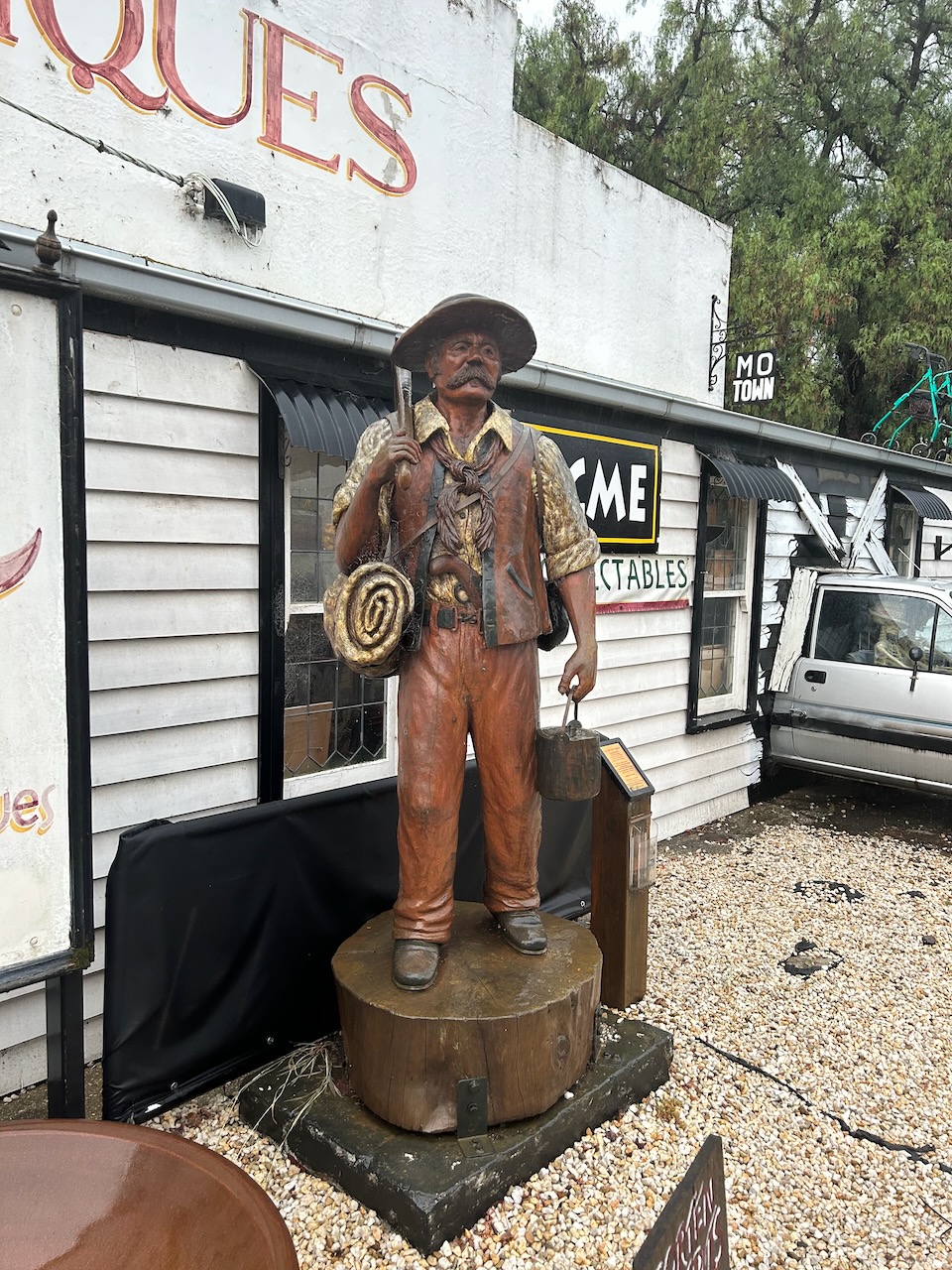
Mo’s Antiques is a unique building where you can view a car that appears to have crashed through the building’s front wall from inside the building. Outside Mo’s is the Mo the Miner sculpture, an 1850s gold miner. The sculpture was commissioned in 2015 by Gerald ‘Mo’ St John and was created by local sculptor Richard Yates. (Goldfields Guide 2024)
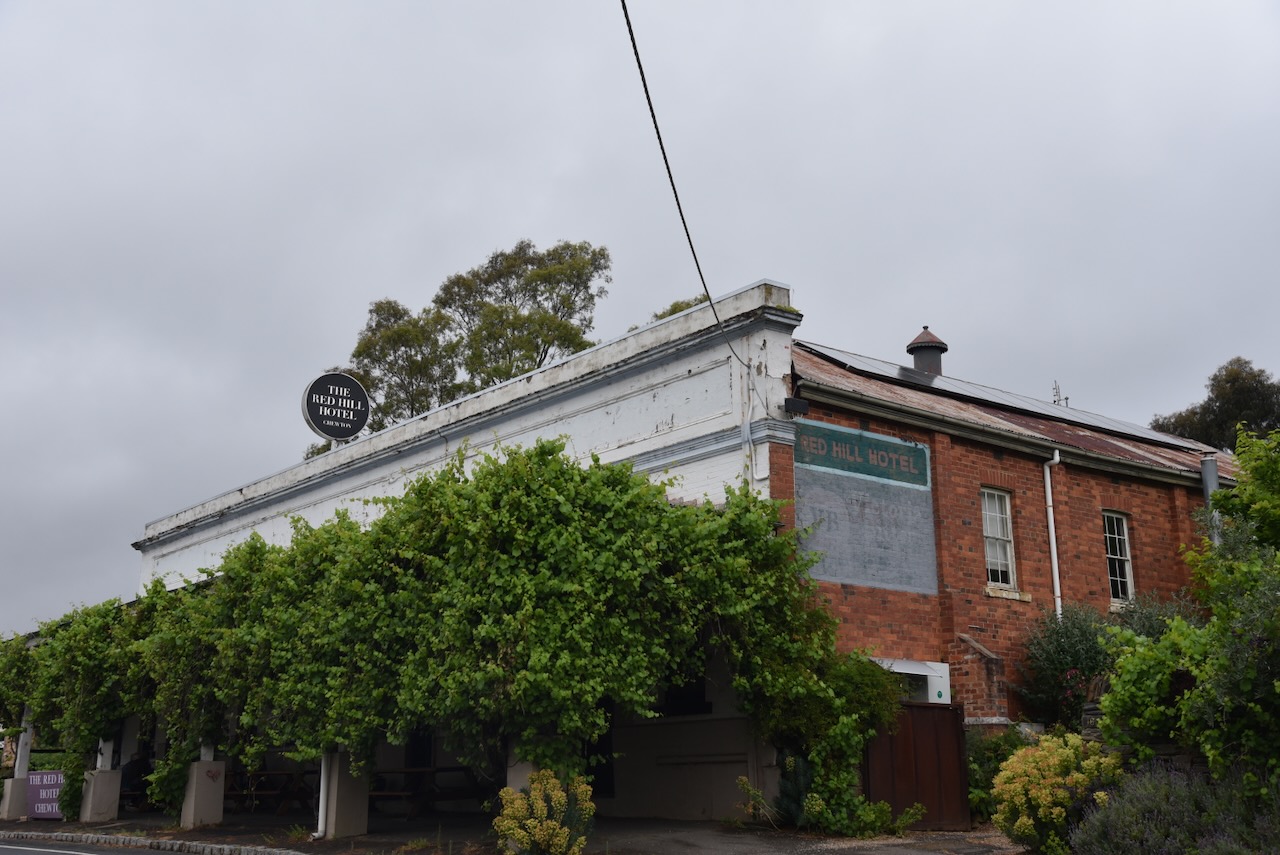
It was dinner time so we headed to the Red Hill Hotel. This historic hotel was opened in 1854.
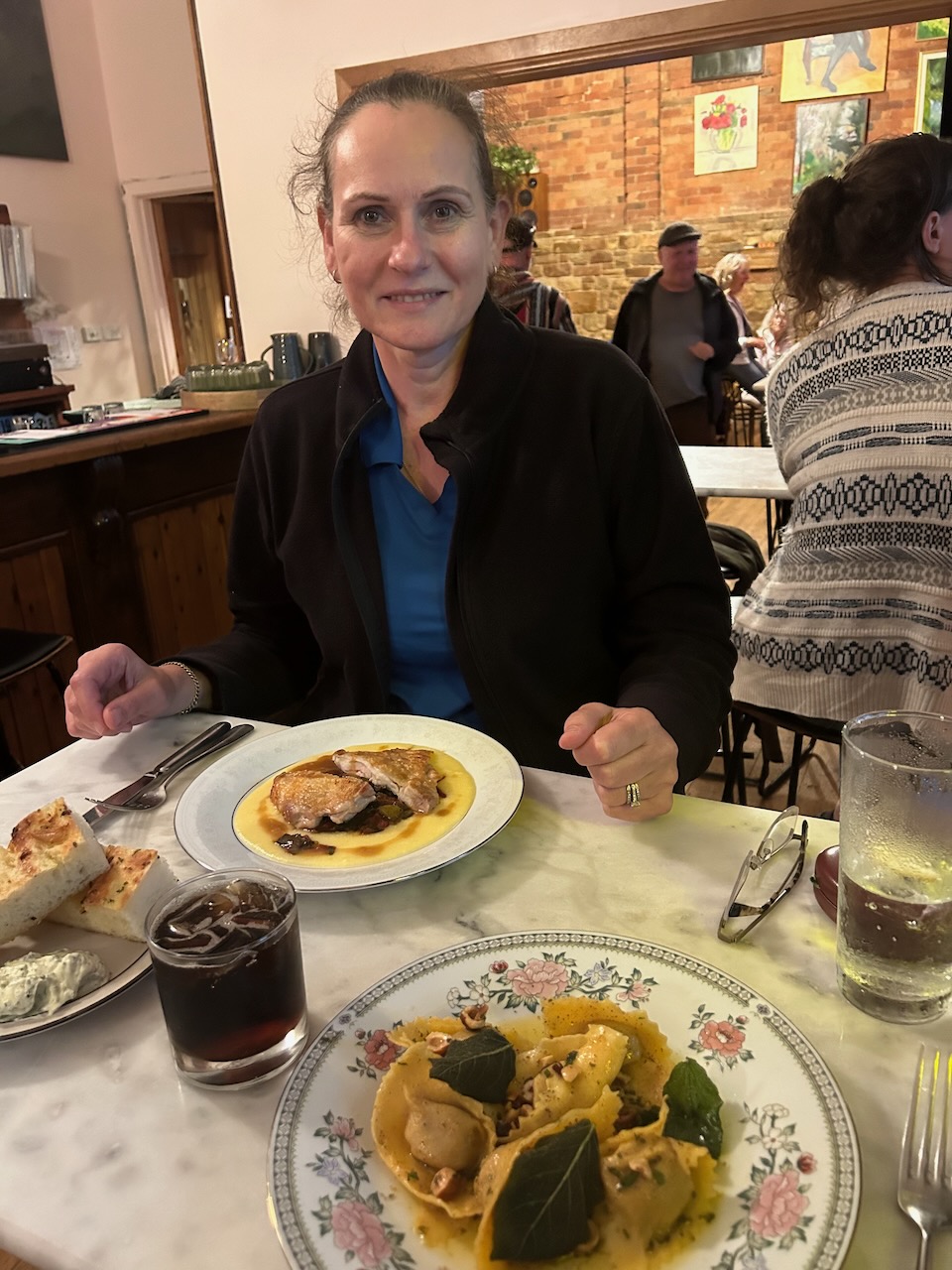
We enjoyed a very nice meal and a few quiet drinks.
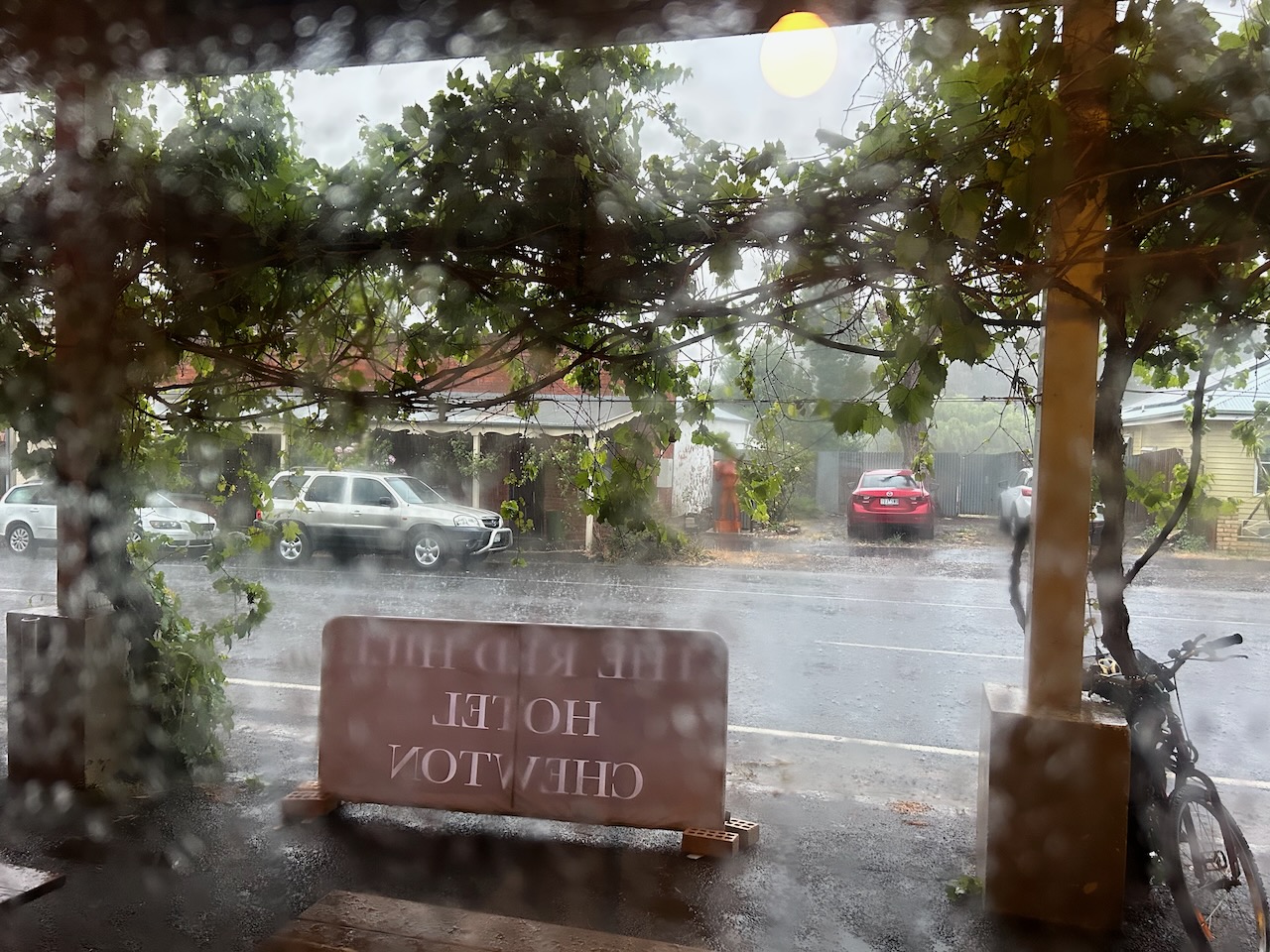
Whilst we were at the hotel, the heavens opened up and Chewton had torrential rain. Even the pub experienced flooding.
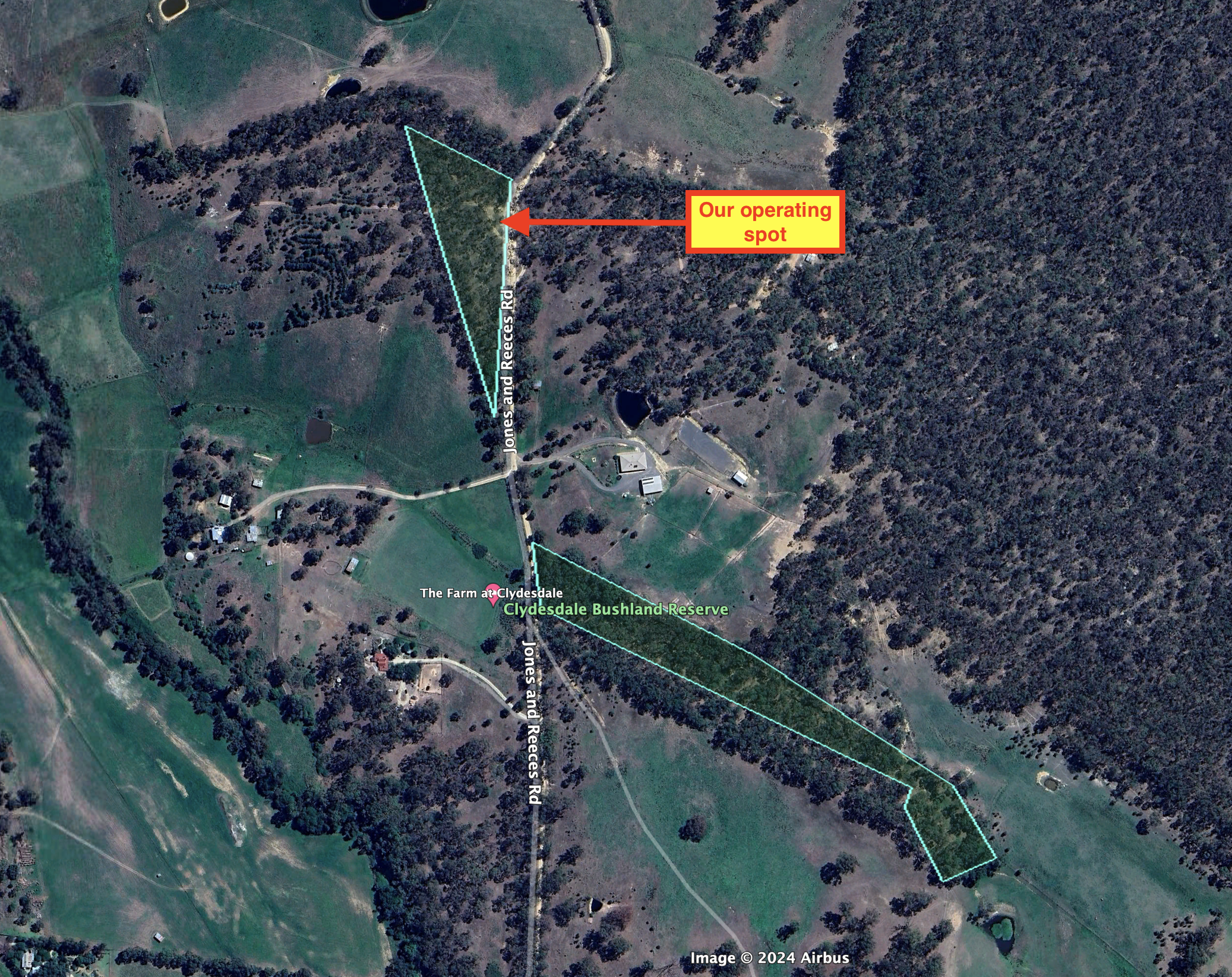
The weather had cleared a little, so we decided to activate the Clydesdale Bushland Reserve VKFF-4278.
The reserve is located in two parts on the eastern and western sides of Jones and Rece Road at Clydesdale. The reserve is about 3.5 hectares in size and was established on the 23rd day of August 1988. (Blake 1978) (CAPAD 2022)
Clydesdale takes its name from Clyesdale, near Mossend, North Lanark, Scotland. (Blake 1978)
We found a dirt track running off Jones and Reece Road. We ran the Yaesu FT857, 40 watts, and the 20/40/80m linked dipole for this activation. I used the special event callsign of VI10VKFF to celebrate the 10 year anniversary of the World Wide Flora Fauna program in Australia.
Above:- An aerial view of the reserve showing our operating spot. Image c/o Google Earth.
Marija worked the following stations on 40m SSB:-
VK1AO
VK2MET
VK3YV
VK3YNL
VK3APJ
VK4SMA
VK2IO/p (Molonglo Gorge Nature Reserve VKFF-0991)
VK2KET
VK2YW
VK3PF
VK3KAI
KG5CIK
VK3BBB
VK2CCP
VK3CEO
VK2MOE/p (Coolah Tops National Park VKFF-0111)
I worked the following stations on 40m SSB:-
VK1AO
VK2MET
VK3YV
VK3YNL
VK3APJ
VK4SMA
VK2IO/p (Molonglo Gorge Nature Reserve VKFF-0991)
VK2KET
VK2YW
VK3PF
VK3KAI
KG5CIK
VK3BBB
VK2CCP
VK3CEO
VK2MOE/p (Coolah Tops National ParkcVKFF-0111)
VK4NH
VK4DXA
VK3SO
VK2GWB
VK3EJ
VK7MAT
VK5HW
VK1CHW
VK2MOP
VK2PBC
VK3VIN
VK3CLD/p
VK3SMW
VK3UAO
VK2DHN
VK5HS
VK5AEZ
VK3SG
VK1CT
VK1KAZ
I worked the following stations on 40m AM:-
VK5HS
VK3CEO
I worked the following stations on 80m SSB:-
VK3PF
VK3KAI
VK5HS
I worked the following stations on 20m SSB:-
VK4SMA
IK4IDF
References.
Ancestry.com.au. (2016). Ancestry® | Genealogy, Family Trees & Family History Records. [online] Available at: https://www.ancestry.com.au/ [Accessed 28 Mar. 2024].
Real estate (2023). Real Estate, Property & Homes for Sale – realestate.com.au. [online] Realestate.com.au. Available at: https://www.realestate.com.au. [Accessed 28 Mar. 2024].
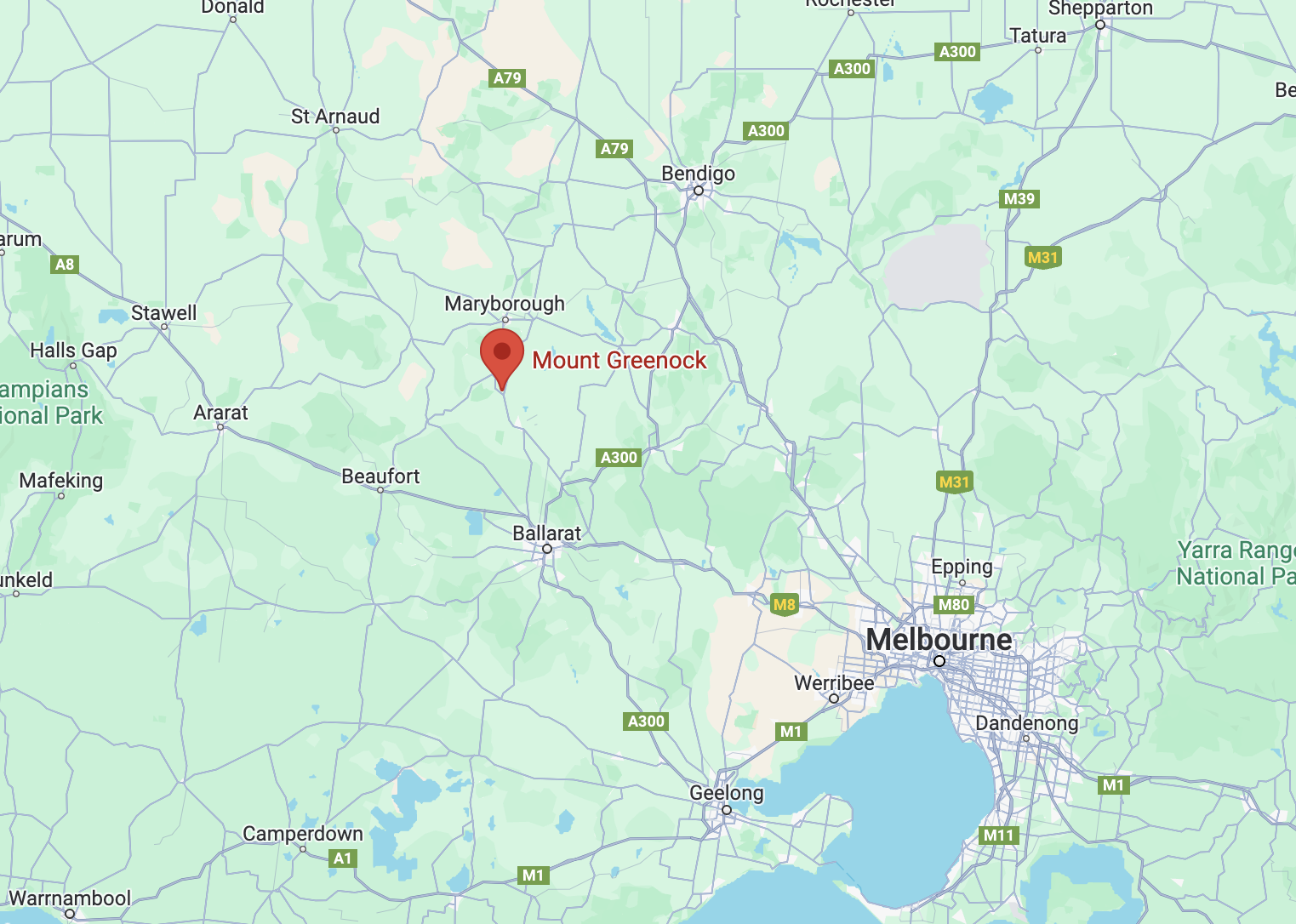
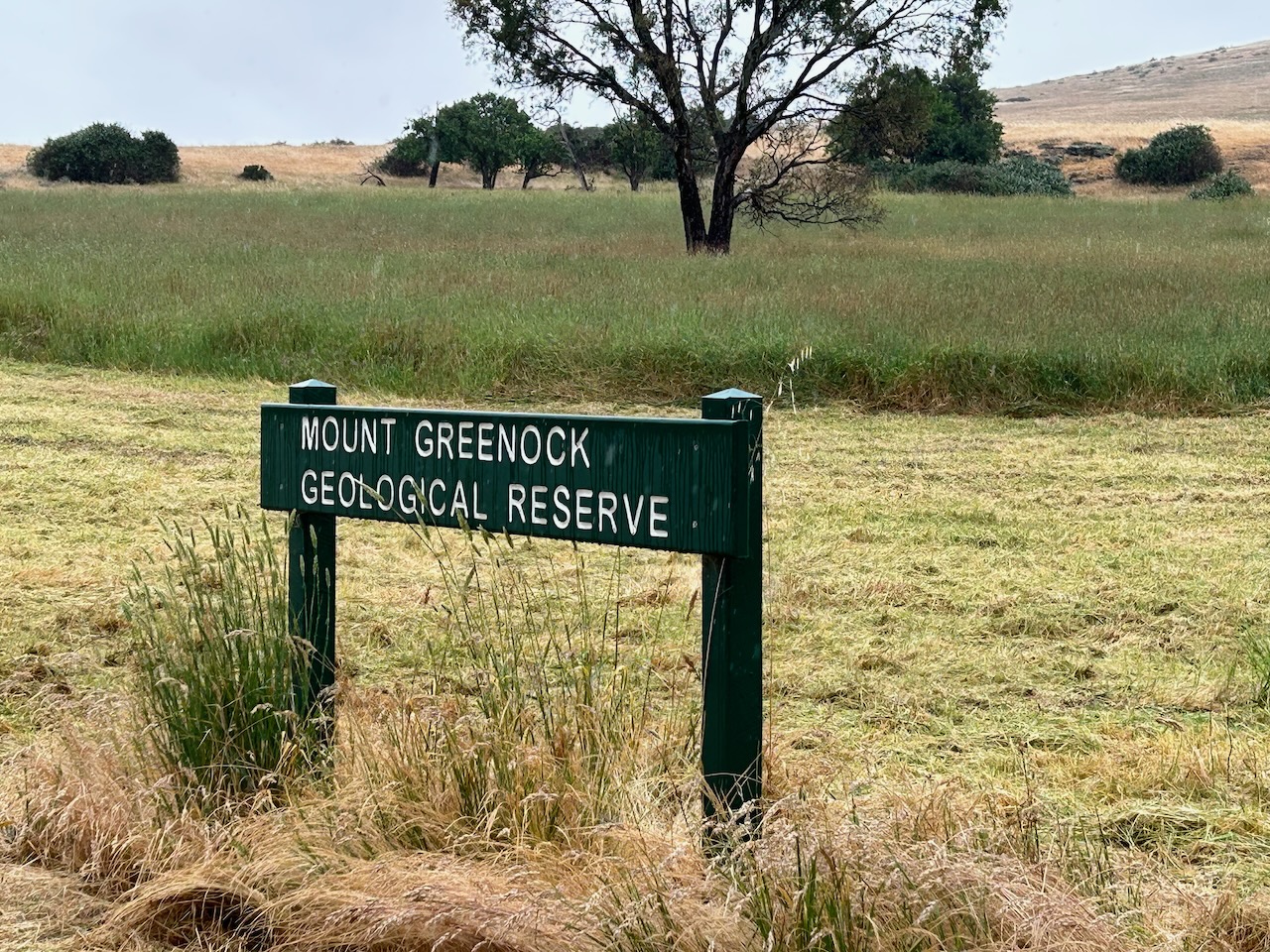
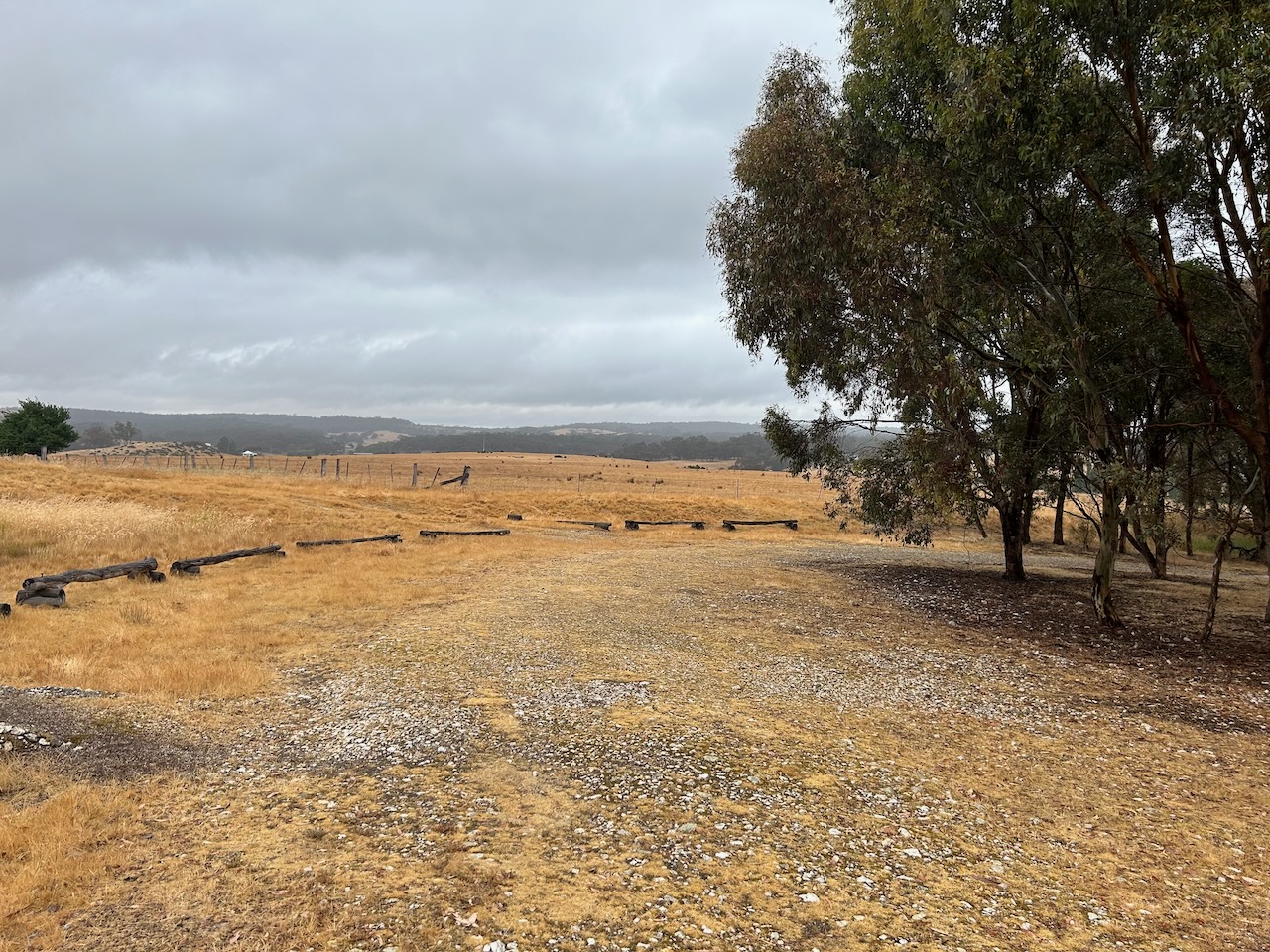
Marija and I left the Dunach Nature Conservation Reserve on Friday 24th November 2023, and we drove north to our next park activation, the Mount Greenock Geological Reserve VKFF-3789.
Above:- Map showing the location of the Mount Greenock Geological Reserve. Map c/o Google Maps.
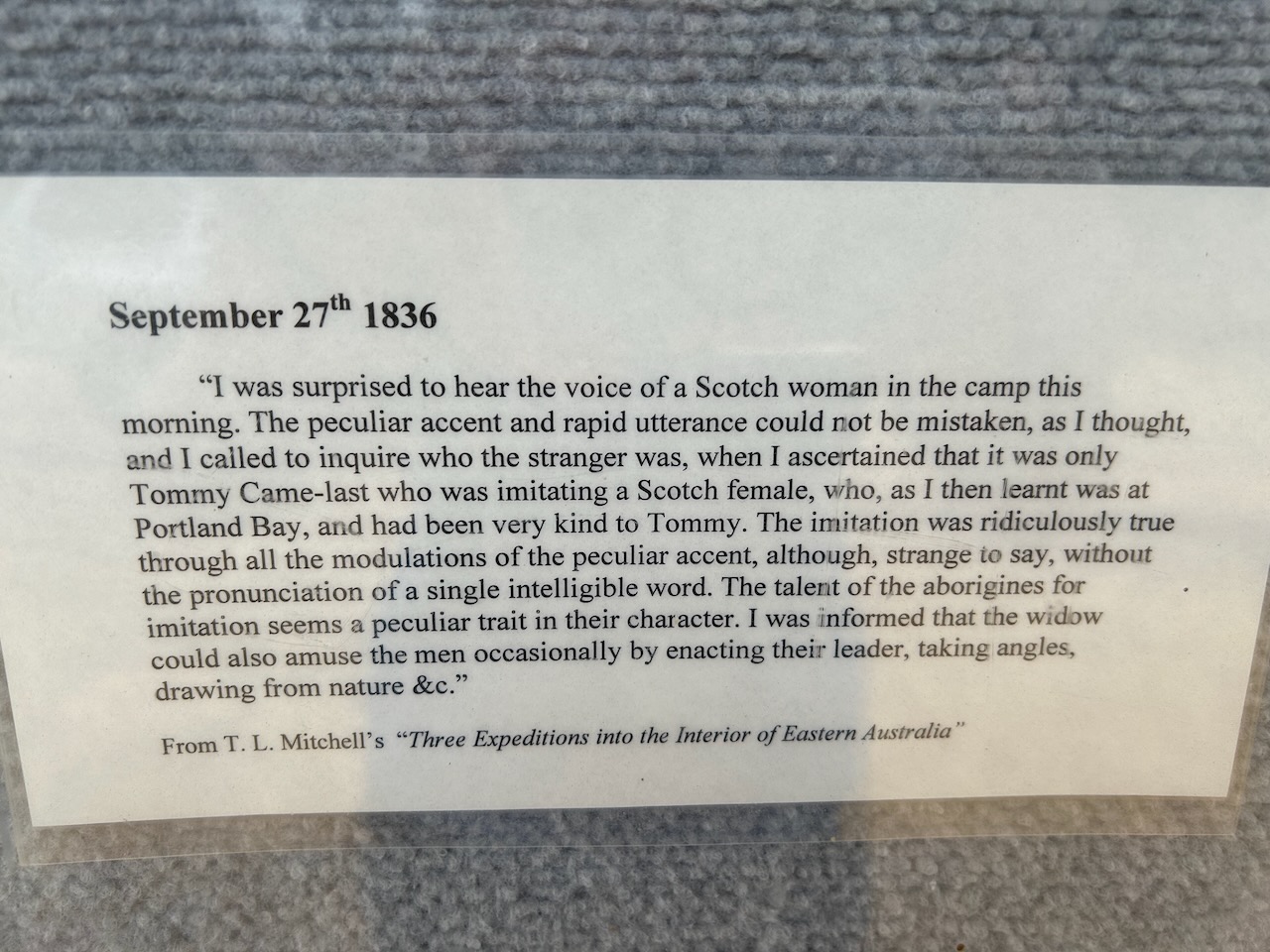
The explorer Sir Thomas Livingstone Mitchell was the first European to travel through this area. He climbed and named Mount Greenock on the 26th day of September 1836. The name came from a burgh on the Forth of Clyde. From this vantage point, Mitchell also named the bare surrounding volcanic cones as the “Mammeloid Hills”. (Monument Australia 2024)
Above:- Sir Thomas Livingstone Mitchell. Image c/o Wikipedia.
From 1841, Mount Greenock formed part of Alexander MacCallum’s Dunach Forest pastoral run, sometimes referred to as the Mount Greenock run. (Goldfields Guide 2024) (Victorian Goldfields Project 1998)
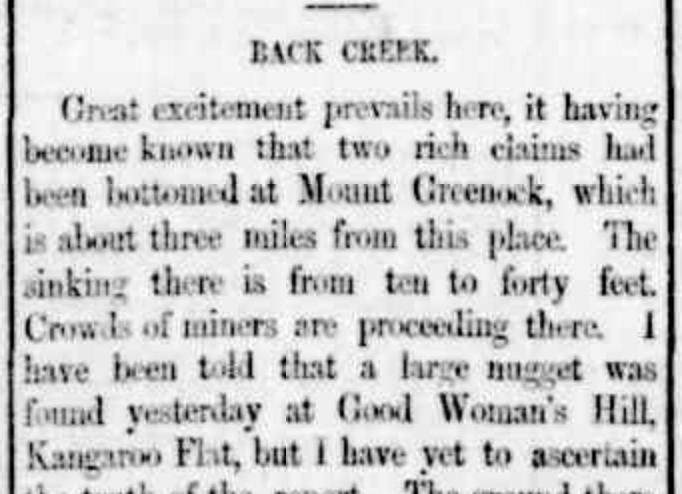
From 1855 to 1886 gold was mined at Mount Greenock. The first period of gold mining at Mount Greenock was in June 1855. (Victorian Goldfields Project 1998)
Above:- part of an article from the Geelong Advertiser, Tue 7 Jun 1859. Image c/o Trove.
The reserve is about 142 hectares in size and was established on the 24th day of August 1982. (CAPAD 2022)
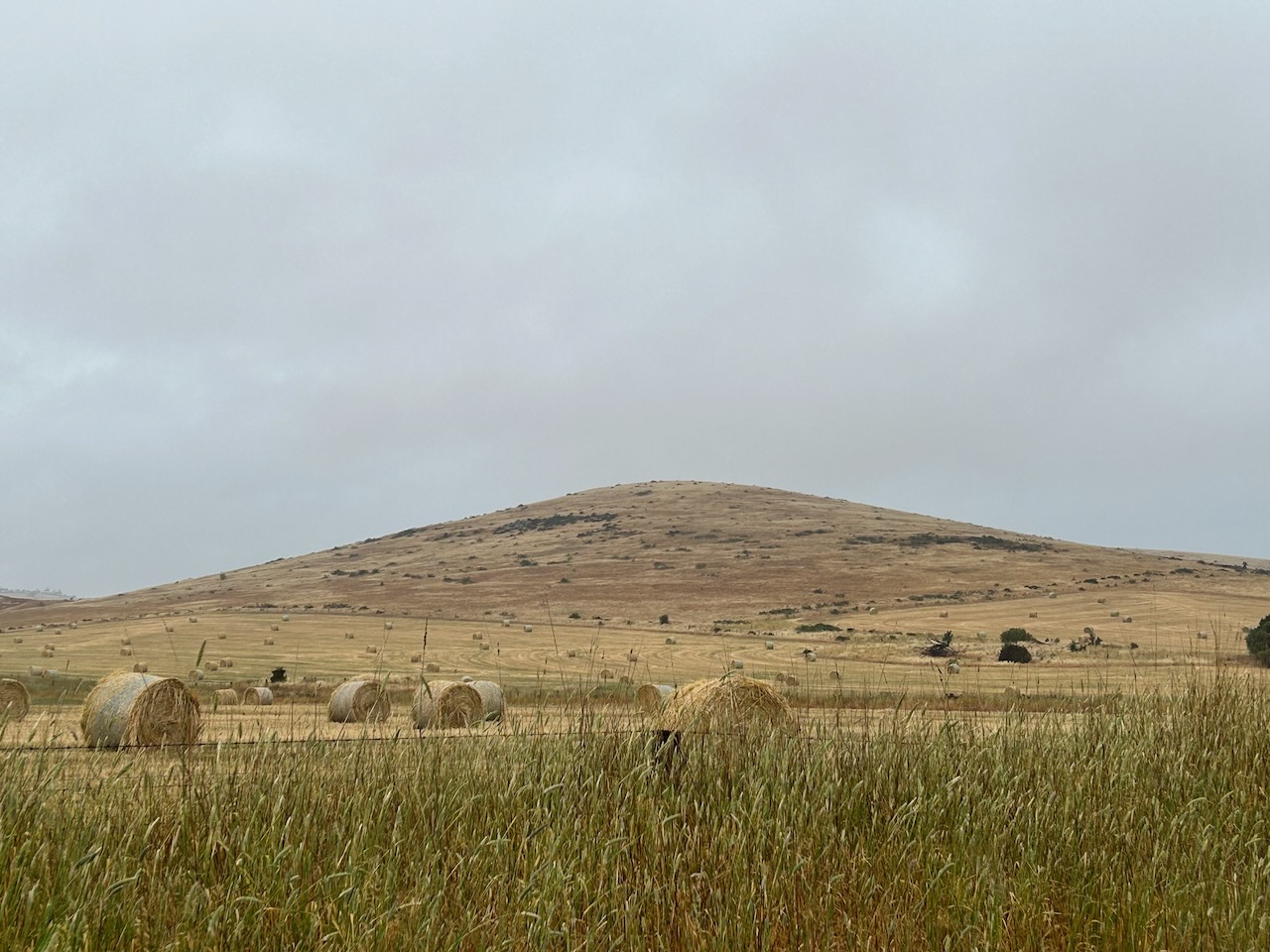
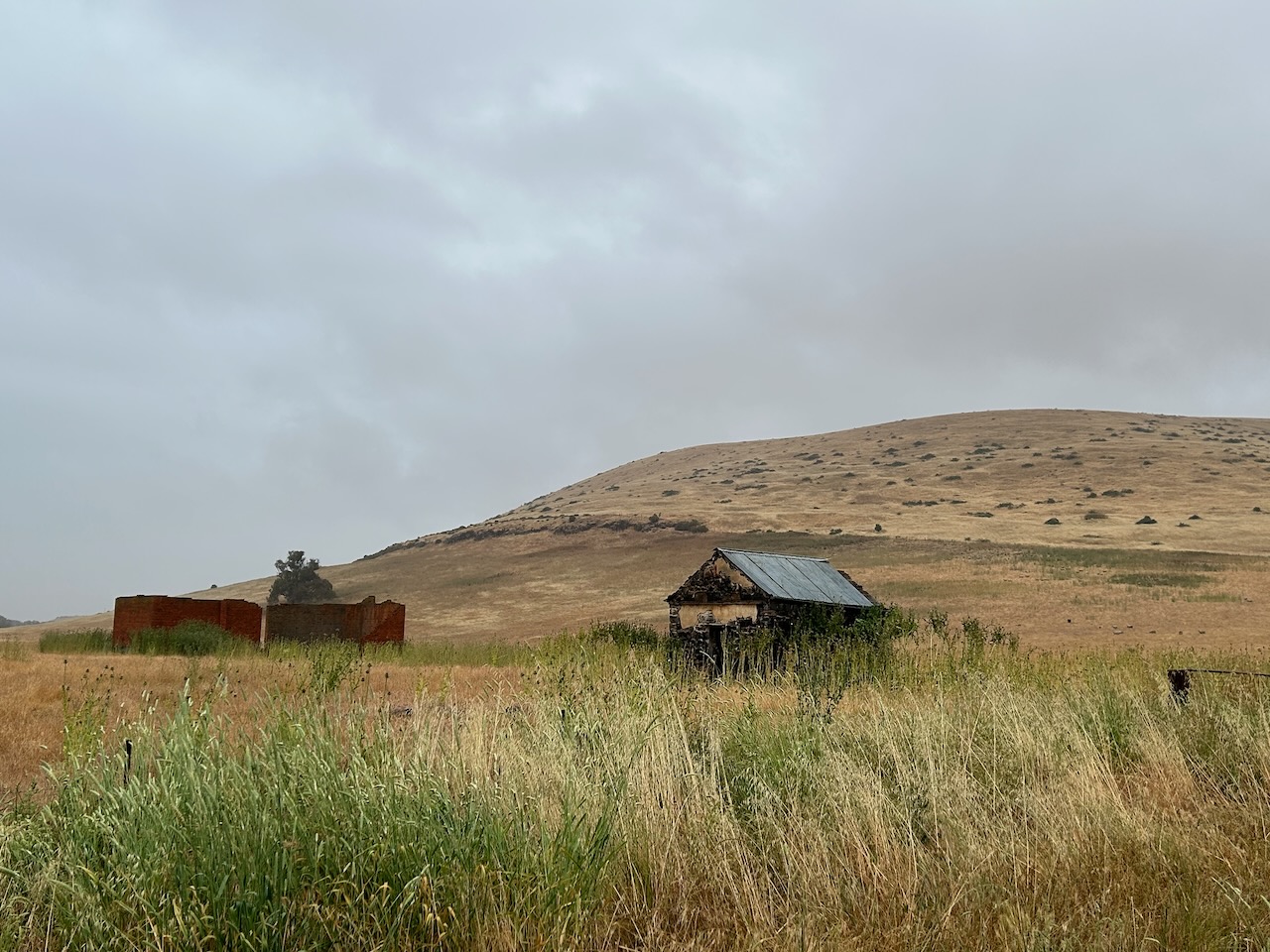
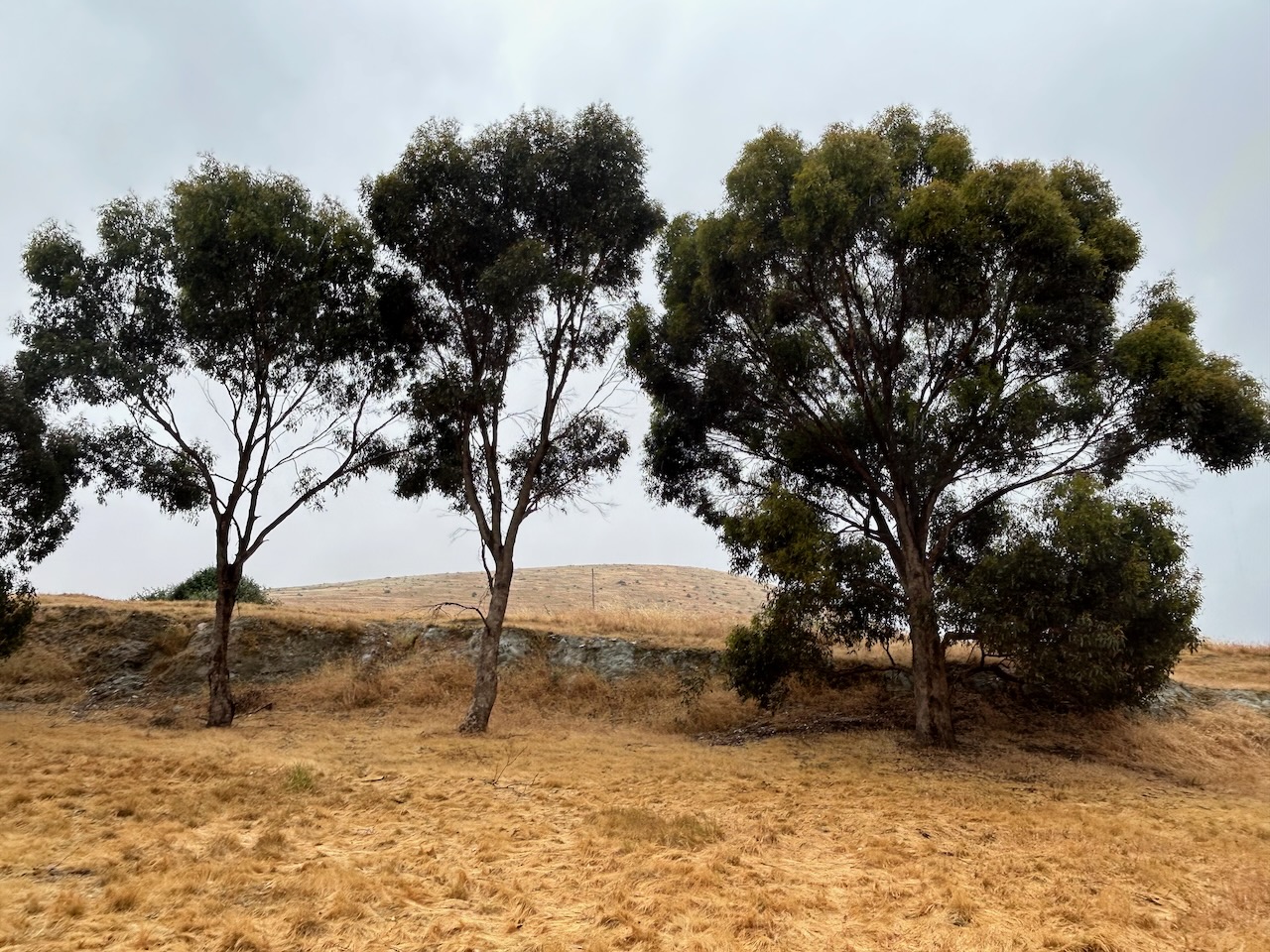
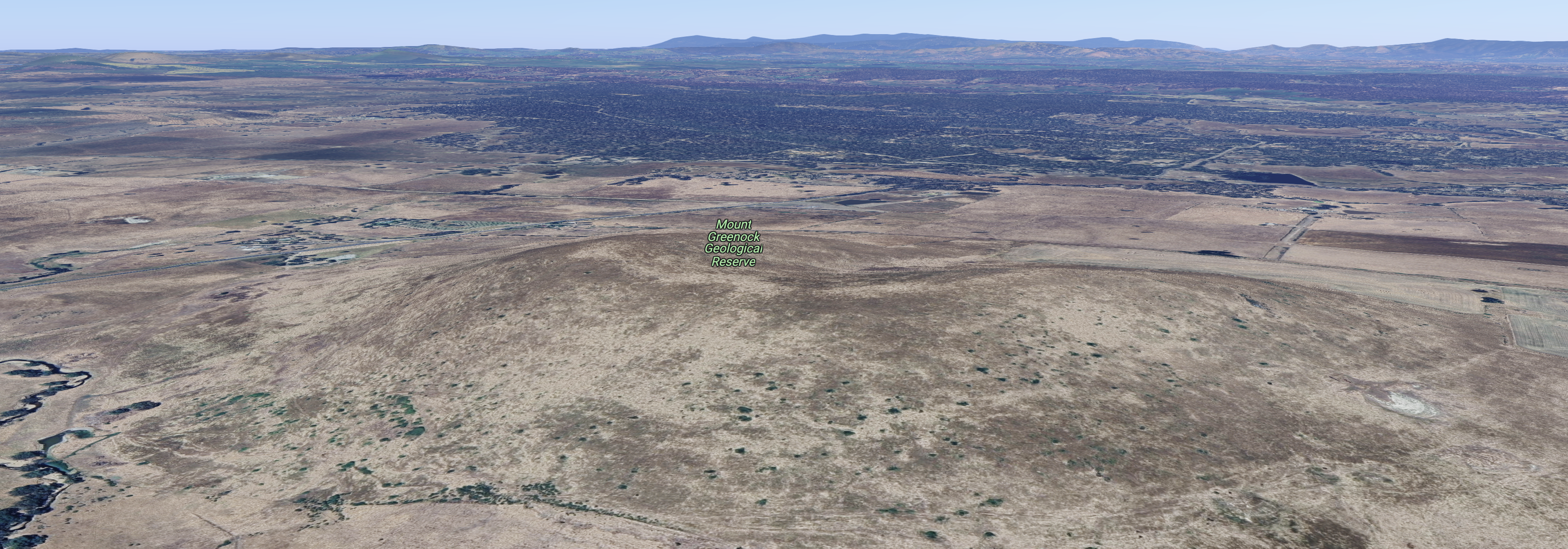
The reserve includes Mount Greenock, an extinct volcano. (Goldfields Guide 2024)
Above:- An aerial view of Mount Greenock. Image c/o Google Maps.
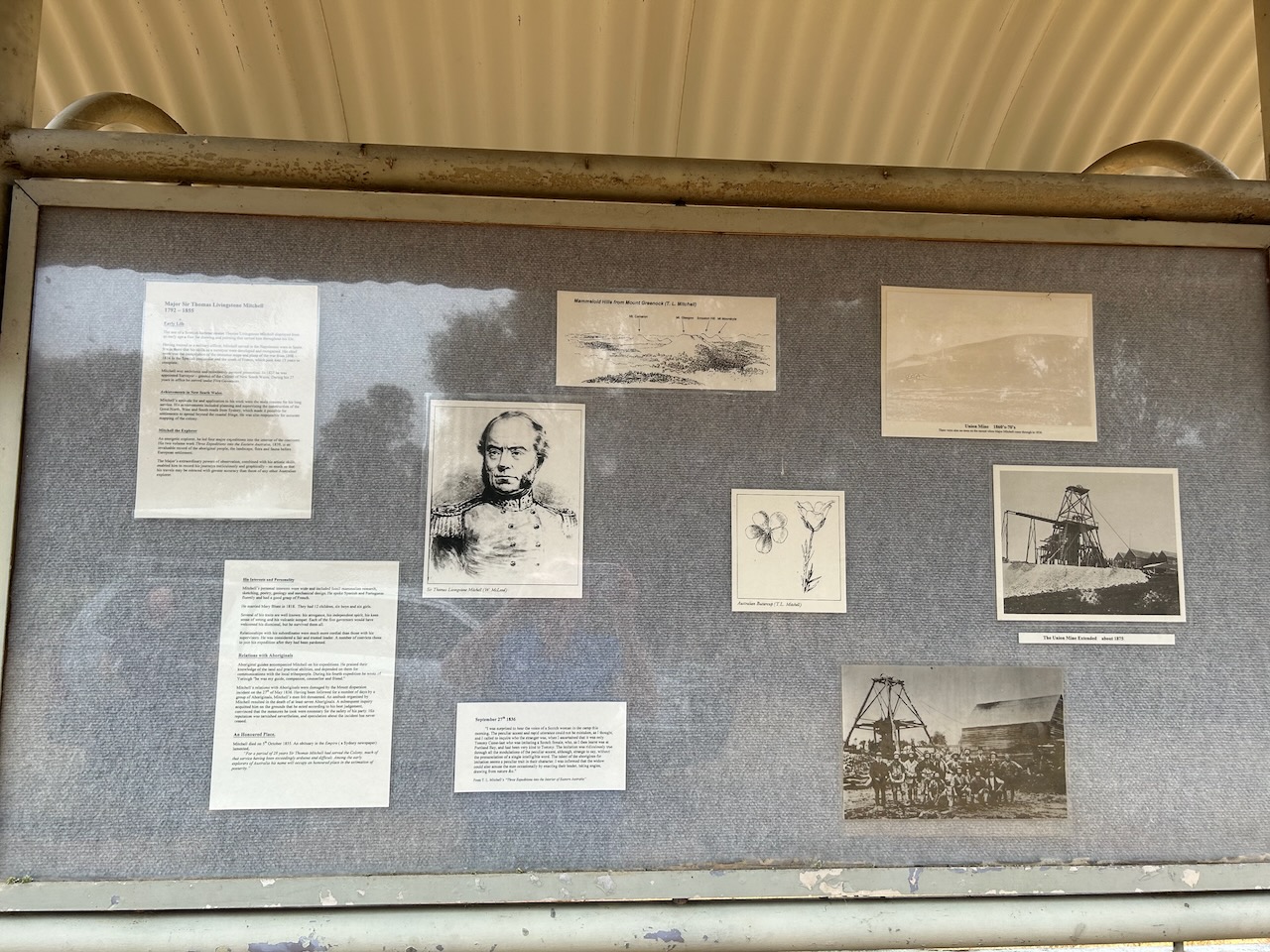
There is an excellent information board at the reserve that outlines the life and times of Major Mitchell.
Unfortunately, we had constant drizzling rain during this activation so we operated from within the 4WD, running the Yaesu FT857, 40 watts, and the 20/40/80m linked dipole. I also used the COdan 930 antenna on 15m. There were severe static crashes on 40m, but despite that, we managed to qualify the park.
Marija worked the following stations on 40m SSB:-
VK3UAO
VK5HS
VK3PWG
VK2EXA
VK3VIN
VK3SQ
VK2BD
VK7DW
VK5VK
VK3PF
VK3KAI
VK3HJW
VK3XE/p (Baw Baw National Park VKFF-0020 & SOTA VK3/ VT-006)
VK3SG
VK2IO/p (Melrose Nature Reserve VKFF-3183)
I worked the following stations on 40m SSB:-
VK3UAO
VK5HS
VK3PWG
VK2EXA
VK3VIN
VK3SQ
VK2BD
VK7DW
VK5VK
VK3PF
VK3KAI
VK3HJW
VK3XE/p (Baw Baw National Park VKFF-0020 & SOTA VK3/ VT-006)
It was now Friday 24th November 2023, and our plans for the day were to visit the historic town of Clunes and undertake some park activations for the World Wide Flora Fauna (WWFF) program.
Marija and I hit the road quite early and travelled from our accommodation at Sandon to Clunes, a short distance of about 30 km.
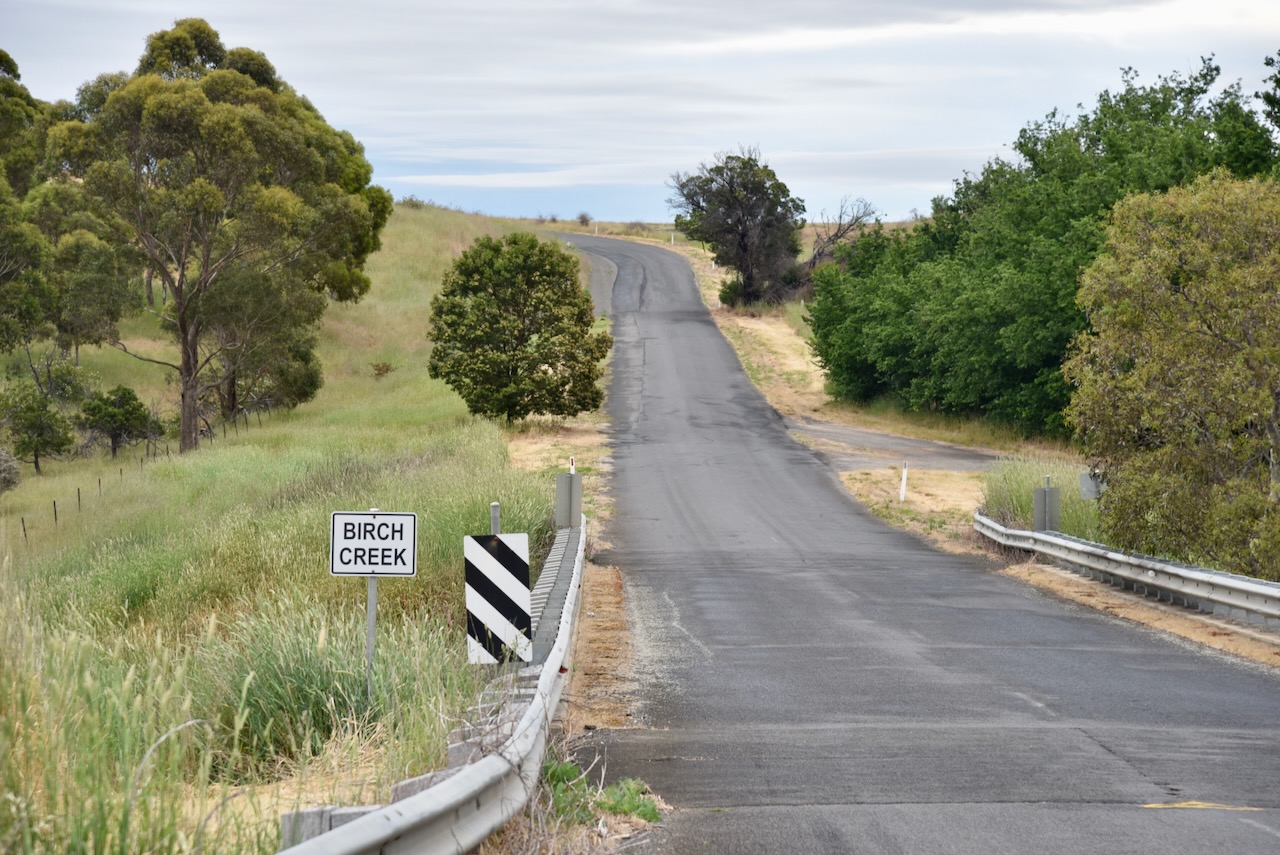
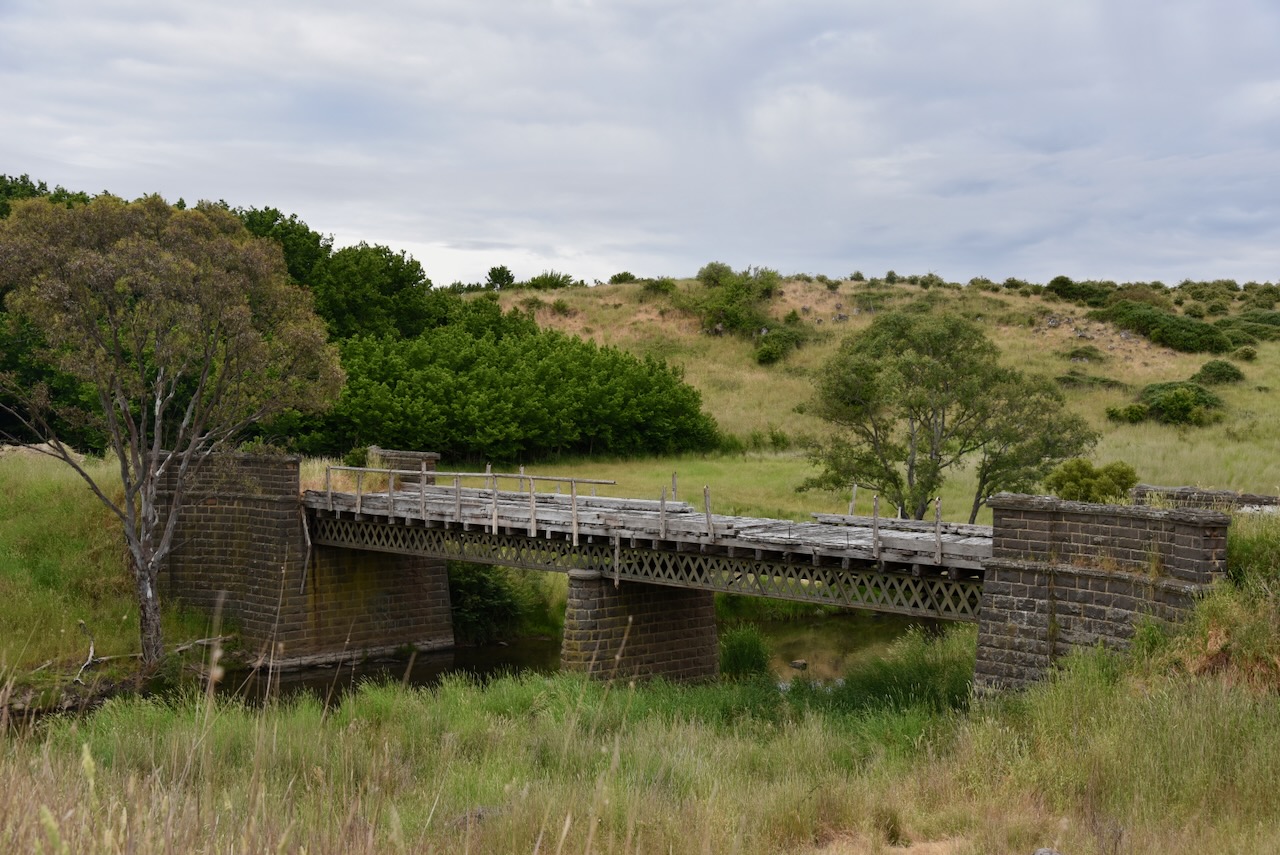
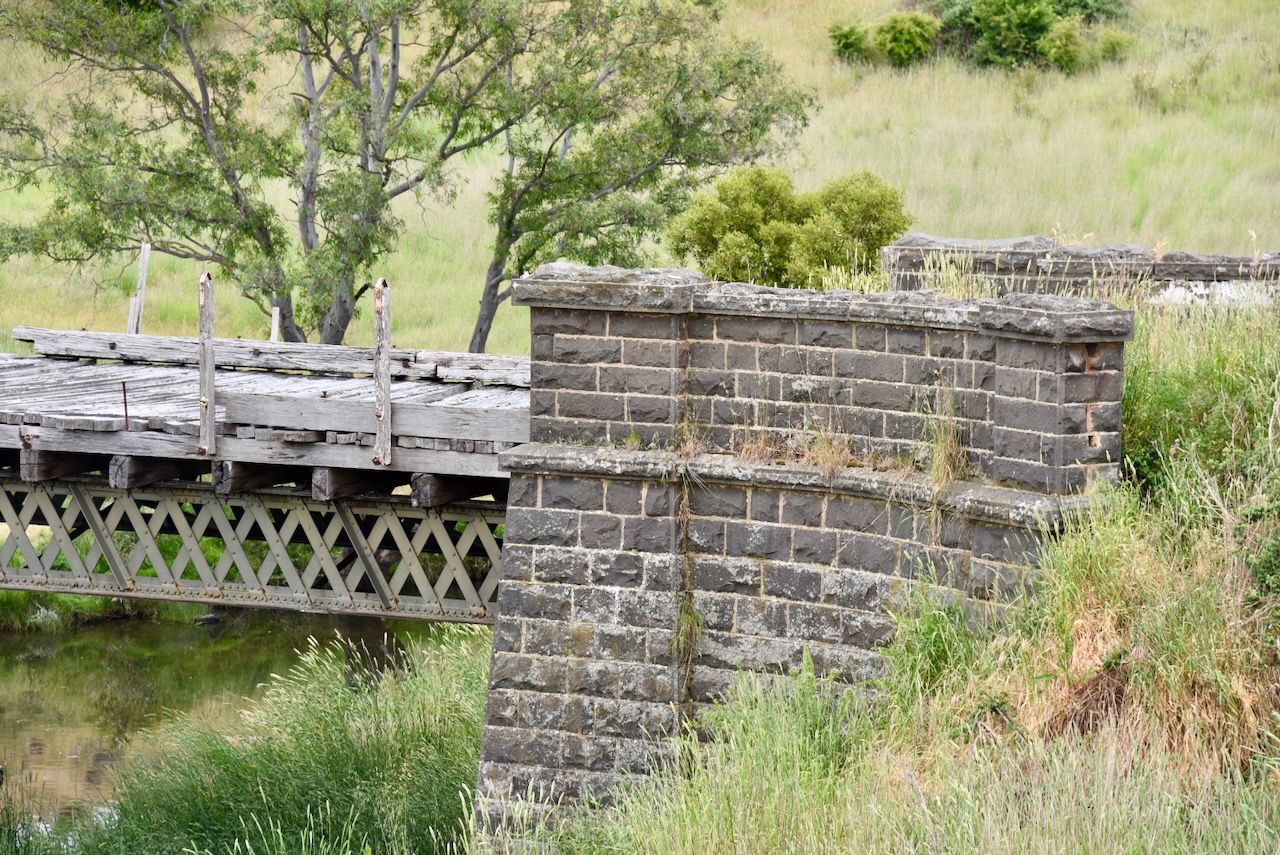
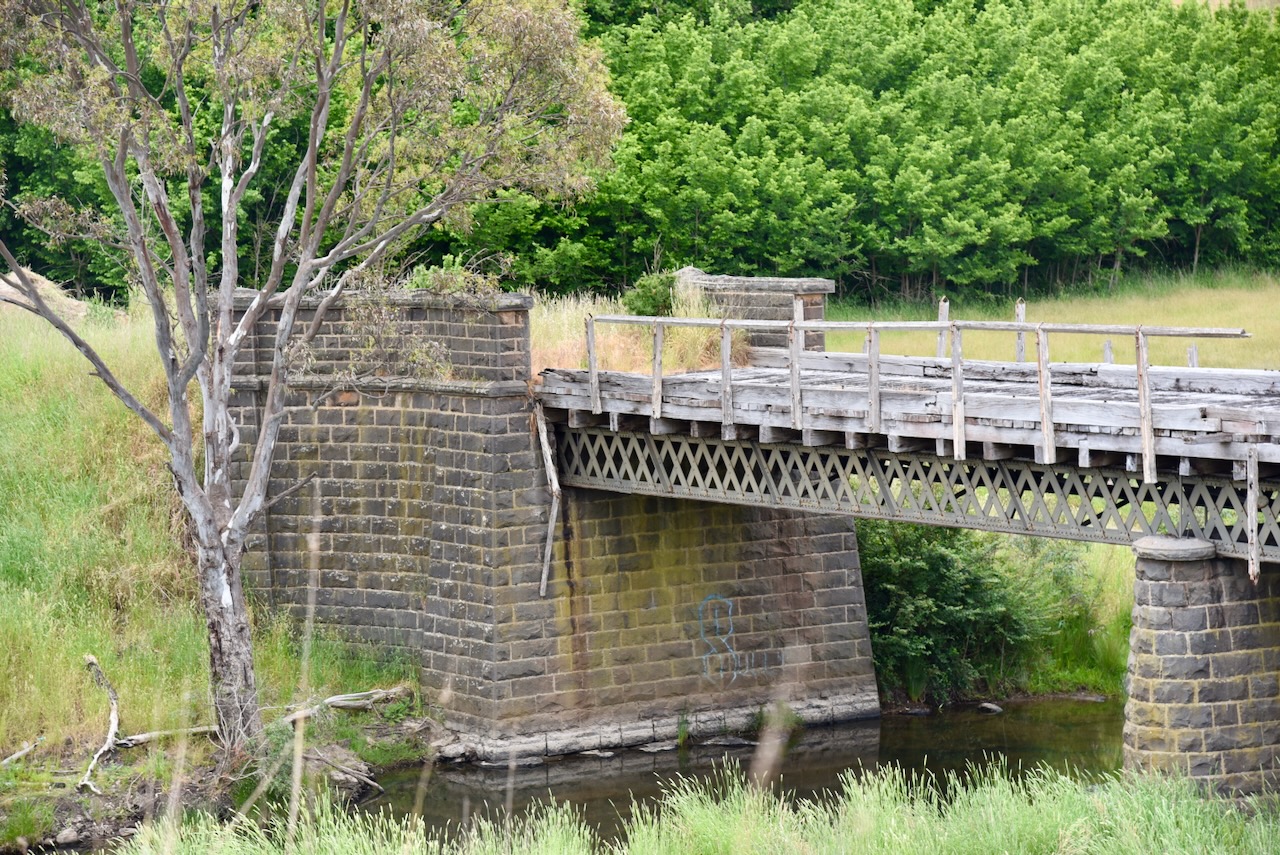
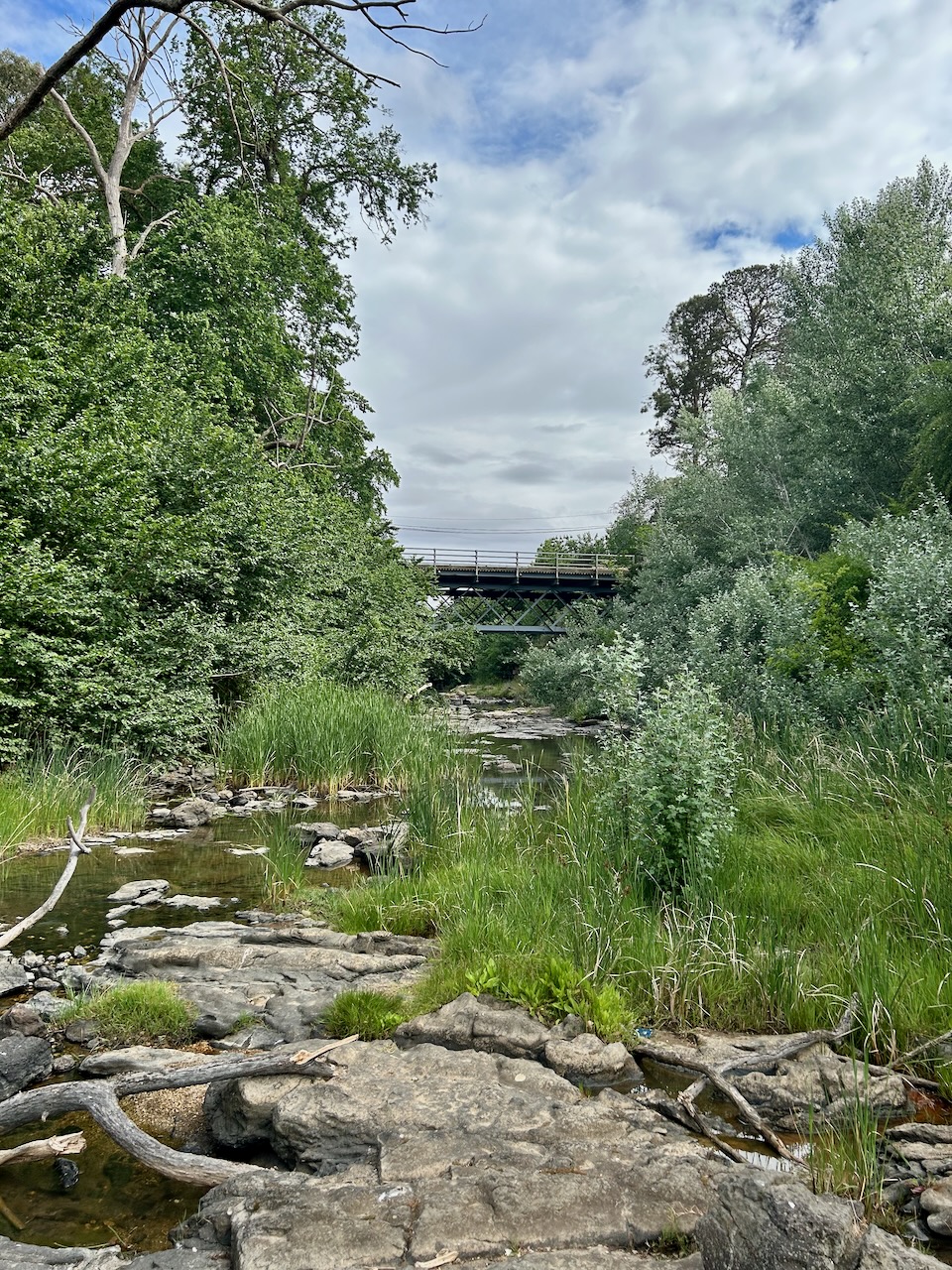
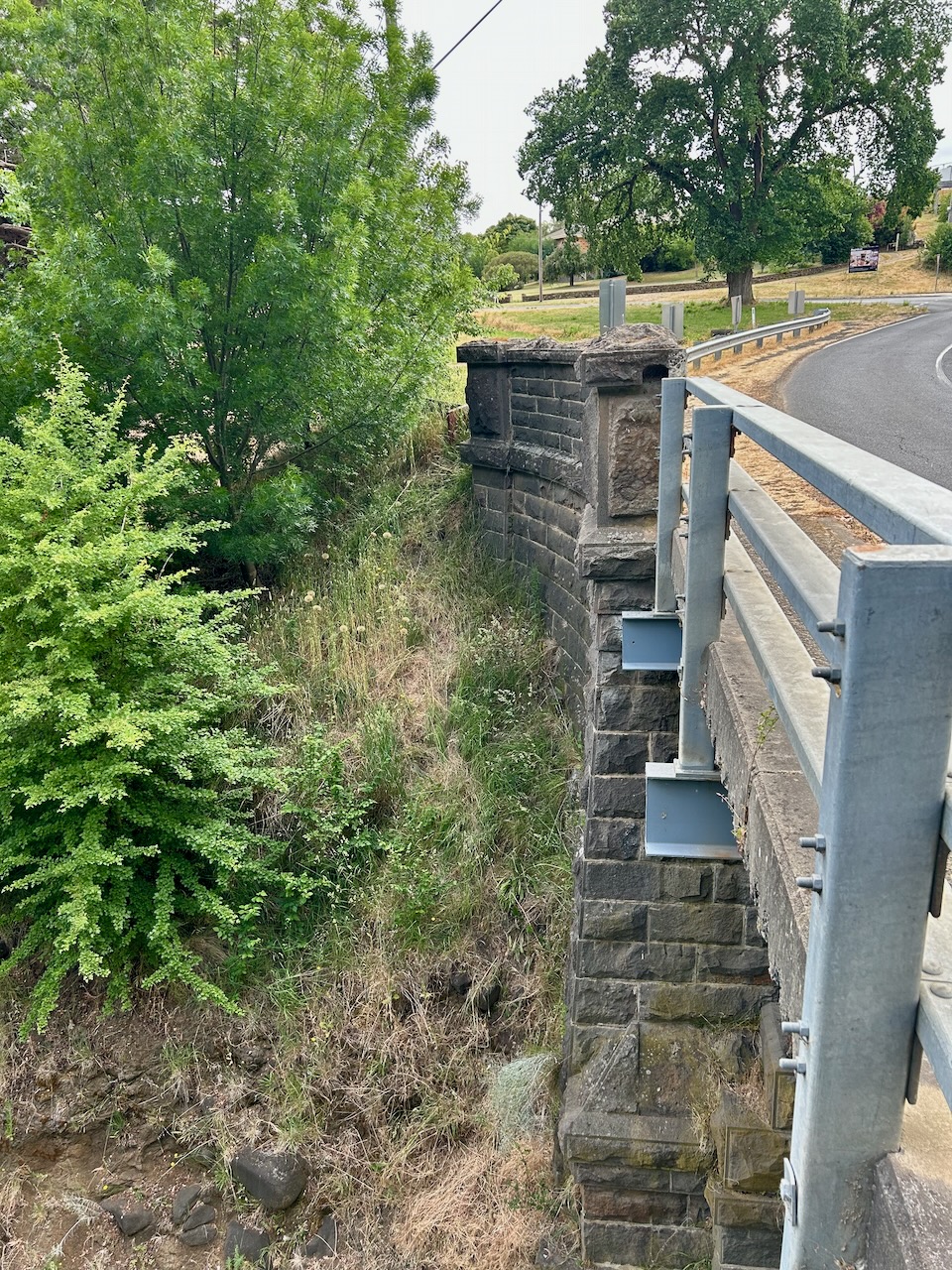
Our first stop of the day was the historic McLennan Bridge over Birch (Bullarook) Creek. The bridge was built in the 1870s, possibly by the Borough of Clunes. It is the third oldest existing Victorian metal truss bridge after the Glemona Bridge at Bung Bong and the nearby Jorgenson’s Bridge. The 14.2 metre span bridge has bluestone abutments and pier, and deck-type lattice trusses. It is one of a small number of riveted wrought iron lattice truss bridges that were built in Victoria to replace early timber bridges that were destroyed in the 1870 floods. (Victoria Heritage Database 2024) (Waymarking 2024)
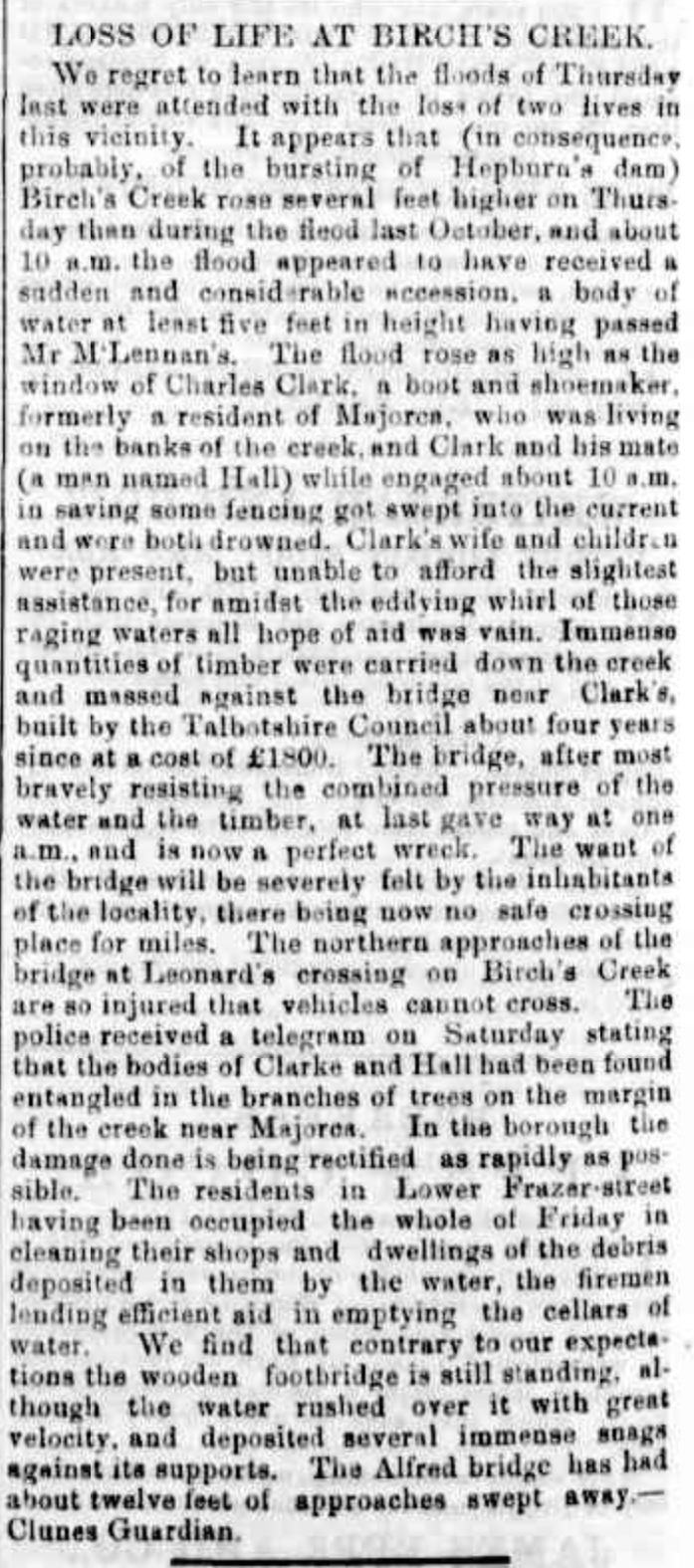
Sadly there was loss of life at Birch’s Creek during the record 1870 Victoria floods. The Illustrated Australian News, Mon 10 Oct 1870 stated “...the Murray, where extensive plains on either side of the river were suddenly converted into a vast lake.” (Floods in Victoria, Trove 2024)
The Mount Alexander Mail reported the loss of two lives at Birch’s Creek.
Above: article from the Mount Alexander Mail, Thu 15 Sep 1870. Image c/o Trove.
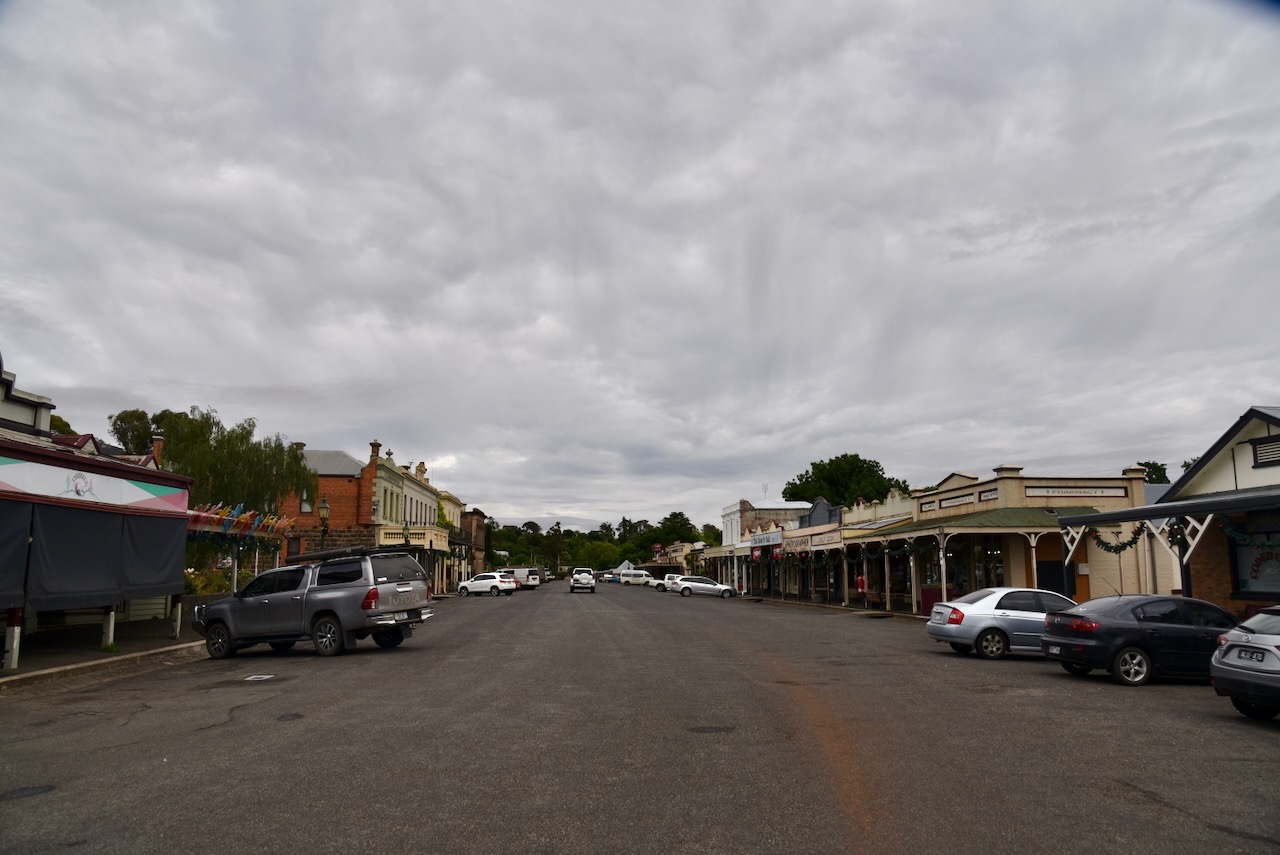
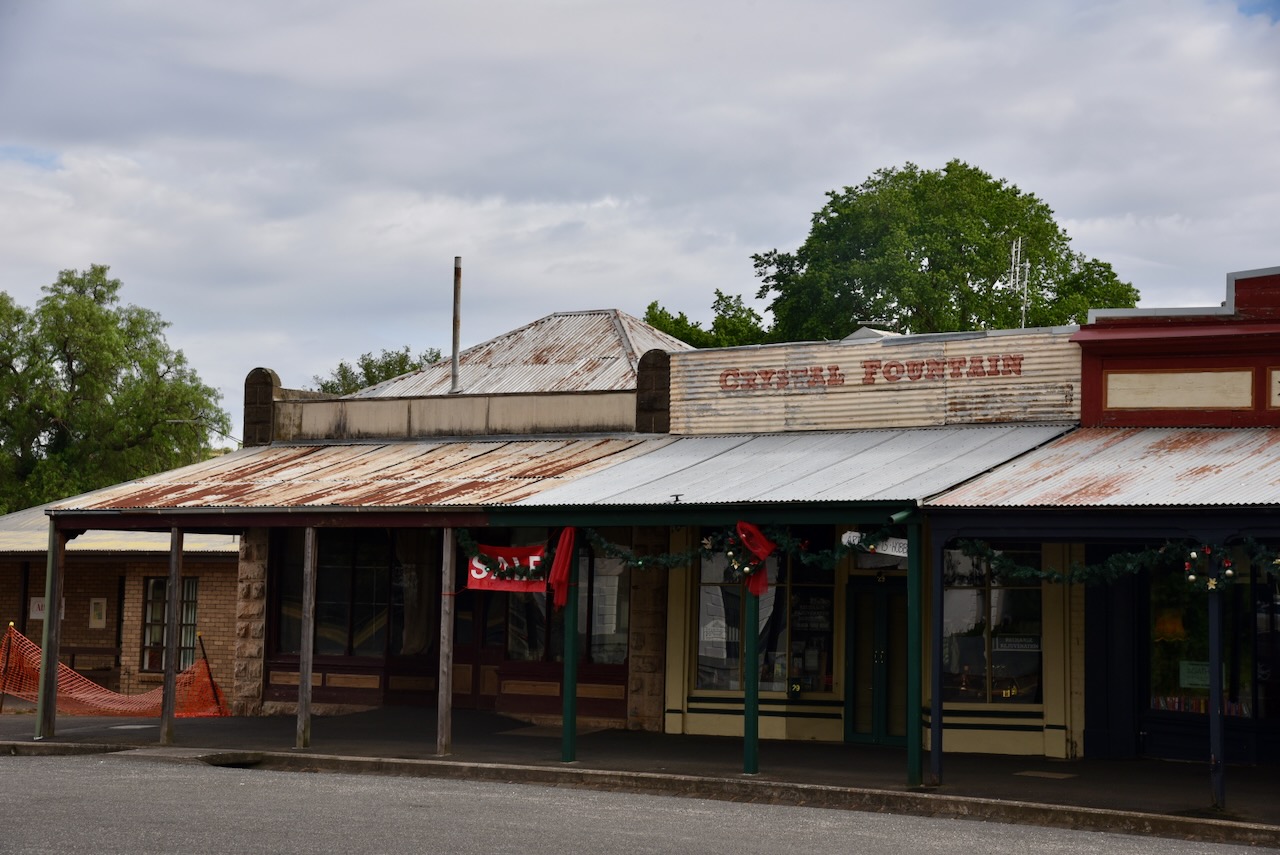
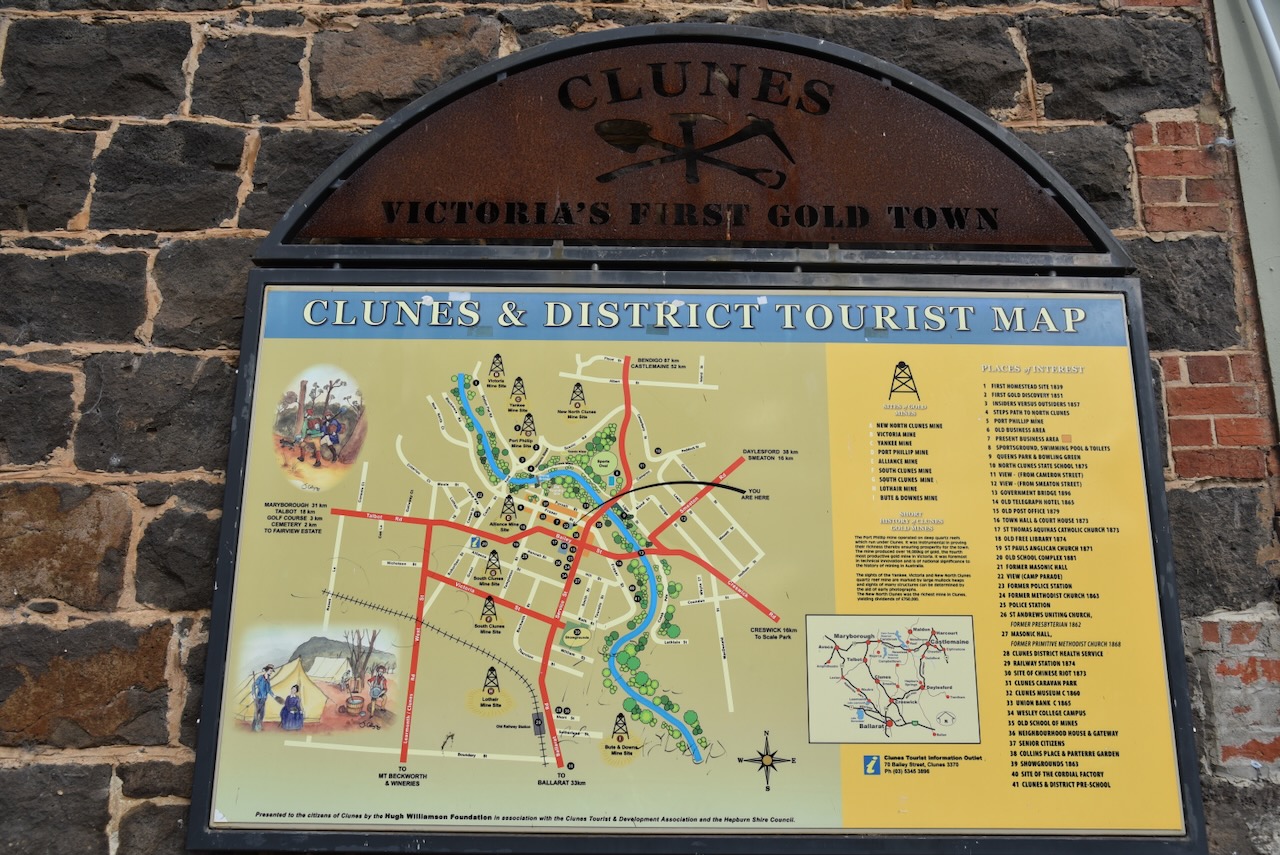
We soon reached the town of Clunes.
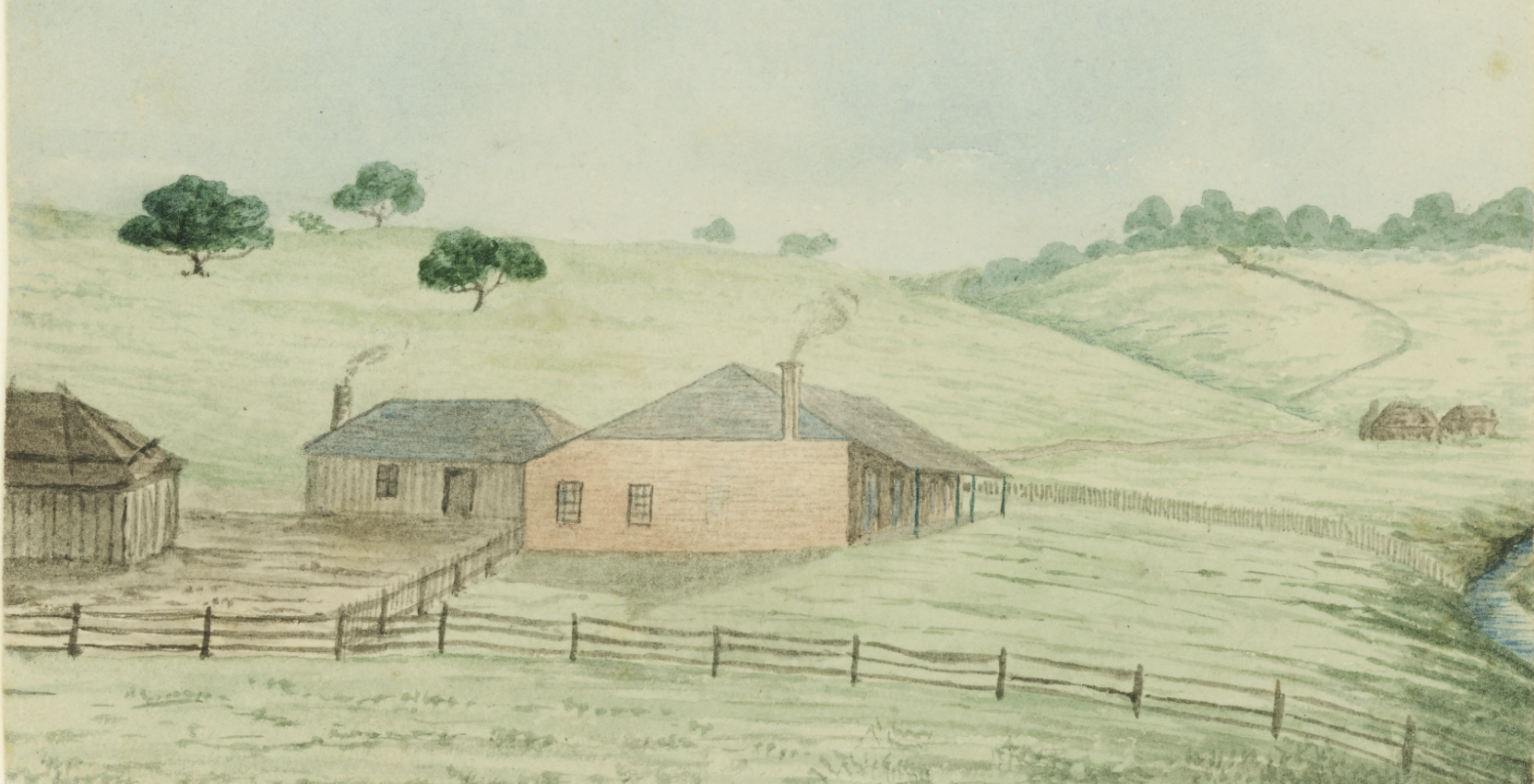
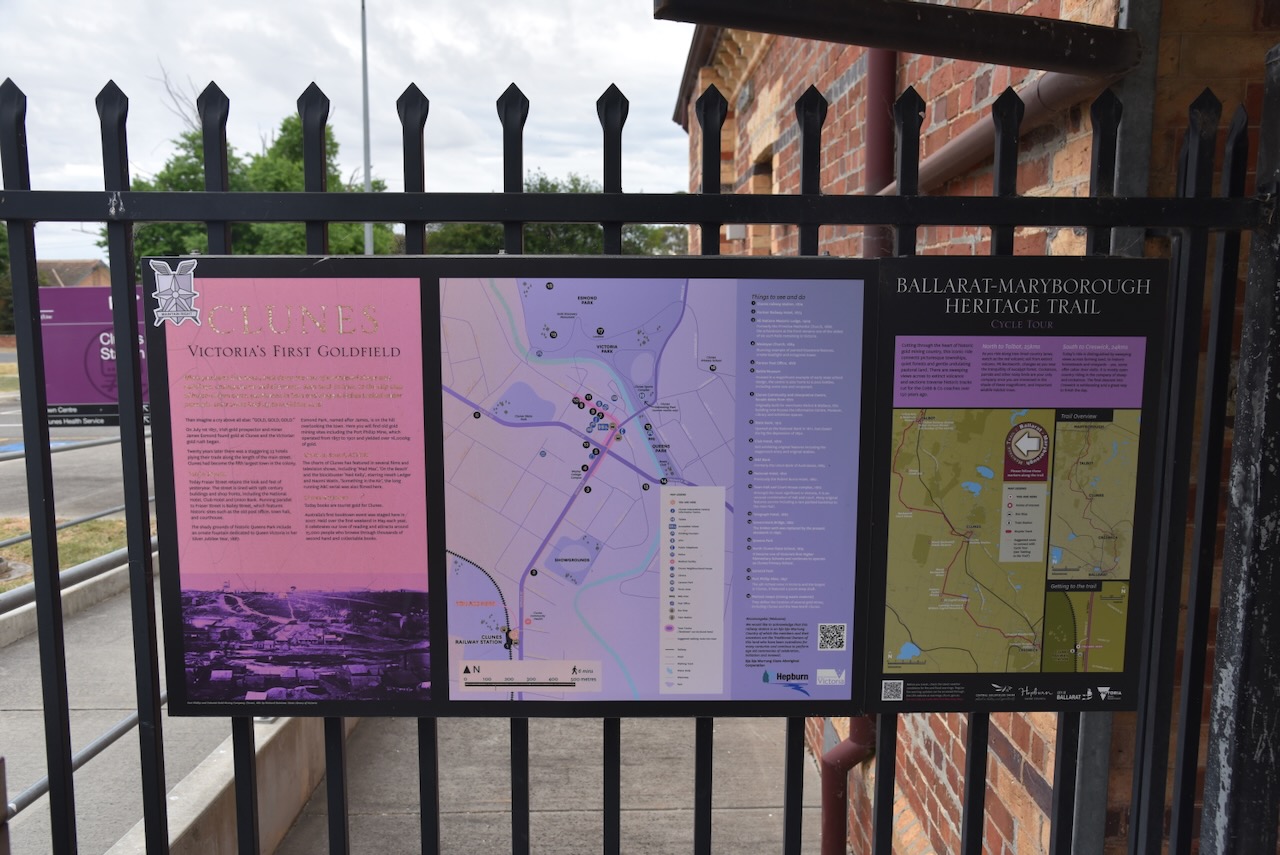
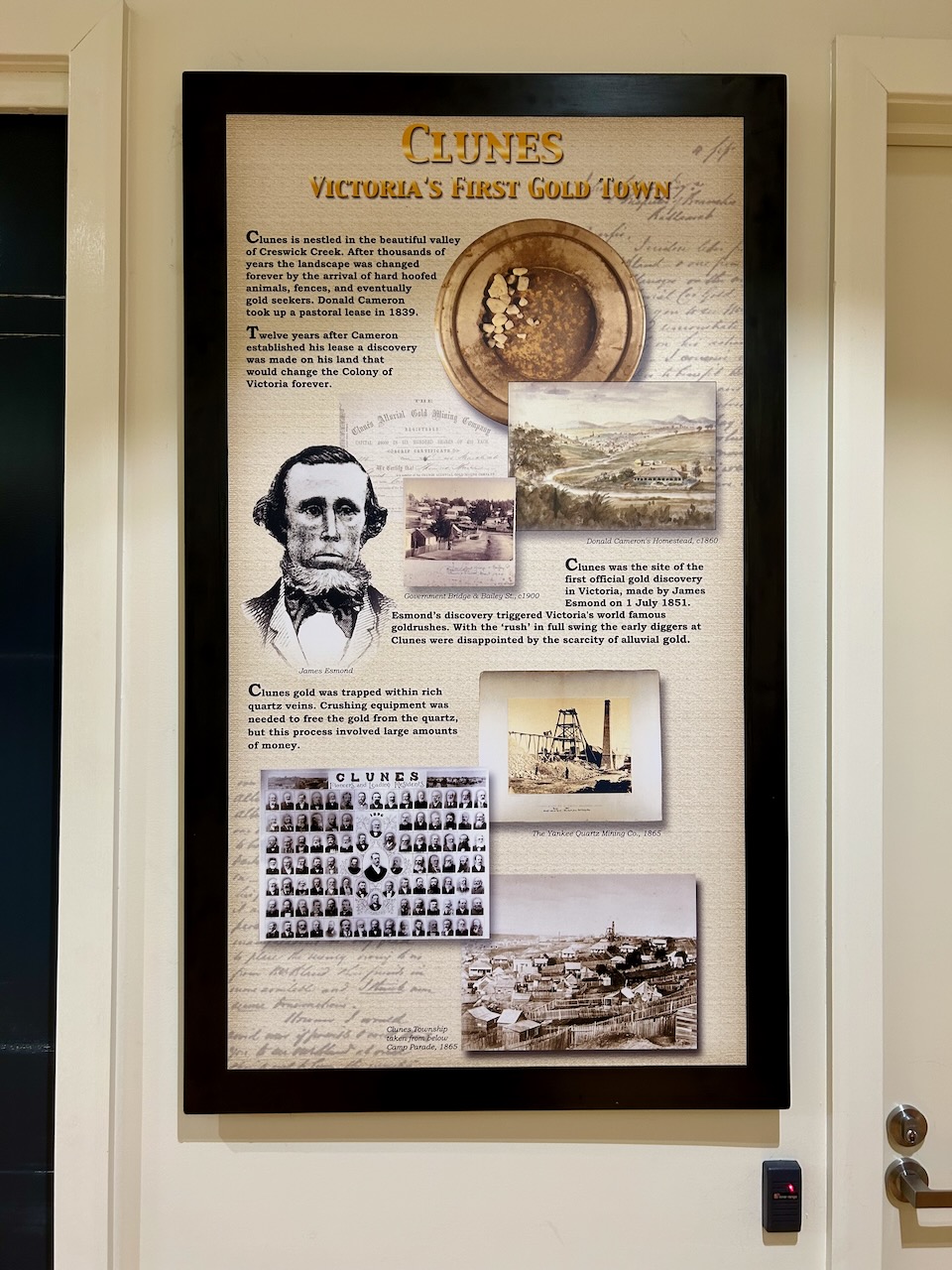
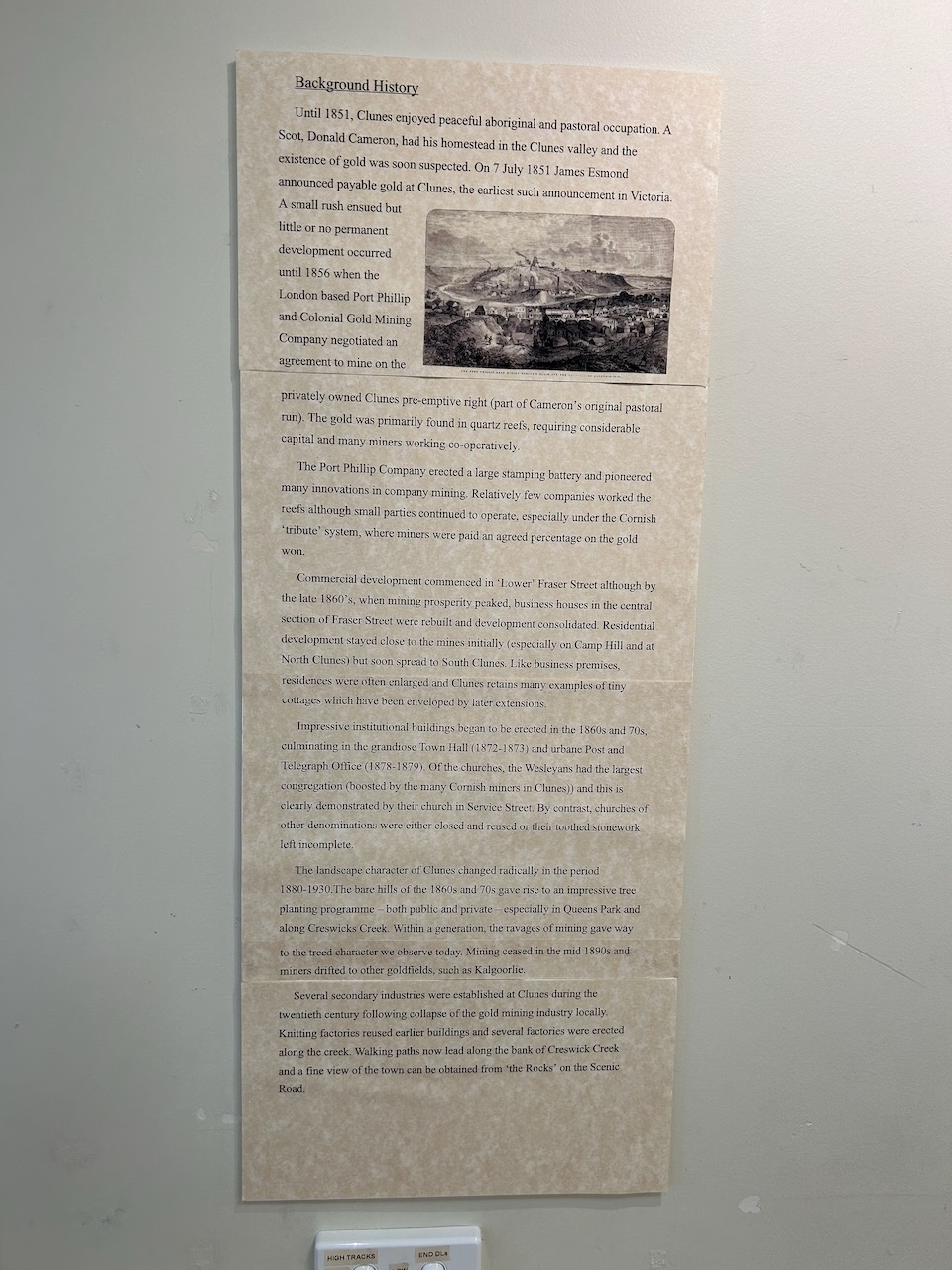
The first European settler in the area was Donald Cameron. He was born in Inverness, Scotland in 1818 and emigrated to Australia with his half-sister and her husband William Campbell. In 1839 he named his property Clunes after his home in Scotland. In Gaelic, Clunes means ‘a green place’. This area is now known as Cameron Reserve. Donald and William settled a few miles apart. A few years after settling in the area, Donald returned to Scotland where he was married. (Clunes and Glenelg 1931) (Monument Australia 2024) (State Library Victoria Clunes 2013) (Victorian Places 2024)
Above:- the station of Donald Cameron, c. 1840s. Image c/o State Library Victoria.
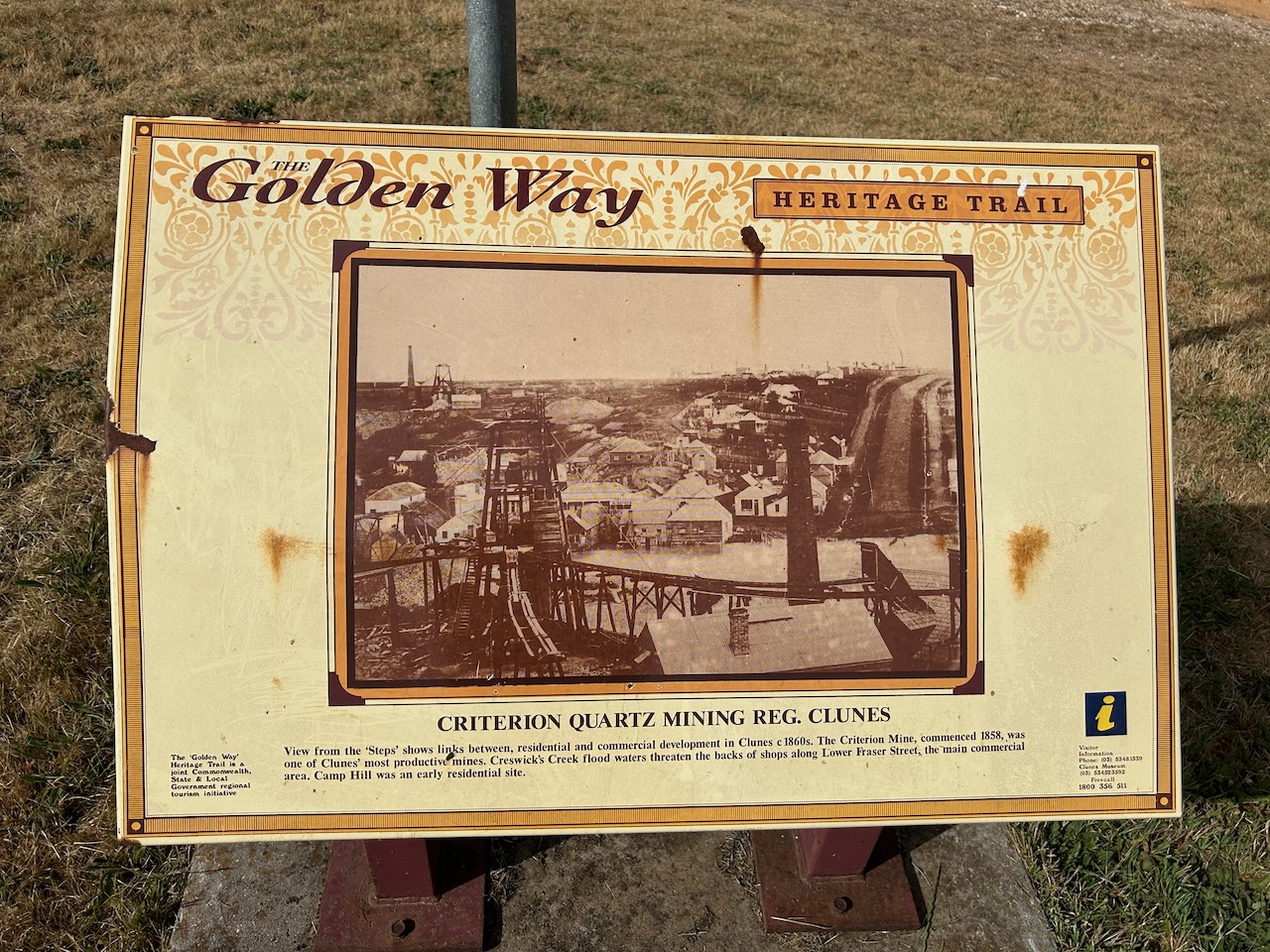
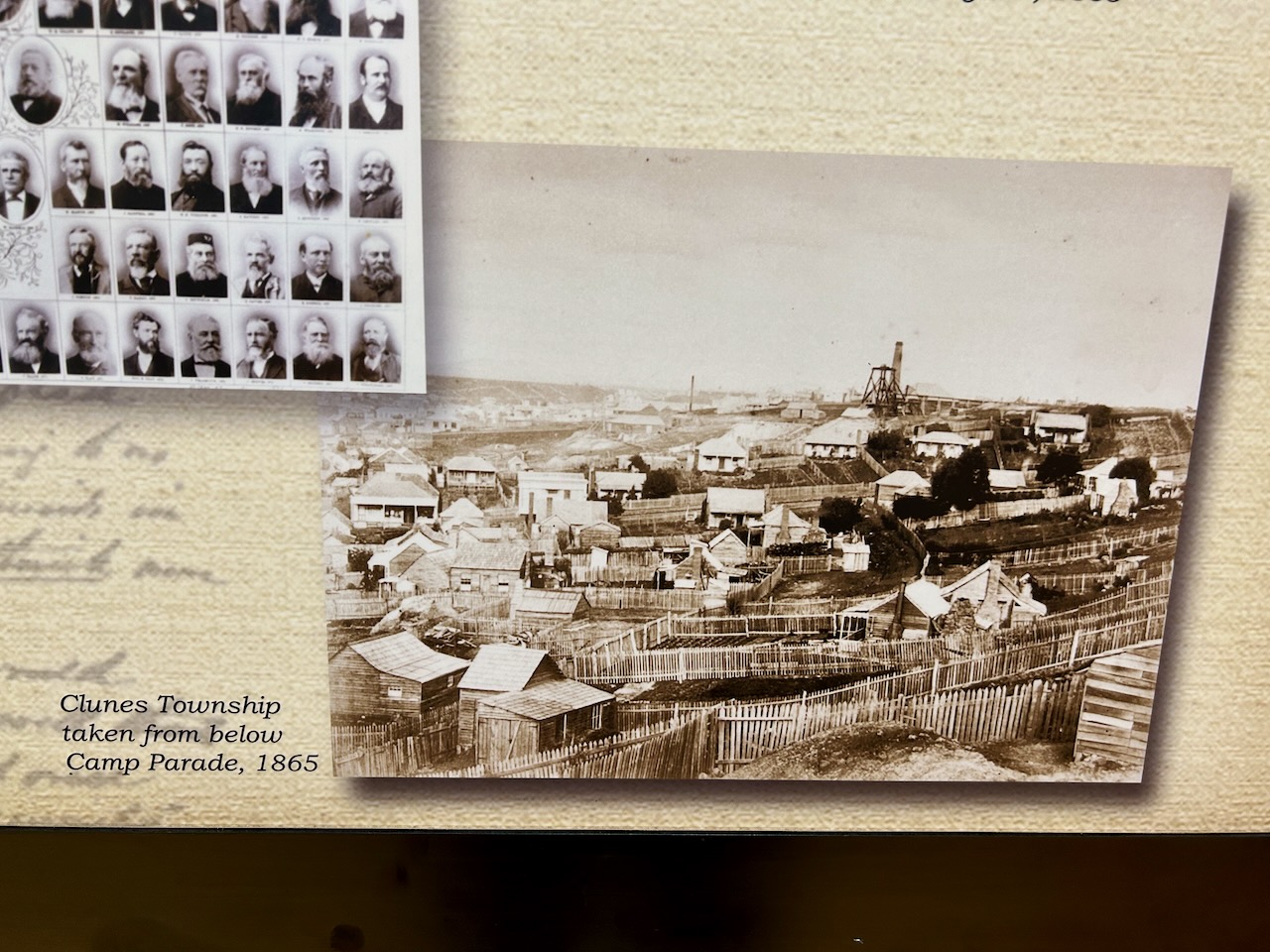
In 1851 one of Victoria’s first official gold discoveries occurred at Clunes and this resulted in a gold rush for alluvial gold along Creswick Creek. This was followed by a larger operation to extract gold from the quartz reefs mear Clunes. (Victorian Places 2024)
An Anglican Church was built in 1859. By 1860 the Clunes borough had a population of about 6,000 people. In 1862 a Presbyterian Church was built and this was followed by a Primitive Methodist church in 1868. The North Clunes School was opened in 1875. The South Clunes School opened in 1878. (Victorian Places 2024)
Several civic buildings were constructed in Clunes during the 1870s. This included a hospital in 1873, a Town Hall and Courthouse in 1873, and a Mechanics Institute in 1874. (Victorian Places 2024)
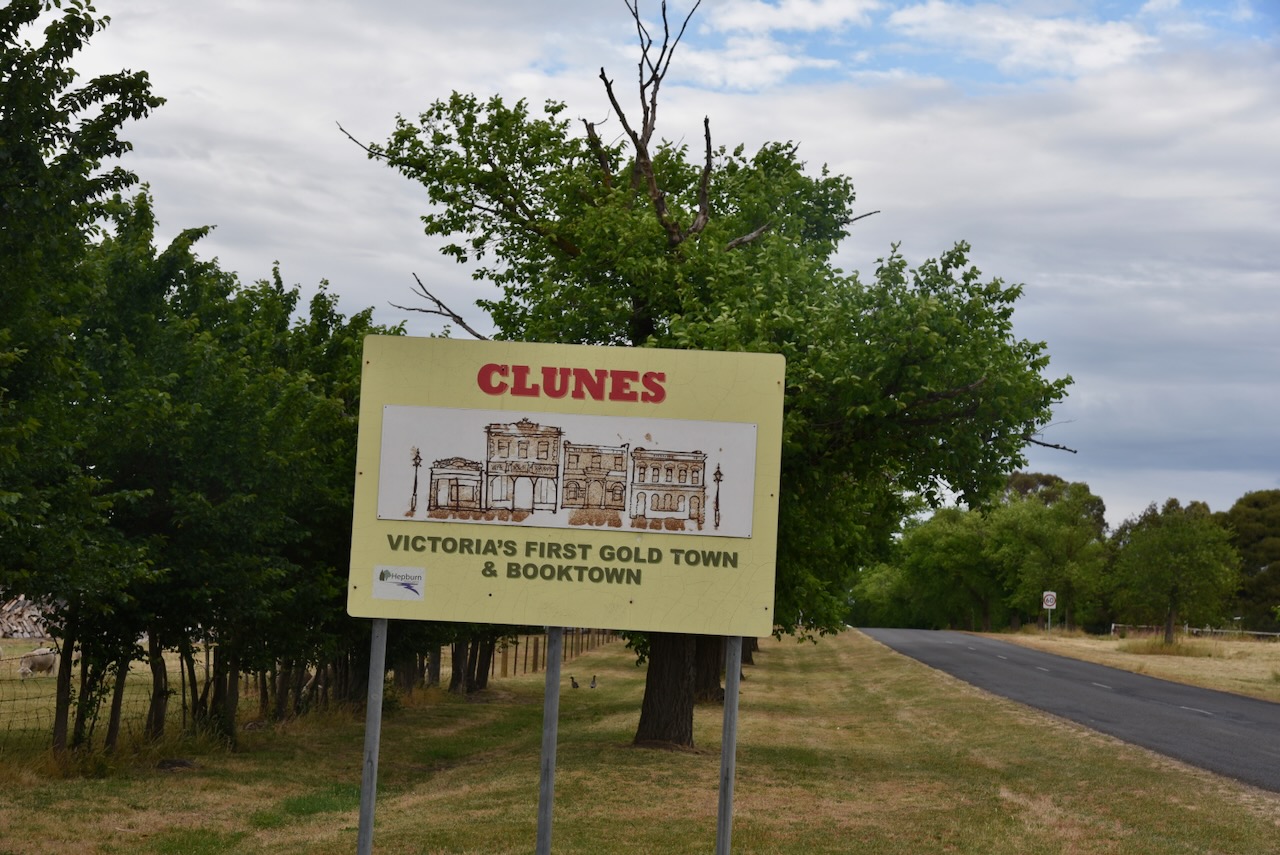
In 2010, Clunes was declared Australia’s first International Booktown by the International Organisation of Booktowns. Each year Clunes runs a two day festival which is full of author and artist talks, workshops, and live entertainment for the whole family. (Clunes Booktown 2024)
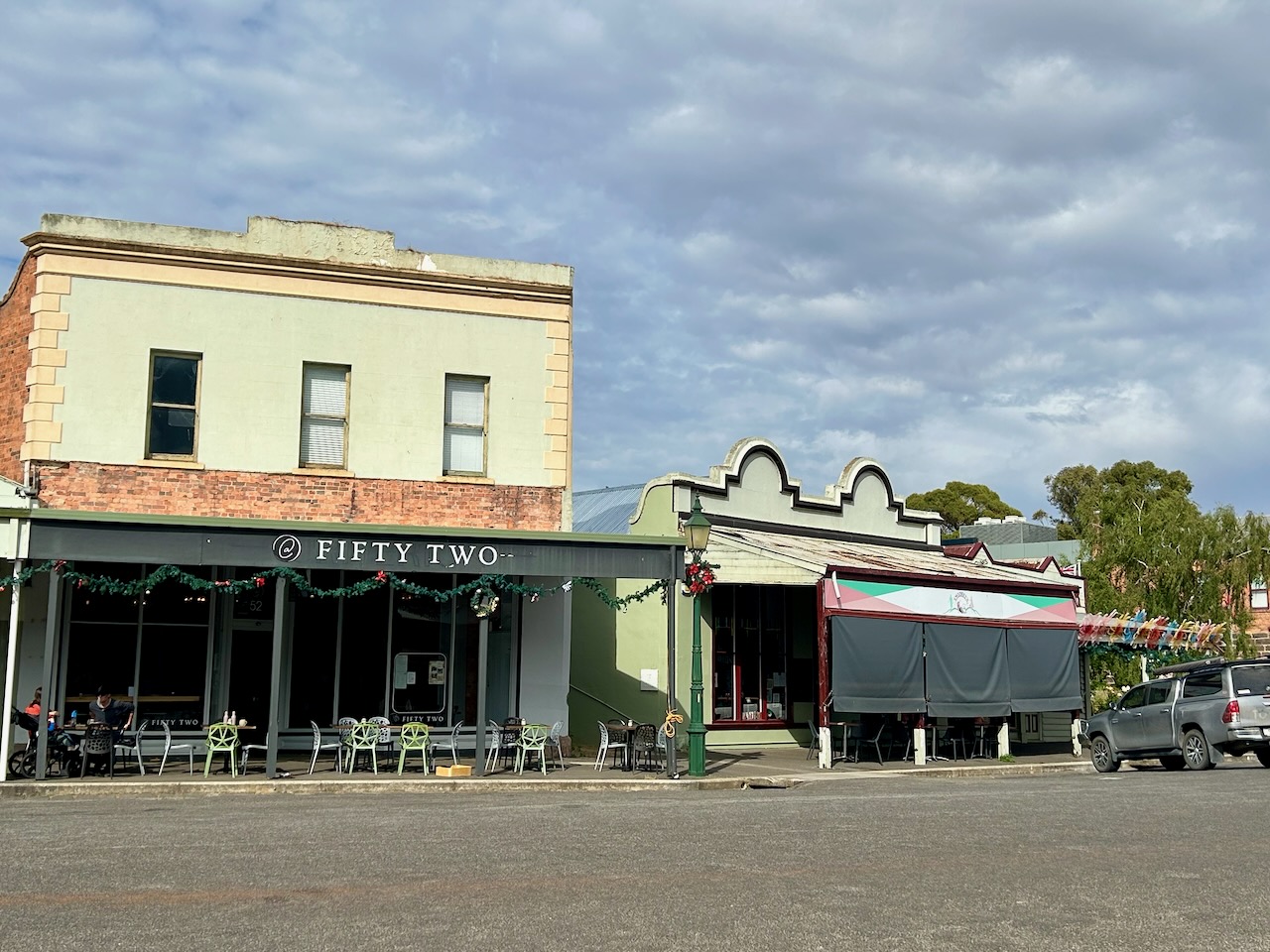
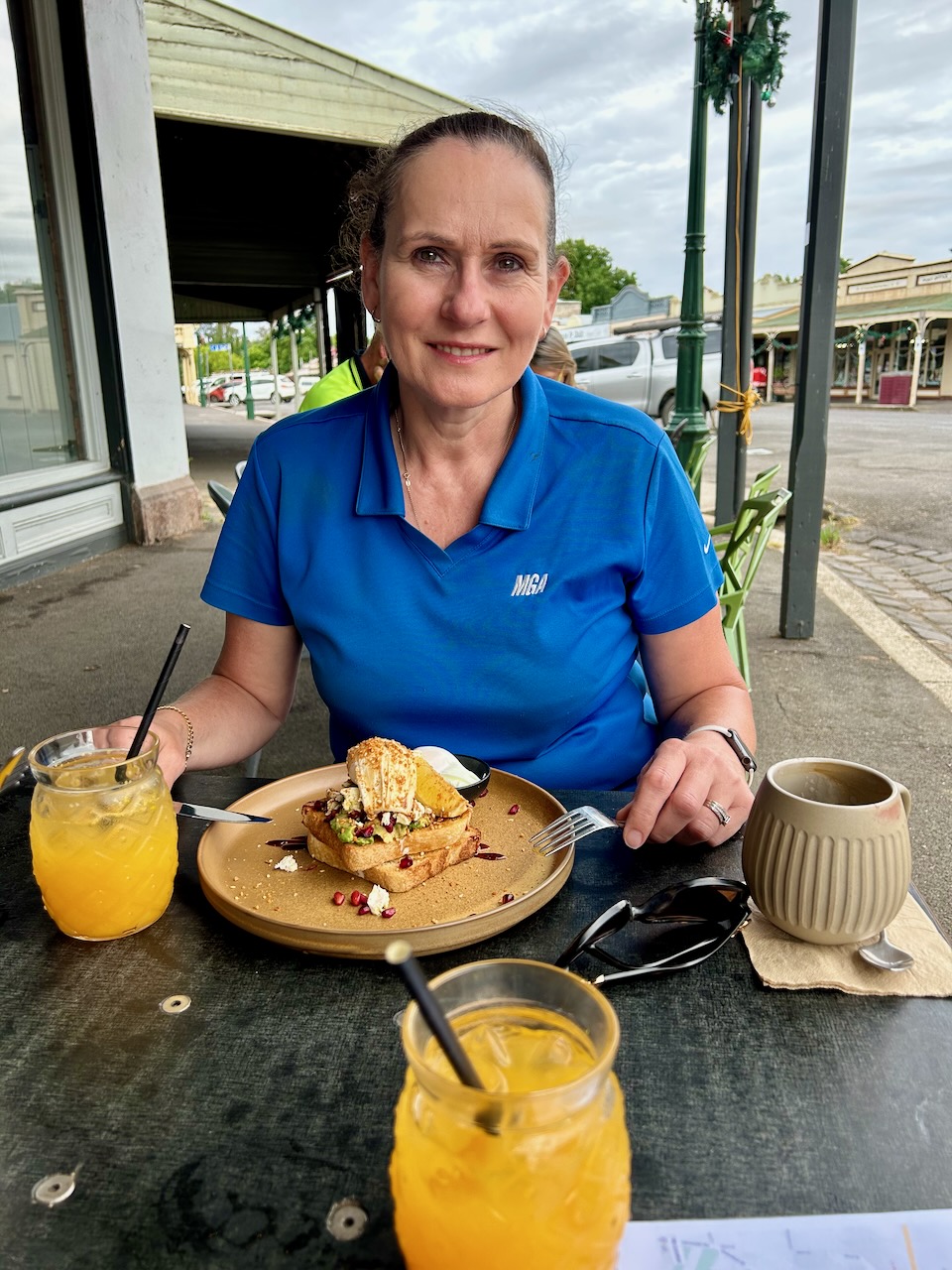
Before exploring this historic town, Marija and I enjoyed a magnificent cooked breakfast at one of the local cafes called ‘Fifty Two’.
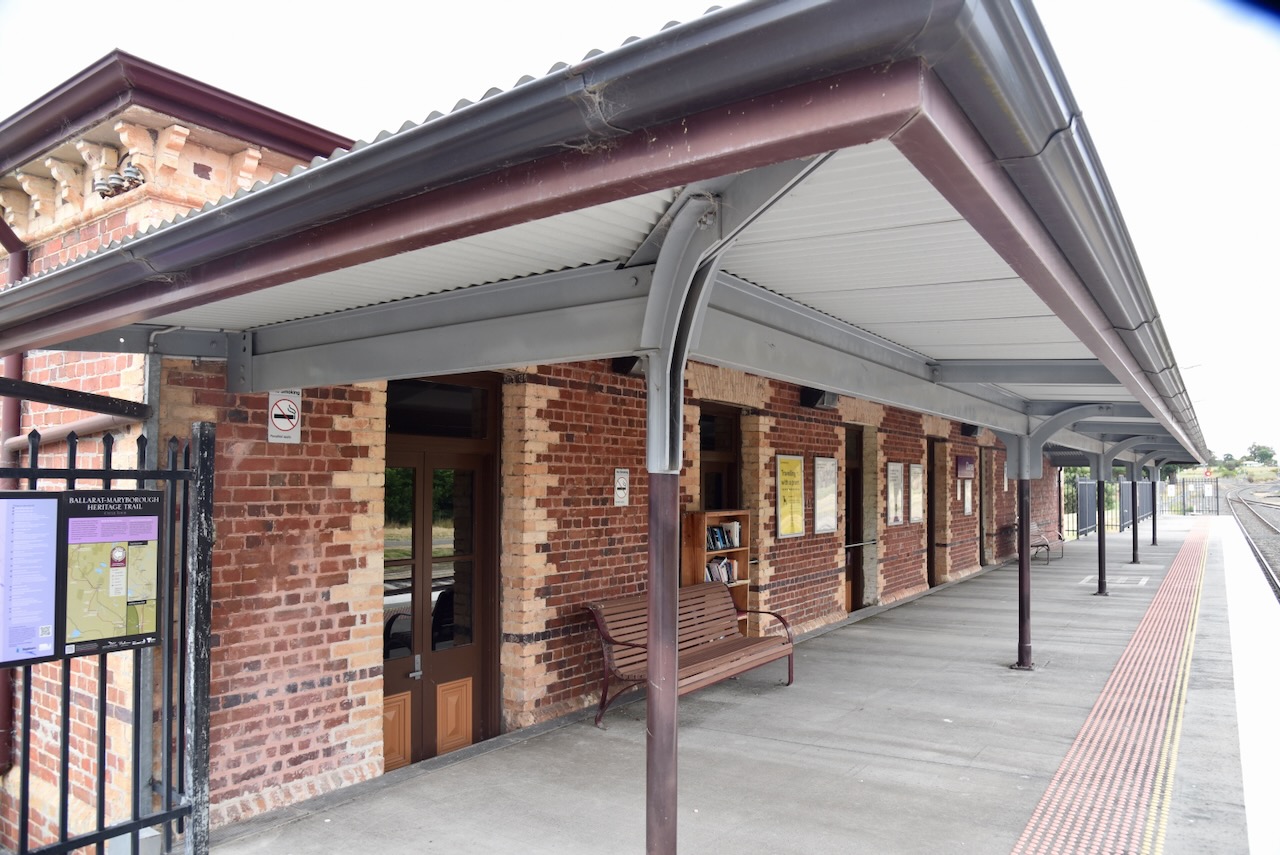
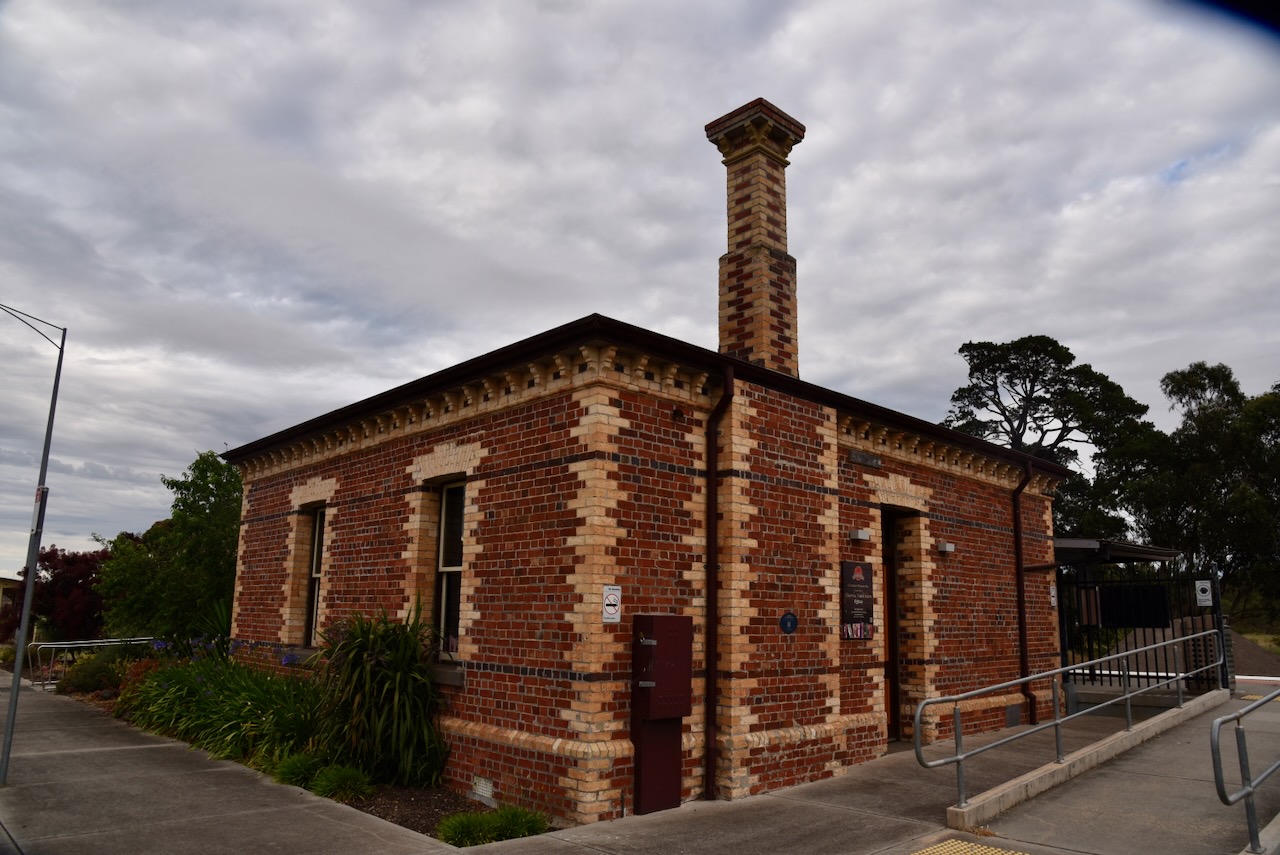
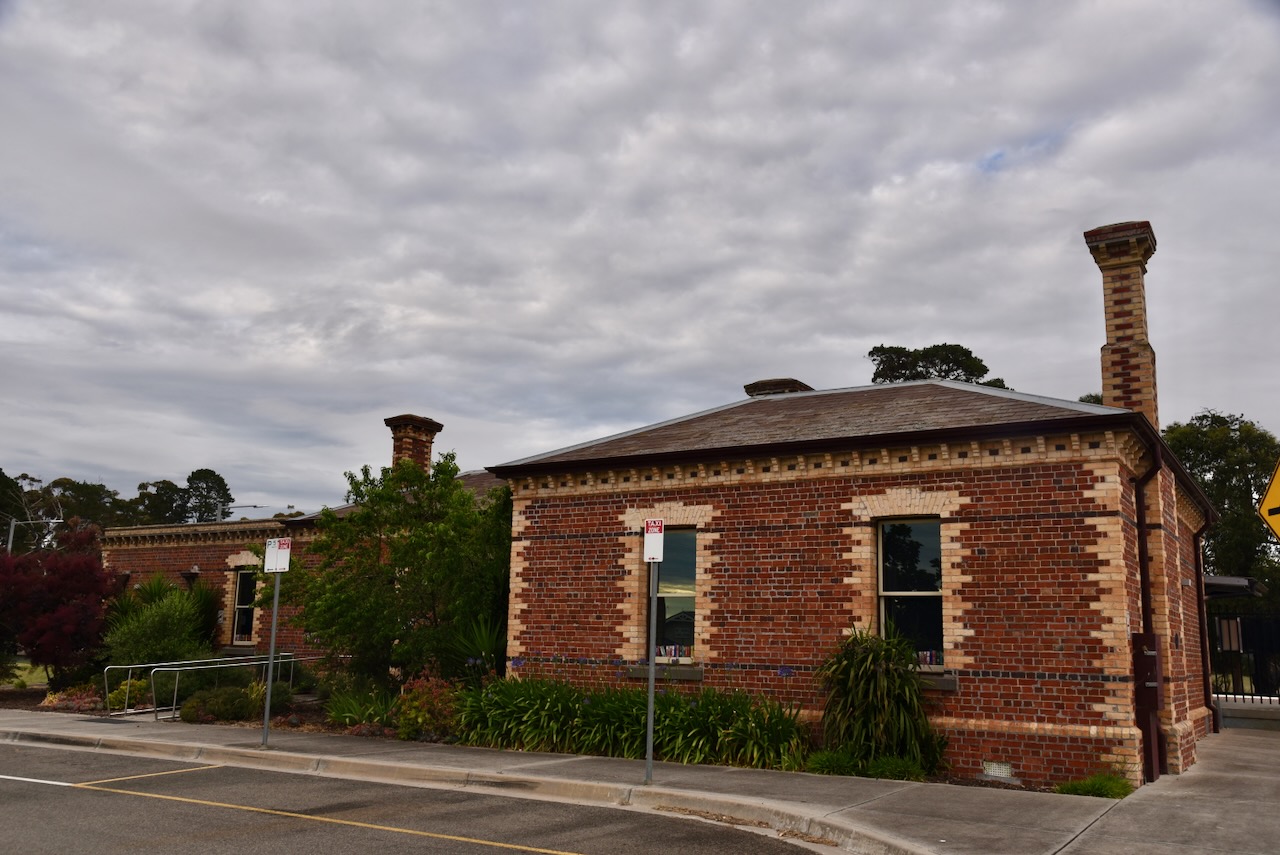
Our first stop after breakfast was the historic Clunes Railway Station which was built in 1874. The contract for the construction of the station was dated 25th September 1874. The building was completed by J. Short, with the cast iron verandah being supplied by Robinson Brothers. The water tower, crane and can goods shed were demolished in the 1980s. In 1993 the last passenger train passed through Clunes. In June 2010 it was announced that the Clunes Railway Station would reopen. (Waking up in Geelong)
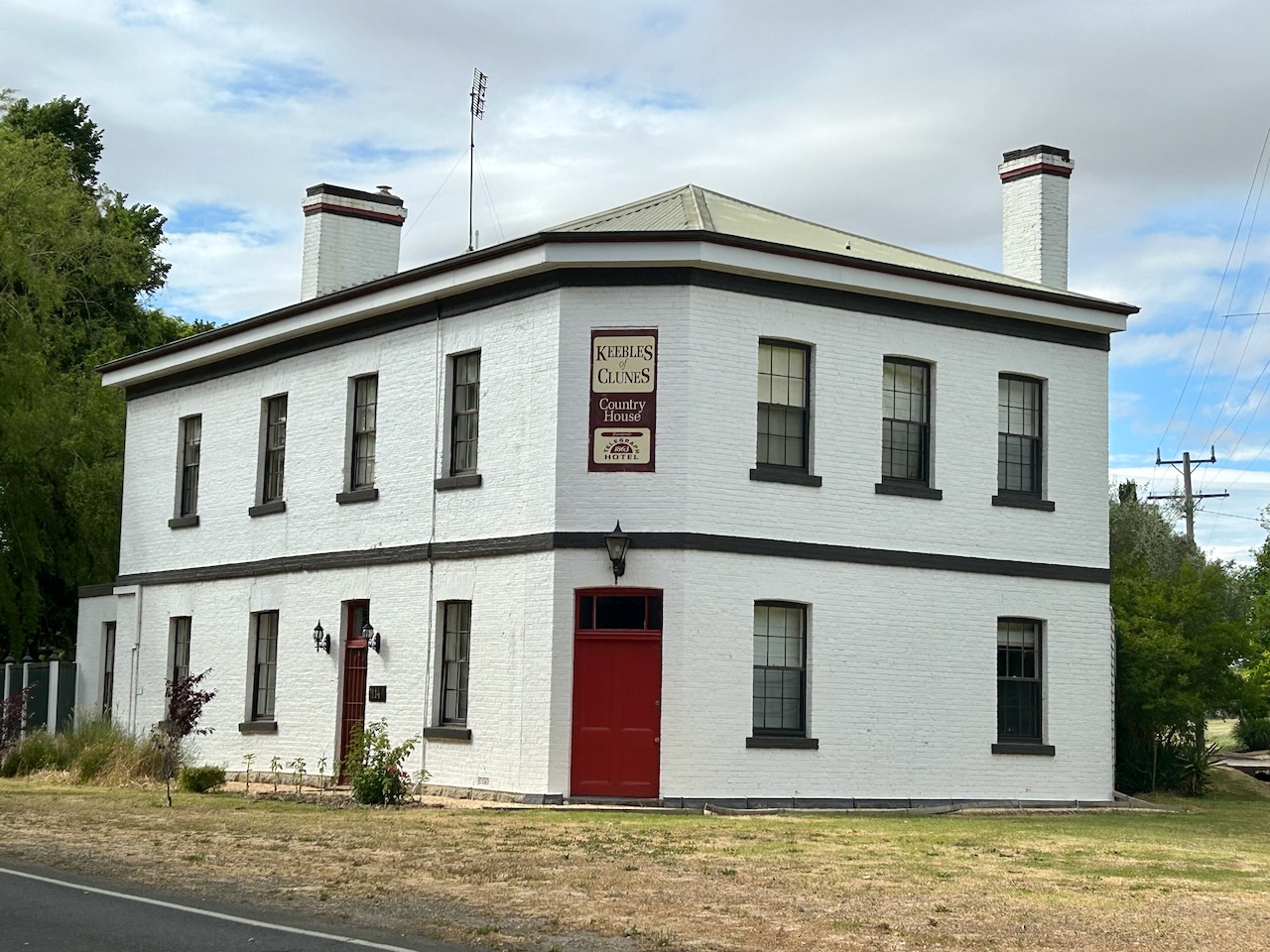
The former Telegraph Hotel, built in c. 1865 is located on the corner of Bailey and Fraser Street. The hotel closed on the 31st day of December 1916 and is now used as a Bed and Breakfast. In 1916, Licensing Court hearings conducted by the Licenses Reduction Board identified numerous hotels across Victoria where the licenseswere to undergo a review and recommendations made for some of those hotels being forced to close. The Telegraph Hotel was not included on the list of hotels to be closed, however the owners voluntarily surrendered their license and the owner was paid £410 in compensation. (Hotels of Ballarat 2024) (Walking Maps 2024)
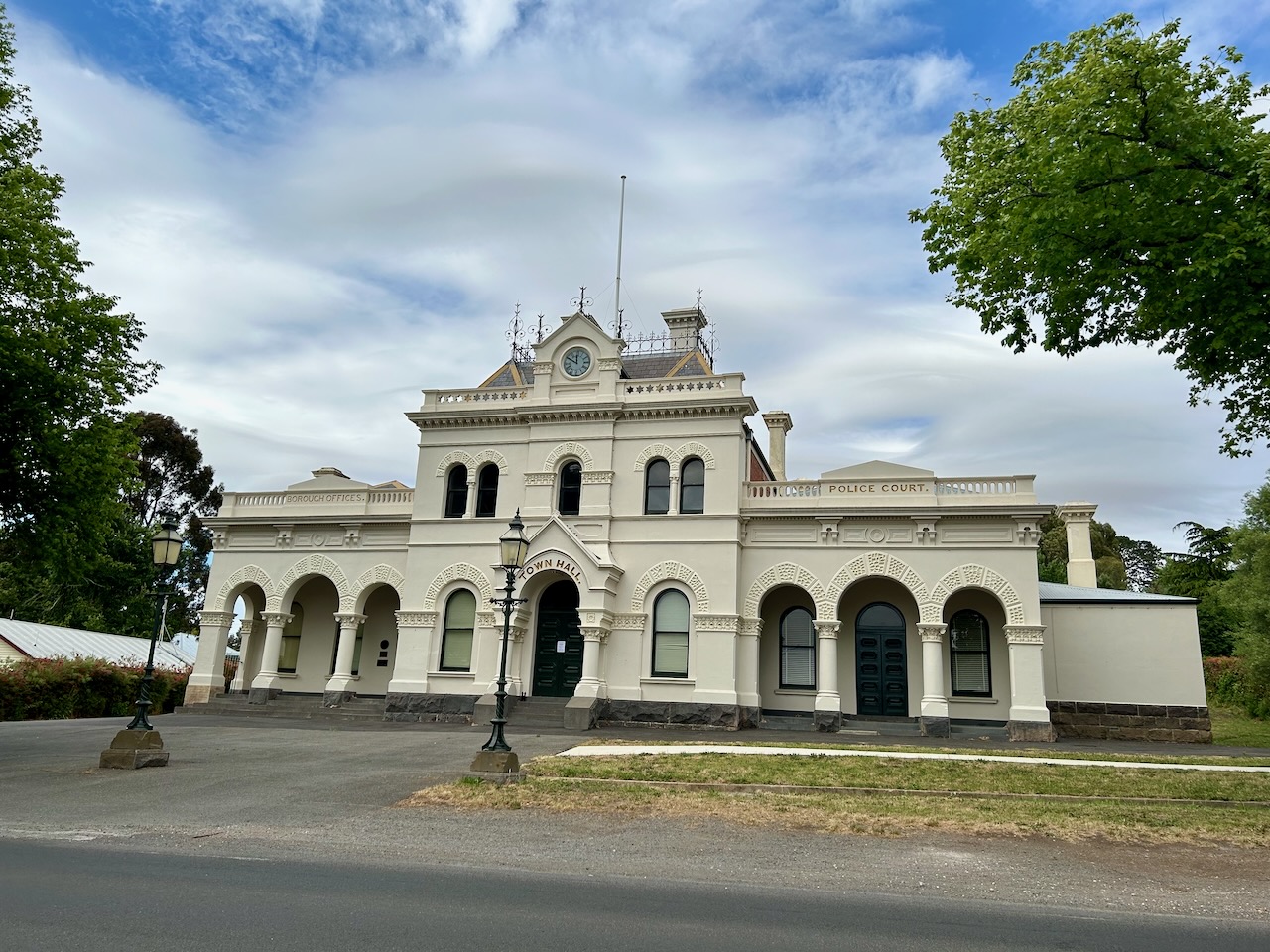
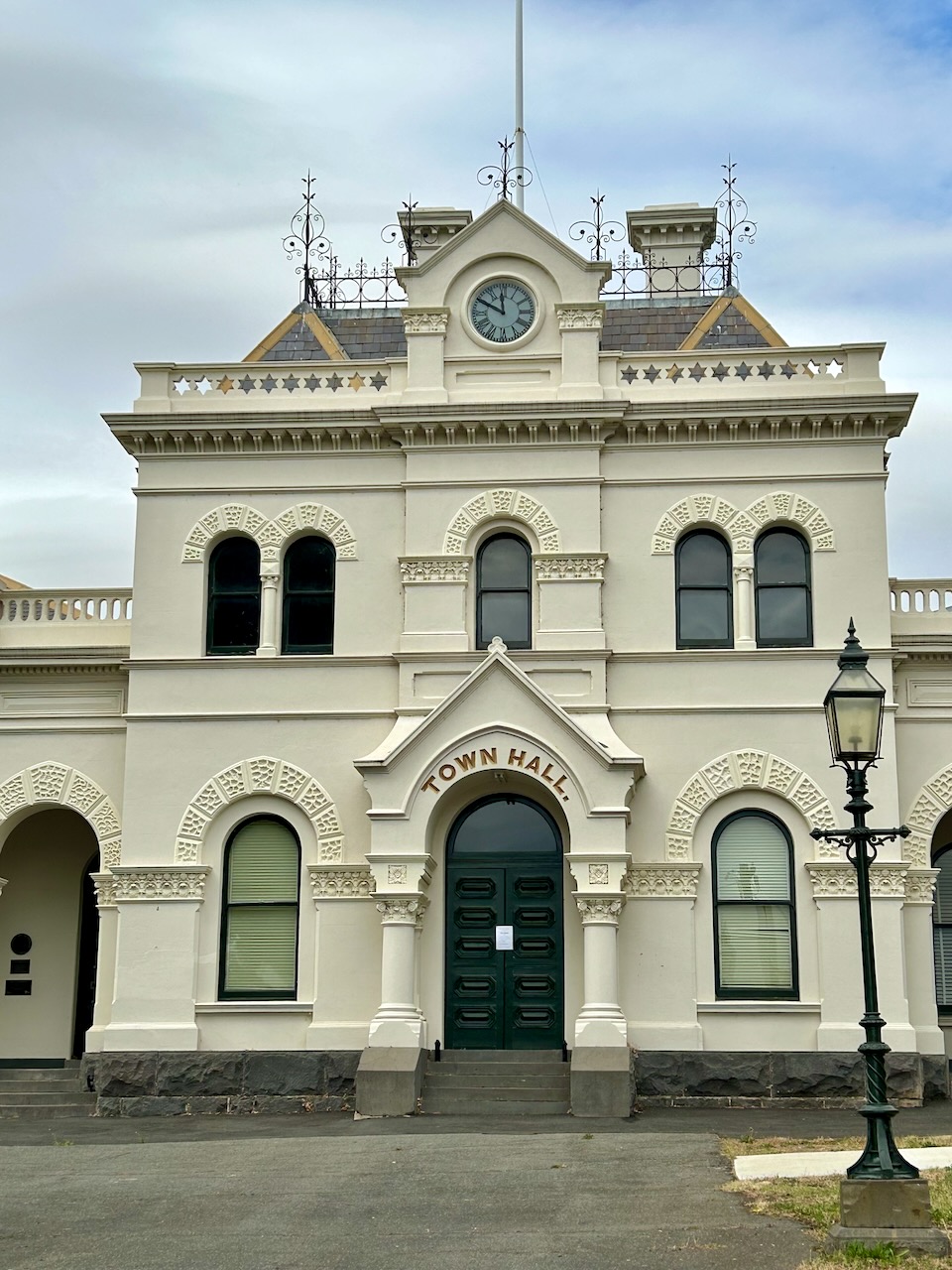
The foundation stone of the Clunes Town Hall was laid by the Chief Secretary of Victoria, Charles Gavan Duffy in April 1872. The building opened in May 1873. The building was designed by architect Percy Oakden, and built by William Cowland. Both these men were responsible for the construction of the Ballarat Town Hall. (Heritage Council Victoria 2024) (Walking Maps 2024)
The Clunes Post and Telegraph Office was constructed in 1879 by Messrs Lewis and Roberts at a cost of £4099. The kitchen outbuildings were constructed by Charles Morgan & Co for an additional £279. It replaced a smaller Post office building that was built in 1861. (Heritage Council Victoria 2024)
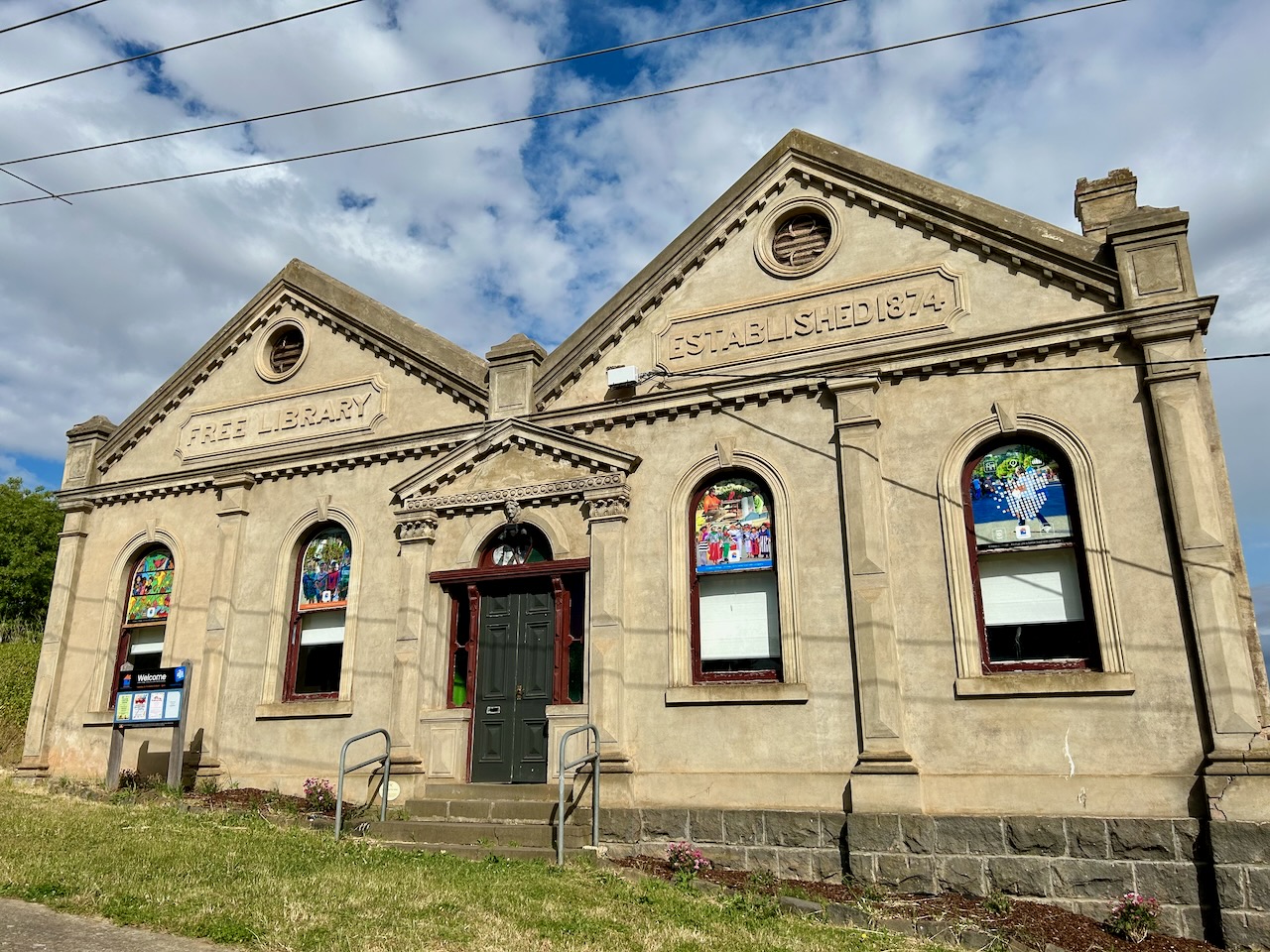
The Clunes Mechanic Institute was built in 1874. (Walking Maps 2024)
The foundation stone of St Thomas Aquinas Catholic Church was laid by Bishop Goold of Melbourne, on the 9th day of March 1878. The church closed on the 27th day of May 2018. (Churches Australia 2024) (Walking Maps 2024)
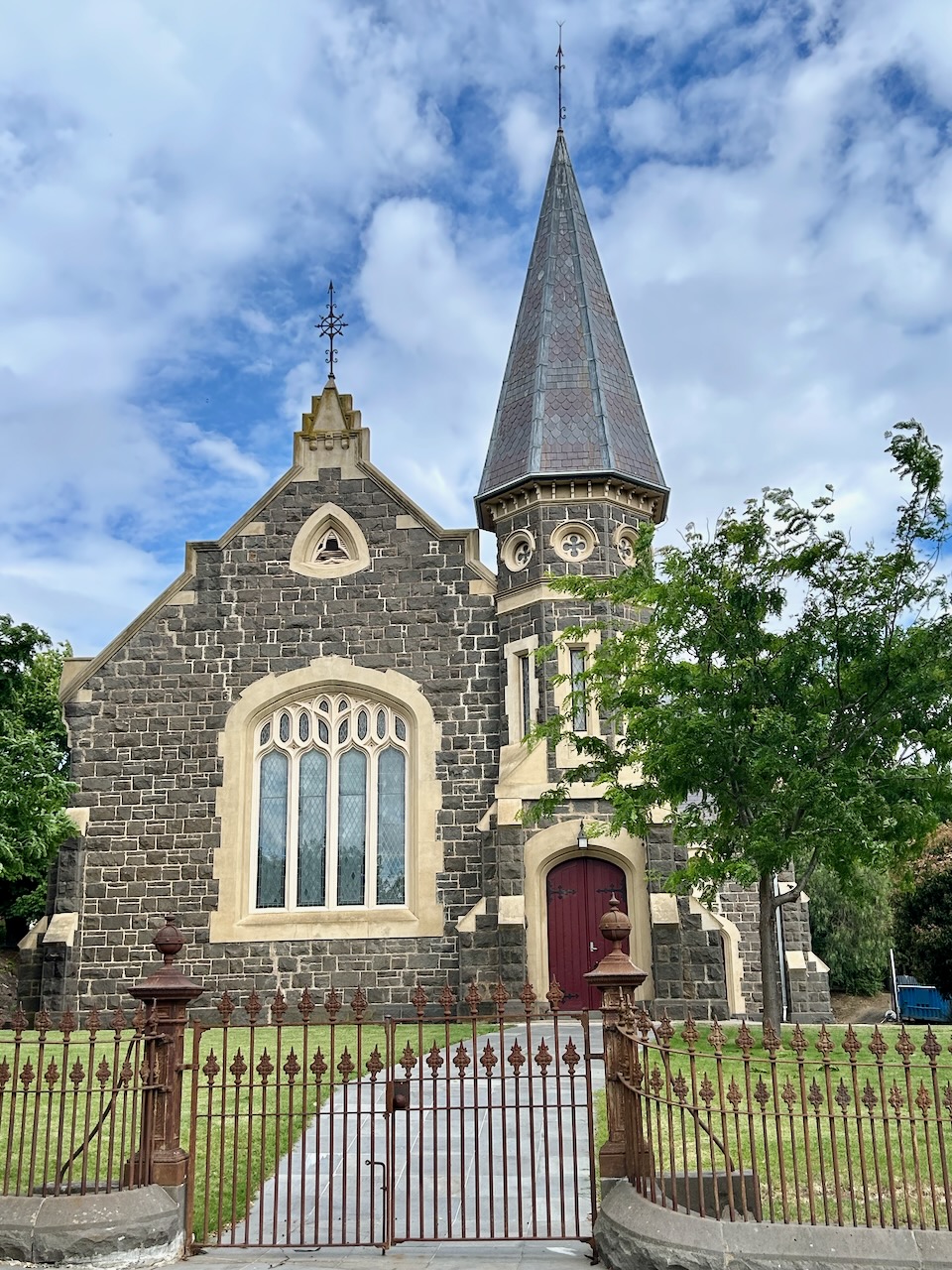
The former Wesleyan Methodist church was built in 1864.
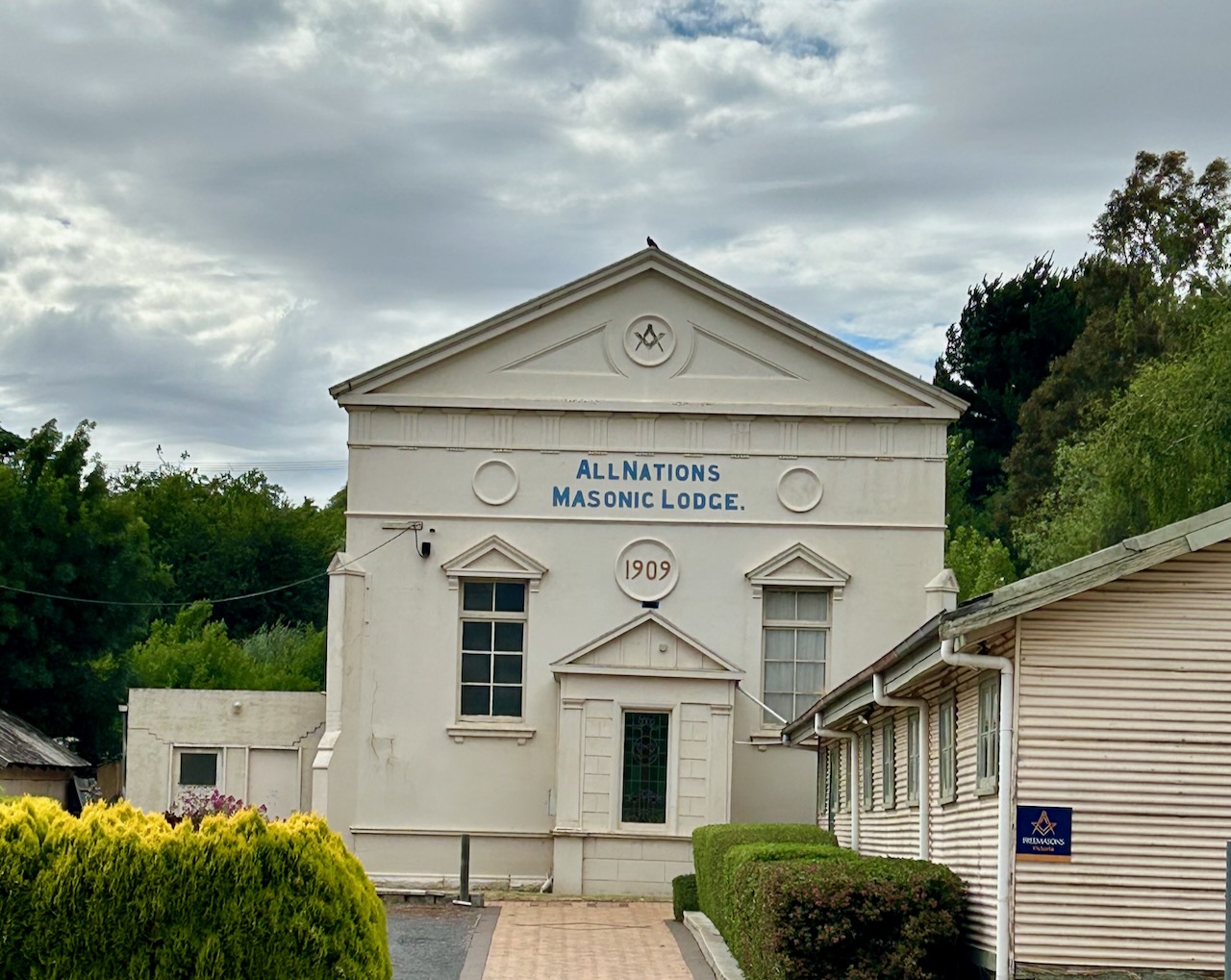
The All Nations Masonic Lodge was first built as the Primitive Methodist Church in 1868, closing in 1907. (Walking Maps 2024)
The former Railway Hotel was established in 1873 and closed in 1916. It was one of six hotels in the Clunes district closed by the License Reduction Board. The owner received £225 compensation.(Ballarat Hotels 2024)
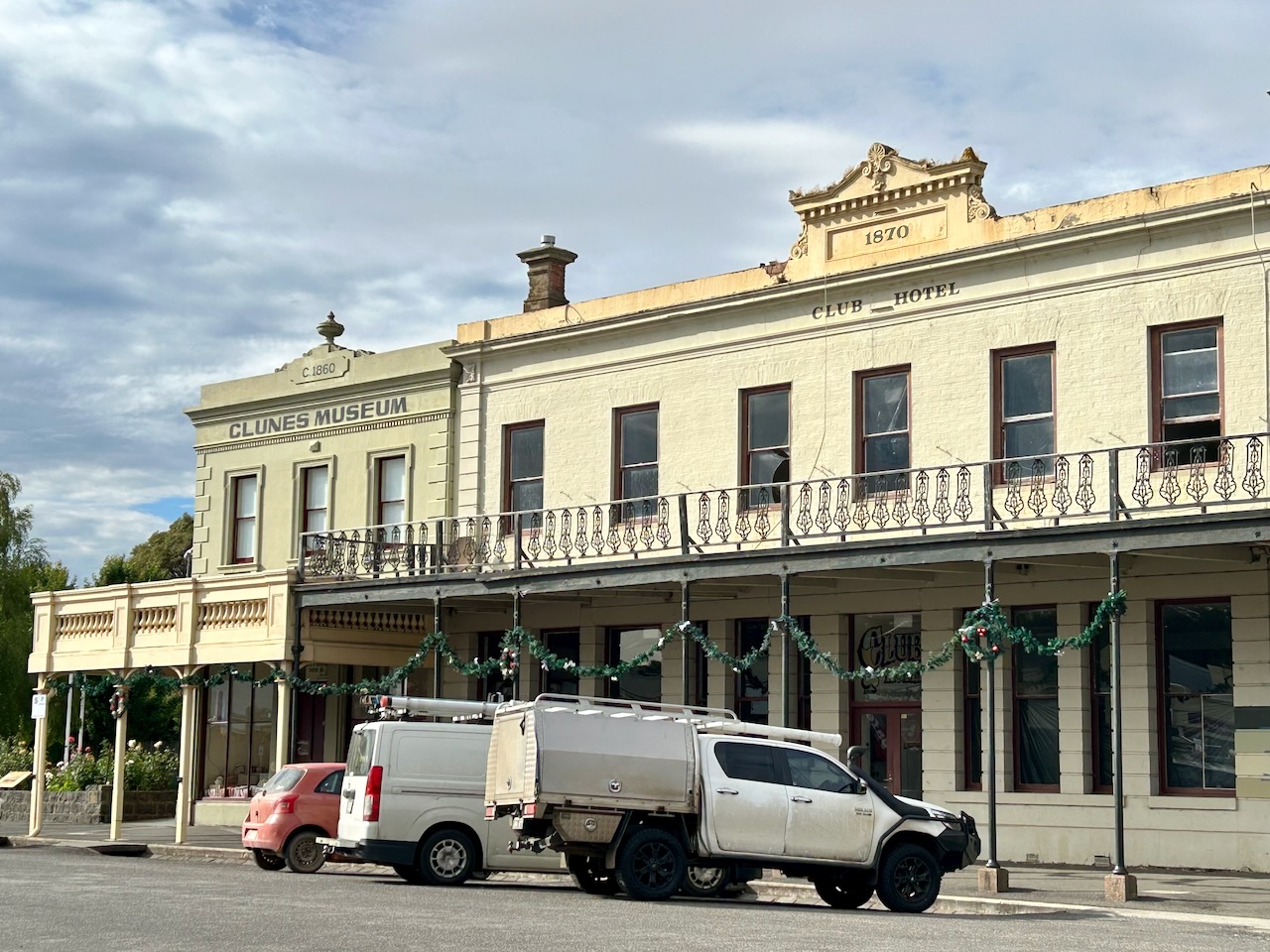
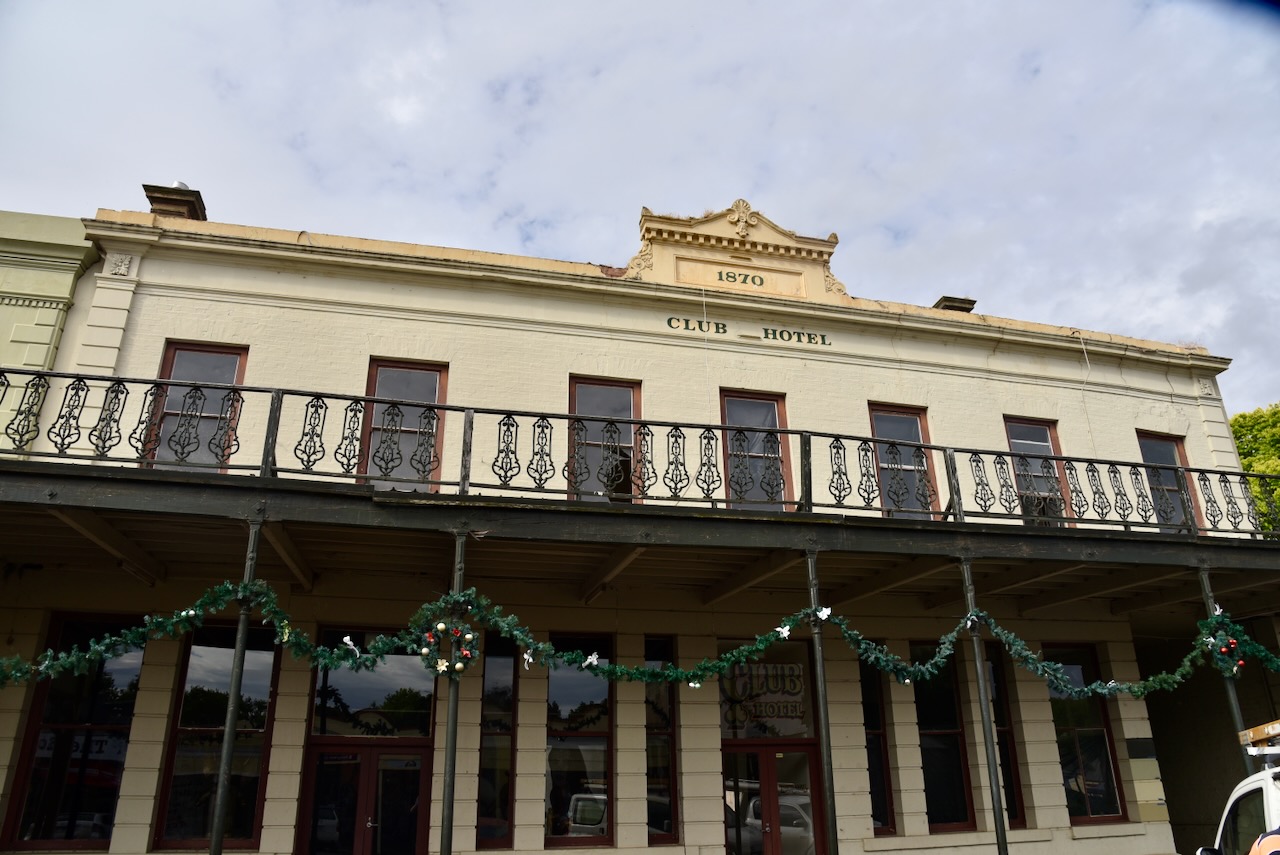
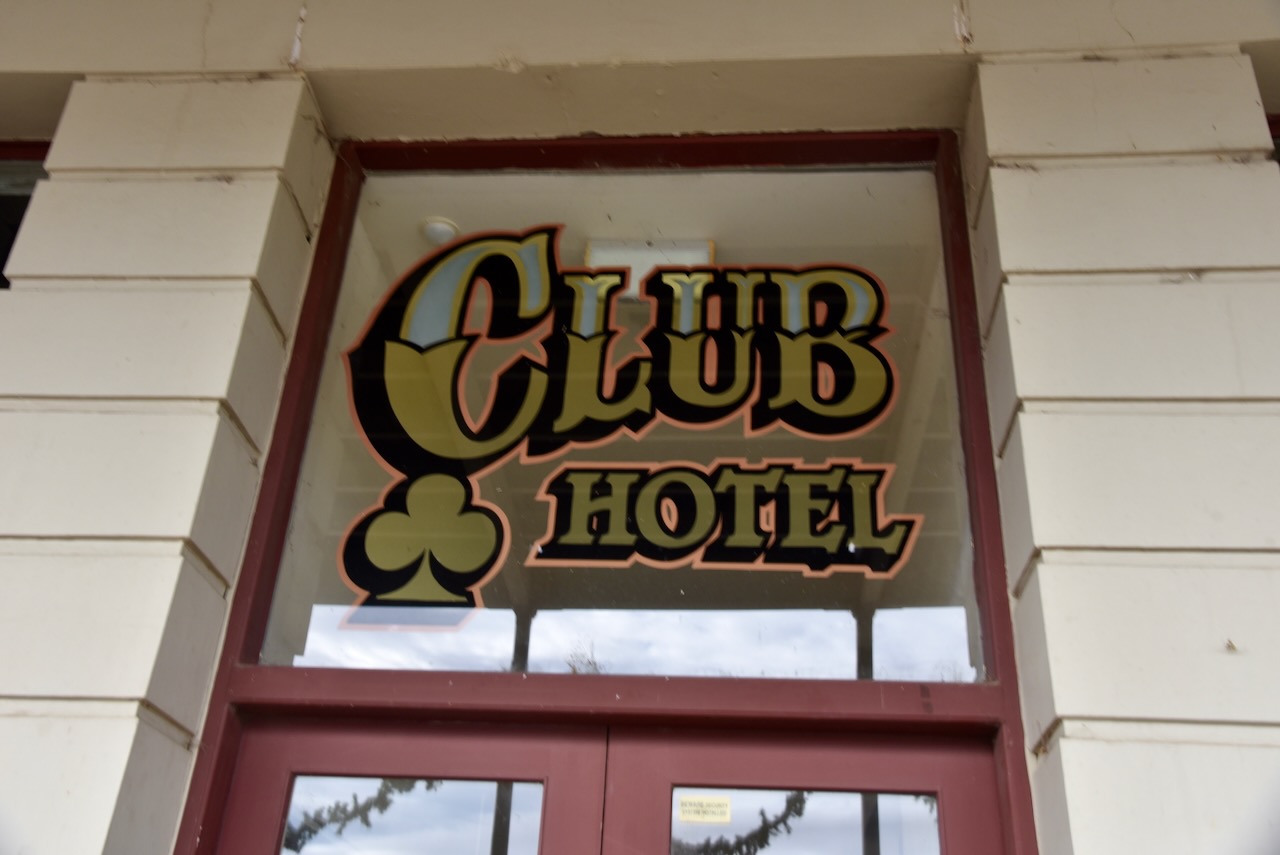
The Club Hotel was built in 1870. It was one of a number of hotels built in Fraser Street, Clunes during the late 1860s and early 1870s. The hotel was constructed by owner and occupier, Griffin Wiles. (Victoria Heritage Council 2024) (Walking Maps 2024)
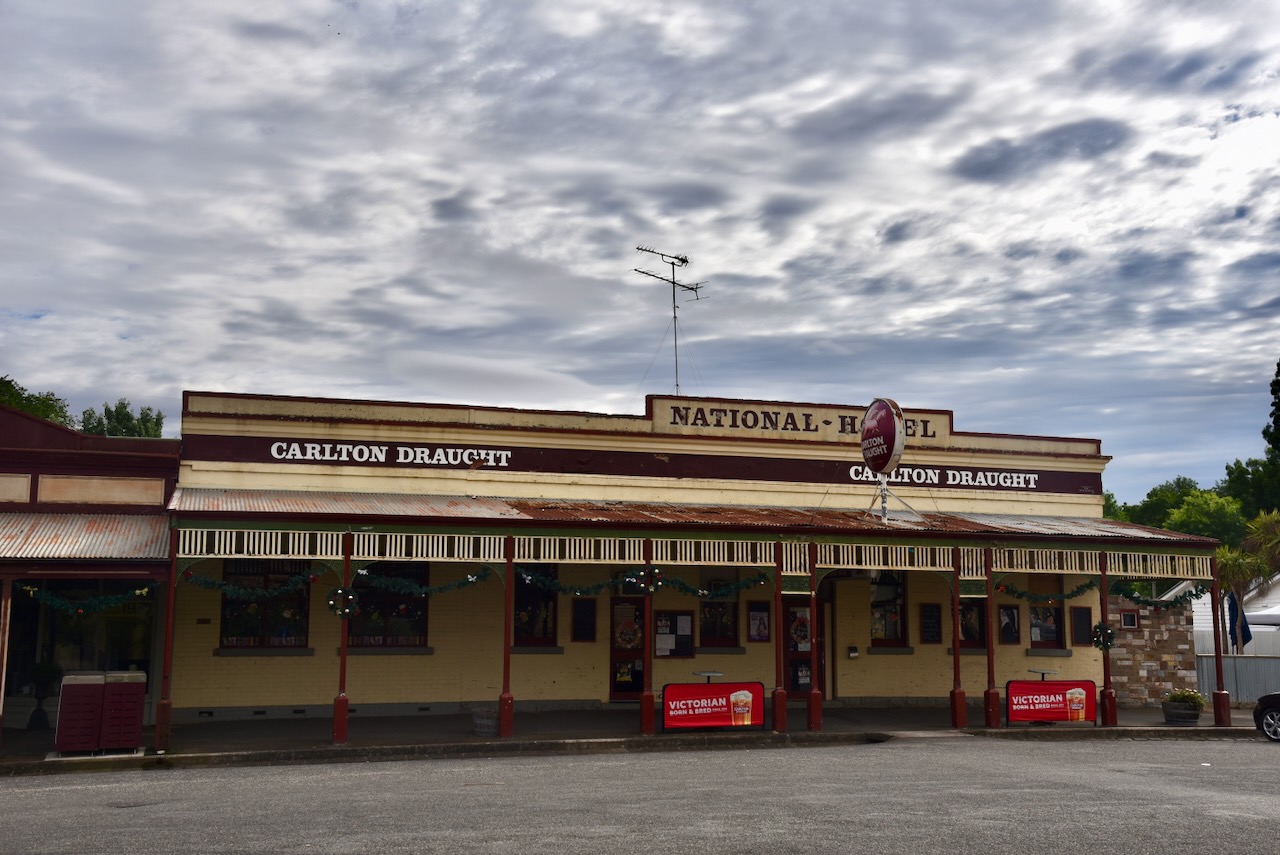
The National Hotel was built in 1860. (Walking Maps 2024)
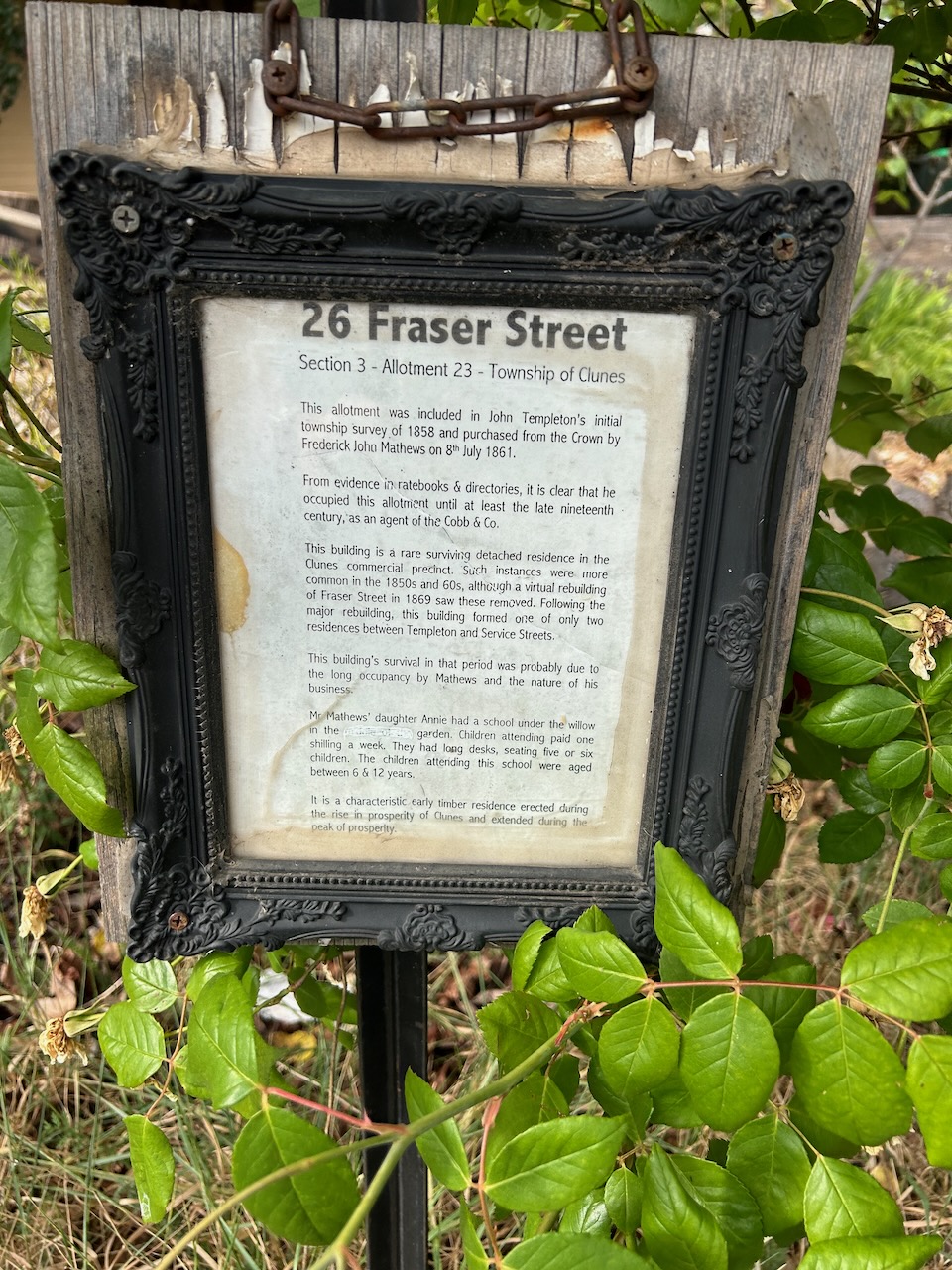
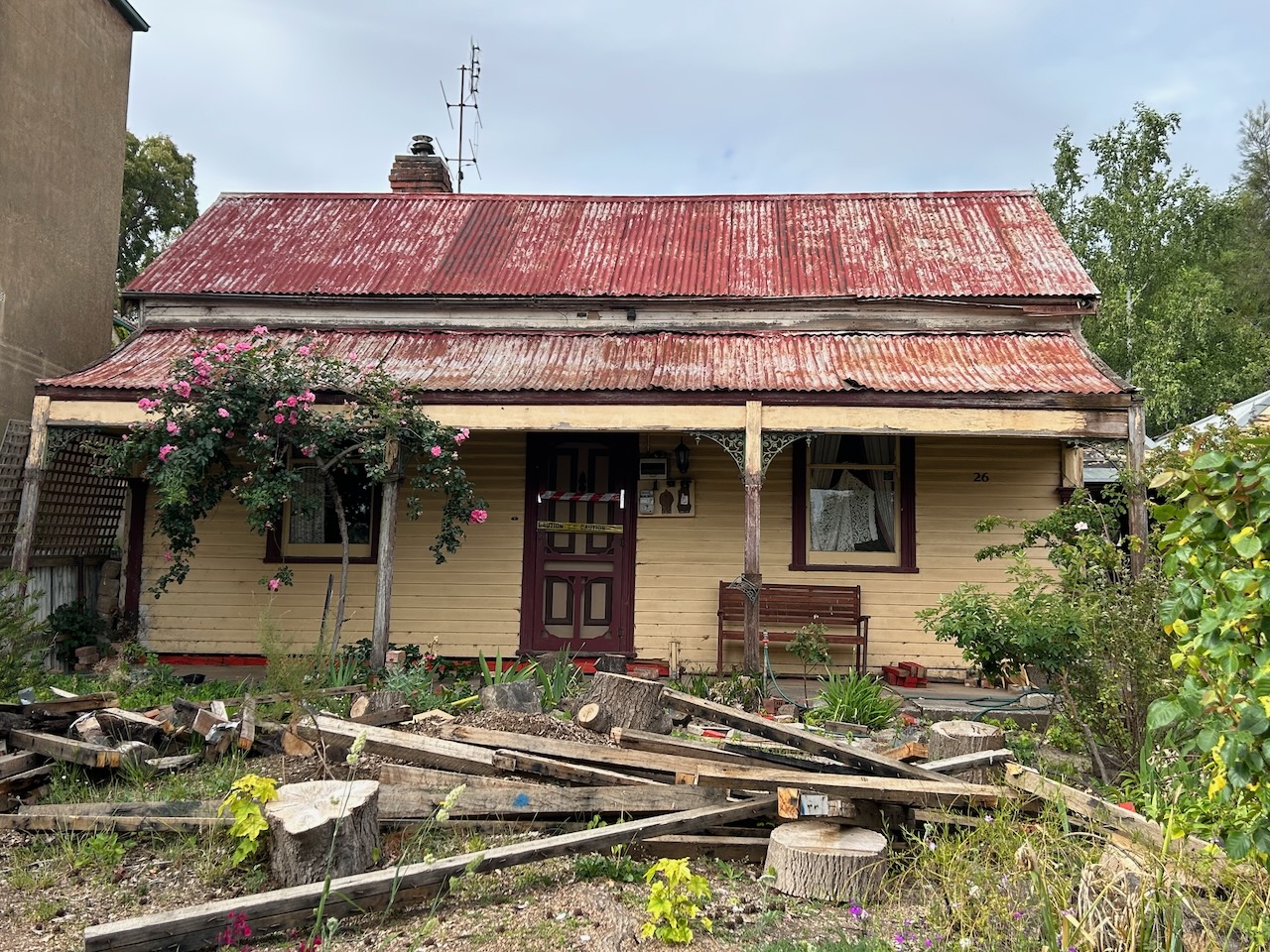
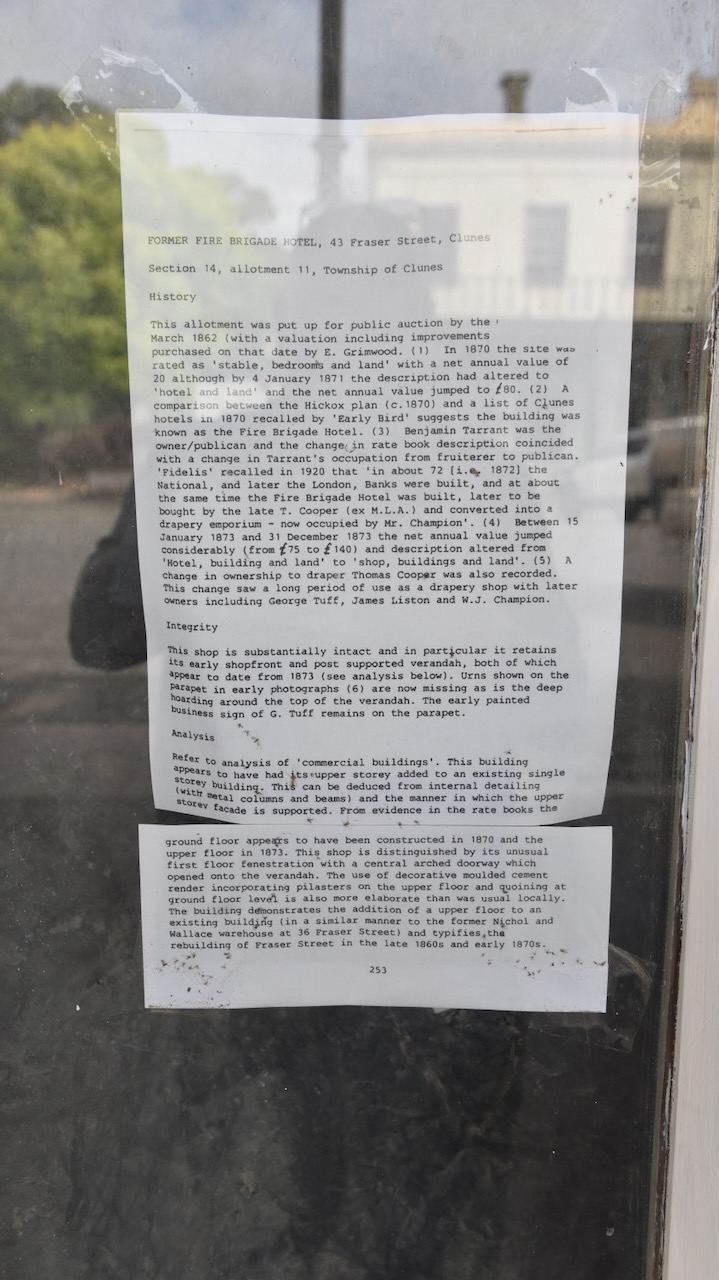
Section 3-Allotment 23-Township of CLunes (26 Fraser Street) was included in the initial Clunes township survey of 1858. The building served as an agent of the Cobb & Co until the late 1800s.
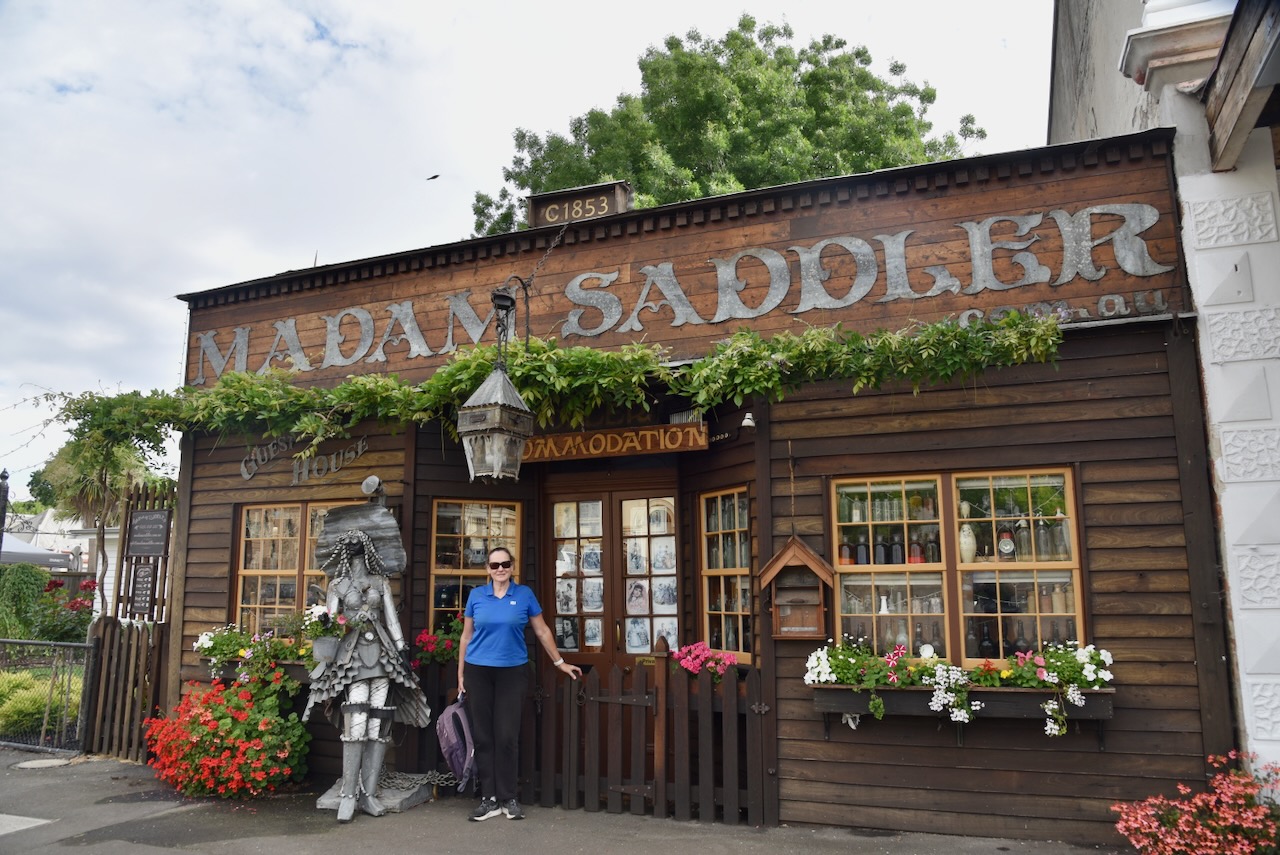
This store and cottage was built in 1853. (Walking Maps 2024)
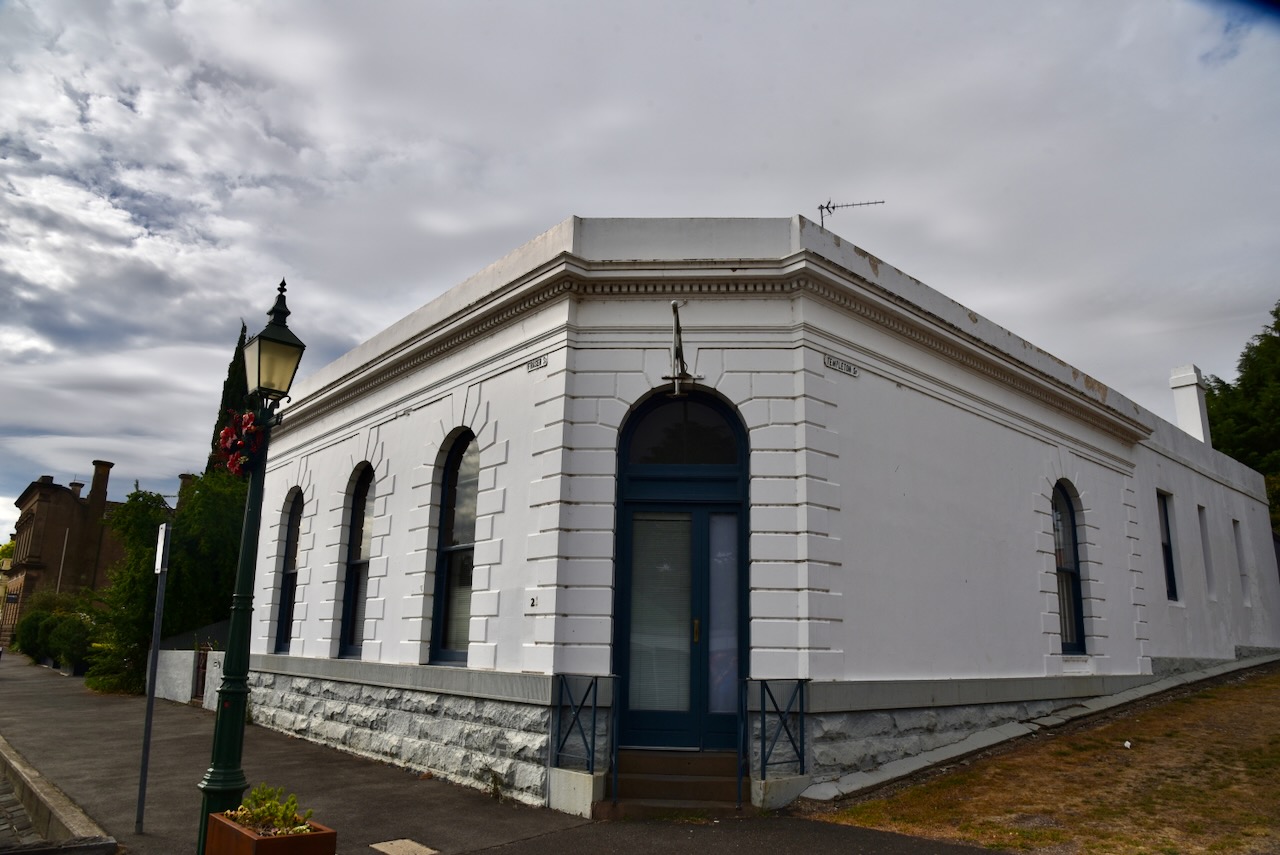
The Union Bank was built in 1865. (Walking Maps 2024)
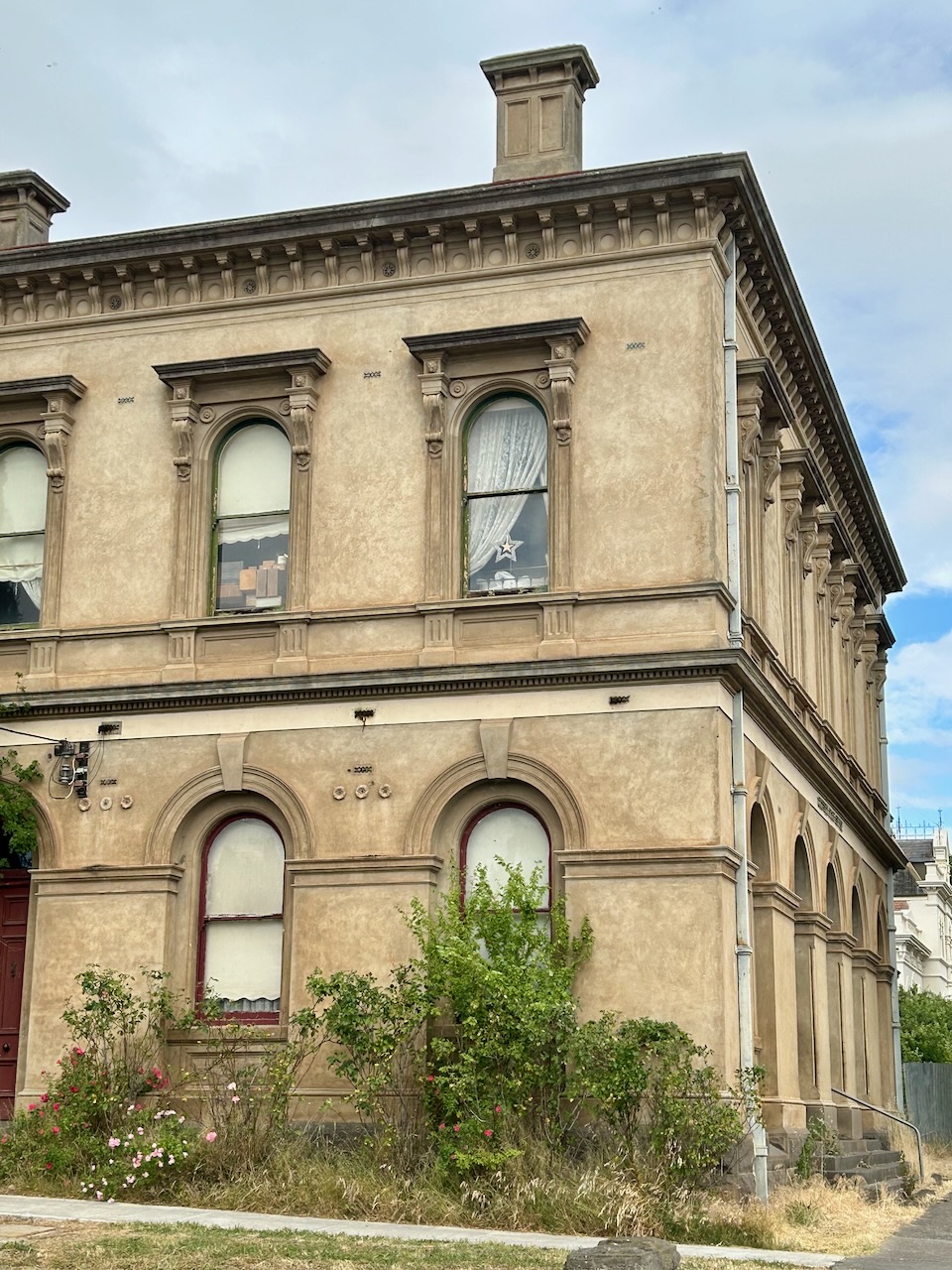
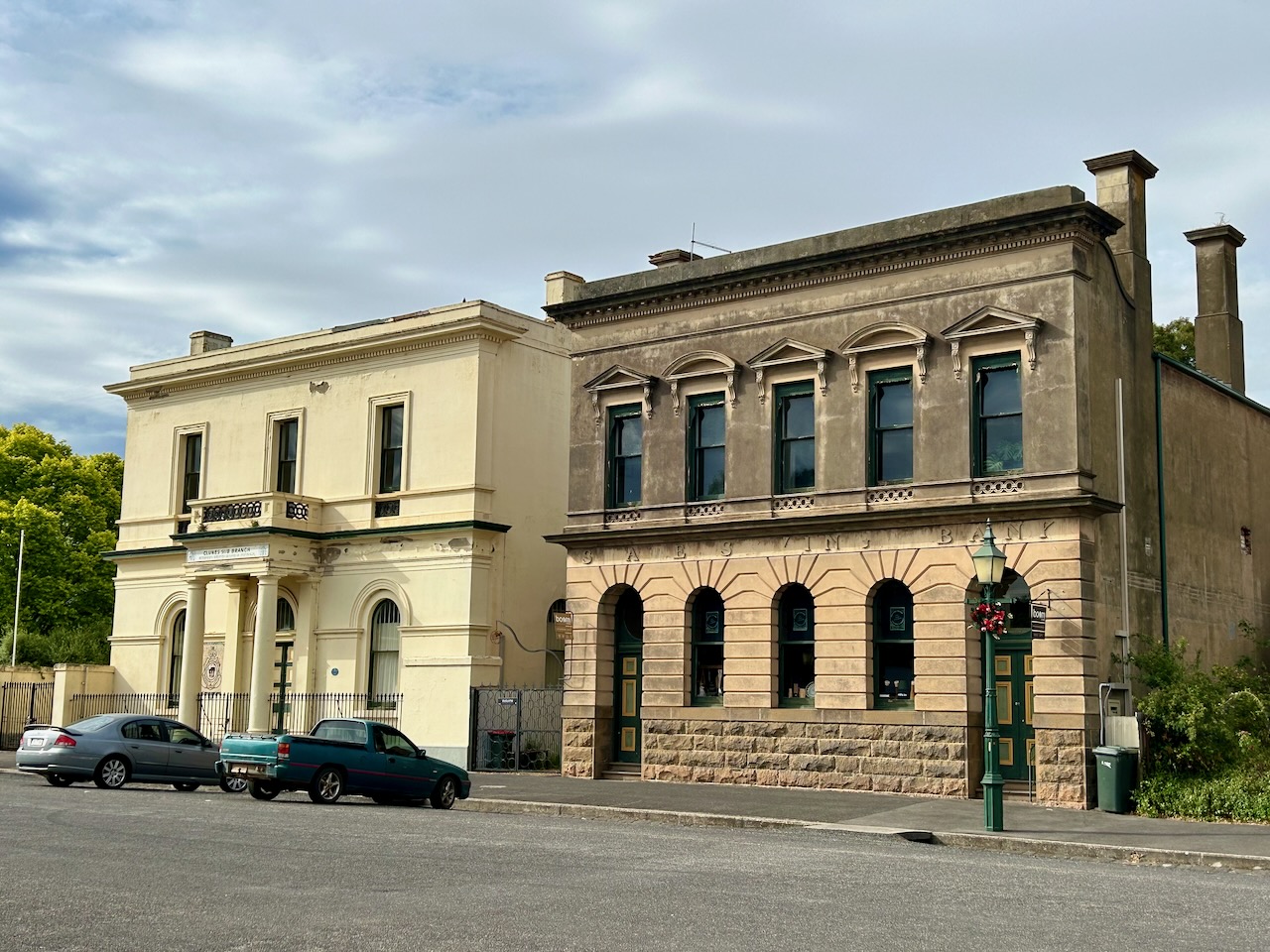
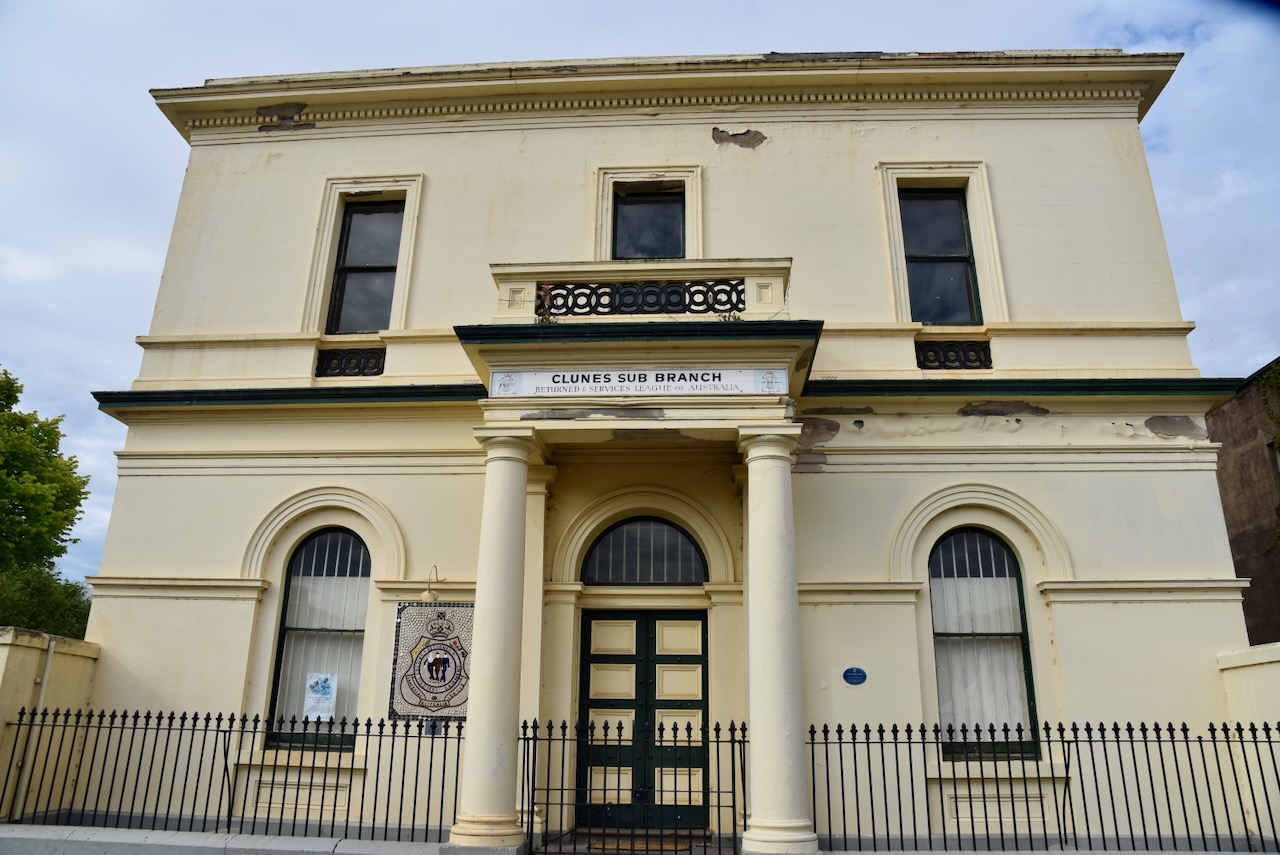
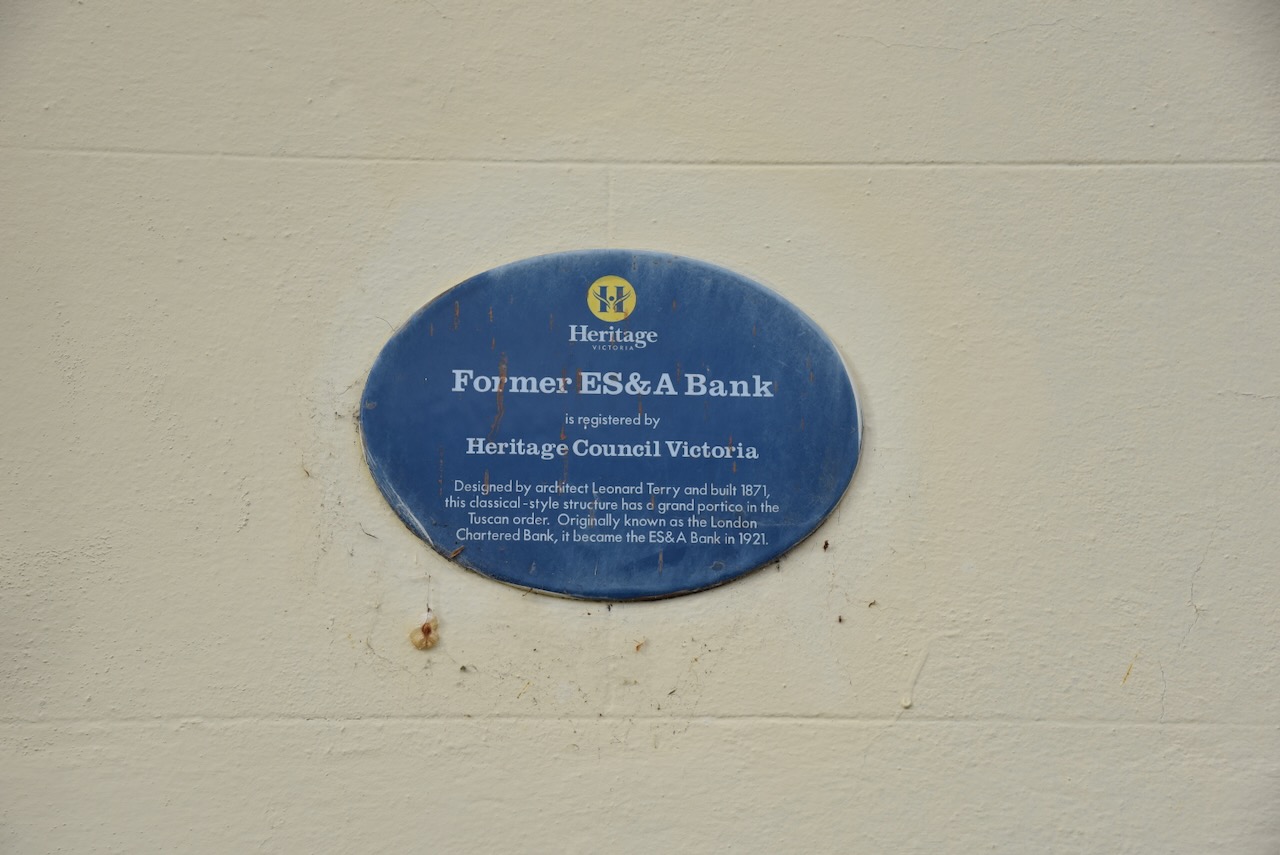
The English, Scotish and Australian Bank (ES & A) was built in 1871 and was designed by leading Melbourne architect Leonard Terry. He was responsible for the design of over 50 major bank branches in Victoria. Terry is regarded as one of the most important bank architects in Victoria at the time. (Heritage Council Victoria 2024) (Walking Maps 2024)
The London Chartered Bank was built in 1871 by architect Leonard Terry, and is now used by the RSL. (Heritage Council Victoria 2024)
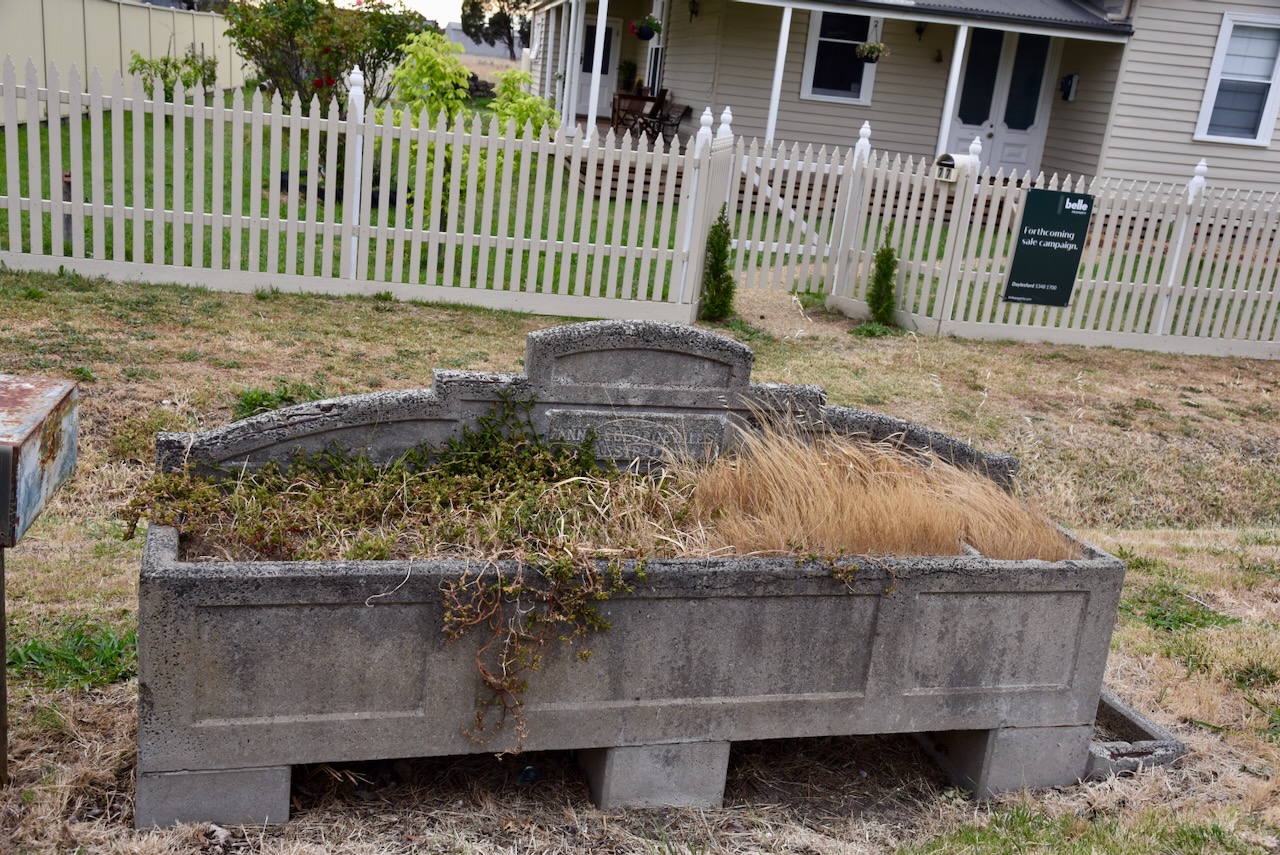
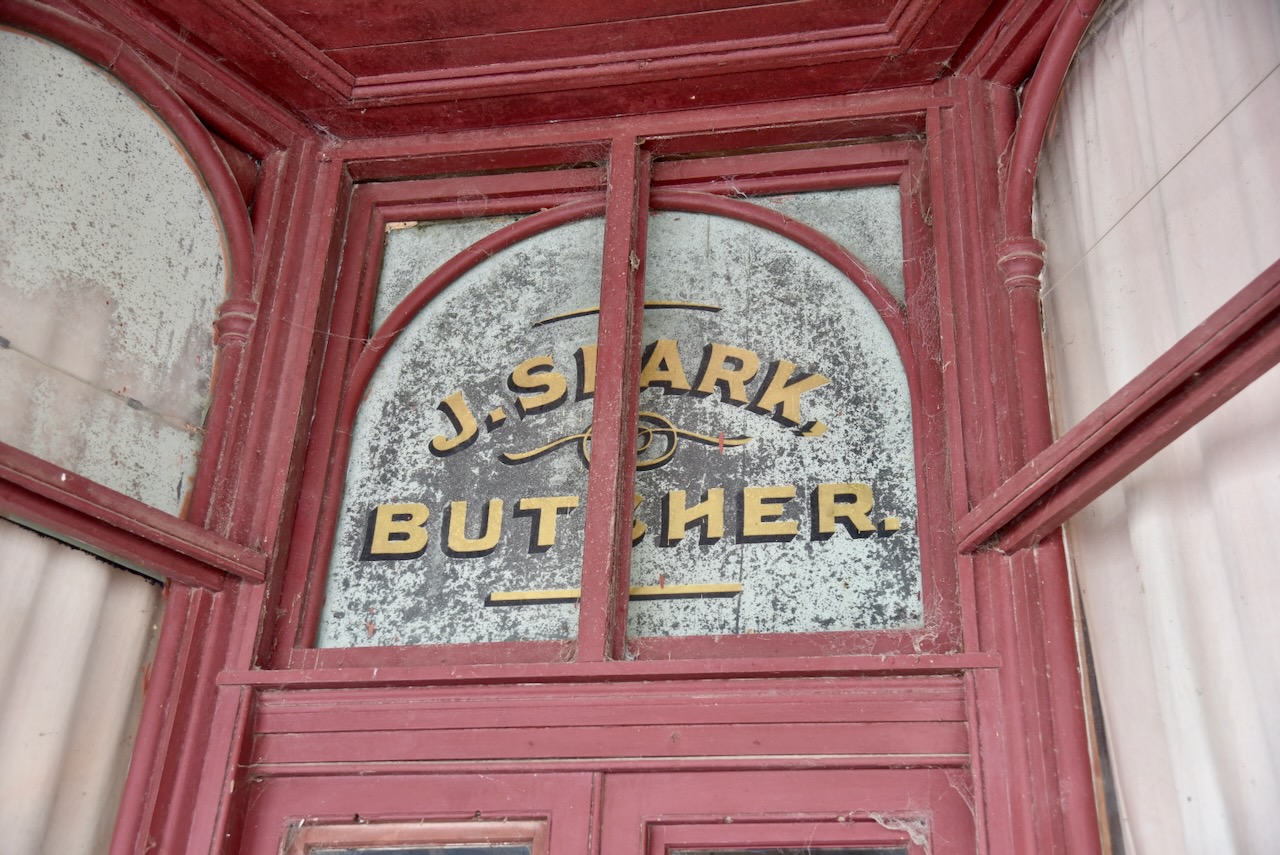
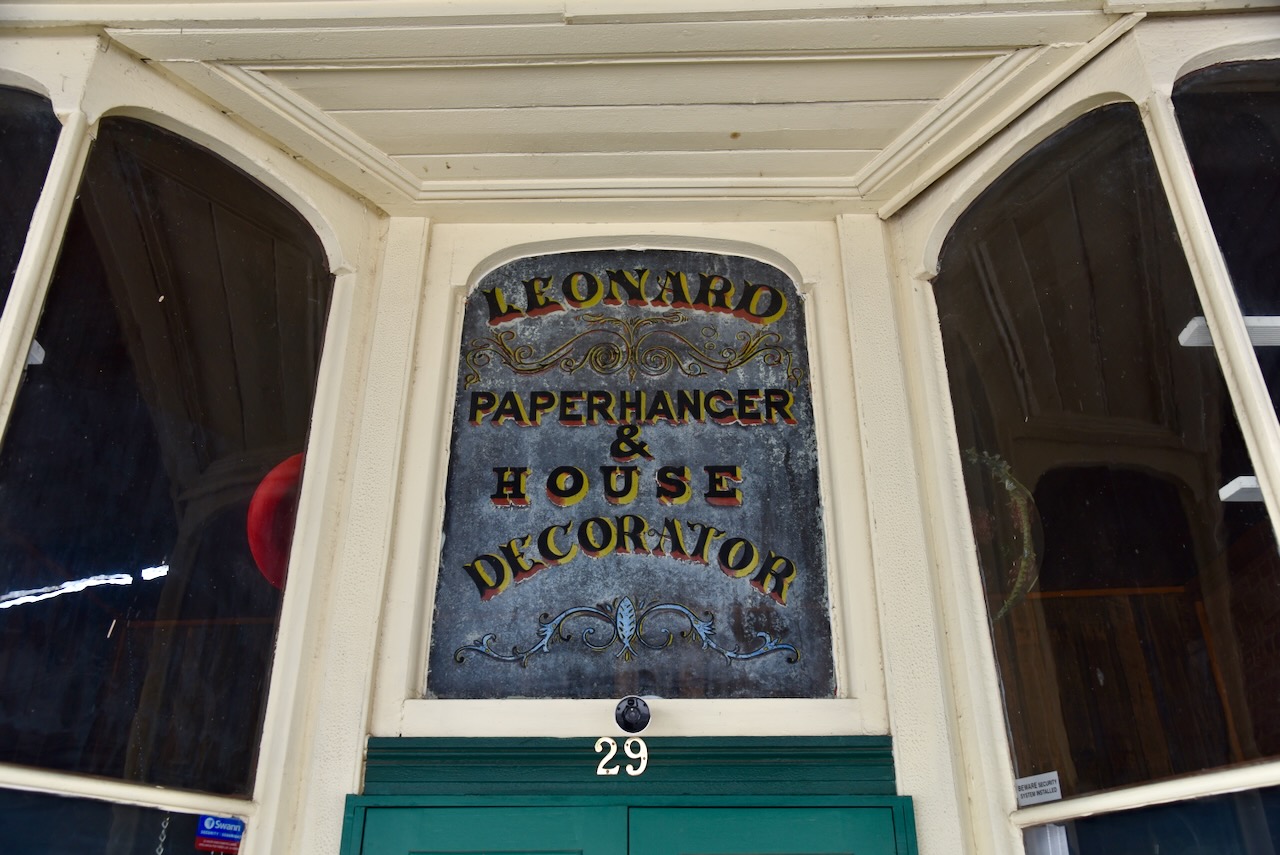
And of course, Clunes has a Bills horse trough.
There is so much history in this town. Allow yourself at least half a day to have a good look around.
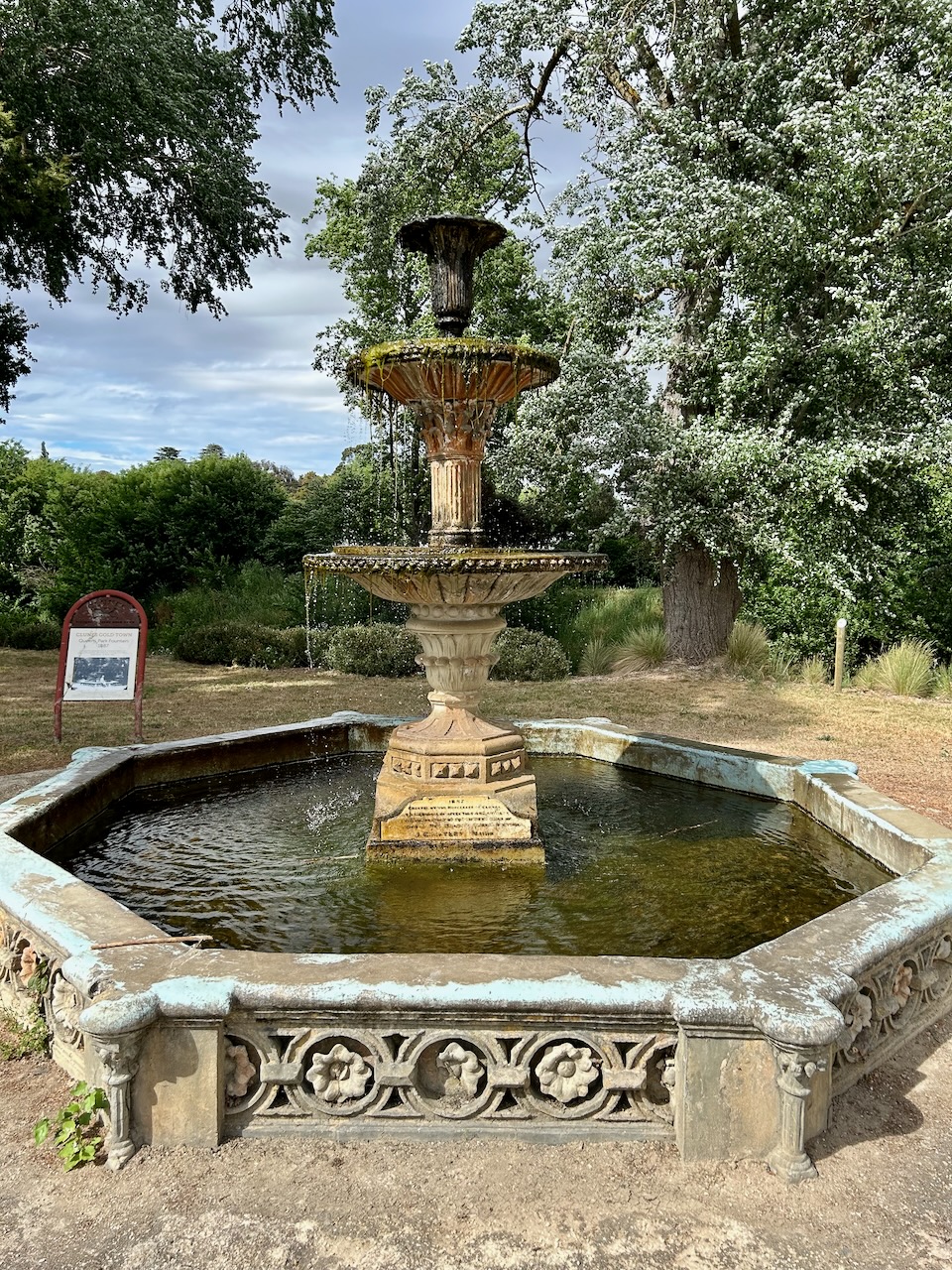
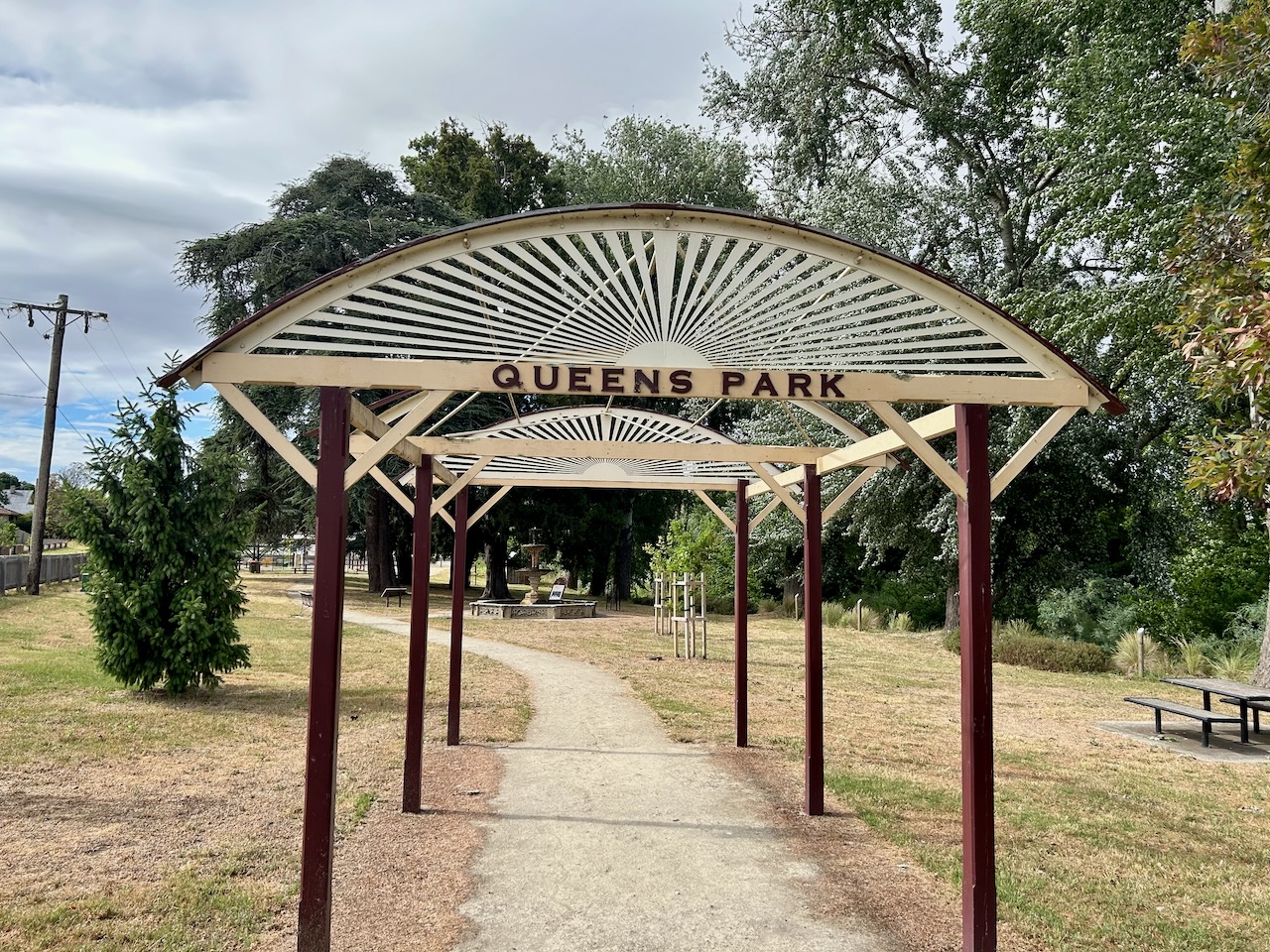
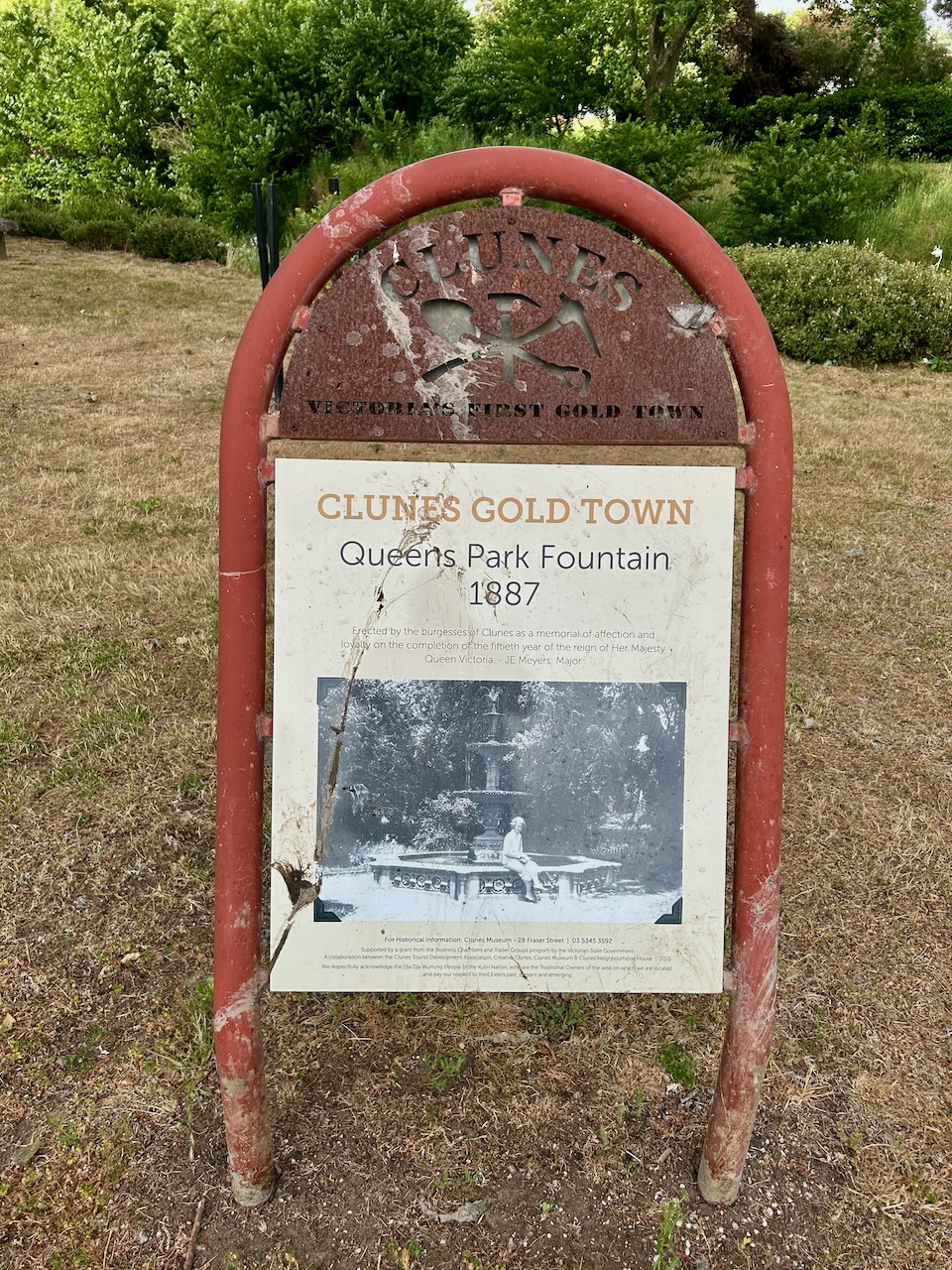
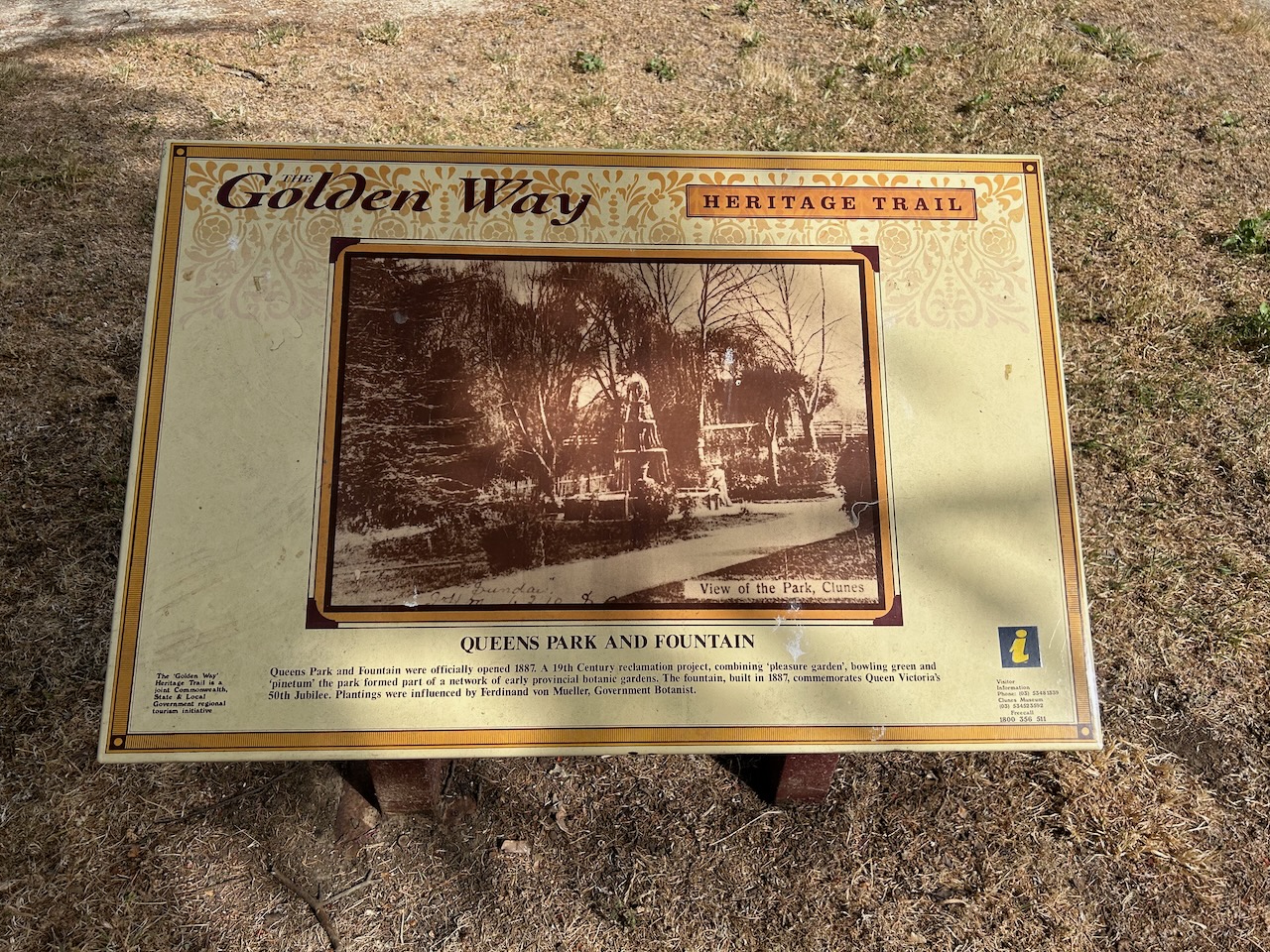
We then stopped in at Queens Park and the Queens Fountain which was erected by the Burgesses of Clunes as a memorial of affection and loyalty on the completion of the 15th year of the reign of Her Majesty Queen Victoria.
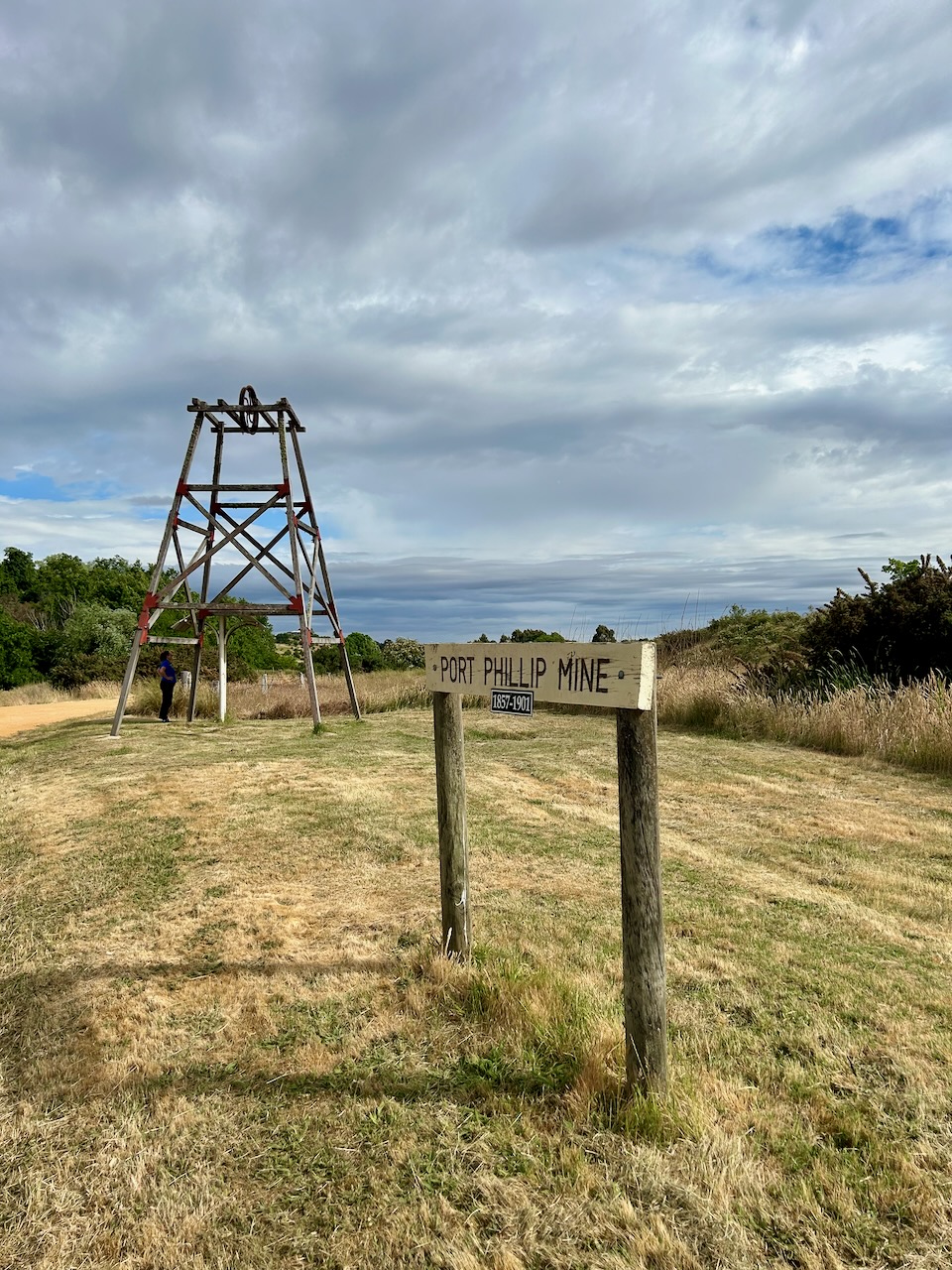
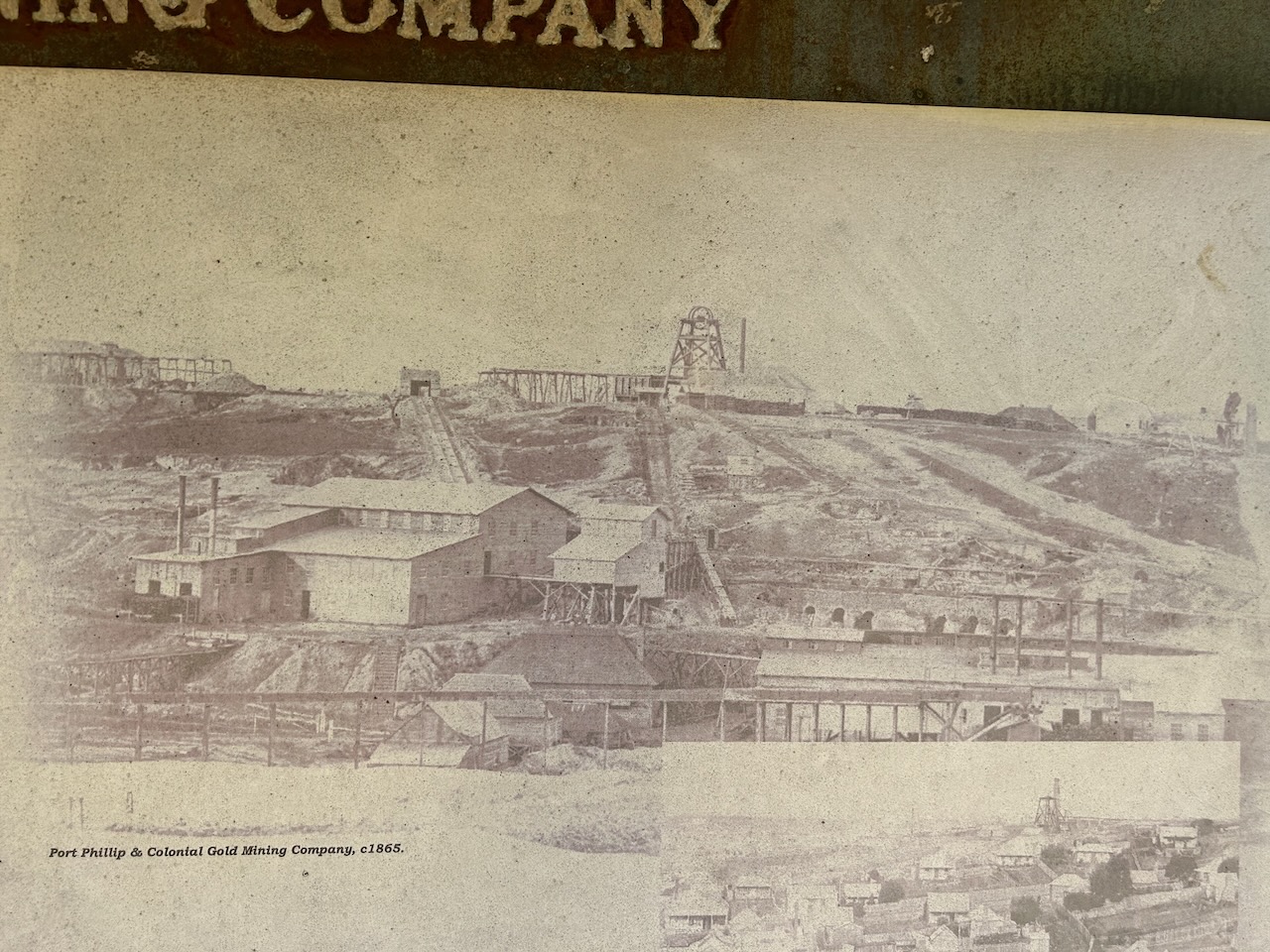
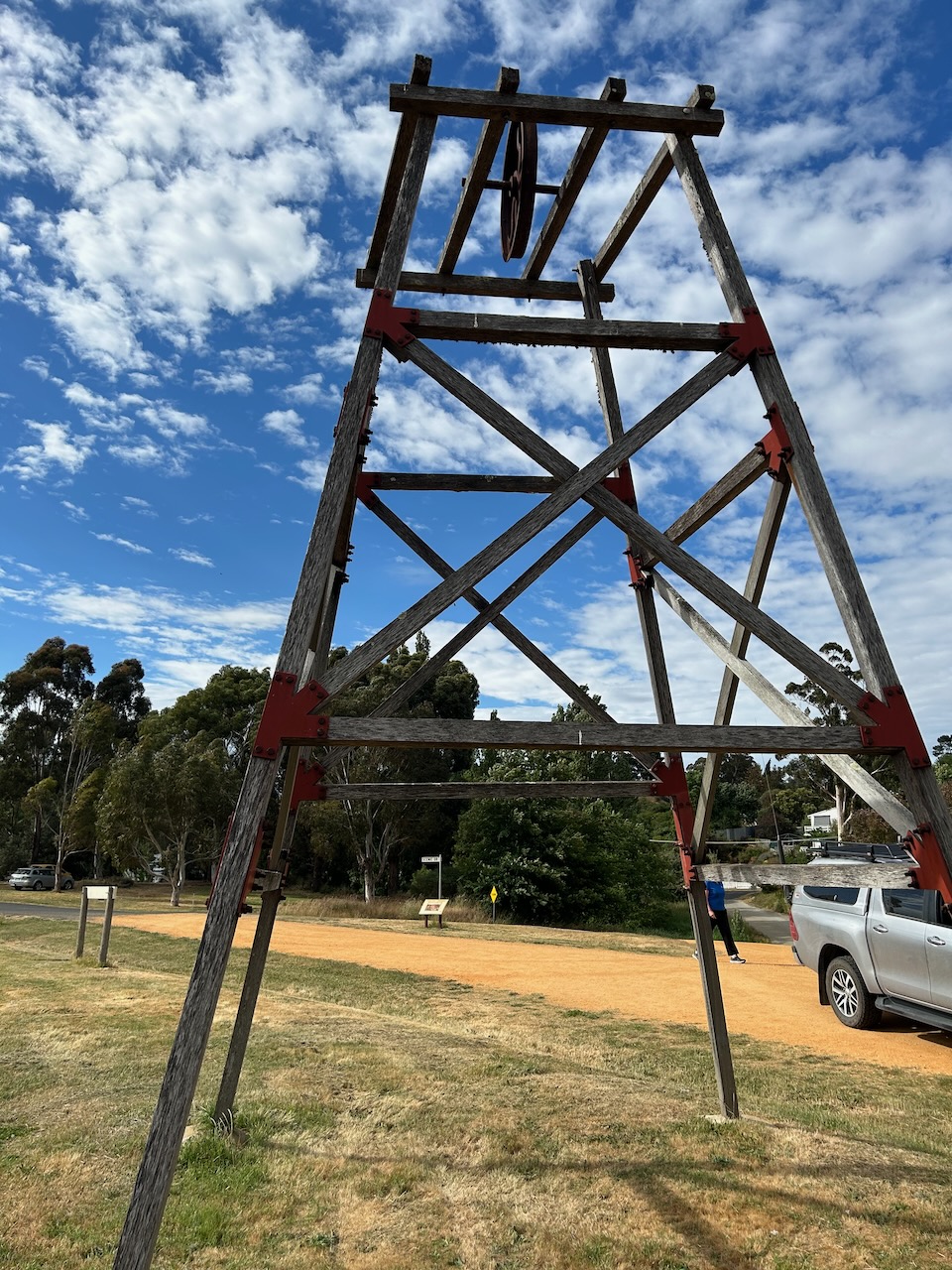
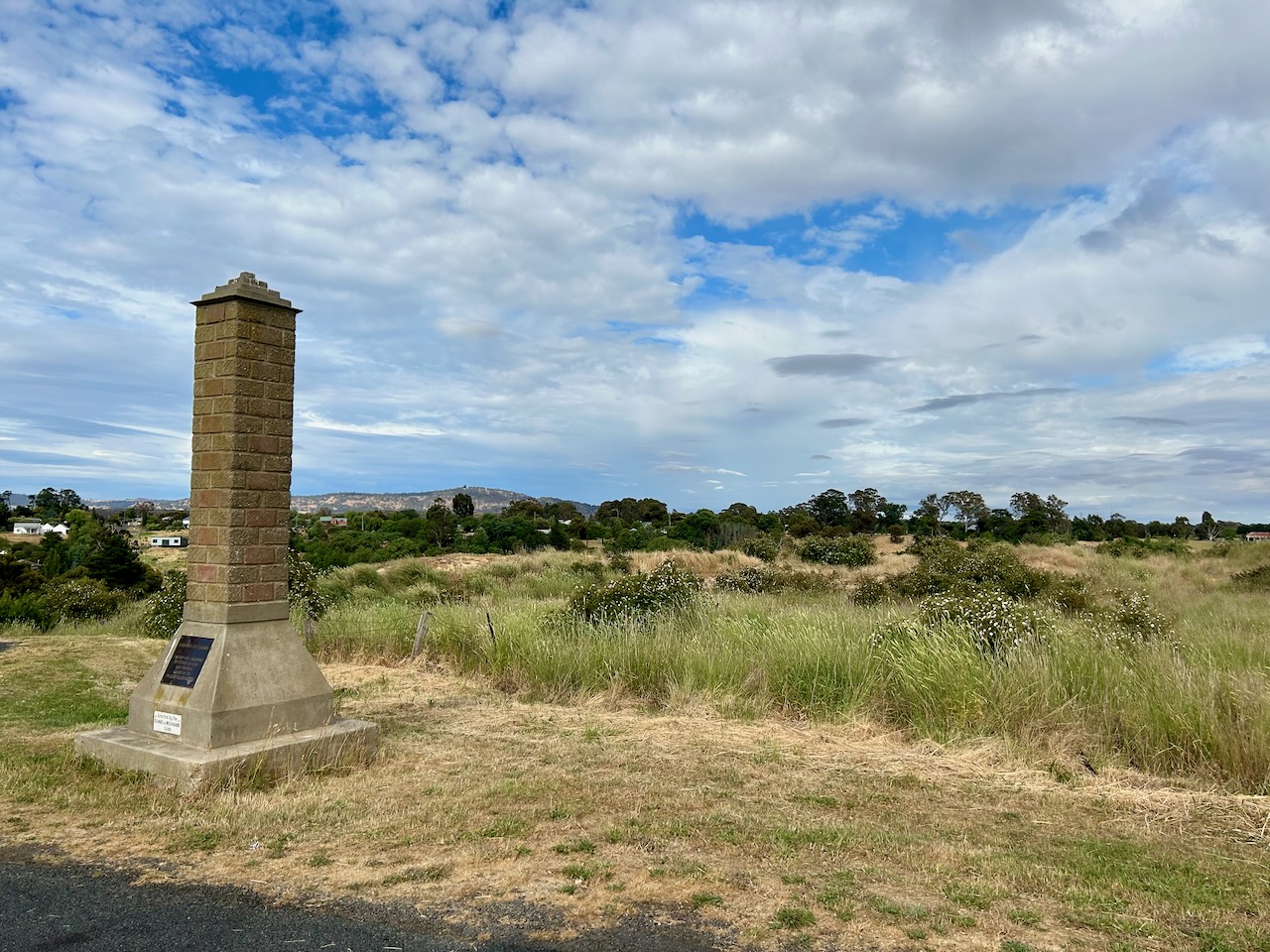
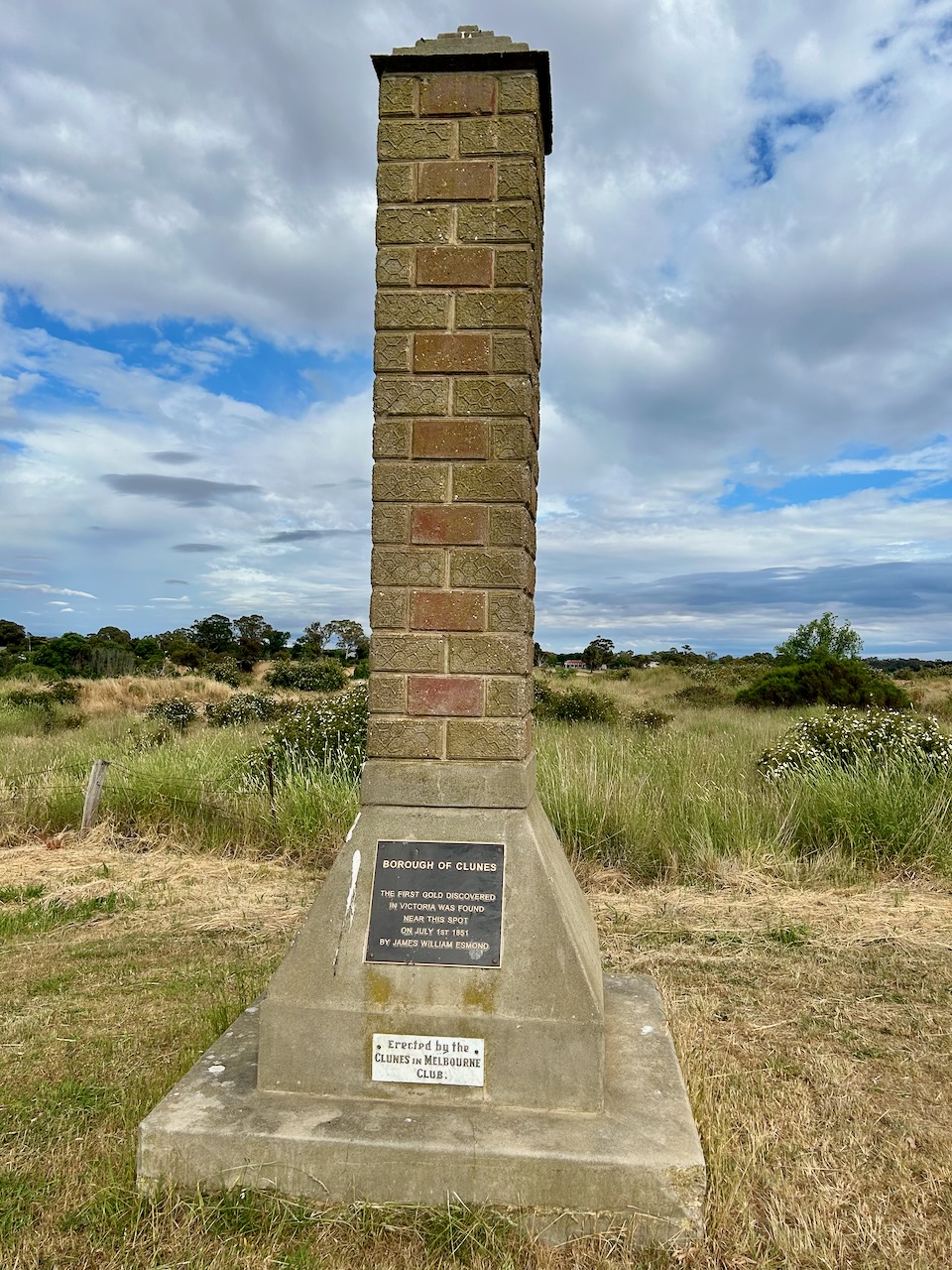
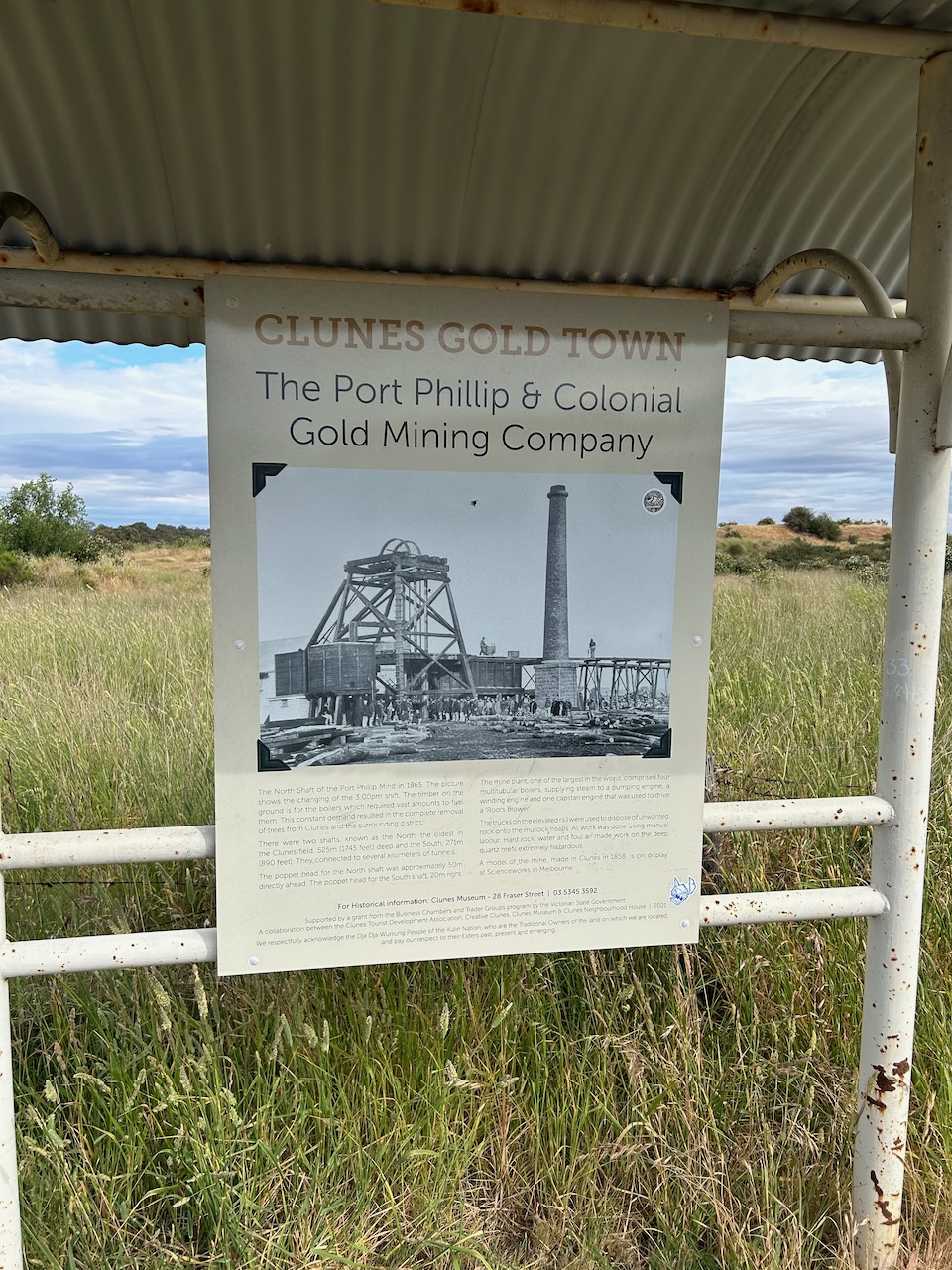
Marija and I then drove up to Esmond Park lookout at Clunes and the site of the Port Phillip Mine.
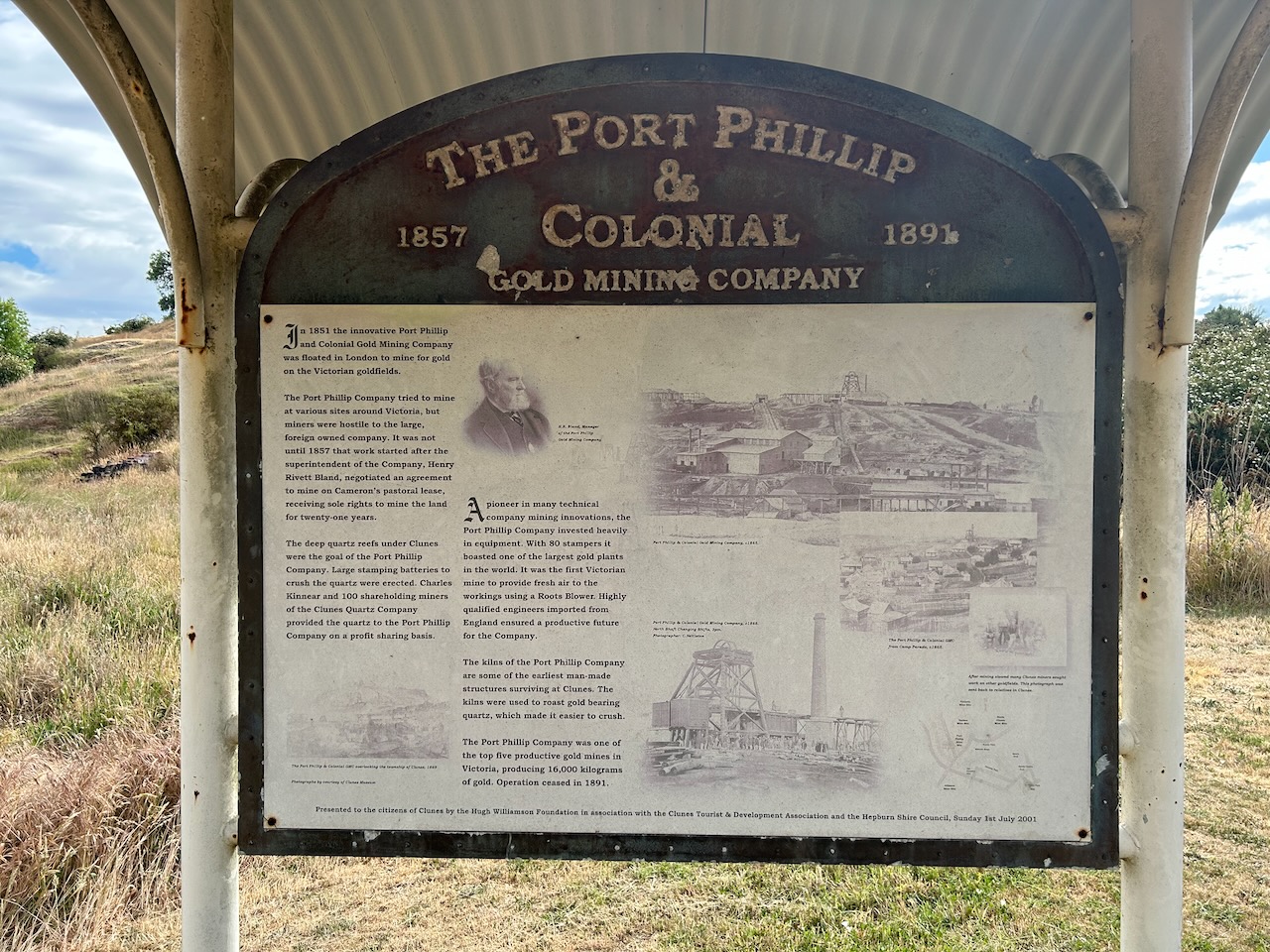
This is from the information board at the site:
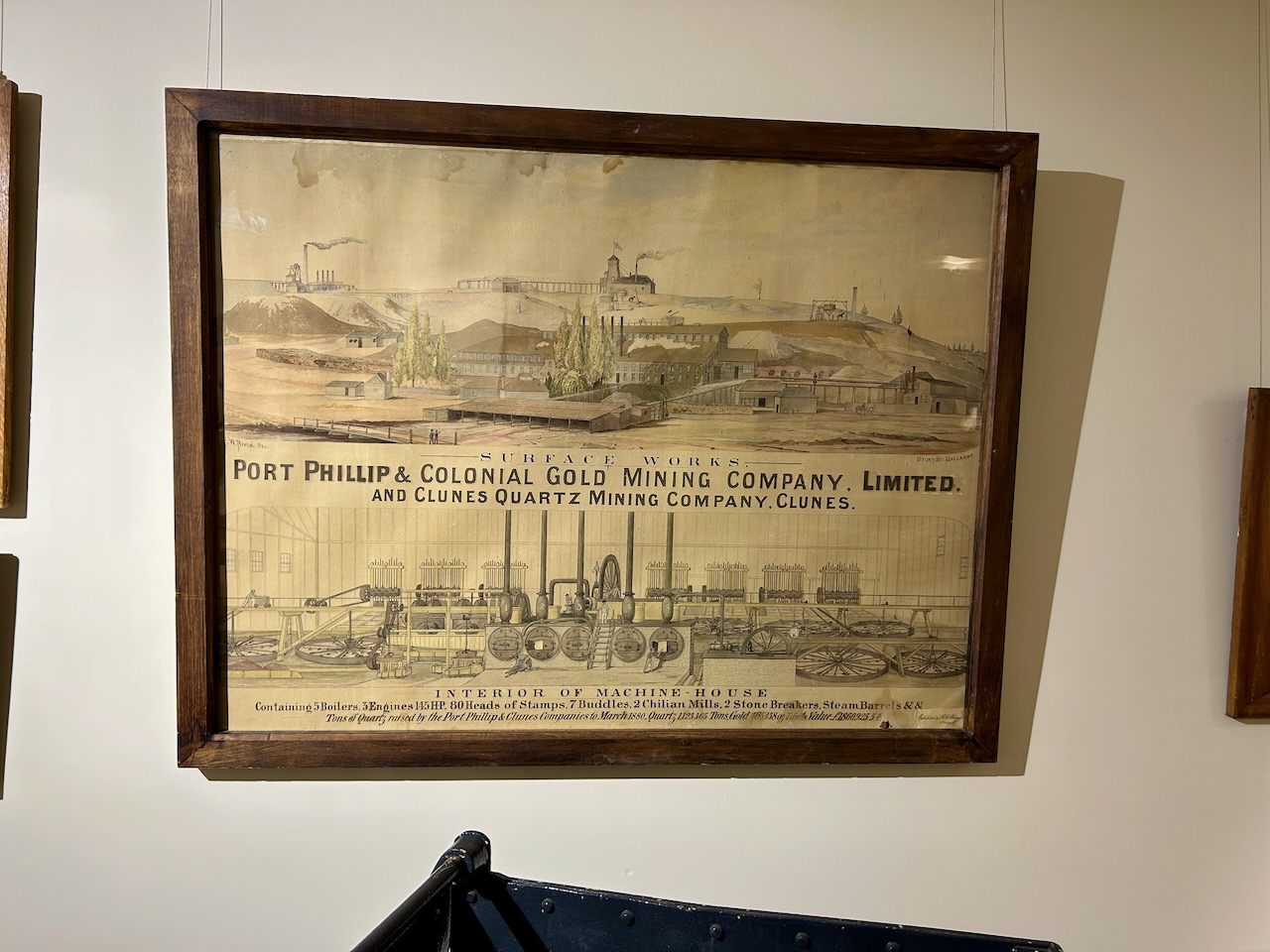
“In 1851 the innovative Port Phillip and Colonial Gold Mining Company was floated in London to mine for gold on the Victorian goldfields.
The Port Phillip Company tried to mine at various sites around Victoria, but miners were hostile to the large, foreign owned company. It was not until 1857 that work started after the superintendent of the Company, Henry Rivett Bland, negotiated an agreement to mine on Cameron’s pastoral lease, receiving sole rights to mine the land for twenty-one years.
The deep quartz reefs under Clunes were the goal of the Port Phillip Company. Large stamping batteries to crush the quartz were erected. Charles Kinnear and 100 shareholding miners of the Clunes Quartz Company provided the quartz to Port Phillip Company on a profit sharing basis.
A pioneer in many technical company mining innovations, the Port Phillip Company invested heavily in equipment. With 80 stampers it boasted one of the largest gold plants in the world. It was the first Victorian mine to provide fresh air to the workings using a Roots Blower. Highly qualified engineers imported from England ensured a productive future for the Company.
The kilns of the Port Phillip Company are some of the earliest man-made structures surviving at Clunes. The kilns were used to roast gold bearing quartz, which made it easier to crush.
The Port Phillip Company was one of the top five productive gold mines in Victoria, producing 16,000 kilograms of gold. Operation ceased in 1891.”
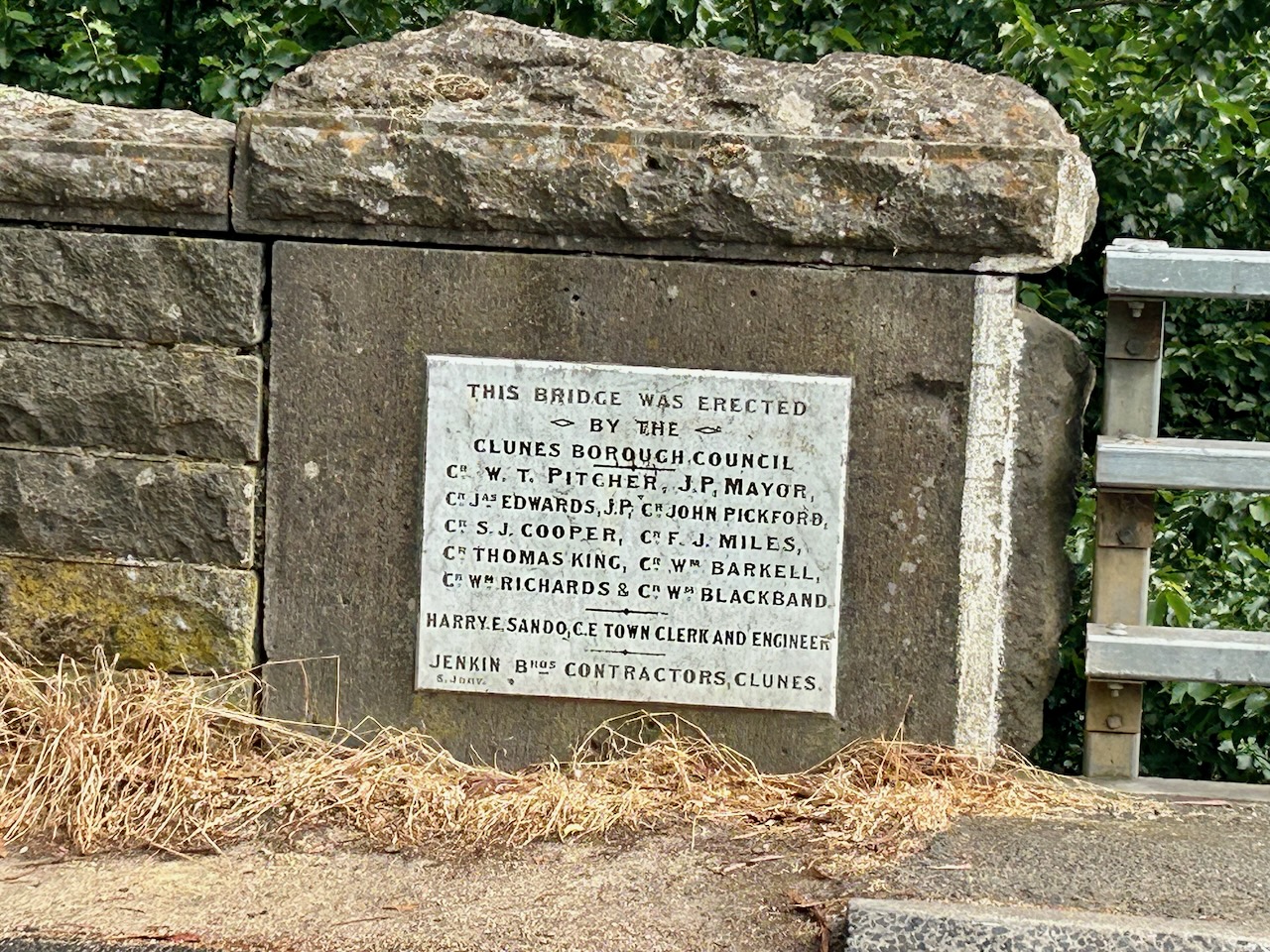
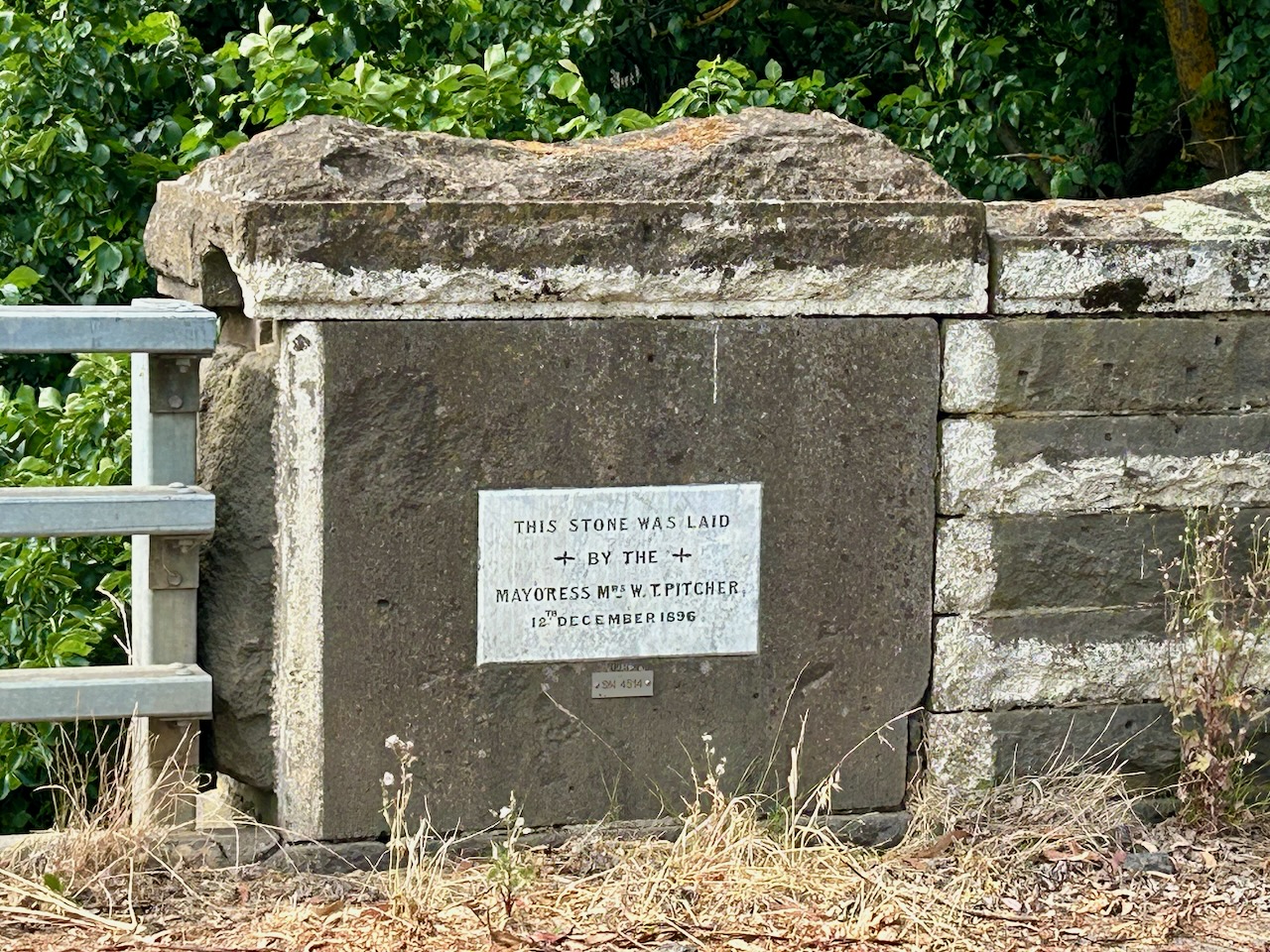
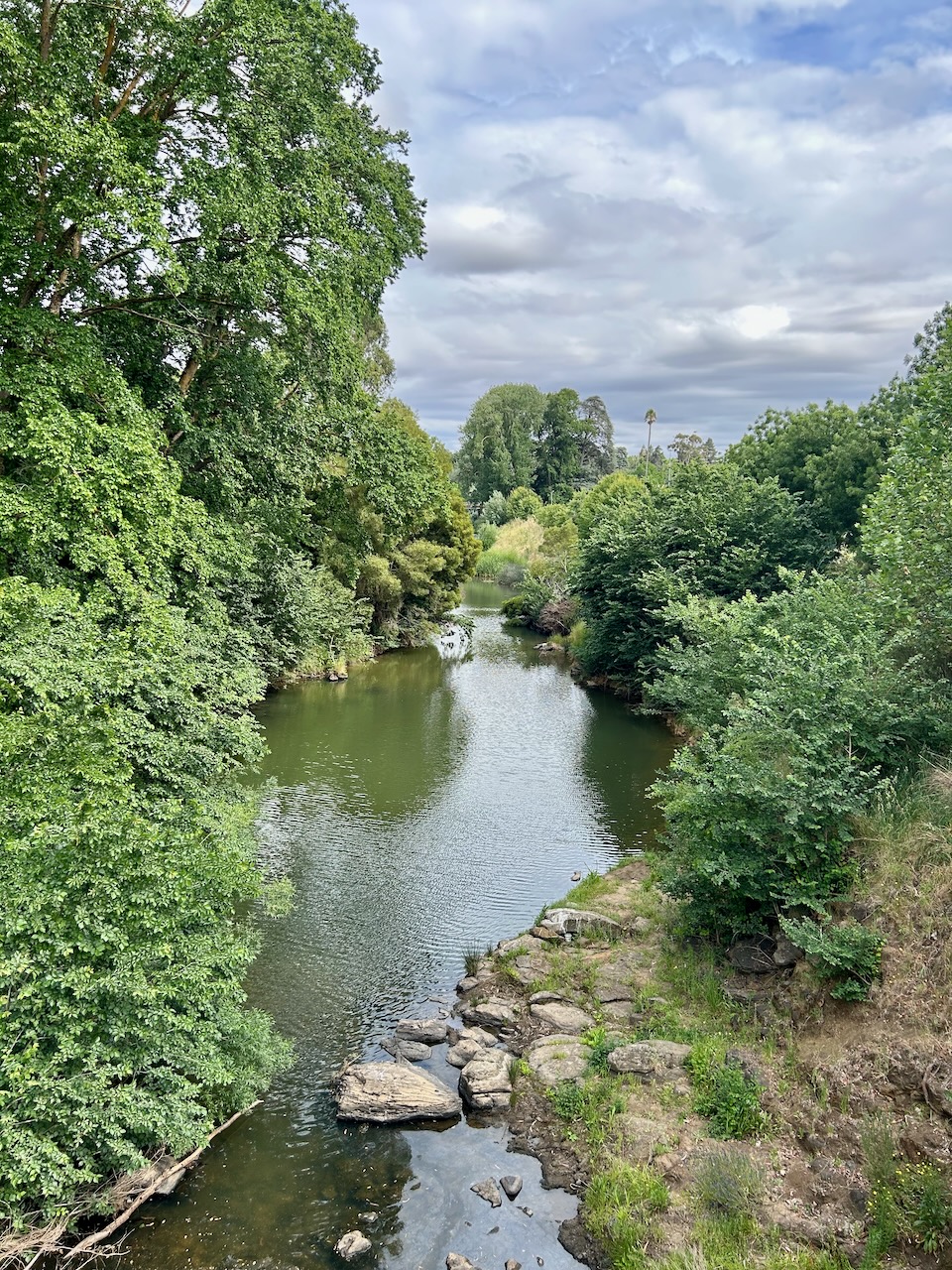
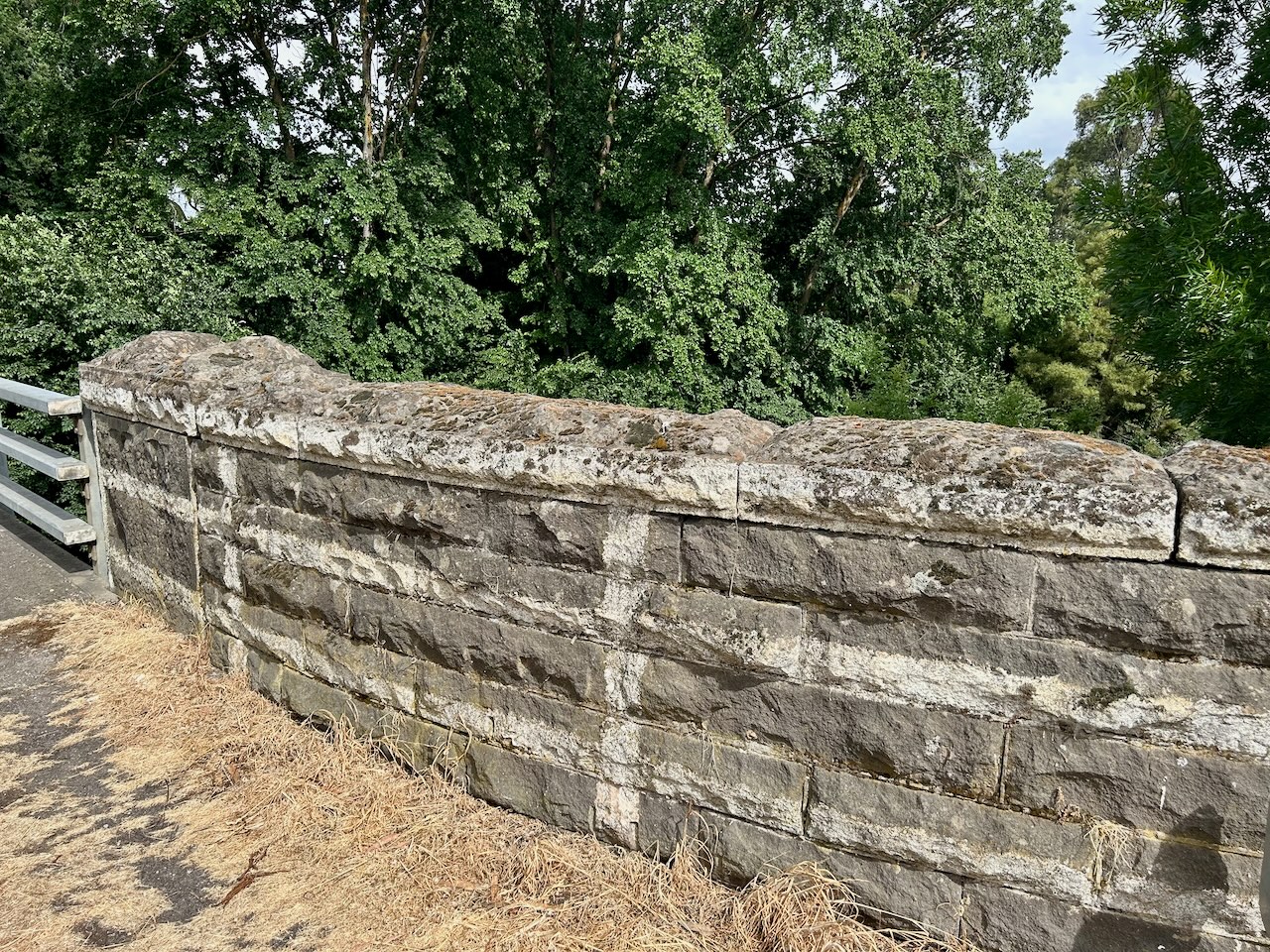
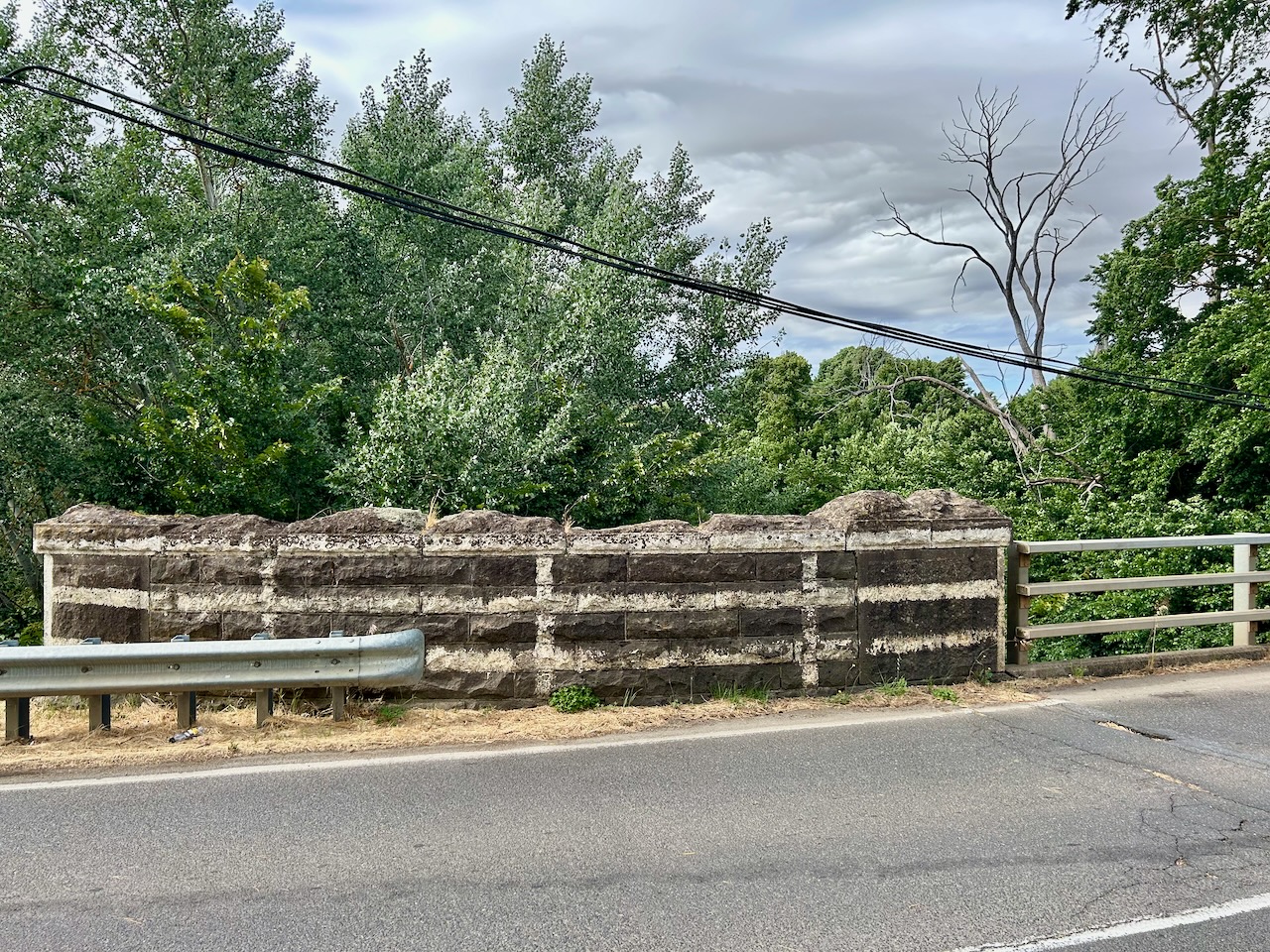
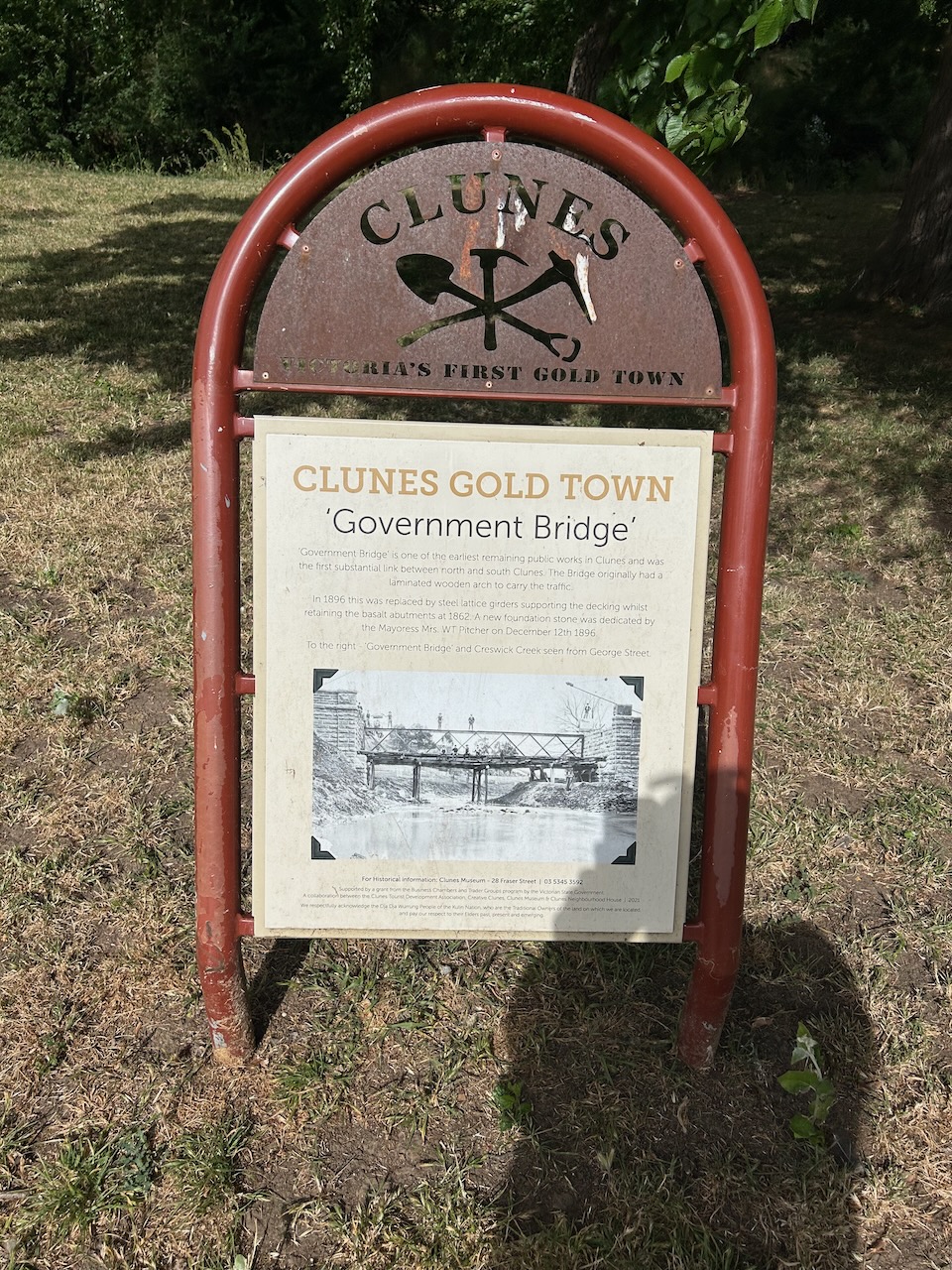
Government Bridge is one of the earliest remaining public workds in CLunes and was the first substantial link between north and south Clunes. The bridge originally had a laminated wooden arch to carry the traffic. In 1896 this was replaced by steel lattice girders supporting the decking whilst retaining th basalt abutments at 1862. A new foundation stone was dedicated by the Mayoress Mrs W.T. Pitcher on the 12th day of December 1896.
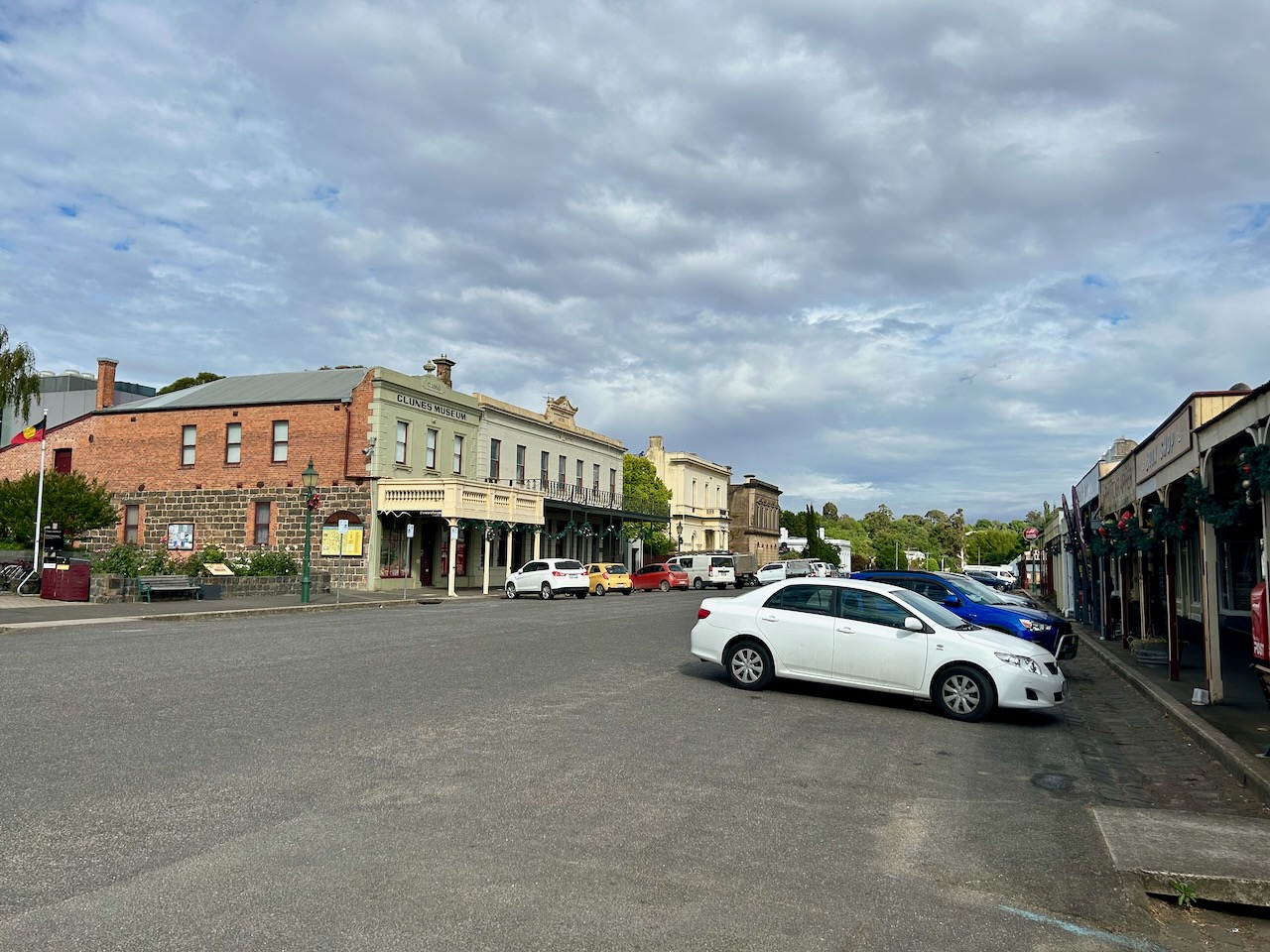
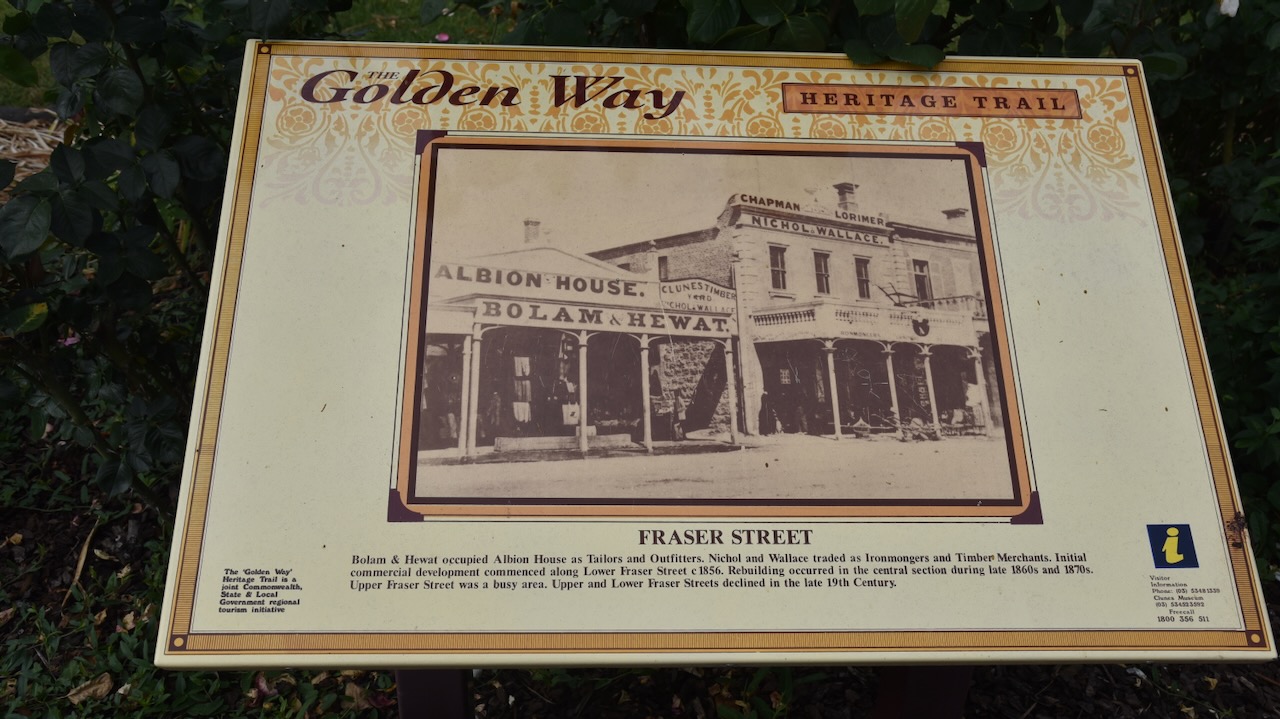
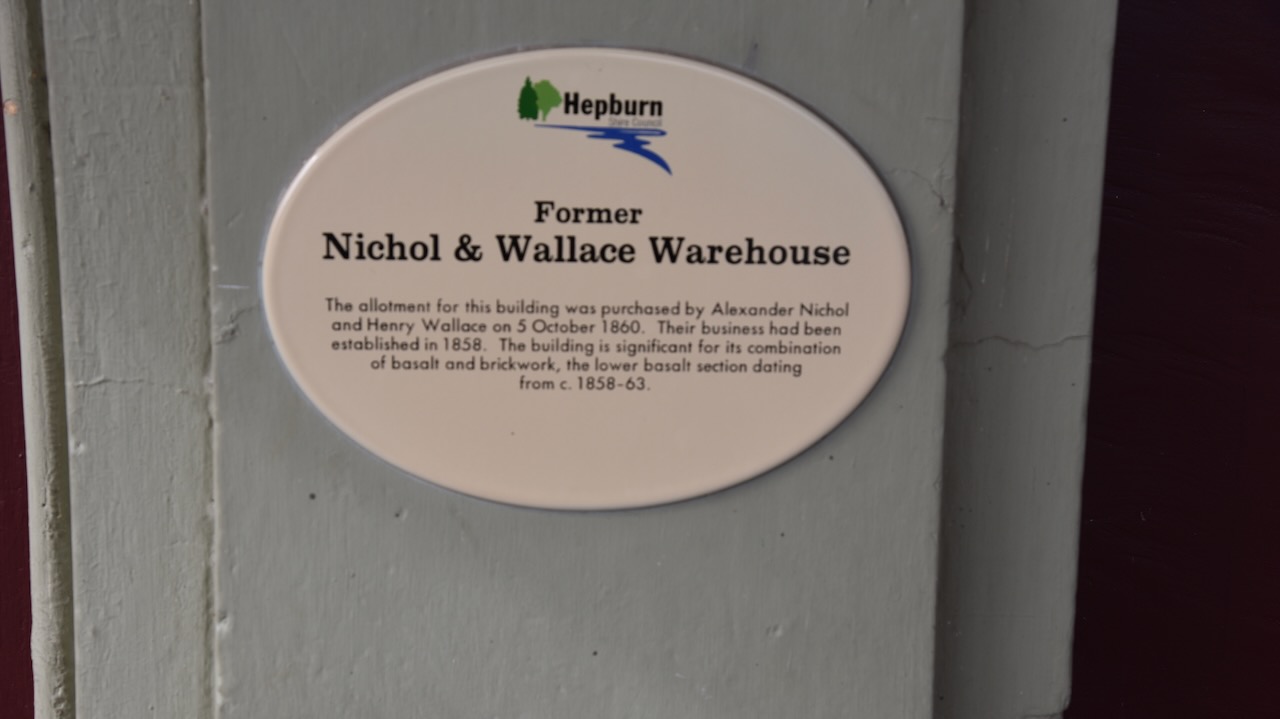
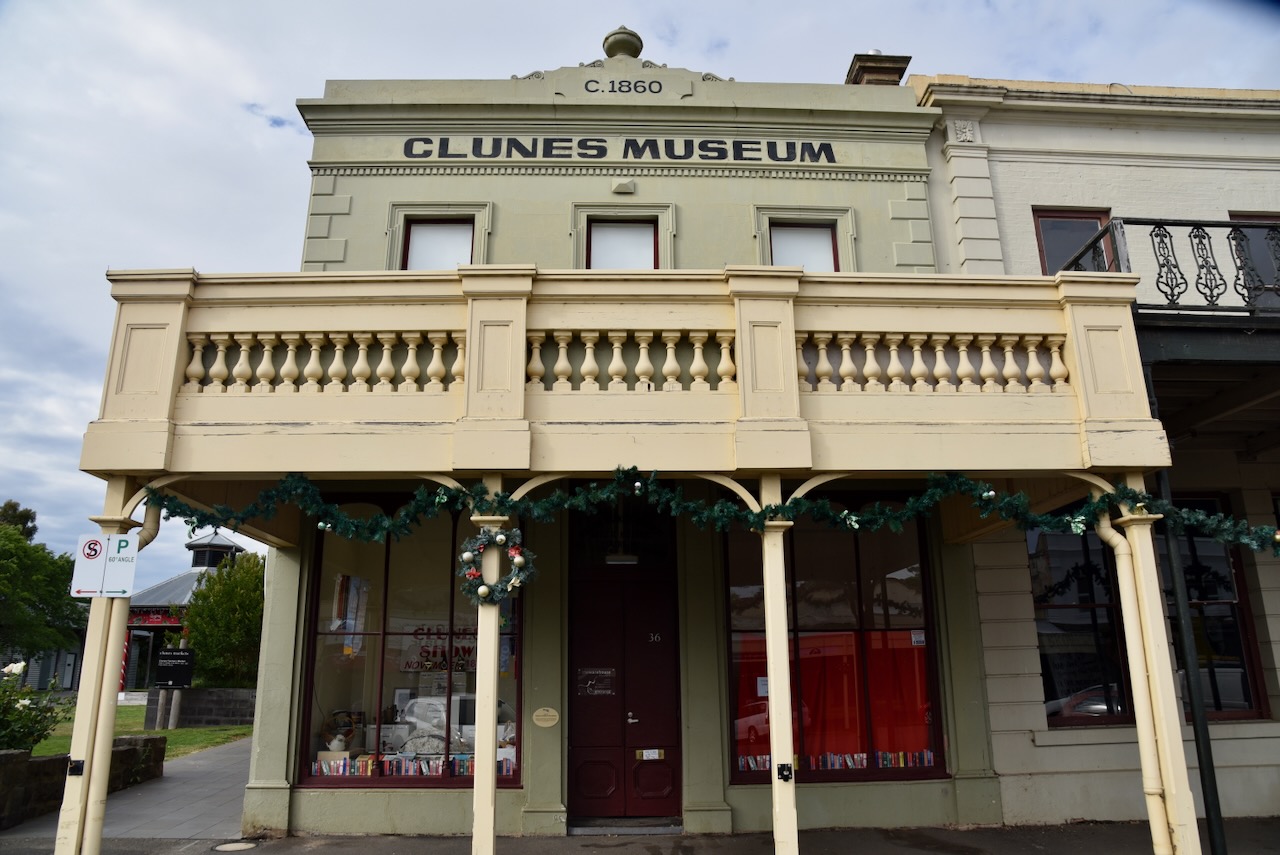
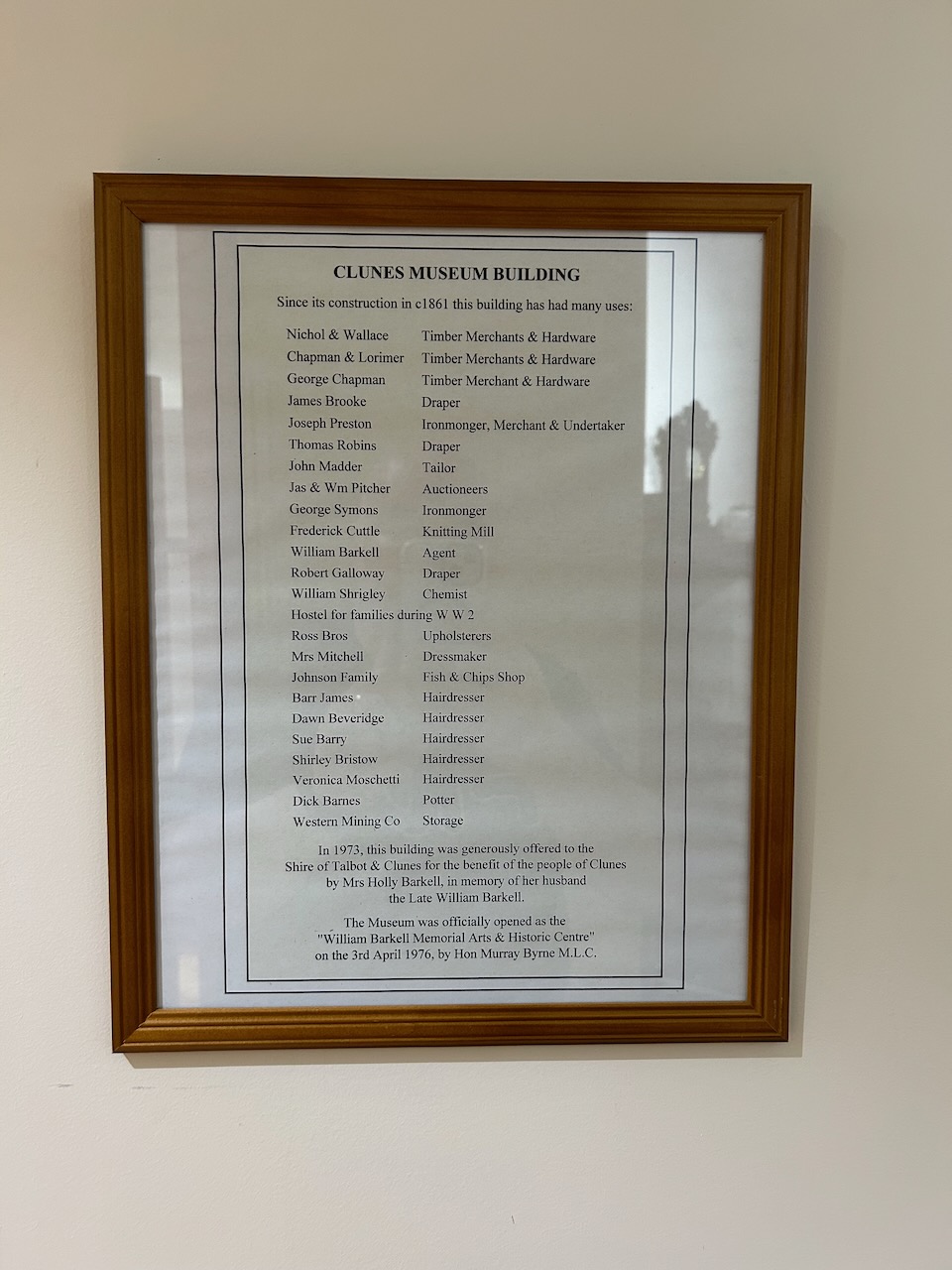
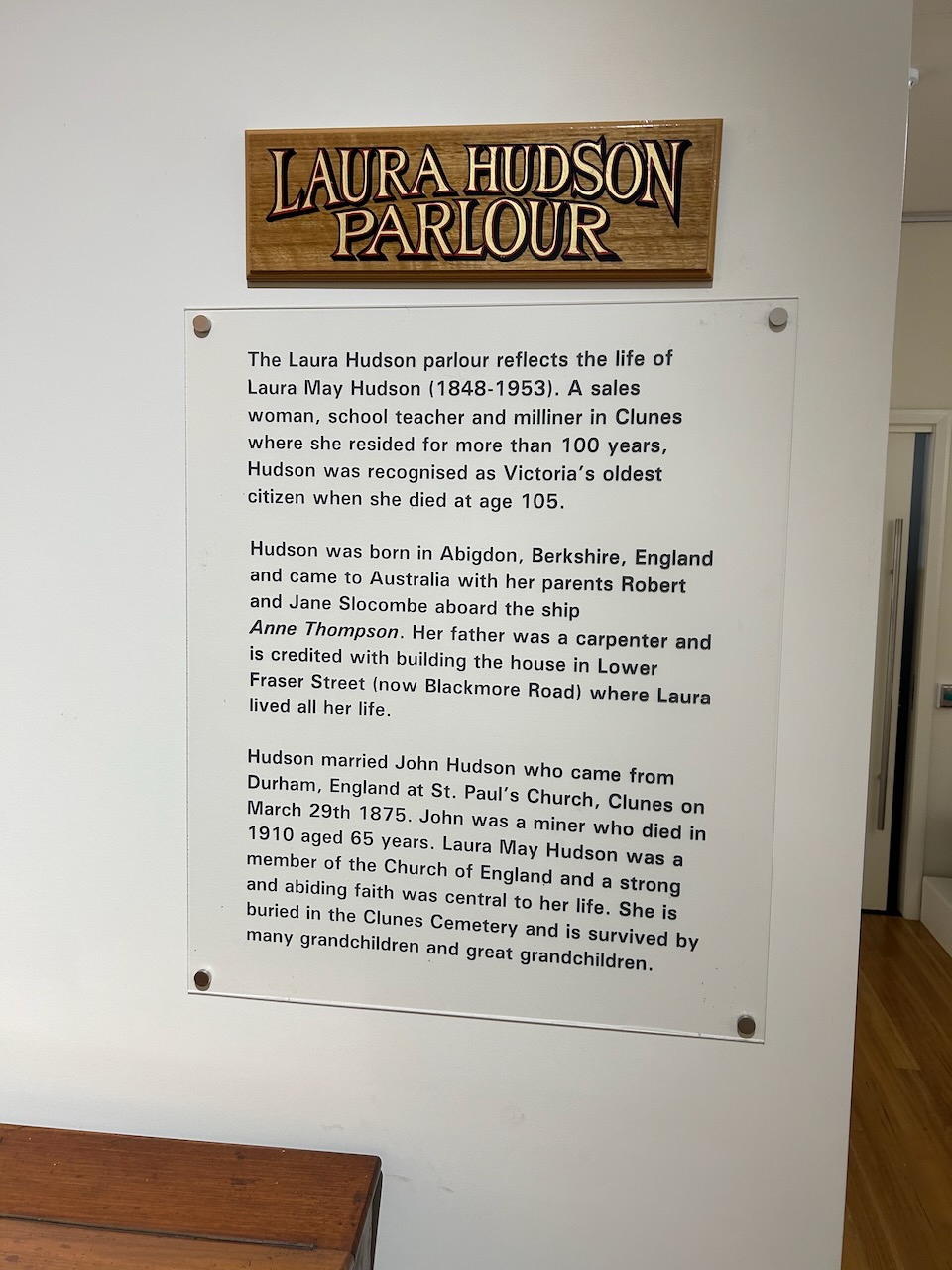
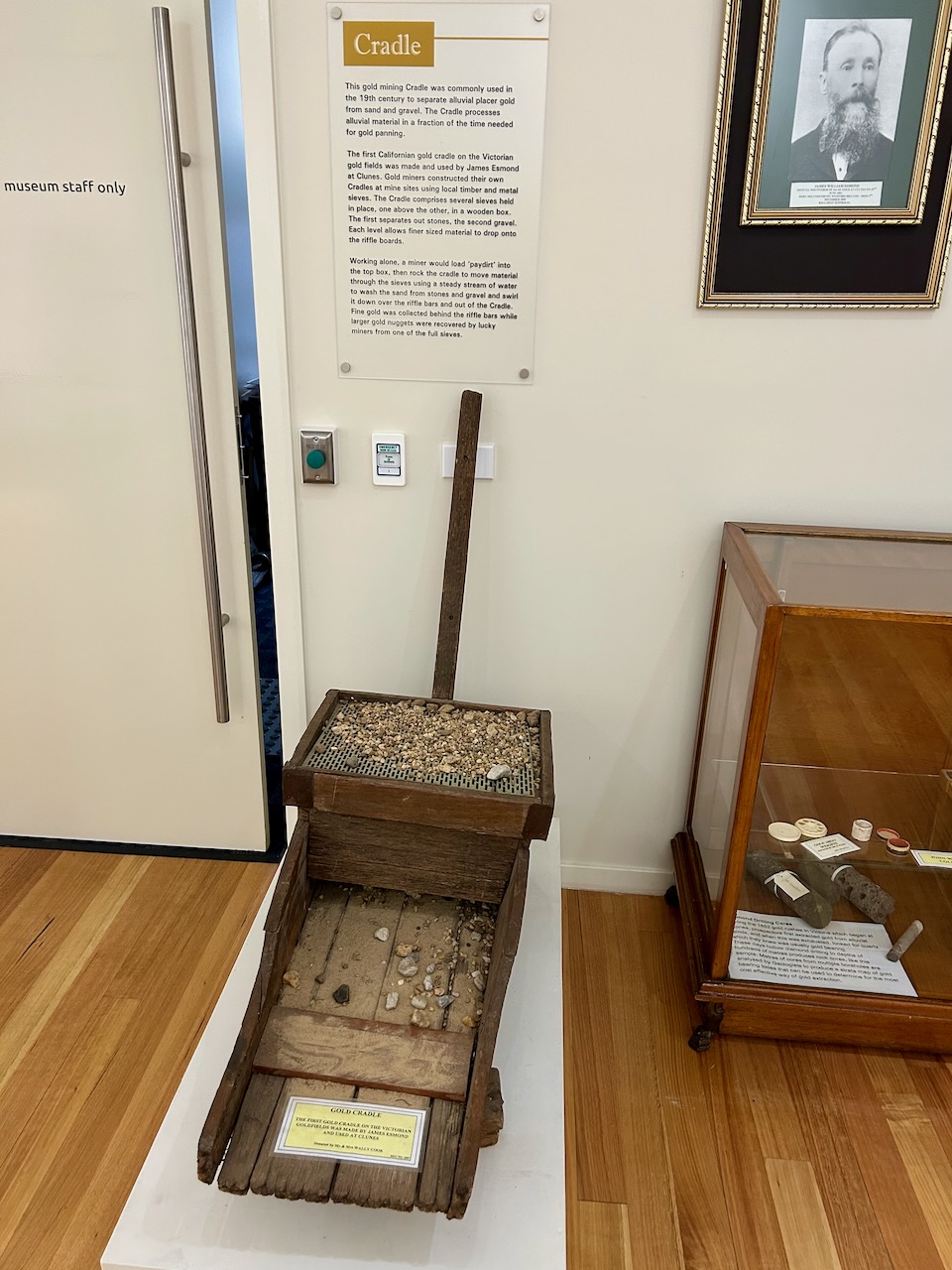
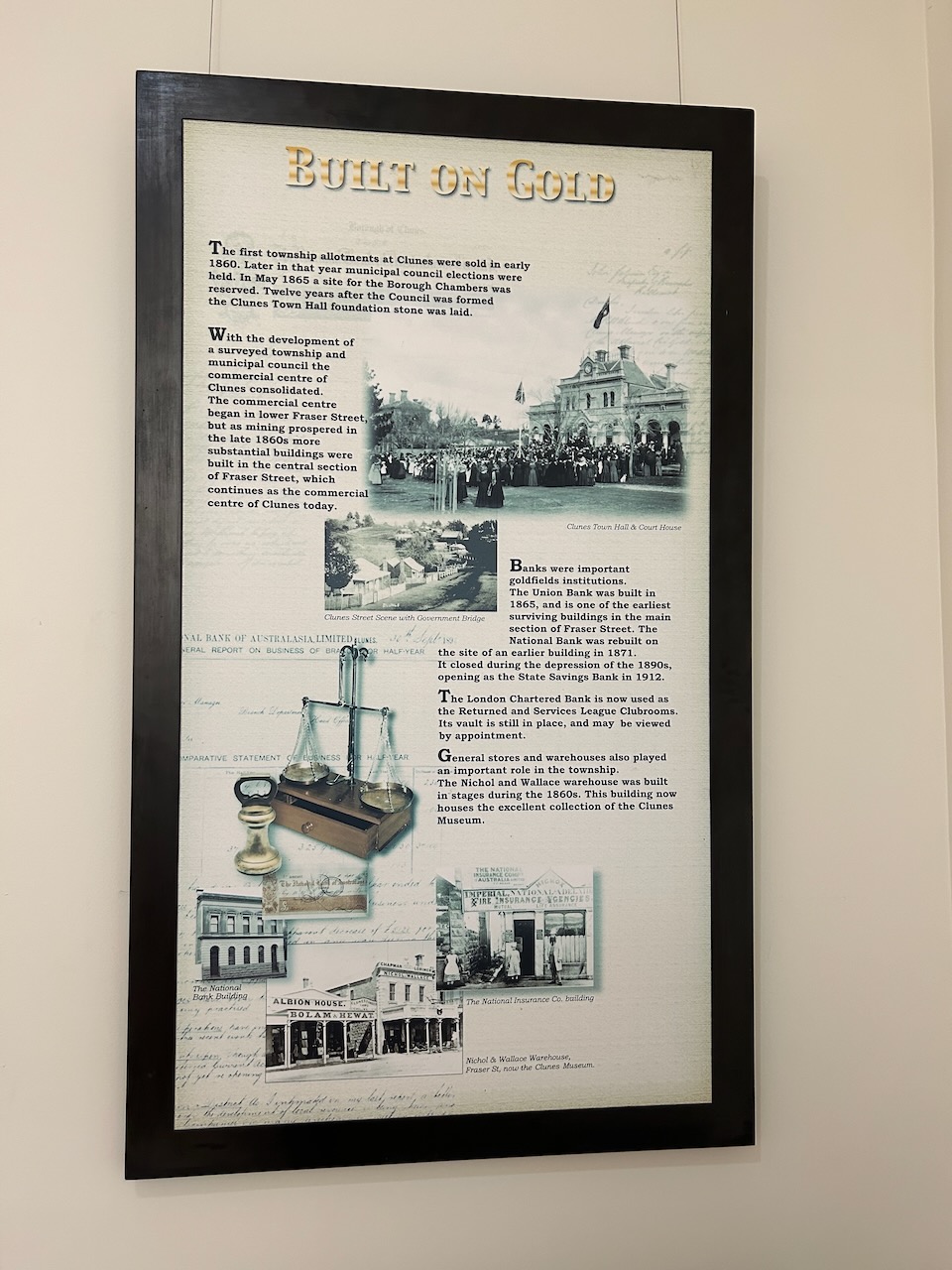
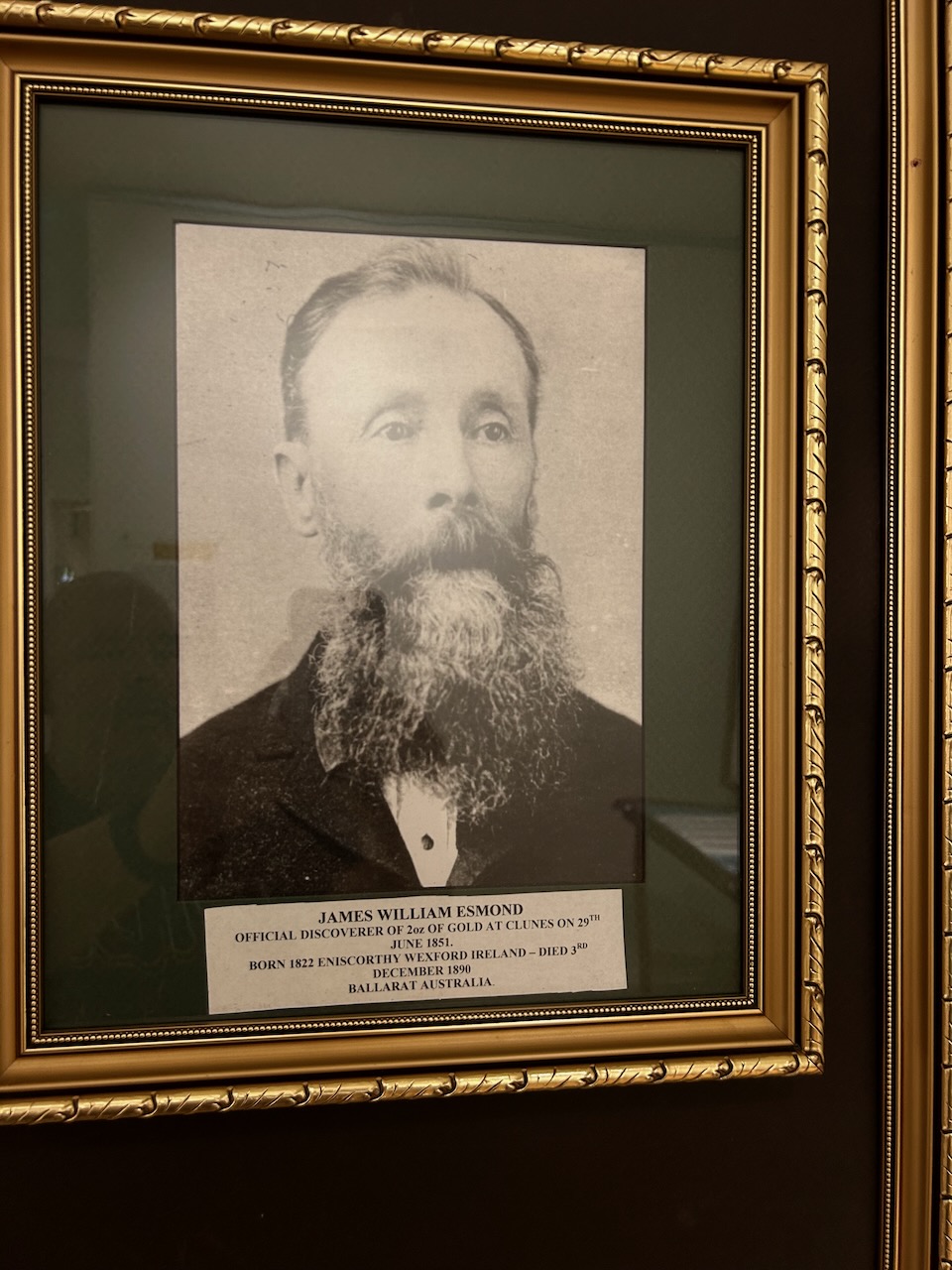
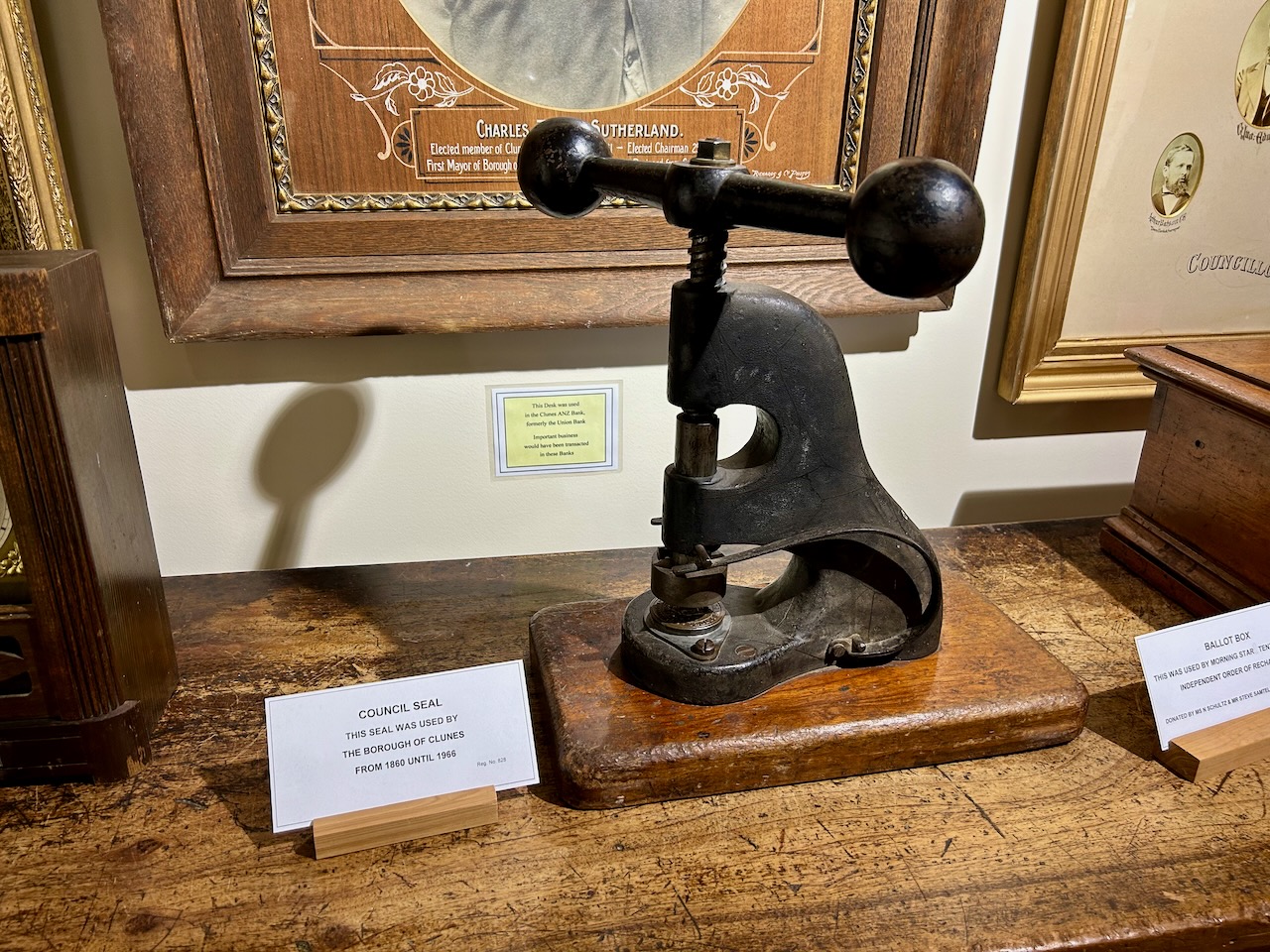
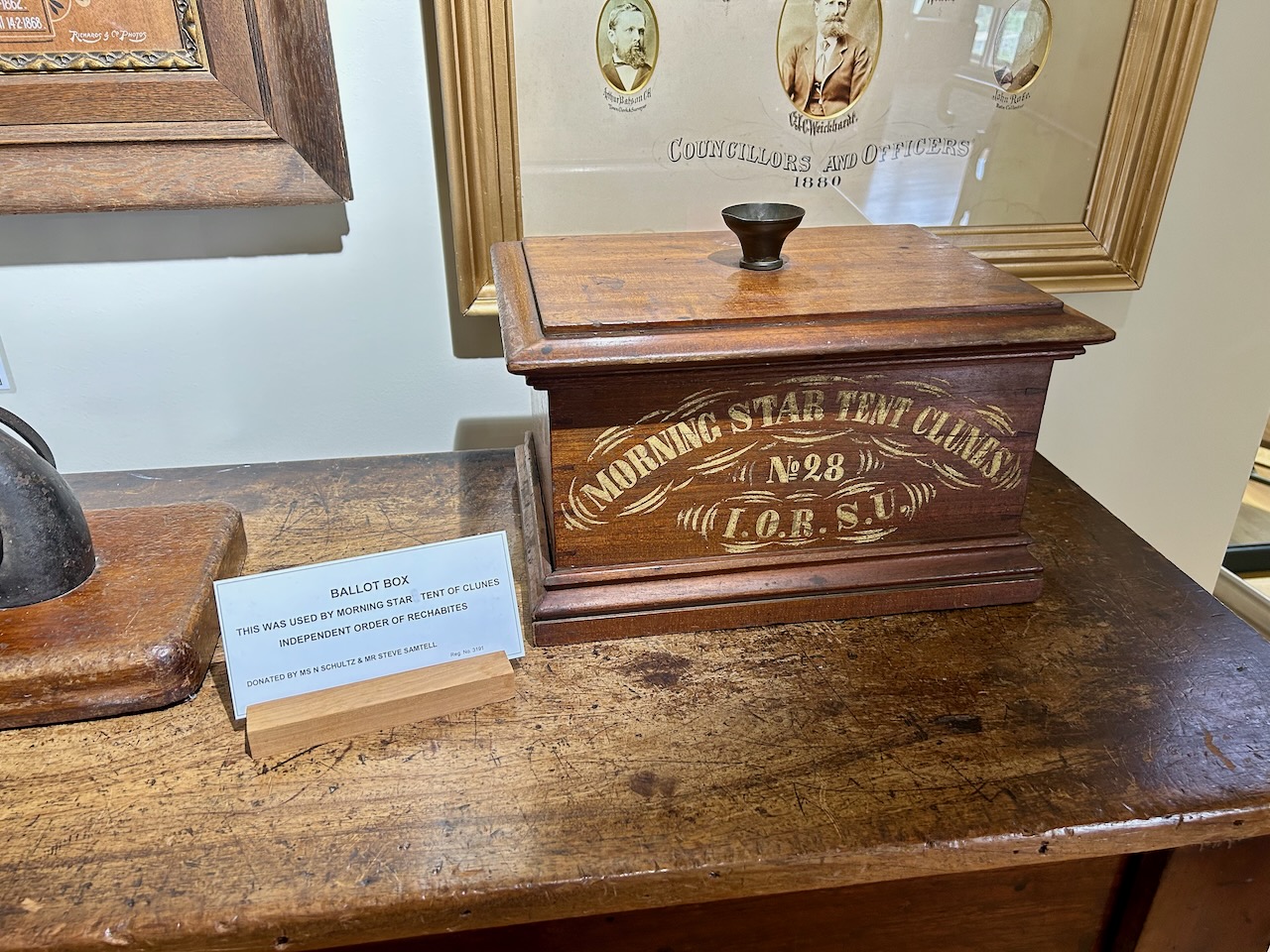
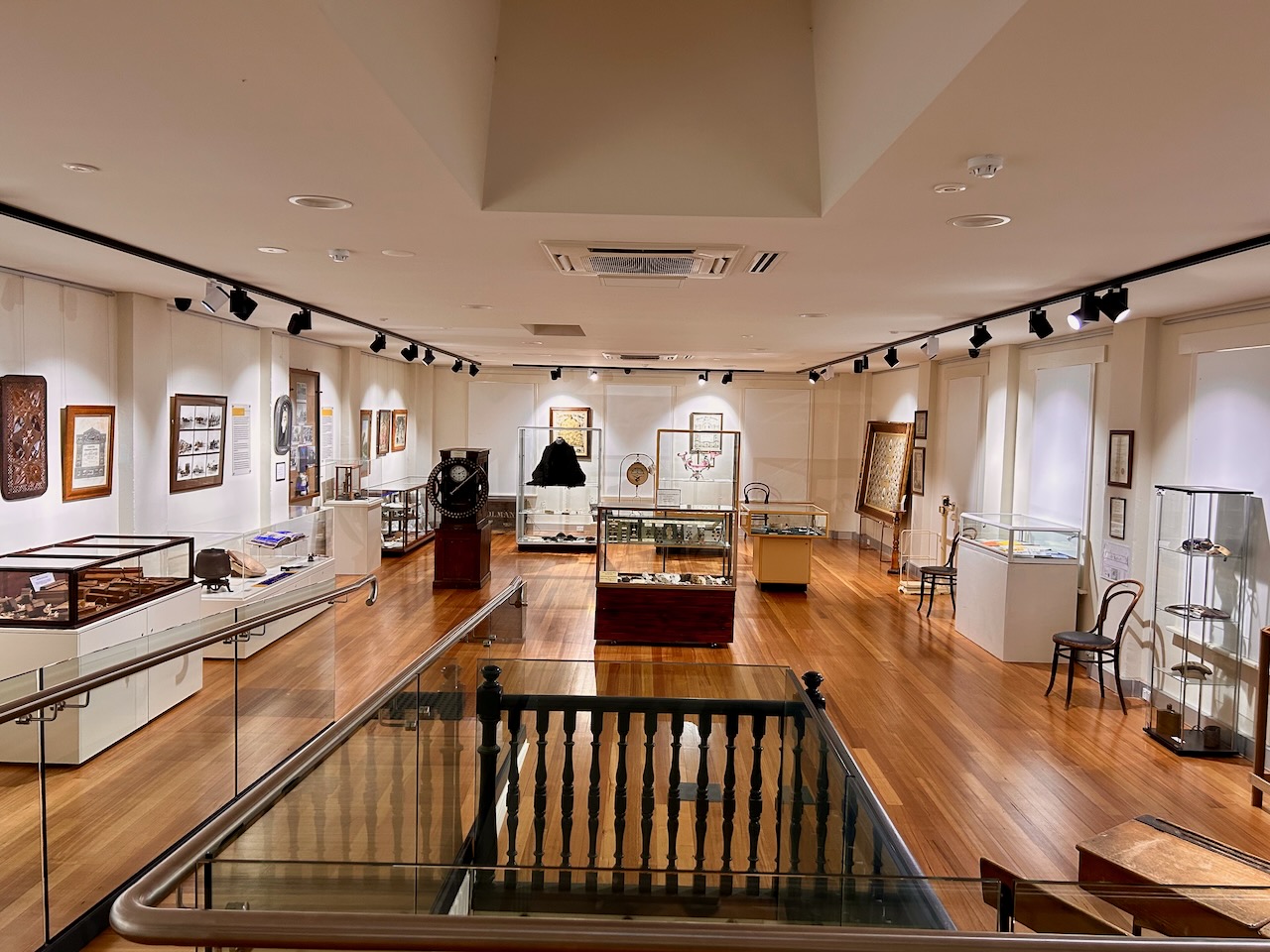
We then visited the Clunes Museum which is located in the former Nichol and Wallace Warehouse which was built in about 1858-1863.
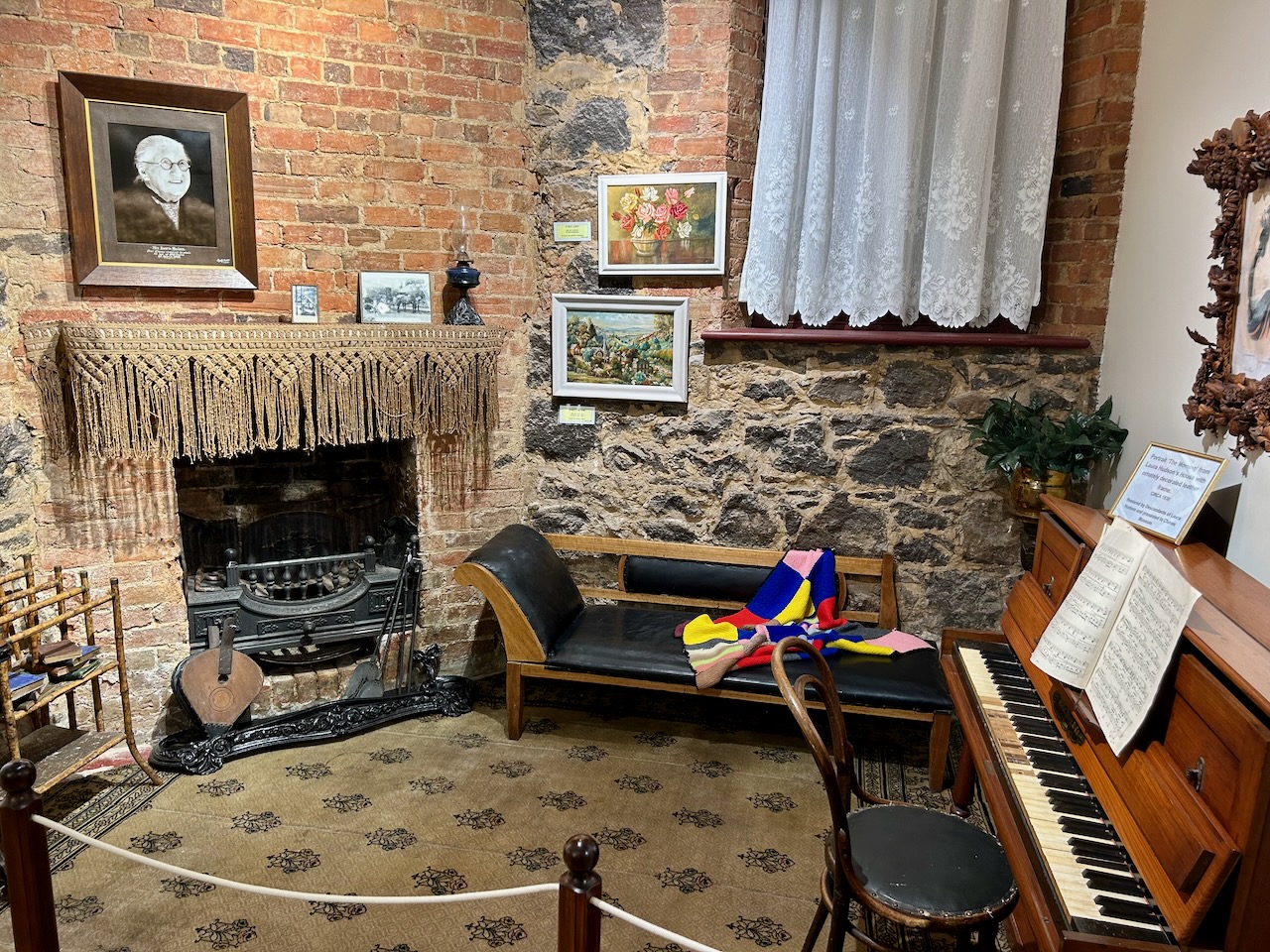
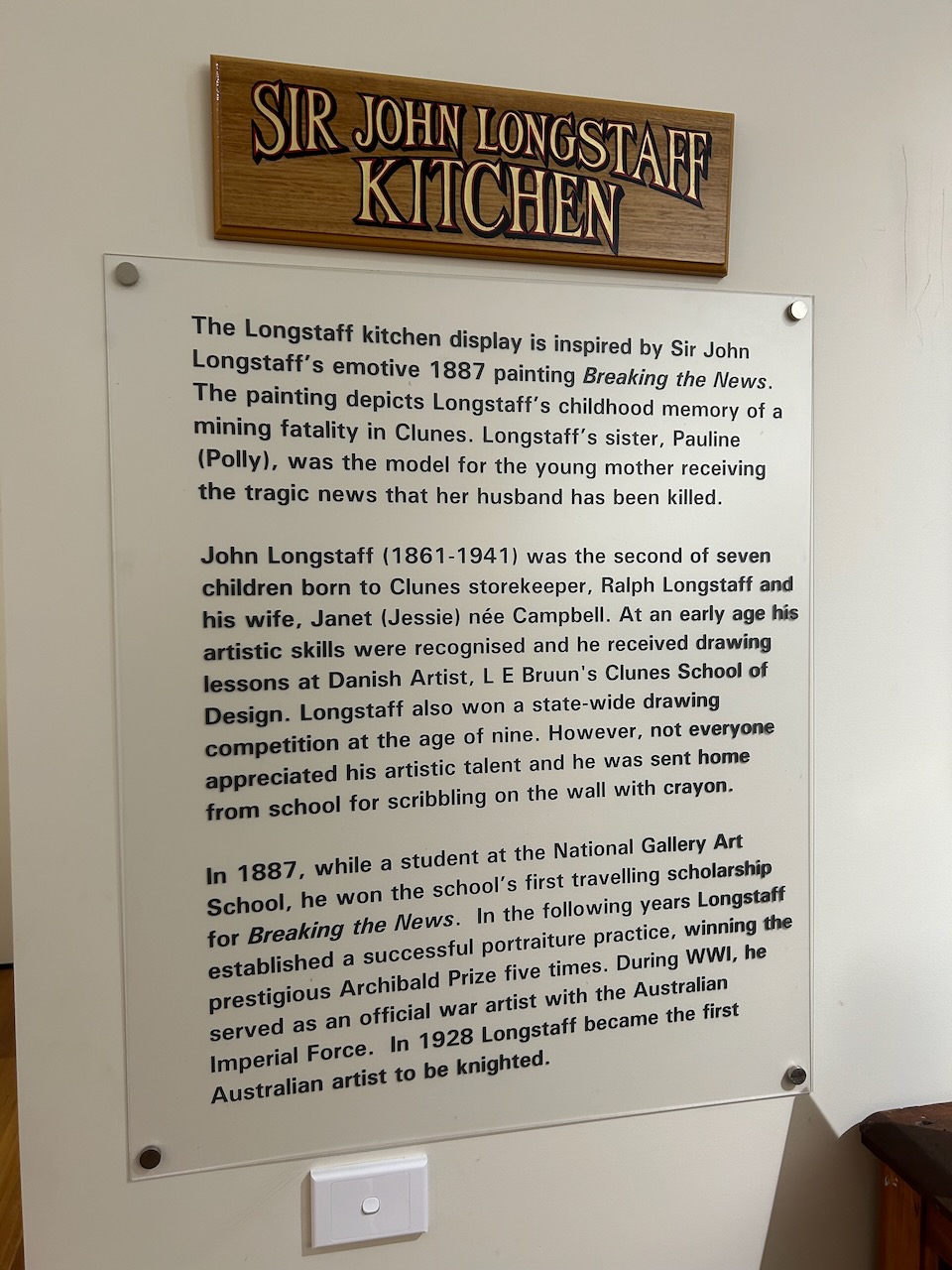
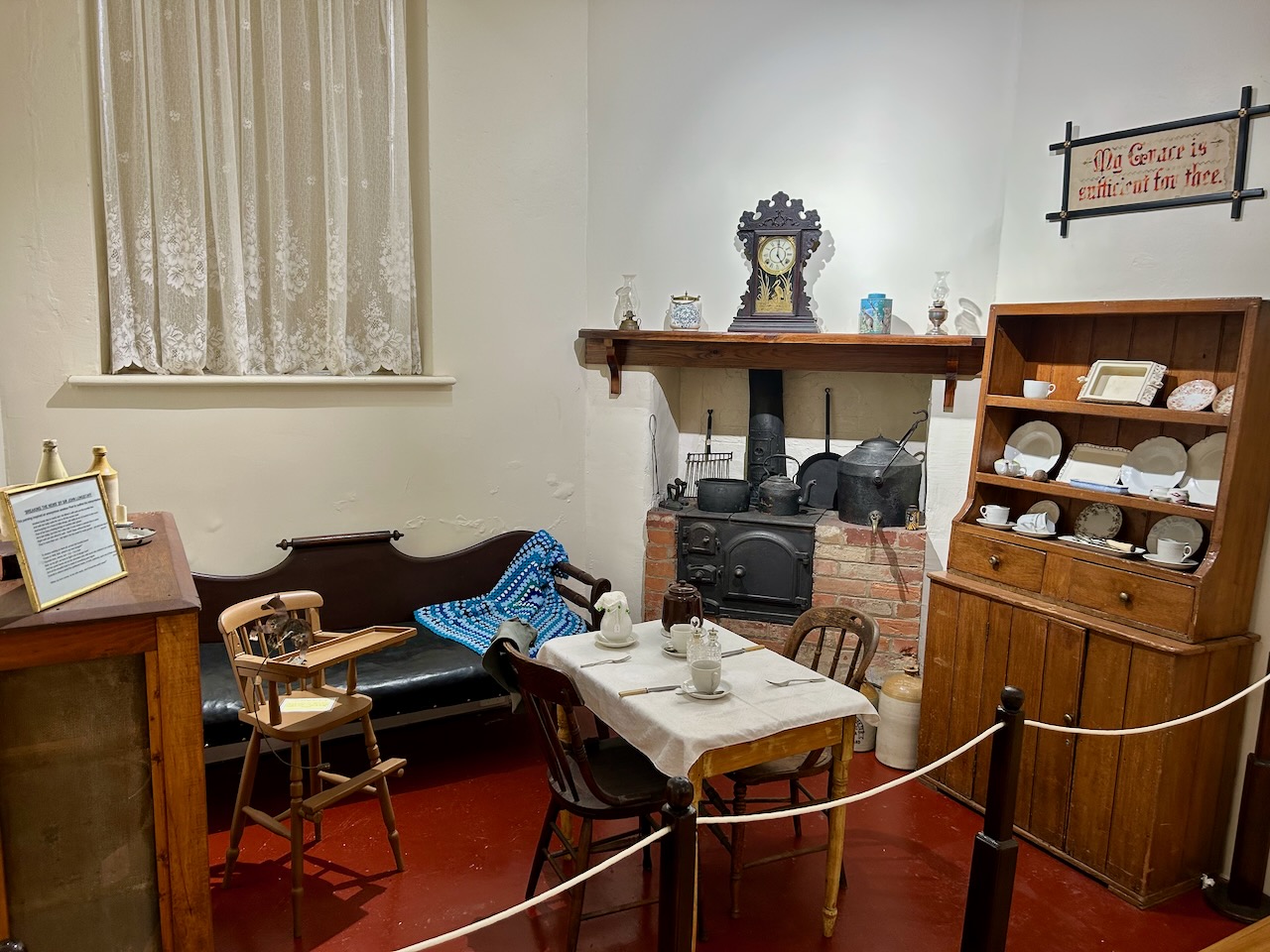
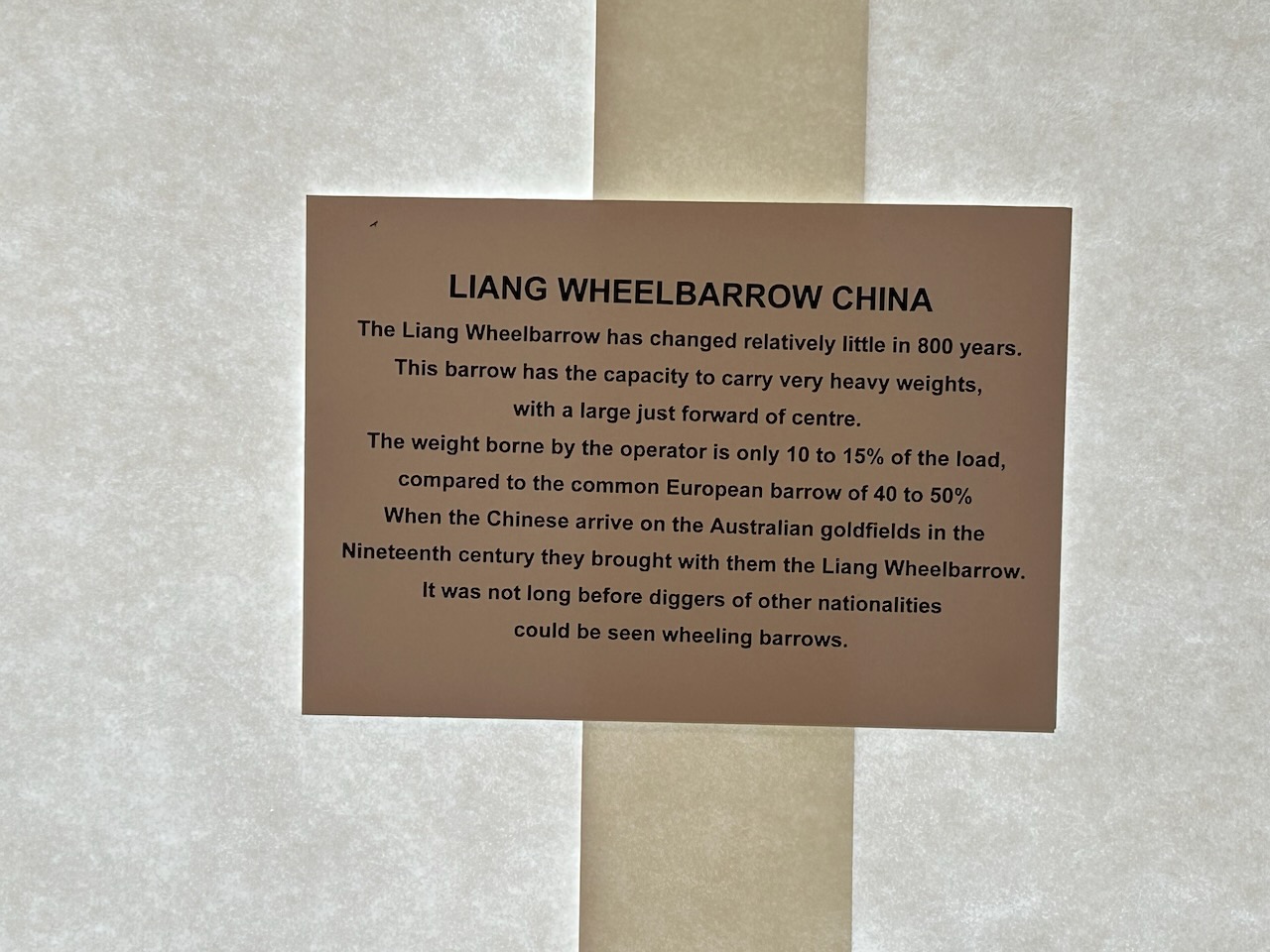
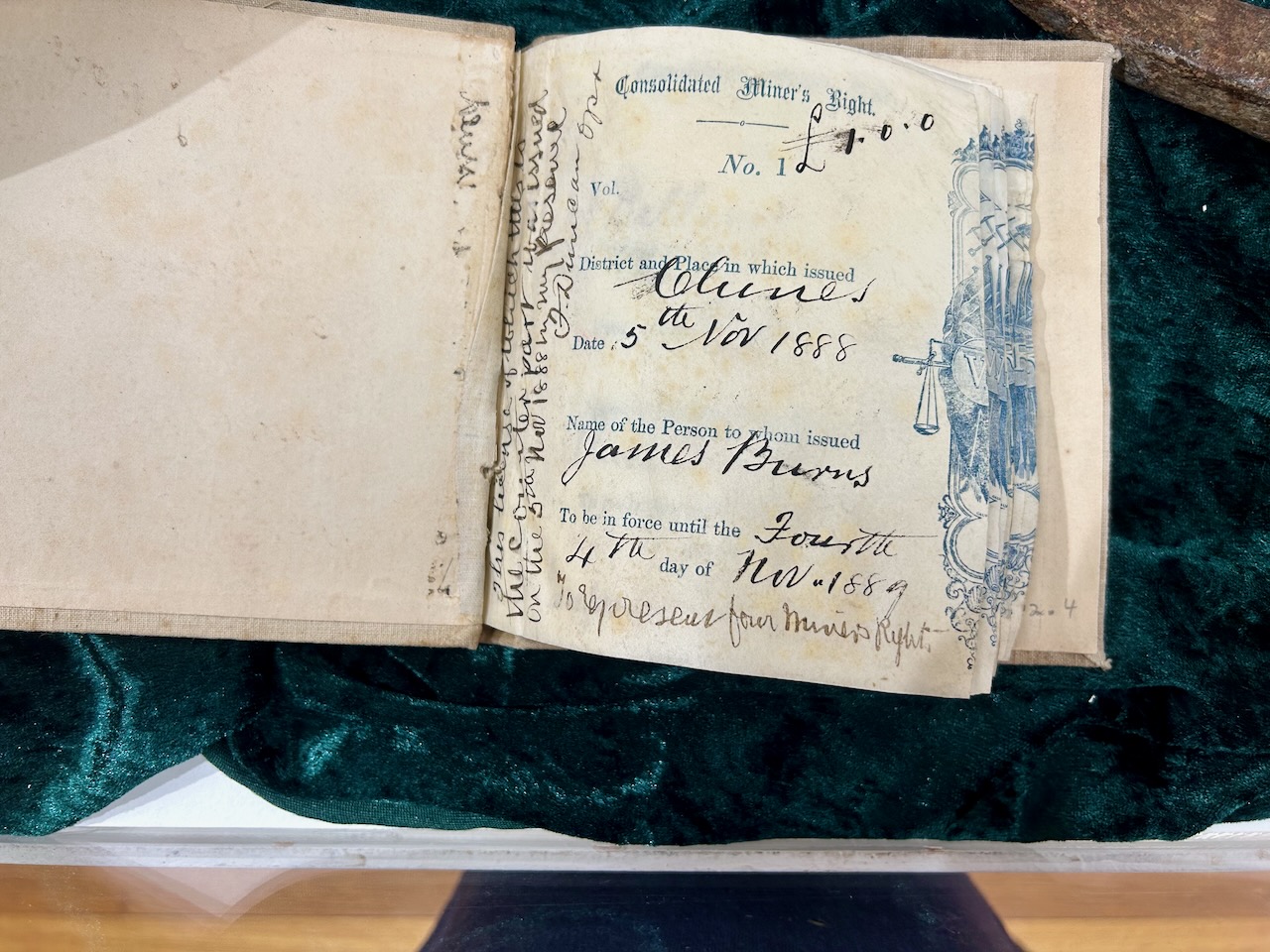
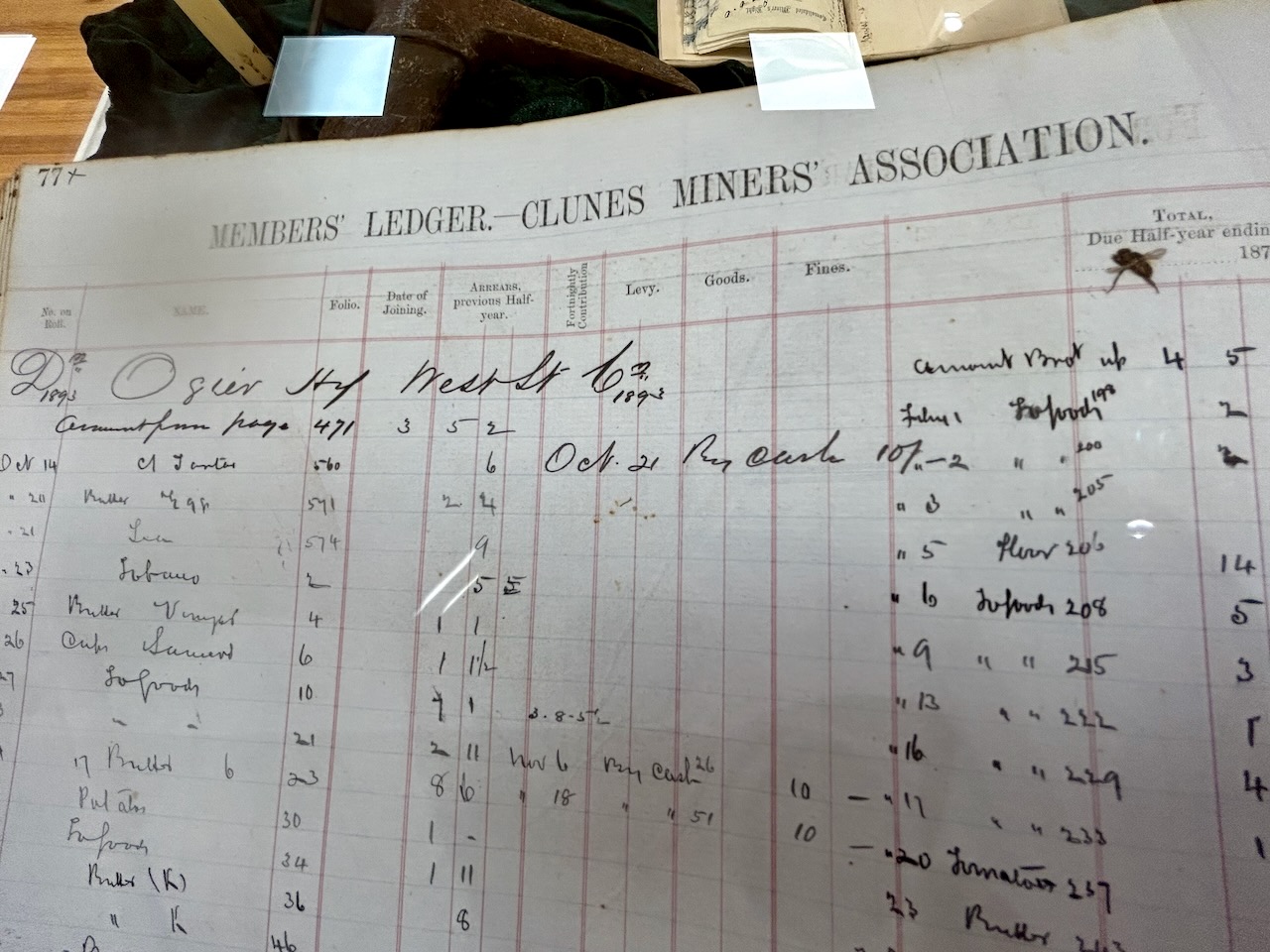
This is an excellent museum and contains a large selection of historical material from the Clunes district.
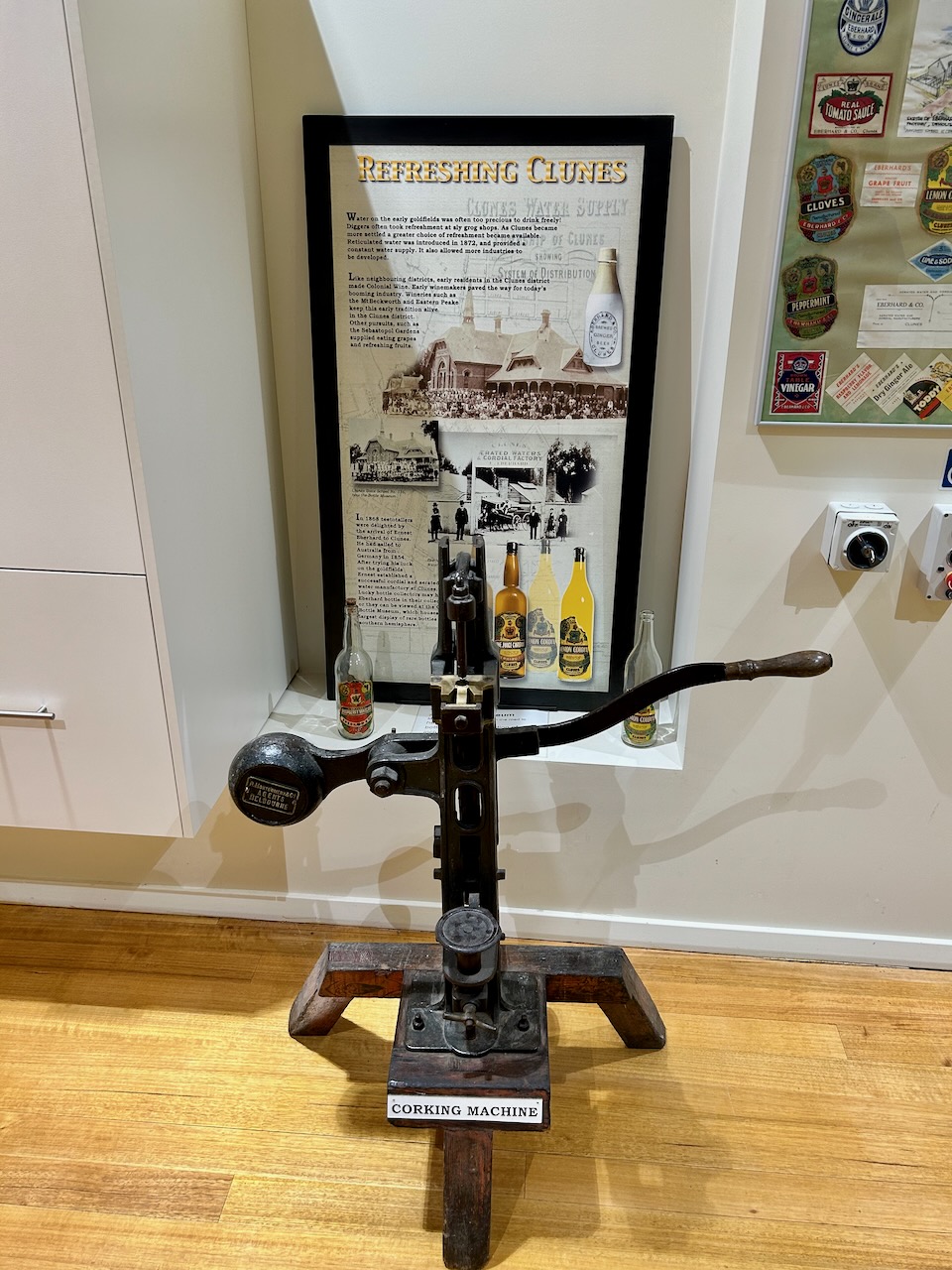
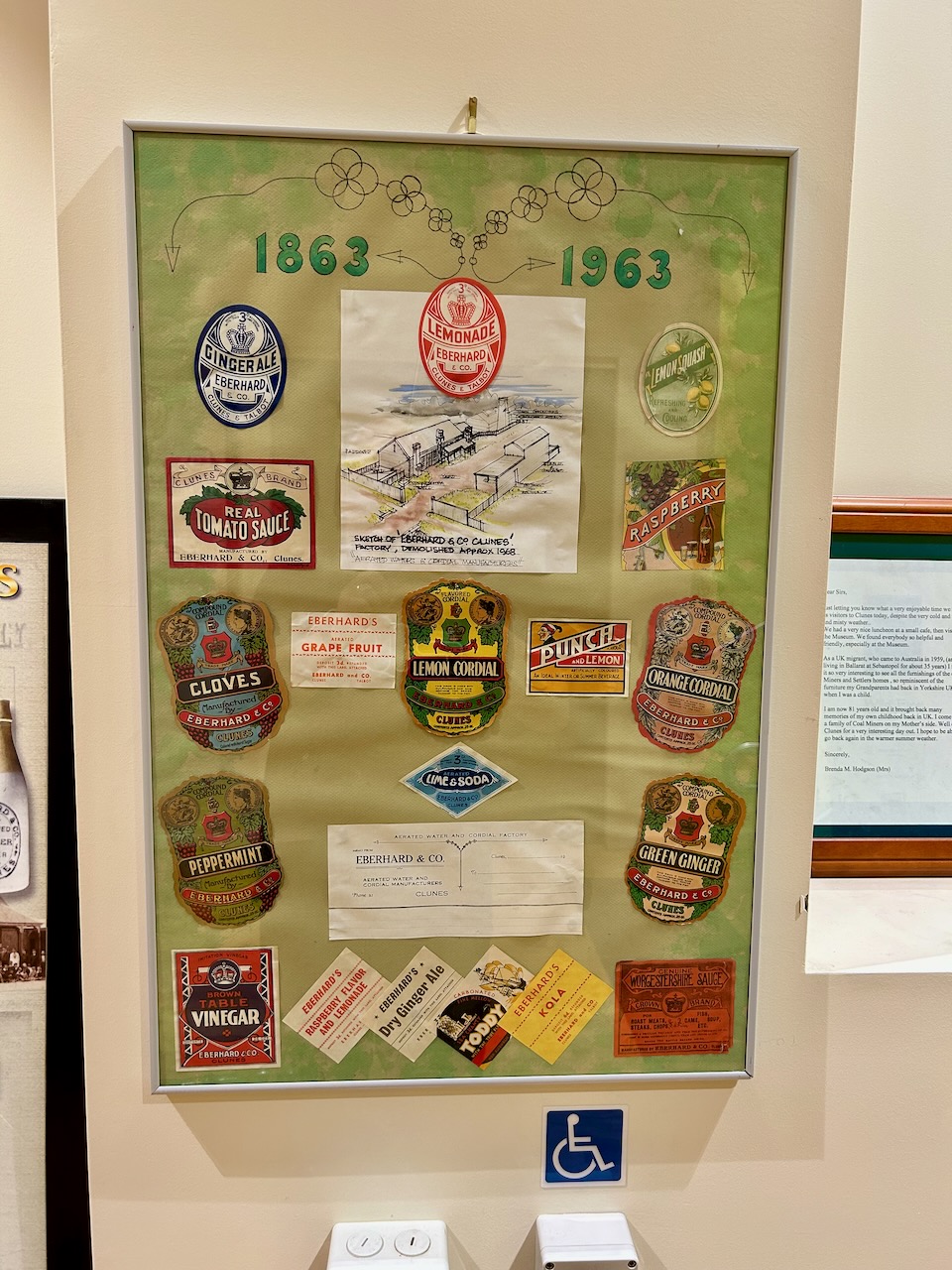
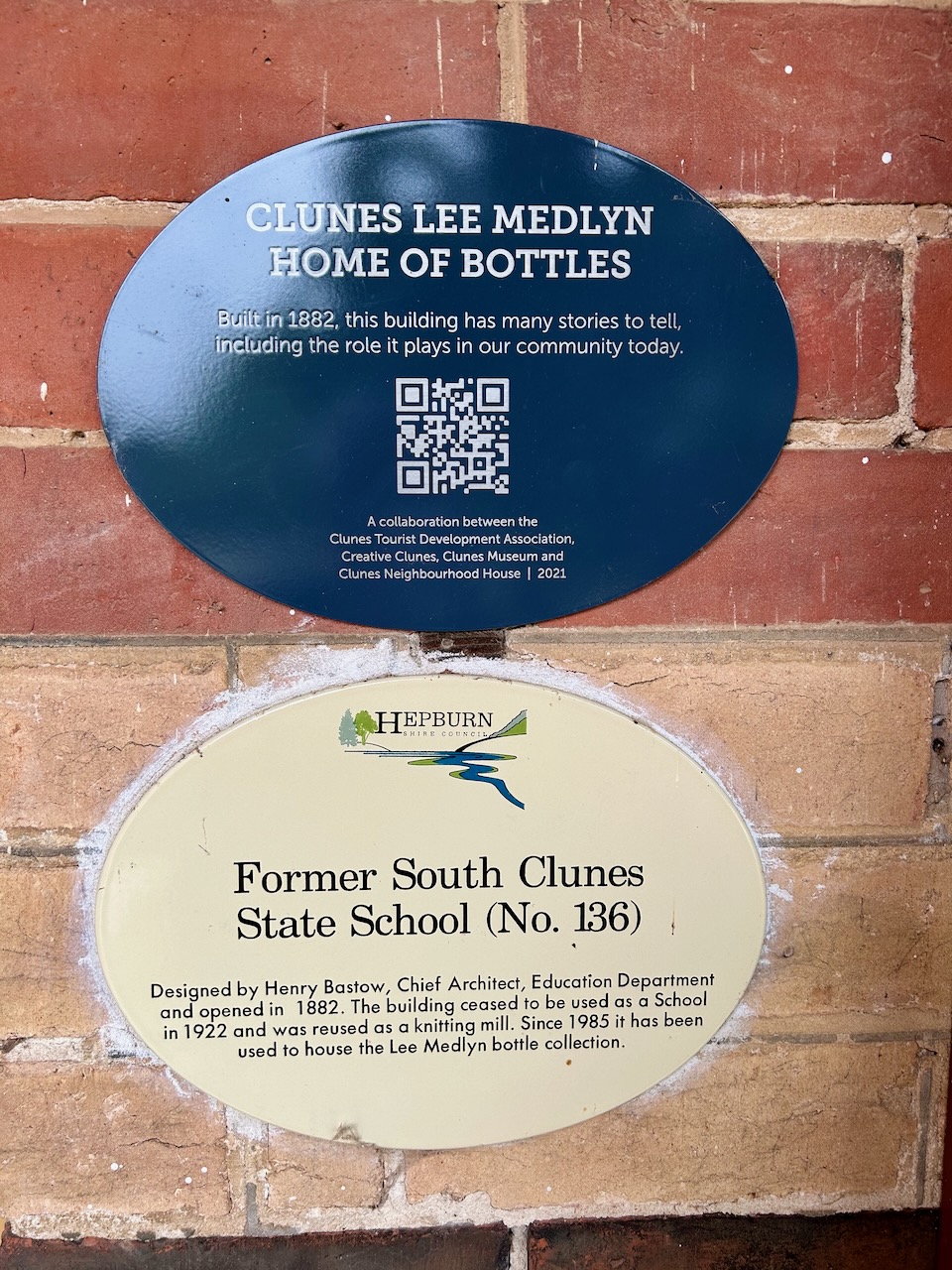
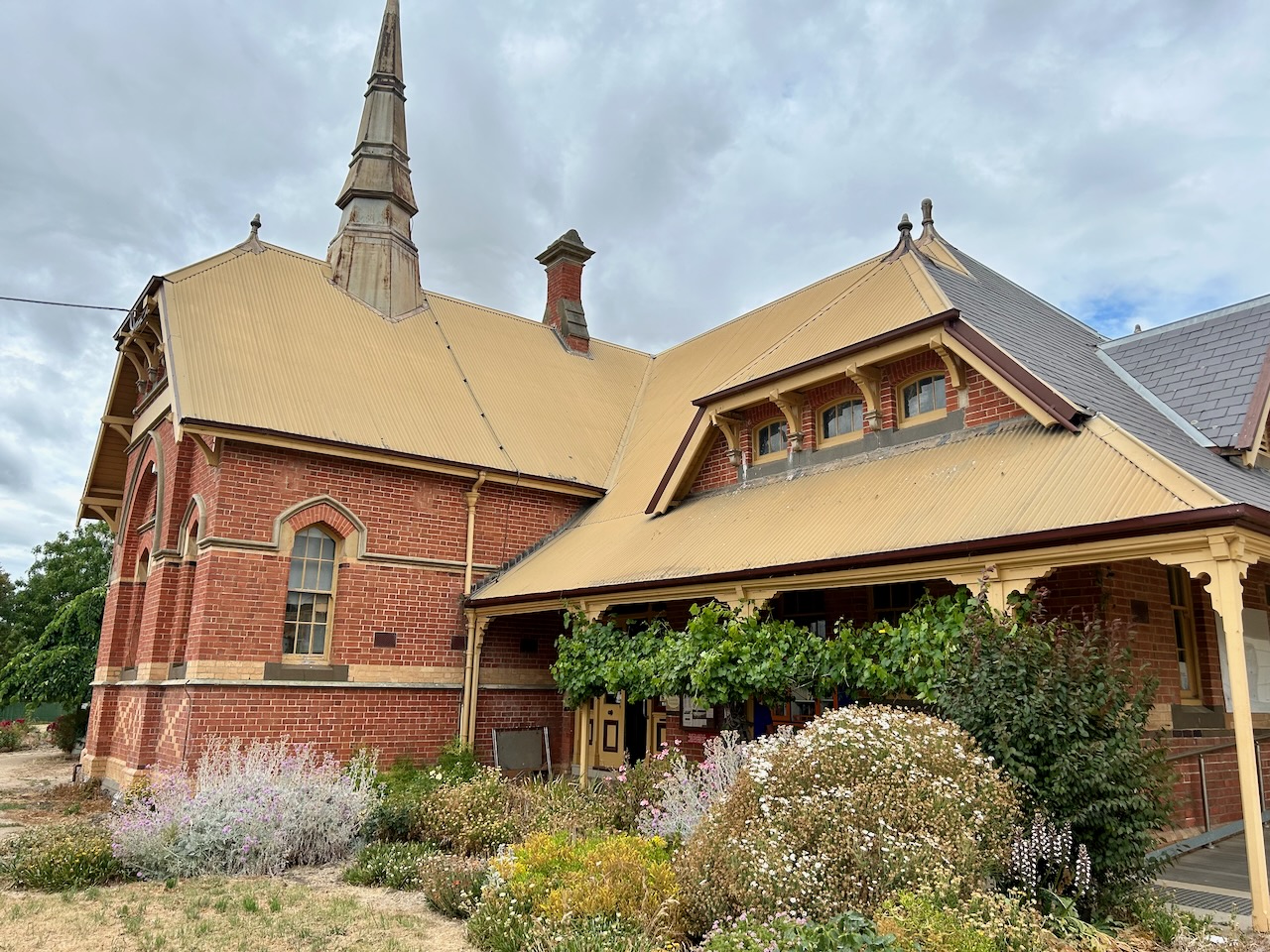
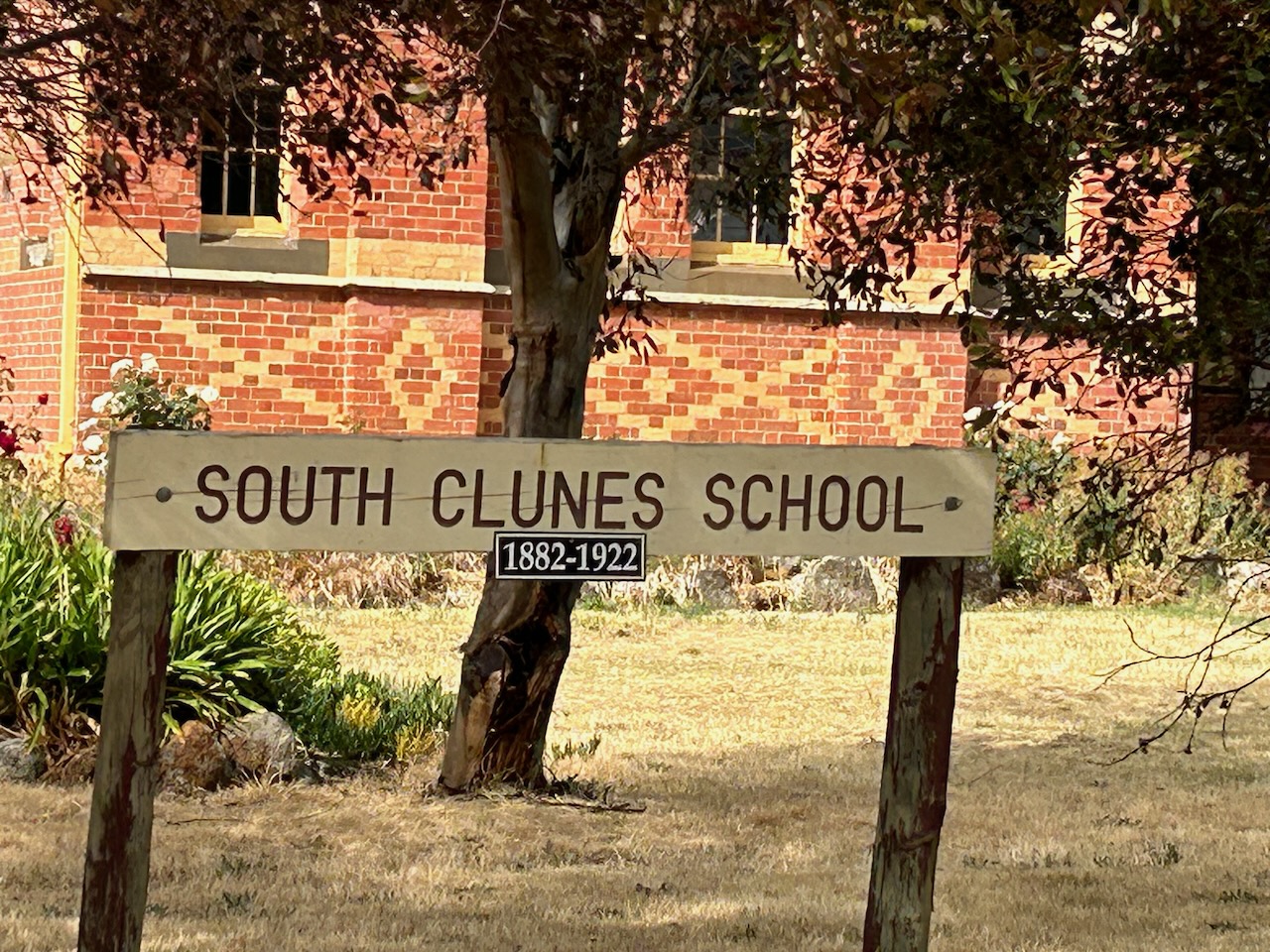
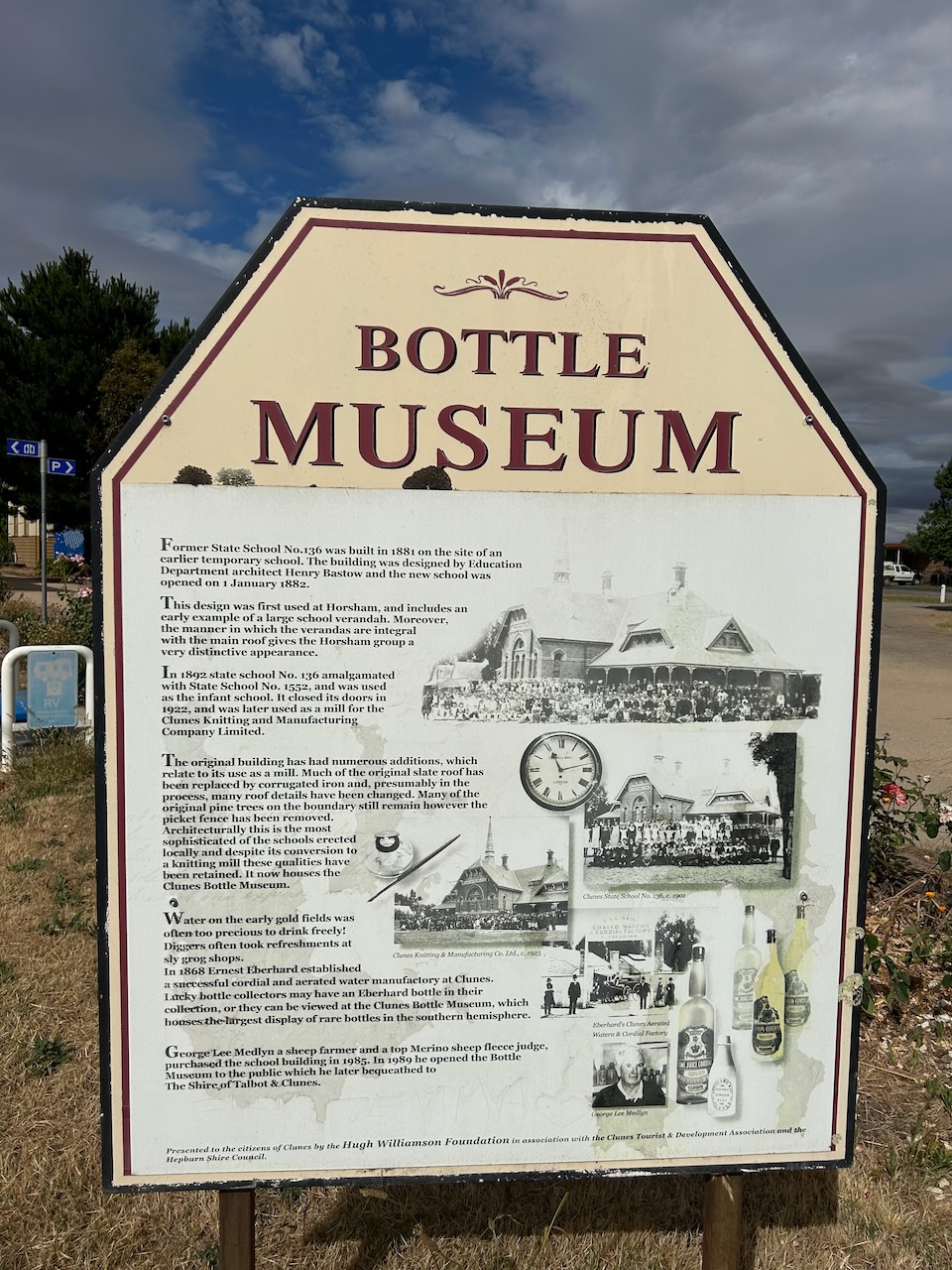
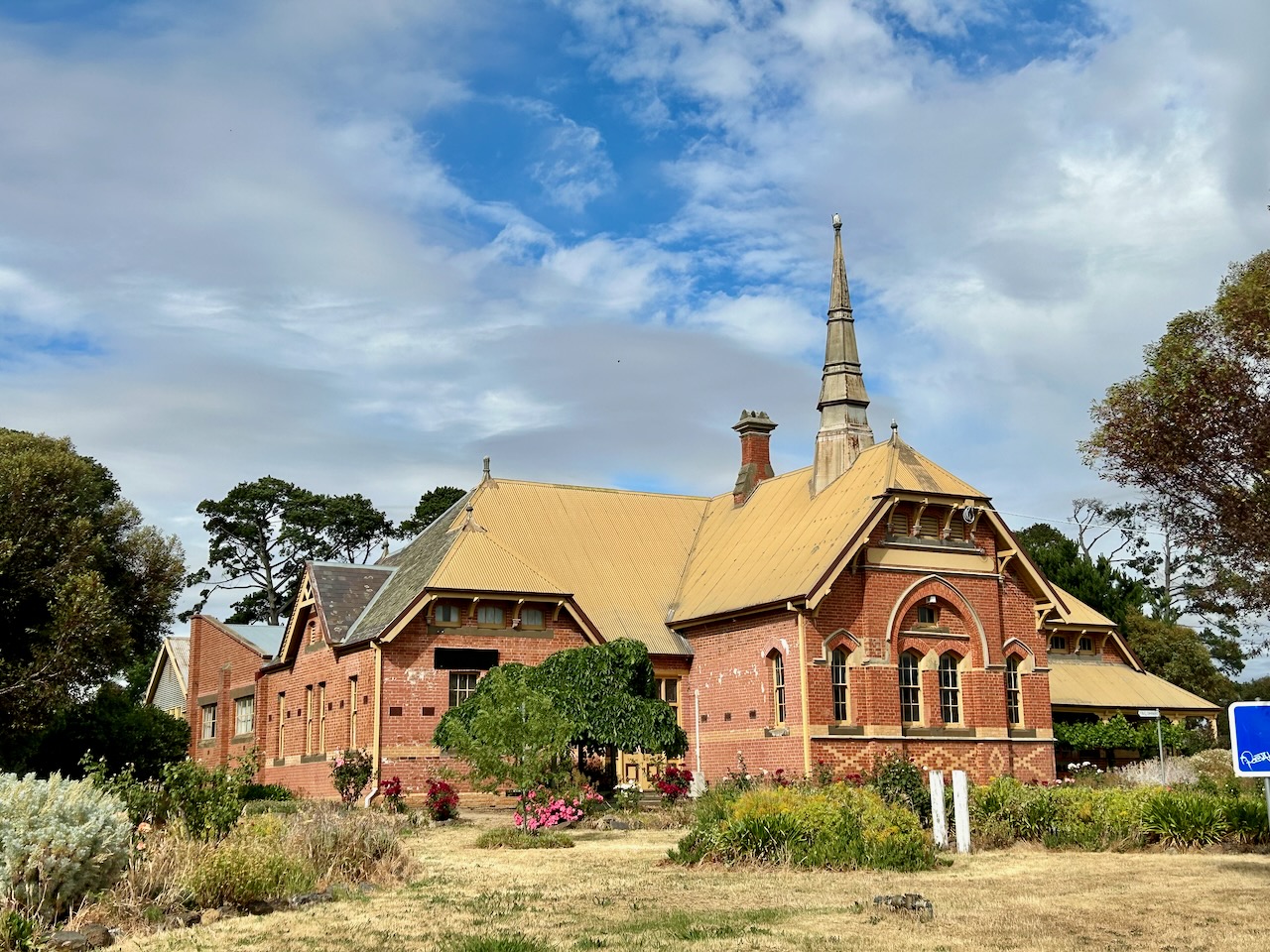
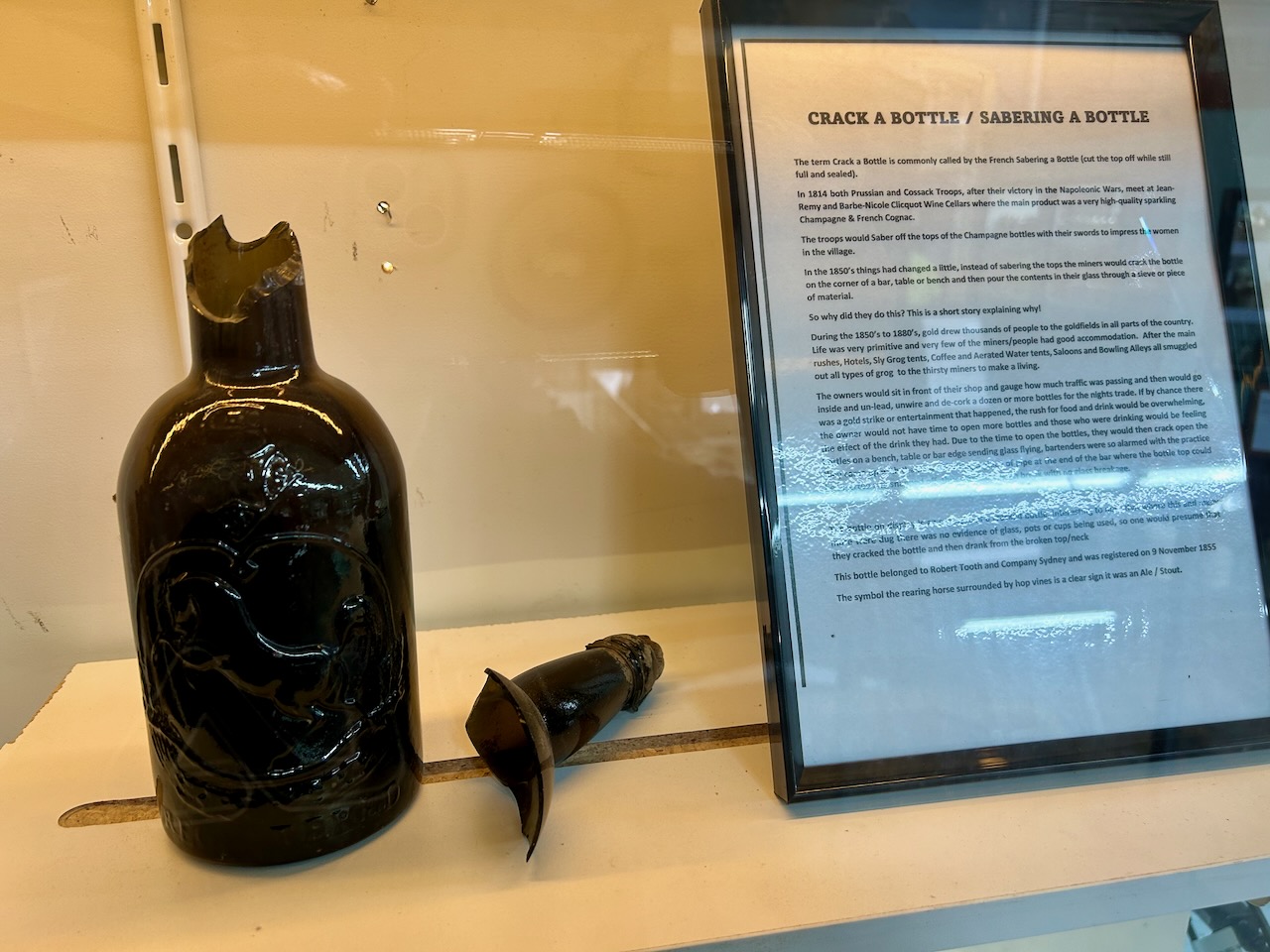
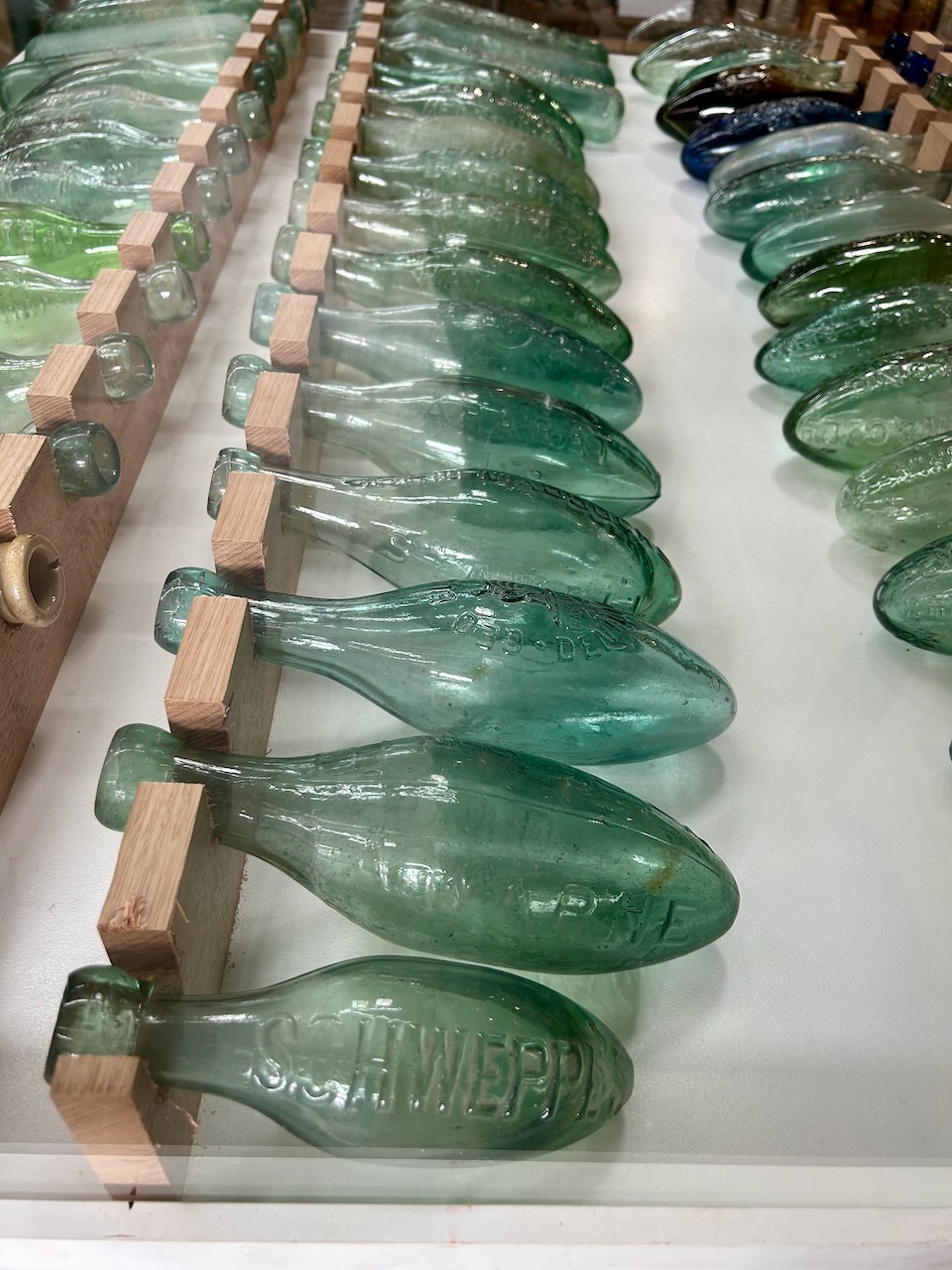
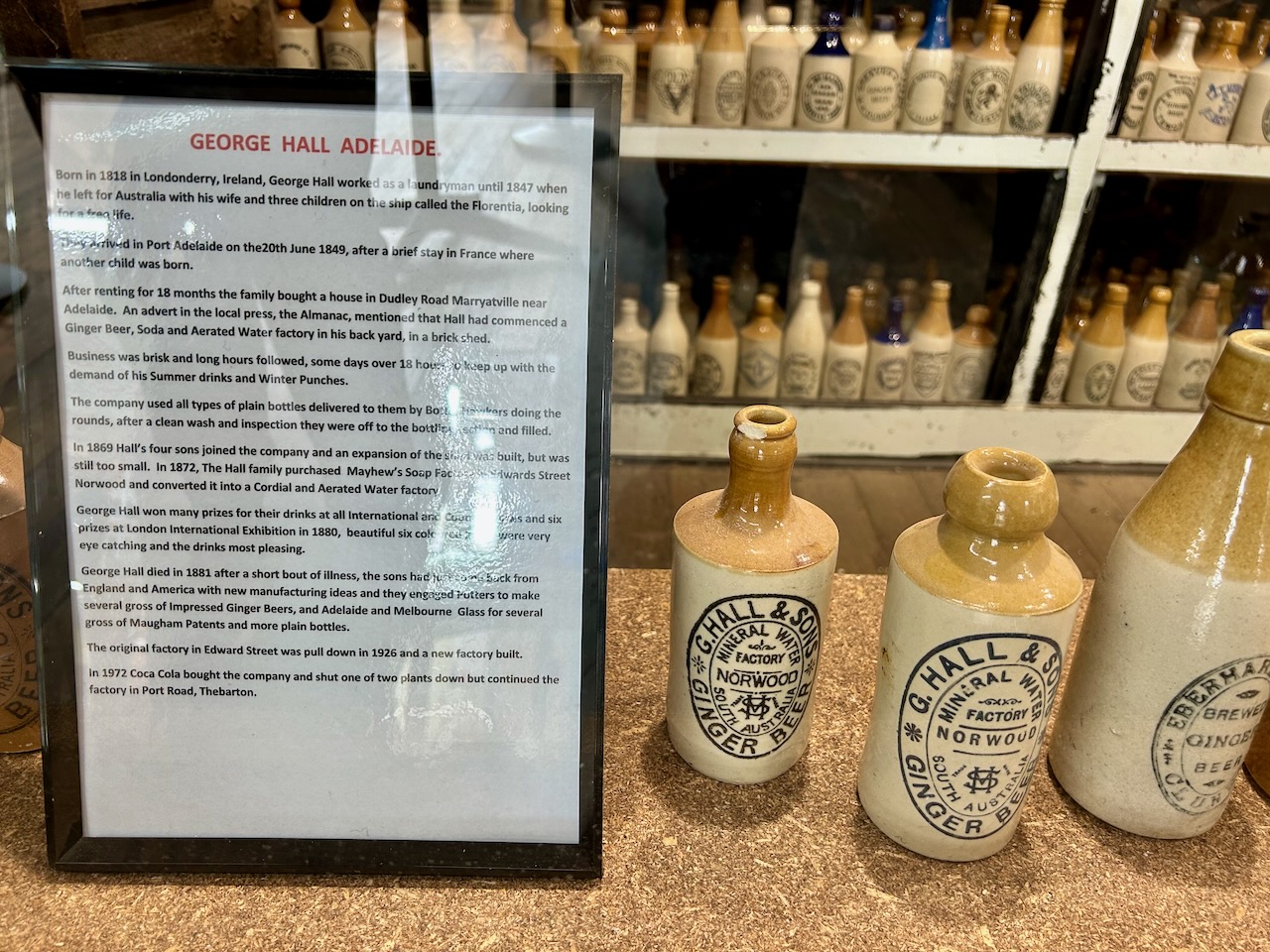
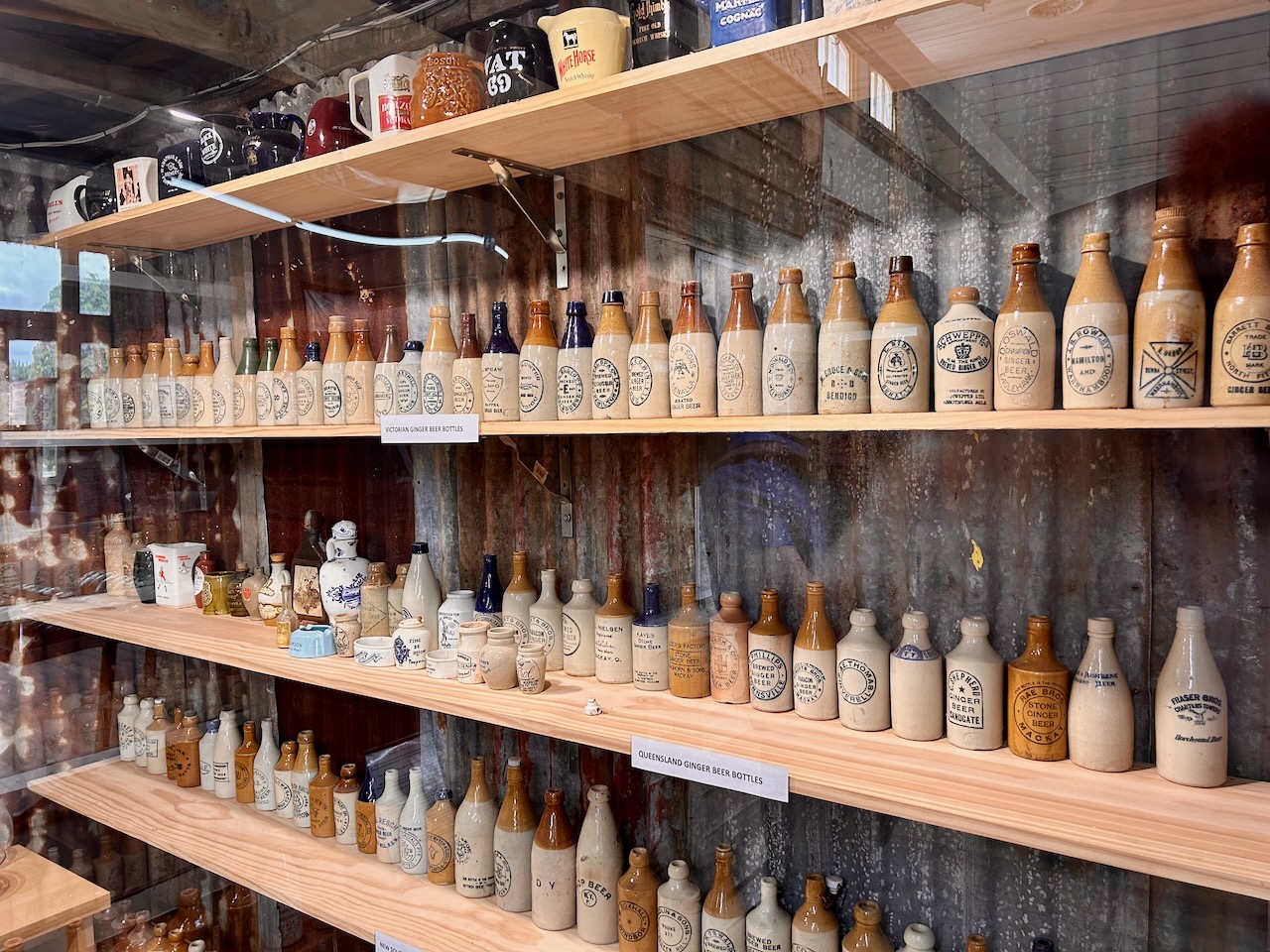
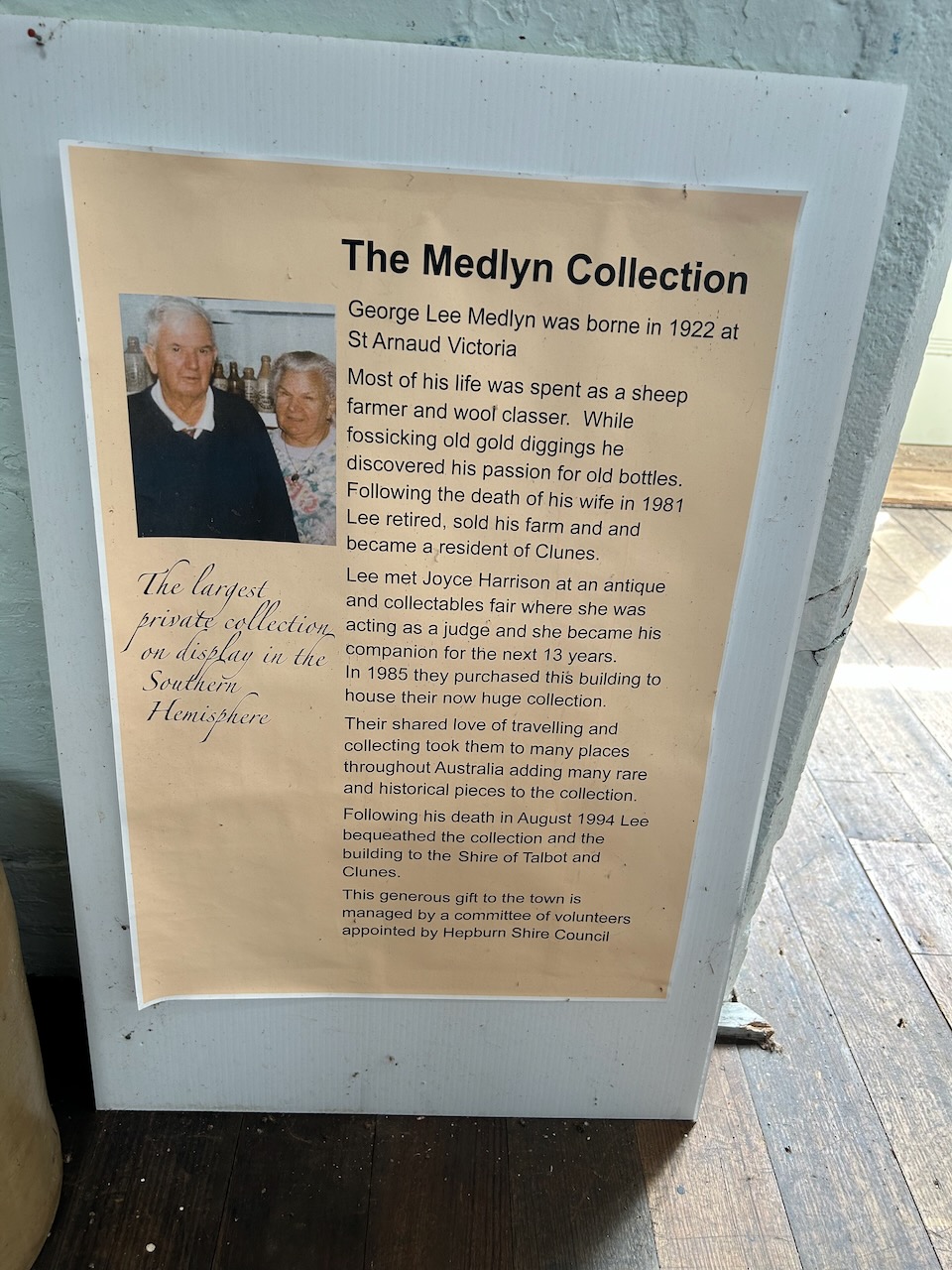
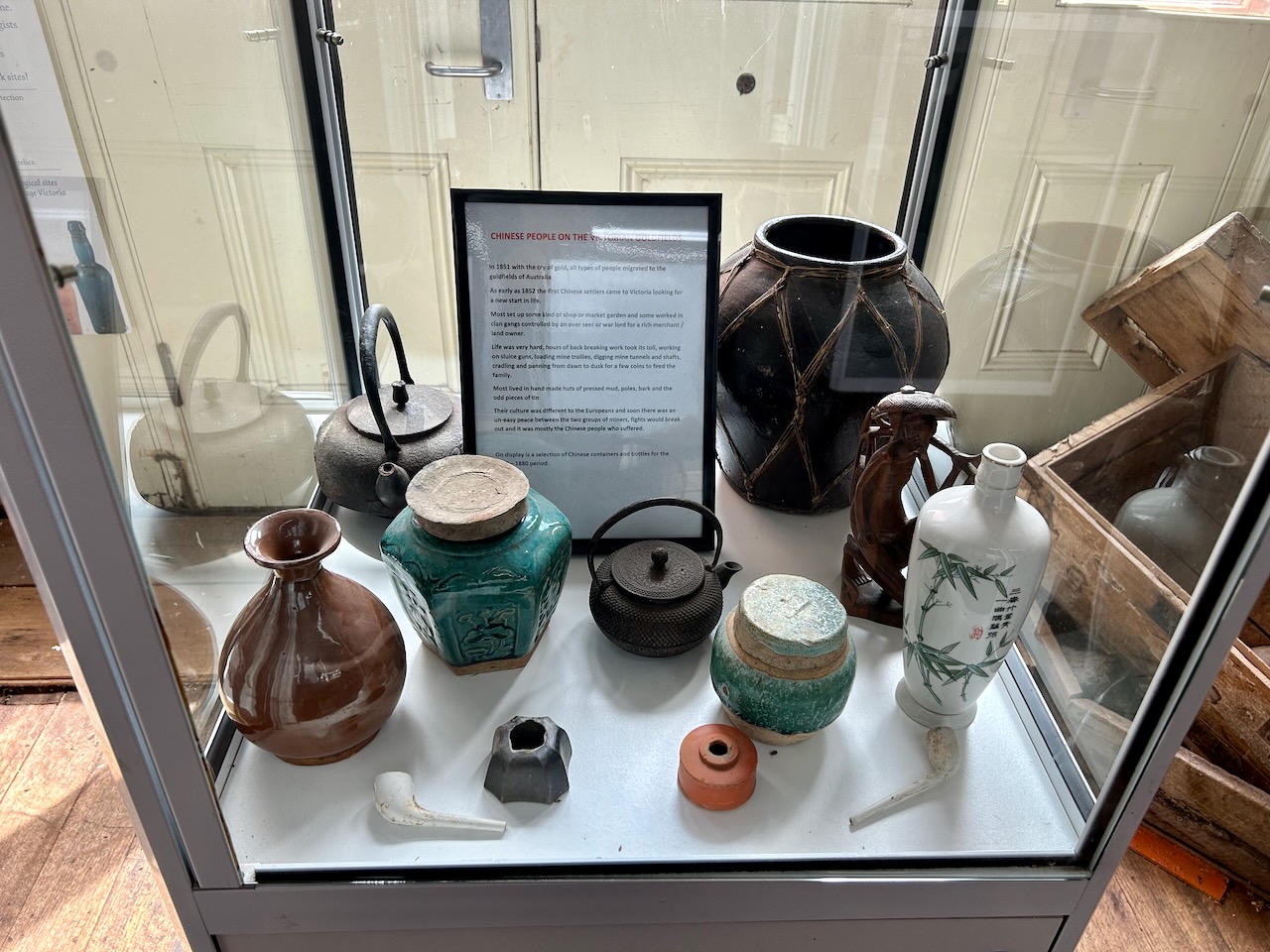
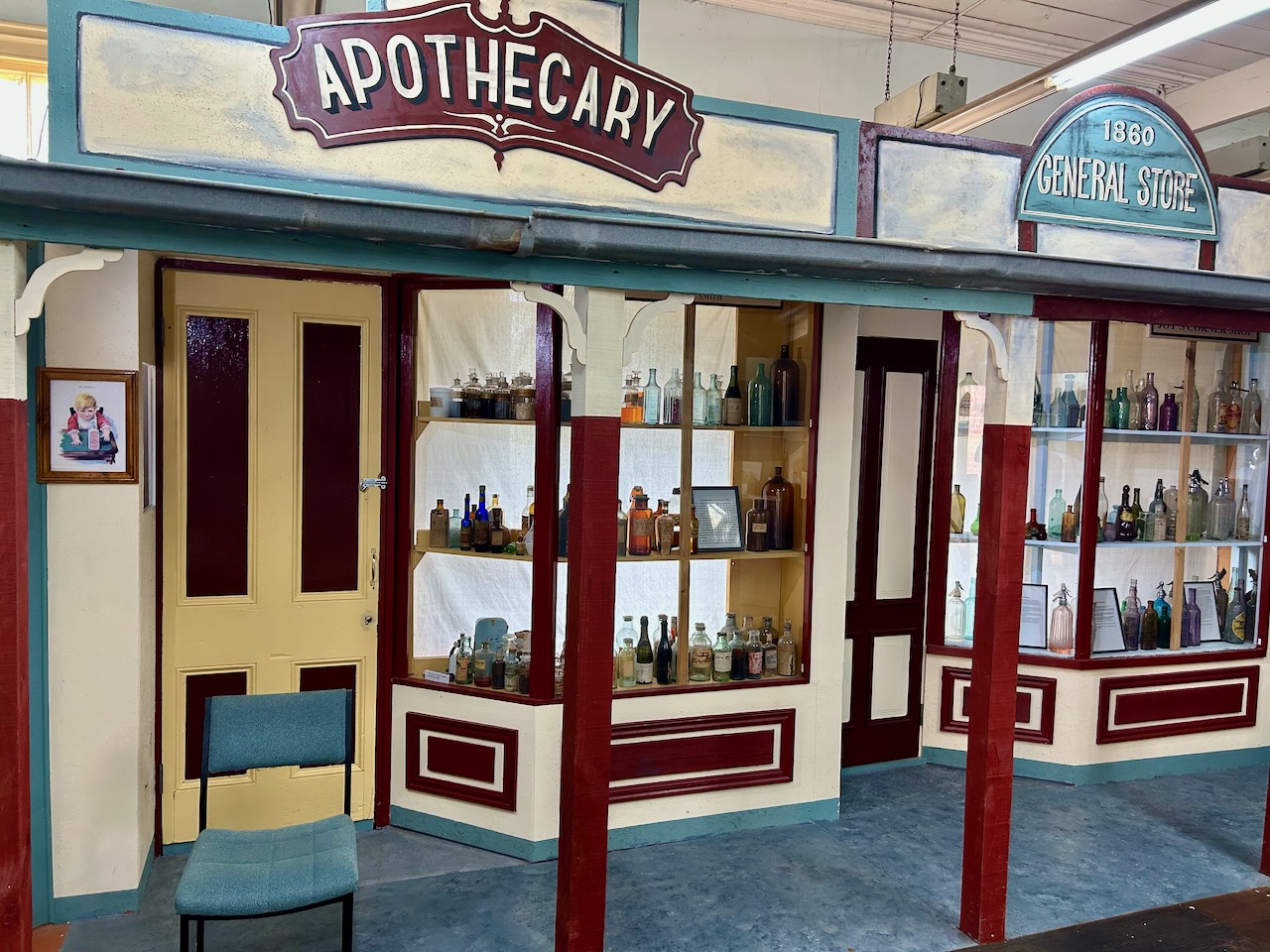
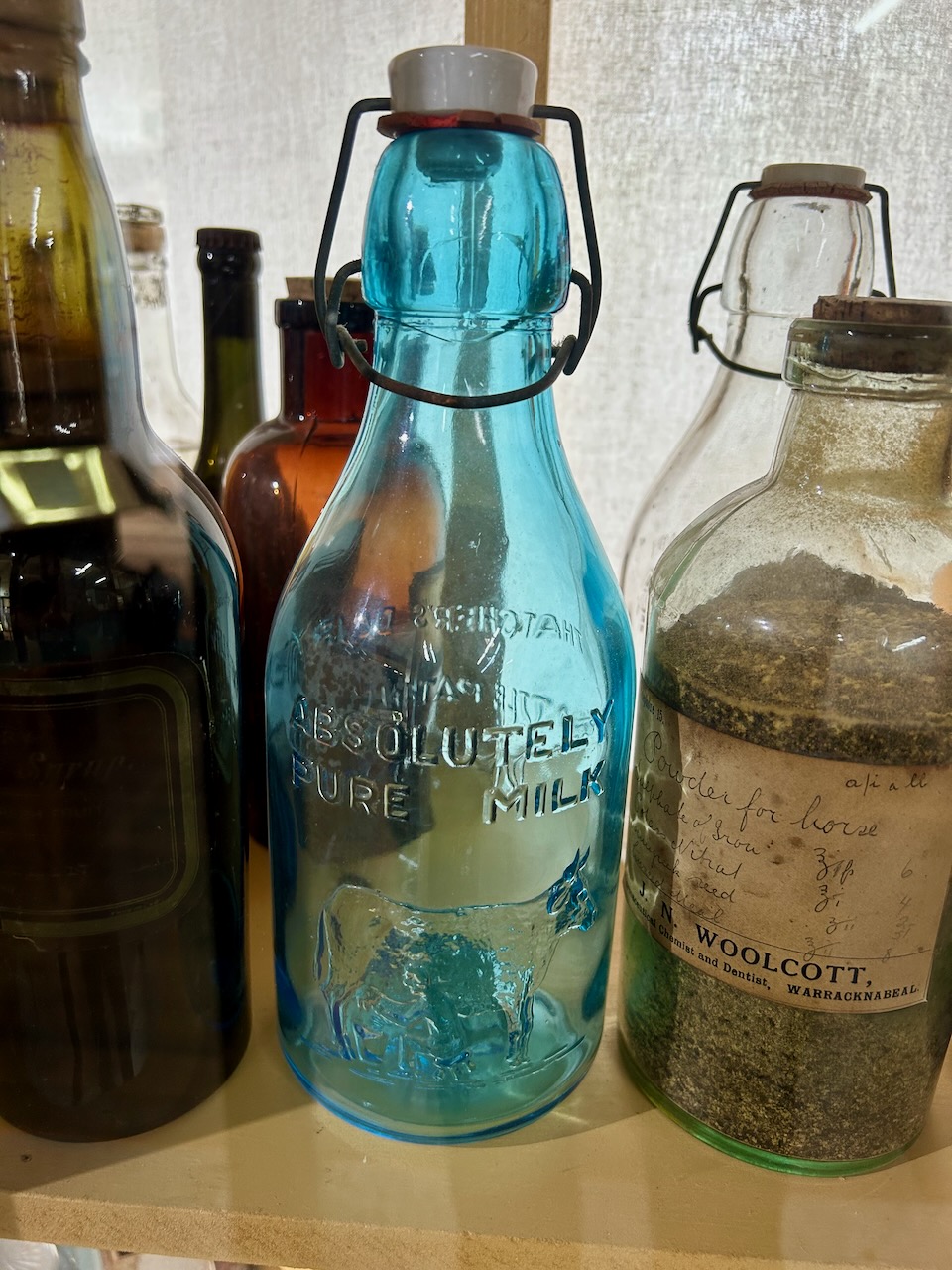
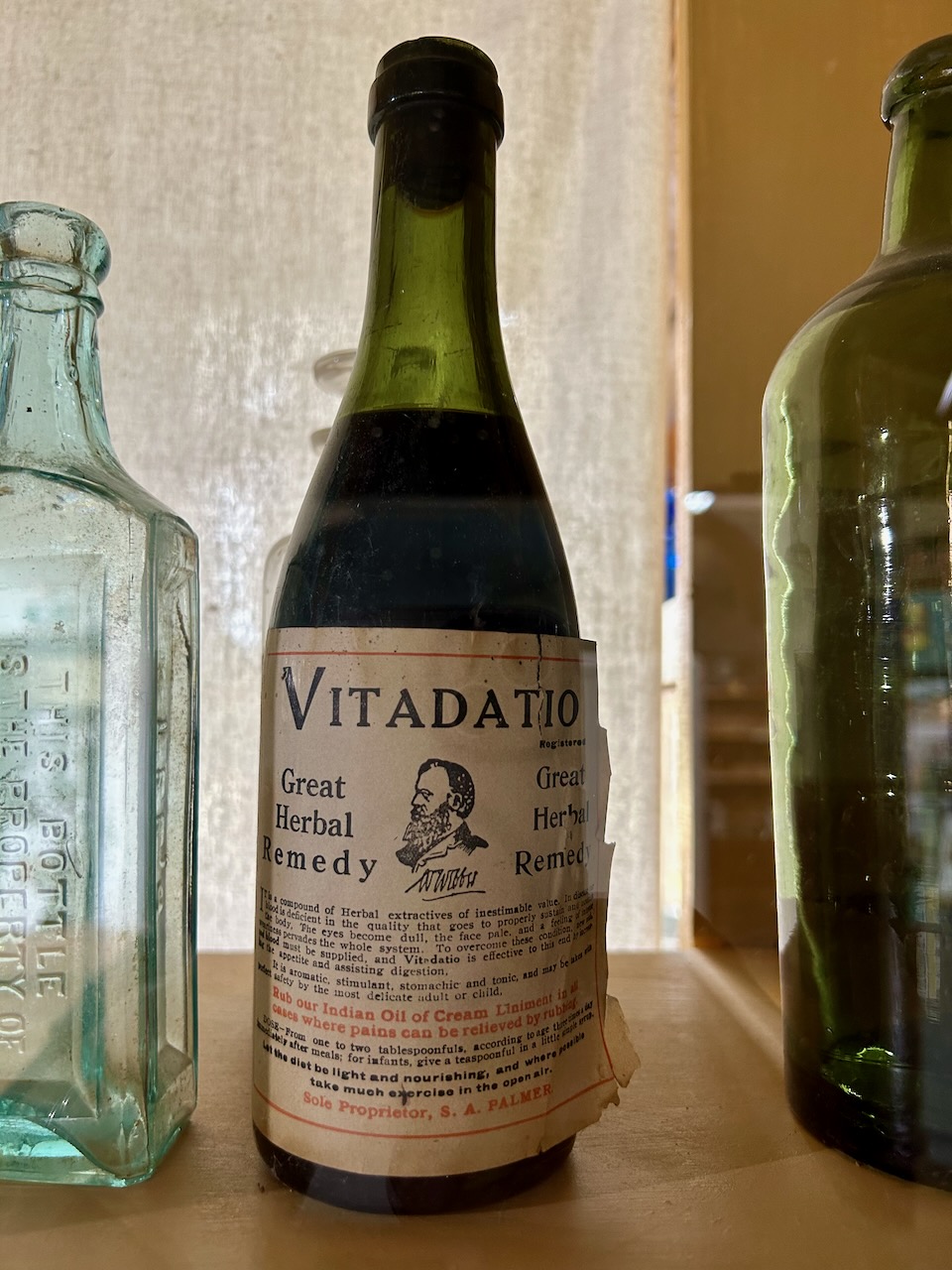
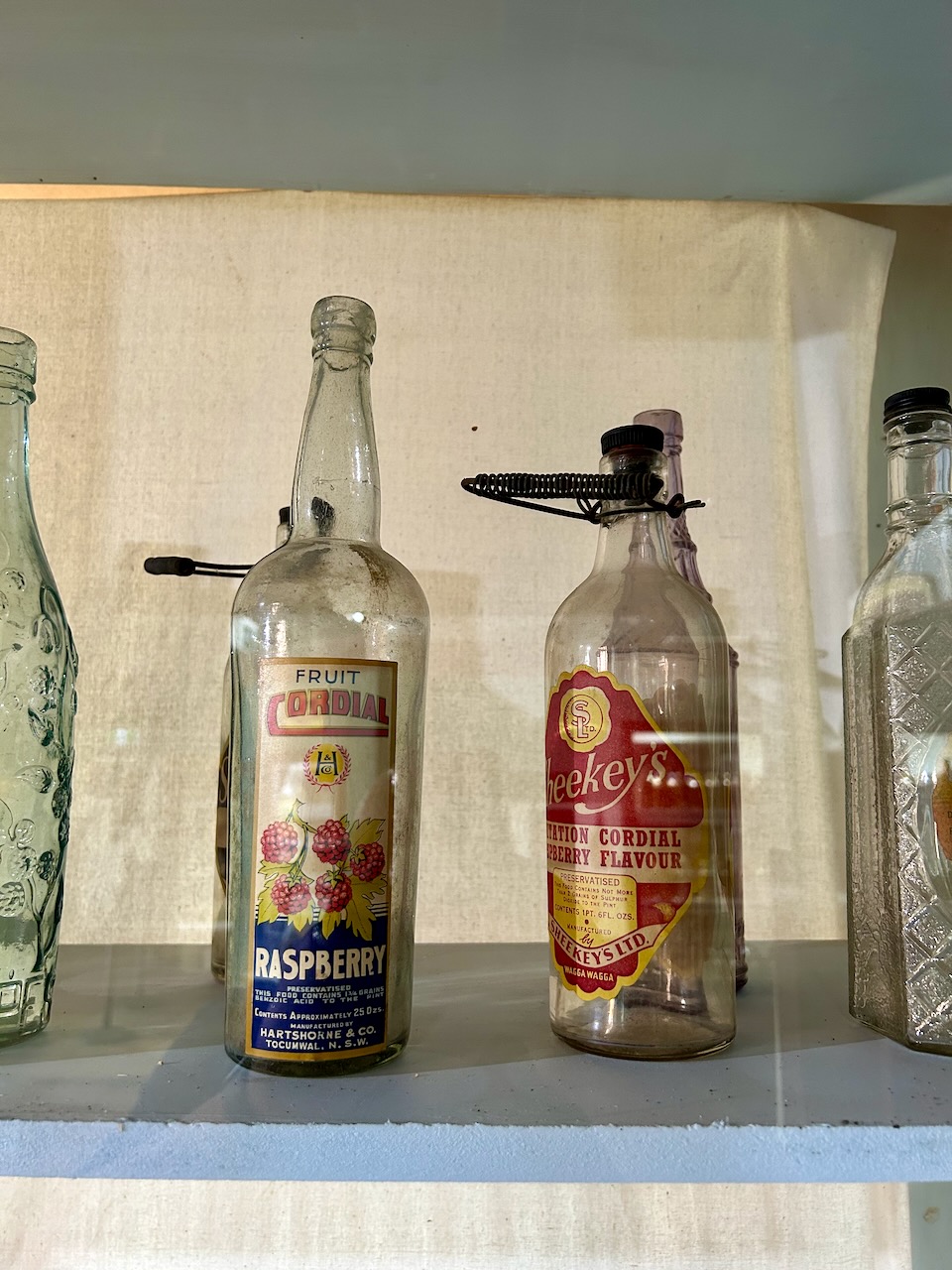
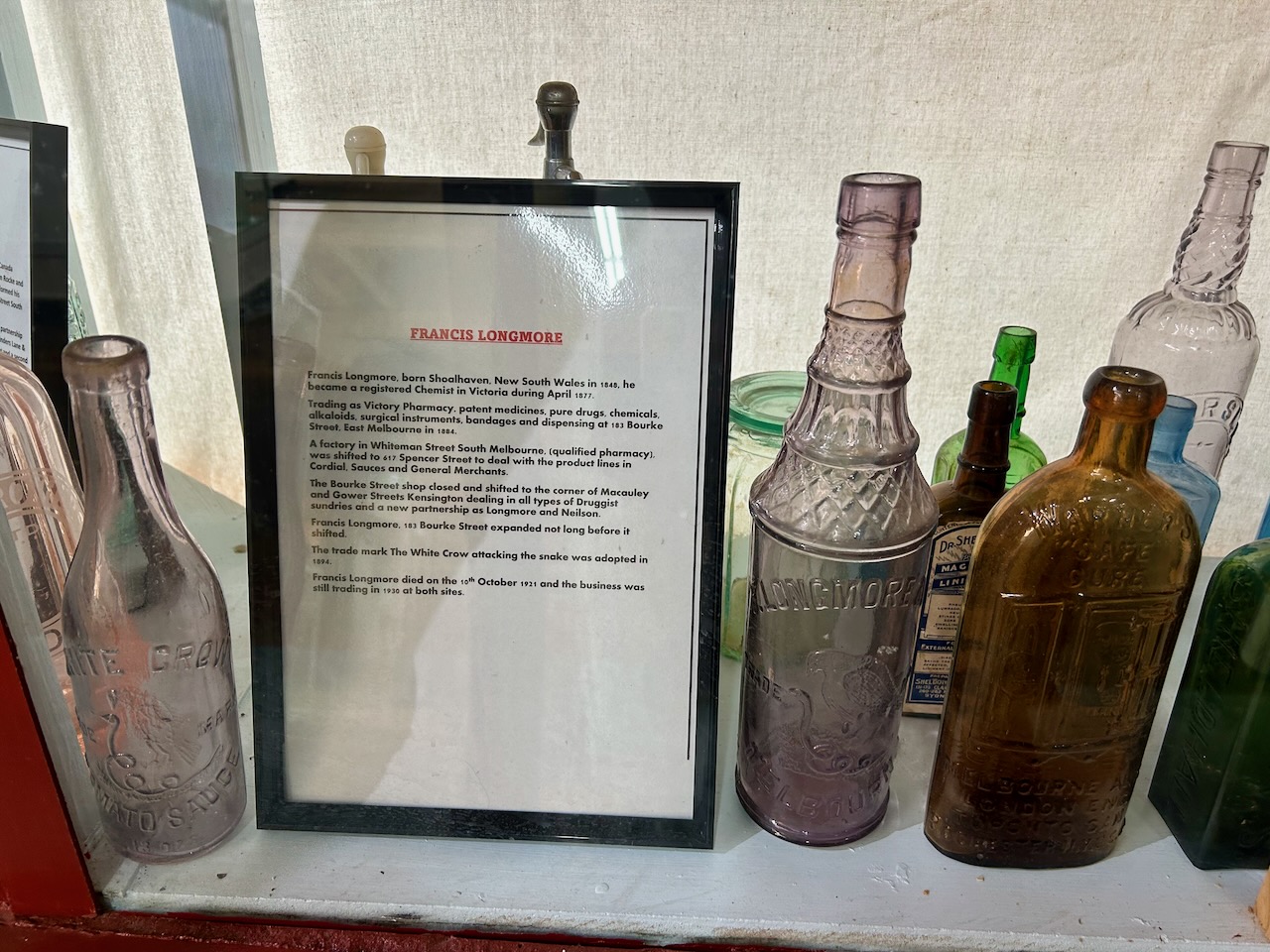
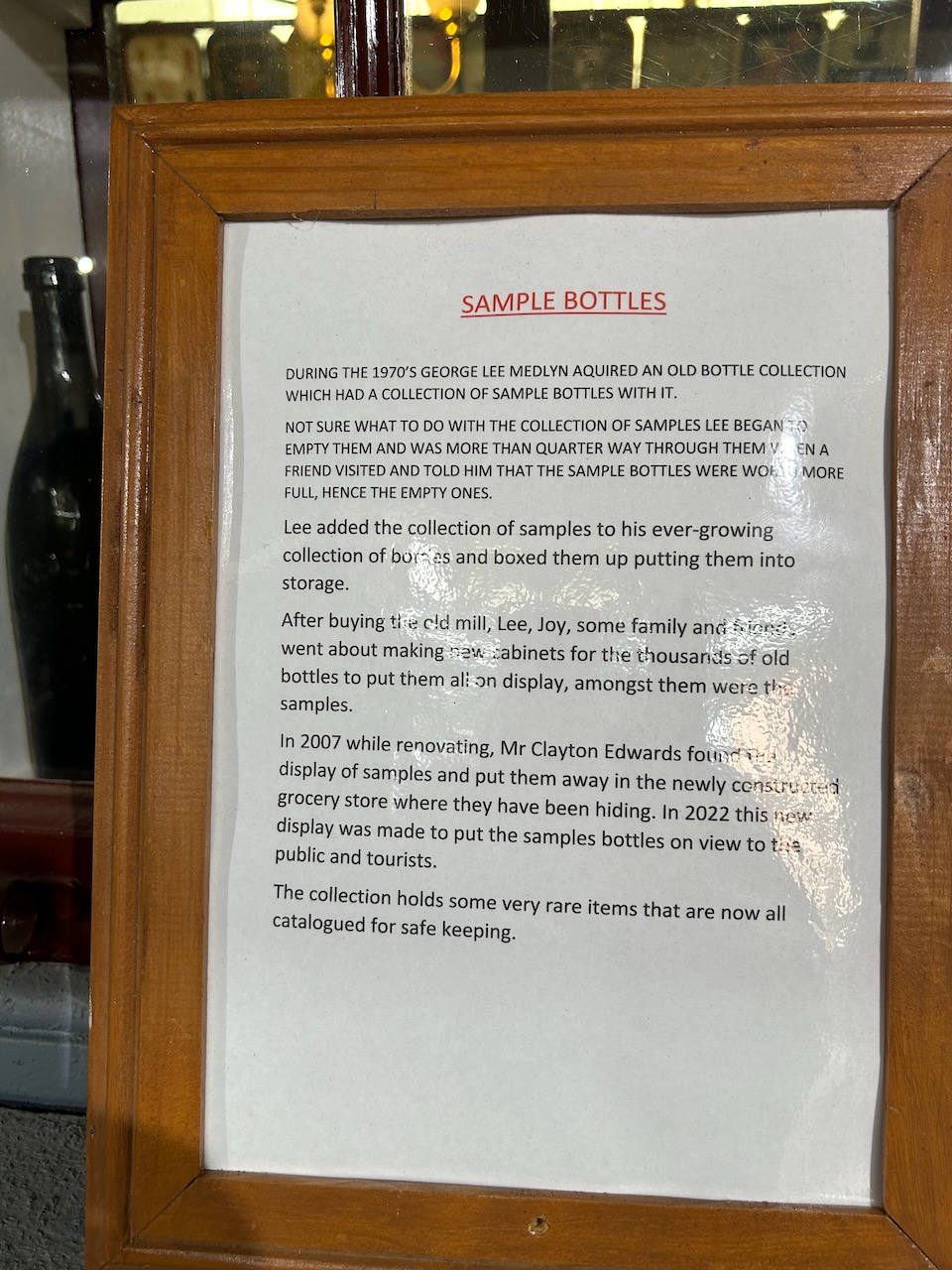
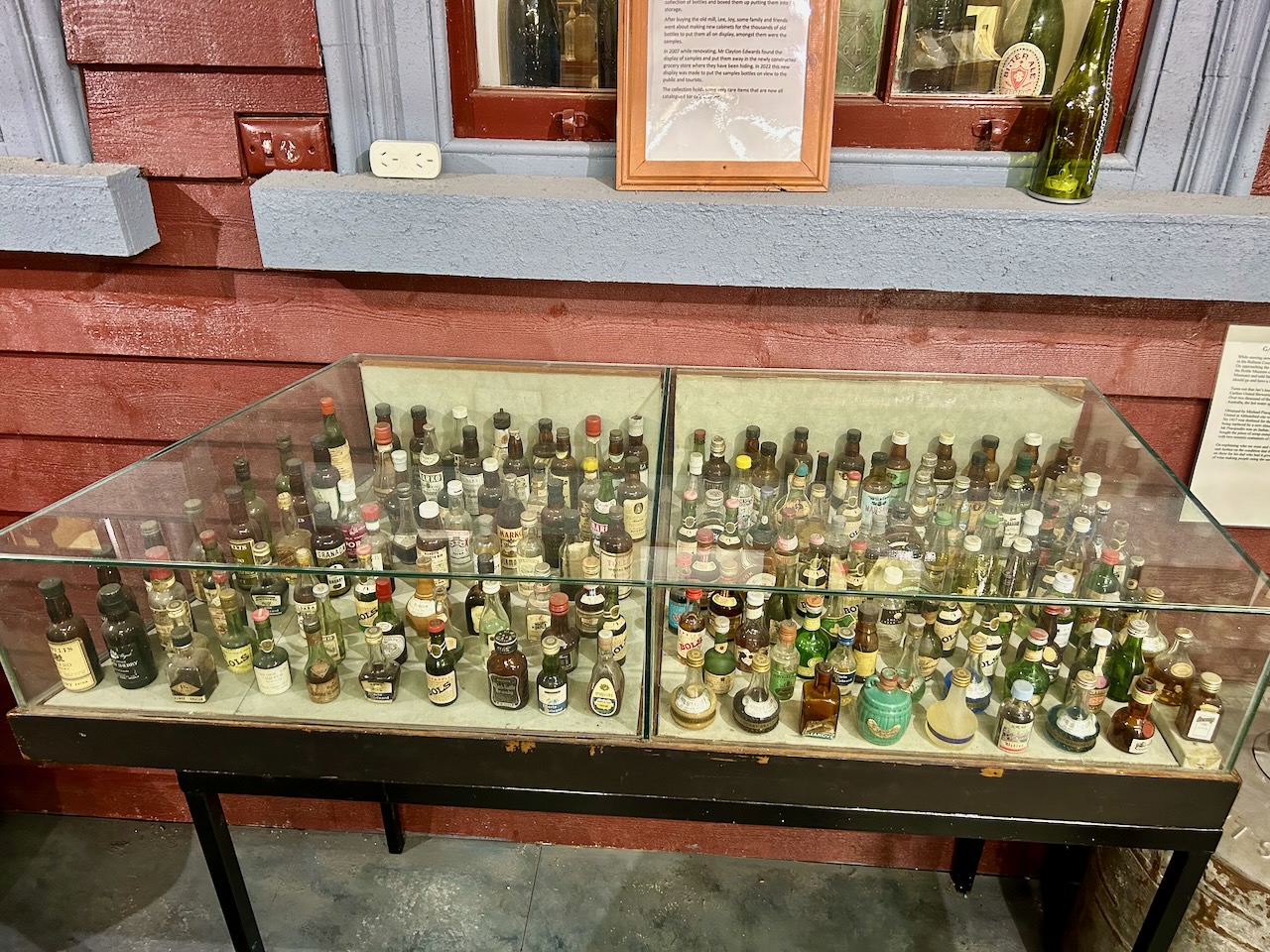
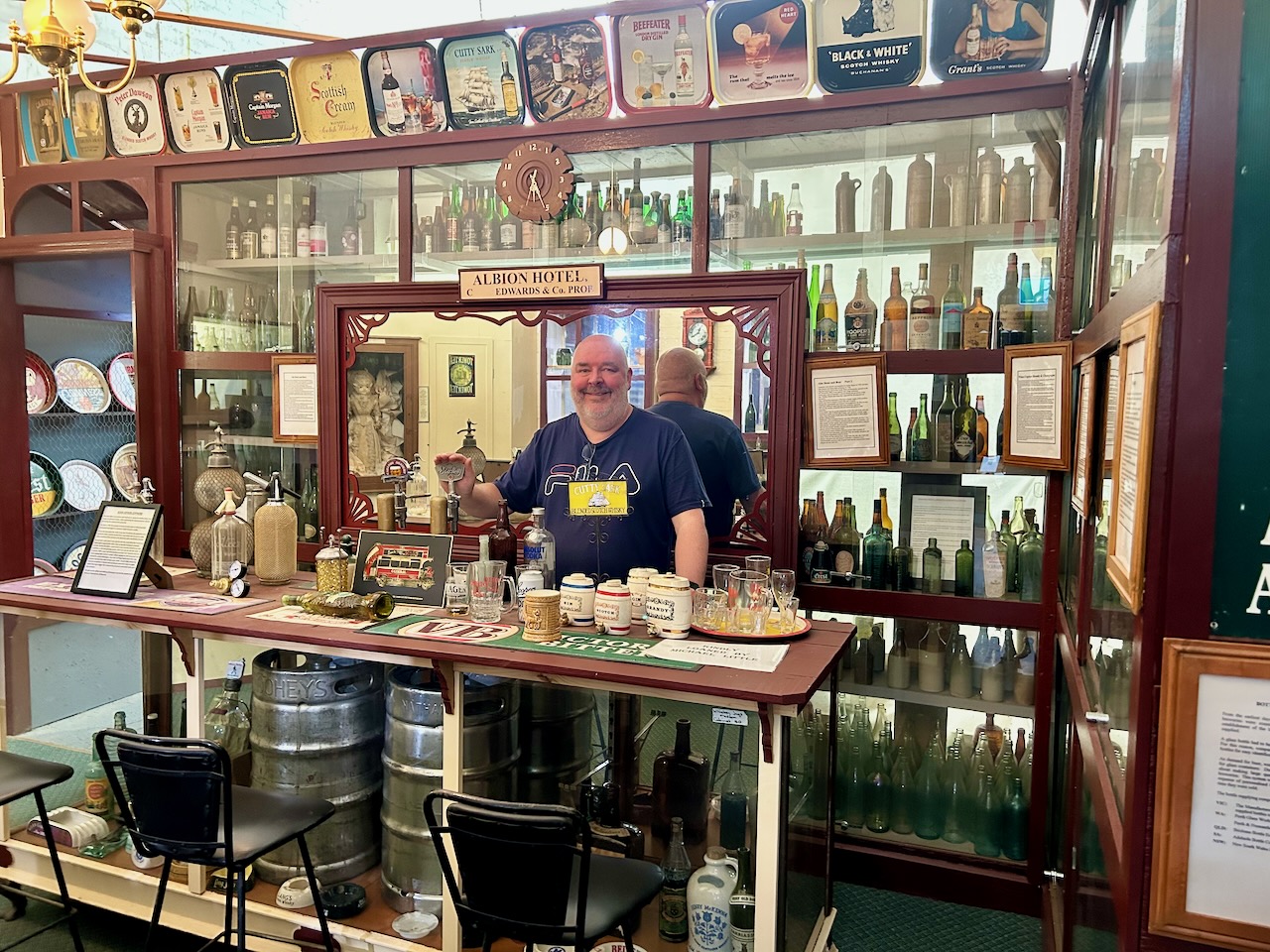
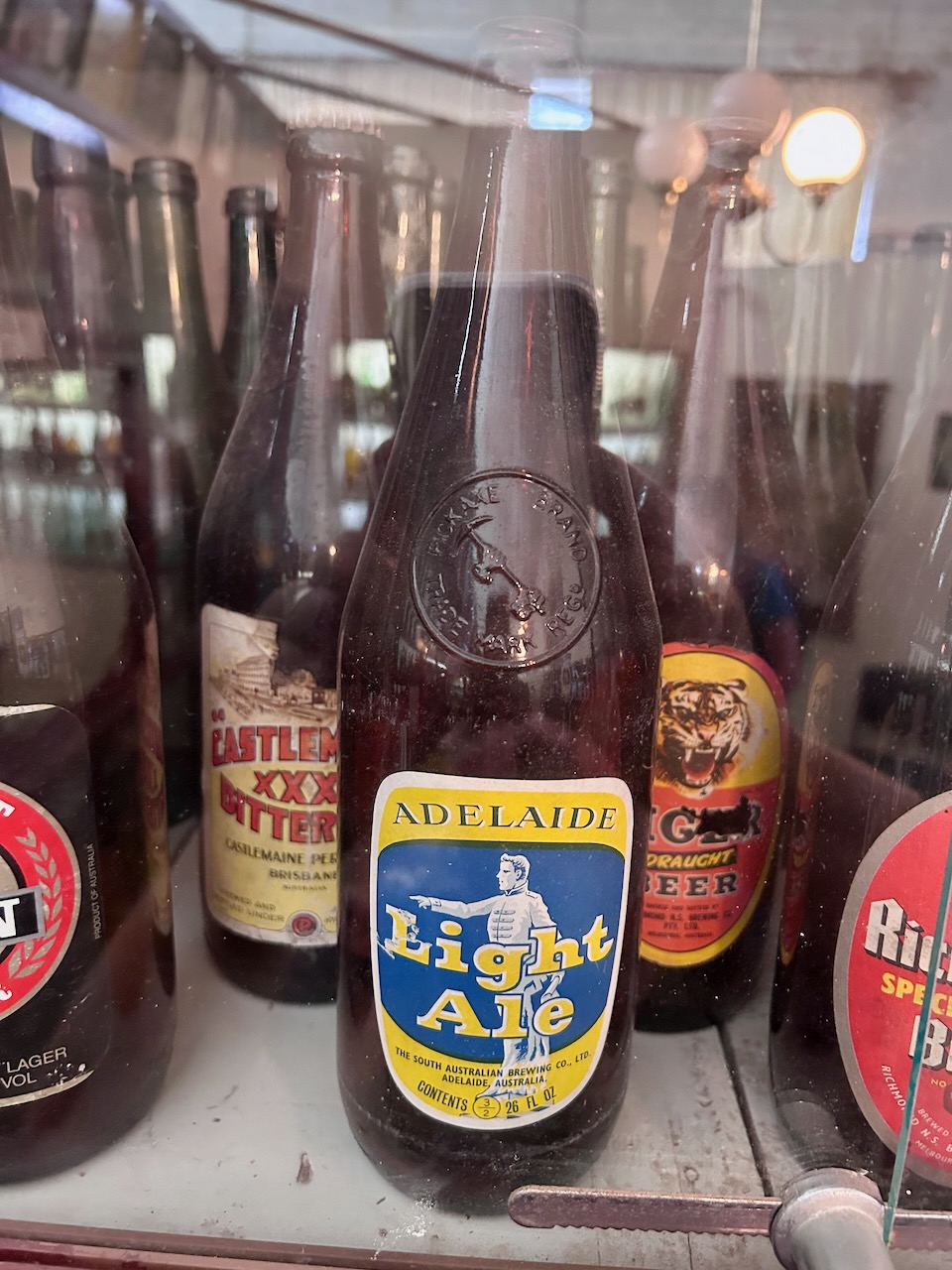
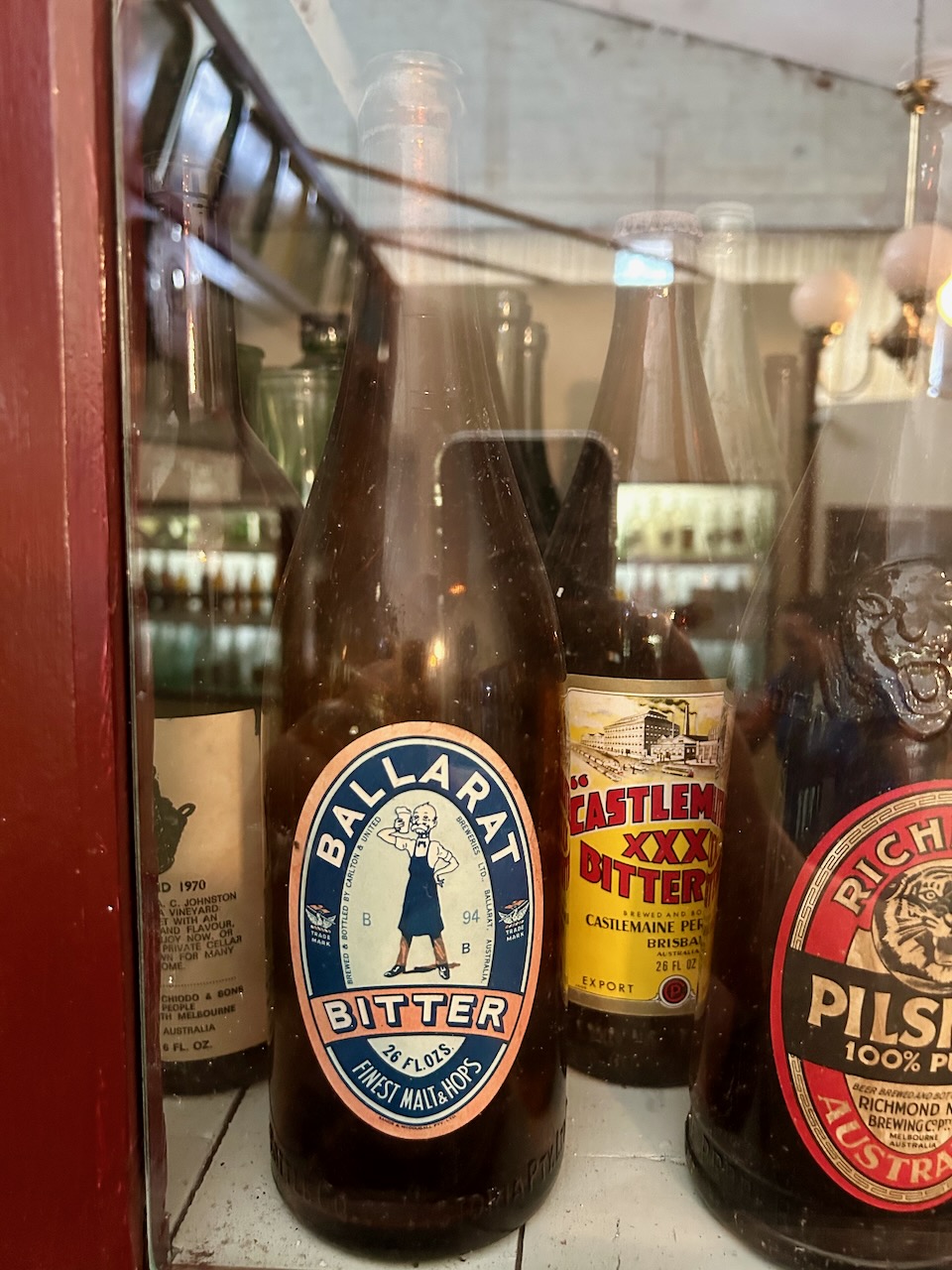
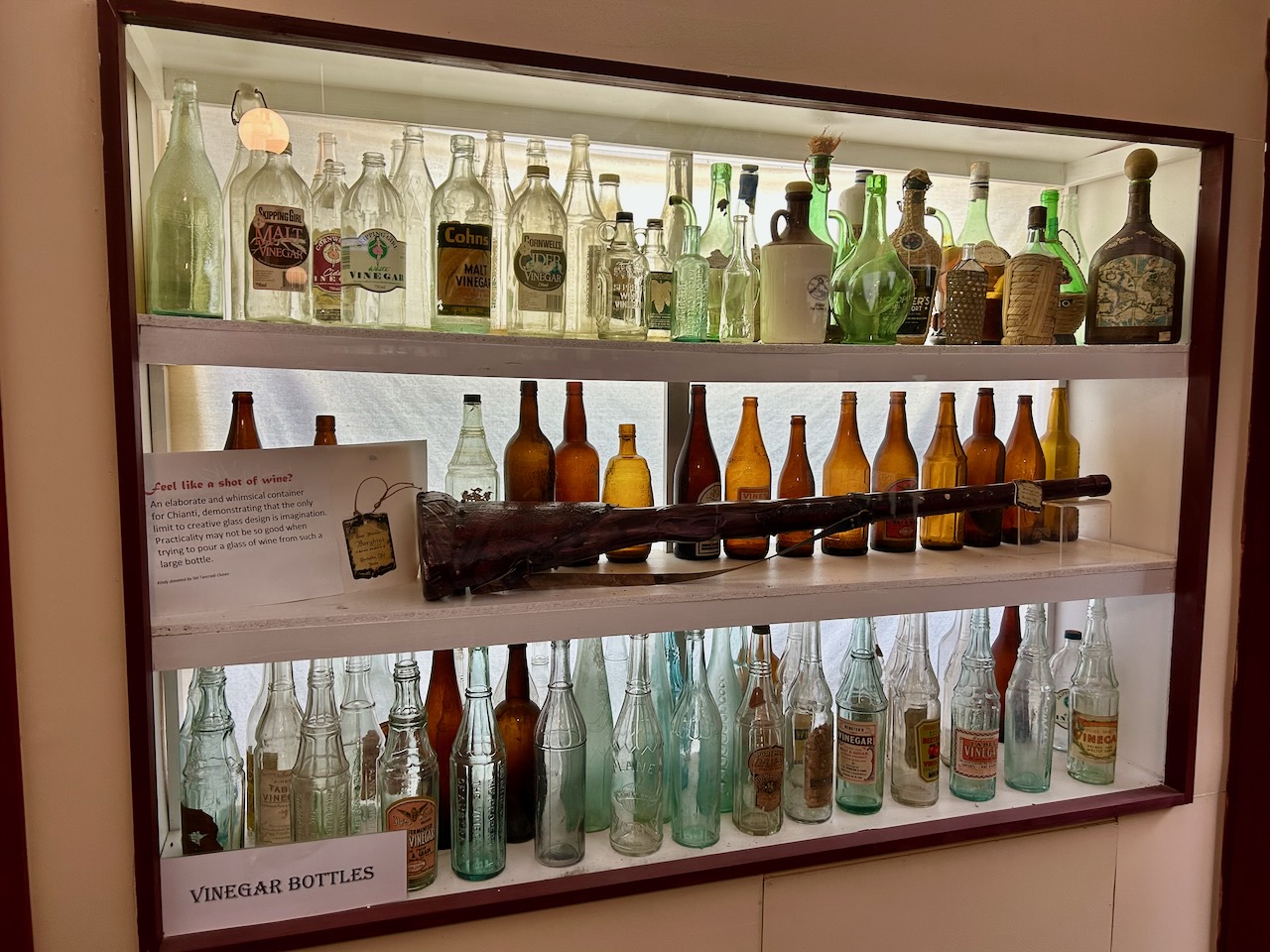
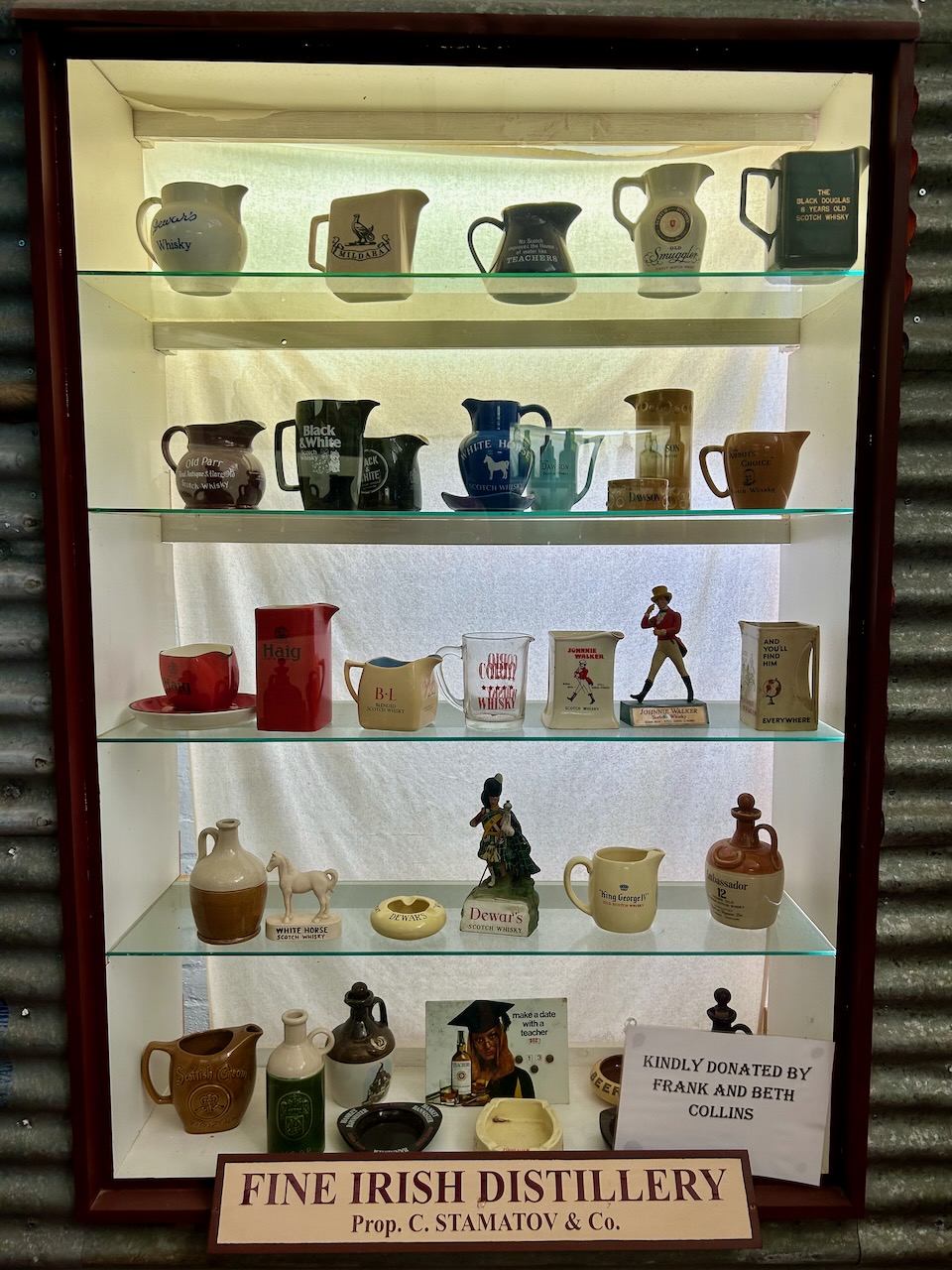
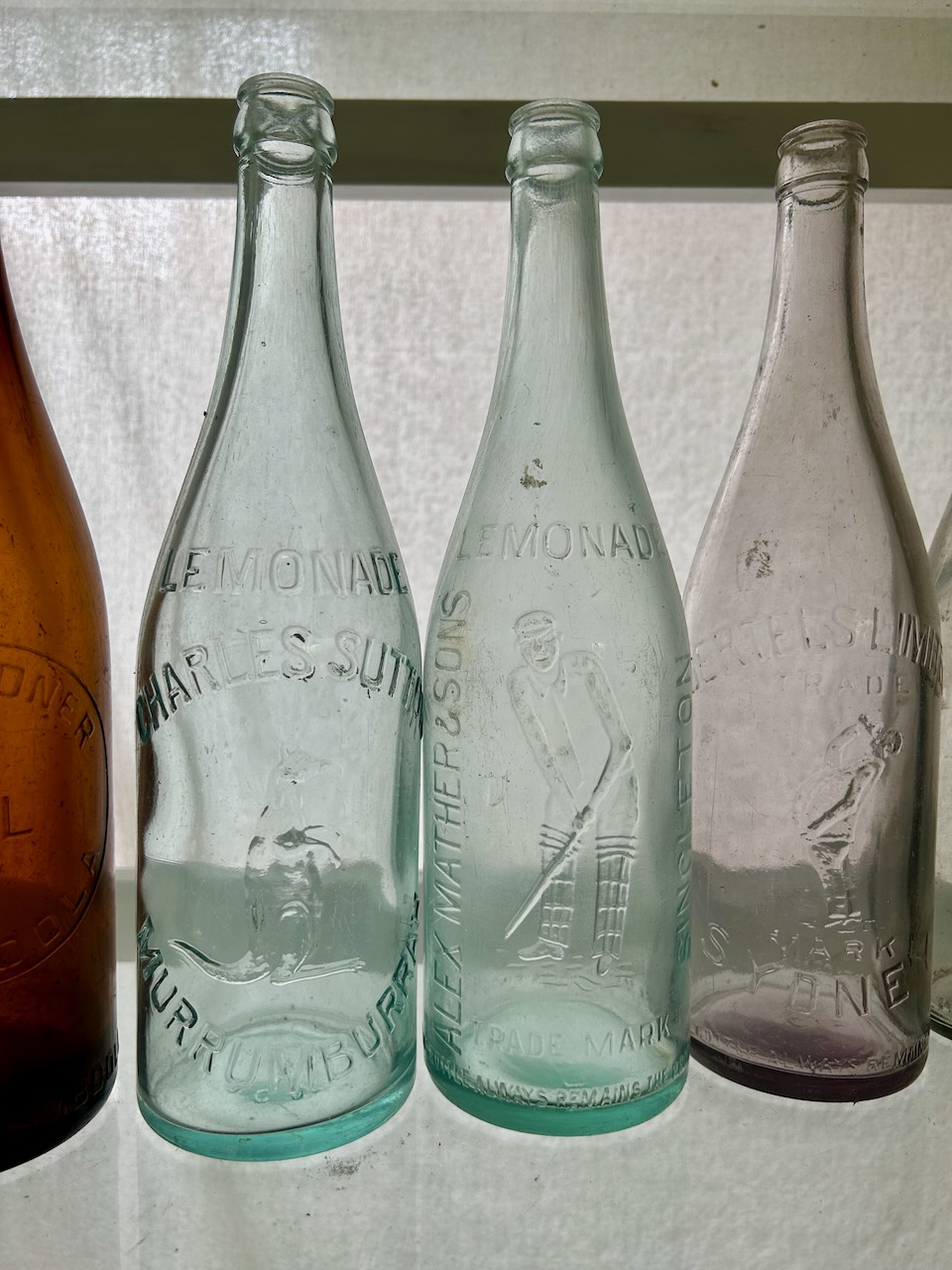
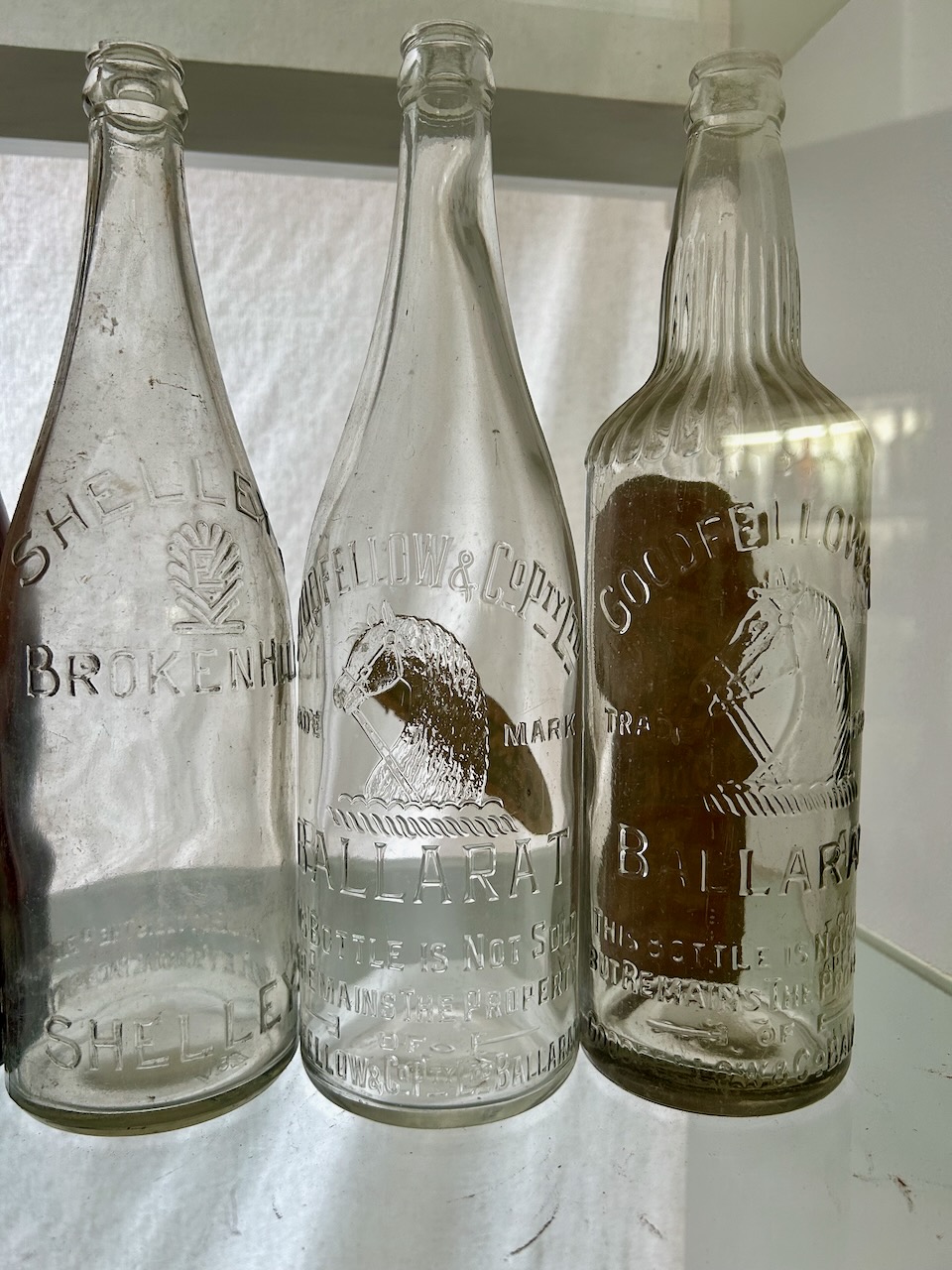
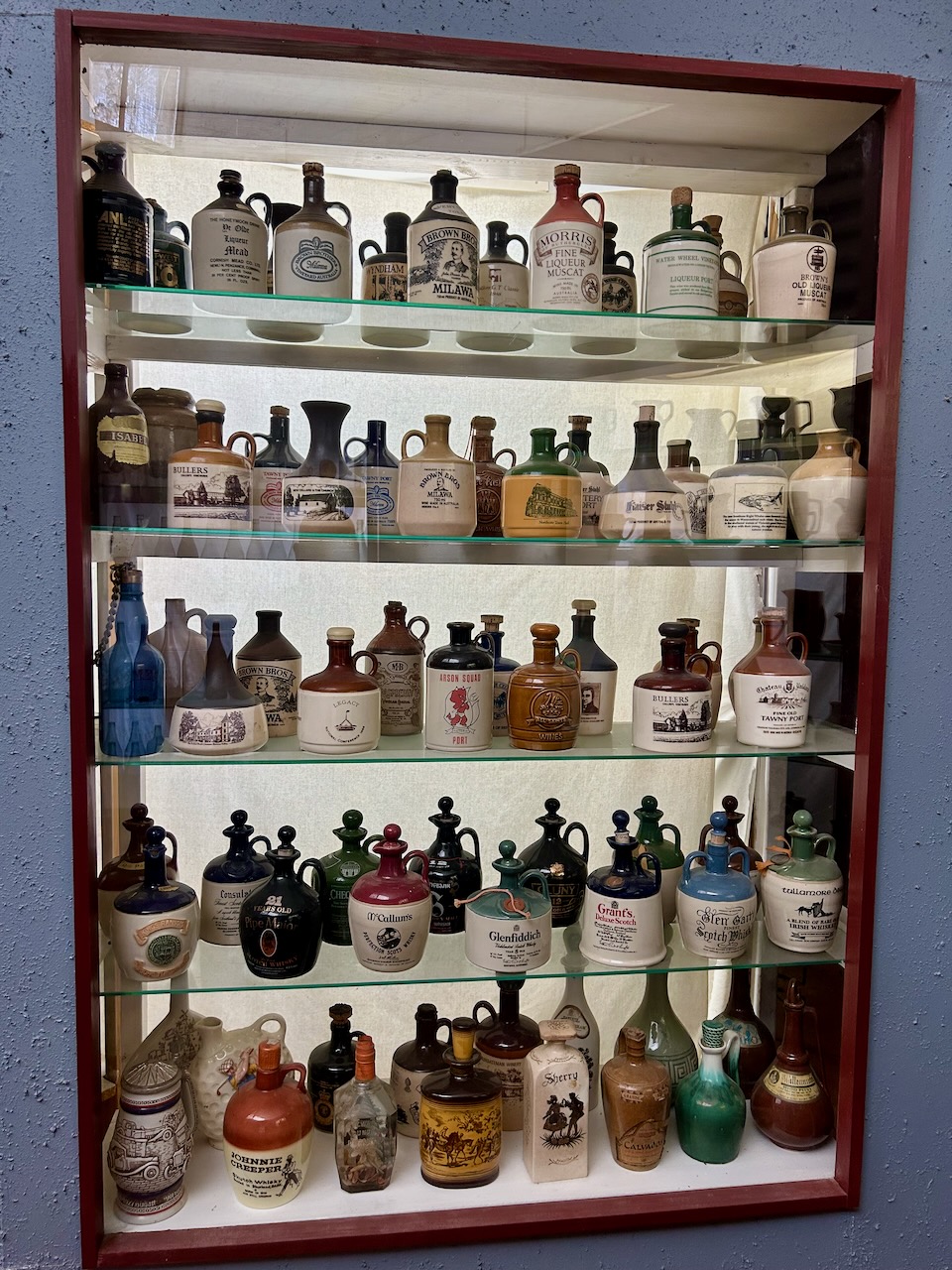
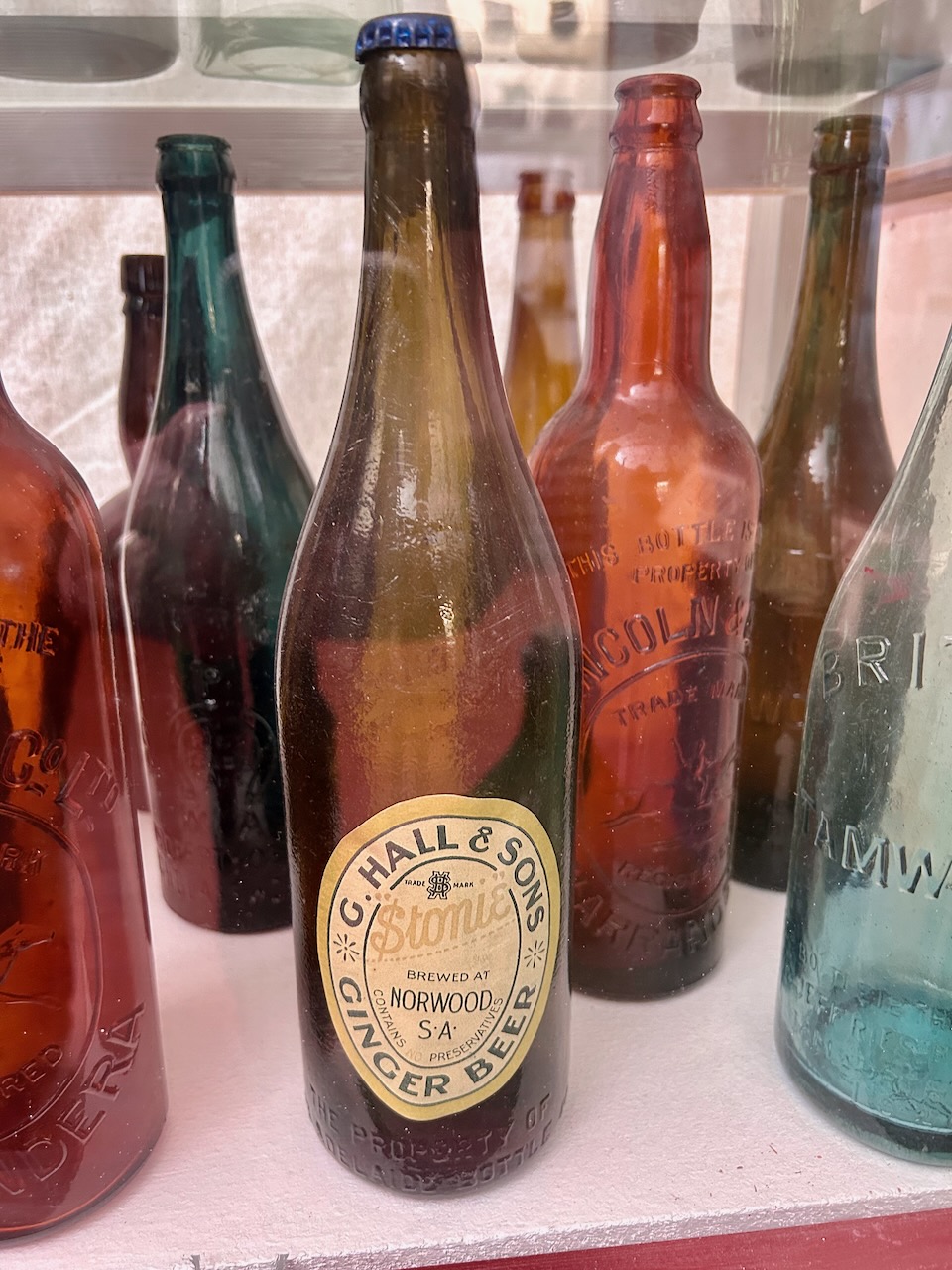
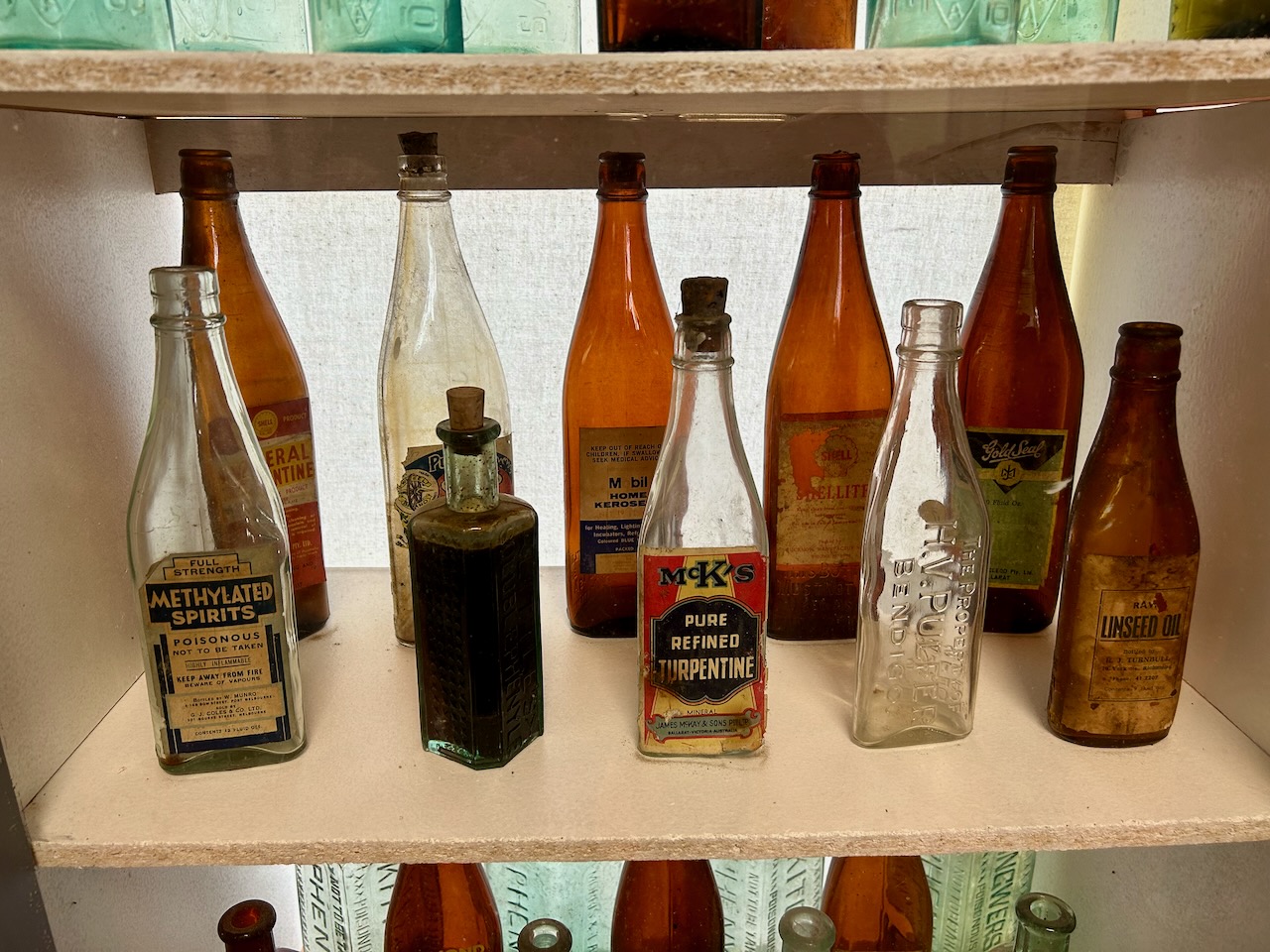
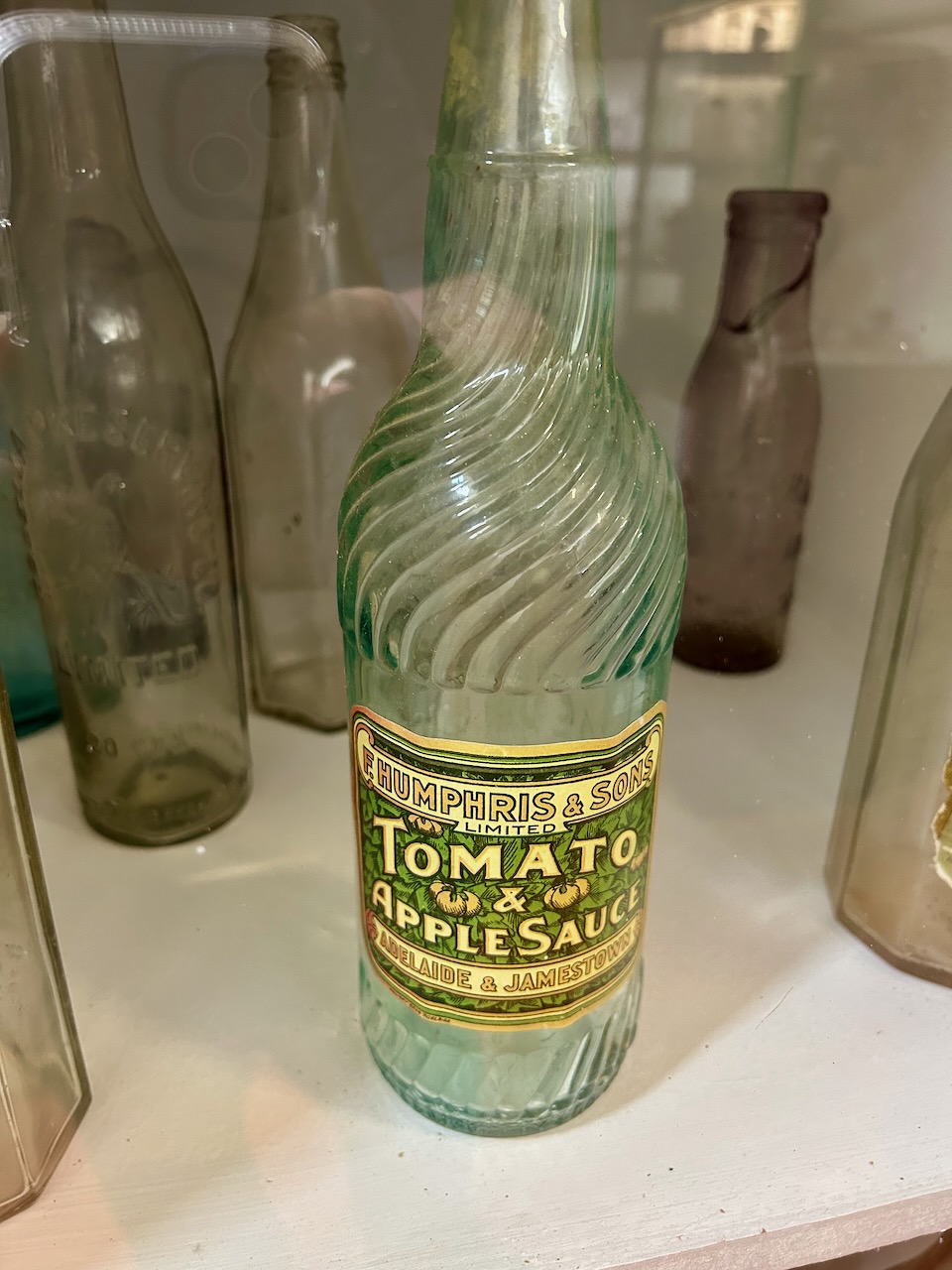
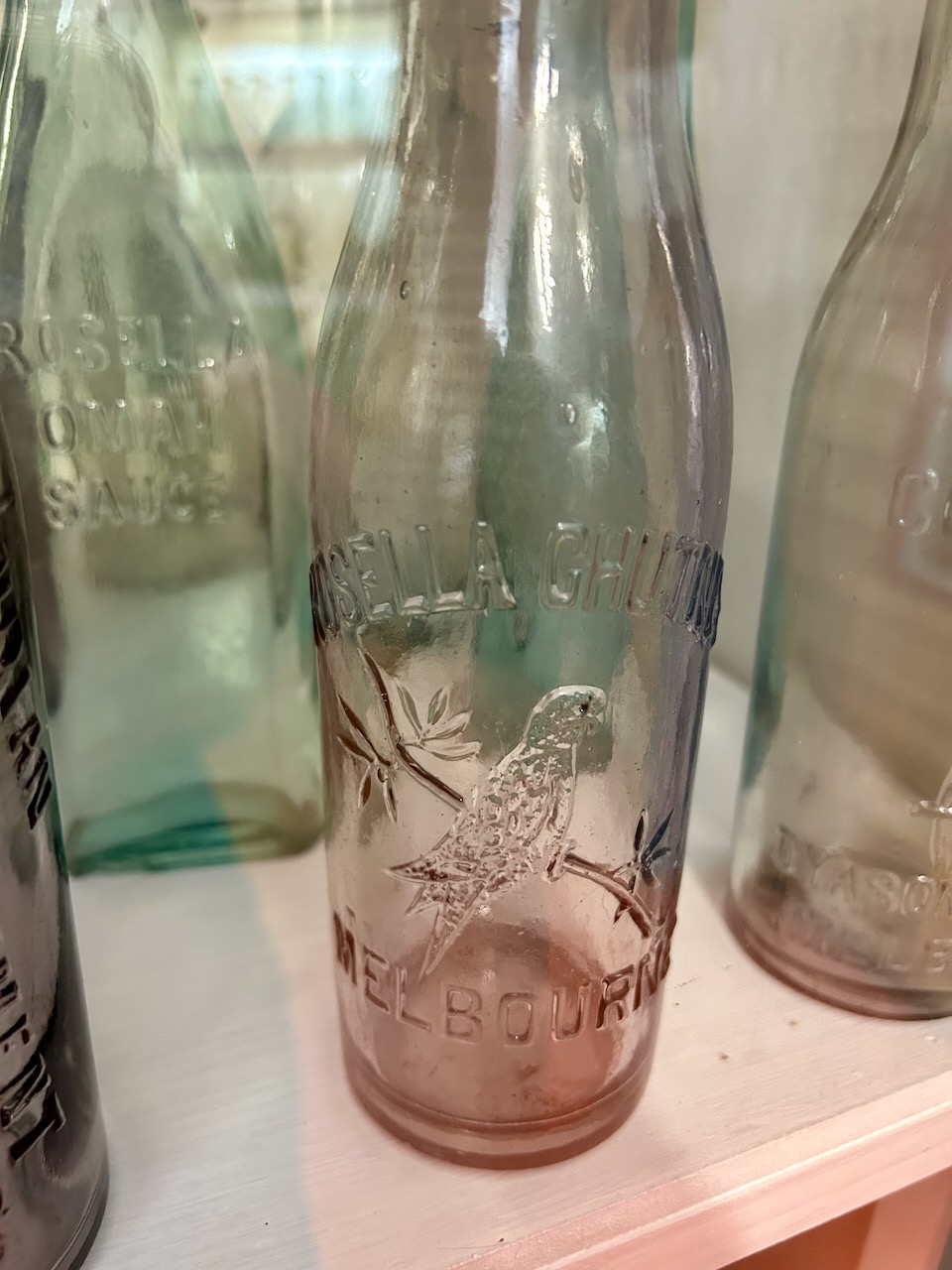
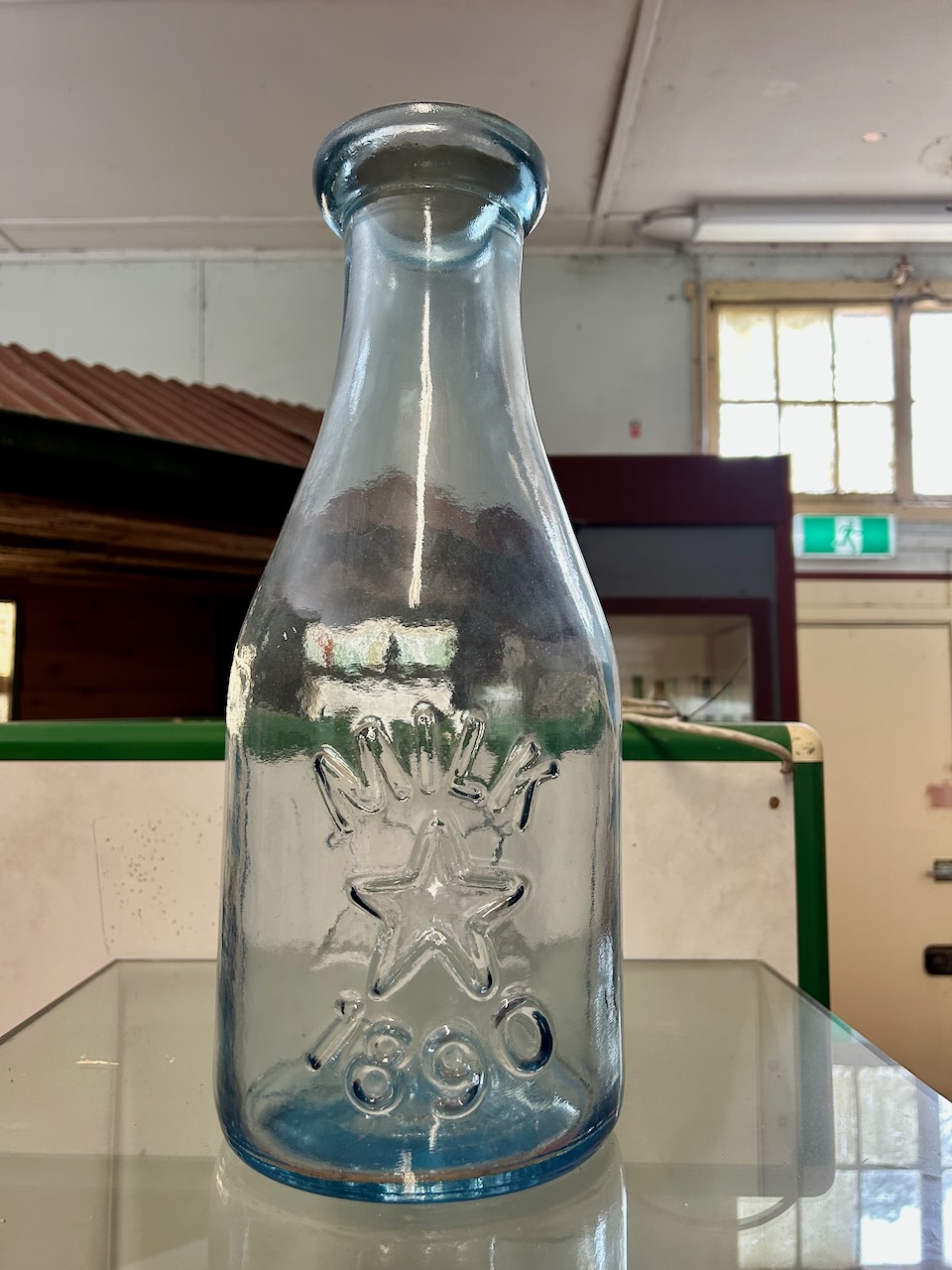
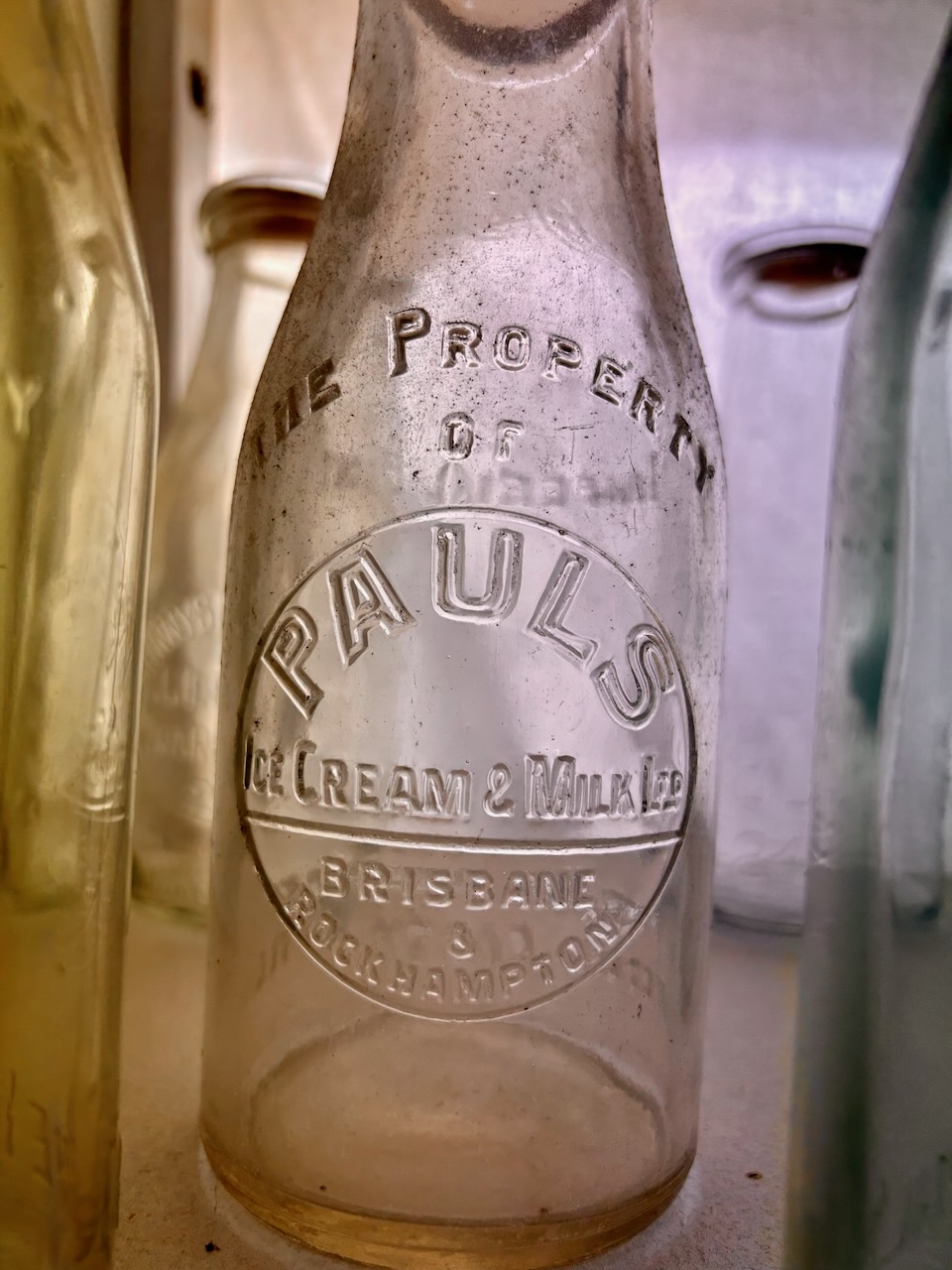
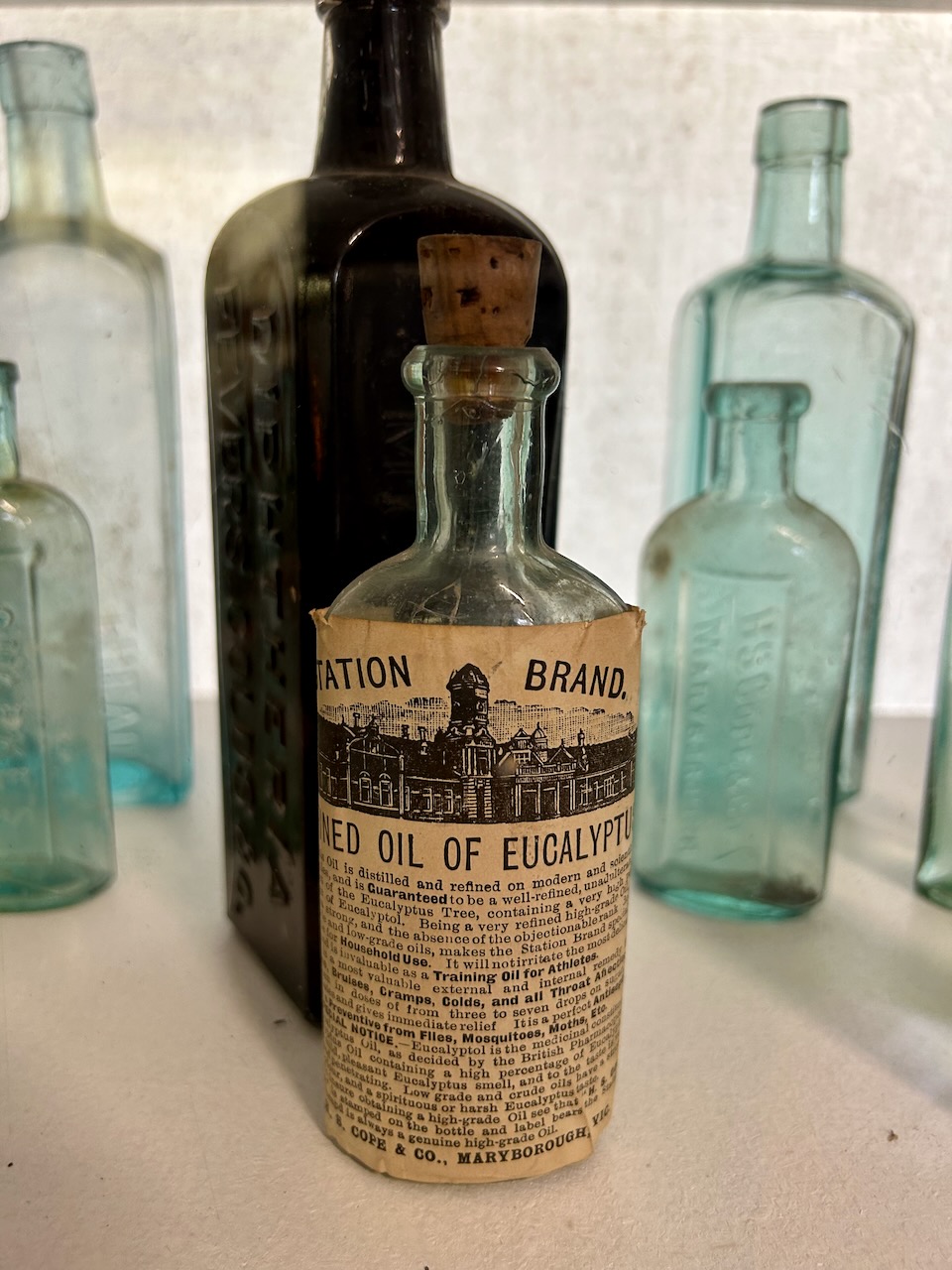
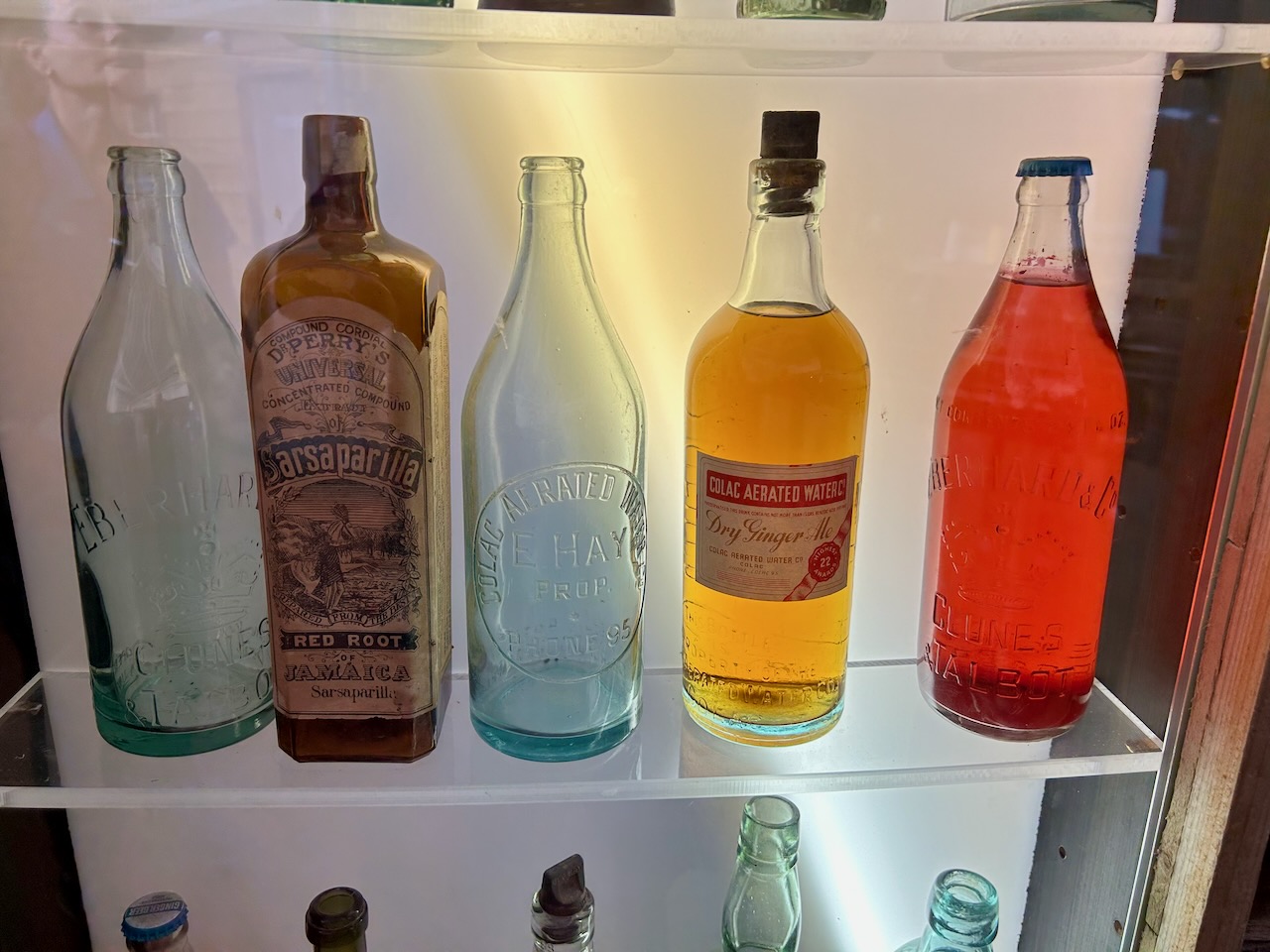
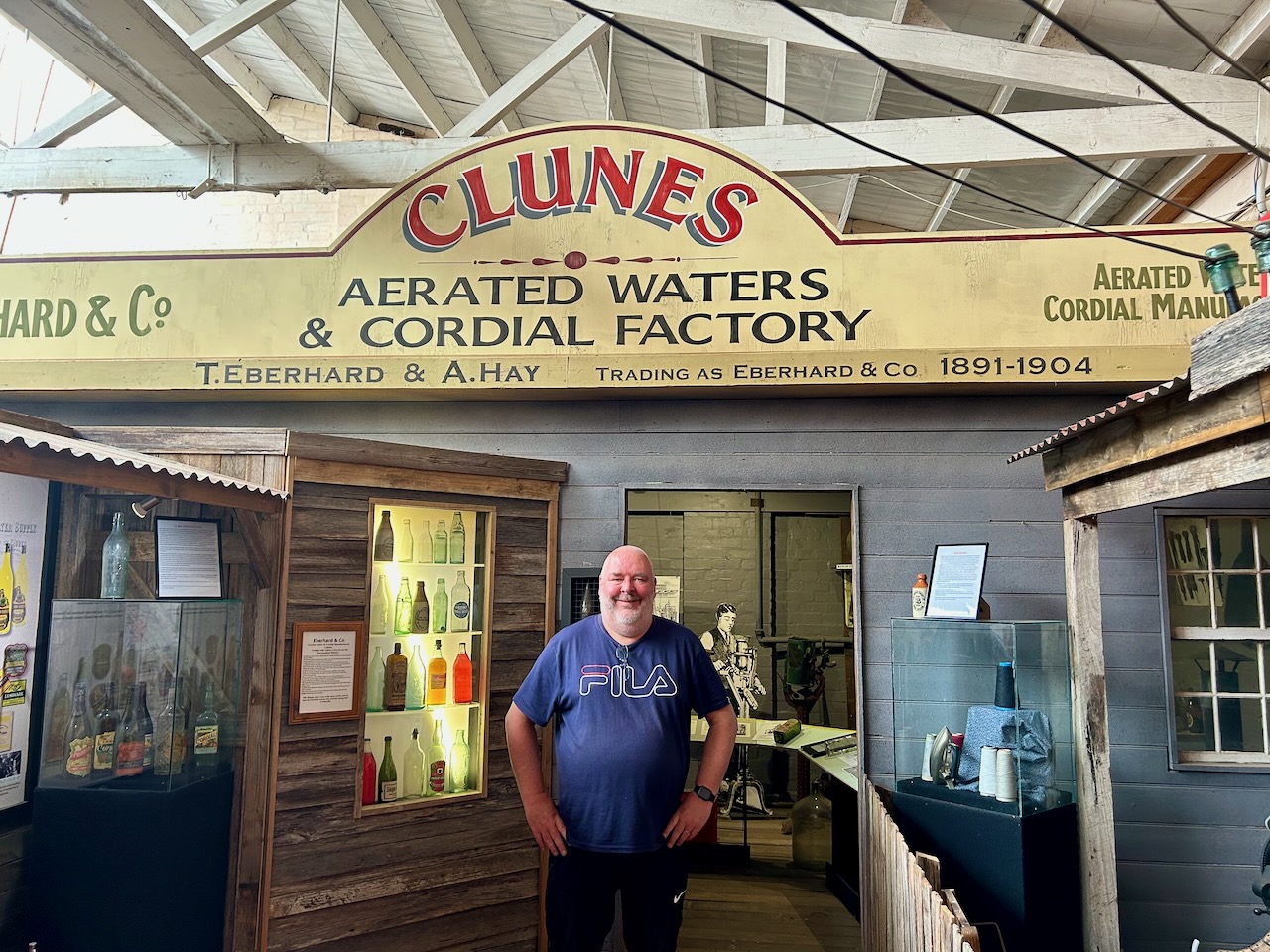
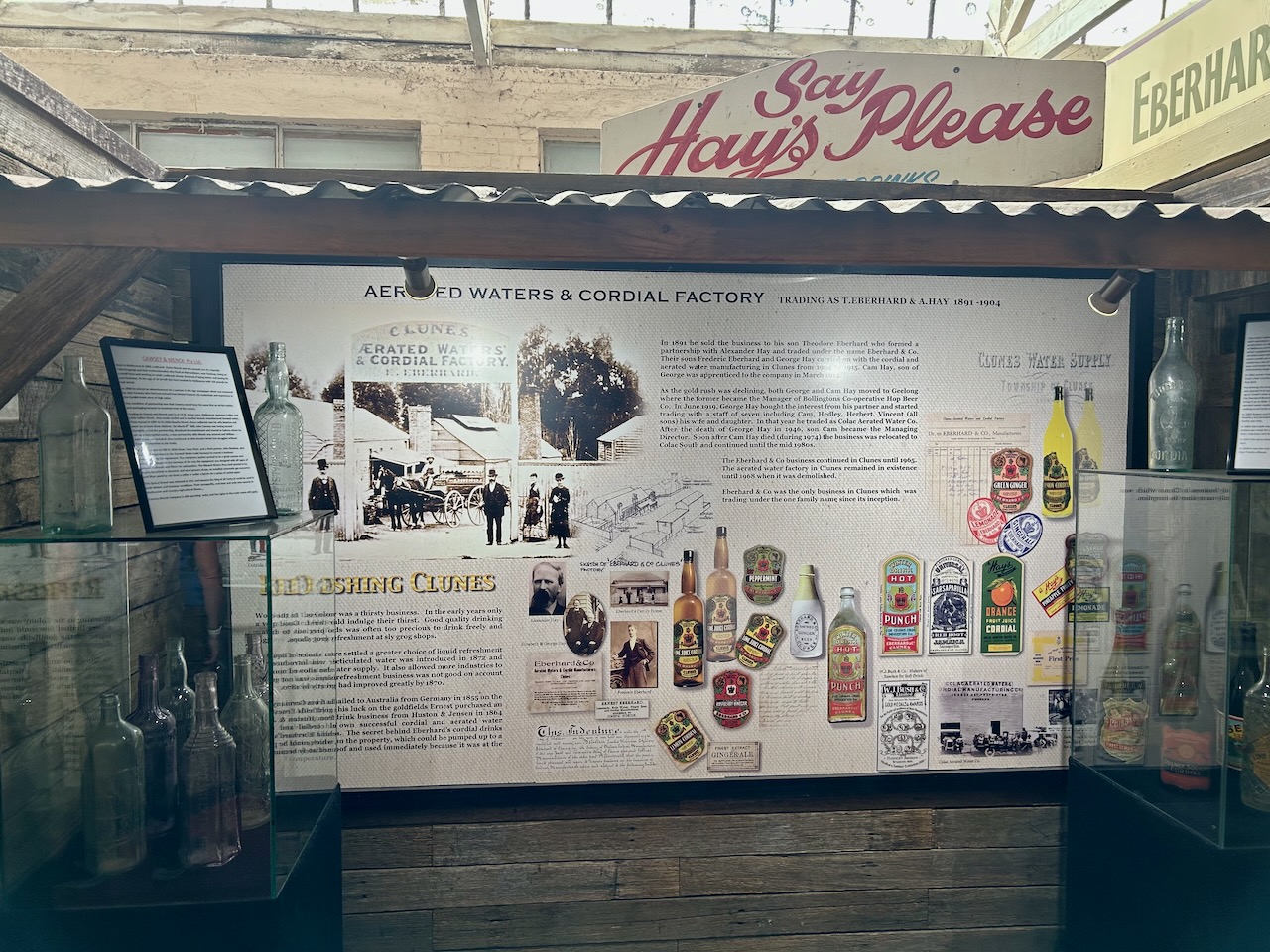
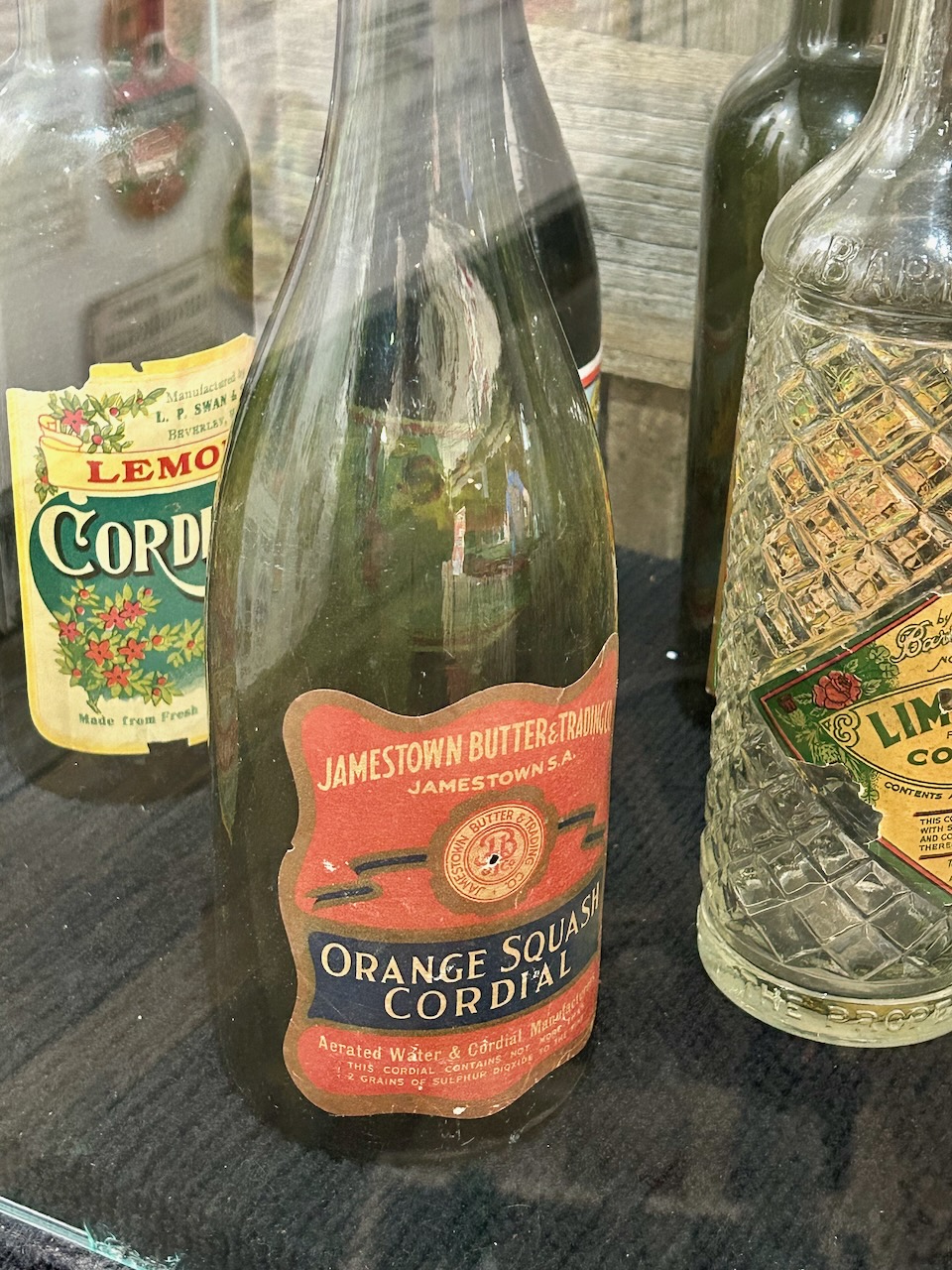
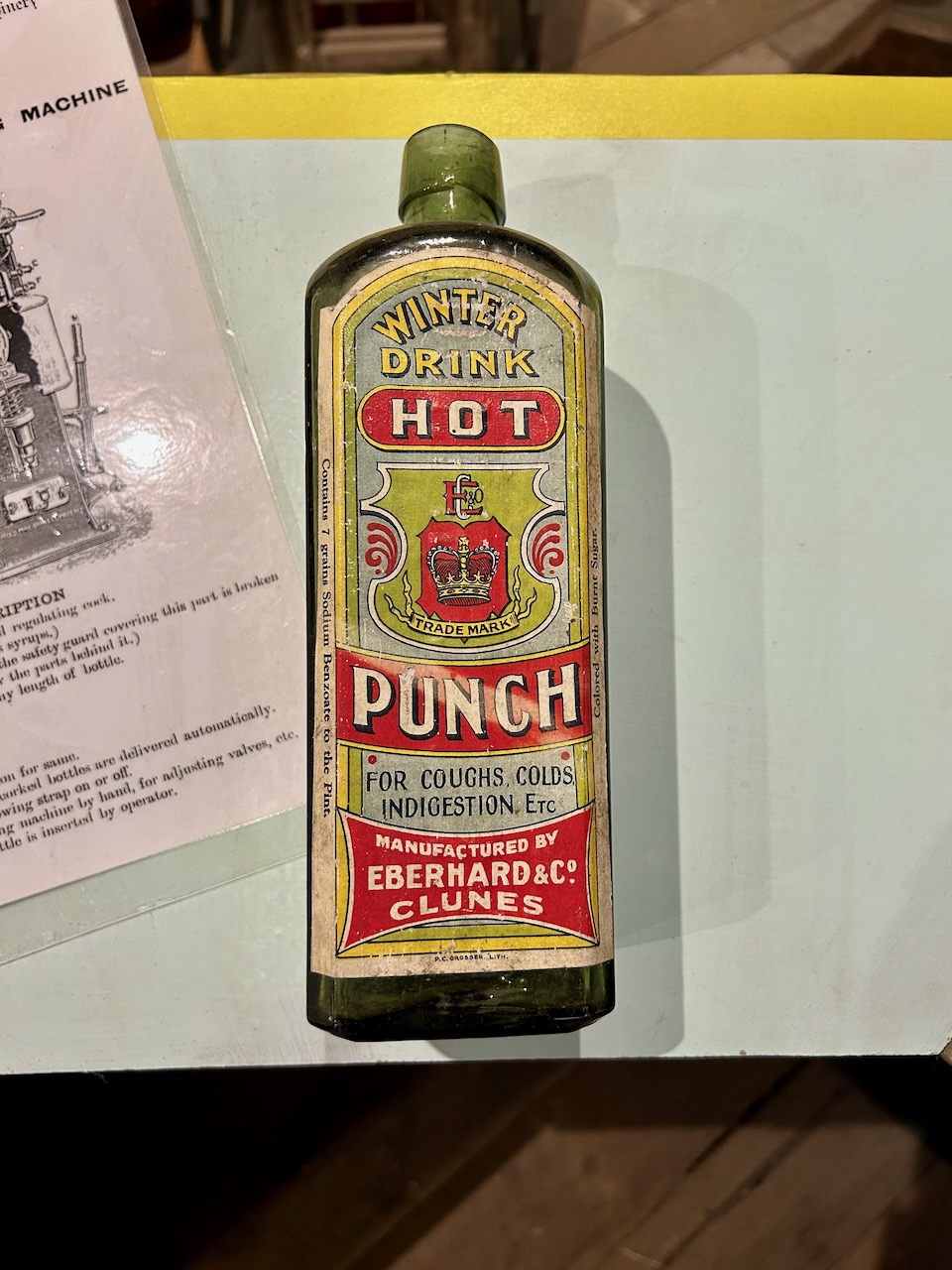
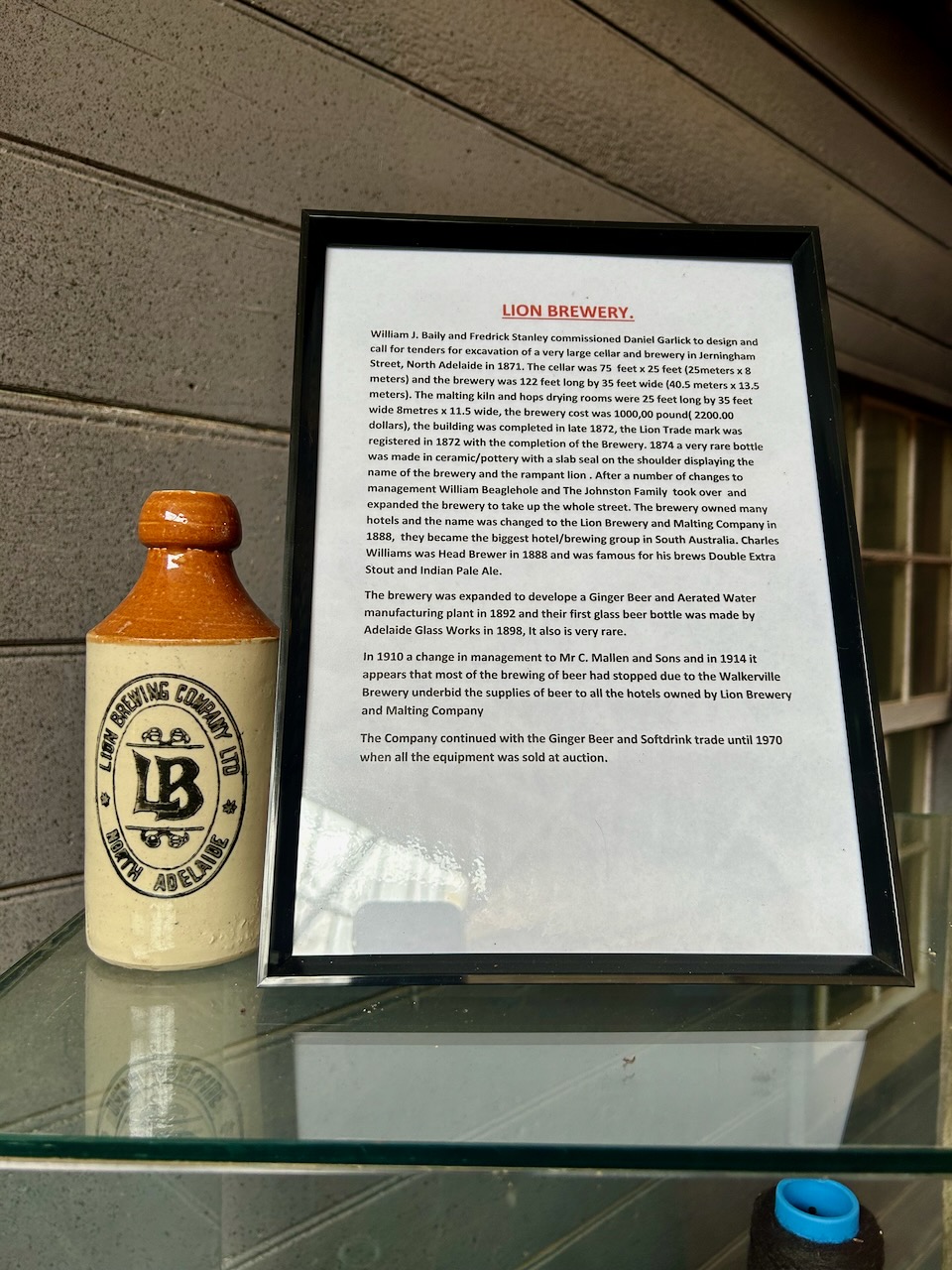
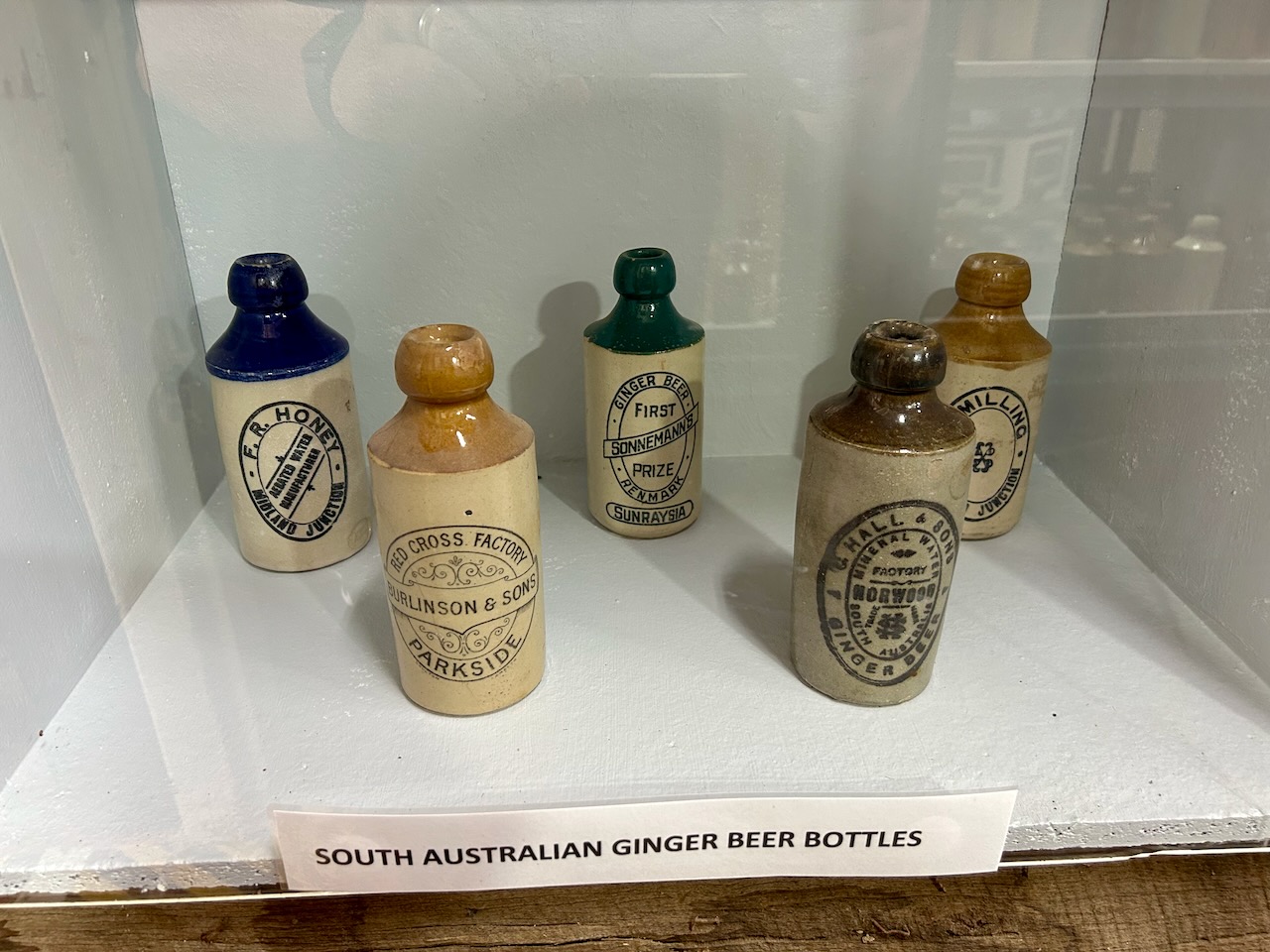
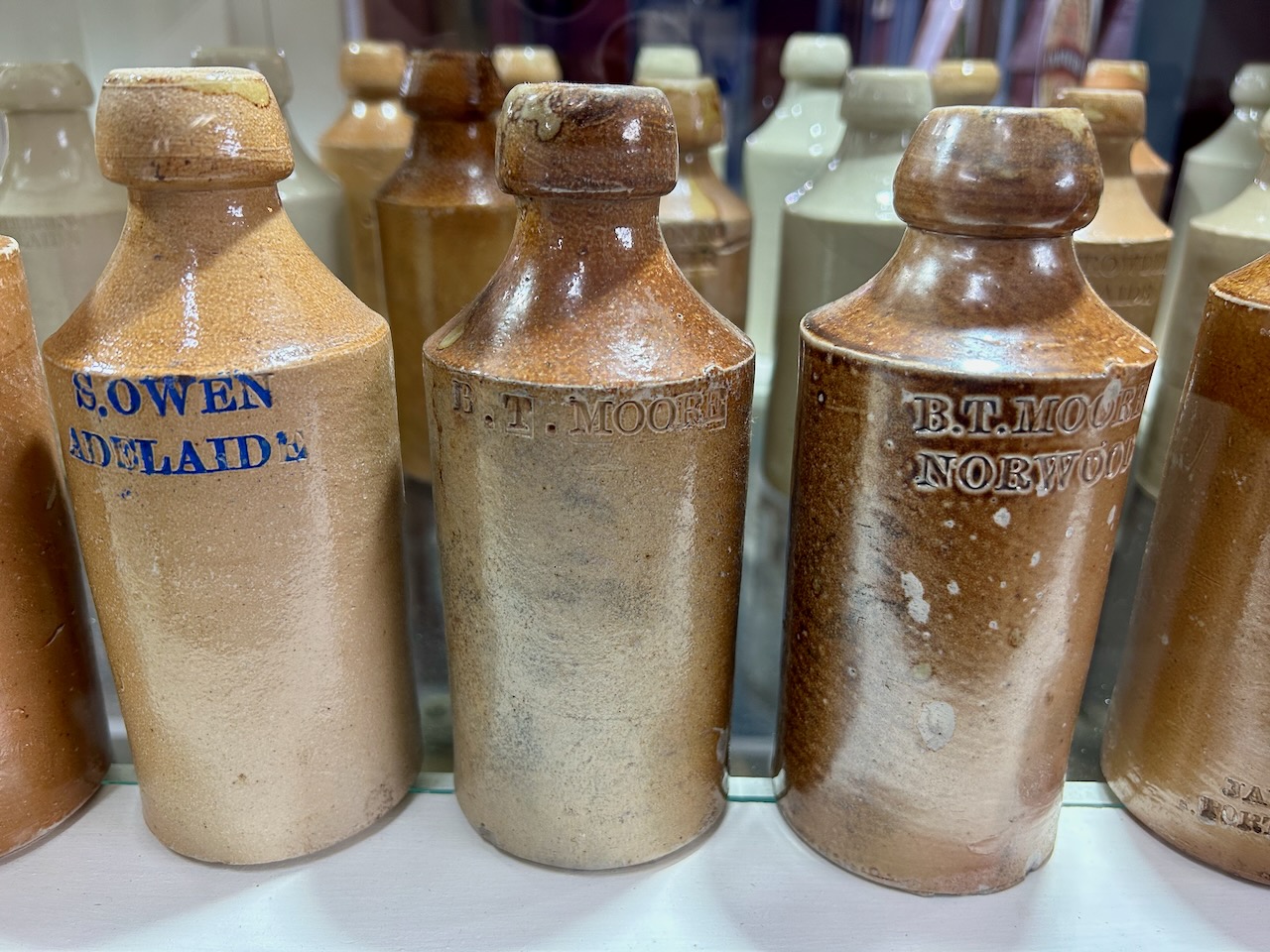
After leaving the Clunes Museum, we visited the Lee Medlyn Home of Bottles in Clunes. This amazing museum contains over 6,000 old and historical bottles that date from 1,500 AD to present times. The bottles include those used for beer, wine, spirit, aerated waters, preserves, condiments, ginger beer, chemist and drug companies. (Clunes Museum 2024)
The museum is contained in th e decommissioned South Clunes State School which was designed b y Henry Bastow, the Chief Architect for the Eduction Department. It was opened in 1882. In 1922 it ceased being used as a school and was then used as a knitting mill. From 1985 it has been used to house the bottle museum.
We spent a couple of hours here. It is an absolutely amazing collection and brought back a lot of memories.
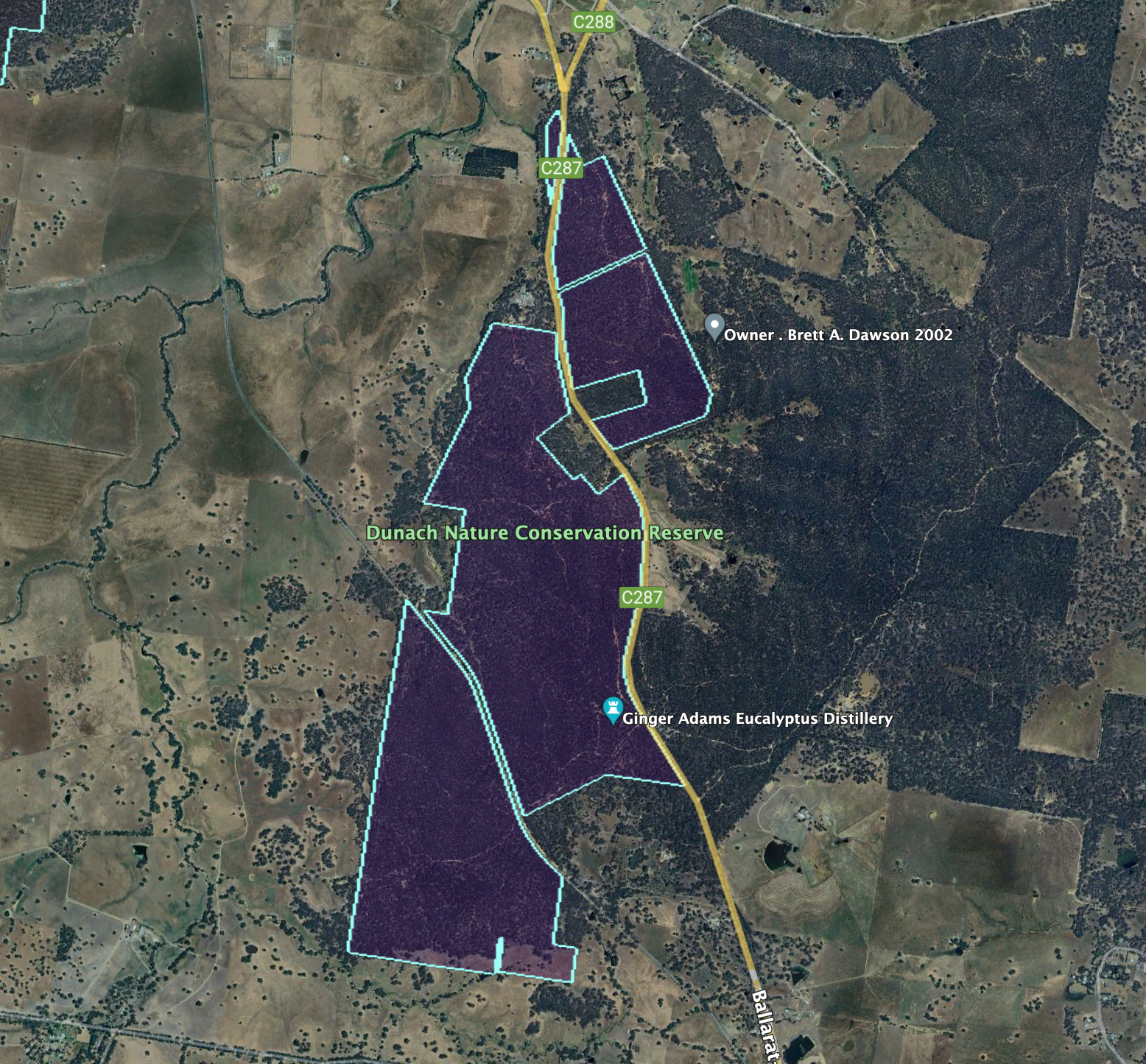
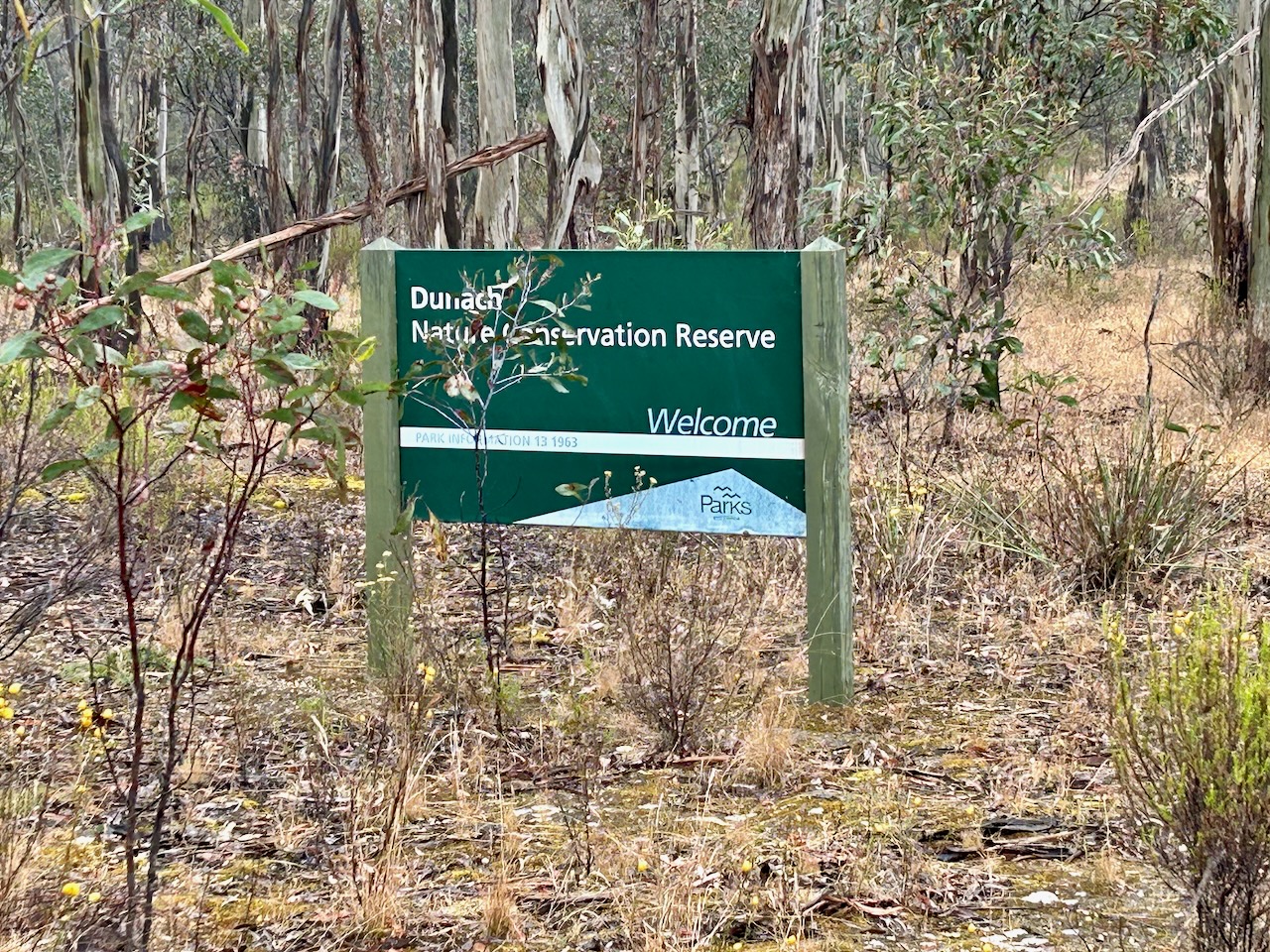
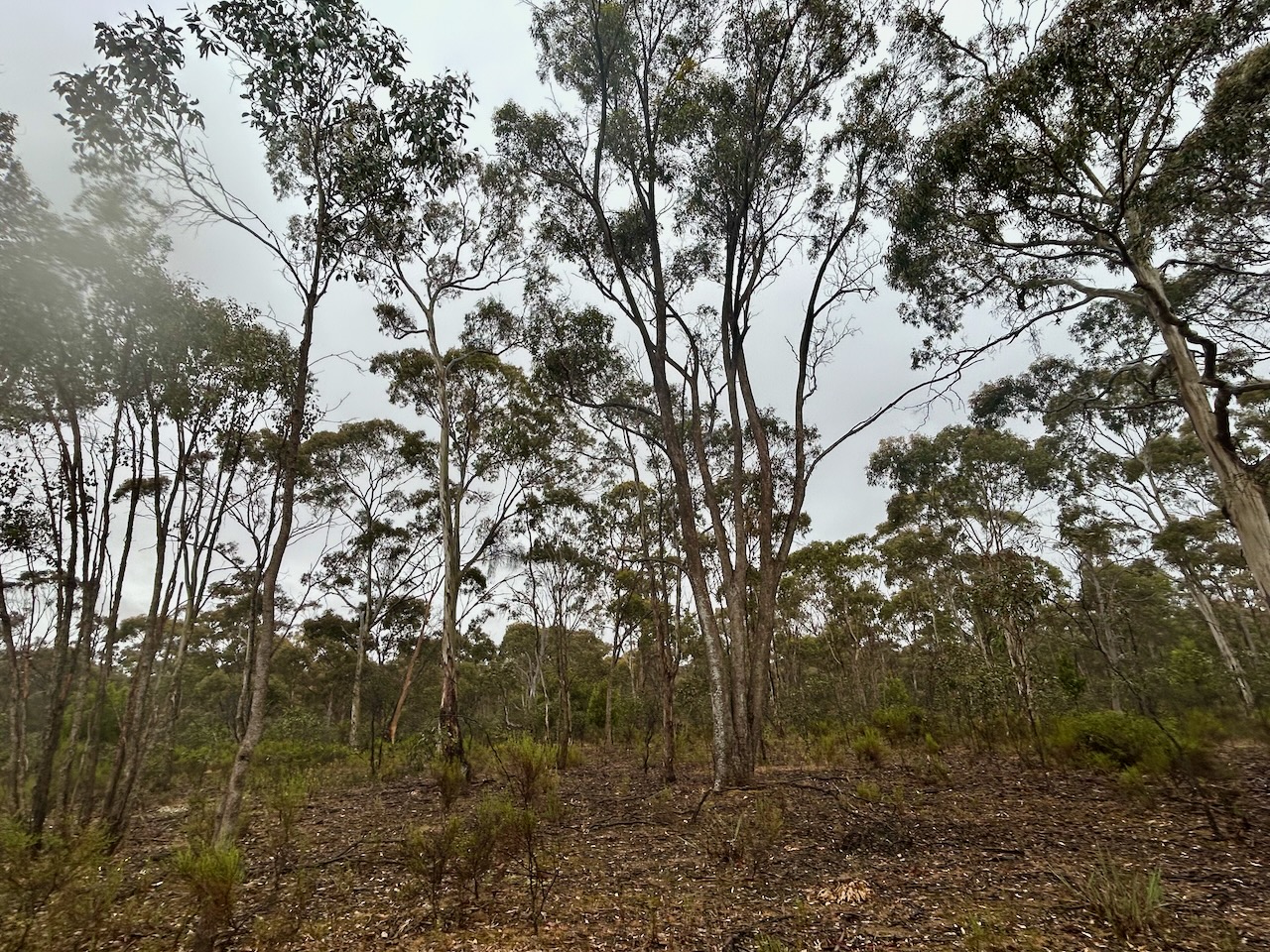
After leaving the bottle museum, Marija and I activated the Dunach Nature Conservation Reserve. The park is located on the southwestern side of Ballarat-Maryborough Road, about 10 km northwest of Clunes.
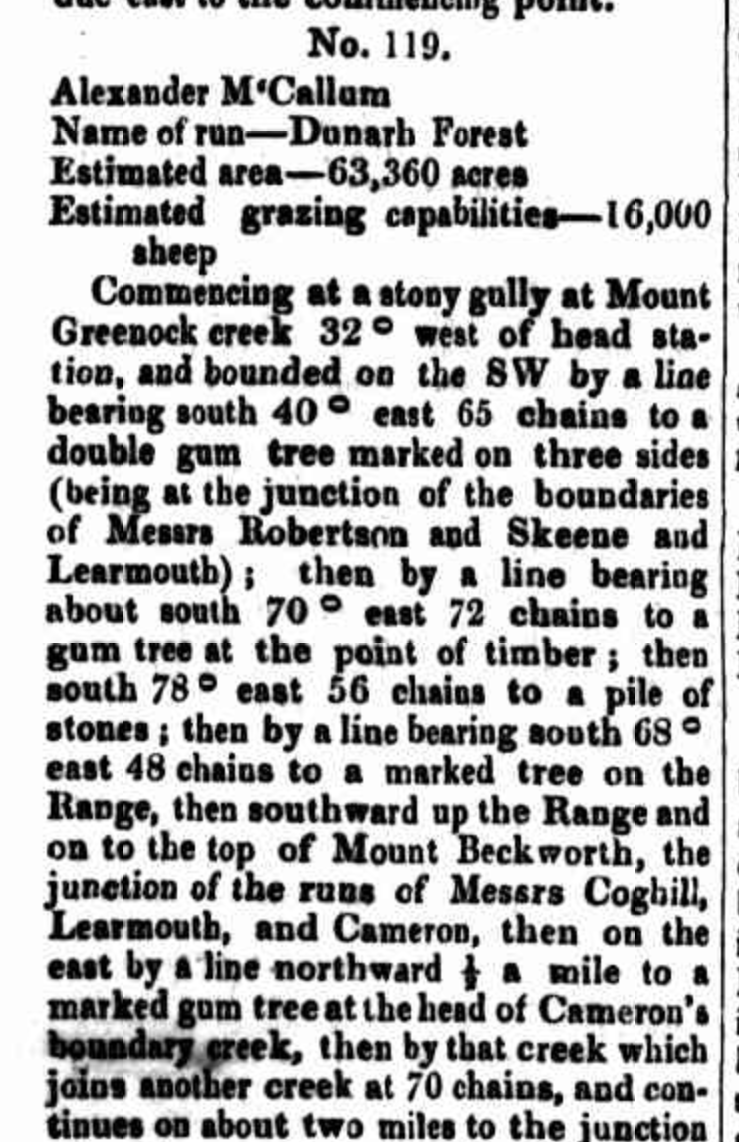
The first European in the Dunach area was Major Thomas Livingstone Mitchell whose exploration party reached the district in September 1836. Upon his return to Sydney, Mitchell reported favourably on the area for farming. By June 1841 Alexander McCallum arrived in the area. On the 1st day of April 1848, a grazing lease was granted to him for Dunach Forest, consisting of 63,640 acres (257.5 km²). The name was derived from Oban, Argyllshire, Scotland (Blake 1978) (Localista 2024)
Above:- part of an article in The Argus, Tue 3 Oct 1848. Image c/o Trove.
The reserve is about 479 hectares and was established on the 26th day of February 2002. (CAPAD 2022)
Unfortunately, we experienced constant drizzling rain during this activation, so we operated from the warmth of the 4WD. We ran the Yaesu FT857, 40 watts, and the 20/40/80m linked dipole. I used the special callsign of VI10VKFF.
Marija worked the following stations on 40m SSB:-
VK3PF
VK3KAI
VK3XE/p (Baw Baw National Park VKFF-0020 & SOTA VK3/ VT-006)
VK2IO/p (Melrose Nature Reserve VKFF-3183)
Marija worked the following stations on 40m AM:-
VK3PF
VK3KAI
VK3UH
VK5HS
VK3APJ
VK7JFD
VK3SQ
VK2BD
I worked the following stations on 40m SSB:-
VK3PF
VK3KAI
VK3APJ
VK3ANL
VK5HS
VK3DCQ
VK3SG
VK3VIN
VK3MDC/m
VK7XX
VK3ZSC
VK3UH
VK3BSF
VK3BBB
VK2CCP
VK3EJ
VK3SQ
VK2BD
VK4MHZ/7
VK3UP/m
VK3BWS
VK3XE/p (Baw Baw National Park VKFF-0020 & SOTA VK3/ VT-006)
VK3KRL
VK3VMM
VK3UAO
VK3MTT
VK3MCA
VK2IO/p (Melrose Nature Reserve VKFF-3183)
I worked the following stations on 40m AM:-
VK3PF
VK3KAI
VK3UH
VK5HS
VK3APJ
VK7JFD
VK3SQ
VK2BD
VK3VIN
VK5KBJ
VK5IS
VK3BSF
VK5EE
VK3ANL
VK3UAO
VK3DCQ
VK3MAP
VK3ZSC
I worked the following stations on 20m SSB:-
VK4QD
VK4AWB
ZL1TM
ZL3MR
VK1AO
VK2MET
VK4HAT
References.
Adventures, C. jojo’s (n.d.). Clunes Heritage Walk. [online] Walking Maps. Available at: https://walkingmaps.com.au/walk/4817 [Accessed 26 Mar. 2024].
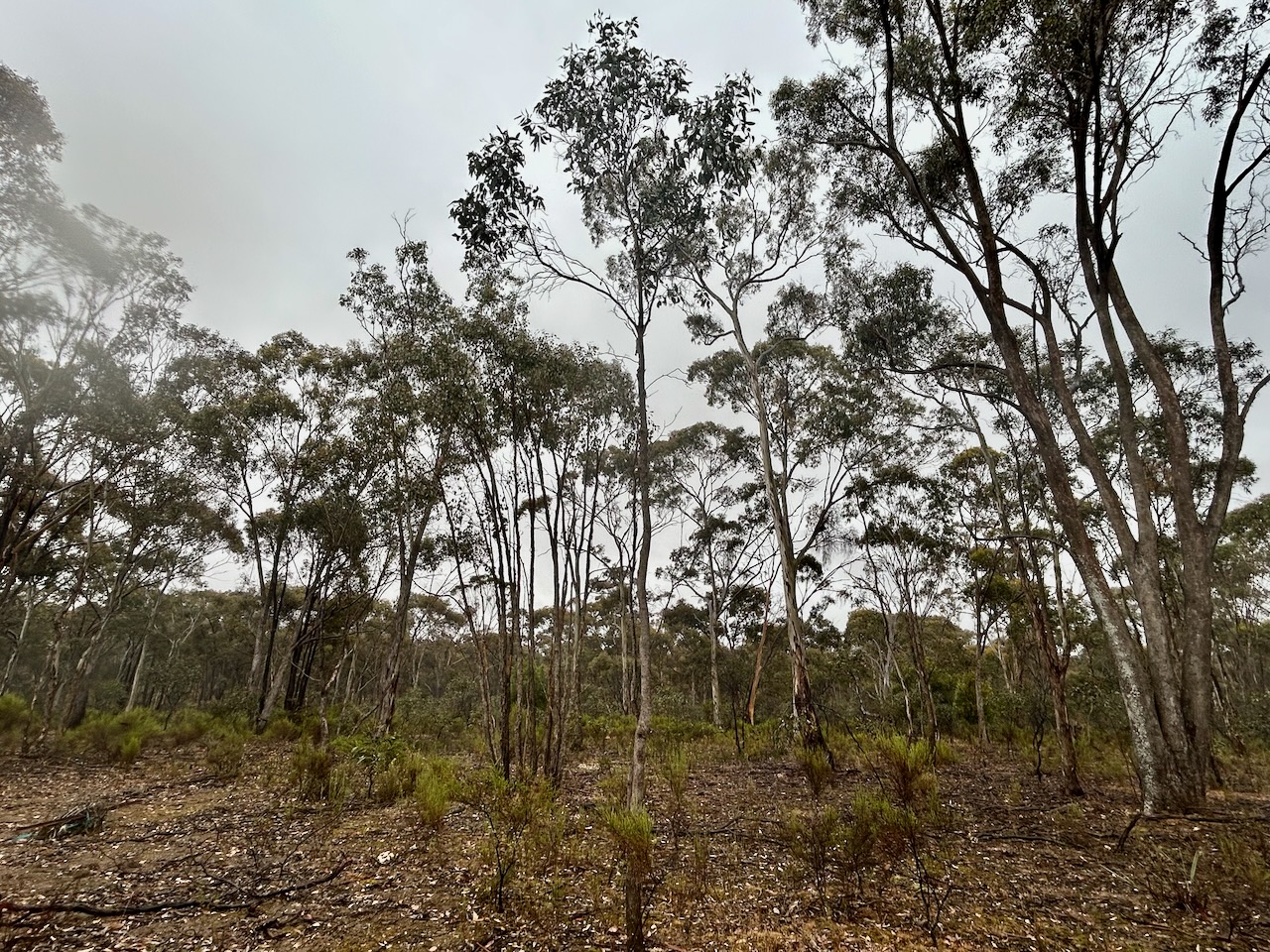
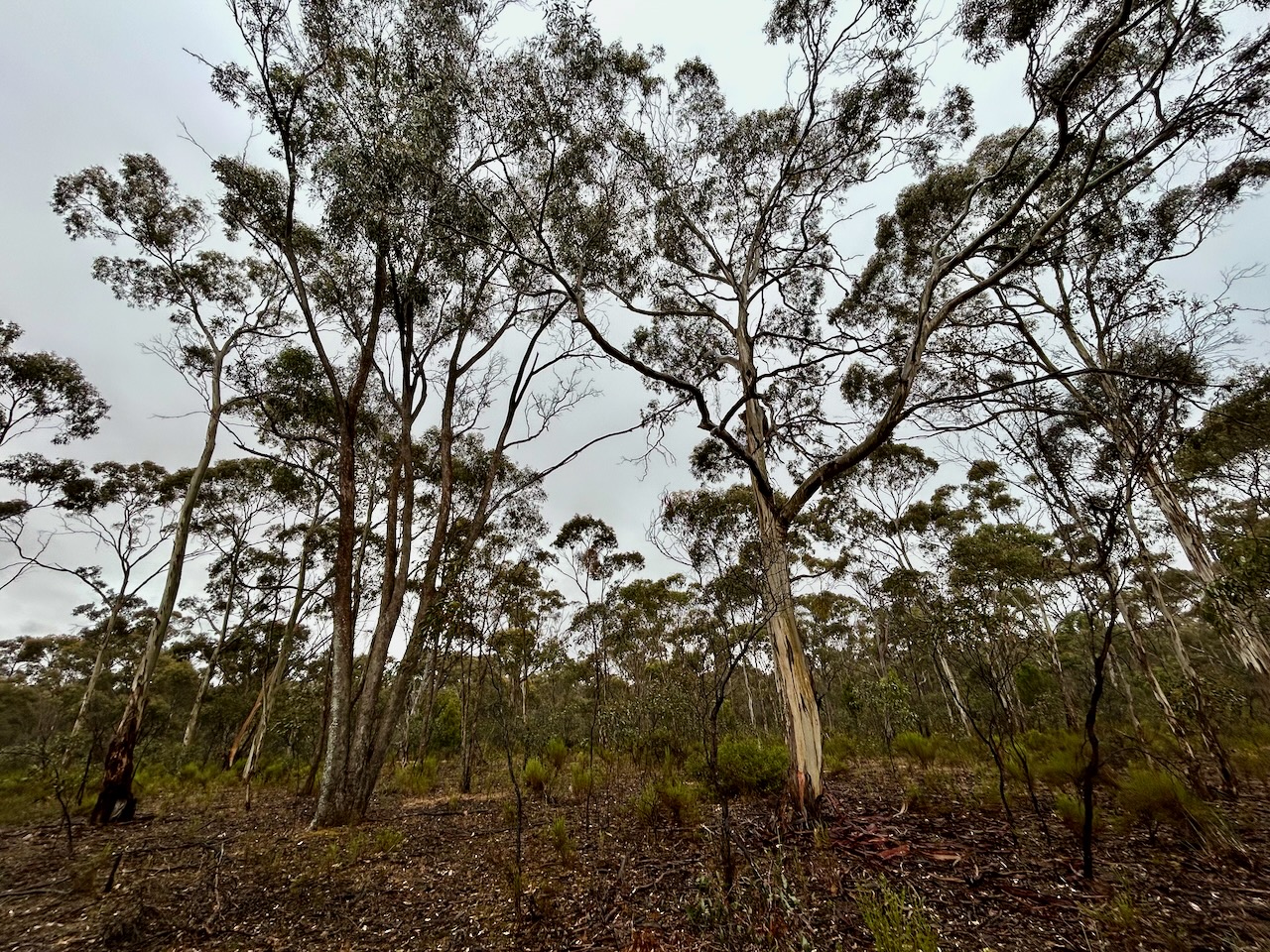
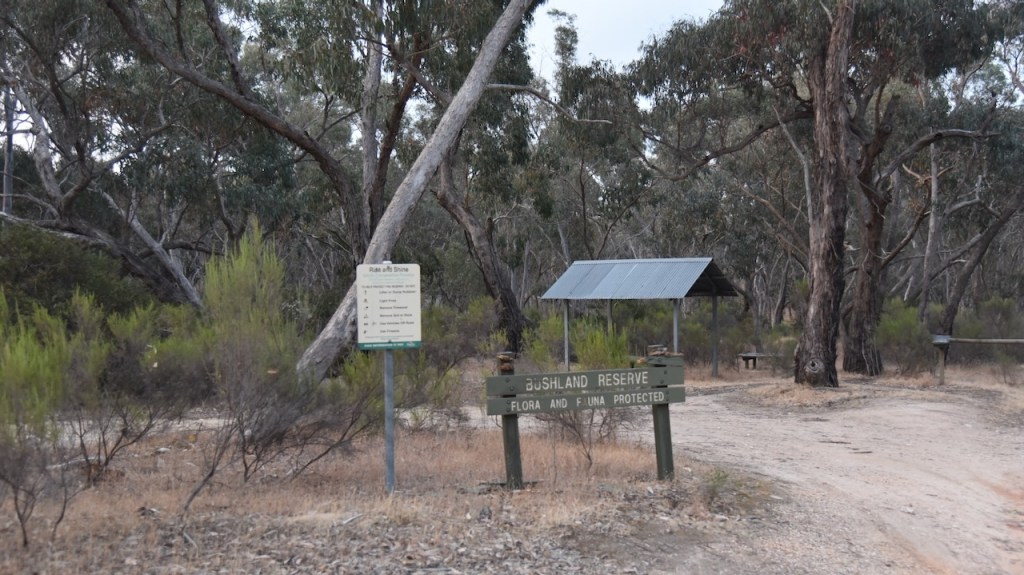
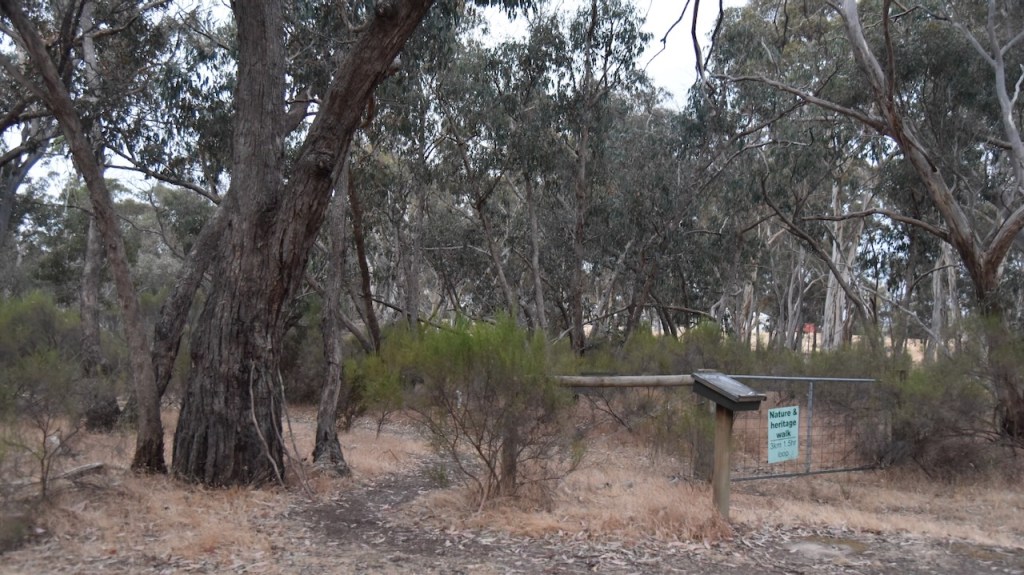
After dinner on Thursday 23rd November 2023, Marija and I decided to head out to activate the Rise and Shine Nature Conservation Reserve VKFF-4277.
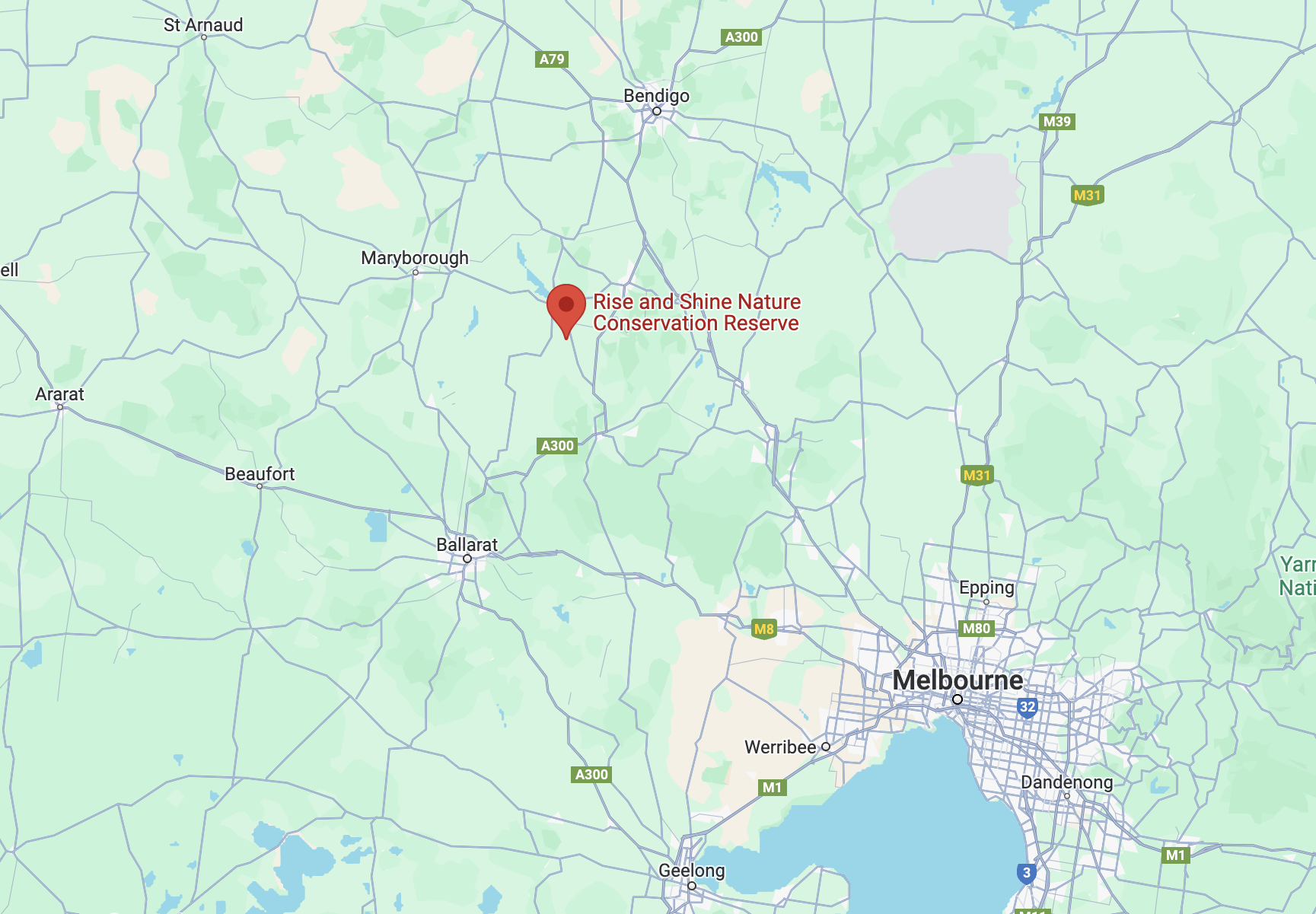
The park is located at Sandon, about 138 km northwest of Melbourne.
Above:- Map showing the location of the Rise & Shine NCR. Map c/o Google Maps.
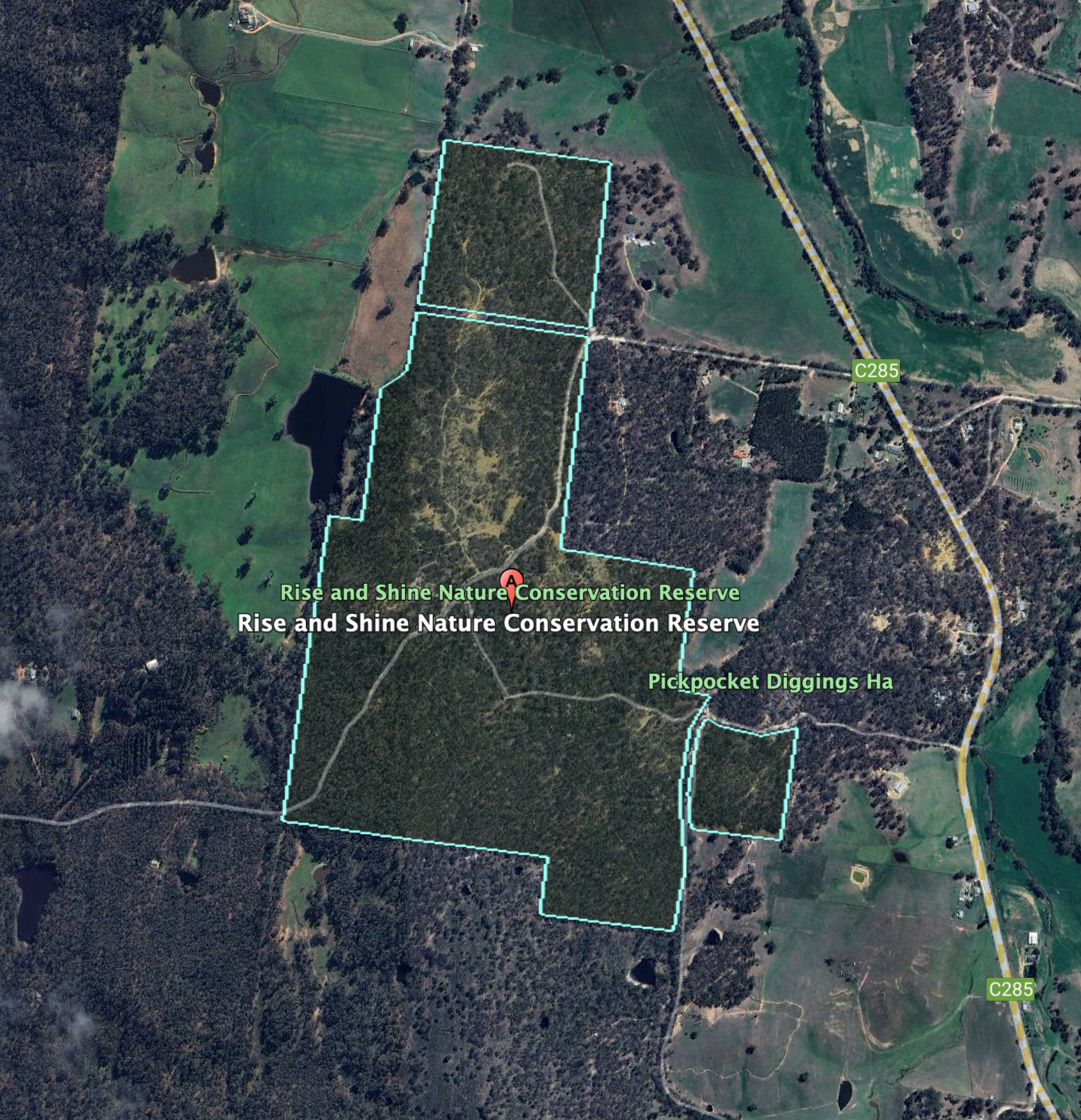
The reserve is about 113 hectares in size and was established on the 26th day of February 2002. (CAPAD 2022)
Above:- An aerial view of the Rise & Shine NCR showing the park boundaries. Image c/o Google Earth.
The reserve takes its name from an old gold mine. It is located on Sandon-Clydesdale Road, Sandon. Sandon takes its name from Sandon in Essex. (Blake 1978)
We ran the Yaesu FT857, 40 watts, and the 20/40/80m linked dipole for this activation. I used the special event callsign of VI10VKFF. Band conditions on 40m were excellent. We experienced the Over The Horizon Radar on 80m.
Marija worked the following stations on 40m SSB:-
VK7AAE
VK3APJ
VK5DW
VK4NH
VK4DXA
VK3BBB
VK2CCP
VK5GY
VK3GJG
VK2EG
VK1AO
VK2MET
I worked the following stations on 40m SSB:-
VK7AAE
VK3APJ
VK5DW
VK4NH
VK4DXA
VK3BBB
VK2CCP
VK5GY
VK3GJG
VK2EG
VK1AO
VK2MET
VK3PF/m
VK3KAI/m
VK3MTT
VK2WGW
VK3YV
VK3TNL
KG5CIK
VK2DL
VK2IMP
VK2YK
VK5GA
VK3CA
VK5LA
VK5KAW
VK5KLV
VK2LQ
VK2PCT
VK2DWP
VK7MAT
VK4HMI
VK3SX
VK2WE
VK3GB
VK3SG
VK5KVA
VK5SPJ
I worked the following stations on 80m SSB:-
VK3CA
VK5LA
VK5KAW
VK2YK
VK5GA
VK3ARM
VK2DWP
VK3GJG
VK5HS
With the park qualified, we packed up and returned to our Sandon accommodation. It was a slow drive as we had plenty of company on the roads.
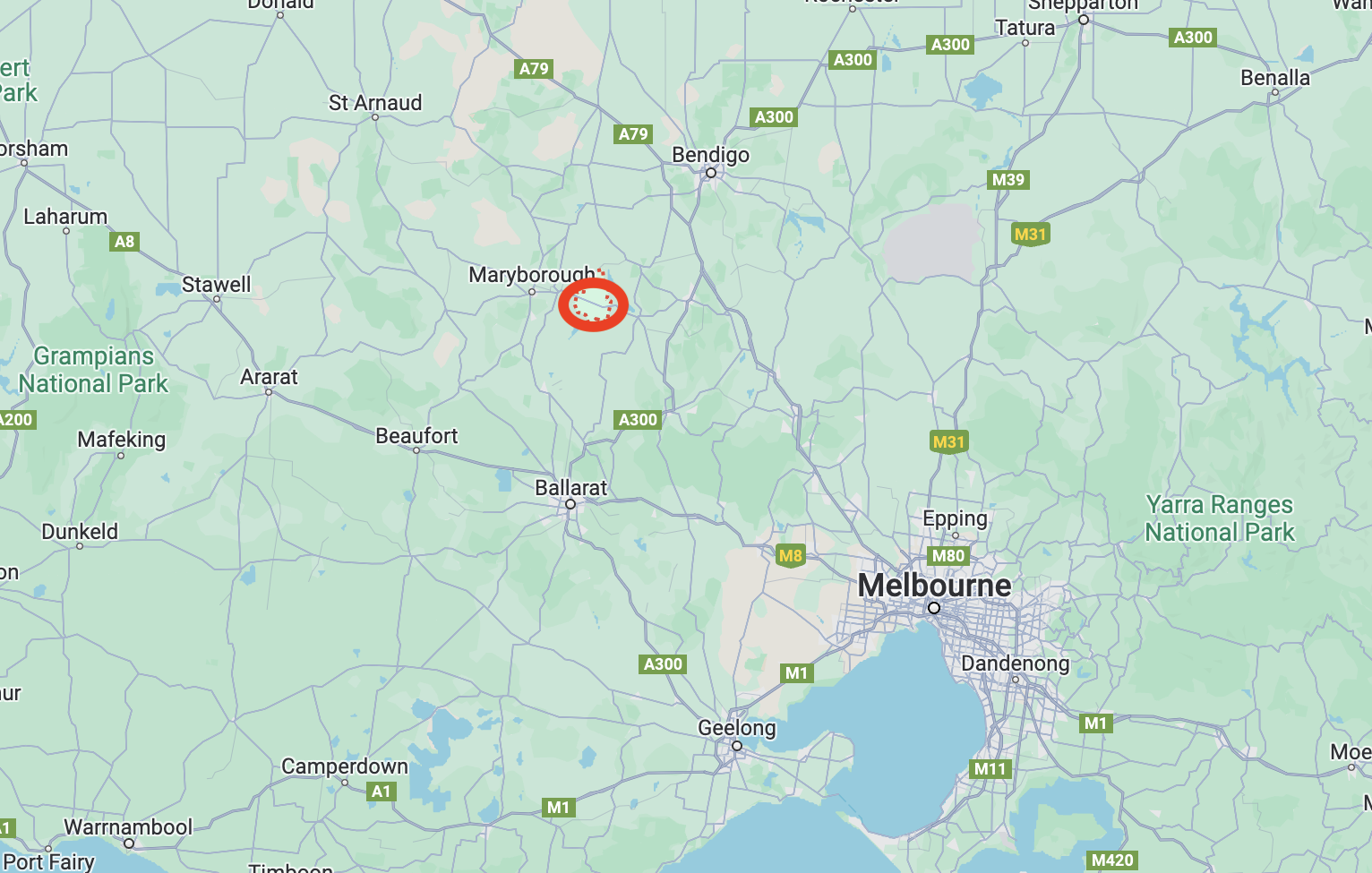
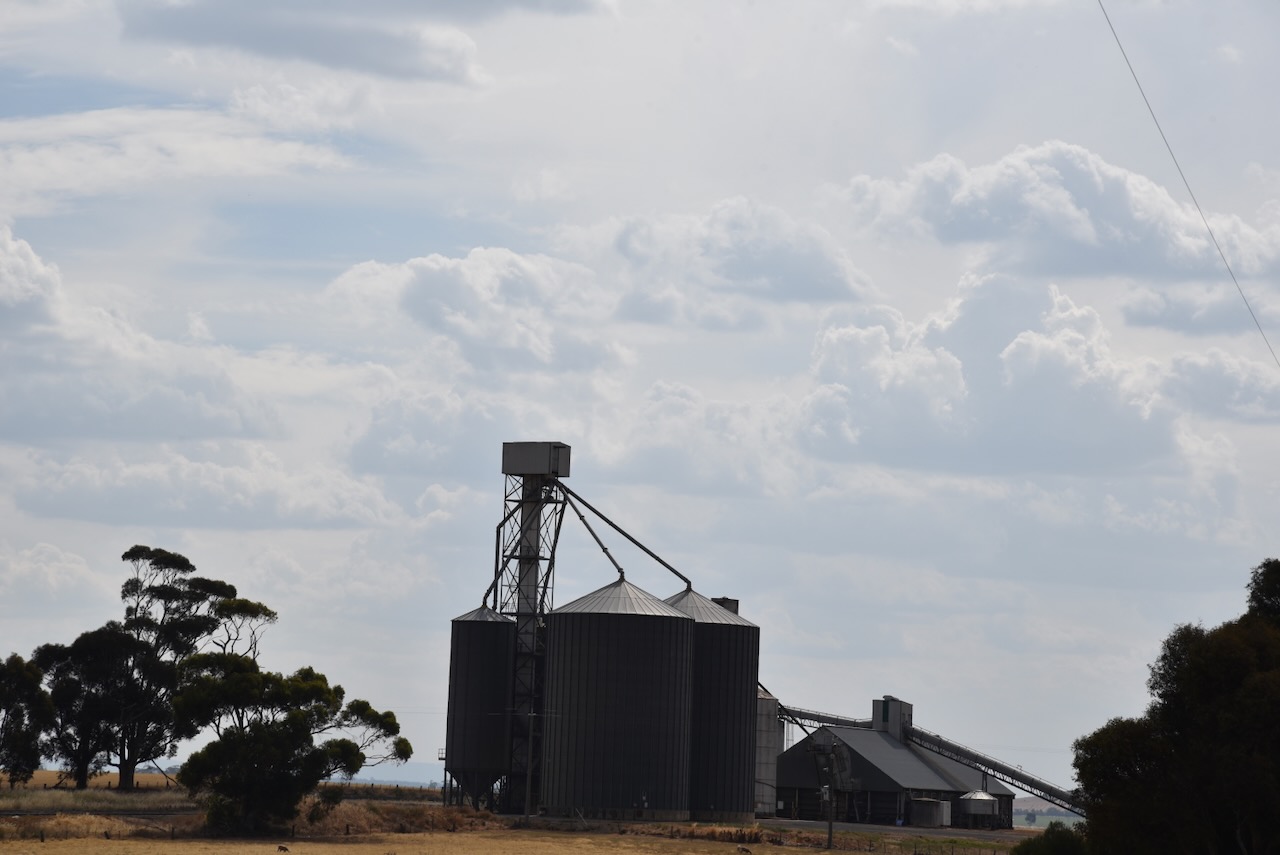
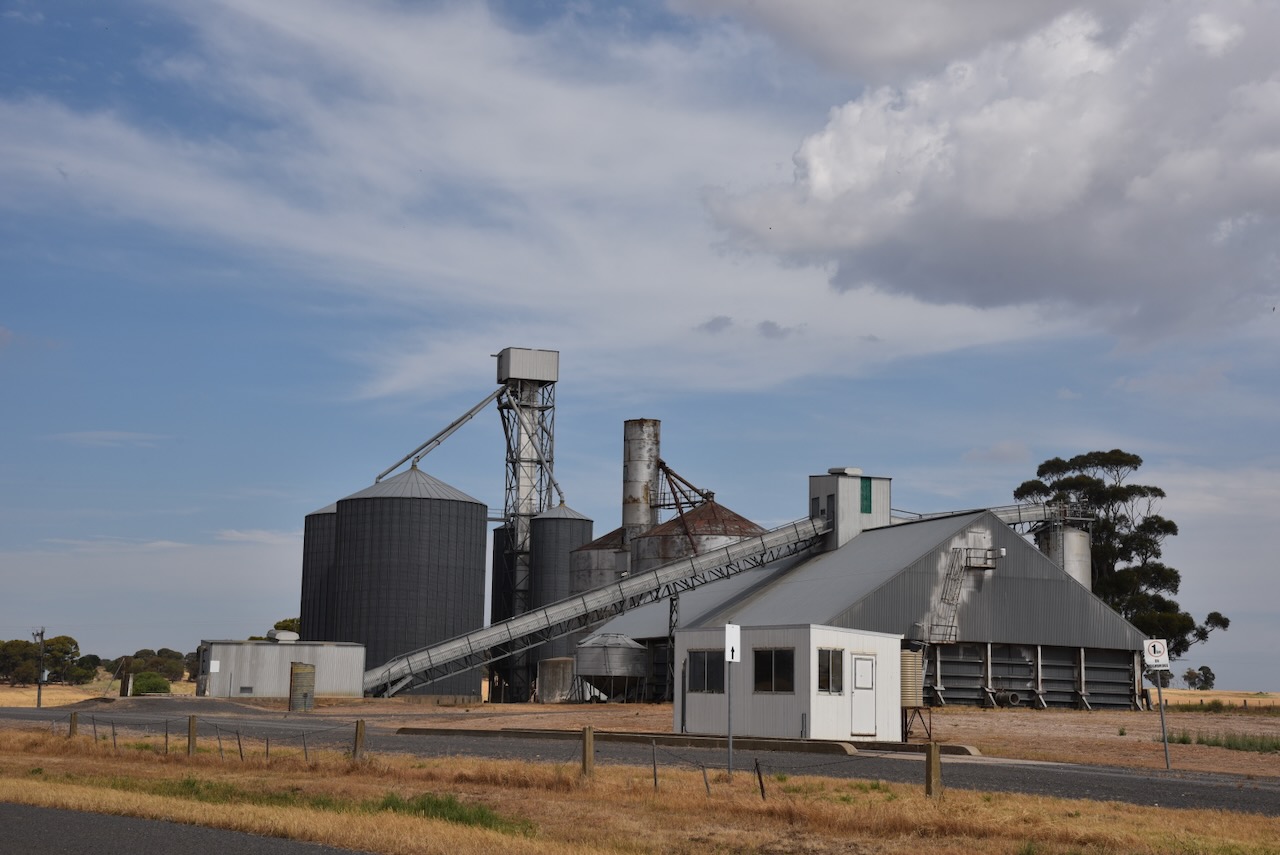
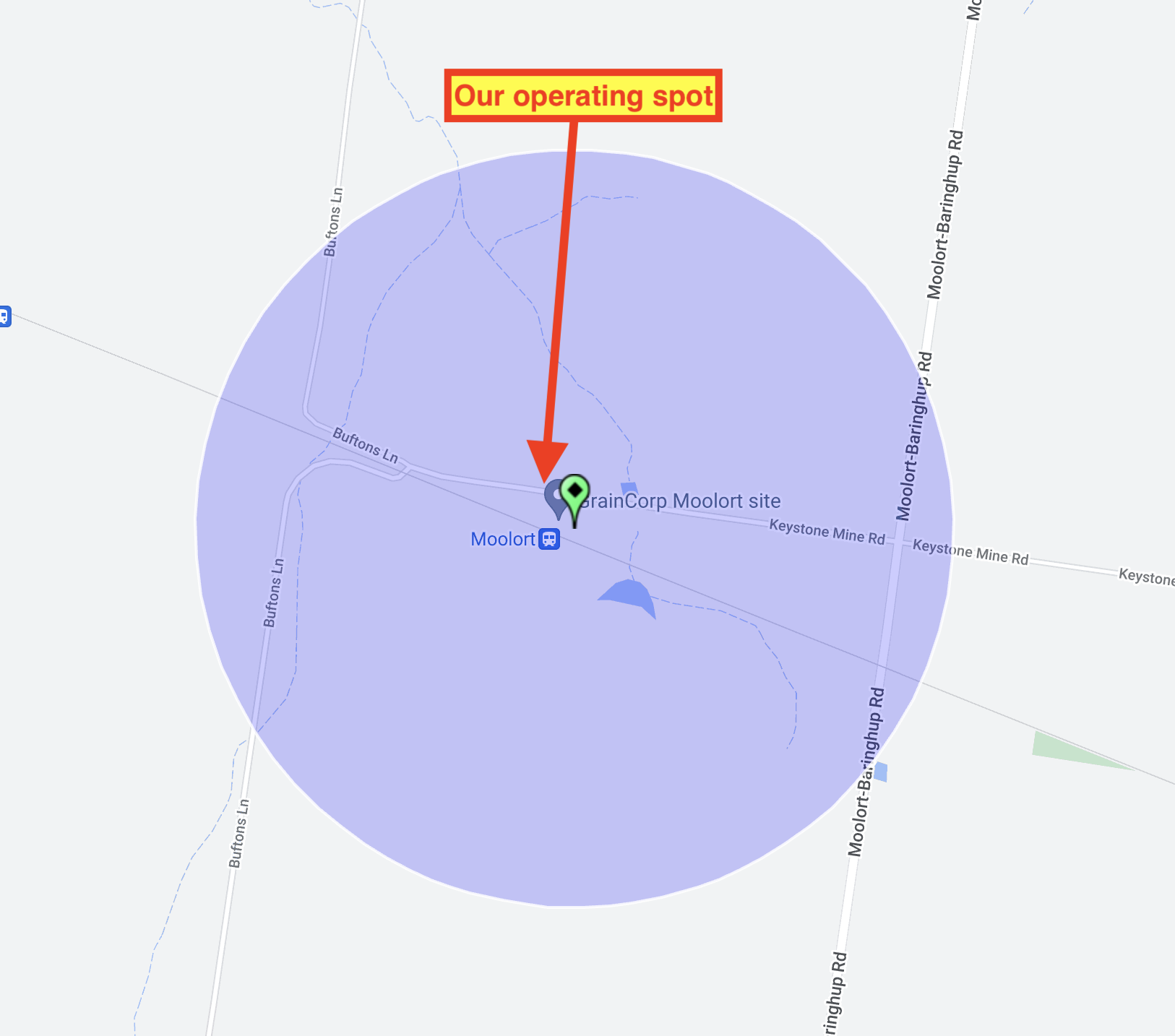
Our next activation for Thursday 23rd November 2023 was the Moolort silo VK-MLT3 for the Silos On The Air (SiOTA) program. Moolort is about 18 km east of Maryborough in central Victoria.
Above:- Map showing the location of Moorlort in Victoria. Map c/o Google Maps.
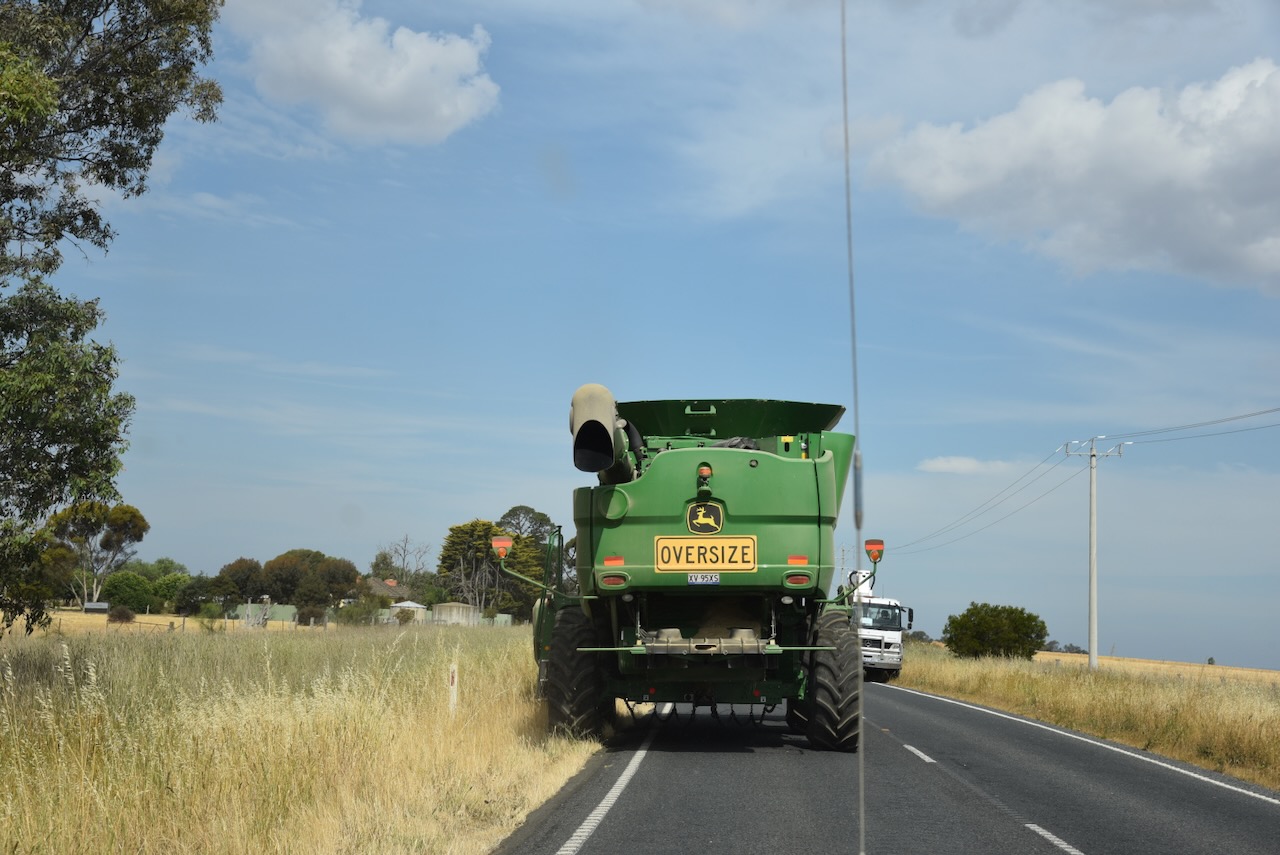
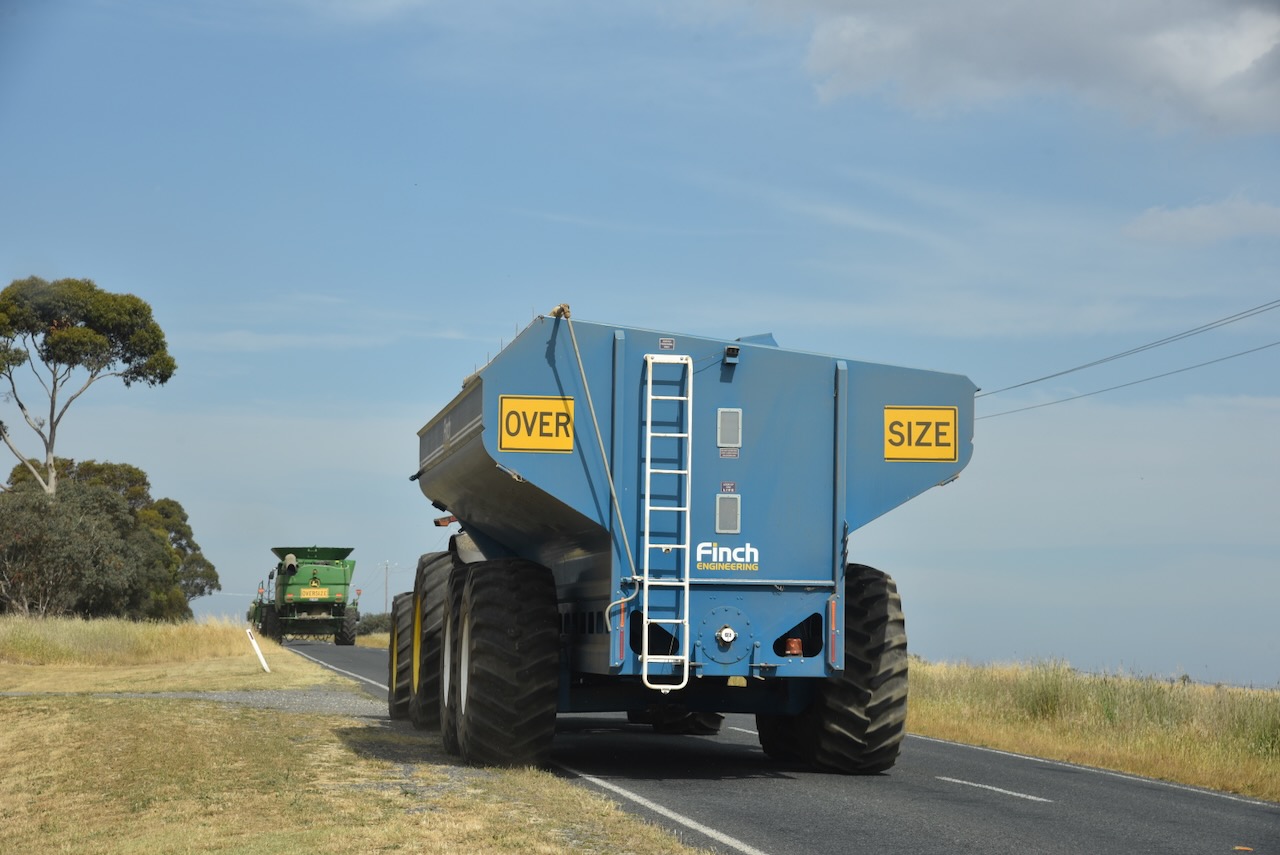
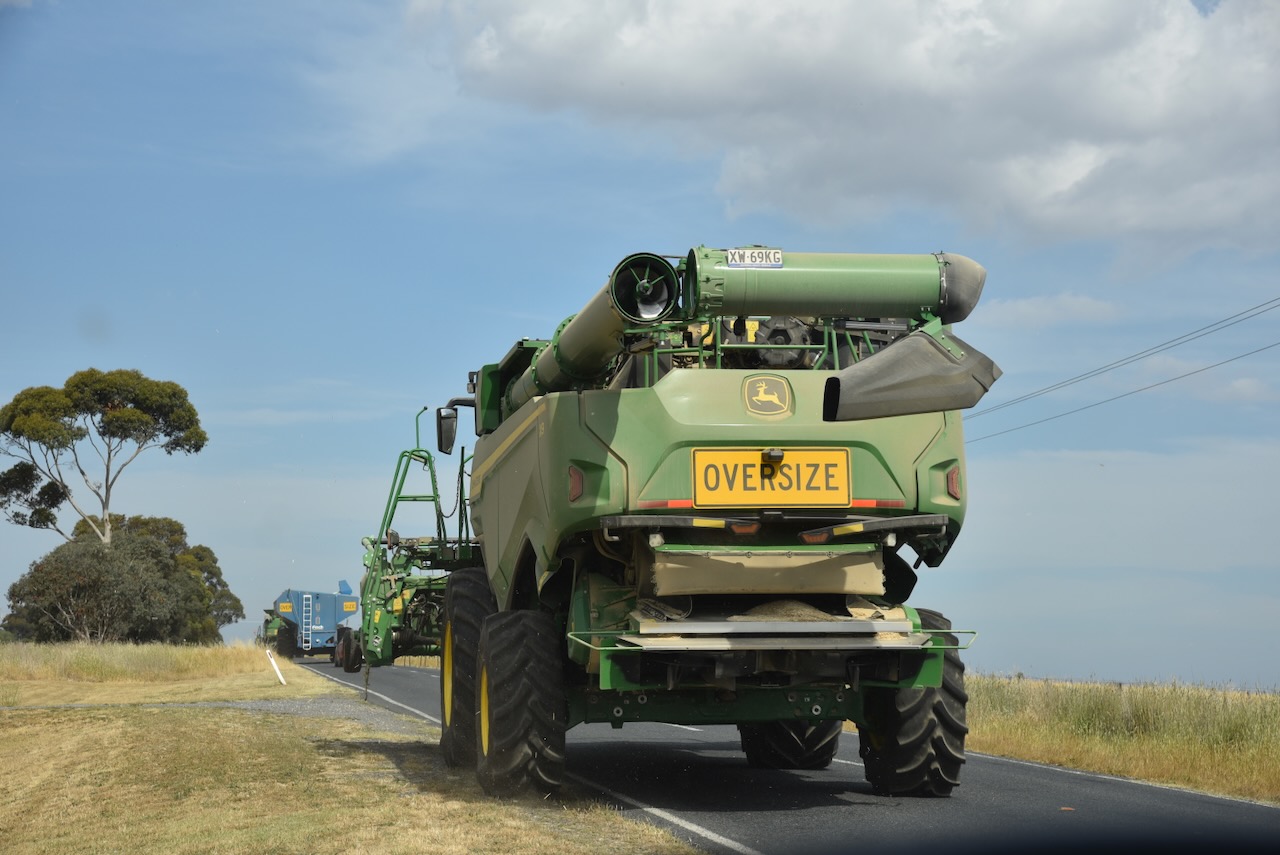
On the way we encountered several farm machinery on the roads, travelling from one farm paddock to another.
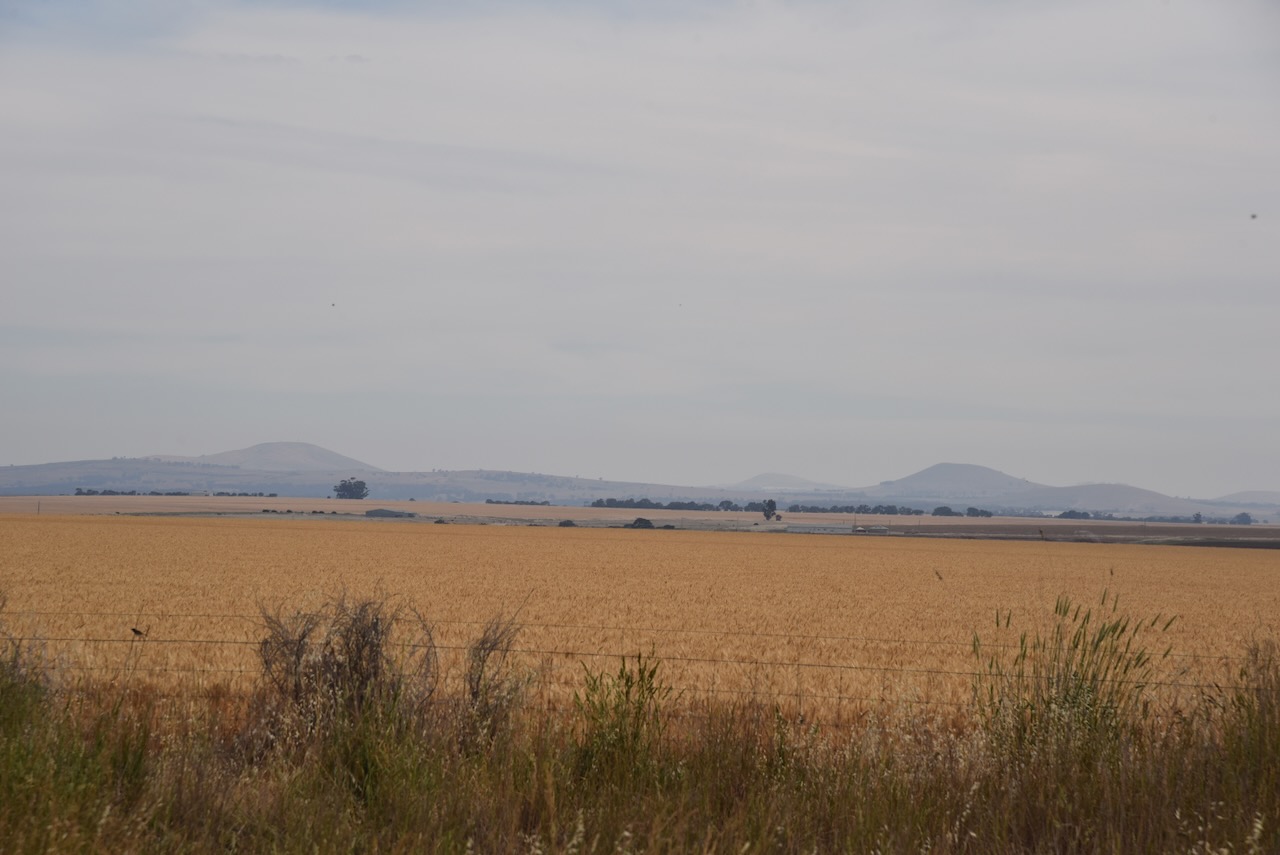
Moolort is an aboriginal word meaning fern. Moolort’s main current industry is agriculture with sheep and crop farming, some wine vineyards and conifers for Christmas trees. (Blake 1978) (Wikipedia 2024)
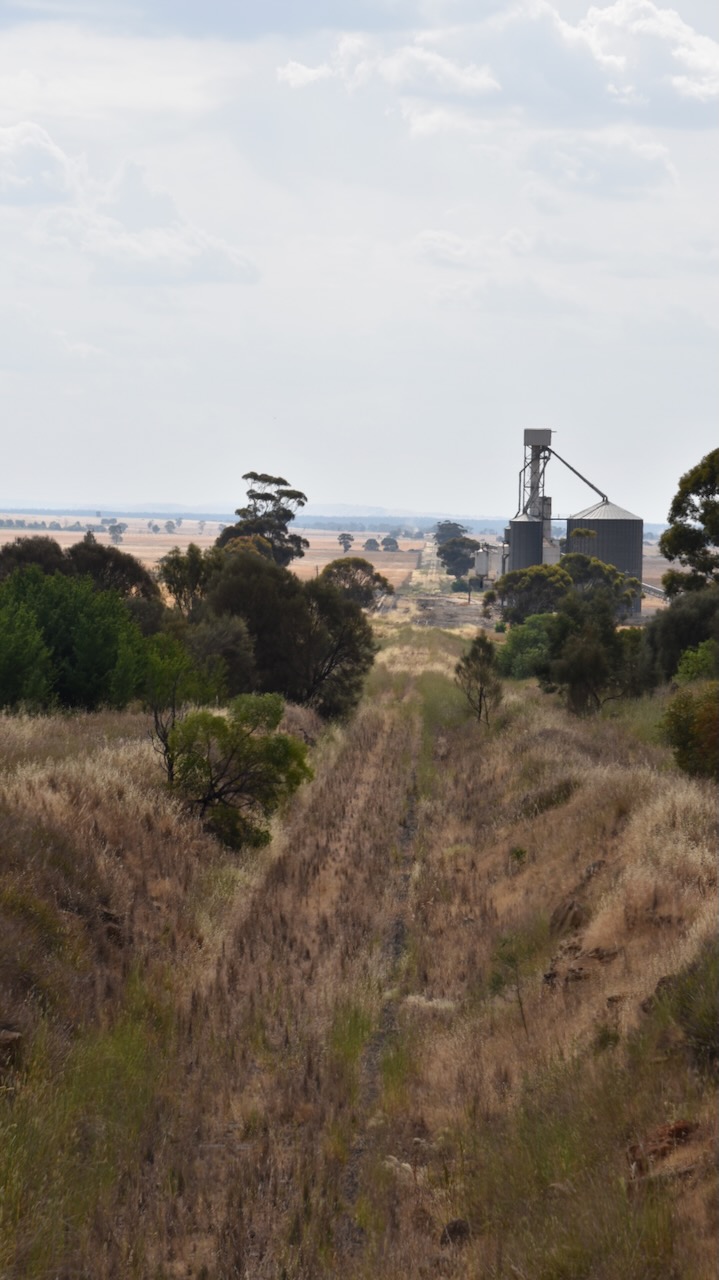
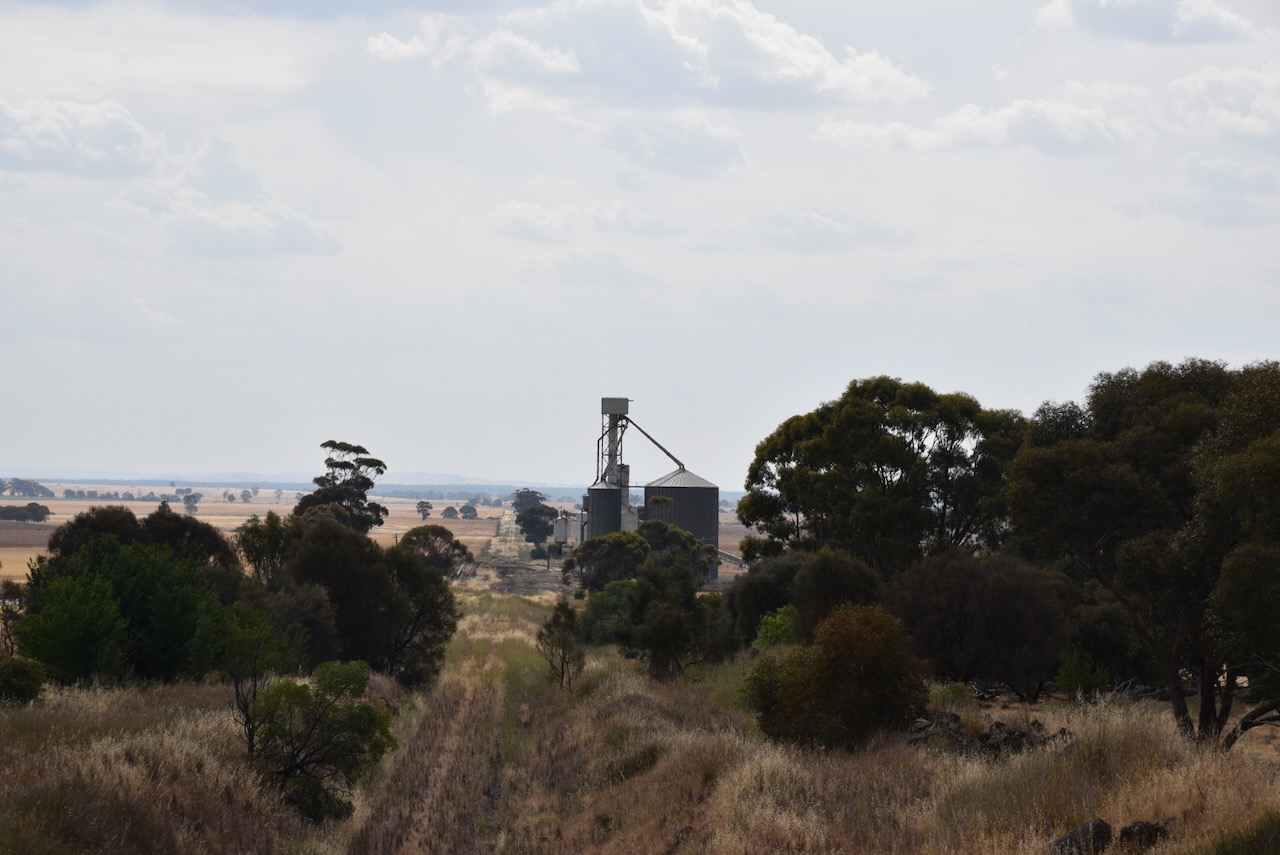
The Moorlort silos are located on the southern side of Keystone Mine Road, alongside the old Moolort railway line that connected Maryborough and Castlemaine. The line passed through Campbells Creek, Yapeen, Guildford, Strangways, Newstead, Moolort, and Carisbrook. Construction of the railway commenced in 1872.
The line was inaugurated on the 26th day of June 1874, with eight hundred schoolchildren being the first to travel from Maryborough to Castlemaine. On the 7th day of July 1874, the line was opened to general passenger traffic. (Trove 2024)
On the 31st day of July 1977, the last passenger rail service operated between Castlemaine and Maryborough. (Traffic 1977)
Marija and I parked on Keystone Mine Road and operated from the 4WD for this activation. We ran the Icom IC-7000, 100 watts, and the Codan 9350 antenna with the 1.5 metre stainless steel whip.
Above:- The activation zone at the Moolort silo. Image c/o SiOTA website.
Marija worked the following stations on 40m SSB:-
VK5CZ
VK2IO/m
VK3PF
I worked the following stations on 40m SSB:-
VK5CZ
VK2IO/m
VK3PF
VK1AO
VK2MET
VK5FB
VK5HS
VK3AWA
I worked the following stations on 20m SSB:-
VK4CK/m
VK4JT
3D2MP
WH6GPU
VK4GRZ
VK4LMB
VK4XCS
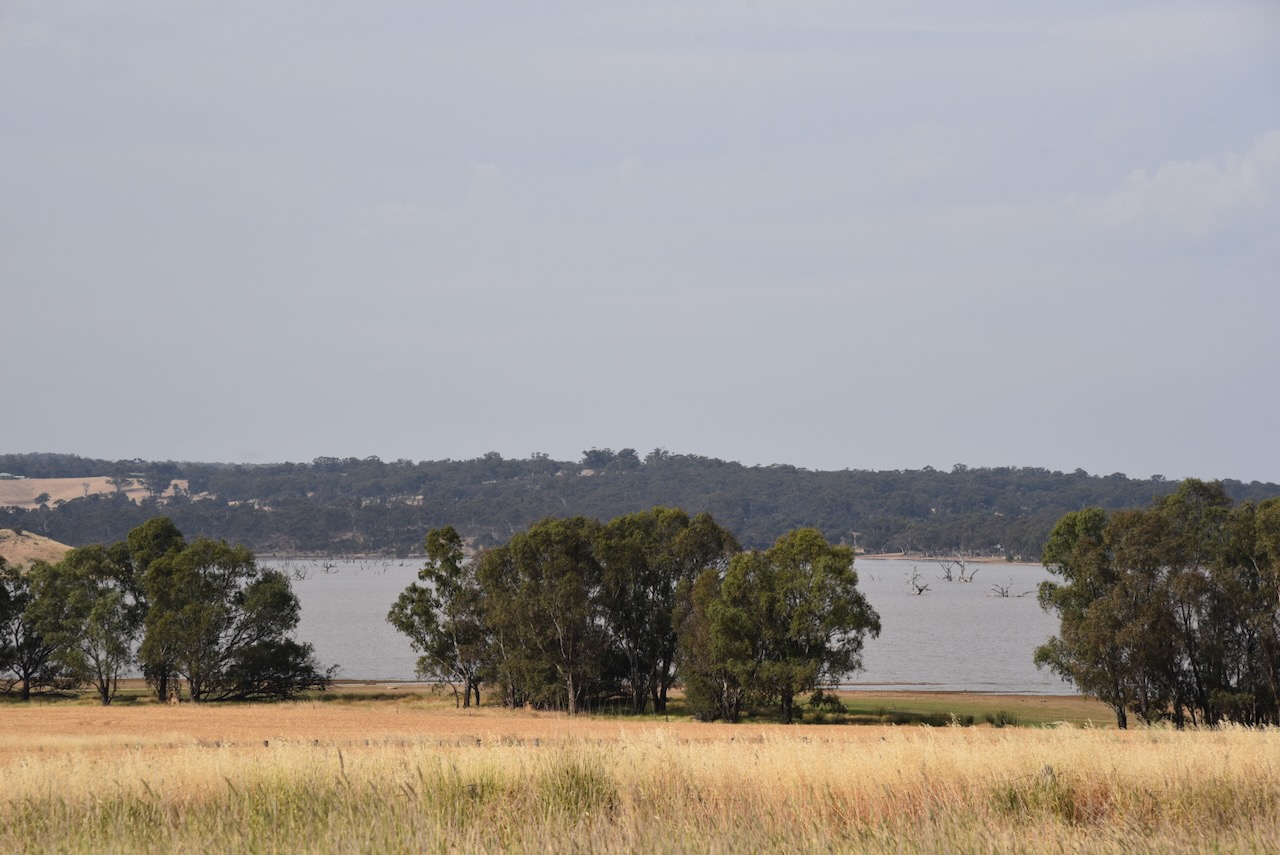
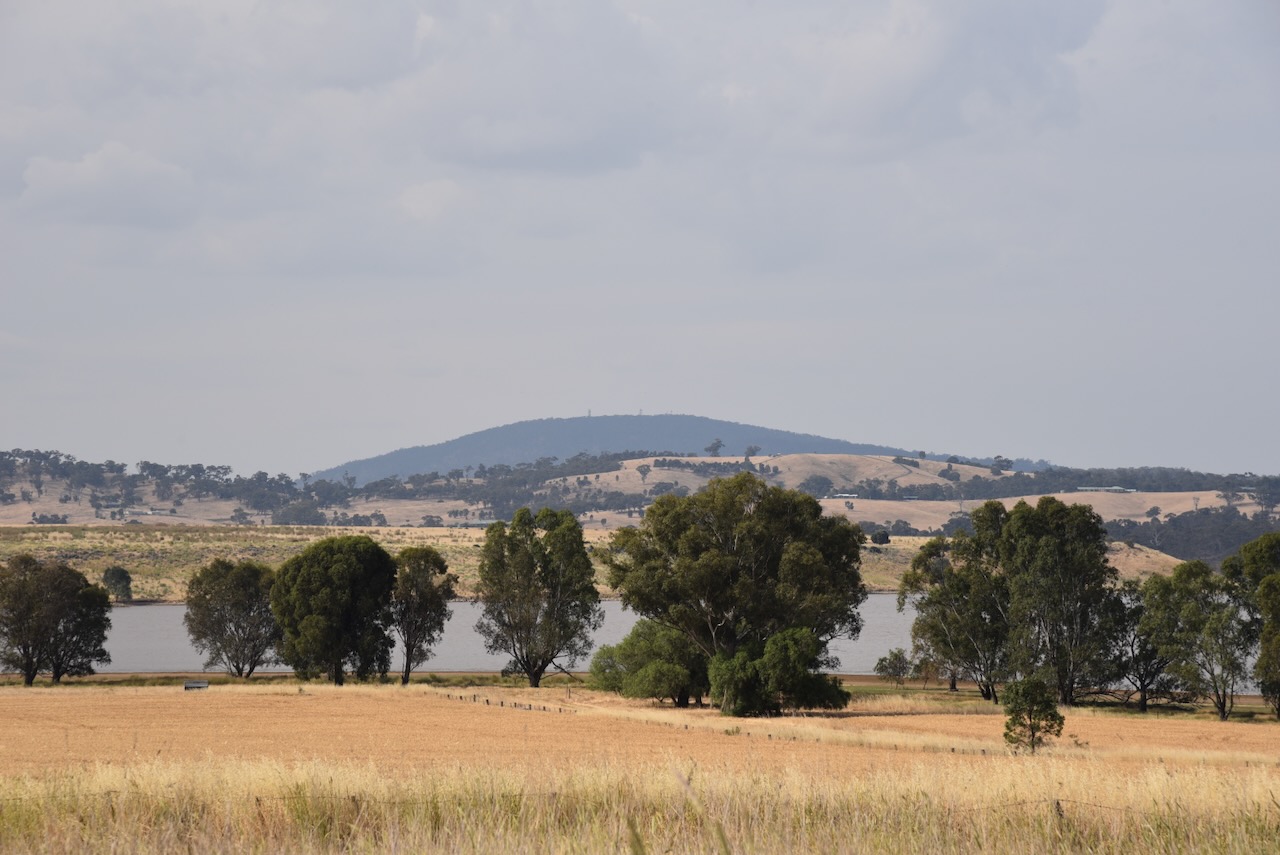
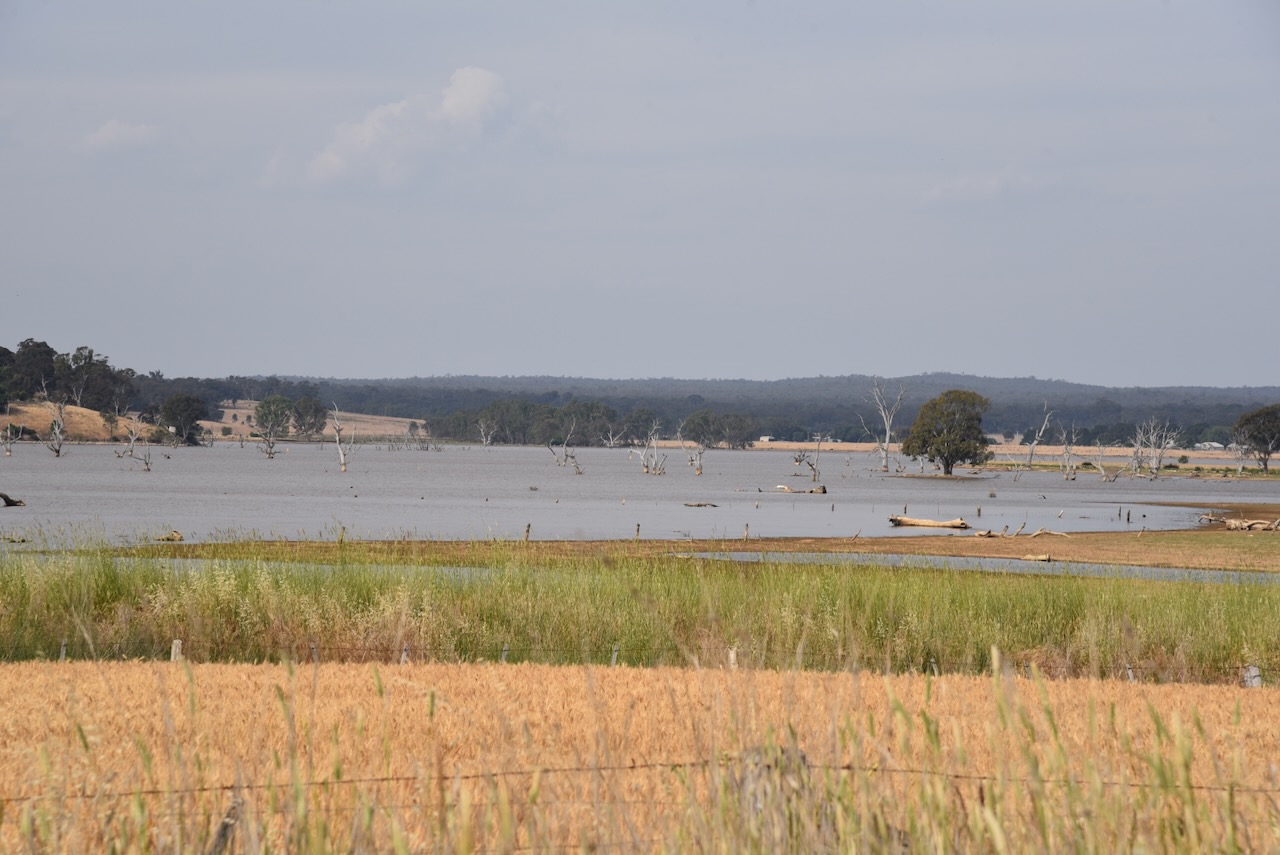
We left Moolort and headed to our accommodation at Sandon. Along the way, we passed Cairn Curran Reservoir. The Cairn Curran Reservoir was constructed between 1947 and 1956 by the State Rivers & Water Supply Commission of Victoria, to supply water for irrigation and domestic and stock use along the Loddon River. It was built for £1.23 million. (Goulburn Murray Water 2024) (Museums Victoria 2024)
We soon reached the little town of Newstead, about 142 km northwest of Melbourne and about 15km southwest of Castlemaine.
Newstead is located in the Victorian goldfields region, however, it did not have rich gold deposits itself. Rather, the town grew from being a crossing place on the Loddon River, often for miners who were travelling between Castlemaine and the Mount Alexander diggings. The crossing was known as Mingus’s (or Mingay’s) Crossing Place of the Loddon, and was located about 3 km downstream of the present bridge over the Loddon River. The area is now submerged under water from the Cairn Curran Reservoir. The crossing was named for John Menzies, a Scot, who was the owner of Tarrengower Run and Park Hill. (Heritage Study 2004) (Newstead Heritage Walks 2016) (Victorian Places 2024)
During the early 1850s, a gentleman by the name of Thomas Jones ran a ‘Refreshment Tent’ at this location, known as the Bullock Drivers’ Home. Thomas Jones was born in 1830 in Carmarthenshire, Wales and had emigrated to Australia. The Bullock Drivers Home operated as a sly-grog shop with Jones being charged on several occasions. (ancestry.com.au 2024) (Publicans V Grogshops 1854)
On the 22nd day of July 1854, Assistant Governor Surveyor John Turner published a plan for the township called St Andrews on the River Loddon. Just 2 weeks later, on the 6th day of August 1854, the same plan was issued but this time the given name was Newstead. The plans were cancelled due to the floods of September 1855, and a new location was decided on for the town. (Heritage Study 2004) (Newstead Heritage Walks 2016)
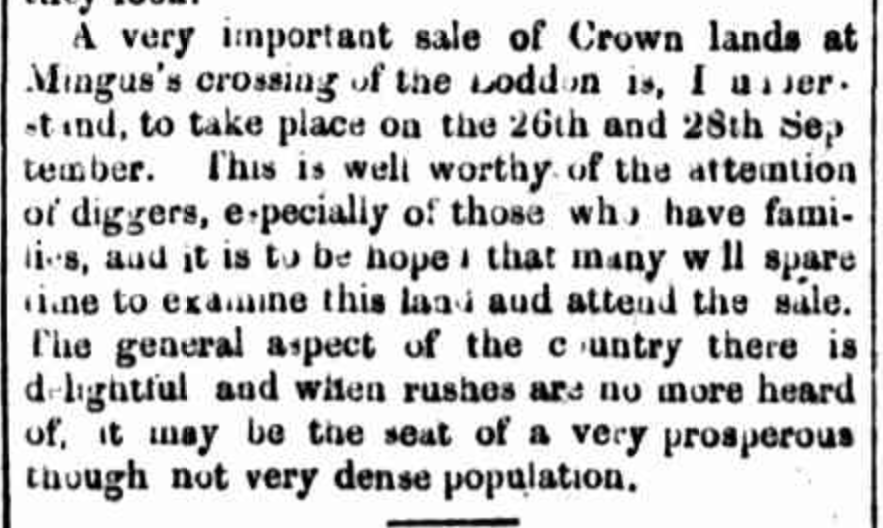
In August 1854, the sale of Crown lands was advertised at Mingus’s Crossing. The Mount Alexander Mail stated: “The general aspect of the country there is delightful.” (Mount Alexander Mail 1854)
Above:- Article from the Mount Alexander Mail, Sat 26 Aug 1854. Image c/o Trove.
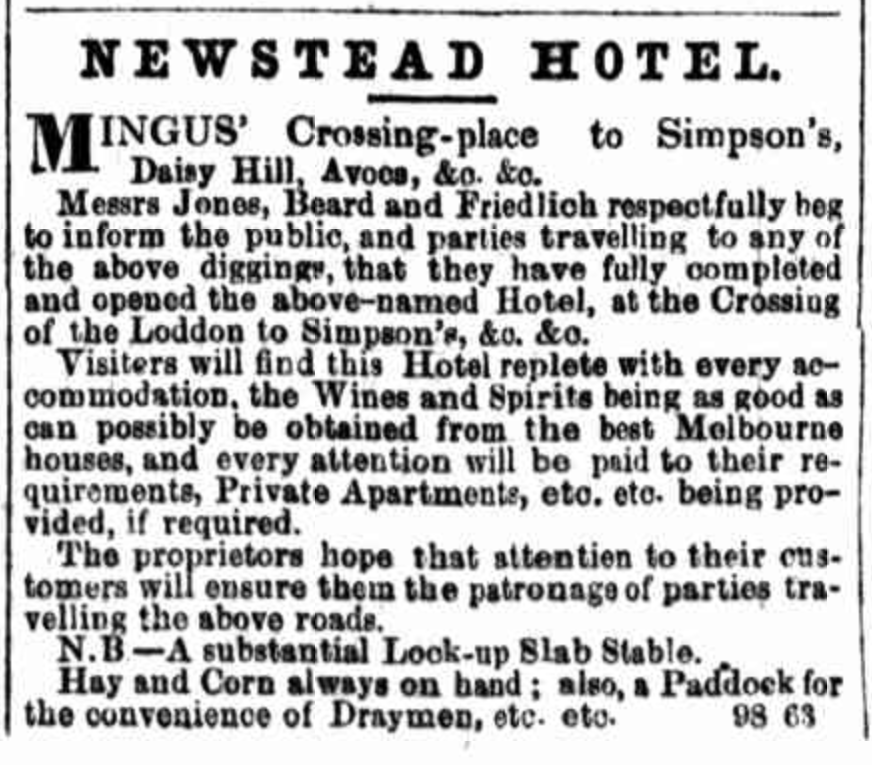
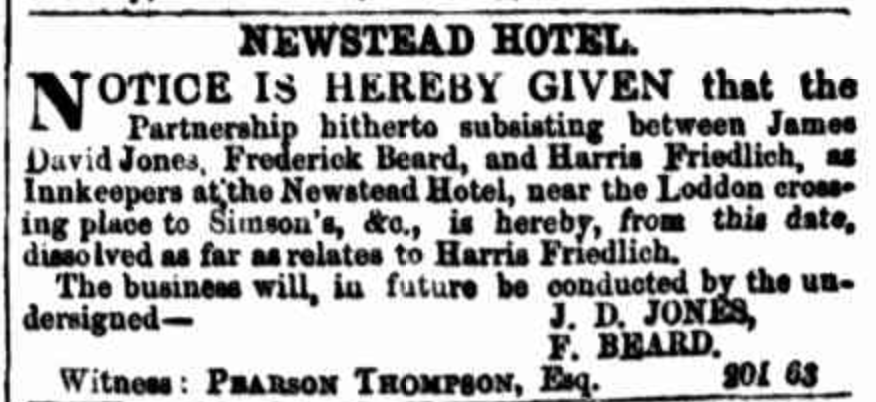
By April 1855, the Newstead Hotel had opened under the partnership of James David Jones and Frederick Beard, a businessman from Castlemaine, and Harris Friedlich. James Jones was not related to Thomas Jones. (Heritage Study 2004)
Above: Article from the Mount Alexander Mail, Fri 1 Jun 1855. Image c/o Trove.
Above:- Item from the Mount Alexander Mail, Fri 6 Jul 1855. Image c/o Trove
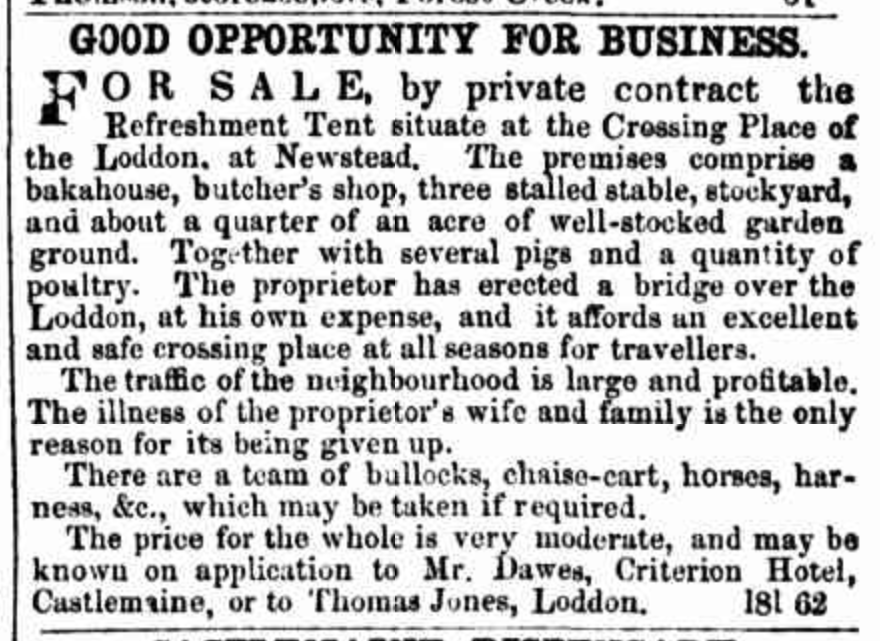
By June 1855, the refreshment tent was up for sale due to the ill health of the wife of Thomas Jones. The Mount Alexander Times stated: “The premises comprise a bakehouse, butcher’s shop, three stalled stable, stockyard, and about a quarter of an acre of well-stocked garden ground.” (Mt Alexander Mail 1855)
Above:- Advertisement from the Mount Alexander Mail, Fri 29 Jun 1855. Image c/o Trove.
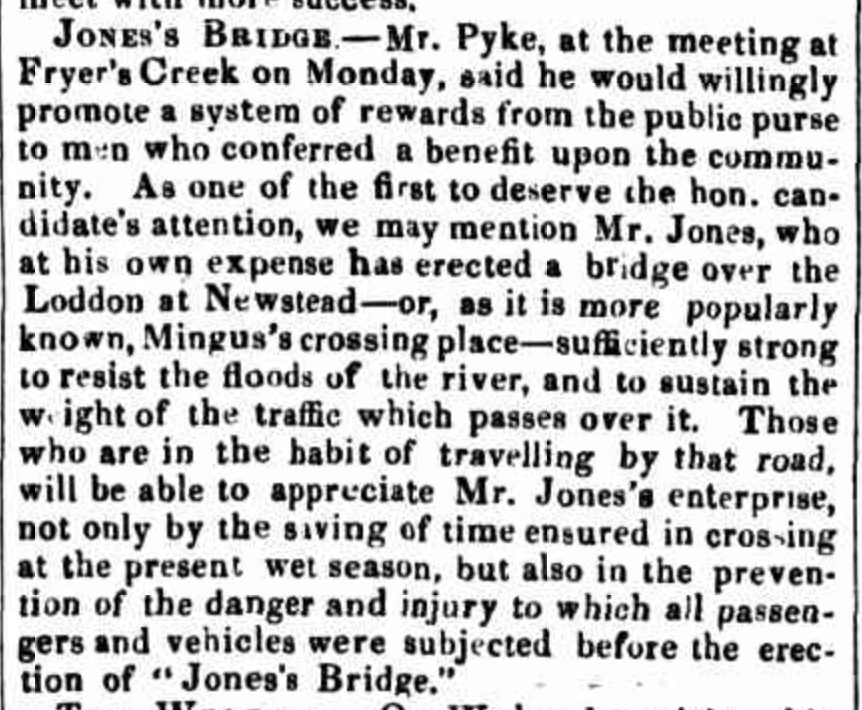
In 1855 Thomas Jones had erected a bridge over the Loddon River at Mingus Crossing. It was known as Jone’s Bridge. The Mount Alexander Times, Friday 17th August 1855 reported:
“Mr. Jones, who at his own expense has erected a bridge over the Loddon at Newstead-or, as it is more popularly known, Mingus’s crossing place – sufficiently strong to resist the floods of the river, and to sustain the weight of traffic which passes over it.” (Extraordinary conduct 1855)
Above:- An article from the Mount Alexander Mail, Fri 17 Aug 1855. Image c/o Trove.
Within a few months of being built, Jones Bridge was destroyed by floodwaters in September 1855.
In July 1856 allotments for Newstead township went on sale at Castlemaine. (Heritage Study 2004)
When the site of the town was relocated, the proprietors of the Newstead Hotel were quick to move and a new Newstead Hotel appeared in Lyons Street early in 1856. The original building was of wooden construction, however, it was destroyed by fire on the 4th day of June 1931. (Newstead Heritage Walks 2016)
In 1856 a flour mill was built. In 1859 a National School and a Presbyterian church were opened. Newstead’s population in 1861 was 212 people. A few years later in 1863, Baptist, Anglican and Methodist churches were opened. By the mid-1860s, Newstead had a brewery, biscuit factory and two hotels. In 1868 a Mechanics Institute was built. In 1869 a three-storey bluestone flour mill was built. By 1871 Newstead’s population was 210 people. (Victorian Places 2024)
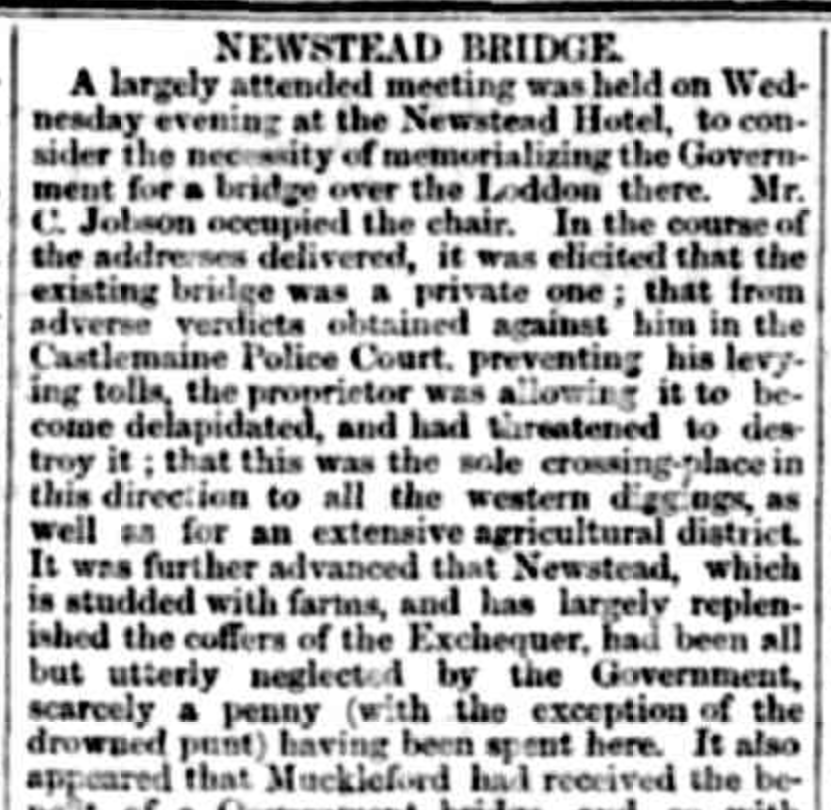
In November 1859 a meeting was held at the Newstead Hotel to petition the Government for a bridge over the Loddon River. The Tarrengower Times, Tuesday 8th November 1859 stated that ‘the existing bridge was a private one; that from adverse verdicts obtained against him in the Castlemaine Police Court, preventing his levying tolls, the proprietor was allowing it to become dilapidated, and had threatened to destroy it; that this was the sole crossing place in this direction to all the western diggings, as well as for an extensive agricultural district.” (Newstead Bridge 1859)
Above:- Article from The Tarrengower Times and Maldon District Advertiser, Tues 8 Nov 1859.
Image c/o Trove.
A poorly constructed bridge and a punt connected Newstead with another settlement known as the Junction that was located on the River Loddon’s west bank. In July 1860 a timber toll bridge was constructed over the Loddon River. (Heritage Study 2004)
Newstead has numerous historic buildings. Here is a quick summary of some of those buildings which we visited.
Newstead Courthouse.
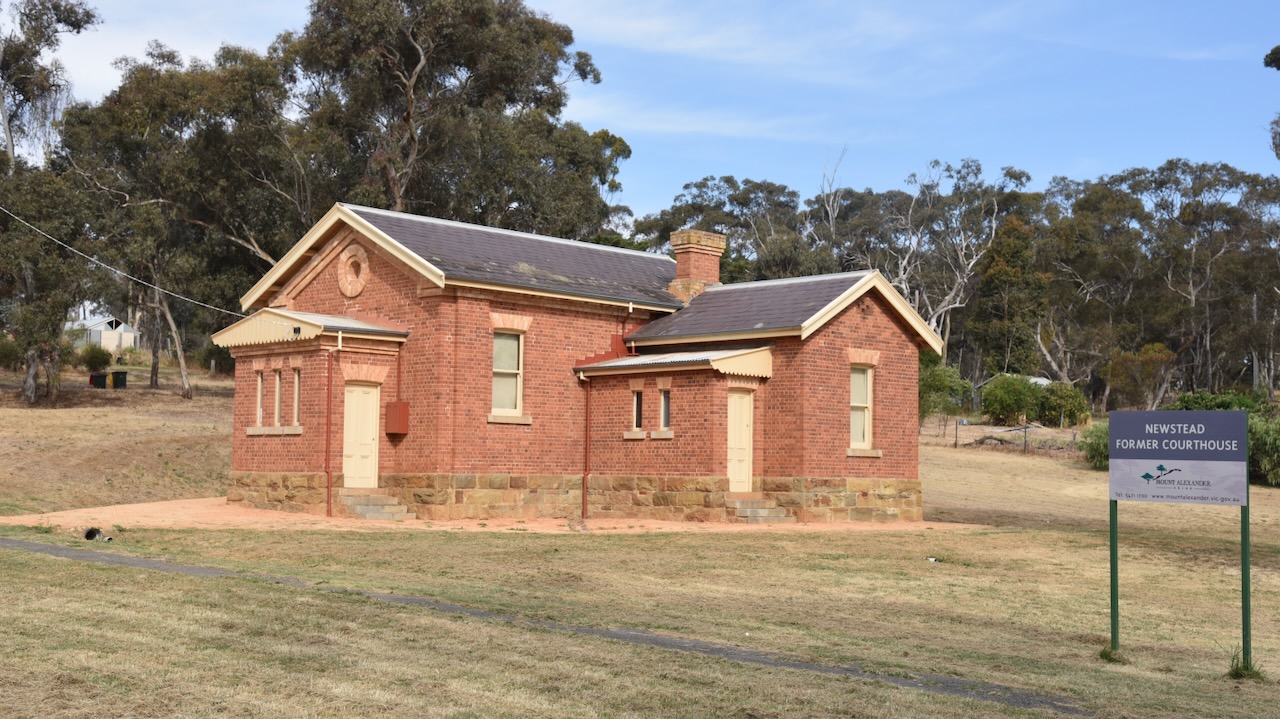
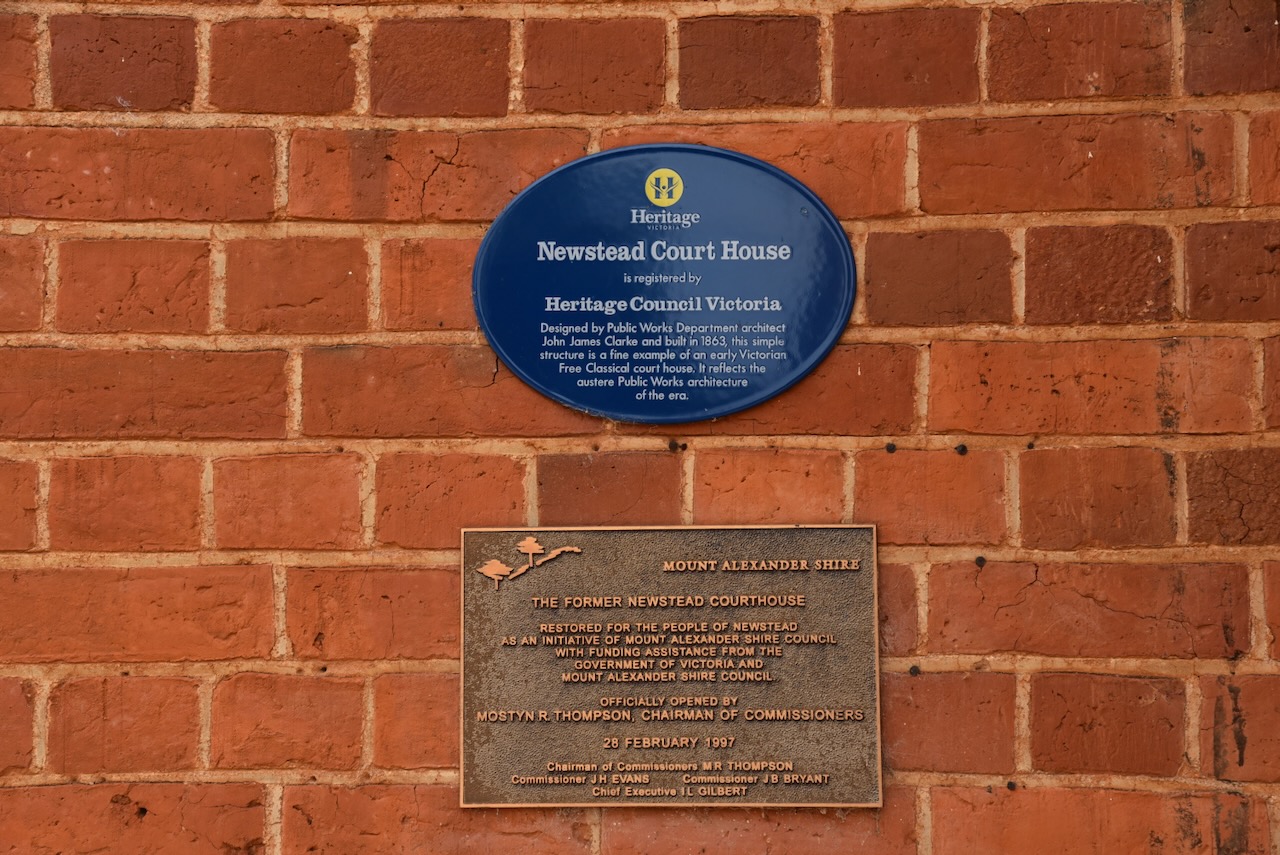
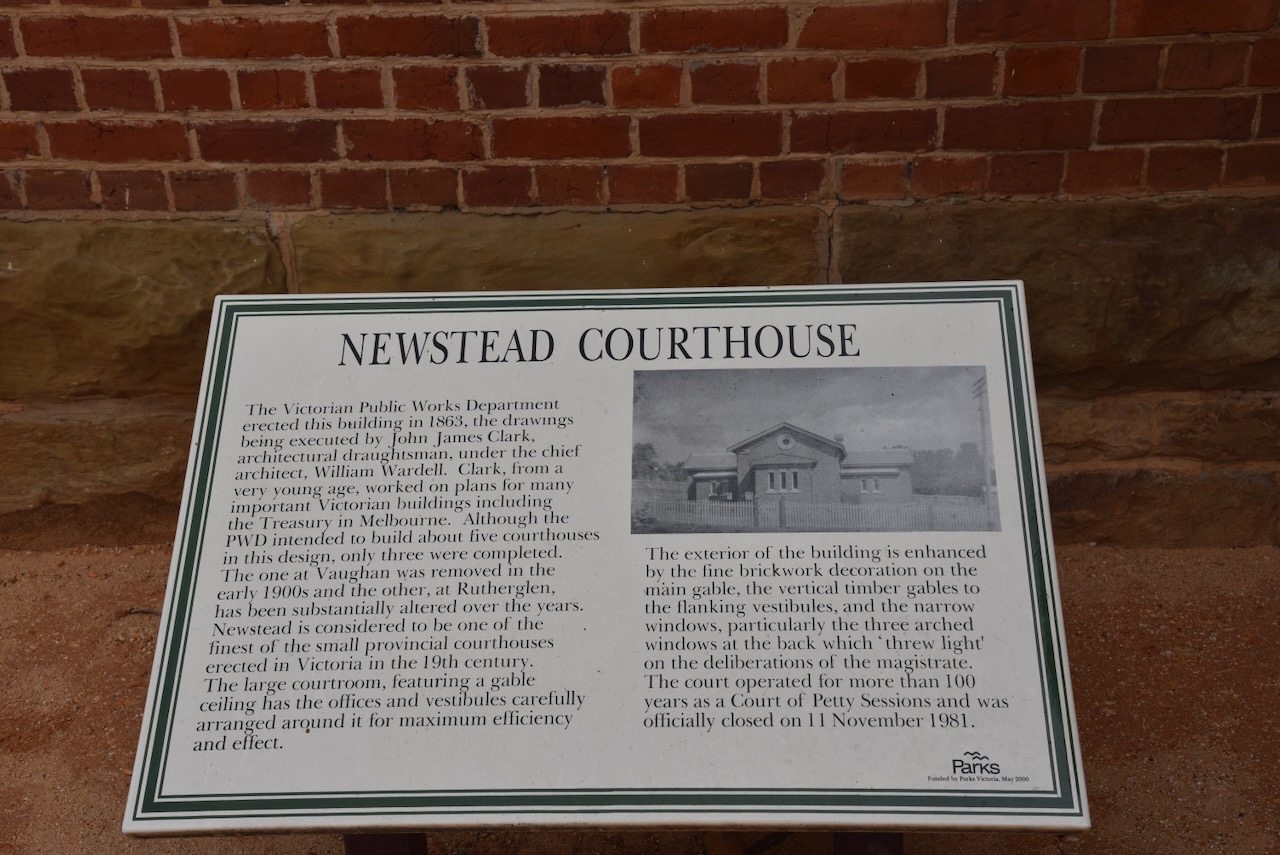
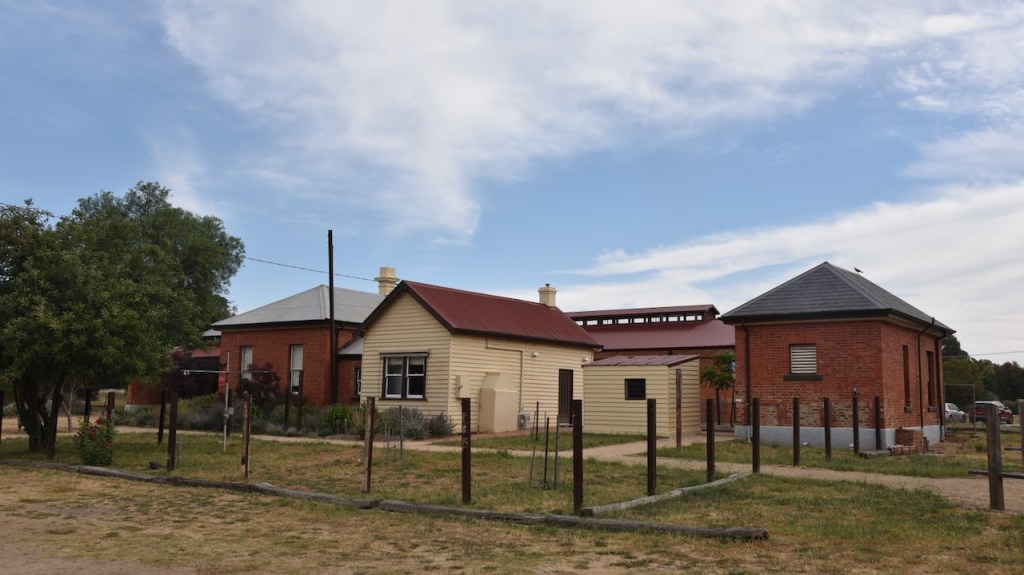
A public meeting was held in 1861 at the Newstead Hotel to discuss the establishment of a Court of Petty Sessions in the town. The court was subsequently established, however there was criticism at the low standard of accommodation. By 1863 the wooden Baptist Chapel served as a Police Court. Calls were made for a more substantial building, and in 1863, John James Clark, a prominent architect in the Public Works Department, designed the new Newstead Courthouse. It was built in 1865 by Mackay and Ross at a cost of £911. It was decommissioned as a court in 1981. (Heritage Study 2004)
Railway Station.
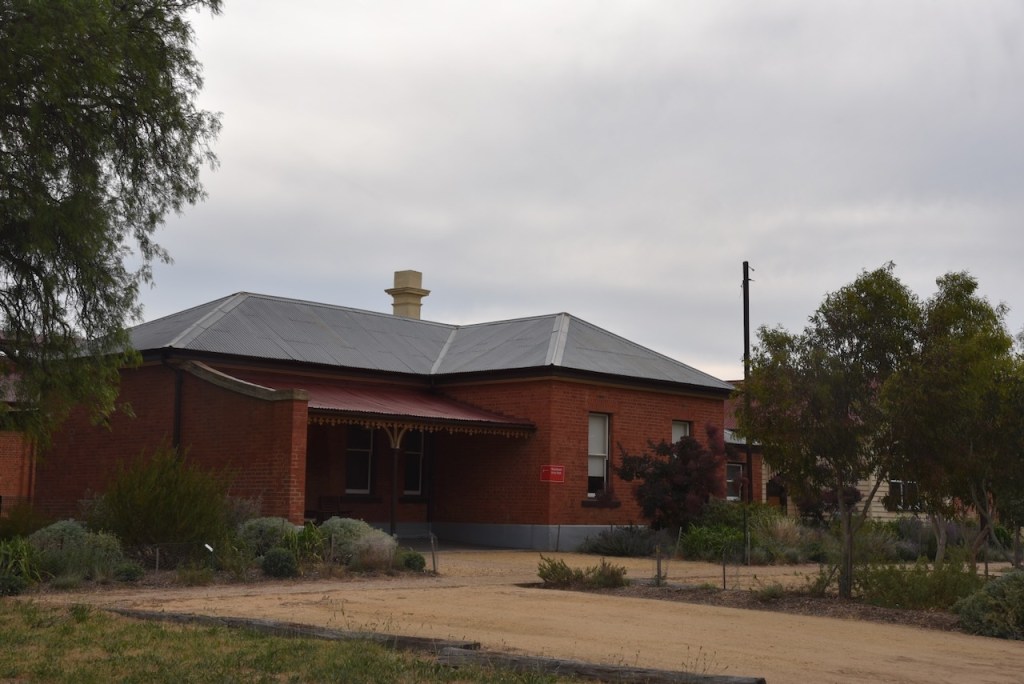
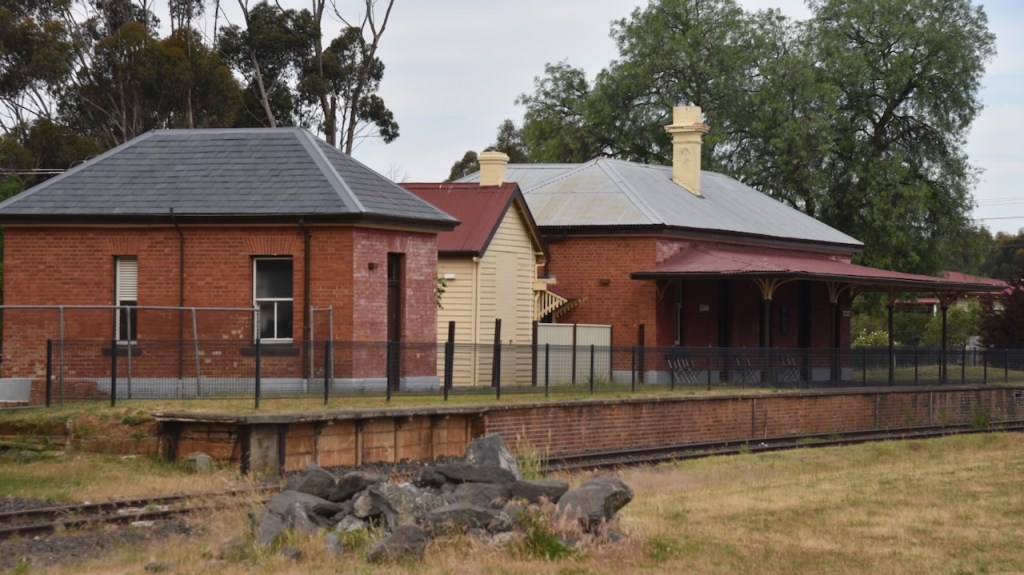
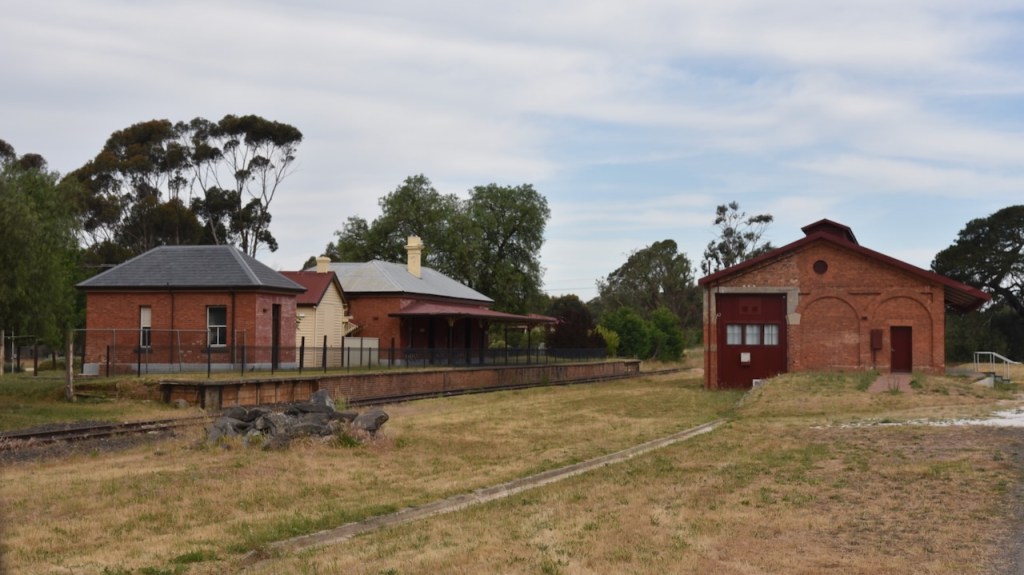
In about 1861 to 1862 the Newstead Road Board held a public meeting regarding the construction of a railway from Maryborough that would pass through Newstead. Sadly this did not progress. In 1871 a public meeting was held to discuss the extension of the railway line westward from Maryborough to Castlemaine. In 1873 the Mount Alexander Mail reported that the first instalment of rails for the Castlemaine to Newstead railway line had arrived and that ‘the contractor will soon lay in place.’ The following year in March 1874, tenders were called for the construction of a passenger station at Newstead. The line opened in July 1874. The railway goods shed was constructed in 1882. (Heritage Study 2004)
Newstead Flour Mill.
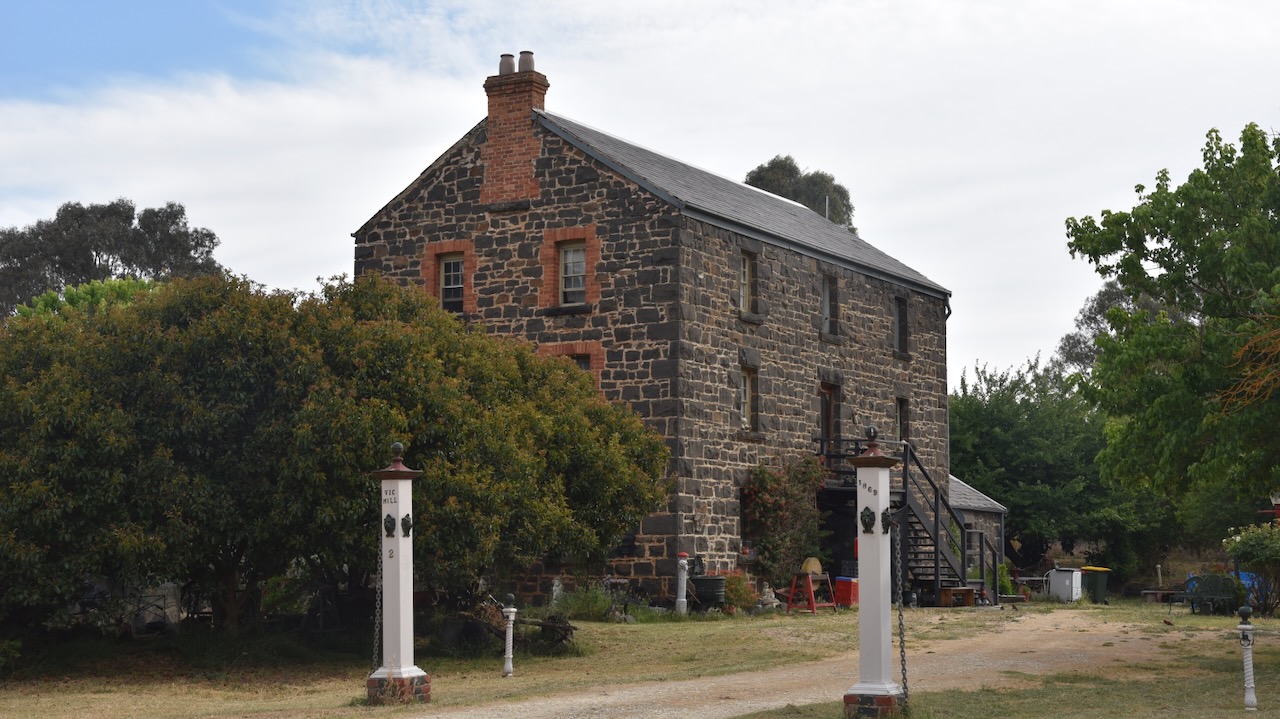
The Newstead Flour Mill is a very impressive bluestone building that was opened in mid 1869 and was built by the Sheehan brothers. The mill was operated by the Sheehan family until 1914. The old mill was auctioned in 1975, by which time it was derelict, lacking floors, a roof and windows. (Heritage Study 2004)
Former Newstead Bakery.
In 1856 this block of land was granted to James Monks who sold the land in 1957 to Charles Marsden. From that time, the land was sold to various persons over the years. The building operated as a bakery by numerous bakers including William Sutherland, George McArthur, Thomas Toulen, and William Backway. Following the 1909 flood, the building was either rebuilt of substantially repaired. (Heritage Study 2004)
Old bank building.
This site was originally purchased in February 1860 by David Corbett who built a wattle and daub store and conducted business there as a general store for about 15 years. Between 1864 to 1865 the land and building was purchased by the Bank of New South Wales and a branch was opened on the 3rd day of February 1865. It closed in March 1871. The building was then taken over by the Oriental Bank and it operated until 1884. In May 1884 the National Bank of Australasia announced that it had opened a branch at Newstead in the former Oriental Bank building. In December 1886 the building was sold to a Mr. R. Rowe and the building was demolished with the view of a new building being constructed. The present day building was designed by the Melbourne architect, George Jobbins, and was constructed by Messrs Ross and Walker between December 1886 and early 1887. The National Bank continued to operate from the building until 1975 (Heritage Study 2004)
Former Vitali’s Boot Shop.
The land on which the former Vitali’s Boot Shop is located was granted in 1860 to D. Johnston. It operated as a general store run by Lovel Langslow in the 1870s. From 1879 it operated a butcher run by Charles Langslow, the son of Lovel Langslow. By 1903 it was occupied by Roderick Morrison, a Fruiterer. In the 1920’s it operated as a fruit shop run by Alf Connell. Following WWII up until the 1980’s it functioned as a bootmakers run by Reno Vitali. (Heritage Study 2004)
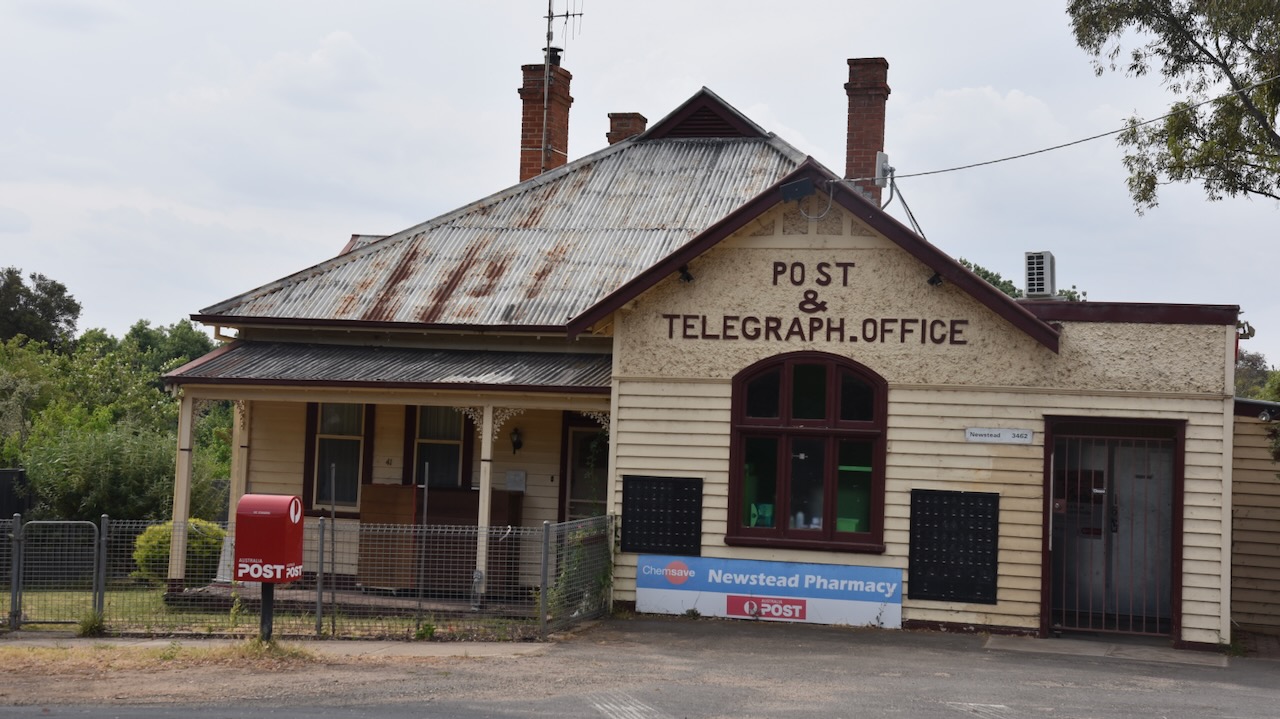
Post and Telegraph Office
In 1863, Newstead’s first purpose built Post and Telegraph office was constructed. In 1910 a new Post and Telegraph office was constructed. The telegraph office closed in 1934. (Heritage Study 2004)
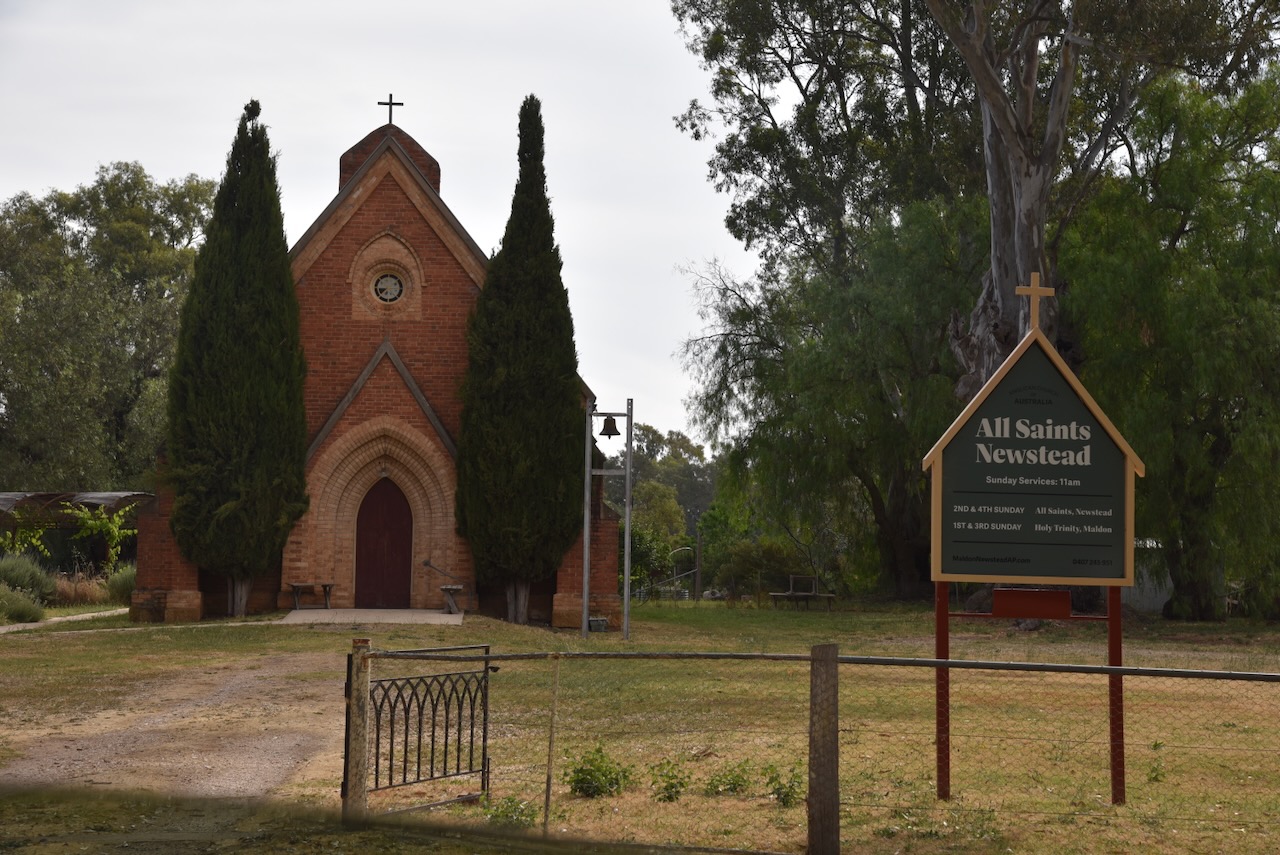
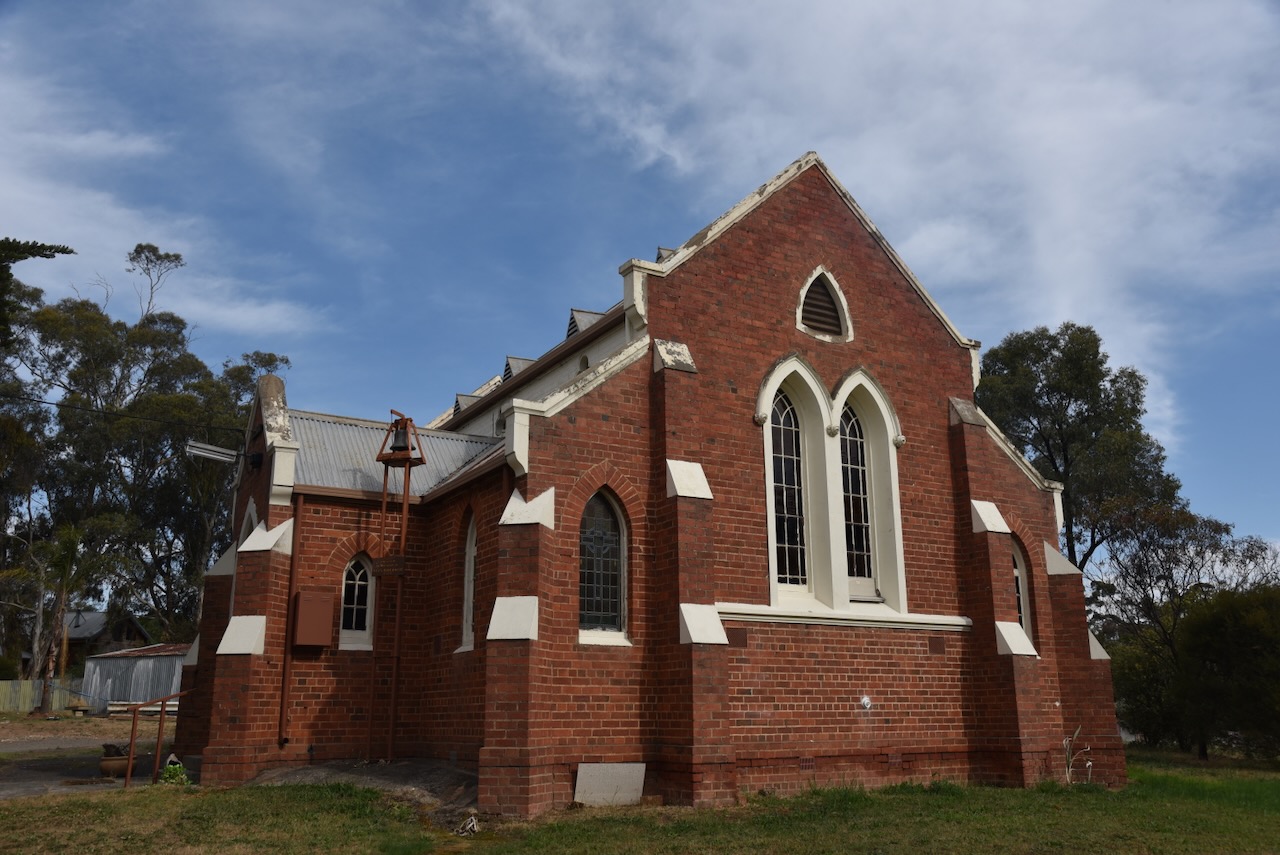
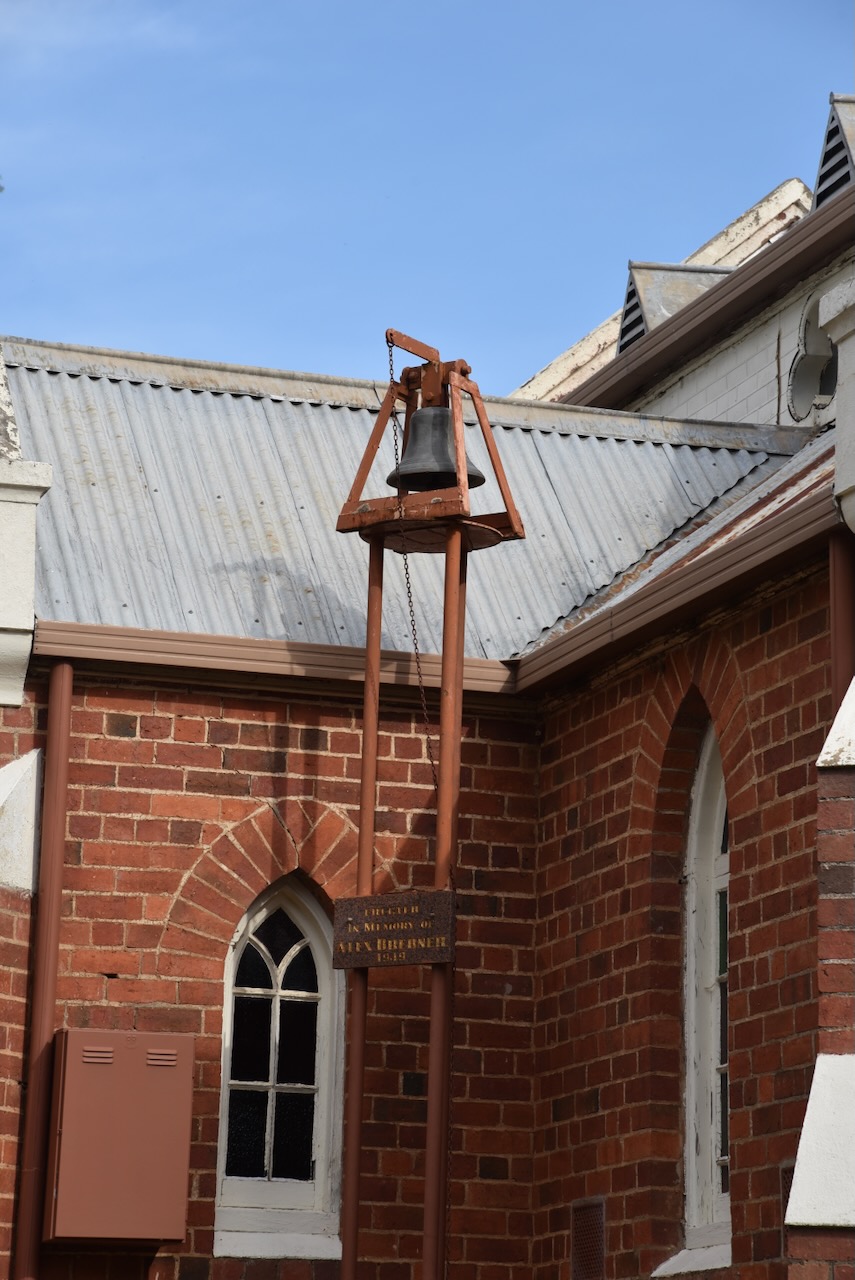
All Saints Newstead.
Prior to the erection of a permanent Church of England church, services were held from about 1857 in the Roads Board meeting room. In 1866 tenders were called for the construction of a church, and this was awarded to Richard Jennings. All Saints Newstead was opened in August 1868 by Ven Archdeacon A Crawford at a cost of about £450. (Newstead Heritage Walks 2016) (Heritage Study 2004)
Methodist church.
Methodism was introduced in Victoria in 1838. The Primitive Methodists (the original division of the Methodist Church associated with the extant building) held their first services in Newstead at the home of the local blacksmith, William Ibbotson. He offered the site for the church for half the price he initially paid. On the 30th day of October 1860, the Methodist chapel was opened. In the early 1900s the Newstead Methodist church commenced looking to build a new church to accommodate for the larger congregation. In 1907 tenders were called. Between April and September 1907 work commenced on the church which was capable of seating 200 people. This was at a cost of about £500. The bricks and foundation stones were recycled from the chimney of the old Johnson flour mill built in 1856. The church was opened in September 1907. (Heritage Study 2004)
Newstead Butter Factory.
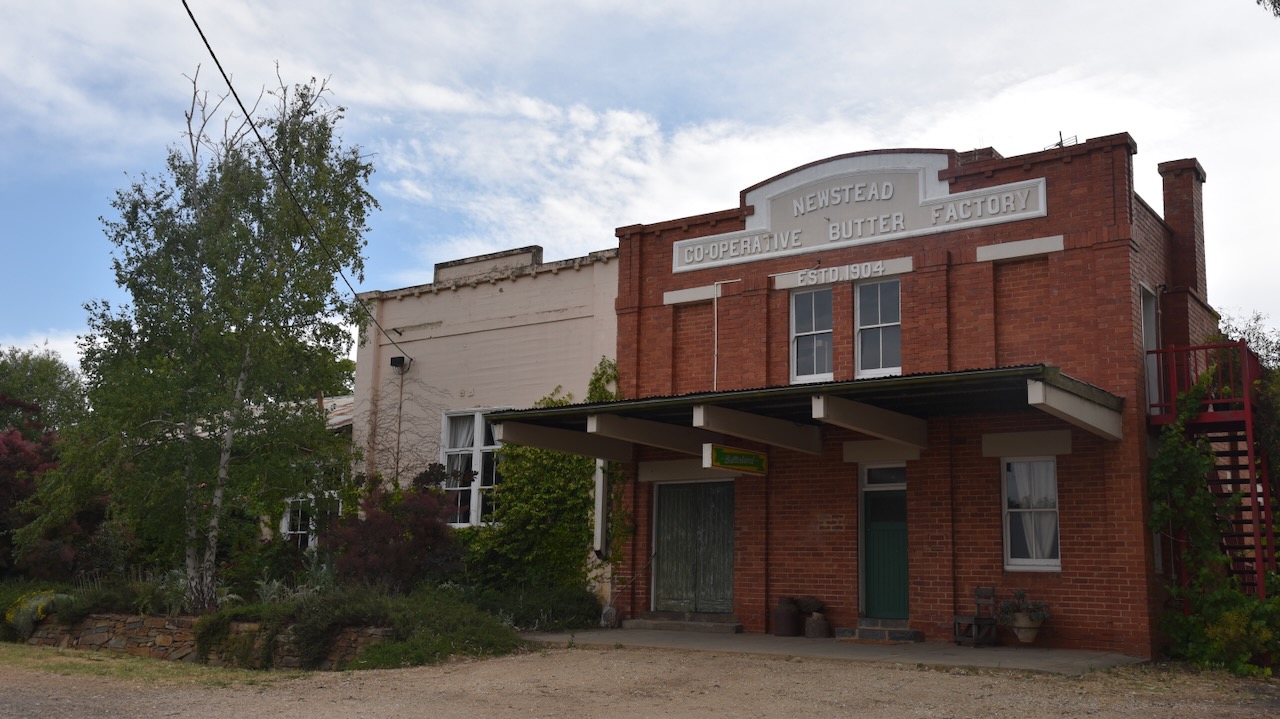
The Newstead Co-operative Butter and Cheese Factory opened in 1905. On the 17th day of June 1905. the factory commenced production. The company supplied local markets as well as exporting overseas. The government freezing works classified Newstead butter ‘superfine’ and first class. In London, after the company exported 115,750 lbs, it was judged ‘very fine quality butter indeed’. By the late 1940s farmers gradually reduced their dairy herds in favour of beef cattle. By 1967 the amount of butter fat supplied was 3% less than when the factory opened. Sadly, produced ceased in 1975. (Heritage Study 2004)
Mechanics Institute.
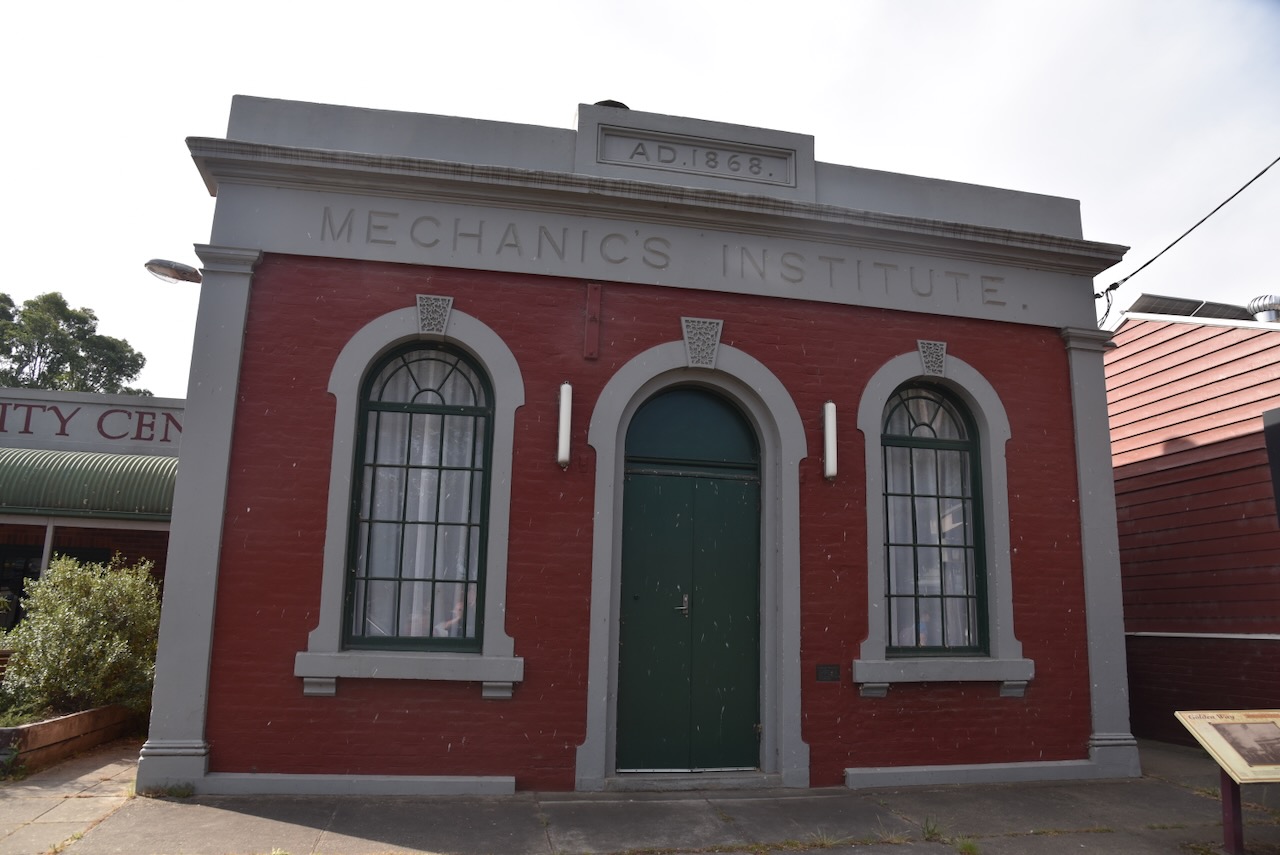
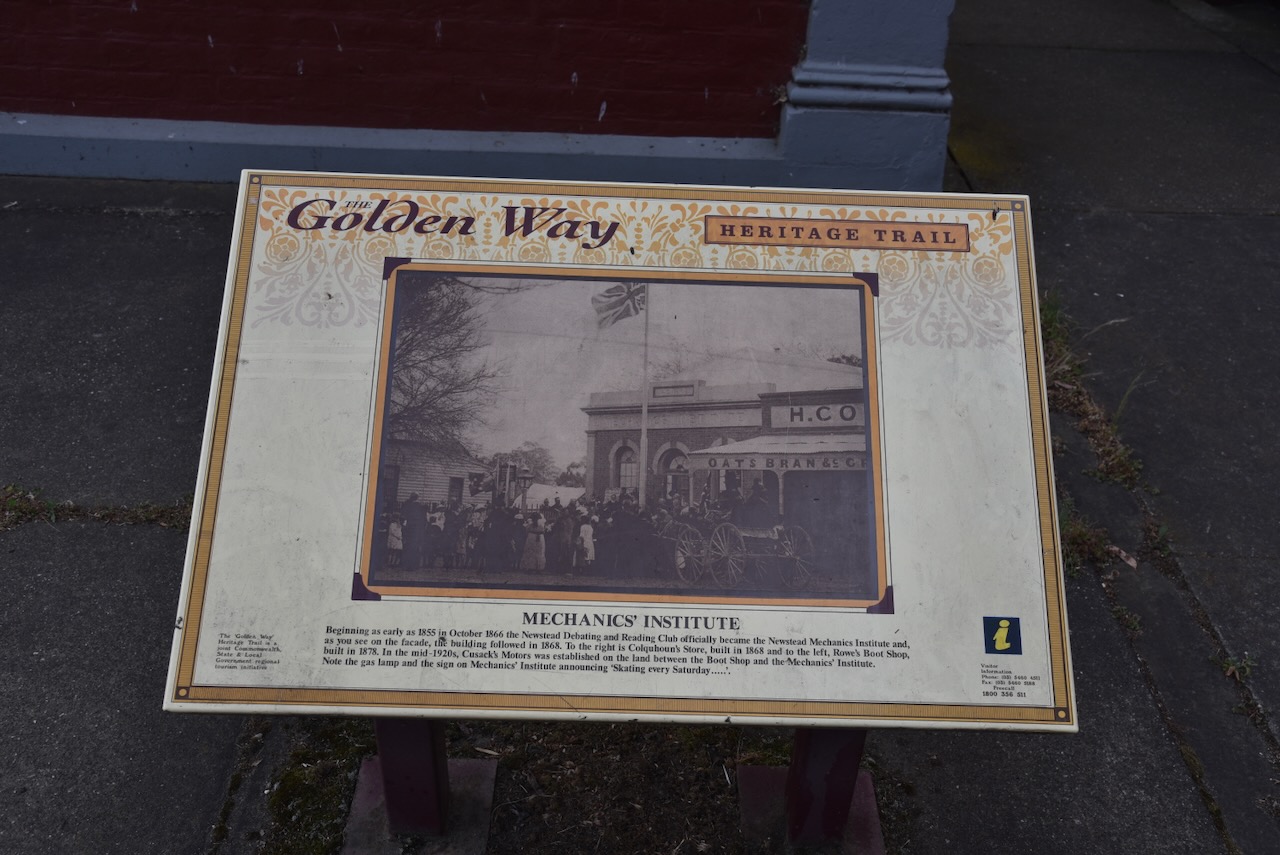
Mechanics Institutes were established in the early years of Victoria to provide opportunities for ‘intellectual, social and moral self-improvement.’ In October 1866, the Mount Alexander Mail reported that members of the Newstead Debating and Reading Club had held a meeting to reorganise the club under the title of a Mechanics Institute. By August 1868, funds commenced to be raised for the erection of a Mechanics Institute building at Newstead. A tender of £335 from Mr. McGibbons of Castlemaine was accepted by mid-September and the construction of the building was completed within 3 months. In 1868 the Institute consisted of 400 books and numerous periodicals and newspapers. (Heritage Study 2004) (Newstead Heritage Walks 2016)
Fire Brigade.
In 1943 the Newstead Shire Council gave permission for a Fire Station to be built on the park reserve. This building housed the Urban Fire Brigade with the Rural Brigade behind. (Heritage STudy 2004)
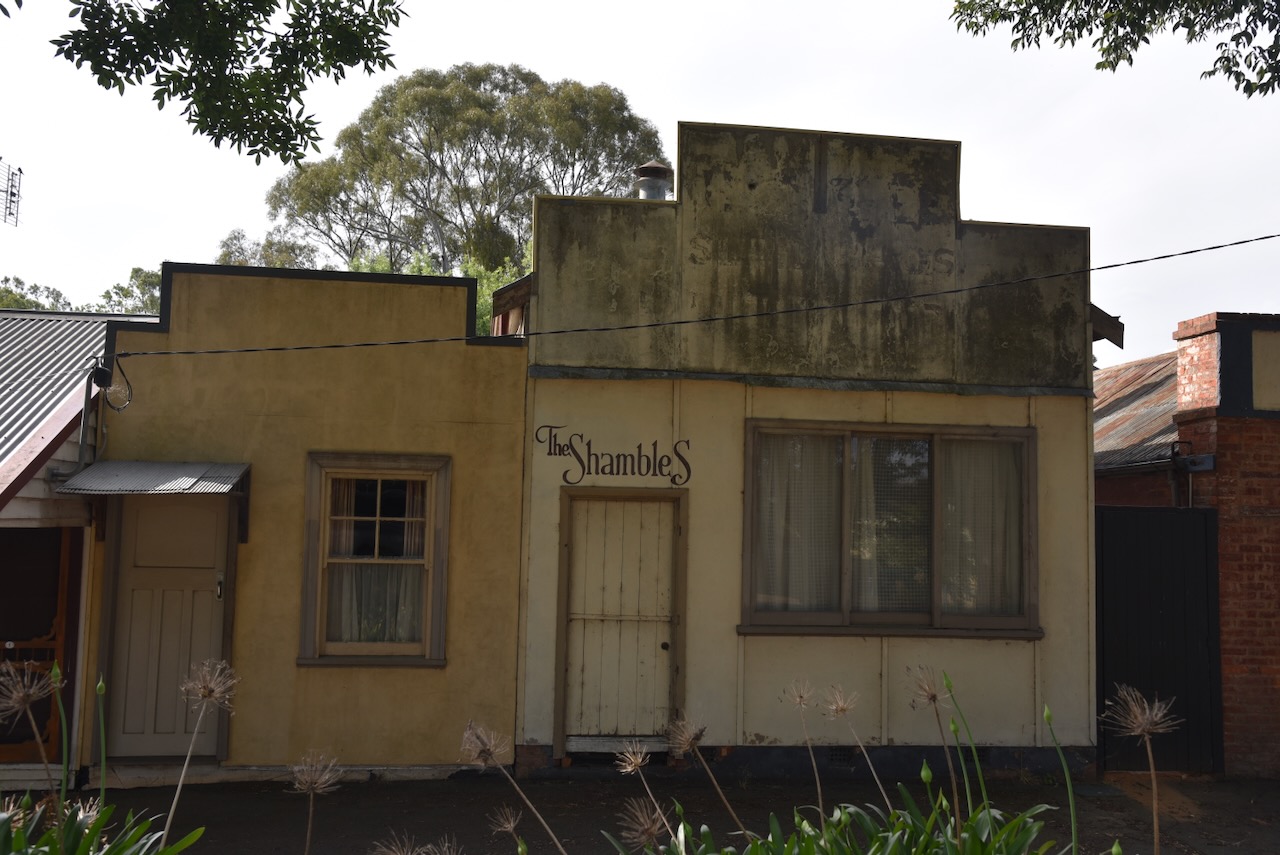
The Shambles.
The word ‘Shambles’, according to the Oxford Dictionary, means ‘Butcher’s slaughterhouse. Charles Slee purchased this land in 1864 and operated as a butcher. The Slee family were amongst some of the earliest arrivals in the Newstead district. (Newstead Heritage Walks 2016)
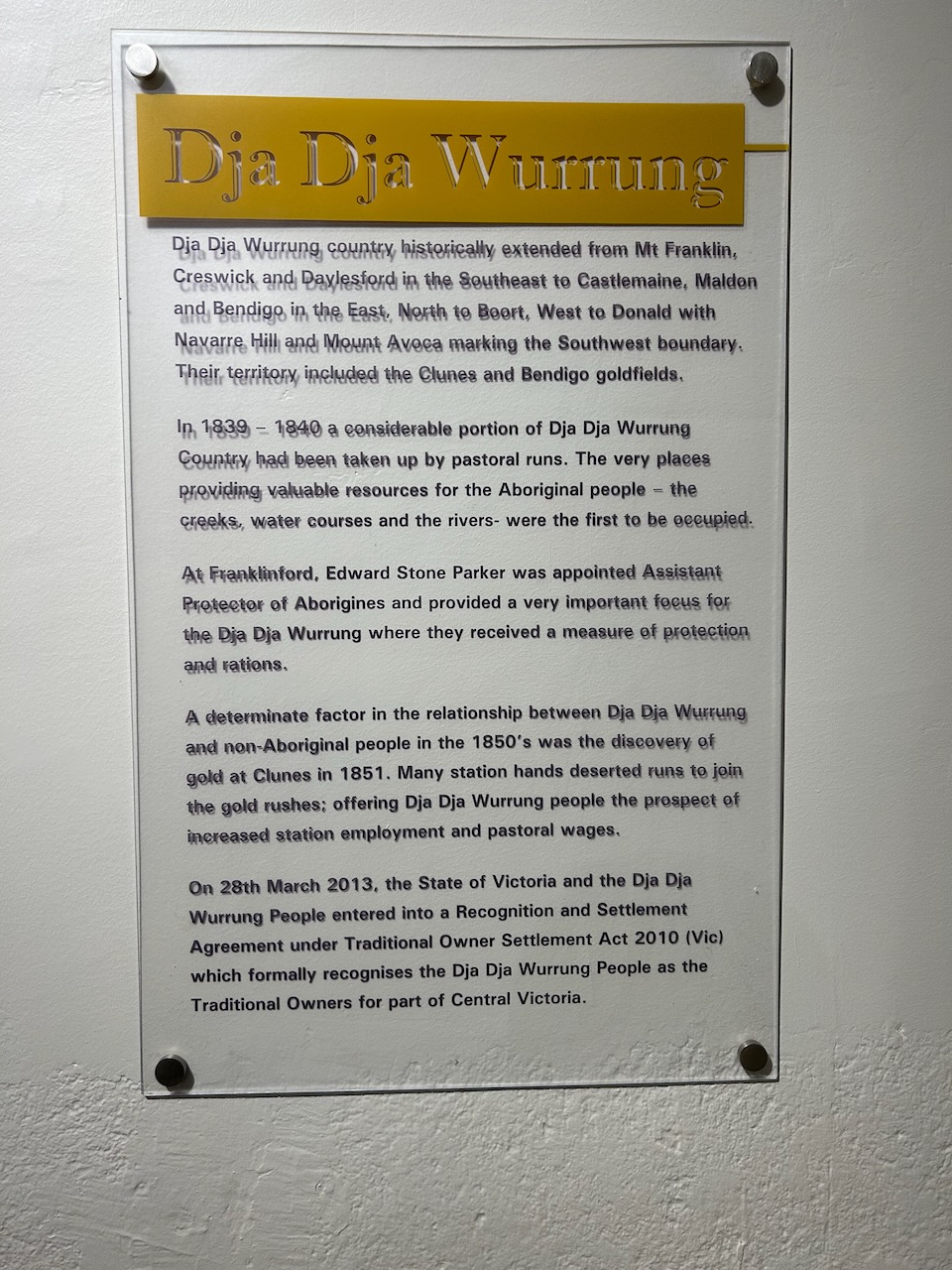
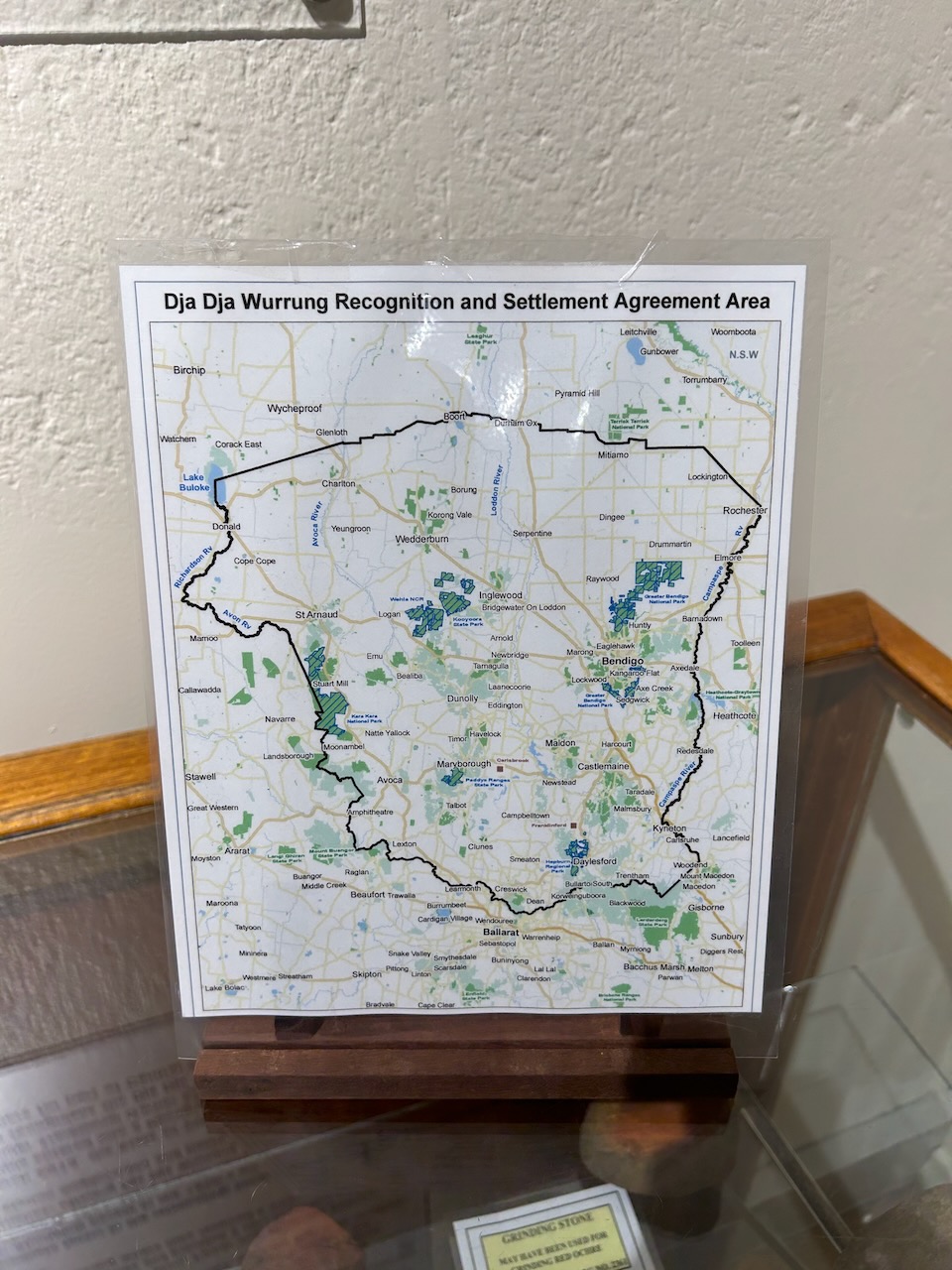
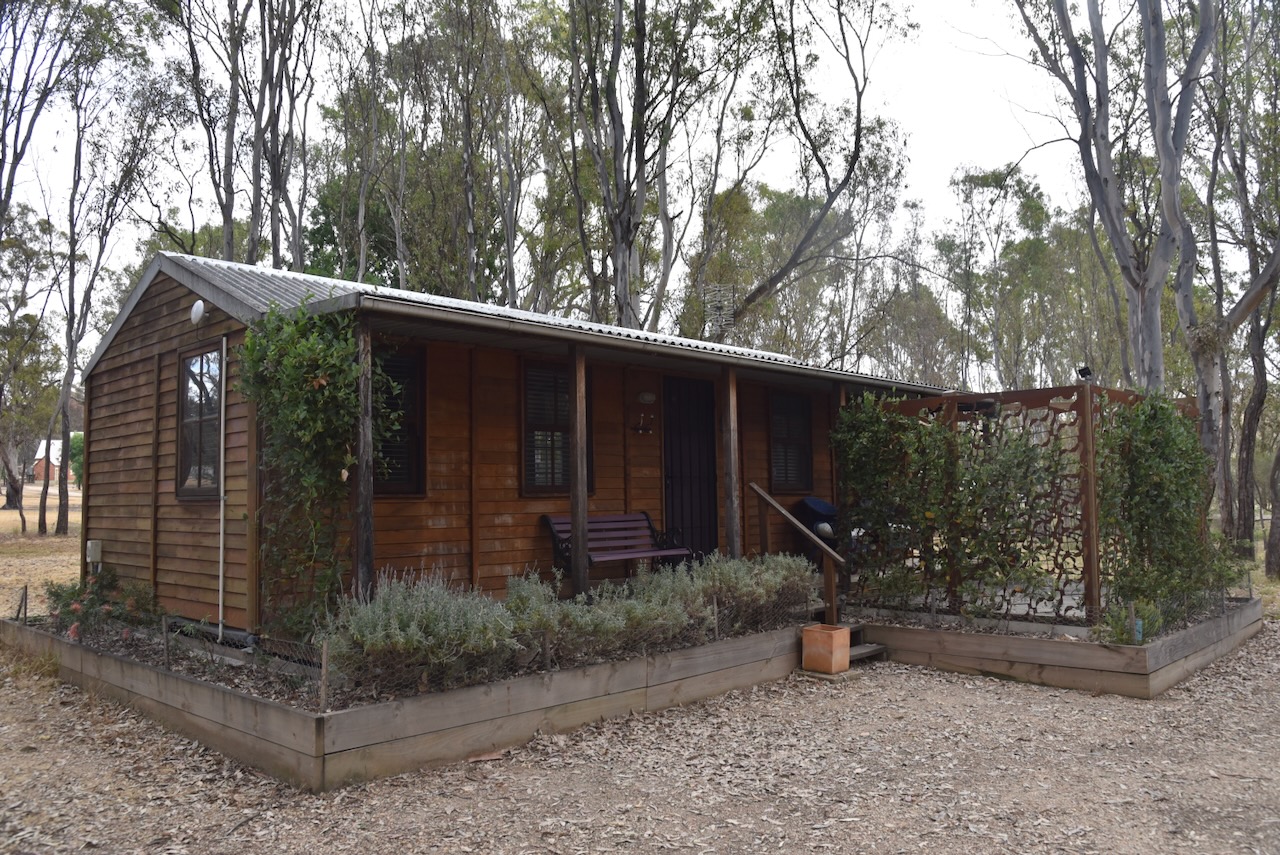
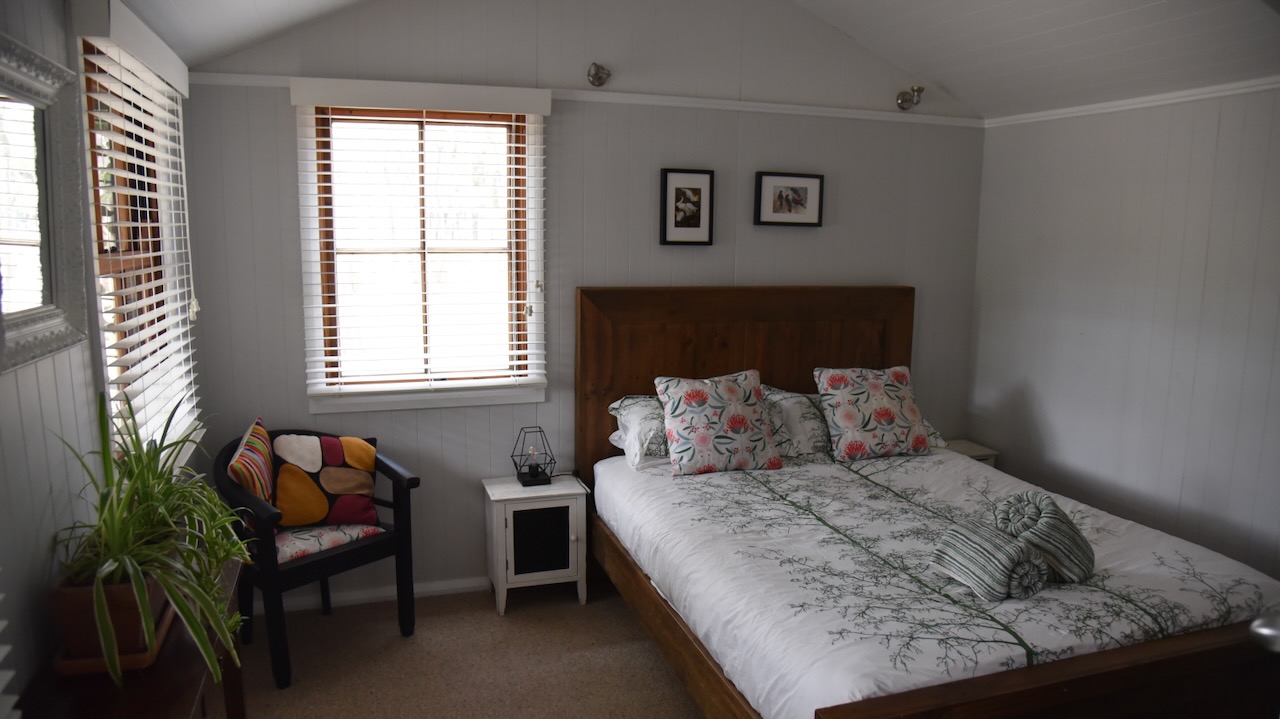
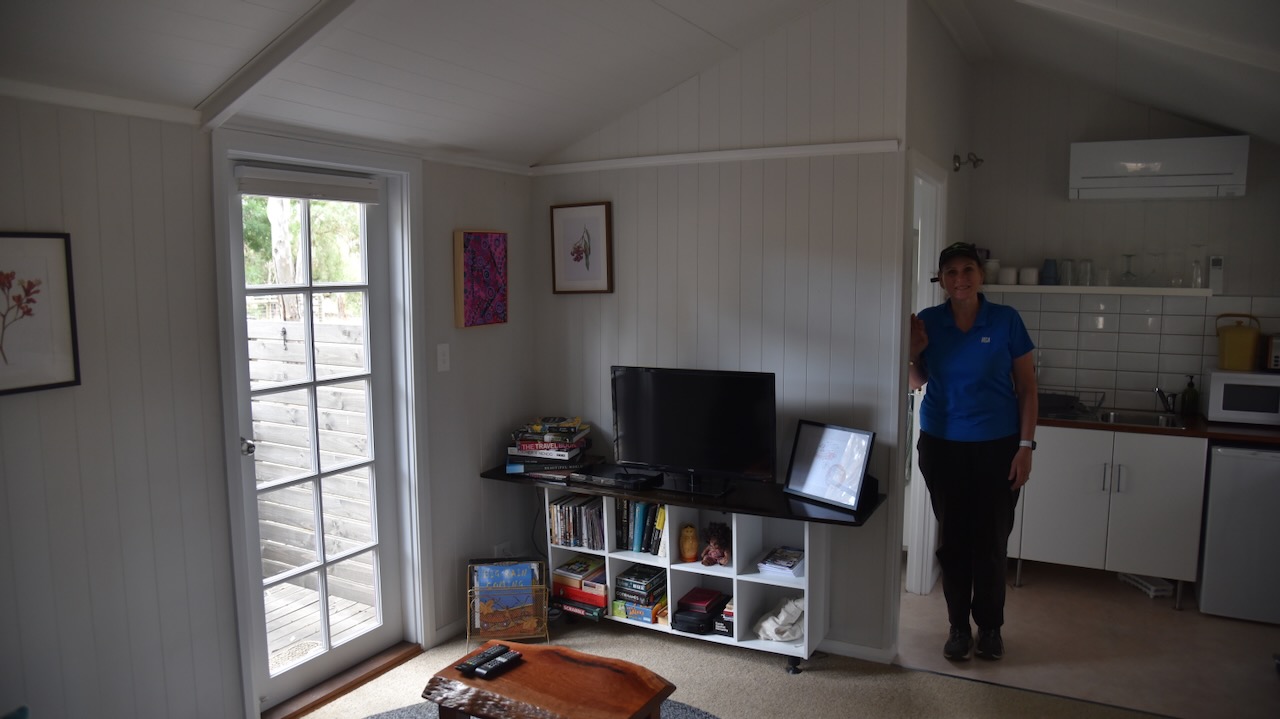
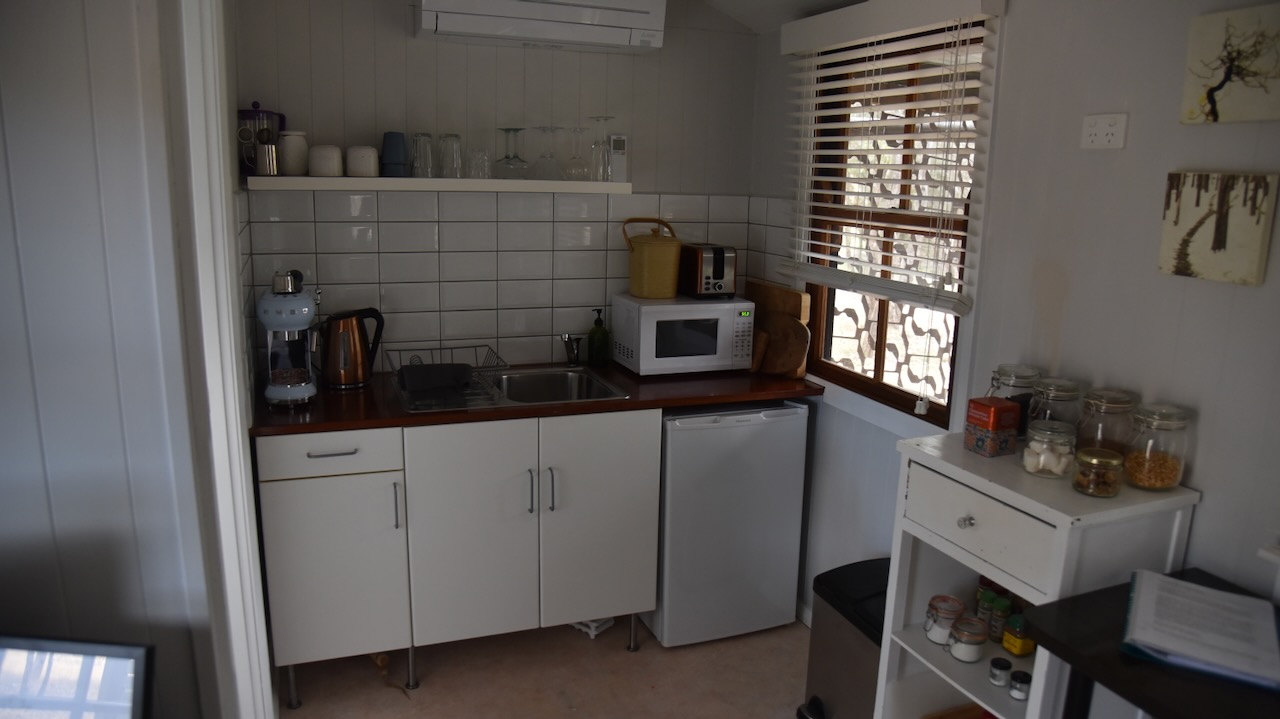
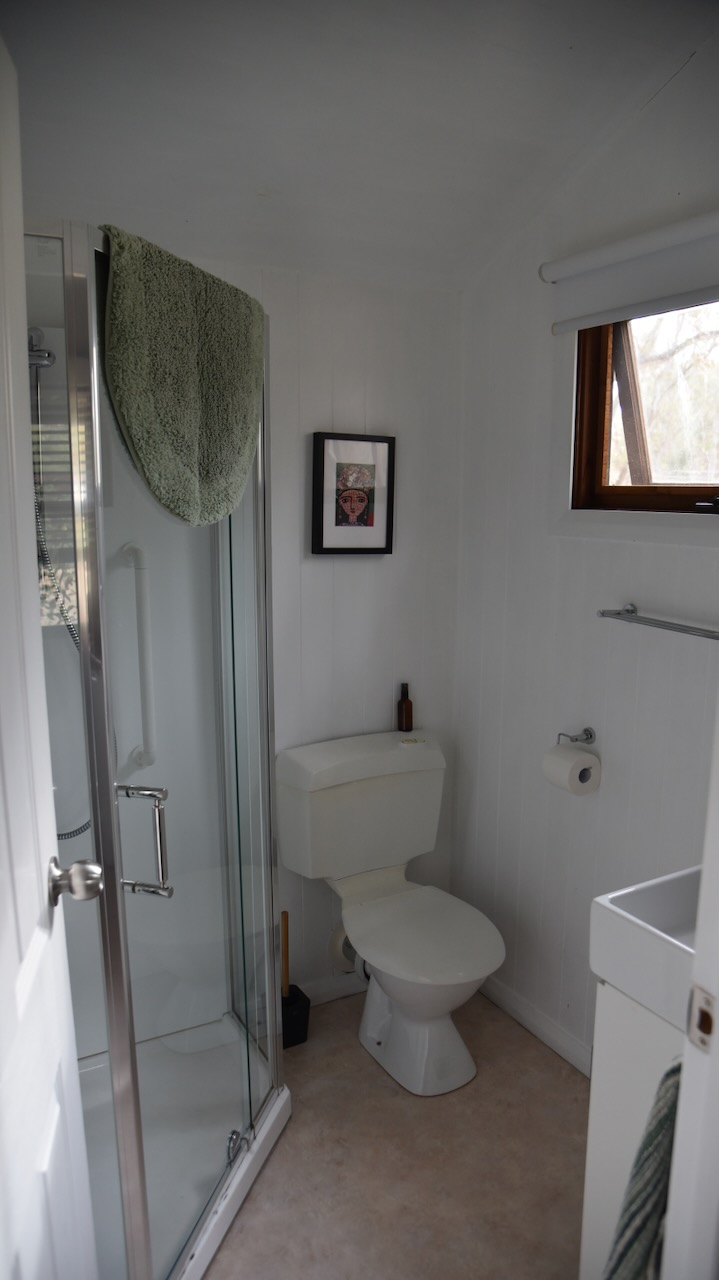
Marija and I then drove from Newstead to our accommodation at Dutjiya Mang at Sandon, a beautiful little one-bedroom cottage set on a 1.8-acre property. Dutjiya Mang means ‘rest here’ in Dja Dja Wurrung.
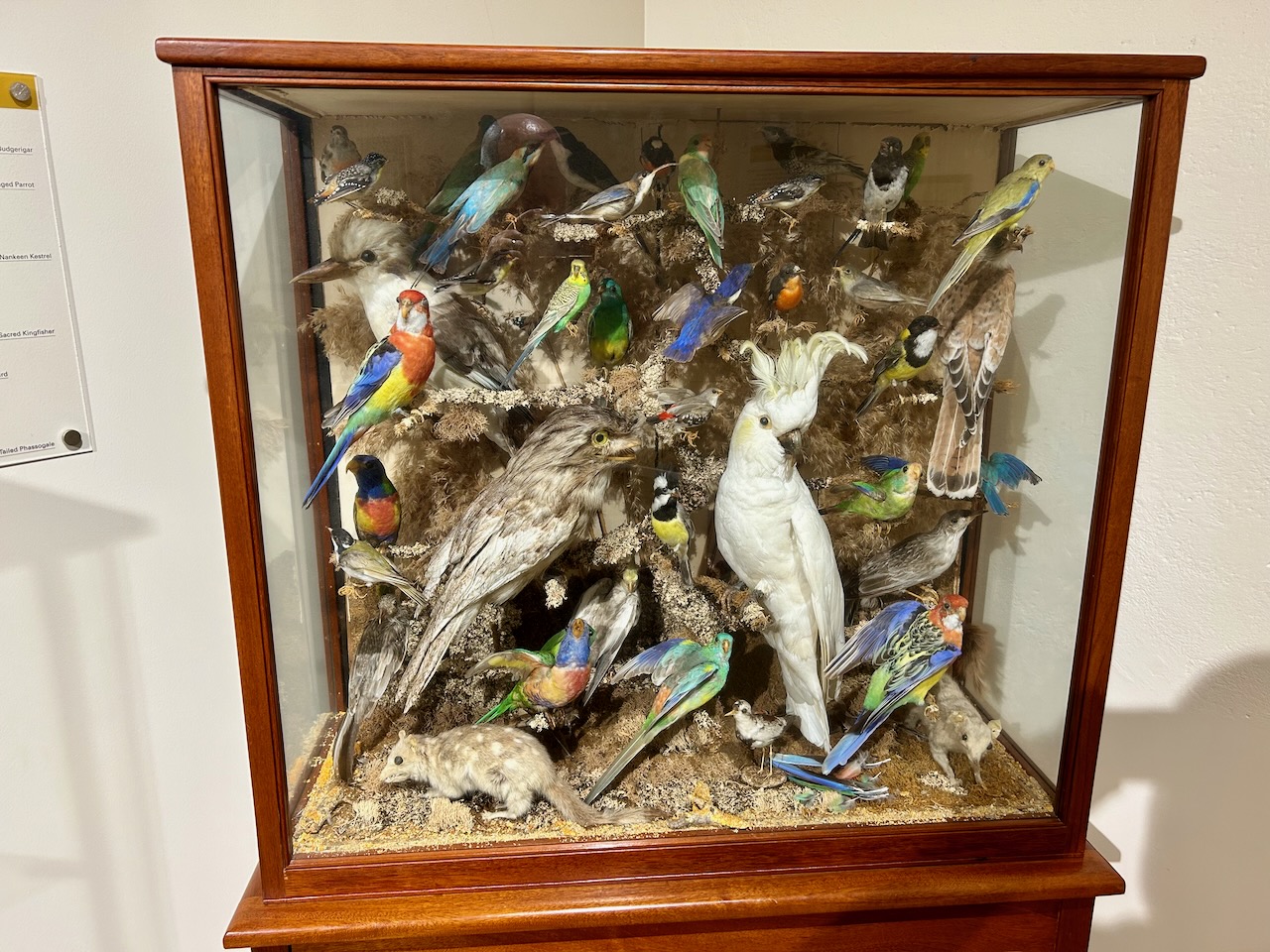
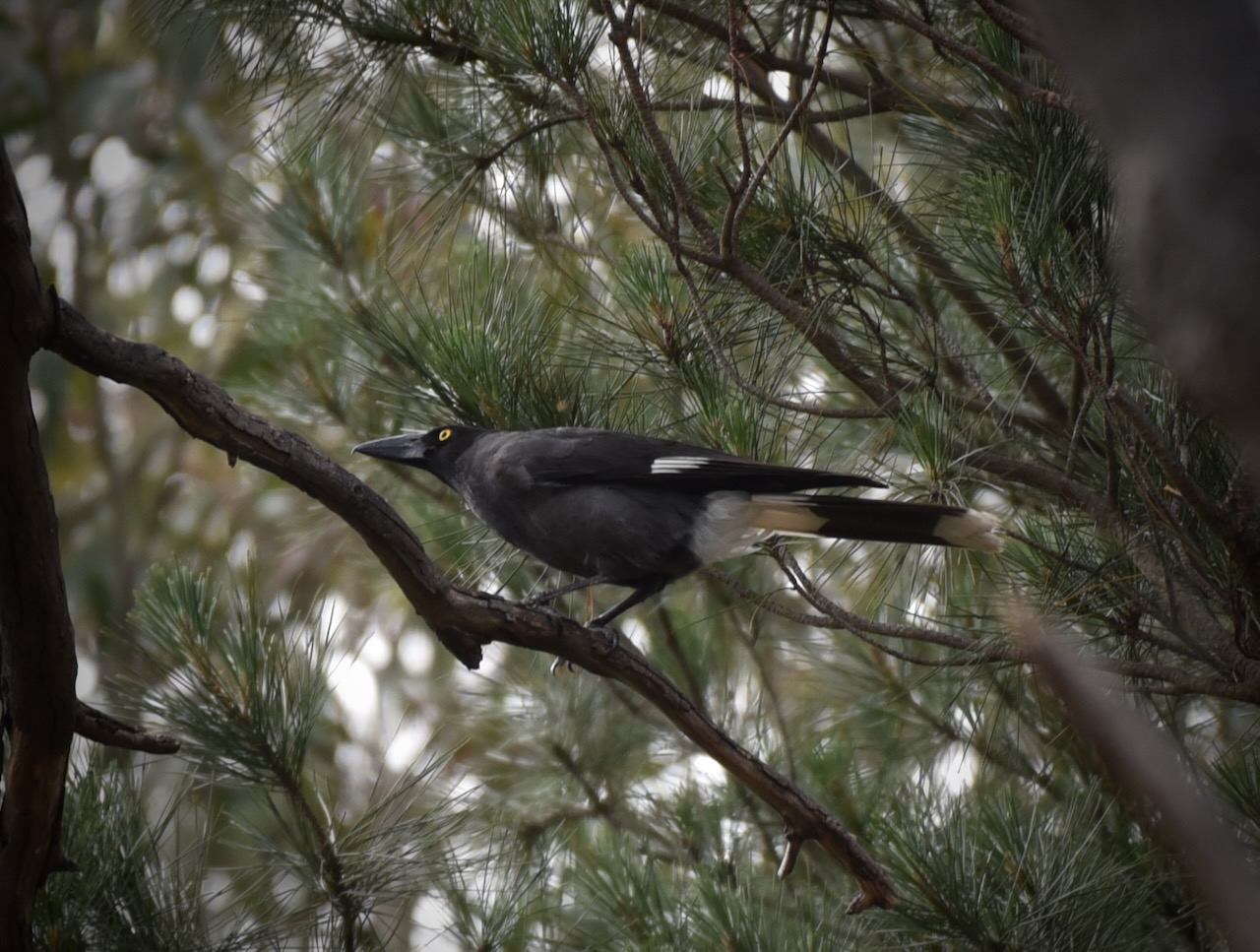
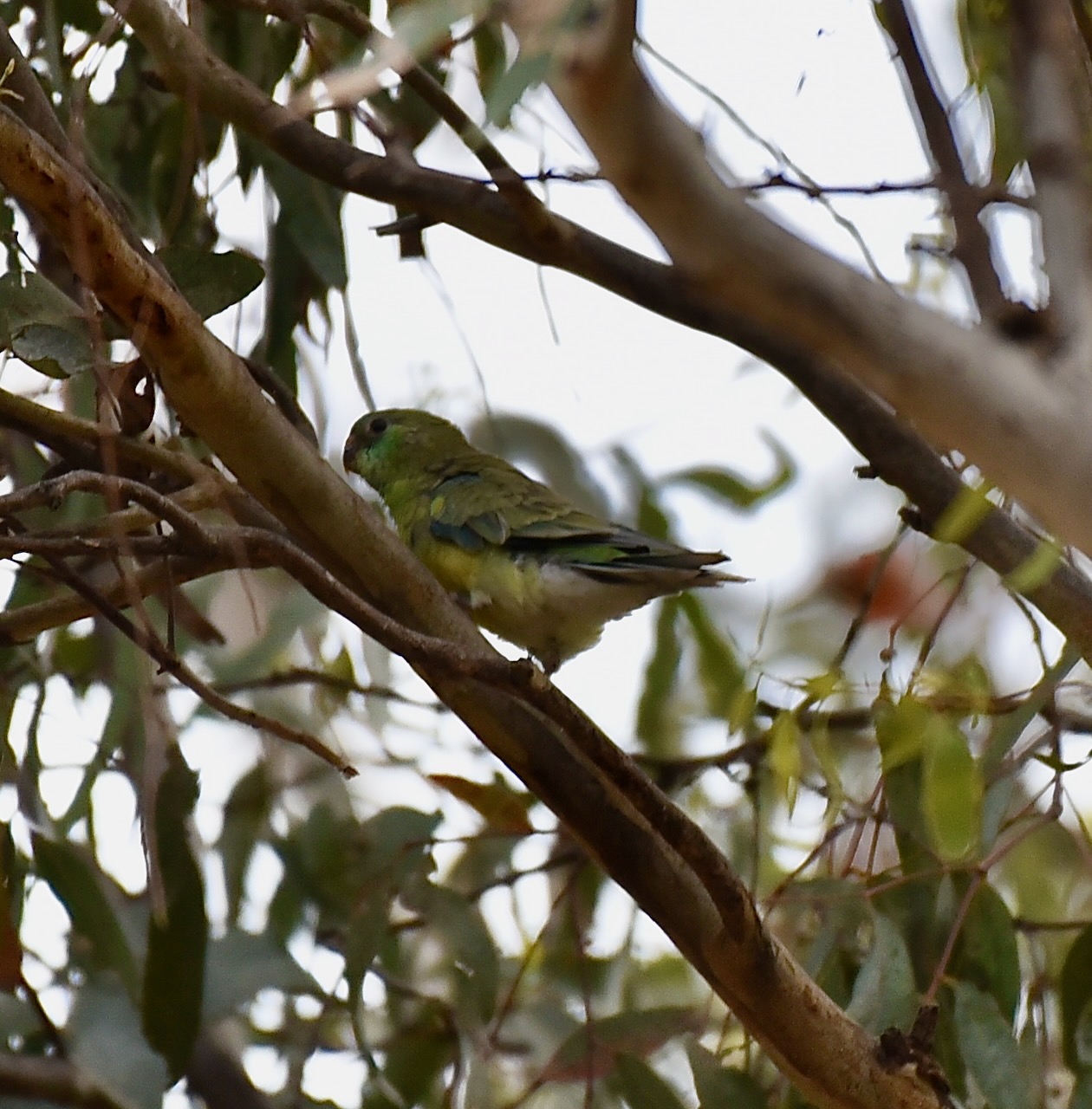
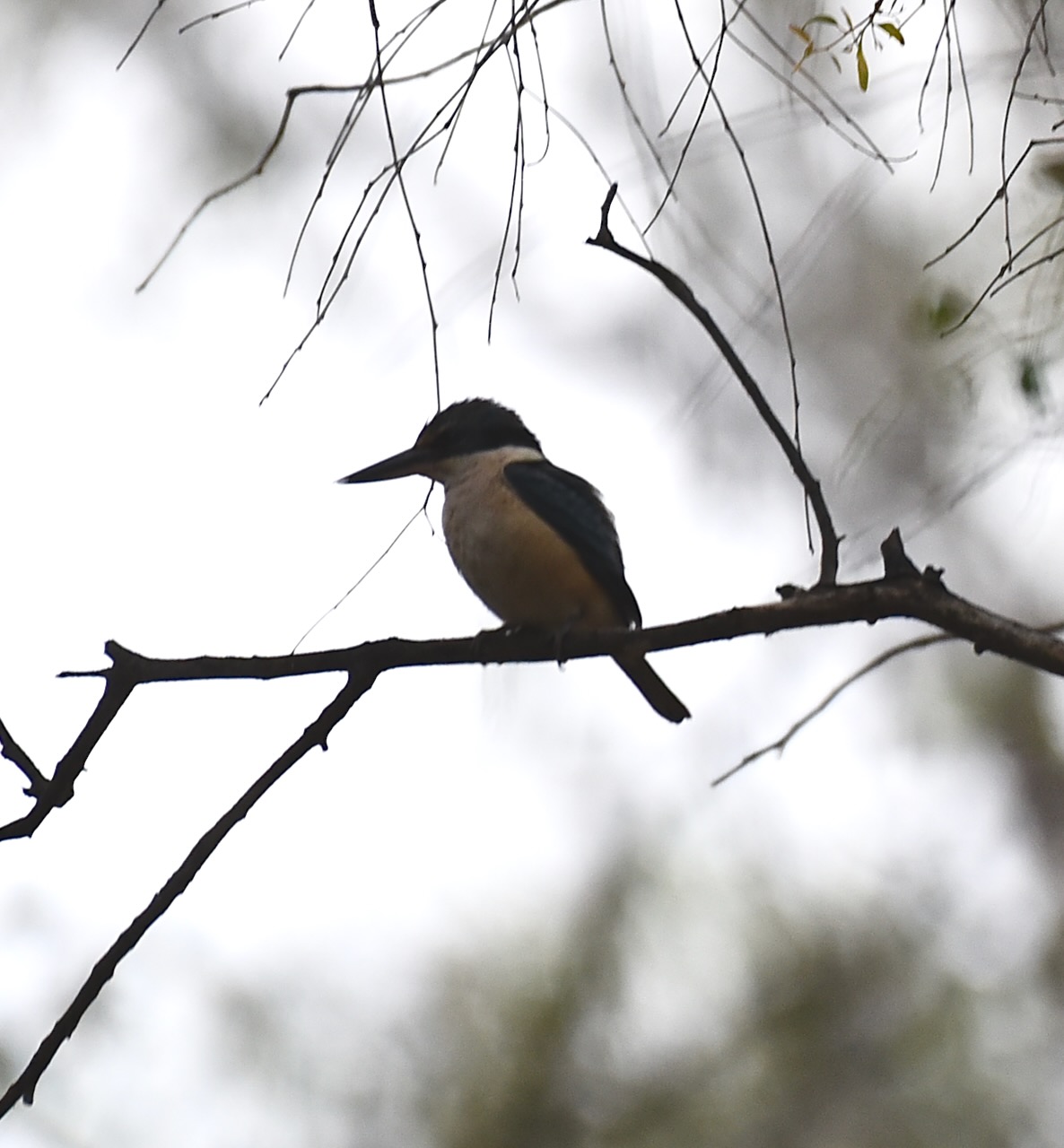
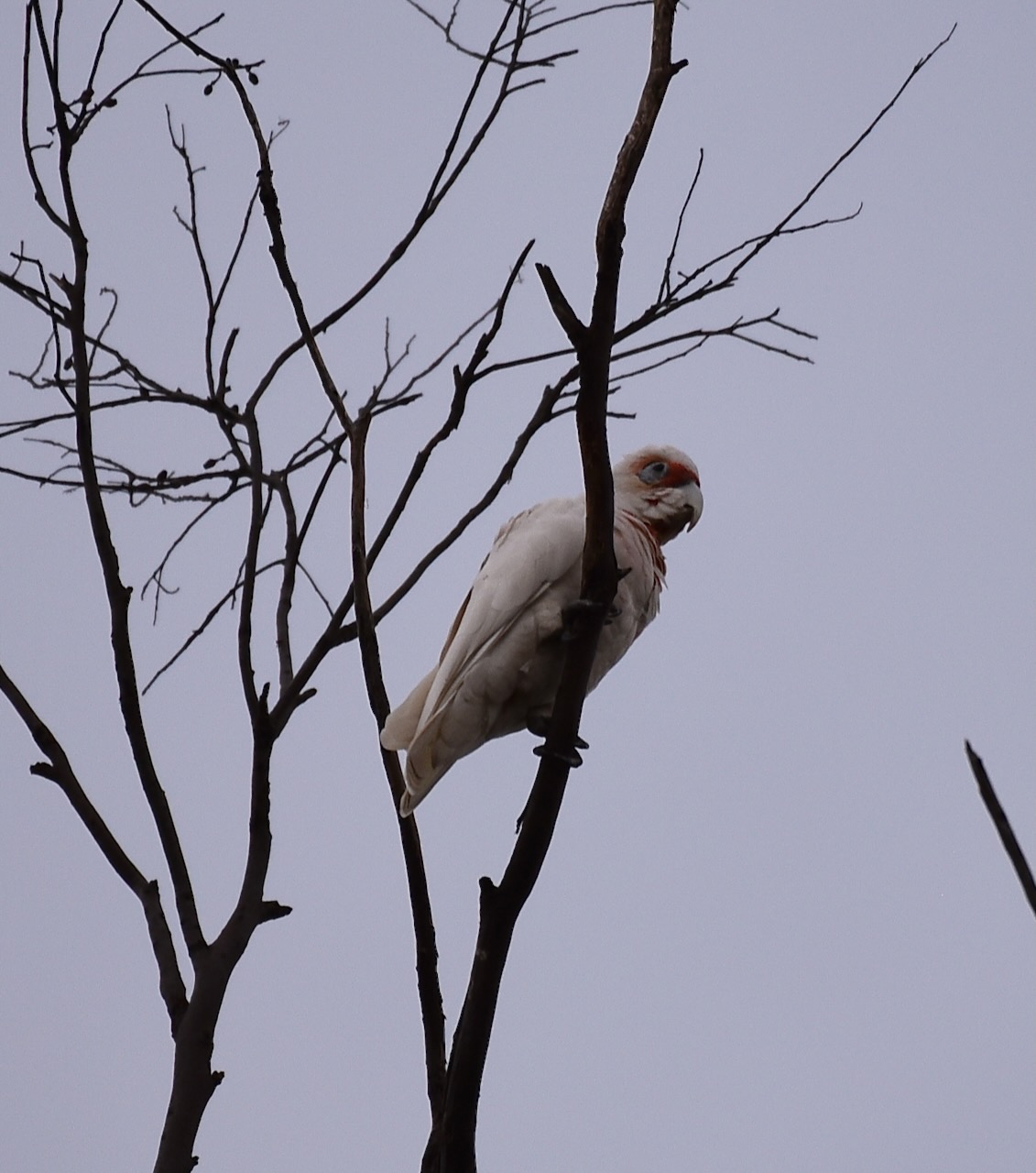
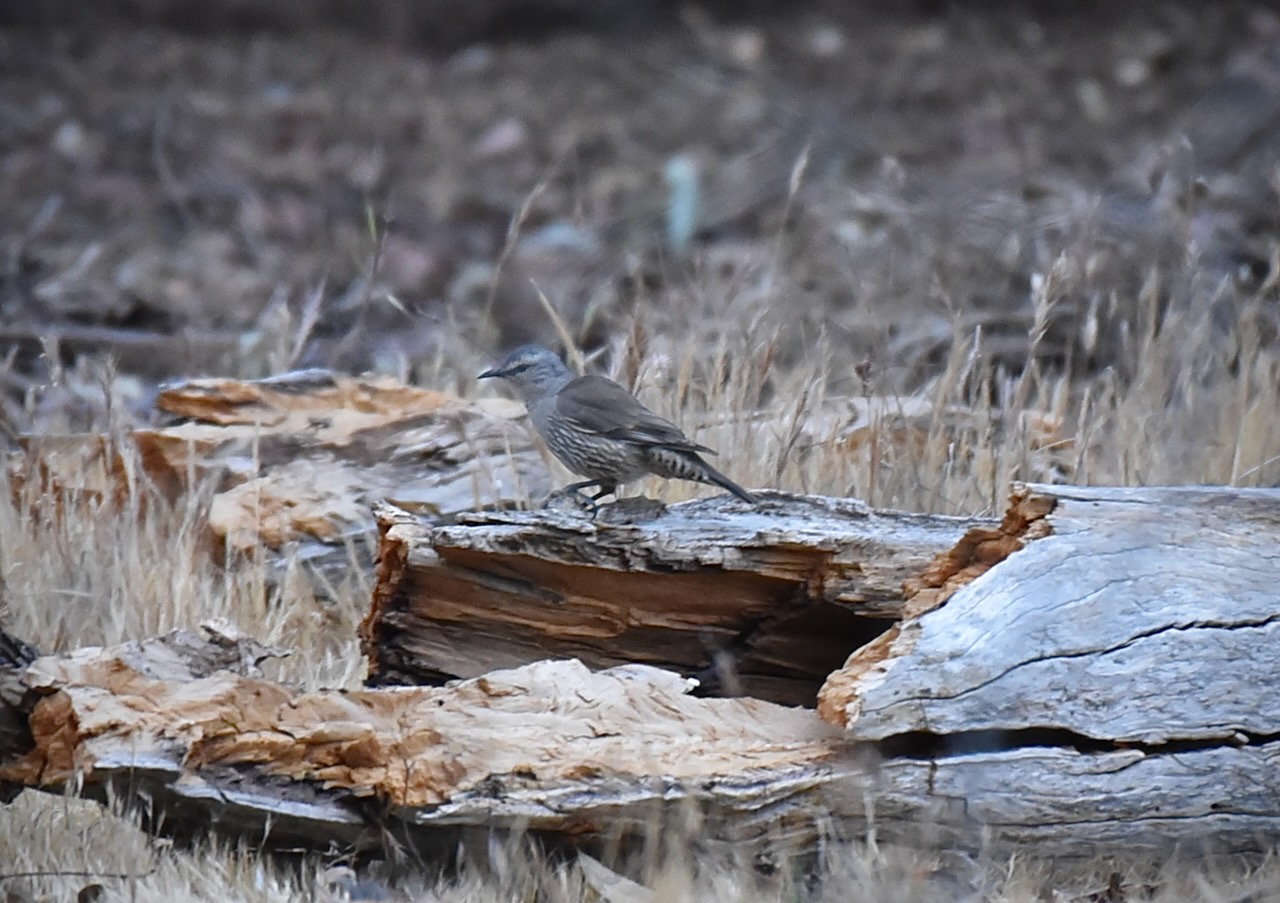
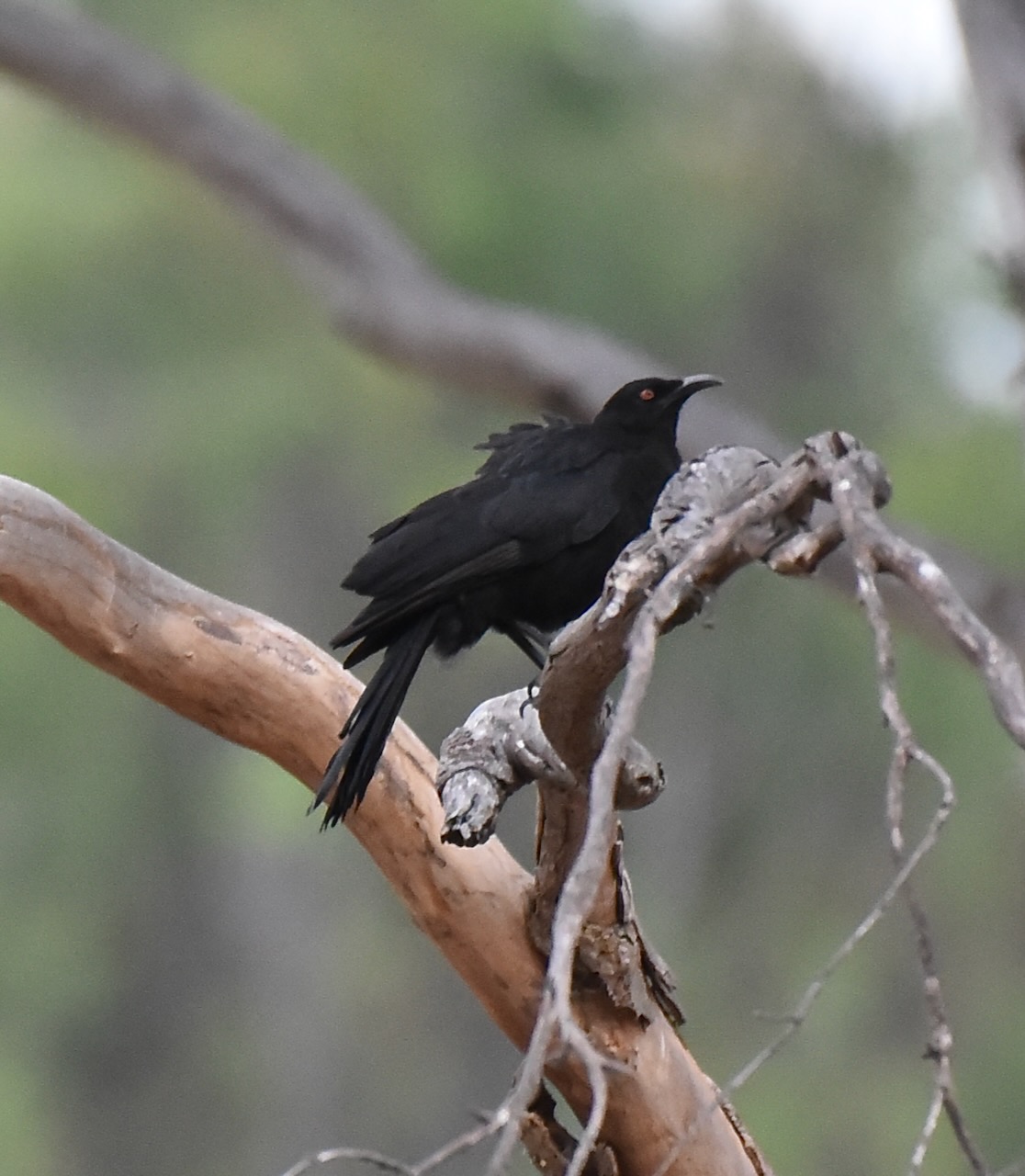
It was getting a little dark, but I did manage to sneak in some bird photography at the Sandon accommodation.
We then enjoyed a BBQ and a few drinks.
References.
Ancestry.com.au. (2016). Ancestry® | Genealogy, Family Trees & Family History Records. [online] Available at: https://www.ancestry.com.au/. [Accessed 22 Mar 2024]




















































 VK5PAS