On Wednesday 13th March 2024, I headed over to the Mount George Conservation Park VKFF-0784, at Bridgewater. It was our monthly meeting of the Strathalbyn Amateur Radio Group.
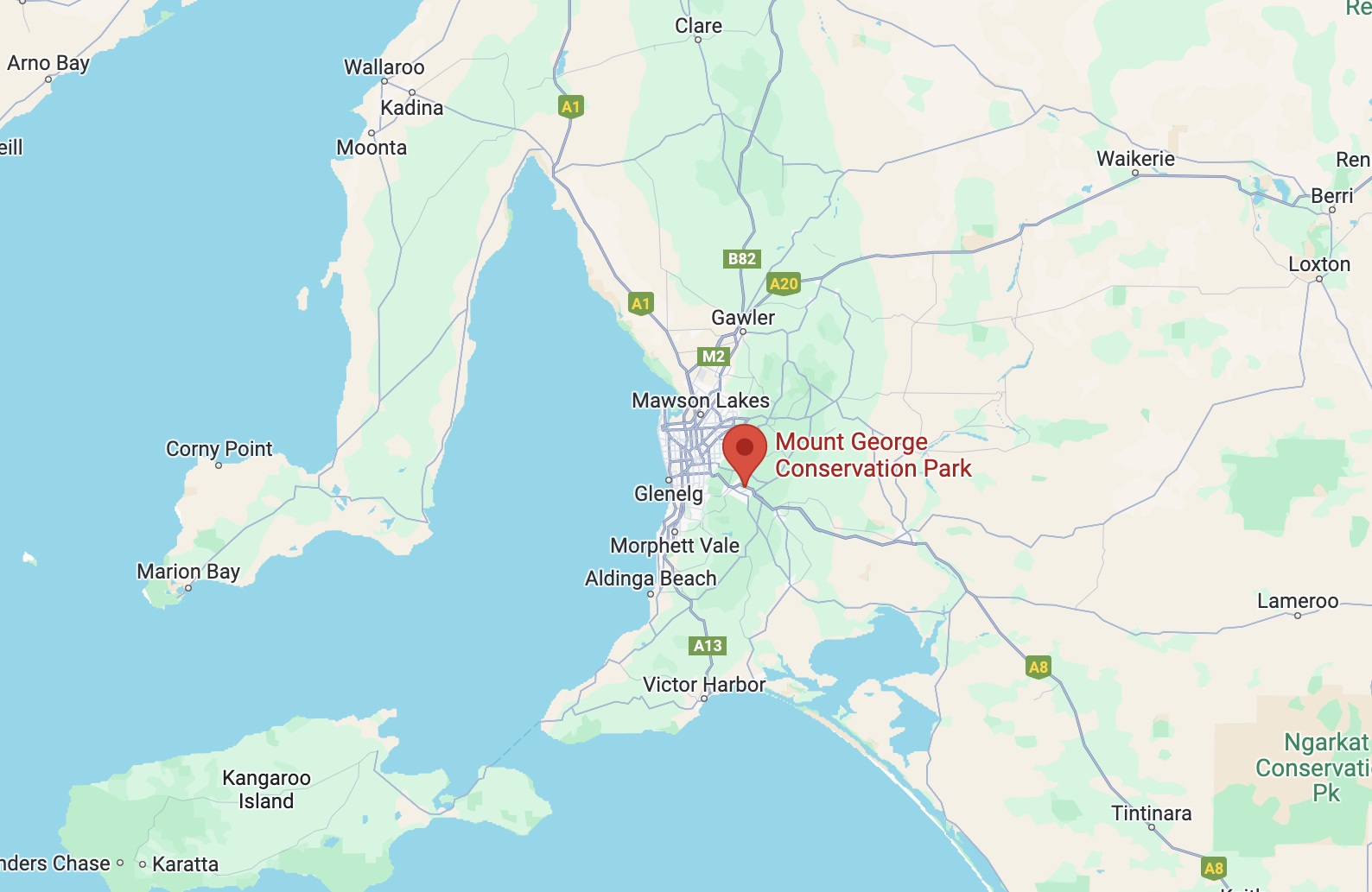
Above:- Map showing the location of the Mount George Conservation Park. Map c/o Google Maps.
Many people travelling along the busy South Eastern Freeway probably wouldn’t even know this park exists. The Mount George Conservation Park is located just on the northern side of the Freeway between Stirling and Bridgewater.
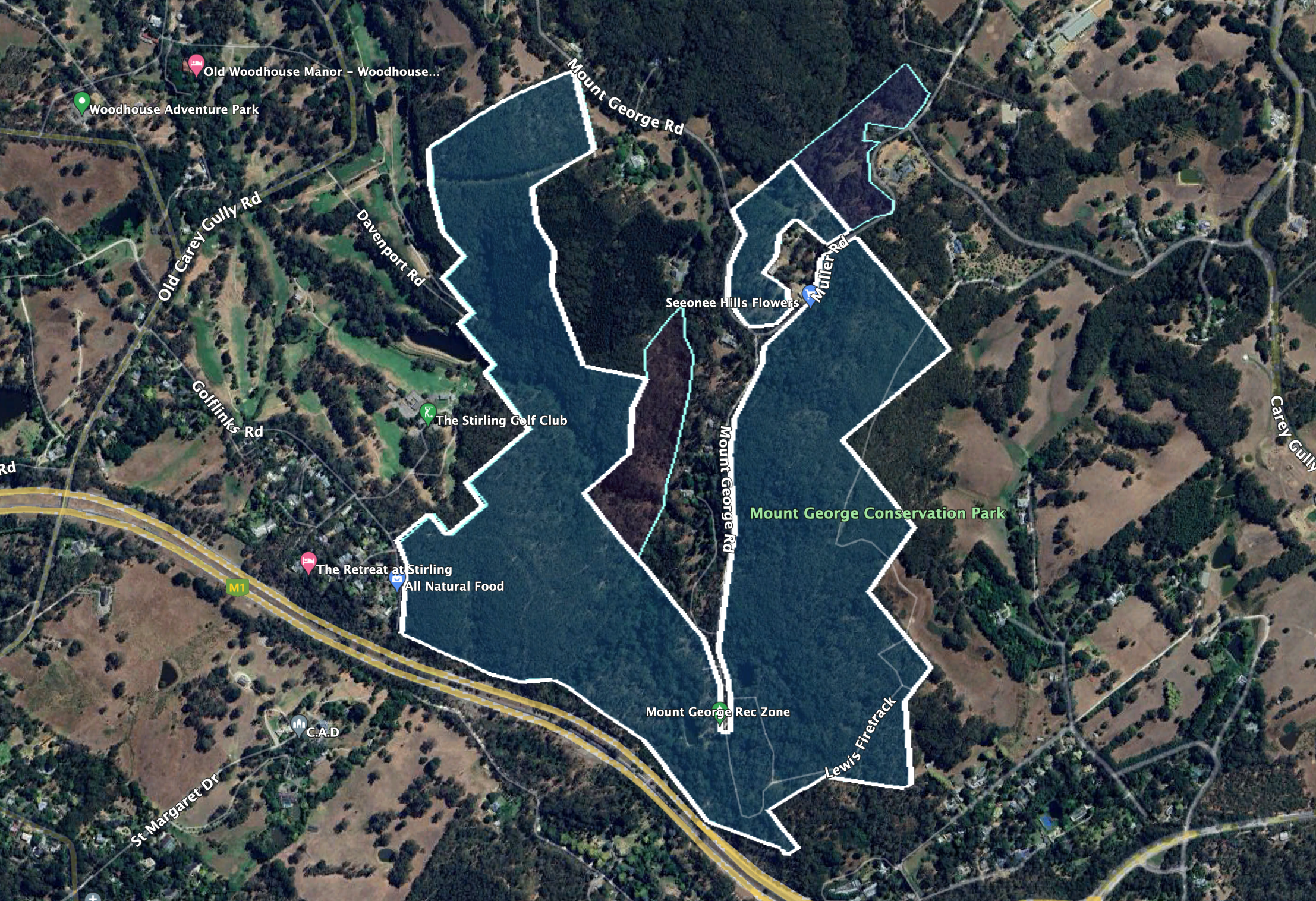
Above:- An aerial view of the Mount George CP. Image c/o Google Earth.
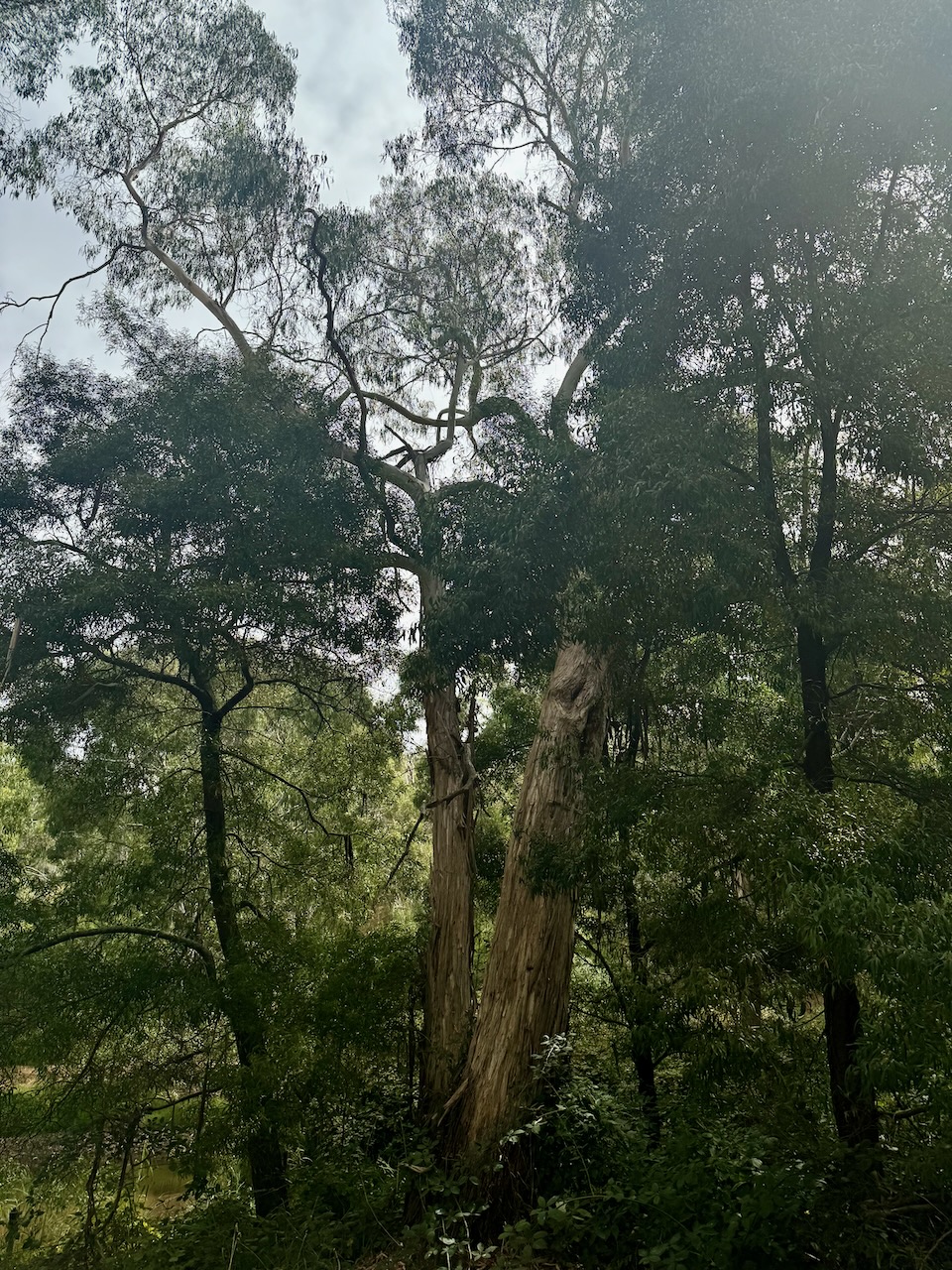
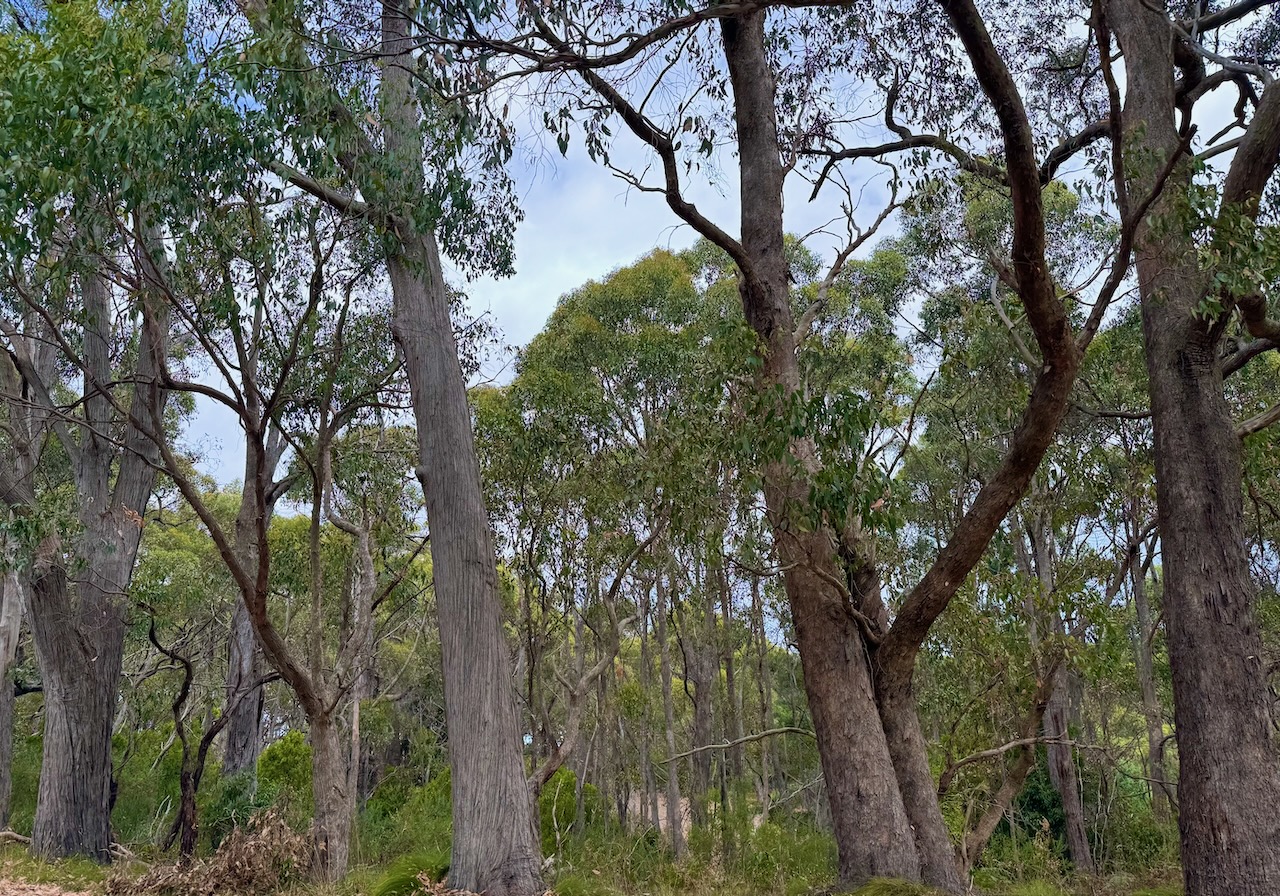
The park is about 85 hectares in size and was proclaimed on the 7th day of November 1996. On the 16th day of October 2003, an additional 18 hectares was added to the park. The park predominantly consists of messmate stringybark open forest. Other native vegetation in the park includes brown stringybark, mountain gum, and rough-barked manna gum. The understorey consists of sedges, grasses, herbs, and ferns. (Birds SA 2024)
The Mount George summit, 520 metres, is located within the park. Sadly it does not have the required prominence for the Summits on the Air (SOTA) program.
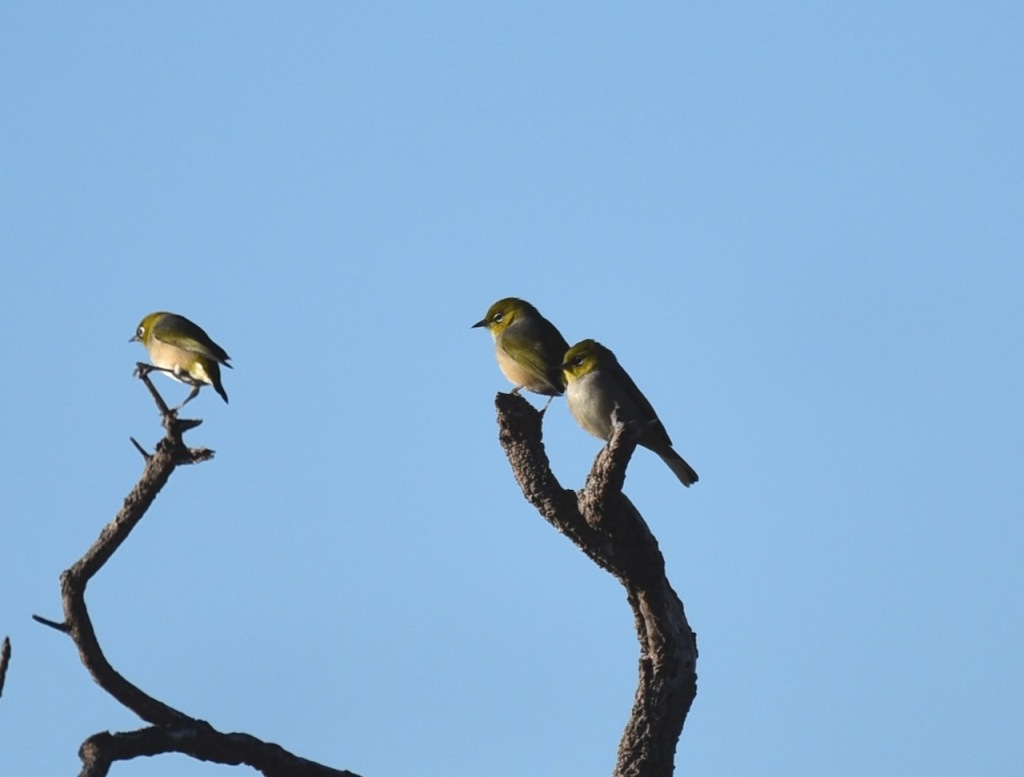
A total of 45 native bird species have been recorded in the park including Adelaide Rosella. White-throated Treecreeper, Superb Fairywren, Crescent Honeyeater, WHite-browned Scrubwren, Brown Thornbill, Striated Thornbill, Grey Faintail, and Silvereye. (Birds SA 2024)
During the 1840s much of the land in the area of the park was cleared by European settlers for farming and market gardens. (Parks SA 2024)
The park contains several walking trails. A section of the Heysen Trail also passes through the park. (Parks SA 2024)
Two Heritage agreements border the Mount George Conservation Park: Unnamed (No.HA856) and Unnamed (No.HA1609). (CAPAD 2022)
Above:- An aerial view of the park looking north. Image c/o Google Maps.
Those in attendance were Peter VK5PET, Robbie VK5MRS, and Bill VK5WMK.
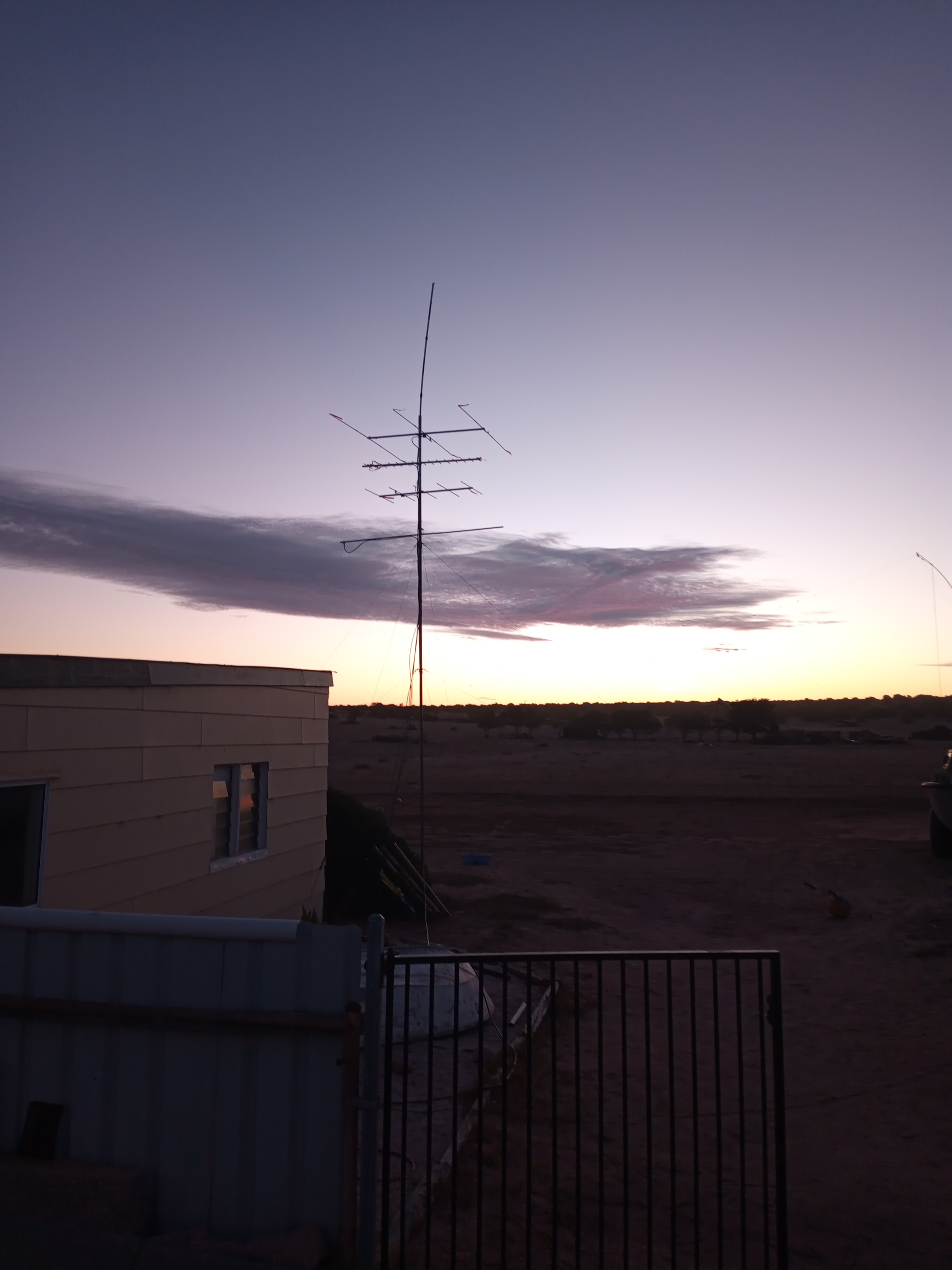
I set up my portable station comprising the Yaesu FT857, 40 watts, and a 20/40/80m linked dipole, inverted v, supported by a 7-metre squid pole.
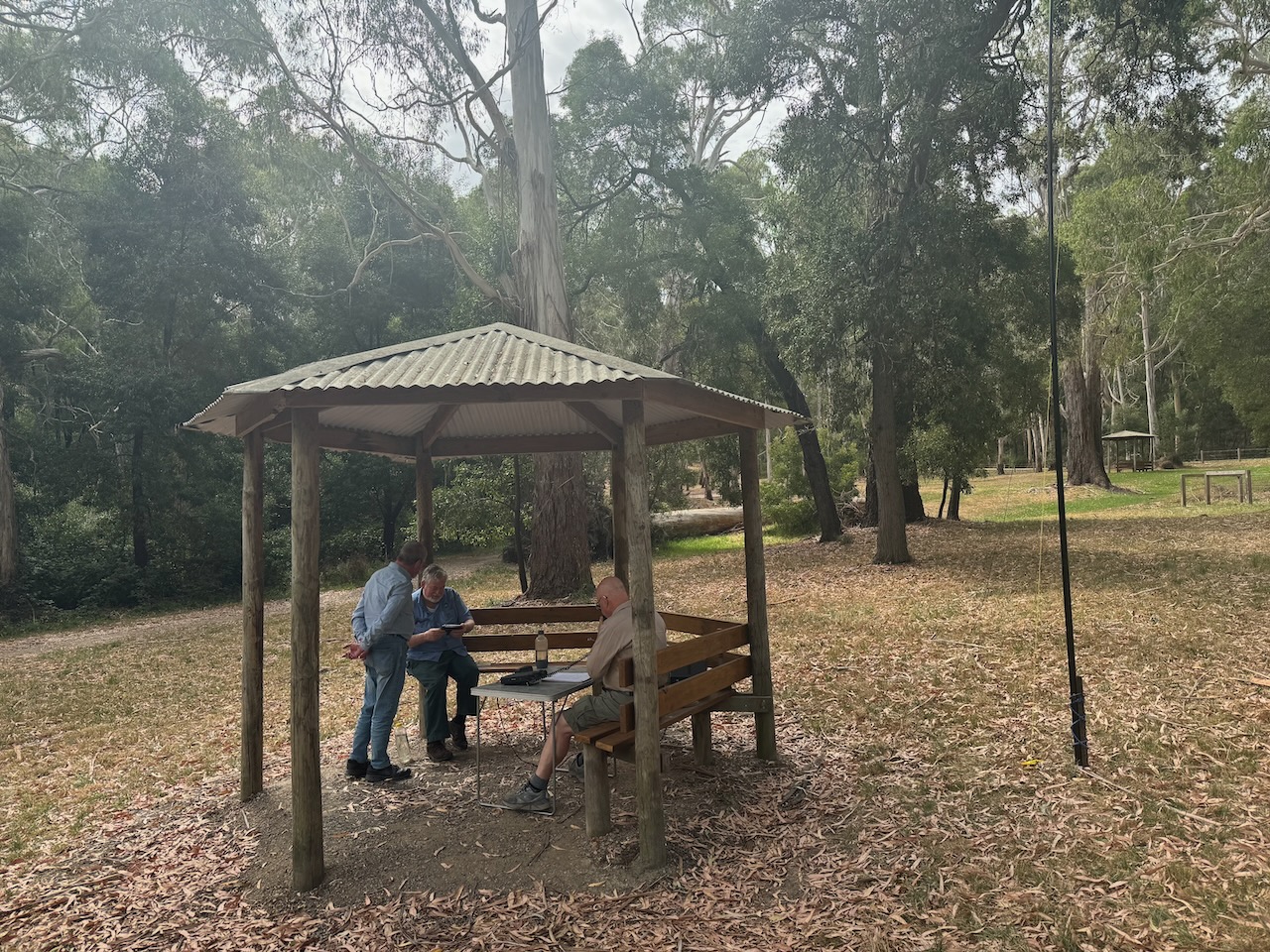
We operated from a shelter in the park.
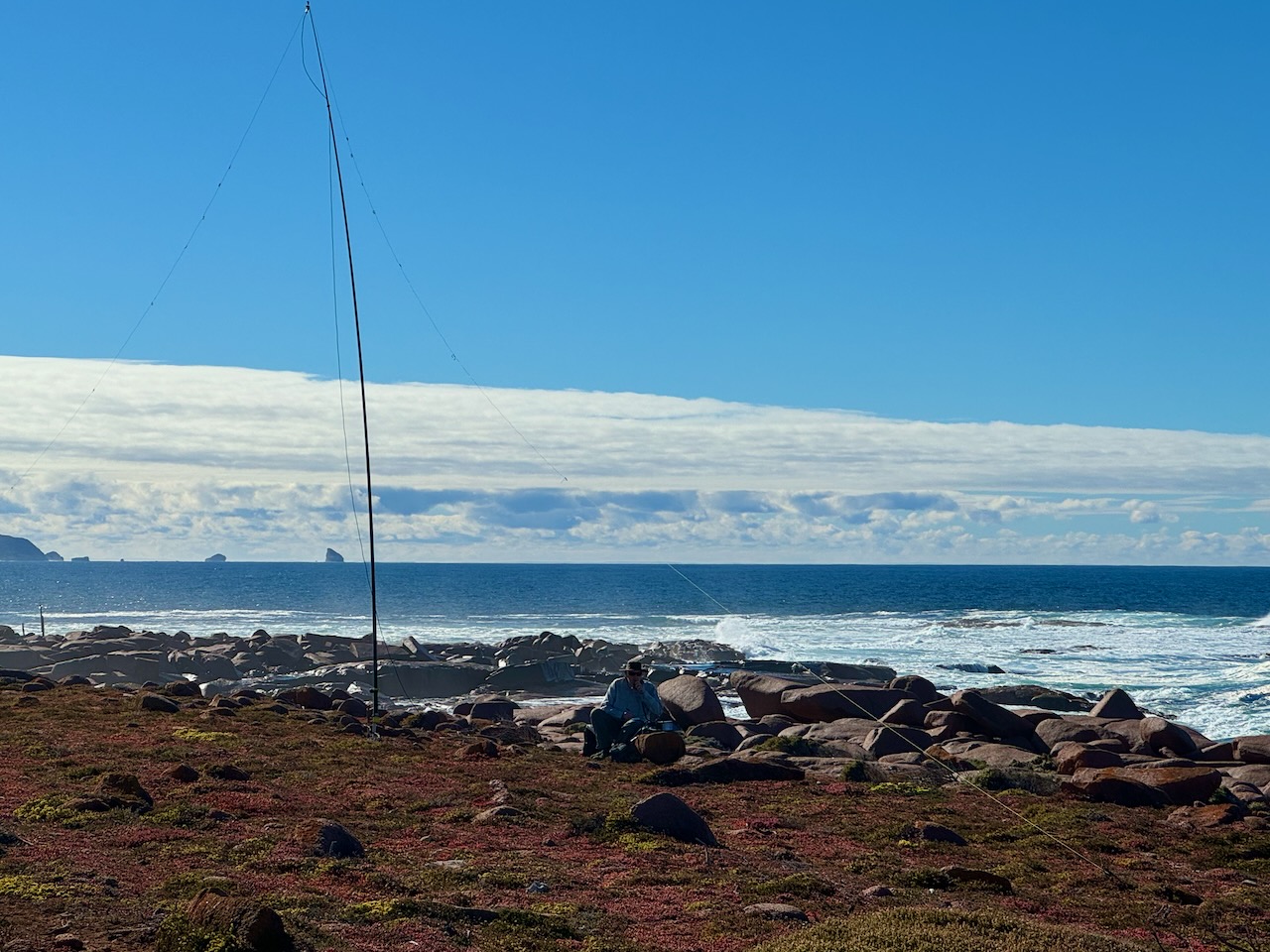
Above:- Our operating spot for the afternoon.
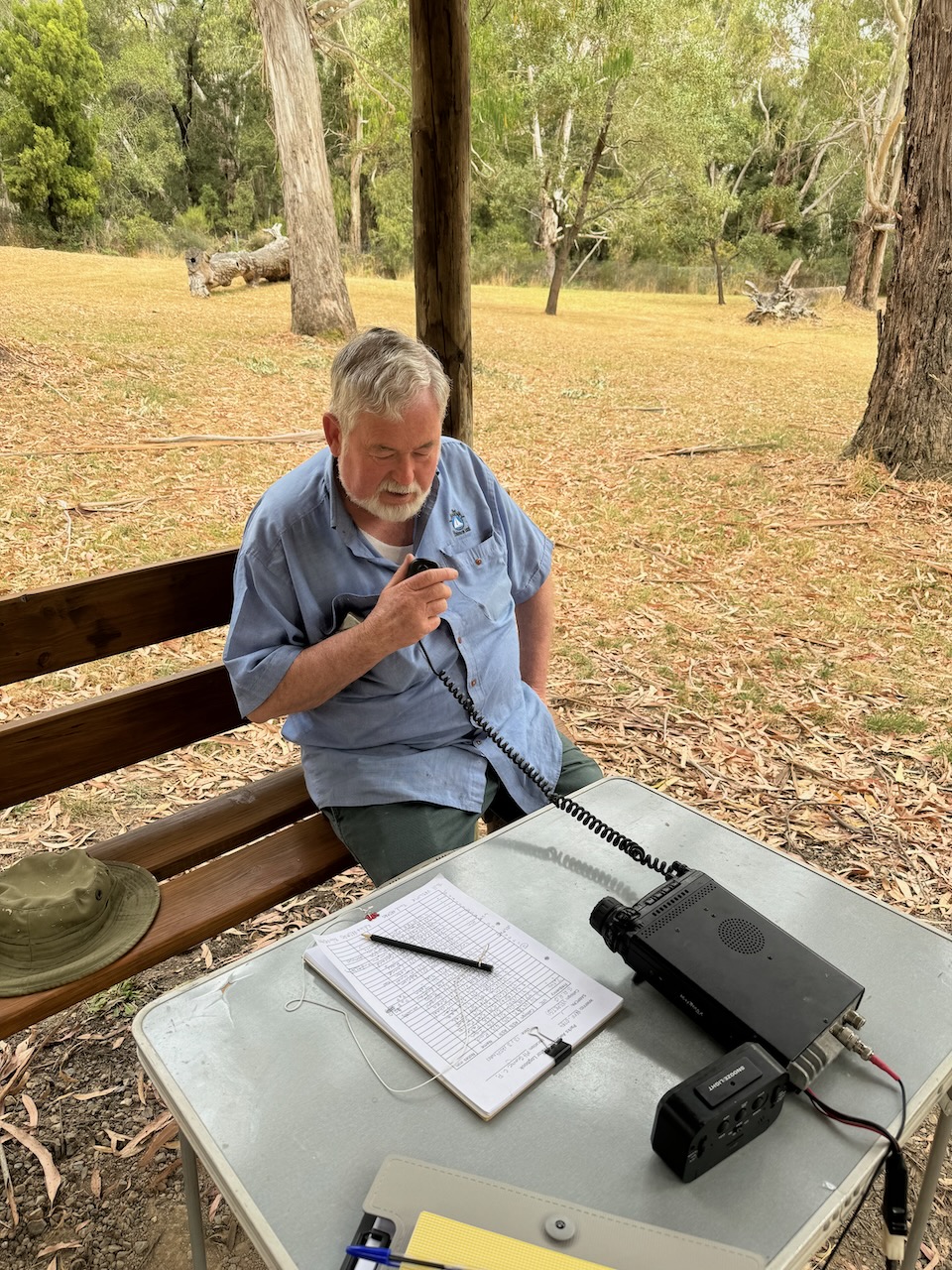
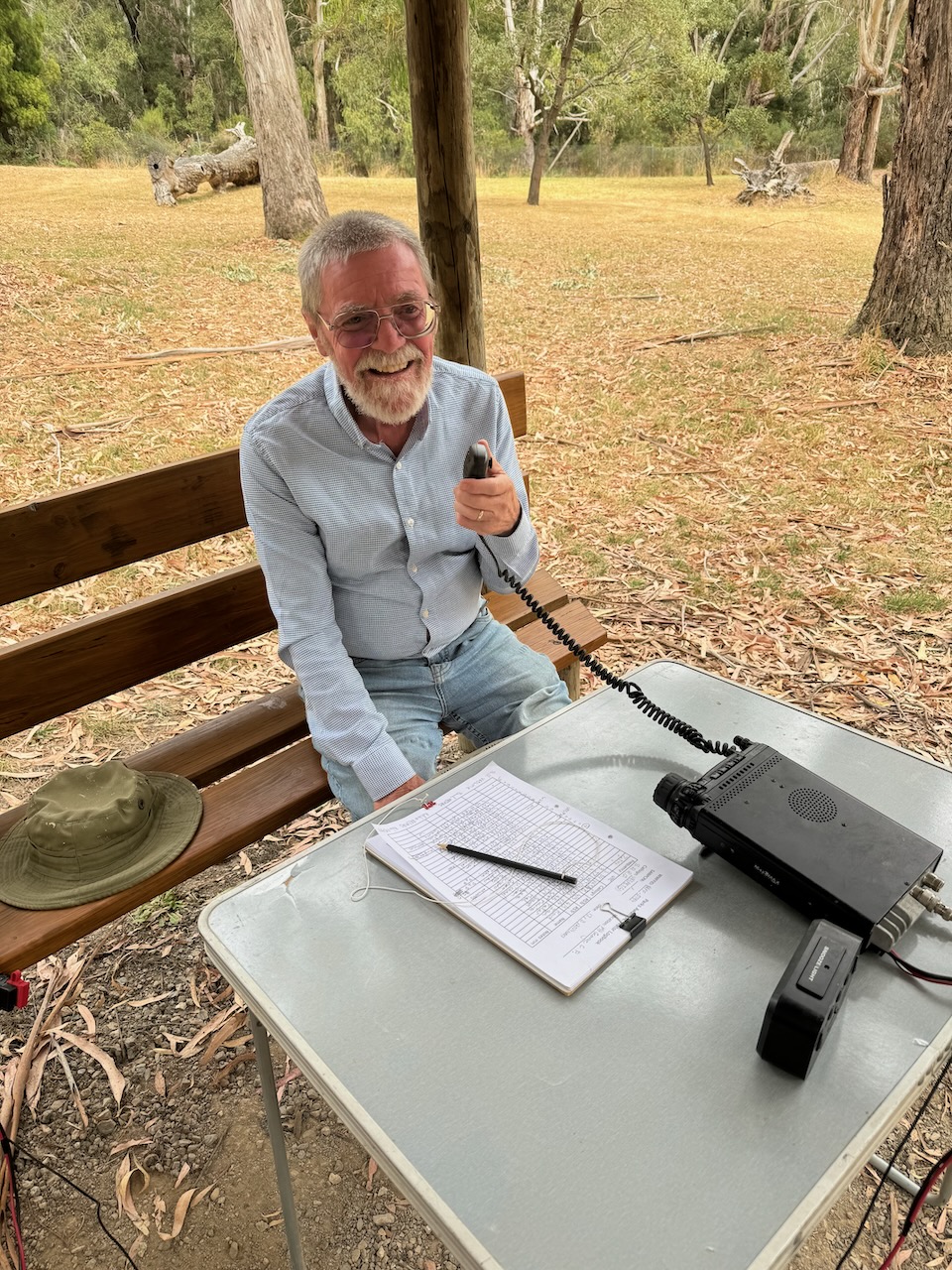
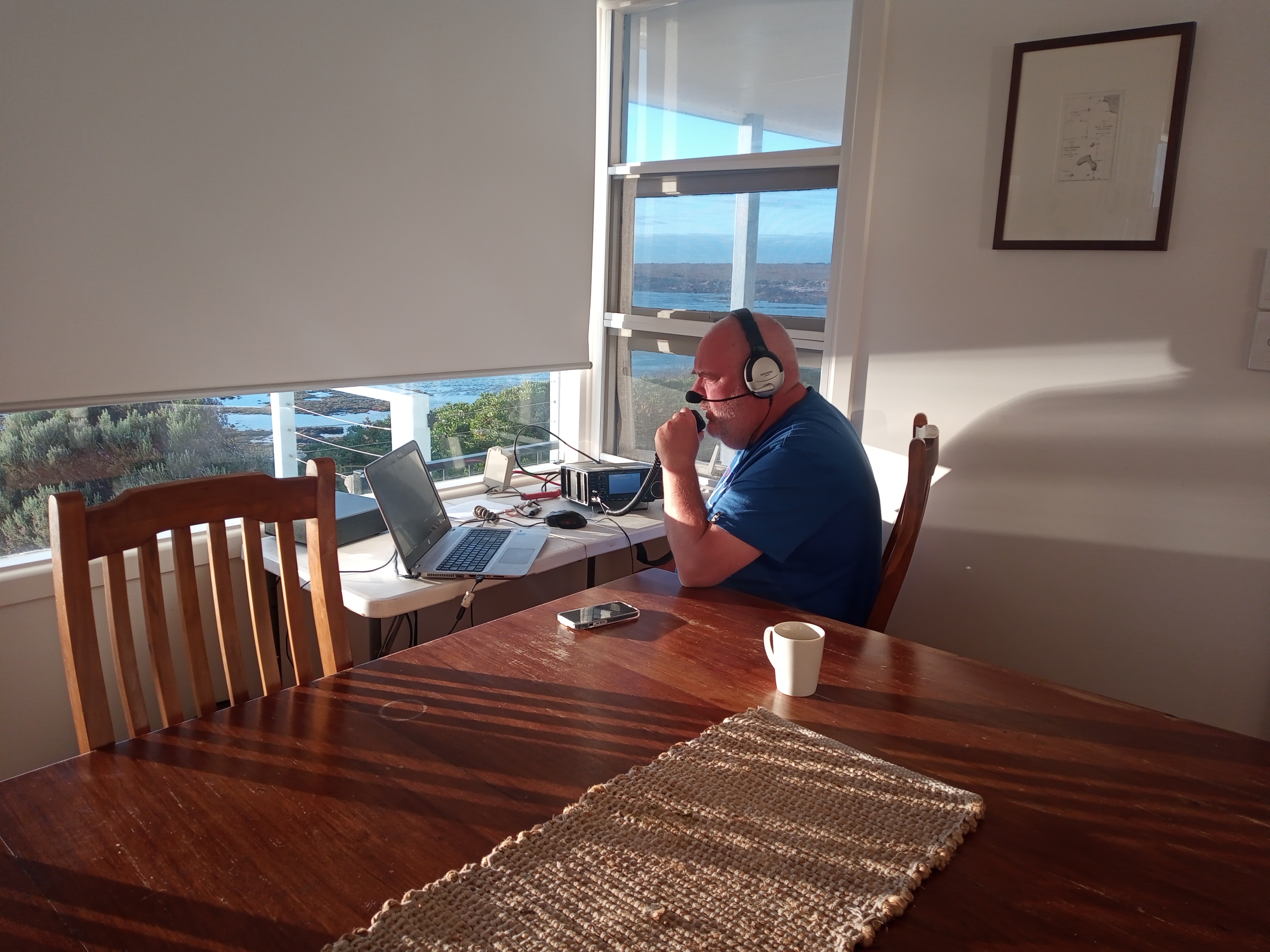
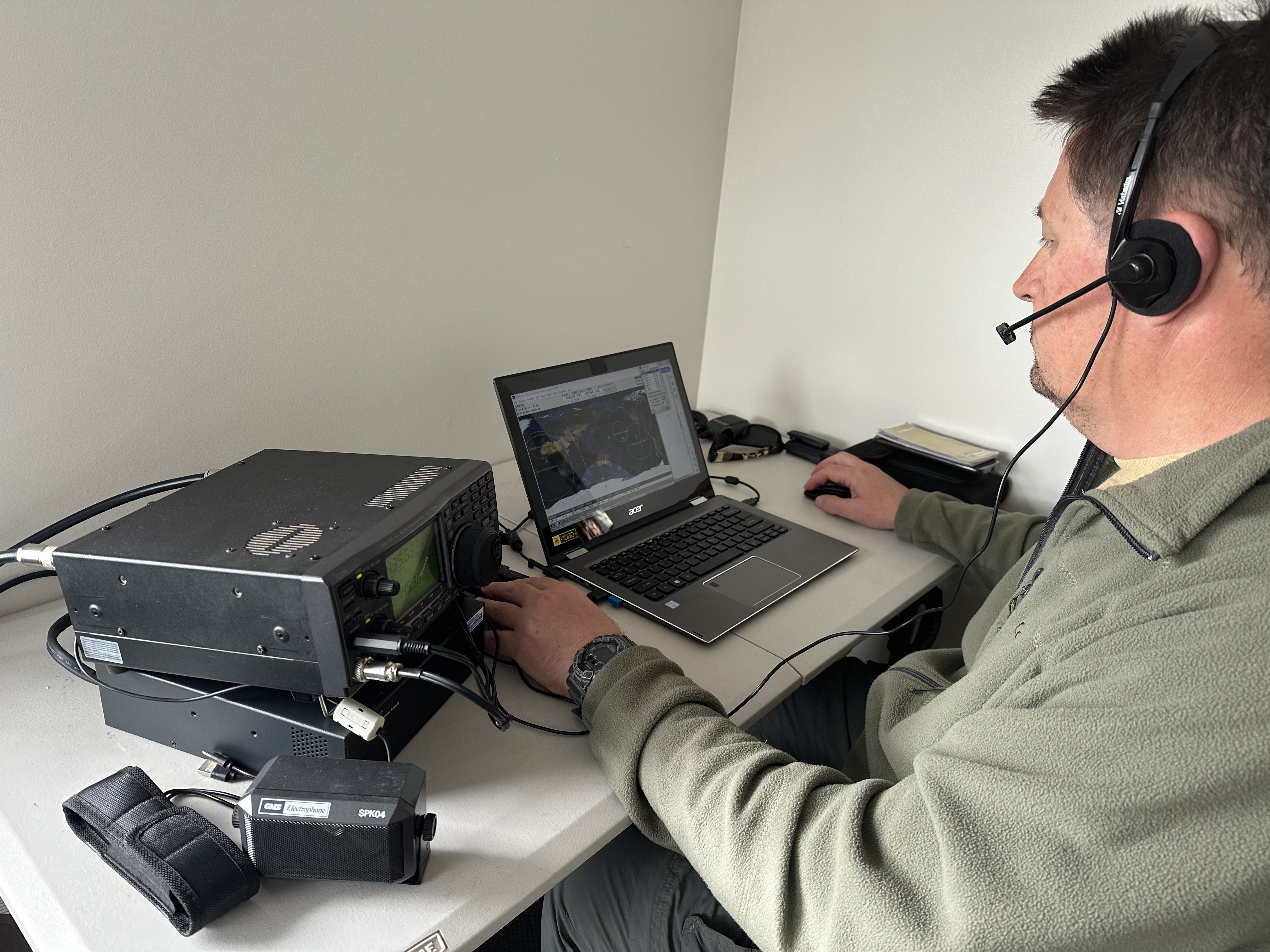
Peter VK5PET who has previously activated several parks kicked off the afternoon and soon had a steady flow of callers.
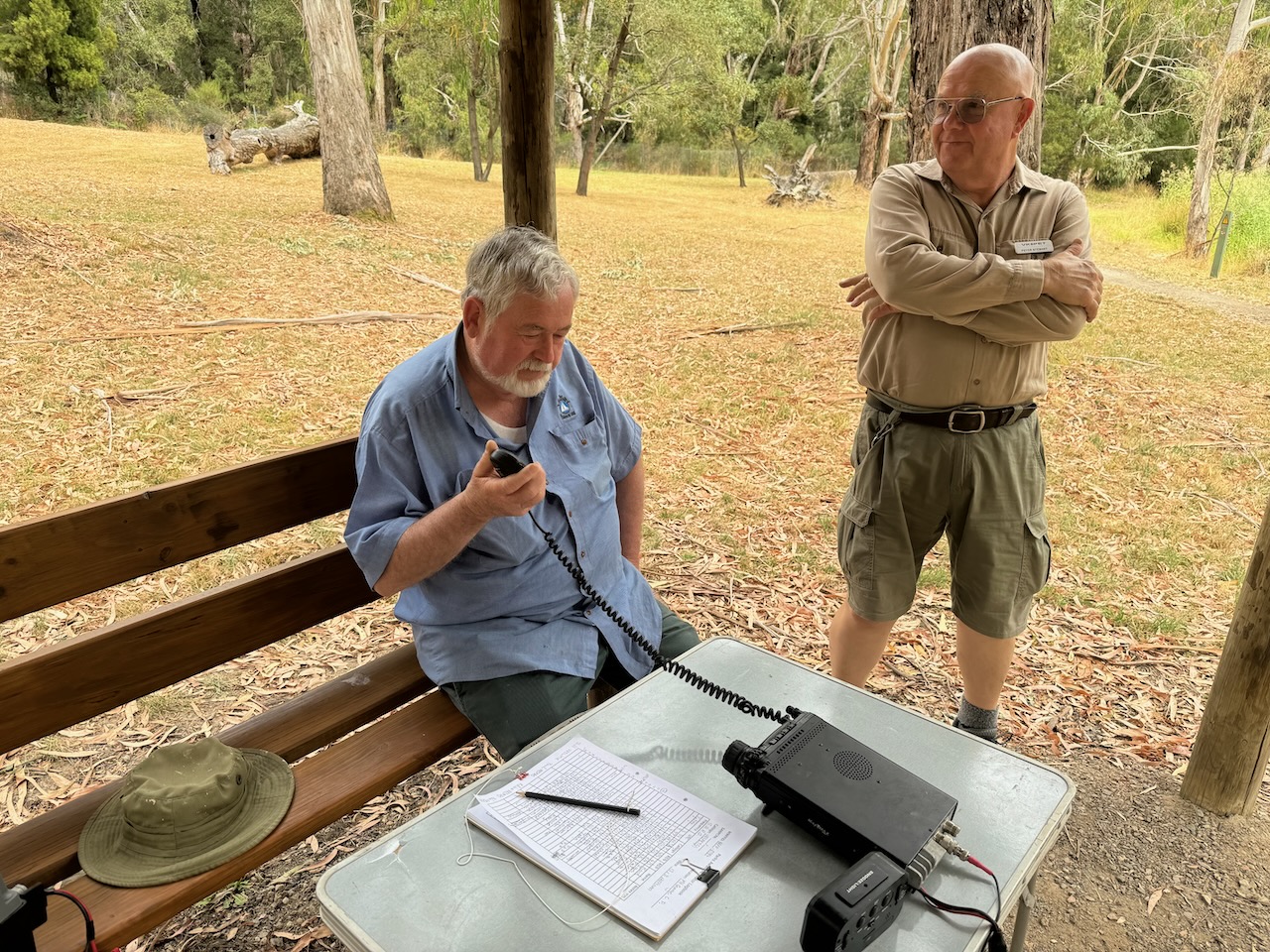
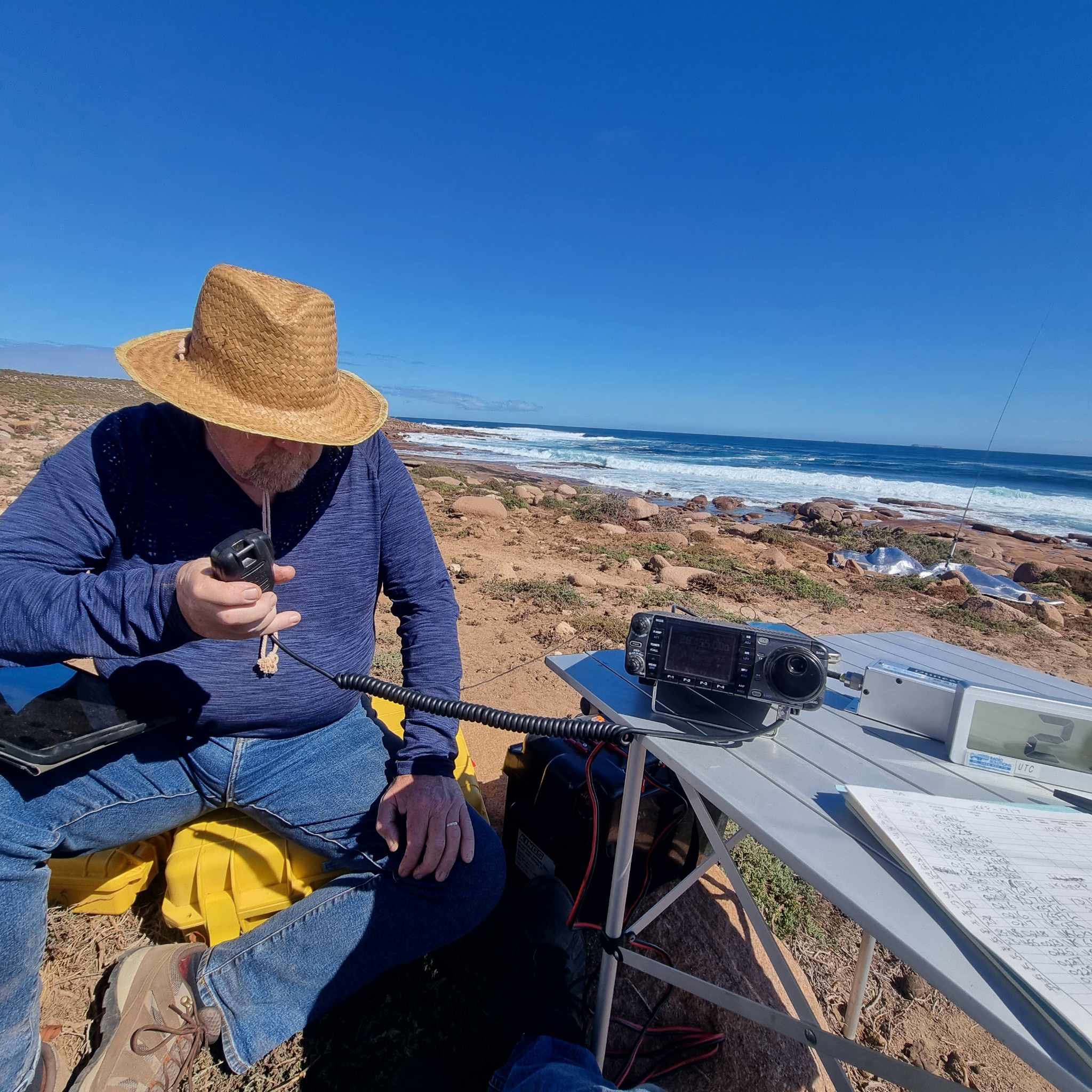
Above:- Peter VK5PET with the mic, being watched by Bill VK5WMK.
Peter filled his log while the rest of us kicked back, had a few laughs, and tried to solve the world’s problems.
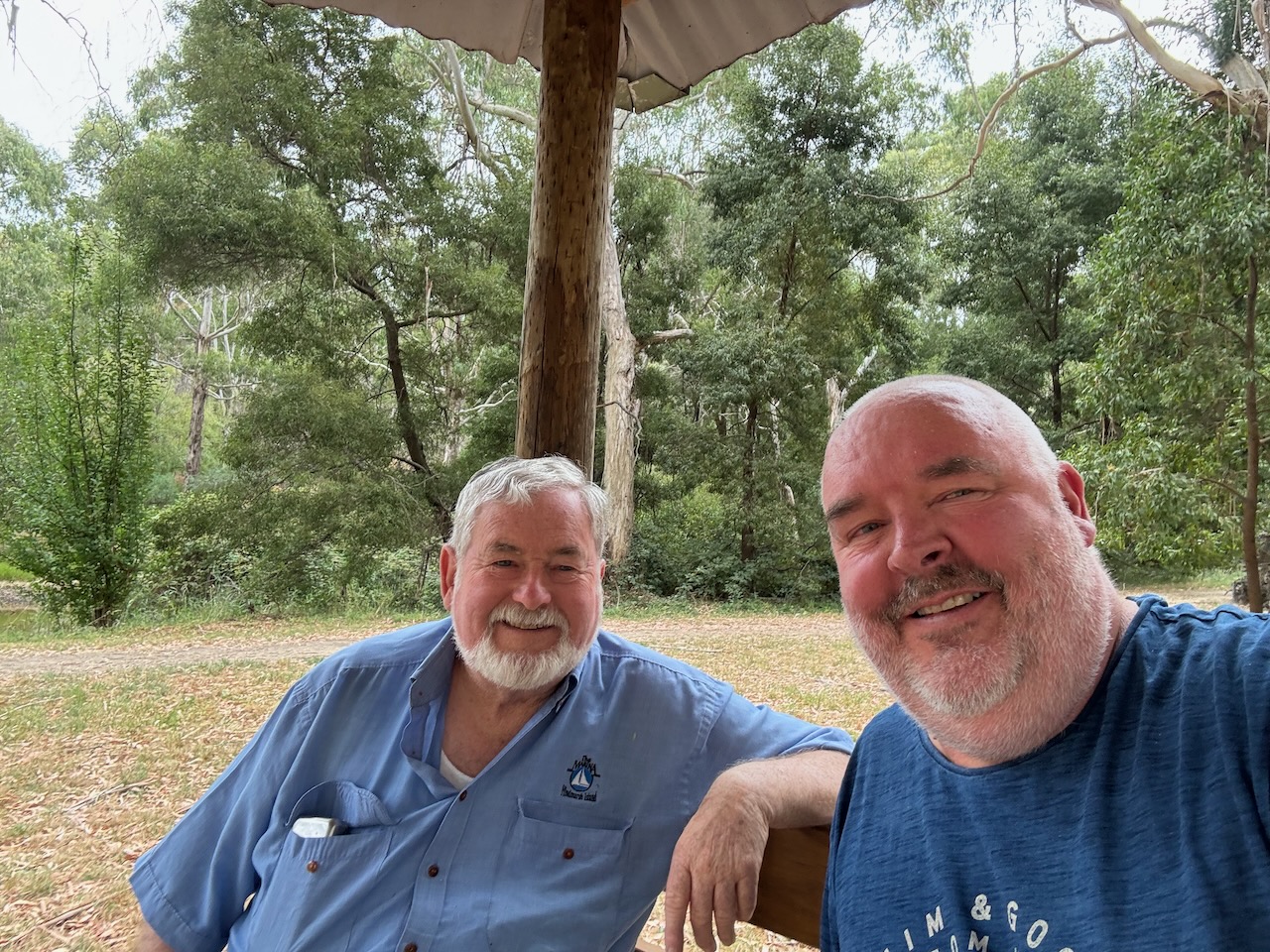
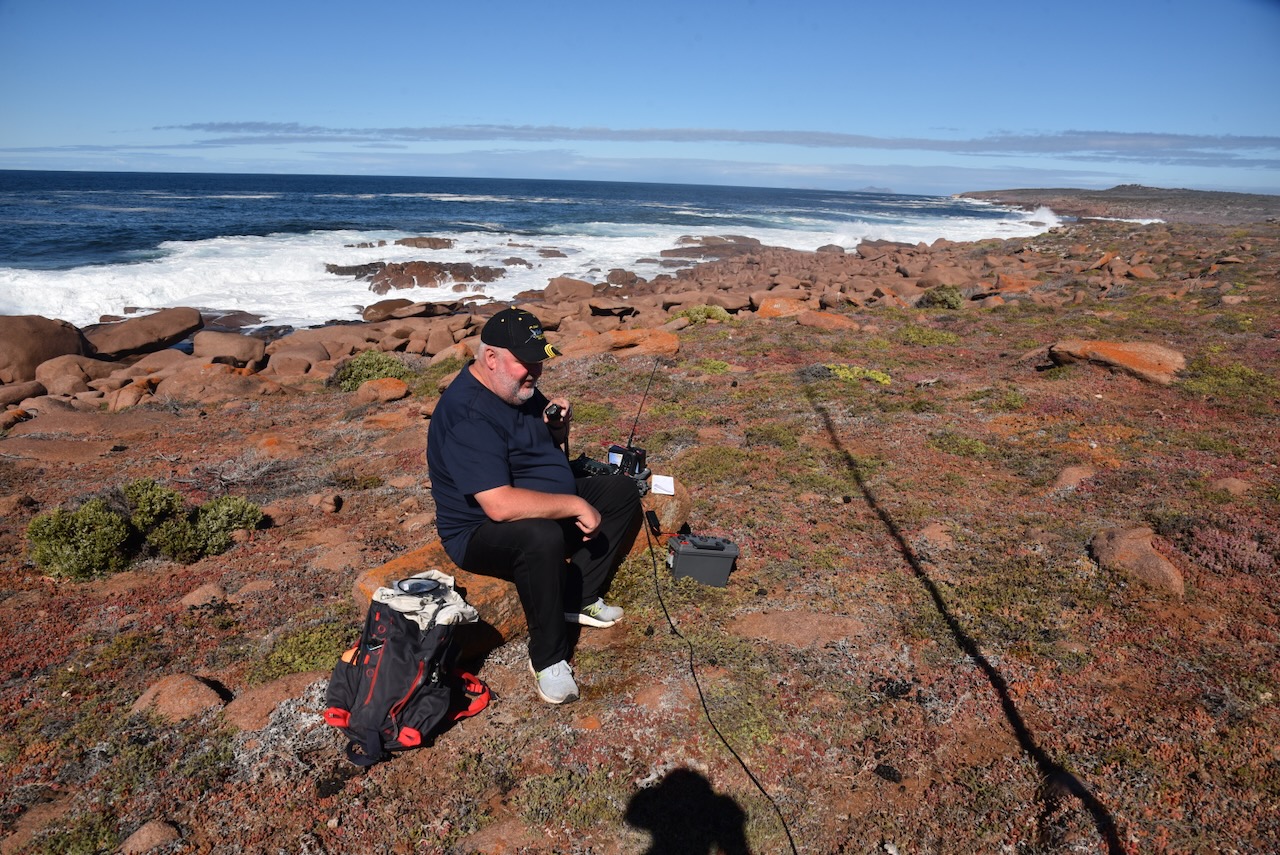
Above:- Myself with Robbie VK5MRS.
With some encouragement, Robbie and Bill then got on the air and made a handful of contacts each.
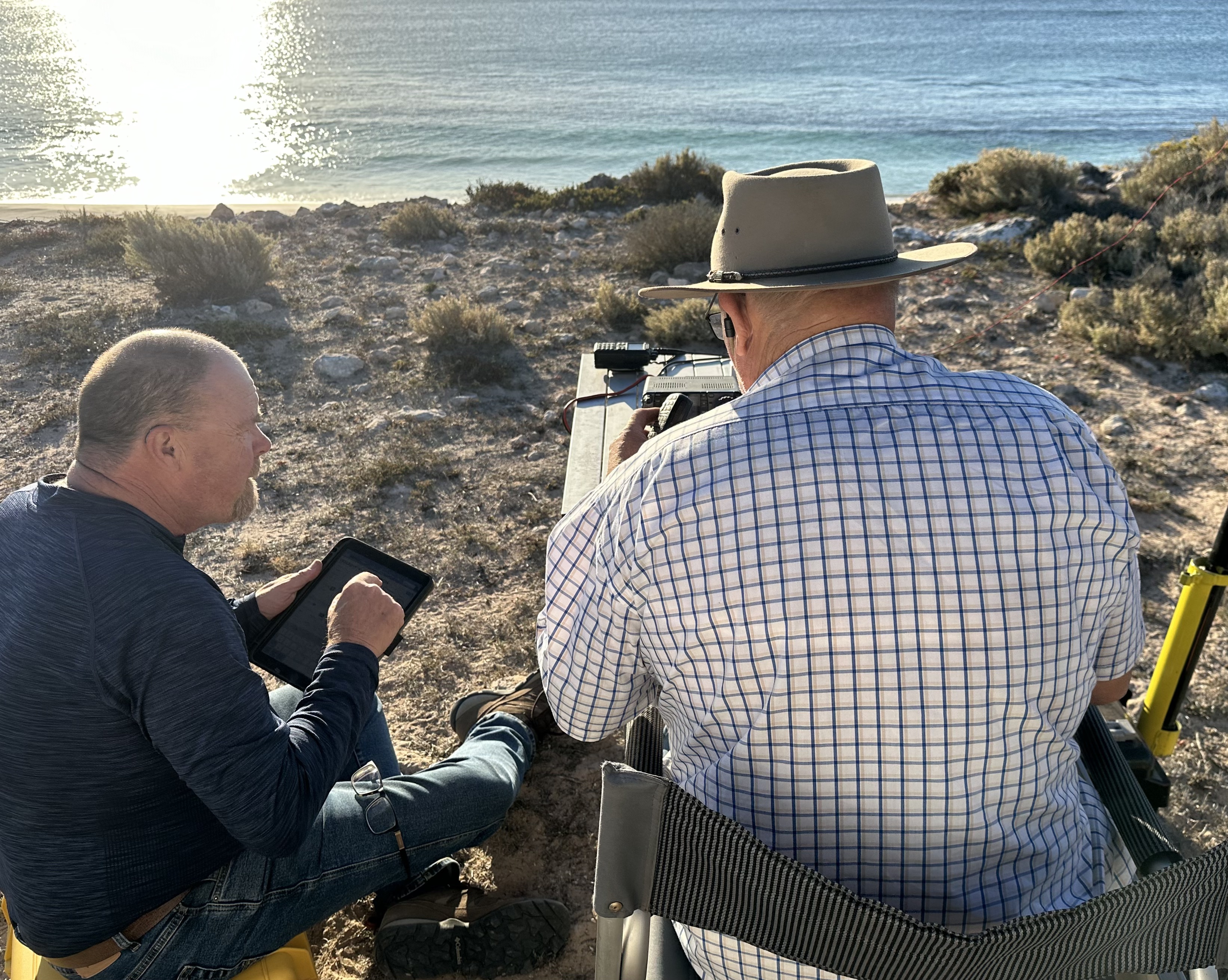
Above:- Robbie and Bill on air making some contacts.
I had previously activated and qualified this park several times, so I was not overly fussed about getting on air myself. It was all about showing Robbie and Bill the portable set-up.
It was a very enjoyable afternoon, and I am pleased to say that Robbie has since gone out and purchased a squid pole for portable operation. It was nice to get a couple of Park to Park contacts in the log with John VK4MUD. It was also very nice to get a bit of DX in the log – TK5AE in Corsica.
I am home from my trip to the magnificent Eyre Peninsula in South Australia.
Other than the Flinders Island trip (where we made a little about 8,300 QSOs in 6 days), I activated a total of 32 WWFF parks, 19 silos & 1 SOTA summit during my time away.
I made a total of 2,996 QSOs.
Thank you to everyone who called.
I will slowly start adding posts about each activation.
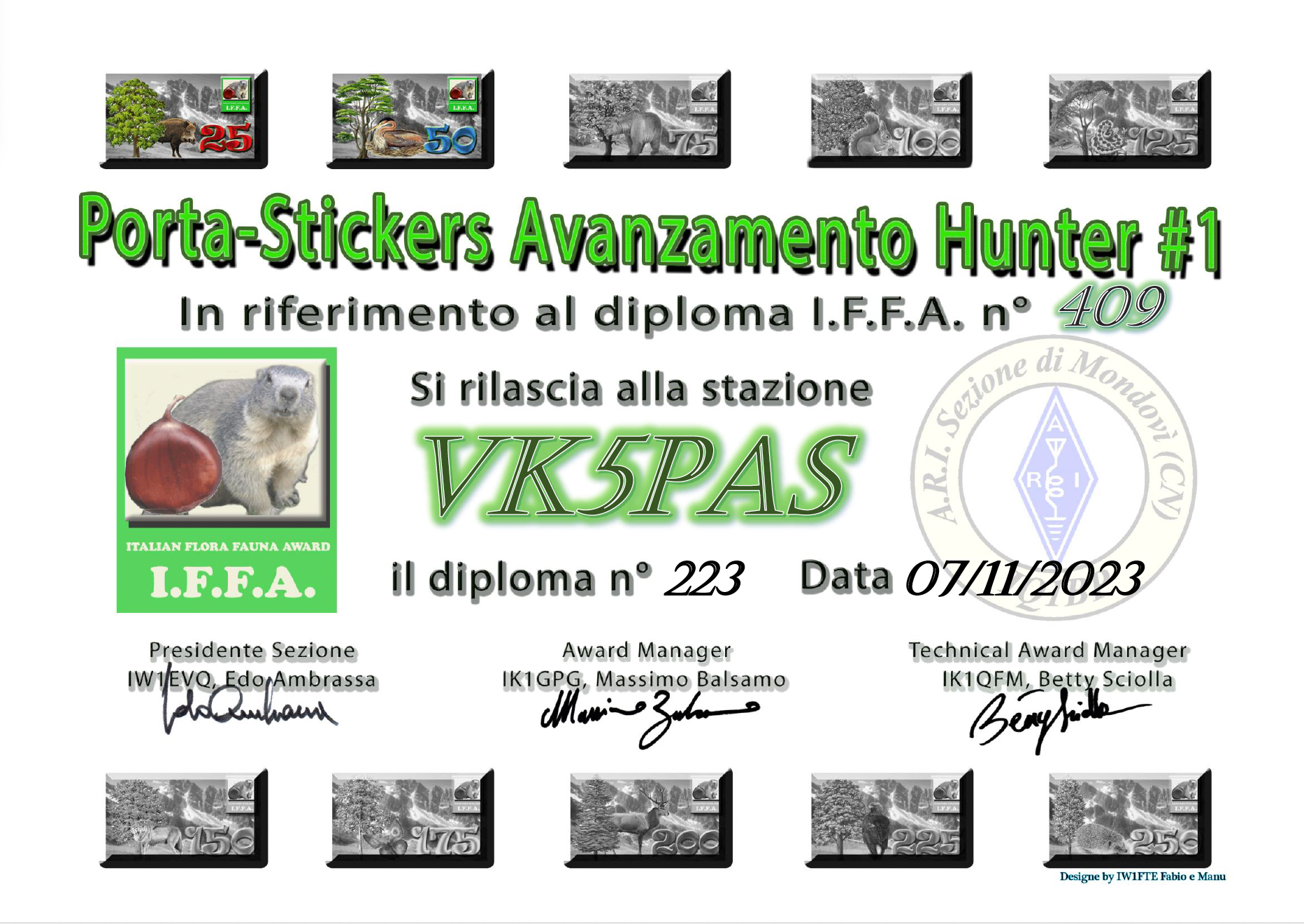
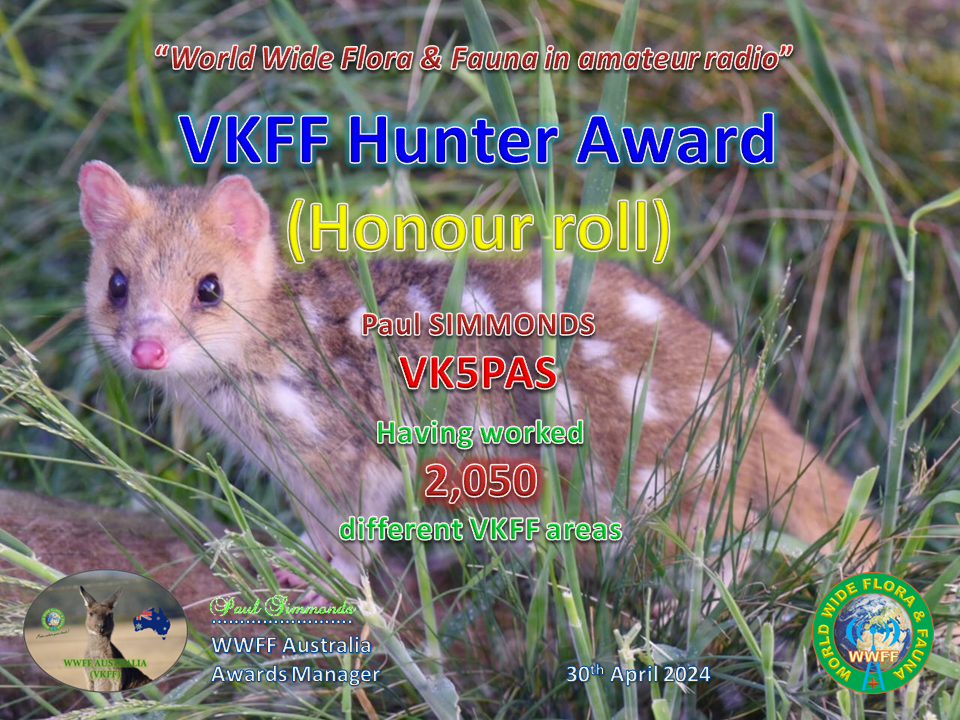
In the past week, I have received another certificate for the World Wide Flora Fauna (WWFF) program. It is the VKFF Hunter Honour Roll 2,050 award, issued for having worked a total of 2,050 VKFF reference areas.
Thank you to all of the VKFF activators and thank you to Adam VK2YK the VK5 VKFF State Rep.
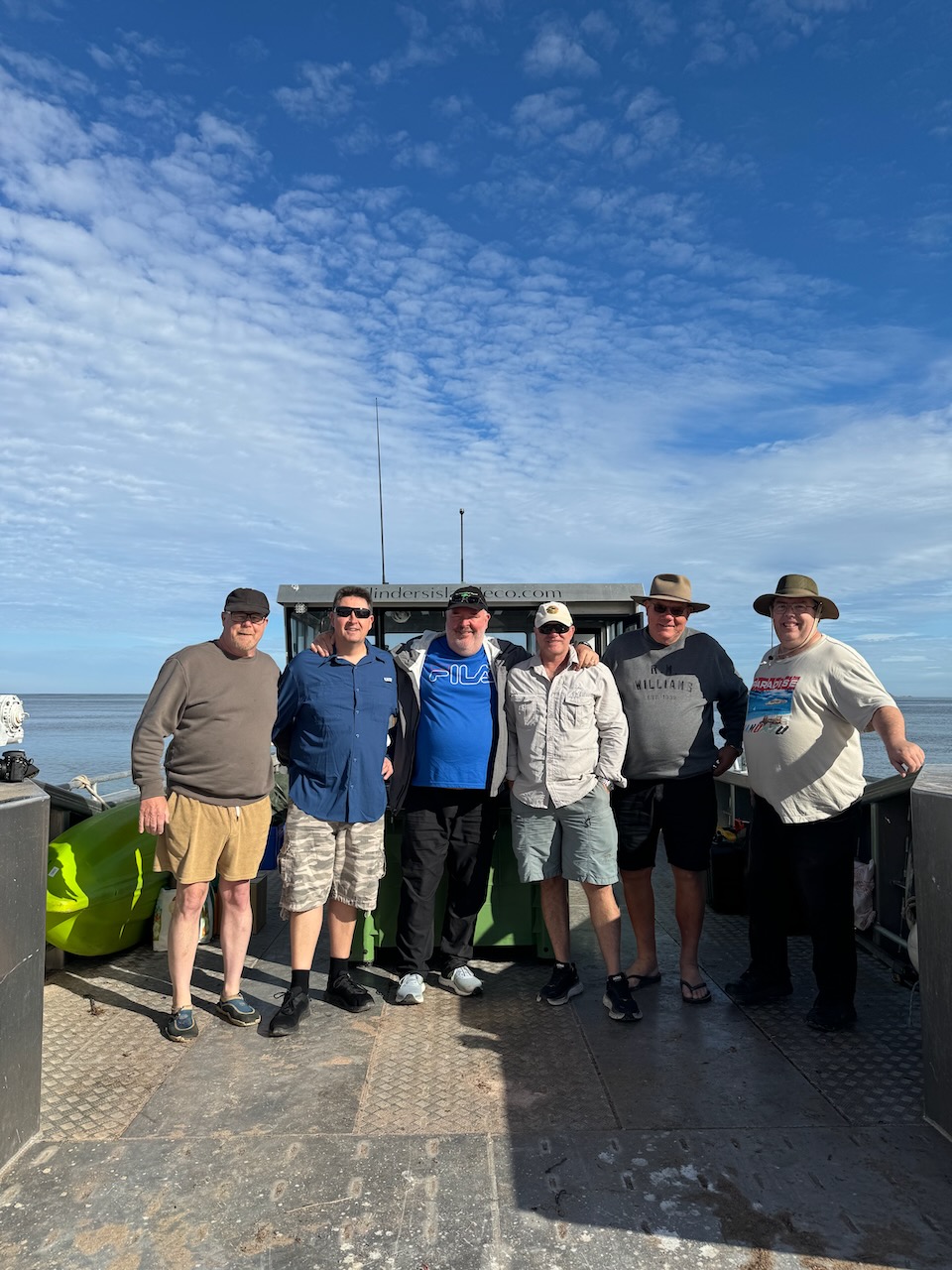
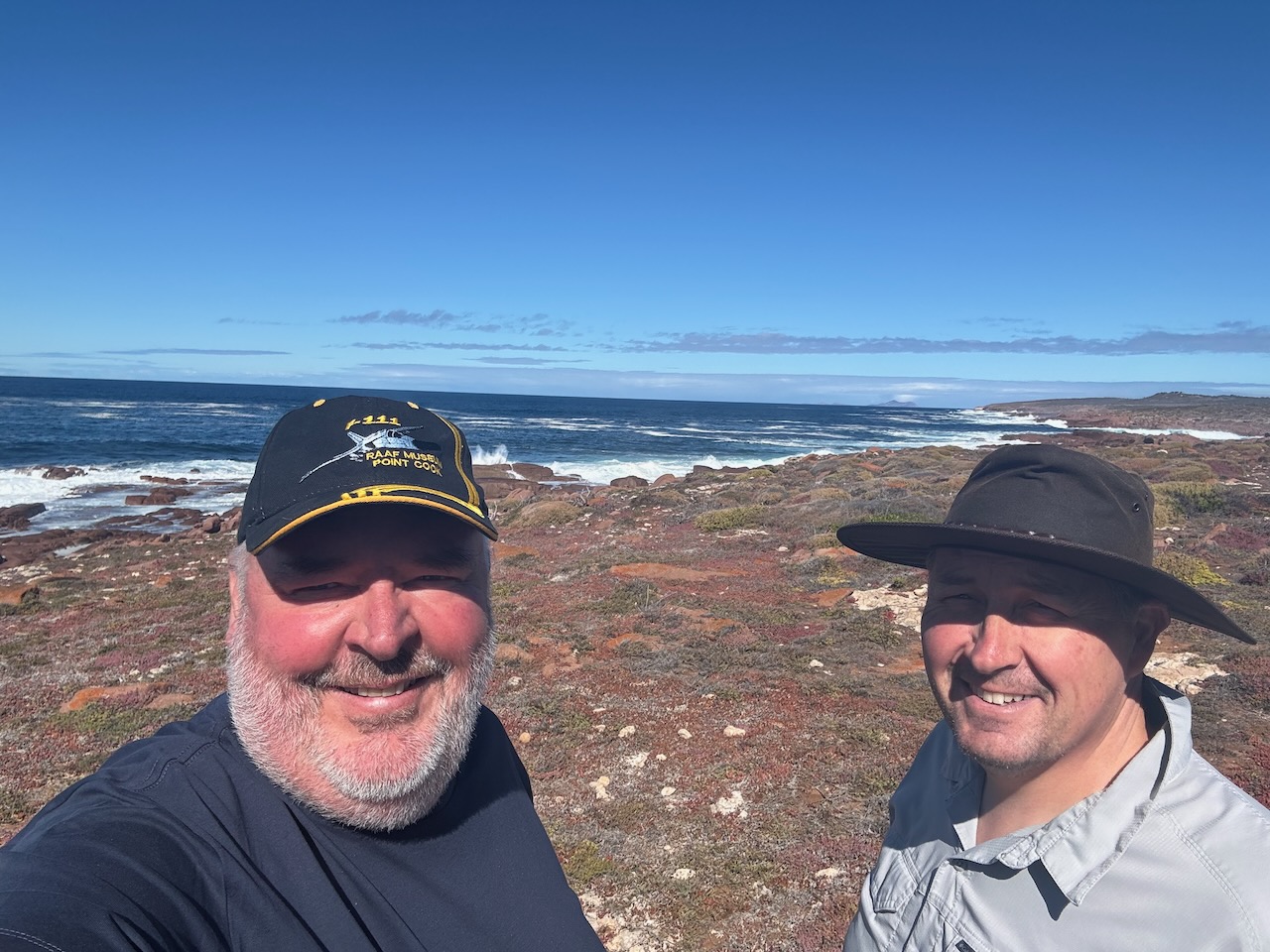
Between Sunday 14th April 2024 – Sunday 21st April 2024, I was fortunate to be part of a 6-person Islands On The Air (IOTA) and World Wide Flora Fauna (WWFF) DXpedition to Flinders Island, South Australia – OC-261 & VKFF-0175. We operated as VK5FIL.
Above:- View of Groper Bay, Flinders Island. Image c/o Adam VK2YK.
WHO WAS PART OF THE VK5FIL TEAM?
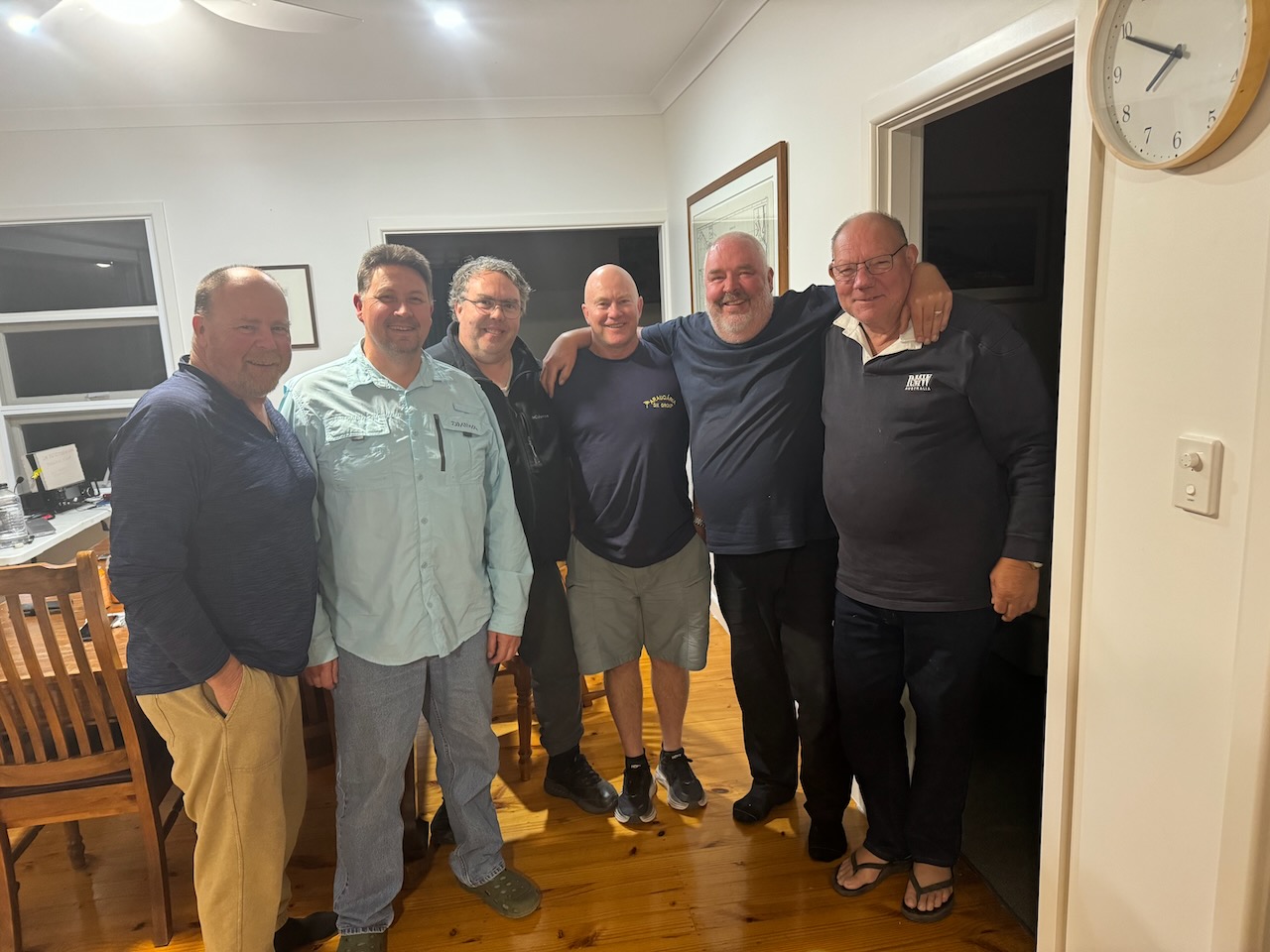
The team consisted of the same members as last year’s Troubridge Island (VK5TIL) DXpedition, except for Marija VK5MAZ who unfortunately did not attend this trip.
Grant VK5GR (Team leader)
Paul VK5PAS
Ivan VK5HS
Andy VK5LA
Adam VK2YK
Chris VK5FR
Above:- The VK5FIL Team. Image c/o Paul VK5PAS.
WHERE IS FLINDERS ISLAND?
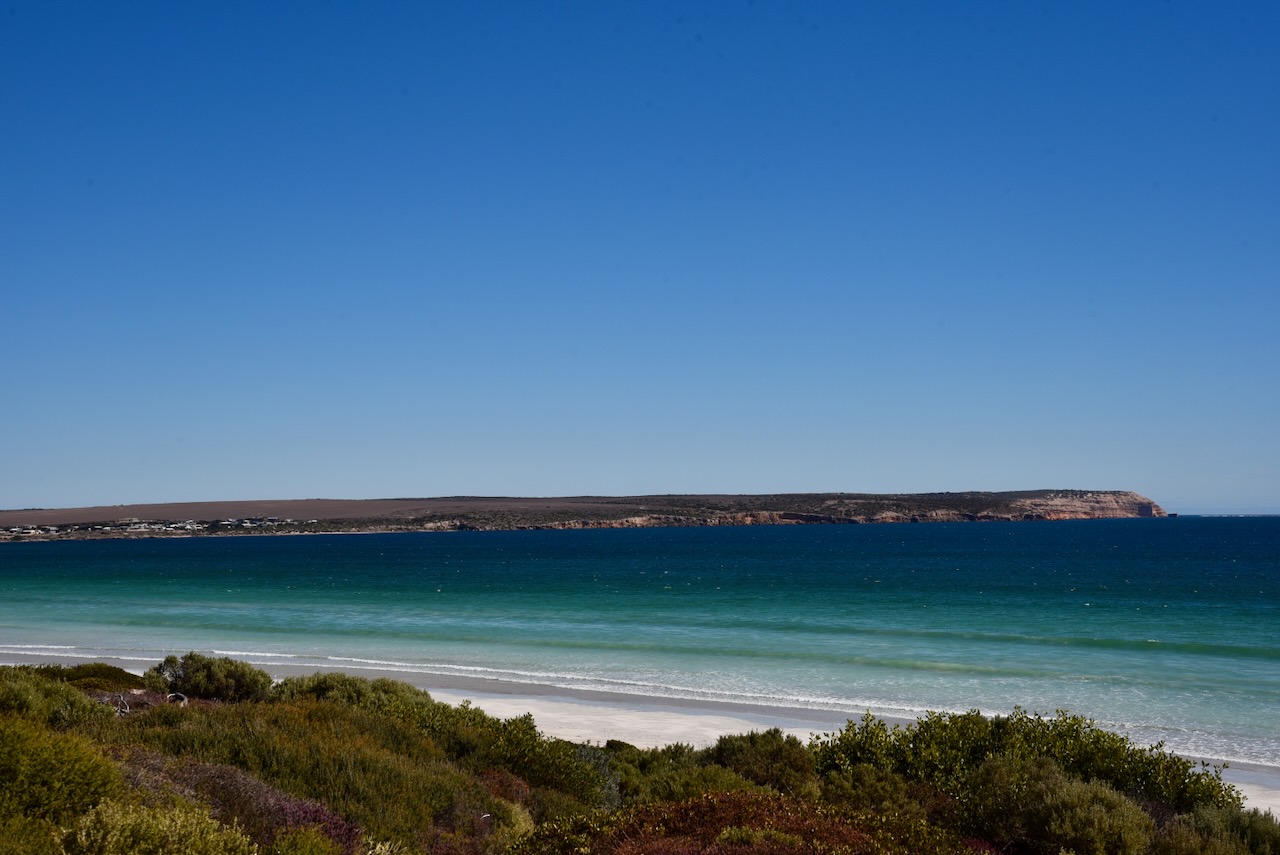
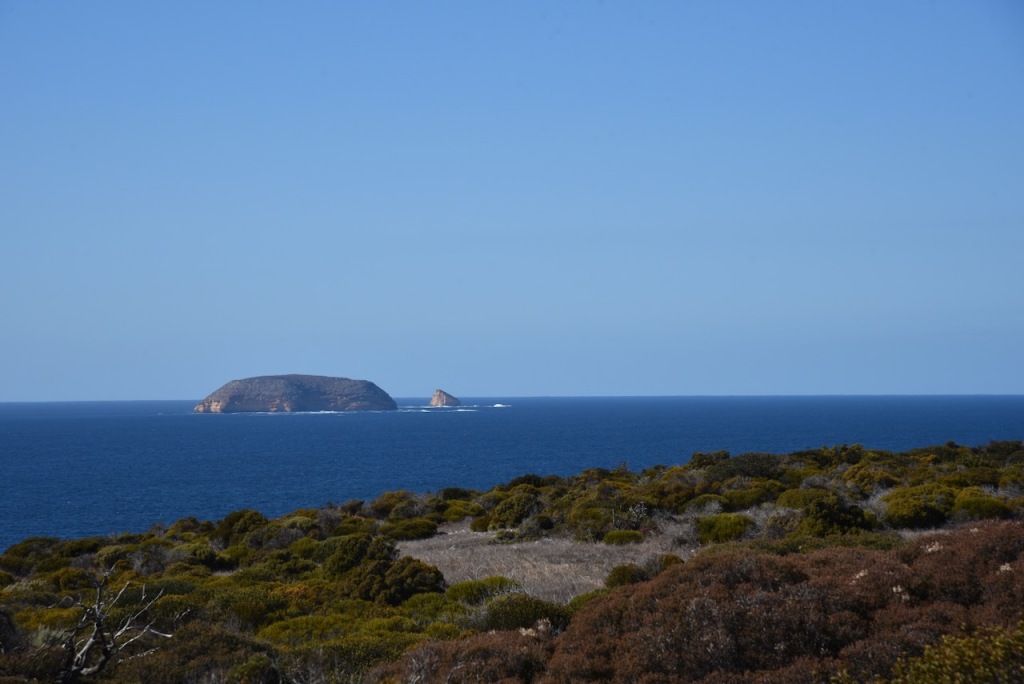
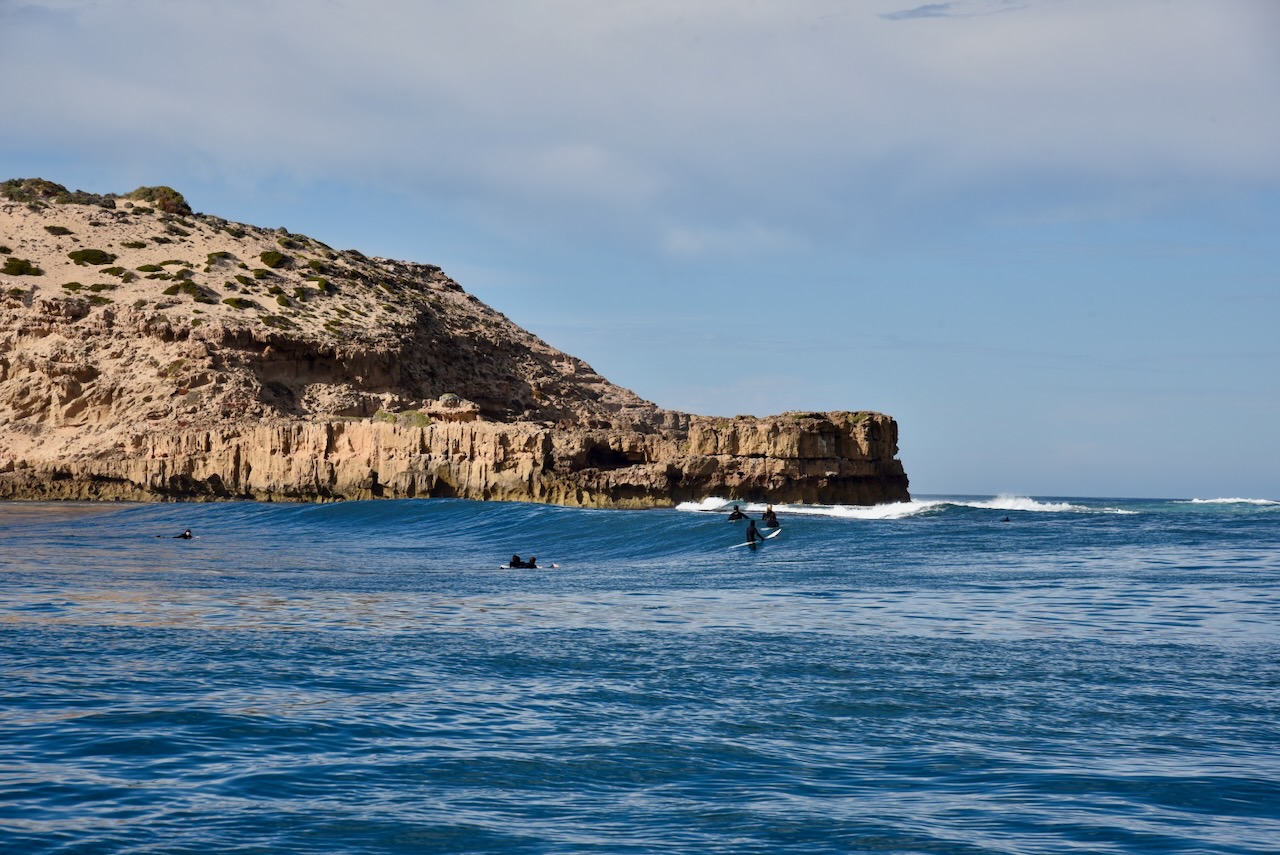
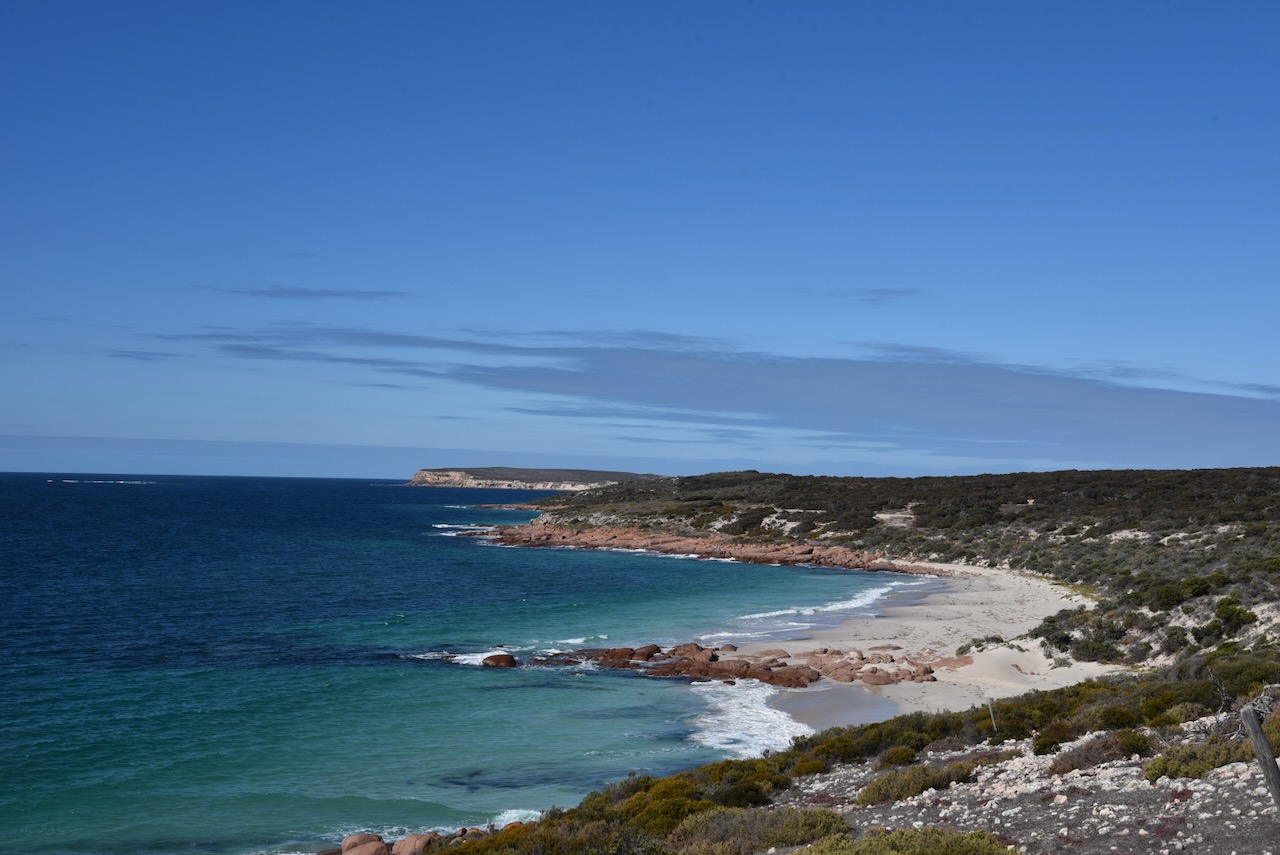
Flinders Island is located in the Investigator Group, an archipelago in the Great Australian Bight off the Eyre Peninsula’s western coast in South Australia. The Investigator Group comprises Flinders Island, Waldegrave Islands, The Watchers, Topgallant Island, Ward Islands and Pearson Isles. (Flinders Island Ecoscape 2024)(NGIA 2022).
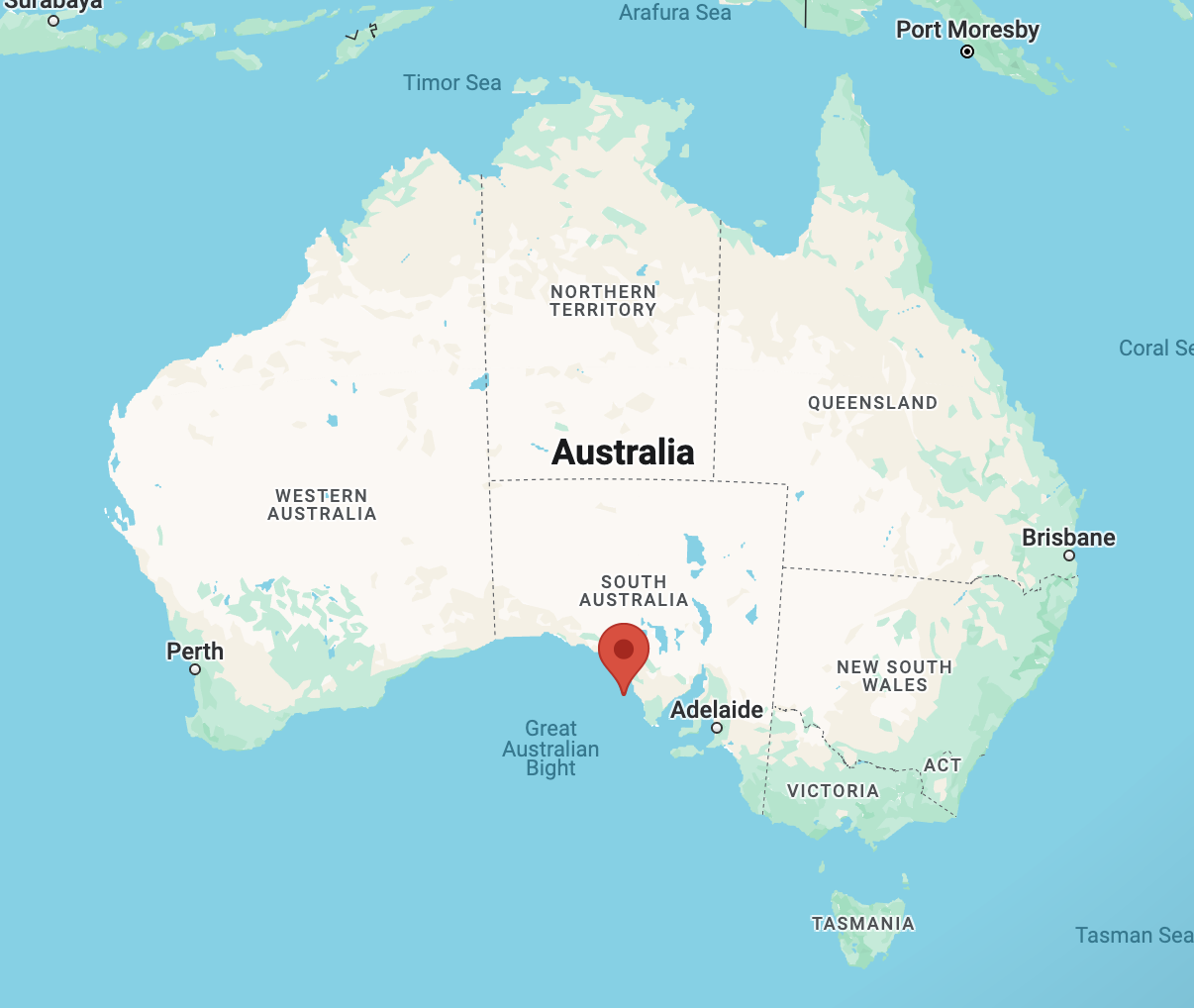
Above:- Map showing the location of Flinders Island, South Australia. Map c/o Google Maps.
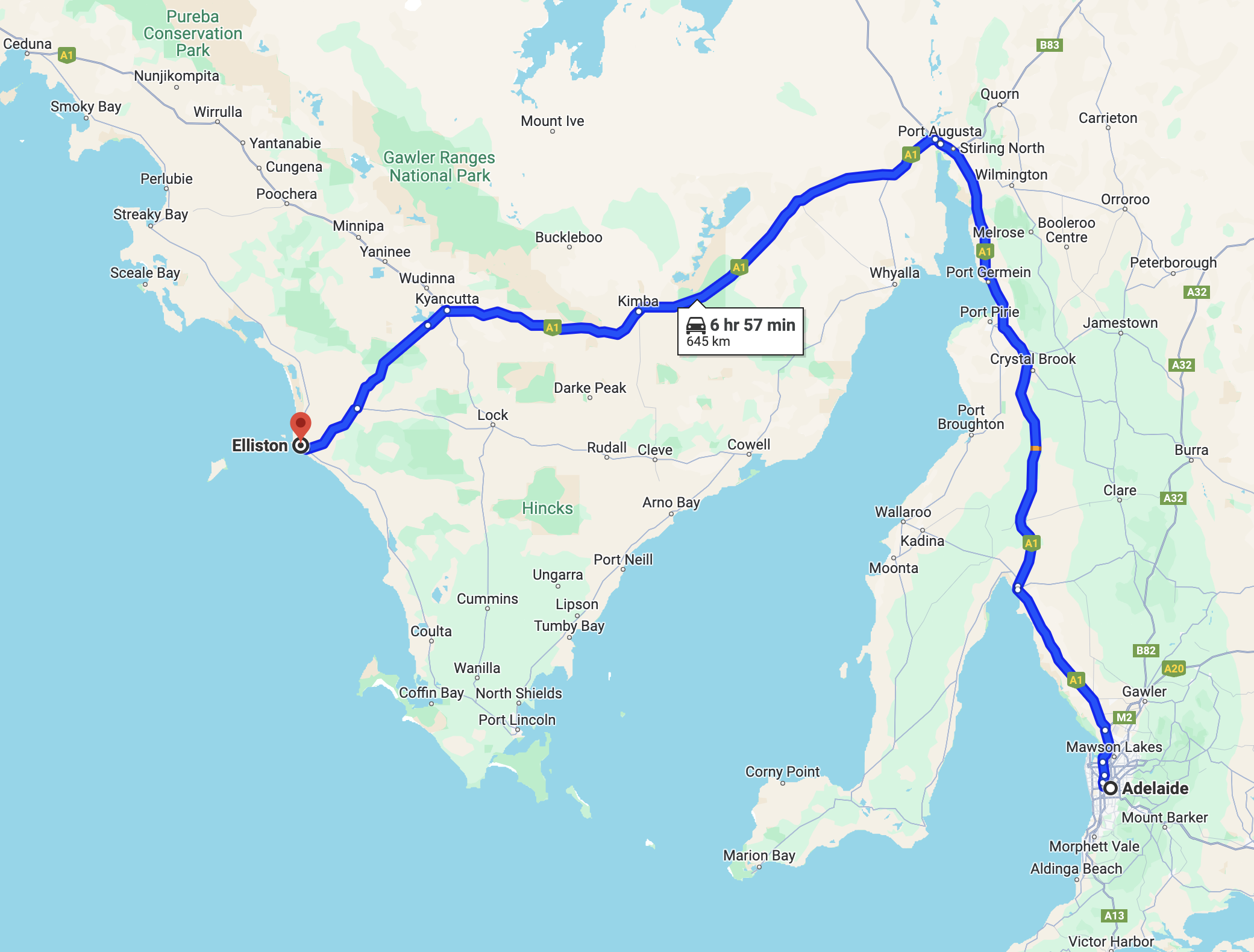
Flinders Island is about 28 km southwest of Cape Finniss, Elliston. Elliston is about 645 km by road from Adelaide. (Flinders Island Ecoscape 2024)
Above:- Map showing the location of Flinders Island off the west coast of South Australia. Map c/o Google Maps.
It is not to be confused with Flinders Island off the northeast coast of Tasmania or Flinders Island off the southwest coast of Western Australia. Flinders Island is the largest and only inhabited island in the Investigator Group.
MORE ABOUT FLINDERS ISLAND.
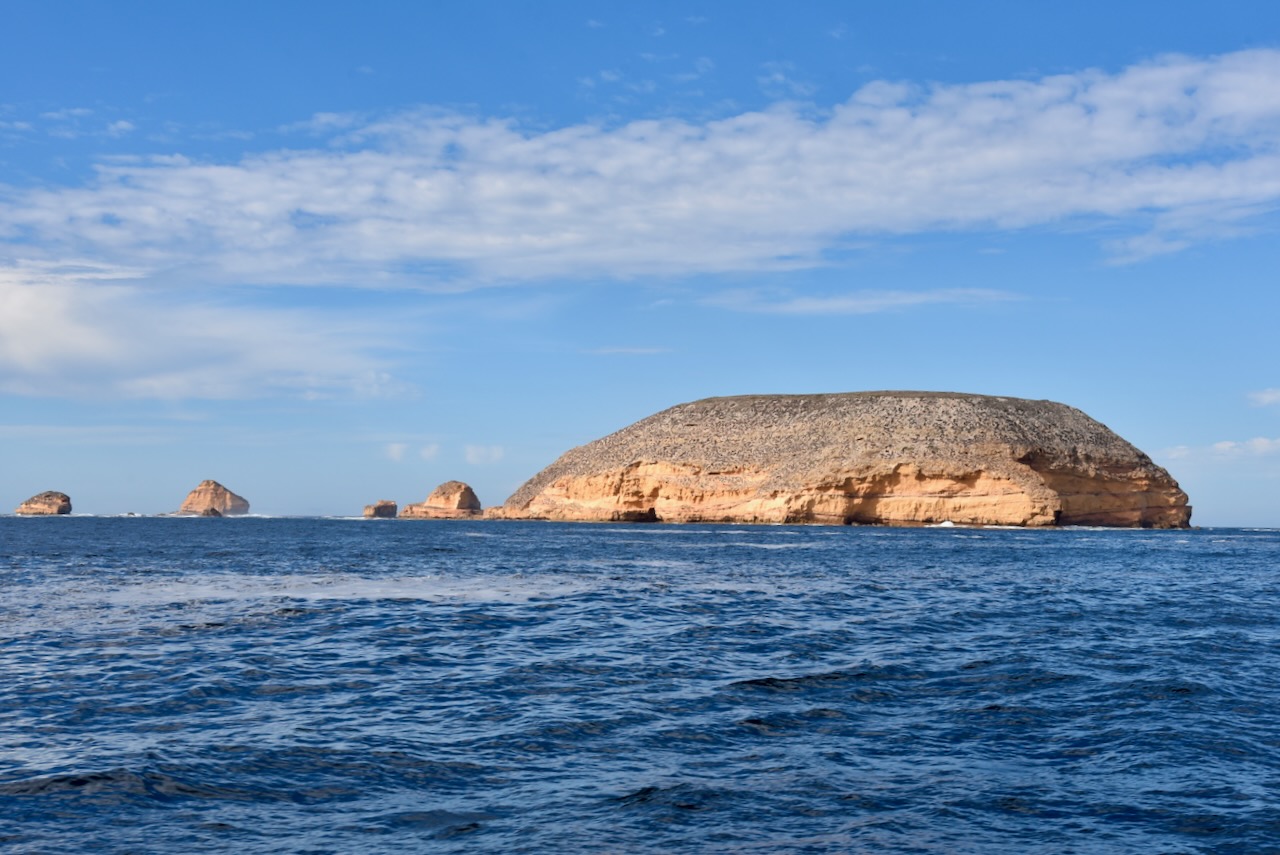
Flinders Island is about 3,642 hectares (9,000 acres) in size, making it one of South Australia’s largest offshore islands. It features about 50 km of secluded coastline, with 14 white sandy beaches. About 75% of the island is covered with native vegetation. (Flinders Island Eco Escape 2024)
Above:- An aerial view of Flinders Island, South Australia. Image c/o Google Maps.
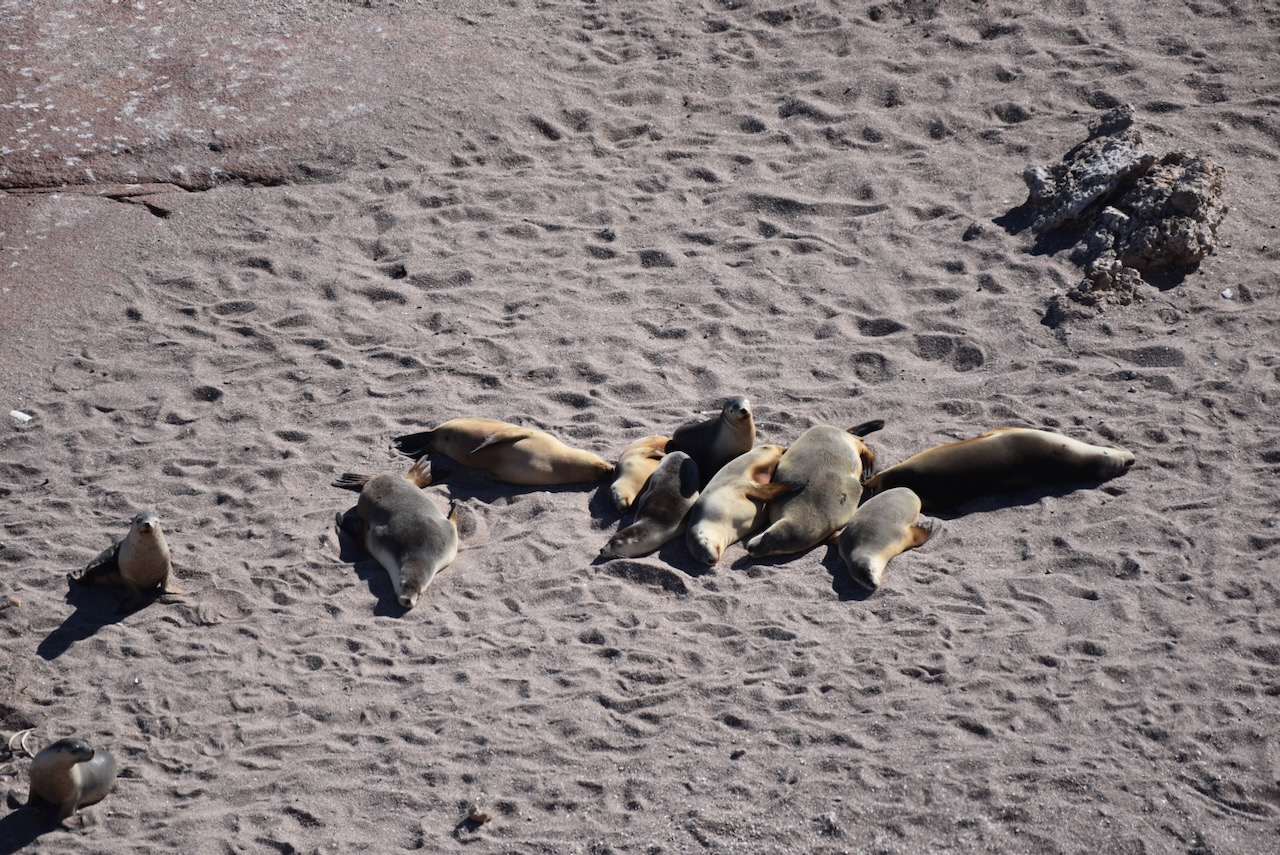
Australian Sea Lions, dolphins, and Western Blue Groper are plentiful on Flinders Island. There are no snakes on Flinders Island. However, there are twelve skink species and three gecko species present on the island. (Coral Expeditions 2024)
Flinders Island once had a population of Tamar wallabies. Sadly they are now extinct on the island. They exist on nearby Kangaroo Island, however the Flinders Island species were grey in colour and had thinner skulls. (Tyndale-Biscoe 2005)
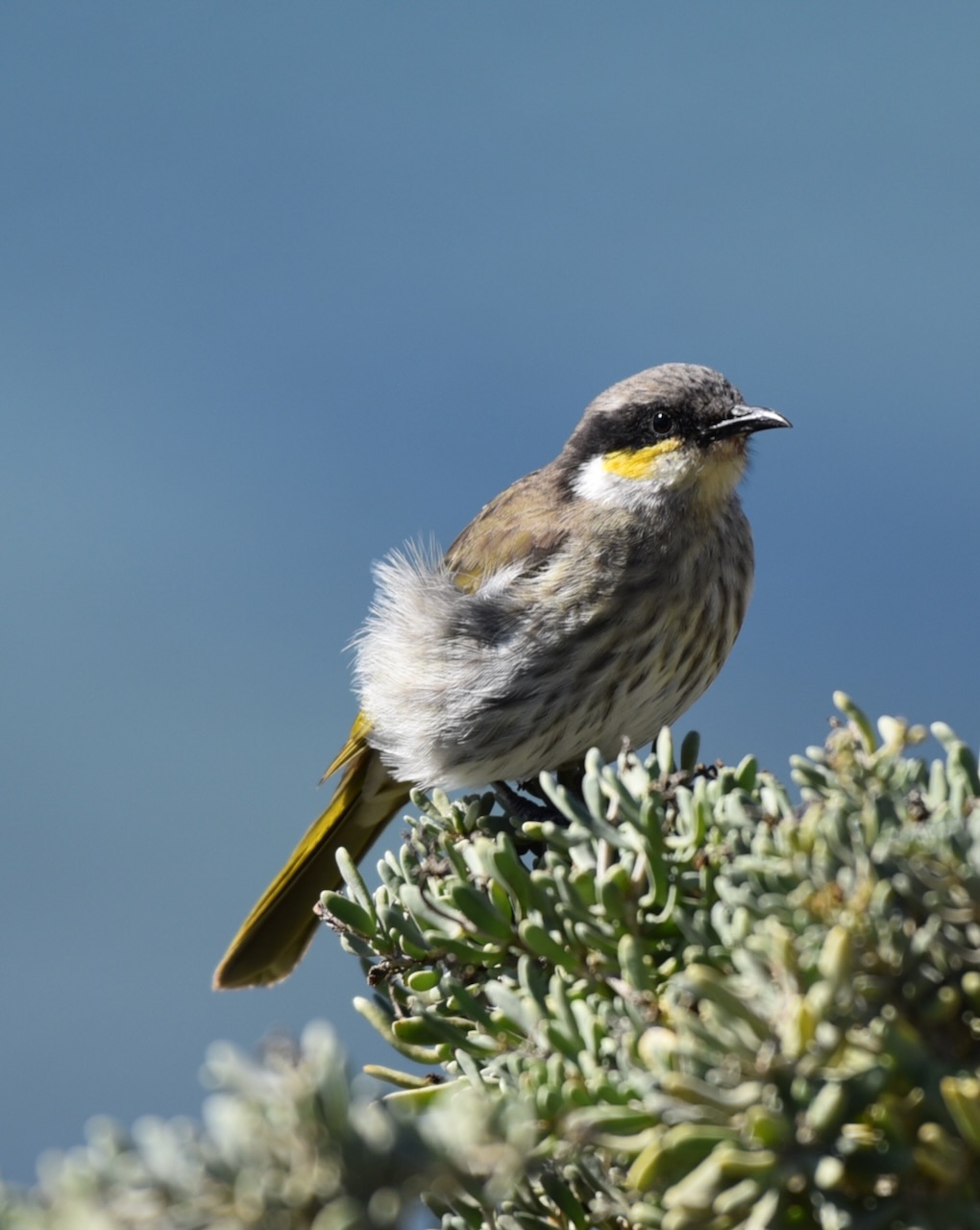
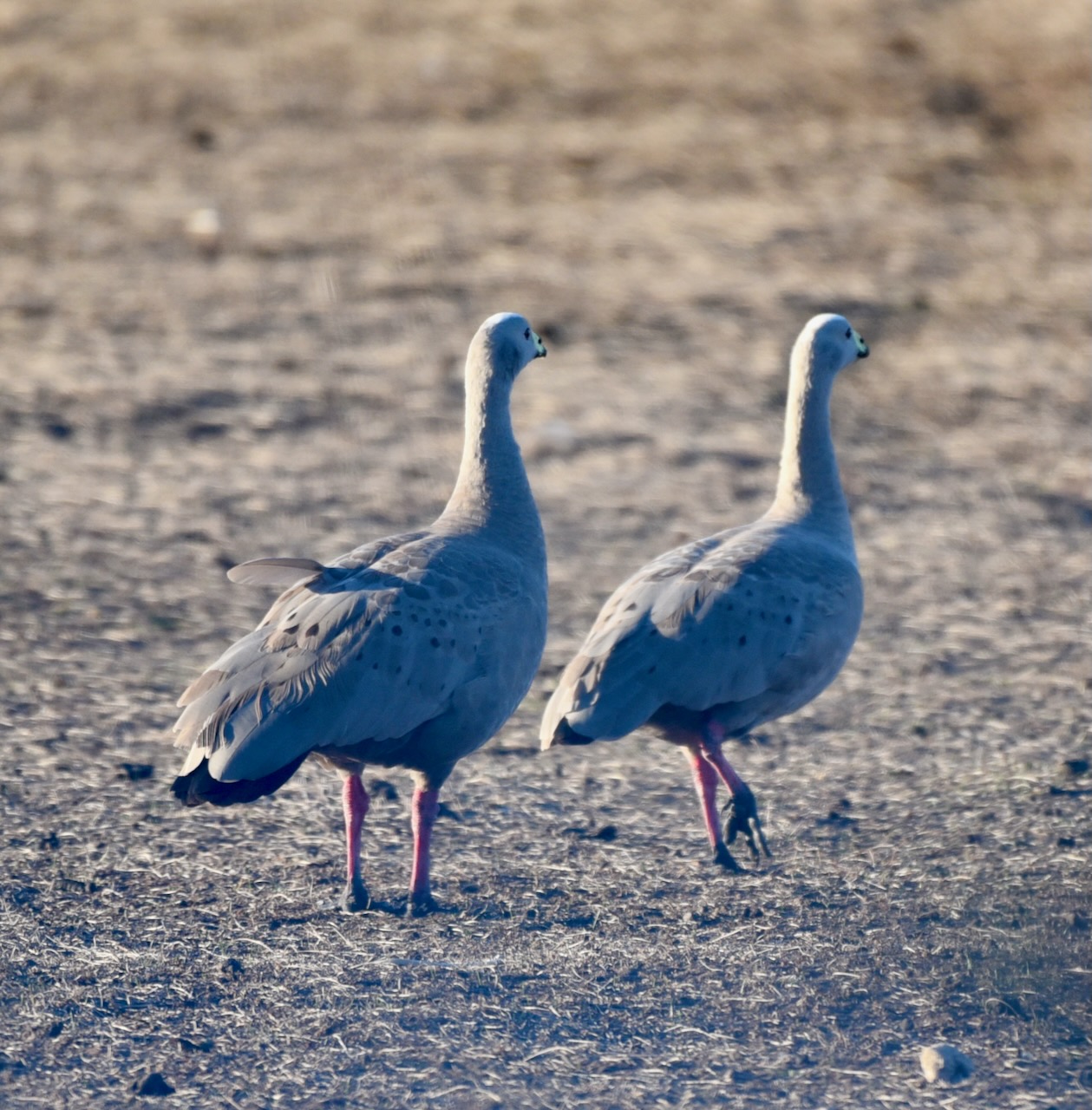
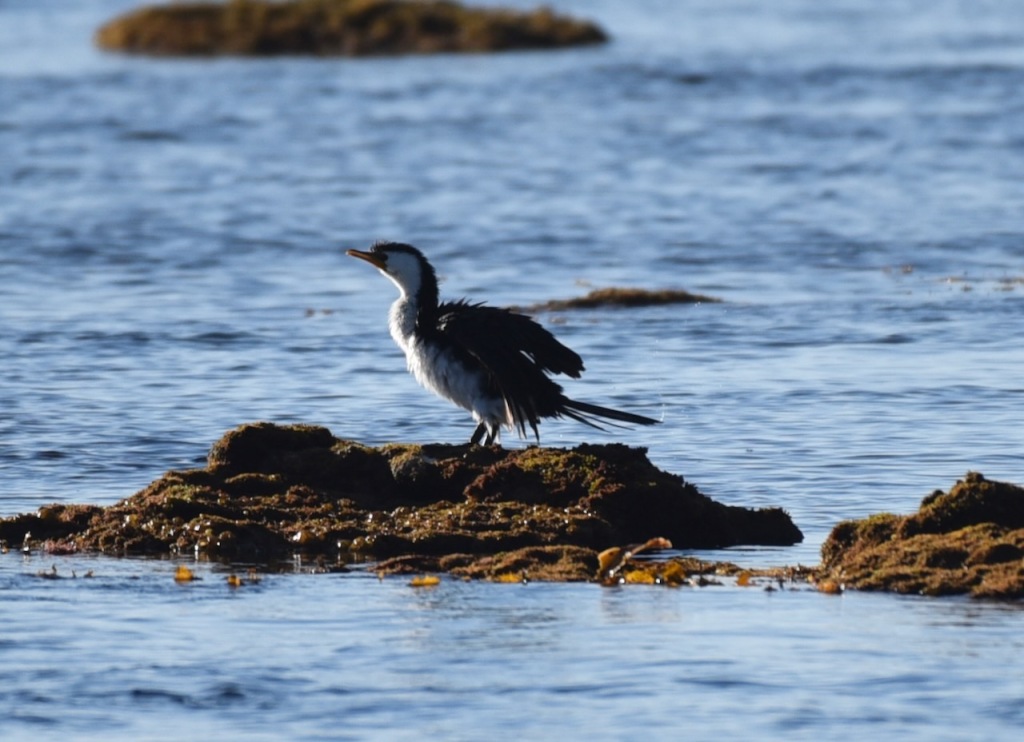
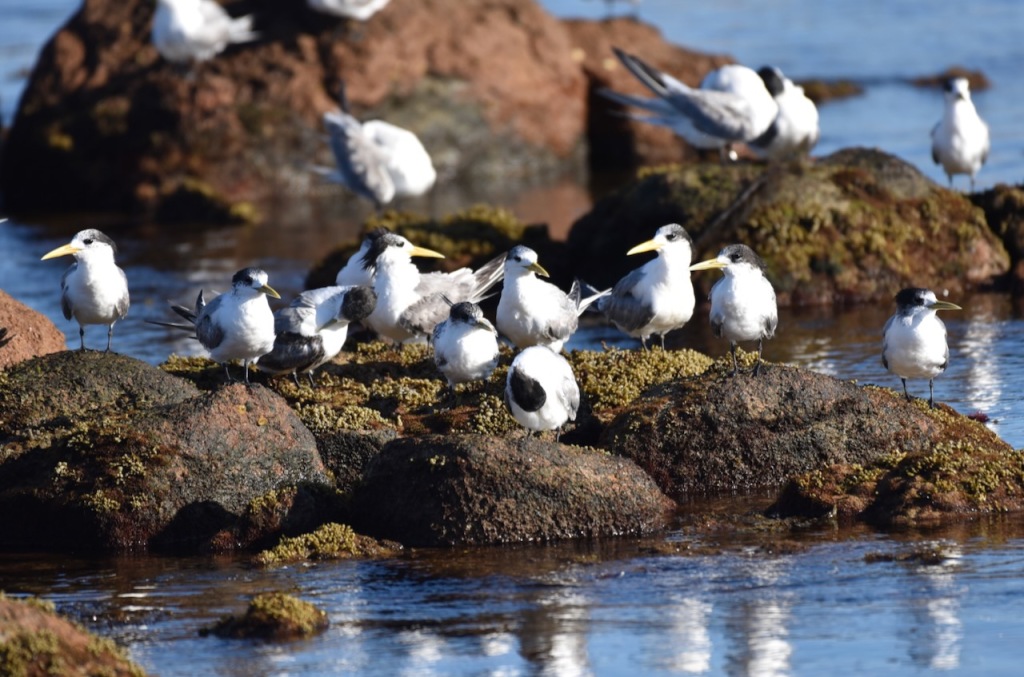
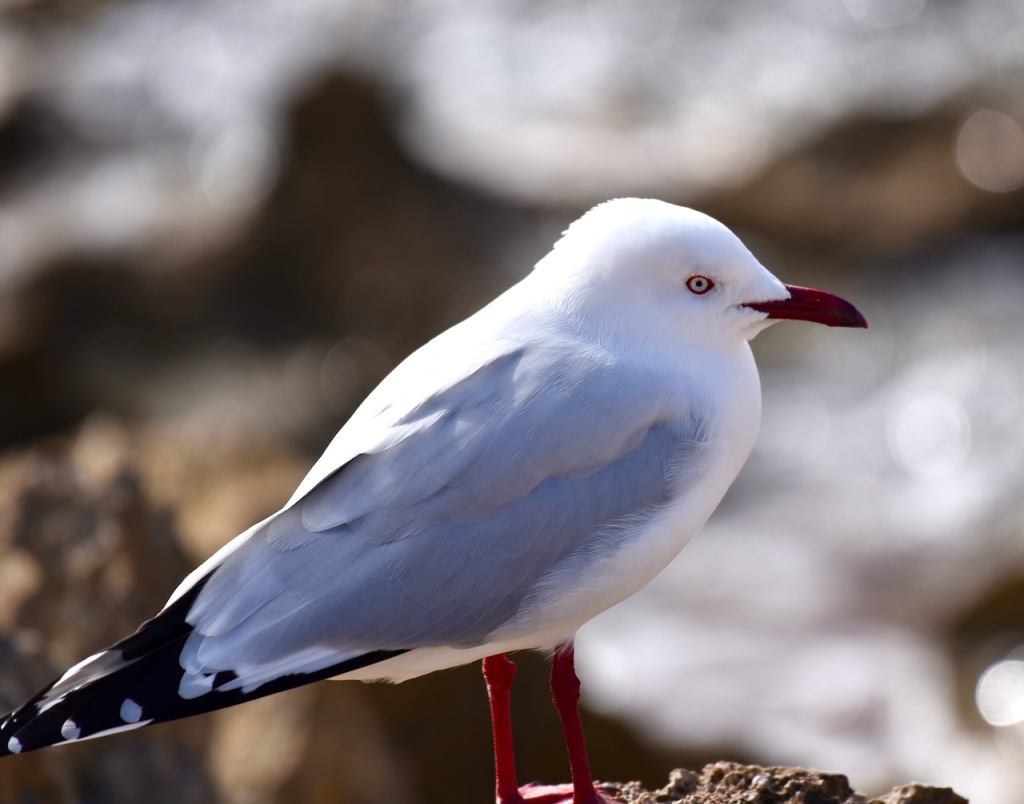
Flinders Island is part of the Investigator Islands Important Bird Area identified by BirdLife International in 2009, due to the island group’s population of the vulnerable Fairy Tern, Short-tailed Shearwaters, White-faced Storm Petrels, Cape Barren Geese, Pacific Gull, Black-faced Cormorant, and the Rock Parrot. (Birdlife International 2024)
CONSERVATION PROJECT.
A project will soon commence on Flinders Island to eradicate feral species including cats, rats and mice. Once the feral population has been eradicated from the island it is planned that several native mammals be introduced to Flinders Island. This includes banded hare-wallaby, Shark Bay bandicoot, dibbler and Nuyts/southern brown bandicoot. (Flinders Island Eco Escape 2024)
DISCOVERY OF FLINDERS ISLAND.
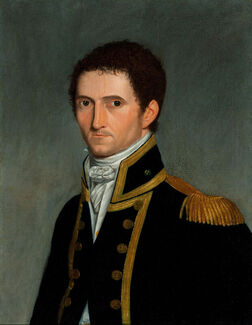
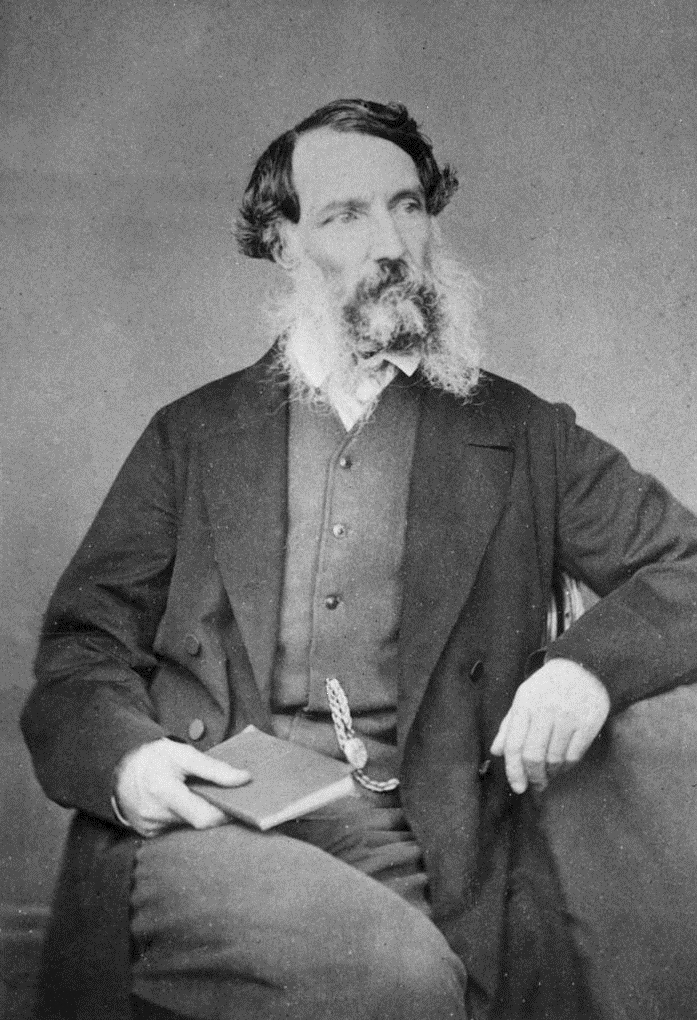
Captain Matthew Flinders was born in March 1774 in Donnington, Lincolnshire, England. He was a British navigator and cartographer who led the first inshore circumnavigation of mainland Australia, then called New Holland. He was involved in several voyages of discovery between 1791 and 1803.
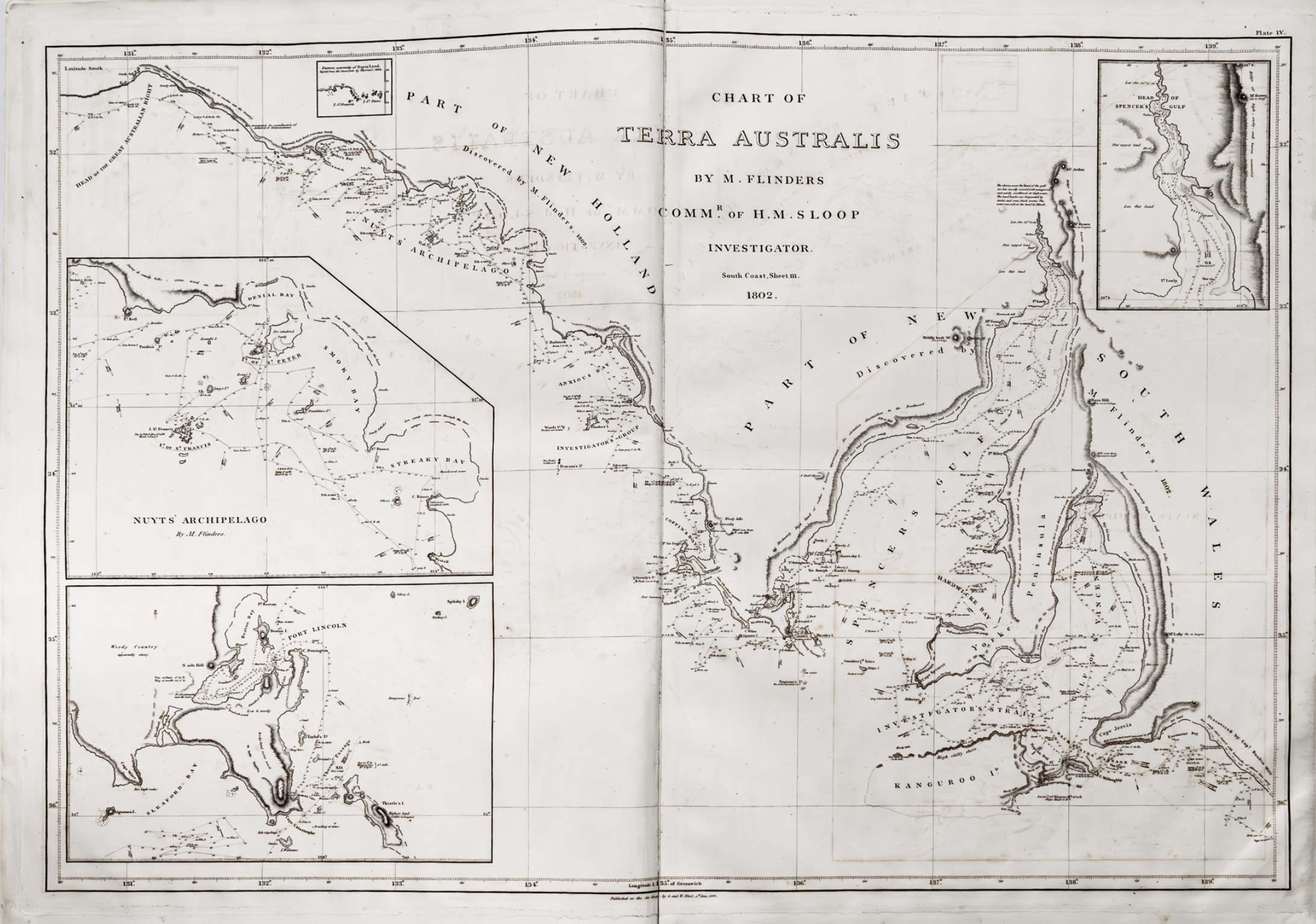
Flinders Island was named by Matthew Flinders in honour of his younger brother Samuel Ward Flinders (b. 1782. d. 1842), the second lieutenant on the 334-ton HMS Investigator. He charted this group of islands in February 1802 and named them the Investigator Group after his ship. Matthew Flinders had been instructed by the Admiralty to explore in detail the South Australian coastline referred to as ‘the Unknown Coast’ which stretched from the head of the Great Australian Bight to the Victorian border. He sailed on the 18th day of July 1801. It is interesting to note that Flinders had married Ann Chappell in April 1801, and he had wanted to bring her along on the journey, but this request was refused by the Admiralty. (Cooper 1966) (Robinson, et al, 1996. p. 189)
A party from the Investigator landed on Flinders Island in search of water but they were unsuccessful. The Investigator was not anchored at night but was taken out to what was believed to be open sea and put on a circular course. When daylight came the ship would be in the position it was when darkness fell the previous night. Flinders and his crew initially were unaware that the ship had been passing over a submerged reef which is known locally as the ‘Hot Spot’.
Flinders found the beaches on Flinders Island abounding in seals. He also mentions in his Journal the presence of Tammar wallabies:
“a small species of kangaroo not much bigger than a cat was rather numerous. I shot five of them and some others were killed by the botanists and their attendants, and found to be in tolerably good condition.”
Flinders also commented on the seals on the island. He wrote:
“The beaches were frequented by seals of the hair kind. A family of them consisting of a male, four of five females, and as many cubs was lying sleep at every two or three hundred yards.” (Project Guttenberg Australia 2024)
Above:- Matthew Flinders. Image c/o Wikipedia.
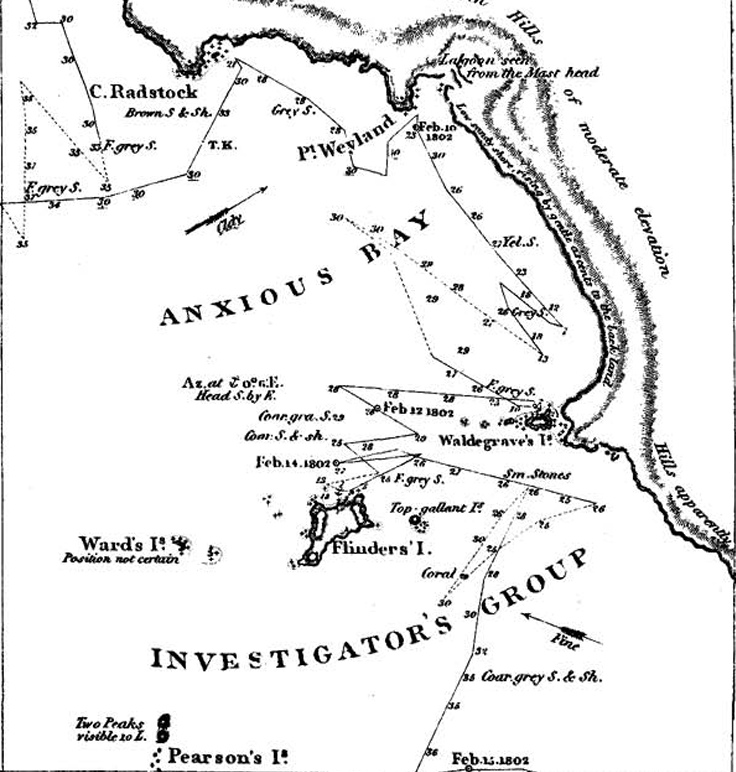
The accuracy of the mapping undertaken by Flinders and his crew truly amazes me.
Above:- Chart of Terra Australis by Matthew Flinders. Image c/o rgssa.org.au
THE FIRST INHABITANTS OF FLINDERS ISLAND.
The first inhabitants of Flinders Island were sealers and whalers who would land from their boats with supplies and necessary tools of trade and left there to catch and process whales for oil and bone, and seals for skins. Some months later the boat would return and collect oil, bone and skin for markets in Sydney, Tasmania and America.
The first of these hunters were known to have been on Flinders Island in the late 1700s. By 1820 there were 20 men, women and children on Flinders Island.
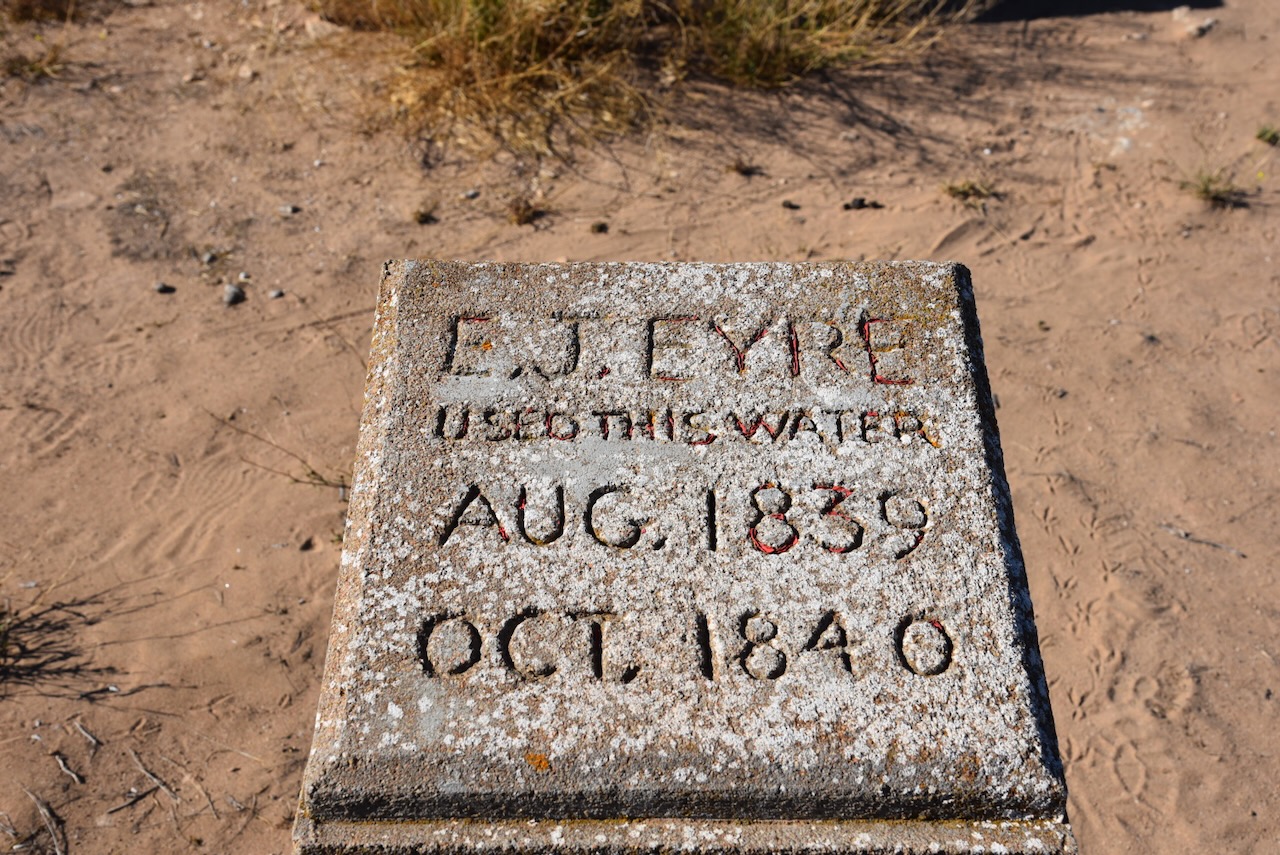
By about 1826 a sealing camp was established on the southeast side of the Island. In about 1845 a whaling station was also established. This followed favourable comments made by explorer Edward John Eyre regarding its suitability for whaling. Flinders Island was one of Australia’s most isolated whaling stations. (Kostoglou, et al 1991) (Flinders University 2001) (Robinson, et al, 1996).
One of the most famous Flinders Island sealers was an Irishman William ‘Bill’ Bryant (sometimes spelt Bryan or Brien). He harvested seals for more than 17 years at what is now known as Bryants Bay. (Coral Expeditions 2024) (Robinson, et al, 1996)
Bryant had abducted two aboriginal women and had taken them to Flinders Island. One called Charlotte and her infant son William Bluff, who is believed to have come from near the River Murray. And the other aboriginal woman is known as Fanny. Charlotte later gave birth to two children to Bryant. (Flinders University 2001) (Heritage South Australia 1998) (Heritage South Australia 2006)
A letter to the Colonial Secretary in 1845 referred to Flinders Island being ‘inhabited by one Bryan and kidnapped natives.‘ (State Records South Australia 2024)
The family grew fruit and vegetables and livestock and used these to barter with passing ships. Bryant was also a handy carpenter and blacksmith and performed repairs on passing ships. (Eime 2021)
Bryant died on Flinders Island from infection in 1844. Legend has it that before leaving the island Charlotte buried a tin chest containing a significant amount of gold sovereign that had been acquired by Bryant. (Eime 2021) (Heritage South Australia 2006)
Charlotte married Charles Mason, and in 1849 on a sealing venture to Waldegrove Island, their boat was caught in a violent storm and capsized. Her husband, a man called Jackson, and her two daughters died. Charlotte was the only survivor. (Eime 2021) (Heritage South Australia 2006) (Heritage South Australia 1998) The Flinders Island Whaling and Sealing Site is listed on the South Australian Heritage Register. The site ruins can still be viewed on Flinders Island.
Thomas Lashmar and Henry Grey.
The first men to graze sheep on Flinders Island were the Lechmere brothers.
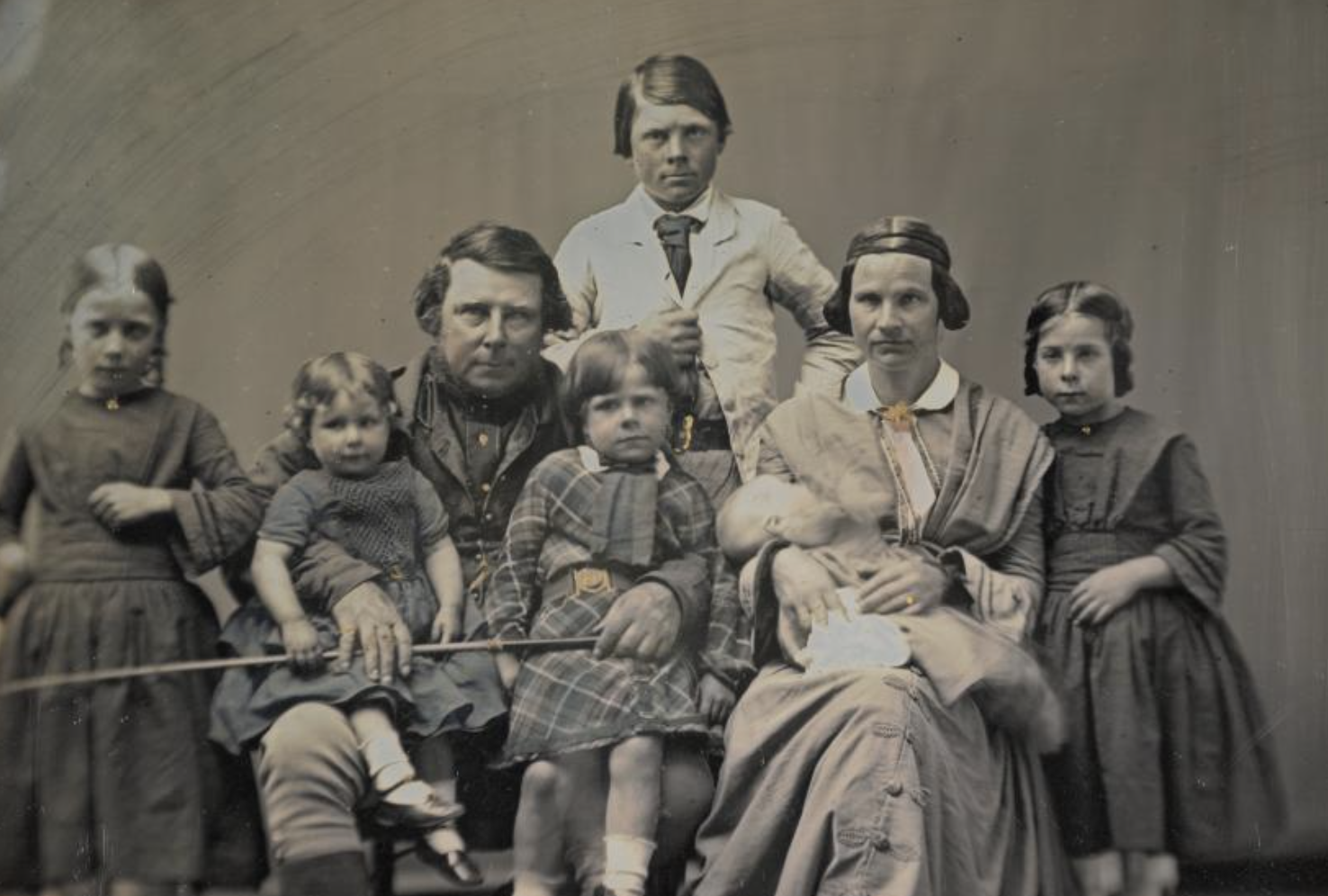
Thomas Young Lashmar was born on the 3rd day of August 1813 in Brighton, Sussex, England. He emigrated to Australia in 1843. He initially lived with his family at Mitcham and worked as a butcher. He later moved to Port Lincoln, Kangaroo Island, Thistle Island, and Flinders Island, where he conducted sheep runs. He also purchased several ketches and sailed between Port Adelaide and various other ports around South Australia. (State Library South Australia, 2024)
Above:- Thomas Lashmar and family. Image c/o
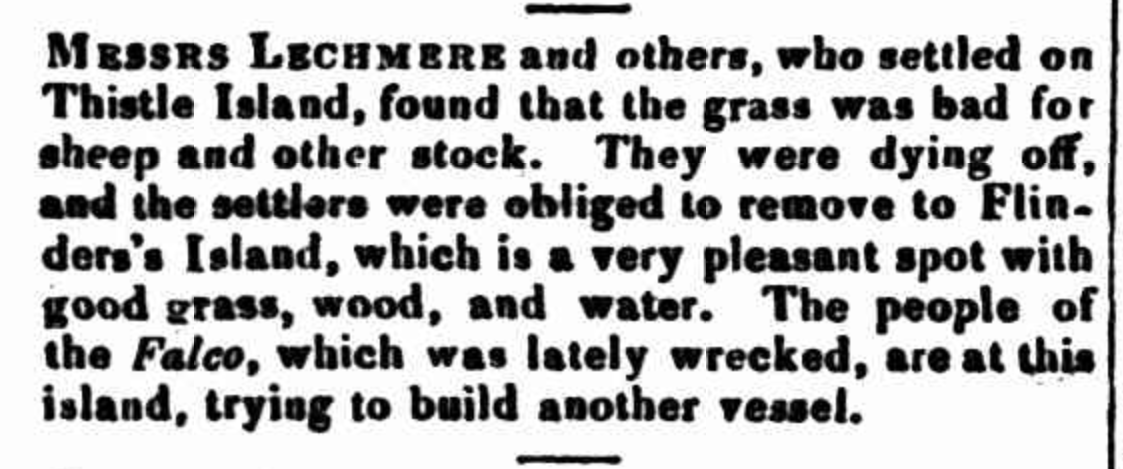
The South Australian dated the 22nd day of August 1845 records that the Messrs. Lechmere and others were removing stock from Thistle Island to Flinders Island which they described as “a very pleasant place with food grass, wood and water.” (South Australian, 1845, p.3)
Above:- Article from the South Australian, Fri 22 Aug 1845. Image c/o Trove.
Note the difference in the spelling of his family name.
The Lashmar Conservation Park on Kangaroo Island is named in honour of the Lashmar family.
John Sinclair.
The first lease on Flinders Island was taken up by John Sinclair on the 1st day of July 1857. He was a shoemaker in Penwortham near Clare. Sinclair applied for F.I. lease No. 143 in 1849 but it appears not to have been taken up for another 8 years. Sinclair remained in possession for another 8 years before Thomas Elder and Anton Schlink leased a part each of the island.
Anton Schlink.
Anton Schlink was born in 1821 in Paderborn, Westphalia, Prussia in 1821. After emigrating to Australia he was employed in the Strathalbyn district, resisting the urge to go to the Victorian gold diggings. In 1854 he took up a lease on Flinders Island. He found the island to be a good grazing proposition and he maintained a flock of 7,000 Merino sheep.
When it was desired that a vessel visit Flinders Island, Schlink would light a fire on a prominent headland called Bob’s Nose which took its name from the first horse that Schlink owned. The horse lived for 36 years before meeting un untimely death by falling down a well.
Other than being a successful pastoralist, Schlink also had considerable shipping itnerests. Schlink made a considerable fortune from sheep and ships. He retired in 1883, and died at Woodville in 1895, aged 73 years. Following his death, his son William ‘Willie’ Schlink returned to Flinders Island and continued to breed Merino sheep and cultivate cereal. (geni.com, 2024) (Pastoral pioneer 1924)
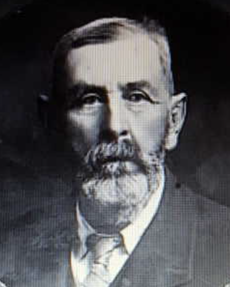
Charles May was born in 1849 in Adelaide. In 1881 he married Martha Elizabeth Dyer. They resided on Flinders Island from 1892 until 1907, where they raised their large family. Charles worked for William Schlink. Charles died in 1919 while Martha died in 1922. They are both buried at Elliston. (Ancestry.com.au 2024) (Flinders Island Ecoscape 2024) (The Late Charles May, 1919)
Above:- Charles May. Image c/o May Family Tree, ancestry.com.au
You can view the ruins of Charles and Martha May’s house at Farm Beach. (Flinders Island Ecoscape 2024)
The 1900s.
By 1911, about 610 hectares (1,500 acres) of the island had been cleared for farming. About 1,400 to 2,000 bags of wheat were produced annually. Sadly, about 30,000 wallabies had been killed on the island by this time. (A Romantic Land 1911)
William Spalding Bascomband John Bascomb.
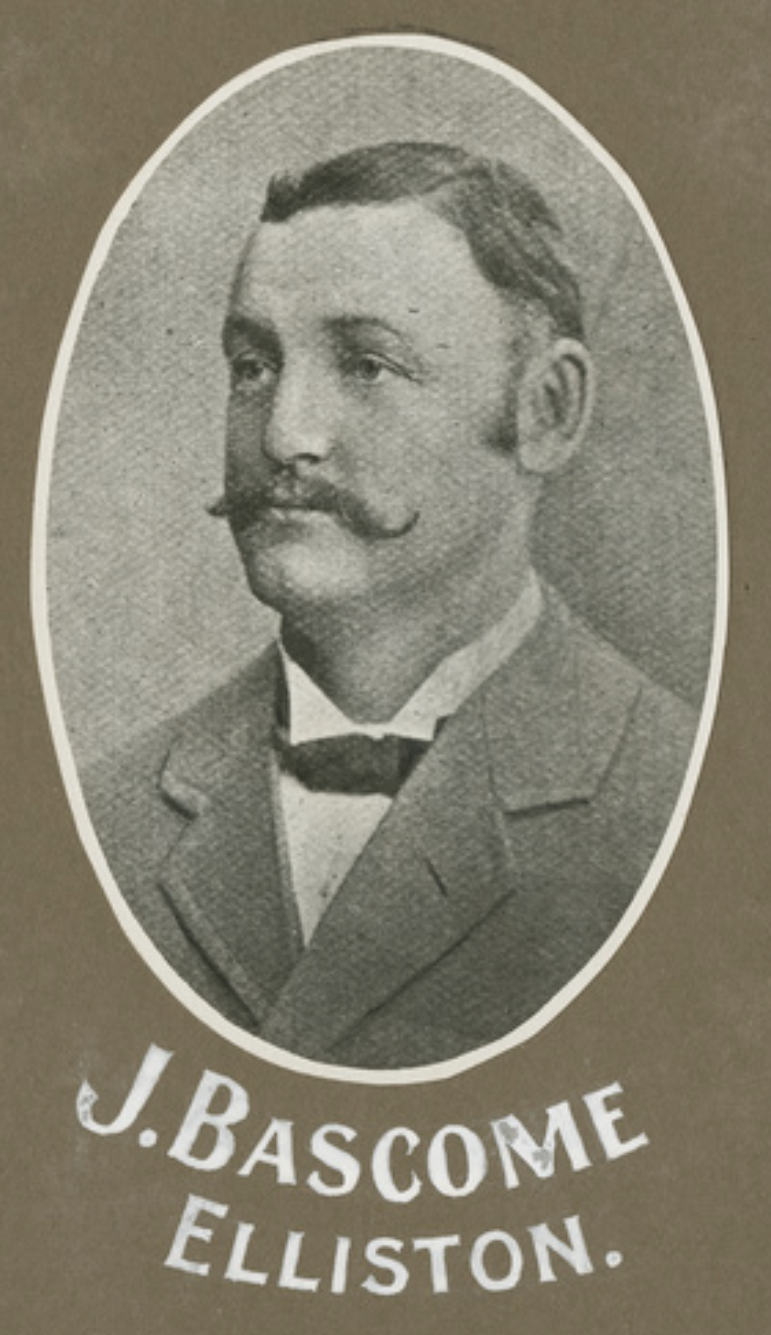
John Bascomb was born on the 21st day of January 1863 near Tumby Bay. Apart from owning Mount Wedge station, he also owned Flinders Island, purchasing the island in 1920 for 11,000 pounds. He described Flinders Island as ‘paradise’. He was the Chairman of Directors of Eyre Peninsula Airways Limited. He died in October 1929 at Mount Wedge, aged 66 years. (Early Elliston 1924) (Keen on flying 1929)
Above:- John Bascomb. Image c/o State Library South Australia
It was reported in The Register in 1929:
“Mr Bascombe’s father was employed on Mount Wedge Station. There he and his brother, as children, learned the speech and accomplishments of the aborigines. Mr. Bacomb could spear a wallaby at 25 yards.”
Above:- Article from The Register, Fri 27 Sep 1929. Image c/o Trove.
William ‘Bill’ Spalding Bascomb was born on the 19th day of March 1886 at Tungatta Station near Elliston. He was the first child of John Bascomb and Elizabeth Bascomb nee Spalding. He was a West Coast pioneer and grazier, and owner of Flinders Island. In June 1915 he married Ellen Rose Miller at Mount Wedge. In 1924 he left Mount Wedge with his young family to take over Flinders Island. He died suddenly in 1944, aged 57 years. (Find a Grave 2024)
FLINDERS ISLAND SHEARING SHED.
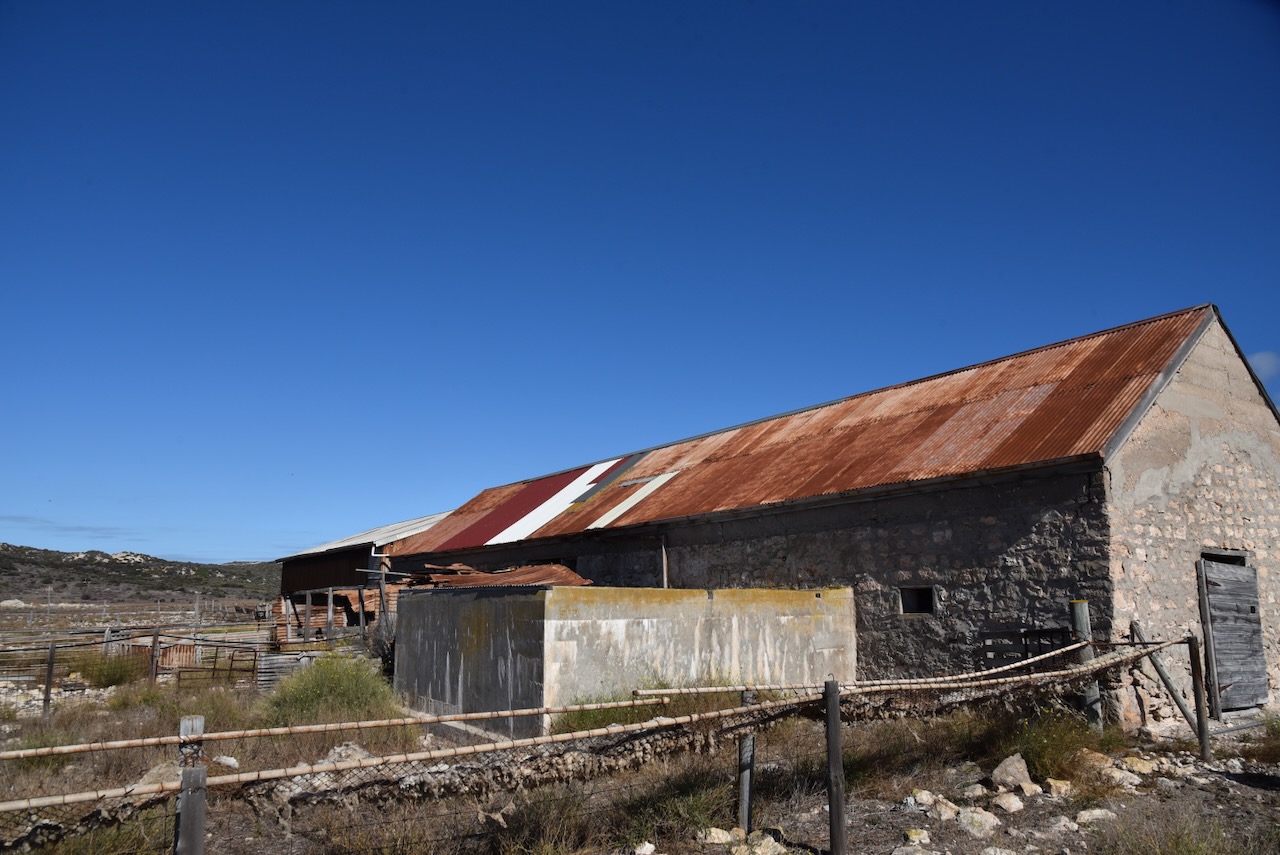
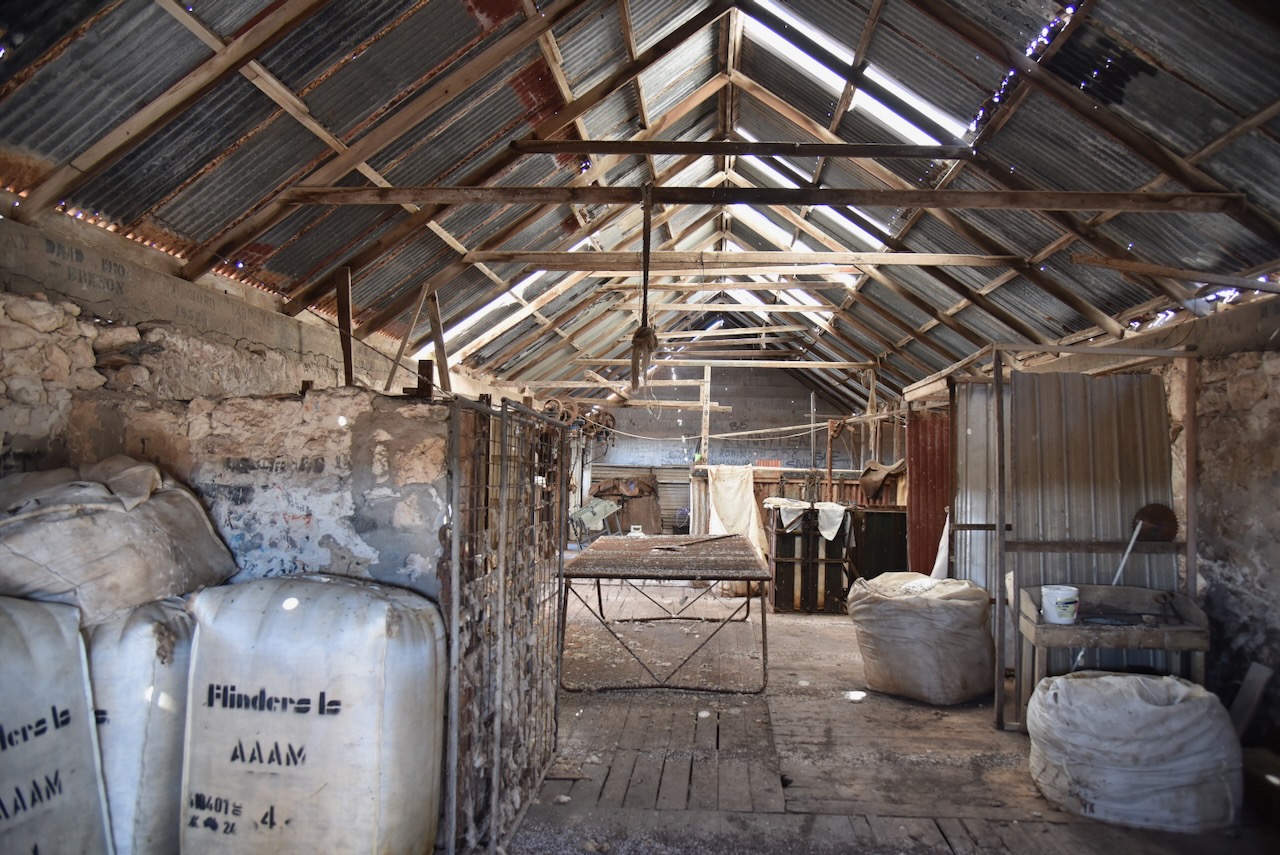
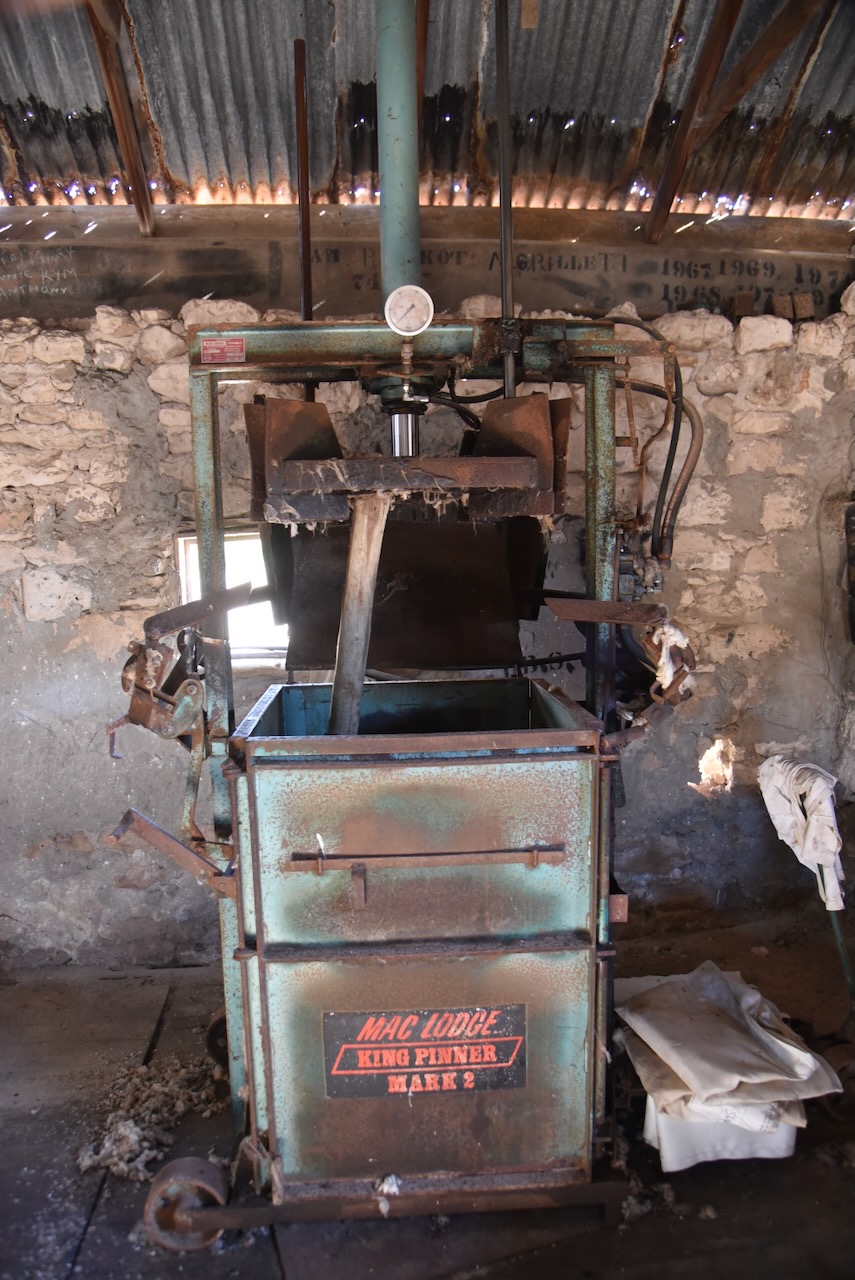
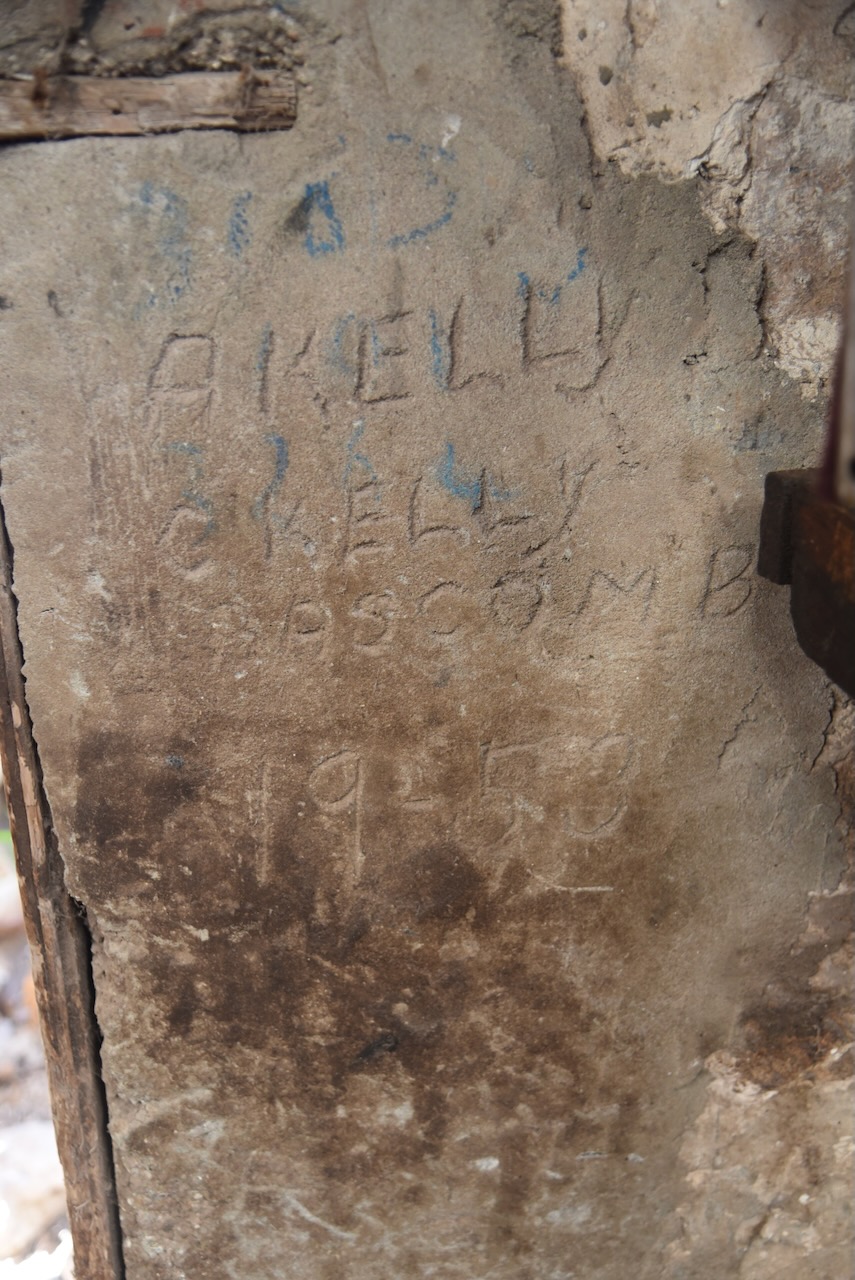
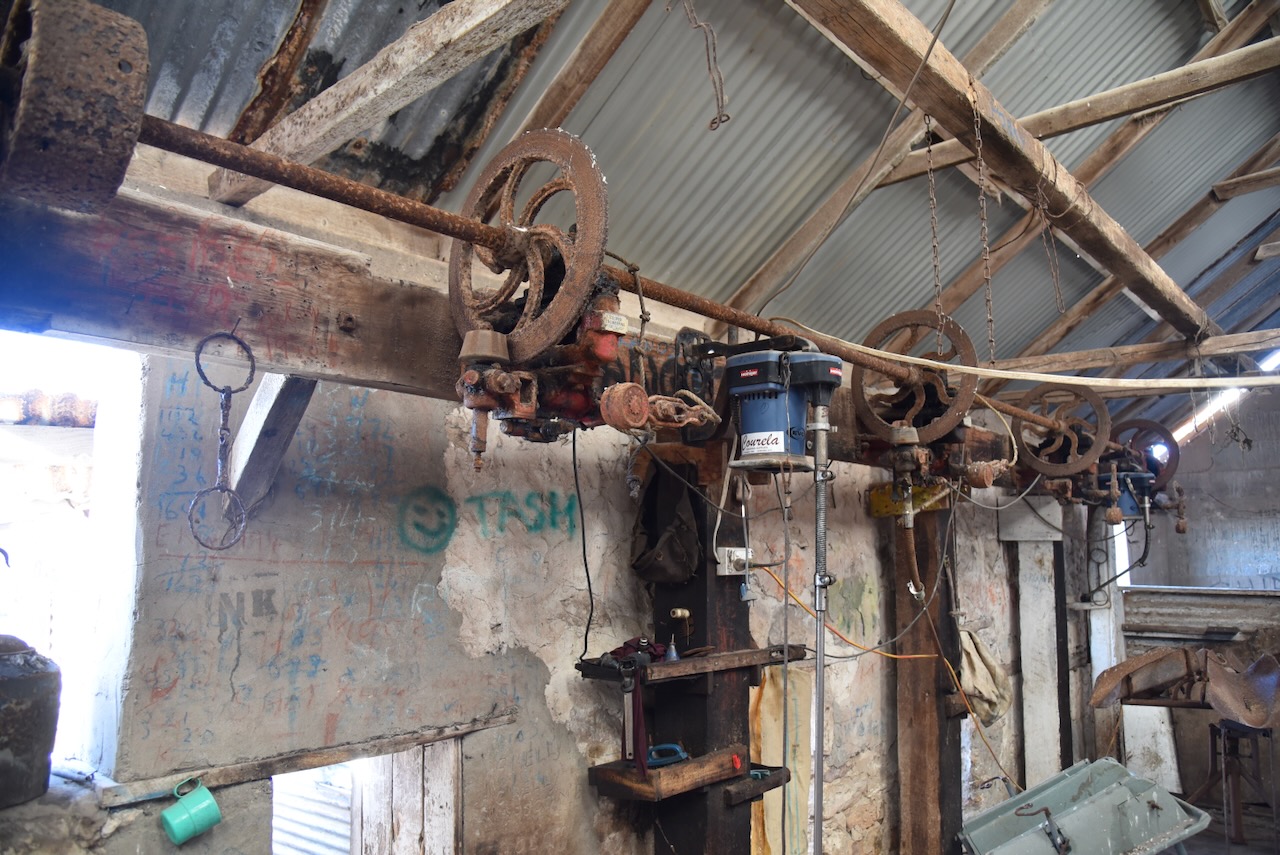
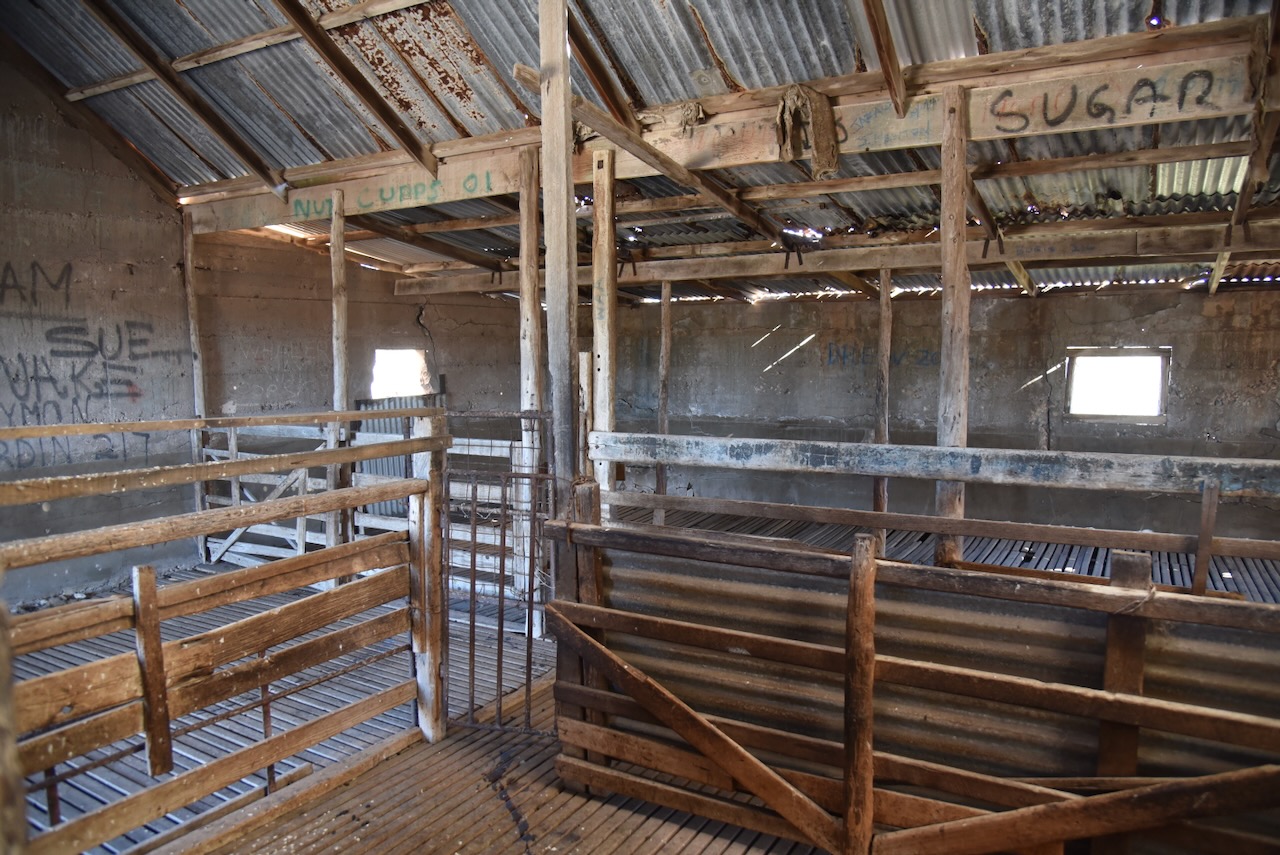
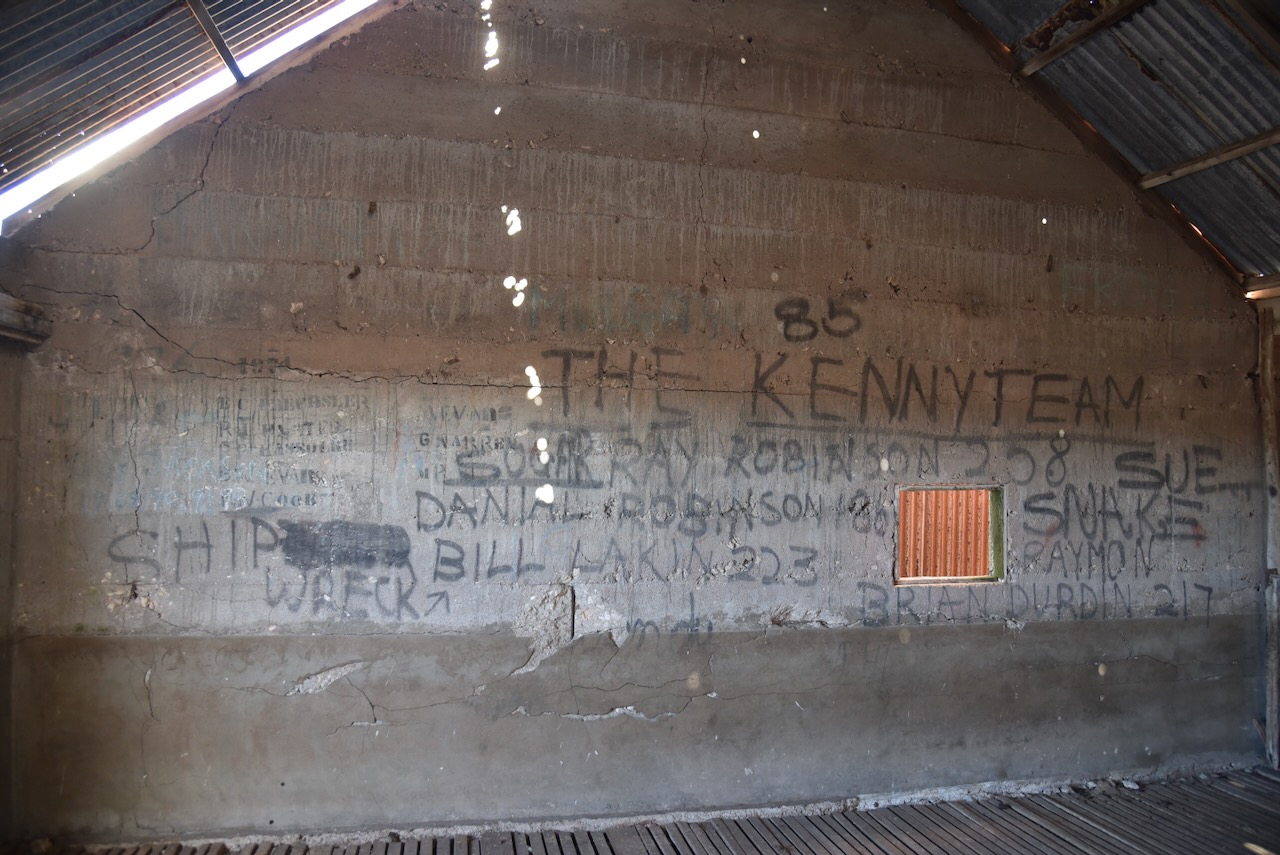
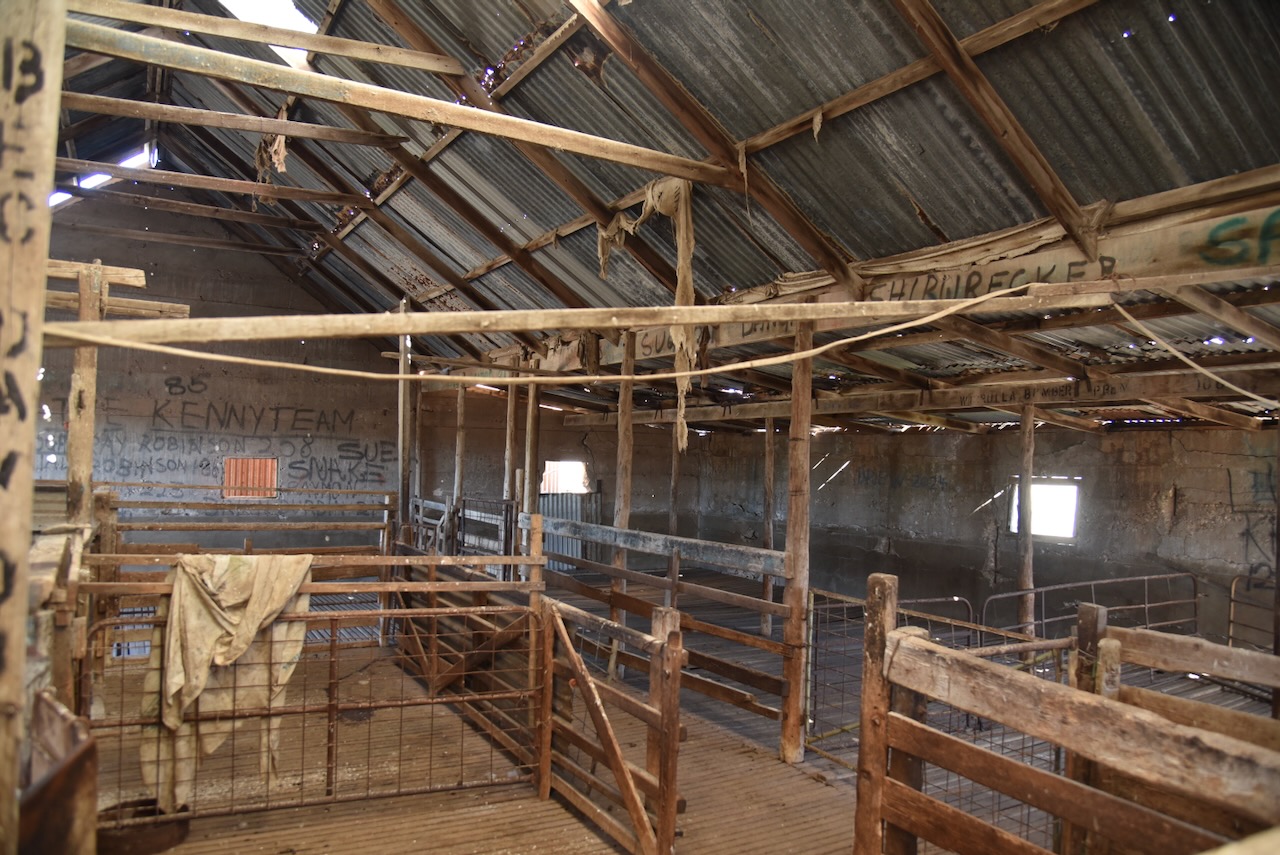
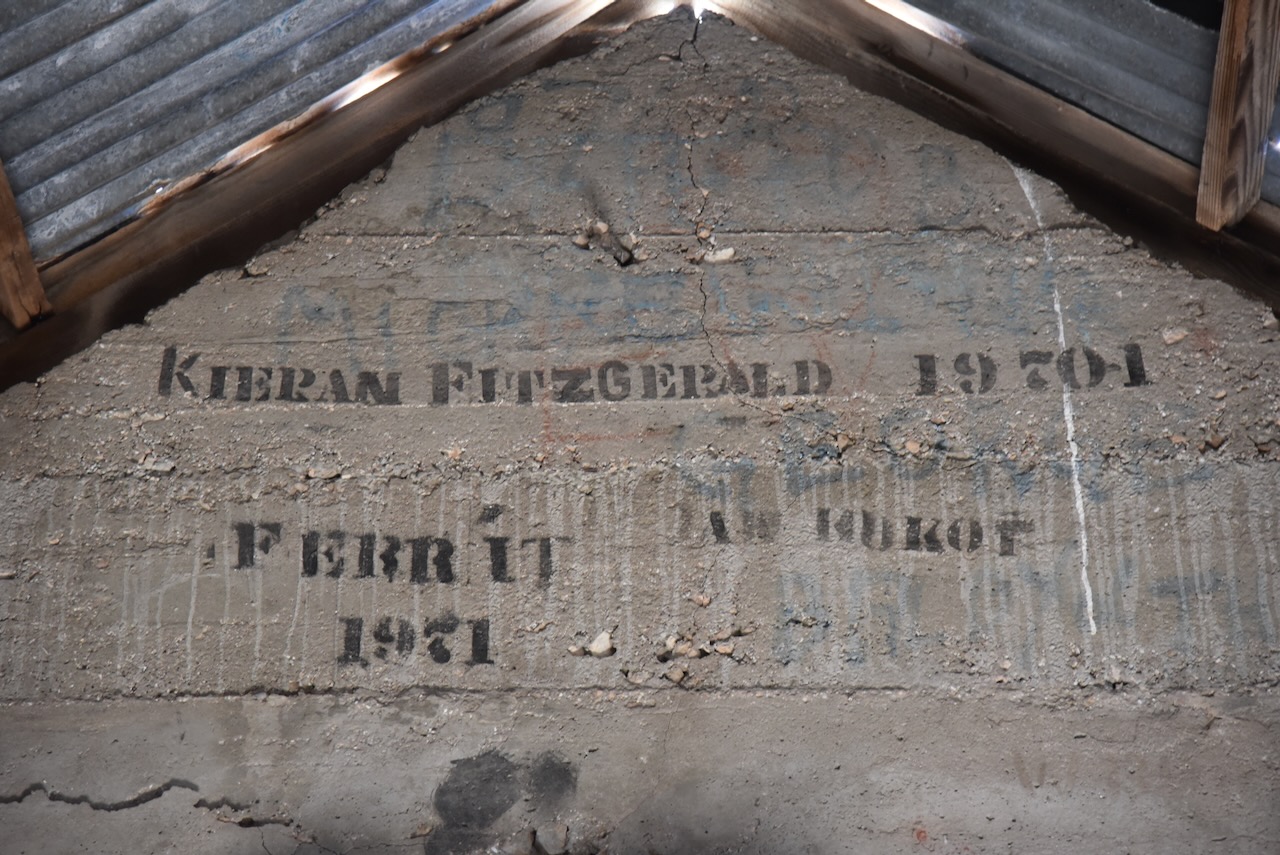
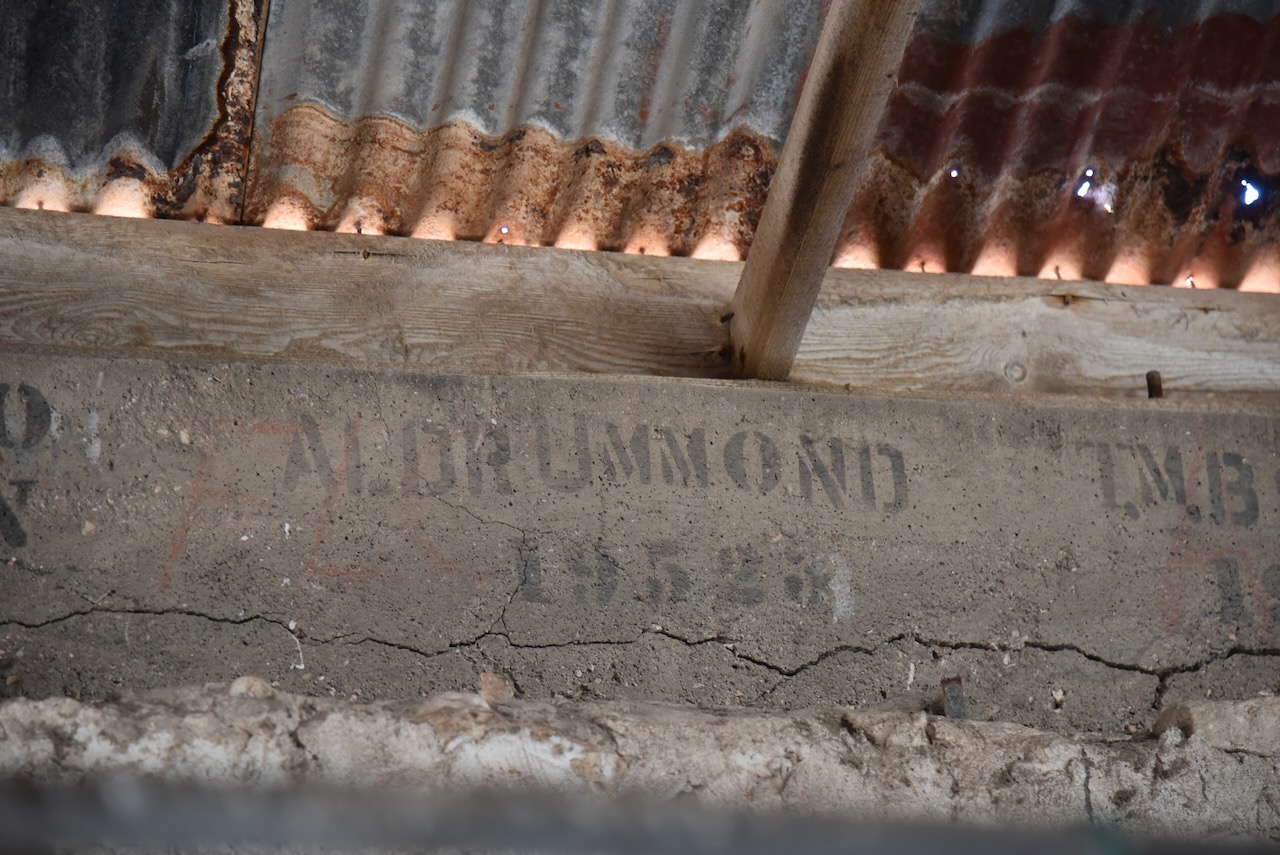
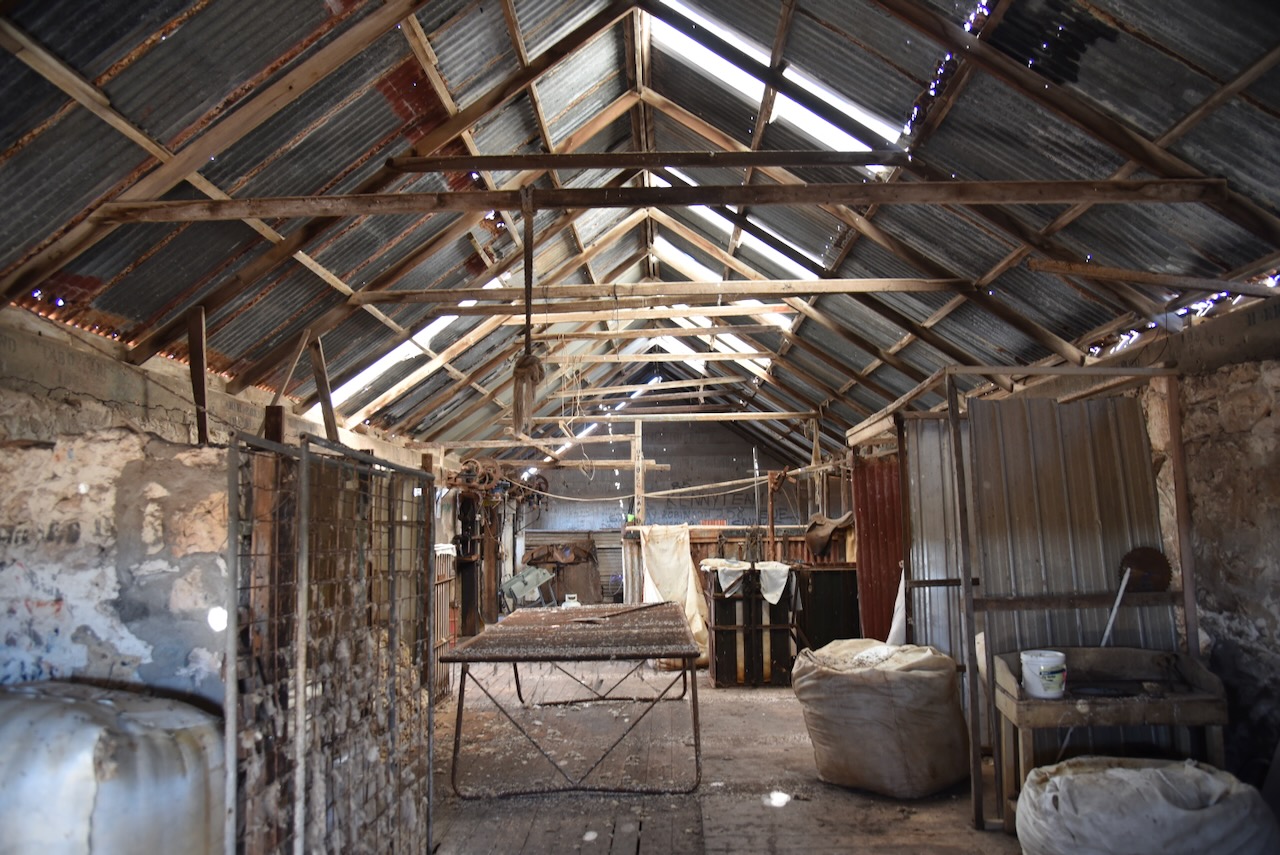
Flinders Island has a historic shearing shed built in the 1800’s. It is adjacent to Peter and Nong’s farmhouse and is still in use. It contains shearers’ names etched on the walls dating back to the 1920s.
LIGHTHOUSE BEACON.
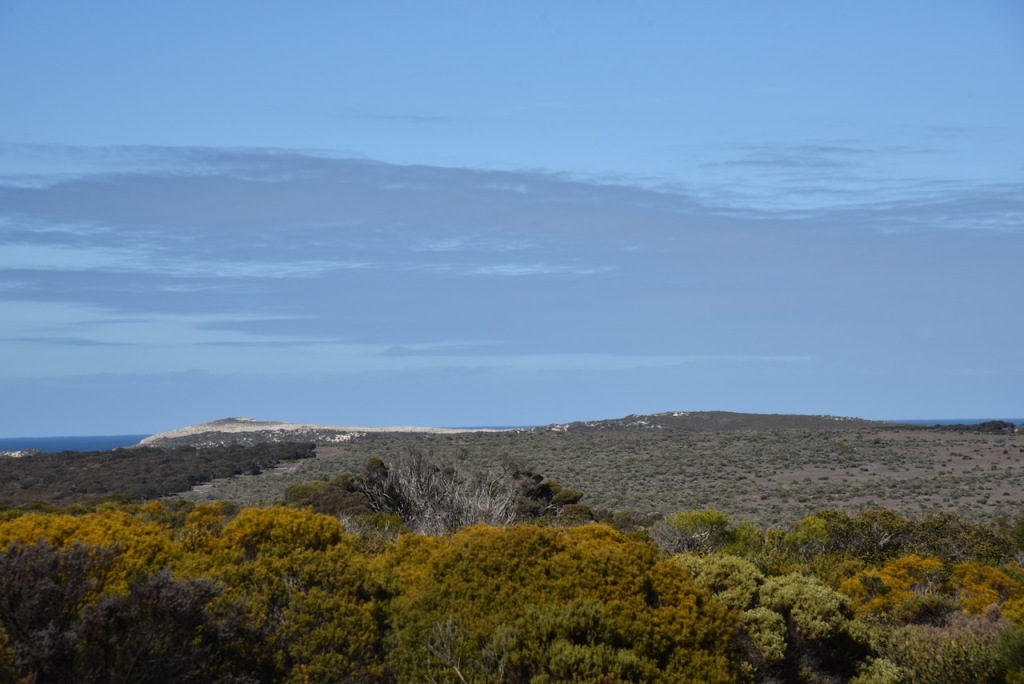
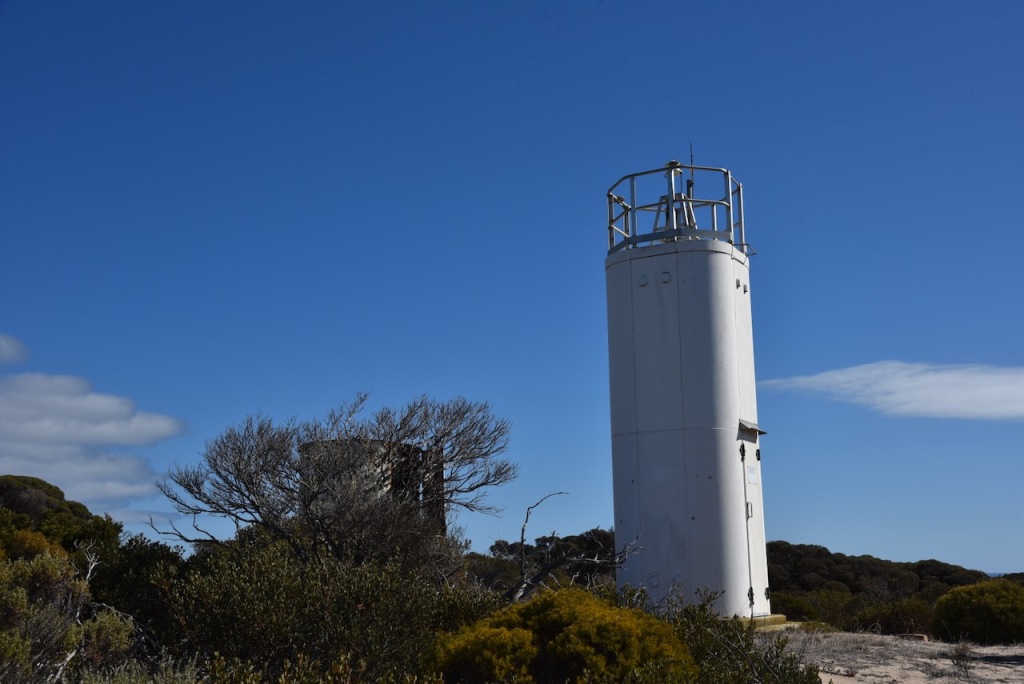
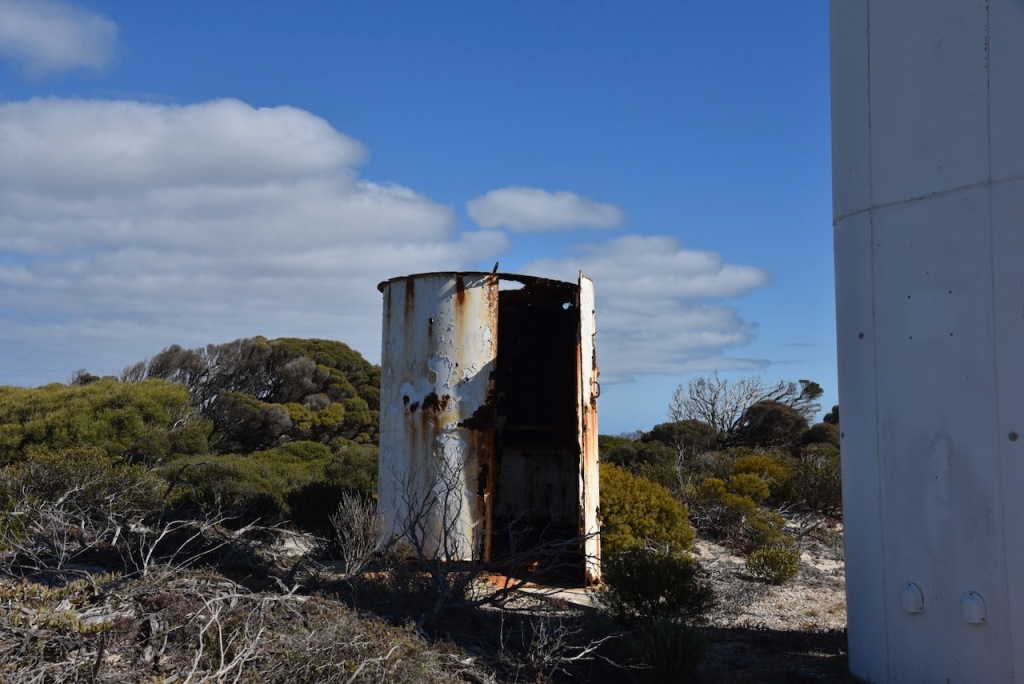
A lighthouse beacon can be found on the island. It sits 62 metres above sea level. Remains of the old beacon can also be seen.
SHIPWRECKS.
Vulcan.
Flinders Island has been the site of several shipwrecks over the years. The first recorded was that of the schooner Vulcan.
John Bailey Pavey, alias John Williams, Jack Williams, John Andrews, and John Williams Andrews, was a mariner, sealer, and whaler, with a dangerous temperament. (Beer 2022)
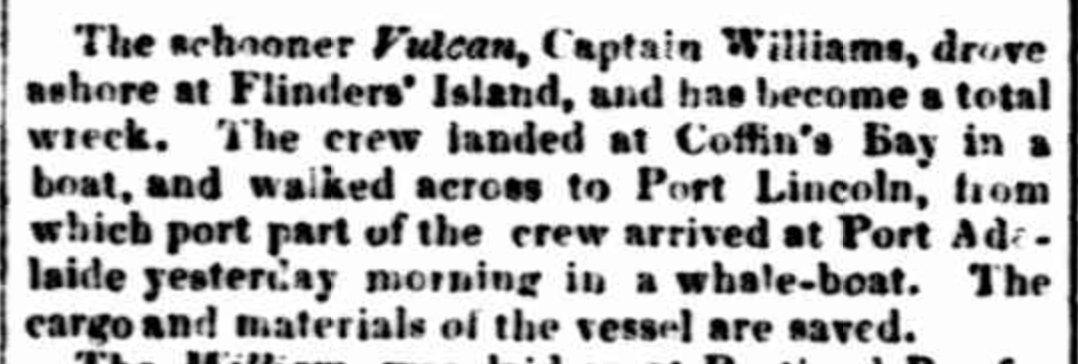
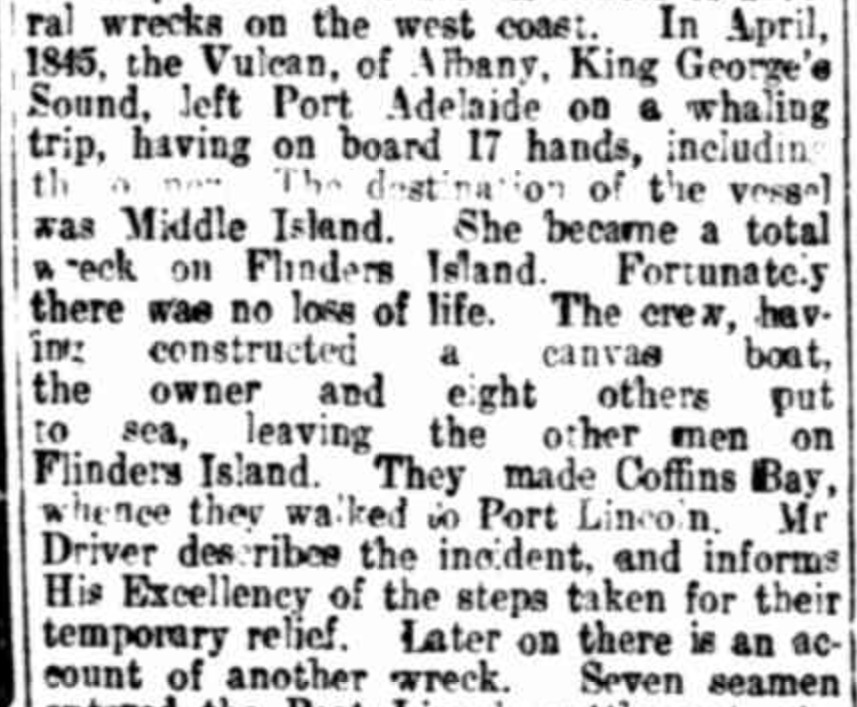
Captain ‘Williams’ and his crew of 17 departed Port Adelaide on the 9th day of April 1845, on board the 35 ton whaling schooner Vulcan. They were on a whaling voyage from Port Adelaide to the whaling station on Middle Island, Western Australia. On the 22nd day of April the vessel reached Flinders Island where it had planned to stop for provisions. Shortly after their arrival, severe weather caused the Vulcan to be driven to shore and it was totally destroyed. There was no loss of life and the majority of the cargo aboard was saved. (Beer 2022) (Australian Government 2024)
Above:- Article from the South Australia Register, Wed 18th June 1845. Image c/o Trove
The group set about constructing a boat to get them off the island. A 22-foot canvas-covered boat was constructed using materials from the wrecked Vulcan. Whilst stranded on the island Captain Williams took the opportunity of stealing all items of use from the Bryant settlement. Bryant had died the year prior and was unable to protect his family and property. (Beer 2022)
Following three weeks on Flinders Island, Captain Williams and a crew of 8, set sail for the mainland. They landed at Coffin Bay and then walked for 3 days to Port Lincoln, arrived on the 27th day of May. Williams informed the Government Resident of Port Lincoln, Charles Driver, that he intended to travel to Adelaide to obtain another vessel and then return to Flinders Island to collect the remainder of his crew. (Beer 2022)
Driver informed his Excellency The Governor, the intentions of Williams. (Trove 2024)
Above:- Article from The Register, Adelaide, Wed 24 Dec 1919. Image c/o Trove.
Williams then travelled to Port Adelaide in a borrrowed a whaleboat, arriving there after 15 days at sea, on the 17th day of June. Upon his arrival at Port Adelaide, it is believed that Williams either borrowed or purchased a whaling boat and then sailed to Thistle Island where he collected Thomas Lashmar and Henry Gray. Williams sailed back to Coffin Bay, together with Lashmar and Gray in their boat. Upon reaching Coffin Bay Williams collected the canvas boat and sailed both vessels back to Flinders Island. He was accompanied by Lashmar and Grey. (Beer 2022) (1845 Shipping Intelligence)
Following his arrival at Flinders Island, Williams then set sail for Middle Island, taking the two aboriginal women Charlotte and Fanny and the two younger children. He left behind 2 of the Vulcan’s crew members Higgins and James Miles, Charlotte’s son William Bluff, and Lashmar and Grey. (Beer 2022)
Those left behind on Flinders Island sheltered in some caves on the island. (Heritage South Australia 2006) They initially believed that Williams was to return. But after several weeks, facing starvation, they left the island aboard the Vulcan’s canvas-covered boat. They sailed back to Coffin Bay where the boat was wrecked. The men then walked to Port Lincoln, arriving on the 20th day of September 1845. (Beer 2022)
Bluff informed the authorities about Andrew’s plunder of his stepfather’s property on Flinders Island. The Protector of Aborigines recommenced to the Colonial Secretary of South Australia, that legal proceedings be taken against Williams. Unfortunately, no action was taken. (Beer 2022)
Williams and his crew spent several months sealing in and around Middle Island, before sailing back to Flinders Island. But not before an alleged murder occurred aboard the ship. Fanny later revealed that Williams murdered one of his crew, Antonio, an African-American man. It was reported that Antonio ‘babbled in his cups’ when drunk and Williams was fearful that Antonio would disclose details of their ‘wrecking’ activities. It was alleged that the ship reached a seal rookery and Antonio volunteered to descend below on a rope. After a number of seals were skinned and sent back to the boat, Williams cut the rope which Antonio was ascending. (Beer 2022)
After sailing back to Flinders Island, surprisingly Williams left behind Charlotte and Fanny. This was despite Fanny being a witness to the alleged murder.
In December 1848 Fanny was again taken off Flinders Island aboard the James Flaxman. By 1849 Fanny was living with Williams in Albany, Western Australia. (Beer 2022)
John Williams died in 1882. He made Fanny the prime beneficiary in his will. Fanny died of bronchitis on the 20th day of August 1883. Her death certificate indicates she was born c. 1818. She is buried in an unmarked grave at the old Middleton Beach Cemetery, Western Australia. (Beer 2022)
Woolomai
In the early hours of the 11th day of February 1883, the 143-ton brigantine Woollomai struck ground to the west of Flinders Island. The Woollomai’s rudder was lost, but otherwise, the ship was undamaged. It took the crew about 1.5 hours to get the vessel free. She sailed back to Venus Bay where a temporary rudder was fitted and she resumed her journey to Port Adelaide where permanent repairs were made.
SS Meerinderry.
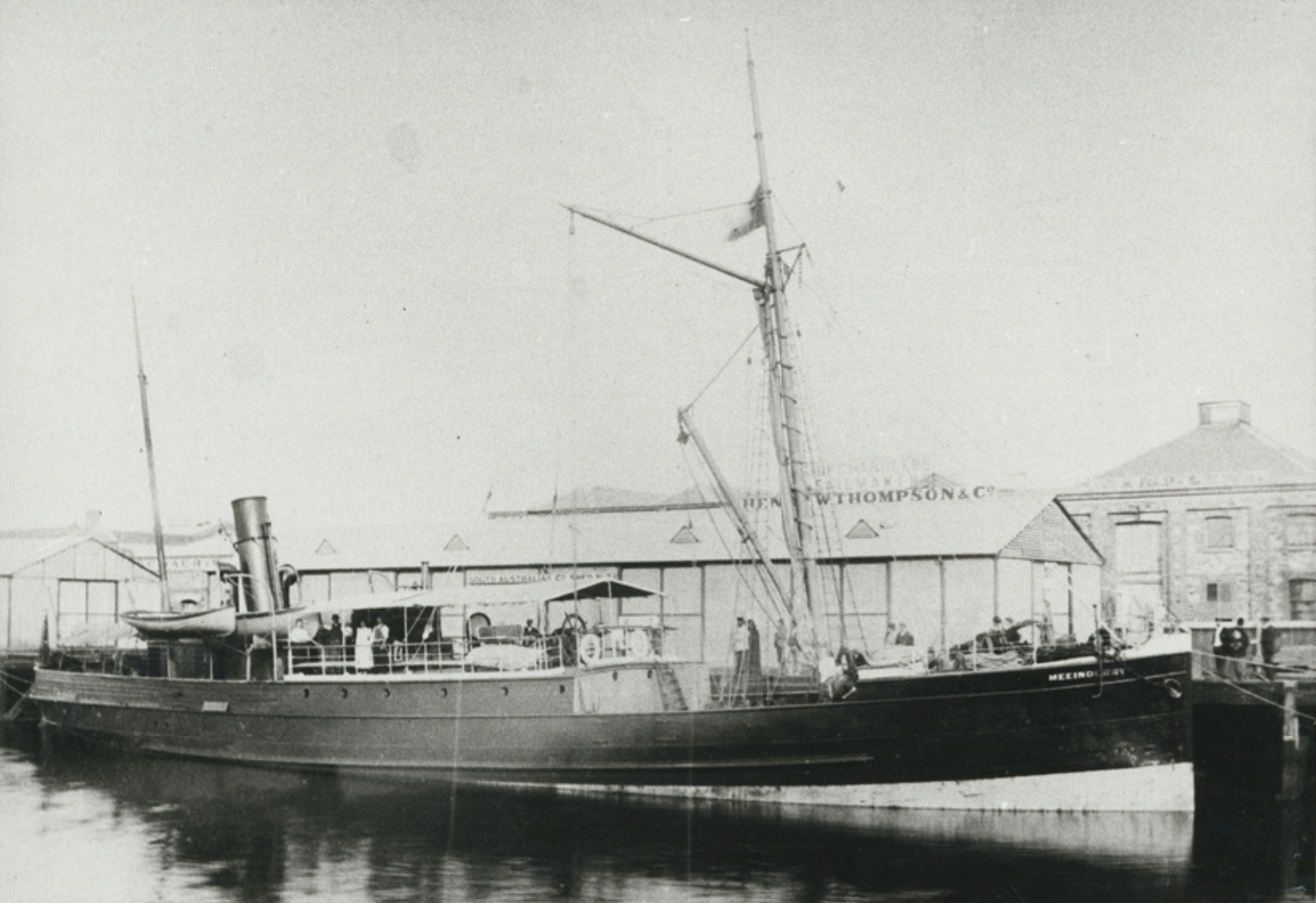
The SS Meerinderry was a 111-ton steel steamer. She dropped anchor off Front Beach in the late afternoon of the 31st day of July 1894, and during the evening the wind increased to strong winds and at 2.00 a.m. on the 1st day of August 1894, the anchor cable parted and the steamer went onto the reef and eventually ended up on the beach near Seal Point.
Above:- S.S. Meerinderry. Image c/o State Library South Australia.
Lady Flinders.
The Lady Flinders was a 9.9-metre ketch that was operated by the owners of Flinders Island. In October 1937 she was riding peacefully at anchor in Groper Bay when a storm moved in. The Lady Flinders broke free from her moorings and was swept into rocks.
Above:- Lady Flinders. Image c/o State Library South Australia.
SS Kapara.
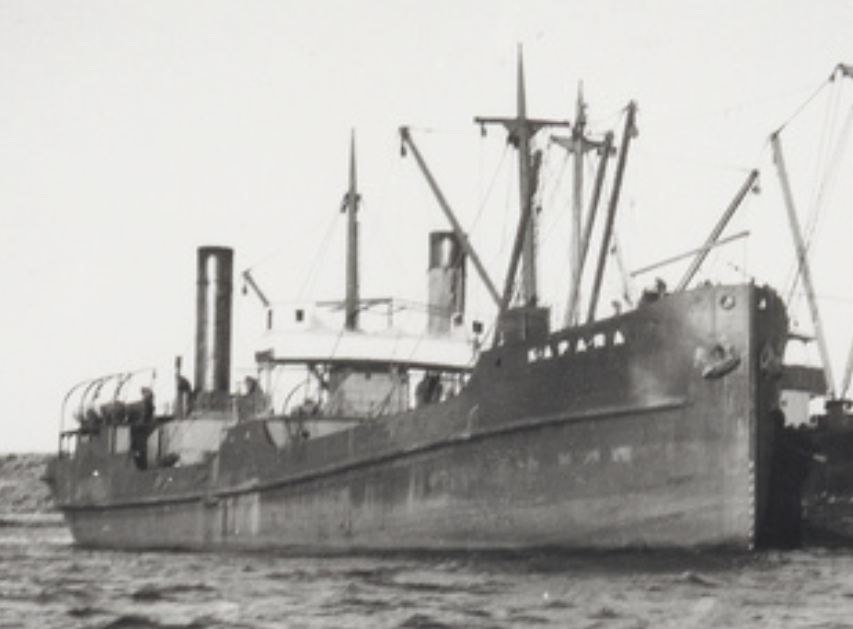
On the 11th day of November 1942, the SS Kapara departed Port Adelaide en route to Fowlers Bay on the west coast of South Australia. (Heritage South Australia 2019)
Above:- The Kapara at Port Victoria. Image c/o State Library South Australia [B 30531]
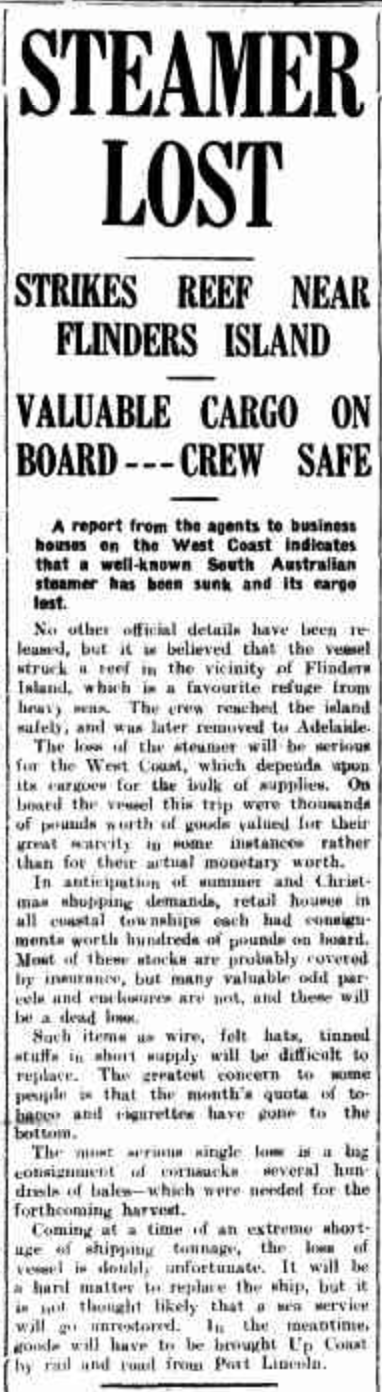
On the 13th day of November 1942, the Kapara struck a reef on the southeast side of Flinders Island and was sunk. The crew aboard reached the island safely and were later taken to Adelaide. (1942 Steamer Lost)
The West Coast Sentinel, dated Friday 27th November 1942, stated:-
“The loss of the steamer will be serious for the West Coast, which depends upon its cargoes for the bulk of supplies.“
Above:- Article from the West Coast Sentinel, Fri 27 Nov 1942. Image c/o Trove.
The wreck of the Kapara can still be seen on Flinders Island at Bryants Bay.
WHO CURRENTLY RESIDES ON FLINDERS ISLAND?
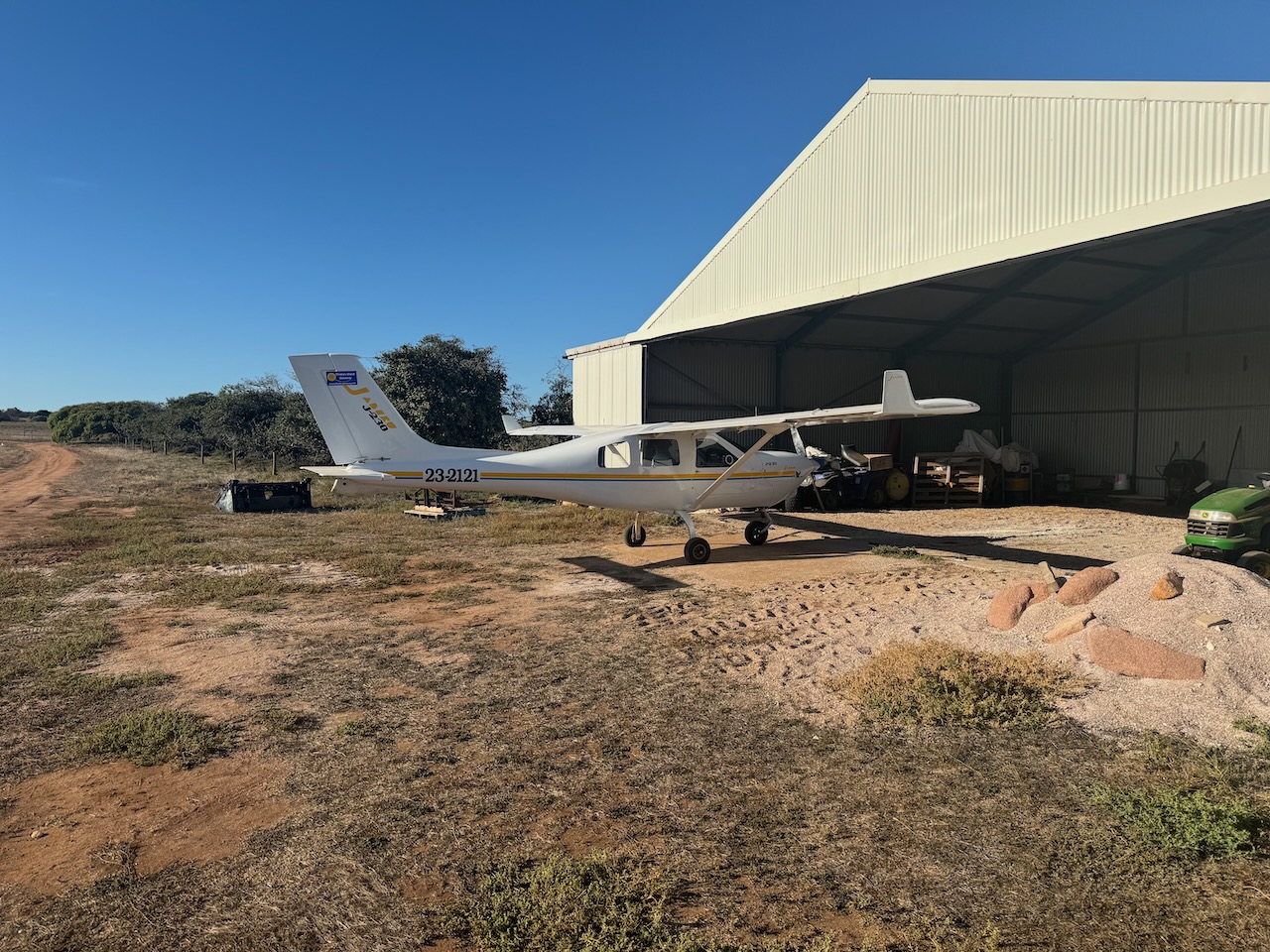
Peter Woolford and Nong are the only permanent occupants on Flinders Island. Peter became the owner of the island in 1978 and relocated there with his family from the Eyre Peninsula. Peter obtained his pilot’s licence c. 2008.
THE NIGHT BEFORE OUR TRIP.
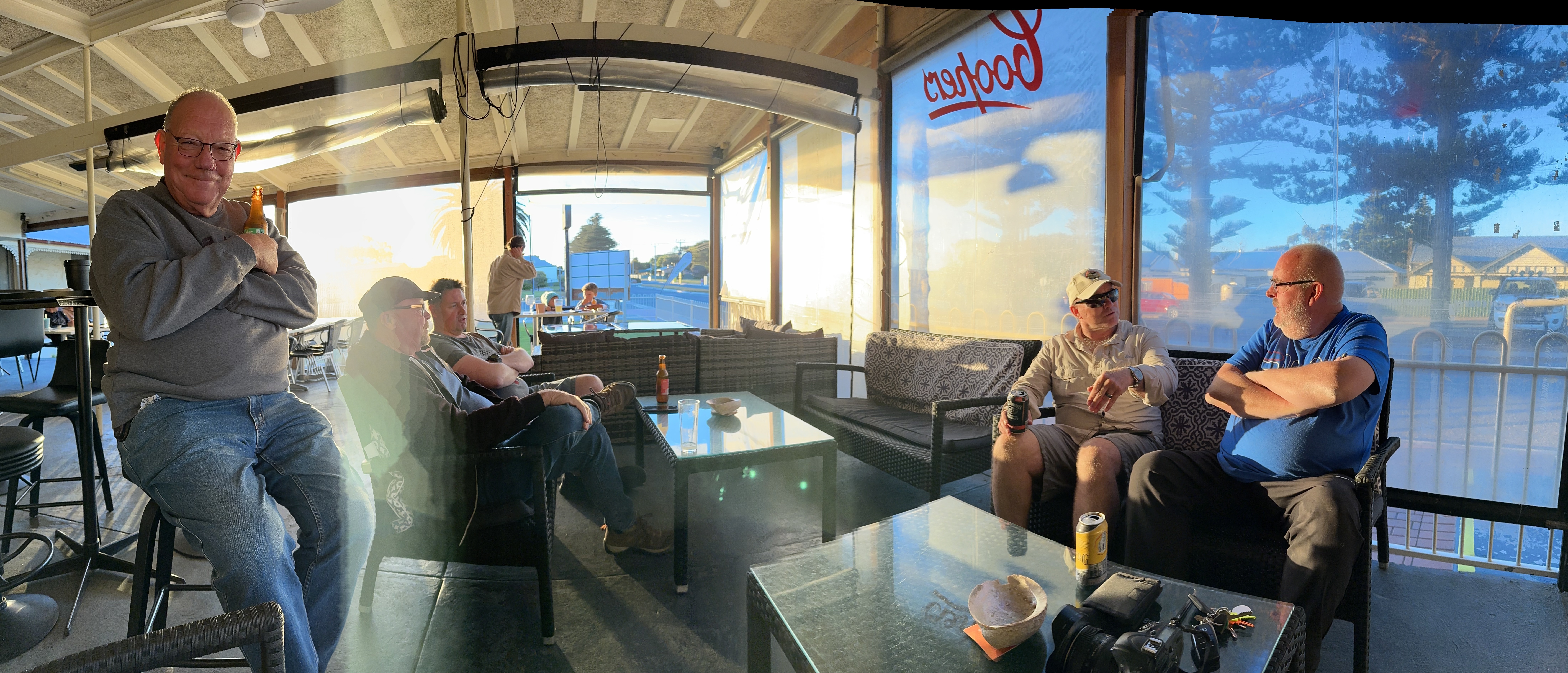
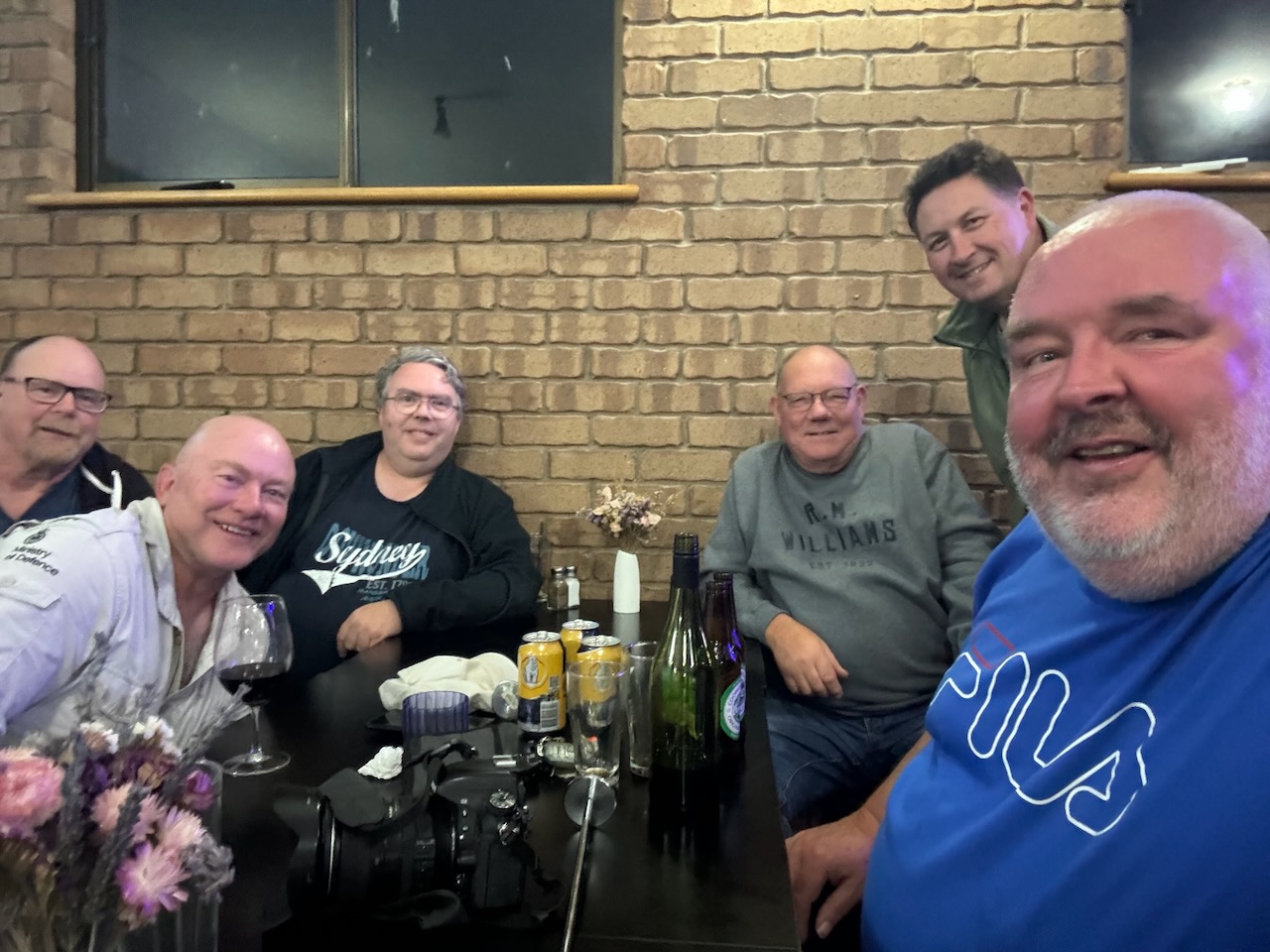
The night before we departed for Flinders Island we spent an enjoyable evening at the Elliston Hotel. We had a great meal, a few drinks, and plenty of laughs. We also caught up with Jonas from Flinders Island Eco Escape and discussed the morning’s voyage out to the island.
GETTING TO THE ISLAND.
For the team members, it was a 7-hour drive to reach Elliston from Adelaide. I had left 4 nights earlier and spent 2 nights at Kimba, before spending 2 nights at Elliston.
Above:- Map showing the road route from Adelaide to Elliston on the west coast of SA. Map c/o Google Maps.
You can fly to Flinders Island or reach the island via boat. We chose the latter through Flinders Island Eco Escape. We cannot speak highly enough of Jonas, Peter and Nong. They were extremely friendly and helpful during the planning of this trip and whilst we were on the island.
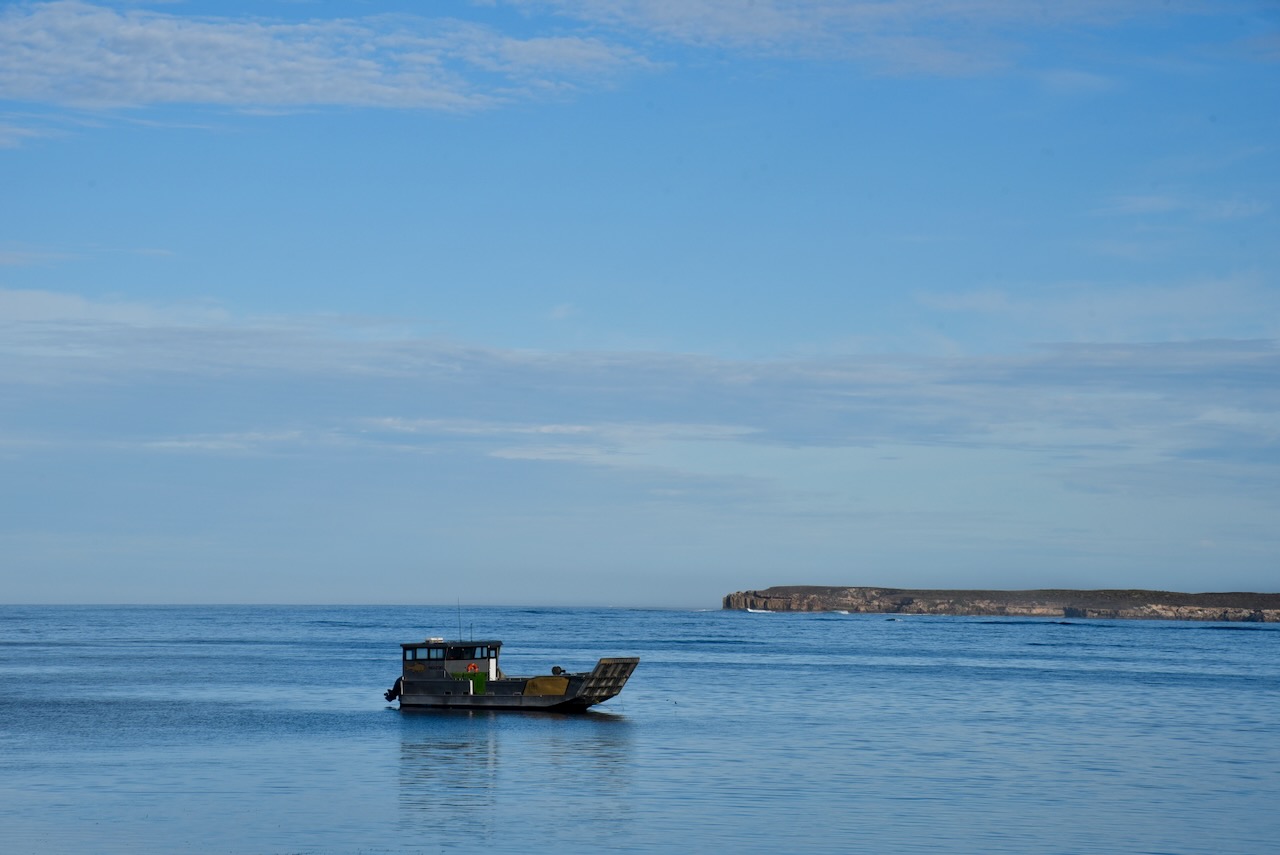
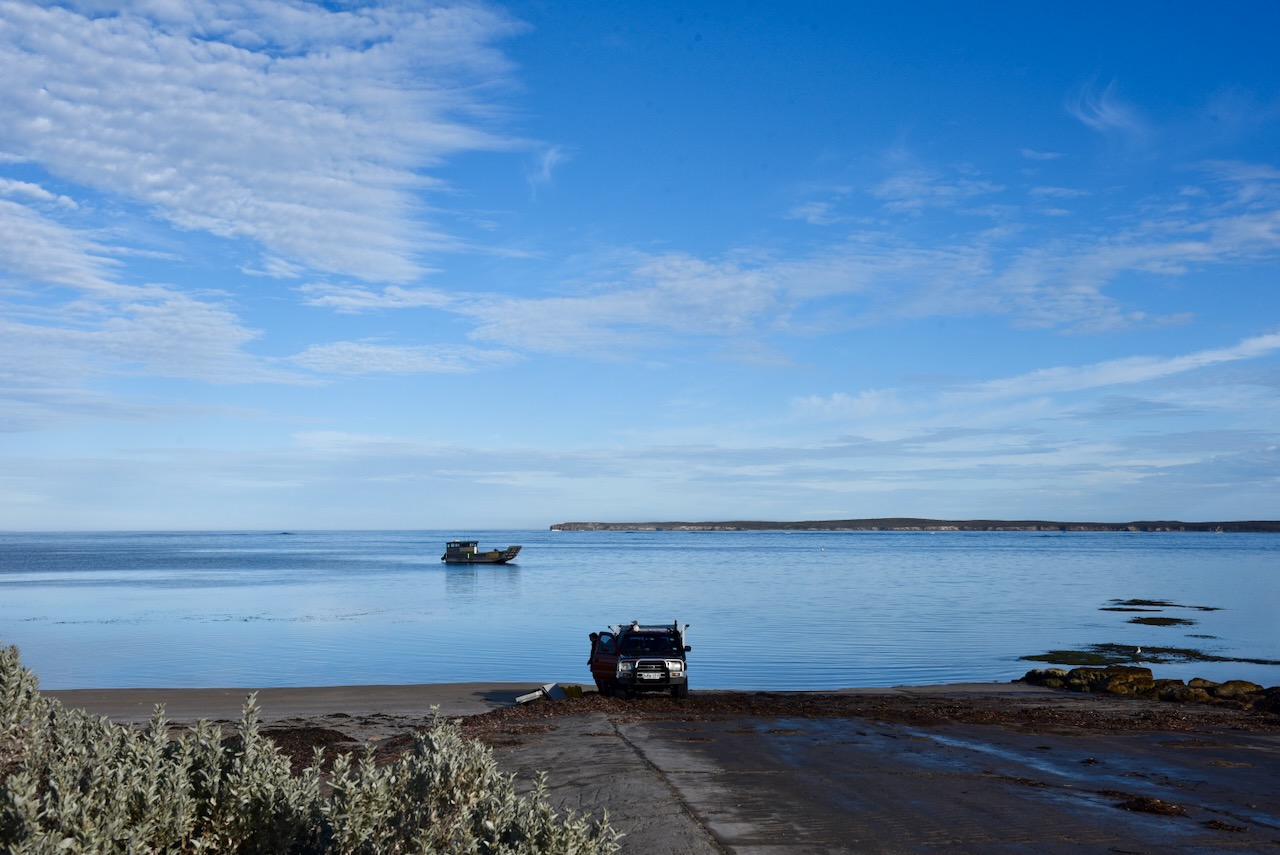
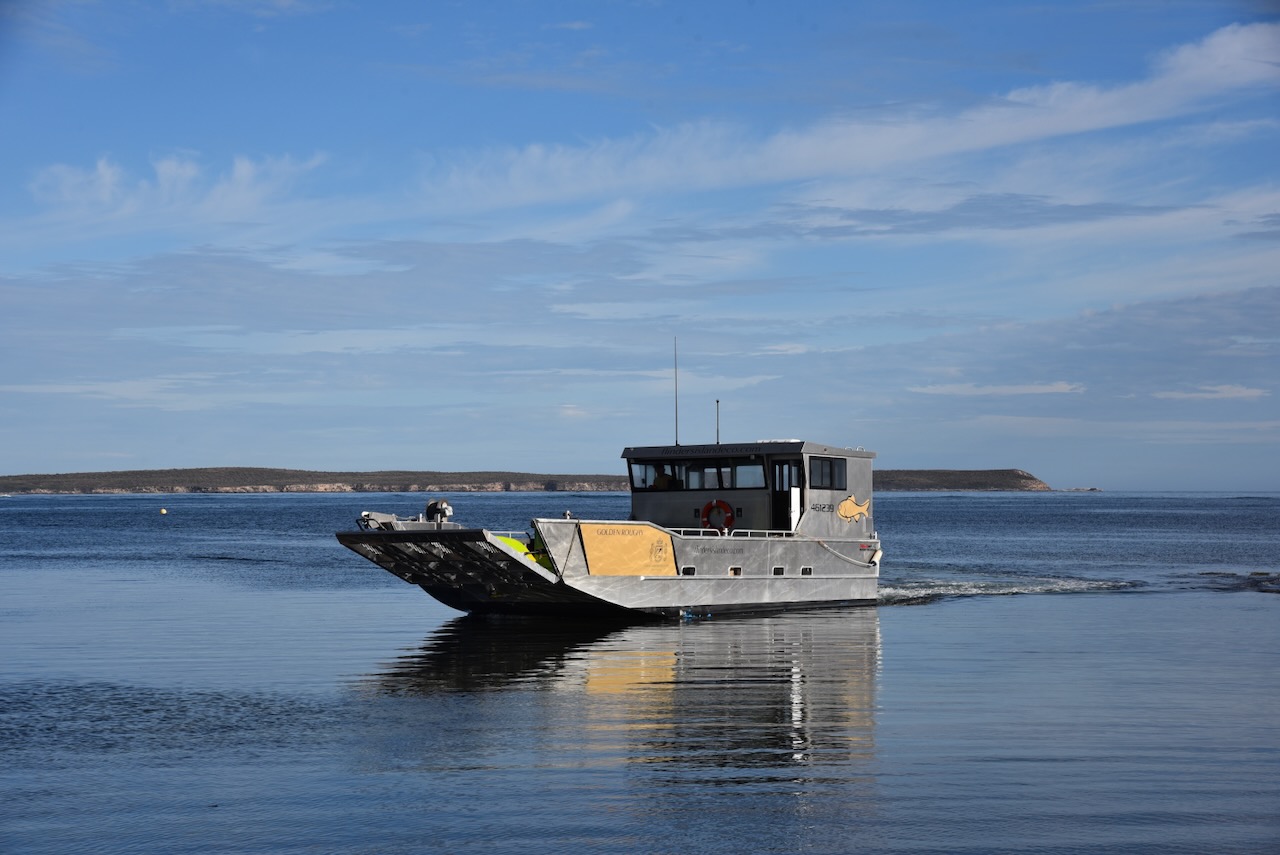
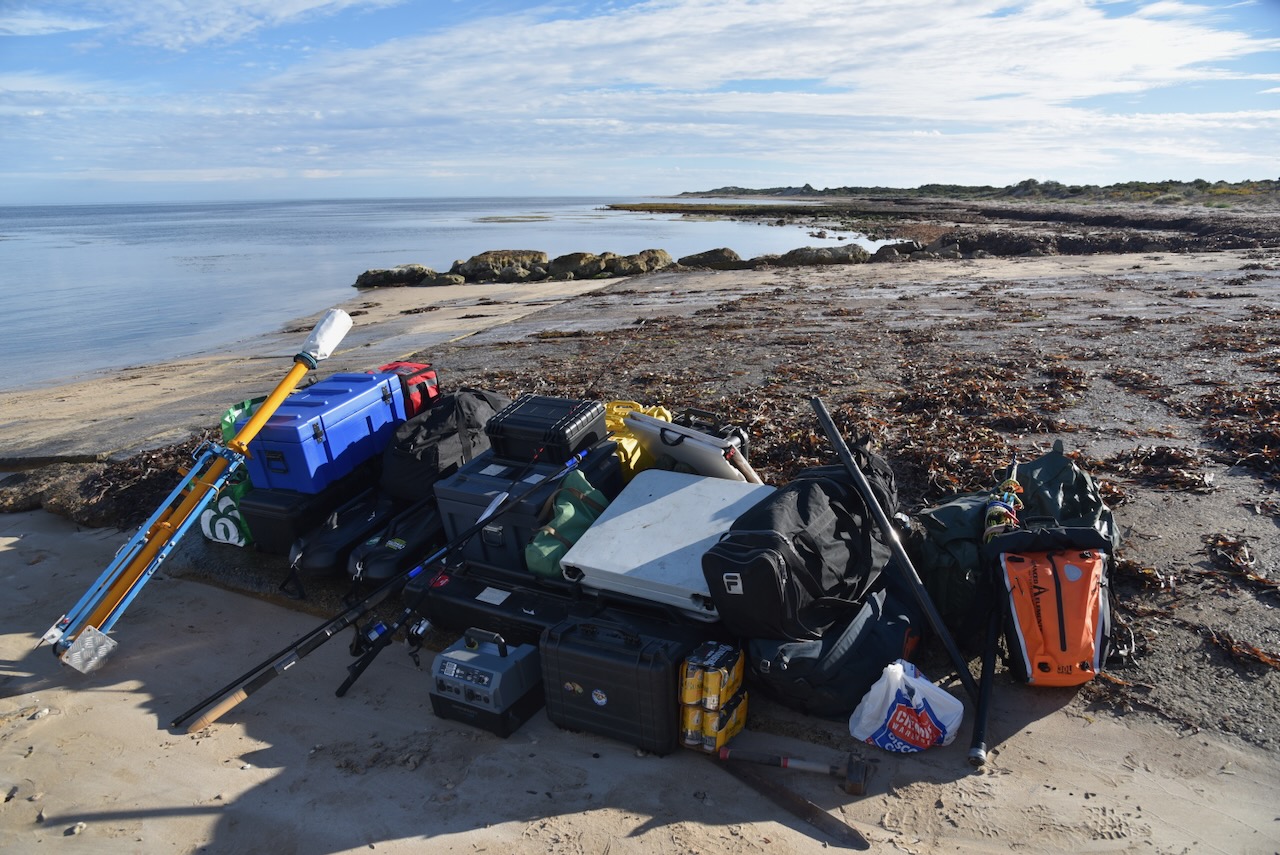
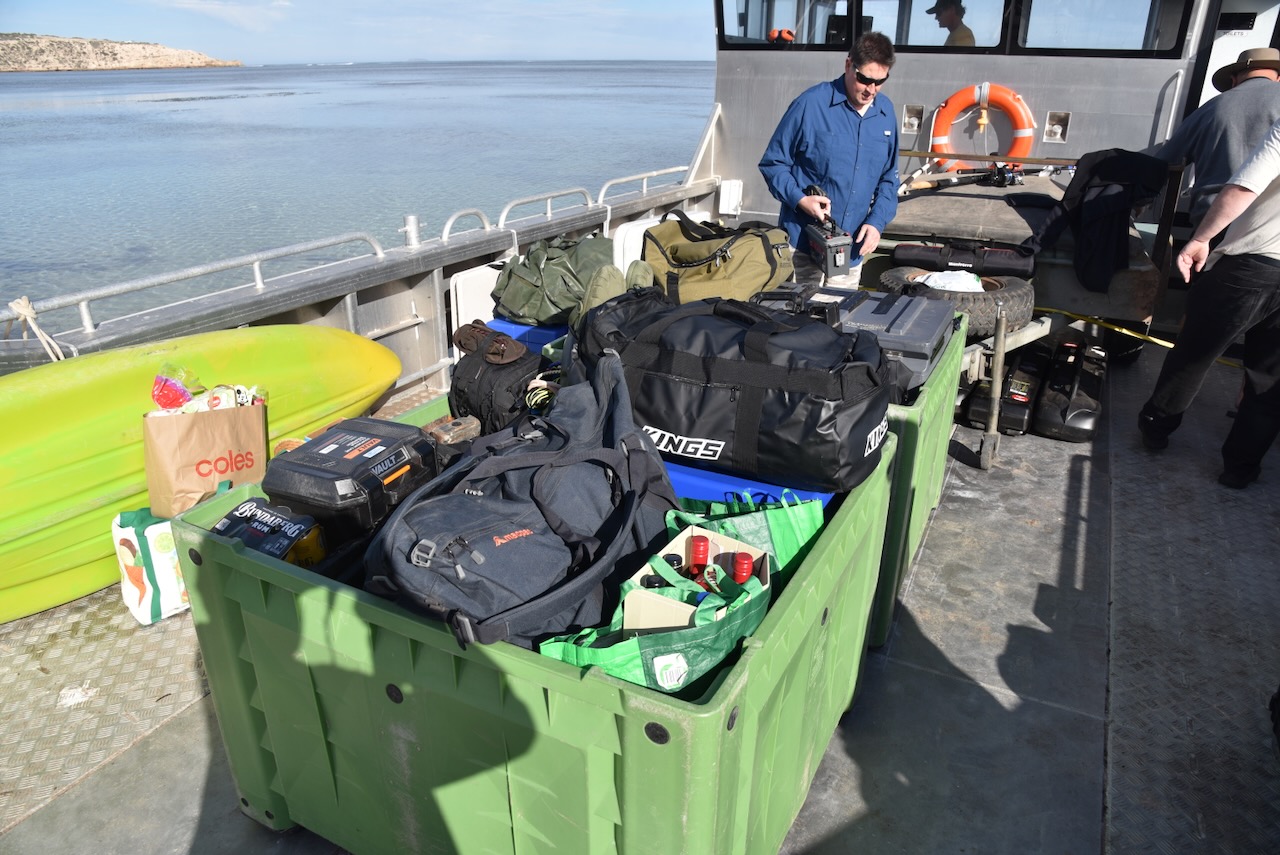
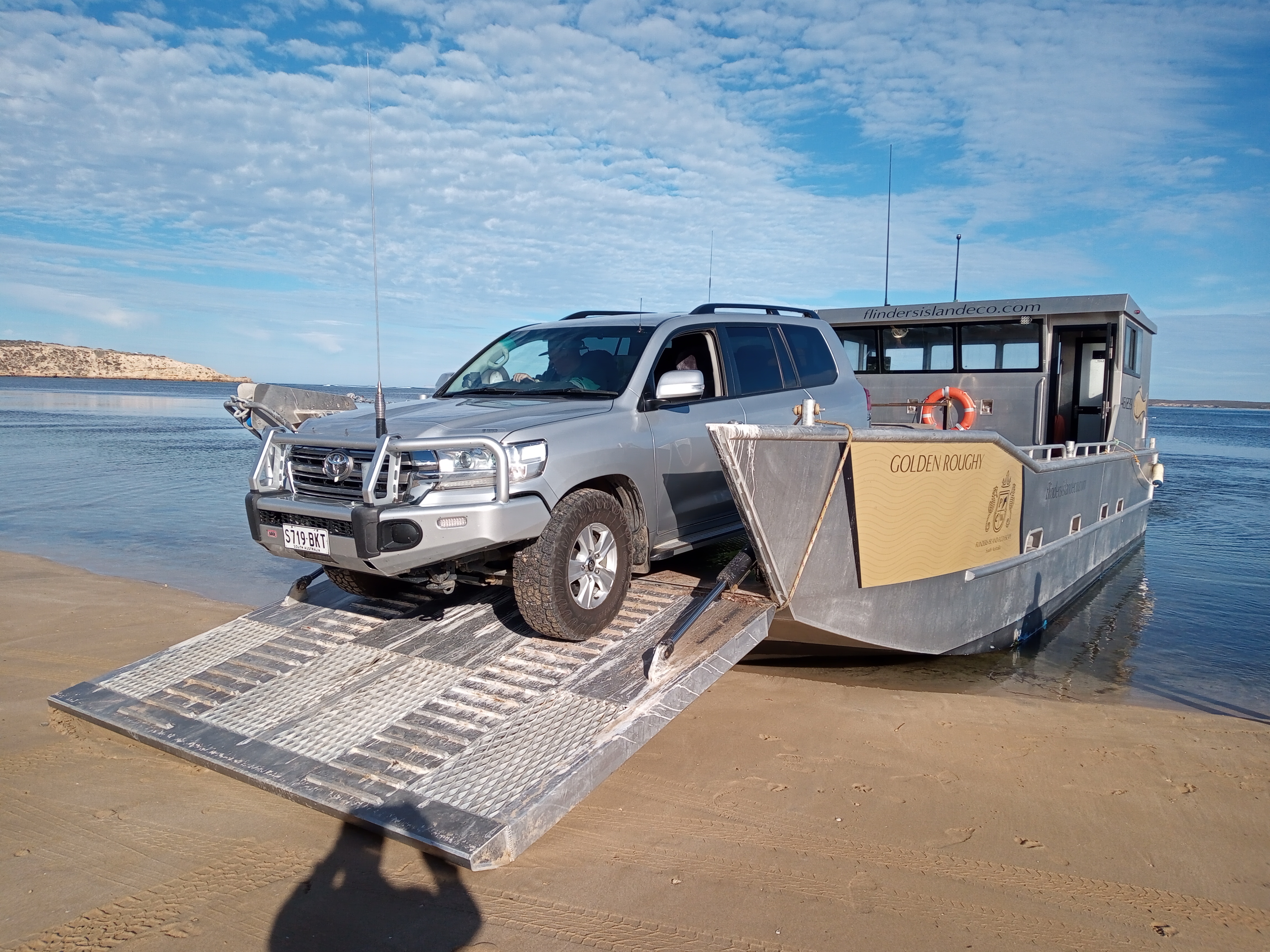
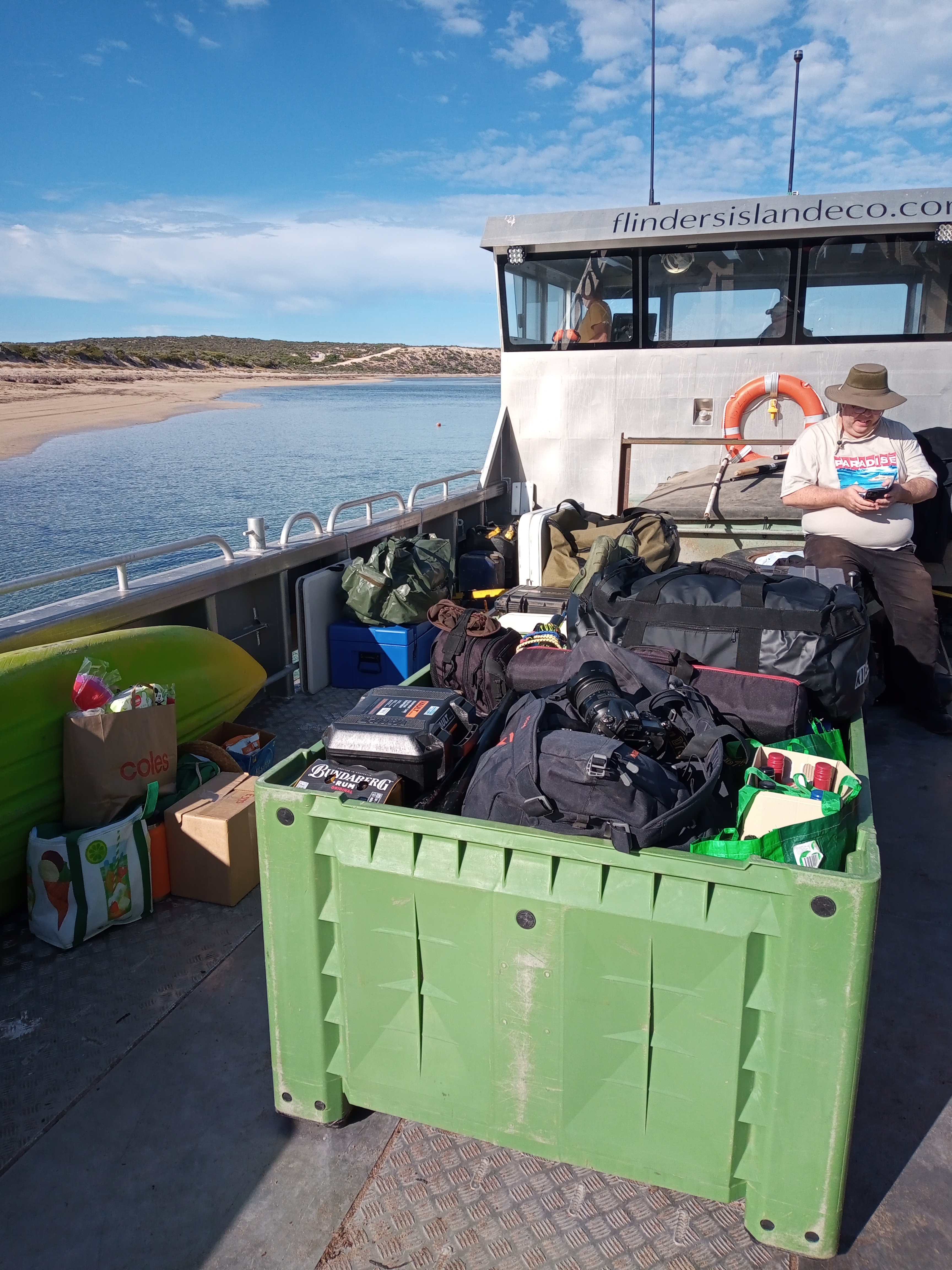
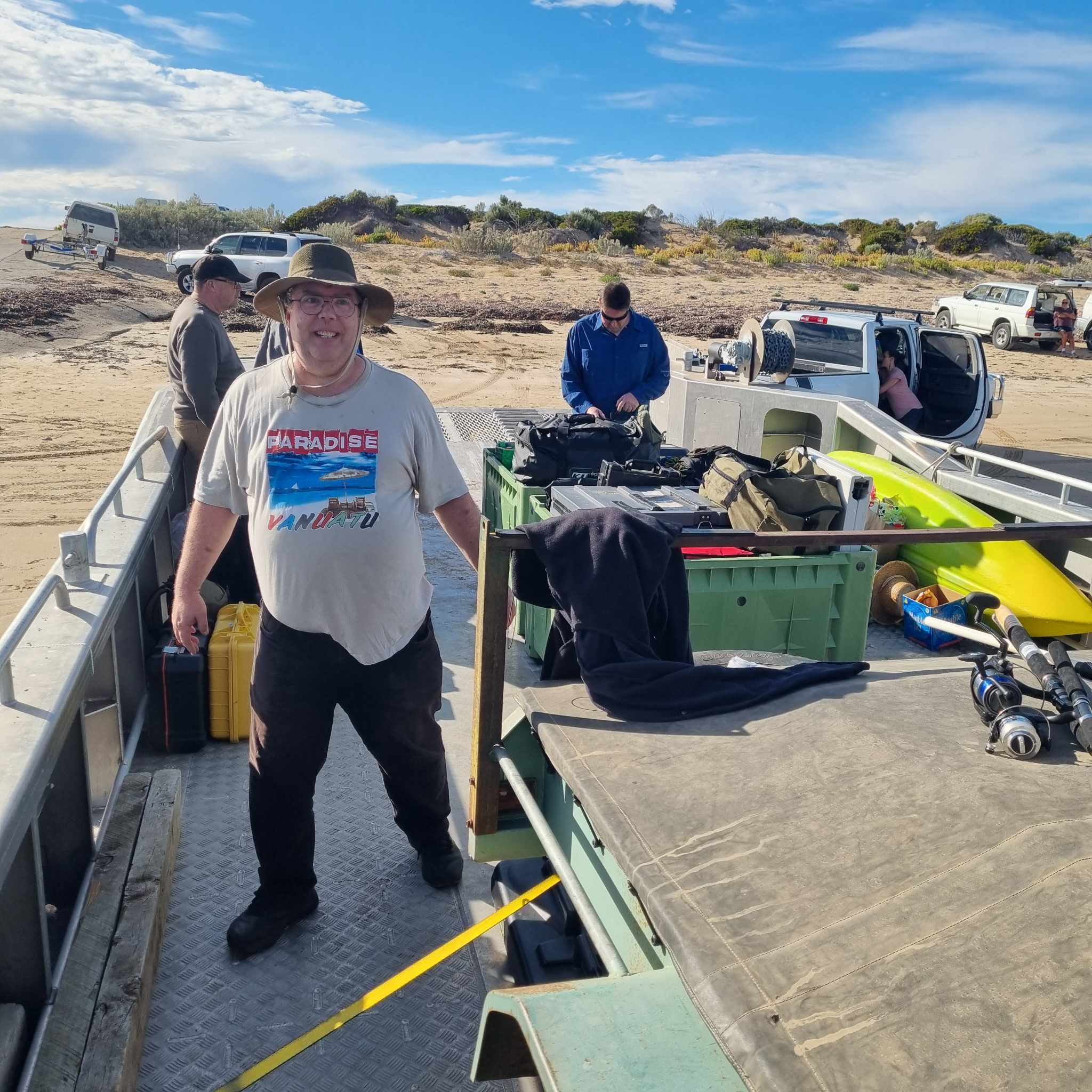
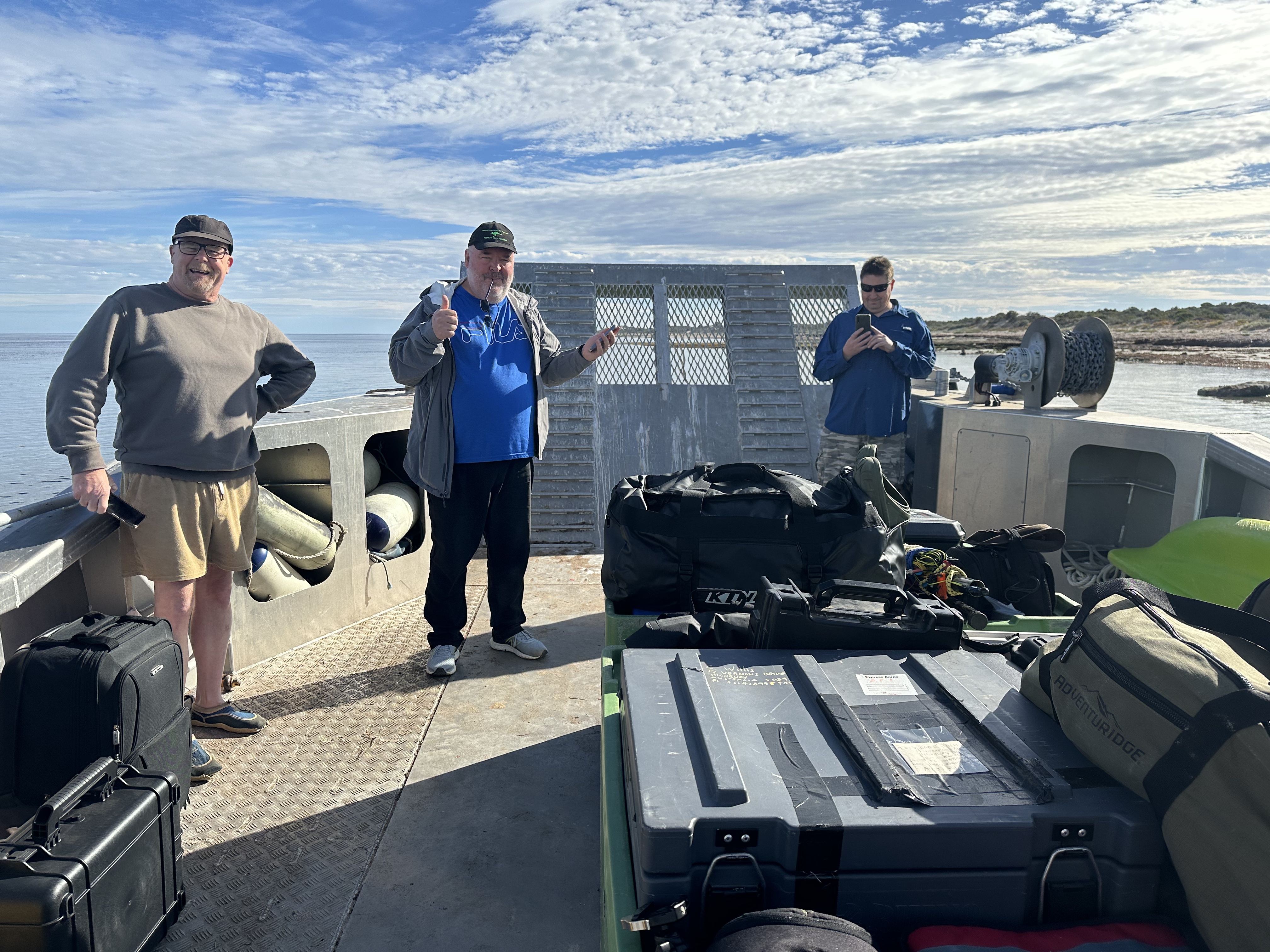
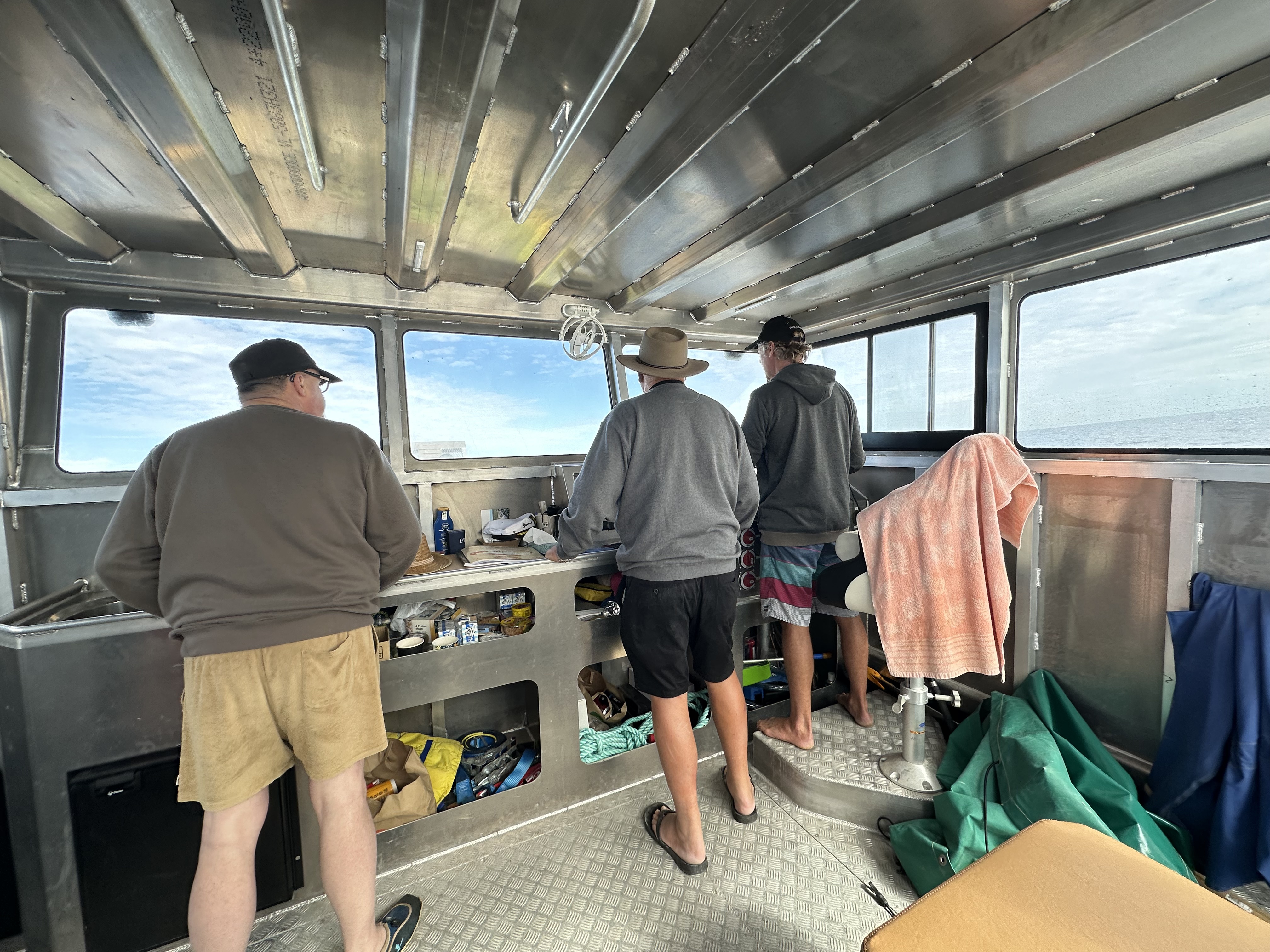
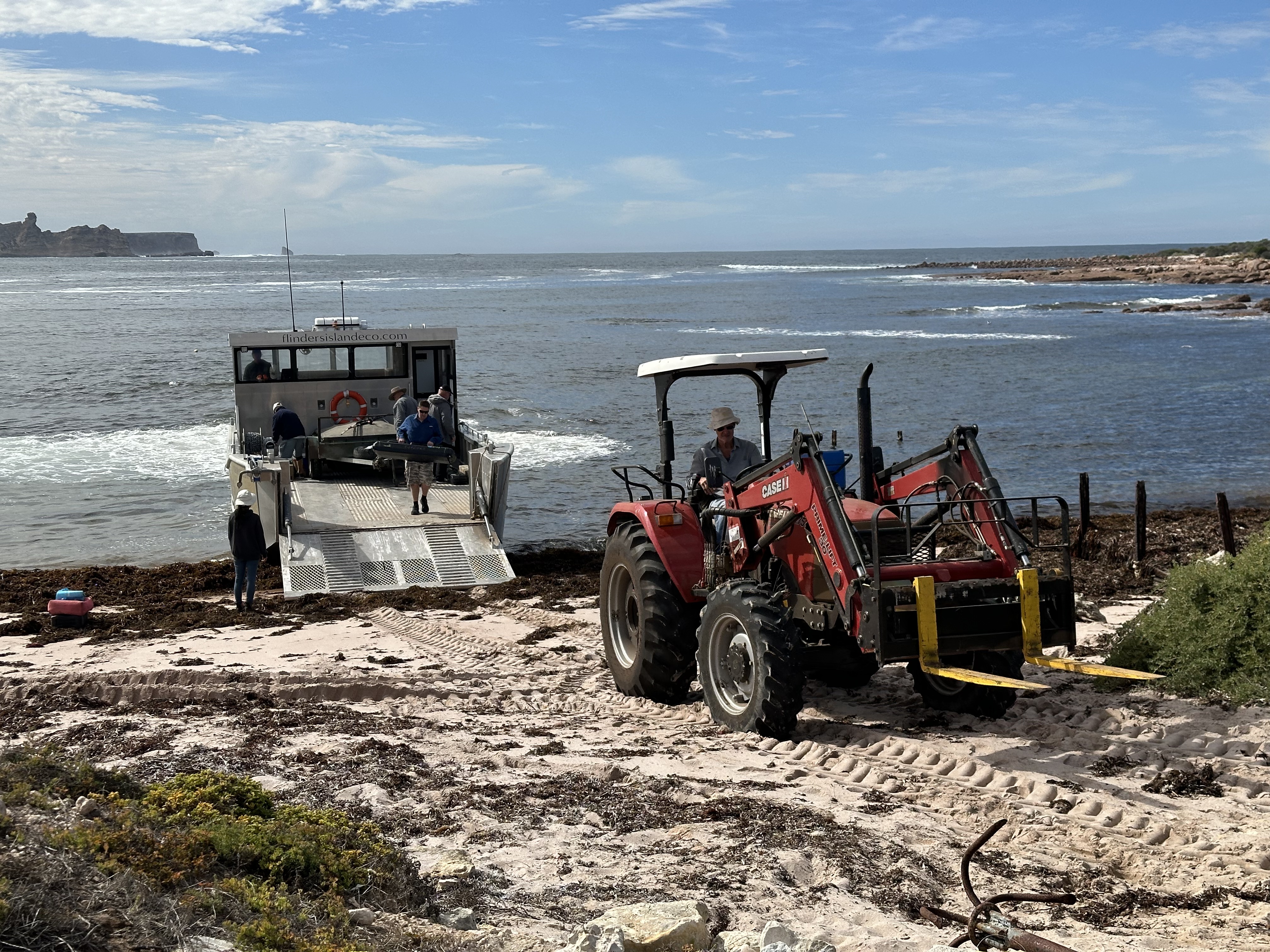
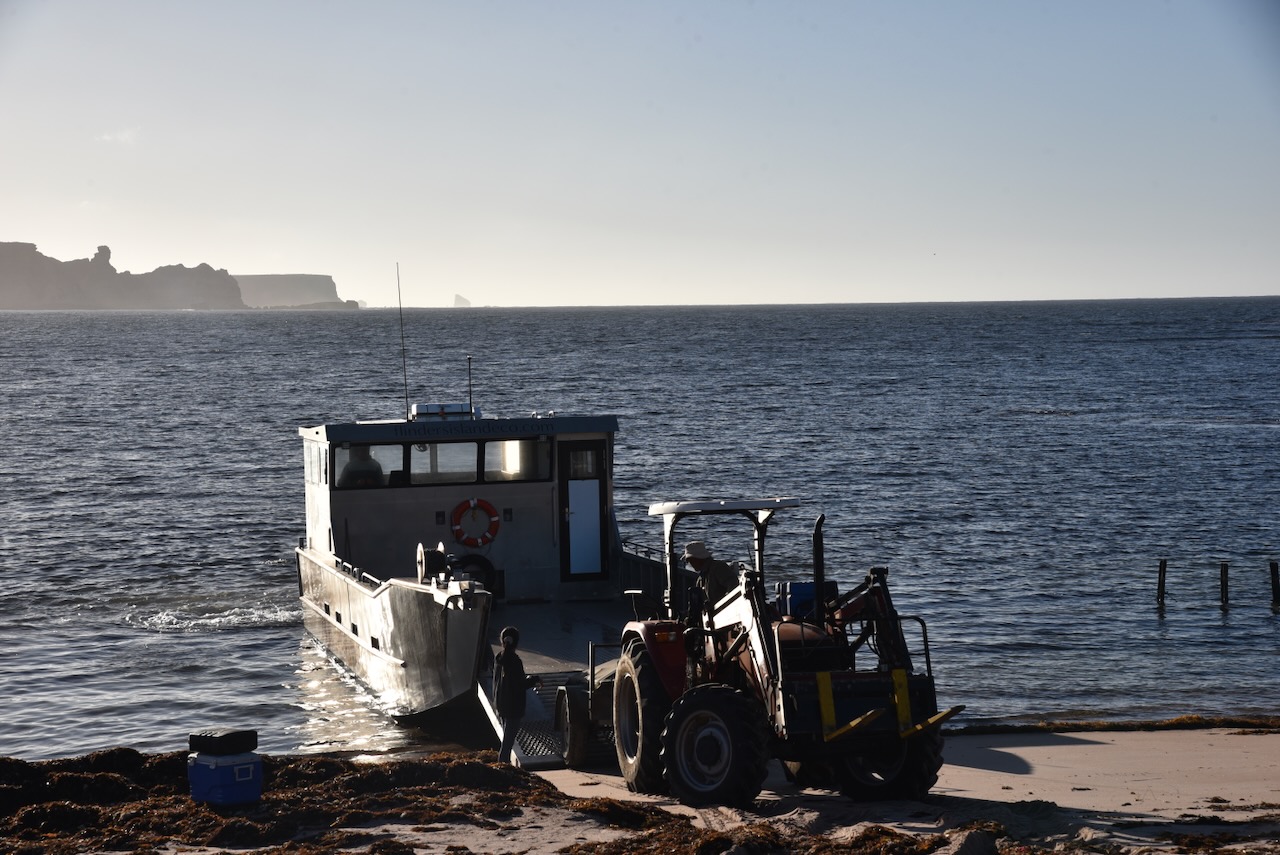
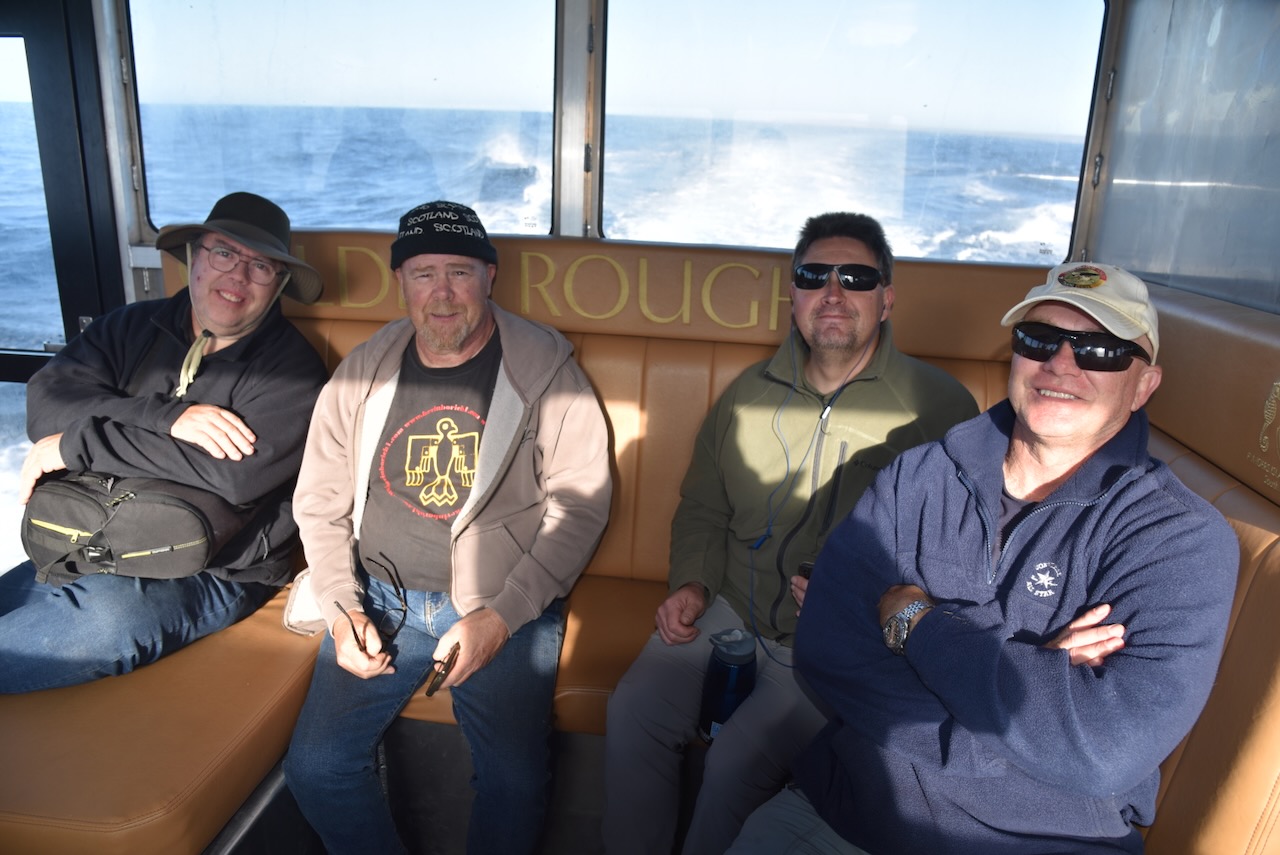
On the morning of Sunday 14th April 2024, we all met up with Jonas and parked our vehicles at his property. We then headed down to the boat ramp at Waterloo Bay and loaded the Golden Roughy barge with our luggage and equipment. The Golden Roughy is a purpose-built 12-meter fast landing craft with indoor cabin seating and an open deck capable of 12 passengers, luggage and larger items such as all of our radio equipment. (Flinders Island Eco Escape 2024)
EN ROUTE AND ARRIVAL ON THE ISLAND.
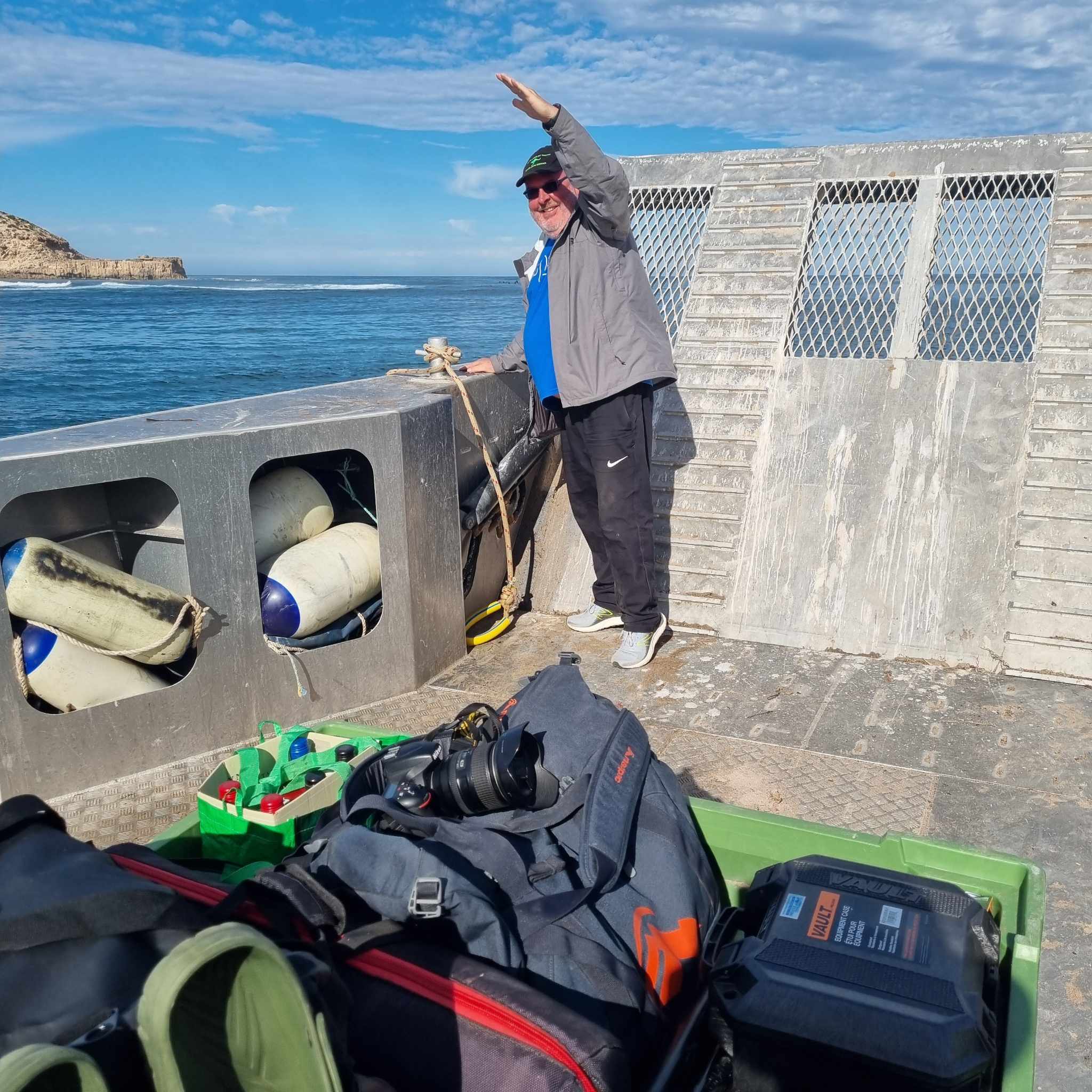
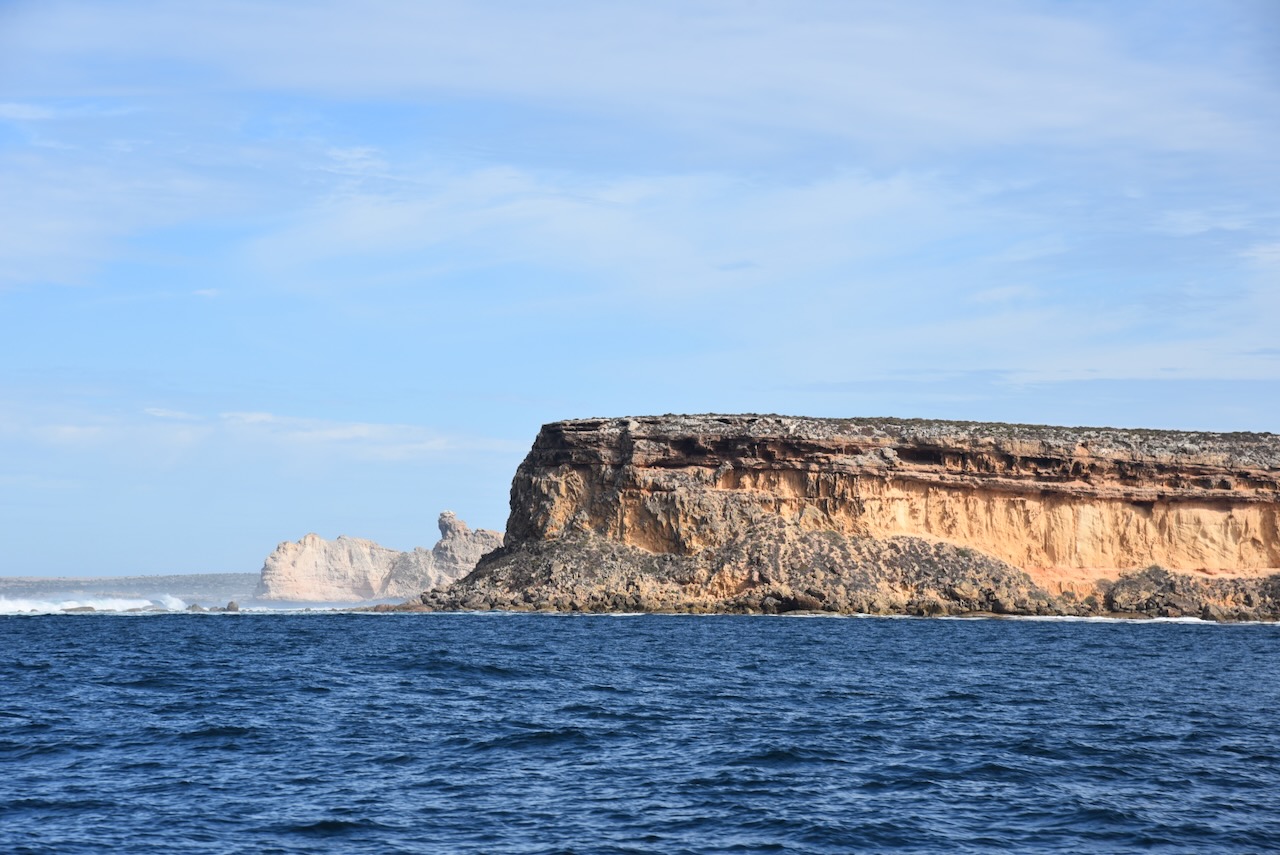
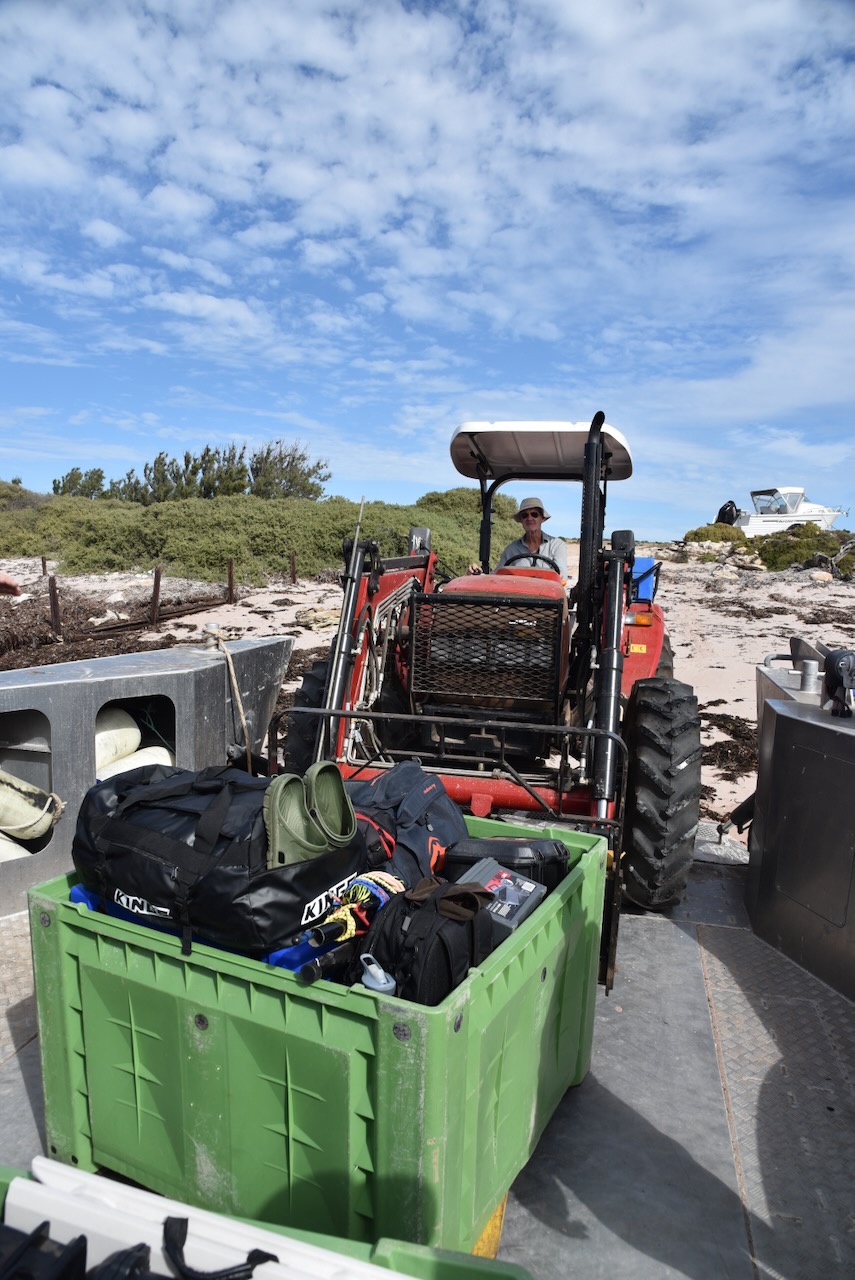
We headed out of Waterloo Bay, passing Wellington Point and out into the Great Australian Bight. We passed Top Gallant Isles and then reached Flinders Island. Upon arriving we were greeted by Peter Woodford and Nong. Peter unloaded the crates from the barge with a tractor. Peter has been the owner of Flinders Island since 1978.
OUR ACCOMMODATION.
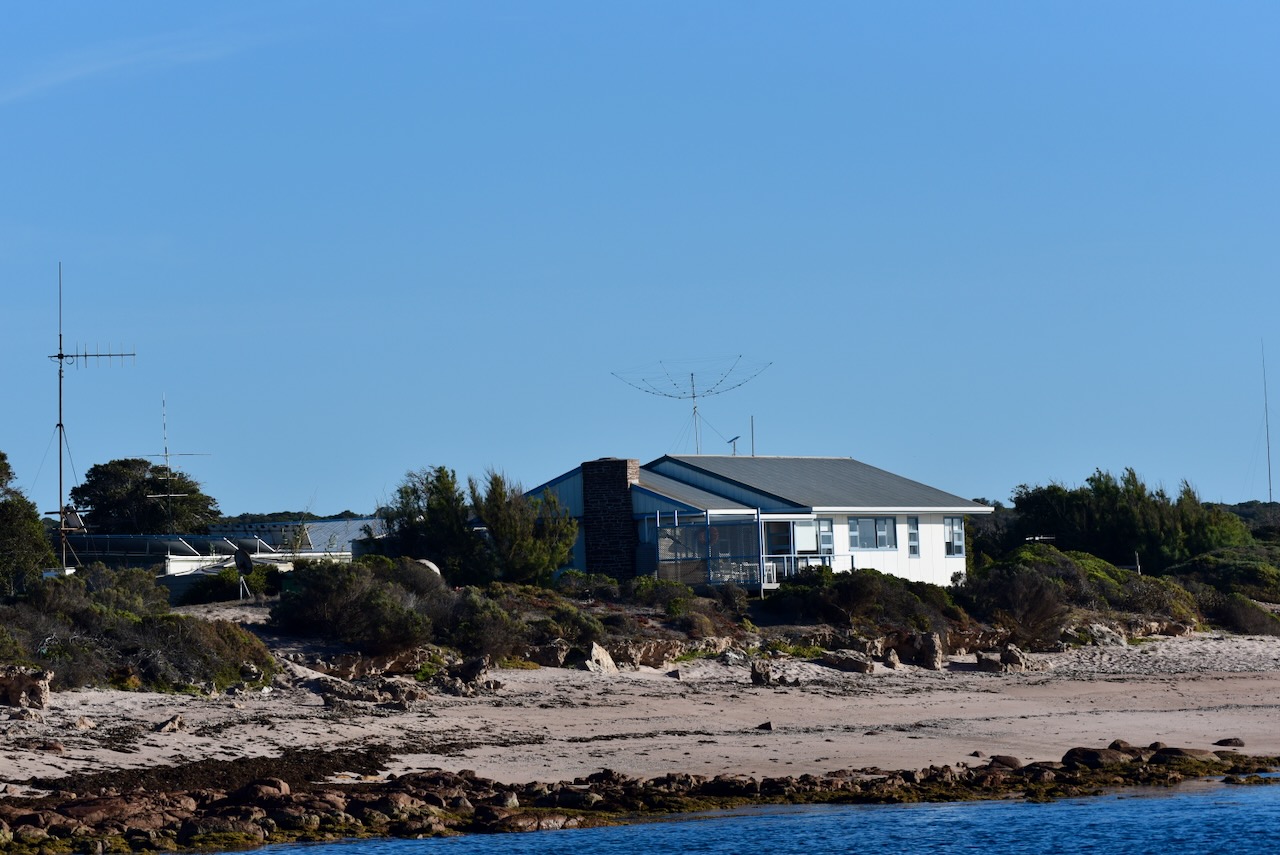
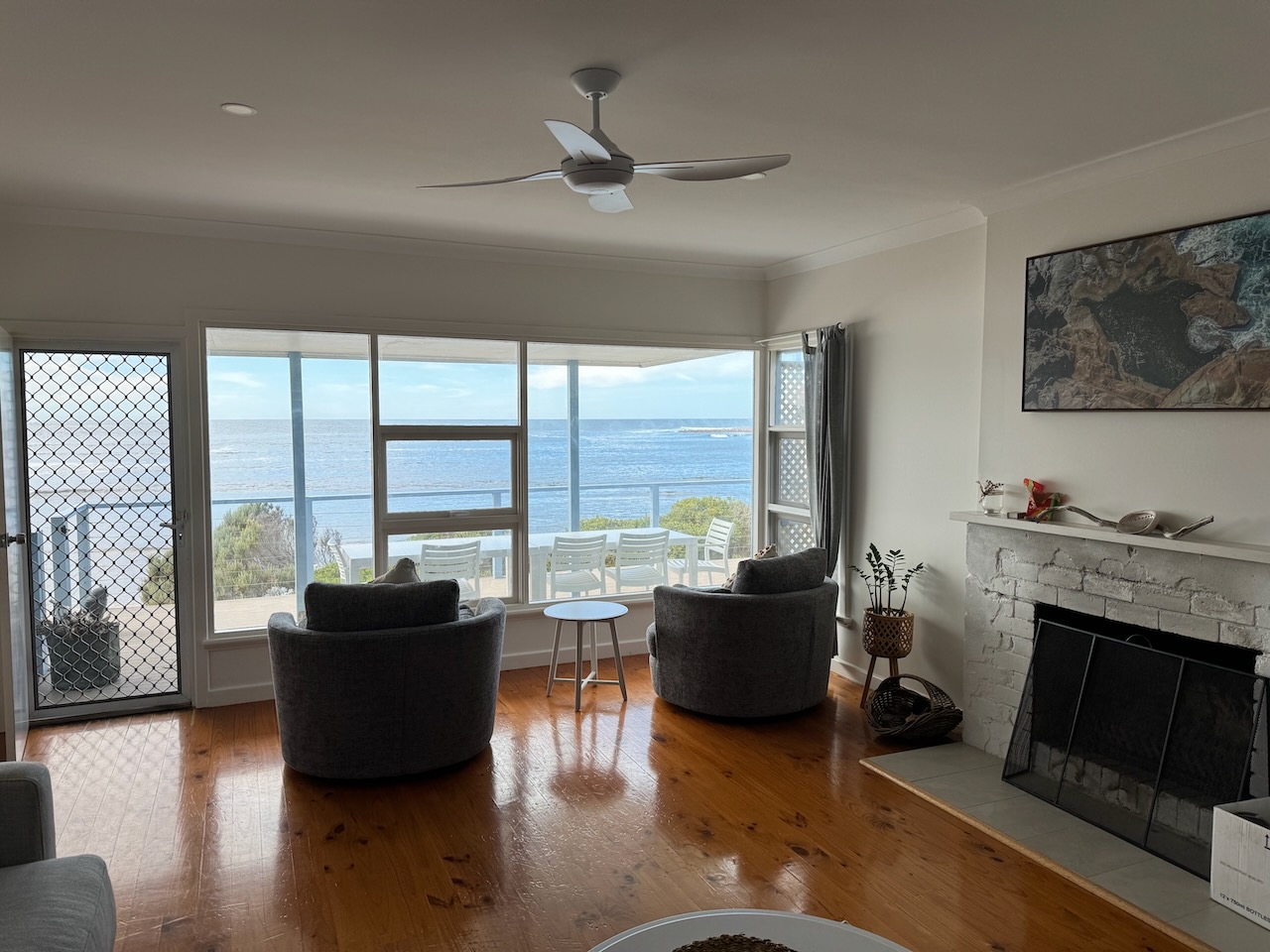
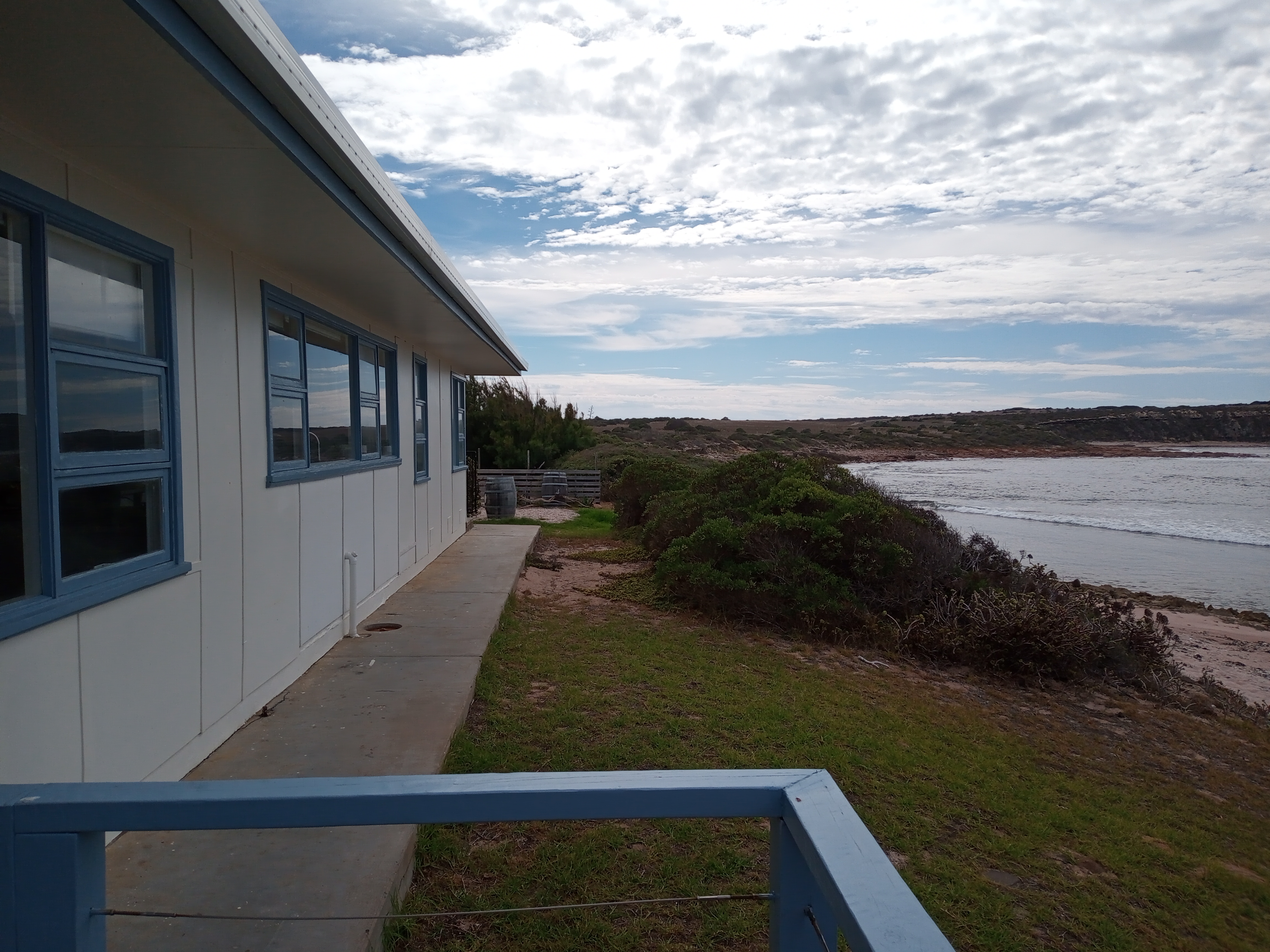
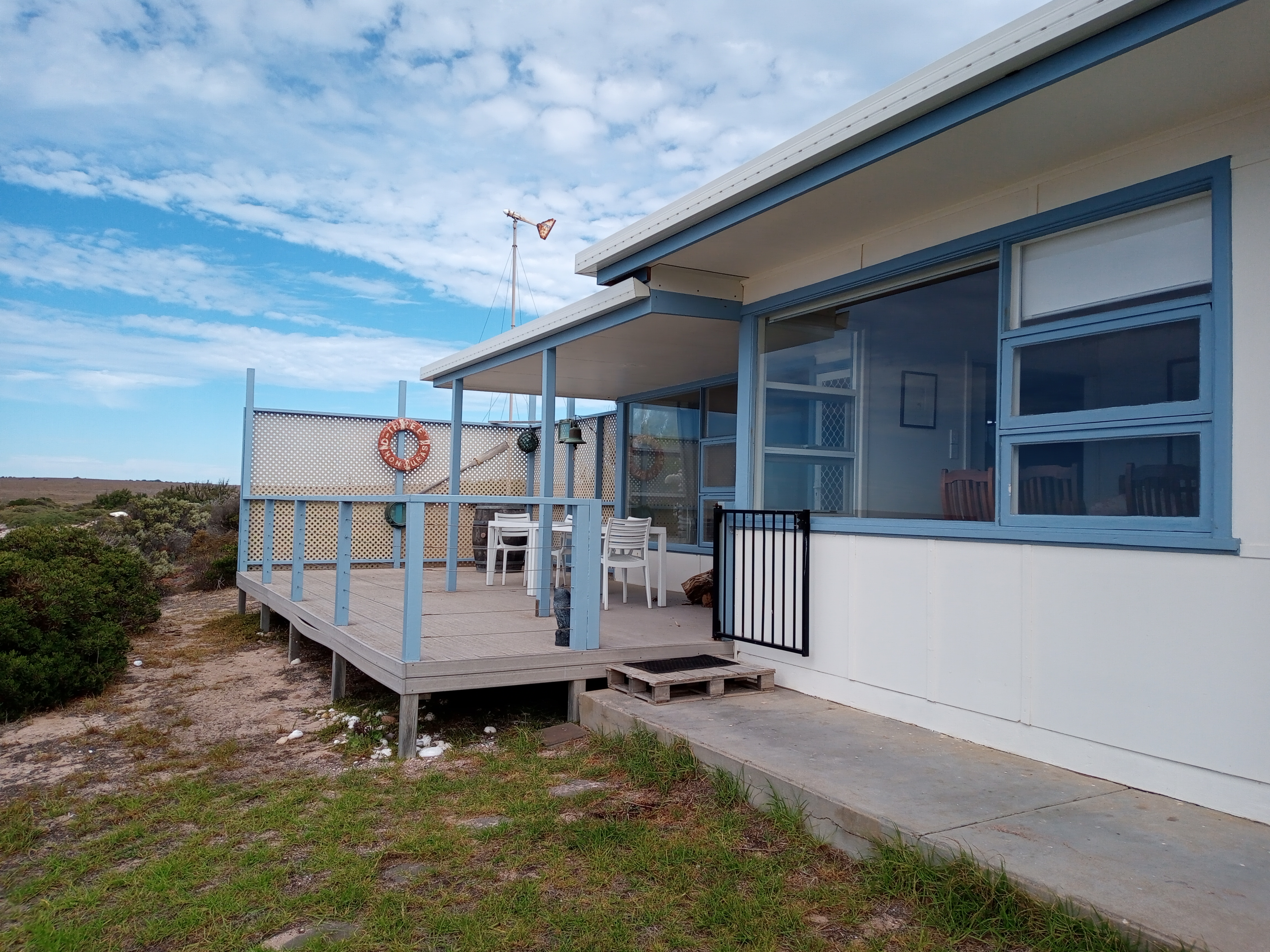
There are just two houses on Flinders Island. The farmhouse in which Peter and Nong reside is located in the sandhills of Front Beach, and Eyrewoolf Homestead built during the 1960s and used by tourists visiting the island. (Flinders Island Eco Escape 2024)
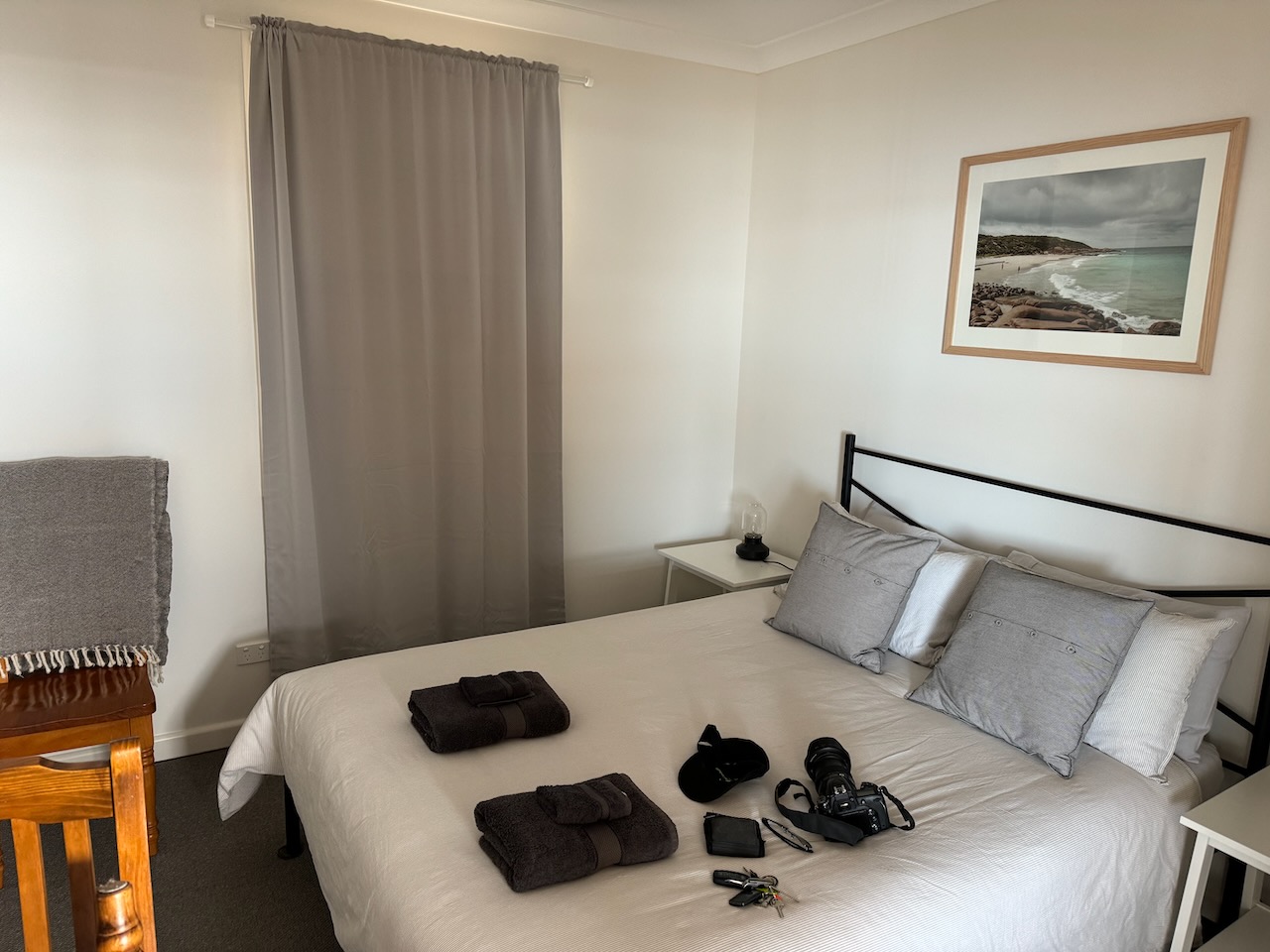
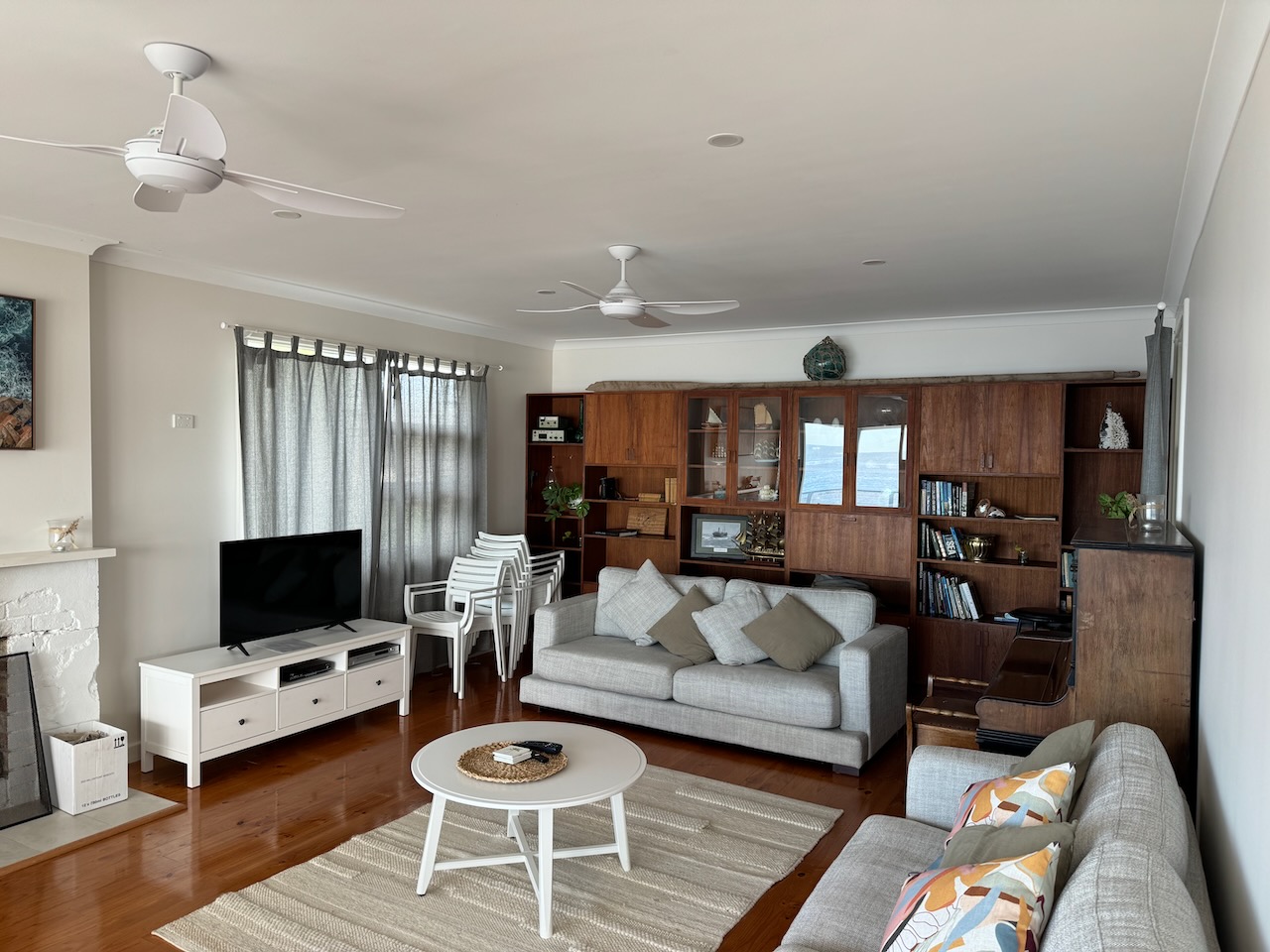
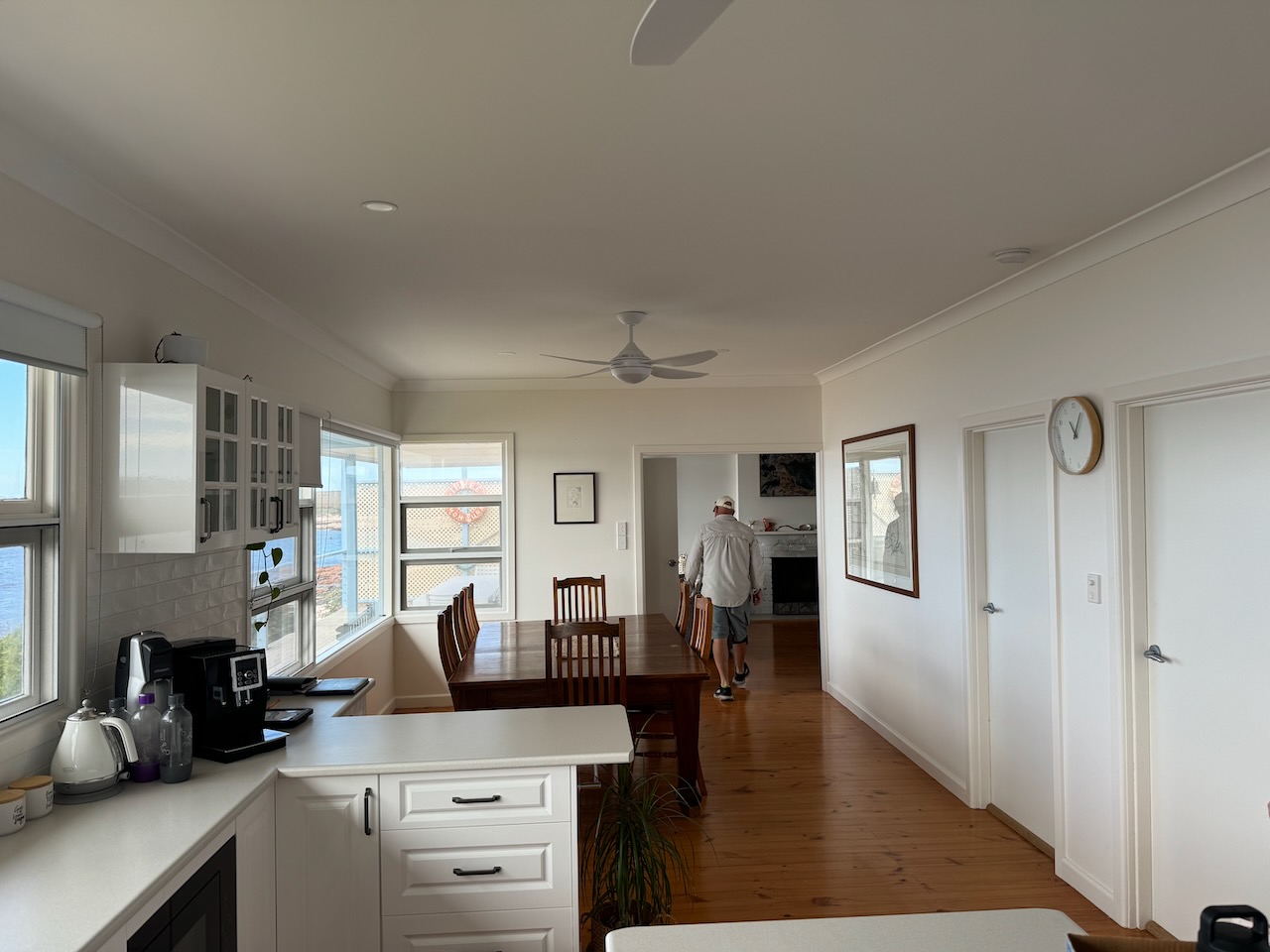
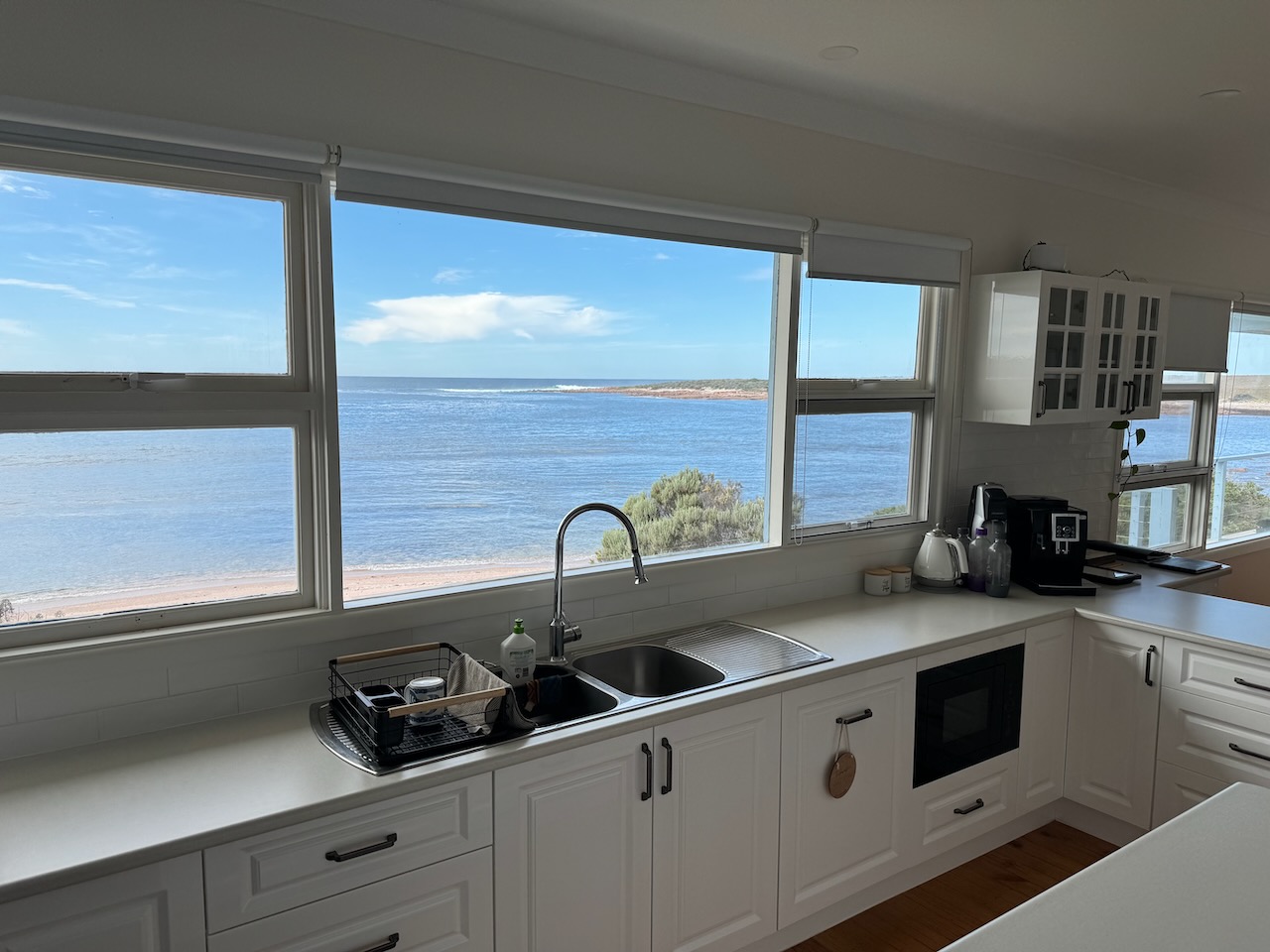
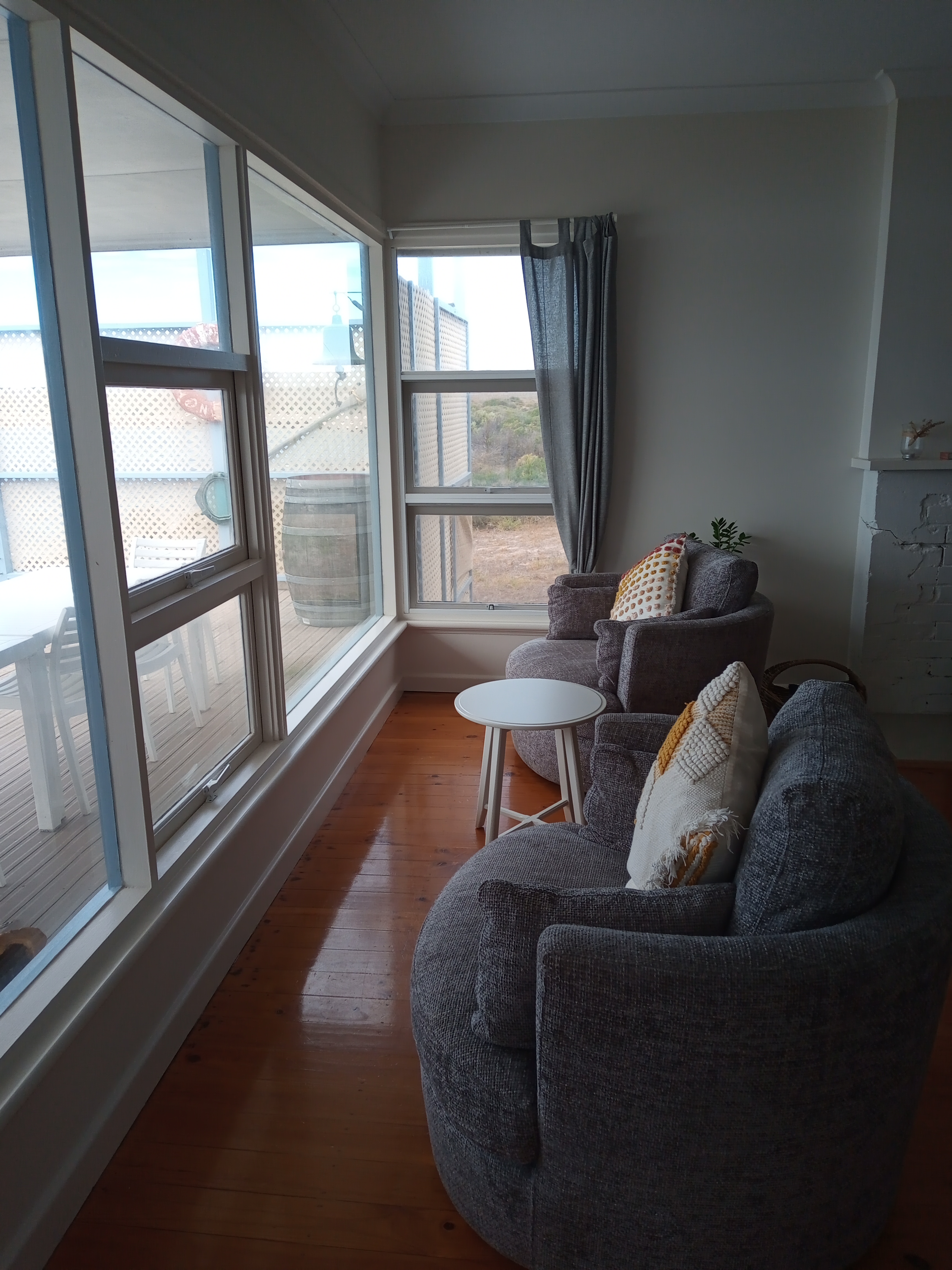
Eyrewoolf homestead is located at Groper Bay and can comfortably sleep up to 12 people in 8 rooms. The main house was 1 queen room, 1 king/split king room, 2 twin rooms, and a single room. Outhouse rooms include 1 double +1 single, and a second double with adjoining king single. The house has large open-plan living areas, a fully self-contained kitchen and laundry, two bathrooms with a second separate toilet, walk-in pantry storage and various outdoor areas. (Flinders Island Eco Escape 2024)
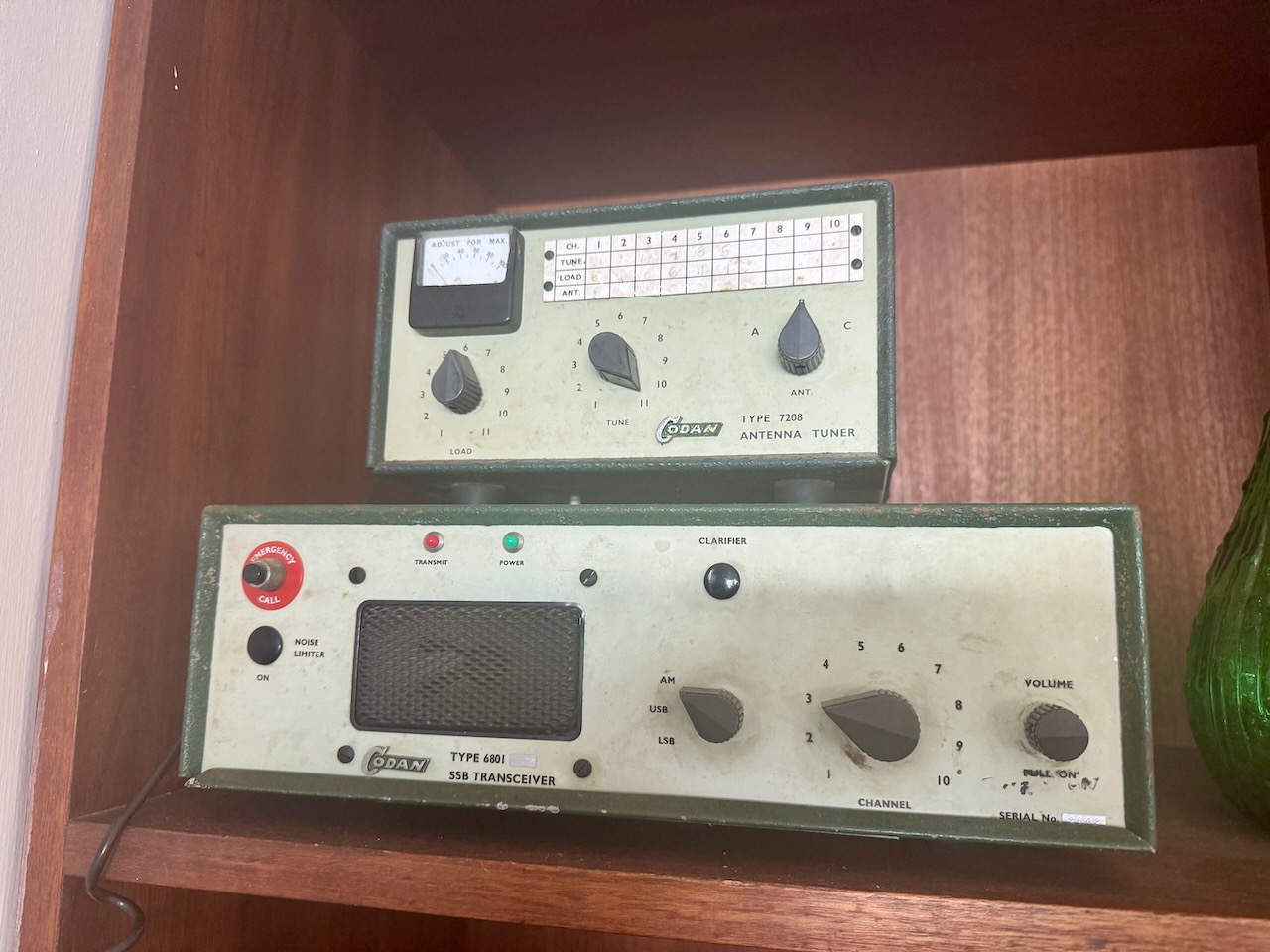
The house contains the old School Of The Air radio.
SETTING UP.
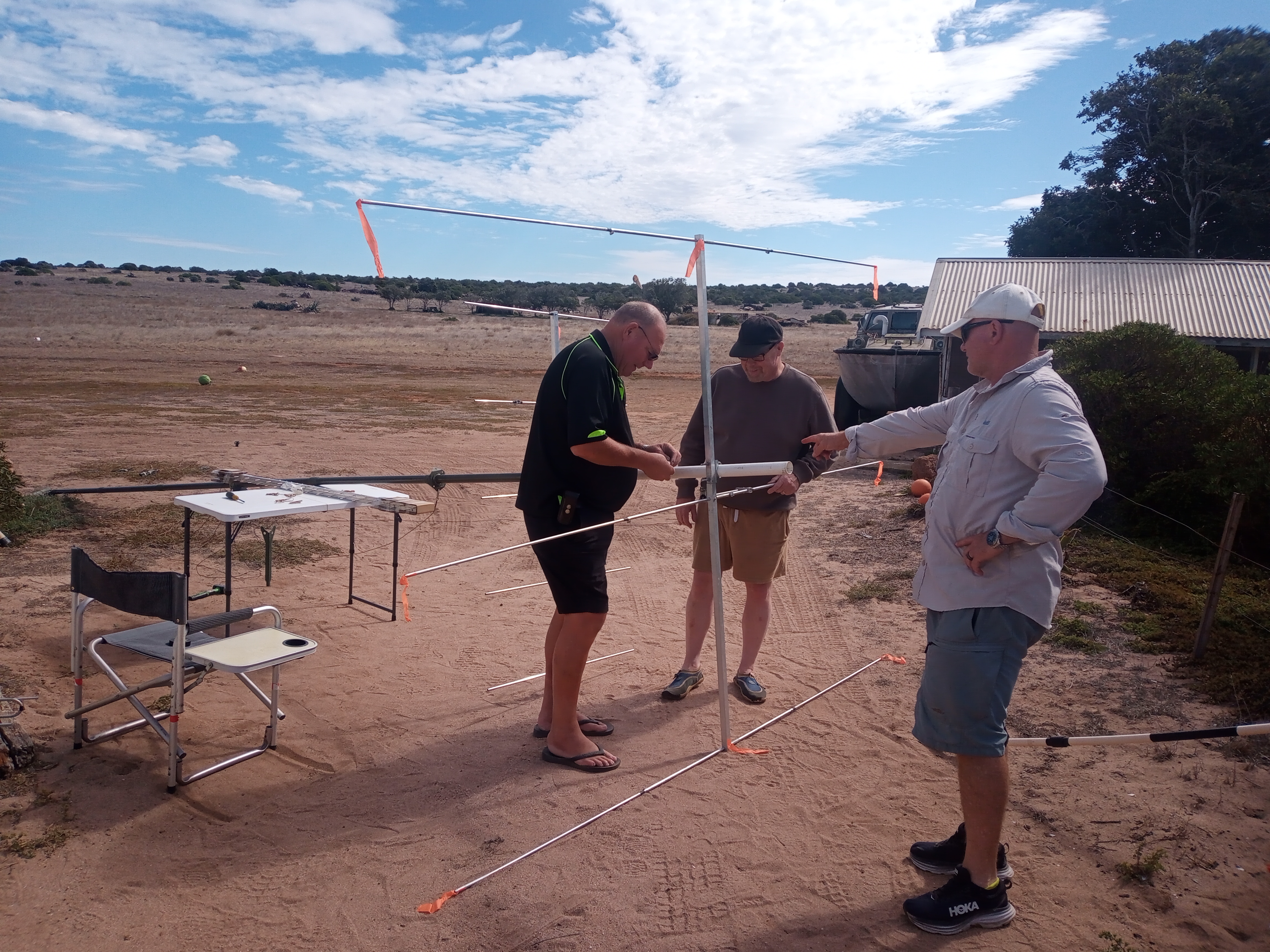
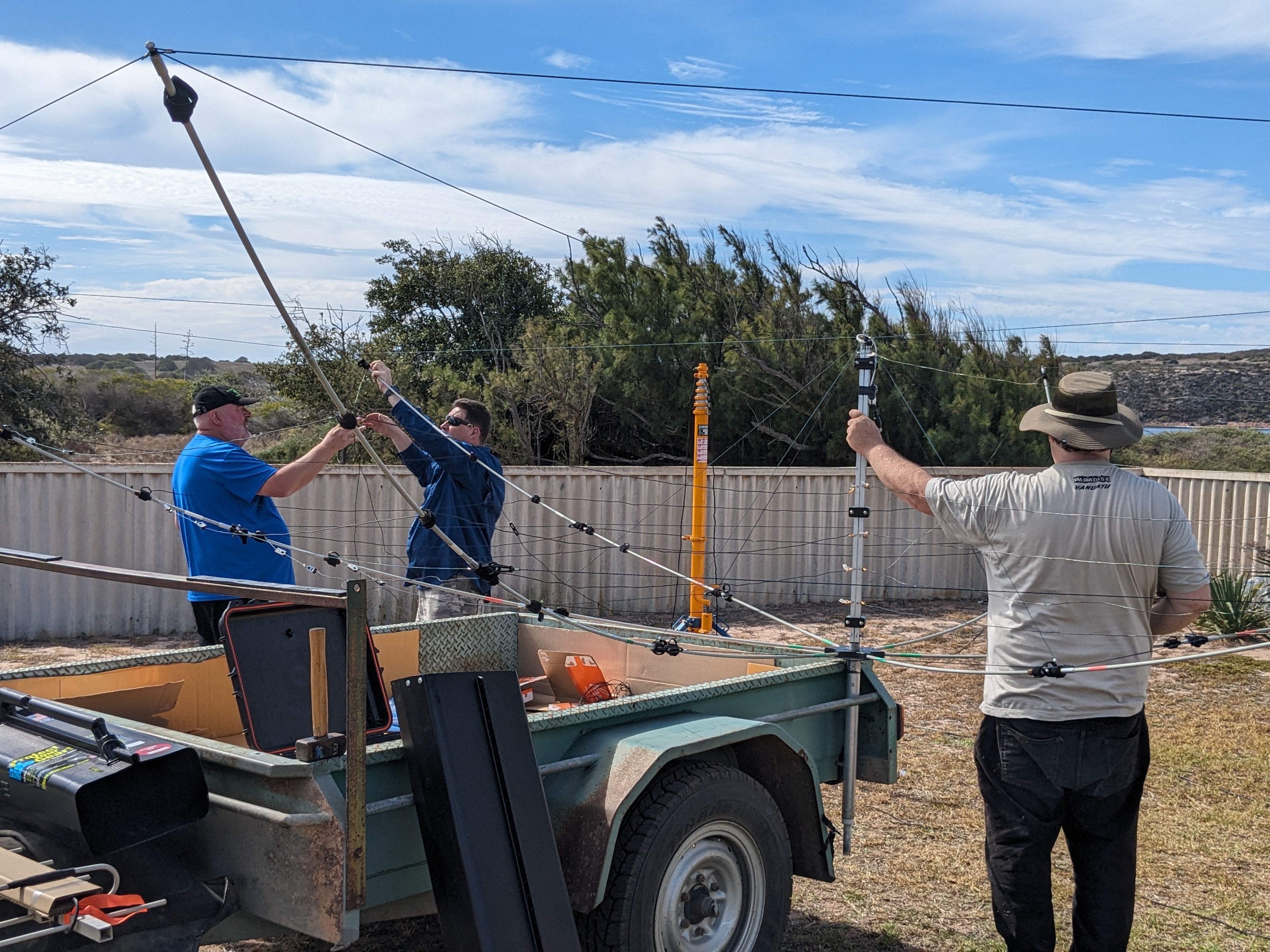
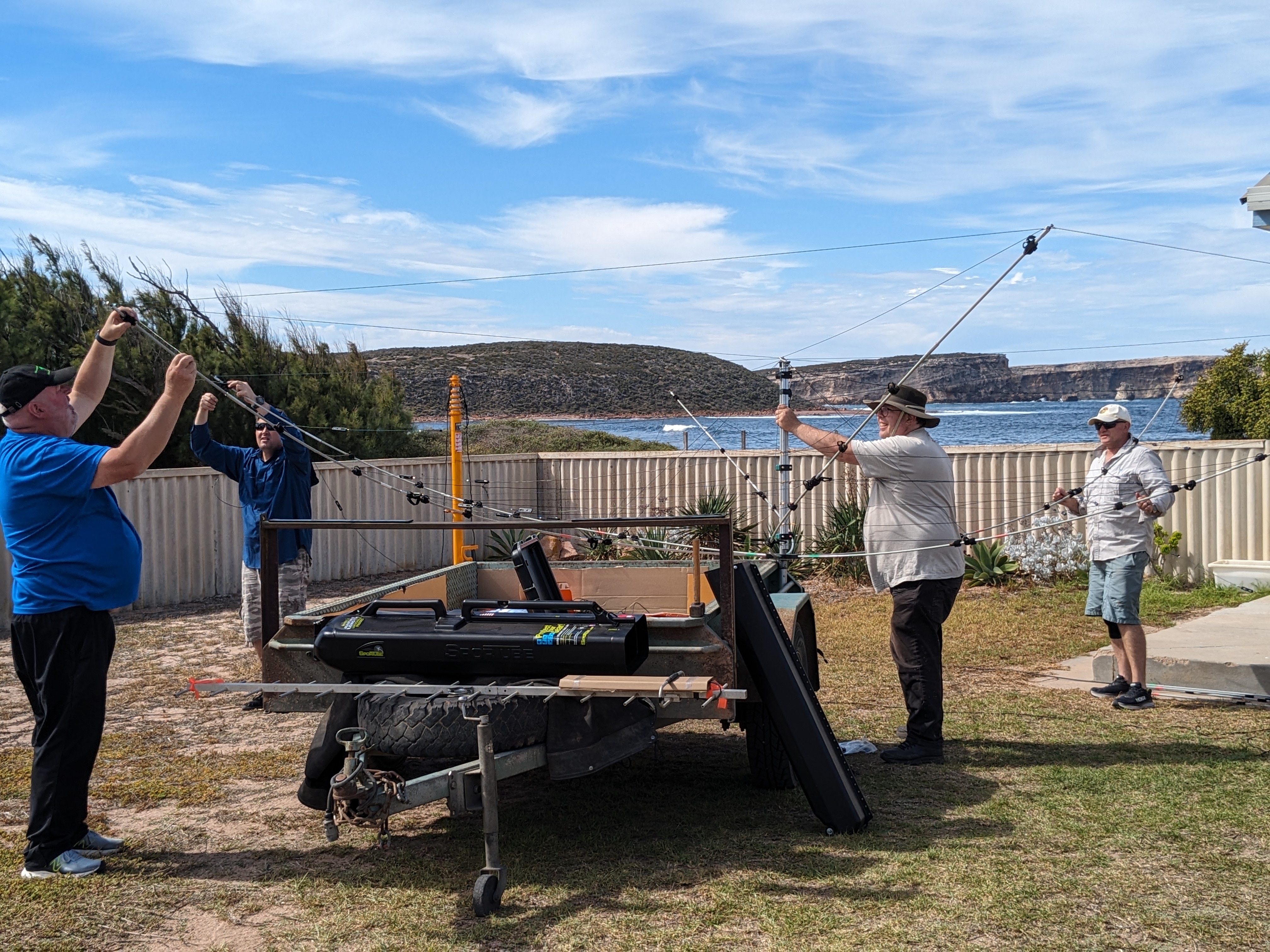
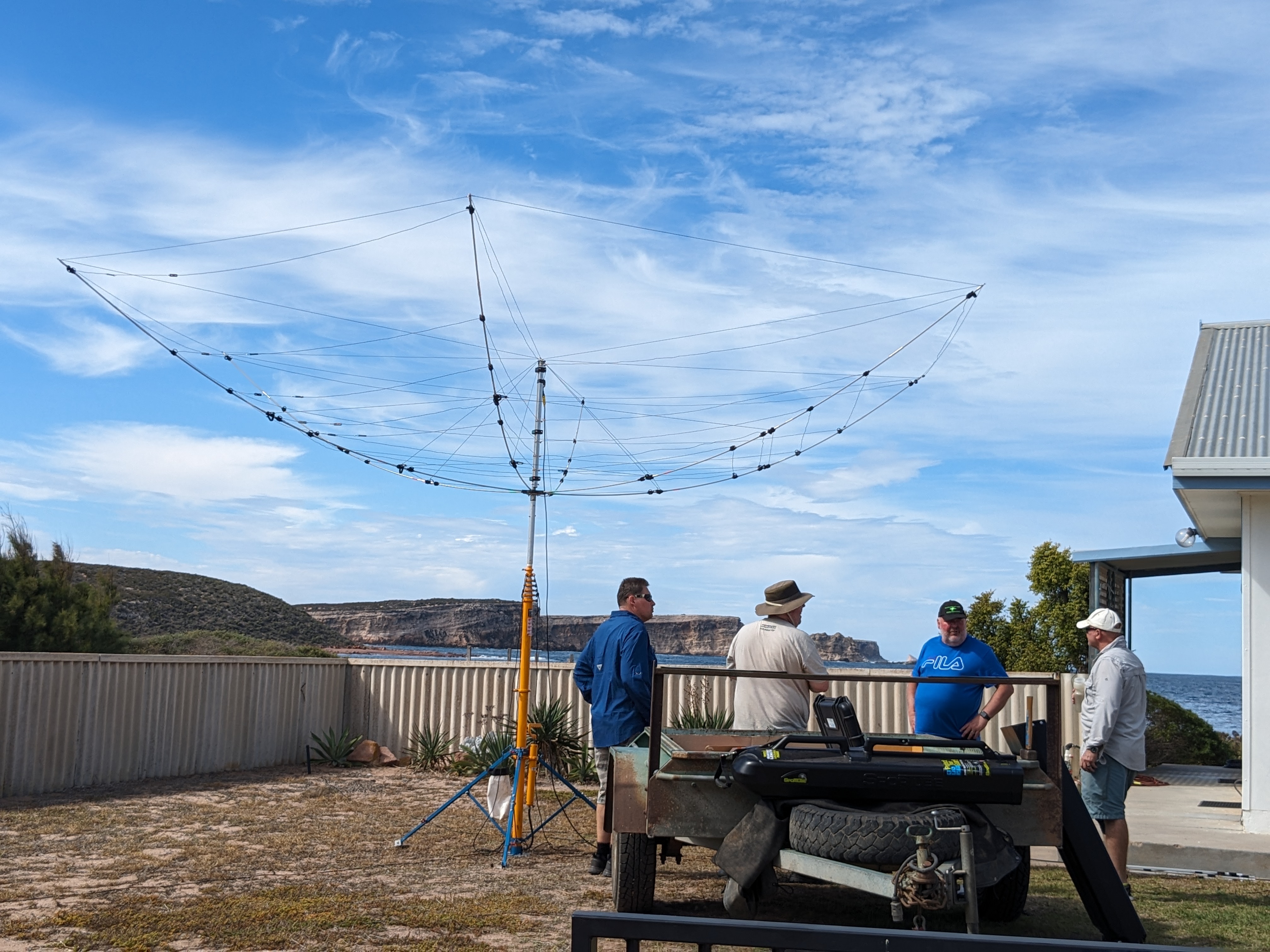
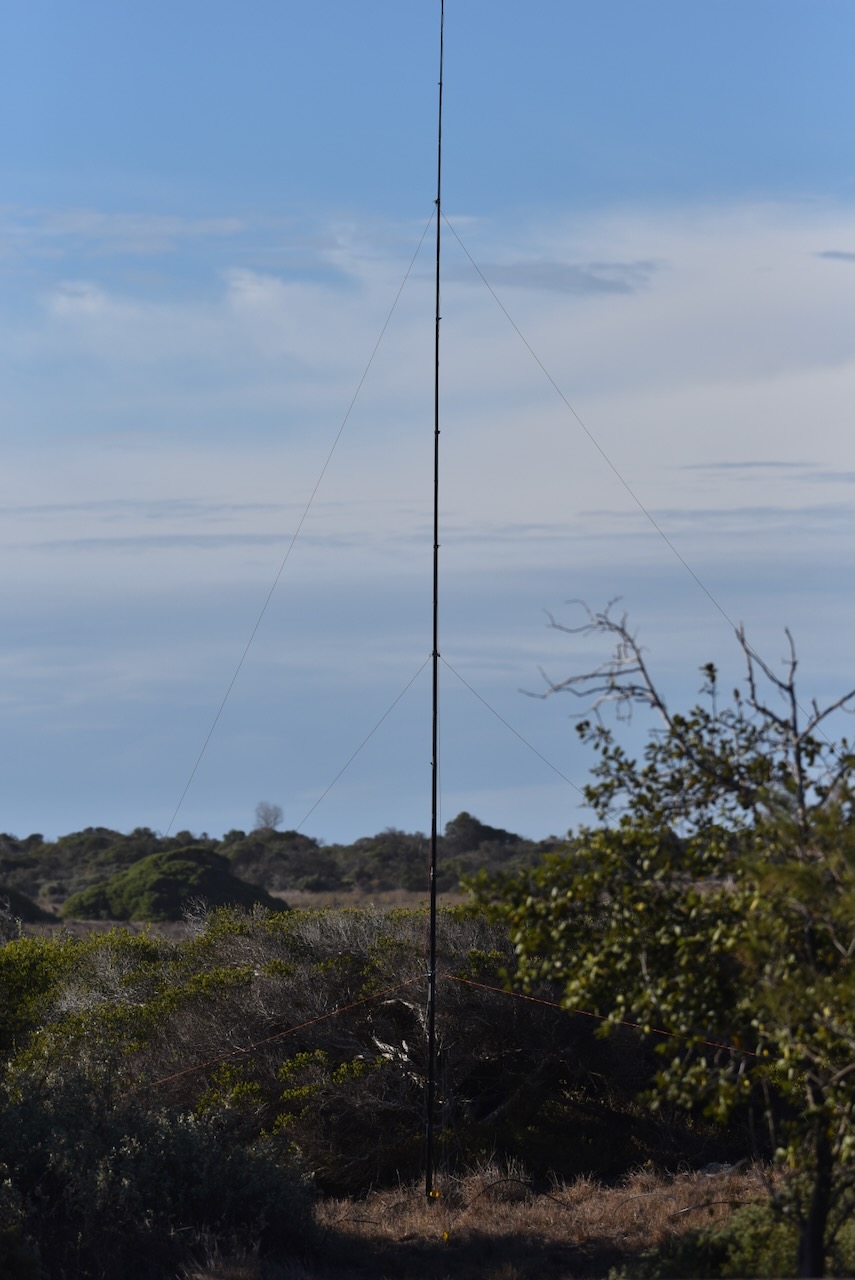
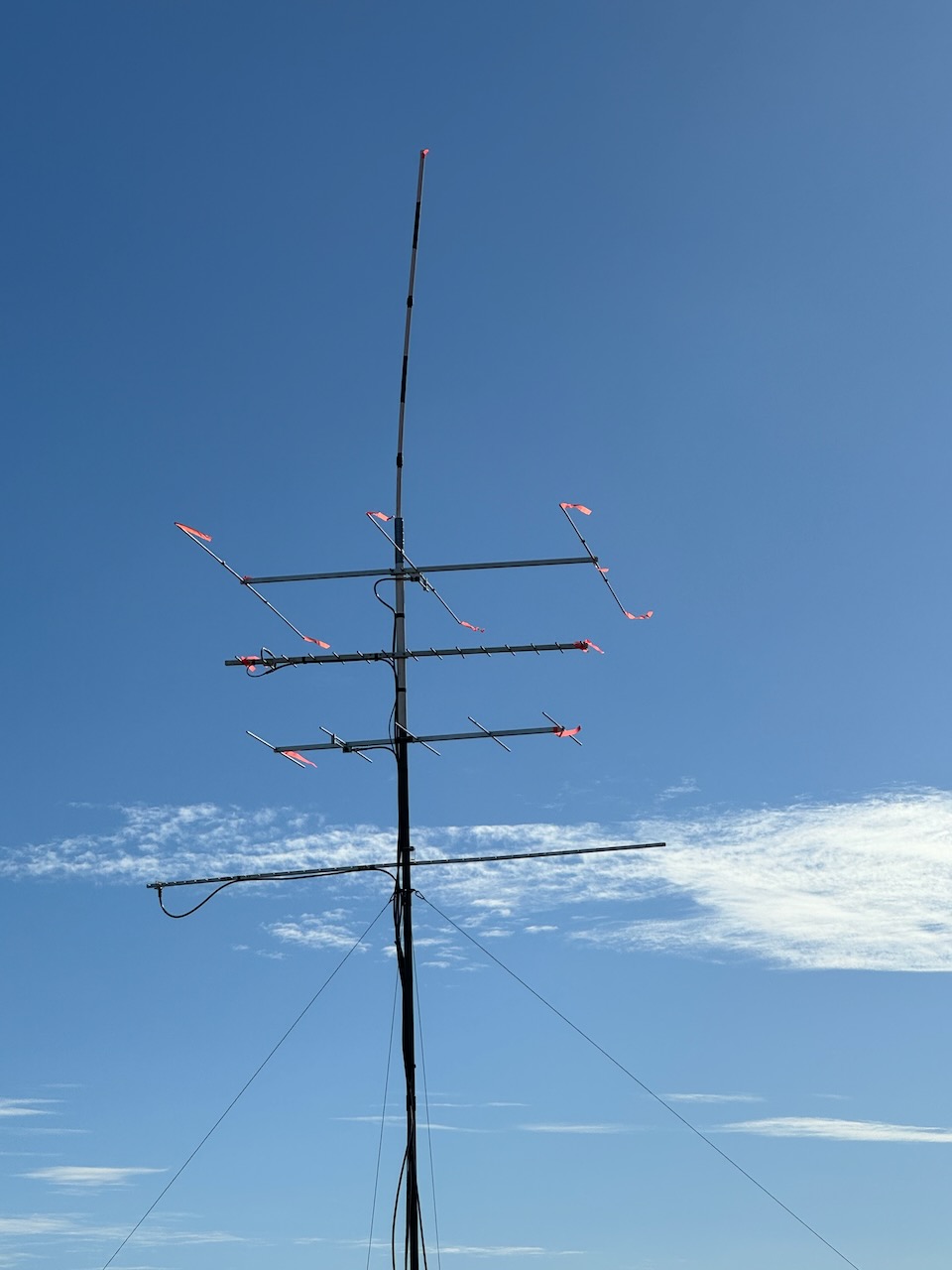
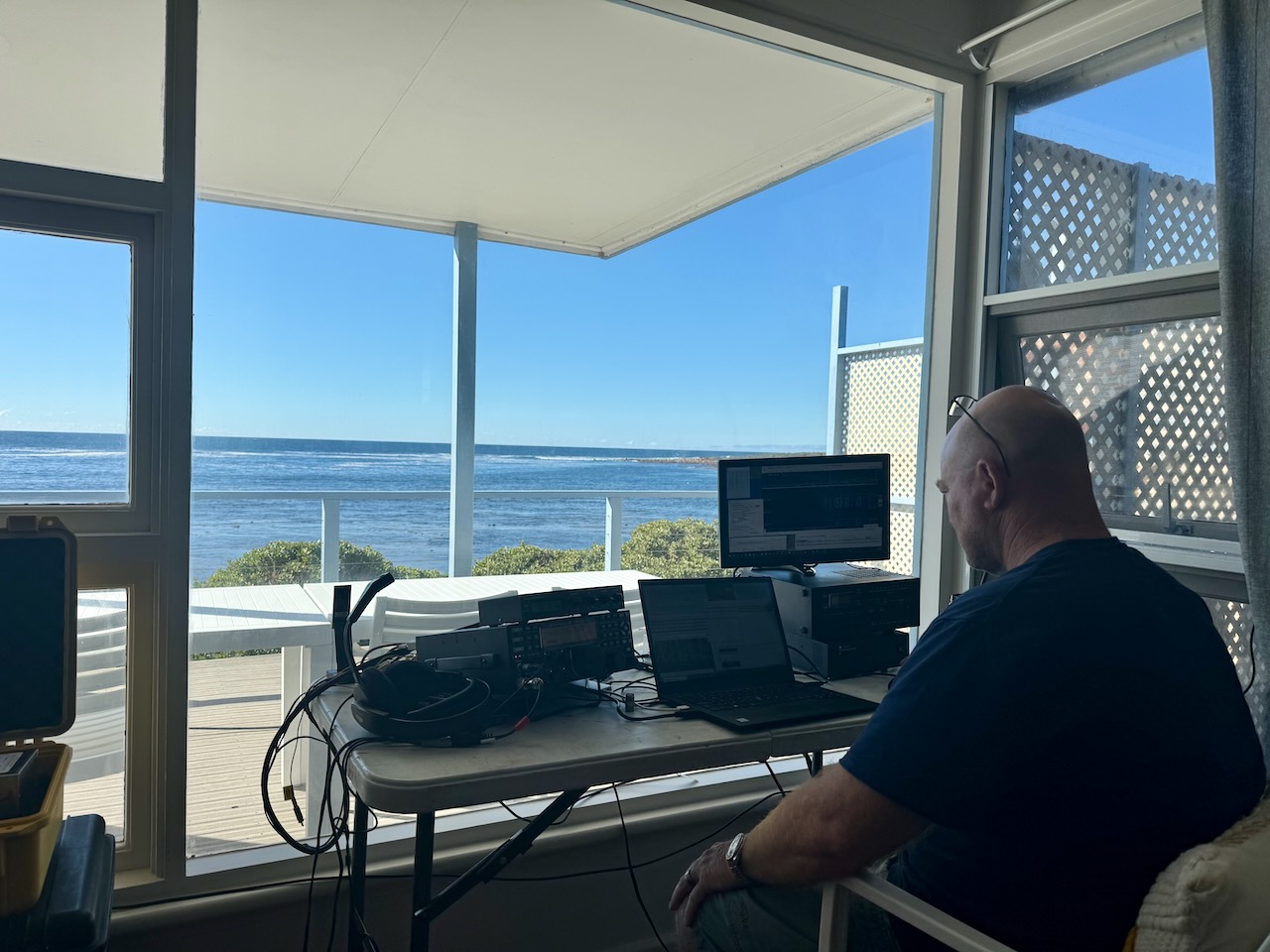
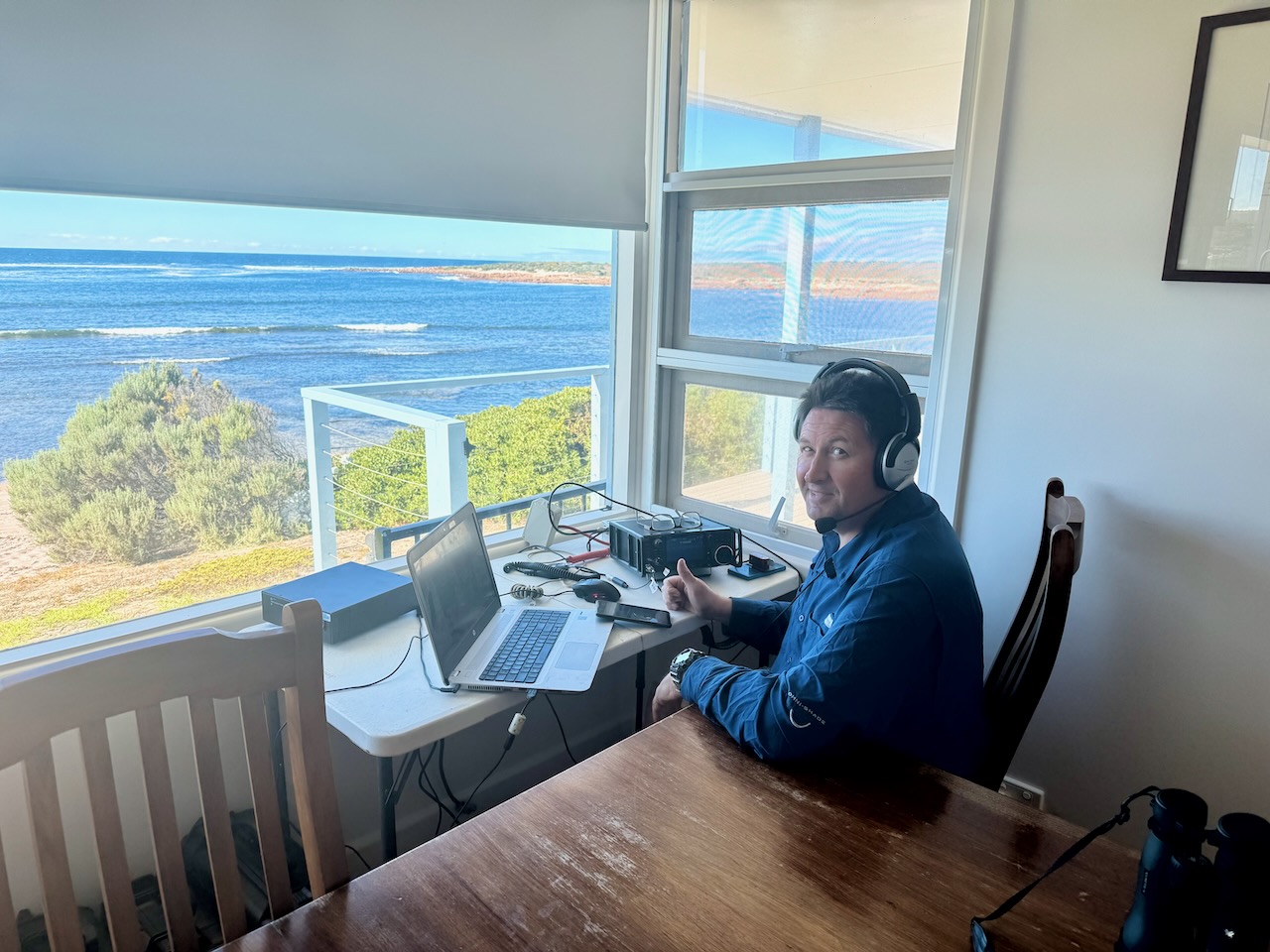
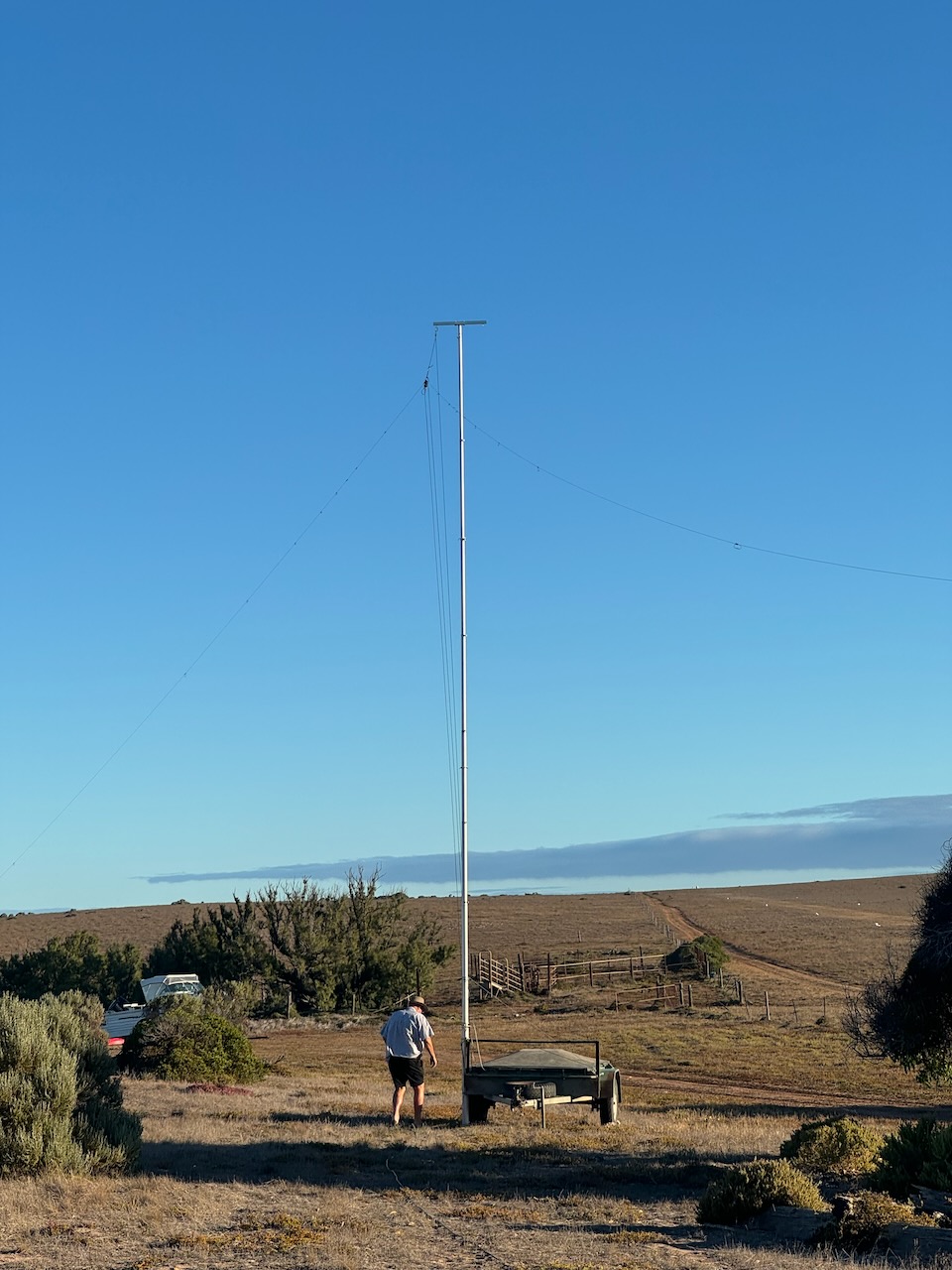
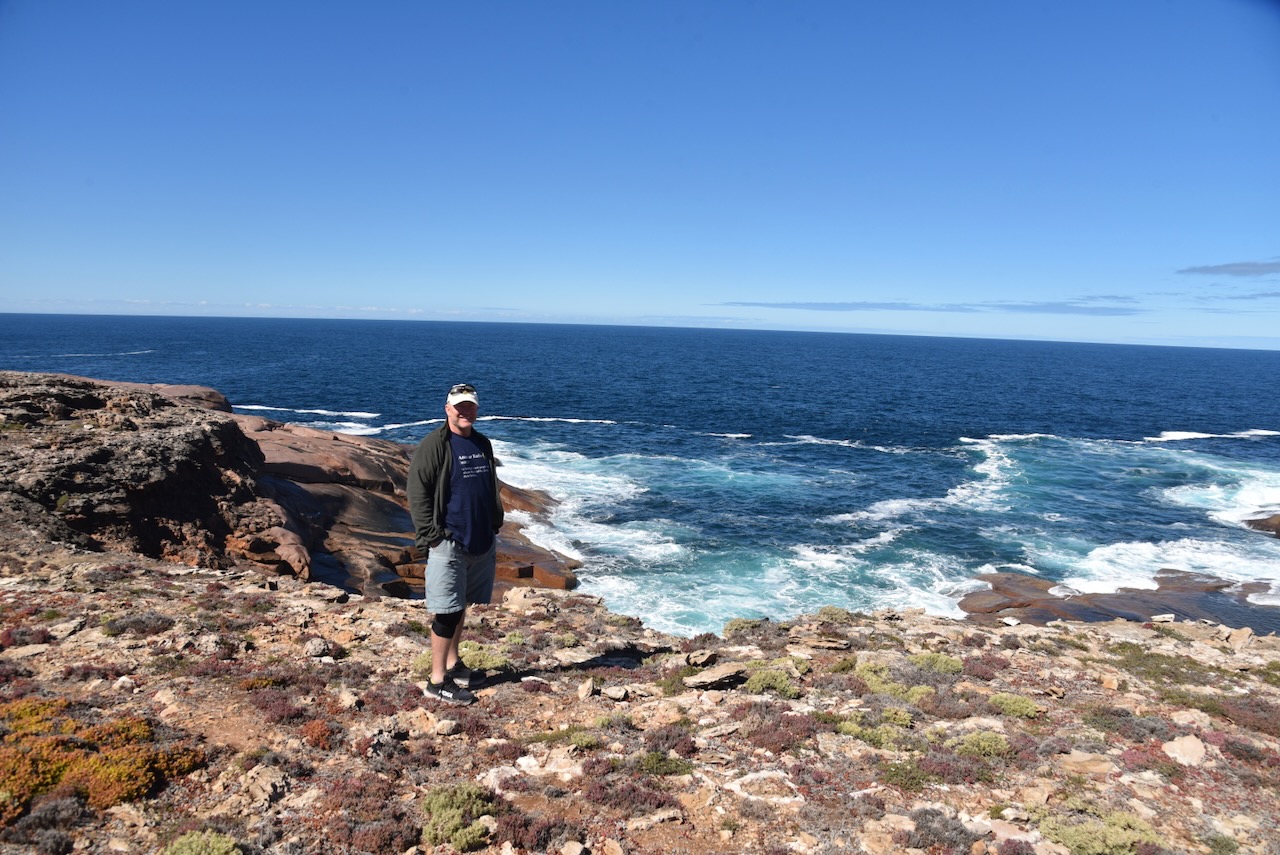
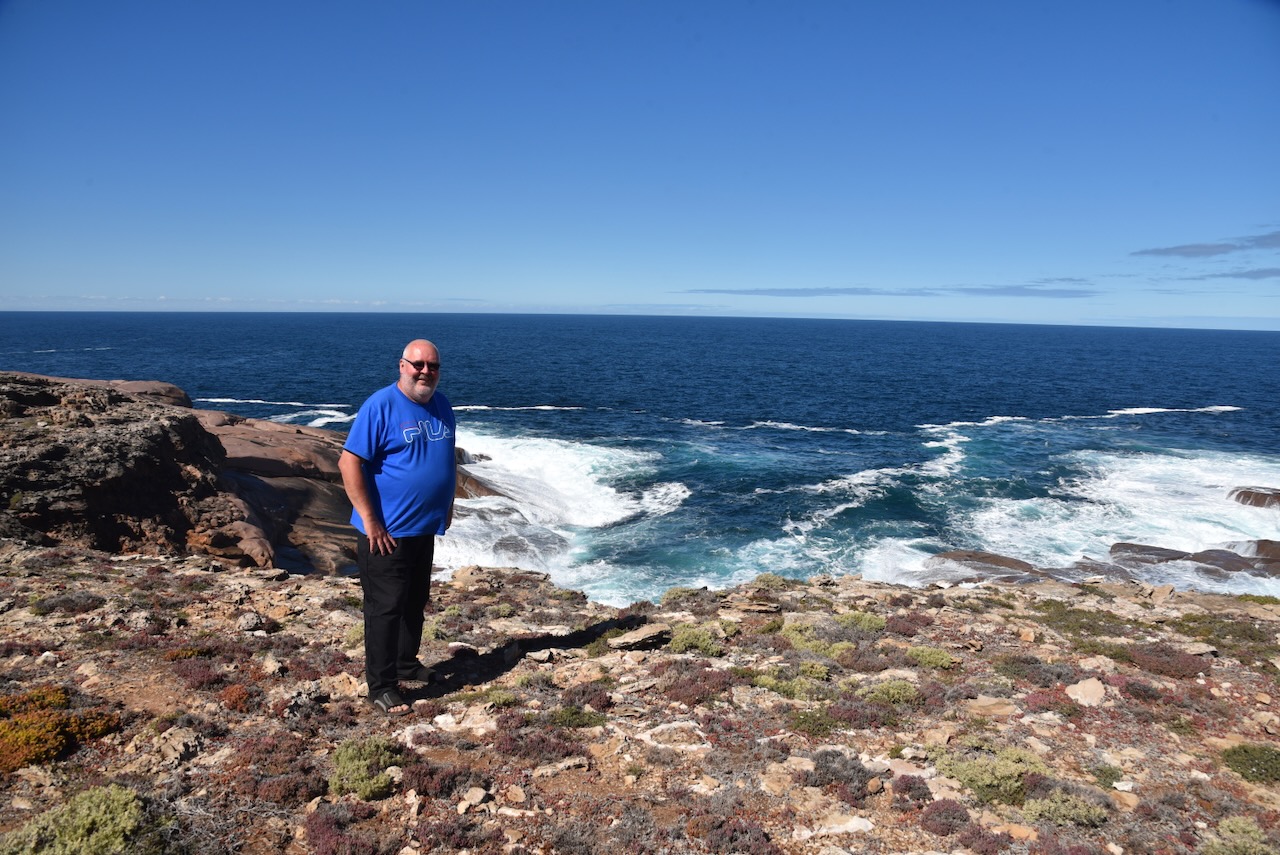
After choosing our bedrooms, and enjoying the view, we got to work setting up the antennas and the operating stations. Fortunately, we had magnificent weather.
OUR STATIONS.
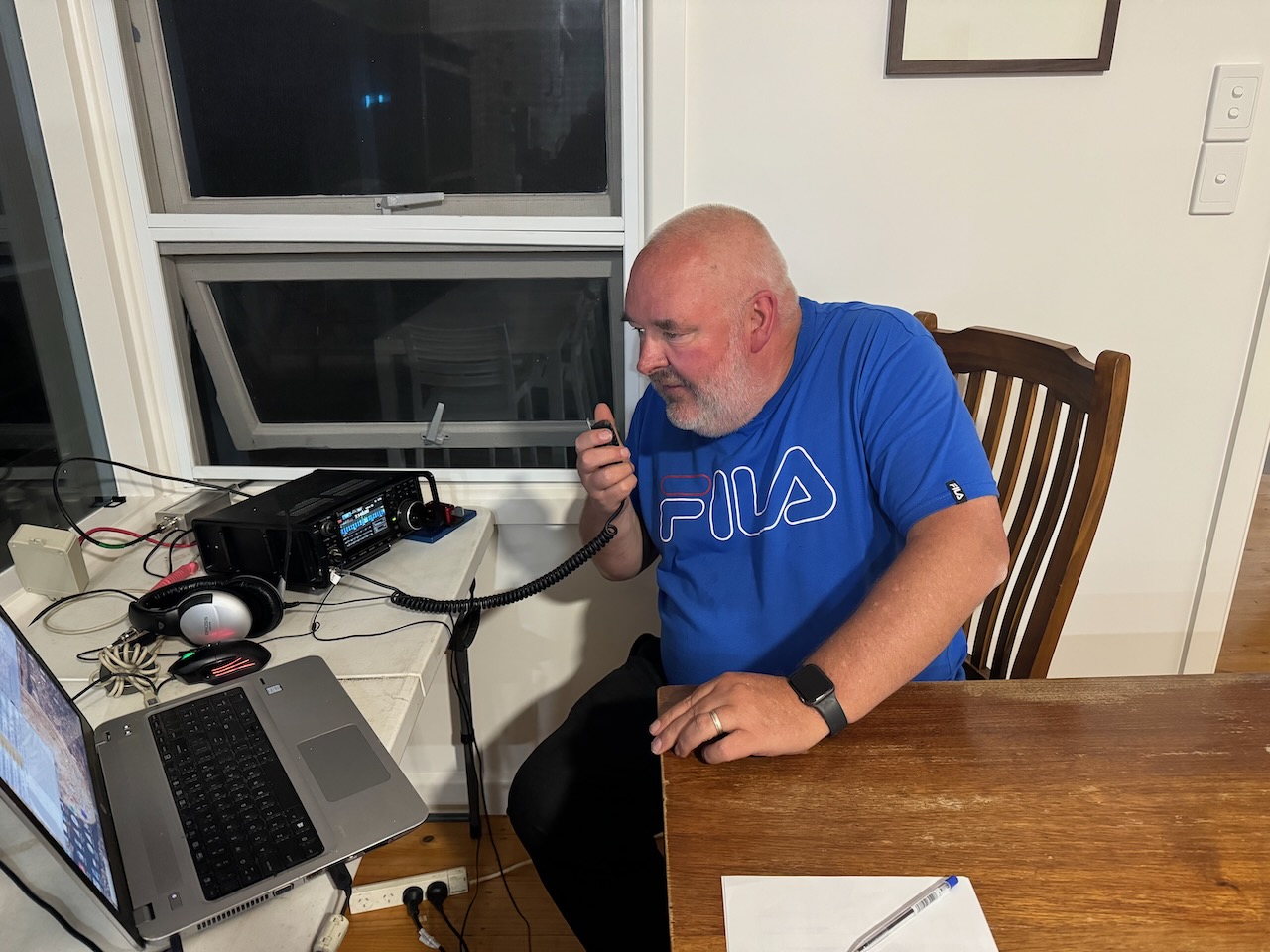
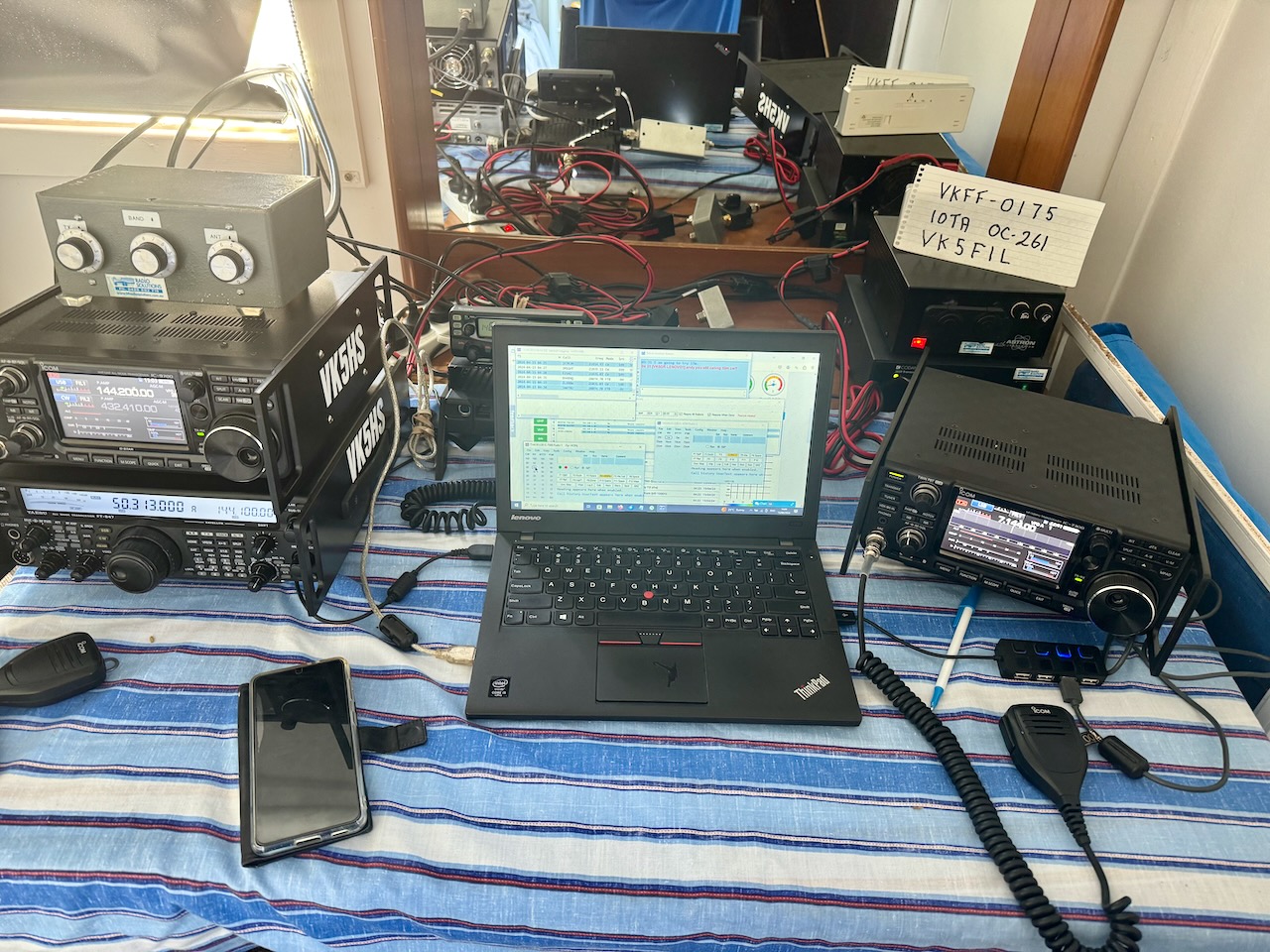
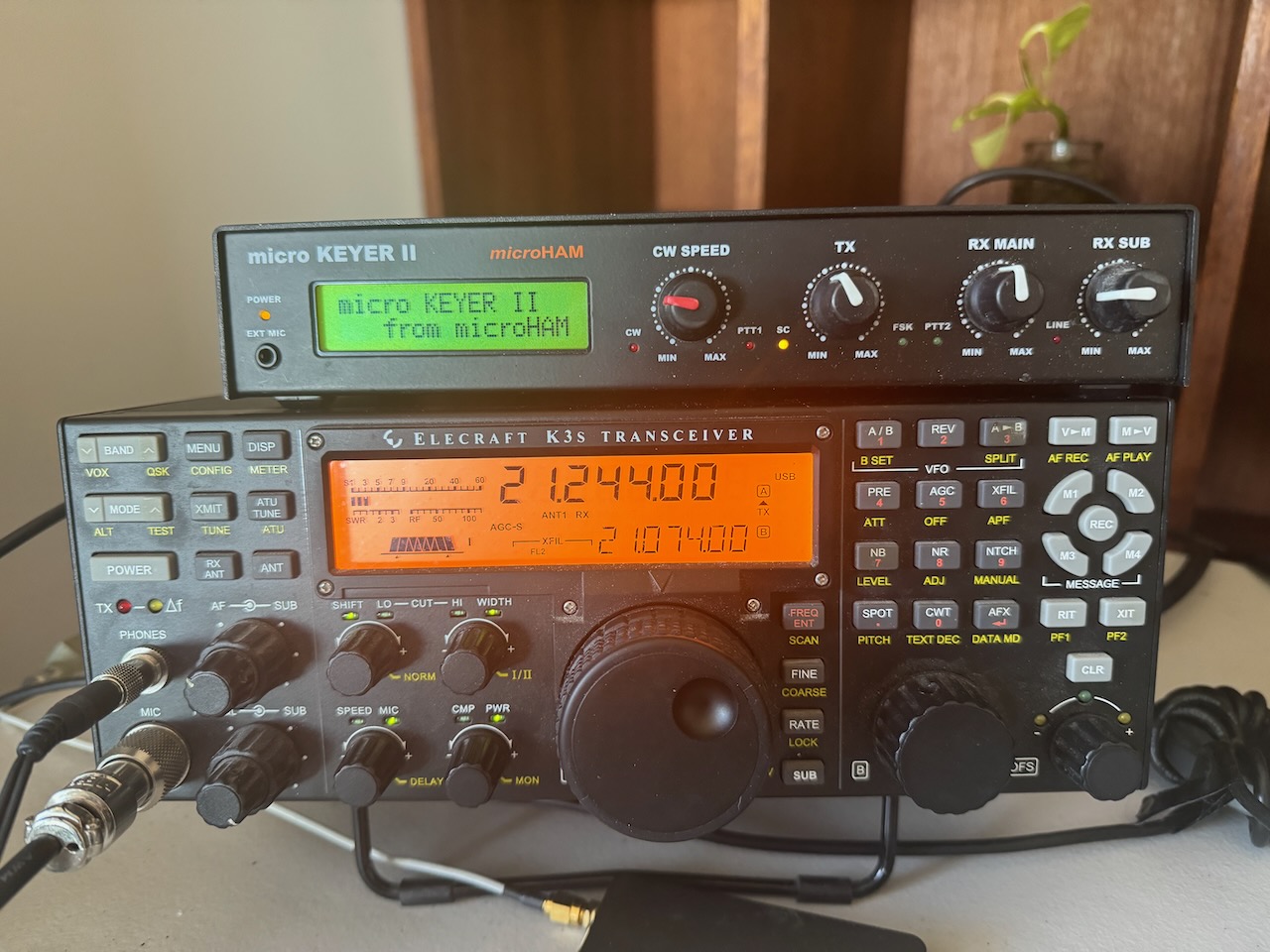
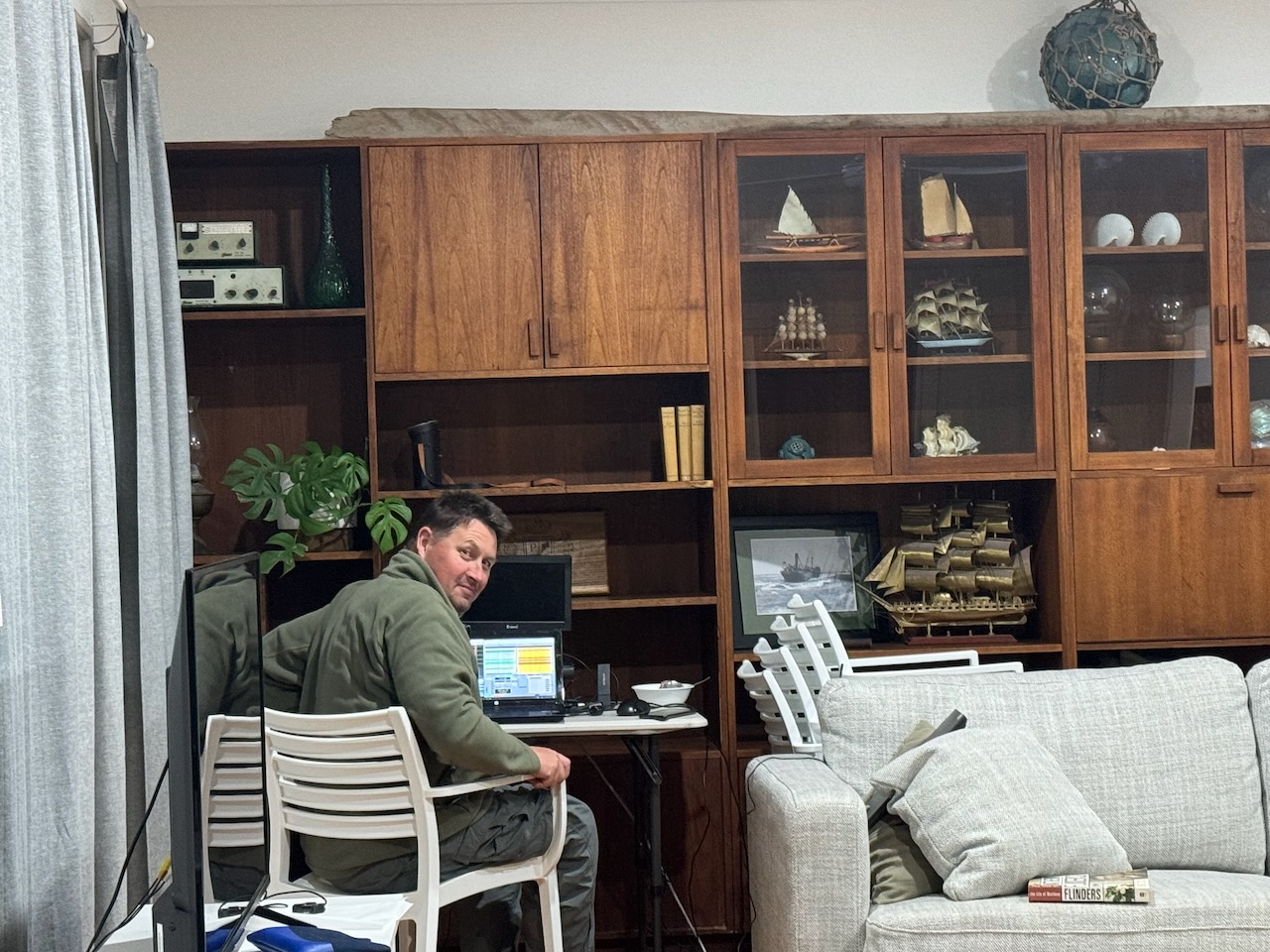
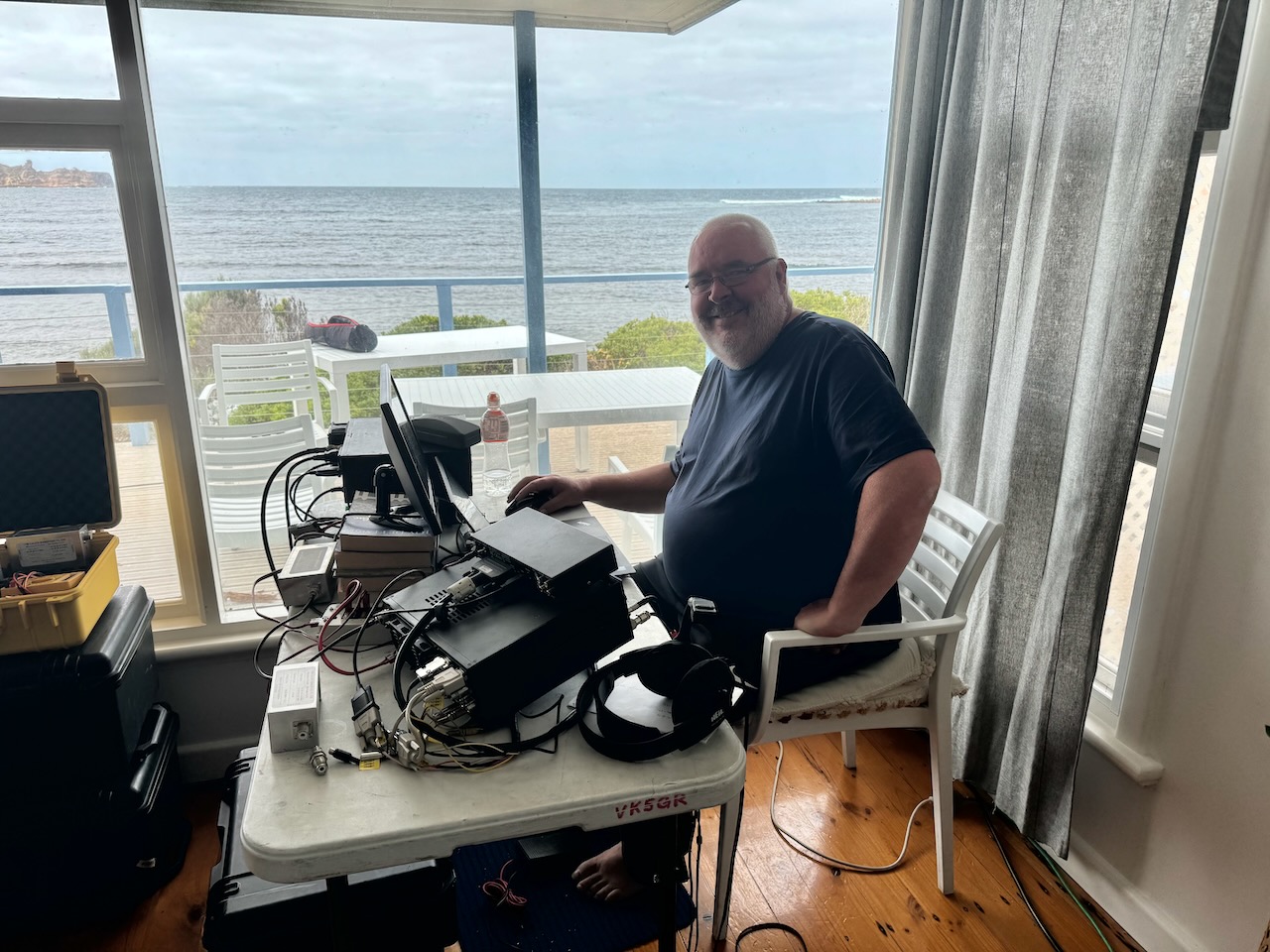
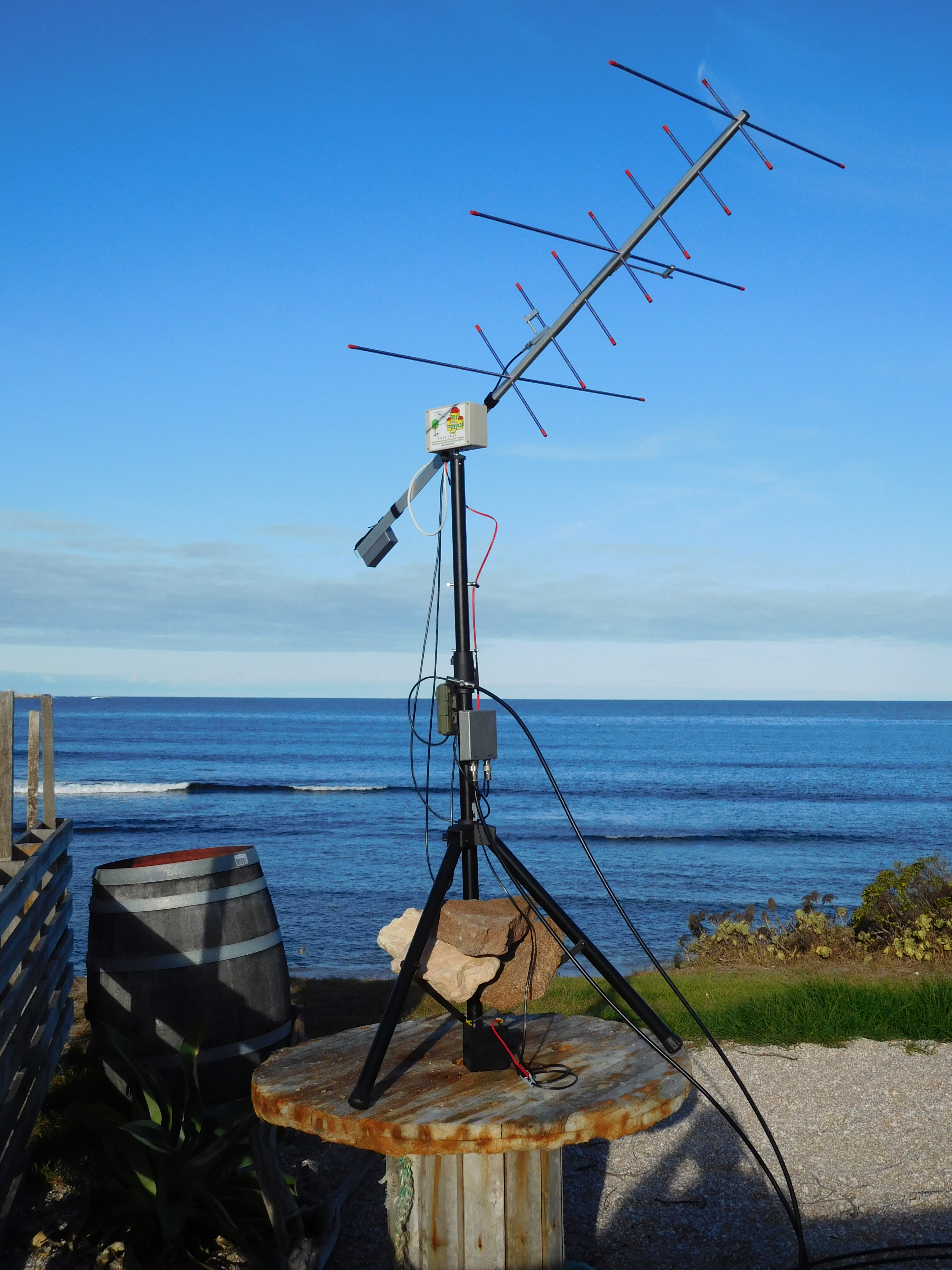
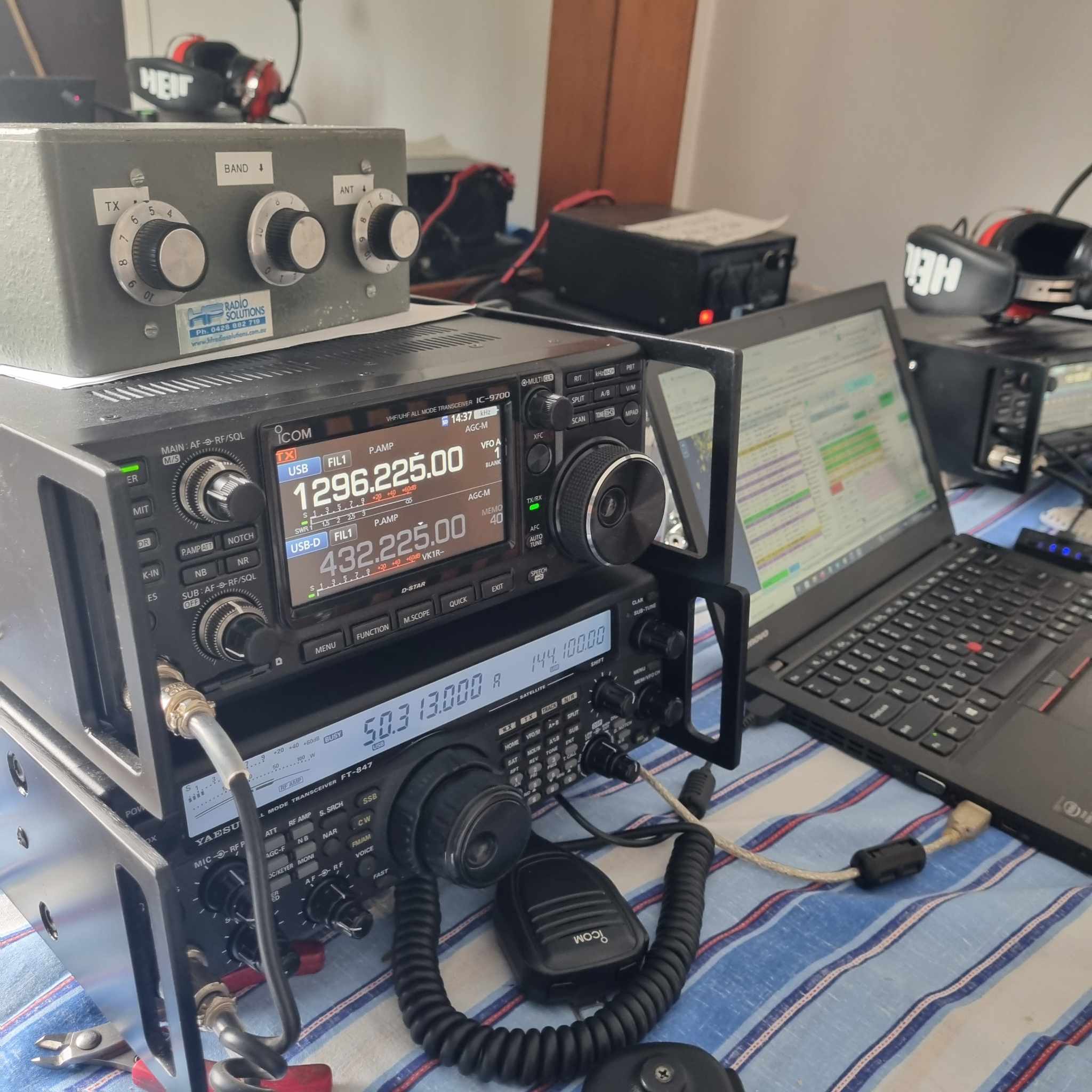
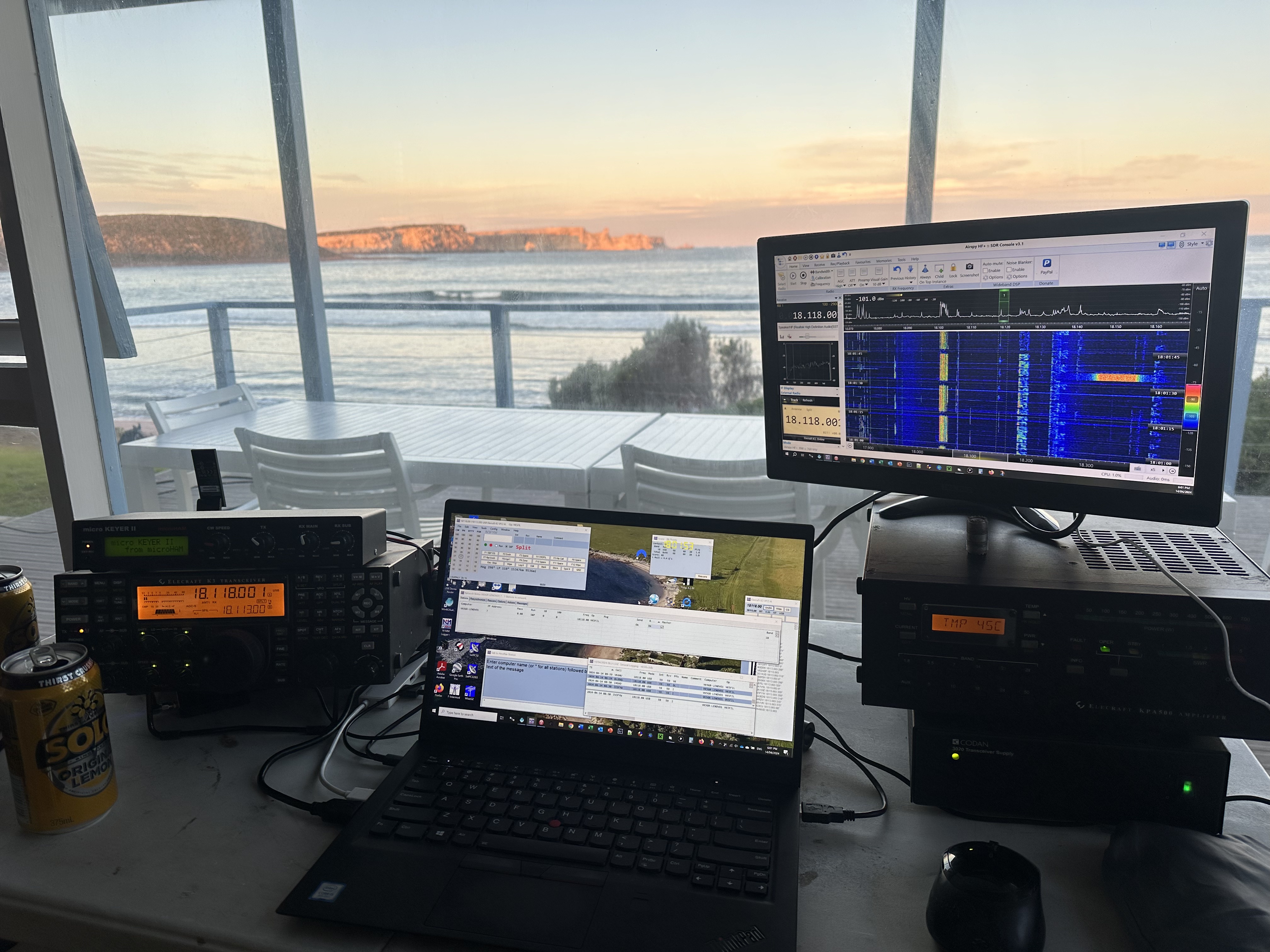
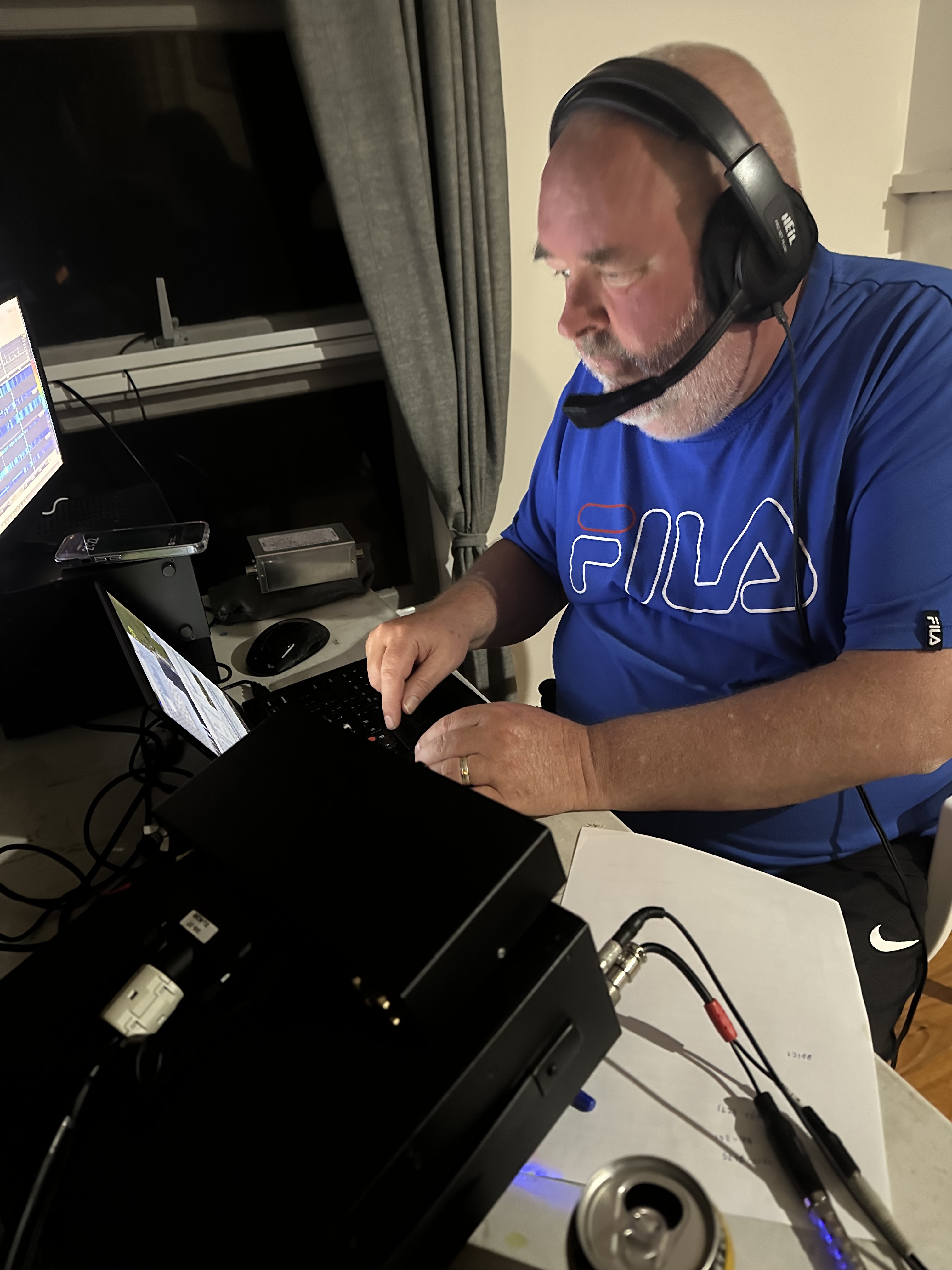
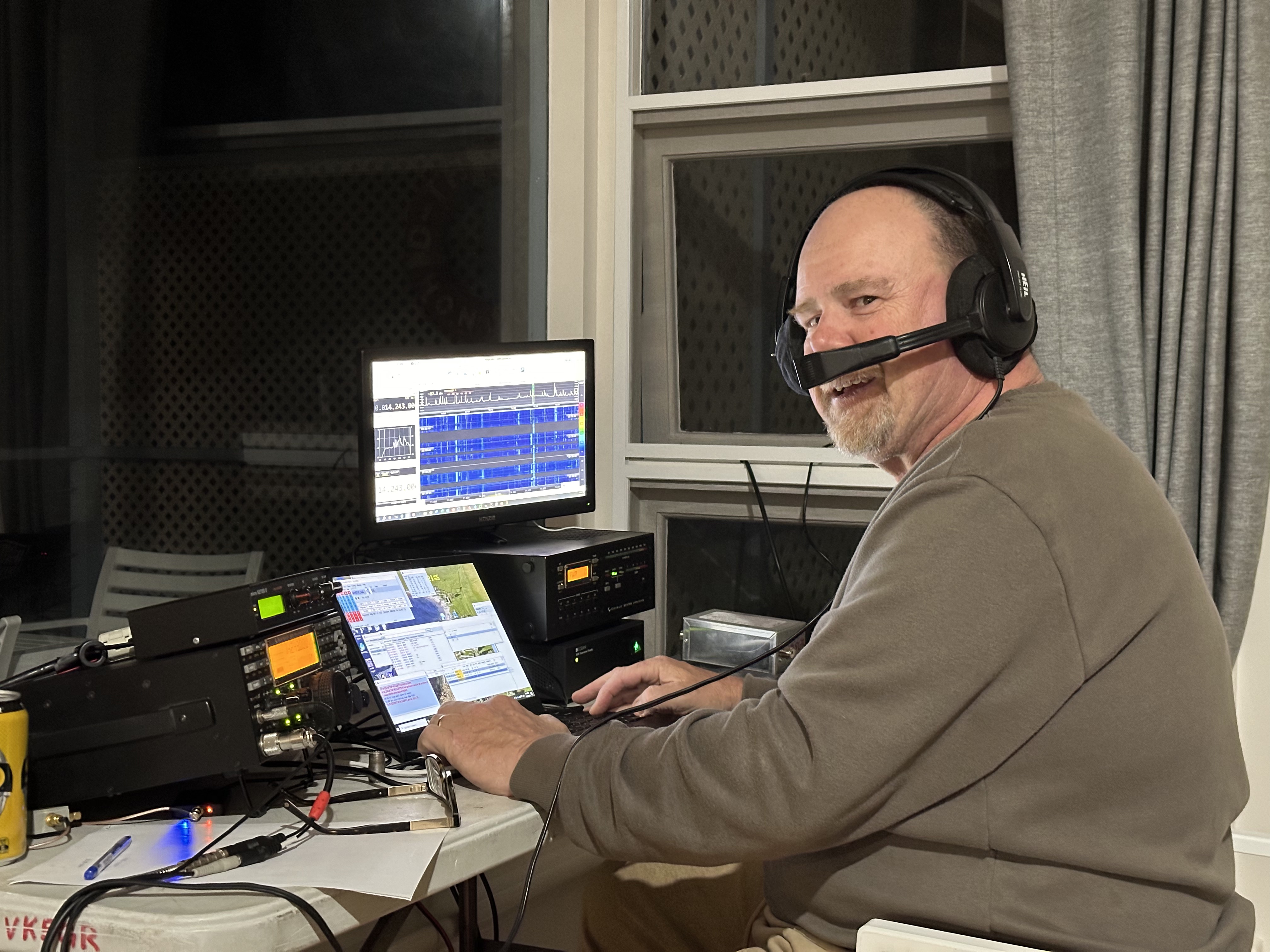
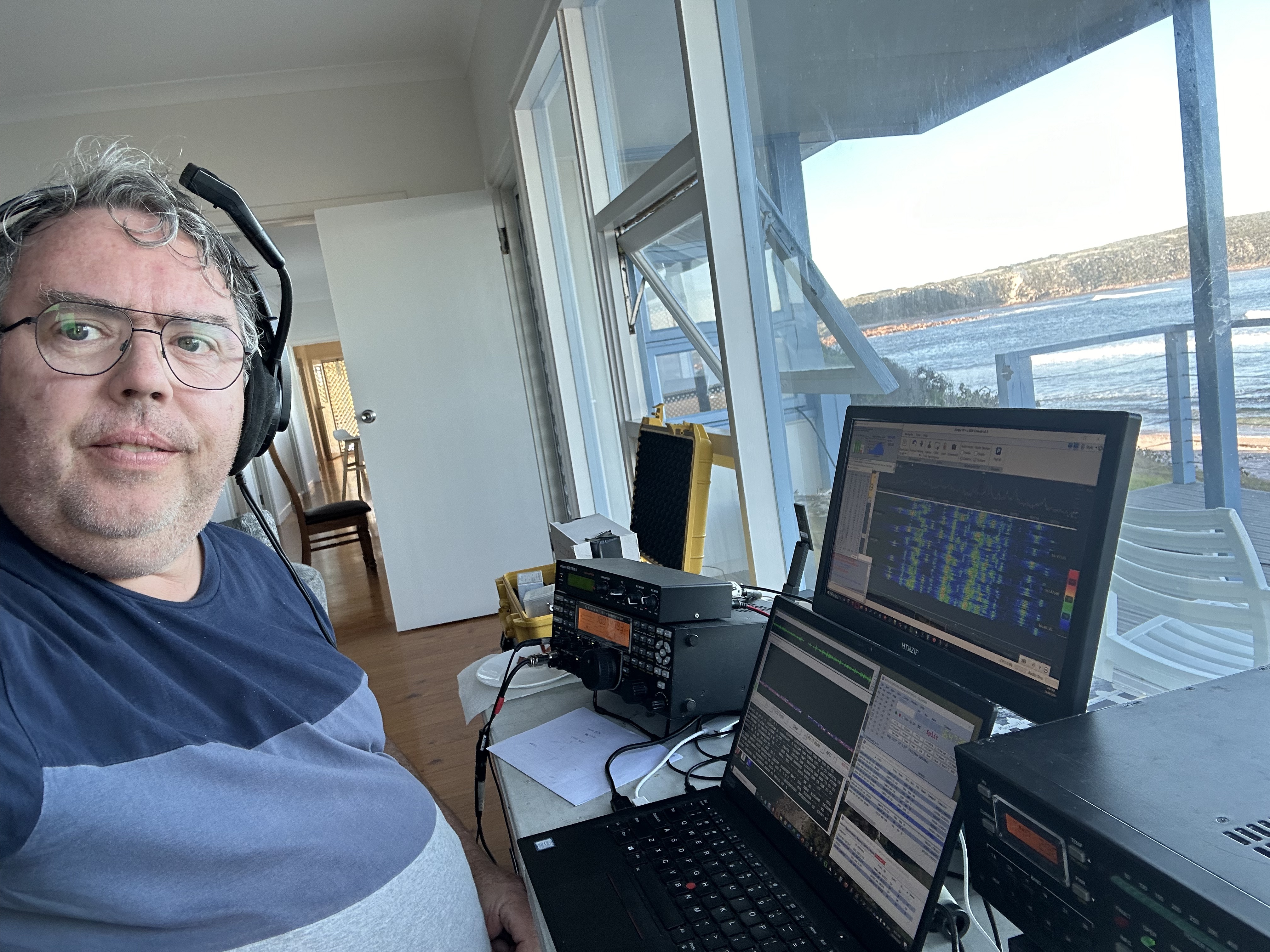
We established five separate stations on Flinders Island at Eyrewoolf Homestead. The transceivers were:-
Flinders Island is part of the Investigator Islands Important Bird Area identified by BirdLife International in 2009, due to the island group’s population of the vulnerable Fairy Tern, Short-tailed Shearwaters, White-faced Storm Petrels, Cape Barren Geese, Pacific Gull, Black-faced Cormorant, and the Rock Parrot. (Birdlife International 2024)
The Investigator Islands Important Bird Area is VKFF-0175 for the World Wide Flora Fauna (WWFF) program. Flinders Island is OC-261 for the Islands On The Air (IOTA) program.
OUR FIRST QSO.
Our first QSO was with Marija VK5MAZ at Ashbourne, South Australia on 40m SSB.
OUR FINAL QSO.
Our final contact was with VA2KS on 20m FT8.
HOW MANY QSOS DID WE MAKE?
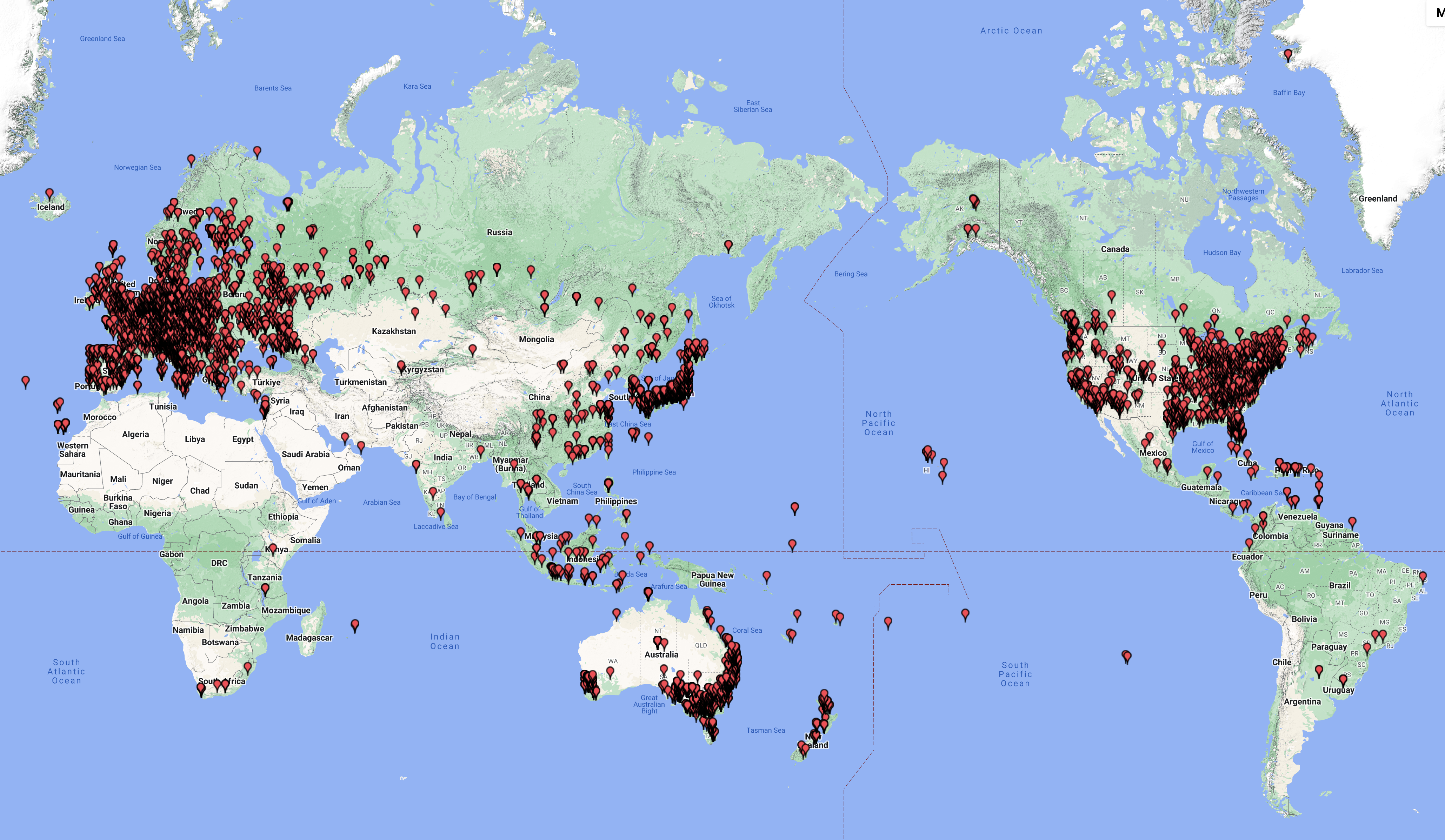
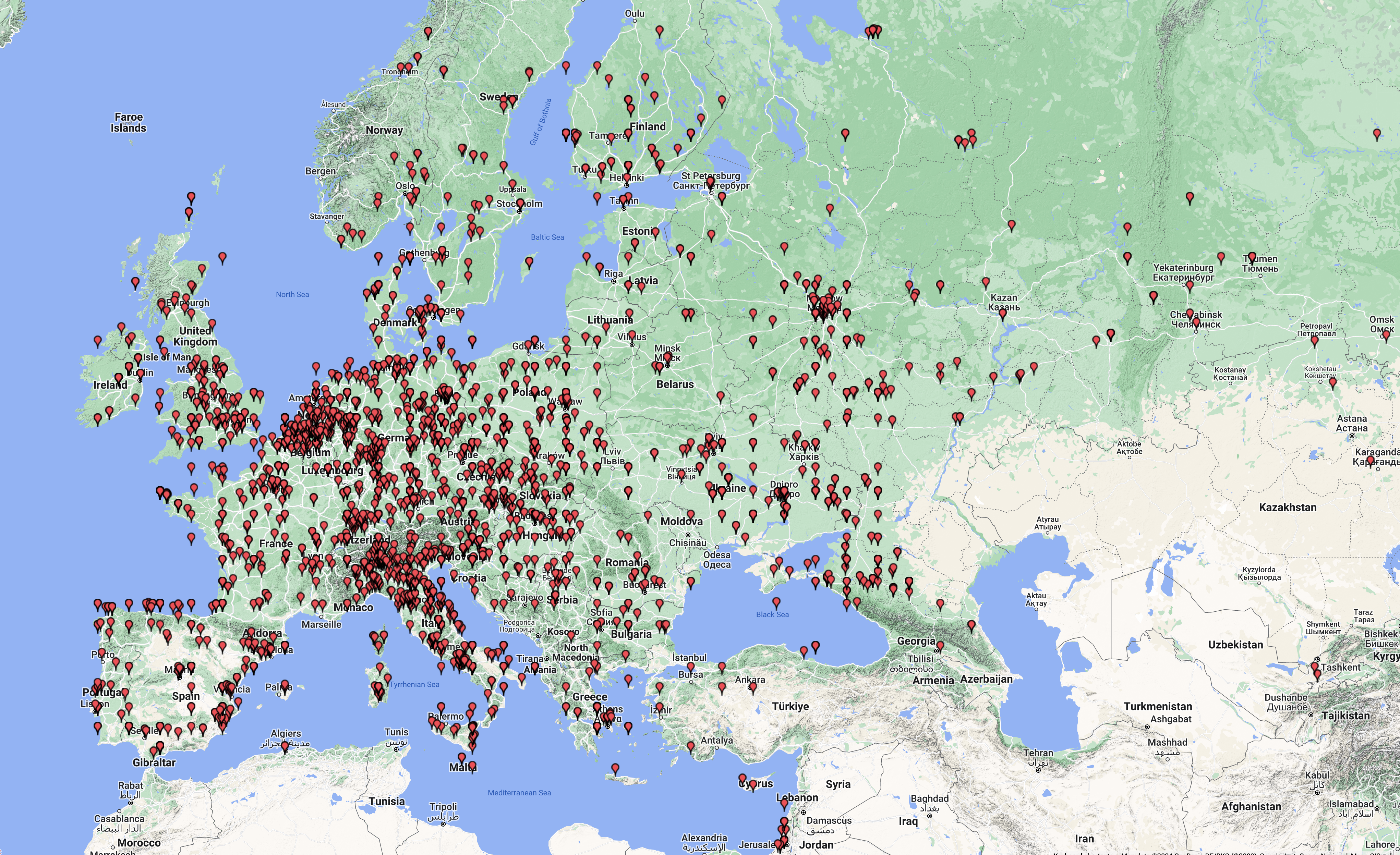
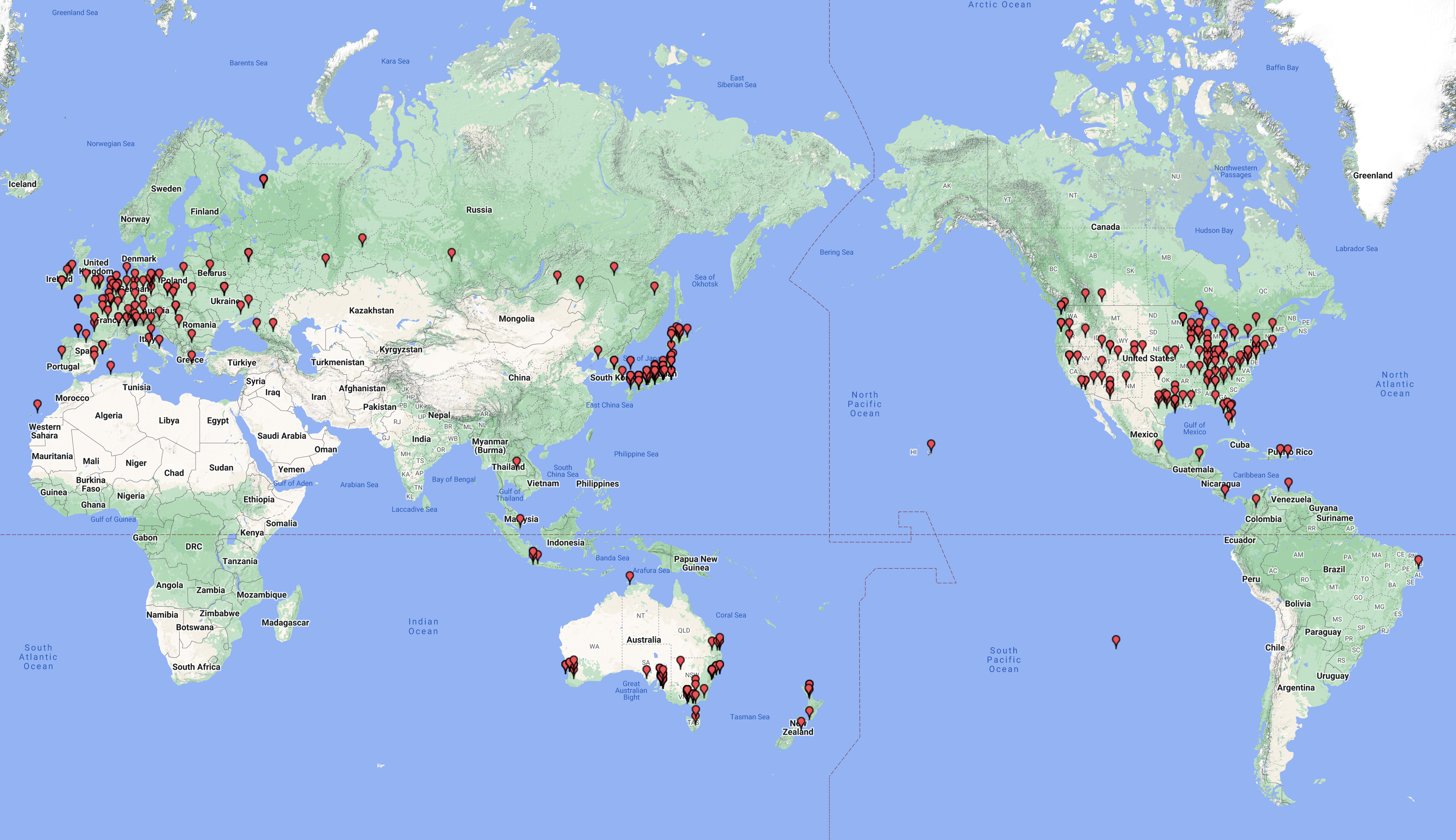
We made a total of 8,427 QSOs and worked 118 different DXCC entities. We worked 36 out of the 40 CQ zones.
Above:- Map showing our contacts around the world.
WHAT BANDS DID WE OPERATE ON?
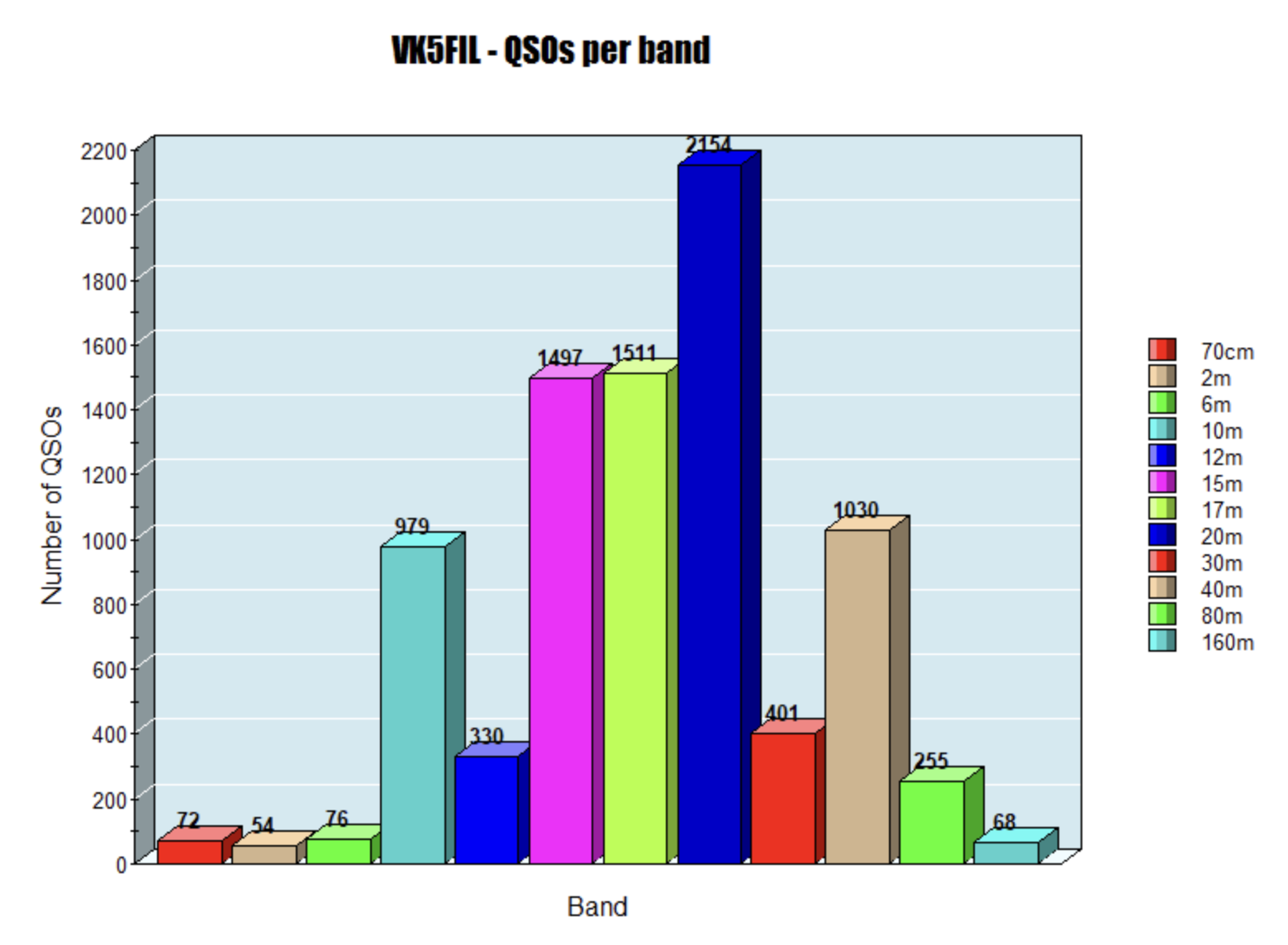
We operated from 70cm through to 160m.
As can be seen, by the graph below, the majority of our QSOs were on the 20m band with 2,154 QSOs, followed by the 17m band with 1,511 QSOs, and then 15m with 1,497 QSOs.
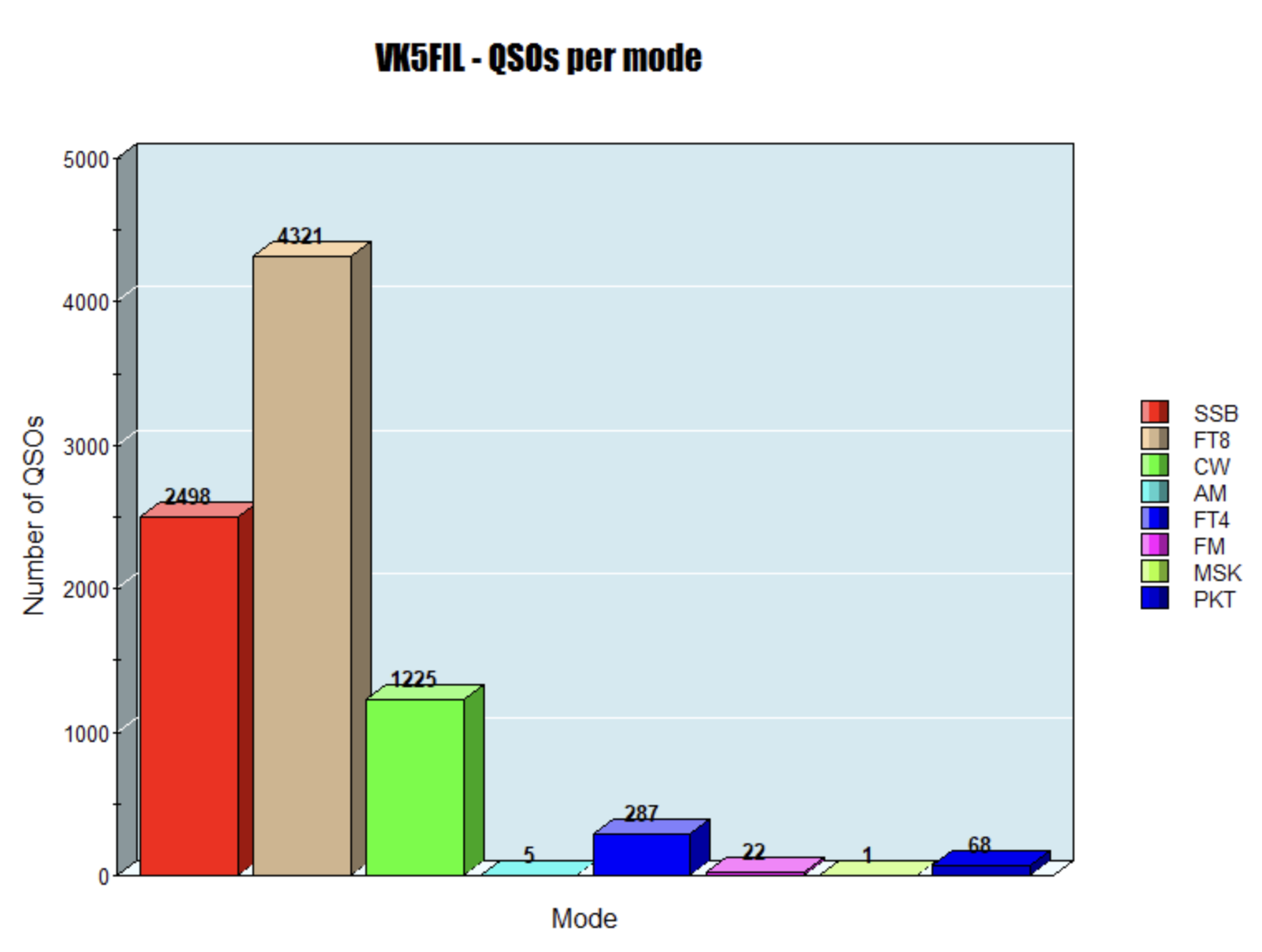
WHAT MODES DID WE USE?
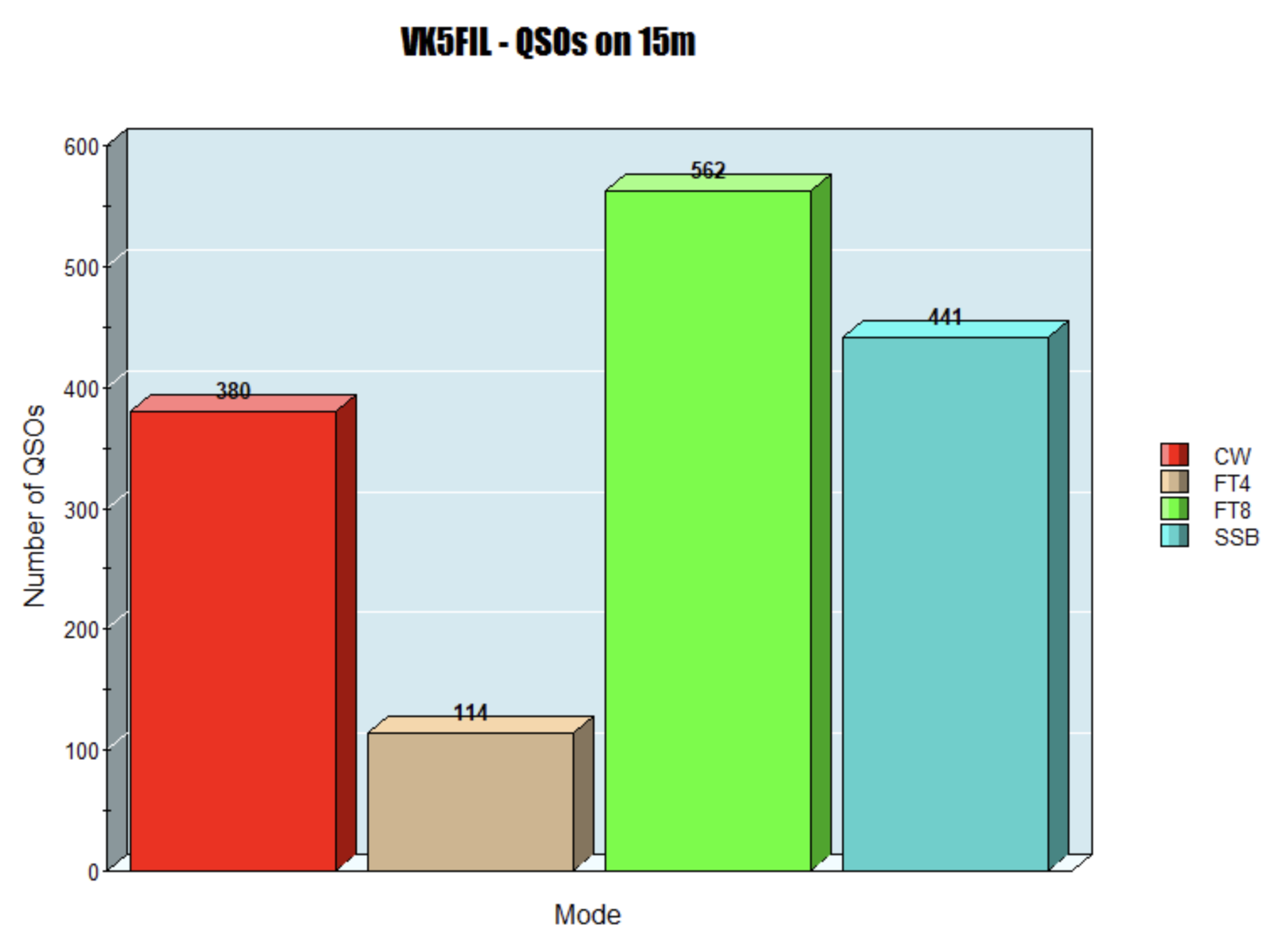
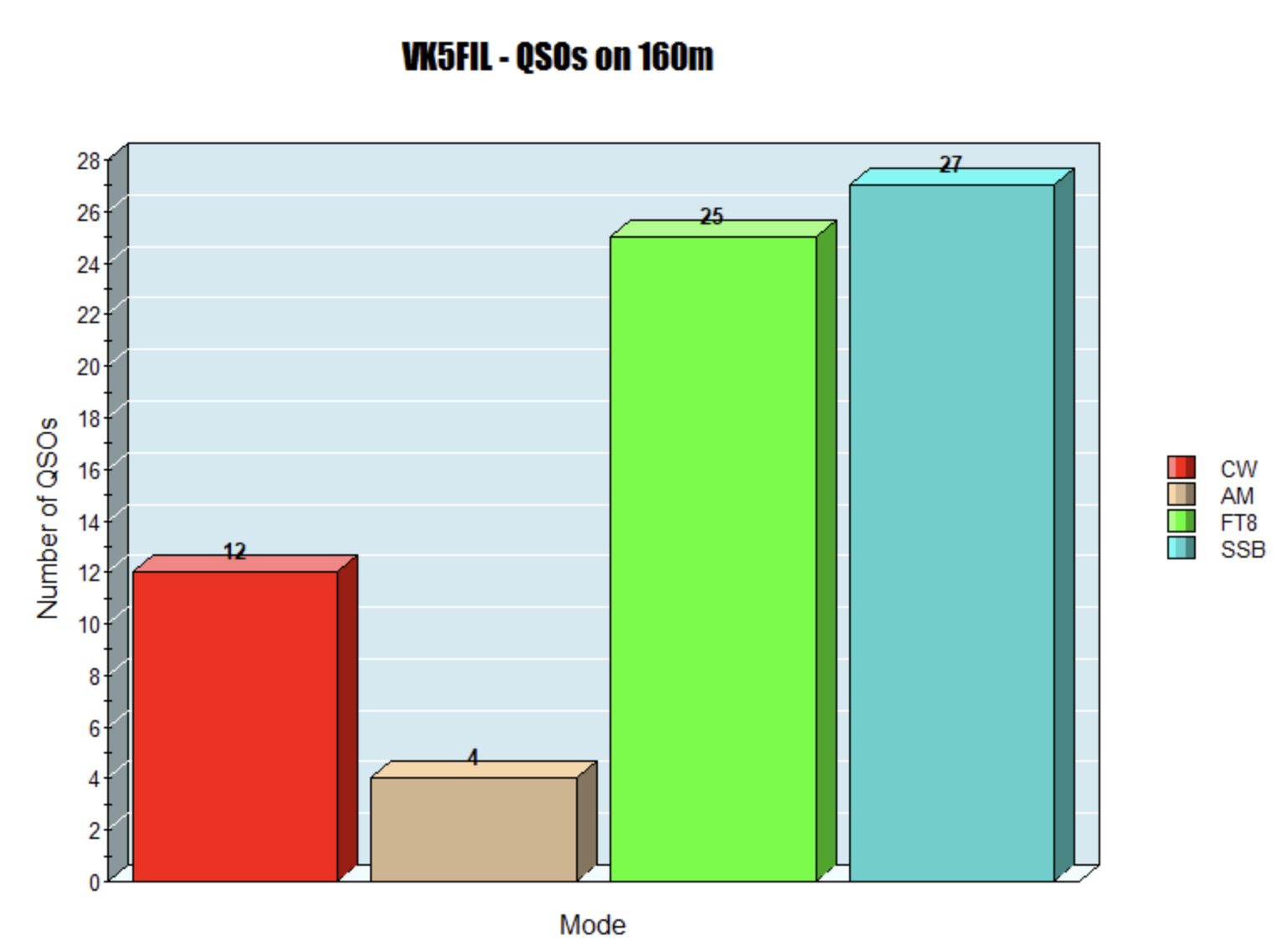
Most of our QSOs were on FT8 with 4,321 QSOs, followed by SSB with 2,498 QSOs and then CW with 1,225 QSOs.
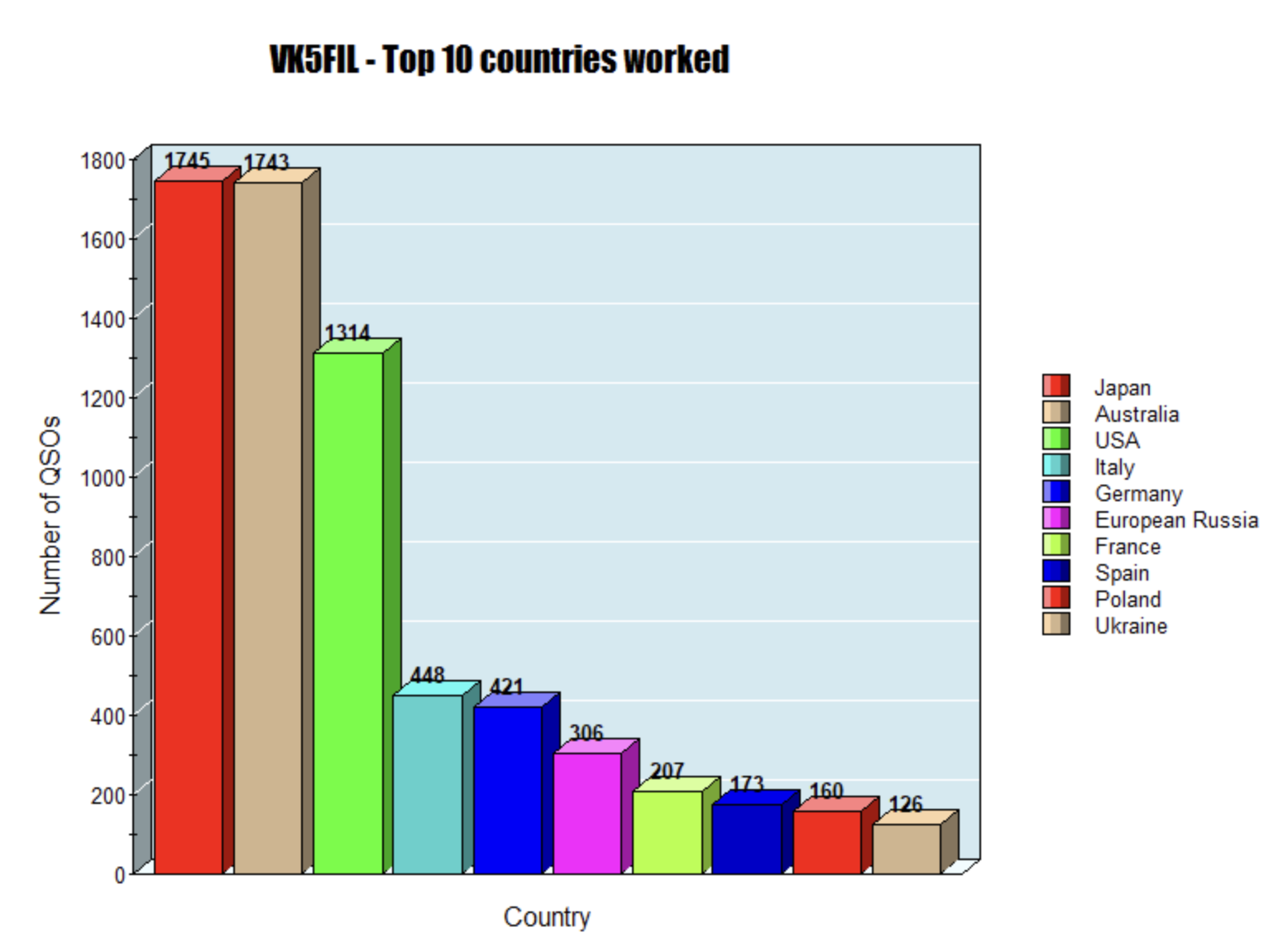
TOP 10 COUNTRIES WORKED.
BAND OPENINGS.
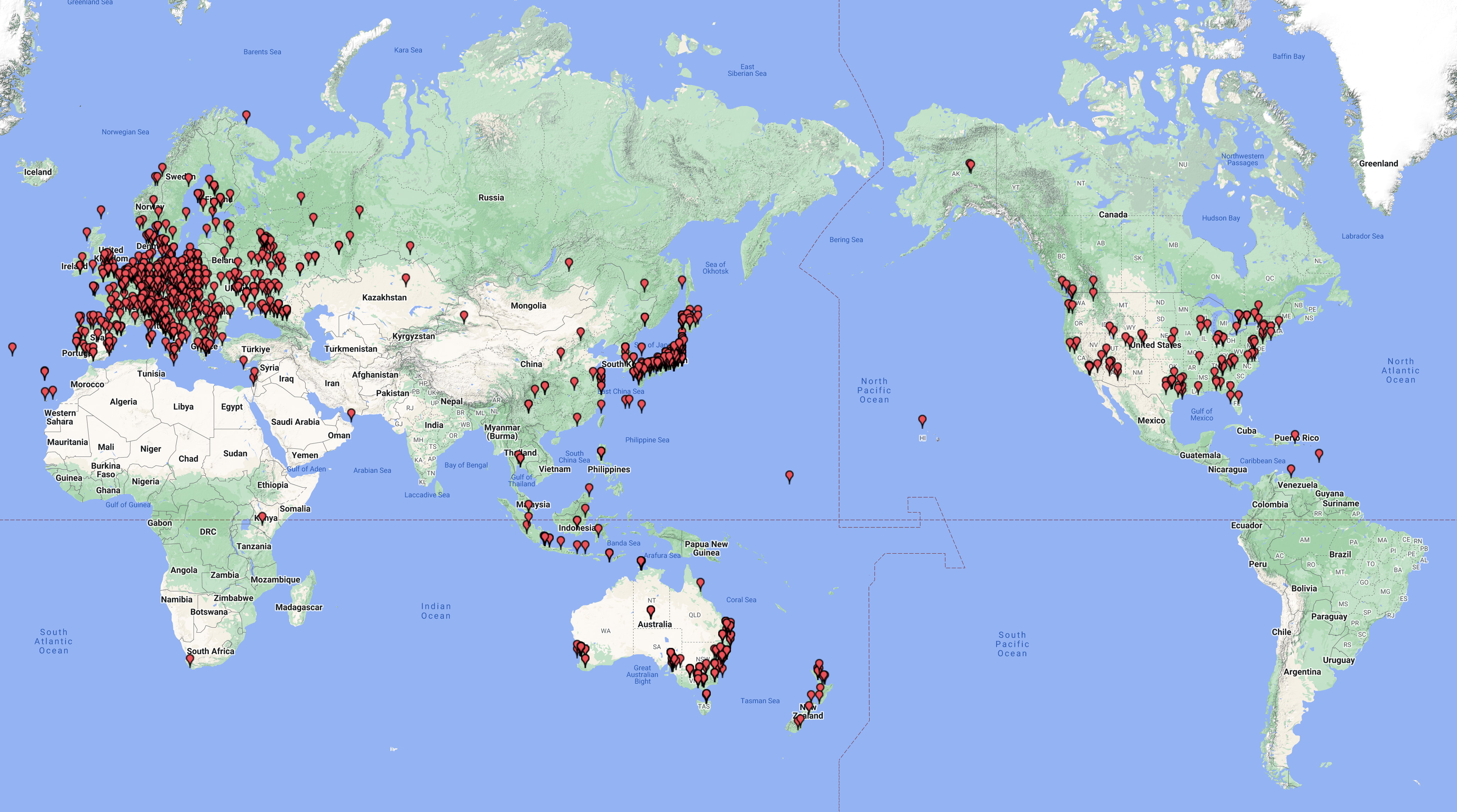
There were some excellent openings on 20m long path and 15m long path into Europe and the United Kingdom.
We also experienced some excellent conditions into North America on 20m short path during our evening.
VIDEOS.
Below is a video of a QSO I made with Tim VK3IFR aeronautical mobile in a 737 en route from Sydney to Adelaide.
Below is a video of the 15m Europe/UK long path pile-up, as heard by Marija VK5MAZ.
A BREAKDOWN OF THE BANDS.
70cm band.
A total of 72 QSOs were made.
68 – PKT Satellite (IO-117)
1 – FM
3 – SSB
A total of 11 countries were worked on 70cm:-
Argentina
Australia
China
India
Japan
Kazakhstan
New Zealand
Republic of Korea
South Africa
Taiwan
United Arab Emirates
2m band.
A total of 54 QSOs were made on the 2m band.
20 – cross band FM Satellite (ISS and SO50)
15 – ISS
5 – SO50
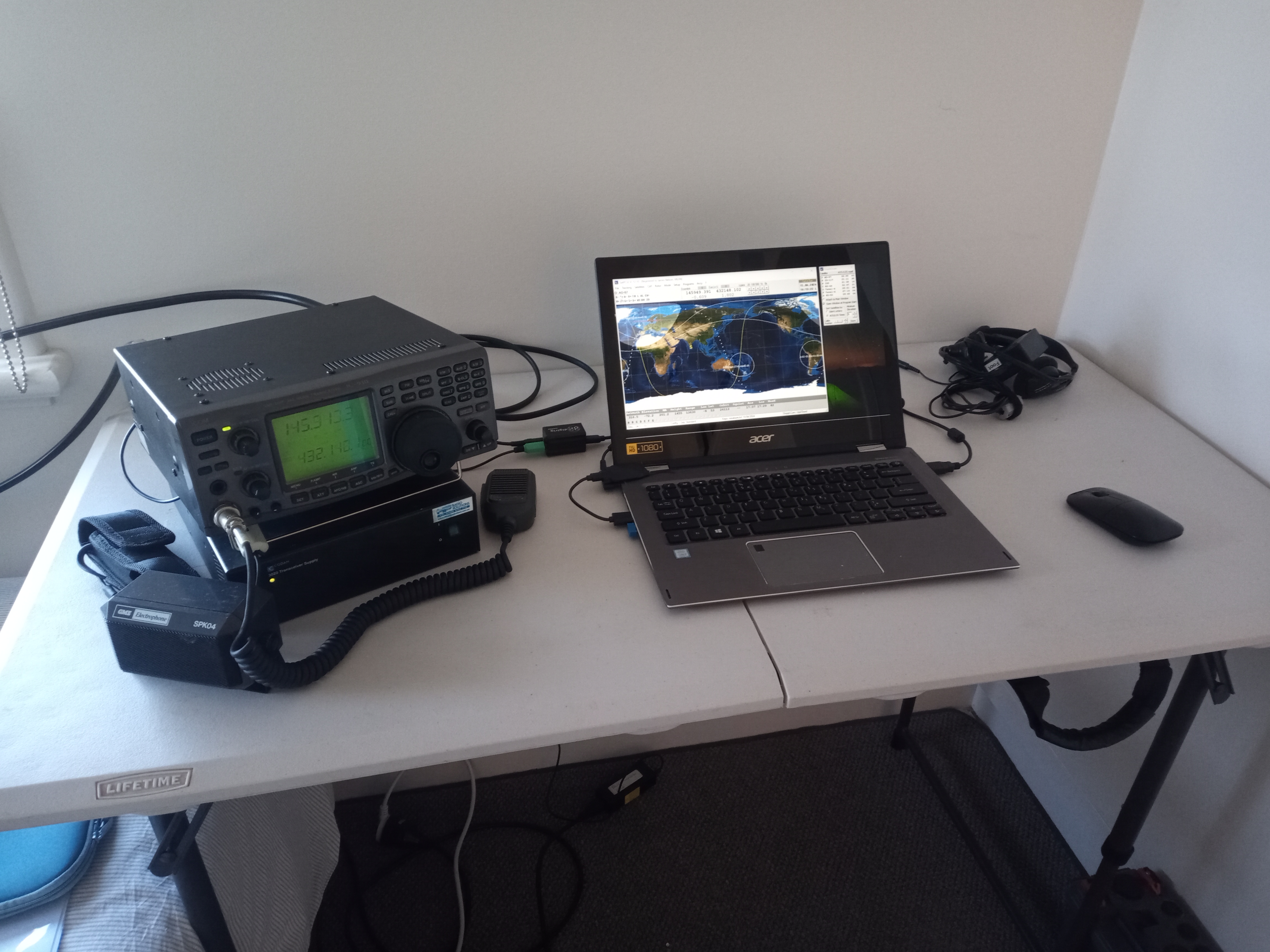
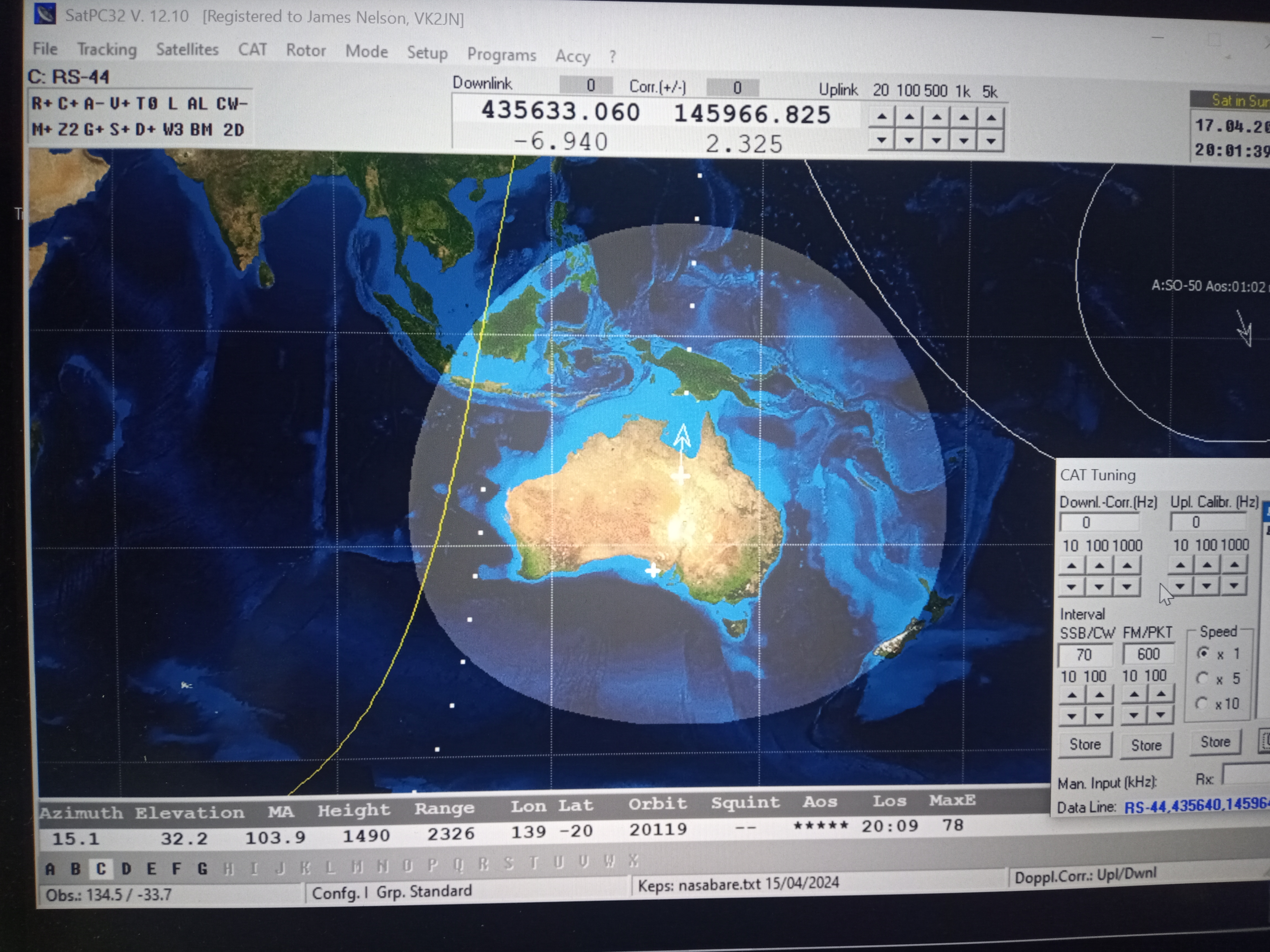
27 – cross-band SSB RS-44
Remainder on SB & FM (Four of the SSB contacts were with VK5’s and one with a VK3)
6m band.
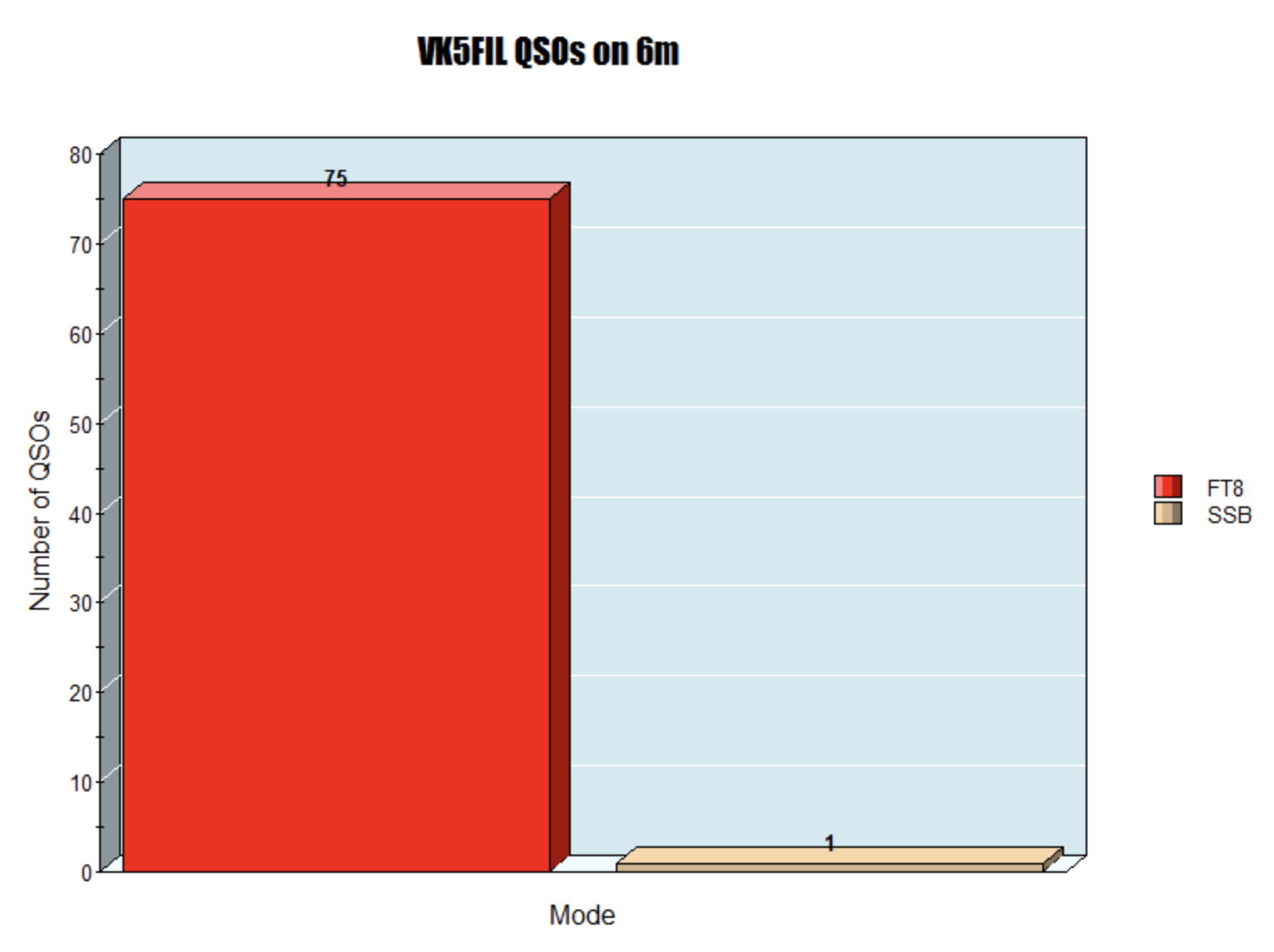
A total of 76 QSOs were made on the 6m band. All bar one contact was on FT8. The sole SSB 6m contact was with Barry VK5KBJ.
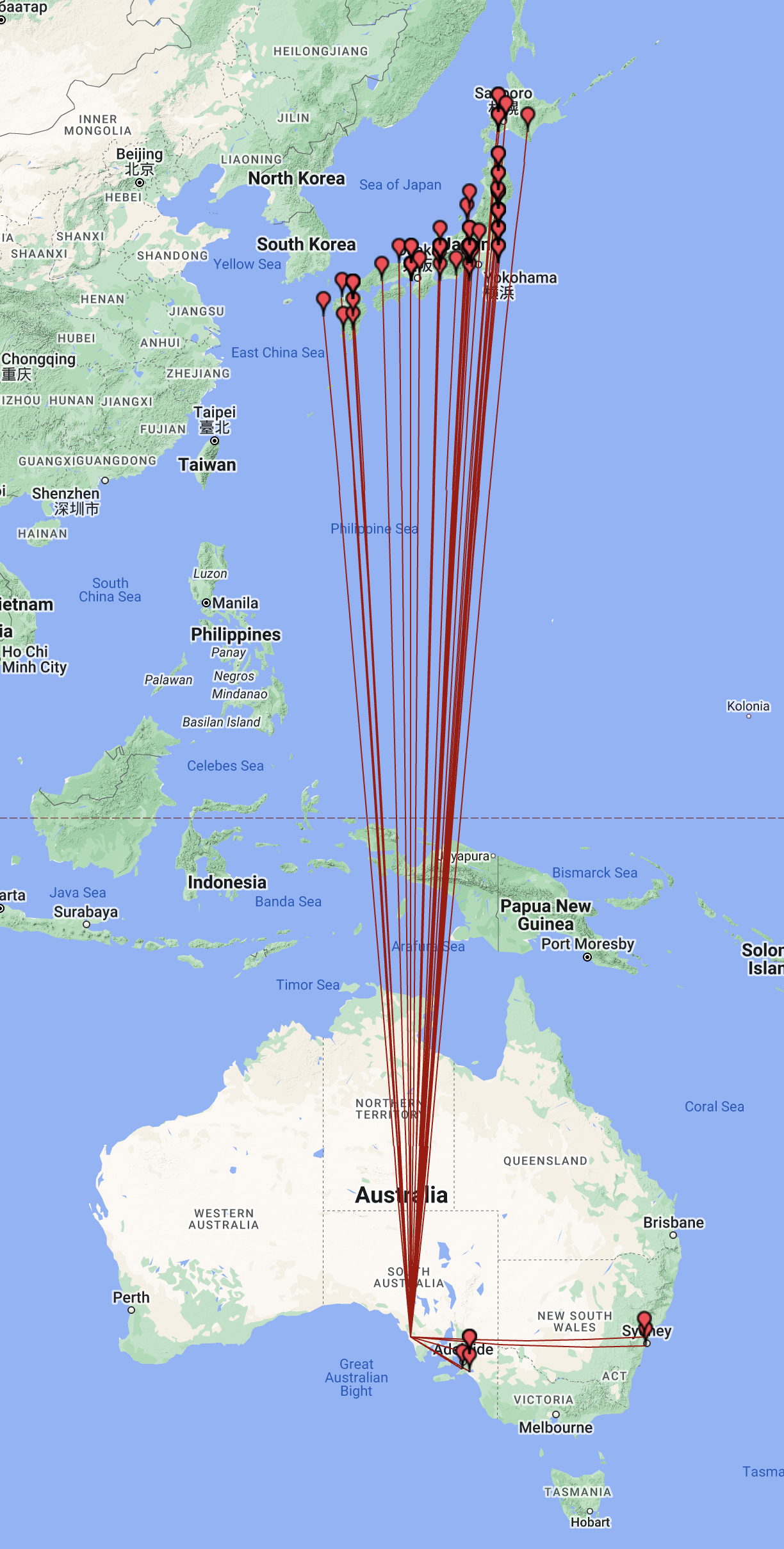
A total of 2 countries were worked on the 6m band:-
Australia (6 QSOs)
Japan (70 QSOs)
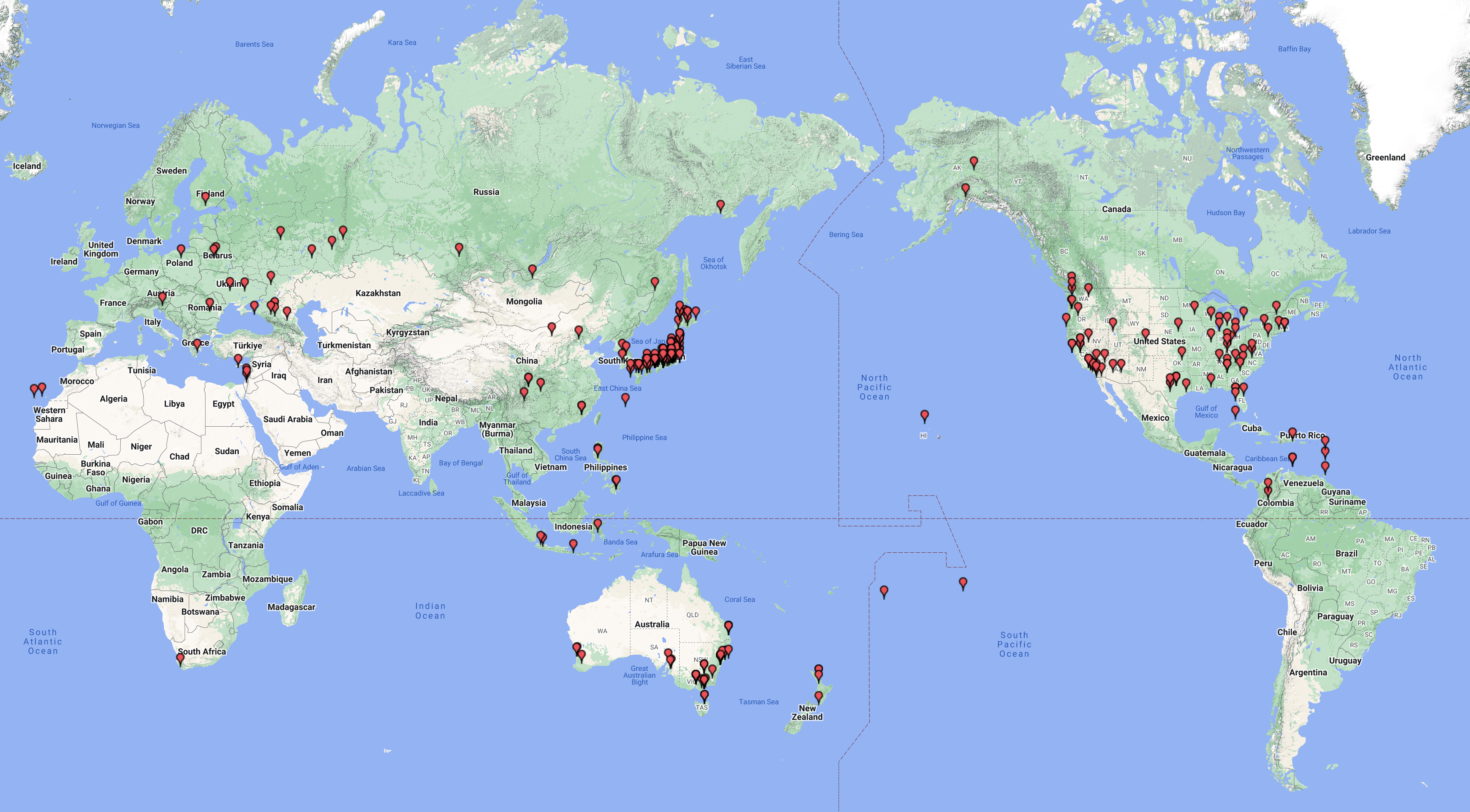
The map below shows our 6m contacts.
10m band.
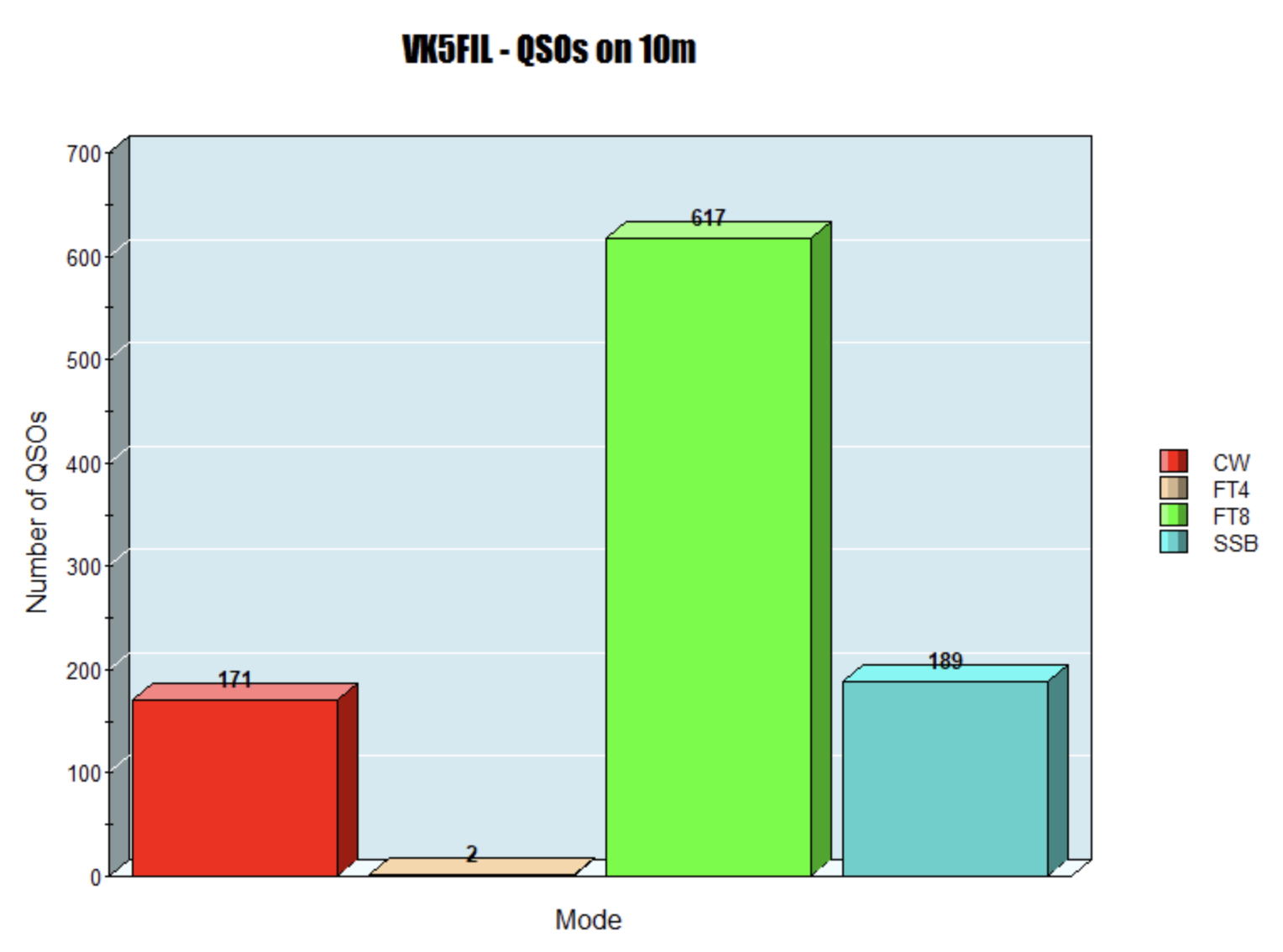
A total of 979 QSOs were made on the 10m band.
A total of 65 countries were worked on the 10m band:-
Asiatic Russia
Australia
Belarus
Belgium
Bulgaria
Canada
Canary Islands
China
Colombia
Czech Republic
Denmark
Dominican Republic
East Malaysia
England
Estonia
European Russia
Federal Republic of Germany
Finland
France
French Guiana
Georgia
Greece
Hawaii
Hong Kong
Hungary
Indonesia
Ireland
Israel
Italy
Japan
Kazakhstan
Latvia
Lebanon
Malawi
Malta
Mauritius
Mexico
Mongolia
Nauru
Netherlands
New Caledonia
New Zealand
Panama
Philippines
Poland
Portugal
Puerto Rico
Republic of Korea
Romania
Sardinia
Singapore
Slovak Republic
Slovenia
South Africa
Spain
Sri Lanka
Sweden
Switzerland
Taiwan
Tajikistan
Thailand
Trinidad & Tobago
Turkey
Ukraine
United States
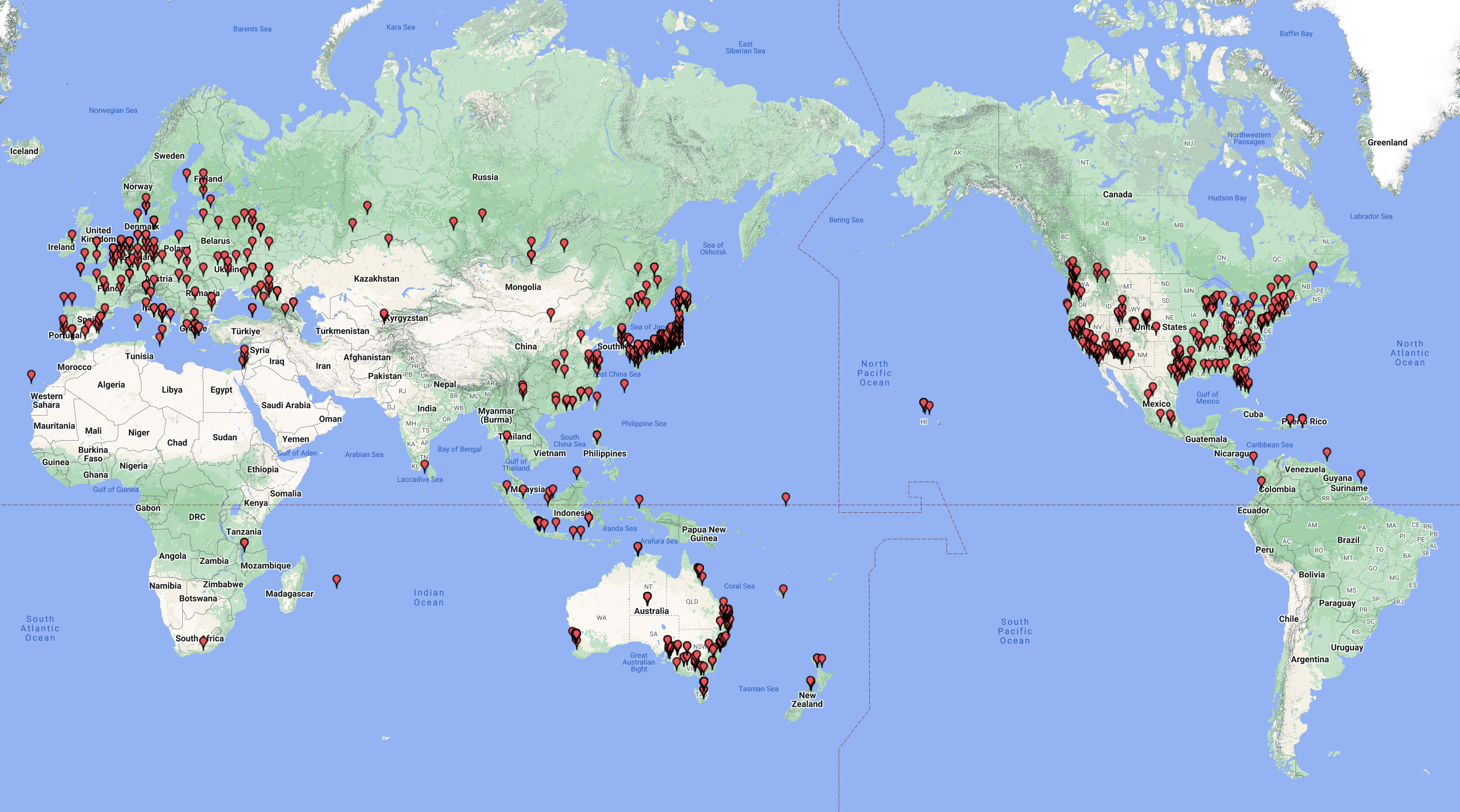
The map below shows our contacts on the 10m band.
12m band.
A total of 330 QSOs were made on the 12m band.
A total of 34 countries were worked on the 12m band:
Alaska
Asiatic Russia
Australia
Belarus
Canada
Canary Islands
China
Colombia
Cuba
Curacao
Cyprus
Dominican Republic
European Russia
Finland
French Polynesia
Greece
Guadeloupe
Hawaii
Indonesia
Israel
Japan
Mongolia
New Zealand
Niue
Philippines
Poland
Republic of Korea
Romania
Saint Lucia
Slovenia
South Africa
Trinidad & Tobago
Ukraine
United States
The map below shows our contacts on the 12m band.
15m band.
A total of 1,497 QSOs were made on the 15m band.
A total of 69 countries were worked on the 15m band:-
Alaska
Asiatic Russia
Australia
Austria
Azores
Belarus
Belgium
Bosnia-Herzegovina
Bulgaria
Canada
Canary Islands
China
Corsica
Croatia
Cyrpus
Czech Republic
Denmark
East Malaysia
England
Estonia
European Russia
Federal Republic of Germany
Finland
France
Greece
Hawaii
Hong Kong
Hungary
Indonesia
Ireland
Israel
Italy
Japan
Kazakhstan
Kenya
Latvia
Luxembourg
Madeira Islands
Malta
Marshall Islands
Netherlands
New Zealand
North Macedonia
Norway
Oman
Philippines
Poland
Portugal
Puerto Rico
Republic of Korea
Romania
Saint Lucia
San Marino
Sardinia
Scotland
Serbia
Singapore
Slovak Republic
Slovenia
South Africa
Spain
Sweden
Switzerland
Taiwan
Thailand
Ukraine
United States
Venezuela
Wales
The map below shows our contacts on the 15m band.
17m band.
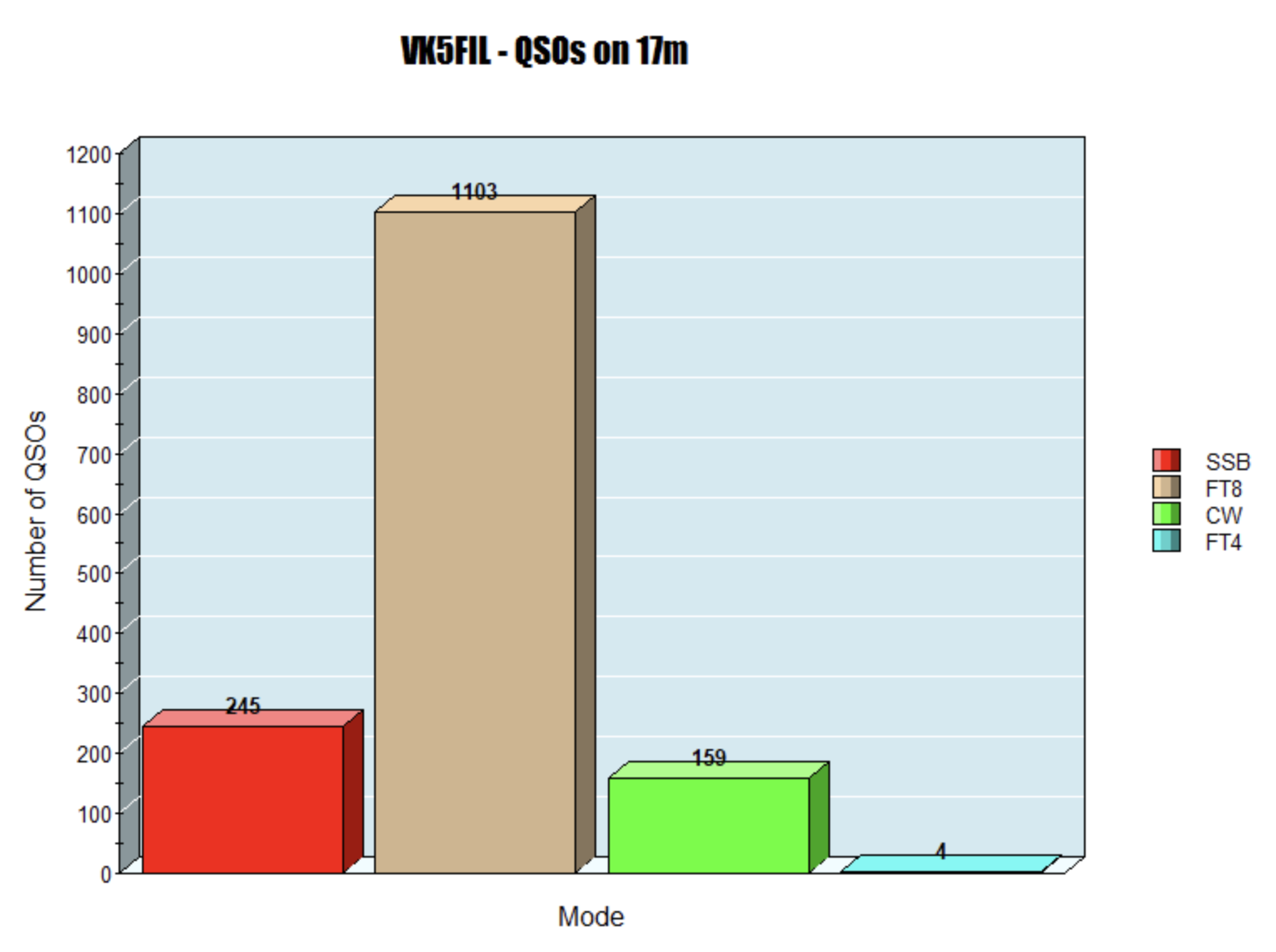
A total of 1,511 QSOs were made on the 17m band.
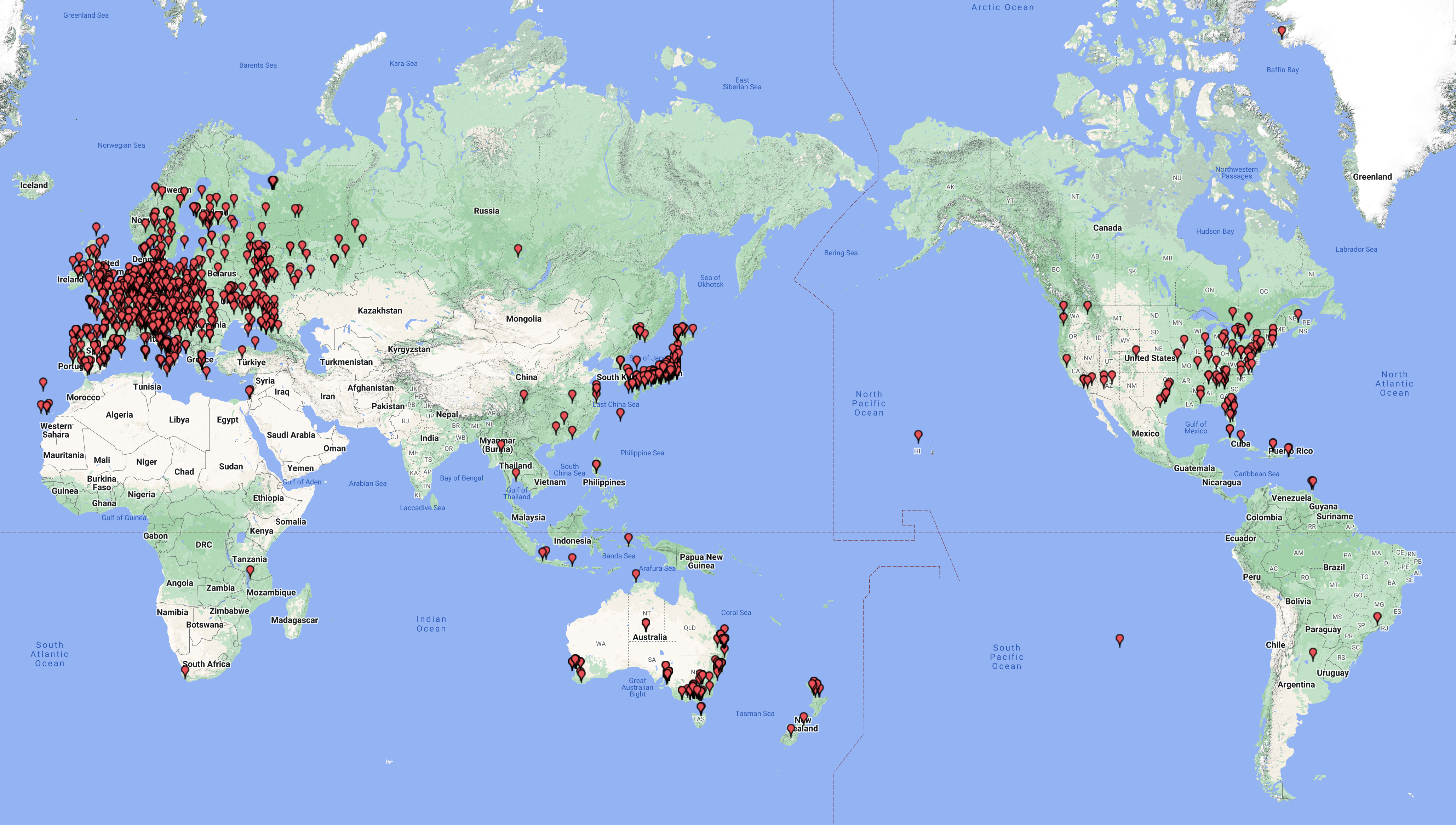
A total of 70 countries were worked on the 17m band:-
Antarctica
Argentina
Asiatic Russia
Australia
Austria
Balearic Islands
Belarus
Belgium
Bosnia-Herzegovina
Brazil
Bulgaria
Canada
Canary Islands
China
Corsica
Crete
Croatia
Cuba
Czech Republic
Denmark
Dominican Republic
Easter Island
England
Estonia
European Russia
Federal Republic of Germany
Finland
France
Greece
Greenland
Hawaii
Hong Kong
Hungary
Indonesia
Ireland
Isle of Man
Israel
Italy
Japan
Kaliningrad
Latvia
Lithuania
Luxembourg
Madeira Island
Malawi
Malta
Netherlands
New Zealand
Norway
Philippines
Poland
Portugal
Puerto Rico
Republic of Korea
Romania
Sardinia
Scotland
Serbia
Slovak Republic
Slovenia
South Africa
Spain
Sweden
Switzerland
Thailand
Trinidad & Tobago
Turkey
Ukraine
United States
Wales
The map below shows our contacts on the 17m band.
20m band.
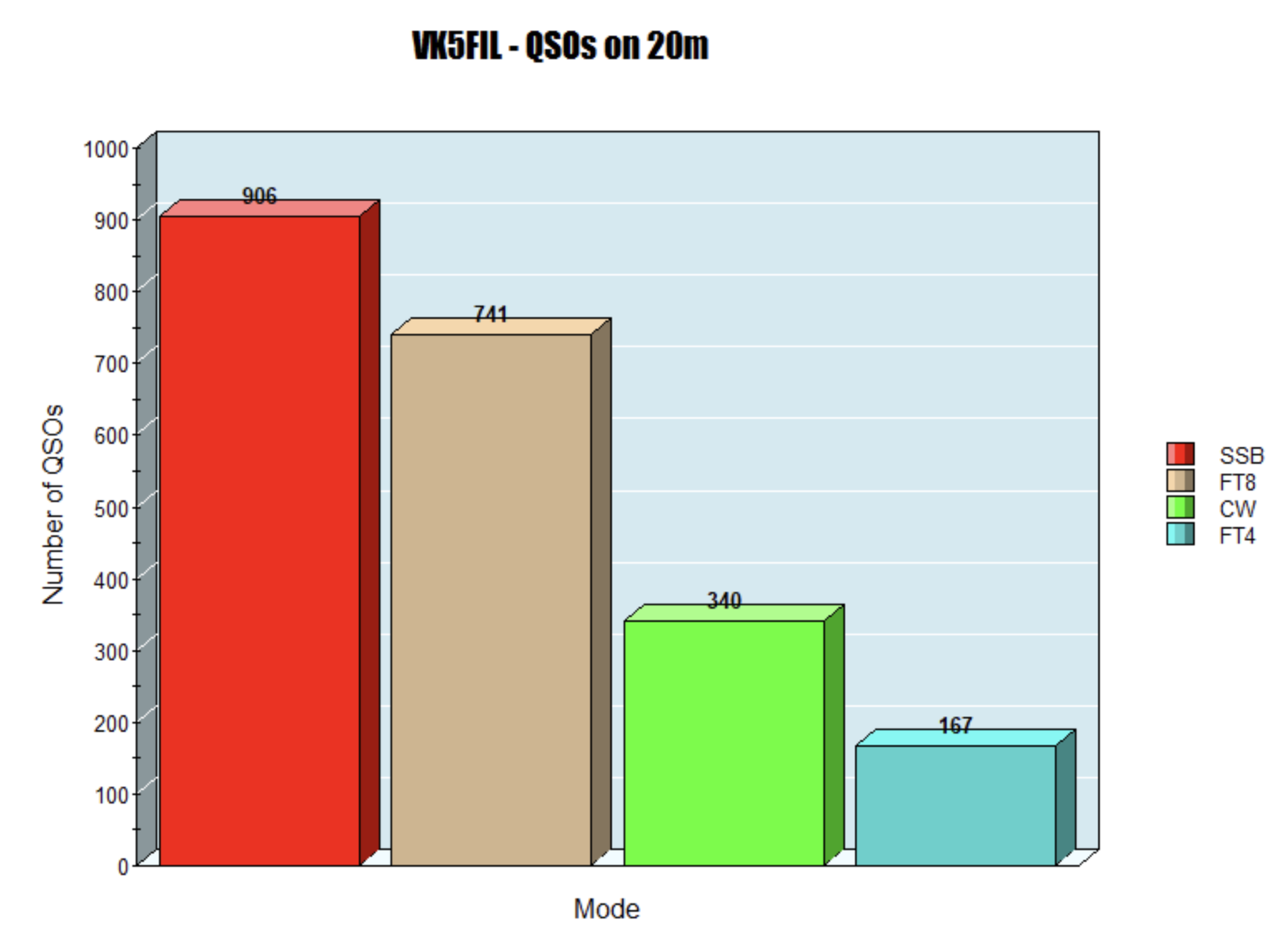
A total of 2,154 QSOs were made on the 20m band.
906 – SSB
741 – FT8
340 – CW
167 – FT4
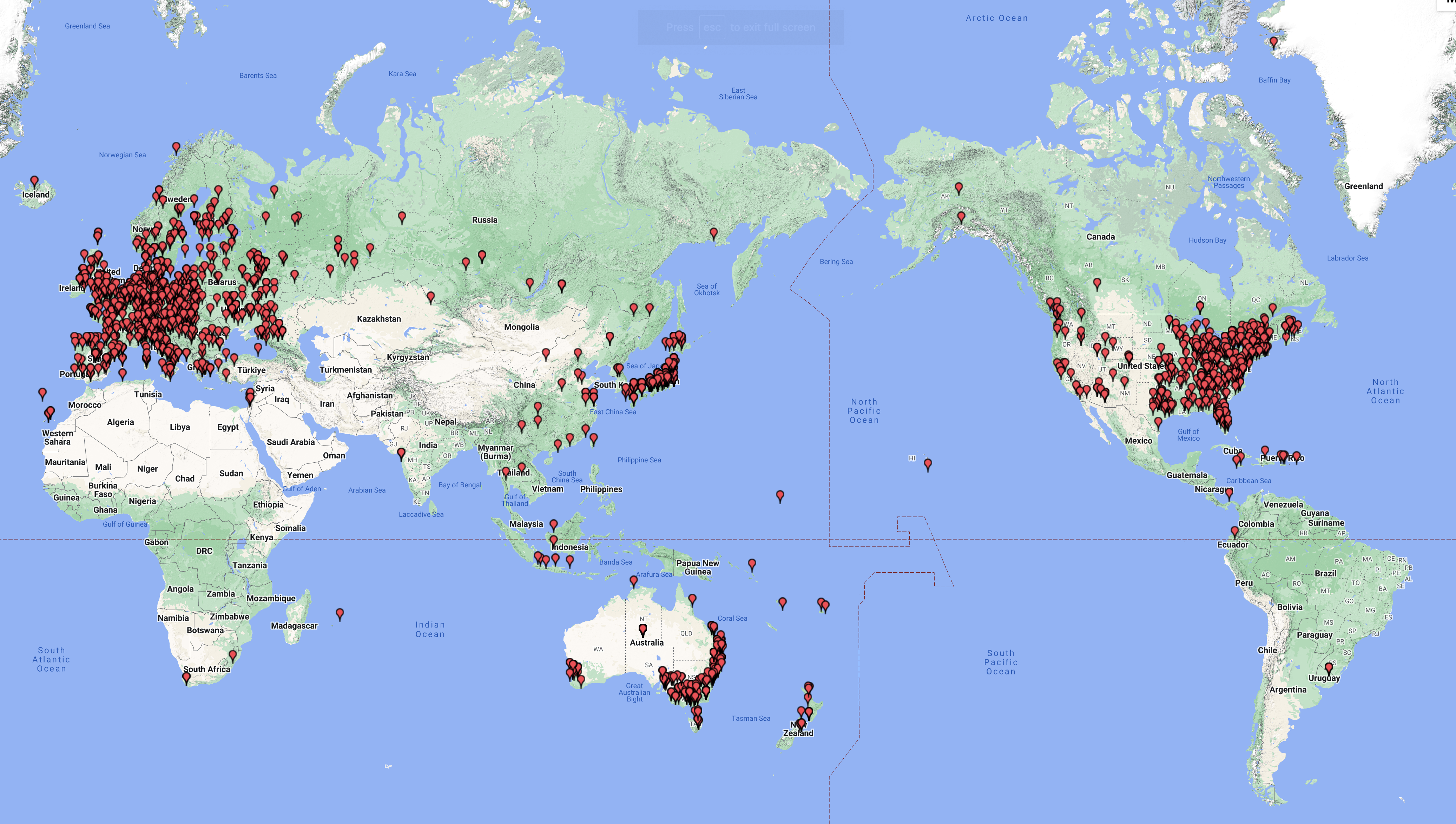
A total of 79 countries were worked on the 20m band:-
Alaska
Algeria
Anguilla
Asiatic Russia
Australia
Austria
Balearic Islands
Belarus
Belgium
Bosnia-Herzegovina
Bulgaria
Canada
Canary Islands
China
Corsica
Croatia
Czech Republic
Denmark
Dodecanese
Dominican Republic
East Malaysia
Ecuador
England
Estonia
European Russia
Federal Republic of Germany
Fiji
Finland
France
Greece
Greenland
Guernsey
Hawaii
Hong Kong
Hungary
Iceland
India
Indonesia
Ireland
Israel
Italy
Jamaica
Japan
Kaliningrad
Kazakhstan
Latvia
Lithuania
Madeira Islands
Marshall Islands
Mauritius
Moldova
Netherlands
New Zealand
North Macedonia
Northern Ireland
Norway
Panama
Poland
Portugal
Puerto Rico
Republic of Korea
Romania
Sardinia
Scotland
Serbia
Slovak Republic
Slovenia
Solomon Islands
South Africa
Spain
Sweden
Switzerland
Taiwan
Thailand
Turkey
Ukraine
United States
Uruguay
Vanuatu
Wales
The map below shows our contacts on the 20m band
30m band.
A total of 401 QSOs were made on the 30m band.
A total of 43 countries were worked on the 30m band:-
Algeria
Asiatic Russia
Australia
Belarus
Belgium
Belize
Brazil
Bulgaria
Canada
Canary Islands
China
Colombia
Czech Republic
Dominican Republic
Easter Island
England
European Russia
Federal Republic of Germany
France
Greece
Hawaii
Hungary
Indonesia
Ireland
Italy
Japan
Mexico
Netherlands
New Zealand
Panama
Poland
Portugal
Puerto Rico
Republic of Kora
Serbia
Spain
Switzerland
Thailand
Ukraine
United States
Venezuela
West Malaysia
The map below shows our contacts on the 30m band.
40m band.
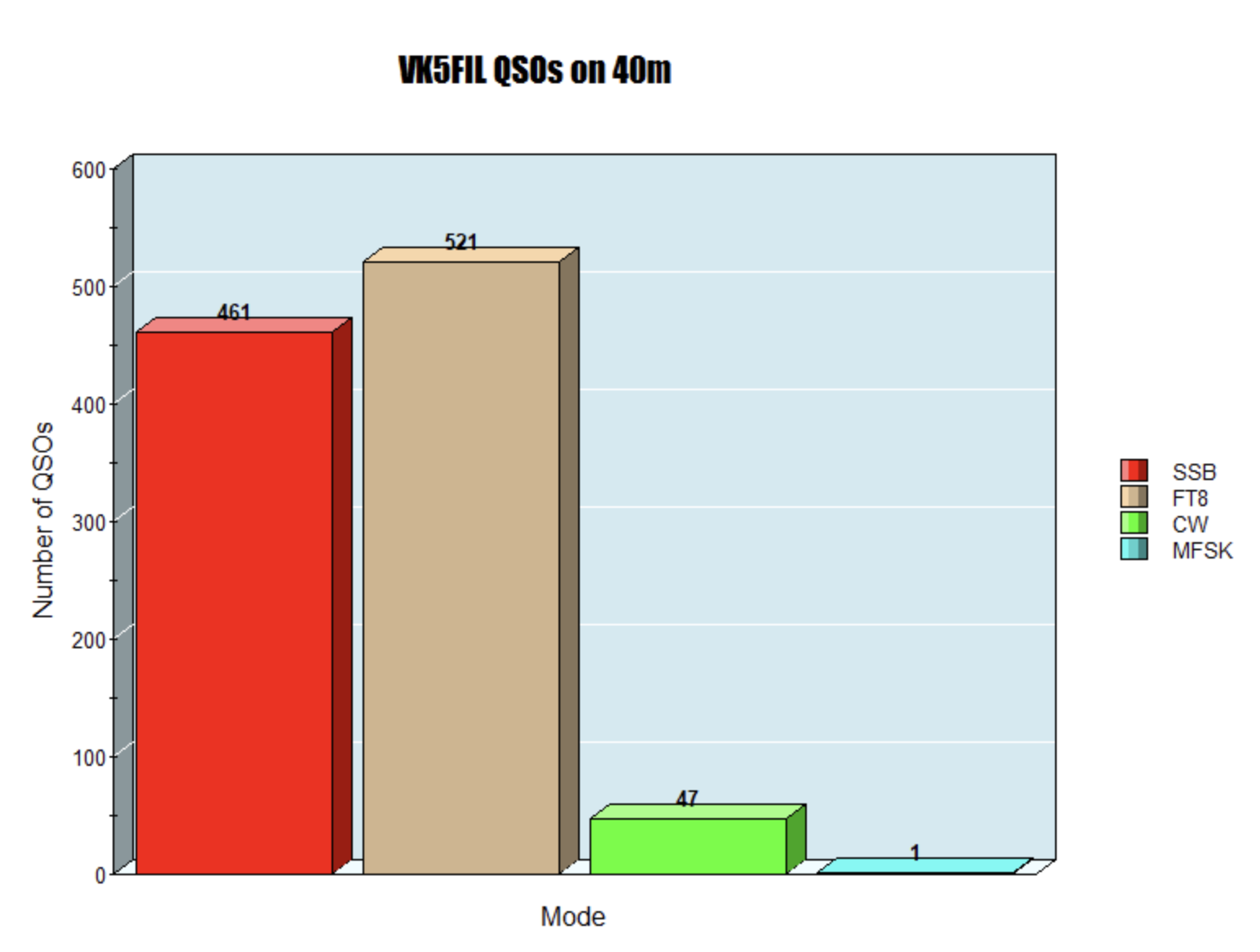
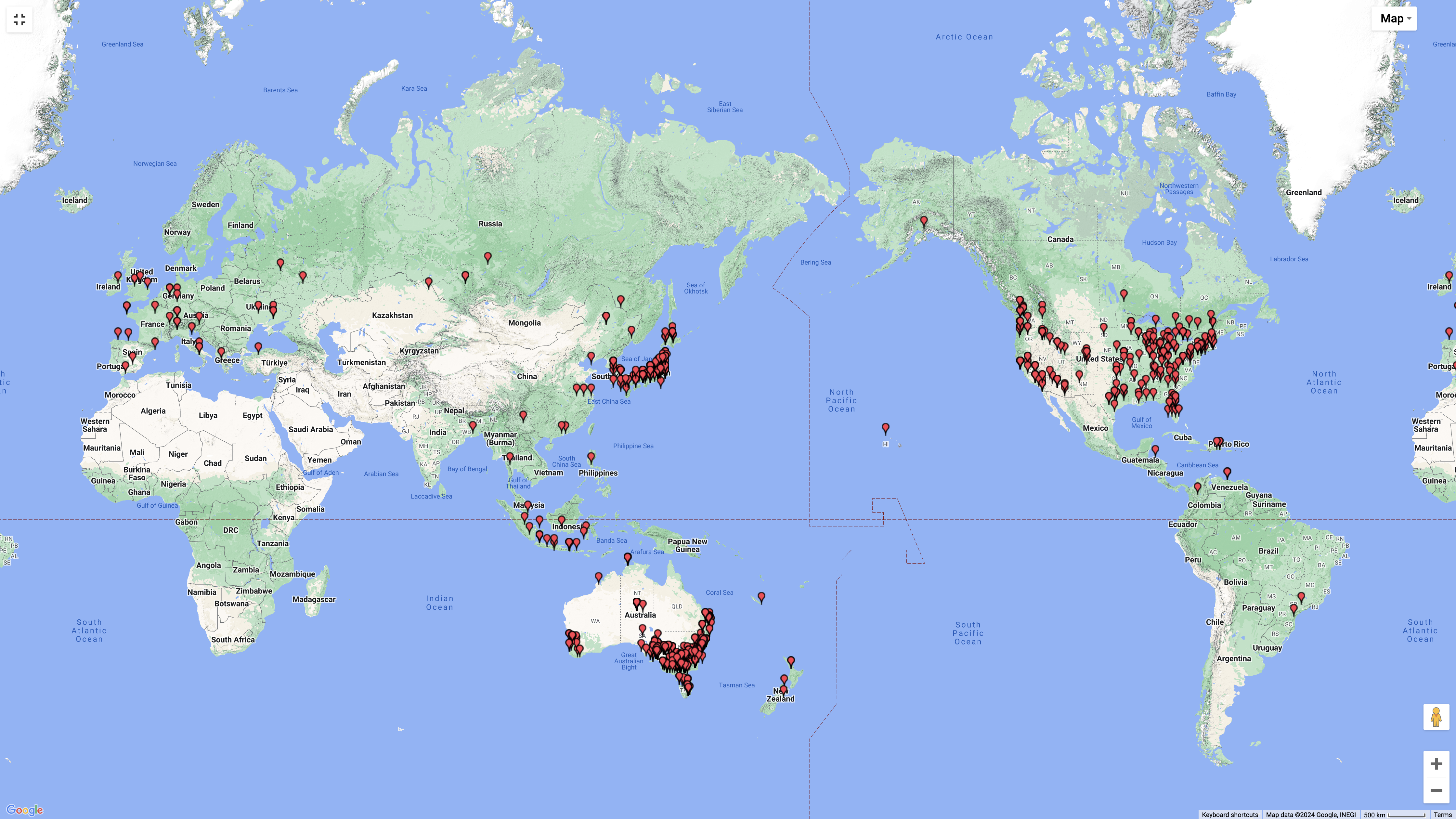
A total of 1,030 QSOs were made on the 40m band.
A total of 36 countries were worked on the 40m band
Alaska
Asiatic Russia
Australia
Austria
Brazil
Canada
China
Colombia
Dominican Republic
England
European Russia
Federal Republic of Germany
France
Greece
Hawaii
Honduras
Hong Kong
India
Indonesia
Ireland
Italy
Japan
Kazakhstan
New Caledonia
New Zealand
Philippines
Republic of Korea
Slovenia
Spain
Switzerland
Thailand
Turkey
Ukraine
United States
Venezuela
West Malaysia
The map below shows our contacts on the 40m band.
80m band.
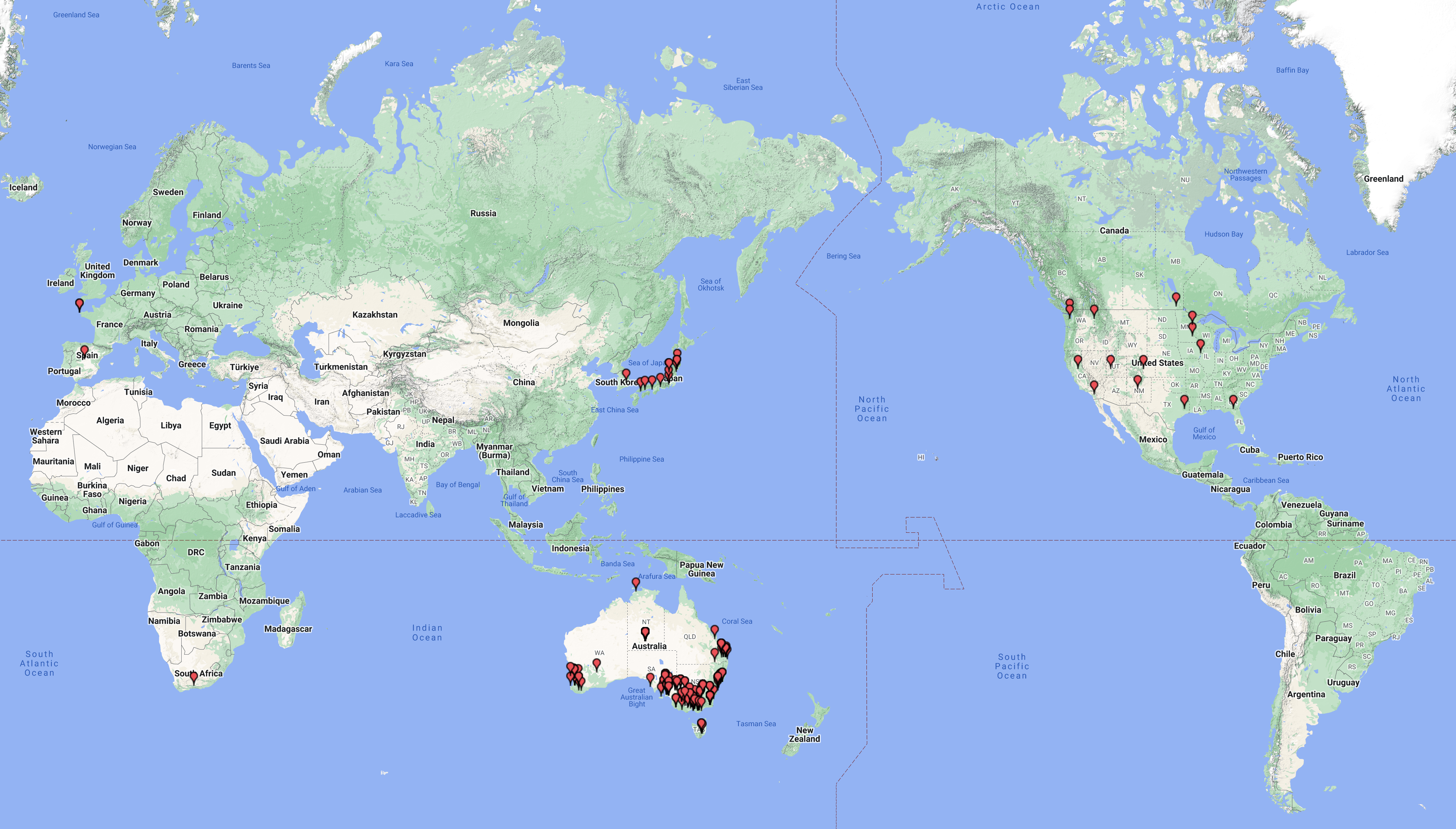
A total of 256 QSOs were made on the 80m band.
A total of 8 countries were worked on the 80m band:-
Australia
Canada
France
Japan
Republic of Korea
South Africa
Spain
United States
The map below shows our 80m contacts.
160m band.
A total of 68 QSOs were made on the 160m band.
A total of 6 countries were worked on 160m:-
Asiatic Russia
Australia
European Russia
Japan
Ukraine
United States
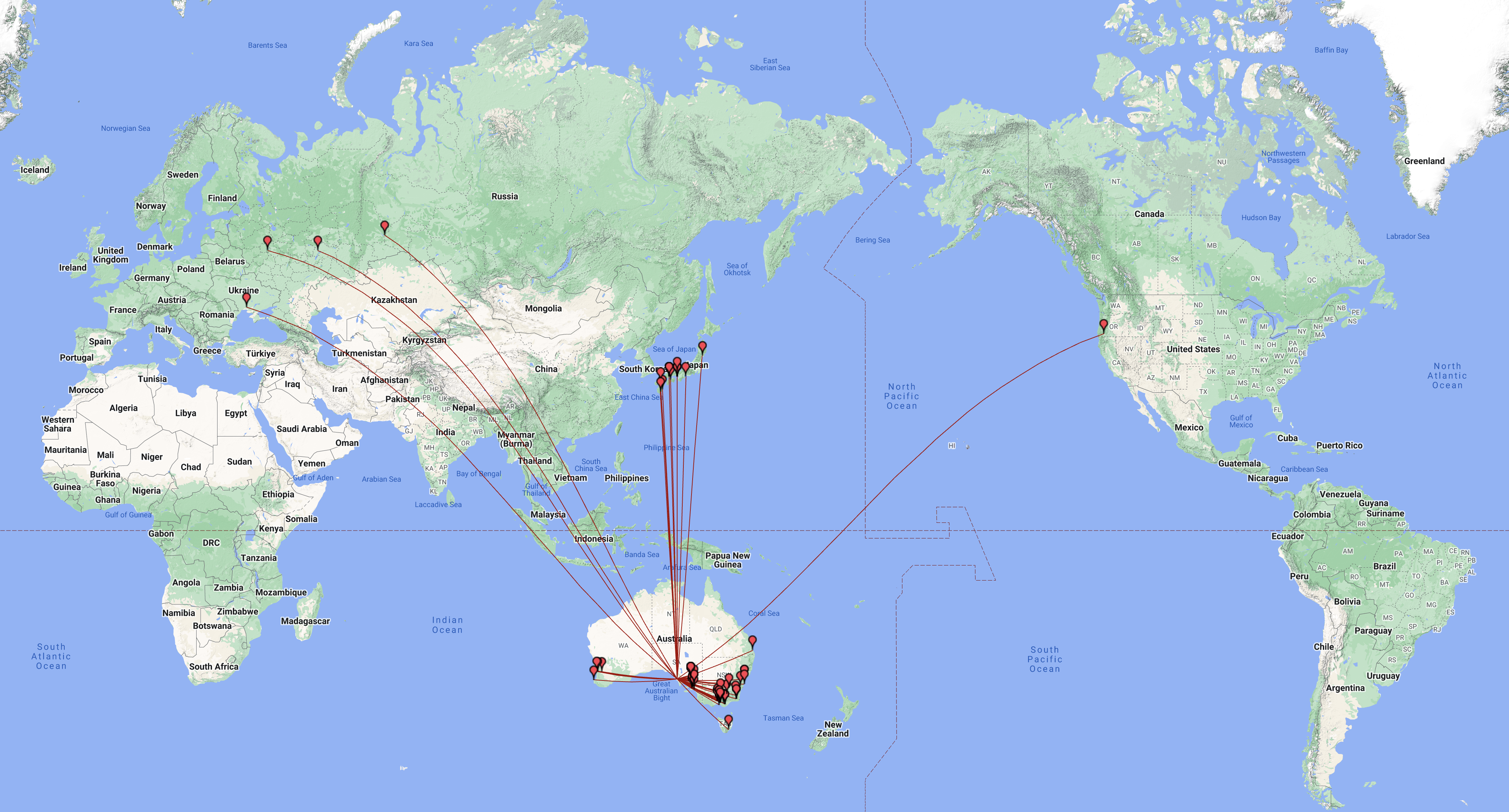
The map below shows our contacts on the 160m band.
OTHER ACTIVITIES ON THE ISLAND.
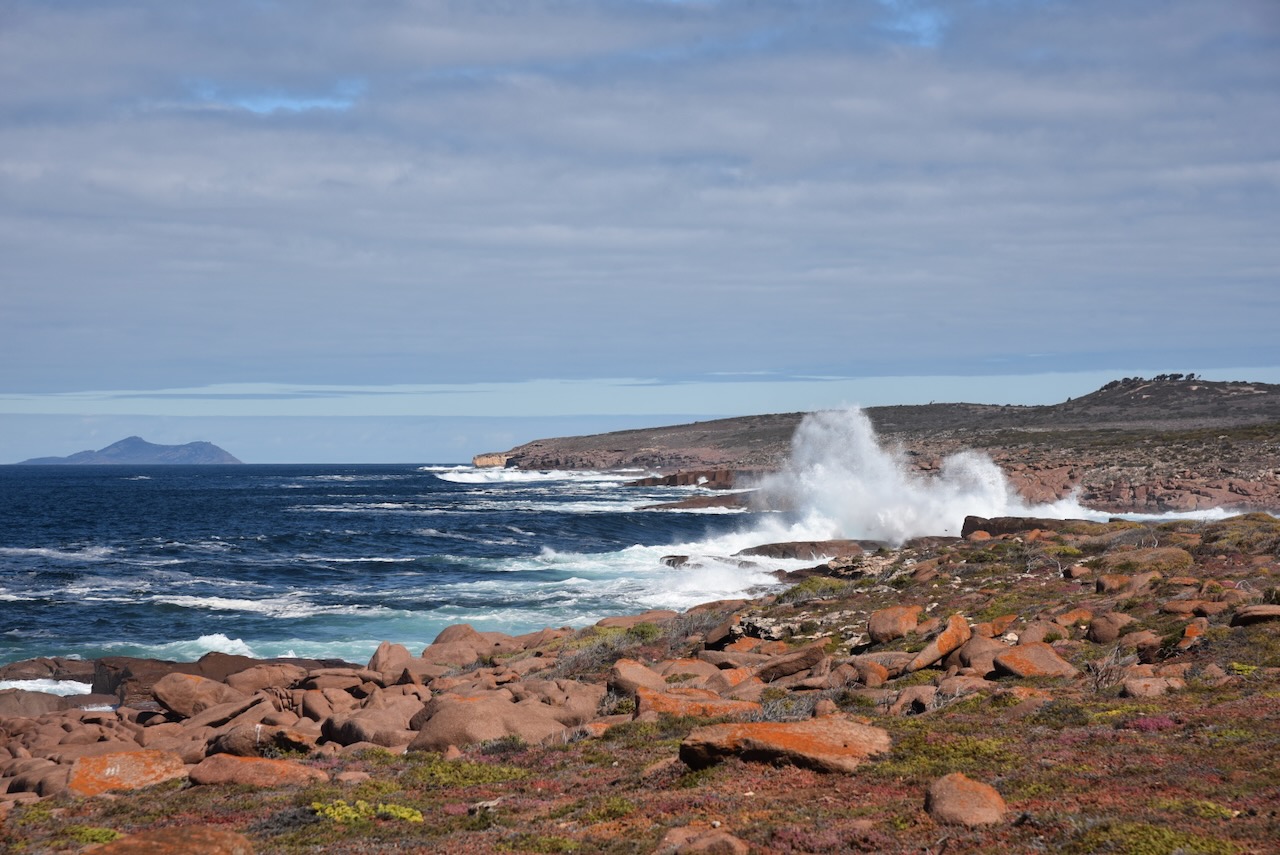
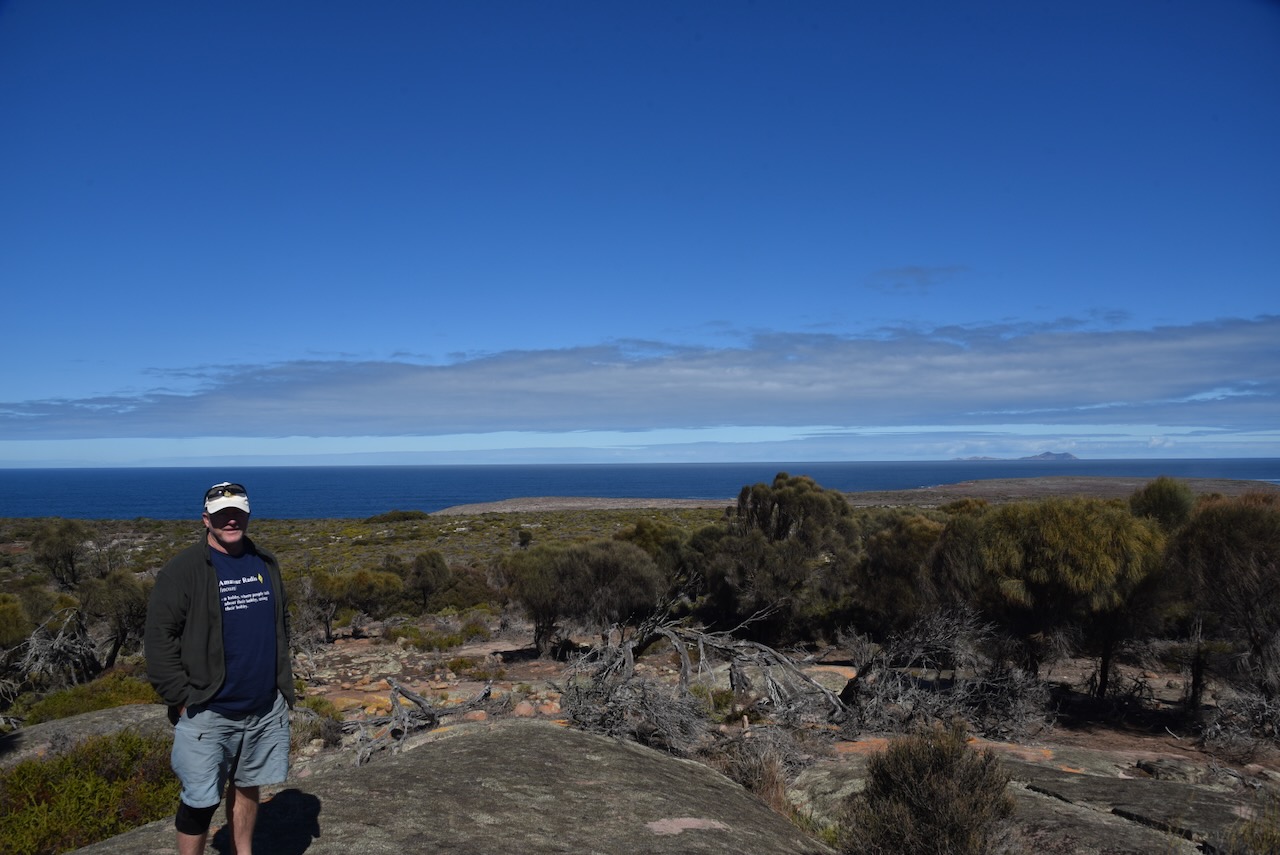
We had access to a 4WD on the island, and this gave us an opportunity of exploring this magnificent South Australian island.
Whilst we were on the island, we often headed out to activate the other two VKFF references on the island under our own callsigns.
Heritage Agreement (No. HA100) VKFF-4307
Investigator Marine Park VKFF-1717
Flinders Island contains a Heritage Agreement (No. HA1003) which is a strip of land along the north coast of the island extending west from the island’s most northerly headland, Point Malcolm. The Heritage Agreement is 279 hectares (690 acres) in size and was gazetted on the 29th day of August 1995.
Since 2012, the waters adjoining Flinders Island have been part of the Investigator Marine Park.
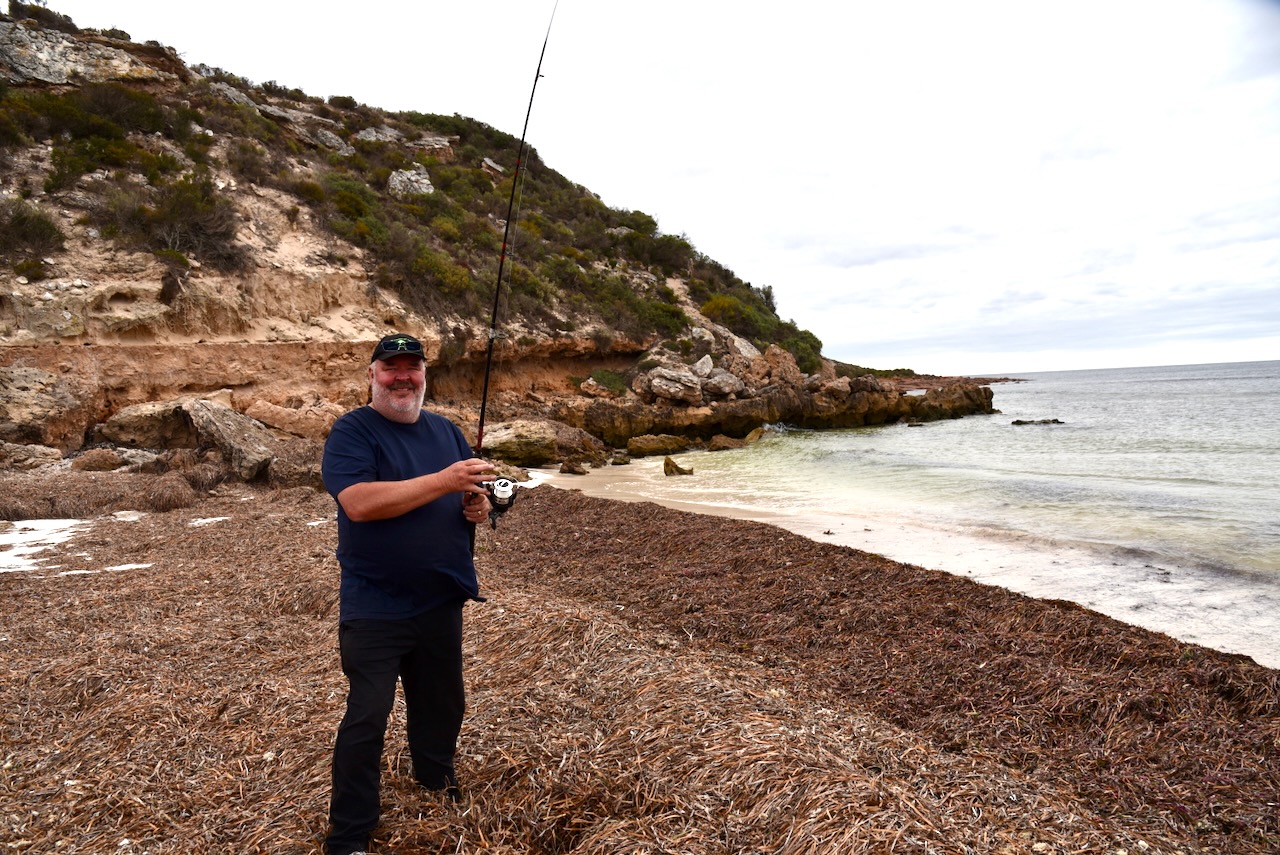
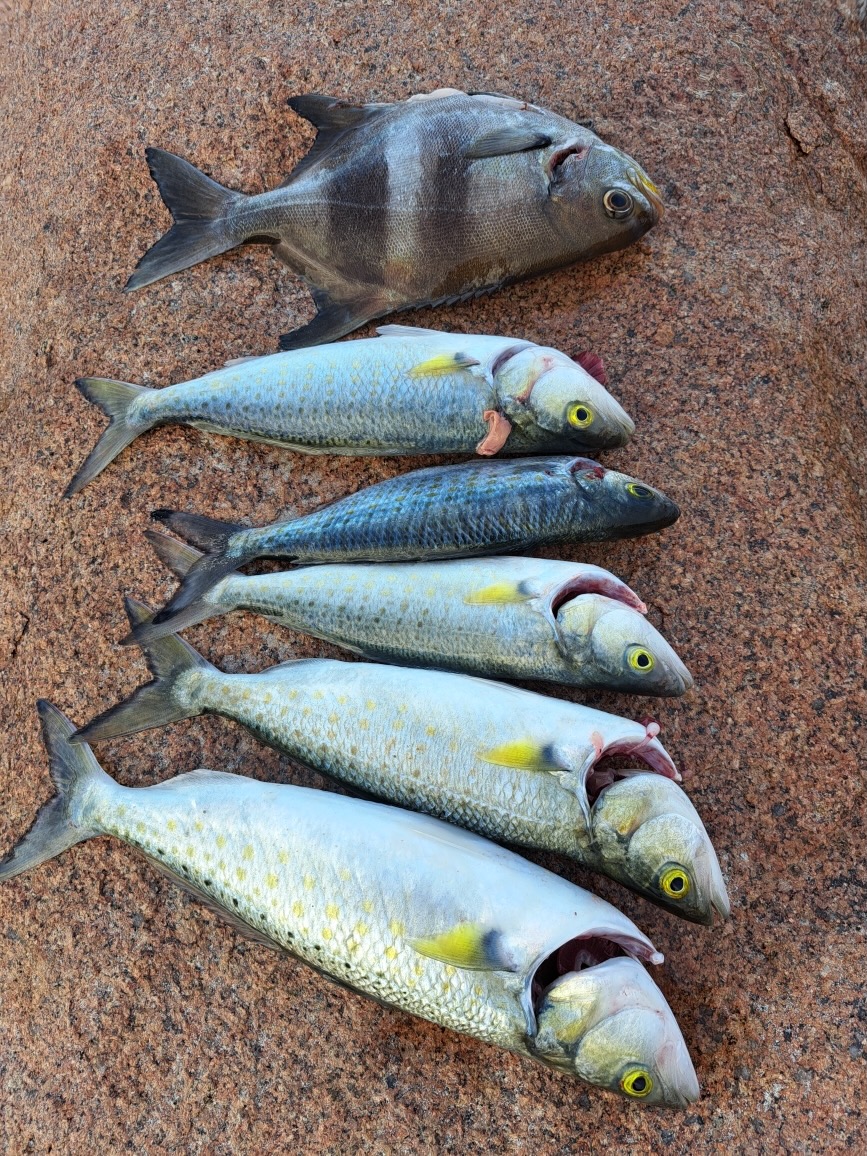
On Saturday afternoon I went fishing with Peter and Nong.
OUR FINAL NIGHT.
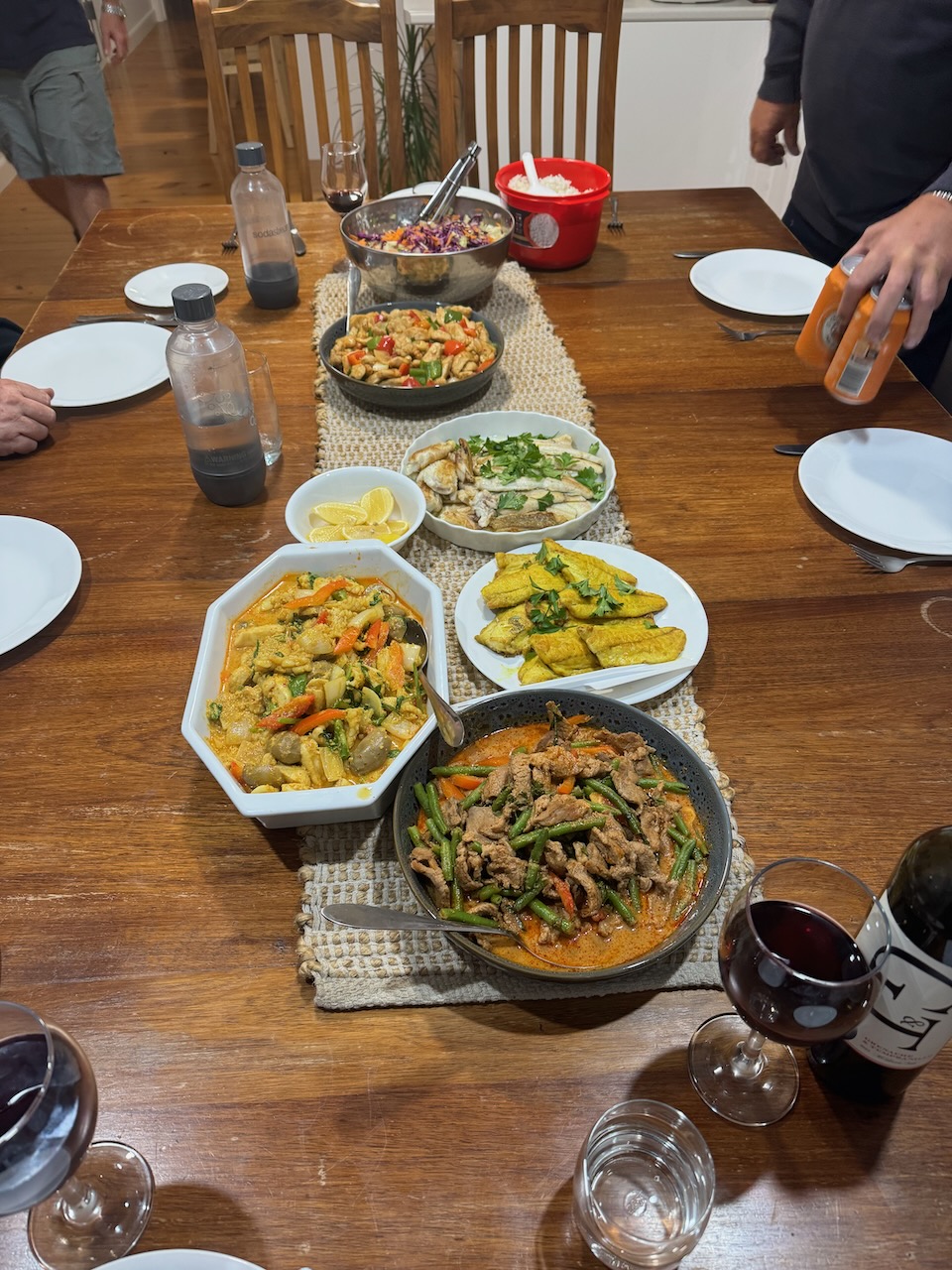
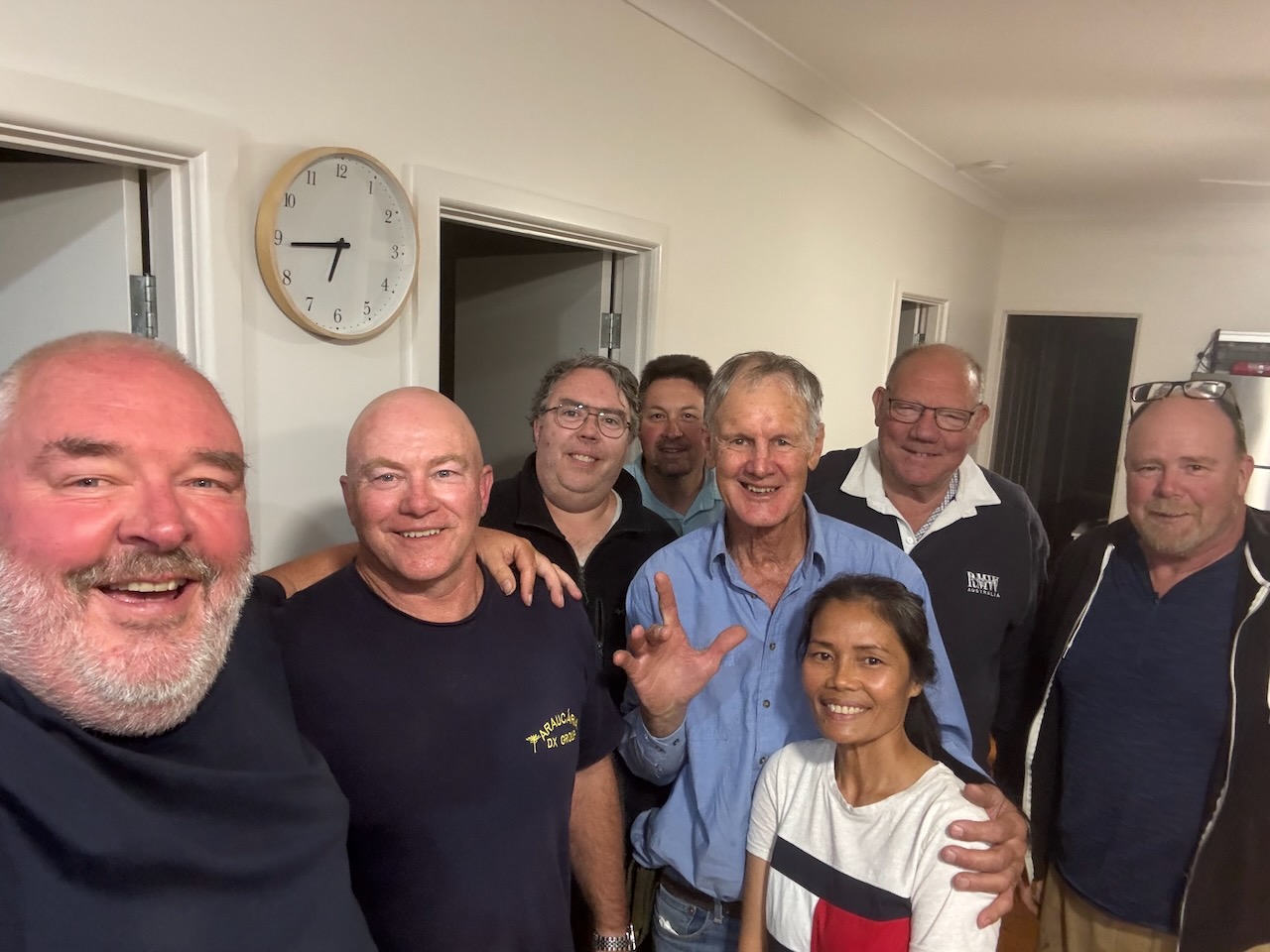
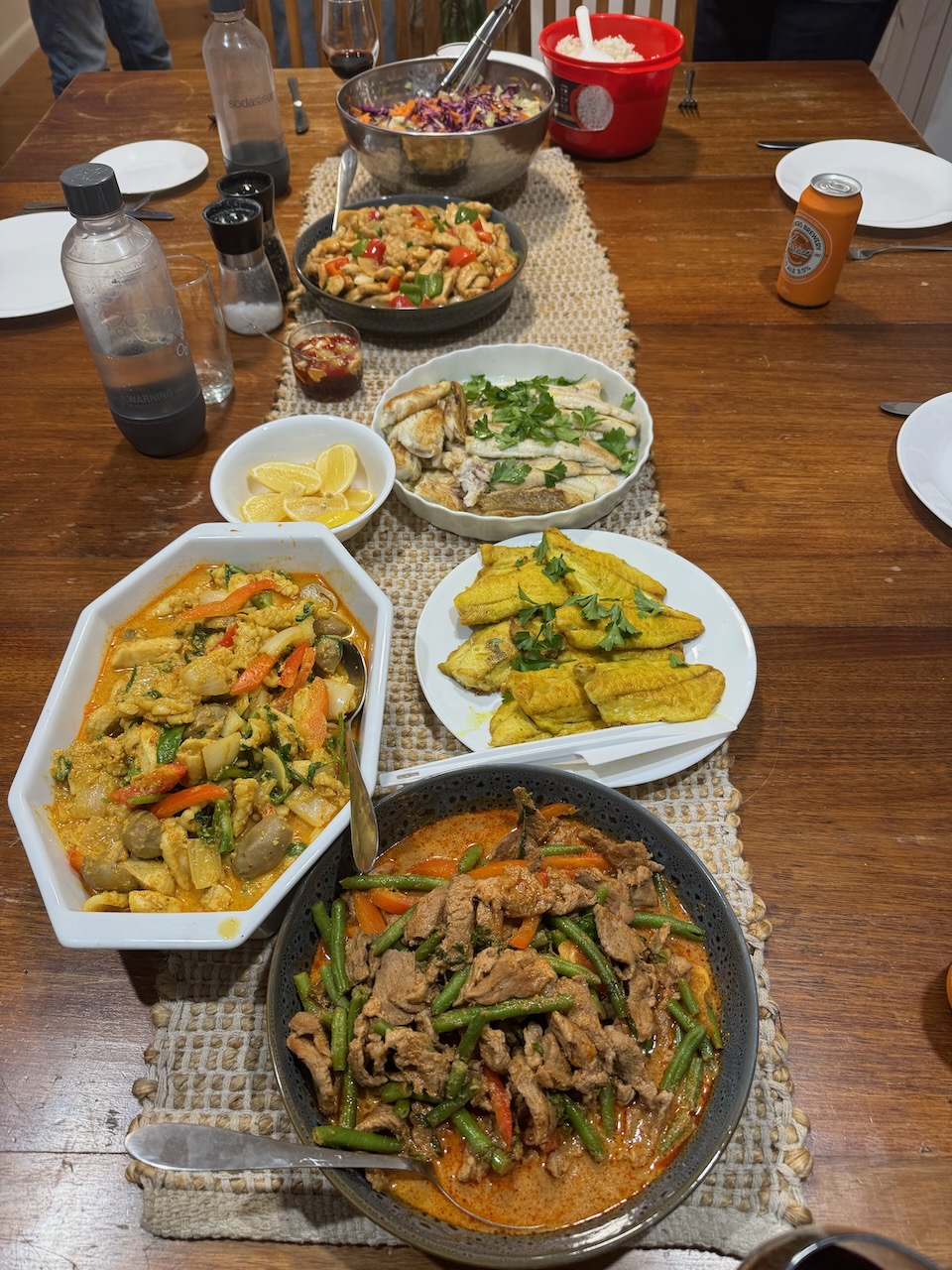
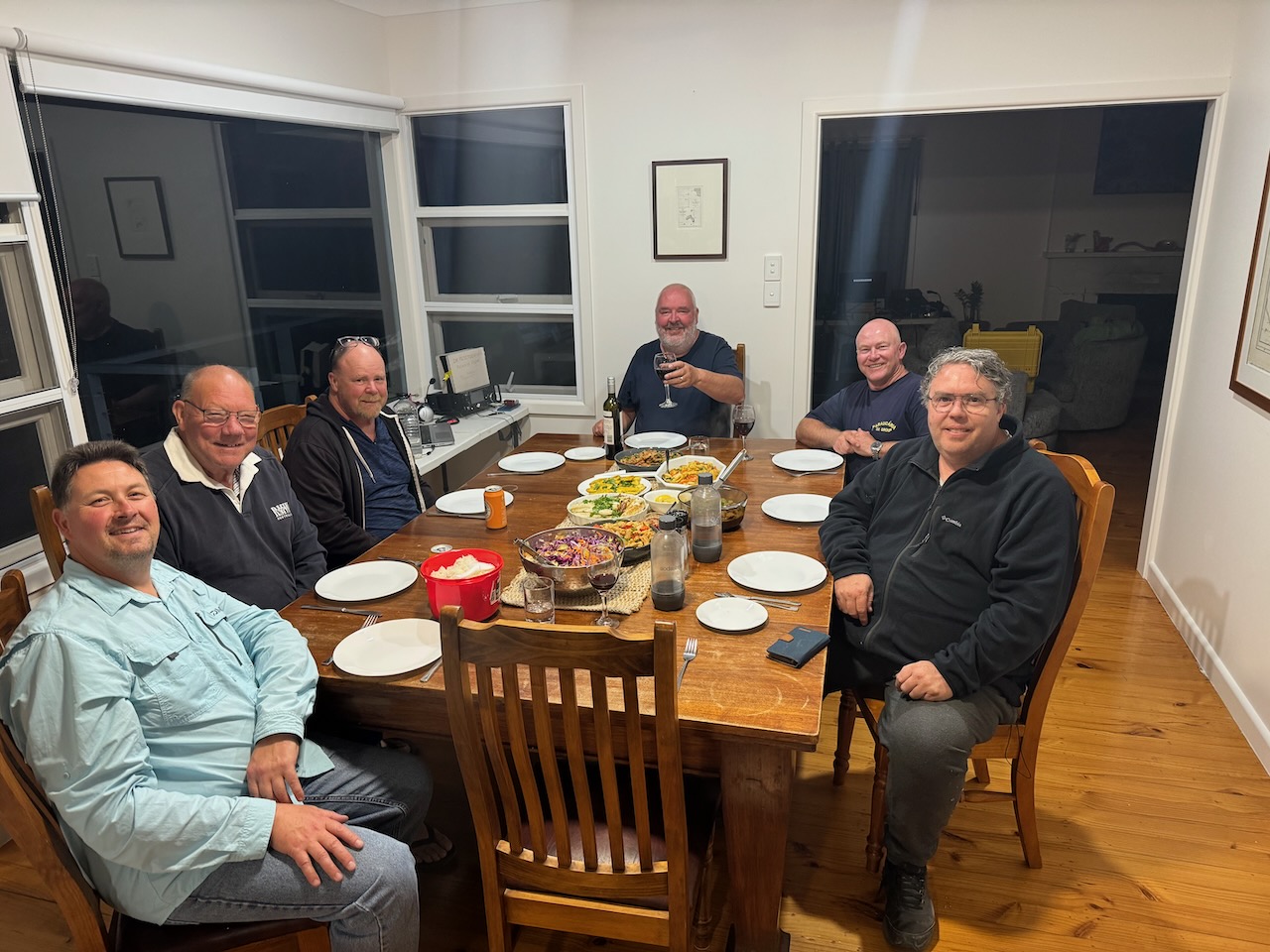
On our final night on the island, we were joined by Peter and Nong. Nong cooked us up a Thai banquet. It was without a doubt the best Thai food I have ever had.
HEADING HOME TO THE MAINLAND.
On Saturday afternoon we packed up the majority of our gear ready for the barge to arrive on Sunday morning. We kept a basic station on air and continued to make some contacts.
On Sunday morning Jonas arrived with the barge and we loaded up all of our gear and headed back to Elliston on the mainland. It had been a fantastic 7 nights on Flinders Island.
Thank you to:-
Grant VK5GR for organising the trip and inviting me along
to the rest of the team – a great bunch of blokes
to everyone who called us – we hope we gave you a new IOTA & VKFF reference.
to Jonas, Peter & Nong – brilliant hosts
Most of the team headed back to Adelaide that day. I stayed on the Eyre Peninsula for a further 5 nights activating parks, summits & silos.
WANT A QSL CARD?
QSLs will be handled by Charles M0OXO via his OQRS service.
1845 ‘SHIPPING INTELLIGENCE.’, South Australian Register (Adelaide, SA : 1839 – 1900), 18 June, p. 2. , viewed 17 Jan 2024, <http://nla.gov.au/nla.news-article73843014>
Heritage South Australia, 2019, shipwreckfriday, Facebook, viewed 16th January 2024.
Kostoglou, P; McCarthy, J, 1991, Whaling and sealing sites in South Australia (First ed.). Fremantle, WA: Australian Institute for Maritime Archaeology. pp. 51–6.
Robinson, T, Canty, P, Mooney, T, Rudduck, P, 1996, South Australia’s Offshore Islands, Commonwealth of Australia and Department of Environment and Natural Resources, South Australia, 1996.
Trove. (n.d.). A PASTORAL PIONEER. – ANTON SCHLINK. – West Coast Sentinel (Streaky Bay, SA : 1912 – 1954) – 22 Jul 1927. [online] Available at: https://trove.nla.gov.au/newspaper/article/168245394 [Accessed 7 May 2024].
Trove. (2014). Mr. John Bascombe Keen on Flying. – From Elliston to City in Four Hours. – Port Lincoln Times (SA : 1927 – 1986; 1992 – 2002) – 6 Sep 1929. [online] Available at: https://trove.nla.gov.au/newspaper/article/96597948? [Accessed 7 May 2024].
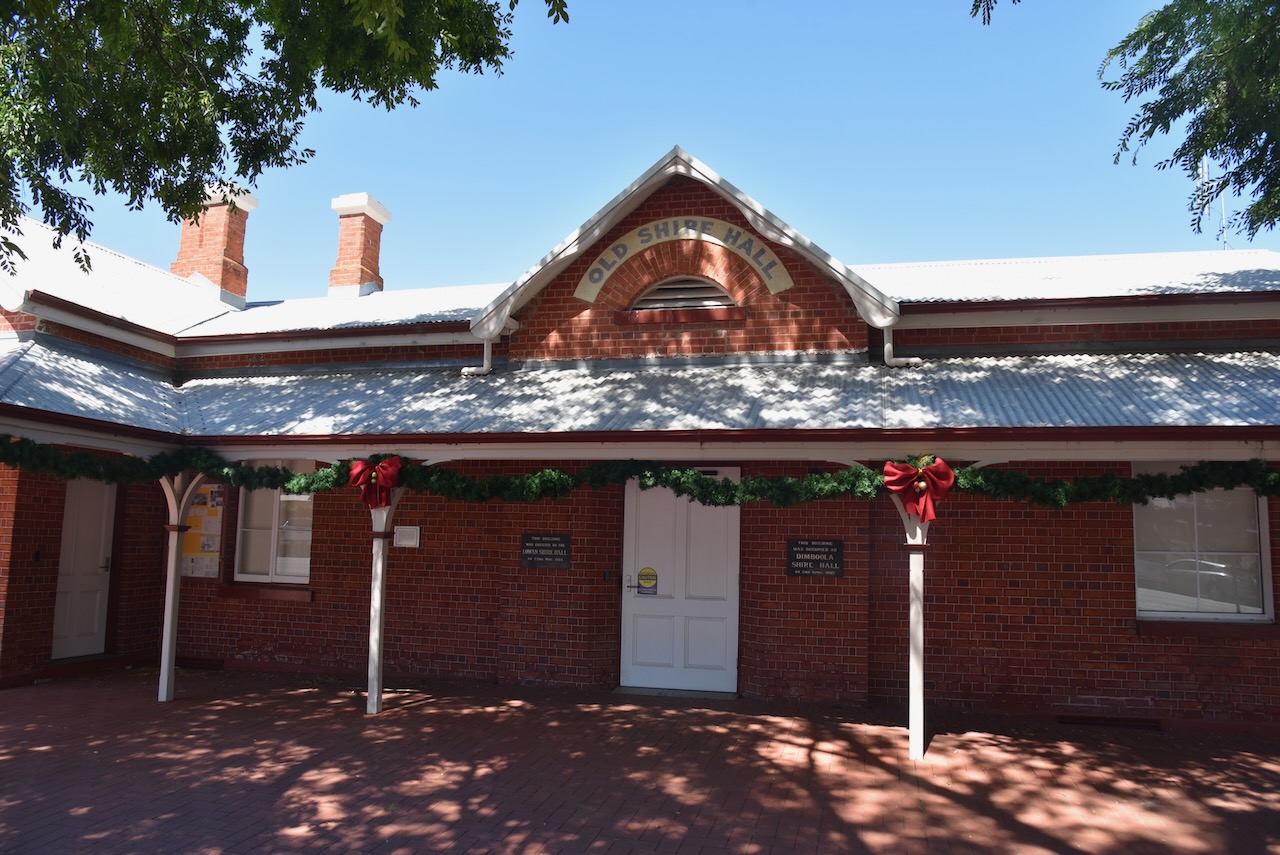
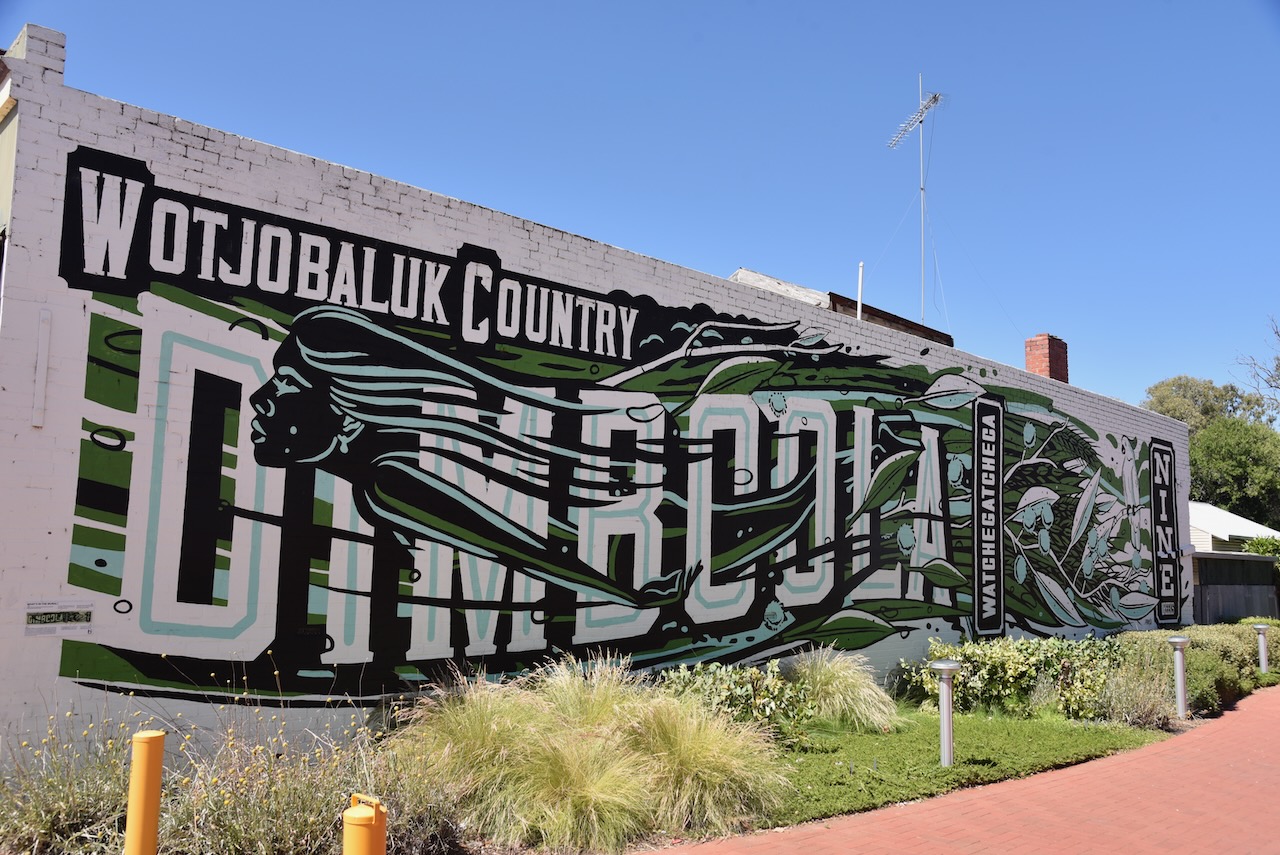
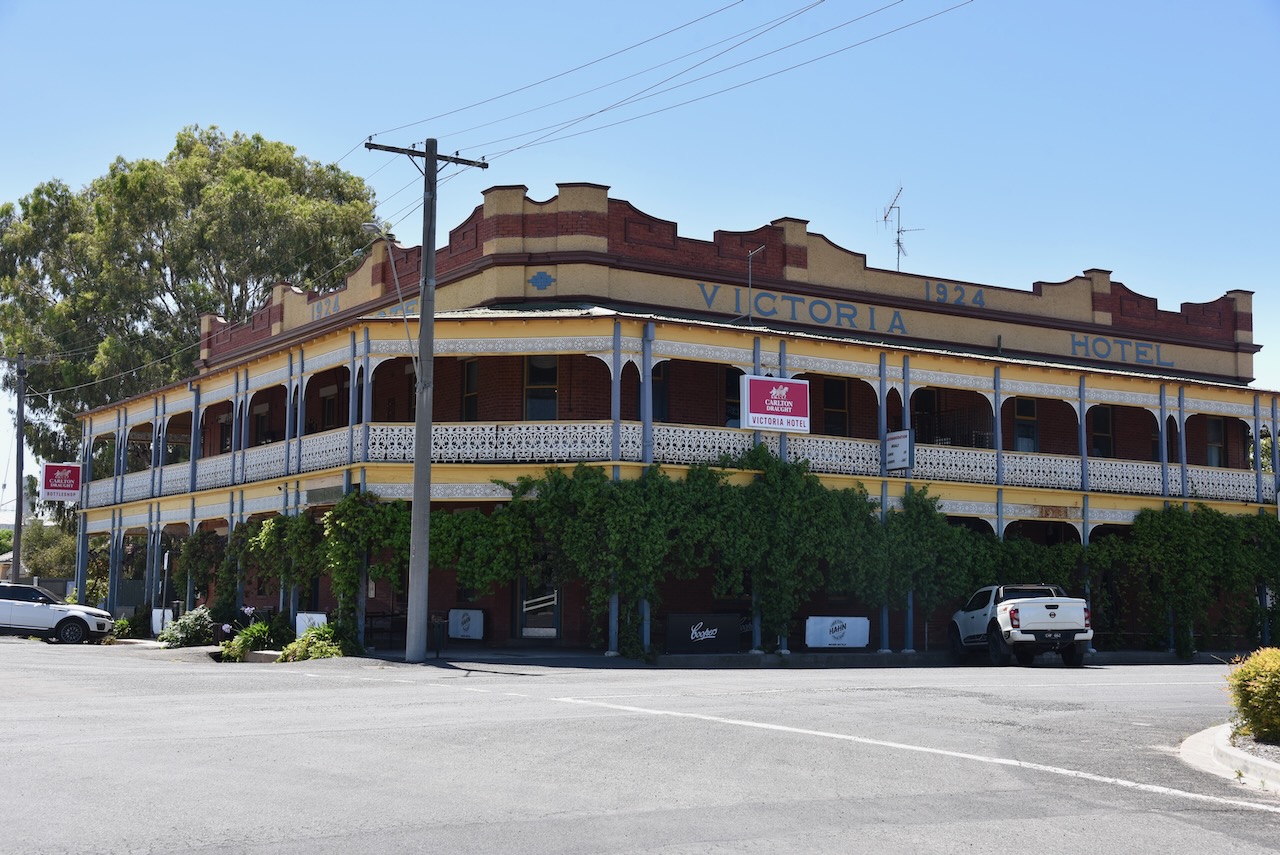
Our final activation for Sunday 3rd December 2023 was the Dimboola North silo VK-DMH3. Dimboola is about 335 km northwest of the city of Melbourne.
Above:- Map showing the location of Dimboola. Map c/o Google Maps.
The first European settlement in the Dimboola district was the Upper Regions pastoral run taken up by William Patterson in 1859. This was followed by other runs along the Wimmera River and to beyond Lake Hindmarsh. The Moravian Ebenezer Mission at Lake Hindmarsh was established in 1859. It was one of seven aboriginal reserves in the colony of Victoria by 1863. An itinerant hawker set up a general store in 185 at Nine Creeks, the original name of Dimboola. In 1863 the Nine Creeks Post Office was opened. In that same year, the township of Dimboola was surveyed. It is believed the name comes from Dimbula in Ceylon where the surveyor had previously resided. (Blake 1978) (Victorian Places 2024)
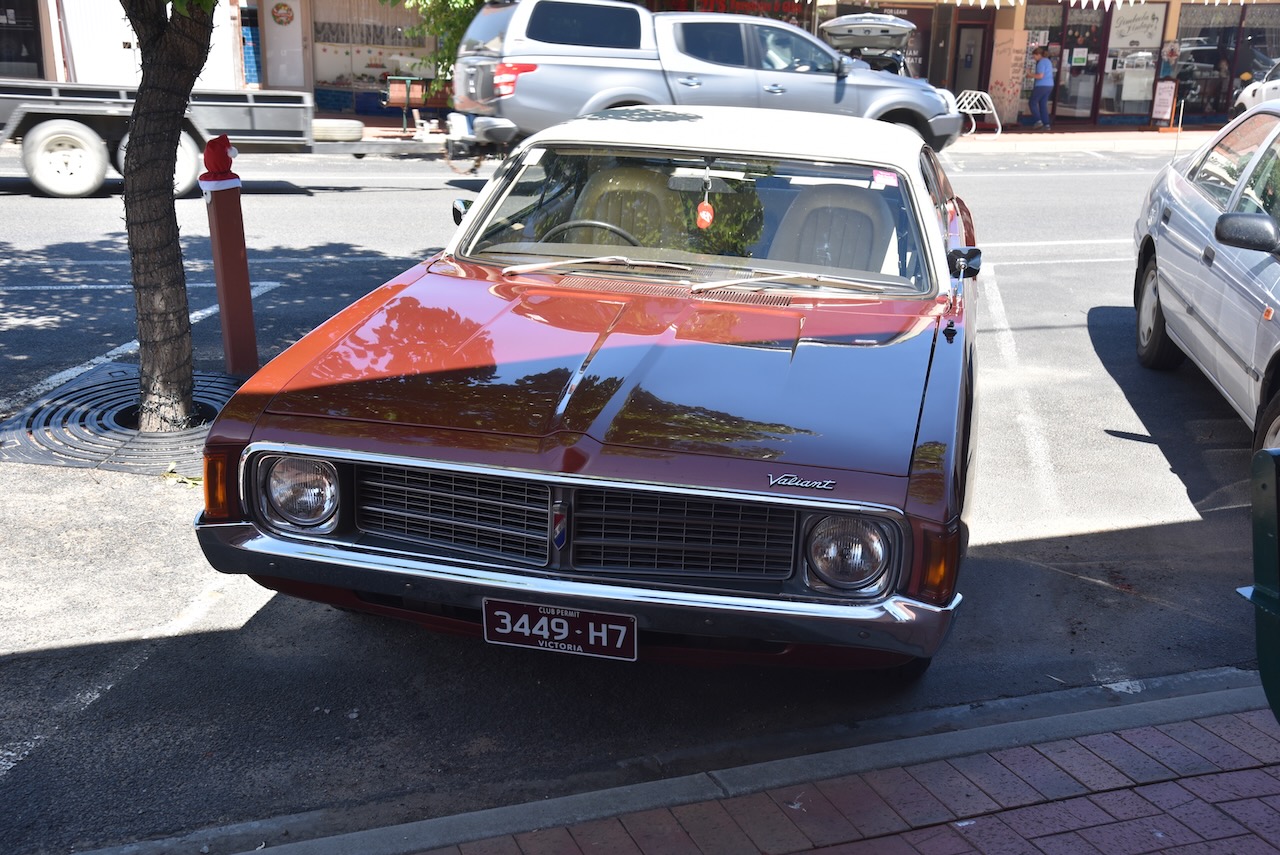
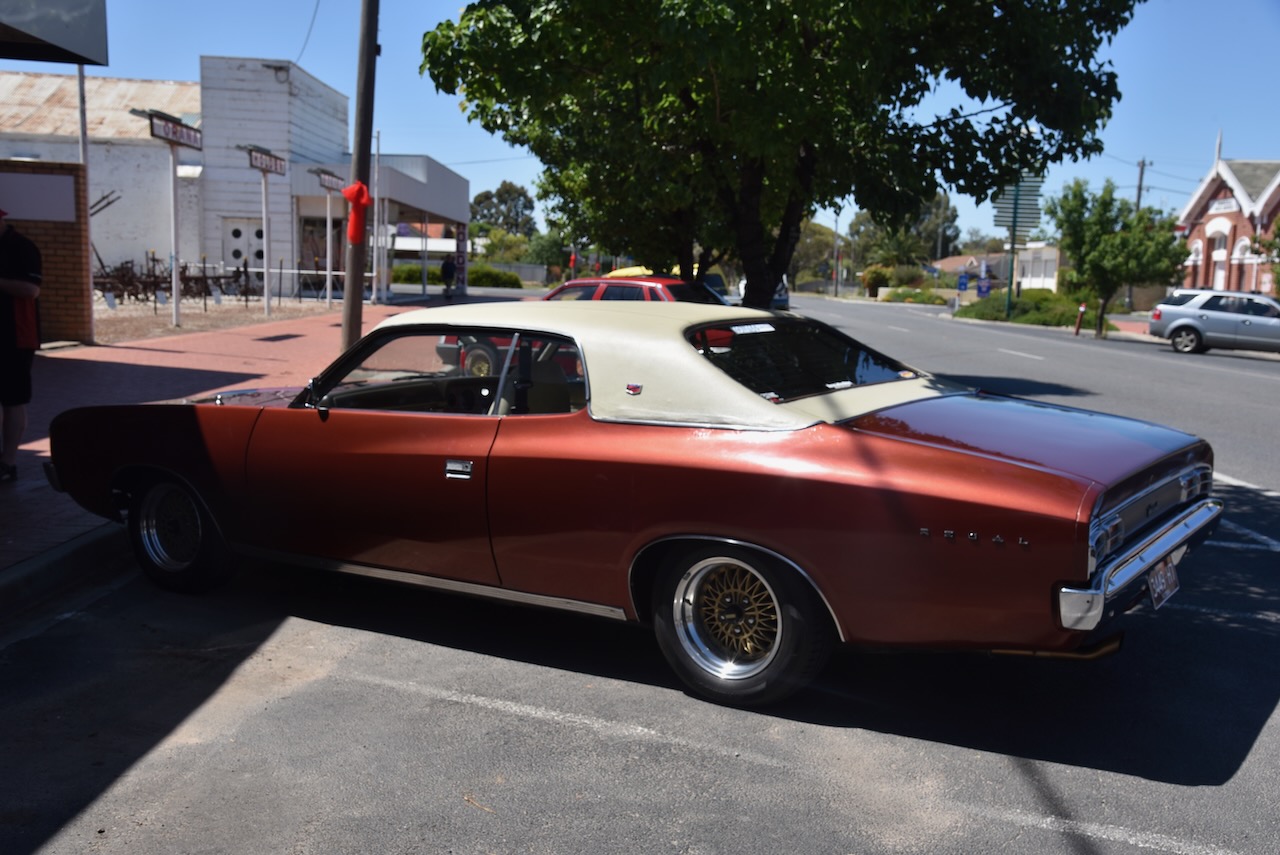
We stopped for a coffee and a bite to eat at DImboola. Being the owner of a 1972 Chrysler VH Ranger, my attention was drawn to the very beautiful Valiant below which was parked in the main street of Dimboola.
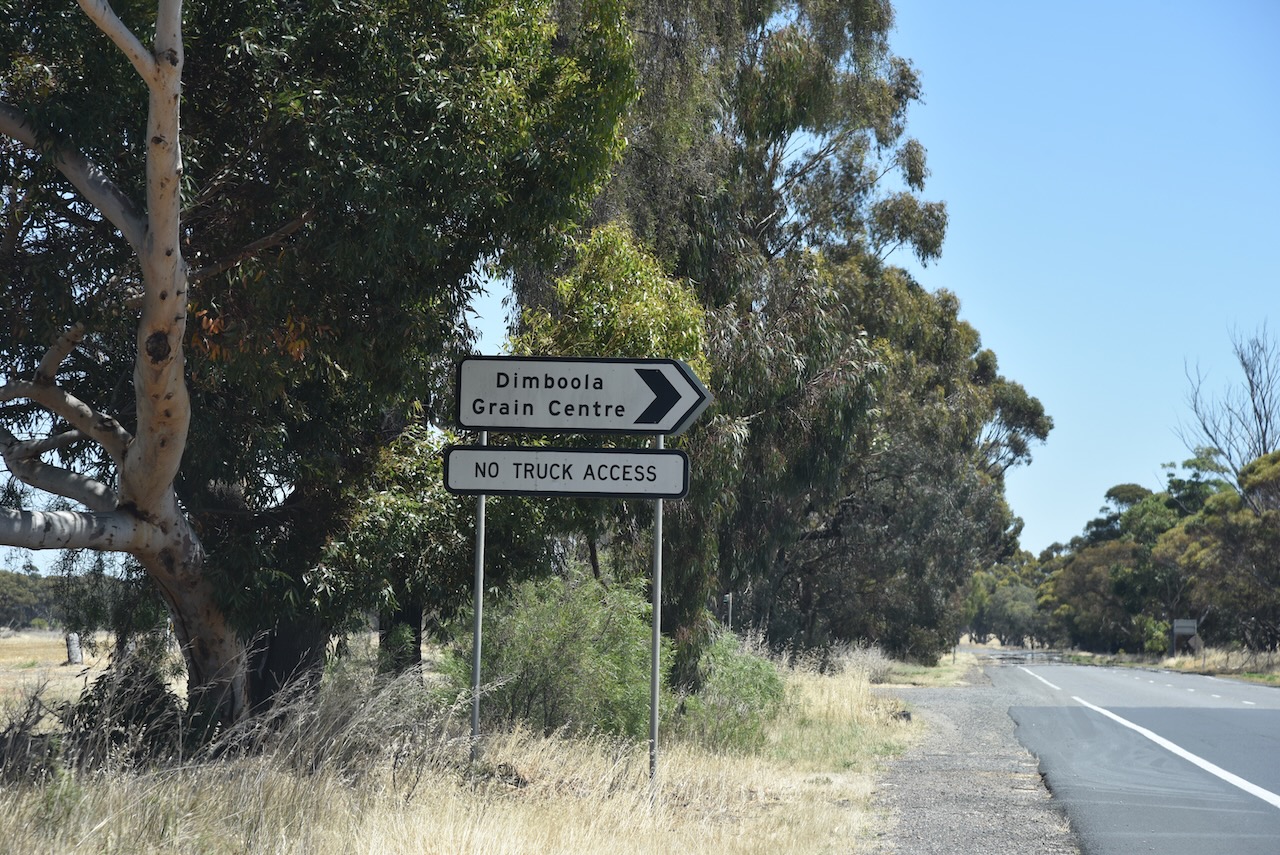
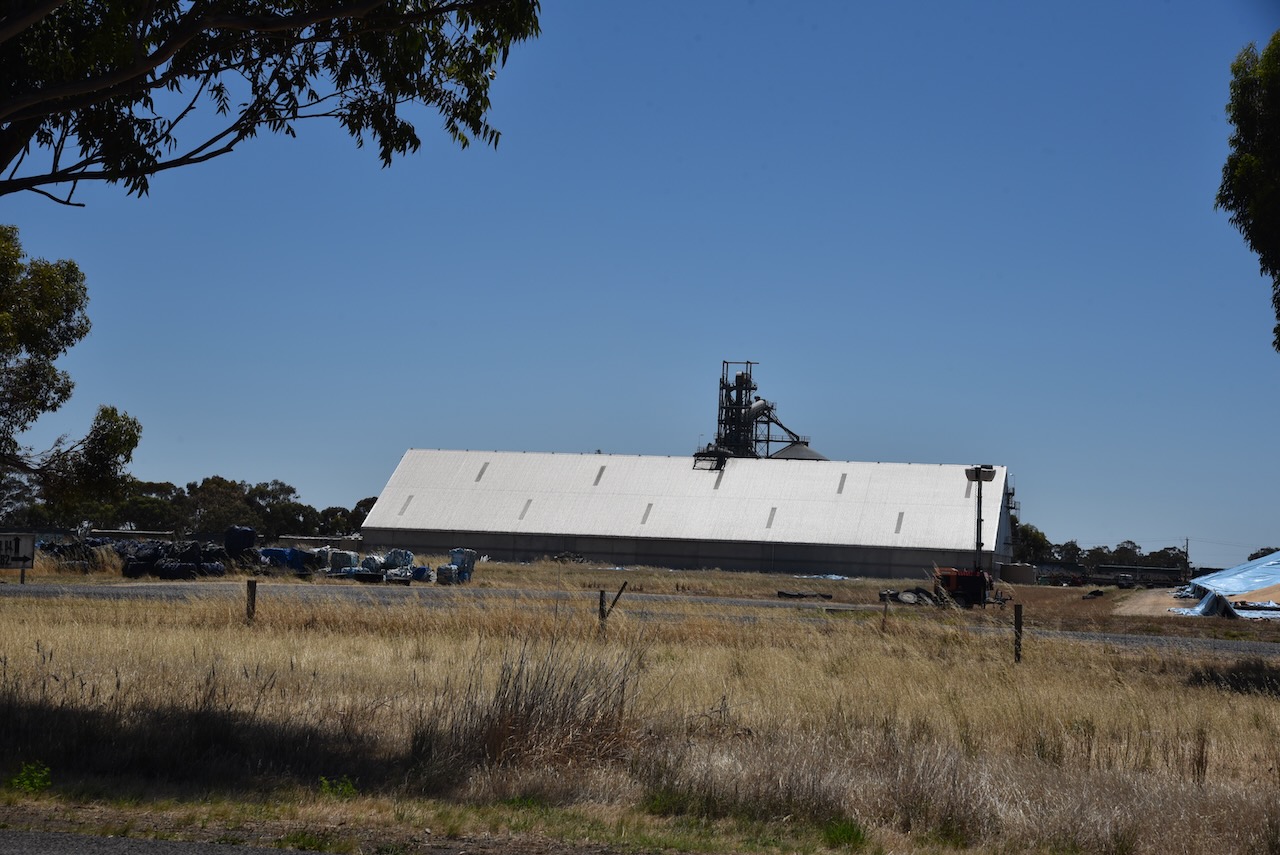
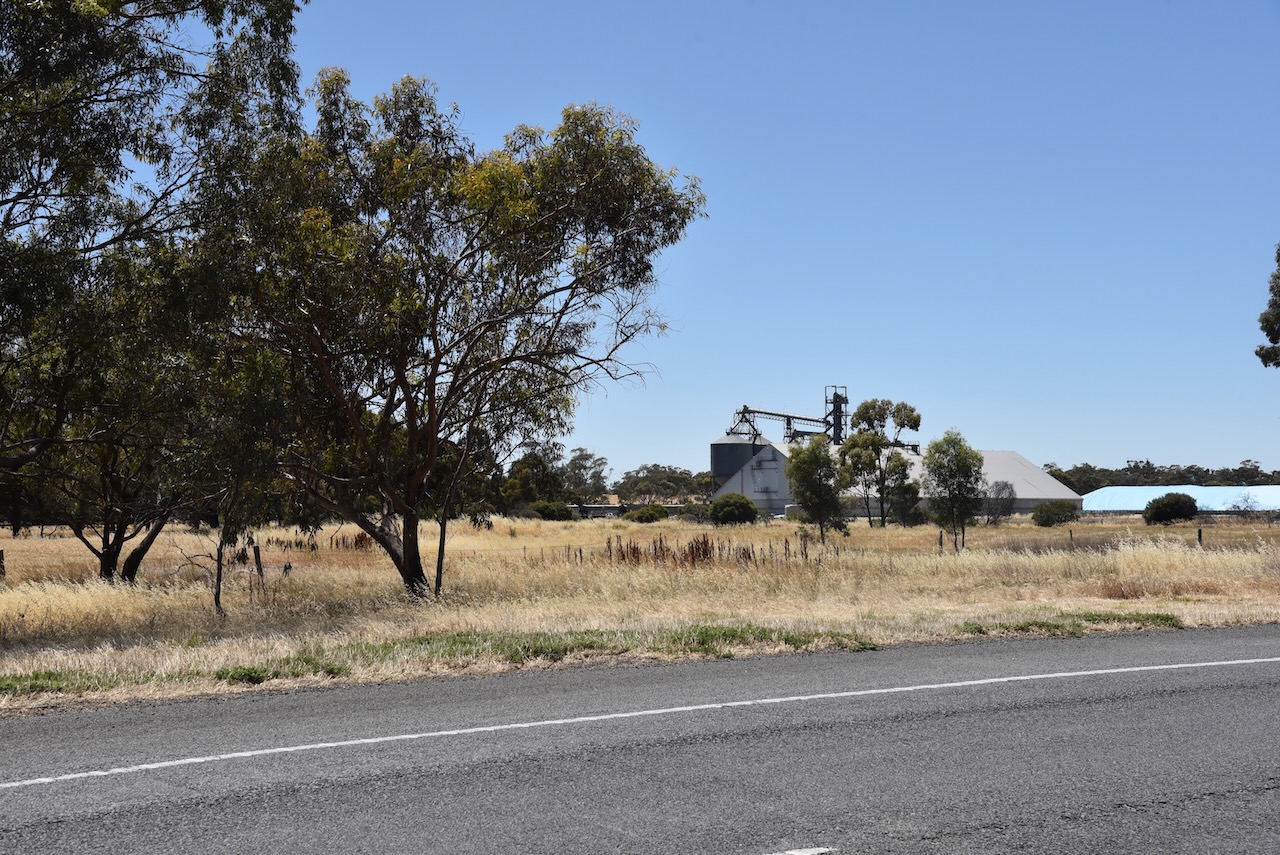
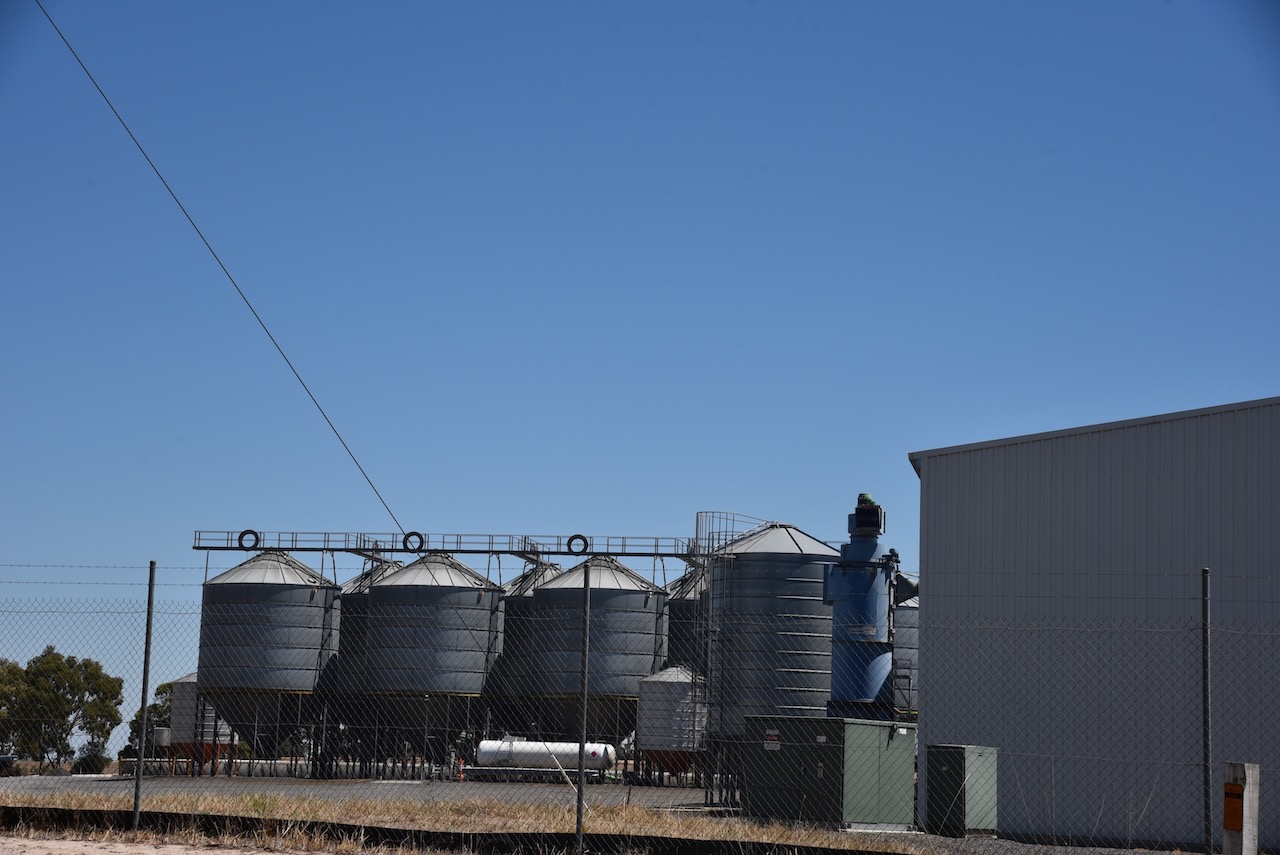
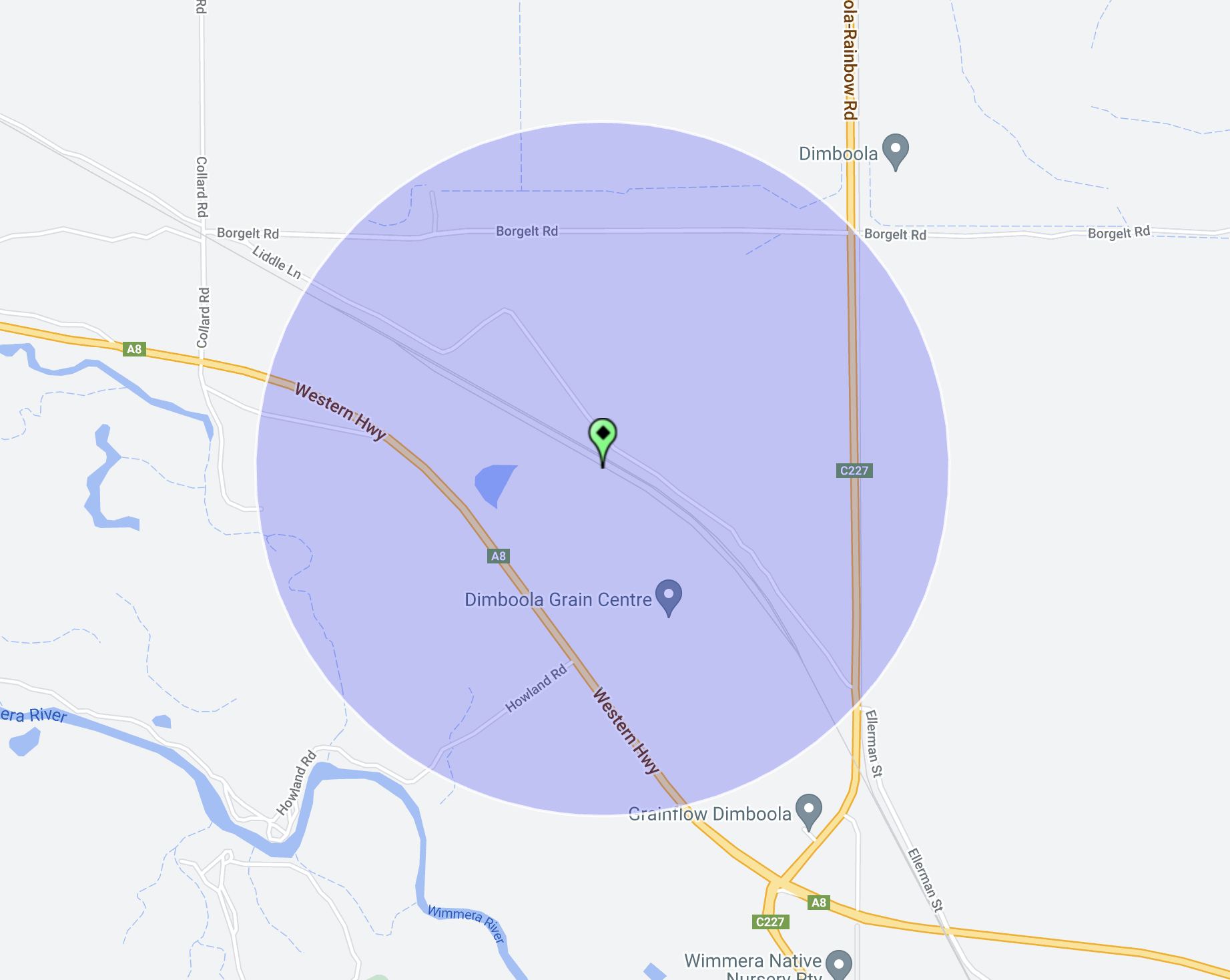
The Dimboola North silo is located on the northern side of the Western Highway.
Marija and I parked in the Dimboola-Rainbow Road and operated from the 4WD. We ran the Icom IC-7000, 100 watts and the Codan 9350 antenna with the 1.5 metre stainless steel whip.
Above:- The activation zone at the Dimboola North silo. Image c/o SiOTA website.
Marija worked the following stations on 40m SSB:-
VK5AAF/p (Sweetwater Creek Nature Conservation Reserve VKFF-2200)
VK3GJG/p (Murrindindi River Natural Features & Scenic Reserve VKFF-3807)
VK5LA
VK5KAW
I worked the following stations on 40m SSB:-
VK5AAF/p (Sweetwater Creek Nature Conservation Reserve VKFF-2200)
VK3GJG/p (Murrindindi River Natural Features & Scenic Reserve VKFF-3807)
VK5LA
VK5KAW
VK3UCD
VK3PF
VK3CEO
VK3MAB
VK5FANA
VK3ZSC
VK3APT
VK3VIN
VK7EE
I worked the following stations on 20m SSB:-
VK2IO
VK6XN
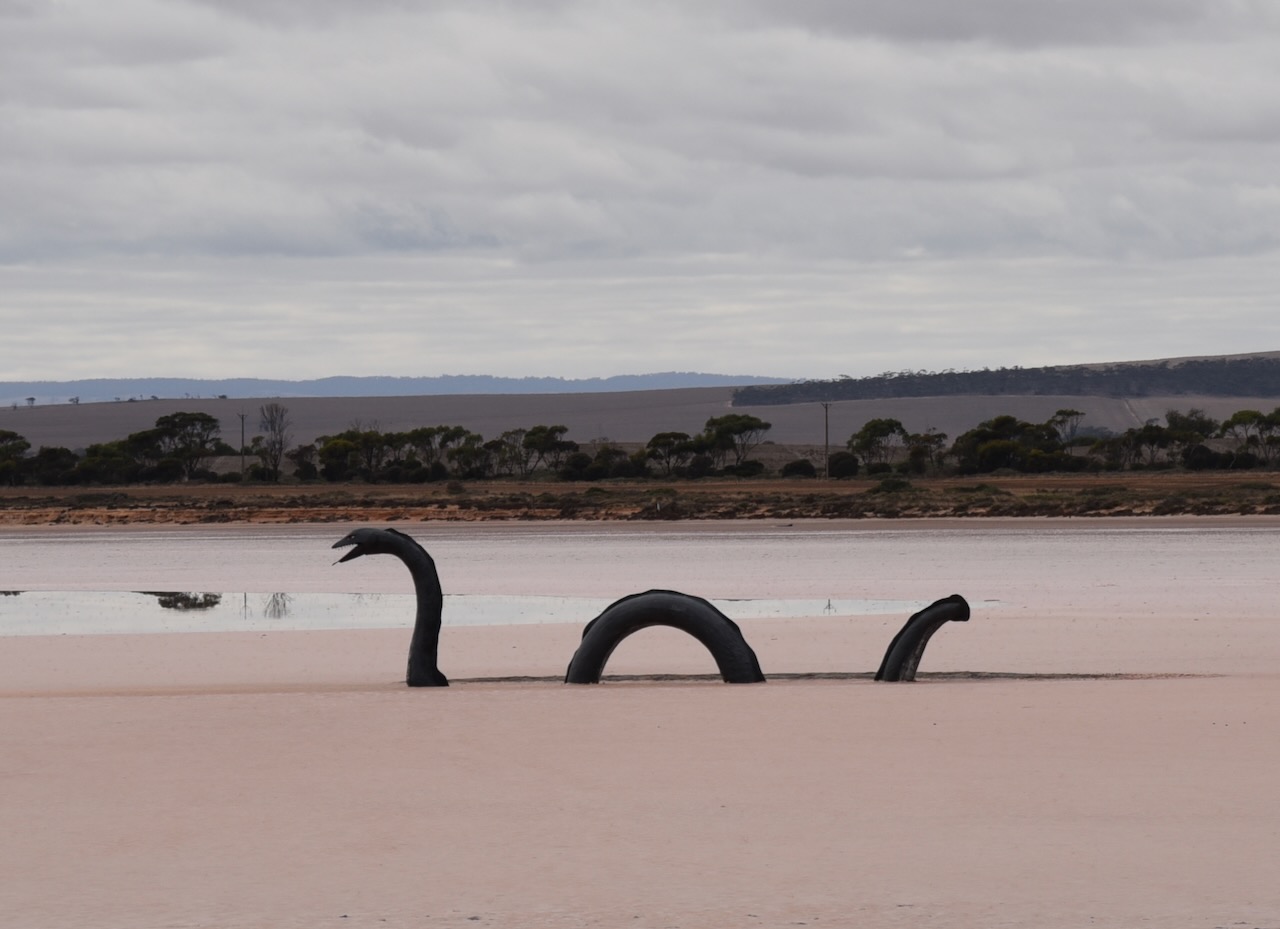
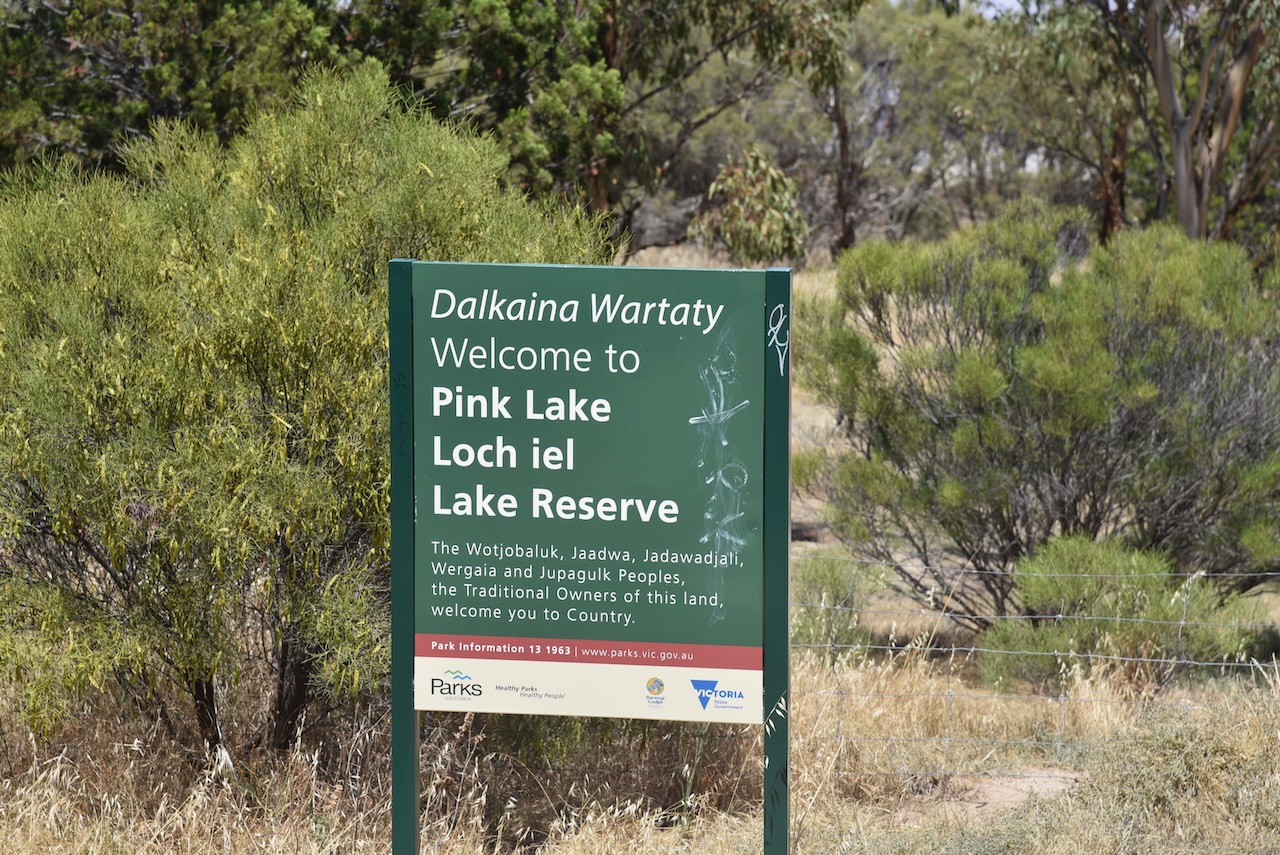
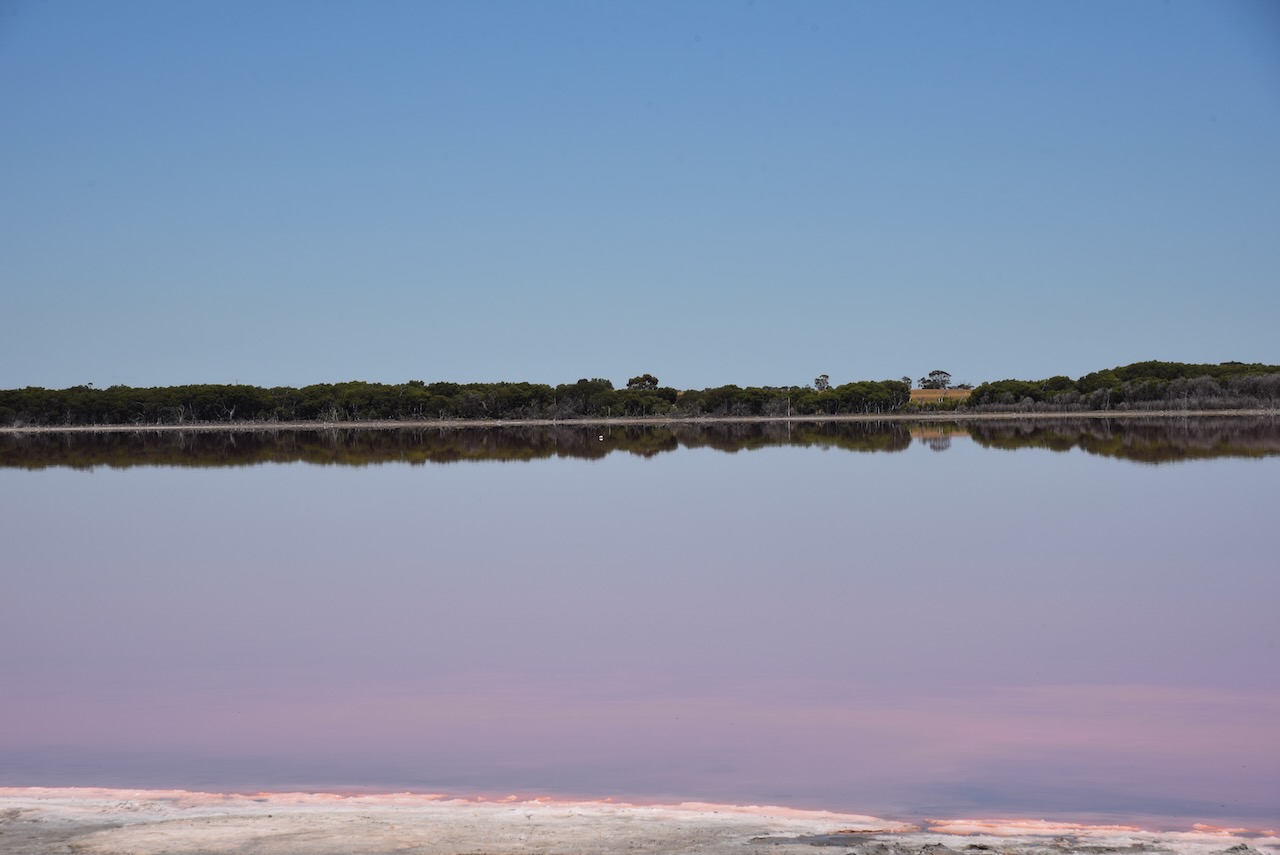
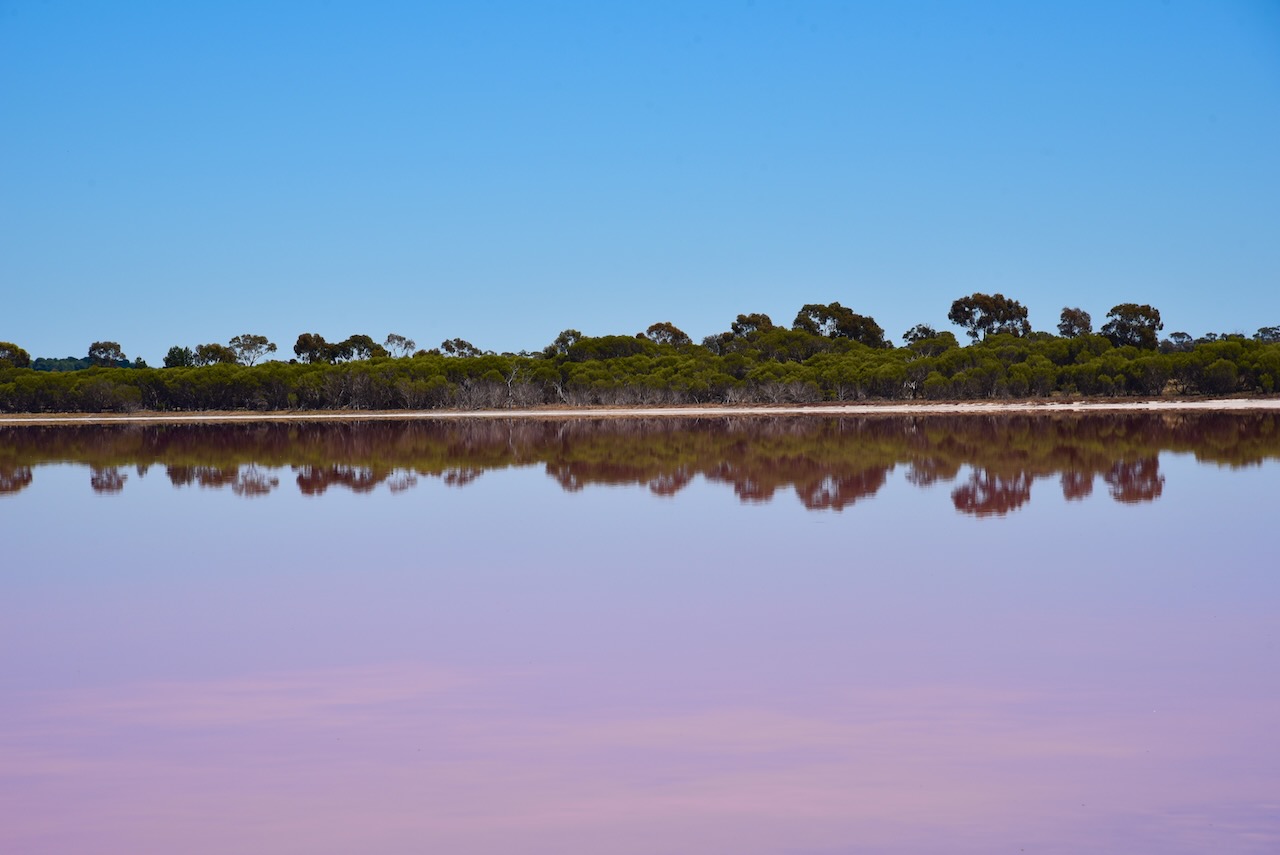
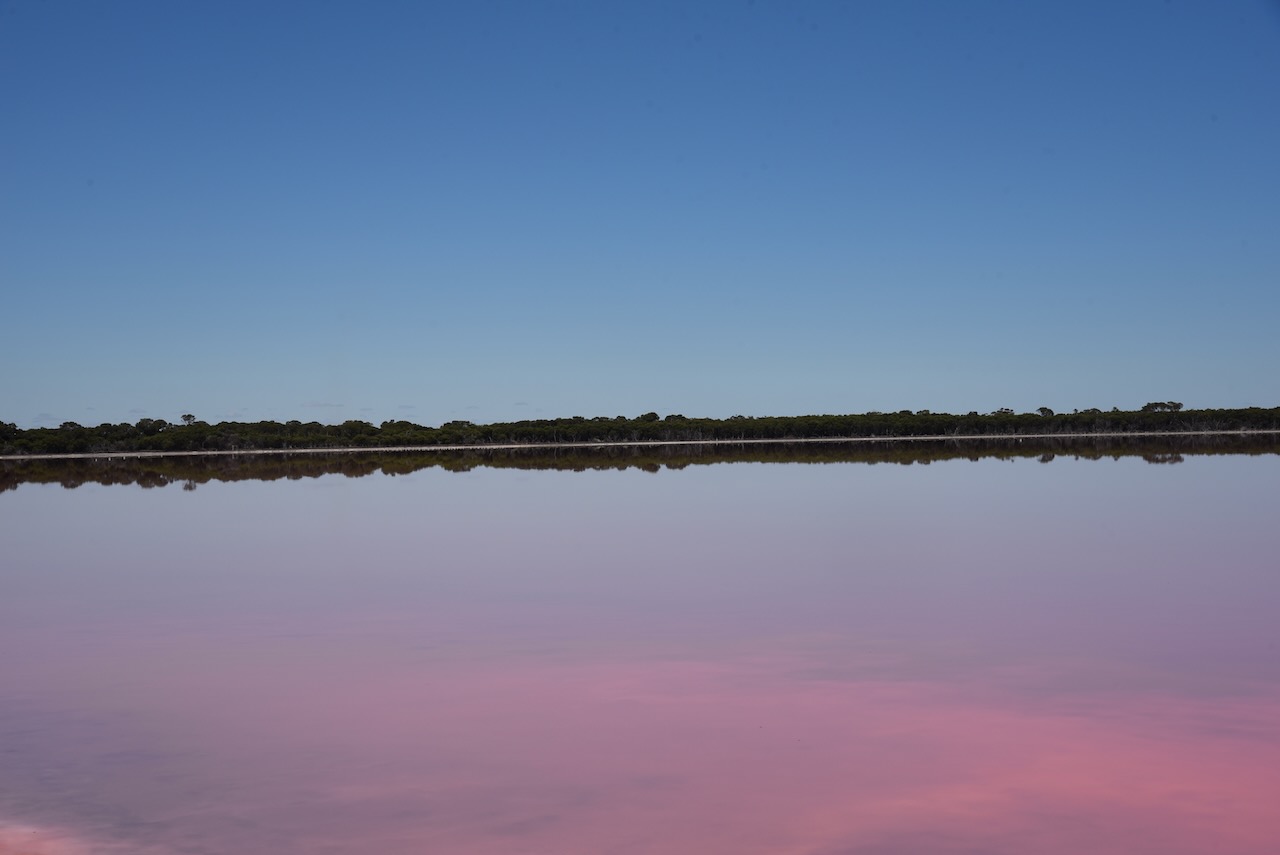
We left DImboola and stopped briefly at Pink Lakes Lochiel.
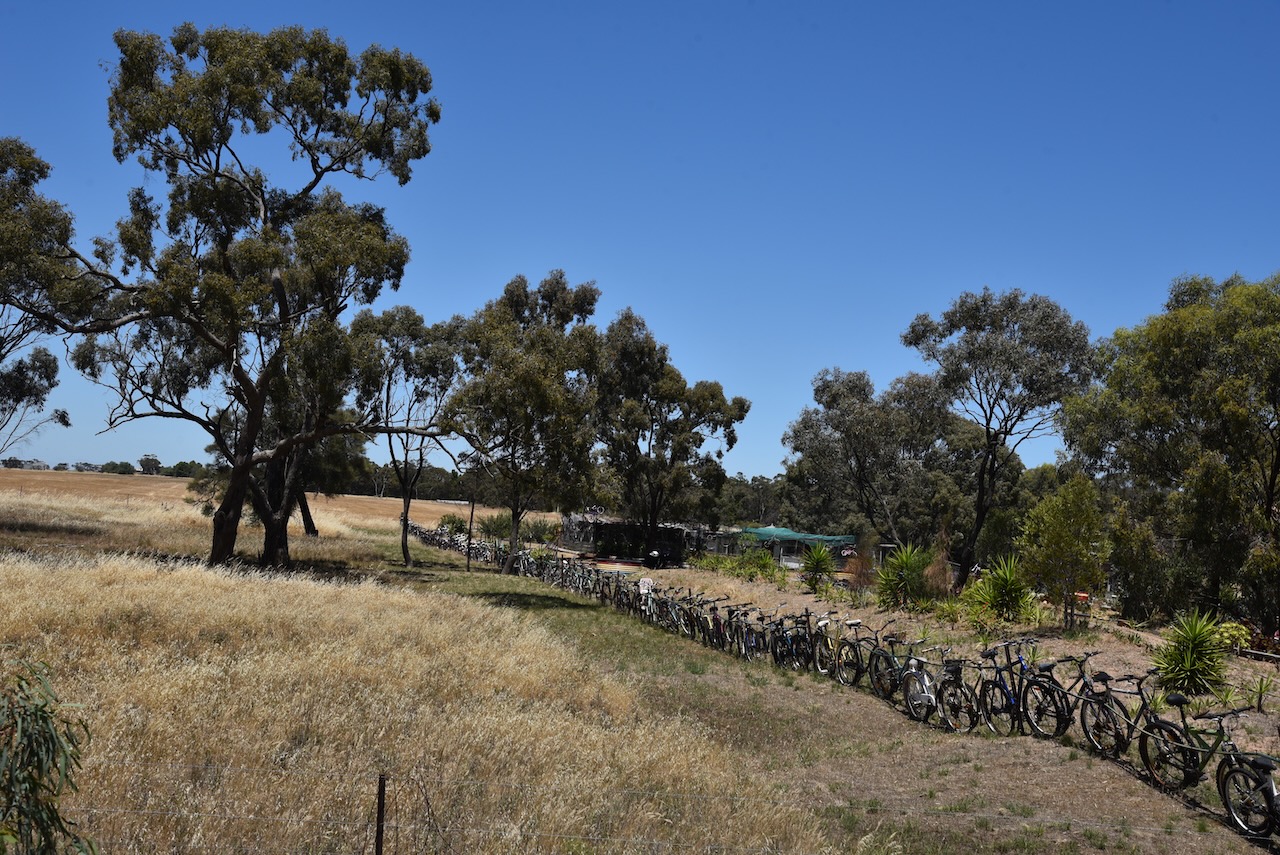
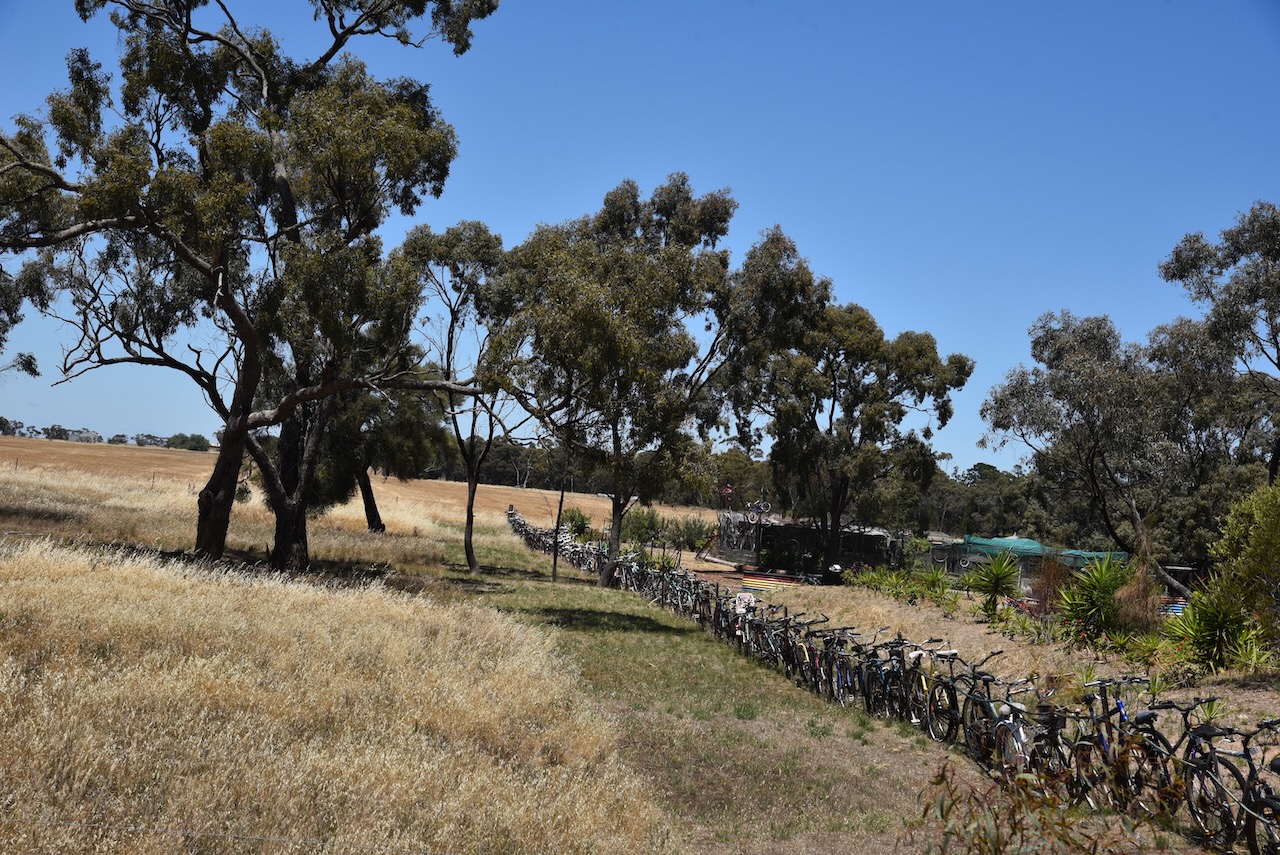
A little further up the Western Highway we stopped to have a look at the unique fence built with bicycles.
References.
Leslie James Blake, 1978, Place Names of Victoria.
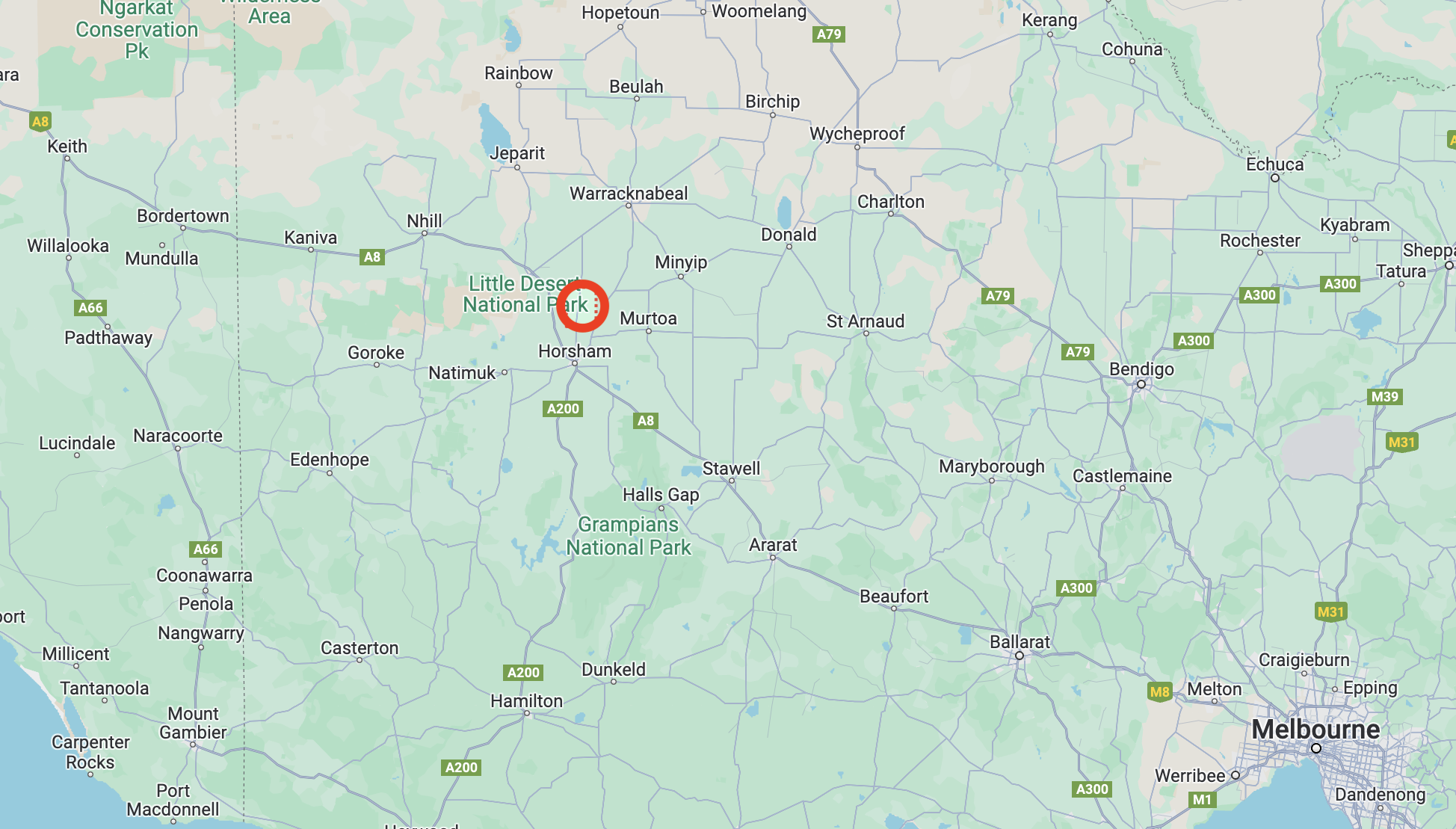
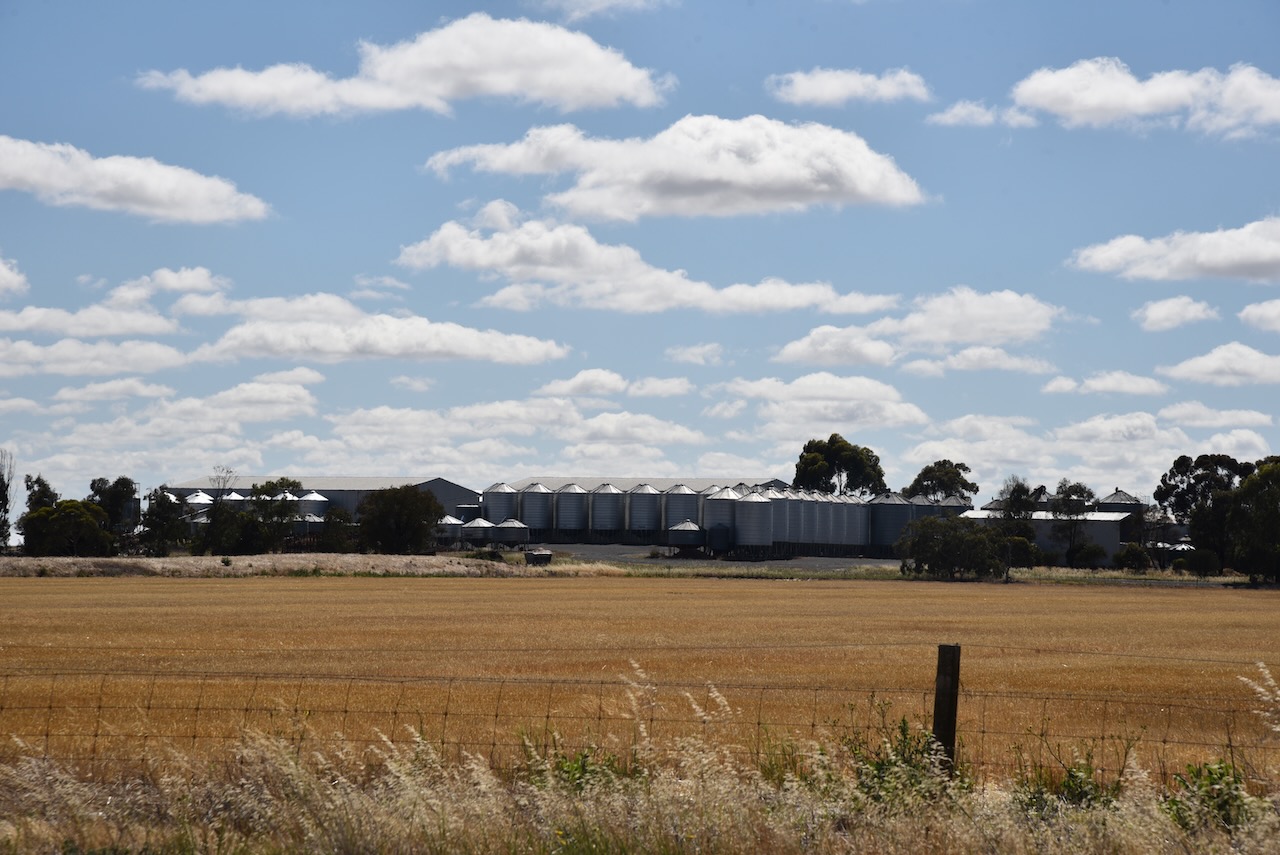
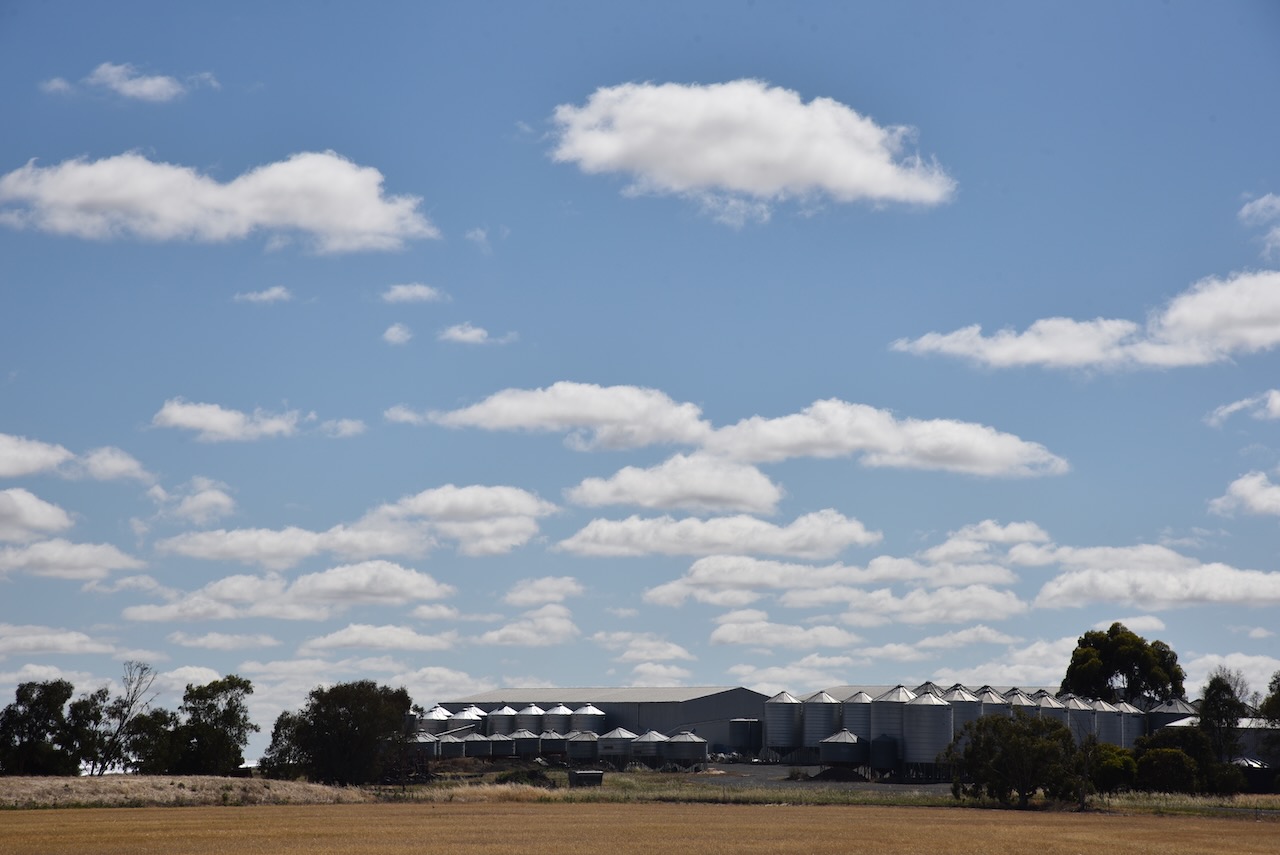
Our third activation for Sunday 3rd December 2024 was the Kakee silo VK-KLE3. Kalkee is located about 19 km north of Horsham and about 317 km northwest of the city of Melbourne.
Above:- Map showing the location of Kalkee. Map c/o Google Maps.
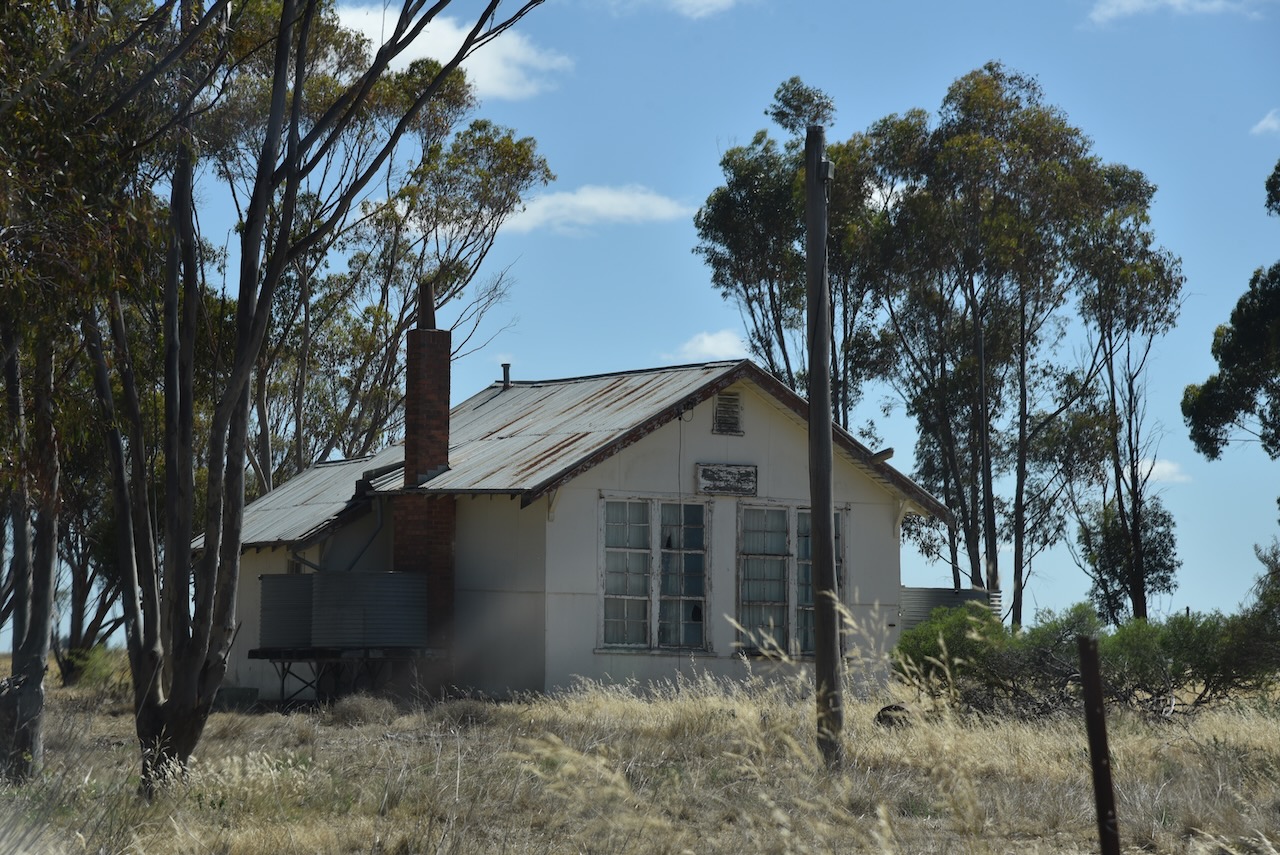
Kalkee is derived from an aboriginal word gulke or kalk meaning bone or wood. It has been suggested that the name came from a reference to the buloke and eucalyptus trees that grew on the surrounding plain. The Kalkee district was taken up for farm selections during the 1870s. In 1877 a school was opened and a Wesleyan chapel was built. (Victorian Places 2024)
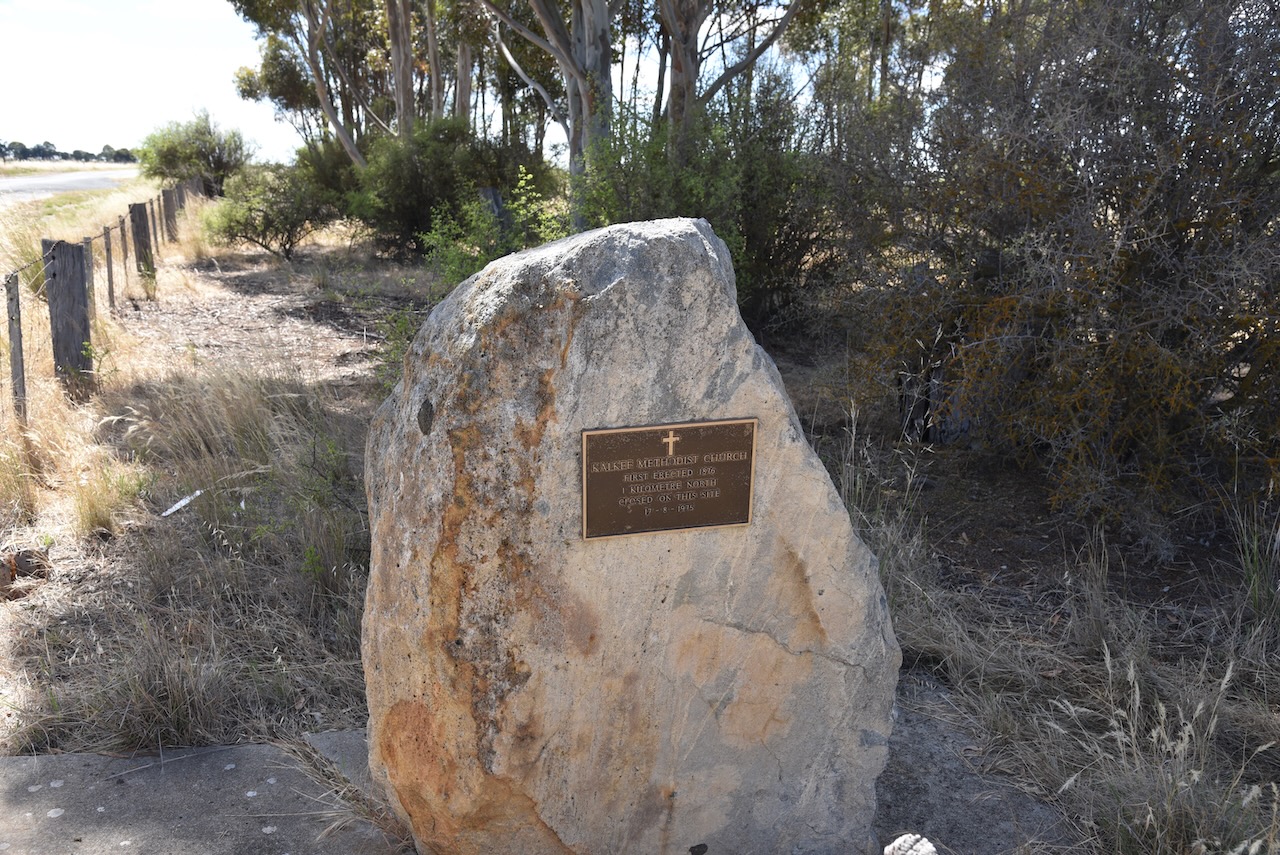
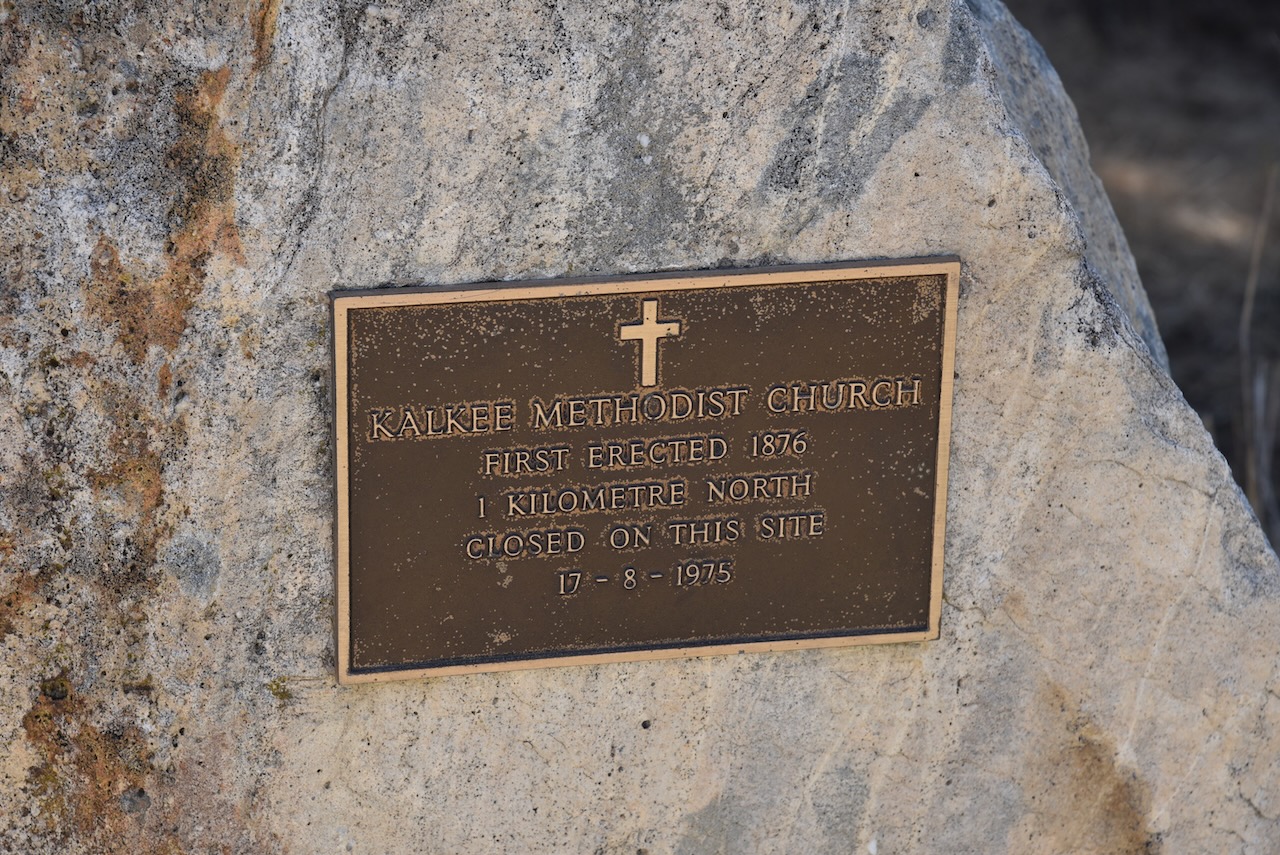
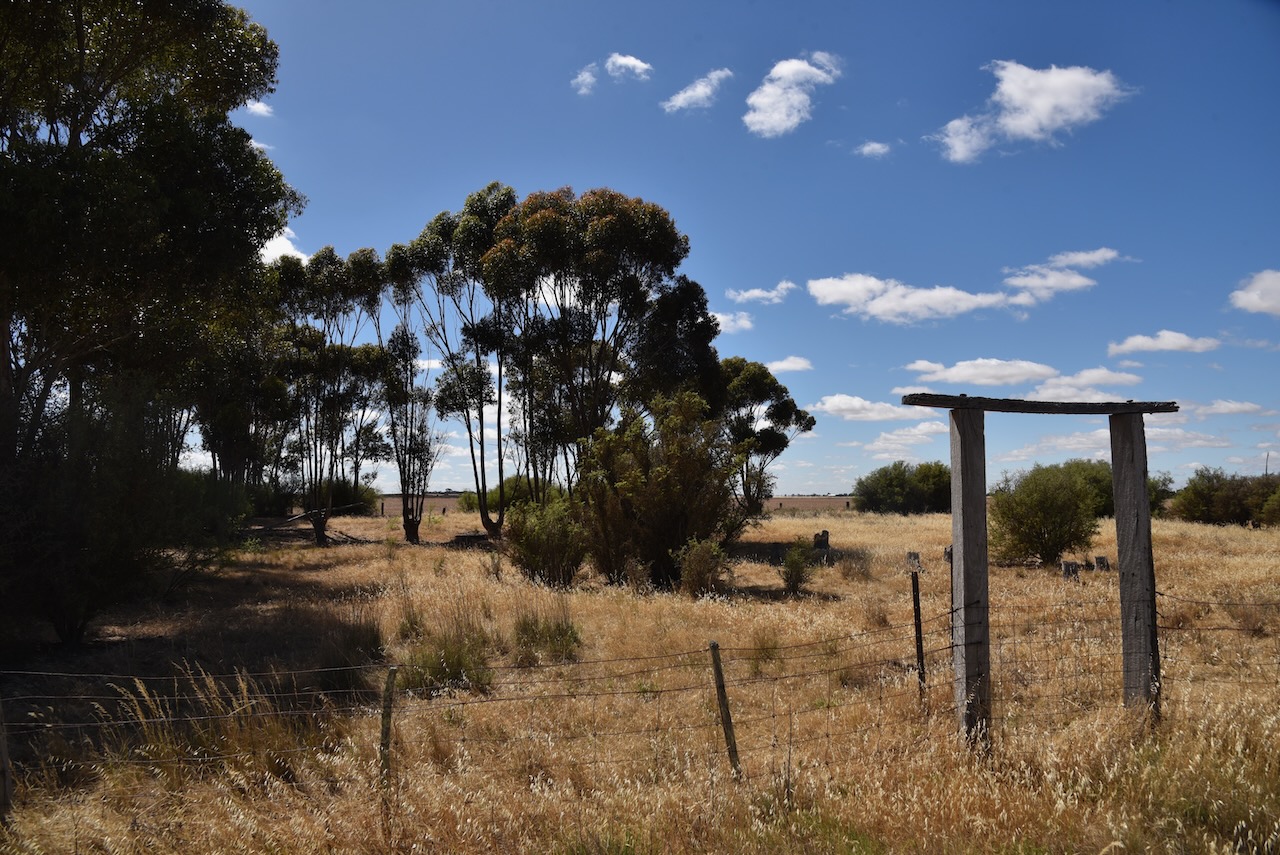
There is a monument for the Kalkee Methodist Church that was erected in 1876 and closed in August 1975.
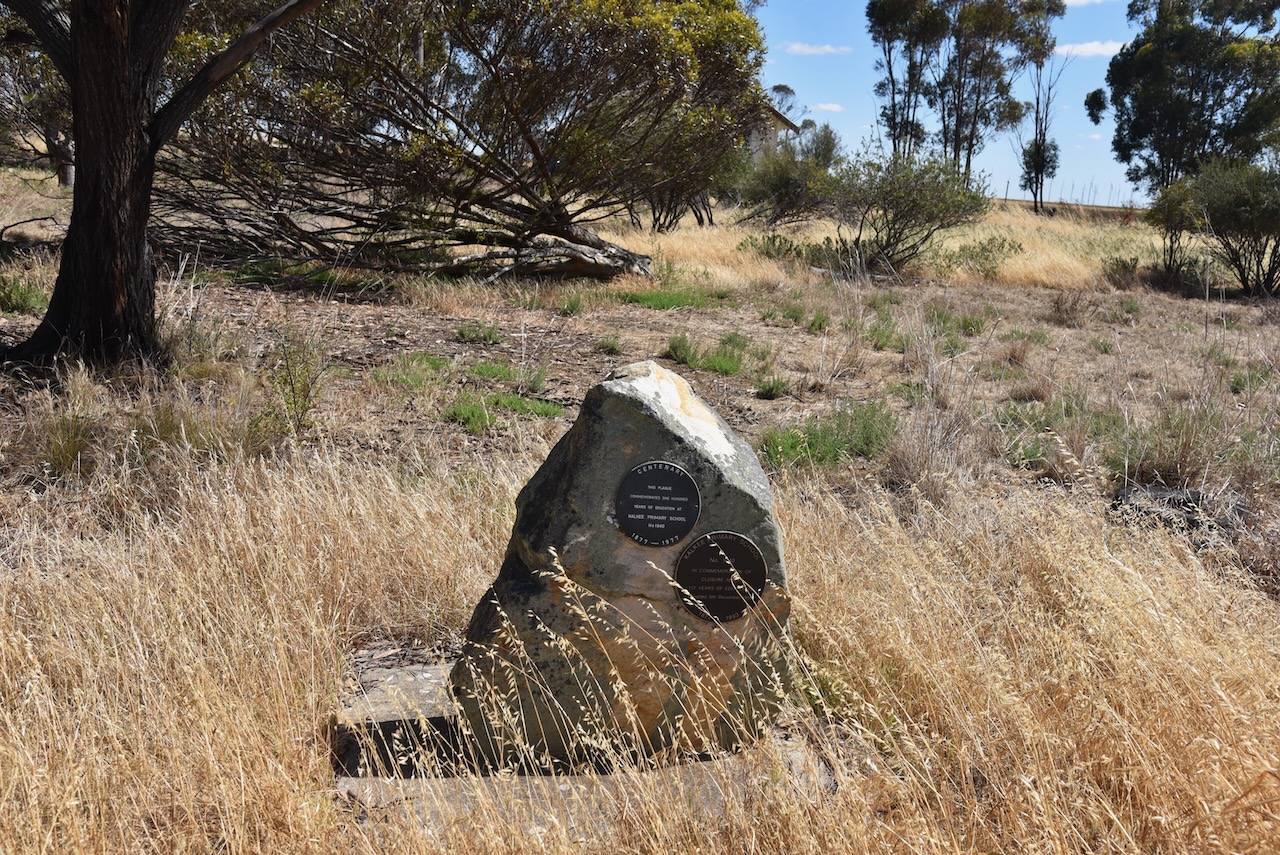
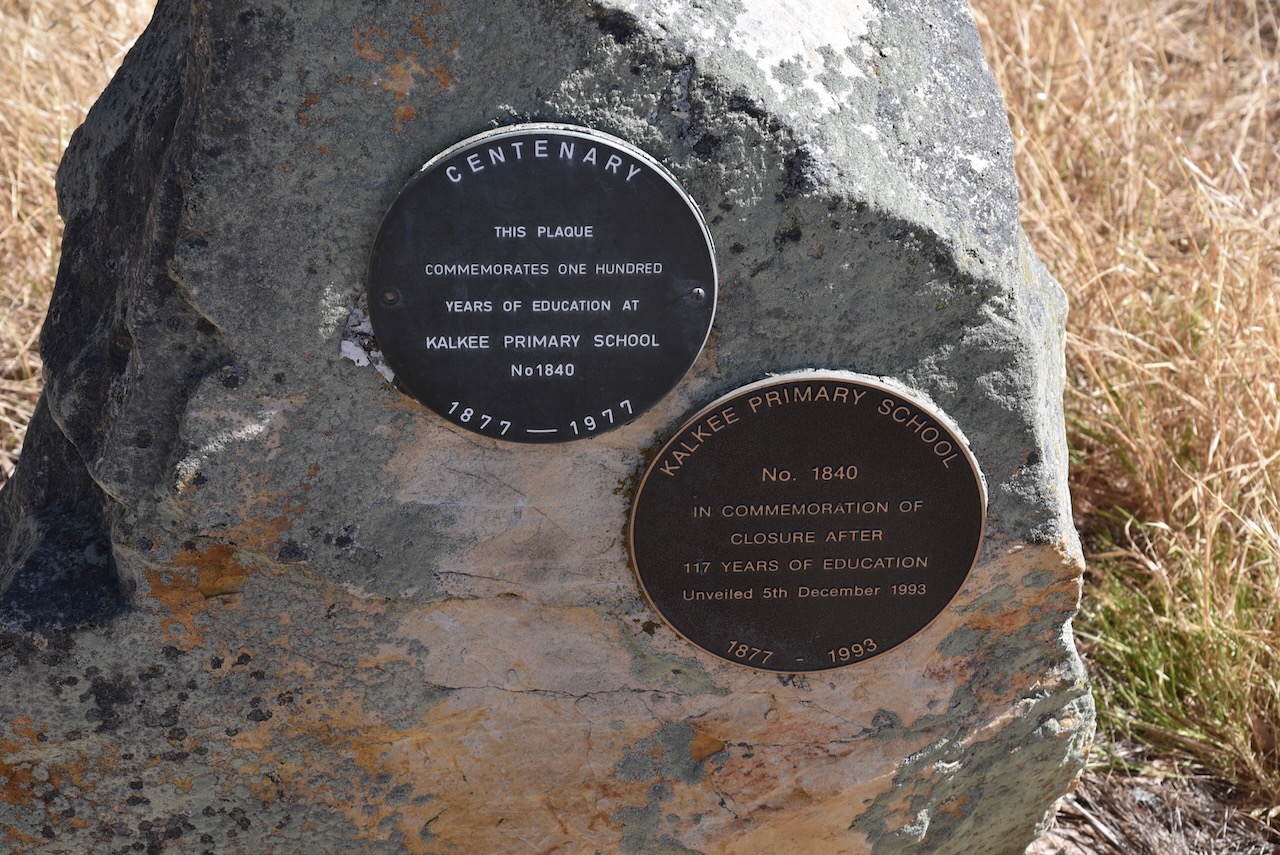
There is also a monument for the Kalkee Primary School No. 1840 which operated from 1877 to 1993.
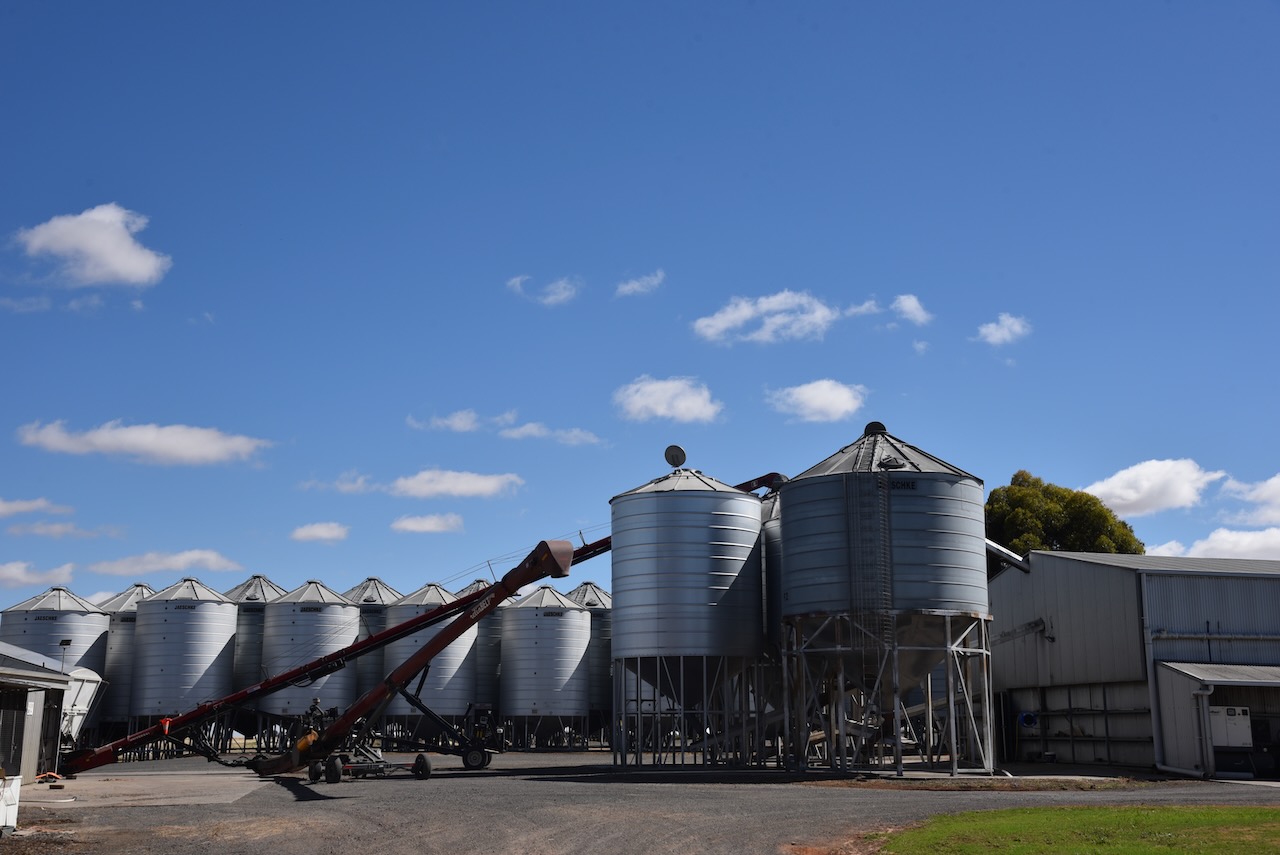
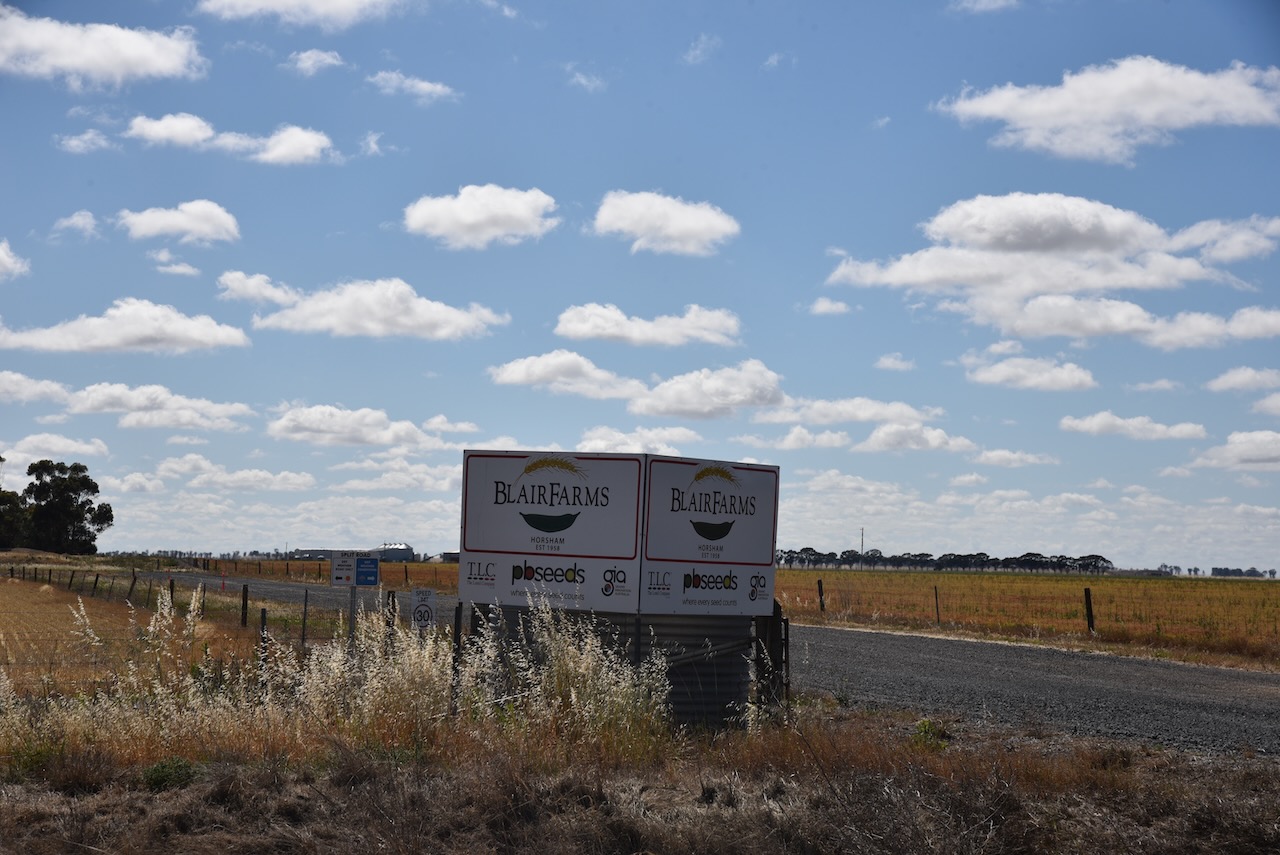
The Kalkee silos are part of Blair Farms.
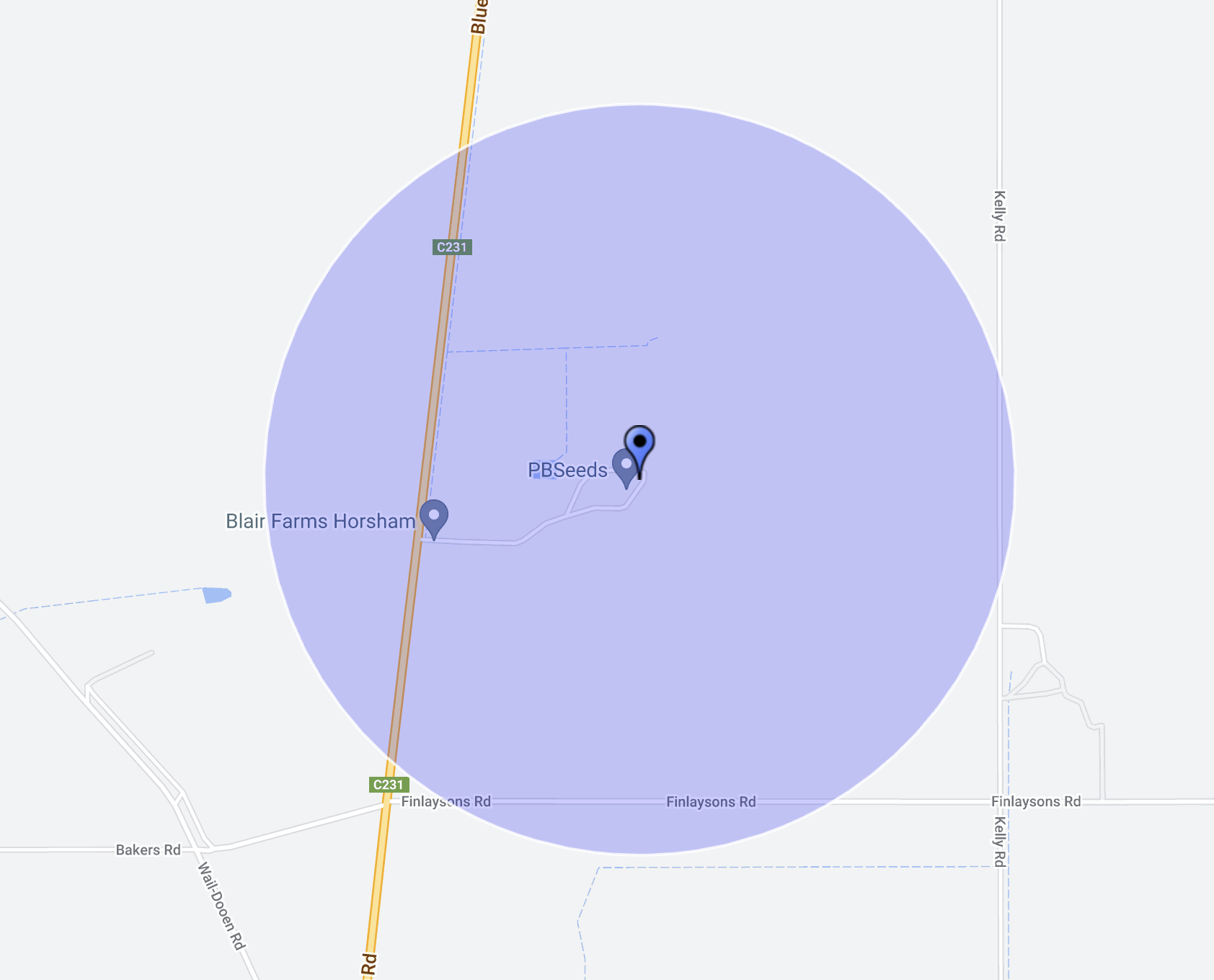
Marija and I parked on Finlaysons Road and operated from the 4WD. We ran the Icom IC-7000, 100 watts, and the Codan 9350 antenna with the 1.5 metre stainless steel whip.
Above:- Map showing the activation zone at the Kalkee silo. Image c/o SiOTA website.
Marija worked the following stations on 40m SSB:-
VK3PF
VK2EXA
VK3ZPF
I worked the following stations on 40m SSB:-
VK3PF
VK2EXA
VK3ZPF
VK1CHW
VK3ZK/p (Wilsons Promontory Marine National Park VKFF-0956)
VK3TBR
VK3CLD
VK3OAK
VK2USH
I worked the following stations on 20m SSB:-
VK2IO
VK4JJ
References.
Leslie James Blake, 1978, Place Names of Victoria.