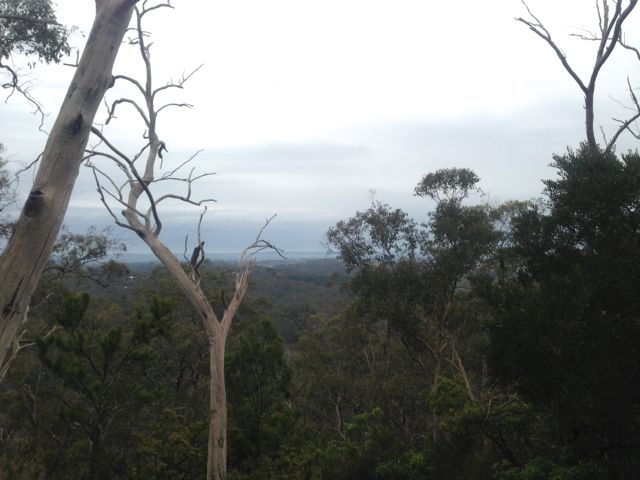
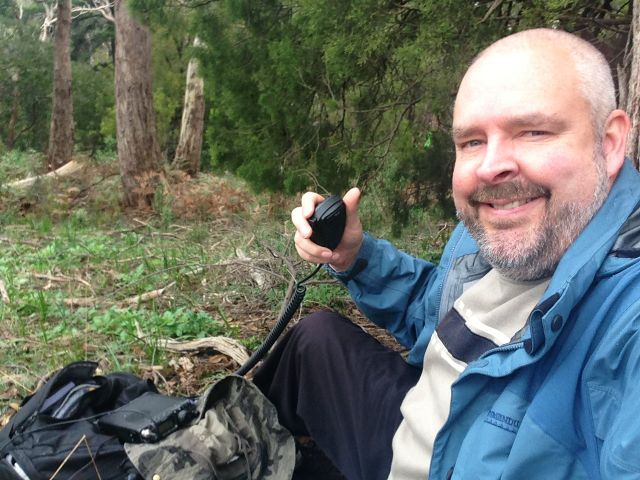
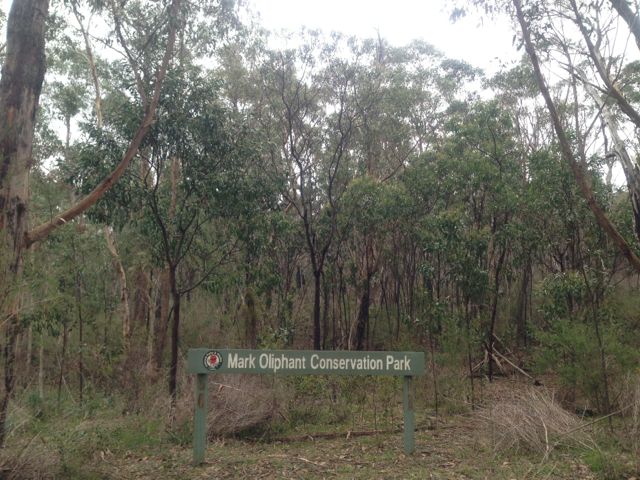
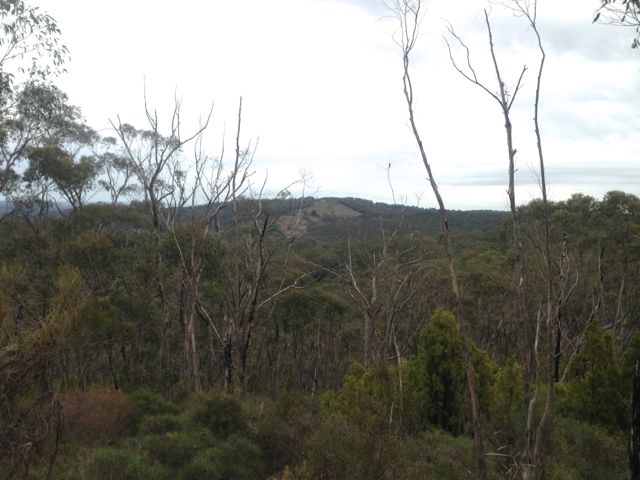
Mark Oliphant Conservation Park

My second activation of the day (Friday 12th July 2013) was the Mark Oliphant Conservation Park.  The park which consists of about 189 hectares, is situated about 22 kms south east of Adelaide in the Mount Lofty Ranges ‘Adelaide Hills’.

The park was first used for recreation in the 1930’s, and in 1945 it was purchased by the Young Mens Christian Association (YMCA).  In 1953, the park was acquired by the State Government and was proclaimed the Loftia Recreation Park in 1972.  The park was expanded in 1992 and 1995, and renamed in 1996 in recognition of its conservation values and to honour physicist and humanitarian Sir Mark Oliphant’s contribution to conservation.
IMG_3238     IMG_3242

Sir Marcus ‘Mark’ Laurence Elwin Oliphant who was an Australian physicist and humanitarian who played an important role in the first experimental demonstration of nuclear fusion and also the development of nuclear weapons.  He was a former State Governor here in South Australia, and also has other places and things named in his honour including the Oliphant Building at the Australian National University; a South Australian high schools science competition; the Oliphant Wing of the Physics Building at the University of Adelaide; and a new high school located in northern Adelaide.

Messmate stringybark and brown stringybark dominate the forest canopy, and there is a small stand of candlebark gums near the Loftia oval. This tall eucalypt with white bark is rare and only found in the higher rainfall areas of the Adelaide Hills.  Tiny patches of pink gum, manna gum and blue gum also occur in the park.  In the forest understorey there are many spring-flowering shrubs, including myrtle- leaved wattle, beaked hakea and large-leaved bush-pea.  The park’s flora was affected by bushfires in February 1980 and January 1995, but weeds are the main threat to native plants.

There is a variety of wildlife located in the park, including the rare southern brown bandicoot and yellow- footed antechinus, along with several lizard, snake and frog species.  Numerous bird species are also found in the park including the superb fairy-wren, scarlet robin, golden whistler, Adelaide rosella and honeyeater species.

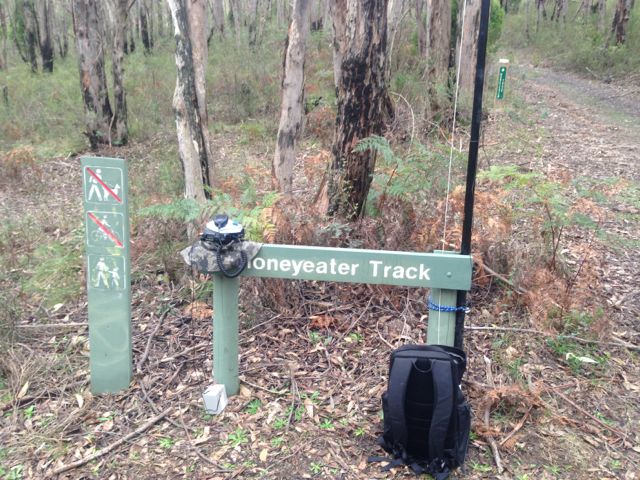
I accessed the park via Evans Drive which runs off Scott Creek Road, and I set up on the Honeyeater walking track.  I used the permapine walking track sign as an anchor point for the squid pole which I secured with an octopus strap.
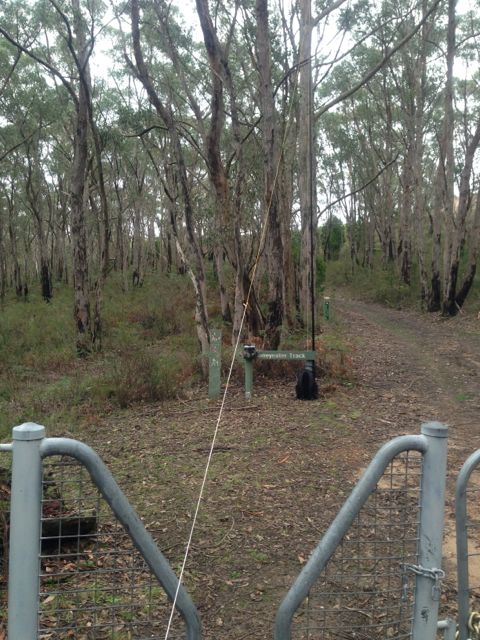
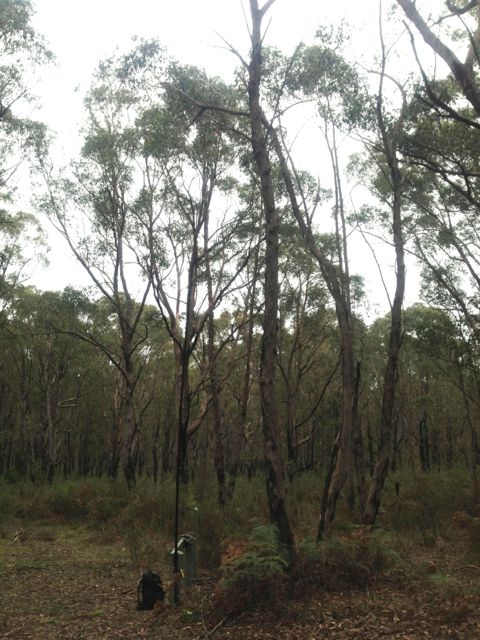
IMG_3245     IMG_3248

I placed the Yaesu FT-817nd on the sign and put a call out on 7.100 to be called by regular ‘Hunter’ Col VK5HCF, and then followed by another regular ‘Hunter’, Brian VK5FMID.  Both had good strong signals coming in from Mount Gambier in the south east of South Australia.  Larry VK5LY was my next contact who was using just 3 watts QRP and had a great signal.  Also spoke with Nick VK3ANL who is a regular interstate ‘Hunter’ and is a recipient of the Bronze Hunter certificate.
IMG_3246

Fortunately the weather held off, and I worked a total of 9 stations in VK3 & VK5 on 40m SSB.

Stations worked were:- Col VK5HCF; Brian VK5FMID; Larry VK5LY/qrp; Paul VK5FUZZ; Don VK5NFB; Garry VK3FWGR; Nick VK3ANL; Terry VK3UP; and Steve VK5AIM.
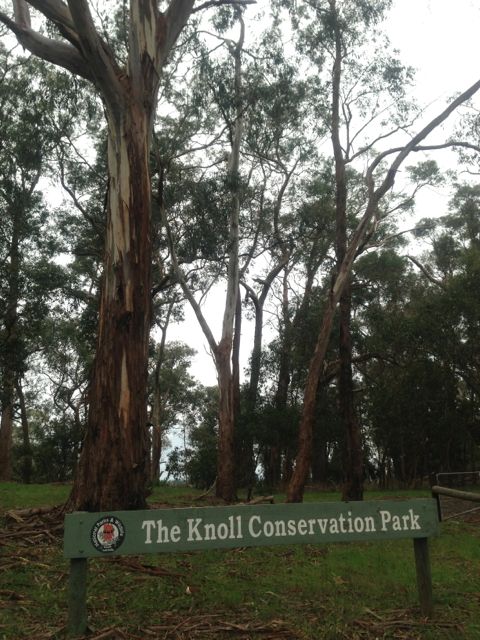
The Knoll Conservation Park

The weather forecast for today (Friday 12th July, 2013) and the weekend was lousy, so sadly it put a halt to any plans of activating any SOTA summits.  I was getting itchy feet after my trip to the Eyre Peninsula last month, but the forecast showed that we were expecting heavy rain.

But whilst enjoying my Friday morning coffee I kept looking out the window and the weather seemed okay, so I packed the car with my radio gear and headed to The Knoll Conservation Park, which is about a 15 minute drive from home.

The Knoll Conservation Park is located at Crafers West, about 20 kms south east of Adelaide, in the Mount Lofty Ranges ‘Adelaide Hills’.  Access to the park is via Upper Sturt Road, slighty south of Sheaok Road.  I have driven passed this park probably hundreds of times, but I had never visited it.  In fact if you blinked you would probably miss it.  It is well signposted but is only a very small park.

IMG_3220     IMG_3226

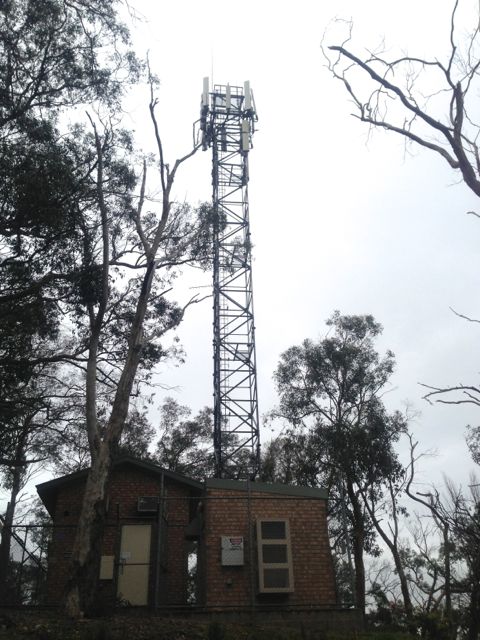
There is a smalI dirt area just off Upper Sturt Road at the entrance to the park, so I parked the car there, and walked up the dirt track for about 100 metres.  There is a large tower and associated buildings at the top, but I found after setting up my gear that it had no affect on the noise floor.

There are plenty of options here to string up a dipole, with lots of large gum trees.  I set up the dipole on the southern side of the tower as there were a few more options there and room for the dipole to run north – south.  Whilst setting up the antenna I had a friendly group of kookaburras who must have found something funny.

The view out to the east is really quite impressive.  Although the weather was pretty average and there was quite a bit of low cloud, there were still good views out across the Sturt Valley, towards Victoria and New South Wales.  There is quite a significant drop in terrain out to the east.  The park is about 571 metres ASL.

I found a comfy spot under a large gum tree and started calling CQ on 7.100 but after 5 minutes of calling I had no takers.  I knew that there were going to be a few SOTA activators out this morning, so I moved down to 7.090 and heard Brian VK5FMID who is a regular ‘Hunter’ of the VK5 Parks Award.

IMG_3229     IMG_3233

I gave Brian a call after he finished his QSO, and he was a very good signal from Mt Gambier.  This was followed by Ron VK3AFW who was mobile.  Marshall VK3MRG who was operating portable in a park in Kew, also called in. He also had a good strong 5/8 signal.

I then moved back up to 7.100 to leave 7.090 for the SOTA fellas, only to be followed up by Allen VK3HRA who was portable on SOTA peak Mount Torbreck VK3/ VN-001.  Allen had a very good strong signal (5/8 both ways).

I then had a QSO with Col who was using just 10 watts and was a very good strong 5/8.  Goes to show as Andrew VK1NAM has pointed out, is that in most cases SOTA ‘Chasers’ or Park ‘Hunters’ don’t need to use high power.

My i-phone bleated from the SOTA Goat application, so I slid down to 7.085 and spoke with Andrew VK1NAM and Al VK1RX, who were operating portable from SOTA summit Mount Ainslee VK1/ AC-040.

This was followed by a contact with Rick VK3KAN who was mobile.  Rick had a great signal coming out of his mobile station.

My last contact of the day was with Andrew VK1DA/3 who was portable on SOTA summit Mount Delegate VK3/ VG-034.

Stations worked were:- Brian VK5FMID; Ron VK3AFW/m; Matt VK1MA; Nick VK3ANL; Marshall VK3MRG/p (in Kew); John VK5FTCT; Allen VK3HRA/p (SOTA); Col VK5HCF; Dave VK3VCE; Brenton VK3CM; Andrew VK1NAM/p (SOTA); Al VK1RX/p (SOTA); Rick VK3KAN/m; Bernard VK3AMB; Mal VK3AZZ; Andrew VK1DA/3 (SOTA).