
It was now day 6 of our Melbourne trip, Wednesday 22nd November 2023. After a good night’s sleep, Marija and I headed down the main street of Avoca and had some breakfast and coffee.
Following breakfast we had a further look around Avoca as there were several historic buildings that we had not yet seen.
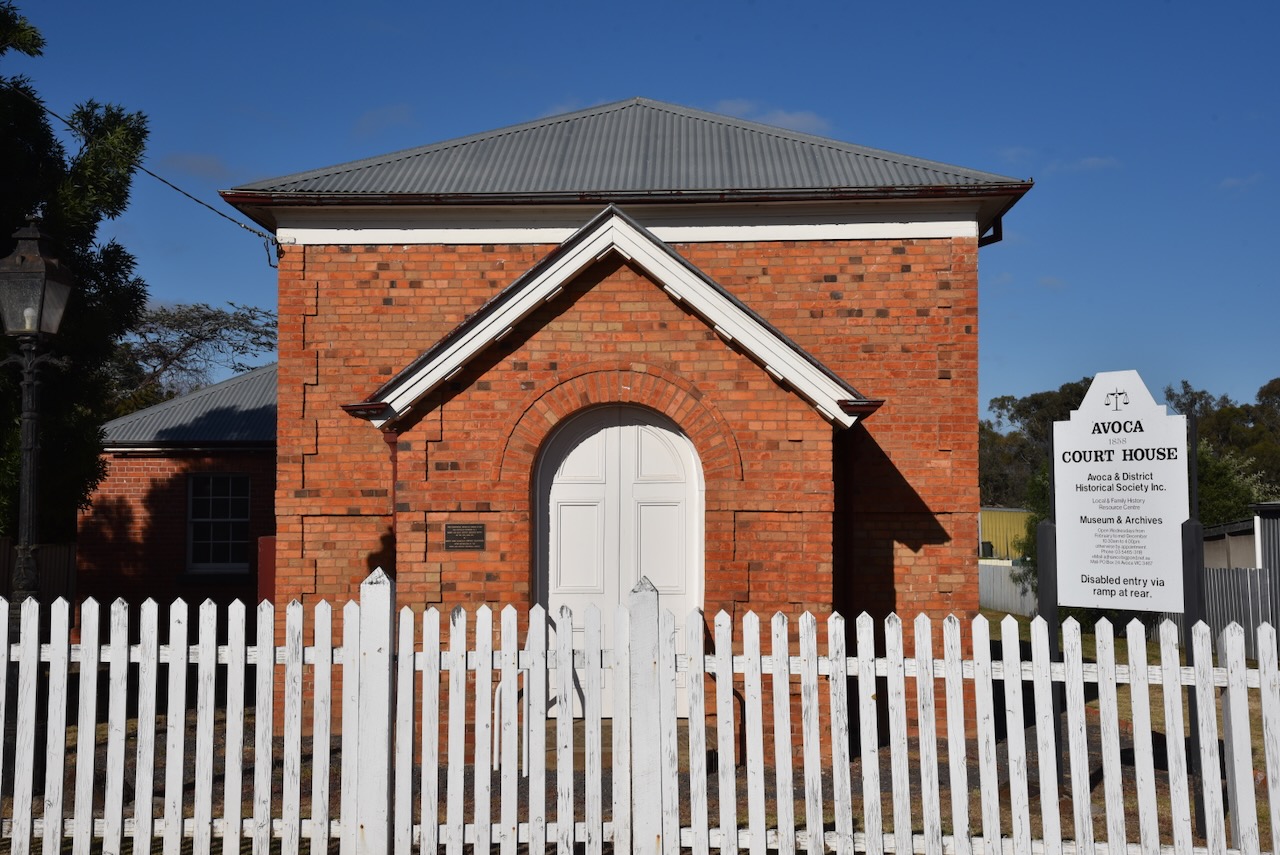
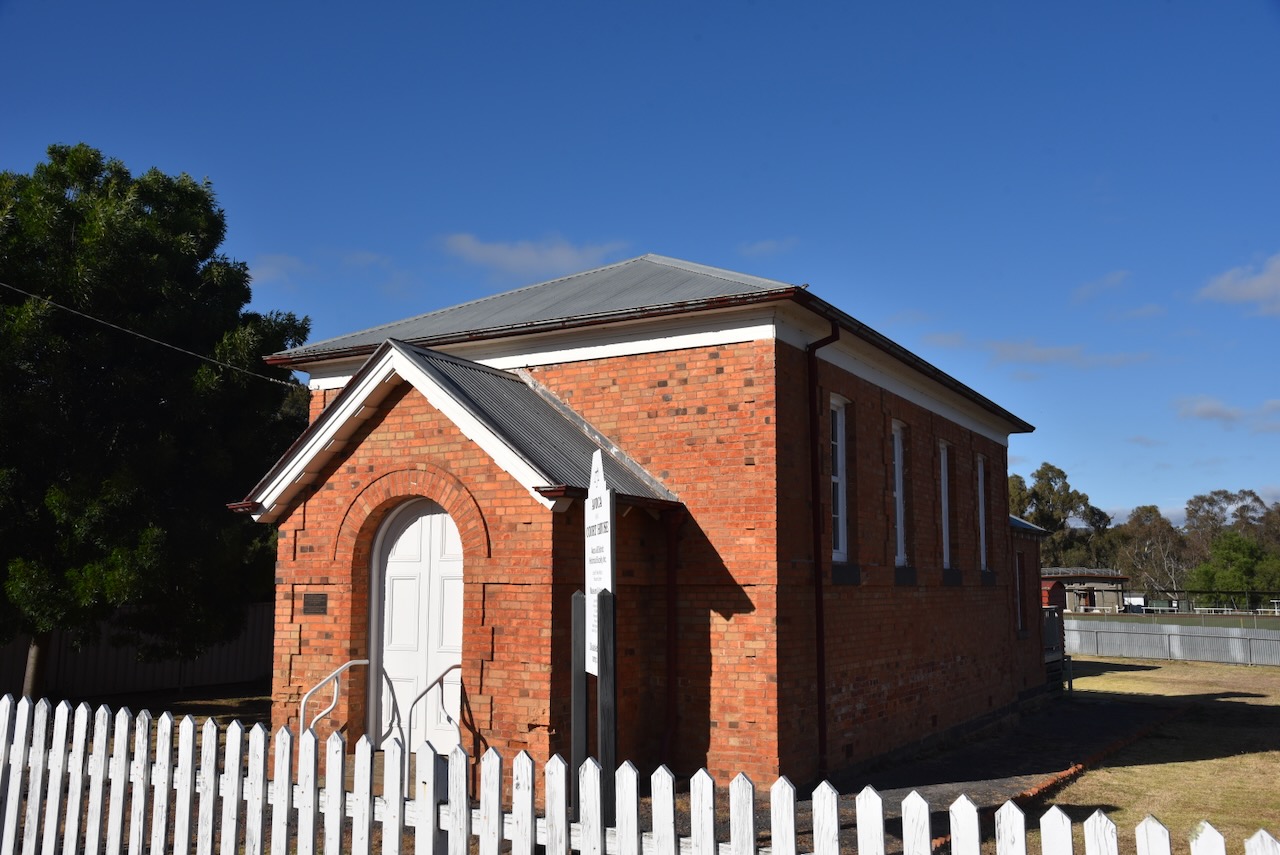
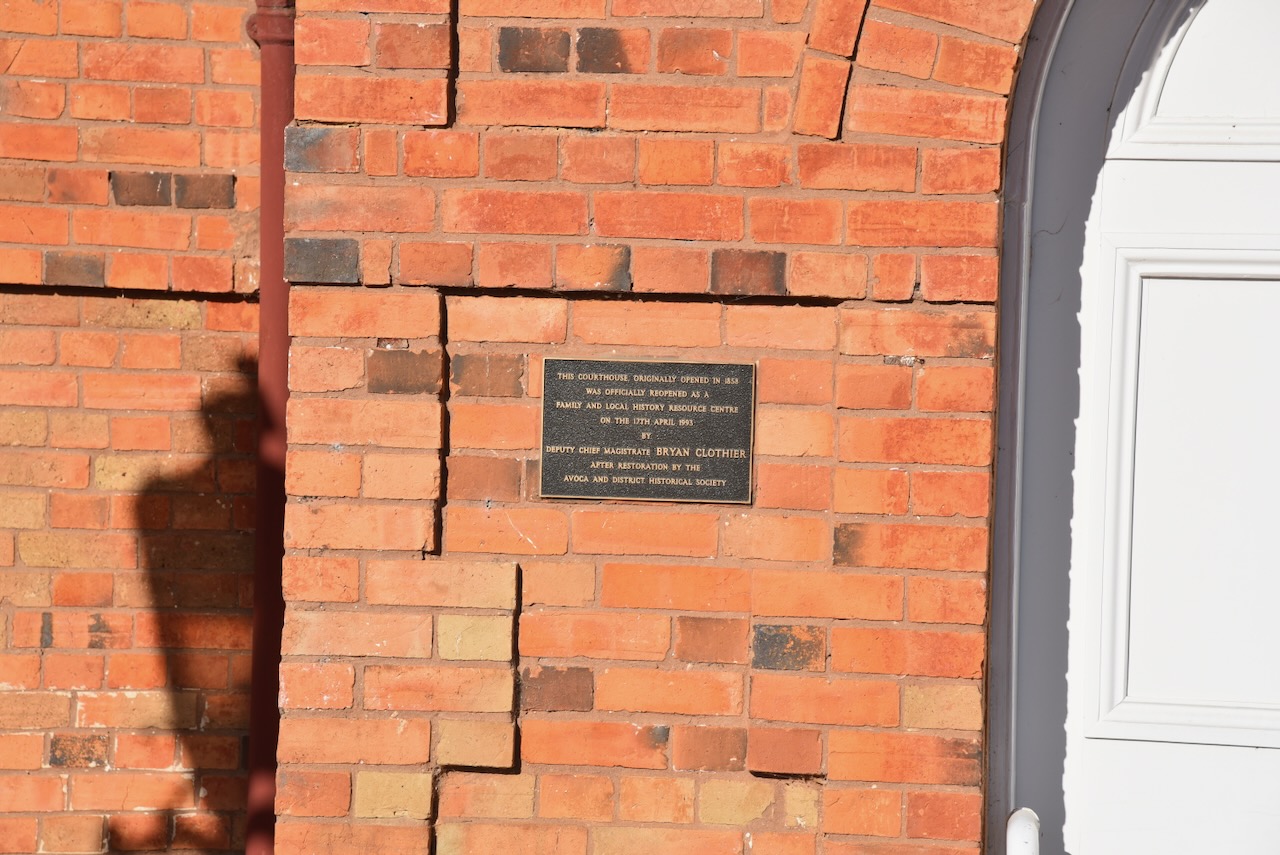
The Avoca Court House was built in 1858-1859 in Renaissance Revival style to a design by the Public Works Department. In September 1858 the contract was won by Smith and Scott. One month later a further contract to extend the building was let. The building was used as a courthouse until 1979 and is one of the earliest surviving courthouses in Victoria. The building is now used by the Avoca & District Historical Society. (Aussie Towns 2024) (Vict Heritage Database 2000)
The Avoca correspondent for The Age Melbourne newspaper, reported the following on Thursday 19th August 1858:
“I see tenders are invited for the erection of a Court house here. Well, it is not come before wanted. The necessity for such a building has for a long time been felt, and it is to be hoped so lucky rival will disappoint us this time.” (Avoca 1858)
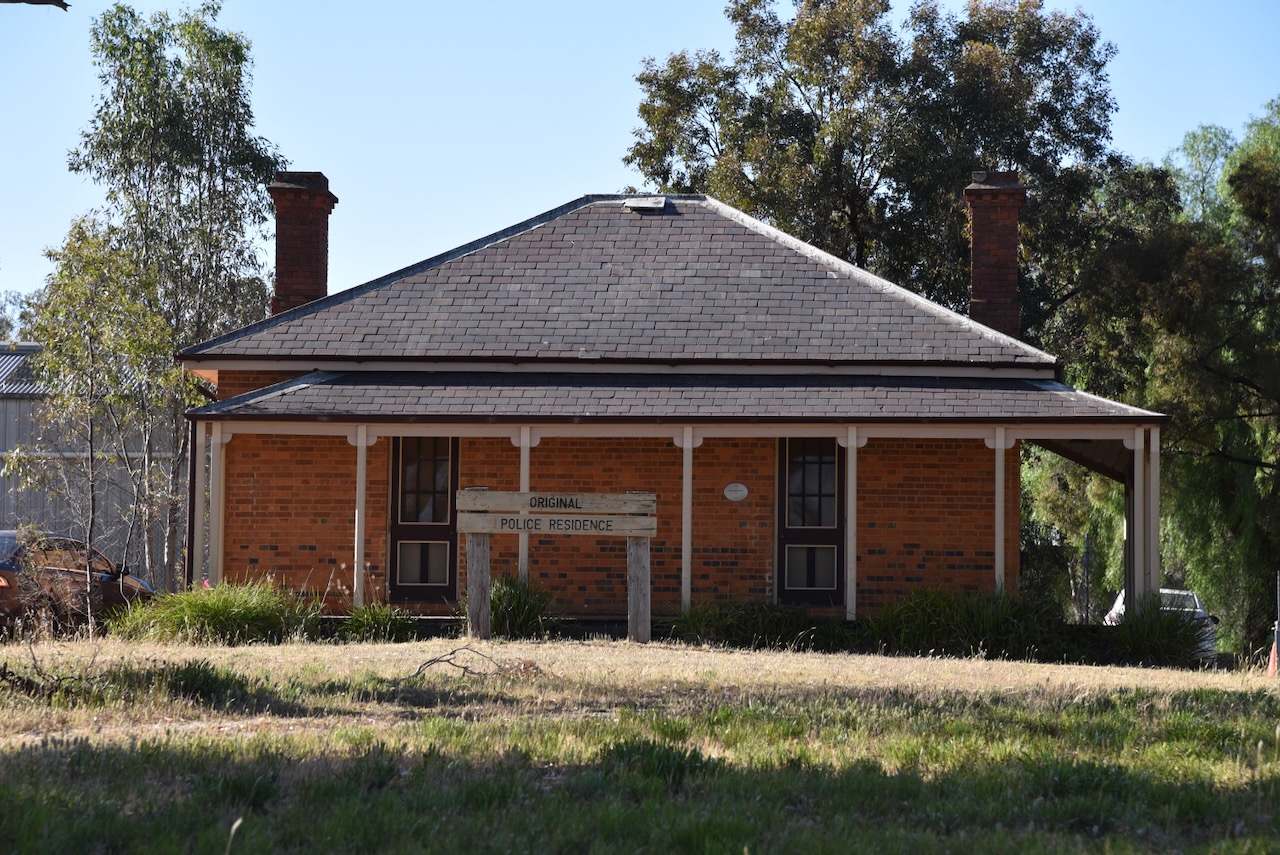
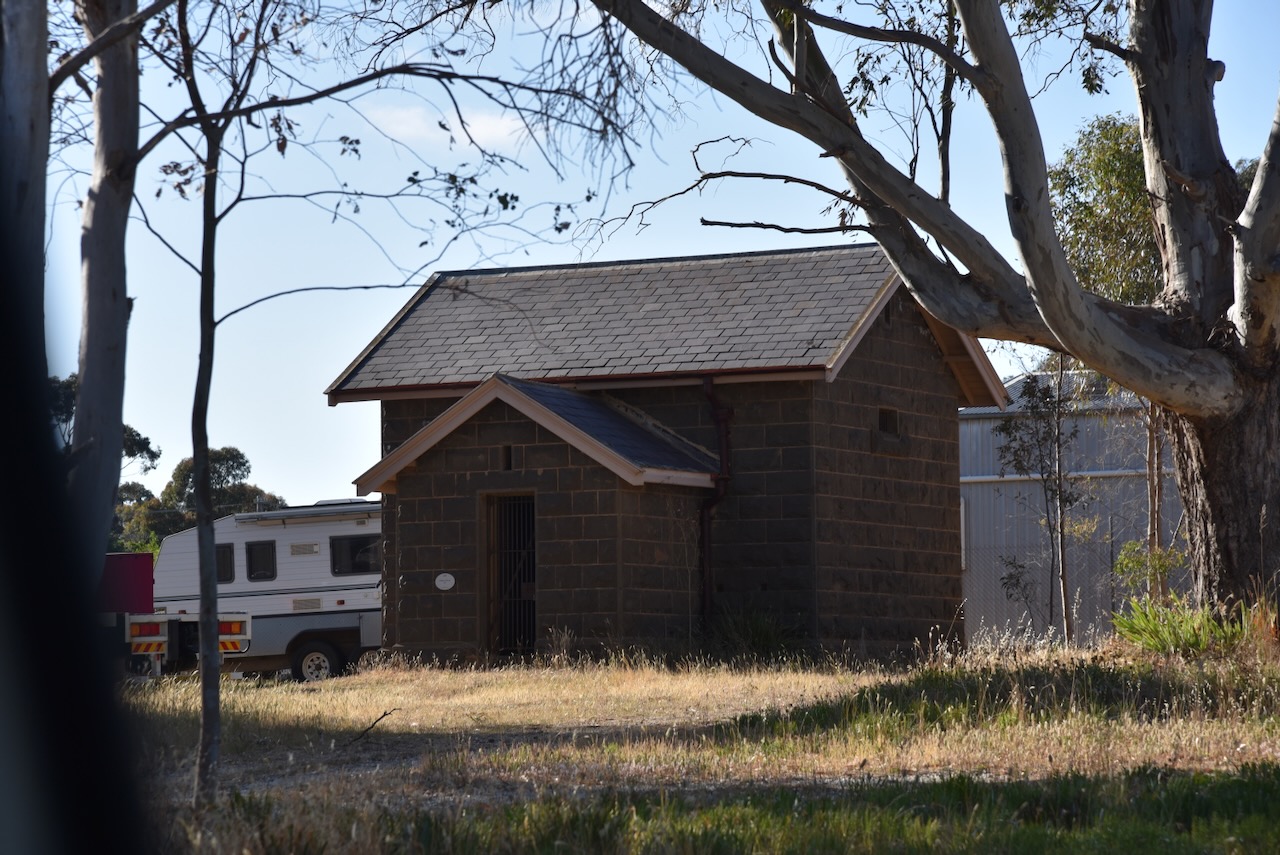
A police camp consisting of about 50 troopers was established at Avoca in 1853. There are a few buildings that remain in Avoca which are associated with the police camp. These include the bluestone lockup that was built in 1867. It replaced the original 1854 log lock-up. The police residence was built in 1859. (Aussie Towns 2024)
Watford House is one of only three timber prefabricated homes in Australia that were imported from Germany during the early 1850s. The house is known locally as The WissHouse. Watford House was brought out to Australia from Hamburg Germany in numbered planks. It arrived in Geelong and was brought to Avoca by bullock drays. It was originally assembled in Avoca’s main street as accommodation for the Avoca Hotel and was later moved to its current site. It was restored in 2004. (Aussie Towns 2024) (Avoca 2024)

The Avoca Primary School located on Barnett Road is an extremely impressive gothic structure that was built in 1876. The first school in Avoca was the National School opened in 1856. By 1857 a new school building had been constructed and it became a Common School by 1862. It became a State School between 1873 and 1878, at which time the current school building was built. About 250 students were enrolled at the school at this time. (Aussie Towns 2024) (Vic Govt 2024)

The Anglican church of St John the Divine is located at the corner of Russell and Barnett Streets. It was dedicated in December 1871. The current church replaced the original building on High Street. (Avoca Walking Tour)

The Avoca Uniting church was originally the Wesleyan Methodist Church. The complex comprises a brick church constructed in 1867, a Sunday School built in 1870 and a Parsonage built in 1871. (Avoca Walking Tour)
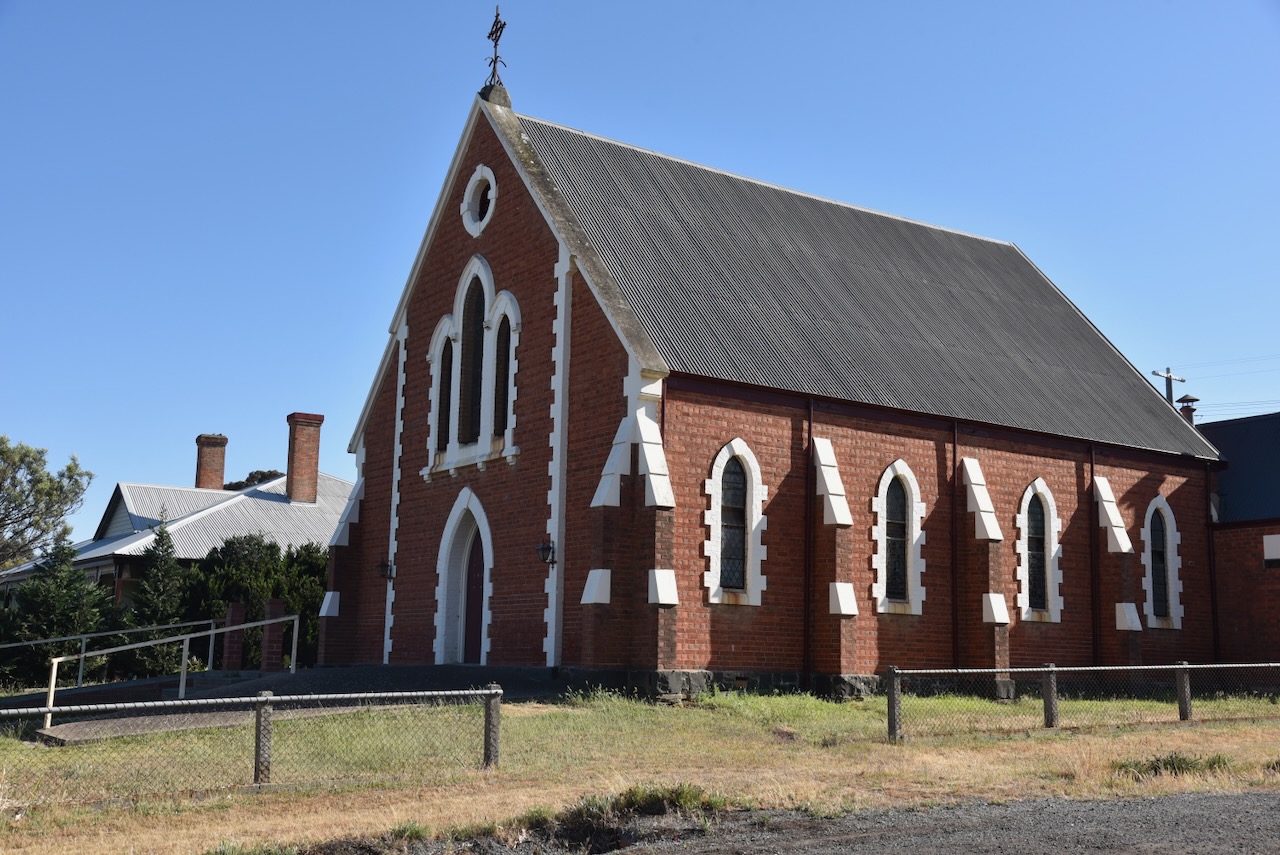
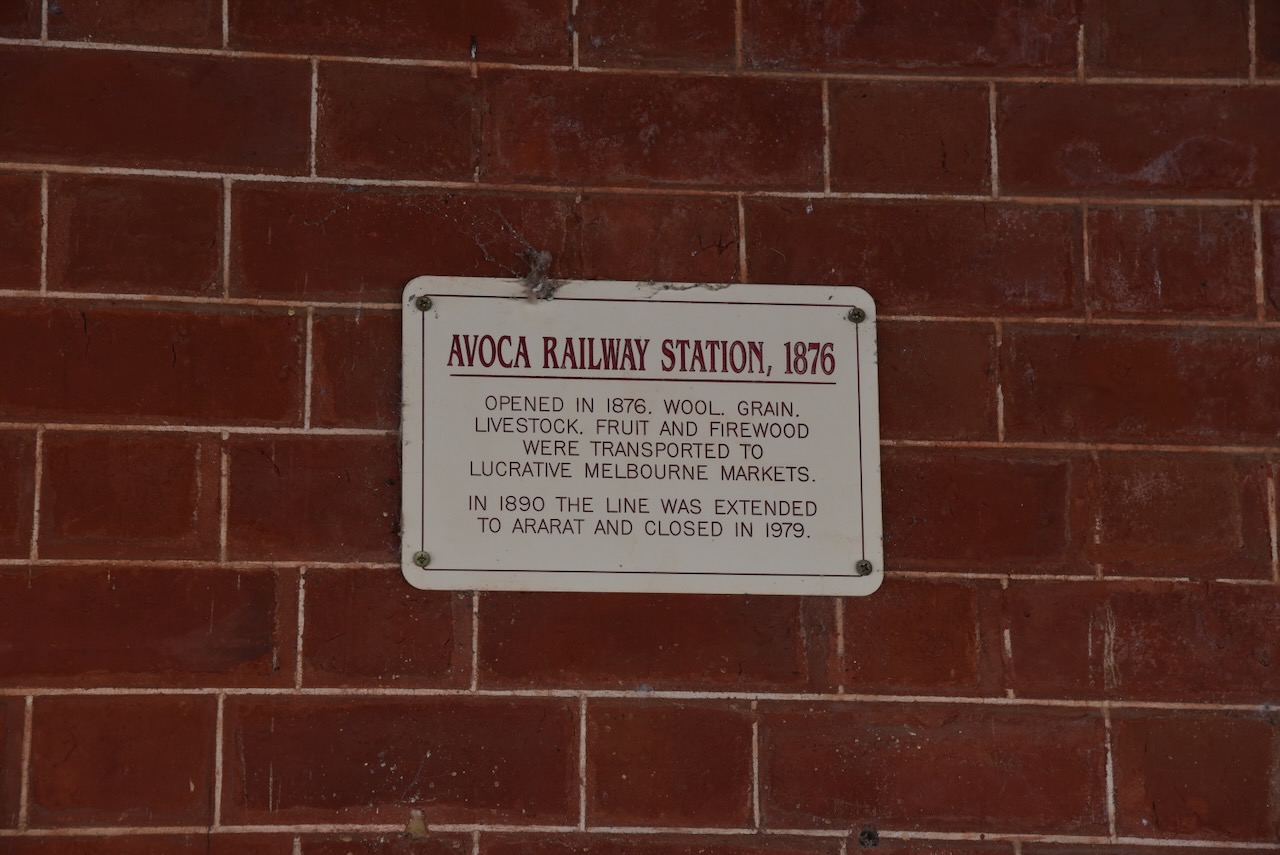
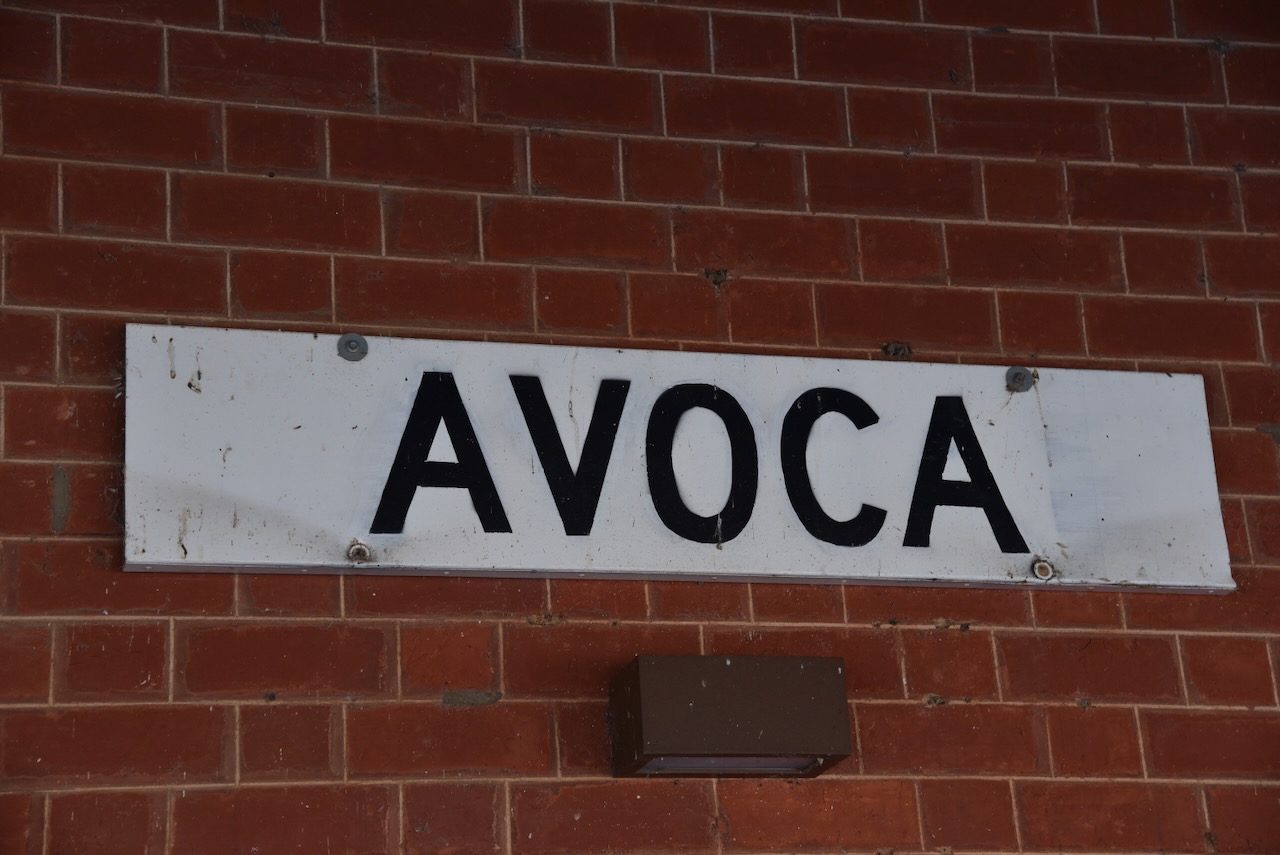
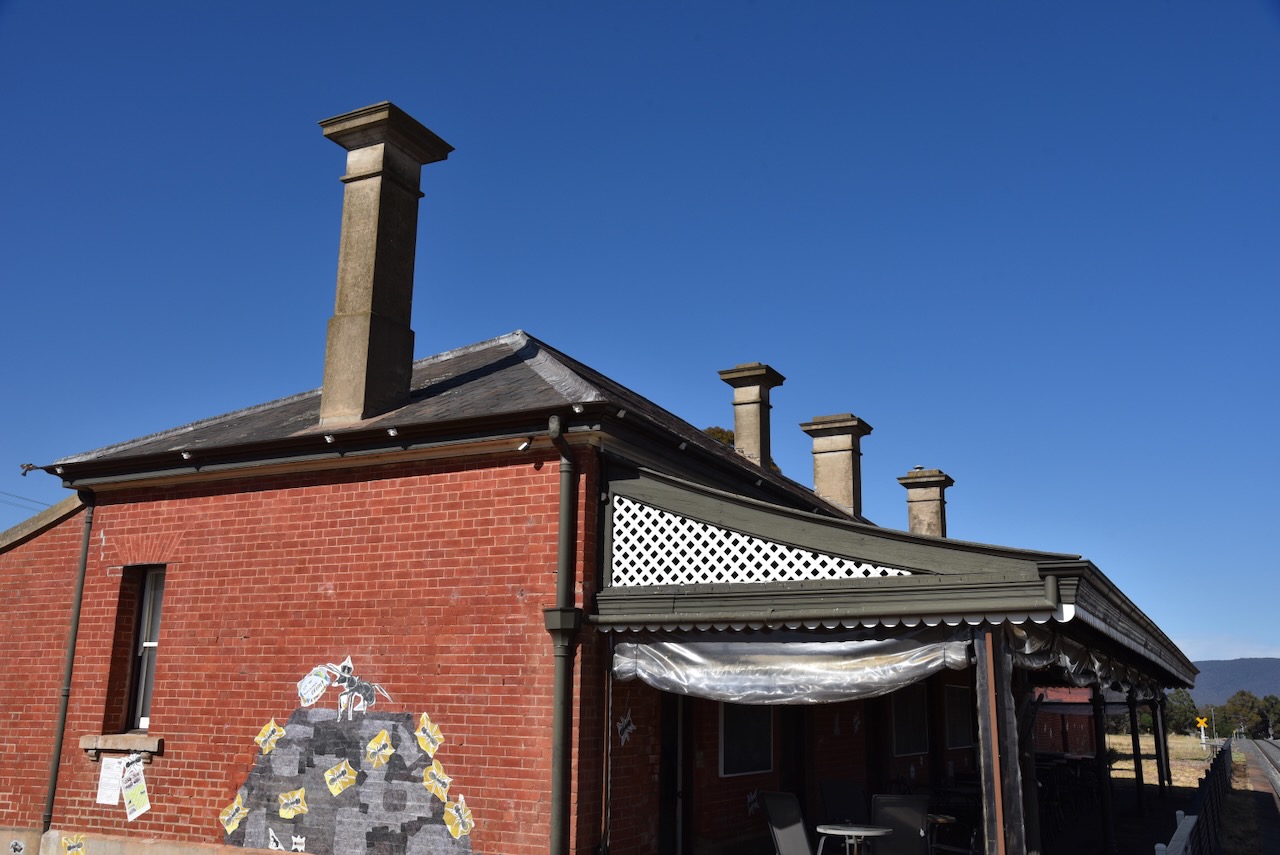
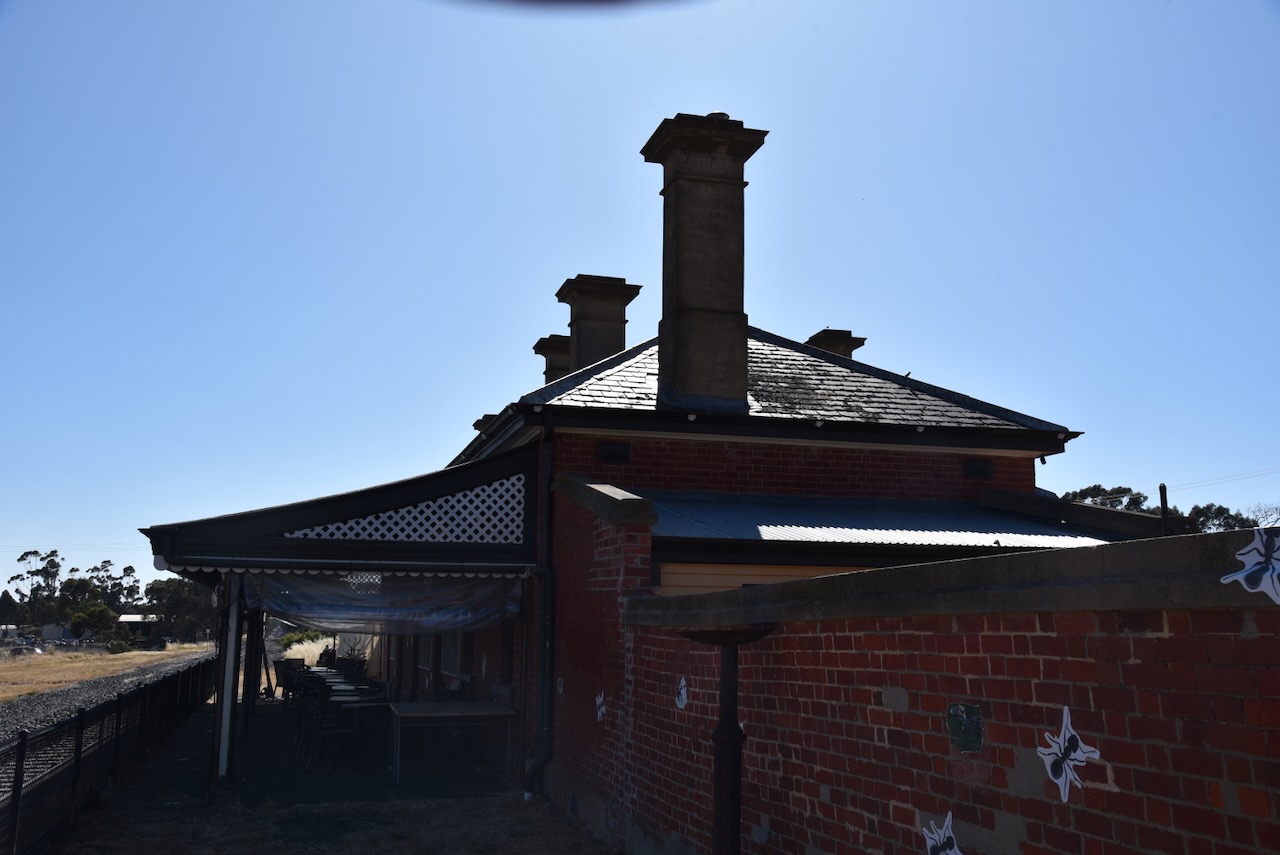
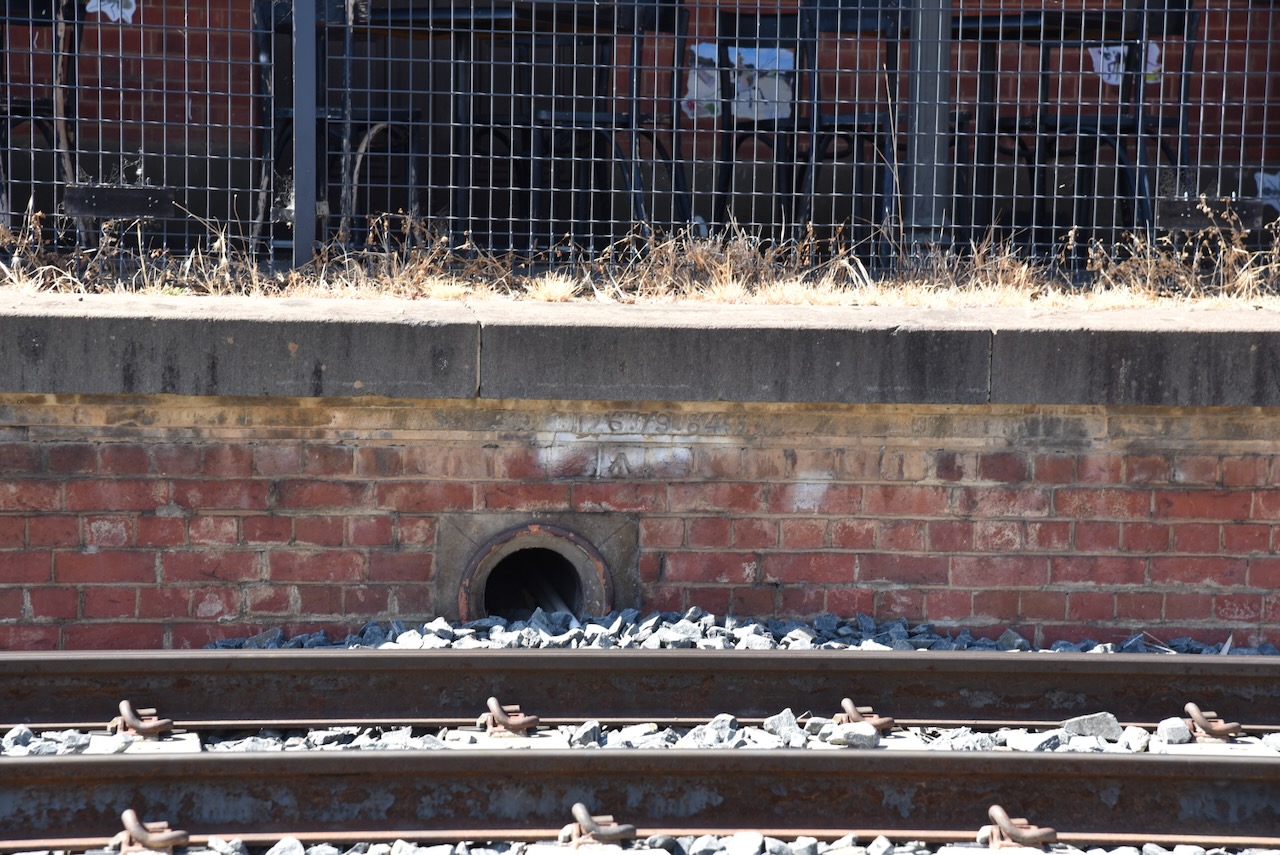
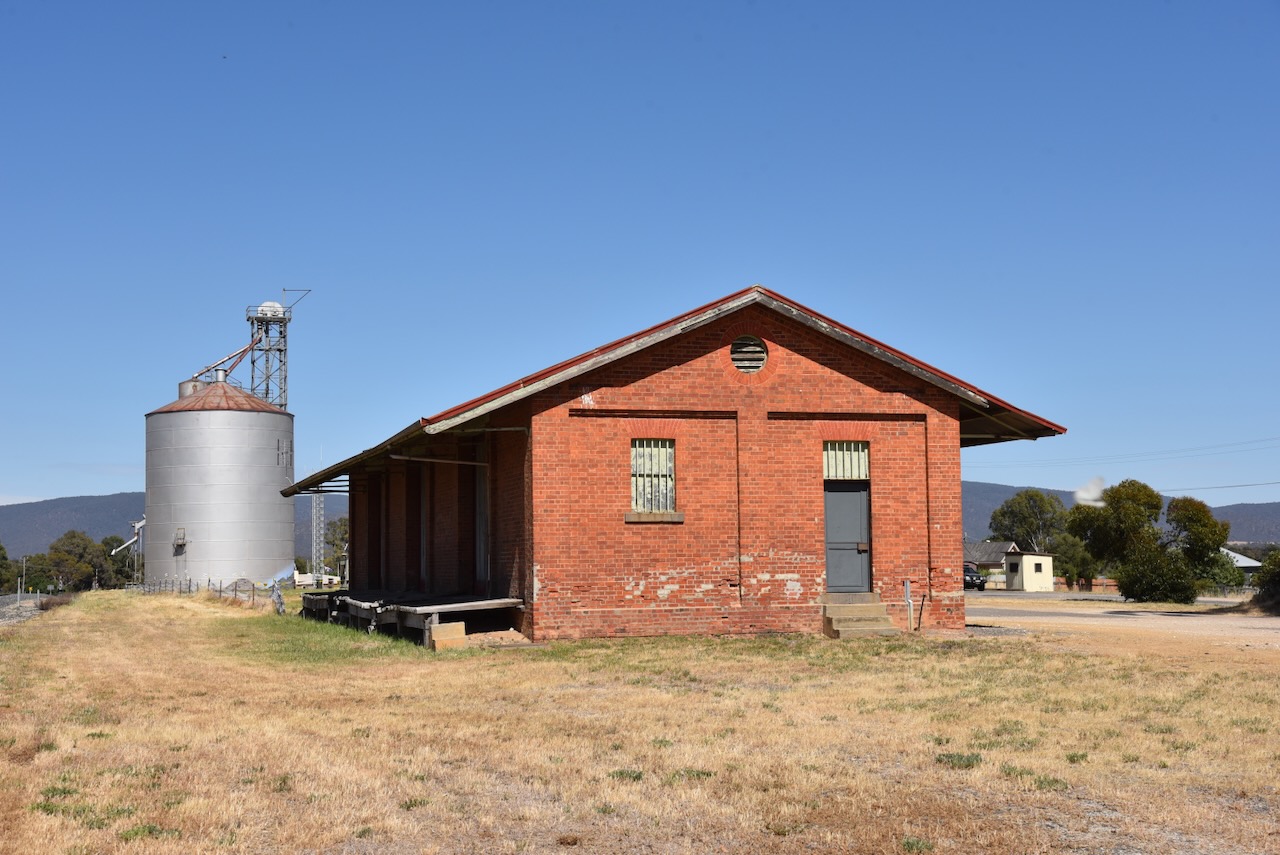
We then visited the old Avoca railway station that now functions as Avoca Arts and Gardens. The station was built in 1876 by J Summerland, on the Avoca-Maryborough line for the Victorian Railways. It is one of the most intact examples of the ‘Dunolly style’ which was a standard railway station style during that era. (Victorian Heritage Database Report)
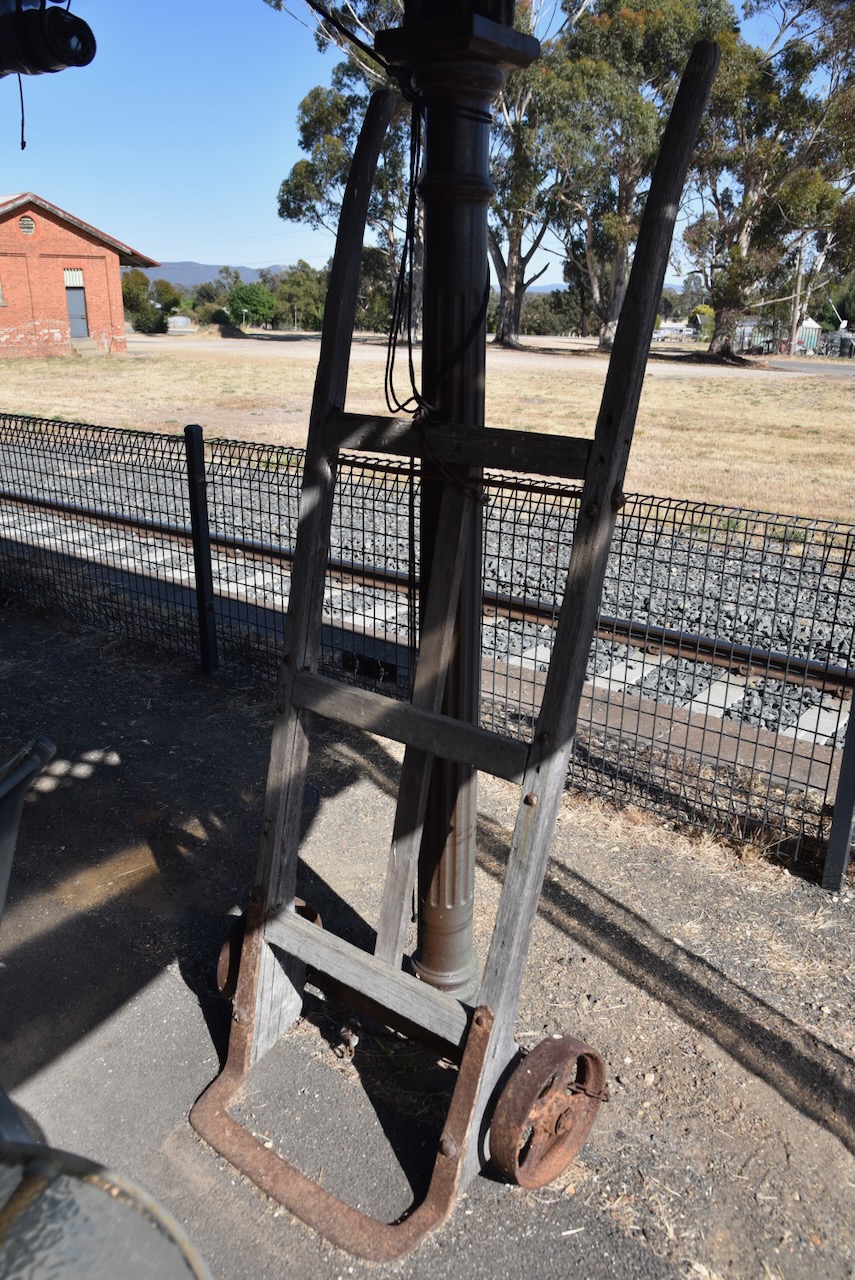
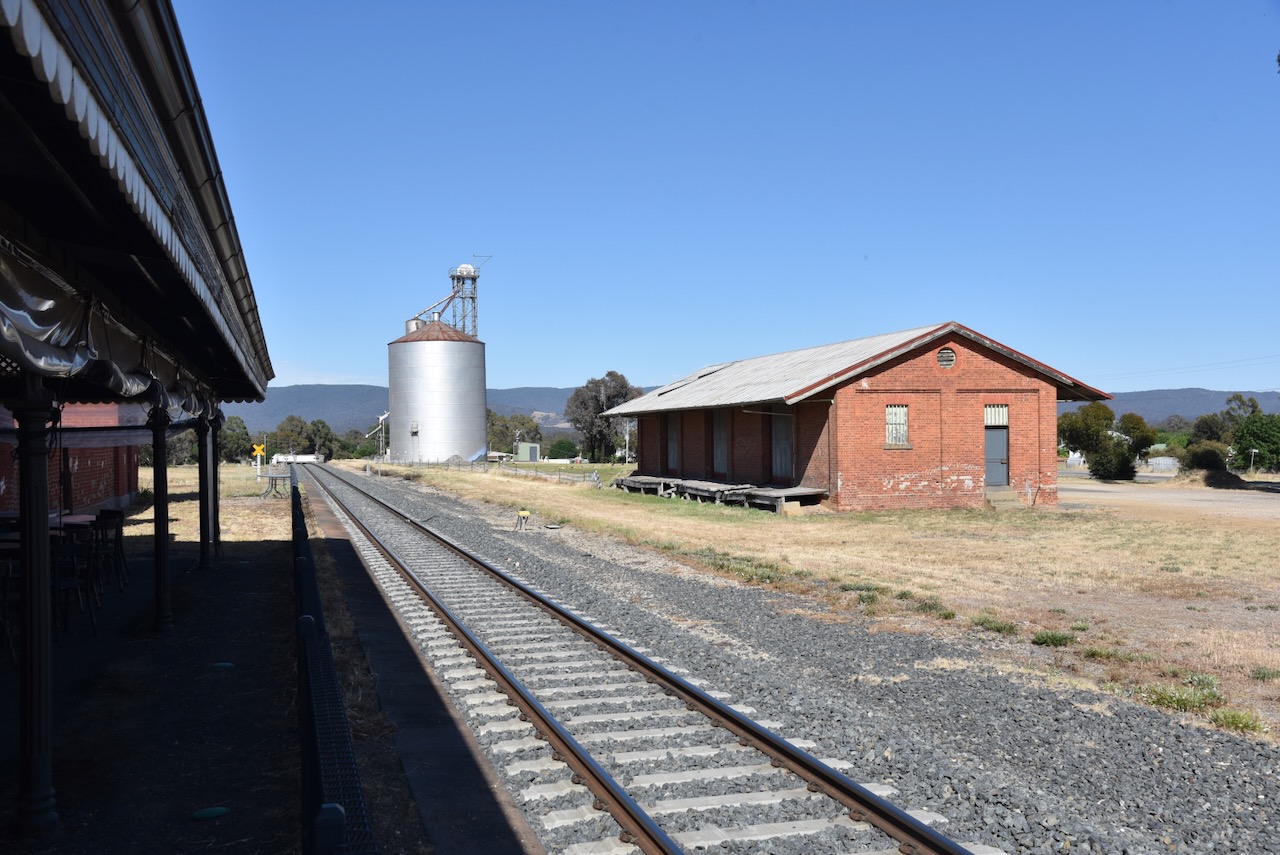
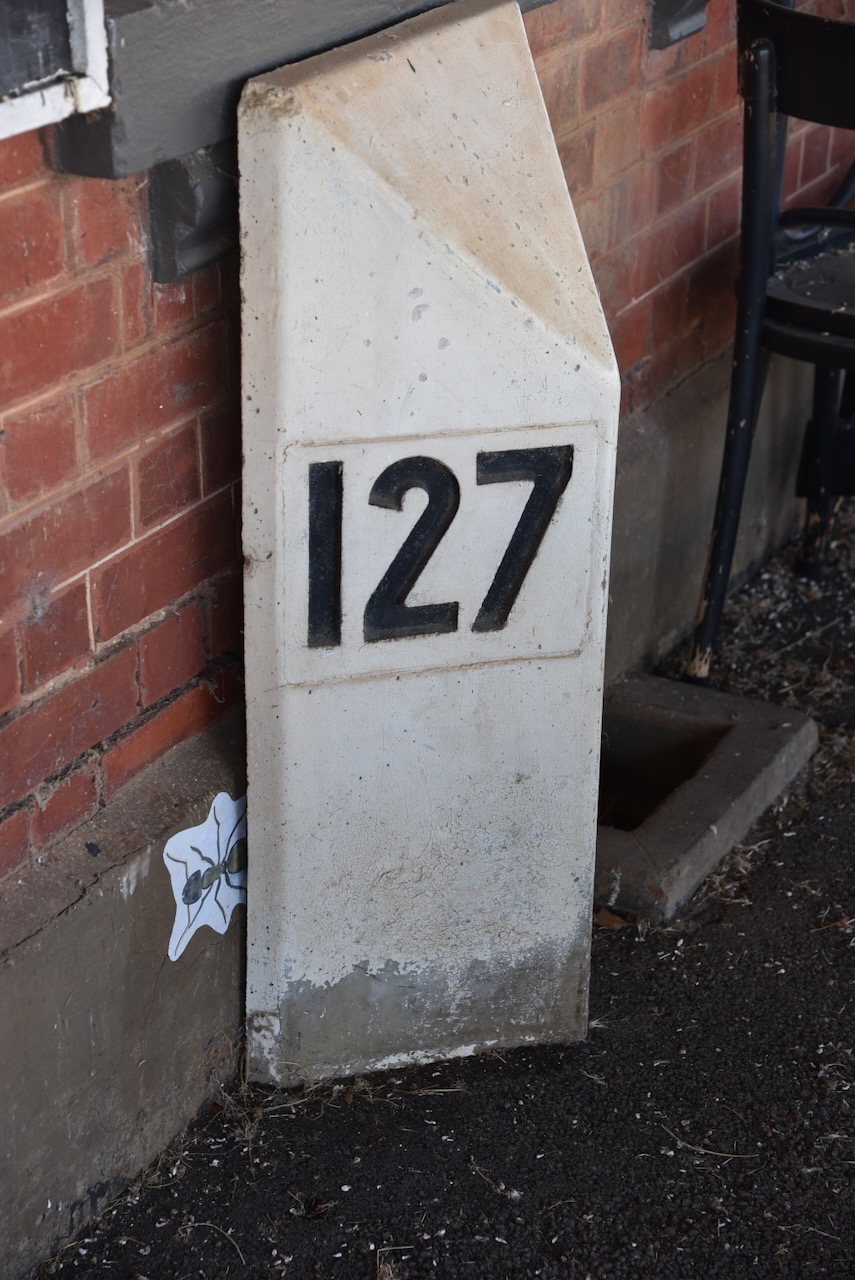
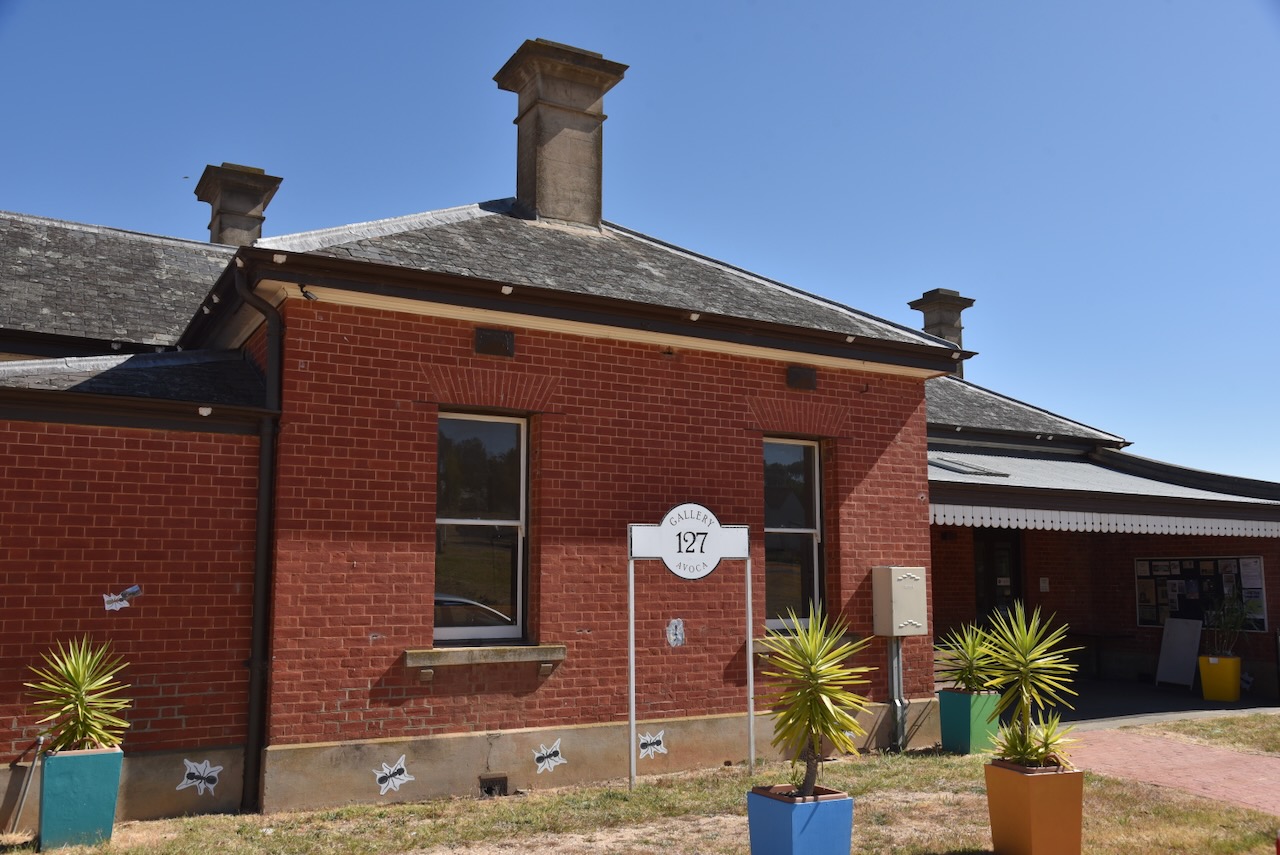
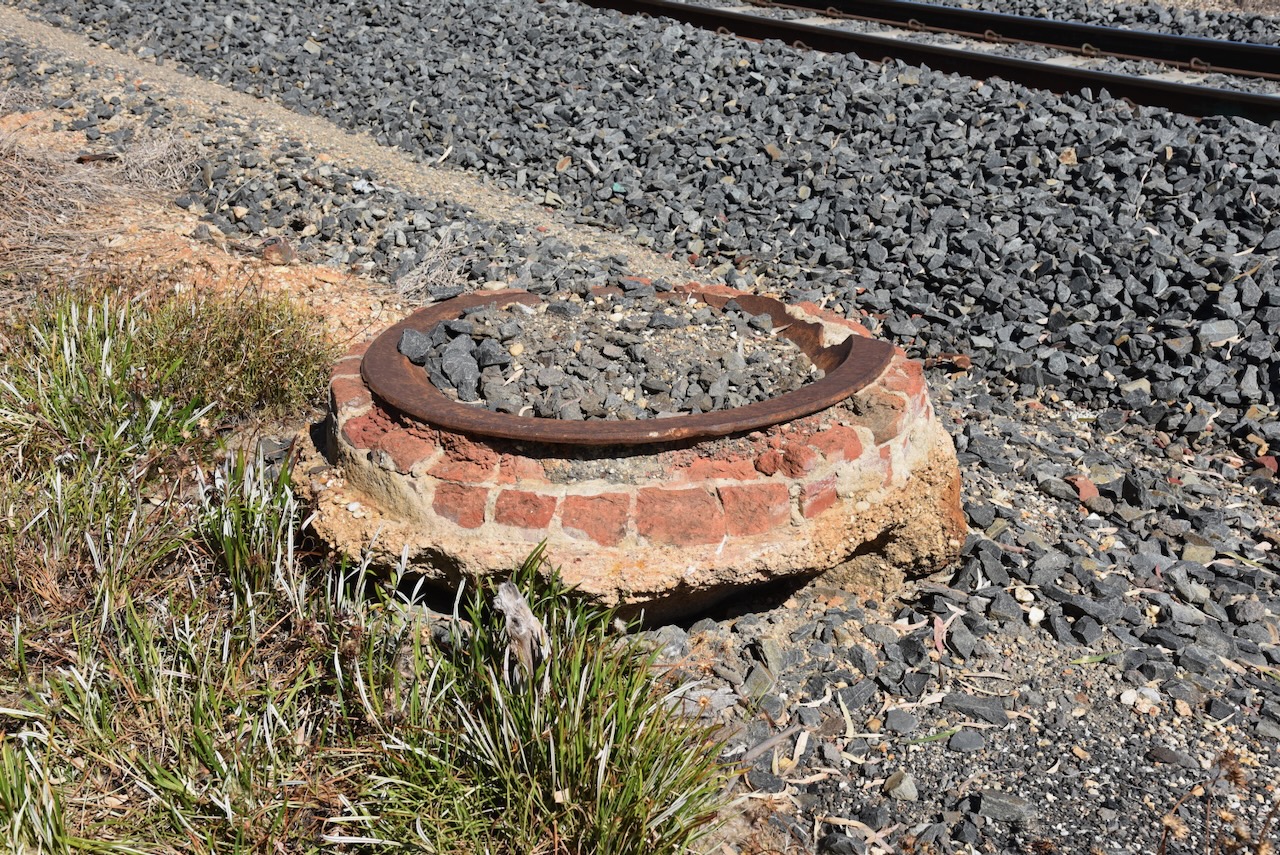
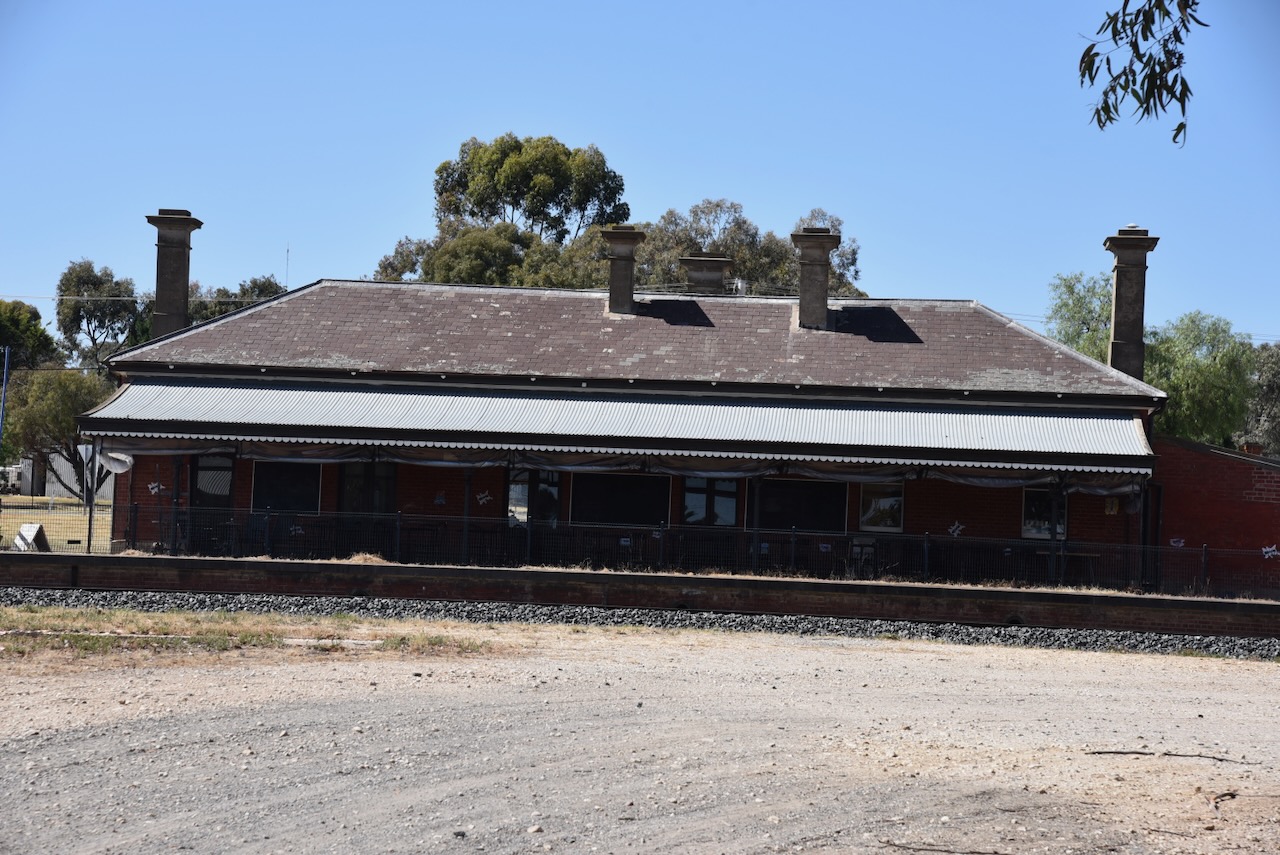
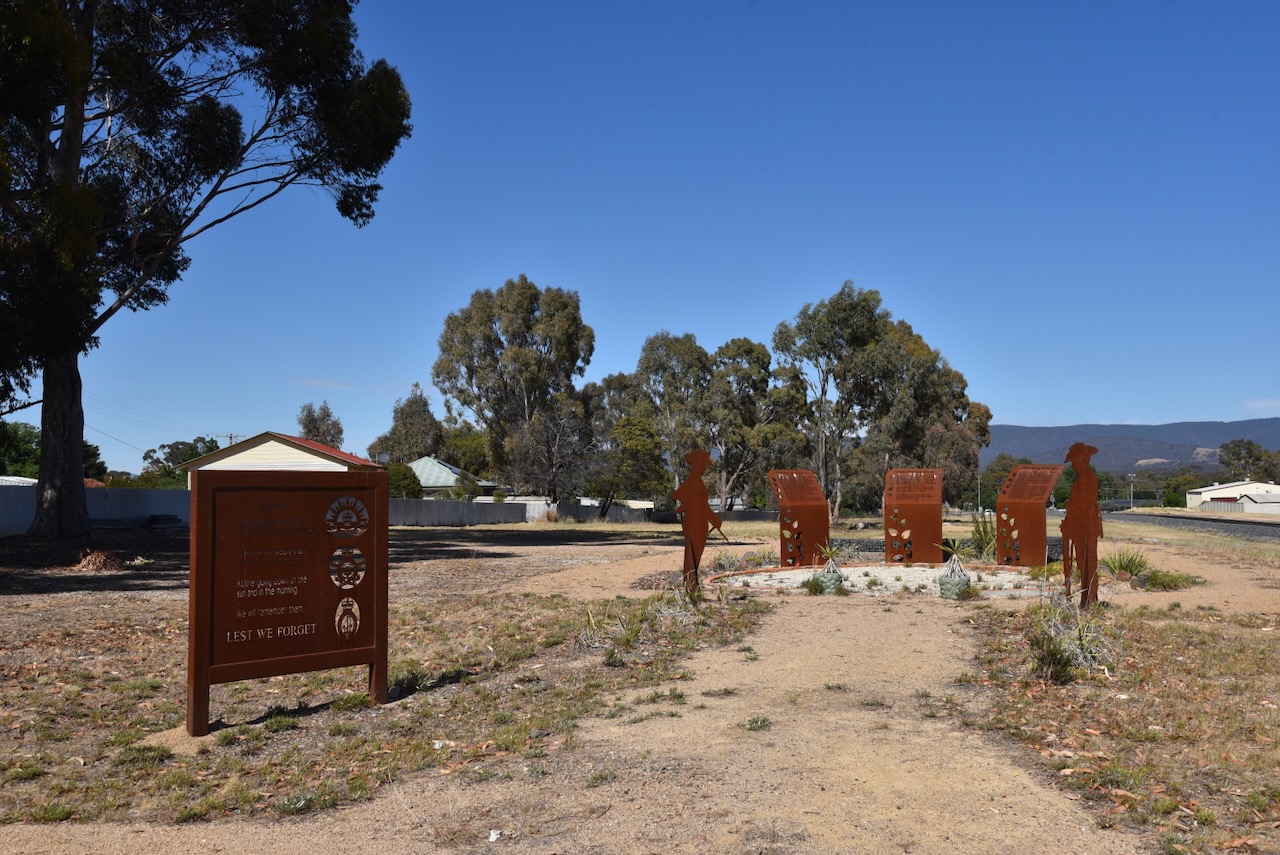
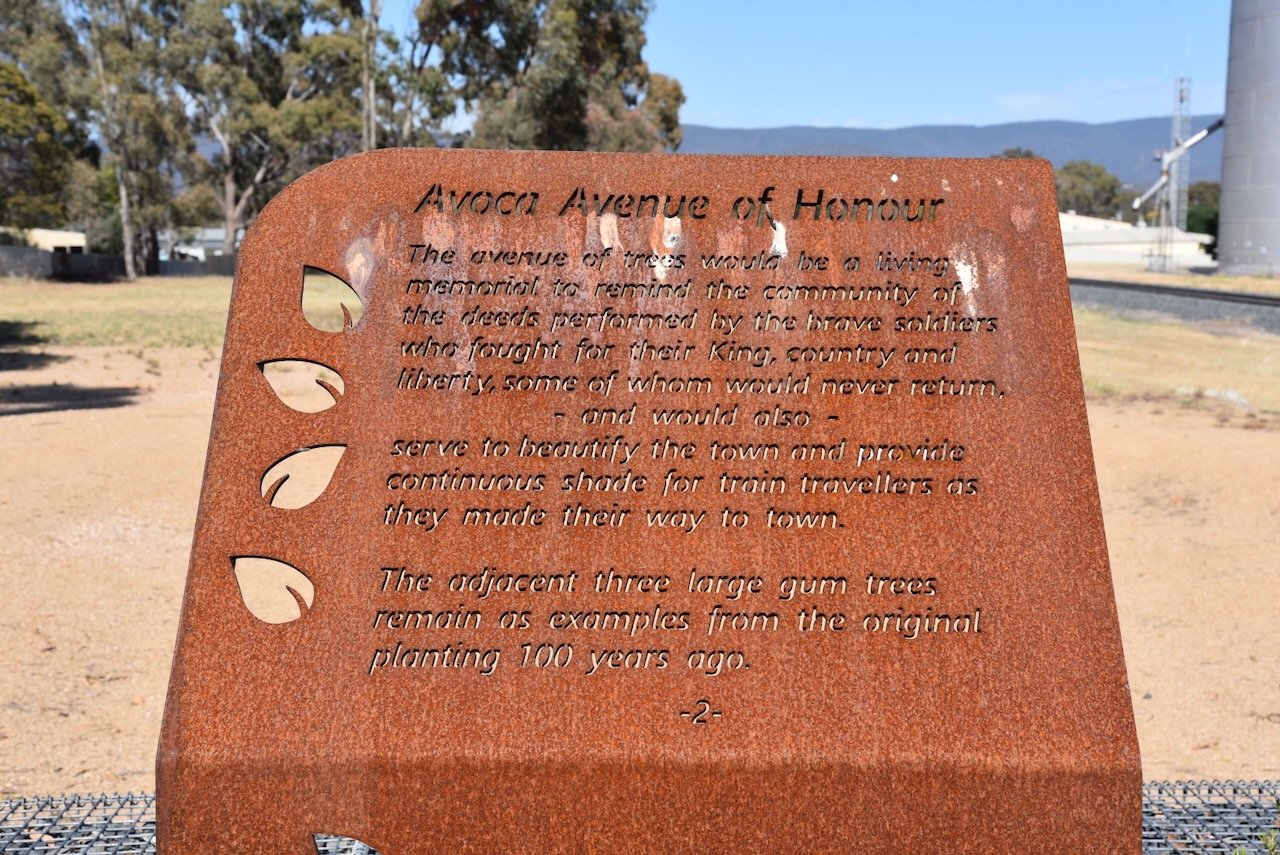
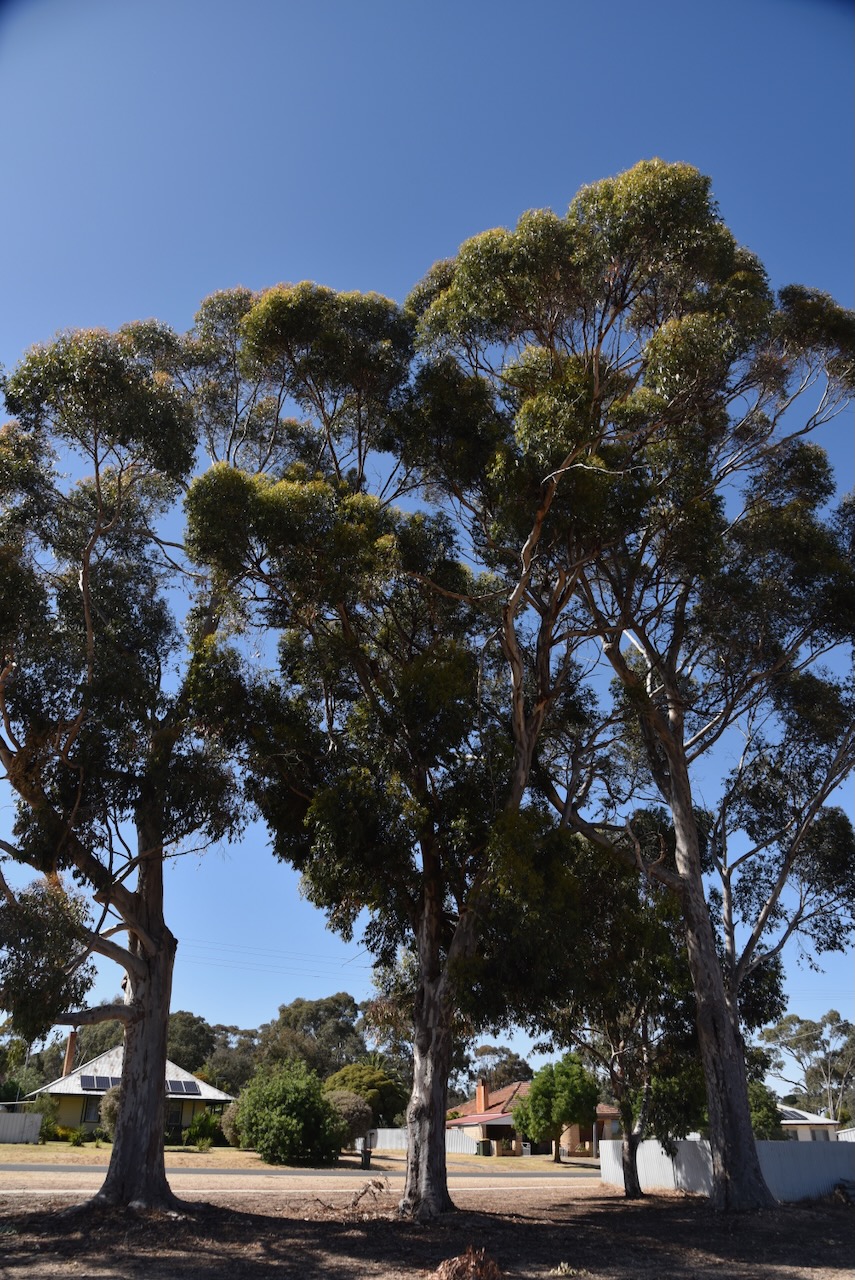
Close to the railway station is the Avoca Avenue of Honour which was established in 1918 to commemorate all those from Avoca who served during the First World War.
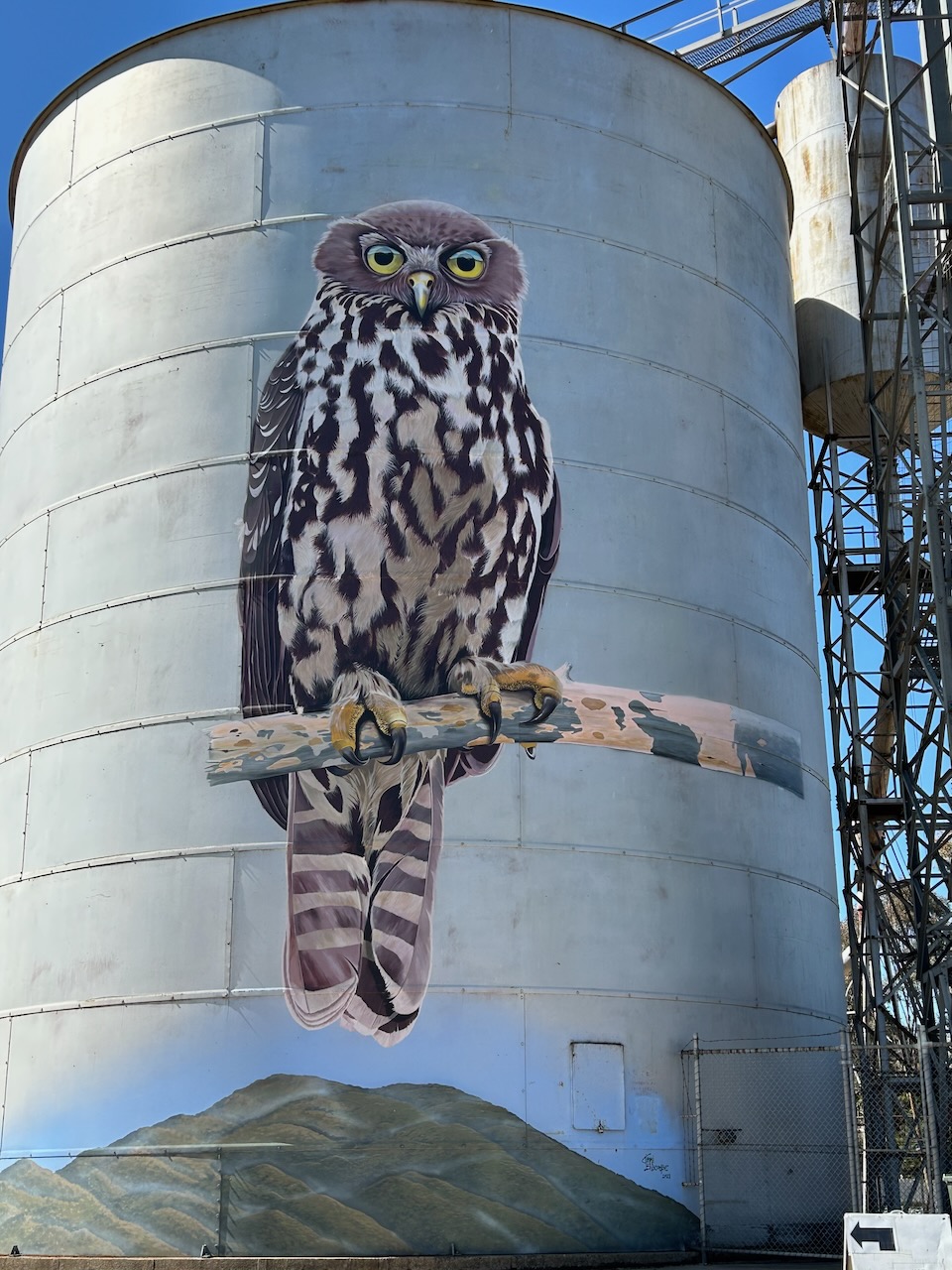
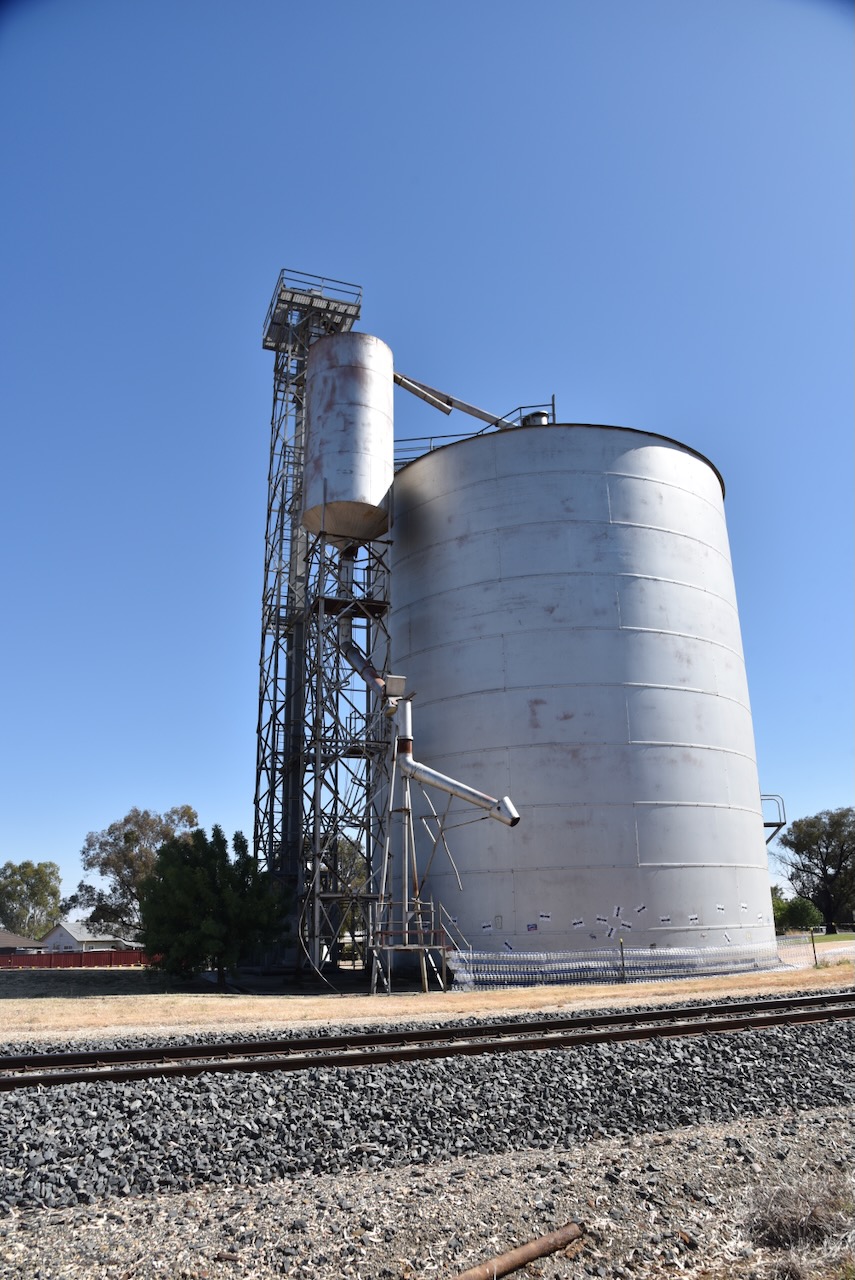
The Avoca silo is just a short distance from the railway station. For more information about the silo, please see my previous post.
We then drove from Avoca to Maryborough, a short distance of about 26km.
The Maryborough district was originally part of the Charlotte Plains pastoral run that was taken up in 1840 by the Simson brothers from Scotland. Hector Simson (b. 1843. d. 1922), Donald Simson (b. 1847. d. 1870) and John (b. 1848. d. 1857) were the sons of John Coghill Campbell Simson and Elizabeth Agnes Jane Simson nee Petrie. John and Elizabeth were from Scotland and emigrated to Australia. There is a cairn at Maryborough to commemorate the Simson brothers. It was constructed in 1939 of stone from their original bluestone homestead that stood on the banks of the Deep Creek at Carisbrook. (Monument Australia 2024) (Victorian Places 2024)

Above:- Article from The Age, Melbourne, Thu 16 Mar 1939. Image c/o Trove
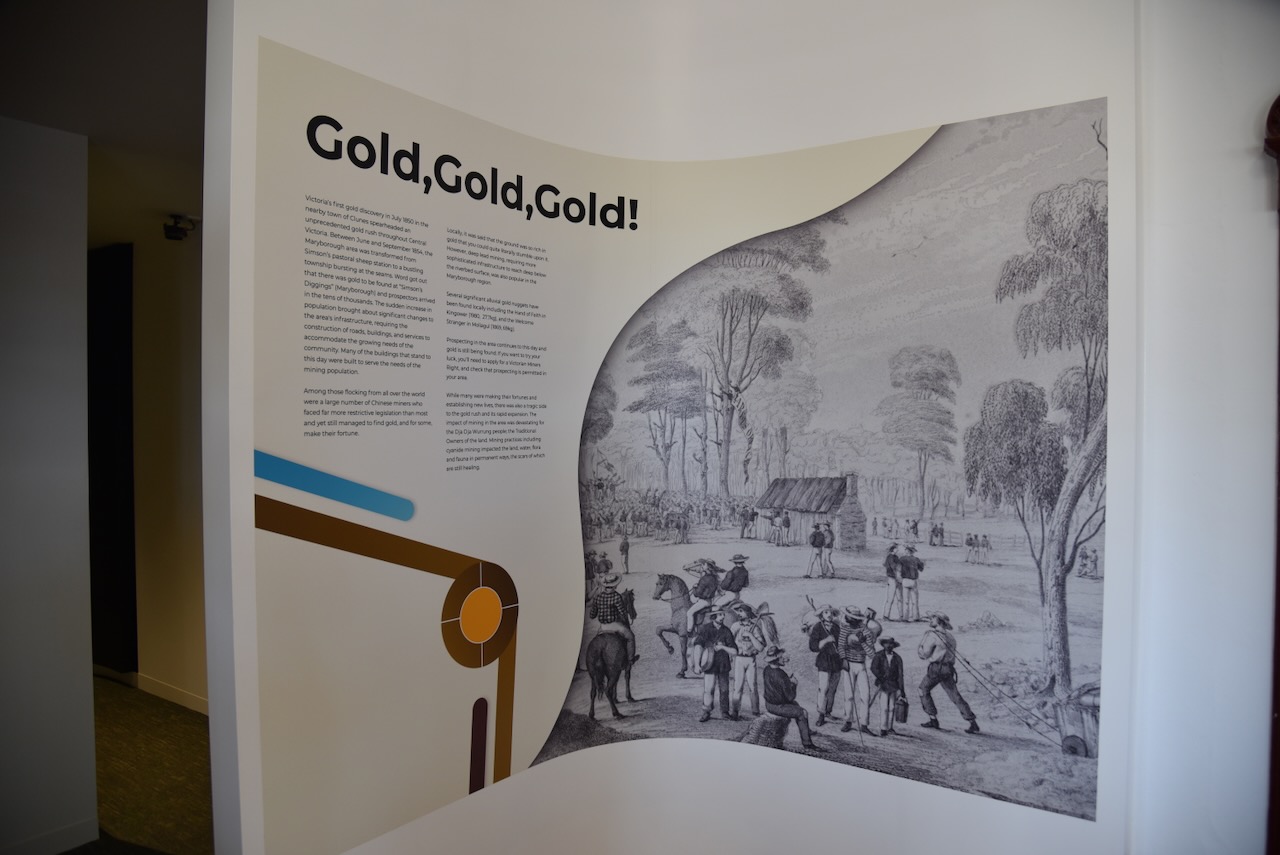
Gold was discovered in the Maryborough region in March 1853 and this resulted in a gold rush. In July 1853 a 40-pound gold nugget was discovered. The settlement was originally known as Simsons and also Daly’s Flat. In 1854 was renamed Maryborough by Assistant Gold Commissioner James Daly in honour of Marybourgh in Cork Ireland where he was born. In September 1854 Maryborough had a population of about 25,000 people. The town of Maryborough was served in 1855 and in October 1855 allotments were sold. (Victorian Places 2024)
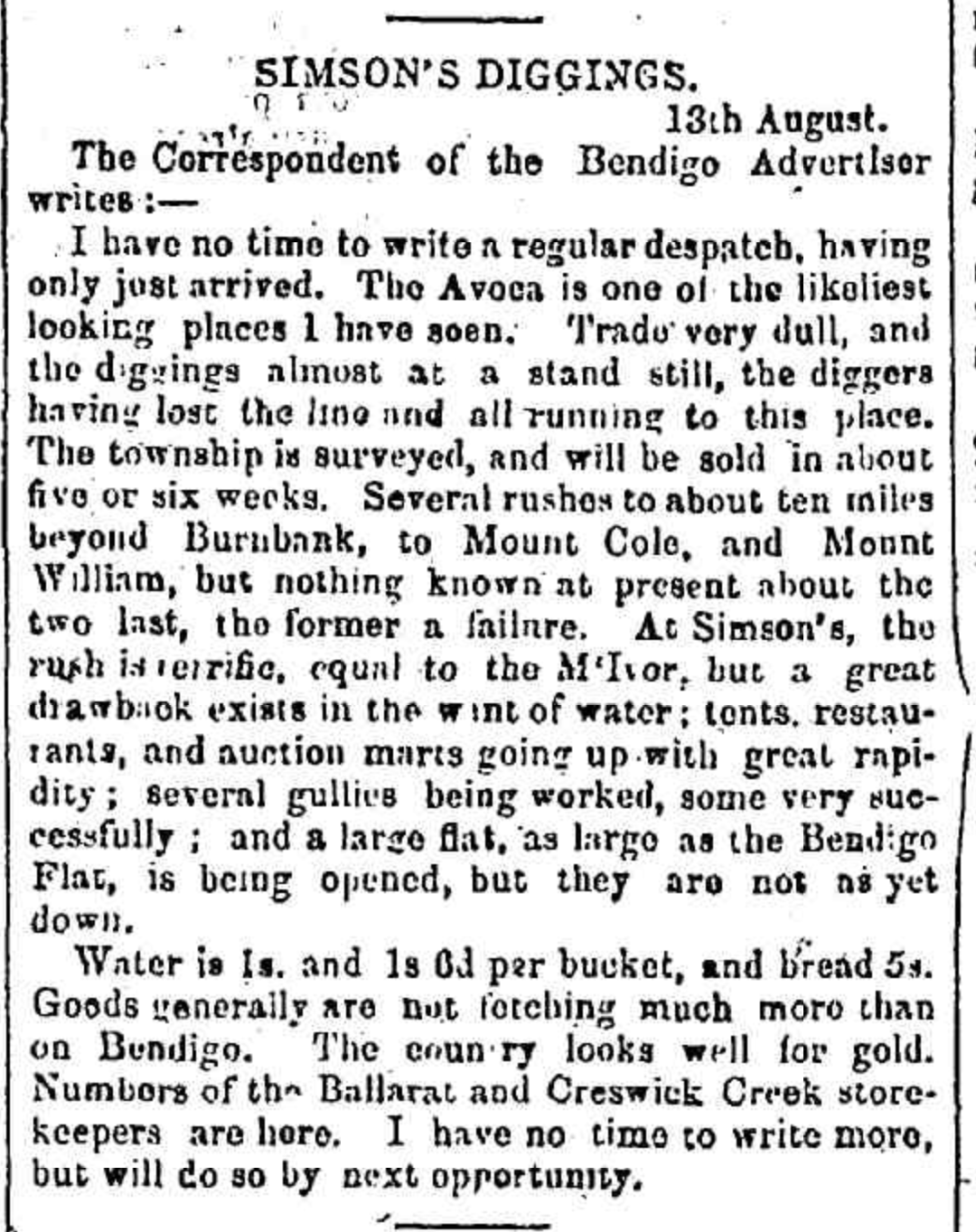
Above:- An article from The Banner, Melbourne, Fri 25 Aug 1854. Image c/o Trove.
Maryborough is a large urban centre and contains numerous historic buildings.
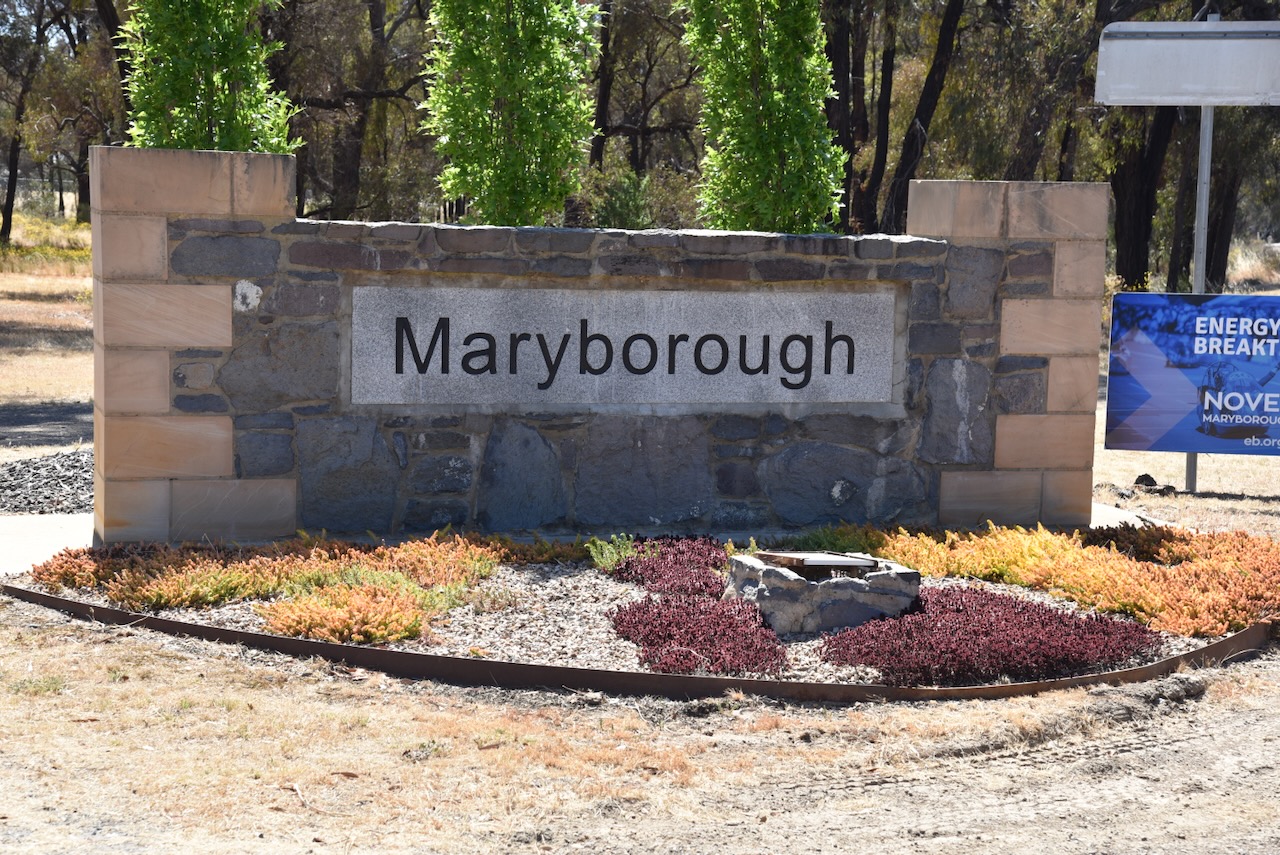
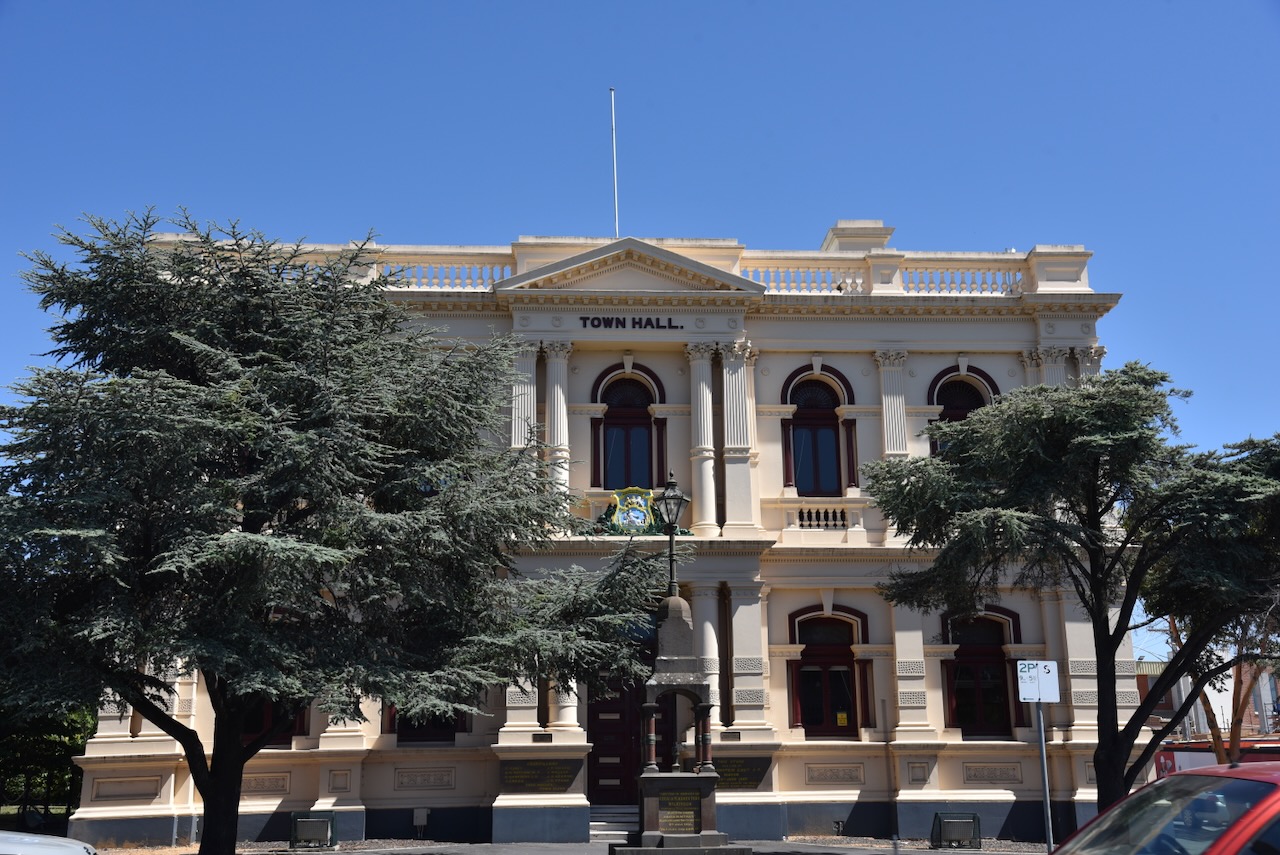
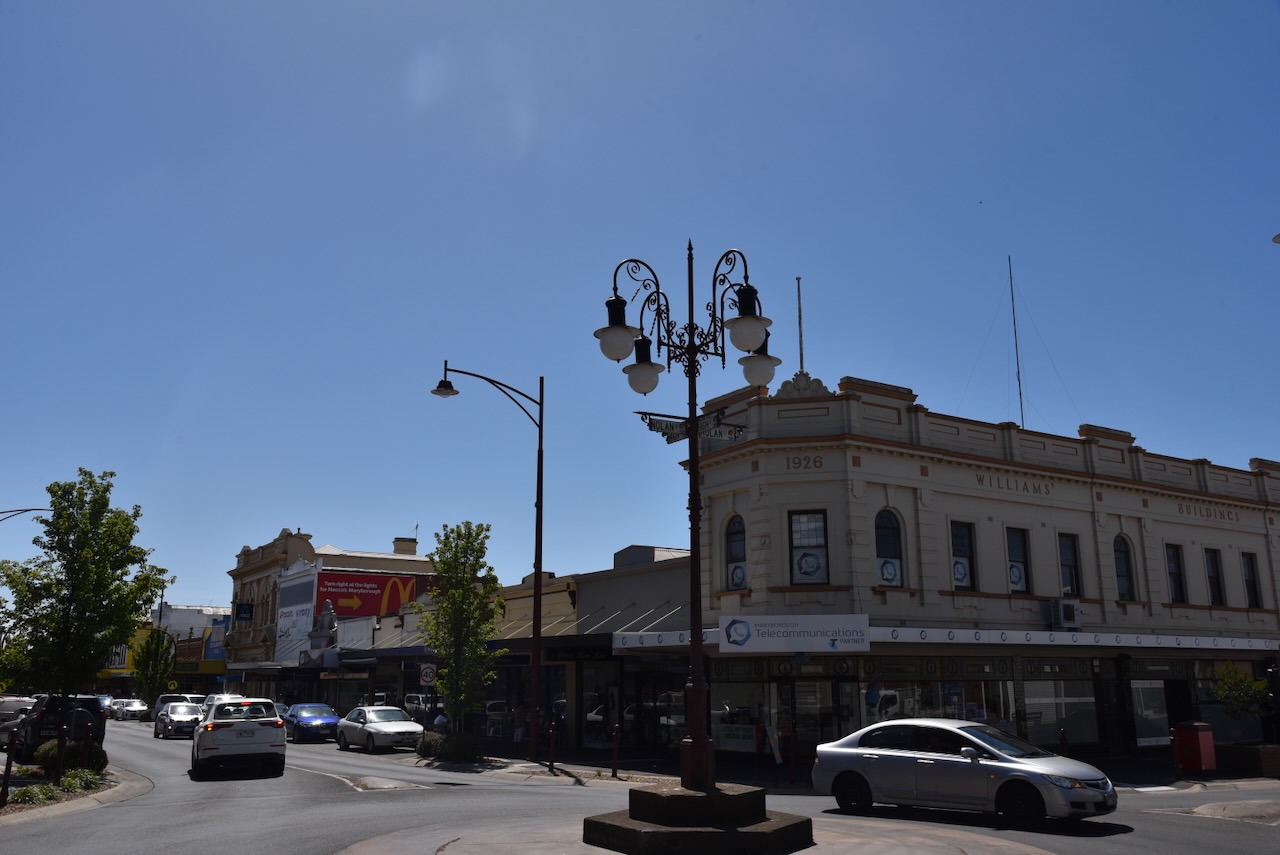
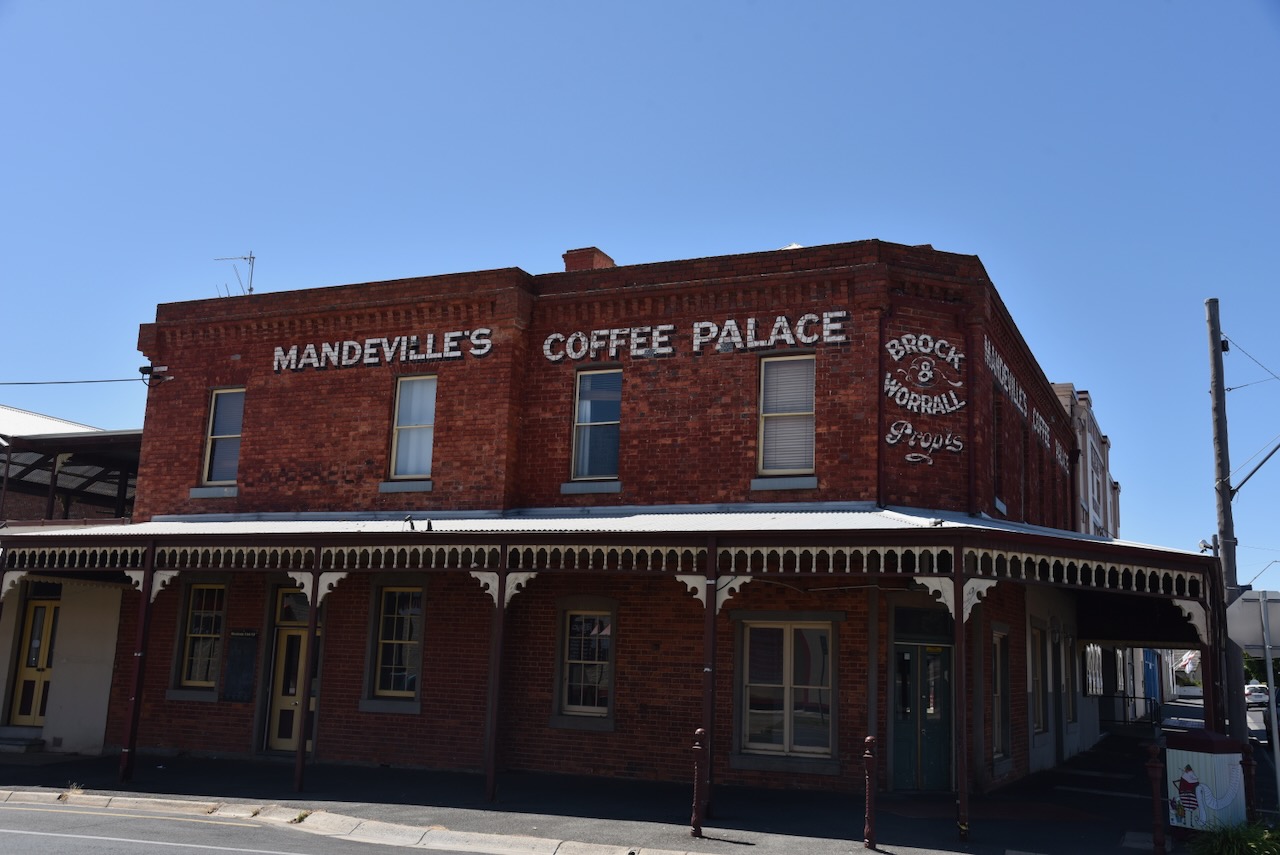
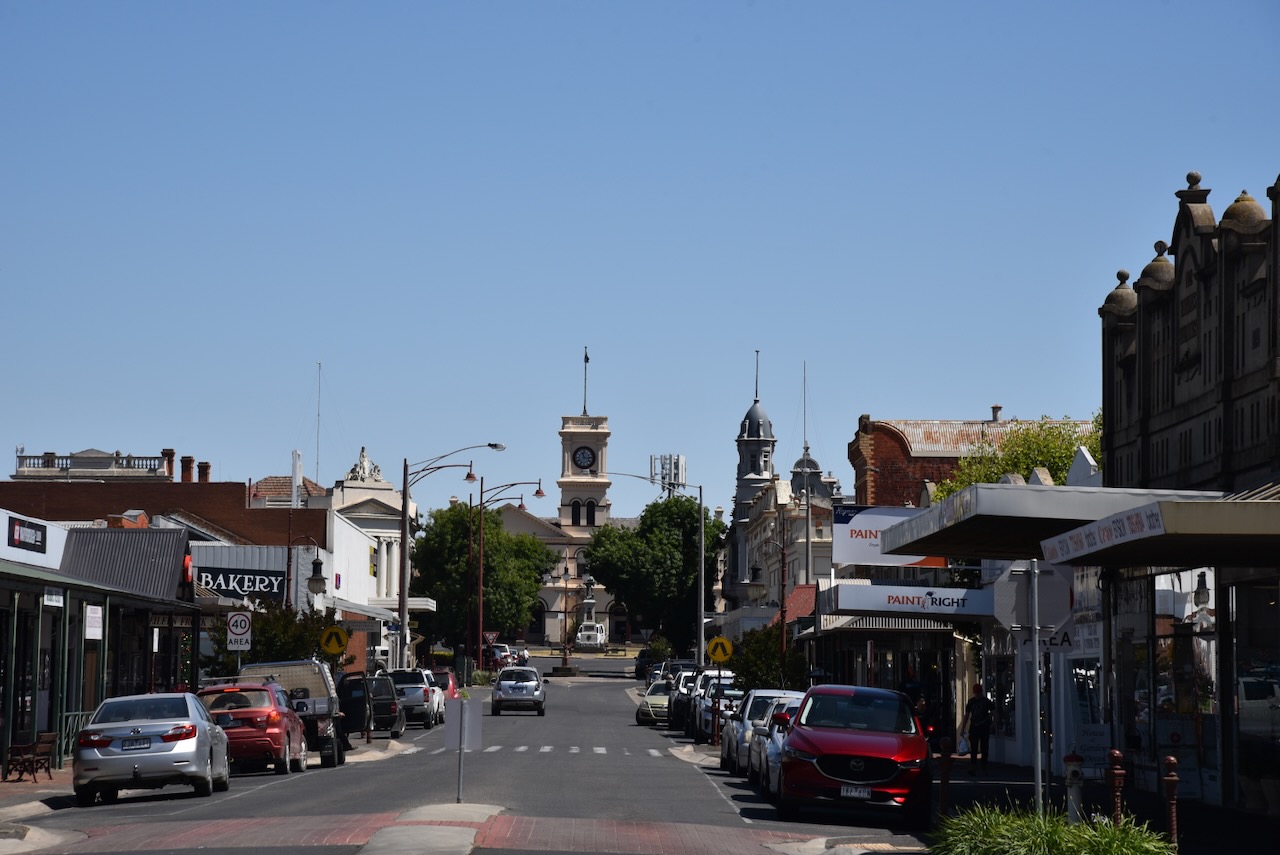
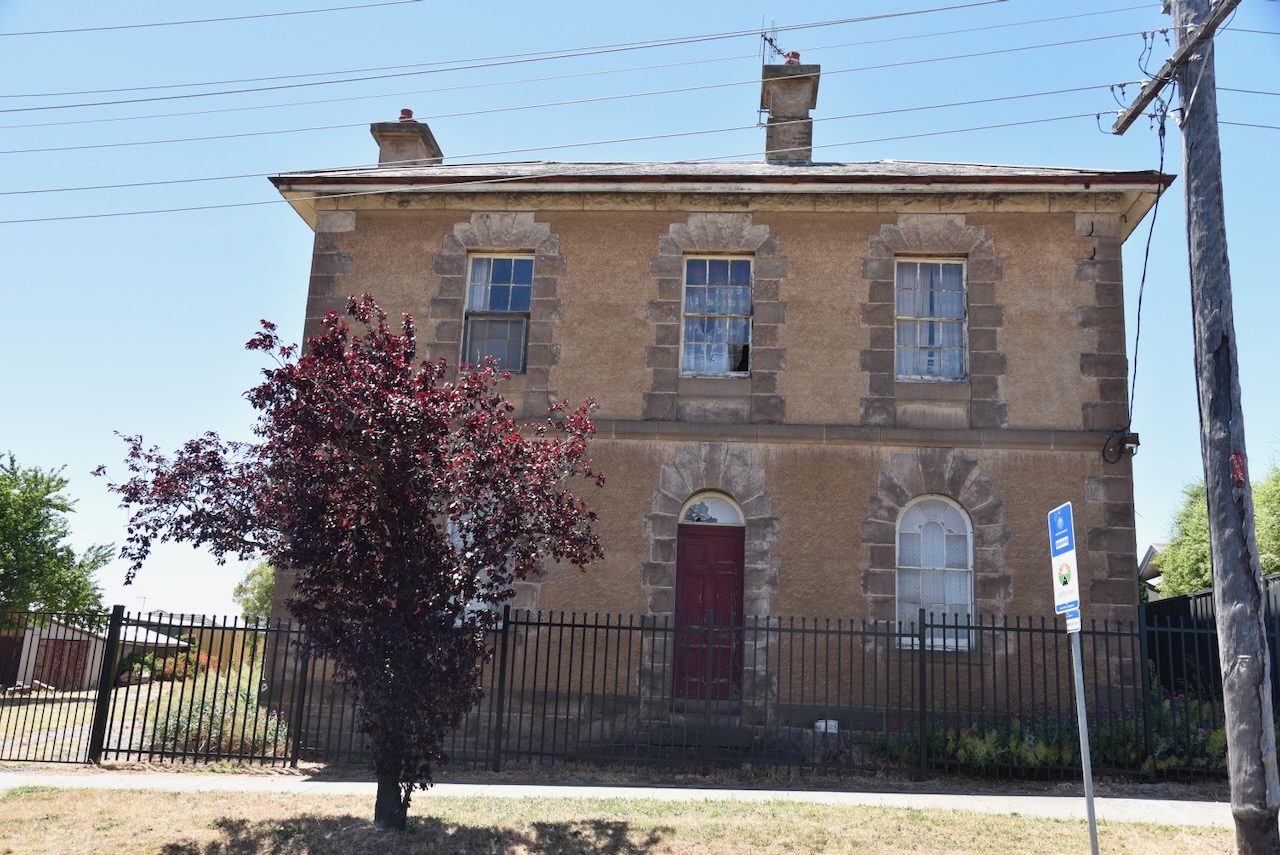
The foundation stone for the Maryborough Church of England was laid on the 20th day of June 1860. The church is now known as the Christ the King Anglican church. (Facebook 2024)

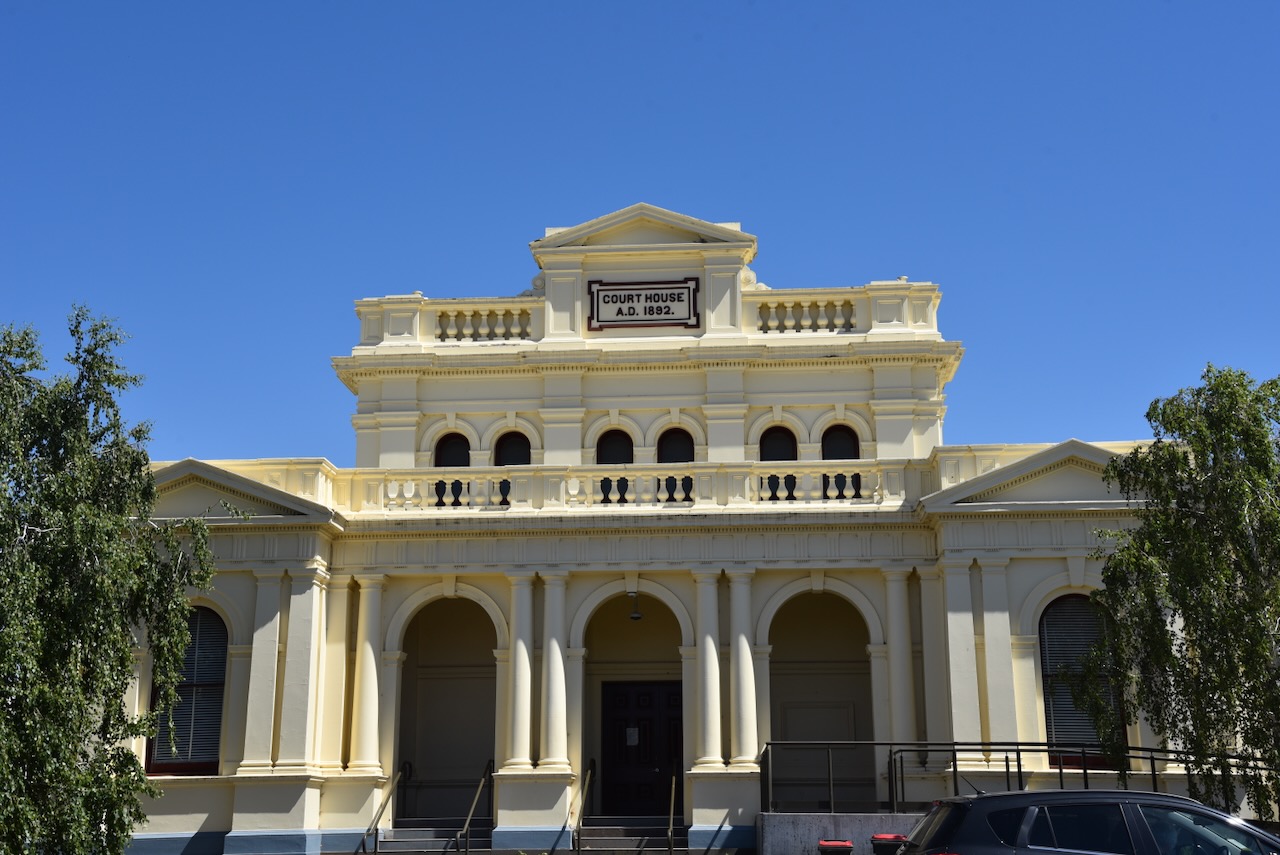
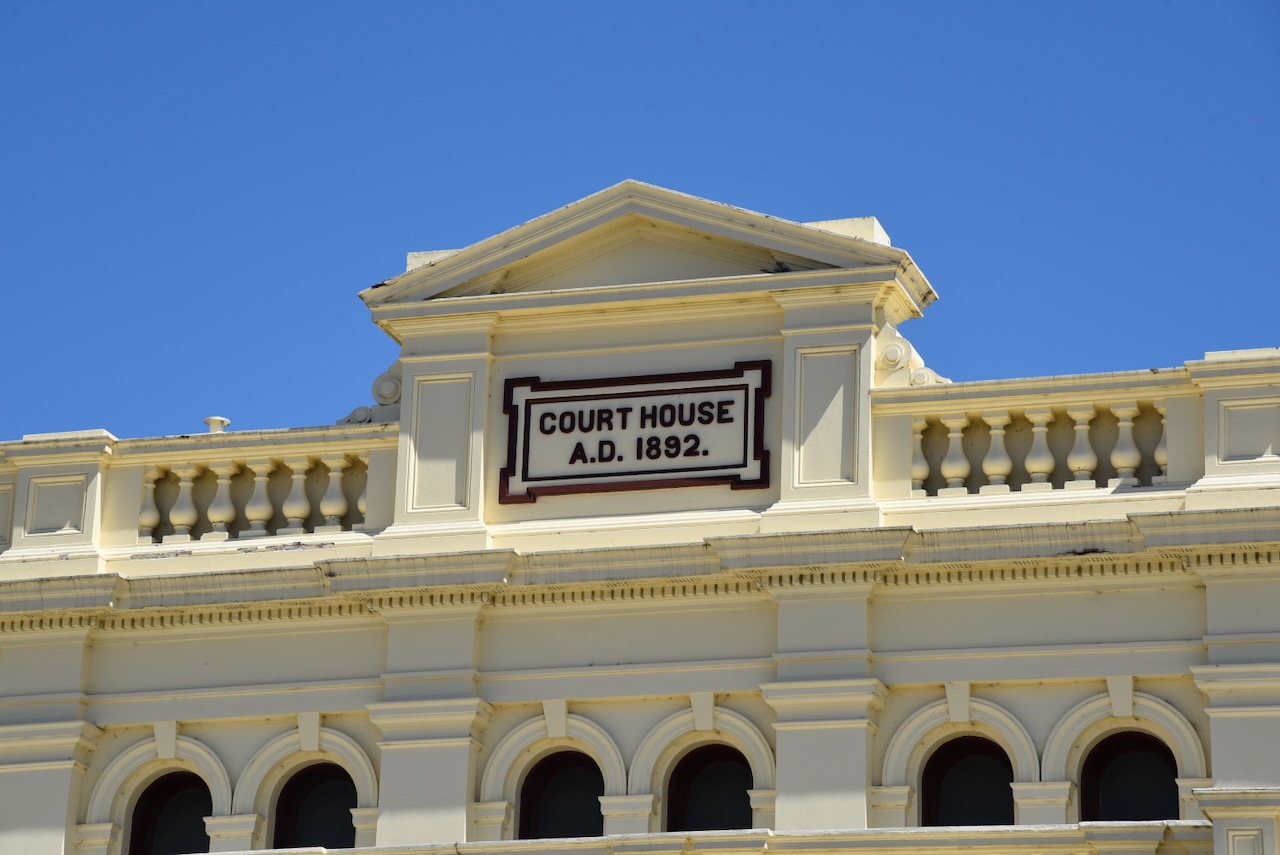
The present Maryborough courthouse building was built in 1892-1893 and was opened in April 1893. It was designed by architect Samuel Bindley in Federation Free Classical style. The first Maryborough court opened in 1858 as a Court of Mines. The present-day building is one of the largest courthouses in Victoria outside of Melbourne. (Aussie Towns 2024) (Vict Heritage Database).
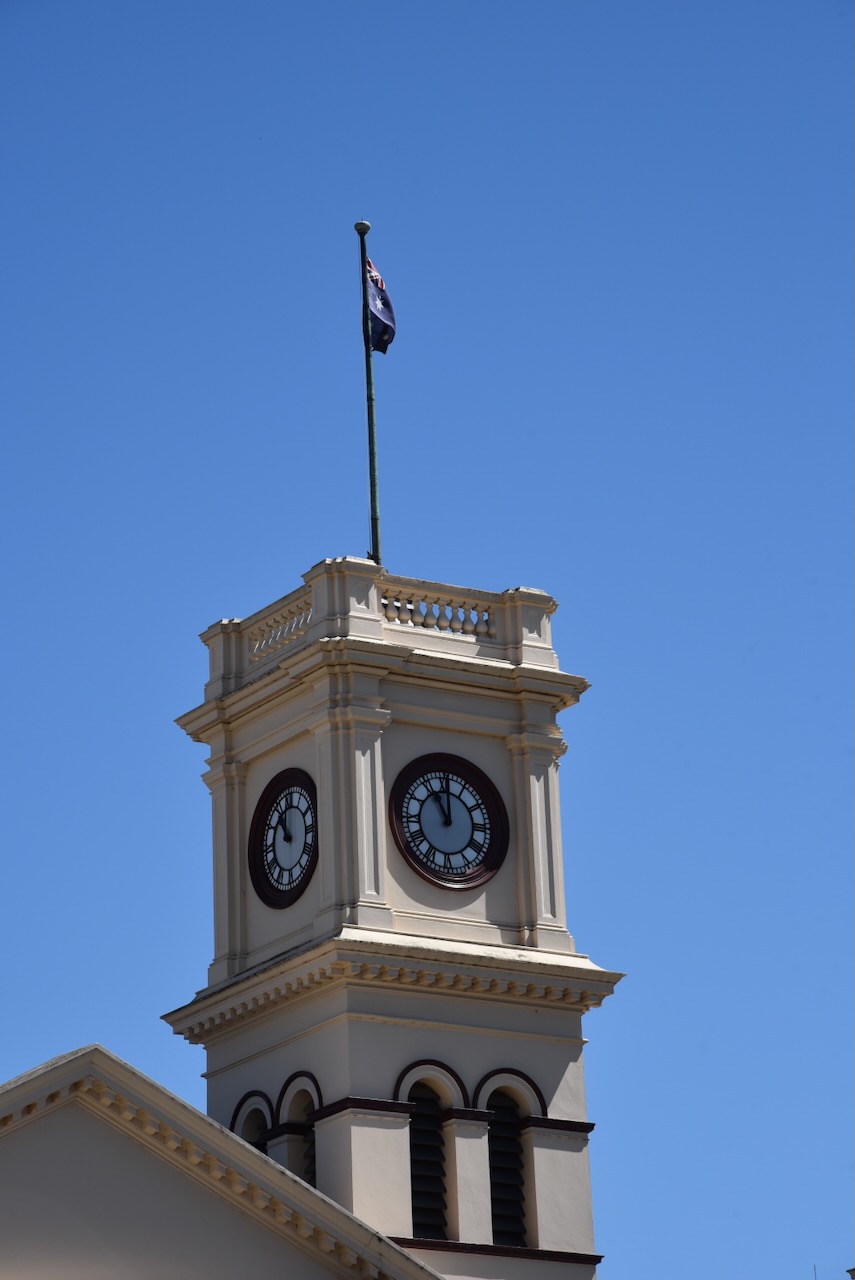
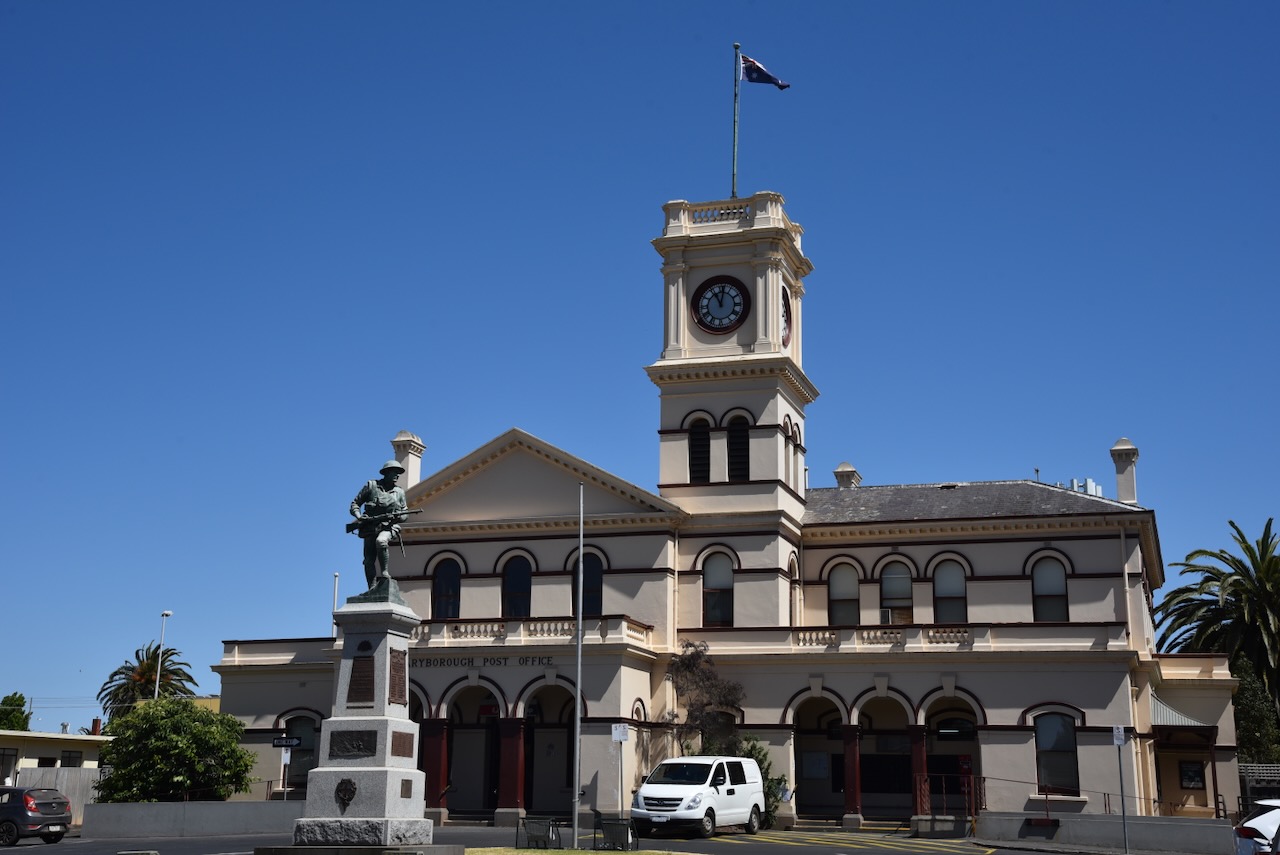
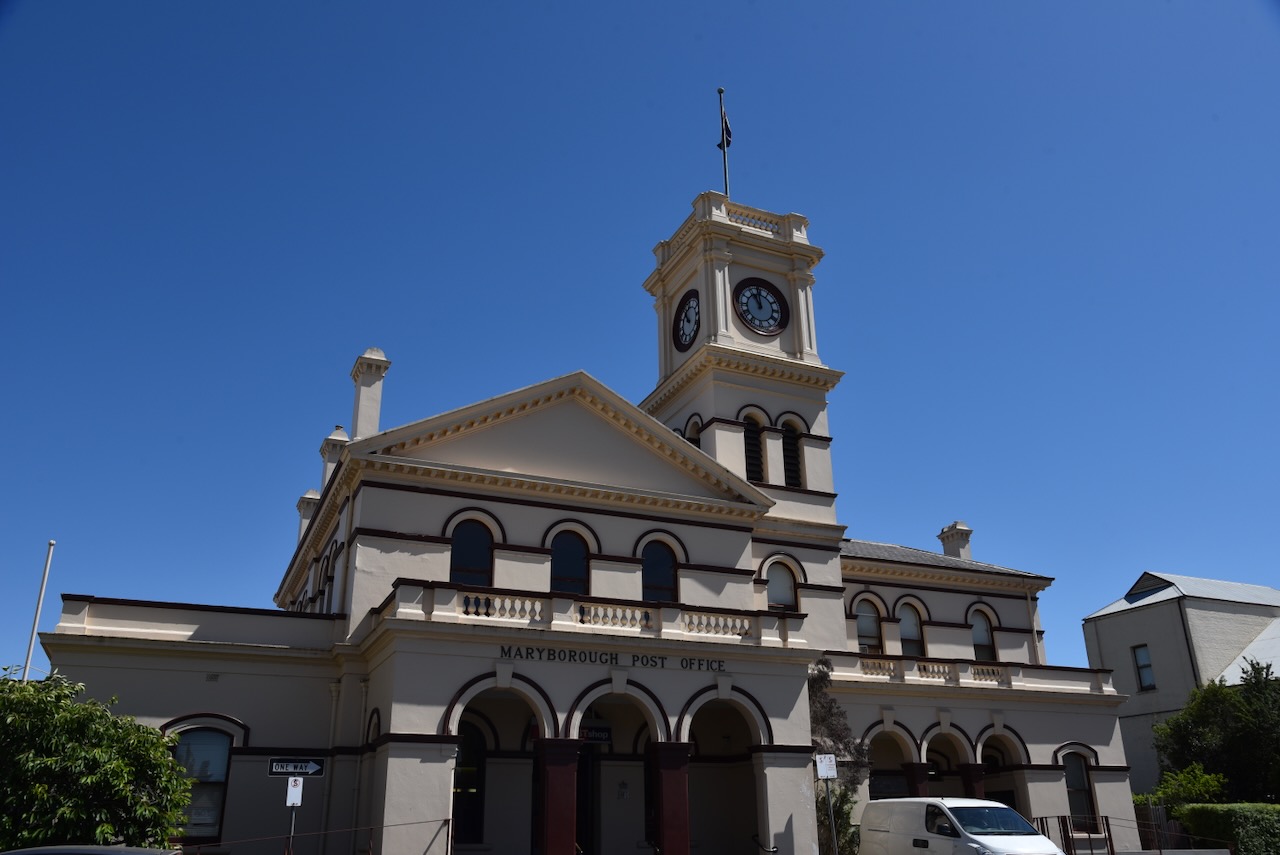
The Maryborough Post Office was built between 1876 and 1877. It was designed by J.H. Marsen, architect of the Victorian Public Works Department and was built by Peter Cunningham for a contract price of £8266 4s 3d. It was constructed from first-class stone mined from McCallum’s Creek. The clock tower was added in 1879. The clock was manufactured by Joseph Bros of Melbourne and the bell by IW Horwood of Castlemaine. (Aussie Towns 2024)
The Bull & Mouth Hotel was opened in c. 1855. The current and very impressive hotel was built in 1904 when former Maryborough resident Thomas Proctor of Ballarat, engaged Ballarat architect W E Gribble and local builder W J Dingle to build a new two-storey hotel. (Aussie Towns 2024)

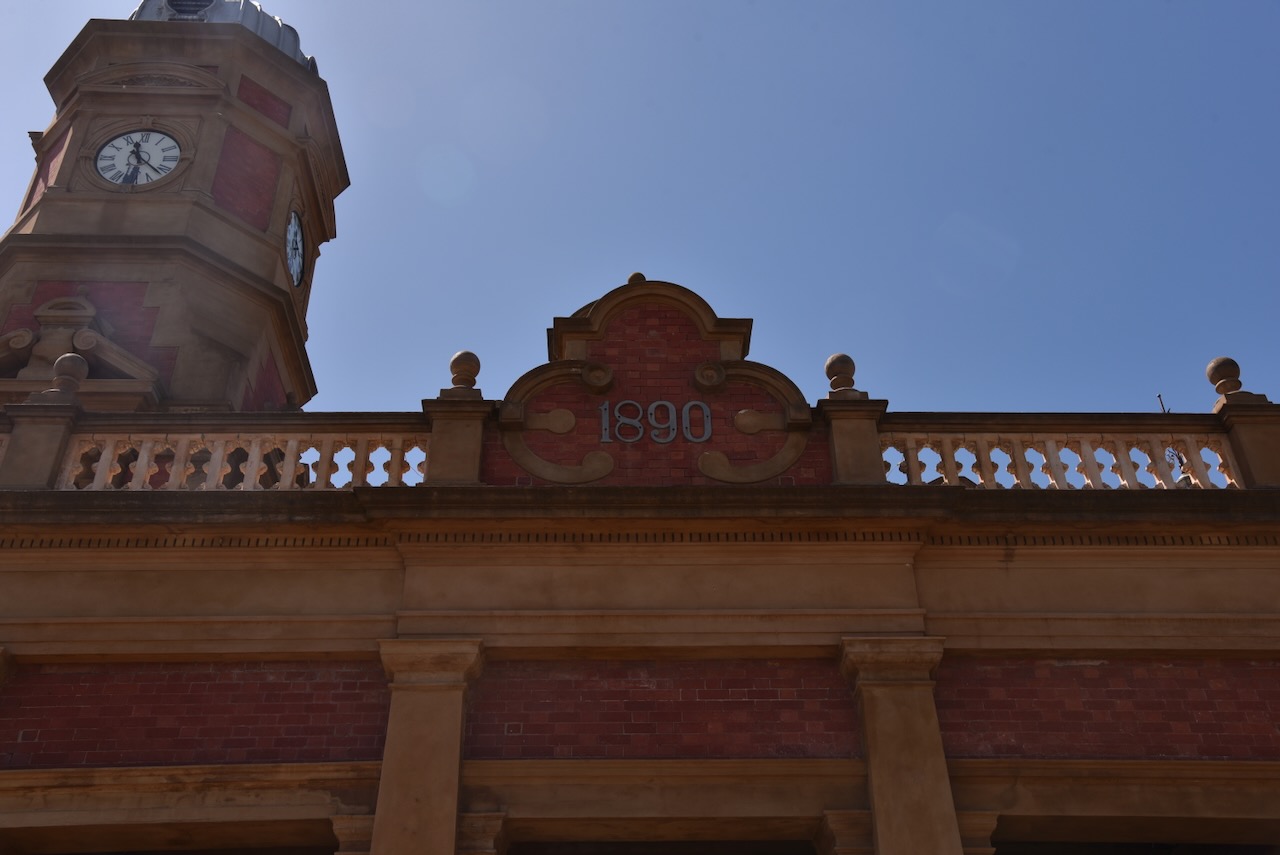
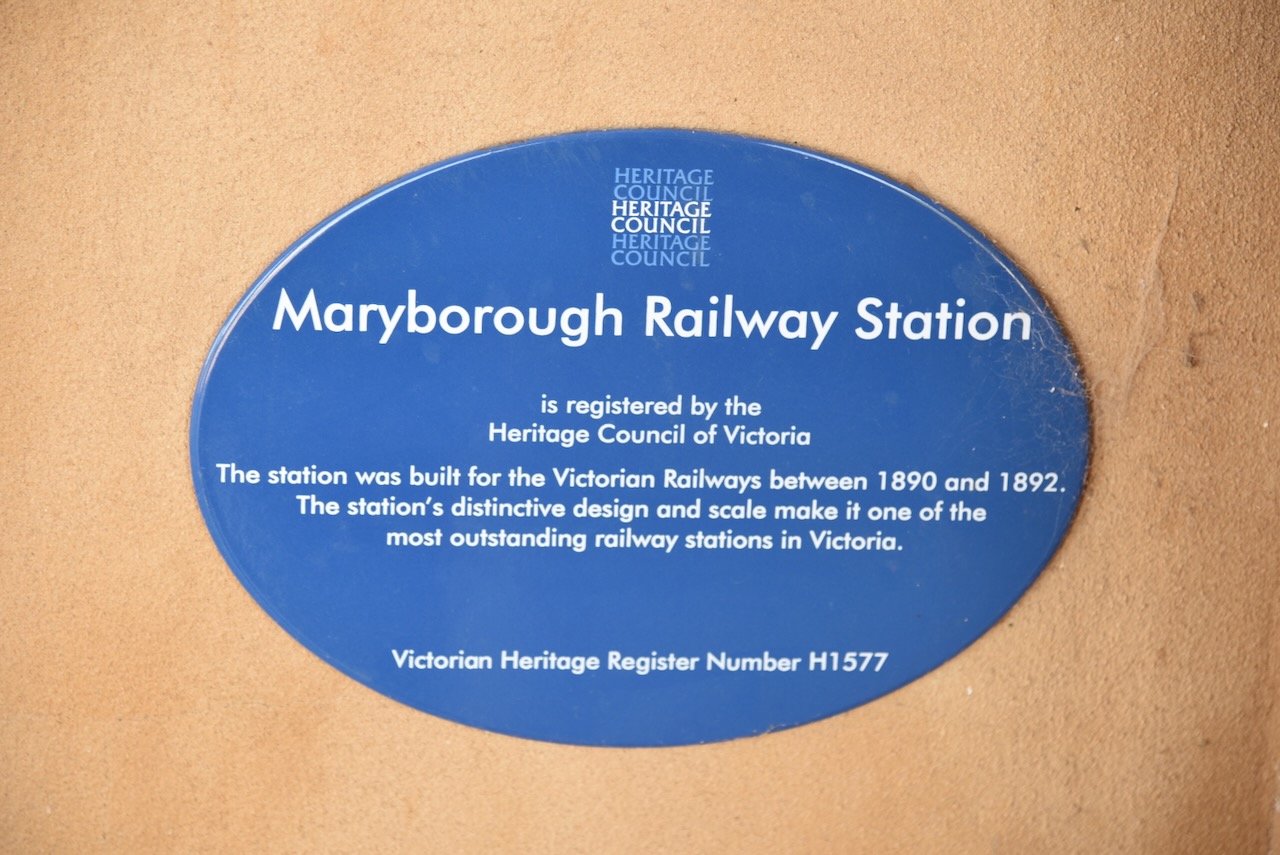
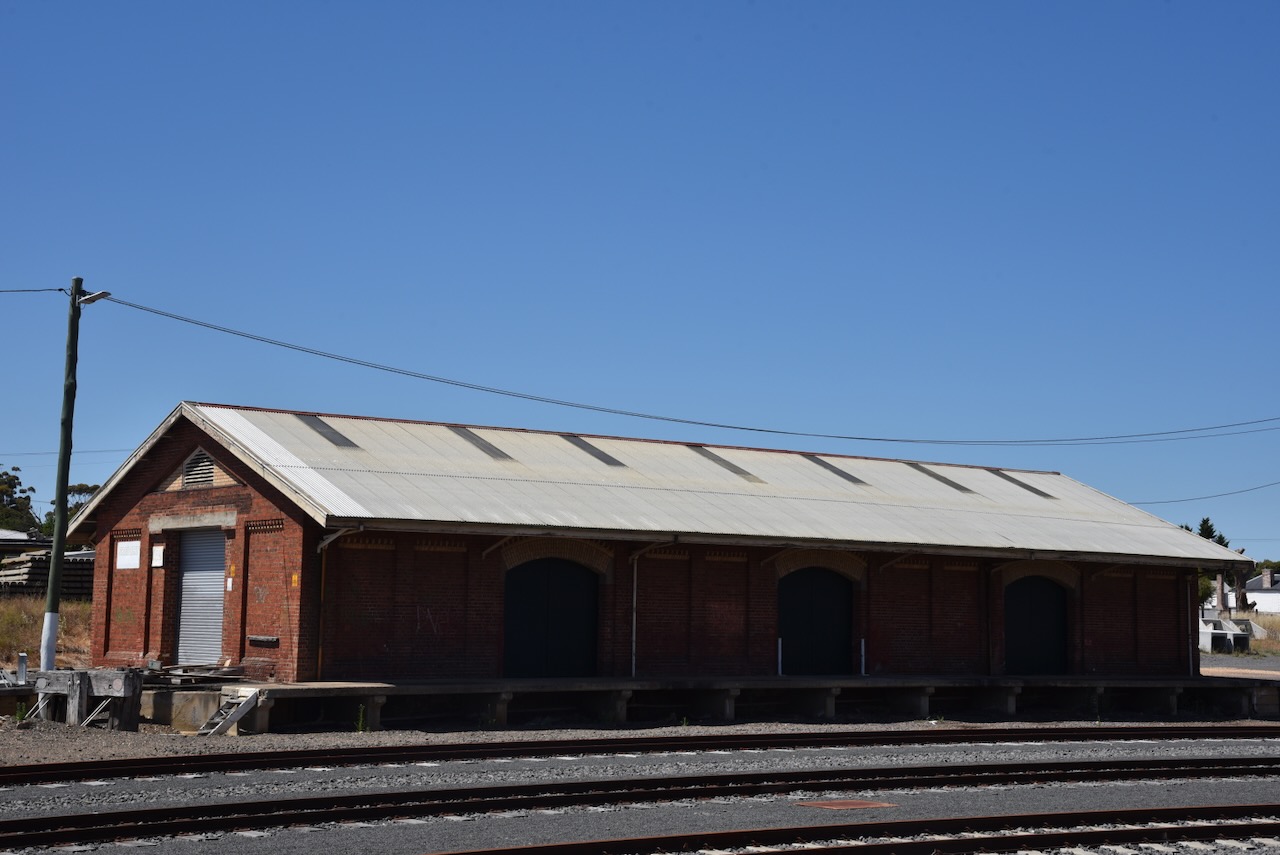
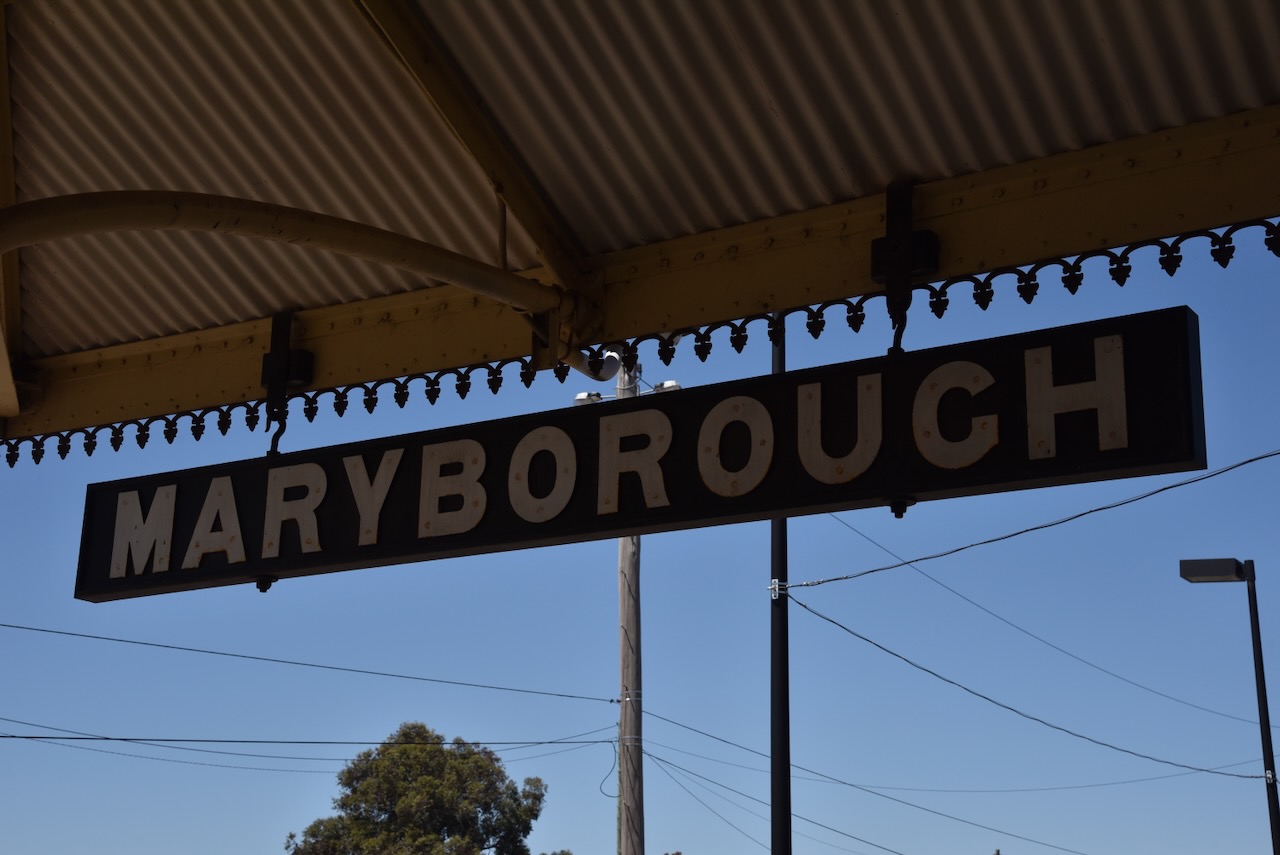
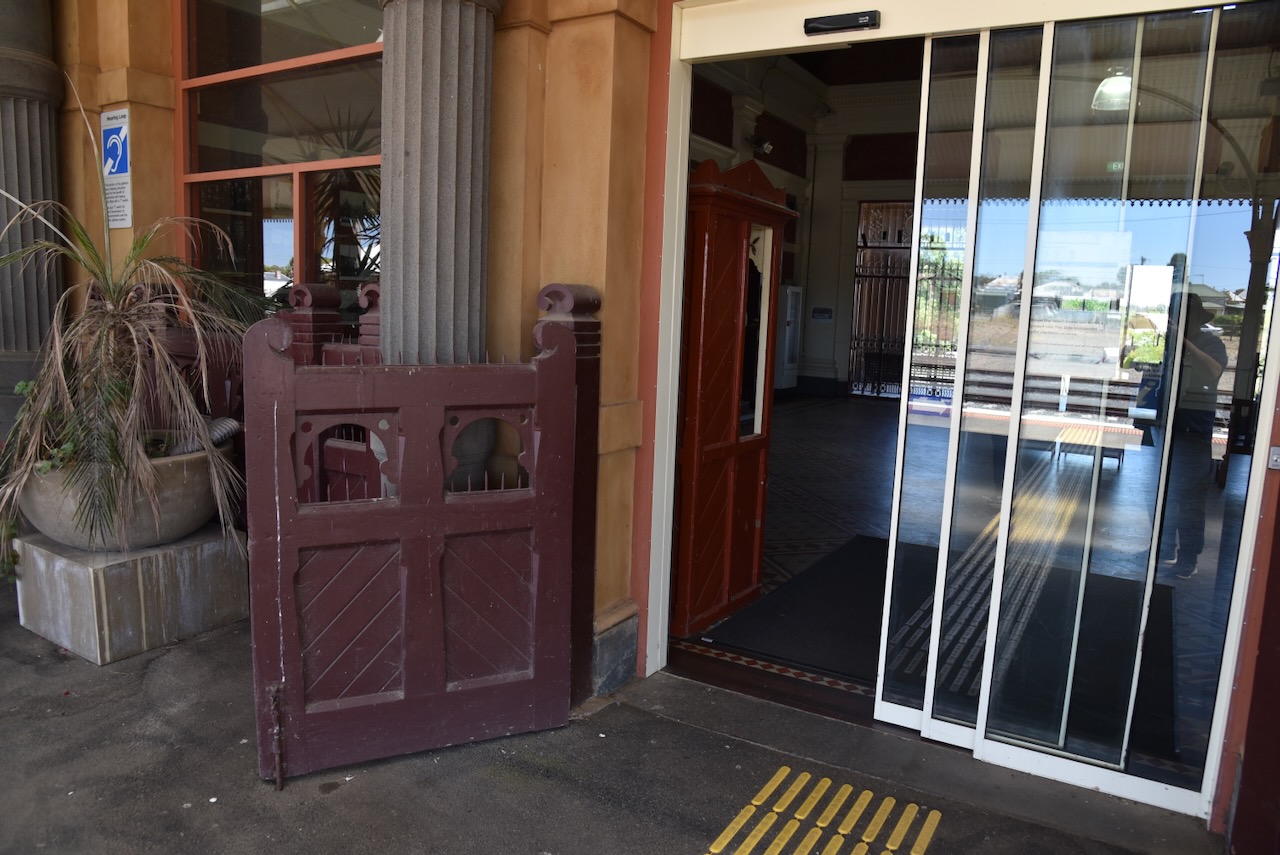
Our next stop was the extremely impressive Maryborough railway station.
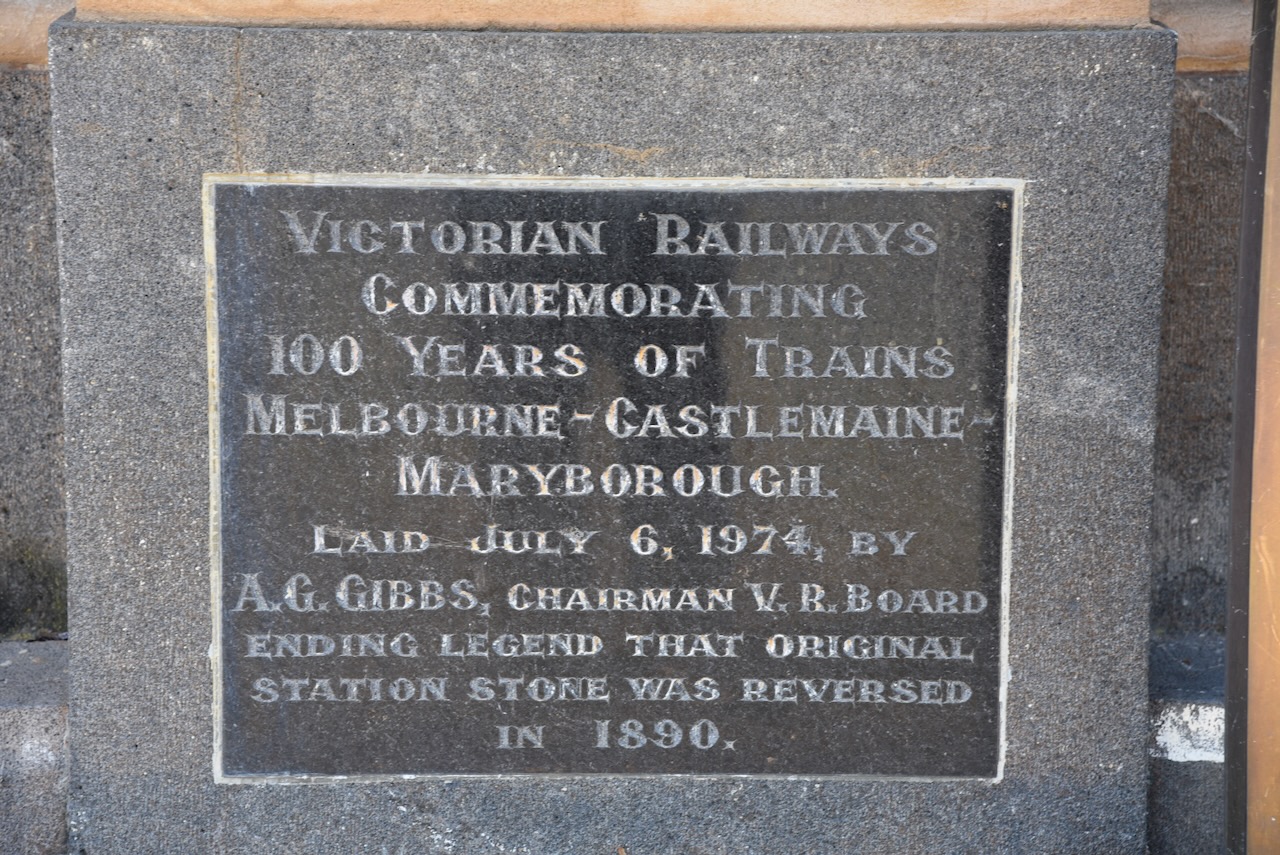
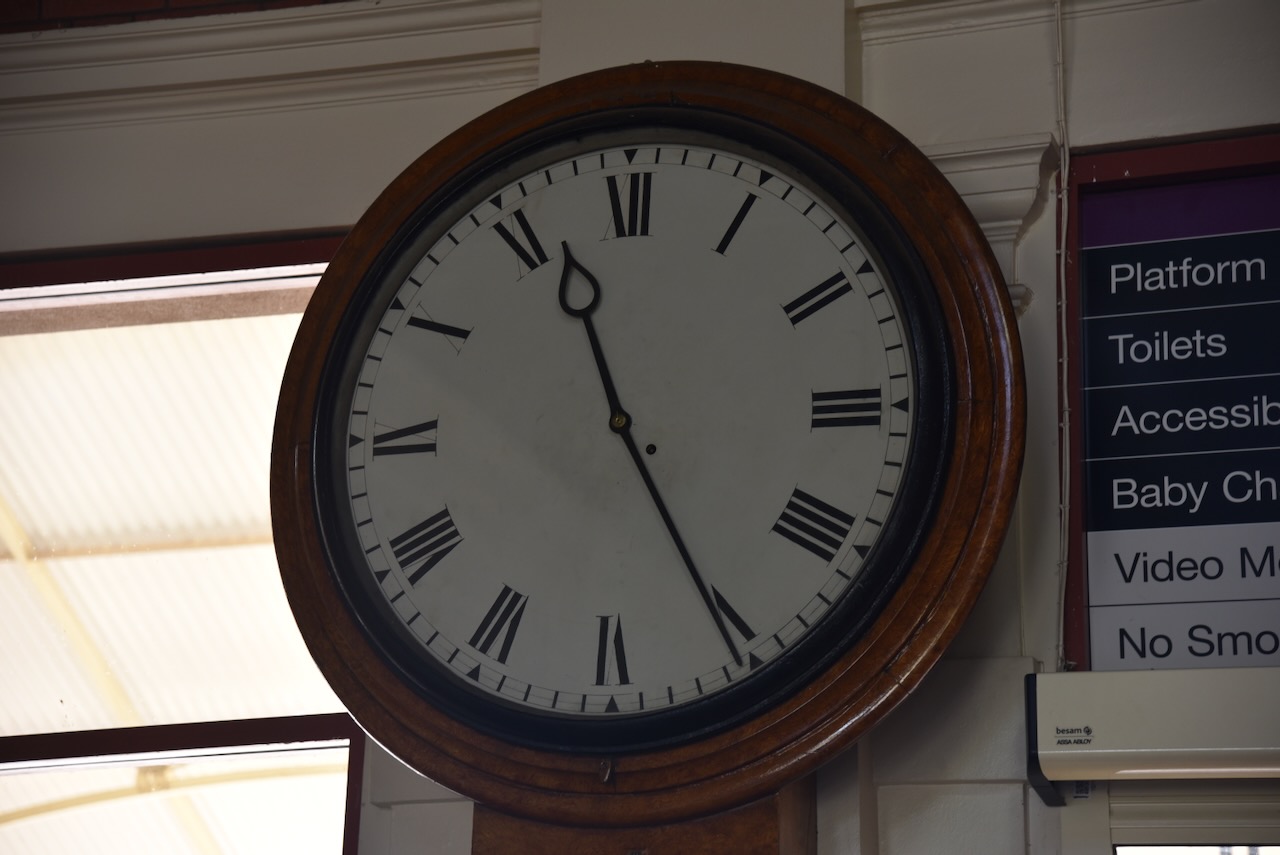
When the famous American writer Samuel Langhorne Clemens ‘Mark’ Twain visited Maryborough in 1895, he described Maryborough as “a railway station with a town attached”. The Queen Anne-style building with 25 rooms was completed in 1890. It includes an ornate clock tower and one of the lonest railway platforms in Australia. (Aussie Towns 2024)
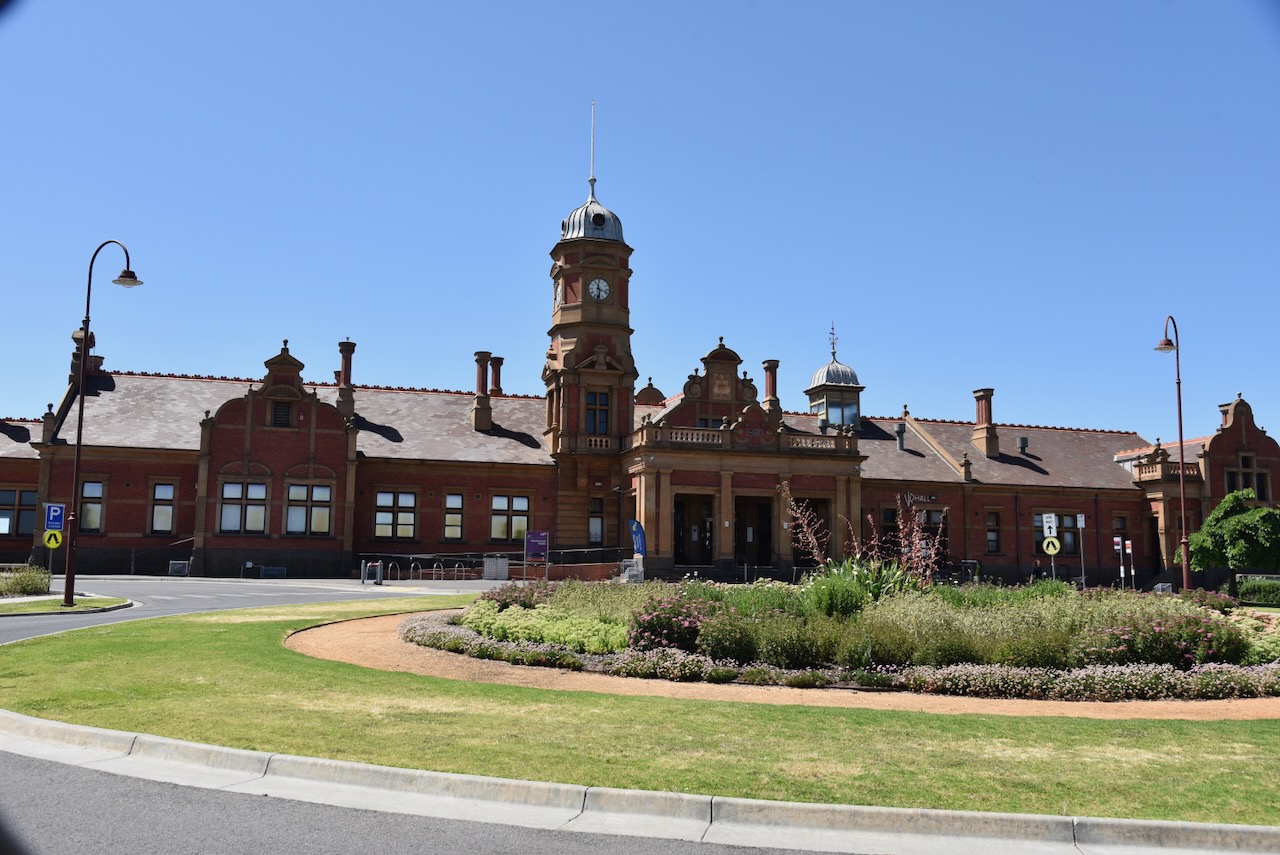
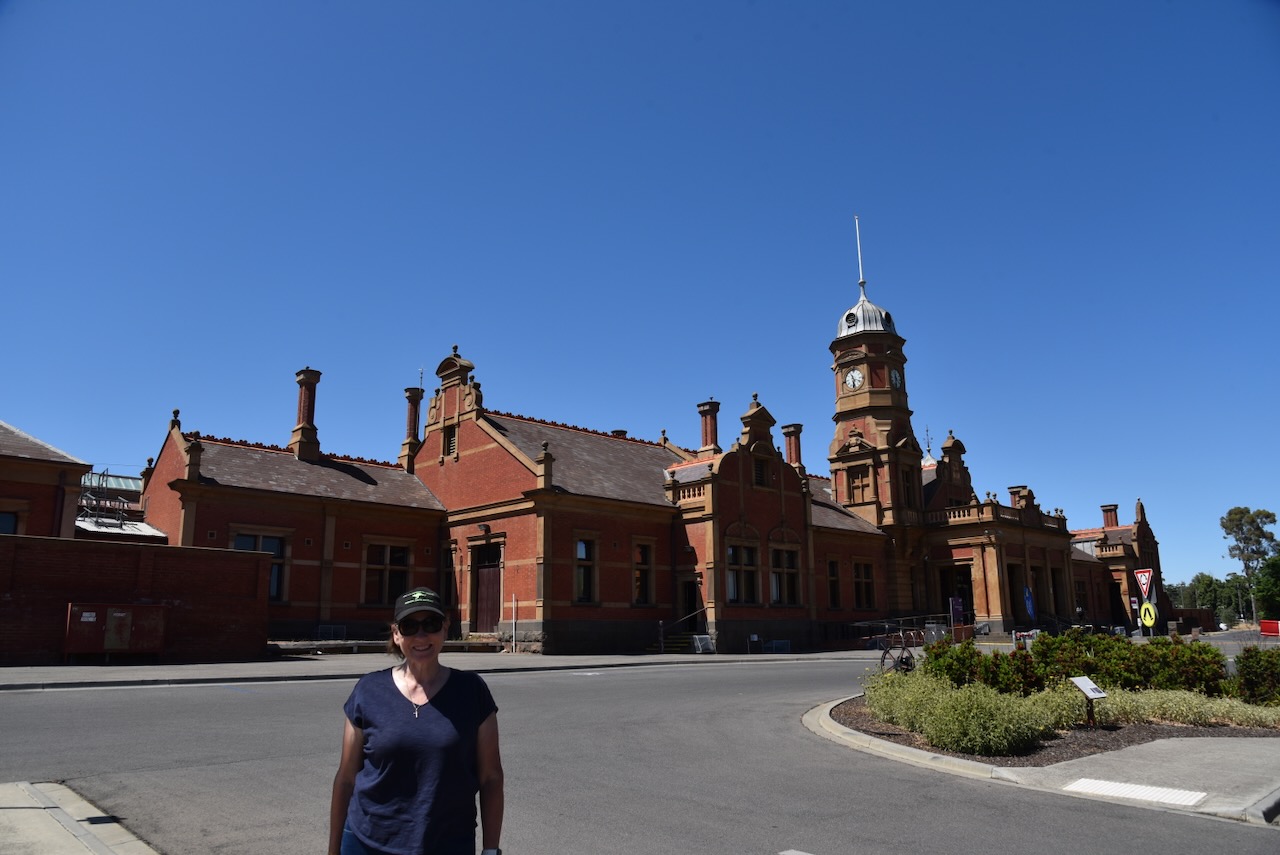
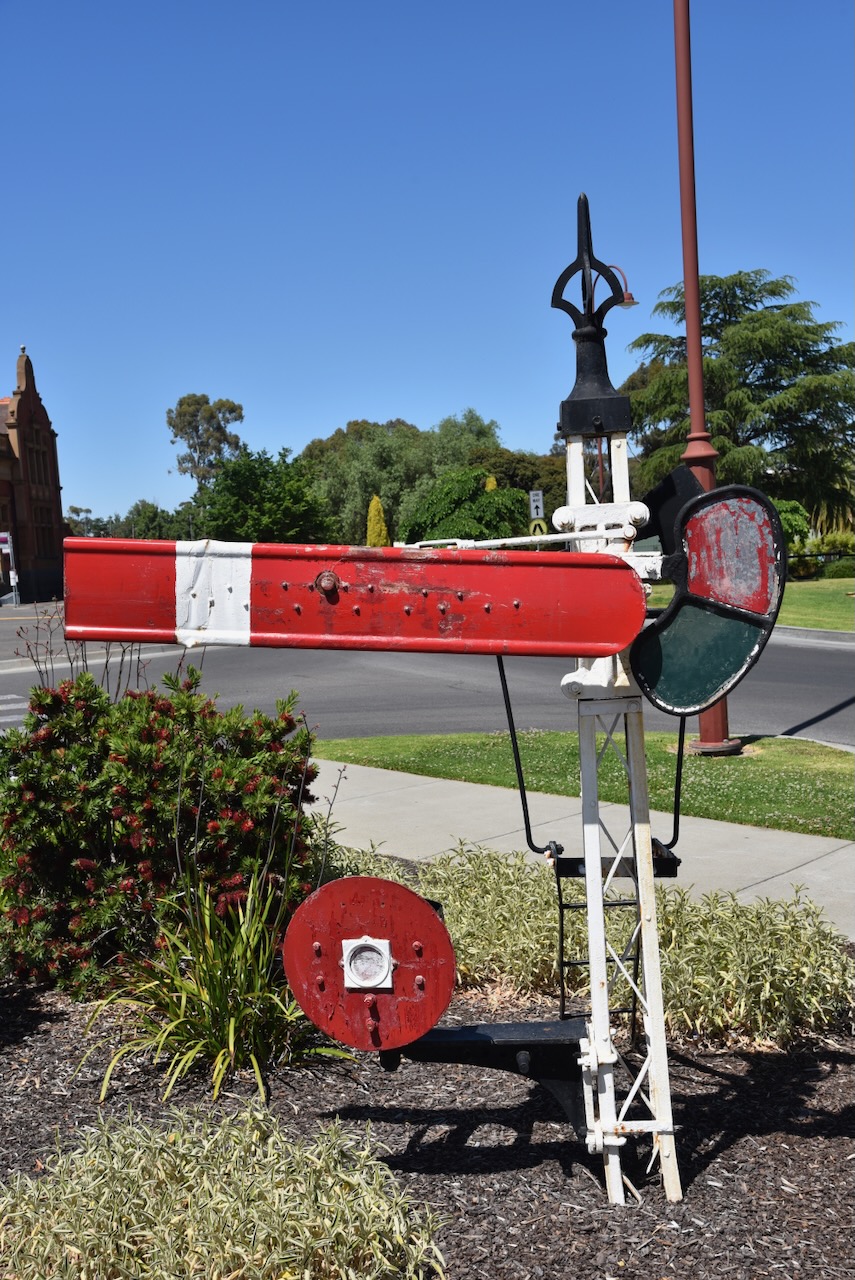
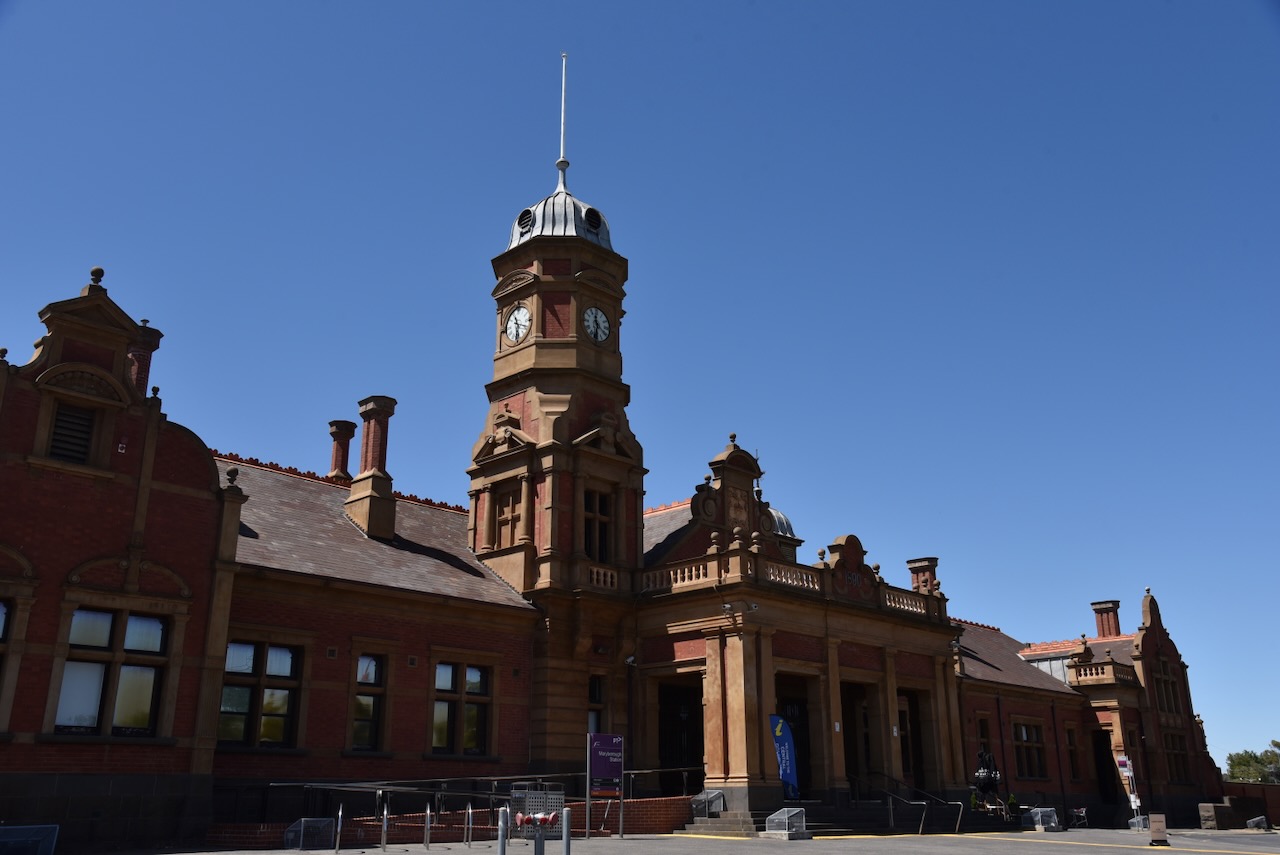
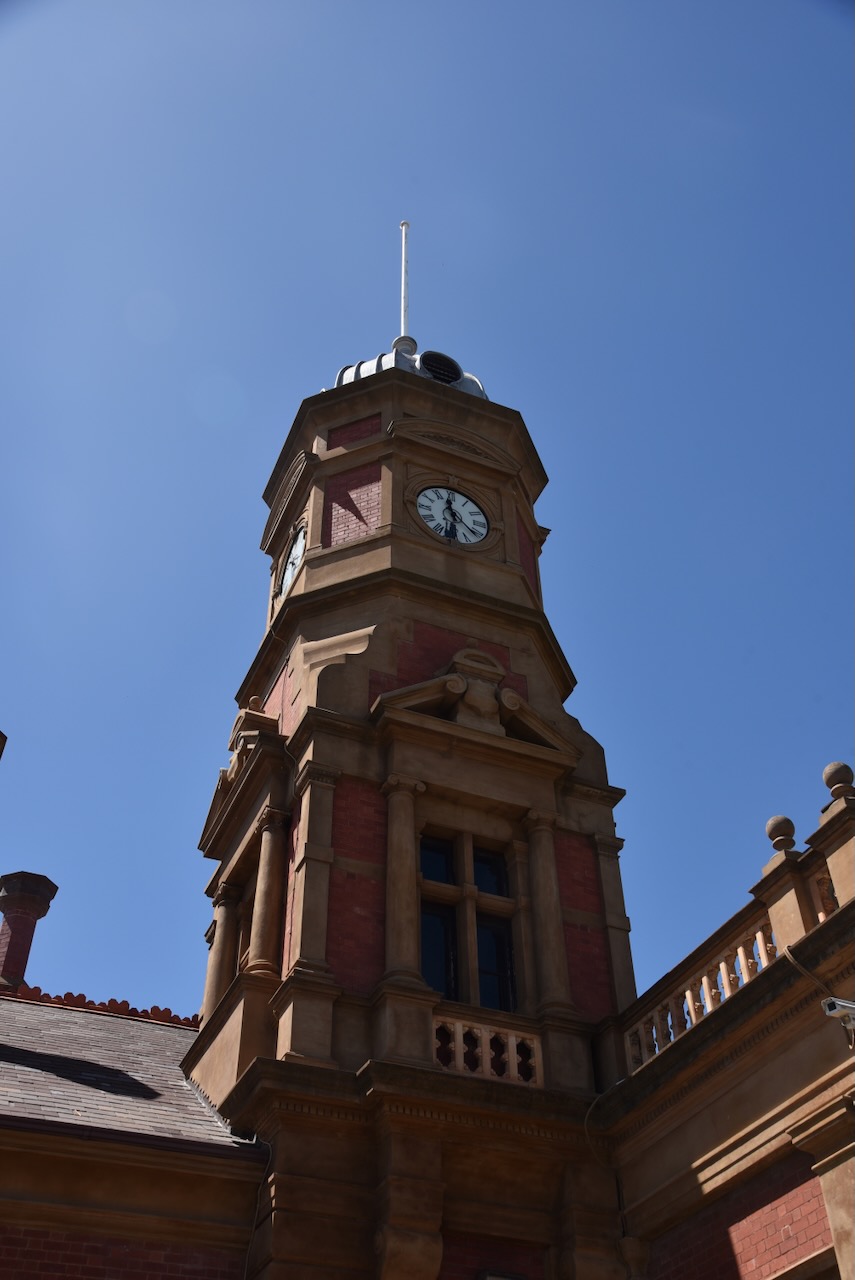
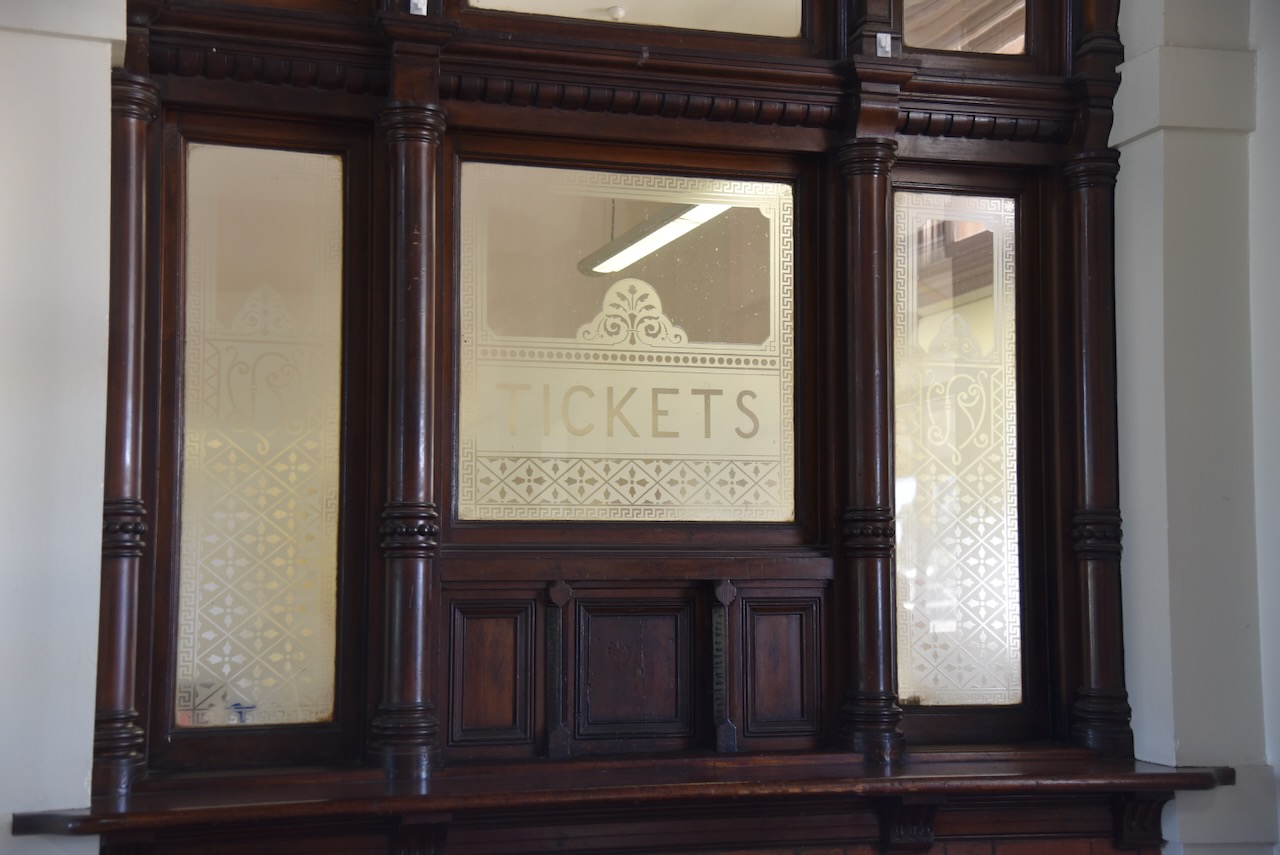
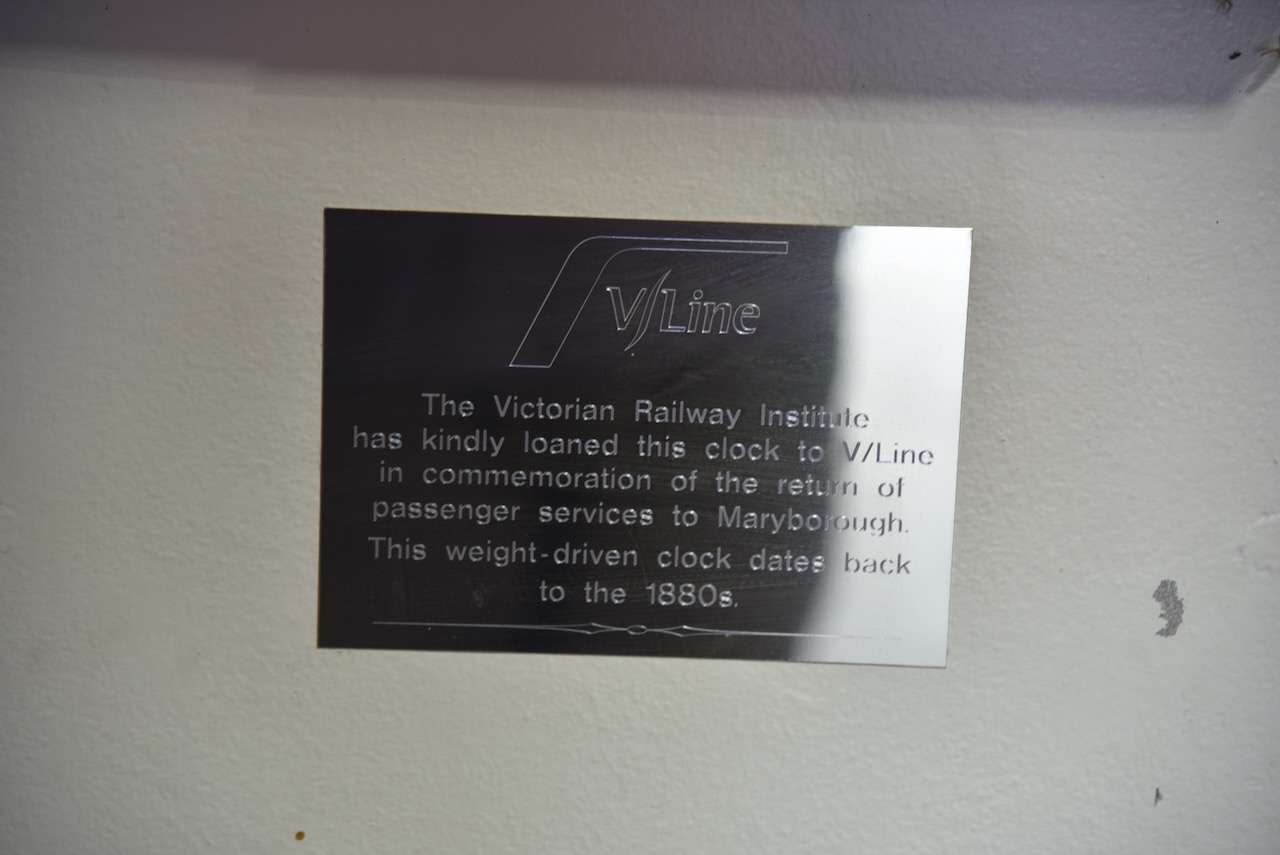
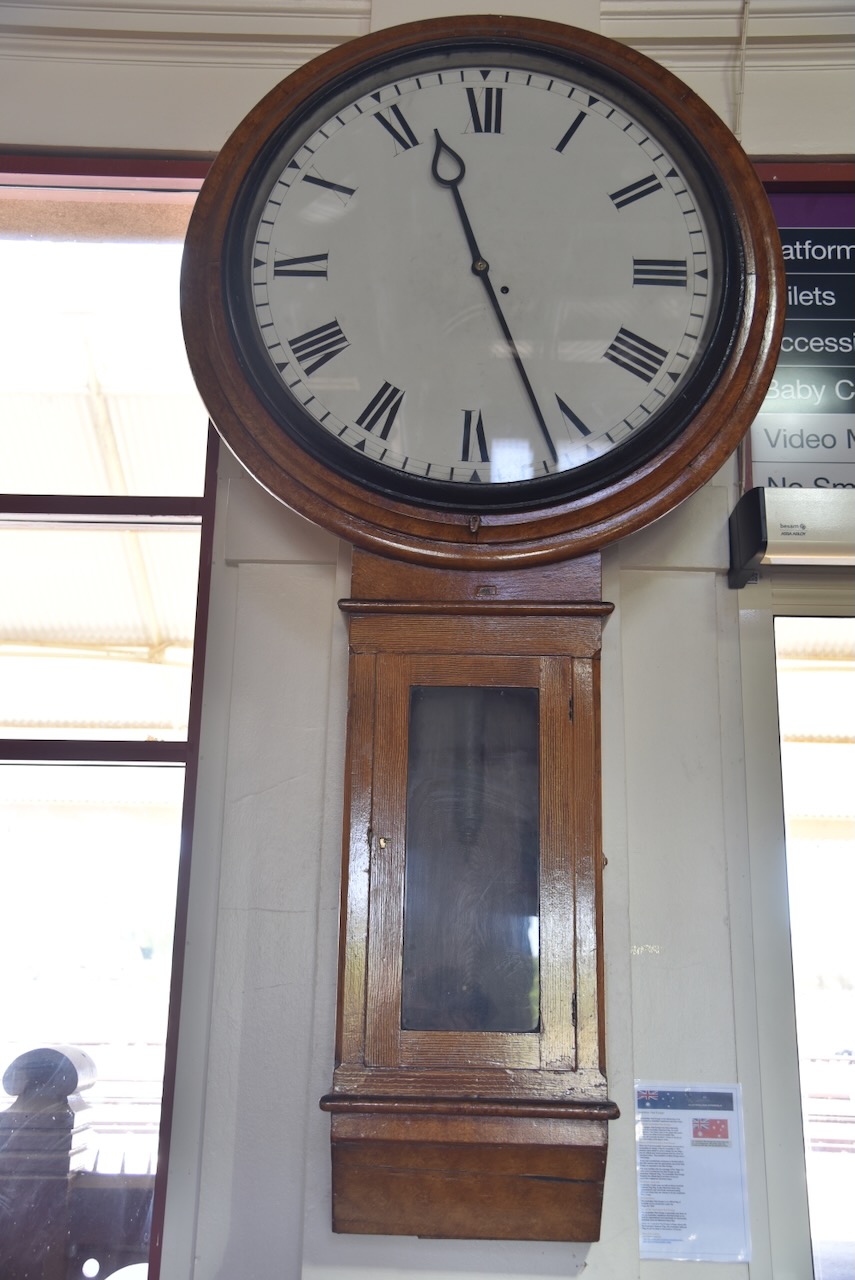
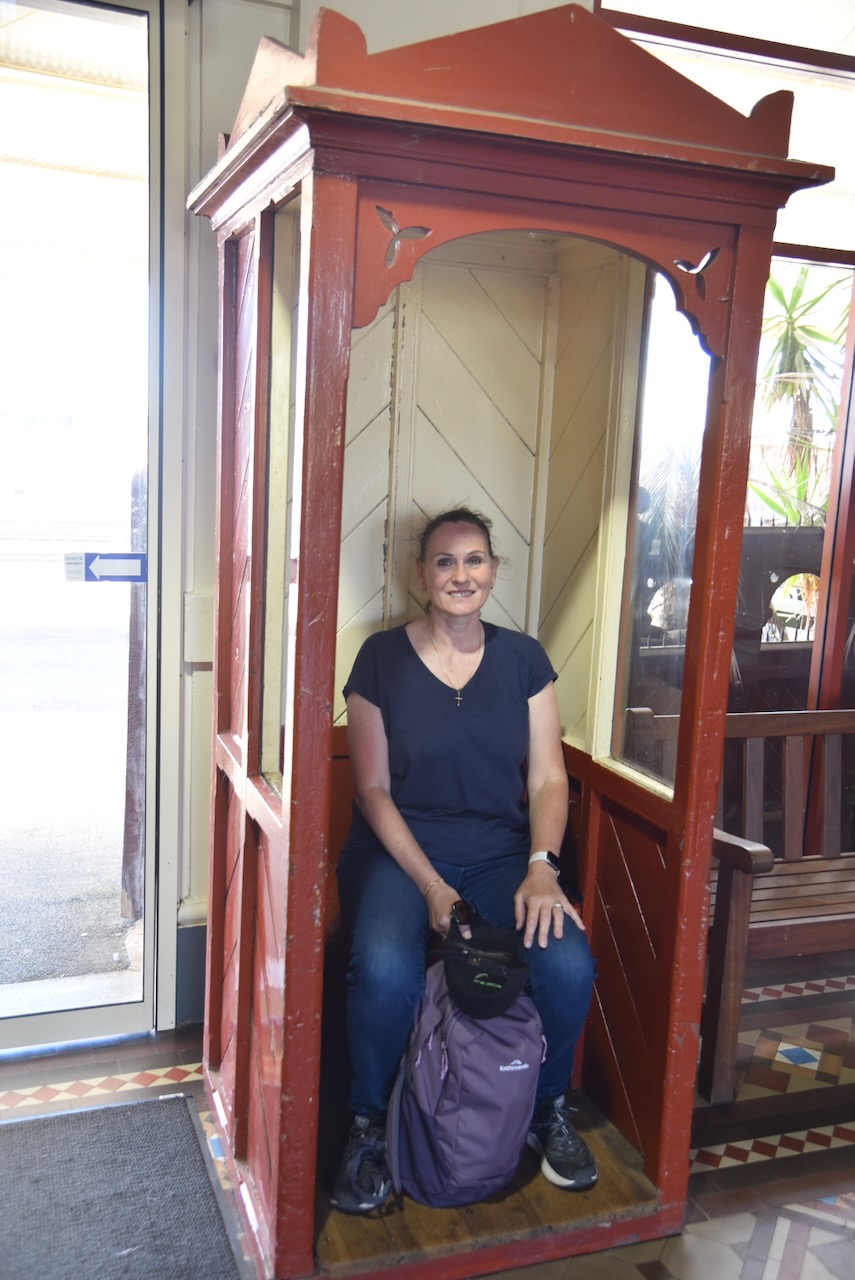
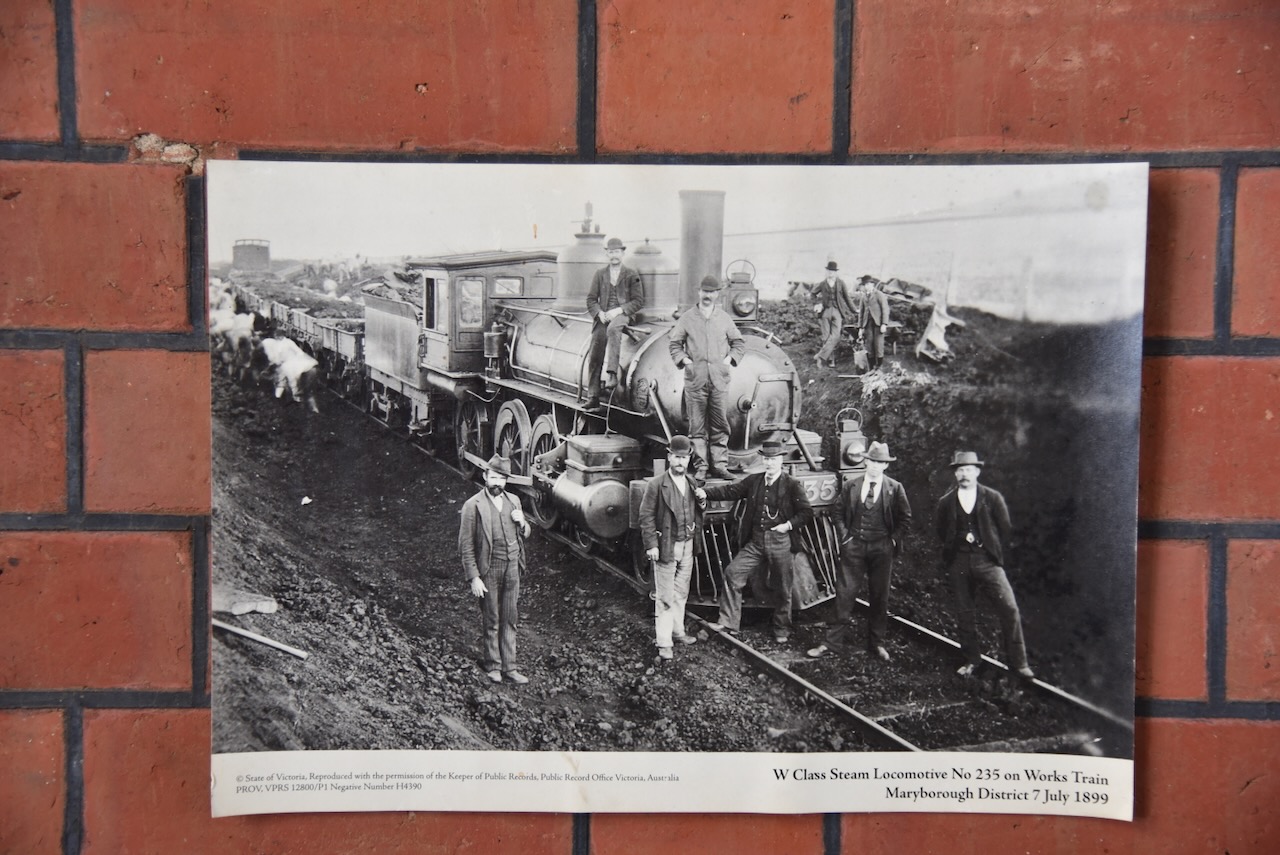
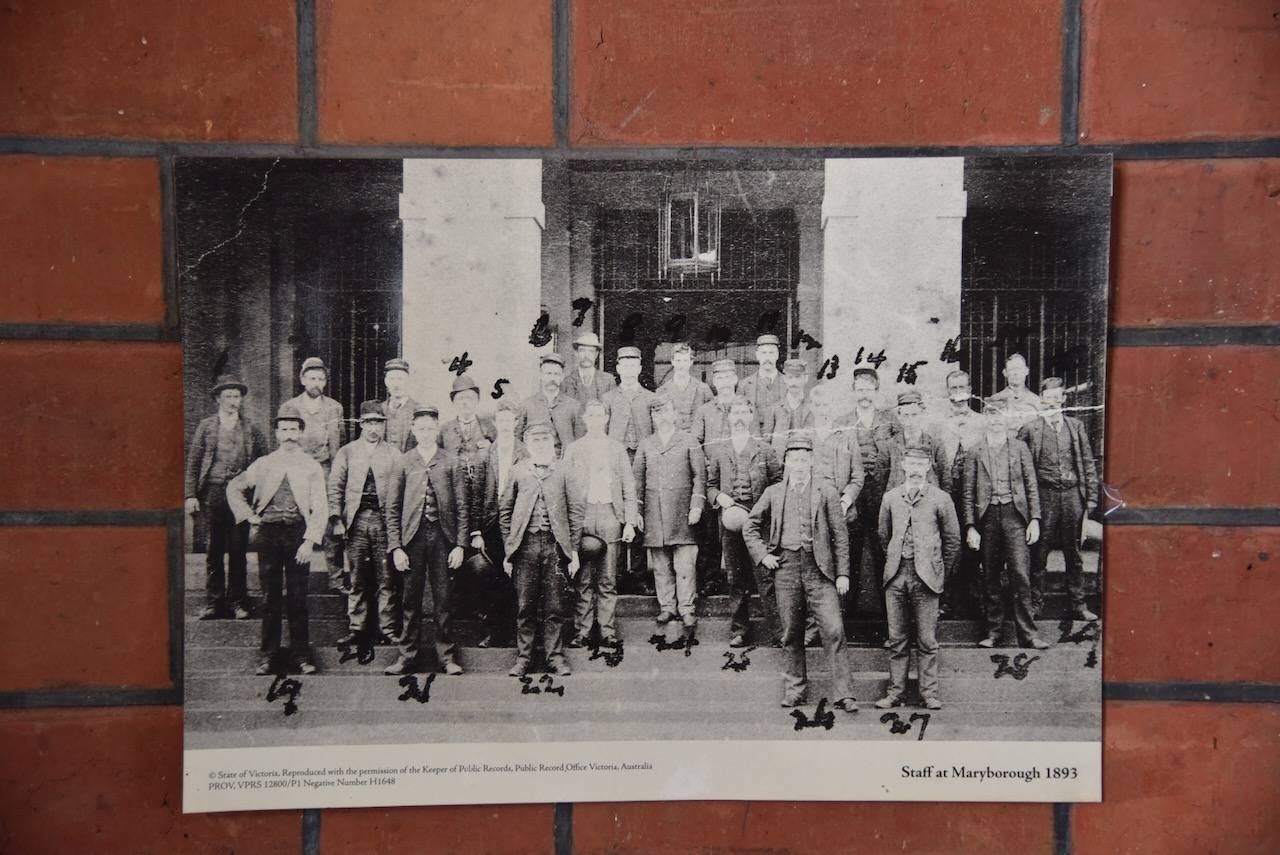
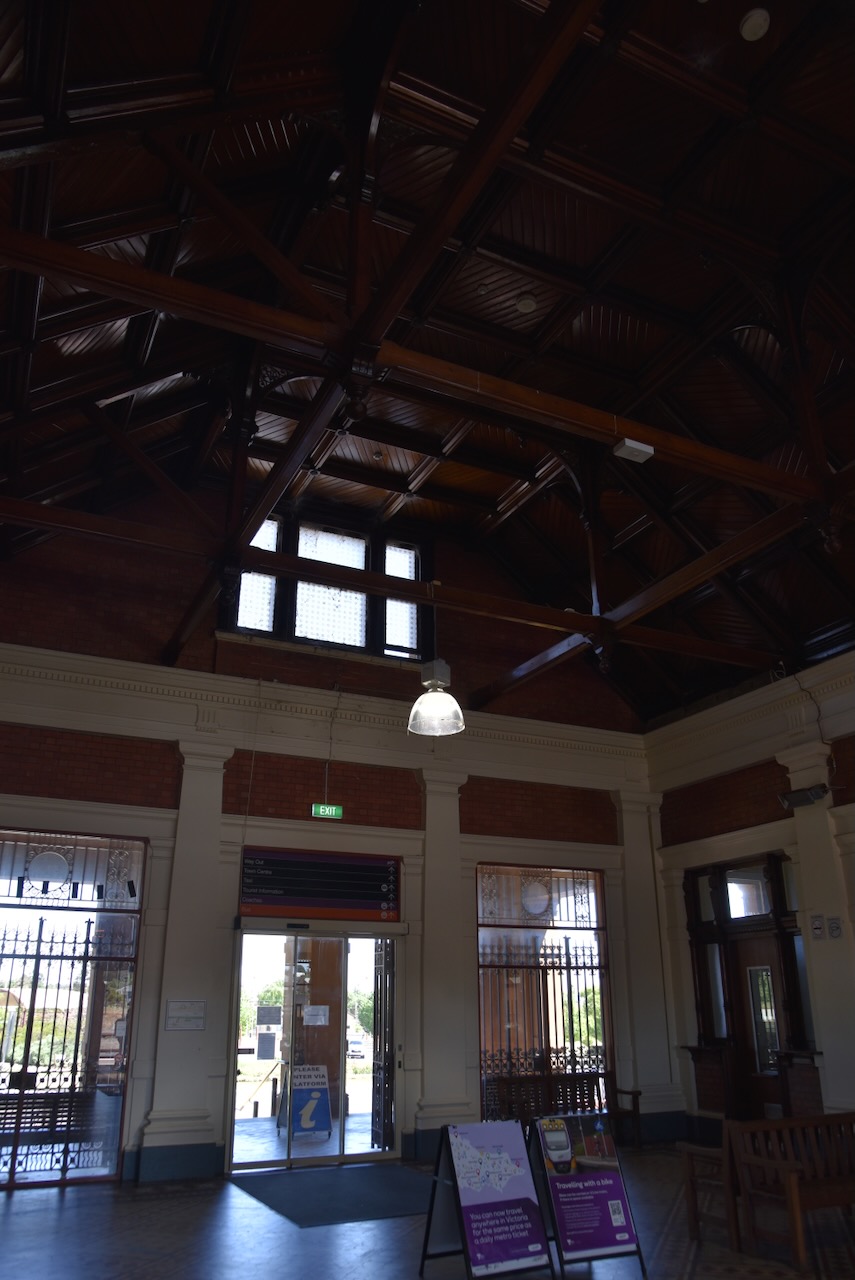
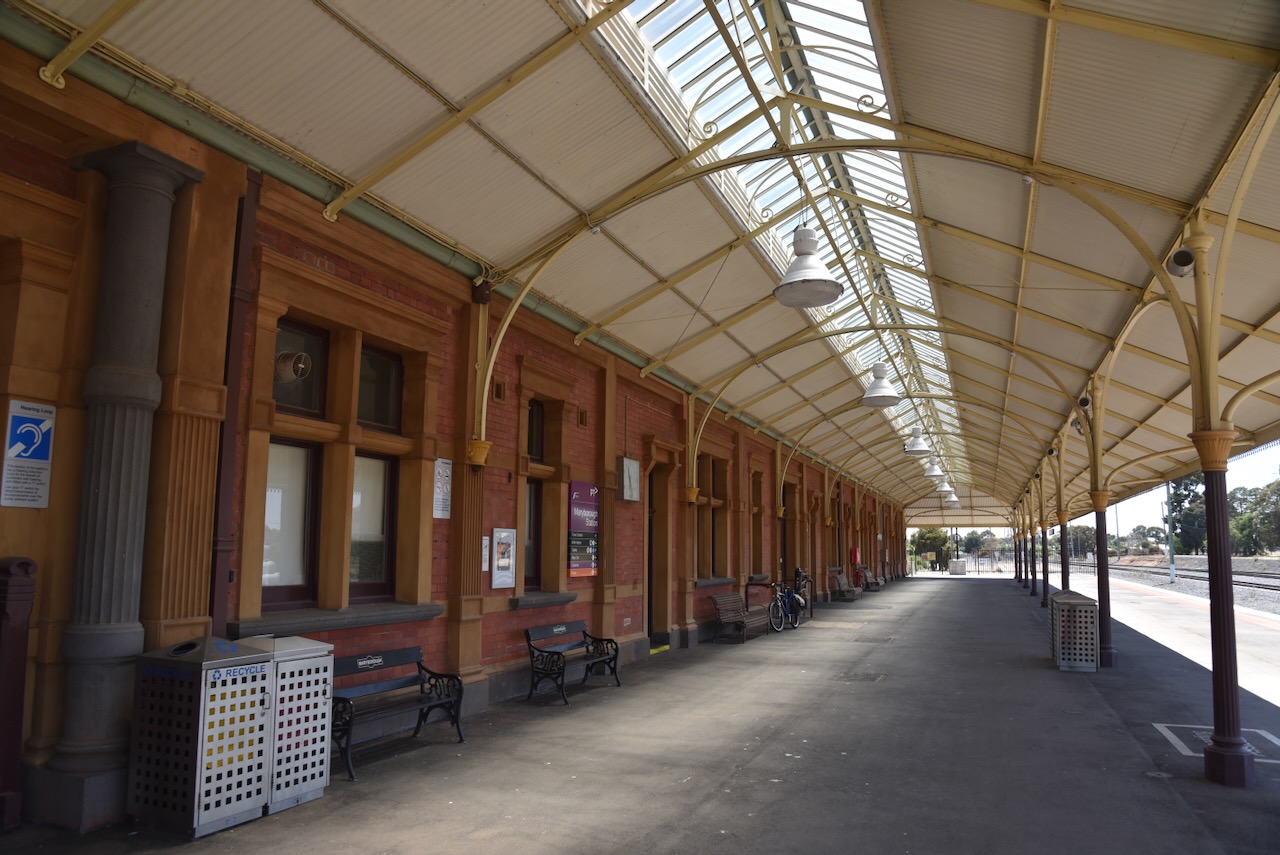

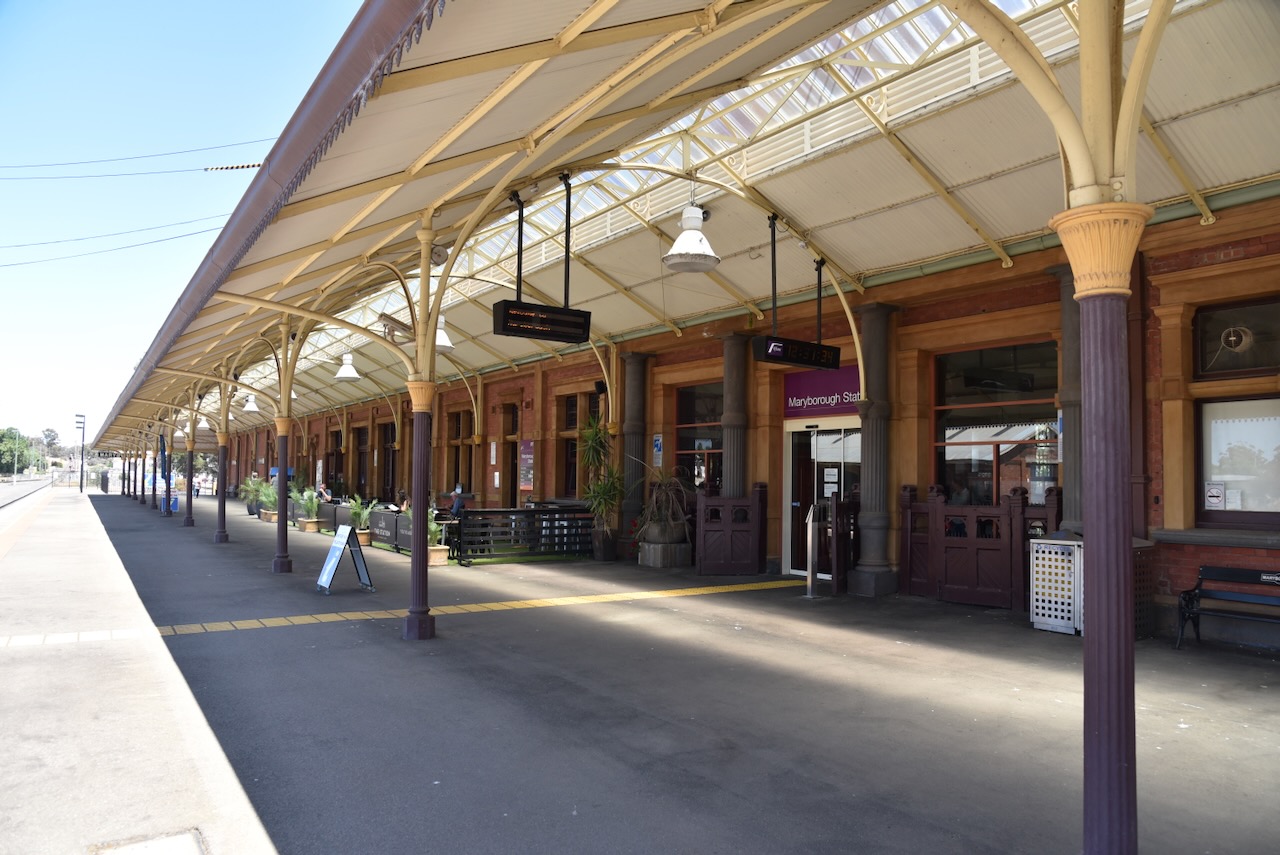
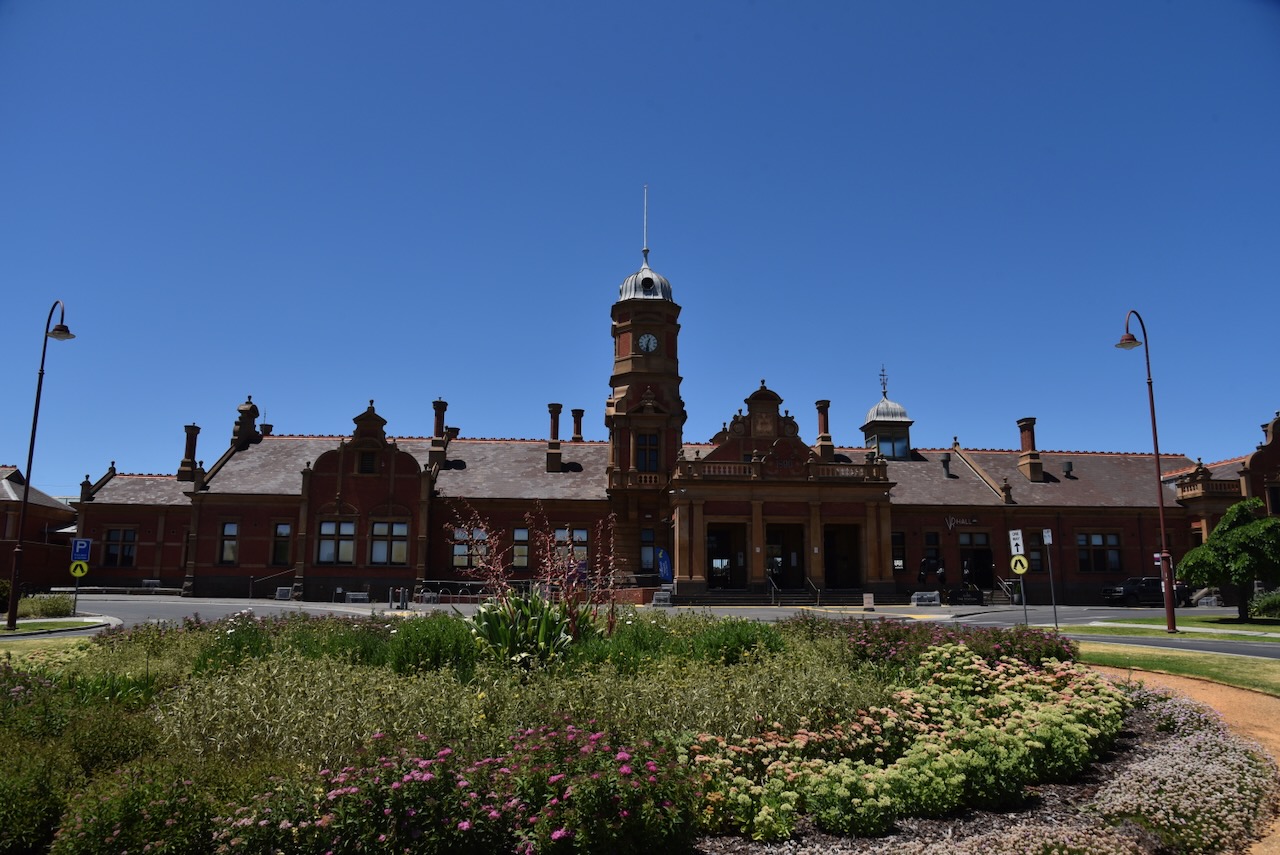
We had a very nice lunch at the railway station.

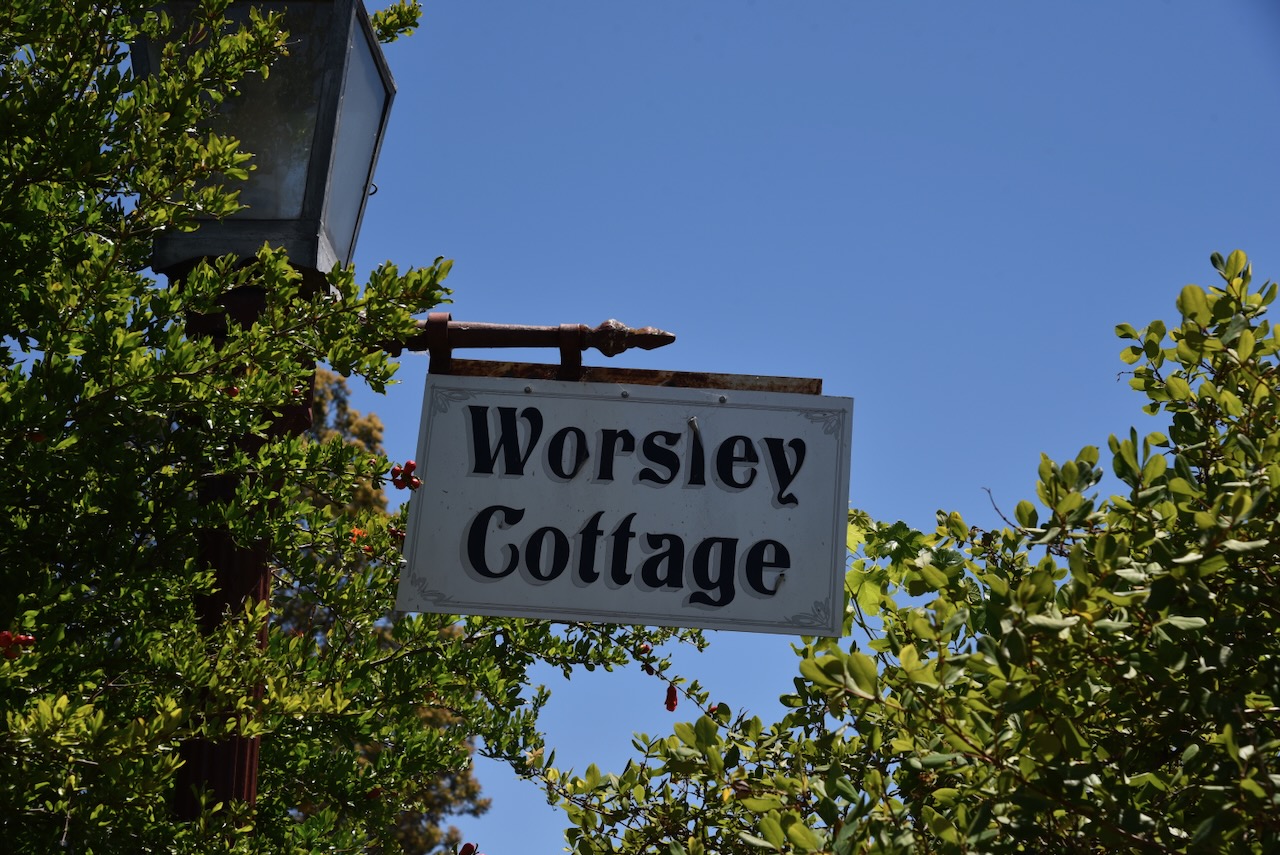
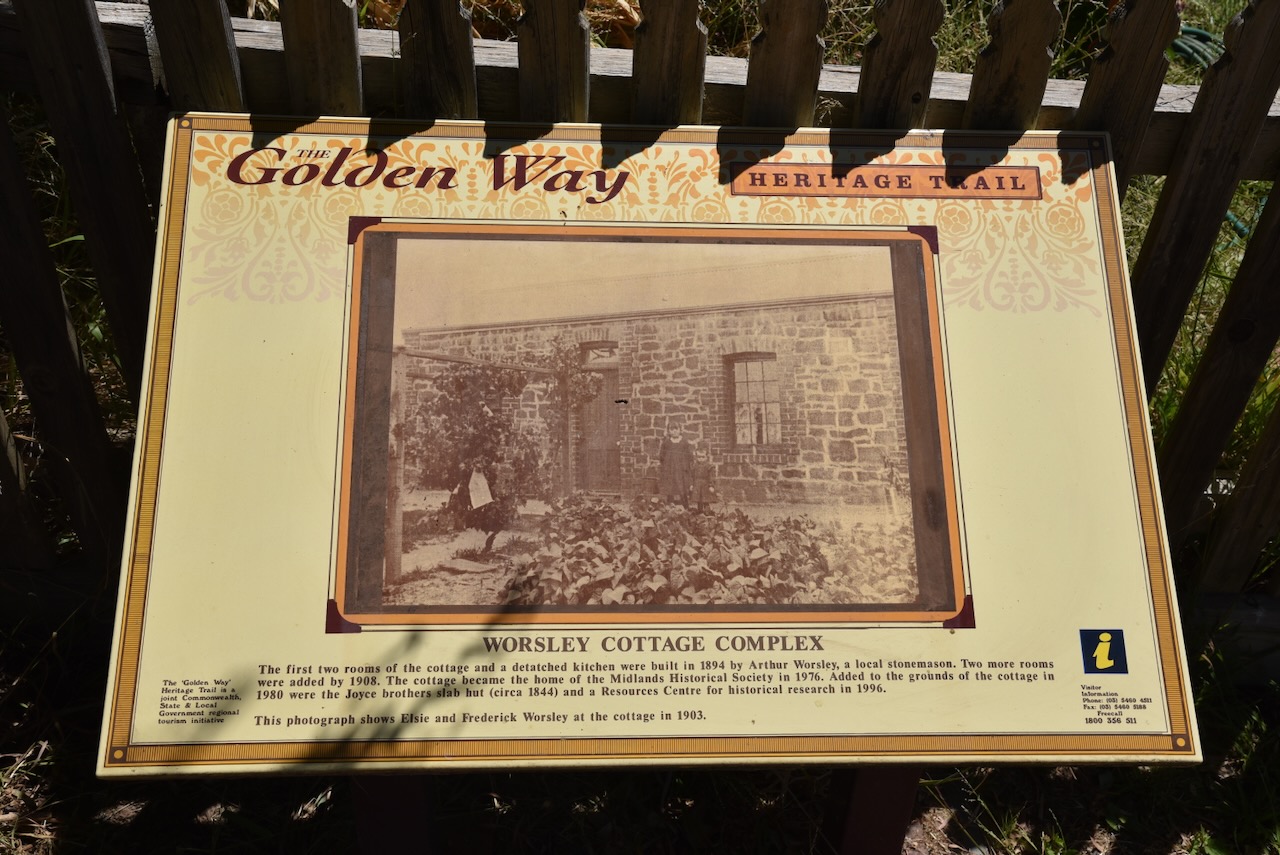
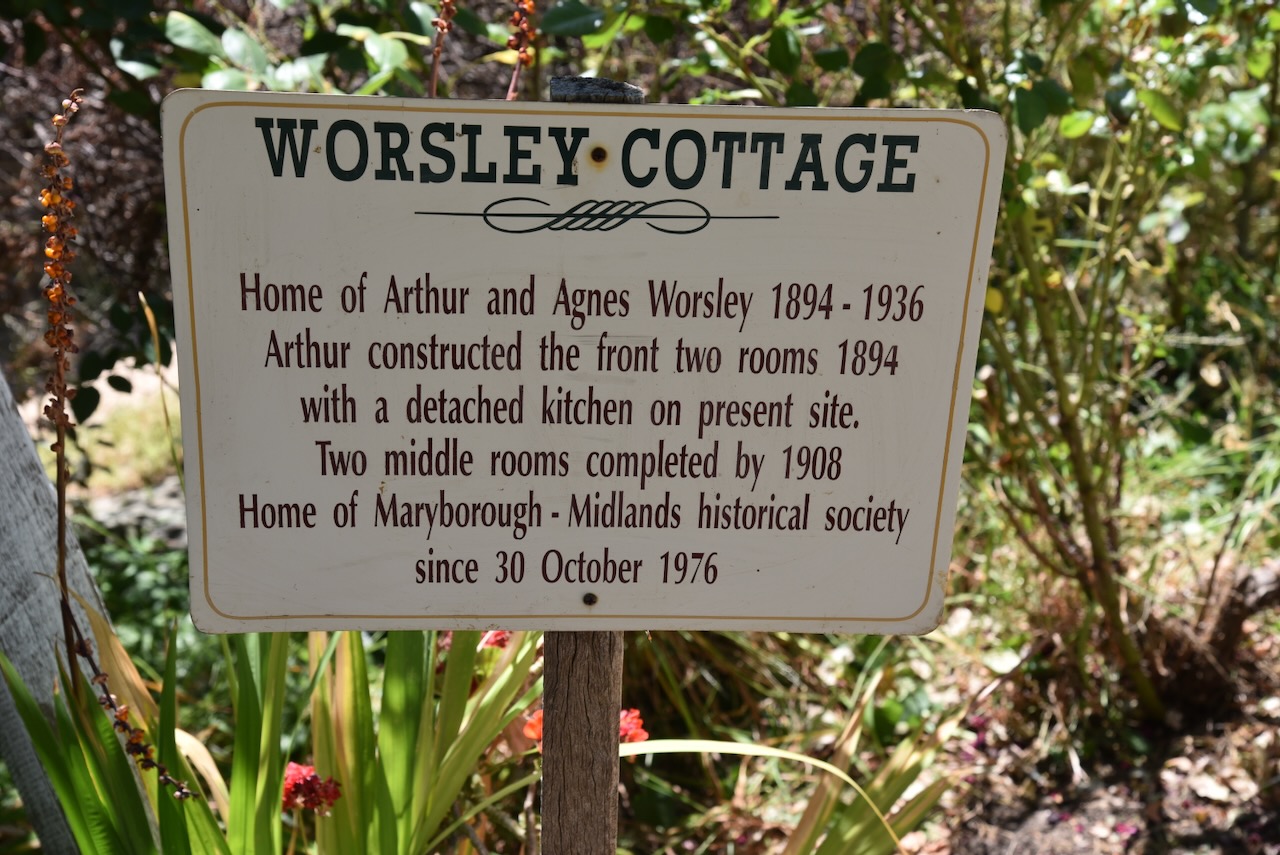
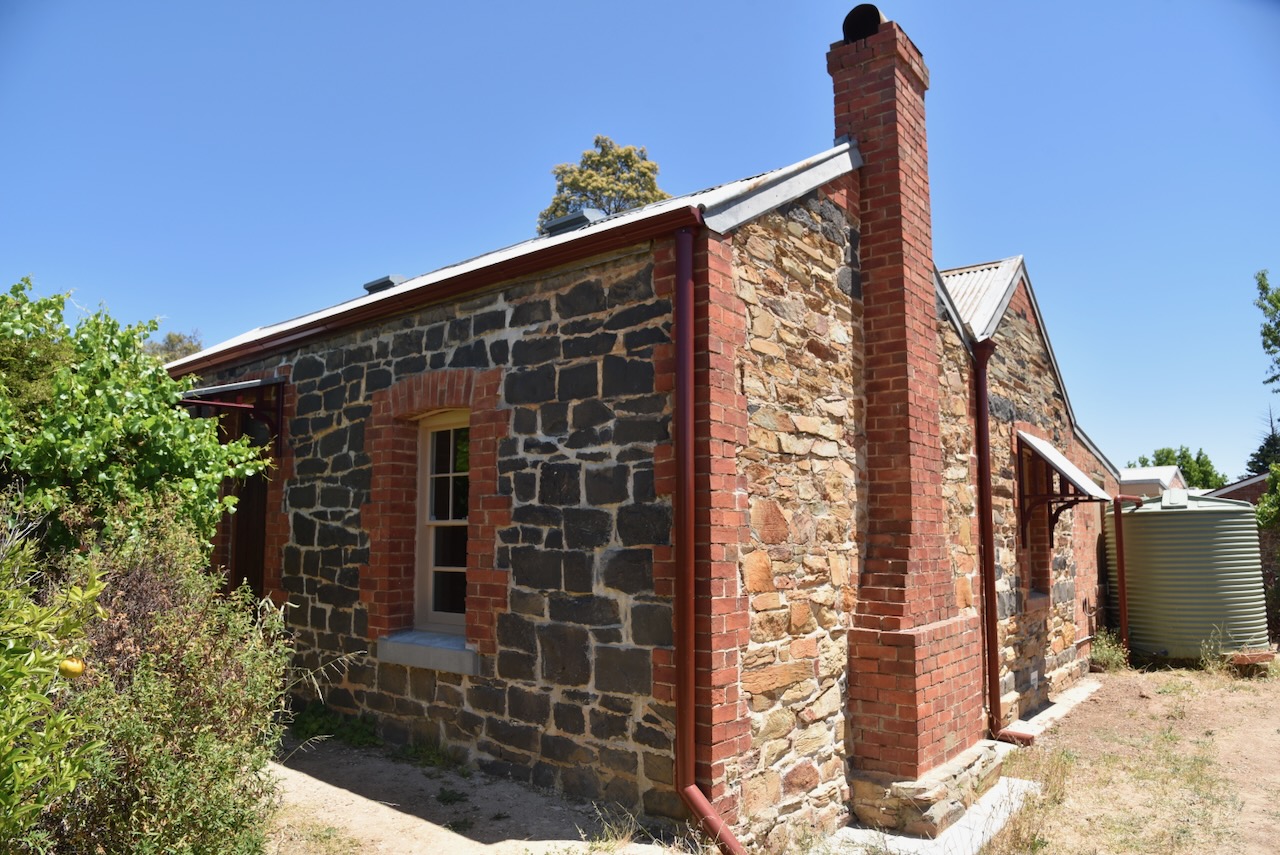
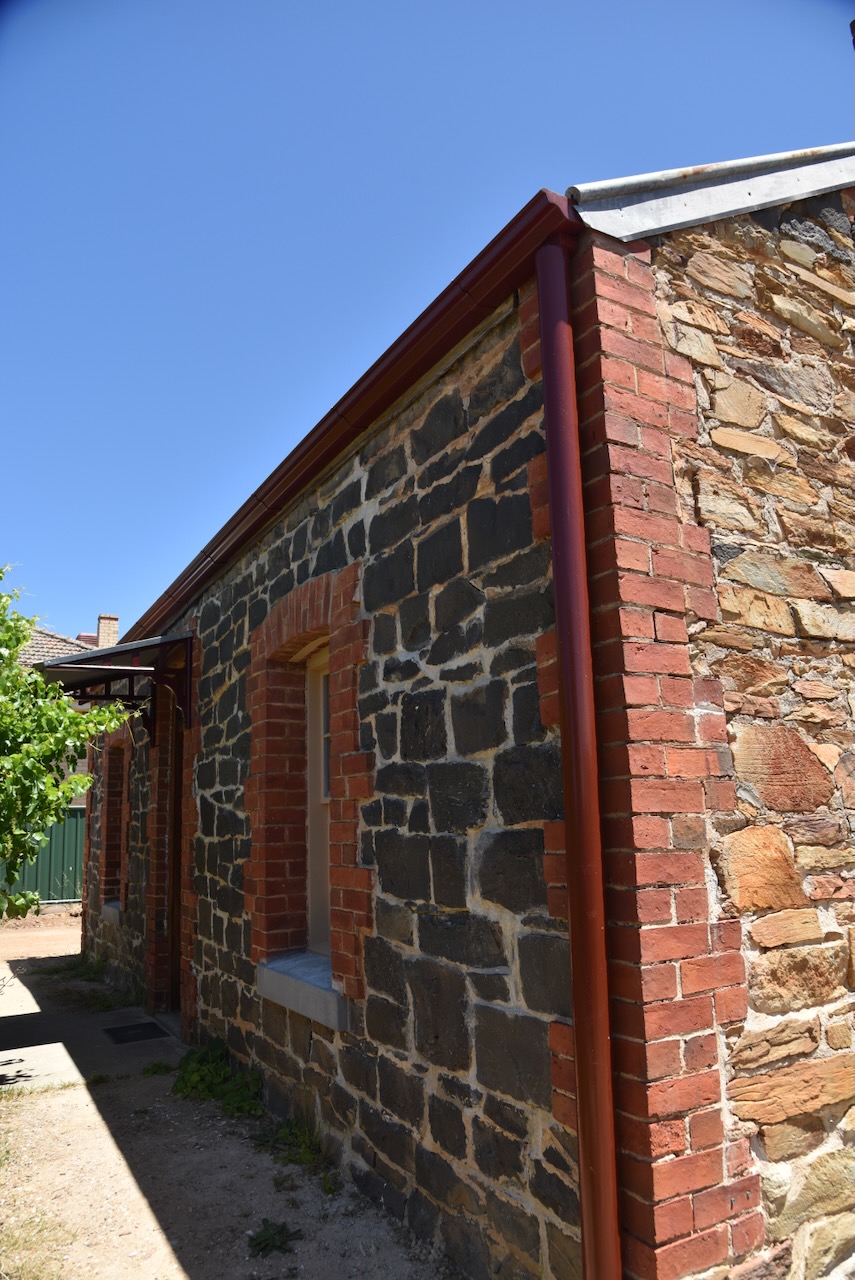
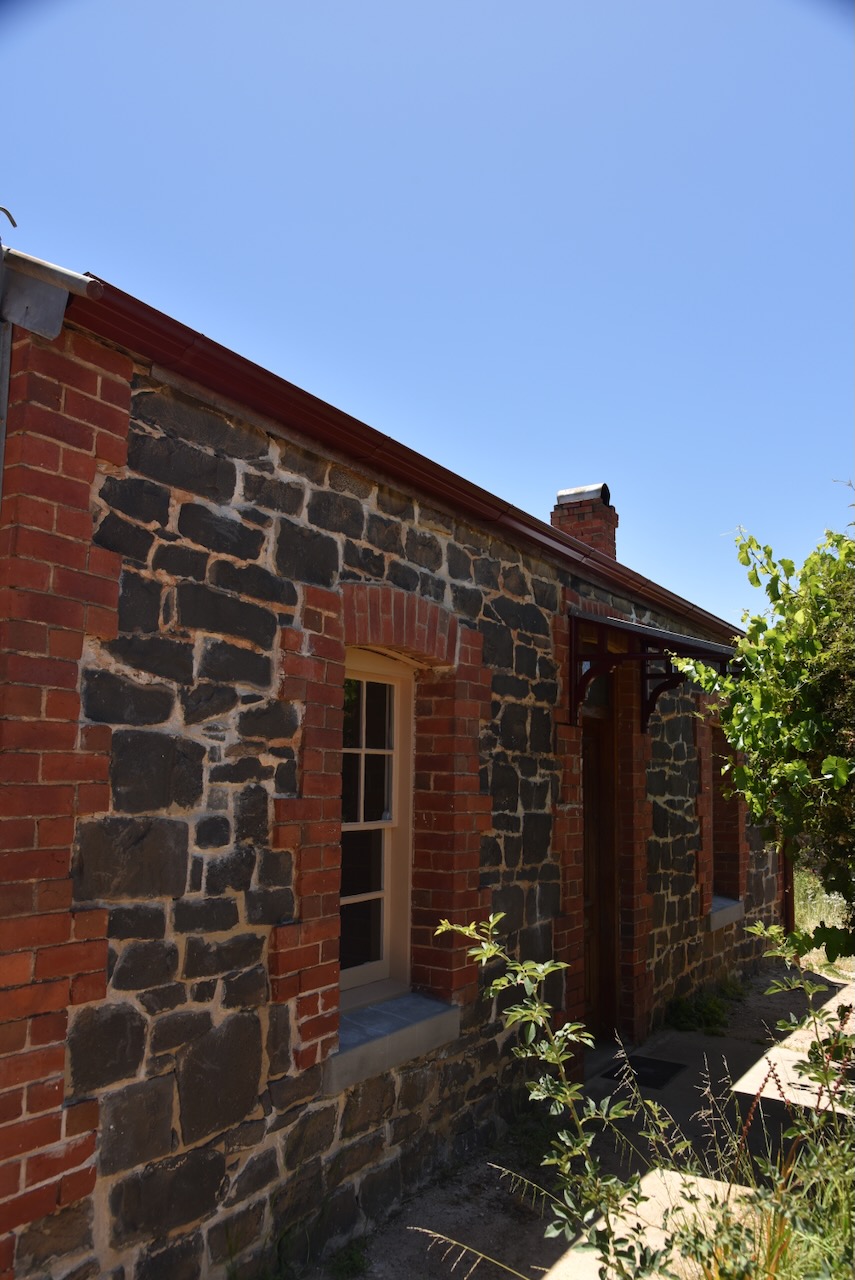
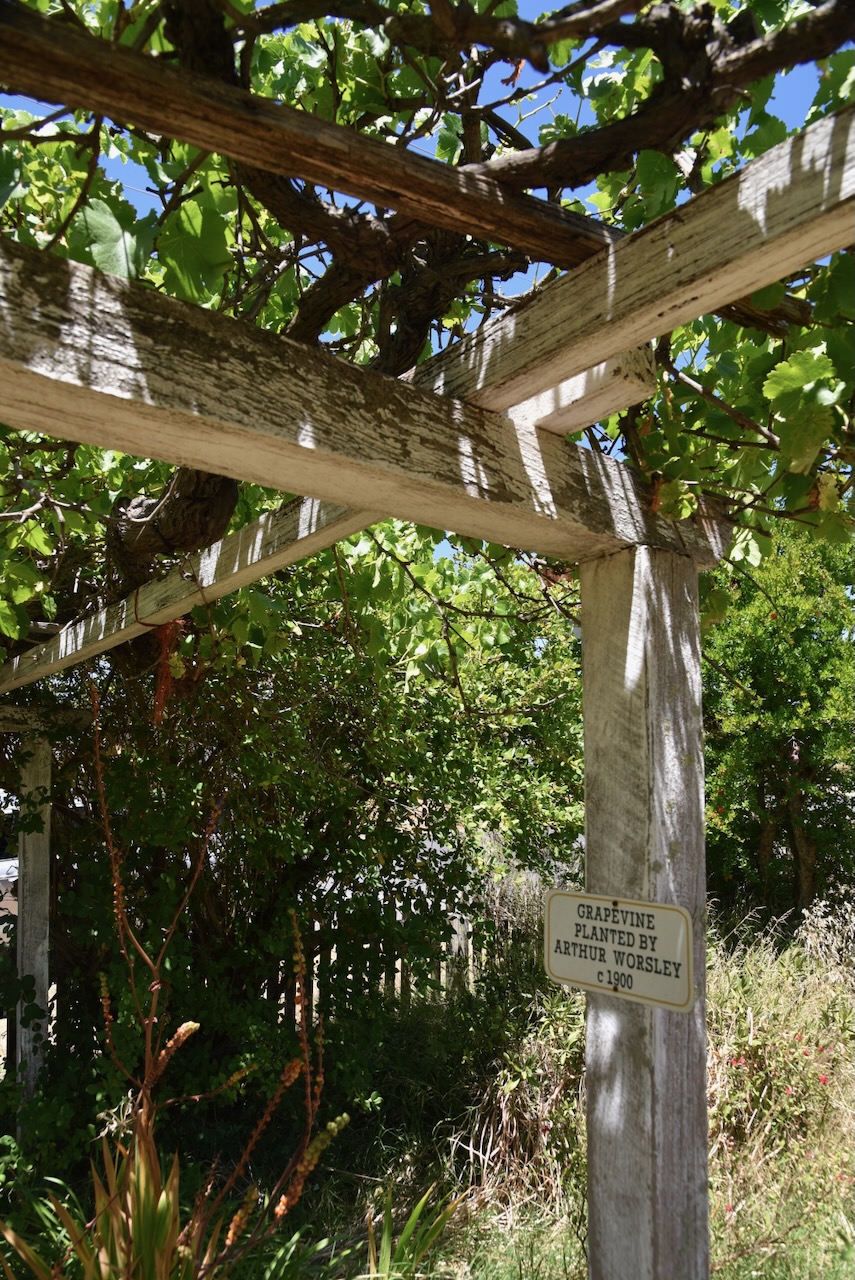
Following our pot of tea and a bite to eat at the Maryborough railway station, we visited Worsley Cottage in Maryborough. This beautiful little cottage was built in 1894 by Arthur Alfred Worsley (b. 1862. d. 1935), a contractor in stonework. The two front rooms were completed in 1894, while a further two rooms were added in 1908. (Victorian Collections 2024)

Above:- Arthur & Worsley. Image c/o Whitehead Family Tree, http://www.ancestry.com.au
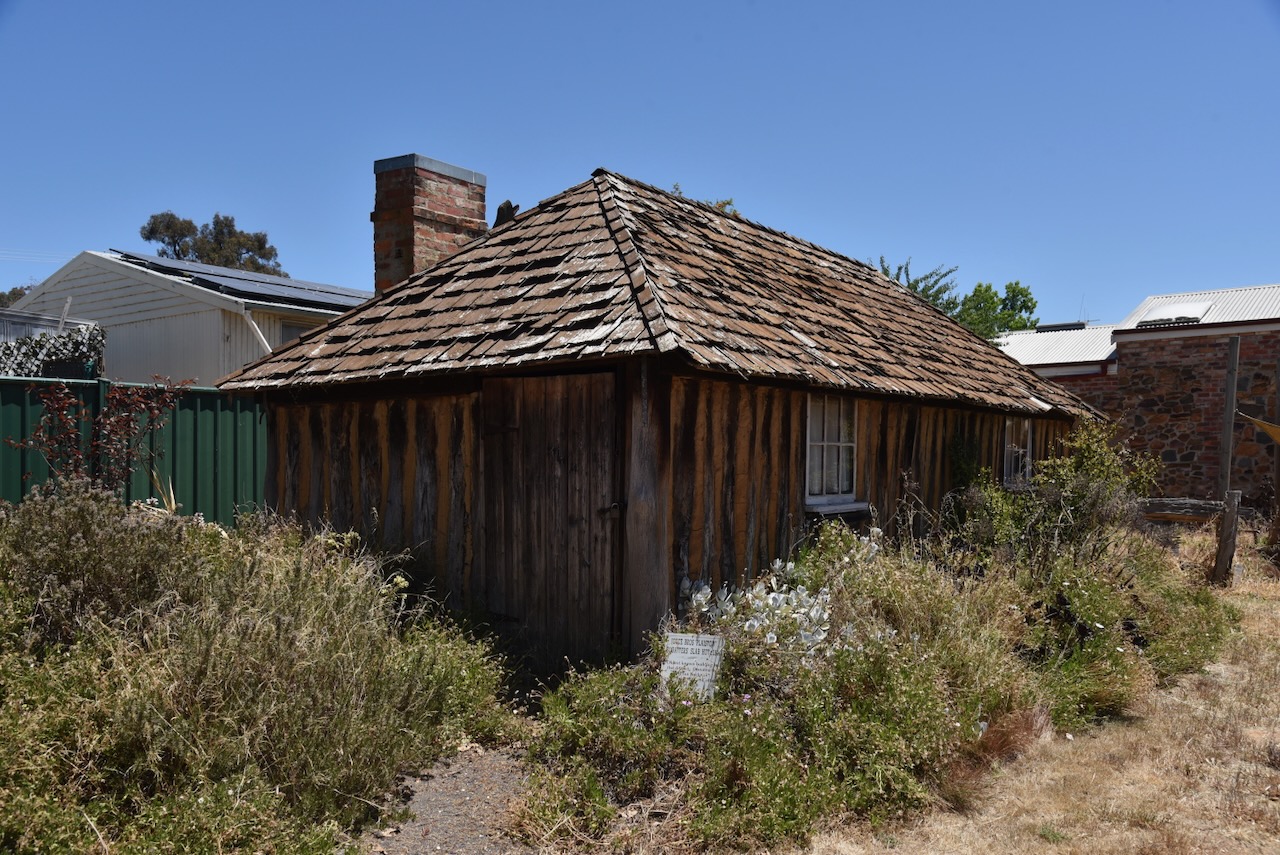
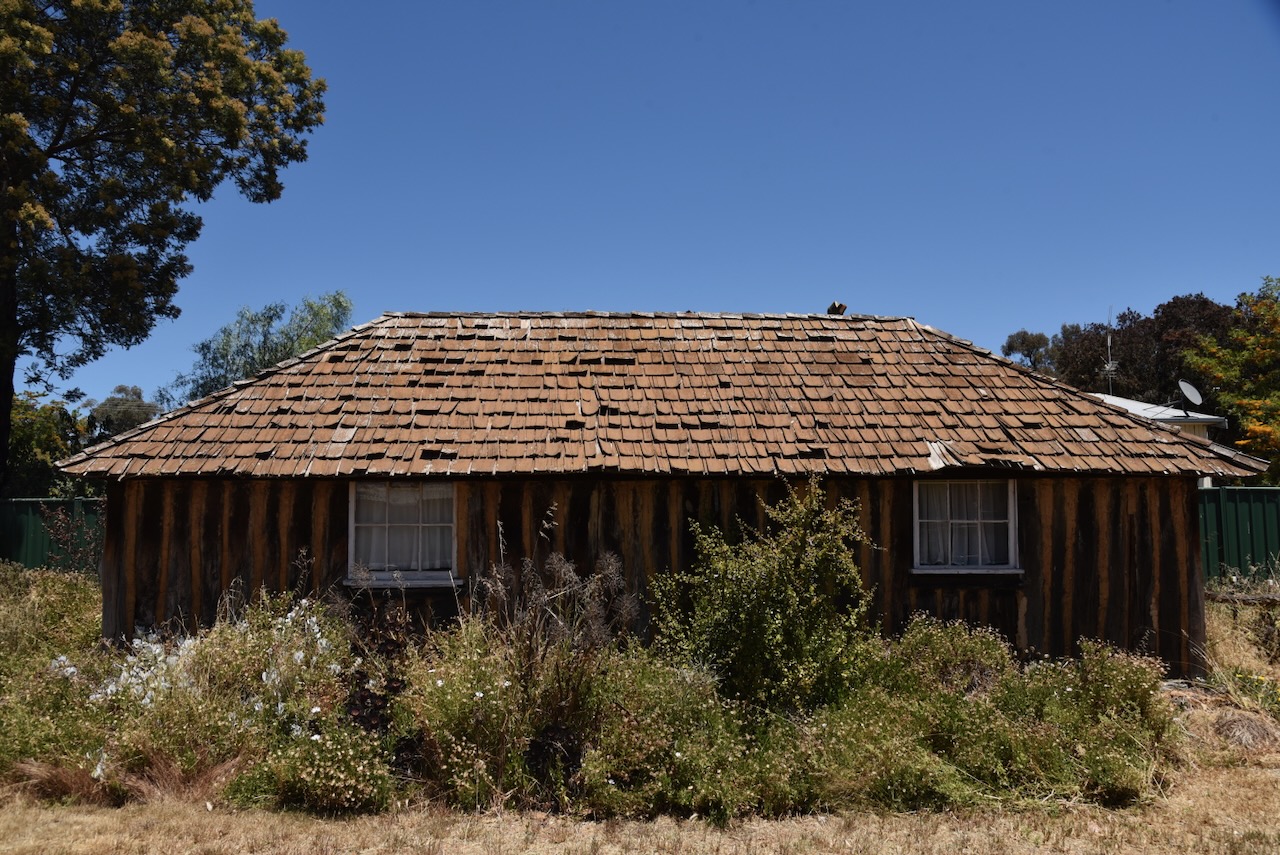
Also located on the site is an original slab squatter’s hut dating from c. 1844. The hut is the oldest known building in the district. It has a shingle roof and a rammed earth floor and is lined with hessian and calico. (Victorian Collections 2024)
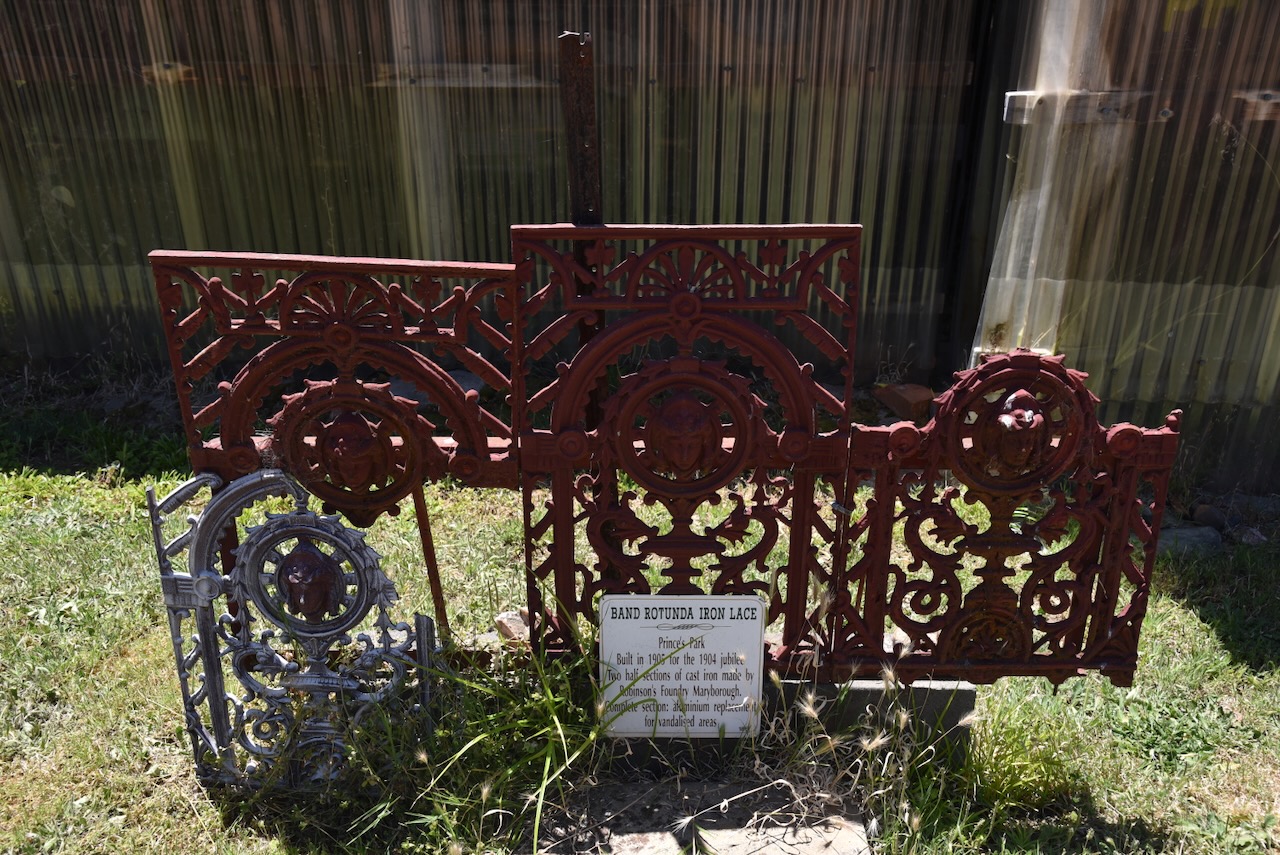
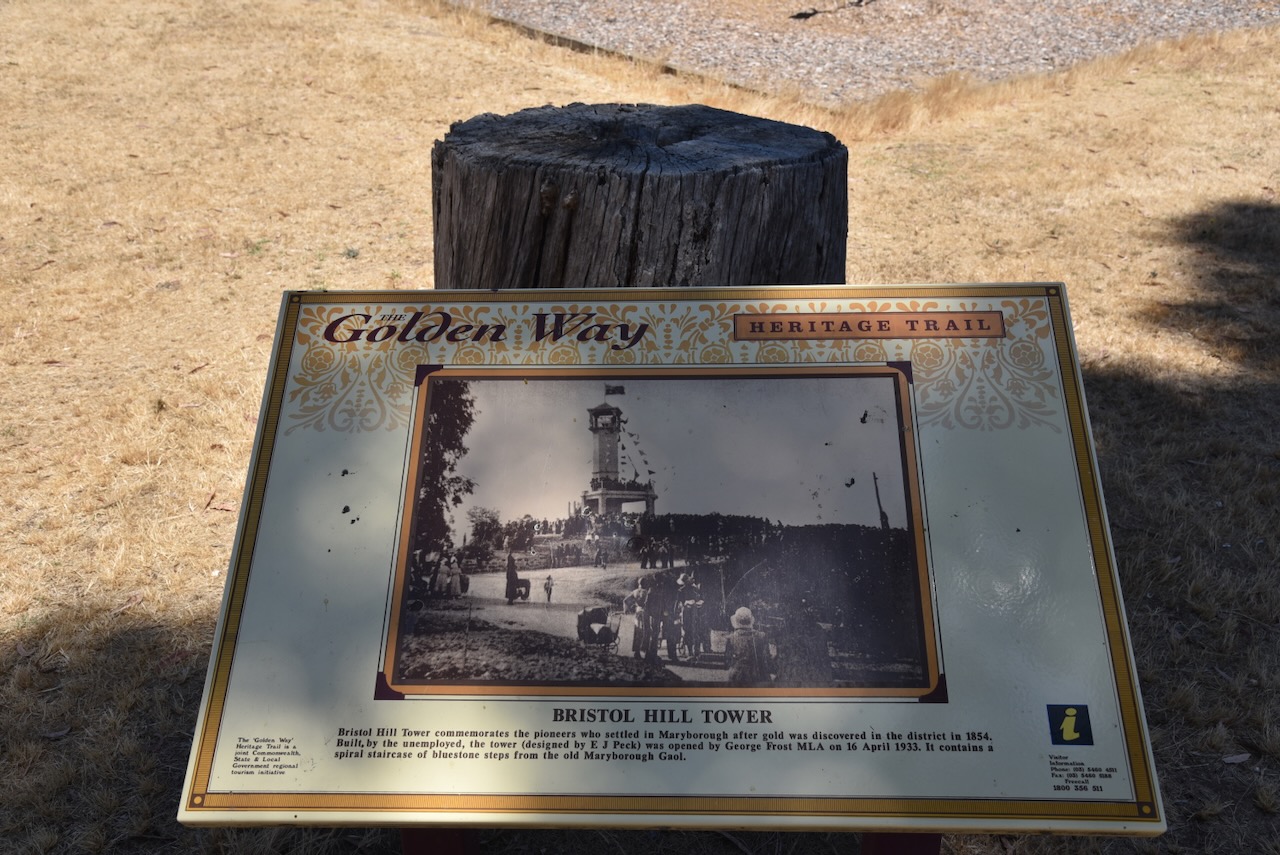
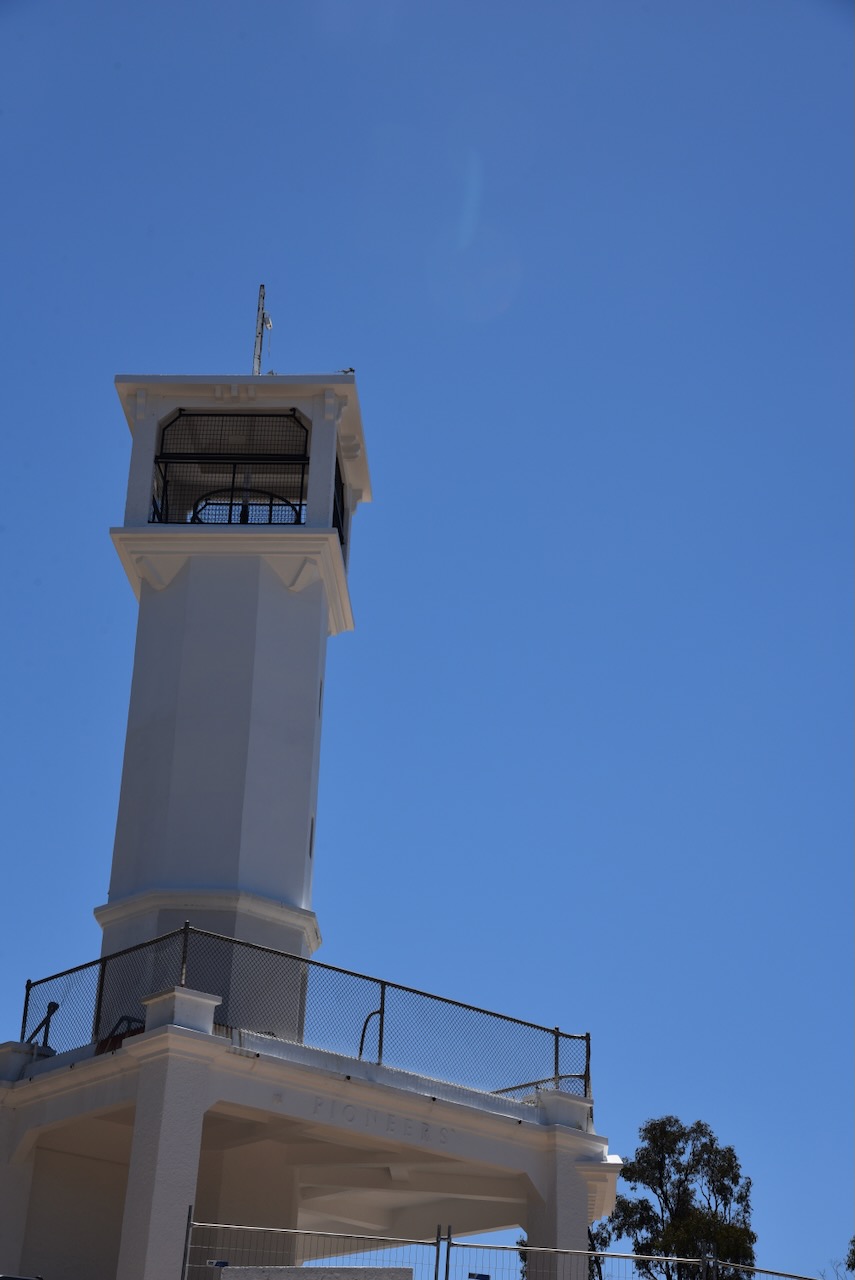
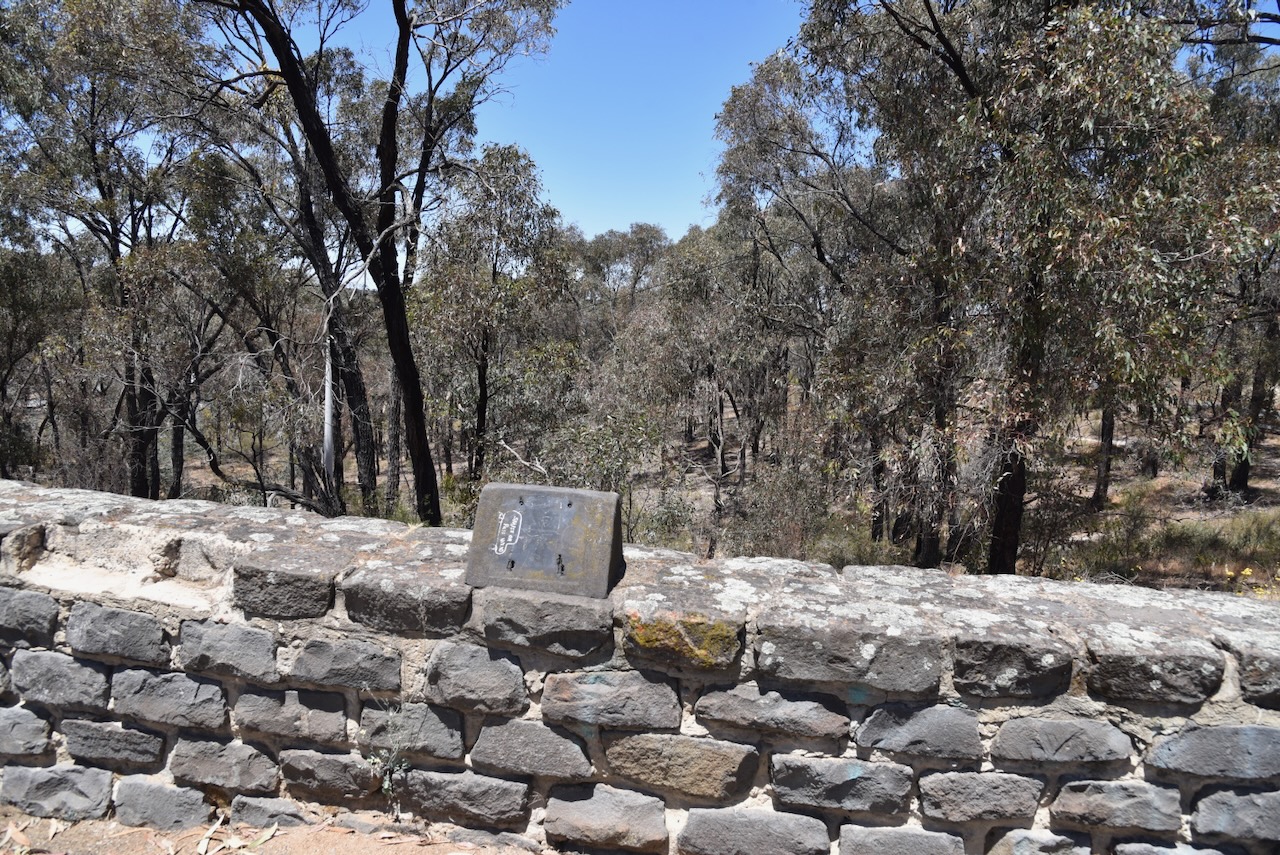
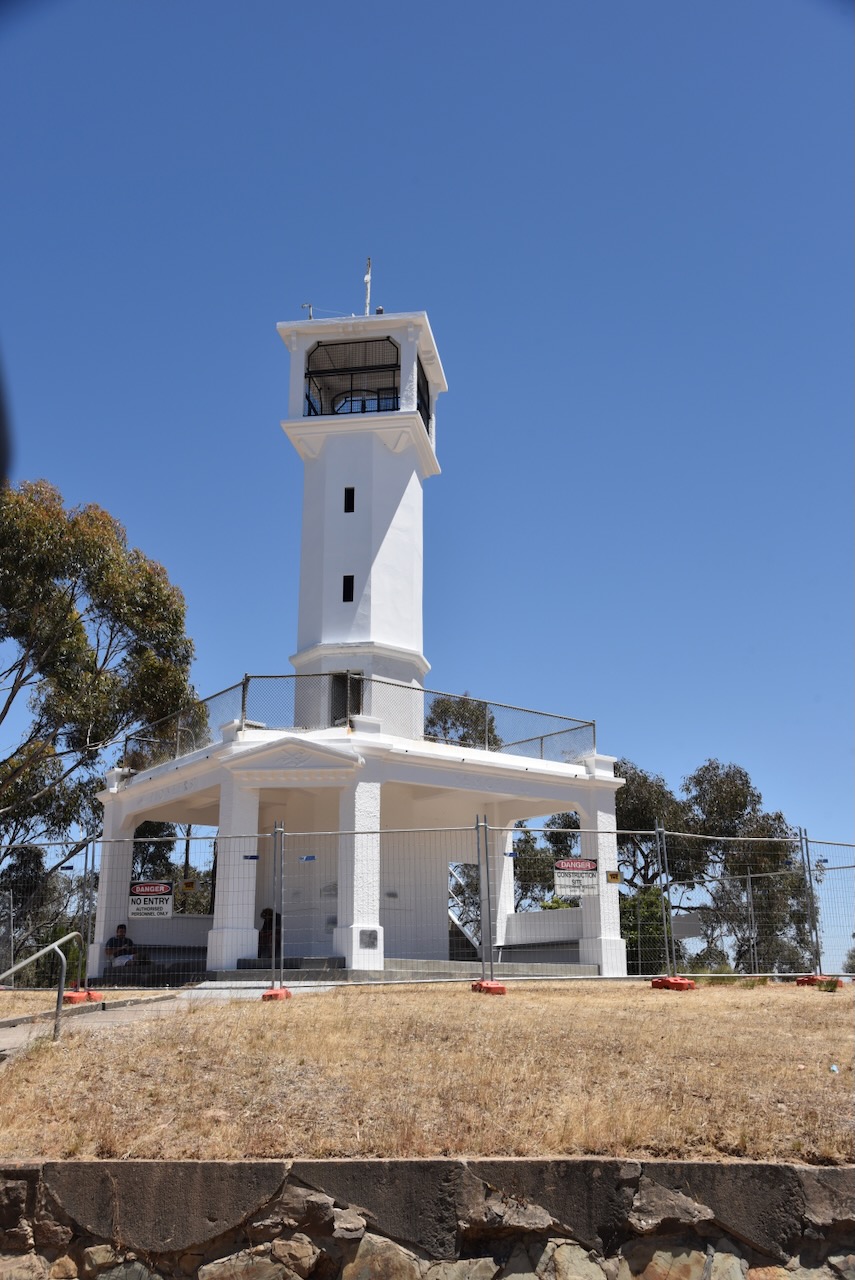
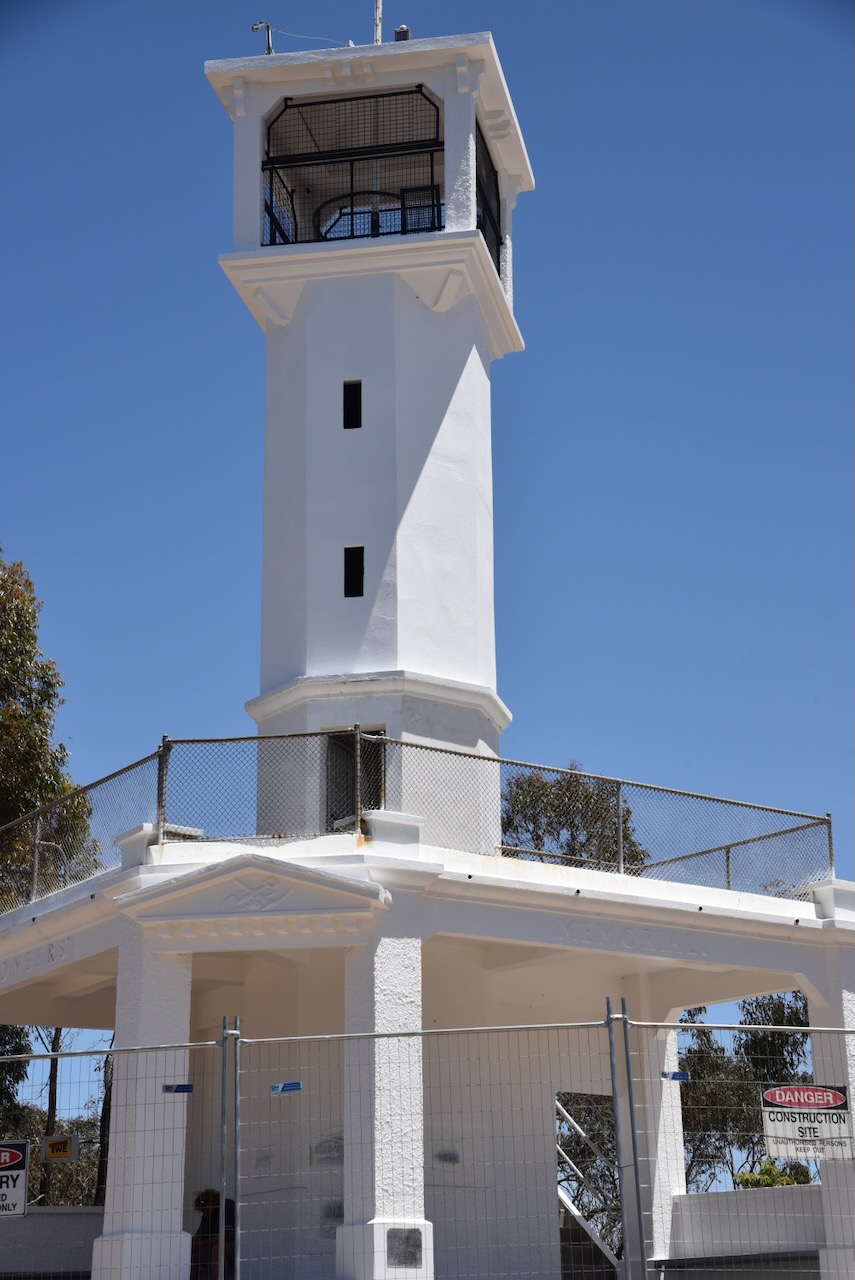
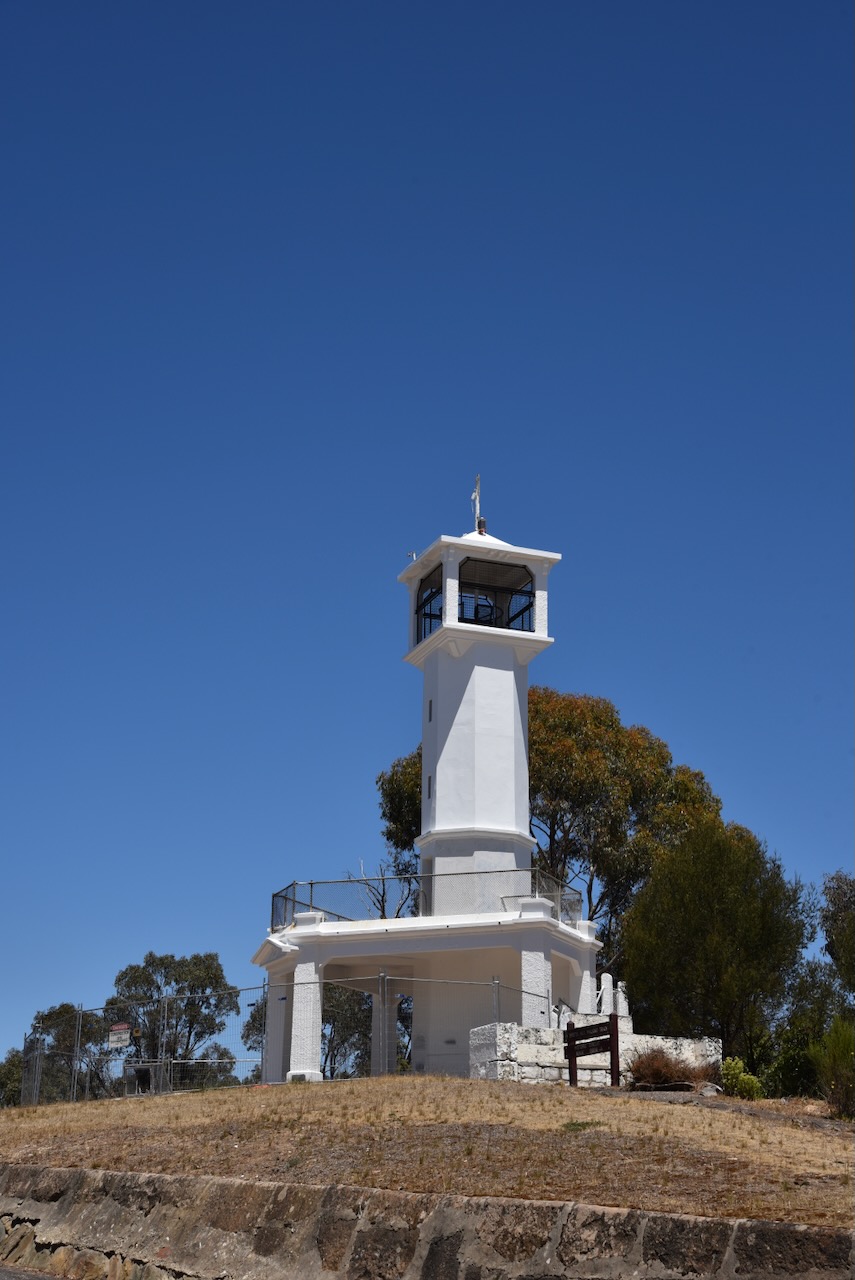
Our next stop was the Bristol Hill Tower commemorates the pioneers of the Maryborough district. It was built by the unemployed and was designed by E.J. Peck. The tower’s spiral staircase was built from bluestone from the old gaol buildings. (Aussie Towns 2024)
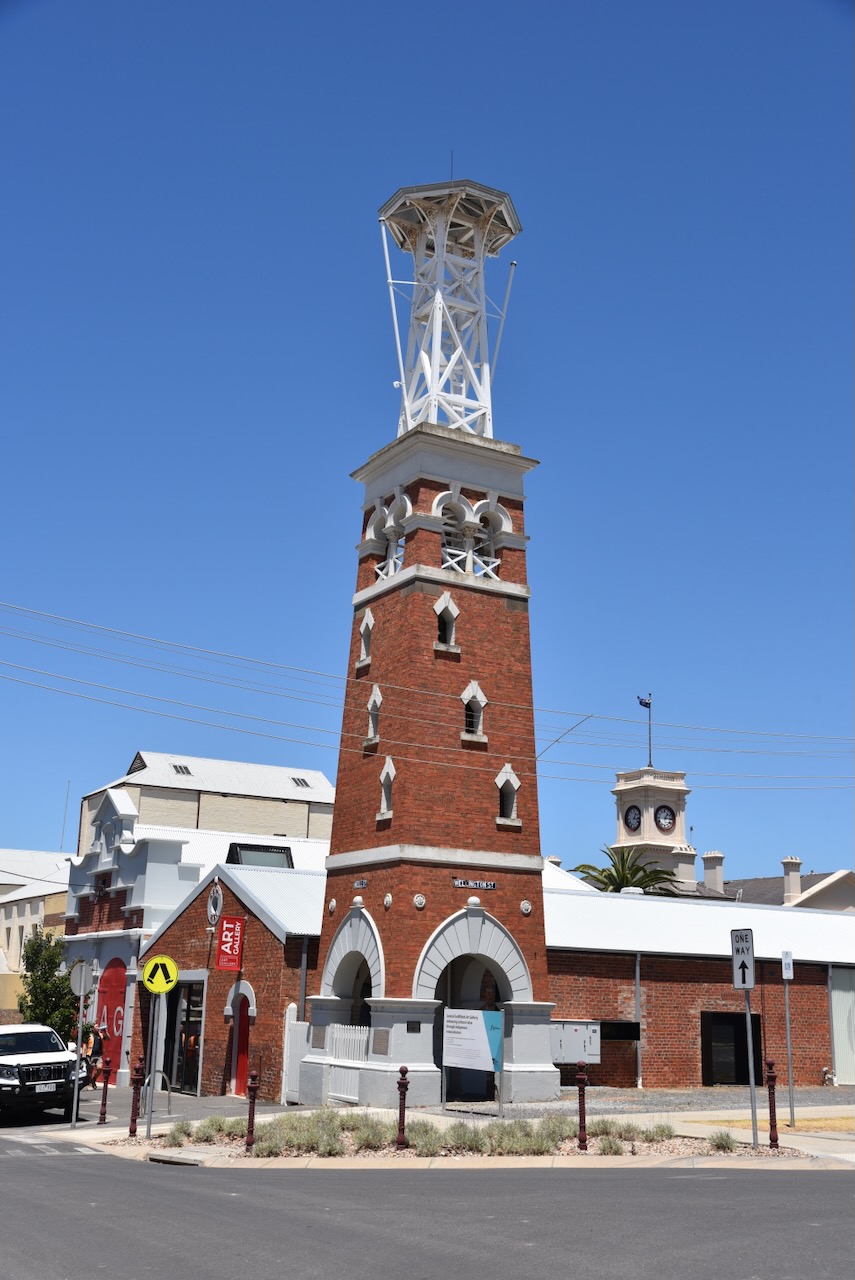
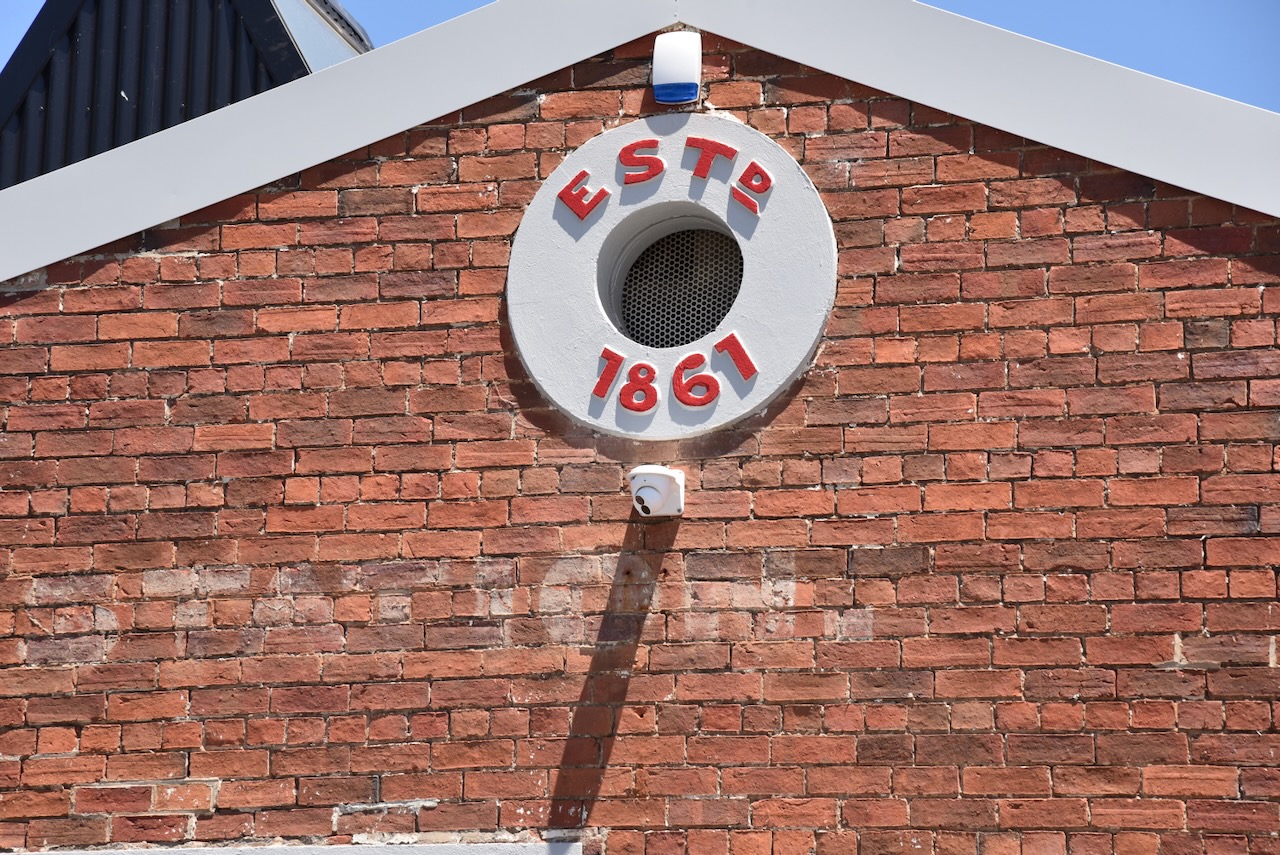
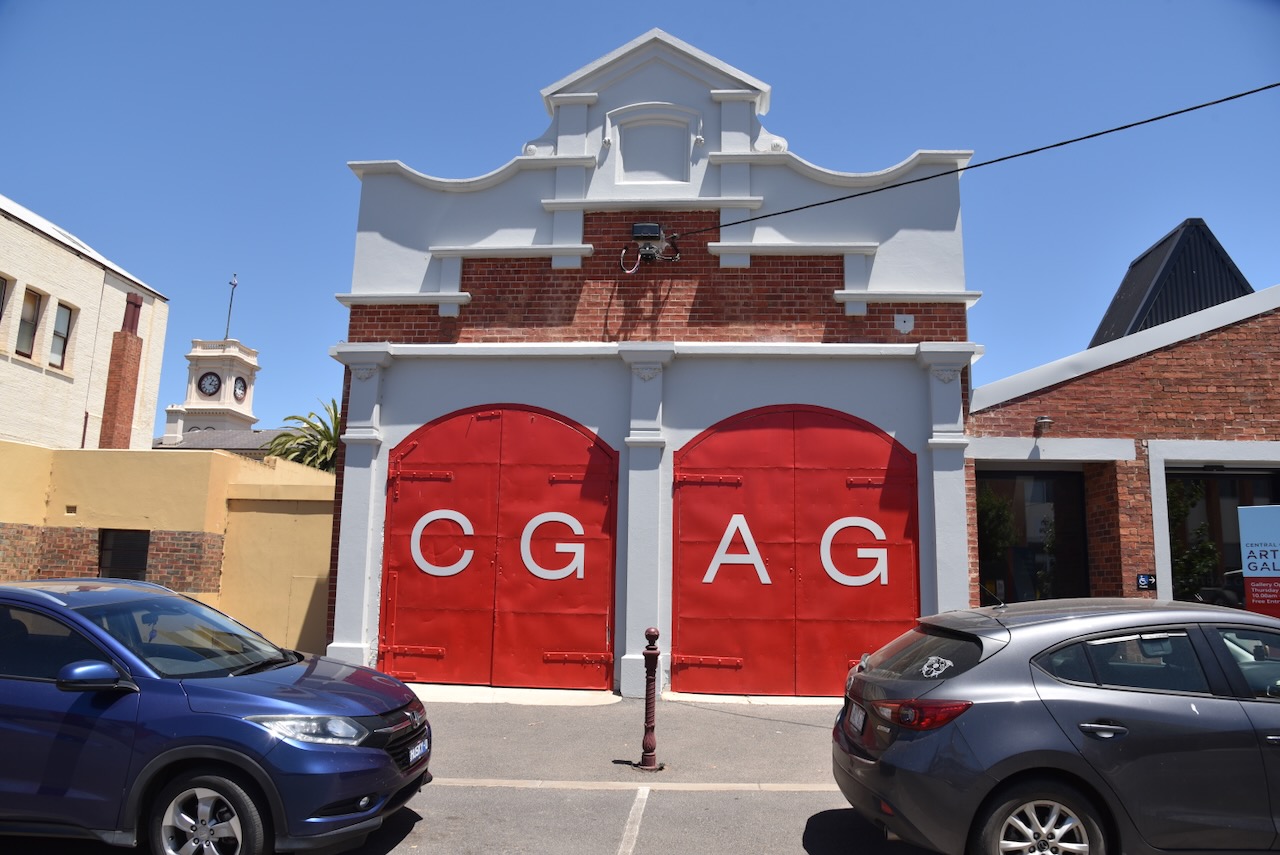
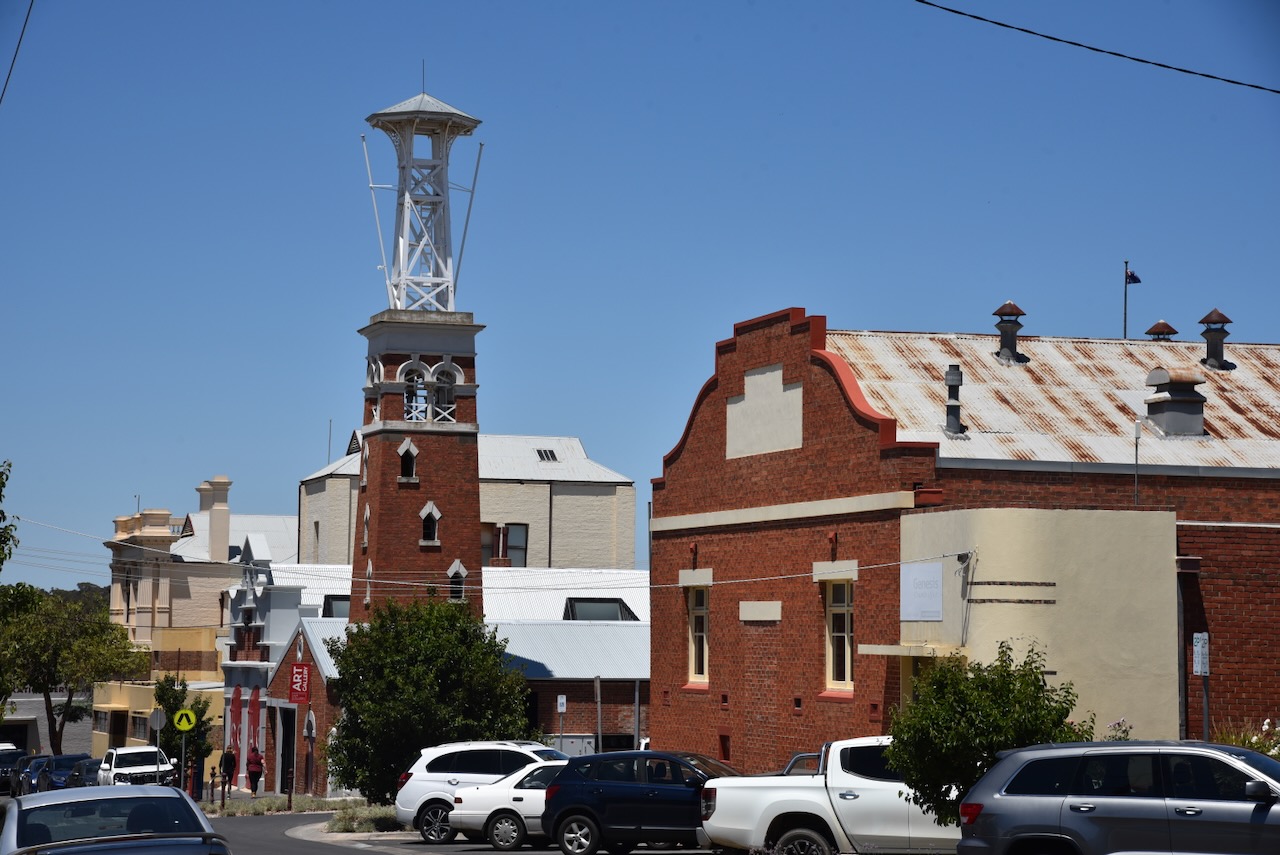
One of the buildings in Marybouough that really impressed Marija and me, was the old Maryborough Fire Station on Neill Street. It was built in 1861. The current-day tower was built in 1888 and is the third tower at the site. During the early 1900s, the engine sheds were added. The boom-style belltower contains a bell from the Simsons homestead. (Aussie Towns 2024)
We left Maryborough and headed north on Timor Road and soon reached the little area of Bowenvale.
Bowenvale was originally known as Chinaman’s Flat. In the early 1860s, a Ballarat mining company successfully mined a deep lead in the area. The Chinaman’s Flat Post Office operated from 1861 to 1895. In 1864 the Chinaman’s Flat School was opened. During the 1870s Chinaman’s Flat was renamed Bowenvale in honour of Sir George Ferguson Bowen (. 1821. d. 1899), the Governor of Victoria from 1873-1879. (Victorian Places 2024)

Sir George Ferguson Bowen. Image c/o State Library Victoria.
Not much remains at Bowenvale. The former St Marys Catholic Church was built in the late 1800s. The old General Store was built in 1852 and is one of the oldest shops in Victoria. (flickr 2024) (Australia’s Christian Heritage 2024)
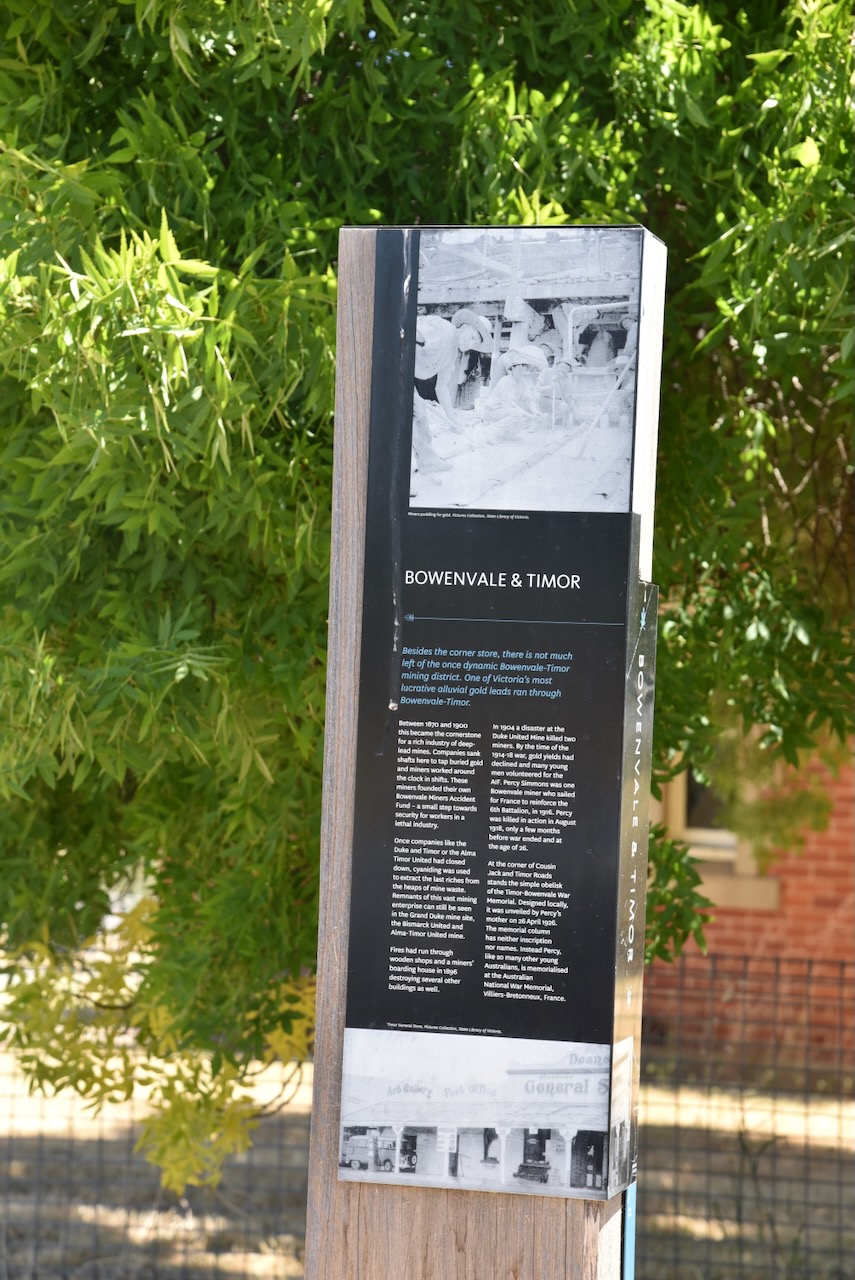
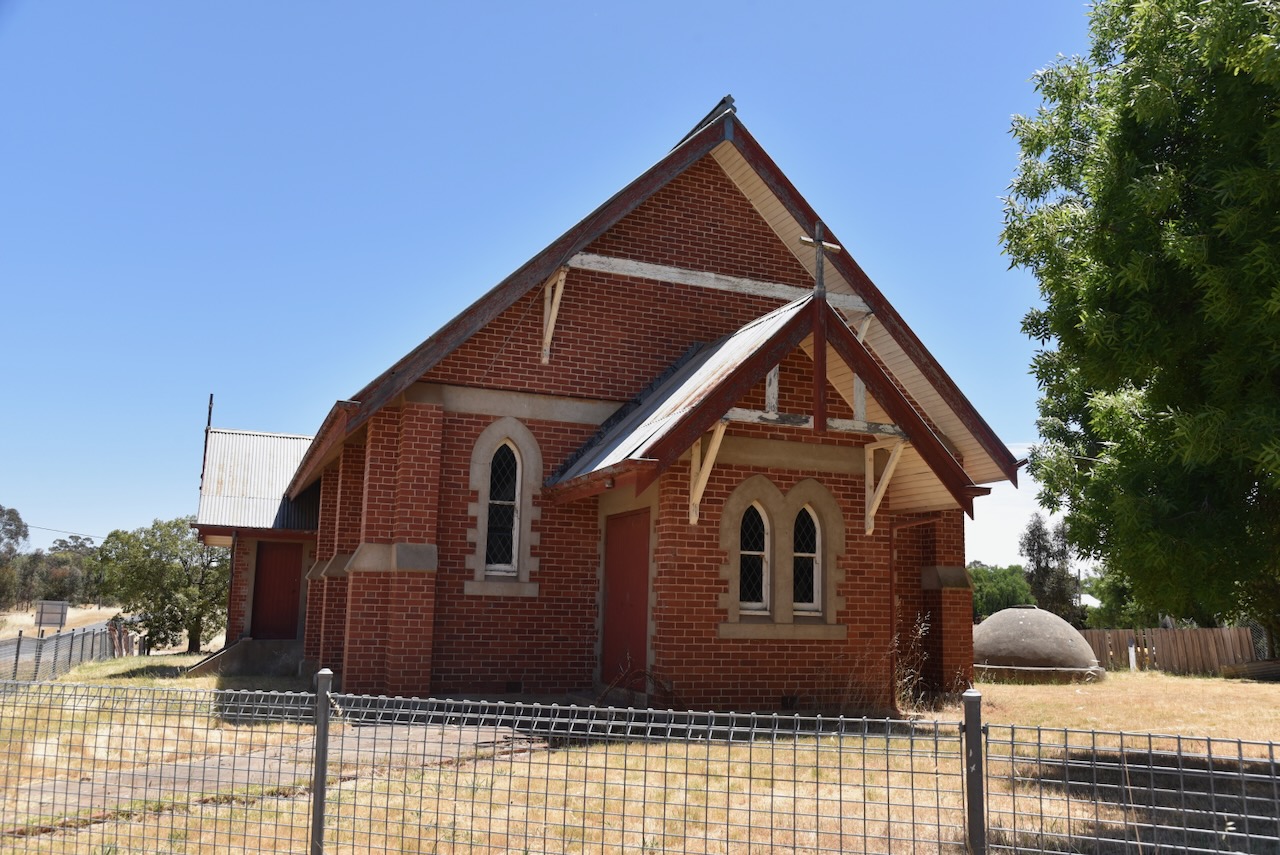
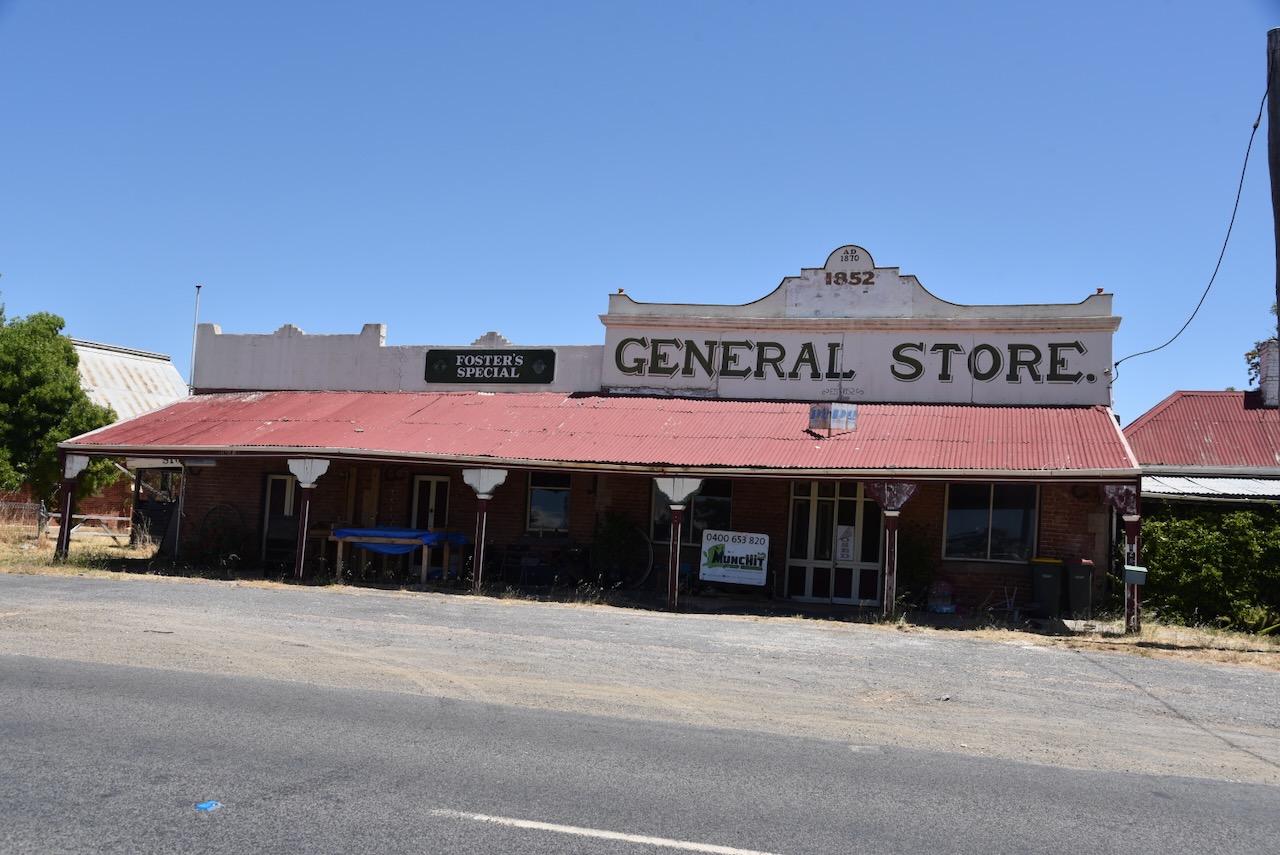
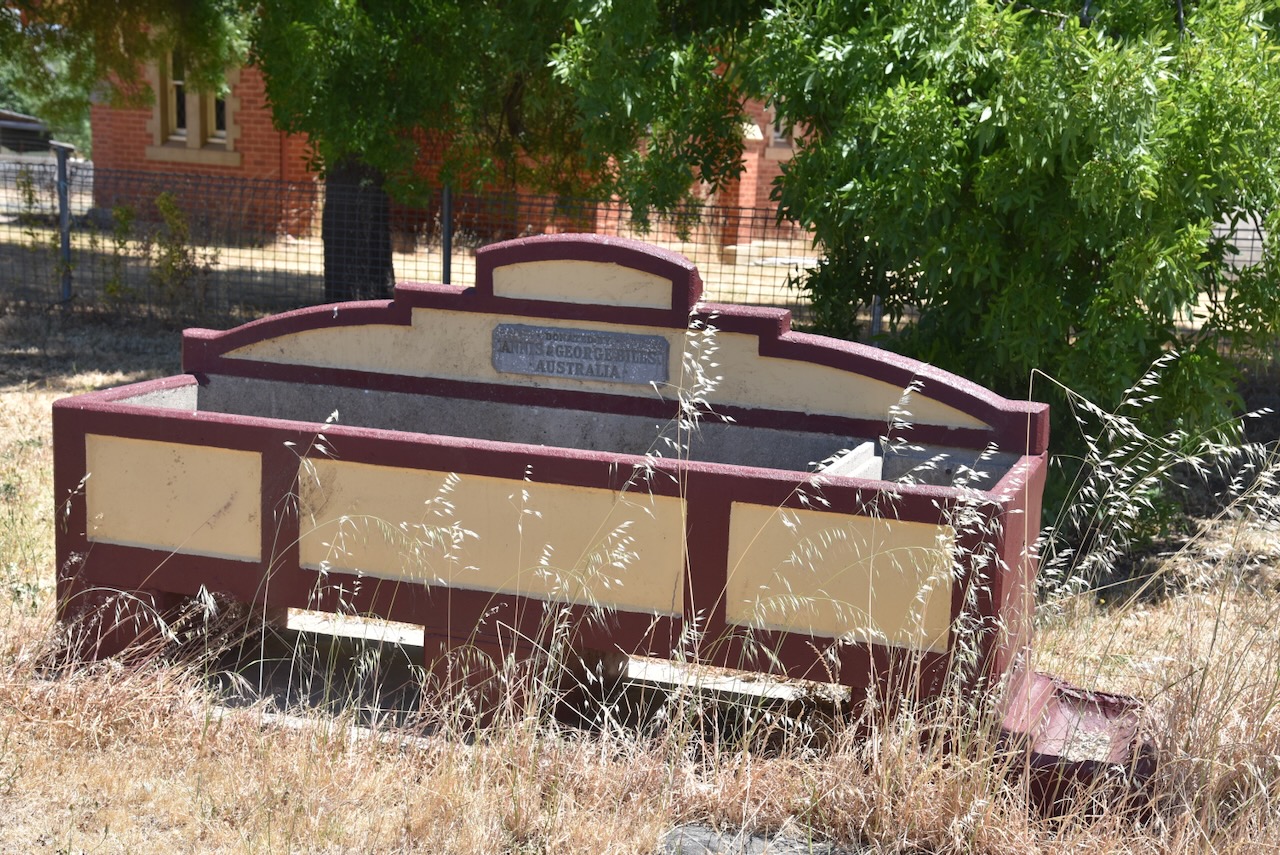
We continued on to Timor, a little town that was originally known as Coxtown following the discovery of gold there in 1856. It earned its name from Cox, a butcher and hotel keeper. It was subsequently renamed Timor after nearby Timor Creek. The Timor Post Office opened in 1865. In 1873 a government school was opened at Timor and by 1879 had an enrollment of almost 500 children. (Victorian Places 2024)


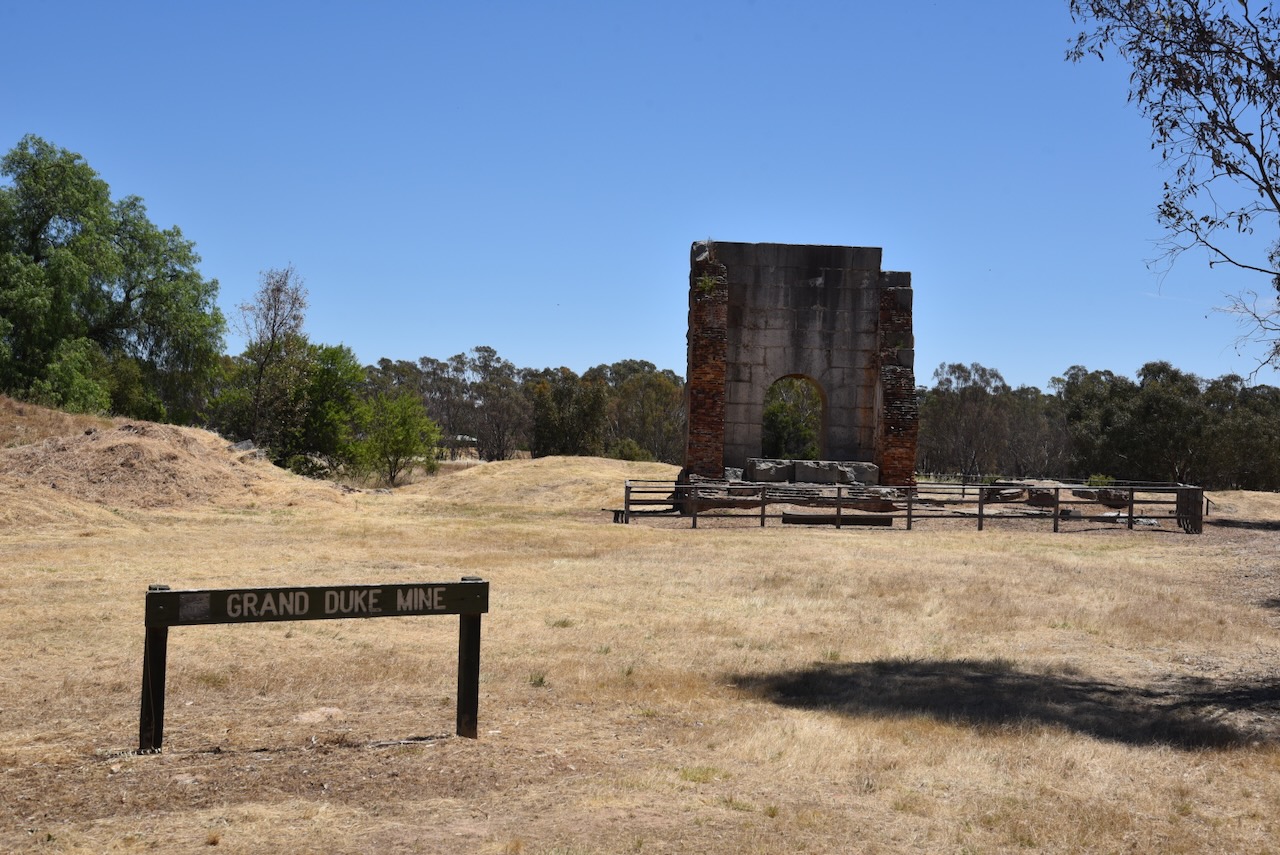
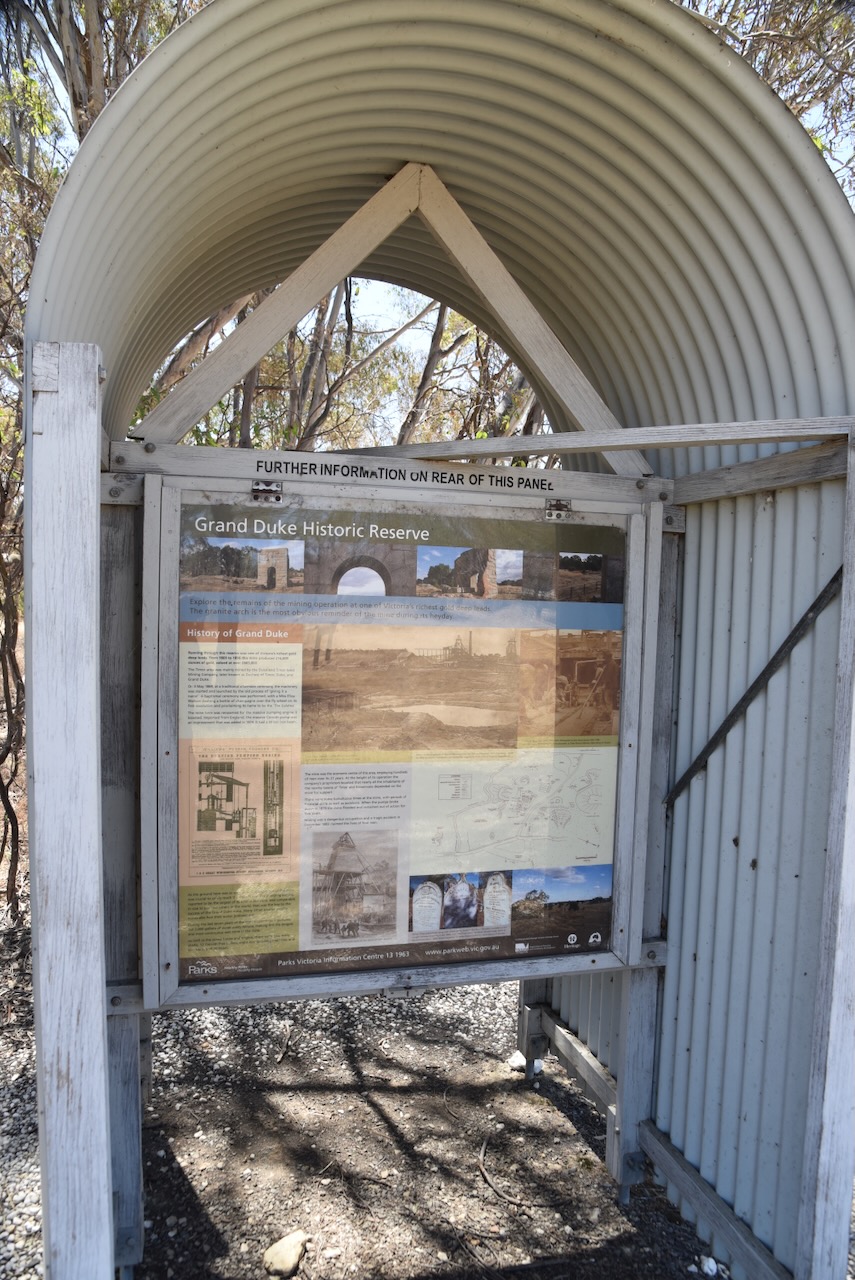
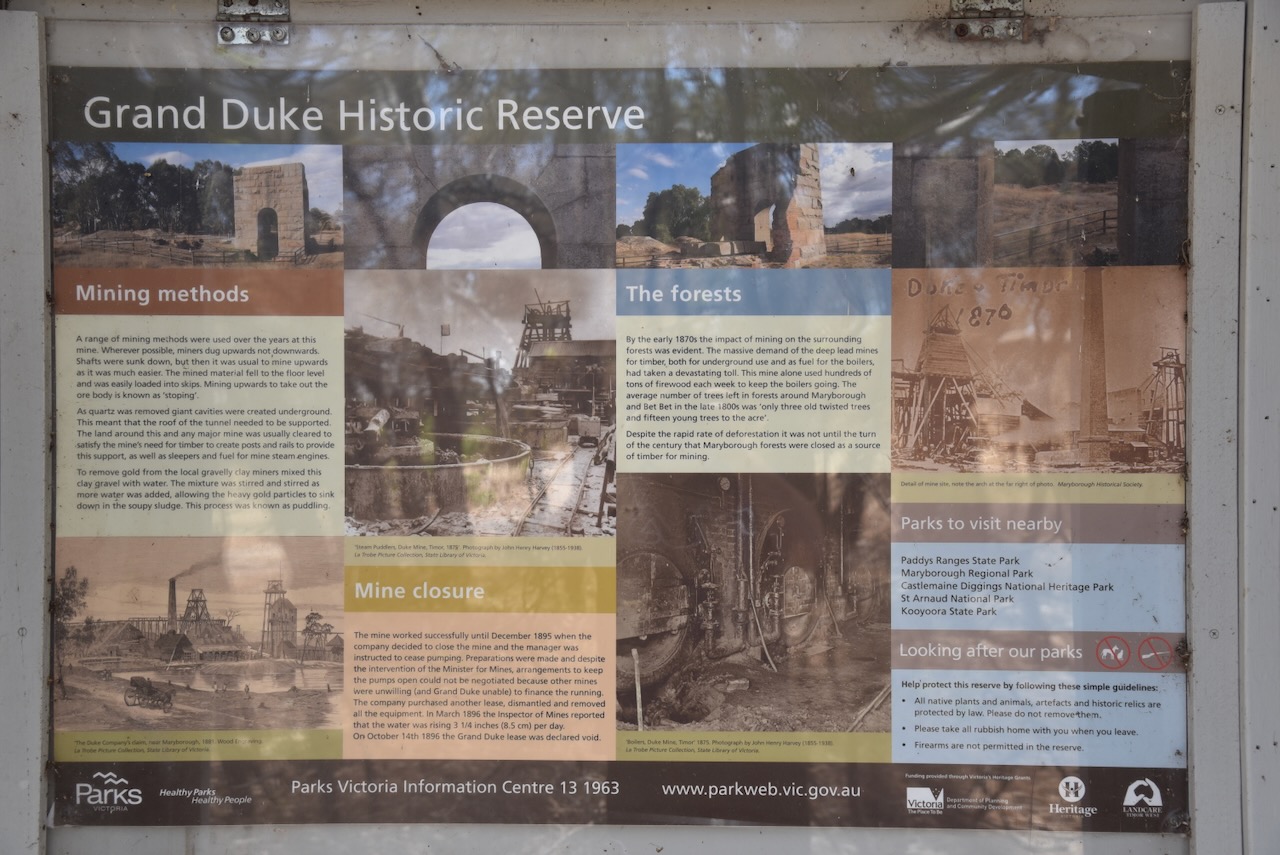
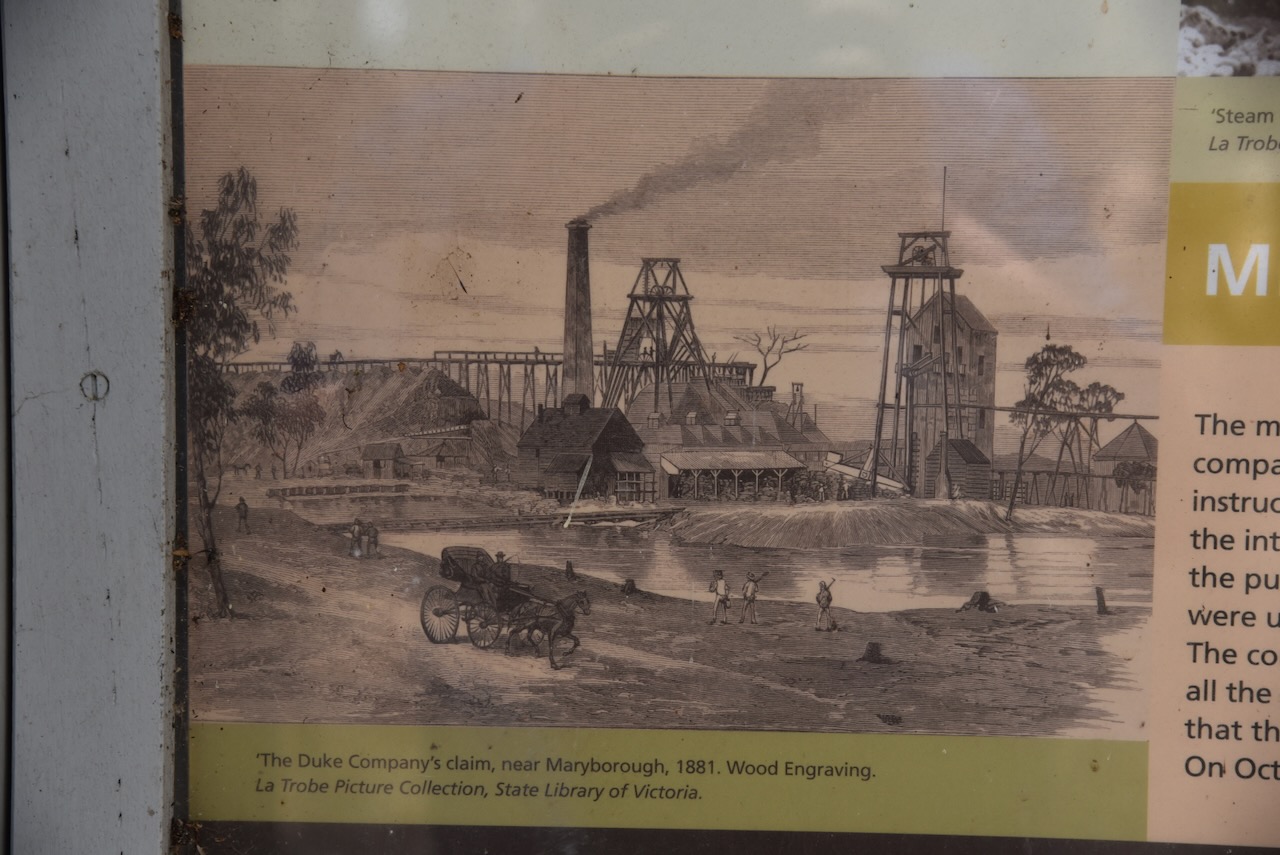
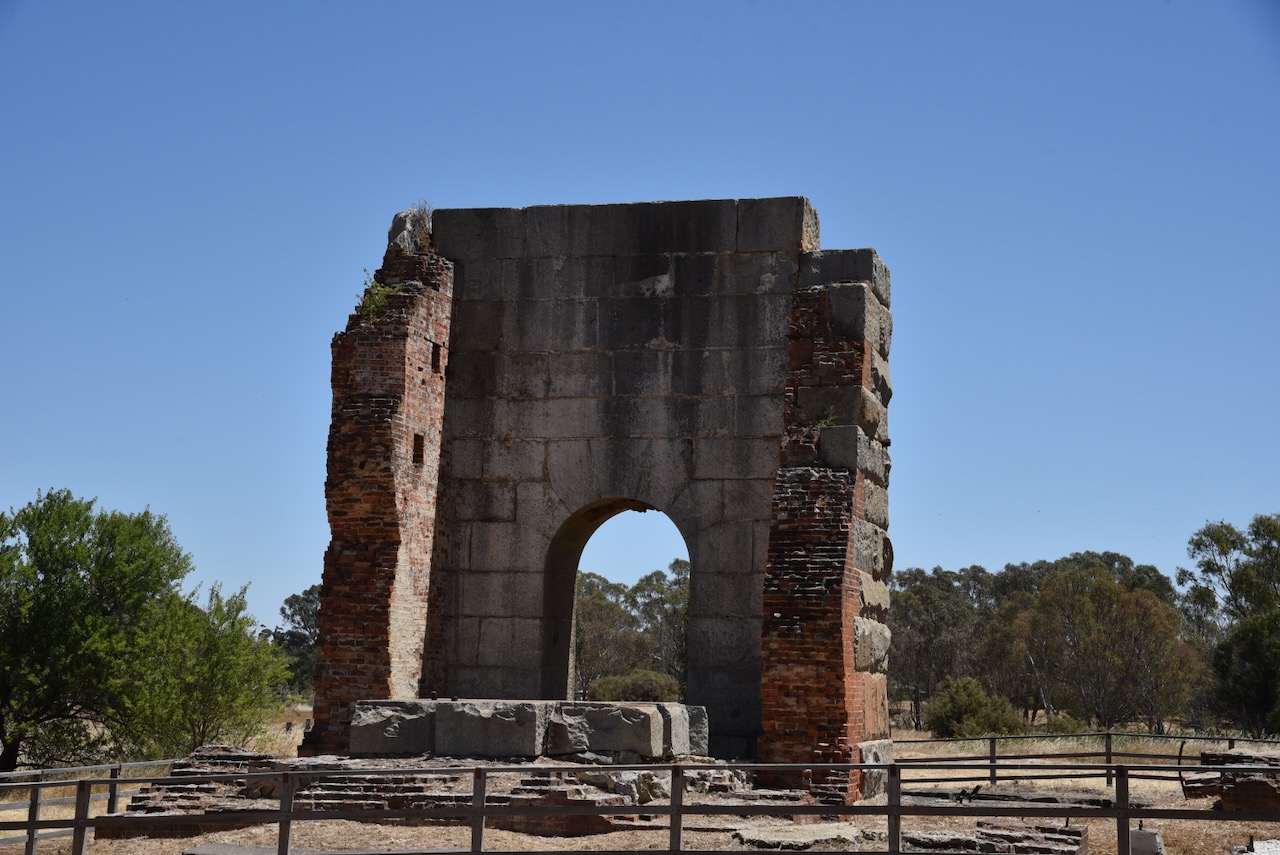
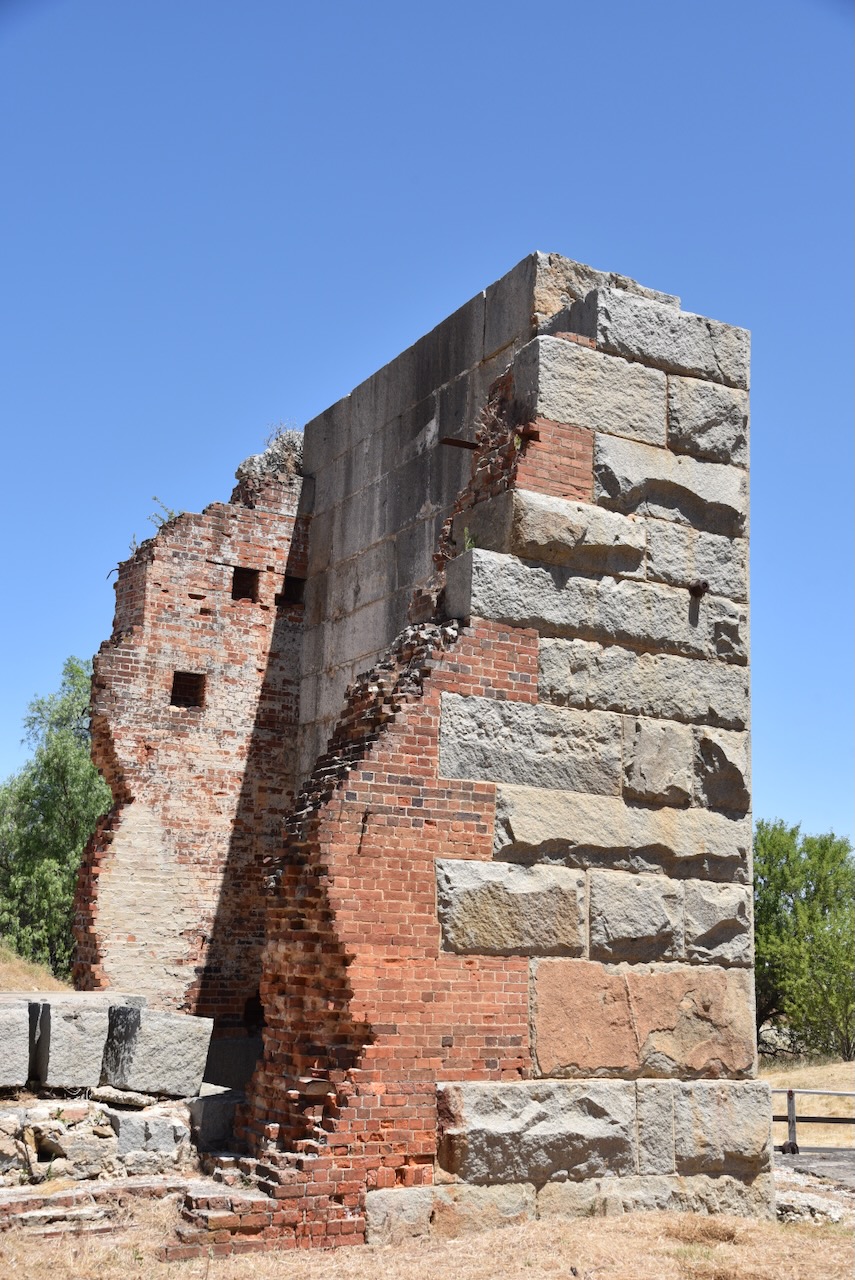
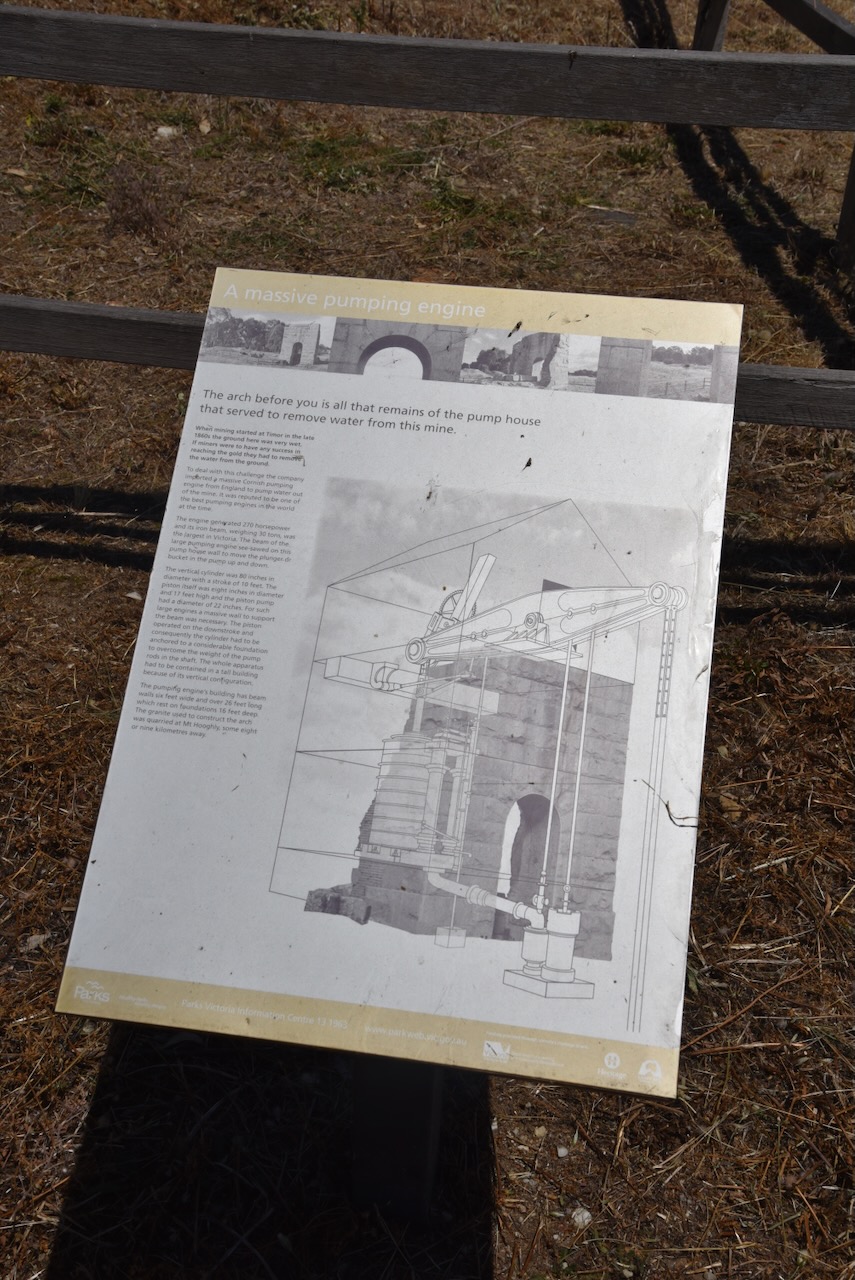
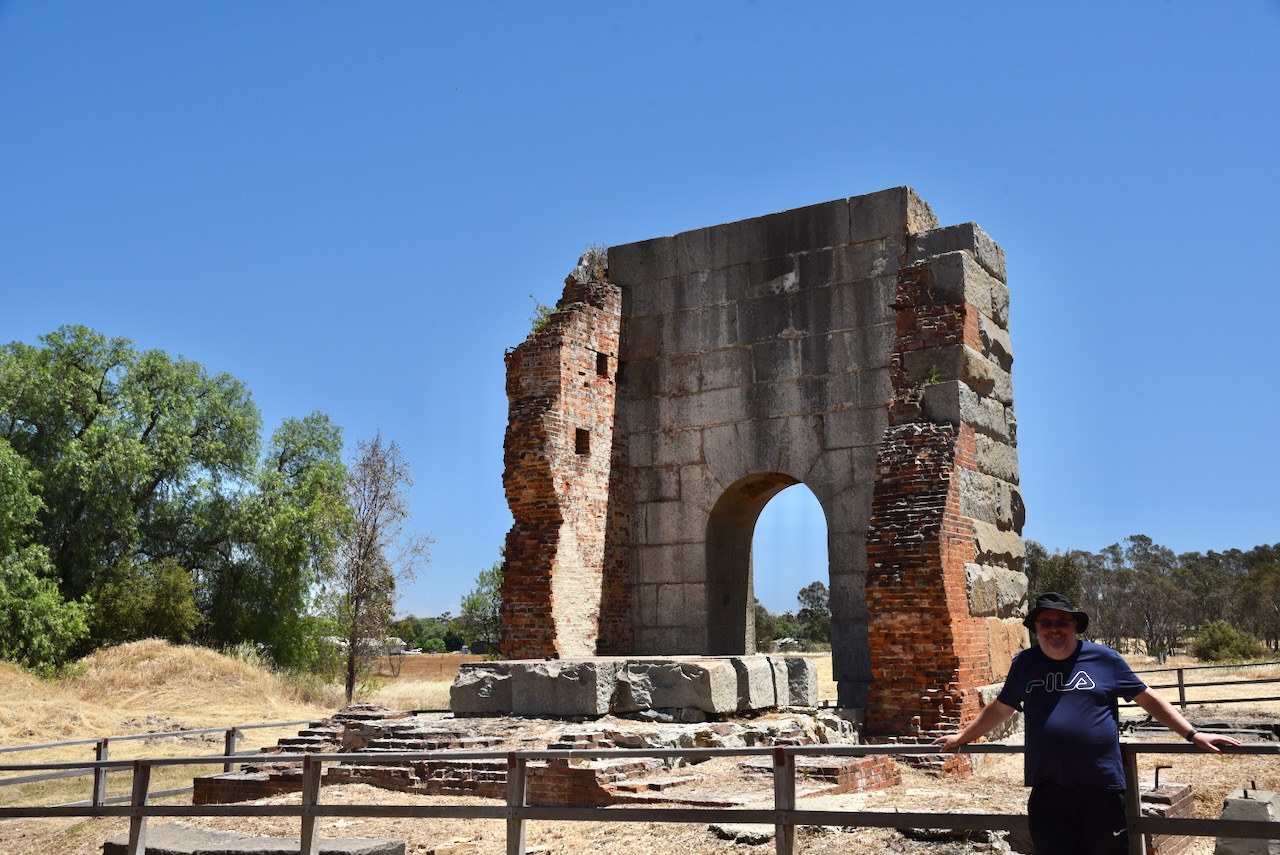
The most successful deep lead in the district was the Grand Duke. Remains of the Duke and Timor Gold Mining Company’s mine house can be found at Timor. It produced a 1/4 of the gold taken from the Maryborough district. (Victorian Places 2024)
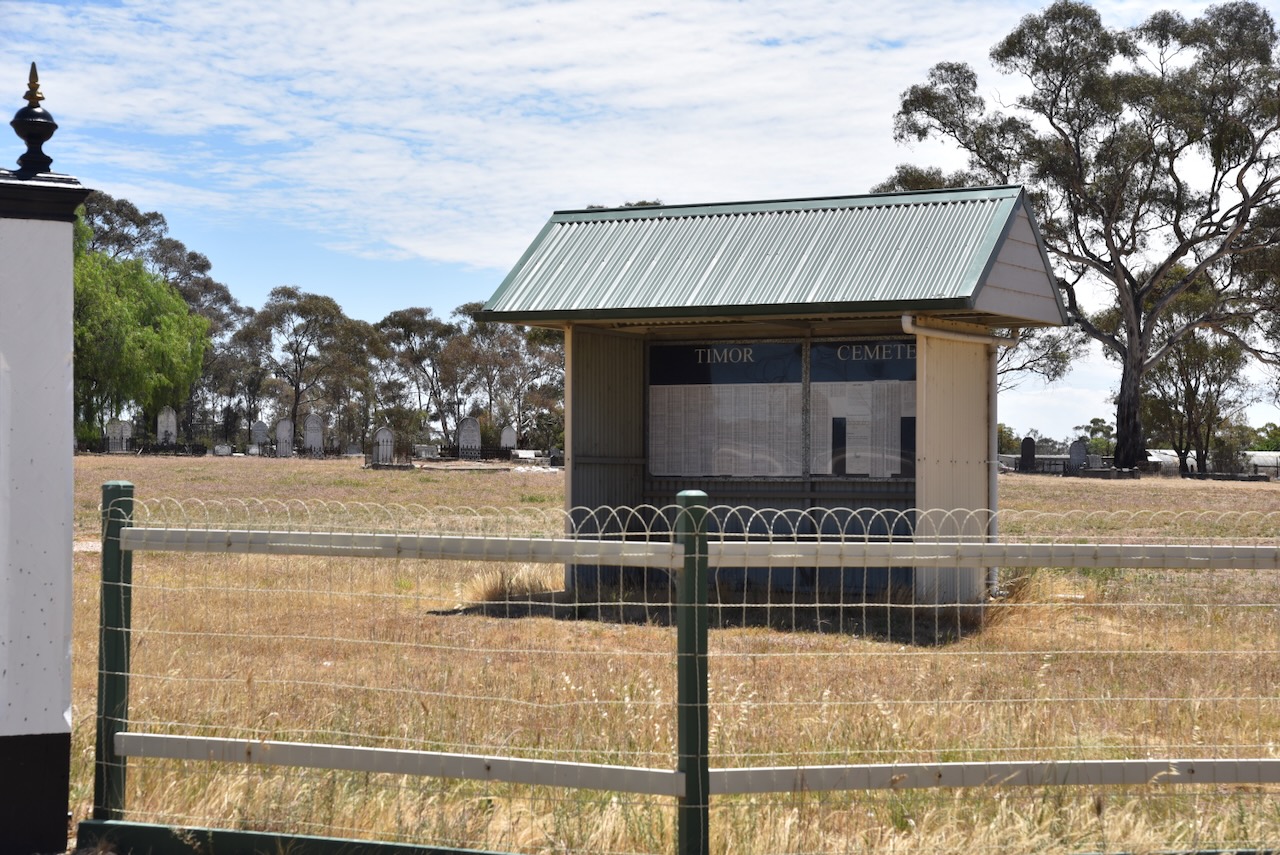
We then visited the historic Timor cemetery. One of this cemetery’s notable features is the rare surviving wooden grave architecture. (Goldfields Guide 2024)
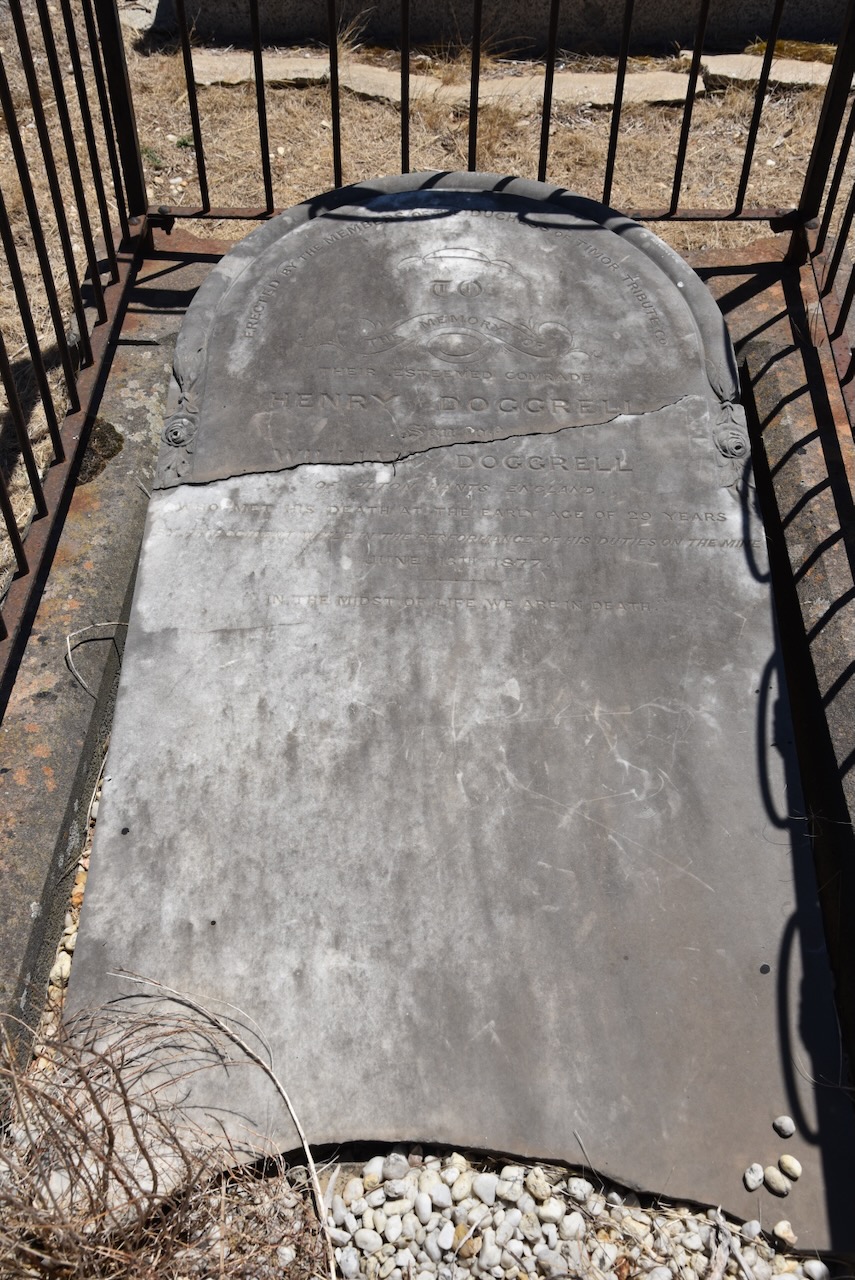
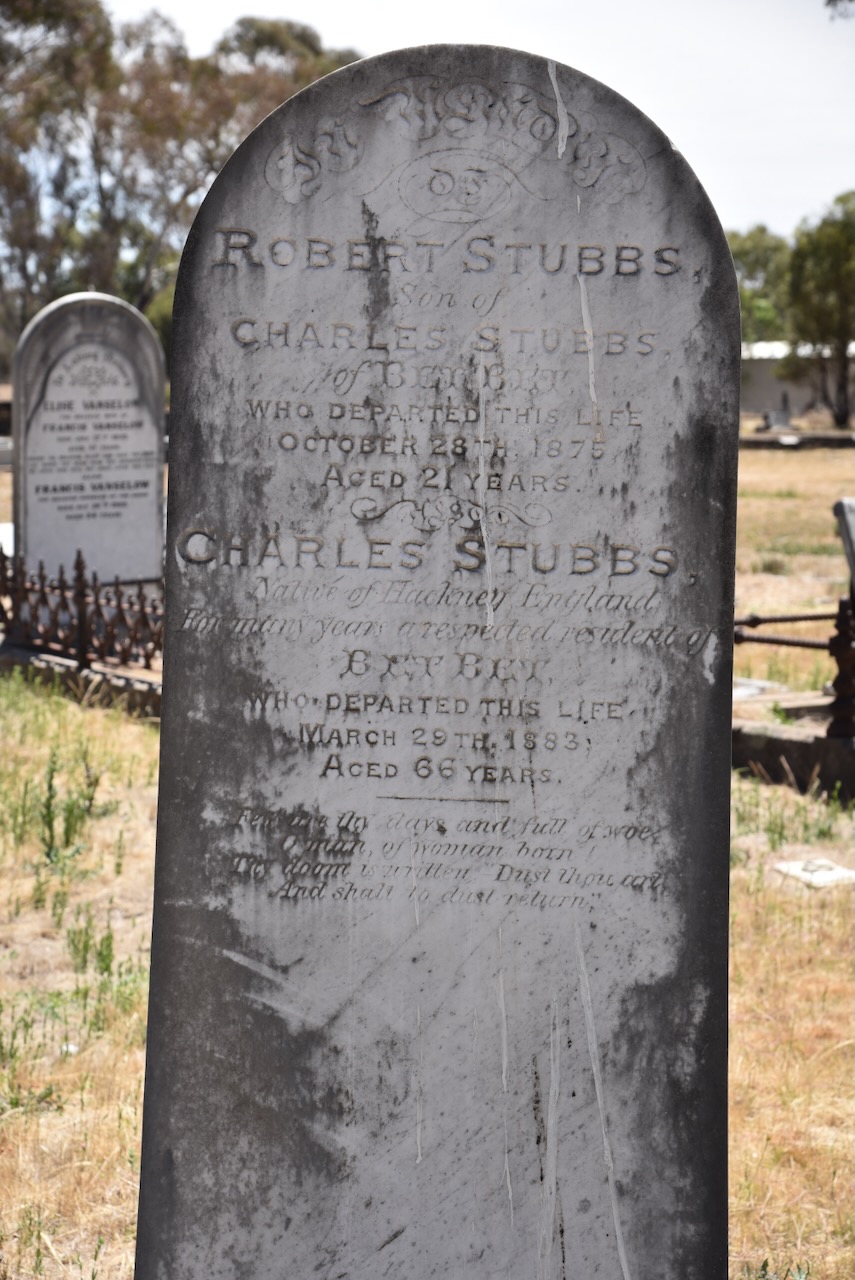
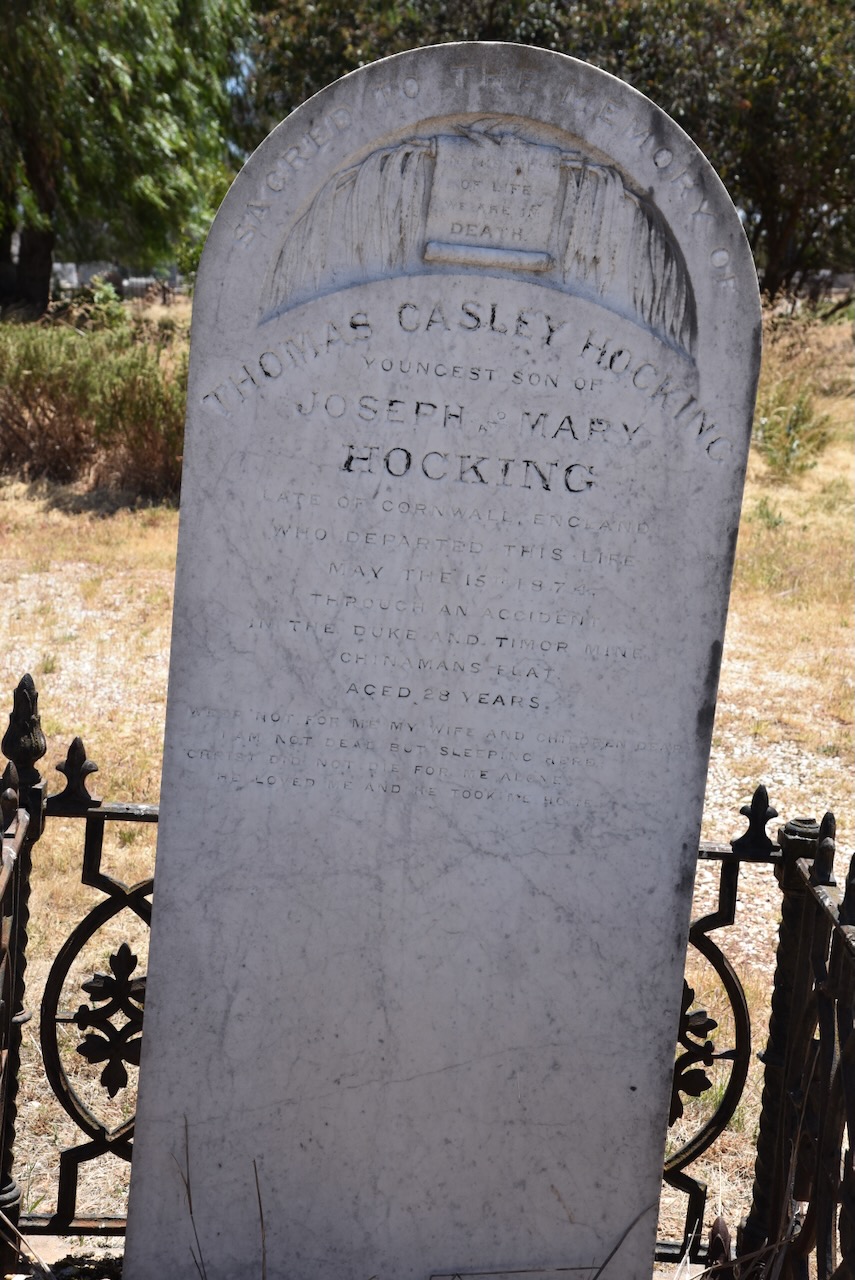
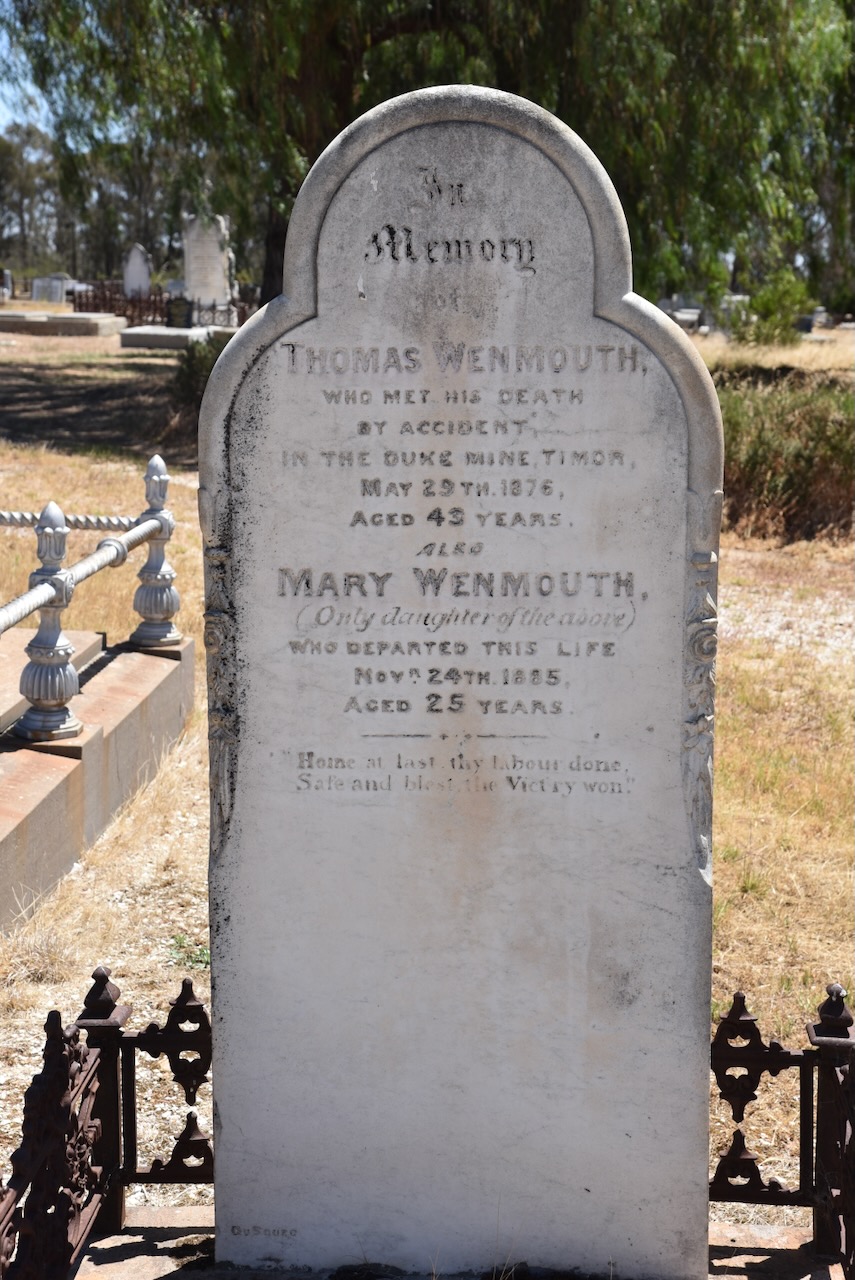
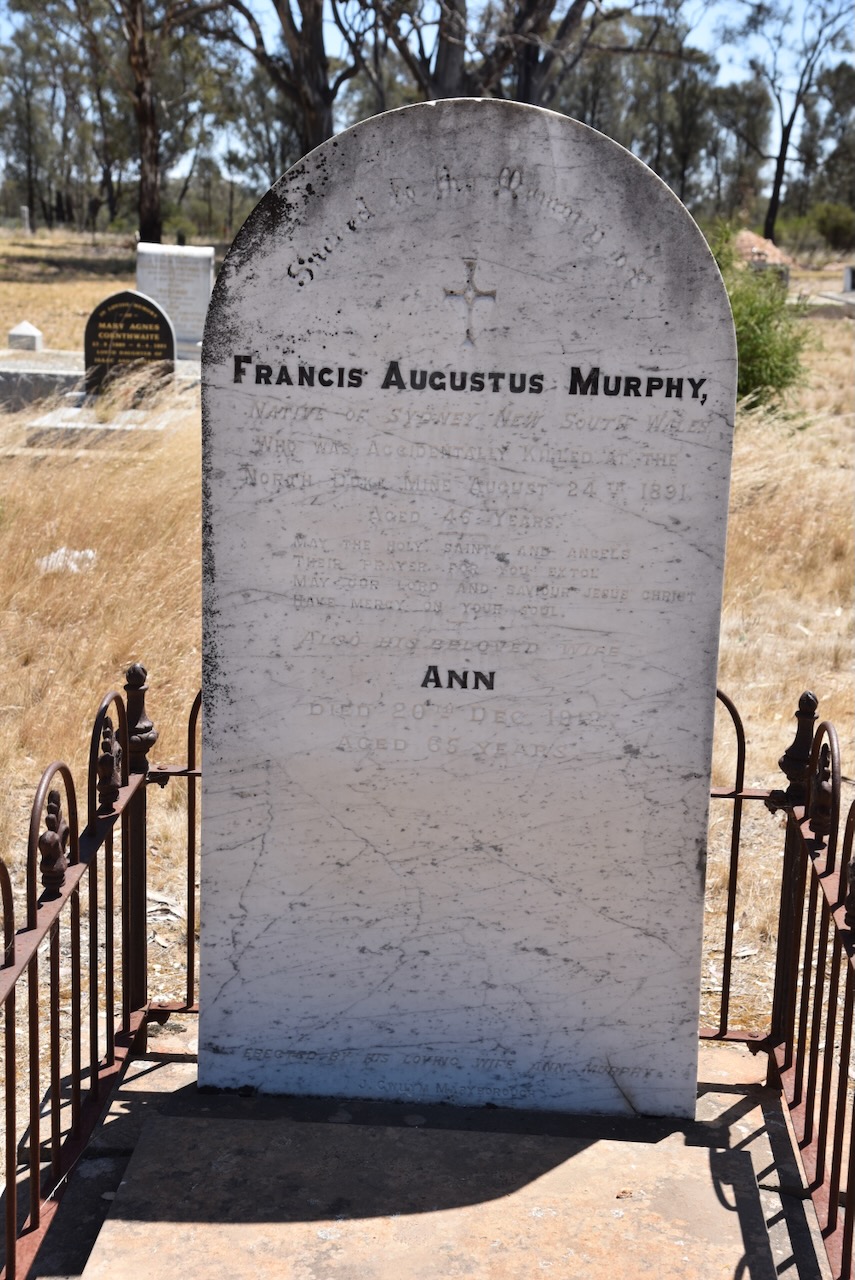
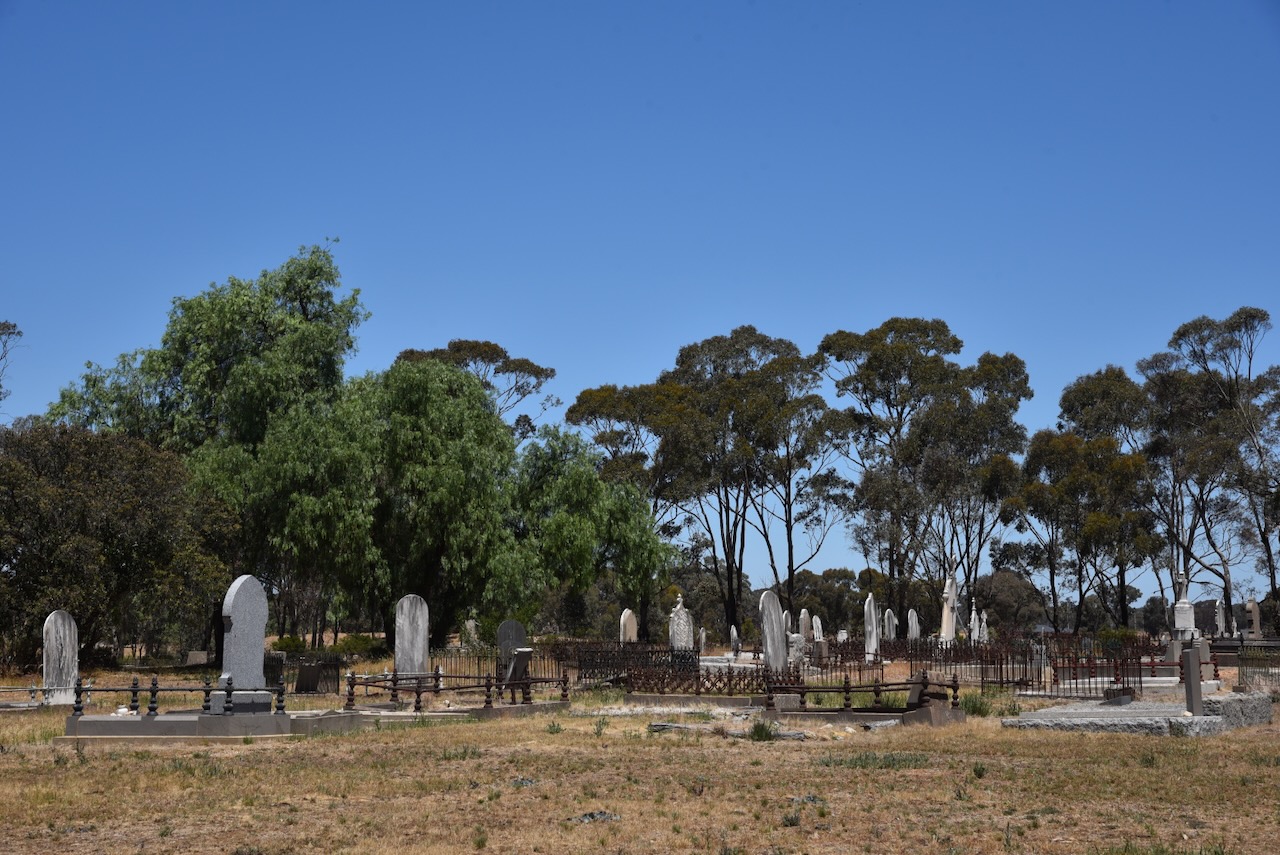
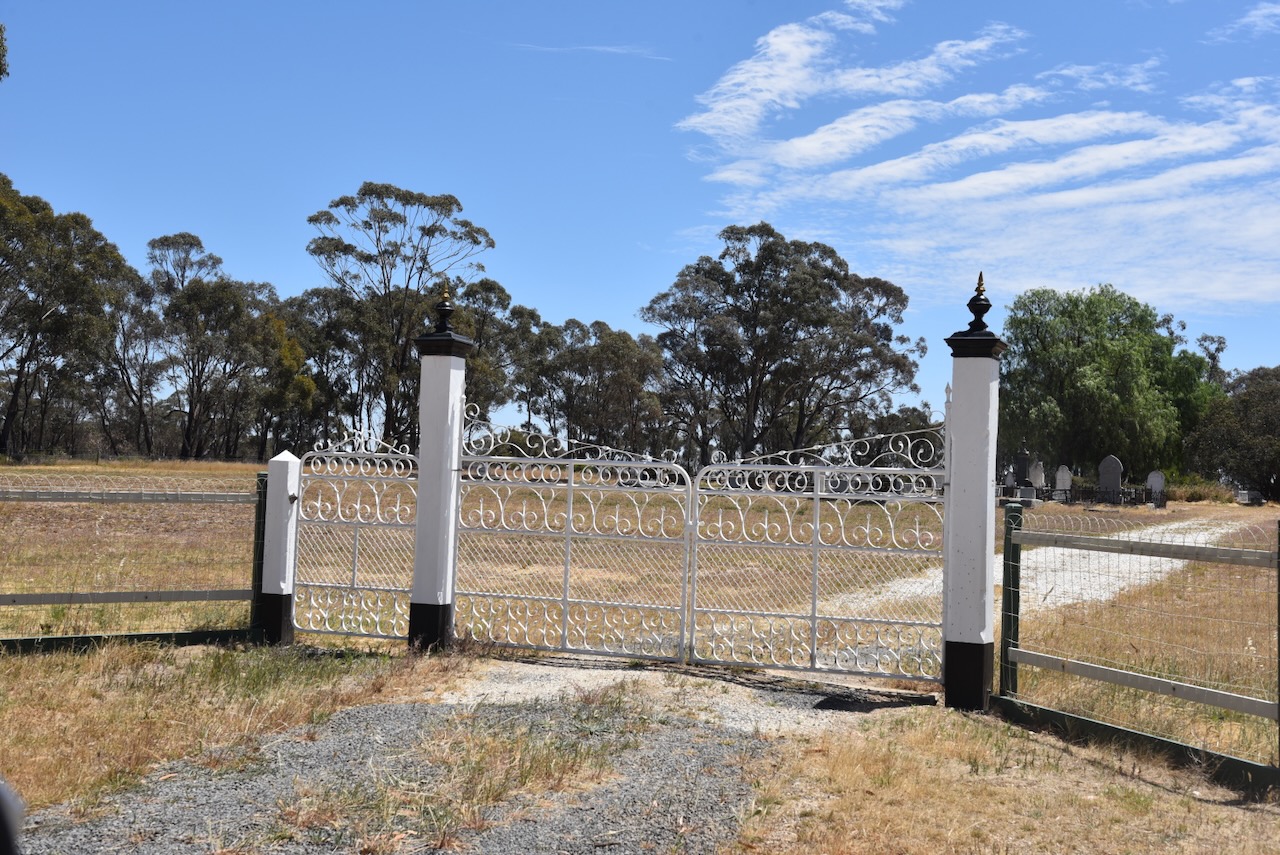
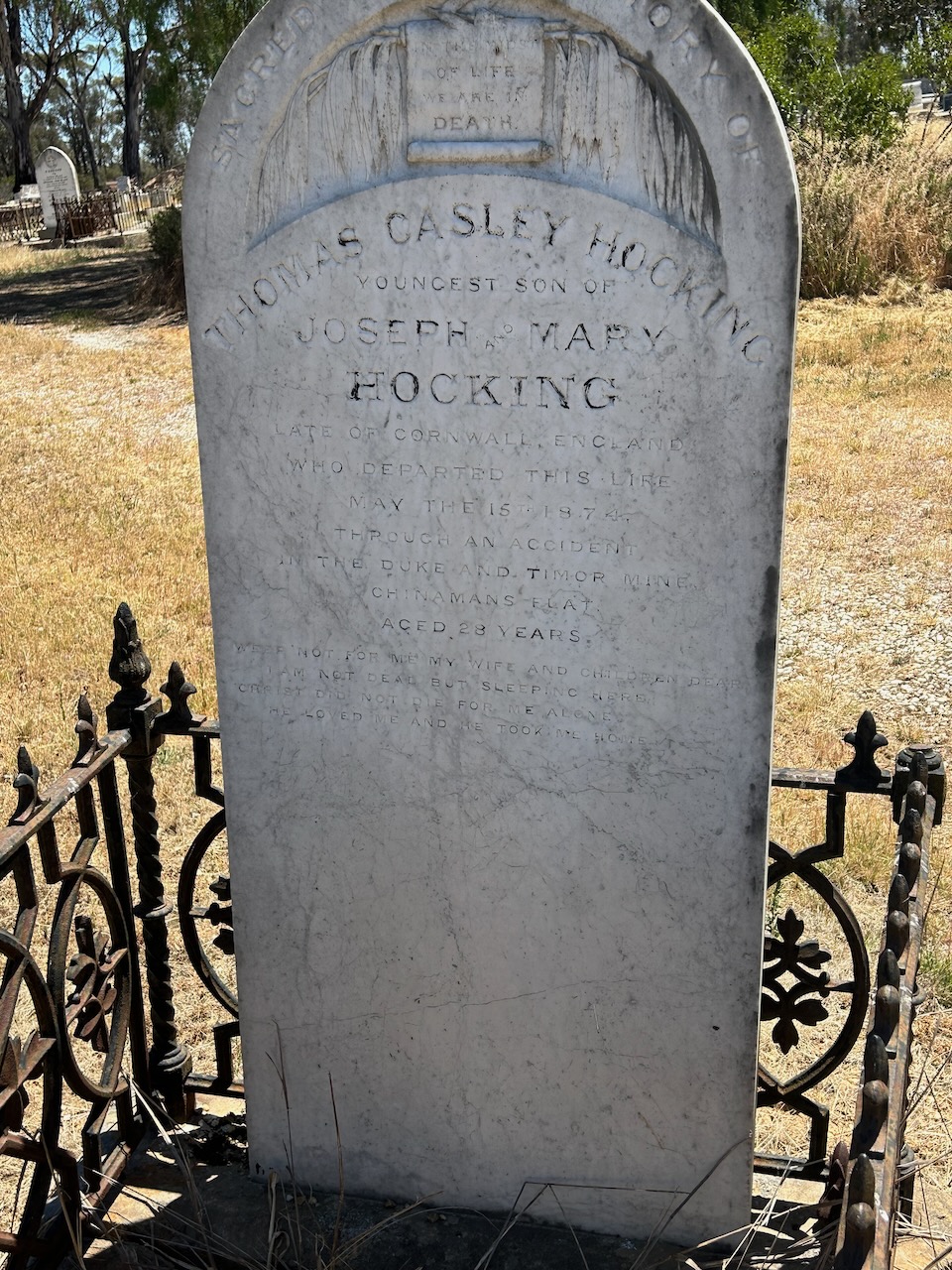
One of the interesting headstones in the cemetery is that of Joseph Nicholls. It is said that this is Timor’s Cursed Grave. Joseph Nicholls died in a mining accident on the 15th day of May 1874 at the Duke and Timor Mine. He was just 27 years old.

Above:- part of an article from The Age, Melbourne, Tue 19 May 1874. Image c/o Trove.
His headstone at the Timor cemetery reads:
Oh! Let my sudden doom
A warning be to all
E’en while thou bendest o’er my tomb
Thou may’st as quickly fall
(Goldfields Guide 2024)

We left Timor and continued north heading to the historic town of Dunolly.
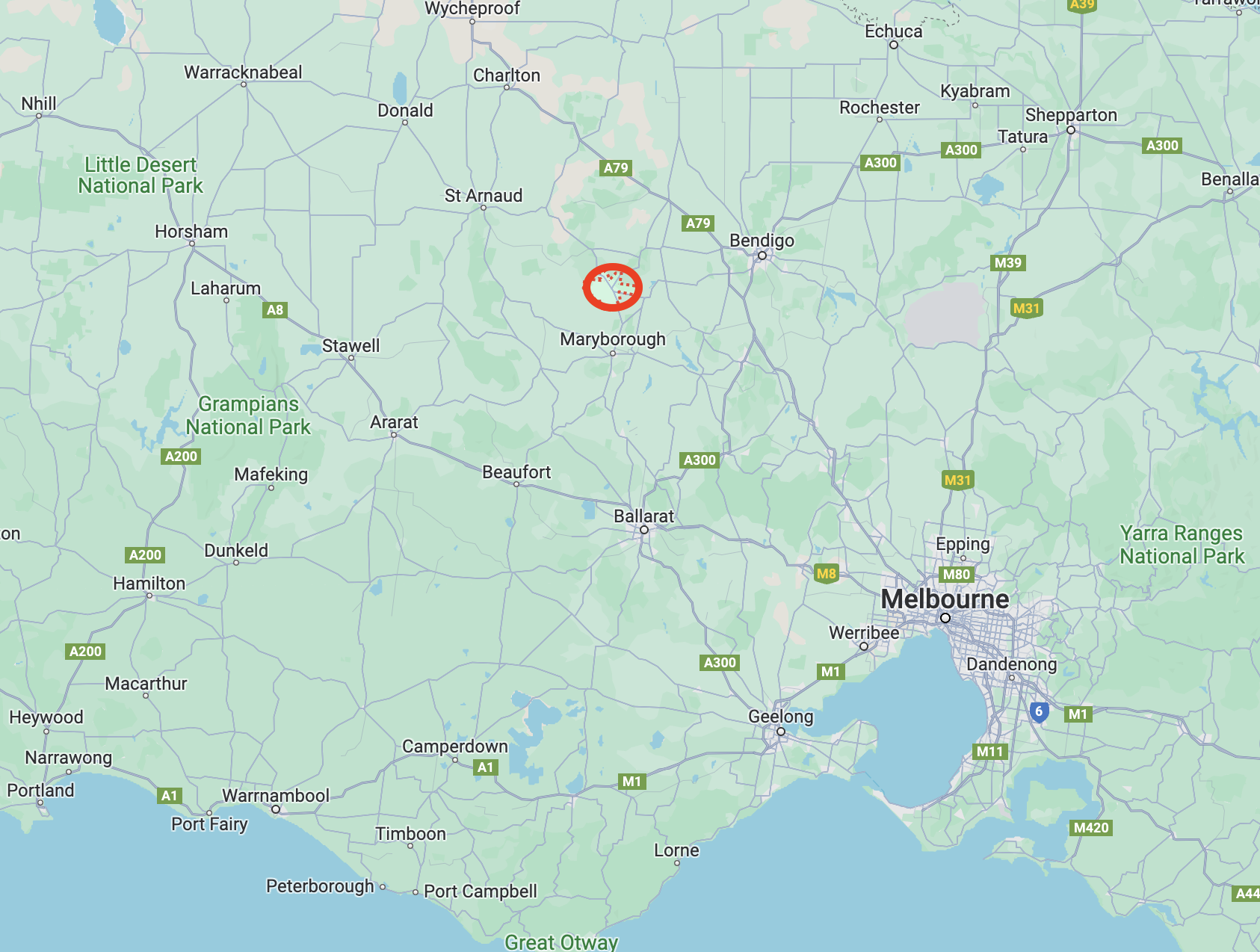
Above:- Map showing the location of Dunolly in Victoria. Map c/o Google Maps.
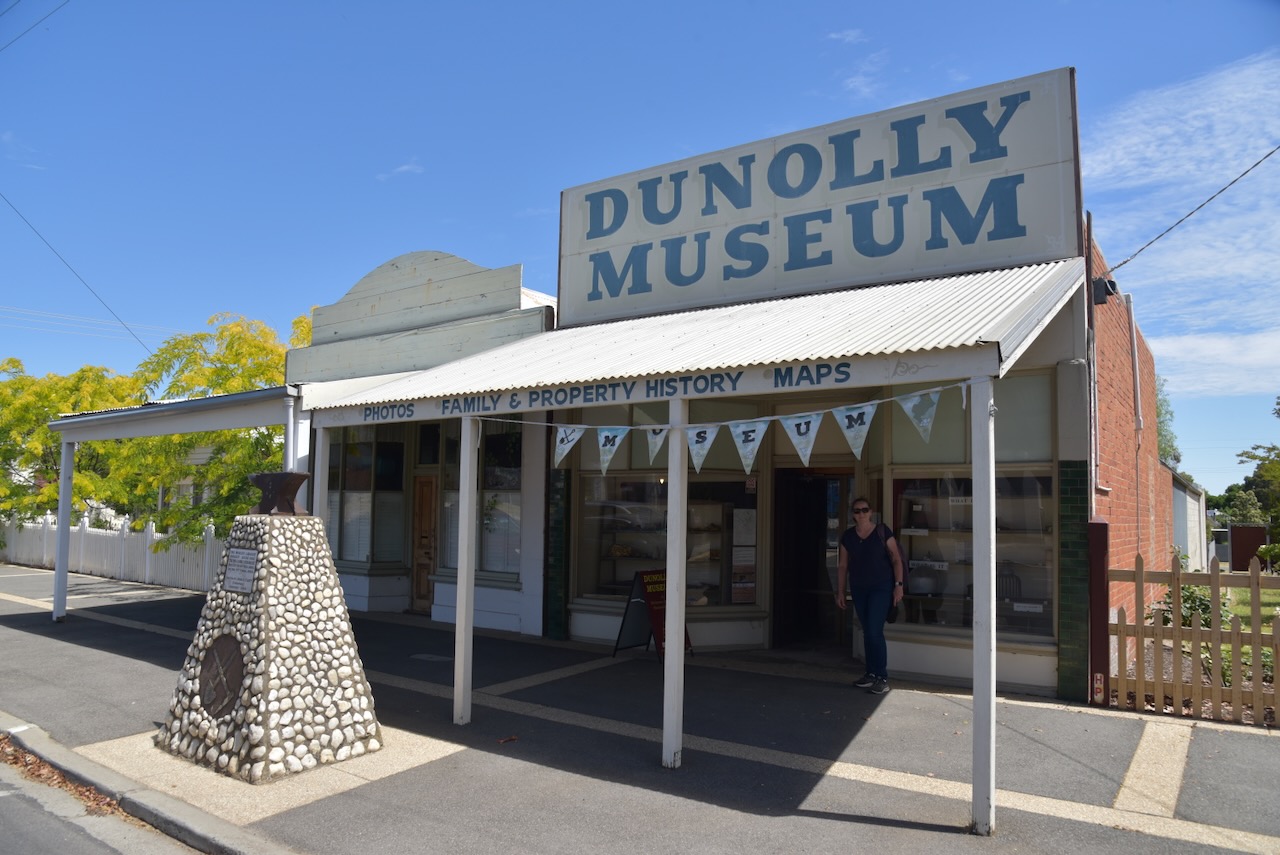
Upon arriving at Dunolly we visited the Dunolly Museum. What a magnificent little museum. It is operated by the Goldfields Historical & Arts Society and contains a magnificent collection of artefacts from the district. Marija and I spent about an hour wandering around inside looking at the various displays. (Dunolly Museum 2024)
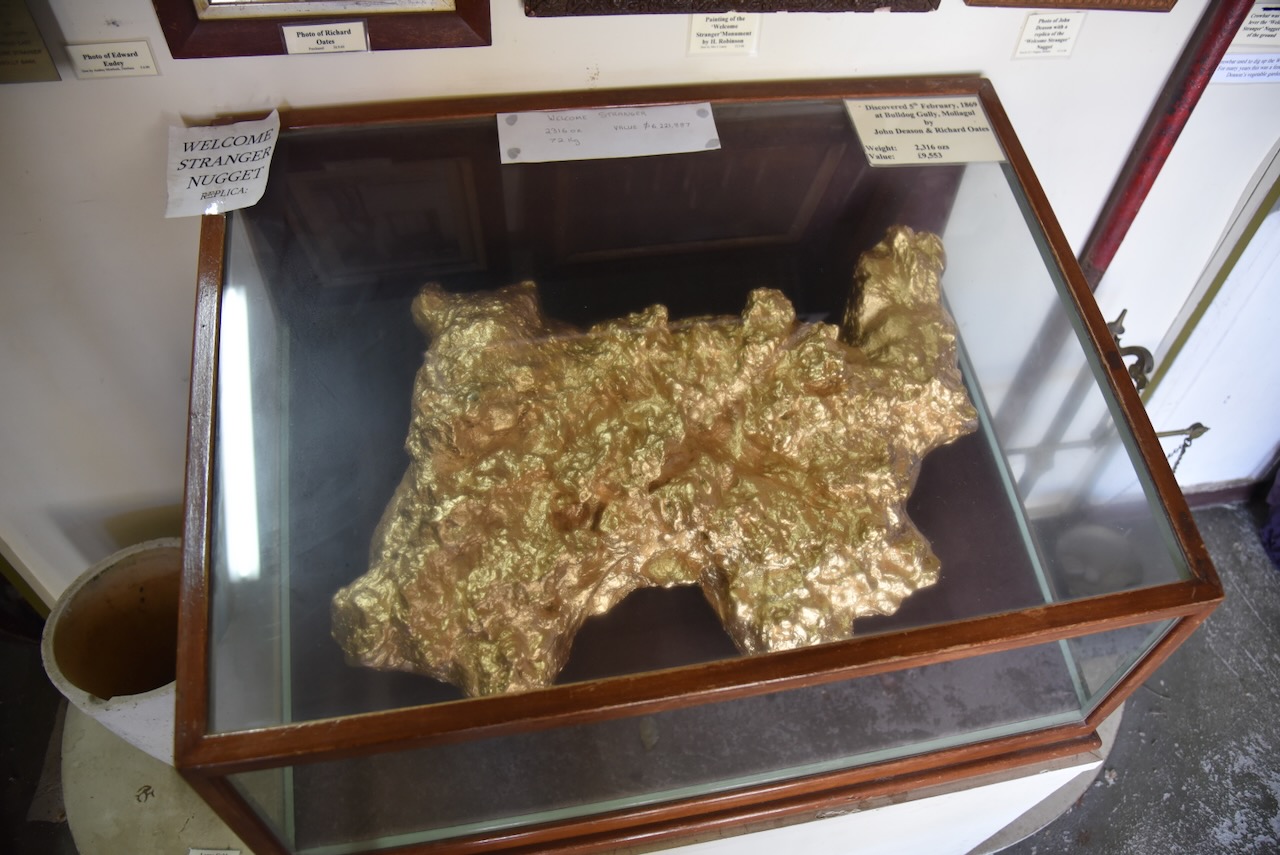
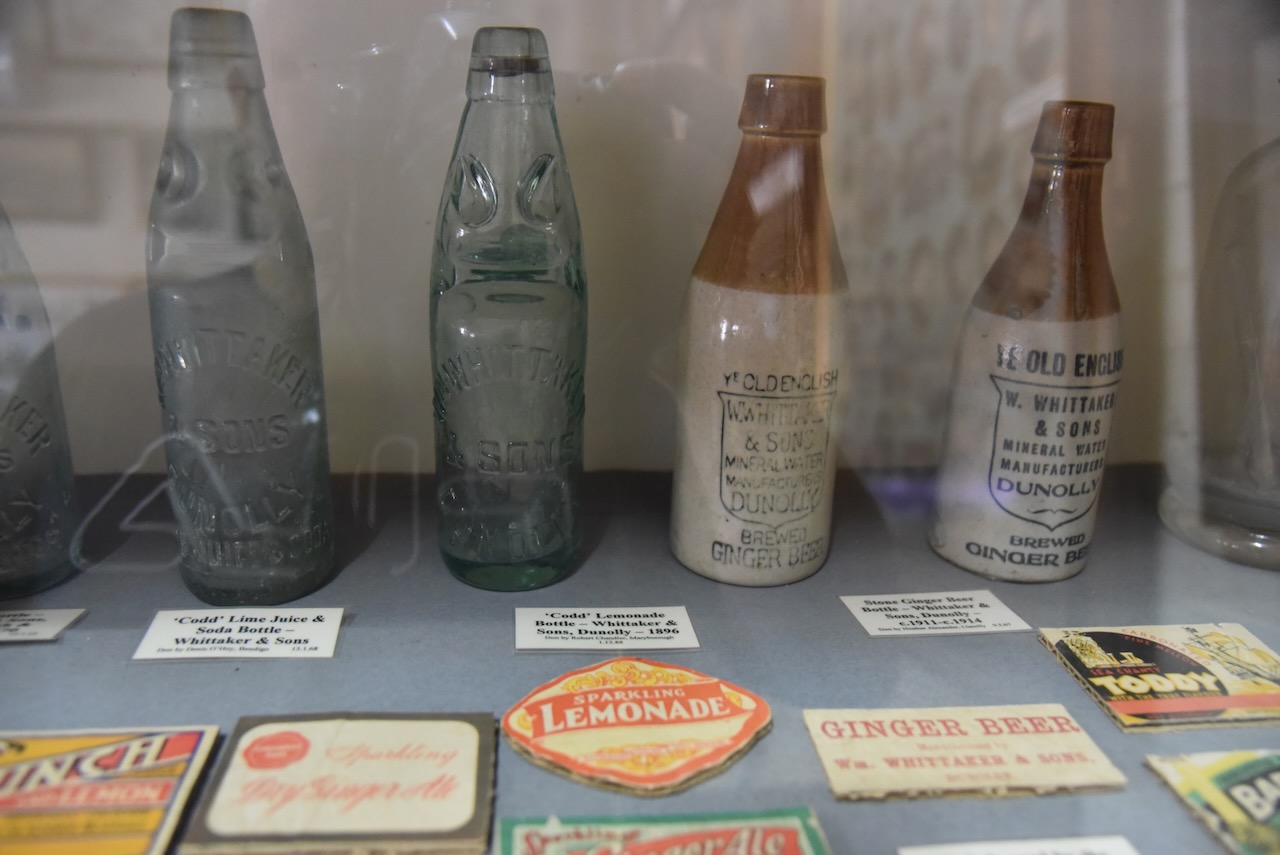
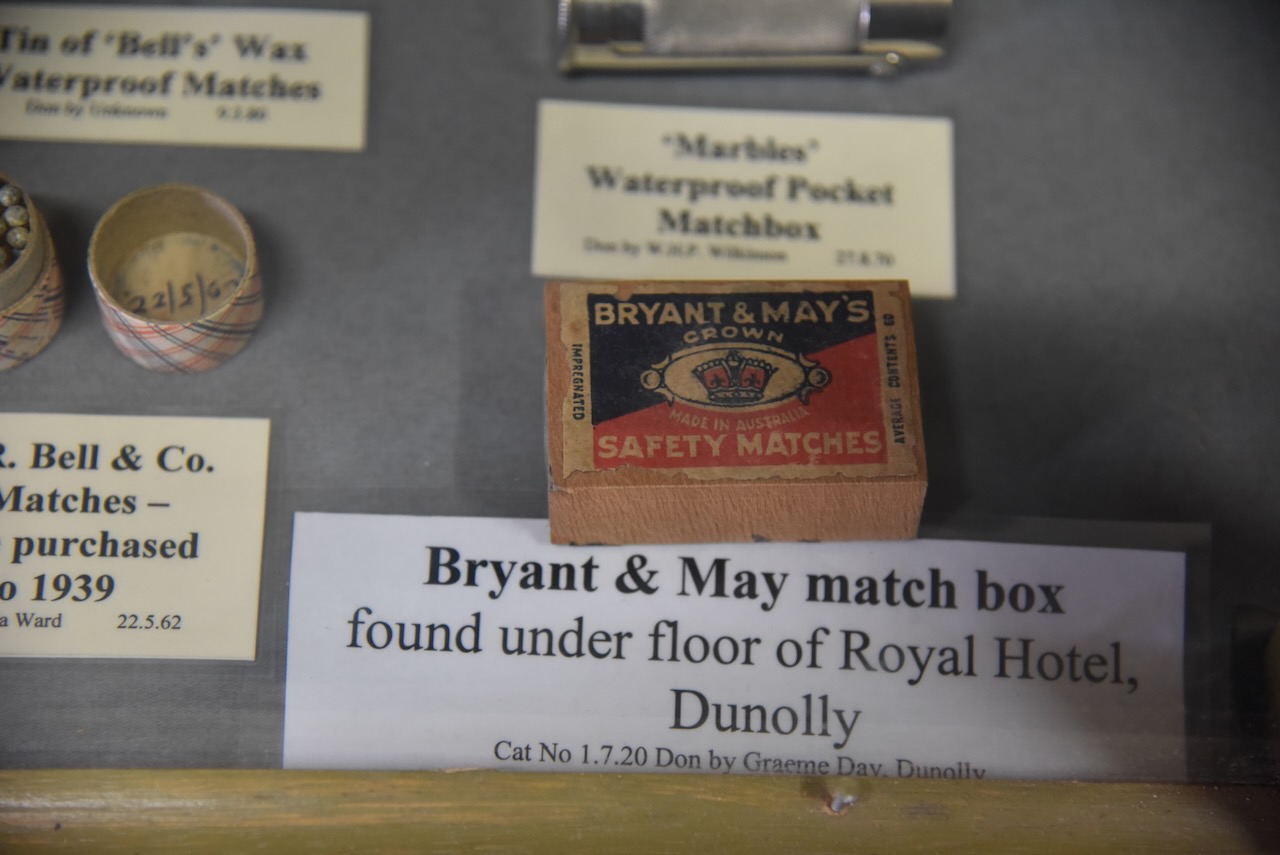
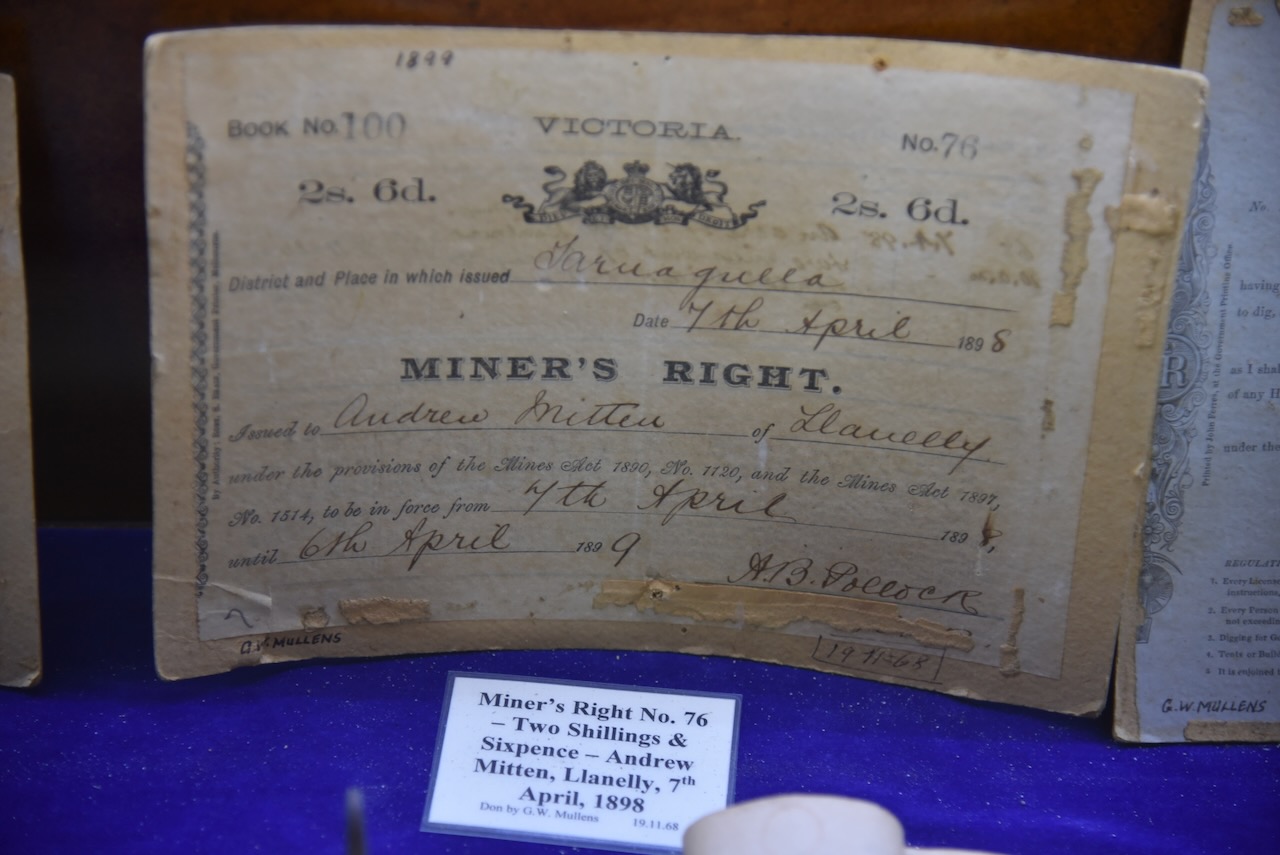
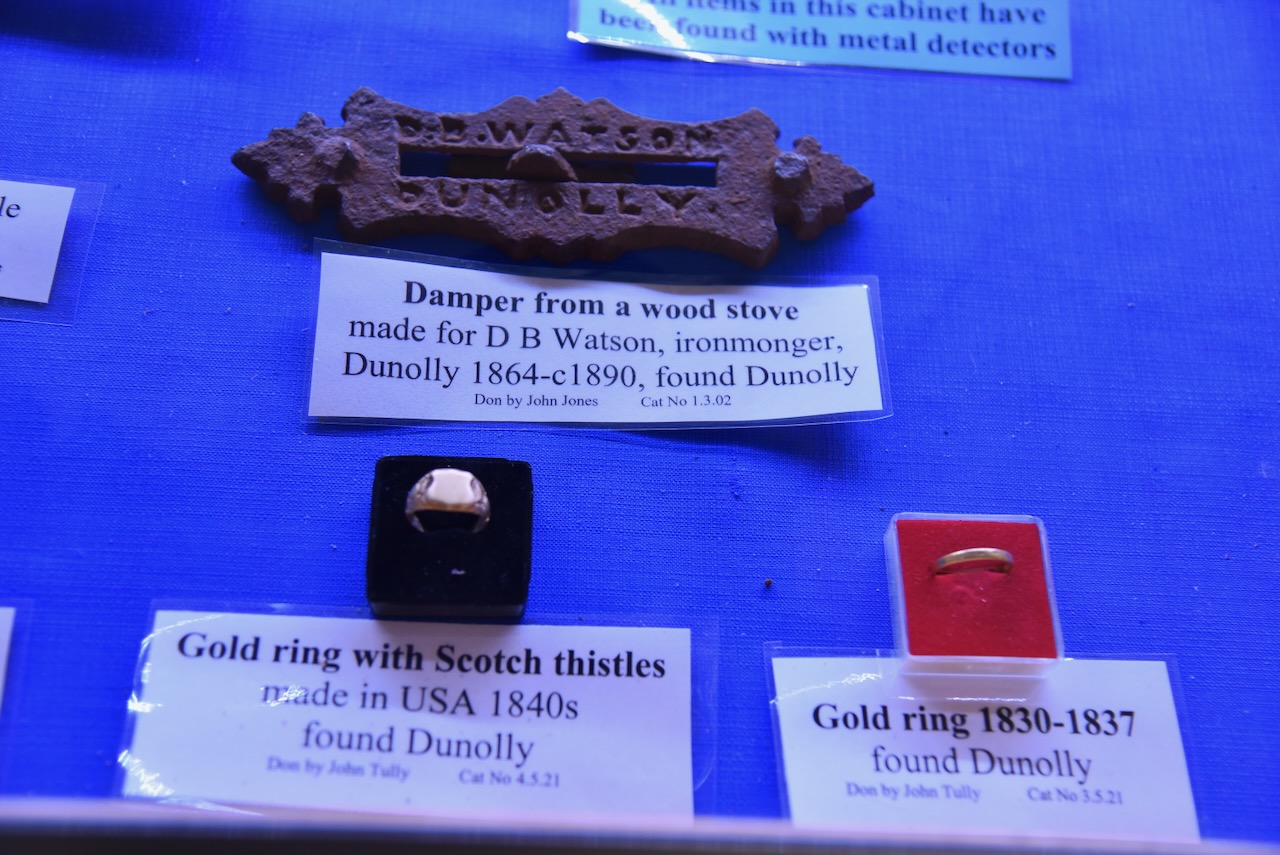
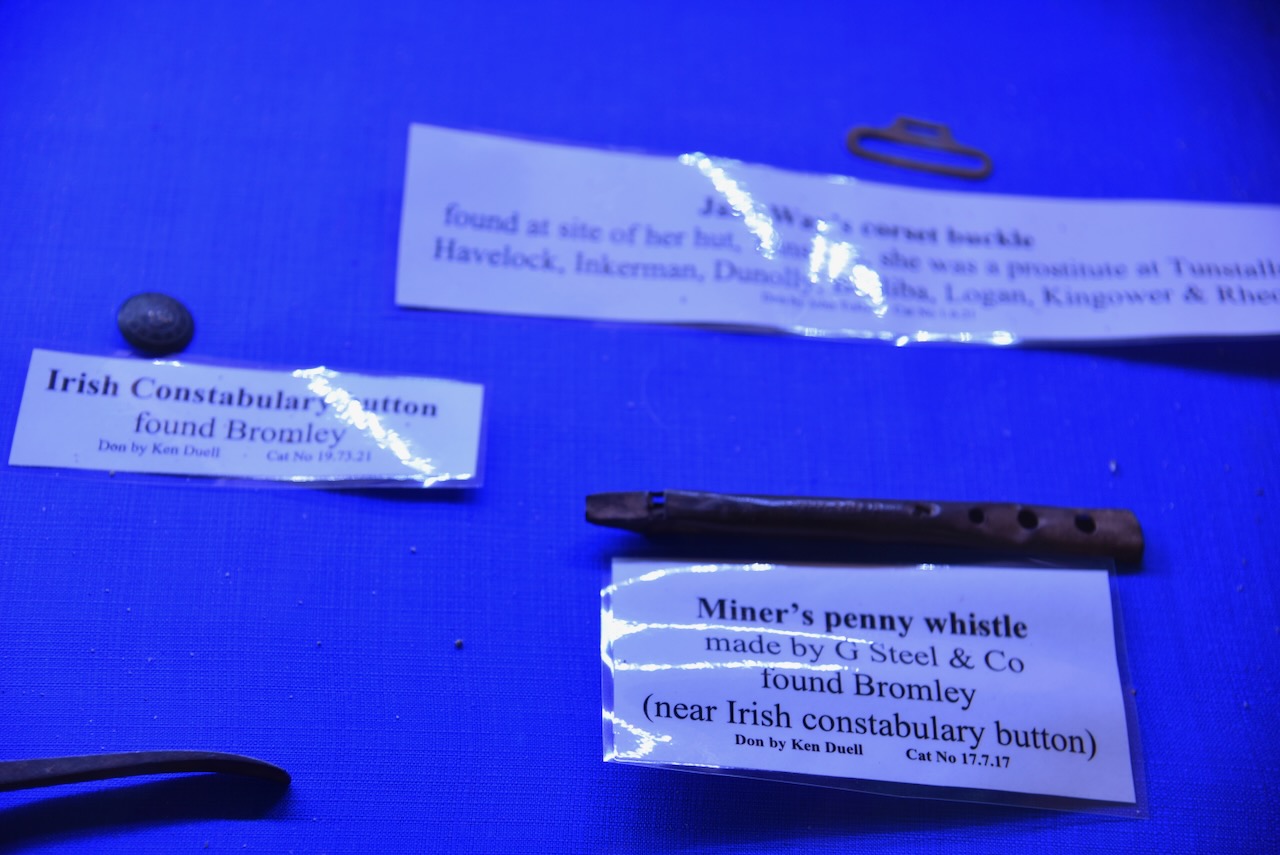
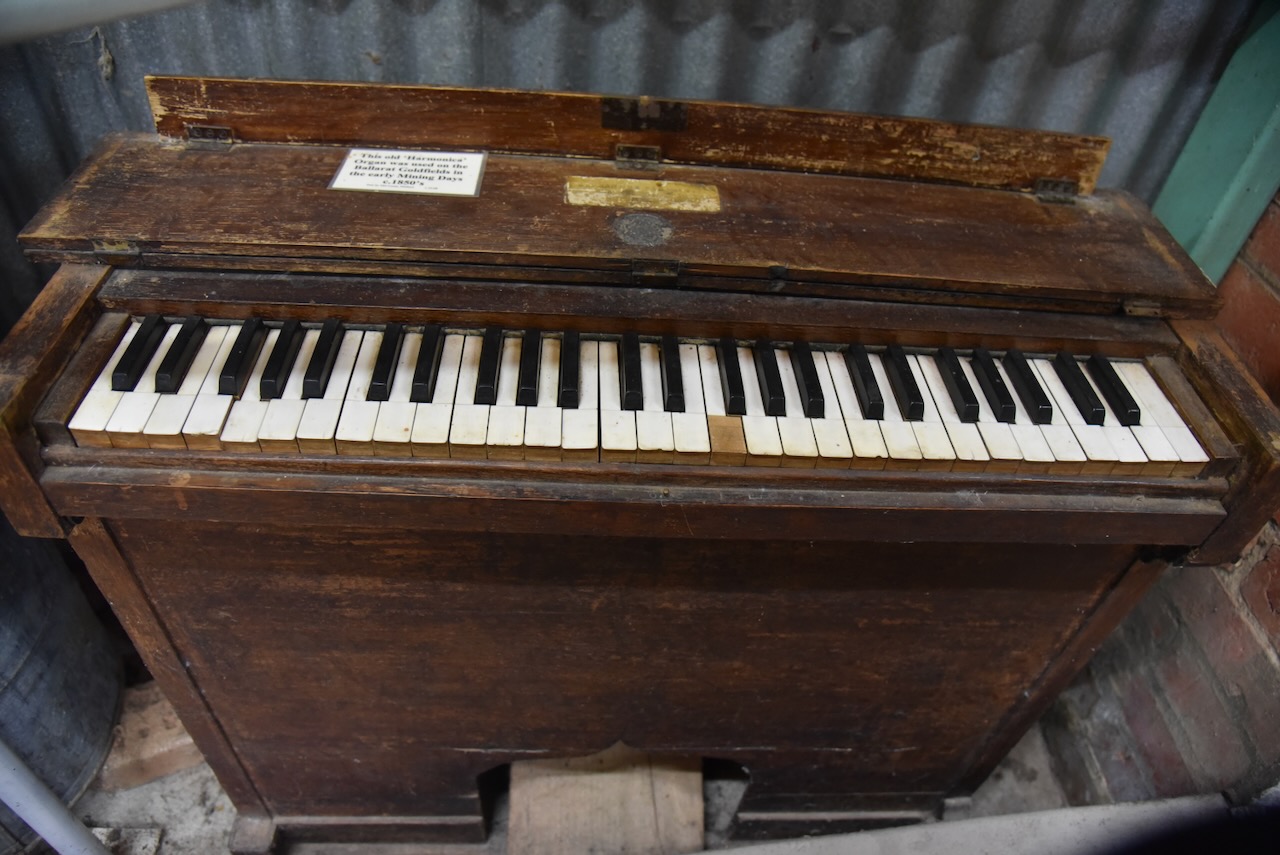
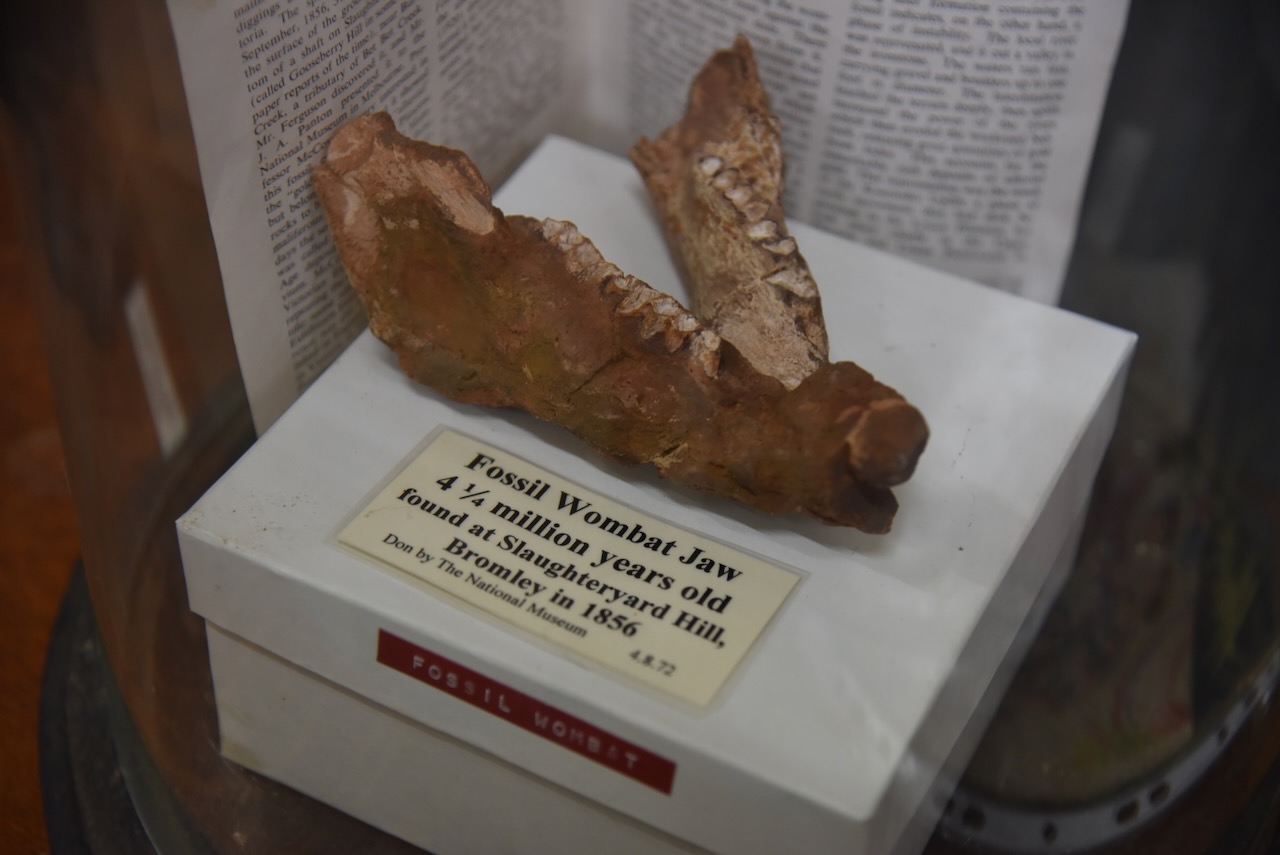
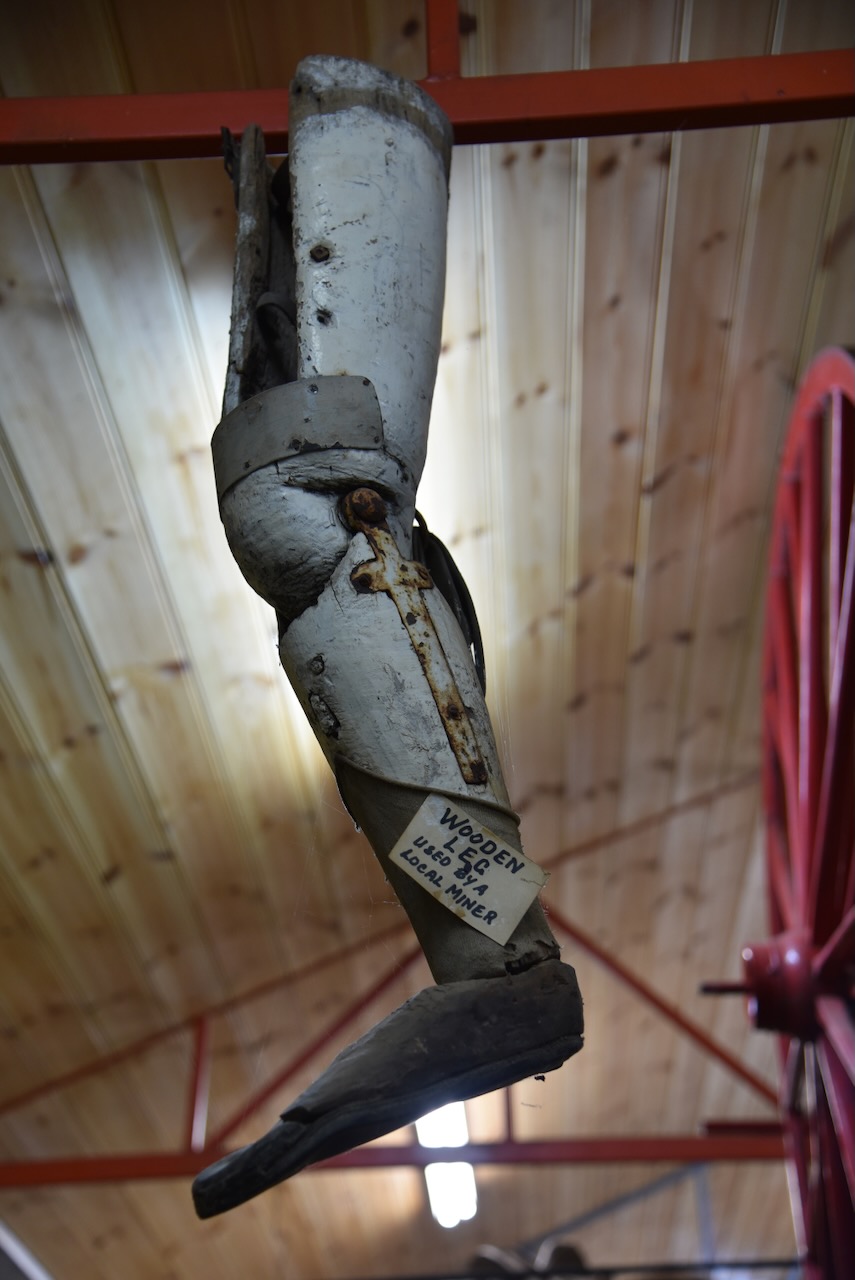
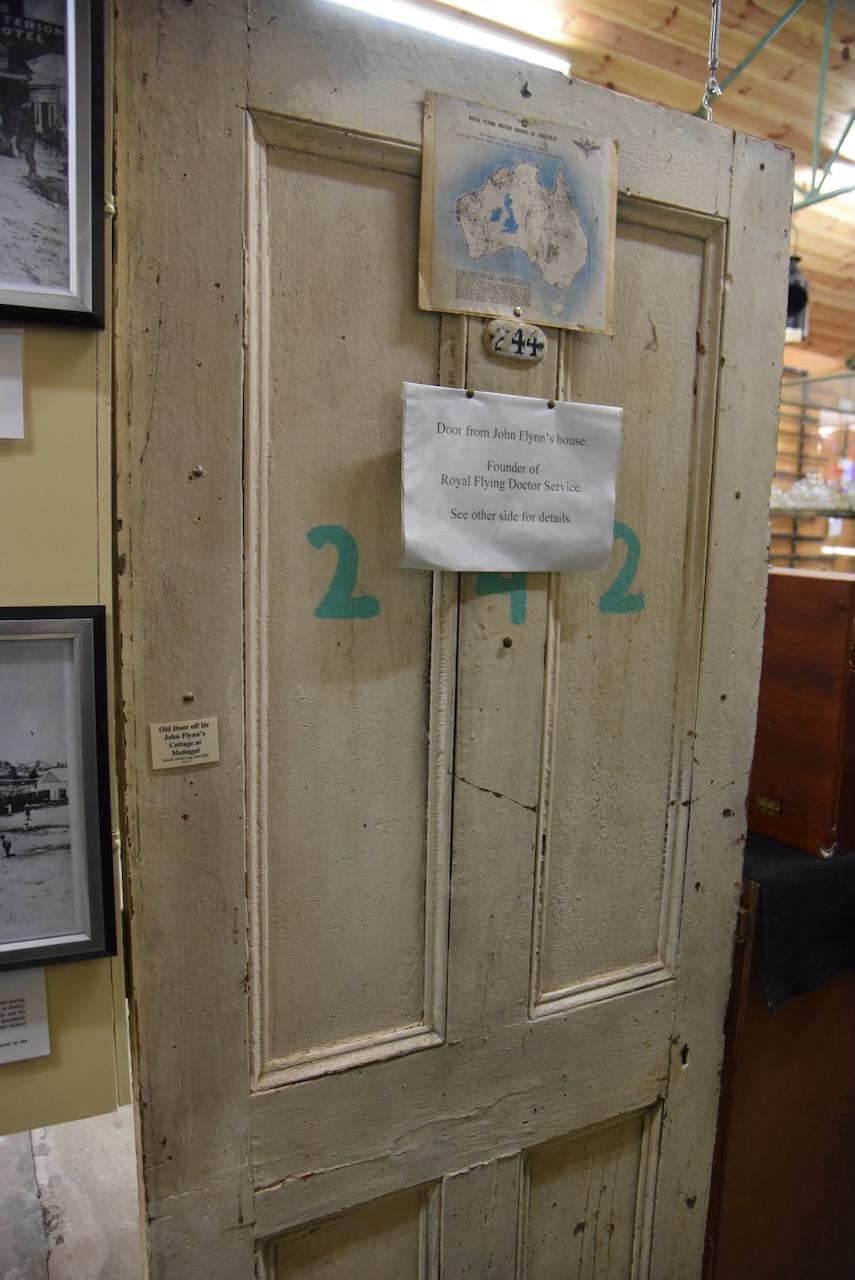
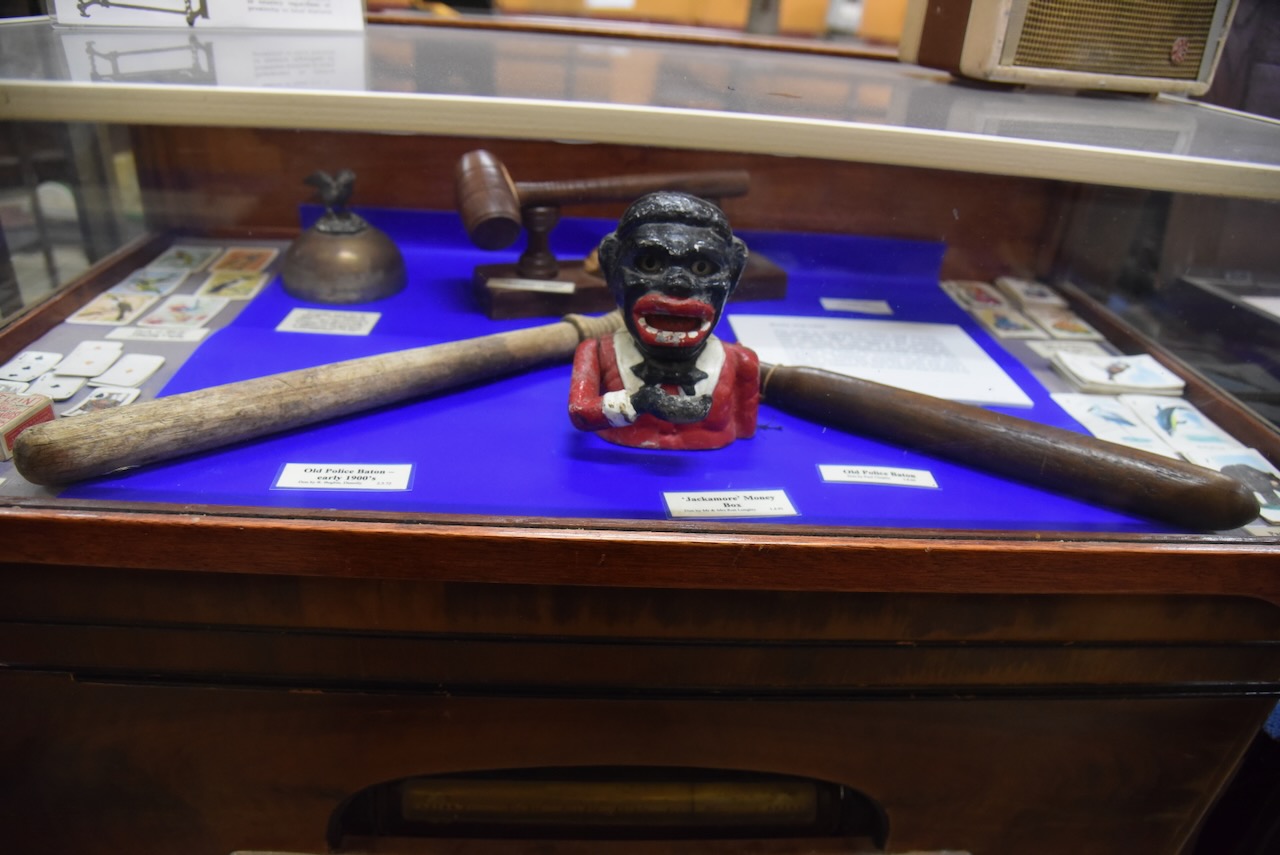
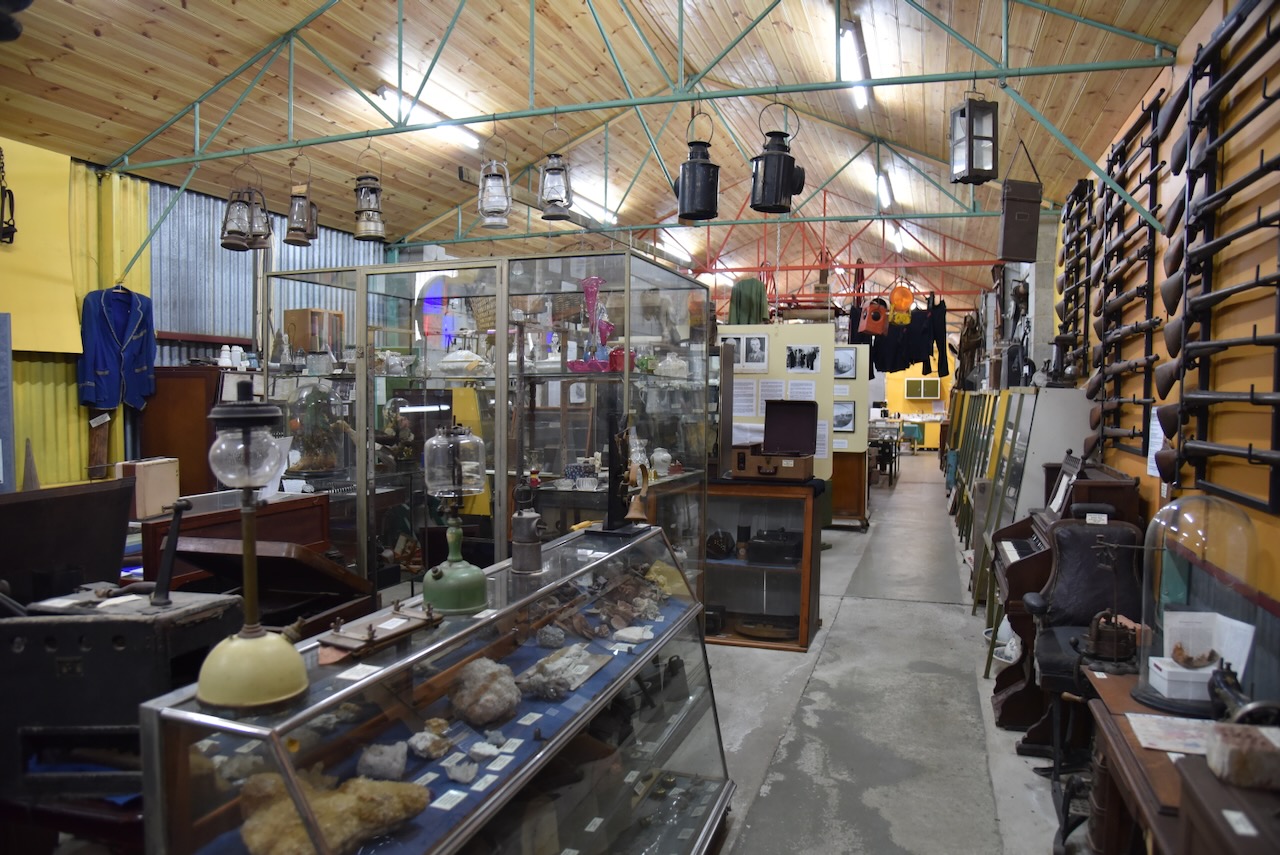
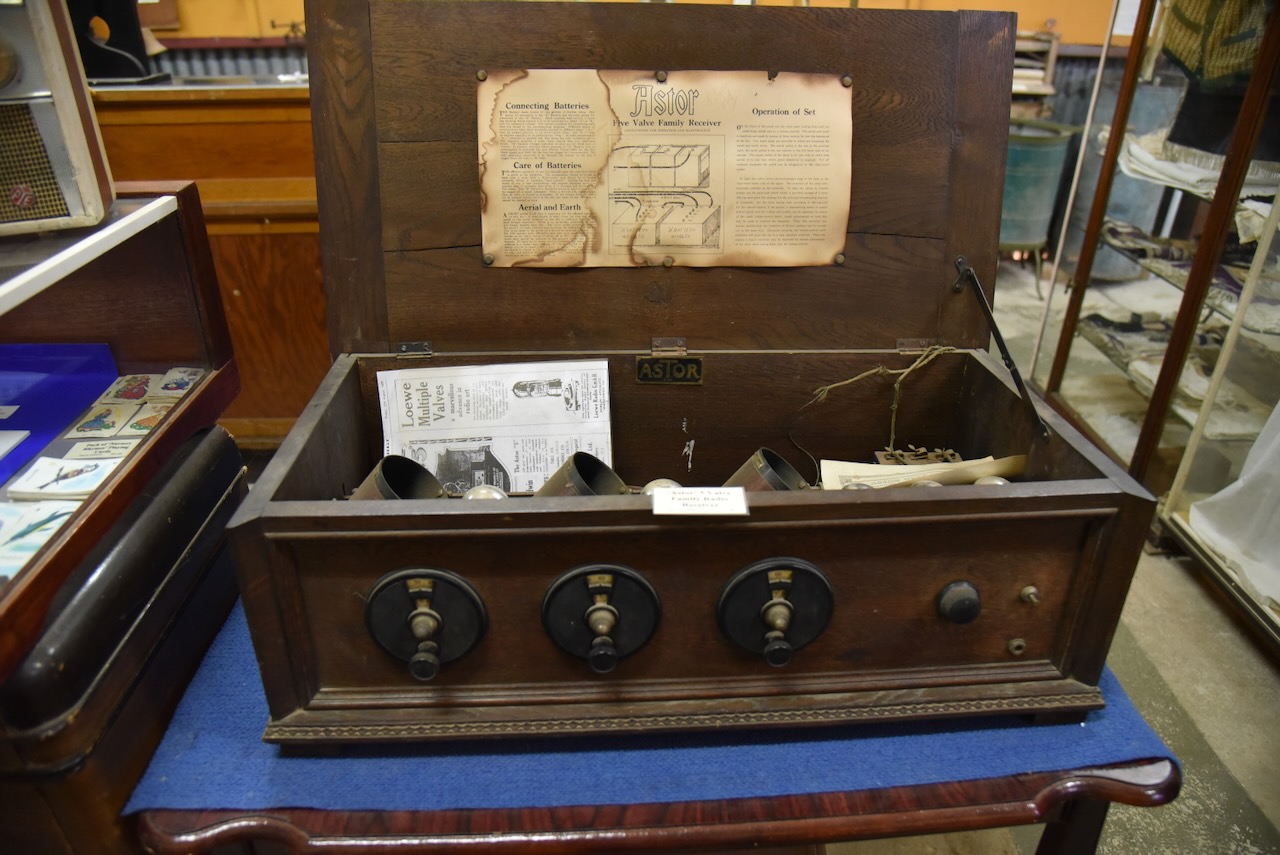
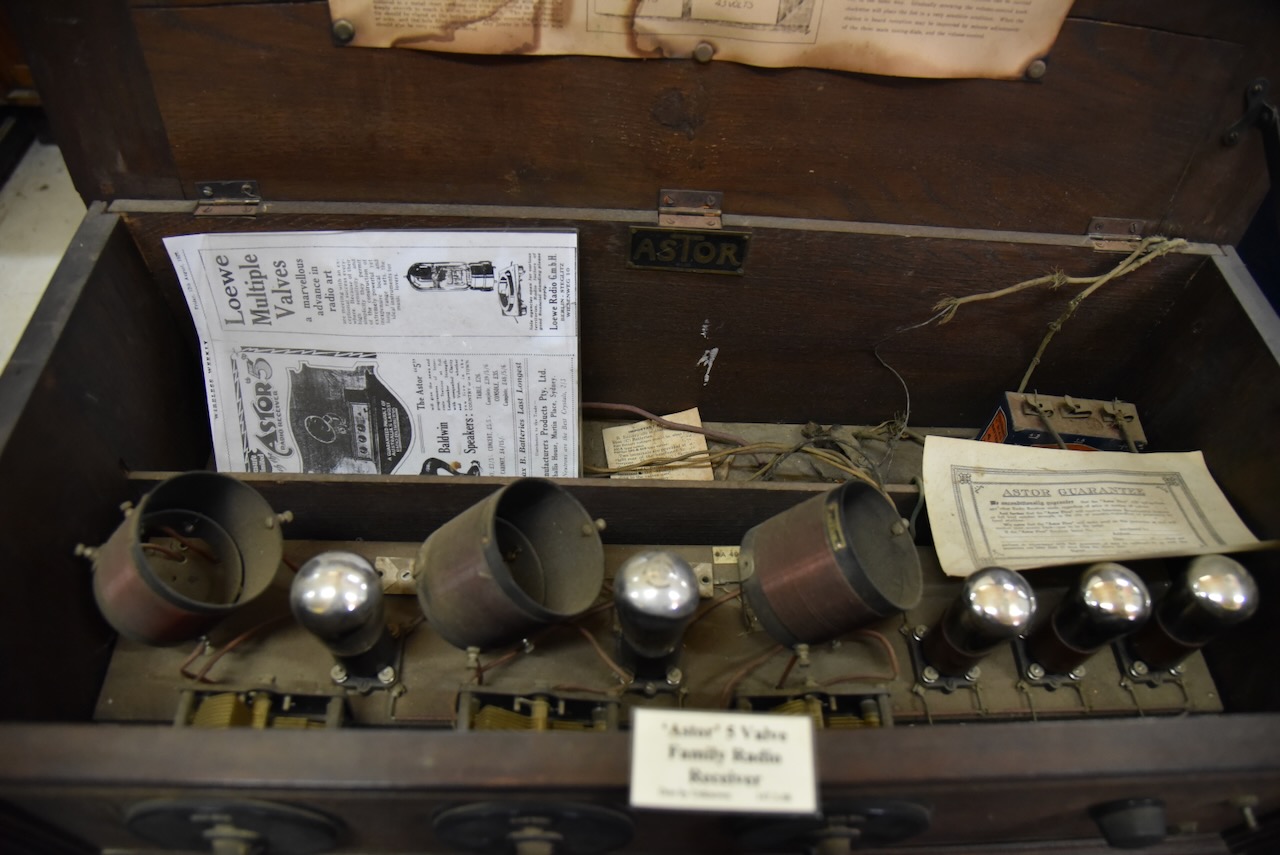
The museum contained a number of old radios.
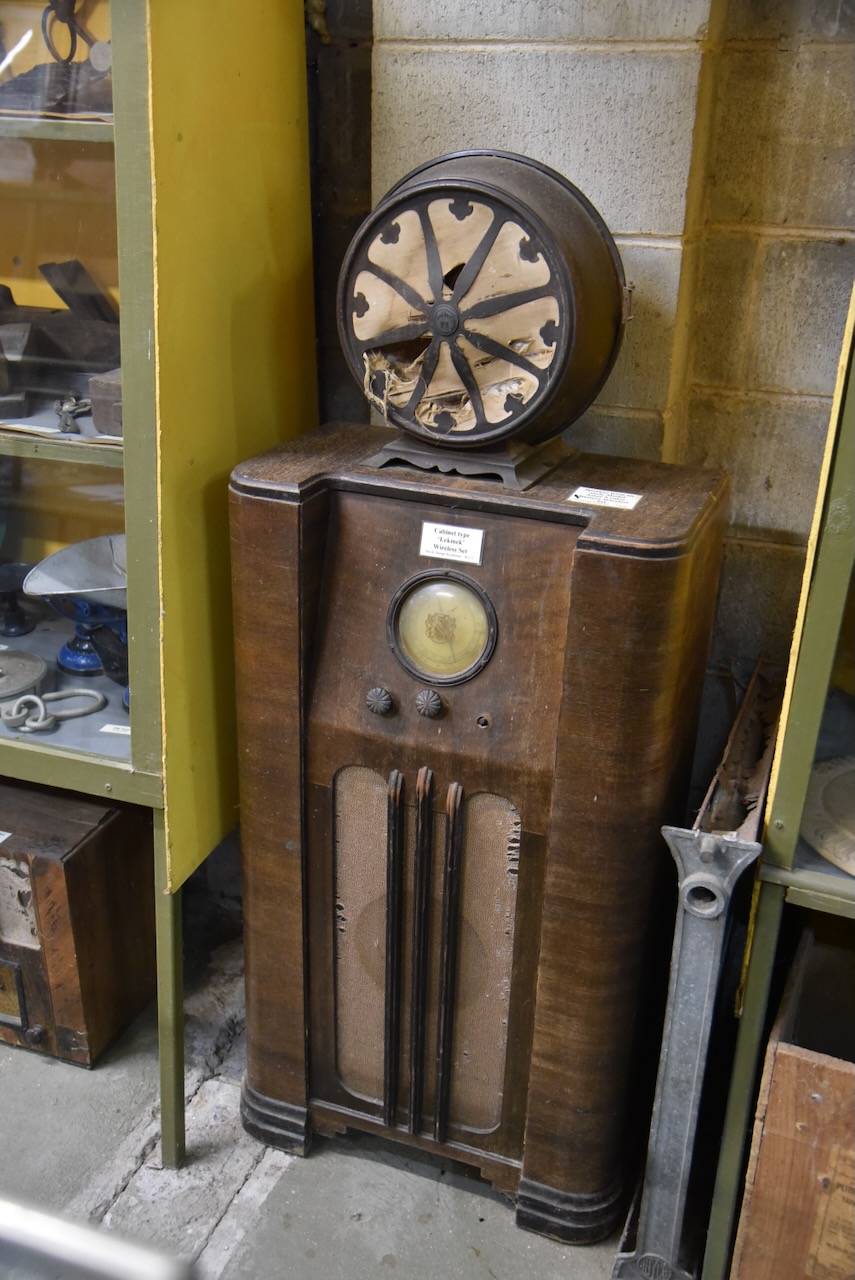
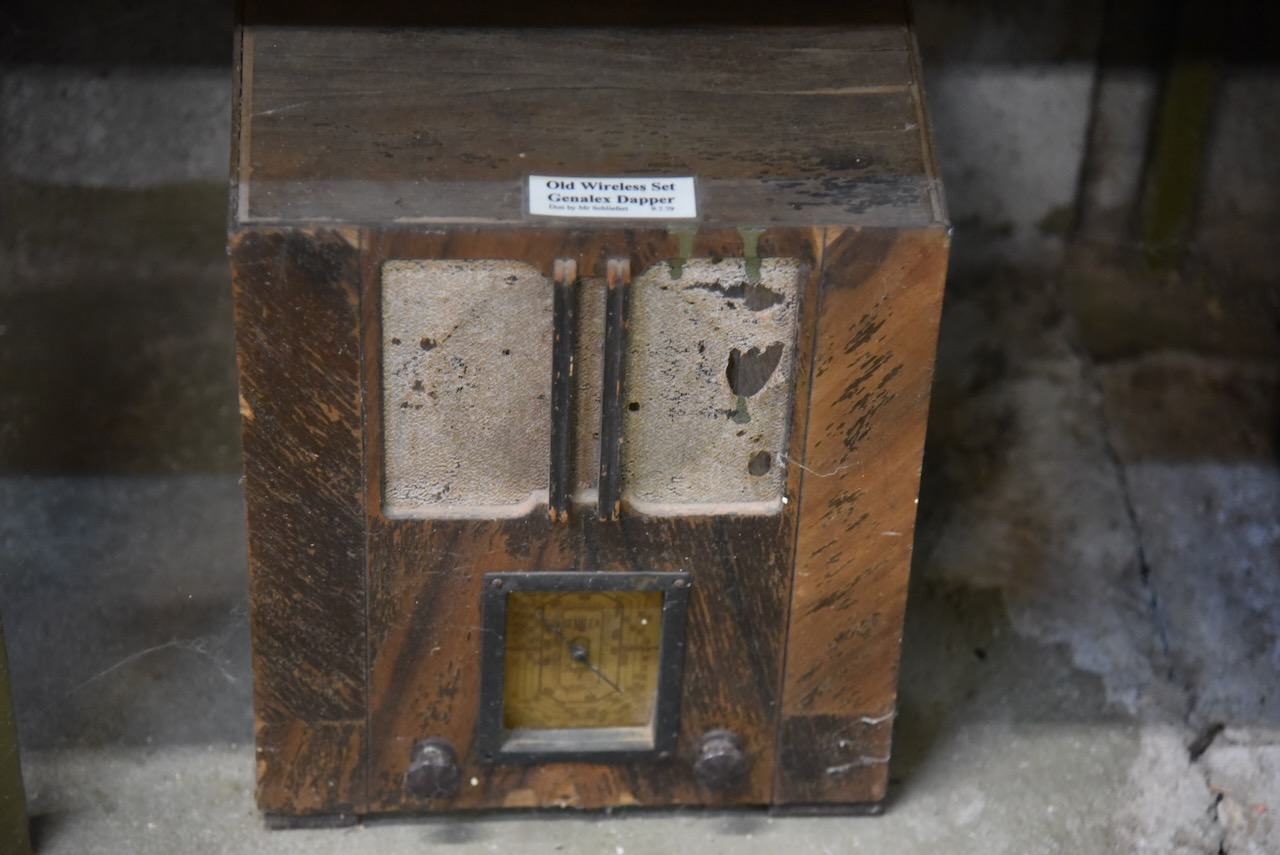
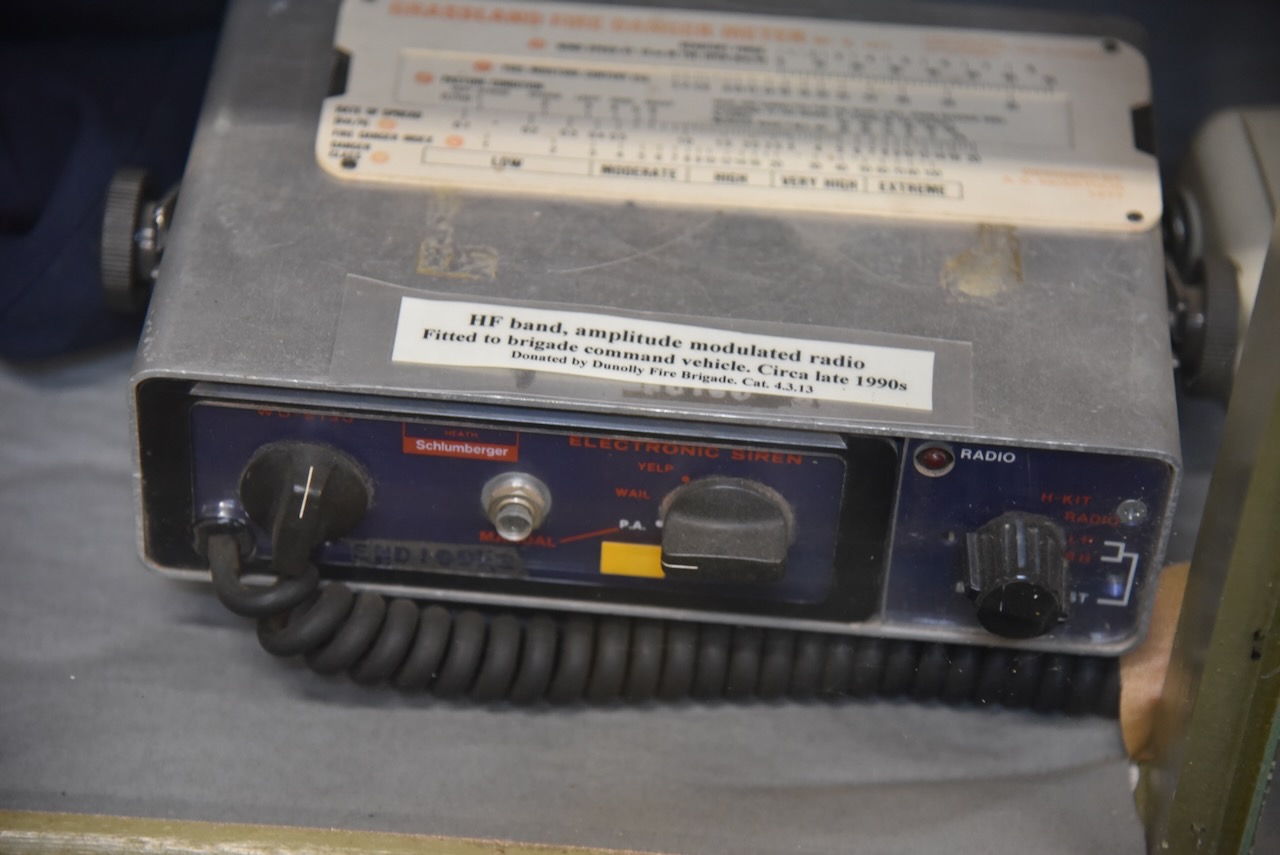
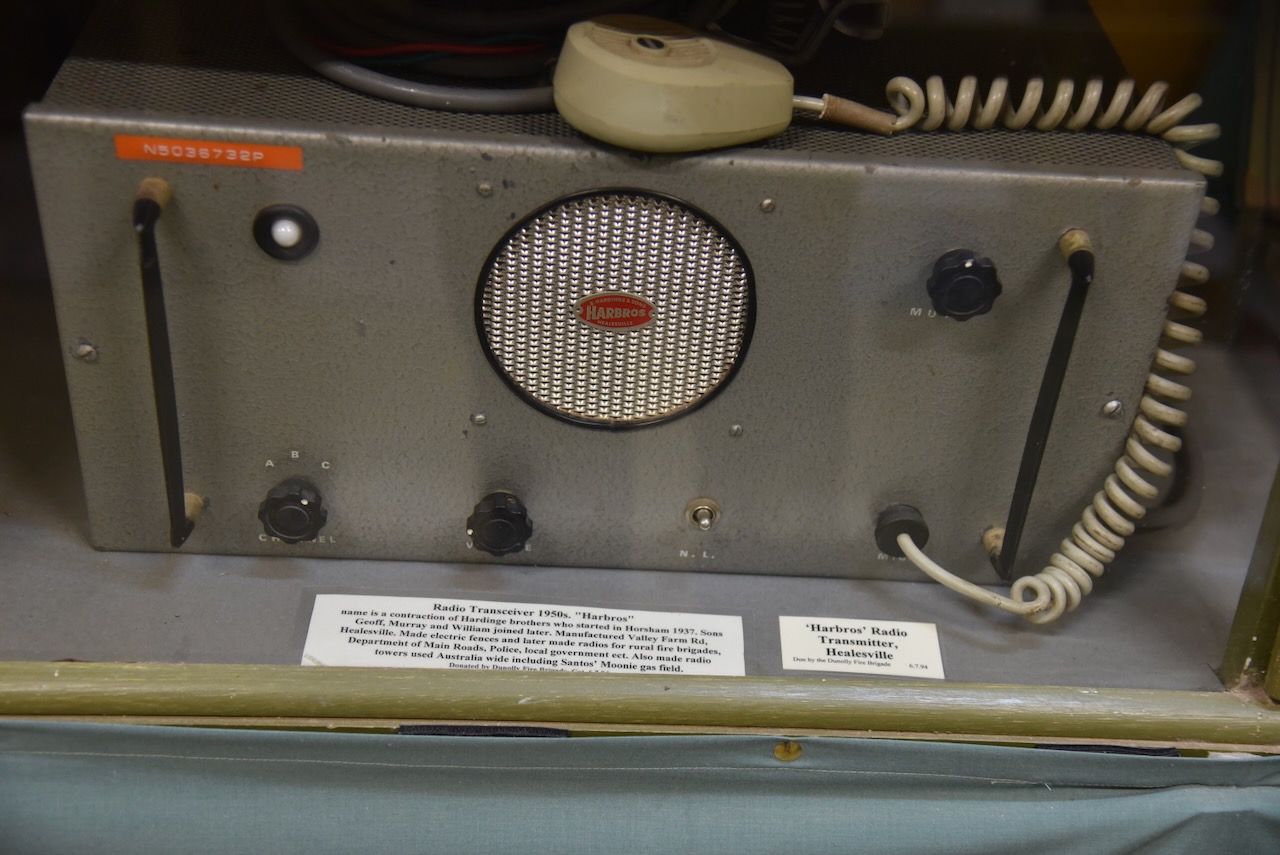
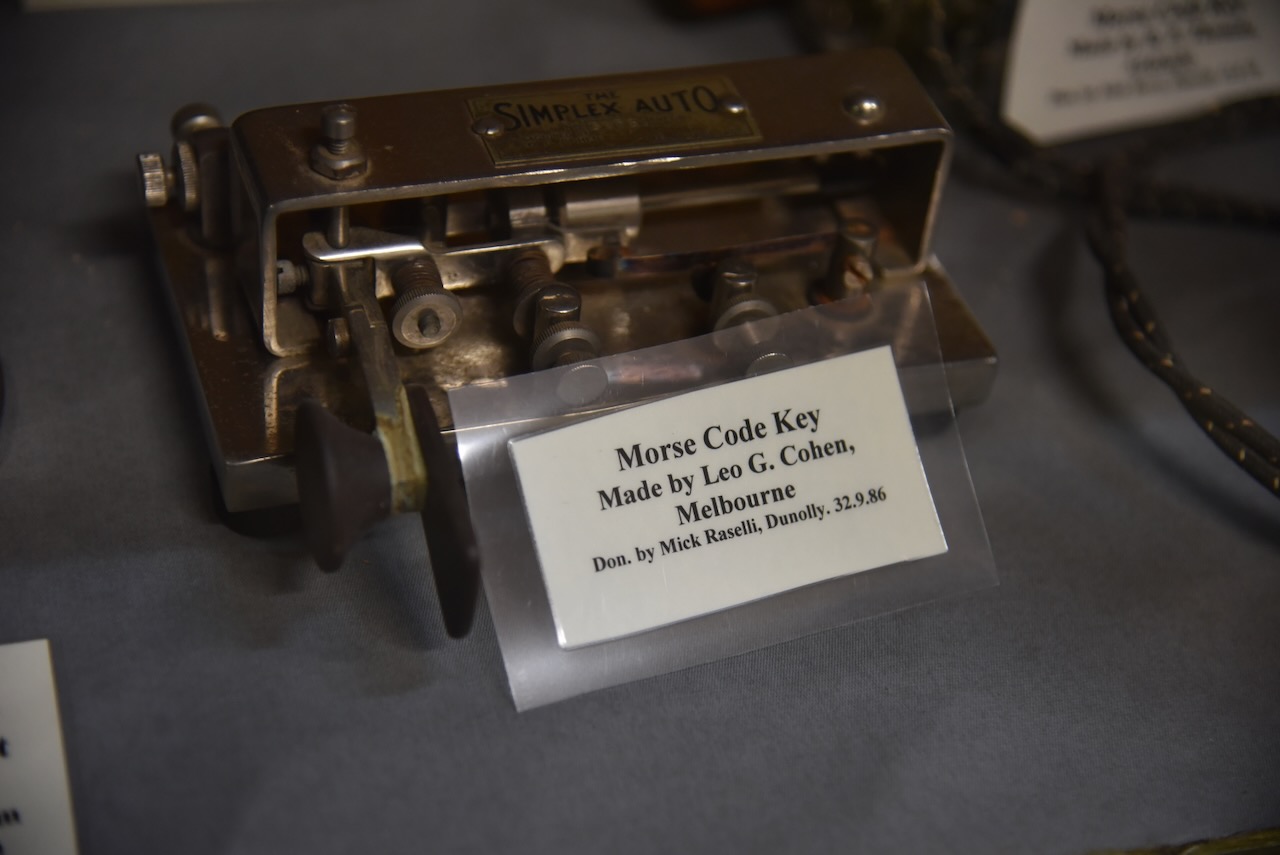
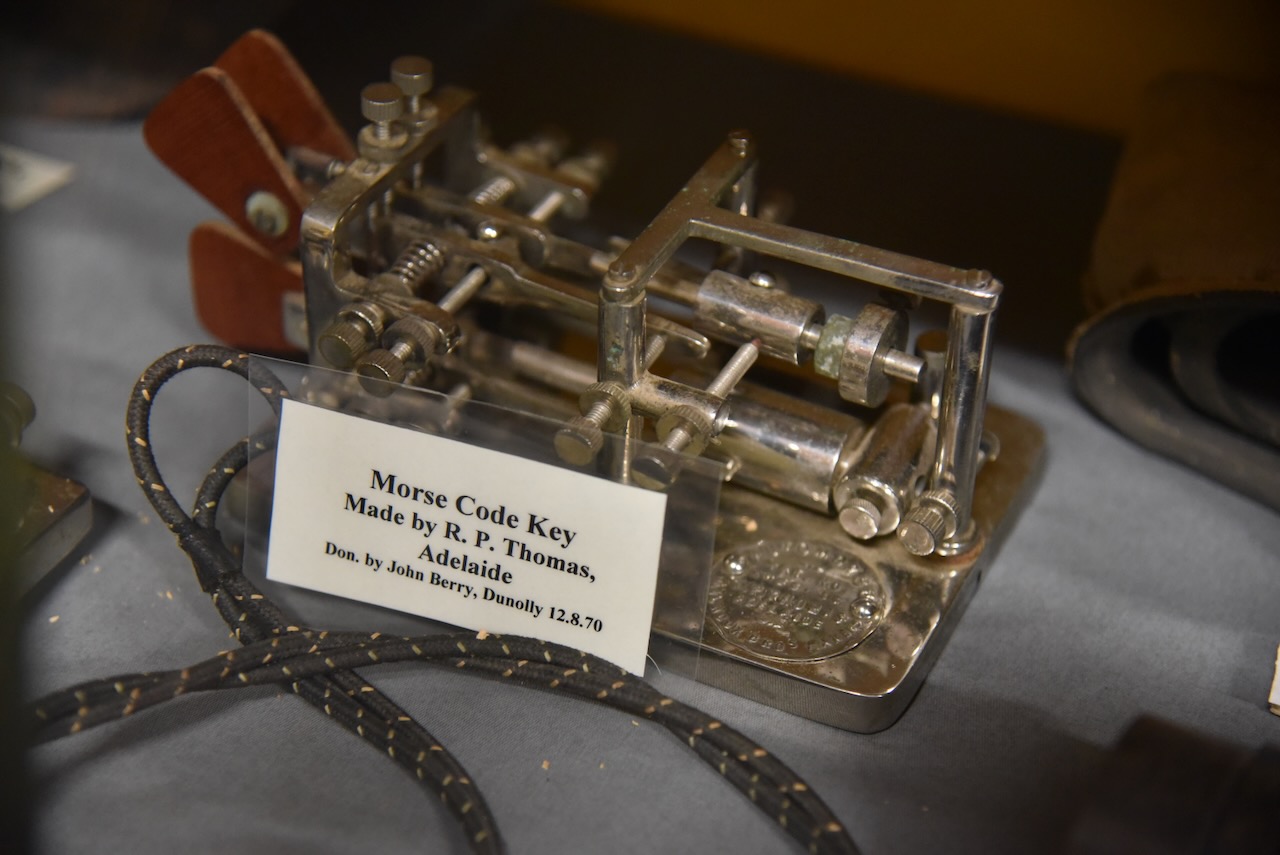
And even some old Morse Code keys.
Below is a great video about the Dunolly Museum.
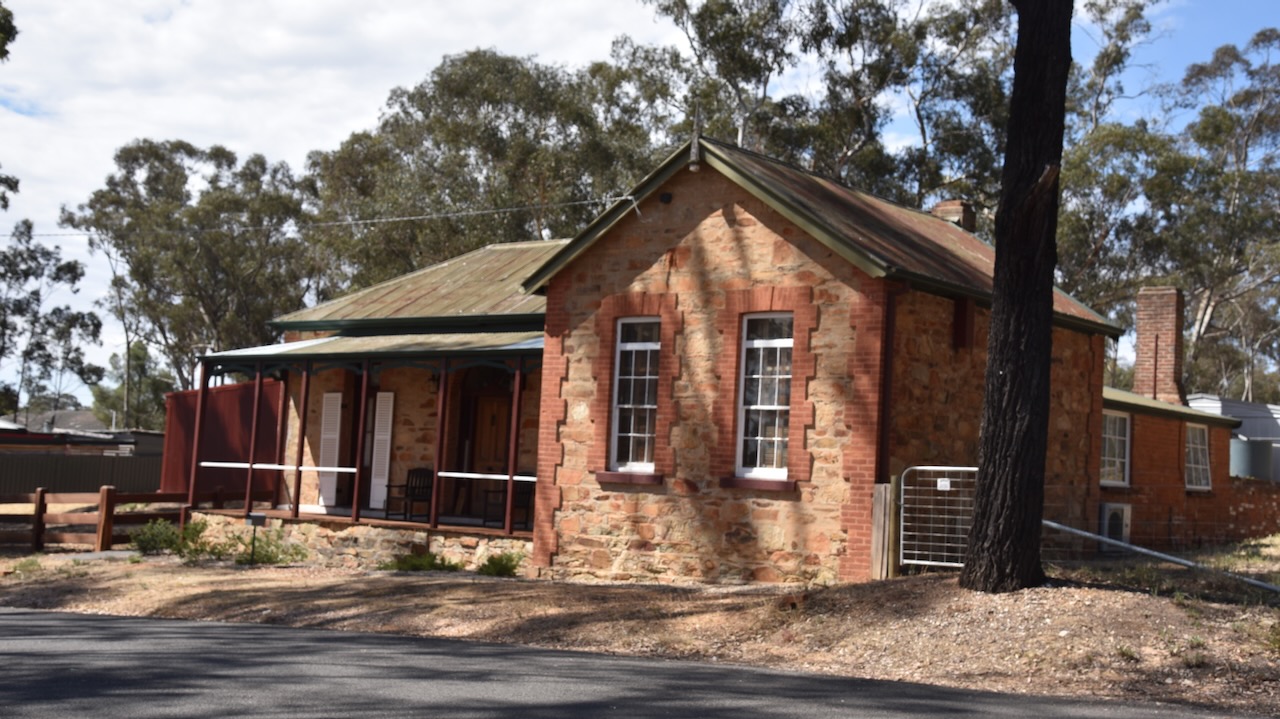
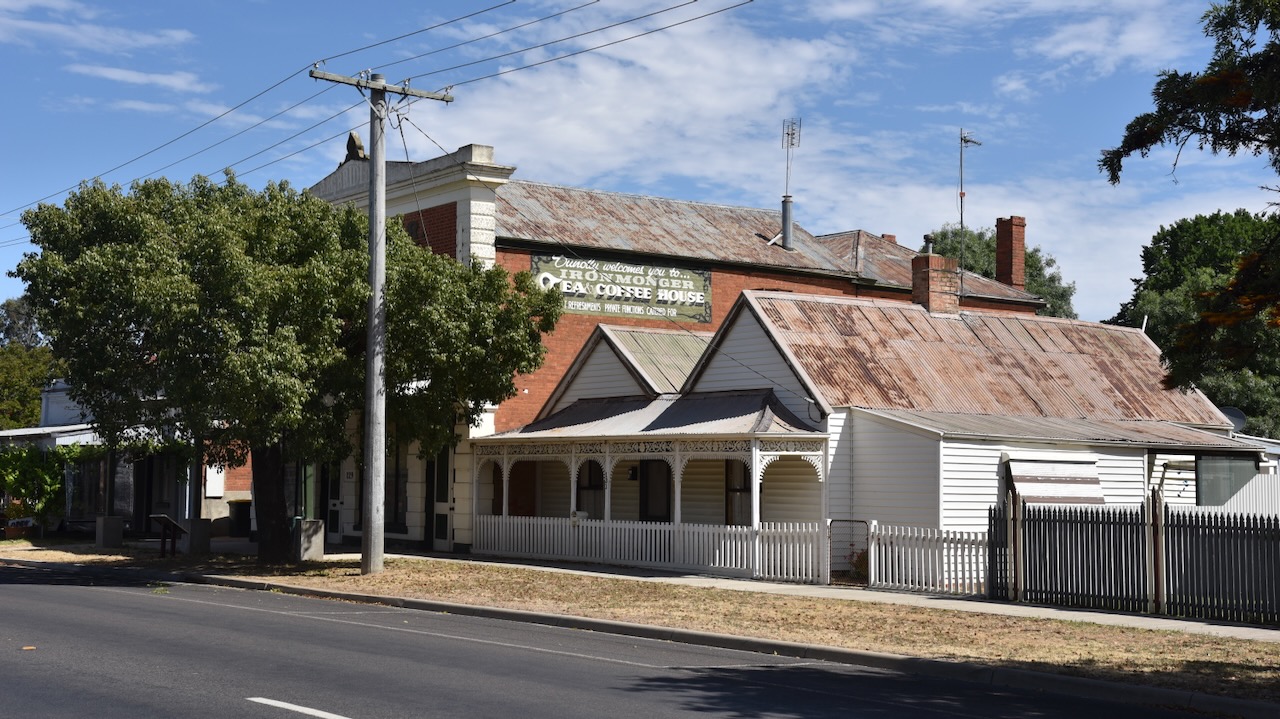
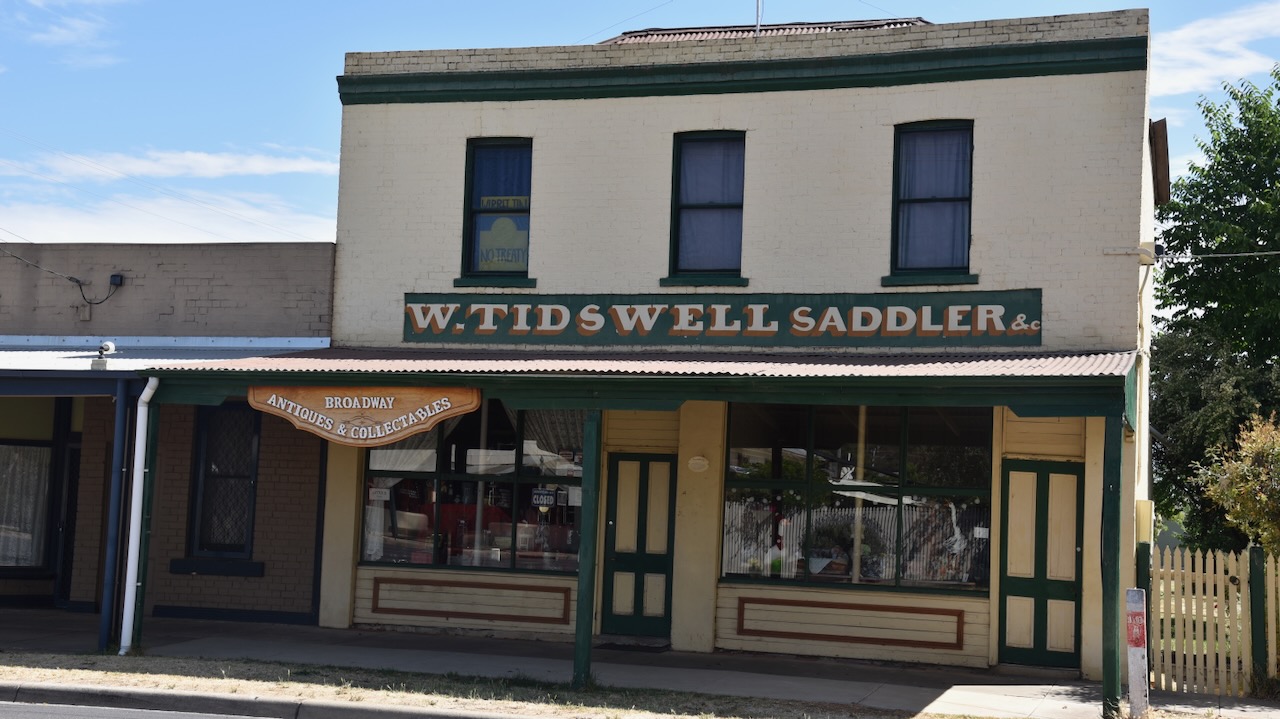
After leaving the museum we wandered around the main street of Dunolly admiring some of the magnificent 19th-century buildings.
In 1845 Archibald McDougall took up a pastoral run called Dunolly. He named it after Dunolly Castle in Oba, Scotland, which was the seat of the McDougall Clan. In 1852 gold was discovered at Moliagul, about 14 km north-west of Dunolly. McDougall’s property was situated about halfway between Moliagul and Dunolly. In 1854 McDougall sold the pastoral run to Henry Simson who subdivided the run for settlement. Unfortunately for Simson, those seeking dold moved through and beyond his subdivision. In 1856 gold was found in an area north of the current day Dunolly. This gold field was known as old Dunolly. (Victorian Places 2024)
Those in search of gold followed the valley of Burnt Creek which runs around the west and south side of present-day Dunolly. The Dunolly-Moliagul district became well known for large gold nuggets and in 1857 recorded the largest gold production per capita of any gold mining town in Victoria. (Victorian Places 2024)
Following the discovery of gold, a police camp was established at old Dunolly. The permanent township of Dunolly was surveyed further south and this quickly grew into a thriving town. In 1857 an Anglican school was opened, and the borough council was proclaimed on the 21st day of May 1858. In 1860 a hospital was built and this was followed by a courthouse in 1862. (Victorian Places 2024)
The Australian Handbook of 1875 described Dunolly as follows:-

The Dunolly Town Hall was originally constructed as a courthouse in 1884. However, the Judge complained about the acoustics of the building. As a result, a swap was made. The court moved into the old town hall and the council moved into the court structure in 1890. The building was designed by John R Brown of the Public Works Department. (Aussie Towns 2024)
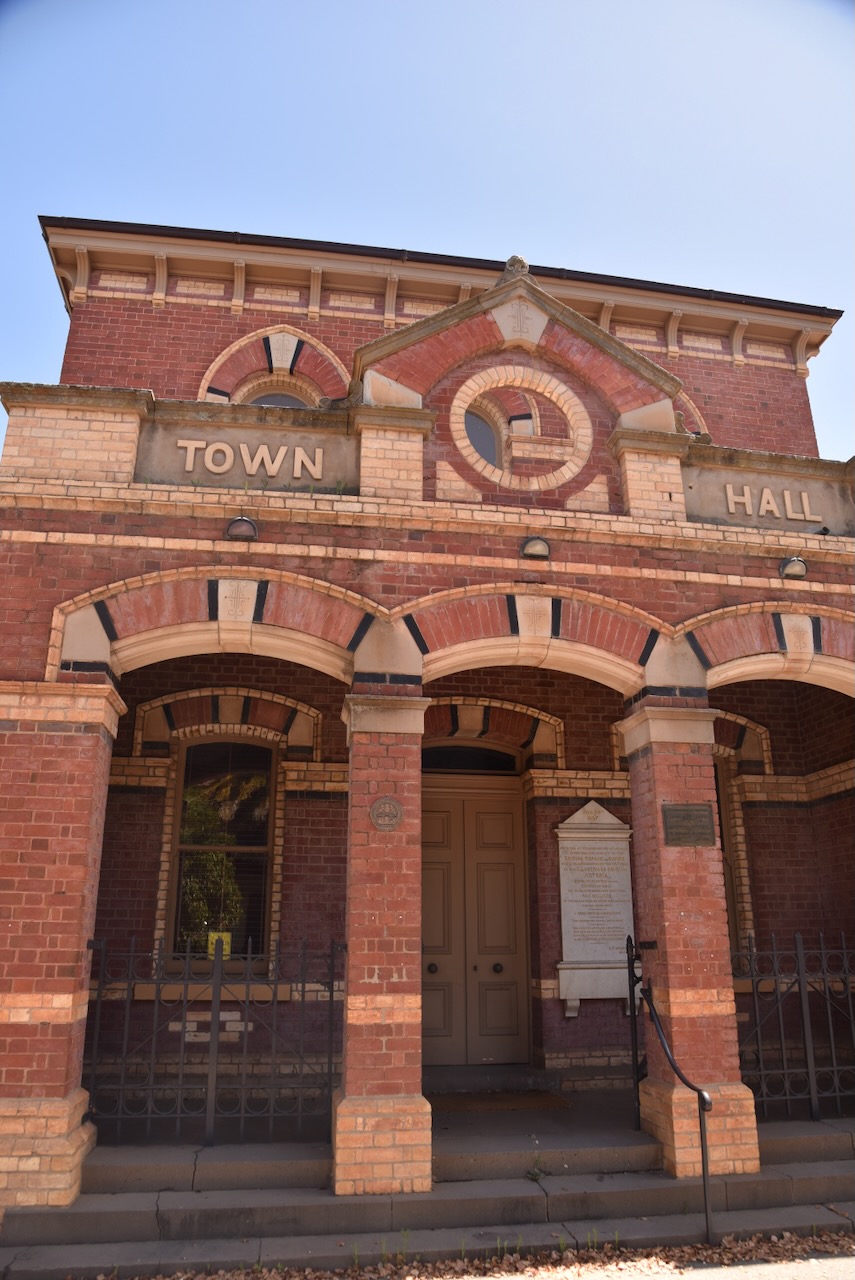
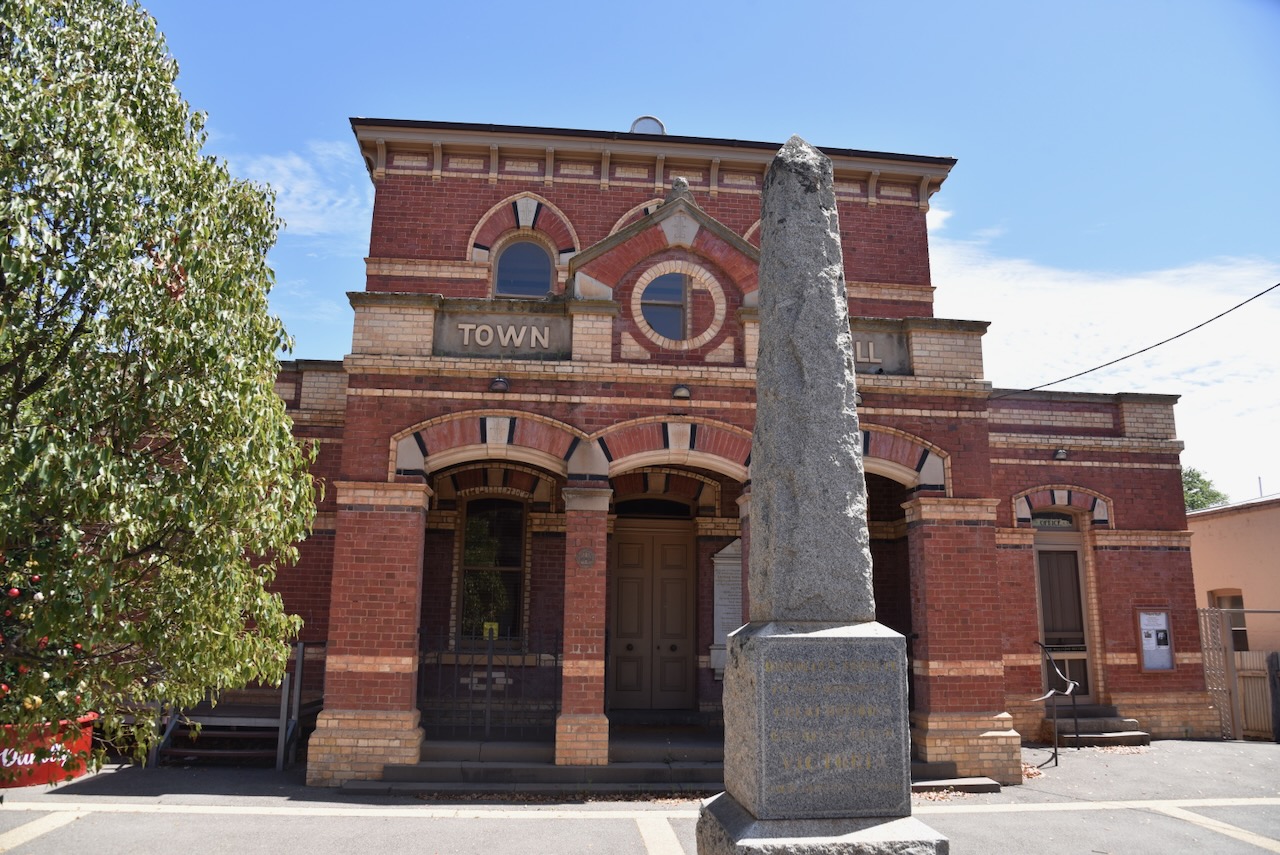
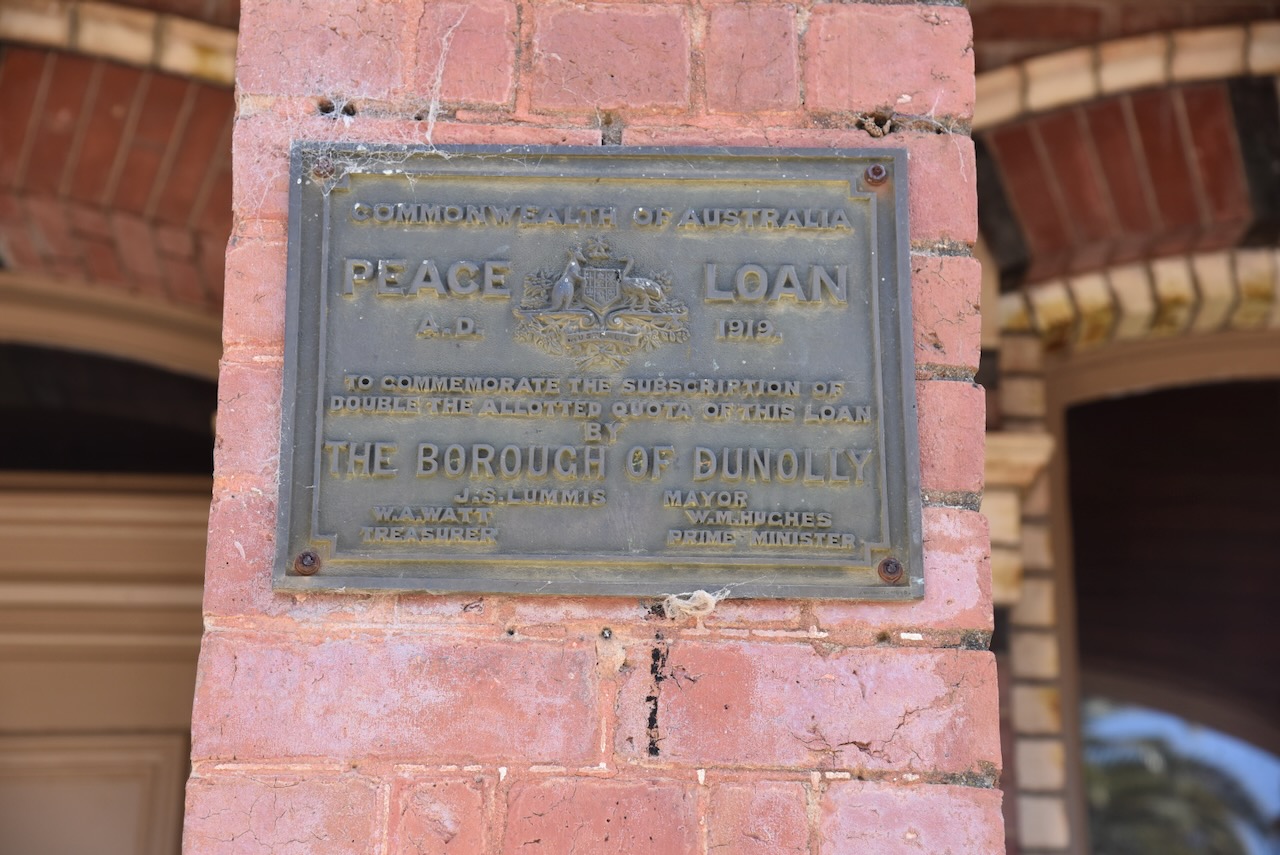
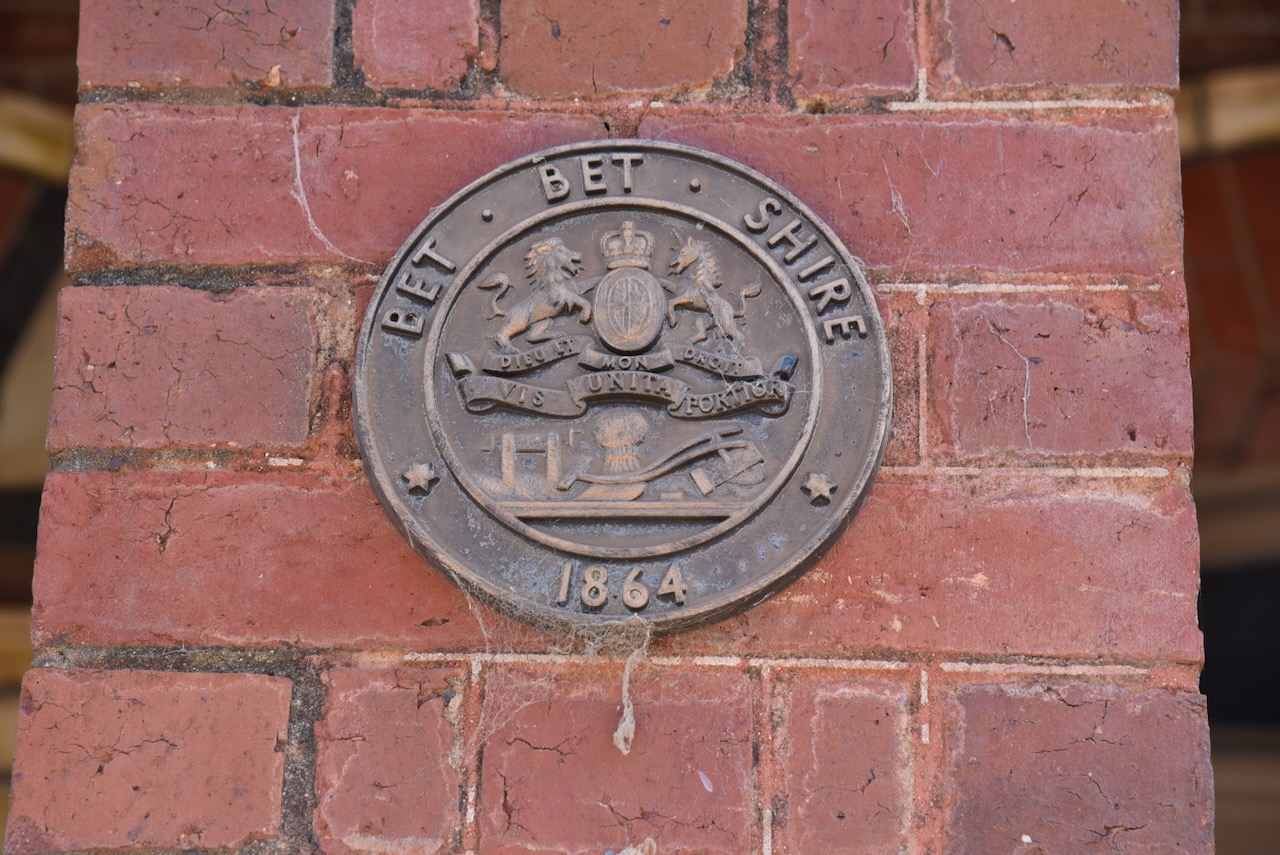
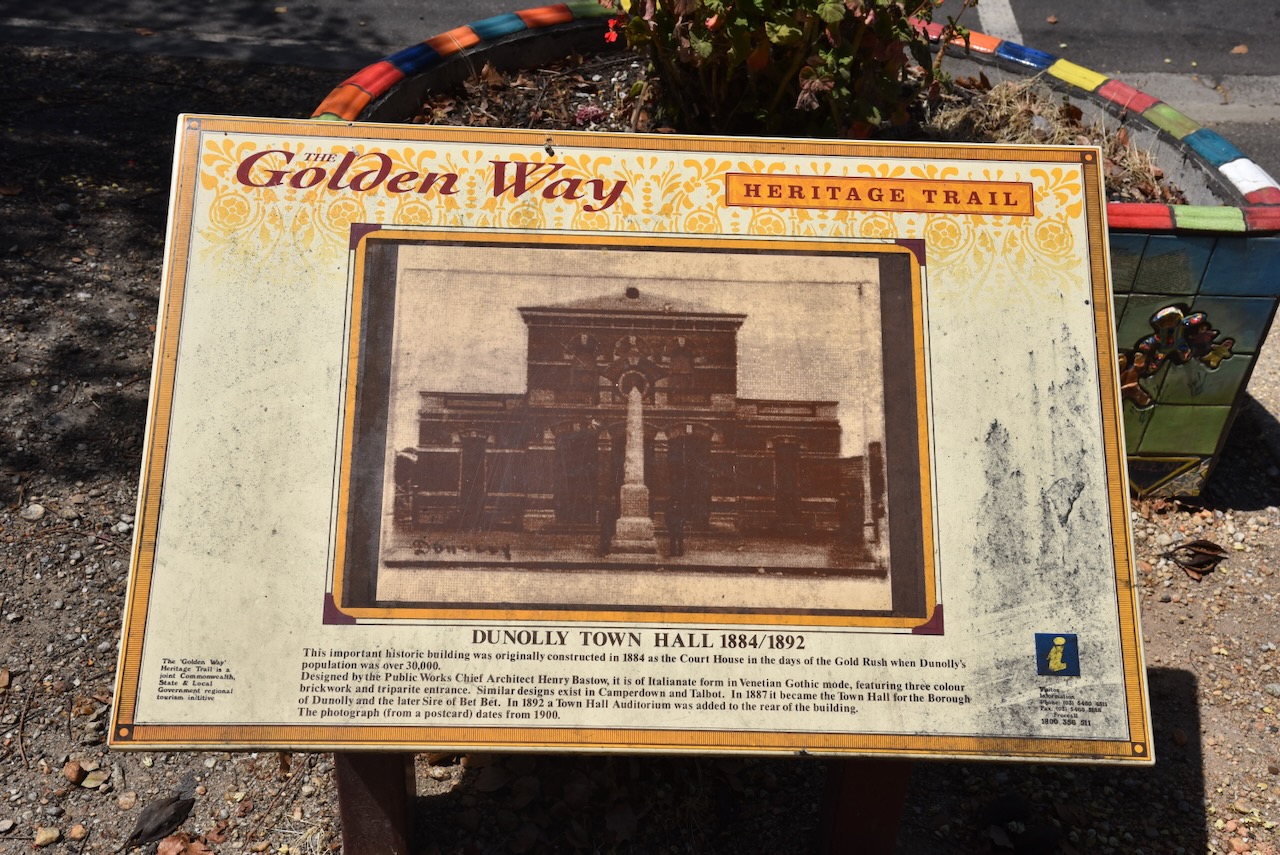
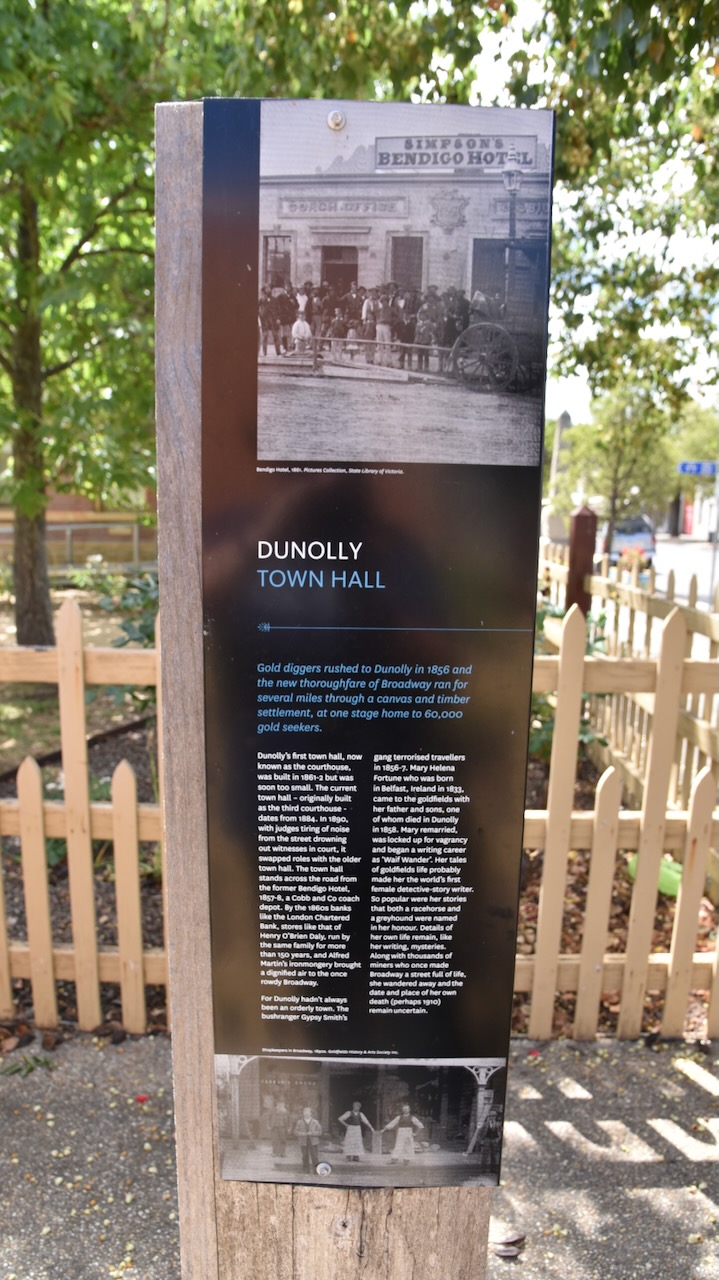
Dunolly is a very historic town and you can spend a long time here wandering around the town admiring the numerous historic buildings.
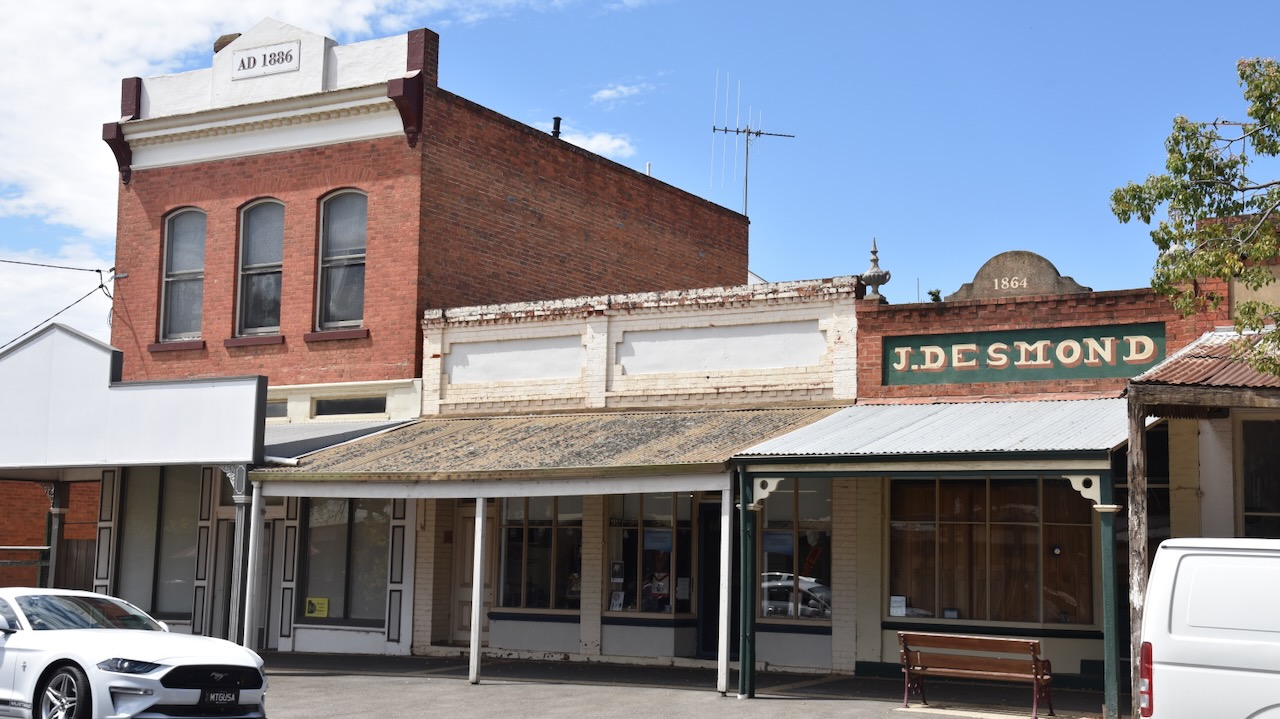
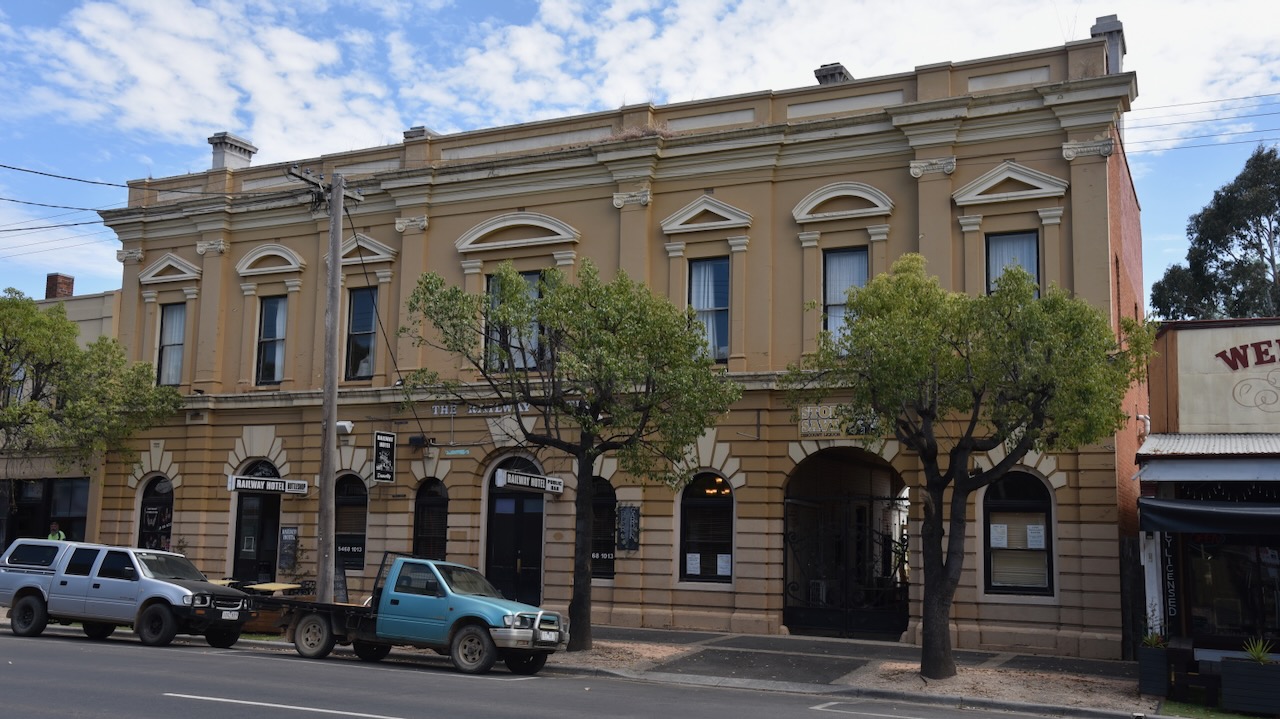
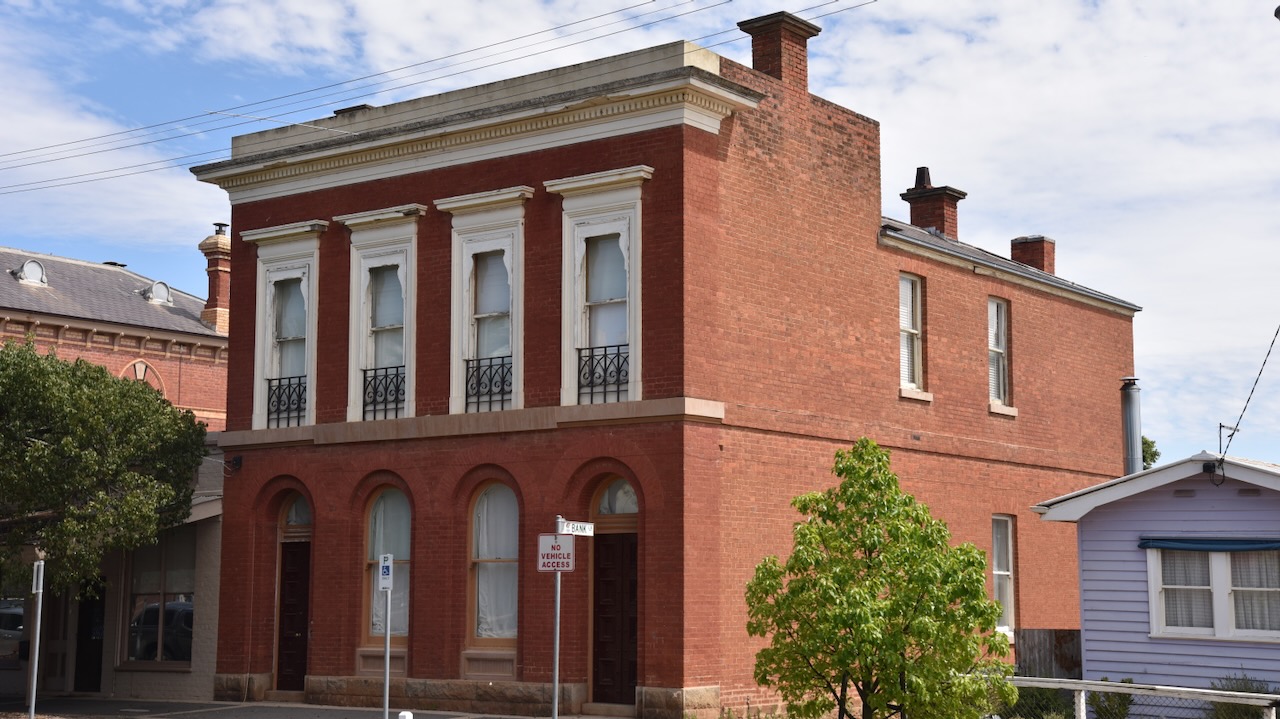
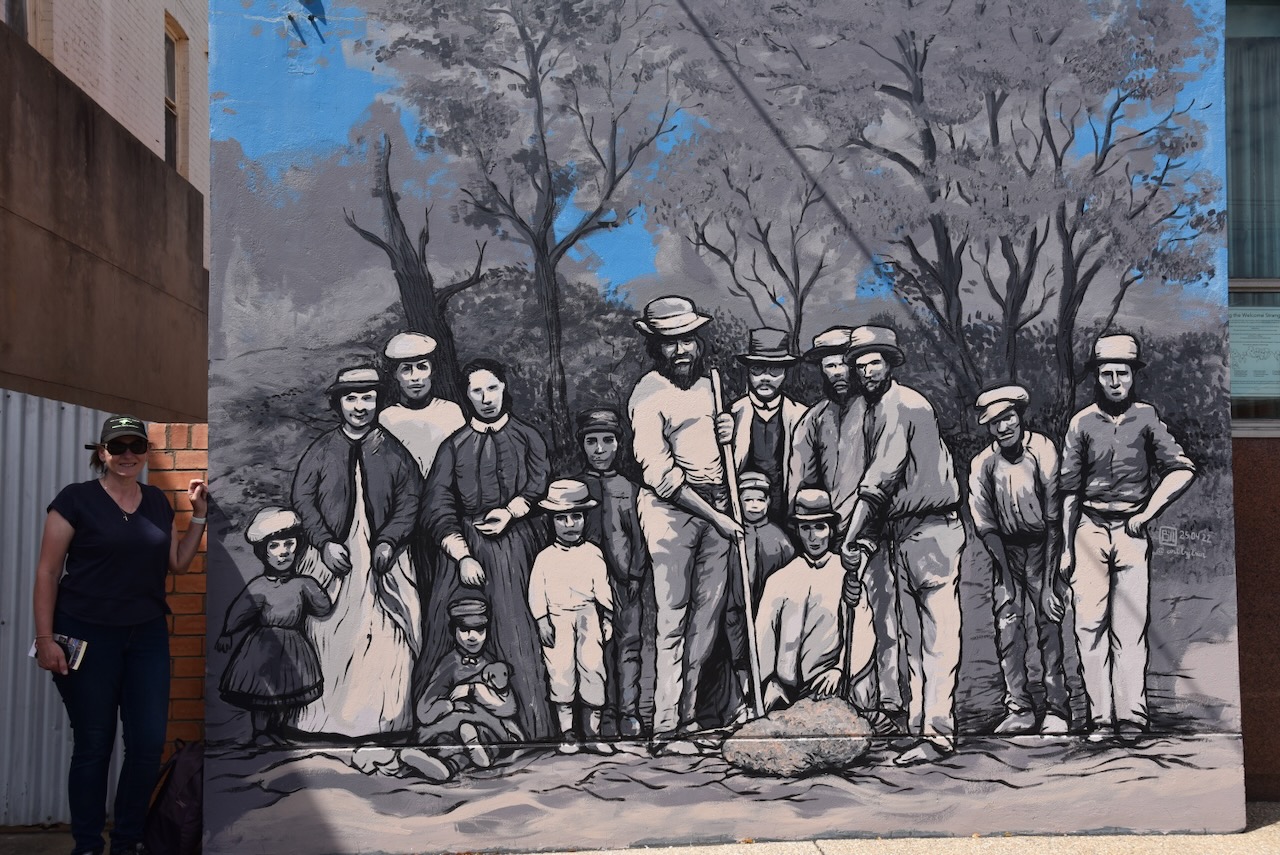
In 1852 George Simpson emigrated to Australia from Lincolnshire England and in 1856 he arrived in Dunolly. In 1858 he built the Bendigo Hotel, Meeting Hall and Coach offices. It was used as an early courthouse and later as the Dunolly Town Hall. Cobb and Co coaches operated from the premises until 1874.
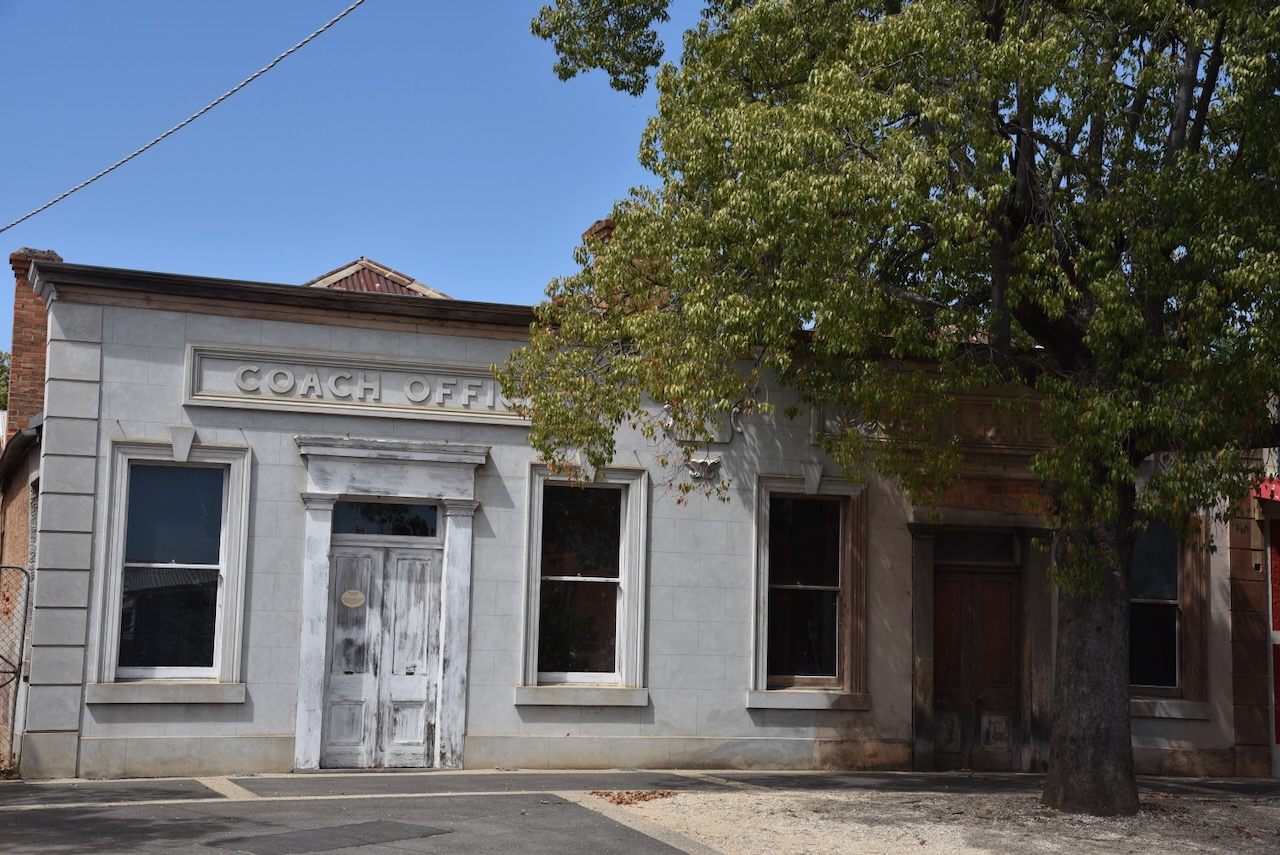
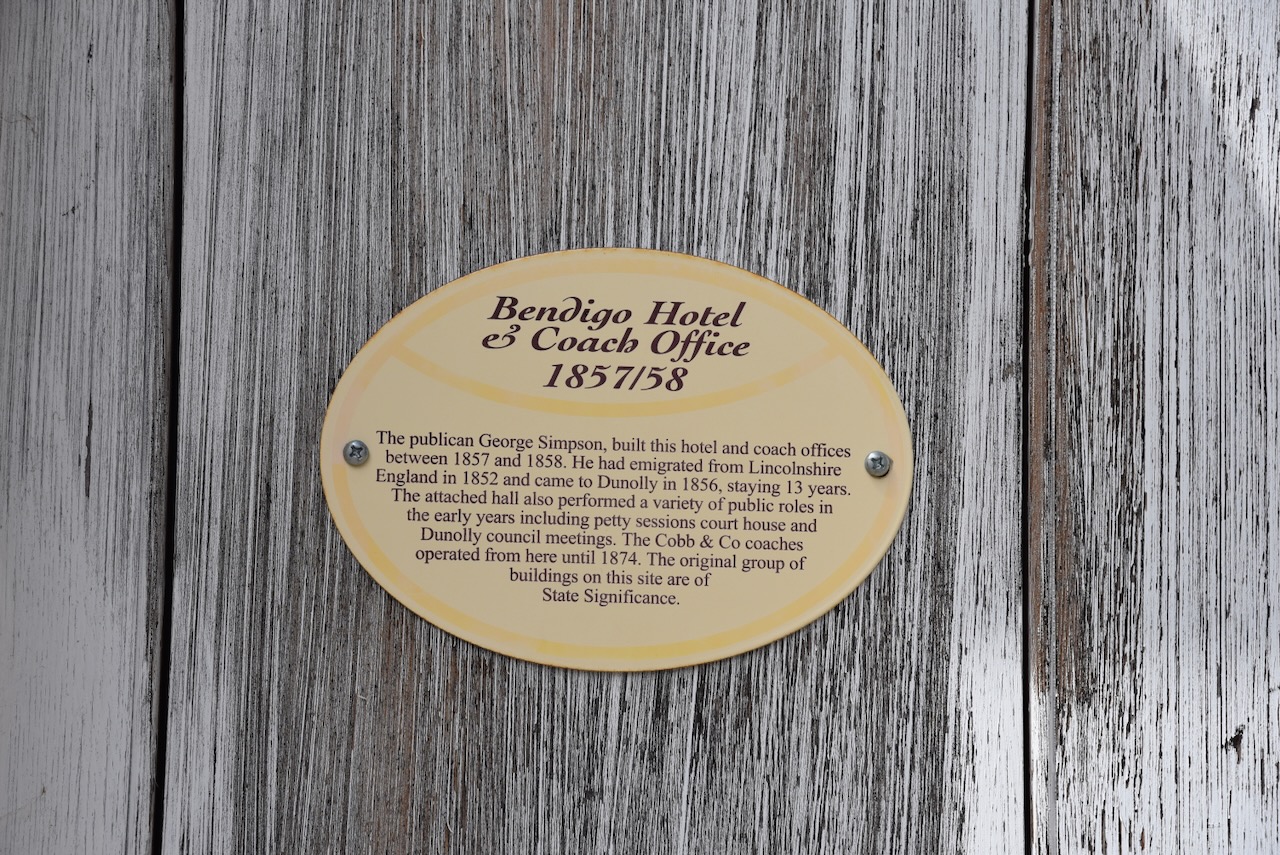
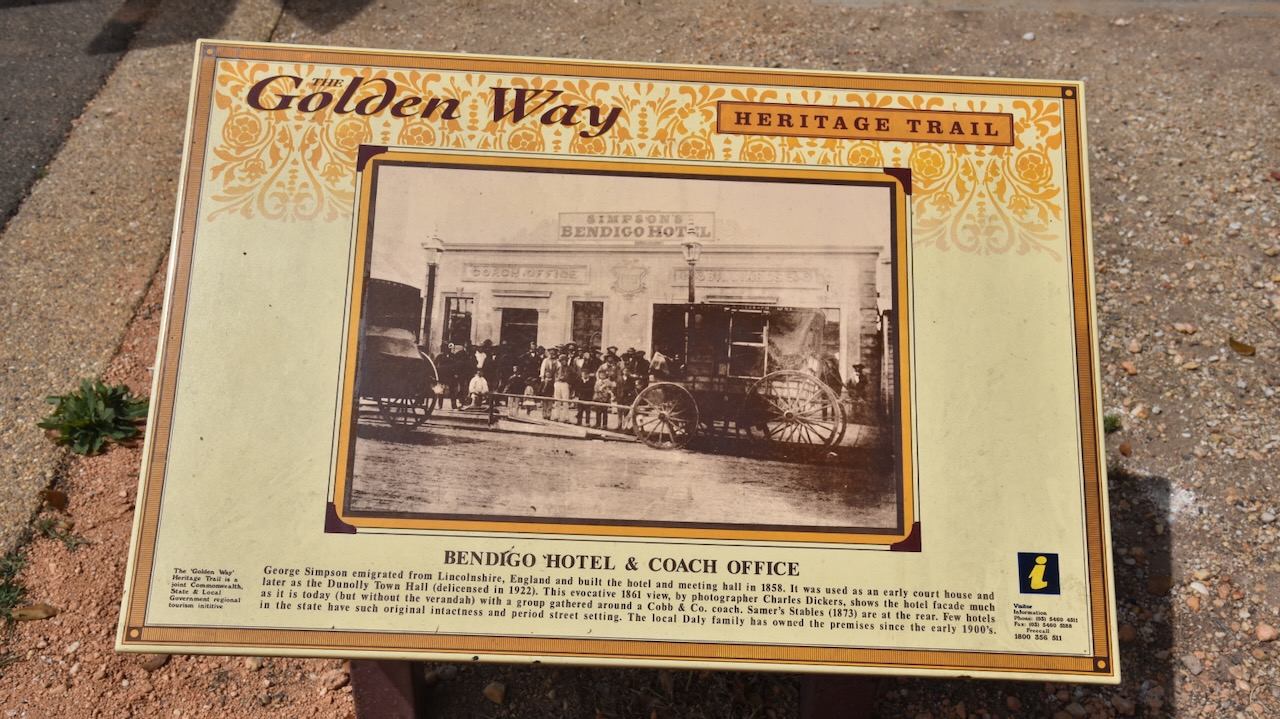
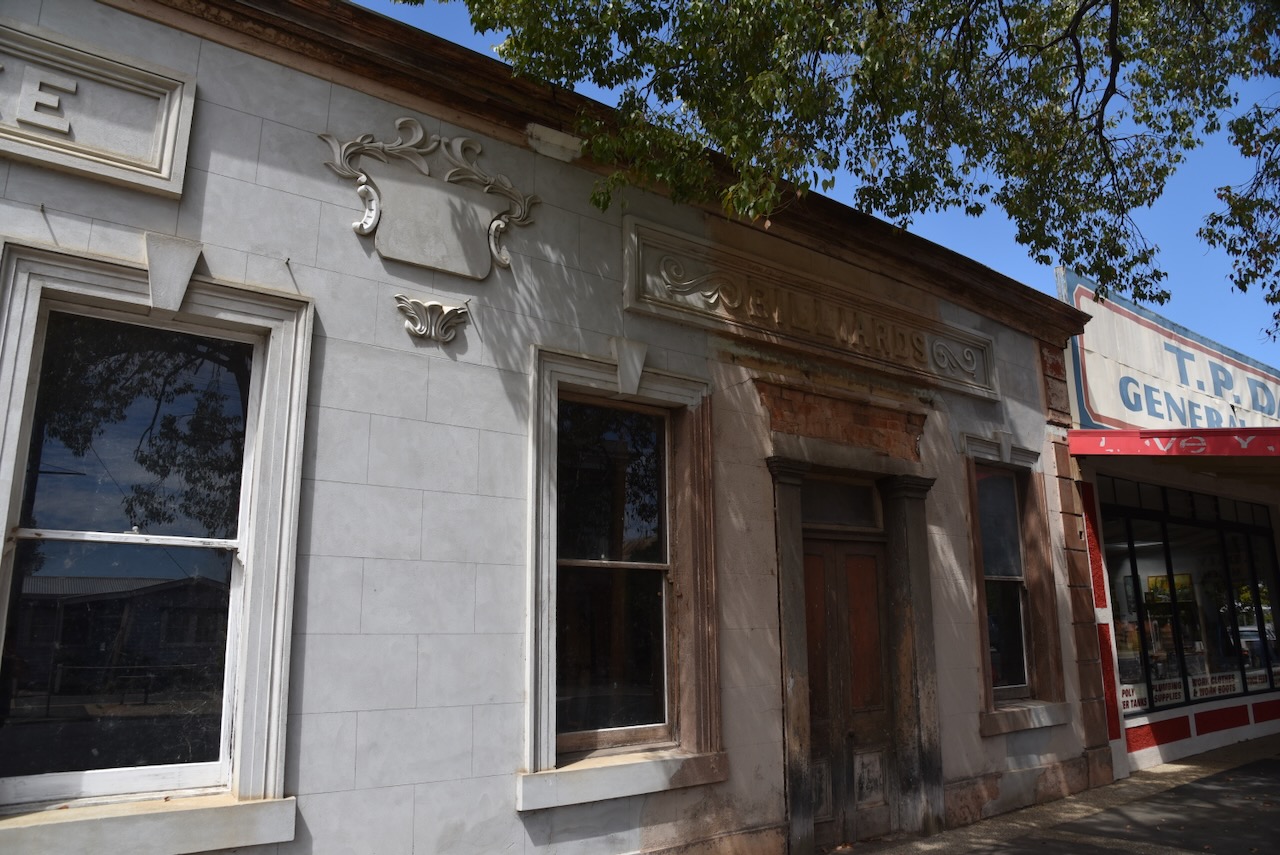

Above:- The Bendigo Hotel, 1861. Image c/o State Library of Victoria
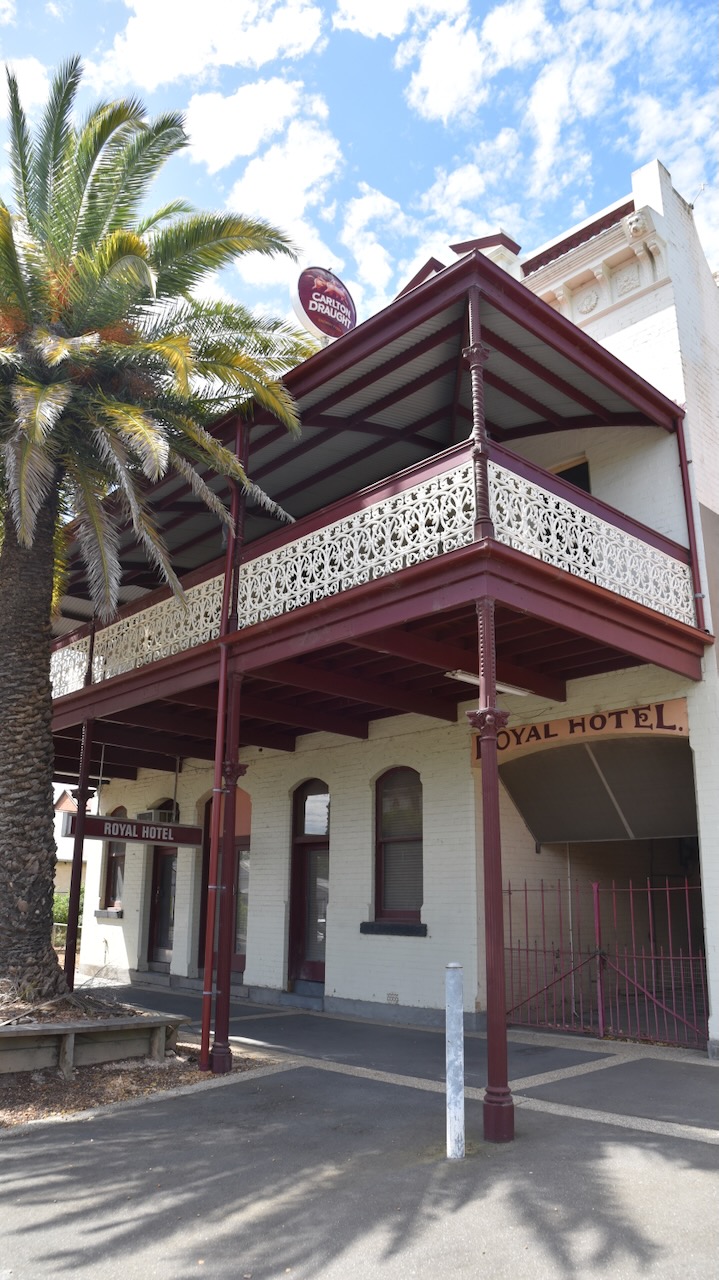
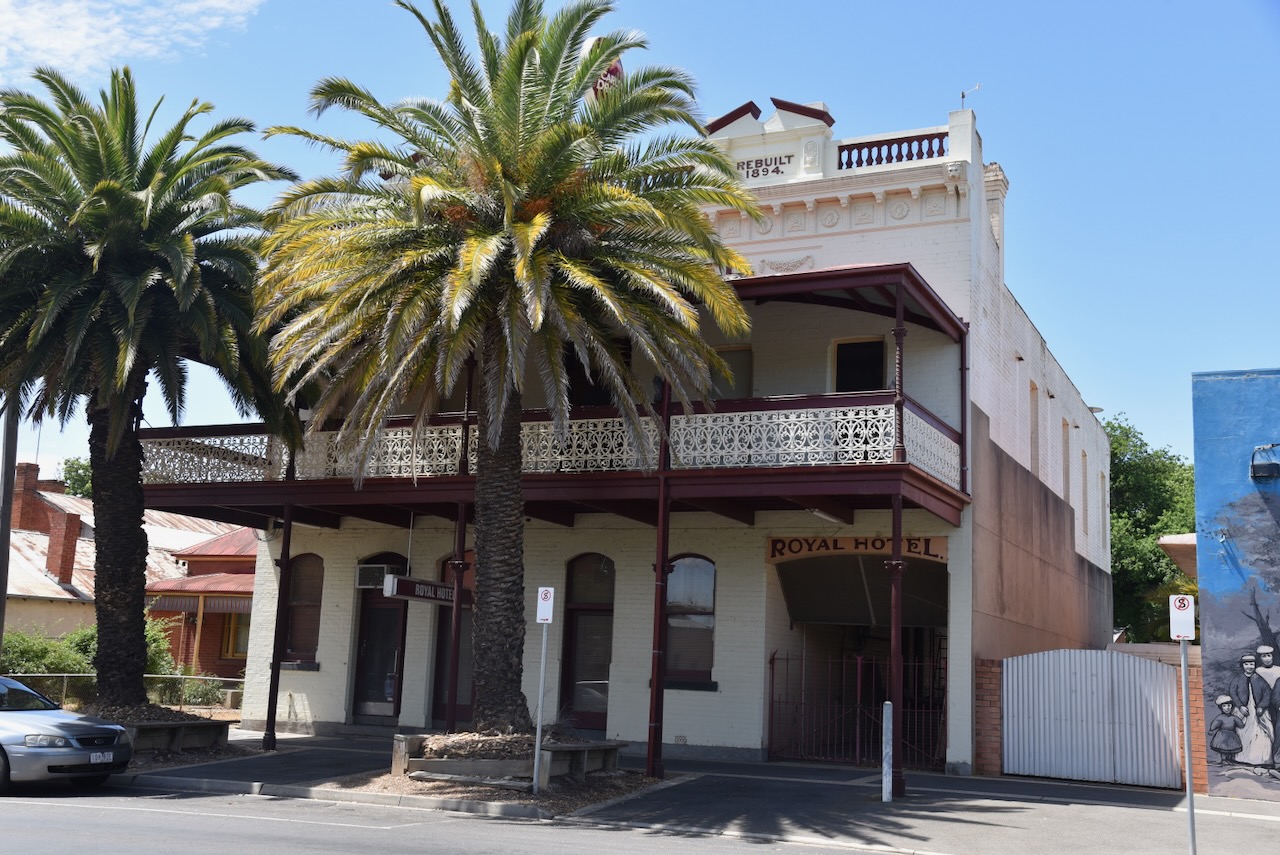
The current Royal Hotel was built in 1894. The first hotel on this site was Isaac Ray’s canvas Live and Let Live Hotel built in 1856 which burnt down in 1857. It was rebuilt as a weatherboard building and was renamed the Royal Hotel. (Dunolly Museum Facebook 2024)
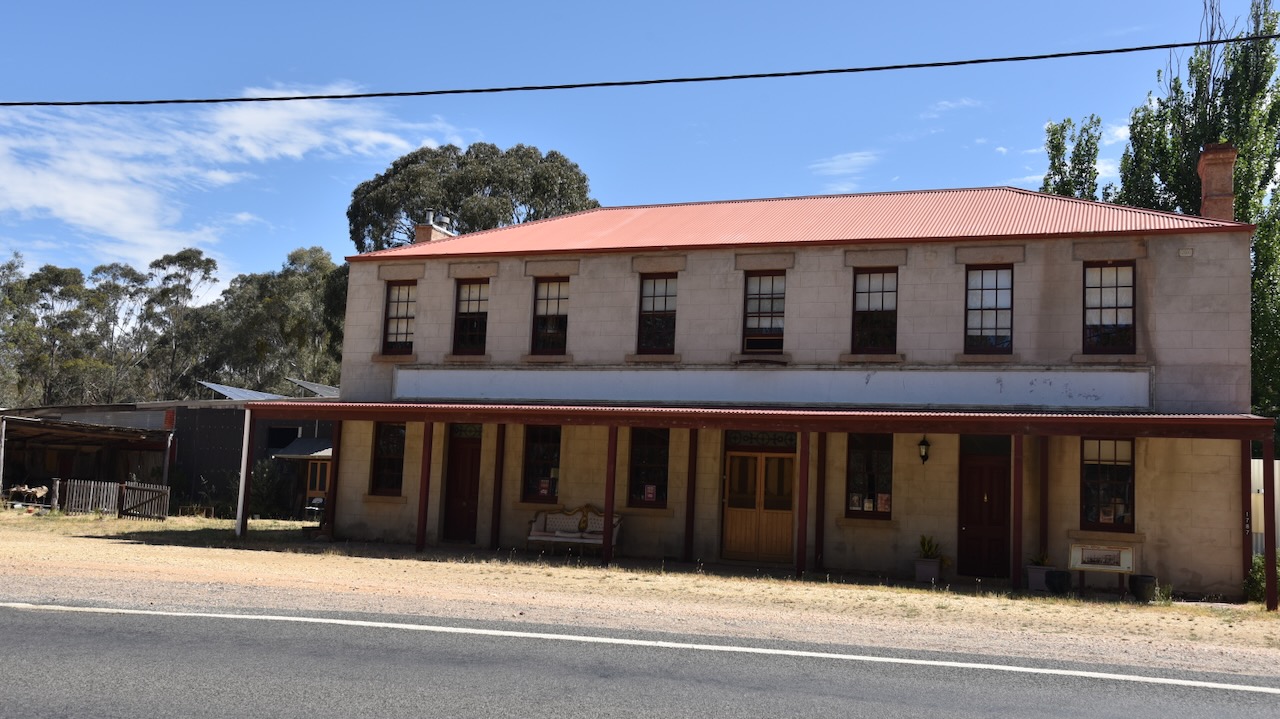
Wighams Junction Hotel was built between 1862 and 1867 at South Dunolly on the main road to serve the Gooseberry Hill gold rush mining operation. William and Anne Wigham were the hotel’s first licensees. The Wigham family also operated a nearby corn store. The hotel was a popular meeting place and a venue for balls. The hotel was severely damaged in 1910 and was de-licenced in 1912.
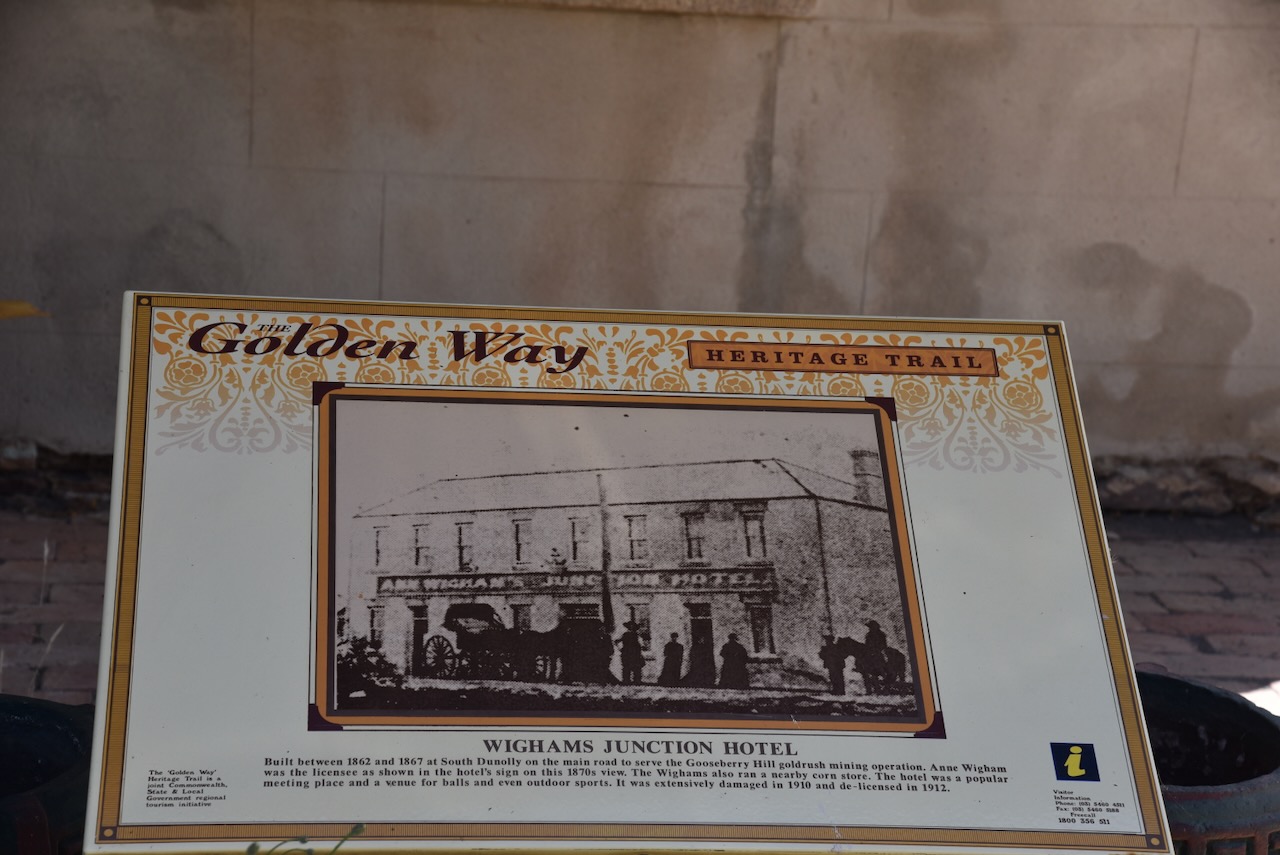
William Wigham was born in Glasgow Scotland in 1823. He was transported to Tasmania for ten years in October 1843 aboard the convict ship Lord Petre after being convicted for stealing a handkerchief, brandy, and a waistcoat. He married Ann Flanagan in Melbourne in 1854. By 1857 they had moved to Dunolly. (Ancestry 2024)
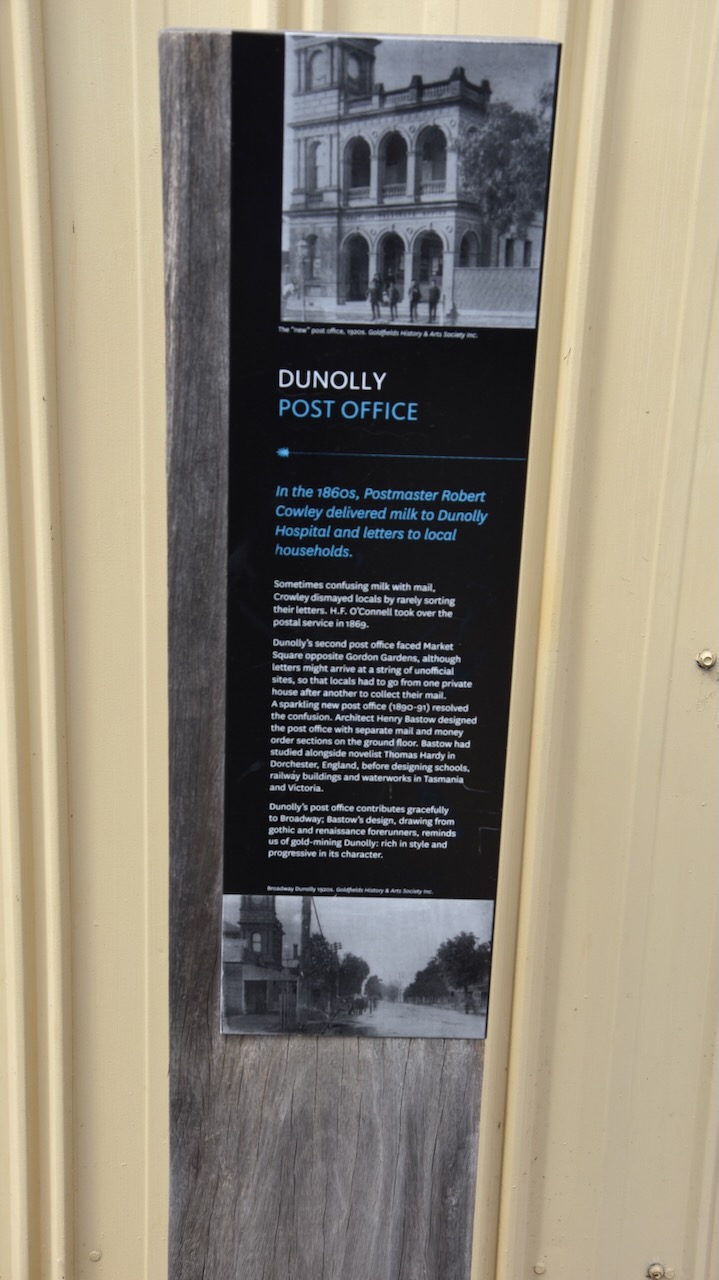
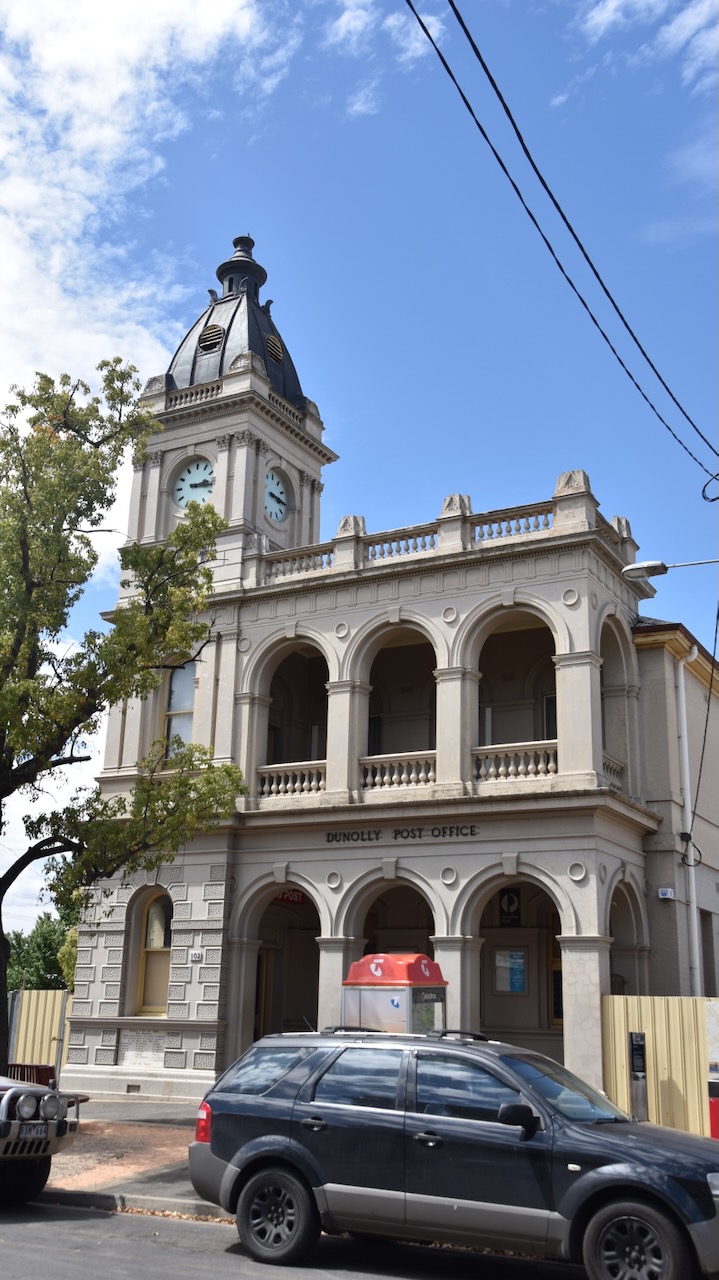
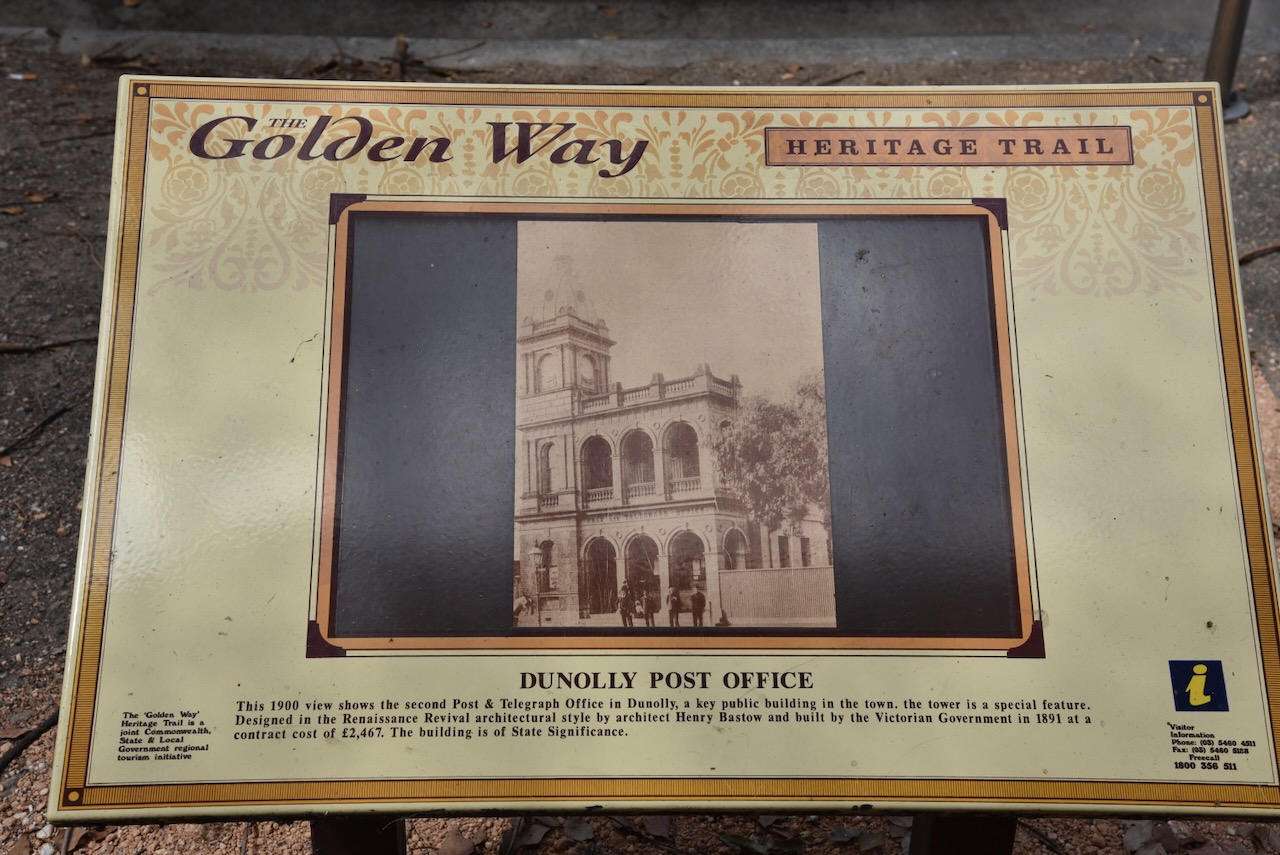
The Dunolly Post Office was designed by architect Henry Bastow and was built by the Victorian Government in 1891 at a contract cost of 2,467 pounds.
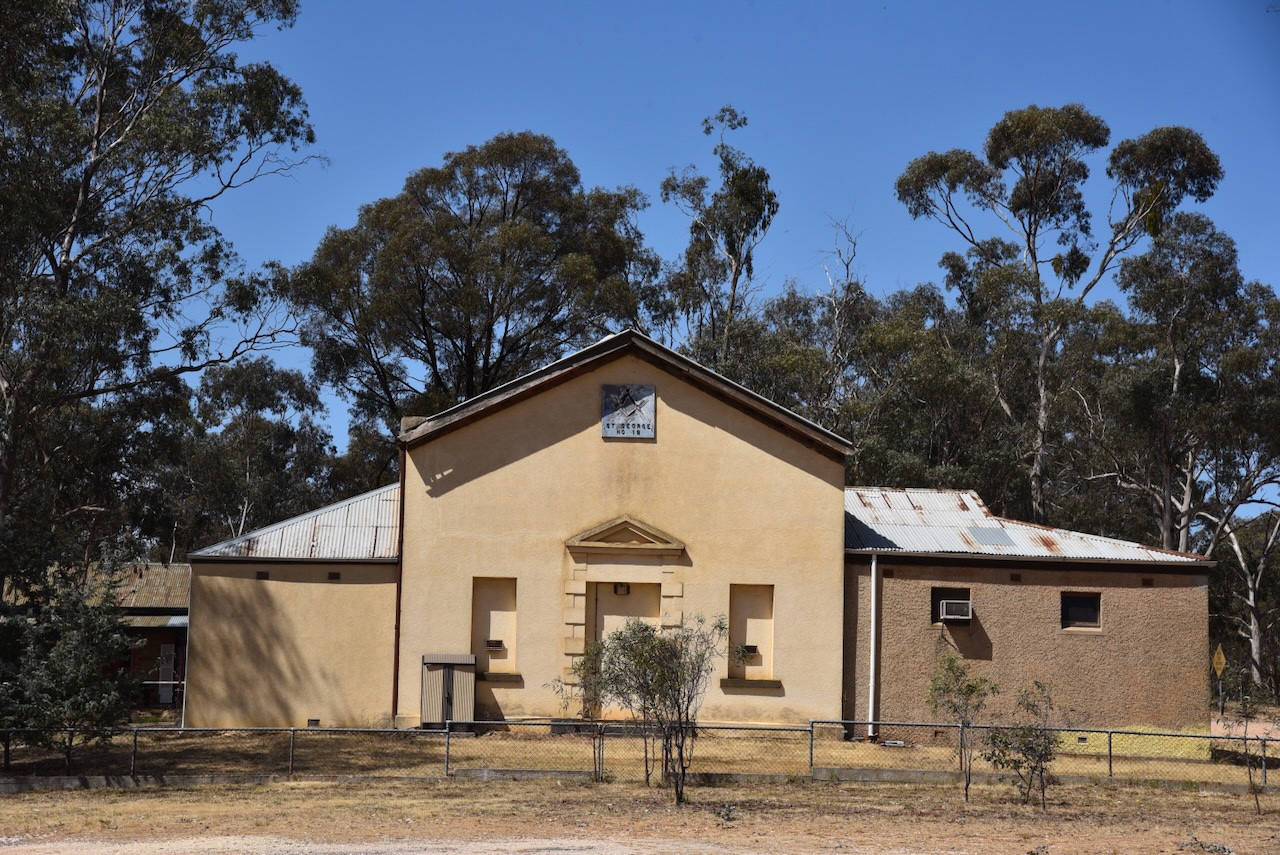
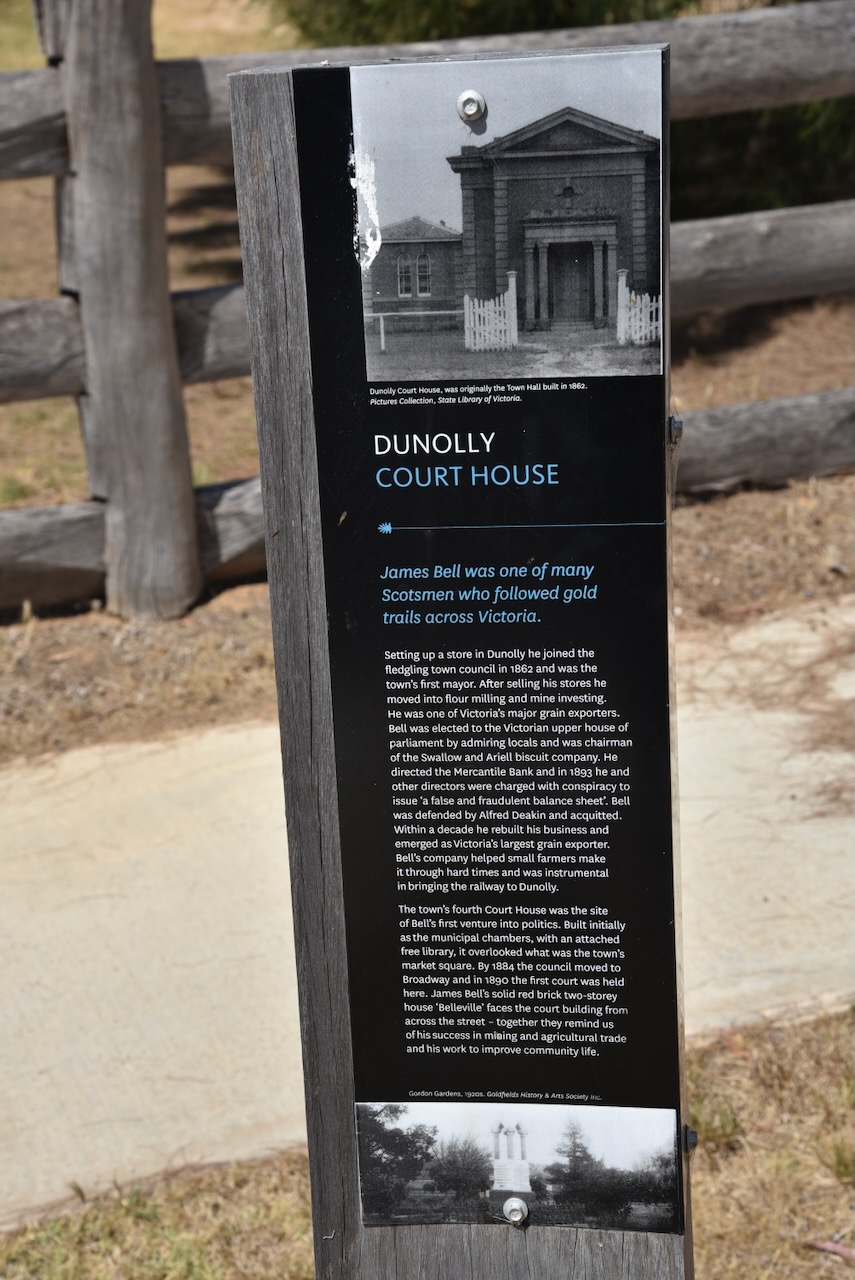
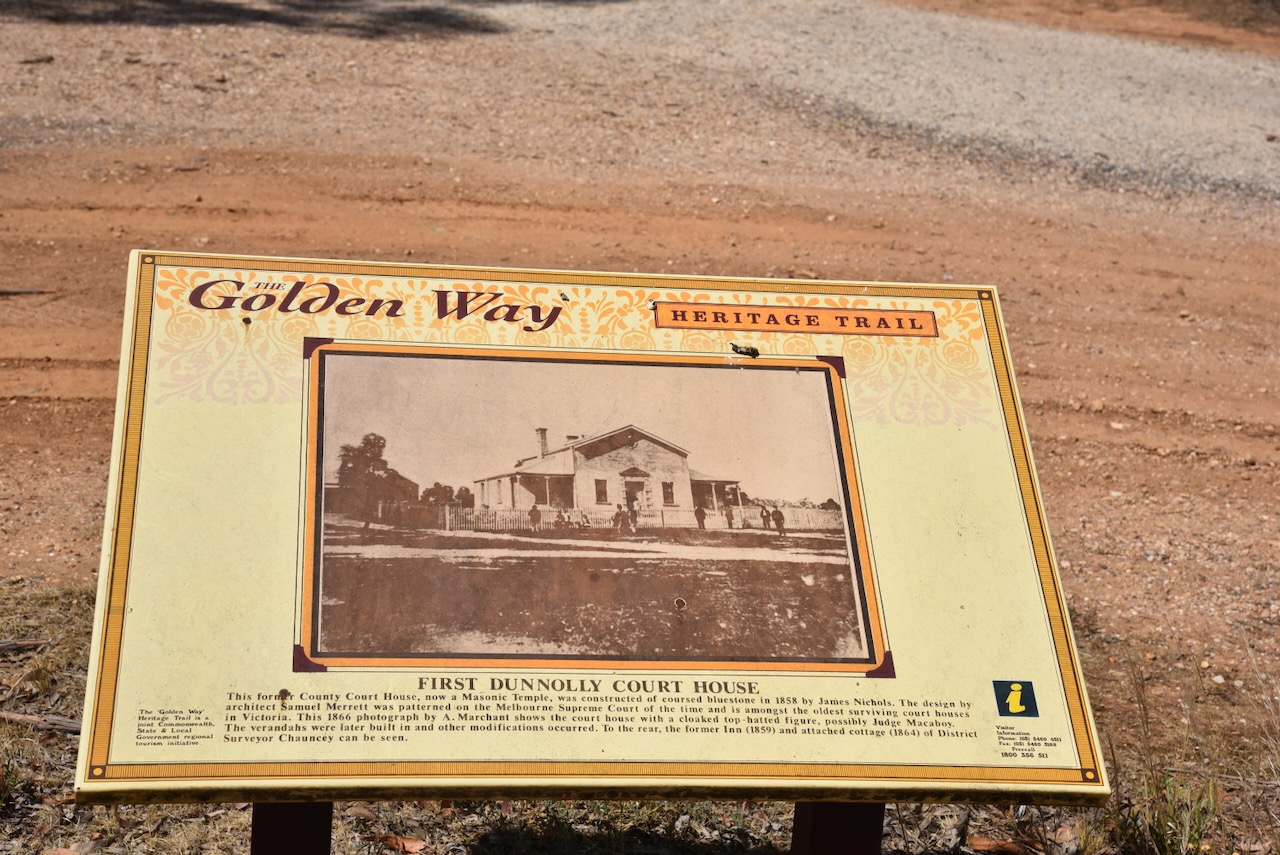
The former Dunolly County Courthouse now functions as a Masonic temple. It was constructed of coursed bluestone in 1858 by James Nichols.
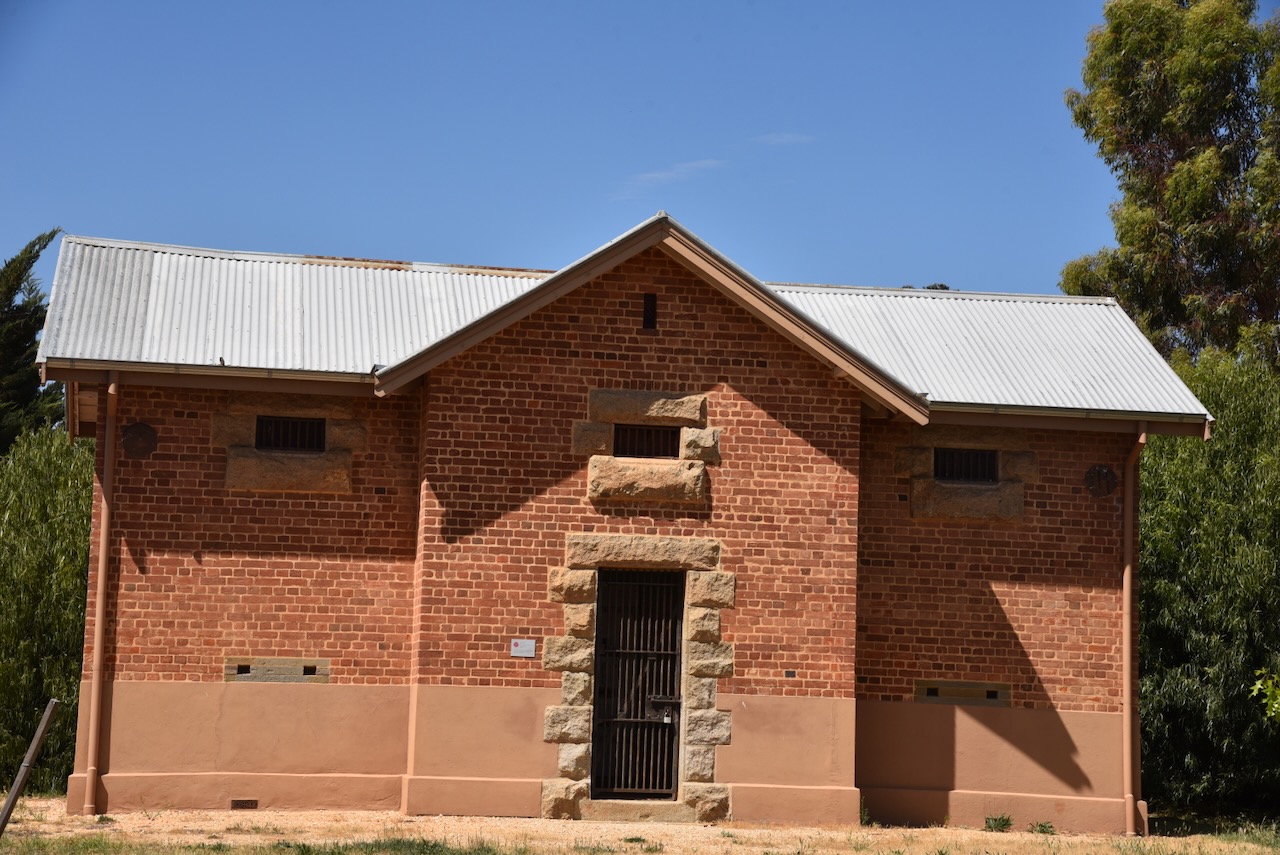
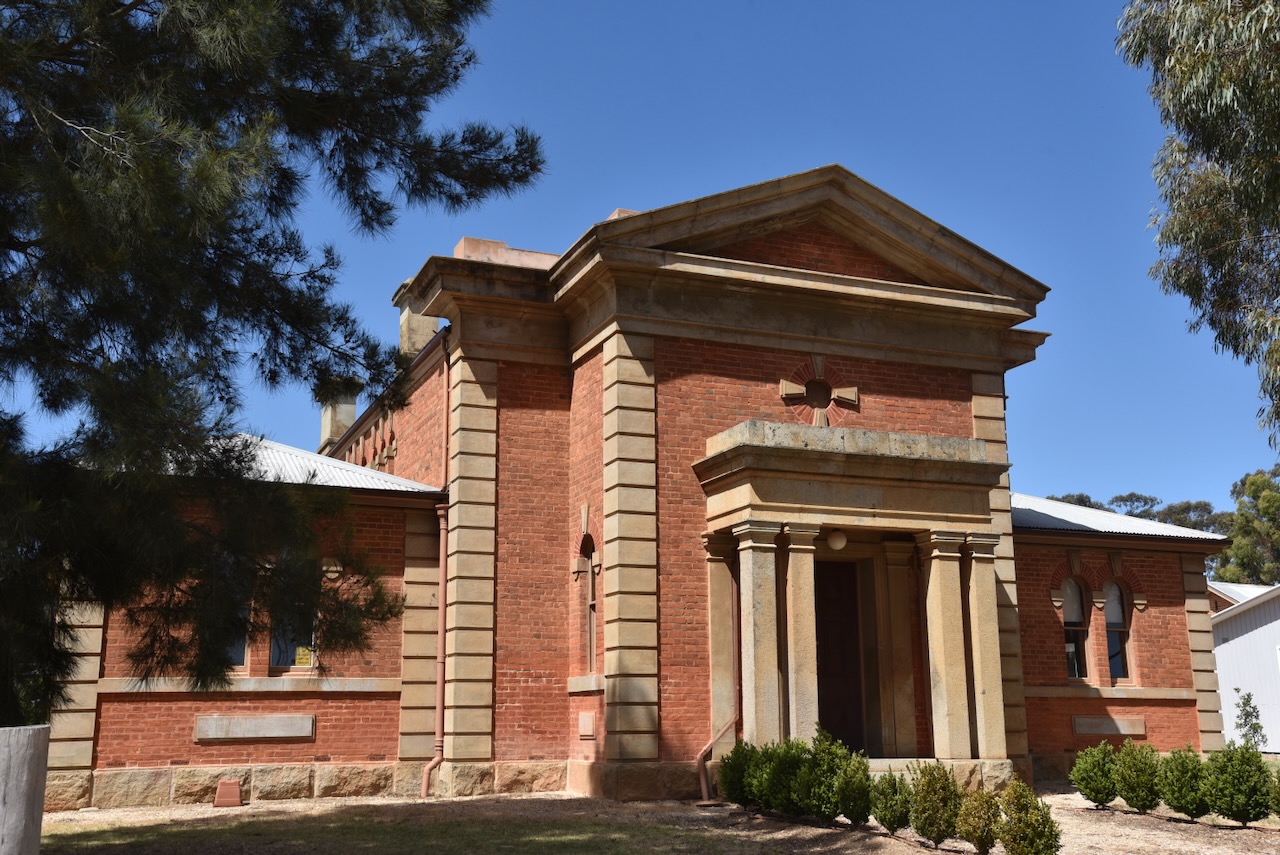
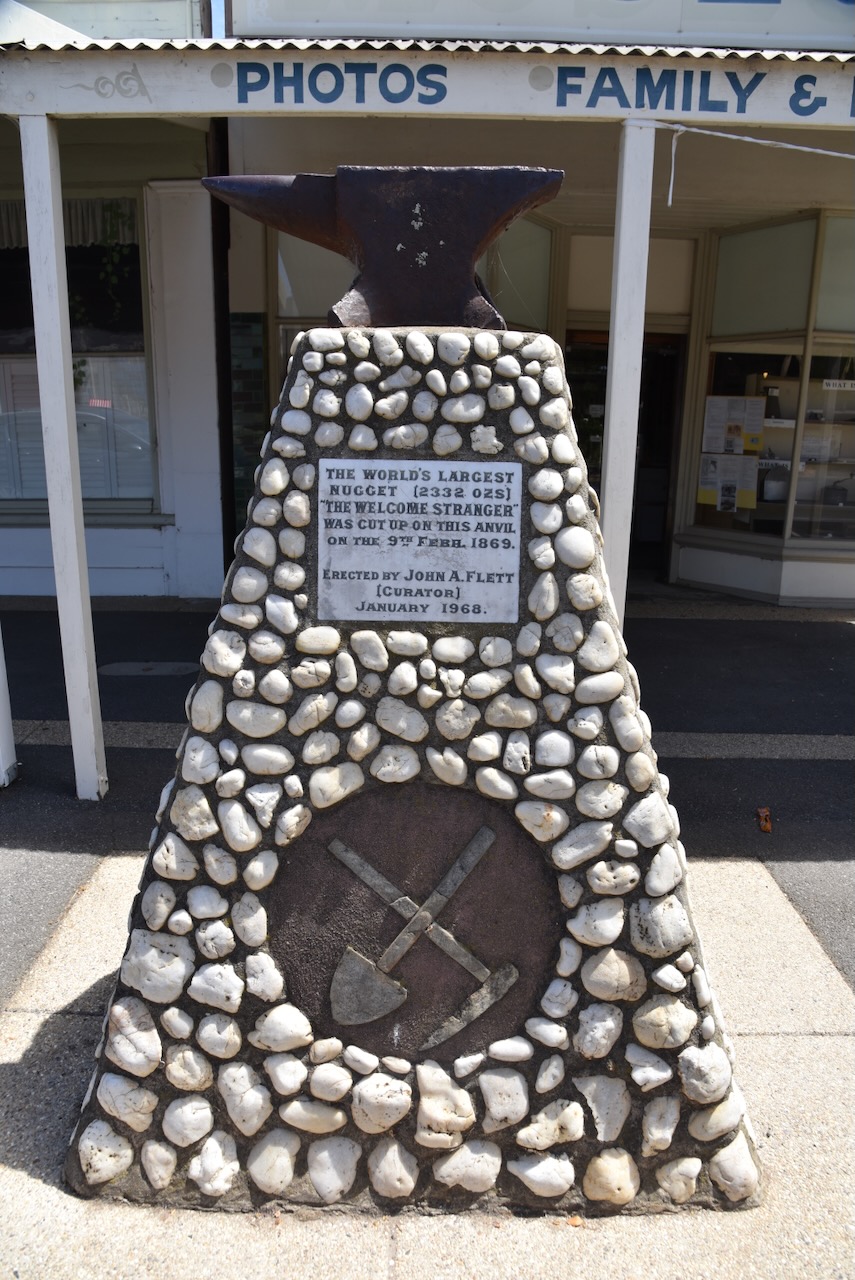
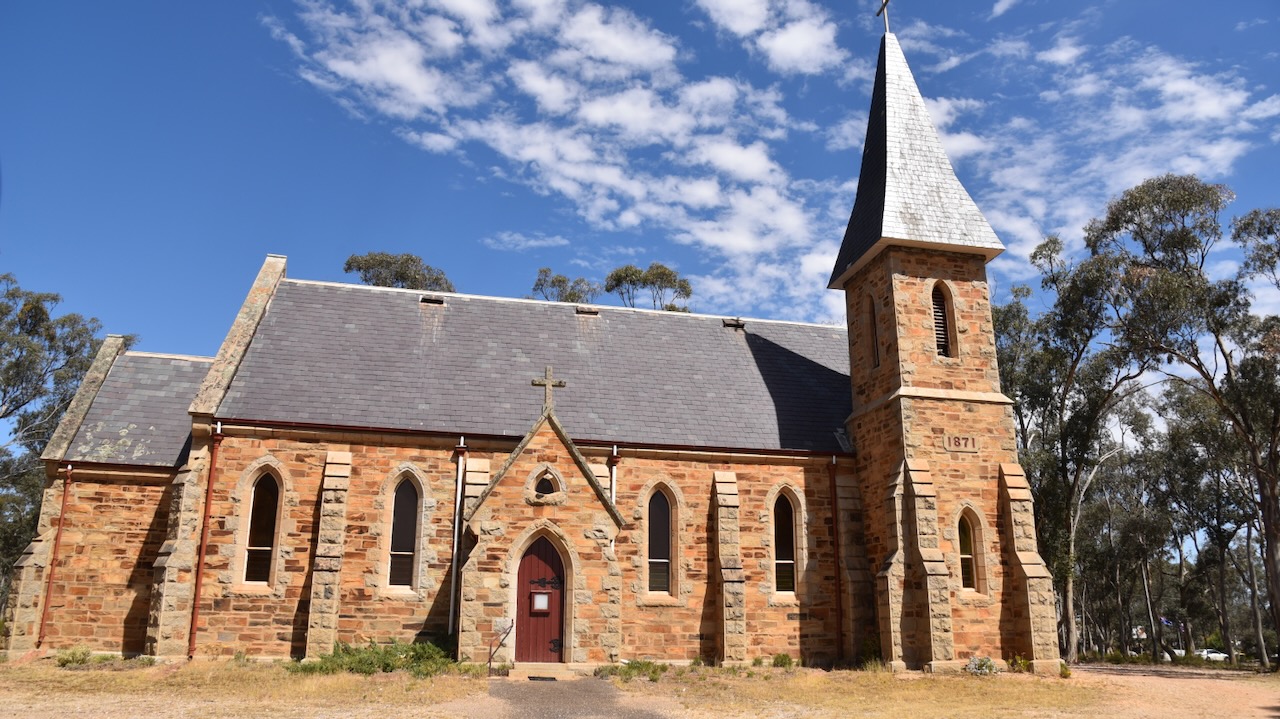
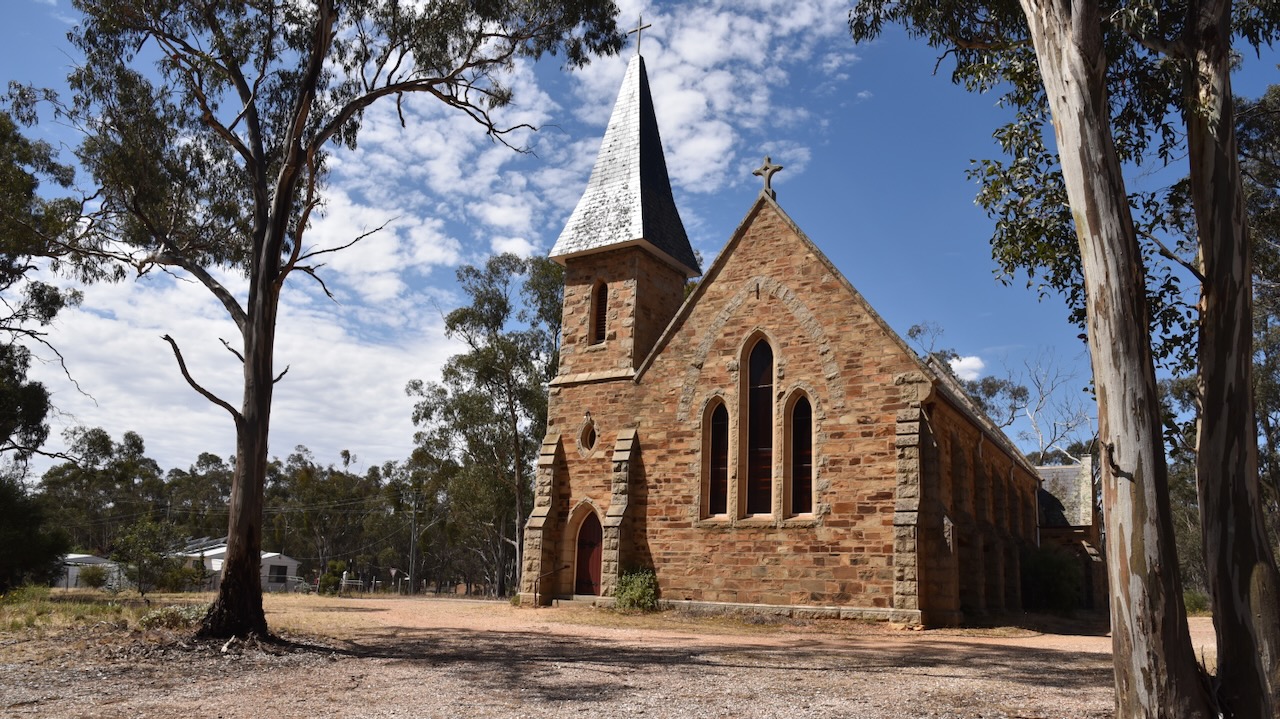
St Johns Anglican church was completed in 1869 with some of the funds being provided by John Deason and Richard Oates who had siscovered the world famous gold nuggest Welcome Stranger. (Goldfields Guide 2024)
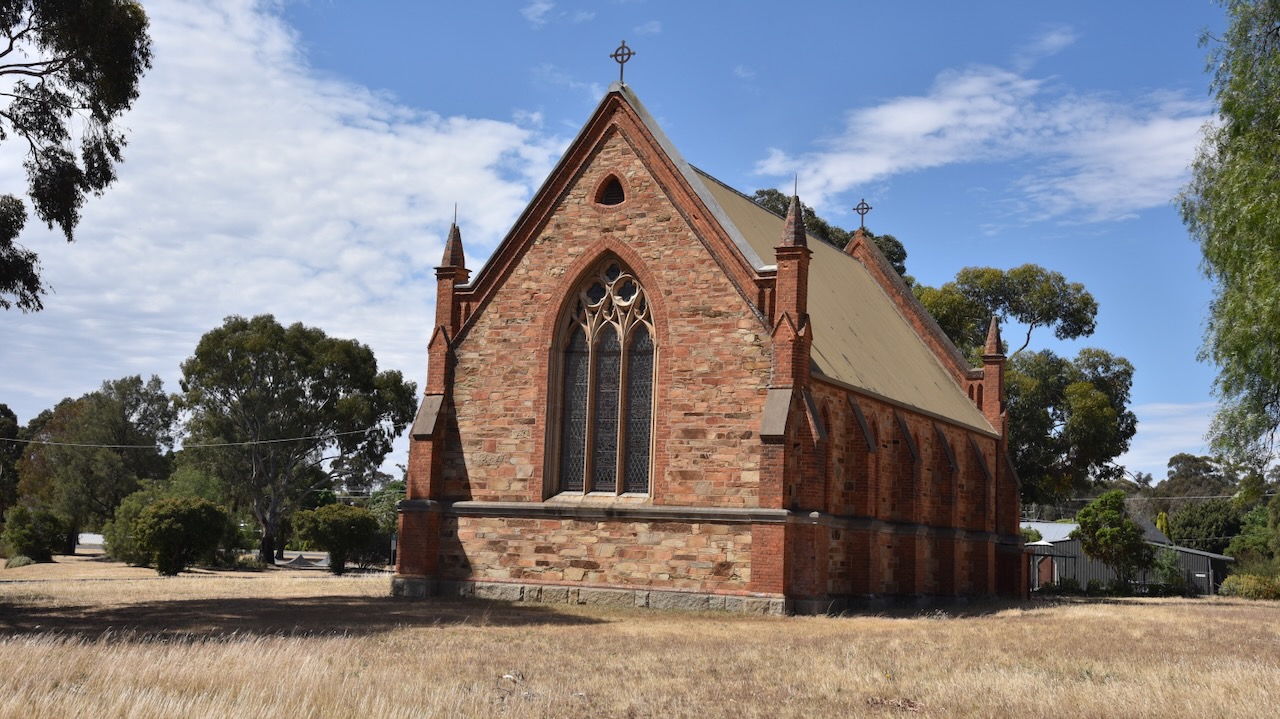
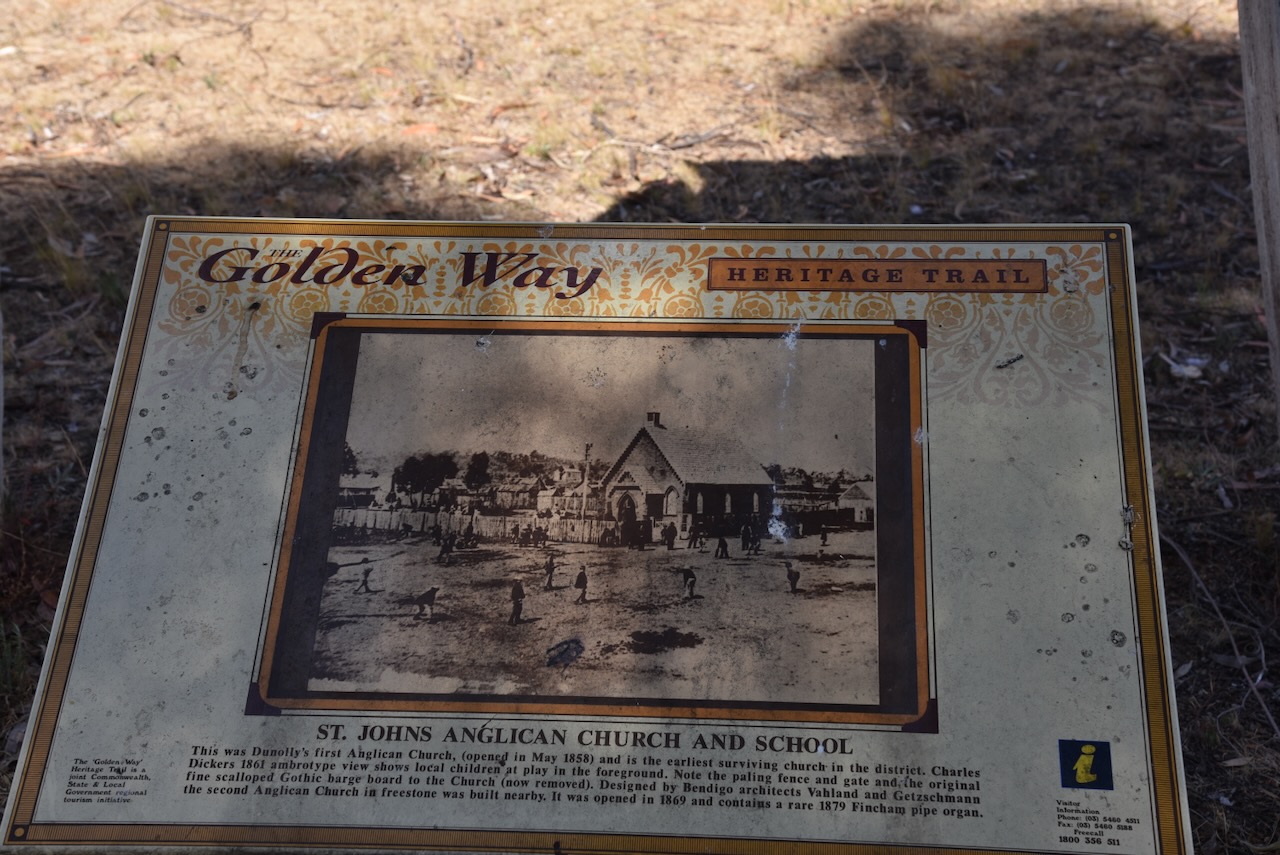
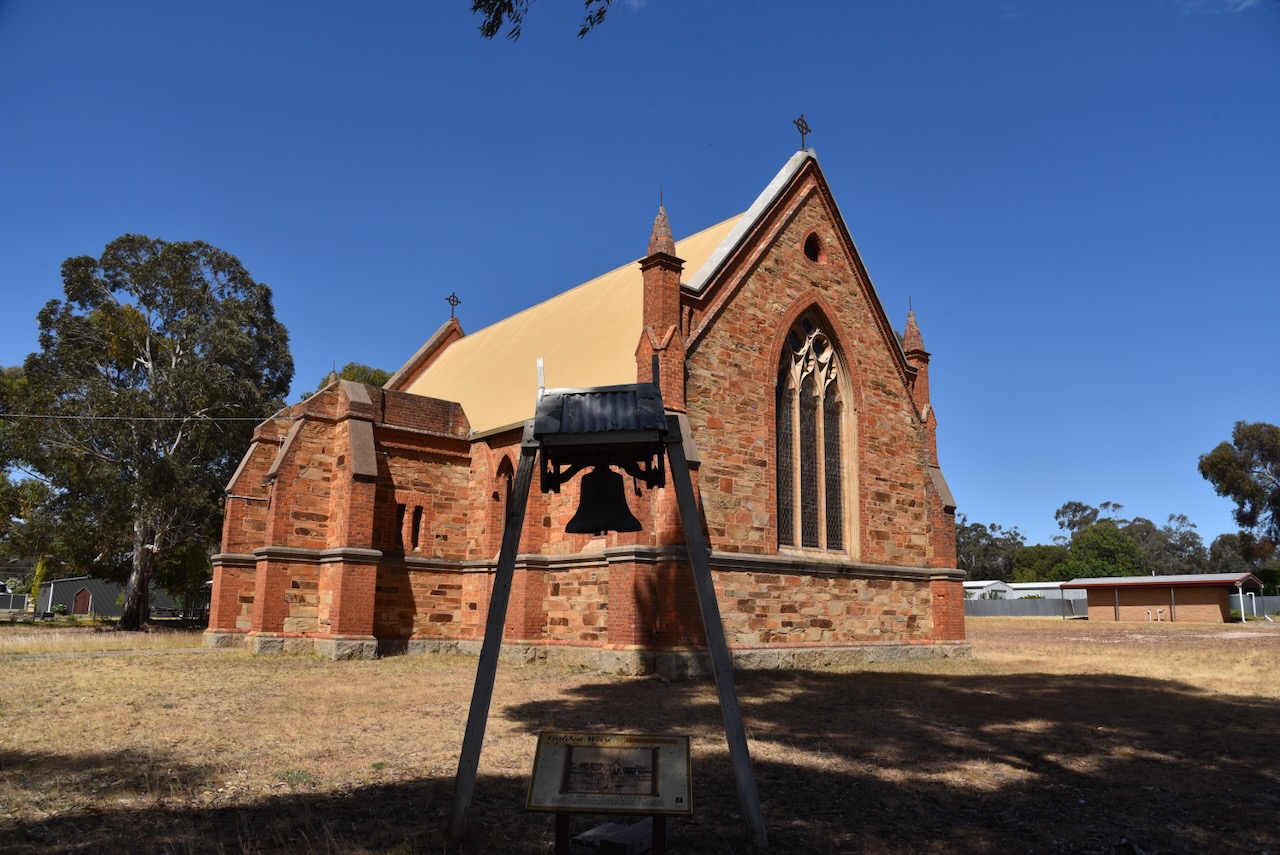
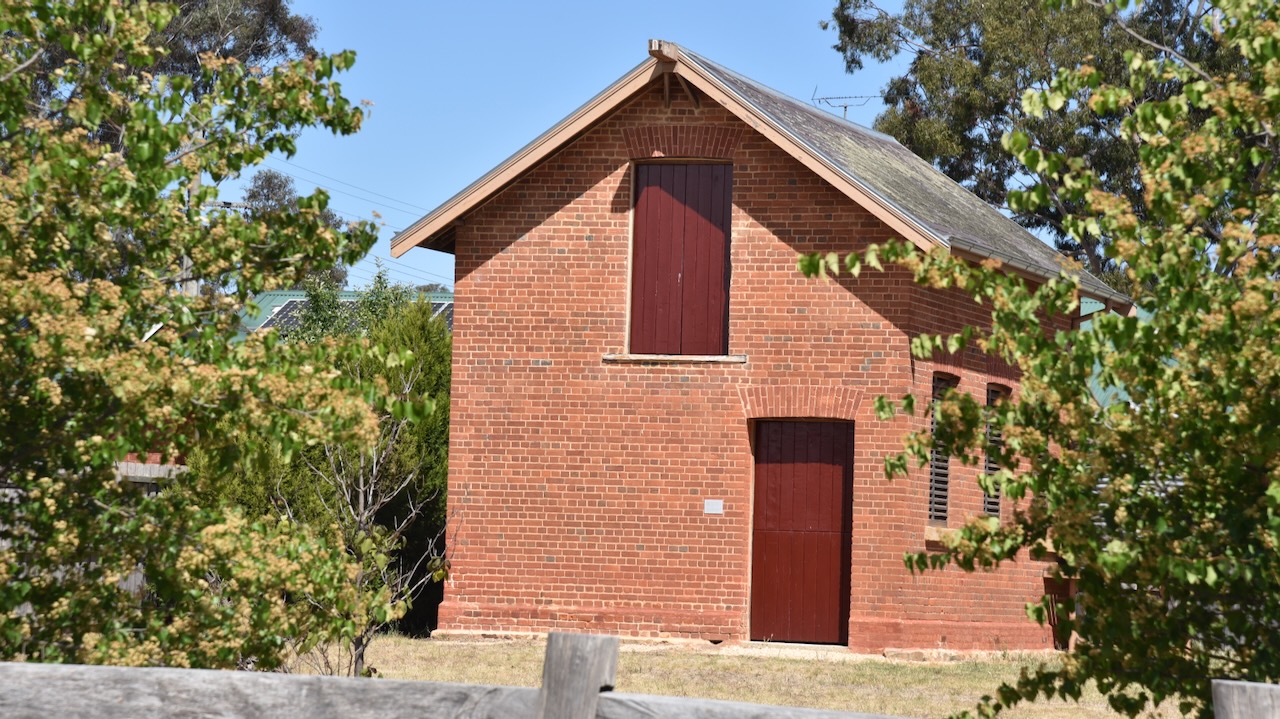
The Anglican school room was built in 1857 and functioned as the church until the new church was built.It is the earliest surviving church in the district. (Goldfields Guide 2024)


Above: The Anglican school roo, 1867. Imega c/o State Library of Victoria.
The Dunolly St Mary’s Catholic church was designed by architect R. Dowden. The foundation stole was laid on the 18th day of January 1869 and the church was opened on the 17th day of September 1871.

Above:- part of an article from the Advocate, Melbourne, Sat 23 Sep 1871. Image c/o Trove.
The former Dunolly Presbyterian Church was opened on the 25th day of October 1865. Former Premier of Victoria Sir Harry Lawson was born in the manse next door to the church, where his father was the minister. (Australia’s Christian Heritage 2024)

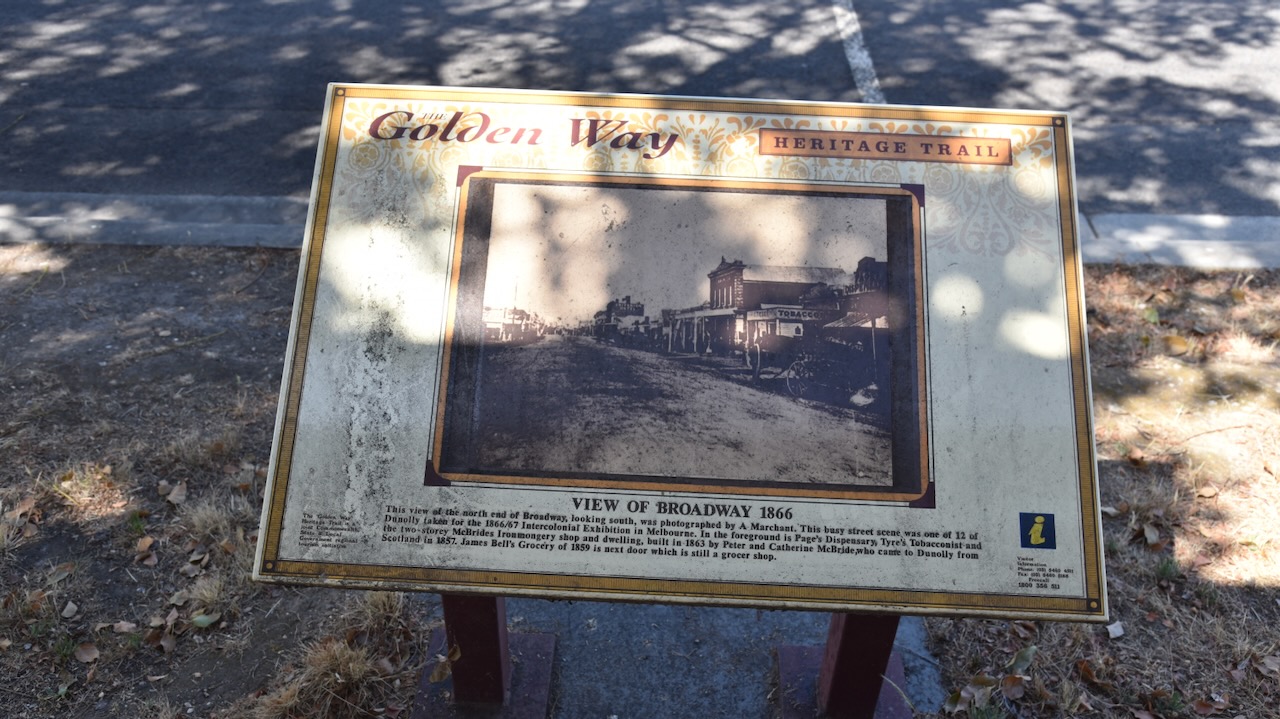
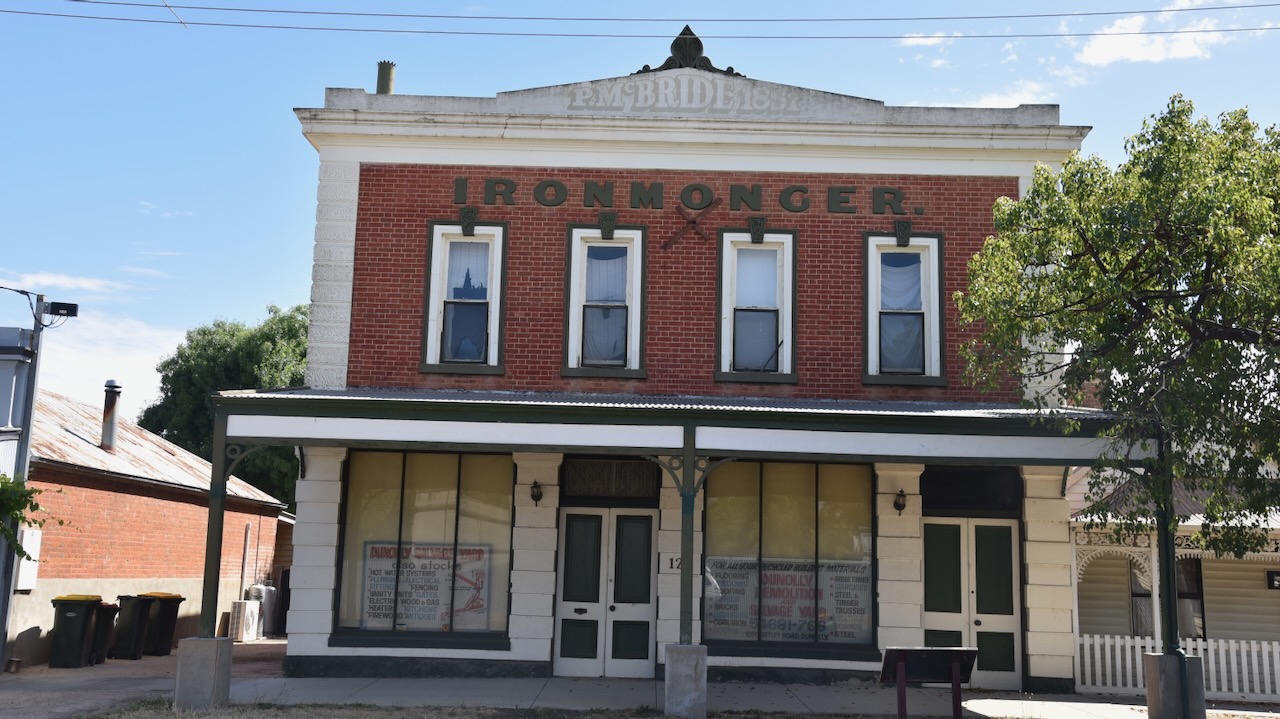
The Ironmonger shop located on the Broadway was built in 1863 by Peter and Catherine McBride, who arrived in Dunolly in 1857 from Scotland. (Walking Maps 2024)
Belleville was built in 1869 and was owned by politician James Bell. It was designed by a local store keeper, Thomas Tyrer. (Walking Maps 2024)

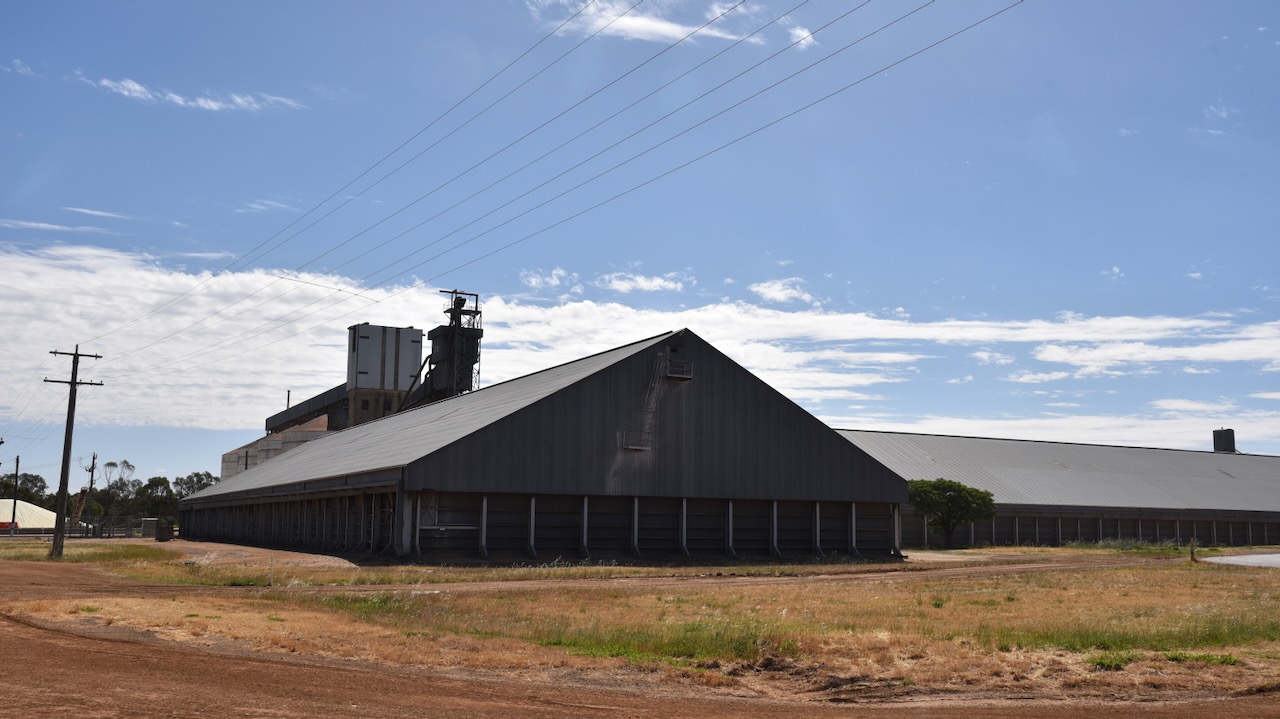
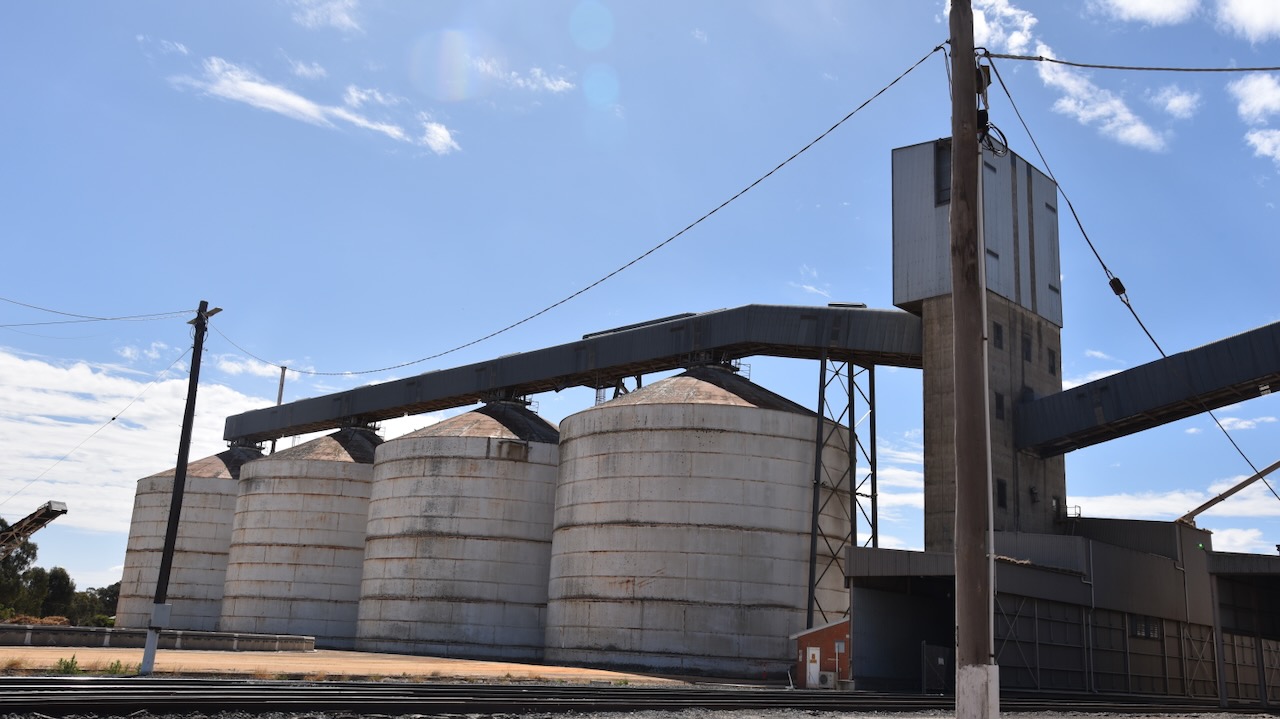
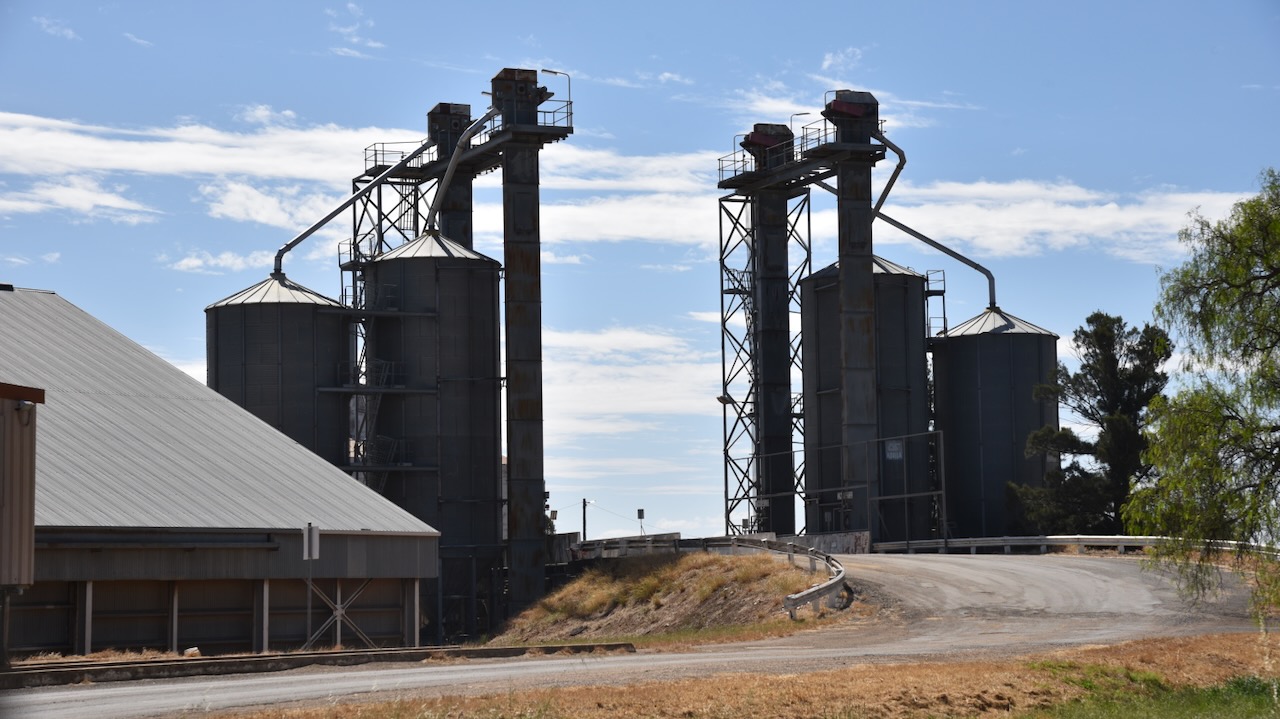
Following a very enjoyable look around Dunolly, Marija and I headed to our first activation of the day, the Dunnolly silo VK-DNY3.
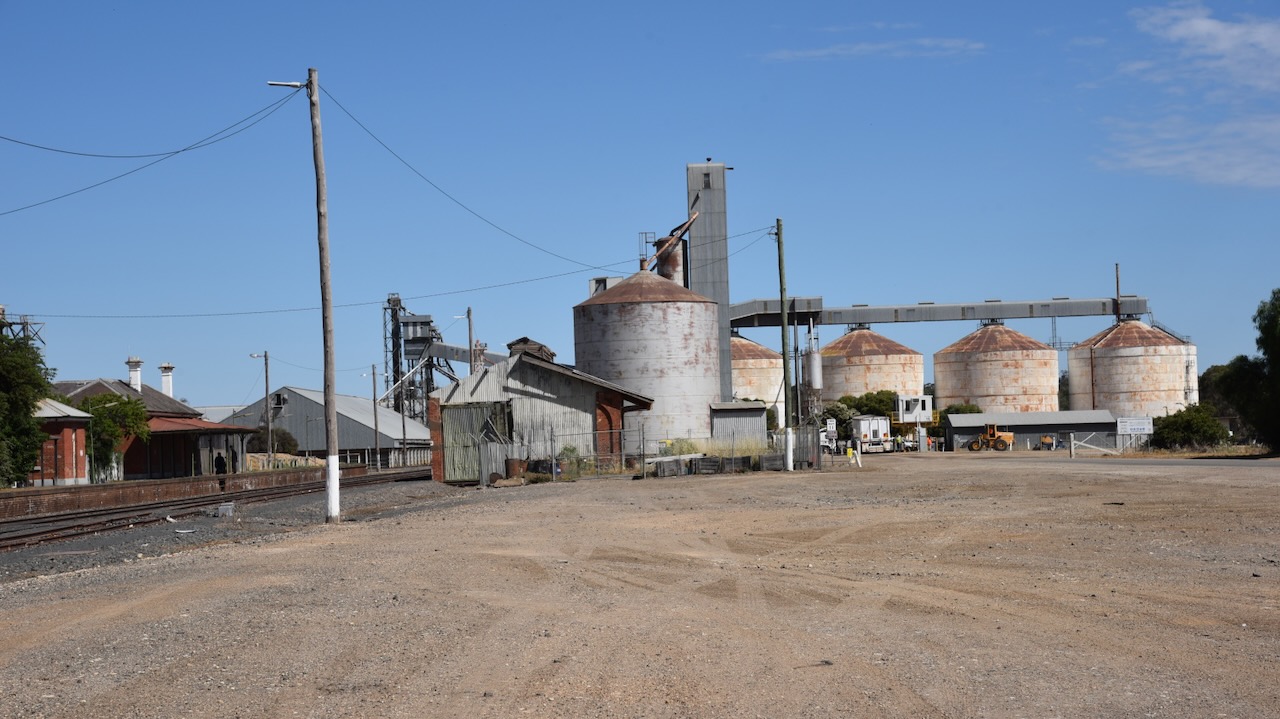
Marija worked the following stations on 40m SSB:-
- VK3PF
- VK5FANA
- VK3GJG
- VK3BEL/p (VKFF-0630 & HEMA VK3/ HVN074)
I worked the following stations on 40m SSB:-
- VK3PF
- VK5FANA
- VK3GJG
- VK3BEL/p (VKFF-0630 & HEMA VK3/ HVN074)
- VK2SKI
- VK7CC
I worked the following stations on 20m SSB:-
- VK4NH
- VK4DXA
In close proximity to the silos is the old Terminus Hotel.

Wong ‘William’ Ying (b. 1844 d. 1919) emigrated to Australia in 1862 aboard The Bowen. He worked for his uncle in a grocery shop in Dunolly. Due to his diligent work ethic, Ying was able to purchase Sun Kum Goon, meaning “New Gold Source”. The Ying family operated the hotel until its closure in 1956. (Ancestry 2024) (flickr 2024)

Above:- Wong Ying. Image c/o Carmen’s Family Forest, ancestry.com.au
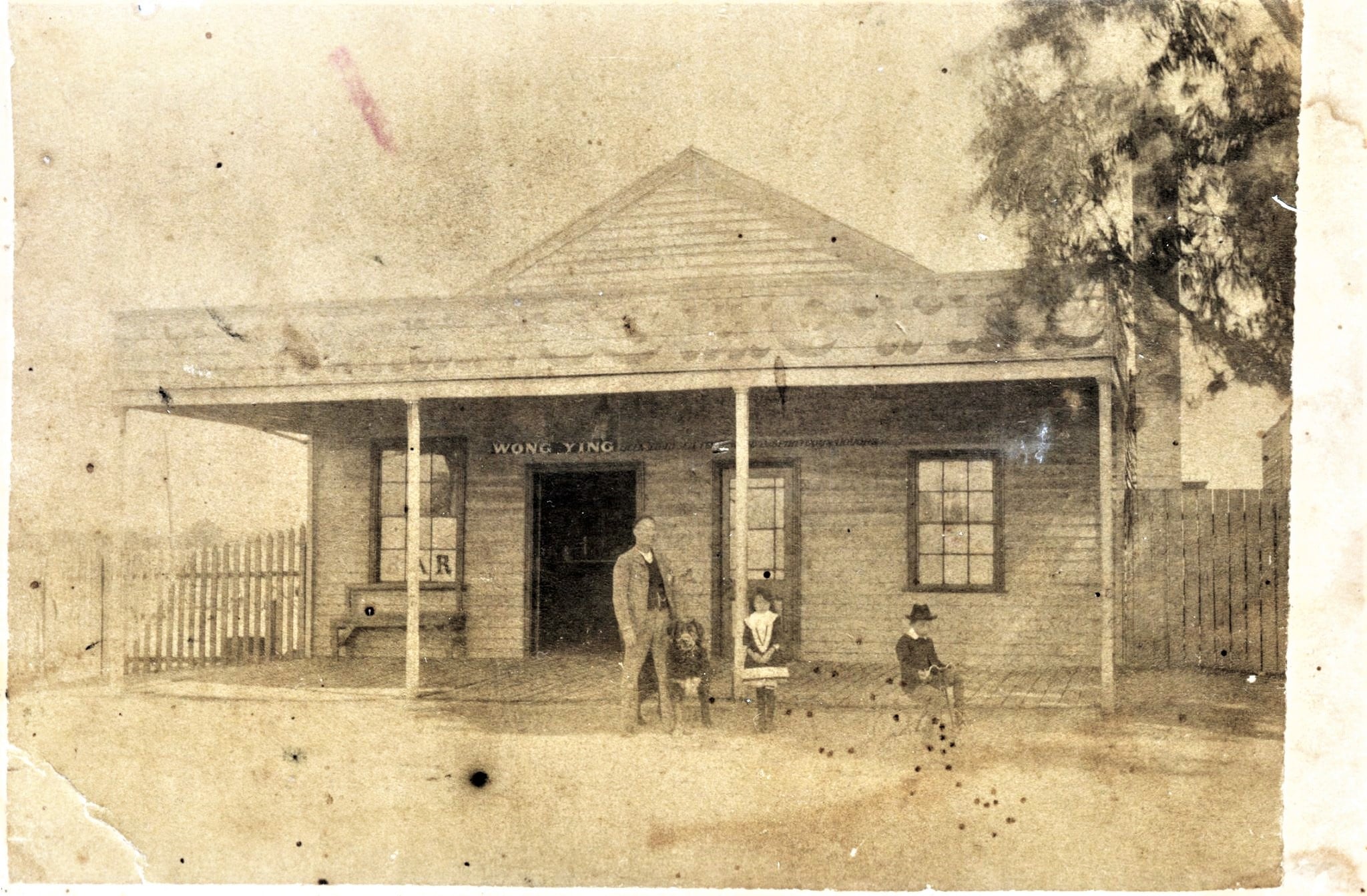
Above:- Wong Ying outside his hotel. Image c/o Golden Dragon Museum Facebook page.
After a great time in Dunolly, we headed to our next stop Moliagul.
References.
- Ancestry.com.au. (2016). Ancestry® | Genealogy, Family Trees & Family History Records. [online] Available at: https://www.ancestry.com.au/. [Accessed 27 Feb. 2024]
- Aussie Towns. (n.d.). Avoca, VIC. [online] Available at: https://www.aussietowns.com.au/town/avoca-vic. [Accessed 27 Feb. 2024].
- Aussie Towns. (n.d.). Maryborough, VIC. [online] Available at: https://www.aussietowns.com.au/town/maryborough-vic. [Accessed 12 Mar. 2024].
- AVOCA. (1858). Age. [online] 19 Aug. Available at: https://trove.nla.gov.au/newspaper/article/154875108?searchTerm=avoca%20courthouse%20tender [Accessed 14 Mar. 2024].
- Avoca-Victoria. (n.d.). Avoca | Victoria. [online] Available at: https://www.avoca.vic.au/top5buildings [Accessed 12 Mar. 2024].
- Design, U.W. (n.d.). Home | Churches Australia. [online] http://www.churchesaustralia.org. Available at: https://www.churchesaustralia.org/. [Accessed 12 Mar. 2024].
- Design, U.W. (n.d.). Dunolly Presbyterian Church – Former | Churches Australia. [online] http://www.churchesaustralia.org. Available at: https://www.churchesaustralia.org/list-of-churches/denominations/presbyterian-church-of–australia/directory/5220-dunolly-presbyterian-church-former [Accessed 14 Mar. 2024].
- Dottie (n.d.). Dunolly History Walk. [online] Walking Maps. Available at: https://walkingmaps.com.au/walk/3205 [Accessed 14 Mar. 2024].
- Dunolly Museum, Victoria, Australia. (n.d.). Dunolly Museum, Victoria, Australia. [online] Available at: https://dunollymuseumsite.wordpress.com/ [Accessed 12 Mar. 2024].
- holly hop (2016). 1852. General Store, Timor. [online] Flickr. Available at: https://www.flickr.com/photos/71293631@N03/28173806792 [Accessed 12 Mar. 2024].
- https. (n.d.). Timor Cemetery. [online] Available at: https://www.goldfieldsguide.com.au/explore-location/60/timor-cemetery/ [Accessed 12 Mar. 2024].
- https. (n.d.). Anglican Church of St John. [online] Available at: https://www.goldfieldsguide.com.au/explore-location/431/anglican-church-of-st-john/ [Accessed 14 Mar. 2024].
- Joyce, R.B. (n.d.). Sir George Ferguson Bowen (1821–1899). [online] Australian Dictionary of Biography. Available at: https://adb.anu.edu.au/biography/bowen-sir-george-ferguson-3032. [Accessed 12 Mar. 2024].
- monumentaustralia.org.au. (n.d.). John Simson & Hector Simson | Monument Australia. [online] Available at: https://monumentaustralia.org.au/themes/people/settlement/display/32123-john-simson-and-hector-simson [Accessed 14 Mar. 2024].
- vhd.heritagecouncil.vic.gov.au. (n.d.). VHD. [online] Available at: https://vhd.heritagecouncil.vic.gov.au. [Accessed 27 Feb. 2024].
- Victorian Collections. (n.d.). Maryborough Midlands Historical Society operating the Worsley Cottage Museum. [online] Available at: https://victoriancollections.net.au/organisations/maryborough-midlands-historical-society-worsley-cottage-museum [Accessed 12 Mar. 2024].
- Victorian Heritage Database, 2000, Former Avoca Court House
- Victorian Heritage Database, 1998, Maryborough Court House
- Williams, G. (n.d.). Dunolly, VIC. [online] Aussie Towns. Available at: https://www.aussietowns.com.au/town/dunolly-vic [Accessed 12 Mar. 2024].
- WindscreenCam (2007). Ying’s Terminus Hotel Dunolly. [online] Flickr. Available at: https://www.flickr.com/photos/23651645@N03/2314080750 [Accessed 14 Mar. 2024].
- www.facebook.com. (n.d.). Facebook. [online] Available at: https://www.facebook.com/profile.php?id=100063691412639 [Accessed 13 Mar. 2024].
- www.facebook.com. (n.d.). Log in or sign up to view. [online] Available at: https://www.facebook.com/groups/289487515096170/ [Accessed 14 Mar. 2024].
- www.vic.gov.auundefined. (2022). 150 years: Avoca Primary School. [online] Available at: https://www.vic.gov.au/150-years-avoca-primary-school [Accessed 14 Mar. 2024].
- www.victorianplaces.com.au. (n.d.). Timor and Bowenvale | Victorian Places. [online] Available at: https://www.victorianplaces.com.au/timor-and-bowenvale [Accessed 12 Mar. 2024].
- www.victorianplaces.com.au. (n.d.). Dunolly | Victorian Places. [online] Available at: https://www.victorianplaces.com.au/dunolly [Accessed 12 Mar. 2024].
- www.victorianplaces.com.au. (n.d.). Maryborough | Victorian Places. [online] Available at: https://www.victorianplaces.com.au/maryborough [Accessed 12 Mar. 2024].
 VK5PAS