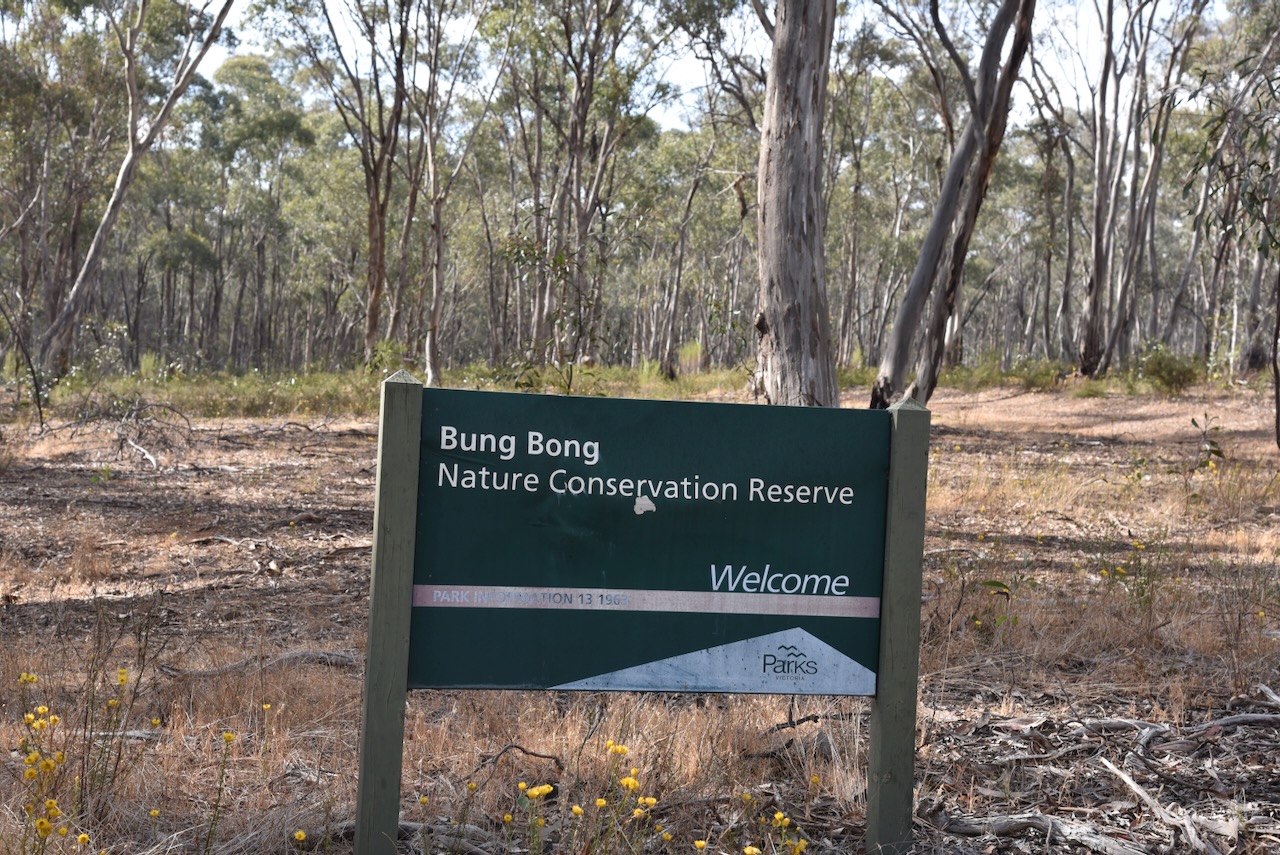
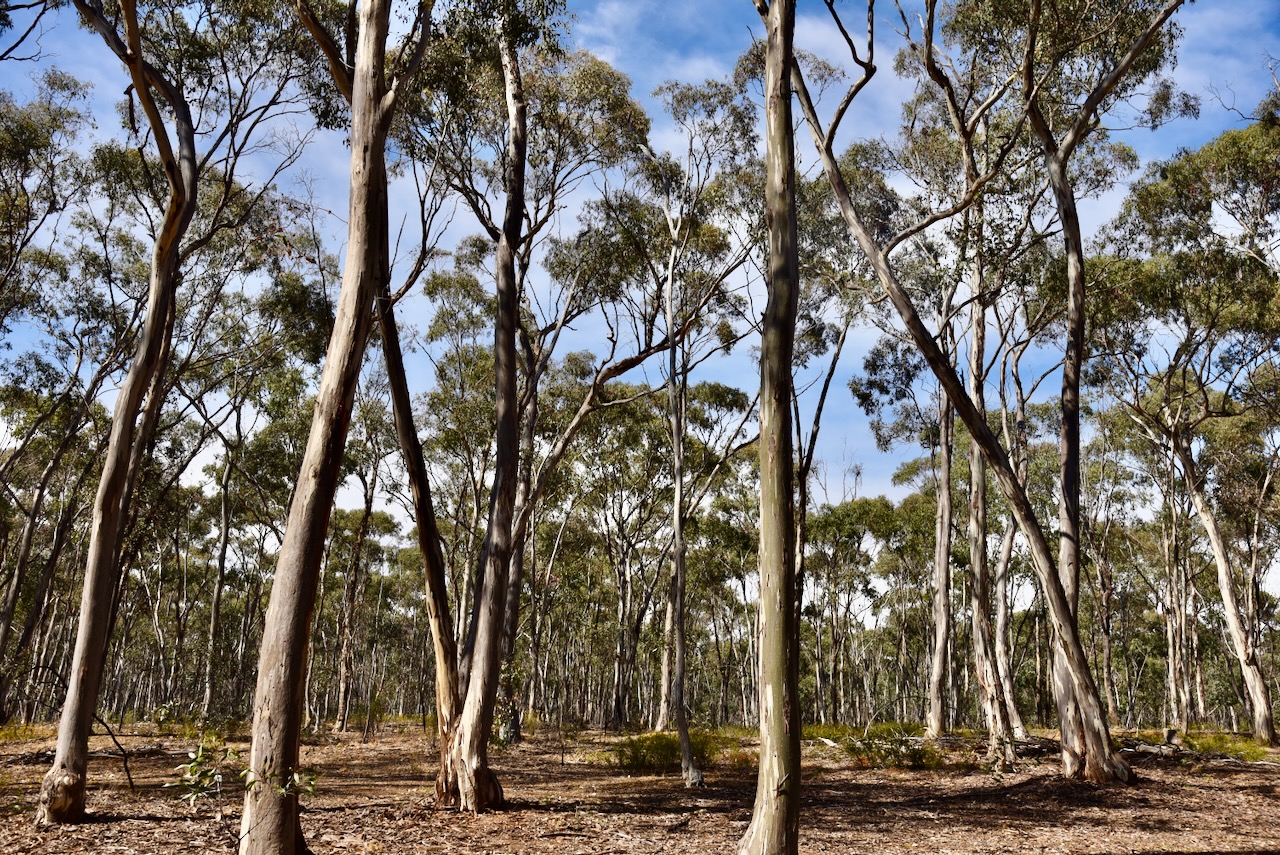
Following breakfast on Thursday 24th November 2023, Marija and I headed back out to the Bung Bong Nature Conservation Reserve VKFF-2056. We were hoping to get a few more QSOs in the log to get me over the line for qualifying the park for the global World Wide Flora Fauna program. I had only managed 28 contacts in the park during our visit a few days earlier.
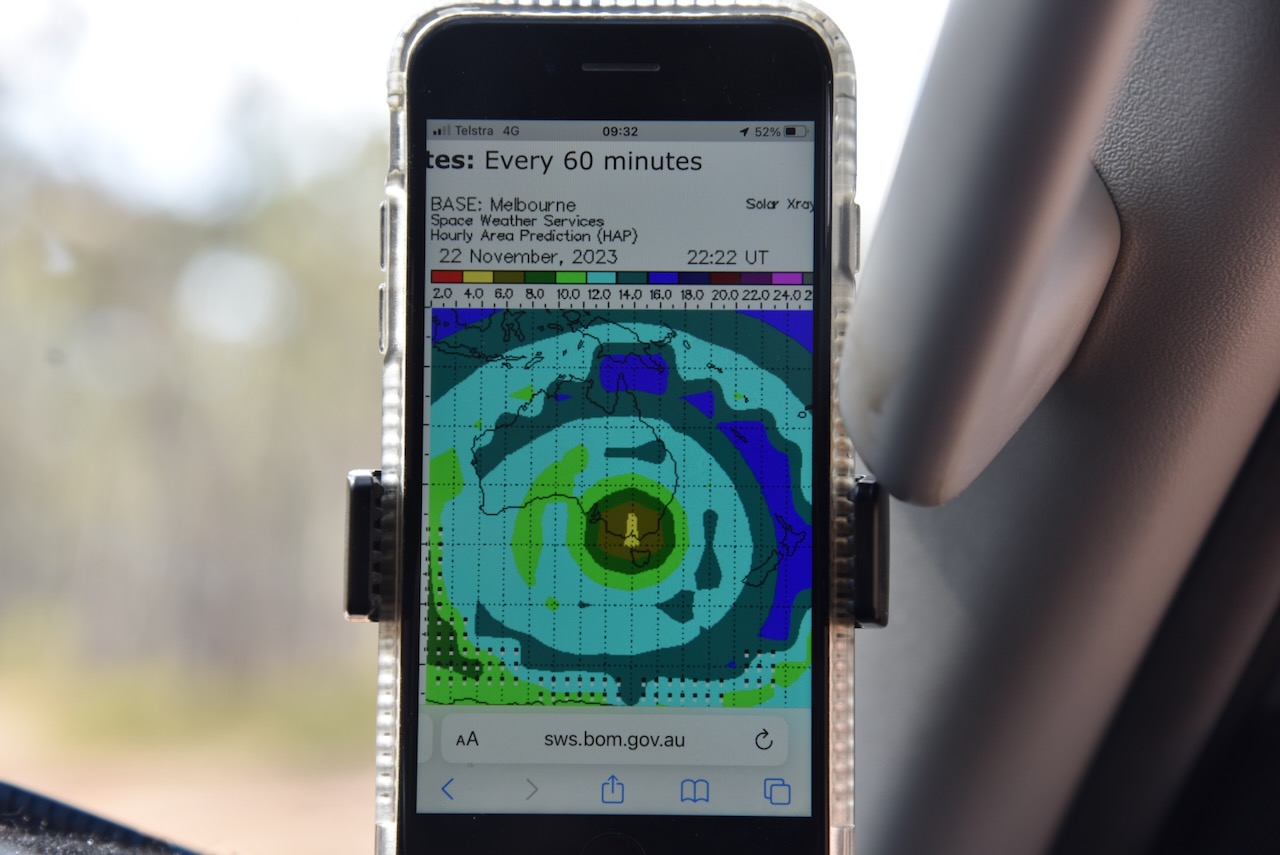
Sadly the bands were terrible, as the screenshot below shows from the Hourly Area Prediction Chart (HAP). I managed to get over the line though with 18 QSOs on 40m and 20m SSB. I did try 80m but had no callers.
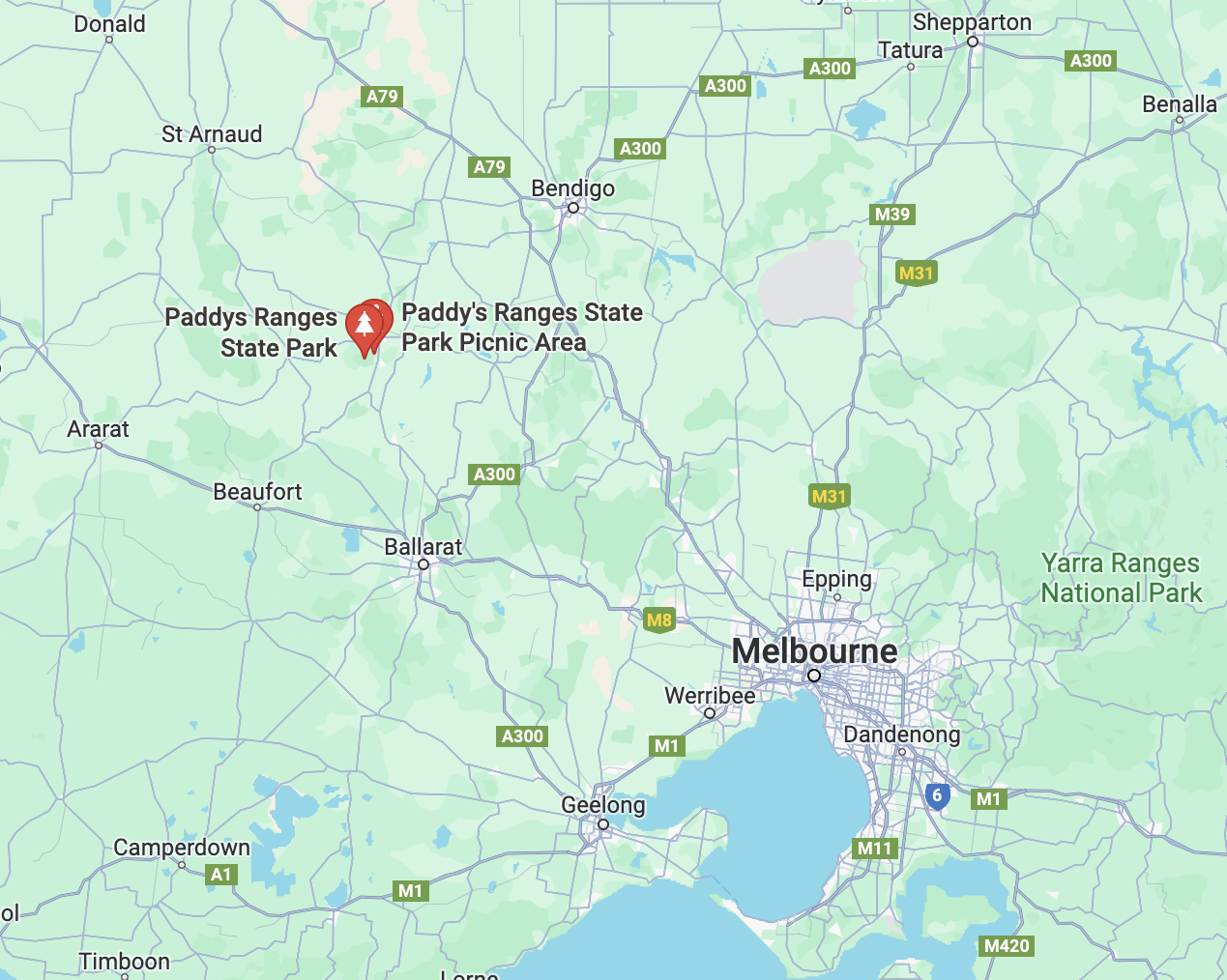
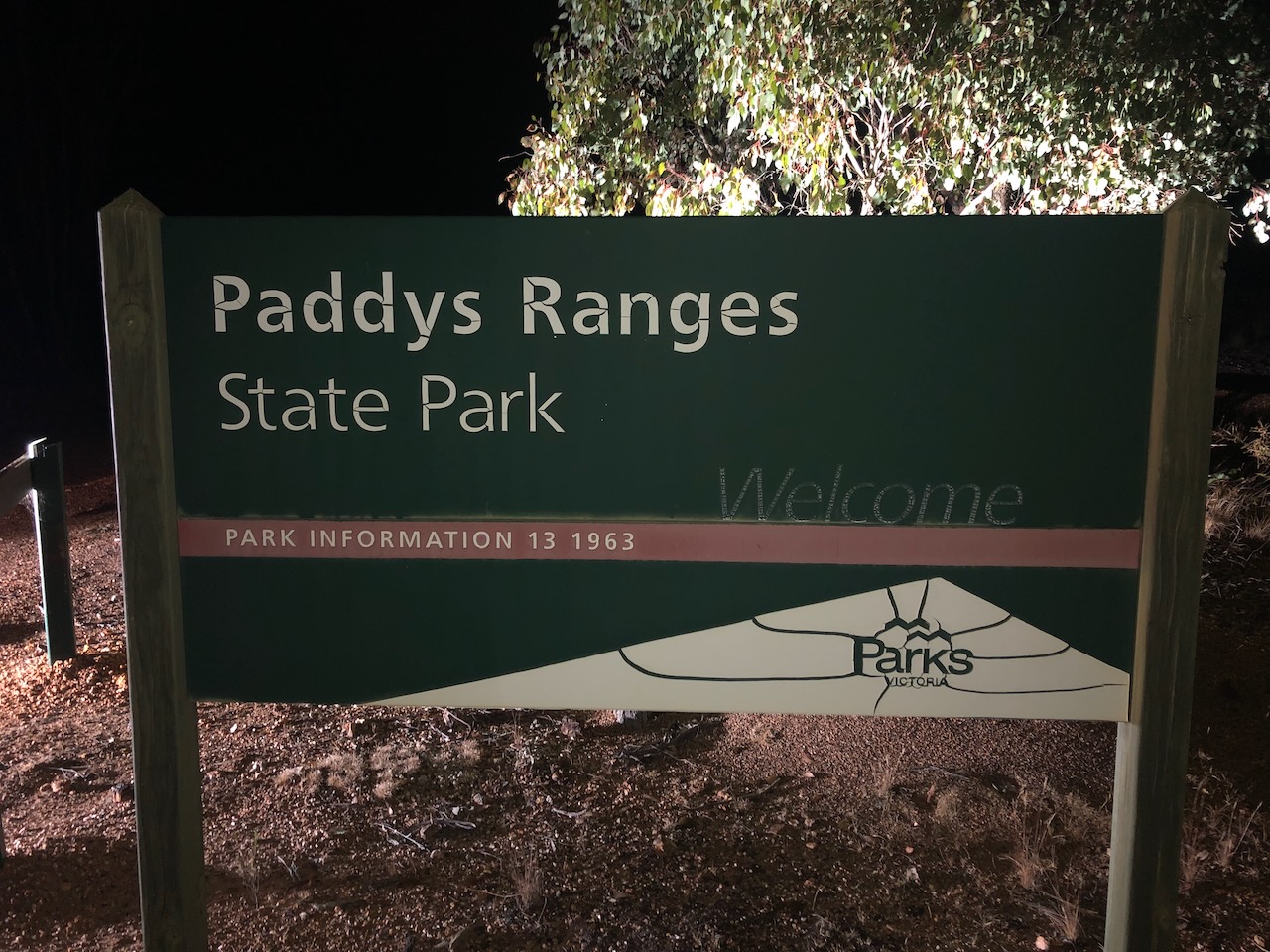
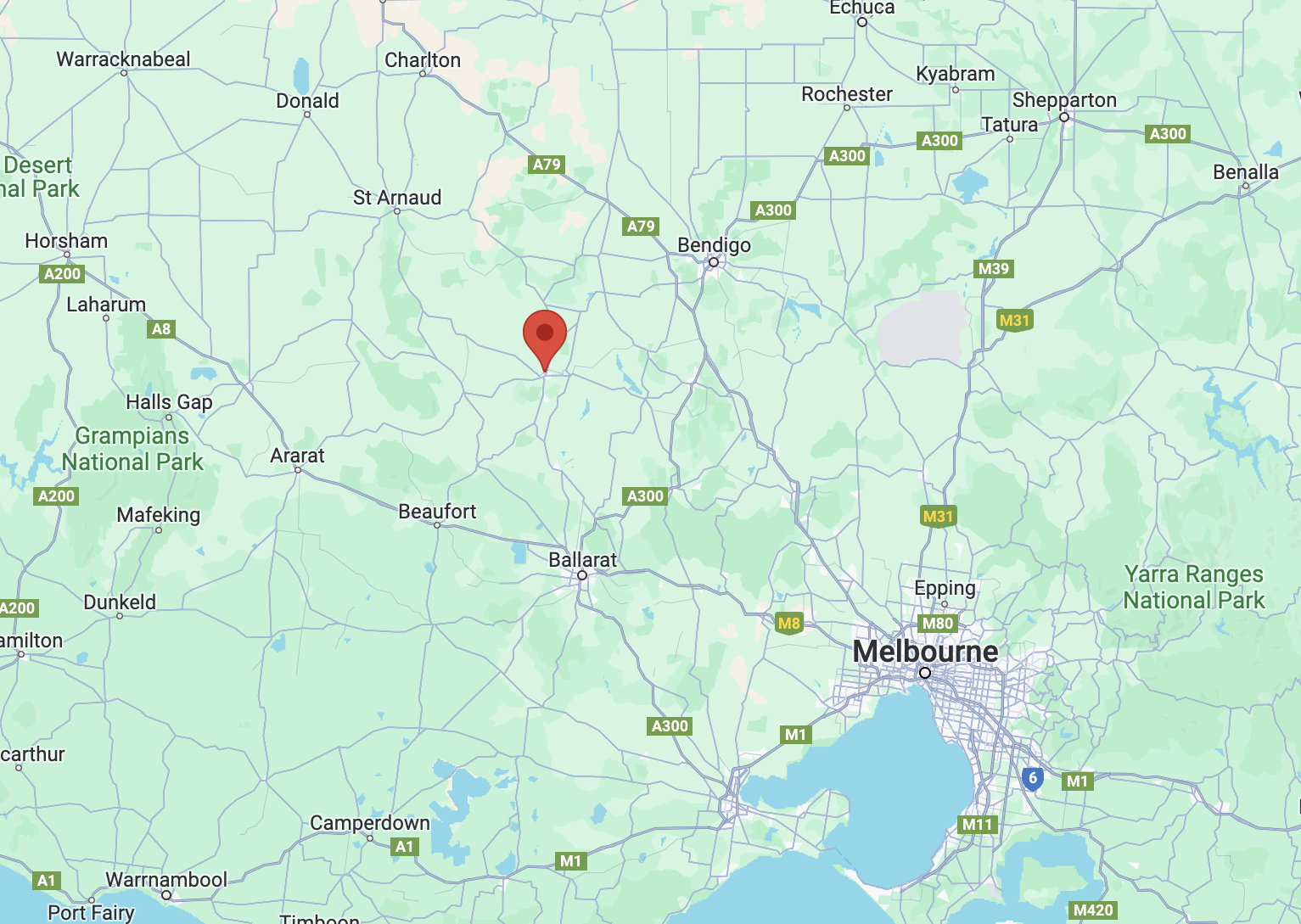
Our final activation for Wednesday 22nd November 2023 was the Paddys Ranges State Park VKFF-0772. The park is located about 10km south of Maryborough and about 167 km northwest of Melbourne.
Above:- Map showing the location of Paddys Ranges State Park. Map c/o Google Maps.
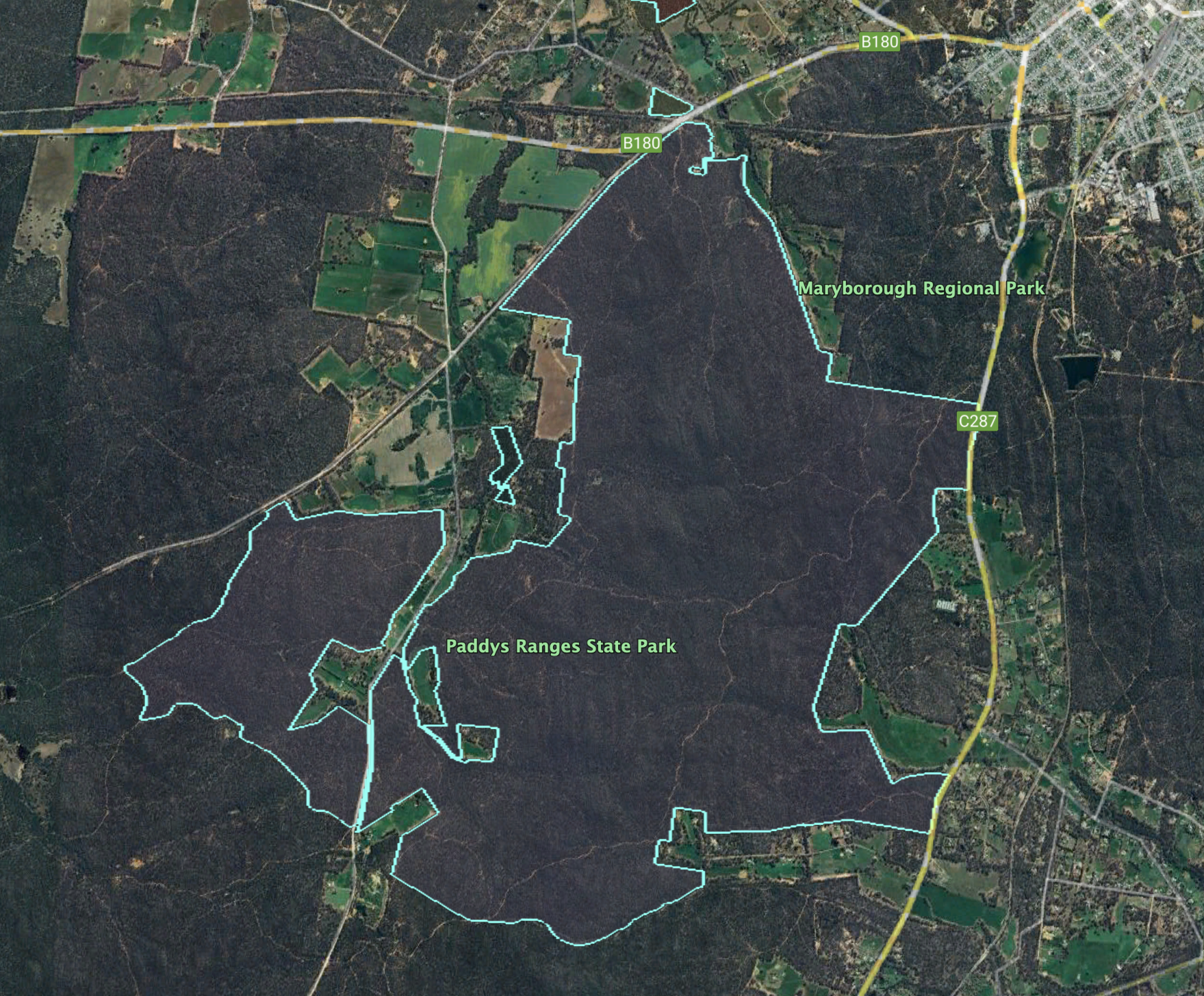
The Paddys Ranges State Park is about 2,014 hectares and was established on the 27th day of October 1989. (CAPAD 2022)
Above:- An aerial view of the Paddys Ranges State Park. Image c/o Google Earth.
The park owes its name to an Irish miner called Paddy who lived in the area in the 1800s. During the 1840s the Paddys Ranges area was used for grazing, gold mining, timber harvesting, eucalyptus oil and honey production. (Parks Victoria 2024)
In 1951, the Maryborough Field Naturalists Club commenced a campaign for the protection of Paddys Range’s unique Box-Ironbark forest. It would not be until 38 years later in 1989, that Paddys Ranges State Park was gazetted. (Parks Victoria 2024)
About 230 species of wildflowers have been recorded in the park. More than 140 species of birds call the park home including the rare Swift Parrot and the threatened Peregrine Falcon. Native mammals include wallabies, kangaroos, echidnas, and the threatened Brush-tailed Phascogale. (Parks Victoria 2024)
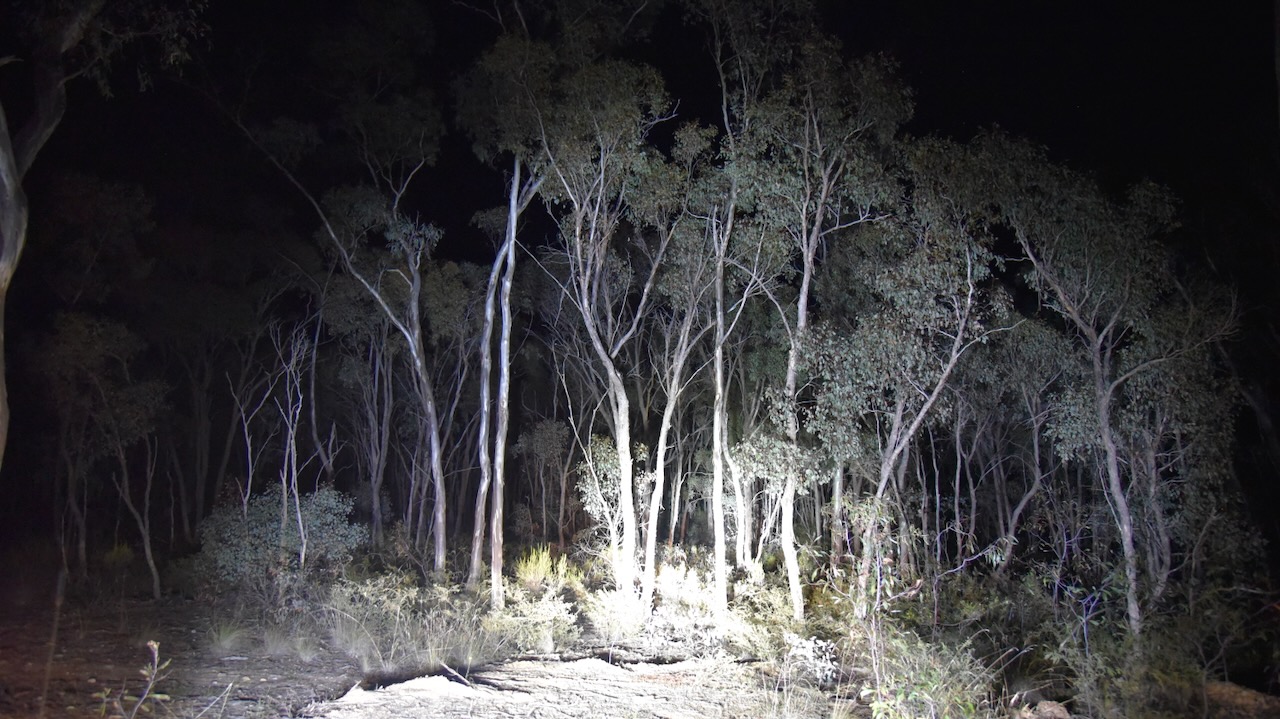
It was totally dark by the time we reached the park. This was a quick activation, operating from the 4WD. We ran the Icom IC-7000, 100 watts, and the Codan 9350 antenna with the 1.5 metre stainless steel whip.
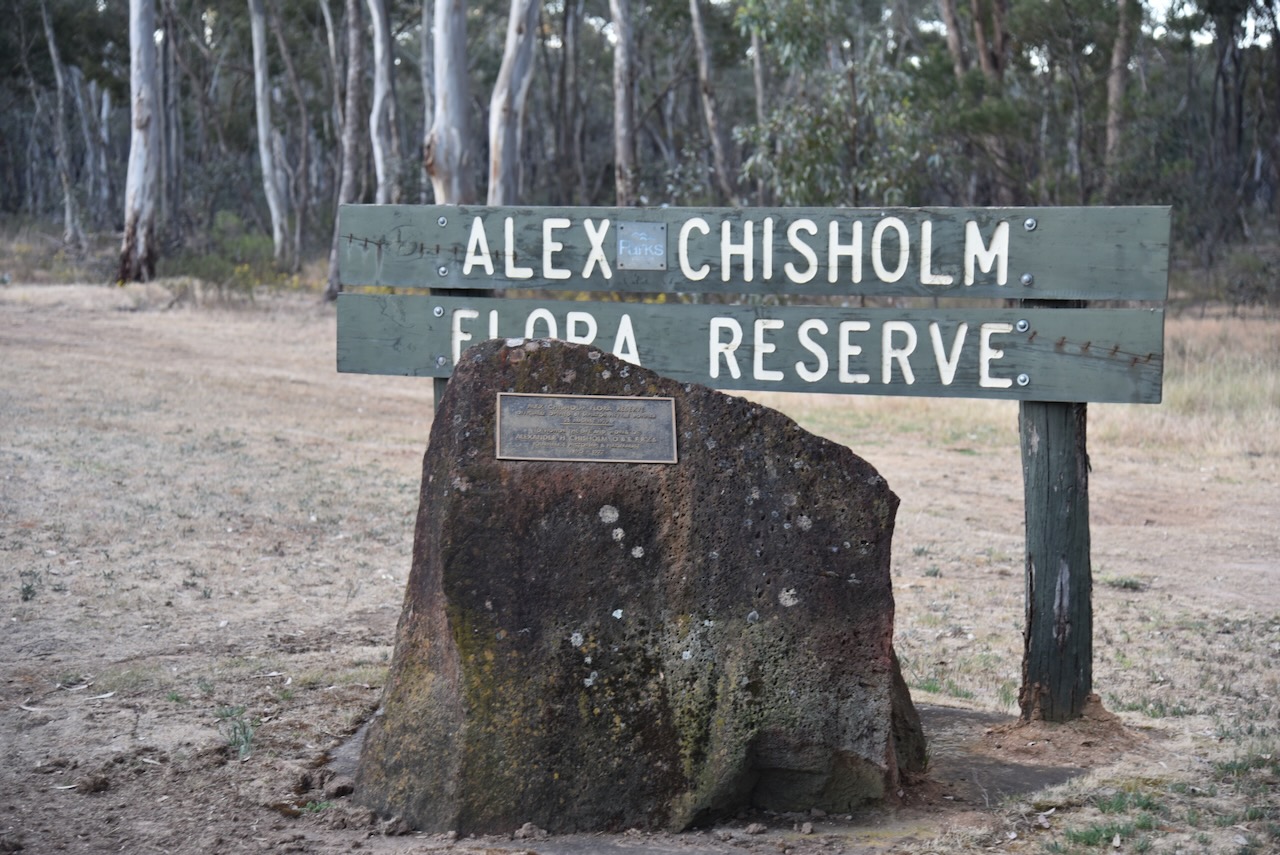
After dinner on Wednesday 22nd November 2023, Marija and I headed out to the Alex Chisholm Flora Reserve VKFF-2035. The park is located on the northern edge of Maryborough, about 173 km northwest of Melbourne.
Above:- Map showing the location of the Alex Chisholm Flora Reserve. Map c/o Google Maps.
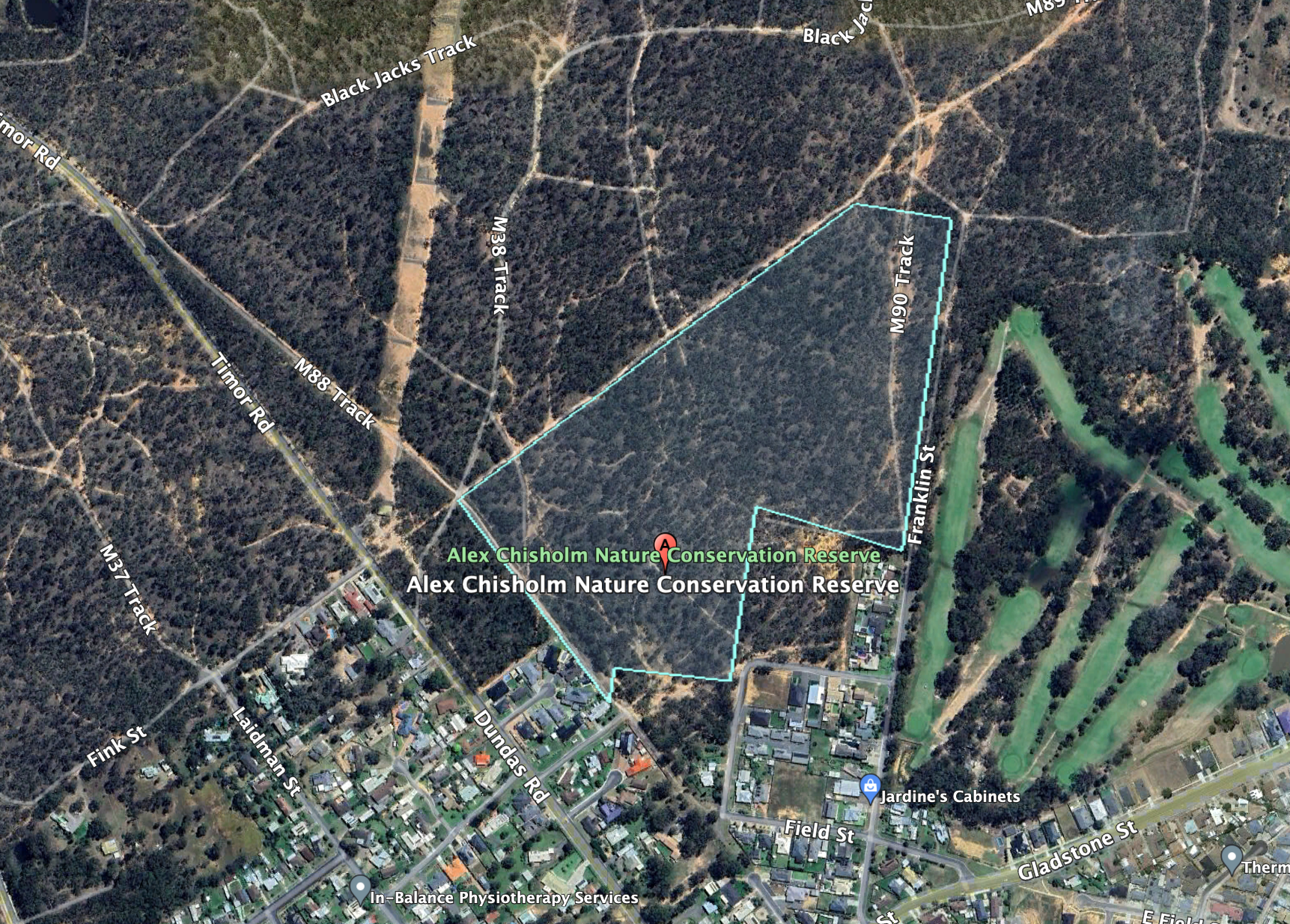
The Alex Chisholm Flora Reserve is located at the end of Franklin Street on the northern side of Maryborough in central Victoria.
Above:- An aerial view of the Alex Chisholm Flora Reserve. Image c/o Google Earth.
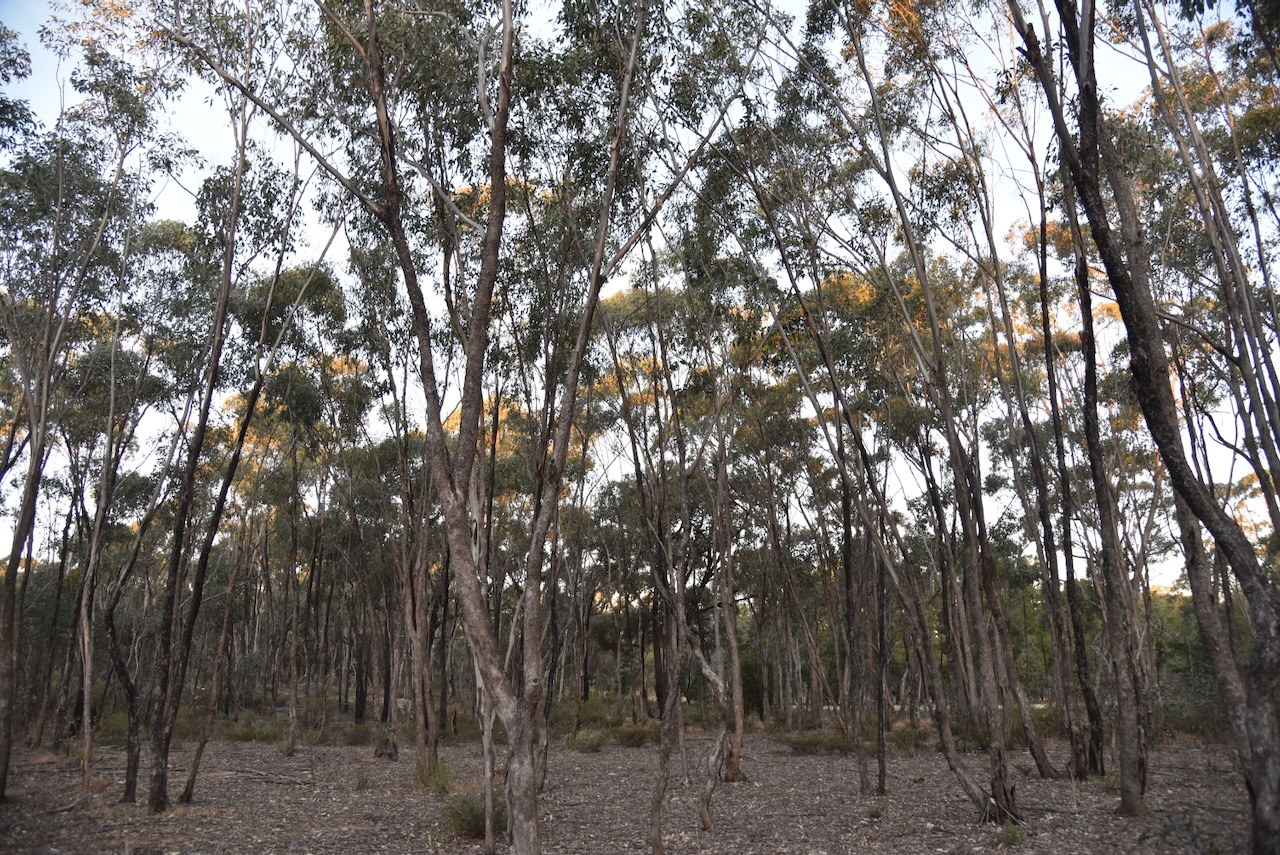
The park is 16 hectares and was established on the 8th day of August 1978. (CAPAD 2022)
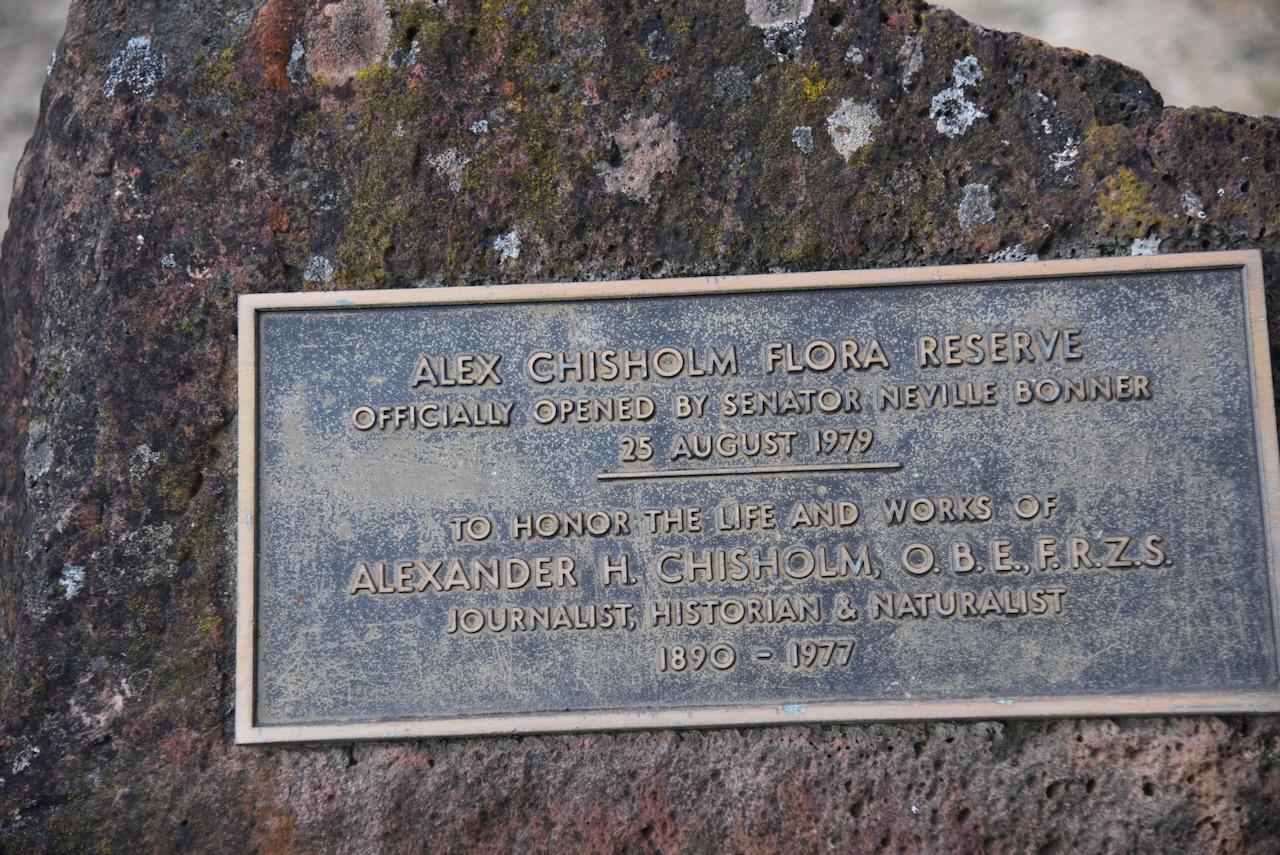
The park is named in honour of Alexander Hugh ‘Alec’ Chisholm (b. 1890. d. 1977), a journalist, ornithologist and conservationist. He was born on the 28th day of March 1890 at Maryborough. During his childhood, Chisholm claimed he was aware of nature surrounding him. Whenever possible he visited the bush and in 1907 he commenced a diary in which entries were almost entirely about birds. He became a member of the Royal Australasian Ornithologists Union. (Aust Dict Biography 2024)
In 1915 he moved to Queensland and between 1918 to 1922 he became an honorary advisor and lecturer to the Queensland Government on natural history. From 1920 to 1922 he was the President of the Queensland Gould League of Bird Lovers. Between 1927 to 1932 he served as a trustee of the Royal National Park. In 1931 he participated in the first live broadcast of lyrebird calls on radio station 2UW. (Aust Dict Biography 2024)
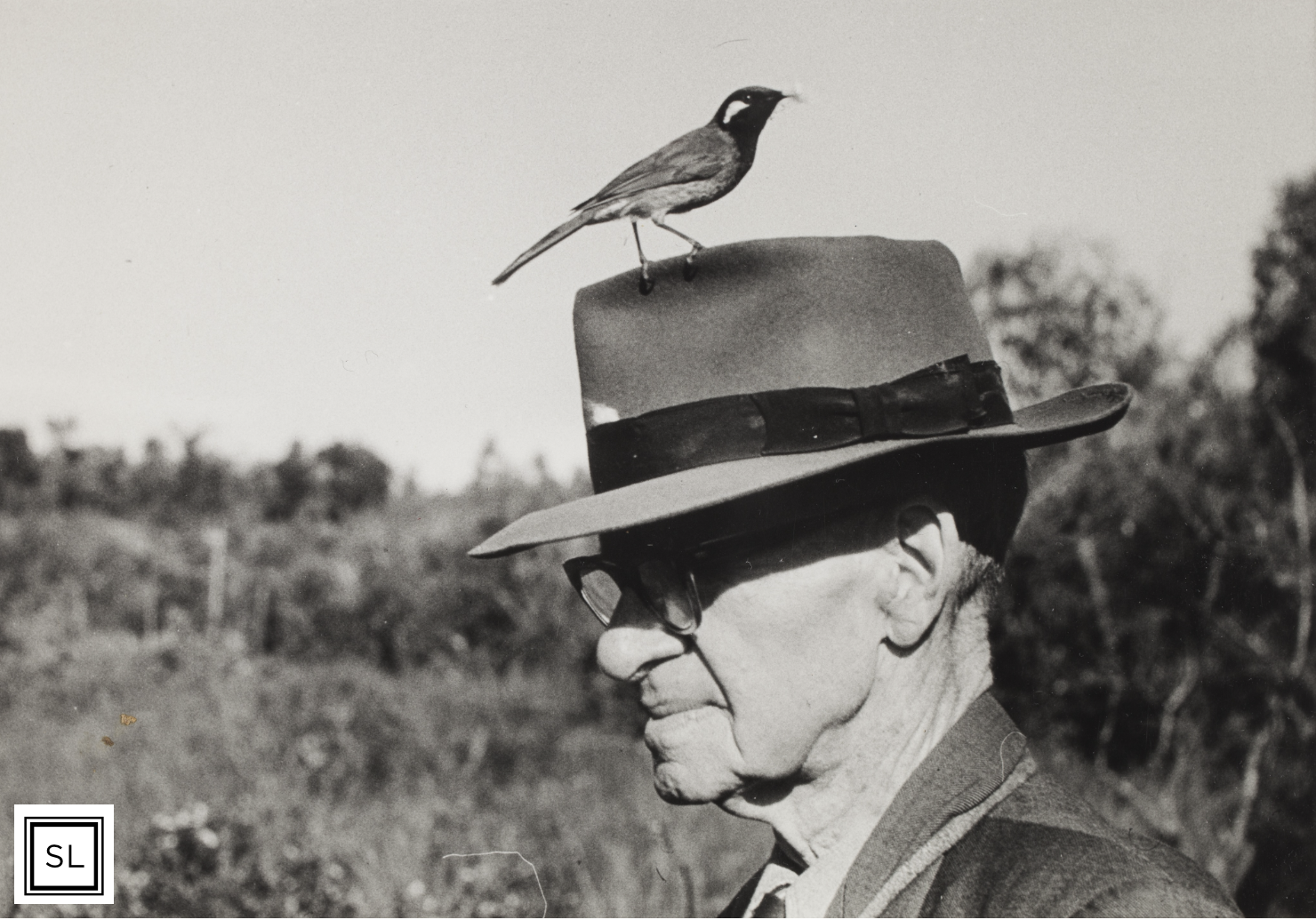
Above:- Alec Chisolm in Kuring-gai Chase National Park, July 1966, with a White=eared Honeyeater on his hat. Image c/o State Library New South Wales.
Between 1937 to 1938 he was the President of the Field Naturalists Club of Victoria, In 1940 he was awarded the Australian Natural History Medallion. In 1958 he was awarded the O.B.E. for the Australian Encyclopedia. Between 1959 and 1961 he was the President of the Royal Australian Historical Society.(Aust Dict Biography 2024)
During his life, he was the author of hundreds of ornithological and natural history articles. When various dignitaries went bird watching, Chisholm was called upon to act as a guide. He died on the 10th day of July 1977 in Cremorne Point. (Aust Dict Biography 2024)
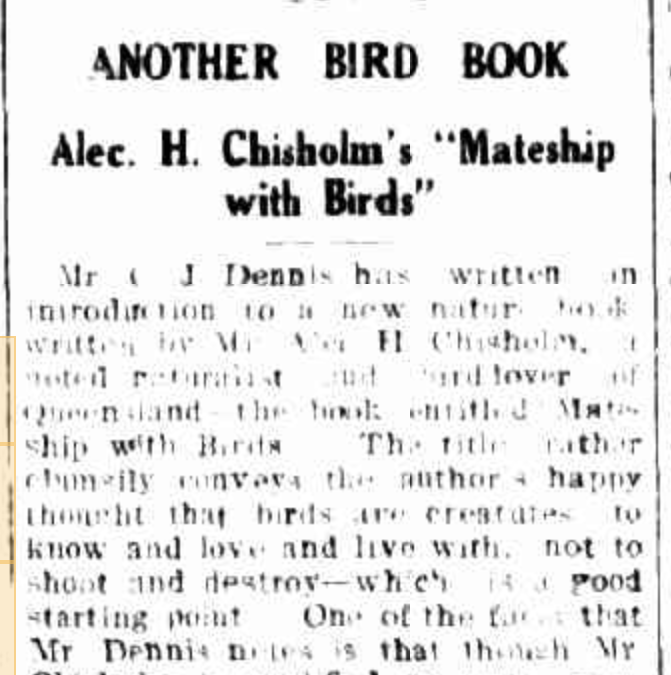
Above:- part of an article from the Sunraysia Daily, Sat 10 Feb 1923. Image c/o Trove.
Although about 50 minutes long, below is an excellent video worth watching on the life of Alec Chisholm.
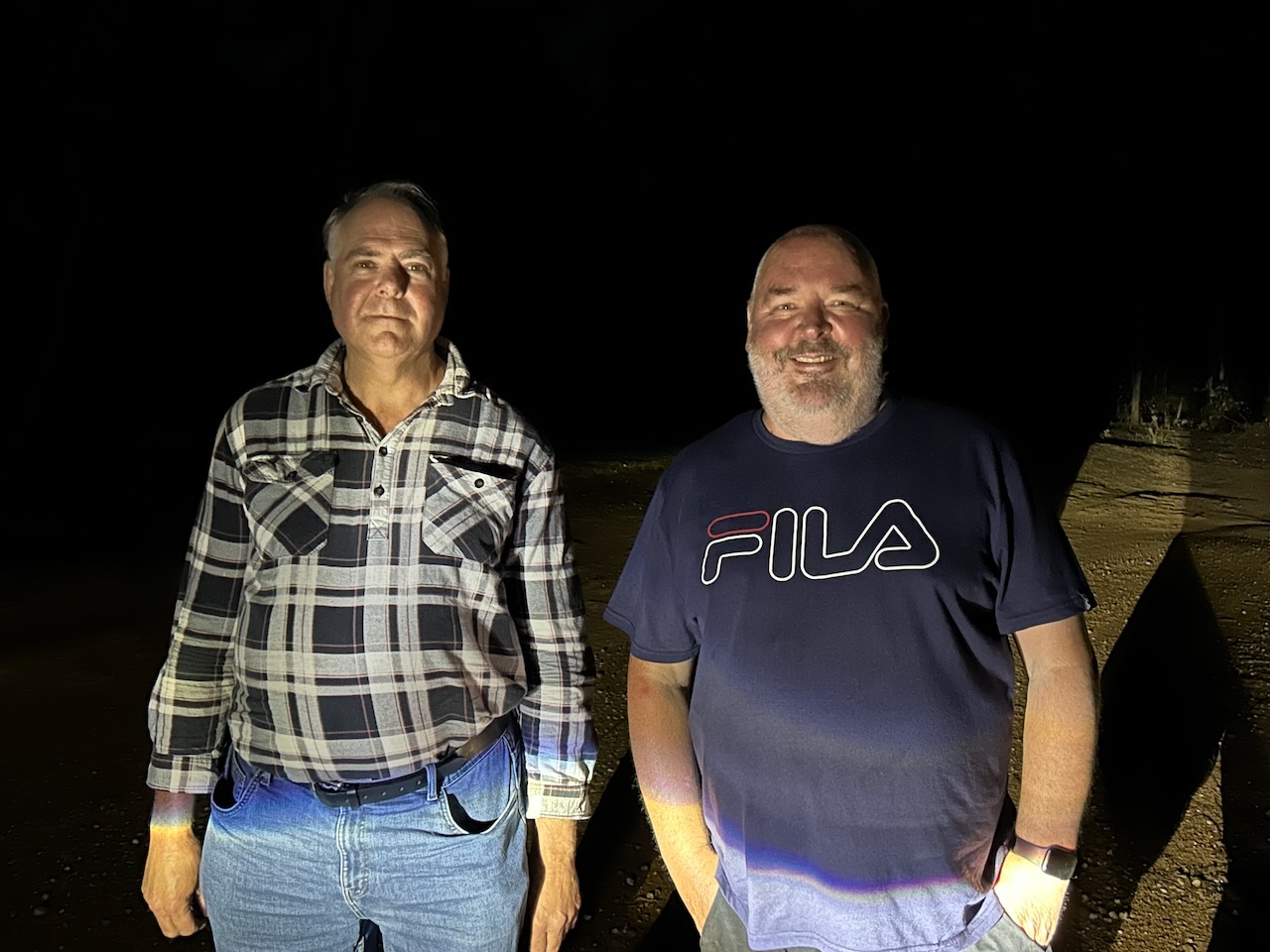
During our activation, we spoke with David VK3UCD, a local from Maryborough. David told us that he would head out to the park to say hello which he did.
We ran the Yaesu FT857, 40 watts, and the 20/40/80m linked dipole for this activation. I used the special event callsign of VI10VKFF.
Band conditions were quite good, but there were static crashes strength 9 plus on 40m.

 VK5PAS