
Our final activation for Friday, 17th October 2025, was the Piangil silo VK-PNL3 for the Silos On The Air (SiOTA) program. Piangil is located about 42 km north of Swan Hill and about 382 km northwest of Melbourne.
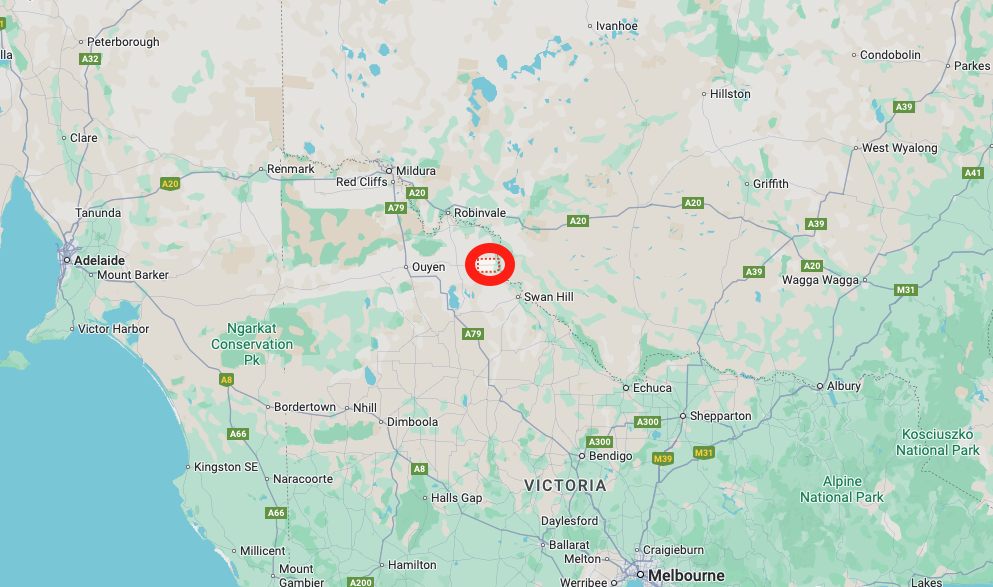
Above: Map showing the location of Piangil, Victoria. Map c/o Google Maps.
In 1836, explorer Sir Thomas Livingstone Mitchell, Major Mitchell (b. 1792. d. 1855) and his party camped overnight in the Piangil area on their expedition to explore and survey the lower part of the Darling River. (Swan Hill Council 2021) (Wikipedia 2025)
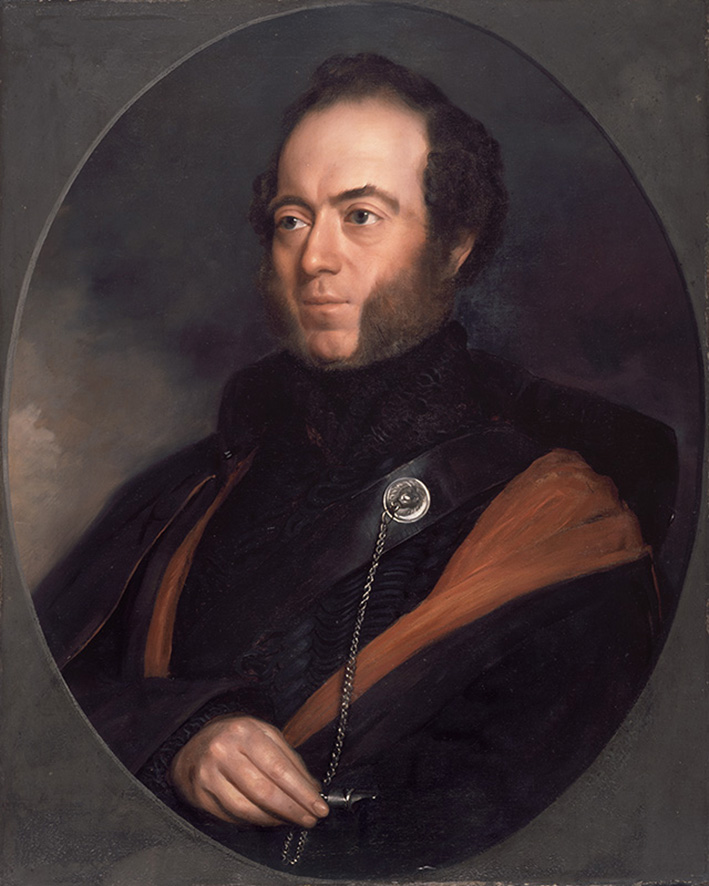
Above: Major Mitchell. Image c/o Wikipedia
Piangil is derived from an Aboriginal word describing the Murray Cod. The name of the town originated from the Piangil pastoral run, which was taken up in 1846 by William Coghill. Coghill was born c. 1784 in Scotland. He emigrated to New South Wales in 1824 aboard the Mangles, which was captained by his brother John. Both William and John Coghill were retired Master Mariners. They took up land at Piangil, Glendaruel and Glendonald near Clunes. William Coghill died in July 1860, aged 76 years. He is buried at the Old Melbourne Cemetery. (Victorianplaces.com.au, 2015) (Wikipedia 2025)
The township of Piangil was first surveyed in 1916 by J.F. Cleeland. A total of five sections were laid out adjacent to the station ground on the Swan Hill Railway. (Swan Hill Council 2021)
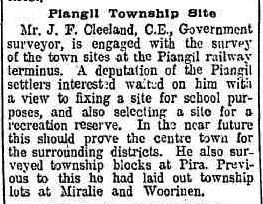
Above: Article from the Swan Hill Guardian, Thu 6 Apr 1916. Image c/o Trove
The Piangil Railway Station was opened in 1920 and closed in 1976. It is located on the Piangil railway line, which branches off the Deniliquin line. The line originally ran further north to Yungera; however, the line is now only open as far as Piangil. Passenger trains on this line now only run as far as Swan Hill. The last passenger train to Piangil ran in 1976. (Wikipedia 2025)
Below is an interesting video on the Piangil-Yungera railway line.
During the 1920s, the population of Piangil reached over 300 people. In 1923, the Piangil School No. 4164 was opened. (Swan Hill Council 2021) (Victorianplaces.com.au, 2015)
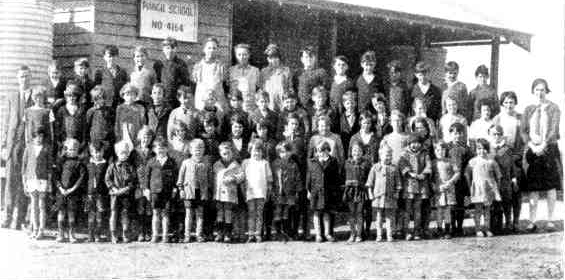
Above: school children at the Piangil State School No. 4164. Image c/o Weekly Times Melbourne, Sat 27 Aug 1927. Image c/o Trove
In 1926, a devastating fire destroyed the store and dwelling of Mr B.C. Bliss in Piangil. The following year, the Piangil Fire Brigade was initiated by local residents. (Swan Hill Council 2021)
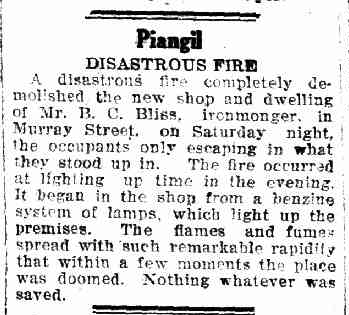
Above: Article from the Ouyen Mail, Wed 3 Feb 1926. Image c/o Trove
The Piangil silos are located alongside the railway line between Station Street and Hayward Road, south of the Mallee Highway. They are operated by GrainCorp.
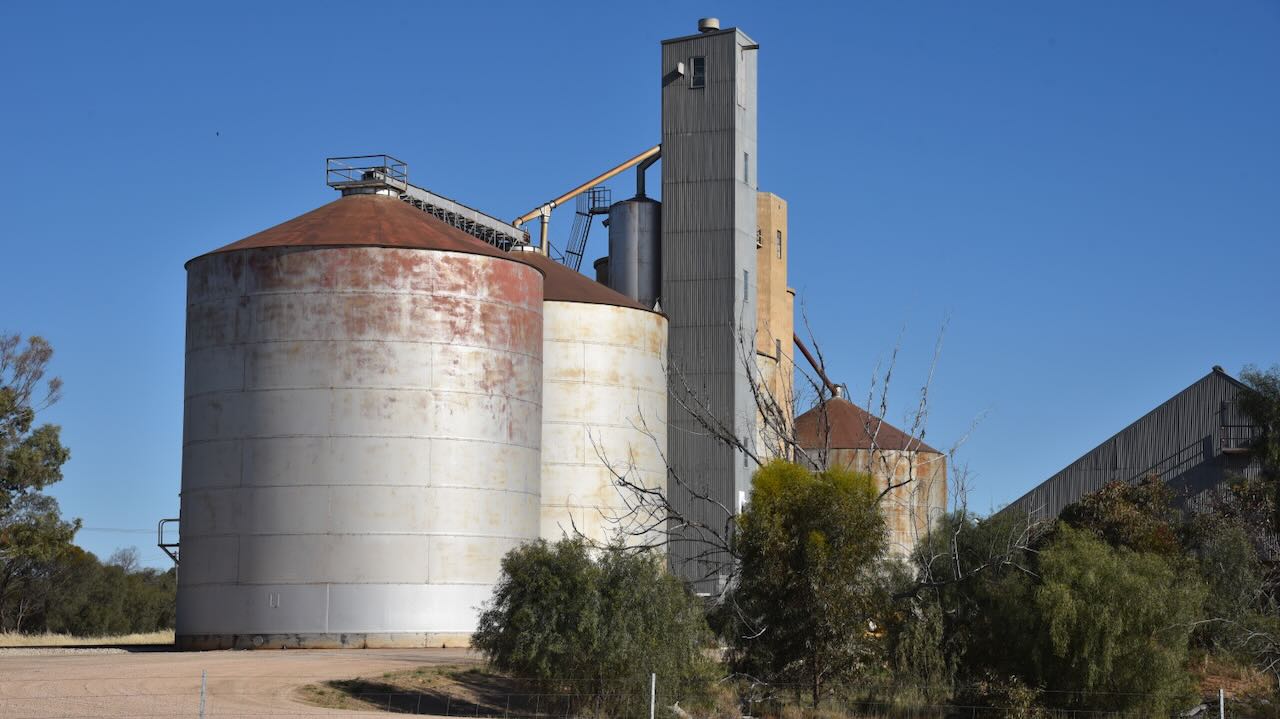
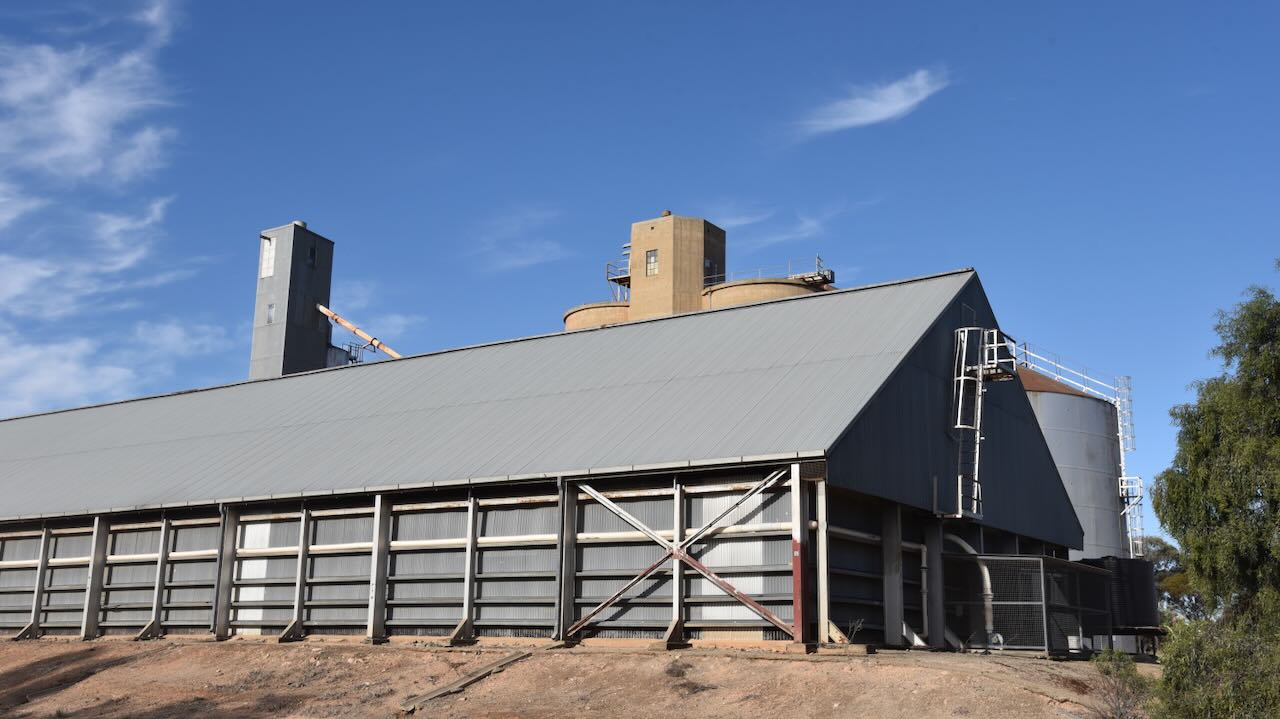
In April 1943, it was announced that 11 silos would be constructed in the northern Victoria region. This included Piangil. (Trove 2025)
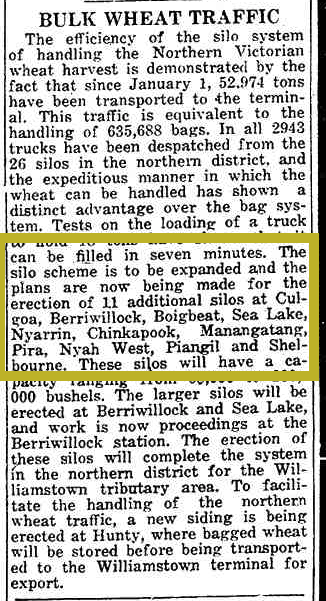
Above: Article from the Shepparton Advertiser, Thu 22 Apr 1943. Image c/o Trove
Marija VK5MAZ and I parked on Hayward Road and operated from the 4WD, running the Icom IC-7000, 100 watts, and the Codan 9350 antenna with the 1.5 metre stainless steel whip.
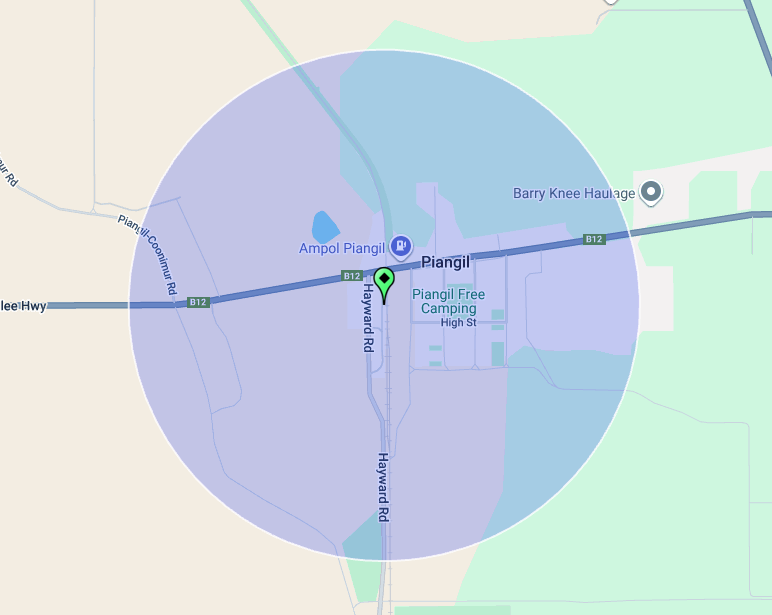
Above: the activation zone at the Piangil silo. Image c/o SiOTA website
Marija worked the following stations on 40m SSB:-
- VK5HS
- VK2IO/M
- VK3WSG
- VK3ACZ
I worked the following stations on 40m SSB:-
- VK5HS
- VK2IO/M
- VK3WSG
- VK3ACZ
- VK3GJG
- VK5WU
- VK5IP
- VK1AO
- VK2MET
- VK3SQ
- VK3JT
- VK2BD
- VK1CHW
After completing our activation at the Piangil silo, Marija and I continued our journey to Balranald, where we had booked in to stay for 3 nights. Our next stop after Piangil was just down the road at the beautiful little town of Tooleybuc.
During the 1840s, Tooleybuc was on Puon Buon run, which was owned by Ben Boyd. By the 1850s, the run was owned by William Degraves and then Christopher Bagot. By the 1860s, a total of 32,000 sheep were on the run. (Nsw.gov.au 2025)
During the late 1800s, river steamers operating along the Murray River were crucial in the wool trade. A punt was in operation by the 1870s. In 1925, following pressure from fruit growers, the Tooleybuc lift span bridge was constructed by the Department of Public Works. The bridge was designed by Percy Allan. This was his final lift span bridge. The bridge is recognised as being of State significance. It is the last of the timber truss bridges with lift span that were built over the Murray River. (Nsw.gov.au 2025)
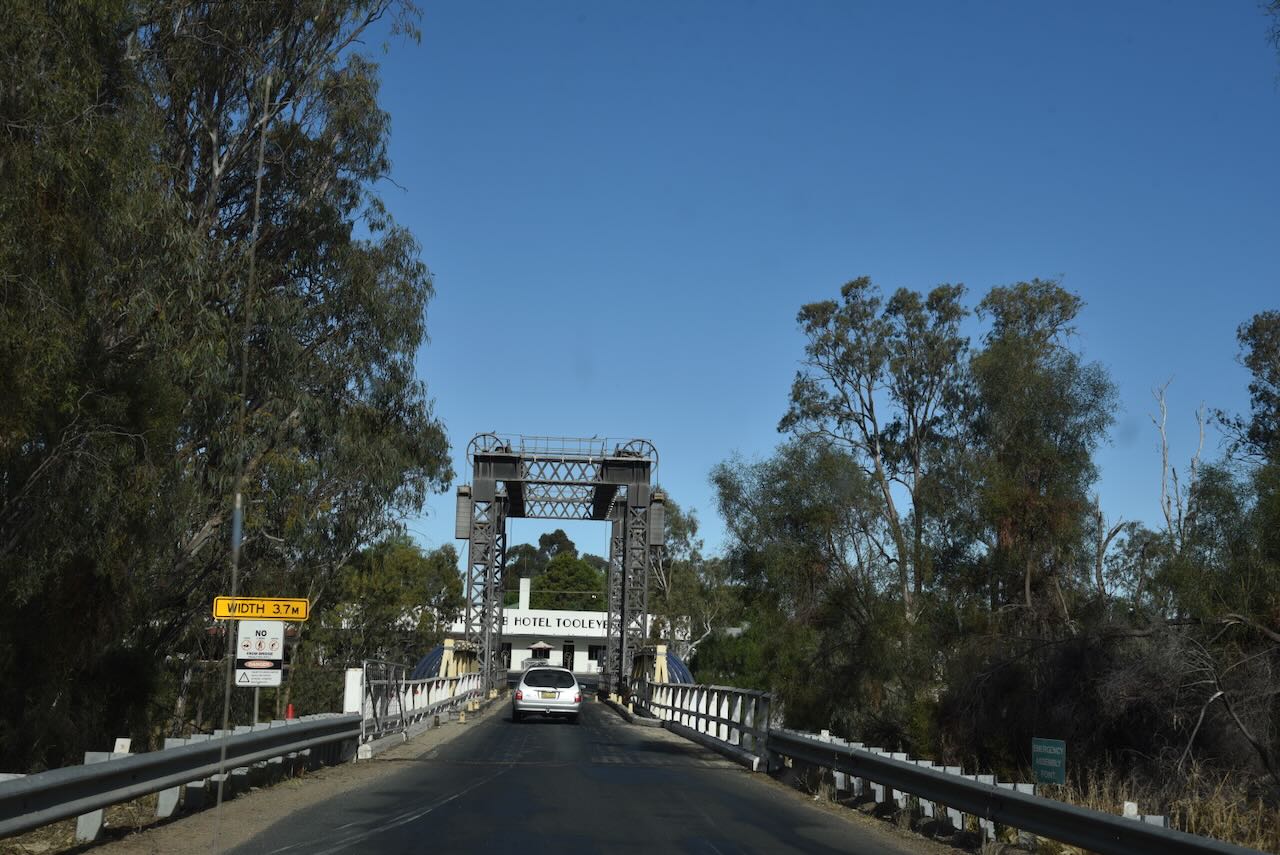
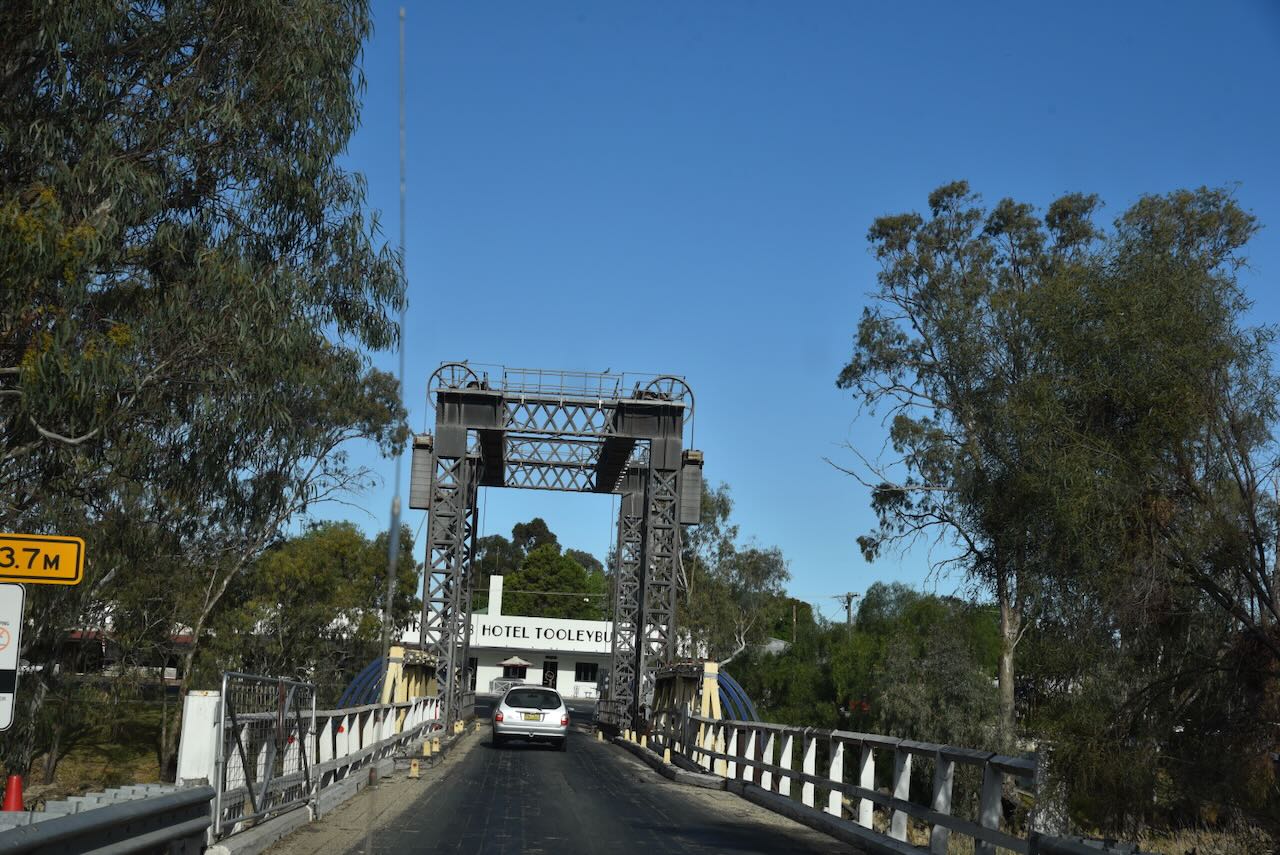
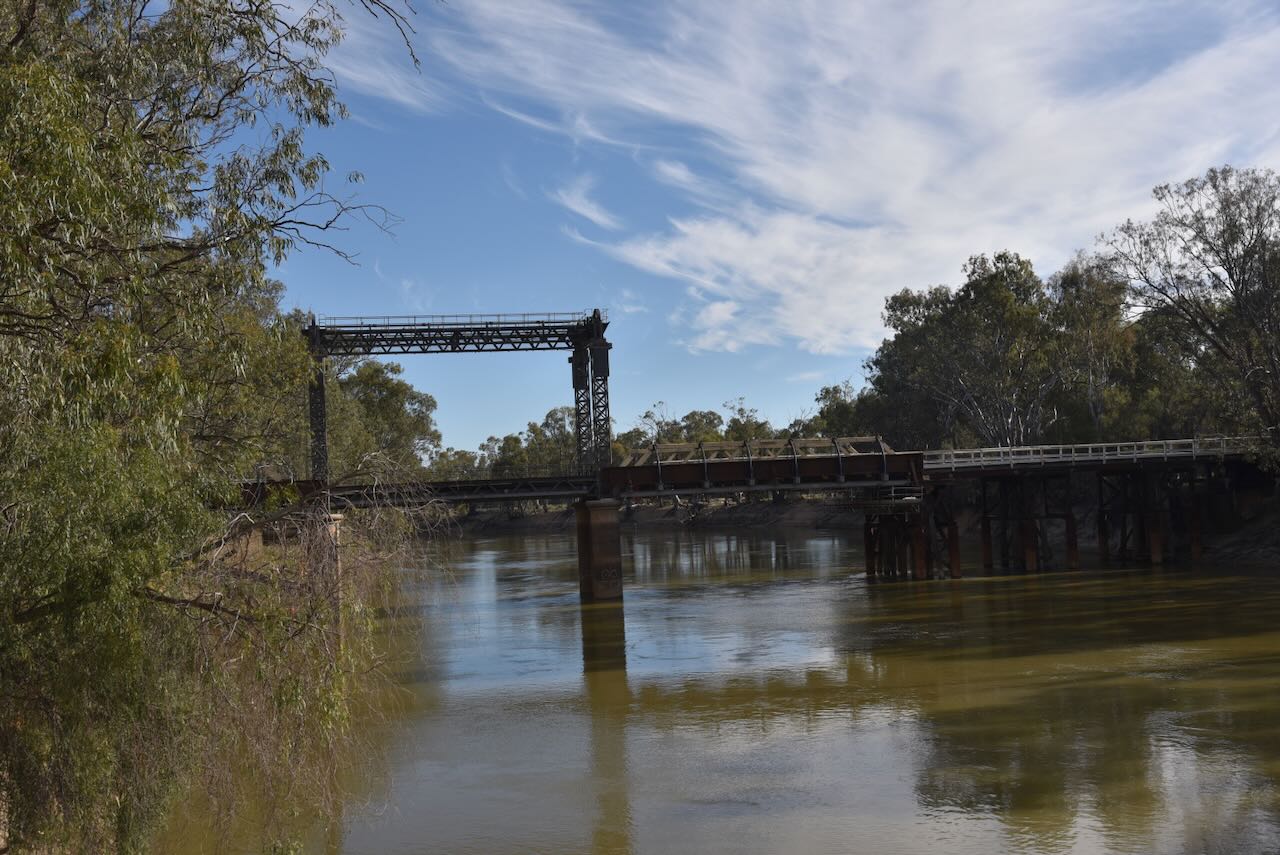
We took the time to stop for a few minutes and admire the mighty Murray River. Interestingly, the river is known as the Murray River in South Australia.
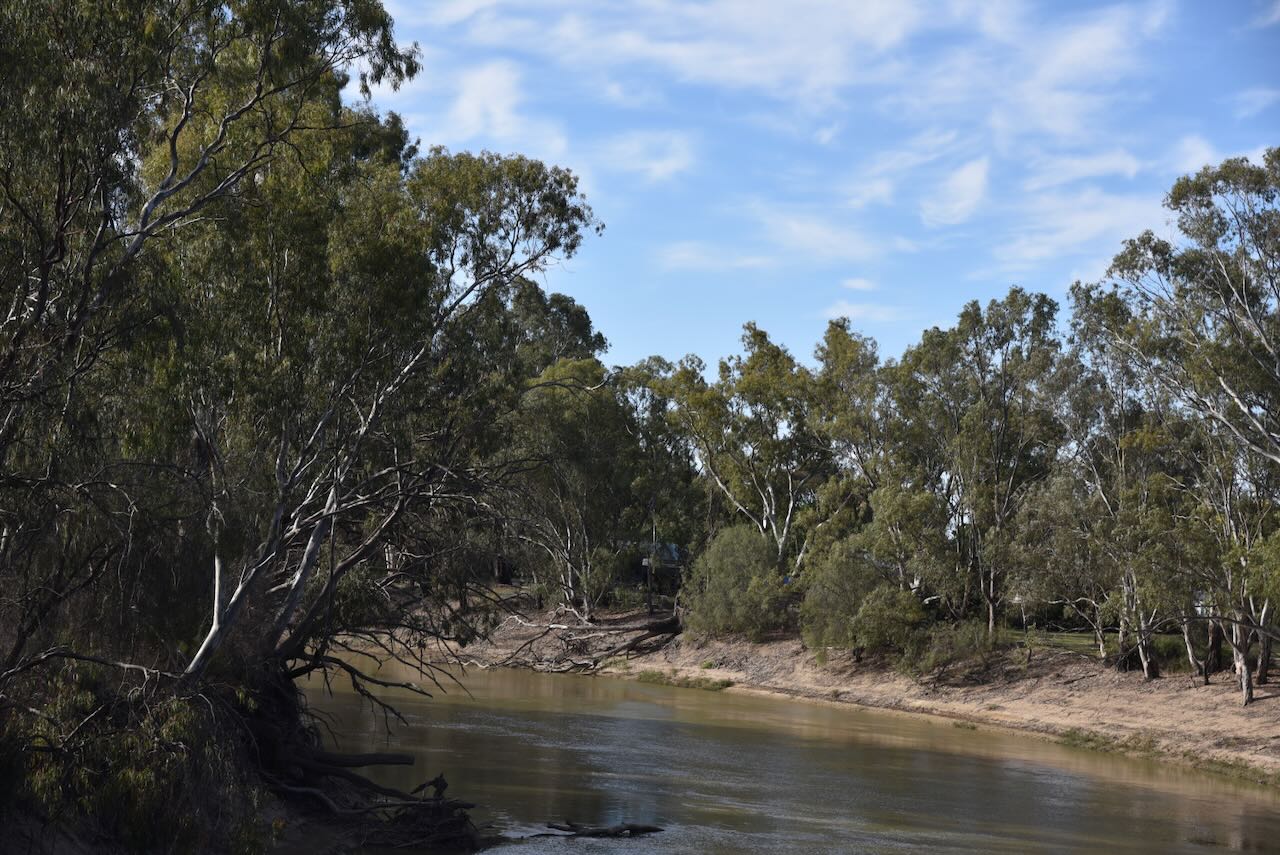
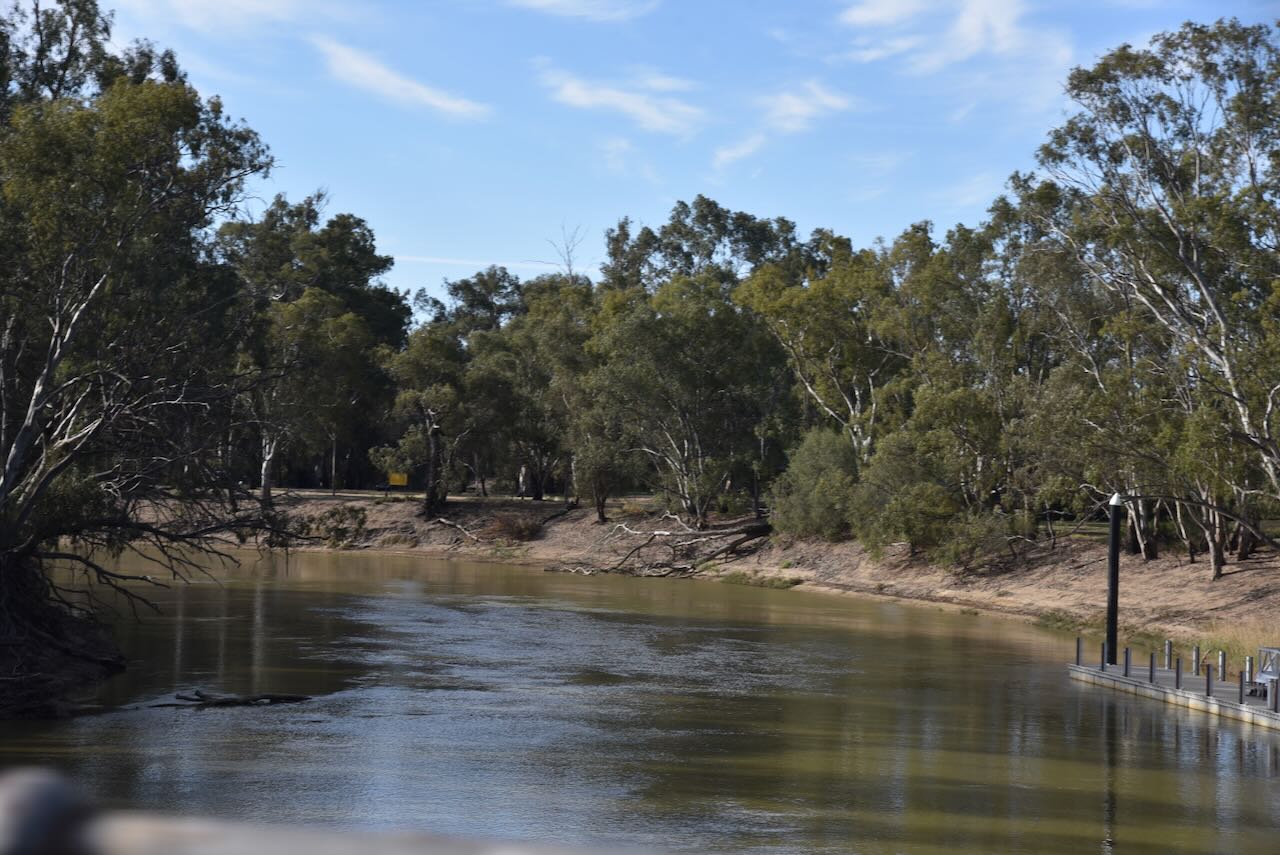
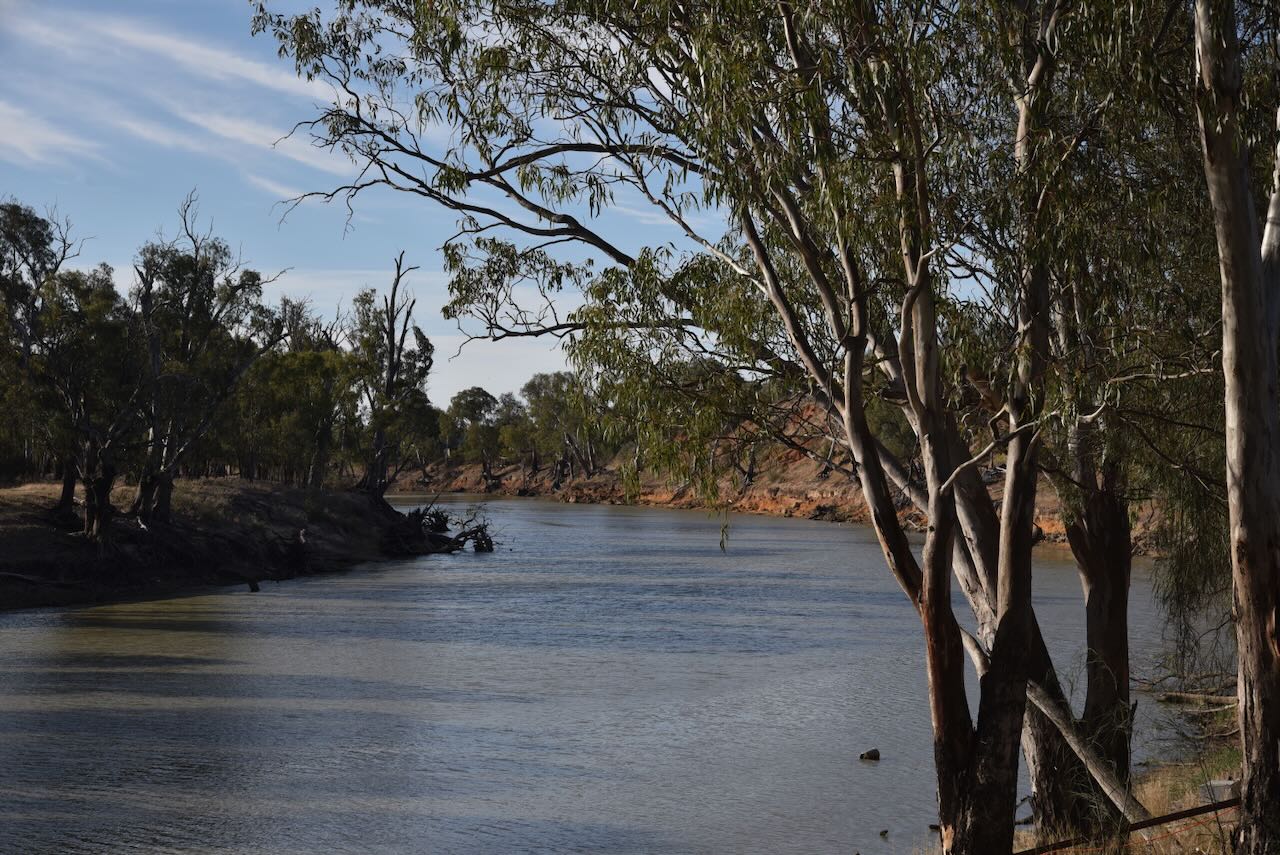
A building of note in Tooleybuc is the bridge keeper’s cottage that was built in 1924 and was used by the bridge keeper and his family up until 1994. (Service 2023)
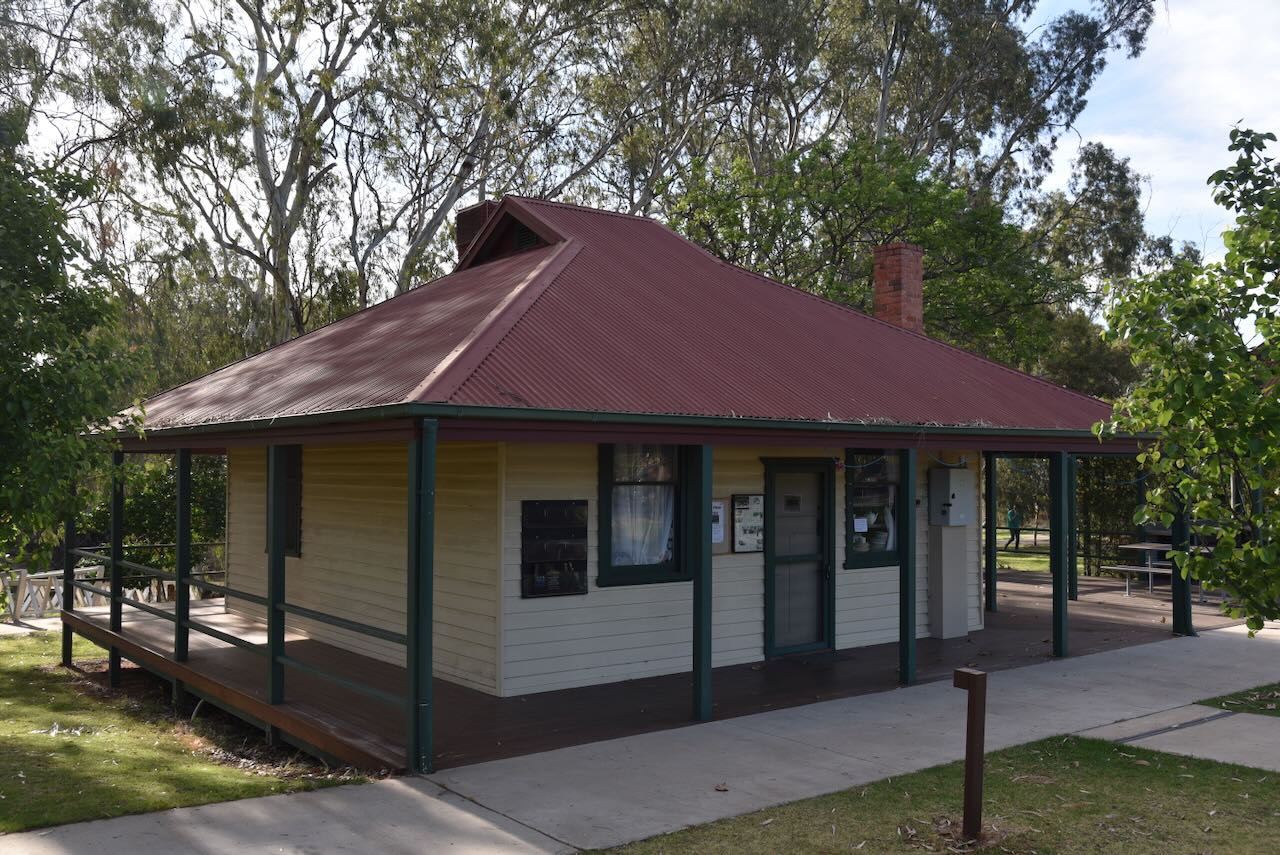
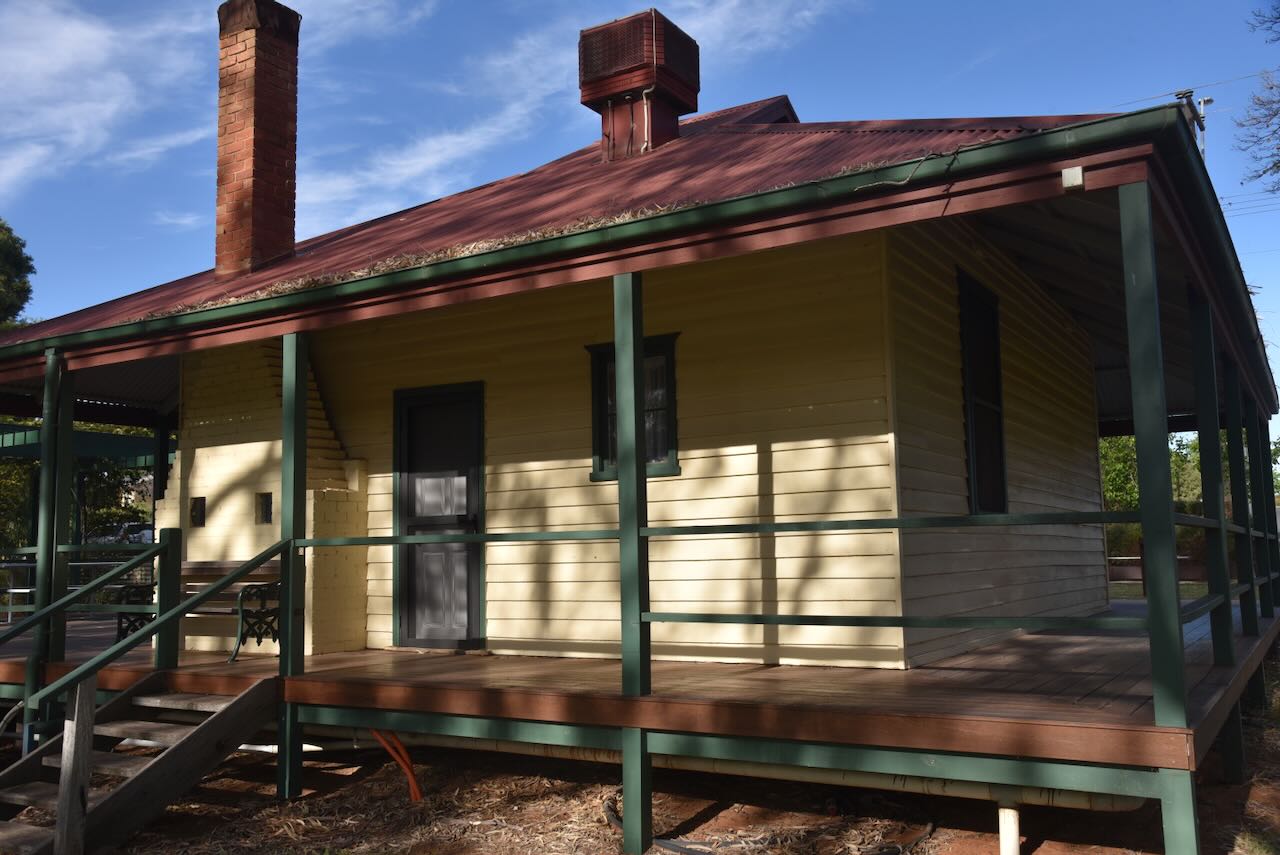
We continued on to Kyalite, where we planned on stopping off for dinner. I had often read about the historic pub at Kyalite, so this was the perfect opportunity to call in for a meal and some refreshments.
Kyalite is located on the Wakool River in the Riverina district of New South Wales. Kyalite was originally known as Wakool Crossing and was founded by Henry Talbett. In about 1848, he established a punt service across the Wakool River. Talbett’s family then followed Henry to Australia from Ireland. This included Talbett’s parents and siblings. His brother John travelled to Wakool and assisted Henry in building an inn and a general store on land that Henry had purchased near his punt. (Wikipedia 2024)
The Wakool Crossing Post Office was opened on the 1st day of June 1911. In 1927, it was renamed Kyalite. (Wikipedia 2024)
Sadly, Kyalite saw the murder of a police officer in July 1979. Detective Senior Constable Robert John ‘Rocky’ Lane of the Victoria Police was conducting a search of a bus occupied by 18-year-old Daniel Bernard Chapman. During the search, Lane was shot in the head by Chapman with a rifle that he had hidden. As Lane lay on the floor of the caravan, Chapman shot him again in the head. Lane’s body was then dragged to a nearby pit and discarded. Chapman decamped in the police vehicle, which he later dumped in the Edward River. A massive manhunt was initiated by Victoria and New South Wales Police. Seven days later, Chapman was apprehended. He was sentenced to life in prison, but was released just 13 years later.
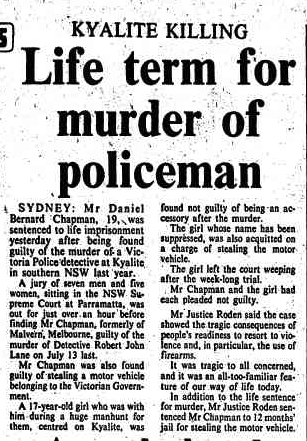
Above: Article from The Canberra Times, Wed 2 Jul 1980. Image c/o Trove
Detective Lane was just 32 years old and was a talented football player, having played for the Carlton Football Club. He was married with two children. (Wikipedia 2024)
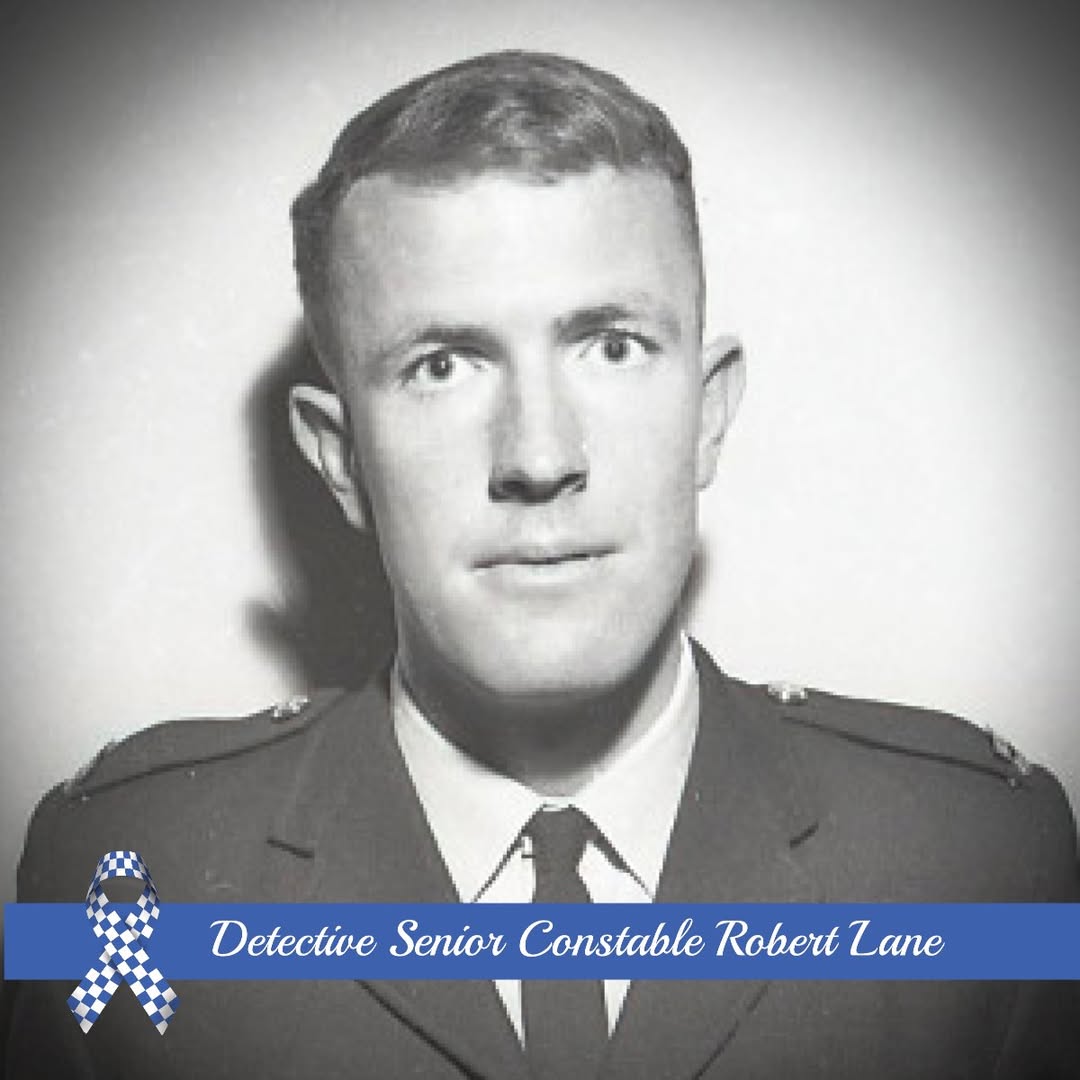
Above: Detective Senior Constable Robert Lane. Image c/o Victoria Police Blue Ribbon Foundation Facebook page.
Before going to the hotel, we had a look at the Kyalite information panels opposite the hotel.
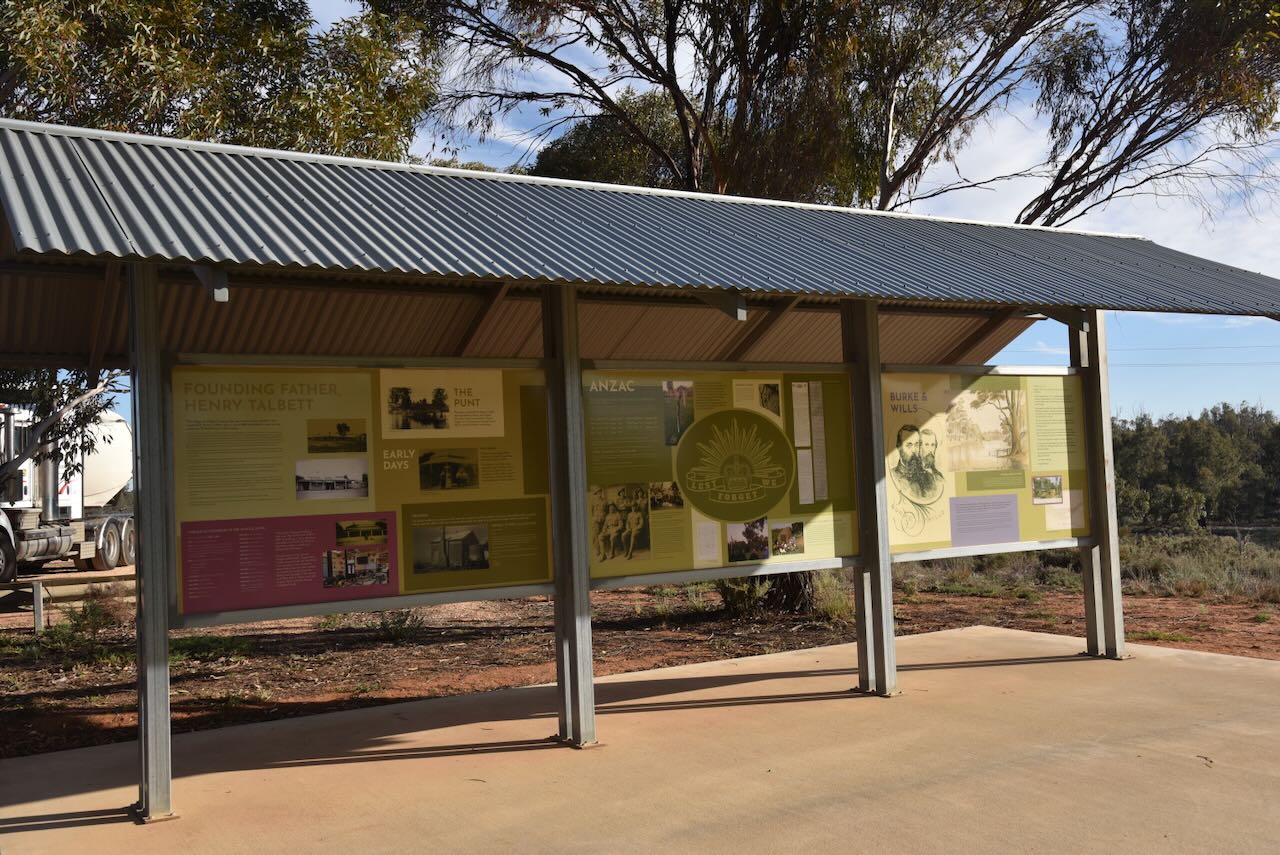
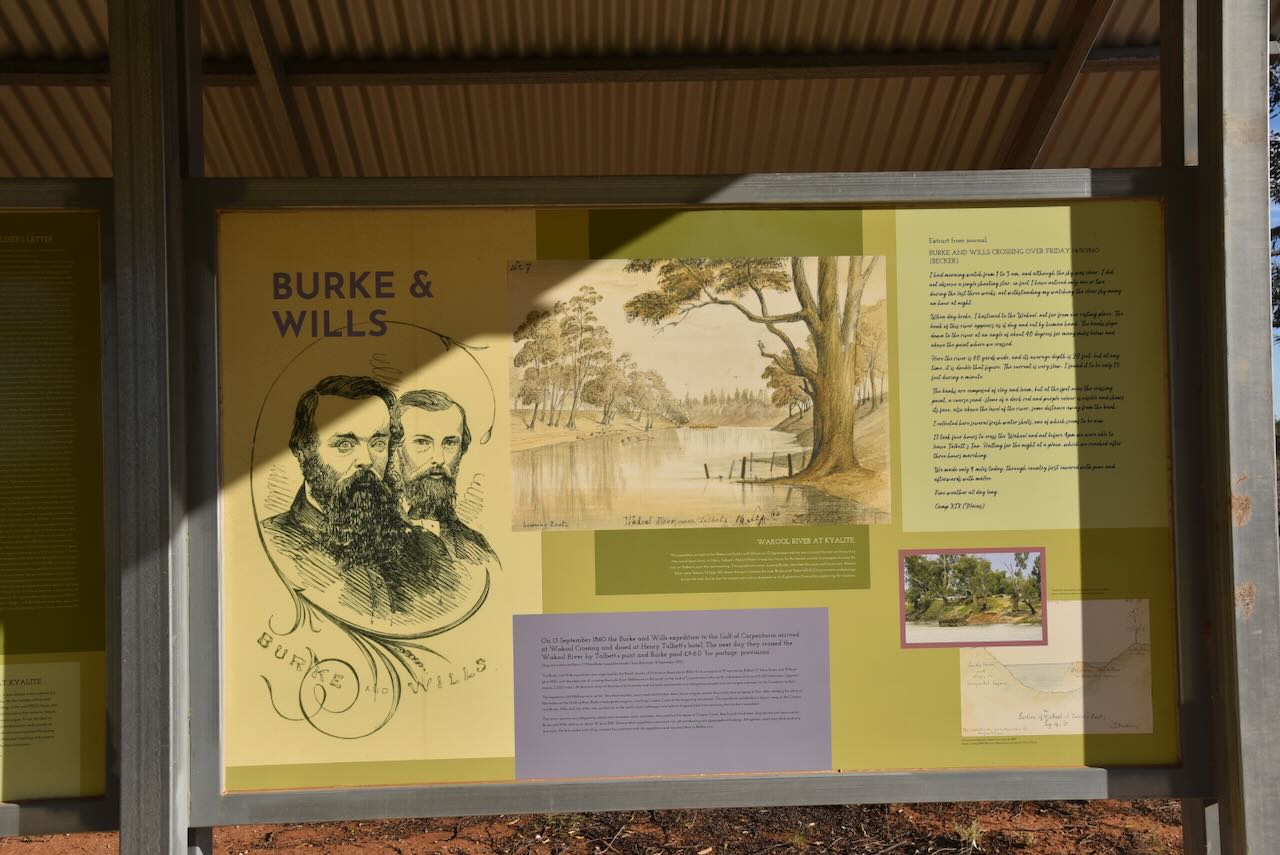
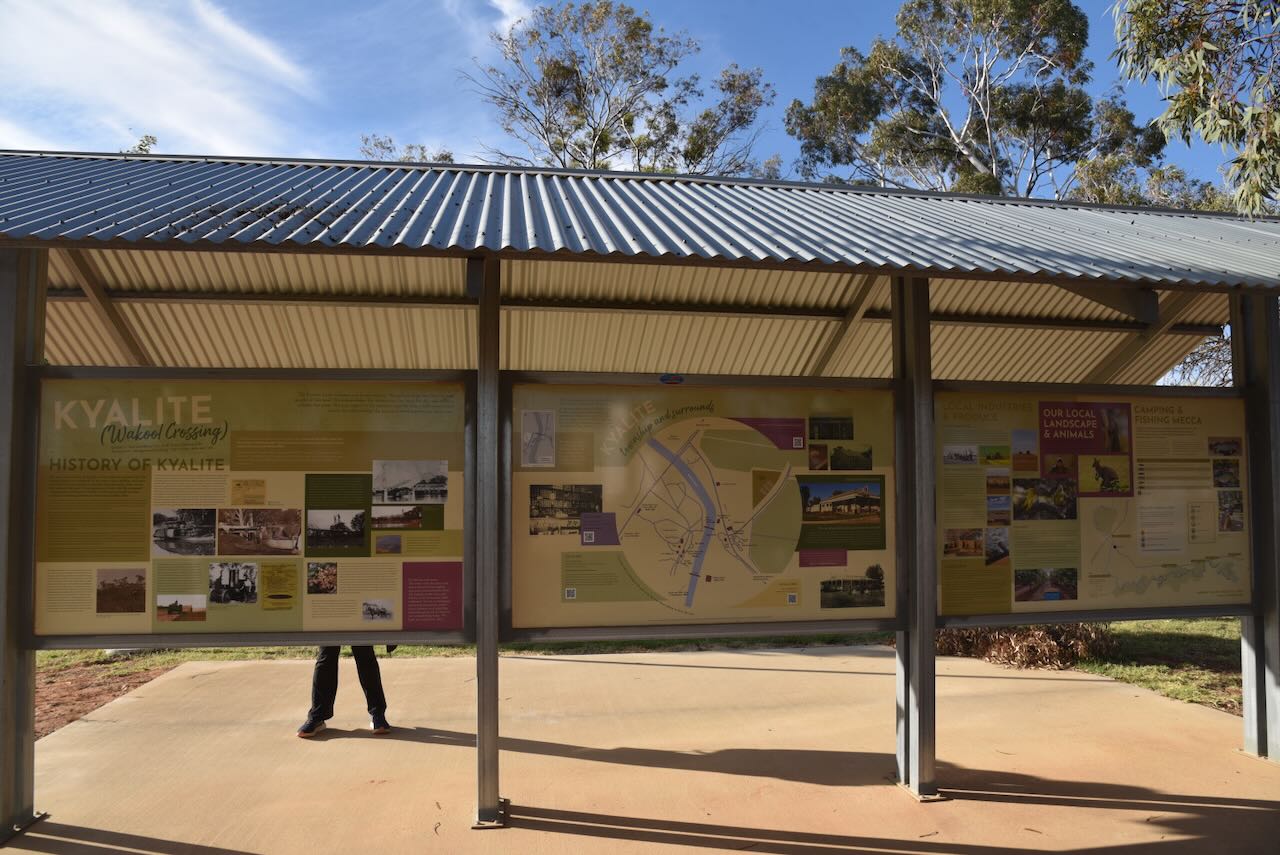
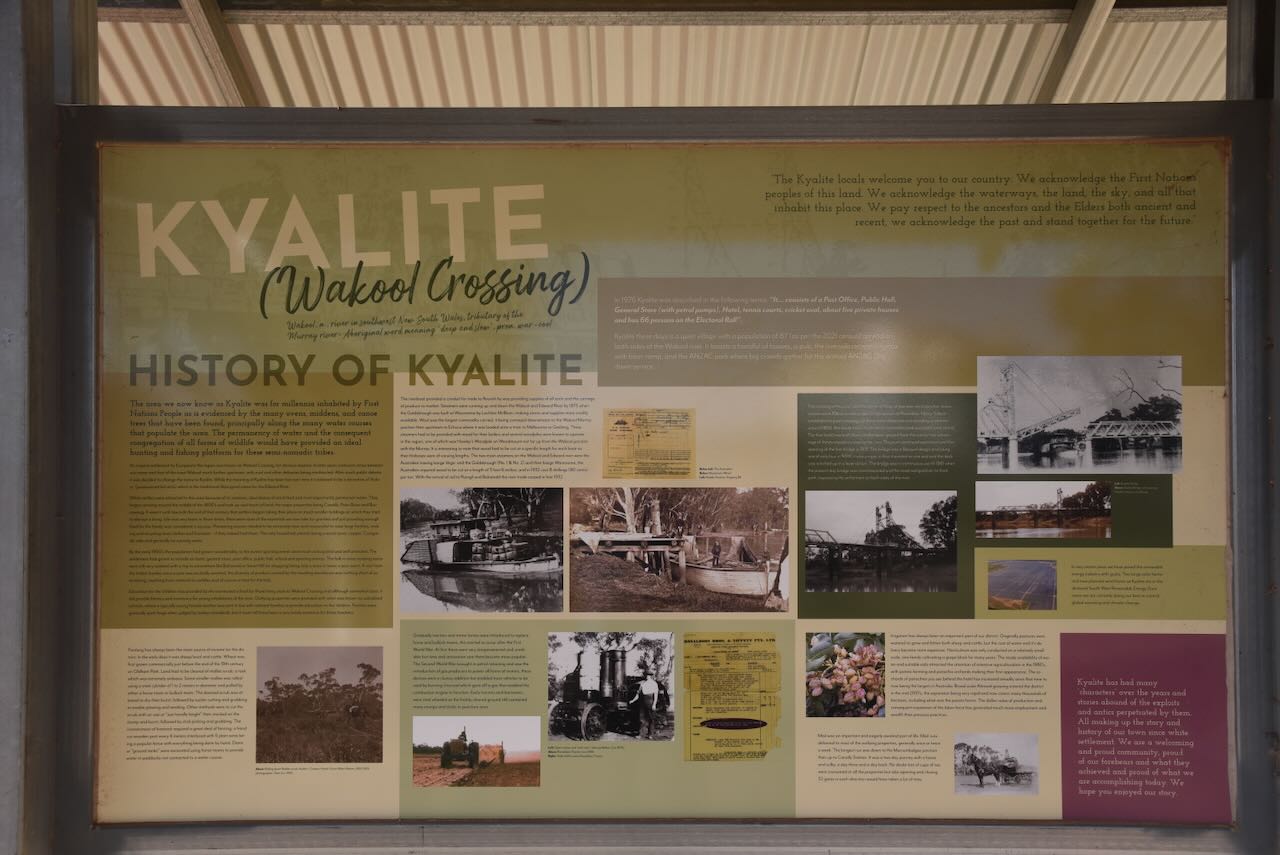
The Kyalite Hotel has a rich history. As mentioned above, Henry and John Talbett constructed the Wakool Inn in 1854. On the 13th day of September 1860, explorers Robert O’Hara Burke and William John Wills arrived at the Wakool Crossing during their expedition to the Gulf of Carpentaria. They dined at Talbett’s hotel that evening. The following day, they crossed the Wakool River on Talbett’s punt and paid £9.6.0 “for portage, provisions &c.”. (Wikipedia 2024)
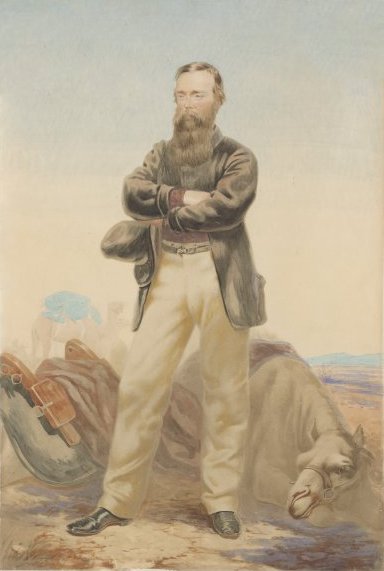

Above: Robert O’Hara Burke (left) and William John Wills (right). Images c/o Wikipedia
There is a monument opposite the hotel to commemorate the 150th anniversary of the crossing of the Wakool River by Burke and Wills.
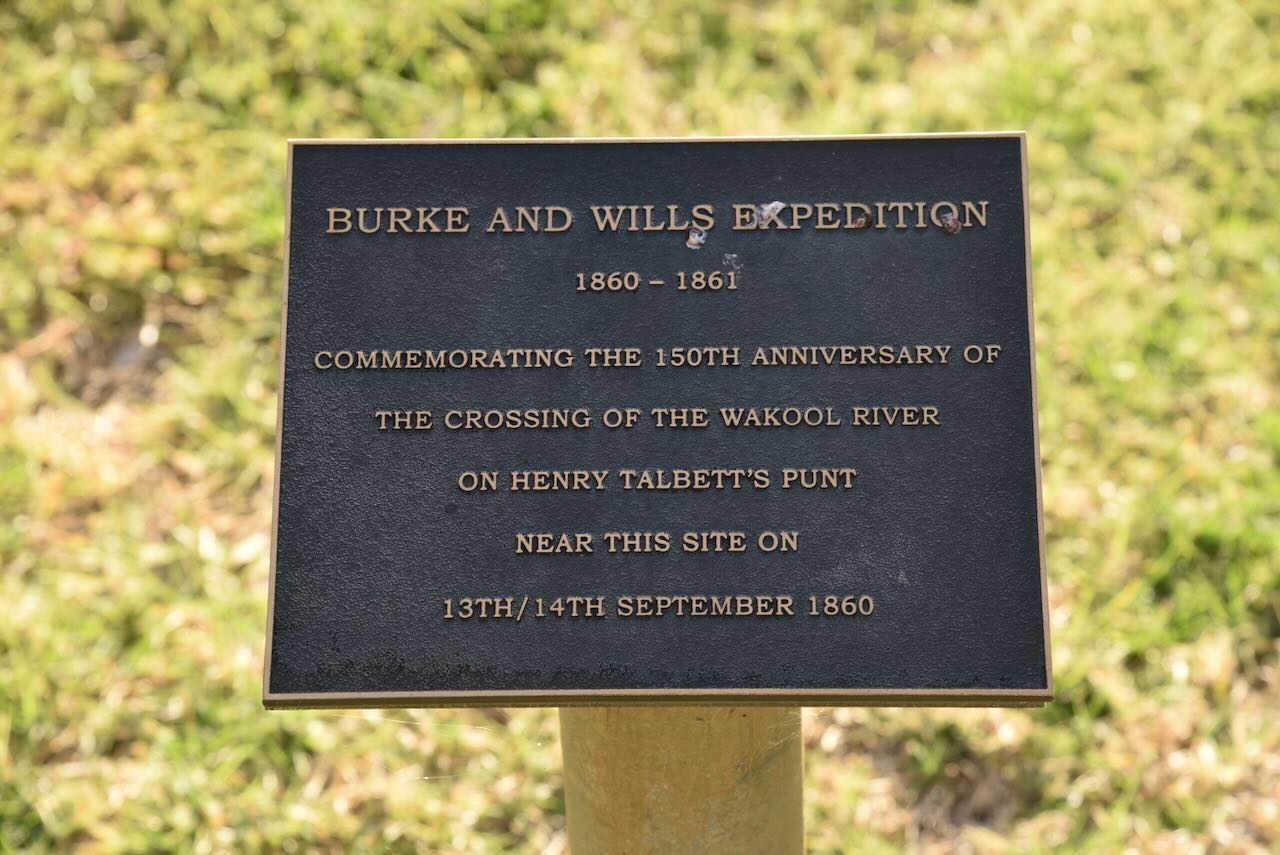
The hotel was sold to Thomas Spinks in 1882. He held the licence until his death in January 1890. The next recorded licensee was John James. He was a co-executor of Thomas’s will and the father-in-law of Thomas’s daughter, Hannah. The hotel was destroyed in a fire in 1888 and was rebuilt in 1890. From 1891 to 1893, the hotel was run by John Spinks, who was the only son of Thomas. (Wikipedia 2024)
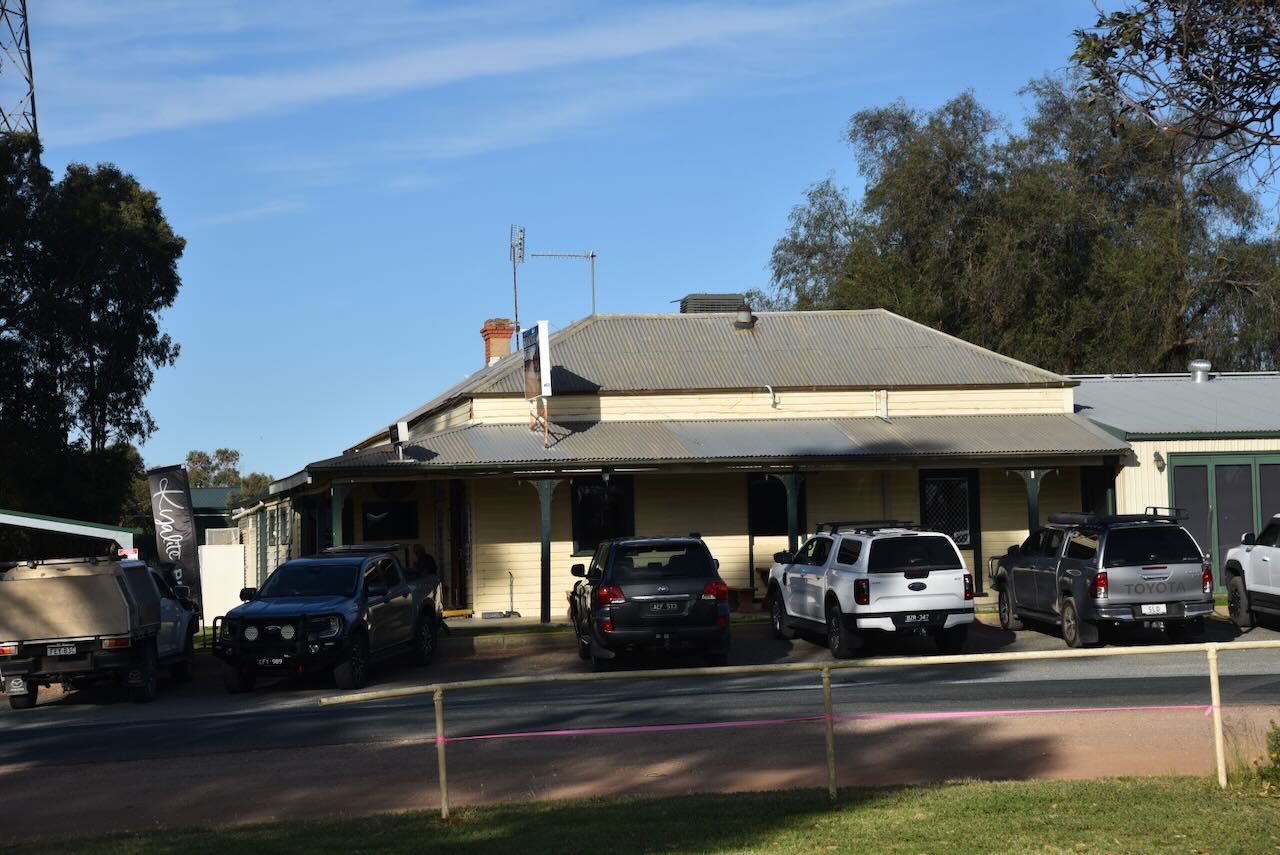
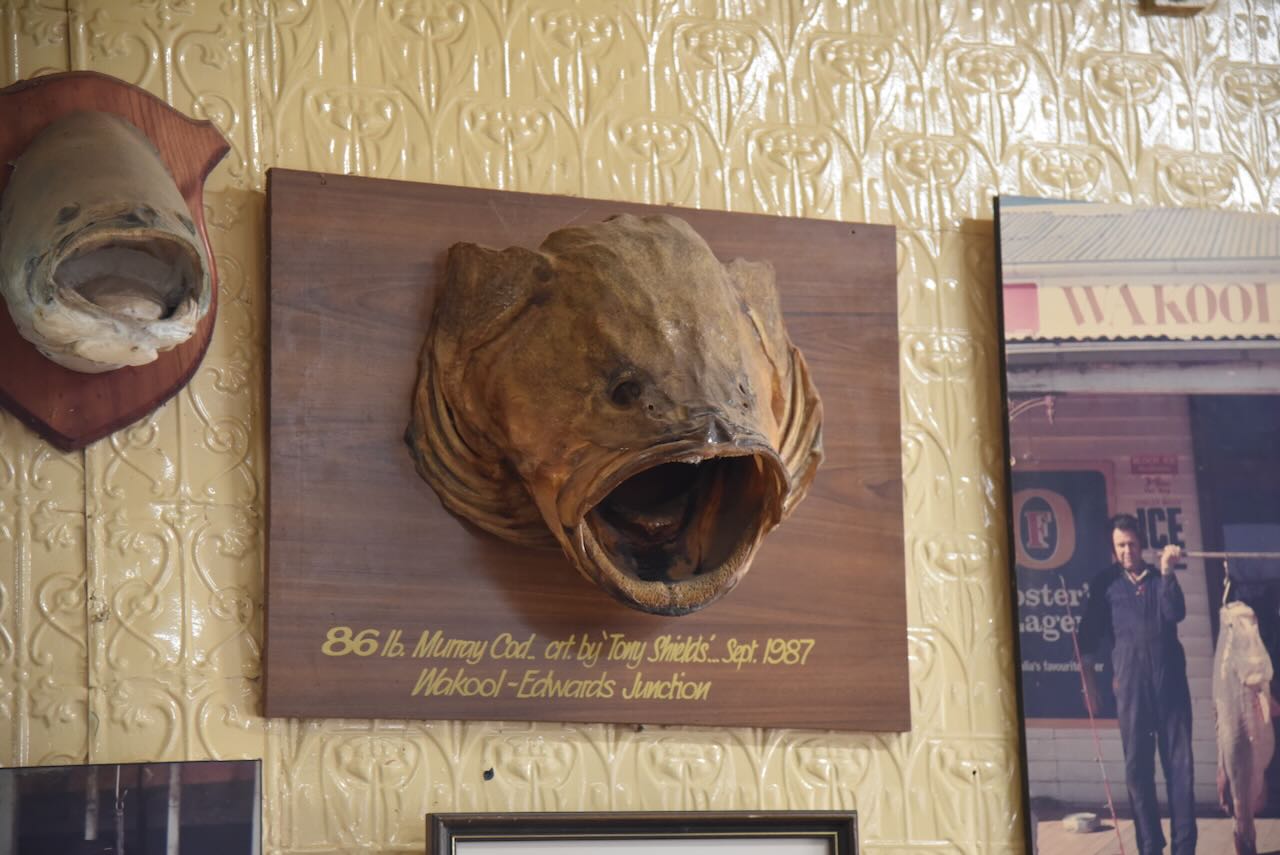
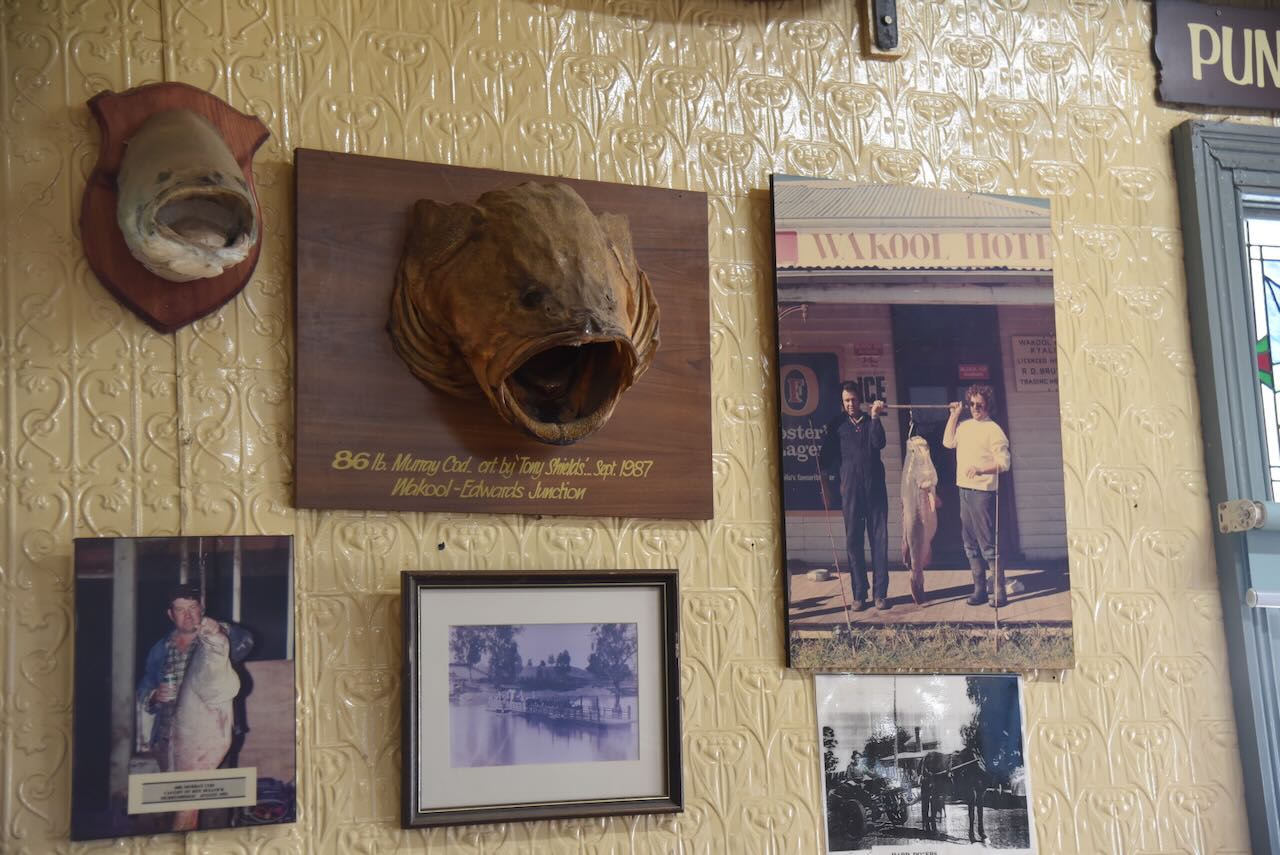
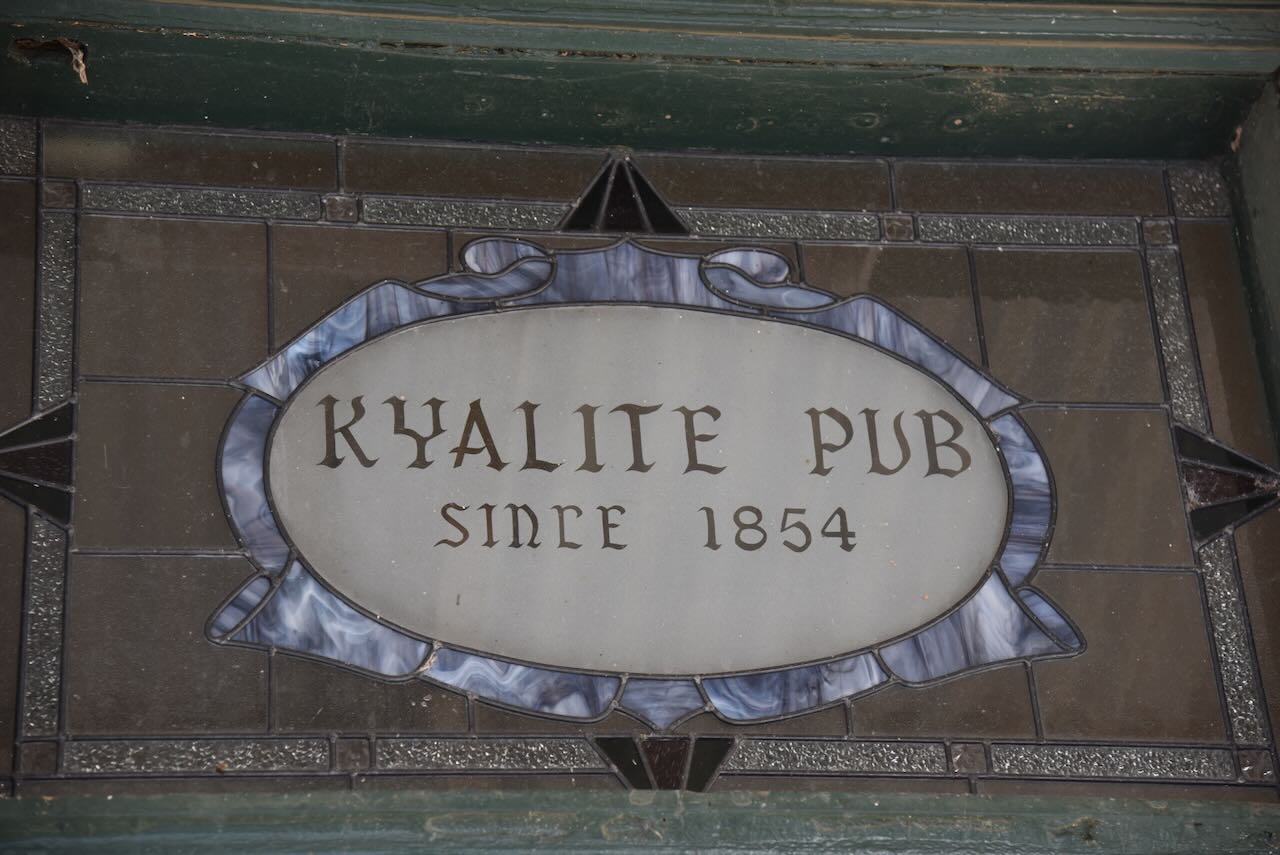
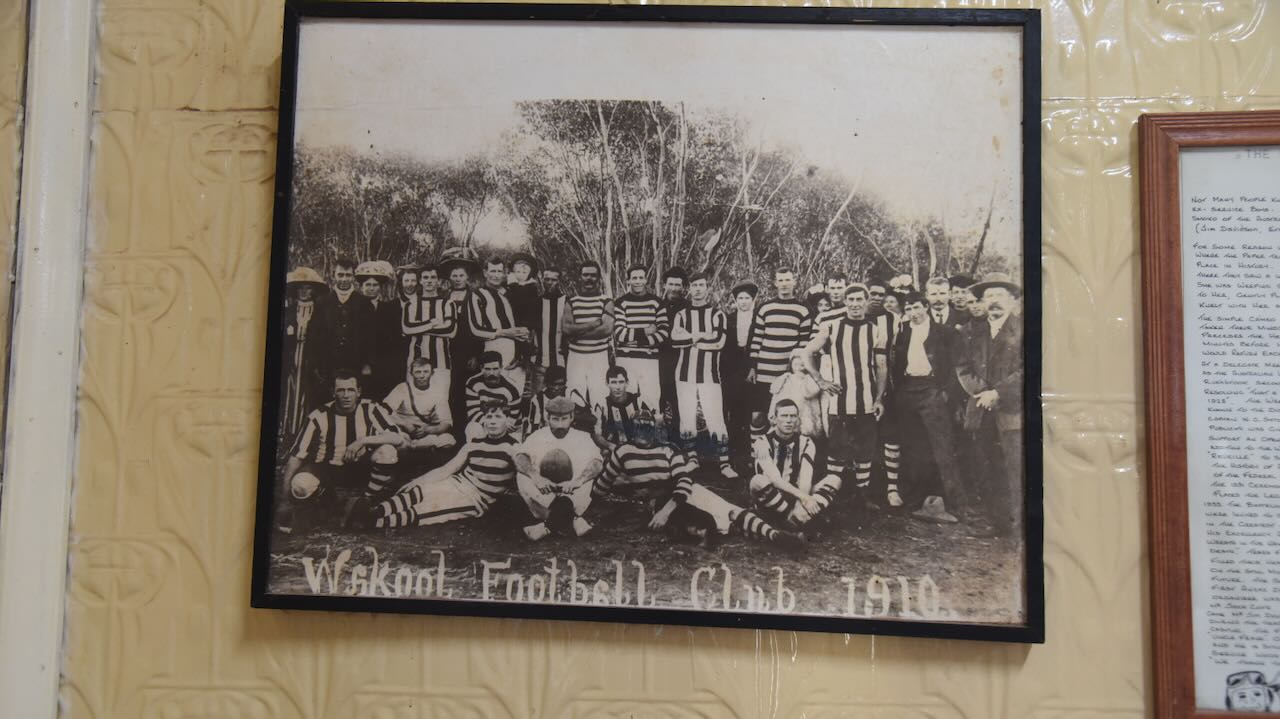
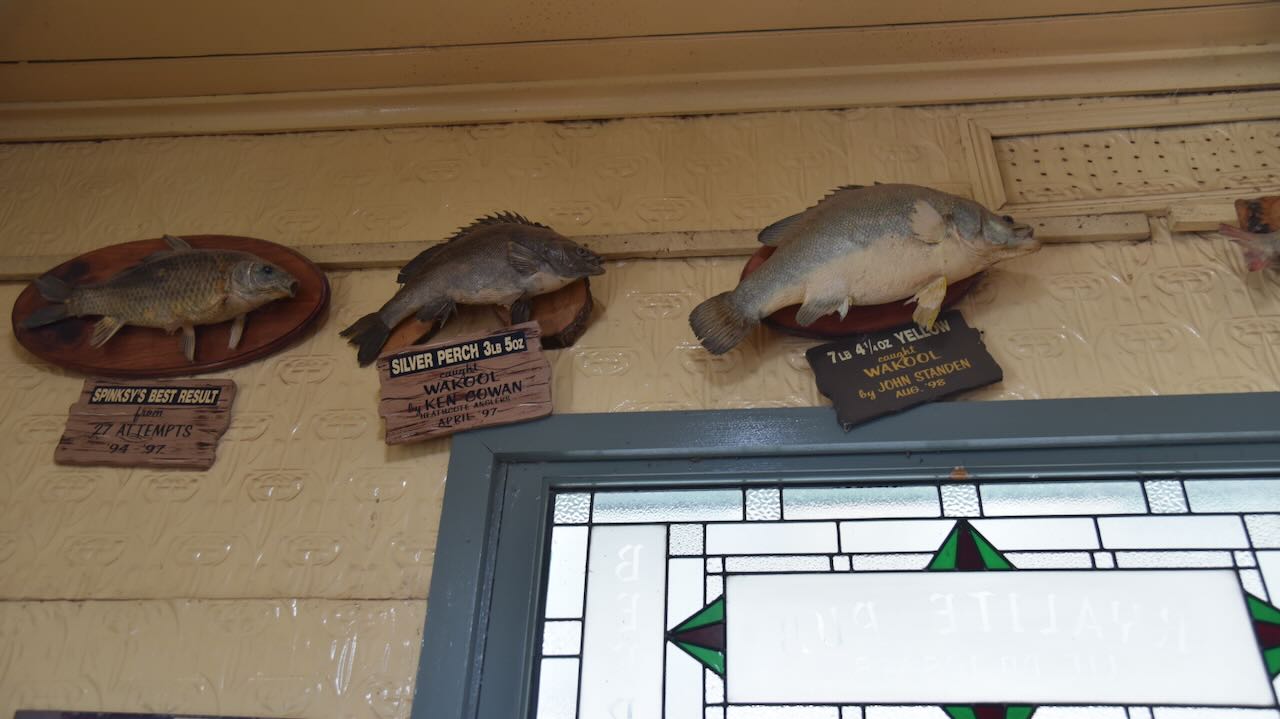
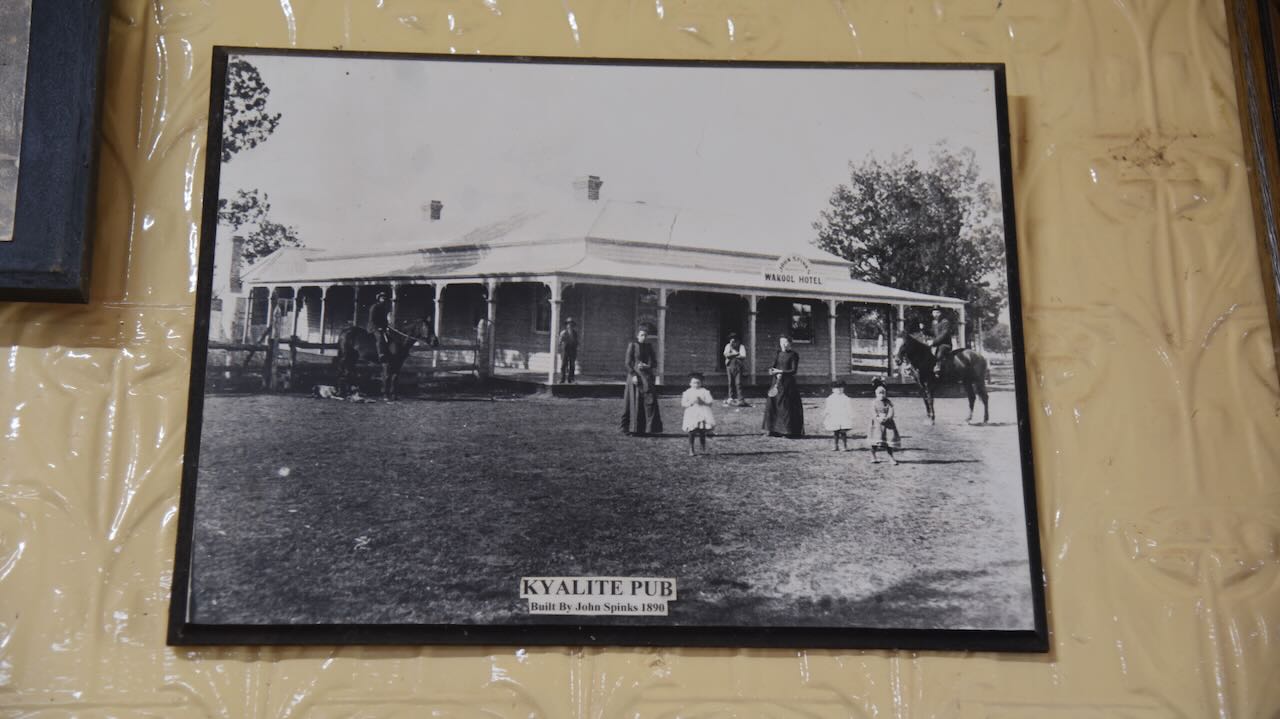
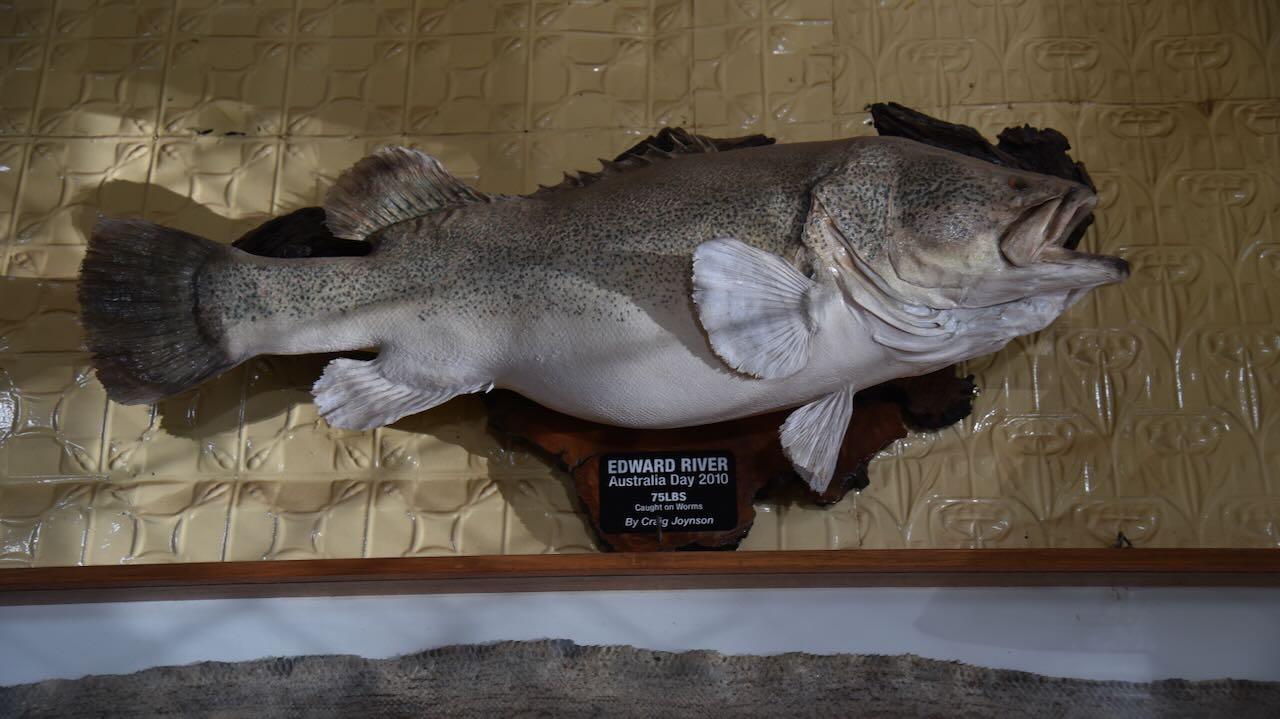
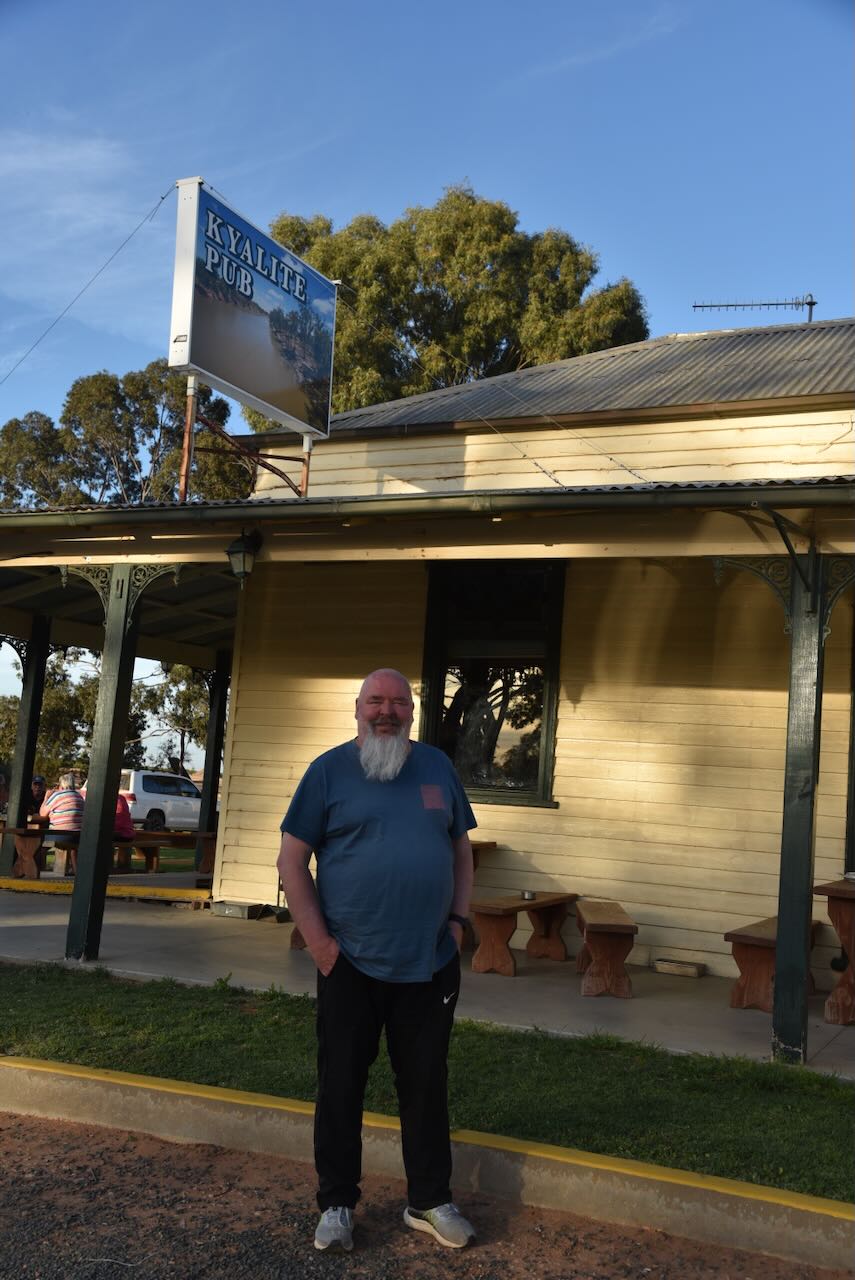
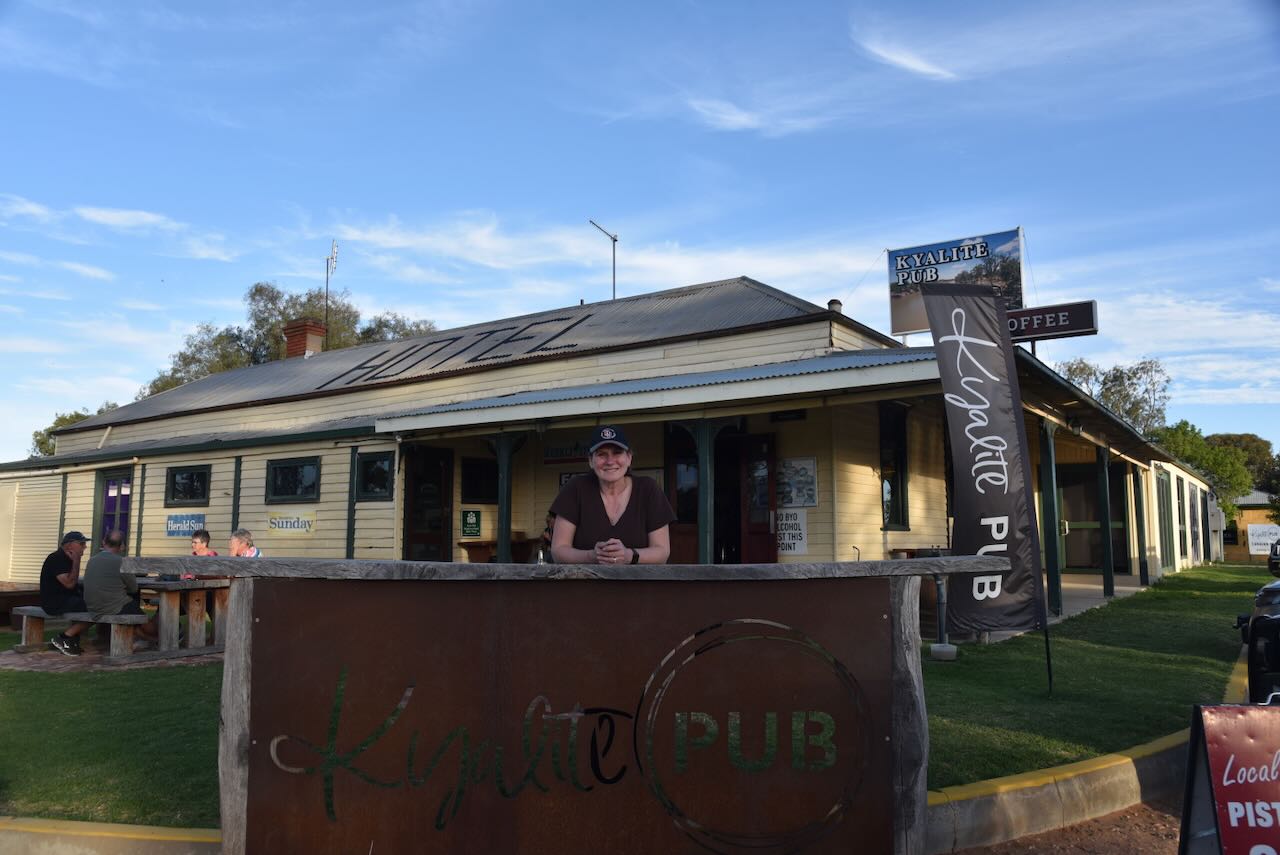
Marija and I enjoyed a magnificent meal.
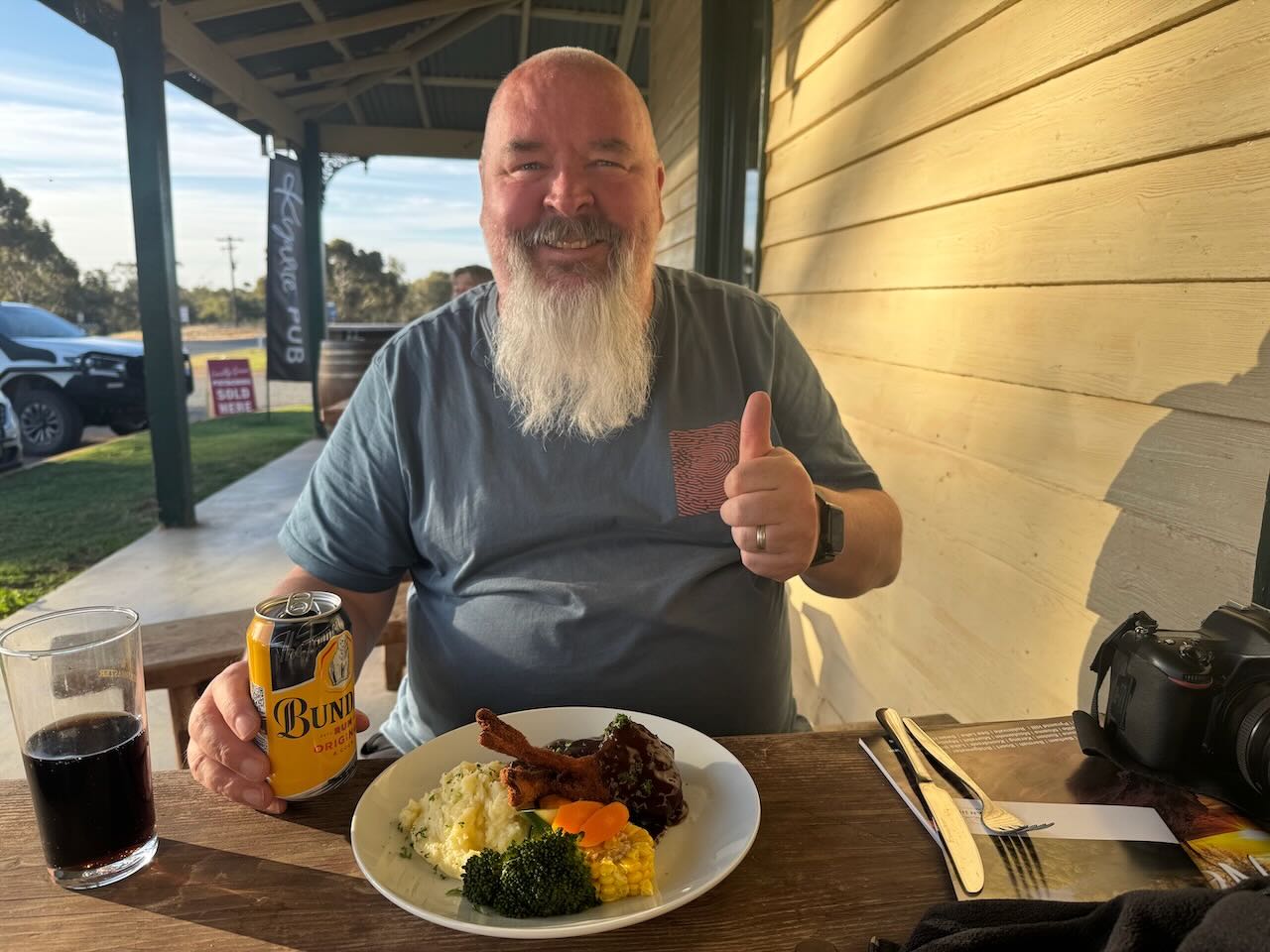
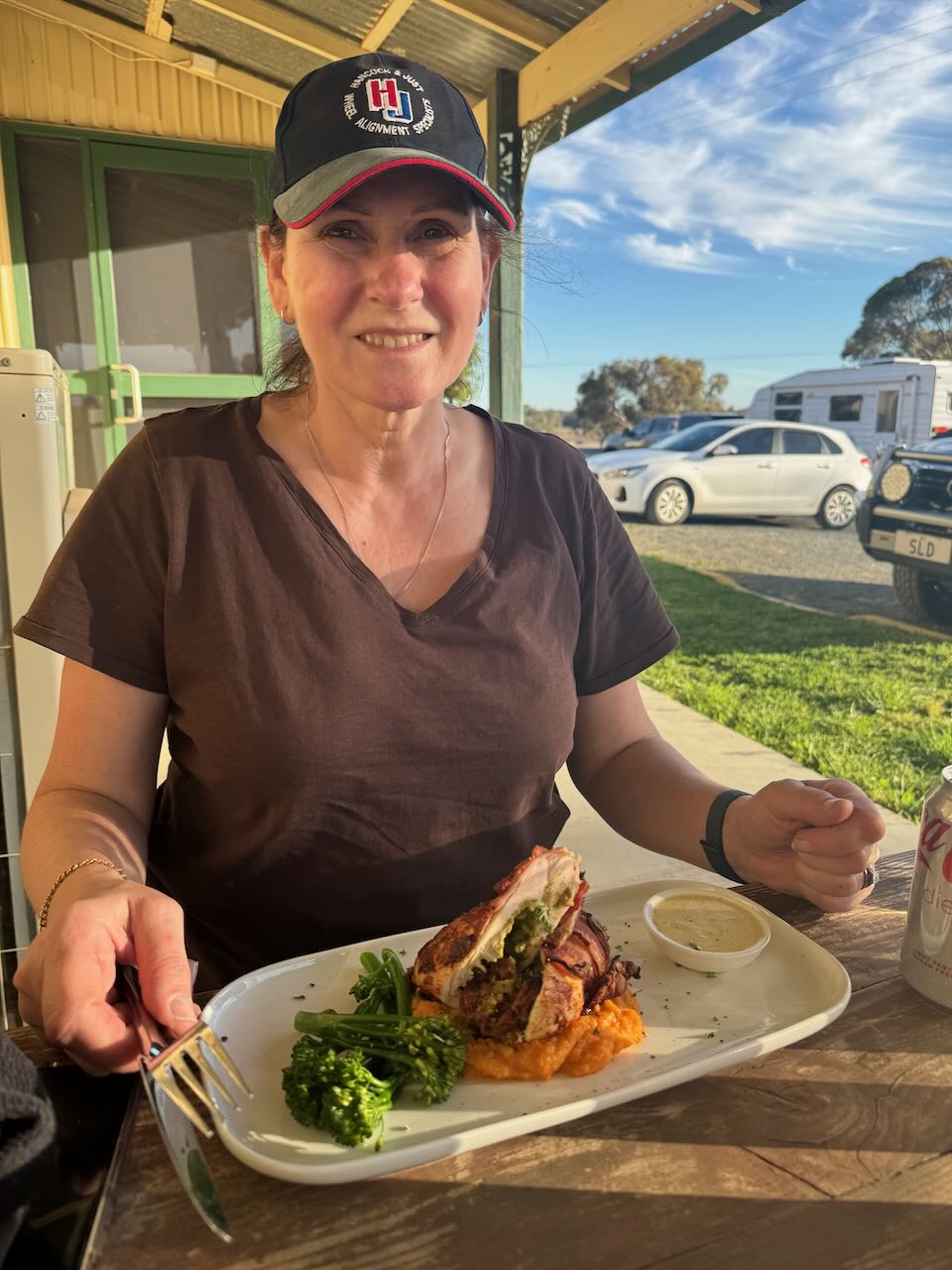
We left Kyalite and headed off to Balranald, where we booked into our motel room.
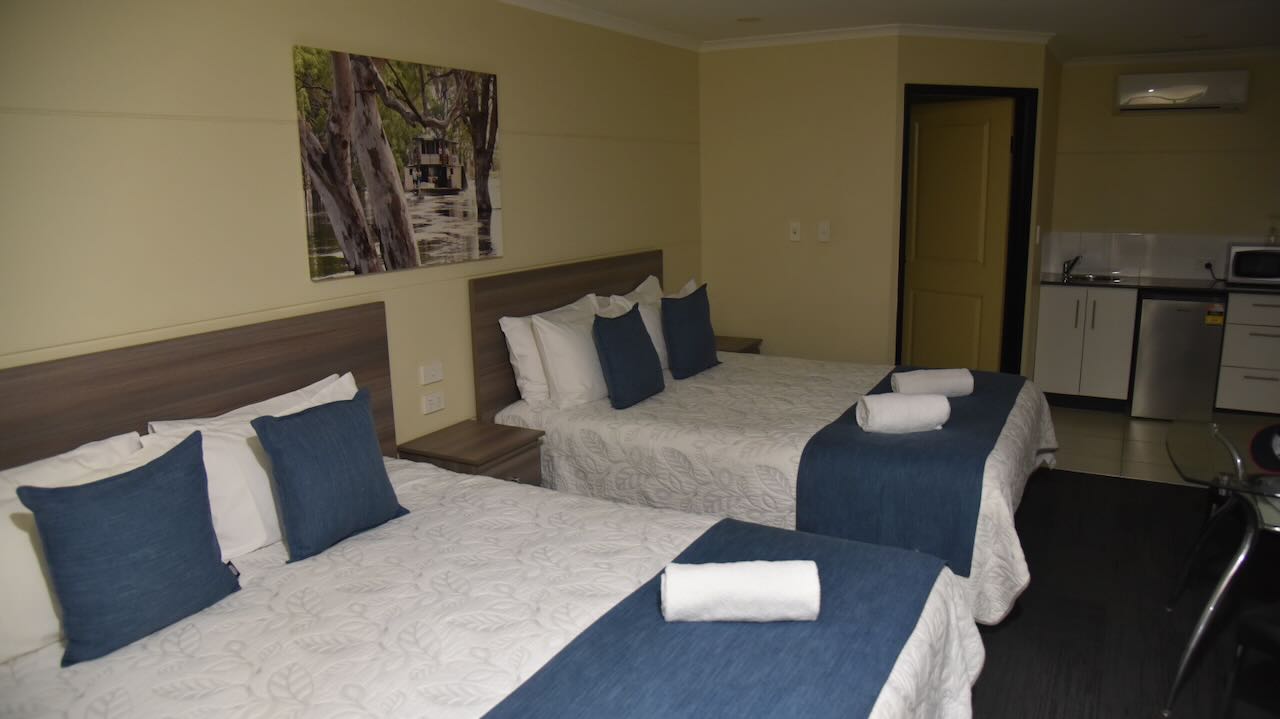
It was the end of a great day, with four VKFF parks and four silos activated. And lots of sightseeing.
References.
- Nsw.gov.au. (2025). HMS – ViewItem. [online] Available at: https://www.hms.heritage.nsw.gov.au/App/Item/ViewItem?itemId=5051386 [Accessed 5 Dec. 2025].
- Service, C. (2023). Tooleybuc River Walk. [online] NSW Government. Available at: https://www.nsw.gov.au/visiting-and-exploring-nsw/locations-and-attractions/tooleybuc-river-walk [Accessed 5 Dec. 2025].
- Swan Hill Rural City Council, 2021, Piangil Community Plan 2021-2025
- Trove. (2025). BULK WHEAT TRAFFIC – Shepparton Advertiser (Vic. : 1887 – 1953) – 22 Apr 1943. [online] Available at: https://trove.nla.gov.au/newspaper/article/175183752?searchTerm=piangil%20silo [Accessed 5 Dec. 2025].
- Victorianplaces.com.au. (2015). Piangil | Victorian Places. [online] Available at: https://www.victorianplaces.com.au/piangil [Accessed 4 Dec. 2025].
- Wikipedia Contributors (2020). Thomas Mitchell (explorer). [online] Wikipedia. Available at: https://en.wikipedia.org/wiki/Thomas_Mitchell_(explorer).
- Wikipedia Contributors (2025). William Coghill. Wikipedia.
- Wikipedia Contributors (2024). Kyalite. Wikipedia.
- Wikipedia Contributors (2024). Bob Lane (Australian footballer). Wikipedia.
- Wikipedia Contributors (2025). Piangil railway line. Wikipedia.
 VK5PAS