
Following our activation at the Kalyarr National Park on Sunday, 19th October 2025, Marija and I drove to the town of Maude, a small town on the banks of the Murrumbidgee River between Hay and Balranald.
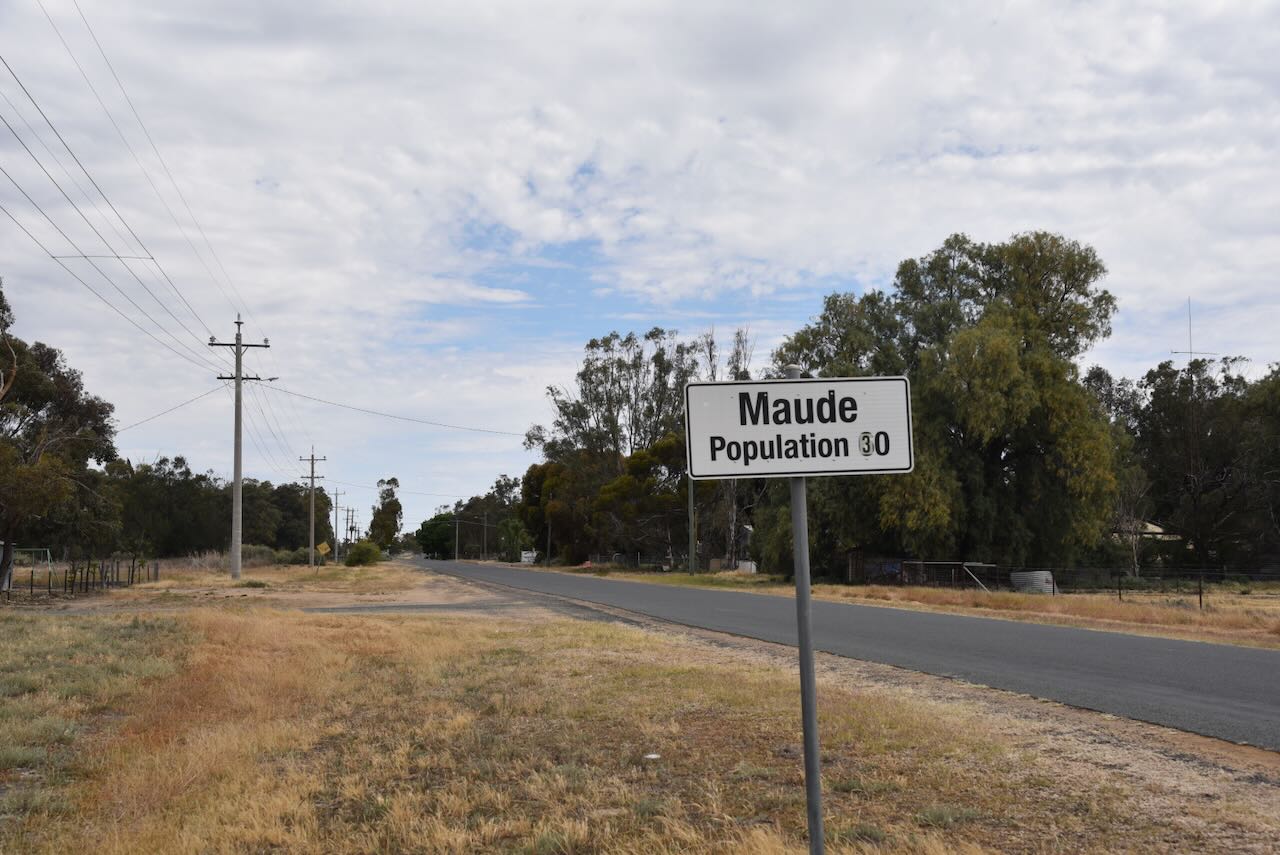
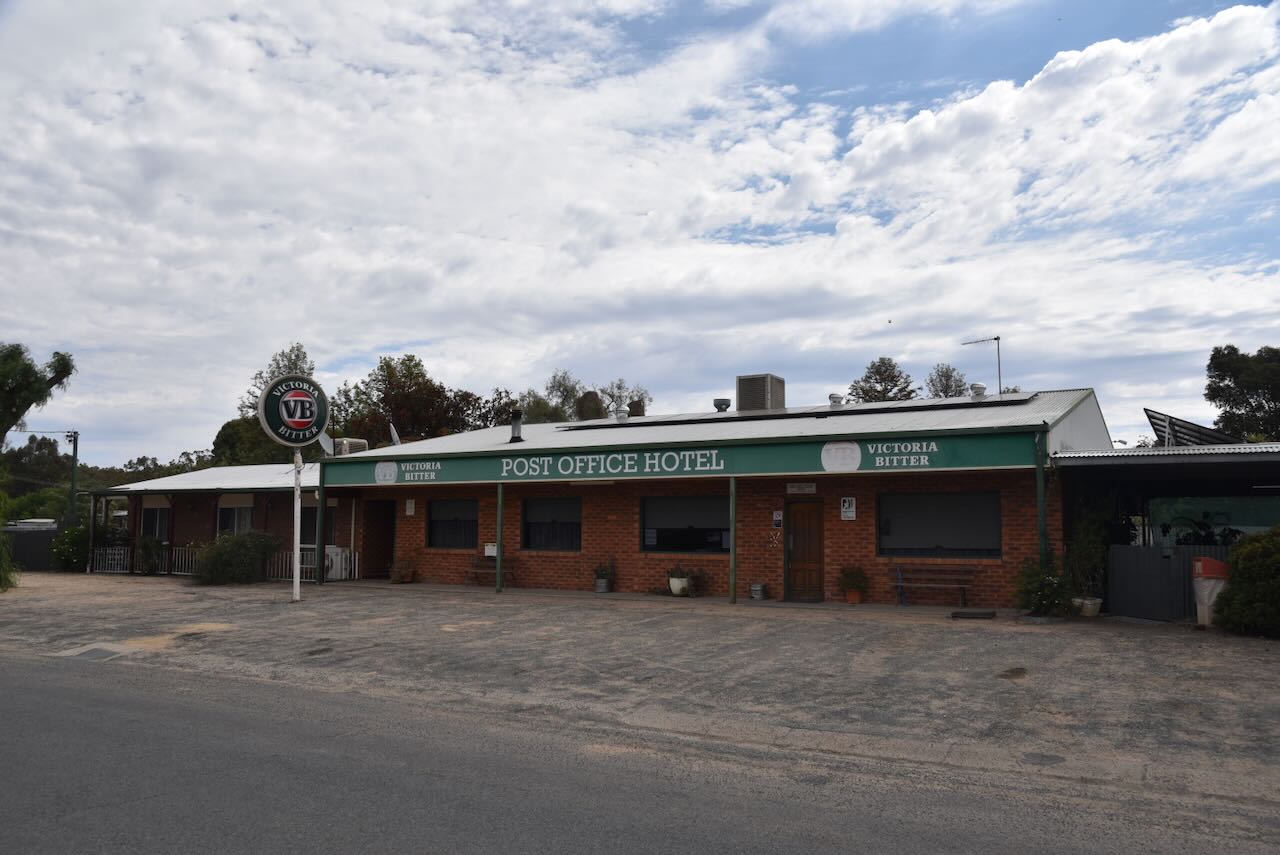
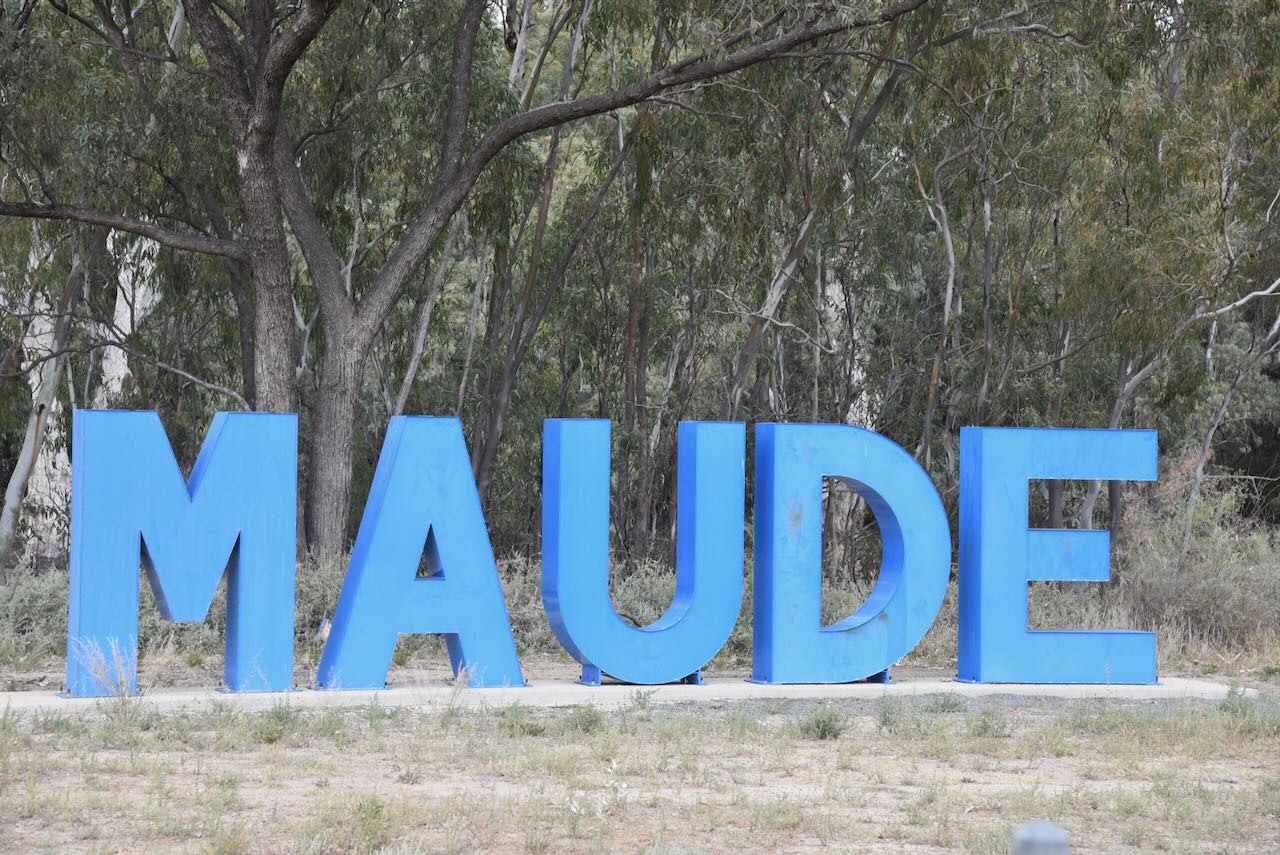
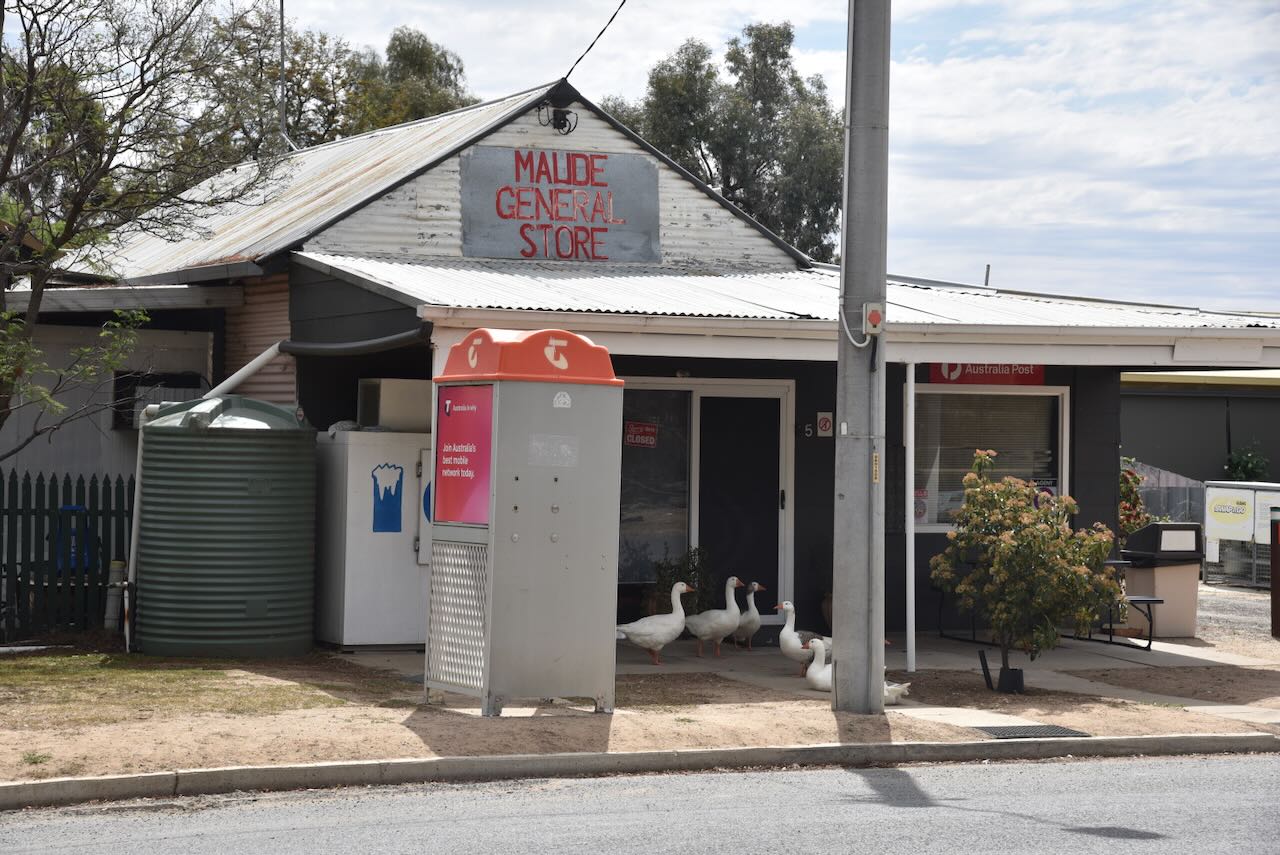
In about 1849, Francis Peter MacCabe from the New South Wales Surveyor General’s Department surveyed several reserves on the lower Murrumbidgee River. In October 1852, these reserves were gazetted. They included the “Pin Pan Pa” reserve of 7.5 square miles, which was described as being “situated on cattle runs, occupied by Phelps and Darchey”, just over a mile downstream from “the hut at Pin-pan-pa”. (Wikipedia 2024)
This reserve was taken from Phelps and Chadwick’s “Pimpampa” and Thomas D’Archy’s “Budgee Budgee” runs. It was used during the 1850s as a crossing place for stock and drays. By the early 1860s, a township had been laid out on the Pimpampa Reserve by surveyors Adams and Twynam, with the name of ‘Pimpampa’ nominated. However, this was not approved by the Executive Council, and the name Maude was chosen instead. (Wikipedia 2024)
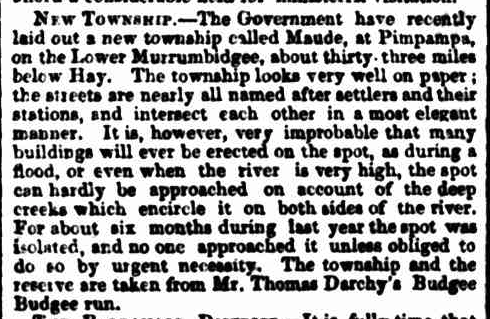
Above: part of an article from The Sydney Morning Herald, Mon 15 Apr 1861. Image c/o Trove
In October 1861, a punt commenced operation at the new township. In November 1862, a hotel was opened. The owner, Frank Johns, applied for a publican’s licence to the Bench of Magistrates at Hay. The application was opposed by the local squatter and Magistrate, Thomas D’Archy. The reason given was that there was no police at Maude. The following month, the application was approved on the promise of police protection being provided within 3 months. However, it took 2 years before there was a police presence at Maude.
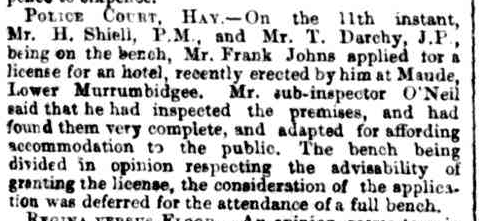
Above: part of an article from The Sydney Morning Herald, Mon 1 Dec 1862. Image c/o Trove
On the 1st day of May 1863, the Maude Post Office opened. Henry Prendergast was the first Post Master, who, with his son John, established a store in Maude. The Prendegast family established several stores in Maude, including a wool store. Wool from the surrounding pastoral runs was loaded onto steamers at Maude for transportation, often to Echuca. In 1868, a second hotel opened in Maude, the Post Office Hotel.
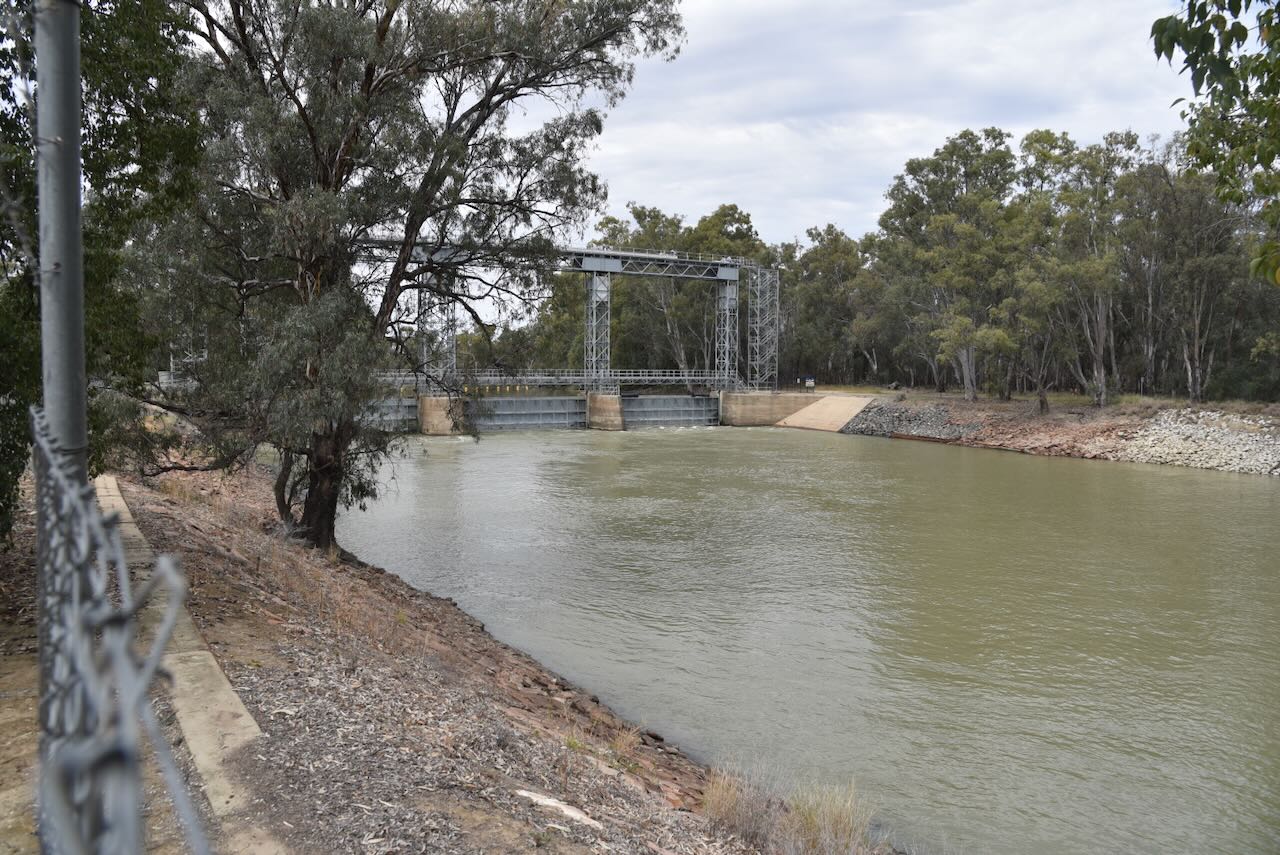
We visited the Maude Weir on the Murrumbidgee River. It was erected in 1940 for irrigation and water supply. (Alan 2021)
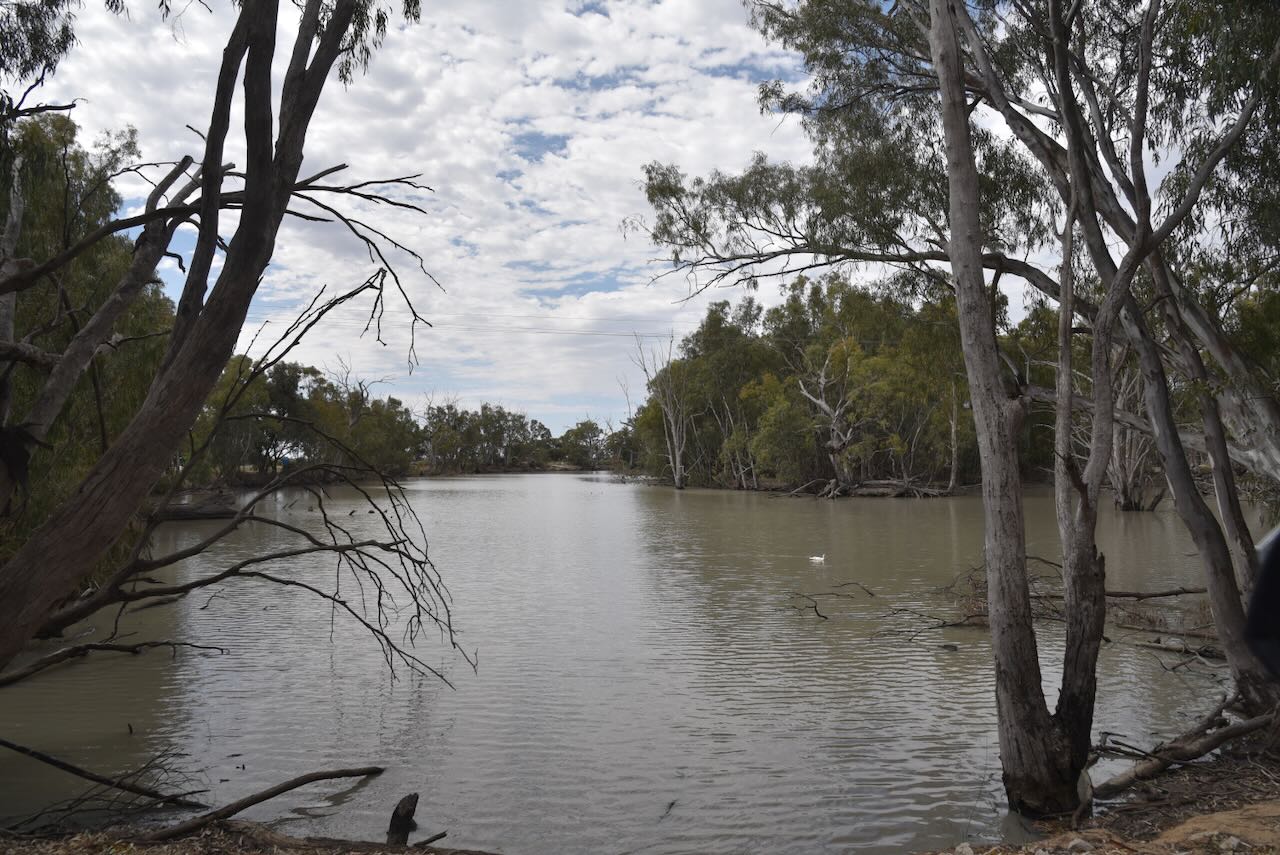
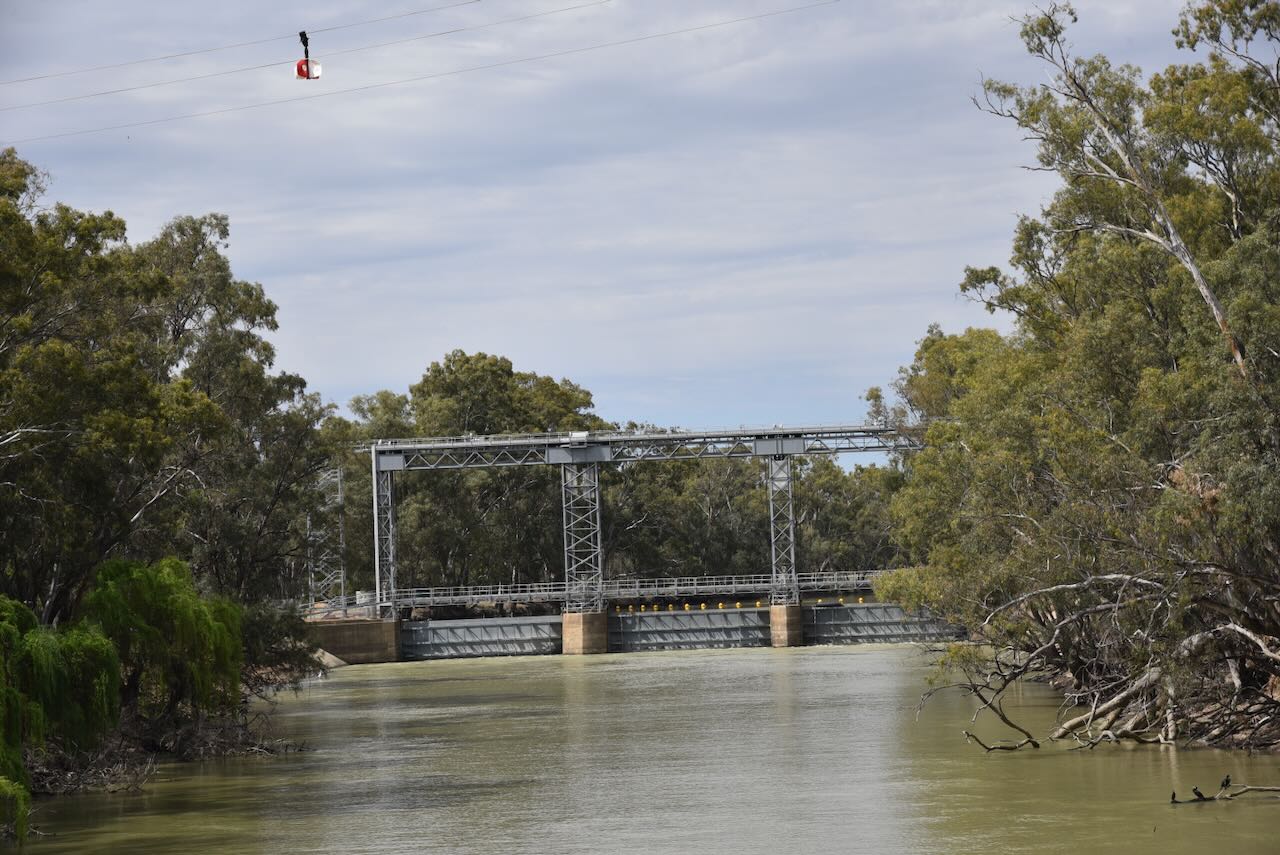
We doubled back slightly along the Sturt Highway, as we were hoping to activate the Maude silo VK-MDE2. However, we found upon arrival that the activation of this silo was not possible. Access was restricted, and there were no public roads that were within the activation zone of the silo.
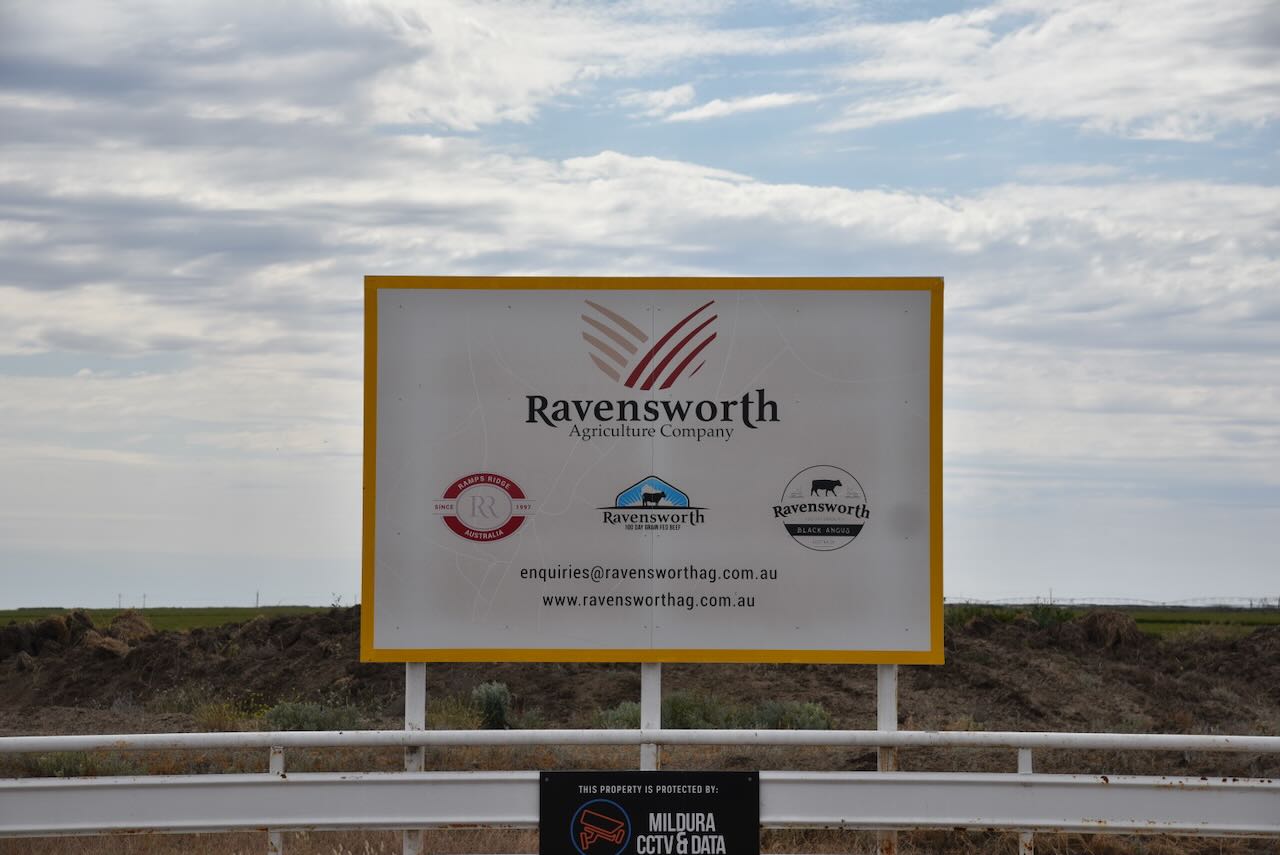
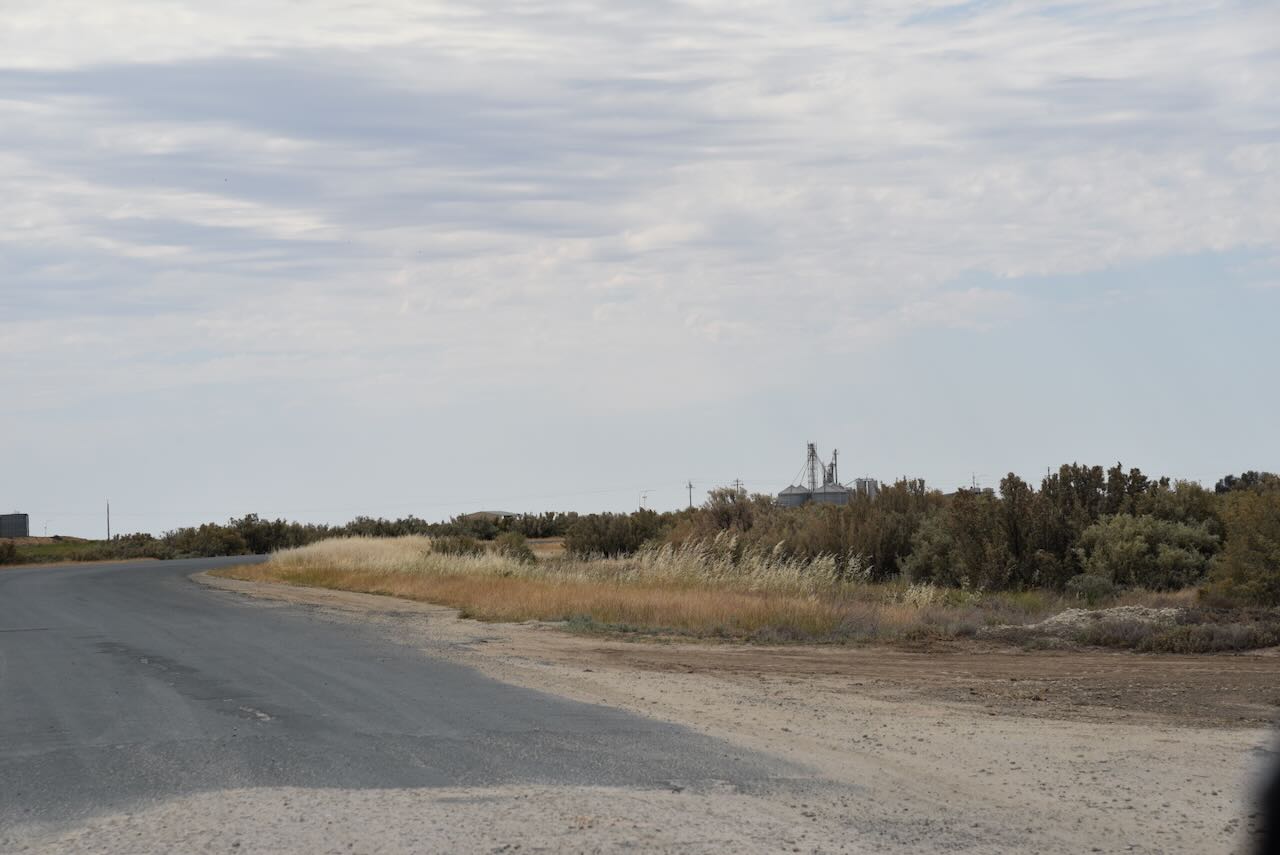
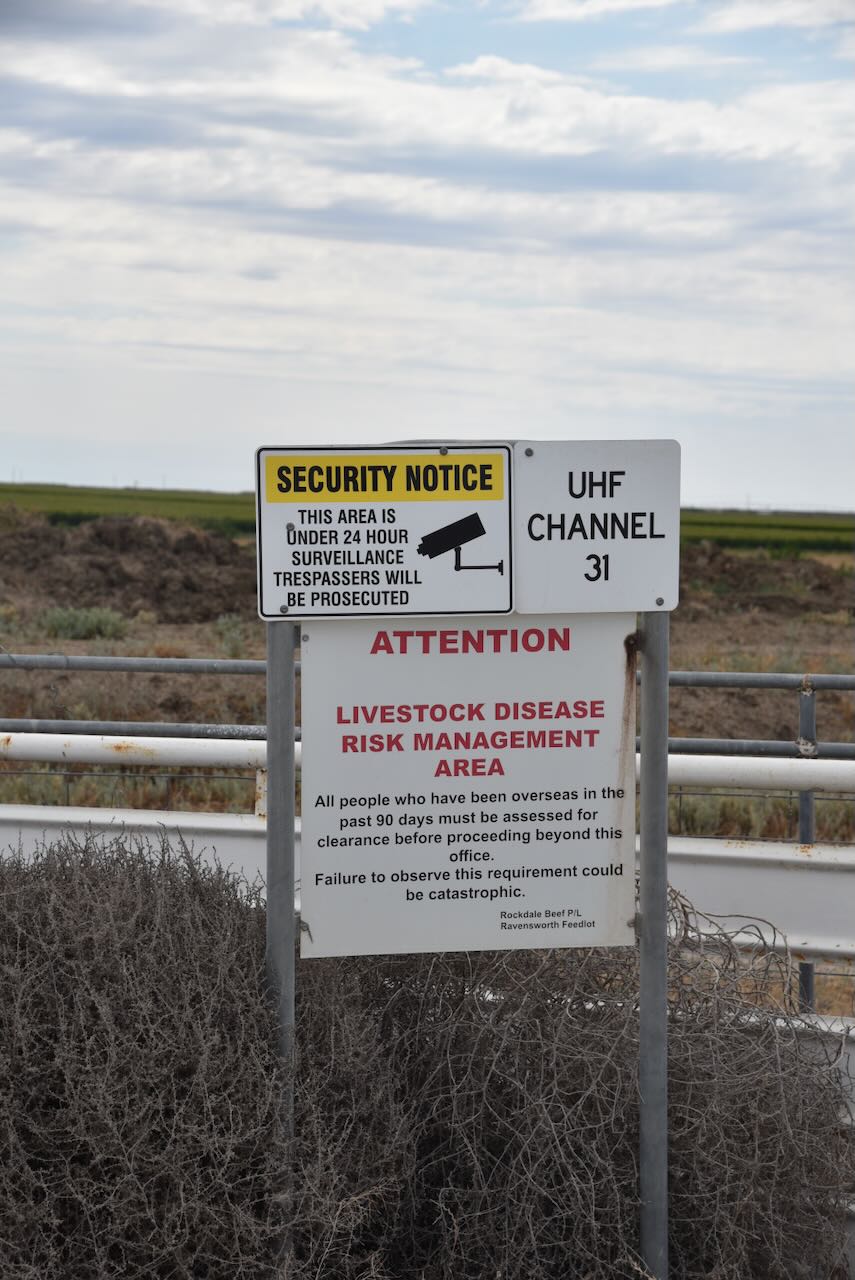
We continued east along the Sturt Highway and headed to the Toogimbie Indigenous Protected Area VKFF-3121, which we hoped to activate. However, strike two. Access was restricted, and we were unable to reach anybody at the mobile telephone number on the sign at the gate.
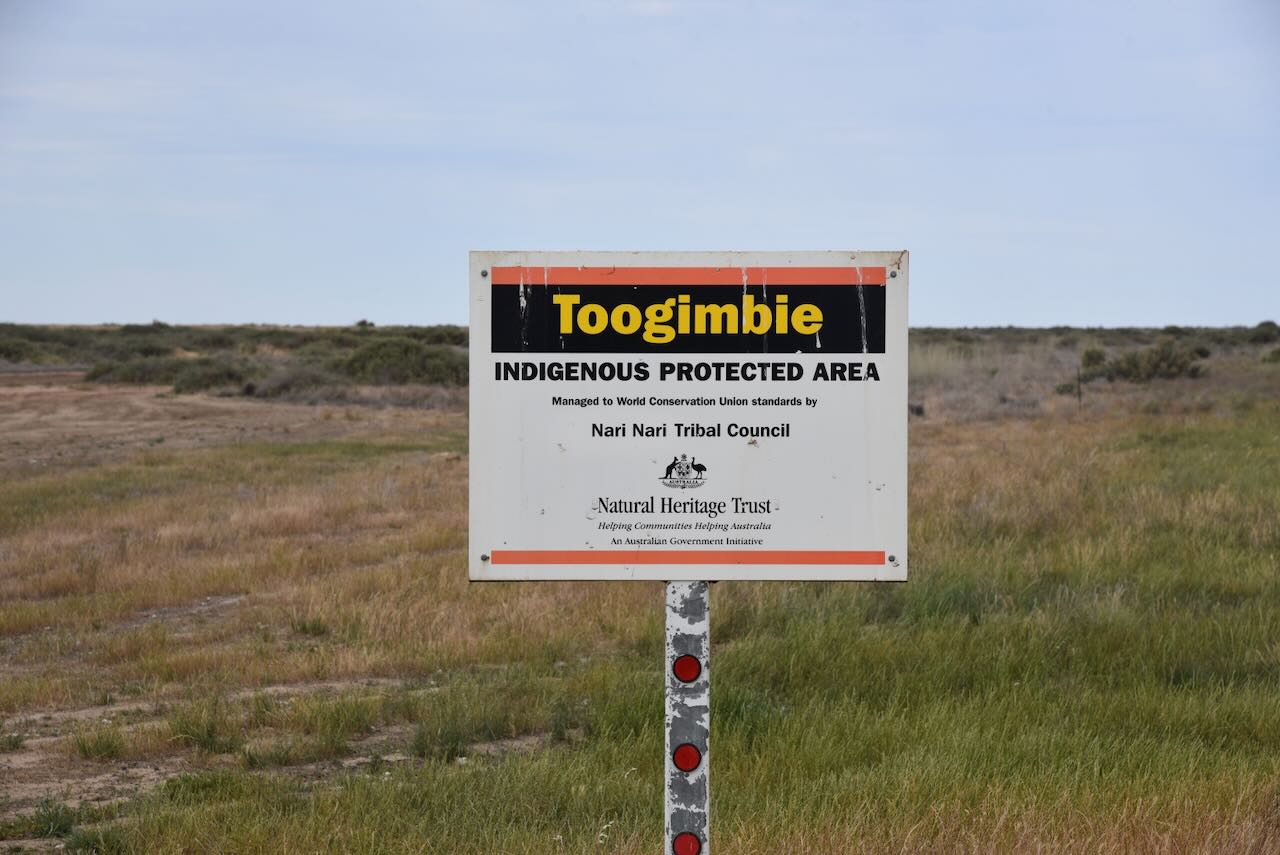
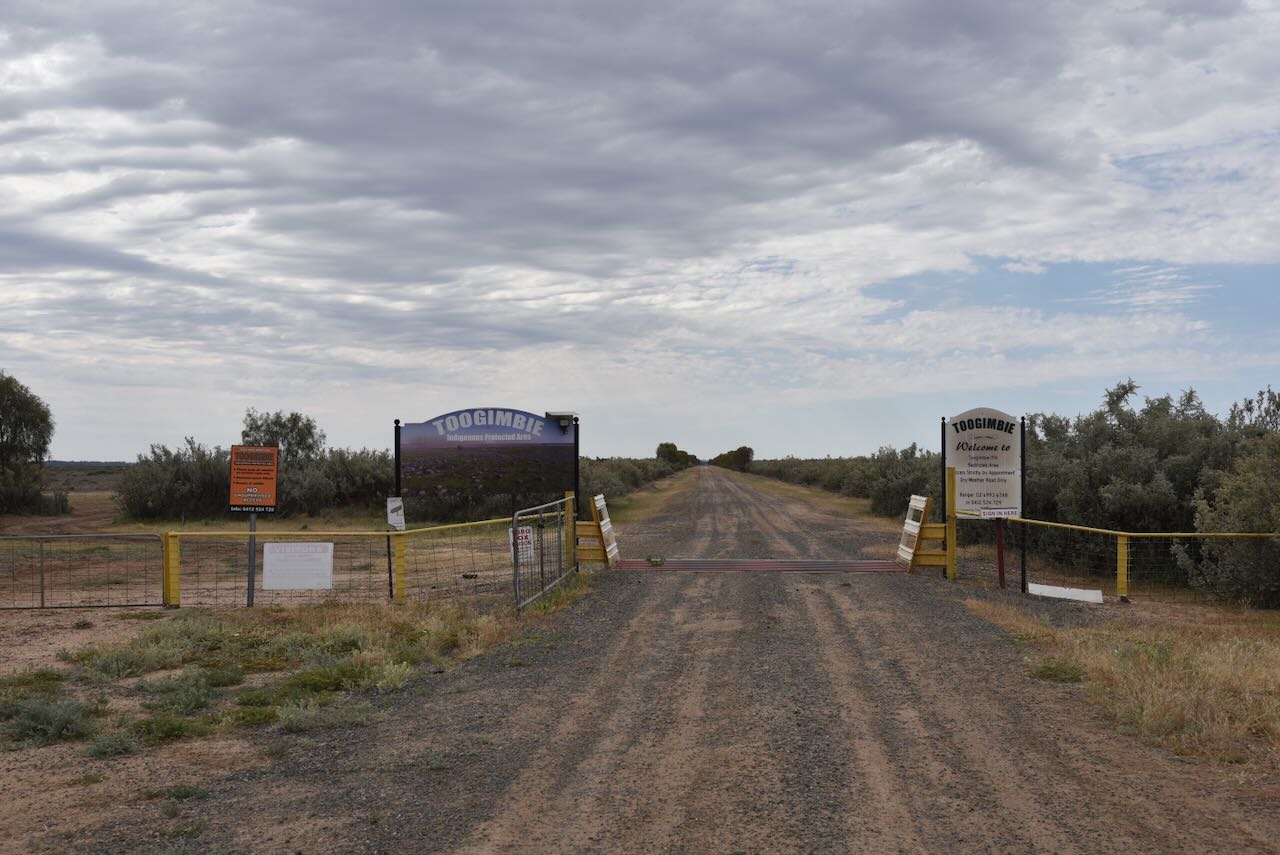
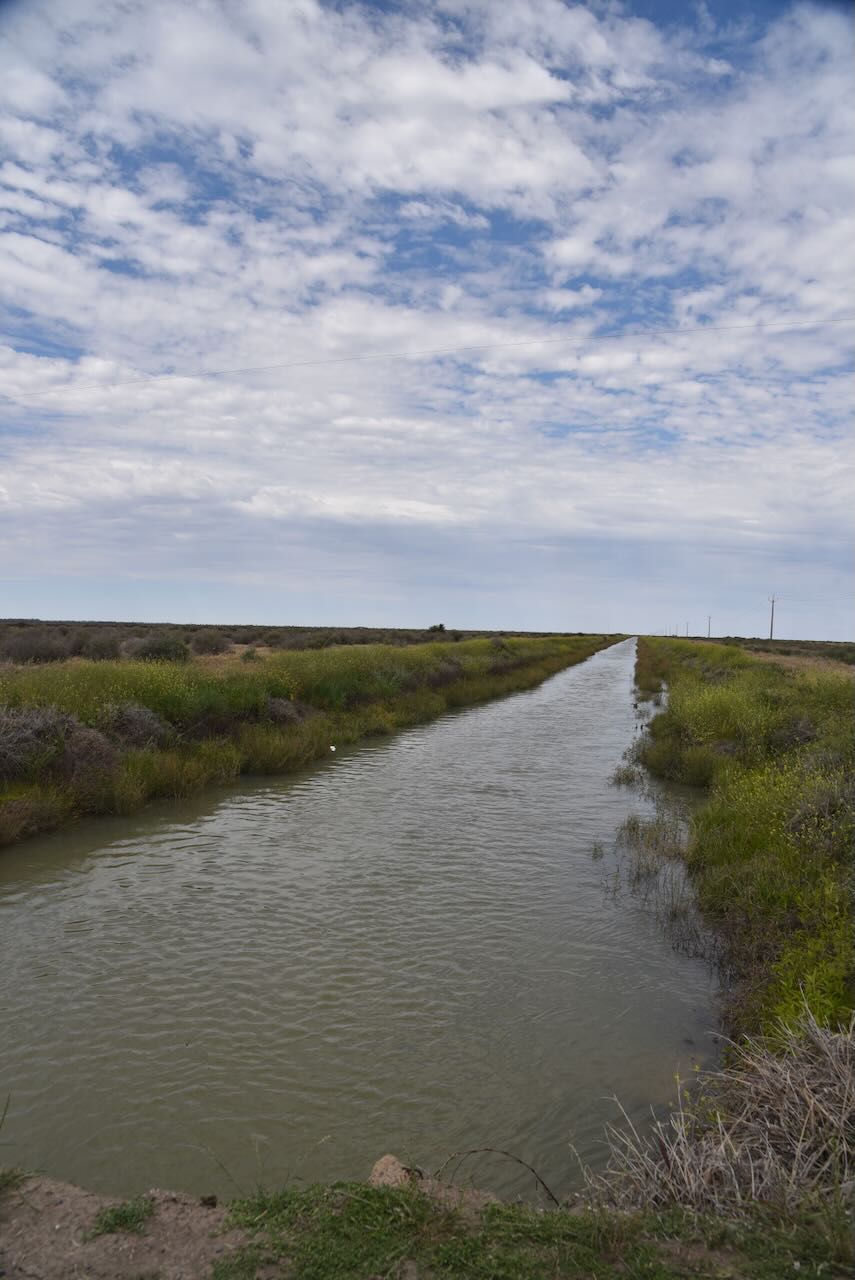
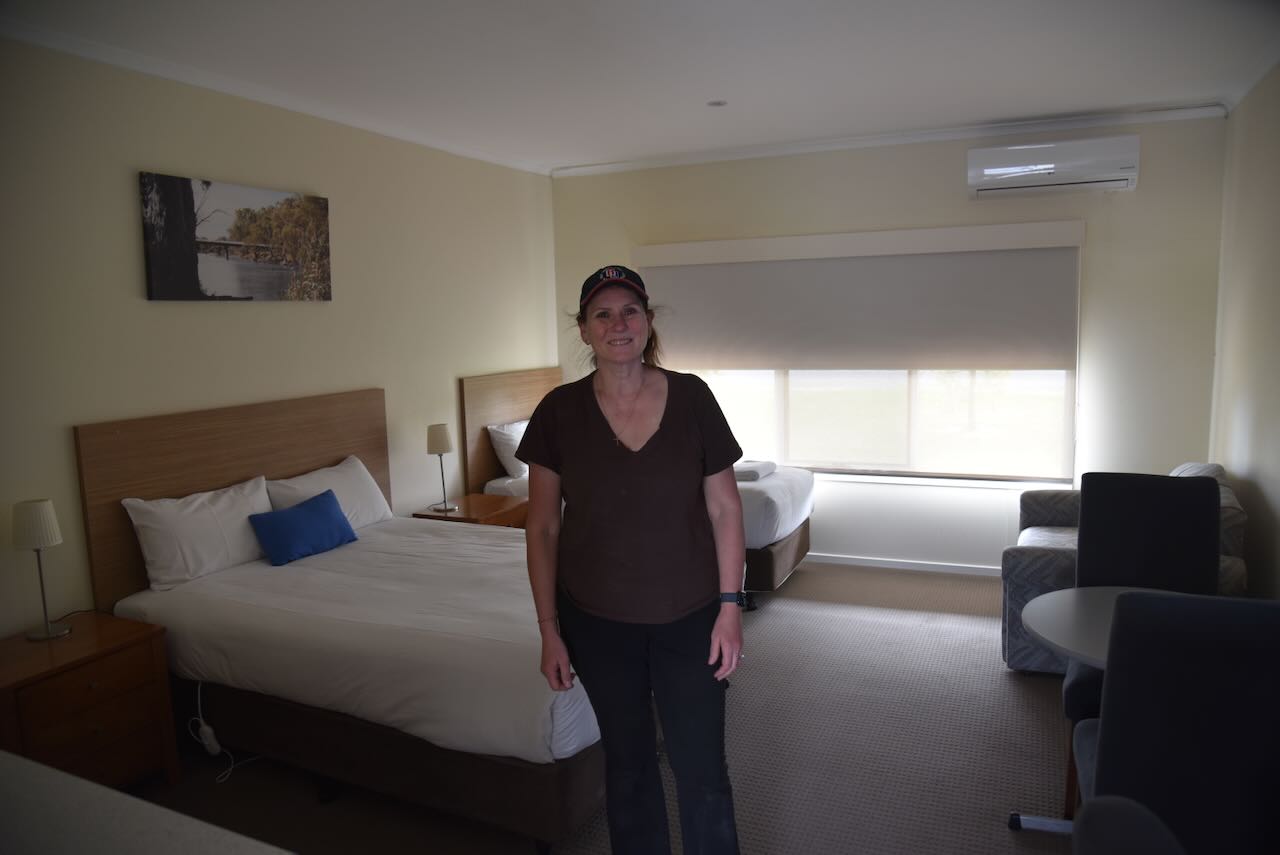
So, feeling a little disappointed, Marija and I drove into Hay and booked into our accommodation, the Comfort Inn Bishops Lodge.
The area around the current-day Hay township was known as Lang’s Crossing-place. It took its name from three brothers named Lang who were leaseholders of runs on the southern side of the Murrumbidgee River. Lang’s Crossing-place was a crossing point on the Murrumbidgee on the ‘Great North Road’, a well-travelled stock route. (Wikipedia 2021)
Thomas Lang was born in 1816 in Selkirk, Scotland. His brother Gideon Scott Lang was born in 1819, also in Selkirk, Scotland. And their sibling, William Lang, was born in 1823. Thomas, Gideon, and William emigrated to Australia. During the late 1840s, the Lang brothers established pastoral runs in the Riverina and then purchased more runs, including a 30-mile frontage on the Murrumbidgee River. (ancestry 2016) (Anu.edu.au 1967)
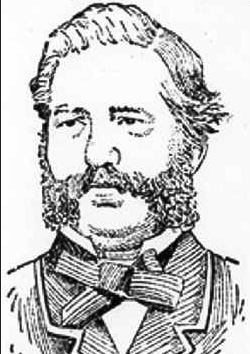
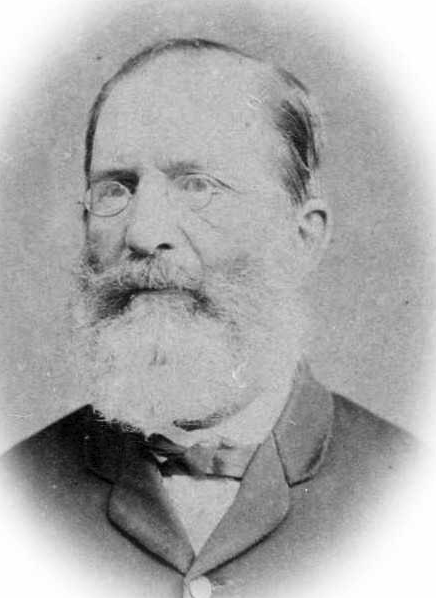
Above: Gideon Lang and his brother William Lang. Images c/o ancestry.com.au
Francis William Cadell (b. 1822. d. 1879) was a Scottish explorer of Australia, who opened up the Murray River for transport by steamship. In 1856–1857, Cadell placed a manager at Lang’s Crossing-place with the task of establishing a store which was initially in a tent. In late 1857, a blacksmith shop and residence were established at Lang’s Crossing-place by Thomas Simpson. In 1858, a hotel and dwelling house were built by the Canadian shipwright Henry Leonard. He also launched a punt on the Murrumbidgee.
However, there was opposition to Leonard’s ventures. One of those who was against Leonard’s operations was Henry Jeffries. He was the leaseholder of “Illilawa” station, which included Lang’s Crossing-place at its western extremity. Leonard was forced to stand guard with a loaded gun due to threats about his punt. There was also an attempt to pull down Leonard’s hotel during its construction, and this resulted in outcry from those who were keen to see development at Lang’s Crossing-place.
As a result, a surveyor was dispatched by the New South Wales Government to officially map out a township. Leonard’s hotel, the Murrumbidgee Punt Hotel, was completed and opened on the 30th day of October 1858. By the following year, the New South Wales Department of Land had proclaimed reservations on either side of the Murrumbidgee River at Lang’s Crossing-place.
By 1859, the township had been named Hay in honour of John Hay. Sir John Hay was a wealthy squatter from the Upper Murray, a member of the Legislative Assembly in New South Wales, and a former Secretary of Lands and Works.
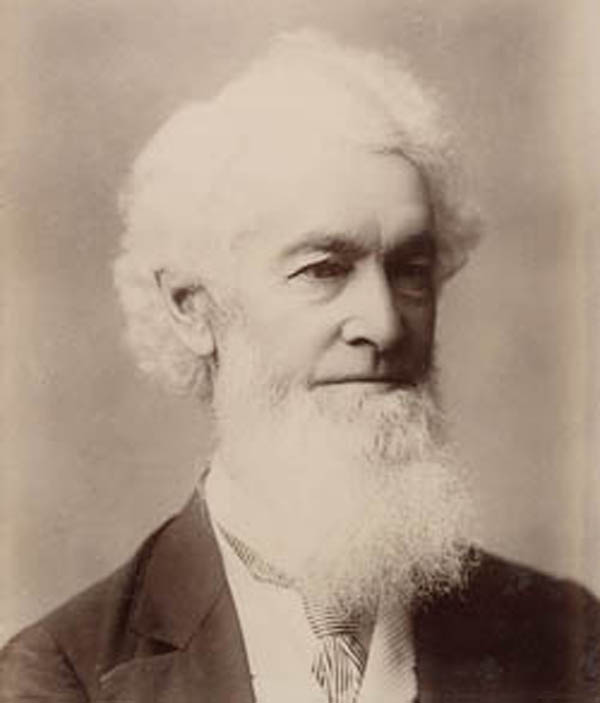
Above: Sir John Hay. Image c/o Wikipedia
The following year saw a surge in land sales at Hay.
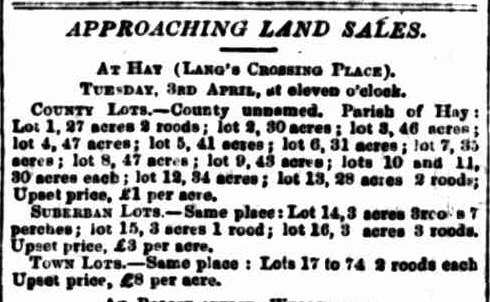
Above: article from the Empire, Sydney, Tue 3 Apr 1860. Image c/o Trove
On the 16th day of April 1859, ‘Lang’s Crossing Place’ Post Office opened and was renamed Hay in 1861. The 1861 Census recorded that there were 172 people living in the township of Hay: 115 males and 57 females. That year, two more hotel licences were granted at Hay: the Caledonian Hotel, run by Thomas E. Blewett and George Dorward, and the Argyle Hotel, run by Thomas Simpson. The two hotels were located side by side on Lachlan Street.
By 1871, the population of Hay had increased to 664 people: 388 males and 276 females. Hay became a busy port on the Murrumidgee River for the steamers trading along the river.
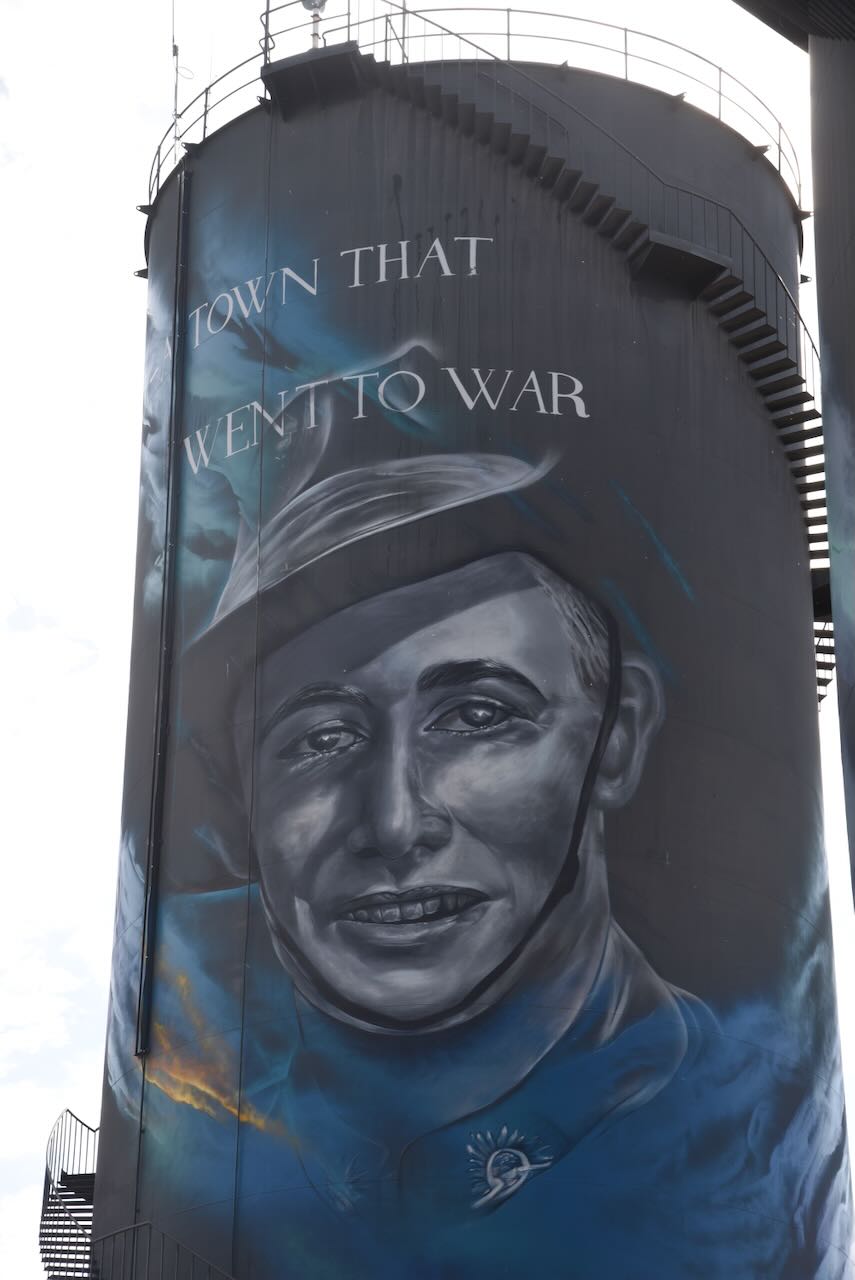
After checking into the motel and unpacking the 4WD, Marija and I headed to the Hay Water Tower Art, which is part of the Australian SIlo Art Trail. The murals on the water tanks were completed in December 2020 and are the work of artists Matt Adante and Bill Campbell. (Australiansiloarttrail.com, 2025)
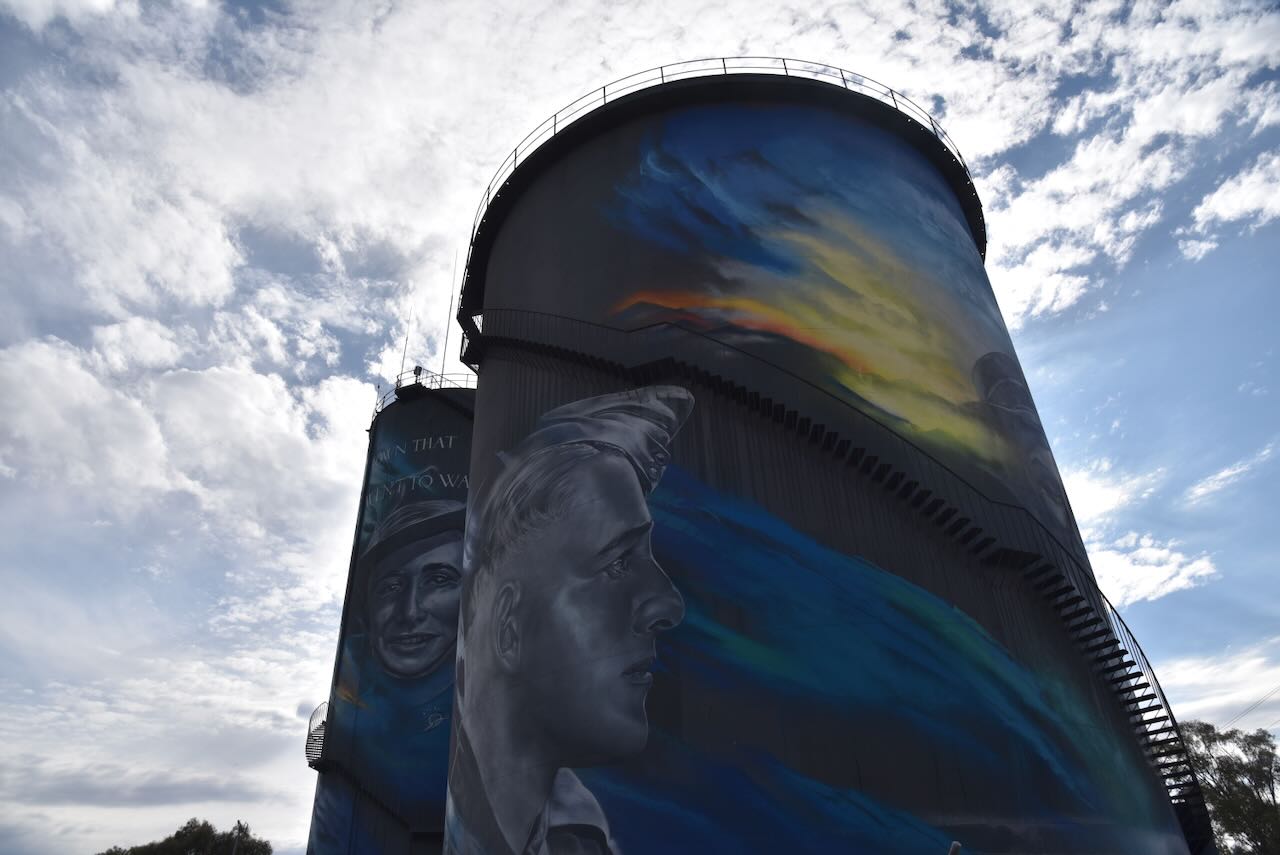
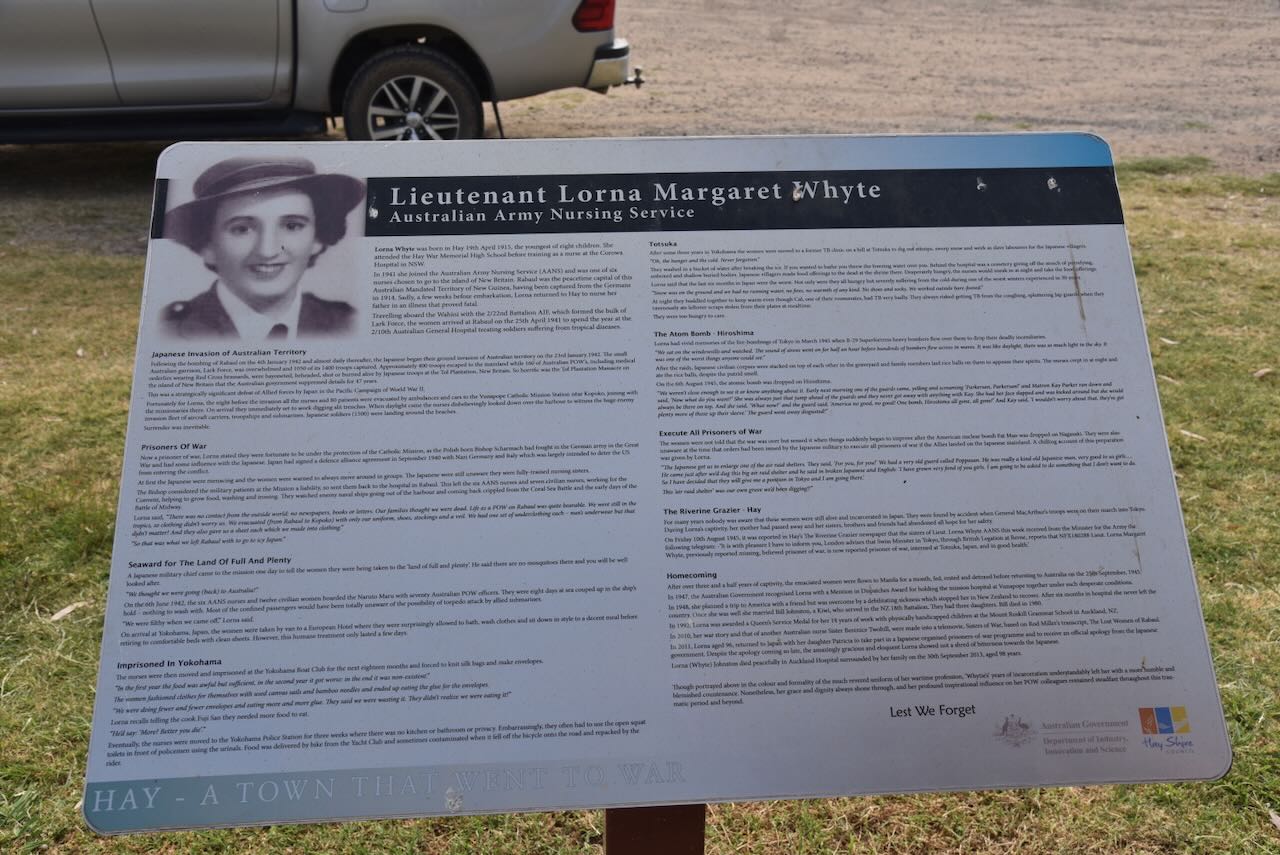
The first person featured is Lieutenant Lorna Margaret Whyte, AANS. She was born in Hay in April 1915 and trained as a nurse at the Corowa Hospital. In 1941, she joined the Australian Army Nursing Service (AANS).
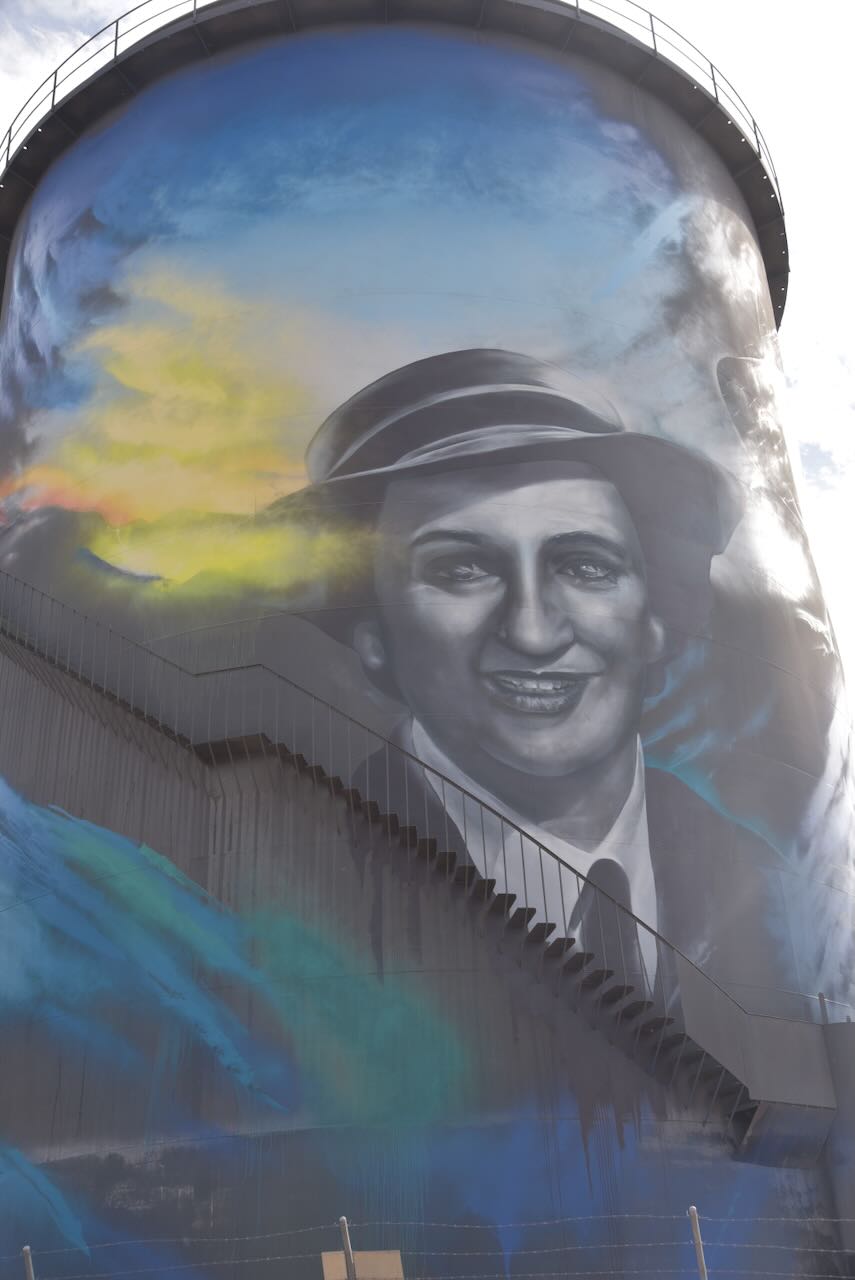
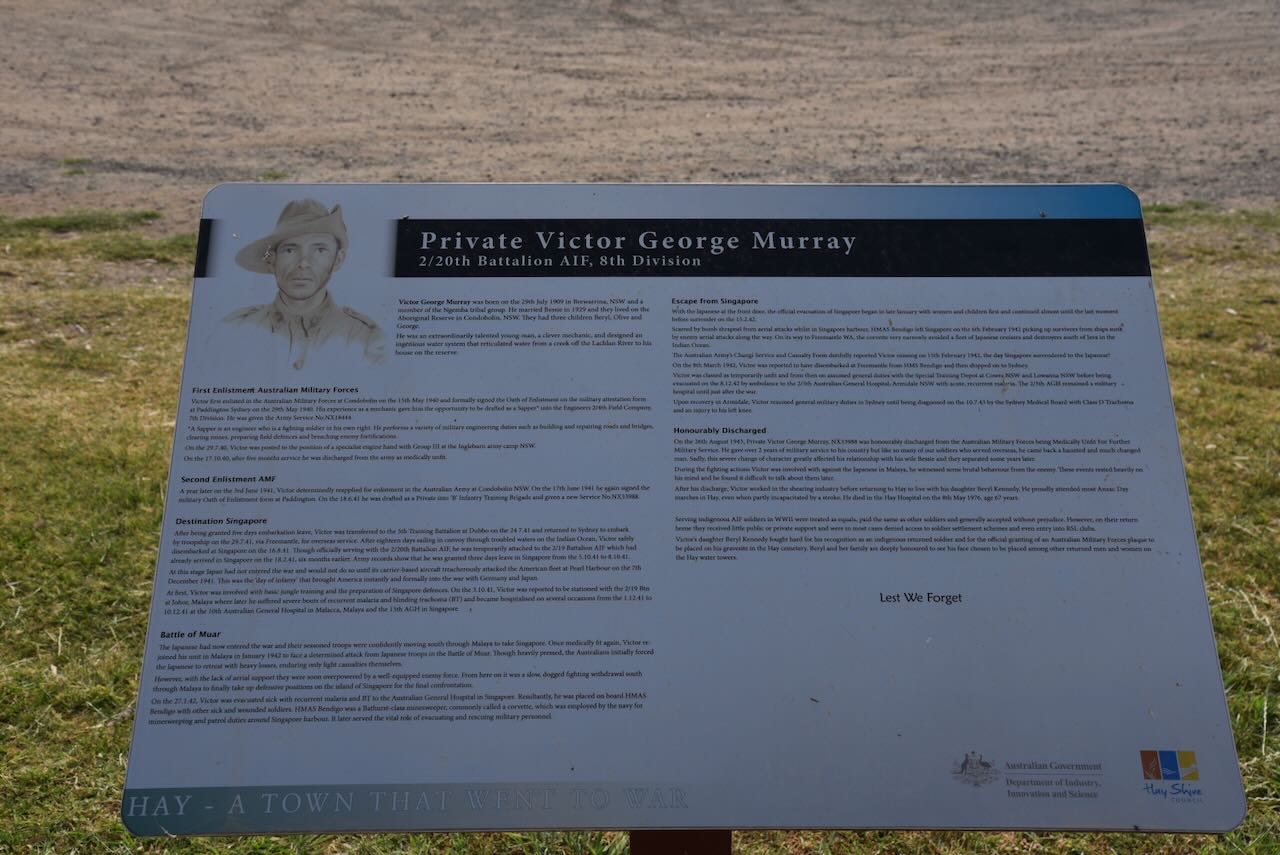
Private Victor George Murray was born in 1909 in Brewarrina, New South Wales. He served with the 2/20th Battalion AIR, 8th Division.
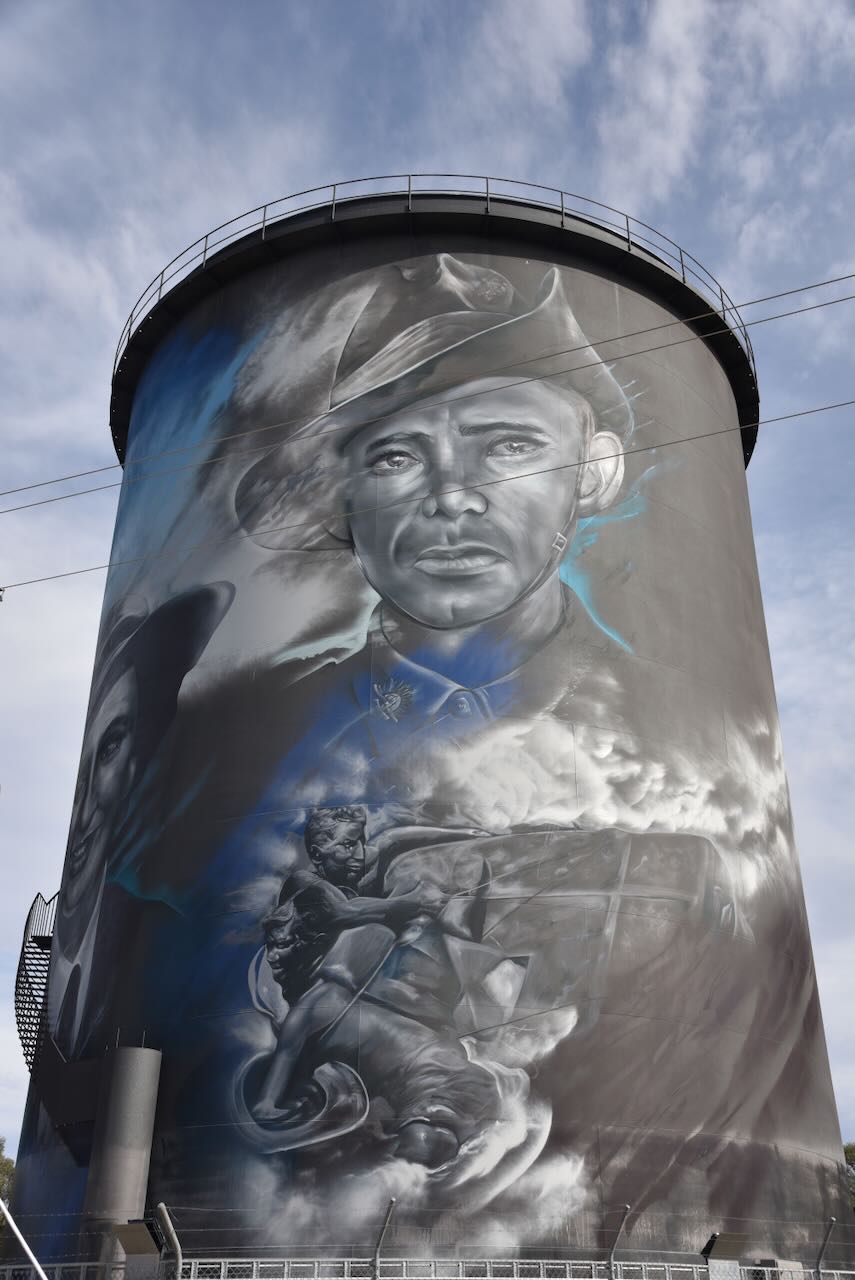
Corporal Clifford Leslie Farlow was born in 1922 and moved to Hay as a baby. He enlisted with the Australian Imperial Force in June 1940.
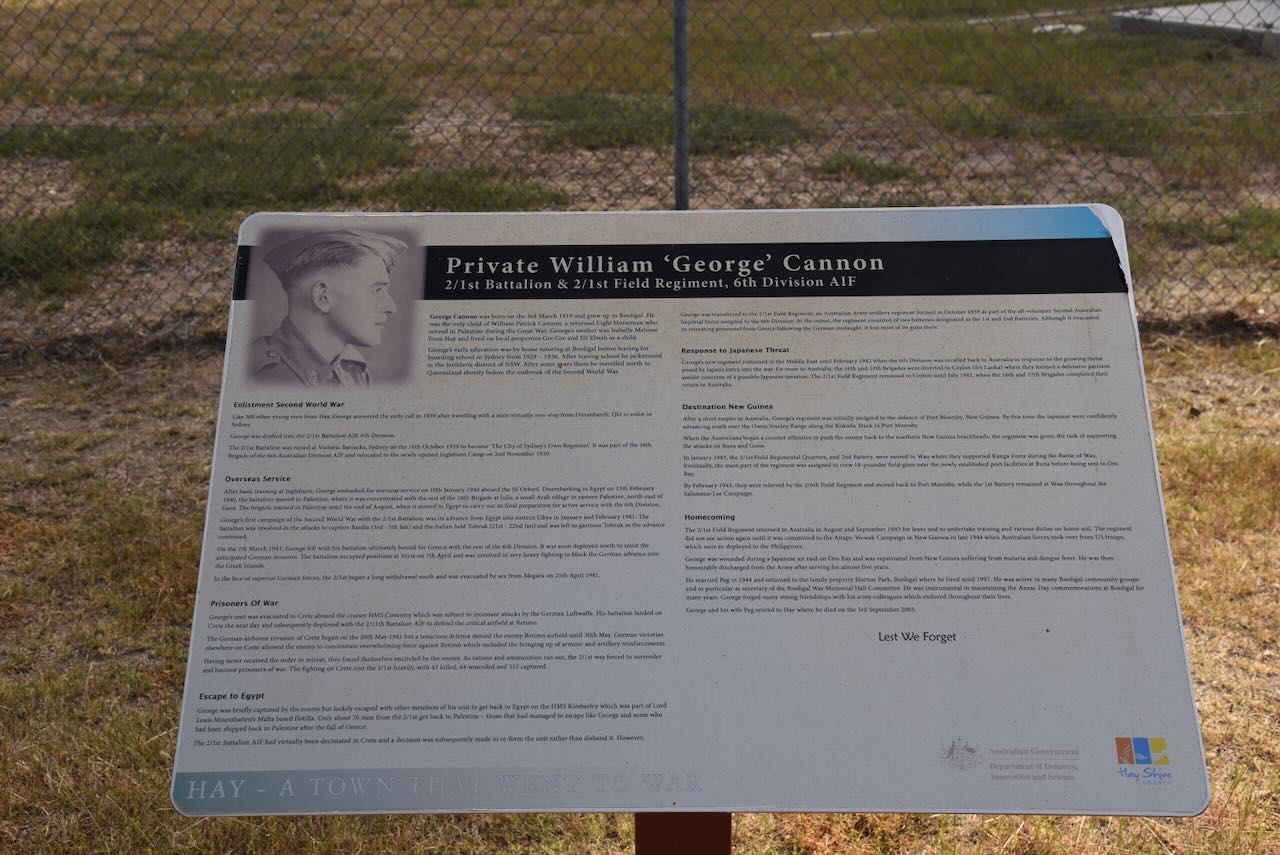
Private William ‘George’ Cannon was born in March 1919 and served with the 2/1st Battalion and 2/1st Field Regiment, 6th Division AIF.
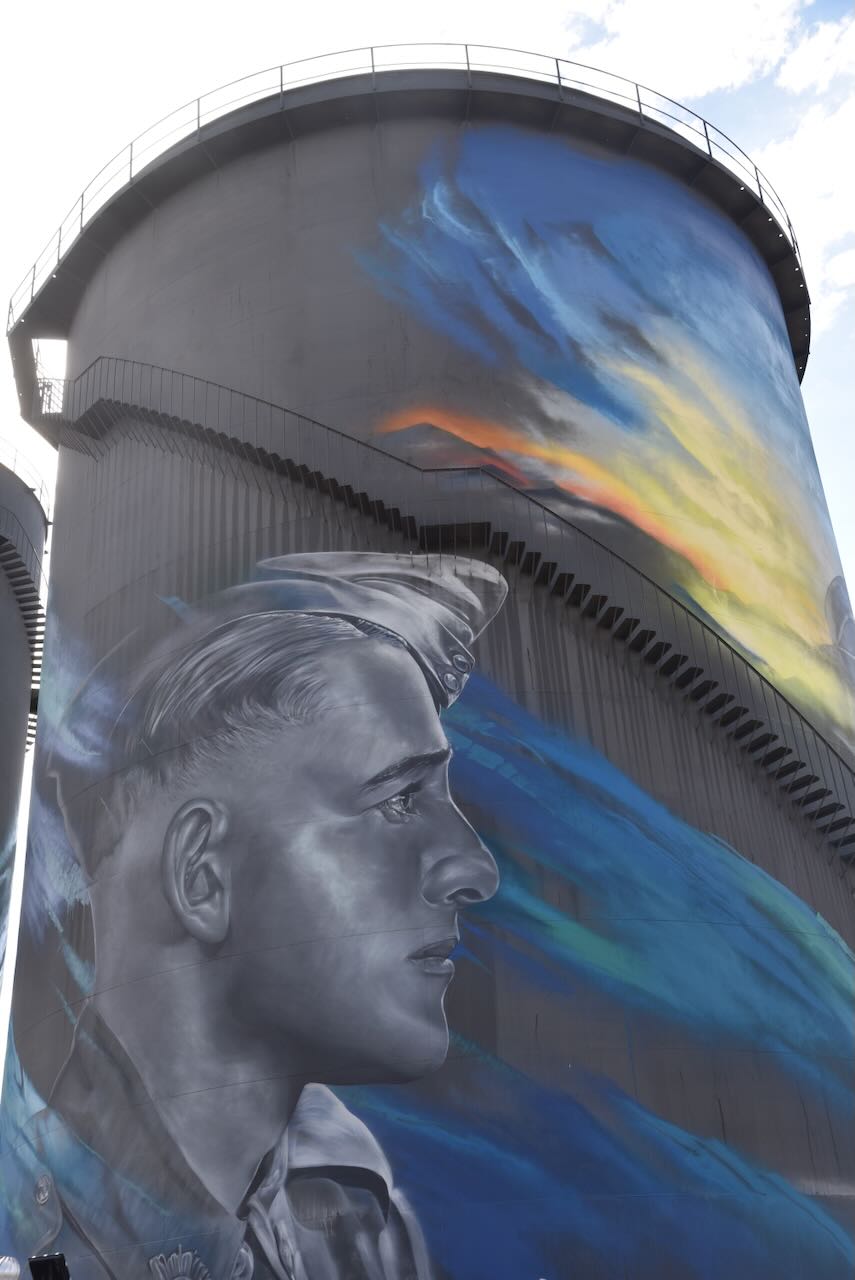
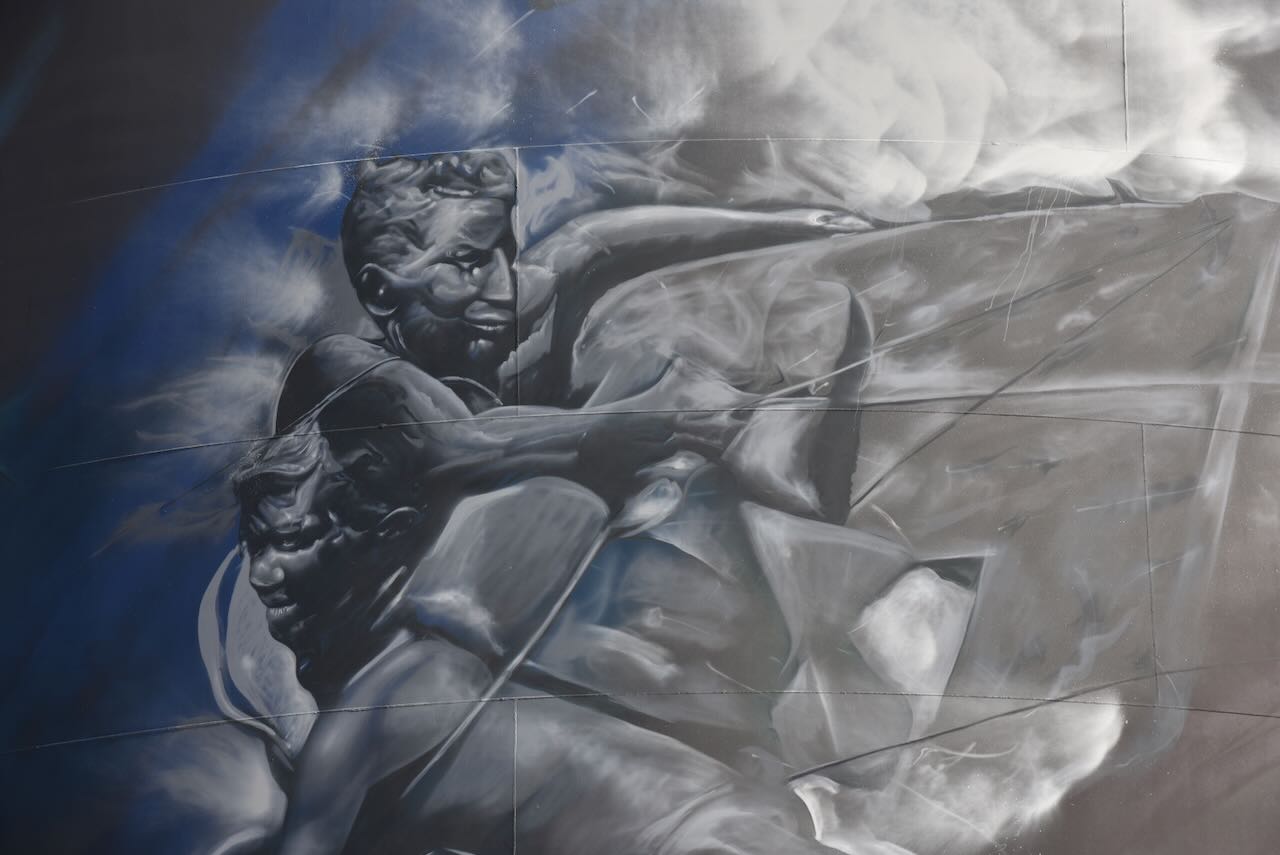
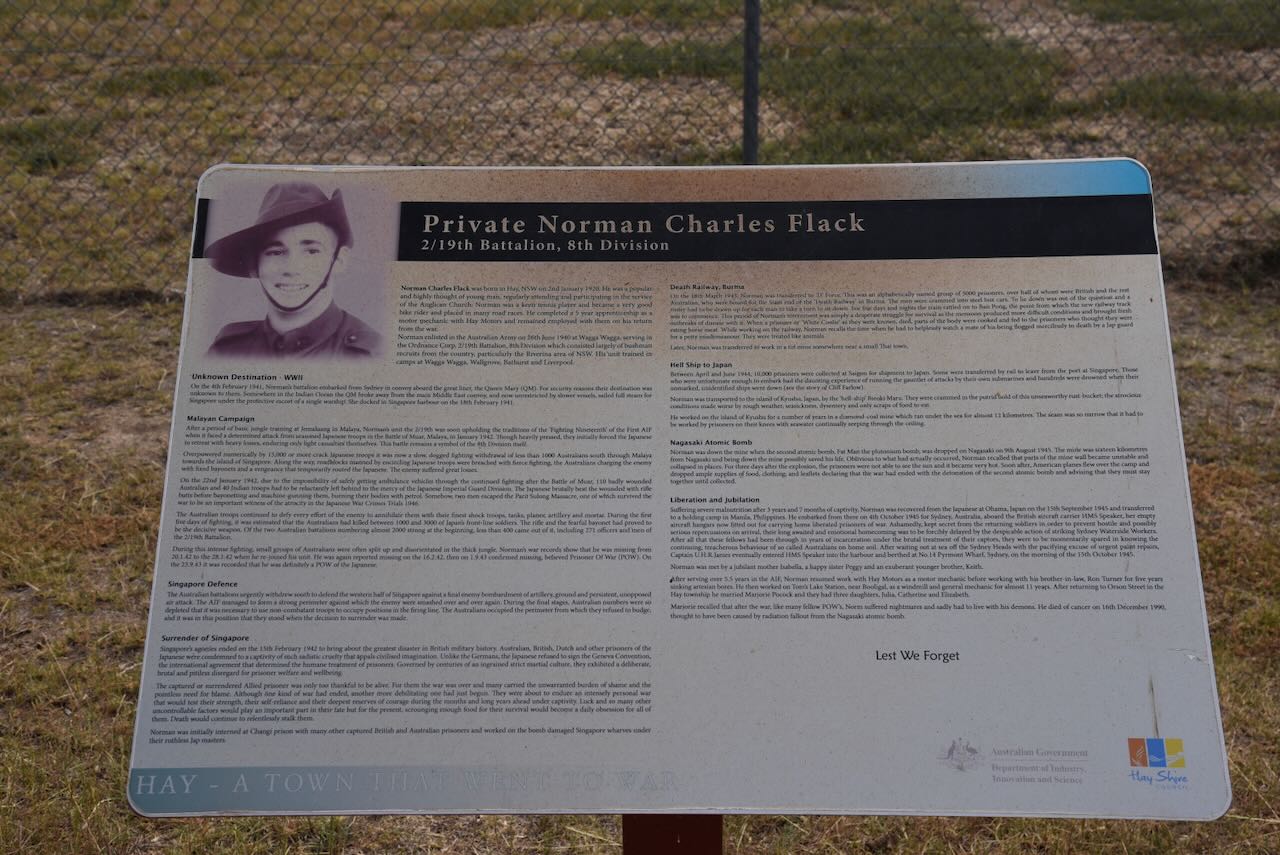
Private Norman Charles Flack was born in Hay in 1920 and served with the 2/19th Battalion, 8th Division.
We then visited the memorial commemorating the centenary of the Battle of Beersheba. It features a bronze sculpture of a soldier, and a Waler, the breed of horse that was predominantly used in the Light Horse Brigades. (Vwma.org.au 2025)
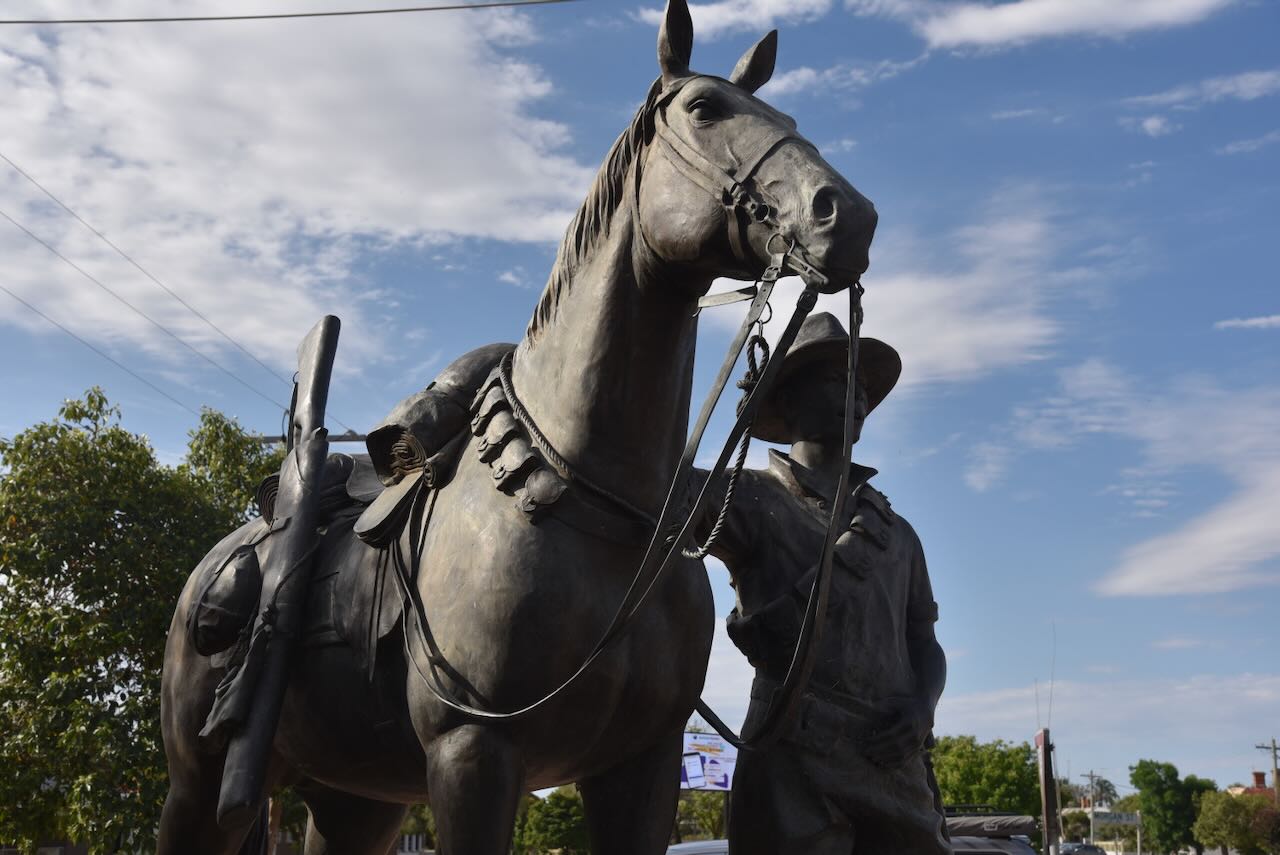
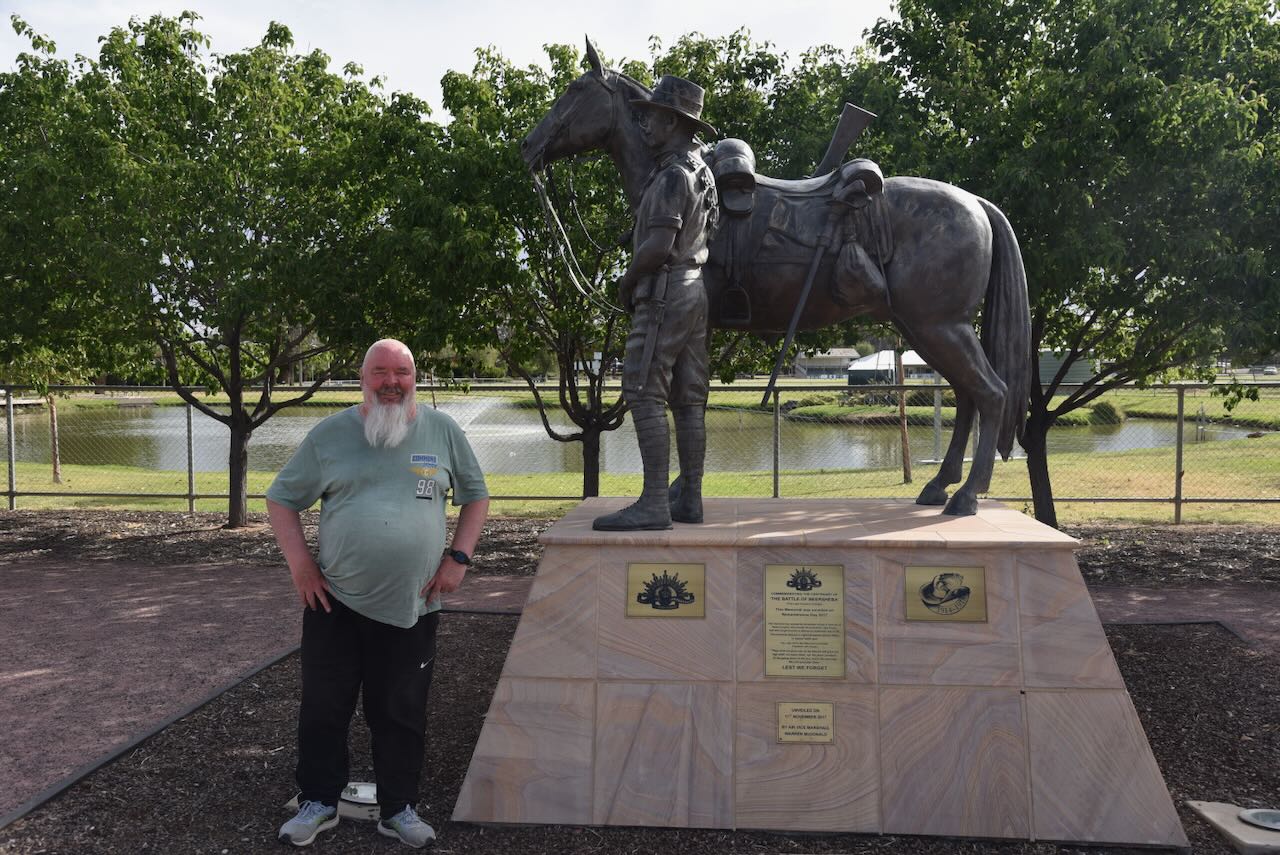
The British offensive known as the Battle of Gaza took place in October 1917. A part of this was the Battle of Beersheba, which took place on the 31st day of October 1917. The final phase of this battle was the mounted charge of the 4th Light Horse Brigade, which stormed through the Turkish troops and seized the town of Beersheba. The capture of this strategic town enabled the British Empire forces to break the Ottoman line near Gaza and advance into Palestine. (Aust War Memorial 2017)
Below is an excellent video on the Battle of Beersheba.
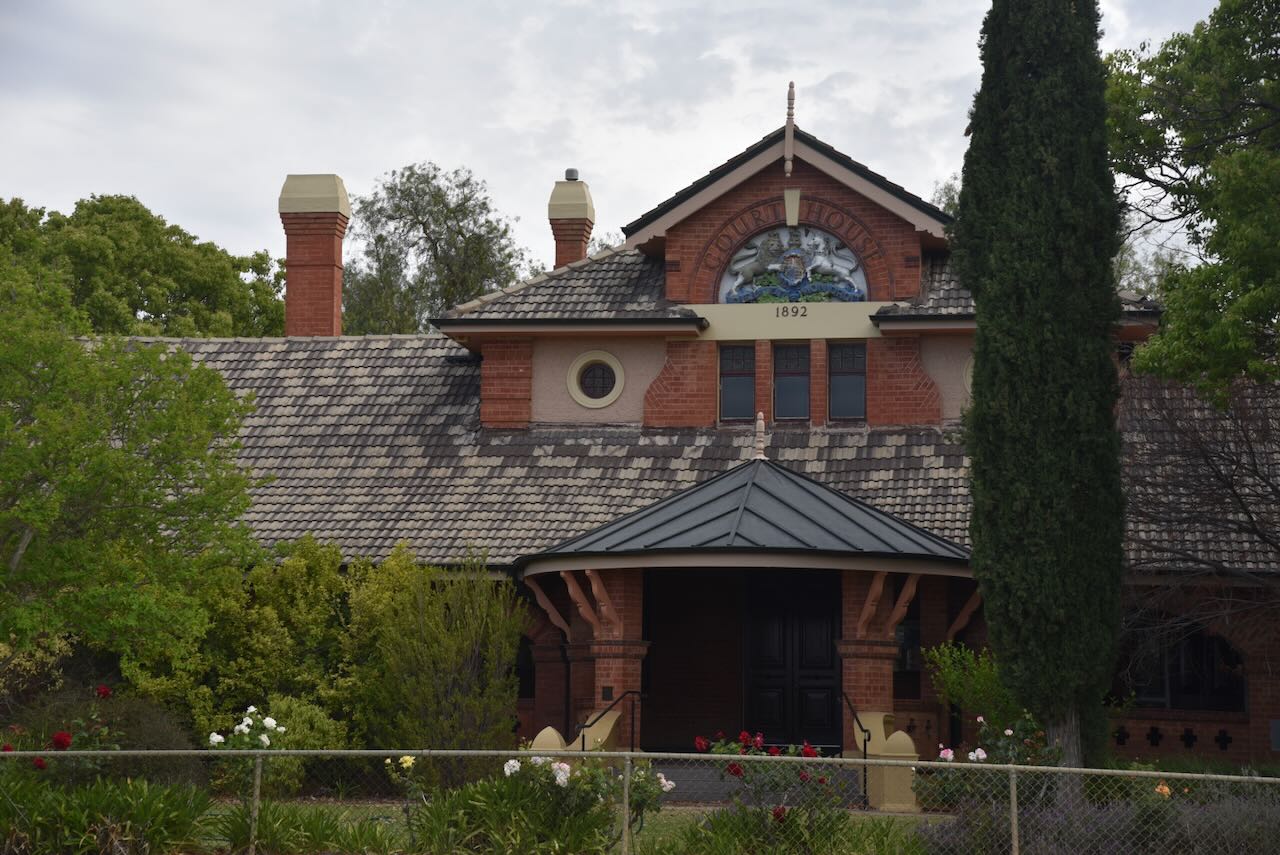
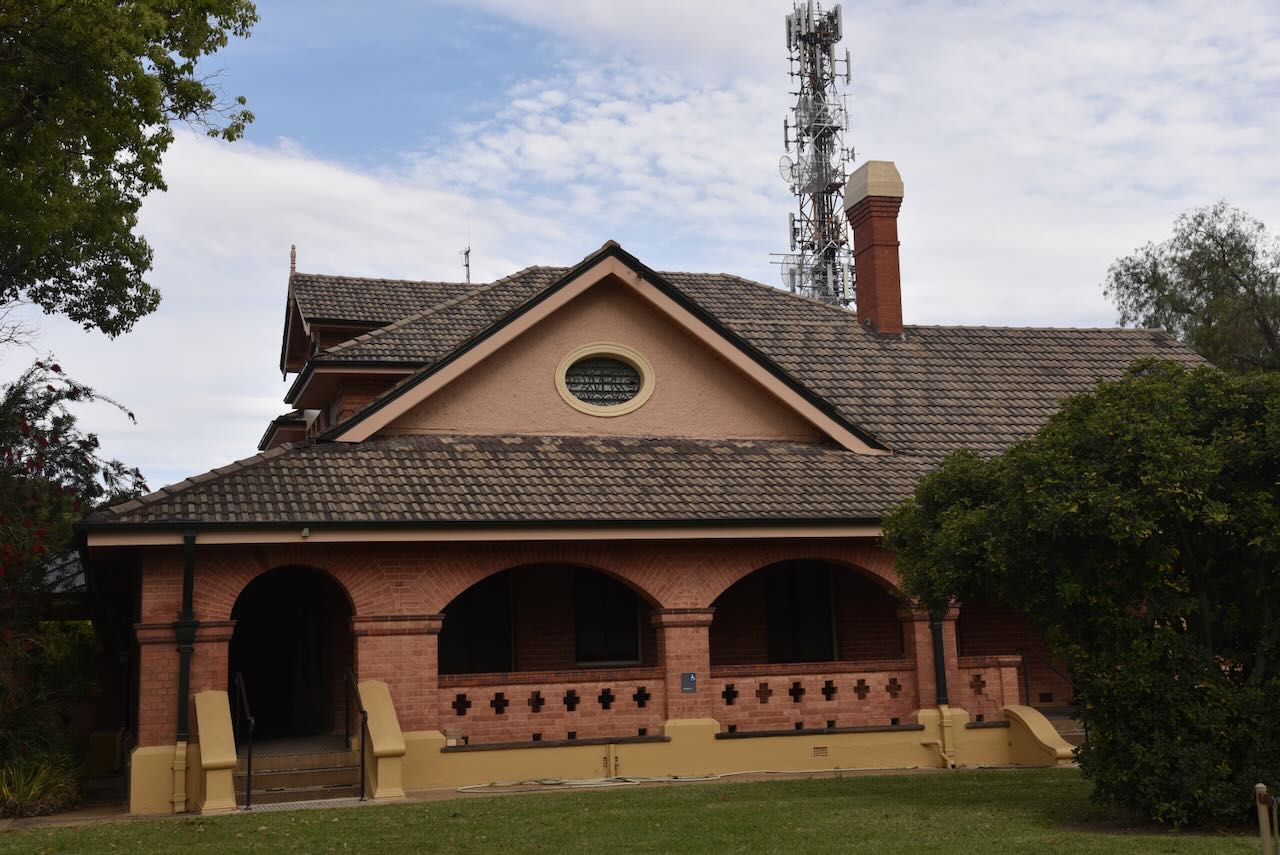
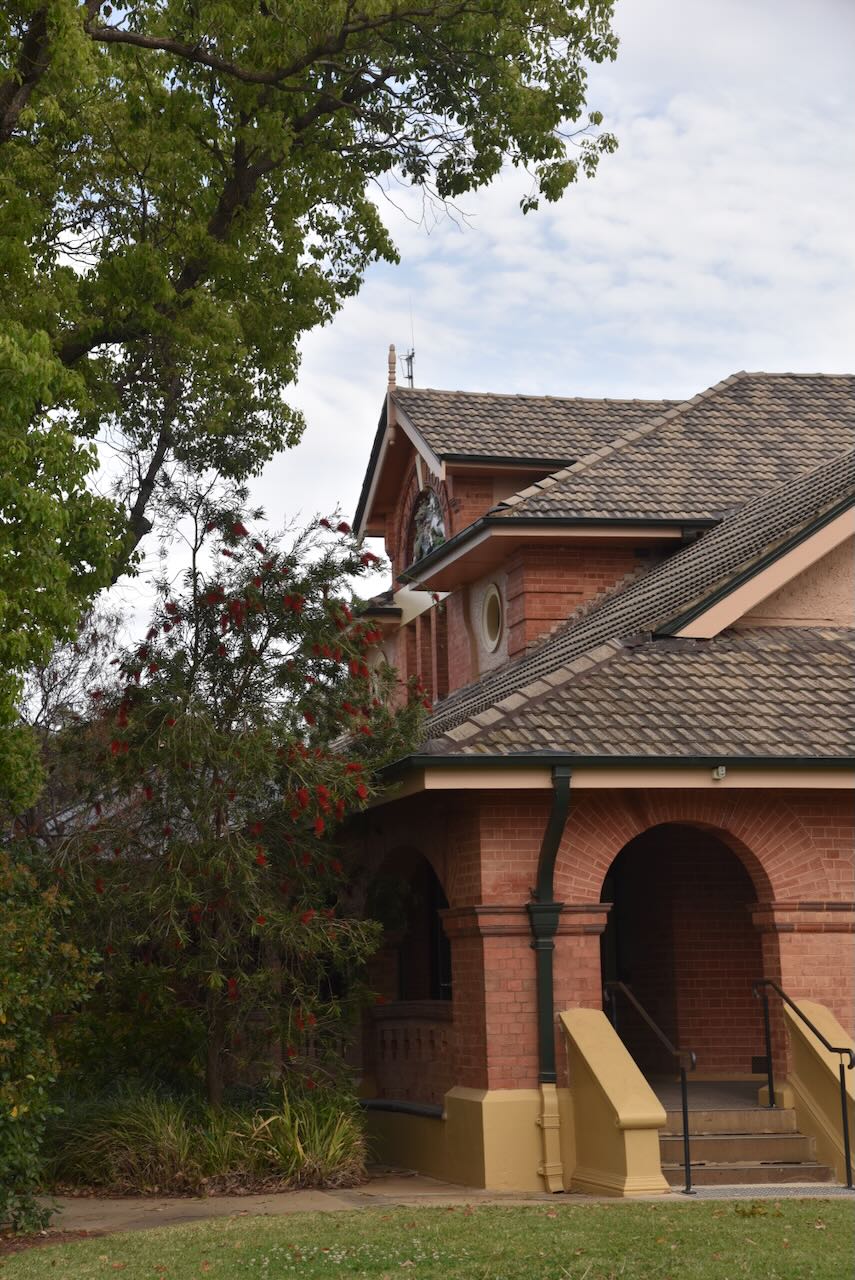
Our next stop was the historic Hay Courthouse, which was built in 1892 and was designed by Government architect Walter Liberty Vernon. (Visithay.com.au 2025)
I had not had a good look around Hay since I was a teenager, so Marija and I took some time to stroll down the main street (Cobb Highway).
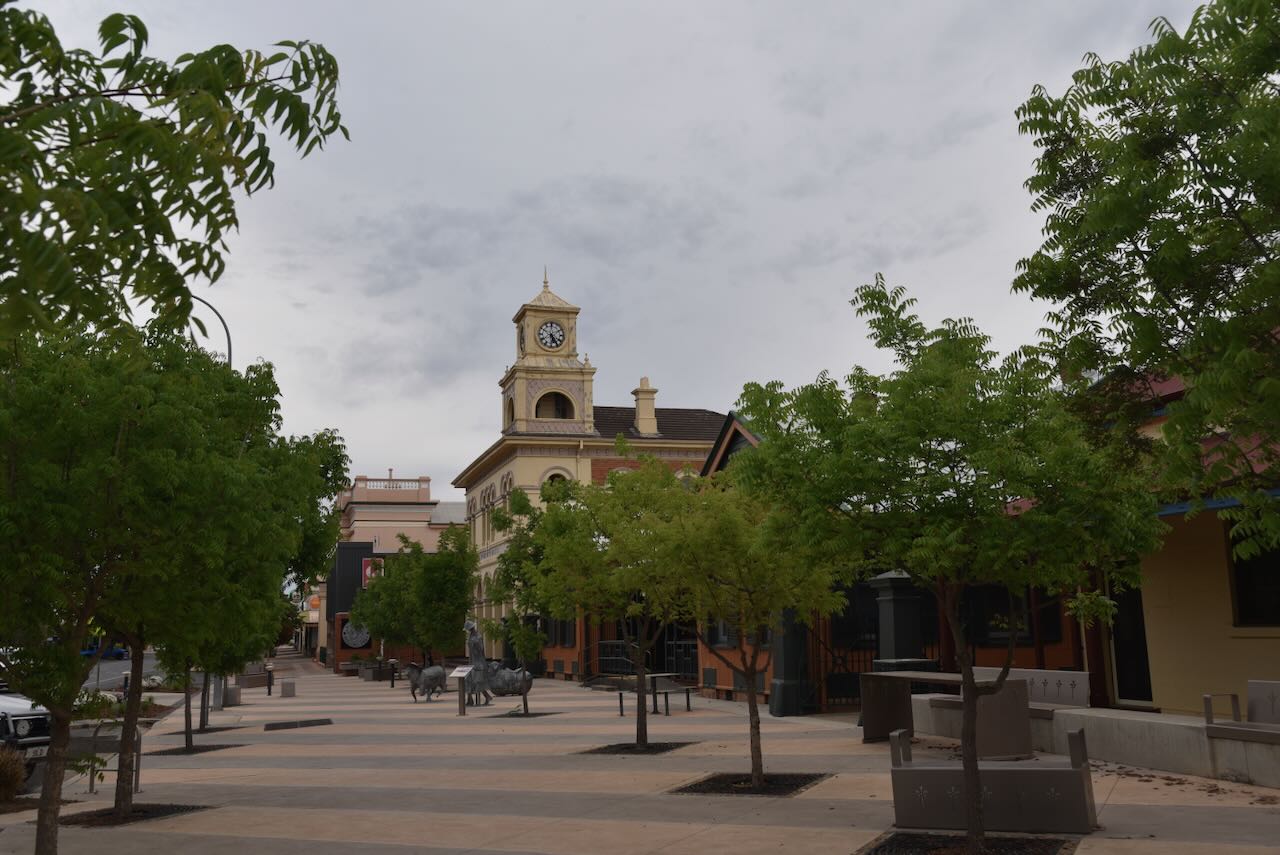
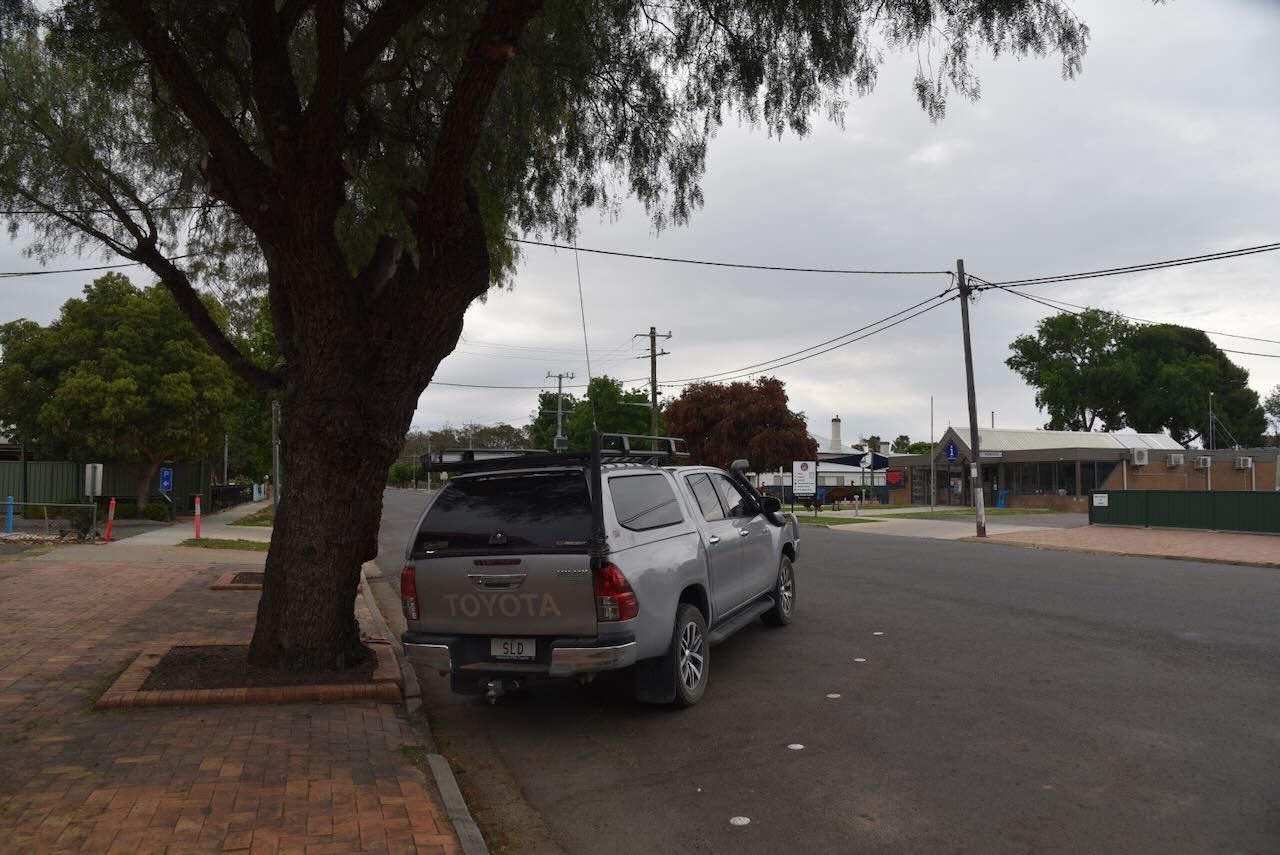
I soon found that Hay was one of many country towns that chose to have reverse-angle parking.
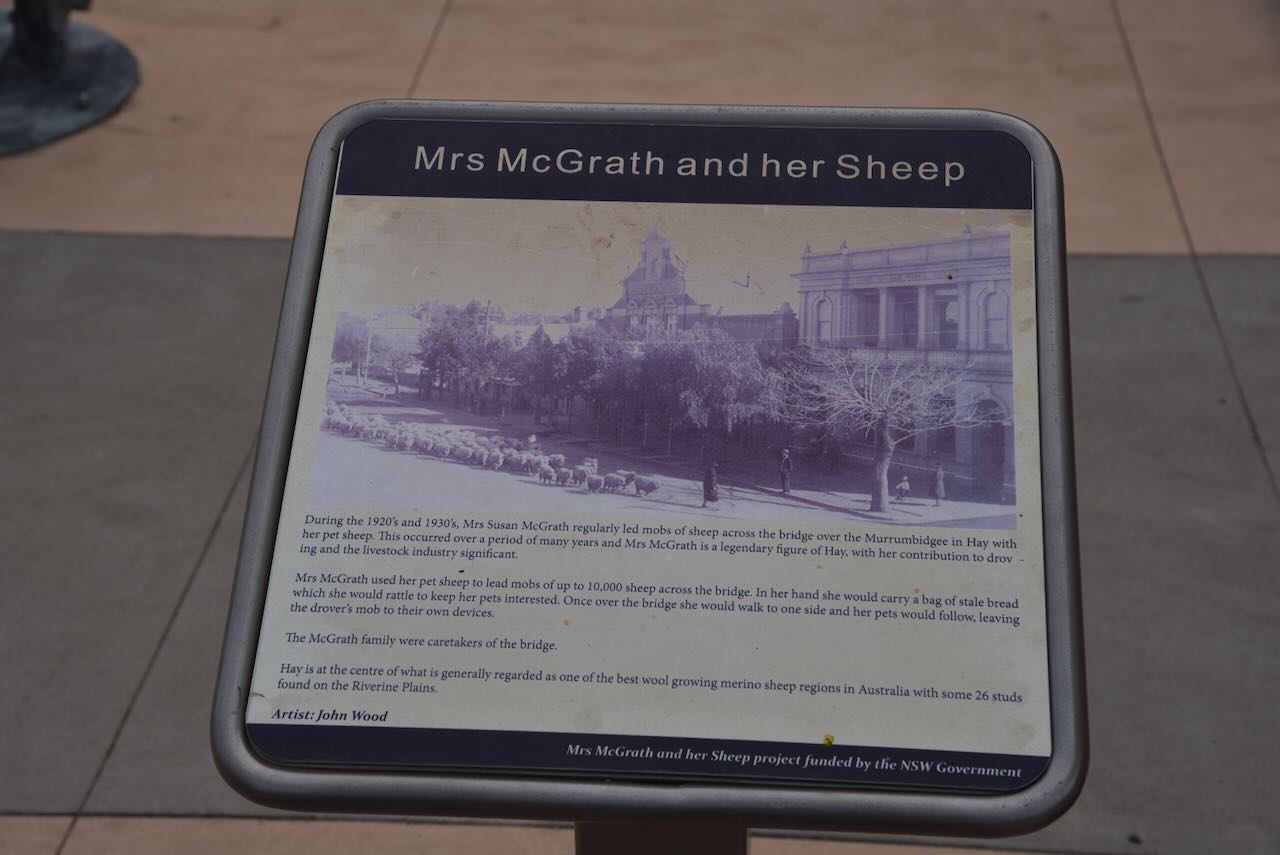
During the 1920s and 1930s, Mrs Susan McGrath regularly led mobs of sheep across the bridge over the Murraumbidgee in Hay with her pet sheep. She used her pet sheep to lead mobs of up to 10,000 sheep across the bridge. In her hand, she would carry a bag of stale bread, which she would rattle to keep her pets interested. Once over the bridge, she would walk to one side, and her pets would follow, leaving the drover’s mob to their own devices.
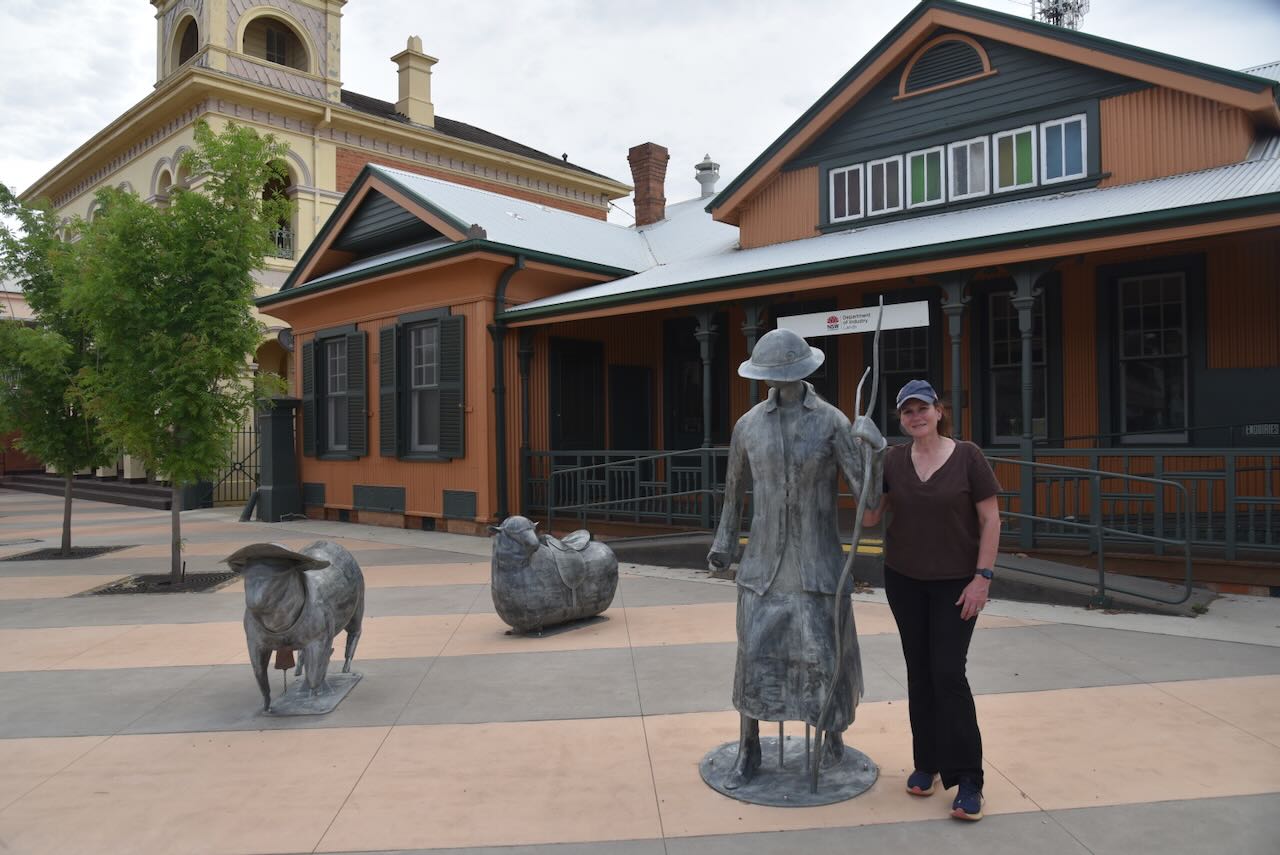
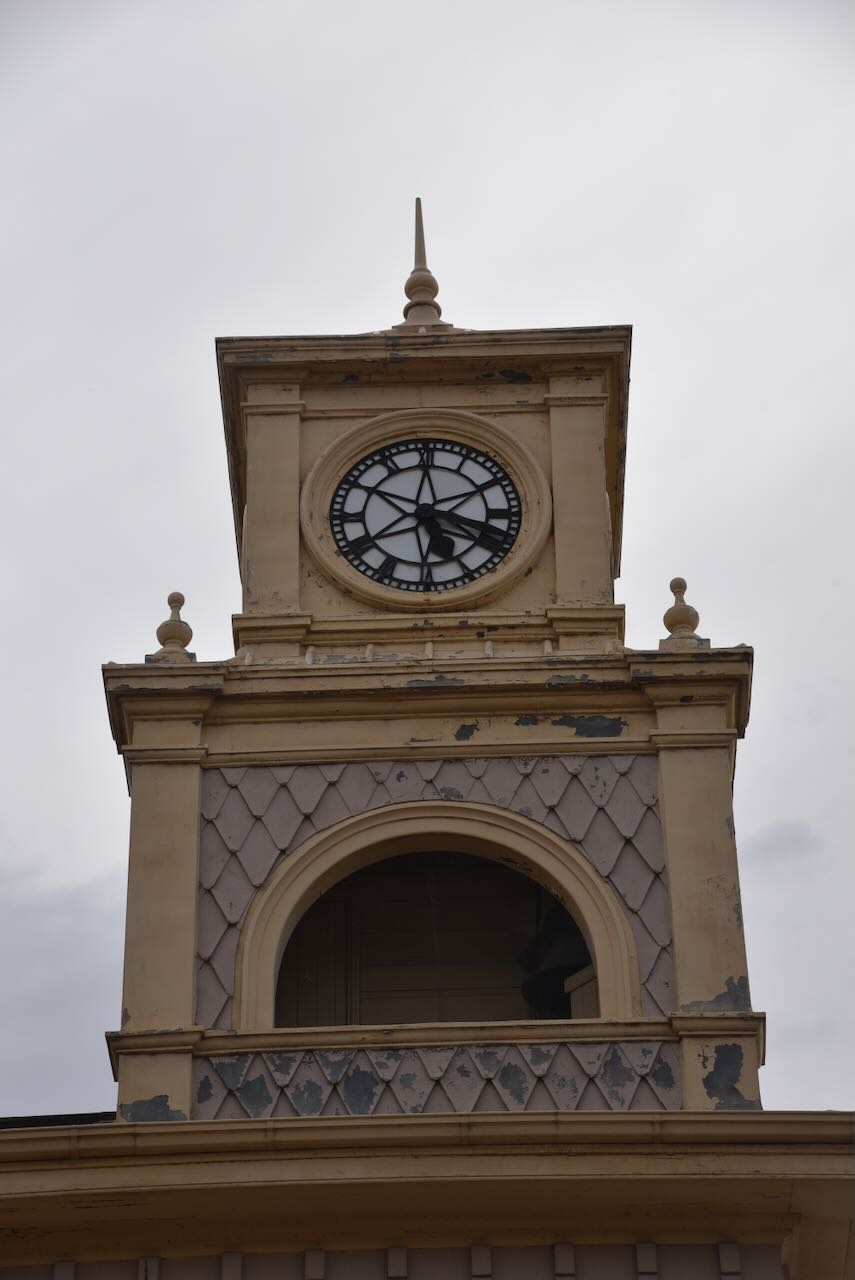
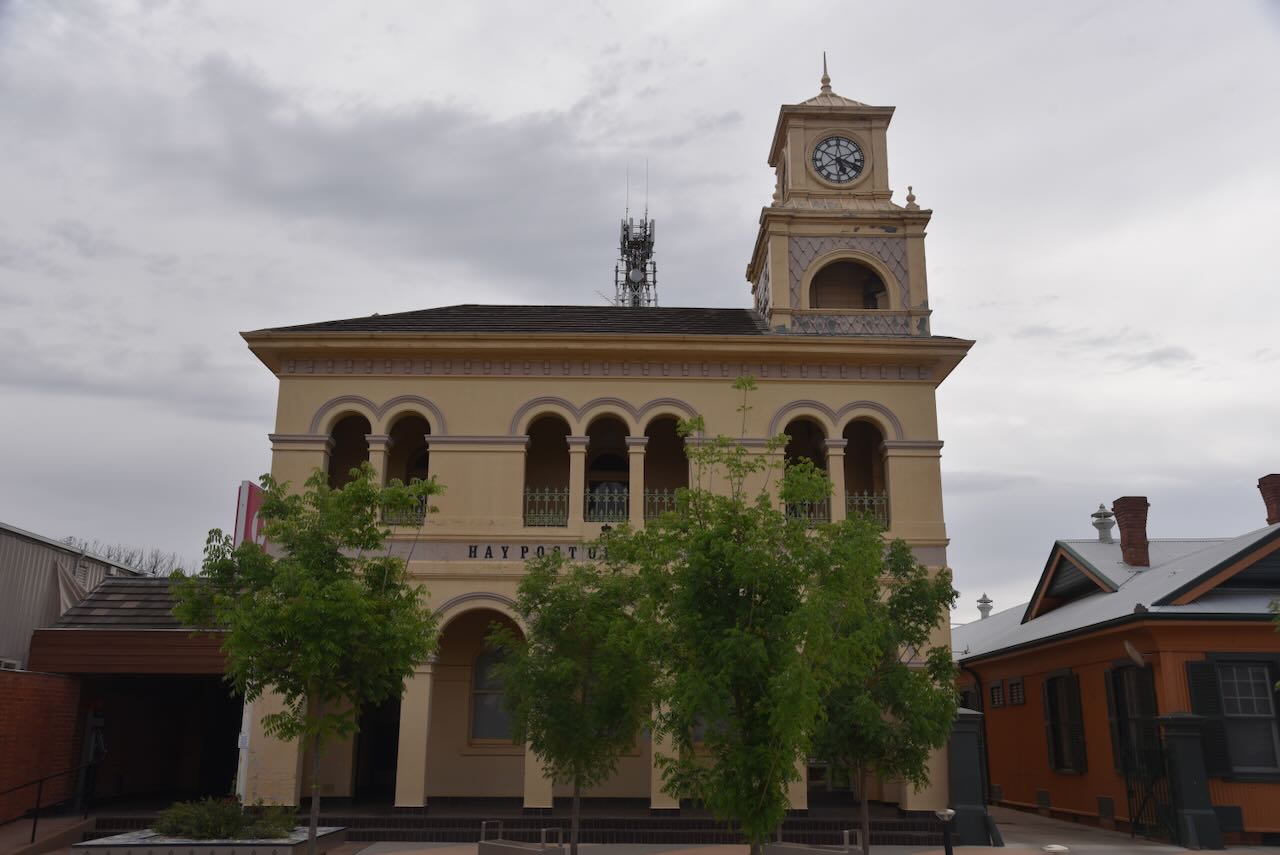
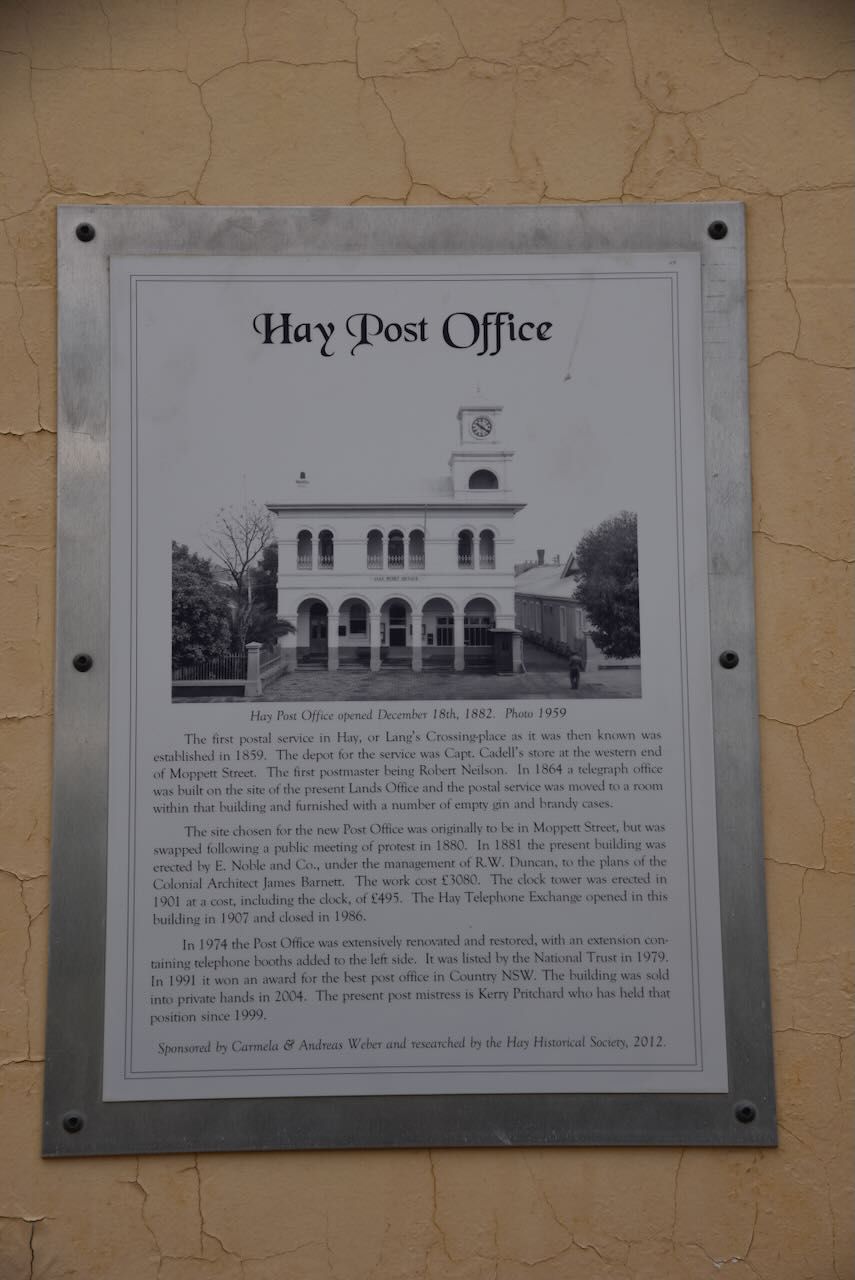
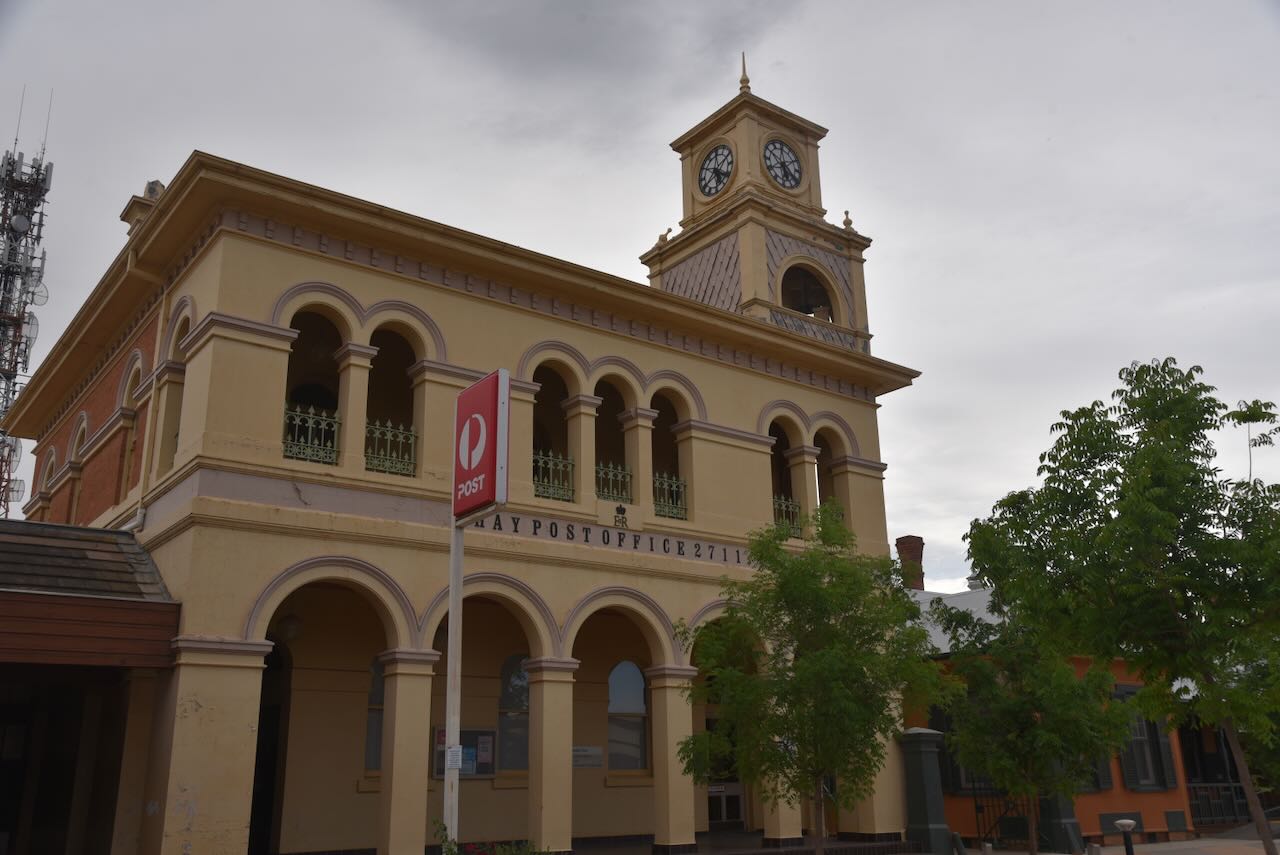
The Hay Post Office is a most impressive building. It was erected in 1881 by Robert Duncan for E. Noble & Co. to plans by James Barnett. The clock tower was added in 1901. The building is brick, stuccoed on the front facade and side verandahs.
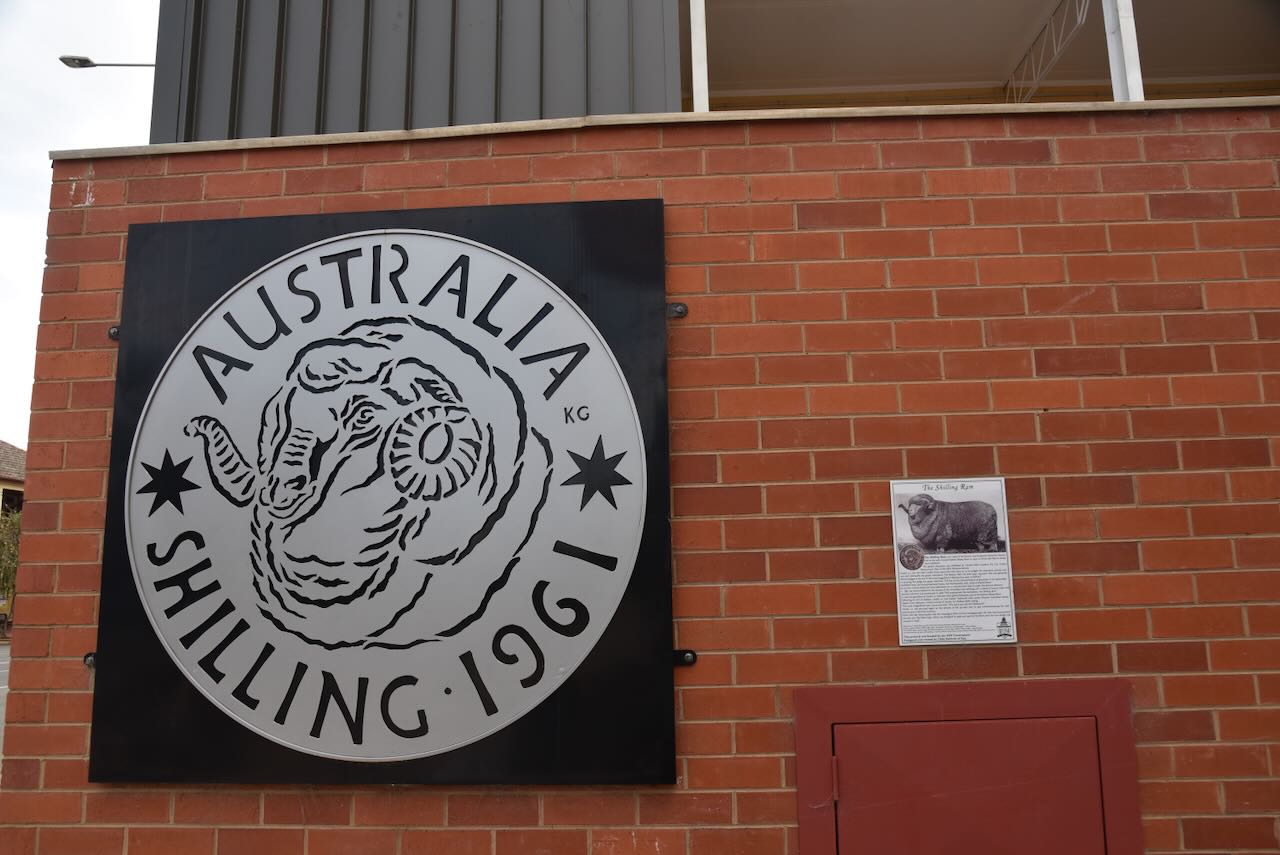
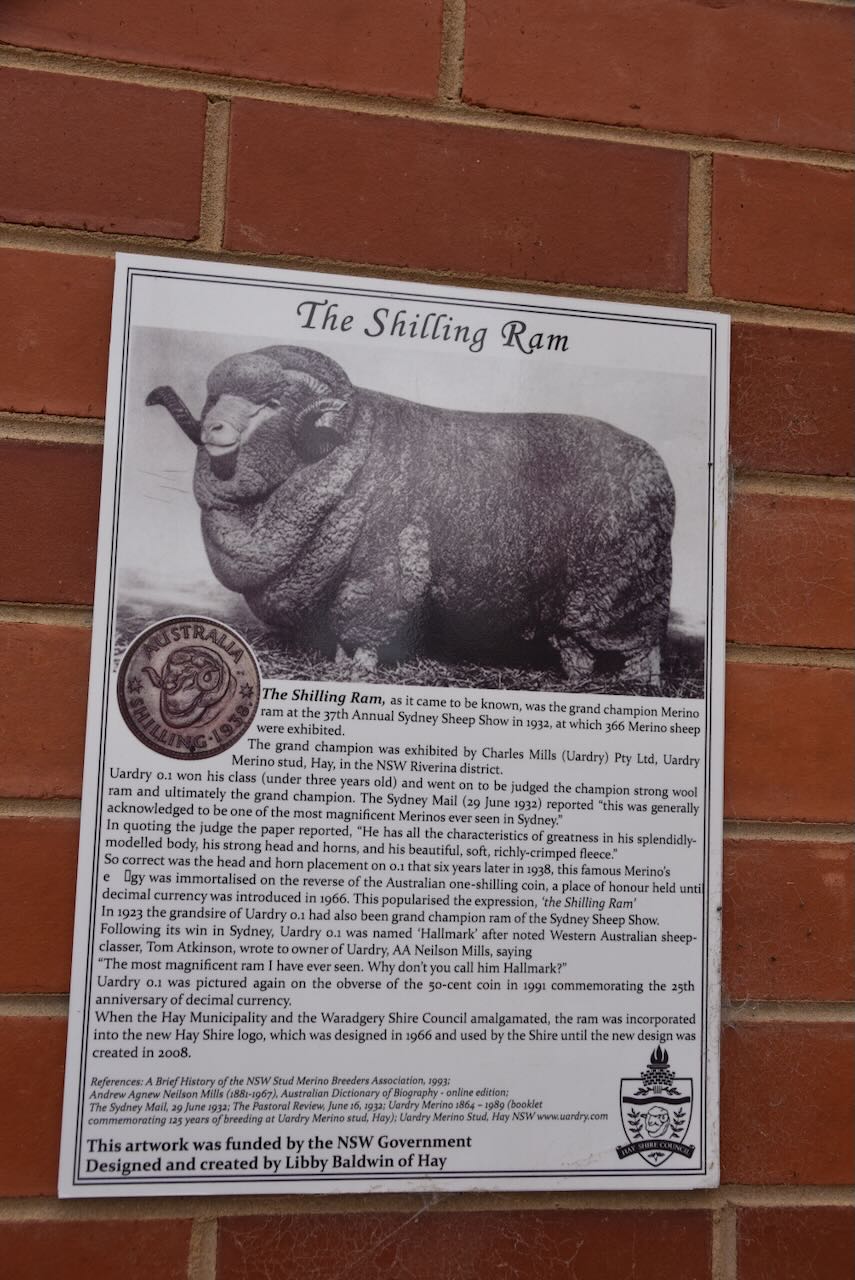
On the side of a nearby building is a sign about the Shilling Ram, the grand champion Merino ram at the 37th Annual Sydney Sheep Show in 1932, at which 366 Merino sheep were exhibited. The grand champion was exhibited by Charles Mills (Uardry) Pty Ltd, Uardry Merino stud, Hay.
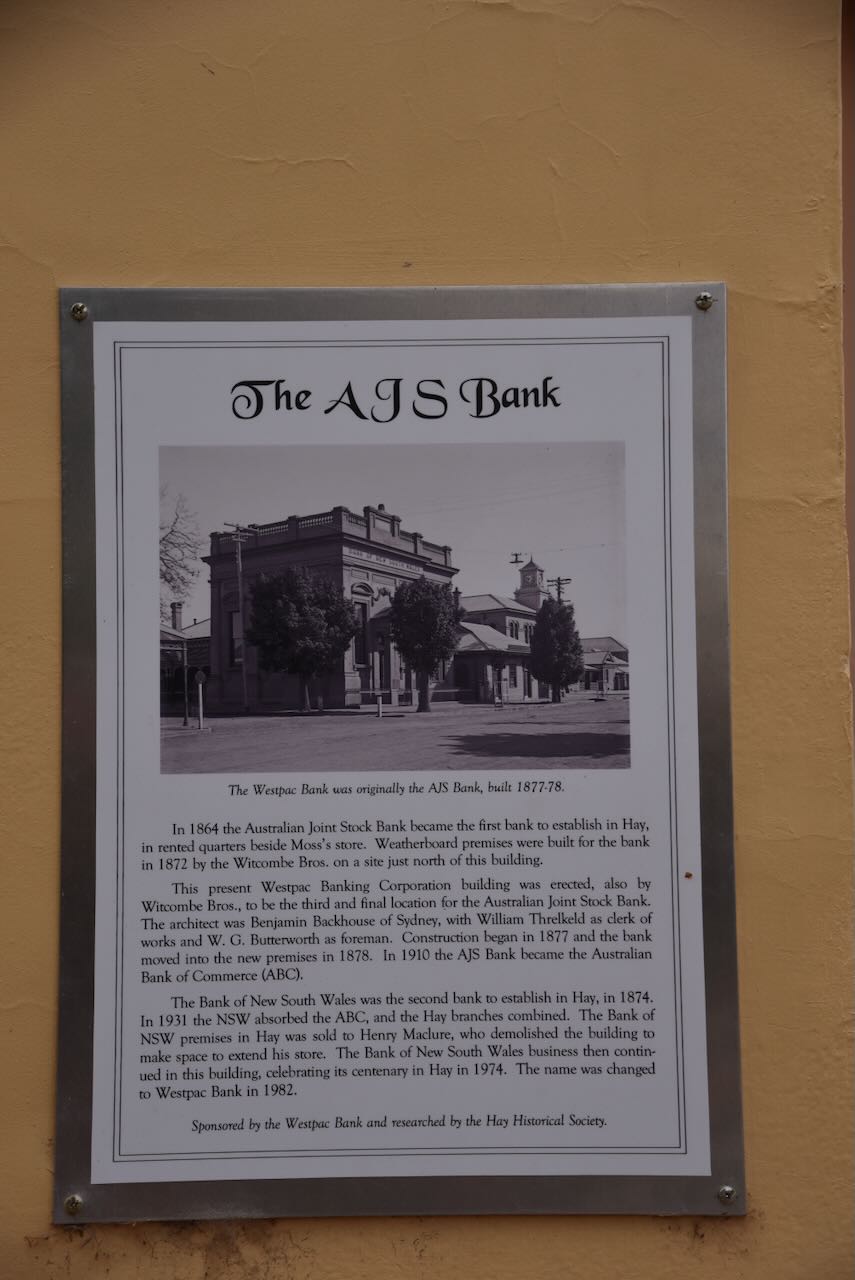
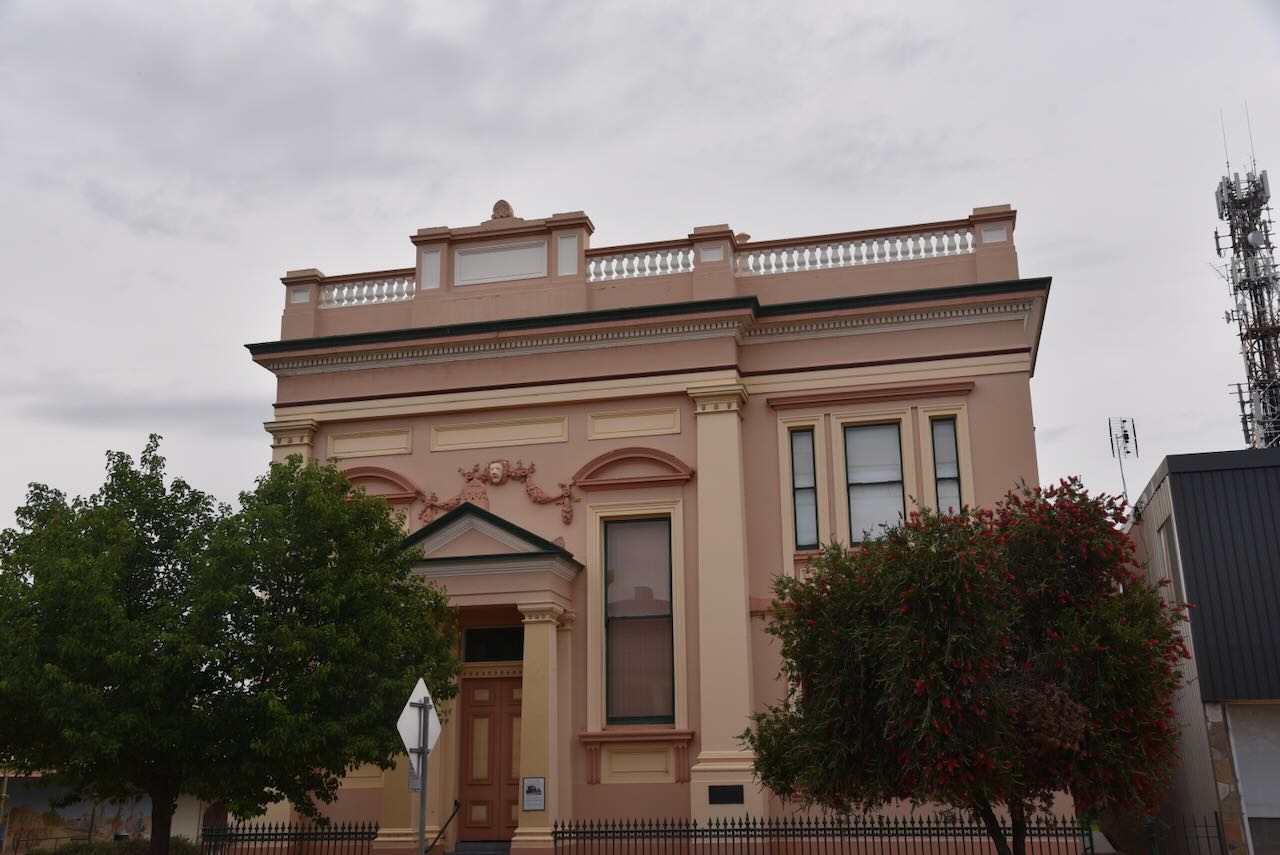
Another impressive building in Hay is the Australian Joint Stock Bank, which in 1864, was the first bank to be established in Hay.
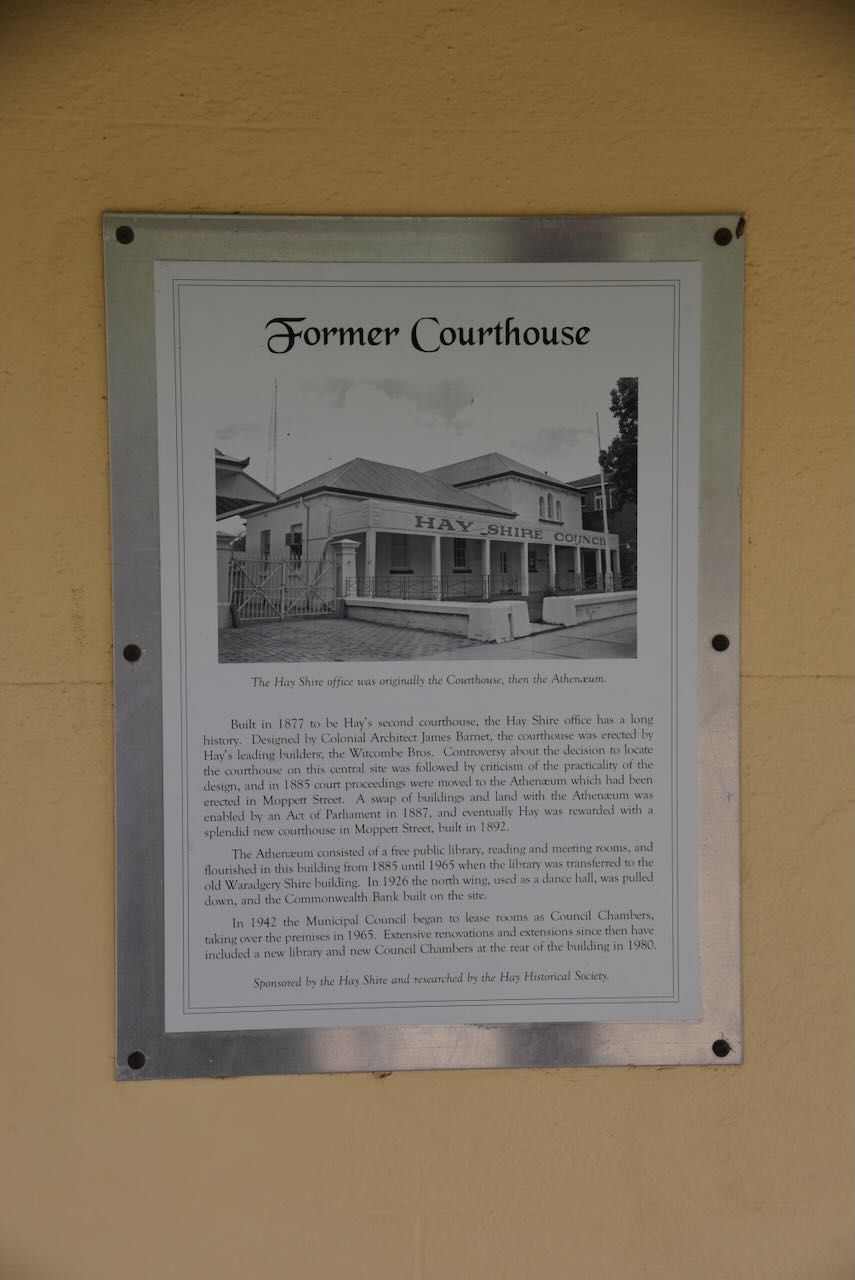
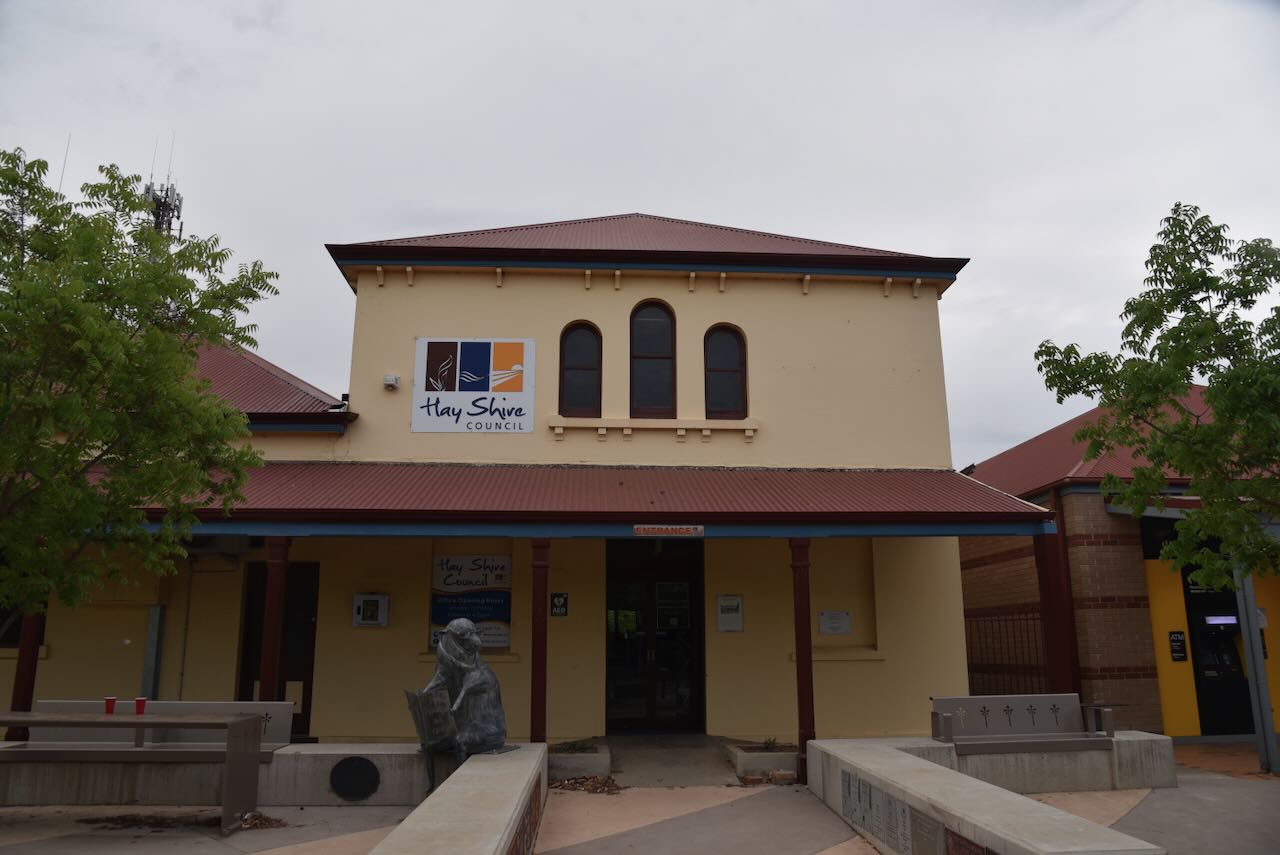
The former Hay courthouse was built in 1877. It can be located on Cobb Highway and is now occupied by the Hay Shire Council.
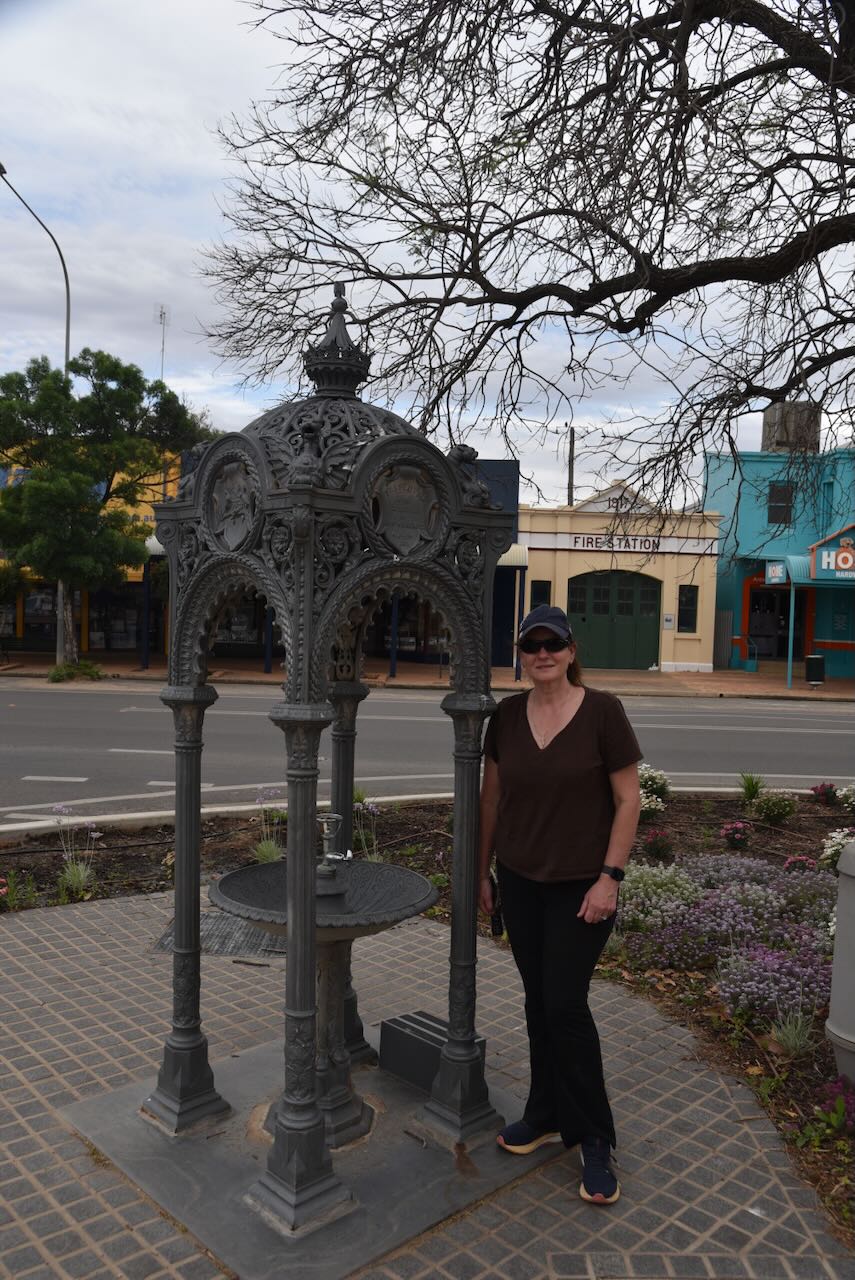
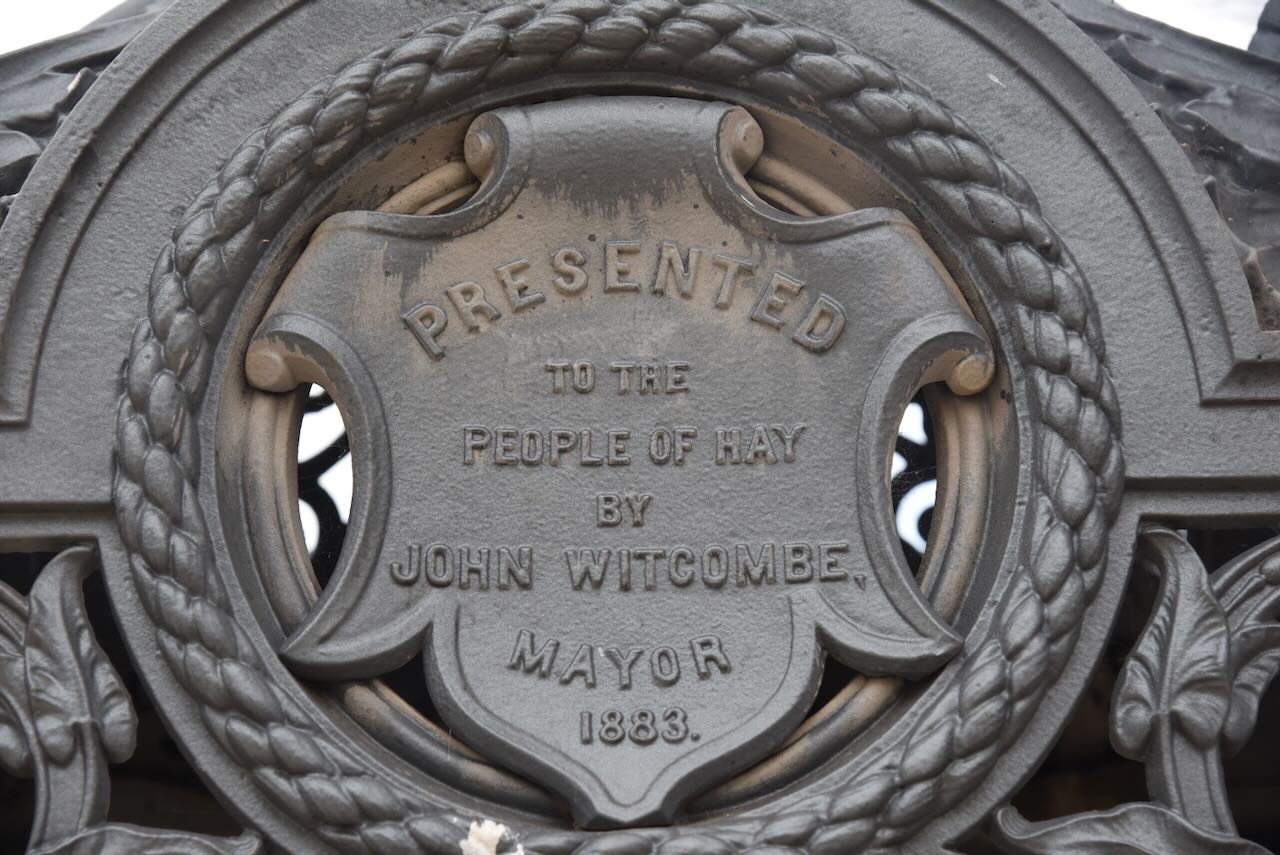
The Witcombe Fountain can also be found on the main street. The Mayor, John Witcombe, gave the fountain to the people of Hay in 1884. (Visithay.com.au 2025)
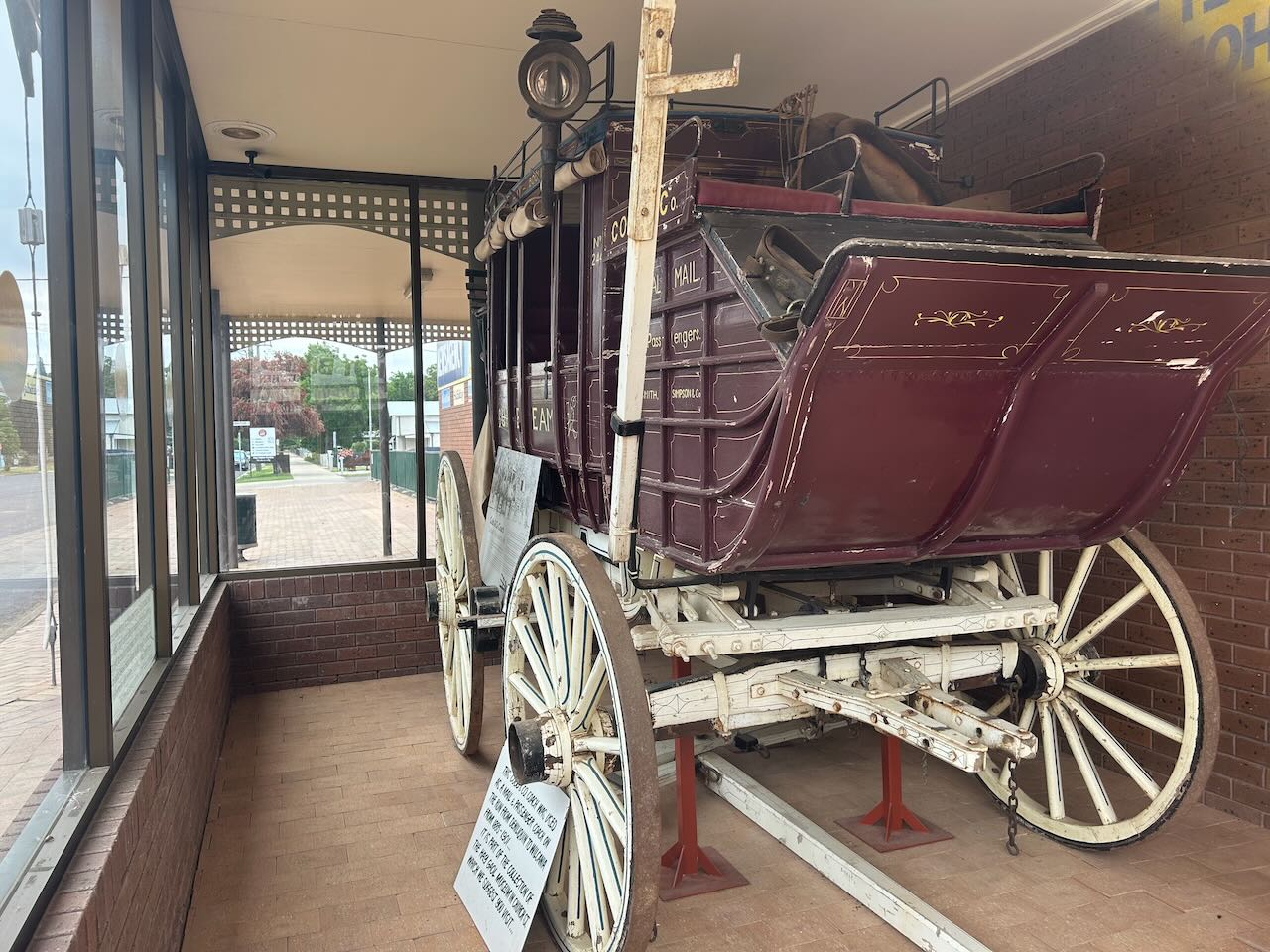
Adjacent is an old Sunbeam Coach. Cobb & Co. set up its coach factory in Hay from 1877 until 1896. This particular coach was built in 1886 for Cobb & Co. by Henry Proctor and ran on the Deniliquin-Hay-Booligal-Ivanhoe-Wilcania route of over 300 miles. Originally licenced to carry 11 passengers, it was converted in 1901 to carry 17 passengers. It was restored in 1972 and has been on display since 1989. (Visithay.com.au 2025)
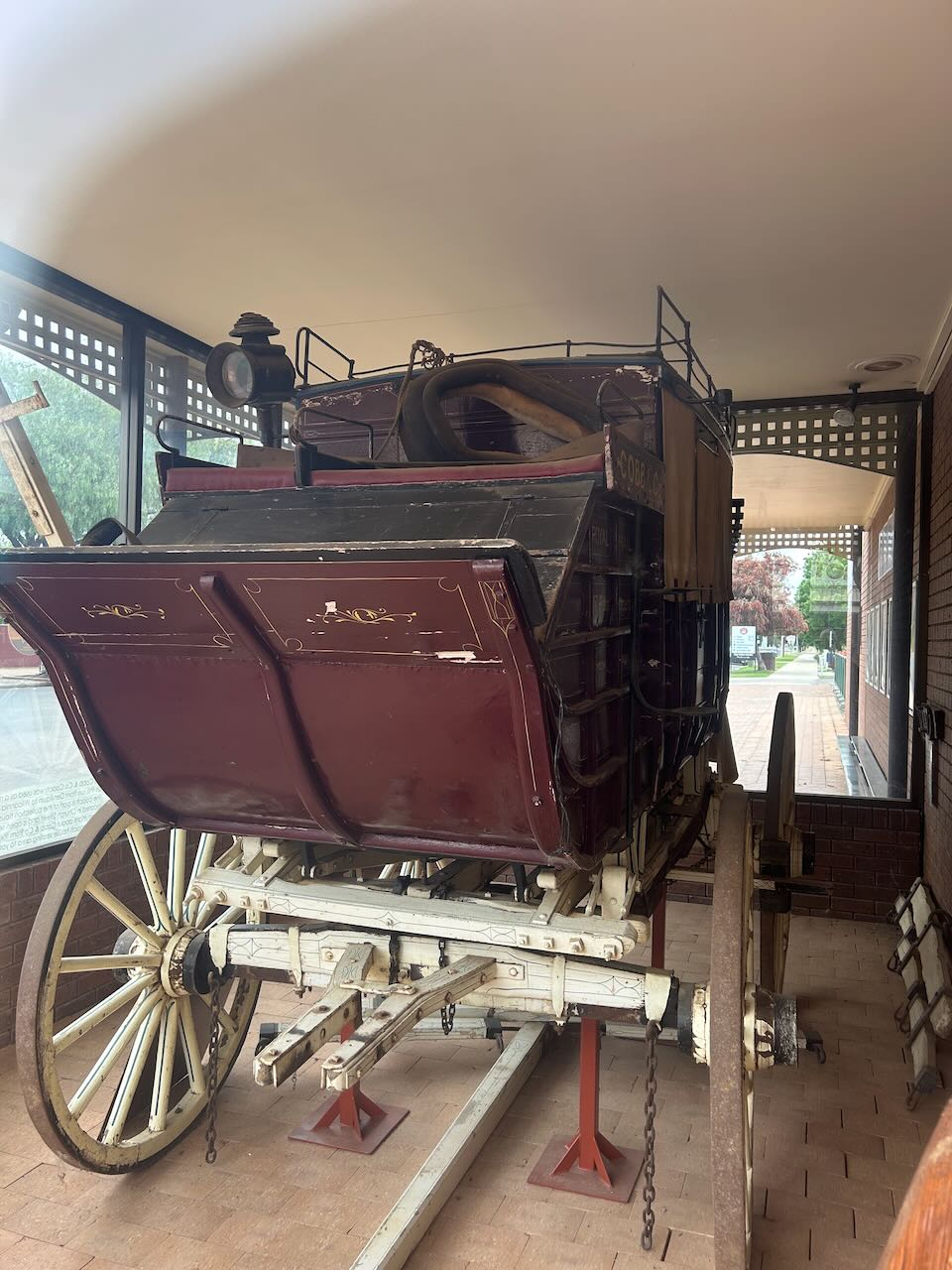
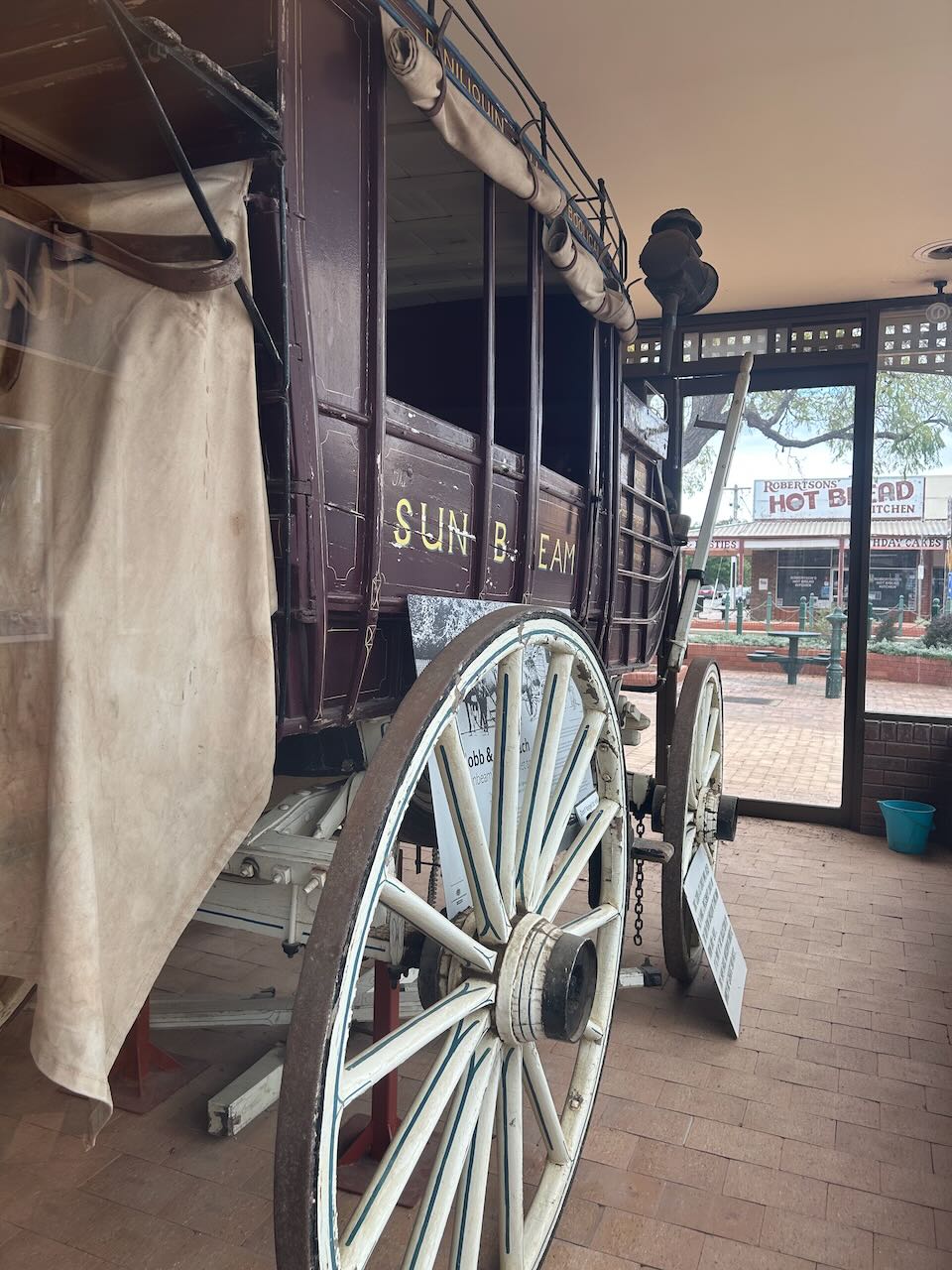
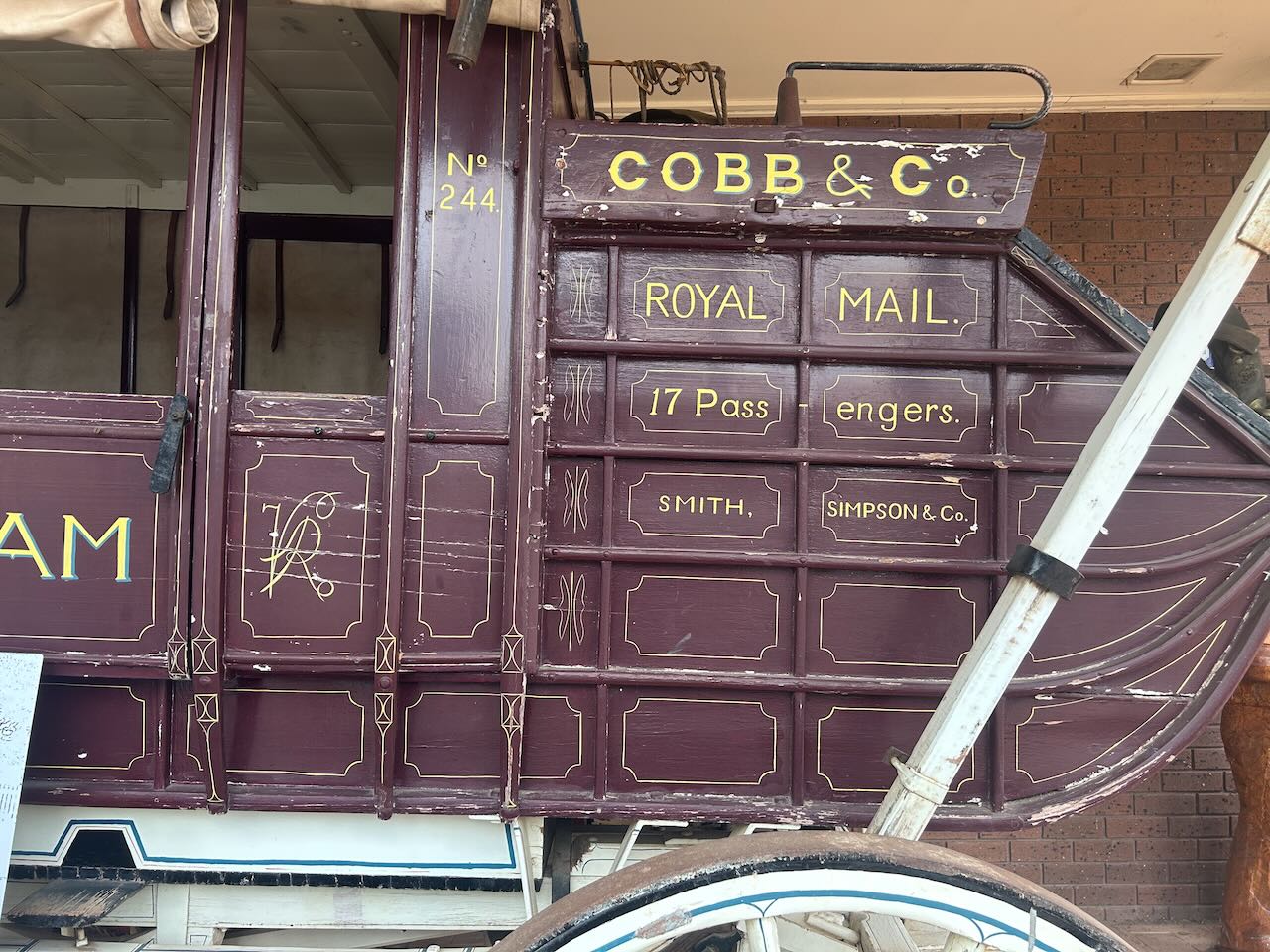
We then headed to the Hay silos to undertake an activation for the Silos On The Air (SiOTA) program.
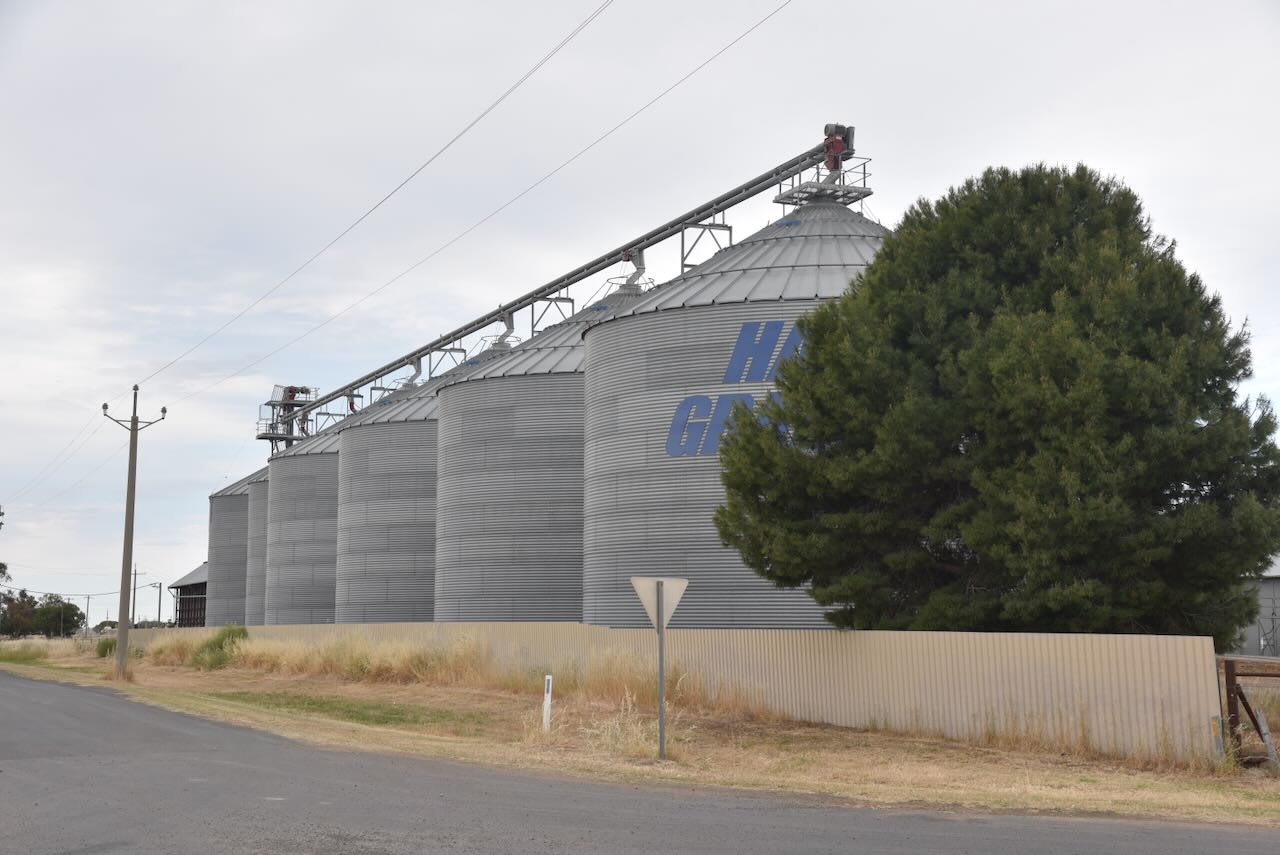
Marija and I parked opposite the silos and operated from the 4WD, running the Icom IC-7000, 100 watts, and the Codan 9350 antenna with the 1.5 metre stainless steel whip.
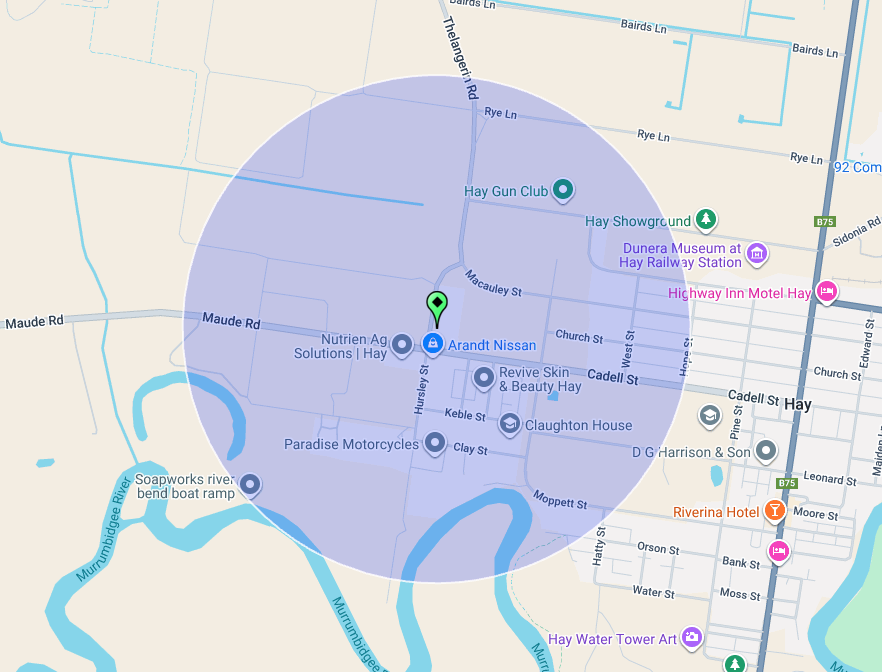
Above: Map showing the activation zone at the Hay silo. Image c/o SiOTA website.
Marija worked the following stations on 40m SSB:-
- VK2WB
- VK3PF
- VK2VW
- VK2HFI
- VK2AKA
- VK2BUG
I worked the following stations on 40m SSB:-
- VK2WB
- VK3PF
- VK2VW
- VK2HFI
- VK2AKA
- VK2BUG
- VK5DMO
- VK7PJM
- VK3GDX
- VK7AAE
- VK3PT
- VK3BCM
- VK4WB
- VK2LEE
- VK3TDX
- VK3GCD
- VK4IKZ
After our activation, we had dinner at the Hay Services Club. It was Halloween, and we took some photos for our 2 beautiful little grandchildren and called them on Messenger to say hi.
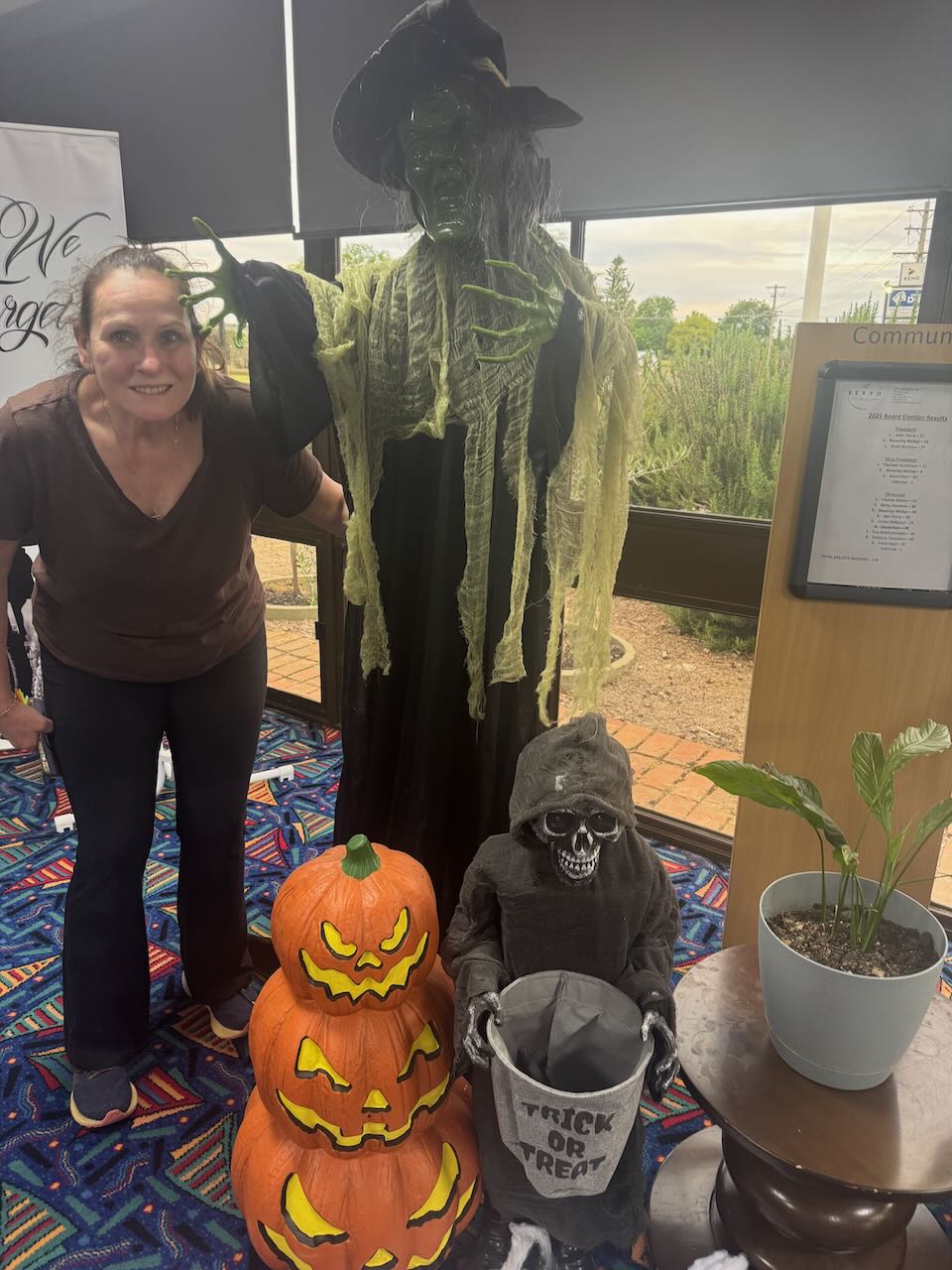
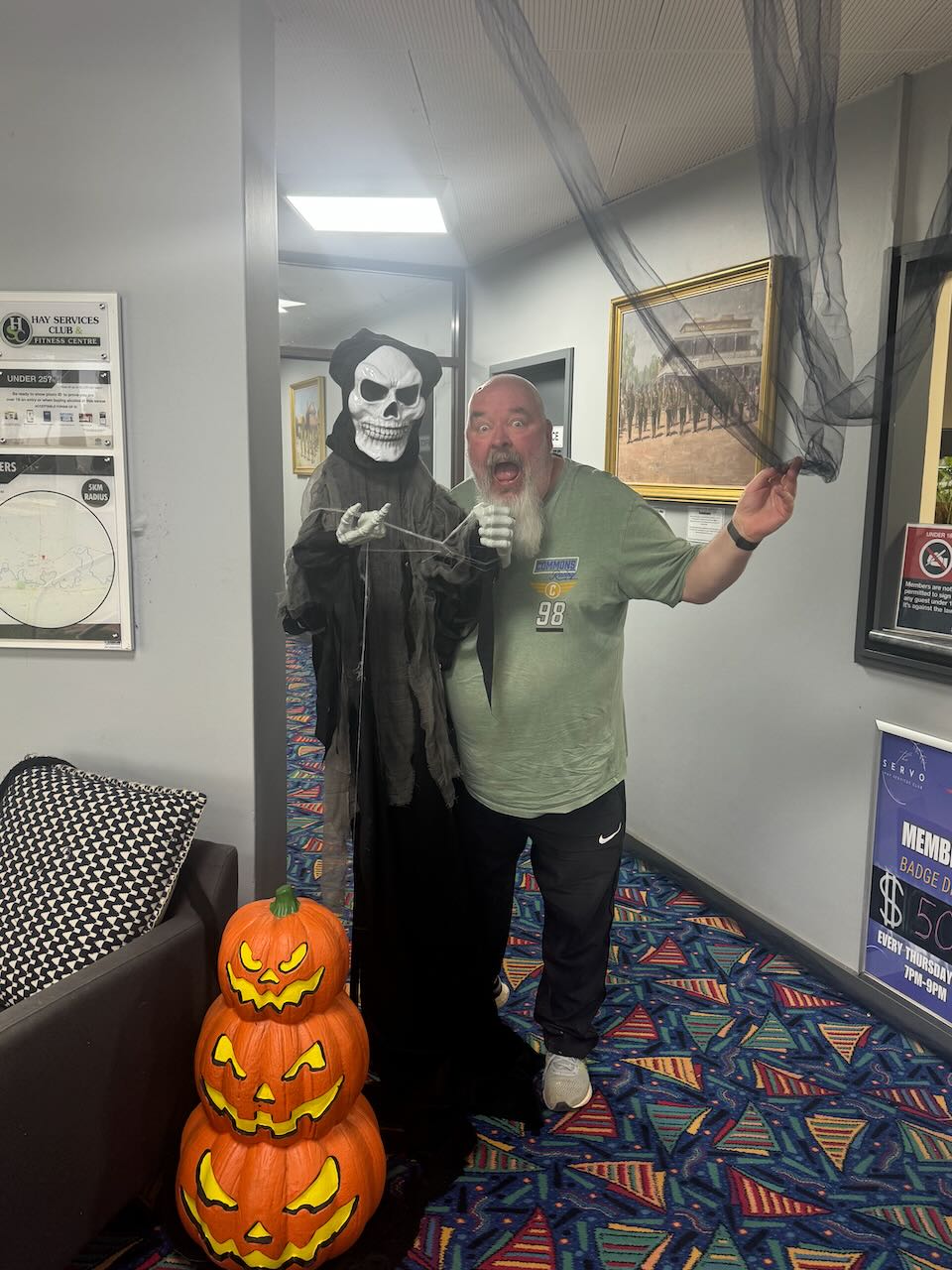
Following dinner, we headed back to our motel room.
References.
- Alan (2021). Dams and Weirs on the Murrumbidgee River. [online] ETA Unknown. Available at: https://etaunknown.com/expeditions/murrumbidgee-river/info/locks-weirs. [Accessed 13 Dec. 2025]
- ancestry (2016). Ancestry® | Genealogy, Family Trees & Family History Records. [online] Ancestry.com.au. Available at: https://www.ancestry.com.au/. [Accessed 13 Dec. 2025].
- Anu.edu.au. (1967). Lang, Gideon Scott (1819–1880). [online] Available at: https://adb.anu.edu.au/biography/lang-gideon-scott-2325 [Accessed 15 Dec. 2025].
- Australiansiloarttrail.com. (2025). Hay Water Tower Art. [online] Available at: https://www.australiansiloarttrail.com/hay [Accessed 13 Dec. 2025].
- Australian War Memorial (2017). The charge of the 4th Light Horse Brigade at Beersheba | The Australian War Memorial. [online] Awm.gov.au. Available at: https://www.awm.gov.au/articles/blog/the-charge-of-the-4th-light-horse-brigade-at-beersheba.
- Visithay.com.au. (2025). Welcome to Hay | Visit Hay – Official Tourism Website. [online] Available at: https://www.visithay.com.au/. [Accessed 13 Dec. 2025]
- Vwma.org.au. (2025). Available at: https://vwma.org.au/explore/memorials/2879 [Accessed 14 Dec. 2025].
- Wikipedia Contributors (2024). Maude. Wikipedia.
- Wikipedia. (2021). Hay. [online] Available at: https://en.wikipedia.org/wiki/Hay.
 VK5PAS