
Following our beautiful lunch in Wagga Wagga at the Thirsty Crow on Wednesday, 22nd October 2025, Marija and I headed out to Kapooka.
Kapooka is an Aboriginal word meaning ‘place of winds.’ It is the home to the Department of Defence’s Blamey Barracks, from where the Army Recruit Training Centre conducts its operations. (Wikipedia 2025)
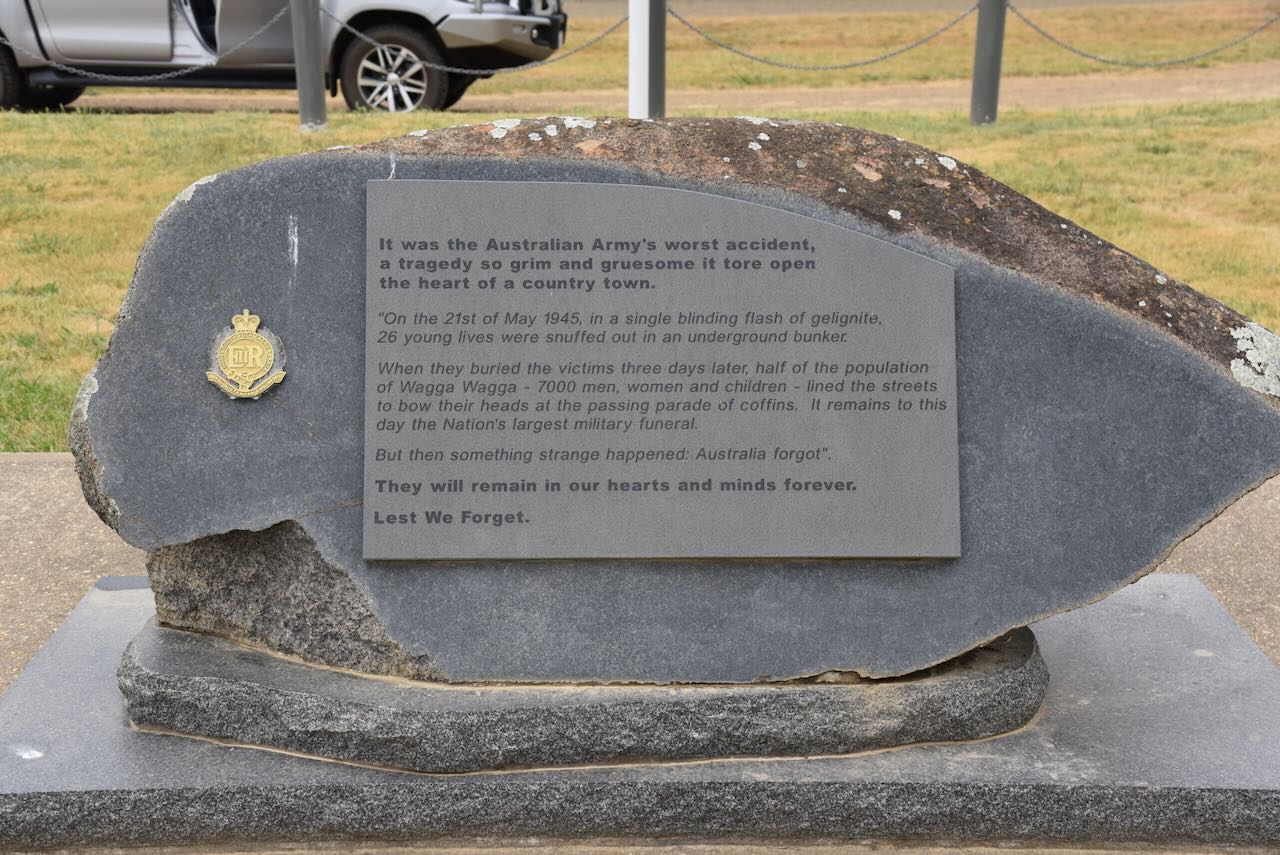
Not far from the barracks is the memorial for the Kapooka Tragedy.
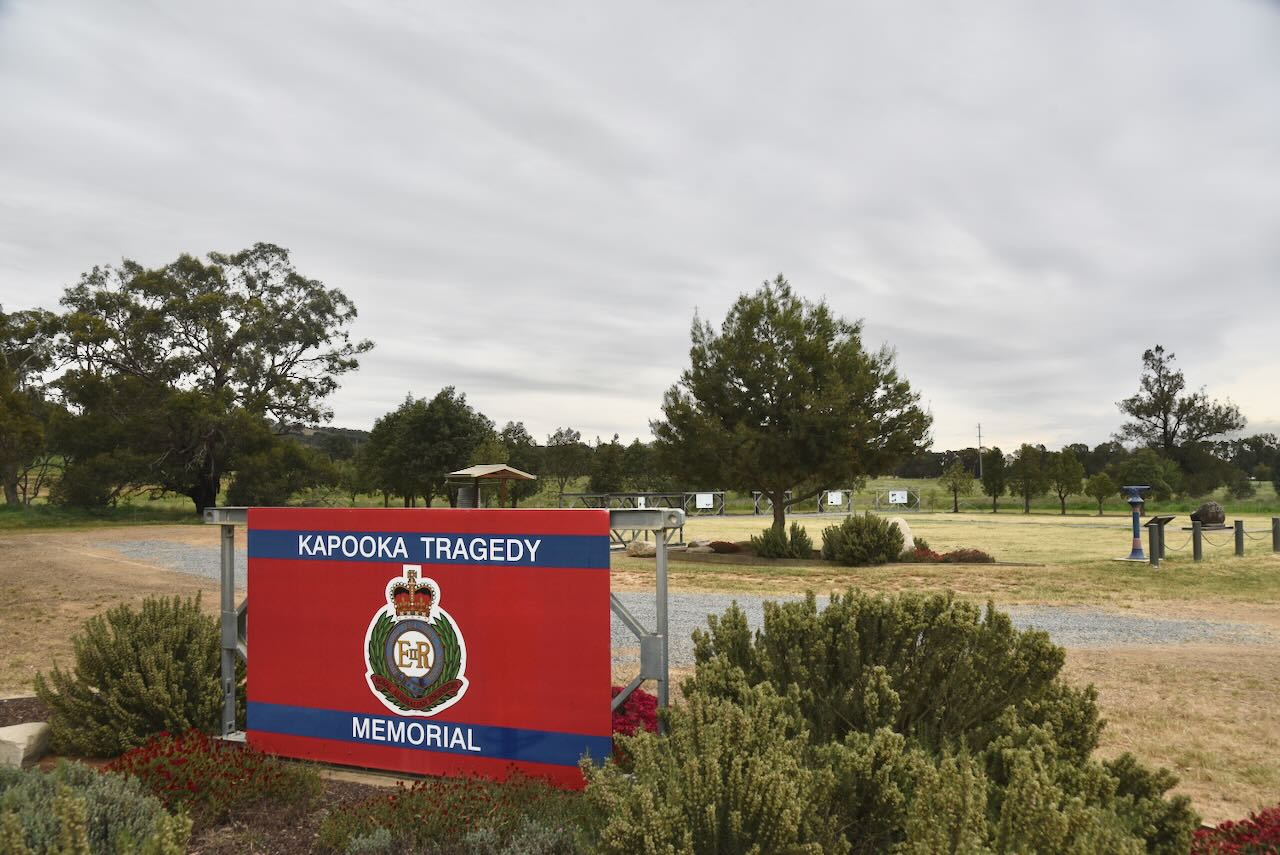
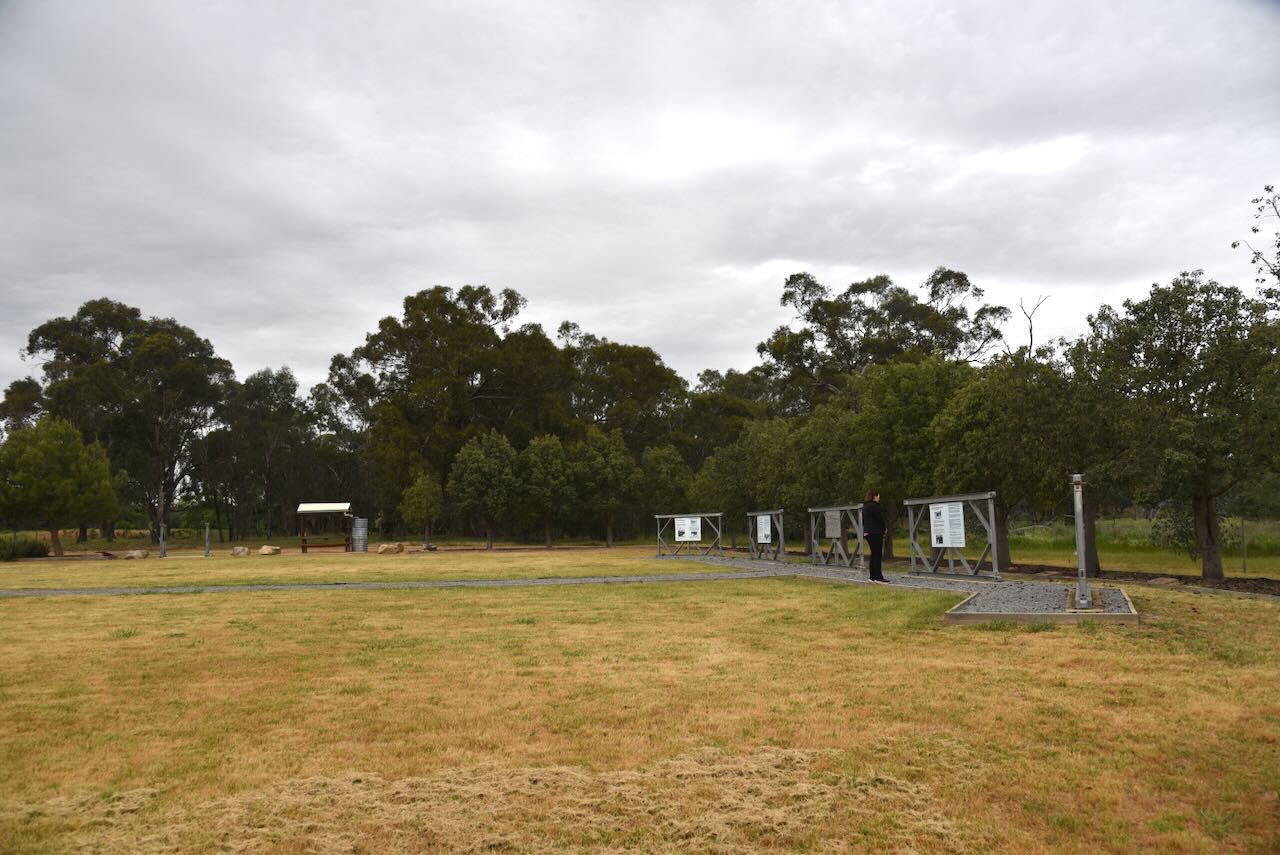
In the field opposite the memorial, at 2.45 p.m. on the 21st day of May 1945, 26 soldiers were killed in an explosion while training for the war in the Pacific, at what was then the Engineer Training Centre.
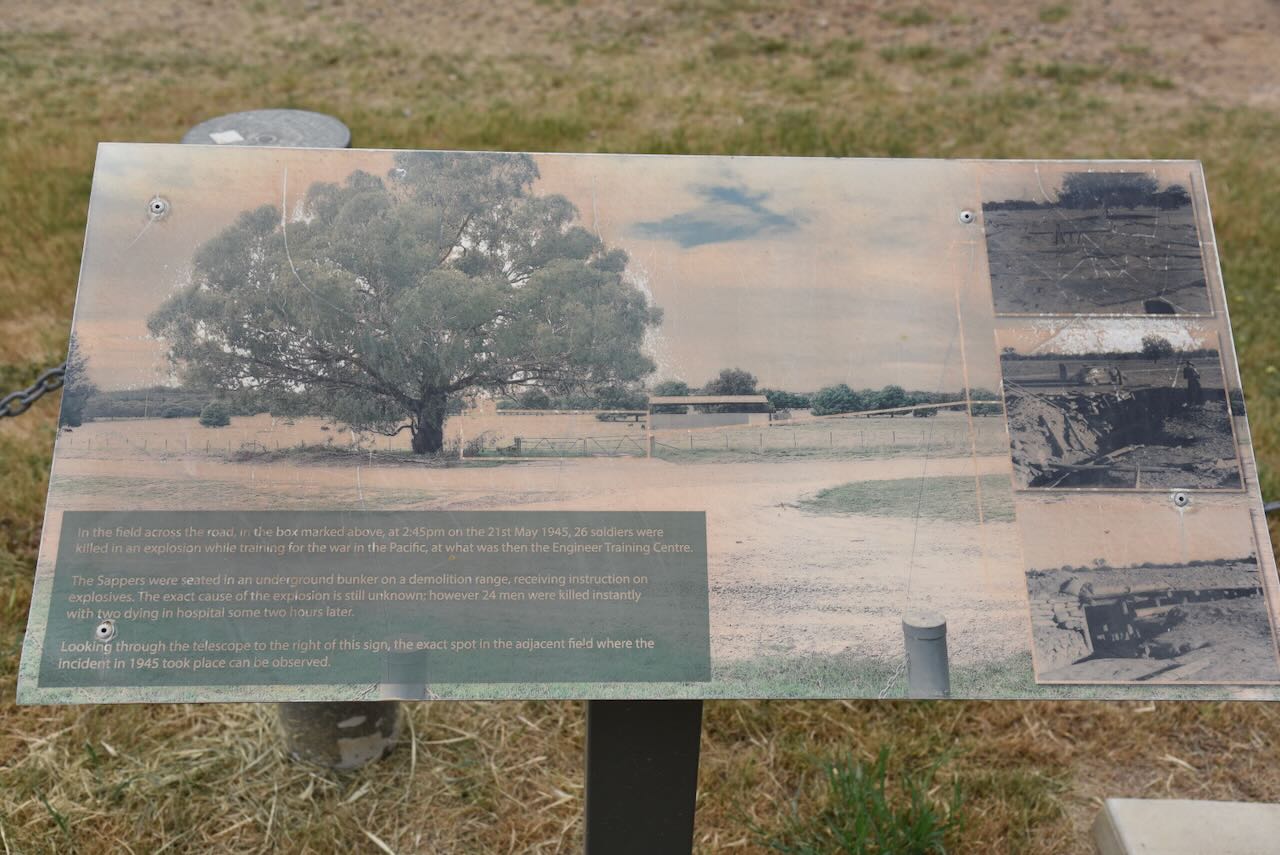
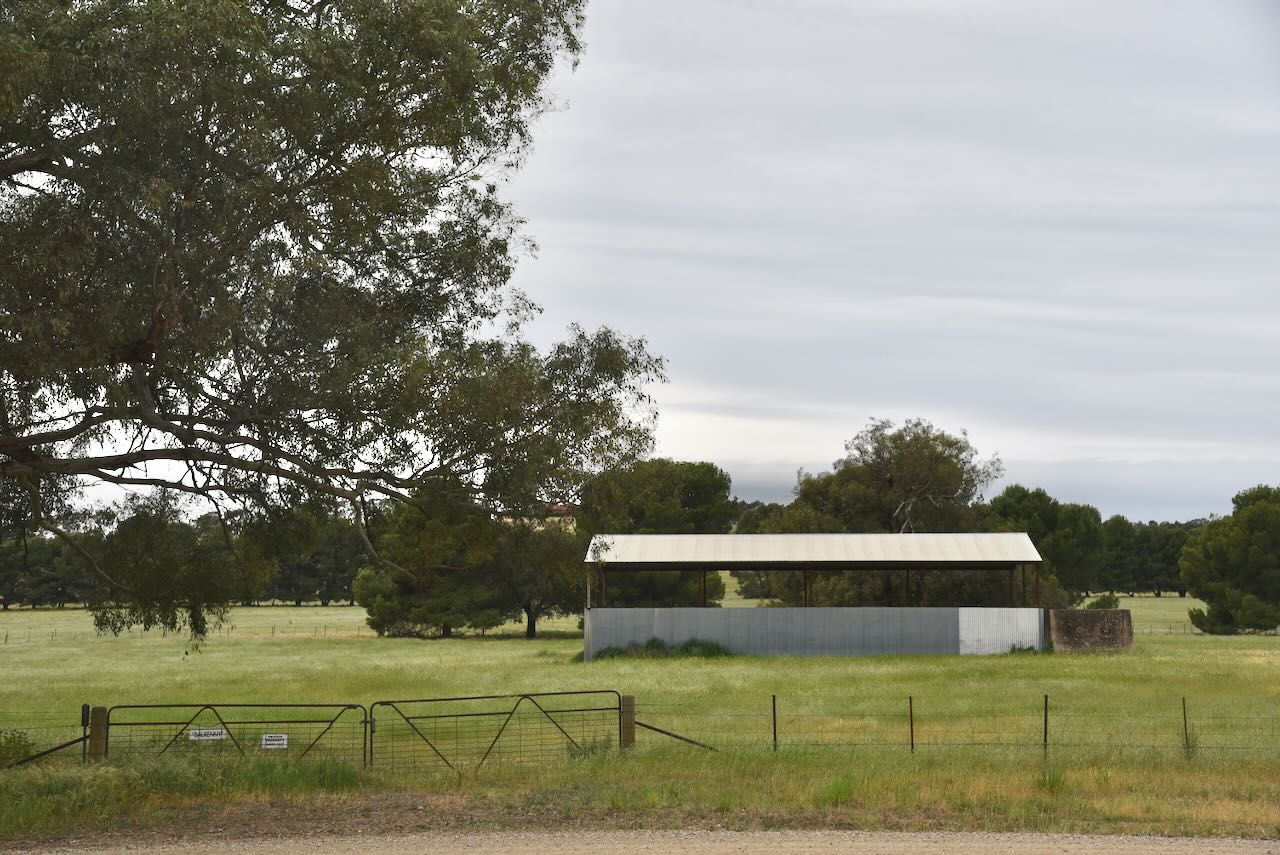
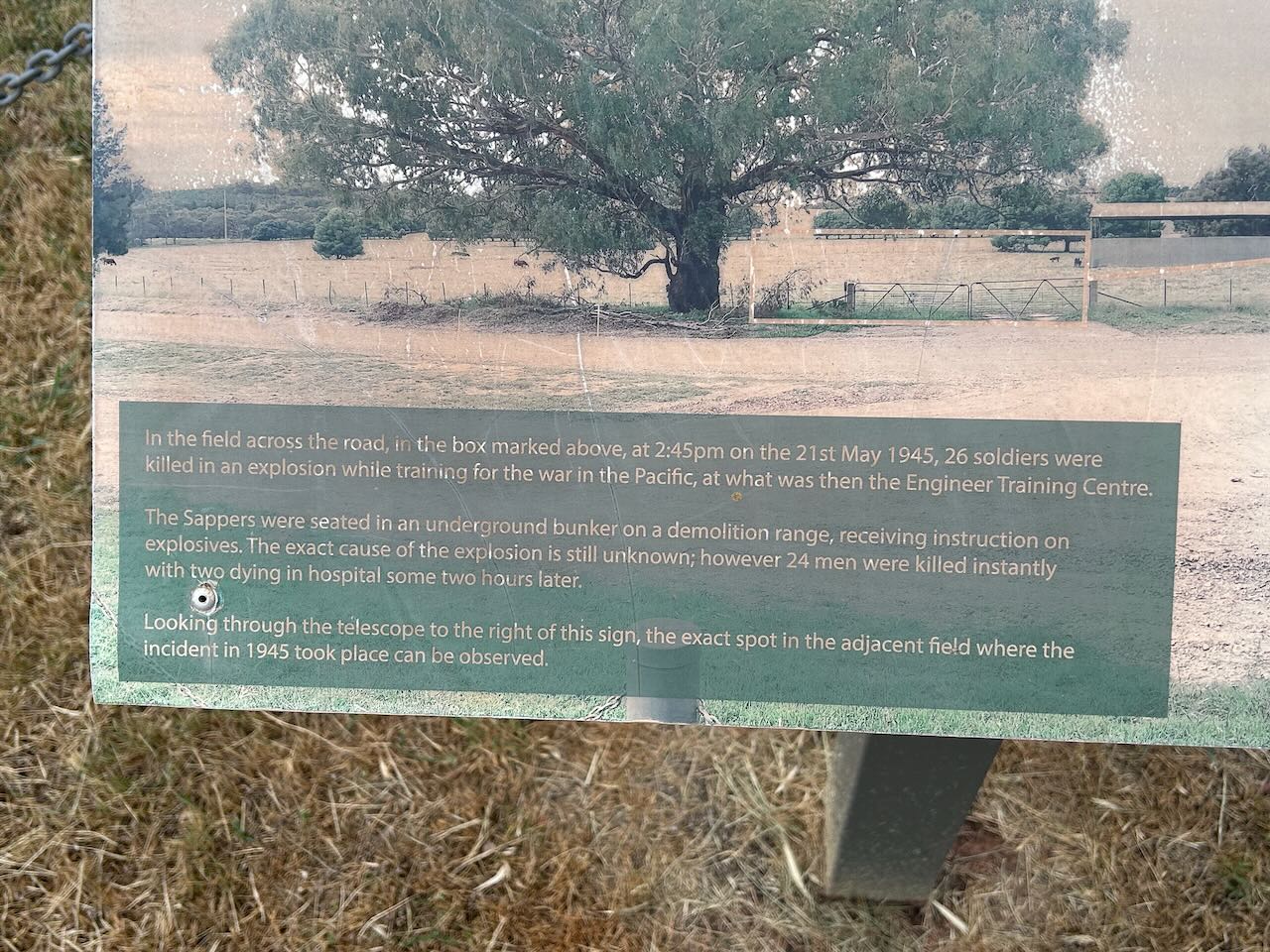
The Sappers were seated in an underground bunker on a demolition range, receiving instruction on explosives. The exact cause of the explosion is still unknown; however, 24 men were killed instantly, with 2 dying in the hospital following the explosion.
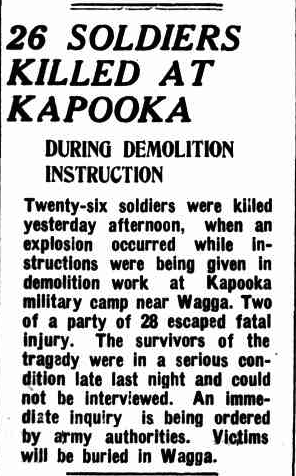
Above: article from The Murrumbidgee Irrigator, NSW, Tue 22 May 1945. Image /co Trove
It was the Australian Army’s worst accident.
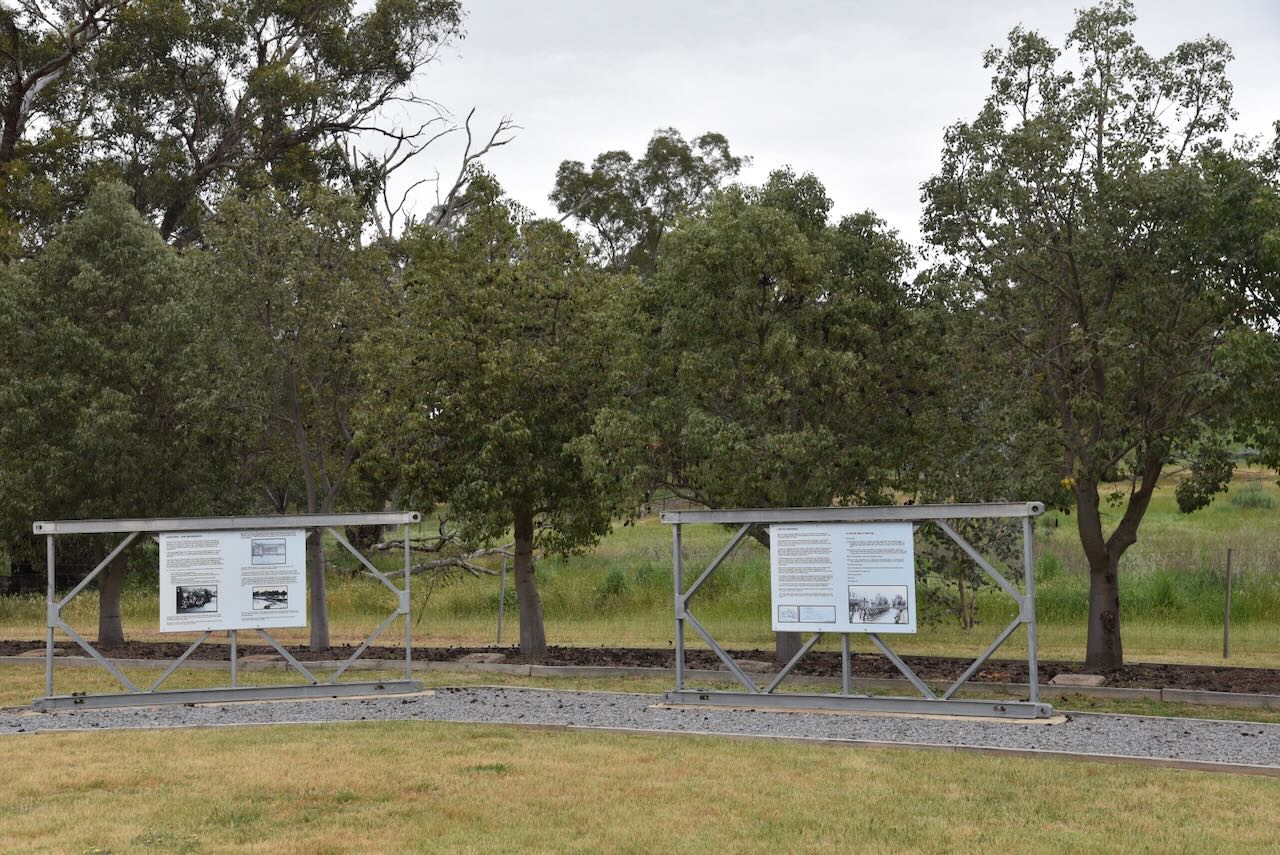
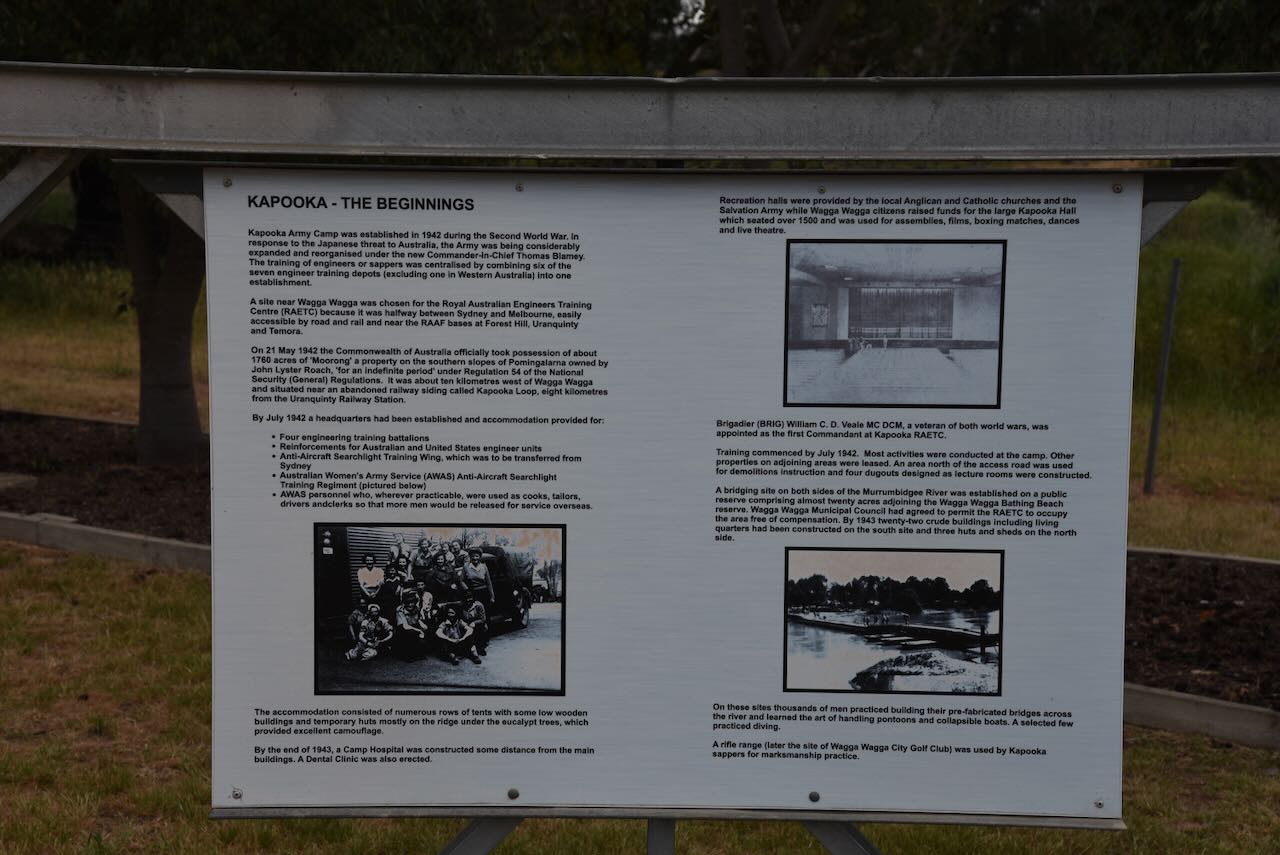
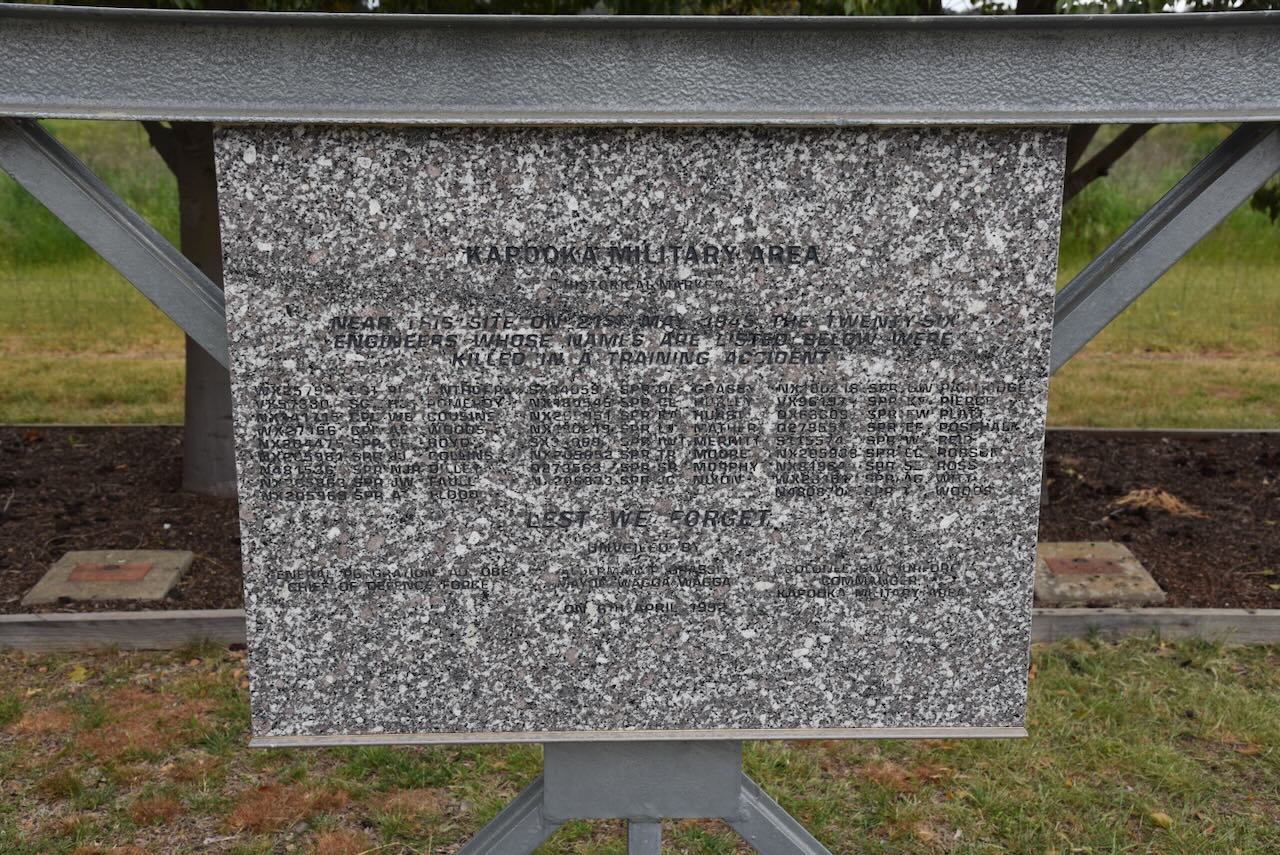
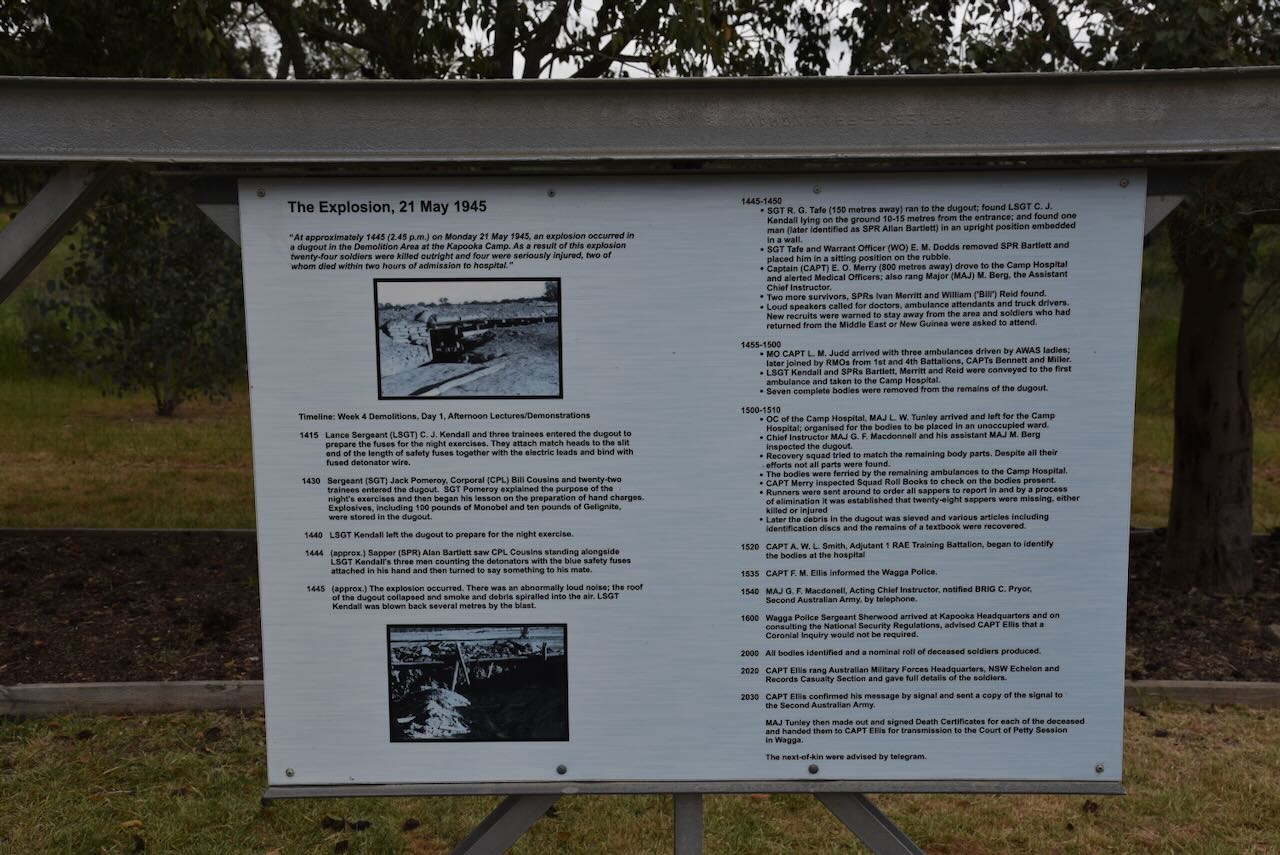
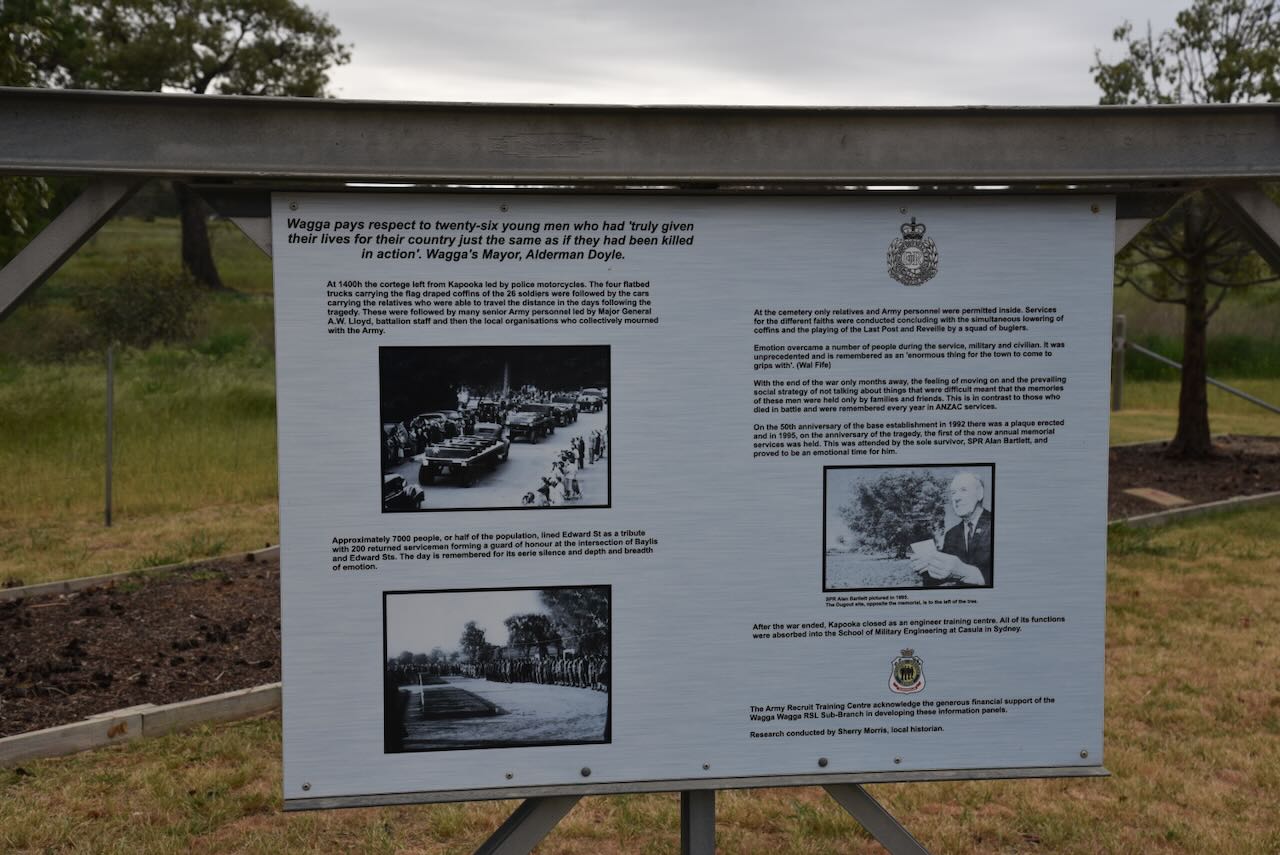
There is an avenue of trees with a plaque below with the name of each of the soldiers who were killed in the explosion.
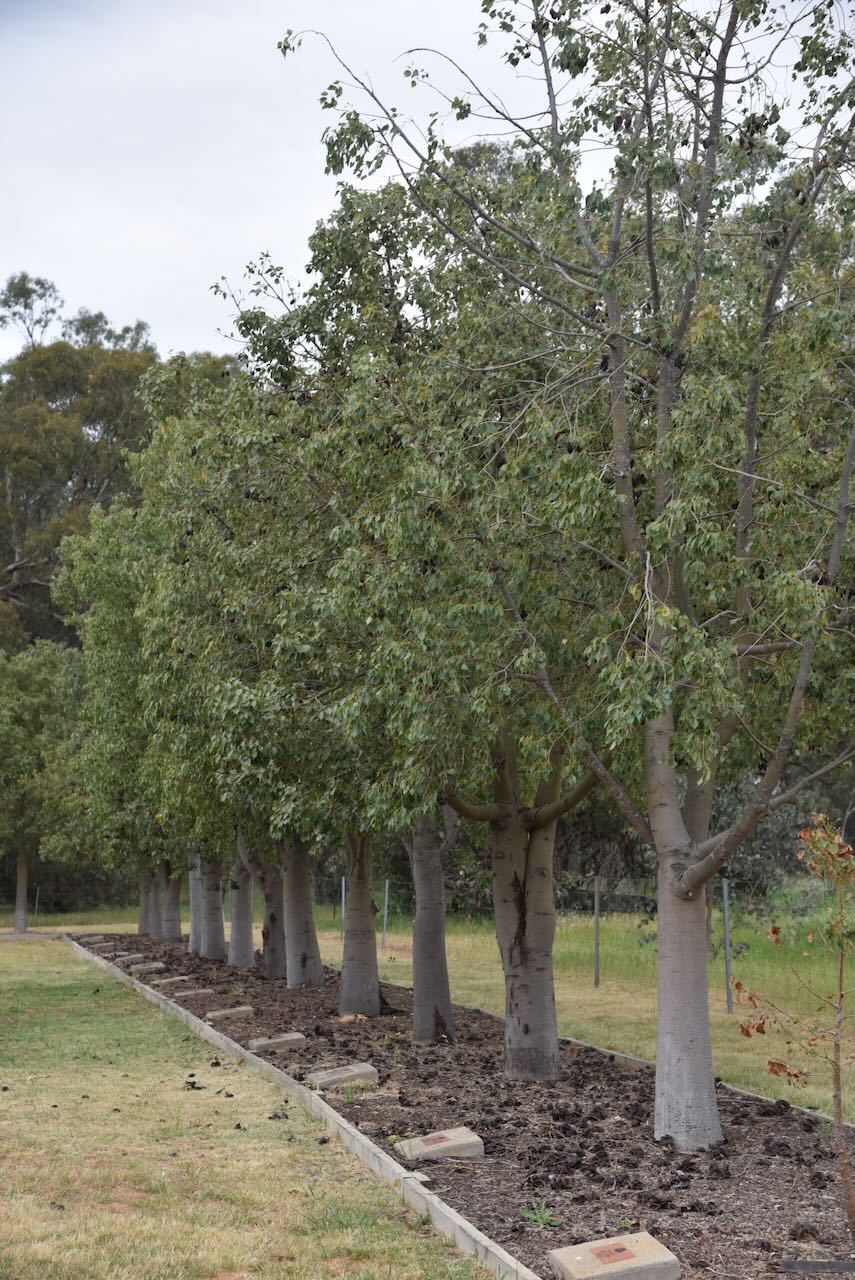
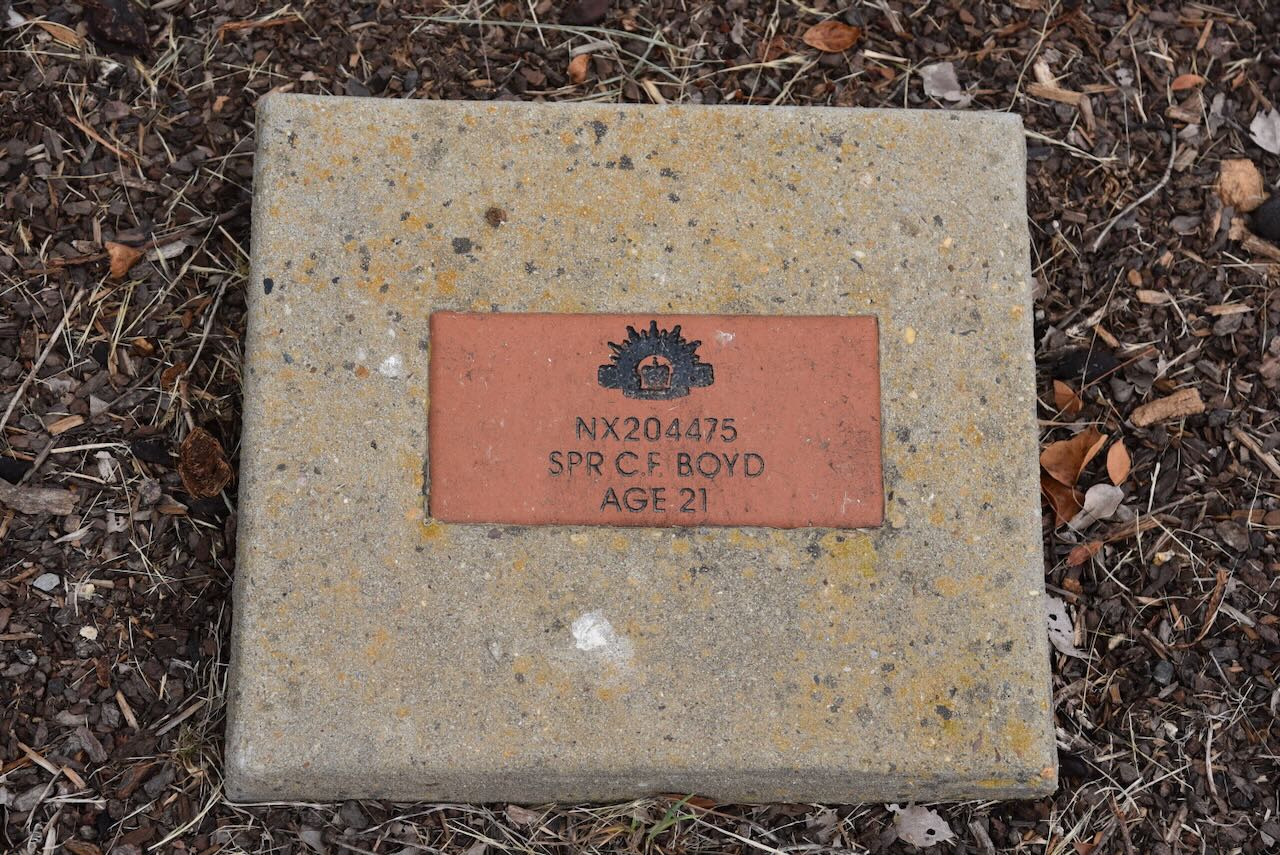
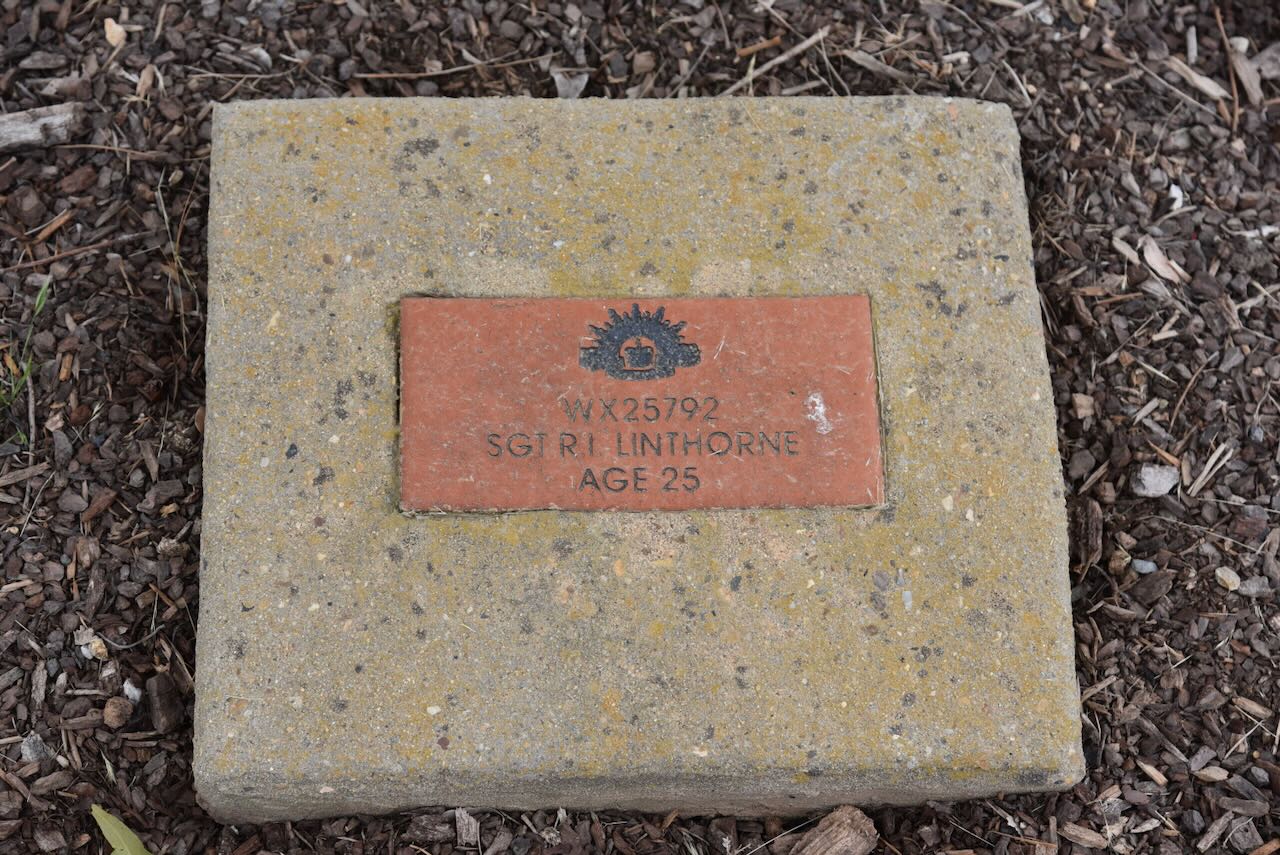
Below is a video on the Kapooka tragedy.
Marija and I left Kapooka and travelled a short distance to Uranquinty, a small town located about 15 km south of Wagga Wagga.
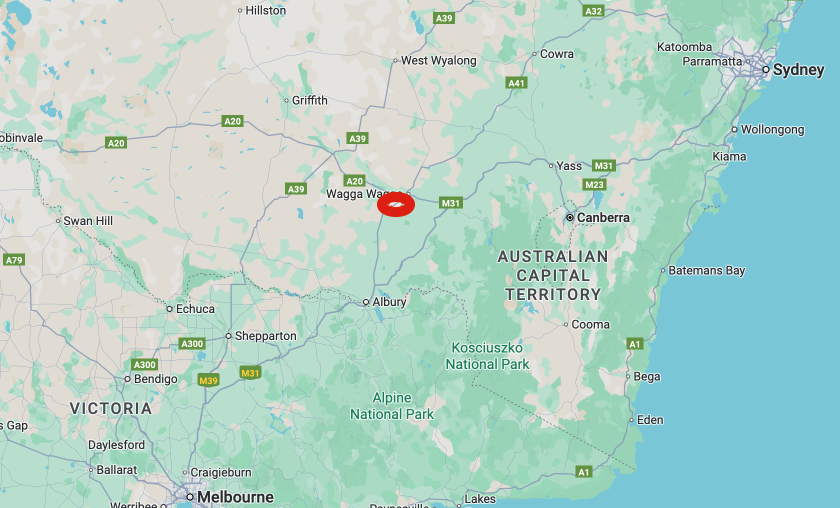
Above: Map showing the location of Uranquinty, NSW. Map c/o Google Maps
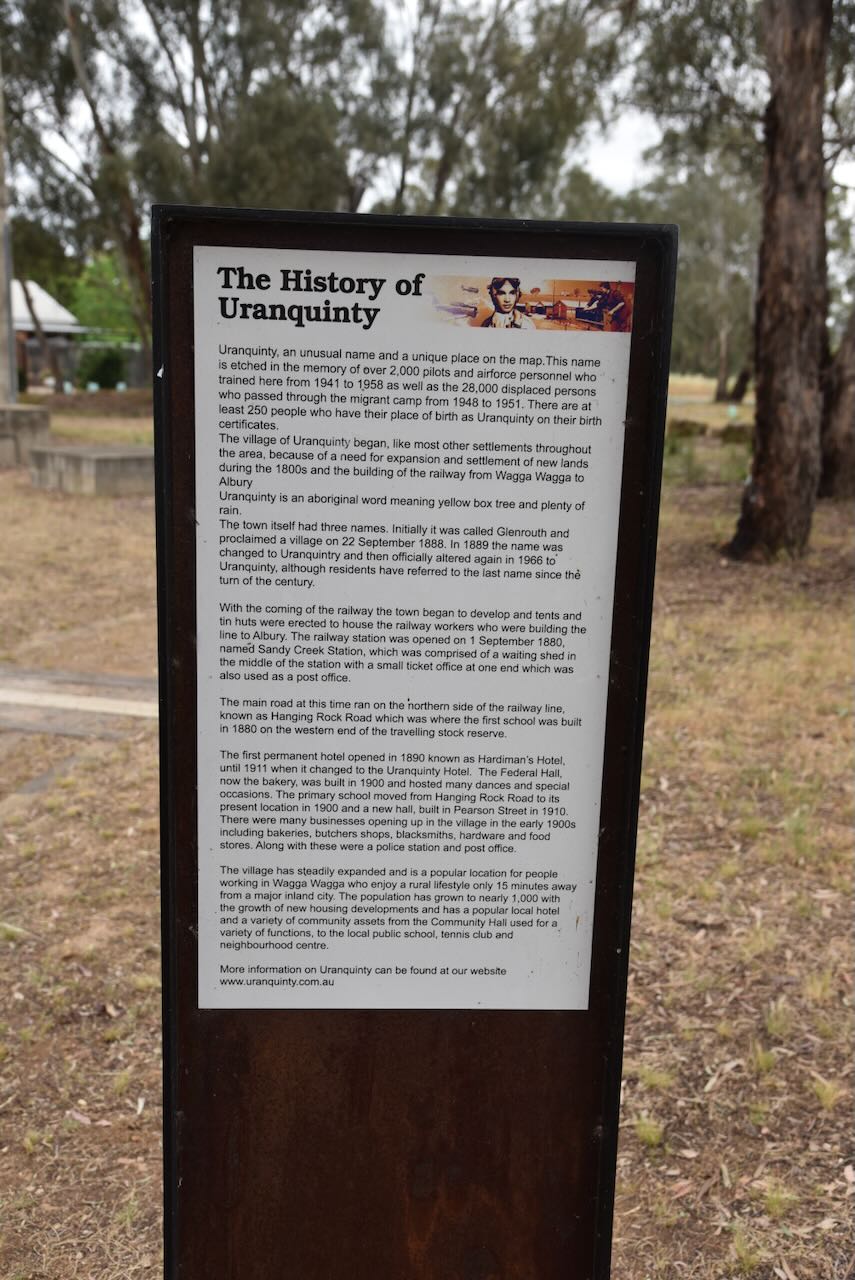
Uranqunity is an Aboriginal word meaning yellow box tree and plenty of rain. The town was originally called Glenrouth and proclaimed on the 22nd day of September 1888. The following year, in 1889, the name was changed to Uranquintry. (Uranquinty 2025)
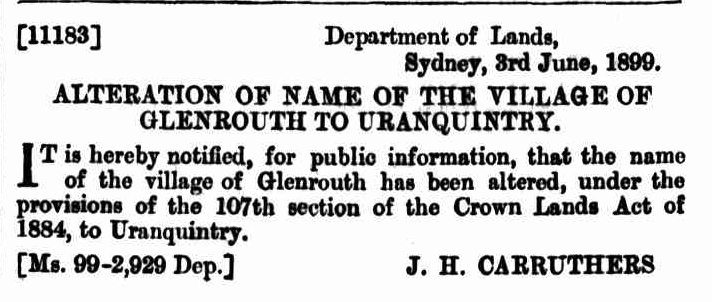
Above: article from the NSW Govt Gazette, Sat 3 Jun 1899. Image c/o Trove
In 1966, the name was officially changed to Uranquinty, although locals have referred to it as Uranquinty since the early 1900s. (Uranquinty 2025)
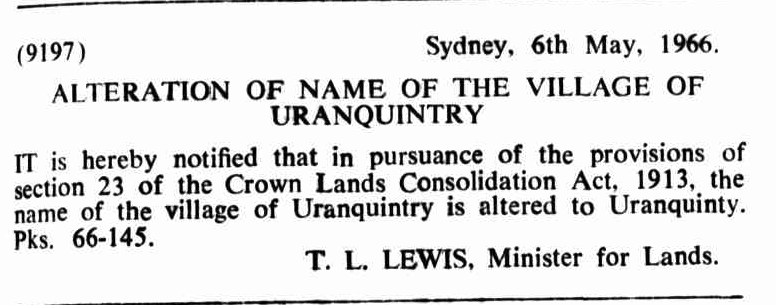
Above: article from the NSW Govt Gazette, Fri 6 May 1966. Image c/o Trove
The first permanent hotel, Hardiman’s Hotel, opened in 1890. In 1911, the name of the hotel was changed to the Uranquinty Hotel. In 1900, the Federal Hall was constructed, hosting numerous dances and various other special occasions. A new hall was built in 1910. It would appear from the newspaper article below that not all of the celebrations at the hall were of a quiet nature. (Uranquinty 2025)
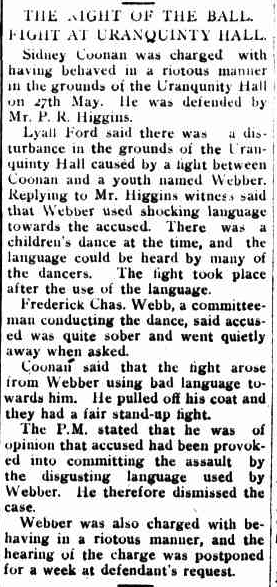
Above: article from the Daily Advertiser, Wagga Wagga, Tue 6 Jun 1911. Image c/o Trove
During the early 1900s, Uranqunity had several businesses, including bakeries, butchers, blacksmiths, hardware stores, and food stores. There was also a police station and a post office. (Uranquinty 2025)
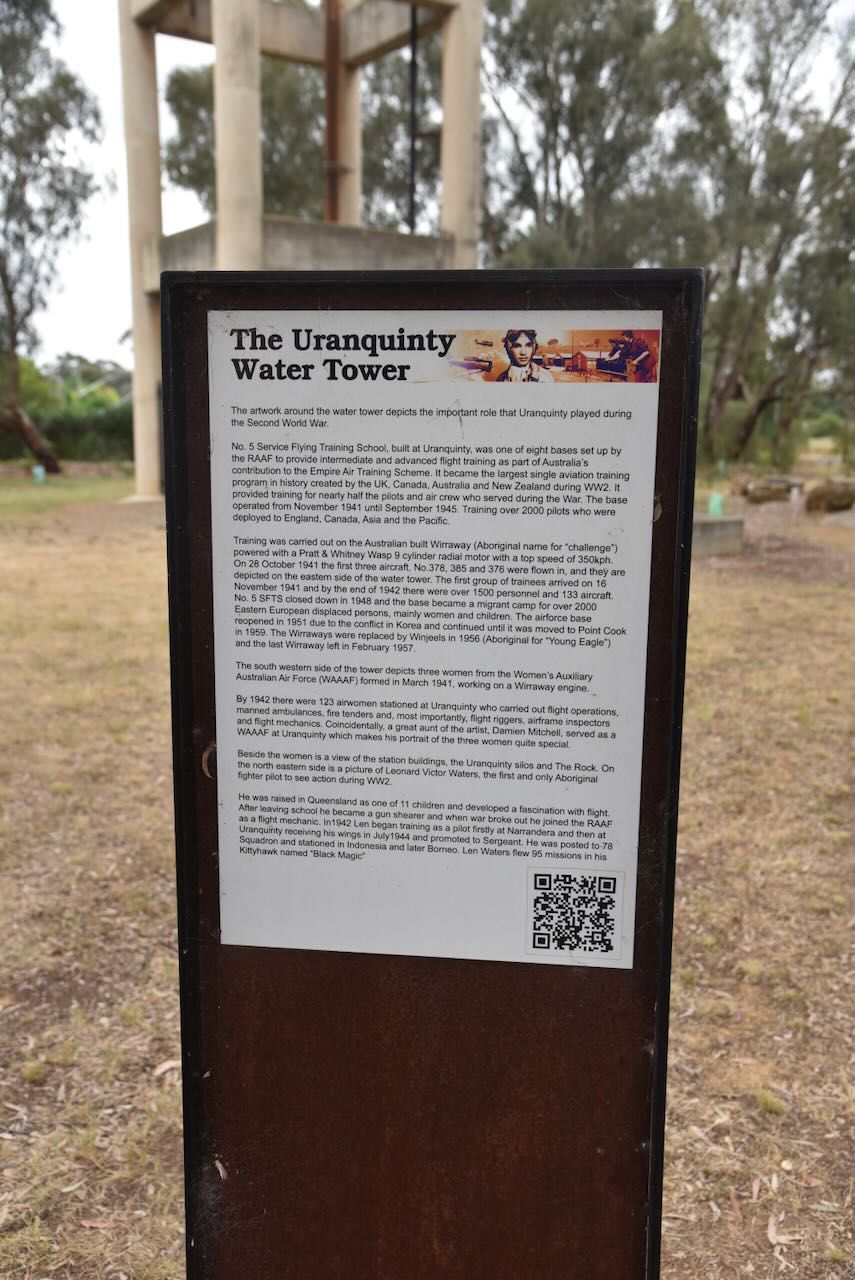
We visited the Uranquinty water tank art. The water tank was painted by artist Damien Mitchell in February 2003 and depicts Aboriginal fighter pilot Len Water, a Wirriway aircraft, and female mechanics working on an aircraft engine. (Australiansiloarttrail.com, 2023)
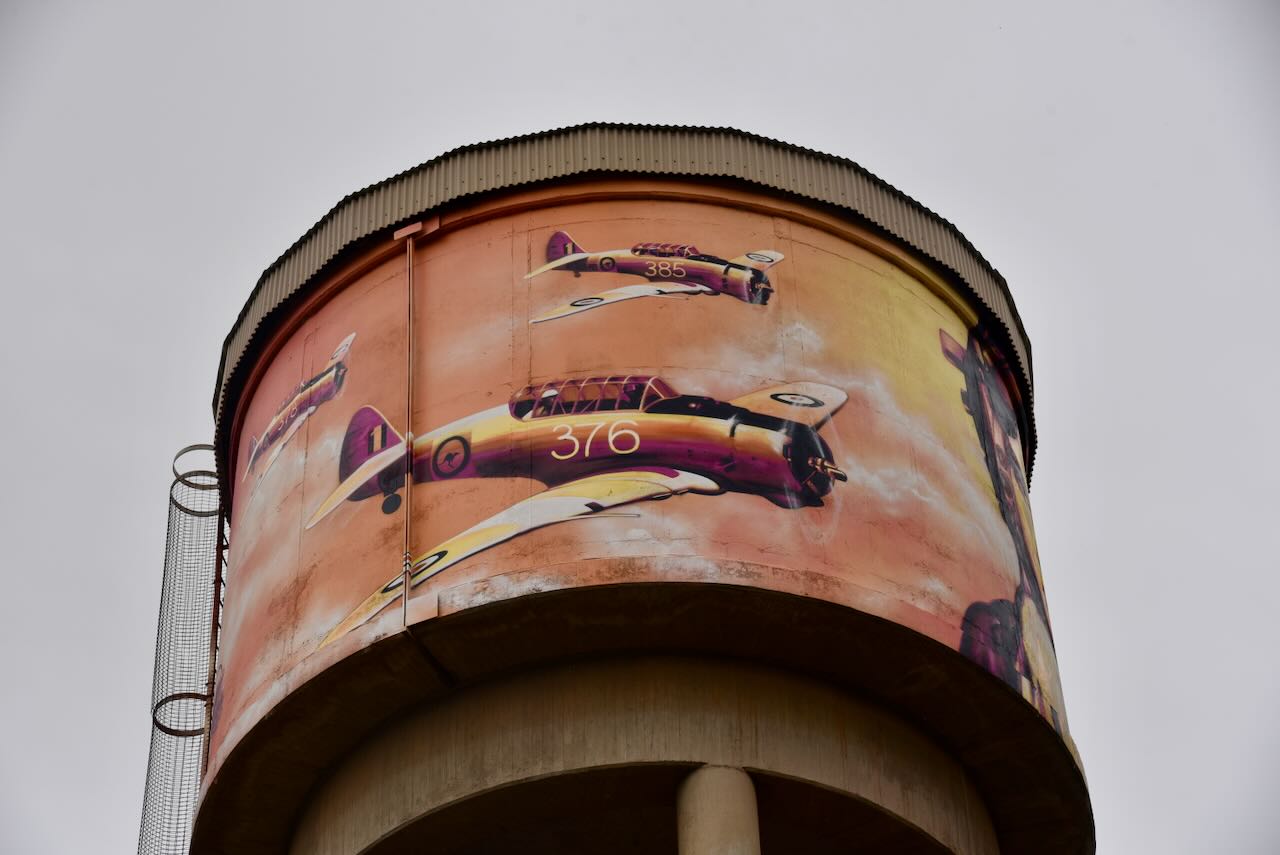
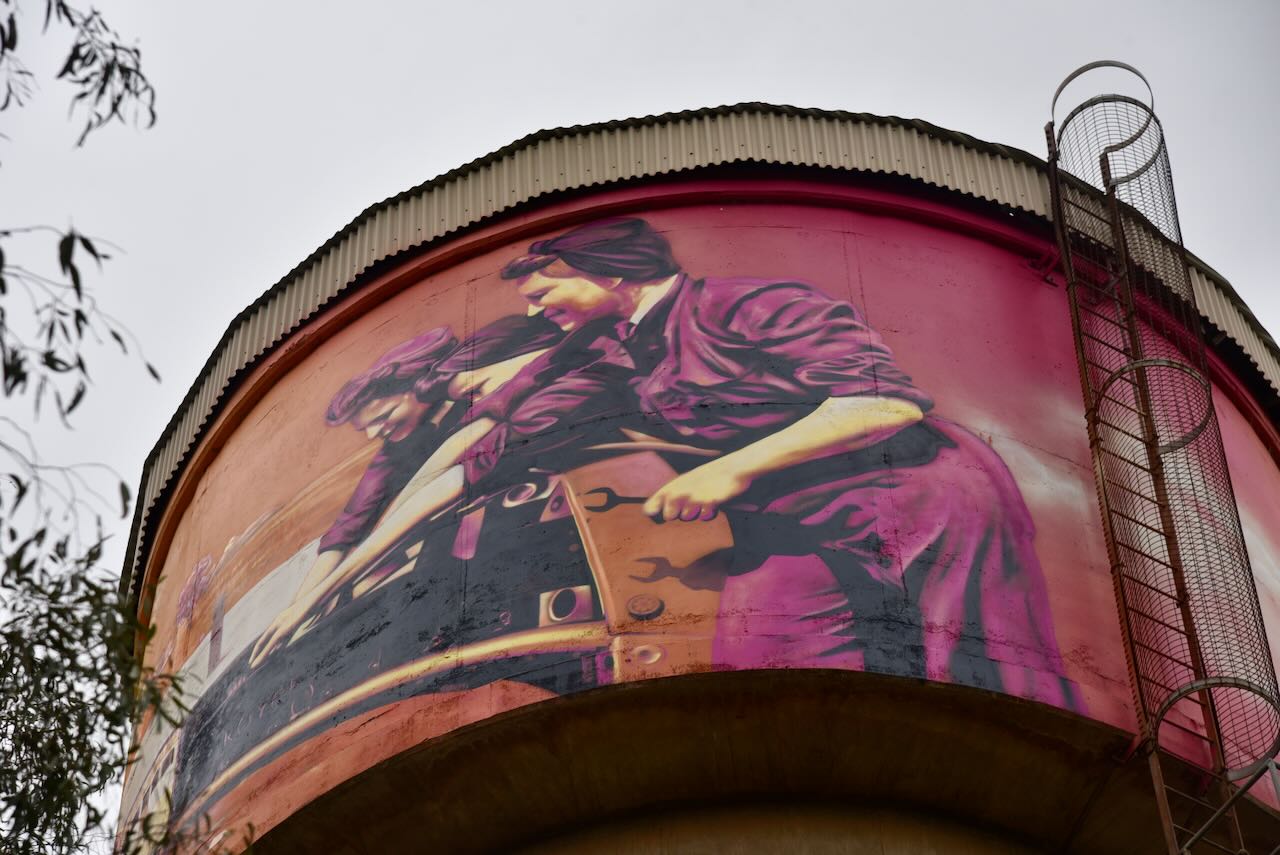
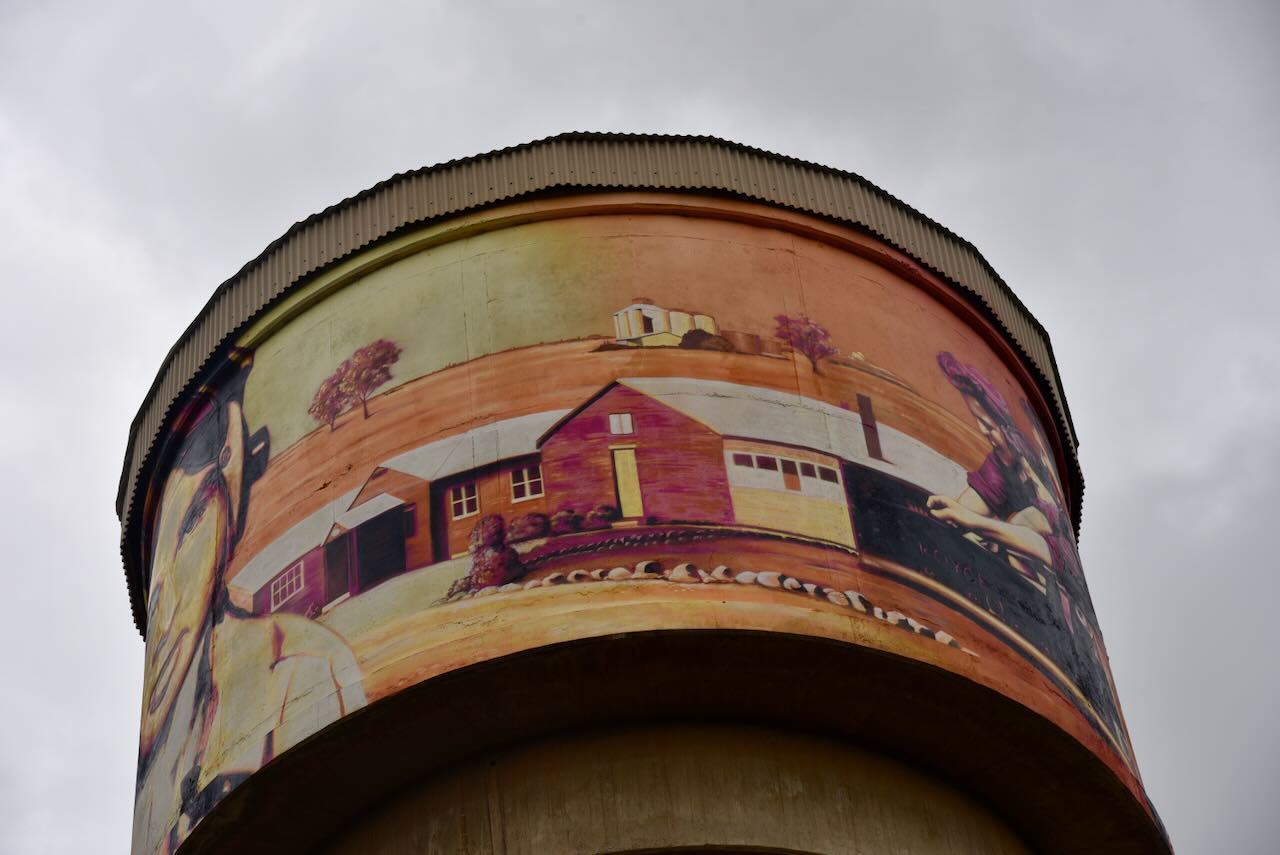
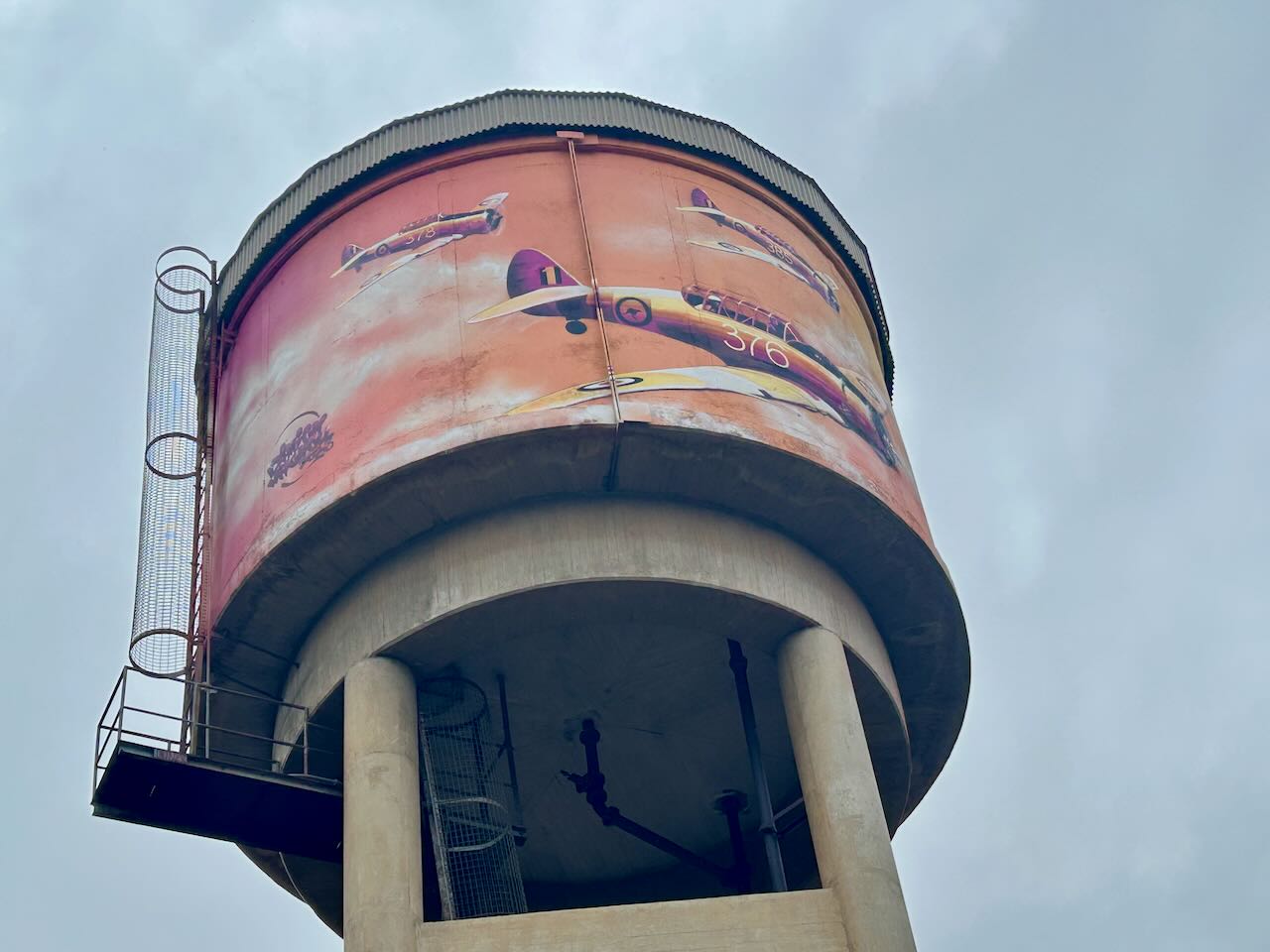
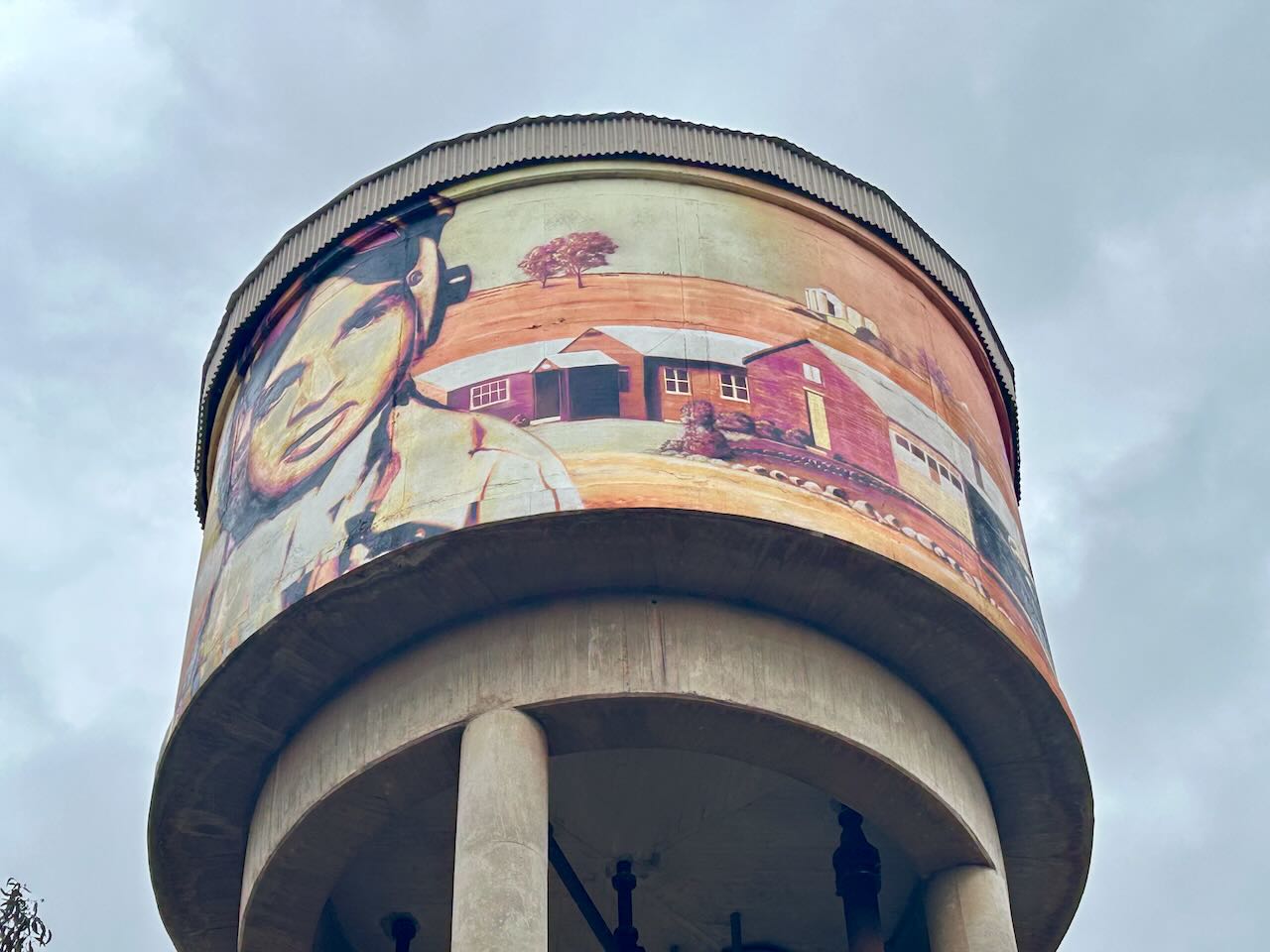
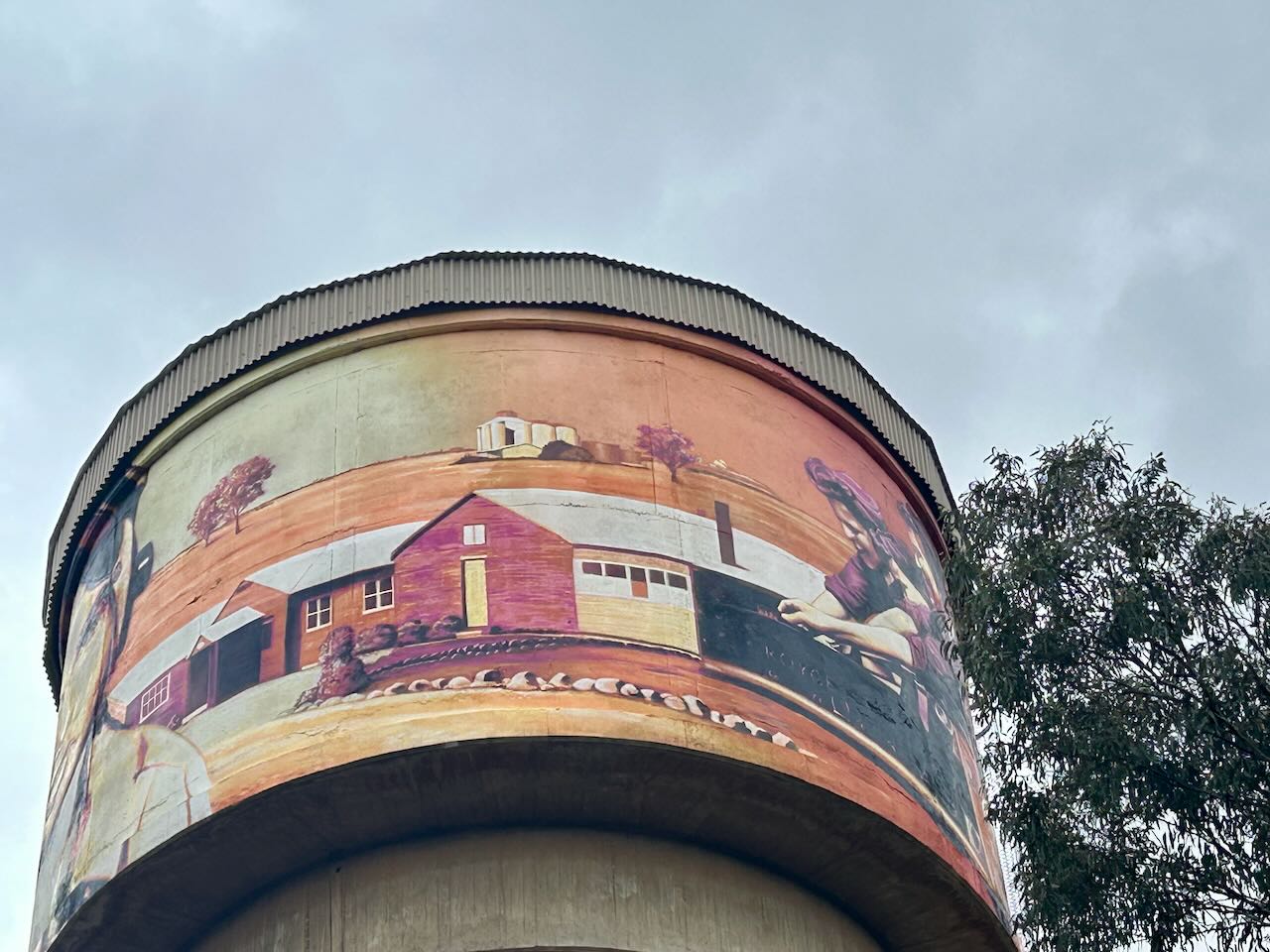
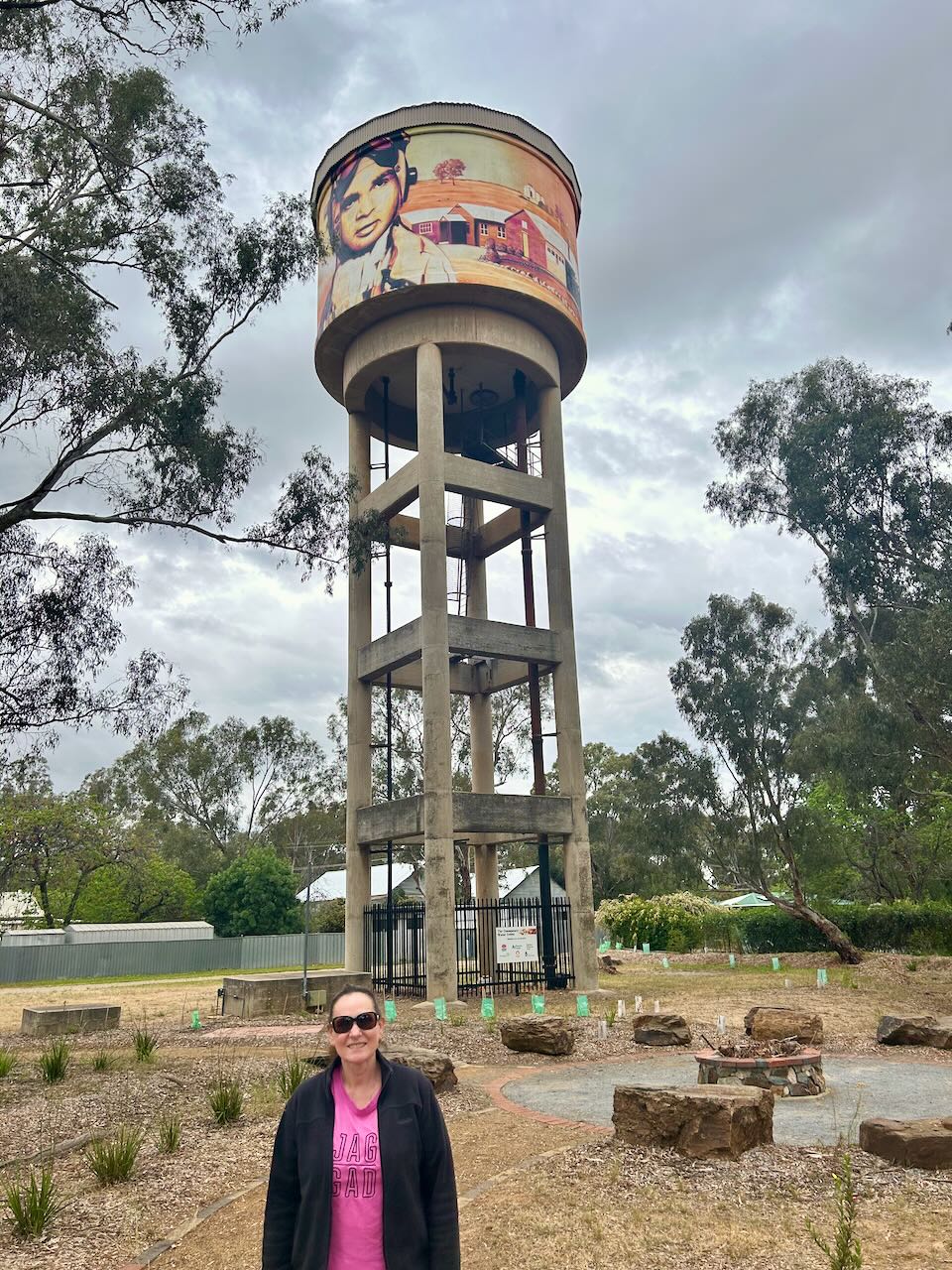
So why the aircraft and the defence theme on the water tower?
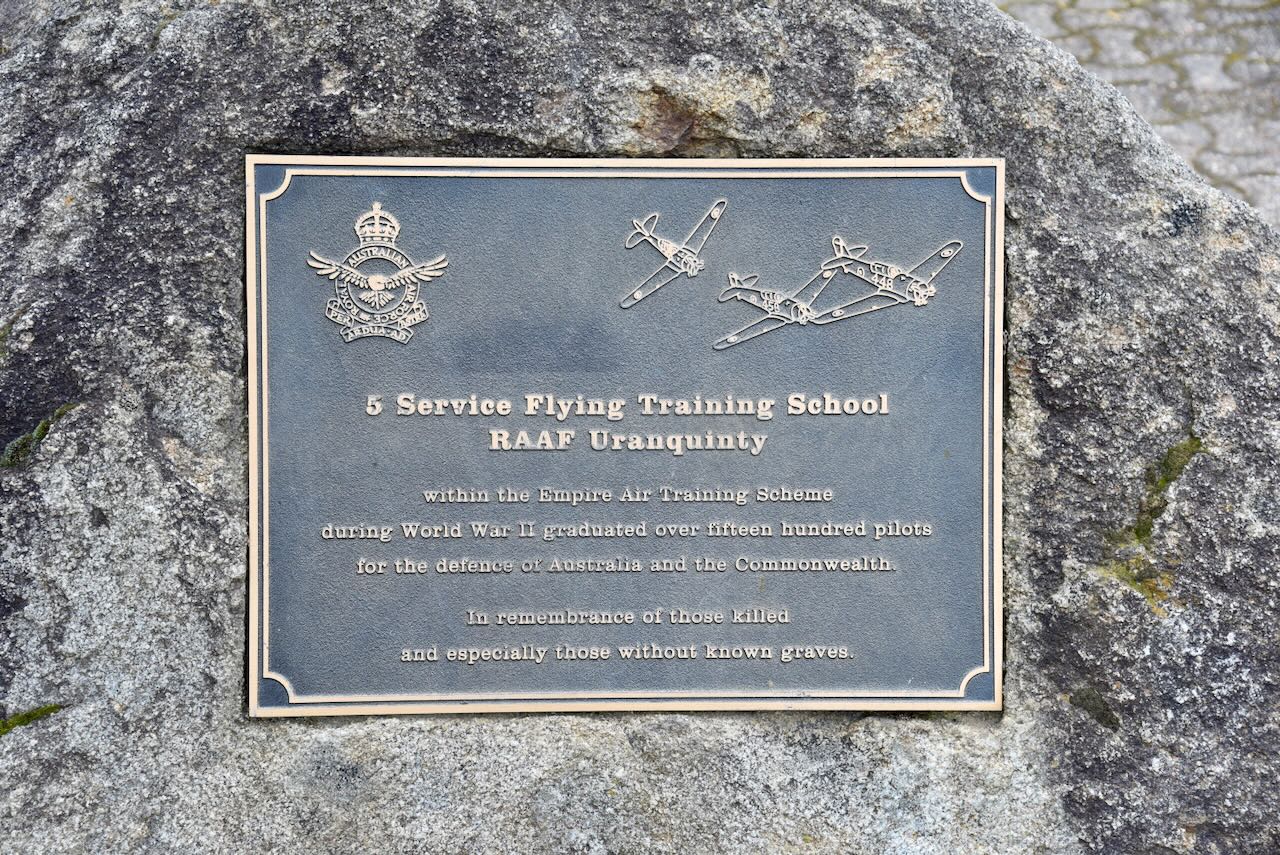
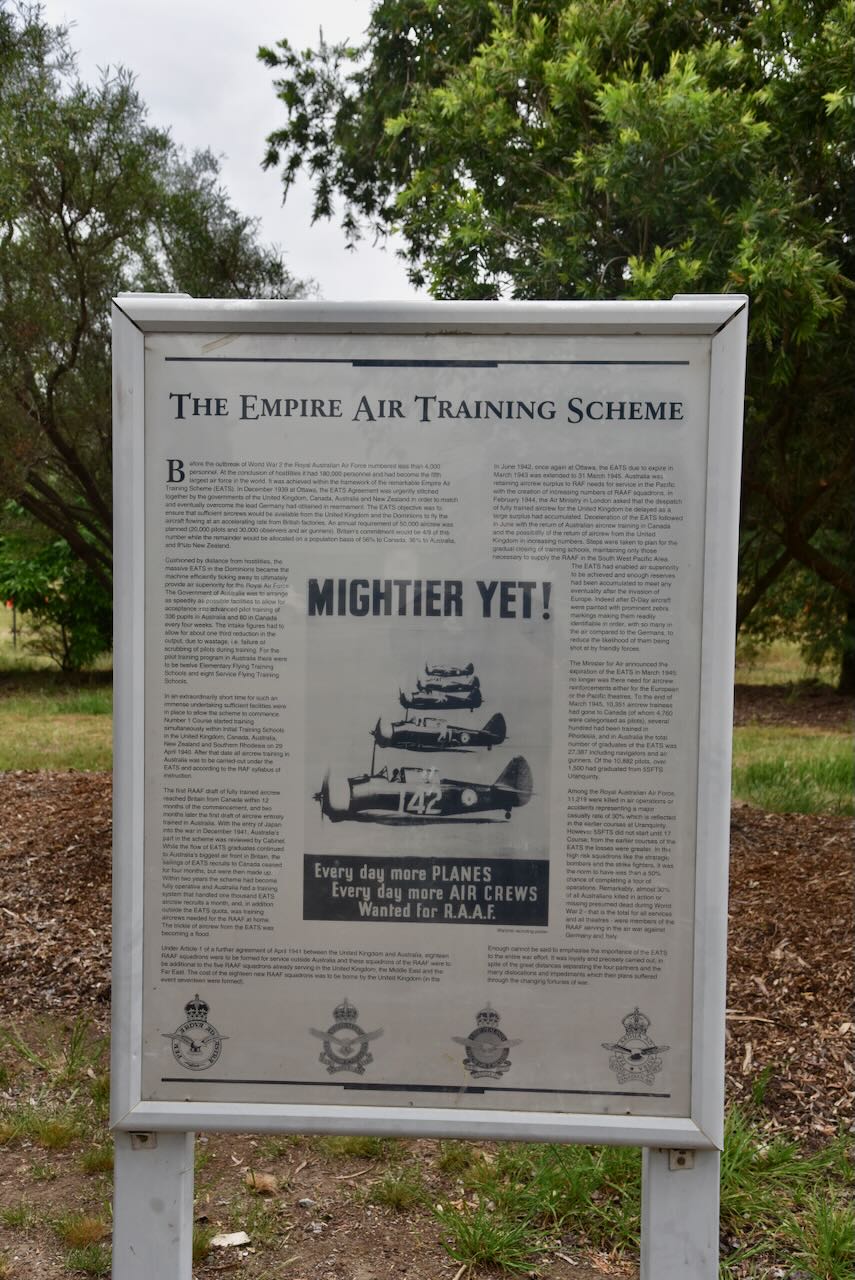
The No. 5 Service Flying Training School at Uranquinty was established by the Royal Australian Air Force (RAAF) during the Second World War. The school was developed as part of the Empire Training Scheme. It was established in October 1941 and would go on to train over 1,500 pilots up until February 1946, when it was disbanded. (Nsw.gov.au 2025)
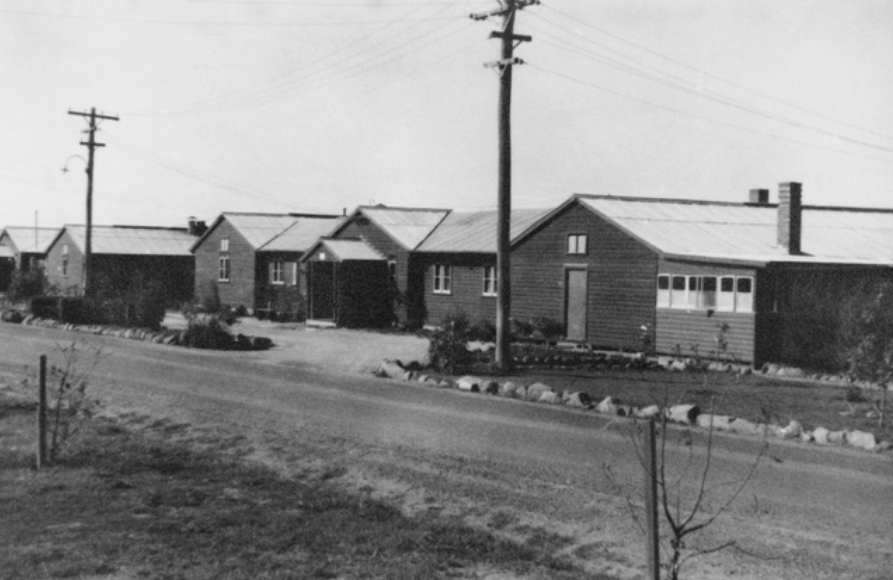
Above: View of the ‘main street’ at the Flying Training School, 1943. Image c/o Australian War Memorial.
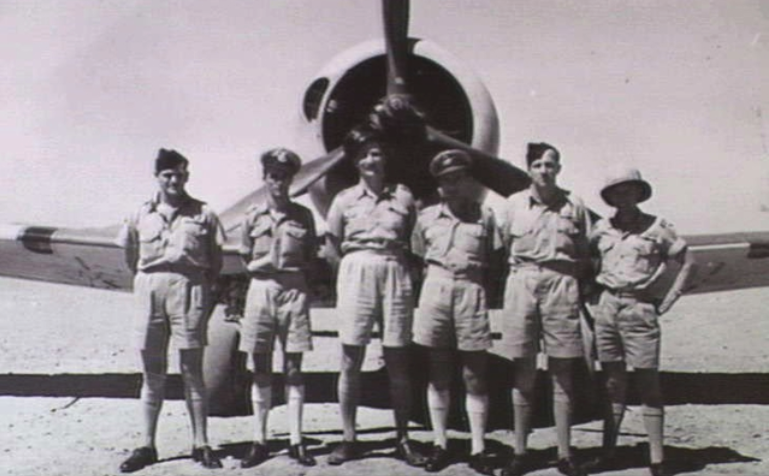
Above: RAAF personnel at the Flying Training School, 1944. Image c/o Australian War Memorial.
In 1951, following the outbreak of war in Korea, the Flying Training School was reopened to train pilots. The main aircraft used for training was the WInjeel, which is an Aboriginal word meaning ‘young eagle.’ (Uranquinty 2025)
Below is a video on the Winjeel.
The base continued until November 1958, when training was moved to Point Cook. (Uranquinty 2025)
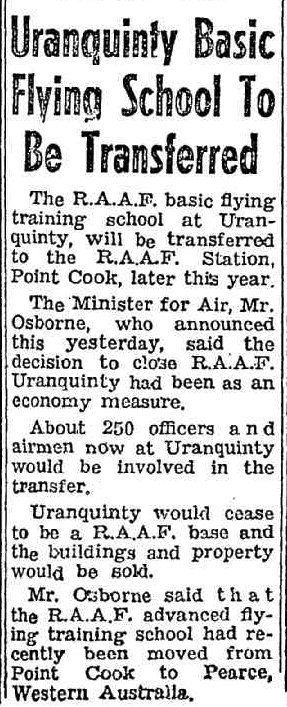
Above: article from The Canberra Times, Thu 31 Jul 1958. Image c/o Trove
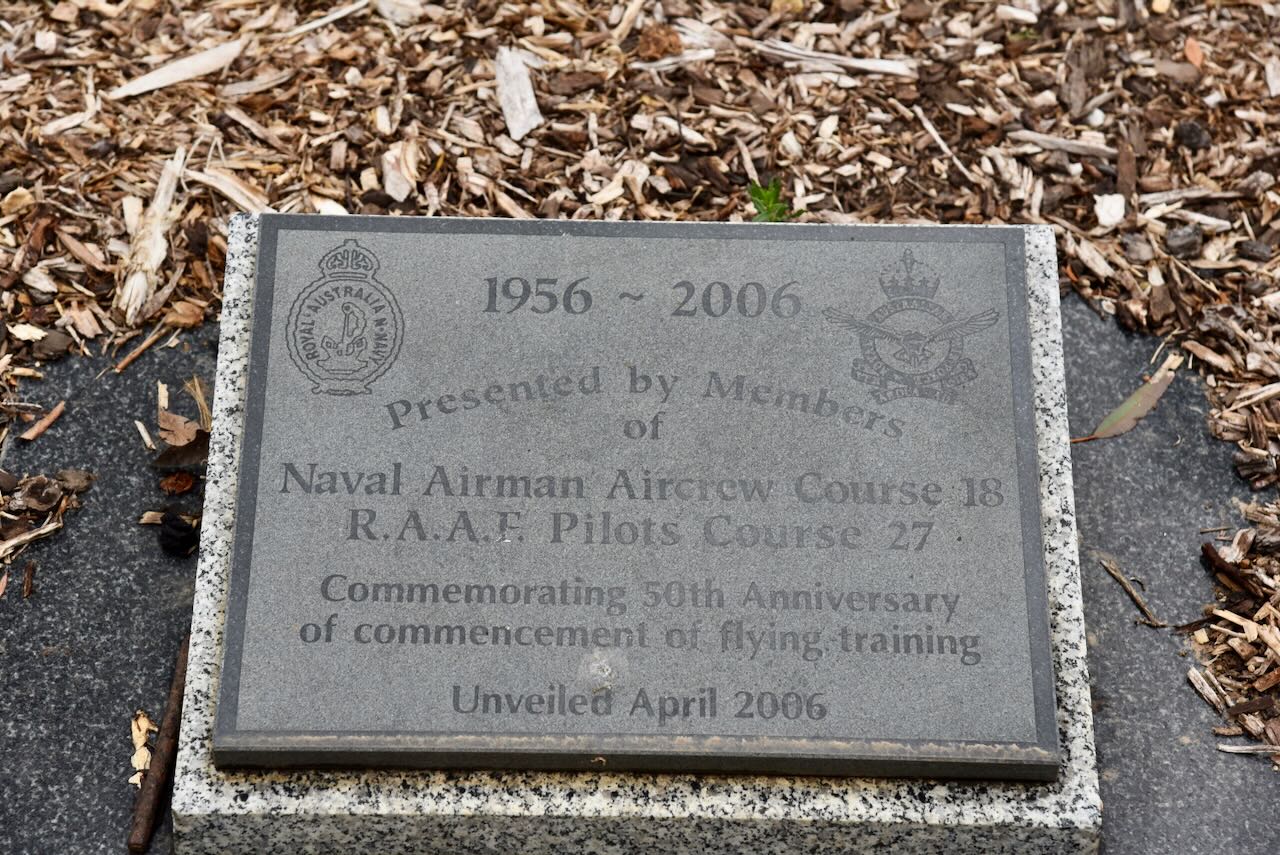
There is a Flying Training School monument and an excellent display at the rest area on Olympic Highway in Uranquinty.
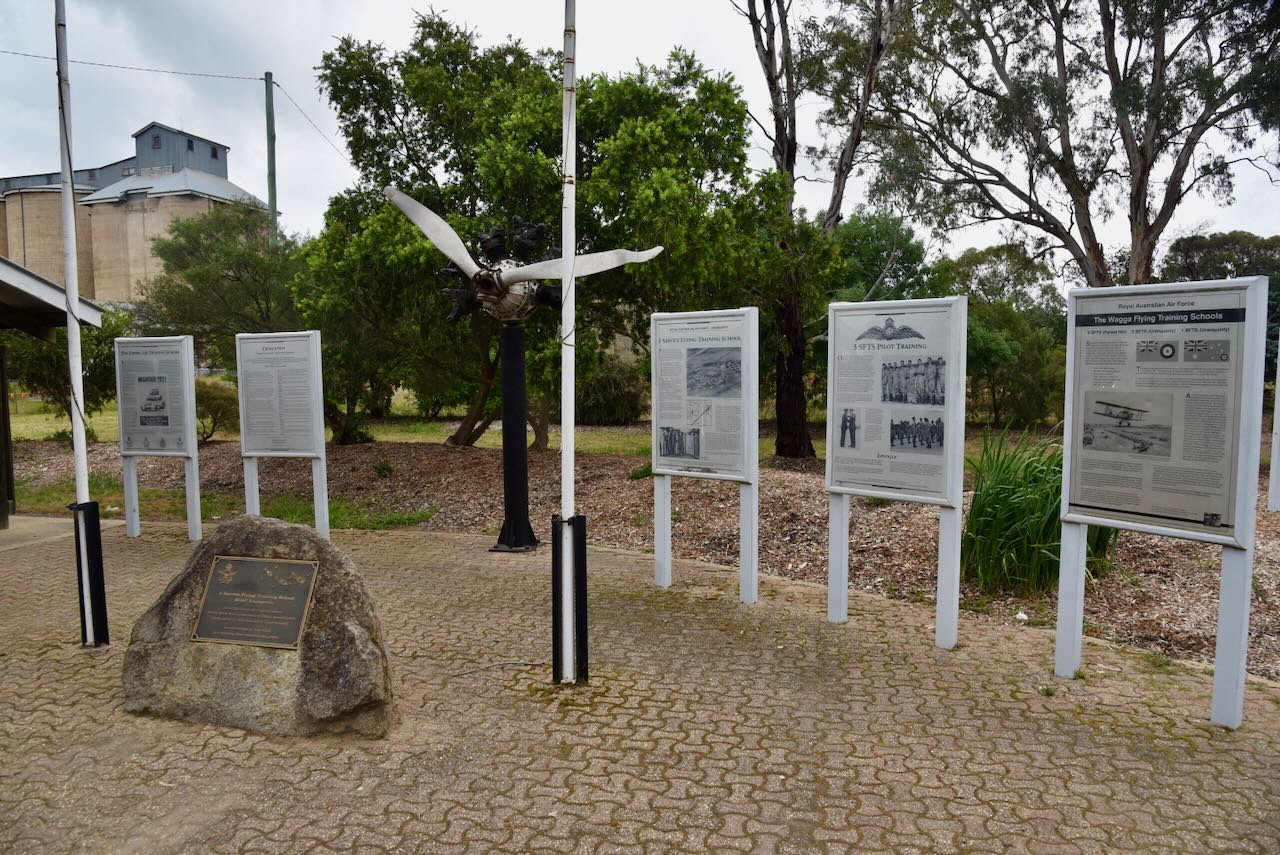
There are also monuments to those from Uranquinty and district who served in the World Wars.
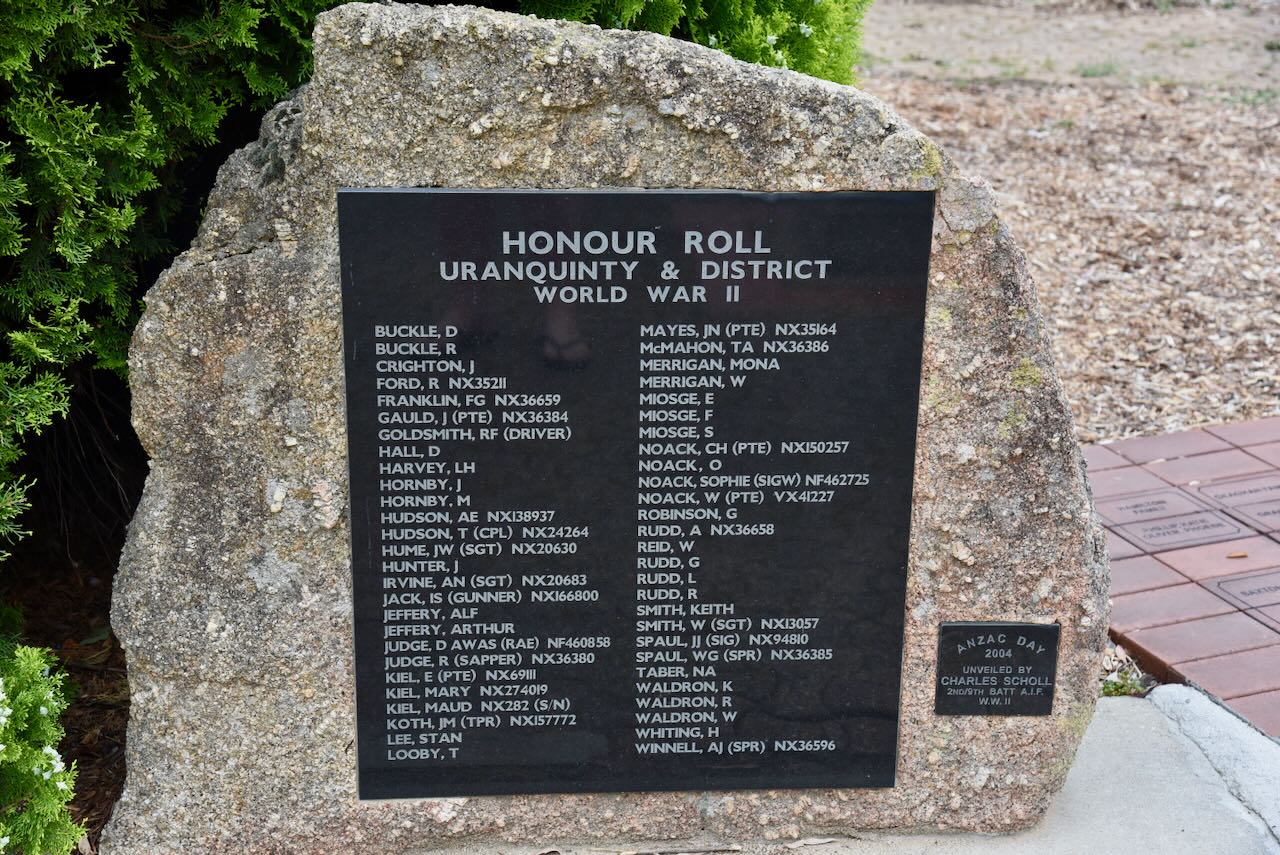
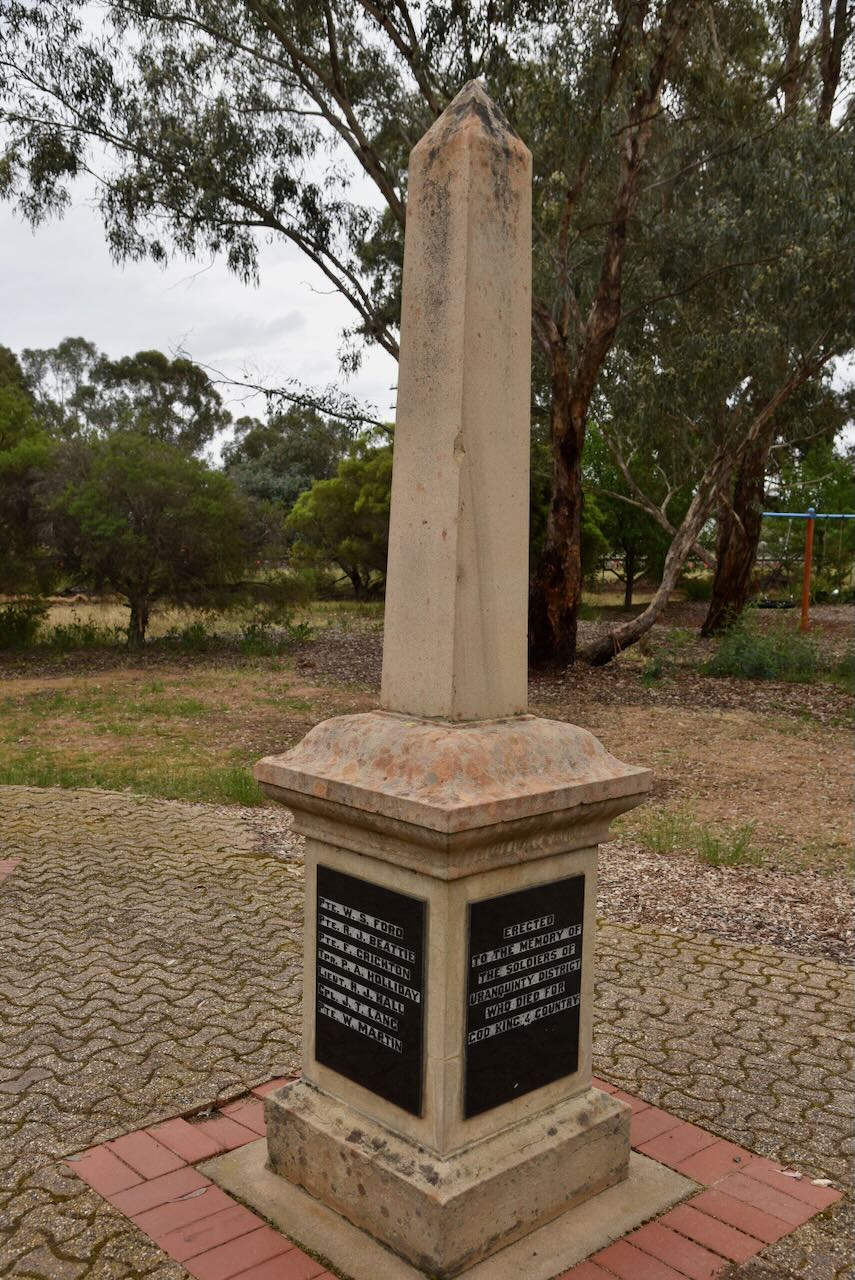
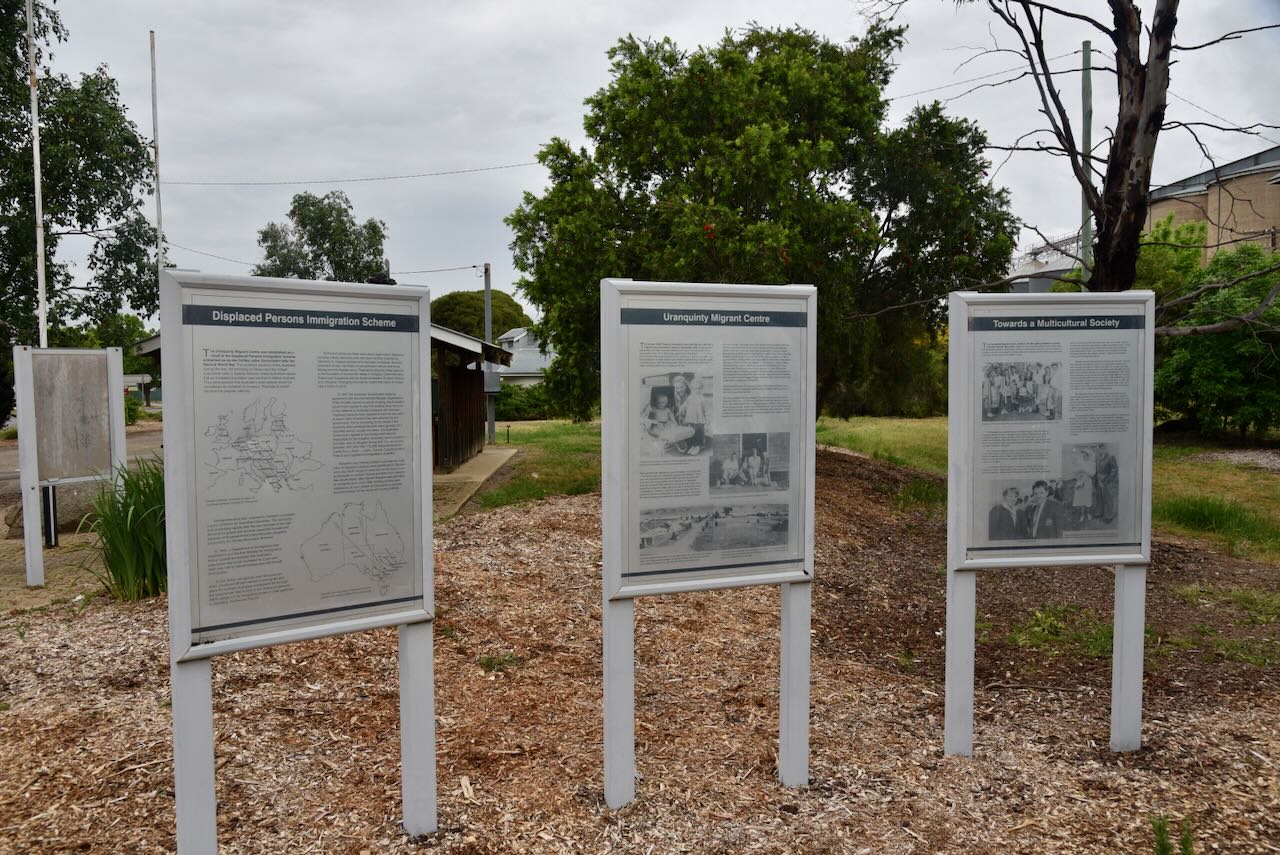
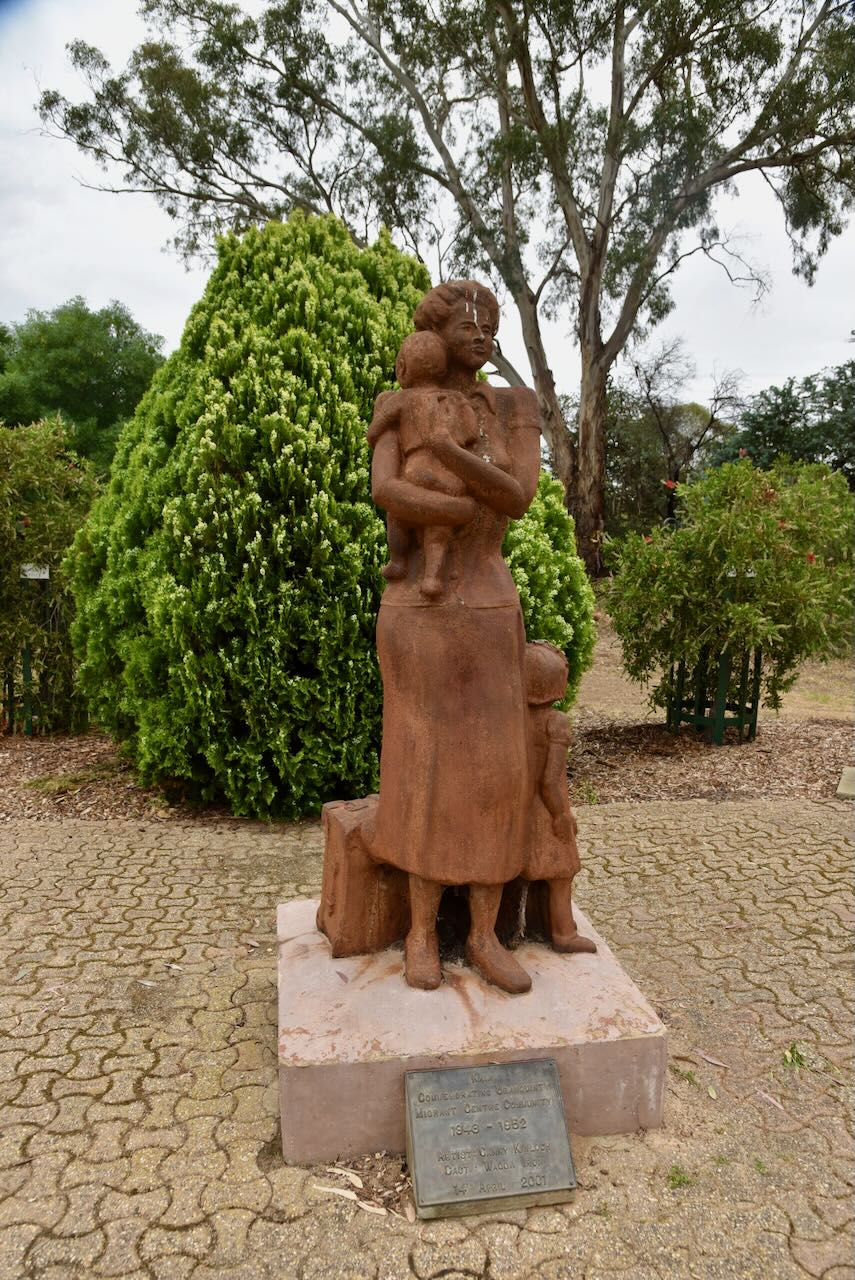
Also in the rest area is a monument to commemorate the Uranquinty Migrant Centre Community 1948-1952.
Following the Second World War, about one million Europeans were displaced from their country of origin. In July 1947, the Australian Government signed an agreement with the United Nations International Refugee Organisation in which about 4,000 displaced persons would travel to Australia, where accommodation and employment would be arranged. The program was encouraged by Australia’s first Minister for Immigration, Arthur Calwell. It was a way for Australia to rebuild its agricultural and industrial sectors following the war and to increase Australia’s population against any potential future attacks by aggressors. The slogan ‘populate or perish’ was used to promote the program. (National Archives of Australia 2023) (UBC Web Design 2022)
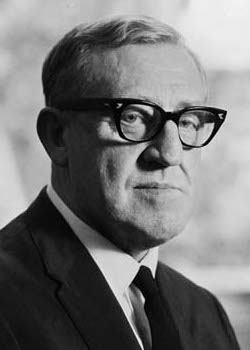
Above: Arthur Calwell. Image c/o Wikipedia
From 1945, there was a winding down of the Flying Training School, and in 1949, the living area of the base was relinquished to the Department of Immigration. The Uranquinty Migrant Centre was established and accepted people from Eastern Europe. They comprised mostly women and young children from Yugoslavia, Estonia, Latvia and Poland. (Uranquinty 2025)
In 1949, a school was established to teach English. Over 250 babies were born in the hospital over the following 4 years. In 1951, the migrants were transferred to Bonegilla. This was due to the outbreak of war in Korea and the reopening of the Flying Training School to train pilots. (Uranquinty, 2025)
Below is an excellent video explaining the ‘Populate or Perish’ policy.
Marija and I then activated the Uranquinty silo for the Silos On The Air (SiOTA) program.
The silos are located alongside the Main Southern railway line.
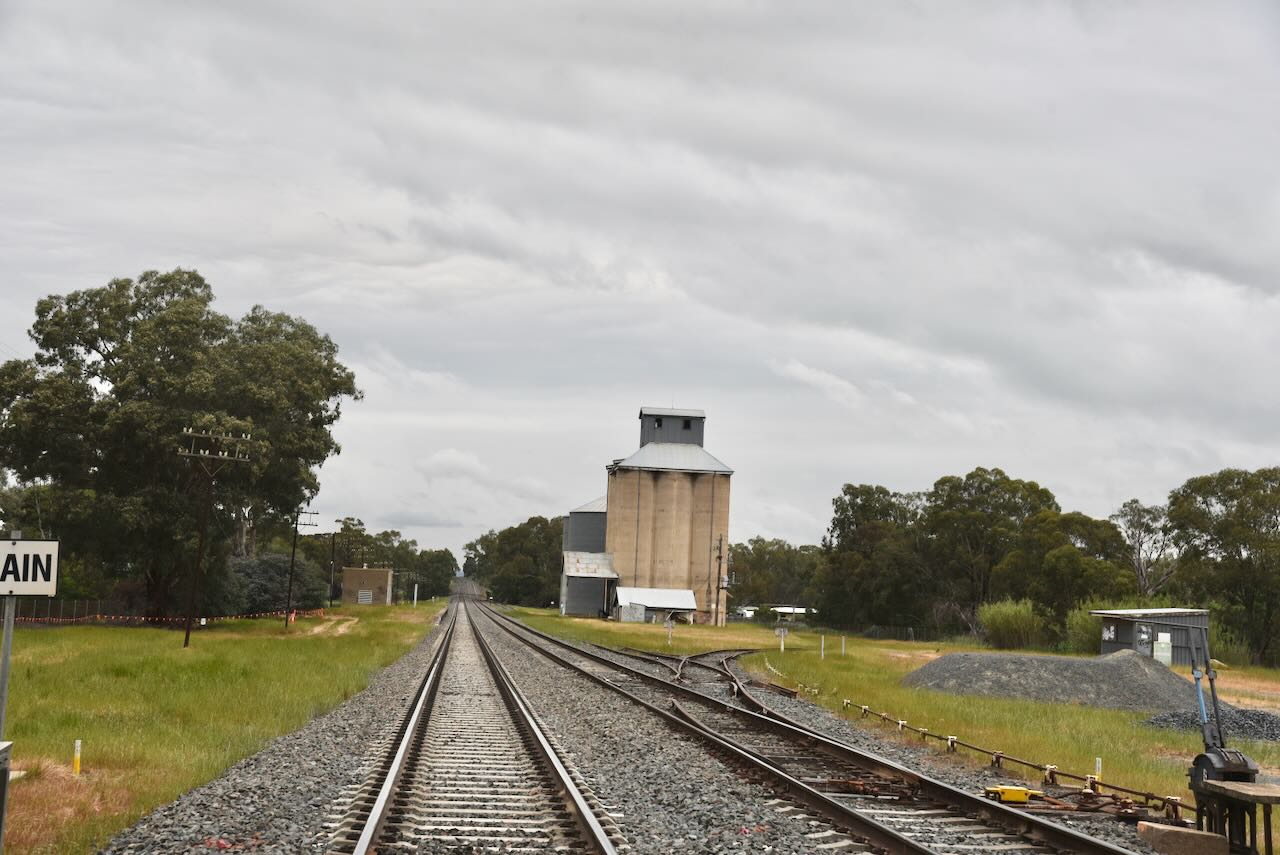
The silos were built in the 1920s with 4,100 tonnes capacity. In 1973, extra bins (8,500 tonnes) were added. The silos were last used in 2007. (NSW Silos 2014) (Uranquinty, 2025)
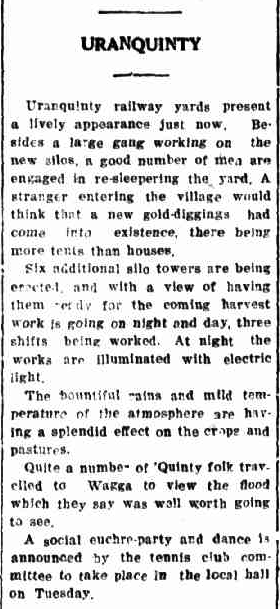
Above: article from The Daily Express, Wagga Wagga, Sat 5 Aug 1922. Image c/o Trove
The Uranquinty railway station was opened on the 1st day of September 1880 and was known as the Sandy Creek Station. It comprised a waiting shed in the middle of the station building and a small ticket office, which was also used as a post office. It was renamed Uranquinty on the 4th day of February 1891. (Uranquinty 2025) (Wikipedia 2025)
I found the newspaper articles below on Trove from 1882 regarding a robbery at the railway station.
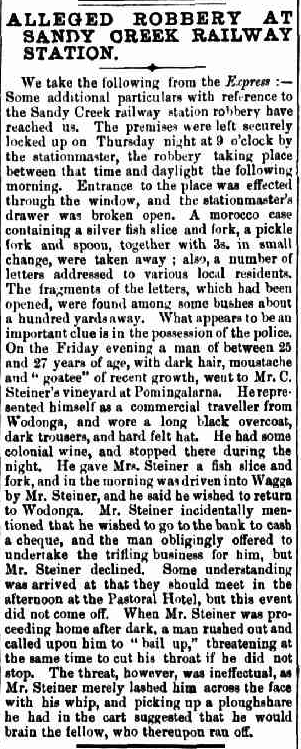
Above: article from The Albury Banner and Wodonga Express, Fri 1 Sept 1882. Image c/o Trove
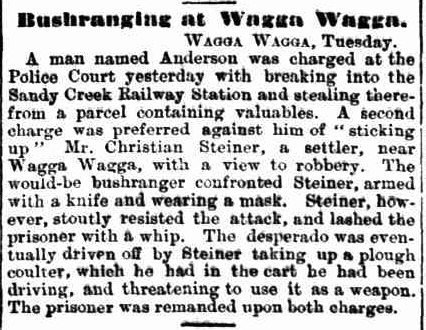
Above: article from the Evening News, Sydney, Tue 12 Sep 1882. Image c/o Trove
In October 1928, Uranquinty became a junction station following the opening of the railway line to Kywong. In June 1934, the Uranquinty railway station building was totally destroyed by fire and was rebuilt. (Wikipedia 2025)
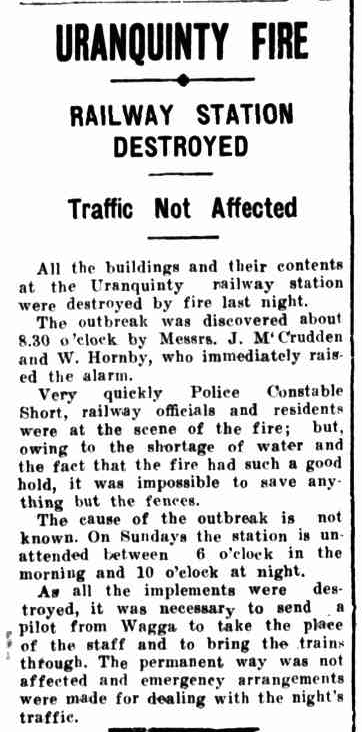
Above: article from the Daily Advertiser, Wagga Wagga, Mon 4 Jun 1934. Image c/o Trove
In May 1975, the Kywong line was closed. The Uranquinty railway station closed for all passenger services in 1984. In 1988, the buildings were demolished. (Uranquinty 2025) (Wikipedia 2025)
Marija and I parked in the rest area on the Olympic Highway, directly in front of the silos. We operated from the 4WD and ran the Icom IC-7000, 100 watts, and the Codan 9350 antenna with the 1.5 metre stainless steel whip.
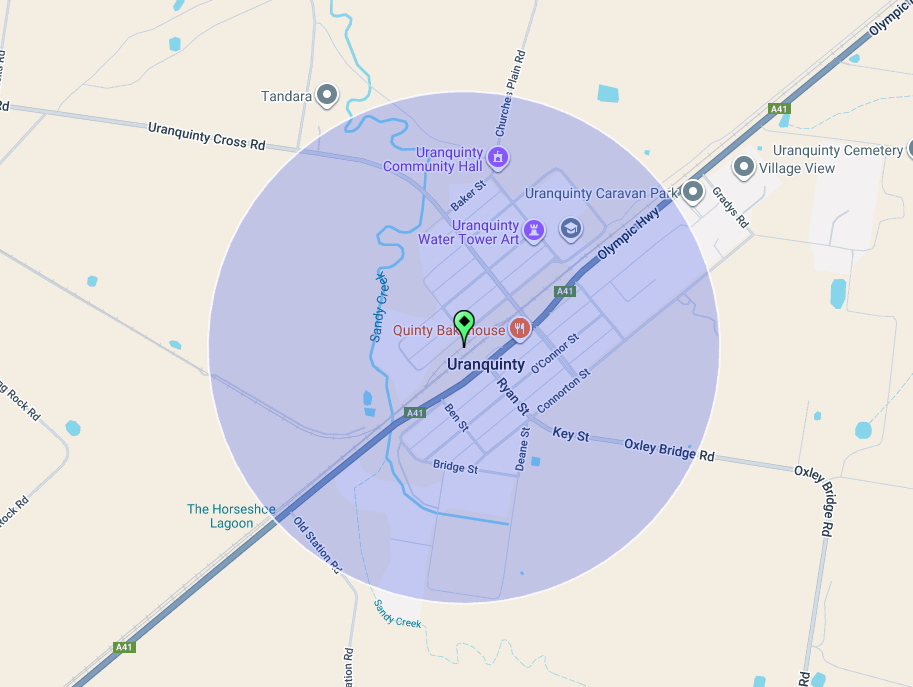
Above: the activation zone at the Uranquinty silos. Image c/o SiOTA website.
Marija worked the following stations on 40m SSB:-
- VK1AO
- VK2MET
- VK2IO
- VK2GEZ
- VK3FRC
- VK2ETI
- VK1CHW
I worked the following stations on 40m SSB:-
- VK1AO
- VK2MET
- VK2IO
- VK2GEZ
- VK3FRC
- VK2ETI
- VK1CHW
References.
- Australiansiloarttrail.com. (2023). \r\n \n Uranquinty Water Tank Art\n \r\n. [online] Available at: https://www.australiansiloarttrail.com/UranquintY [Accessed 29 Dec. 2025].
- National Archives of Australia (2023). Refugees displaced by World War II | naa.gov.au. [online] Naa.gov.au. Available at: https://www.naa.gov.au/explore-collection/immigration-and-citizenship/migrant-stories/refugees/refugees-displaced-world-war-ii. [Accessed 29 Dec. 2025].
- Nsw.gov.au. (2025). Uranquinty Flying Training School Memorial | NSW War Memorials Register. [online] Available at: https://www.warmemorialsregister.nsw.gov.au/memorials/uranquinty-flying-training-school-memorial [Accessed 29 Dec. 2025].
- NSW Silos. (2014). Silo Photos – U-W – NSW Silos. [online] Available at: https://nswsilos.com/silo-photos-w/ [Accessed 29 Dec. 2025].
- UBC Web Design (2022). Displaced Persons Memorial | Monument Australia. [online] Monumentaustralia.org. Available at: https://www.monumentaustralia.org/themes/landscape/settlement/display/93570-displaced-persons-memorial/photo/1 [Accessed 29 Dec. 2025].
- Uranquinty. (2025). Uranquinty | About Us | A Unique Village within the Riverina. [online] Available at: https://uranquinty.com.au/about-us/#history. [Accessed 29 Dec. 2025].
- Wikipedia Contributors (2025). Kapooka, New South Wales. Wikipedia.
- Wikipedia Contributors (2025). Uranquinty railway station. Wikipedia.
 VK5PAS