
Marija and I stayed overnight in Ouyen. Unfortunately, our accomodation was less than ideal. We have just purchased a caravan, so we are lucky that we will not be returning there. Ouyen will certainly be on our list of places to stay, but next time it will be in the caravan.
After breakfast we headed to Ouyen Lake on the northwest edge of the town. The lake is a disused dam which has been turned into a recreational lake for community use. There were lots of vans on the eastern side of the lake. And it was not surprising that there were lots of people staying here. It is a beautiful spot. Marija and I both agree, we are definitely coming back here to stay.
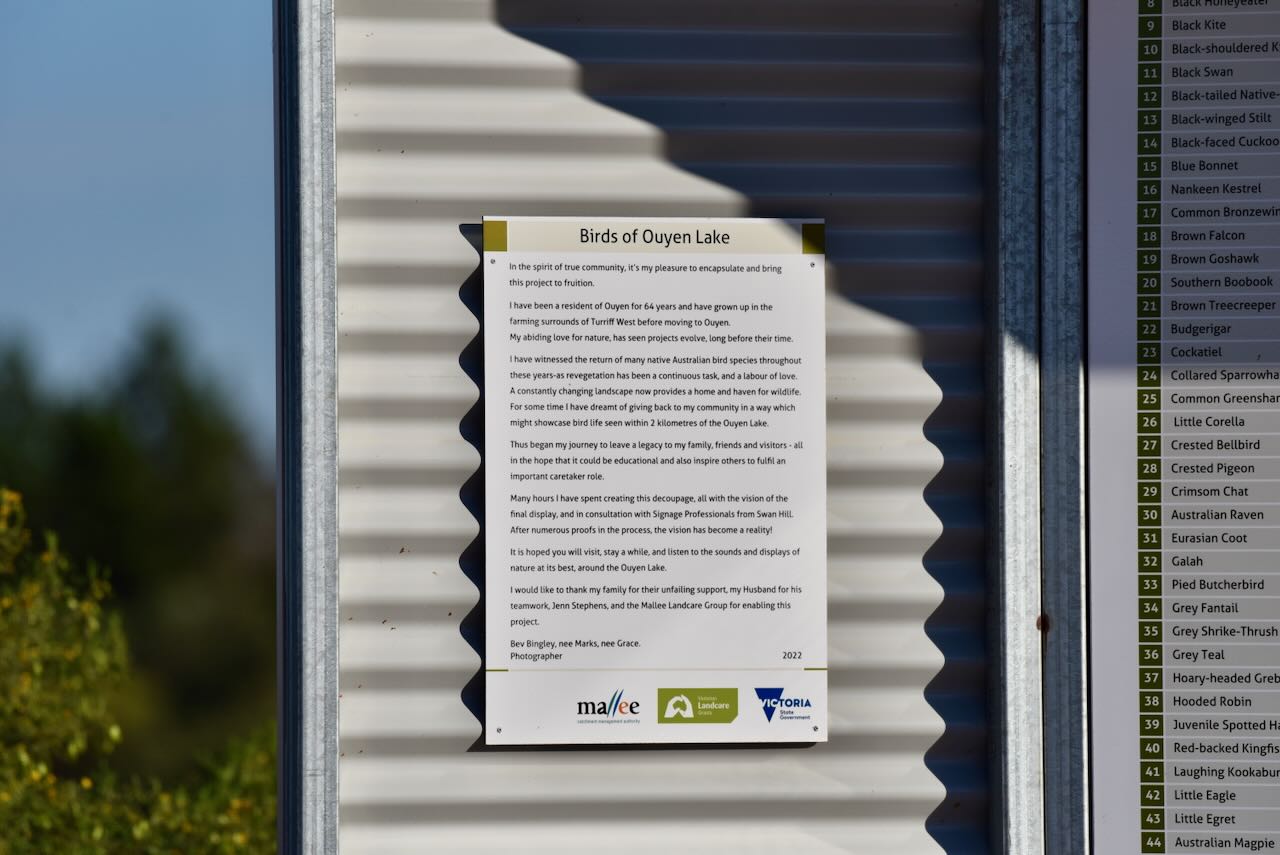
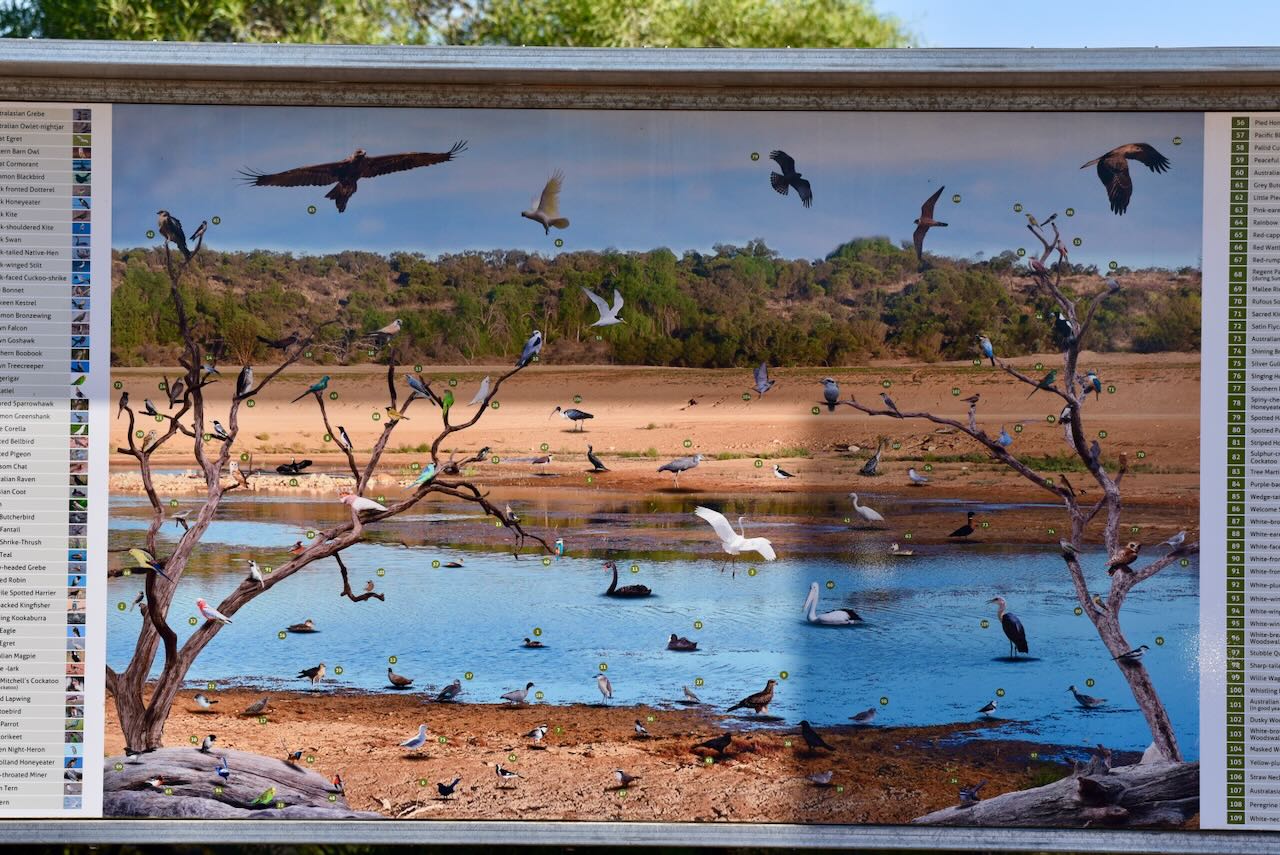
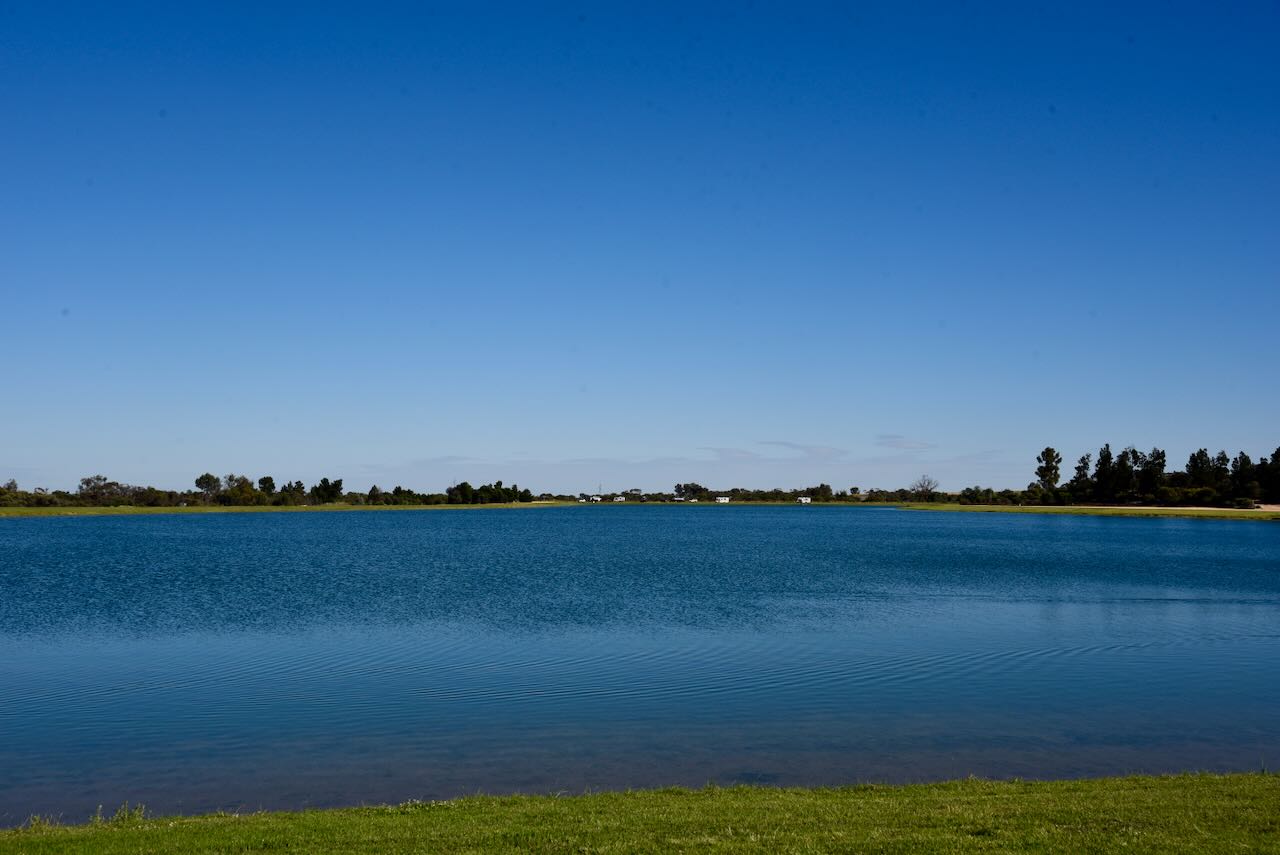
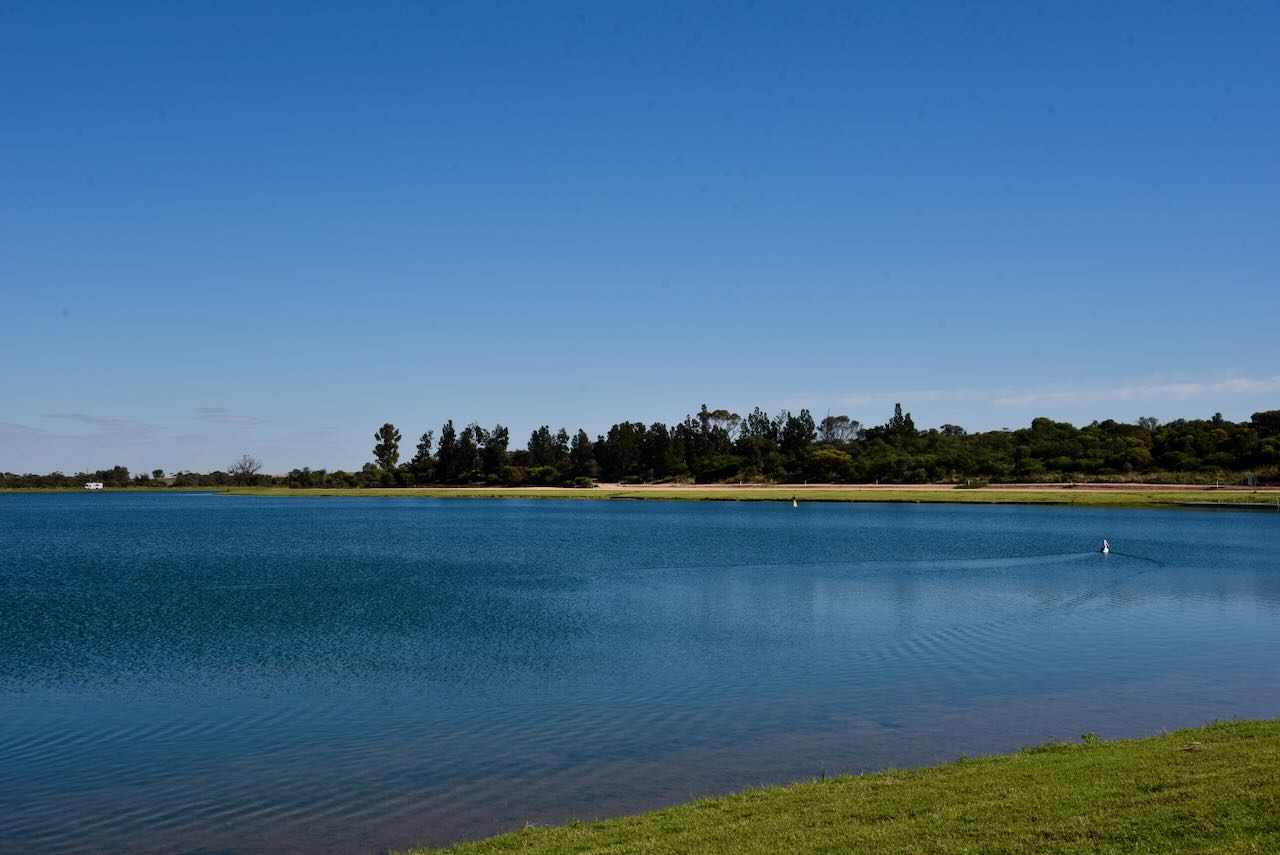
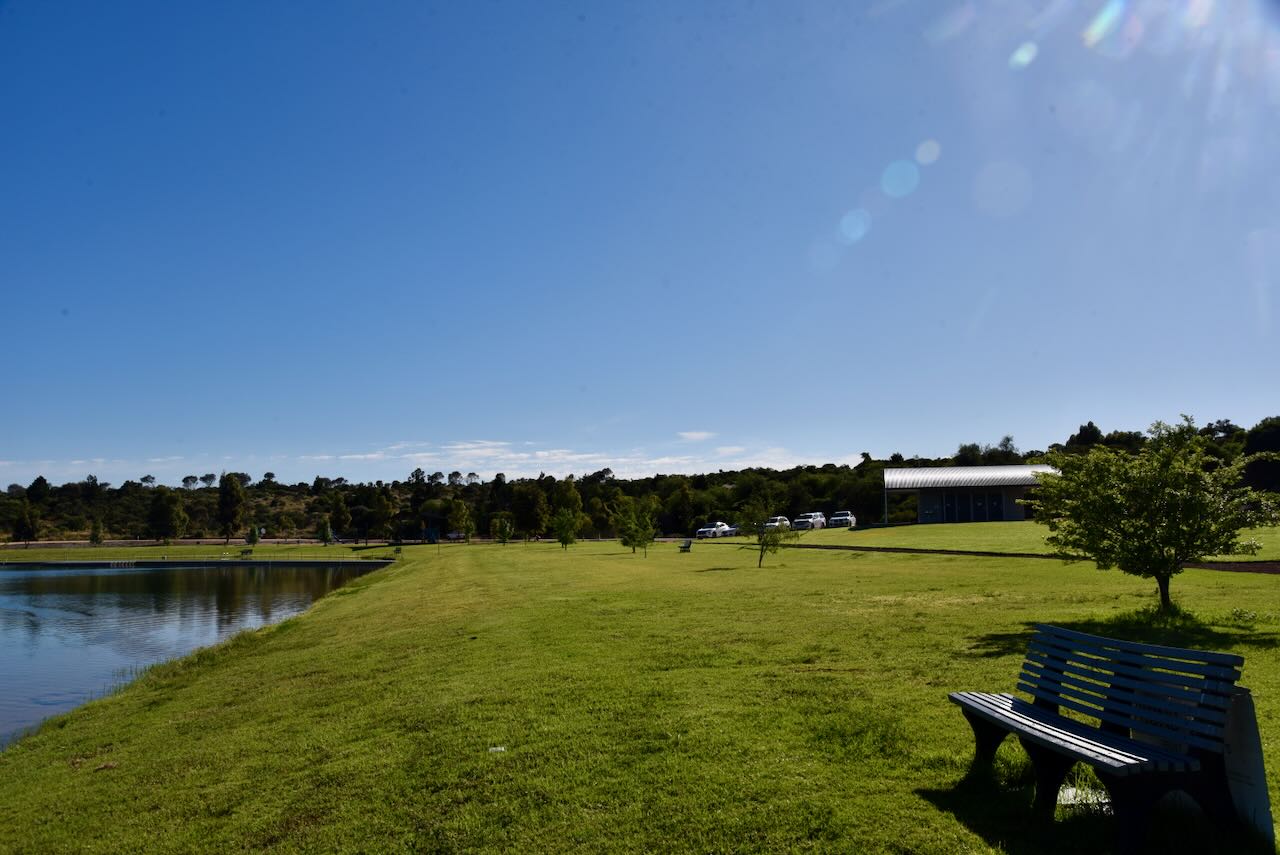
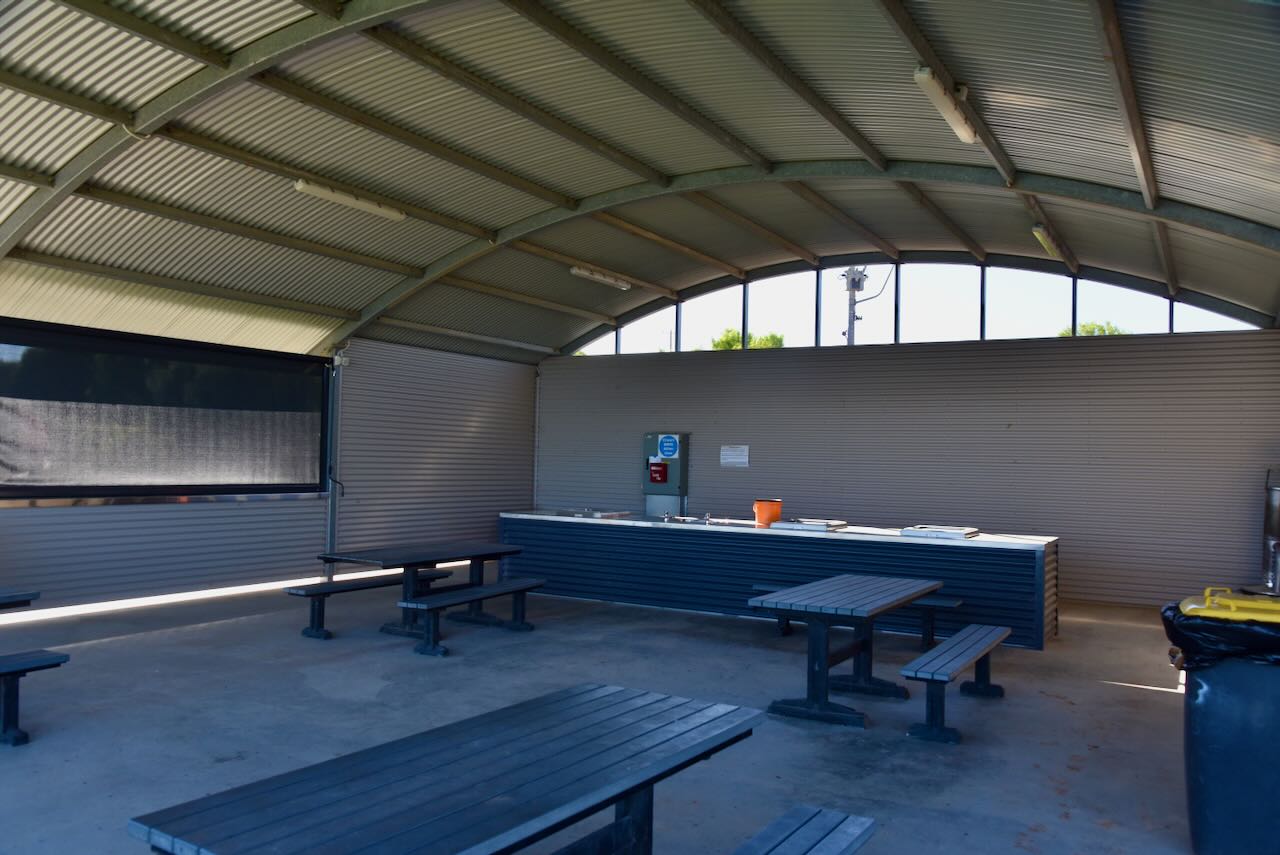
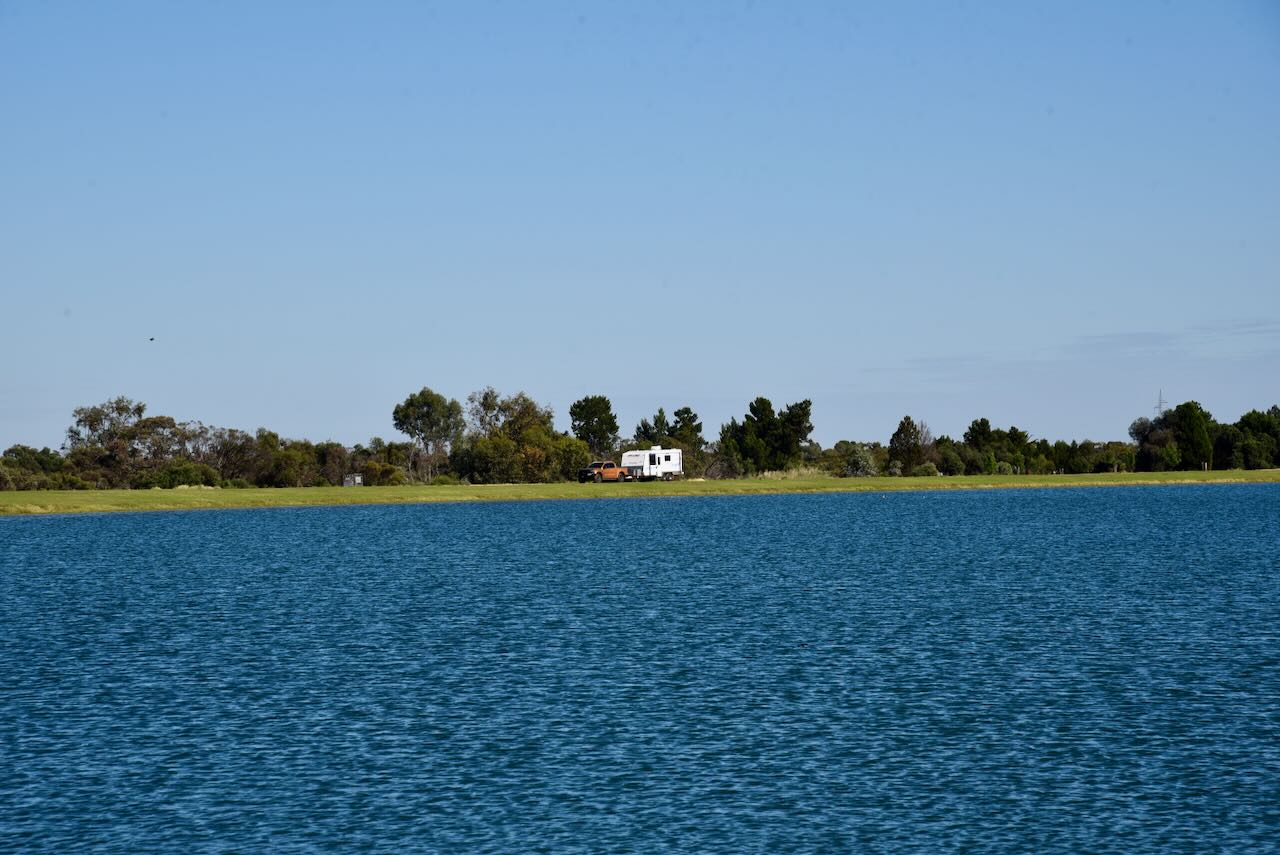
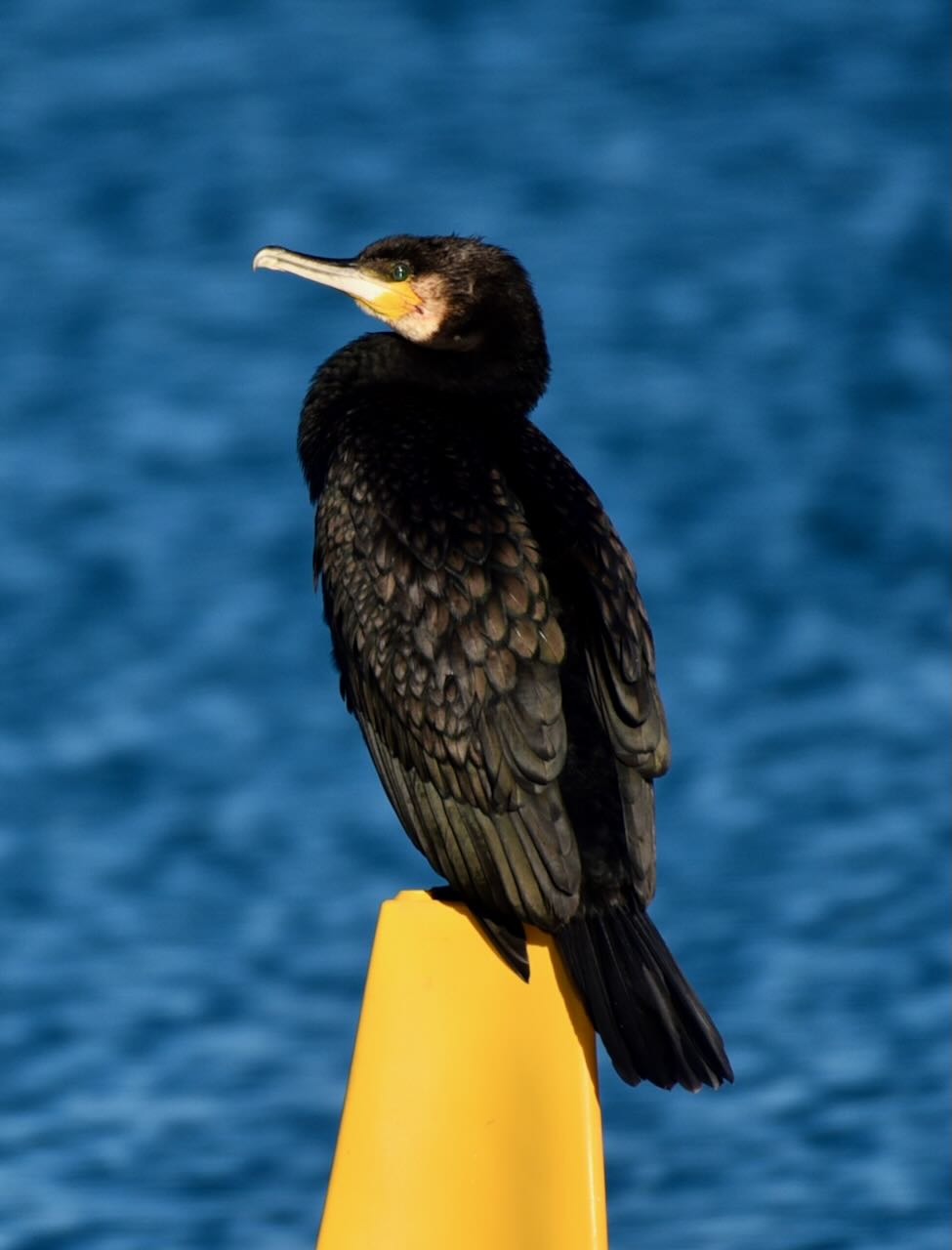
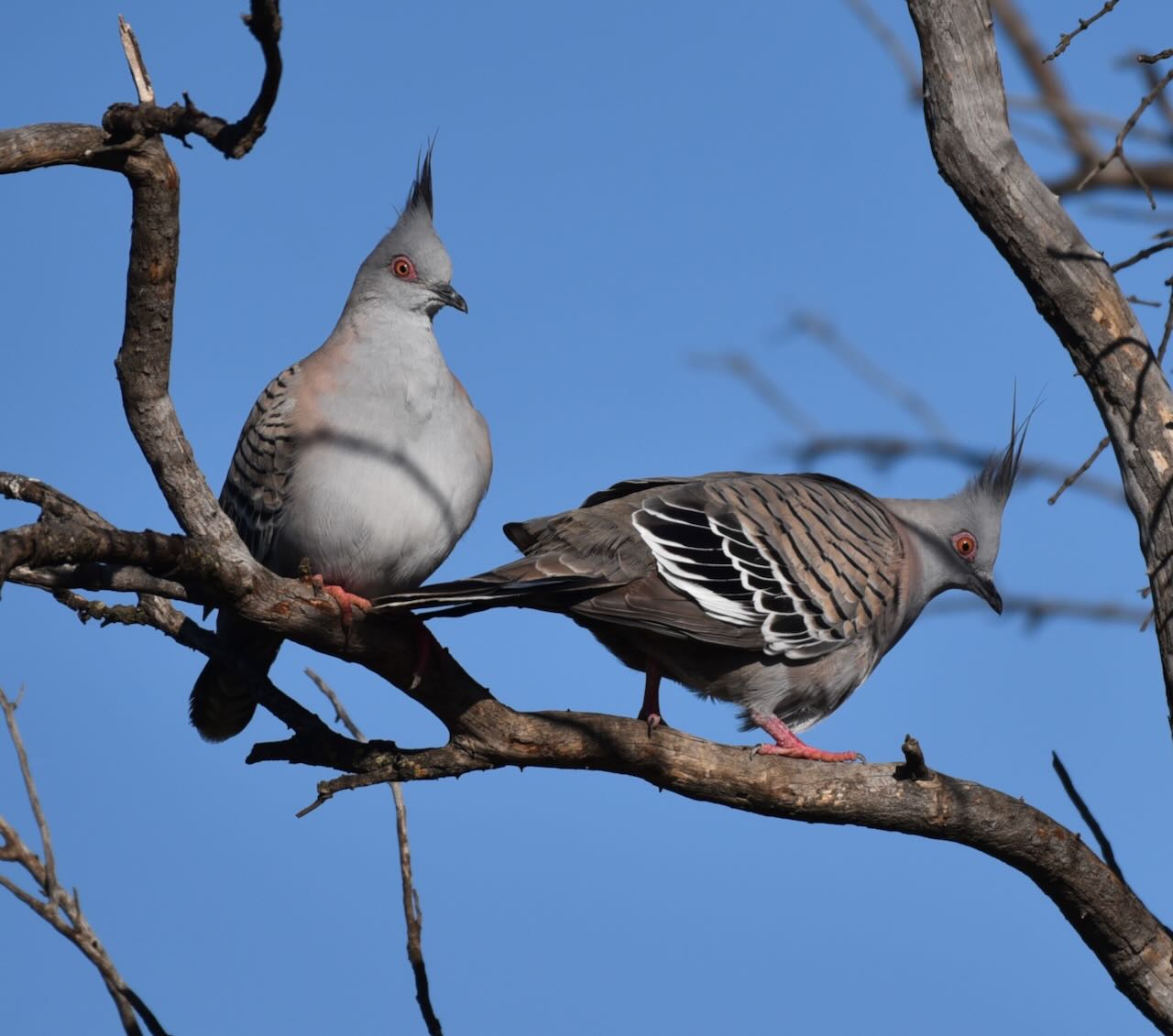
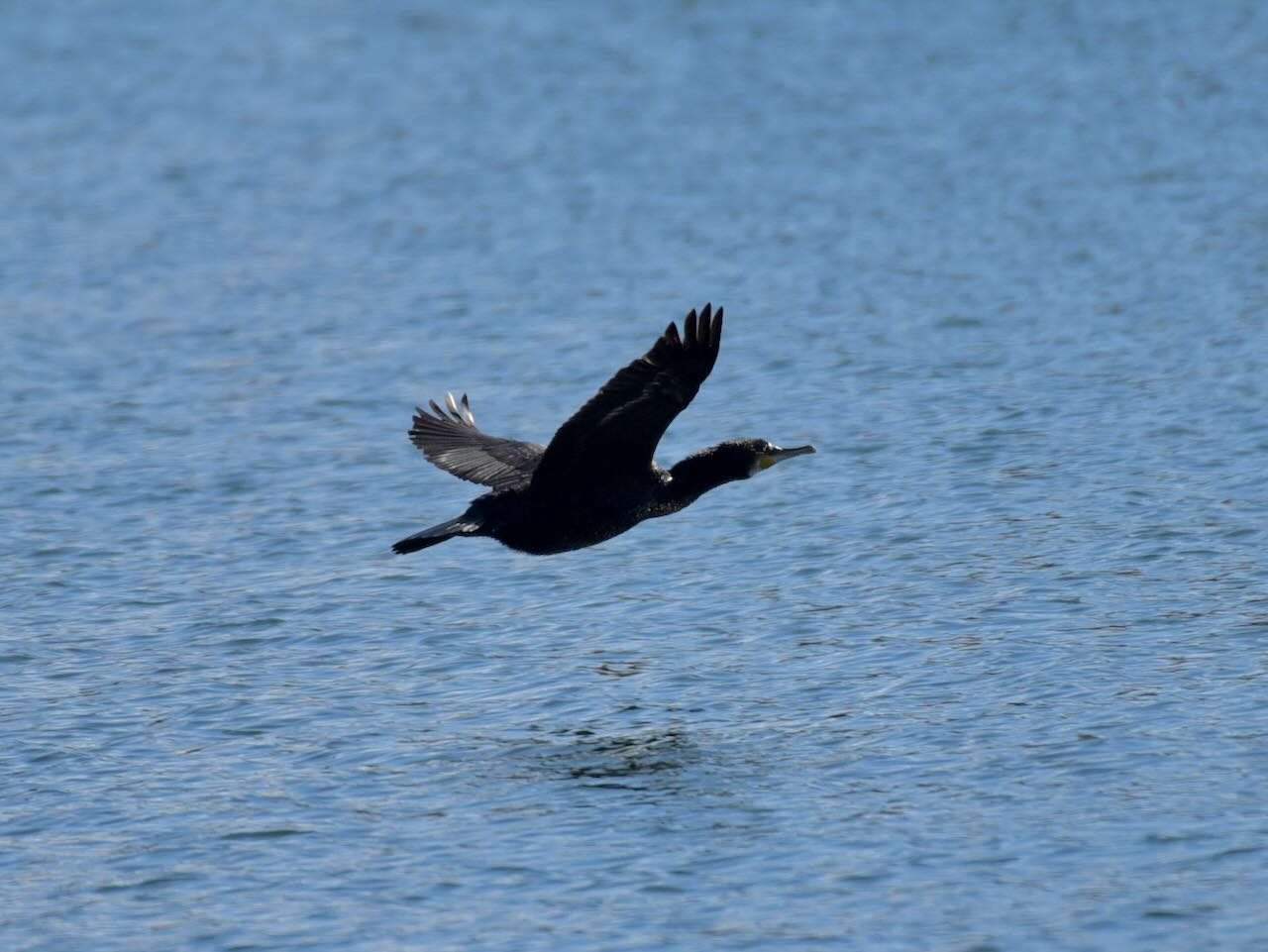
The lake and its surrounds were alive with birdlife. Below are some photographs I took.
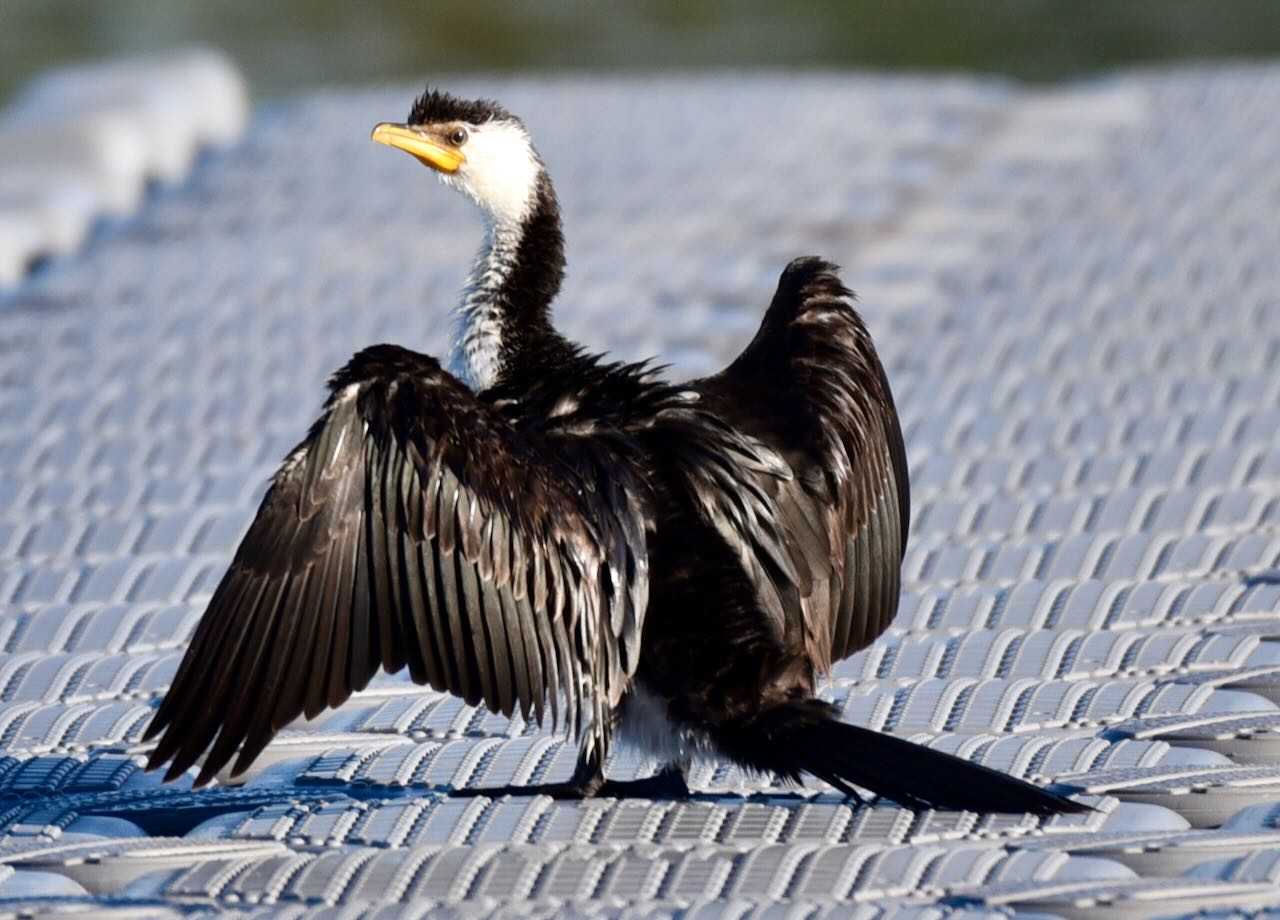
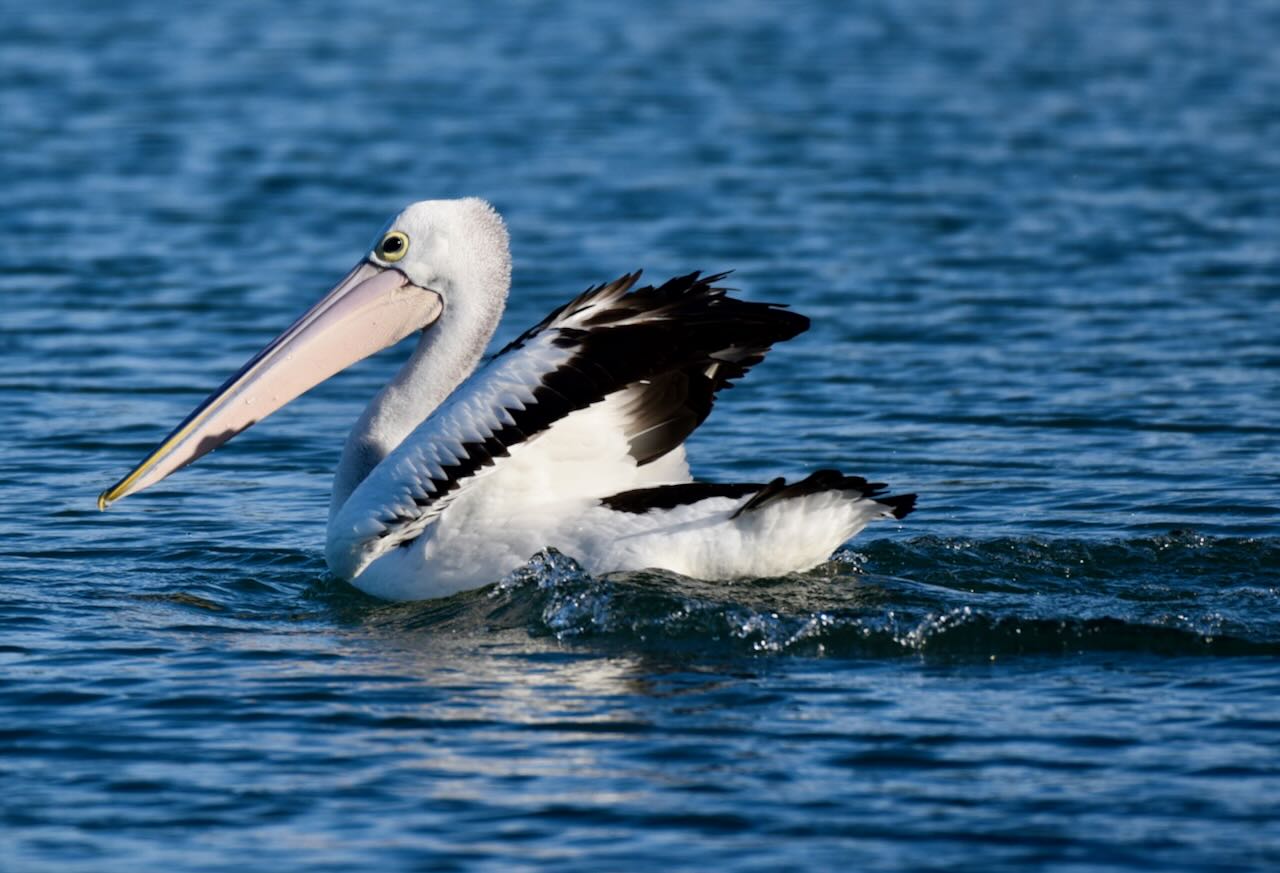
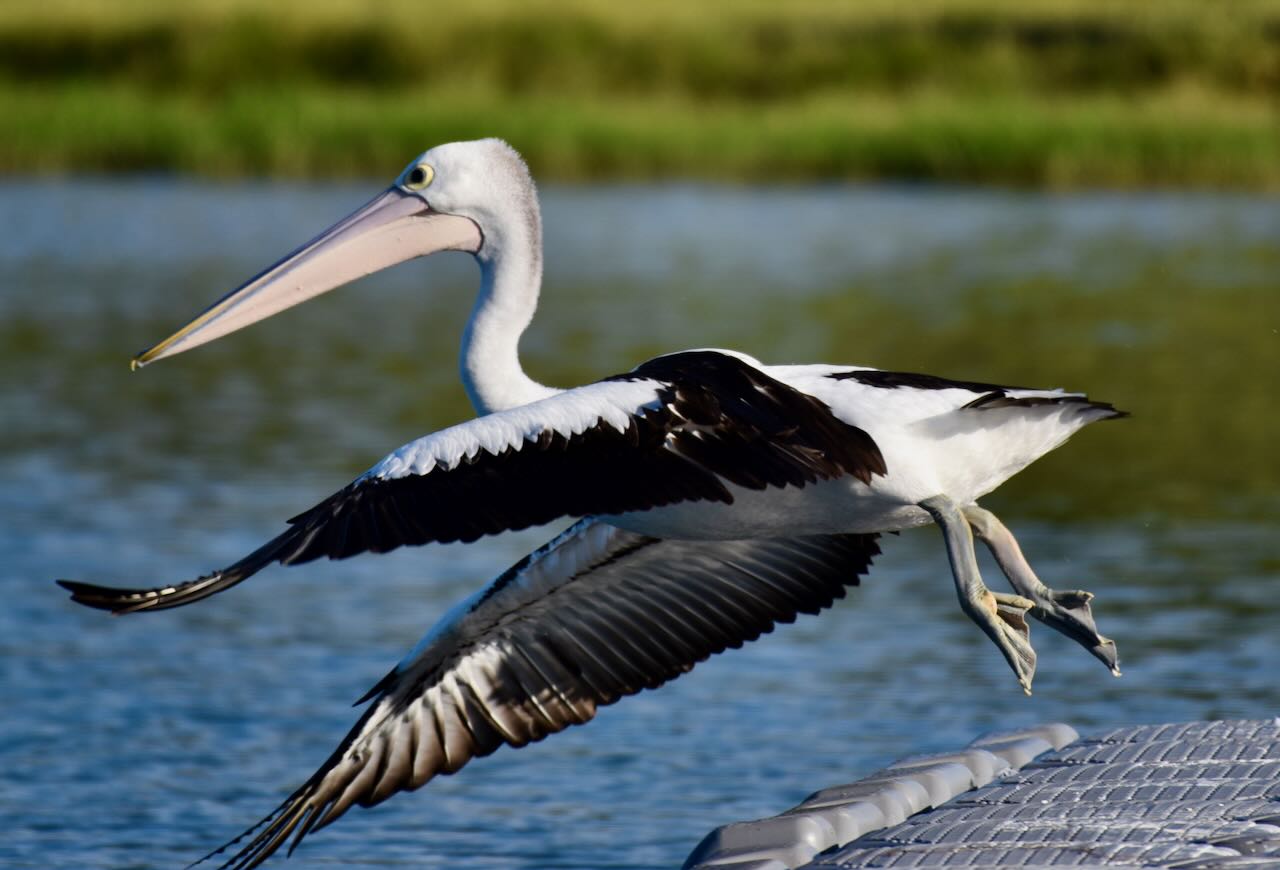
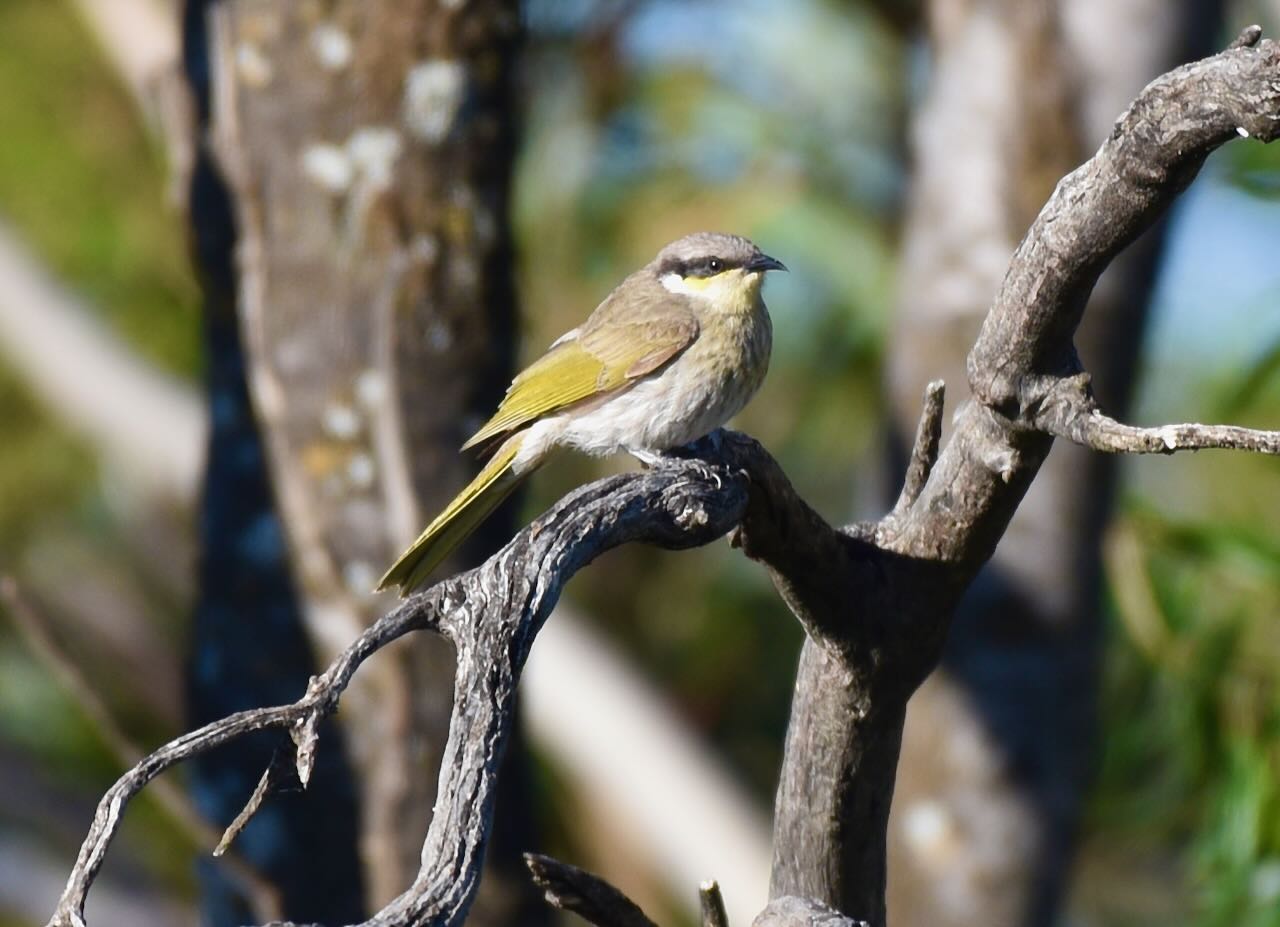
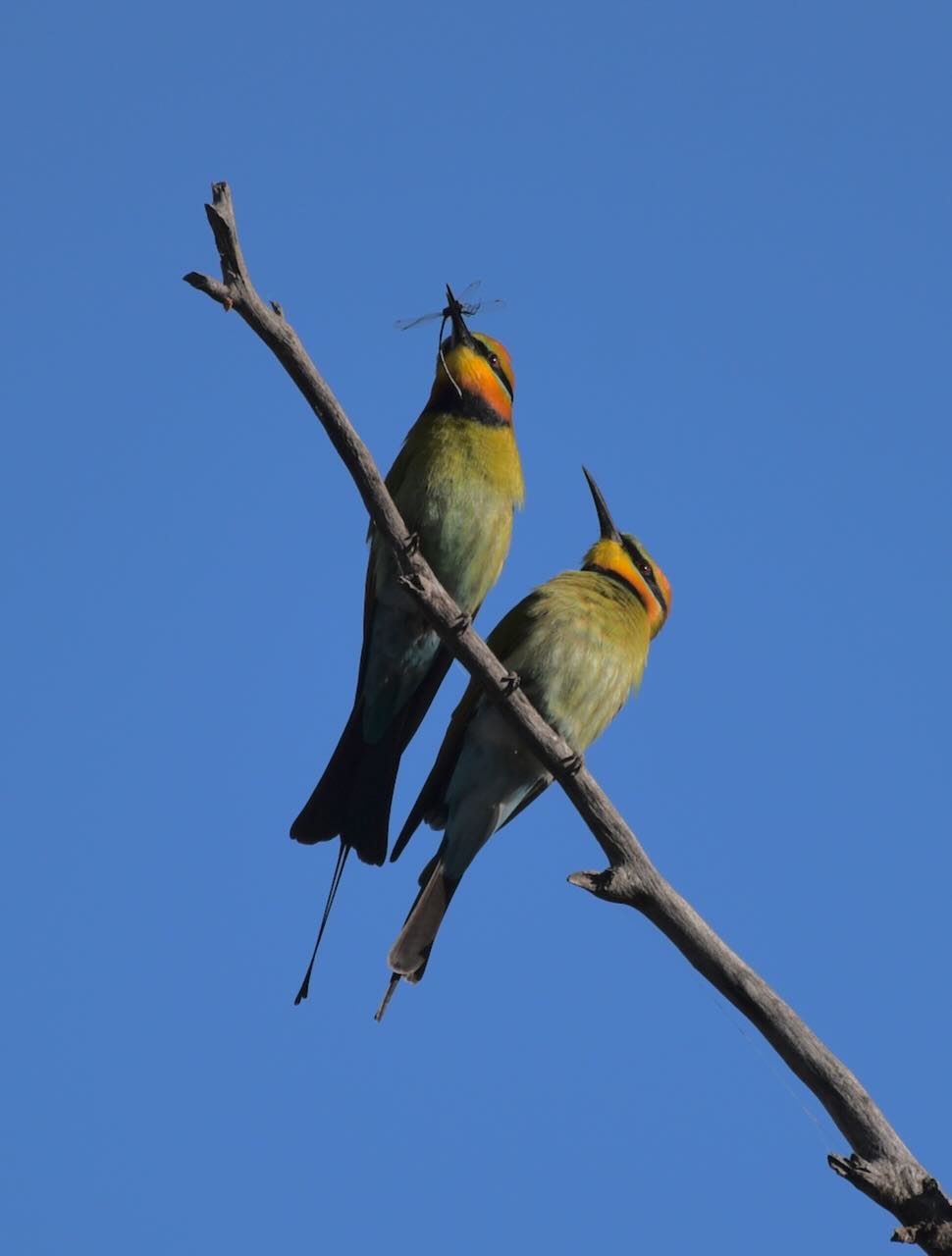
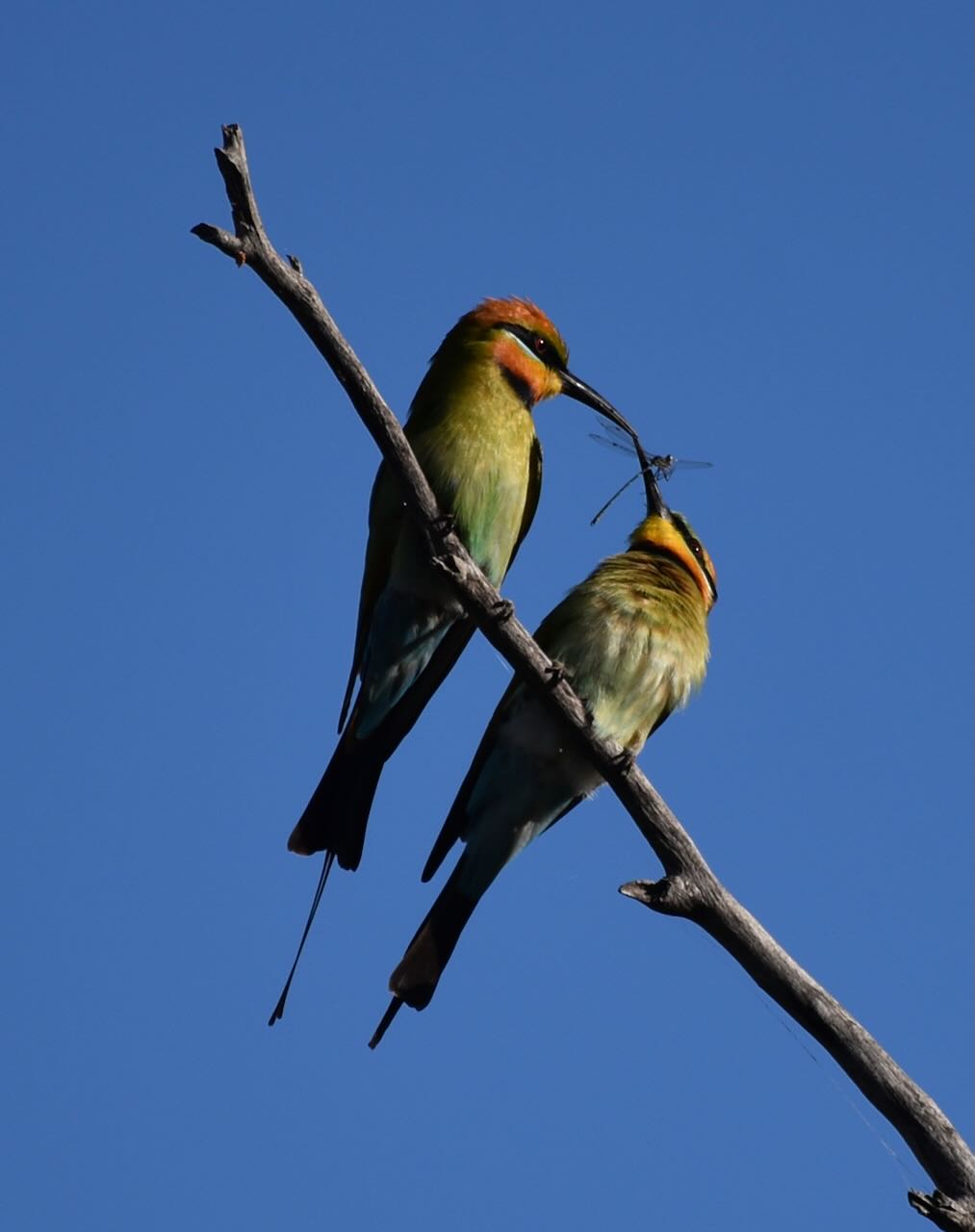
But I was really hoping to spot some Rainbow Bee-Eaters. And I was not to be disapointed. These are a beautiful bird with green, blue, chestnut and yellow plumage, a curved bill, and a long tail with distinctive tail streamers. (BirdLife Australia, 2025)
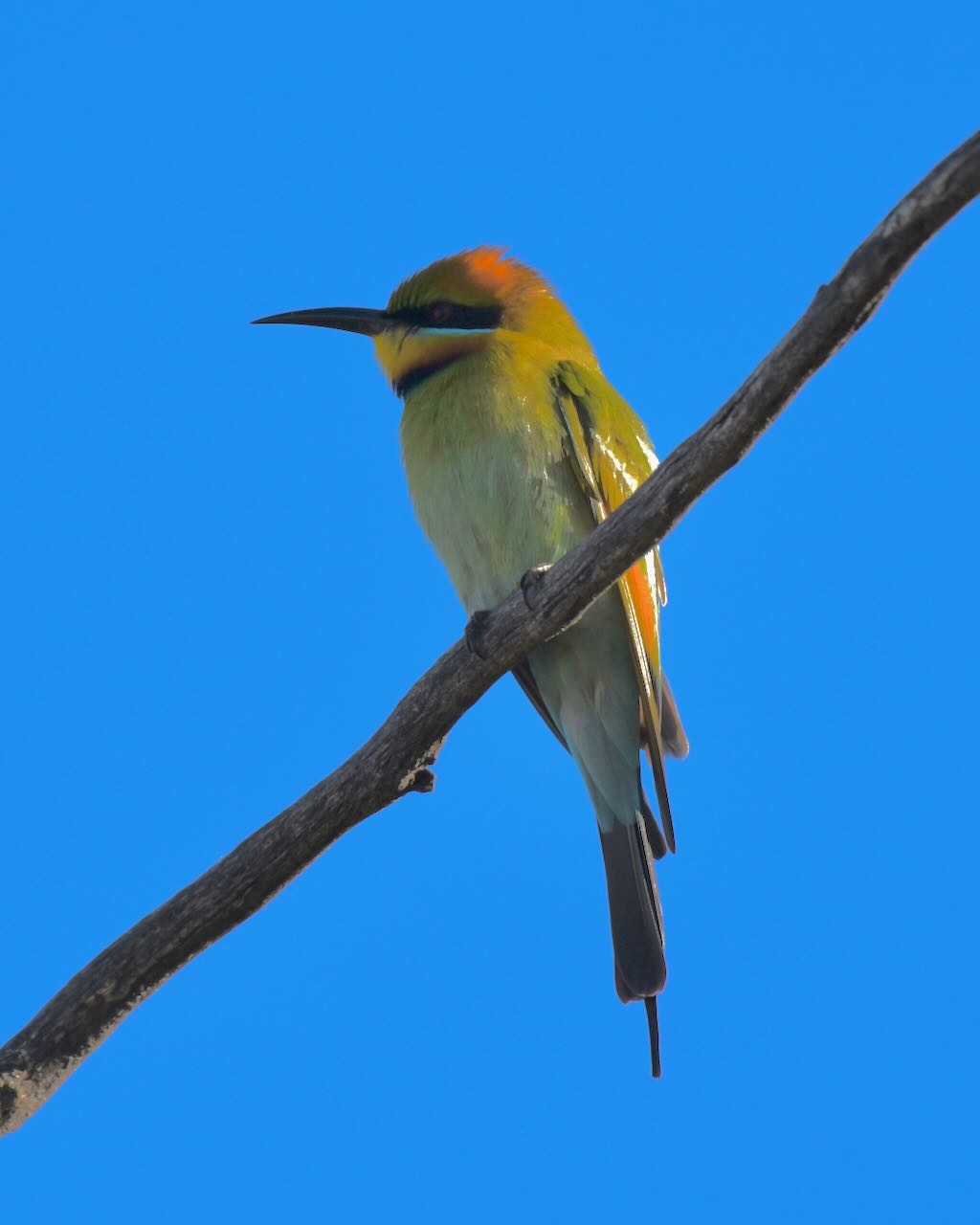
We left the lake and headed to our first park for Tuesday, 27th October 2026 was the Pirro Bushland Reserve VKFF-5726.
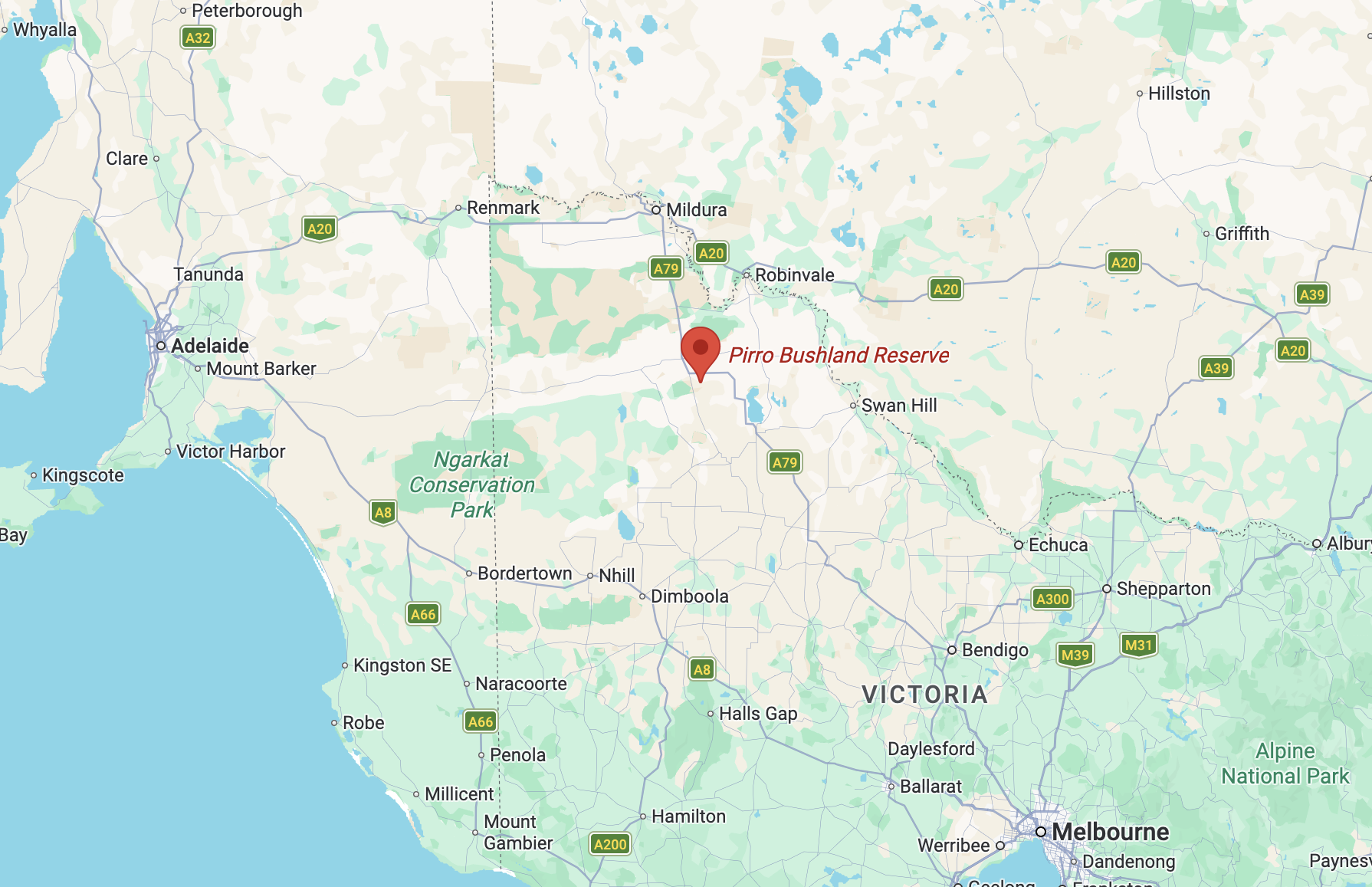
Above: Map showing the location of the Pirro Bushland Reserve. Map c/o Google Maps
The park is located on the corner of Bronzewing E Road, Rownack Road, and Anderson Road.
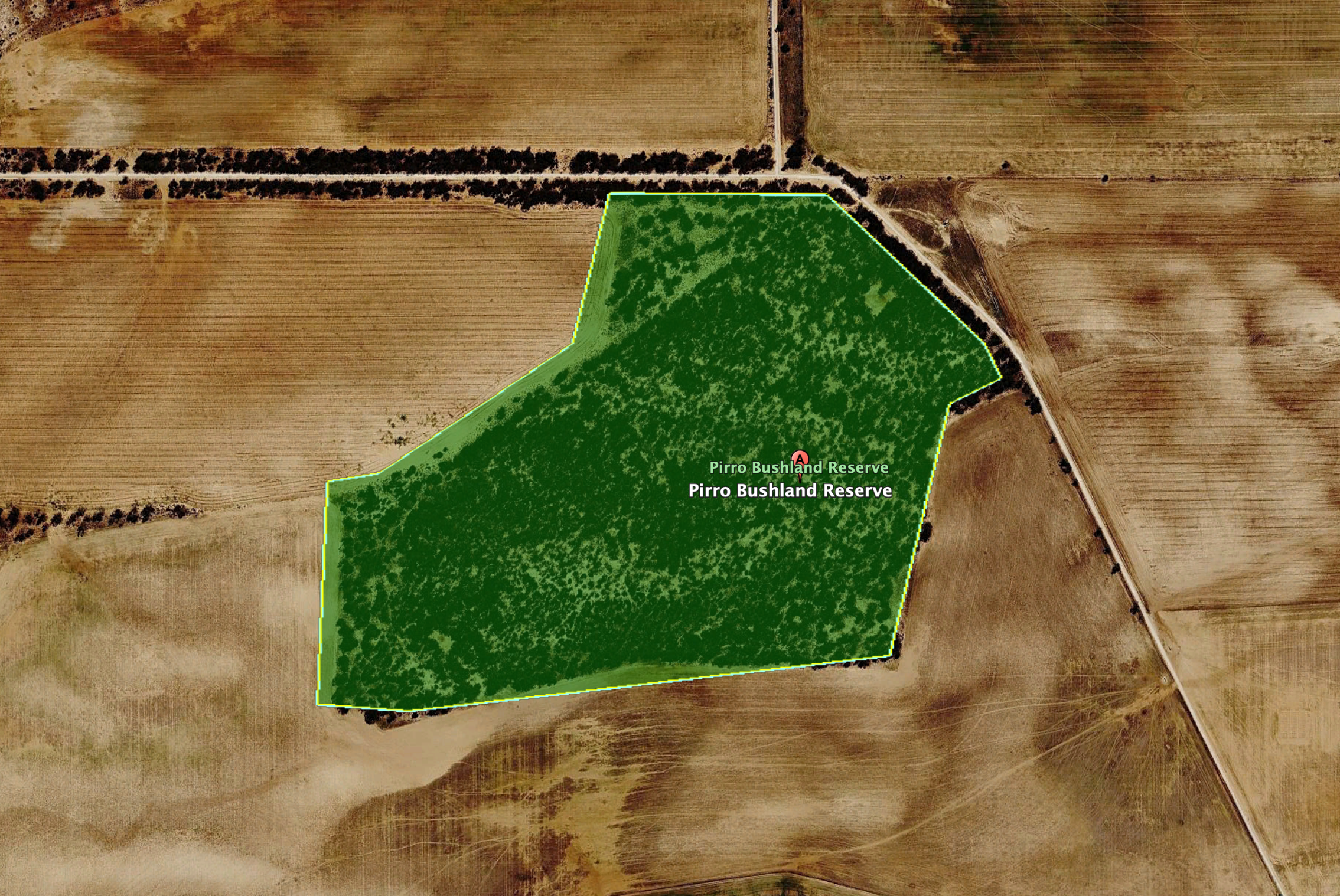
Above: the boundaries of the Pirro Bushland Reserve. Image c/o Google Earth
The park is about 41 hectares in size and was established on the 8th May 1990. Pirro is an Aboriginal word meaning moon. (Blake 1977) (Dcceew 2026)
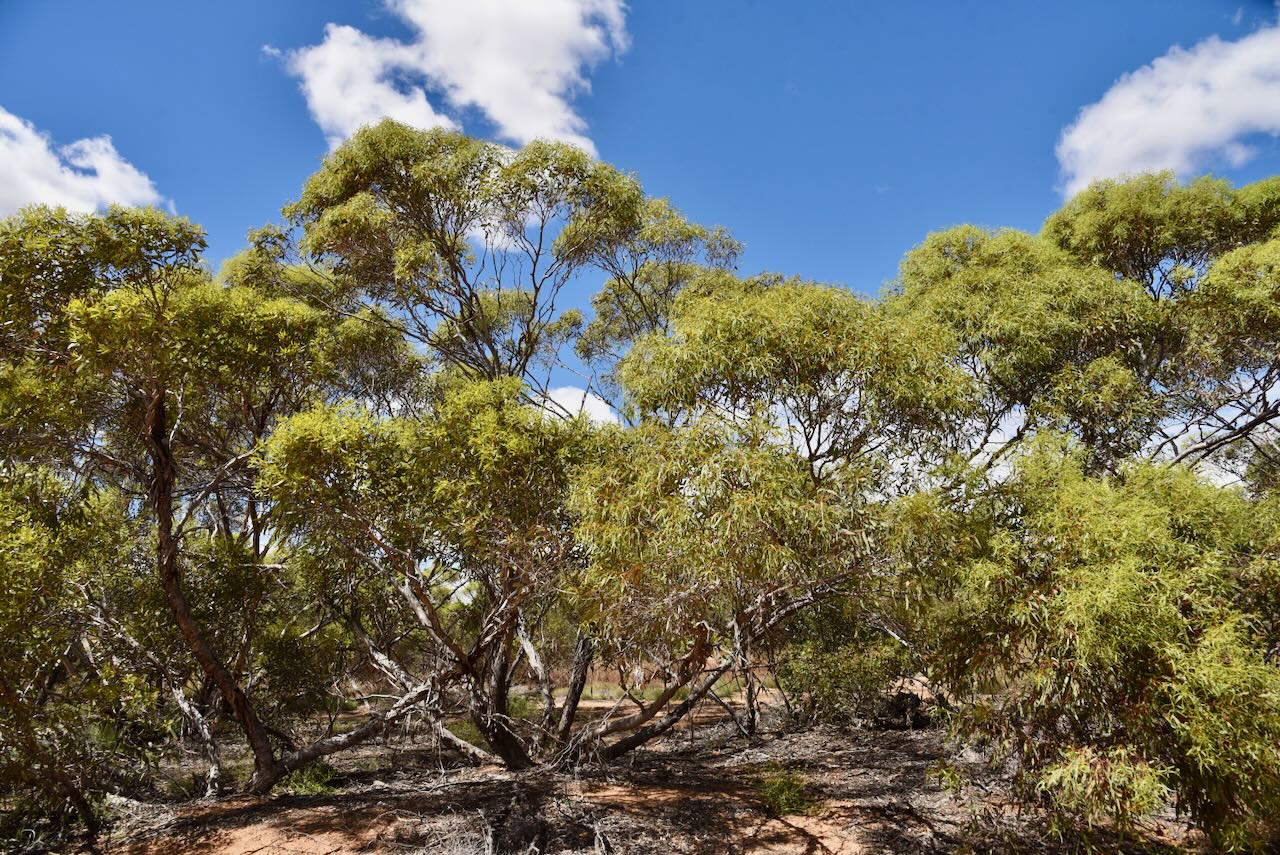
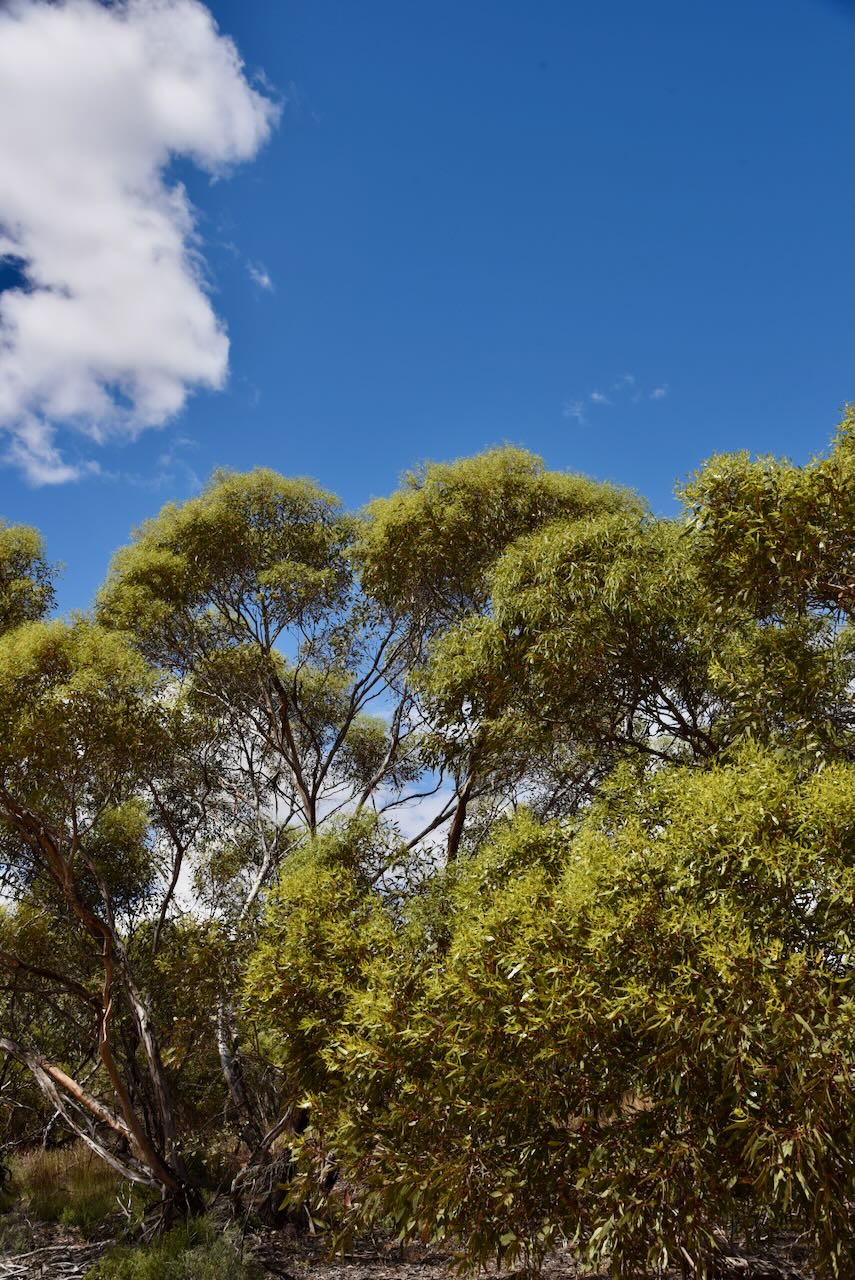
The park is a small piece of remnant mallee scrub that is surrounded by cleared cropping land.
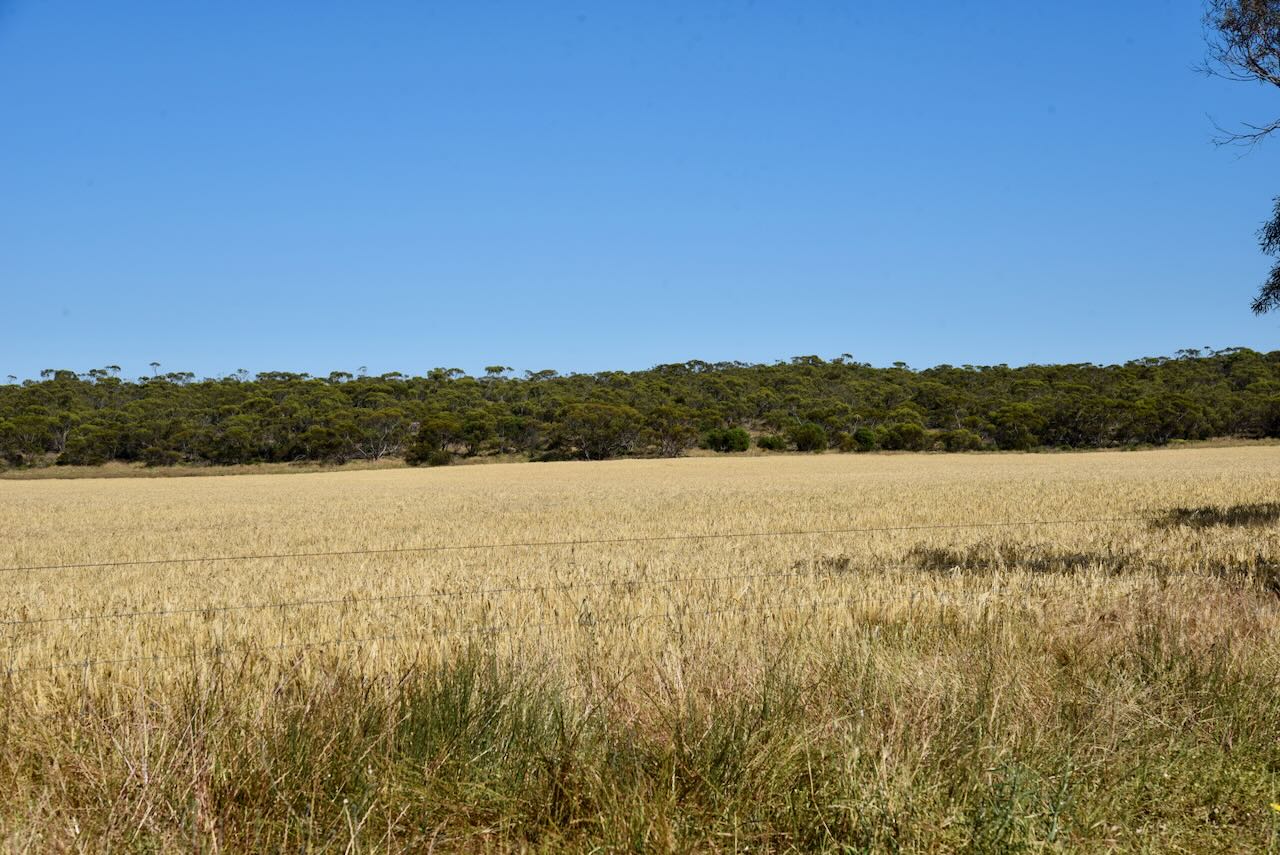
It was a very warm morning, and we were not the only ones out and about. We encountered two snakes in this park. Both were Eastern Brown snakes, considered to be one of the most venomous land snakes in the world. It is responsible for more snakebite deaths in Australia than any other snake species. Fortunately, both snakes were as less impressed at encountering us, as we were of them, and they both slithered off to do their thing.
Marija and I ran the Yaesu FT857, 40 watts, and the 20/40/80m linked dipole for this activation. We worked stations either side of the UTC rollo ver, and both qualified the park for the WWFF program.
Marija worked the following stations on 40m SSB before the UTC rollover:-
- VK2BYF/P (VKFF-1272)
- VK2HBG/P (VKFF-1272)
- VK2GRB/P (VKFF-1272)
- VK2GDX/P (VKFF-1272)
- VK2ALY/P (VKFF-1272)
- VK2VT/P (VKFF-1272)
- VK3AMO
- VK2IO
- VK2GEZ
- VK2MAB
- VK2LUE
- VK3PF
- VK3KAI
- VK3FB
- VK1AD
- VK1OE
- VK3CE
- VK3VMP
- VK2VAR
- VK2GOM
- VK2NWT
- VK2GJC
- VK2PKT
- VK2KFT
- VK4FNQ
- VK1AO
- VK2MET
- VK3BWS
- VK3KLI (VKFF-3881)
- VK5FANA
- VK6LK
- VK4FW
- VK3AEI
- VK3KRL
Marija worked the following stations on 20m SSB before the UTC rollover:-
- VK4FNQ
- VK4MJA
- ZL1GA
Marija worked the following stations on 40m SSB after the UTC rollover:-
- VK3PF
- VK3KAI
- VK2IO
- VK2GEZ
- VK2PKT
- VK2KFT
- VK2EXA
- VK5FANA
- VK3DAC
- VK4FE/P
- VK7VZ
I worked the following stations on 40m SSB before the UTC rollover:-
- VK2BYF/P (VKFF-1272)
- VK2HBG/P (VKFF-1272)
- VK2GRB/P (VKFF-1272)
- VK2GDX/P (VKFF-1272)
- VK2ALY/P (VKFF-1272)
- VK2VT/P (VKFF-1272)
- VK3AMO
- VK2IO
- VK2GEZ
- VK2MAB
- VK2LUE
- VK3PF
- VK3KAI
- VK3FB/P
- VK1AD
- VK1OE
- VK3CEO
- VK3VMP
- VK2VAR
- VK2GOM
- VK2NWT
- VK2GJC
- VK2PKT
- VK2KFT
- VK4FNQ
- VK1AO
- VK2MET
- VK3BWS
- VK3KLI/P (VKFF-3881)
- VK5FANA
- VK6LK
- VK4FW
- VK3AEI
- VK3KRL
I worked the following stations on 20m before the UTC rollover:-
- VK4FNQ
- VK4MJA
- KG5CIK
- ZL1GA
I worked the following stations on 40m SSB after the UTC rollover:-
- VK3PF
- VK3KAI
- VK2IO
- VK2GEZ
- VK2PKT
- VK2KFT
- VK2EXA
- VK5FANA
- VK3DAC
- VK4FE/P
- VK7VZ
- VK7KF
- VK5JPL
- VK3FB
- VK5FB
- VK1AO
- VK2MET
- VK2LX
- VK3APJ
- VK1AD
- VK1OE
- VK3DRN
- VK3SQ
- VK2BD
- VK3JT
- VK2DG
- VK5HTG
- VK3SO
- VK3SFG
- VK3PT
- VK3UP
- VK3VIN
- VK3UCD
References.
- BirdLife Australia. (2025). Rainbow bee-eater – BirdLife Australia. [online] Available at: https://birdlife.org.au/bird-profiles/rainbow-bee-eater [Accessed 27 Nov. 2026].
- Blake, L. 1977, Place Names of Victoria, Rigby, Adelaide.
- Dcceew.gov.au. (2026). Collaborative Australian protected areas database 2024 – DCCEEW. [online] Available at: https://www.dcceew.gov.au/environment/land/nrs/science/capad/2024 [Accessed 27 Nov. 2026].

