Kenneth Stirling Conservation Park

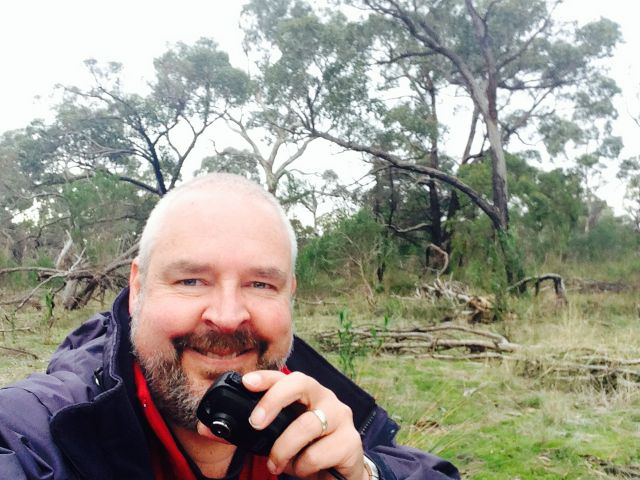
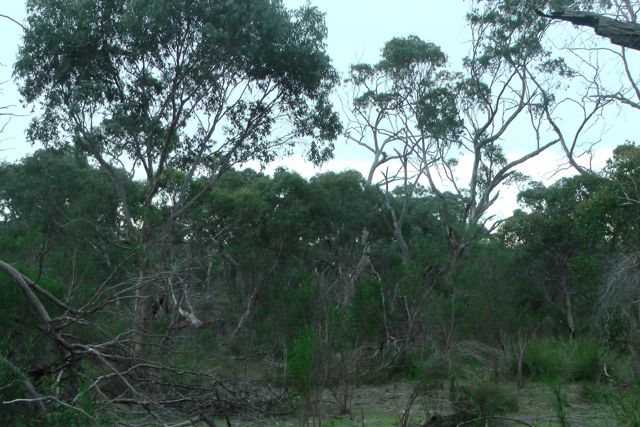
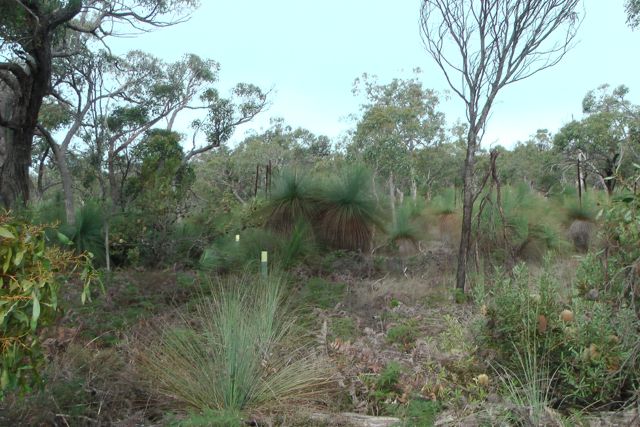
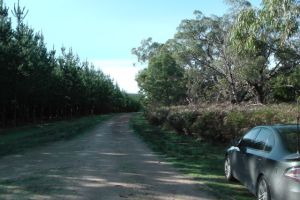
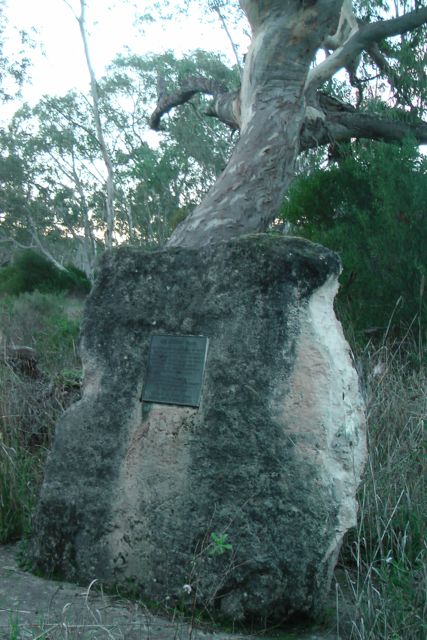
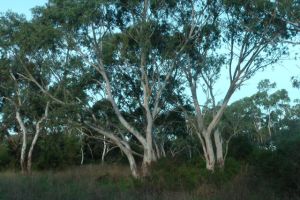
Last Sunday (6th July 2014), I headed out to activate the Kenneth Stirling Conservation Park, which is located near Carey Gully in the Mount Lofty Ranges ‘Adelaide Hills’.  It is just a short 19 km journey from home.  I last activated this park in May last year when I stayed til just after sunset, and worked some very interesting DX on 40m including New Zealand and Norfolk Island.

This park has a very interesting history and was named after Kenneth George Stirling.  For more information, please see my previous blog at…..

https://vk5pas.wordpress.com/2013/05/10/kenneth-stirling-conservation-park/

And the Australian Dictionary of Biography at…..

http://adb.anu.edu.au/biography/stirling-kenneth-george-11773
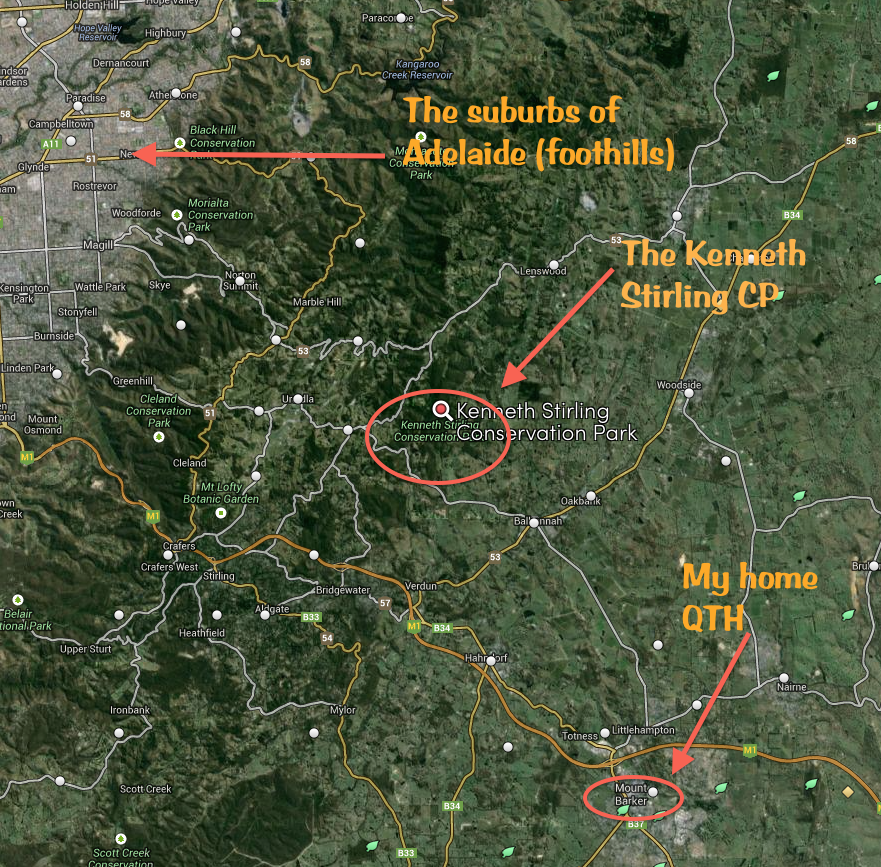
 Screenshot 2014-07-11 10.44.27

Map courtesy of mapcarta

As per last year I activated the Wotton Scrub section of the park, just off Gum Flat Road.  This park consists of 4 separate pieces of scrub.  Some of the others seem a little more difficult to get to, so I played it safe, and activated Wotton Scrub.  Next time I’m going to try the other sections.  Filsell Hill, which is the largest of the four sections has limited access passing through private land to the park entrance.  Access into White Scrub and Burdett Scrub is limited, as there are no walking trails or vehicle tracks within the reserves.
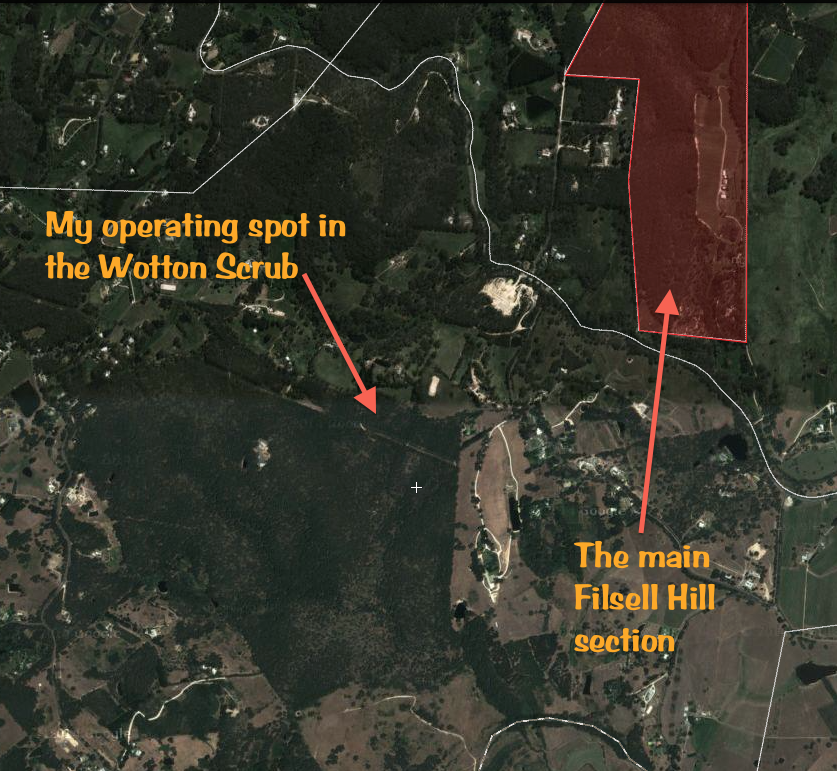
Screenshot 2014-07-11 11.59.55

Map courtesy of wikimapia

There is a carpark off Gum Flat Road with plenty of room for a number of vehicles.  From there it is just a matter of walking through the gate into the park.  There is a 4WD track at this location, but is is only accessible to official vehicular traffic such as DEWNR, CFS, etc.  In an event, the large gate is locked which prevents vehicle entry.
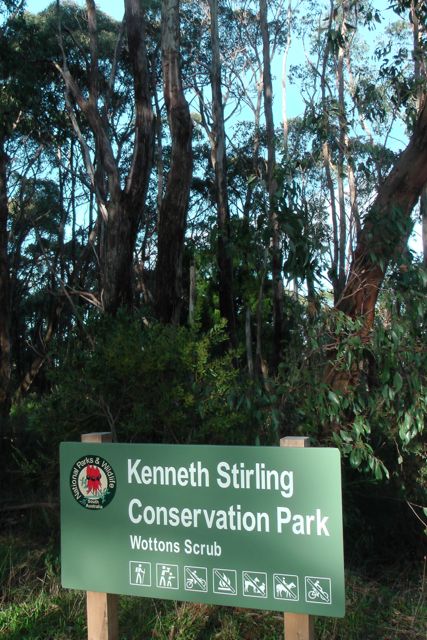
IMGA0005

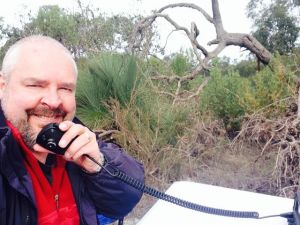
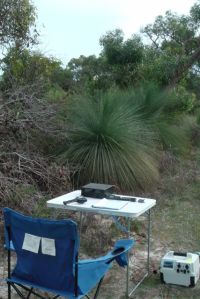
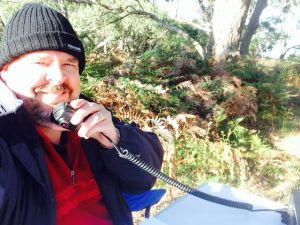
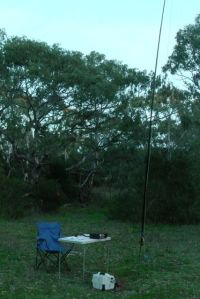
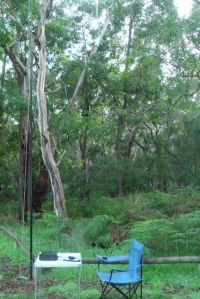
I set up about 20 metres in from the gate.  There is plenty of room here to stretch out the legs of the dipole, following the 4WD track.  I tied the ends of the dipole off to some of the nearby gum trees and set up my fold up table and deck chair.  As per recent activations, I again used the Yaesu FT-450, and my linked dipole, and ran 40 watts.
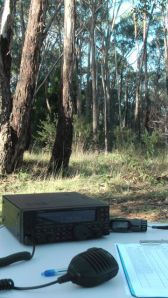
IMGA0002

I started off on 40m on my promised frequency of 7.095 and my first contact was with Peter VK3PF who was running QRP 5 watts.  Peter had a very nice 5/9 signal coming into the park.  This was followed by Matt VK1MA/3 who was on SOTA peak Mount Dandenong VK3/ VC-025, which is also located in the Dandenong Ranges National Park.  So that was a bonus: a SOTA, KRMNPA, & WWFF contact.

Peter had told me that Rob VK2QR was on a summit and was up on 7.118, so I quickly QSYd up the band and worked Rob who was a beautiful 5/9 signal, as always!  Rob always has a great signal from his SOTA activations.  This time Rob was sitting on the top of Yanky Ned Hill, VK2/ SW-026 in the Bondo State Forest.
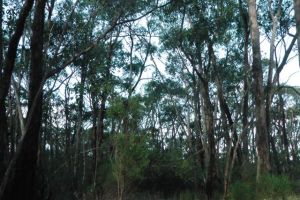
IMGA0001

After speaking with Rob, I QSYd back down to 7.095 but in that short period of time, the frequency had become busy, so I moved up slightly to 7.105, where my first taker was dedicated parks hunter, Tim VK5AV in Mount Gambier, with a beautiful 5/9 signal.  This was followed by a steady flow of callers from VK1, VK2, VK3, VK4, VK5, and VK7.  I was very surprised to be called by George VK4GSF at Toowoomba.  George runs low power and was a good 5/5 copy into Kenneth Stirling, and I received a 5/7 signal report back.  I also worked a handful of QRP operators including Peter VK3PF on 5 watts, Peter VK3TKK, and Col VK5HCF.  It was also good to get Nigel in the log, VK2PHA who was mobile, crossing the Hawkesbury River.

After operating on 40m for just a little over an hour, I headed up to 20m and managed to find a clear spot on 14.237.  After just a few CQ calls, I heard KJ6PNF come back to me.  But sadly, another very strong USA station came up just 1 kc away.  There is a group of VKs and USA fellas that come up on 20m every day on or around 14.240 and it was evident they were not going to move for anyone.  So that was the end of that.

I moved up to 14.245 and started calling CQ again and was greeted by Paul VK2HDX in Sydney, who was using a Magentic loop antenna, with a terrific 5/9 signal.  Paul was kind enough to spot me on the DX cluster, and as a result I worked a few Europeans: Slovenia, Italy, Switzerland, Belgium, Poland, Spain, Sweden, and Russia.  This included my old mate Marnix OP7M, who I will be staying with in a few weeks time during my trip to Europe.

The sun was starting to go down and it was getting a little chilly, so it was time to pack up and head for home.  Again, this was a very enjoyable afternoon in the Kenneth Stirling Conservation Park.  I and a total of 43 contacts in the log.

The following stations were worked on 40m SSB:-

Peter VK3PF; Matt VK1MA/3 (SOTA); Rob VK2QR/p (SOTA); Tim VK5AV; Rod VK5VRB; Les VK5KLV; Bernard VK3AMB; Brian VK5FMID; Richard VK5ZRY; Peter VK2MDZ; Peter VK3TKK; Ian VK5IS; George VK4GSF; Paul VK7CC; Arno VK5ZAR; Col VK5HCF; Tom VK5EE; Phil VK3BHR; Andrew VK1NAM; Tony VK3VTH/p; Albert VK3KLB; Ton y VK3CAT; Barry VK5BW; Hans VK5YX; Steve VK3JY/p; Nigel VK2PHA/m; Ron VK3VBC; and John VK5NJ.

The following stations were worked on 20m SSB:-

Paul VK2HDX; Albert S58AL; Max IK1GPG; IK7CMY; Vince HB9EVJ; Marnix OP7M; S52KM; SP5INQ; John ON7ZM; EA4DTV; SM7LPY; Alan VK4NAI; UA9LT; Ted VK6NTE; and Paul EA5/GM0OPK.
Weekend summary

Hi all,

Here is a breakdown of my activities from Friday – Monday…..
 

Friday 6th June

Coorong NP – 20 QSOs
Martin Washpool CP – 20 QSOs
Messent CP – 21 QSOs
Tilley Swamp CP – 26 QSOs
Mount Scott CP – 20 QSOs

Saturday 7th June

Dingley Dell CP – 18 QSOs
Nene Valley CP – 31 QSOs
Canunda NP – 33 QSOs

Sunday 8th June

Mount Burr summit VK5/ SE-019 – 66 QSOs
Tantanoola Caves CP – 25 QSOs

Monday 9th June

Telford Scrub CP – 30 QSOs
Glen Roy CP – 29 QSOs
Narracoorte Caves NP – 46 QSOs
Grass Tree CP – 51 QSOs
Padthaway CP – 36 QSOs

 
Total of 472 QSOs.
11 x Conservation Parks
3 x National Parks
1 x SOTA summit

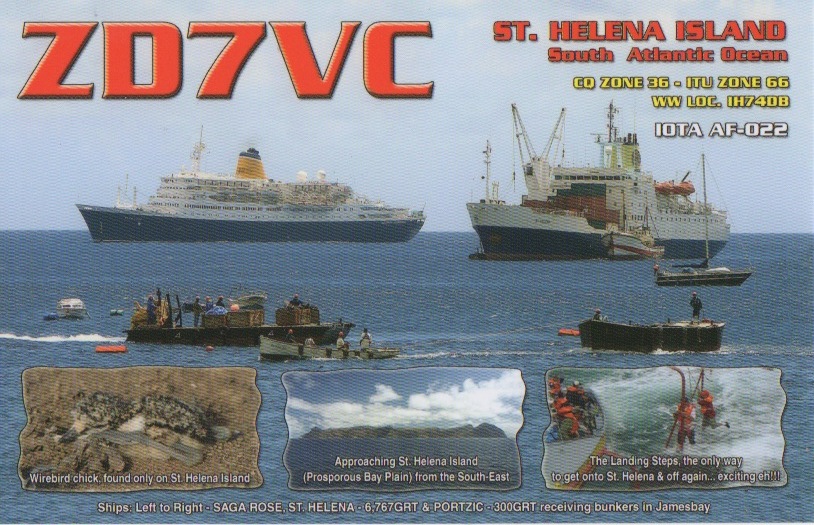
I ran out of time on Monday to do Desert Camp CP. That can wait til another day. There were a few highlights. They included being called by Bruce ZD7VC from St Helena Island in the Atlantic Ocean (very rare DX) whilst I was in Canunda NP. And working many VK6’s including Mike VK6MB on 40m.

ZD7VC (2)

Sorry about the voice over the weekend. Turns out I have a chest infection and the Dr has given me some time off work.

I want to congratulate the South East Radio Group for running a terrific convention and congratulate them on their 50th year. I had an enjoyable time there on Saturday afternoon. And then late on the Sunday afternoon, I delivered a presentation (on the VK5 Parks award) to about 80 people at the Scout Hall, and then enjoyed a beautiful 3 course meal. It was also great to catch up with a lot of hams that I have spoken to many times on the radio but never met in person…..both VK5s and VK3s. I came home with some wire to build a linked dipole, a few tubes for Doc VK5BUG, and even convinced young Patrick to buy a FT-817nd from Ross from Strictly Ham who was at the convention.

Padthaway Conservation Park

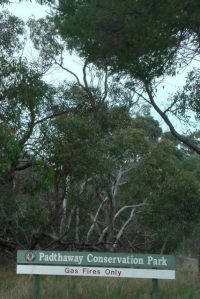
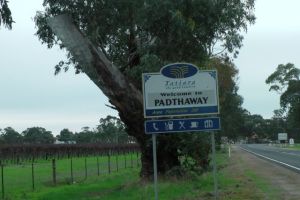
My final activation on Monday 9th June 2014 was the Padthaway Conservation Park, which is located about 254 km south east of Adelaide.  I did plan to activate Desert Camp Conservation Park, making that my 6th park for the day, but I had run out of time.  Oh well, there is always another day.  And there are plenty of other parks remaining in the South East that I am yet to activate.

Padthaway is a small town on the Riddoch Highway in the Limestone Coast region of the South East of South Australia.  The name is derived from Potawurutj, the Aboriginal word for Good Water.

IMGA0070

Padthaway was the name of the original pastoral station which was established near the town in 1847 by a successful Scottish businessman, Robert Lawson.  In 1882 the Padthaway Estate Homestead was built by Eliza and Robert Lawson.  In 1952 Padthaway became the centre of a soldier settlement scheme.   The first vineyards were planted in the region in 1968 and today Padthaway is a top wine-producing region.

IMGA0069

The Padthaway Conservation Park conserves a remnant block of native vegetation, and is an area of about 984 hectares.  The parol wasgazetted in 1971 and is dominated by South Australian blue gum, manna gum and stringy barks.

A number of native animals can be found in the park including kangaroos and koalas.  It is also a haven for a multitude of birdlife.

IMGA0071

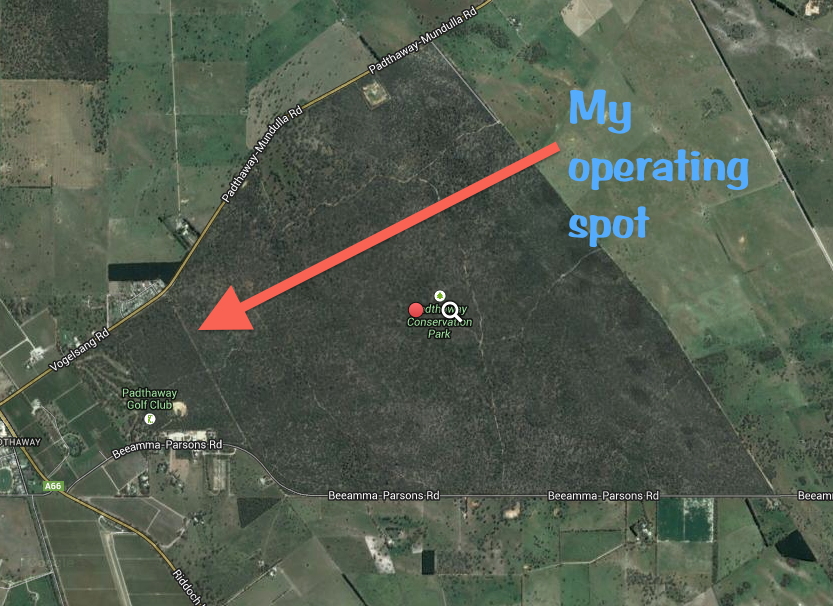
I accessed the park via Vogelsang Road which runs off the eastern side of the Riddoch Highway as you are leaving the town of Padthaway.

Screenshot 2014-06-10 14.21.34

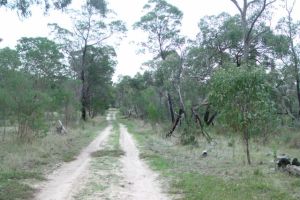
I entered the park via an unlocked gate at the start of a sandy track on the western side of the park.  The track was sandy and was littered with quite a bit of tree debris, but it was passable in my Ford Falcon.  If you do negotiate this track, just remember that you need to turn around.

IMGA0074

The scrub within the park is very thick, and I had to choose a cleared area to allow me to erect the dipole on top of the 7 metre squid pole.  I used an old tree stump to secure the squid pole with an octopus strap.

IMGA0072

I was set up by 3.30 p.m. South Australian local time.  My first contact was with Chris VK4FR/5, followed by Tom VK5FTRG in Millicent running QRP 1 watt, and then Charles VK5FBAC in Strathalbyn also running just 1 watt.  It is about 250 km from Padthaway to Strathalbyn, and Charles was a good 5/8 signal.  The noise floor in the park was non existent and I could literally hear a pin drop.

IMG_1477

I made contact with a number of mobile stations whilst in the park.  They included Rod VK5KFB who was mobile art Meningie on his way home after the SERG convention.  Regular park hunter Greg VK5ZGY also called in from his mobile with a strong 5/9 signal.  I also spoke with Peter VK5KX who was mobile at Mount Mary in the Riverland region of South Australia.

I had a multitude of QRP contacts from Padthaway.  They included Tom VK5FTRG on 1 watt (5/9); Charles VK5FBAC on 1 watt (5/8); Rod VK5KFB/m and QRP; Roy VK5NRG running 7 watts from his FT7 (5/9); Ian VK5IS running 5 watts (5/9); Brian VK5FMID running 5 watts (5/8); Stan VK3BNJ running 5 watts from his Yaesu FT-817nd (5/8); Greg VK5GJ running 5 watts from his home brew QRP rig (5/9); Andrew VK3ARR (5/9); Peter VK5PET running 5 watts (5/9); David VK5NQP running 5 watts from his little Wouxon (5/9); Amanda VK3FQSO running 5 watts (5/9); Kim VK5FJ (5/7); Barry VK5BW running 5 watts (5/9); and Nev VK5WG running his little X1M at 5 watts (5/9).

Again I gave a specific call for any QRP stations and this is why I received so many QRP callers.  It is always a good practice to specifically ask for QRP, mobile, portable, and even DX, before the madding crowd calls in.

  IMGA0073

It was very pleasing to get lots of calls from amateurs who were unfamiliar in my log and also from some recent park devotees such as Tony VK5FTVR who attended the recent SOTA and Parks introduction day.  And again I managed to get Mike VK6MB in the log on 40m (5/7 send and 5/4 received).  This was a good weekend for working Mike.

It was starting to get dark, with the local time being 3.45 p.m. and I still had a three hour drive to get home.  So it was time to pack up and get on the road.  I had a total of 36 QSOs in the log after activating for about 40 minutes.

IMGA0076

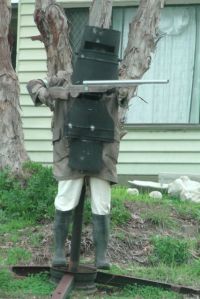
As I was pulling out of the park, I noticed the Ned Kelly figure below in the front yard of the property opposite the park entrance.

IMGA0075

The following stations were worked on 40m SSB:

Chris VK4FR/5; Tom VK5FTRG; Charles VK5FBAC; Rod VK5KFB/m; Roy VK5NRG; Ian VK5IS; Brian VK5FMID; VK3BNJ; Greg VK5GJ; Andrew VK3ARR; Peter VK5PET; David VK5NQP; Amanda VK3FQSO; Kim VK5FJ; Barry VK5BW; Greg VK5ZGY/m; Tony VK5FTVR; Nev VK5WG; VK7YUM; Arno VK5ZAR; Rick VK5FIVE; Peter VK5KX/m; Robin VK5TN; John VK5MG; Tony VK5TT/p; Steve VK5AIM/p; Ken VK3FKNZ; John VK5BJE; Tom VK5FTRG/p; Keith VK2PKT; Craig VK5LI; Nev VK5WG; Mike VK6MB; Dallas VK5WA; Peter VK5APR; and Peter VK2PJF.


References.

National Parks South Australia, http://www.environment.sa.gov.au/parks/Find_a_park/Browse_by_region/Limestone_Coast/Padthaway

Limestone Coast

Wikipedia, Padthaway

Grass Tree Conservation Park

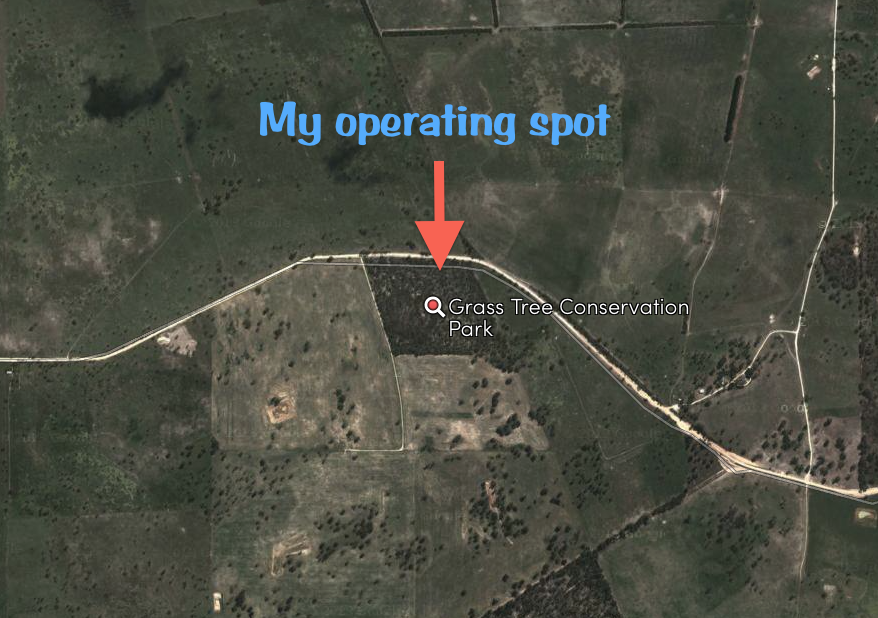
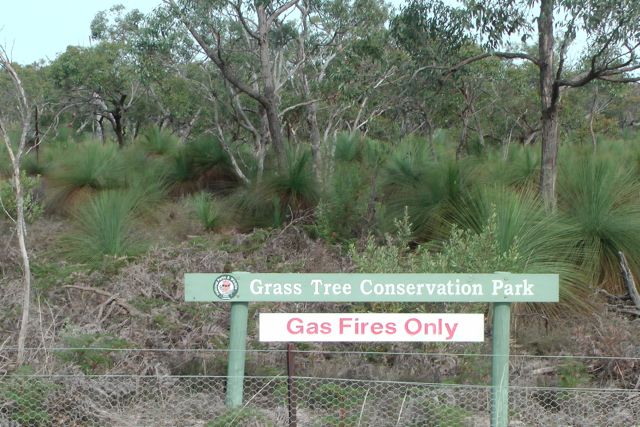
My fourth activation for Monday 9th June 2014, was the Grass Tree Conservation Park, which is located about 17 km north of Naracoorte off the Naracoorte-Keith Road, and has an area of 15.88 hectares.  It was gazetted in 1972 to protect the grass tree Xanthorrhoea australis.

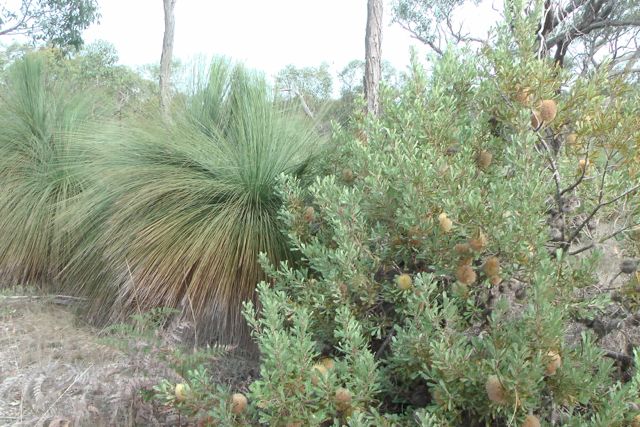
Xanthorrhoea australis, the Grass-tree or Black Boy is an Australian plant, and is the most commonly seen species of the genus Xanthorrhoea.  Grass trees are well adapted to withstand the effects of fire and their flowering is stimulated but fire.  Its fire-blackened trunk can grow up to several metres tall and is often branched.  In certain Aboriginal languages, it is called ‘Bukkup’ or ‘Kawee’.  The park was certainly full of them.

This park appeared to be quite neglected and it appeared that not many people visited the park.  The access gate in the north eastern corner was completely overgrown and did not look as though it had been opened in a very long time.

IMGA0055_2

I have noted that the publication entitled ‘Small Parks of the Upper South East Management Plans’ dated 1992, states the following:

The Park receives very little visitor use and no facilities are provided.  Five metre wide boundary access tracks are maintained on the perimeter of the Park, except along the northern boundary where a Council road serves as an access track’.

I certainly did not see any boundary access tracks.

Screenshot 2014-06-10 14.26.38

Access to the park is via Boddingtons Road which runs off the eastern side of the Riddoch Highway.  I set up just inside the park fence off Boddingtons Road.  The scrub is incredibly thick and there were no obvious tracks in the park, so set up options were limited.  I used a star dropper on the fence to secure the 7 metre squid pole to with an octopus strap.  I then set up my little fold up table and deck chair just inside the boundary on the other side of the fence.

 IMGA0067

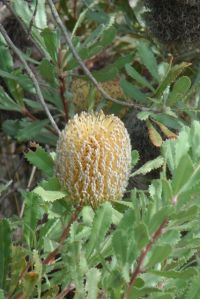
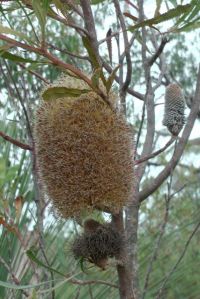
Other than grass trees, the park was full of banksias in flower.  And as a result, there was a large number of wattlebirds in action.

IMGA0057_2    IMGA0062_2

My first contact was with Larry VK5LY who was mobile on the Morgan-Renmark Road in the Riverland, with a beautiful 5/9 signal.  This was followed by regular park hunter and activator John VK5BJE, and then Chris VK4FR/5, and then Amanda VK3FQSO.

IMG_1476

I used the Yaesu FT-450 again for this activation and ran 40 watts.  So although I was not QRP (well not for Aussies anyway), I was called by a number of QRP operators including: Charles VK5FBAC using just 1 watt (5/7); Tom VK5FTRG also using just 1 watt (5/7); Brian VK5FMID running 5 watts (5/9); Ian VK5IS running 5 watts (5/9); John VK5FTCT running 1 watt (5/9); Bernard VK3AMB using 5 watts (5/8); Greg VK5GJ using his home brew 5 watt transceiver (5/8); Peter VK5PET (5/9), David VK5NQP running 5 watts from his X1M; and Steve VK3JY running 5 watts from his KX3.  Whenever possible, I always try to listen for the QRP operators, and portable & mobile stations before the general pile up with normally ensues.

IMGA0064_2     IMGA0065_2

Just one park contact during this activation, and that was with Steve VK3JY who operating portable and QRP from the Lake Eildon National Park.  I was called by Terry VK3UP who was on the top of Mount Buninyong in Victoria.  This mountain qualifies for the SOTA program.  But sadly, Terry was mobile, so this counted out any possible SOTA contact.

IMGA0056_2  IMGA0058_2

I did manage one Summits on the Air (SOTA) contact and that was my last contact in the park.  It was with Ian VK1DI/2 who portable on SOTA peak, Wereboldera, VK2/ SW- 043.  Ian had a nice 5/6 signal coming in and I received a 5/8 signal report from Ian.  This contact with Ian got me ever closer to the 5,000 chaser points for SOTA.  Here is a link to Ian’s blog re this activation…..

http://vk1di.blogspot.com.au/2014/06/sota-activation-wereboldera.html

IMGA0059_2     IMGA0063_2

Whilst I was operating I noticed that my fluorescent orange wire winders were attracting the attention of the Superb Blue Wrens.  The male of these birds, in breeding plumage has a very striking bright blue forehead, ears, mantle and tail, with a black mask and black or dark blue throat.  Non breeding males, females, and juveniles are predominantly grey-brown in colour.

IMGA0060_2

I was way behind my operating schedule, so after 45 minutes of operating in the park it was time to head off.  My voice had not got any better, so I apologise to all the park hunters for having to put up with me.  I had a total of 37 QSOs in the log from VK1, VK3, VK5, and VK7.

     IMGA0066_2

The following stations were worked on 40m SSB:

Larry VK5LY/m; John VK5BJE; Chris VK4FR/5; Amanda VK3FQSO; Charles VK5FBAC; Nigel VK5NIG; Tony VK5FTVR; Rick VK5FIVE; Peter VK3PF; Tony VK5TT/p; Phil VK3BHR; Greg VK5ZGY; Tom VK5FTRG; Brian VK5FMID; Ian VK5IS; Brendan VK3OY; John VK5FTCT; Bernard VK3AMB; Len VK3FB/p; Arno VK5ZAR; David VK7YUM; Tim VK5AV; Gary VK5ZK/m; Derek VK3DD; Bob VK3BWZ/p; Patrick VK5MPJ; Ivan VK5HS/m; Colin VK3ZZS/p; Eric VK5ZAG; Greg VK5GJ; Terry VK3UP/m; Matt VK1MA; Ron VK3FRHB; Erwin VK3ERW; Peter VK5PET; John VK5DJ; and John VK5MG.


References

Department of Environment and Natural resources, ‘Small Parks of the Upper South East Management Plans’, 1994.

Wikipedia, ‘Xanthorrhoea australis


Glen Roy Conservation Park

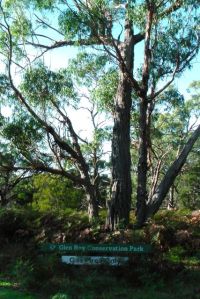
My second activation on Monday was the Glen Roy Conservation Park, which is located about half way between Penola and Naracoorte in the South East of South Australia, off the Riddoch Highway.

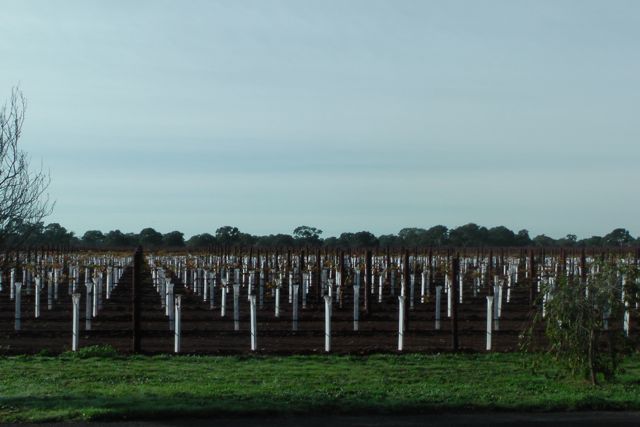
My drive from Telford Scrub took me north along the Riddoch Highway and through the Penola Forest before reaching the town of Penola.  Continuing north I travelled through some of the famous South East wine growing region and through the town of Coonawarra.  I am quite a wine buff and have consumed many a bottle of wine from this region.

IMGA0022_2

I haven’t been able to find out a lot of information on the Glen Roy Conservation Park.  However it appears that the McDonald family from Scotland in the 1800s and established the nearby Glen Roy Station where sheep were farmed.

Col VK5HCF activated this park during the 1 year anniversary of the VK5 Parks award.  A write up and a video of his activation can be found at…..

http://vk5hcf.wordpress.com/2014/04/18/glen-roy-conservation-park-6-04-2014/

IMGA0038_2

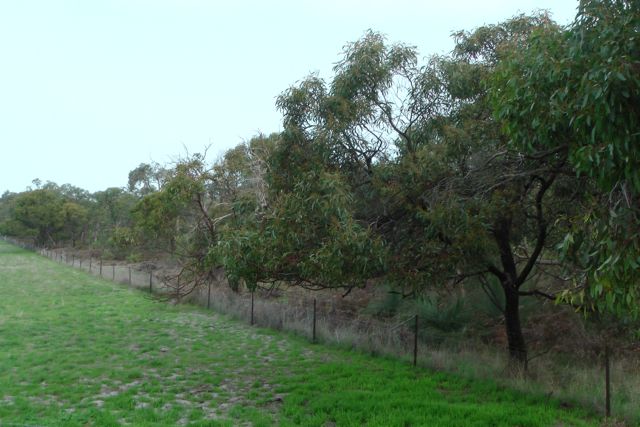
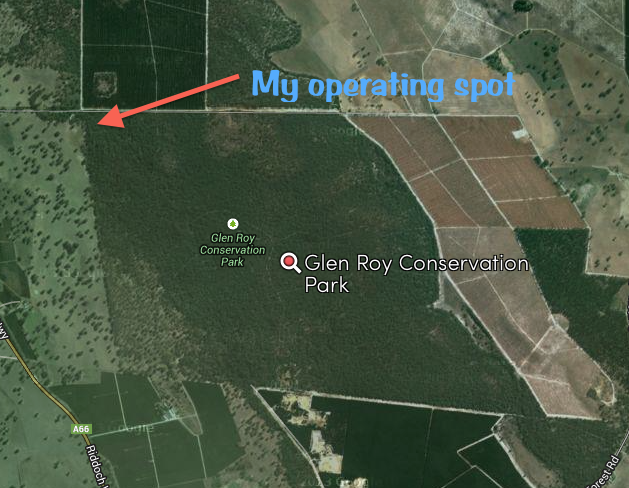
I accessed the park via Rabbits Road which runs off the eastern side of the Riddoch Highway.  It is just a short drive along this dirt road (about 600 metres), before you reach the park on your right, on the southern side of the road.  There is a large pine plantation on the northern side of the road.

Screenshot 2014-06-10 14.39.14

There was a track heading south on the western boundary of the park, but it looked a little boggy for my Falcon, so I parked right on the north western corner of the park, and utilised the track to my advantage by stringing out the legs of the dipole.  I set up my deck chair and fold up table and again used the Yaesu FT-450 and 40 watts for this activation, along with the 40m/20m linked dipole.

IMGA0041_2

My first contact was with John VK5BJE with a strong 5/9 signal, and this was followed by Mike VK3XL who was on SOTA summit Mount Beenak VK3/ VC-016.  Mike also had a good strong 5/9 signal.  I have mentioned it before, but it is really pleasing to see that a lof of the SOTA activators are now also hunting the park activators.  Brian VK5FMID then called in, using just 1 watt.  Although not that far away, with just 1 watt, Brian had a terrific 5/8 signal.

  IMGA0040_2

Whilst in the park I had another very nice QSO with Peter VK3YE who was pedestrian mobile on the beach, about 29 km south of Melbourne, running QRP and a vertical antenna.  For anyone who has not seen some of Peter’s videos, I would highly recommend that you google VK3YE and watch a few.  What Peter does with low power and home brew gear is truly amazing.

Here is a link to Peter’s website….

http://home.alphalink.com.au/~parkerp/vk3ye.htm

Another memorable contact whilst in Glen Roy was with Amanda VK3FQSO who called in with just 1/2 watt and was a very nice 5/6 signal.  It is quite incredible what you can do with QRP and especially when you are operating in a noise free environment like a Conservation Park.

IMG_1475

I also had a few more QRP contacts whilst in Glen Roy including: Tom VK5FTRG (5/8) on 1 watt from the South East; Ian VK5IS (5/9) on 5 watts from the mid north of South Australia; and Erik VK3FMSC (5/9) on 1 watt.

I was also called by the following mobile stations: Greg VK5ZGY (5/9); Gary VK5ZK/m (5/9); and Len VK3FB/m (5/8).

I even managed a VK4 contact from Glen Roy and this was with Brendon VK4MAC in Maleny near the Sunshine Coast (5/5 sent and 5/3 received).  I don’t work too many VK4s on 40m whilst I am out and about in the parks or on summits.

My final contact of the day was another SOTA contact.  This time with Ian VK1DI/2 who was on SOTA summit Mount Burngoogee, VK2/ RI-016.  Ian had a solid 5/8 signal.  Here is a link to Ian’s blog re his activation…..

http://vk1di.blogspot.com.au/2014/06/sota-activation-mount-burngoogee.html

The following stations were worked:

John VK5BJE; Mike VK3XL/p; Brian VK5FMID; Charles VK5FBAC; Peter VK3YE/pm; Amanda VK3FQSO; Tom VK5FTRG; John VK5FMJC/p; Ian VK5IS; Peter VK3PF; David VK3UCD; Tony VK5FTVR; Rick VK5FIVE; Nigel VK5NIG; Greg VK5ZGY/m; STand VK3BNJ; Erik VK3FMSC; Brendon VK4MAC; Kev VK3NKC; Gary VK5ZK/m; Graham VK5KGP; Steve VK2FISN; Phil VK3BHR; VK3FB/m; Erwin VK3ERW; Patrick VK5MPJ; Allen VK3HRA; Bernard VK3AMB; and Ian VK1DI/2.

Telford Scrub Conservation Park

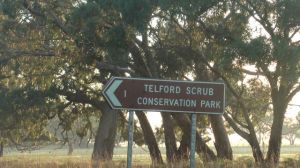
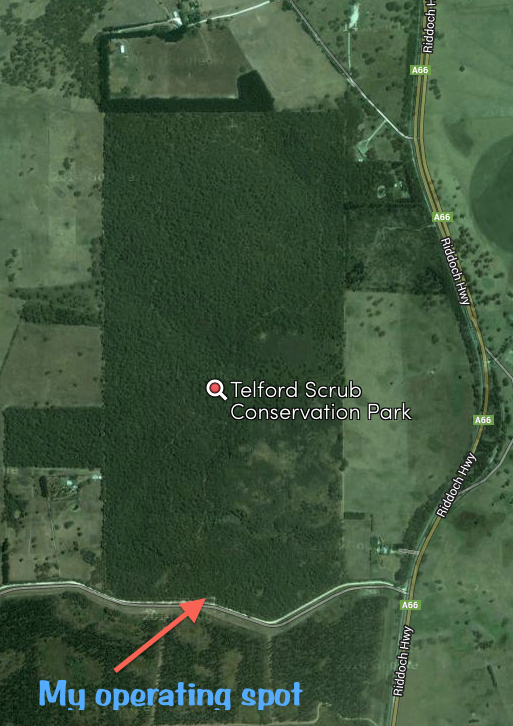
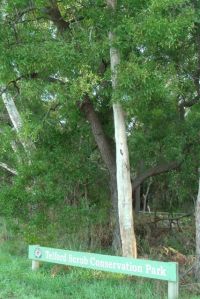
My first activation for Monday morning, 9th June, 2014, was the Telford Scrub Conservation Park, which is located about 15km north of Mount Gambier.   Access is from Riddoch Highway via Grundys Lane.

Again it was a very chilly morning down in the South East.  There had been very little cloud cover over night, so there was quite a bit of frost and fog on my way out to the park.  But one of the advantages of getting up at this time of the day is to enjoy the spectacular sunsets.  And this morning was no disappointment.

IMGA0004_2

IMGA0002_3

Telford Scrub Conservation Park, like most parks and native forest areas in the South East of South Australia, is an ‘island’ of native vegetation in a ‘sea’ of farming land and pine forests.  They are a reminder of vast areas of native vegetation that were cleared for forestry and agriculture.

This property was owned and run by the Telford brothers – who, when they finally decided to give the farming game away, sold this parcel of bush to the Environment Department and ultimately all of us.

IMGA0006_2

Telford Scrub was proclaimed in 1987 and conserves a significant eucalyptus forest of Brown Stringybark and Manna Gum and in the southern section, an important Swamp Gum woodland.  Although it is only a small park, consisting of 175 hectares, it provides homes for a wide variety of native flora.  The park also provides a safe refuge for native plants without the threat of being grazed by domestic stock or used for construction timber of firewood.

Within the park you can find the rare Southern Brown Bandicoot, which within the lower South East is now only known to be found in a  few native forest areas including Telford Scrub.  The endangered sugar glider can also be found within the park.  Koalas, which once roamed the woodlands and forests of the South East up to the 1930s, became locally extinct following hunting by Europeans for skins and extensive clearing of the first.  Early in 1997, several Koalas were reintroduced from Kangaroo Island to Telford Scrub and a few other parks and native forest areas in the South East.

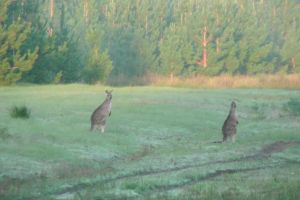
As I drove along Grundys Lane I saw quite a few Western Grey kangaroos grazing in between the park and the adjacent pine forest.  I was also fortunate enough to see 2 of the rare Red Necked wallabies.

IMGA0008_2

Numerous beautiful plants can be located in the forest, including over 20 species of native orchids.  These include Pink Fingers, Common Donkey orchid, Tiger orchid, and Purple Cockatoo.

I set up in the carpark off Grundys Lane.  There was plenty of room here to stretch out the dipole, and because of the early hour of the day, I was the only park visitor.  I used a permapine log fence to secure the 7 metre squid pole to, with the help of an octopus strap.

Screenshot 2014-06-10 14.36.23

This was truly a very chilly morning.  In fact it was 2 degrees C.  So it was definitely beanie, jacket, and gloves weather.

IMGA0013_2     IMG_1473

 I turned the Yaesu FT-450 onto 40m and did a quick check for VSWR.  As per normal it was about 1.1:1.  I have never used a tuner.  The RG174 coax just simply plugs straight into the back of the transceiver.  I asked if 7.090 was in use, only to be greeted by the every keen Brian VK5FMID.  This was followed by another very keen park hunter, John VK5BJE, and then Andrew VK2UH.  Tom VK5FTRG who I had a fair bit to do with at the SERG conference also called in.  Tom is a keen park activator and hunter.

IMGA0015_2

I had a steady flow of callers, including some QRP operators.  They included Len VK3FB using his Argonaut, Shaun VK3VLY running just 5 watts, Erwin VK3ERW also running 5 watts, Ian VK5IS on 5 watts, Rod VK2TWR on 5 watts, Roger VK5NWE on 5 watts, and John VK5FMJC also on 5 watts.  No-one was below strength 9.  The band conditions were very good.  This was again proven during this activation, by a call from Mike VK6MB.  Mike again had a beautiful 5/9 signal coming into the South East and I received a 5/7 signal report from Mike.

IMGA0019_2

Telford Scrub is truly a very beautiful park.  I just wished I had more time to explore this park, but I was on a very tight schedule.  So it was set up, get some quick contacts, and head off to the next park.  There are some great interpretative signs at the park, and the Stringybark Forest Hike and Forest Canopy Walk, which I believe would be very enjoyable to undertake.

IMGA0010_2

After operating at Telford Scrub for about 35 minutes I had a total of 30 contacts in the log from VK1, VK2, VK3, VK5, VK6, and VK7.

The following stations were worked:

Brian VK5FMID; John VK5BJE; Andrew VK2UH; Tom VK5FTRG; Len VK3FB; Wayne VK5FWMT; Mike VK3XL/m; Shaun VK3VLY’ Col VK5HCF; Ray VK3NBL; Dik VK7DIK; Tony VK2RI; Peter VK3PF; Mike VK6MB; Graham VK7NGA; Mark VK1EM; Erwin VK3ERW; Ian VK5IS; Rod VK2TWR; Roger VK5NWE; Scott VK7NWT; Nev VK5WG; Ethan VK3ETC; John VK5FMJC; Ian VK5CZ; Stan VK3BNJ;Peter VK5NAQ; Matt VK5MLB/m; Mike VK7MNH; and Marshall VK3MRG.


References.

Cockburn, R, ‘South Australia.  What’s in a Name?’, 2002.

Department of Environment and Natural Resources, ‘Telford Scub Conservation Park’, 2010.

Tantanoola Caves Conservation Park

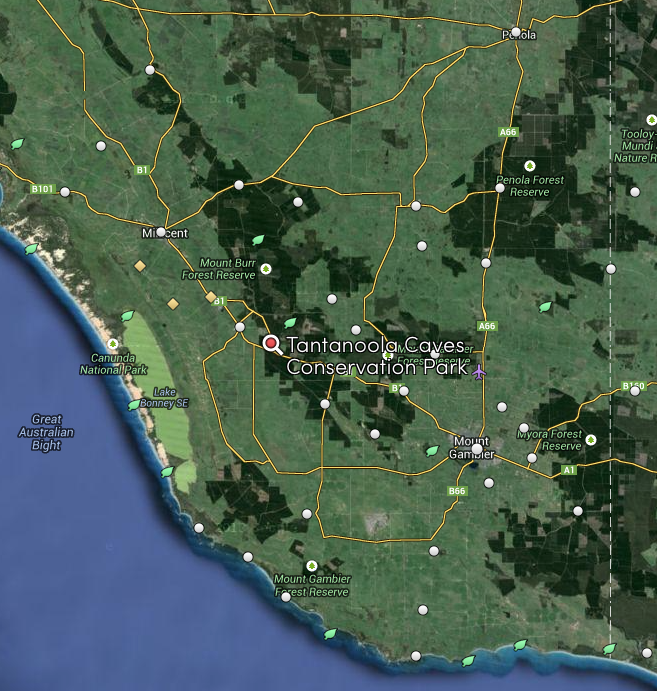
My second activation for Sunday 8th June 2014 was the Tantanoola Caves Conservation Park, which is located about 29 km north east of Mount Gambier, and about 425 km south east of Adelaide.  Sadly I do not have any photographs of this activation, because in my haste to leave the motel room I left behind the video camera battery, and my i-phone went flat on the top of Mount Burr.

The Tantanoola Cave is set into a cliff face, and is believed to have been exposed by the constant pounding of the ocean.  Over a period of time, the ocean has retreated, leaving behind a cavern of interesting shells, pebbles, and seal bones.  The cave itself is a comfortable 17 degrees all year round.  The same cannot be said for outside.  It was another freezing cold morning in the South East.

Tantanoola is derived from the aboriginal word tentunola, meaning boxwood / brushwood hill or camp.

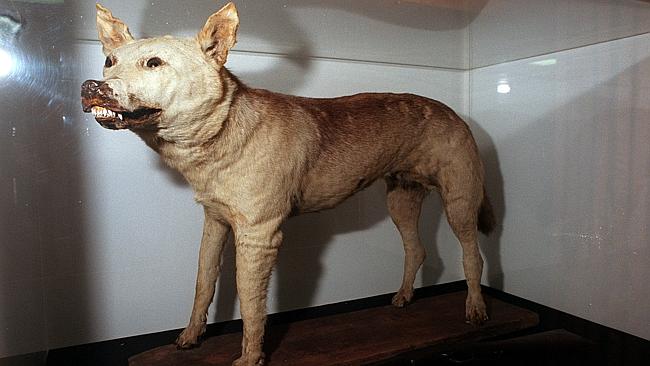
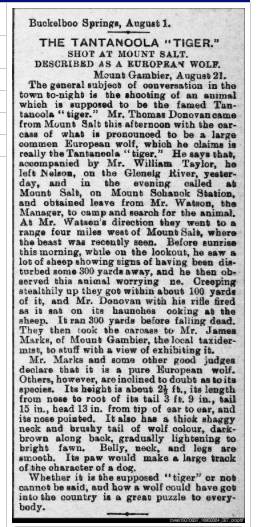
The town of Tantanoola which is nearby, is famous for the mystery of the Tantanoola Tiger, a phantom cat which supposedly stalked the area during the late nineteenth century.   In August 1895 Thomas John Donovan, shot an animal which was believed to have been the mysterious predator.   The shot animal was determined to be an Arabian wolf, although how it arrived in South Australia has been the subject of a number of theories.  It is currently preserved and on display at the Tantanoola Hotel.

117585-2951e66e-a005-11e3-b163-d60ea6e39be3

Image courtesy of http://www.news.com.au

For more information on the Tantanoola Tiger, please click on the link below…..

http://www.postcards-sa.com.au/features/tantanoola_tiger_hotel.html

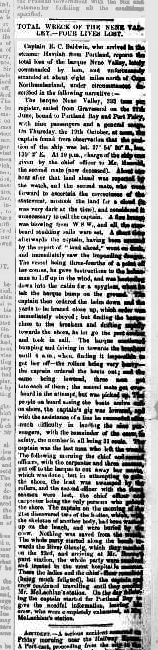
Below is an article from the Adelaide Observer, dated 24 August 1895.

Screenshot 2014-06-13 16.36.35

Article courtesy of http://www.samemory.sa.gov.au

I set up on a grassed area just down from the visitor centre, where there was enough room to string out the legs of the dipole.  There had been quite a bit of rain overnight, and it wasn’t long before my sandshoes & socks were drenched.  Not the best combination with a cold/chest infection.  My apologies to all of the callers, as I was starting to loose my voice.  This spot was also very close to the Princes Highway, which was very busy, so I had to endure the traffic noise.  This location was virtually noise free on the radio however.

Screenshot 2014-06-12 13.51.13

I had set up in the park by 10.50 p.m. local S.A. time.  My first contact was with Peter VK3PF with a solid 5/9 signal, and this was followed by Nick VK3ANL on SOTA summit Mt Yaranula/Lang, VK3/ VS-007, which is also located in the Grampians National Park, VKFF-213.  That was a bonus.  A SOTA contact and a WWFF park.

I managed two more SOTA contacts from Tantanoola and that was with Ian VK1DI/2 who was on Rock Hill VK2/ RI-026, near Wagga, with a cracking 5/9 signal.  And then Andrew VK1NAM/2 who was portable on SOTA peak Big Badja Hill VK2/ SM-059, which is also located within the Deua National Park, VKFF-138.  Another SOTA & WWFF contact.  Gotta be happy with that.  It is really pleasing to see SOTA activators calling park activators.

Here is a link to Ian VK1DI’s site re his activation of Rock Hill….

http://vk1di.blogspot.com.au/2014/06/sota-activation-rock-hill.html

And here is a link to Andrew VK1NAM’s blog re his activation of Big Badja Hill…..

http://vk1nam.wordpress.com/2014/06/11/sota-activation-big-badja-hill-and-bald-mountain/

I also spoke with some of the guys from the Whyalla Amateur Radio Club who were out activating the Whyalla Conservation Park.  They were Les VK5KLV/p; Peter VK5KPR/p; and Pat VK5HAE/p.  All with beautiful 5/9 signals coming in from the Eyre Peninsula.  In February I had delivered a presentation to the Whyalla Amateur Radio Club in, so it appears that a few of the hams up there have become interested in park activity.

And I also made contact with Tony VK3VTH/5 who was operating from the Coorong National Park, VKFF-173.  Tony’s signal was much stronger than on Saturday.  This was my third WWFF/VKFF contact whilst at Tantanoola Caves.  Thanks to Scott VK7NWT who kindly told me that Tony was operating on 7.144.

The 40m band was very busy with contesters for the VK Shires Contest.  Some with very wide signals.  I see that I am not the only one to experience this.  Marshall VK3MRG has included this observation in his most recent blog…..

http://vk3mrg.weebly.com/blog/the-vk-shires-splatter-fest

And despite the fact that I was not calling CQ contest, but rather calling ‘CQ VK5 Parks award’ I was still called by a handful of stations wanting my designator for the Shires contest.  I had no idea and made it quite clear I was not participating in the contest.  But this didn’t stop one or two operators kindly telling me what locator I was in and giving me their designator, despite the fact that I intimated I was not interested.  Oh well.

I only managed the 1 QRP contact from Tantanoola Caves, and that was with Andrew VK3ARR who had a solid 5/9 signal.

After operating for about 40 minutes, my voice had totally given up and it was time to head back to Mount Gambier and to the South East Radio Group 50 year convention.  I had 25 contacts in the log with some very nice SOTA, VKFF, and VK5 park to park contacts.

The following stations were worked on 40m SSB:

Peter VK3PF; Nick VK3ANL/p; Steve VK3MEG; Arno VK5ZAR; John VK5PO; Barry VK5BW; Nigel VK5NIG’ Phil VK3BHR; Dennis VK5HH; Ian VK1DI/2; David VK5NQP; Greg VK5ZGY/m; VK5MU; Les VK5KLV/p; Andrew VK3ARR; Peter VK5NAQ; Peter VK5KPR/p; Ian VK3VIN; John VK5FTCT; Scott VK7NWT; Pat VK5HAE/p; Tony VK3VTH/5; Andrew VK1NAM/p; Alan VK5AR/m; and Ron VK3AFW.


References

Wikipedia, Tantanoola South Australia, http://en.wikipedia.org/wiki/Tantanoola,_South_Australia


Nene Valley Conservation Park

My second activation for Saturday was the Nene Valley Conservation Park, which is located  The park is located in close proximity to the little township of Nene Valley, and about 35 km south west of Mount Gambier.  Although Nene Valley was not a port, many ships were lost in this vicinity.  The town itself was was named in 1962 after the wrecking of the Nene Valley.

The Nene Valley was a 333 ton wooden barque, launched in England in 1852.   Built for the colonial trade to India and Australia it was on its second voyage to the southern hemisphere in 1854, bound for Portland Bay and Port Fairy in Victoria, from Gravesend in England.  During this period, international sailing ships travelled on Great Circle Routes: south down the mid-Atlantic and then east across the Southern Ocean.  Navigation was still uncertain and the first approach to land was always a risky business.  In October 1854, the lookout on the Nene Valley saw breaking surf in the darkness and reported land ahead.  The Captain decided it was only low cloud and sailed on.

The Nene Valley went aground soon afterwards immediately in front of what is now the town of Nene Valley.  The stranded vessel was driven ashore and broke up.  The crew and nine passengers all survived, but four sailors drowned the following day during a salvage attempt.  The shipwreck was a local landmark on the beach until the 1930s.  I have not been able to find a picture of the Nene Valley.

Below is an article from the South Australian Register, Adelaide, Monday 30th October, 1854, regarding the wreck of the Nene Valley.

Screenshot 2014-06-12 09.41.54

The Nene Valley Conservation Park was constituted in 1972 and covers an area of about 373 hectares.  The majority of the park consists of unstructured skeletal sand dunes dominated by a costal wattle and coastal beard-heath.

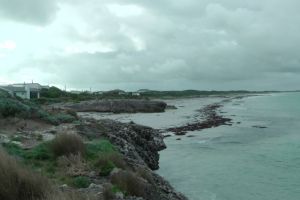
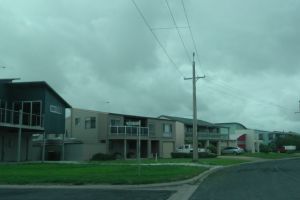
Prior to setting up I went for a drive through the town of Nene Valley and went down to the beach to have a look at the roaring waves of the Southern Ocean.  Nene Valley  contains some very impressive holiday homes.  I found it very interesting how the little town got its name.

During the 1940s the small town of Maggoty Point came into existence.  It consisted of just a few shacks primarily for the local fishermen.  A narrow dirt track led into the area.  The name Maggoty Point was derived from the fact that seaweed which collected on the beach, became a very good breeding ground for maggots.  In 1960, further shacks were built and a much improved road was planned.

IMGA0016

In 1961, the Livingstone brothers, who were well known graziers in the area, agreed to surrender a piece of land at Nene Valley Rock to the local Council.  However this was done on the proviso that the Council alter the name of the area from Maggoty Point to Nene Valley to perpetuate the memory of the wreck of the Nene Valley.  Interestinly an early survey of the area which was completed in 1885, shows a creek nearby called Nyn Valley Creek.

During the 1980s, the Council developed an area west of the town, providing further blocks for sale.  The shacks had been freeholder and additional interest was shown by people wanting to purchase a quiet block close to the Southern Ocean.  All blocks were sold, and new buildings continue to appear in Nene Valley which currently has a population of about 50 people.  I am sure all the locals agree, that Nene Valley is far more pleasing to the ear, than Maggoty Point!

IMGA0018

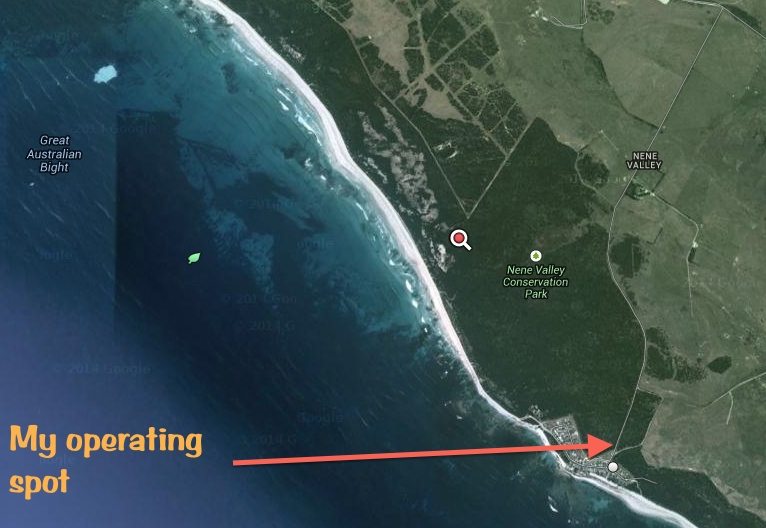
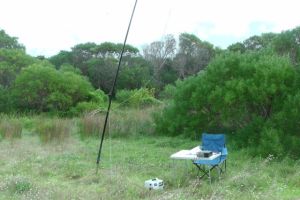
I set up close to the town of Nene Valley.  I did try some other locations, but the tracks were only suitable for 4WD.  My operating spot was not ideal as I had some power lines running overhead nearby.  However, the weather was not ideal with drizzling rain, and my head cold wasn’t getting any better, so I wanted to get the activation done and dusted and head off to the South East Radio Group (SERG) convention.  I just had to put up with the frying pan noise with the moisture on the power lines.

Screenshot 2014-06-10 14.54.04

Again I ran the Yaesu FT-450 and 40 watts into the linked dipole.  I am a keen QRP operator, and normally use my Yaesu FT-817nd and just 5 watts.  But of recent times I’ve decided to run just that little bit extra power from the parks, so my signal can be heard a little better for the further afield VKs.  And it seems to be paying off, with lots of contacts and good signal reports.

IMGA0022

My first four contacts were with regular park hunters: John VK5BJE, Brian VK5FMID, Arno VK5ZAR, and Amanda VK3FQSO.  All four had good strong 5/9 signals.  The 40 m band was still in very good condition with some excellent signals coming into Nene Valley.  A steady flow of callers followed from VK2, VK3, VK5, VK6, and VK7.

Some of the highlights of this activation was a park to park contact with Stuart VK5STU who was operating portable from the Morialta Conservation Park in the foothills of the Adelaide Hills.  Stuart was running QRP and had a very nice 5/8 signal down to the South East.

I also worked a number of portable or mobile stations including David VK5KC/p who was on holidays and was operating from the Tailem Bend caravan park overlooking the Murray River.  Mike VK3XL/m who was mobile on his way home after activating a SOTA summit called in to say hi and had a very strong 5/9 signal.  Active park hunter Greg VK5ZGY who was mobile also called in with a strong 5/9 signal from Mount Gambier.  Matt VK3MAT who was mobile and QRP had a good 5/7 signal.  I spoke again with Hauke VK1HW who was mobile at Wangaratta.  Hauke had a very strong 5/9 signal coming out of his mobile.  And my last 2 mobile contacts were with Peter VK3PAH mobile, and Gary VK5ZK who was mobile at Penola in the South East of South Australia.  Gary was in the South East for the SERG convention.

But the most satisfying QSO was with Mike VK6MB over in Western Australia.  I was very surprised when Mike called in towards the end of my activation.  In fact Mike was number 25 in my log.  Mike had a good strong 5/6 signal and he repaid the favour with a 5/5 for me.  I was quite surprised to be getting over to Western Australia so well.  That is a distance of about 3,000 km.

Prior to packing up the goat bleated on my mobile phone, so I tuned to 7.085 and worked Justin VK2CU who was portable on SOTA peak, Mount Ulandra, VK2/ RI-011 (5/9 both ways).

IMGA0021  IMGA0024

It was starting to get a bit wet, so it was time to pack up and head off to the SERG convention.  I had a total of 29 QSOs in the log.

Looking at a map, it appears that access to Nene Valley CP is limited.  However, when I come back to Nene Valley I hope to have a 4WD, and I think I will try to activate the park a little further to the north, along the 4QD track that follows the coast.   It was a little noisy where I was with the power lines.

The following stations were worked on 40m SSB:

John VK5BJE; Brian VK5FMID; Arno VK5ZAR; Amanda VK3FQSO; Larry VK5LY; Nigel VK5NIG; Greg VK5GJ; David VK5KC/p; Mal VK3AZZ; Peter VK3PF; Andrew VK2UH; Bernard VK3AMB; David VK5HCJ; Mike VK3XL/m; Stuart VK5STU/p; Andrew VK3ARR; John VK5NJ; Greg VK5ZGY/m; Graham VK7NGA; Matt VK3MAT/m; Hauke VK1HW/3; Greg VK7FGGT; Rod VK2LAX; VK3PAH/p; Mike VK6MB; Paul VK7CC; Ray VK3FQ; Gary VK5ZK/m; David VK5NQP;Phil VK3BHR; and Justin VK2CU/p.


References.

Department of Environment and Natural Resources, ‘Small Coastal Parks of the South East Management Plan’ 1994.

District Council of Grant, https://www.dcgrant.sa.gov.au/page.aspx?u=663

Dingley Dell Conservation Park

My first park for Saturday 7th June, 2014, was the Dingley Dell Conservation Park, which is located about 30 km south of Mount Gambier, and 407 km south east of Adelaide.  It was another bright and early start for me.  The alarm went off at 6.15 a.m. and after a coffee and a nice hot shower I was on the road.  The temperature was about 2 degrees C.  I headed out of Mount Gambier towards Port MacDonnell along the Riddoch Highway, and accessed the park via Dingley Dell Road.  I did encounter some road obstructions along the way as you can see below.

IMGA0013

On the way to the summit I passed Mount Schank, which sadly does not qualify for the Summits on the Air program.  Below is a zoomed in photo of Mount Schank as seen from Dingley Dell.

IMGA0011

Dingley Dell Conservation Park covers an area of six hectares and was constituted as a conservation park in 1972 due to its historic significance.  The park comprises gently undulating consolidated dunes with an open woodland of South Australian blue gum, with isolated blackwood, golden wattle, coastal bearded-heath, and native box.  Grazing land abuts the northern and western boundaries of the park.

The park contains the former home of the famous Australian poet, Adam Lindsay Gordon.  This eccentric and talented poet lived at Dingley Dell between 1864 to 1867.  Gordon purchased the cottage in 1864 for 150 pounds.  It was during his stay here that his first poem was published outside of a newspaper or magazine.

gordona(an5487725)

Image courtesy of brightoncemetery.com

The cottage was given to the local council by his wife Maggie, in about 1873.  In 1922 at the request of the Dingley Dell Restoration Committee, the South Australian Government purchased the cottage.  The cottage has been restored and is open to the public.  Gordon’s personal belongings and other moments of this ear form part of the period collection within the cottage.

IMGA0001

 IMGA0003

So how did Dingley Dell get its name?  It is certainly an interesting name.  The following account comes from an old resident of the Port MacDonnell district who had an intimate acquaintance with Adam Lindsay Gordon.  He said:

“The country surrounding the cottage was then, even more so than now, a sylvan paradise, in which gums and wattles ran riot and it was from the music of the birds in the trees, mingled with the tinkling of the bells of the hobbled stock, that the name ‘Dingley Dell’ was derived”.

B54883

Above: Dingley Dell, c. 1907.  Photo courtesy of images.slsa.sa.gov.au

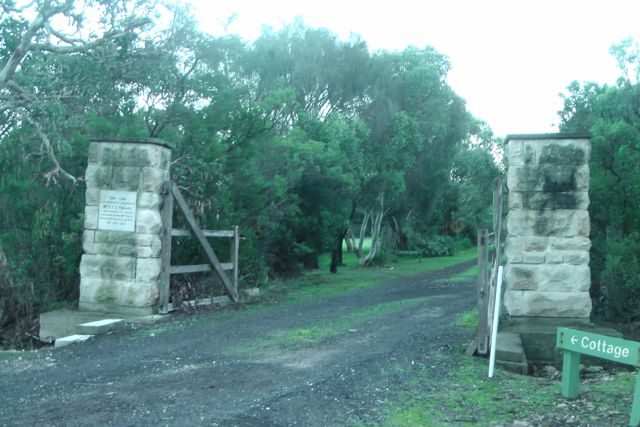
Access to the park is off Springs Road which runs off the Dingley Dell Road.  There is an entrance gate with two old stone pillars.  This will take you passed the caretakers property on your right and the picnic area on your left.  There is ample car parking facilities.

IMGA0014

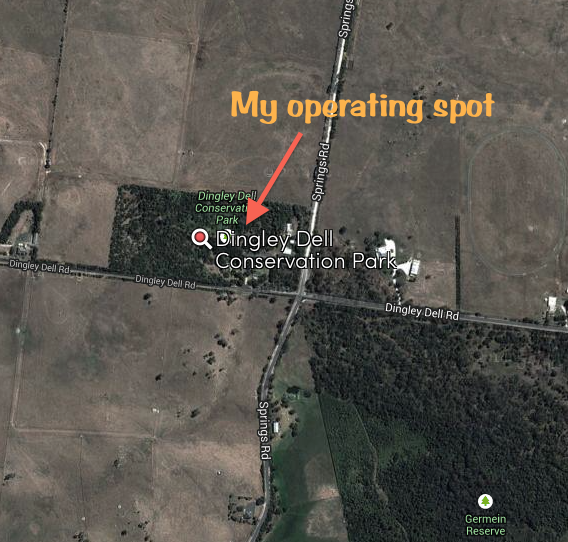
I set up my gear off a little track on the northern side of the cottage.  The scrub is quite thick, but I managed to find enough of a clearing to stretch out the legs of the dipole.

Screenshot 2014-06-10 14.56.27

Image courtesy of Mapcarta.

My first contact in the park was with Rod VK2LAX (5/7 both ways).  This was followed by regular park hunters Col VK5HCF and John VK5BJE.  Nick VK3ANL was kind enough to call in whilst he was on the top of SOTA peak, Mount William, VK3/ VS-001, which is located in the Grampians National Park, VKFF-213.  Again I worked Greg who was sounding great on his little home new QRP rig.  Richard VK5ZRY also called in to say hello and was running 10 watts from over on the Yorke Peninsula.  Greg has the Ramsay-Way Conservation Park named after him, and is quite active in the VK5 parks award.

After working a total of 11 stations, the caretaker came over to say hi.  He was accompanied by his sheepdog.  The gentleman was very interested in my operation, and had a background in marine radio.  His dog however, only wanted to chase sticks, and would not leave me alone.  That is what all the barking was about for those that heard it.  I had to keep a careful watch to make sure the dog didn’t run through the legs of the dipole.

IMGA0008

After 40 minutes in the park I had a total of 18 QSOs in the log from this rather unique little park.  Band conditions were very good, but conditions on the ground were very trying with the caretaker’s sheep dog.

The following stations were worked on 40m SSB:

Rod VK2LAX; Col VK5HCF; John VK5BJE; Leon VK3VGA; Brian VK5FMID; Nick VK3ANL/p; Phil VK3BHR; Greg VK5GJ; Kev BK3NKC; Richard VK5ZRY; Lloyd VK5BR; Larry VK5LY; Peter VK3PF; Amanda VK3FQSO; Bernard VK3AMB; Terry VK3UP/m; Hans VK5YX; and Nigel VK5NIG.


References.

Cockburn; R, ‘South Australia.  What’s in a Name”, 2002.

National Parks South Australia, Dingley Dell Conservation Park, http://www.environment.sa.gov.au/parks/Find_a_park/Browse_by_region/Limestone_Coast/Dingley_Dell_Conservation_Park

Government of South Australia, ‘Dingley Dell Conservation Park’ brochure, 2010


Mount Scott Conservation Park

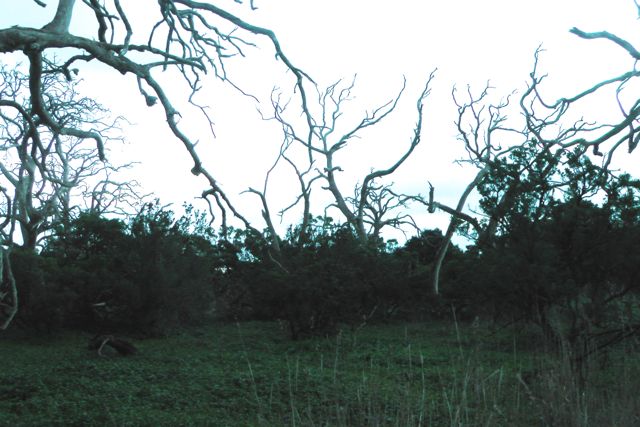
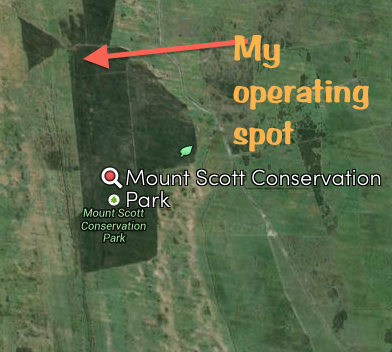
My final park for Friday 6th June 2014 was the Mount Scott Conservation Park, which is located about 22 km east of Kingston in the South East of South Australia.  The park was constituted in 1972 and covers an area of about 1,238 hectares.

Screenshot 2014-06-10 14.58.54

The park is located on part of the South East relict beach dunes which run north west and south east.  These ranges are generally less than 30 metres in height and are roughly parallel to the present coastline.

A variety of different native animals can be found in the park including the Red necked wallaby, Western Grey kangaroo, Silky mouse, and Common Wombat.  Numerous bird species are also located within the park including the endangered Mallee Fowl.

IMGA0218

The park and the nearby small summit of Mount Scott are named after John and Charles Scott, pioneers of South Australia.  The summit is located just to the east of the park and is just 67 metres ASL.  So it is a long way from qualifying for the Summits on the Air program.

I accessed the park via Mount Scott Road, a dirt road off the Desert Camp – Kingston Road.

Reedy Creek abuts the south western boundary of the park.  Where the road crosses the Reedy Creek you can view the remains of a 90 feet long bridge that was built in the 1850’s to span the Reedy Creek.  The bridge served as the main outlet for heavily laden bullock wagons between the Tatiara district and Port Caroline at Kingston between 1856 and 1910.  The remaining logs are approximately 160 years old.  There is a plaque at this location.

IMGA0219     IMGA0221

IMGA0220

I set up in a little cleared area off Mount Scott Road, and erected the 40m/20m linked dipole supported by the 7 m squid pole.  Again I used the Yaesu FT-450, and 40 watts. The transceiver was powered by my 44 amp hour power pack.

IMGA0216

My first contact was with Matt VK1MA who had a very strong 5/9 plus signal.  This was followed by active park hunter Brian VK5FMID, and then Stan VK3BNJ who had become a regular in my log during the day.

I worked three VK4s during this activation which was very pleasing.  My first Queensland contact was with Owen VK4FADW who was 5/5 and gave me a 5/7-8 signal report.  Next up was Bruce VK4MQ who was running a Codan transceiver and just 20 watts (5/7 both ways).  And the third contact was with Glenn VK4FSCC (5/5 sent and 5/7 received).

IMGA0215

I also had two QRP contacts.  The first was with Greg VK5GJ using his home brew QRP transceiver and next was Peter VK3PF.

The noise floor within the park was non existent.  The only annoyance on the 40m band was the Over the Horizon Radar (OTHR) which was quite strong.  There are lots of anecdotal stories of where the OTHR originates from, but I would love to truly know one day.

After operating in the park for about 40 minutes I had a total of 20 QSOs in the log.  The sun was setting and I still had a good drive to get to Mount Gambier.  I also wanted to avoid as many kangaroos as possible.

IMGA0222

The following stations were worked on 40m SSB:

Matt VK1MA; Brian VK5FMID; Stan VK3BNJ’ Col VK5HCF; Scott VK7NWT; Owen VK4FADW; Max VK3MCX; Greg VK5GJ; Nev VK5GW; Nigel VK5NIG; Bruce VK4MQ; Arno VK5ZAR; Glenn VK4FSCC; Allen VK5FD; Greg VK5ZGY; Ike VK3CVD; Michael VK3HAU; Ron VK5VH; Ray VK3NBL; and Peter VK3PF.


References.

Department of Environment and Natural Resources South Australia, ‘Small Inland Parks of the South East Management Plan’, 1994.

Cockburn, R, ‘South Australia.  What’s in a name?’, 2002.