Here are my latest FT8 award certificates for VK5PAS.
Thank you to all of the FT8 operators and thank you to the various FT8 Award Managers.

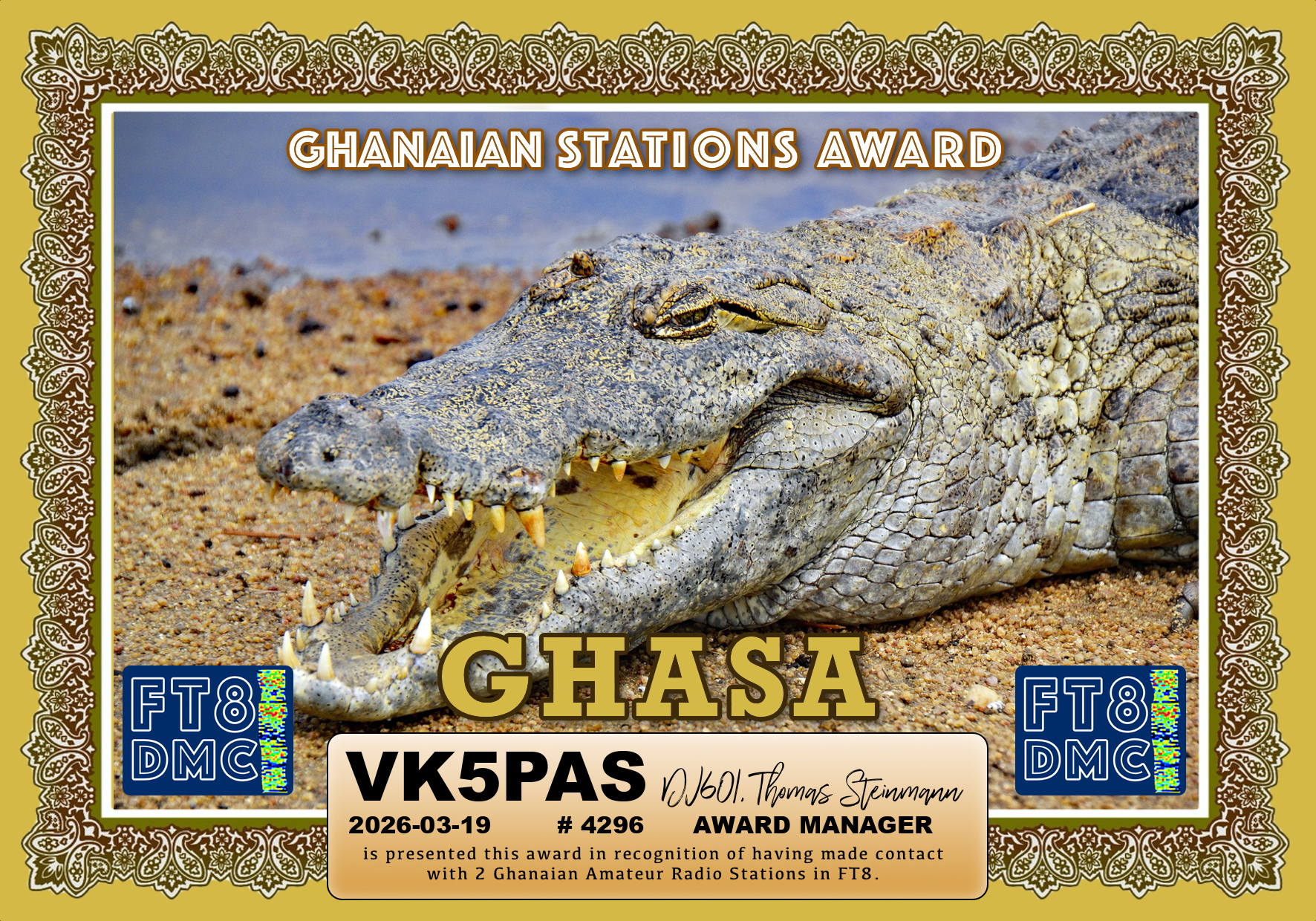
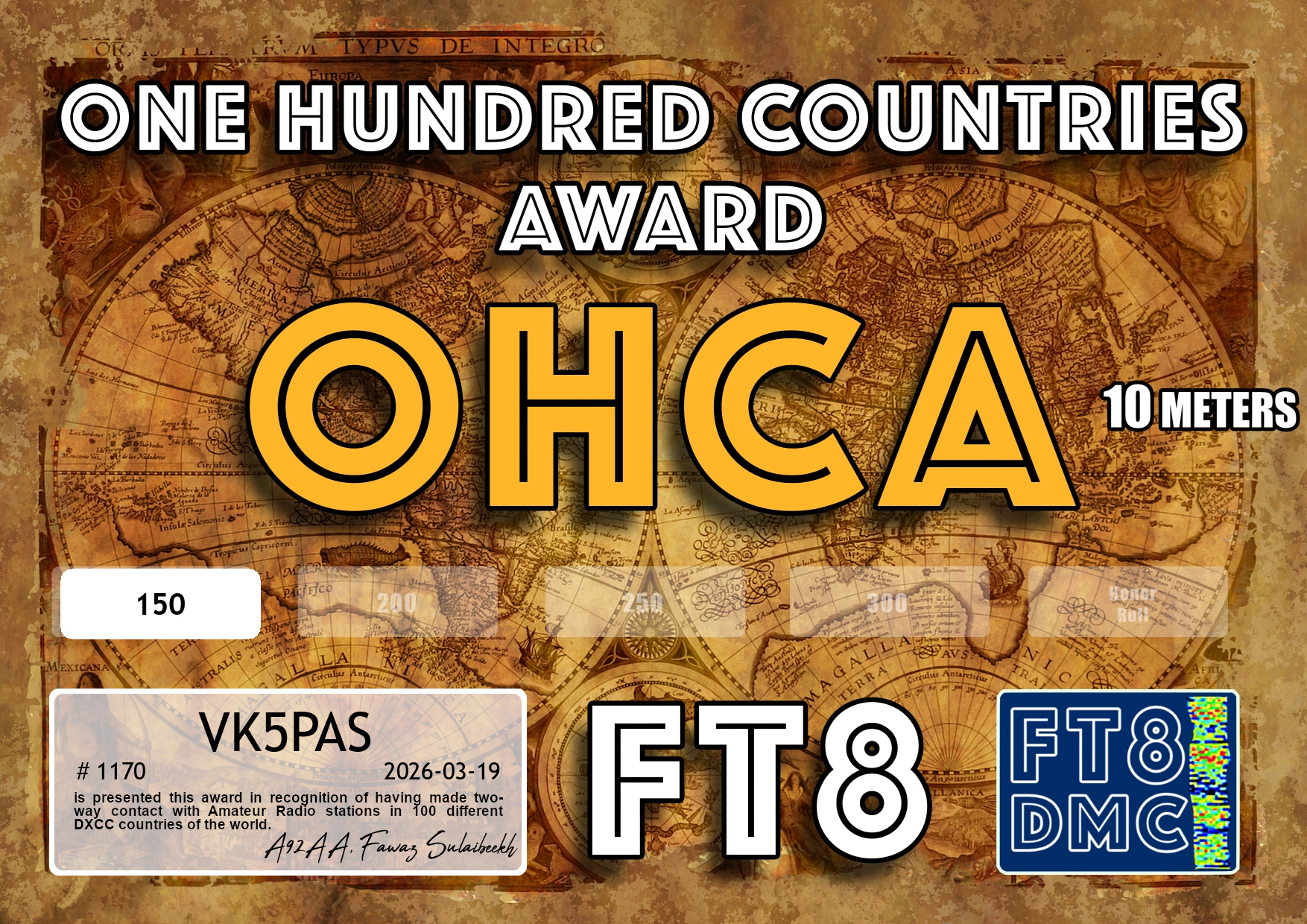

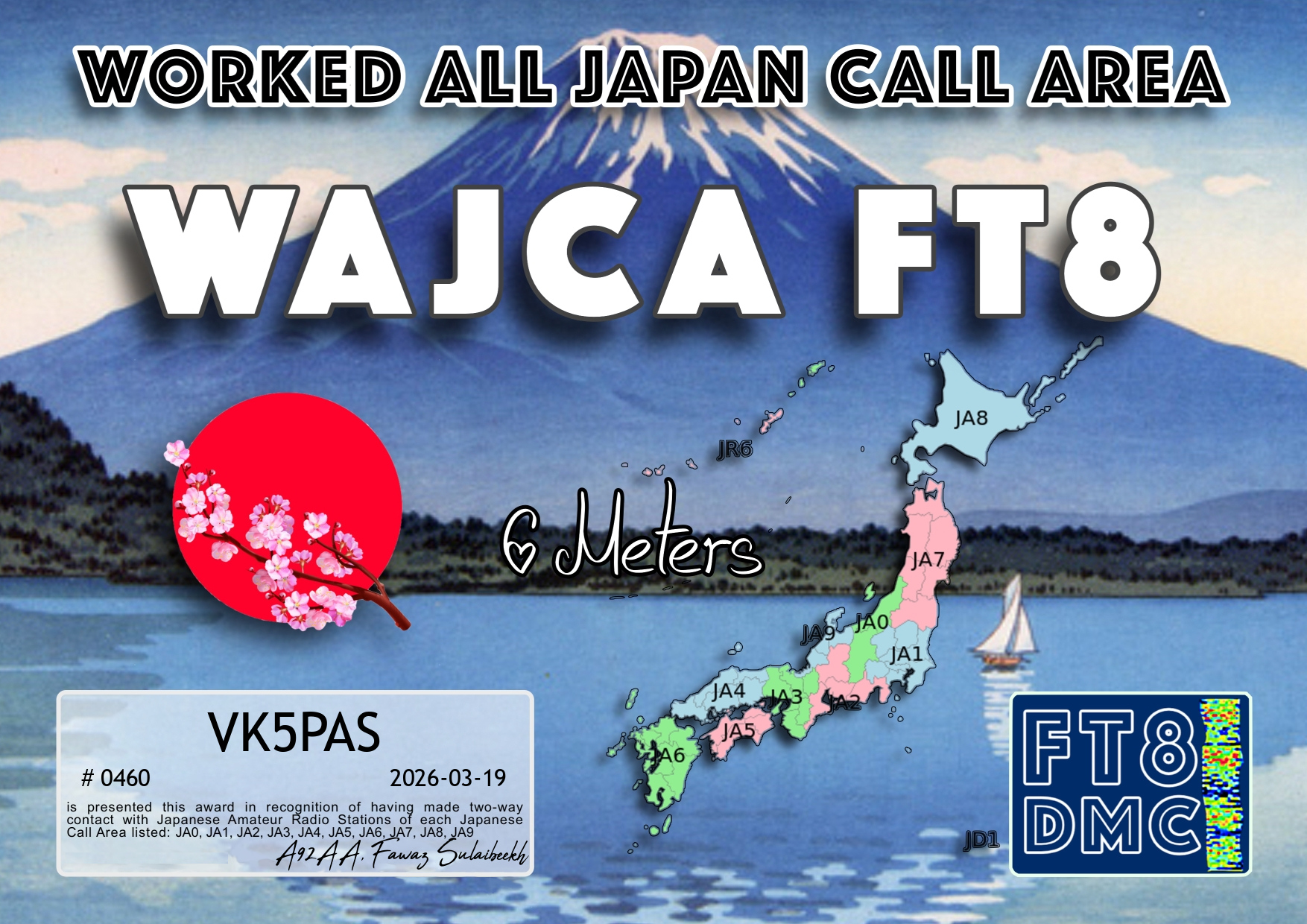
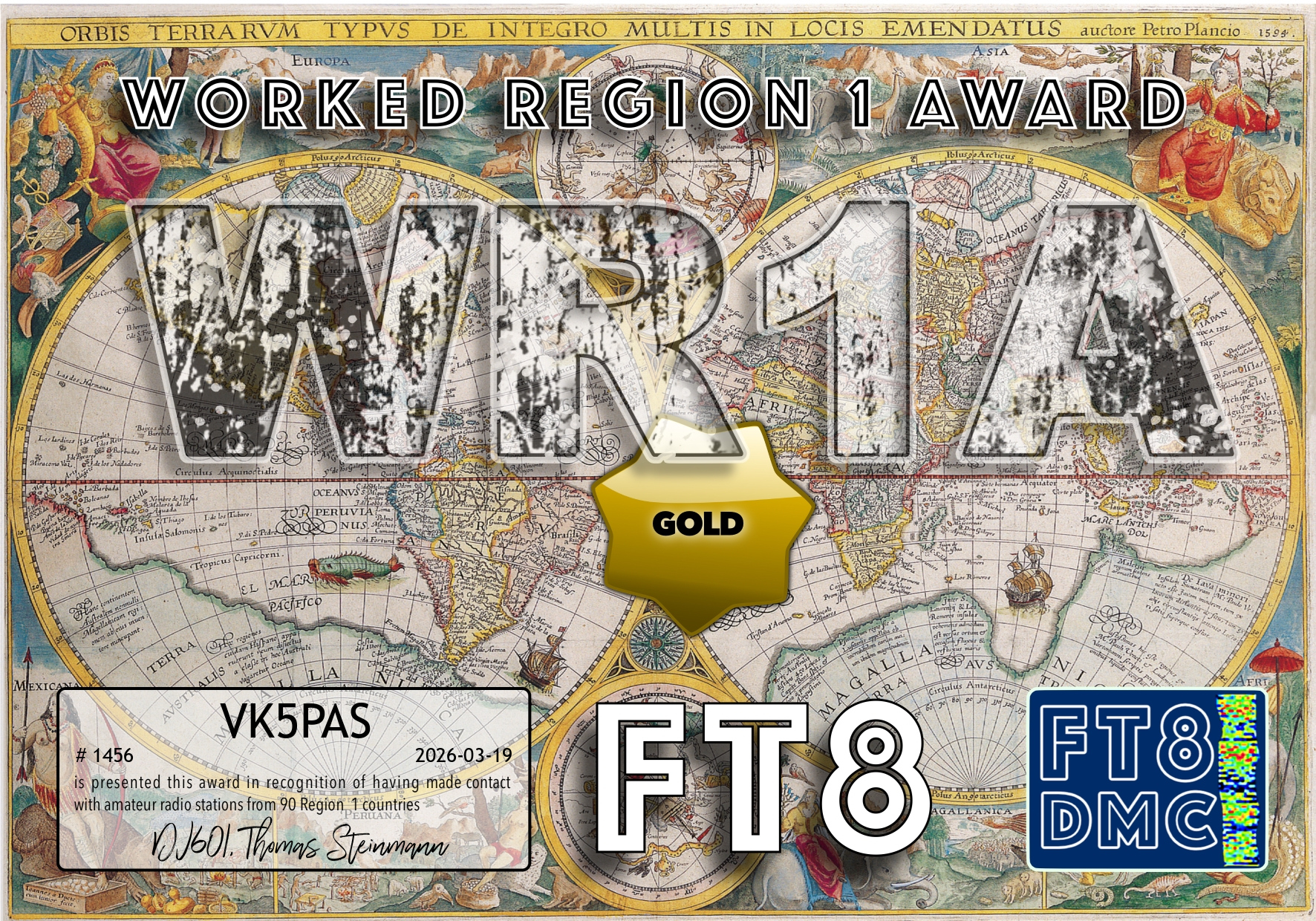

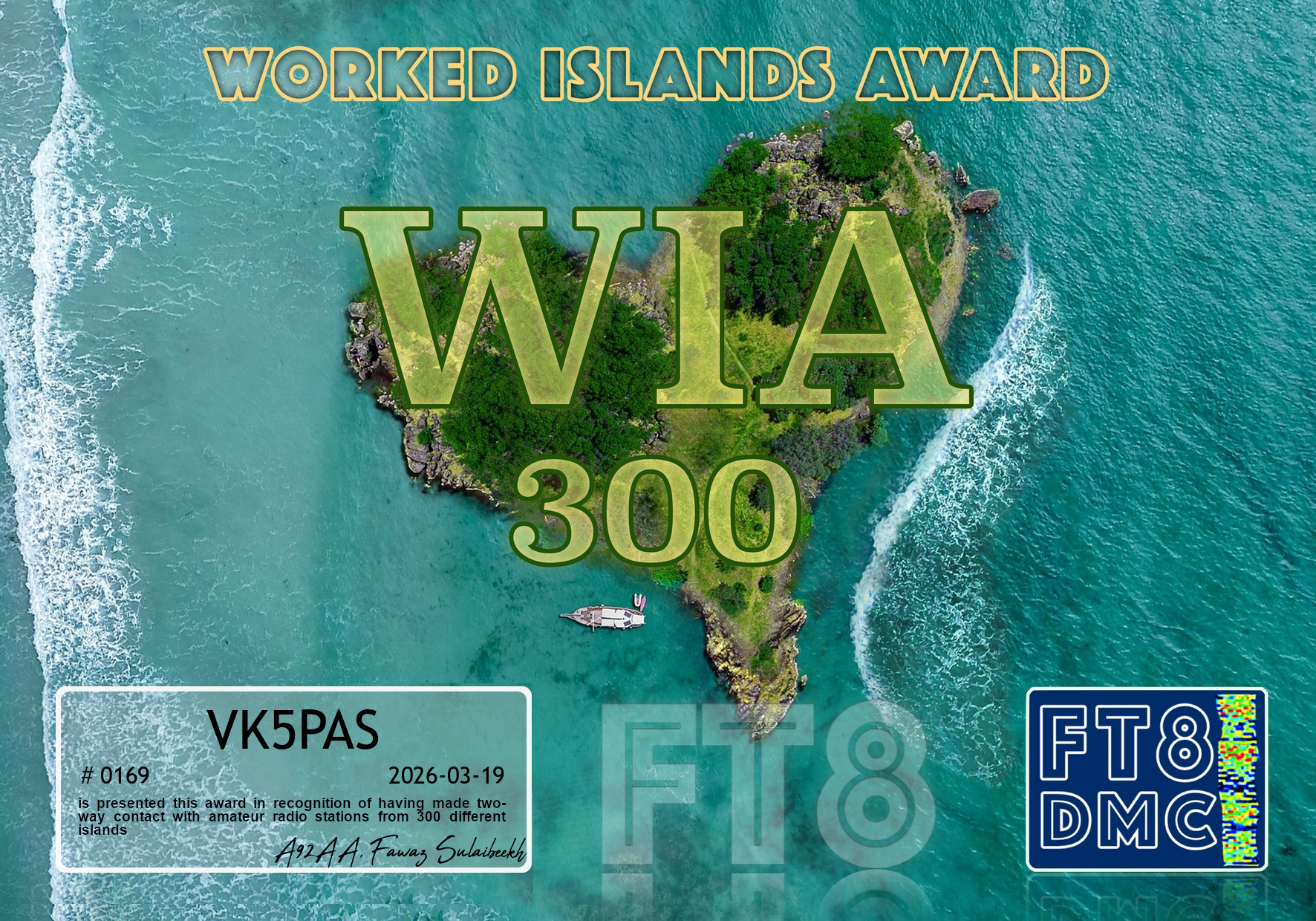

Here are my latest FT8 award certificates for VK5PAS.
Thank you to all of the FT8 operators and thank you to the various FT8 Award Managers.
Our final activation for Sunday, 2nd November 2025, was Lake Urana Nature Reserve VKFF-1956. The reserve is located just to the northwest of the town of Urana, and about 45 km east of Jerilderie.
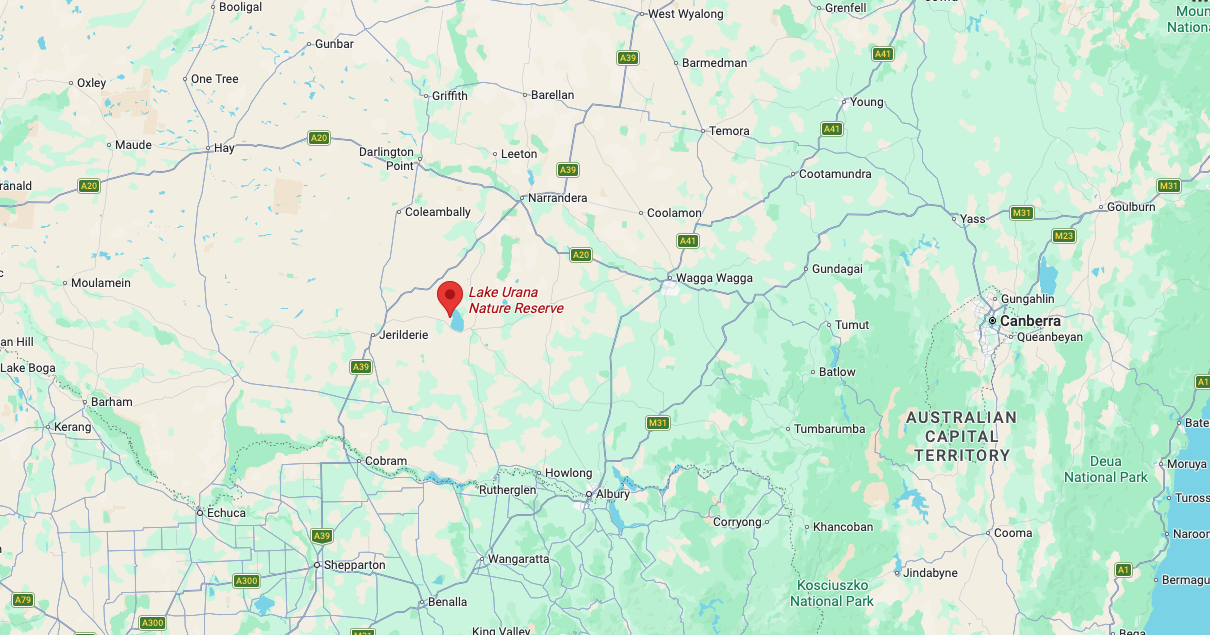
Above: Map showing the location of Lake Urana Nature Reserve. Map c/o Google Maps
We headed west out of Urana on Cocketgedong Road. What a name! We turned onto Dunraven Road and commenced travelling towards the reserve.
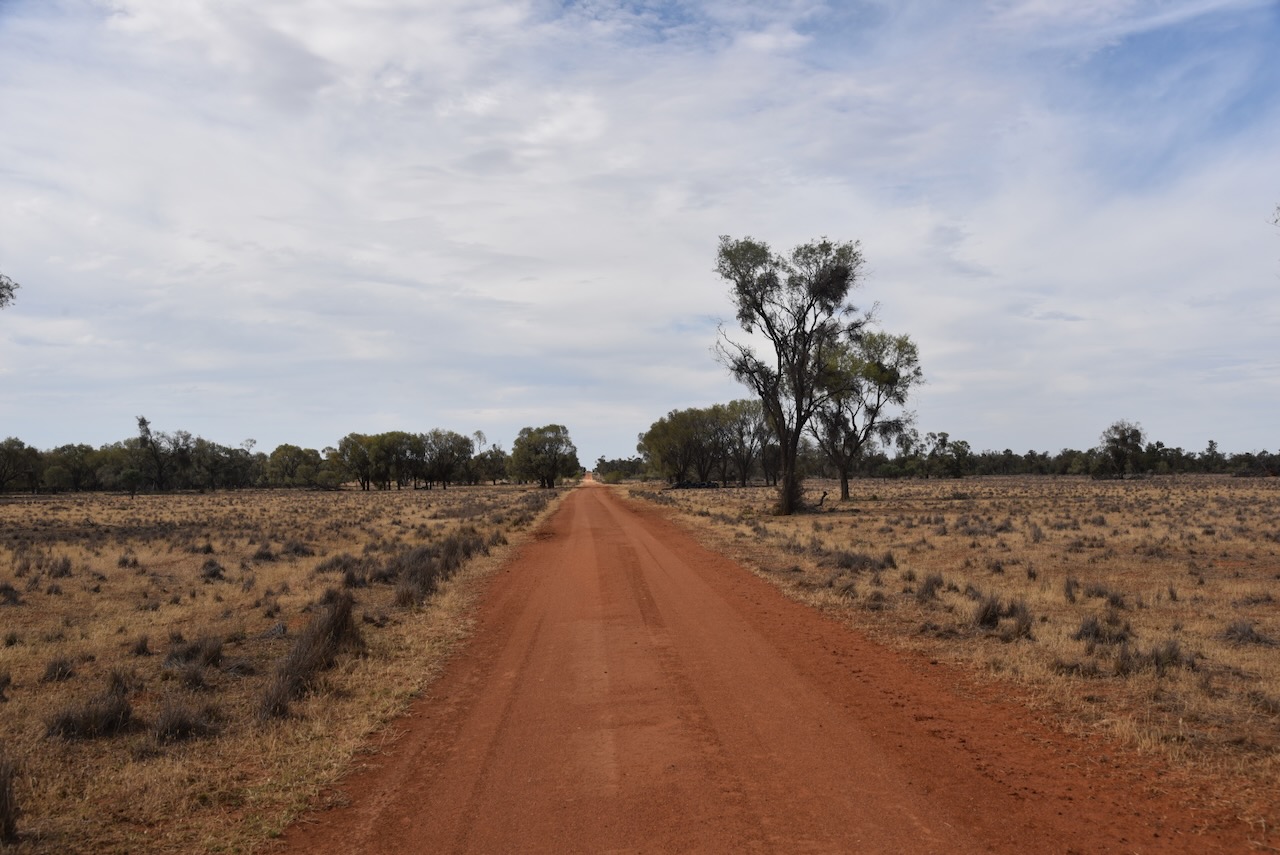
A little way along the dirt road, we reached the park sign.
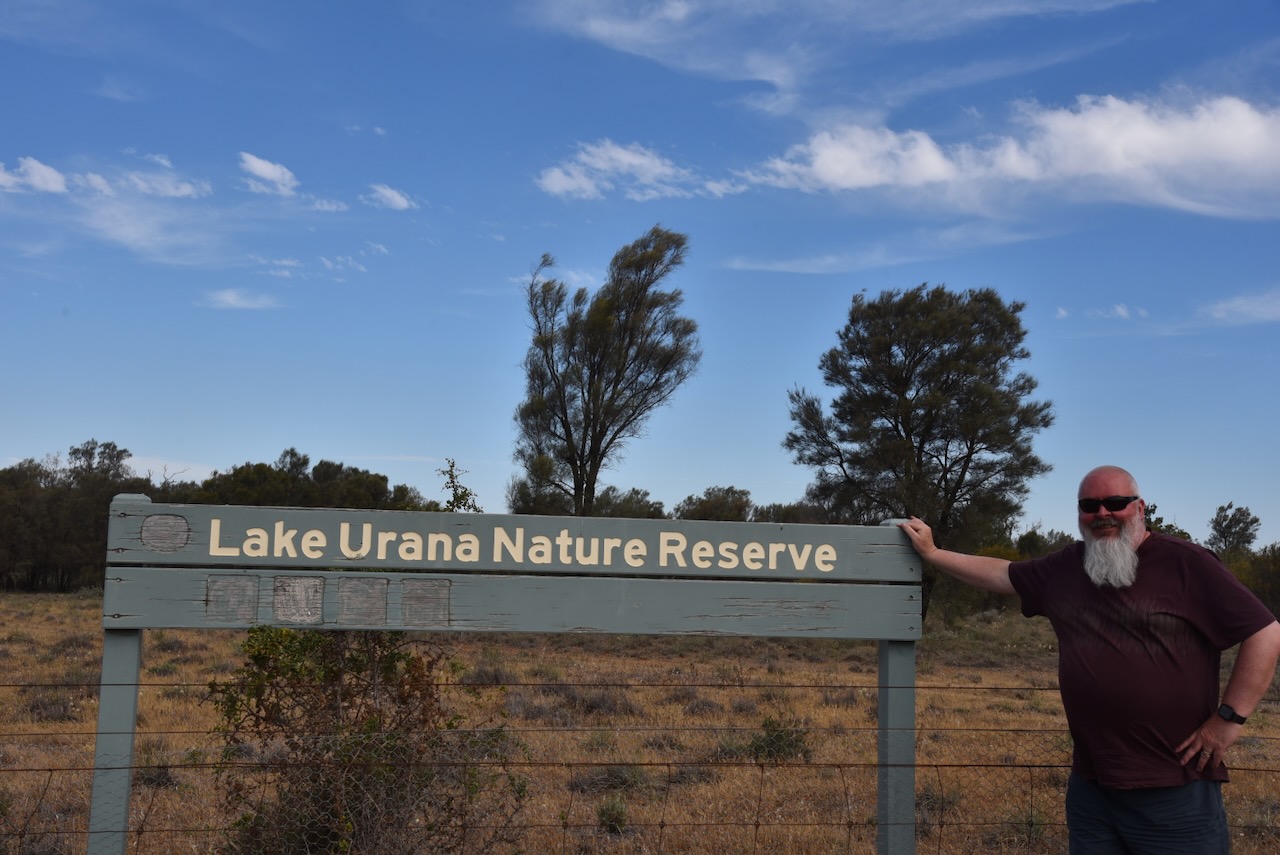
We entered the reserve and drove along a dirt track, trying to find a clearing in the scrub to set up in. it was slow going as the reserve was full of emus and Eastern grey kangaroos. It was a great sight.
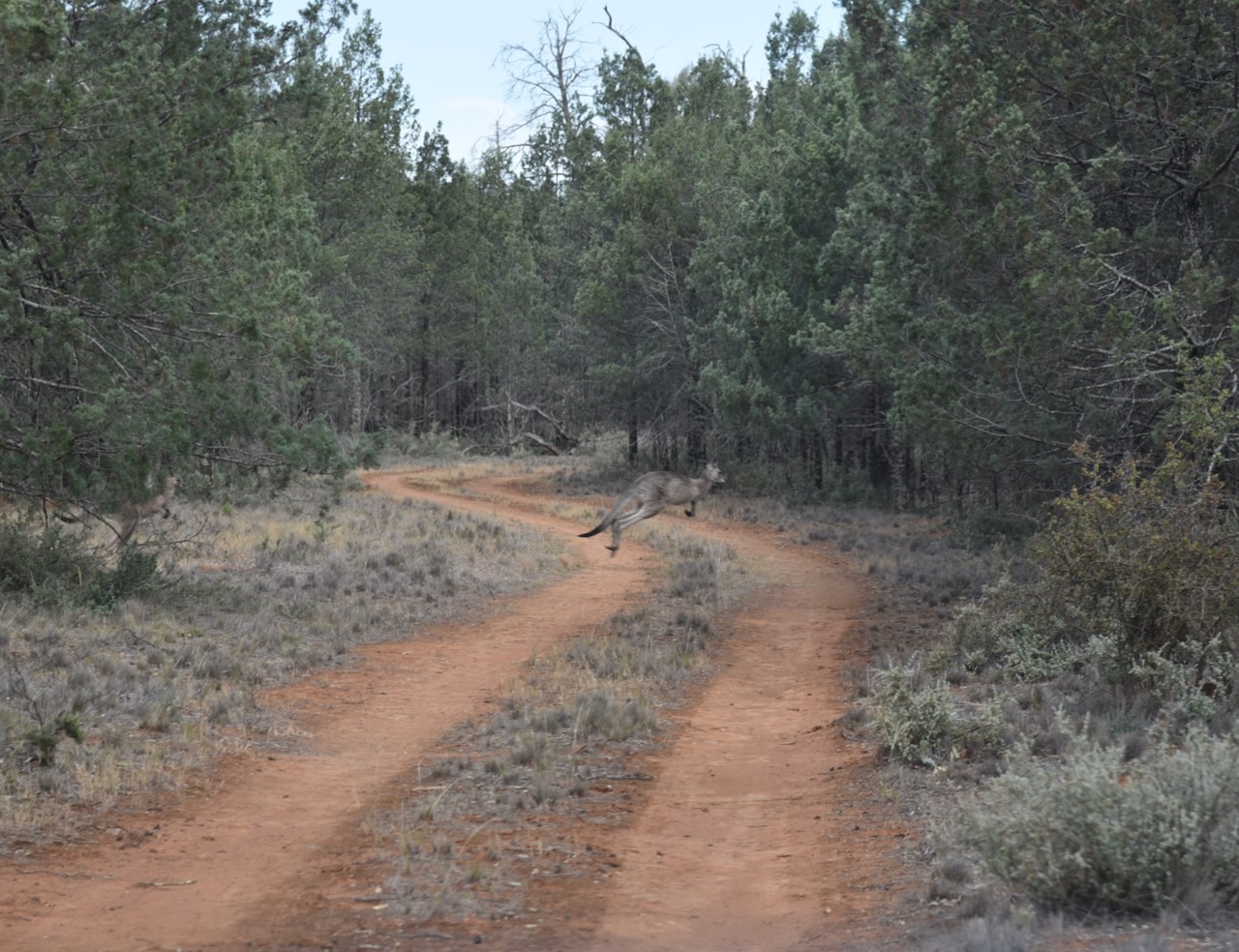
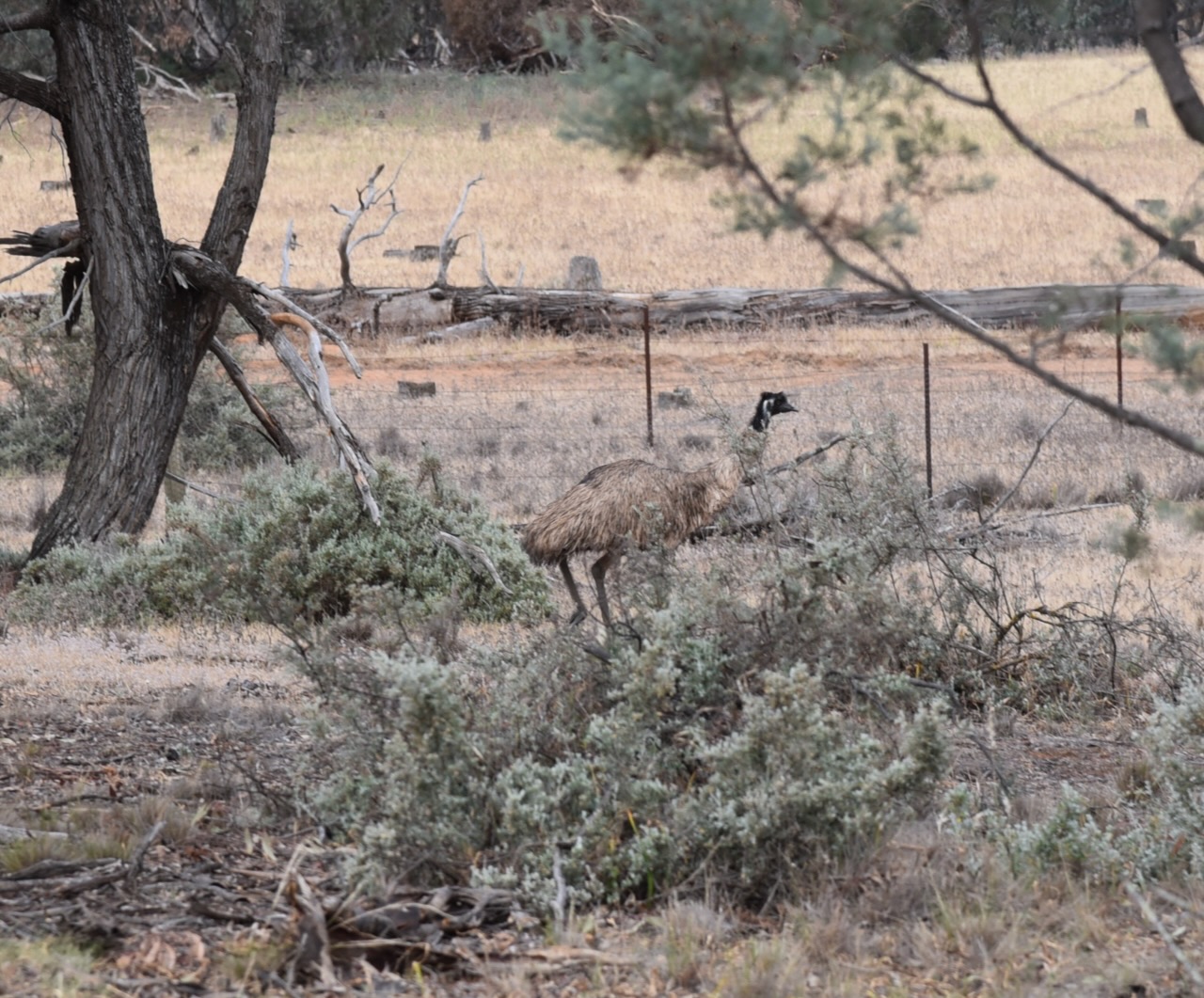
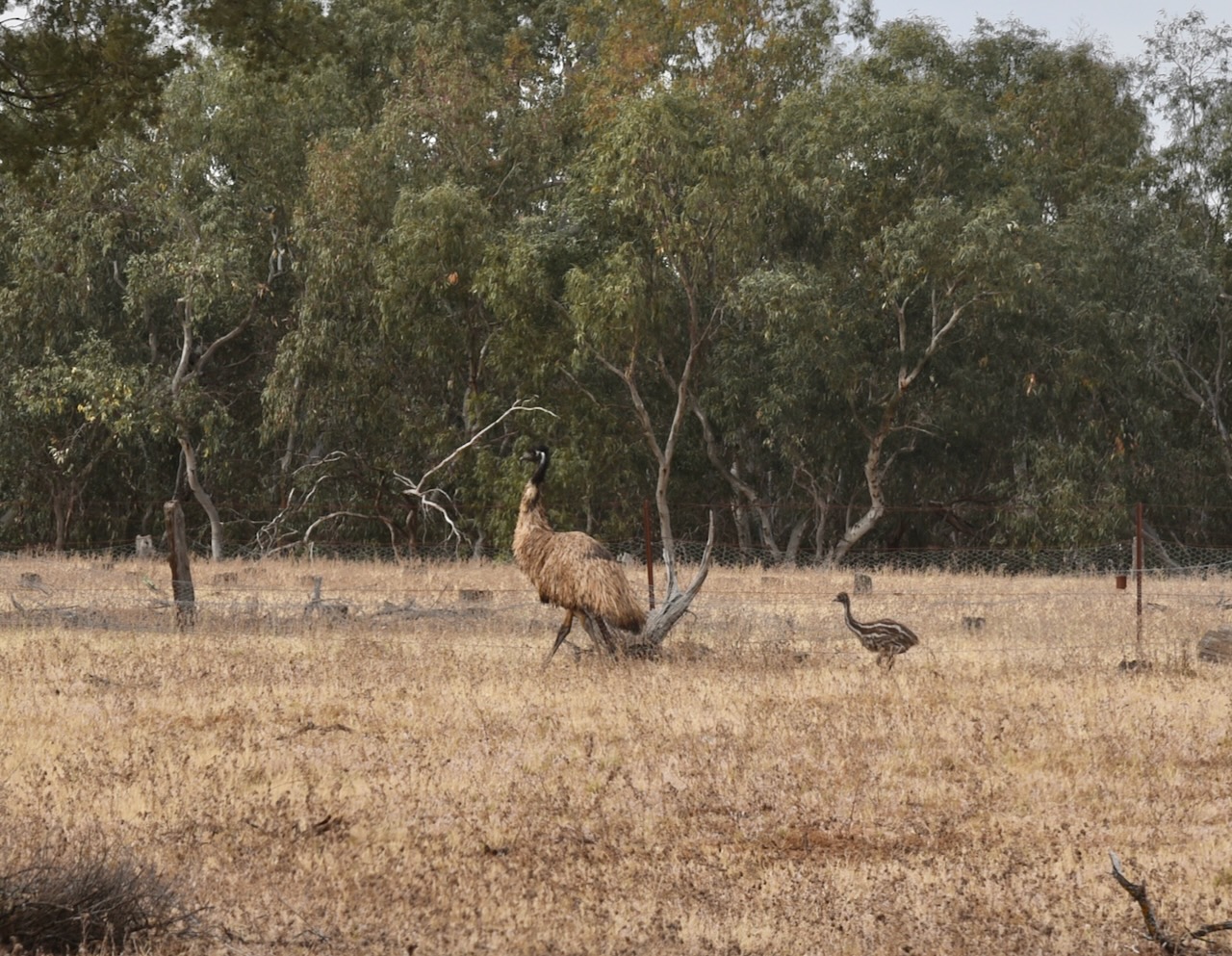
Lake Urana Nature Reserve is located on the western shore of Lake Urana. A section of South West Woodland Nature Reserve VKFF-2724 can be found on the eastern side of the lake.
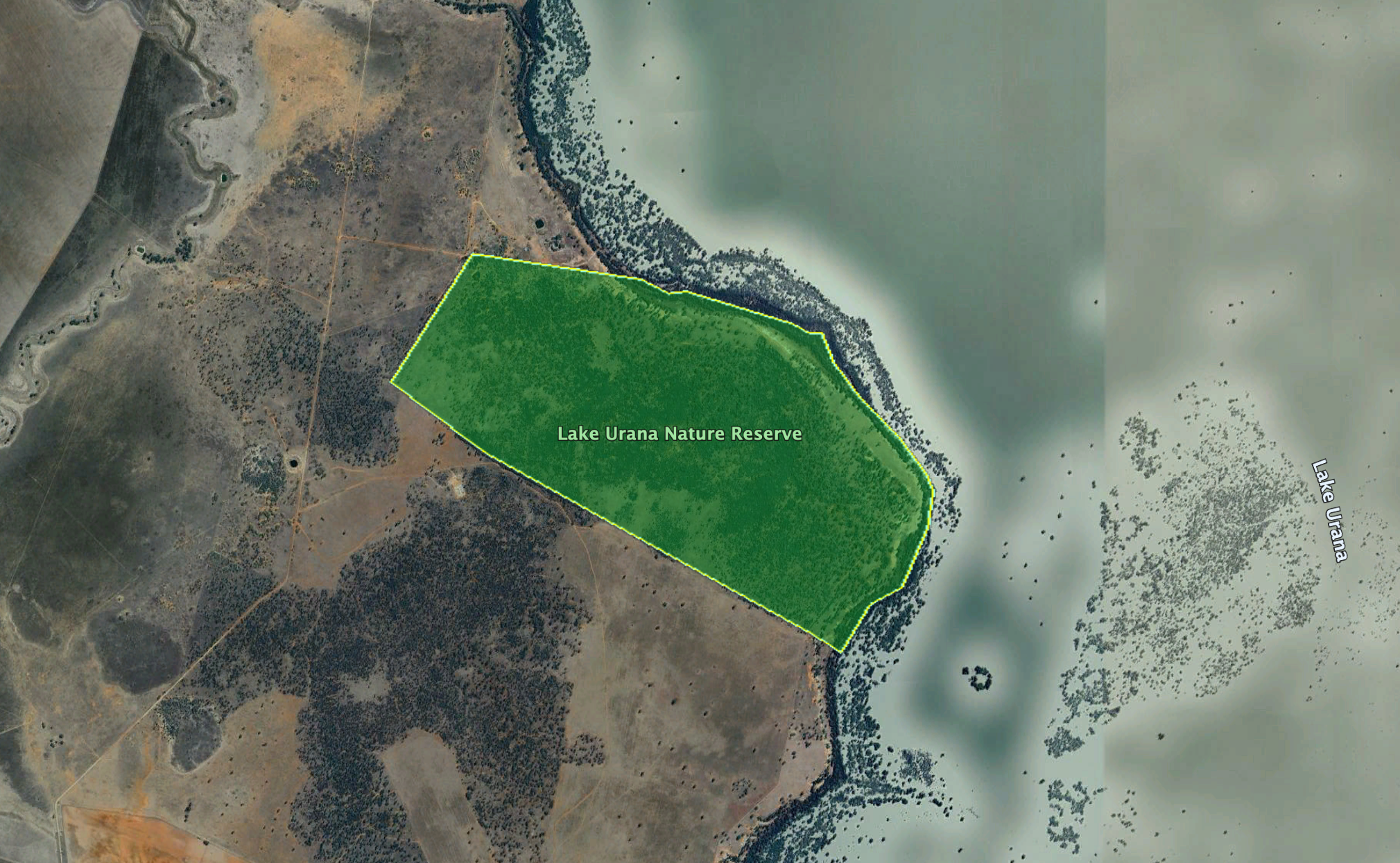
Above: the reserve’s boundaries. Image c/o Google Earth
The reserve is about 302 hectares in size and was established on the 4th day of April 1996. (CAPAD 2024)
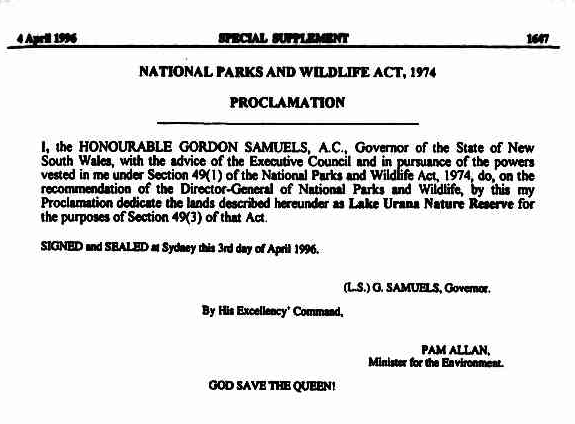
Above: Gazettal of the reserve, NSW Govt Gazette, Thu 4 Apr 1996. Image c/o Trove
Lake Urana is a large shallow, intermittent lake in a depression at the end of the drainage basin of Billabong, Coonong and Urangeline creeks. It fills every ten to 20 years and retains water for several years. The lake is kidney-shaped and has a surface area of about 61.43 km2. (NSW NPWS n.d.) (Wikipedia 2024)
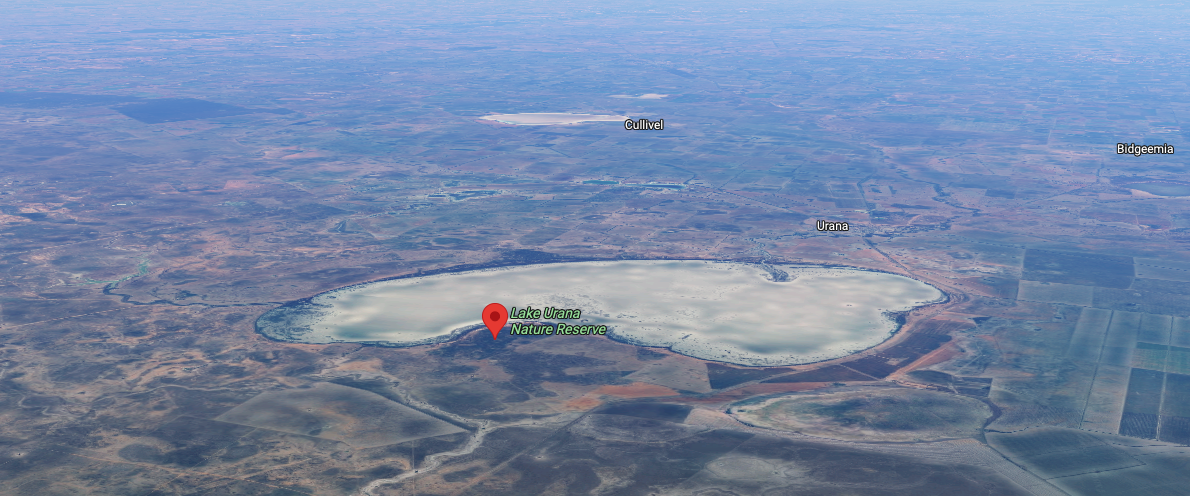
Above: an aerial view of the reserve. Image c/o Google Maps
It appears that prior to the National Parks & Wildlife Service acquiring the property, duck hunting occurred at Lake Urana. I found several newspaper articles about this.
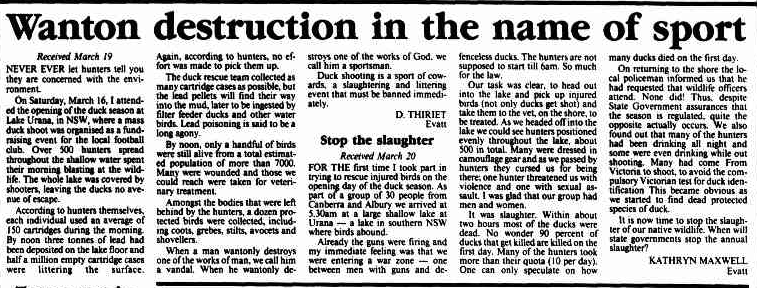
Above: article from The Canberra Times, Thu 21 Mar 1991. Image c/o Trove
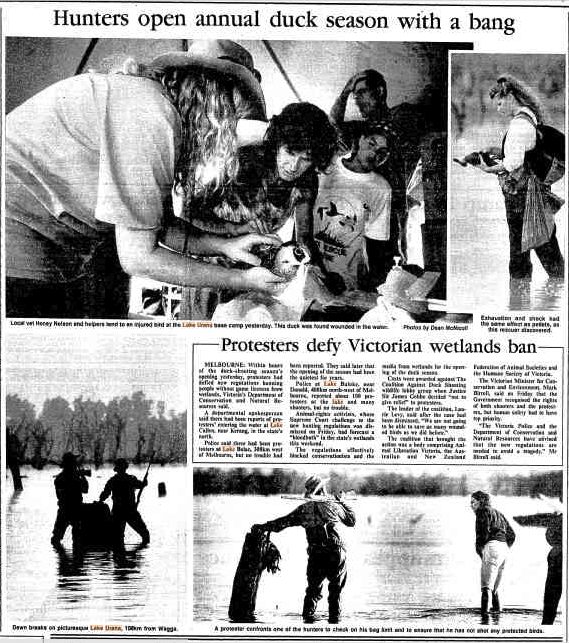
Above: article from The Canberra Times, Sun 21 Mar 1993. Image c/o Trove
Aboriginal burial sites, grinding dishes and ovens have been discovered in the lunette on the eastern side of Lake Urana. The skeletal remains at this site have been dated between 25,000 and 30,000 years old. (NSW NPWS 2001)
Lake Urana Nature Reserve was formerly a sheep grazing property. In 1966, the CSIRO purchased the property. In 1992, the New South Wales National Parks & Wildlife Service purchased the property with the intention of creating the reserve. (NSW NPWS 2001)
A total of 37 bird species have been recorded, including red-rumped parrot, brown treecreeper, striated pardalote, spiny-cheeked honeyeater, striped honeyeater and grey-crowned babbler. When Lake Urana contains water, various waterbirds frequent the reserve, including wood ducks, Pacific black duck, Australian grey teal, yellow-billed spoonbill, black-fronted dotterel and magpie-lark. (NSW NPWS n.d.)
The reserve contains woodland of yellow box and white cypress pine. Shrubs that can be found in Lake Urana Nature Reserve include thorny saltbush, ruby saltbush, western golden wattle, emu bush and black cottonbush. Over 70 species of ground cover have been recorded in the park, including wiregrass, speargrass and several lilies, including nodding chocolate-lily. A narrow woodland of river red gum can be located on the shore of the lake. (NSW NPWS n.d.)
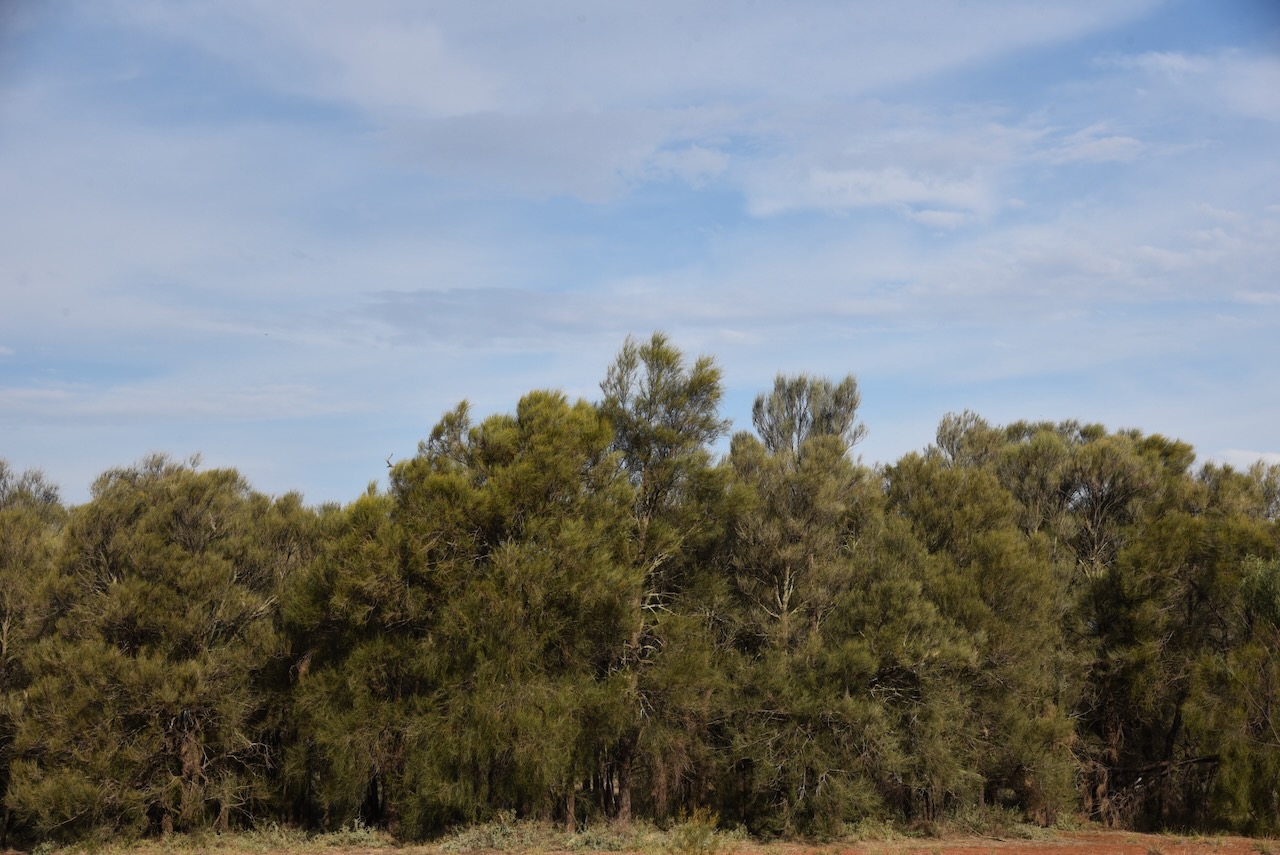
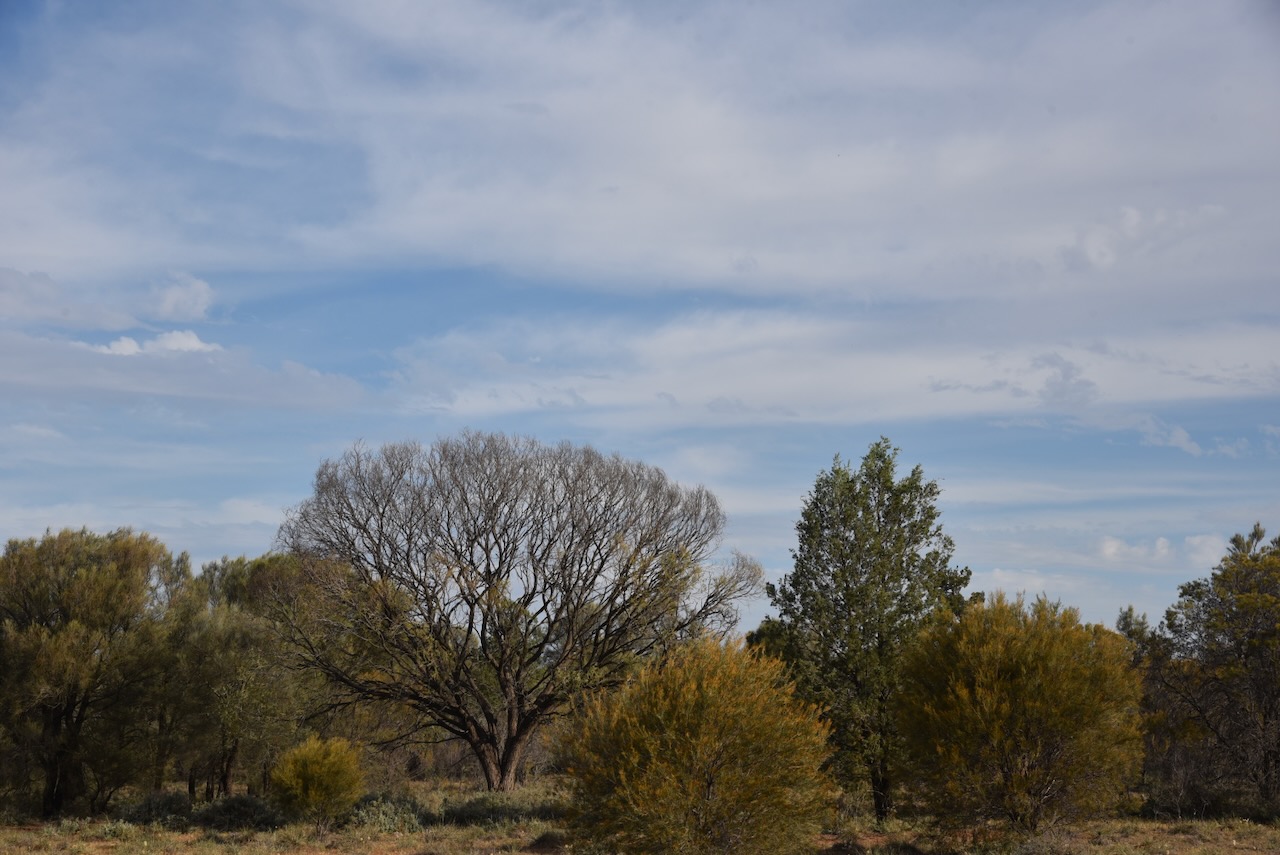
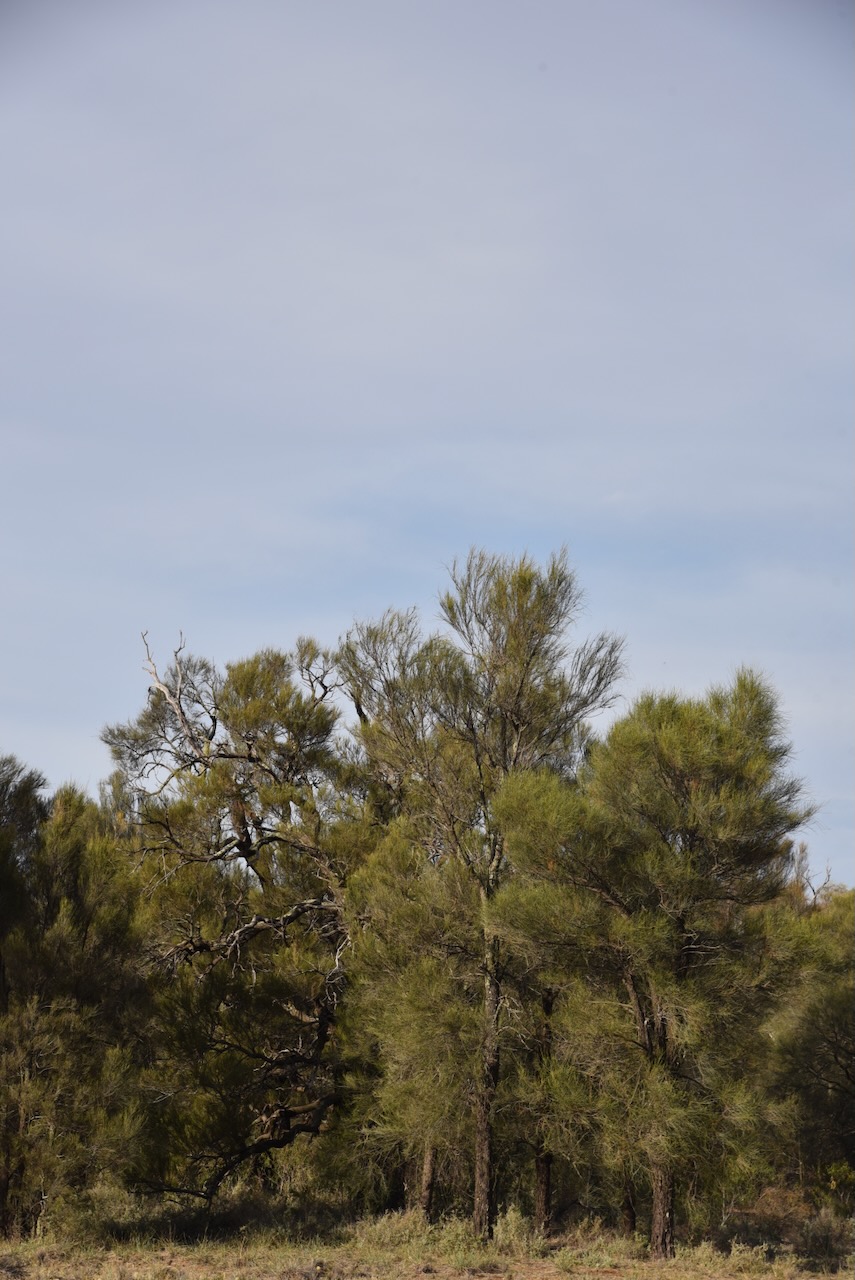
We ran the Yaesu FT857, 40 watts, and the 20/40/80m linked dipole for this activation.
The flies were absolutely relentless, so we both had to wear our fly netting hats.
Marija worked the following stations on 40m SSB:-
Marija worked the following stations on 20m SSB:-
I worked the following stations on 40m SSB:-
I worked the following stations on 20m SSB:-
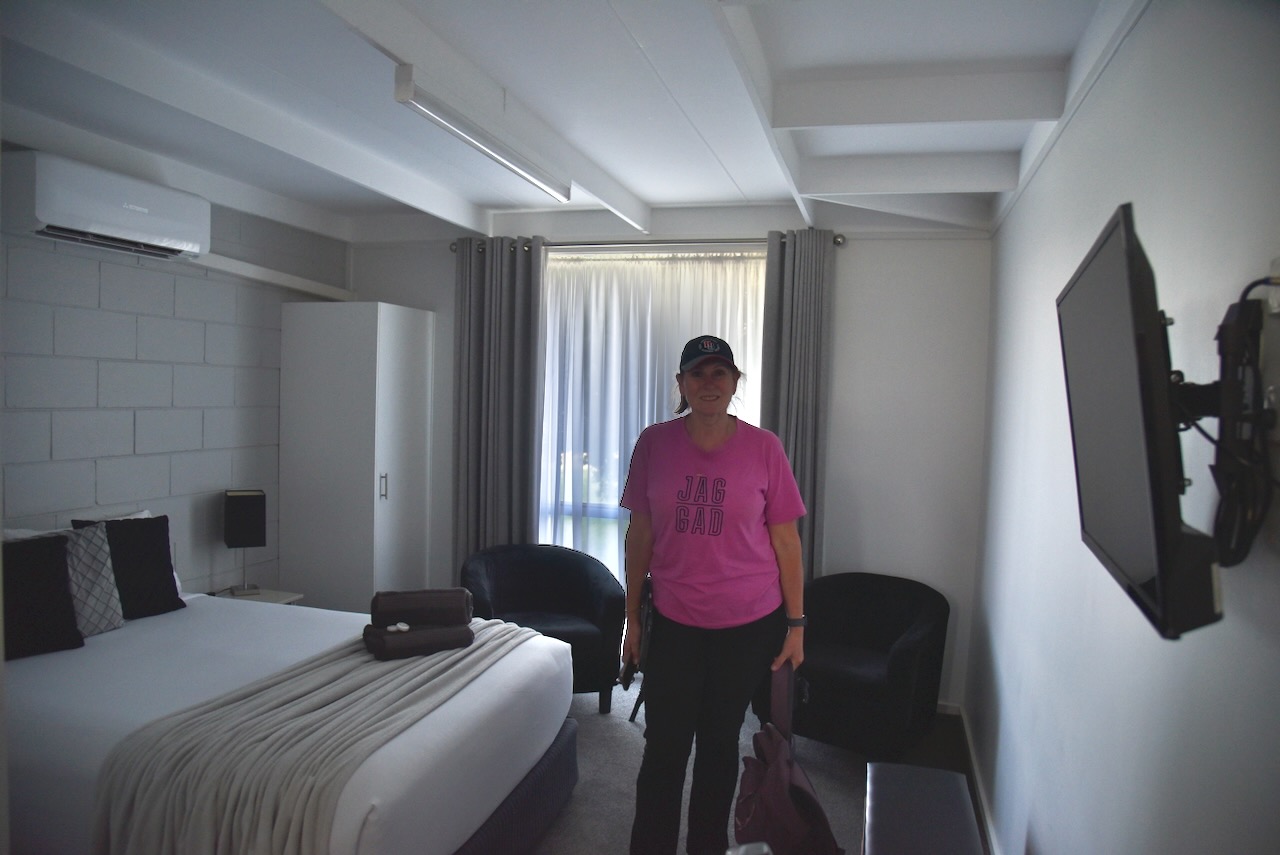
After qualifying the park, Marija and I packed up and headed into Jerilderie, where we booked into our accommodation at the Jerilderie Motel.
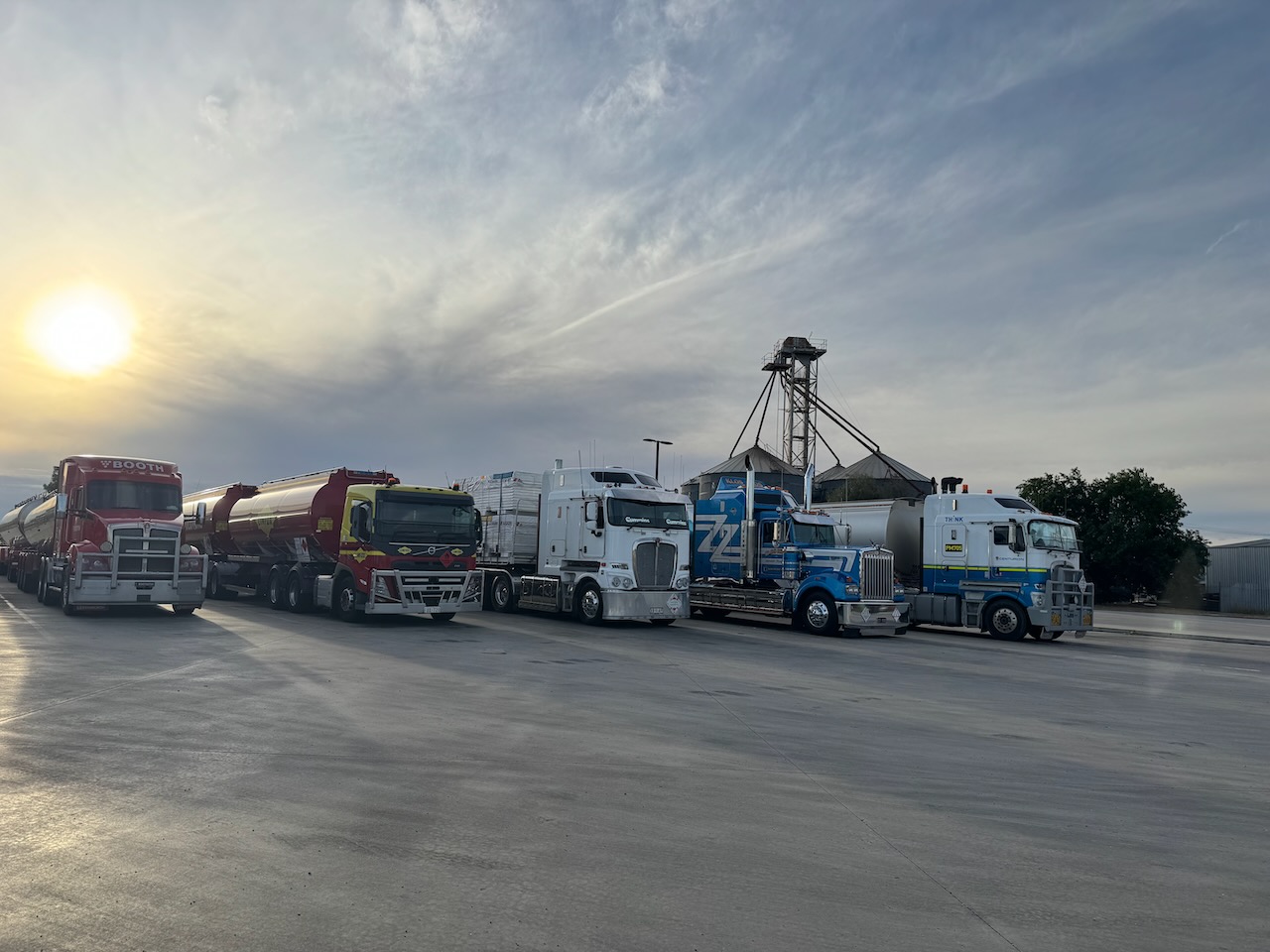
We then drove to the BP truckstop at the western end of town and filled up with diesel. I took some photos of the trucks lined up for our grandson Flynn, who is truck mad.
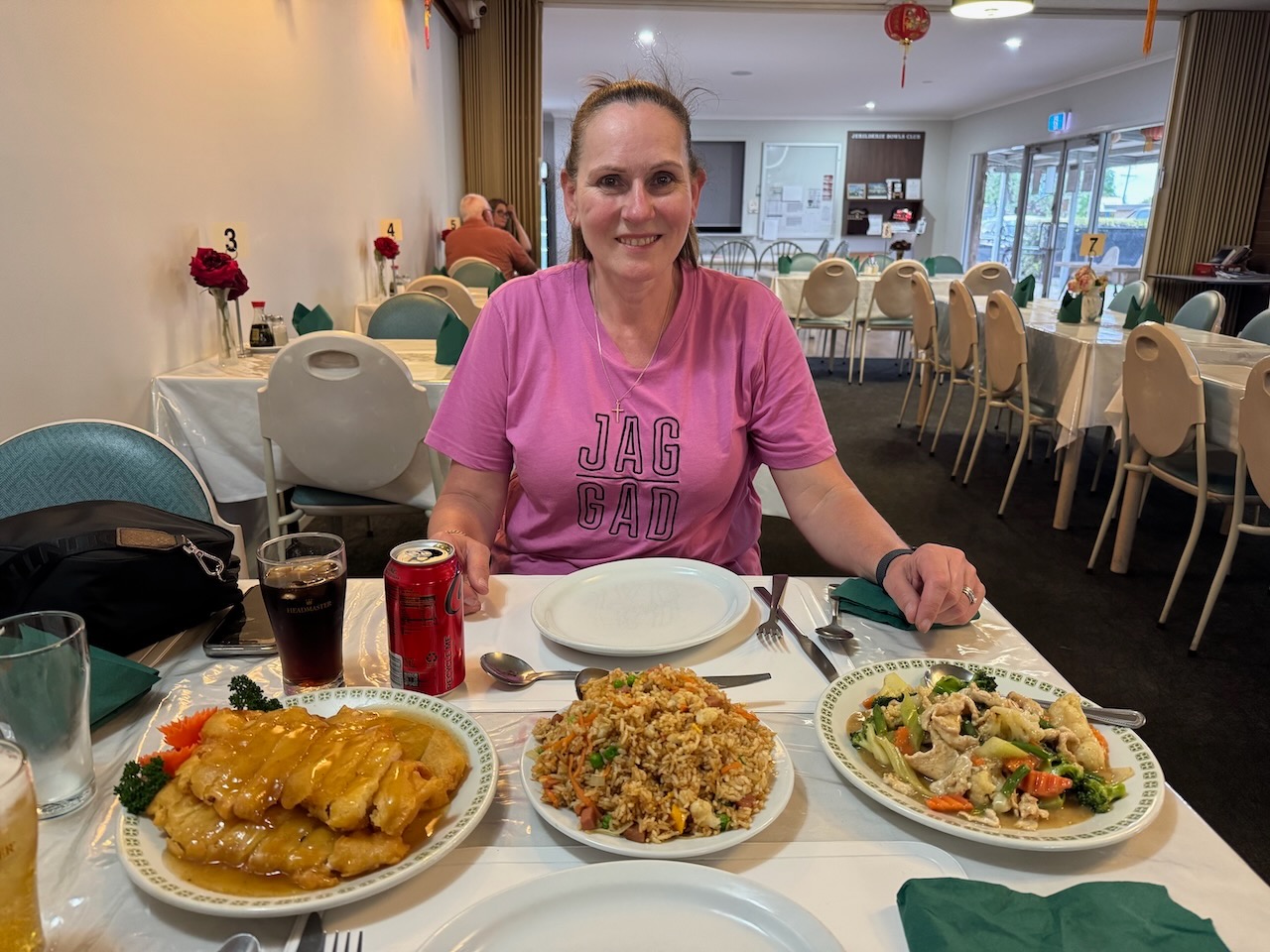
We then went out for dinner at the Jerilderie Sports Club. They have a Chinese restaurant there, and wow, what a meal. There was so much that we had to get some ‘doggy bags’ to take away our leftovers. It was one of the best Chinese meals that Marija and I have had.
With a very full belly, it was time to head back to our motel room for a good night’s sleep.
References.
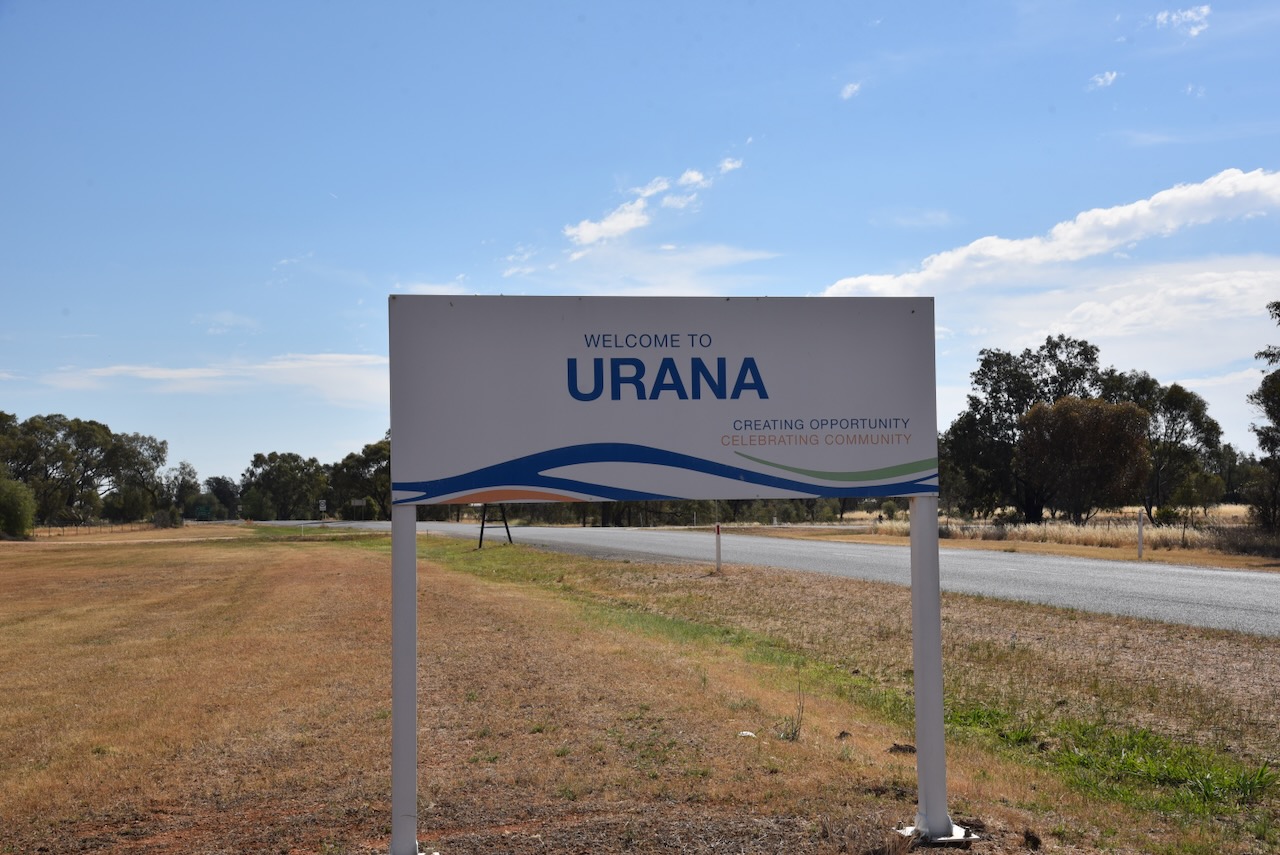
Our next silo activation for Sunday, 2nd November 2025, was the Urana silo VK-URA2.
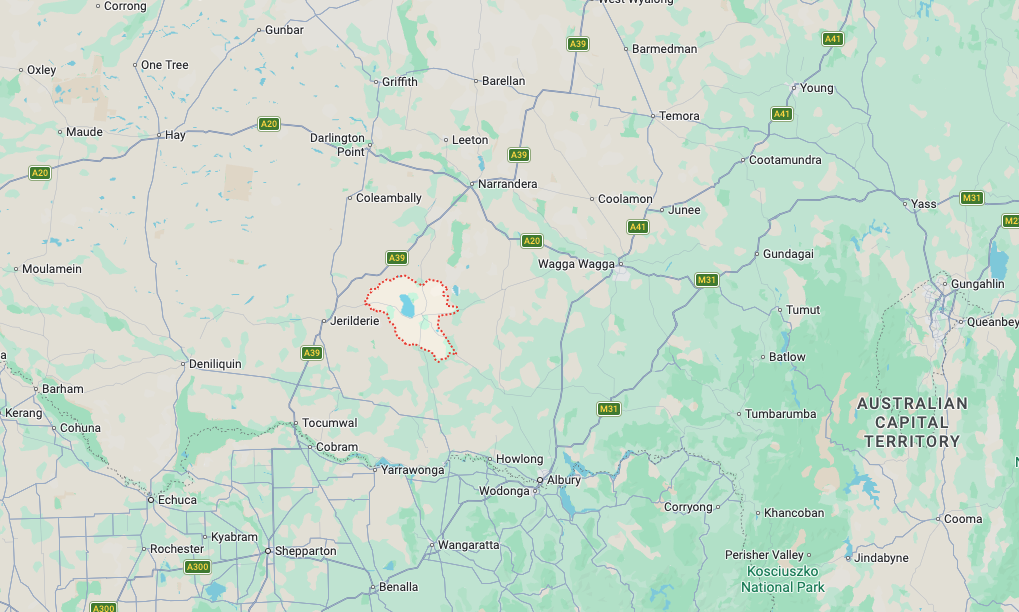
Above: Map showing the location of Urana, NSW. Map c/o Google Maps
It is believed that Urana is derived from the Wiradjuri Aboriginal word ‘airana’ which is used to describe a temporary shelter. Others suggest ot comes from ‘aurana’ meaning camping ground.
Prior to European occupation, the area was inhabited by the Wiradjuri Aboriginal people. During the 1850s, European settlers commenced taking up land in the district. In 1859, Surveyor Hayes approved a design for the town of Urana.
On the 1st day of January 1861, the Urana Post Office was opened.
In 1866, the Urana township comprised two public houses, a post office, two large stores, a police station and lock-up, the Urana Hotel and the Royal Hotel. (Wikipedia 2026)
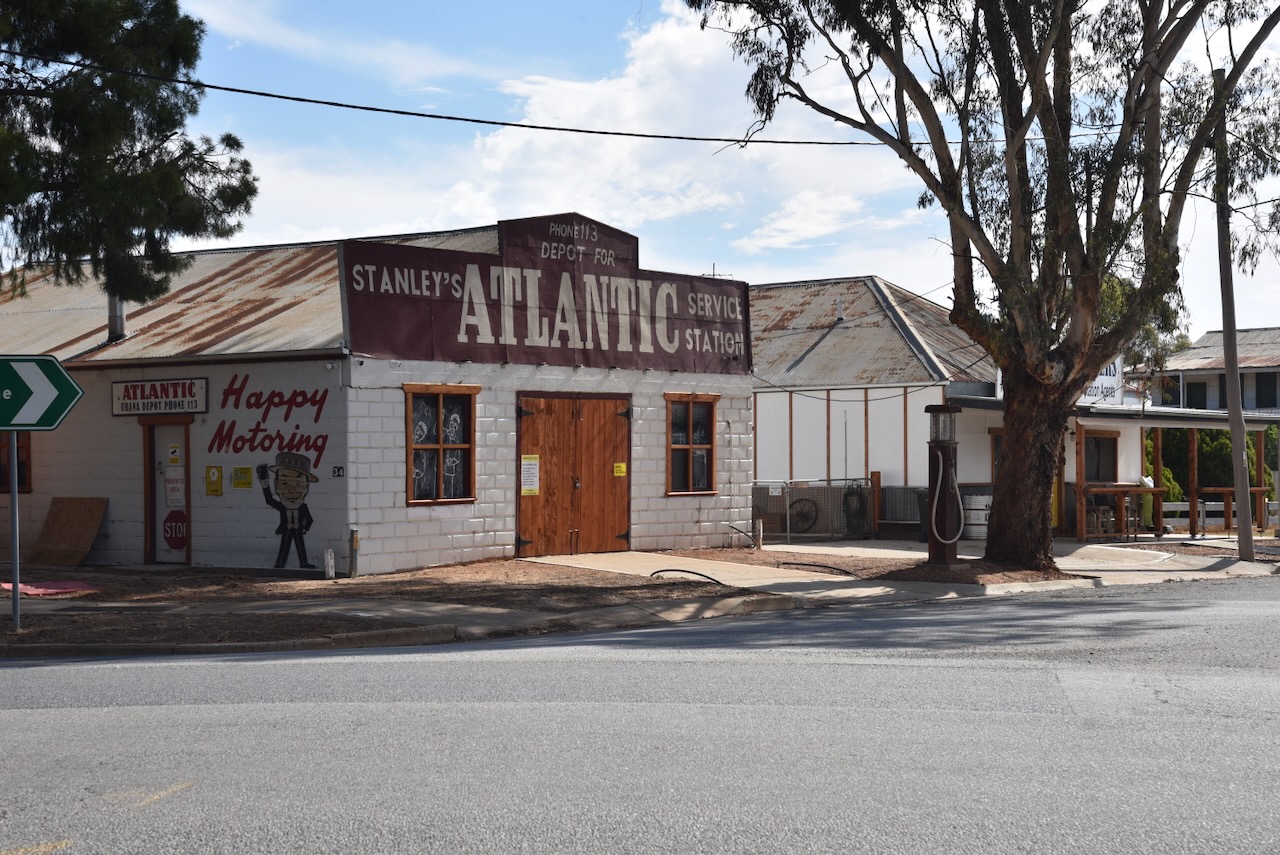
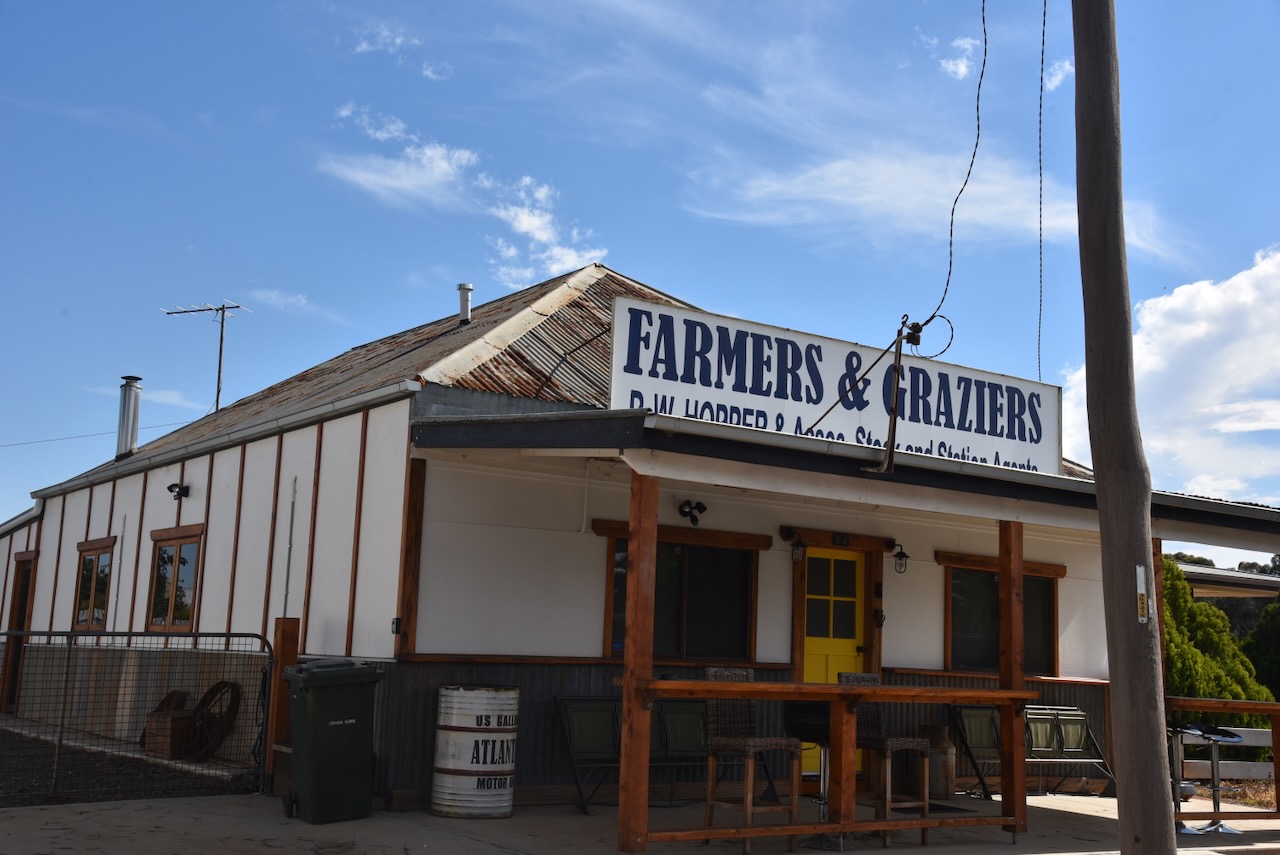
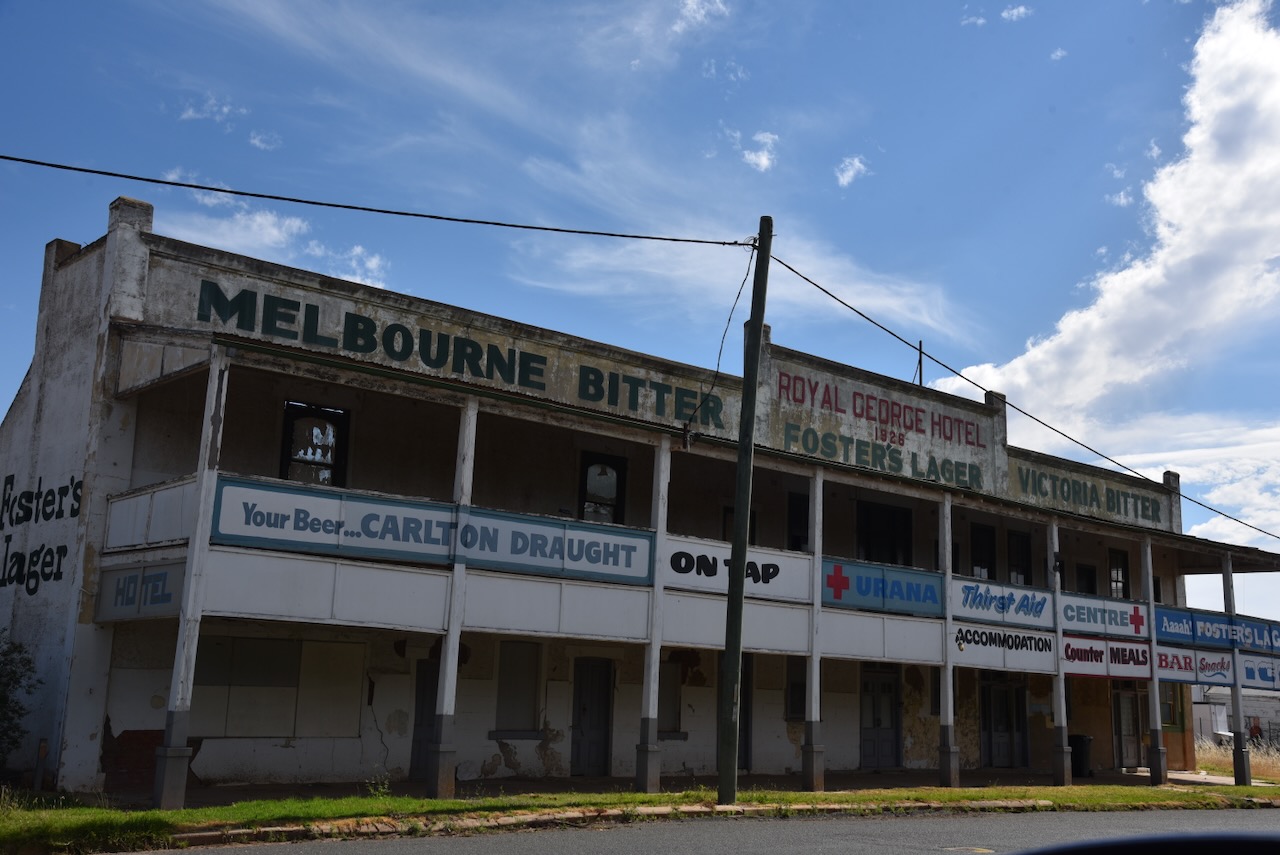
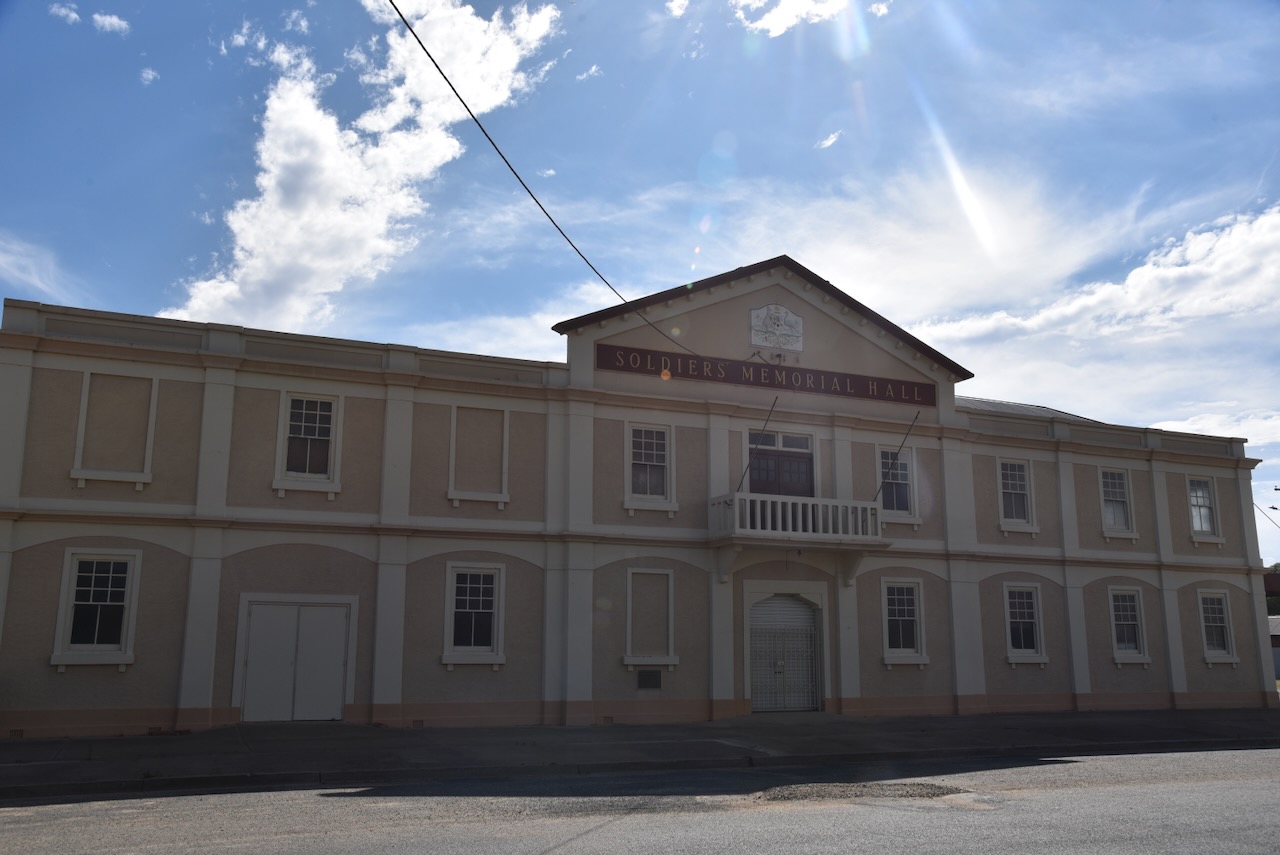
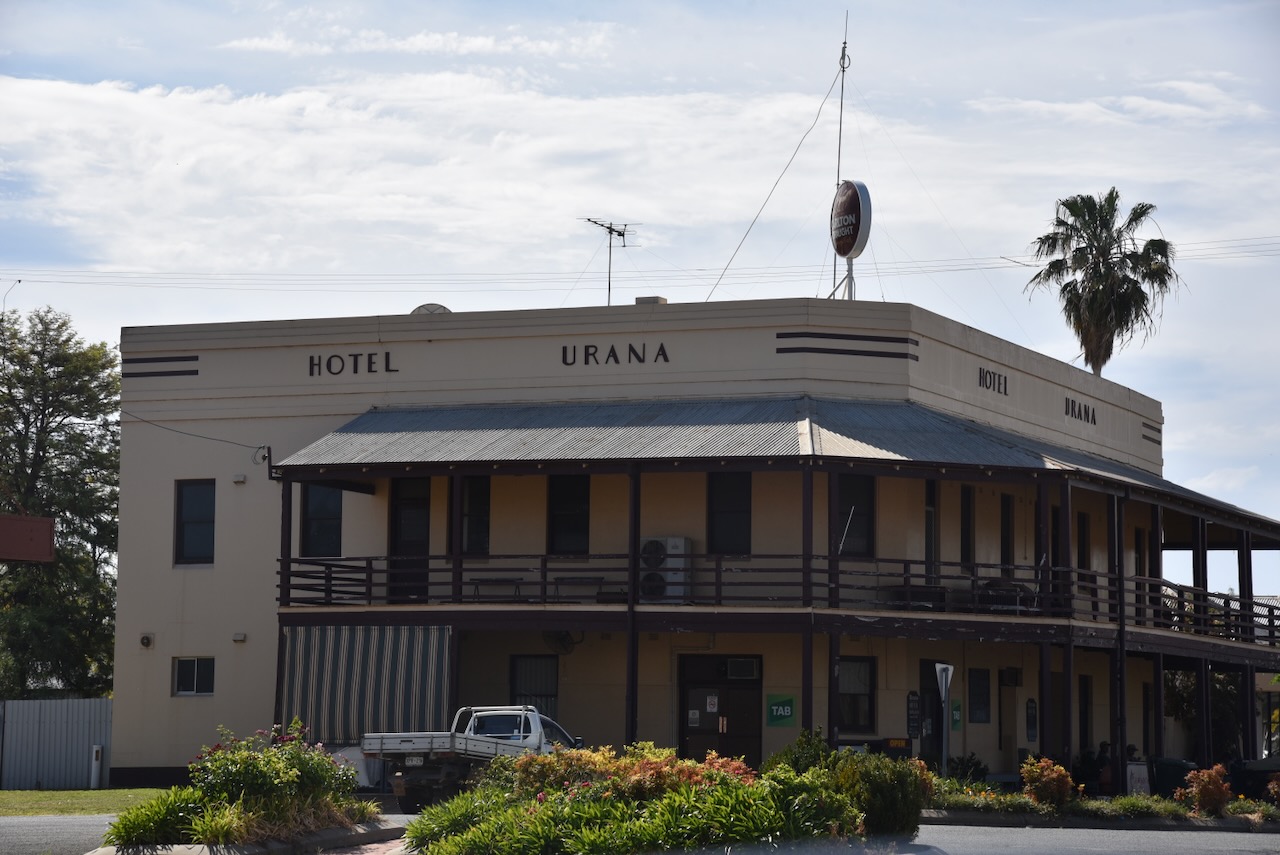
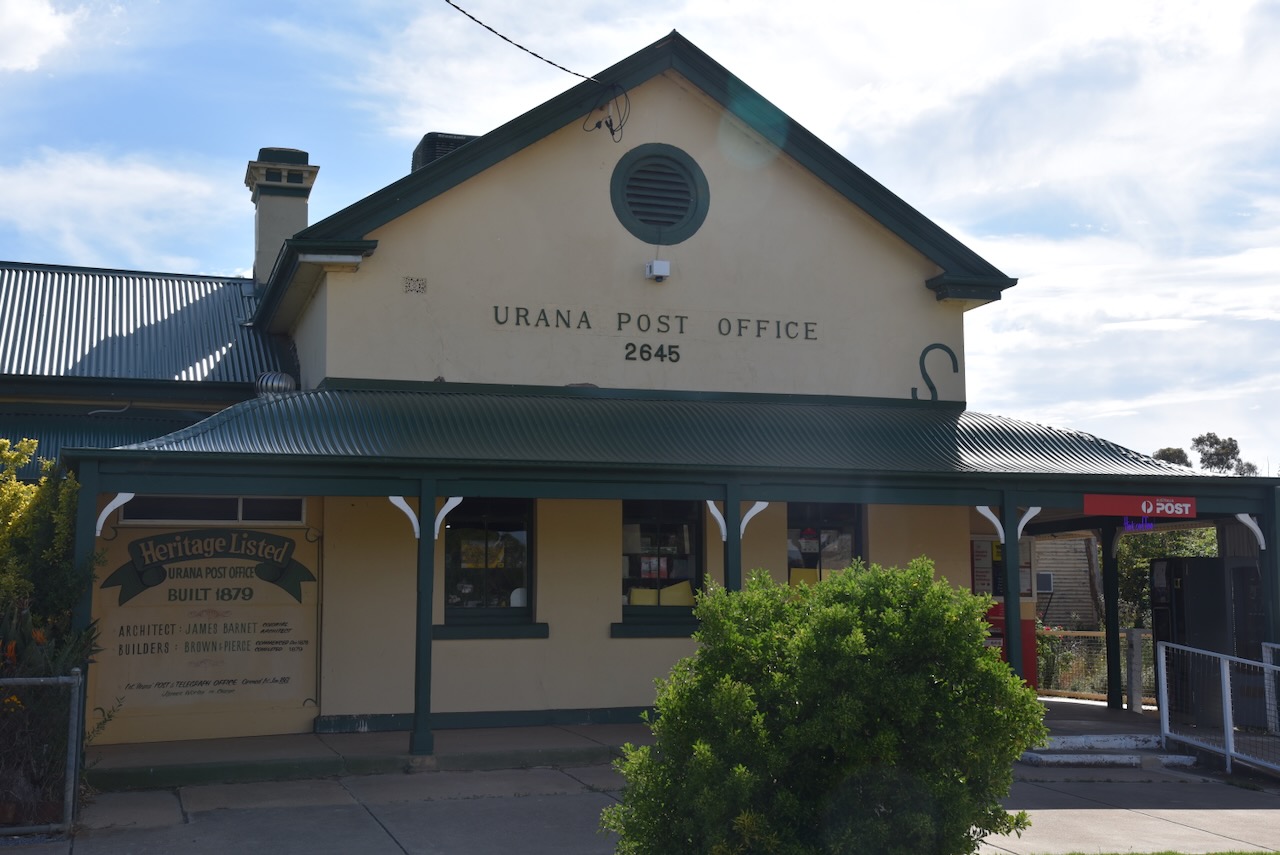
Urana has seen bushranger activity, including that of John Fuller, alias Daniel Morgan and ‘Mad Dog Morgan’. He was born on the 30th day of April 1830, at Appin, New South Wales.
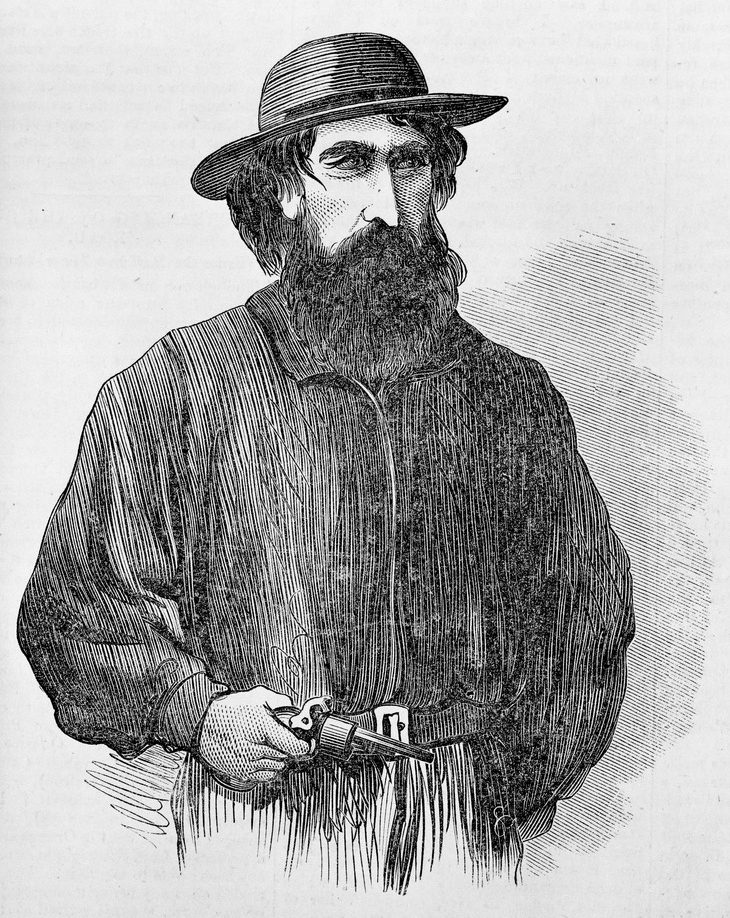
Above: the bushranger Daniel Morgan. Image c/o Wikipedia
Morgan teamed up with a man known as ‘Flash Clarke’ and ‘German Bill’. His true identity was never discovered. (A Guide to Australian Bushranging 2019) (Wikipedia 2023)
On Thursday, the 20th day of August 1863, Henry Bayliss, the Police Magistrate from Wagga Wagga, was riding along the road from Bullenbong to Brookong Station en route to Urana to attend court. He encountered Morgan and Clarke who attempted to rob Bayliss. They were armed with pistols and shotguns. (A Guide to Australian Bushranging 2019) (Wikipedia 2023)
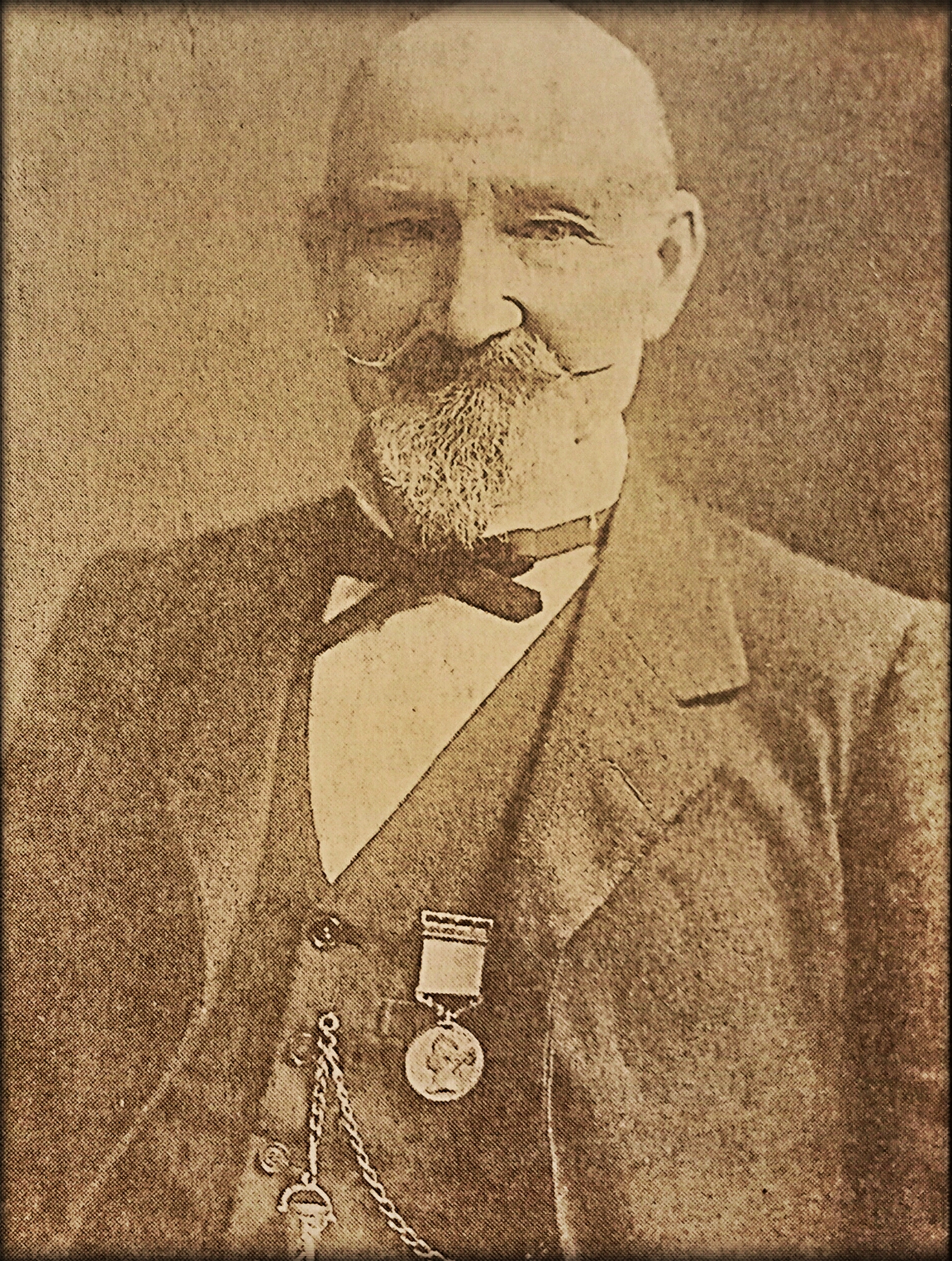
Above: Henry Bayliss. Image c/o Wikipedia
Bayliss galloped away on his horse but was pursued and fired upon. He was eventually apprehended by the bushrangers who demanded his valuables. Bayliss refused and threats were made that he would be shot. Bayliss handed over his watch and £4. Upon learning the identity of their victim, Morgan returned the money and watch that he had taken from Bayliss. Morgan and Clarke cut down a telegraph pole, which cut off all communication between Urana and Wagga Wagga, and they rode off. (A Guide to Australian Bushranging 2019) (Wikipedia 2023)
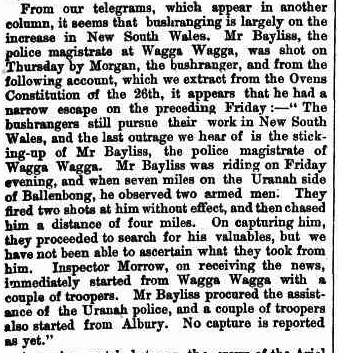
Above: article from the Leader, Melbourne, Sat 5 Sep 1863. Image c/o Trove
Bayliss rode to Urana and telegraphed Wagga Wagga via Melbourne. Headed by Sub-Inspector Morrow, a team of police headed to Urana. The party also included Constable Brown and Constable Charlton. Bayliss then led the party of police in search of Morgan and Clarke. £4 (Wikipedia 2023)
On Wednesday, the 26th day of August, Bayliss and the police discovered a camp in dense scrub about ‘seven miles’ from Urangaline Creek only a short distance from Urana. Items belonging to the bushrangers, including Morgan’s distinctive poncho and a bible were located. Morgan and Clarke were not present. Sub-Inspector Morrow, Trooper Brown and Baylis remained at the camp awaiting the return of Morgan and Clarke. (Wikipedia 2023)
Late that evening, Constable Brown heard noises in the scrub. It was reported that Bayliss scoffed and stated the noise was due to a possum. Bayliss and his team heard a noise near the camp. They advanced and shots rang out. Bayliss was shot in the right chest and fell to the ground. The police fired upon the camp, however Morgan and Clarke decamped. Constable Brown rode to Wagga Wagga and alerted others to what had occurred. (Wikipedia 2023)
On Thursday, the 27th day of August, a shepherd named Haley was confronted and shot by two men suspected to be Morgan and Clarke. It was reported that this was retribution for the shepherd providing information to the police regarding the location of Morgan and Clarke’s camp at Urangaline Creek. (A Guide to Australian Bushranging 2019) (Wikipedia 2023)
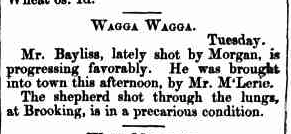
Above: article from The Kiama Indpendent, Tue 8 Sept 1863. Image c/o Trove
Clarke had been severely wounded in the shootout with the police. Morgan took him to Mahonga Station, southeast of Urana. I have a connection with Mahonga Station myself. My great-great-great-grandfather William Slade, was a boundary rider at Mahonga. My great-great-grandfather, Matthew Slade was raised there as a child. (A Guide to Australian Bushranging 2019) (Wikipedia 2023)
Clarke died at Mahonga Station due to his gunshot wounds. He was taken to a remote location on the station, and MLorgan then rode off. Several years later a decomposed body was located on the run. The body was wearing the black coat that Clarke was wearing on the night of the shootout. (A Guide to Australian Bushranging 2019) (Wikipedia 2023)
Following the shootout, Baylis offered a reward of £200 for “any person who shall give such information as will lead to the apprehension of the offender”. (A Guide to Australian Bushranging 2019) (Wikipedia 2023)
Morgan continued his bushranging activities, which included several murders, arson, and armed robbery. In April 1865, Morgan was shot and killed near Wangaratta, Victoria. He was 34 years old. (A Guide to Australian Bushranging 2019) (Wikipedia 2023)
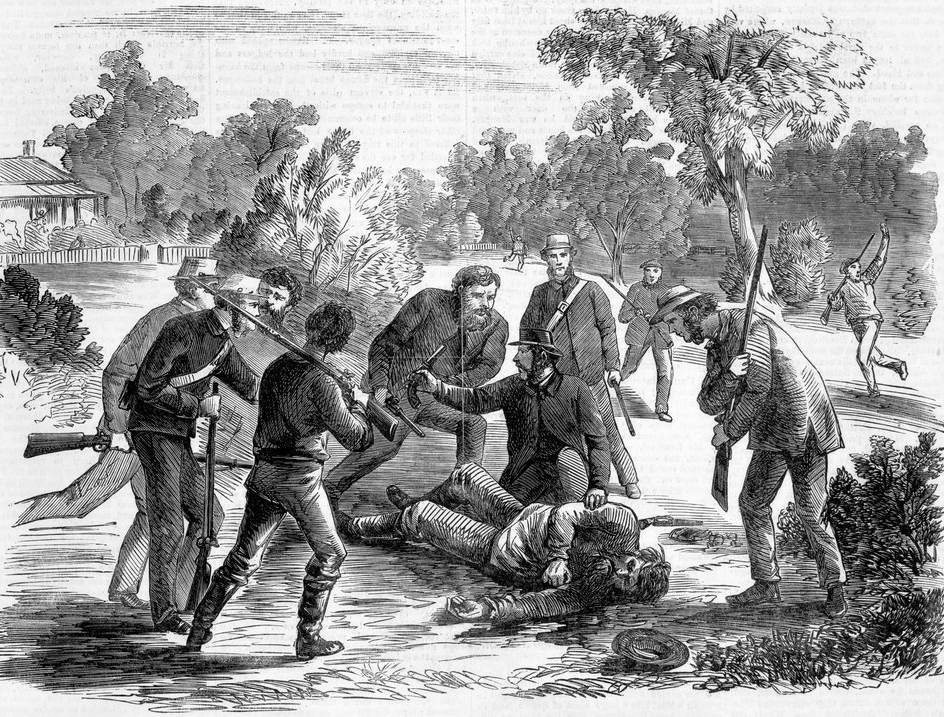
Above: the capture of Morgan. Image c/o Wikipedia
Bayliss was paid £1500 in compensation, but this was subsequently reduced to £300. The authorities did this to discourage others injured in the line of duty from seeking a payout. Bayliss was presented with a bravery medal. Upon his retirement, Bayliss was presented by his fellow Magistrates with the bullet which had struck him. It was enclosed in a gold casket suspended to a watch chain. (A Guide to Australian Bushranging 2019) (Trove 2026)
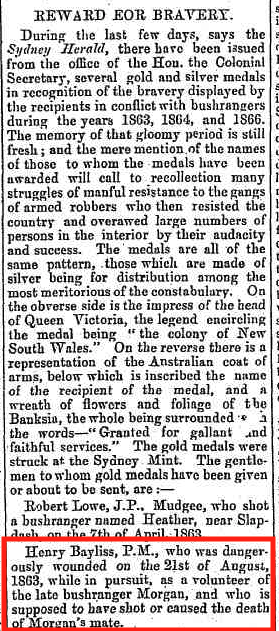
Above: article from the Ovens and Murray Advertiser, Sat 18 Dec 1875. Image c/o Trove
Below is a very good video on the life of the bushranger Morgan.
The Urana silos are located on Stephen Street on the eastern side of the town.
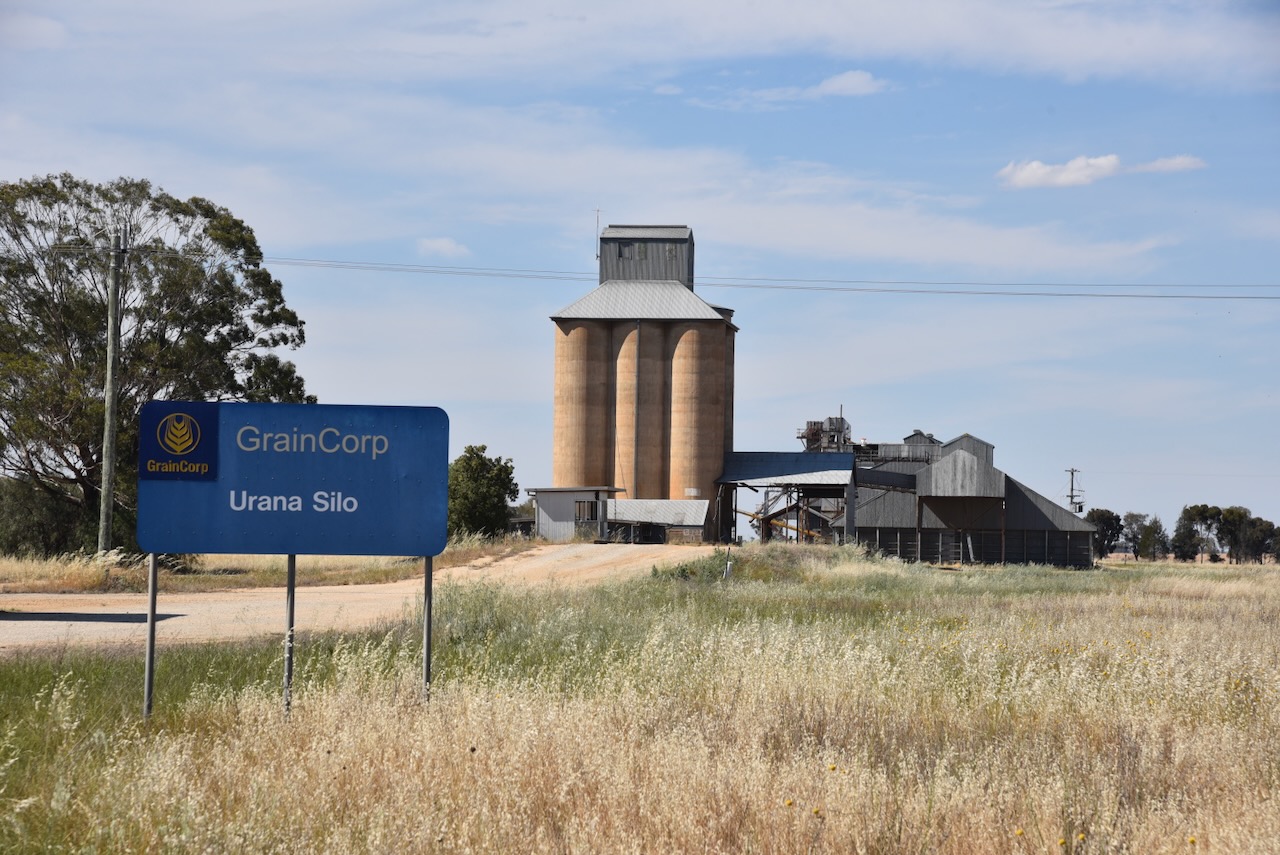
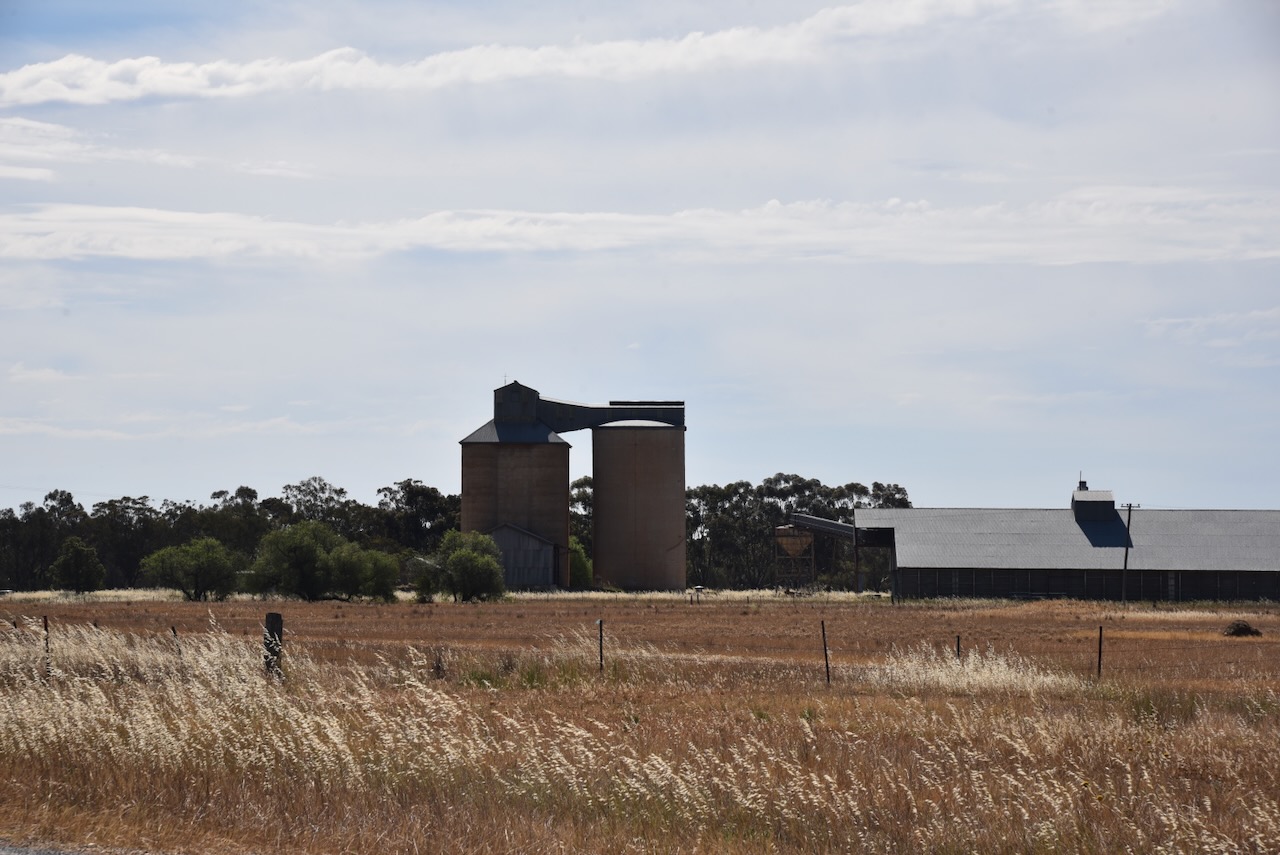
Marija and I parked the 4WD on Stephen Street opposite the silos. We ran the Icom IC-7000, 100 watts, and the Codan 9350 antenna with the 1.5 metres stainless steel whip.
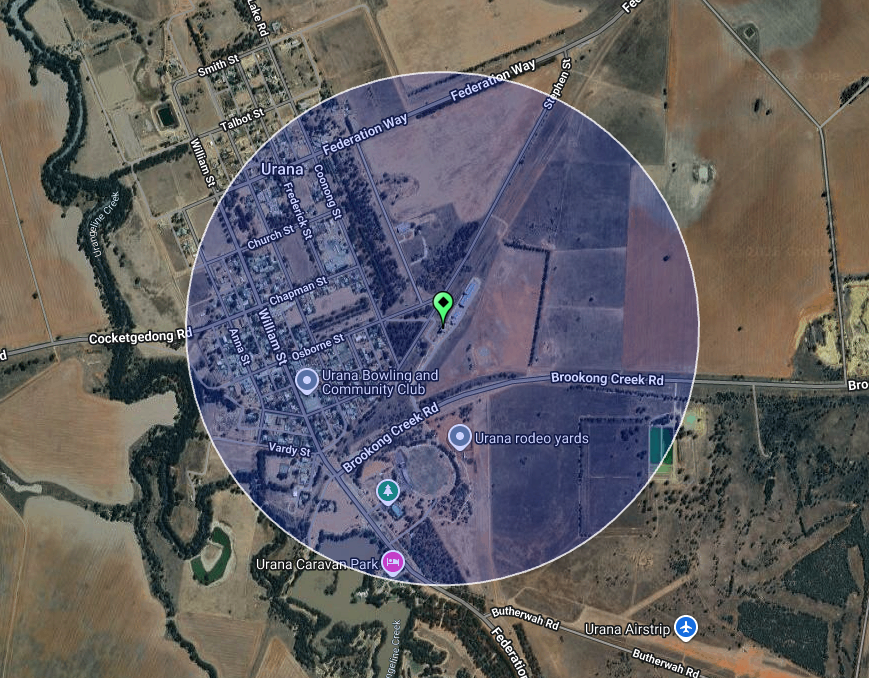
Above: the activation zone at the Urana silo. Image c/o SiOTA website
Marija worked the following stations on 40m SSB:-
I worked the following stations on 40m SSB:-
References.
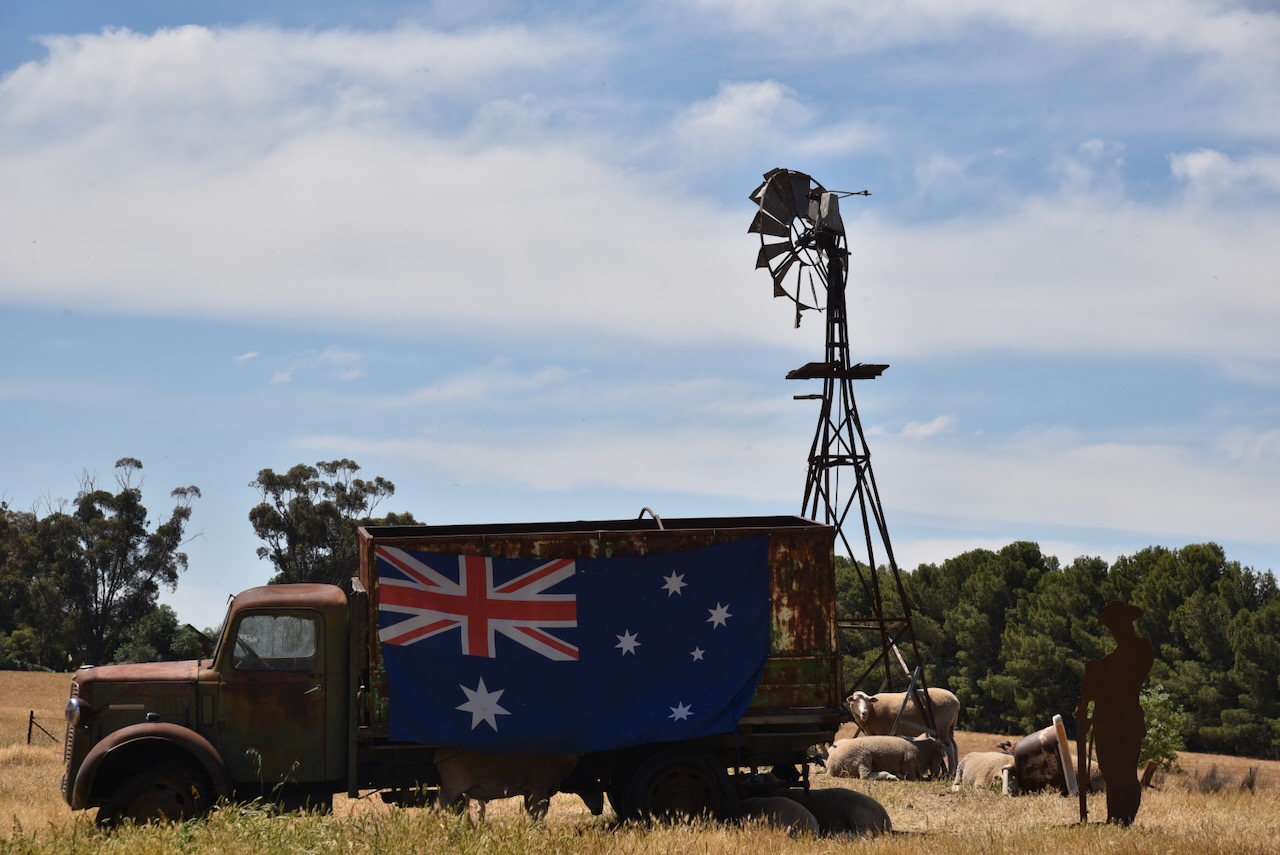
On Sunday, 2nd November 2025, Marija and I left Mibrulong and drove west on the Lockhart-The Rock Road. We drove past this farmer’s obvious tribute to the military.
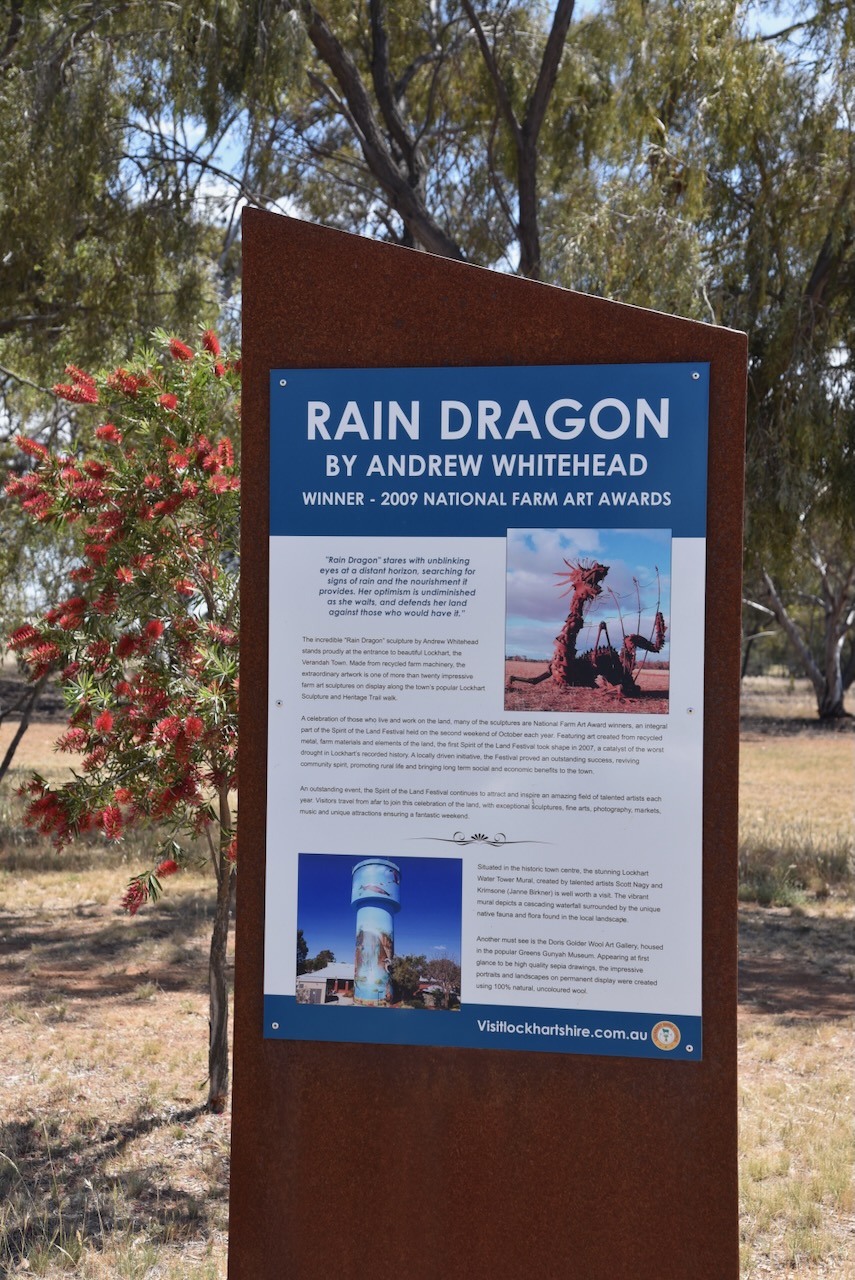
At the entrance to Lockhart is the ‘Rain Dragon’ sculpture. It is the work of Andrew Whitehead and is made from recycled farm machinery. It is one of 20 farm art sculptures on Lockhart’s Sculpture and Heritage Trail walk.
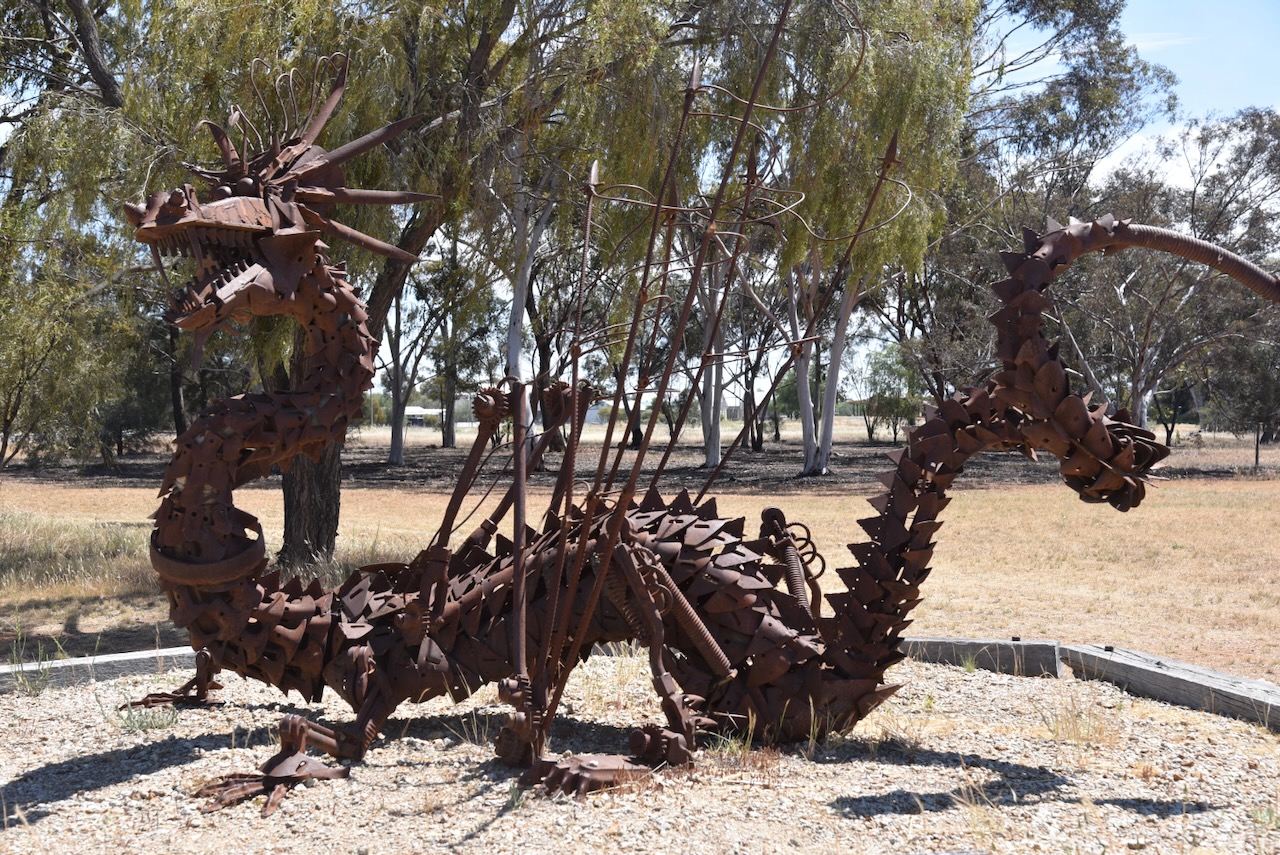
The town was originally called Greens Gunyah, named after an early settler, Mr Green. He was a stockman who ran a grog shop on the Urana – Wagga Wagga stagecoach route. (Wikipedia 2021)
On the 16th day of May 1882, the Ferriers Post Office opened and was later renamed Lockhart in November 189). (Wikipedia 2021)
In 1897, the town was renamed Lockhart, in honour of Charles Gordon Norman Lockhart, who was a Commissioner for Crown Lands in the Murrumbidgee River district during the 1850s. Lockhart was born in July 1808 in Lanarkshire, Scotland. He emigrated to Australia, and in August 1850, he married Frances Caroline Fartier. He died in February 1893 in London. (ancestry 2016) (Wikipedia 2021)
In 1897, the Wagga Wagga Advertiser reported the following:
“Lockhart, formerly called Green’s Gunyah……is in the centre of a large agricultural district, the soil of which is stated to be equal to any in the colony for wheat growing purposes.” (Trove 2026)
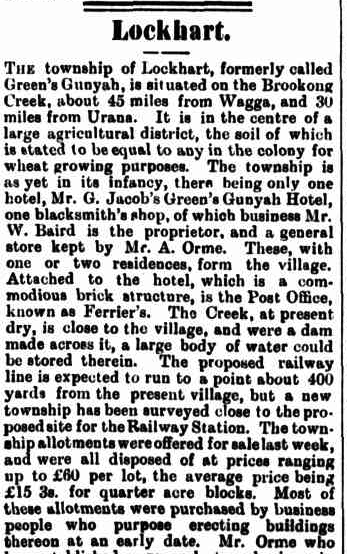
Above: part of an article from the Wagga Wagga Advertiser, Tue 27 Apr 1897. Image c/o Trove
Lockhart is known as the Verandah town due to its heritage-listed buildings in the main street, which feature grand verandahs.
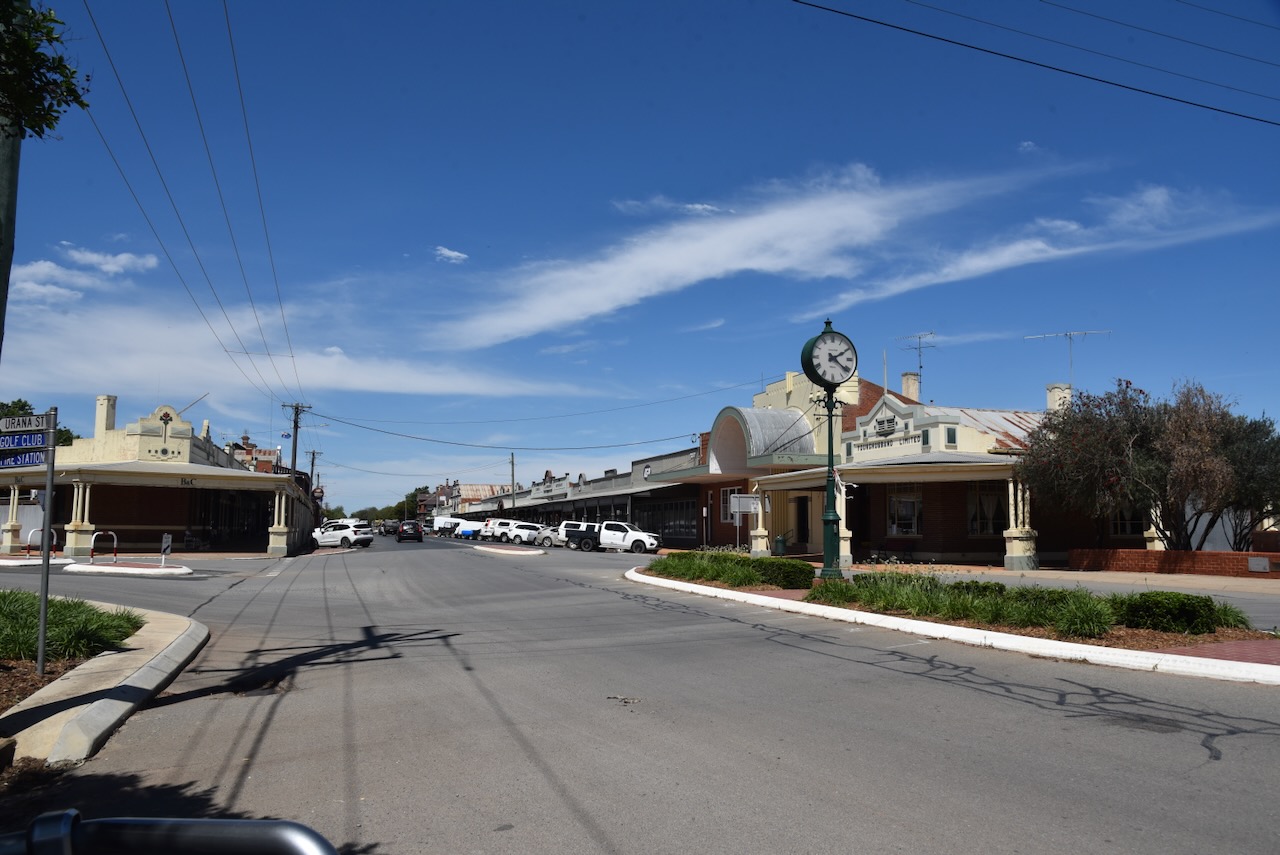
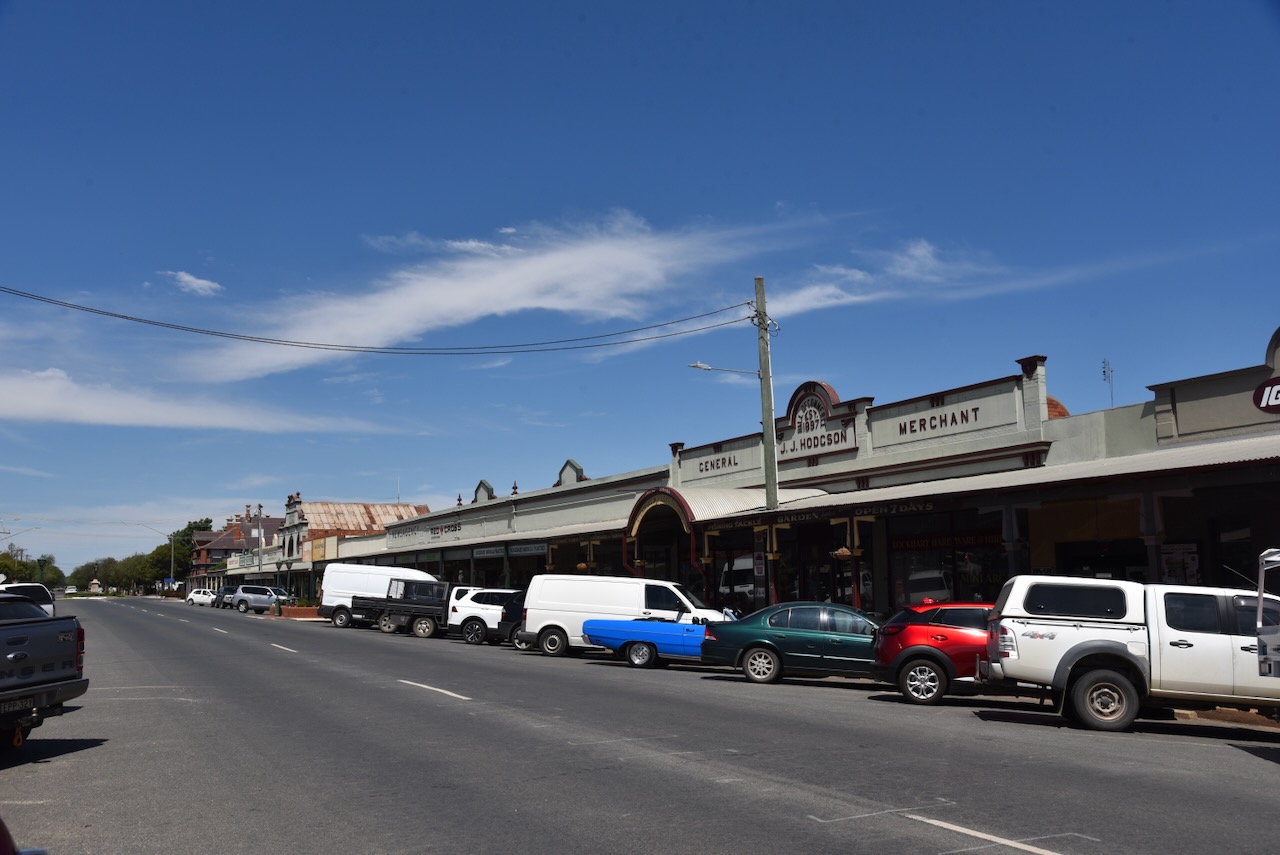
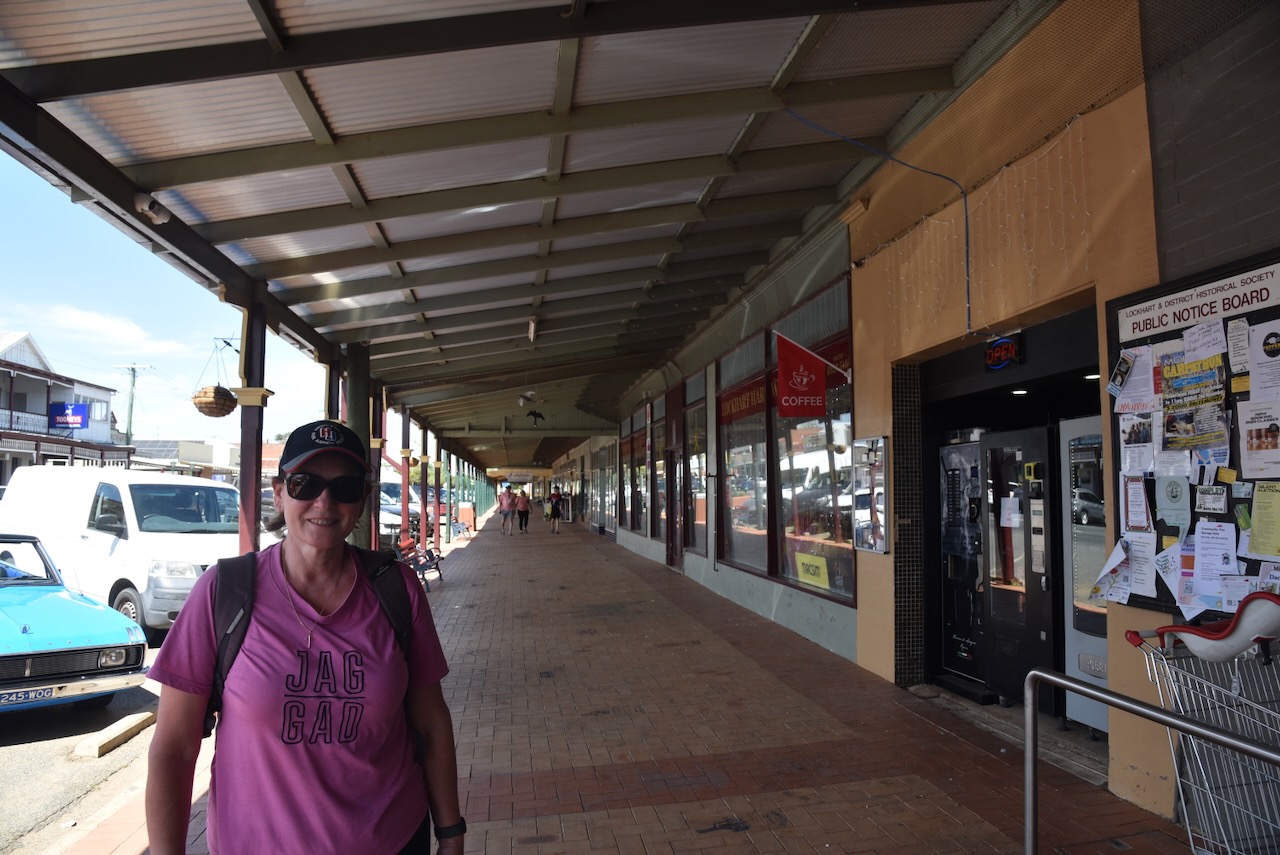
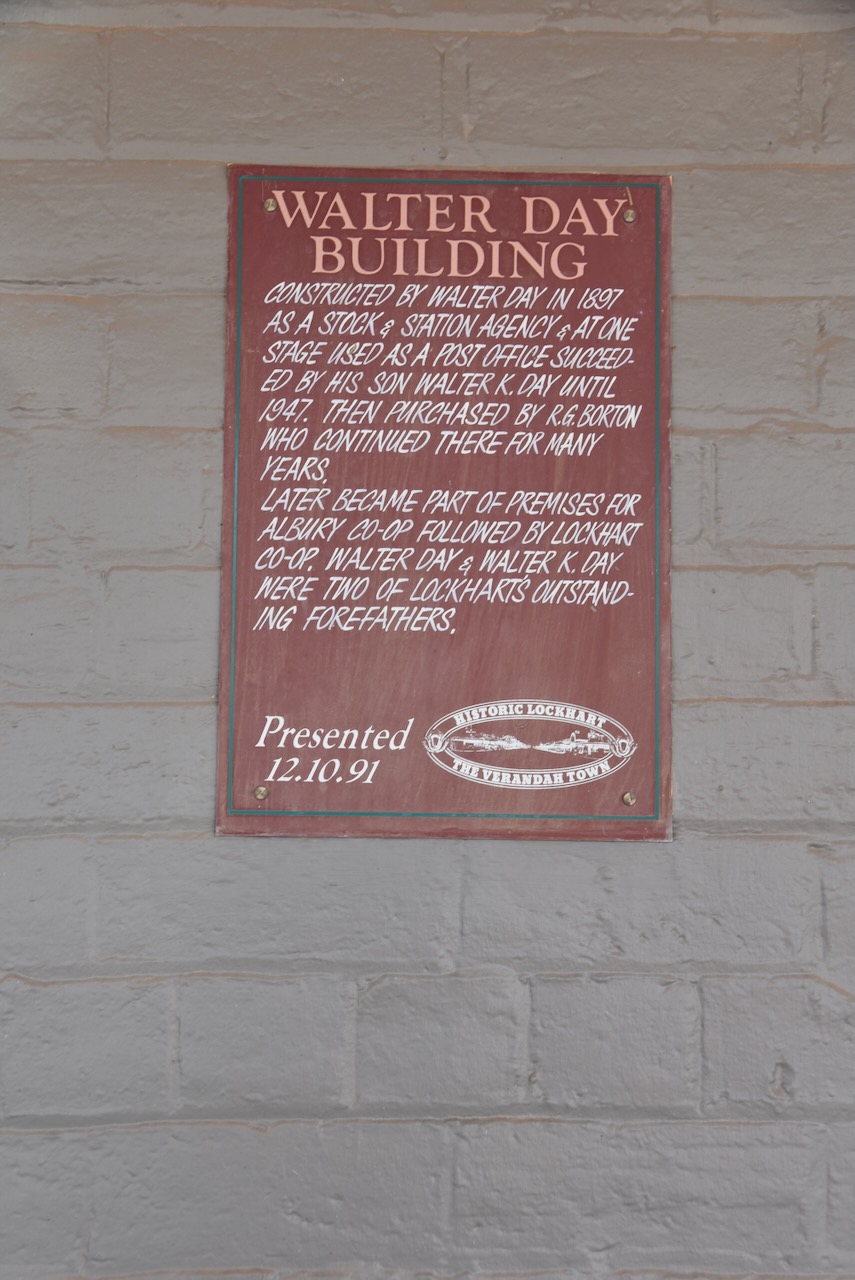
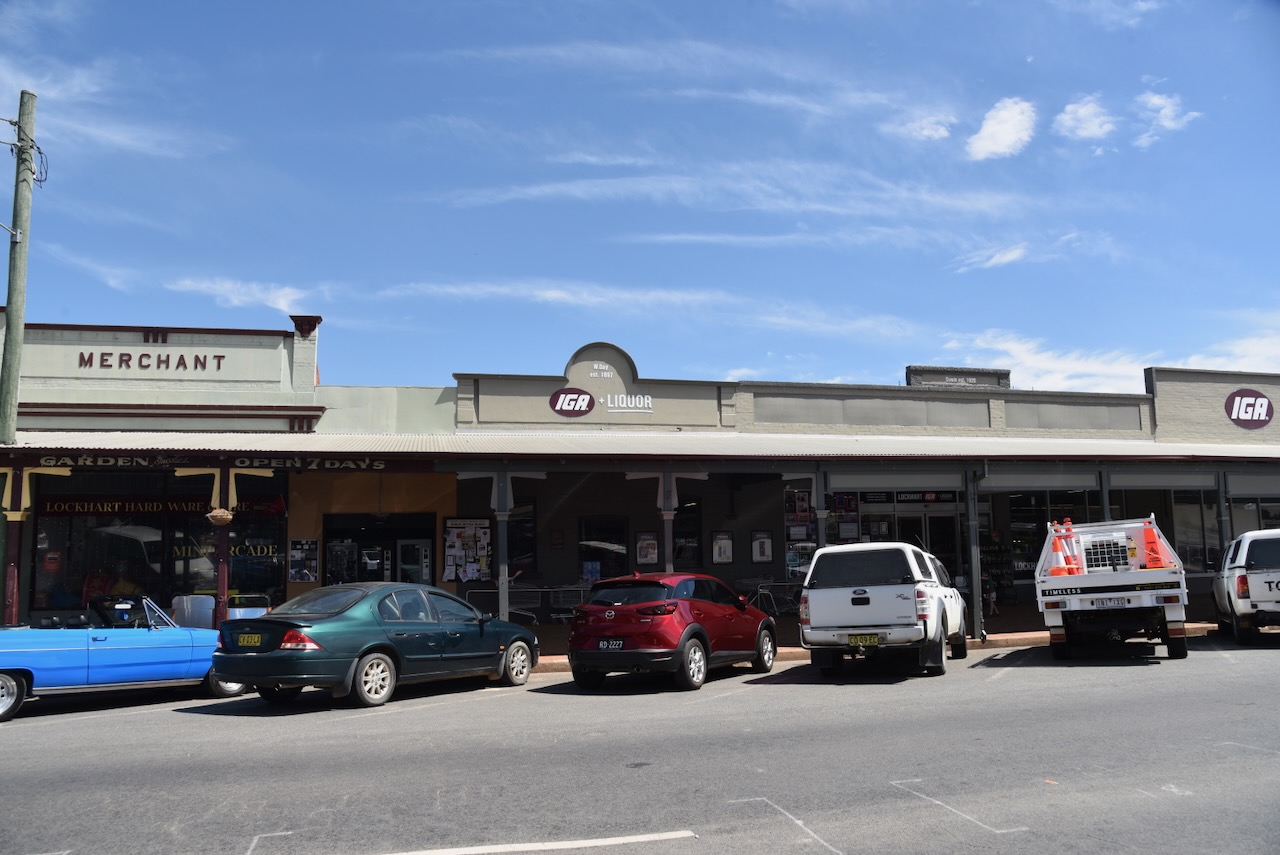
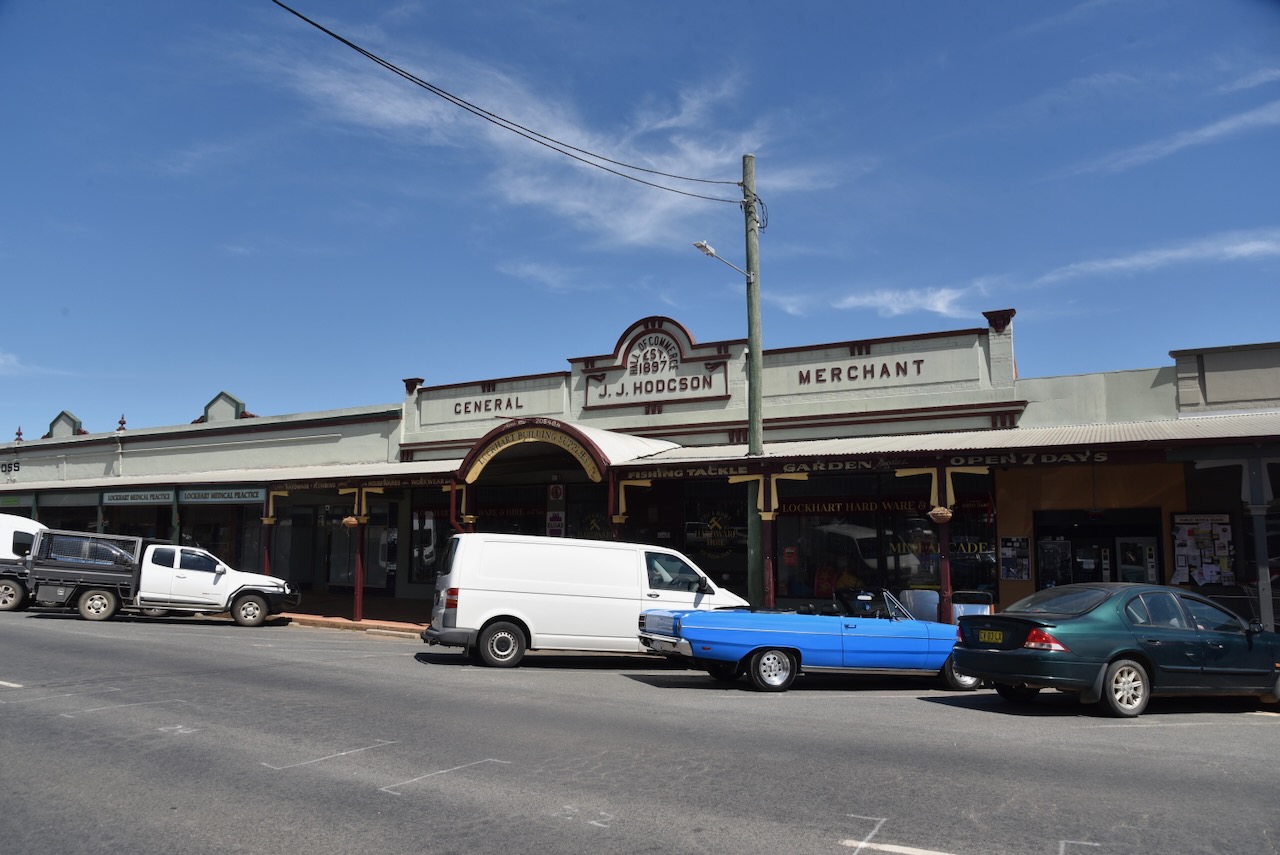
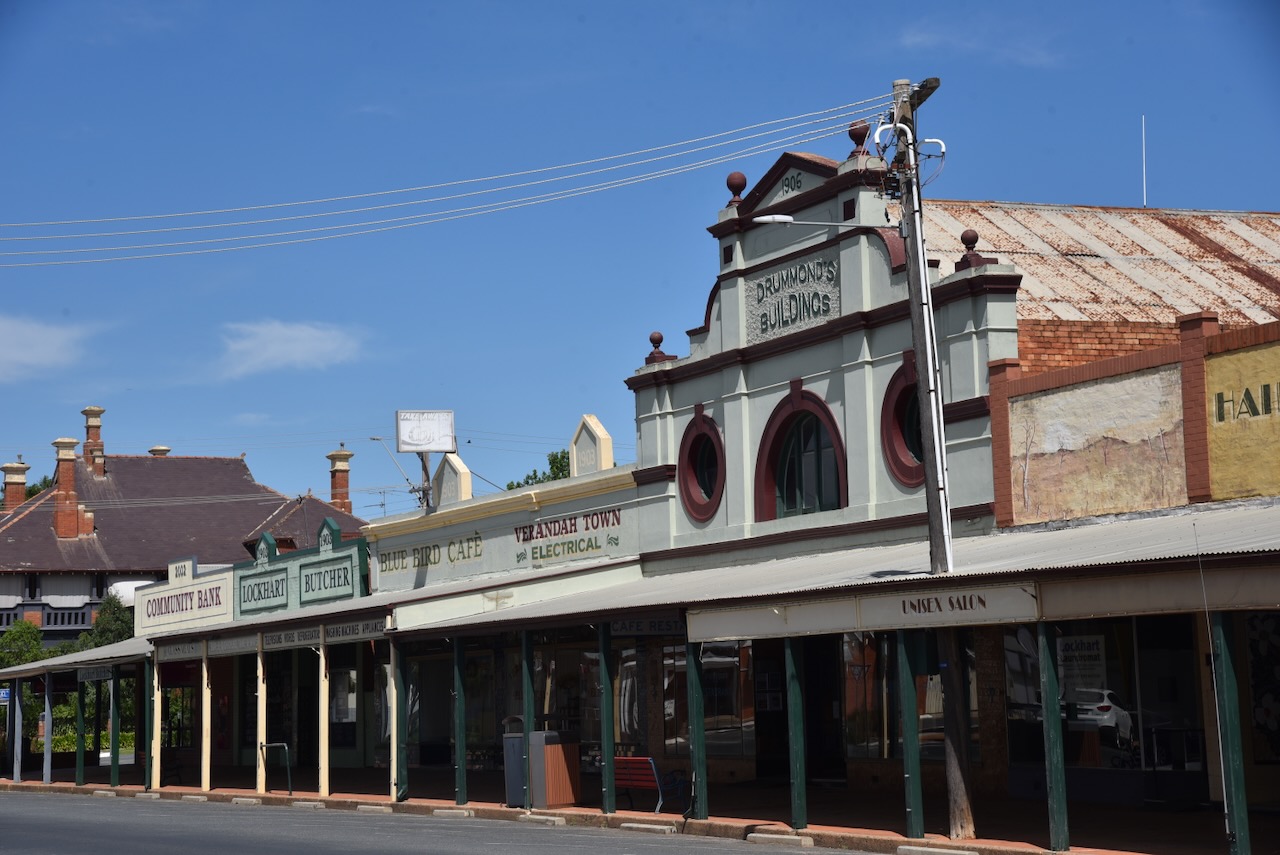
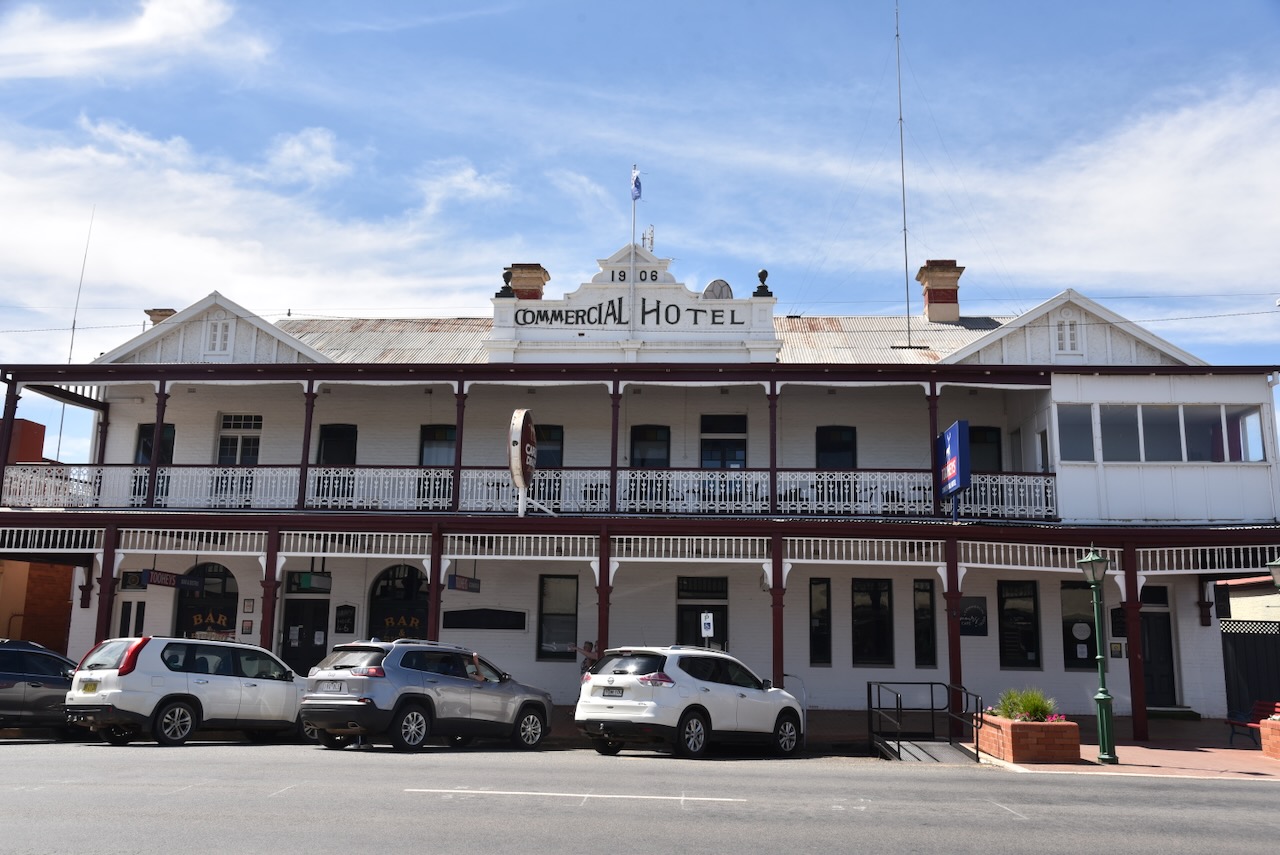
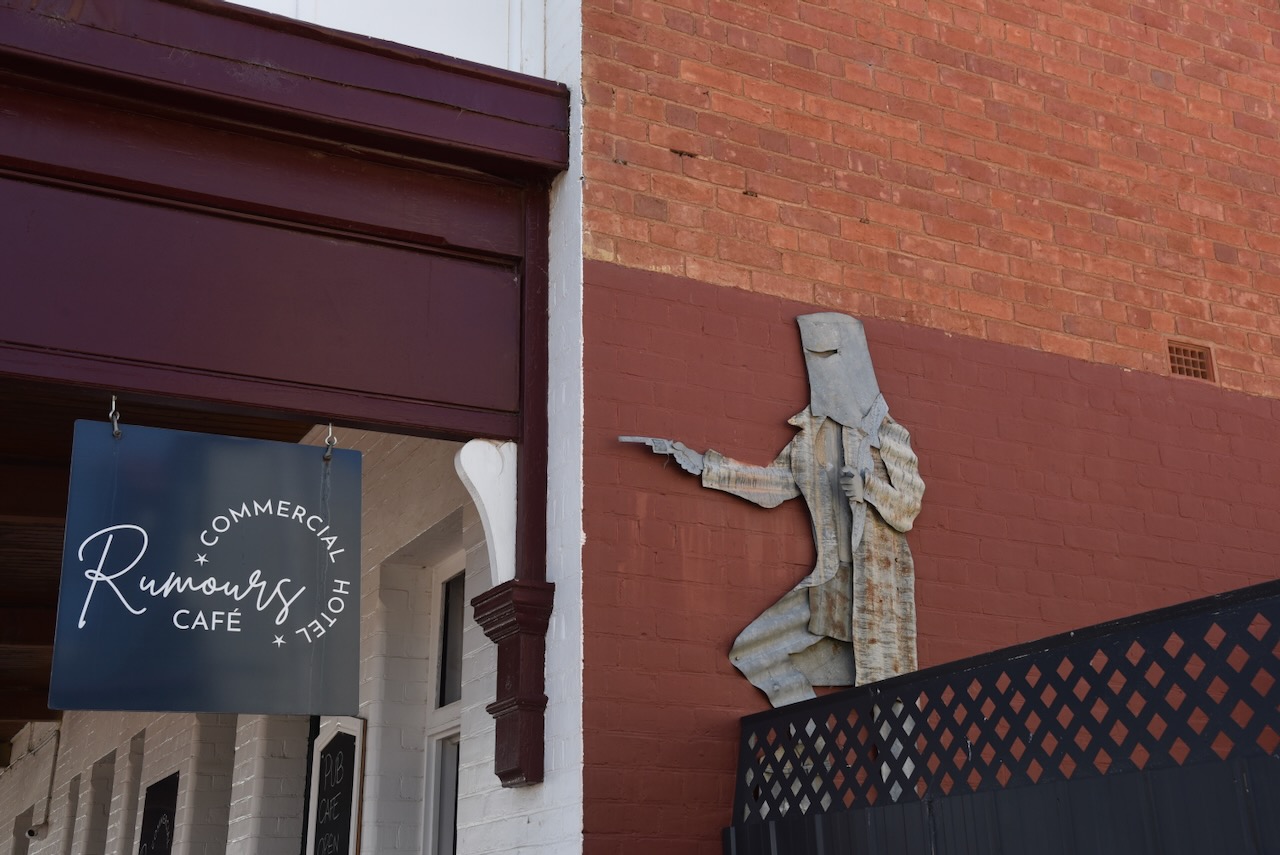
The Commercial Hotel was built in 1906. On the side of the hotel is a life sized corrugated iron cut out of the bushranger Ned Kelly
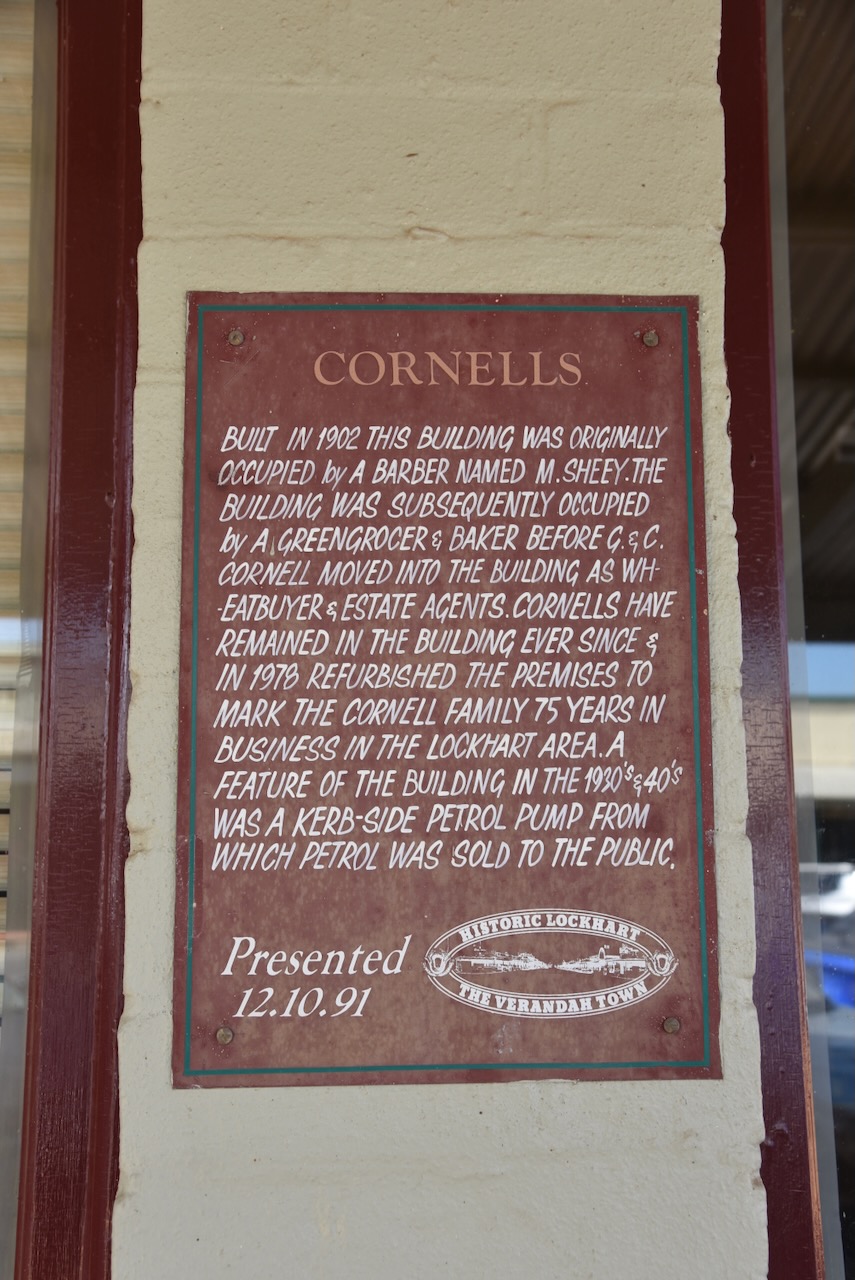
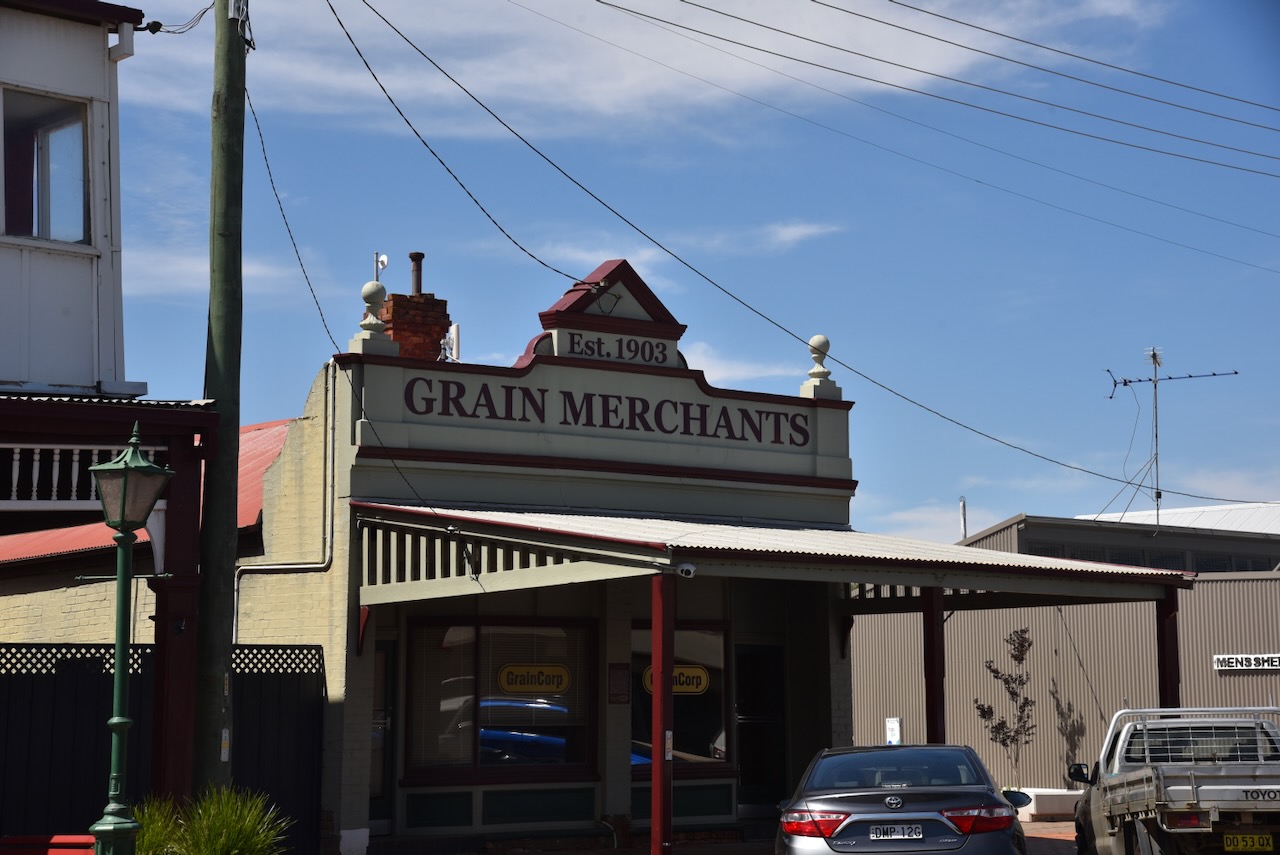
Cornell’s building was built c. 1902/1903. It was originally occupied by a barber called M. Sheey. It was then occupied by a greengrocer and baker, before G & C Cornell moved into the building as wheat buyer and estate agents. During the 1930s and 1940s a kerb side petrol pump existed out the front of the building.
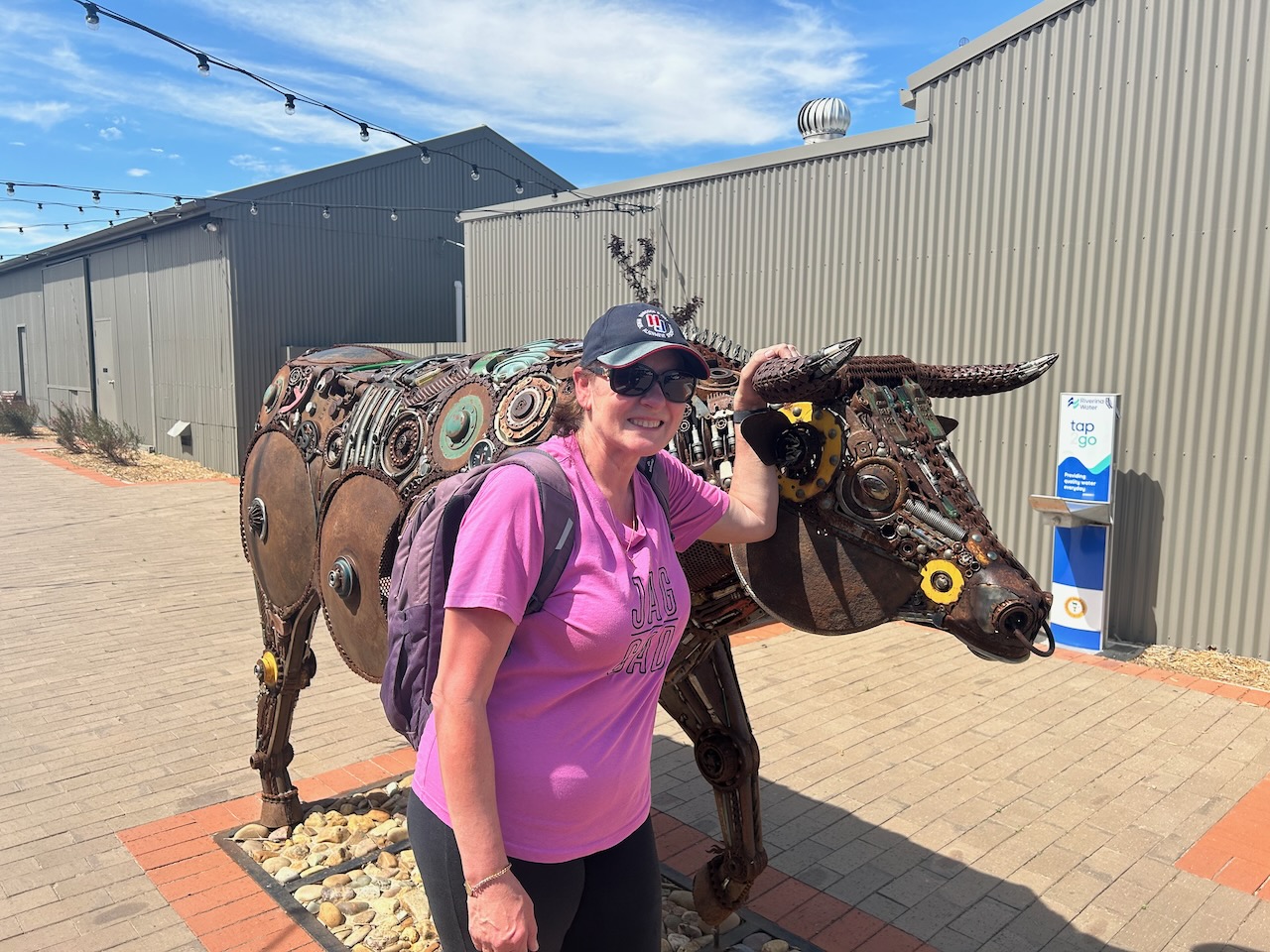
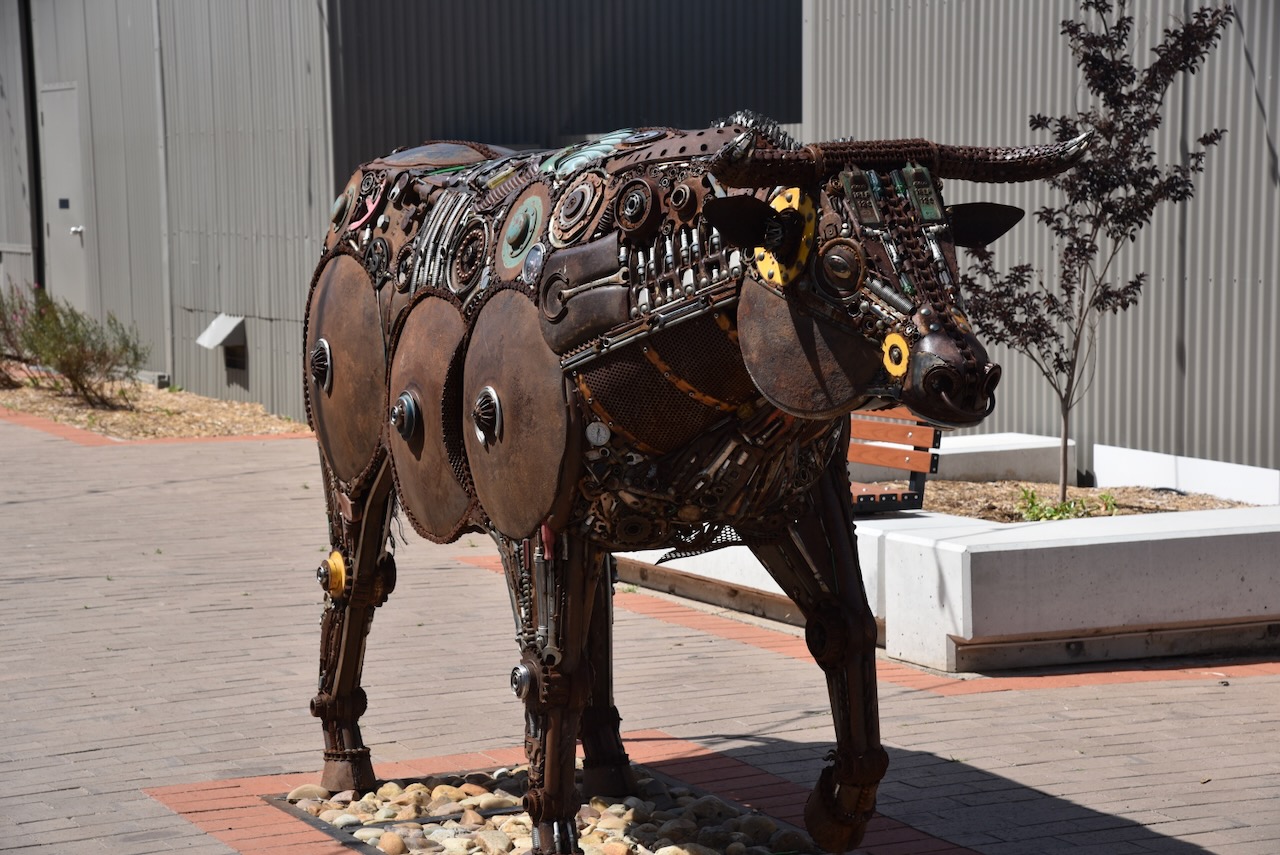
In the main street, you can find the sculpture George the Fresian Bull. It is the work of Andrew McGill. (Region Riverina n.d.)
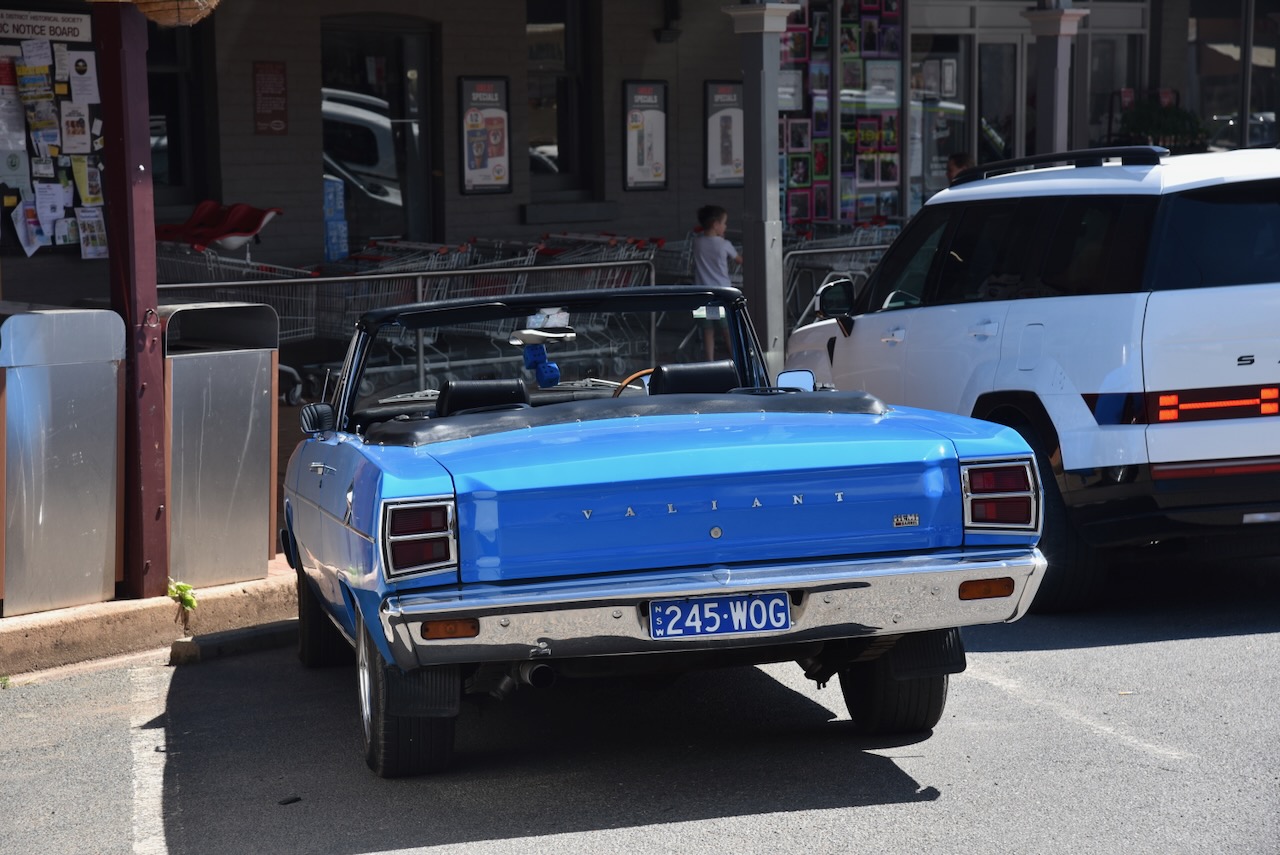
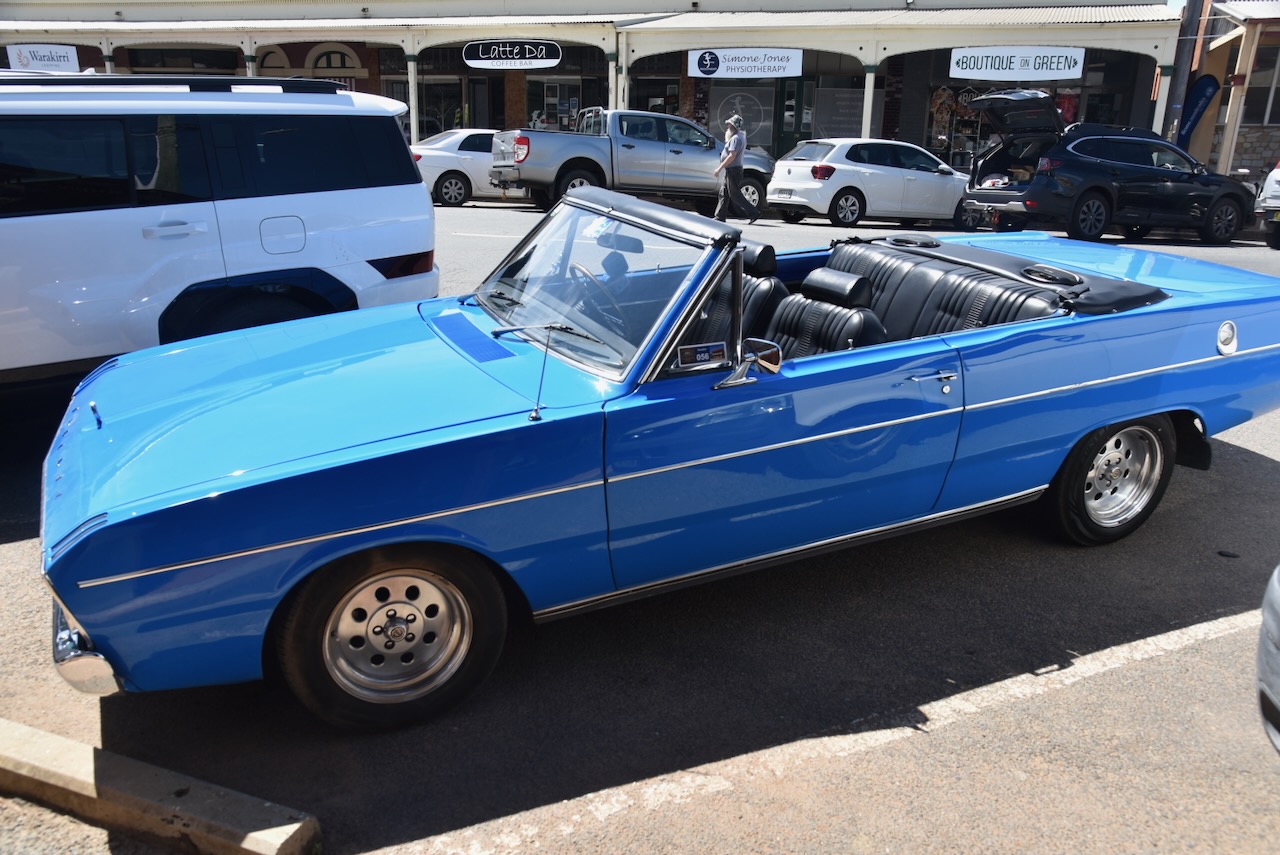
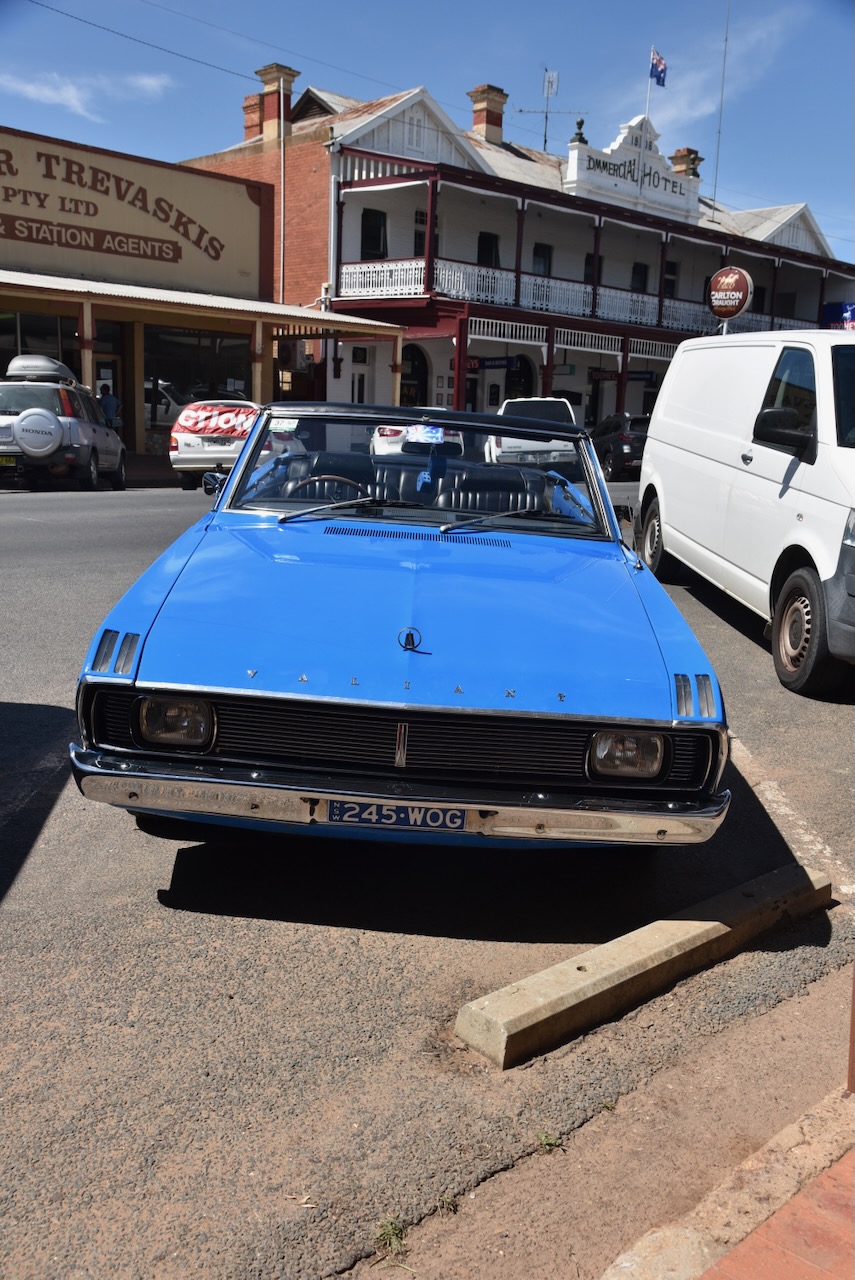
While we were on the main street, I saw the magnificent Valiant below. While we were admiring the vehicle, the owner came along and we had a long chat about his vehicle and my Valiant.
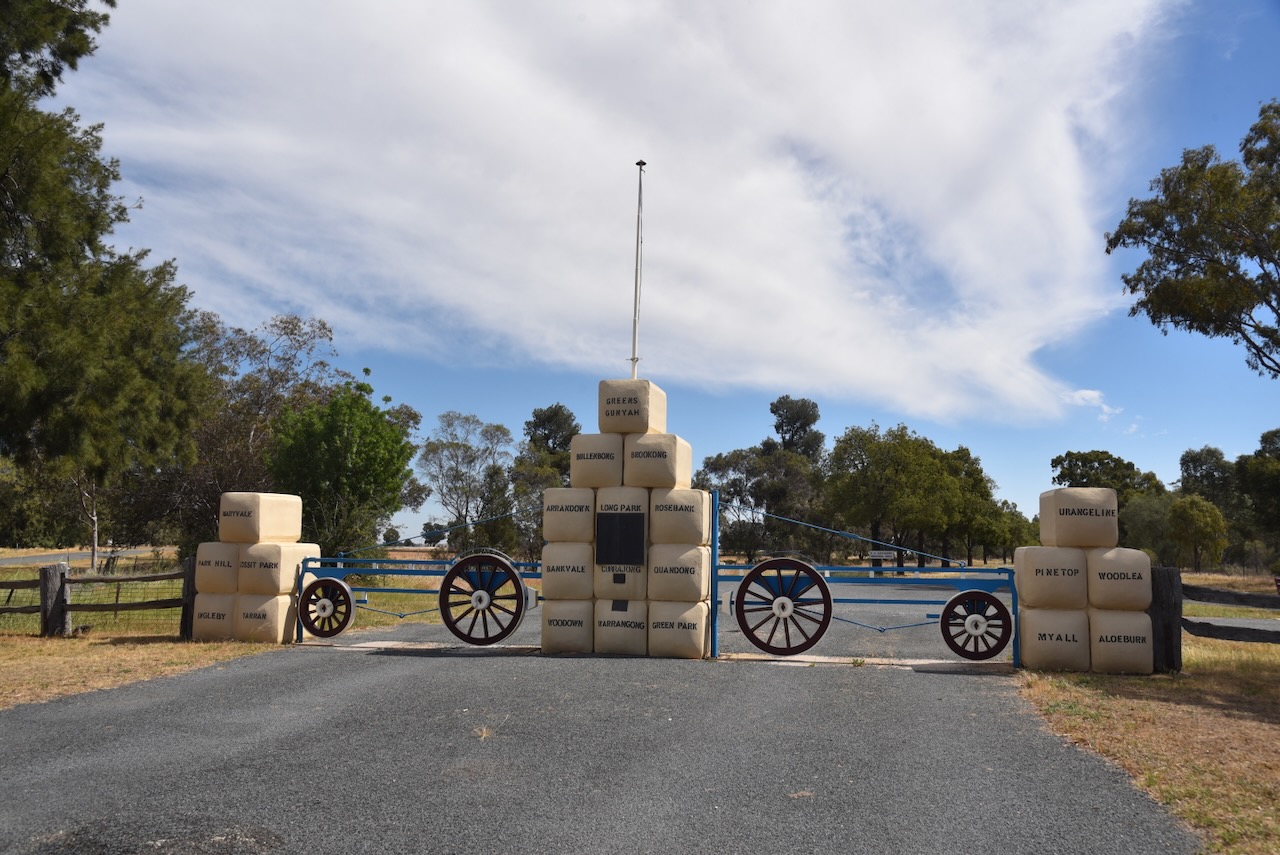
The Lockhart Showgrounds are located on Treasure Street on the southwestern side of town. The gate at the entrance to the Showgrounds commemorates the early settlers of the district. The columns of the entrance gates feature 22 replica wool bales which have stencils of the district’s original sheep stations. (UBC Web Design 2026)
The plaque is inscribed:
‘They came with faith alone – Drought hindered but nothing daunted them – Green fields rose from the wilderness God has blessed us with the fruits of their toil.”
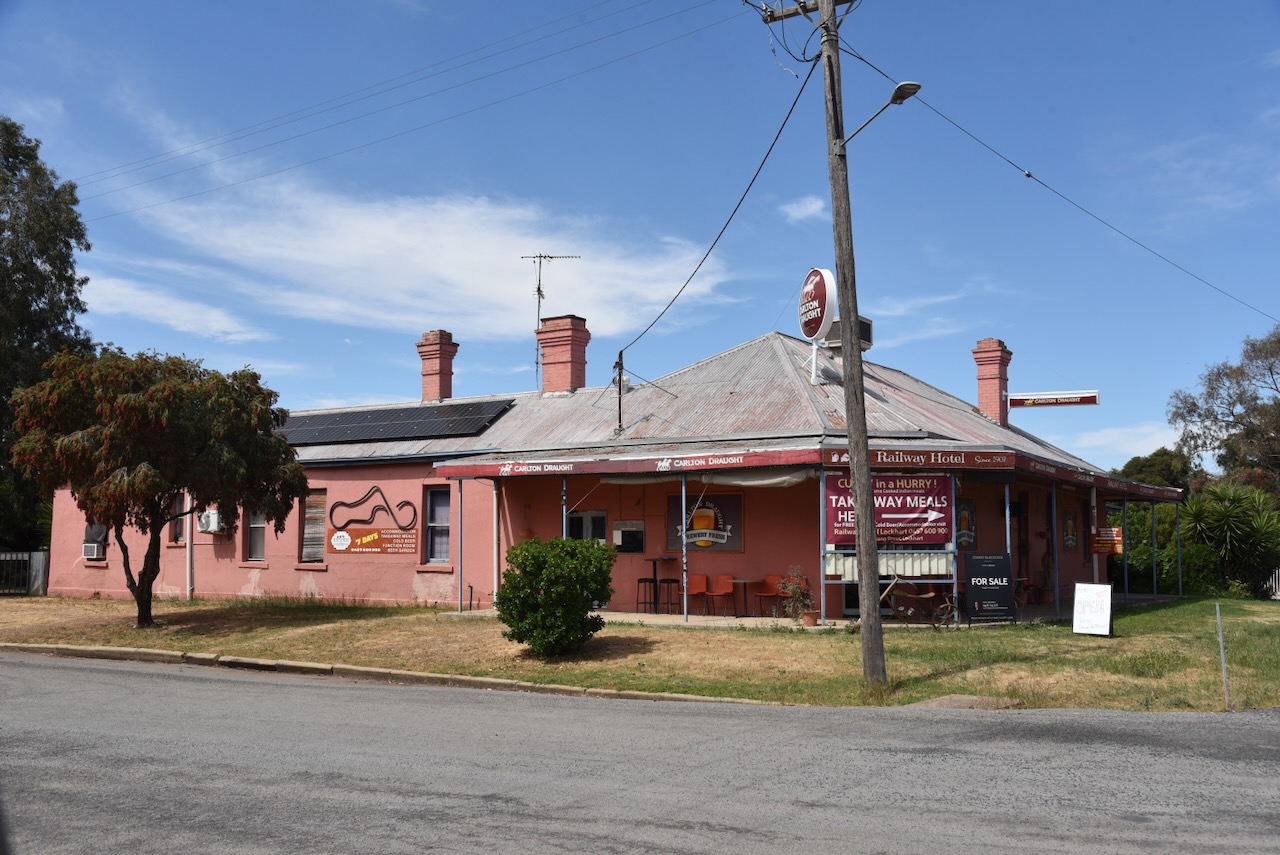
Just down from the silos is the Railway Hotel, located at Brookong Street. The hotel was the first official business in the town and was opened in 1878. It was situated on the Cobb & Co route between Wagga Wagga and Urana. (Facebook 2026)
The Lockhart railway station is located on the Oaklands railway line. The original station was demolished and in 1987 was replaced with the station building from Gerogery.
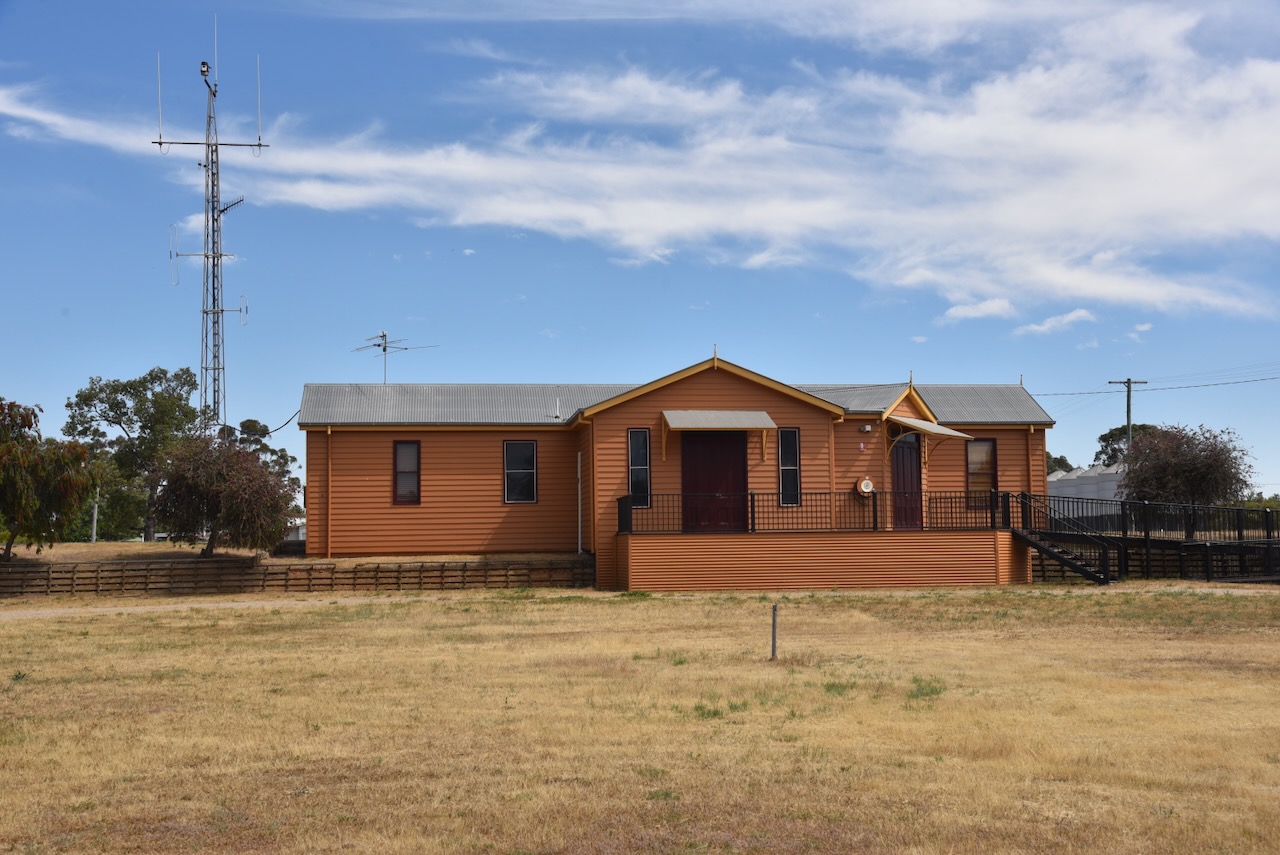
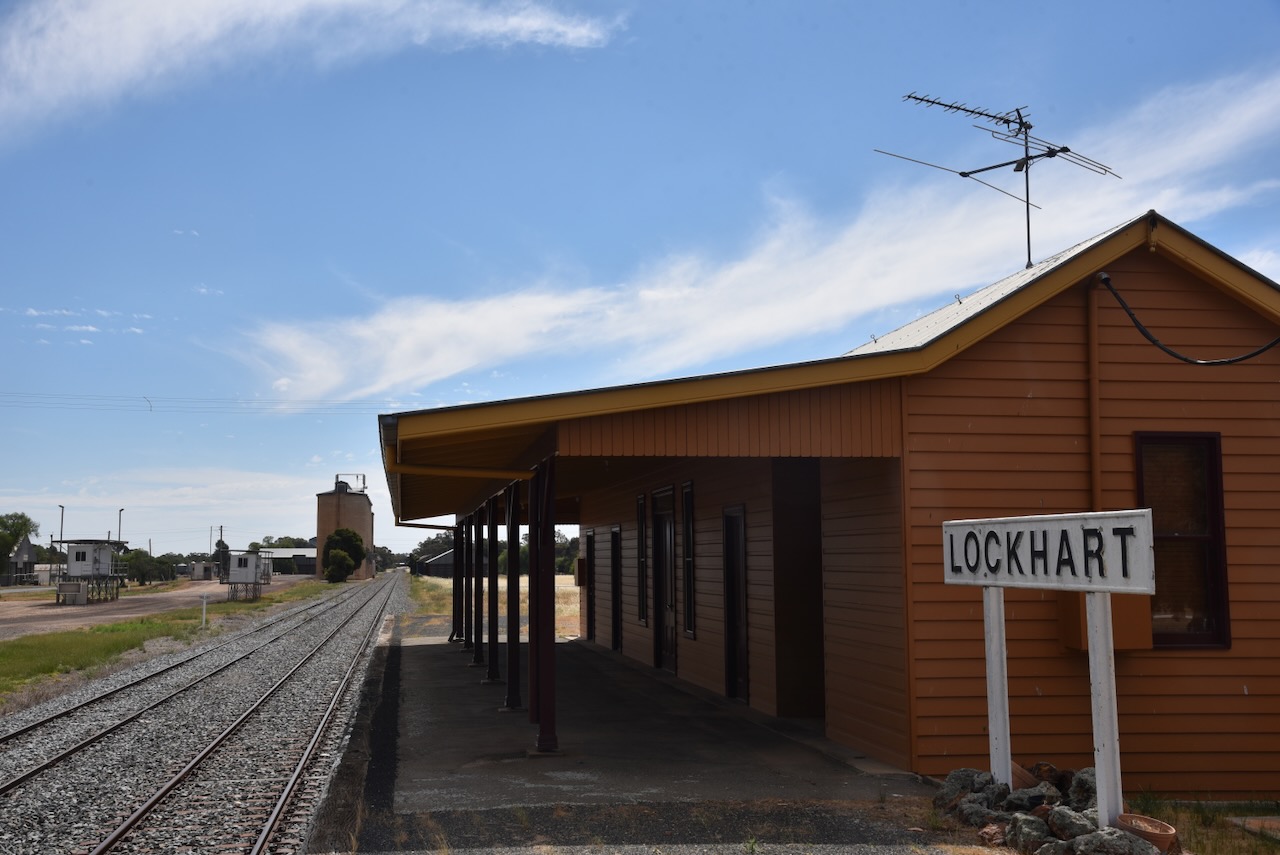
In 1920, the railway station was destroyed by fire. (Trove 2026)
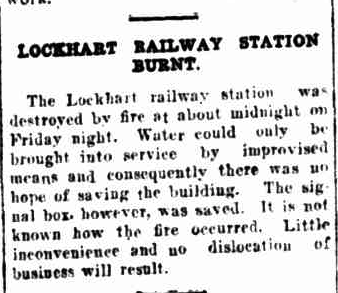
Above: article from the Daily Advertiser Wagga Wagga, Mon 26 Apr 1920. Image c/o Trove
And then in 1944, another fire occurred at the railway station. The refreshment room and the waiting room were completely destroyed. The ticket office and parcel room were saved.
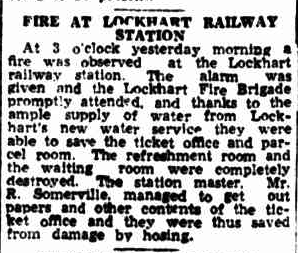
Above: article from the Daily Advertiser Wagga Wagga, Mon 13 Mar 1944. Image c/o Trove
The Lockhart silos are located on the northern side of Osborne Street and the southern side of the railway line.
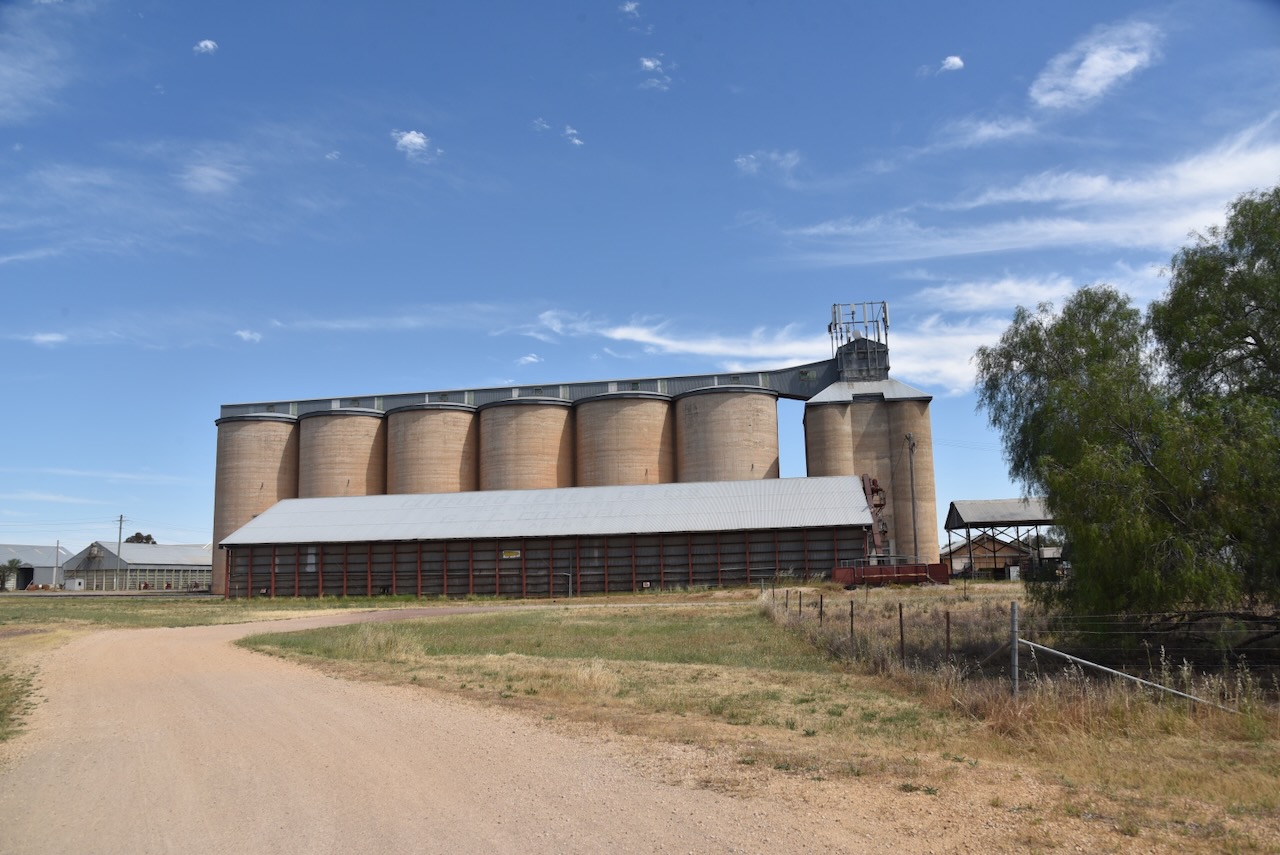
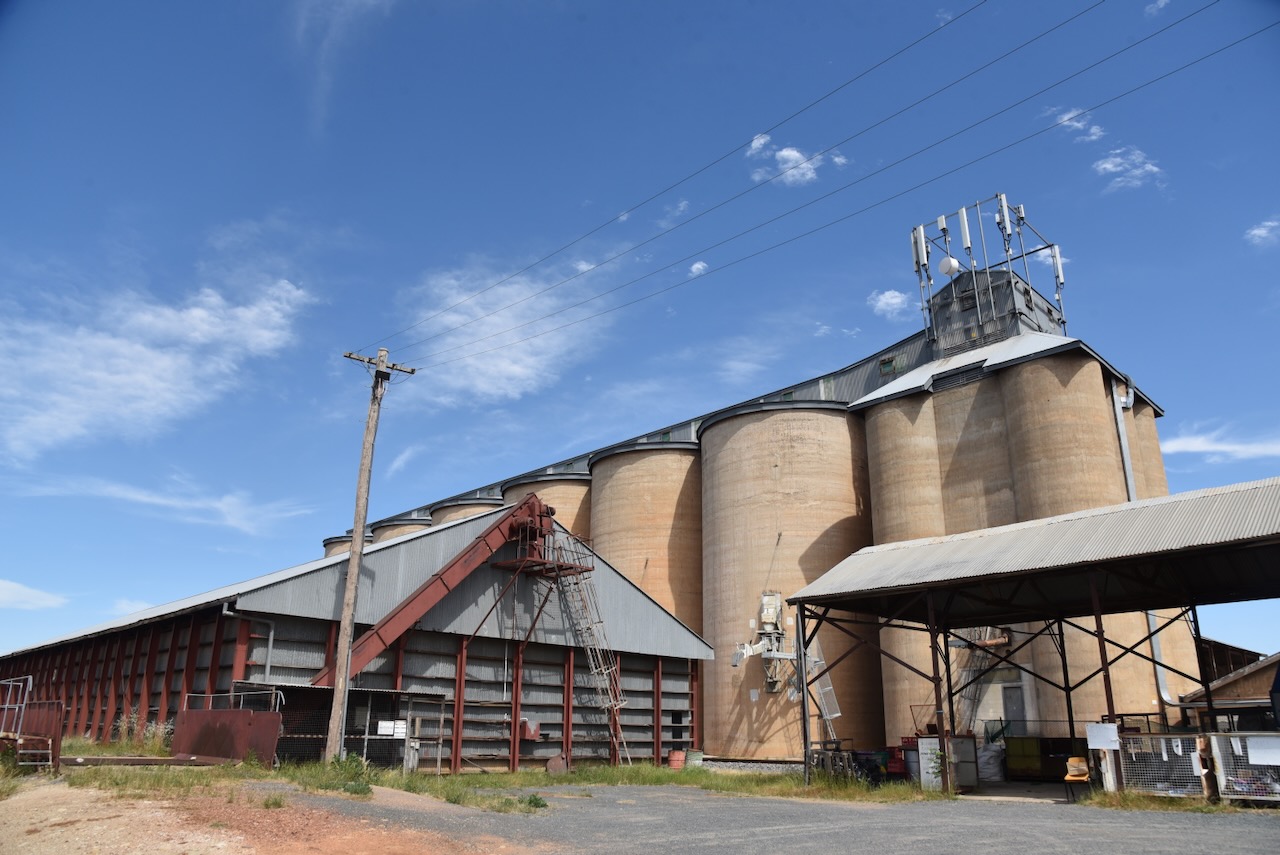
Marija and I parked near the railway station and operated from the 4WD. We ran the Icom IC7000, 100 watts, and the Codan 9350 antenna with the 1.5 metre stainless steel whip.
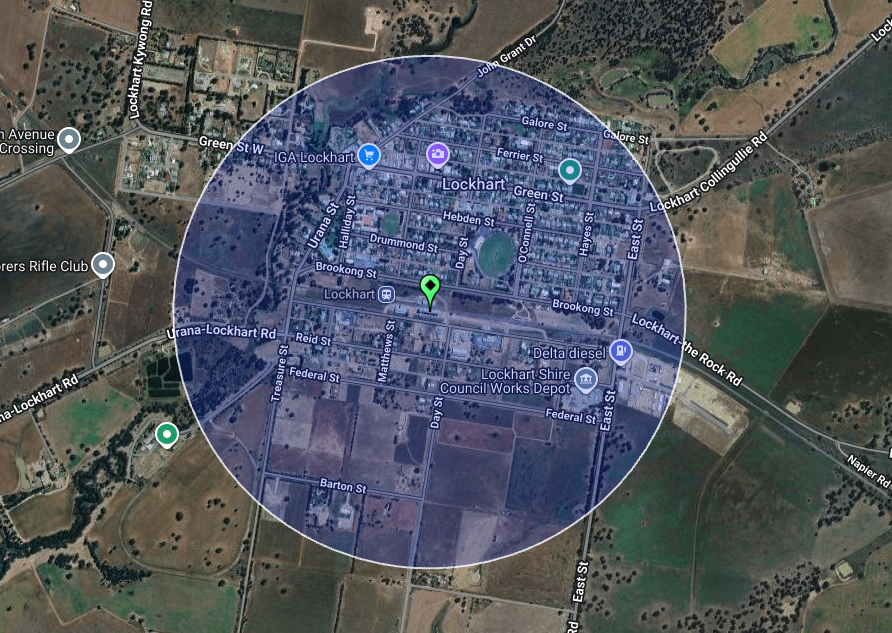
Above: the activation zone at the Lockhart silo. Image c/o SiOTA website.
Marija worked the following stations on 40m SSB:-
I worked the following stations on 40m SSB:-
References.
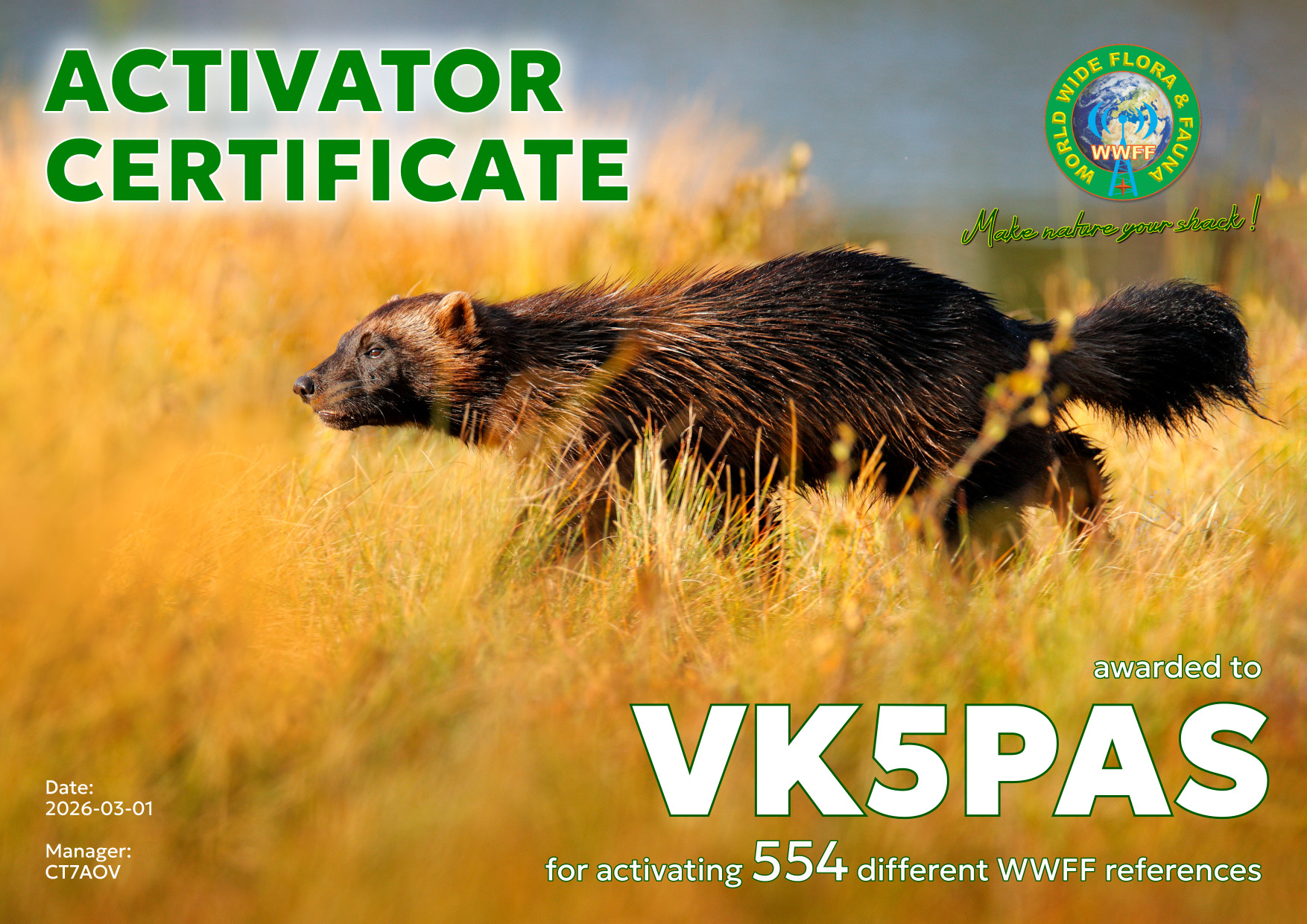
Earlier this month I received the WWFF Activator 554 certificate. It is issued for having activated a total of 554 WWFF references and obtaining 44 QSOs.
Thanks to all of the WWFF hunters, and thank you to Hugo CT7AOV, the Awards Manager.
A few days ago, I received the certificate below for my participation in the 2025 All Asian DX Contest. I came first in Australia in the Single Operator All Band Low Power category.
Thank you to everyone who called me, and thank you to the organisers of the contest.

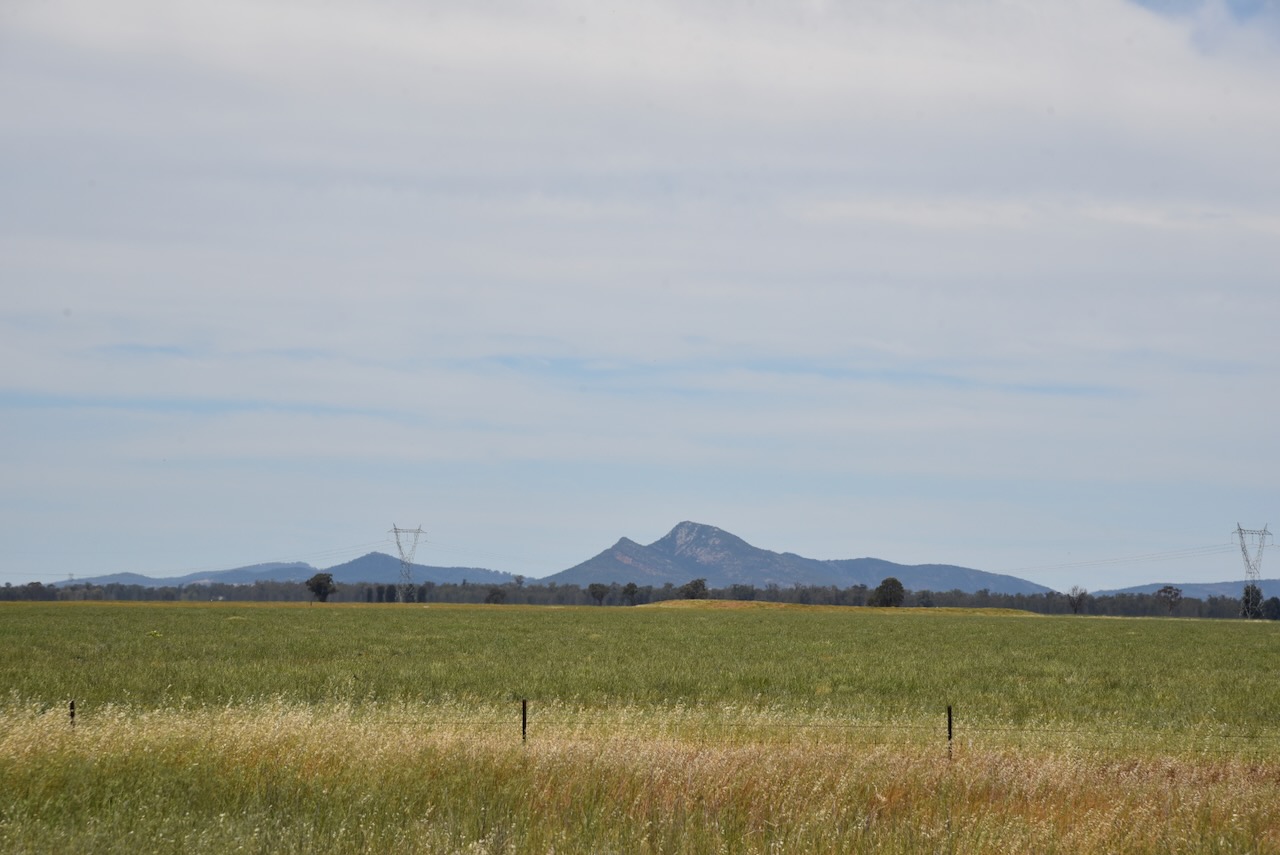
After leaving Belfrayden, Marija and I headed towards Jerilderie via Lockhart. Across the cleared farming land we were able to view The Rock summit.
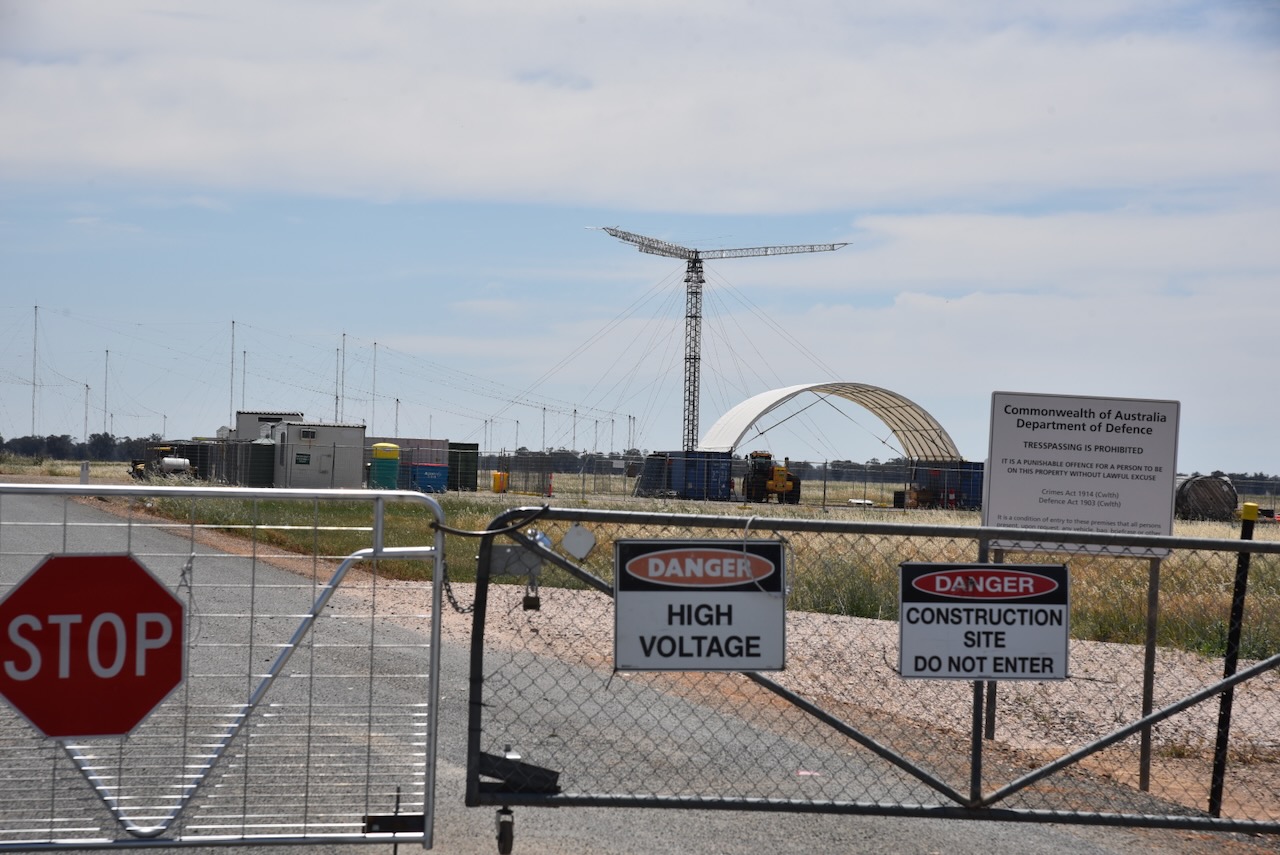
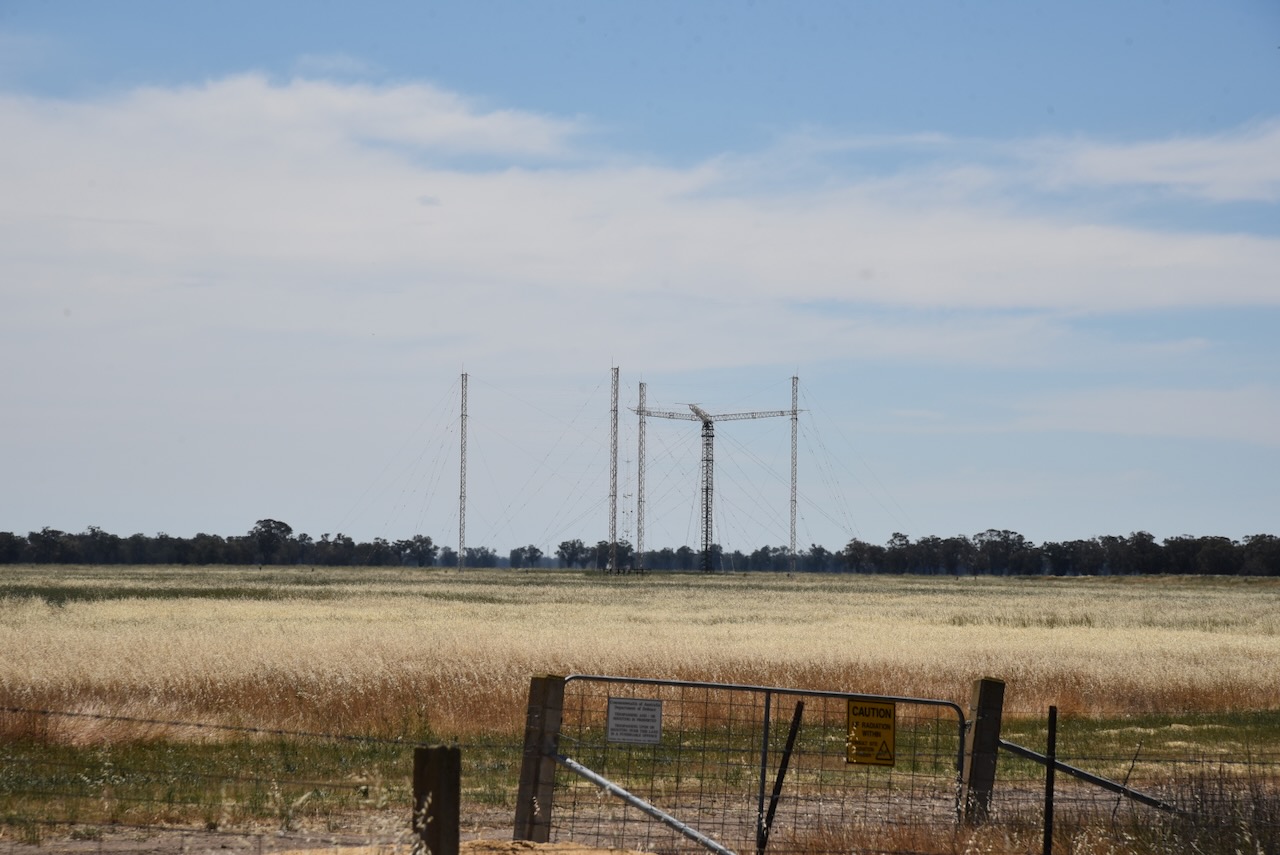
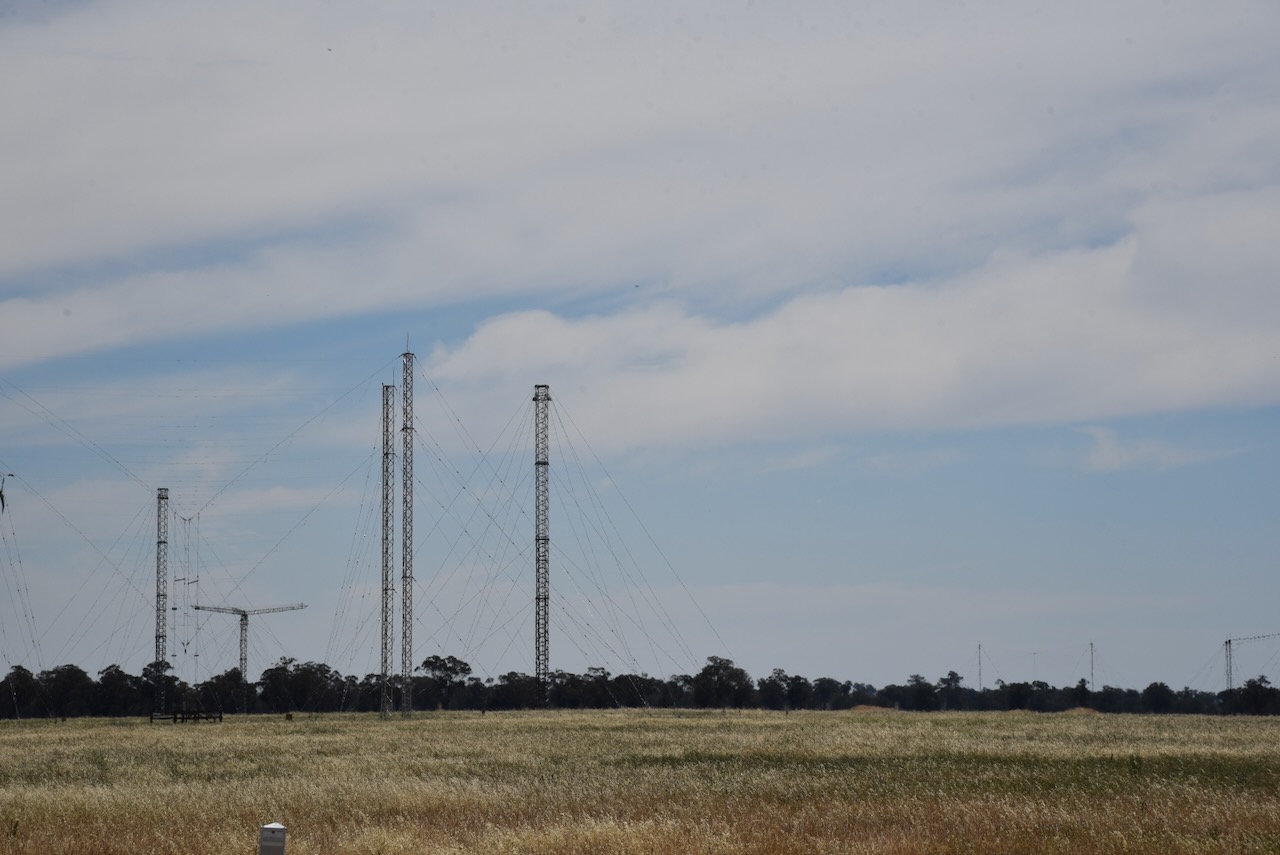
As Marija and I drove along Lockhart Road, and our attention was drawn to numerous towers and antennas. We found that it was a Department of Defence high-frequency transmitter facility – Modernised High Frequency Communications System (MHFCS). The MHFCS is a high-frequency (3030 MHz) radio network providing communication services for the operational control and support of the Australian Defence Force and allied aircraft, marine craft and land units. (Airservices n.d.) (Tanter 2013)
The site is locally known as Lyndoch, named after the homestead on which the facility is built. The HF transmitter consists of a main circular antenna array, which is made up of 2 concentric rings of masts, with 10 smaller antennas outside the circles. The outer ring has 18 pairs of masts. The inner ring is made up of 20 single masts. Surrounding the 2 core circles are 10 separate sets of antennas. (Tanter 2013)
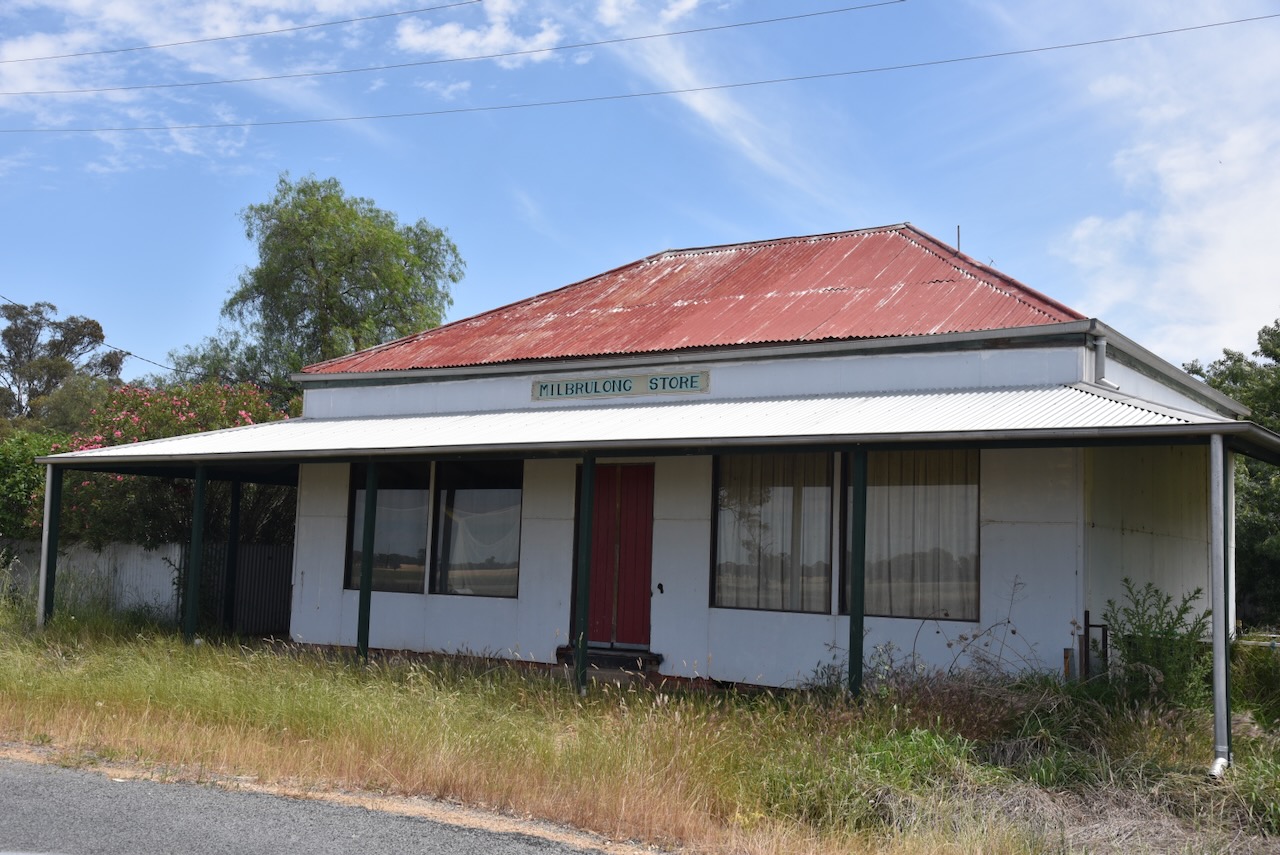
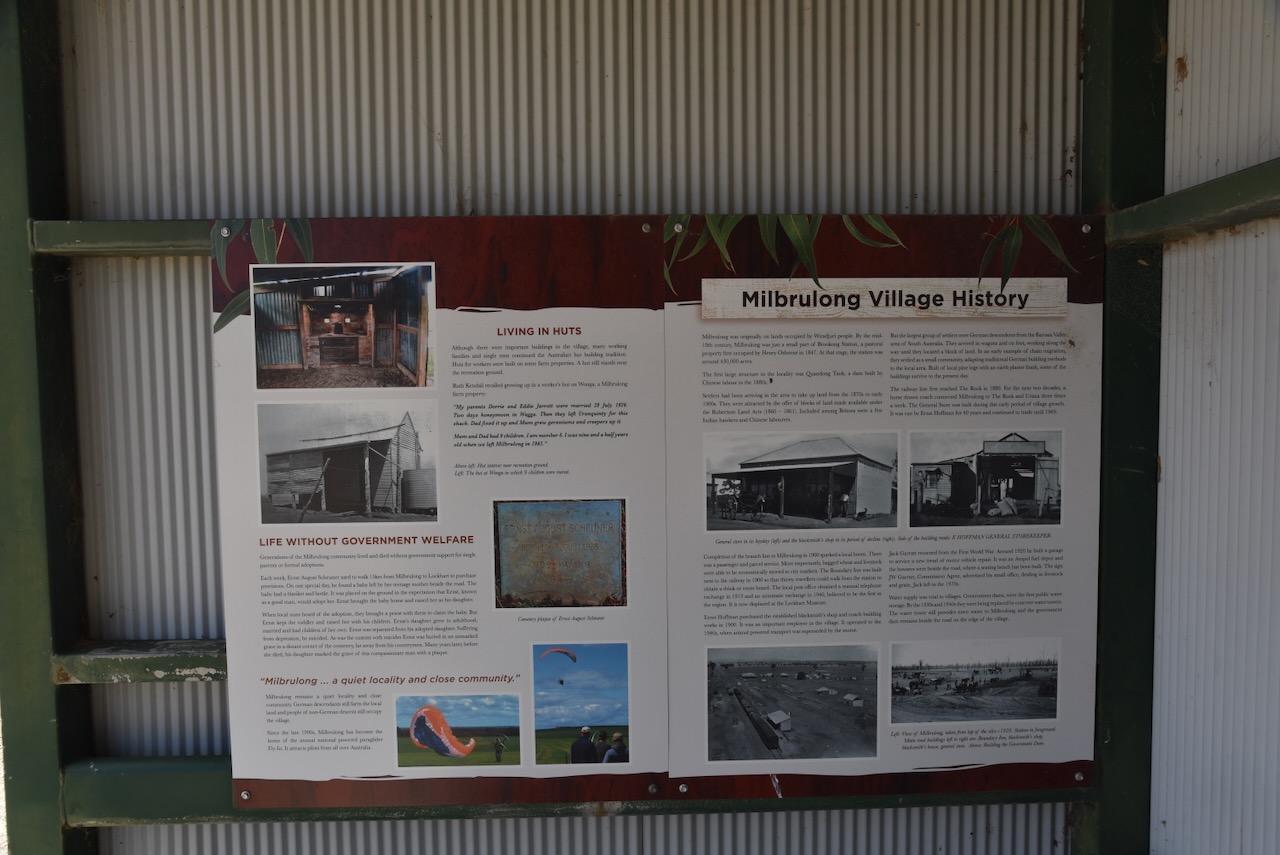
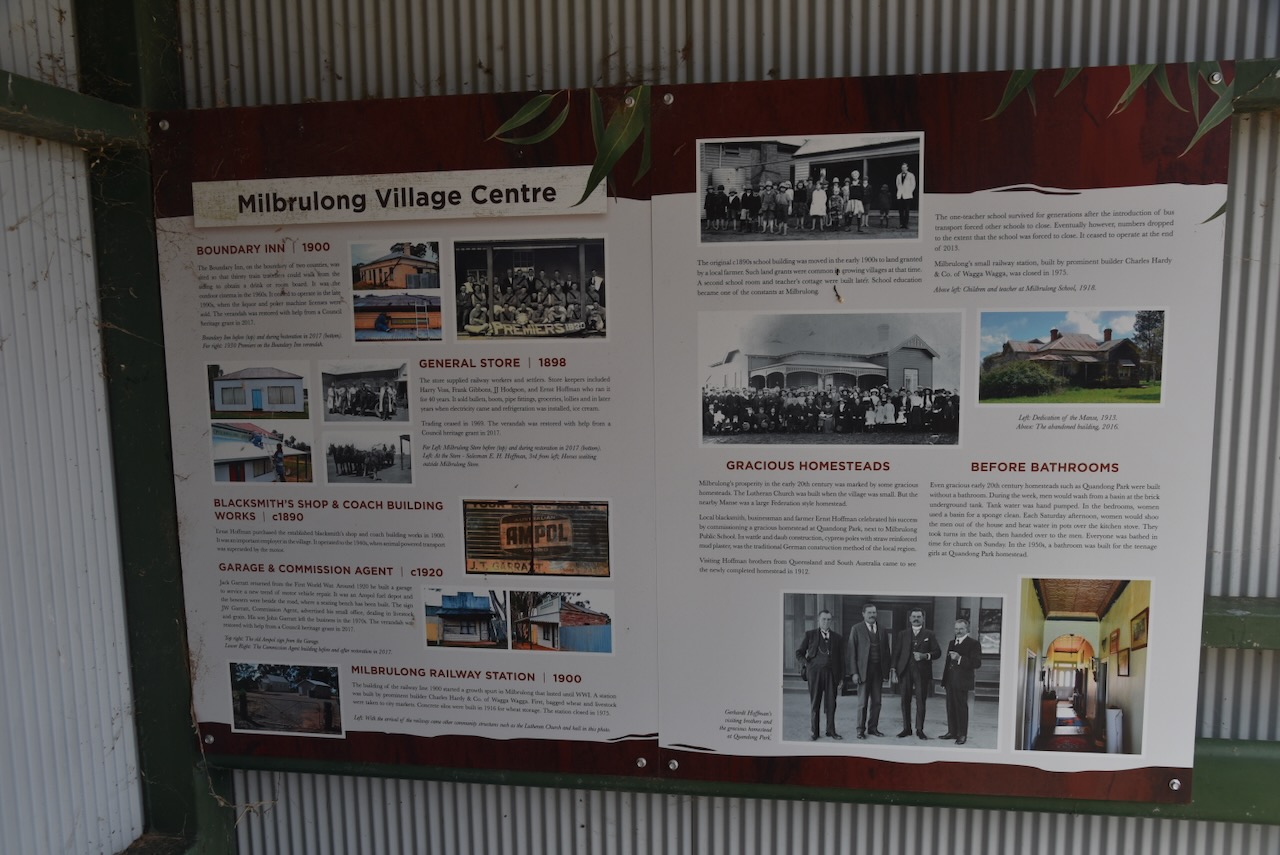
We then drove down to Milbrulong. We had travelled through Milbrulong earlier in our trip on 22nd October 2025. We wanted to head back to activate the silo. Milbrulong is an Aboriginal word meaning ‘rosella parrot.’ The Milbrulong Post Office opened on the 7th day of August 1899 and closed in 1976. (Phoenix 2026) (Visit Lockhart 2022)
Milbrulong once had its own football club and cricket club. The first published match of the Milbrulong Football Club was played in 1901 against Lockhart. (Trove 2026)
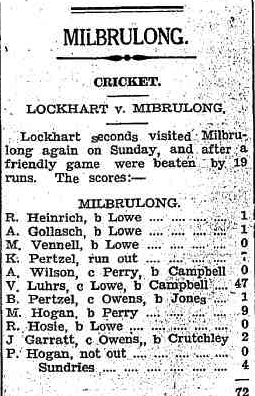
Above: part of an article from The Lockhart Review, Tue 28 Mar 1933. Image c/o Trove
The old Boundary Inn Hotel is located on Lockhart-The Rock Road, just before the railway line. The hotel was closed in November 1999. It is so sad to see all of these historic hotels sitting idle and their condition deteriorating. (Chirp 2026)
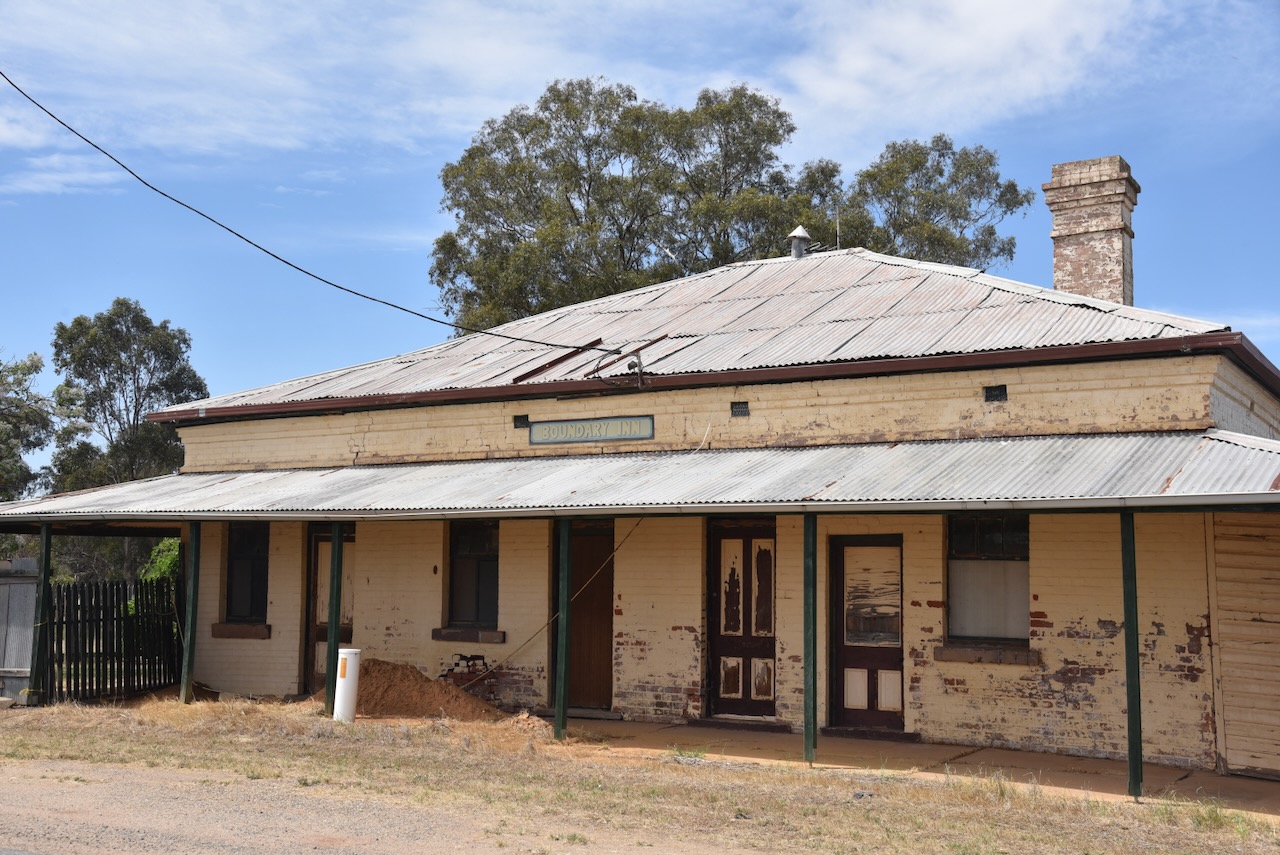
The hotel was opened in 1900 by Johann ‘John’ Heinrich Herman Menz. He was born in November 1856 at Lights Pass, South Australia. During his life, he was actively involved in farming and the hotel industry. He died in May 1901 at Albury, New South Wales. (Chirp 2026)
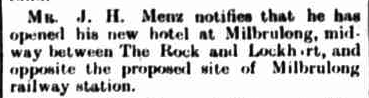
Above: article from the Wagga Wagga Advertiser, Thu 3 May 1900. Image c/o Trove
A tragedy involved John Menz and his family. On Tuesday, 7th December 1880, whilst living at Jindera and being the licensee of the local hotel, a brutal crime occurred at the home of his father, Martin Johann Menz. A swagman called Henry Wilkinson had been drinking at John’s hotel. The swaggie left the hotel to head to Albury. Later that night, John’s father was murdered, his daughter Maria Dorothea ‘Mary’ mortally wounded, and the house was set on fire. (Findagrave.com 2019)
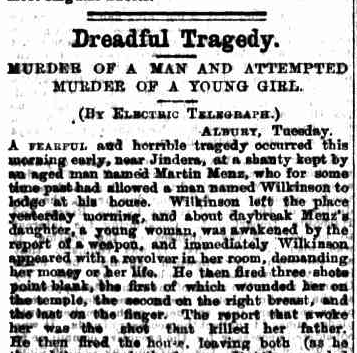
Above: part of an article from Australian Town and Country Journal, Sat 11 Dec 1880. Image c/o Trove
After the house had been set alight, Mary, who had been shot three times with a revolver, fled the house with her 10-month-old son. She arrived at a nearby house owned by Mrs Douglass, suffering from a gunshot wound. She informed the homeowner that a male believed to be Wilkinson had shot her father and herself, robbed them, and then set fire to the house. (Findagrave.com 2019) (Trove 2026)
Following the murder, Wilkinsonson continued drinking at Jindera, using the money he had stolen. (Findagrave.com 2019)
Wilkinson was arrested at Jindera the following day. On Thursday, 16th December 1880. Mary died at the Albury Hospital from her injuries. (Findagrave.com 2019) (Trove 2026)
A trial took place at Albury, where Wilkinson was convicted and sentenced to death. He was hanged in the Albury Gaol on 4th June 1881. This was the only execution that took place at the Albury Gaol. (Findagrave.com 2019) (Trove 2026)
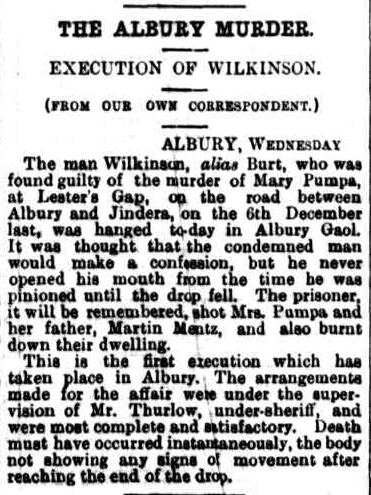
Above: article from The Australasian, Melbourne, Sat 4 Jun 1881. Image c/o Trove
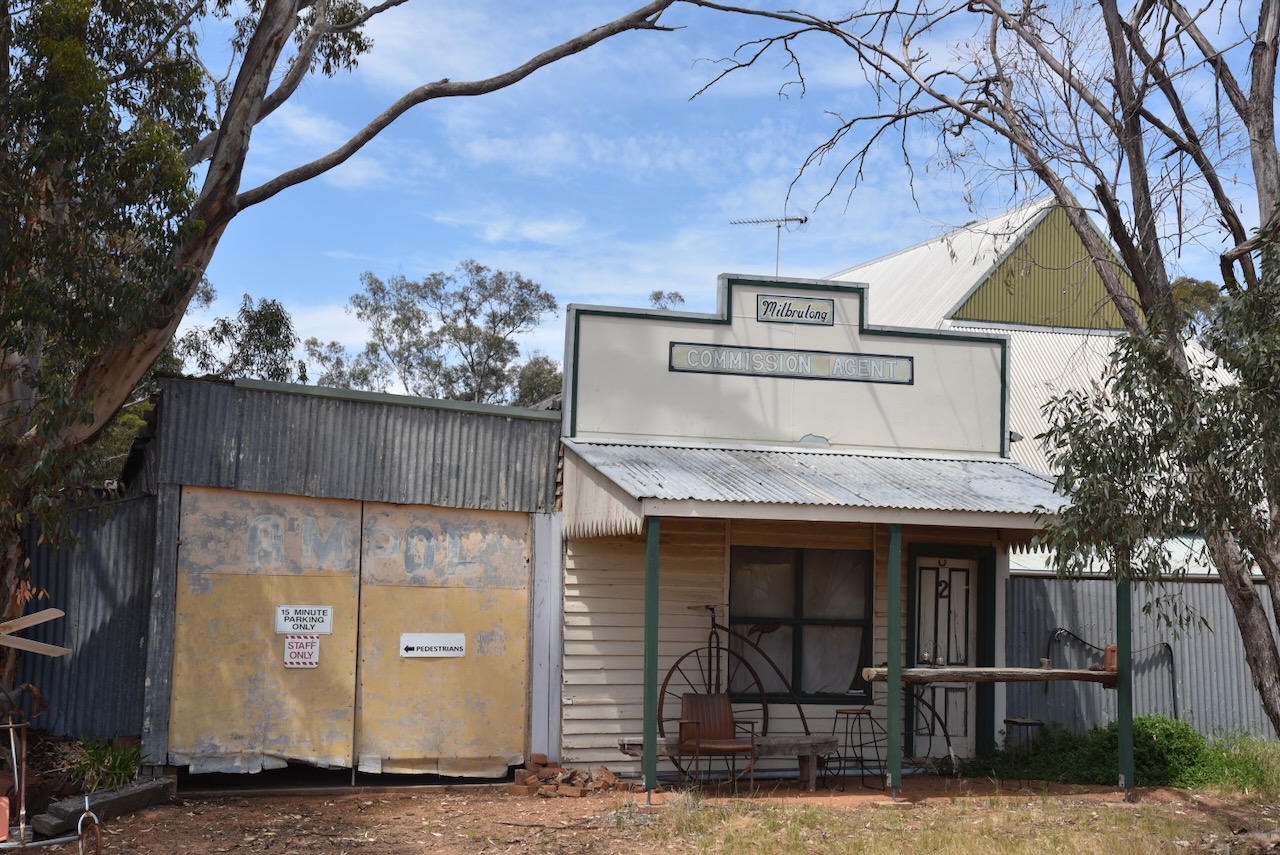
Another historic building in Milbrulong is the old Commission Agent Store.
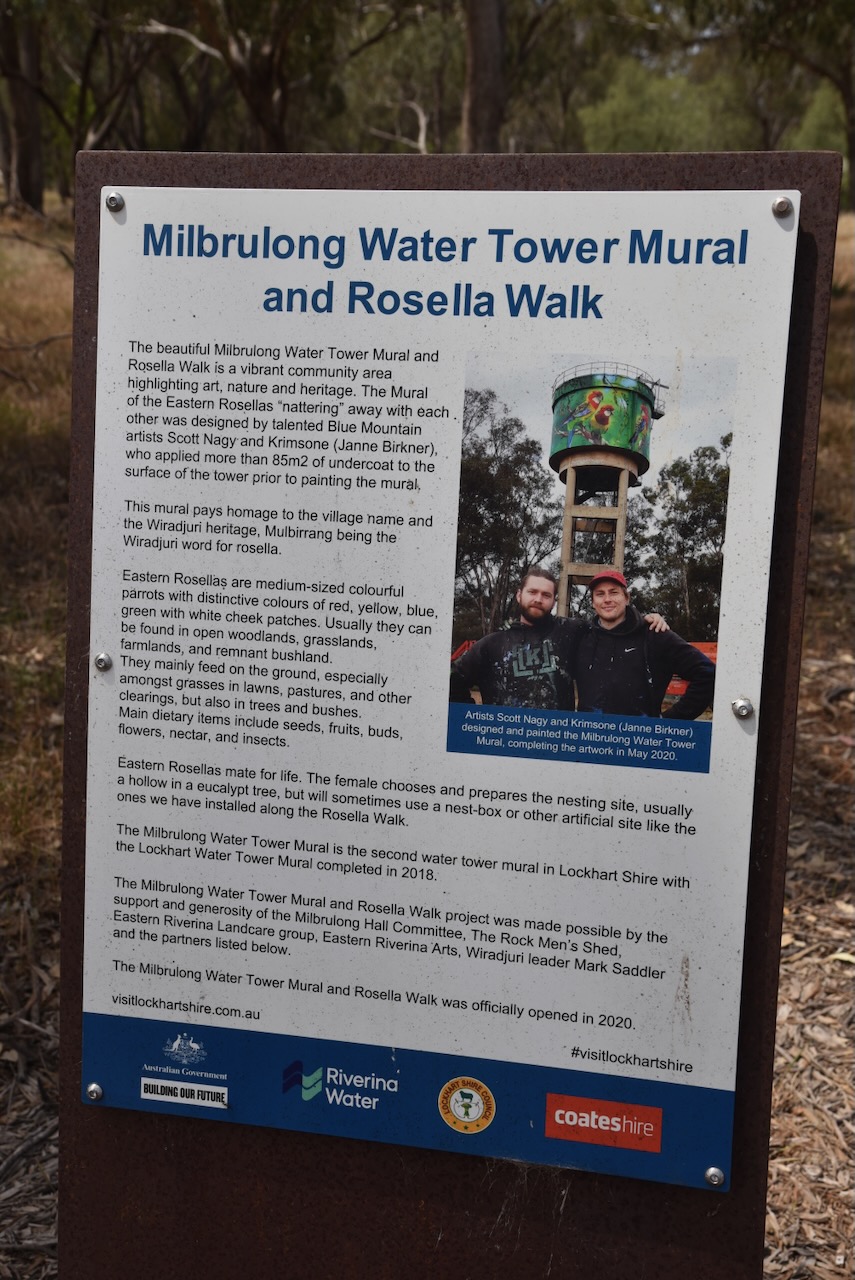
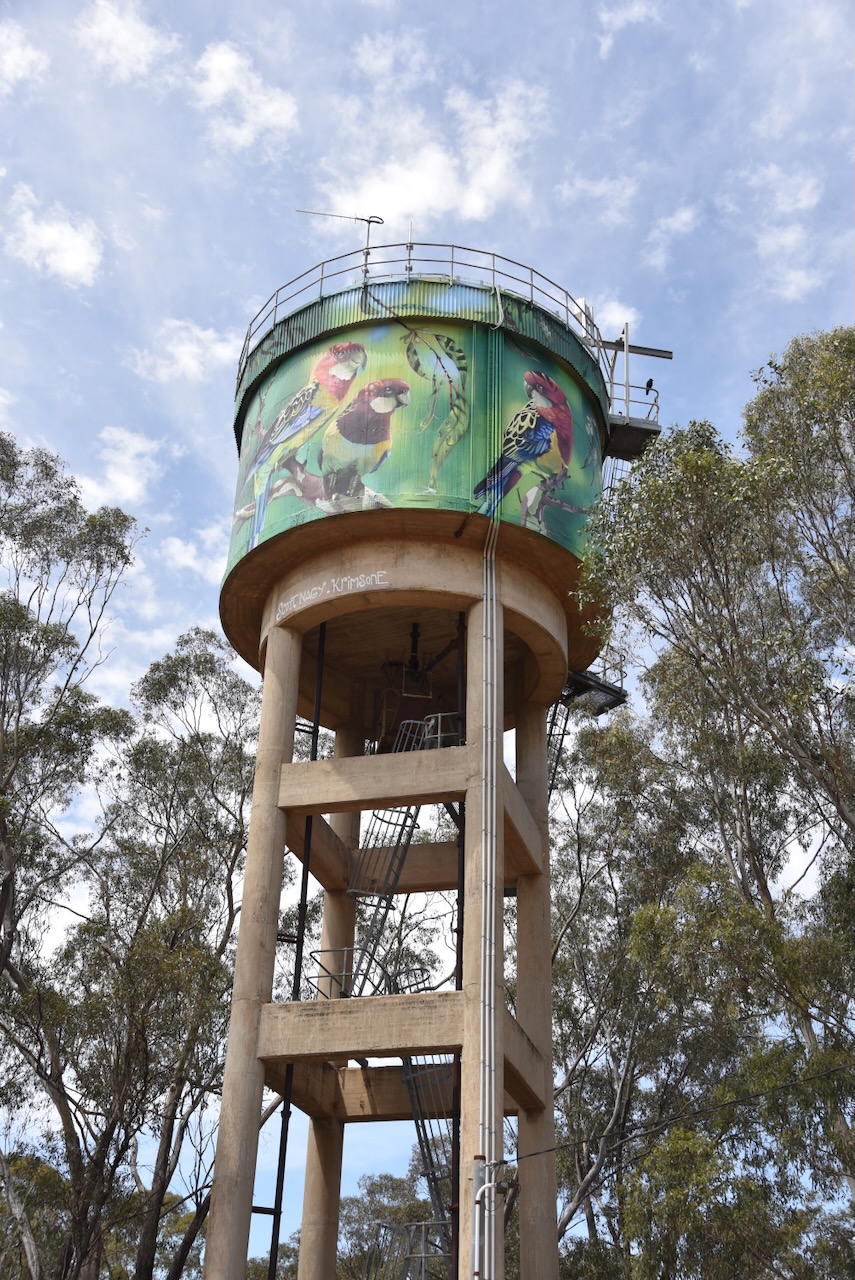
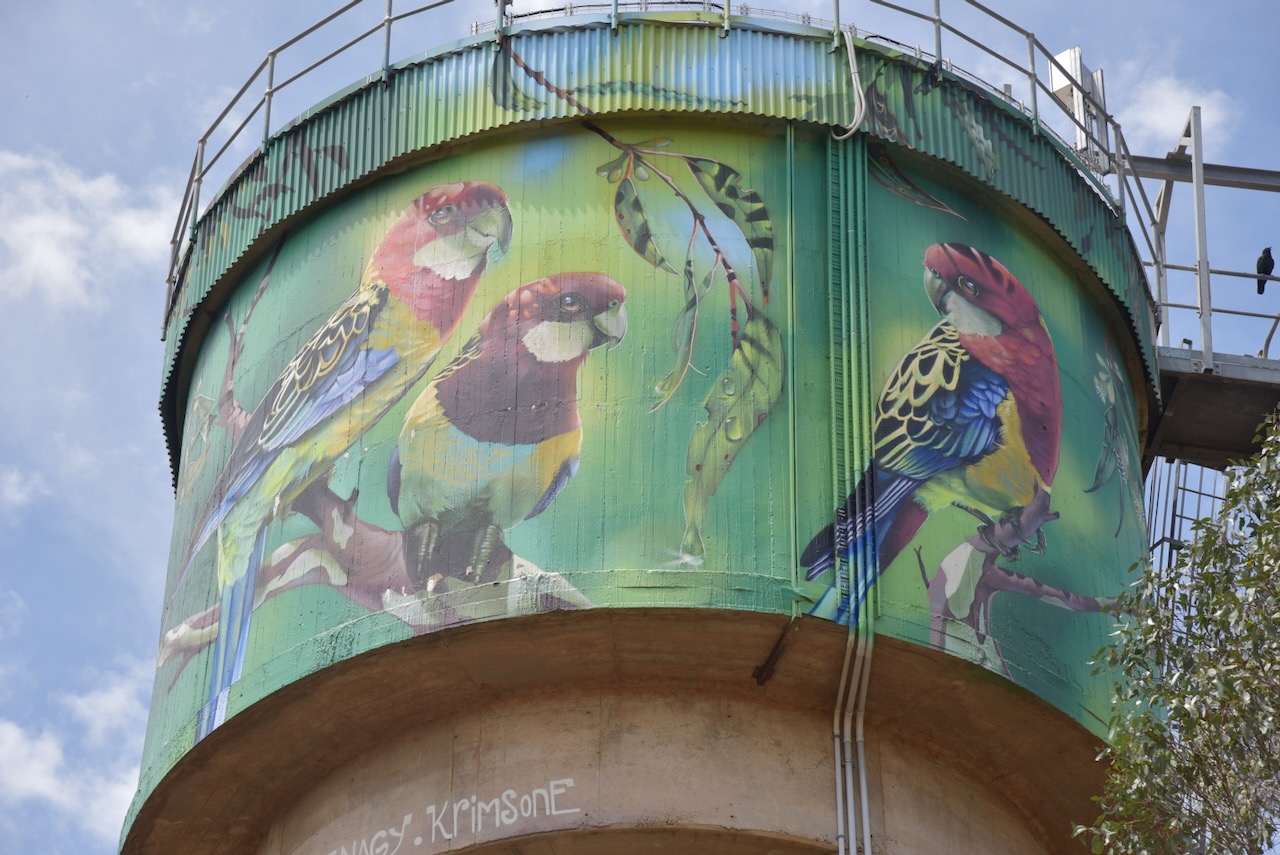
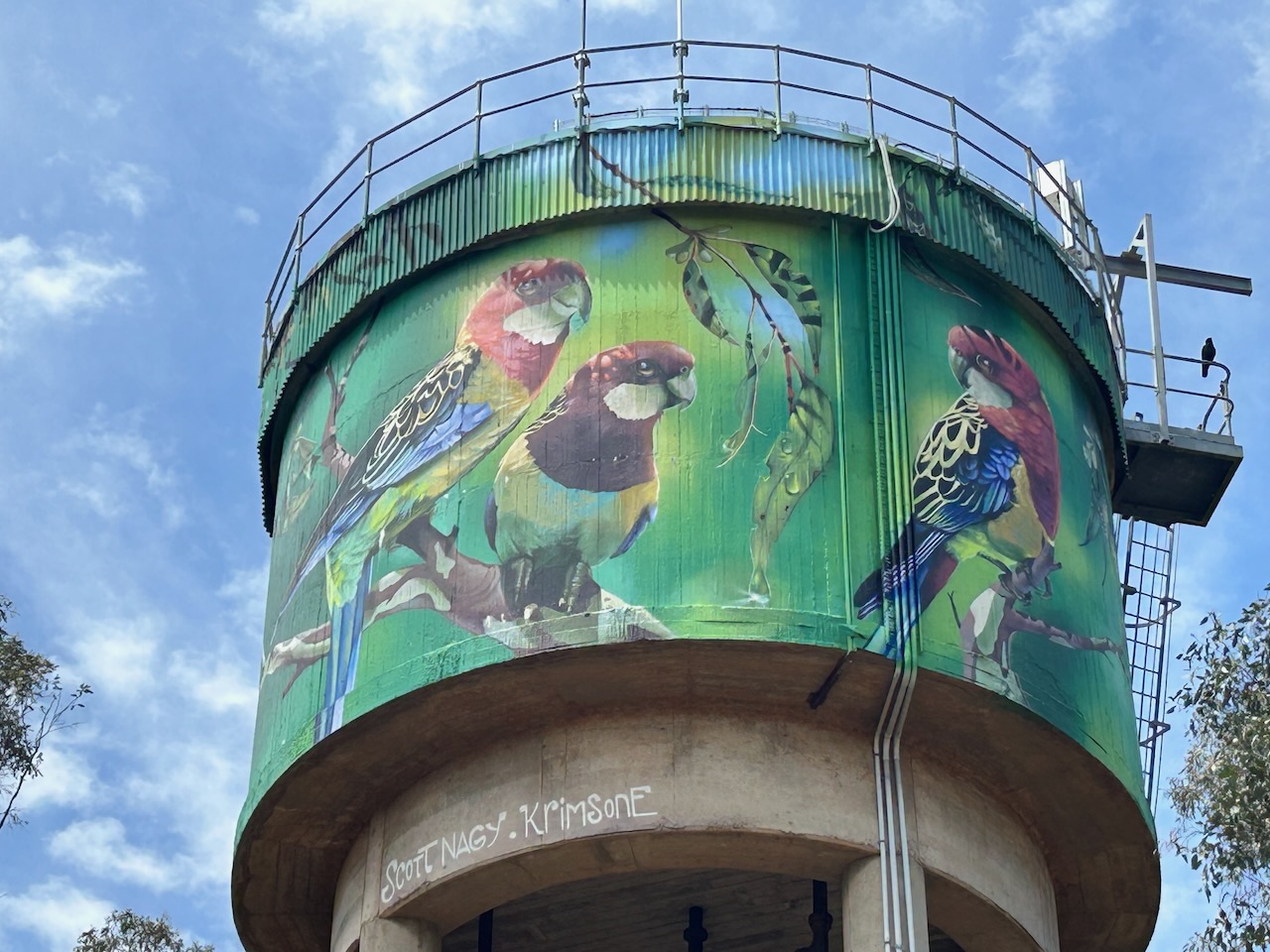
We stopped briefly to have a look again at the Milbrulong water tower tank art project. It was painted by Scott Nagy and Krimsone in May 2020. It features the Eastern Rosella, which is native to the Mibrulong district. (Australiansiloarttrail.com, 2020)
Below is a short video all about the Eastern Rosella.
The Milbrulong silos are operated by GrainCorp. They are located alongside the Oaklands railway line, a branch line of the Main South Line.
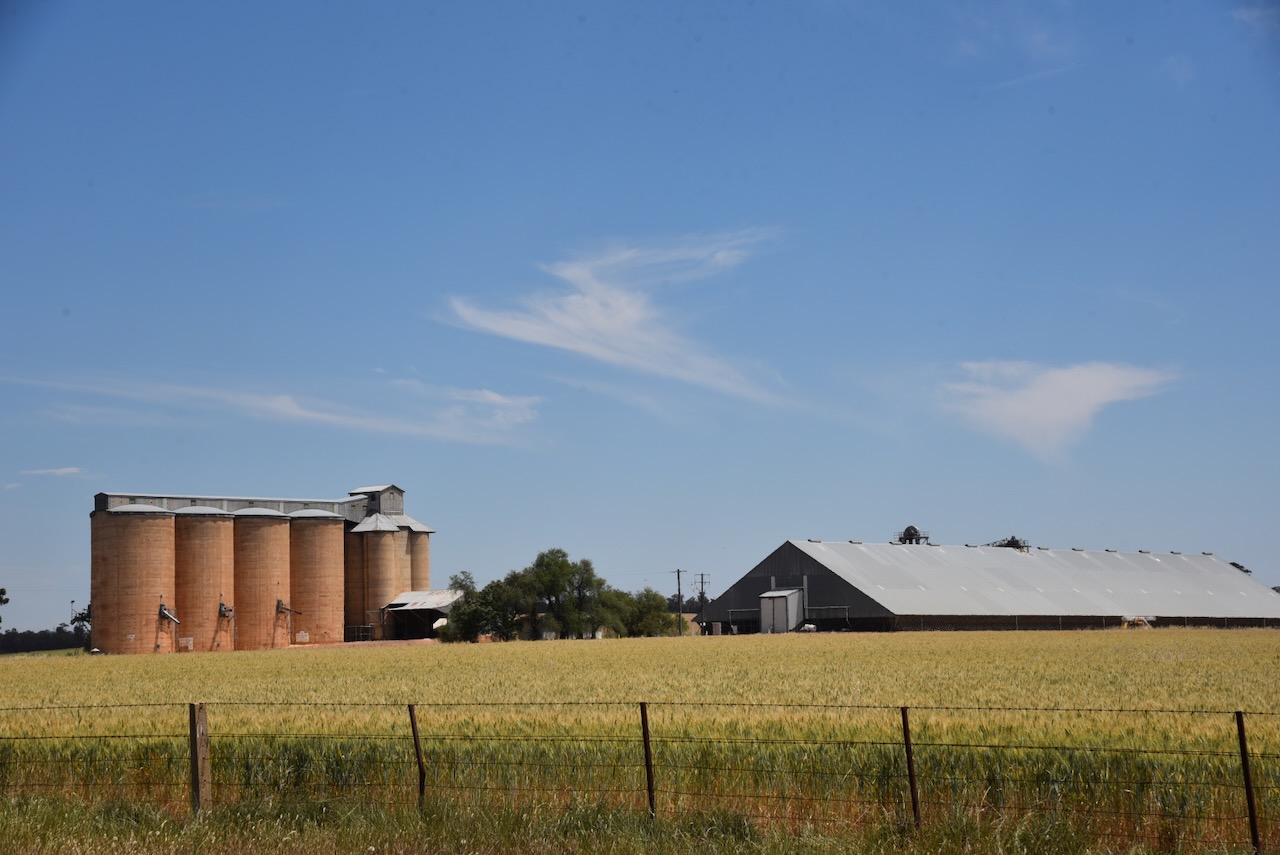
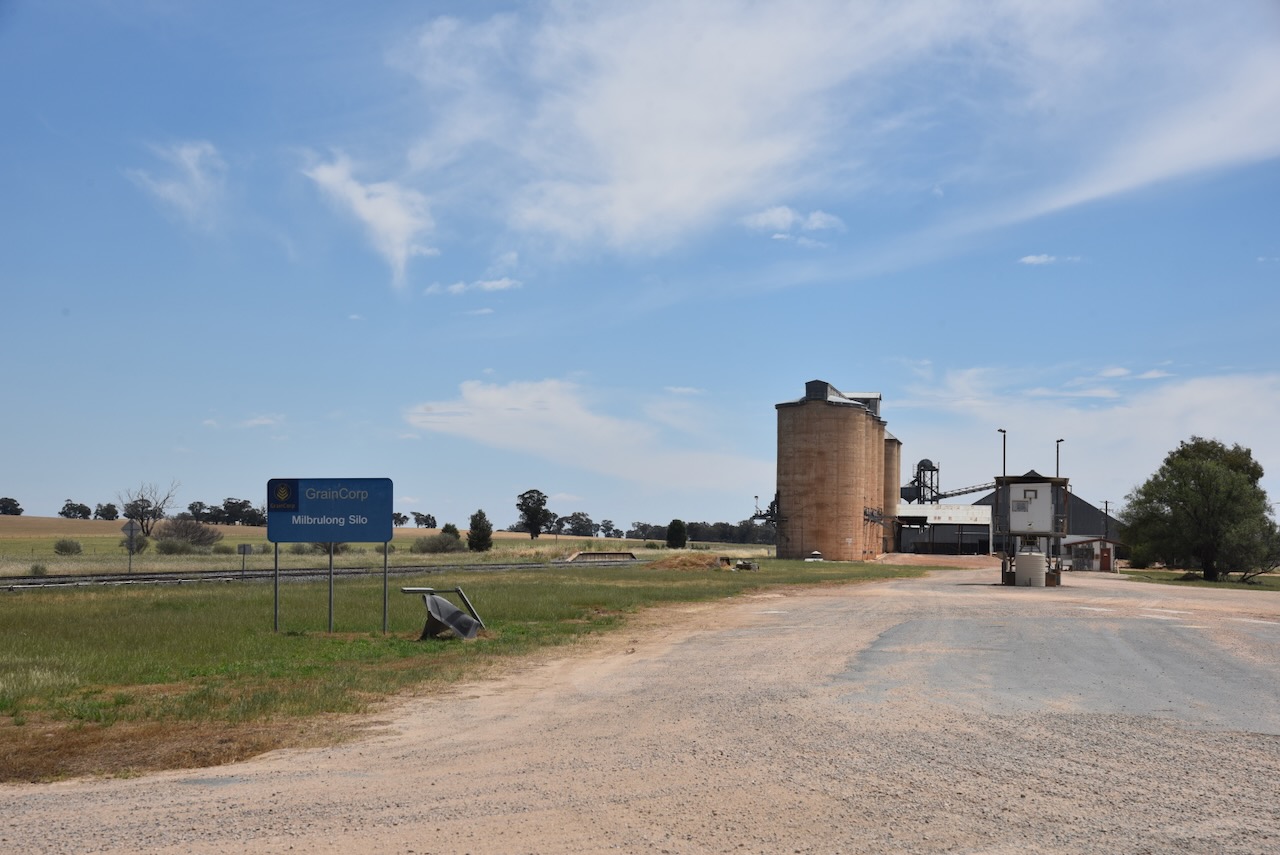
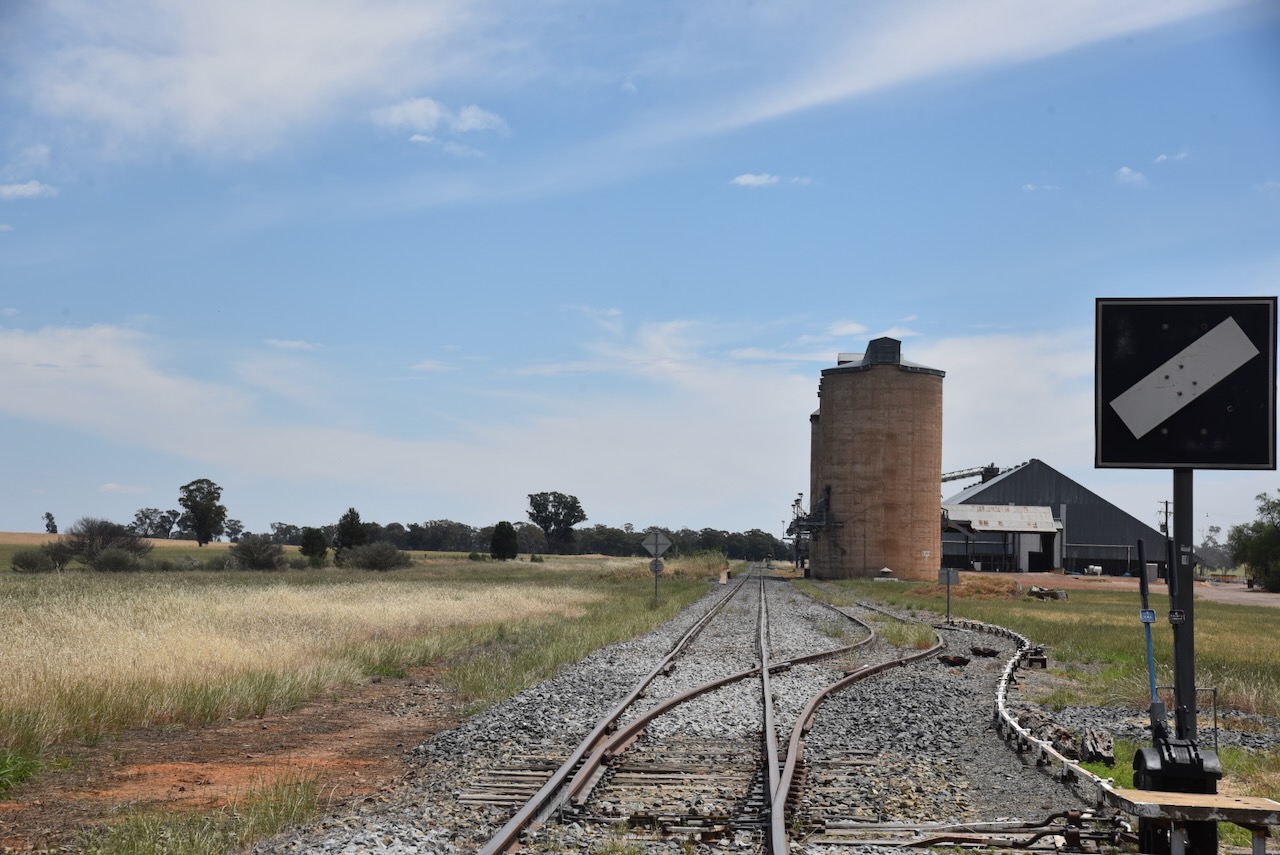
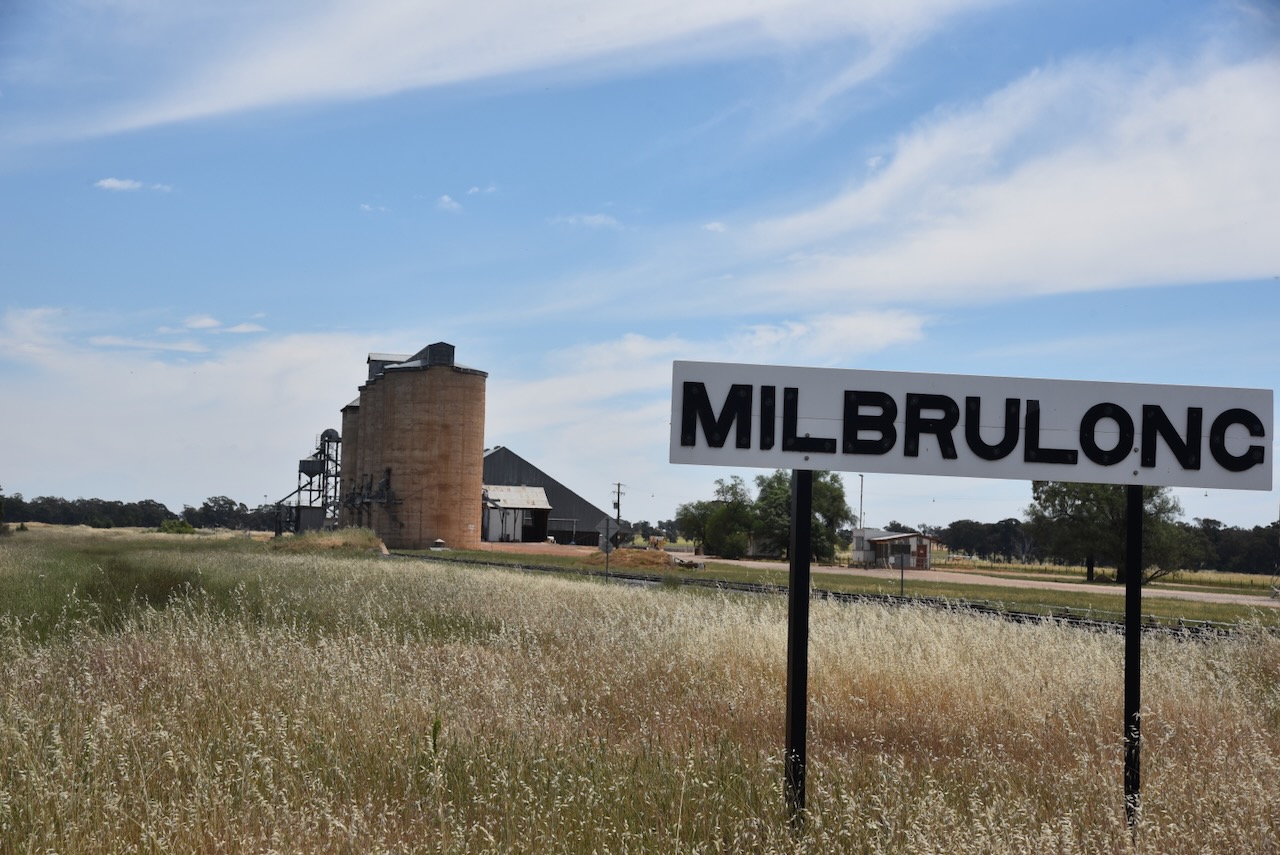
The silos were opened in 1933. (Trove 2026)
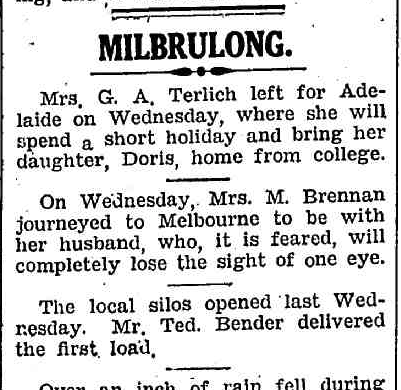
Above: article re the opening of the silos, The Lockhart Review, Tue 5 Dec 1933. Image c/o Trove
I found the article below where an accident occurred at the Milbrulong silo back in 1930.
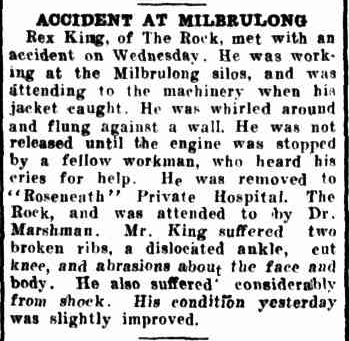
Above: article from the Daily Advertiser, Fri 25 Jul 1930. Image c/o Trove
Marija and I parked alongside the silos. We operated from the 4WD, running the Icom IC7000, 100 watts, and the Codan 9350 with the 1.5 metre stainless steel whip.
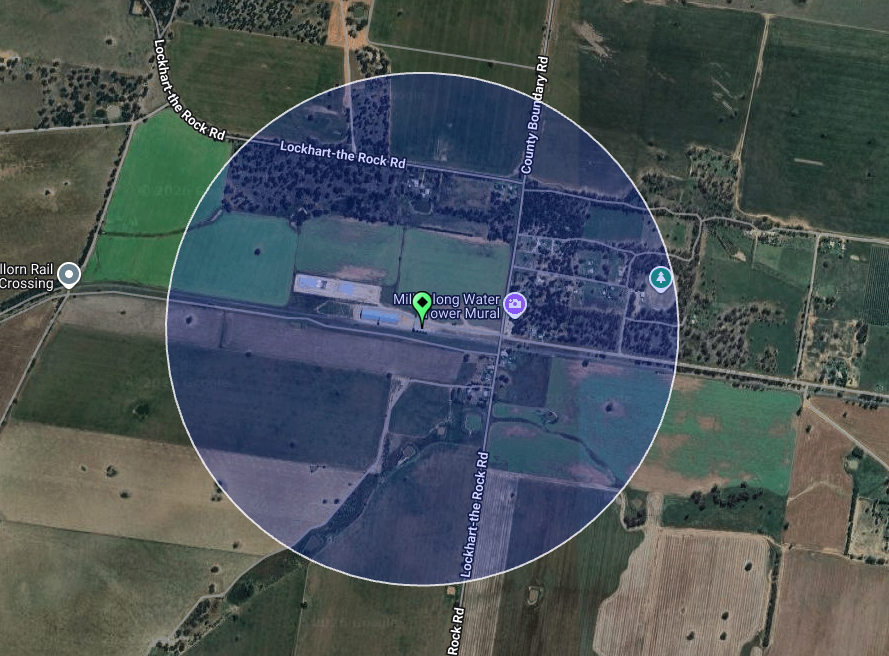
Above: An aerial view of the activation zone at the Milbrulong silo. Image c/o SiOTA website
Marija worked the following stations on 40m SSB:-
I worked the following stations on 40m SSB:-
References.
After packing up at Minjary National Park on Sunday, 2nd November 2026, Marija and I headed back to Gundagai and revisited the Gundagai Visitor Information Centre. We specifically wanted to have a look at Rusconi’s Marble Masterpiece.
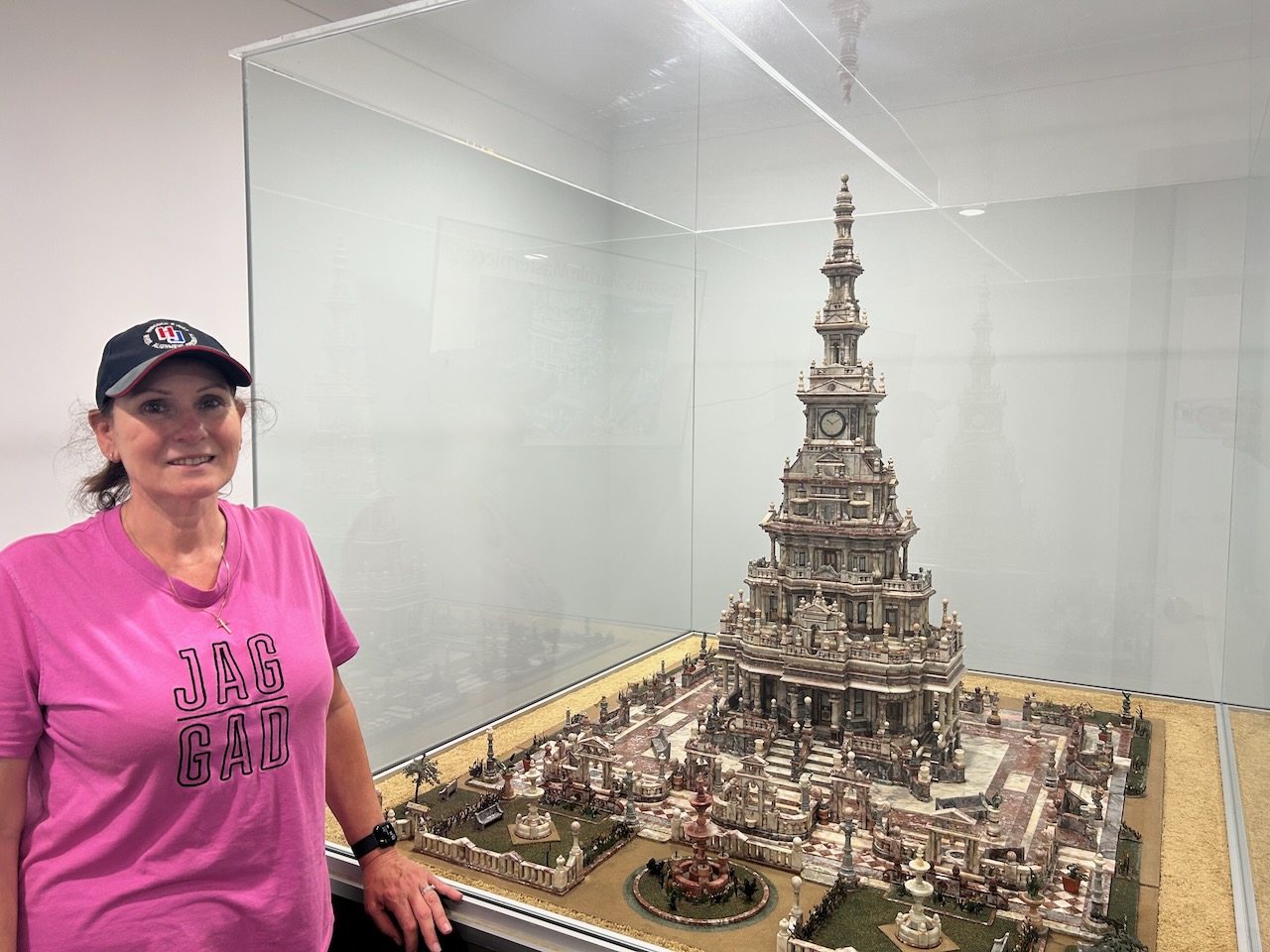
Frank Rusconi was the sculptor of the famous Dog on the Tuckerbox. He also created this absolutely magnificent masterpiece.
Francis Philip ‘Frank’ Rusconi was born on the 20th August 1874 at Bell’s Creek, which is located near Braidwood in New South Wales. His father, Pietro ‘Peter’ Rusconi, was born in 1842 in Switzerland. He was a stonemason and emigrated to Australia in 1865, and in 1869, he married Mary McCarthy. She was born in 1847 at Braidwood, N.S.W. (ancestry 2016) (Kerr 1988)
Frank was only 4 years old when his mother died in 1878, at Braidwood. His father took Frank and his siblings to live in Switzerland to be cared for by his sister. By the age of 15, Frank was an apprentice in the marble trade in Verquinto, Italy. He completed his apprenticeship in Neuchâtel, Switzerland. He then took on the role of ‘foreman interpreter’ with Renard, Fèvre & Co. of Paris and Conblanchien, travelling for work to France, Italy and England. (Kerr 1988)
By early 1901, Frank returned to Australia and established the Borenore marble quarries near Orange, N.S.W. His father and brother Joseph ‘Joe’ worked with him at the quarry, extracting marble which had become popular in the construction of buildings in Sydney. (Kerr 1988)
Four years later, in 1905, he settled in Gundagai, and he established a monumental masonry business. On the 15th day of June 1905, he married Florence Elizabeth Smith, in Bega, N.S.W. Rusconi’s business thrived and his headstones were known for their excellent quality. (ancestry 2016) (Kerr 1988)
In June 1910, Rusconi commenced collecting different marble from around New South Wales. He used these to create the Marble Masterpiece. (Kerr 1988) (Trove 2026)
In June 1923, whilst cutting a piece of wood, Rusconi suffered a serious eye injury. A wood chip flew up and struck his right eye, which burst the eyeball and pupil. As a result of the accident, Rusconi lost sight in his right eye. (Kerr 1988)
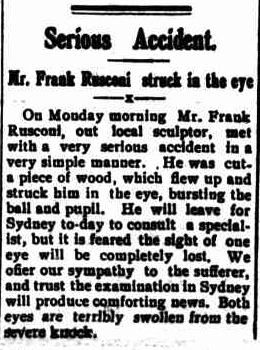
Above: article from The Gundagai Times, Tue 19 Jun 1923. Image c/o Trove
In 1932, Rusconi was contracted to create the bronze sculpture of the Dog on the Tuckerbox, which is his best-known work. (Kerr 1988)
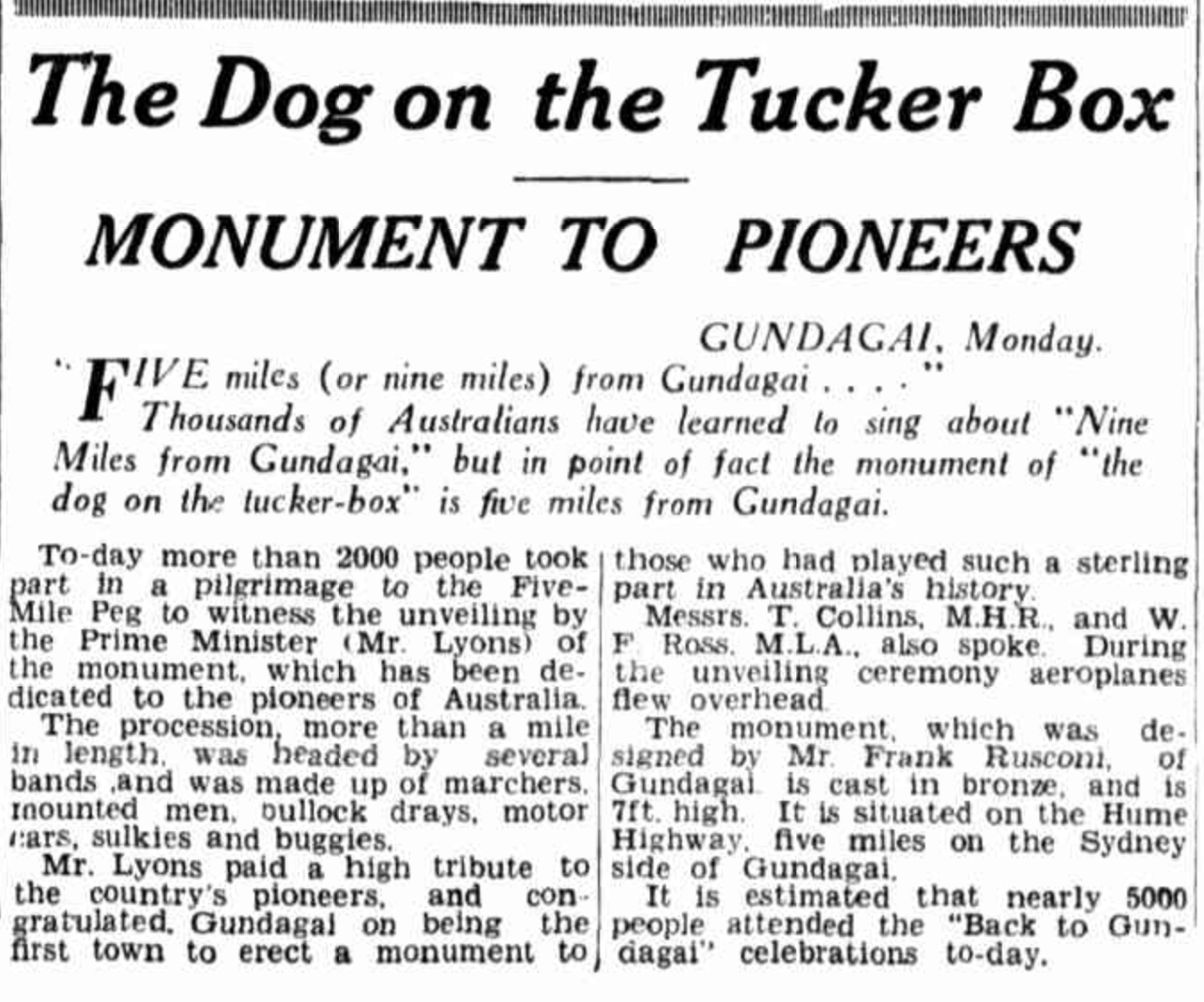
Above: article from The Sun, Mon 28 Nov 1932. Image c/o Trove
The Marble Masterpiece was completed in November 1937. The Tumut and Adelogn Times reported: “An illustration, or a word-picture fails to describe the magnificence of this work of meticulous accuracy.”(Trove 2026)
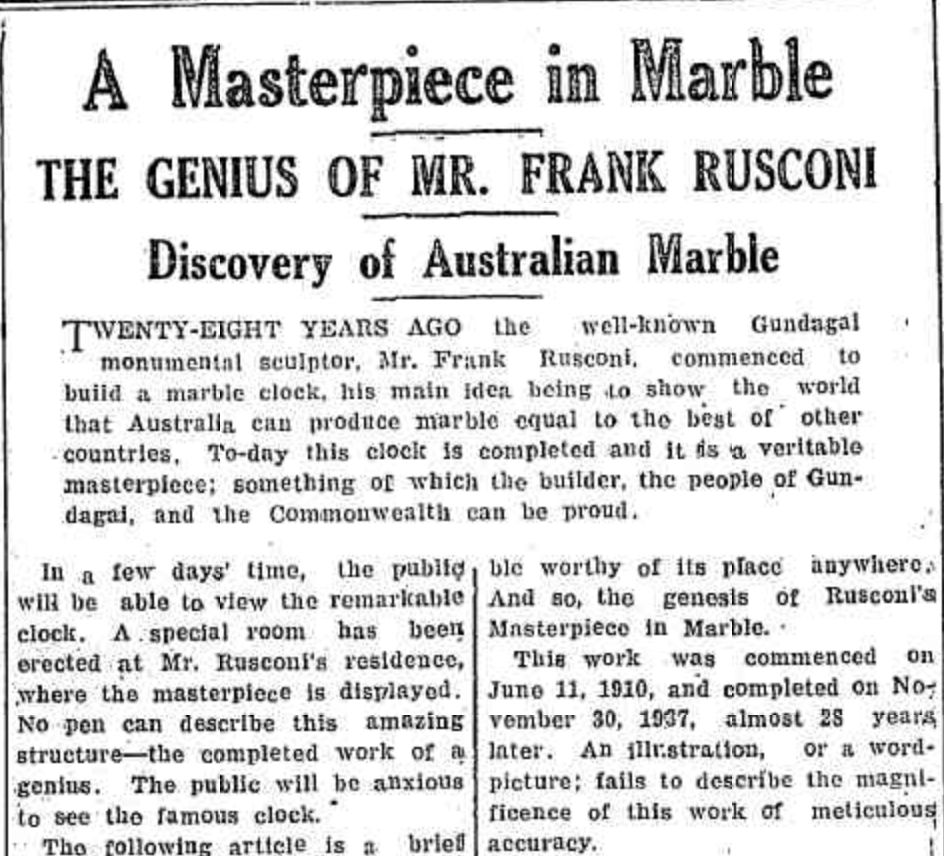
Above: article from The Tumut & Adelong Times, Tue 18 Oct 1938. Image c/o Trove
In his latter life, he experienced severe arthritis and was unable to carve marble. Instead, he made small plaster souvenirs for tourists visiting the Dog on the Tuckerbox. (Kerr 1988)
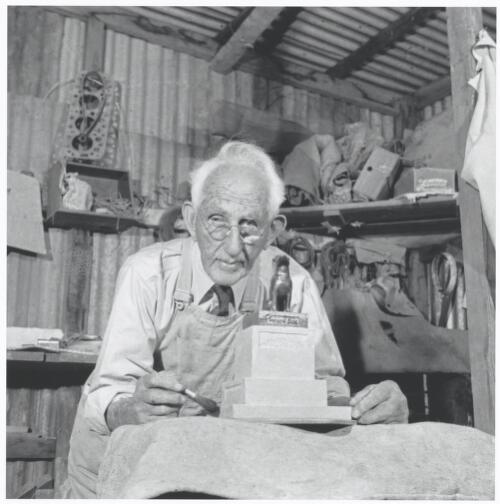
Above: Frank Rusconi. Image c/o National Library of Australia
Frank died on the 21st day of May 1964 at Cootamundra, aged 90 years. He is buried in the Catholic section of the Gundagai Cemetery. (ancestry 2016) (Kerr 1988)
The Marble Masterpiece is a 1.2 metre (4-foot) high model of an imaginary Baroque Italian palace. No plans were used. It consists of 20,948 pieces from 20 different varieties of marble, and after 28 years of work, was completed in 1938. (Kerr 1988) (Marble 2020)
Prior to the Masterpiece being placed on display at the Visitor Centre, it was on display in a room at the Royal Hotel in Gundagai. (Trove 2026)
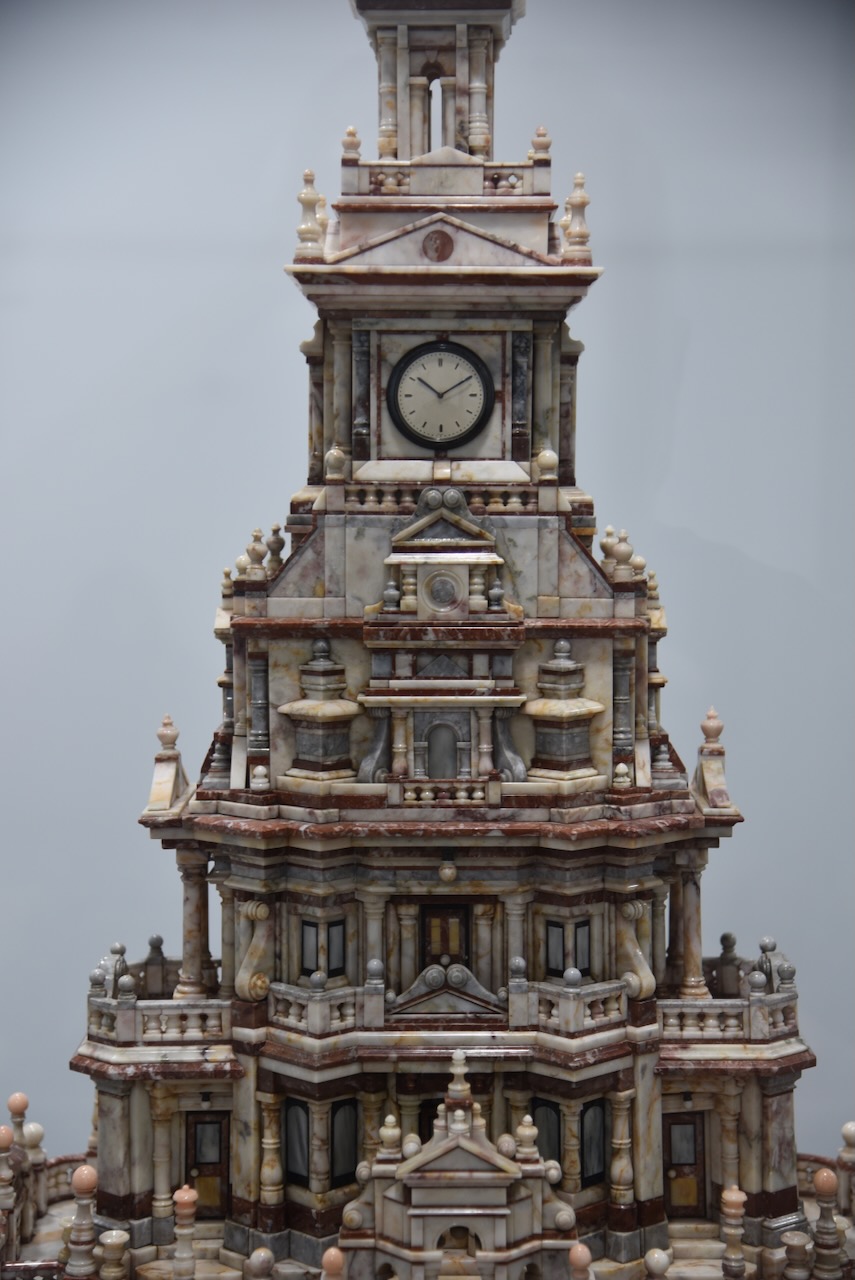
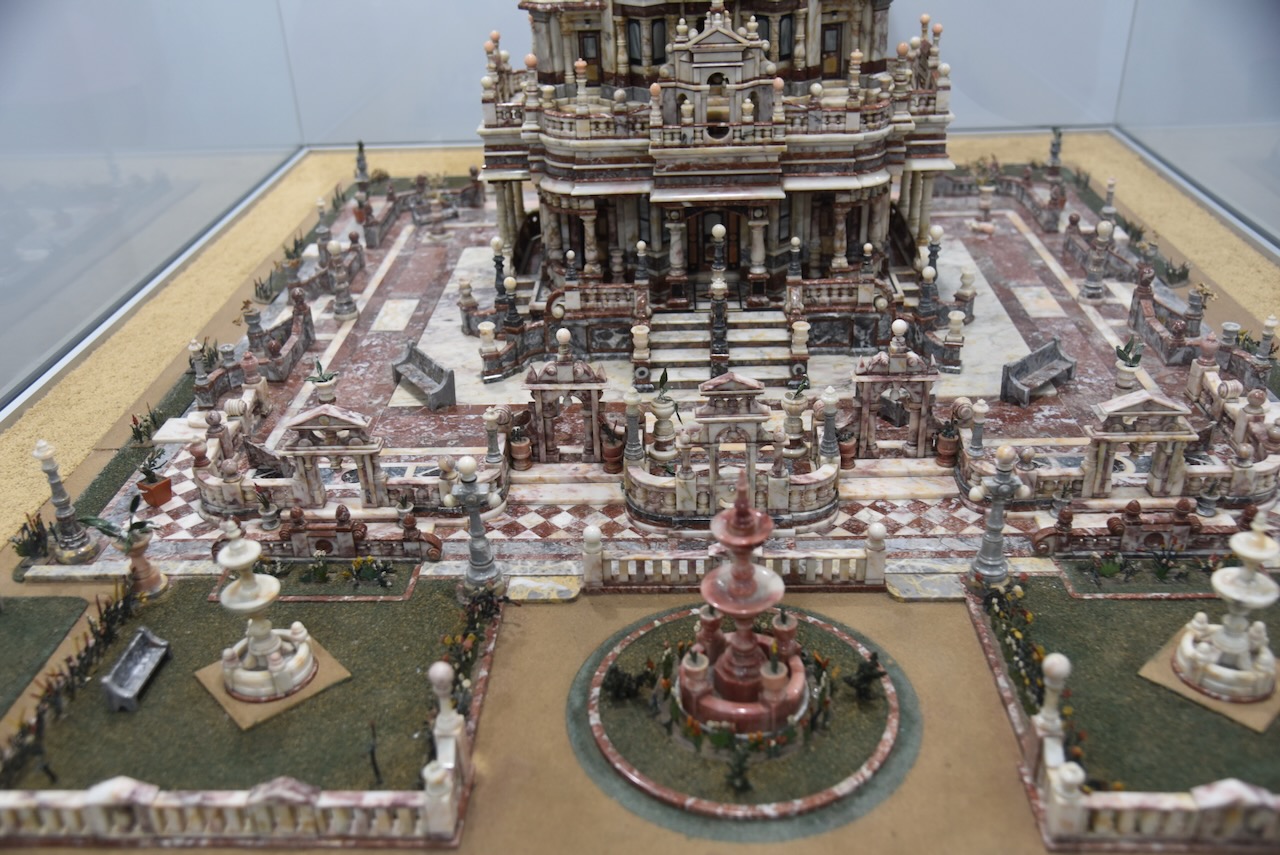
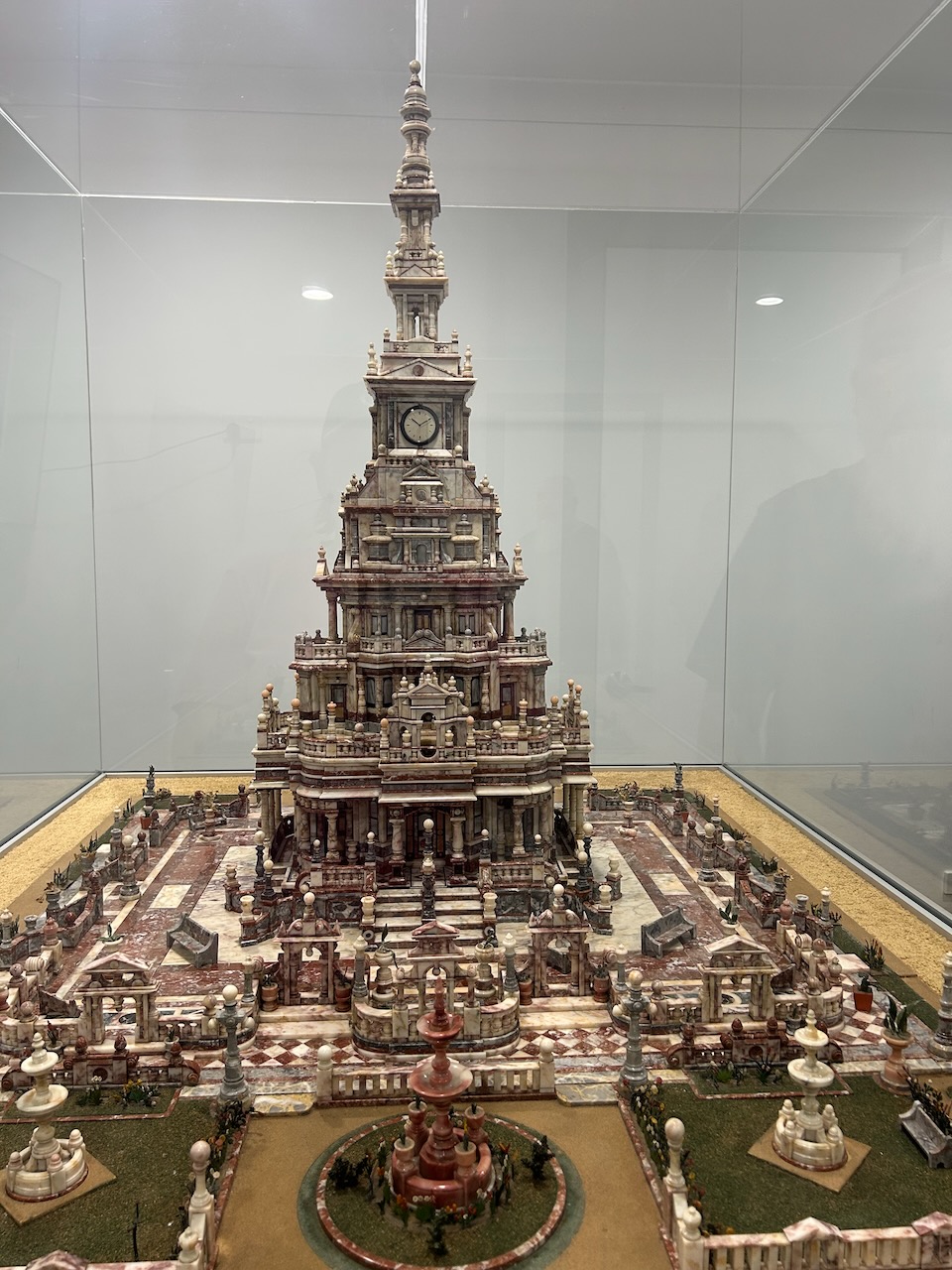
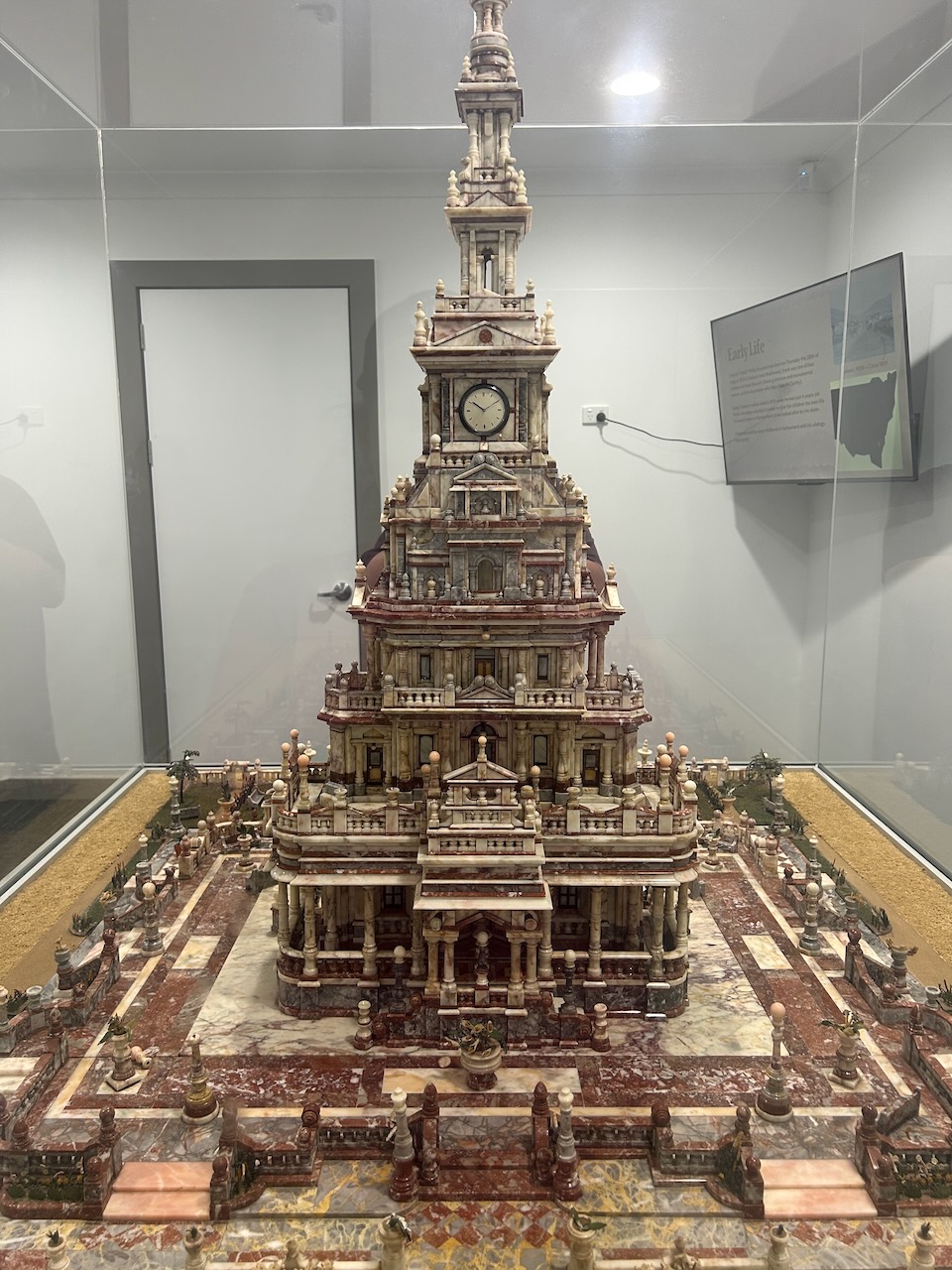
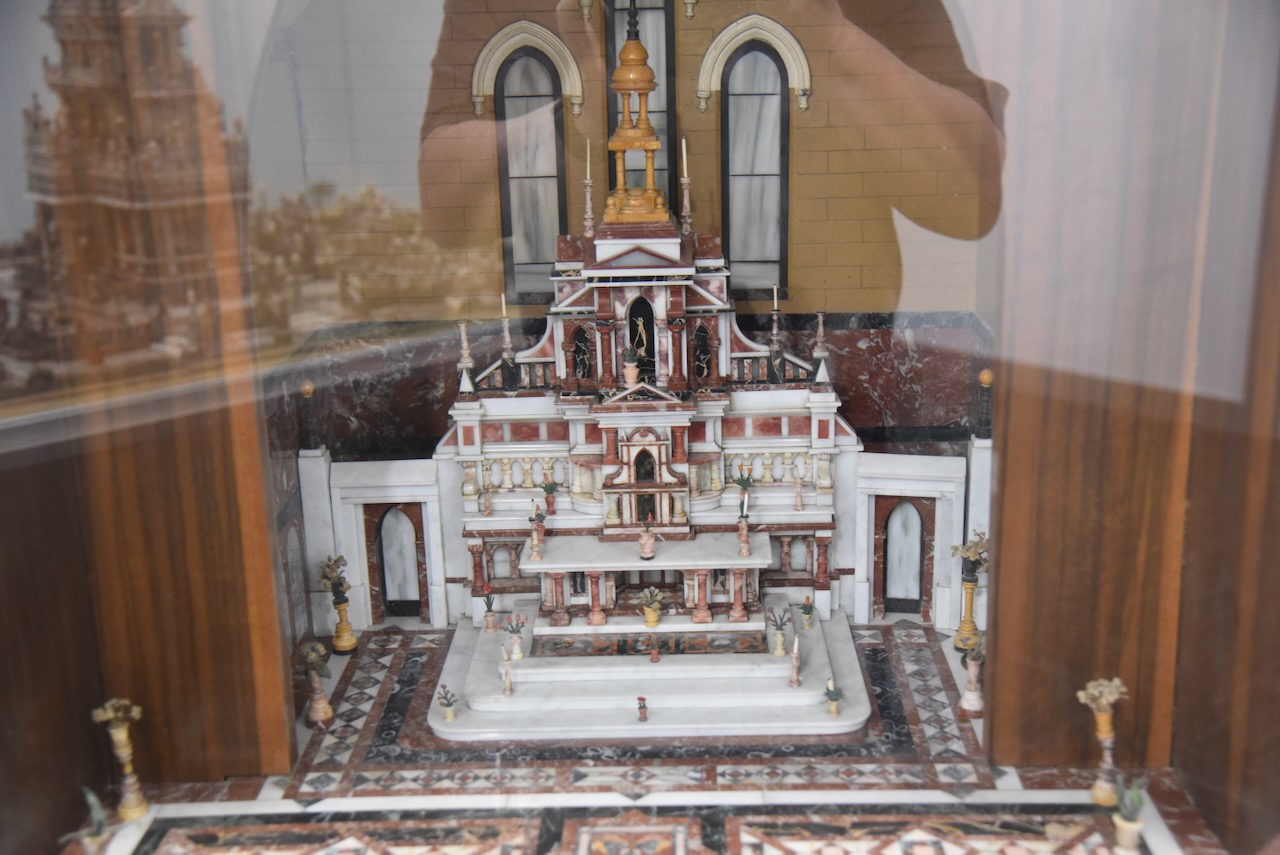
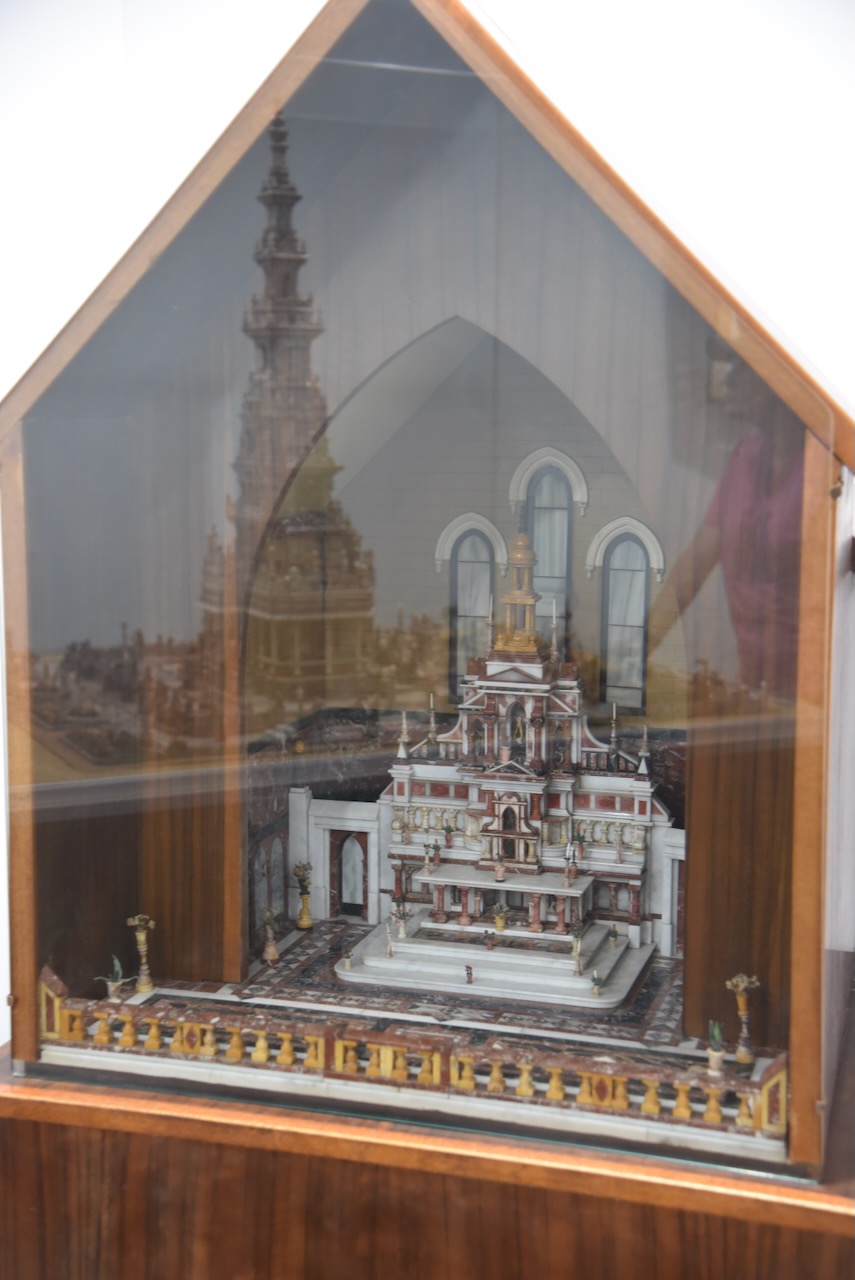
Also at the display is a detailed miniature marble model of the altar at St Marie’s Cathedral near Paris, France. No specialised equipment was used to create the miniature. Rusconi used basic marble worker’s tools and an old lathe, which was made from a discarded sewing machine. (Kerr 1988) (Marble 2020) (Trove 2026)
It was time for us to leave Gundagai and head to Jerilderie. We had spent 3 very enjoyable nights in Gundagi and can highly recommend a visit to this historic town. There are so many things to see and do.
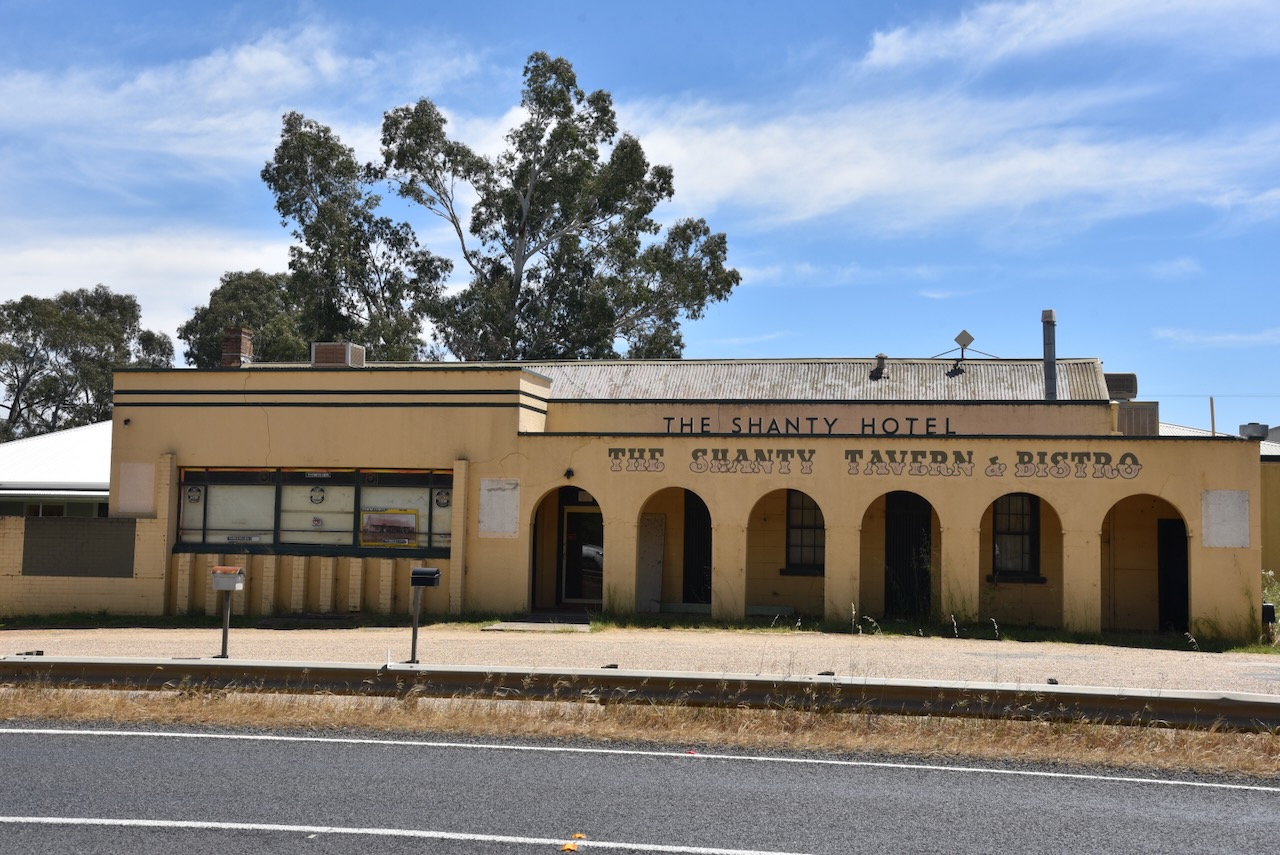
Along the way we stopped to have a look at the historic Shanty Hotel on the Sturt Highway at Alfredtown near Wagga Wagga.
Mary Ryan was born in 1822 in Queens County, Ireland. She emigrated to Australia in the late 1850s with her 4 sons and 3 daughters. She settled at Alfredtown and named their property ‘Glandore’. Her daughter, Ellen married Patrick Rogers in 1865. Patrick built the hotel in 1868. It was known as the Prince Alfred Hotel. On the 10th day of May 1955, the name of the hotel was changed to the Shanty Hotel as this was the hotel’s common nickname. Sadly, this is another closed hotel. Its last trading day was 26th April 2009. (Burch 2018) (Nsw.gov.au 2026)
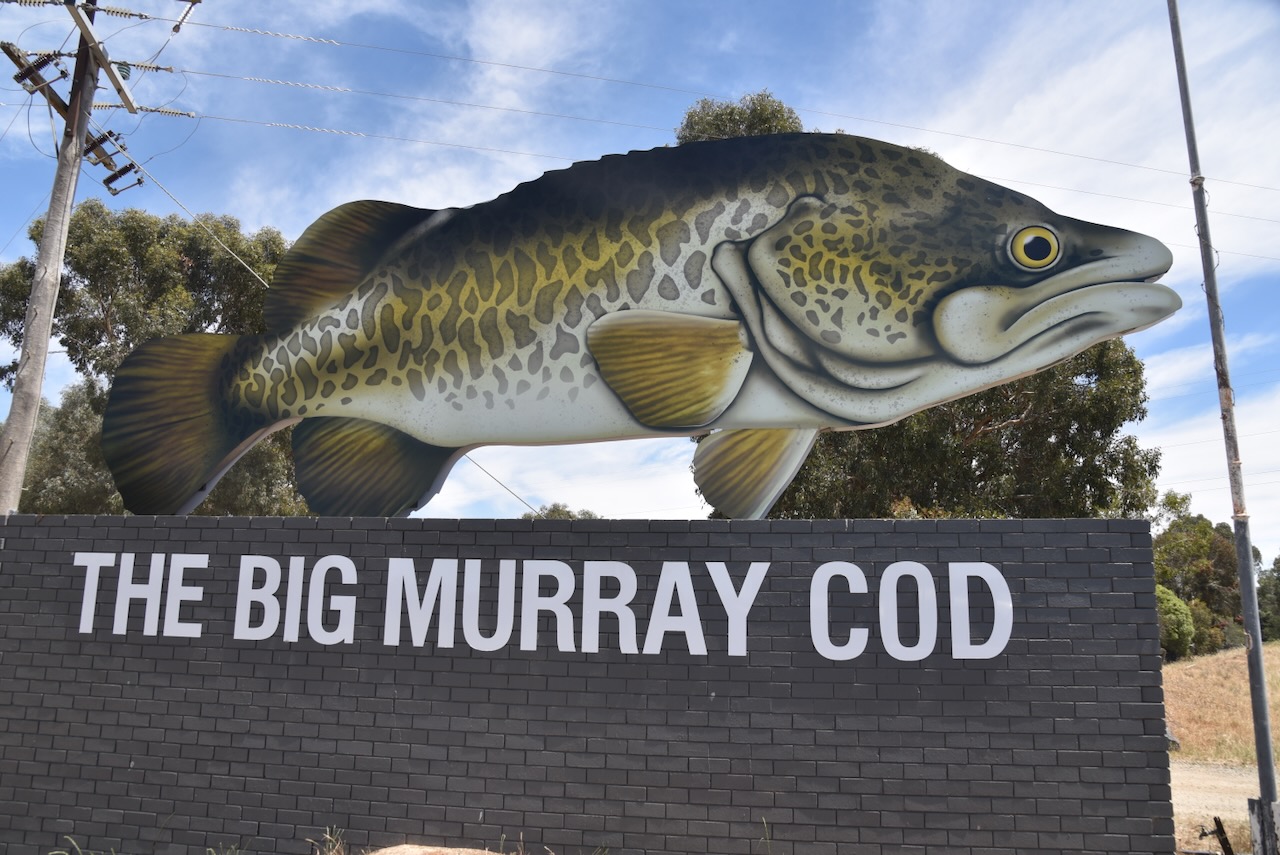
We then stopped briefly at the Big Murray Cod sign on the Sturt Highway on the eastern side of Wagga Wagga. It was initially located at the Murray Cod Hatcheries and Fauna Park in 1975. The park closed in 1995, at which time the Cod fell into disrepair. Following the purchase of the property, the Cod was restored to its current excellent condition. (About Regional n.d.)
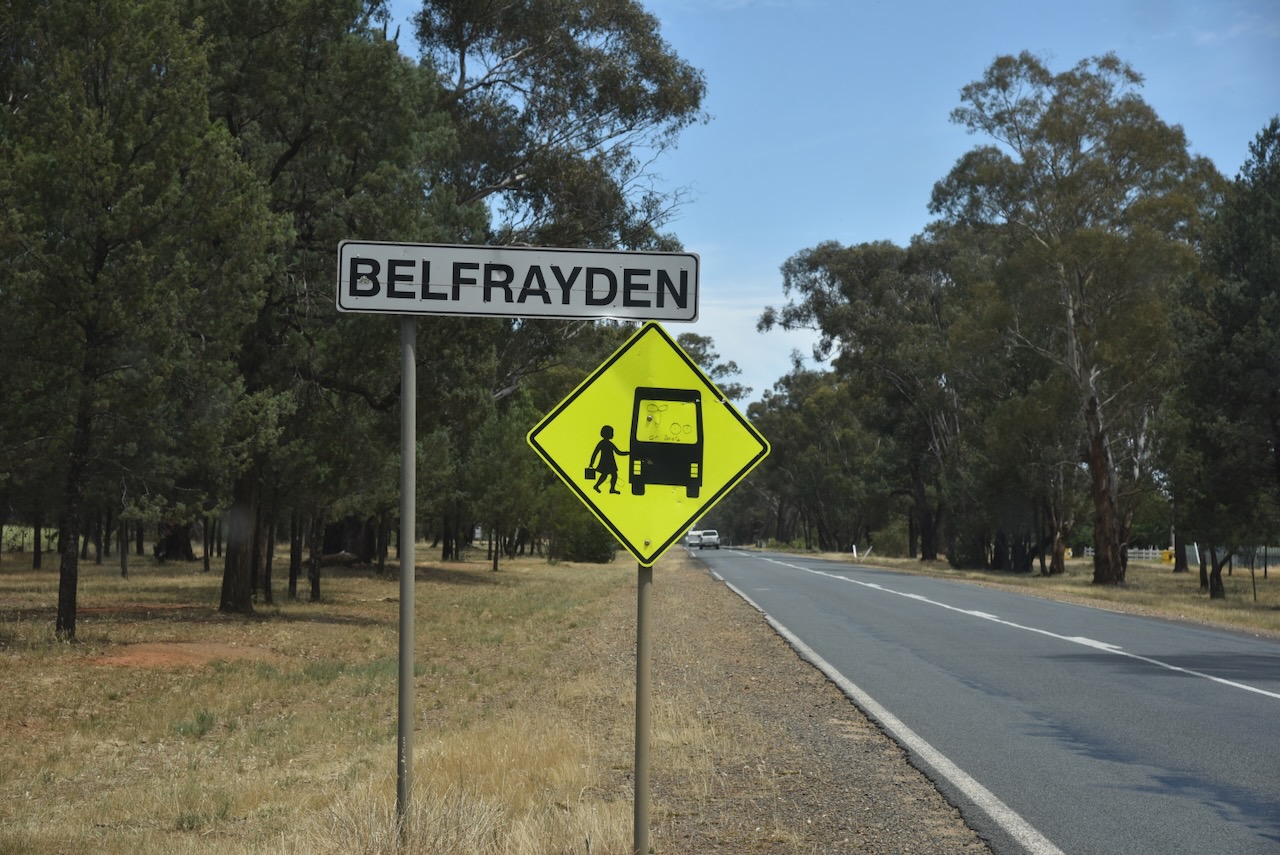
We continued on to the little town of Belfrayden, west of Wagga Wagga on Lockhart Road. It is a tiny town with just a handful of homes.
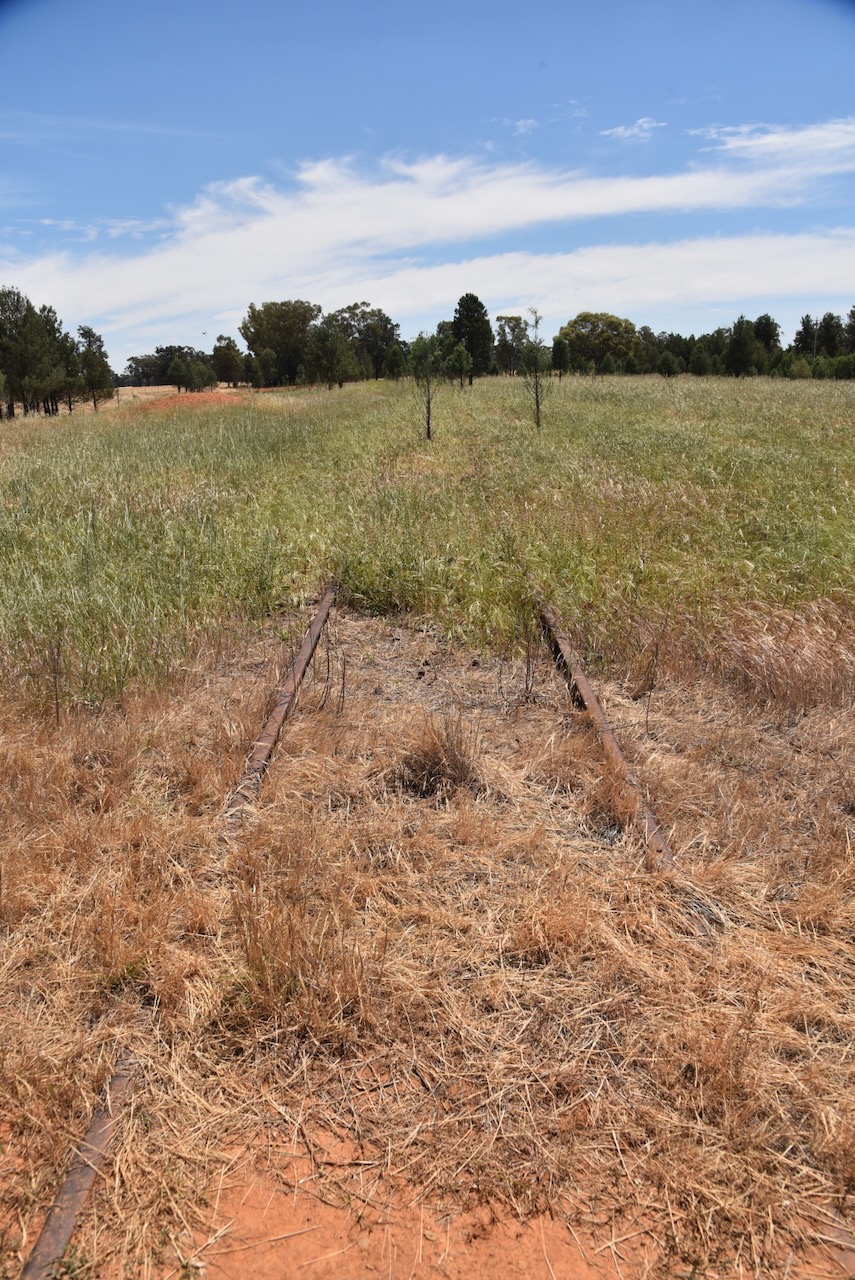
The Belfrayden silo is located on Andrews Road, alongside the old Kywong railway line. The Kywong branch line was built in 1928 to service the wheat crops in the southern parts of New South Wales. It extended from Uranquinty to Kywong. The line closed on 1988. The Belfrayden railway station closed in 1976. (Nswrail.net 2026)
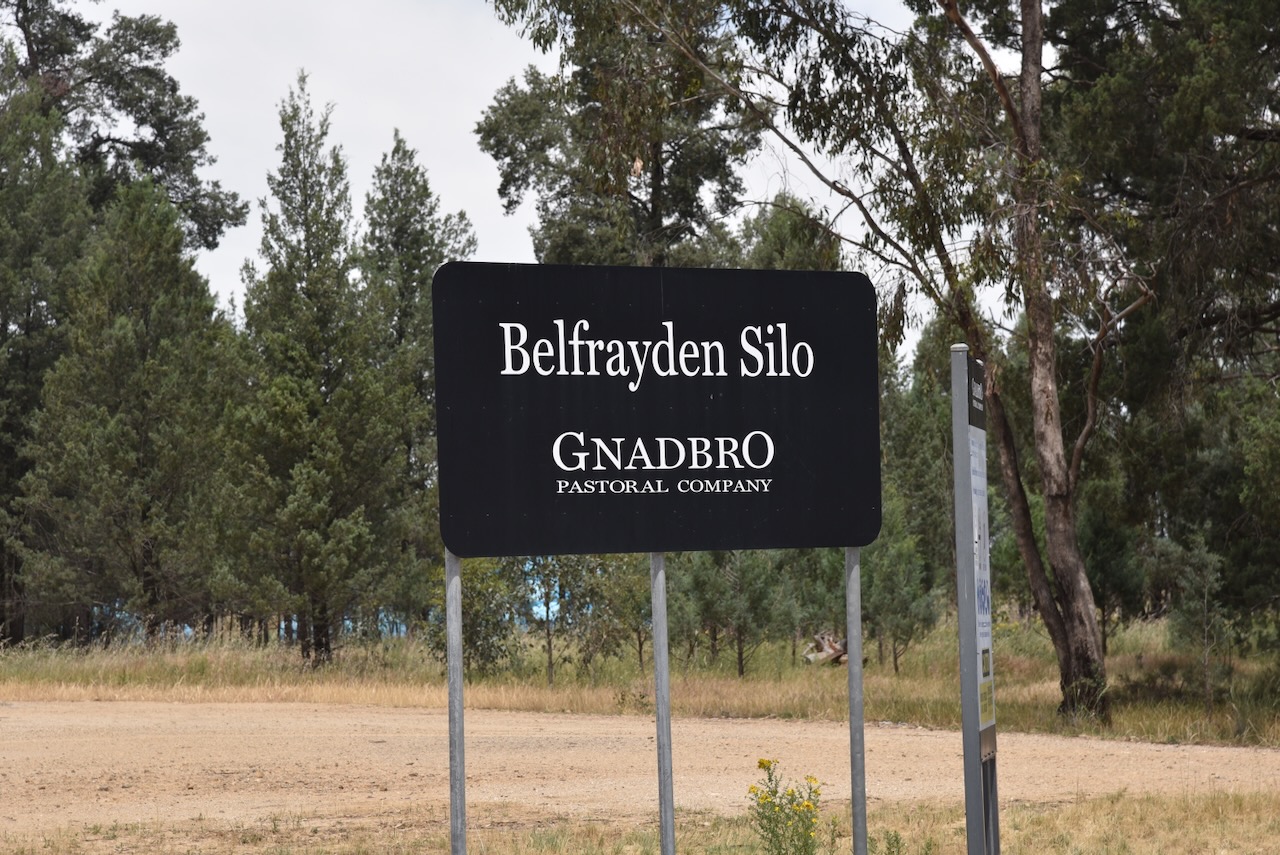
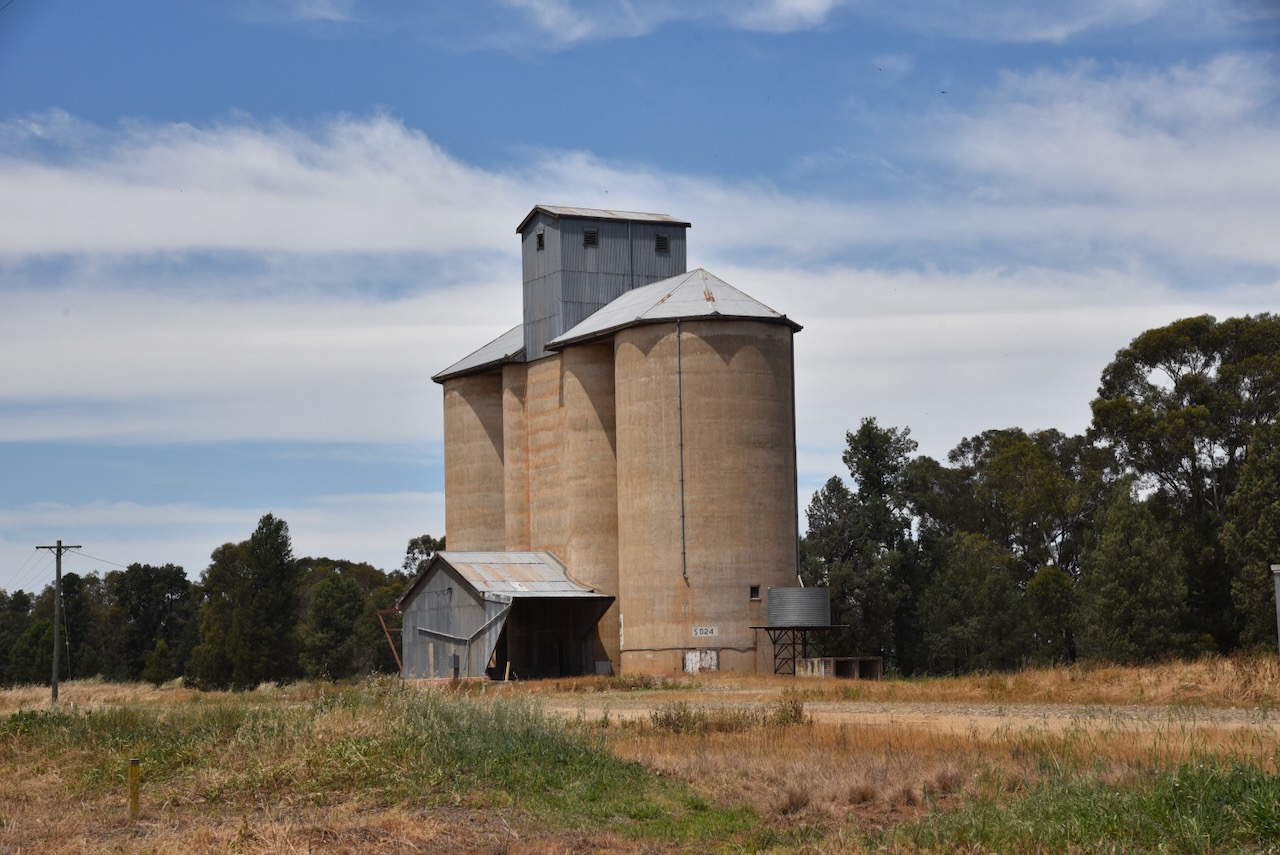
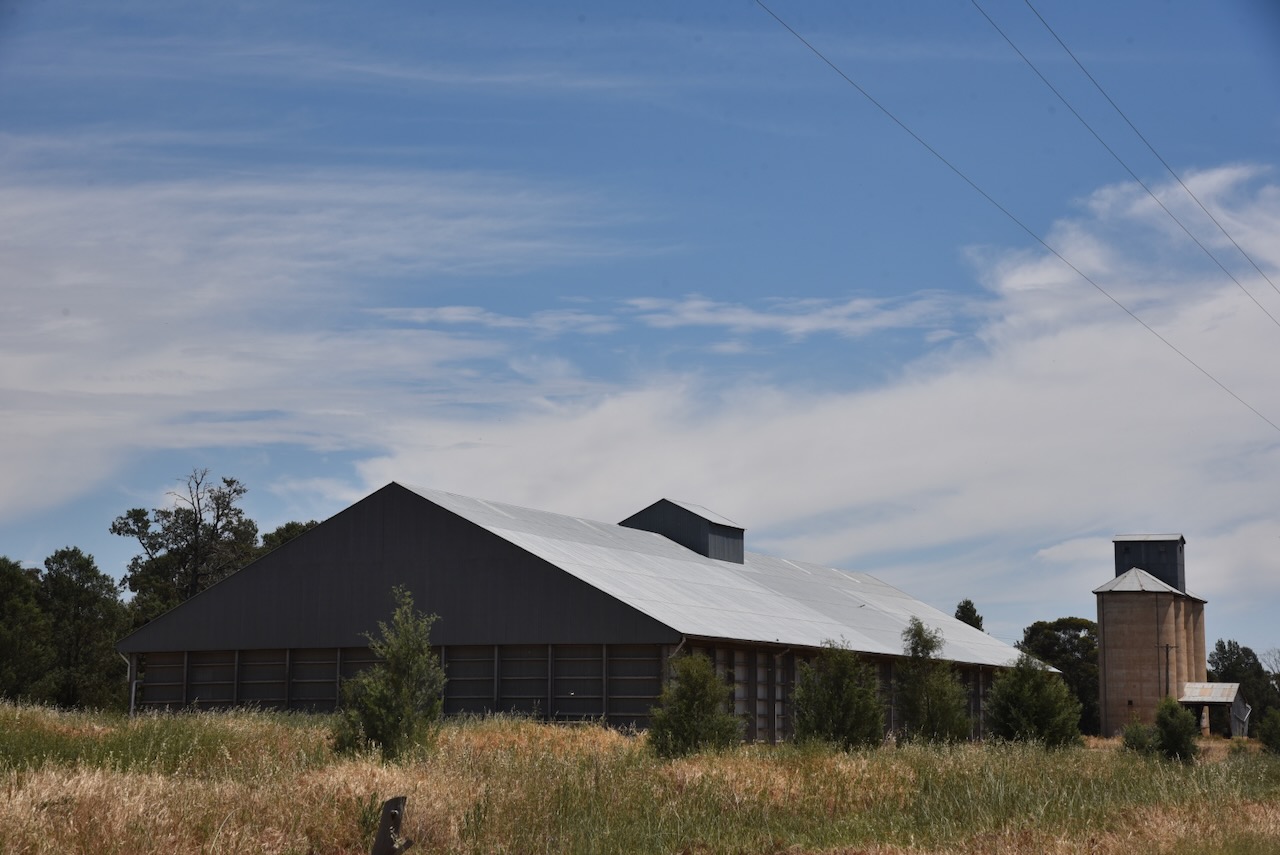
Marija and I set up alongside the silos and operated from the 4WD. We ran the Icom IC-7000, 100 watts, and the Codan 930 antenna with the 1.5 metre stainless steel whip.
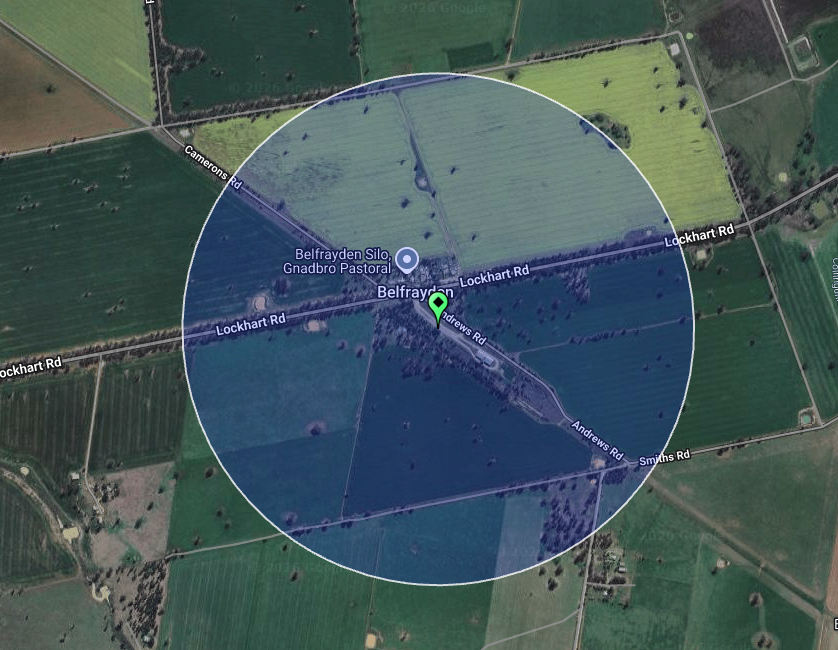
Above: the activation zone at Belfrayden silo. Image c/o SiOTA website
Marija worked the following stations on 40m SSB:-
I worked the following stations on 40m SSB:-
References.
Our first activation for Sunday, 2nd November 2026, was the Minjary National Park VKFF-0319. The park is located about 30 km south of Gundagai in New South Wales.
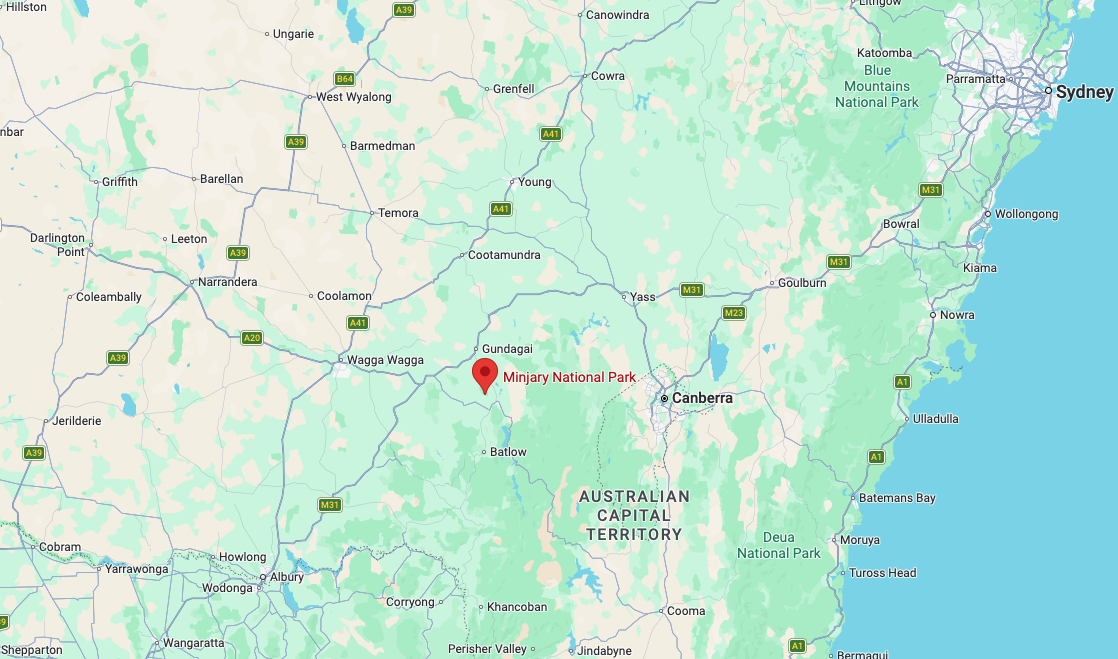
Above: Map showing the location of Minjary National Park. Map c/o Google Maps
The park is not signposted from any major road, and the park is not widely promoted. We attempted to reach the park via Meadow Creek Road, which runs off Gocup Road, but we struck a ‘Private Property Keep Out’ sign, and we decided not to venture any further.
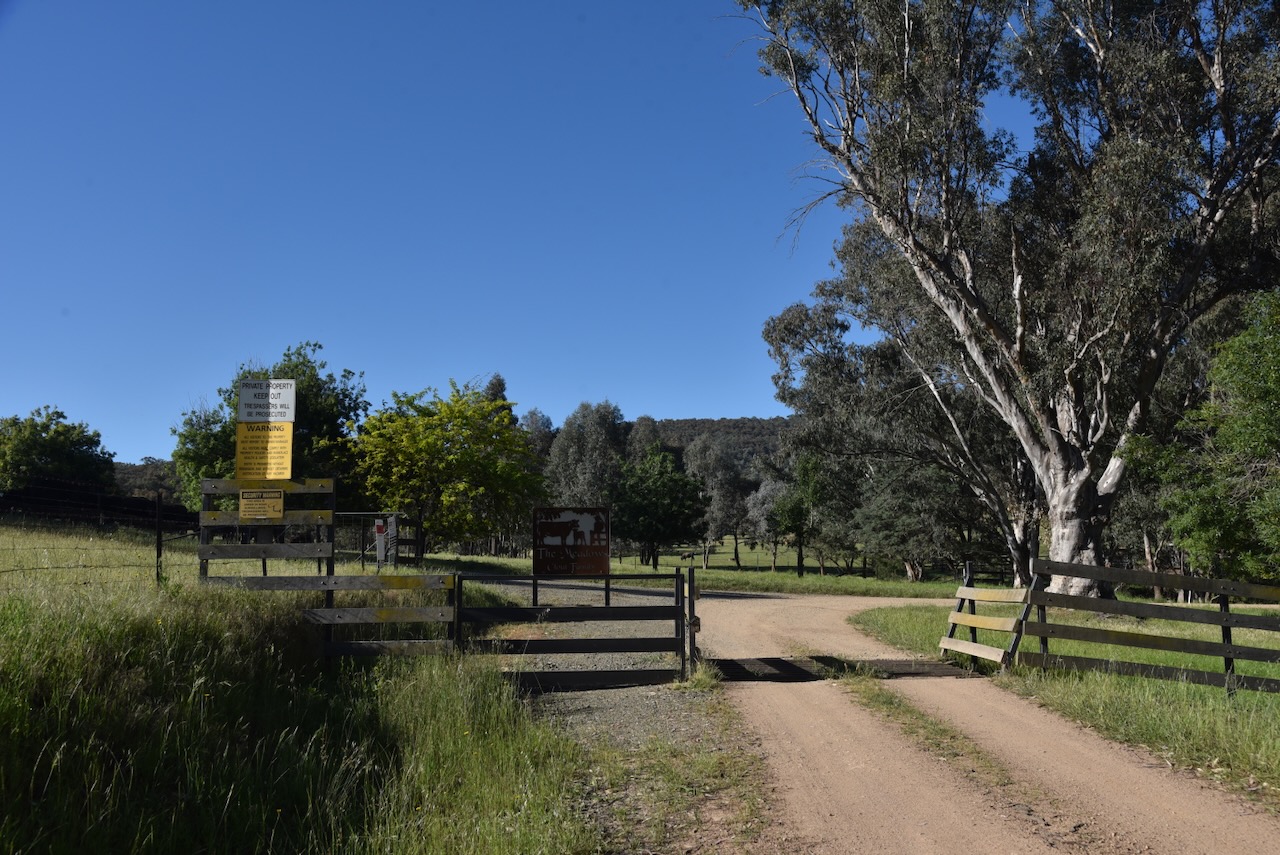
We got very close and could see the park, but we respected the sign and turned back.
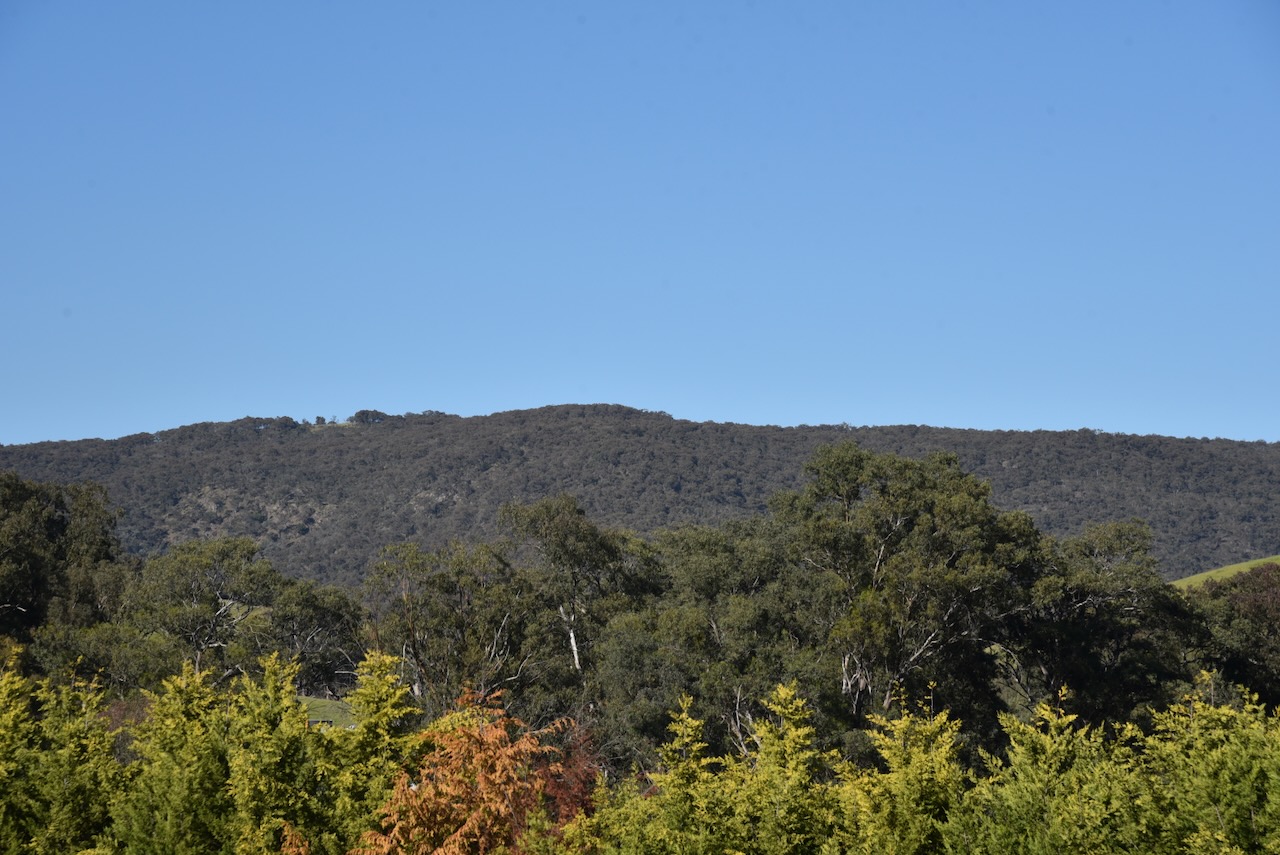
We received some advice from a local that if we headed back along Gocup Road to McGrath Trail, we could access the park via that road.
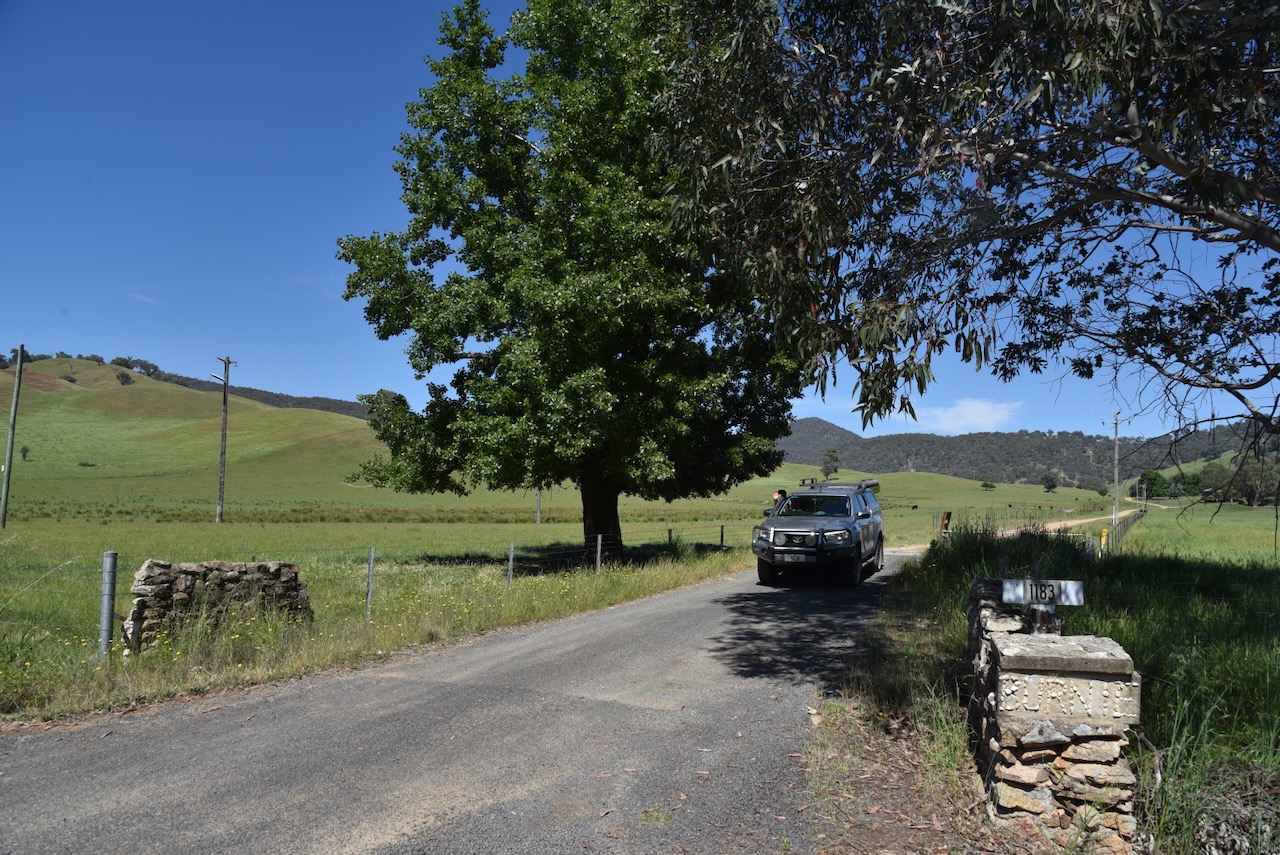
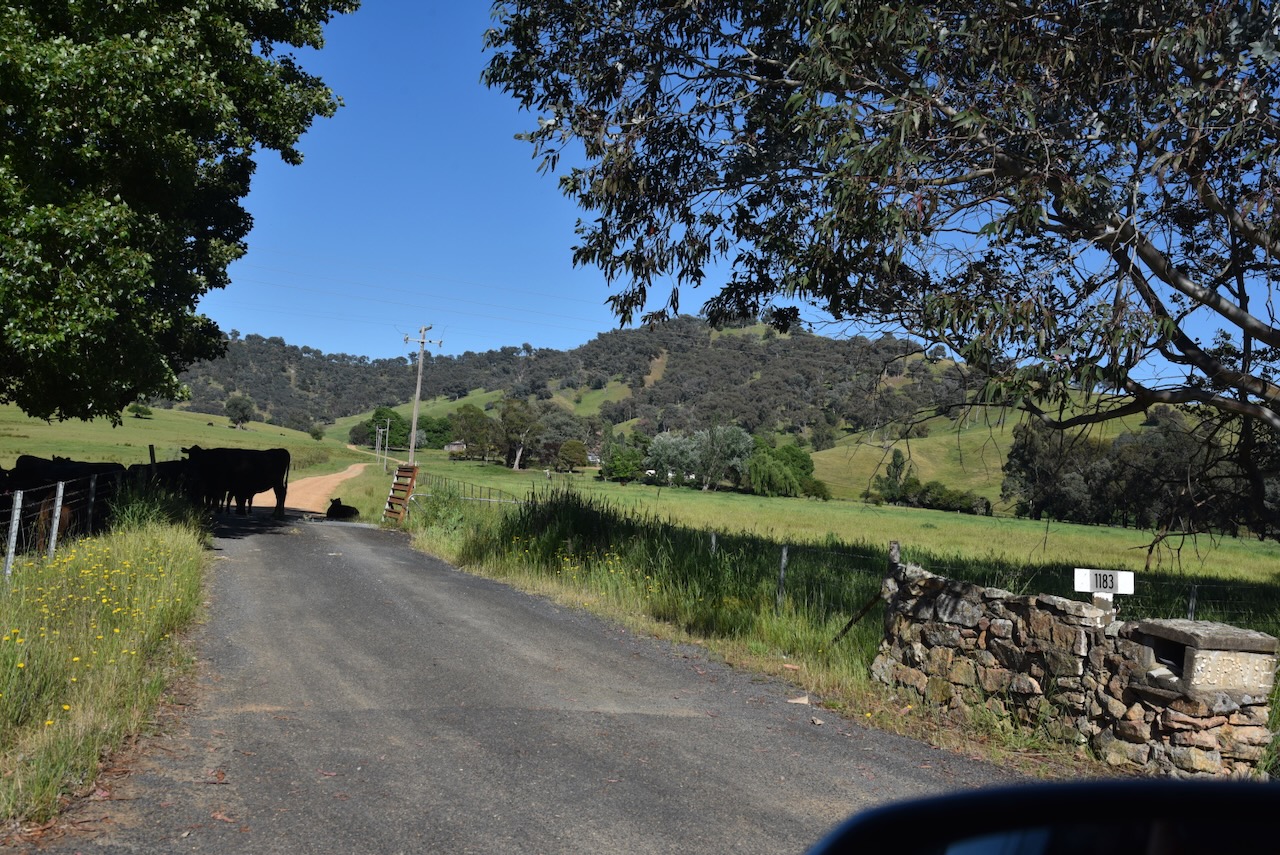
We did a few door knocks on the dirt road leading up to the park, and each time, the landowners kindly gave us permission to access the park via their property.
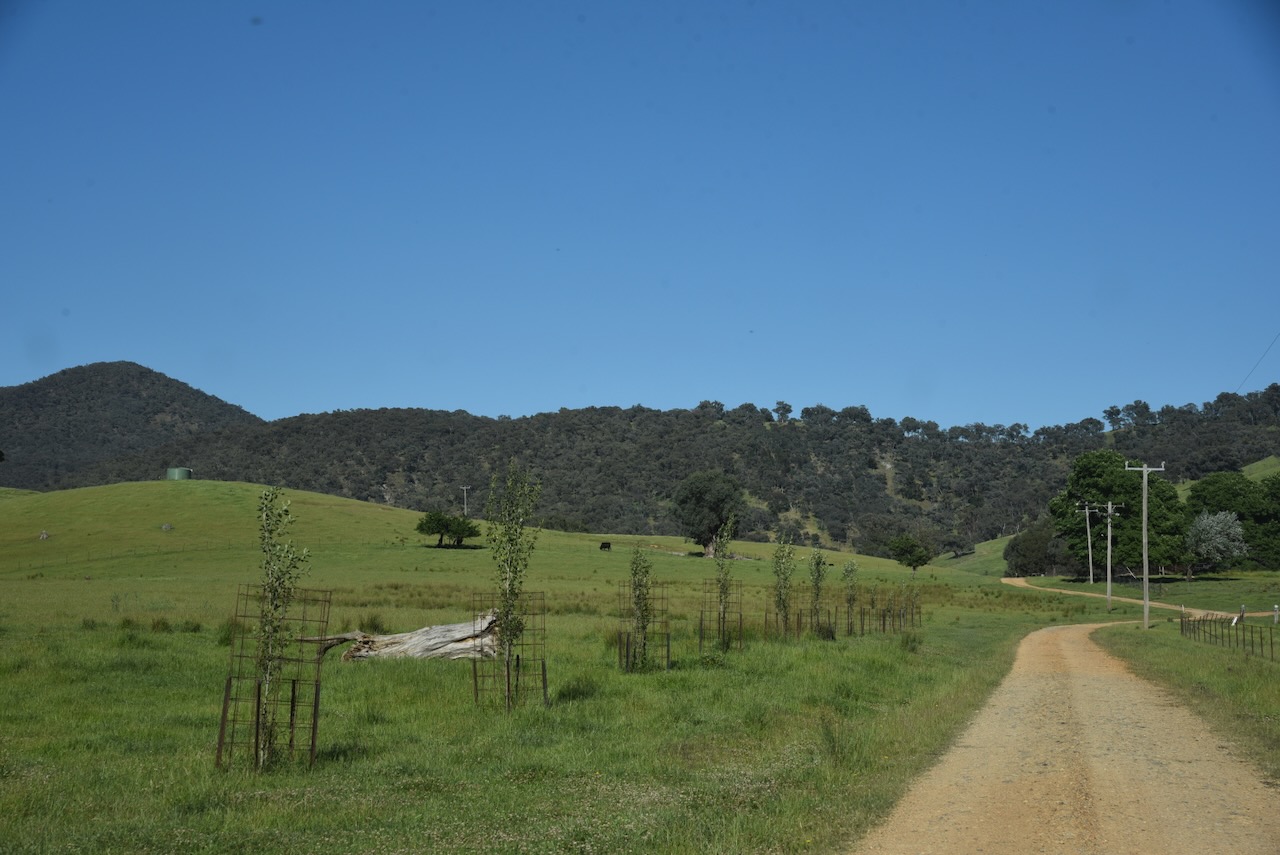
We passed through a few gates and grids on our way to the park.
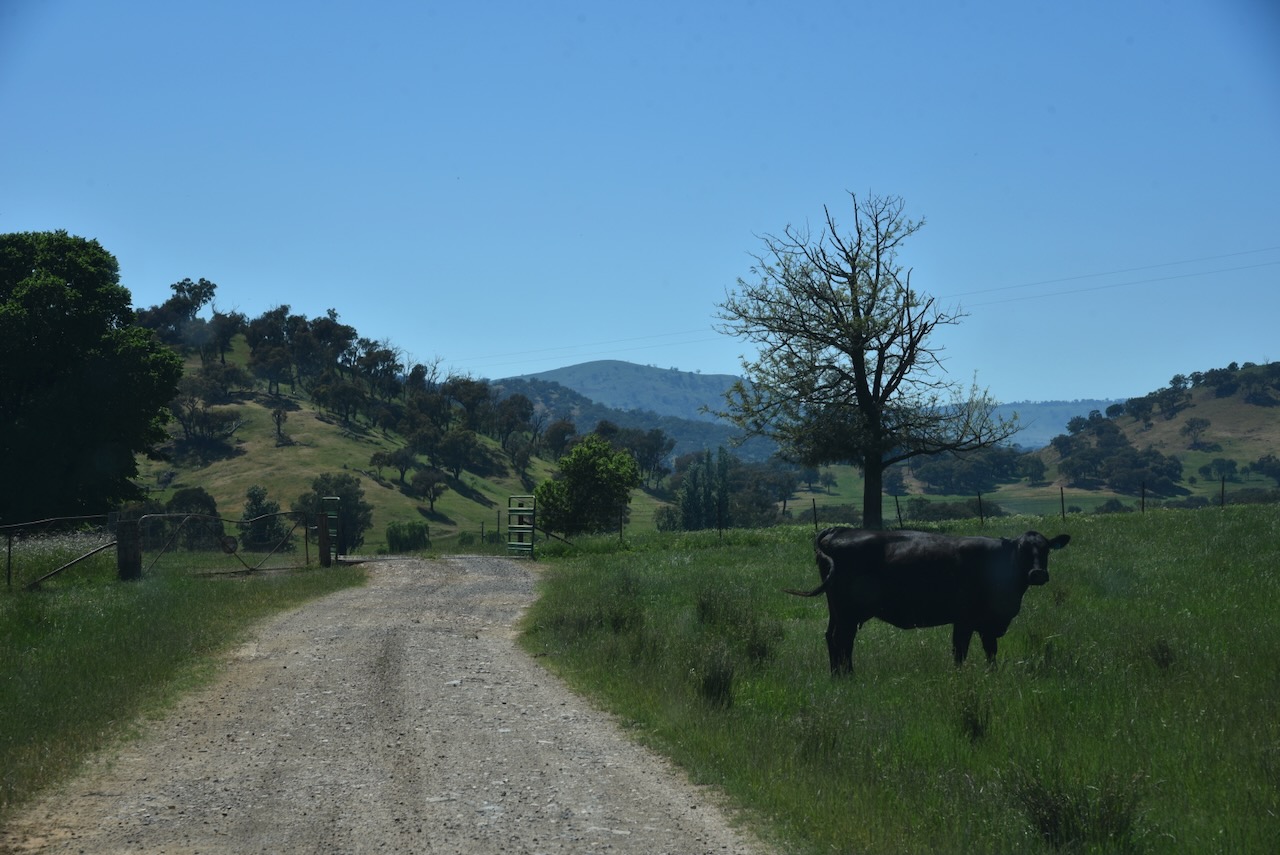
As we got further along Mcgrath Trail, the park came clearly into view.
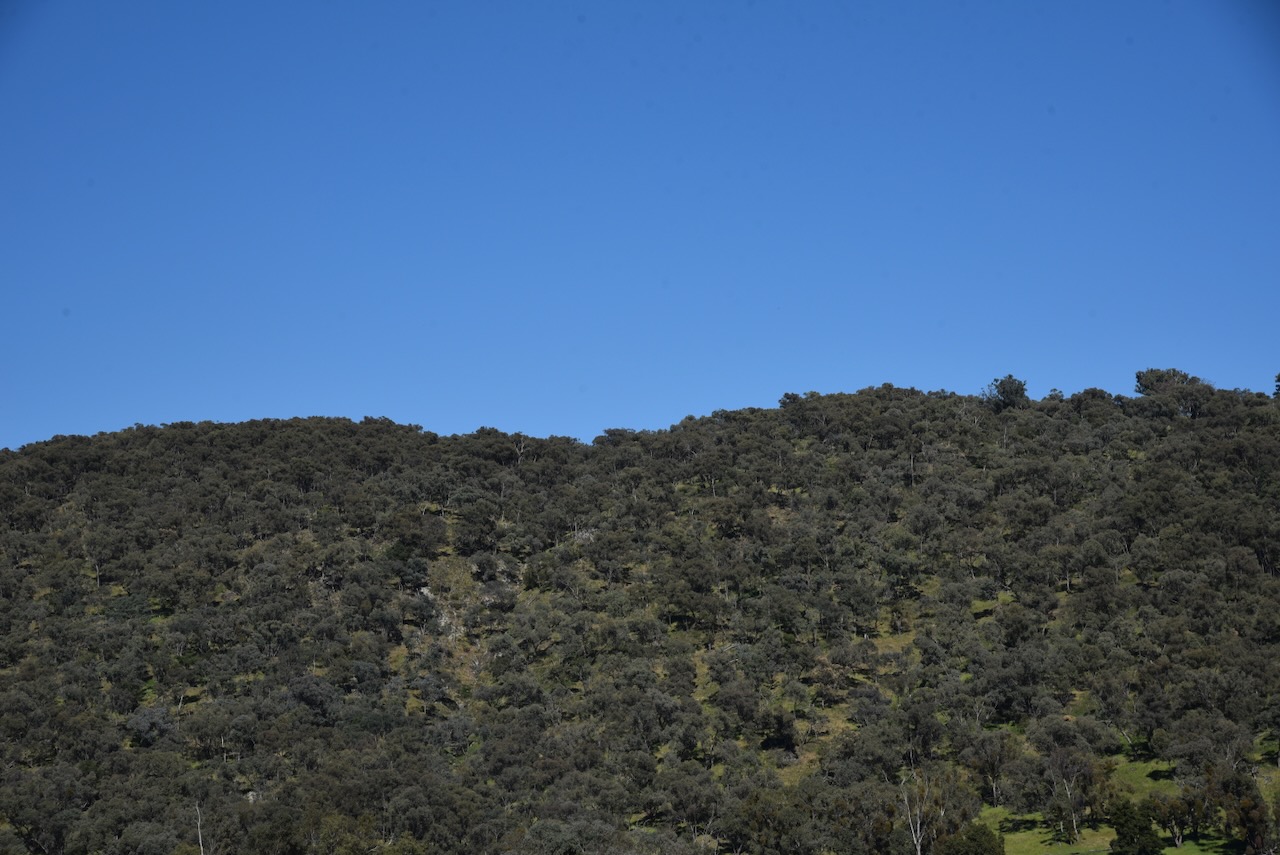
Until we finally reached an open gate and the park sign. It had been a bit of an adventure, but we had made it. It is so important in the WWFF program to obey all signs, specifically with regard to private property, and to ‘door knock’ and get permission from landowners. An incident of trespassing could place the WWFF program in jeopardy.
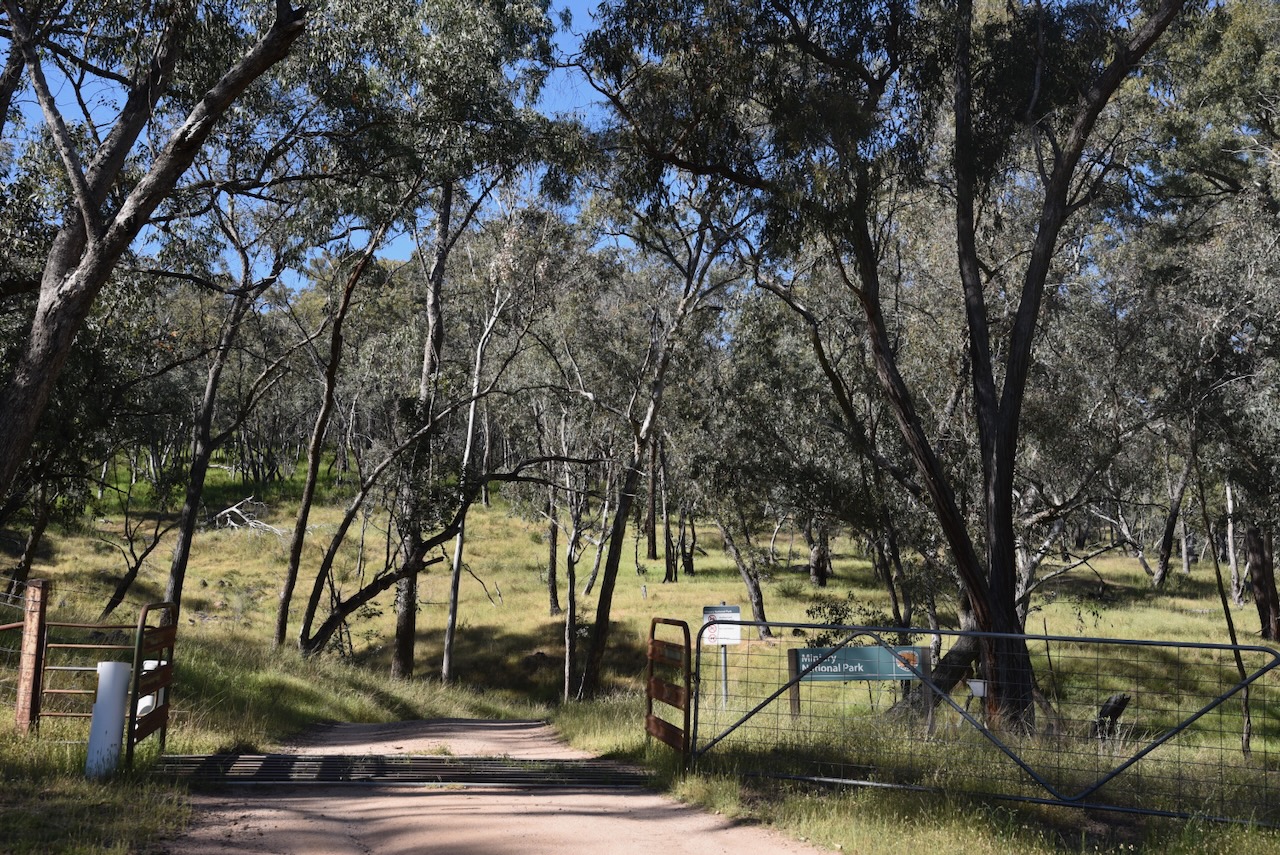
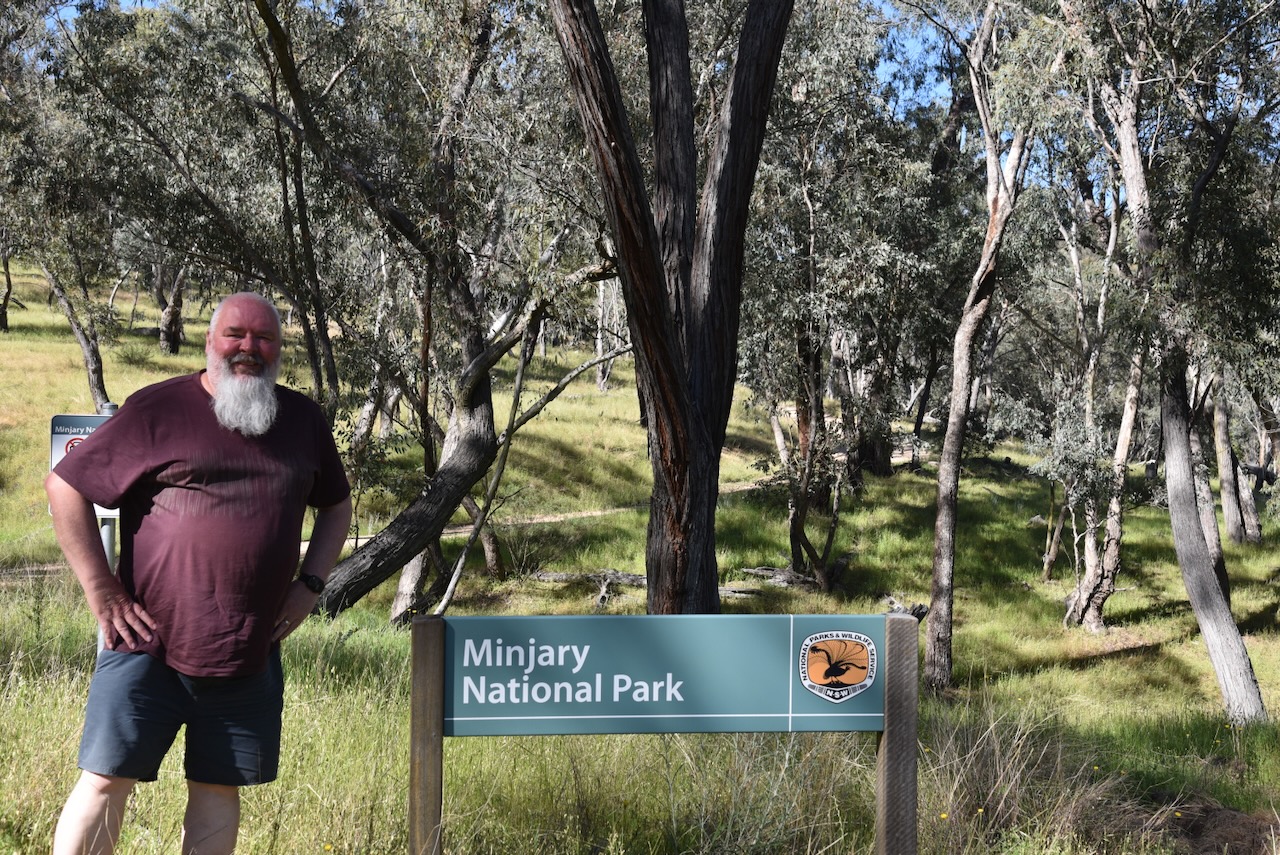
After passing through the gate, Marija and I followed the dirt track for about 1 km before we found a nice clearing in the scrub to set up.
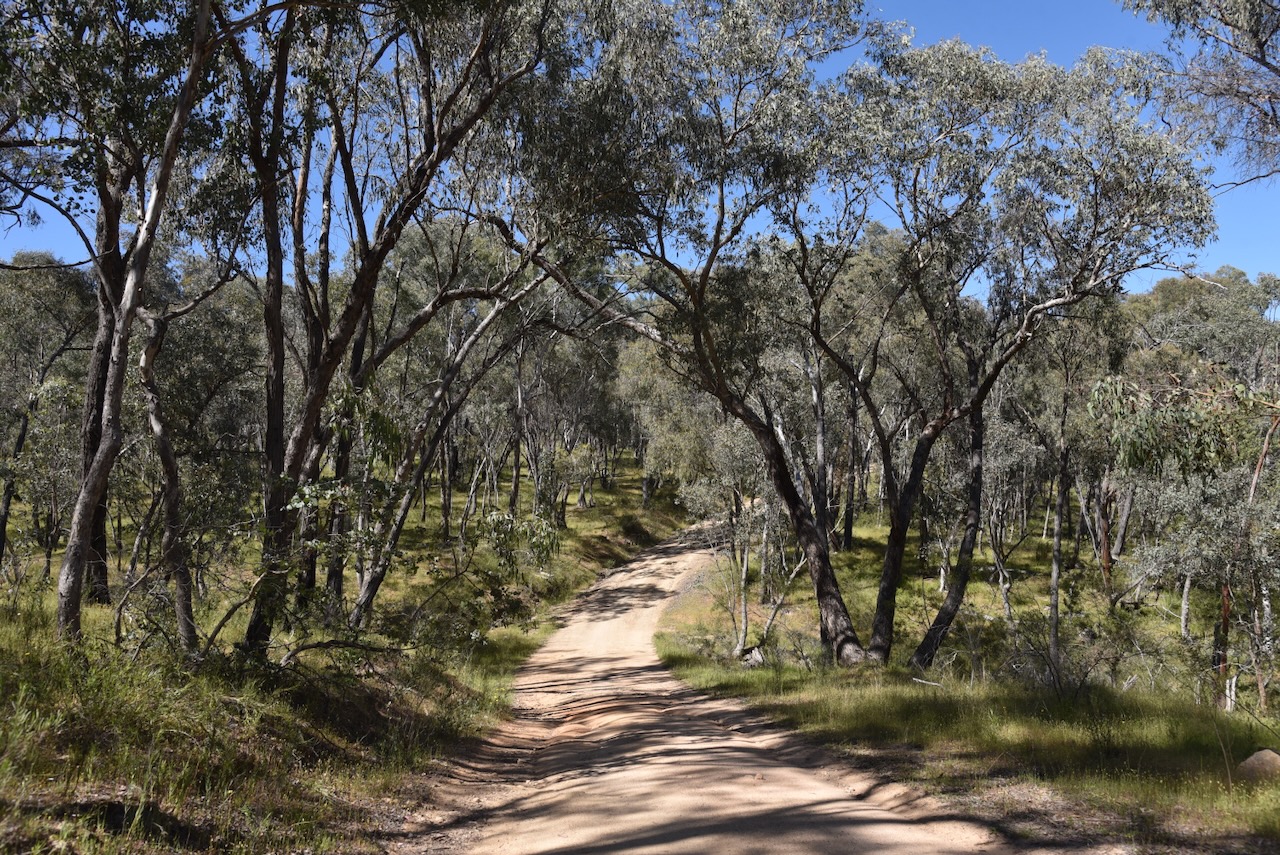
Minjary National Park is about 1,462 hectares in size and is located on the South West Slopes of New South Wales. It takes its name from Minjary mountain, the highest point in the park at 762 metres above sea level. (NSW NPWS 2004)
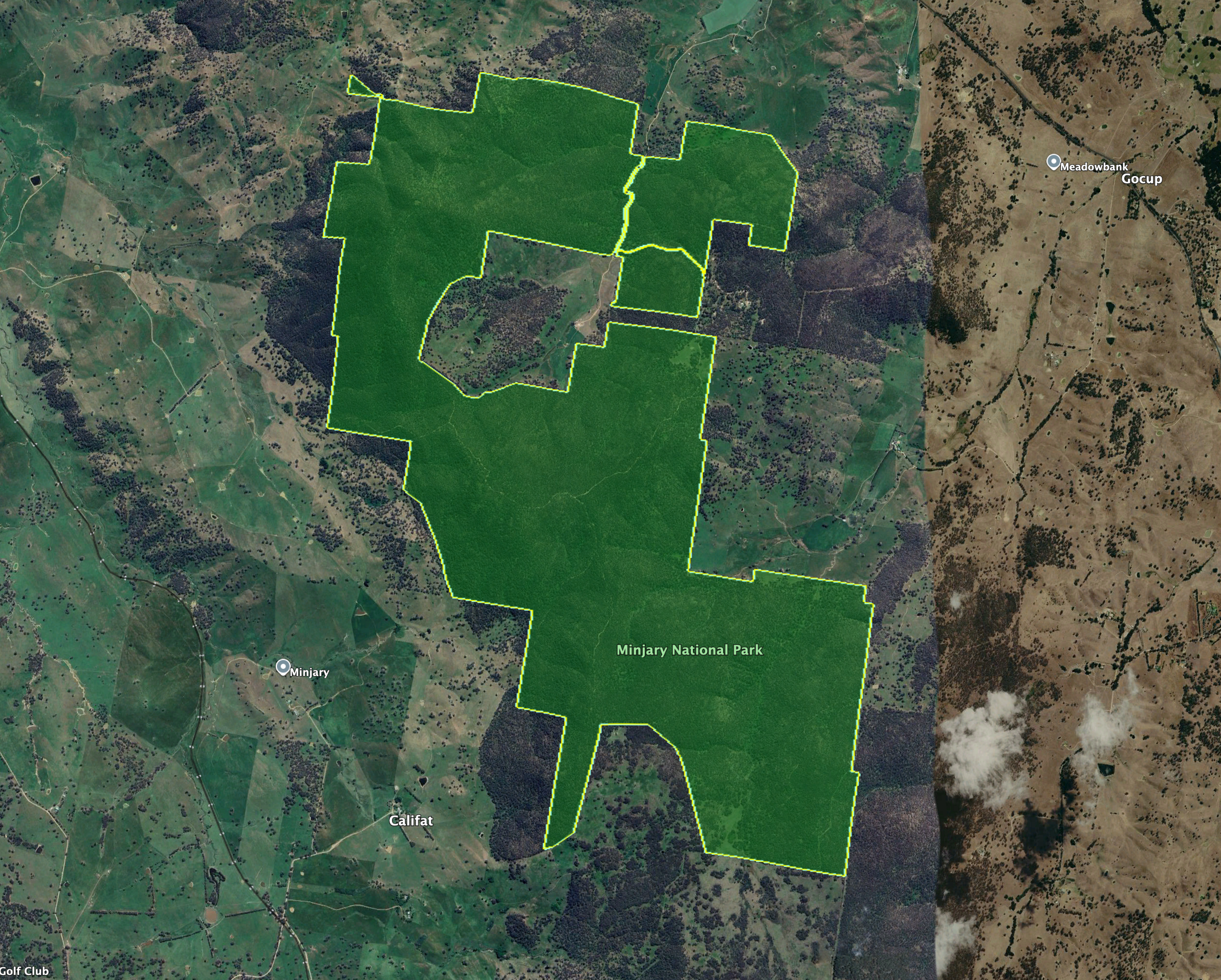
Above: the boundaries of Minjary National Park. Image c/o Google Earth
The park consists of undulating to steep, forested country, which is surrounded by cleared farming land. It contains significant intact remnants of South West Slopes forest and woodland, including White Box Grassy Woodland which has been identified as an endangered ecological community. (NSW NPWS 2004)
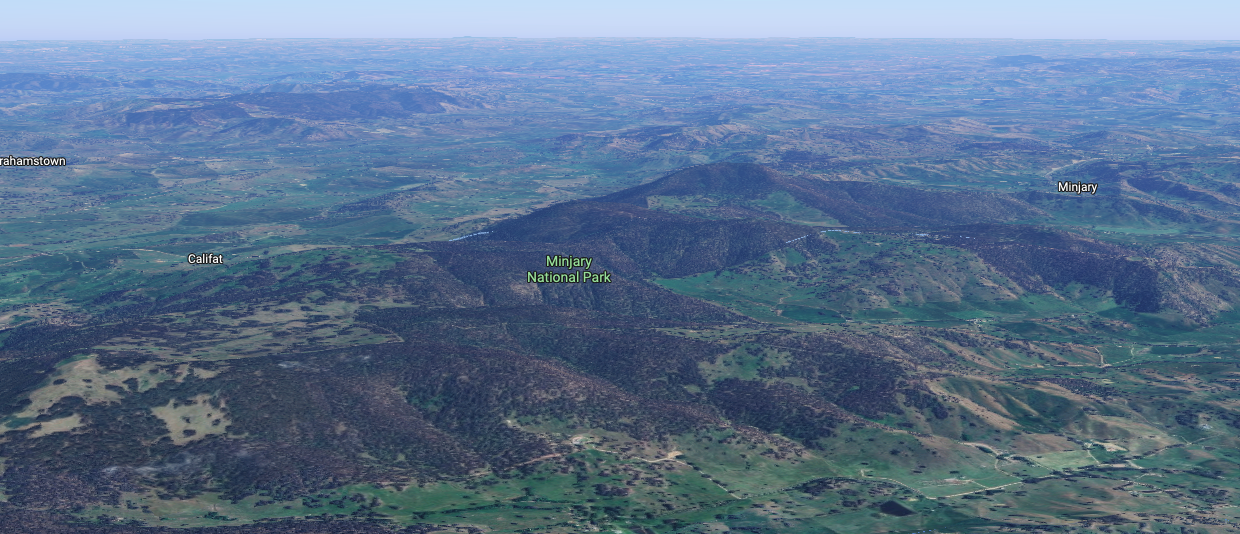
Above: an aerial view of Minjary National Park. Image c/o Google Maps
Minjary National Park was formerly administered and managed by State Forests of New South Wales as Minjary State Forest. Minjary National Park was gazetted on the 1st day of January 2001. (NSW NPWS 2004)
The park lies near the border of the Wiradjuri and Walgalu Aboriginal people. It is believed that the park was part of an Aboriginal travelling route between the Western Plains and the Kosciuszko area via the Tumut River. (NSW NPWS 2004)
During the late 1880s and early 1900s, there was extensive timber harvesting in the Minjary area. The timber was used to fuel steam boilers used in the gold mining industry in the Adelong area. The timber was felled with axes and ‘spare-chained’ down to wagons by horses. (NSW NPWS 2004)
A sulky route that was used between Adelong and Minjary existed on an east-west alignment through the park. It was constructed and used by the Hogan family and other locals as a shortcut between Adelong and Minjary. (NSW NPWS 2004)
A total of 8 mammal species, 31 bird species, 6 reptile species, and 2 amphibian species have been recorded in the park. This includes the threatened Turquoise Parrot and the Powerful Owl. (NSW NPWS 2004)
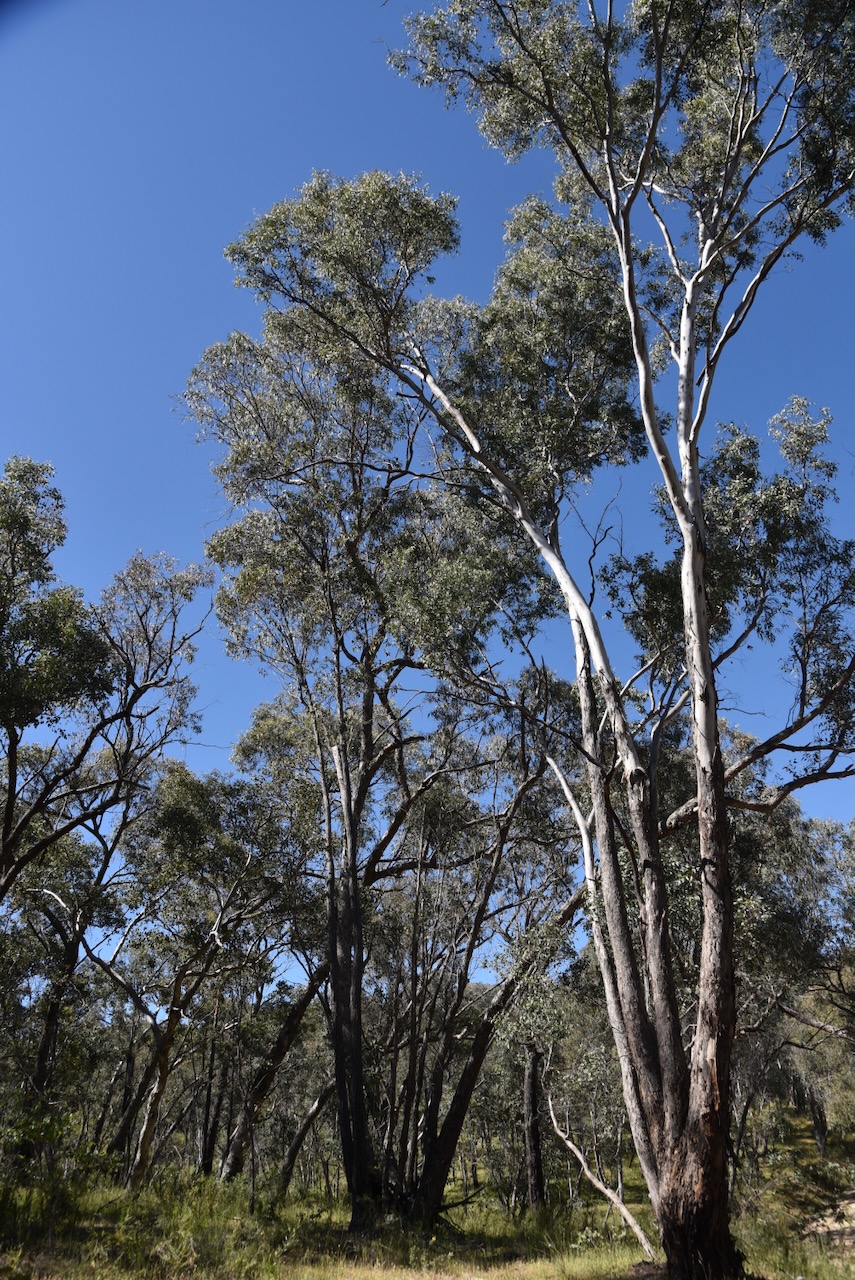
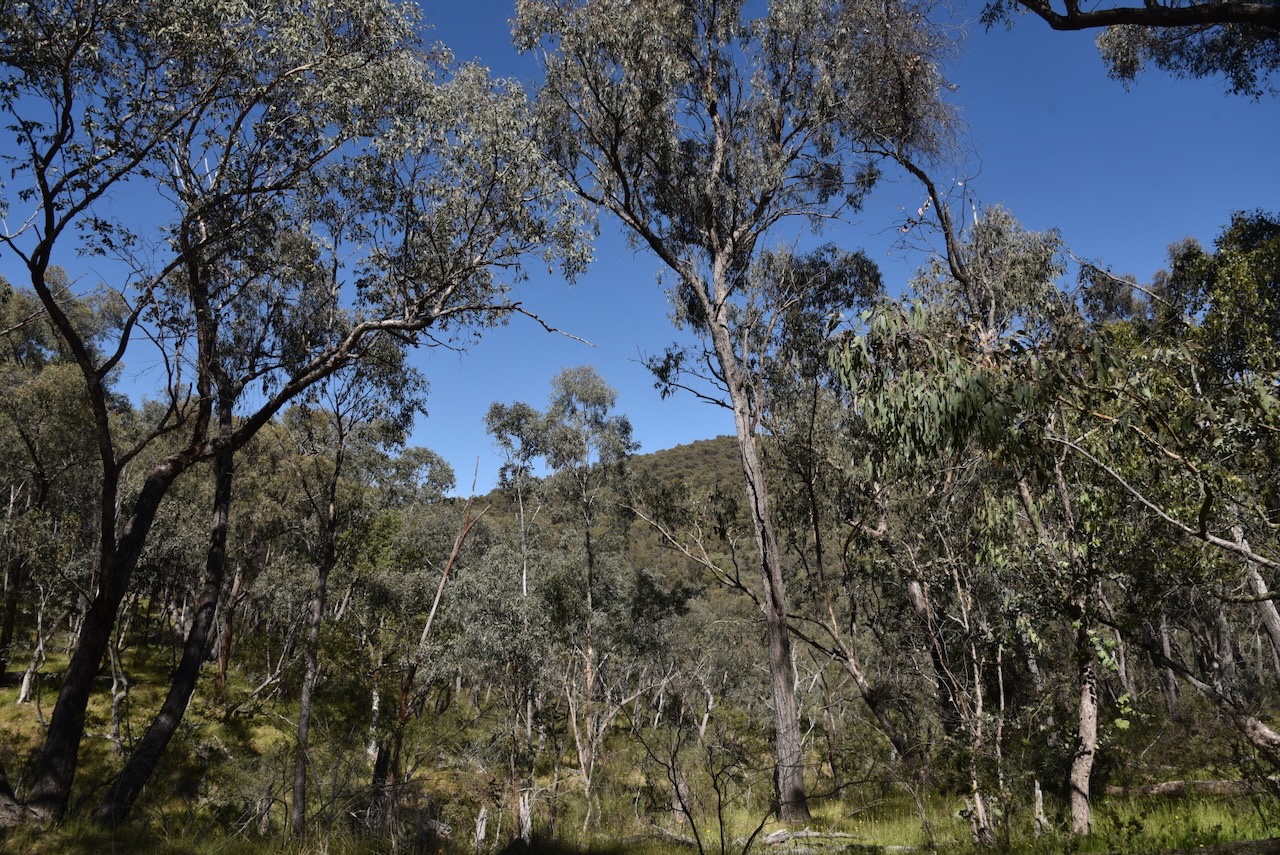
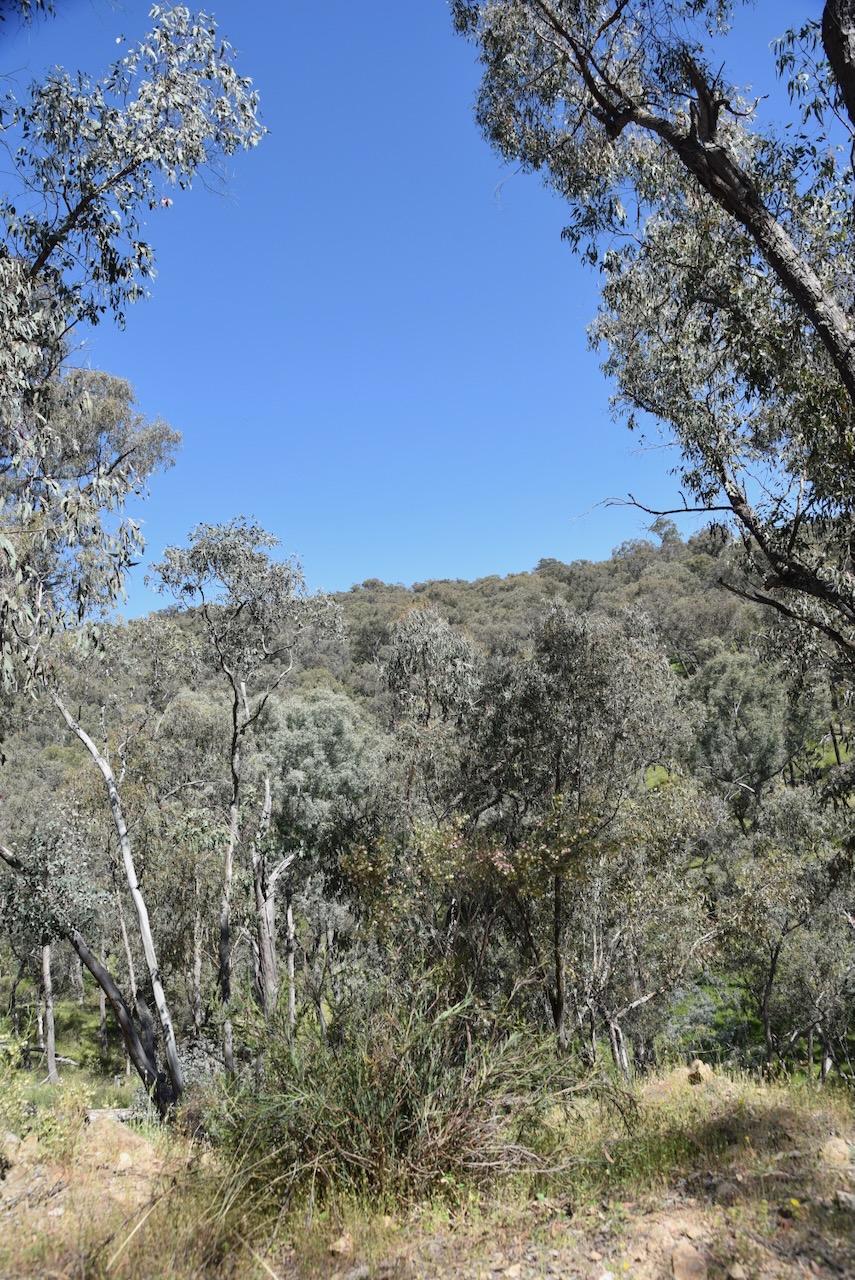
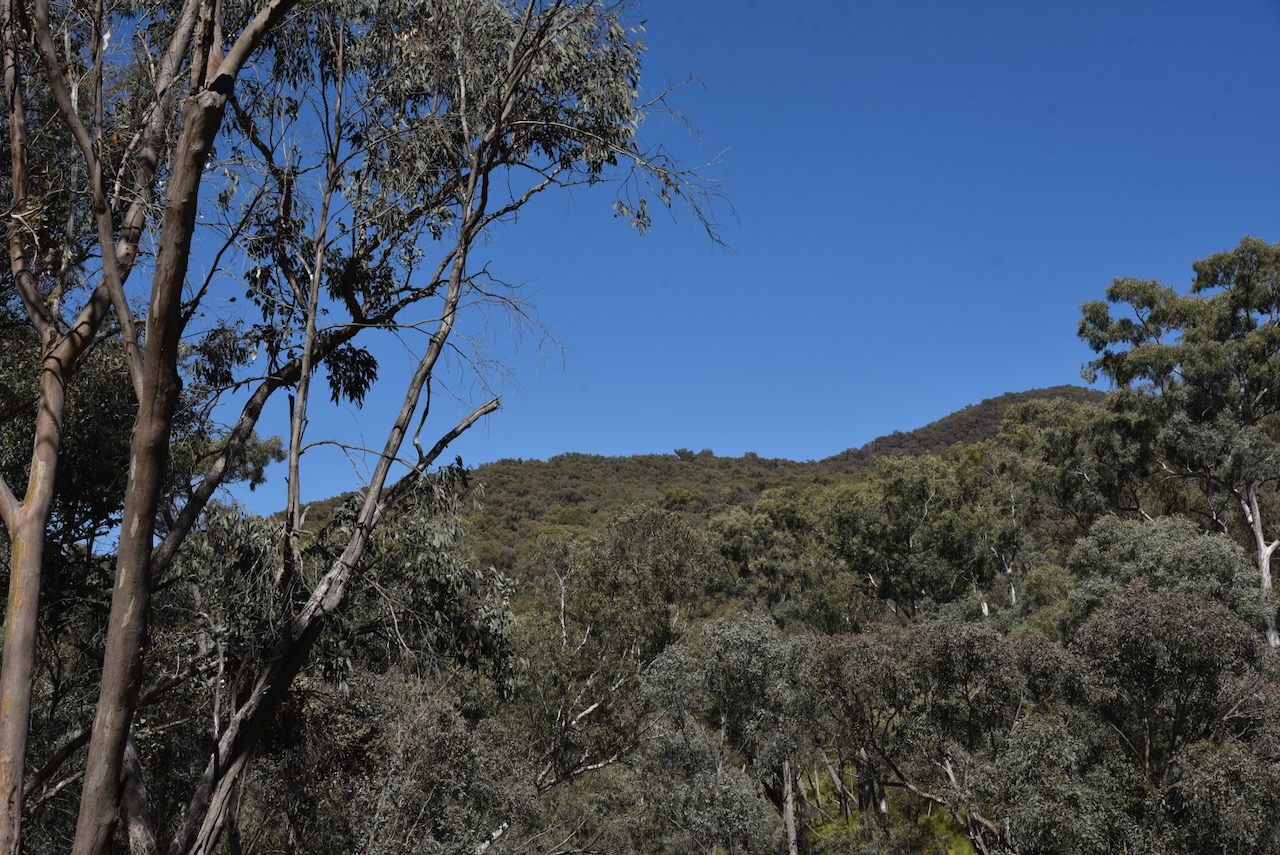
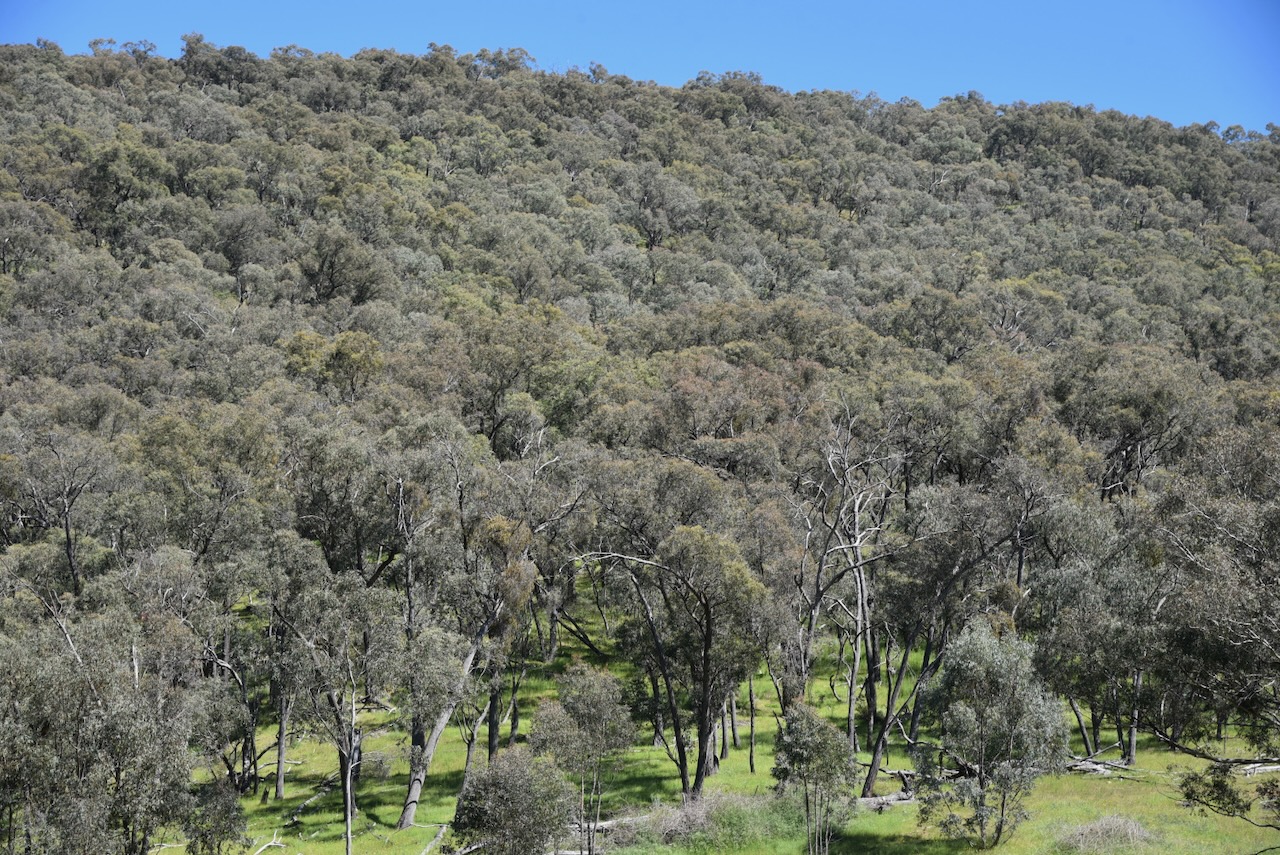
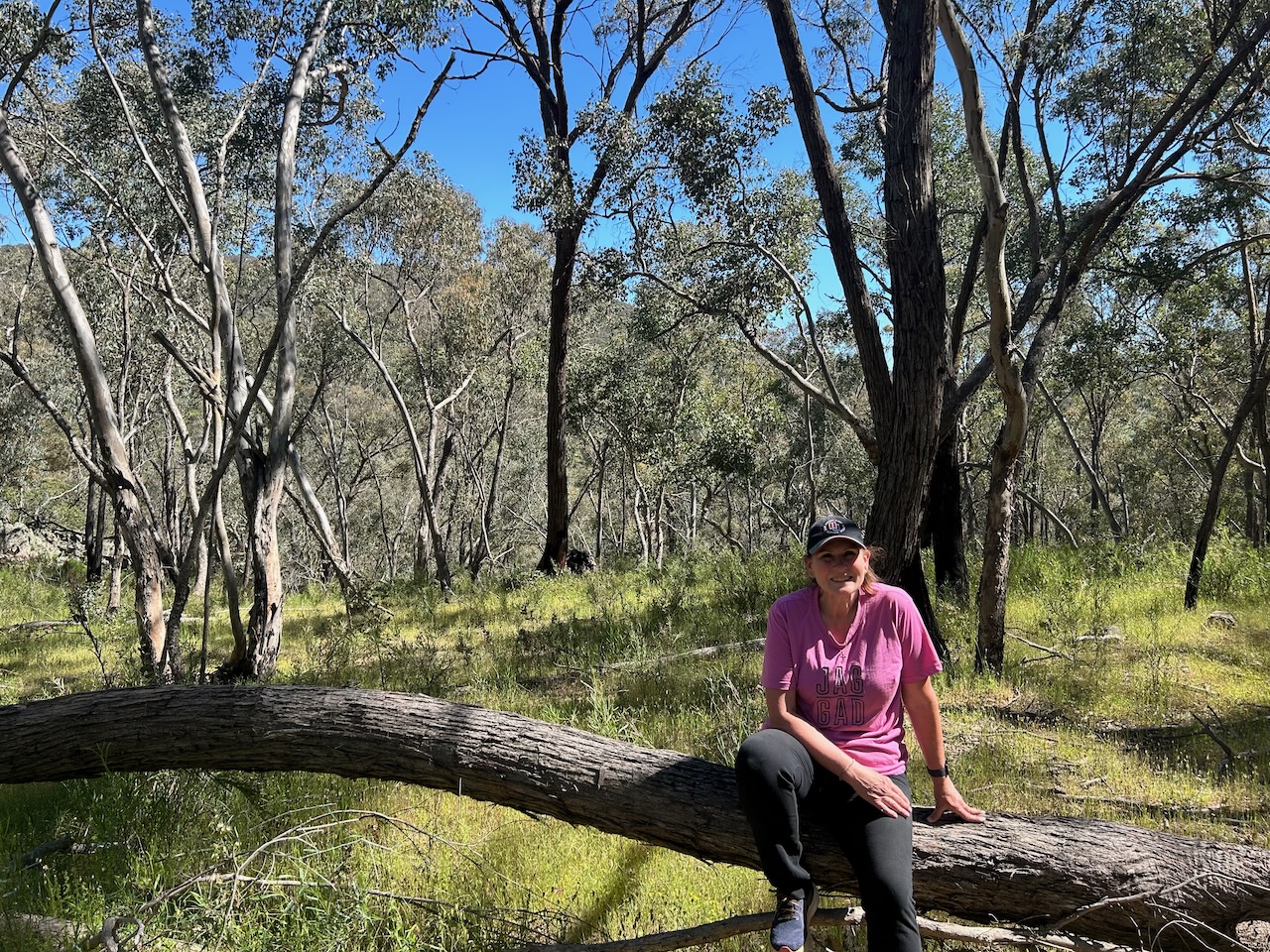
Marija and I operated from near Burnie Trail and O’Shea’s Trail.
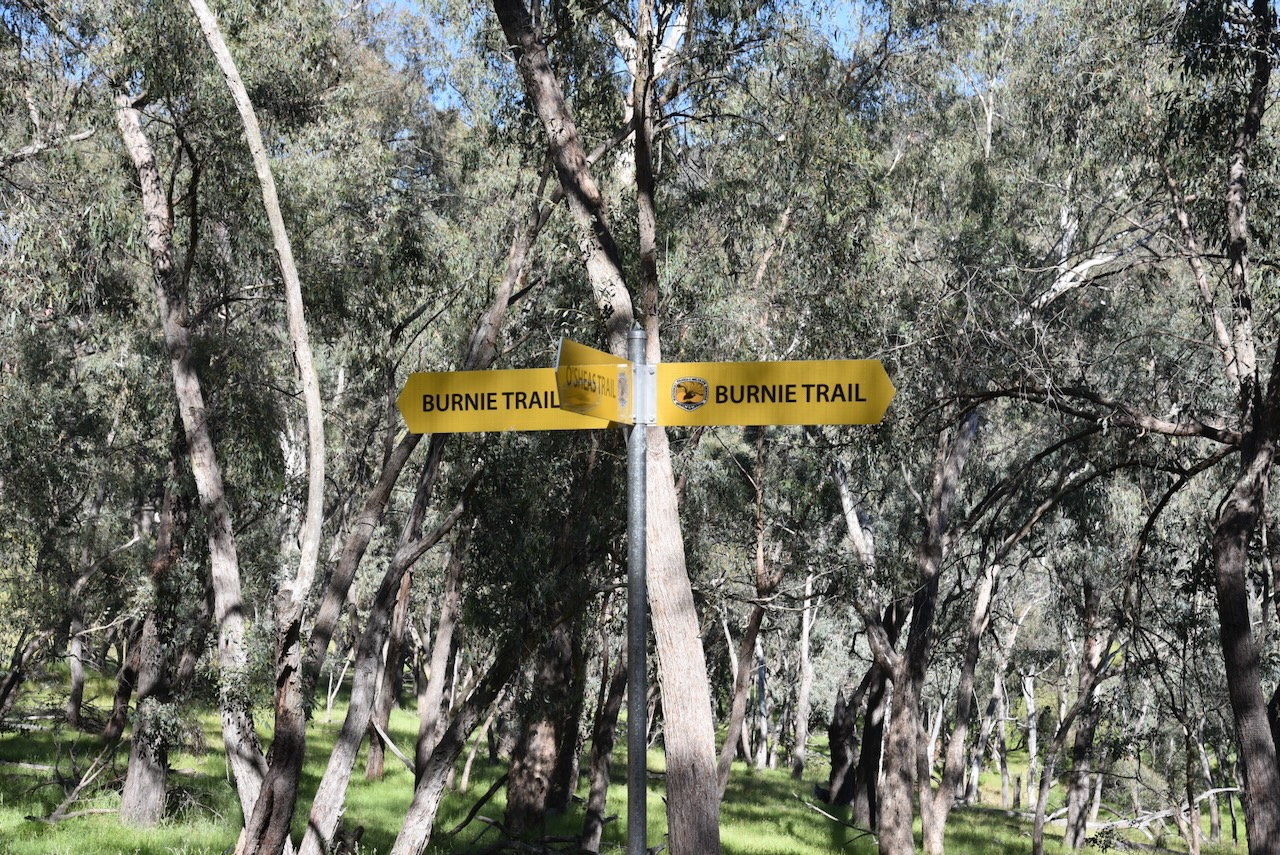
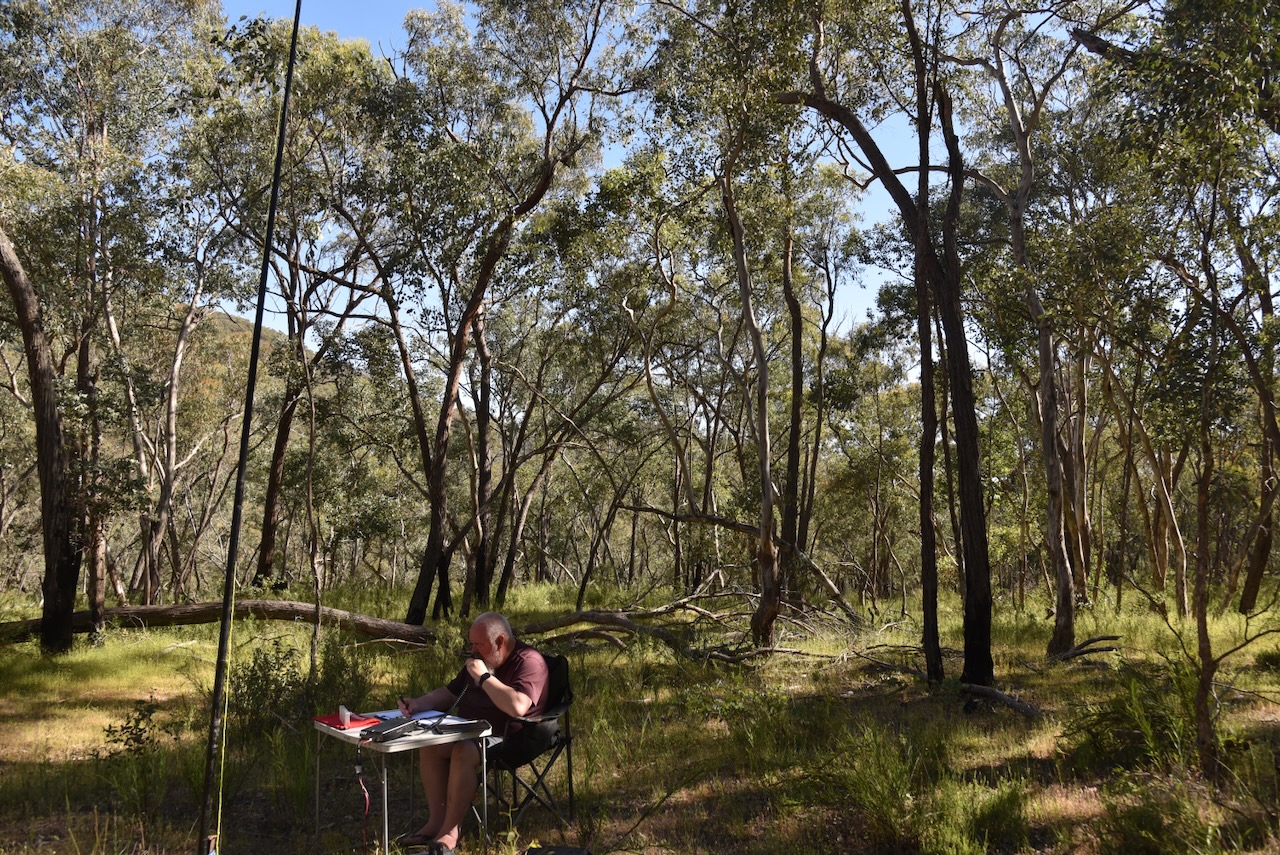
We ran the Yaesu FT857, 40 watts, and the 20/40/80m linked dipole.
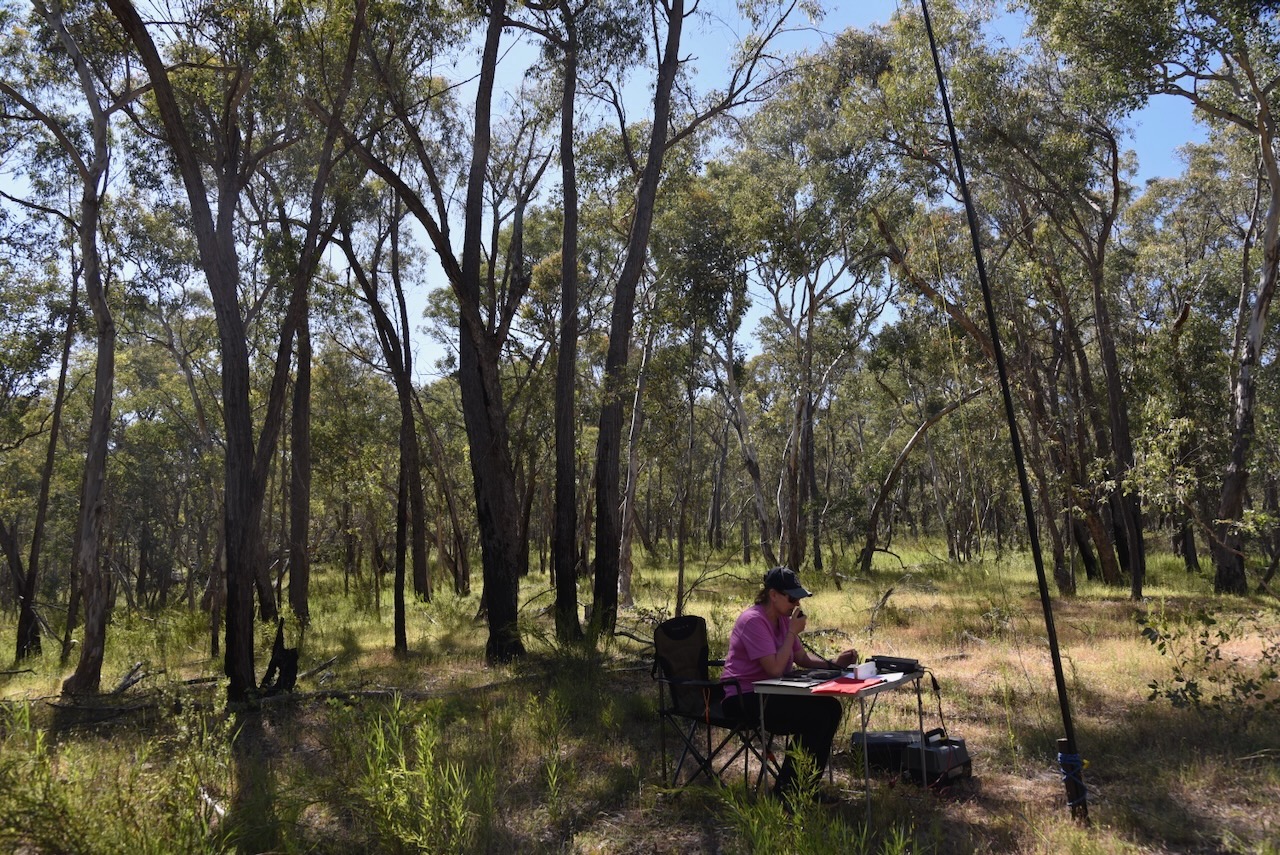
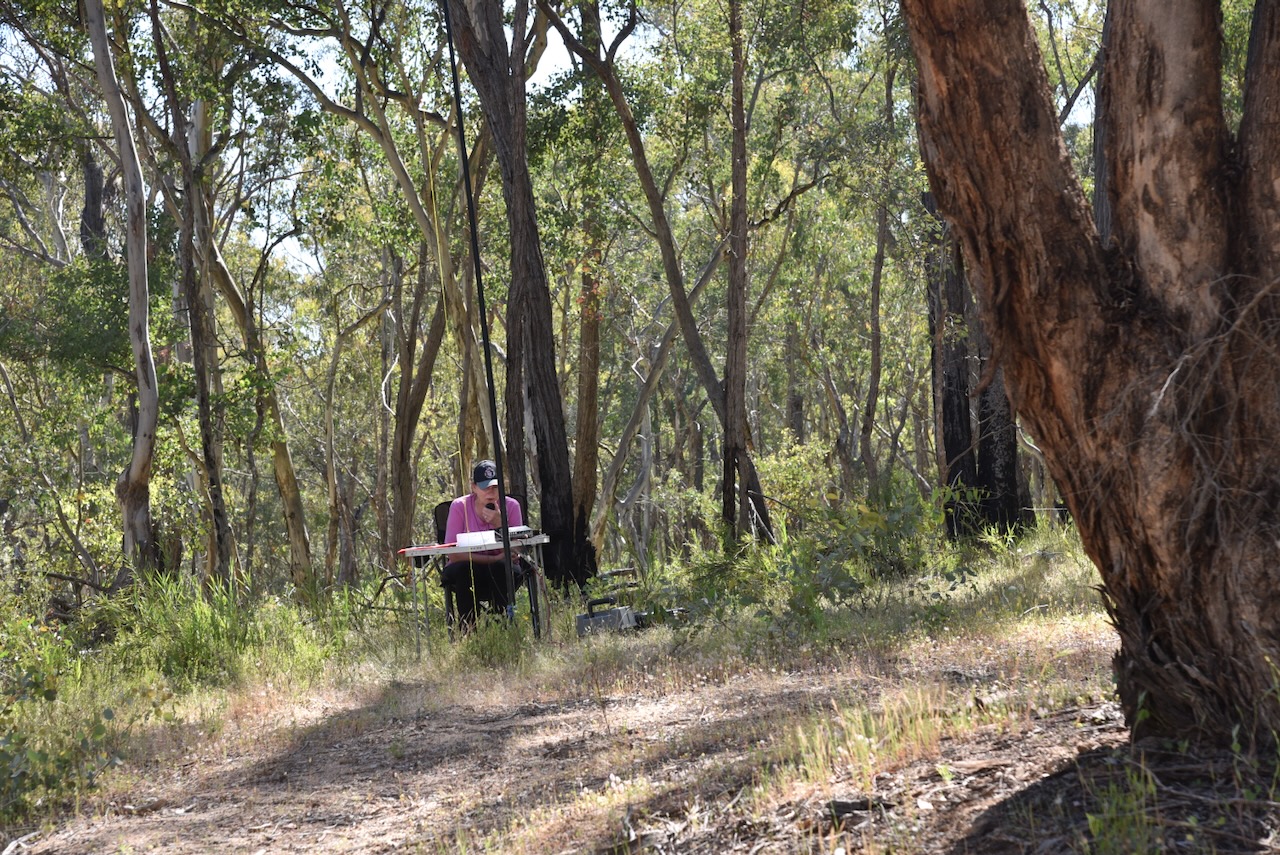
Marija worked the following stations on 40m SSB:-
Marija worked the following stations on 20m SSB:-
I worked the following stations on 40m SSB:-
I made the following contacts on 20m SSB:-
References.
From the 9th March 2026 to the 15th March 2026, the Young Ladies World Wide Award (WWA) 2026 event was held. It was the first international radio project aimed at bringing together the largest number of Young Ladies (YL) worldwide in a single event.
Over the 7 day period a total of 234 YLs from around the world took part. A total of 300,509 QSOs were made with 203 countries taking part.
My wife Marija VK5MAZ took part as an Activator and did most of the operating from our shack during the event. I took part as a Hunter.
I made contacts with the YLs around the world on SSB, FT8, & FT4. The’Mixed’ Hunter award was issued at three levels: Bronze 100 points, Silver 250 points, and Gold 500 points. Each SSB contact was worth 5 points, while a digital contact was worth 2 points. I managed to get to the Bronze level with 130 points.

Marija made a total of 798 contacts. Marija received four different award certificates for the event. She came in 87th place in the Mixed category, 126th in the SSB category, and 53rd in the Digital category.
The first certificate for Marija was ‘Activator as Hunter’, with 108 points.

The other three certificates for Marija were:

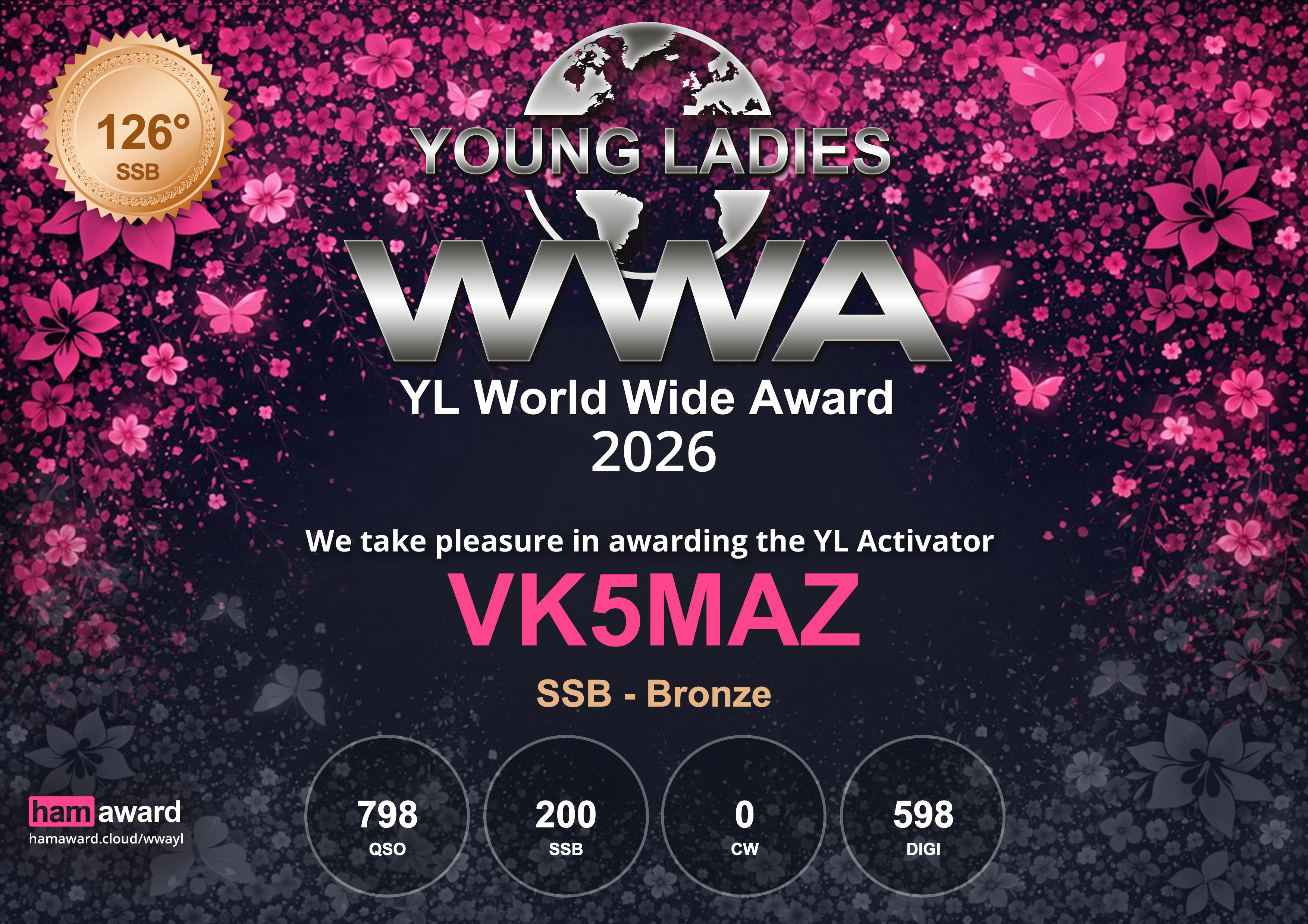

Sadly, there did not seem to be a lot of Australian YL’s taking part in the event. Dianne VK4DI was very active and made it into Marija’s log a few times on 40m & 20m SSB.
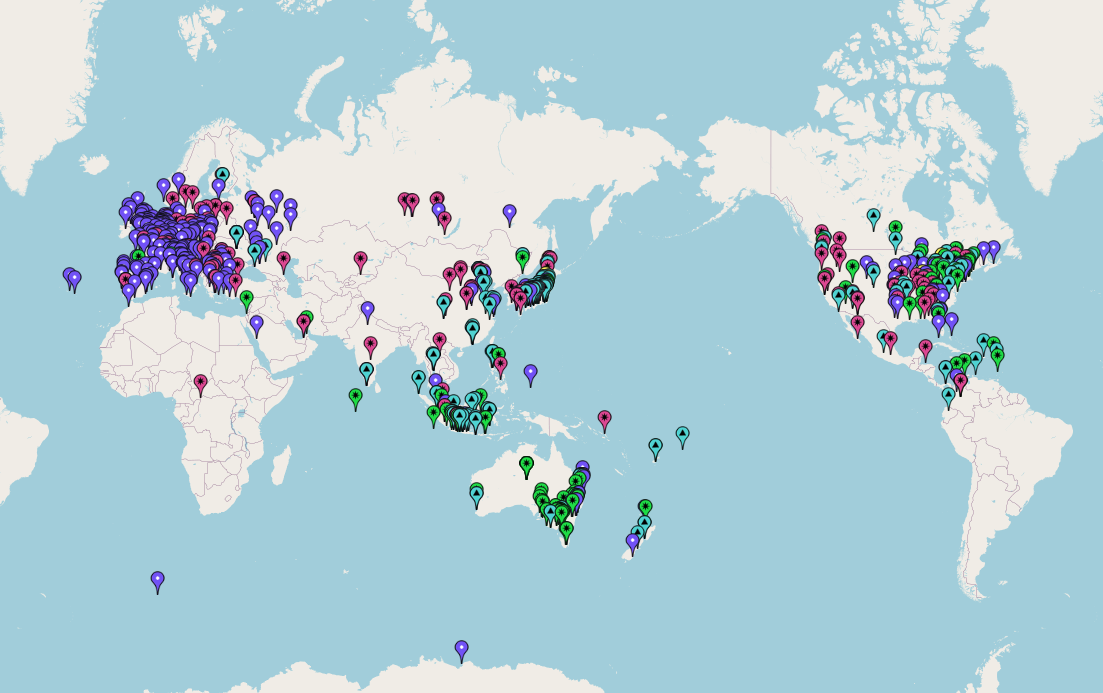
Marija worked 79 DXCC entities during the event. She worked 38 of the 50 USA States and 30 of the 40 zones.
On Saturday, 20m SSB, Marija had a very significant pileup on the long path to Europe and the UK. I came out into the shack in the middle of the madness, and I was very proud of how she was handling the pileup (with some poor behaviour at times on the other end).
Below is a map showing Marija’s QSOs during the event.
Thank you to the organisers. And of course, thank you to everyone who called us during the event. Both Marija and I had a lot of fun.
Amateur Radio, Short Wave Listening, travel and history
Amateur radio experiences with VK1DA
Brisbane - Australia
german amateur radio station
Summits On The Air
SOTA on the peaks, wilderness QRP and some bushwalking
A fine WordPress.com site
Amateur Radio Adventures
Summits on the Ai
Amateur radio station from Belgium
Radio craft, homebrew, QRP/SOTA, AM
Ego loqui ad viros super montes
My adventures with Amateur Radio and Geocaching!
The rantings of VK2GAZ on his SOTA experiences in Australia
A survivor, with minor cuts and abrasions.
The Art and Craft of Blogging
The latest news on WordPress.com and the WordPress community.
Blog of Justin Giles-Clark VK7TW's SOTA and amateur radio adventures.
Occasional SOTA & Microwave operation
 VK5PAS