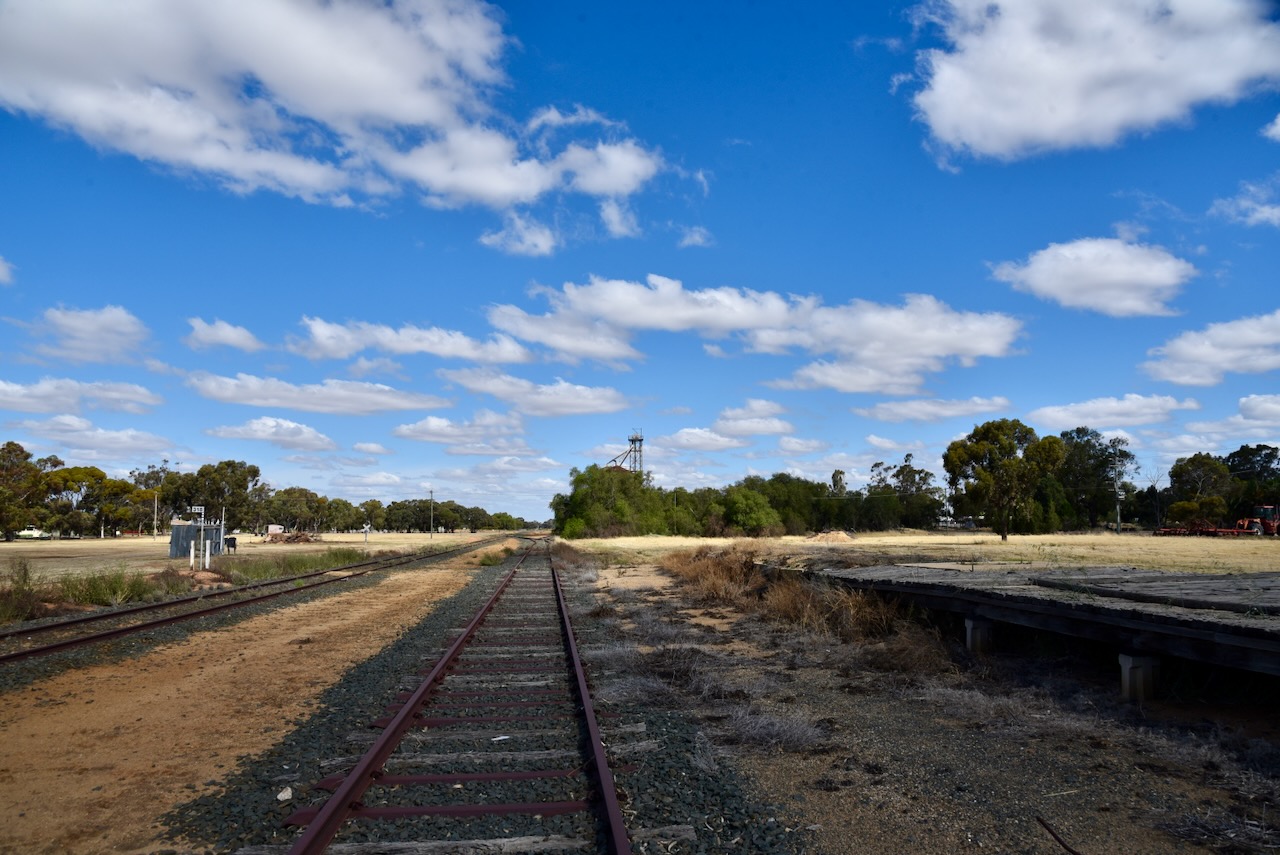
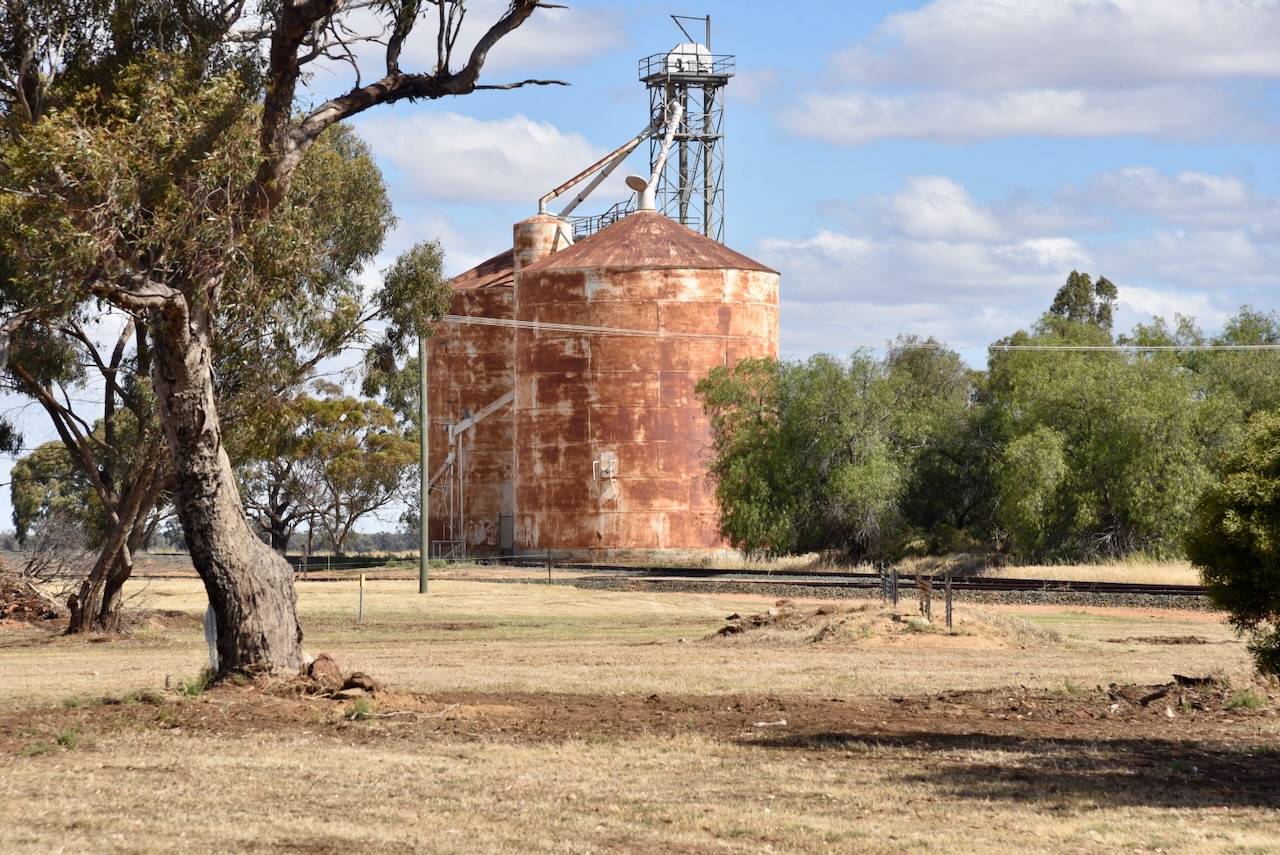
Swan Hill North silo VK-SWH3 and Swan Hill silo VK-SWL3

We were on the last leg of our trip on Wednesday, 5th November 2025, with our destination being Swan Hill in Victoria.
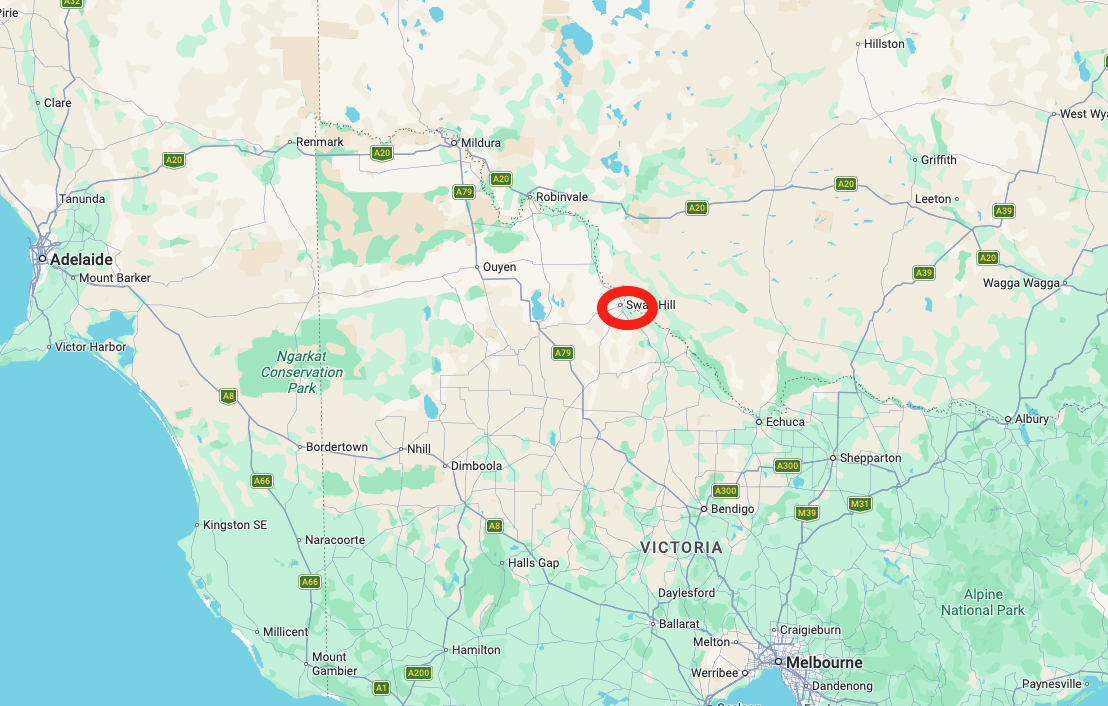
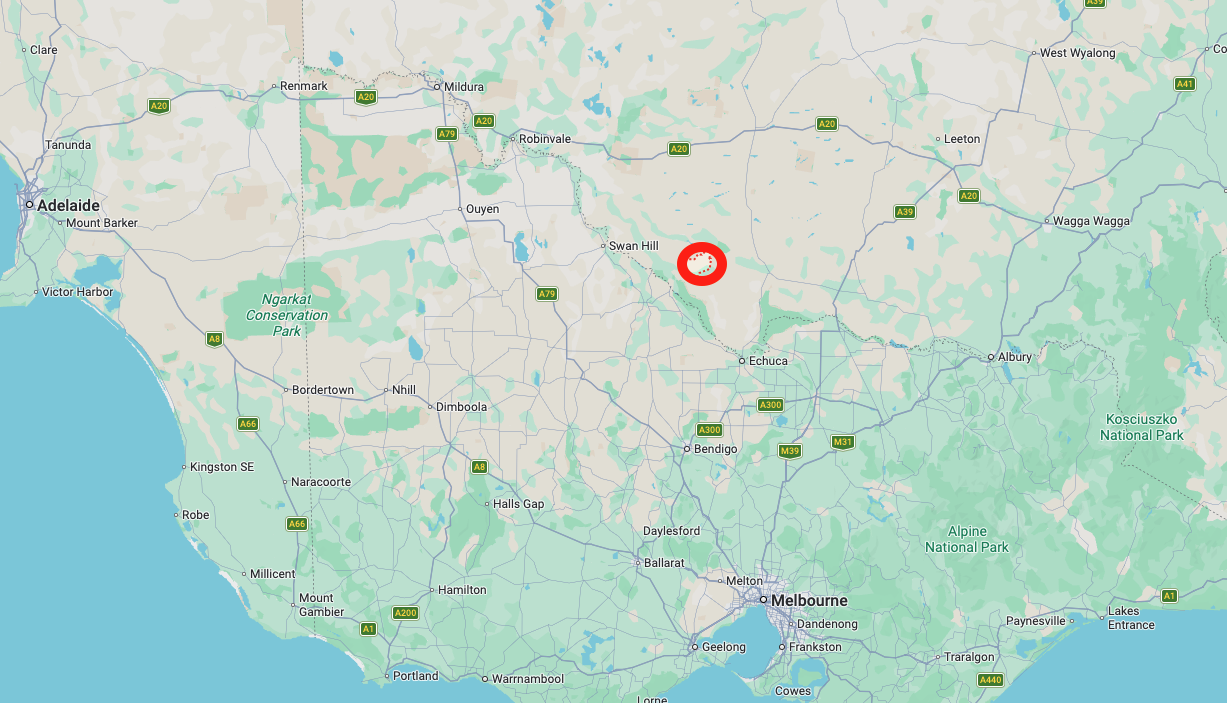
Above: Map showing the location of Swan Hill. Map c/o Google Maps

We left Wakool, travelling west on Wakool Road, crossing over several irrigation channels.
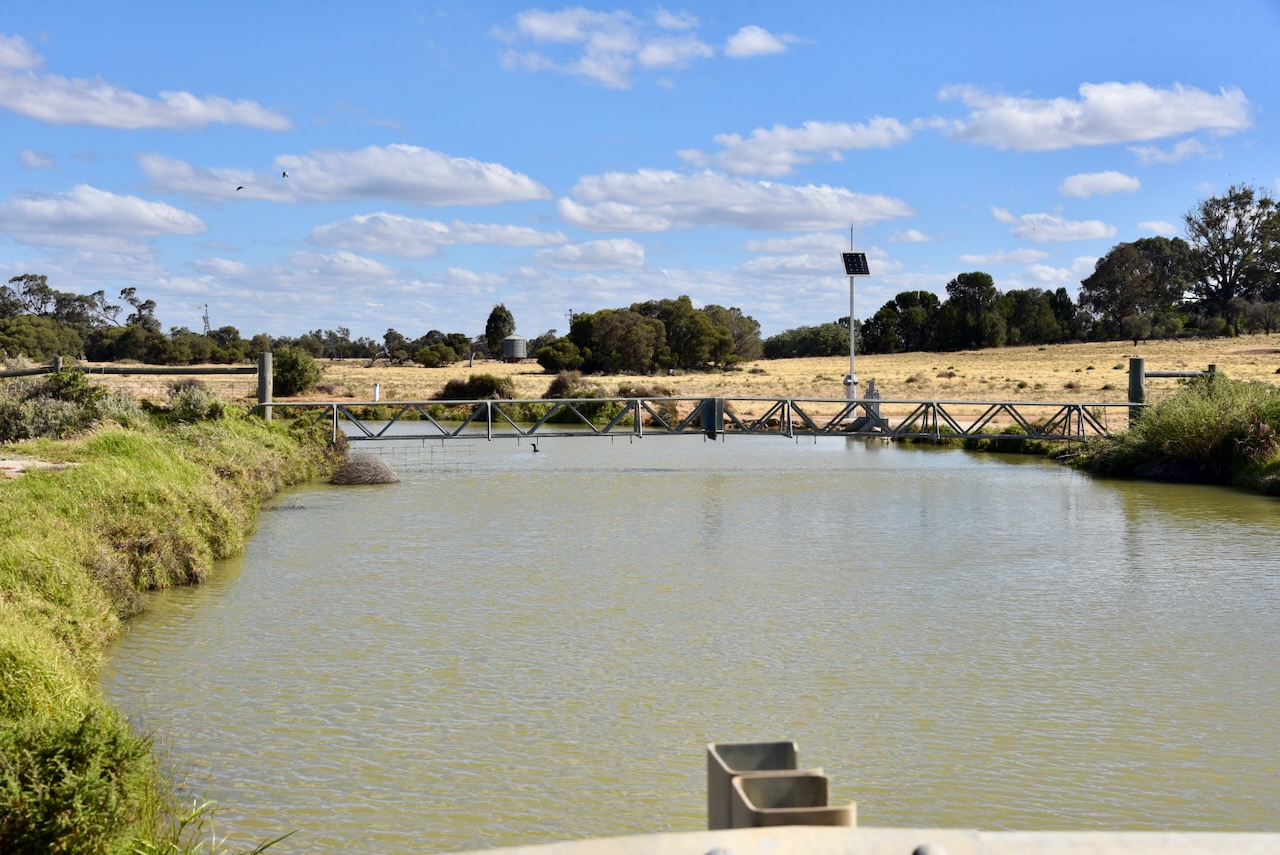
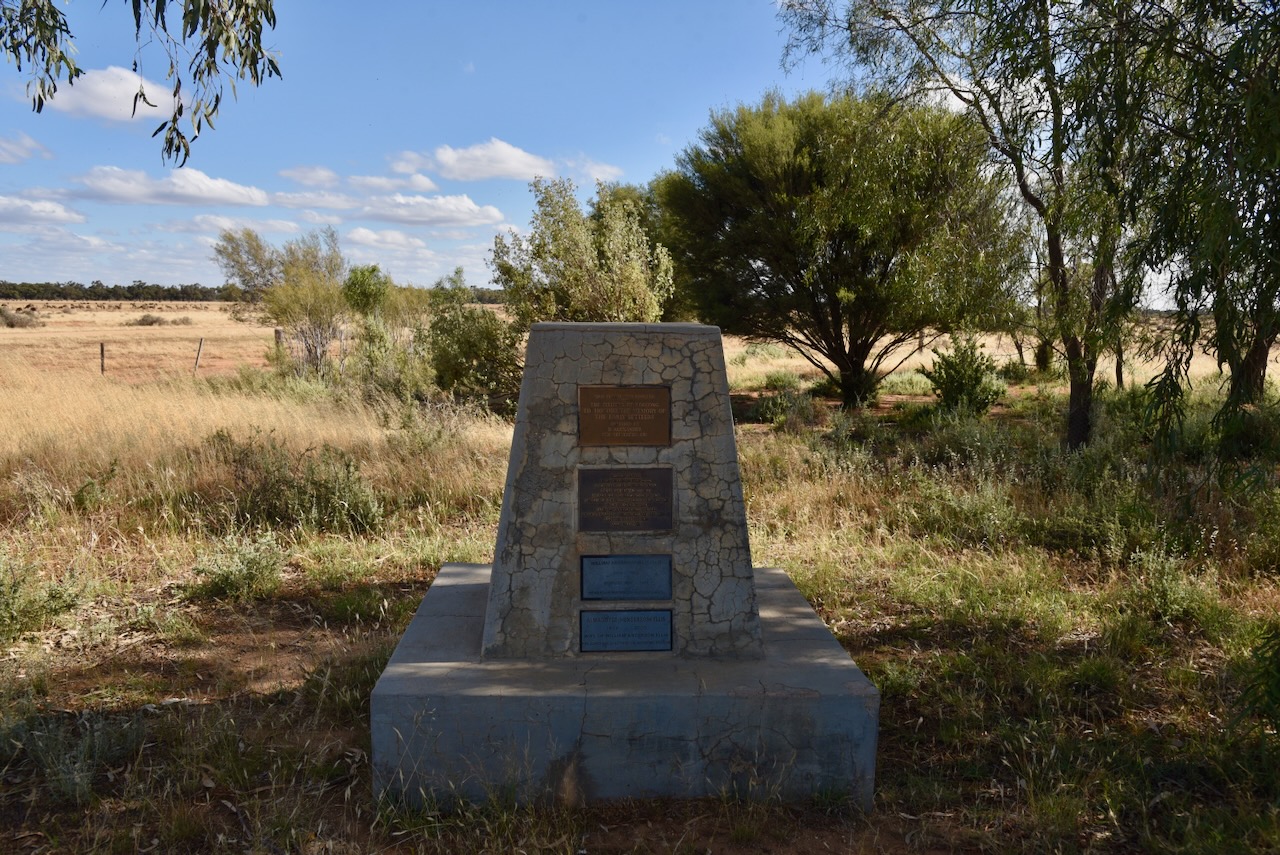
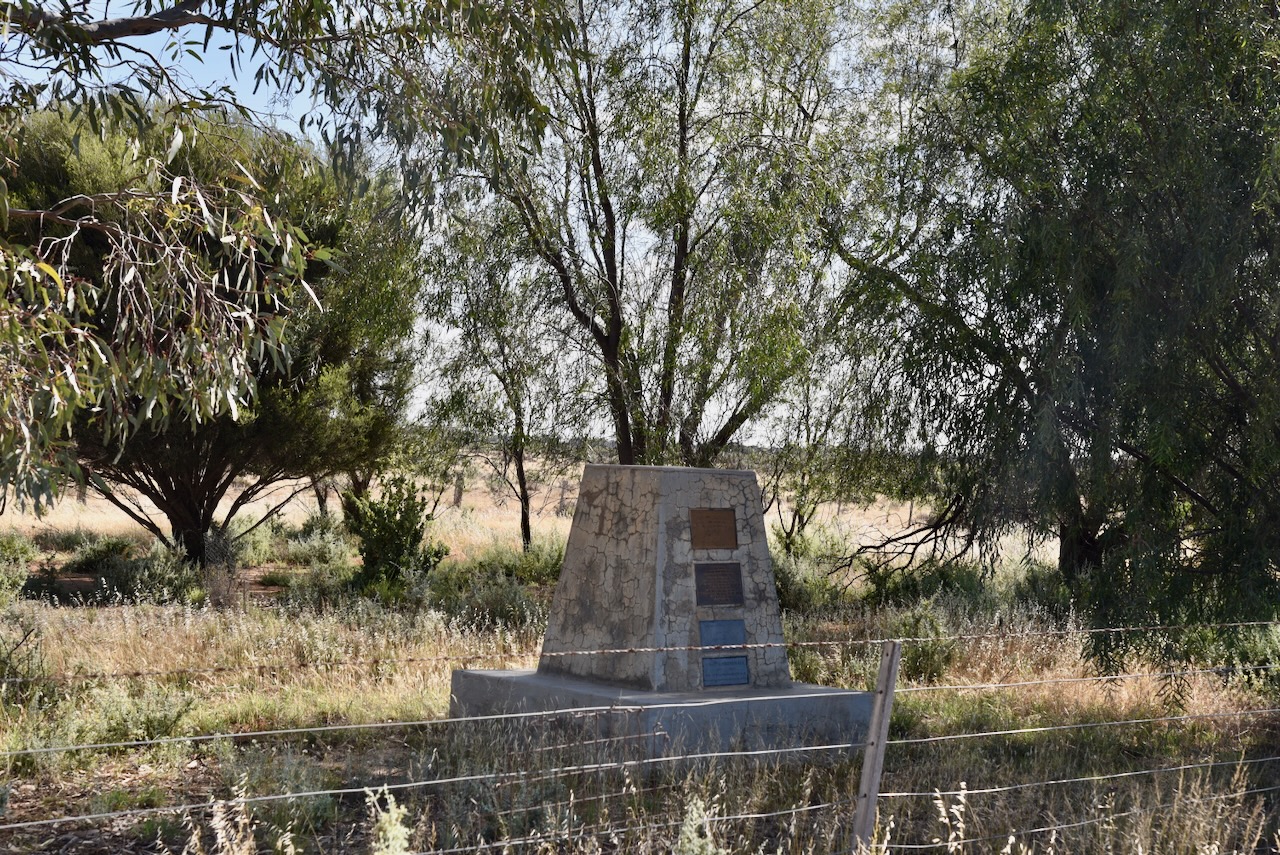
We then headed northwest on Tulla Road, passing through Tullakool, and then along Noorong Road. Our next stop was the Noorong Pioneer monument, which honours the early settlers of the district and those known to be buried at Noorong Station. Those recorded are:

  • Henry Robertson died 1859
  • Edward Phillips from London Died 1867
  • William McPhee from Scotland Died 1873 aged 40
  • George Oakly died 1874
  • James Kelly from Ireland Died 1878
  • Duncan Campbell from Scotland died 1879 aged 43
  • James C Steel Died 1879
  • William Anderson Ellis and his wife Alma Joyce Ellis nee Henderson
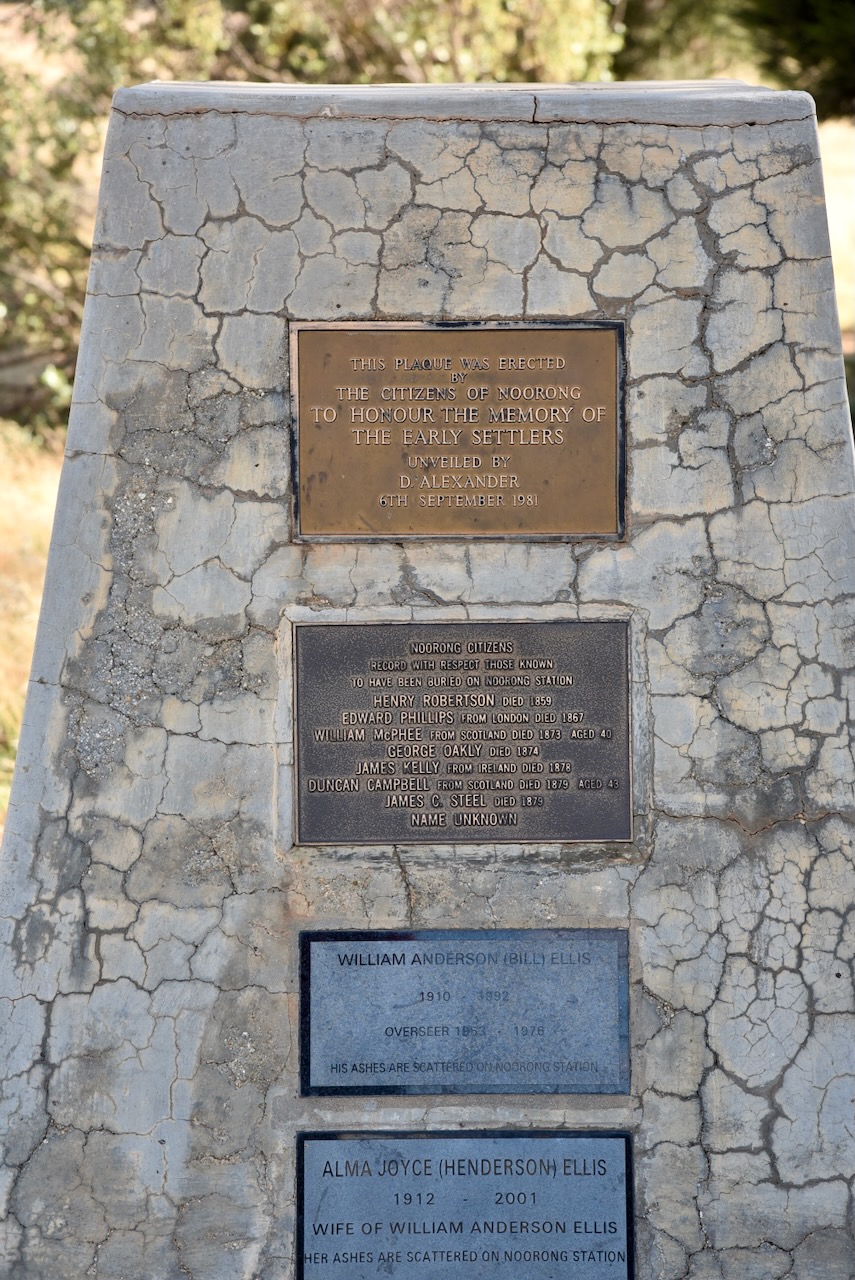
Noorong Station is still operational and is located near Barham.
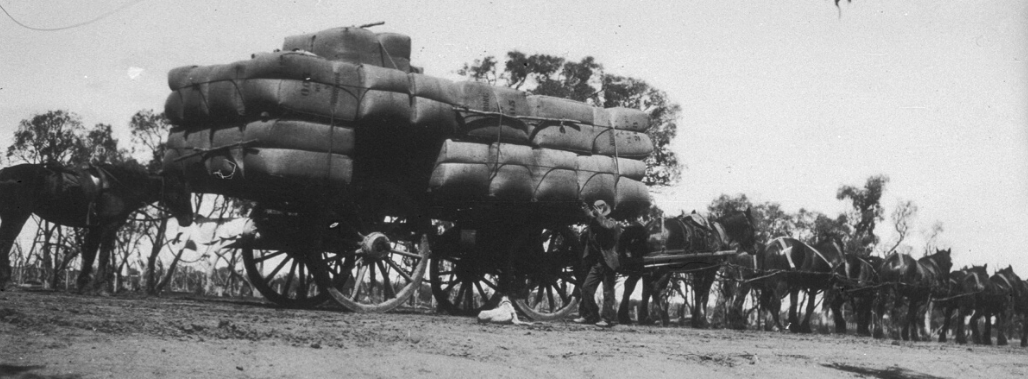
Above: a wagon load of Noorong wool on the way to Koondrook Railway Station. Image c/o Mitchell Library, State Library of New South Wales

William McPhee died on the 8th day of April 1873, at Noorong, after a tree fell on him. (Trove 2026)
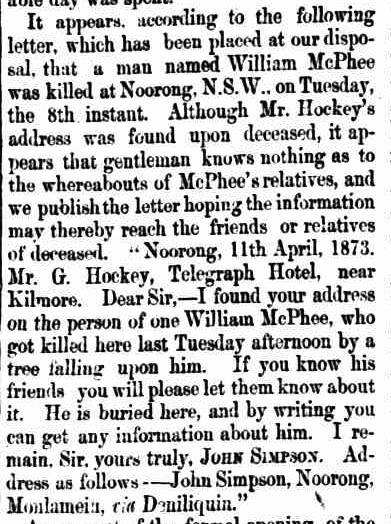
Above: article from the Kilmore Free Press, Thu 24 Apr 1873. Image c/o Trove

Duncan Campbell was the Manager at Noorong Run. He died on the 2nd day of March 1879 at Noorong Run, having been thrown from his horse. (Trove 2026)
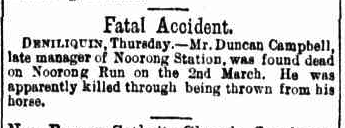
Above: article from the Evening News, Sydney, Thu 13 Mar 1879. Image c/o Trove

William ‘Bill’ Ellis was born in 1910 at Essendon, Victoria. In 1939, he married Alma Patricia Joyce Henderson. Bill spent time as a grazier on Mooloomoon Station and Gooparie Station, and was the overseer at Noorong Station from 1953 to 1976. Bill died in October 1992. His wife Alma died in 2001. Their ashes are scattered on Noorong Station.
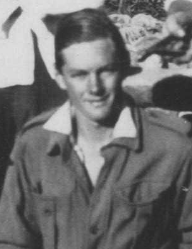
Above: Bill Ellis. Image c/o ancestry.com.au

I found the interesting article below re a mystery that occurred on Noorong. On Saturday, the 22nd day of May 1920, a boundary rider at Noorong discovered a buggy with the seat burnt and the remnants of a policeman’s overcoat. The boundary rider returned to the homestead and raised the alarm. The police at Barham and Koondrook were notified, who then made their way to what was suspected to be a tragedy. (Trove 2026)

It was feared that the Constable from Moulamein and Mr George Oare had met their fate while searching for missing sheep. The horse from the buggy was located tied to a tree between Moulamein and Noorong. After an extensive search, the two missing men were found in a hut. It was established that the Constable and Oare had found a fire in the buggy on Saturday morning, believed to be caused by a spark from a fire. They extinguished the fire and continued in their search for the sheep. (Trove 2026)
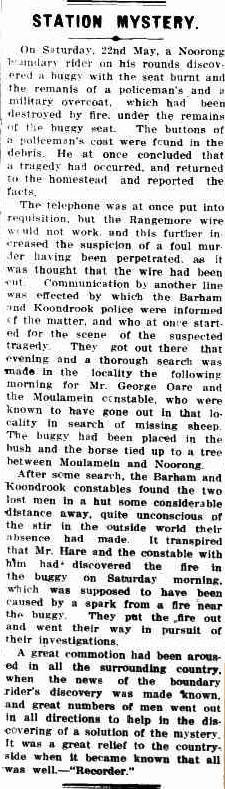
Above: article from The Merbein Irrigationist, Wed 23 Jun 1920. Image c/o Trove

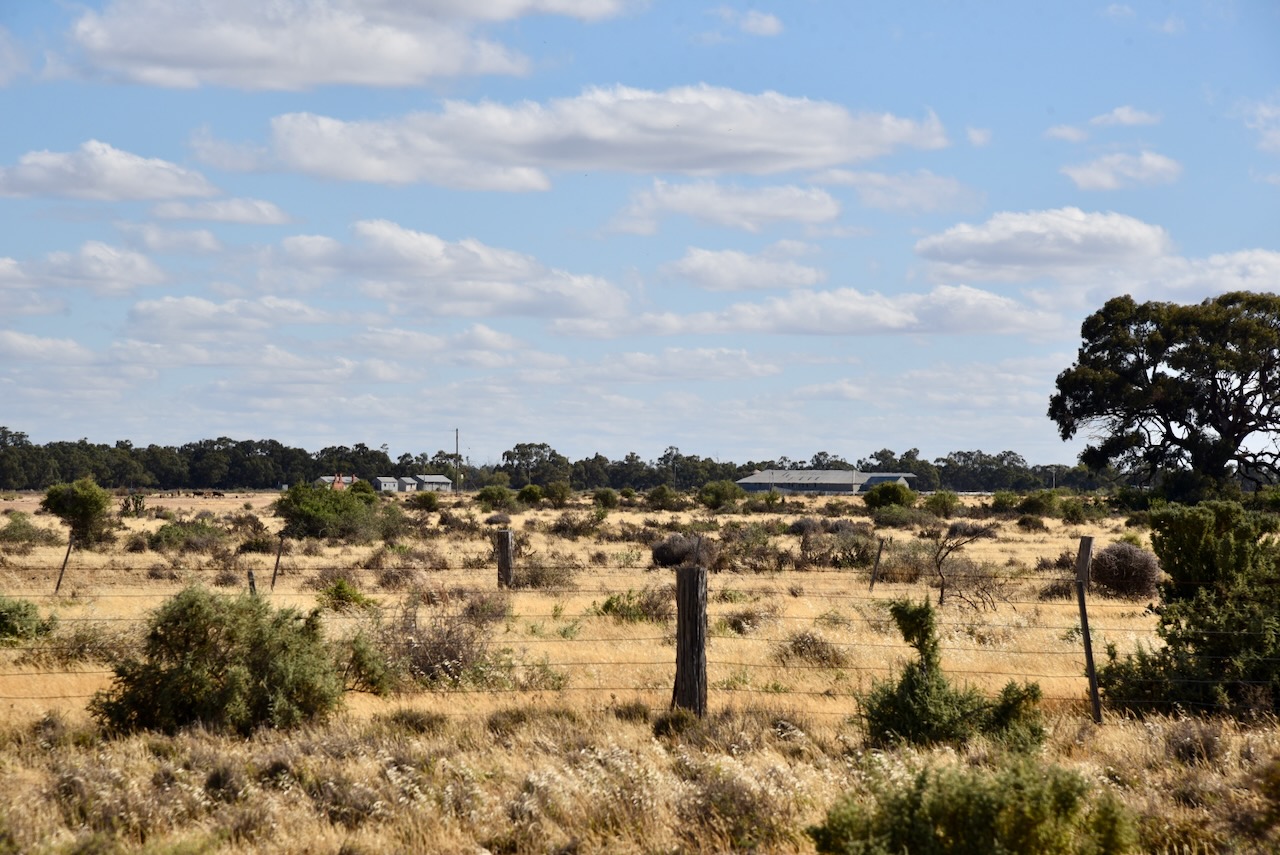
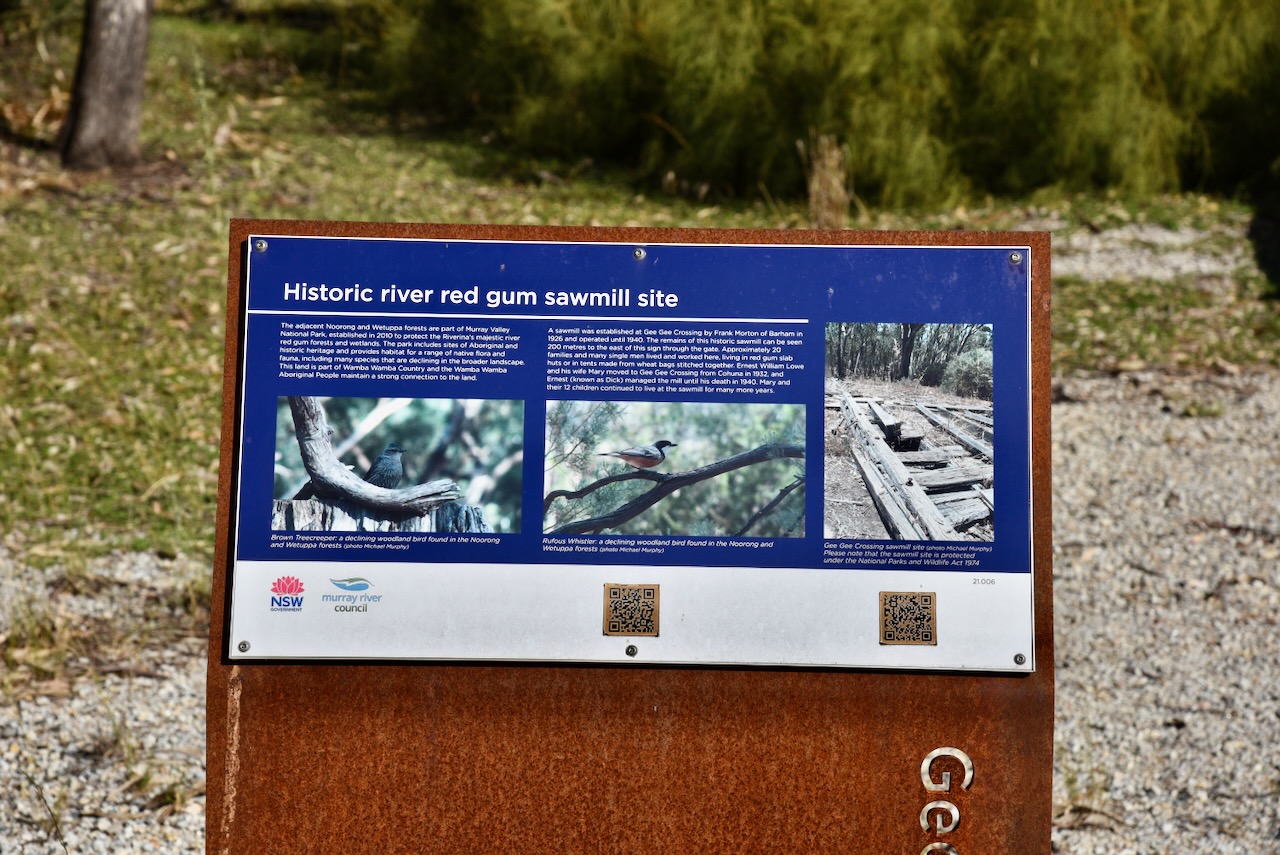
We were able to see Noorong Woolshed in the distance from Noorong Road. We would have very much loved to visit the historic woolshed, but it is located on private property. Marija and I always find old woolsheds to be extremely interesting.
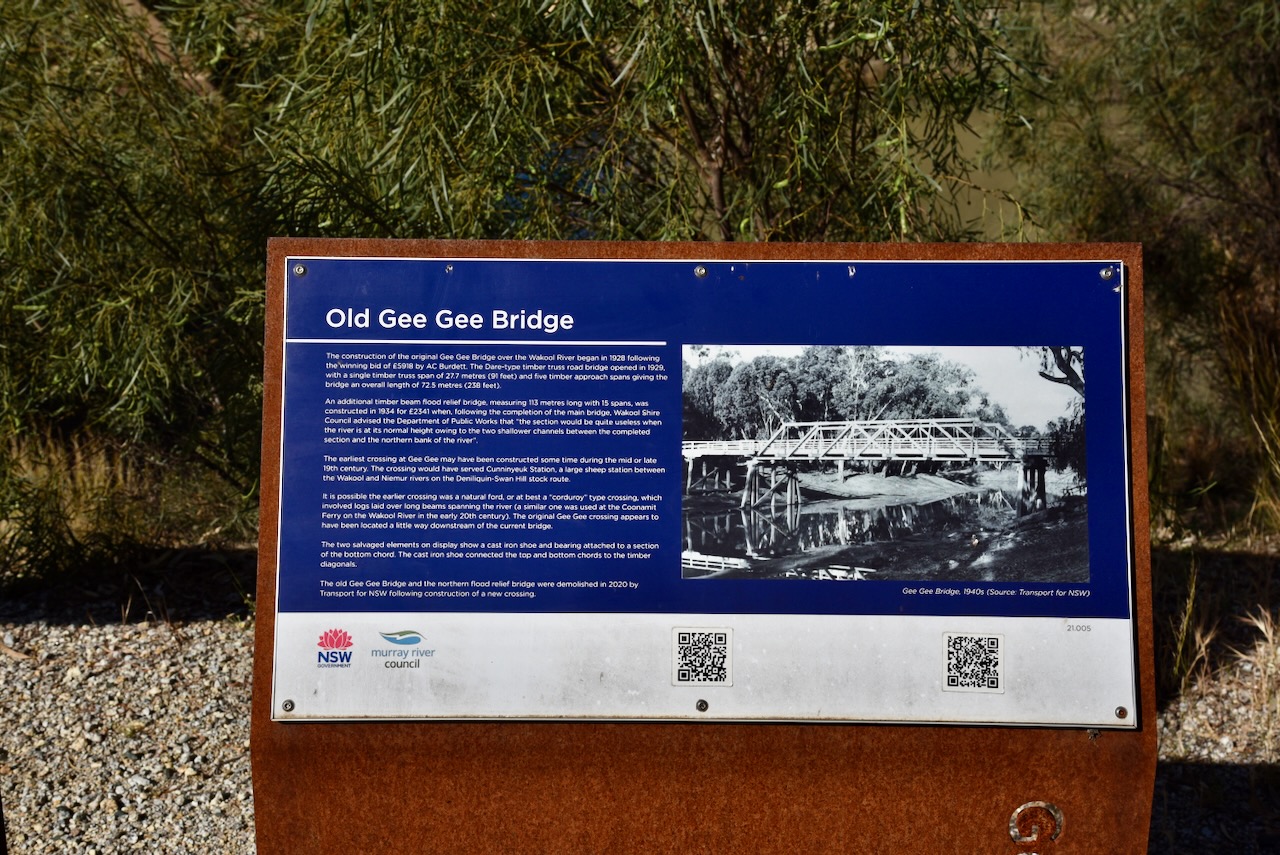
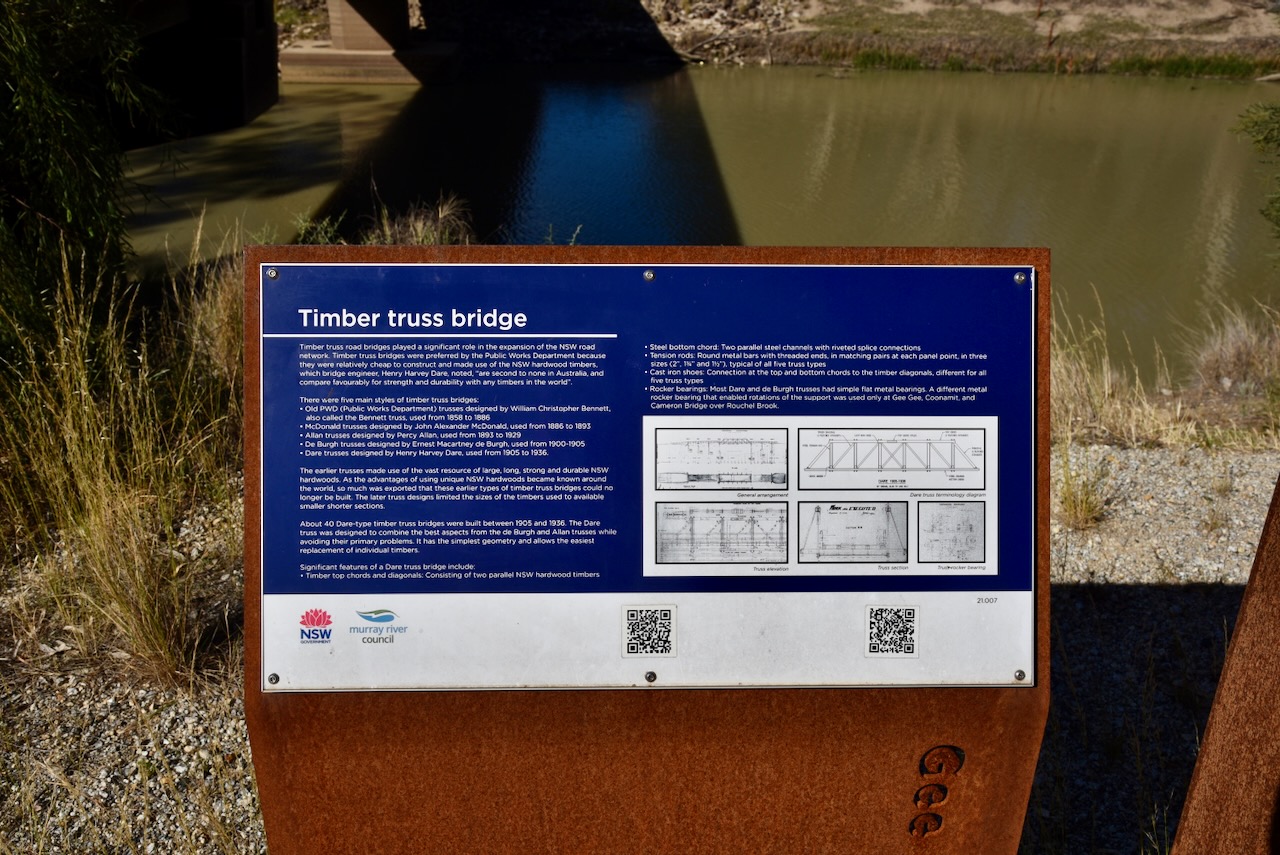
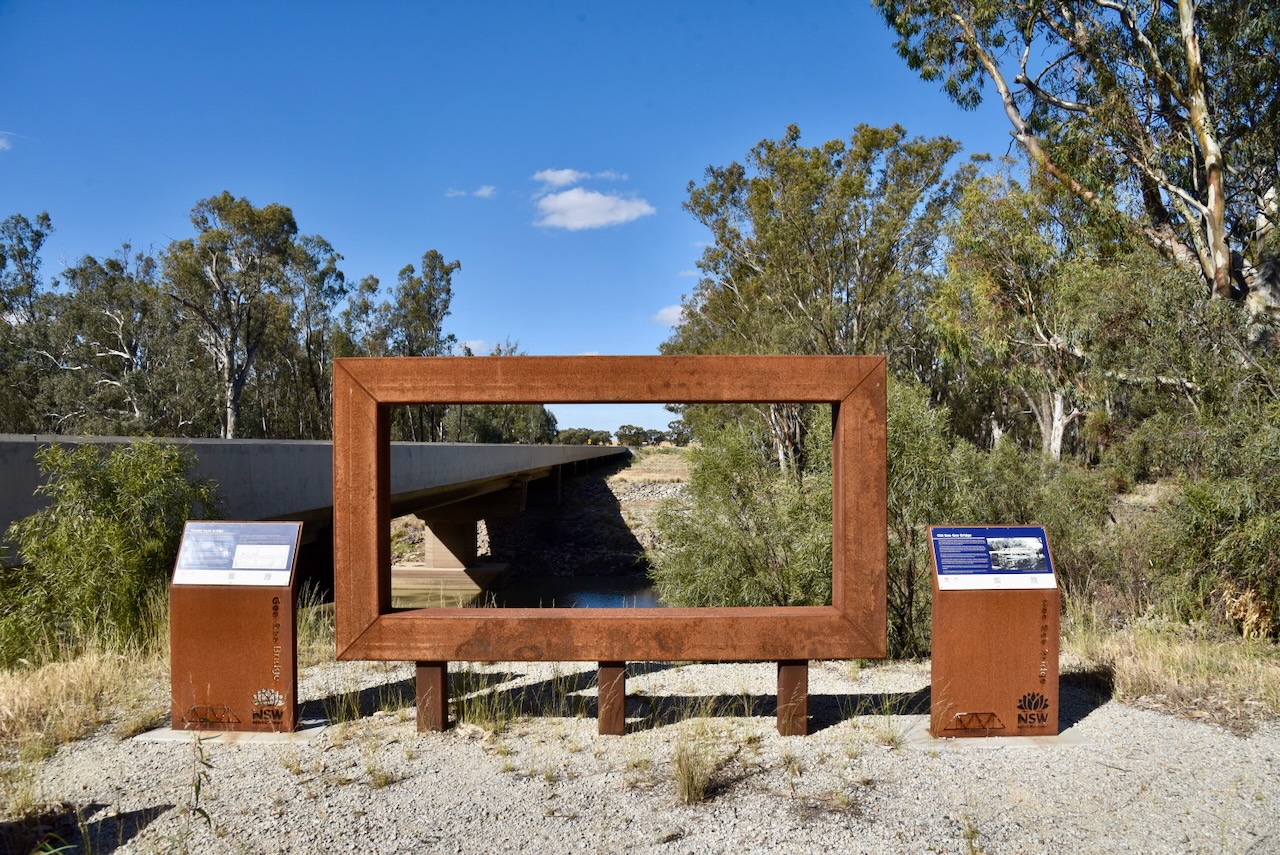
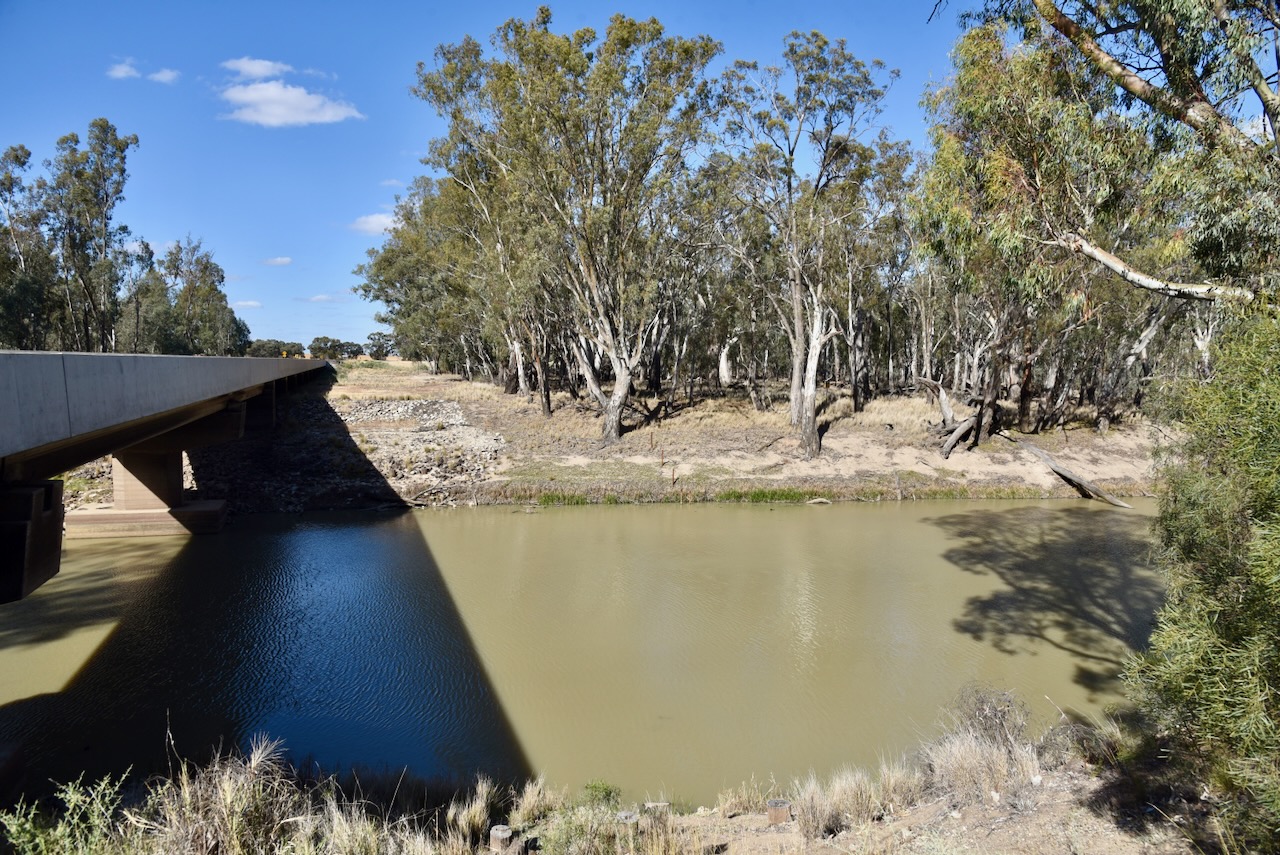
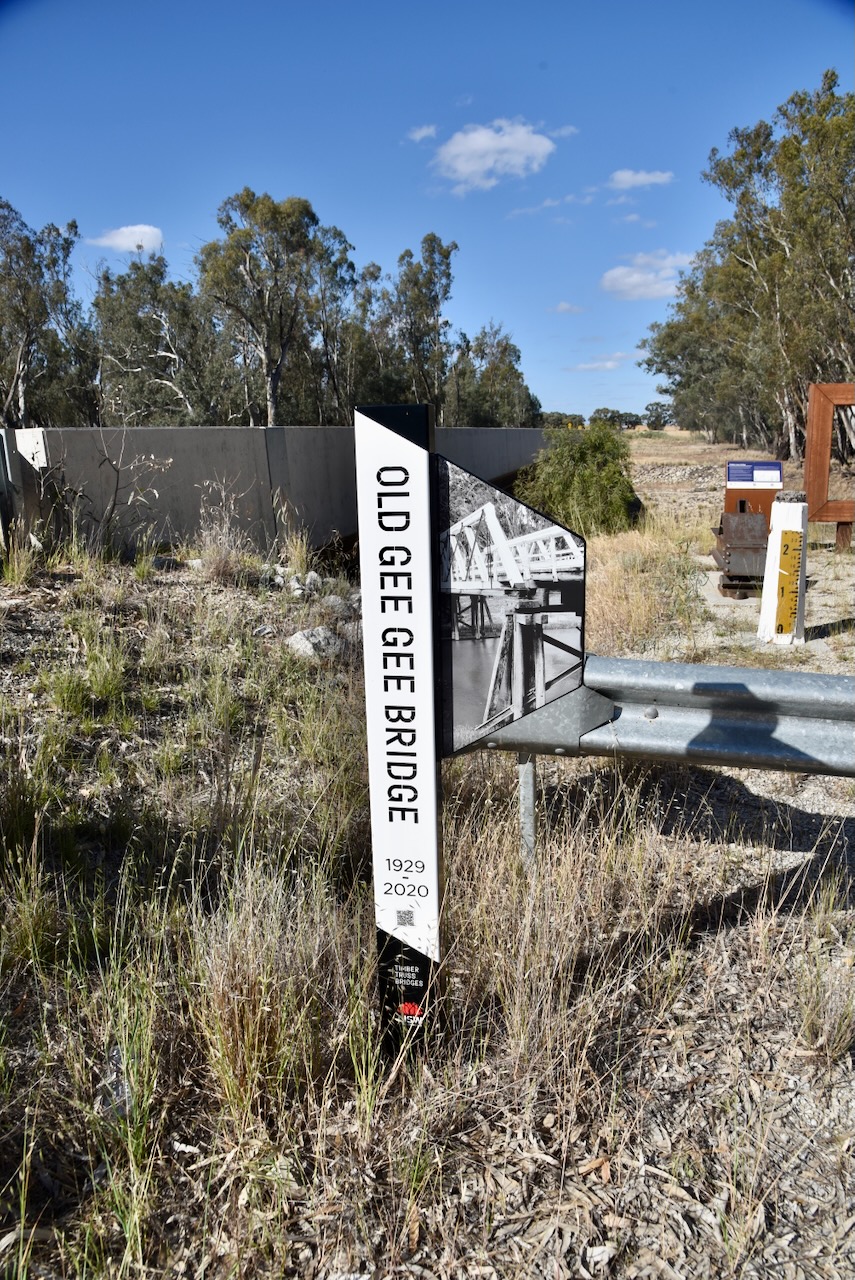
We then stopped at the old Gee Gee Bridge on Noorong Road. Sadly, the heritage-listed bridge that crossed the Wakool River was demolished after the construction of a concrete bridge in 2020. The bridge was built in 1929 and was designed by Harvey Dare, who was the designer of various bridges. (Wikipedia 2024)
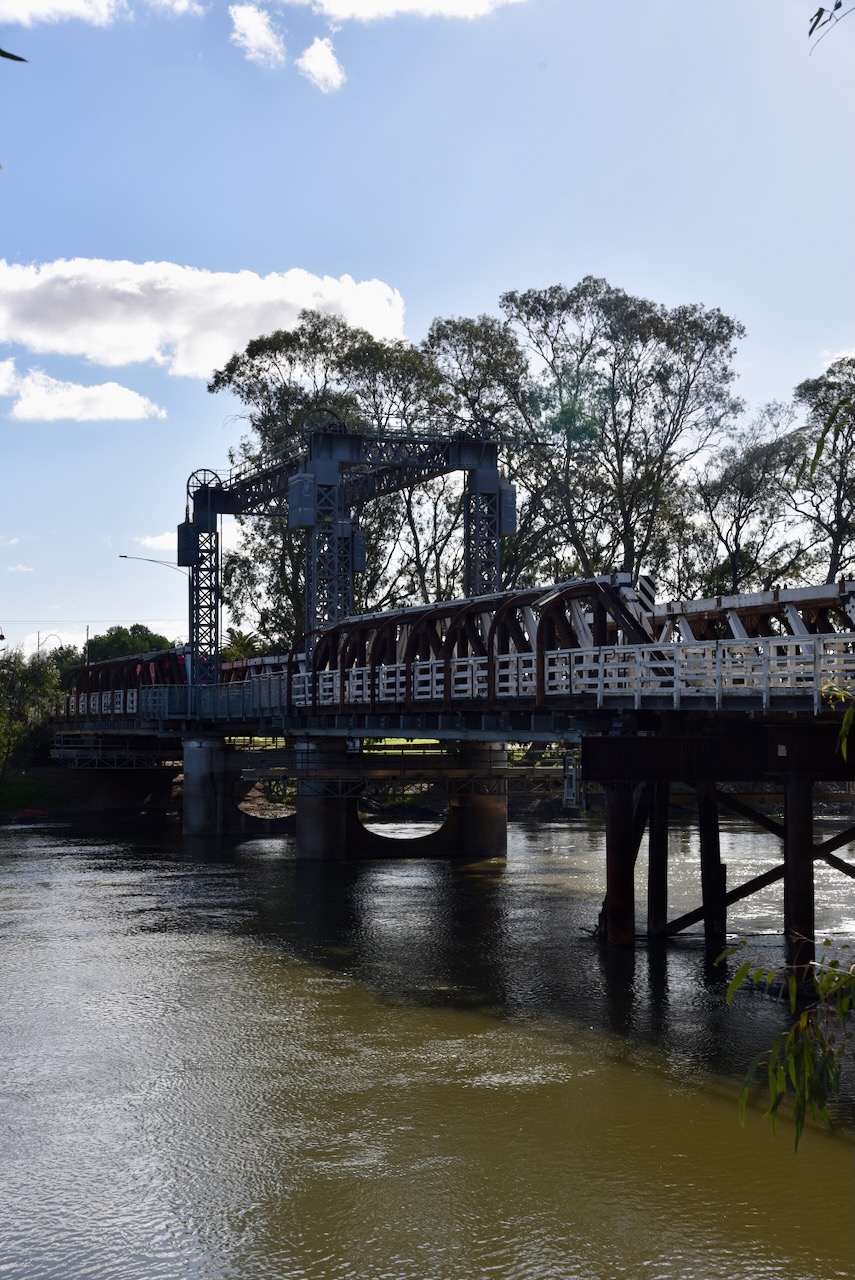
We continued on to Swan Hill, crossing into Victoria over the historic bridge and the Murray River. The bridge was built in 1896.
We made our way to our accommodation and unpacked the 4WD.
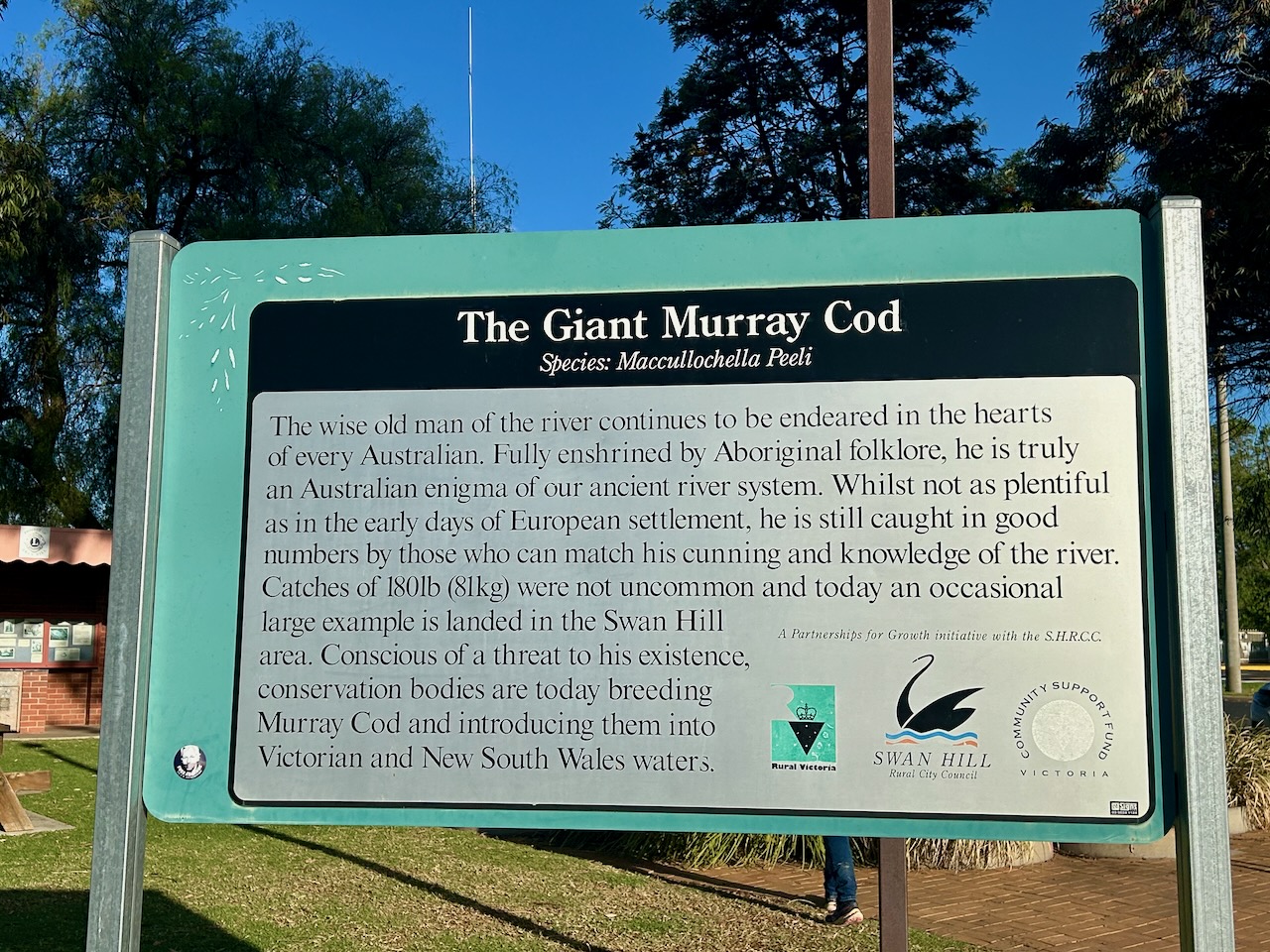
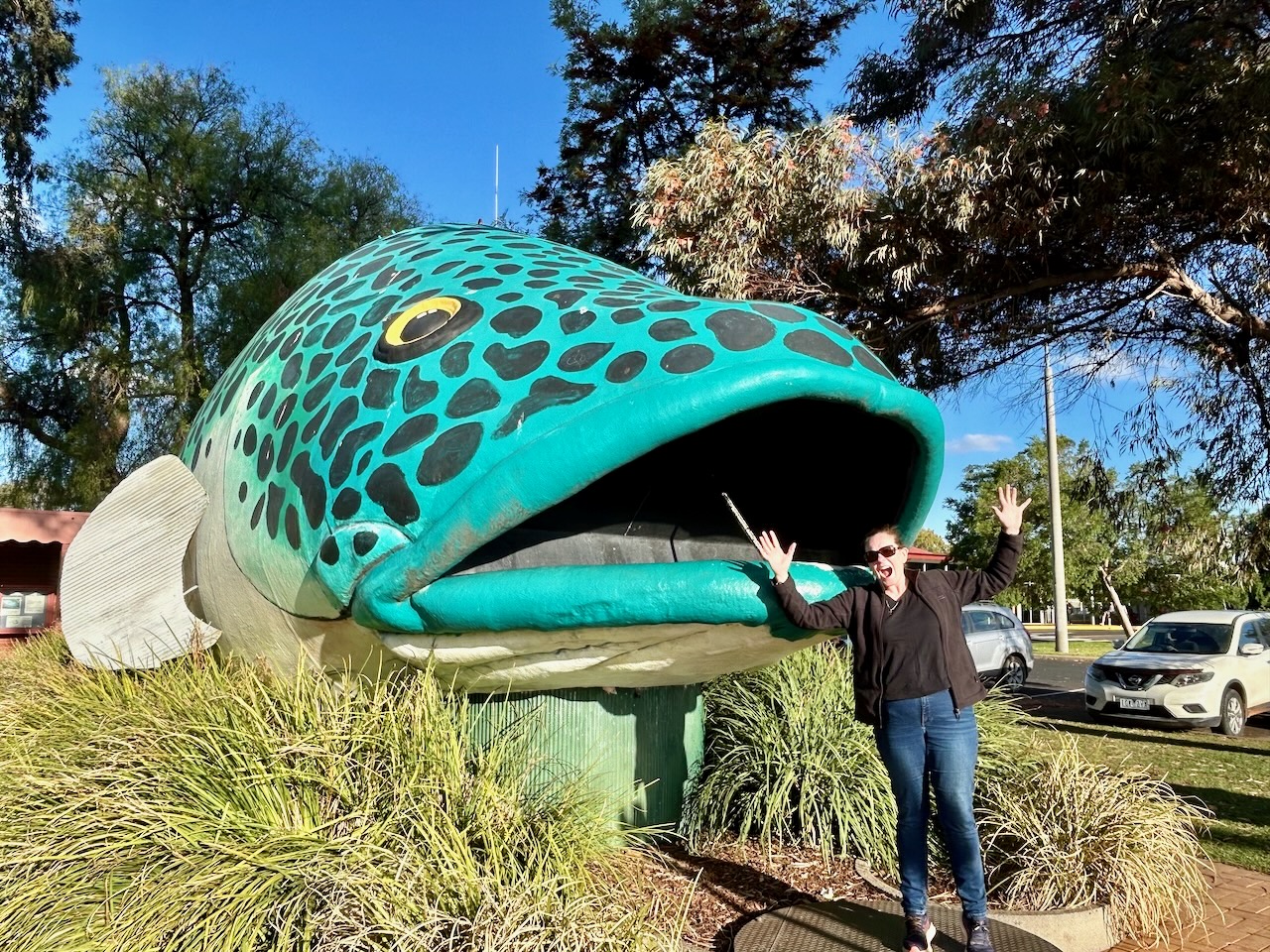
Marija and I then headed out to activate the two silos in Swan Hill. On the way, we stopped at the Giant Murray Cod, a monument to the large Murray Cod caught in the Murray River.
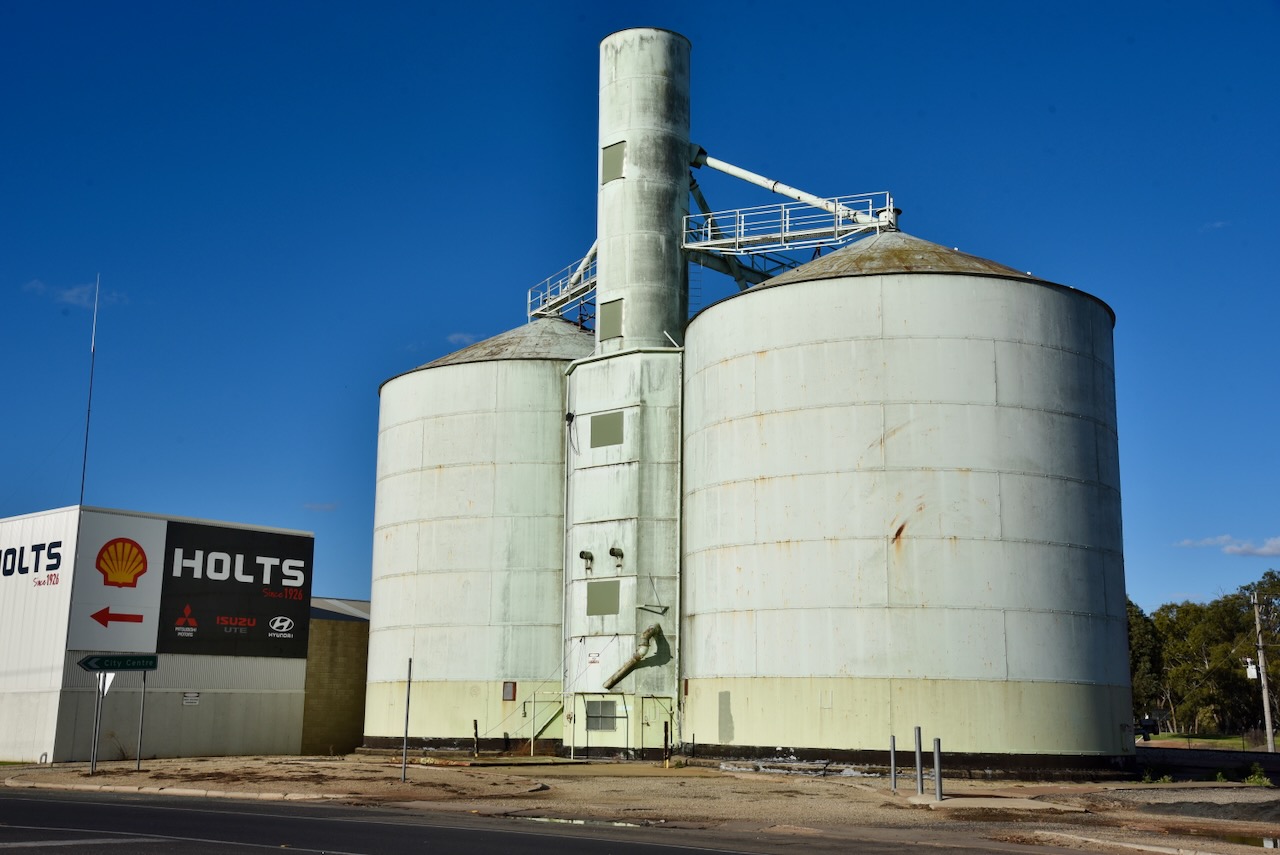
The Swan Hill North silo VK-SWH3 is located on the eastern side of Curlewis Street, opposite Pritchard Street, and alongside the Bendigo Piangil railway.
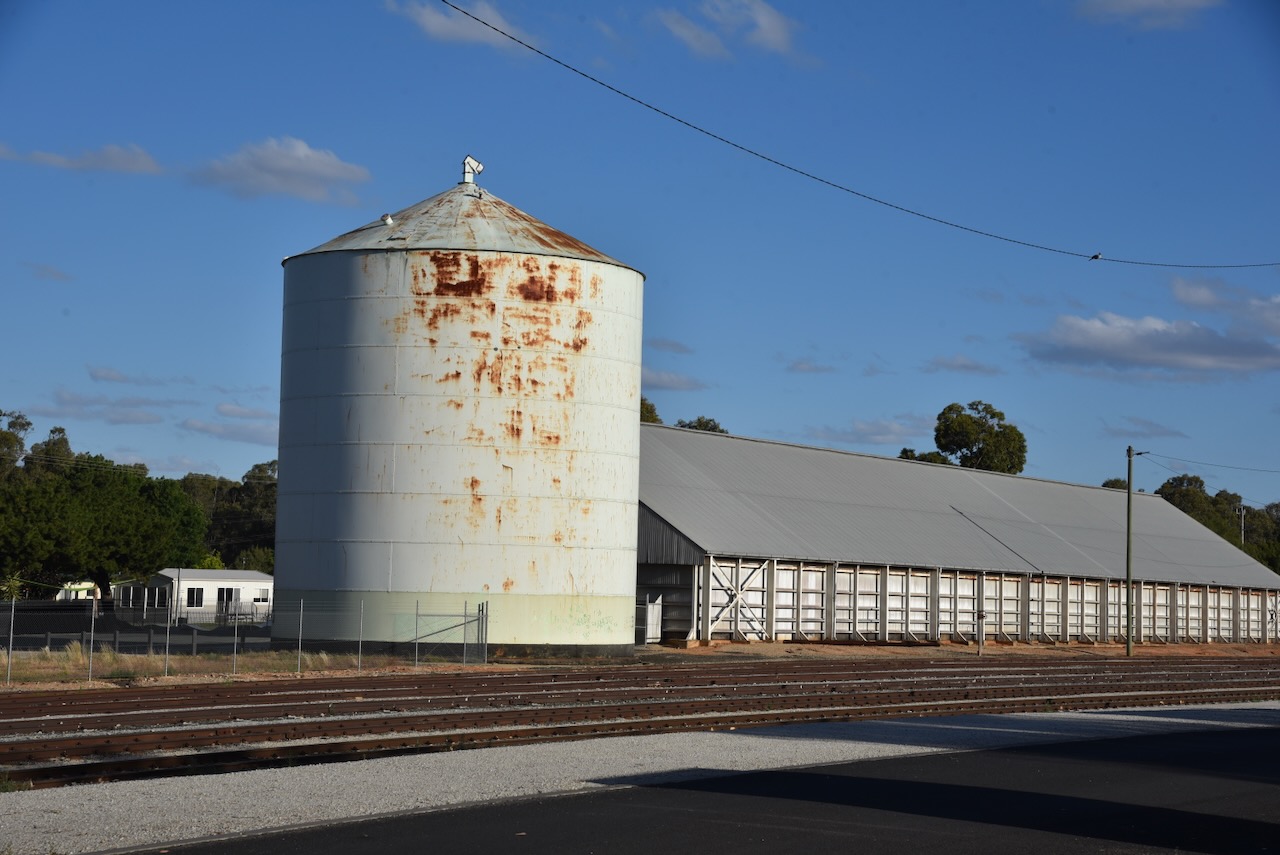
The Swan Hill silo VK-SWL3 is located on the western side of Monash Drive, alongside the Bendigo Piangil railway.
Marija and I parked on Monash Drive and operated from the 4WD, running the IOcom IC-7000, 100 watts, and the Codan 9350 antenna with the 1.5 metre stainless steel whip.
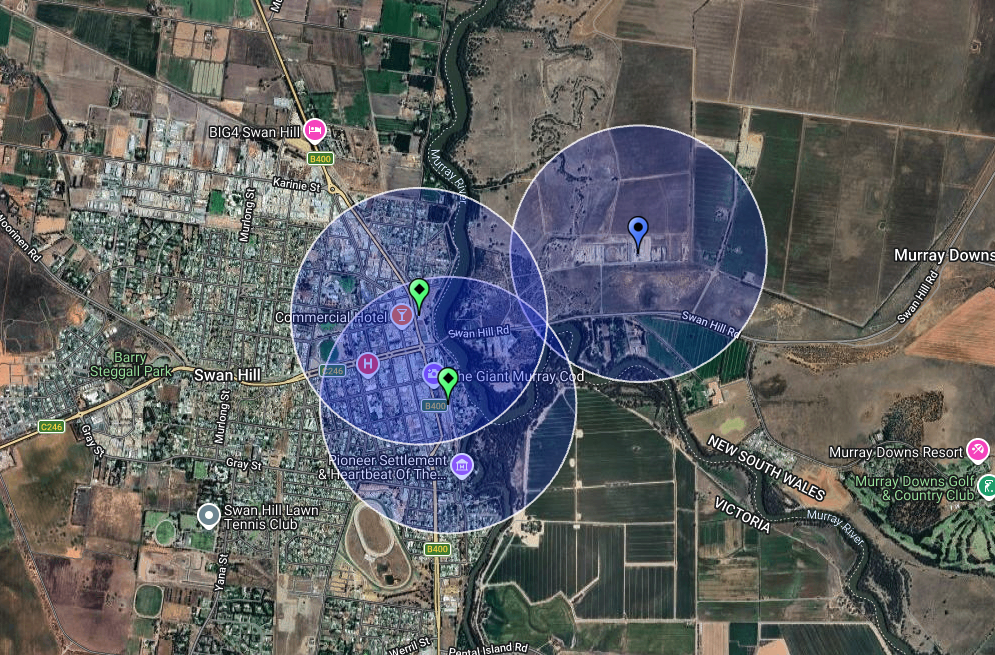
Above: the activation zone at the silos in Swan Hill. Image c/o SiOTA website

Marija worked the following stations on 40m SSB:-

  1. VK2HAK
  2. VK3WSG
  3. VK2IOP
  4. VK5NJ
  5. VK5GY
  6. VK4GWC
  7. VK3PF
  8. VK2ZR
  9. VK2AZR
  10. VK3MCA
  11. VK3SPG
  12. VK2YAK
  13. VK4YAK

I worked the following stations on 40m SSB:-

  1. VK2HAK
  2. VK3WSG
  3. VK2IO
  4. VK5NJ
  5. VK5GY
  6. VK4GWC
  7. VK3PF
  8. VK2ZR
  9. VK2AZR
  10. VK3MCA
  11. VK3SPG
  12. VK2YAK
  13. VK4YAK
  14. VK5OG
  15. VK3UZI

References.

  1. Trove. (2026). Evening News (Sydney, NSW : 1869 – 1931) – 13 Mar 1879 – p2. [online] Available at: https://trove.nla.gov.au/newspaper/page/11605807?searchTerm=noorong [Accessed 10 Apr. 2026].‌
  2. Trove. (2026). Kilmore Free Press (Kilmore, Vic. : 1870 – 1954) – 24 Apr 1873 – p2. [online] Available at: https://trove.nla.gov.au/newspaper/page/6755305?searchTerm=noorong%20%2B%20mcphee [Accessed 10 Apr. 2026].‌
  3. Trove. (2026). STATION MYSTERY. – The Merbein Irrigationist and Murray Valley Soldiers’ Gazette (Vic. : 1919 – 1920) – 23 Jun 1920. [online] Available at: https://trove.nla.gov.au/newspaper/article/258152401/28741638 [Accessed 10 Apr. 2026].‌
  4. Wikipedia Contributors (2024). Gee Gee Bridge. Wikipedia.‌

Wakool silo VK-WKL2

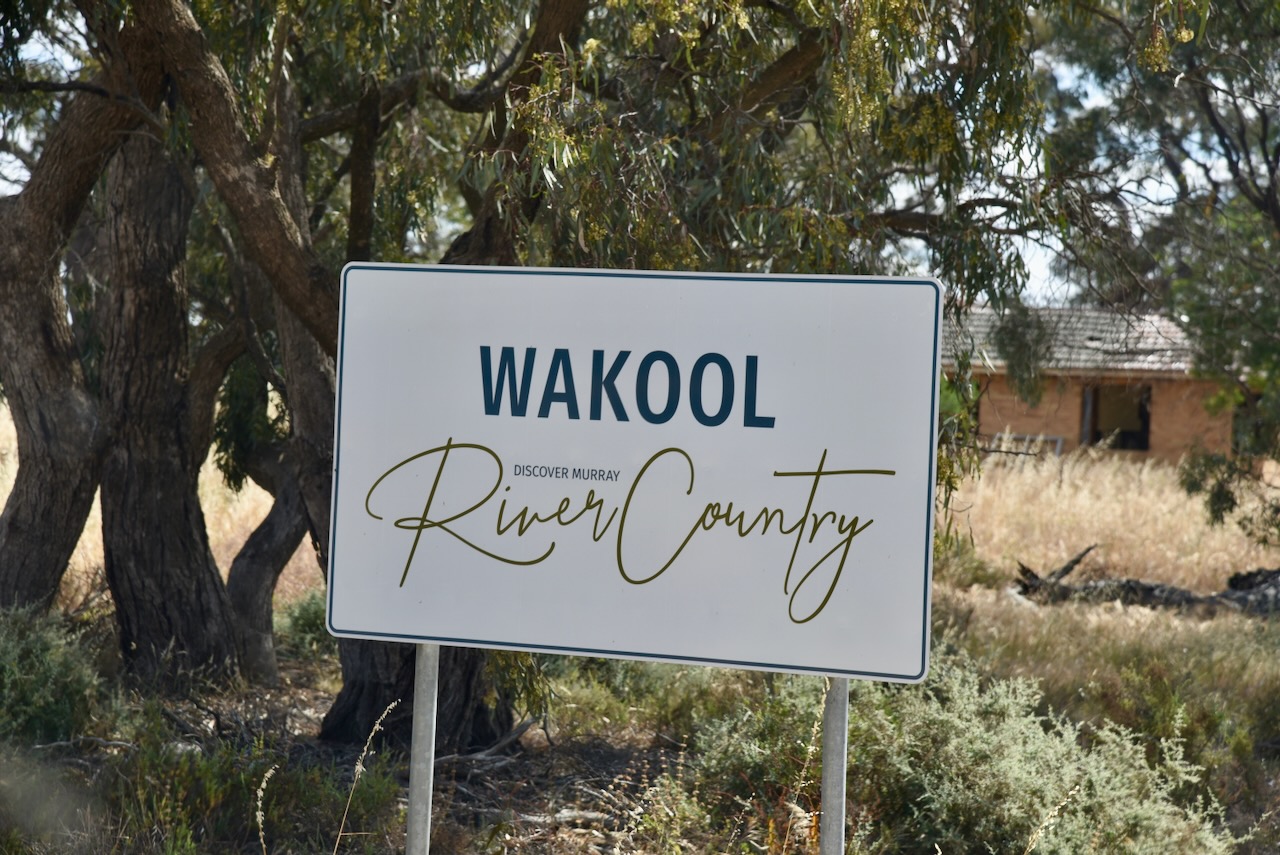
On Wednesday, 5th November 2025, Marija and I continued our journey towards Swan Hill. We drove west on Wakool Road, with our next planned stop at the town of Wakool.

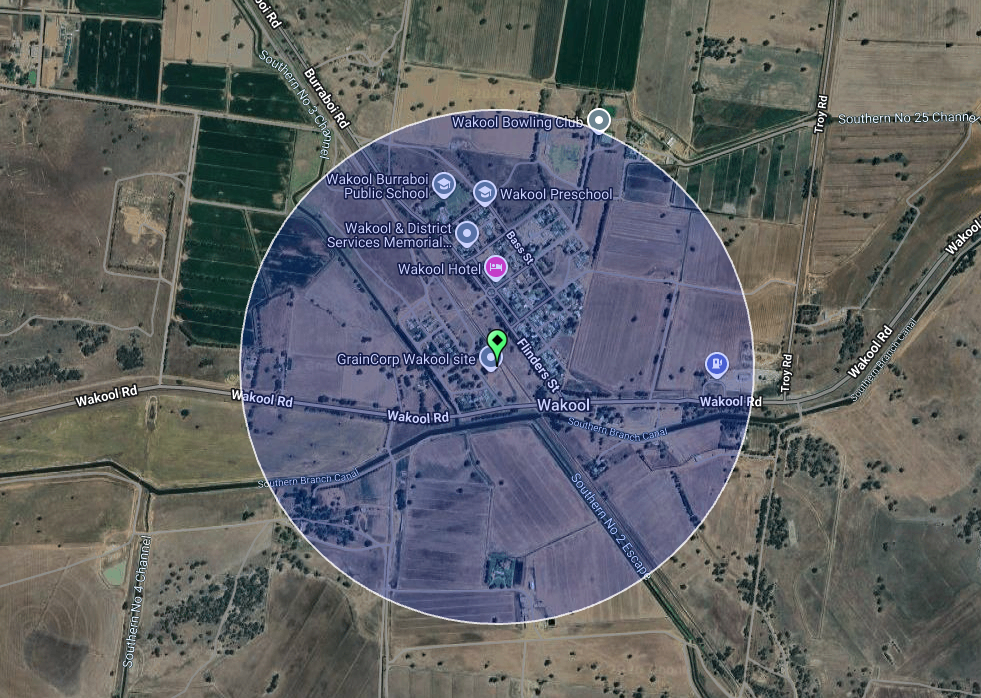
Above: Map showing the location of Wakool, N.S.W. Map c/o Google Maps

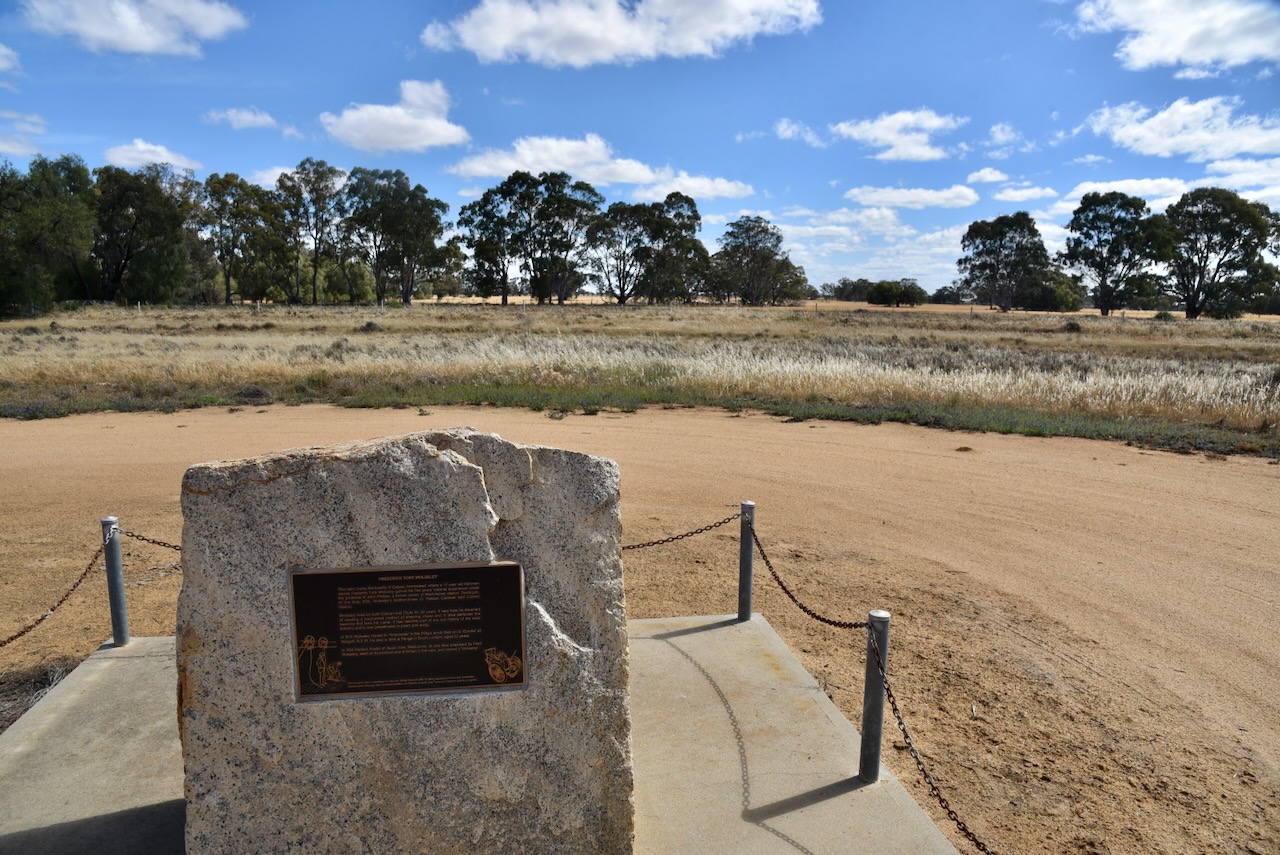
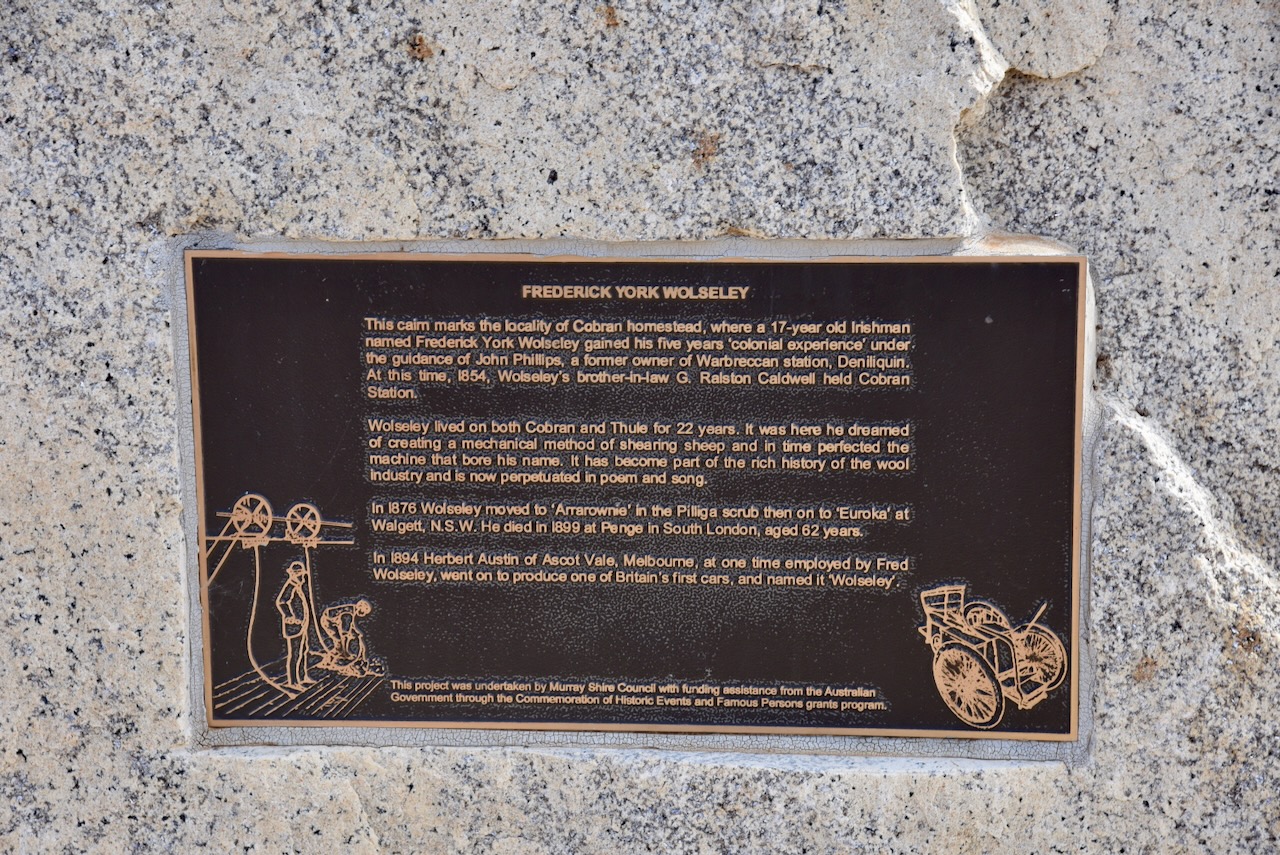
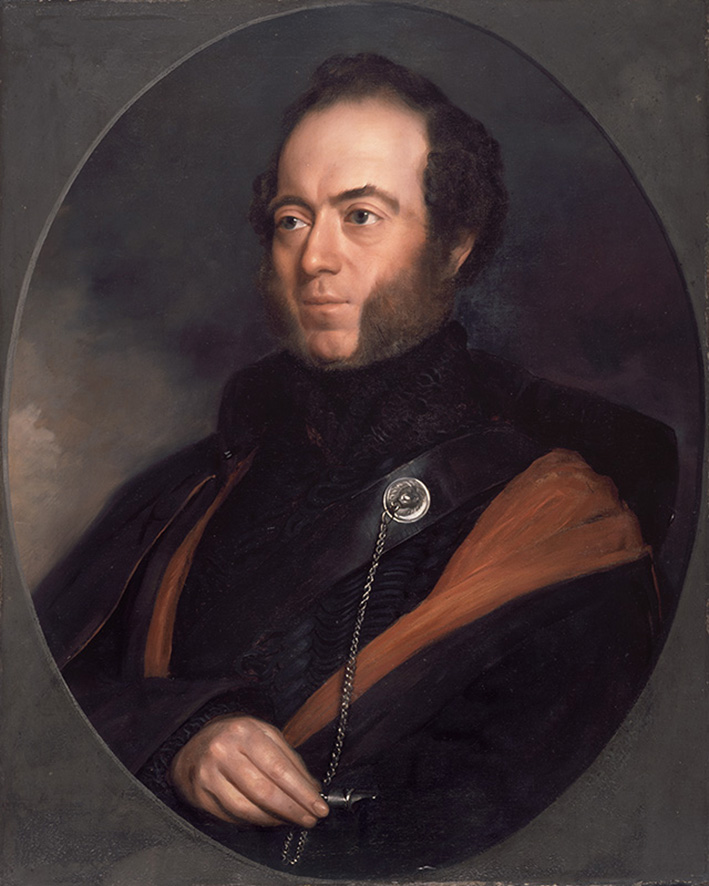
On the Wakool Road at Yallakool, we stopped at the Frederick York Wolseley monument. The cairn marks the locality of Cobran homestead and Frederick Wolseley, who invented the mechanical method of shearing sheep.

Frederick York Wolseley was born on the 16th day of March 1837, in County Dublin, Ireland. His parents were Major Garnet Joseph Wolseley of the King’s Own Scottish Borders (25th Foot) and Frances Anne Smith. Frederick emigrated to Australia in July 1854 aboard the Norwood. As a 17-year-old, he gained his five-year colonial experience under the guidance of John Phillips, a former owner of Warbreccan station at Deniliquin. Wolseley’s brother-in-law, Gavin Ralston Caldwell, who was married to Frederick’s sister Fanny, held Cobran station. Wolseley lived on Cobran Station and Thule Station for 22 years. (ancestry 2016) (Walsh n.d.) (Wikipedia 2025)

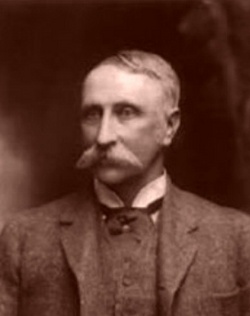
Above: Frederick Wolseley. Image c/o findagrave.com

Frederick dreamed of creating a mechanical method of shearing sheep. In the late 1860s, he commenced work on developing his idea, financed by his elder brother Garnet, who became Field Marshal Viscount Wolseley. By 1872, he had created a working model. In 1874, he commenced development of the machine in Melbourne with the engineering business, Richard Park & Co. A few years later, Herbert Austin arrived from England to work at Richard Park & Co. (Walsh n.d.) (Wikipedia 2025)

On the 28th day of March 1877, Frederick and Robert Savage were granted a patent for a shearing device driven by horsepower. Savage was the inventor of several pieces of mining and agricultural machinery equipment. A further patent was granted in December 1877; however, the machine was not successful due to serious issues with the drive mechanism and shearer’s movements. Wolseley continued to work on the machine without Savage and made several developments with Richard Pickup Park. On the 13th day of December 1884, they patented an ‘Improved Shearing Apparatus’. (Walsh n.d.) (Wikipedia 2025)

In 1885, Wolseley conducted public demonstrations in Melbourne and Sydney. In 1887 to 1888, the Wolseley machine was widely demonstrated throughout Australia and in New Zealand. In 1888, Sir Samuel McCaughey’s shed at Dunlop, Louth, New South Wales, was the first shearing shed to complete a shearing with the Wolseley machine. In that same year, 18 other woolsheds in Australia were fitted with the Wolseley machine. (Walsh n.d.)

In 1887, Herbert Austin joined Wolseley Sheep Shearing Machine Company Limited as chief engineer. Austin conducted study on the machine and made further patented improvements. Wolseley visited England and left Austin in charge. A workshop in Birmingham was established. (Wikipedia 2025)

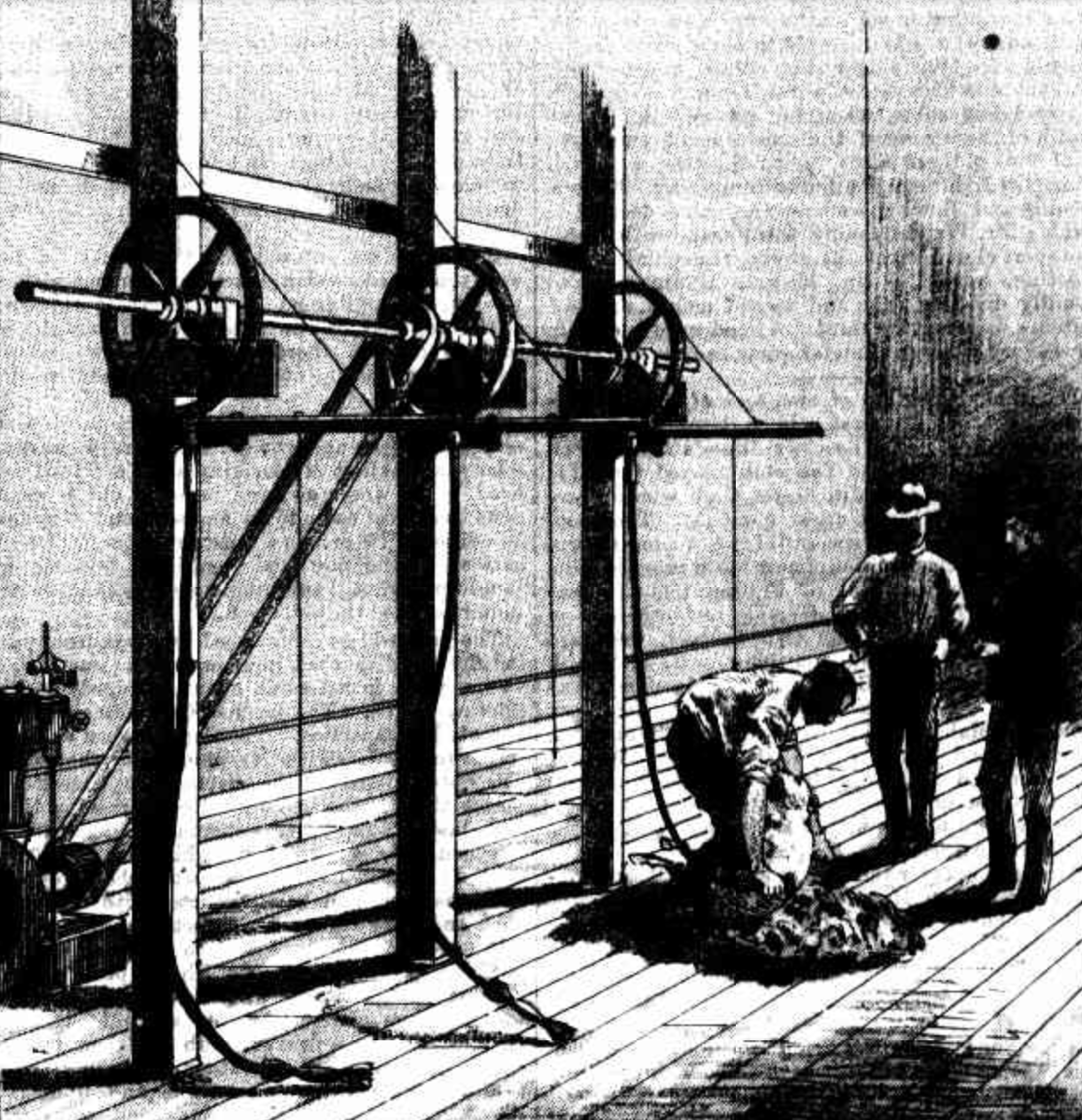
Above: An image featuring the Wolseley sheep shearing machine in an 1887 issue of the Queensland Figaro and Punch, Sat 9 Apr 1887. Image c/o Trove

In the late 1890s, Frederick was diagnosed with cancer. In 1898, he married his nurse, Ellen Elizabeth Clarke, in Melbourne, Victoria. In 1894, he briefly returned to Australia but later that year he returned to England for specialised treatment. He died on the 8th day of January 1899, at The Red House, Norwood, Surrey, England, aged 61 years. (ancestry 2016) (Wikipedia 2025)

During the late 1890s Austin commenced an interest in the manufacture of motor vehicles. He established The Austin Motor Company Limited in Birmingham.

We continued along Wakool Road, crossing the Wakool River, and into the town of Wakool. The Wakool River is an anabranch of the Edward River, which is part of the Murray River catchment. The Wakool River flows for a distance of 363km. (Wikipedia2025)

Wakool is believed to be derived from an Aboriginal word meaning ‘one’. (Lakemac.com.au 2026)

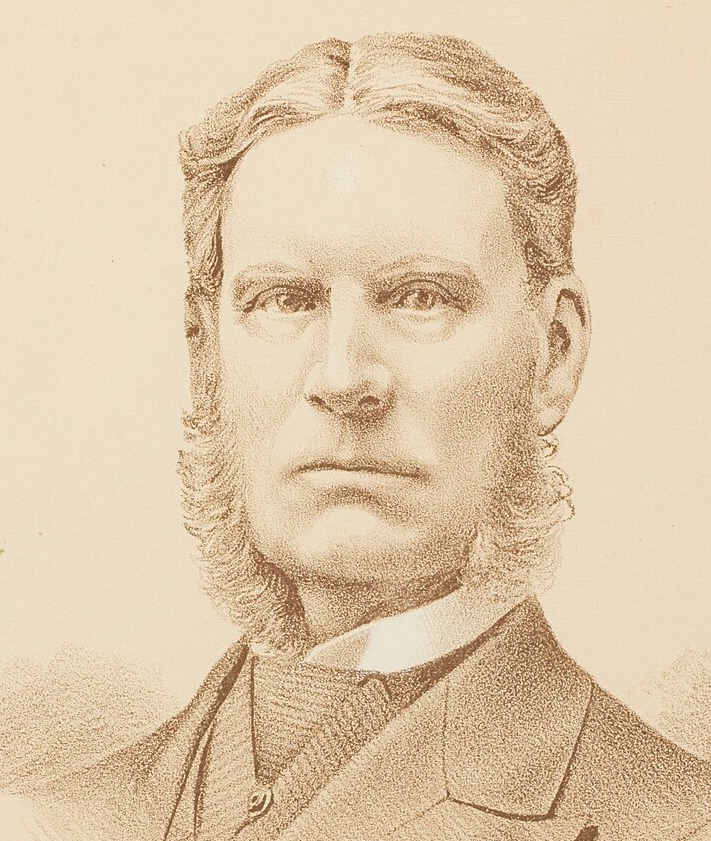
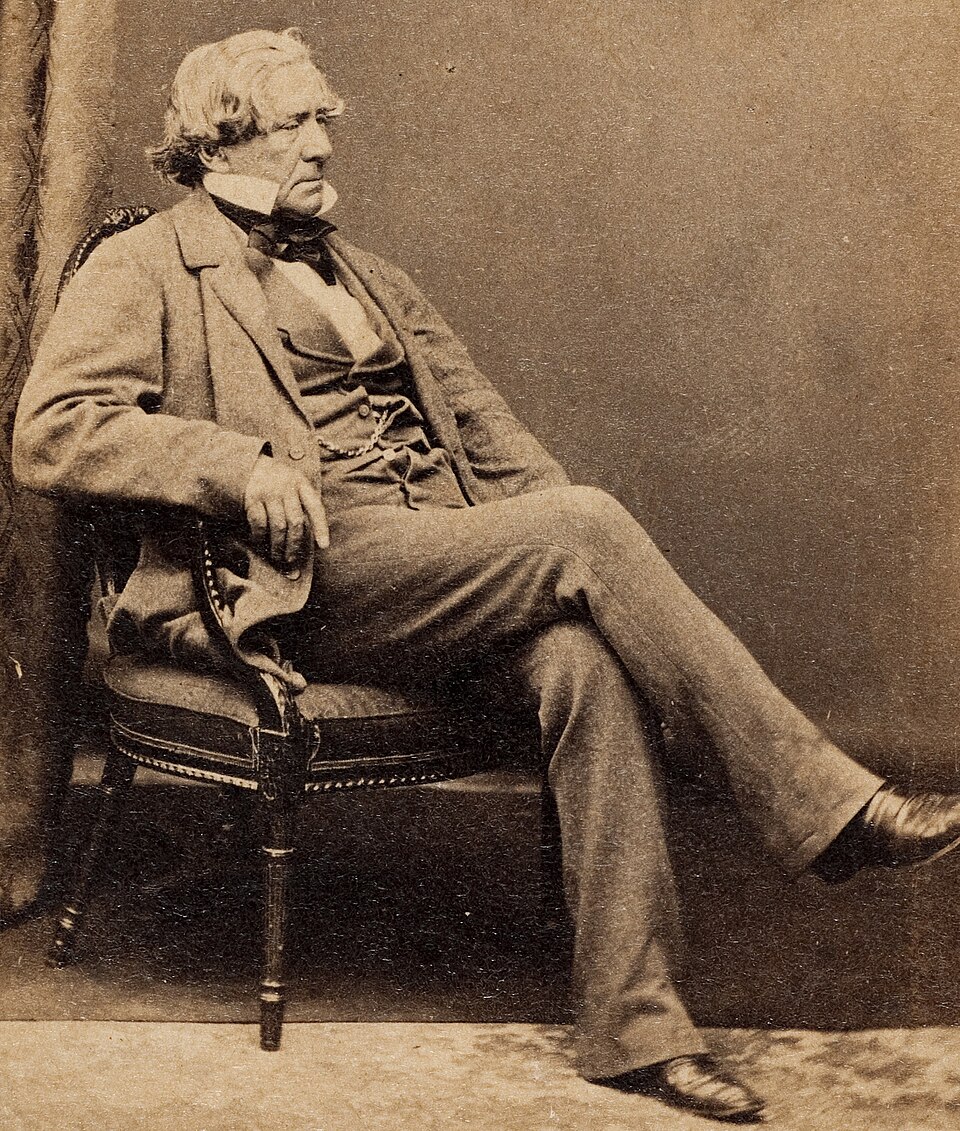
The first European exploration of the area was in 1836, when Surveyor-General Major Thomas Mitchell led an expedition through the Riverina region of New South Wales. (Grokipedia 2026)

Above: Major Mitchell. Image c/o Wikipedia

In 1842, Augustus Morris, a pastoral agent, acting on behalf of Benjamin Boyd, led an expedition into the area north of the Murray River in search of suitable grazing land. He was accompanied by Francis Augustus Gwynne and Frederick Walker. They named the Wakool River following tracing its course from the Edward River junction toward the Murray River. (Grokipedia 2026)

Above: Augustus Morris. Image c/o Wikipedia

In the following year, 1843, depasturing licenses were issued. William Charles Wentworth established the Tala Run, comprising about 200,00 acress, near the Wakool River.

Above: William Wentworth Image c/o Wikipedia

The Wakool Post Office opened on the 1st day of January 1870 and closed in 1874. In 1926, it reopened. (Wikipedia 2024)

Above: item from The Pastoral Times, Sat 15 Jan 1870. Image c/o Trove

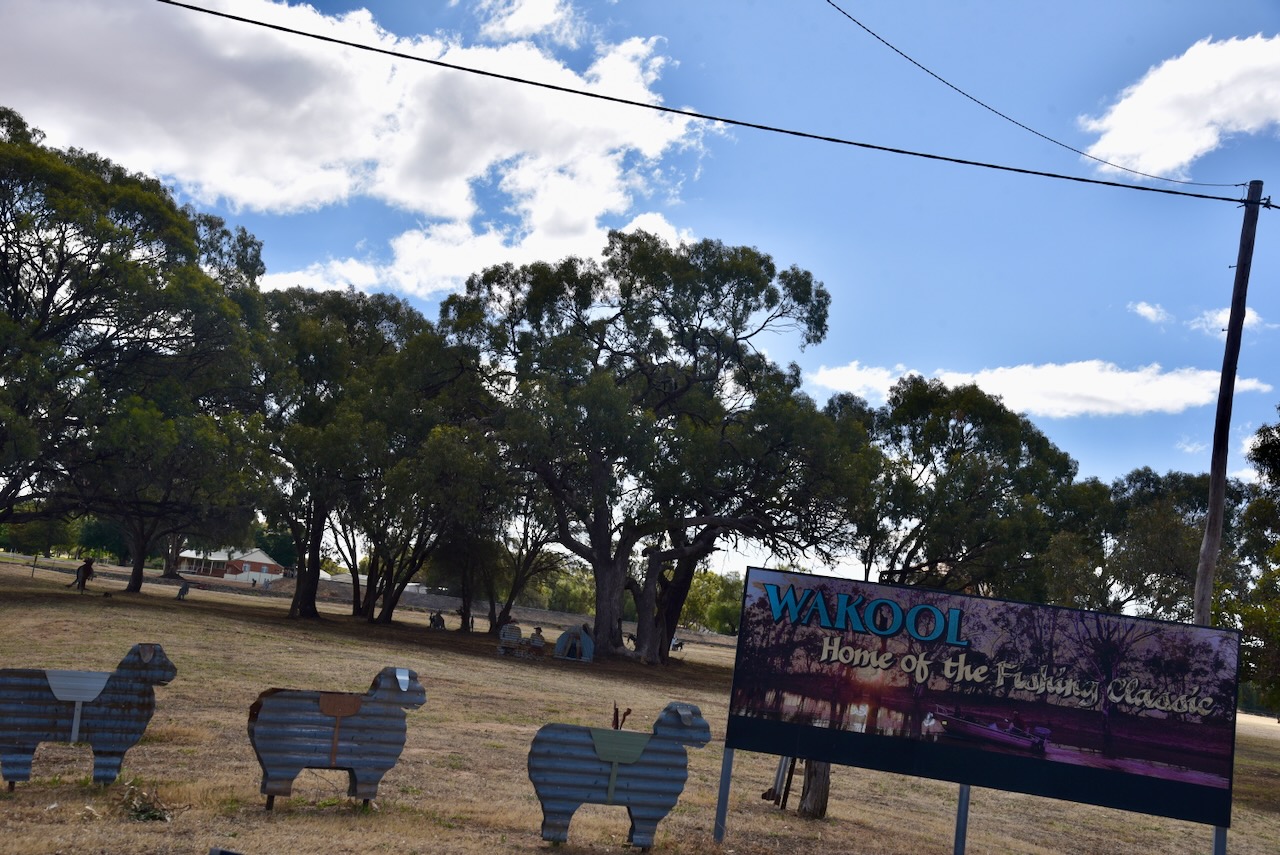
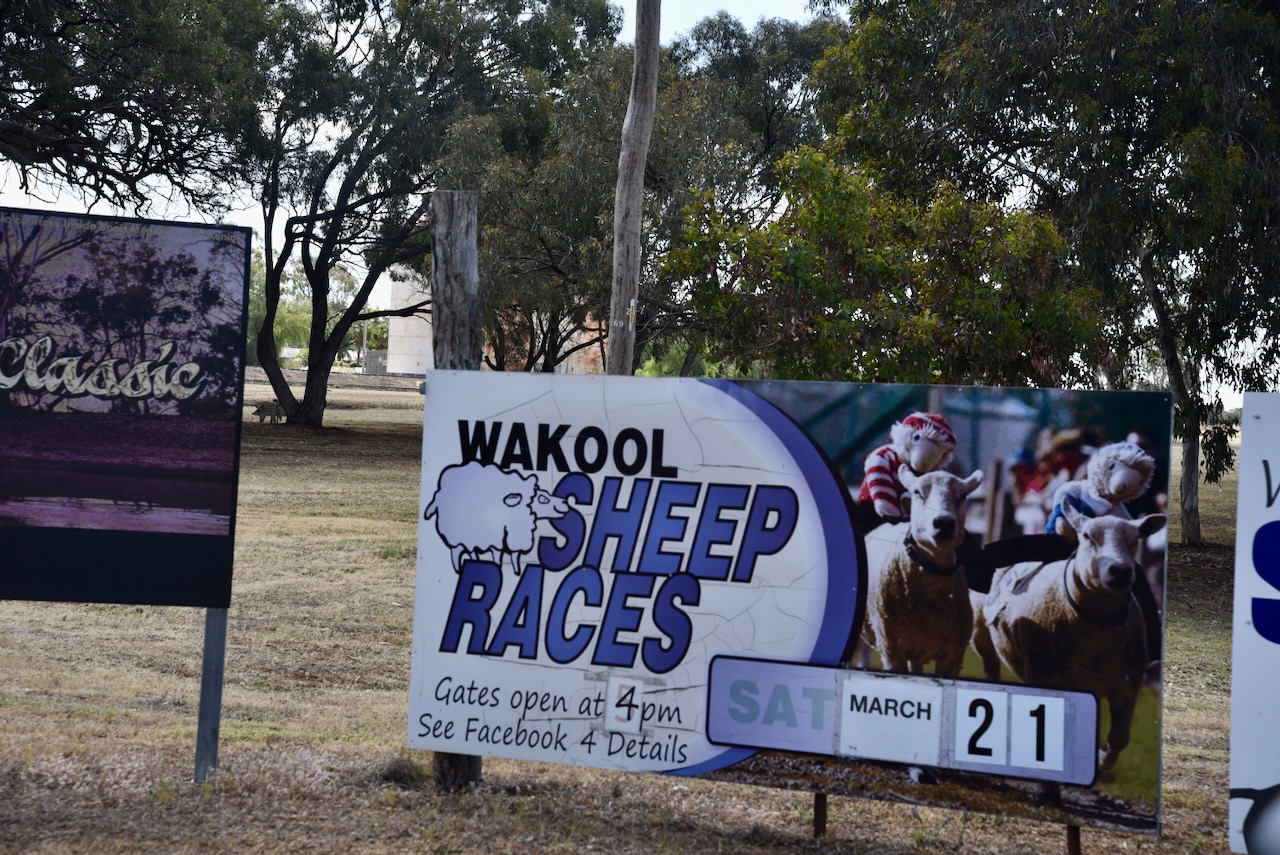
Wakool is home to the Fishing Classic and the Wakool sheep races. The Sheep Races are a country festival, featuring, as the name implies, sheep racing, along with live bands fashions on the field, food outlets, and activities for children. (Service 2025)

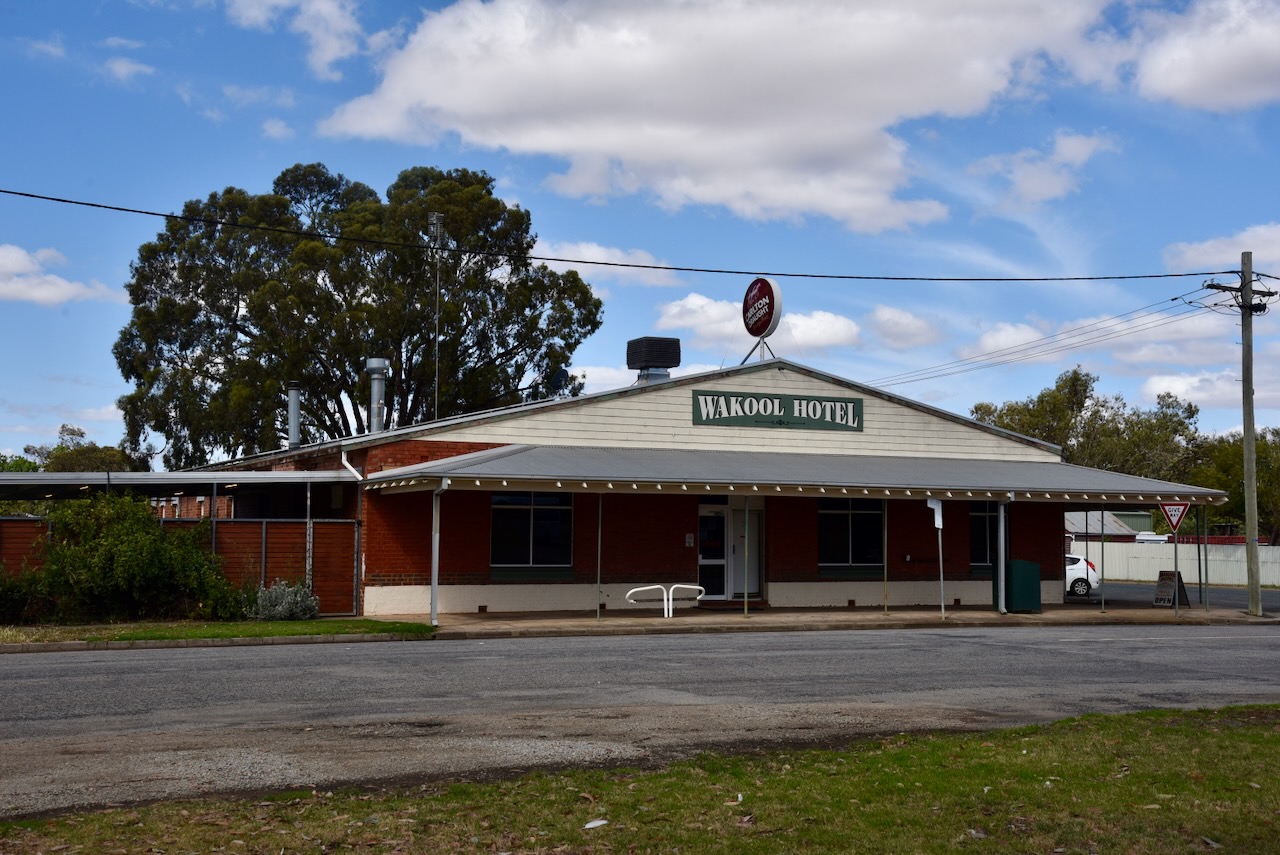
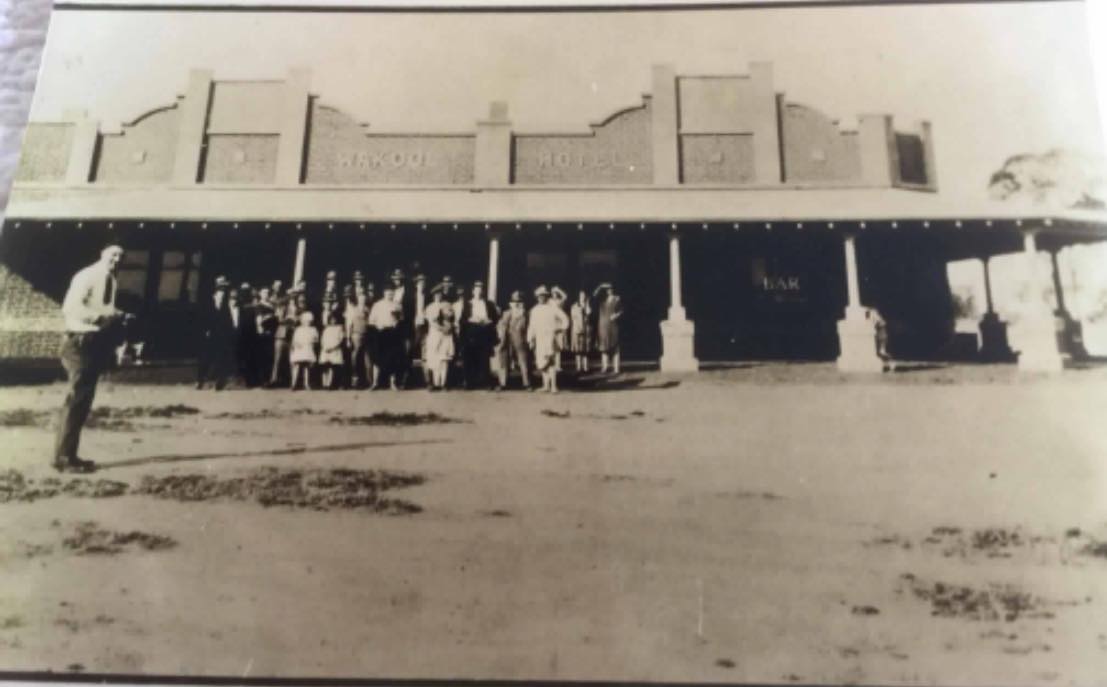
The Wakool Hotel is owned by a syndicate of local farming families. (Wakool Pub 2023)

The Wakool Hotel was opened on the 13th day of October 1928. The Riverine Herald reported:

‘The building, which is of brick, contains 26 rooms, equipped on the most modern lines, with electric light, hot and cold water service and sewerage installed. Residents and the travelling public will appreciate this great improvement in the district’ (Trove 2026)

Above: opening of the Wakool Hotel. Image c/o Wakool Historical Photos Facebook page

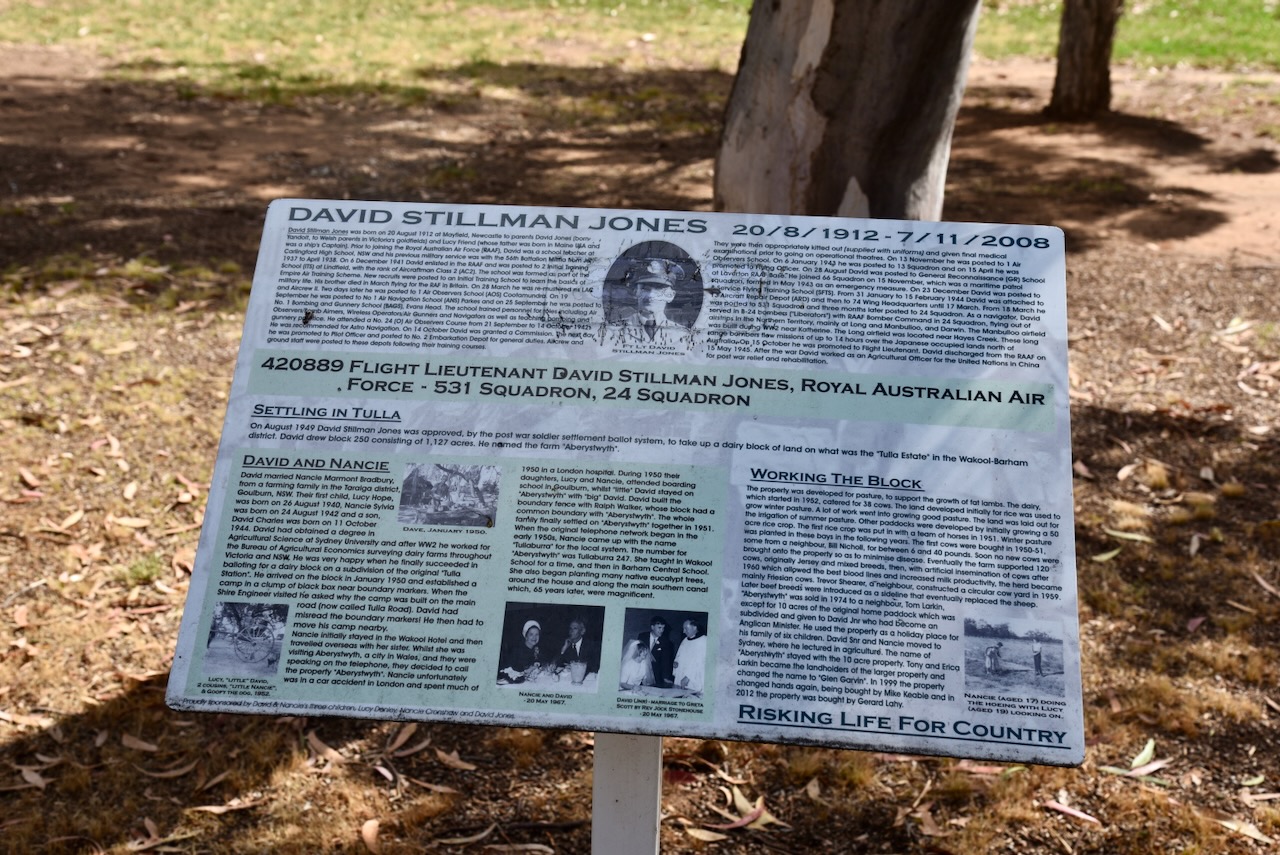
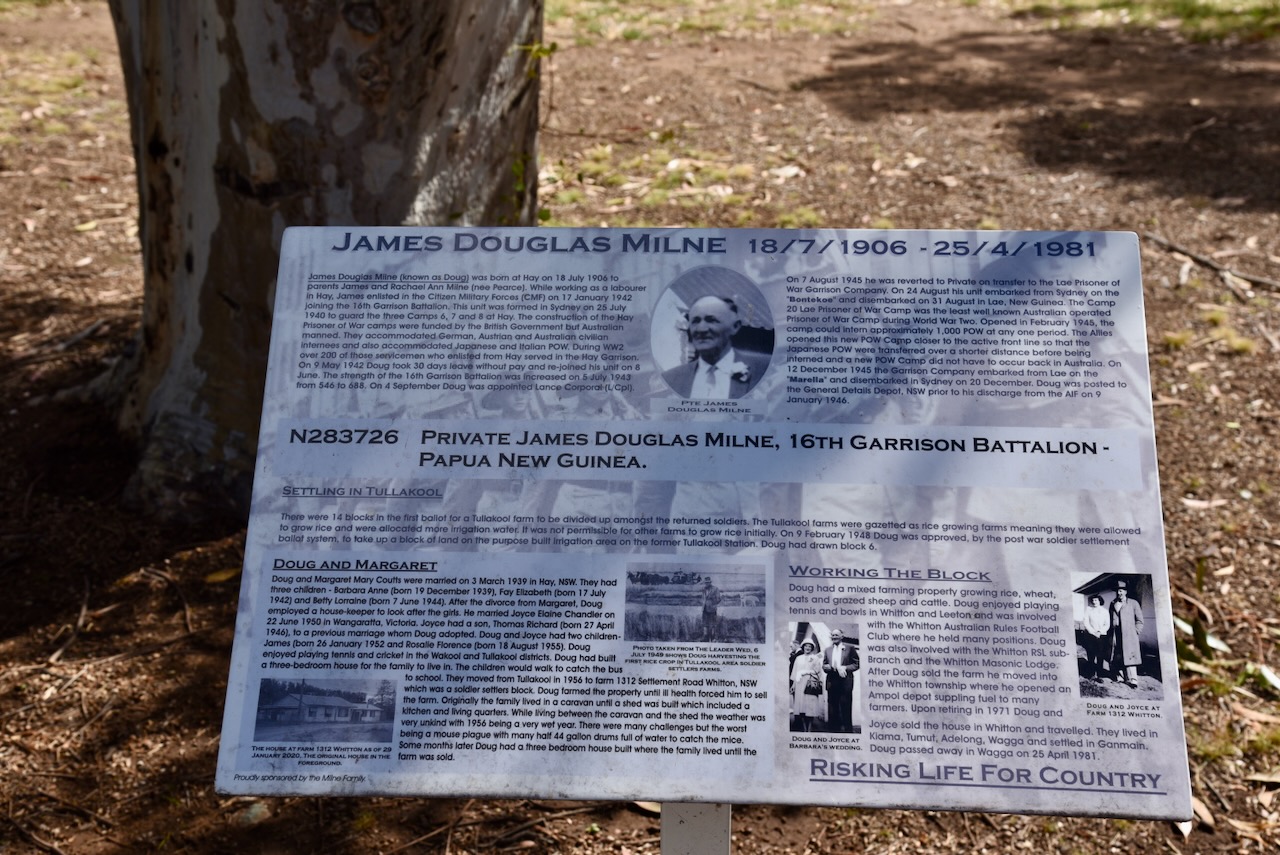
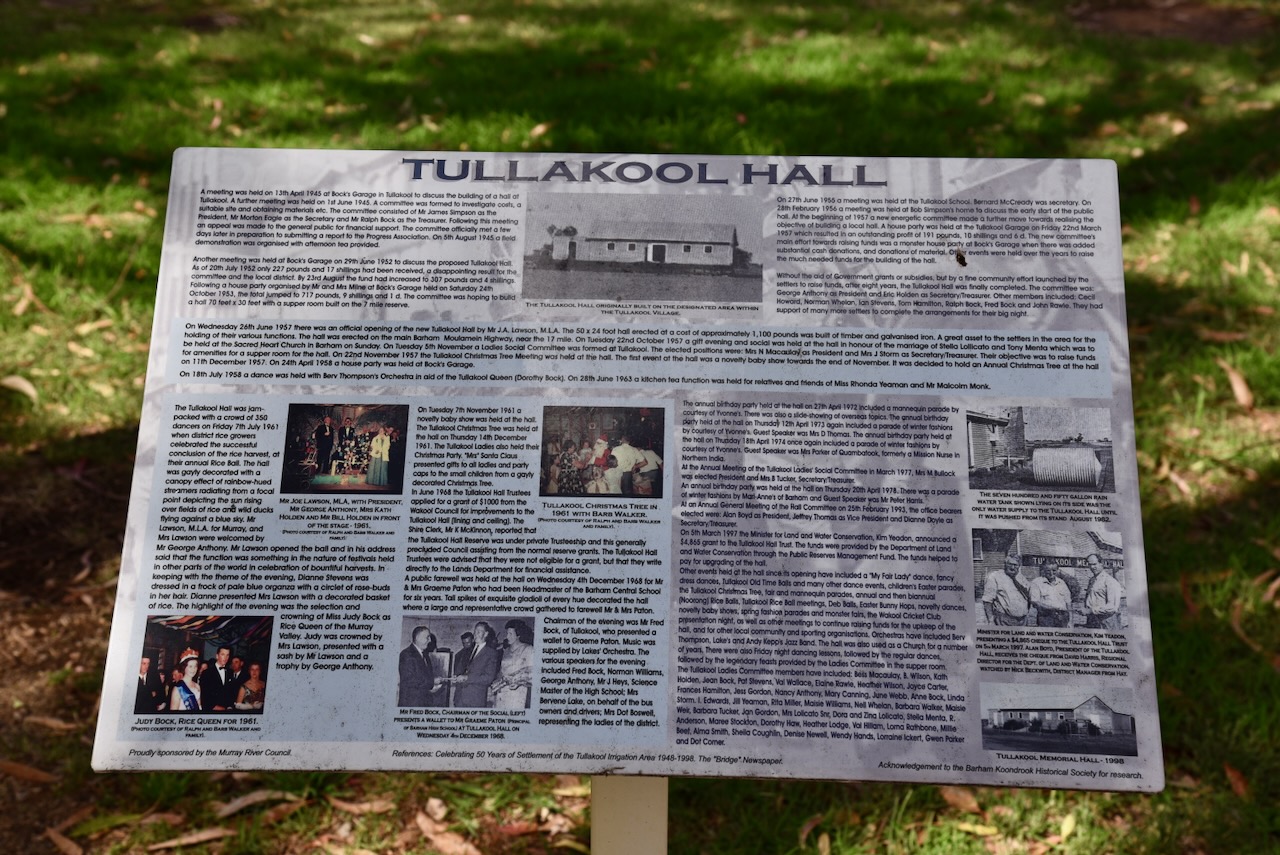
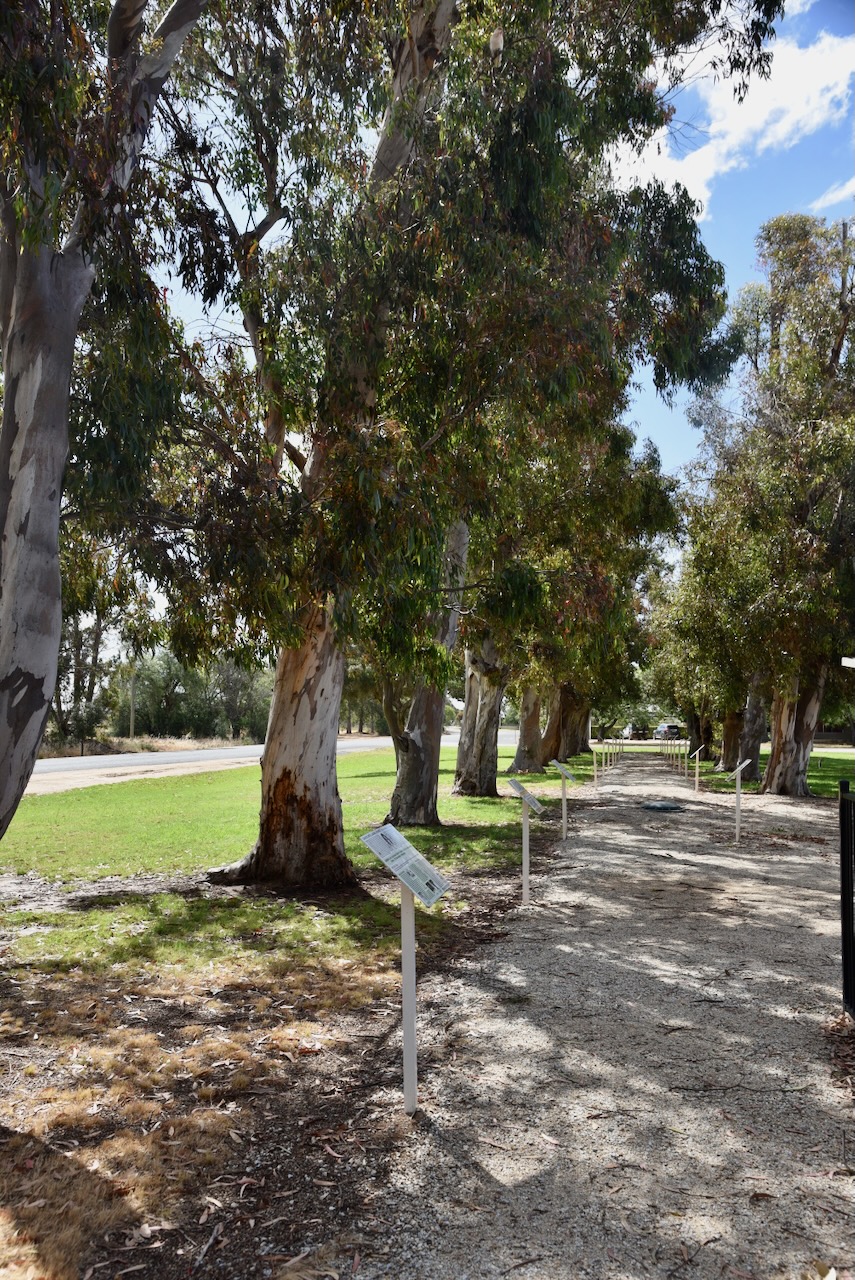
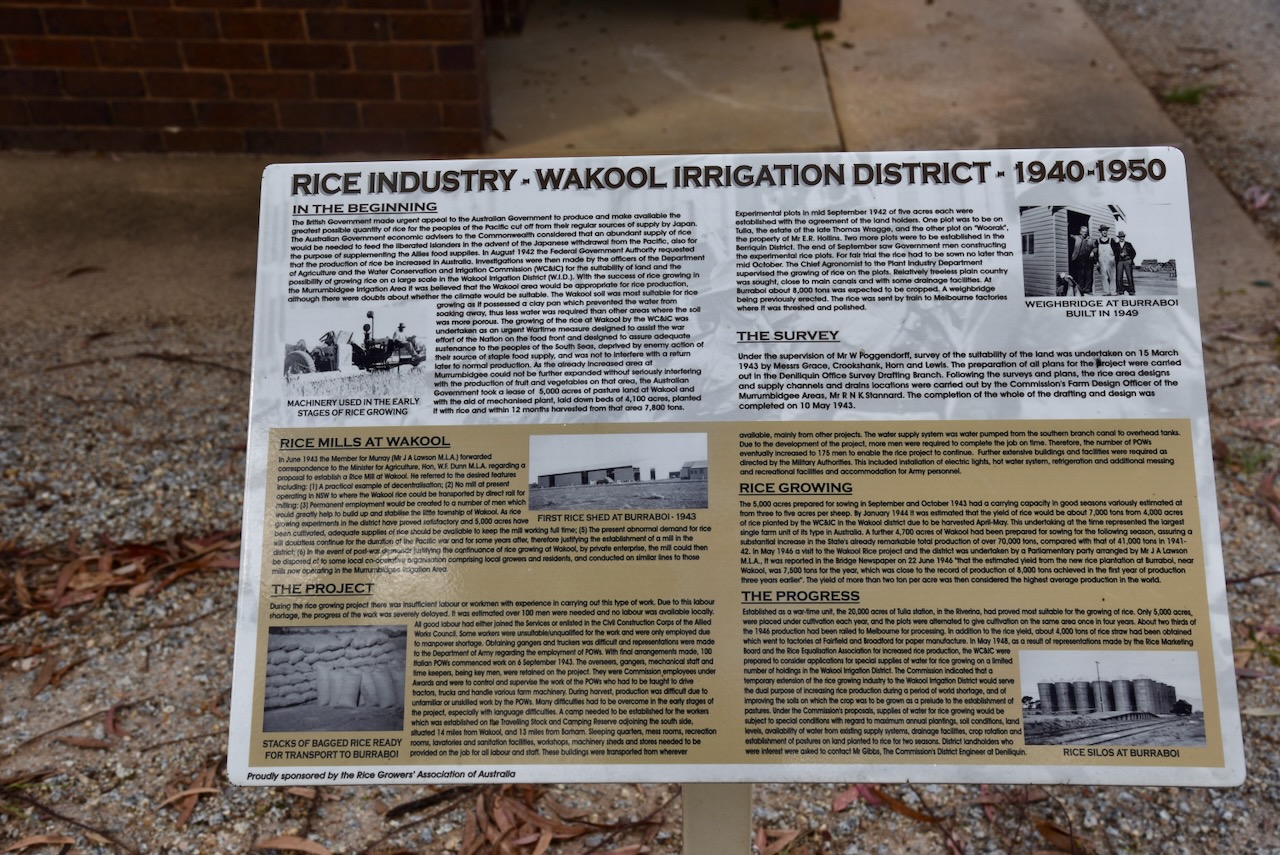
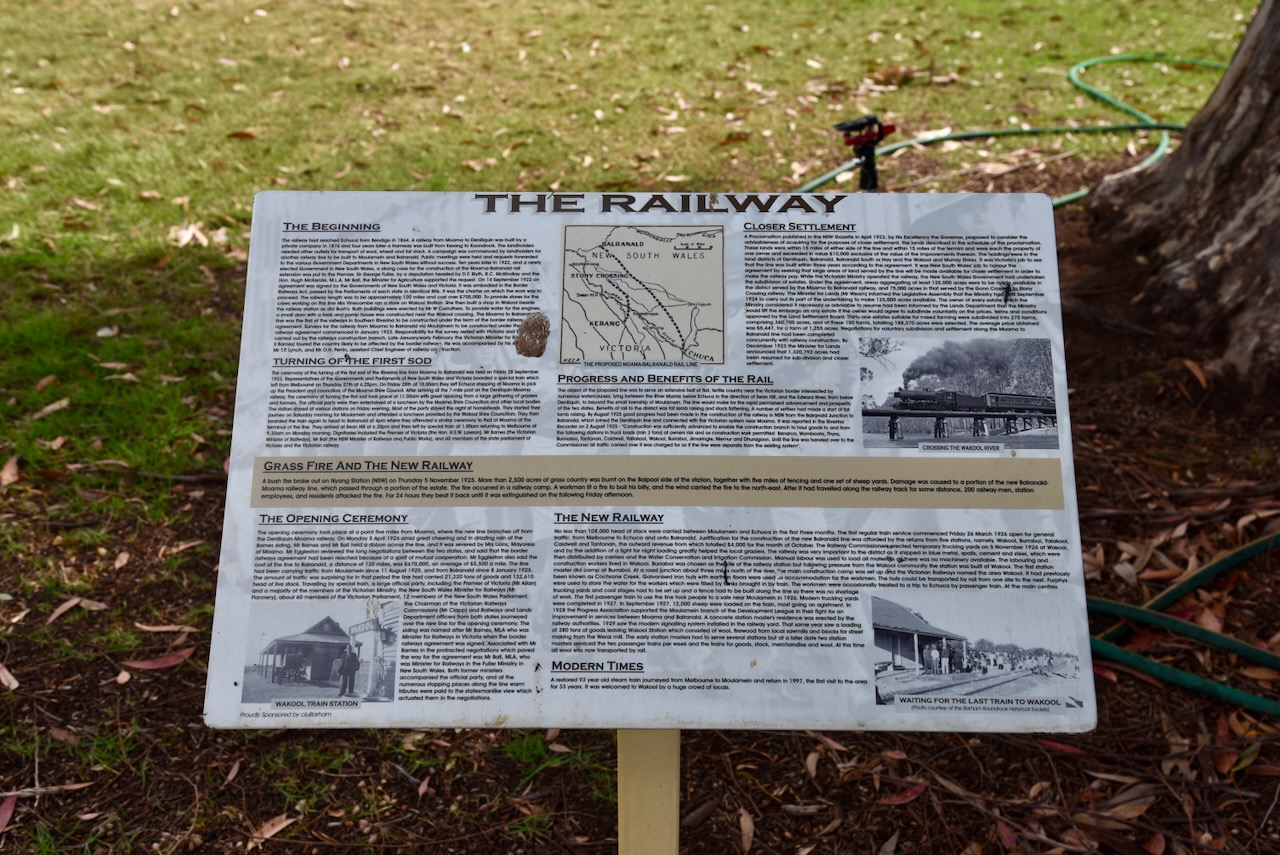
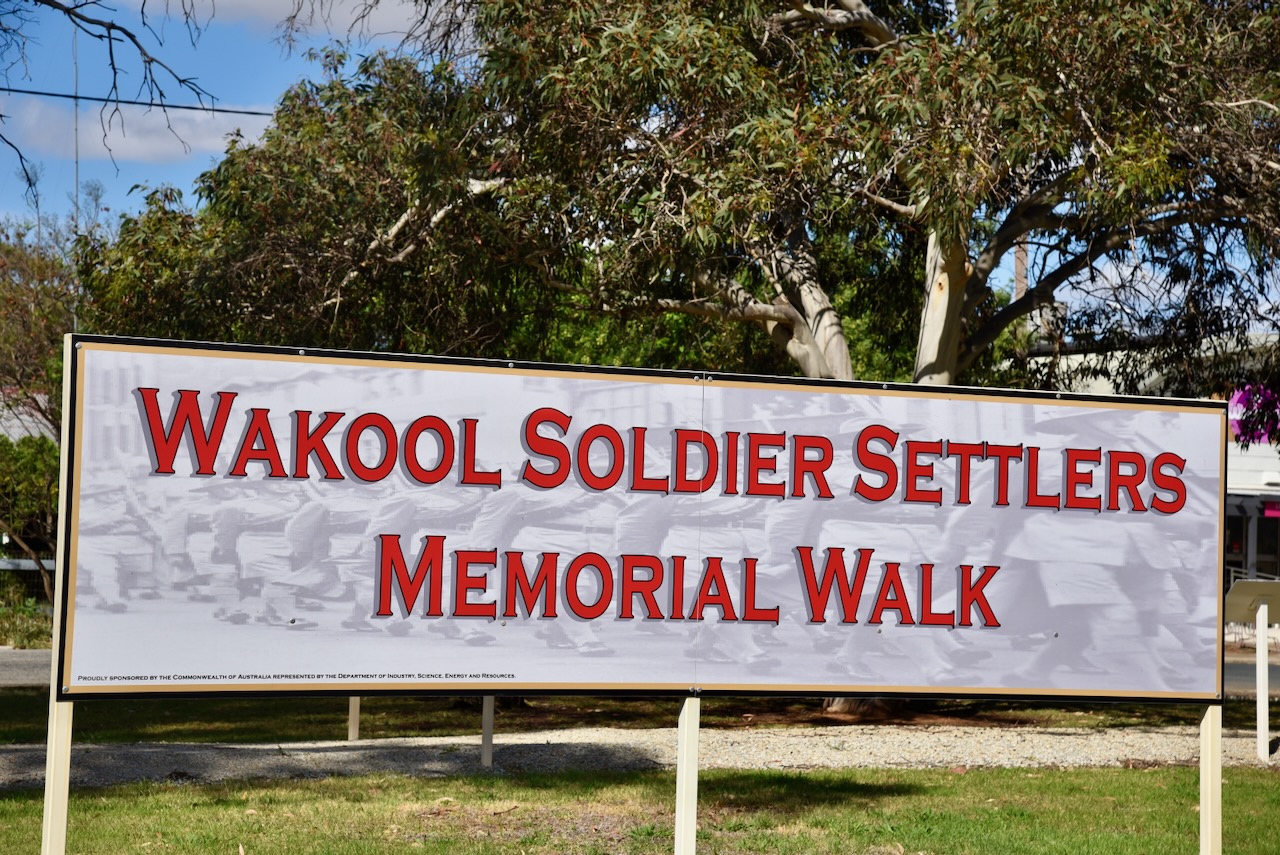
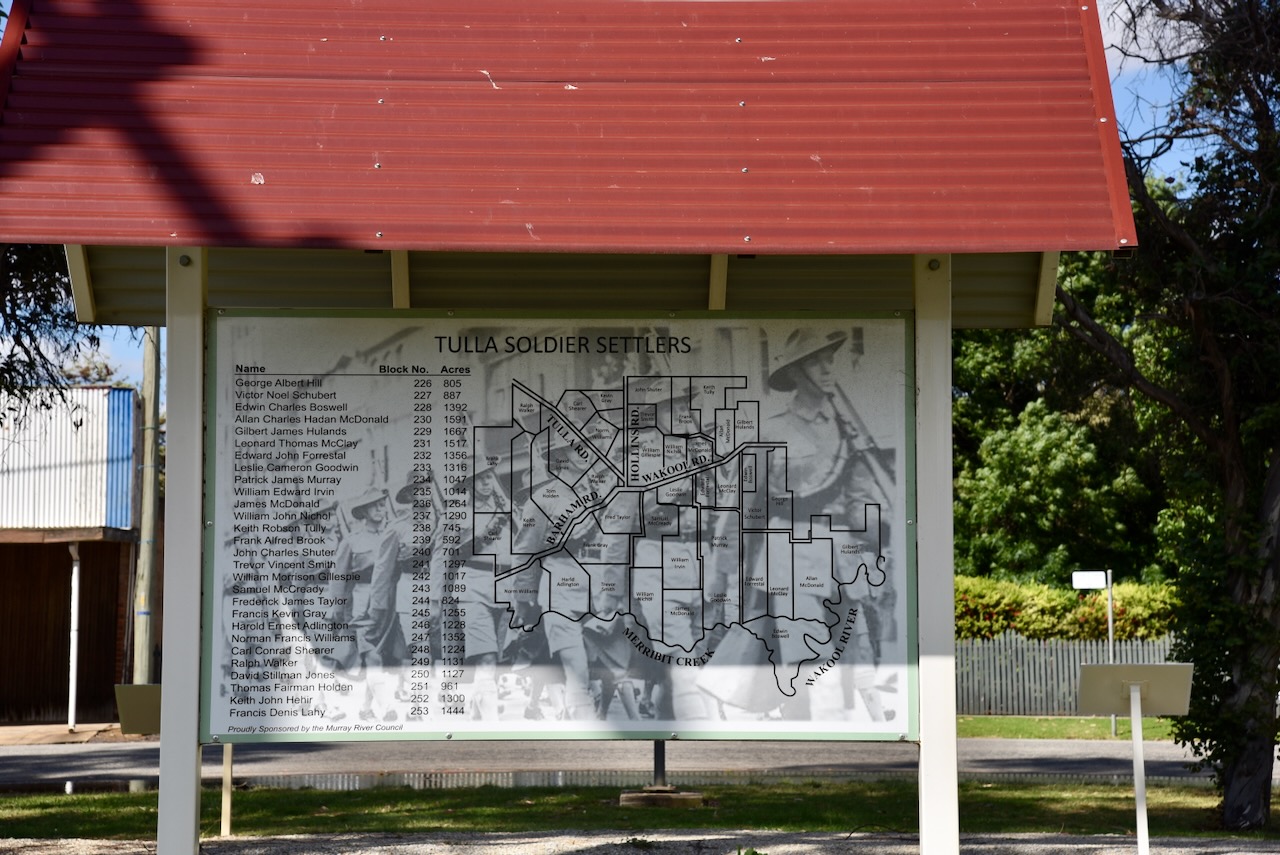
Marija and I visited the Wakool Soldier Settlers Memorial Walk. There are several information signs that detail the life of former service people from Wakool, North Wakool, Tulla, Tullakool, Merriginnie, and Chowar. (Service 2023)

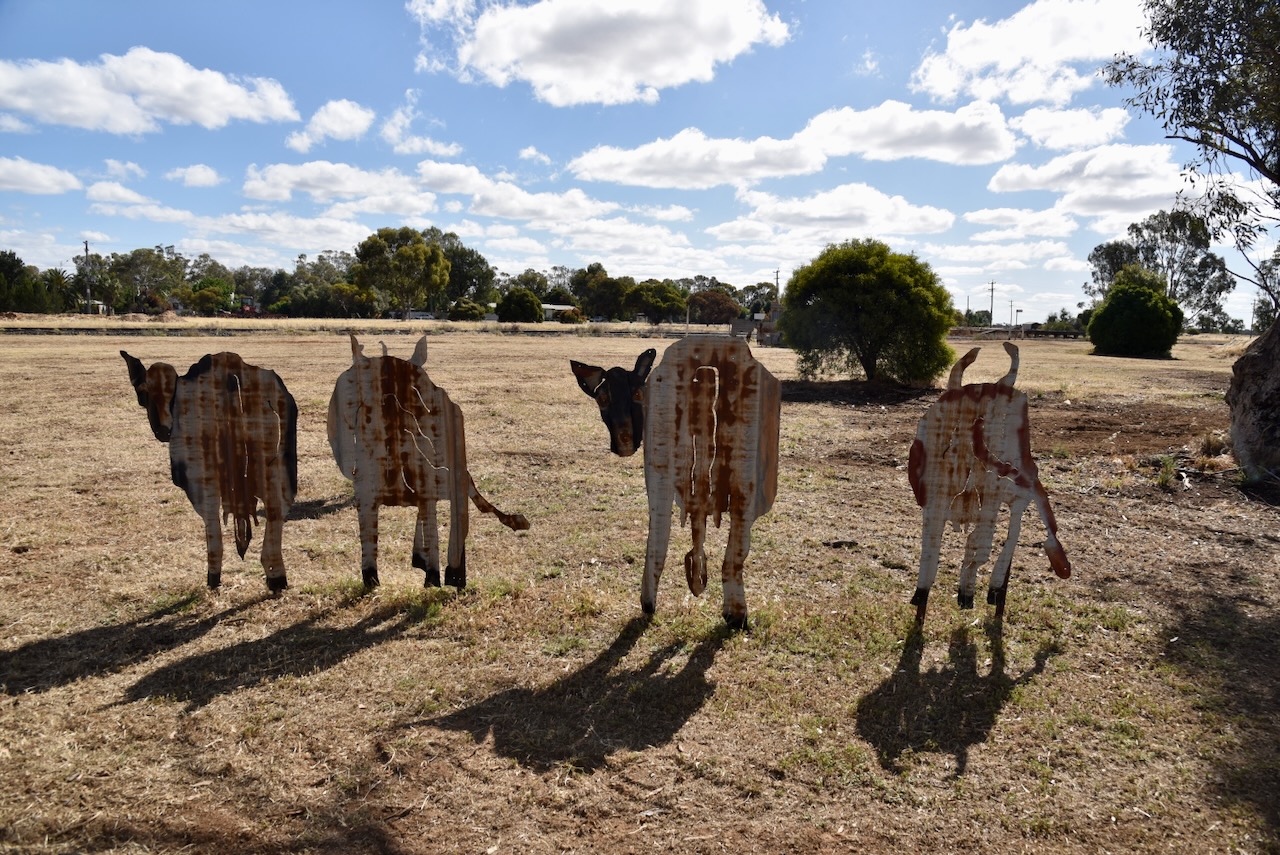
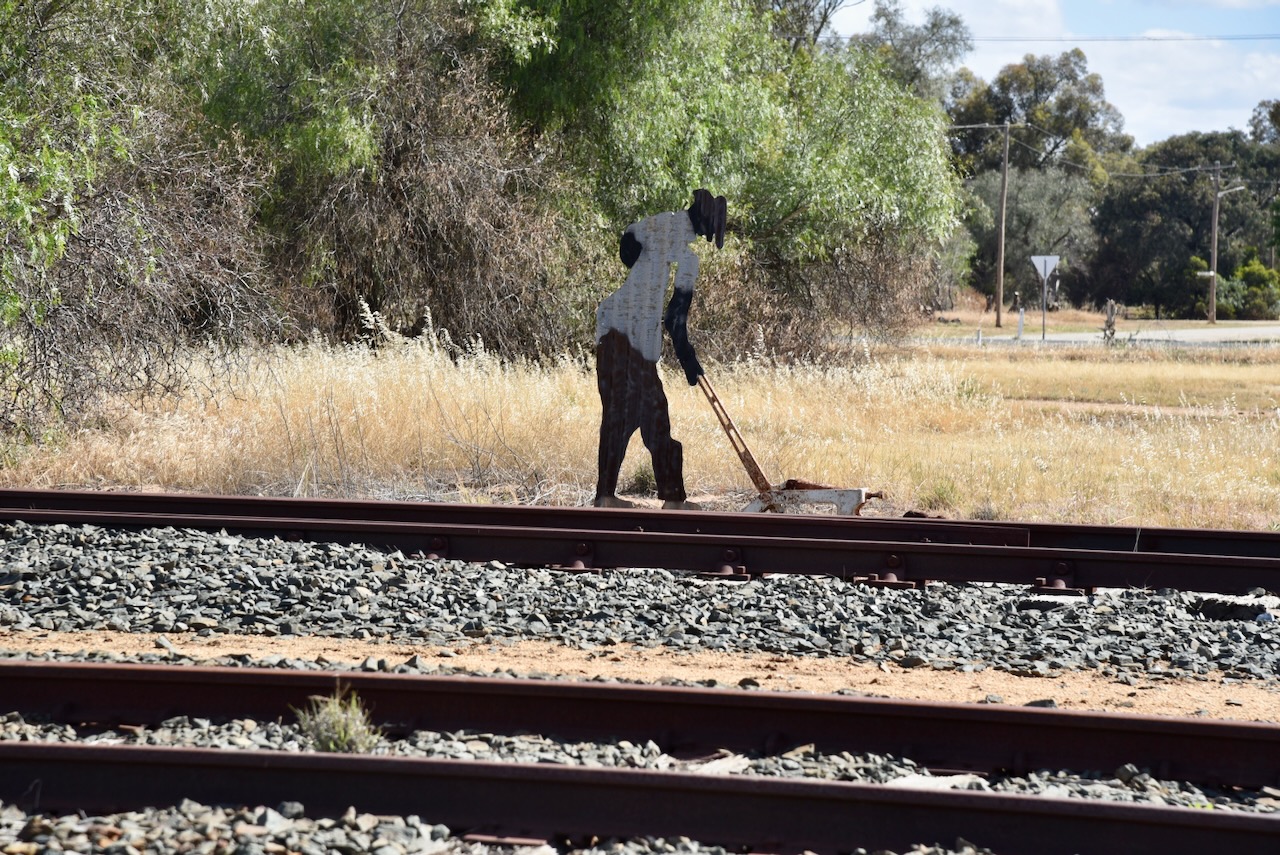
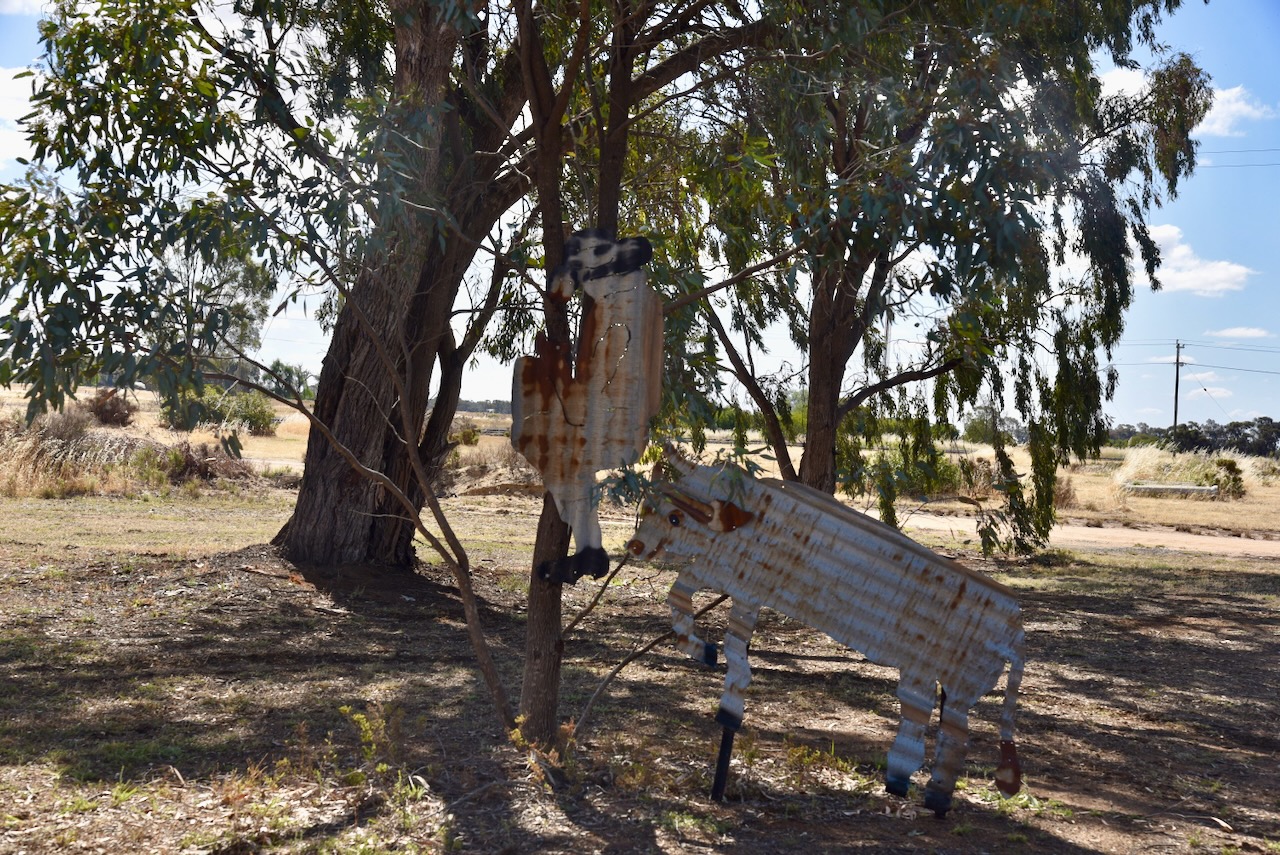
Alongside the railway line are several iron sculptures featuring cows, a railway worker, and a bull chasing a man up a tree.

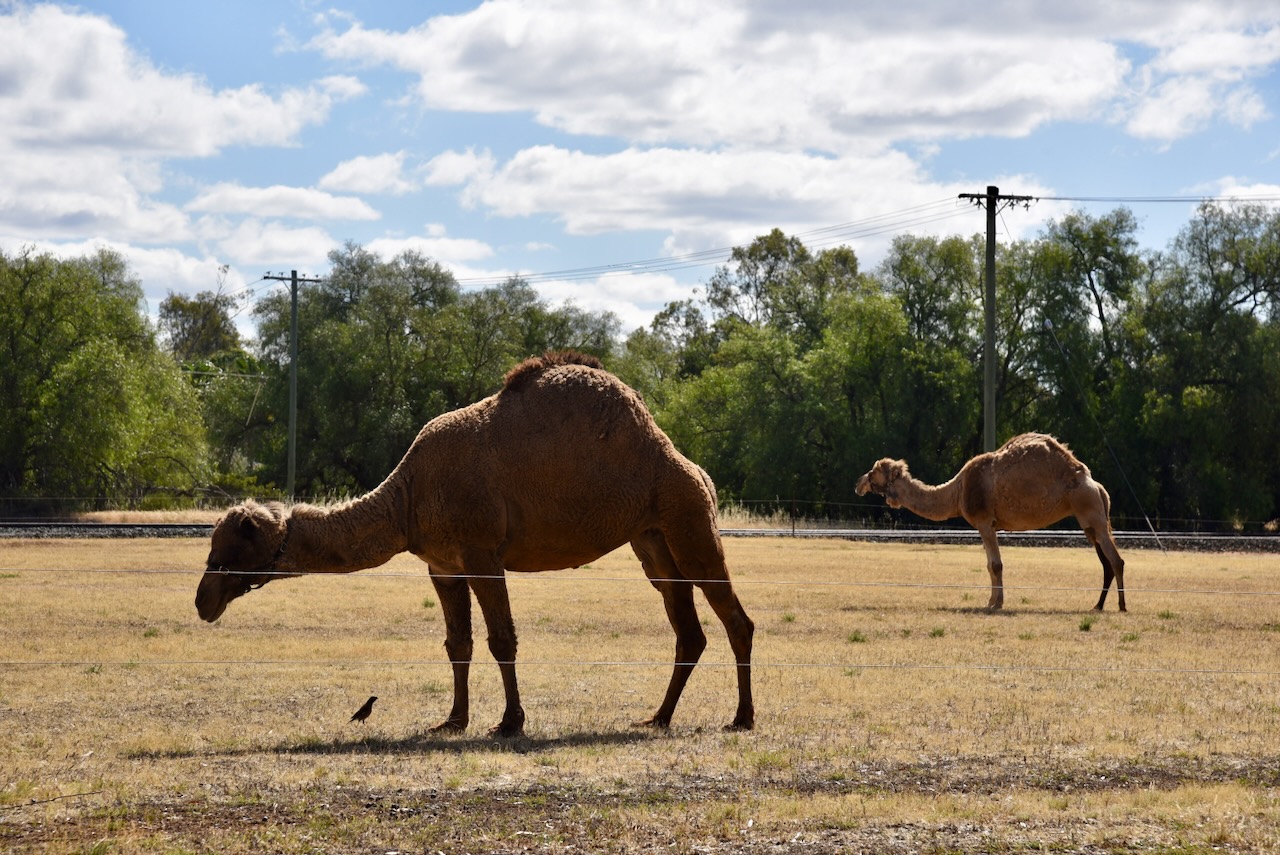
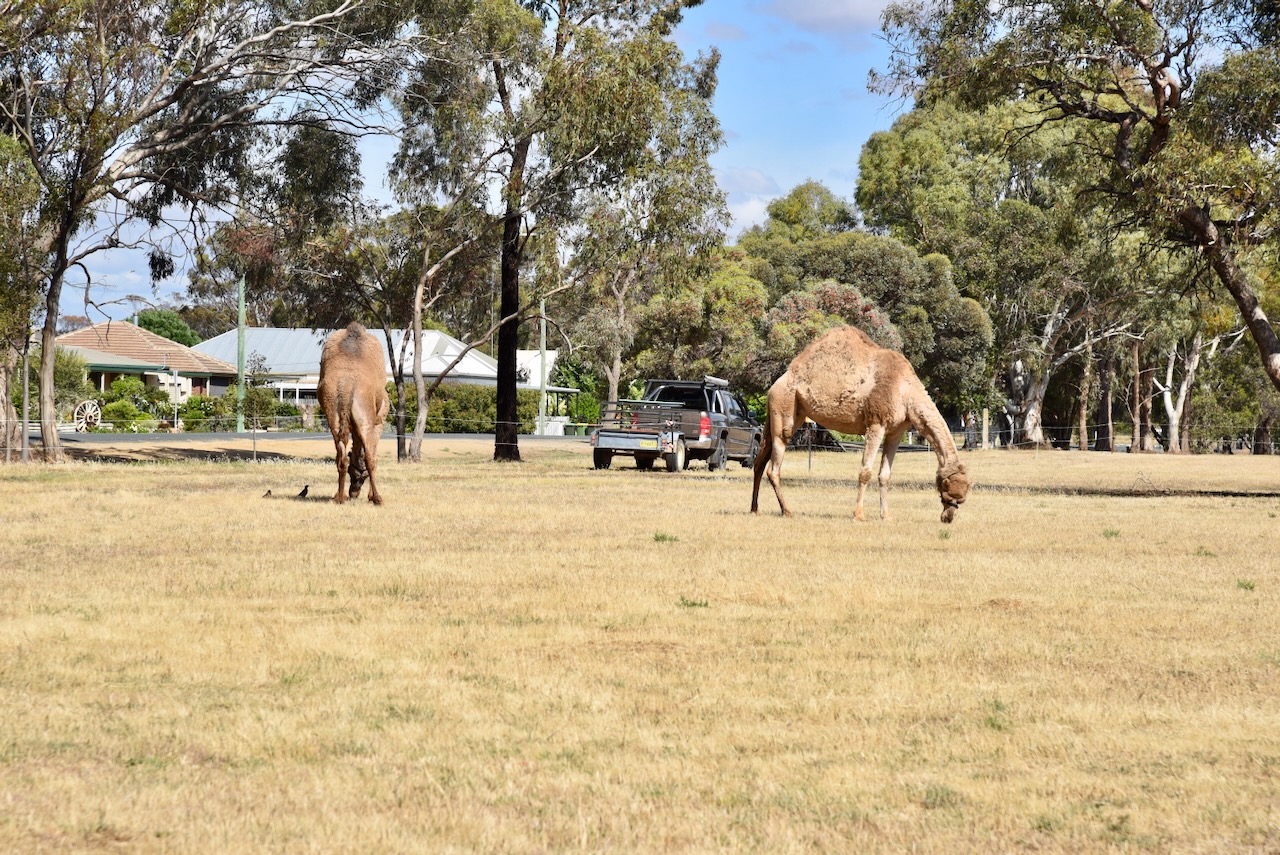
We also saw the unusual sight of some camels grazing nearby.

Various railway lines were established in Victoria during the 1860s and 1870s. It would not be until the 1900s that public meetings were held and requests forwarded to the NSW Government for a railway line to be built to Moulamein and Balranald. These, however, were unsuccessful. In 1922, under a newly elected Government in New South Wales, a proposal for the construction of the Moama-Balranald rail extension was submitted to the Premier, Sir George Fuller. An agreement was then struck between the New South Wales and Victorian Governments for the construction of the line.

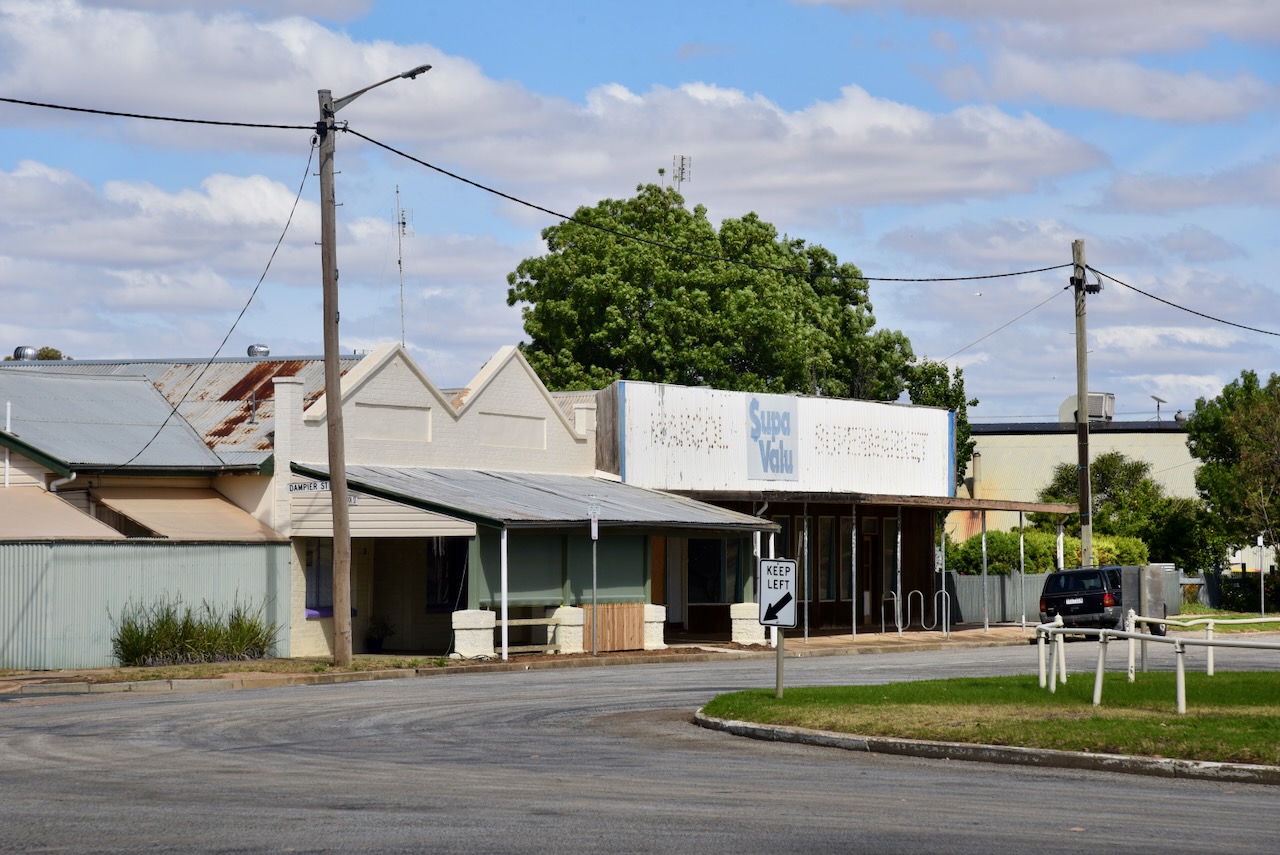
Construction then commenced in 1923, and to provide stores for those working on the line, a store was established on Wakool Station operated by Mrs Vinecombe. She then built a shop in Wakool alongside the railway station as did the Bush family.

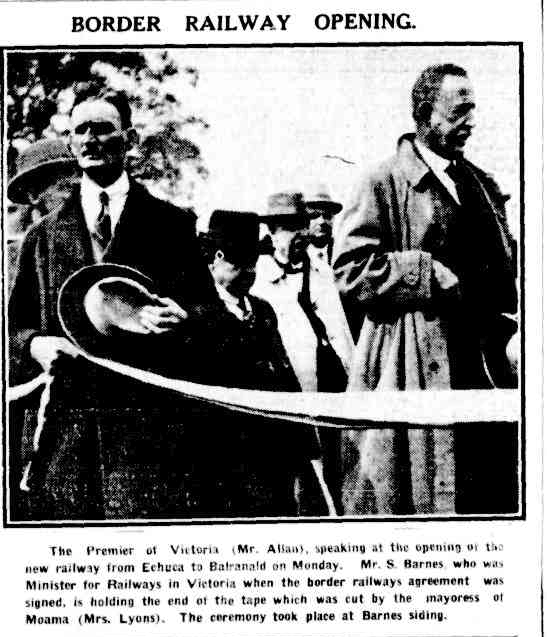
The opening ceremony of the line took place on Monday, the 5th day of April 1926, at Barnes Siding, which was named after Mr Barnes MLA, who was the Minister for Railways in Victoria.

Above: article from The Argus, Thu 8 Apr 1926. Image c/o Trove

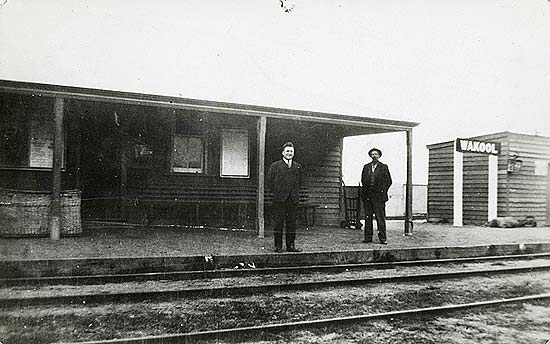
Wakool once had a railway station on the line. The old timber structure has been demolished.

Above: Wakool Station, c. 1910. Image c/o NSWrail.net

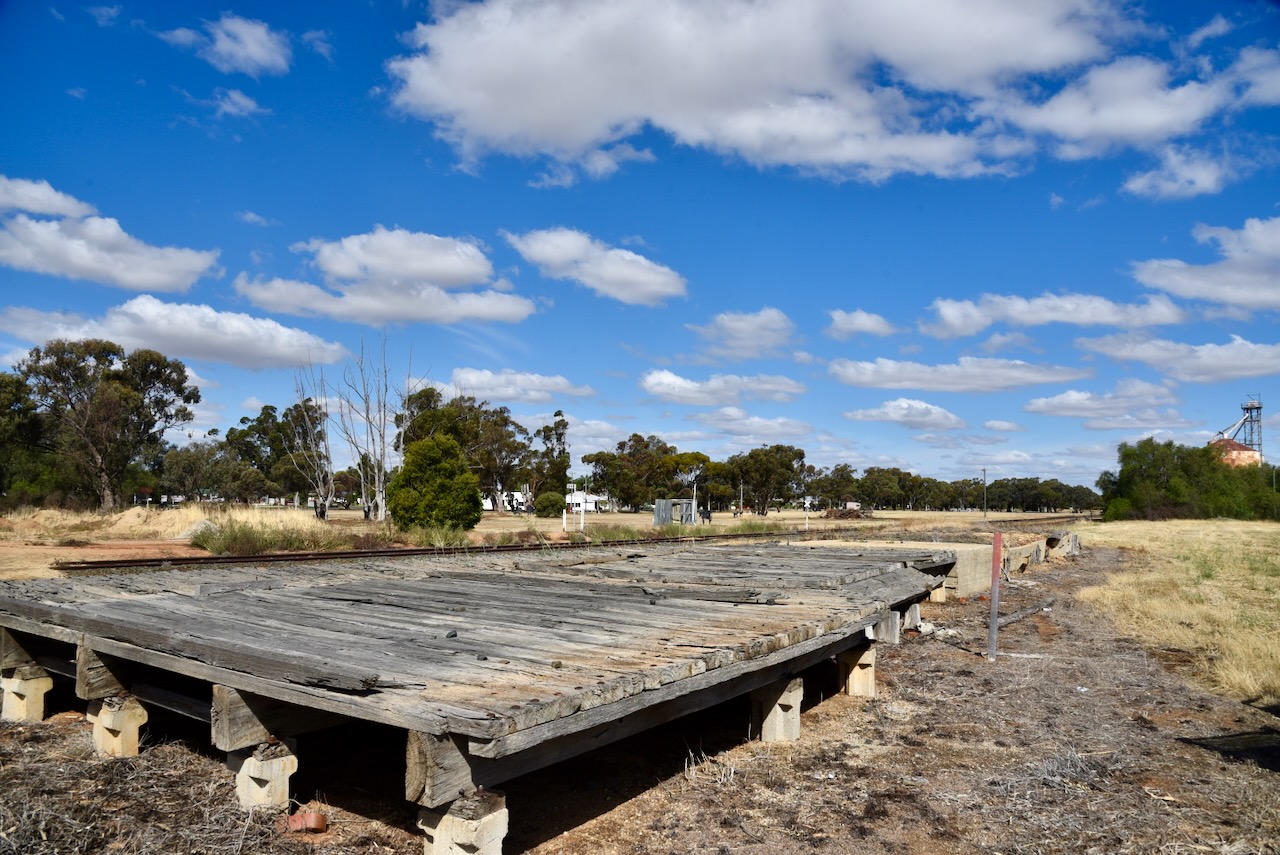
Not much remains on the railway line now at Wakool.

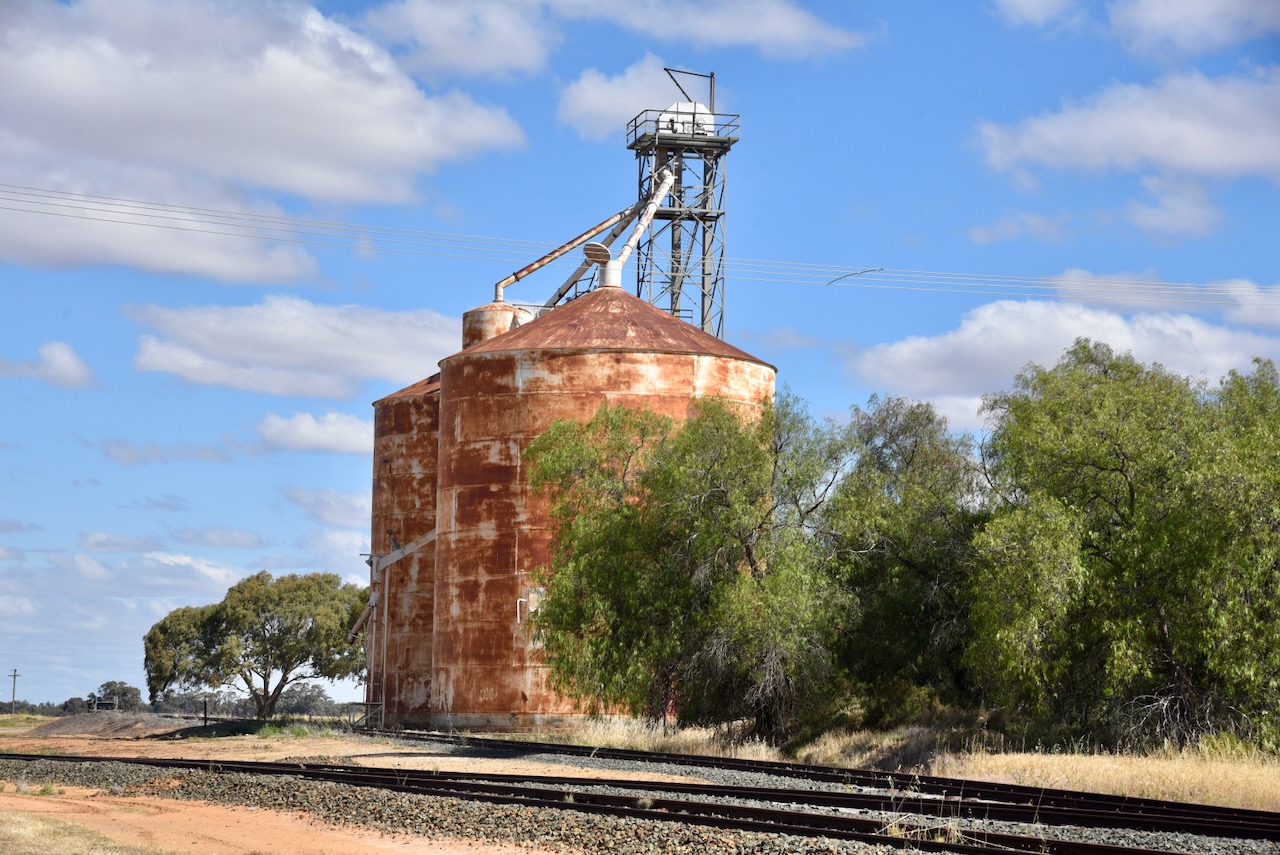
The Wakool silos are located in between Wakoola Street and Flinders Street, on the Balranald railway line.

Marija and I parked alongside the silos and operated from the 4WD. We ran the Icom IC-7000, 100 watts, and the Codan 9350 antenna with the 1.5 metre stainless steel whip.

Above: the activation zone at the Wakool silo. Image c/o SiOTA website

We found that band conditions on the 40m band were terrible There was very heavy QSB.

Marija worked the following stations on 40m SSB:-

  1. VK1AO
  2. VK2MET
  3. VK5HS
  4. VK2ETI
  5. VK5WE

I worked the following stations on 40m SSB:-

  1. VK1AO
  2. VK2MET
  3. VK5HS
  4. VK2ETI
  5. VK5WE

References.

  1. ancestry (2016). Ancestry® | Genealogy, Family Trees & Family History Records. [online] Ancestry.com.au. Available at: https://www.ancestry.com.au/.‌ [Accessed 9 Apr. 2026]
  2. Grokipedia. (2026). Wakool River. [online] Available at: https://grokipedia.com/page/wakool_river. [Accessed 10 Apr. 2026]
  3. ‌Lakemac.com.au. (2026). Lake Mac Local History. [online] Available at: https://history.lakemac.com.au/narrative/3403?pid=1085&vid=20&tmpt=narrative&narid=3403 [Accessed 9 Apr. 2026].
  4. ‌Service, C. (2023). Wakool Soldier Settlers Memorial Walk. [online] NSW Government. Available at: https://www.nsw.gov.au/visiting-and-exploring-nsw/locations-and-attractions/wakool-soldier-settlers-memorial-walk [Accessed 9 Apr. 2026].
  5. Service, C. (2025). Wakool Sheep Races. [online] NSW Government. Available at: https://www.nsw.gov.au/visiting-and-exploring-nsw/nsw-events/wakool-sheep-races-2 [Accessed 10 Apr. 2026].
  6. ‌‌Trove. (2026). THE WAKOOL DISTRICT – Coming of Water Brings Great Increase in Fat Lamb and Wool Industry. – The Riverine Herald (Echuca, Vic. : Moama, NSW : 1869 – 1954; 1998 – 2002) – 9 Jun 1937. [online] Available at: https://trove.nla.gov.au/newspaper/article/116212157 [Accessed 9 Apr. 2026].
  7. ‌Trove. (2026). WAKOOL – The Riverine Herald (Echuca, Vic. : Moama, NSW : 1869 – 1954; 1998 – 2002) – 24 Oct 1928. [online] Available at: https://trove.nla.gov.au/newspaper/article/115116123?searchTerm=wakool%20hotel%20opening [Accessed 10 Apr. 2026].
  8. ‌Wakool Pub is located in the riverina town of Wakool, NSW. (2023). Home – Wakool Pub | Located in the Riverina town of Wakool, NSW. [online] Available at: https://wakoolpub.com.au/ [Accessed 9 Apr. 2026].
  9. ‌Walsh, G.P. (n.d.). Wolseley, Frederick York (1837–1899). [online] Australian Dictionary of Biography. Available at: https://adb.anu.edu.au/biography/wolseley-frederick-york-4881. [Accessed 9 Apr 2026]‌
  10. Wikipedia Contributors (2025). Frederick Wolseley. Wikipedia.‌
  11. Wikipedia Contributors (2024). Wakool. Wikipedia.‌
  12. Wikipedia Contributors (2025). Wakool River. Wikipedia.‌