Onkaparinga River National Park, VKFF-402

Yesterday afternoon (Monday 15th December 2014) I headed over to the Onkaparinga River National Park (NP), VKFF-402, which qualifies for the VK5 National and Conservation Parks Award, and the World Wide Flora Fauna (WWFF) program.  I have activated the park a number of times previously, and it is a nice 40 minute drive from my home via Echunga, Meadows, and Kangarilla, through the southern Adelaide Hills.

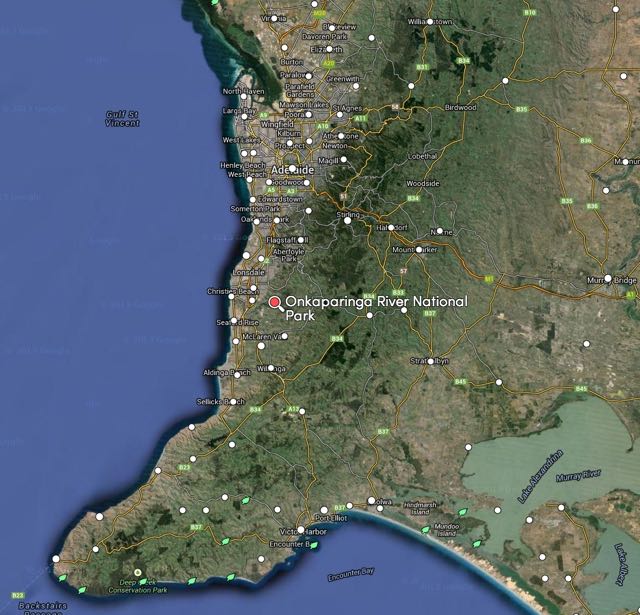
Onkaparinga River NP is located about 35 km south of Adelaide, and is about 1,544 hectares in size.  It is a magnificent park in close proximity to Adelaide.  The park is disected by the Onkaparinga River, which is South Australia’s second longest river after the mighty Murray.  The river enters the park in a steep sided valley and flows into a spectacular gorge with cliffs up to 50 metres in height, with large permanent rock pools.
Screenshot 2014-12-16 17.50.27

Map courtesy of mapcarta.com

I set up on Chapel Hill Track which runs off the northern side of Chapel Hill Road.  I parked my vehicle at gate 21 and walked about 50 metres down the track.  This location is situated on the southern side of the park.  On the southern side of Chapel Hill Road was the beautiful valley containing the vineyards of McLaren Vale and McLaren Flat, and to the north was the park, leading down to the Onkaparinga River cutting its way through the gorge.

It was quite a warm day (about 28 deg C), so I found some nice shade under some large gum trees.  I kept an ever vigilent watch for some of the crawly inhabitants of the park, and fortunately did not encounter any.

I started off with the little Yaseu FT-817nd and just 5 watts.  I powered the radio with a 12 volt 4 ah sealed lead acid battery (SLAB).  My antenna was a 40m/20m linked dipole, supported on a 7 metre squid pole.

I had nominated 7.095 as my calling frequency, but the Kandos Net was still running on 7.093, so I held off for a little while until that finished, and I then called CQ on 7.095.  My CQ call was immediately responded to by Peter VK5NAQ in the Mid North of South Australia with a beautiful 5/9 signal.  This was followed by Les VK5KLV at Port Augusta who was also 5/9.  Park Hunter reliables John VK5BJE and Greg VK5GJ then called in.

After working 11 stations on 7.095, my SOTA Goat application on the i-phone bleated, so I tuned down to 7.090 where I worked Andrew VK1DA/2 who was portable on the top of Livingstone Hill VK2/ SM-093, for the Summits on the Air (SOTA) program.  Andrew was a good solid 5/6 and he gave me a 5/7 signal report.  Livingstone Hill is 932 m above seal level (asl) and is located near the New South Wales and ACT border.

I then returned to 7.095 where I spoke with Amanda VK3FQSO and Ivan VK5HS in the Riverland.  But things slowed down from that point on, and despite a few more CQ calls, I had no takers.  The static crashes were also starting to pick up on 40m.  So I lowered the squid pole and removed the links in the dipole, so that I could operate on 20m.  I was to be disapointed on 20m, as there was no long path propagation into Europe and the United Kingdom.  I could hear John EA7BA on 14.156 but John was very weak.  I could not hear the G stations at all, that he was speaking to.  John was the only European signal I could hear.  The only other activity on 20m that I could hear were some weak Japanese signals.  The band was also covered in the Over the Horizon radar.

This slideshow requires JavaScript.


So I returned back to 40m and due to the noise on the band, I started running 40 watts from the Yaesu FT-450.  I spoke with Andrew VK1NAM who was portable on SOTA peak, Mount Taylor, VK1/ AC-037 (5/7 both ways).  I then went back to 7.095 and started calling CQ but the static crashes had become louder making it difficult to pick up a couple of weak stations that were calling me.  However, I did manage to speak with George VK4GSF near Toowoomba in Queensland, Matt VK1MA, and Lee VK2LEE.  I put a few more CQ calls out but had no takers, so I tuned across the band and found Simon VK1FAAS calling CQ from SOTA peak, Mount Ainslee VK1/ AC-040 (5/6 sent and 5/8 received).

I then started calling CQ on 7.090 and worked a further 14 stations from VK1, VK3, VK4, VK6, and VK7.  My first taker here was Peter VK6YV in Perth (5/9 sent and 5/7 received).  This was followed by Wayne VK4XG, south west of Brisbane (5/9 sent and 5/4 received).  I went on to work a further 2 stations in Western Australia.  They being Mark VK6BSA mobile, on his way home from work.  And Alek VK6APK in Perth, who is on the WIA Awards Committee with me.  From past experience and confirmation during this activation, this time of the evening is very good for propagation on 40m into Western Australia.  Adelaide to Perth is a distance of about 2,500 km.  A local QSO we call that here in Australia.  In other parts of the world, it is a DX contact, working across multiple countries.

Sadly, there was a display of poor operating practice again during this activation.  I won’t mention his call sign here, but I had a VK3 come up straight over the top of Alek VK6APK, without asking if the frequency was in use, and start calling one of his mates in VK3.  He did this a number of times until he was sternly told off by a number of stations listening on the side.  No apologies, he just quietly slipped away off the frequency.

Before packing up I decided to book into the 7.130 DX Net.  And I am very pleased I did.  I went on to work William FO5JV in French Polynesia in the Pacific, Joe CU2CE in the Azores Islands off the coast of Portugal and north western Africa, Bill W1OW in Massachusetts in the USA, and four stations in New Zealand.  This included Noel ZL1DAI who was running just 5 watts from his Elecraft KX3 (4/6 sent and 5/6 received).

As the sun was setting, the kangaroos in the park had become very active.  Despite the noise from the radio, many of them came up quite close to my operating position.  The park was also alive with birds during my stay, including Yellow tailed Black Cockatoos, Blue Wrens, Eastern Rosellas, and Rainbow lorikeets.

So after a number of hours in the park, I had a total of 42 contacts in the log, to add to my other tally of contacts from previous activations from Onkaparinga River NP.  This is a great park to operate from.

For more information on the park, please have a look at…..

DEWNR website:

http://www.environment.sa.gov.au/parks/Find_a_Park/Browse_by_region/Fleurieu_Peninsula/Onkaparinga_River_National_Park_and_Recreation_Park

Friends of the Onkaparinga Park:

http://www.communitywebs.org/onkaparingaparks/

The following stations were worked on 40m SSB:-

  1. Peter VK5NAQ (qrp)
  2. Les VK5KLV
  3. John VK5BJE
  4. Greg VK5GJ
  5. Tony VK5FTVR
  6. Nev VK5WG
  7. Peter VK3PF
  8. Brian VK5FMID
  9. Trevor VK5ATQ
  10. Larry VK5LY
  11. Nick VK3ANL
  12. Andrew VK1DA/p (SOTA)
  13. Amanda VK3FQSO
  14. Ivan VK5HS
  15. Andrew VK1NAM/p (SOTA)
  16. George VK4GSF
  17. Matt VK1MA
  18. Lee VK2LEE
  19. Simon VK1FAAS/p (SOTA)
  20. Peter VK6YV
  21. Wayne VK4XG
  22. Ian VK1DI
  23. Paul VK3KLE
  24. Graham VK7ZGK
  25. Ian VK3VIN
  26. Rob VK4FFAB
  27. Mark VK6BSA/m
  28. Jim VK5JW
  29. Alek VK6APK
  30. Ron VK3JP
  31. Peter VK5FLEX
  32. Kevin VK2VKB
  33. Daniel VK3FACC
  34. William FO5JV
  35. Joe CU2CE
  36. Brian ZL2ASH
  37. Lamont ZL2ALK
  38. Noel ZL1DAI (qrp)
  39. Bill W1OW
  40. Ray ZL4WRC
  41. Mike VK3GYH (qrp)
  42. Frank VK2HFS
The history of WWFF and some stats

Recently I was queried if it was possible to have the 4 missing Victorian National Parks placed on the list for the World Wide Flora Fauna (WWFF) program.  Missing parks you say?  What am I referring to?

Well, first I need to fill you in on a bit of history on the WWFF program.  The following is direct from the WWFF global website…..

“The Flora and Fauna movement within ham radio was initiated in 2008 by the Russian Robinson Club (RRC) as World Flora and Fauna (WFF) program.  In 2012 the program relaunched as WWFF: WorldWide Flora and Fauna with a different organization using the strengths of the existing national programs that were already important pillars in WFF. WWFF uses the activity databases of the participating members (containing activities from as early as 1995) as collected in the WWFF logsearch and builds upon the rules and references of the previous program.  Note that WWFF has no ties to RW3GW who controlled the WFF organization” 

If you would like to read a full history on WFF and WWFF you can read more on the WWFF Australia website at…..

http://www.wwffaustralia.com/wff–wwff-history.html

4312296

Only parks established before 2008 are on the WWFF list throughout the world (they can be found in the WWFF Directory).

http://www.wwff.co/p/wwff-downloads.html

I became involved in WWFF in March 2013 and I established the Australian WWFF program (which is referred to as VKFF).  At that time I found that there were numerous Australian National Parks that were established and gazetted prior to 2008, which did not appear in the WWFF Directory.  I spent a number of months confirming details surrounding those parks, and I am pleased to say that in January, 2014, after extensive consultation with the WWFF Committee, I was successful in having over 100 Australian National Parks added to the WWFF Directory.

8048595

However, that left many Australian National Parks that were established and gazetted after 2008.

Section 5.2.1 of the WWFF global rules state that consideration of expanding the national list of references will be considered by the WWFF Council, only if the following conditions exist:

  • 50%, 75% , 90% activated rule

a)  When 50% of National WWFF areas have been activated, it is possible to assign up to a maximum of 50 new FF references.

b)  When 75% of National WWFF areas have been activated, it is possible to assign up to a maximum of 75 new FF references.

c)  When 90% of National WWFF areas have been activated, it is possible to assign up to a maximum of 90 new FF references.

In other words, for me to get permission to have additional National Parks added to the WWFF Directory (those parks created after 2008), we as Australian amateurs need to fulfil the activation rules mentioned above.  Not an easy task I know, considering the vast size of Australia and the number of amateurs we have down here.

But WWFF is not the only program which faces adversity for Australian hams.  The SOTA program also has its inequities.  We have to remember that these programs were created in European countries, primarily (or at least at the beginning), aimed at Europeans and based on European conditions.  But we as Aussies are all up for the challenge, aren’t we?

This is where it is extremely important that if you activate an Australian National Park, that you send me your activator log, as either an ADIF file, or by using the cvs file which you can find in the Files section of the WWFF Australia Yahoo group.

https://au.groups.yahoo.com/neo/groups/wwffaustralia/info

Why send me your log?  Because 1/ as you can see, I, as the Australian WWFF co-ordinator need to prove to the WWFF Committee that we are active to get new parks added; 2/ as an activator you can apply for awards on line and follow your progress; and 3/ park hunters are attributed with working you whilst you were in a National Park.

I have posted previously about the WWFF program, and discussed LogSearch.  Here is a link to that post with a lot of information…..

https://vk5pas.wordpress.com/2014/06/23/3912/

The WWFF LogSearch now has 4,625,333 QSOs in the database, from 6,891 different references, in 92 DXCC entities.

http://logsearch.wwff.co/index.php

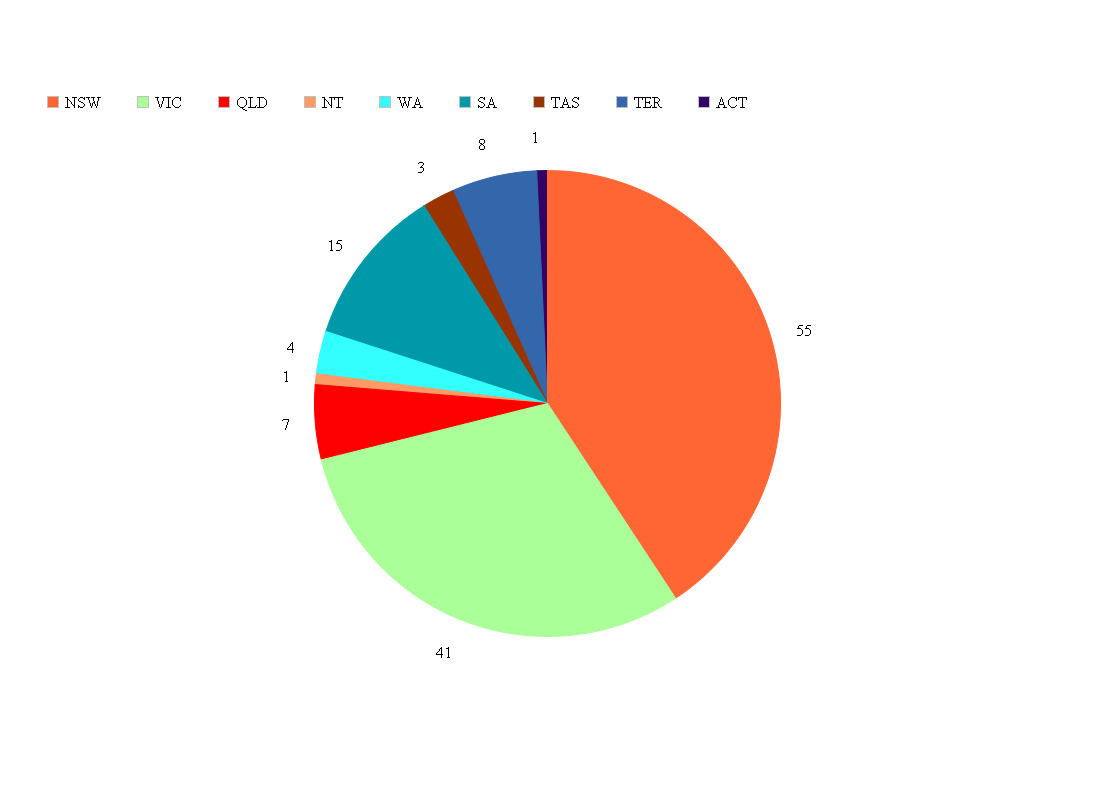
Out of interest, I checked the WWFF LogSearch facility tonight and found that 134 different VKFF references have been activated around Australia as follows…..

New South Wales – 55

Queensland – 7

Northern Territory – 1

Western Australia – 4

Tasmania – 3

South Australia – 15

Victoria – 40

Australian Territories – 8

blank

graph courtesy of http://www.onlinecharttool.com

As you would expect, with the largest number of parks, New South Wales is out in front, as far as the number of different VKFF references worked.  This is followed by Victoria on 41, and then South Australia on 15.  Of note for Victoria, is that 41 of their existing 45 National Parks qualify for WWFF, and all 41 have been activated.  I think this is a good indication of the very strong following of the Keith Roget Memorial National Parks program in Victoria.  And South Australia needs to be mentioned as well.  South Australia only has 21 National Parks, and yet 15 of those have been activated.  And some of those are in very remote locations, thousands of km away from a major capital city.

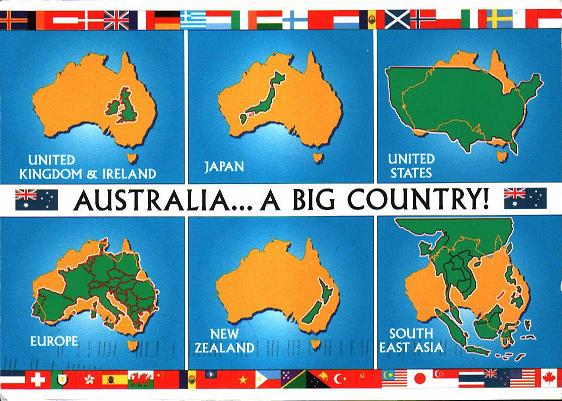
Due to the high park activity in Victoria I am going to attempt to have the other 4 Victorian National Parks added to the list.  One of my arguments is going to be focussed on the size of Australia…..

201101310820494d46c5413d107

image courtesy of http://www.celsius1414.com

The most activated VKFF references were as follows…..

Willis Island

  • 17 activations
  • Total QSOs 95,171

Norfolk Island

  • 21 activations
  • Total QSOs 61,928

Christmas Island

  • 24 activations,
  • Total QSOs 41, 958

Willis, Norfolk and Christmas Islands are rare DXCC entities and IOTA’s as well as being VKFF reference areas, so it is not surprising that they lead the way.  However, it should be noted, that the DX pedition operators did submit their logs for upload to the WWFF LogSearch, and they are to be applauded for that.

The other popular parks around Australia are as follows…..

In the Australian Capital Territory:

Namadgi National Park

  • 42 activations
  • 1,145 QSOs

In Queensland:

Magnetic Island

  • 6 activations
  • Total QSO’s 2,657

Turtle Group

  • 2 activations
  • Total QSOs 1,158

Great Barrier Reef

  • 4 activations
  • Total QSOs 1,480.

Great Sandy National Park

  • 21 activations
  • Total QSOs 1,650.

In Victoria:

Alpine National Park

  • 29 activations
  • Total QSOs 1,054

Yarra Ranges National Park

  • 32 activations
  • Total QSOs 708

Grampians

  • 43 activations
  • Total QSOs 570

In South Australia:

Canunda National Park

  • 7 activations
  • Total QSOs 408

Coorong National Park

  • 4 activations
  • Total QSOs 403.

Onkaparinga River National Park

  • 3 activations
  • Total QSOs 256

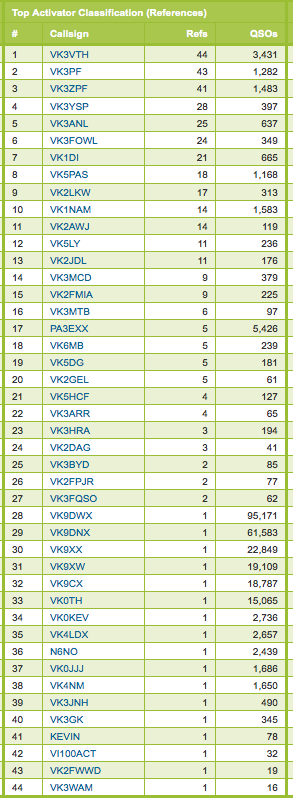
And here is a list of the top activators in the VKFF program.  Tony VK3VTH is the top activator with 44 different VKFF references, closely followed by Peter VK3PF on 43, and then Peter VK3ZPF on 41.

Screenshot 2014-12-09 21.27.59

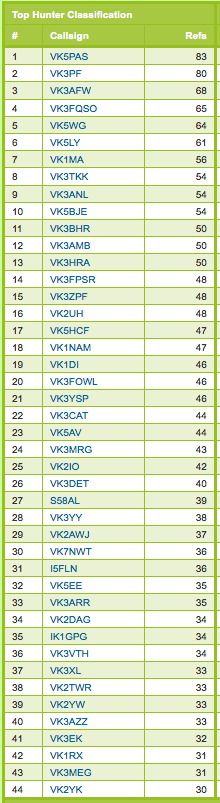
And a list of the top park hunters in the VKFF program.  Yours truly is at the top on 83 different VKFF references, but being closely followed by Peter VK3PF on 80, and then Ron VK3AFW on 68.

Screenshot 2014-12-09 21.28.04

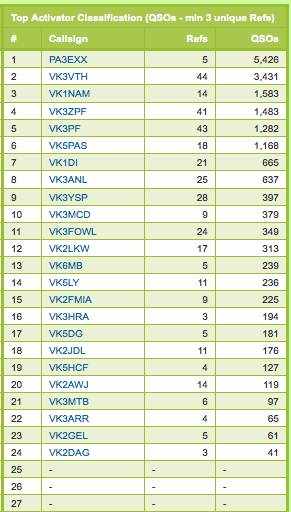
And finally, here are the top activators in the VKFF program (with reference to the number of QSOs)…..

Screenshot 2014-12-09 21.34.36

Many park activators are sending me their logs.  Sadly, many are not.

So, PLEASE, if you have activated an Australian National Park, send me your log.  Even if you are not chasing the WWFF awards, your log will benefit other amateurs.

And despite my best efforts to promote WWFF around Australia, it seems that the only active States are New South Wales, Victoria, and South Australia (the same three active States in SOTA).  So, if you are reading this from outside of those three States, why not give a park activation a go.  It is a lot of fun and very addictive, and yes, you escape from that terrible noise floor at home.  You can hear a pin drop.

WWFF Activator certificate & DXFF Activator certificate

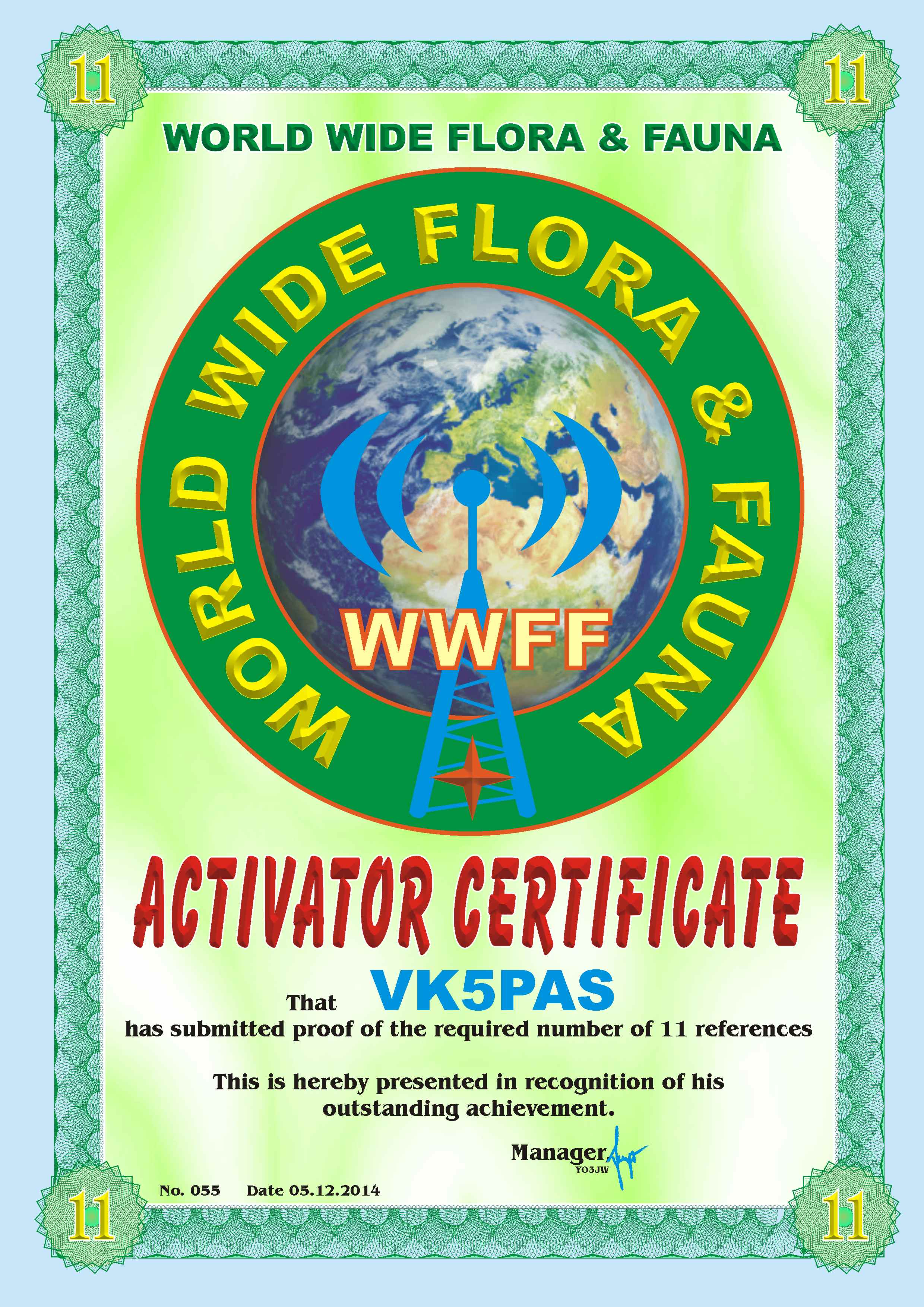
Thanks to Pit, YO3JW, I received the following World Wide Flora Fauna (WWFF) program certificates yesterday via e-mail…..

WWFF Activator certificate

This certificate verifies that I have activated at least 11 x WWFF reference areas (and obtained the required 44 contacts in each).

WWFF DXFF Activator certificate

This certificate verifies that I have activated 3 x references in 3 x different DXCC countries: Australia, Germany, & Belgium (from my recent trip to Europe).  When I go overseas again, I will try to activate some more WWFF parks in some different countries.

A 11 VK5PAS 2014 055

DXFF A3 VK5PAS 2014 025

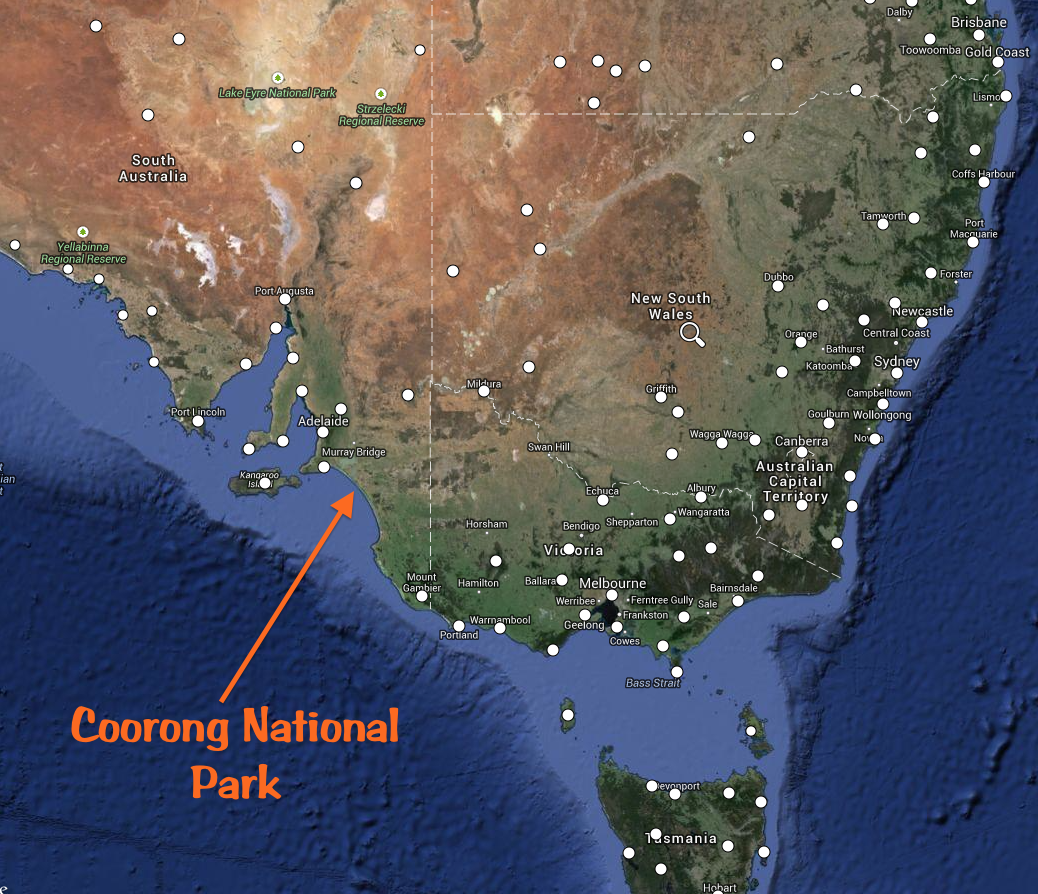
Coorong National Park, VKFF-115

On Sunday, 23rd November, 2014, with my wife Marija, I headed down to the Coorong National Park, VKFF-115.  It was a beautiful warm day, and we had just bought ourselves a new Toyota Hi Lux, so it was a a couple of great reasons to go for a drive.

Screenshot 2014-12-04 18.18.23

Map courtesy of mapcarta.com

I have activated the Coorong National Park a number of times previously.  This is a spectacular part of South Australia which stretched for more than 130 km and protects a string of salt water lagoons which are sheltered from the Southern Ocean by the sweeping sand dunes of the Younghusband Peninsula.  The Coorong is a wetland of international signficance. For more information on the Coorong National Park, please have a look at…..

http://www.environment.sa.gov.au/parks/Find_a_Park/Browse_by_region/Limestone_Coast/Coorong_National_Park

Rather than travelling along the South Eastern Freeway and the Dukes Highway, we headed out along the Wellington Road from home, and down through the beautiful wine growing region of Langhorne Creek, and then on to the little town of Wellington on the River Murray.  There, we put the 4WD onto the ferry and travelled over the Murray and then on to Meningie on the banks of Lake Albert.  From Meningie we continued south east along the Princes Highway.

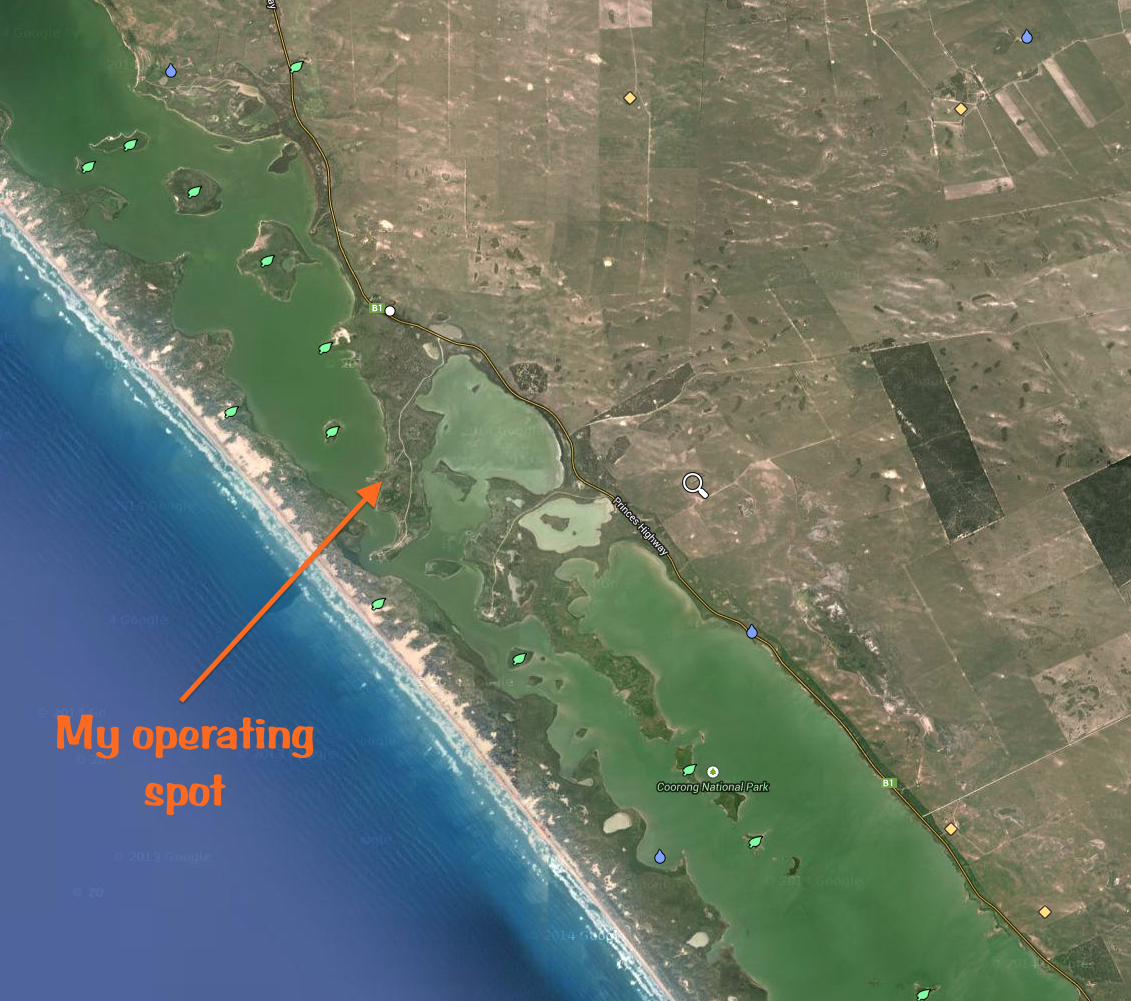
Initially, we drove along 400 Mile Road and down to the Coorong.  However, as it was a warm day and there was no immediate shade at that location, we decided to turn around and head for Parnka Point, where I have operated from a number of times before.  I knew that there were shelters at Parnka Point, where I could set up out of the sun.

Screenshot 2014-12-04 18.18.55

Map courtesy of mapcarta.com

My first contact was with Rod VK5VRB at Meadows in the Adelaide Hills with a very strong 5/9 signal.  This was followed by SOTA guru (and recently converted parks hunter) Andrew VK1NAM, Hans VK5YX running 5 watts from his home brew MFJ transceiver, and Ian VK3AXH.  I went on to work a number of stations in VK3 & VK5.

After working a total of 15 stations on 40m, I ventured over to 20m, where I put out a number of CQ calls on the nominated World Wide Flora Fauna (WWFF) frequency of 14.244, but had no takers.  It was still only 3.00 p.m. and a little too early for the 20m band to be open long path to Europe.  A quick tune around the 20m band confirmed this, with very little activity heard.  I did hear Anatoly RZ3ZM calling CQ on 14.228 and gave him a call and received a 5/5 signal report from Russia with my 40 watts.

I then went up to 14.310 and asked if the frequency was in use, and was advised by  Adam VK2YK that Bob VK5FO was on the frequency on a SOTA summit.  I could not hear a peep out of Bob, despite the fact that he was just 150 km away.  So I went down to 14.305 and was soon called by Adam VK2YK with a very strong 5/9 signal.  This was followed by VK7EB/p.  I started calling CQ again, but sadly some stations came up on 14.303 speaking German, and that was the end of that.  I was forced to QSY due to the bleedover.  So I tuned across the band and found John EA7BA in QSO with some of my mates including Brian ZL2ASH.  I gave John a call in Almeria in Spain and he gave me a 5/9 signal report.  Brian ZL2ASH in Wellington gave me a 5/6 signal report and Tony F5VBY gave me a 5/8 signal report from France.

I then tuned across the band and found 14.252 clear so I called CQ and this was responded to my Allan VK6APP.  Allan was struggling with me and I was certainly struggling with Allan.  Sadly his modulation was very distorted, and it was a difficult QSO.  A number of subsequent CQ calls went unanswered.

This slideshow requires JavaScript.

I then worked a special event call YO555BU.  I then went to 14.252 and called CQ again, and this time I had a steady flow of callers from Europe.  My first contact was with Max IK1GPG, followed by Zenek SP5INQ, and then UA9LT.  I went on to work a total of 15 stations from Europe, but the Yaesu FT-450 kept cutting out as the 44 amp hour power pack was getting low.  I am sorry to the European stations that were still calling when I went QRT.

After a total time of 2 hours in the park, I had 38 contacts in the log.  We packed up the gear and headed for us.  This time taking the Princes Highway to Tailem Bend and then back along the South Eastern Freeway.

The following stations were worked on 40m SSB:-

  1. Rod VK5VRB
  2. Andrew VK1NAM
  3. Hans VK5YX
  4. Ian VK3AXH
  5. David VK5NQP
  6. Tony VK3CAT
  7. Nigel VK5NIG
  8. Brian VK5FMID
  9. Peter  VK3ZPF
  10. Bill VK5MBD
  11. Ian VK5CZ
  12. David VK5KC
  13. Ian VK3VIN
  14. Tom VK5EE
  15. Keith VK5ND

The following stations were worked on 20m SSB:-

  1. Anatoly RZ3ZM
  2. Adam VK2YK
  3. K7EB/p
  4. John EA7BA
  5. Brian ZL2ASH
  6. Tony F5VBY
  7. Allan VK6APP
  8. YO5SBU
  9. Max IK1GPG
  10. SP5INQ
  11. UA9LT
  12. Luciano I5FLN
  13. Marnix OP7M
  14. DF1YQ
  15. I5JFG
  16. G0KIK
  17. RA3PCI
  18. HA6OB
  19. IZ2IHO
  20. DL1EKO
  21. UR7ET
  22. UT5PI

2014 Keith Roget Memorial National Parks activation weekend

This weekend is the annual activation weekend for the Keith Roget Memorial National Parks Award (KRMNPA).  As it turns out there is also a VK Spring Summits on the Air (SOTA) Party being held this weekend as well.

krmnpasm

SOTA_logo

So this is a fantastic opportunity to work a stack of parks that qualify for KRMNPA and the World Wide Flora Fauna (WWFF) program, and SOTA summits.

Slide1 copy

I will be heading off to Victoria tomorrow morning and here is my itinerary…..

Friday 14th November, 2014

4 x South Australian Conservation Parks.

  • Poonthie Ruwe Conservation Park (2100 UTC Thursday, 7.30 a.m. SA local time Friday morning)
  • Kelvin Powrie Conservation Park (2330 UTC Thursday, 10.00 a.m. local time)
  • Desert Camp Conservation Park (0100 UTC)
  • Lower Glenelg River Conservation Park (0430 UTC)

Saturday 15th November 2014

2 x Victorian National Parks (qualify for both KRMNPA & WWFF) & 1 x VK3 SOTA peak

  • Lower Glenelg National Park, VKFF-296 (2200 UTC Sunday, 9.00 a.m. Victorian local time Saturday morning)
  • Cobbobonee National Park, VKFF-728 (0200 UTC)
  • Mount Clay, VK3/ VS-051(0700 UTC).  Concides with the proposed VK/Europe SOTA activation day

Sunday 16th November 2014

1 x VK3 SOTA peak, & 2 x Victorian National Parks (qualify for both KRMNPA & WWFF)

  • Mount Napier, VK3/ VS-046 (2300 hrs UTC Saturday, 10.00 a.m. Victorian local time)
  • Mount Eccles National Park, VKFF-345 (0200 UTC)
  • Mount Richmond National Park, VKFF-361 (0700 UTC)

Monday 17th November 2014

2 x VK3 SOTA peaks & 2 x Victorian National Parks (both qualify for KRMNPA & WWFF)

  • Mount Rouse, VK3/ VS-048 (2100 UTC Sunday, 8.00 a.m. Victorian local time Monday morning)
  • Mount Dundas, VK3/ VS-045 (0000 UTC)
  • Grampians National Park, VKFF-213 (0200 UTC)
  • Little Desert National Park, VKFF-291 (0400 UTC)

Hope to get you in the log.

Coorong National Park, VKFF-115

On Saturday 11th October, 2014, I headed to the Coorong National Park (NP), which is located in the South East of South Australia.  The Coorong NP qualifies for both the World Wide Flora Fauna (WWFF) program, and the VK5 National and Conservation Parks award.  I had activated the Coorong NP previously, but I was hoping to achieve a few more QSOs to get me over the required 44 QSO requirement for the global WWFF awards.

Screenshot 2014-10-12 20.59.32

I left home and travelled a total distance of about 150 km to reach my operating spot, which was at Parnka Point in The Coorong NP.  I travelled east along the South Eastern Freeway, passed Murray Bridge and into the town of Tailem Bend which runs alongside the mighty River Murray.  From there I travelled south along the Princes Highway and on to the picturesque town of Meningie, which is located on the shores of Lake Albert.  I continued south east out of Meningie along the Princes Highway and then turned right into Parnka Point Road.  I then travelled the 3 km down the Prank Point Road, to the narrowest point of the Coorong NP.  The area is referred to as ‘Hells Gate’.

Screenshot 2014-10-12 21.02.08

I set up on the western side of the small peninsula which runs down to the stretch of saltwater which flows between the mainland and the sand dunes called the Younghusband Peninsula.  I found a shelter with a nice wooden table and benches, which got me out of the warm afternoon sun.  The spot had a lovely view out to the west, across the water towards Bluff Island, Rabbit Island, and Snake Island.  I could hear the breaking waves of the Southern Ocean in the background.

For this activation I ran the Yaesu FT-450 and the Bandhopper 20m/40m linked dipole, which I supported on a 7 metre squid pole.  I placed the squid pole into the aluminium squid pole holder and drove this into the sandy soil, and held it in place with an octopus strap.  For 40m I used 40 watts, and when I QSYd a little later to 20m, I ran 80 watts.  I powered the radio with my 44 amp hour power pack.

I started off on 40m SSB on 7.095 and called CQ and was immediately called by Larry VK5LY.  This was followed by Peter VK3TKK, and then Tony VK5FTVR, and then Les VK5KLD.  A steady flow of callers followed from VK2, VK3, and VK5.  When things slowed down a little on 40m, I tuned around the band and found Allen VK3HRA who was portable on Mount Matlock, VK3/ VC-001, for the Summits on the Air (SOTA) program.  I then found Chris VK4FR/5 who had arrived in the Maize Island Conservation Park and secured a ‘park to park’ contact with Chris.  I then went back to 7.0985 and put out a CQ call and was called by Craig VK3CRG and then John VK2AWJ, and then Kevin VK3NKC.  After a number of other CQ calls, there were no takers, so again I tuned around the band and this time I found Nick VK3ANL who was portable on Gentle Annie, VK3/ VT-078.

This slideshow requires JavaScript.

It was pleasing to see a few VK’s calling me, using just QRP.  They included Peter Vk3TKK, Col VK5HCF, and Greg VK5GJ using his home brew transceiver.  It was very quiet in the park, so I was able to copy them extremely well.

After working a total of 27 stations on 40m SSB, I QSYd to 14.244 and called CQ and was almost immediately called by Sergey RA3PCI in Russia.  Much to my surprise, this was followed by a call from Dirceu, PY5DK with a beautiful 5/9 signal from Brazil.  This was my first every contact with Brazil whilst operating portable, and his call took me by surprise.  This was followed by Vladimir EU2MM in Belarus, and then Albert S58AL in Slovenia.  A constant flow of callers from Europe followed with very good signals coming in on the long path.  This was until the DXpedition, XR2T decided to start operating just below me, operating split, with the call frequency just 1 kc above me.  So, after working on the frequency for one hour, that was the end of that.

However, out of everything bad, comes something good.  It gave me an opportunity to tune up to 14.280 where I made contact with regular SOTA activator, Mike, 2E0YYY and Dave G4ASA, who were on Normanby Top, G/ TW-005.

I then found another clear frequency on 14.197 and again called CQ, and this was soon responded to by DK4RM in Germany, S51INT in Slovenia, and ON2VR in Belgium.  I remained on this frequency, working into Europe, South America, Hawai, and Japan, until the battery went flat.  I am sorry to all the stations that were still calling when the battery failed.  I would have loved to have stayed and kept working the DX, but it was just not possible.

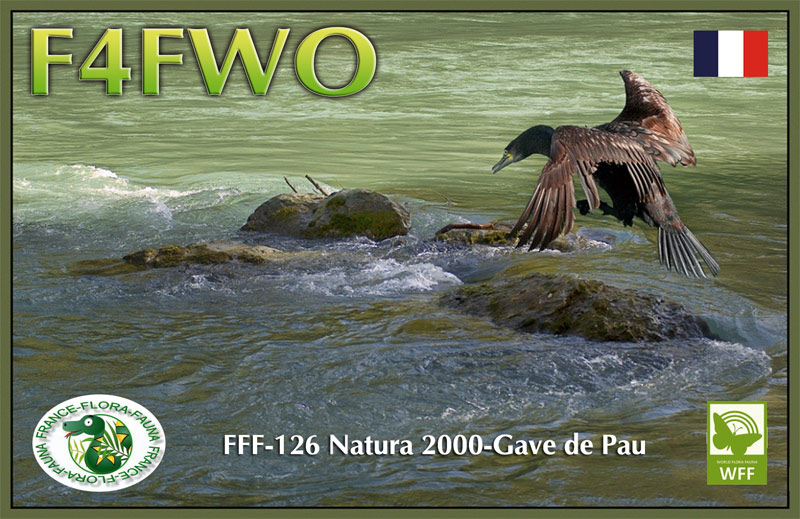
I was fortunate enough to work two other WWFF activators whilst in The Coorong.  They were Sylvain, F4FWO in Gave de Pau, FFF-126, and DF7GC who was in Nature Park Black Forest South, DLFF-124.

FF_F4FWO

I was also pleasantly surprised to be called by HC5AI in Ecuador, KH7CX/p in Hawaii, and 7N2TNI, and JA8RJE, both in Japan.

And it is always nice to get a few mates in the log.  They included my good friends from Belgium: Marnix OP7M and Albert ON2WAC.  I stayed with Marnix during my recent Europe trip, and also met with Albert.

Only a handful of VK’s called me on 20m.  They were Mike VK6MB, Dave VK3VCE, Greg VK8GM, and VK2HJW.

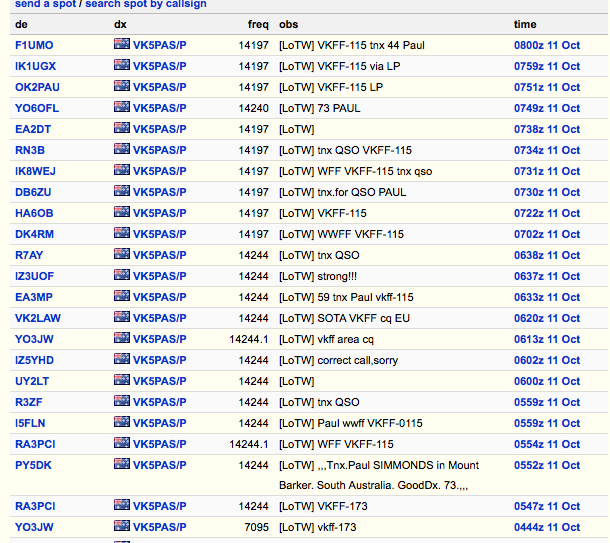
Thanks to the Australian stations that placed me on the parksnpeaks site.  And thanks to the following stations for placing me on the DX cluster, which kept the DX rolling in on 20m.

Screenshot 2014-10-13 20.52.00

I received an email after this activation, advising me that Luciano I5FLN could hear me on 7.095.  Luciano said: ‘By way way I heard you earlier on 7095 talking with several VK but could not compete with my sloper they were to you more strong than my signal of course.’  And it appears from the DX cluster, that Pit YO3JW could also hear me all the way over in Romania.  Amazing.  Sorry, I could not get them both in the log on 40m.

A total of 177 QSOs were made during this activation…..including my largest every haul of DX during a portable activation.  This included a total of 27 contacts on 40m SSB into, and 150 contacts on 20m SSB into Europe, Japan, South America, and Hawaii.  It certainly showed that WWFF is extremely popular in Europe, and the hungry WWFF park hunters in Europe are very keen to get an Australian National Park in their log.  Now if only WWFF became popular in Australia.

The list of worked stations is extensive.  But here is a breakdown of the countries that I worked:-

  1. Australia
  2. Austria
  3. Belarus
  4. Belgium
  5. Brazil
  6. Croatia
  7. Czech Republic
  8. Denmark
  9. Ecuador
  10. England
  11. Finland
  12. France
  13. Germany
  14. Hawaii
  15. Hungary
  16. Italy
  17. Japan
  18. Lithuania
  19. Luxembourg
  20. Netherlands
  21. Northern ireland
  22. Poland
  23. Romania
  24. Russia
  25. Slovak Republic
  26. Slovenia
  27. Spain
  28. Sweden
  29. Switzerland
  30. Ukraine

I have placed a short video on You Tube of this activation…..

Signal de Botrange ON/ON-001 and ONFF-001

On Wednesday 30th July, we headed back over the German/Belgium border, into Belgium and activated Summits on the Air (SOTA) peak Signal de Botrange ON/ON-001 and World Wide Flora and Fauna (WWFF) area Hautes Fagnes-Eifel ONFF-001.

It was about a 90 minute drive from Prum through the mountains back into Belgium.  The countryside was spectacular as we passed through a number of small villages.  It was hard to believe that this was summer, as the landscape was so green.

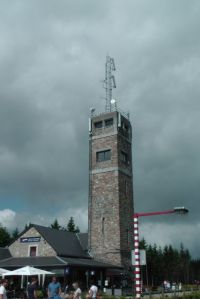
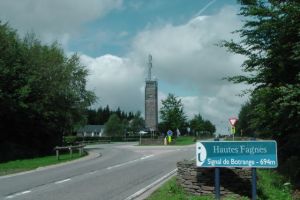
Signal de Botrange is the highest point in Belgium, climbing to 694 metres (2,277 feet).  It is worth a total of 8 SOTA points and is located at the top of a broad plateau, and a road crosses the summit, passing an adjacent cafe.

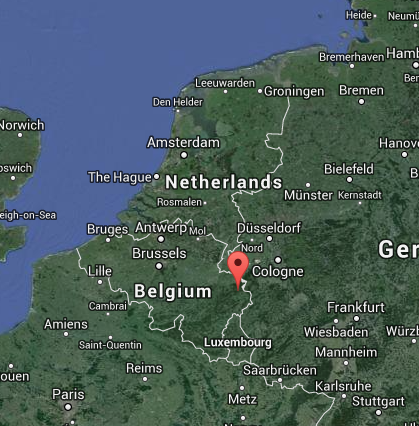
Screenshot 2014-09-09 13.41.34

Map courtesy of googlemaps.com

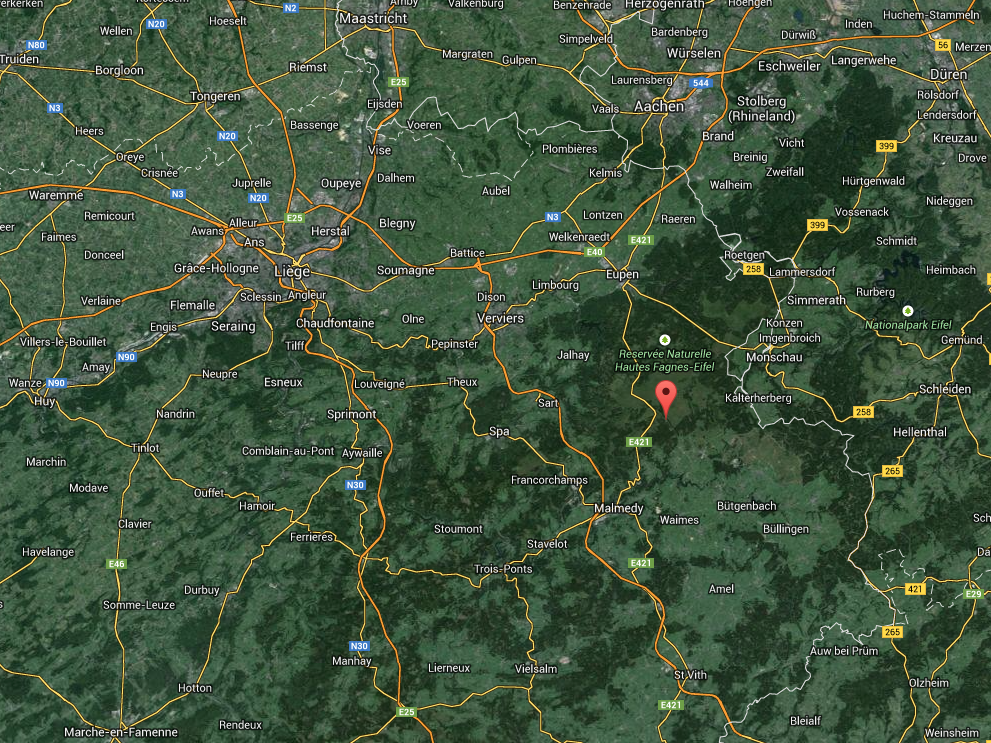
Screenshot 2014-09-09 13.44.26

Map courtesy of googlemaps.com

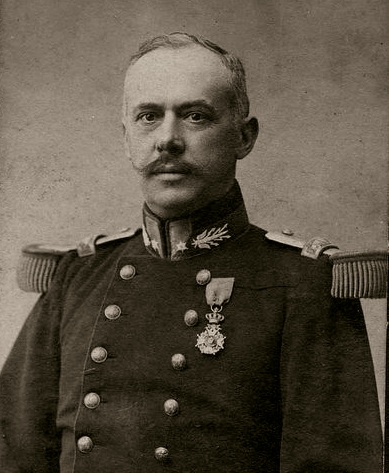
In 1923 a six metre high Baltia tower was built on the summit to allow visitors to reach an altitude of 700 metres.  The tower was named after Baron Herman Baltia, a Belgian military officer (1863-1938).  A stone tower was built in 1934 and this reaches 718 metres.

General_Baltia_Herman

Above: – Baron Herman Baltia.  Photo courtesy of wikipedia.

A meteorological station was located at the summit for many years, but in 1999, it was replaced by a nearby automatic station of the Royal Meteorological Institute of Belgium.  The summit experiences extreme temperatures and these are usually lower than at any other place in Belgium.  Fortunately on the day of our activation, the weather was overcast but fine.

IMGA0048_4

The summit is located within the Hautes Fagnes (High Fens) covers 12 municipalities of Belgium and was established in 1957.  It is the largest nature reserve in Belgium, with an area of 4,501.2 hectares (11,123 acres).  In winter, the area becomes Belgium’s premier cross country ski resorts.

IMGA0050_2

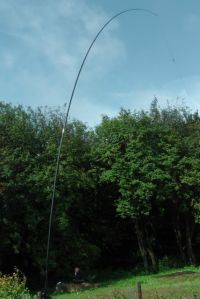
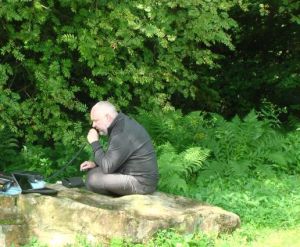
We operated from the edge of the carpark and attached Eddy’s end fed antenna to the 9 metre squid pole which in turn was attached to a nearby post.  Again for this activation we used the Kenwood TS-50.

IMGA0043_4

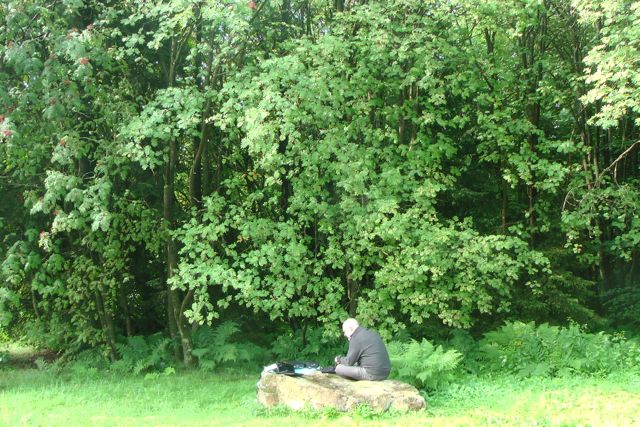
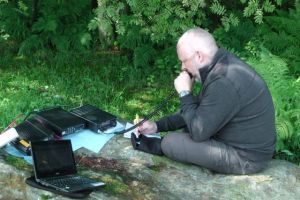
There was a nice large flat rock nearby which served well as an operating location.  As we were close by to the main carpark for the nature park, there was a lot of traffic.  I was surprised at how many visitors there were to the park, considering that it was a week day.  We certainly did attract some odd looks as people arrived and prepared to head off for a walk into the park.

IMGA0040_3

IMGA0047_4

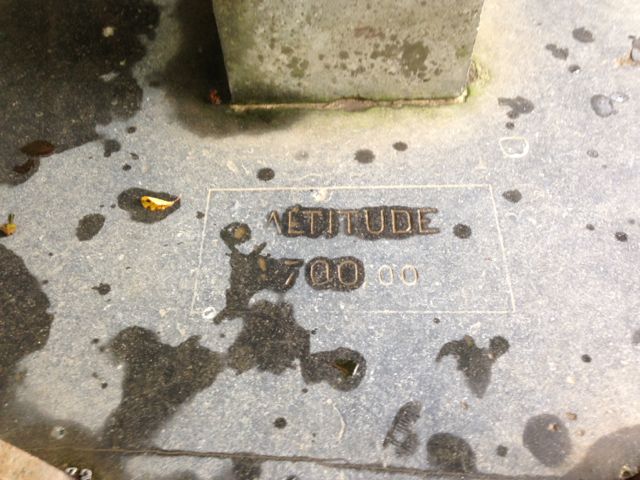
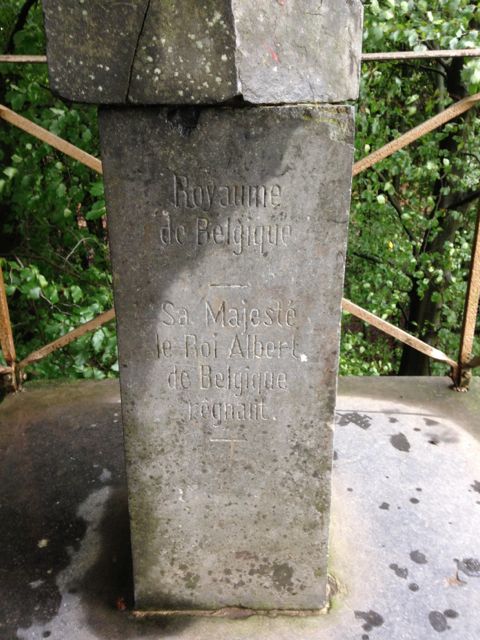
Whilst I was operating my tolerant wife Marija went for a walk along the boardwalk at the rear of the cafe, and took some photos of the 700 m marker.  The actual trig point is a short distance from here.

IMG_0435 IMG_0437 IMG_0438

I commenced on 40 metres and remained there for the duration of the activation.  My first contact was with Luciano I5FLN, and this was followed by a steady flow of callers from Europe and the United Kingdom.

Again, it was a little too late for propagation to Australia on 20 m.  We had enjoyed a bit of a sleep in at the hotel and a nice breakfast, so we had just missed the window for long path propagation into Australia on 20 metres.

IMGA0042_4

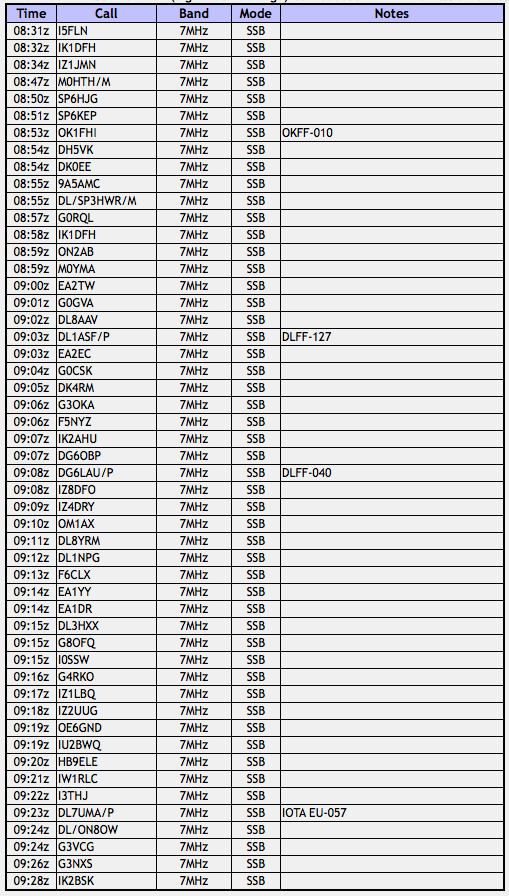
I managed three WWFF park to park contacts during the activation:

  • OK1FHI, OKFF-010
  • DL1ASF, DLFF-127
  • DG6LAU, DLFF-040

Fortunately there were no equipment issues during this activation.  Everything went very smooth.  After an hour of operating I ended up with 51 contacts.  All on 40m SSB.  The following countries were worked:-

  • Austria
  • Belgium
  • Croatia
  • Czech Republic
  • England
  • France
  • Germany
  • Italy
  • Poland
  • Slovakia
  • Spain

Screenshot 2014-09-09 14.52.22

Another very enjoyable activation.  My second in Europe.  It was time to hit the road again, and journey north through Belgium back home to Ghent in northern Belgium.

I would like to thank Marnix and Eddy for their time and effort in allowing me to activate the 2 summit/WWFF areas in Germany and Belgium.  It was a hug he amount of fun.

Schwarzer Mann, DM/ RP-003 and DLFF-047

I have just returned from 7 very enjoyable weeks in Europe.  Whilst there I had the honour to stay for a week with Marnix OP7M, his wife Martine, and their 16 year old son Goan.  I have spoken with Marnix many times on the radio, and also on Skype, but this was the first time we had met in person.  My wife Marija and I had a very enjoyable time at Marnix and Martine’s home, with plenty of laughs, good food, lots of stories, and our fair share of Belgium beer.  Whilst staying with Marnix, we also met Eddy ON6ZV and his wife Carine and their son.

Marnix knew I was a keen SOTA & parks activator, so the day after arriving, on 29th July, Marnix, Eddy , myself and Marija headed over the border into Germany for a SOTA and WWFF activation.  It wasn’t a short drive to get there.  In fact it was about a 3 hour drive to our destination near Prüm.  However, Marnix had told me that this was a beautiful area, and was well worth the drive and an opportunity to see the Belgium countryside.  Indeed it was.  He and Eddy also had plans to activate another summit / WWFF area on the way home the following day, in Belgium.

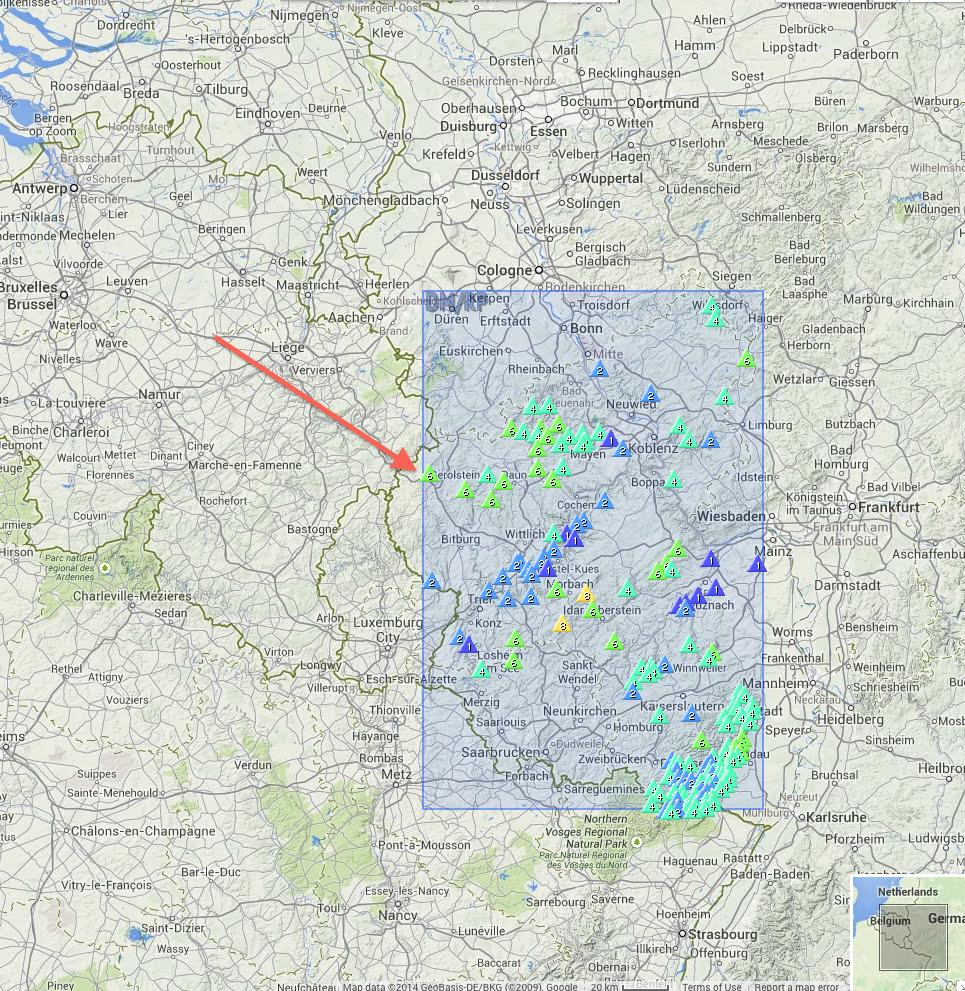
The chosen summit in Germany was Schwarzer Mann, DM/ RP-003, which is 697 metres (2,286 feet) above sea level and is worth 6 SOTA points.  Its grid square locator is JO30eg.  The summit is located in the German (Low Mountains) Association in the Rhineland-Palatinate Region.  It is located in the western part of the Eifel mountain range, which is known as Schnee Eifel (Snowy Eifel) and  is about 14 km from the little village of Prüm.  Schwarzer Mann means ‘Black Man”.  It is the highest peak in the Schnee Eifel and the third highest in the Eifel.  The summit was first activated by DL/ON6DSL/p on 24th December 2007, and has been activated a total of 42 times since.

Screenshot 2014-06-26 17.54.53

Map courtesy of sota.org.uk

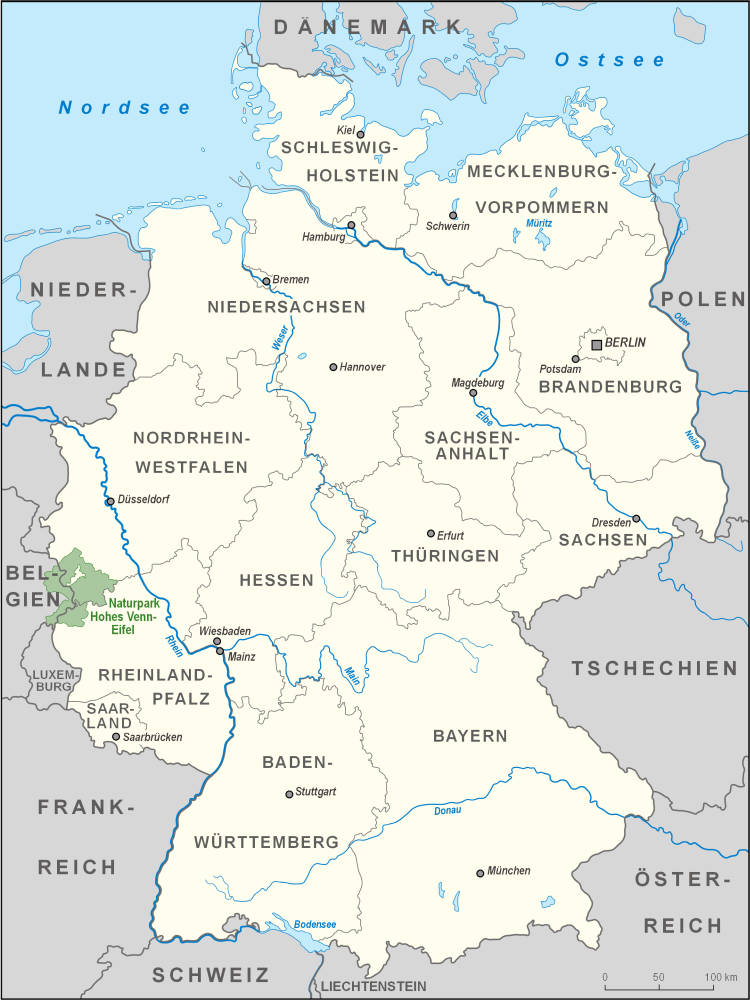
The summit is also located in World Wide Flora and Fauna area, DLFF-047, German-Belgian High Fens-Eifel Nature Park.  The area is known as Naturpark Hohes Venn-Eifel in German and is often called the North Eifel Nature Park (Naturpark Nord Eifel).  It is a cross border nature park with the German federal states of North Rhine-Westphalia and Rhineland-Palatinate, as well as the Belgian province of Liege.  The park comprises a total area of 2,485 km2.

Karte_Naturpark_Hohes_Venn-Eifel

Map courtesy of wikipedia.com

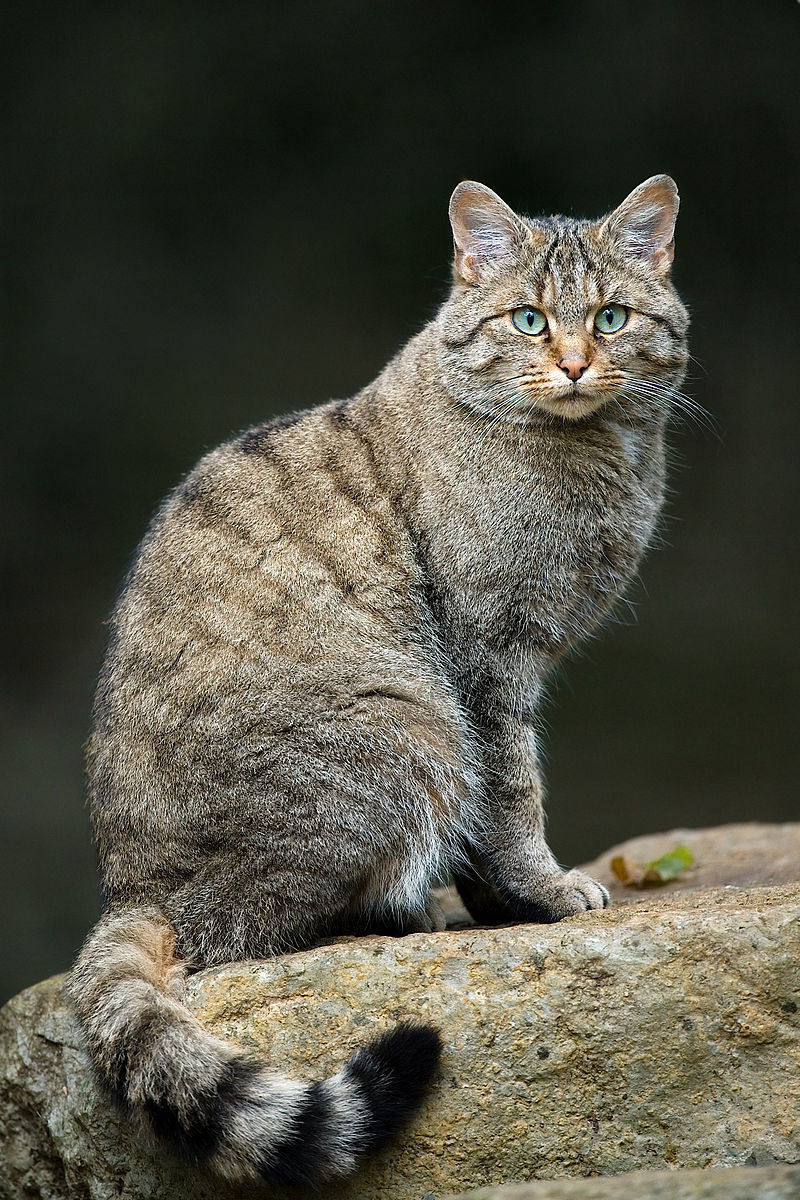
The areas surrounding Schwarzer Mann is a well developed hiking area and the largest skiing area in Rhineland-Palatinate.  The heavily wooded mountain side is covered mainly with spruce trees and is host to some rare wild animals including the wildcat, which sadly I didn’t see.  Or maybe that isn’t so bad!

Felis_silvestris_silvestris_Luc_Viatour

Image courtesy of wikipedia.com

We set up just north of the summit off the L20 road which passes through the park.

IMGA0095_3

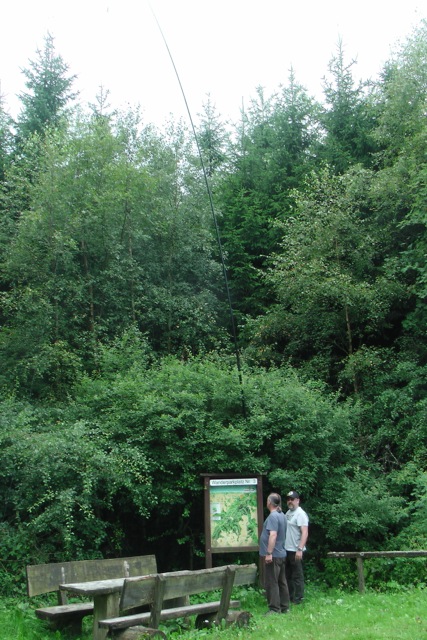
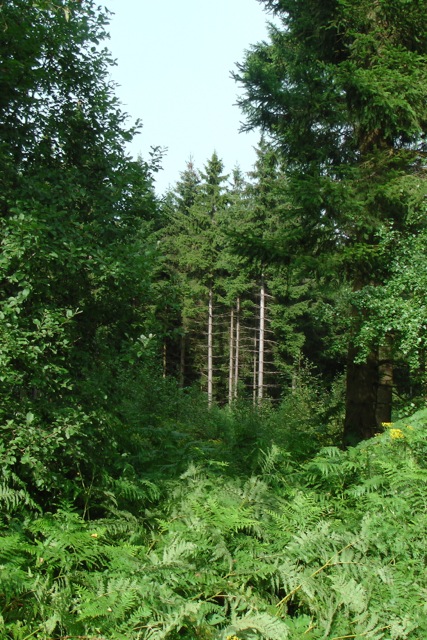
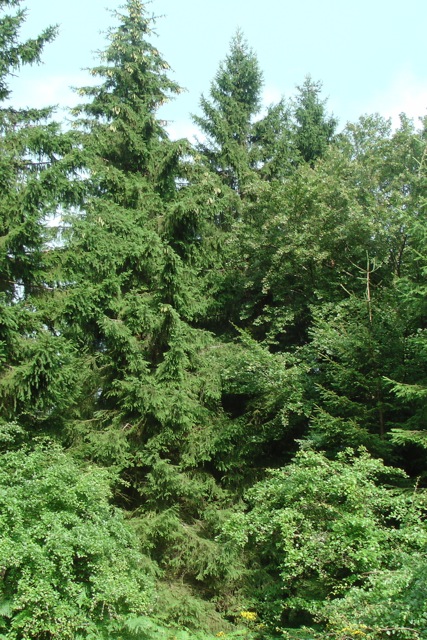
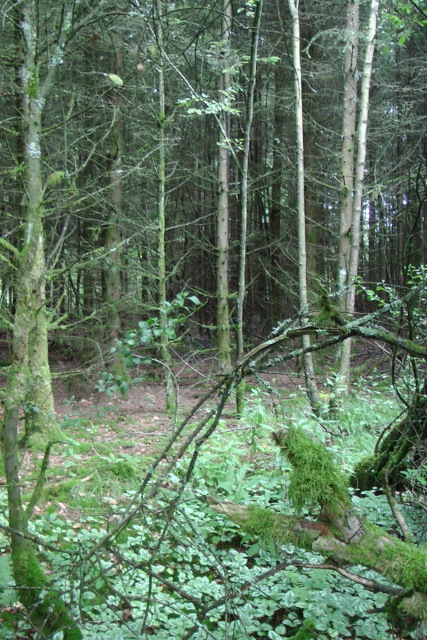
The vegetation here was very different to home.  Despite it being summer time, he forest was lush and green and very thick.  A stark contrast to the parks in South Australia during summer.  And not a single gum tree or kangaroo in sight!

IMGA0005_4 IMGA0006_4 IMGA0011_5

Because of reciprocal licensing issues, I was not able to operate under my own call sign.  Germany did offer the option of a 3 month temporary licence, so prior to leaving for Europe I applied for a German temporary operating licence, which would have allowed me restricted operating rights.  However, I had left my run a bit too late, and did not receive the documentation from DARC until I had left Australia.  But there was another option.  As I am a police officer, and Eddy is a police officer, we used the call sign of ON4IPA, which belongs to the International Police Association (IPA).  In fact, Eddy is the caretaker of that special call sign and the Chairman of the IPA in Belgium.  As I am a Detective here in South Australia, this was a really neat call sign to use.

on4ipa

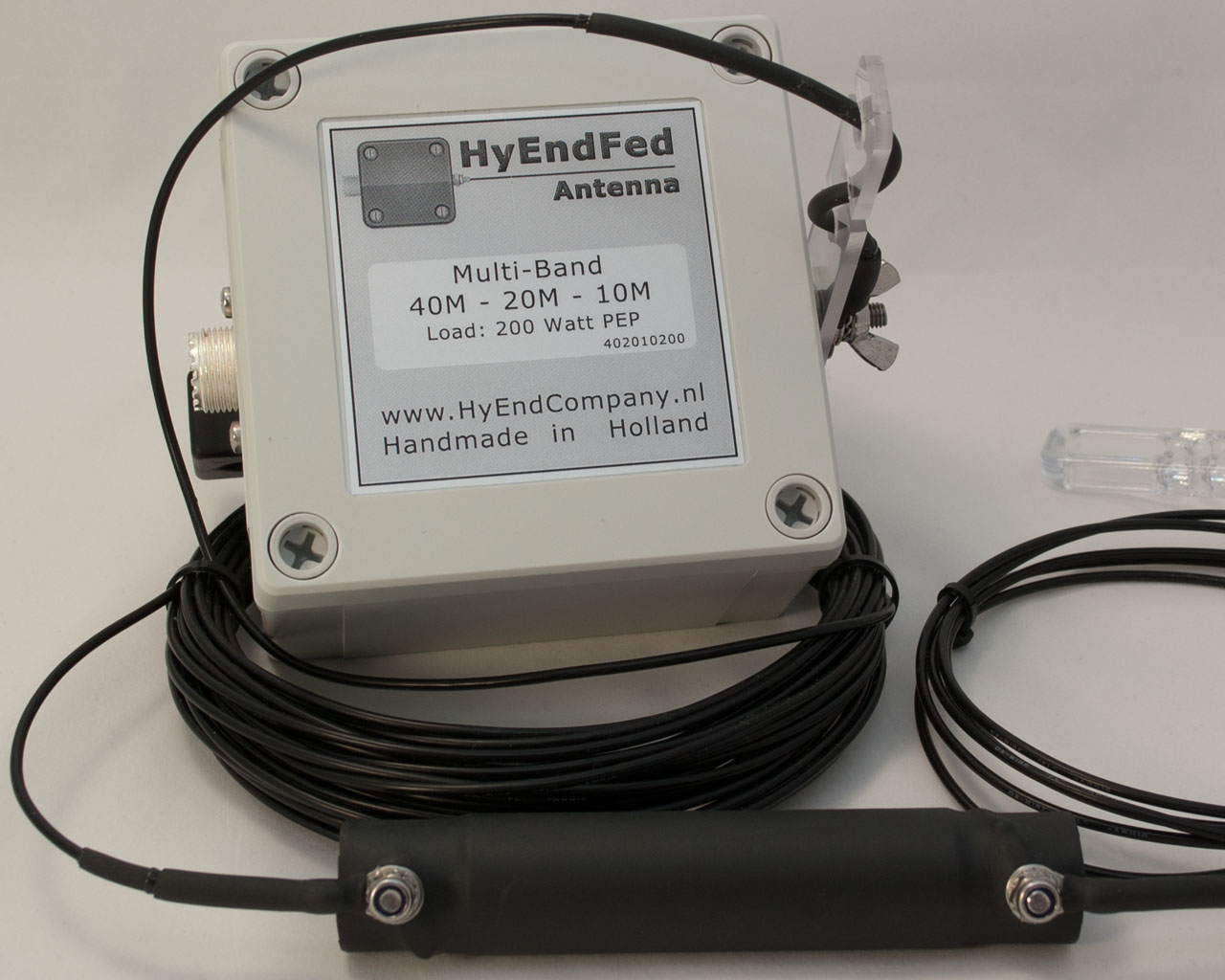
Our equipment was Eddy’s Kenwood TS50, and his ‘Hy End Fed’ half wave end fed antenna which we attached to the top of a 9 metre squid pole.  A very easy antenna to erect.  More information on this antenna can be found at…..

http://www.hyendcompany.nl/home

3b200pc

I initially started off on 20 metres on 14.244 and called CQ a number of times, with Eddy at my side doing the logging on the laptop.  But there were no takers.  I kept calling CQ for about 5 minutes, before being called by Vincenzo IZ5YHE and then Rudolf OM3CHR.  However their signals were extremely low and it was a struggle to make the contacts.  With a degree of frustration, we checked the antenna and it appeared ok.

I kept calling CQ for a few more minutes, but sadly there were no takers.  Now I was starting to get disappointed.  Perhaps band conditions on 20 m were not good?  So we QSY’d over to 40 metres where we tuned across the band and found the Commonwealth Games special event station, GA14CG.   Signals were still down despite being able to make the contact.  Something was clearly wrong.  Again we checked the antenna and it appeared all okay.

Again, I put out some CQ calls and no takers.  So this time we hooked up an LDG auto tuner, and found the VSWR to be very high.  After further checking we found an issue with one of the patch leads and replaced it. This solved the problem and we were back in business.  I breathed a sigh of relief.

IMGA0101_2

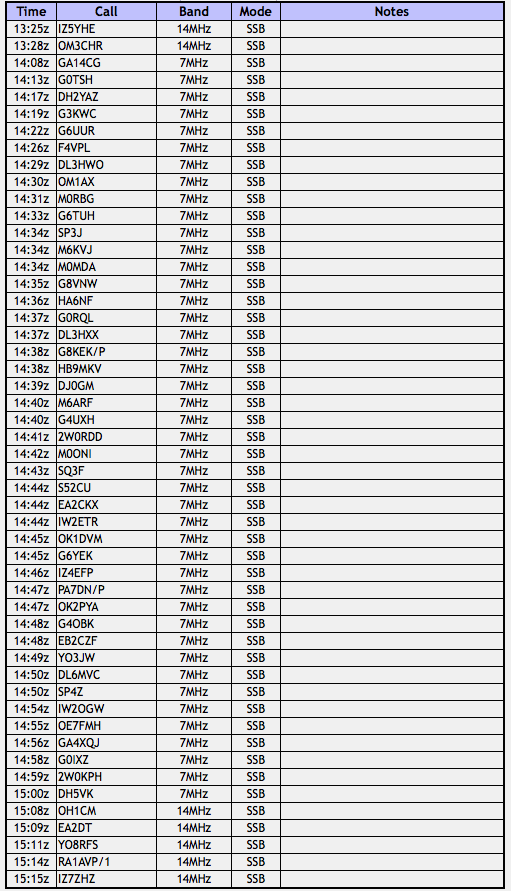
I then moved up the band a little to 7.144 and called CQ and this time I was greeted by a number of callers.  My first caller here was Keith G0TSH.  A steady flow of European and UK callers followed.  I worked a total of 43 stations before moving back to 20 m where I worked another 5 stations before handing the mic over to Eddy.

A number of the stations that I worked during the afternoon, recognised that I did not have a Belgian accent.  They must have been wondering why is an Aussie operating a Belgium call sign in Germany?  This included Manuel, EA2DT, who I have worked many times before whilst I’ve either been in a park or on a summit in Australia.  During the QSO Manual said; “One question.  Is you Paul, Victor Kilo 5 Papa Alpha Sierra.  Is you Paul, roger?'” Once I told Manuel that it was in fact me at the mic, he was very excited, as was I.

I ended up with a total of 51 contacts.  The majority of those being on 40 metres, and all from Europe and the United Kingdom.  The following countries were worked:-

  • Austria
  • Czech Republic
  • England
  • France
  • Germany
  • Hungary
  • Italy
  • Poland
  • Romania
  • Russia
  • Slovak Republic
  • Slovenia
  • Spain
  • Switzerland
  • Wales

Sadly it was the wrong time of the day for good propagation to Australia.

Screenshot 2014-09-09 14.54.18

As a result of this activation, I found that World Wide Flora and Fauna (WWFF) is extremely popular in Europe.  Many of the stations I worked were very keen on the WWFF reference number.  Who knows, maybe WWFF will kick off and become popular in Australia too.  It hasn’t been for the lack of trying!

After the activation we retired to our accommodation, which was the Hotel Zum Goldenen Stern in Prüm.  That night we enjoyed a very nice meal and a few good German beers.IMGA0018_4IMGA0019_5

IMGA0024_5IMGA0022_5

References.

Wikipedia, 2014, ‘Schwarzer Mann’, accessed 9th September 2014, <http://en.wikipedia.org/wiki/Schwarzer_Mann&gt;

Wikipedia, 2014, “High Fens-Eifel Nature Park’, accessed 9th September 2014, <http://en.wikipedia.org/wiki/High_Fens_–_Eifel_Nature_Park&gt;

SPFF-H award

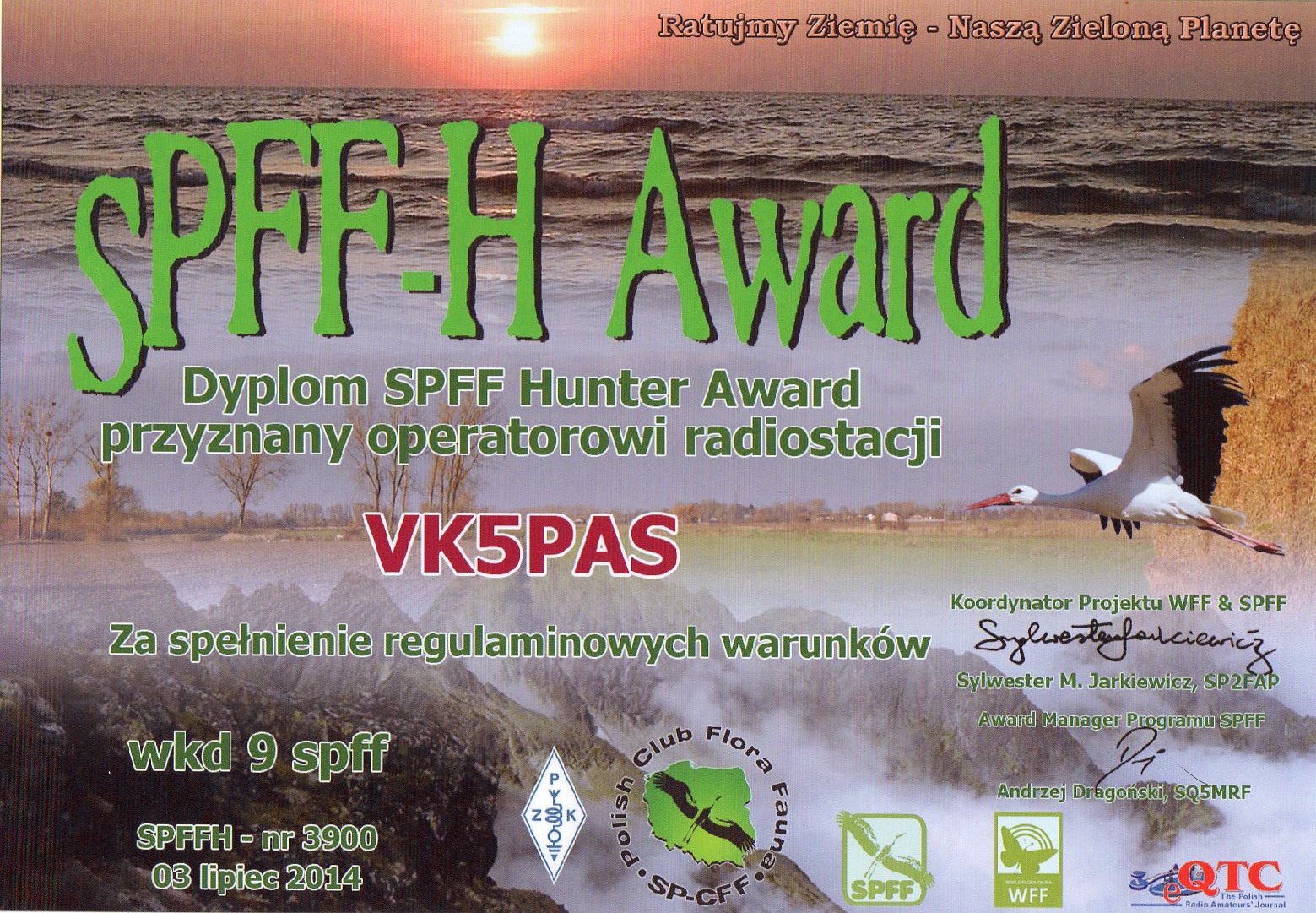
I received the following certificate today via e-mail after applying on line, on the WWFF LogSearch facility.  It is the SPFF-H Award, issued by the SPPFF-Polska Flora Fauna program.  It is another of the many National awards available in the World Wide Flora Fauna program.

The basic SPFF-H award is issued for communications with 3 different SPFF areas.  For each subsequent three SPFF areas, yields a higher class of award.

More information on the SPFF awards can be found at…..

http://spff.eham.pl/articles.php?article_id=13

SPFF-H Award305

WorldWide Flora and Fauna (WWFF)

This blog is just a quick reminder to all about the…..

World Wide Flora & Fauna (WWFF) program.

The WWFF program encourages portable operation from designated nature parks and protected nature areas around the world.  There are currently 39 participating countries in the WWFF program, in Europe, North America, South America, Africa, Asia, & Oceania.

Logo WWFF 9xa1_2a copy

The WWFF program commenced in late 2012, after being re-named and ‘rebadged’.  It was previously known as World Flora Fauna (WFF).  The Australian (VKFF) program commenced in March, 2013.  I am the Australian co-ordinator.

In Australia, the qualifying areas for WWFF are National Parks.  There are currently over 730 National Parks recorded on the Australian (VKFF) list, so there is certainly no shortage of available parks here in Australia.  Over 100  parks were added to the VKFF list earlier this year.  These parks had initially been left off the original list compiled at the commencement of the WFF program.

Slide1 copy

More information on the WWFF program can be located at the WWFF global website at…..

http://www.wwff.co

And for information on the Australian (VKFF) program, please have a look at…..

http://www.wwffaustralia.com

What parks can you activate in Australia?

As mentioned, qualifying parks in Australia are National Parks.  You can view a list of all qualifying Australian National Parks on the VKFF website mentioned above.  You can also download a list from there as well.  Or you can download the entire WWFF Directory from the global WWFF website.  This will show you all qualifying parks around the world.

Please note, that only Australian National Parks established and gazetted before 2008 qualify at this stage.  As more parks are activated, I will be allowed to add the newly established parks.

What do you need to do to qualify a park?

There are two distinct areas in WWFF.  They are the global rules and awards system, and then there is the relevant National rules and awards system.

Why two systems?  Some countries do not have National representation.  However, this does not preclude amateurs from activating designated parks that appear in the WWFF Directory, that are located in those countries.  So in those instances the global WWFF rules and apply.  Basically this means that you require 44 QSOs over a 2 hour operating period.  This can be accumulative.  The WWFF global council, of which I am on, offer WWFF global awards.

However, some countries have National representation and have their own National rules and offer their own National awards.  This is the case with the Australian (VKFF) program.  To qualify an Australian National Park for the VKFF program, you only need 10 QSOs over a 30 minute activation period.  Again, this can be accumulated.

Sof if you are lucky enough to operate for 2 hours (includes establishing the station) and get your 44 + QSOs, then not only have you qualified the park under the global rules, but you have certainly well and truly activated the park under the VKFF rules.  The bonus is that you are well on your way to at least 2 different award certificates…a global one, and also a VKFF National certificate.

So once you’ve activated a qualifying National Park, what do you need to do?

You need to send me a copy of your activator log in either ADIF format or by using the csv file template (mentioned below).  The log will then be uploaded to the WWFF LogSearch.  Please send the log to my email address at…..

simmopa@iprimus.com.au

What do you need to do as a park Hunter?

The answer is nothing.  Unlike some other programs, you do not need to have anything uploaded to LogSearch if you are a Hunter.

So what is LogSearch?

A pivotal part of the WWFF program is the LogSearch facility, which enables activators to have their logs uploaded electronically by WWFF National co-ordinators.  Through LogSearch, WWFF Activators and Hunters can view their progress in the WWFF program, and apply for awards on line.

banner

There are currently 3,890,424 QSOs in the LogSearch database, from 5,255 different references in 80 DXCCs.  It is a big data base!

LogSearch can be found at…..

http://logsearch.wwff.co/index.php

For more information on LogSearch and its features, you will find a file in the FILES section of the WWFF Australia Yahoo group.  The file is called ‘What is WWFF LogSearch?’ which I compiled on 27th March, 2014.  It explains LogSearch in full and is a good reference.

How do I send a log?

I need an ADIF file of your activation.

Or you can send your activation log to me as a csv file.

Option 1.  ADIF.

ADIF stands for Amateur Data Interchange Format.  ADIF is an open standard for exchange of data between ham radio software packages available from different vendors.

If you submit an ADIF file for upload to the LogSearch facility, please see the required information below…..

Required

o DATE
o BAND
o MODE
o CALL Hunter call-sign

Optional

o TIME_ON Not used
o STATION_CALLSIGN Activator station call-sign used on the air
o OPERATOR Activator operator’s personal home-call
o MY_SIG Reference eg VKFF-xxx

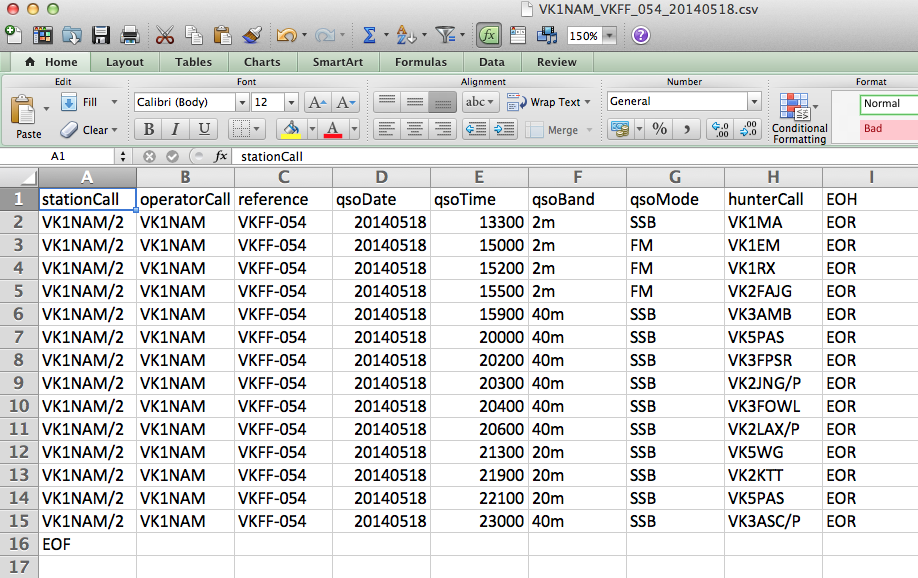
Option 2.  csv file

If you do not run an electronic log, then the second option is to send me a csv file (comma-separated value, or sometimes called character-separated value).  All csv files are supported by all spreadsheet programs such as Excel, OpenOffice, Google Docs spreadsheets, etc.

Andrew 2E0GFF (formerly M6ADB) has placed a template Excel file in the FILES section of the WWFF Australia Yahoo group, that can be used to submit for LogSearch.  It needs to be saved as a csv file prior to sending it to me for upload.  A single log file can be used for multiple activities/references!

You may see some abbreviations in the Excel file.

EOH = End of Header

EOR = End of Row

EOF = End of File.

Screenshot 2014-06-23 17.00.53


WWFF global awards.

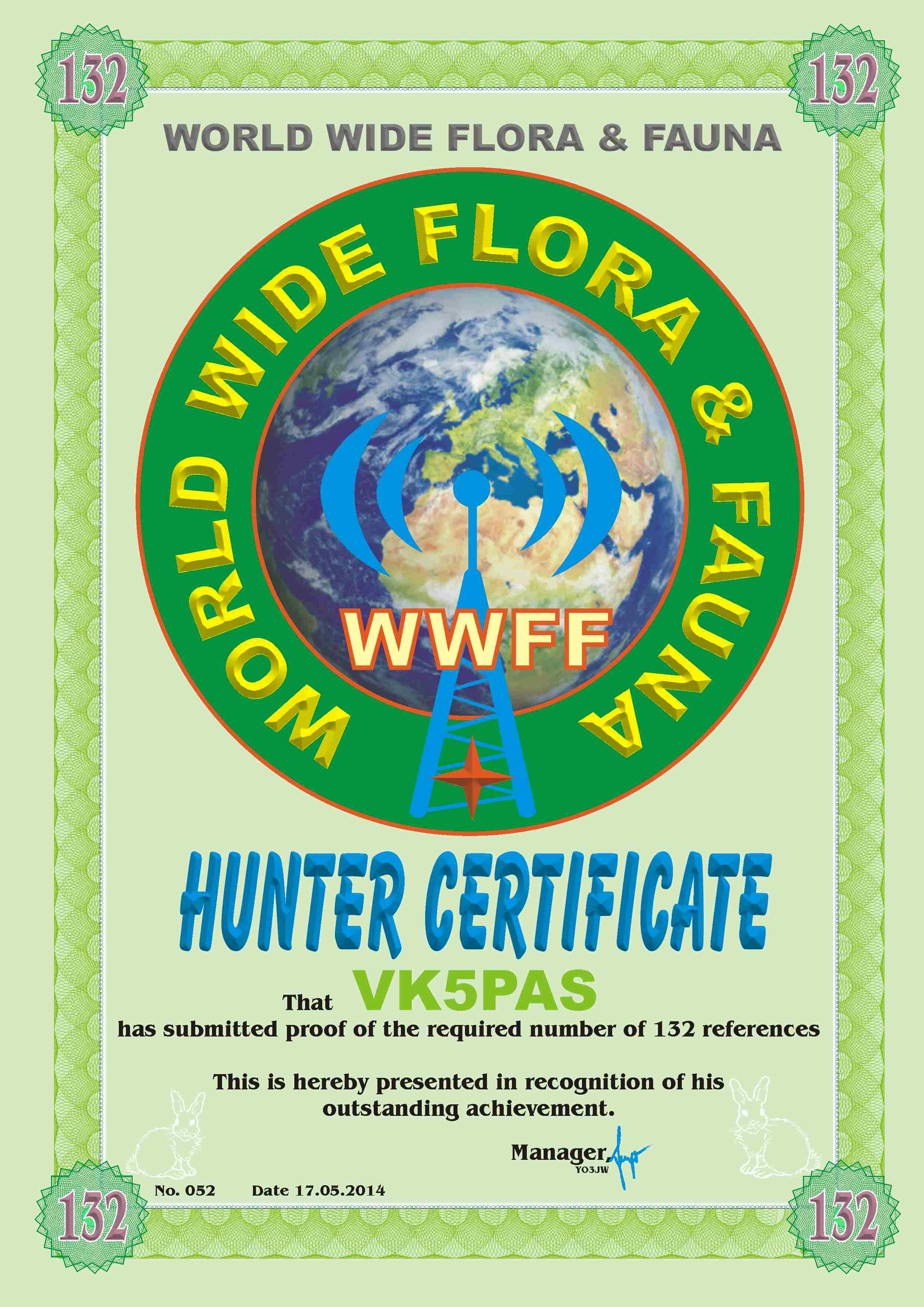
As mentioned, the WWFF global council offers ‘global’ awards.  These are available for FREE as a PDF files via the WWFF LogSearch facility.  For more information on these awards, please see the WWFF global website.

H 132 VK5PAS 2014 532

The WWFF global team have also recently initiated some new awards and there are others on the drawing board.  Again, further information on these awards can be found on the website.

Other National awards.

The participating National programs in WWFF also maintain various national award programs for hunters and activators.  For details on these, please check out the ‘WWFF National Awards’ page on the WWFF global website.

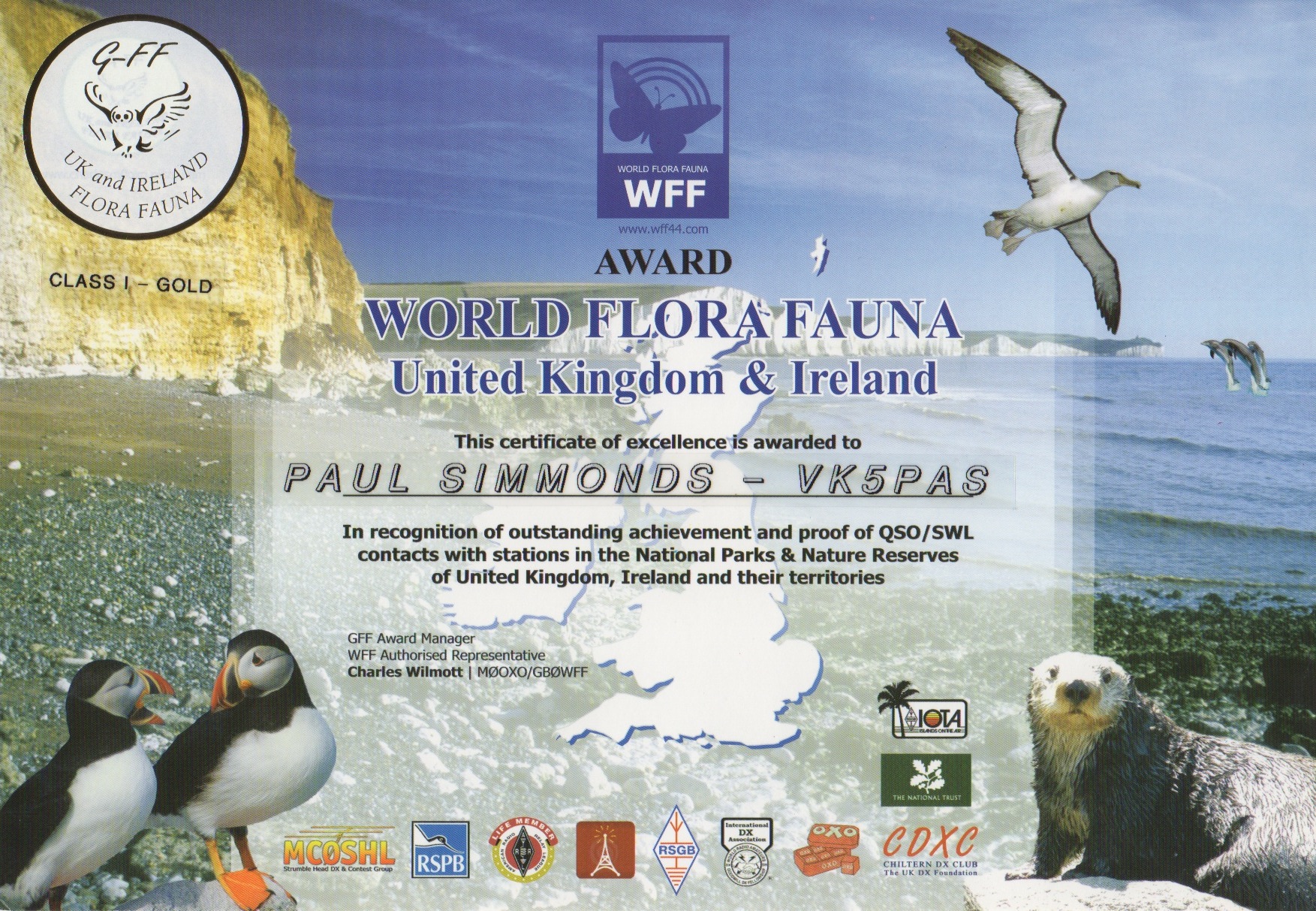
WFF UK Gold Award

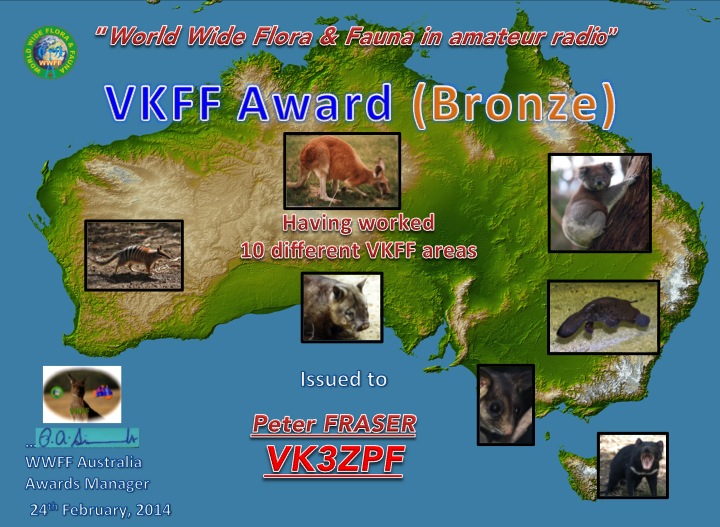
VKFF Awards

The Australian (VKFF) program also offers their own special certificates.  For Activators and Hunters there are five levels:

  1. Bronze (10 different VKFF areas)
  2. Silver (20 different VKFF areas)
  3. Gold (30 different VKFF areas)
  4. Platinum (40 different VKFF areas)
  5. Diamond (50 different VKFF areas).

The certificates can be applied for online via LogSearch and are sent for FREE as a PDF.  Or if you do not have a printer, I can print the certificate and mail it to you at a coast of $5.00.  The certificates are printed on A4 high quality photo paper on my Epson Artisan 730 printer.

Slide1

I have also just recently introduced the VKFF DX Hunter award and the VKFF Worked All Australia award.  More details on these two new awards can be found on the WWFF Australia website.

Thankyou.

I would like to say thank you to two active VK1 amateurs: Andrew VK1NAM and Ian VK1DI, for their efforts in promoting the WWFF program.

Andrew has been regularly submitting his logs to me for upload to LogSearch, and has also mentioned the WWFF / VKFF program a number of times on this WordPress site…..

http://vk1nam.wordpress.com

Ian has also been regularly submitting his logs and has also mentioned WWFF / VKFF a number of times on his blog.  Ian has also done some excellent work with mapping all of the VKFF reference areas.   These files can be downloaded from the FILES section of the WWFF Australia Yahoo group.

http://vk1di.blogspot.com.au

And also to two active VK3 amateurs: Tony VK3VTH, and Peter VK3ZPF, who have both been busy activating VKFF parks in Victoria, and working lots of DX along the way.  Both have regularly supplied their logs and their tallies on LogSearch are looking very healthy.

And there are many other Australian amateurs who have now embraced VKFF activations.  Thanks to all.

Summary.

So there you go.  If you would like to combine your love for great outdoors and enjoy travelling to beautiful locations around Australia, whilst combining the hobby of amateur radio.  Then WWFF may be for you.

Many SOTA peaks are located within National Parks.  Mapping files & spreadsheets showing a correlation between peaks and parks can be located in the Files section of the WWFF Australia Yahoo group at…..

https://au.groups.yahoo.com/neo/groups/wwffaustralia/info

Additionally, you can combine WWFF with the Keith Roget Memorial National Parks Award and the VK5 National and Conservation Parks Award.

Happy park activating and hunting!