Today I qualified for my latest VKFF award certificate. It is the VKFF Hunter Honour Roll 1,125 certificate, issued for having worked a total of 1,125 different VKFF references.
Thanks to all of the VKFF activators.
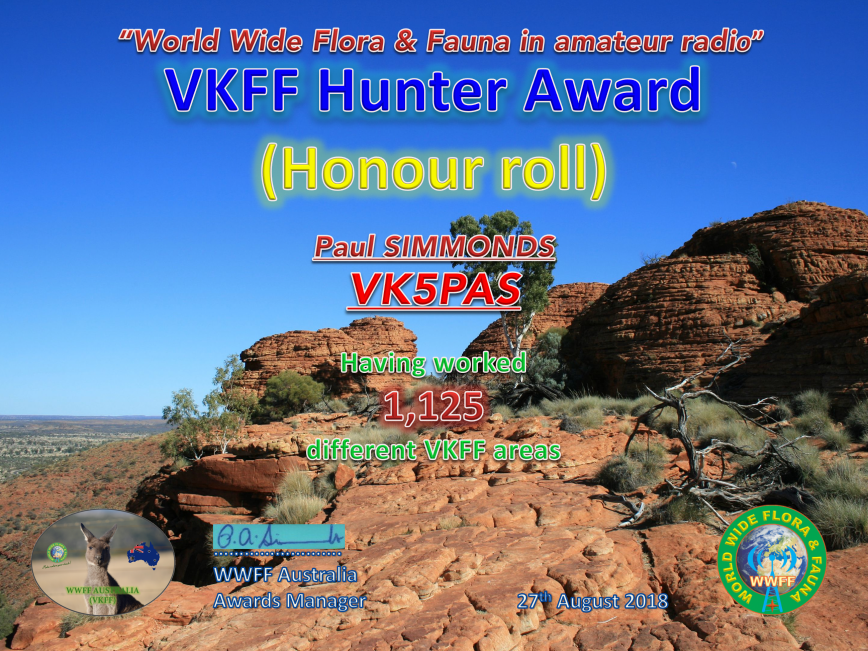

Today I qualified for my latest VKFF award certificate. It is the VKFF Hunter Honour Roll 1,125 certificate, issued for having worked a total of 1,125 different VKFF references.
Thanks to all of the VKFF activators.
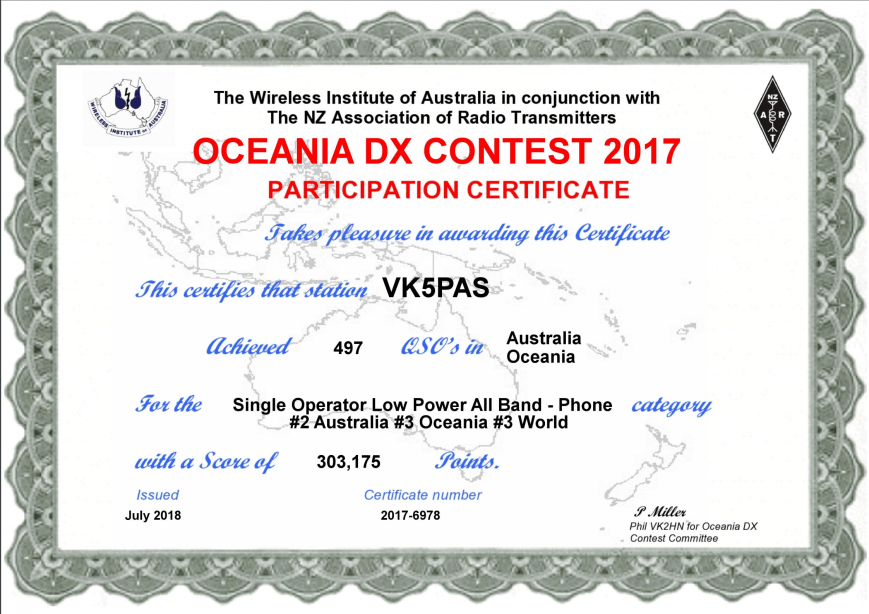
The results of the 2017 Oceania DX Contest are out.
I entered into the Single Op Low Power All Band category, and came 2nd in Australia, 3rd in Oceania and 3rd in the world.
Many thanks to the organisers of the Contest.
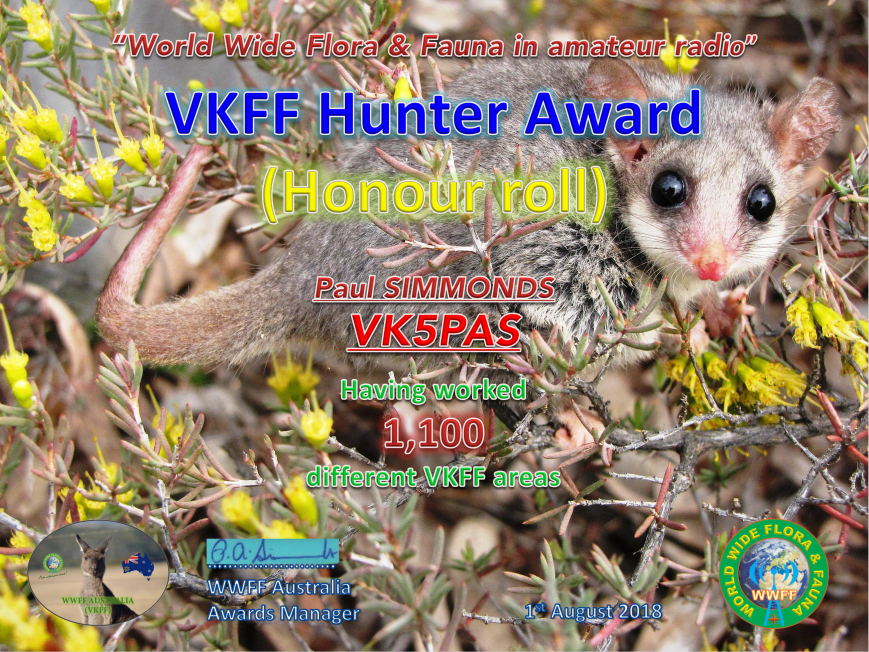
Yesterday I qualified for my latest VKFF Hunter Honour Roll certificate. It is issued for having worked a total of 1,100 different VKFF reference areas.
Many thanks to all of the VKFF activators.
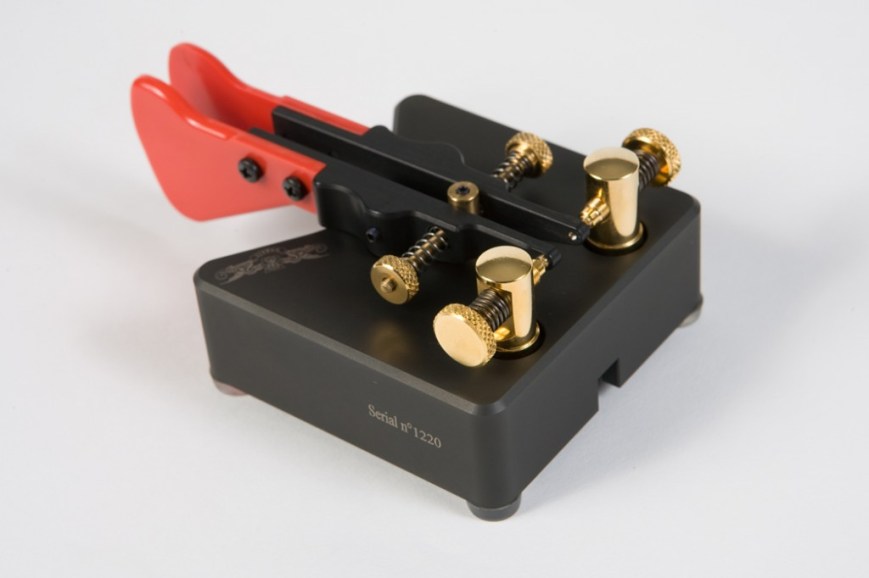
My CW learning is slowly coming along. I’m half way through the alphabet now. Garry VK2GAZ was kind enough to loan me a Kent paddle, and I think it’s time for me to return it. So yesterday I purchased a Begali Simplex Professional paddle from RF Solutions. They were very helpful and hopefully it will be in the post in the next day or so.
I’ve only had 2 CW contacts so far and they have been with Bill VK4FW whilst he has been activating parks.
I’m really looking forward to getting my CW up to scratch and having a lot more contacts.
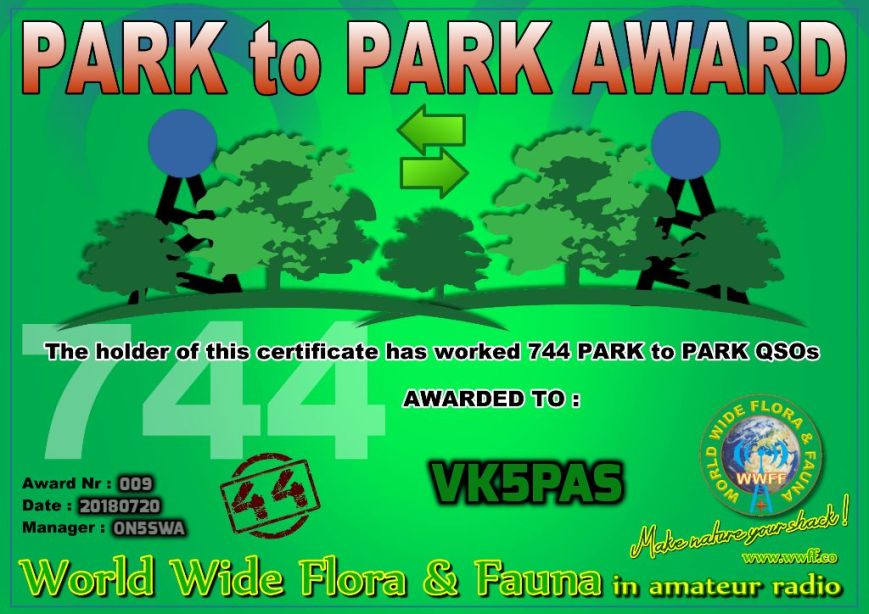
Yesterday I received my latest WWFF Park to Park certificate, issued for having made a total of 744 Park to Park contacts.
Thanks to all of the activators and thanks to Swa ON5SWA, the P2P Award Manager.
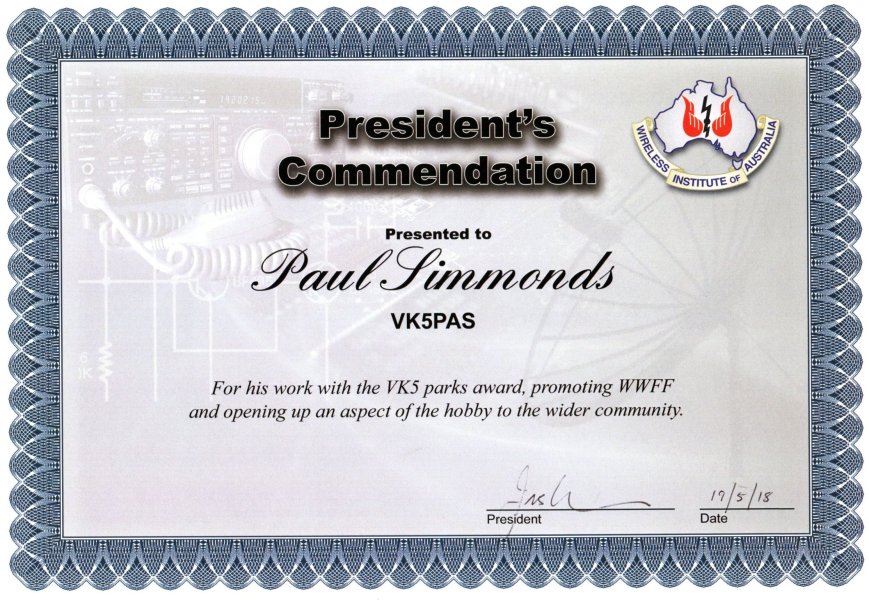
Marija VK5FMAZ and I headed down to Mount Gambier on the June long weekend to attend the South East Radio Group’s annual convention/buy and sell/National Fox hunting championships. Unfortunately this weekend clashes with the annual VK Shires Contest. However this year we did sneak in some portable operating for the contest.
Marija and I activated the Mumbannar Nature Conservation Reserve VKFF-2161 in Victoria, and the Piccanninie Ponds Conservation Park 5CP-178 & VKFF-0927 in South Australia.
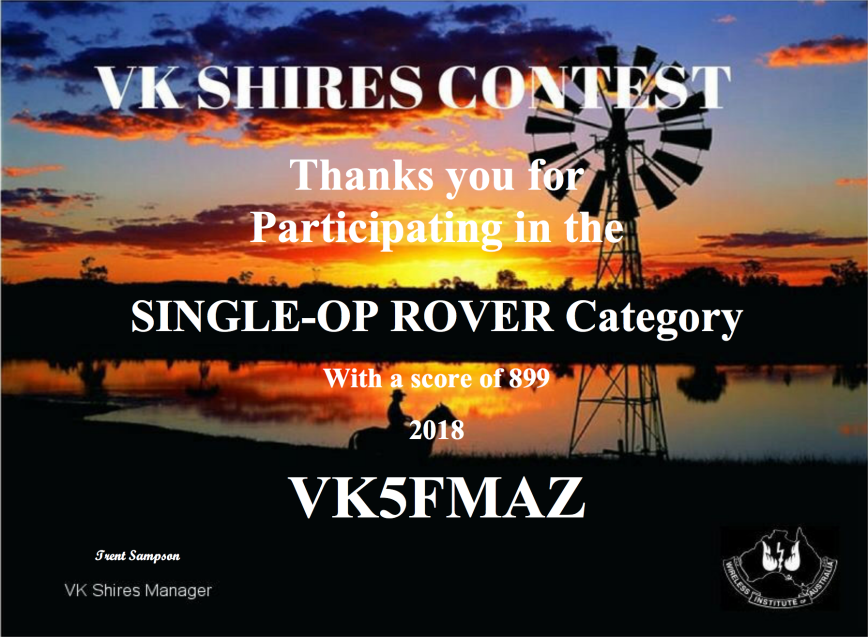
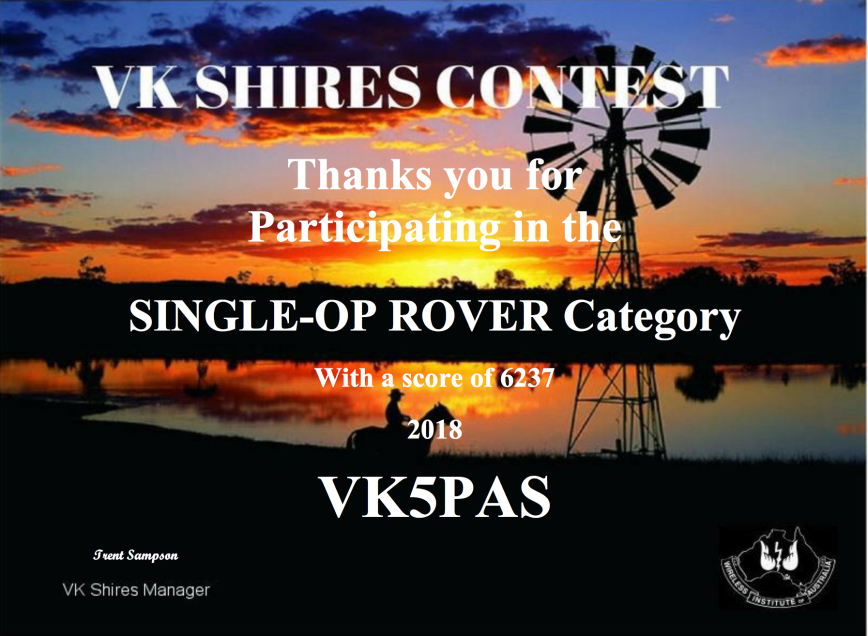
Considering we spent just a few hours on air, we were very pleased to come 5th and 7th in the VK Single Op Rover category. Marija made 29 contacts and had a score of 899 points. I made a total of 77 QSOs with a score of 6,237 points.
Congratulations to Tony VK3XV who came in at position number 1 in this category with a score of 18,176 points.
And thanks to Trent VK4TS and Alan VK4SN, the organisers of the event.
In the last few days a post appeared on the WWFF Australia Facebook page from an Australian park activator who was displeased by the lack of Australian park hunters placing up a spot for him during his activations. His concerns and the post really resonated with me, as I have been advocating for a long time for more park hunters to spot on the various platforms. Which sadly many do not.
I see the same callsigns appearing time and time again as the spotters. And I often hear the comment ‘I saw your spot on parksnpeaks’, but I never see those particular amateurs place up a spot themselves.
Yes, I’m about to get up on my spotting & alerting soapbox again. I hope you read this post and by the end of it, those who do not spot, reconsider their position in the future. I am going to mainly deal with park activations in this post, but will touch briefly on SOTA as well.

What is a spot?
A spot shows the callsign of the park/SOTA activator or the DX station and the frequency they are operating on, and usually the callsign of the station who placed the original spot. The spot shows up on various platforms, e.g. parksnpeaks, SOTAwatch2, the DX Cluster. I’ll talk about these soon.
Rather than monitoring some of the regularly used frequencies, e.g. 7.144, or tuning across the bands hoping to come across a park activator, hunters can use these spotting facilities to their advantage.
What is an alert?

An alert is a post made on parksnpeaks and/or SOTAwatch2 which alerts hunters/chasers to the fact that a station is going to activate a particular park or summit on a particular day. It often includes details such as the proposed frequencies and modes.
Why place a spot?
If you have worked a park activator, then don’t just the log the station and move on. Consider the activator and your fellow park hunter. In some instances, the activator may not have internet coverage, so self spotting by the activator is not possible. Placing a spot up for him/her will assist in dragging in the hunters.
There is no doubt that spotting results in more calls to the activator.
Where do I place a spot?

There are a variety of different areas you can place a spot including parsknpeaks, SOTAwatch2, the DX Cluster, Facebook and Yahoo groups. I’ll discuss in more detail a little later, the various sites including parksnpeaks and the DX Cluster.
Why place an alert?
The more amateurs who know you are going to be out in a park, the more likely you are that you will fill up your logbook. There will be occasions when you activate a park on the spur of the moment, or when you do not have internet coverage. But if you know that you are going to be out in a park, alerts on as many platforms as possible, will certainly ensure that you end up with more callers.
Consider placing an alert on parksnpeaks, the WWFF Australia Facebook page, and/or the WWFF Australia Yahoo group. Put a call out on the local repeater. Tell your mates the day before about your intentions.
Alerts are not held in concrete. By that I mean, if you do not activate the park at the specific time you have placed on your alert, then you are not going to be criticised. Things change, e.g. travelling times, weather, etc. And with parksnpeaks, you can either select a specific UTC time for your activation, or you have the ability to select ‘All Day”, ‘Morning”, “Afternoon”, etc.
parksnpeaks
For Australian park activators, the main spotting and alterting facility is the parksnpeaks website. The parksnpeaks website commenced its life as a collection of scripts on a computer on the table at the home of Allen VK3ARH. The initial goal of parksnpeaks was to highlight SOTA opportunities that would also qualify as a contact for a National Park award. With the explosion in popularity of the various parks programs and SOTA in recent years, parsknpeaks now has a number of very useful features.
This includes the ability to spot park activators and place alerts re upcoming park activations.
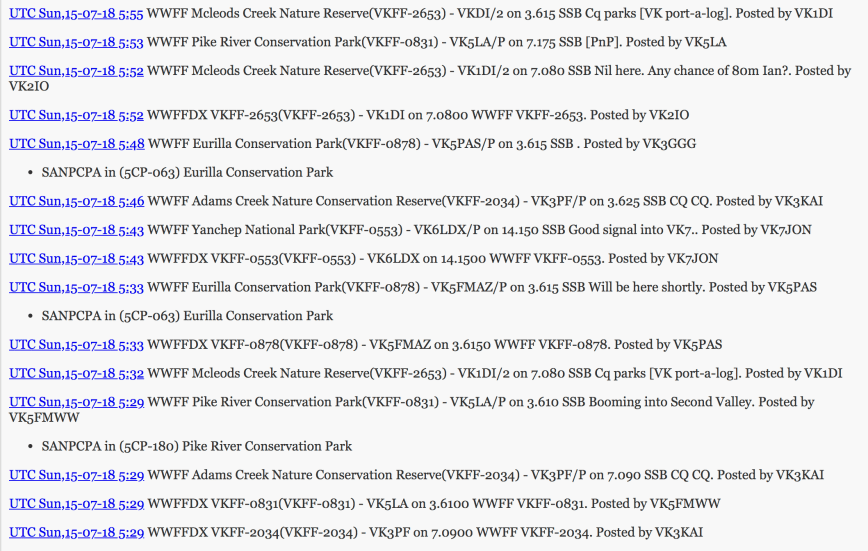
Above:- A screen shot of spots on parksnpeaks
How easy is it to place a spot on parksnpeaks?
EASY! It should take you no more than one minute.
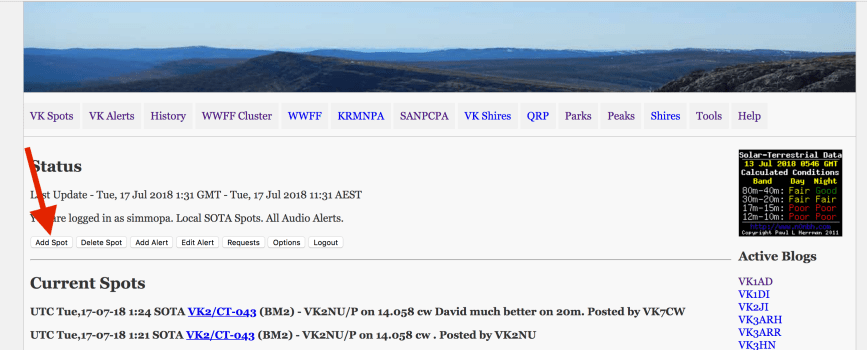
From the VK Spots main page, click on ‘Add Spot”. See below
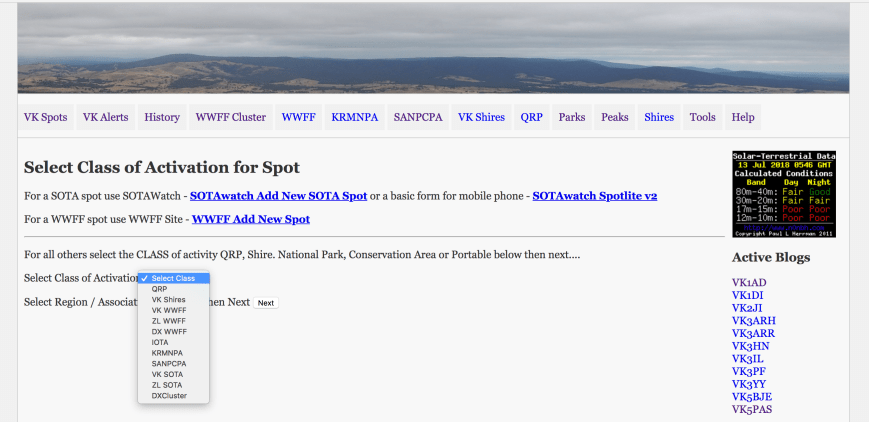
This will bring you to the ‘Select Class of Activation for Spot’ Page. In the first drop down box, select what sot of activity it is, e.g. QRO, VK Shires, VK WWFF, ZL WWFF, DX WWFF, IOTA, KRMNPA, SANPCPA, VK SOTA, ZL SOTA, DXCluster. See the screen shot below.
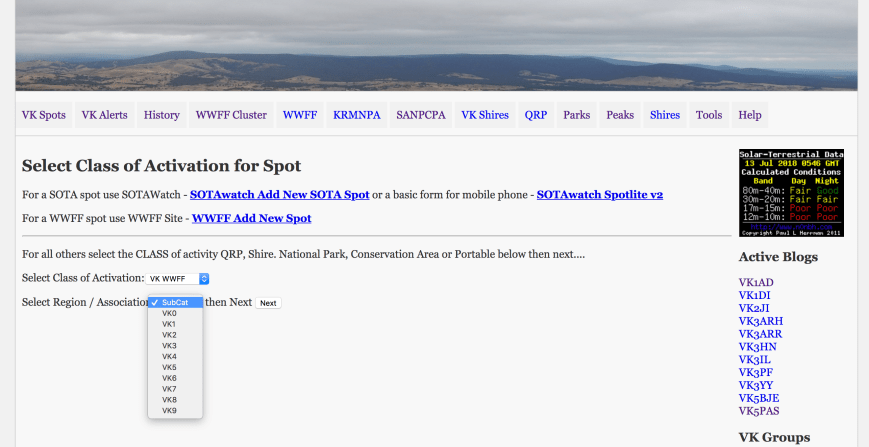
If you select VK WWFF, you will then need to select which State the spot applies to in the second drop down box. Then click ‘Next’. See the screen shot below.
This will bring you to the ‘Add VK or ZL World Wide Flora & Fauna Award Spot’ page. You need to fill in a few fields here as you can see on the screen shot below. These details include:
Once you’ve entered those details, click on ‘Process’.
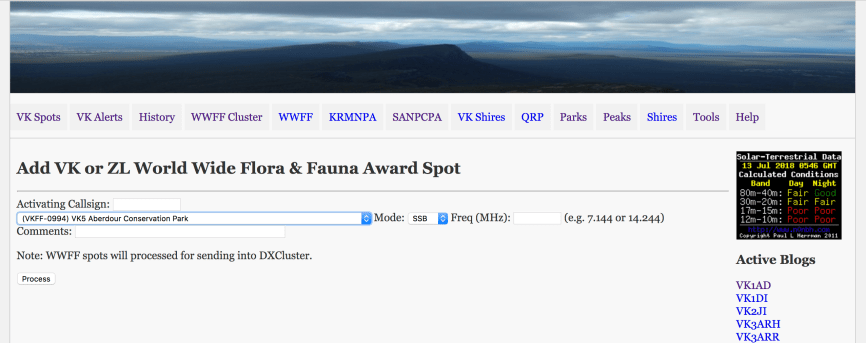
Once you have placed a spot on parksnpeaks, the spot will also be sent to the DX Cluster (if you have enabled the DX Spots option), exposing the activator’s activities to an even bigger international audience. I’ll talk about the DX Cluster shortly.
How do you enable the DX Spots option on parksnpeaks. Go into ‘Options’ (see screen shot below).
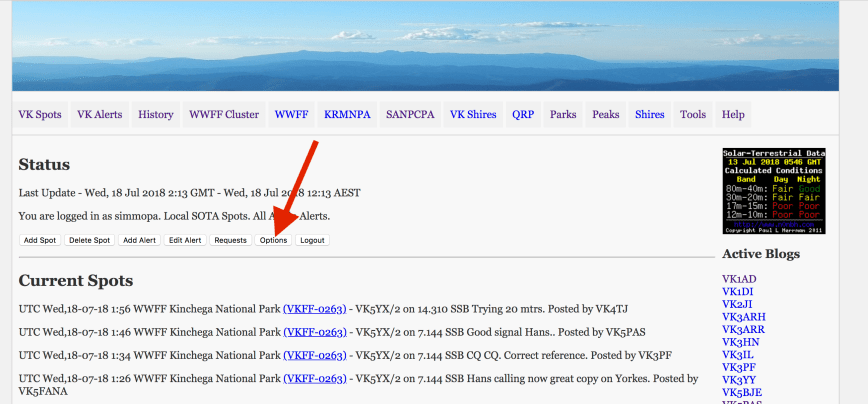
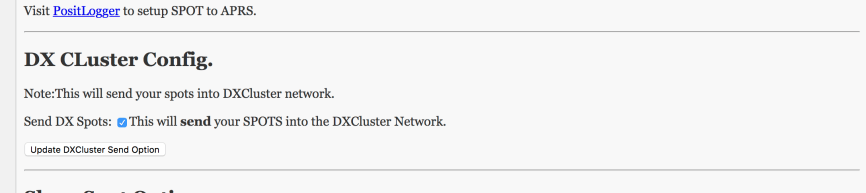
Then scroll down to ‘DX CLuster Config’. Highlight the ‘Send DX Spots’. This will send spots into the DX Cluster Network.
And if you spot a park activator, once the spot has appeared on parksnpeaks, you will hear the audio alert of a singing kookaburra, which notifies park hunters to the presence of a park activator. If you have spotted a SOTA activator, the audio alert will be that of a goat bleating.


To add an alert on parksnpeaks, click on ‘Add Alert’ and then follow the prompts.
SOTAWatch
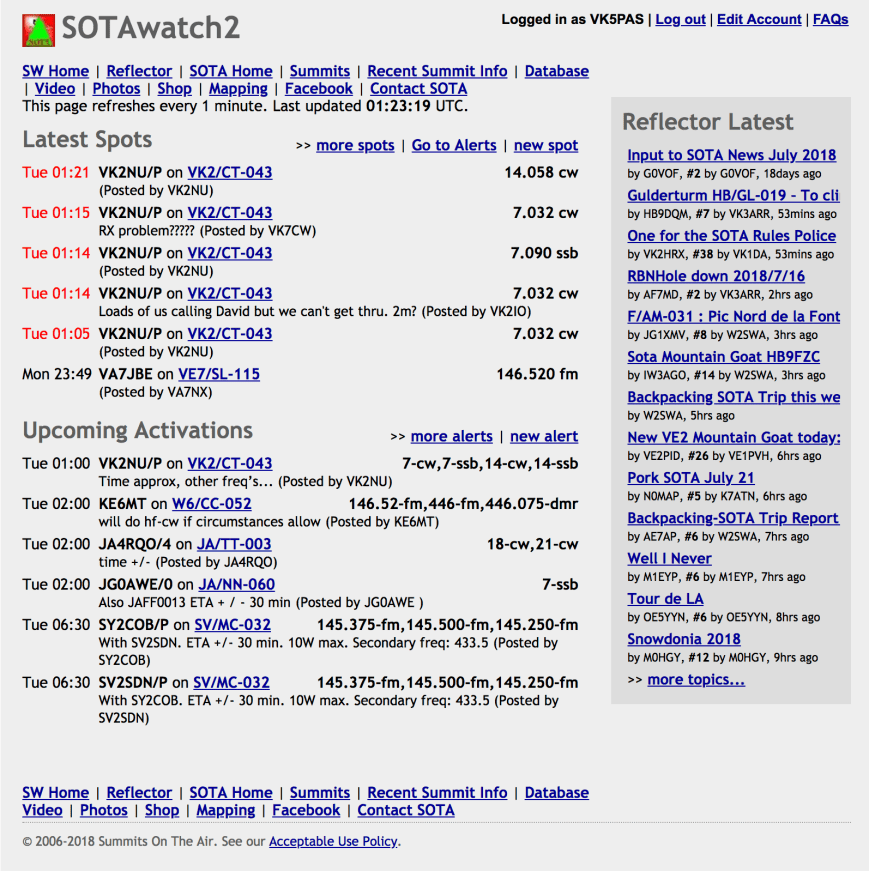
For activators and chasers in SOTA, the main spotting and alerting facility is SOTAwatch2.
DX Cluster
A DX Cluster is in essence a “chatroom” or node into which amateur DX hunters can post information about DX either worked or heard. Physically, it is a central computer that collects, stores and disseminates information that hams send to it. There are thousands of nodes around the world, connected together via the internet or radio.
The first DX cluster software, PacketCluster was realised by US radio amateur Dick Newell, AK1A in the late 1980s, and quickly became popular as a means of exchanging DX-related information.
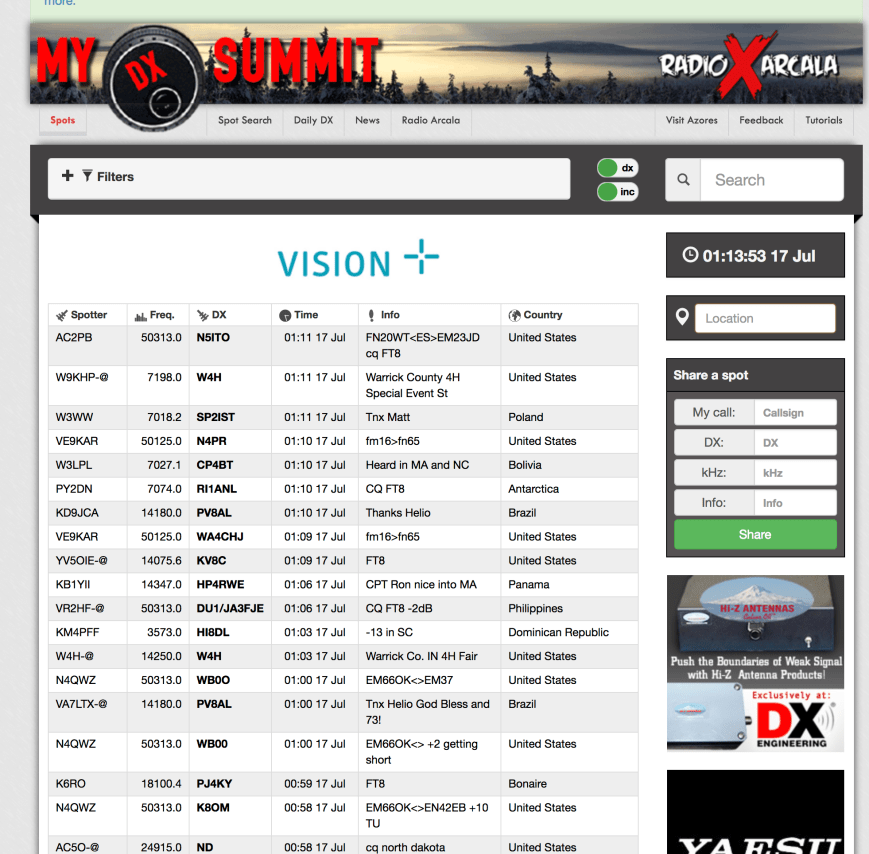
Below is an example of ‘My DX Summit’.
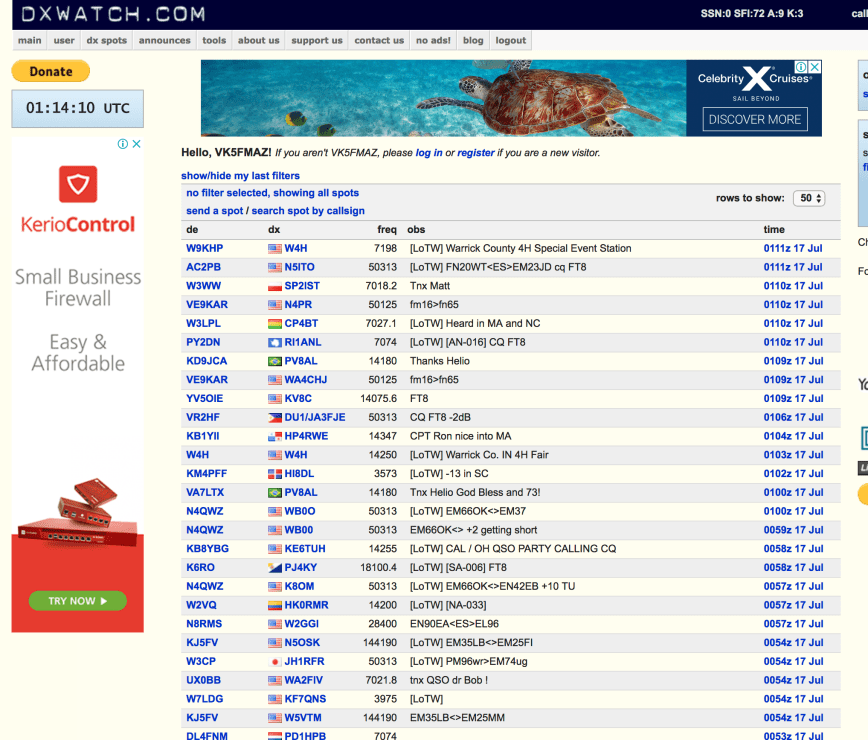
And this is an example of DX Watch.
DX Cluster Code of Conduct

A Code of Conduct exists for using the DX cluster. This includes:
One of the other issues listed on the Code of Conduct for the DX Cluster, is the issue of self spotting. It states:
However, self spotting for park activating is acceptable via parksnpeaks.
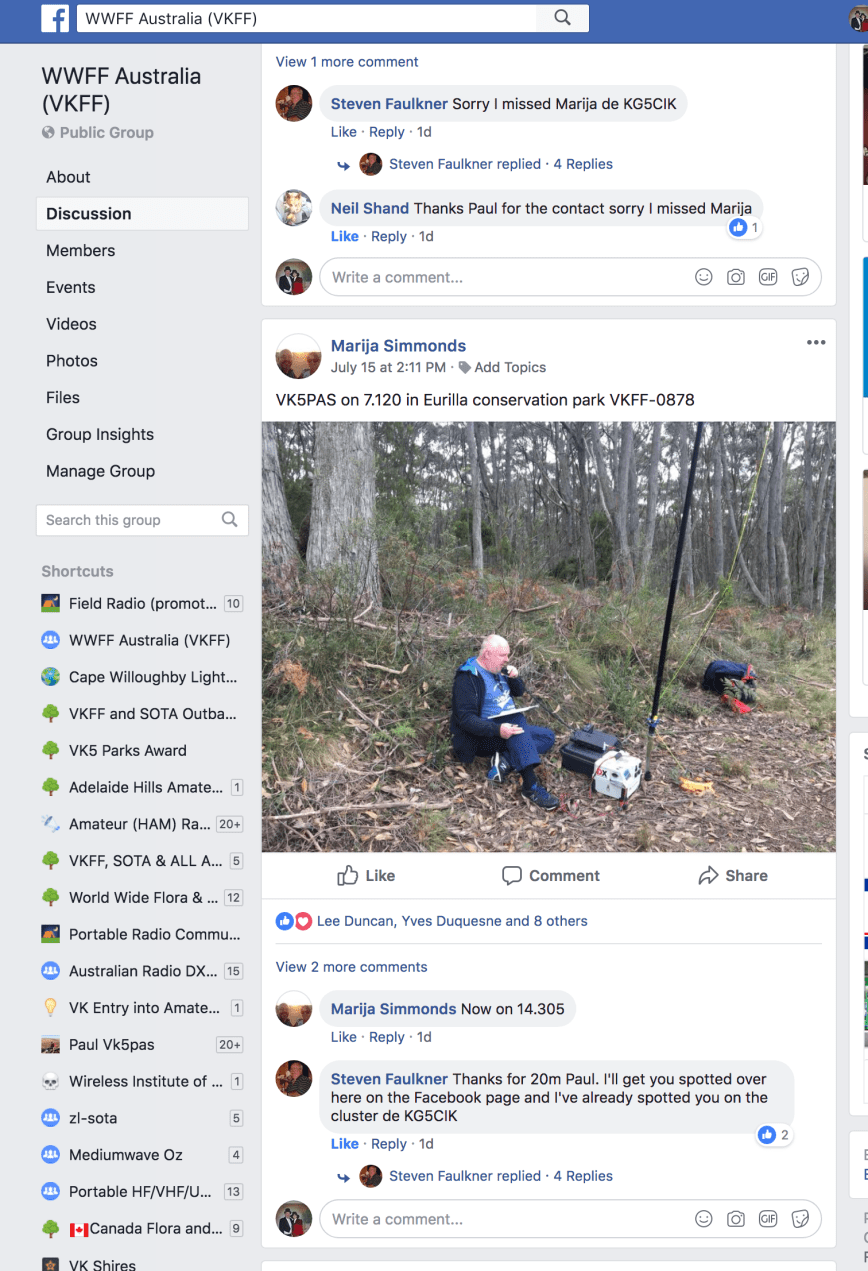
The WWFF Facebook page has become very popular and now has 279 members worldwide. Placing a post on Facebook often draws in more hunters for the activator.
WWFFwatch DX cluster
Another useful tool in the WWFFwatch DX cluster which can be accessed via the global WWFF website.
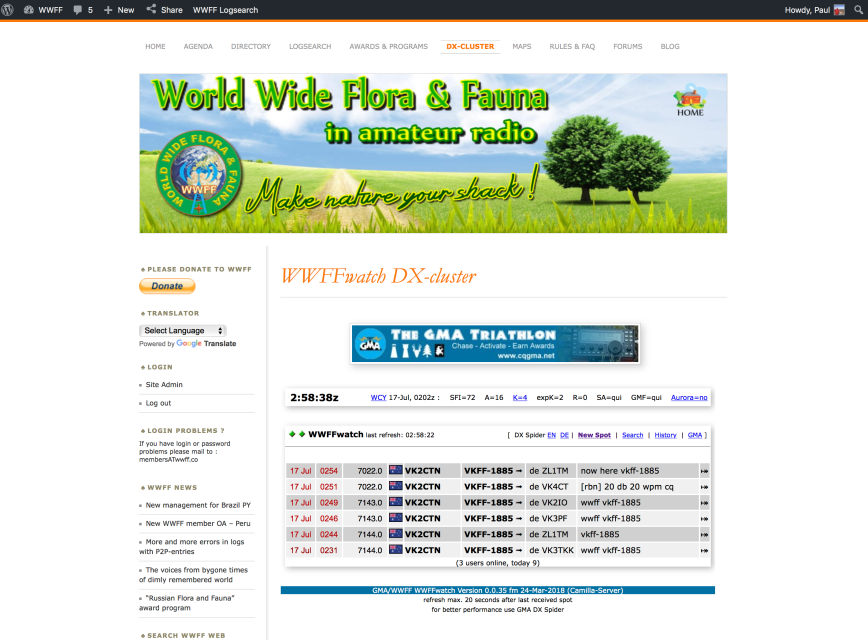
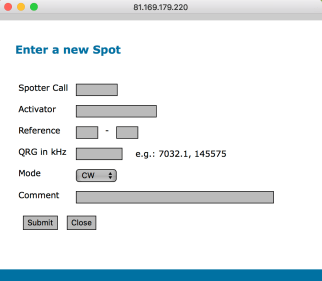
Entering a new spot there is as simple as clicking on ‘New Spot’ and filling in the required details and then clicking on ‘Submit’.
Summary
There seems to be a lot of park hunters who use parsknpeaks to their advantage, but never take the time to place a spot for the activator they worked. This is a great shame. Not only are you letting down the activator you just worked, but you are also letting down your fellow hunters and chasers.
So please, take the time out to place a spot.

References.
parksnpeaks, 2018, <https://parksnpeaks.org/>, viewed 17th July 2018
Wikipedia, 2018, <http://www.amateur-radio-wiki.net/index.php?title=What_is_a_DX_cluster%3F>, viewed 17th July 2018
Wikipedia, 2018, <https://en.wikipedia.org/wiki/DX_cluster>, viewed 17th July 2018
This afternoon (Sunday 15th July 2018), Marija and I headed out to activate the Eurilla Conservation Park 5CP-063 & VKFF-0878. This was to be a unique park for both Marija and I in the World Wide Flora Fauna (WWFF) program. I activated the park back in August, 2013, but this was prior to the park being added to the VKFF program.
Eurilla is located about 11 km south east of the city of Adelaide, and about 2.4 km north of Stirling.
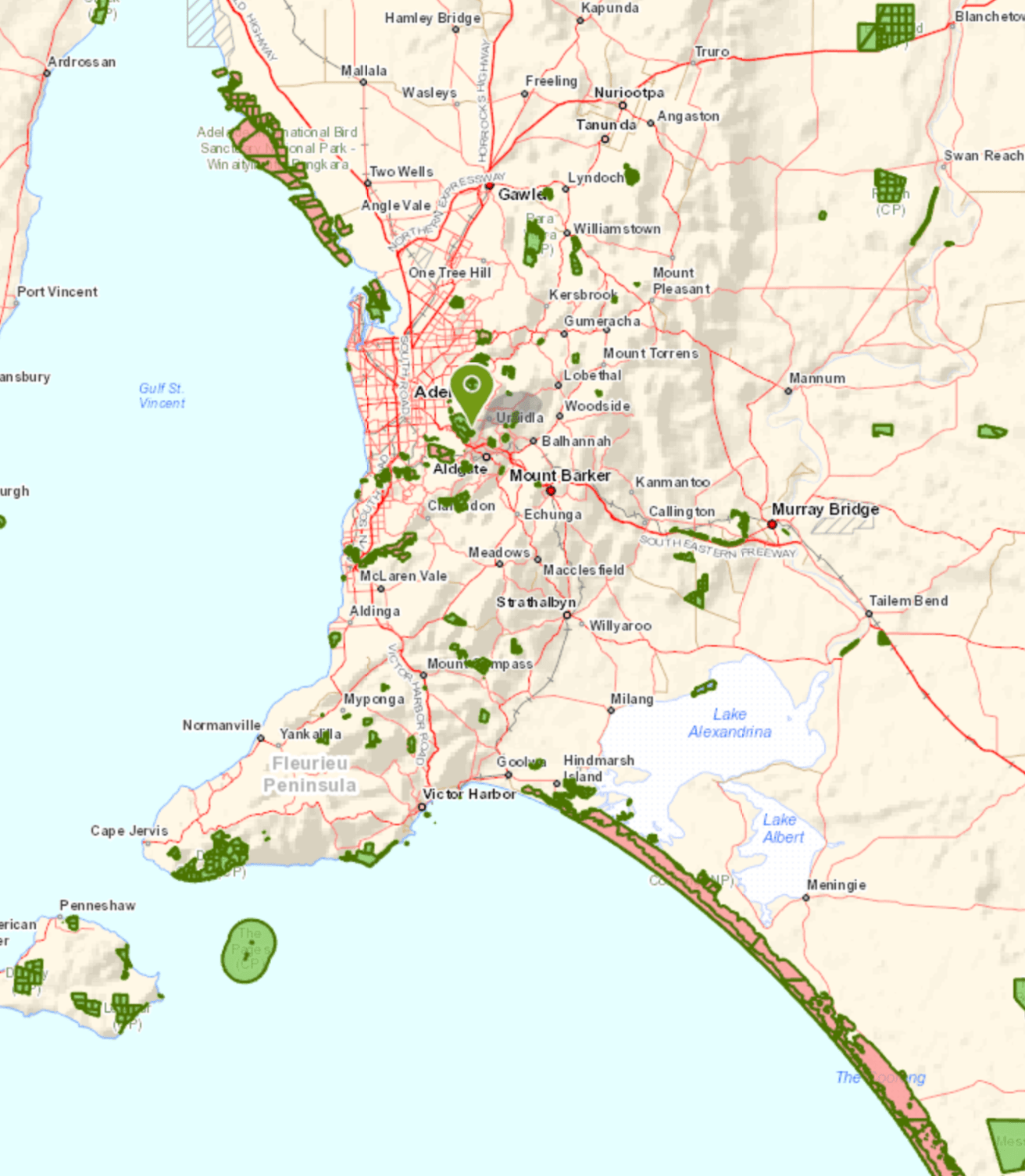
Above:- Map showing the location of the Eurilla Conservation Park in the Adelaide Hills. Map courtesy of Location SA Map Viewer.
The Eurilla Conservation Park is a small park, comprising just 7 hectares (17 acres). The park was proclaimed on 22nd September 2017 and is located between Mount Lofty summit and the northern boundary of the Mount Lofty Botanic Gardens at Piccadilly. Access to the park is via the Eurilla Track at Sprigg Road or via the Heysen Trail at Mount Lofty Summit Road.
The reason for dedication of the park, is an undisturbed bog consisting of a dense mat of the rare coral fern and a sizeable colony of mature king fern, an endangered species in South Australia.
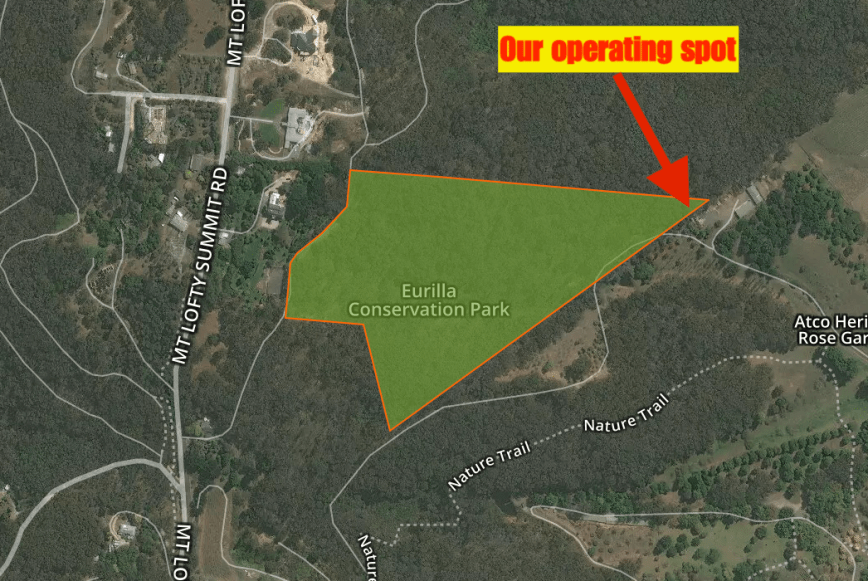
Above:- Aerial shot of the Eurilla Conservation Park showing out operating spot in the north eastern corner of the park. Image courtesy of Protected Planet.
The park was named in honour of Charles ‘Warren’ Bonython (1916-2012), one of the members of the famous South Australian Bonython family. He was a conservationist, explorer, author, chemical engineer, and a keen bushwalker.
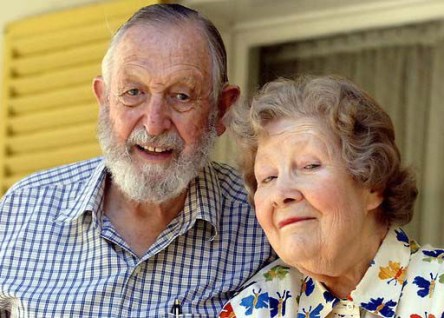
Above:- Warren Bonython with his wife. Photo courtesy of Adelaide Bushwalkers
The Bonython family lived nearby in ‘Eurilla’ mansion, which was built in 1884, but was burnt to the ground during the 1983 Ash Wednesday bushfires. The name Eurilla is believed to come from the Kaurna Aboriginal word for Mt. Lofty, Yureidla.
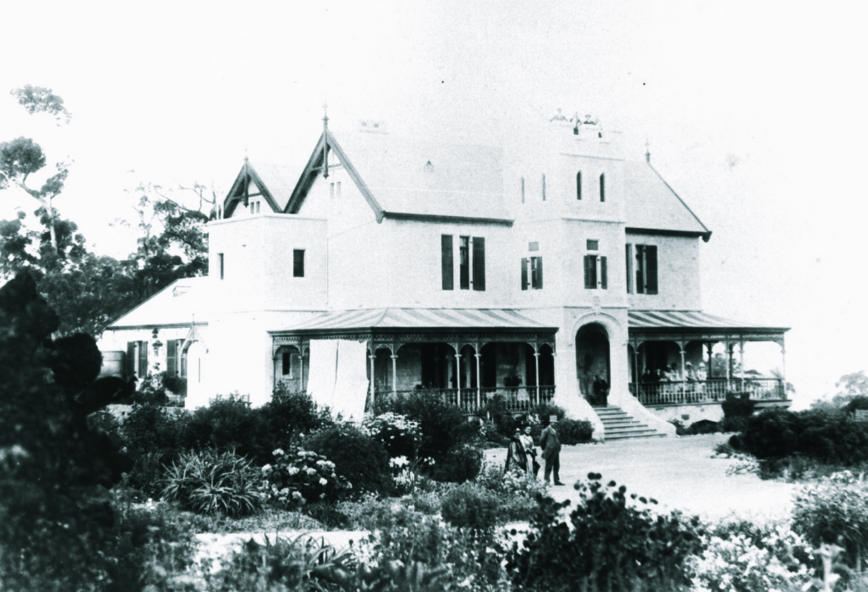
Above:- The Eurilla mansion, c. 1890. Image courtesy of Trove.
Woodland is the main habit within this park with Messmate Stringybark (Eucalyptus obliqua) the main component. Understory plants include tea-trees (Leptospermum spp.), Blackwood (Acacia melanoxylon), Myrtle Wattle (Acacia myrtifolia), Coral Fern (Gleichenia microphylla) and Bracken (Pteridium esculentum).
Birds SA have recorded a total of 34 native bird species in Eurilla. This includes Adelaide Rosella, White-throated Treecreeper, Eastern Spinebill, Crescent Honeyeater, White-browed Scrubwren, Superb Fairywren, Buff-rumped Thornbill, Spotted Pardalote, and Australian Golden Whistler.


Marija and I parked the Hi Lux at Gate 27 on Sprigg Road. We then followed the eastern boundary of the Cleland Conservation Park and then the south eastern boundary of Cleland, passing through a creekline. We soon reached the north eastern corner of Eurilla Conservation Park.


We ran the Yaesu FT-857 and the 20/40/80m linked dipole for this activation. I ran the transceiver at 40 watts output, whilst Marija ran 10 watts PEP as per her Foundation licence requirements.
I kicked off the activation. I could not get on to 7.144 as the 40m band was extremely busy due to the IARU Contest. I moved down to 7.120 and called CQ which was answered by Tony VK3AN mobile 2 with a nice signal. Next in the log was Rob VK2QR and his 4 other call signs. Contact number 10 came within 5 minutes of setting up, with a QSO with Rick VK4RF.
Band conditions were very good and as there was no man made noise in the park, Marija and I could hear a pin drop on the band. Our first Park to Park contact was with Ian VK1DI/2 in the McLeods Creek Nature Reserve VKFF-2653.
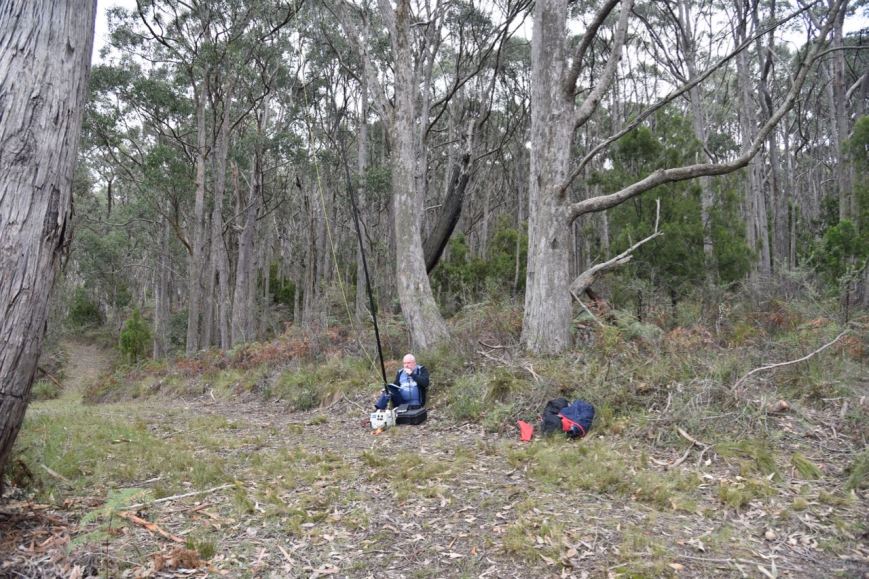
I logged 40 stations before OP0HQ came up onto the frequency and started calling CQ Contest. He was so loud that I didn’t both trying to compete and moved down the band to 7.095. John VK5BJE was first in the log on this new frequency, followed by Russell CJ3DRW who was maritime mobile on his vessell ‘C U Agn’. I also spoke with Perrin VK3XPT who was operating remote from Vanuatu into his Victorian home station. I also logged Peter VK3PF/p who was activating the Adams Creek Nature Conservation Reserve VKFF-2034.
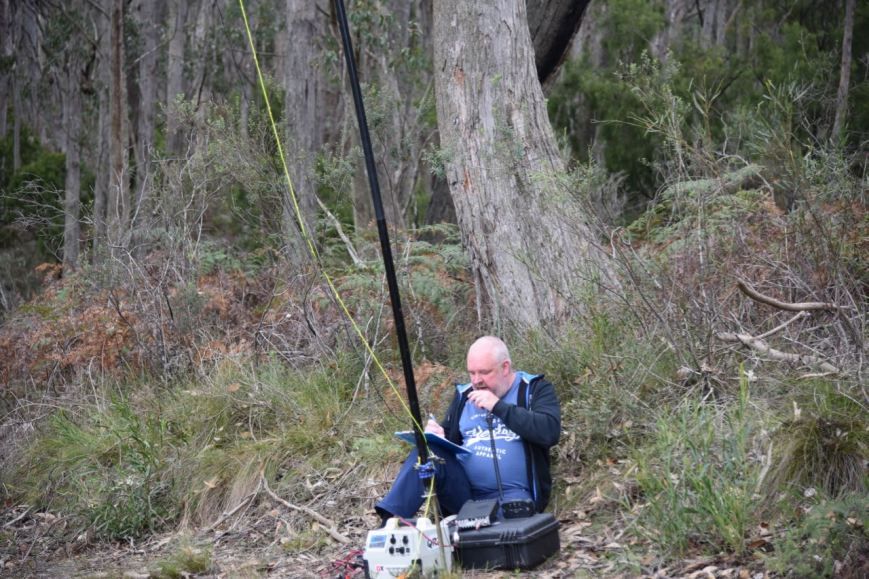
I now had 46 contacts in the log and it was time for Marija to qualify the park. We lowered down the power to 10 watts PEP and Marija called CQ on 7.095. Ross VK3MY was first in the log, with a 5/9 plus signal. Next was Jonathan VK7JON with an equally strong signal, followed by Deryck VK4FDJL, and then Graeme VK3GL.
Within 12 minutes Marija had her 10th contact in log, a QSO with Graham VK3PGK. Marija logged a further 2 stations before we QSYd to the 80m band. First in the log on 80m was a Park to Park contact with Andy VK5LA/p who was activating the Pike River Conservation Park VKFF-0831. We then moved up to 3.615 where Marija logged John VK5BJE, Mick VK3GGG, and then David VK5PL.
Marija logged a further 3 stations including a Park to Park, with Peter VK3PF/p in the Adams Creek Nature Conservation Reserve VKFF-2034.


We then swapped the mic and I logged a total of 11 stations on 80m including a Park to Park with Ian VK1DI/2 in the McLeods Creek Nature Reserve VKFF-2653. Marija also logged Ian.
We started to experience a few drops of rain at this stage, so we quickly lowered the squid pole and removed the links so we could operate on the 20m band. I called CQ on 14.305 and was pleasantly surprised to be called by Steve KG5CIK in Texas with a good 5/7 signal. I then logged Gerard VK2IO, Cliff VK2NP, Keith VK2PKT, and was then called by Deme EA5IPC in Spain.
It was starting to spit a little more with rain, so we packed up and headed back to the vehicle. Marija had 21 contacts in the log, including 5 Park to Park contacts. I had 64 contacts in the log, including 5 Park to Park contacts.
Many thanks to everyone who called us, and special thanks to those who took the time to spot us.
Marija worked the following stations on 40m SSB:-
Marija worked the following stations on 80m SSB:-
I worked the following stations on 40m SSB:-
I worked the following stations on 80m SSB:-
I worked the following stations on 20m SSB:-
References.
Birds SA, 2018, <https://birdssa.asn.au/location/eurilla-conservation-park/>, viewed 15th July 2018
Wikipedia, 2018, <https://en.wikipedia.org/wiki/Eurilla_Conservation_Park>, viewed 15th July 2018
Wikipedia, 2018, <https://en.wikipedia.org/wiki/Warren_Bonython>, viewed 15th July 2018
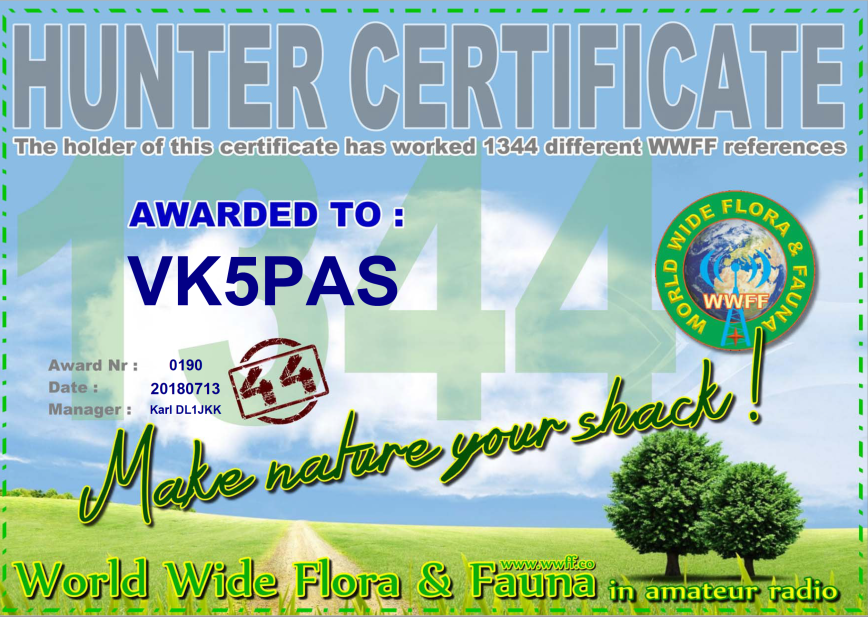
Last night I received my WWFF 1344 Hunter certificate, issued for having worked a total of 1,344 different WWFF certificates.
Thankyou to all of the WWFF & VKFF activators.
And thankyou to Karl DL1JKK, the WWFF Hunter Award Manager.
Amateur Radio, Short Wave Listening, travel and history
Amateur radio experiences with VK1DA
Brisbane - Australia
german amateur radio station
Summits On The Air
SOTA on the peaks, wilderness QRP and some bushwalking
A fine WordPress.com site
Amateur Radio Adventures
Summits on the Ai
Amateur radio station from Belgium
Radio craft, homebrew, QRP/SOTA, AM
Ego loqui ad viros super montes
My adventures with Amateur Radio and Geocaching!
The rantings of VK2GAZ on his SOTA experiences in Australia
A survivor, with minor cuts and abrasions.
The Art and Craft of Blogging
The latest news on WordPress.com and the WordPress community.
Blog of Justin Giles-Clark VK7TW's SOTA and amateur radio adventures.
Occasional SOTA & Microwave operation
 VK5PAS