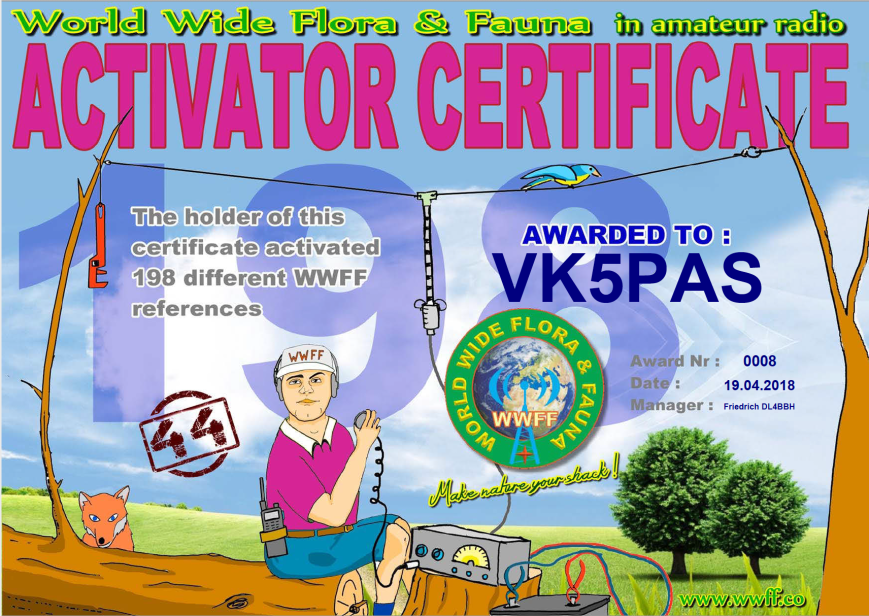
WWFF Hunter 1,244 certificate

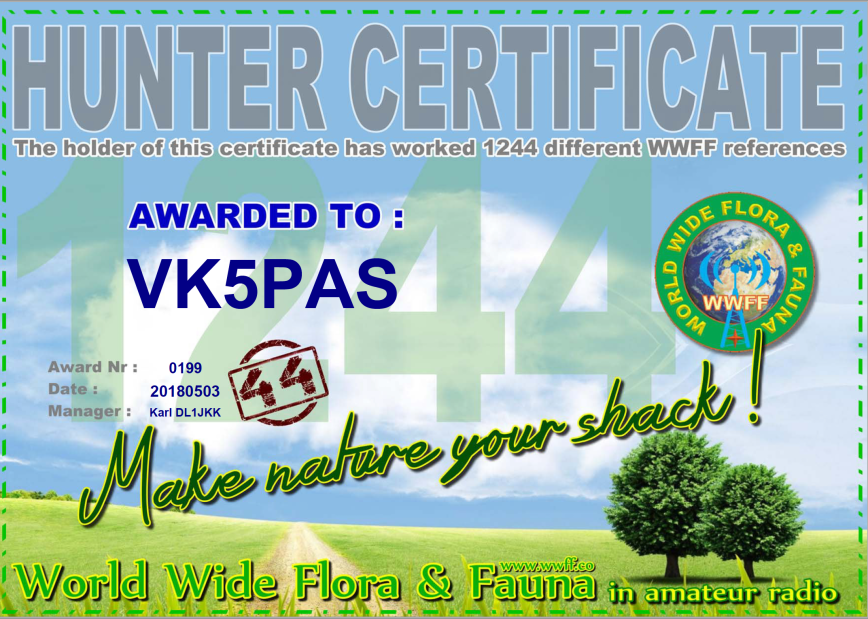
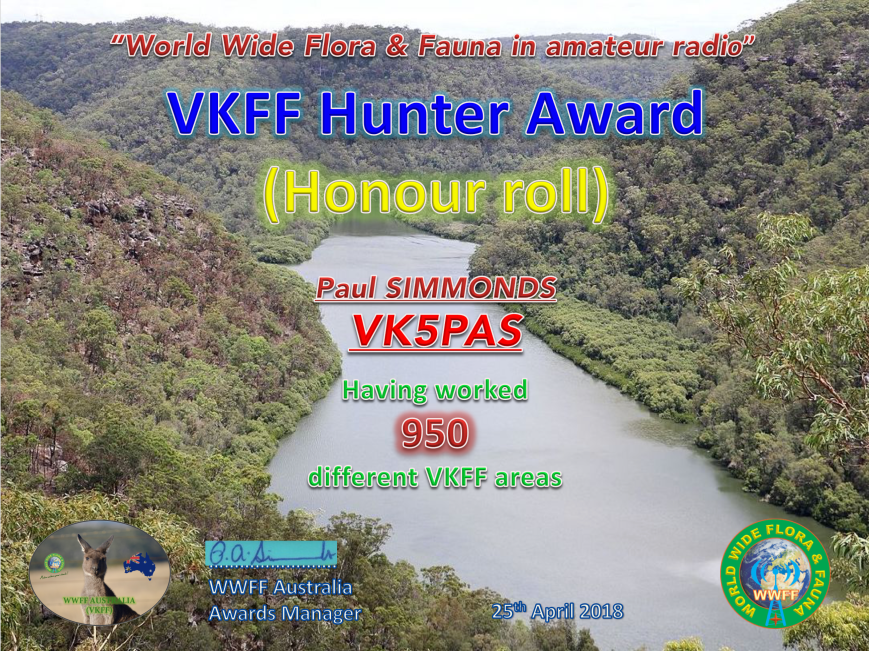
A few weeks ago I received my latest global certificate in the World Wide Flora Fauna (WWFF) program.   It was issued for having worked a total of 1,244 different WWFF reference areas around the world.

Thankyou to all of the activators and thankyou to the awards Manager Karl DL1JKK.

1244

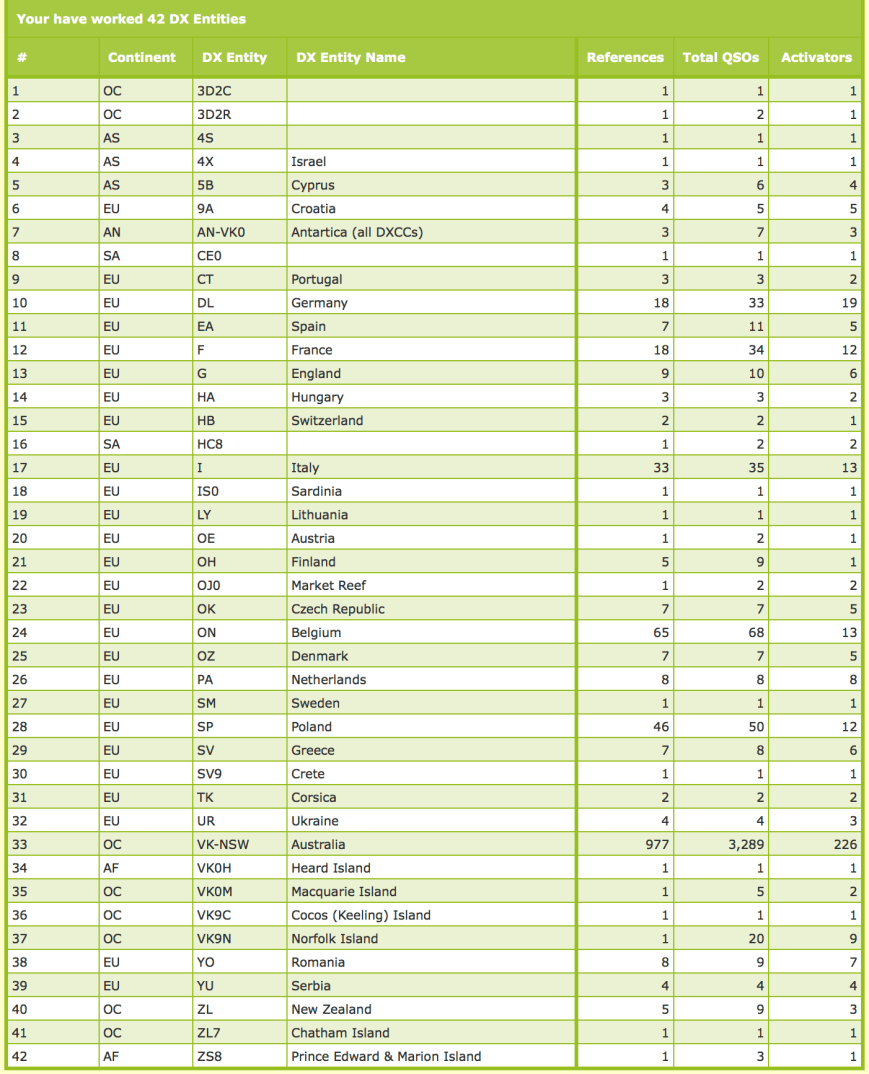
Of those 1,244 references, I have worked a total of 42 different DXCC entities as can be seen below.

Screen Shot 2018-05-16 at 9.20.49 pm.png

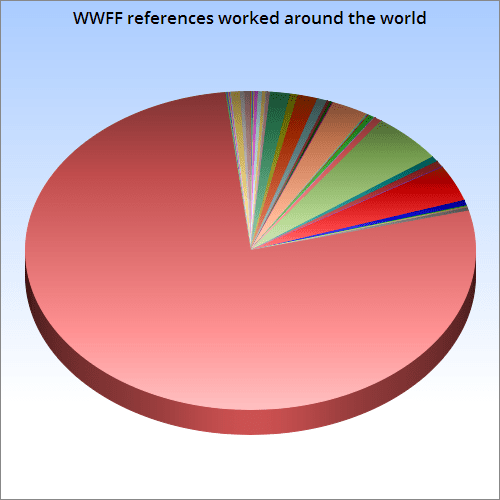
The largest number of references of course coming from Australia (977 different references), followed by Belgium with 65, Poland with 46, Italy with 33, and then Germany & France both with 18.

ChartGo-1.png

Nixons Mill and the 2018 Mills on the Air Weekend

The weekend just gone (Saturday 12th & Sunday 13th May 2018) was the annual Mills on the Air Weekend.  The Society for the Protection of Ancient Buildings (S.P.A.B.) in the United Kingdom runs the National Mills Weekend each year in May, and as part of the event the Denby Dale Radio Society co-ordinate the amateur radio side of this event, the Mills on the Air Weekend.

Screen Shot 2018-05-14 at 8.19.11 pm.png

Last year was the first year I had taken part in the event.  On the Saturday I activated Nixons Mills at Hahndorf, and then on Sunday I activated the old Laucke Flour Mill at Strathalbyn.  Both times I used the VK5WOW callsign to celebrate the upcoming AGM for the WIA.

Unfortunately this year I was on Afternoon shift, so I limited to just a few hours at the historic Nixons Mill at Hahndorf.

My post re last years activation has a huge amount of information on this, South Australia’s oldest surviving windmill tower which was built in 1842.  You can read about the mill’s interesting history and view some historic photos at…….

https://vk5pas.org/2017/05/14/nixons-mill-and-mills-on-the-air/comment-page-1/

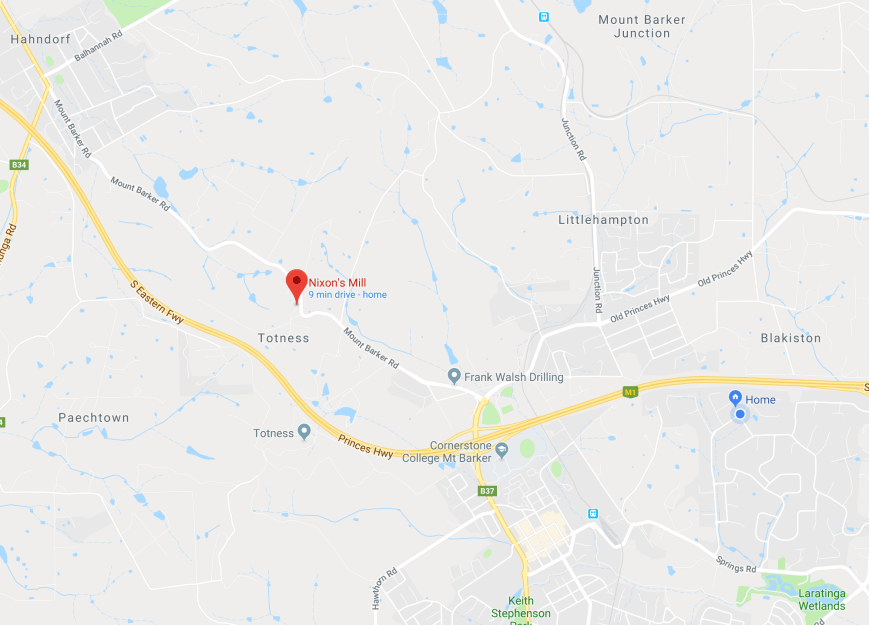
Nixons Mill is located on the eastern outskirts of the historic town of Hahndorf, just a short drive from home.

Screen Shot 2018-05-14 at 8.26.09 pm.png

Above:- Map showing the location of the Mill, just a short distance from my home.

The mill was restored many years ago, including the fitting of blades to the mill.  But sadly vandals got to the mill.  In recent years some restoration of the mill has taken place and there are a number of interpretive signs detailing the history of the mill.

It is just a short walk up a flight of stairs to the mill.  I made a few trips carrying the radio equipment up to a cleared area alongside the mill structure.

The mill is located alongside the Hahndorf Farm Barn, so I had a few interested onlookers, both human and animal.

I found 7.150 on the 40m band and started calling CQ.  First in the log was Stef VK5HSX/3 in the Cape Patterson Nature Conservation Reserve VKFF-2063.  Next up was Gerard VK2IO, followed by Andrew VK7DW/p operating portable in the Narawntapu National Park as part of the VK7 WWFF day organised by Jonathan VK7JON.

It was quite a slow morning, with band conditions being quite average.  I had a steady trickle of callers but it was clear that there was again no close in propagation on 40m.  Contact number 17 was David VK3CMZ activating the Andersons Mill at Smeaton in Victoria.  My first Mill to Mill contact for the day.  A few QSOs later I was called by Ivan VK5HS/p in the Cooltong Conservation Park 5CP-046 & VKFF-0923.  Ivan was very low down but we successfully exchanged signal reports (3/2 sent and 3/3 received).

It was quite a brisk morning with the temperature being about 11 deg C, so I was rugged up in my thick jacket which I bought in New Zealand a number of years ago.  A few QSOs after Ivan I logged some more Tasmanian park activators, Angela VK7FAMP/p and Tony VK7LTD/p in the Ida Bay State Reserve VKFF-1807.  And a few QSOs later Mick (VK3GGG) VK3BI/p gave me a shout from the Maryborough Flour & Chaff Mill in Victoria.

Unfortunately shortly thereafter I had some VK6 guys come up on the frequency, clearly for a sked, and without asking if the frequency was in use.  I did hear them mention that they thought the frequency was being used, but despite that they continued their chat.  As a result it made it quite difficult to log some of the lower down stations that were calling me.

After logging a total of 41 stations on 40m I moved down to 3.610 on the 80m band wgere I logged 4 stations, including Ivan VK5HS/p in the Cooltong Conservation Park.  Sadly I had a strength 8-9 noise floor on this band.

To complete the activation I headed back to 7.150 and called CQ which was answered by Frank VK7DX.  I logged a further 8 stations including Colin VK3NCC/2 in the Dthinna Dthinnawan National Park VKFF-0587.

Time was marching on, and I needed to pack up and head home for some lunch, a shower, and then off to work.  So In around 2 hours at the mill I had a total of 54 stations in the log.  Unfortunately I had no visitors to the mill during my activation, no doubt due to the very chilly weather conditions.  This is a fun event and I would encourage everyone to get involved in next years event.

I worked the following stations on 40m SSB:-

  1. VK5HSX/3 (Cape Patterson Nature Conservation Reserve VKFF-2063)
  2. VK2IO
  3. VK7DW/p (Narawntapu National Park VKFF-0005)
  4. VK7QP
  5. VK3ARH
  6. Vk1MIC
  7. VK3SQ
  8. VK3MET
  9. VK3KMH
  10. VK5MK
  11. VK2RP/m
  12. VK2BDR/m
  13. VK3FSTA
  14. VK1HW
  15. VK3XL
  16. VK2NP
  17. VK3CMZ/p (Andersons Mill, Smeaton)
  18. VK3WAC/m
  19. VK5MR/m
  20. VK2GKA
  21. VK5HS/p (Cooltong Conservation Park 5CP-046 & VKFF-0923)
  22. VK3HBG
  23. VK7FAMP/p (Ida Bay State Reserve VKFF-1807)
  24. VK7LTD/p (Ida Bay State Reserve VKFF-1807)
  25. VK3NXT
  26. VK2VW
  27. VK3BI/p (Maryborough Flour & Chaff Nill)
  28. VK2JNG
  29. VK2IPK
  30. VK2KYO
  31. VK5KFB
  32. VK2NEO
  33. VK2QK
  34. VI2WG50
  35. VK3OV
  36. VK3CTM
  37. VK2USH
  38. VK6GLX
  39. VK3AHR
  40. VK2PKT
  41. VK3TKK/m
  42. VK7DX
  43. VK2VOM
  44. VK7FOLK/m
  45. VK7JON/m
  46. VK3FLES
  47. VK3NCC/2 (Dthinna Dthinnawan National Park VKFF-0587)
  48. VK3FVIC
  49. VK7ME
  50. VK2HHA

I worked the following stations on 80m SSB:-

  1. VK5HS/p (Cooltong Conservation Park 5CP-046 & VKFF-0923)
  2. VK5KFB
  3. VK5BJE
  4. VK5FANA


References

Denby Dale Amateur Radio Society, 2018, <http://www.mills-on-the-air.net/>, viewed 14th May 2018.


Totness Recreation Park VKFF-1754 and the 2018 Harry Angel Memorial 80m Sprint

Over the weekend (Saturday 5th May 2018) I headed out to my local park, the Totness Recreation Park VKFF-1754, for the 2018 Harry Angel Memorial 80m Sprint.

Screen Shot 2018-05-06 at 11.59.49 am.png

Above:- Map showing the location of the Totness Recreation Park.  Map courtesy of Location SA Map Viewer.

I have activated Totness many times in the past as it is in very close proximity to my home.  In fact its just a short 6-7 minute drive.

Screen Shot 2018-05-06 at 11.52.03 am.png

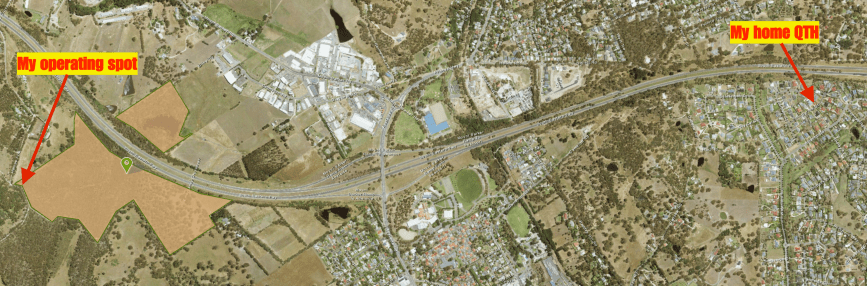
Above:- Aerial shot showing the park and my operating spot, and m home a few km away.  Image courtesy of Location SA Map Viewer.

Totness Recreation Park is 41 hectares in size and on the 15th January 1970 was proclaimed as Totness National Parks Reserve.  On the 22nd January 1976 it was reproclaimed as Totness Recreation Park.  Prior to 1970 the land that is now Totness was the property of the South Australian Railways and the Department of Transport.

The park terrain is hilly, with the park being split into a northern and southern section by the South Eastern Freeway.  The northern section of the park includes messmate stringybark woodland over kangaroo thorn, sweet bursaria and twiggy daisy-bush; South Australian blue gum/manna gum woodland; river red gum over swamp wattle and narrow leaf cumbungi sedge land around the lake which was previously a railway dam.  The southern section of the park has messmate stringybark open forest and South Australian blue gum woodland.

Plant species of conservation significance recorded within the park include the state rare Manna Gum and the regionally rare Spider Orchid.

The southern section of the park was completely burnt out during the devastating 1983 Ash Wednesday bushfires.

Screen Shot 2018-05-06 at 11.59.33 am.png

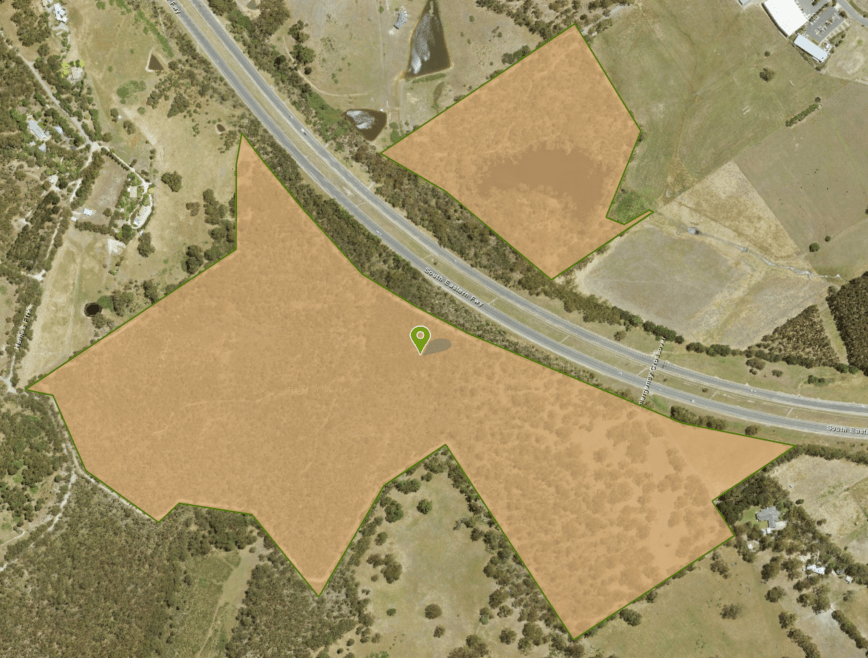
Above:- Aerial shot of the Totness Recreation Park.  Image courtesy of Location SA Map Viewer.

Birds SA have recorded a total of 57 native birds in the park including Superb Fairywren, Striated Thornbill, Brown Thornbill, Buff-rumped Thornbill, Grey Shrikethrush, Australian Golden Whistler, White-throated Treecreeper, Eastern Spinebill, Yellow-rumped Thornbill, & Red-browed Finch.

Native bird species of conservation significance recorded within the park include the Bassian Thrush and Shining Bronze-cuckoo.

Various native animals can be found in the park including Western Grey kangaroo, Common ringtail possum, Koala, Short-beaked echidna, and various bat species are known to inhabit the park.  Wild deer can also be found in the park.

Screen Shot 2018-05-06 at 5.28.18 pm.png

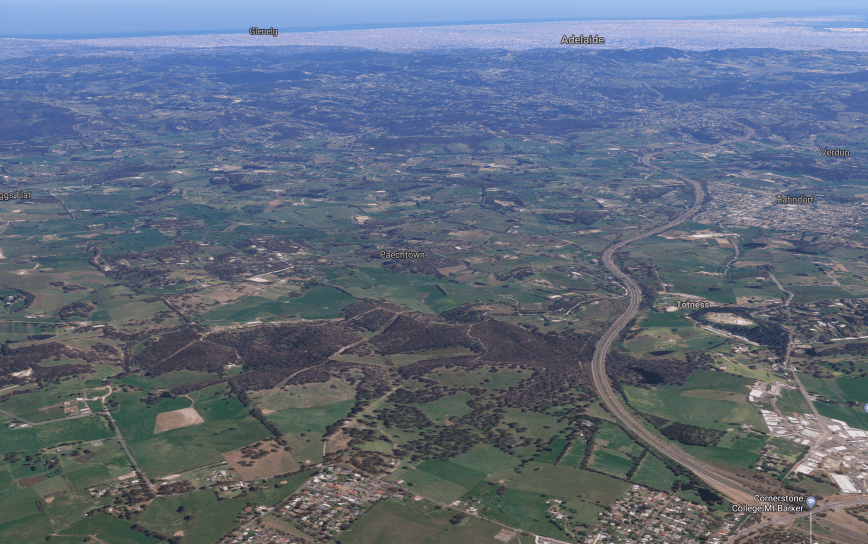
Above:- Aerial shot showing the Totness Recreation Park in the foreground, looking west back towards Adelaide.  Image courtesy of google maps

In the northern section of the park you will find a large dam which was constructed in 1884 to supply the steam locomotives travelling to and from Victor Harbour until 1944.  The water was piped around 5 km to the Mount Barker Railway Station.  The dam also served as a water source for the township of Mount Barker, until replaced by water from the River Murray via the Adelaide-Mannum pipeline in 1955.

Totness Recreation Park also has historic associations with the wattle bark industry that flourished in the Mount Barker district during the late 1800s and early 1900s.  The nearby Mount Barker Tannery sourced wattle bark from the area around the railway dam, for tanning leather.  Stringybark trees were also cut for use as firewoord in the steam boilers and brick kilns.

15972648_1398162726862530_4909431130818956283_o.jpg

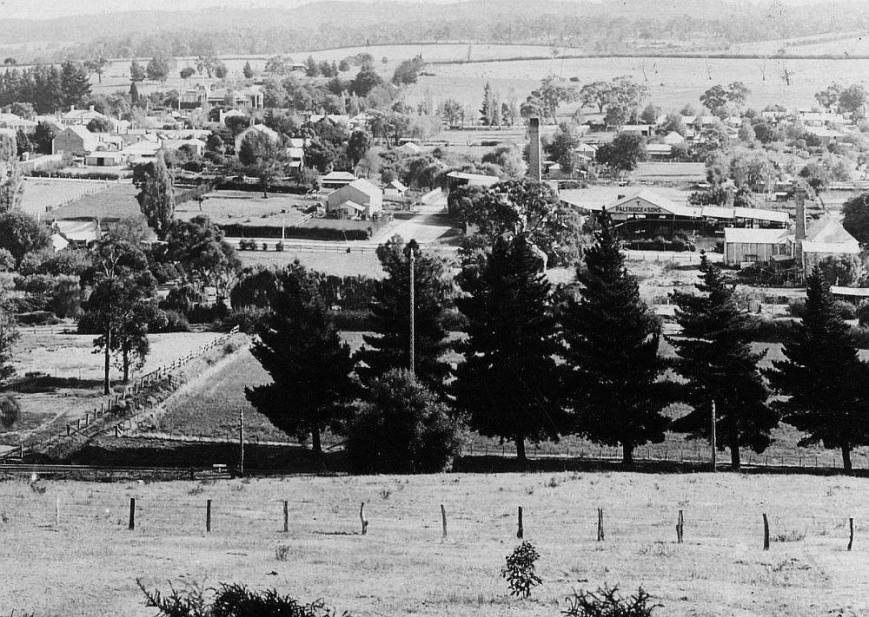
Above:- A view of the Mount Barker Tannery from Paddys Hill.  Image courtesy of Mount Barker District Council.

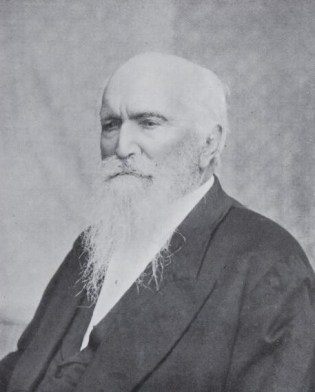
A significant portion of the southern section of the park was land originally granted to John Dunne (1802-1894) who was a significant figure in Mount Barker’s early history.  Dunne emigrated to Australia in 1840, having been born in Devon, England in 1802.  His first steam mill, in Mount Barker, began working in 1844, the second steam mill in Australia at a time when South Australia was the only wheat producing colony in Australia.

John_Dunn_Sr..jpg

Above:- John Dunne Snr.  Image courtesy of wikipedia

The Harry Angel Sprint is an annual 80m contest event, first established in 1999, to commemorate the life of Harry Angel VK4HA who at the time of his becoming a Silent Key was the oldest licensed amateur in Australia.

The duration of the contest is 106 minutes one minute for each year of Harry’s life. The aim of the competition is to make as many contacts as possible in the allotted time. Each station may be worked on one occasion only per mode.

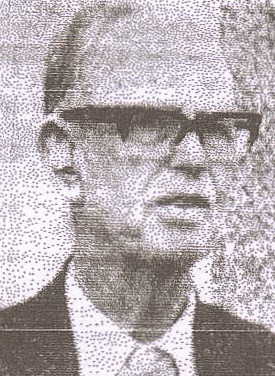
Henry Benjamin ‘Harry’ Angel was born on 14th December 1891 at Manor House, Essex, England.  His parents were Henry Samuel Martin Angel (1867-1911) and Elizabeth Jesse Angel nee Eyre (1871-1962).  In 1919 he married Rebecca Andrews (1891-1973).  They had 3 children: Lillian May Angel, Harold Vincent Angel, and Ronald Henry Angel.  Harry died in August 1998 at Brisbane, Queensland, aged 106 years.

e0d65011-422f-4ceb-9d64-c348471792d3.jpg

Harry Angel.  Image courtesy of ancestry.com.au

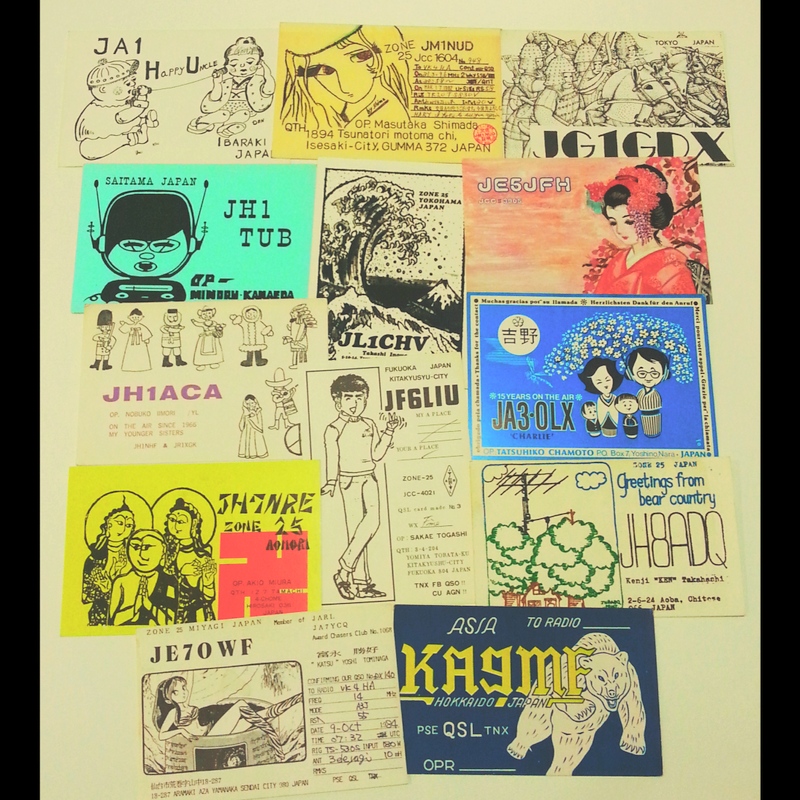
The State Library of Queensland holds an extensive collection of QSL cards, previously belonging to Harry Angel.

Made with Square InstaPic

A selection of JA cards in the Harry Angel QSL card collection.  Image courtesy of State Library of QLD

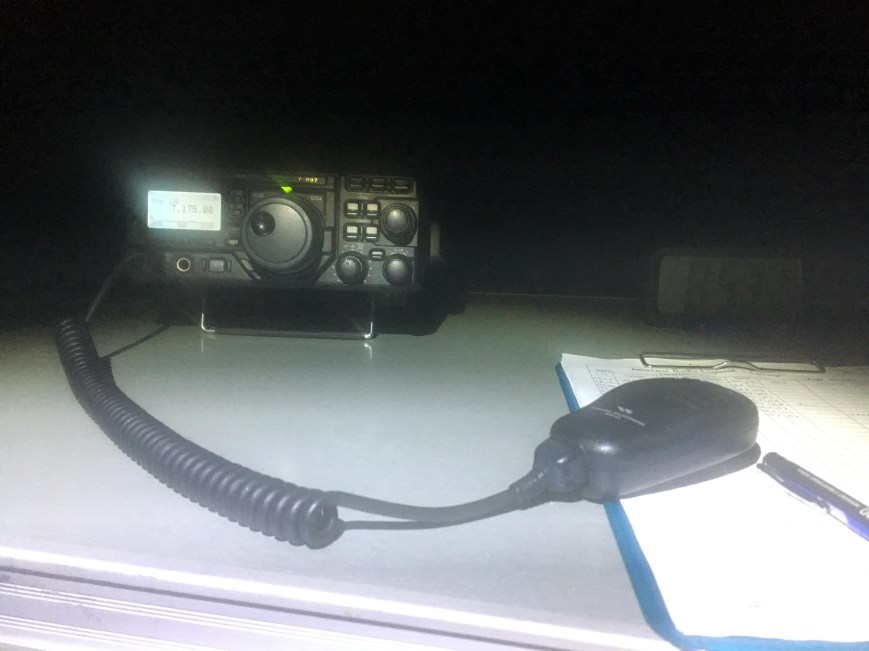
I arrived at the park at around 5.50 p.m. and it was starting to get dark.  I had around 10 minutes of light to set up.  I used the Yaesu FT-897 and the 20/40/80m linked dipole for this activation.  I was all set up and ready to go by around 6.00 p.m. local time (0830 UTC).  I tuned across the 40m band which was quite busy with South East Asian stations and a few low down North American signals.  I found 7.175 clear and commenced calling CQ, which was answered by Andy VK5LA in the Riverland region of South Australia.  Andy was quite low down, as I was to him, but we made it.  Rod VK7FRJG then called in from Tasmania with a very big signal, followed by my wife Marija VK5FMAZ.

I logged a total of 10 contacts, including Peter VK3ZPF/p who was activating the Churchill Island Marine National Park VKFF-0947, and Andrei ZL1TM in New Zealand.  Again, Peter was quite a low signal, but as we both had no man made noise, we were able to exchange signal reports quite easily.  But that was it, with the 40m band being in quite poor condition.  It was apparent that propagation around VK2, VK3 & VK5 was very poor.

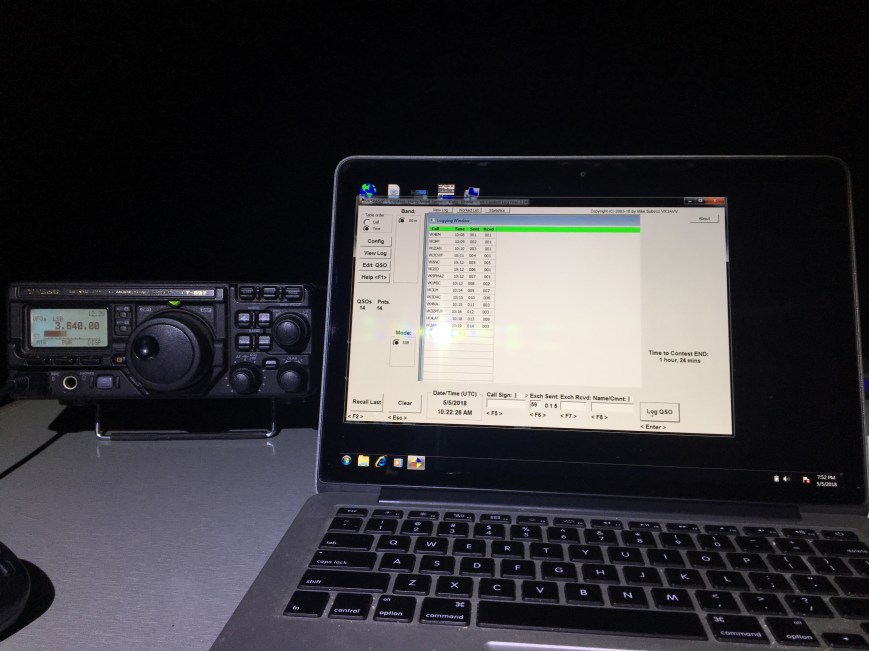
It was now approaching 0900 UTC and I still had one hour to go before the contest.  I tuned across the 40m band but didn’t find a signal VK station, except for Peter VK3ZPF/p who was calling CQ on 7.155.  The American net which is held each evening on 7.163 revealed only moderately strong signals.  Certainly not strong enough for me to call in and make contact with any of the USA stations.  So I took the opportunity of ensuring my logging software was up to date on my laptop, and set the time on my clock (to what I thought was accurate – it wasn’t.  Mentioned later).  I headed back to 7.175 and called CQ again, and again, and again, with no takers.  Eventually, Steve VK4QQ came back to my call, but he was the sole responder.

IMG_1138

At around 0950 UTC I moved down to the 80m band hoping to find myself a clear frequency before everyone starting calling CQ contest.  The 80m band was already quite full of stations and the Over The Horizon Radar (OTHR) was present across most of the band and was getting up around the strength 8.

I found 3.640 clear and started calling CQ which was answered by Chris VK6LOL with a 5/9 signal.  This was followed by Marija VK5FMAZ, Ken VK6AKT, and then Merv VK4EM.

I relogged Merv VK4EM and he became my first contact in the log for the Harry Angel Sprint.  Peter VK3PF was second in the log, followed by Ian VK2IAN, Bill VK3CWF and then Chris VK6NC.  Sadly it was very slow going, and after 20 minutes I had just 14 contacts in the log, including Peter VK3ZPF/p who had called back in for the Sprint.  So with things being very quiet, I tuned across the band and logged a number of stations.

I spent the remainder of the Sprint, calling CQ and hunting across the band for new callers.  Unfortunately I was having a nice little run of callers, when I much higher powered VK2 moved in just 2 kc away from me, and that was the end of the that.  The OTHR was also making it very difficult to pick up stations below strength 8.

I was pleased to pick up another Park to Park contact, with Marcus VK5WTF/p who was in the Sandy Creek Conservation Park VKFF-0933.  And also a call from Bill ZL3VZ in Christchurch, New Zealand.

IMG_1140

I ended up logging a total of 51 stations on 80m during the contest.  This was down by 12 compared to last year when I logged a total of 63 stations during the contest.

Screen Shot 2018-05-07 at 10.12.22 am.png

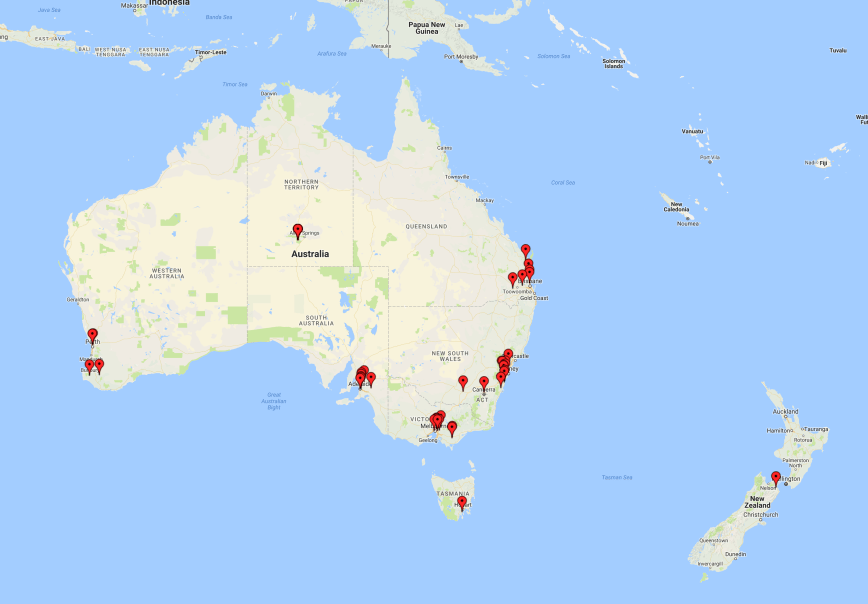
Above:- Map showing my contacts during the Sprint (VK1, VK2, VK3, VK4, VK5, VK6, VK7, & New Zealand).  Map courtesy of qsomap.org

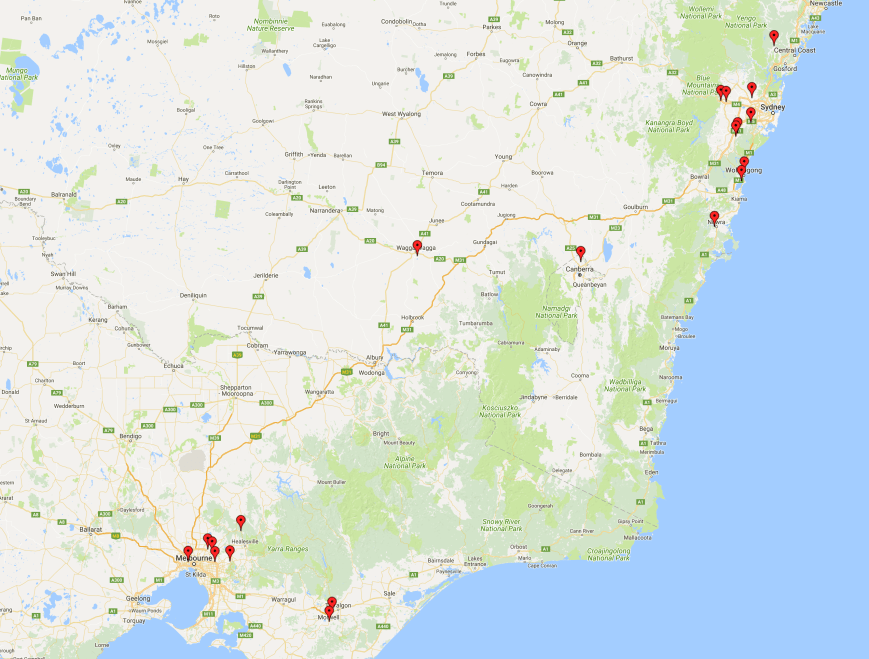
Most of my contacts were into Victoria and New South Wales.  Conditions into the eastern States were pretty good, but there were some stations who were suffering with noise and struggled a bit with my signal.  Fortunately I had no man made noise in the park, except for the Over the Horizon Radar.  The map below shows my contacts into the eastern States.

Screen Shot 2018-05-07 at 12.04.43 pm

Above:- Map showing my contacts into the eastern States.  Map courtesy of qsomap.org

I was very pleased to be able to work some Western Australian stations about 2,500 km away.  The map below shows my contacts into Western Australia.

Screen Shot 2018-05-07 at 12.05.09 pm

Above:- Above:- Map showing my contacts into Western Australia.  Map courtesy of qsomap.org

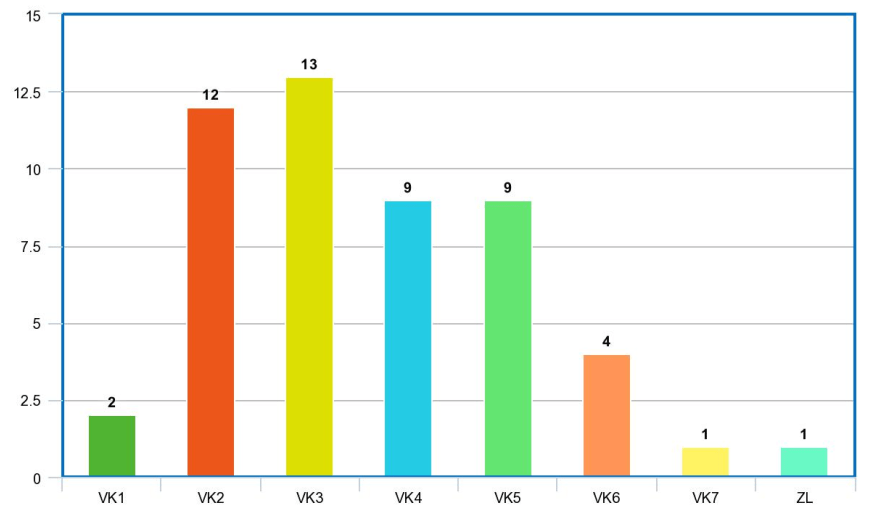
The graph below shows my contacts during the Sprint.  I worked thirteen (13) Victorian (VK3) stations, followed by twelve (12) from New South Wales (VK2), and nine (9) each from Queensland (VK4) and South Australia (VK5).

Screen Shot 2018-05-07 at 10.34.07 am.png

Above:- Graph showing my contacts per State/Territory/Country during the Sprint.

I was a little disappointed in the outcome.  Unfortunately there were not a huge number of participants in the Sprint, and my little portable signal wasn’t quite making the grade into certain stations.  This together with the very annoying OTHR.

I worked the following stations on 40m SSB before the Sprint commenced:-

  1. VK5LA
  2. VK7FRJG
  3. VK5FMAZ
  4. VK5AYL
  5. ZL1TM
  6. VK6BEC
  7. VK4HNS
  8. VK3ZPF/p (Churchill Island Marine National Park VKFF-0947 VKFF-0947)
  9. VK4TJ
  10. VK4DO
  11. VK4QQ

I worked the following stations on 80m before the Sprint:-

  1. VK6LOL
  2. VK5FMAZ
  3. VK6AKT
  4. VK4EM

I worked the following stations on 80m SSB during the Sprint:-

  1. VK4EM
  2. VK3PF
  3. VK2IAN
  4. VK3CWF
  5. VK6NC
  6. VK2io
  7. VK5FMAZ
  8. VK1MIC
  9. VK3LM
  10. VK3DAC
  11. VK4NA
  12. VK3ZPF/p (Churchill Island Marine National Park VKFF-0947)
  13. VK4LAT
  14. VK3AN
  15. VK2PR
  16. VK7JGD
  17. VK4YZ
  18. VK4KKN
  19. VK2PX
  20. VK4QH
  21. VK6AKT
  22. VK2XAX
  23. VK2MT
  24. VK2KDP
  25. VK4TLA
  26. VK5WTF/p (Sandy Creek Conservation Park VKFF-0933)
  27. VK5DT
  28. VK4JRO
  29. VK5CP
  30. VK4ITT
  31. VK3BL
  32. VK2DEK
  33. VK2QN
  34. VK2KQB
  35. VK1AT
  36. VK3AB
  37. VK3BOY
  38. VK6EK
  39. VK2EHQ
  40. VK5LJ
  41. VK2VIN
  42. VK6QM
  43. ZL3VZ
  44. VK5CV
  45. VK5GR
  46. VK5SFA
  47. VK3VT
  48. VK2XXL
  49. VK5FANA
  50. VK3OHM
  51. VK3FCMA

I worked the following stations on 80m after the Sprint:-

  1. VK2SR
  2. VK3MEG
  3. VK5FBBJ
  4. VK2KJJ
  5. VK5SFA
  6. VK2XXL


References.

Birds SA, 2018, <https://birdssa.asn.au/location/totness-recreation-park/>, viewed 6th May 2018

Department for Environment and Heritage, 2007, Totness Recreation Park Management Plan

Wikipedia, 2018, <https://en.wikipedia.org/wiki/Totness_Recreation_Park>, viewed 6th May 2018

Wikipedia, 2018, <https://en.wikipedia.org/wiki/John_Dunn_(miller)>, viewed 6th May 2018

Wireless Institute of Australia, 2018, <http://www.wia.org.au/members/contests/harryangel/>, viewed 6th May 2018

Montacute Conservation Park 5CP-139 and VKFF-0910

Yesterday (Monday 30th April 2018) I started 2 days off from work, having just finished 7 straight shifts.  We have been enjoying amazing weather for this time of the year, and today was no exception, with the temperature being about 22 deg C and bright sunshine, with not a cloud in the sky.  So I decided to head out for a mid afternoon park activation.

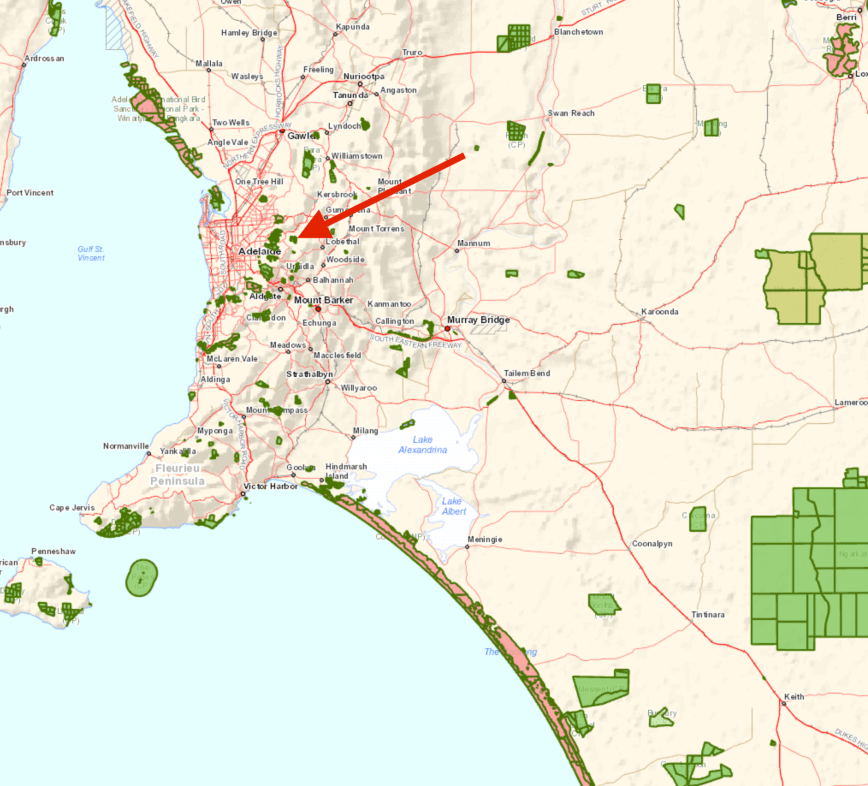
I chose the Montacute Conservation Park 5CP-139 & VKFF-0910, which is located about 21 km east of the city of Adelaide, and about 42 km (by road) from my home.  I have been to Montacute previously, and qualified the park for the VK5 Parks Award and WWFF, so today was a bit of fun, and another activation to go towards the VKFF Boomerang Award.
Screen Shot 2018-04-30 at 8.05.09 pm.png

Above:- Map showing the location of the Montacute Conservation Park in the Adelaide Hills.  Map courtesy of Location SA Map Viewer. 

I chose the ‘scenic’ route (and longer route) to get to the park.  It was a beautiful drive through Lenswood and on to Cudlee Creek.  Lenswood is located in a narrow river valley in one of the tributaries to the Onkaparinga River.  It takes its name from a battle near the town of Lens in northwestern France during WW1.  The area is well known for its production of apples, pears, cherries and wine grapes.  In excess of 20,000 tonnes of apples are produced annually.  Apple varieties include Pink Lady, Fuji, Sundowner, Royal Gala, Golden Delicious and Granny Smith.  And at this time of the year, many of those varieties are in peak availability.  There were lots of pickers out in the orchards as I travelled through the Lenswood area.

I then travelled west along Gorge Road and stopped at the lookout for the Kangaroo Creek Reservoir.  Construction of the Kangaroo Creek dam began in 1966 and was completed in 1969.  The reservoir has a capacity of 19,160 megalitres and covers an area of about 103 hectares.

A major upgrade is underway at the reservoir, and as a result of the reservoir being drained, the old Batchelor’s Bridge which was built in the 1920’s is now visible.  The reservoir has only been drained twice in its 50 year history.  Batchelor’s Bridge, part of the old Gorge Rd, was built in the 1920s and became submerged when the dam was filled in the late 1960s.

I continued along Gorge Road and into the area of the Mount Lofty Ranges ‘Adelaide Hills’ known as Montacute.  There really is no town of Montacute anymore, but rather a locality.  The area has a rich history.

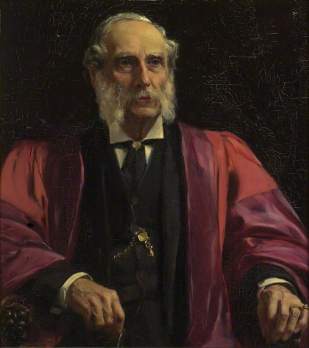
In around 1843, Mr. Charles Drury Edward Fortnum (1820-1899), a chemist and mineralogist, settled in this district which was then known as Sixth Creek.   Fortnum reared bullocks in the area along Sixth Creek to meet the Colony of South Australia’s ever-growing demand for beef.  However it wasn’t long before the Montacute area was to be put on the map with the discovery of copper.
Charles_Drury_Edward_Fortnum_Alexander.jpg

Above:- Mr. Charles Fortnum.  Image courtesy of wikipedia.

In late 1843, Fortnum’s overseer, Mr Andrew Henderson, set out to look for a steer that had strayed overnight.  During his search for the steer he located the first piece of copper ore in the district.  Henderson was climbing a steep spur when he noted the peculiar green colour of a perpendicular face of rock.  When he reached the summit, he discovered a curious mass of brown and green material.  Henderson broke off a piece and returned with it to Fortnum, who immediately recognised the rock as copper ore.

The copper ore had been discovered by Henderson on a government block, so Fortnum proceeded to purchase the land.  But the secret was already out.  The discoverers of the copper ore had already shared the information of their find to others, who in turn had notified the Survey Office. 

Deputy Surveyor-General Thomas Burr then ordered another survey and outcrops of copper were discovered.  The land, comprising around 80 acres was out up for public auction in February 1844.  A syndicate was formed known as the Montacute Mining Company.

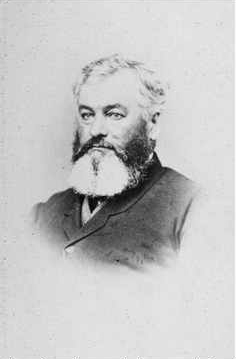
One of the mine’s financiers, Sir John Baker (1813-1872), named the area after Montacute in Somerset, in the UK, which was near his birthplace.   Baker had a homestead called ‘Morialta’ near Norton Summit.  We nowadays of course have the nearby Morialta Conservation Park. 
John_Baker_SA

Above:- Sir John Baker.  Image courtesy of wikipedia

The first official finding of gold in Australia occurred at Montacute in 1846, at the North Montacute Mine, which was subsequently renamed the Victoria Mine.  The South Australian newspaper in April 1846 stated:

“‘the grand, the crowning triumph has been accomplished… South Australia seems destined to become the real Eldorado”.

Sadly this did not eventuate, with only a small amount of gold being located.  Mining in the area continued throughout the 1800’s, however the Montacute district lost many miners to the Victorian goldfields in the 1850’s.  Today numerous mine shafts still exist in the area, together with a number of miners cottages, both ruined and restored.

Screen Shot 2018-05-01 at 10.50.17 am.png

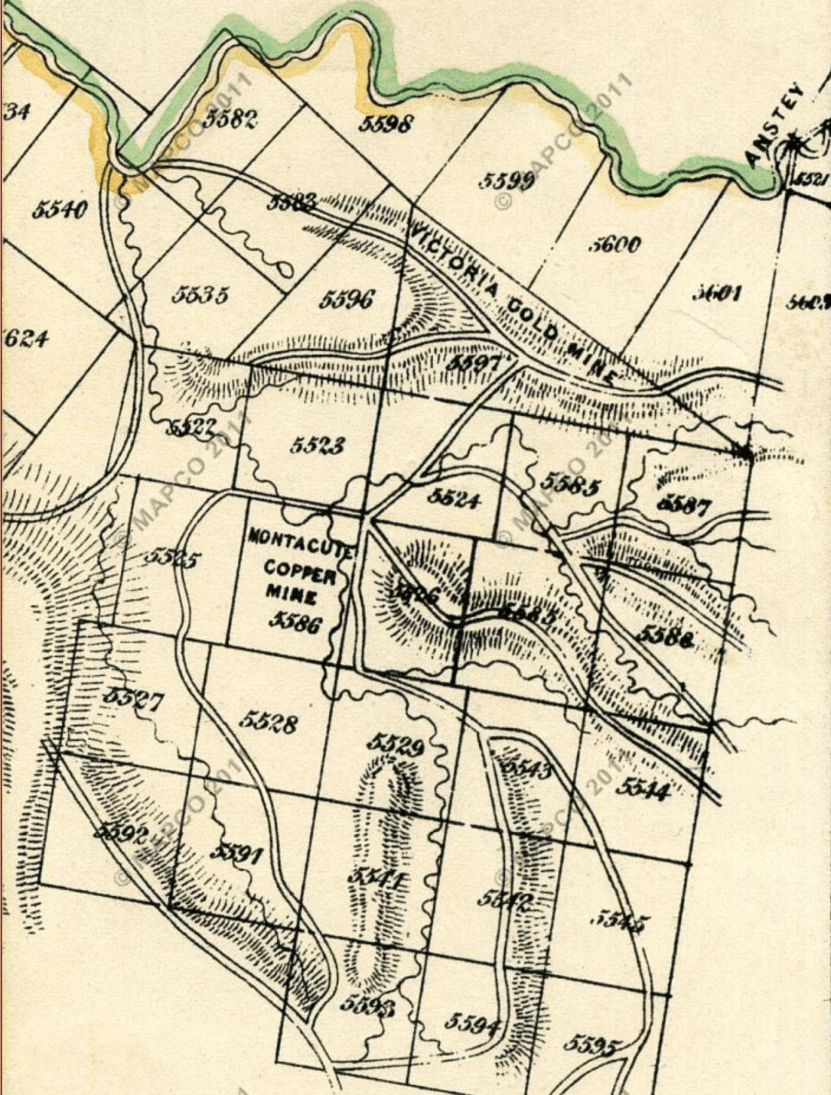
Above:- an old survey map c. 1849, showing the Montacute Copper Mine and the Victoria Gold Mine.  Image courtesy of mapco

In 1849 it was reported that the village of Montacute ” having a tolerable large and decent population, and abounding in the most singularly diversified and romantic scenery, with a never failing and abundant supply of good water, the place can neither boast of an inn for the traveller, nor a draper’s, butcher’s, green’s or, in fact, any kind of store or shop. Of the latter there is nothing nearer than Adelaide; the nearest public house is at Payneham, a distance of ten miles… “

In 1864 the Montacute School was opened, and the Montacute Post Office opened in 1887. In 1902 George Ross commenced a wholesale nursery at Montacute.  Today, Ross Roses is one of South Australia’s oldest rose nurseries.  In 1907 the foundation stone of the Montacute Institute was laid.

Screen Shot 2018-05-01 at 11.38.21 am.png

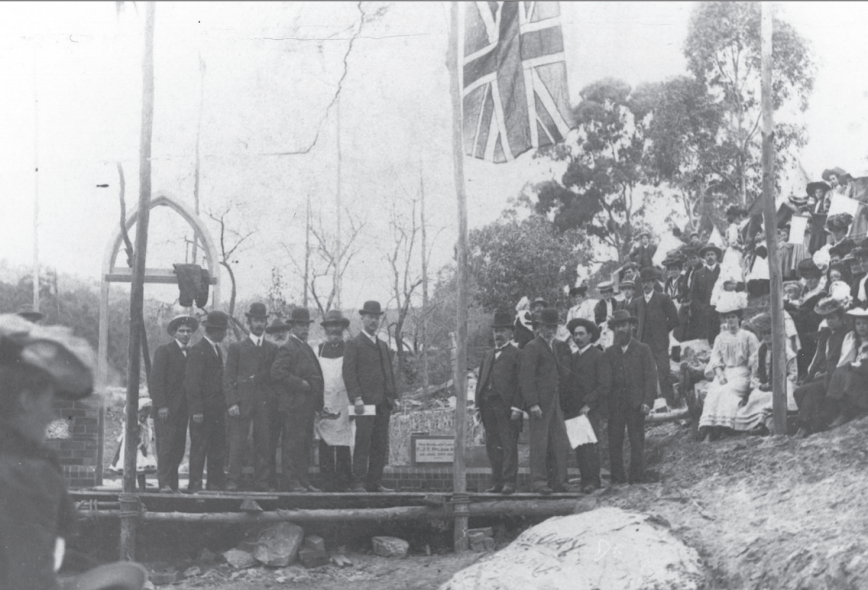
Above:- the laying of the foundation stone at the Montacute Institute, 1907.  Image courtesy of http://www.flinders.edu.au

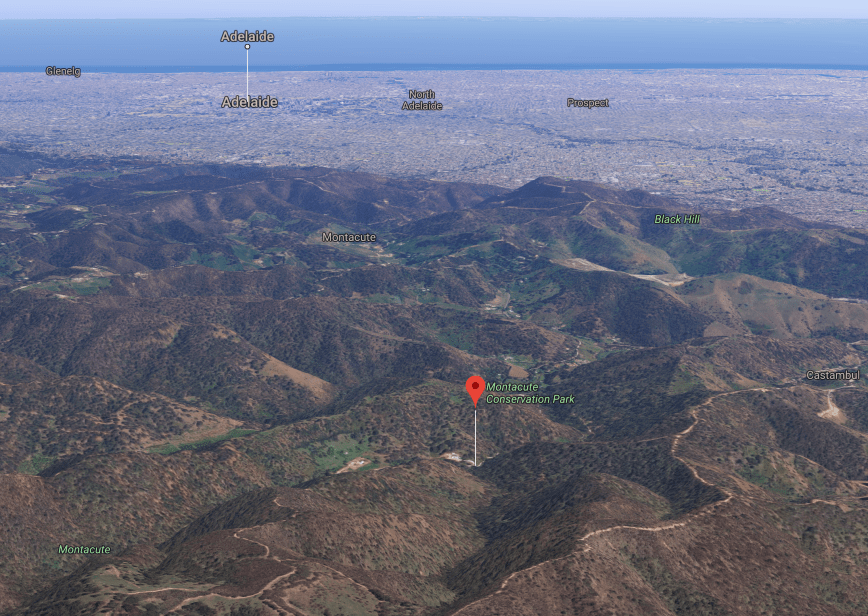
I then turned left onto Corkscrew Road and then left into Valley Road.  I soon entered the Montacute Conservation Park.  The park is about 194 hectares in size and is set in very rugged and hilly country.  It was established in 1971.
Screen Shot 2018-04-30 at 8.20.07 pm

Above:- Aerial shot of the Montacute Conservation Park, looking west back towards Adelaide.  Image courtesy of google maps.

The park is remnant bushland and contains river red gums, stringybark, and messmate stringybark.  The Heysen Trail passes through the park.  Some sections of the trail and quite steep and challenging.

Birds SA have recorded over 57 species of native bird in the park including Adelaide Rosella, Superb Fairywren, New Holland Honeyeater, Yellow-faced Honeyeater, Black-winged Currawong, Grey Fantail, Rufous Whistler, Common Bronzewing, Eastern Spinebill, Restless Flycatcher, Eastern Shriketit.

Various native animals call the park home including Western Grey kangaroos, echidnas, and koalas.

During my visit to the park I observed dozens of Superb Fairy Wrens.  But all females.  I didn’t spot a single male who has the very bright blue plumage.  They were dancing around in front of me during the entire activation.  I also had a koala in a tree close to where I was set up.  He/she didn’t appear at all phased about me being there and disturbing their afternoon siesta.

I drove along Valley Road and set up in the spot where I had activated from previously, a small dirt track leading off Valley Road.  There was plenty of room here to stretch out the 20/40/80m linked dipole, and plenty of shade.
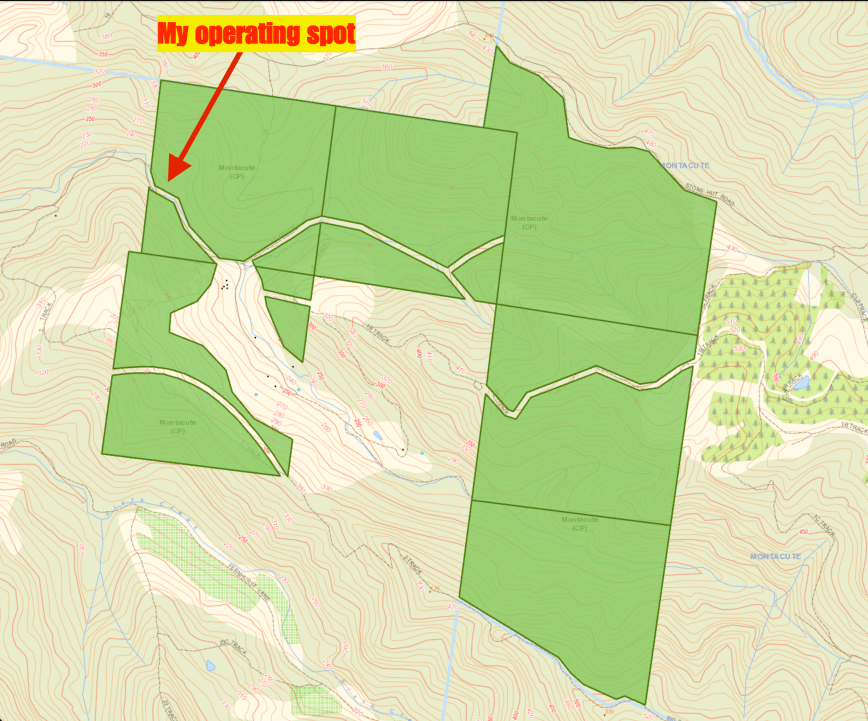
Screen Shot 2018-04-30 at 8.04.45 pm.png

Above:- the Montacute Conservation Park, showing my operating location.  Map courtesy of Location SA Map Viewer.

The transceiver was already set on 7.144 when I turned it on.  I found that there were some stations chatting on 7.145, so I tuned down the band and found Colin VK3NCC/2 in the Warrumbungle National Park, VKFF-0520 calling CQ on 7.140.  I logged Colin Park to Park, and then moved up to 7.155 where I started calling CQ.  I had no internet coverage in the park, so I was unable to self spot on parksnpeaks.  First taker to my CQ calls was Peter VK3PF, followed by Deryck VK4FDJL, Gerard VK2IO, and then John VK4TJ.  Gerard VK2IO kindly spotted me on parksnpeaks.

Sadly the number of callers on 40m was way down compared to usual, and it was very slow going.  And I soon started to experience QRM, with G4PEL coming up on frequency, calling CQ North America.  Sadly he was unable to hear me.  So with just 12 QSOs in the log I QSY’d up the band to 7.165 and called CQ.  This was answered by Glenn VK4FARR, followed by Cliff VK2NP, and then Fred VK3DAC who was portable in the Bael Bael Grassland Nature Conservation Reserve VKFF-2040.

But again, callers dried up very quickly.  I now had 20 contacts in the log.  Fortunately reaching 44 today was not a priority, as I had previously activated and qualified the park.  I lowered the squid pole and removed the links and headed off to 14.310 on the 20m band.  Unfortunately 5 minutes of CQ calls went unanswered and I was unable to spot on parkspeaks.  I also had to endure the Over the Horizon Radar.  So I tuned across the band and found the final few minutes of the ANZA DX Net.  When the net closed I gave my mate Ted VK6NTE a call.  Ted was 5/9 but was suffering a bit from noise at his end.  I logged a total of 6 stations on 20m from VK2, VK4, and VK6. 

I moved back to 40m and called CQ on 7.160.  Ray VK4NH had kindly spotted me and followed me up from 20m.  I logged Ray with his 3 different calls and then Peter VK3TKK mobile.  But that was it.  No more takers.  So it was off to the 80m band.  I found Fred VK3DAC/p again, this time calling CQ on 3.610.  Fred had a strong signal.  I then moved down to 3.605 where I logged a total of 5 stations from VK3 and VK5.  But despite conditions on 80m being quite good, I had no further callers.

So it was back to 40m again where I again called CQ on 7.160.  This was answered by Ted VK6NTE, followed by Allen VK3ARH, and then Keith VK3FMKE.  I logged a further 5 stations from VK3, VK4, VK5 and VK6.  This included Lee VK6TY who was running QRP, with just 5 watts.  Lee was a good 5/3 signal and as there was no man made noise on the band in the park, he was ‘armchair’ copy.

Bill VK4FW came up to let me know that Marc VK3OHM/p was down on 7.155 in a park, so I headed there, and after some persistence I made contact with Marc who was activating the Wyperfeld National Park VKFF-0549.  I was hearing Marc better than he was hearing me, but we made it, with 5/1 sent and 3/1 received.

I then moved back to 80m hoping to get Bill VK4FW in the log on 80m.  He had advised that he had tried me earlier whilst I was on 80m, but I was unable to hear him.  Bill was in fact first in the log, responding to my CQ call.  This was followed by Charlie VK5VC who was extremely strong, and then Brett VK2FSAV.  I logged a further 6 stations including Adrian VK5FANA on the Yorke Peninsula who was 5/9 ++ (Adrian gave me a 5/9 plus 40 signal report), and also my lovely wife Marija VK5FMAZ who had just got home from work.

To complete the activation I put out a few final CQ calls on 7.160 on 40m.  And I’m pleased I didm as I logged 4 further stations including John ZL3MR in New Zealand, and Owen ZL4CY in New Zealand.  John was unaware of the WWFF program, so I took the time to explain to him what WWFF was all about and provided him with the addresses for the various websites.
DSC_1087

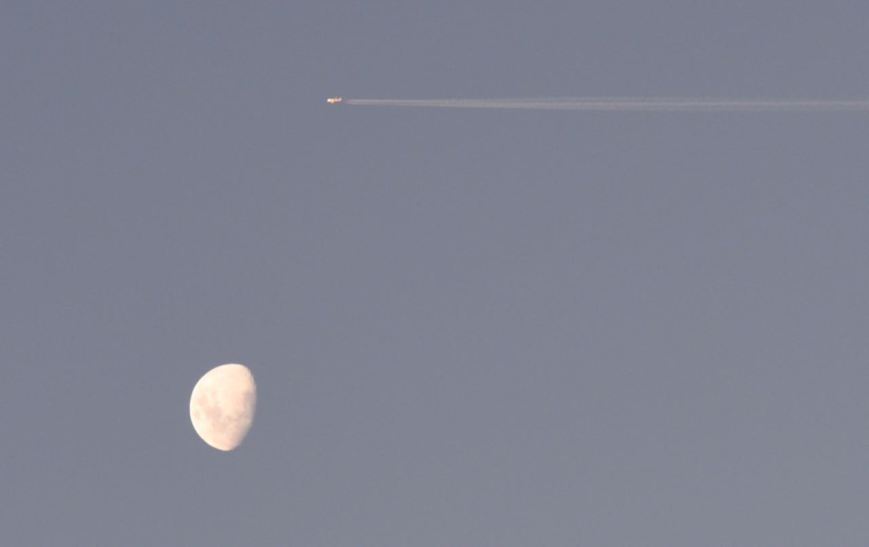
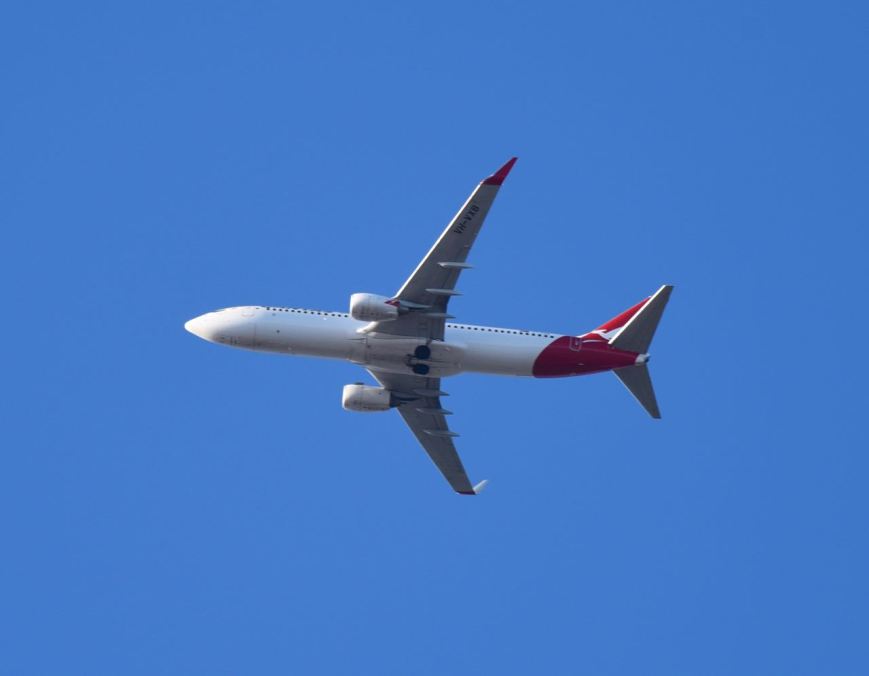
Above:- I was below the flight path for a number of the aircraft flying in to Adelaide.

So after quite a slow start I ended up with a total of 59 contacts in the log, including 4 Park to Park contacts.

I worked the following stations on 40m SSB:-

  1. VK3NCC/2 (Warrumbungle National Park, VKFF-0520)
  2. VK3PF
  3. VK4FDJL
  4. VK2IO
  5. VK4TJ
  6. VK4/AC8WN
  7. VK4/VE6XT
  8. VK2MOR
  9. VK3UH
  10. VK3VKT
  11. VK4FFAB
  12. VK2USH
  13. VK4FARR
  14. VK2NP
  15. VK3DAC/p (Bael Bael Grassland Nature Conservation Reserve VKFF-2040)
  16. VK2JLS
  17. VK4FW
  18. VK3GGG
  19. VK3PMG
  20. VK4VXX/3
  21. VK4NH
  22. VK4DXA
  23. ZL4TY/VK4
  24. VK3TKK/m
  25. VK6NTE
  26. VK3ARH
  27. VK3FMKE
  28. VK5VC
  29. VK4HNS
  30. VK6TY
  31. VK3ANL
  32. VK6FRAB
  33. VK3OHM/p (Wyperfeld National Park VKFF-0549)
  34. ZL3MR
  35. VK7JON
  36. ZL4CY
  37. VK7DIK

I worked the following stations on 20m SSB:-

  1. VK6NTE
  2. VK2RI
  3. VK2HOT
  4. VK4VAZ
  5. VK4NH
  6. VK4DXA
  7. ZL4TY/VK4

I worked the following stations on 80m SSB:-

  1. VK3DAC/p (Bael Bael Grassland Nature Conservation Reserve VKFF-2040)
  2. VK3GGG
  3. VK3PMG
  4. VK5RM
  5. VK3VBI
  6. VK3FMKE
  7. VK4FW
  8. VK5VC
  9. VK2FSAV
  10. VK3PF
  11. VK5KDK
  12. VK2YW
  13. VK1DI
  14. VK5FANA
  15. VK5FMAZ


References.

Adelaide Now, 2018, <http://www.adelaidenow.com.au/news/south-australia/kangaroo-creek-reservoir-draining-reveals-batchelors-bridge-built-in-1920s-and-underwater-most-of-the-past-century/news-story/4199813d508e2579e38a89a9f160fe5f>, viewed 30th April 2018

Birds SA, 2018, <https://birdssa.asn.au/location/montacute-conservation-park/>, viewed 30th April 2018

Lenwsood Apples, 2018, <http://lenswoodcoop.com.au/about/our-fruit/>, viewed 30th April 2018

National Parks South Australia, 2018, <https://www.environment.sa.gov.au/parks/find-a-park/Browse_by_region/Adelaide_Hills/montacute-conservation-park>, viewed 30th April 2018

SA Water, 2018, <https://www.sawater.com.au/community-and-environment/our-water-and-sewerage-systems/water-sources/reservoir-data/kangaroo-creek-reservoir>, viewed 30th April 2018

Smith, P, Piddock, S, & Pate, D, 2005, ‘Historic sites and landscapes Stonyfell to Tea Tree Gully’.

State Library South Australia, 2018, <http://www.slsa.sa.gov.au/digitalpubs/placenamesofsouthaustralia/M.pdf>, viewed 30th April 2018

Wikipedia, 2018, <https://en.wikipedia.org/wiki/Lenswood,_South_Australia>, viewed 30th April 2018

Wikipedia, 2018, <https://en.wikipedia.org/wiki/Montacute,_South_Australia>, viewed 1st May 2018

Bunbury Conservation Reserve VKFF-1691

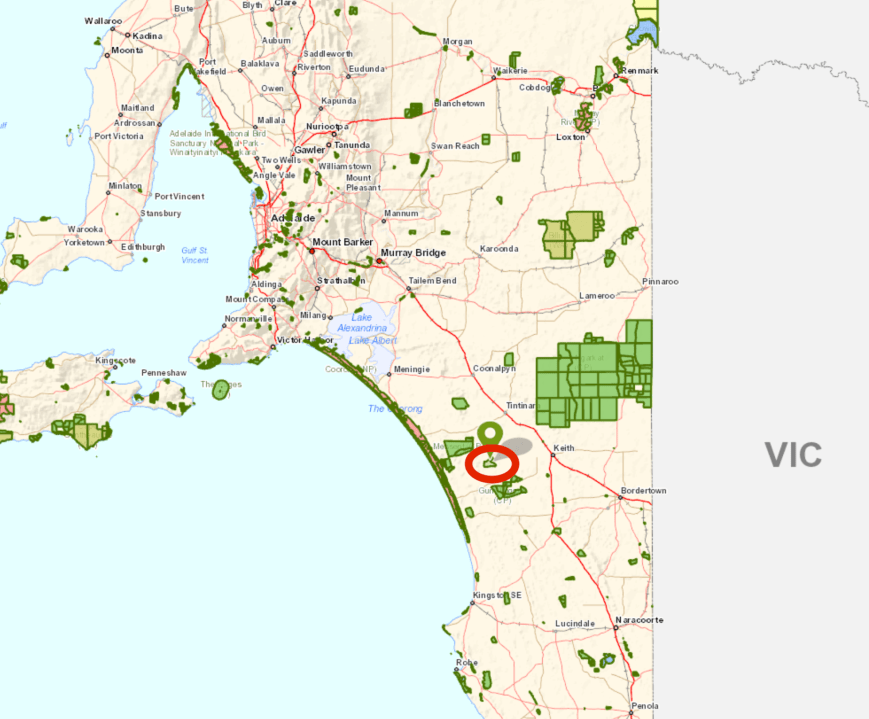
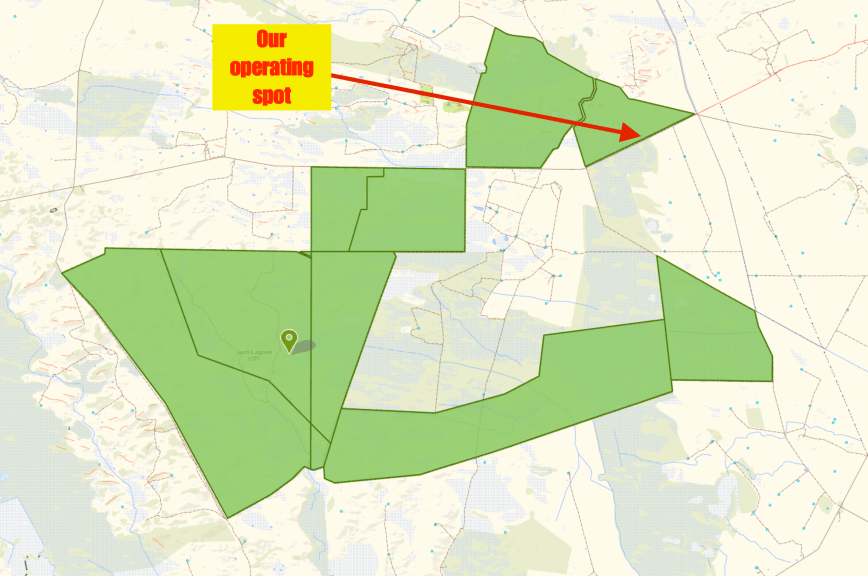
Our second park for ANZAC Day was the Bunbury Conservation Reserve VKFF-1691, which is located about 40 km west of the town of Keith, on the western side of Bunbury Road.  This was to be a unique park for both Marija and I for the WWFF program.

Screen Shot 2018-04-25 at 9.46.17 pm.png

Above:- Map showing the location of the Bunbury Conservation Reserve.  Map courtesy of Location SA Map Viewer.

Bunbury Conservation Reserve is about 1,945 hectares (4,810 acres) in size and was proclaimed on the 11th November 1993.

Screen Shot 2018-04-26 at 11.37.21 am.png

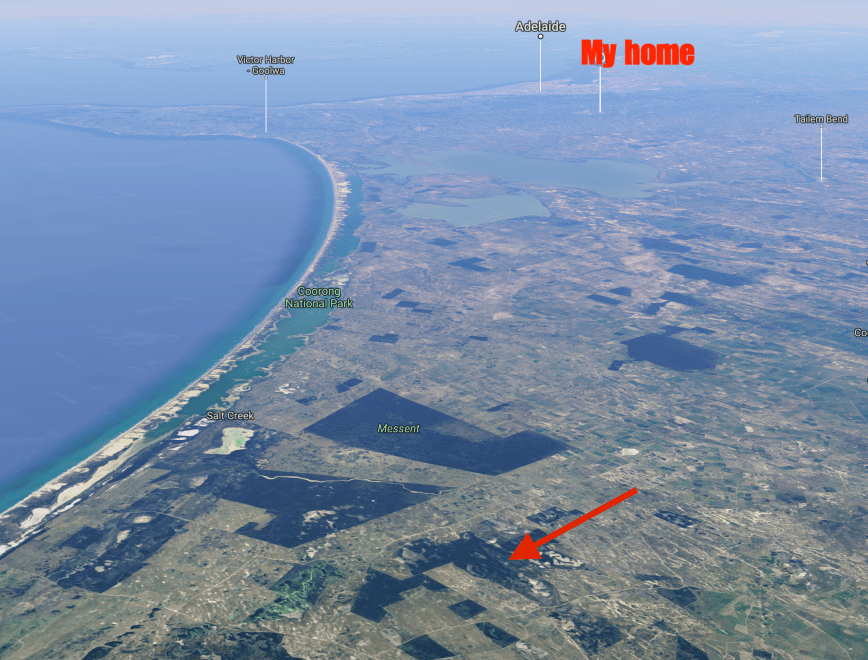
Above:- Aerial shot of the park, with Adelaide and my home QTH in the distance.  Image courtesy of google maps

The park takes its name from the property ‘Bunbury’ once held by James W.D. Dening (1842-1930) who emigrated to Australia in 1849 with his parents aboard the Louisa Baillie.

The park comprises mainly of white sand dune and watercourses, with Pink Gum, Yellow mallee, Desert Banksia, Sand heath yacca, Swamp paper-bark, Short-leaf honey-myrtle, Round-leaf wilsonia, and Samphire low shrubland.

Birds SA have recorded a total of 54 native species of bird in the park including Superb Fairywren, New Holland Honeyeater, Spiny-cheeked Honeyeater, Inland Thornbill, Australian Golden Whistler, Silvereye, Weebill, Spotted Pardalote, Scarlet Robin, White-browed Woodswallow, and Magpielark

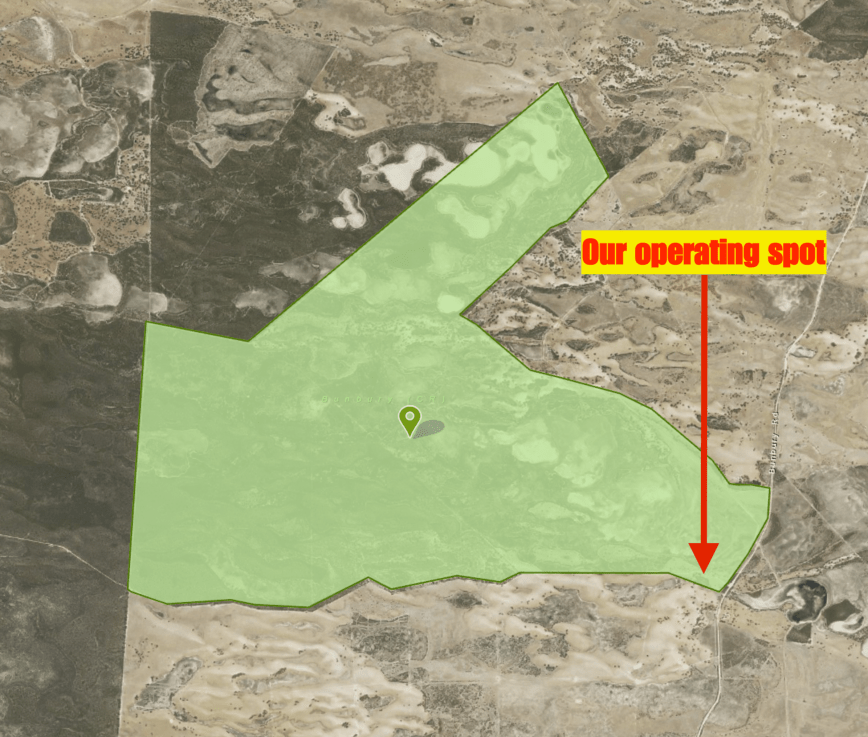
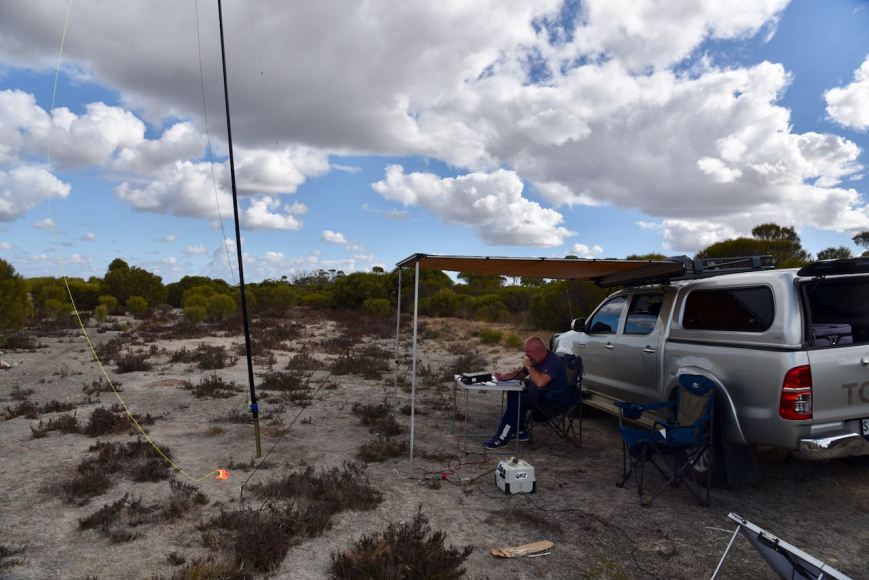
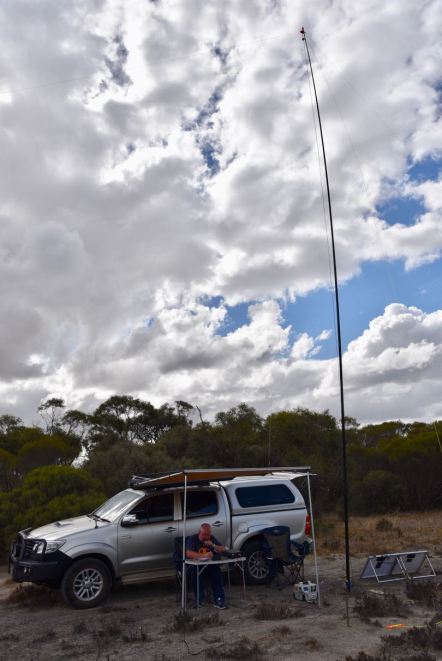
We found a gate leading in to the park off the Bunbury Road and drove about 1 km along the sandy 4WD track and set up alongside of the track.

Screen Shot 2018-04-25 at 9.45.59 pm.png

Above:- Aerial shot of the Bunbury Conservation Reserve showing our operating spot in the eastern section of the park.  Image courtesy of Location SA Map Viewer.

Prior to calling CQ Marija and I tuned across the 40m band to see if we could find any other park activators.  We found Ian VK1DI/2 on 7.150, activating the Yanunbeyan State Conservation Area VKFF-1400.  After logging Ian I moved up the band to find a clear spot.  As it was now late afternoon (about 4.00 p.m. local time), the 40m band was very busy with lots of VK and European stations.  I found 7.165 clear and started calling CQ.  This was answered by Peter VK3PF, followed by Graham VK7ZGK and then Steve AX5SFA.

The 40m band seemed to still be in good shape, albeit that the number of callers appeared to have dropped off from our previous activation.  However, there was a steady flow of callers from across Australia.  I qualified the park for WWFF with 44 contacts within 30 minutes.  I logged a total of 49 stations on 40m including another Park to Park, with Bill VK4FW/p who was in the  Glastonbury National Park VKFF-1197.  Marija also logged Bill.

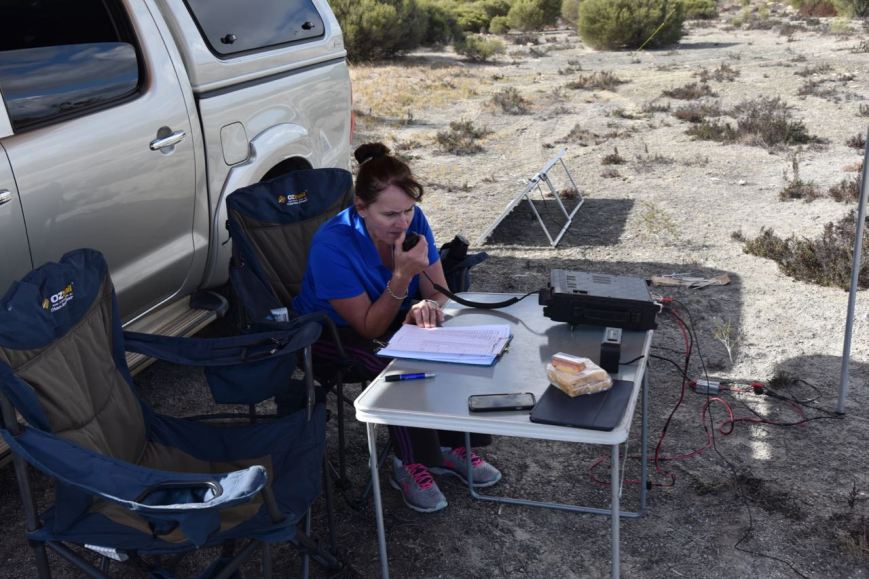
Marija and I then swapped the mic.  Marija called CQ on 7.165 and this was answered by John VK4TJ, followed by Mark VK4SMA, and then Keith AX3FMKE.  After a few minutes, Marija had 10 contacts in the log, qualifying the park for VKFF.  Marija’s 10th contact was with Terry VK5ATN.  Marija went on to log a total of 40 stations on 40m, including two New Zealand contacts: Owen ZL4CY and Ken ZL4KD.  And also a further Park to Park, with Gerard VK2IO/p in the Marramarra National Park VKFF-0307.

We then lowered the squid pole and inserted the links for the 80m band and Marija commenced calling CQ on 3.610.  This was answered by John VK5BJE with a big 5/9 plus signal, followed by Steve VK5ST and then Adrian VK5FANA.  Marija logged a total of 9 stations on 80m from VK2, VK3 and VK5.  Adrian VK5FANA was her 44th contact, thus qualifying the park for the global WWFF program.

We then lowered the squid pole again and removed the links and headed to the 20m band.  But I had left it too late.  It was now after 0730 UTC (5.00 p.m. local time) and the band, long path to Europe, had closed.  I had no takers on 20m.  So it was back to 40m for one final round of calls.  I logged a further 15 stations, including Andre ZL1TM, and John AX6NU/p on SOTA peak VK6/ SW-039.

DSC_1045

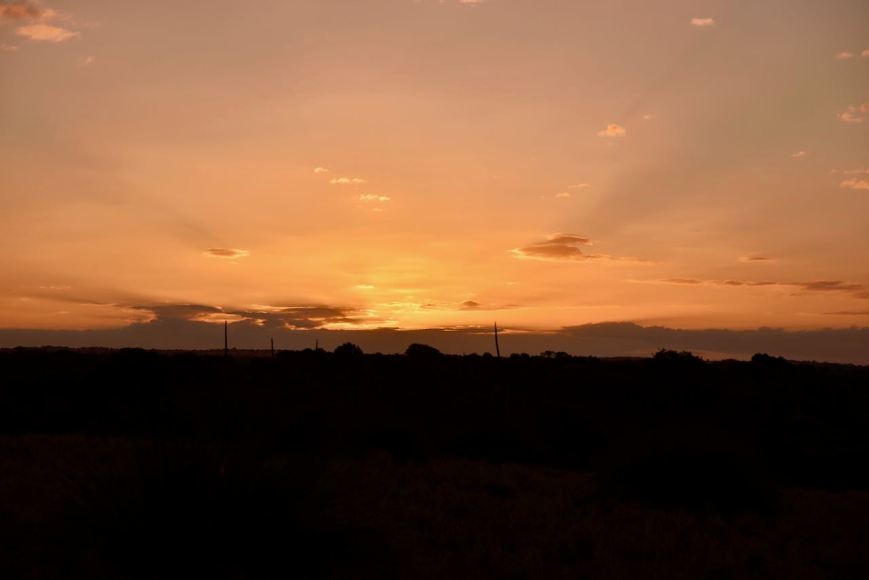
The sun was setting and it was also starting to get a bit chilly, and we had a good 2 hour drive to get back home.  So with a total of 114 QSOs in the log, including 6 Park to Park contacts, it was time to hit the road.  On the way home we worked Nick VK6NDX who was activating the Leschenault Peninsula Conservation Park VKFF-1430.  Nick had an excellent 5/9 signal into the mobile.  I also had a quick chat to my good mate Ted VK6NTE.  I also had a quick listen in on the 7130 DX Net, but could hear very few stations, so I decided not to check in.

We then stopped off at the Riverside Hotel at Tailem Bend for a meal.  We often stop off here and can highly recommend the meal.  During the day you can sit outside on the balcony which overlooks the mighty River Murray.

DSC_1049

Marija worked the following stations on 40m SSB:-

  1. VK1DI/2 (Yanunbeyan State Conservation Area VKFF-1400)
  2. VK4FW/p (Glastonbury National Park VKFF-1197)
  3. VK4TJ
  4. VK4SMA
  5. AX3FMLE
  6. AX2PKT
  7. VK2PKT
  8. VK3CDR
  9. VK5FANA
  10. VK5ATN
  11. AX5ATN
  12. VK3UCD
  13. VK4NH
  14. AX4NH
  15. VK4DXA
  16. AX4DXA
  17. ZL4TY/VK4
  18. VK4FDJL
  19. VK2NP
  20. ZL4CY
  21. ZL4KD
  22. AX2LEE
  23. VK2LEE
  24. VK2EMI
  25. VK3ZD
  26. VK3MB
  27. VK3UH
  28. VK3BBB
  29. VK3PF
  30. AX3PF
  31. VK3KAI
  32. AX3KAI
  33. VK3SX
  34. AX3SX
  35. VK7JON
  36. VK6PCT/3
  37. VK3FIAN
  38. VK2YK
  39. VK2NEO
  40. VK2IO/p (Marramarra National Park VKFF-0307)

Marija logged the following stations on 80m SSB:-

  1. VK5BJE
  2. VK5PF
  3. VK5ST
  4. VK5FANA
  5. VK3SQ
  6. VK5VC
  7. VK2YK
  8. AX3FMKE
  9. VK2PH

I worked the following stations on 40m SSB:-

  1. VK1DI/2 (Yanunbeyan State Conservation Area VKFF-1400)
  2. VK3PF
  3. AX7ZGK
  4. AX5SFA
  5. VK3MDH/p
  6. VK3GGG
  7. VK3PMG
  8. AX3GGG
  9. AX3PMG
  10. AX3MRG/p
  11. VK5BJE
  12. VK7JON
  13. VK2HOT
  14. AX2HOT
  15. VK2PKT
  16. AX2PKT
  17. VK3ZZS/p
  18. VK2NP
  19. VK2LEE
  20. AX2LEE
  21. VK3UCD
  22. VK3FSPG
  23. VK3MPR
  24. VK5ATN
  25. VK3LDB
  26. VK2HHA
  27. AX2HHA
  28. VK4FW/p (Glastonbury National Park VKFF-1197)
  29. VK2EIR/p
  30. AX2FRKO/p
  31. VK2JNG/p
  32. VK3TKK/m
  33. VK4NH
  34. AX4NH
  35. VK4DXA
  36. AX4DXA
  37. ZL4TY/VK4
  38. VK4FDJL
  39. AX3ANL
  40. VK3ANL
  41. VK5FANA
  42. VK3SQ
  43. VK4SMA
  44. AX3FMKE
  45. VK3FDI
  46. VK3KSK
  47. VK4PDX
  48. VK2BHO
  49. VK3BMT
  50. VK2IO/p (Marramarra National Park VKFF-0307)
  51. VK2NEO
  52. ZL1TM
  53. VK3ARH
  54. AX2PDW
  55. VK3OHM/6
  56. VK2NP
  57. VK3ZPF
  58. AX2AKB
  59. VK2AKB
  60. VK2YK
  61. VK3SX
  62. AX3SX
  63. AX4ITT
  64. AX6NU/p (SOTA VK6/ SW-039)
  65. VK3BFR


References.

Birds SA, 2018, <https://birdssa.asn.au/location/bunbury-conservation-reserve/>, viewed 26th April 2018
State Library South Australia, 2018, <http://www.slsa.sa.gov.au/digitalpubs/placenamesofsouthaustralia/>, viewed 26th April 2018

Gum Lagoon Conservation Park 5CP-083 and VKFF-0886

Yesterday (Wednesday 25th April 2018) was ANZAC Day.  Some would say the most important date on the Australian calendar.  ANZAC Day is a National day of remembrance in both Australia and New Zealand that commemorates all Australians and New Zealanders “who served and died in all wars, conflicts, and peacekeeping operations”.

1e478a1c3128ec6bc89227eeb2d23512-rimg-w592-h276-gmir.jpg

And each year on ANZAC Day, Australian amateurs can replace the normal VK prefix with the special prefix of AX.  It is normally raining at this time of the year here, but yesterday was a beautiful sunny day, and Marija and I decided to pack the 4WD and head to the Upper South East of South Australia to conduct two park activations: The Gum Lagoon Conservation Park, and the Bunbury Conservation Reserve.  These would both be unique parks for Marija and I in the World Wide Flora Fauna program and the VK5 Parks Award.

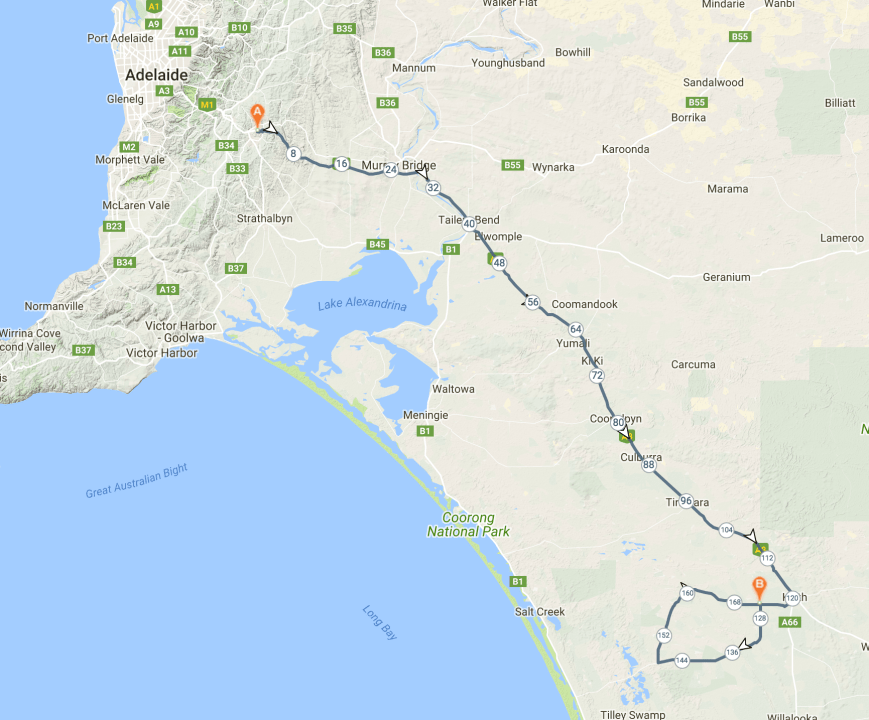
We had some travelling ahead of us.  We needed to travel to the town of Keith, about 200km to the south east of our home, and then our to the parks.  By the end of the day we had travelled around 450 km.

Screen Shot 2018-04-26 at 9.33.58 am.png

Above:- Map showing our route for the day.  Map courtesy of plotaroute.

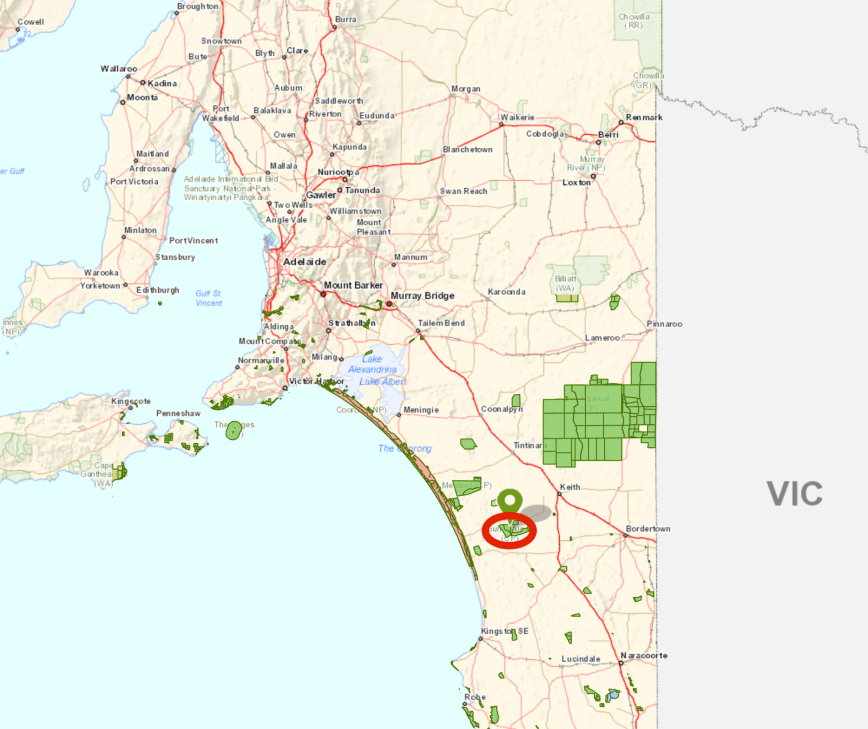
Our first planned park activation for the day was the Gum Lagoon Conservation Park 5CP-083 & VKFF-0886, which is located about 269 km south east of Adelaide, and around 45 km south west of the town of Keith.

Screen Shot 2018-04-25 at 9.41.55 pm.png

Above:- Map showing the location of the Gum Lagoon Conservation Park in the Upper South East of South Australia.  Map courtesy of Location SA Map Viewer.

We travelled out of Mount Barker along the South Eastern Freeway and along the way we logged Ivan AX5HS and Andy AX5LA who were activating the Chowilla Game Reserve VKFF-1697 in the Riverland region of South Australia.  They were strength 9 into the mobile.  This was a good sign of things to come with band conditions.  Ivan and Andy informed us that Peter VK5PE was with them and was operating on 40m, so we headed there and also logged Peter who was 5/9 + into the mobile.  Here is a link to the Riverland Radio Club’s website with info on their activation…..

https://rrc.org.au/2018/04/25/anzac-day-activation-25-04-2018/

Both Marija and I then logged Rob VK4AAC/2 who was activating the Murramarang National Park VKFF-0371.  Rob had a good 5/8 signal into the mobile.

We then continued onto the Dukes Highway, passing through the towns of Coomandook, Yumali, Ki Ki, Coonalpyn, Culburra, and Tintinara, until we reached the town of Keith.   Along the way we logged Stef AX5HSX/3 who was activating the Port Phillip Heads Marine National Park VKFF-0954.  We also chatted with Mike VK3KMH, Ross AX7ALH and Mark VK3MDH/p.  Just outside of Tintinara we logged Danny AX5DW in the Chowilla Game Reserve VKFF-1697.

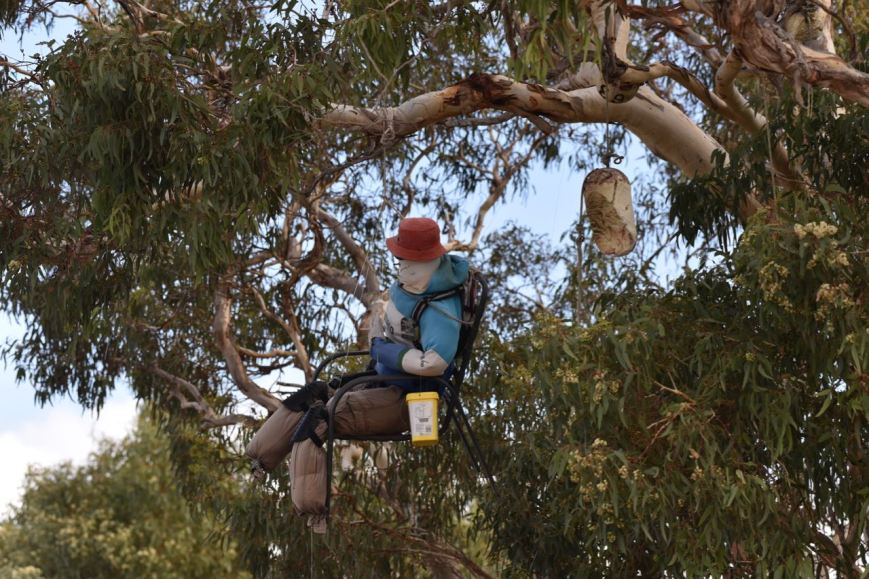
We then took the Mount Charles Road and then turned left onto Cantara Road.  It is amazing some of the things we have seen in our travels.  And this trip didn’t disappoint.  Not sure what the significance is, but we found the fellow below hanging from a tree.

DSC_1015

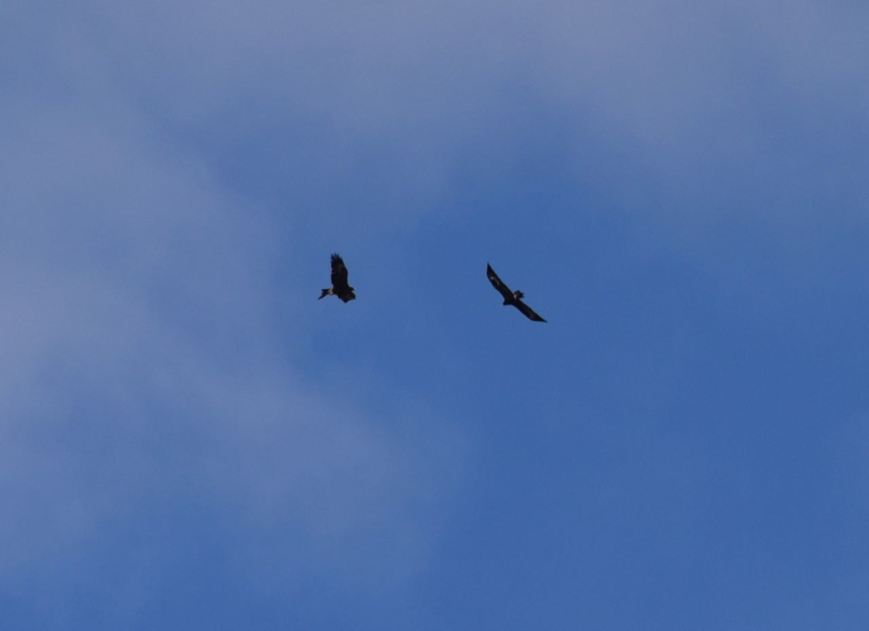
A little further on we spotted the two Wedge Tailed Eagles below, soaring in the breeze above some paddocks.  Unfortunately they were a little too far away and too high for any good photos.  Wedge Tailed Eagles are the largest bird of prey in Australia.  They have a wingspan of up to 2.84 metres.  The females are larger than the males and can weigh up to 5.8 kg.  The wedge tail of the bird is clearly visible when they are in flight.

DSC_1013

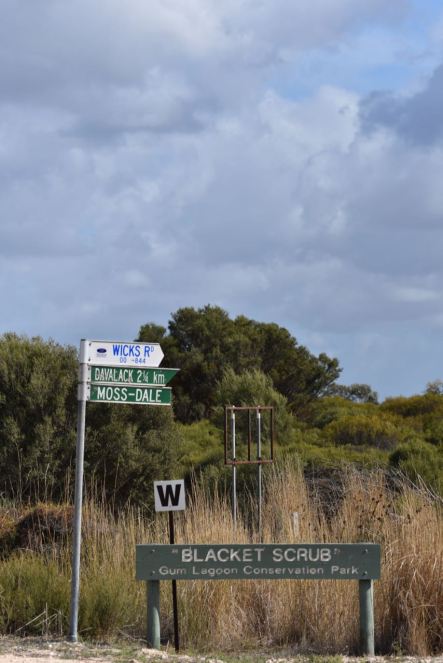
As we travelled along Cantara Road we logged Mick AX3GGG/p who was in the Jilpanger Nature Conservation Reserve VKFF-2118.  We soon reached the north eastern corner of the park at the intersection of Cantara Road, Wicks Road and Eatts Road.  This section of the park is known as Blacket Scrub, and is well signposted.

DSC_1017

We drove a little further up Cantara Road, looking for a clearing in the scrub.  Cantara Road is dirt but is in good condition and was quite busy.  It links the Dukes Highway with the Princes Highway and the Coorong.

The Gum Lagoon Conservation Park is a large park, comprising around 2,700 hectares.  It was originally proclaimed as Gum Lagoon National Park in August 1970 and constituted as Gum Lagoon Conservation Park on proclamation of the National Parks and Wildlife Act in 1972.  Historically, the area that is now Gum Lagoon Conservation Park had been held under miscellaneous and pastoral leases for “grazing and cultivation”.

Screen Shot 2018-04-26 at 11.26.53 am.png

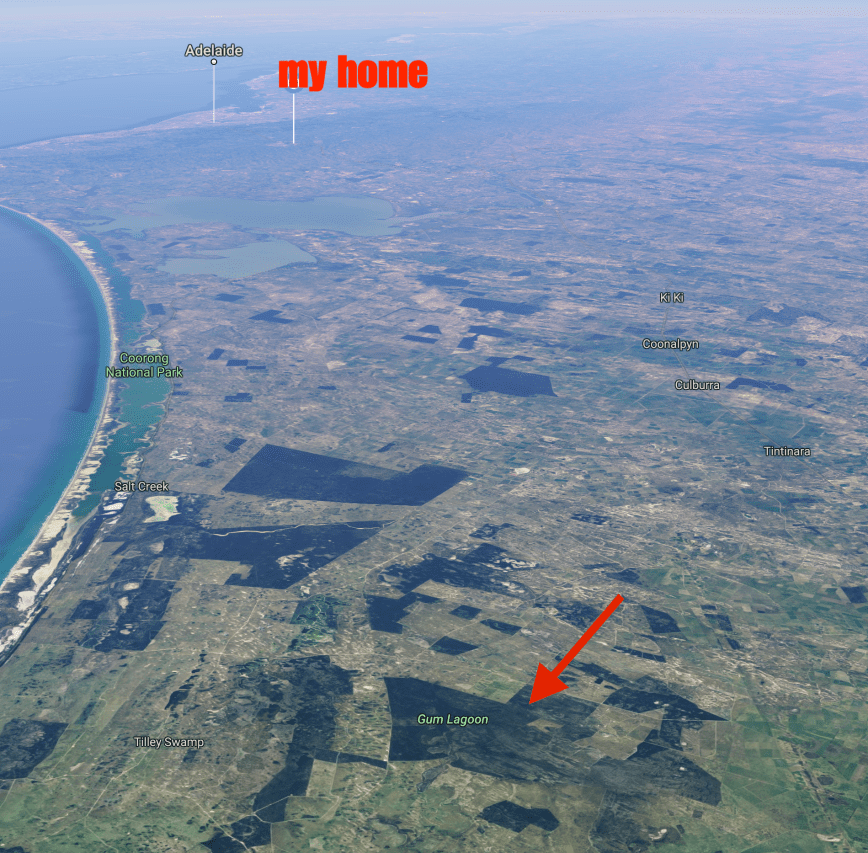
Above:- Aerial shot of the Gum Lagoon Conservation Park, with the Coorong National Park to the left of the picture, and my home QTH and Adelaide in the distance.  Image courtesy of google maps

The park contains grasslands, herblands, heathlands, woodlands and scrub.  About 375 native plants have been recorded within the park, including four which are nationally threatened or rare.

The Duck Island Watercourse flows through the park.  It is an important flushing mechanism for the Tea-tree heathlands and wetland basins along its route.  The watercourse sustains a corridor of wetland habitat joining wetlands on Duck Island with Naen Naen Swamp in the park.

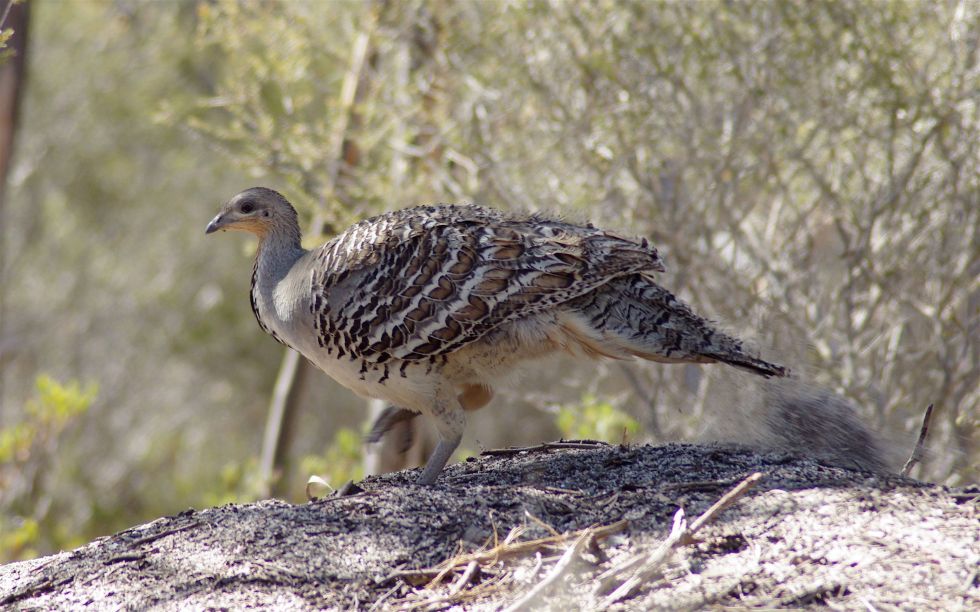
The conservation park has been identified by BirdLife International as an Important Bird Area, principally because it supports an apparently sustainable population of the vulnerable Malleefowl.  The Malleefowl is a stocky ground-dwelling bird, about the size of a domestic chicken. They are notable for the large nesting mounds constructed by the males.

Leipoa_ocellata_-Ongerup,_Western_Australia,_Australia-8.jpg

Above: Mallefowl.  Image courtesy of wikipedia.

Birds SA have recorded a total of 133 bird species in the park including  Malleefowl, Superb Fairywren, New Holland Honeyeater, Red Wattlebird, Brown Hornbill, White-browed Woodswallow, Grey Shrikethrush, Grey Fantail, Swamp Harrier, White-necked Heron, Spotted Nightjar, Yellow-tailed Black Cockatoo, Slender-billed Thornbill, and Red-browed Finch

A number of native animals call the park home including some mammals of conservation significance including the rare Eastern Grey Kangaroo, Red-necked Wallaby, and Common Wombat, and the regionally rare Little Pygmy Possum.

We found a clearing in the scrub off Cantara Road and set up, rolling out the awning on the 4WD as the sun had quite some bite to it.  We used the Yaesu FT-897 and the 20/40/80m linked dipole for this activation.

Screen Shot 2018-04-25 at 9.42.53 pm.png

Above:- Map of the Gum Lagoon Conservation Park showing our operating spot in the north eastern corner of the park.  Map courtesy of Location SA Map Viewer.

After setting up Marija and I had a tune across the 40m band and found Stef AX5HSX/3 on 7.139, activating the Port Phillip Heads Marine National Park VKFF-0954.  It was a great way to kick off the activation, with a Park to Park contact.  We then found Mick AX3GGG/p on 7.144 in the Jilpanger Nature Conservation Reserve VKFF-2118 in western Victoria.

Following logging Mick we moved down to 7.150 where I commenced calling CQ.  This was answered by Brett VK3FLCS and then Ivan AX5HS/p and Andy AX5LA/p who were in the Chowilla Game Reserve VKFF-1697 in the Riverland region of South Australia.  And they were roaring in at signal strength 5/9 plus.

The 40m band was in very good condition.  The best I have heard it in a long time.  There was no fading (QSB) on signals as there has been in recent weeks, with signals from all across Australia coming in exceptionally well.  And it was pleasing to have the good old mini VKFF pile ups occurring.  The band was in such good shape, that within 30 minutes I had 44 contacts in the log, having qualified the park for the VKFF program.  Erick AX7EK was my 44th contact.

DSC_1018

I logged a total of 66 contacts on 40m before swapping the mic with Marija.  As Marija holds a Foundation licence, her power output is limited to 10 watts PEP.  Marija’s first contact after calling CQ was with Peter VK3PF, followed by Linda VK7QP (Marija’s 10th contact), and then Charlie VK5VC.  Marija had qualified the park for VKFF and continued on, logging a total of 57 stations from VK2, VK3, VK4, VK5, and VK7.  This included some more Park to Park contacts & a SOTA contact:

  • Gerard VK2IO/p – SOTA VK2/ SY-001
  • Craig VK3NCR/2 – Koscisusko National Park VKFF-0269
  • Liz AX2XSE/p – Jimberoo National Park VKFF-1172
  • Peter VK2KNV/p – Jimberoo National Park VKFF-1172
  • David VK2CDS/p – Hunter Wetlands National Park VKFF-0595
  • Ivan AX5HS/p – Chowilla Regional Reserve, VKFF-1698
  • Ivan VK5HS/p – Chowilla Regional Reserve, VKFF-1698
  • Andy AX5LA/p – Chowilla Regional Reserve, VKFF-1698
  • Andy VK5LA/p – Chowilla Regional Reserve, VKFF-1698
  • Peter VK5PE/p  – Chowilla Regional Reserve, VKFF-1698
  • Danny AX5DW/p – Chowilla Regional Reserve, VKFF-1698
  • Danny VK5DW/p – Chowilla Regional Reserve, VKFF-1698

DSC_1024

I then called CQ again on 7.150 and logged a further 11 stations including two further Park to Park contacts:

  • Neil AX4HNS/p  – Mount Barney National Park VKFF-0338
  • Ian VK1DI/2 – Yanunbeyan State Conservation Area VKFF-1400

It was very hard getting off 40m as there were so many callers.  And we were running a little short of time.  So I had to cut it short with a few of the final callers, as I really wanted to quickly try 80m and 20m and then head off to the next park.  So with 88 contacts in the log we moved to 3.610 on 80m.  First in the log was John VK5BJE, who was patiently waiting for us.  John had a brilliant 5/9 plus signal from the Adelaide Hills.  Next up was Peter VK5ZPG at Quorn in the north of South Australia, and then Greg AX5GJ who was running QRP with just 5 watts, with a good 5/8- signal.  I logged a further 3 stations on 80m, David VK3UCD, Keith AX3FMKE and finally Eric VK5KBB.

To complete the activation I put out a few quick calls on 14.310 on 20m.  I logged George VK4GSF and then Greg AX5GJ.  However a further dozen CQ calls yielded no takers, so we packed up and hit the road.  Sadly I didn’t have time to try the 15m band.

DSC_1023

This was a great activation, with excellent band conditions on 40m.  Between us we had 159 contacts in the log, including 44 Park to Park contacts.

As we were about to drive out of the park we logged from the mobile, Peter AX3ZPF/p who was in the Adams Creek Nature Conservation Reserve VKFF-2034.

Marija worked the following stations on 40m SSB:-

  1. AX5HSX/3 (Port Phillip Heads Marine National Park VKFF-0954)
  2. VK5HSX/3 (Port Phillip Heads Marine National Park VKFF-0954)
  3. AX3GGG/p (Jilpanger Nature Conservation Reserve VKFF-2118)
  4. AX3PMG/p (Jilpanger Nature Conservation Reserve VKFF-2118)
  5. VK3GGG/p (Jilpanger Nature Conservation Reserve VKFF-2118)
  6. VK3PMG/p (Jilpanger Nature Conservation Reserve VKFF-2118)
  7. AX5HS/p (Chowilla Game Reserve VKFF-1697)
  8. AX5LA/p (Chowilla Game Reserve VKFF-1697)
  9. VK3PF
  10. VK7QP
  11. VK5VC
  12. VK2KYO
  13. VK5FANA
  14. VK5BMC
  15. VK5KLV
  16. VK3SQ
  17. VK2HHA
  18. AX2HHA
  19. VK2UH
  20. VK5KX
  21. VK3HQZ
  22. VK3VT
  23. VK3GG
  24. VK3AB
  25. VK3MUD
  26. VK5LA/m
  27. AX5LA/m
  28. VK3UCD
  29. VK5HS/m
  30. AX5HS/m
  31. VK3MIJ
  32. VK2IO/p (SOTA VK2/ SY-001)
  33. VK3UH
  34. VK3NBL
  35. VK3CWF
  36. VK3MDH/p
  37. VK3MRG/p
  38. AX3MRG/p
  39. VK3NCR/2 (Koscisusko National Park VKFF-0269)
  40. AX3FMKE
  41. VK3FCMC
  42. AX2XSE/p (Jimberoo National Park VKFF-1172)
  43. VK2KNV/p (Jimberoo National Park VKFF-1172)
  44. AX3PF
  45. VK2NP
  46. VK2CDS/p (Hunter Wetlands National Park VKFF-0595)
  47. VK4GSF
  48. AX3FSTU
  49. AX7ALH
  50. VK3SS
  51. AX5HS/p (Chowilla Regional Reserve, VKFF-1698)
  52. VK5HS/p (Chowilla Regional Reserve, VKFF-1698)
  53. AX5LA/p (Chowilla Regional Reserve, VKFF-1698)
  54. VK5LA/p (Chowilla Regional Reserve, VKFF-1698)
  55. VK5PE/p (Chowilla Regional Reserve, VKFF-1698)
  56. AX5DW/p (Chowilla Regional Reserve, VKFF-1698)
  57. VK5DW/p (Chowilla Regional Reserve, VKFF-1698)
  58. AX4HNS/p (Mount Barney National Park VKFF-0338)
  59. VK1DI/2 (Yanunbeyan State Conservation Area VKFF-1400)

Marija logged the following stations on 80m SSB:-

  1. VK5BJE
  2. VK5ZPG
  3. AX5GJ

I worked the following stations on 40m SSB:-

  1. AX5HSX/3 (Port Phillip Heads Marine National Park VKFF-0954)
  2. VK5HSX/3 (Port Phillip Heads Marine National Park VKFF-0954)
  3. AX3GGG/p (Jilpanger Nature Conservation Reserve VKFF-2118)
  4. AX3PMG/p (Jilpanger Nature Conservation Reserve VKFF-2118)
  5. VK3GGG/p (Jilpanger Nature Conservation Reserve VKFF-2118)
  6. VK3PMG/p (Jilpanger Nature Conservation Reserve VKFF-2118)
  7. VK3FLCS
  8. AX5HS/p (Chowilla Game Reserve VKFF-1697)
  9. AX5LA/p (Chowilla Game Reserve VKFF-1697)
  10. VK5HS/p (Chowilla Game Reserve VKFF-1697)
  11. VK5LA/p (Chowilla Game Reserve VKFF-1697)
  12. VK2EMI
  13. VK3MVS
  14. VK7JON
  15. VK5FANA
  16. VK5KLV
  17. VK3FSPG
  18. VK3MPR
  19. VK3SQ
  20. VK2HHA
  21. AX2HHA
  22. VK3BBB
  23. VK2CCP/3
  24. VK2NP
  25. VK5BJE
  26. AX3AHR
  27. VK5TN
  28. AX2PKT
  29. VK2PKT
  30. VK3TKK/m
  31. AX3TKK/m
  32. VK3VIN
  33. VK5KX
  34. VK7QP
  35. VK3ARH
  36. VK4TJ
  37. VK3UH
  38. VK4NH
  39. AX4NH
  40. VK4DXA
  41. AX4DXA
  42. ZL4TY/VK4
  43. VK5MR
  44. AX7EK
  45. AX5GJ
  46. VK5FMWW
  47. VK3AB
  48. VK3MUD
  49. VK3MDH/p
  50. VK3MRG/p
  51. AX3MRG/p
  52. VK2KYO
  53. VK3ANL
  54. AX3ANL
  55. VK3NCR/2 (Koscisusko National Park VKFF-0269)
  56. VK5ATN
  57. VK2VW
  58. AX5TRM
  59. VK5TRM
  60. AX3FLJD
  61. VK6PCT/3
  62. VK3HQZ
  63. VK3VT
  64. VK3GG
  65. VK5VC
  66. VK5BMC
  67. VK2IO/p (SOTA VK2/ SY-001)
  68. AX2XSE/p (Jimberoo National Park VKFF-1172)
  69. VK2KNV/p (Jimberoo National Park VKFF-1172)
  70. VK2CDS/p (Hunter Wetlands National Park VKFF-0595)
  71. AX5DW/p (Chowilla Regional Reserve, VKFF-1698)
  72. VK5DW/p (Chowilla Regional Reserve, VKFF-1698)
  73. VK5PE/p (Chowilla Regional Reserve, VKFF-1698)
  74. AX5HS/p (Chowilla Regional Reserve, VKFF-1698)
  75. VK5HS/p (Chowilla Regional Reserve, VKFF-1698)
  76. AX5LA/p (Chowilla Regional Reserve, VKFF-1698)
  77. VK5LA/p (Chowilla Regional Reserve, VKFF-1698)
  78. AX3ASU
  79. VK5ZPG
  80. VK3FKL
  81. VK2USH
  82. VK5PL
  83. VK4FDJL
  84. AX4HNS/p (Mount Barney National Park VKFF-0338)
  85. AX5KBB
  86. VK3KOP/p
  87. VK5DC
  88. VK1DI/2 (Yanunbeyan State Conservation Area VKFF-1400)

I logged the following stations on 80m SSB:-

  1. VK5BJE
  2. VK5ZPG
  3. AX5GJ
  4. VK3UCD
  5. AX3FMKE
  6. VK5KBB
  7. AX5KBB

I logged the following stations on 20m SSB:-

  1. VK4GSF
  2. AX5GJ


References.

Birds SA, 2018, <https://birdssa.asn.au/location/gum-lagoon-conservation-park/>, viewed 26th April 2018

Department for Environment and Heritage, 2005, Gum Lagoon Conservation Park Management Plan

Wikipedia, 2018, <https://en.wikipedia.org/wiki/Anzac_Day>, viewed 26th April 2018

Wikipedia, 2018, <https://en.wikipedia.org/wiki/Wedge-tailed_eagle>, viewed 26th April 2018
Wikipedia, 2018, <https://en.wikipedia.org/wiki/Malleefowl>, viewed 26th April 2018
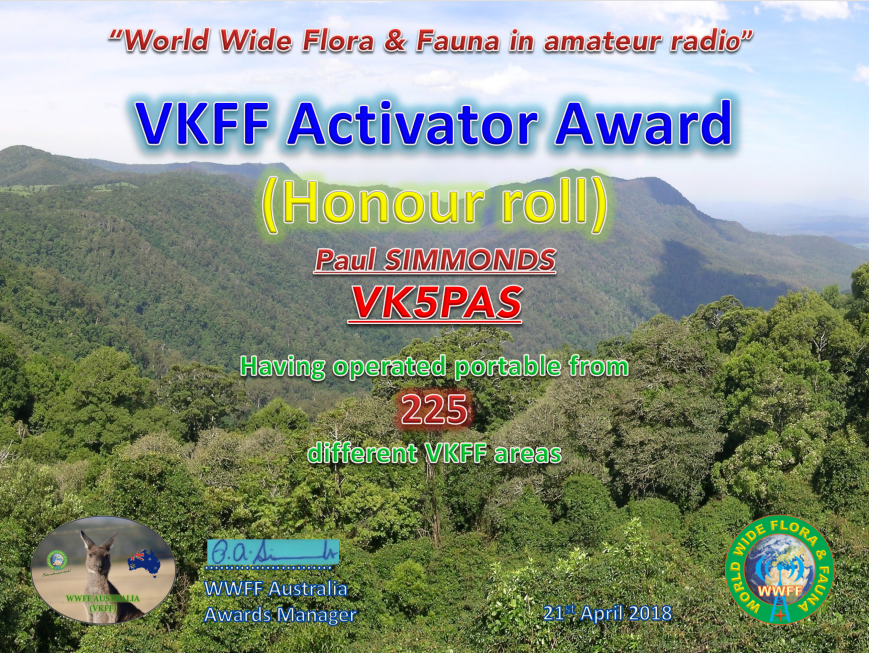
VKFF Hunter Honour Roll 225

Yesterday’s activation of Ferguson Conservation Park was my 225th unique VKFF park as an activator.

Many of those parks I’ve been back to 3-7 times over, so they all count towards the Boomerang Award. But Ferguson was my 225th unique.

Thankyou to all of the Hunters that participate in the VKFF program. I’ve had a huge amount of fun activating and have seen some great places around Australia.


VK5PAS VKFF Activator Honour Roll 225.png

Ferguson Conservation Park 5CP-066 and VKFF-0880

I didn’t plan on doing a park activation today (Saturday 21st April 2018), but when I heard so many park activators out this morning, I decided to head out and enjoy the sunshine myself.  We have been experiencing very unseasonal weather here, with some very warm days for April.  And today was no exception, with the temperature being about 28 deg C.

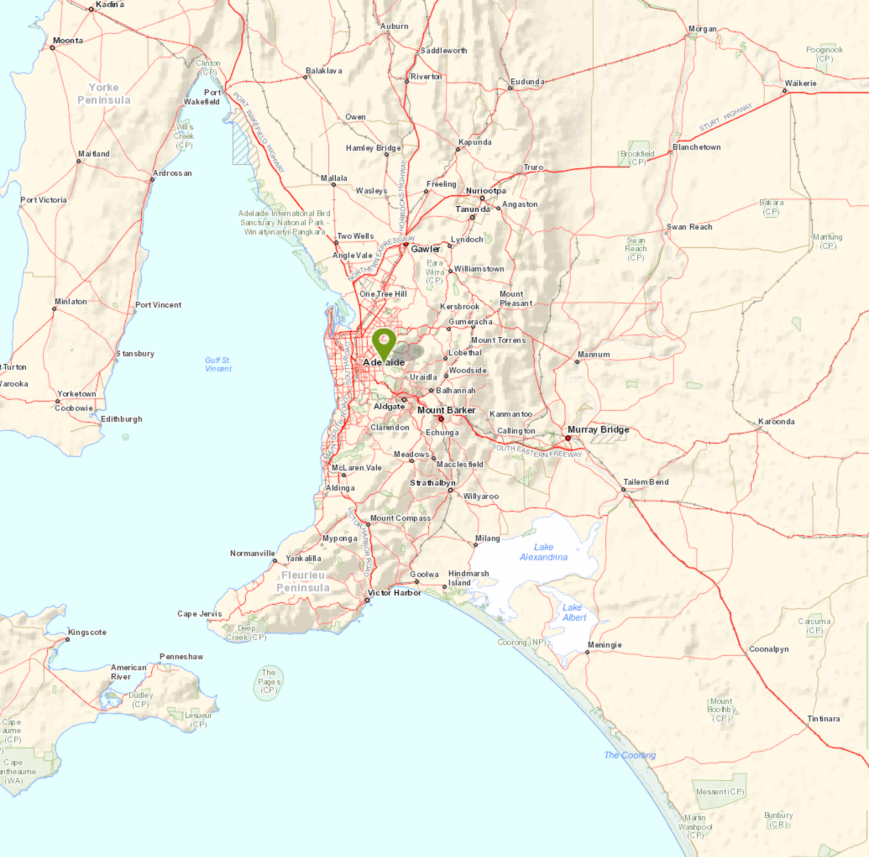
I chose to head to the Ferguson Conservation Park 5CP-066 & VKFF-0880, which is a park I have not previously been to.  The park is located in the eastern suburbs of Adelaide, in the suburb of Stonyfell, about 7 km east of the Adelaide central business district.

This was to be my 225th unique park as an activator in the World Wide Flora Fauna (WWFF) program.

Screen Shot 2018-04-21 at 6.28.56 pm.png

Above:- Map showing the location of the Ferguson Conservation Park in the eastern suburbs of Adelaide.  Map courtesy of Location SA Map Viewer.

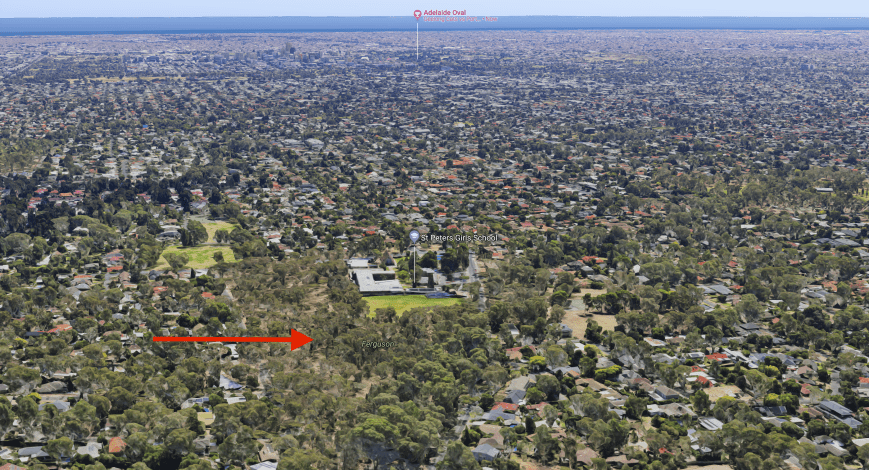
The Ferguson Conservation Park is about 8 hectares (20 acres) in size and was established on 1st January 1949.  The park consists of undulating land in the foothills of the Mount Lofty Ranges.  The highest point in the park is around 180 metres above sea level (ASL).  The lowest point in the park is around 140 metres ASL.  Two creeks drain the park, including the Stonyfell Creek which is the larger of the two.  The park is bordered by Stonyfell Road, Marble Terrace, and Hallett Road in the suburb of Stonyfell and is surrounded by housing the St Peters Girls School.

Screen Shot 2018-04-21 at 7.17.34 pm.png

Above:- Aerial shot showing the Ferguson Conservation Park in the foreground, surrounded by the eastern suburbs of Adelaide.  Image courtesy of google maps.

The park consists of open woodland, with remnant blue gum, native pines and sheaoks.  Over 145 native plant species have been recorded from the park, including 17 species of grasses, 23 species of orchids and 14 species of lilies.  It is quite amazing to think that the Adelaide Plains once looked like this prior to European settlement in the 1800’s.

The history of this park is extremely interesting.  Between 1879-1881 Simpson Newland (1835-1925) purchased two parcels of land which nowadays, together comprise the St Peters Girls School and the Ferguson Conservation Park.  Newland was born in Staffordshire England and was a pastoralist, author and politician.  He was a competent stockrider and bushman and served in parliament from 1885-1886.  During his life he was President of the South Australian branch of the Royal Geographical Society of Australasia, and the South Australian Zoological and Acclimatization Society.

A110012_246x550.jpg

Above:- Simpson Newland.  Image courtesy of http://www.adb.anu.edu.au

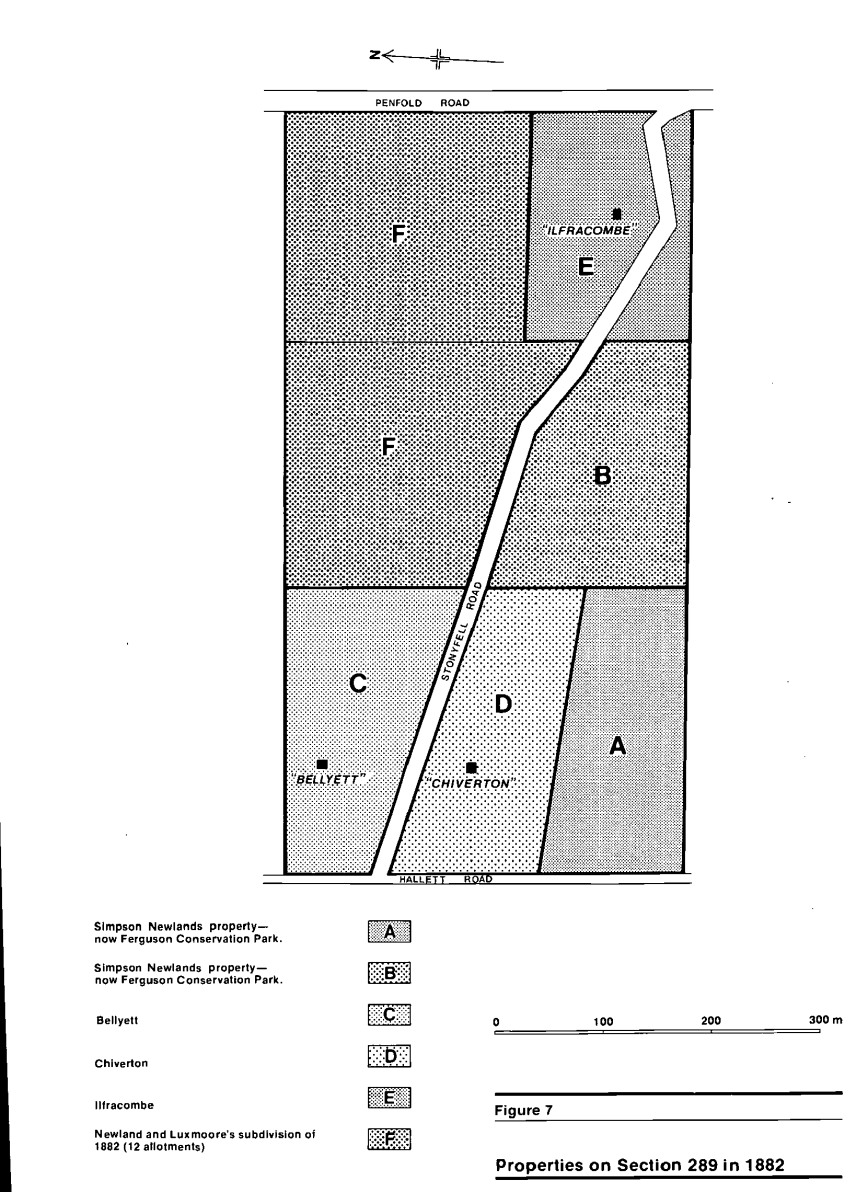
Newland purchased 3.5 hectares of land in December 1879 (shown as Area A below) and in 1882 he purchased a further 4.5 hectares (shown as Area B below).  The current day Ferguson Conservation Park is composed of Areas A and B.  In 1881, one portion of the land purchased by Newland, now the school, was sold.

Screen Shot 2018-04-21 at 9.28.59 pm

Above:- The Ferguson Conservation Park is composed of the areas designated as A and B above.  Image courtesy of National Parks SA

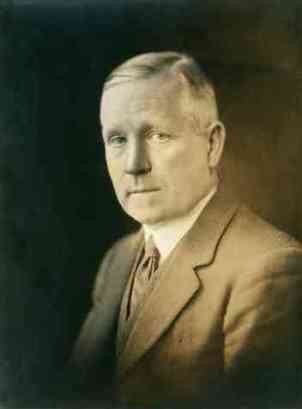
In 1902 Simpson Newland transferred the remaining property to his son, Sir Henry Simpson Newland (1873-1969).  Henry Newland was a surgeon and served during World War One with the Australian Imperial Force in Egypt, Lemnos, Gallipoli and France, gaining experience of military surgery at Ypres and Passchendale in Belgium.  He was knighted in 1928.

B6071.jpg

Above:- Sir Henry Simpson Newland.  Image courtesy of SA State Library

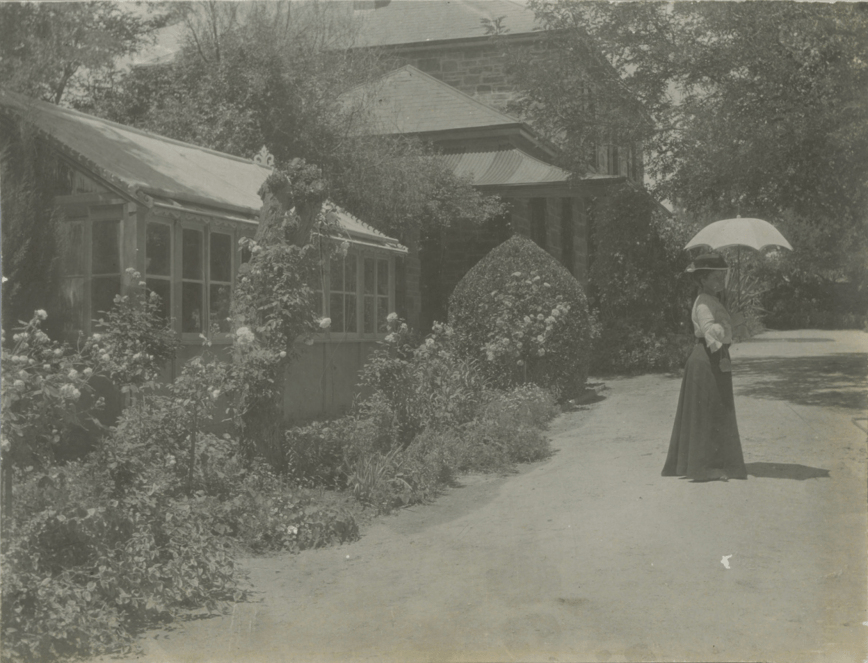
In 1926, following the death of Simpson Newland, Alexander Melrose (1865-1944) acquired the land.  Melrose was a solicitor, writer and patron of the arts.  He was a governor of the Botanic Garden, Adelaide (from 1927), and of the Public Library, Museum and Art Gallery of South Australia (1928-40).  Miss Alice Euphermia ‘Effie’ Ferguson (1871-1949), Melrose’s niece, lived with him and cared for him at his home Chiverton, at Wattle Park  (adjacent to the park) in the eastern suburbs of Adelaide until his death in 1944.

Screen Shot 2018-04-21 at 7.26.03 pm.png

Above:- Alice Ferguson? at Chiverton, c. 1910.  Image courtesy of State Library of South Australia

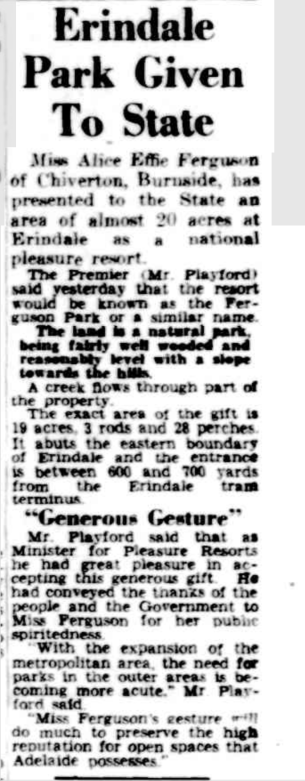
Upon his death in 1944 it was his wish that his niece, Alice Ferguson, be offered the land.  Miss Ferguson purchased the land from his estate and shortly before her death in June 1949, at the suggestion of Sir Henry Newland, she gave the land to the South Australian Government ‘for the benefit of the public in perpetuity’.  It was just 7 days before her death that she added a codicil to her will by which she bequeathed the property to the Minister of the Crown.

The South Australian Premier at the time, Thomas Playford said:

“With the expansion of the metropolitan area, the need for parks in the outer areas is becoming more acute….Miss Ferguson;s gesture will do much to preserve the high reputation for open spaces that Adelaide possesses”.

Screen Shot 2018-04-21 at 7.23.27 pm.png

Above:- Article from The Advertiser, Fri 24th June 1949.  Courtesy of Trove.

In 1957 Sir Henry Simpson wrote the following of his father’s and Alexander Melrose’s interest in the Ferguson Park property:

“I have had an interest, dating from boyhood, in the welfare of the native woodland at Erindale, now known as the Ferguson Reserve.  My father cherished its bird life.  When the late Mr. Alick Melrose acquired the property he continued to bestow the same care on it and planted many native Australian trees and shrubs with his own hands, adding to its attractions.  When he died it appeared likely that subdivision and housing would be its fate.  However Miss Ferguson, a very old friend and my patient at the time, adopted my suggestion that she should purchase that portion of her uncle’s estate.  With the co-operation of his executors, and the devoted interest of her agent, this was achieved, the property at Miss Ferguson’s wish becoming a public recreation reserve in perpetuity”.

Ferguson was initially managed by the South Australian Government Tourist Bureau as the Ferguson National Pleasure Resort.  In 1972 it came under the control of the National Parks & Wildlife Service and until 1976 it was known as the Ferguson Recreation Park.

Mr. Ken A. Preiss (posthumously recognised with an Order of Australia in the 2014 Australia Day Honours for his contribution to conservation, the environment and the community) submitted several reports highlighting the importance of preserving the native bushland in Ferguson Park.  In 1973 Preiss made a submission through the Nature Conservation Society of South Australia to the National Parks & Wildlife Advisory Council that the park be rescheduled as the Ferguson Conservation Park.  Following receipt of Preiss’s submission, the Council recommended to the Minister of Environment & Conservation that the Ferguson Recreation Park should be managed as a Conservation Park.

The then Minister enquired of the South Australian Crown Solicitor if reclassifying the park would violate the terms of Miss Alice Ferguson’s bequest.  This was again this could take place and subsequently recommended to the South Australian Governor, Sir Mark Oliphant.

On the 24th June 1976 the park was gazetted as the the Ferguson Conservation Park.  Interestingly, shortly after being gazetted it was realised that the correct procedure to gazette the park had not been followed.  As a result the gazettal was found to be invalid and the park was correctly gazetted on 2nd June 1977.

A number of native animals call the park home including koalas, Common Brushtail Possum and Common Ringtail Possum.  Numerous native birds can also be found in the park including Rainbow Lorikeets, Noisy Miners, Red Wattlebirds, and Kookaburras.

The park is well signposted and has an information board and a memorial plaque which reads:-

“This Park was presented to the Government of South Australia by the late Miss A.E. Ferguson in June 1949 at her express wish it has been dedicated as a National Pleasure Resort for the benefit of the public in perpetuity”.

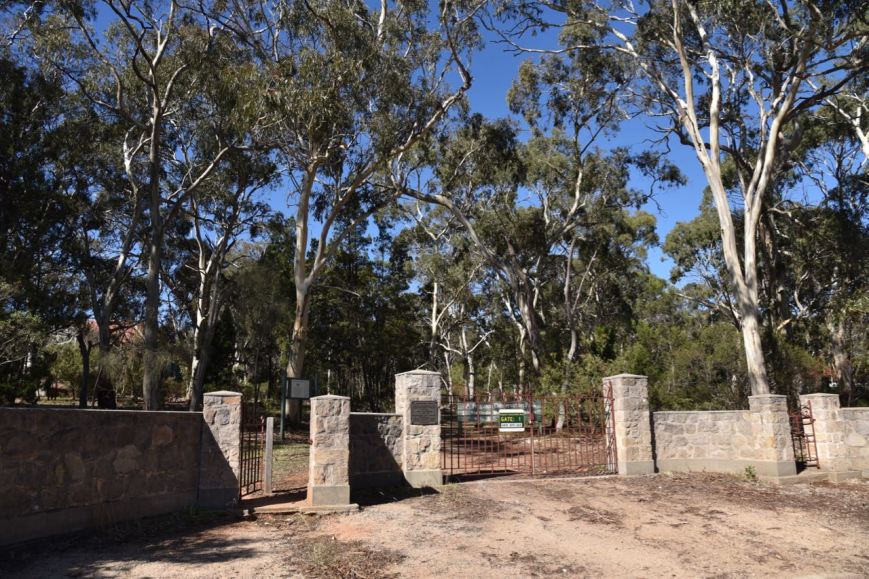
There are some ornamental stone gates off Hallett Road on the western side of the park  which were erected between 1950-1951.

DSC_0996

I initially drove along Marble Terrace and followed the southern boundary of the park.  Houses are located on the southern side of Marble Terrace, and I was a little worried that the noise floor might be a bit high.  So I headed to Stonyfell Road and the northern side of the park.  I parked the car on Stonyfell Road and entered the park near the eastern boundary of the St Peters Girls School.

DSC_0995

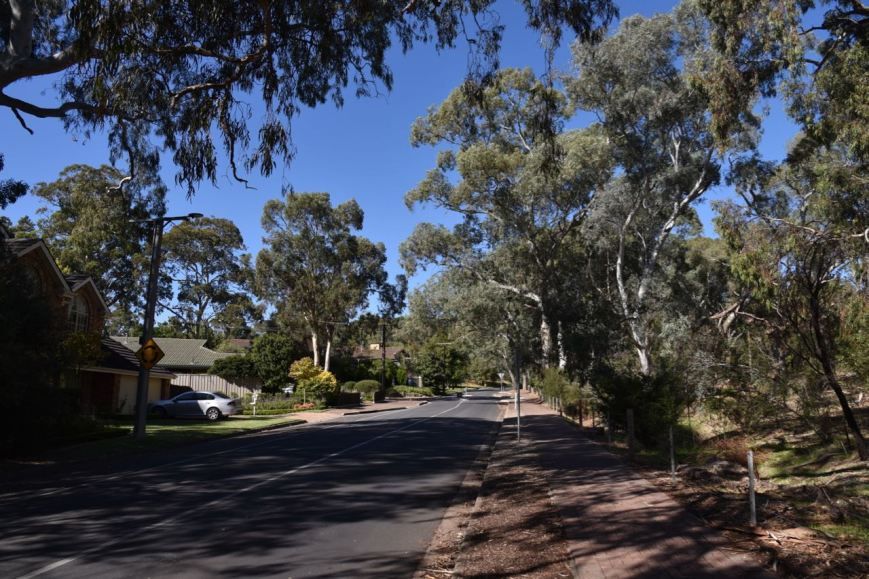
Above:- Stonyfell Road, with houses on the left and the park on the right of the picture.

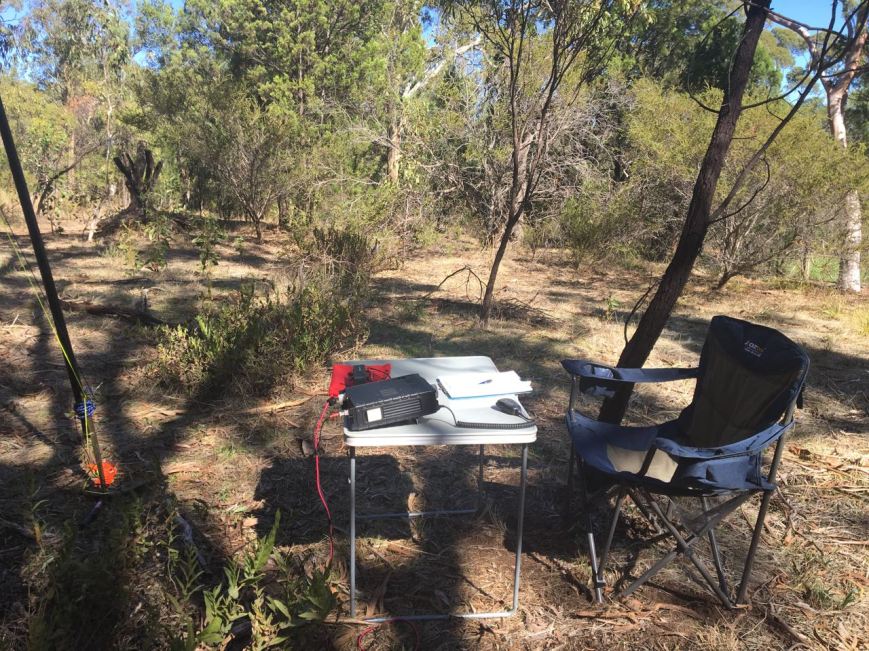
It was coming up towards 11.30 a.m. local time and it was quite a warm morning, so I chose a nice shady spot underneath some gum tree.  For this activation I ran the Yaesu FT-897, 40 watts output, and the 20/40/80m linked dipole.

Screen Shot 2018-04-21 at 6.45.42 pm.png

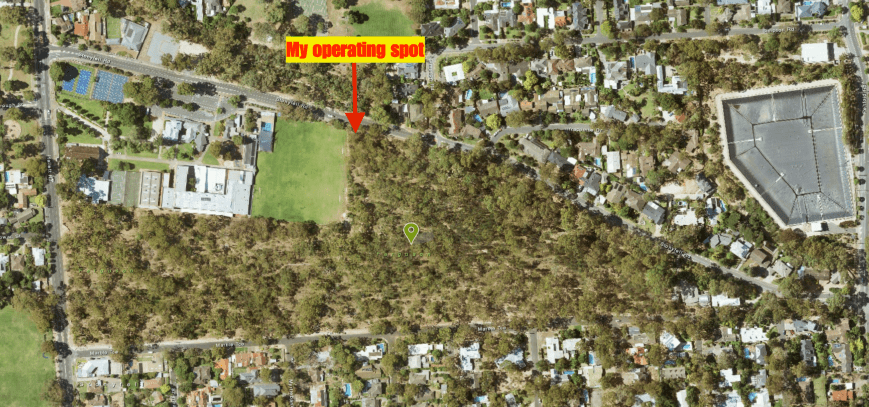
Above:- Aerial shot of the Ferguson Conservation Park showing my operating spot.  Image courtesy of Location SA Map Viewer.

I kicked off the activation by having a tune across the band, and found Gerard VK2IO/p on 7.139 in the Towra Point Nature Reserve VKFF-2004.  Gerard was a good 5/7 signal from New South Wales.  I then moved up to 7.144 and called CQ.  This was answered by Dick VK7DIK in Tasmania, followed by Ron VK3AHR and then Rob VK2QA.  Signals were down a bit compared to normal, due to a recent eruption from the sun, throwing the HF bands into a bit of a spin.

I had 10 contacts in the log after 12 minutes, thus qualifying the park for VKFF.  That makes 225 unique VKFF references for me as an activator.  Four QSOs later I logged another Park to Park contact, this time with Gerard VK2JNG/p who was in the Woomargama National Park VKFF-0547.  It was great to be able to log Bob VK6POP all the way over in Western Australia, around 2,100 km away (a local QSO here in Australia).  I also logged my lovely wife Marija VK5FMAZ.

But callers dried up very quickly, so I took the opportunity of heading to the 80m band.  I found Ivan VK5HS/p on 3.610 in the Moorook Game Reserve VKFF-1729 with a booming 5/9 plus signal.  Ivan was logged Park to Park and kindly handed over the frequency to me.  Here is a link to the Riverland Radio Club website about Ivan and Danny’s activation….

https://rrc.org.au/2018/04/21/moorook-game-reserve-activation-21-04-2018/

Next in the log was John VK5NJ down in Mount Gambier, who had followed me down from 40m.  Danny VK5DW/p who was with Ivan in the Moorook Game Reserve then called in, followed by Marija VK5FMAZ, Adrian VK5FANA on the Yorke Peninsula, and finally Mike VK5FMWW.  But once again, despite the band being in quite good shape, I didn’t receive any further calls, particularly from the VK5’s.

With 27 contacts in the log, I moved back to 7.139 on 40m and called CQ.  Brian VK3BBB was first up, followed by Andrew VK2UH, and then Tony VK3XV/m with Joe VK3YSP/m and Julie VK3YSP/m.  All were mobile on their way to Murrayville in western Victoria.  And wow, did they have a great signal coming out of the mobile, strength 9 plus.

I logged a further 14 contacts on 40m, including a Park to Park with Ken VK2KYO/3 in the Rutherglen Nature Conservation ReserveVKFF-2185.

I then moved to 20m and headed to 14.310 where I found Gerard VK2JNG/p in the Woomargama National Park VKFF-0547 VKFF-0547.  It was great to log Gerard Park to Park on a second band.  Gerard kindly handed over the frequency to me, and in response to my CQ call, Cliff VK2NP called in, followed by Dennis VK2HHA.  I logged a total of 7 contacts on 20m, including a Park to Park with Gerard VK2IO/p in the Towra Point Nature Reserve VKFF-2004 VKFF-2004, and also Kyoyu JA8RJE in Japan.

To finish off the activation I headed back to 40m and put out a final CQ call on 7.139.  Bob VK5FPAC gave me a shout with a 5/9 plus signal, followed by Andy VK5LA/p in the Lawari Conservation Park VKFF-1767 and then Adrian VK5FANA.  Prior to ‘calling stumps’ for the day I tuned across the band and logged Rob VK4AAC/2 who was activating the Narrawallee Creek Nature Reserve VKFF-1979.

IMG_1125

Despite a fairly slow start, I had qualified this new park for VKFF & WWFF, with a total of 57 contacts, including 9 Park to Park QSOs.  And my 225th unique park as an activator.

I worked the following stations on 40m SSB:-

  1. VK2IO/p (Towra Point Nature Reserve VKFF-2004)
  2. VK7DIK
  3. VK3AHR
  4. VK2QR
  5. VK2EXA
  6. VK2HHA
  7. VK3MRG
  8. VK7JON
  9. VK3UH
  10. VK3FCMC
  11. VK1AT
  12. VK4FDJL
  13. VK4AAC
  14. VK2JNG/p (Woomargama National Park VKFF-0547)
  15. VK2NP
  16. VK2LEE
  17. VK1DI
  18. VK7FOLK
  19. VK5NJ
  20. VK5FMAZ
  21. VK6POP
  22. VK3BBB
  23. VK2UH
  24. VK3XV/m
  25. VK3YSP/m
  26. VK3FOWL/m
  27. VK3TKK/m
  28. VK4ARW
  29. VK3BCM
  30. VK5BJE
  31. VK3PF/m
  32. VK3UA
  33. VK3PAH
  34. VK2VW
  35. VK2KYO/3 (Rutherglen Nature Conservation Reserve VKFF-2185)
  36. VK5FPAC
  37. VK5LA/p (Lawari Conservation Park VKFF-1767)
  38. VK5FANA
  39. VK4AAC/2 (Narrawallee Creek Nature Reserve VKFF-1979)

I worked the following stations on 80m SSB:-

  1. VK5HS/p (Moorook Game Reserve VKFF-1729)
  2. VK5NJ
  3. VK5DW/p (Moorook Game Reserve VKFF-1729)
  4. VK5FMAZ
  5. VK5FANA
  6. VK5FMWW

I worked the following stations on 20m SSB:-

  1. VK2JNG/p (Woomargama National Park VKFF-0547)
  2. VK2NP
  3. VK2HHA
  4. VK4GMH
  5. VK4SMA
  6. VK2IO/p (Towra Point Nature Reserve VKFF-2004)
  7. JA8RJE


References.

Australian Dictionary of Biography, 2018, <http://adb.anu.edu.au/biography/melrose-alexander-11105>, viewed 21st April 2018
Australian Dictionary of Biography, 2018, <http://adb.anu.edu.au/biography/newland-simpson-sim-7828&gt;, viewed 21st April 2018
Australian Dictionary of Biography, 2018,<http://adb.anu.edu.au/biography/newland-sir-henry-simpson-7826>, viewed 21st April 2018

Burnside Historical Society Inc, 2009, Newsletter March 2009

Christian Clare Robertson, 2018, <https://ccrobertson.com/adelaide/>, viewed 21st April 2018

National Parks and Wildlife Service, 1984, ‘Ferguson Conservation Park Management Plan’

Wikipedia, 2018, <https://en.wikipedia.org/wiki/Ferguson_Conservation_Park>, viewed 21st April 2018