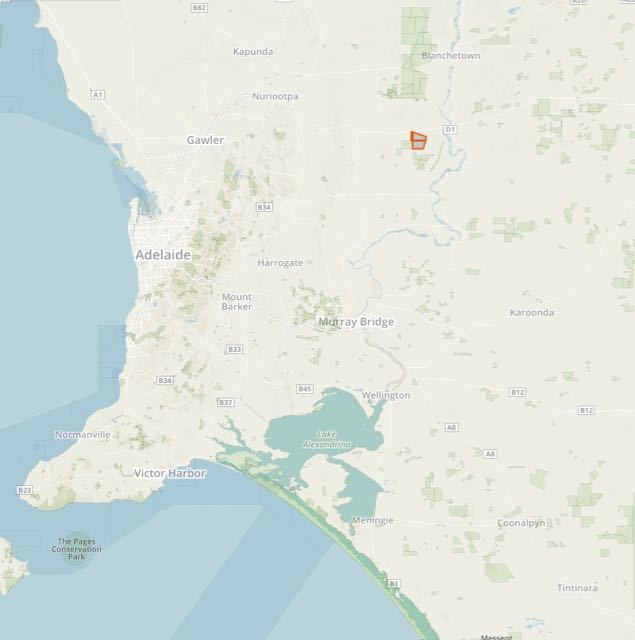
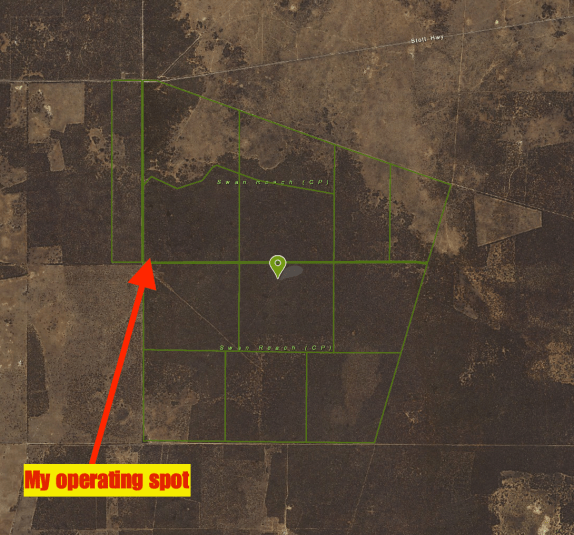
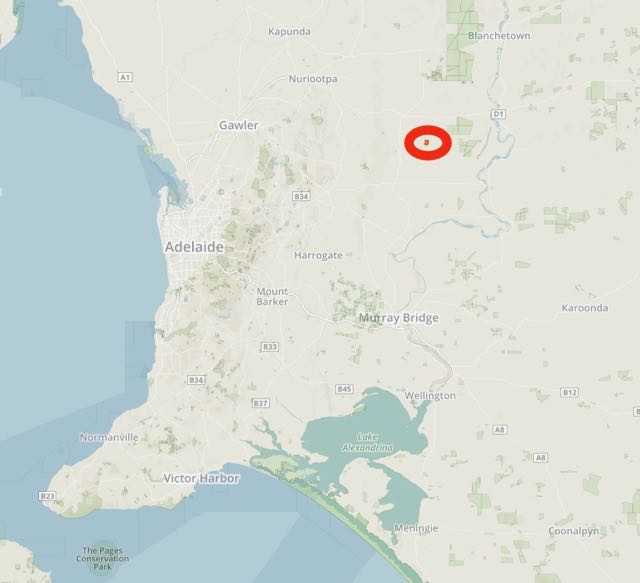
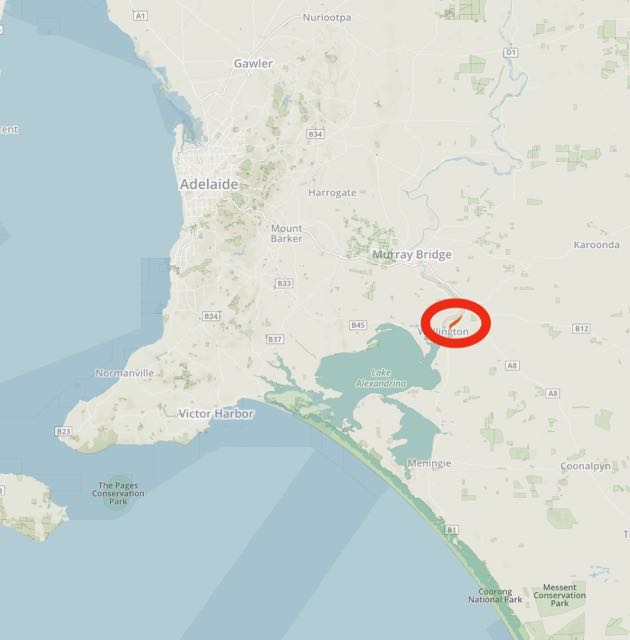
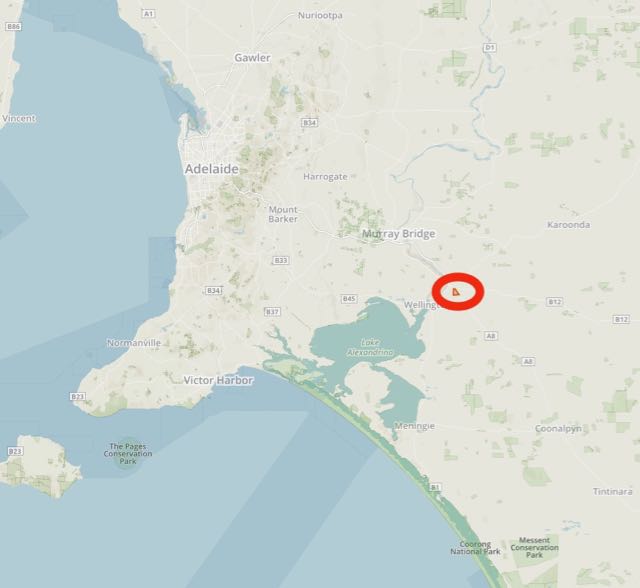
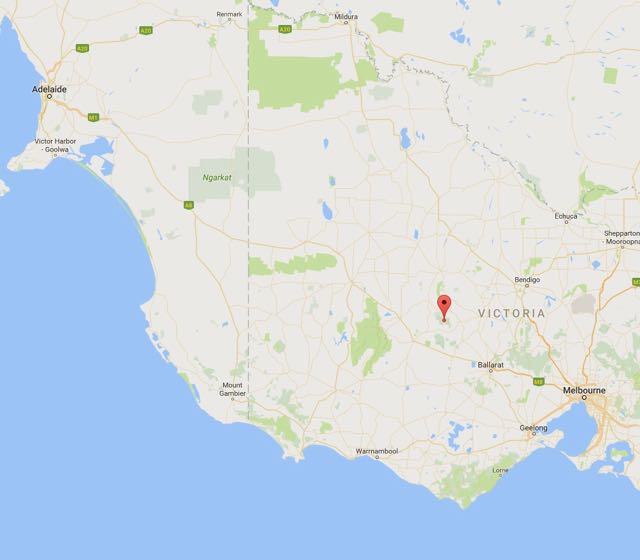
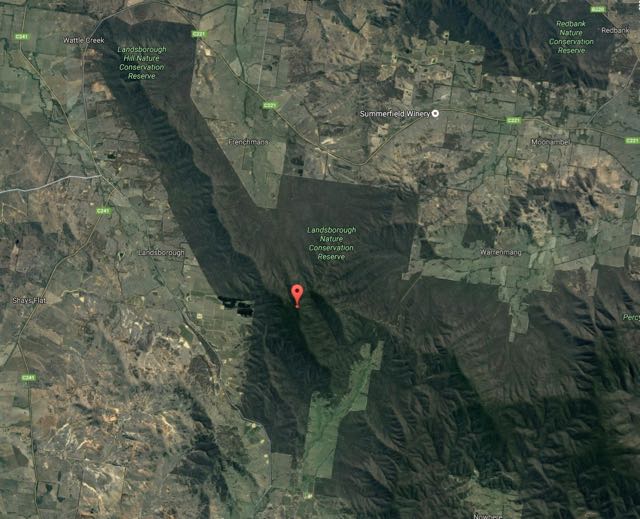
My third and final park for Sunday 27th November 2016 was the Ridley Conservation Park VKFF-0932 which is situated on the western side of the Swan Reach to Mannum Road, about 10 km south of Swan Reach, and about 120 km from Adelaide.
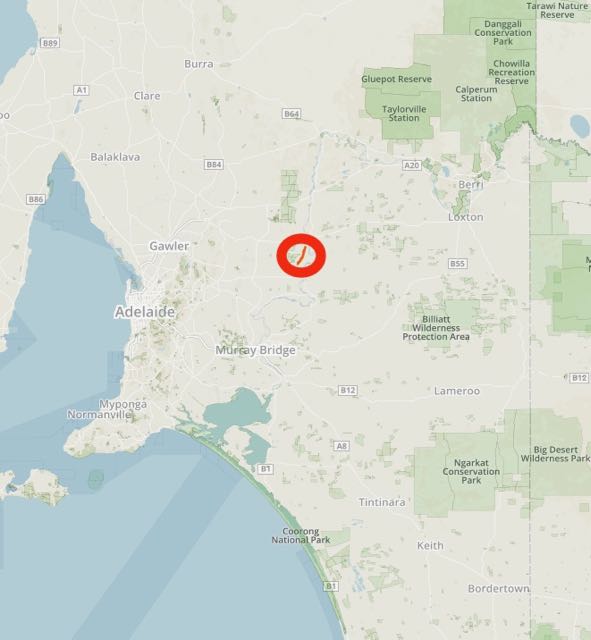
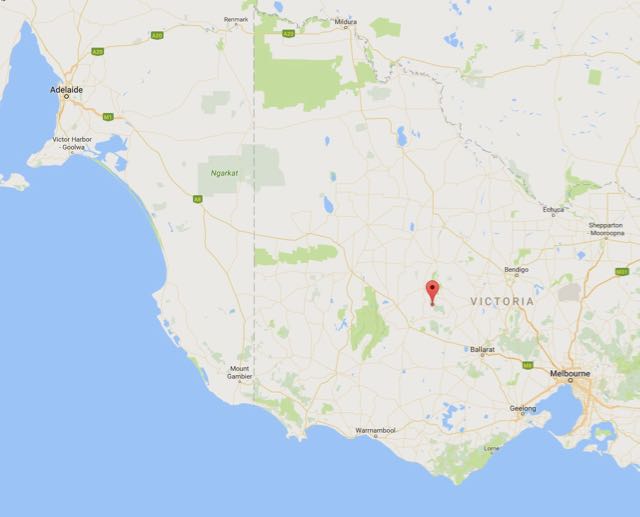
Above:- Map showing the location of the Ridley Conservation Park. Map courtesy of Protected Planet.
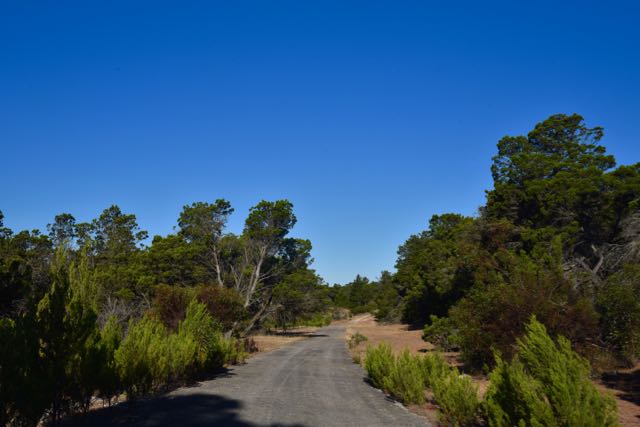
Ridley is a long and narrow park (10km by 0.4 km) and has a total area of around 414 hectares.The southern boundary of the park lies on the edge of the valley of the River Marne, with the highest point in the park being located in this southern section. The remainder of the park to the north comprises flat country which is typical of the limestone plaines west of the Murray River. The park covers a transition zone in the natural vegetation just to the south of Goyder’s Line between the mallee open scrub to the south and the semi-arid, low woodland to the north.
The park is covered by two major vegetation formations: 35 per cent comprises an open scrub of red mallee (Eucalyptus oleosa) and yorrell (E. gracilis), including some very large specimens. Also present are stands of murray pine (Callitris columellaris) and associated areas of shrubland dominated by hop bush (Dodonaea attentuata), and cassias (Senna spp.).
The remaining 65 per cent of the park comprises low open woodland of native apricot (Pittosporumangustifolium) and false sandalwood (Myoporum platycarpum). The understorey consists of spear-grass (Austrostipa spp.) and ephemeral herbs; wait-a-while (Acacia colletioides) also occurs in this formation. A small area near the southern boundary of the park and much of the northern part is almost devoid of trees and can be sub-categorised as open grassland.
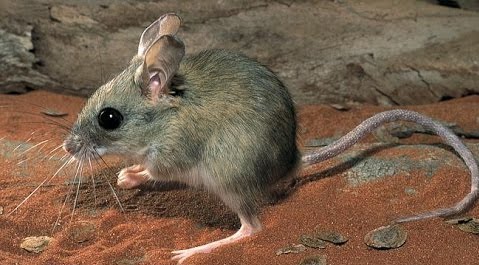
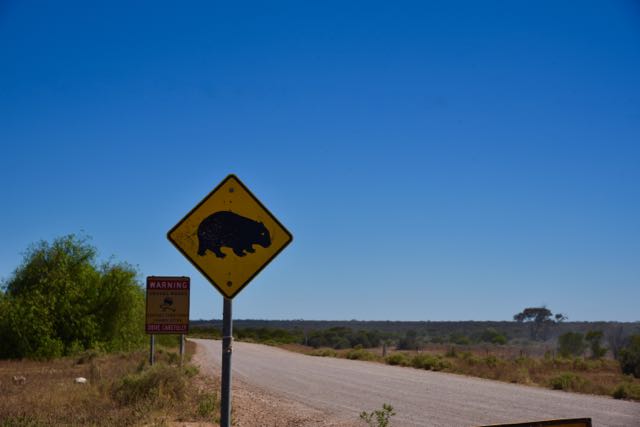
The park was originally set aside to conserve native vegetation and bird habitats, but in addition, the open areas of the park include a number of warrens of the Southern Hairy-nosed Wombat.
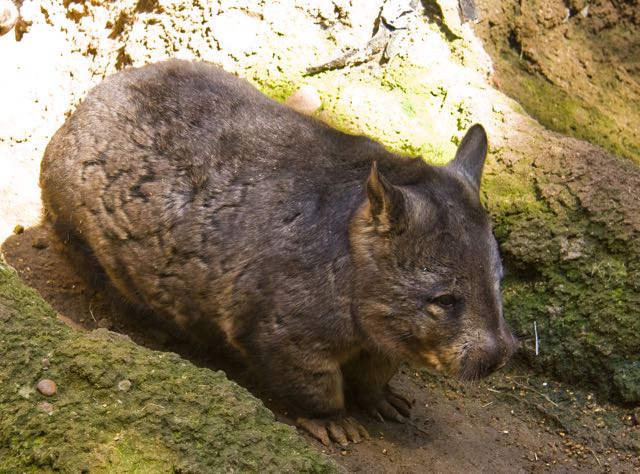
Above:- Southern Hairy-nosed wombat. Image courtesy of wikipedia.
Other native animals found in the park include echidna and Western Grey kangaroos. Various birdlife can be found in the park including Mallee Ringnecks, Purple-crowned Lorikeets, Regent Parrot, White-winged Fairywren, and Butcherbirds. A total of 109 species of bird have been recorded in the park.
Ridley was once part of a Travelling Stock Reserve (TSR) which ran for roughly 5-10 kilometres parallel to the River Murray. This reserve linked the stock market of Burra to the north with Murray Bridge to the south. In the early days of the colony of South Australia, sheep and cattle were driven overland from New South Wales to stock the newly-developed pastoral industry in South Australia. During the early 1860’s when the Hundreds of land were proclaimed on the western plains of the Murray River, it became necessary to provide areas under the Crown for the localised movement of stock and to give access to markets. Travelling Stock Reserves, which normally consisted of 20-chain (approx 400 metres) width, were given fixed boundaries and often followed existing stock tracks.
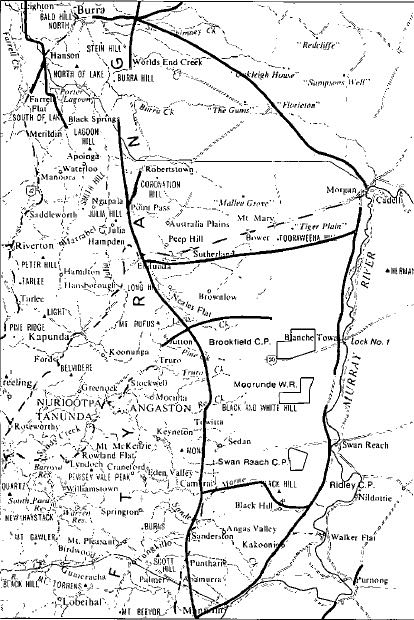
This particular stock route, as with others, became uncessary with the advent of mechanised transport such as the railway. The Morgan to Adelaide railway was completed in 1878. Increasingly there were moves to resume and allot the TSRs to adjoining landowners.
By 1901 local landowners in the Ridley area had approached the Department of Lands, requesting that the TSR in the Hundreds of Ridley and Fisher be resumed and made open for allotment. During 1901 and again in 1907, proposals went before Parliament, but were not approved. In 1910 farmers adjoining the reserve requested permission to erect fences and graze sheep on the TSR, claiming that the unused TSR harboured vermin and tied up valuable grazing land.
By 1934 the District Council of Caurnamont had contacted the Director of Lands requesting that the TSR be resumed for allotment, again claiming that it was a home for vermin and was a drain on council funds. Similar requests were made again in 1937. In 1939, the ranger of the Crown Lands Department, Inspector Klau inspected the TSR and reported that it was used for camping and watering stock when feed was scarce in the districts to the north of the TSR. He recommended that the TSR not be resumed as he believed the reserve would be used for this purpose again in the future.
During 1838-1940 there were a number of requests to cut wood in the reserve for charcoal burning and a proposal to clear 28 hectares of the reserve north of Haywards Hill. The ranger described the reserve as ‘an asset to the State’ and recommended the TSR be retained in its uncleared state.
By 1956 there were further requests to utilise the TSR and on this occsion Annual Licences were granted for grazing purposes.
In 1966 when land was being resumed and purchased for the purpose of national parks, the Land Board proposed that portions of the TSR “be retained and dedicated as a Wildlife Reserve under the control of the Commissioners of the National Parks and Wildlife Reserves at the expiration of the current Annual Licence”. In September 1967, a field officer for the National Parks Commission, Mr. G.C. Cornwall inspected the TSR and stated “Although a long narrow strip of land such as this is not the ideal shape for a national park, the idea of preserving natural vegetation and bird habitats by setting aside portions of the Travelling Stock Reserve is an excellent one and the area under investigation is suitable for this purpose‘.
First proclaimed as Ridley National Parks Reserve on 30 May 1968 and re-proclaimed on 27 April 1972 as Ridley Conservation Park.
After leaving Swan Reach I drove north along the Murraylands Road and it wasn’t long before I reached the northern section of the park, which is located on the western side of the Murraylands Road. Along the way I spoke with Norm VK5GI and Greg VK5GJ who were in the Aldinga Scrub Conservation Park VKFF-0866. I told the fellas I was very close to setting up and that I would come to find them for a Park to Park contact.
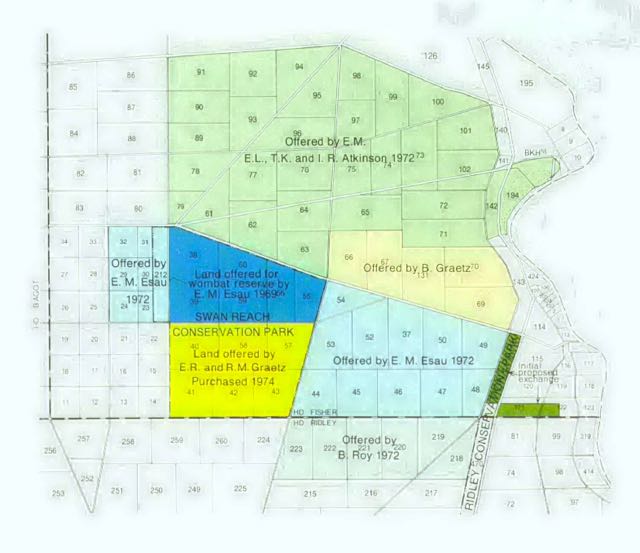
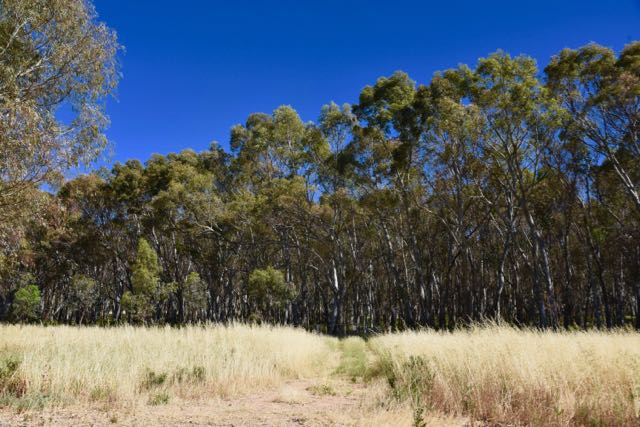
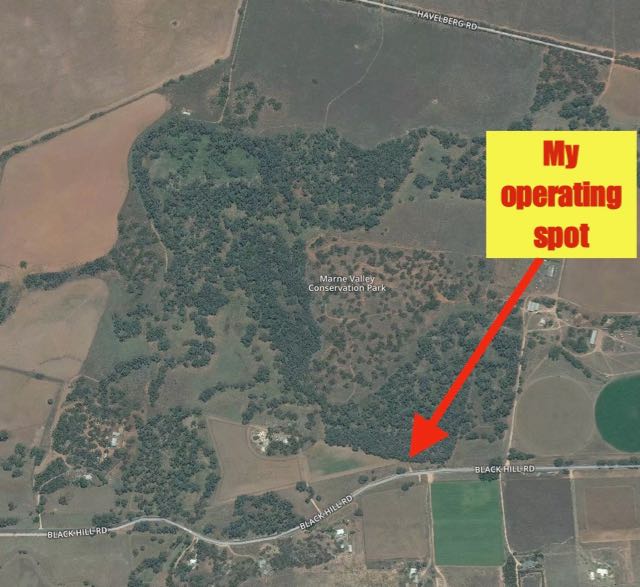
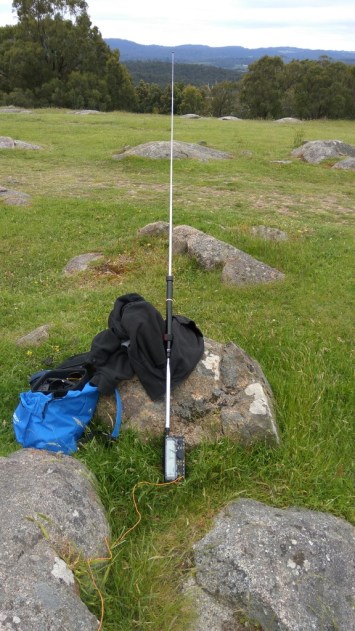
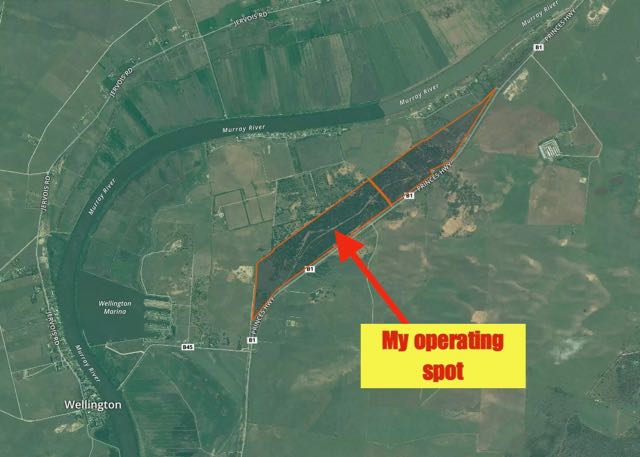
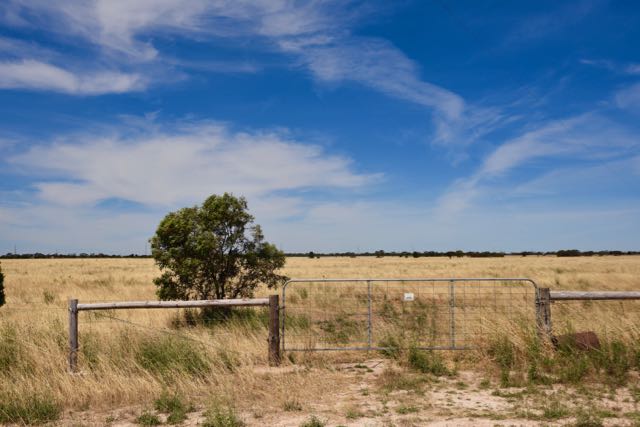
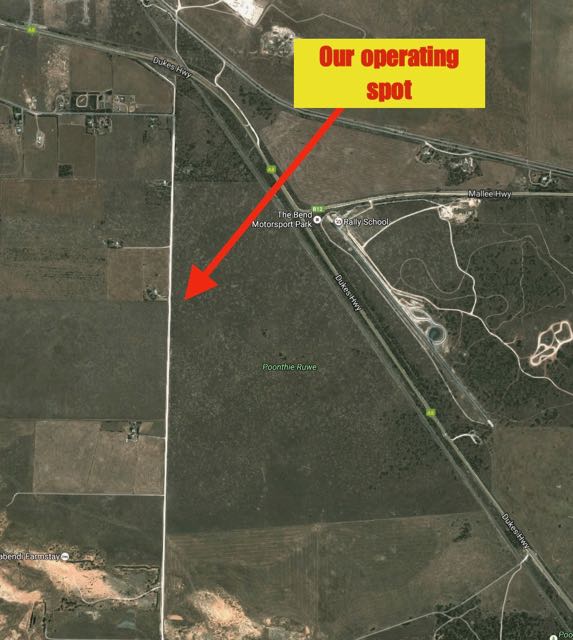
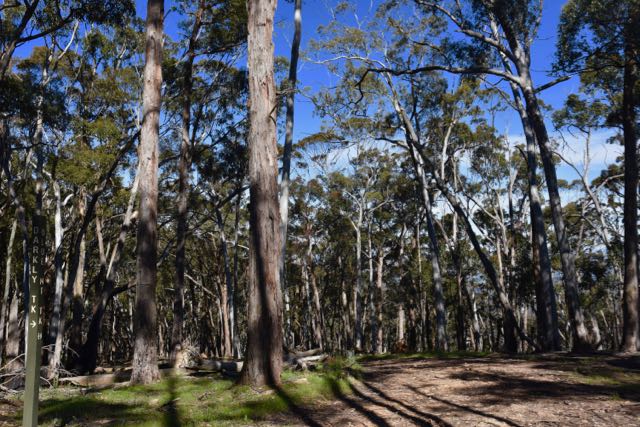
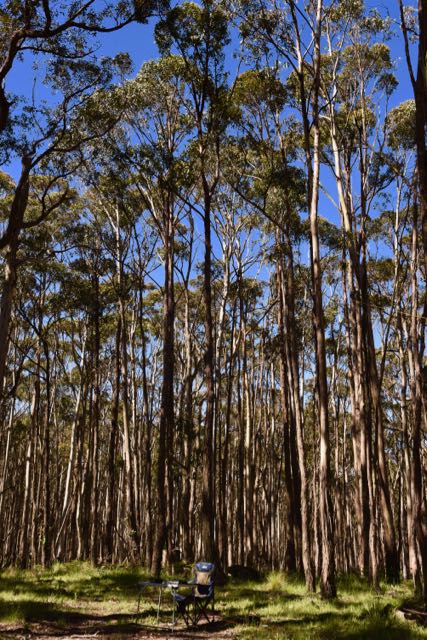
I found a spot to pull off the road and drove a short distance into the park and found a shady spot to set up. Again for this activation I ran the Yaesu FT-857d, 40 watts and the 80/40/20m linked dipole, supported on the 7m squid pole.
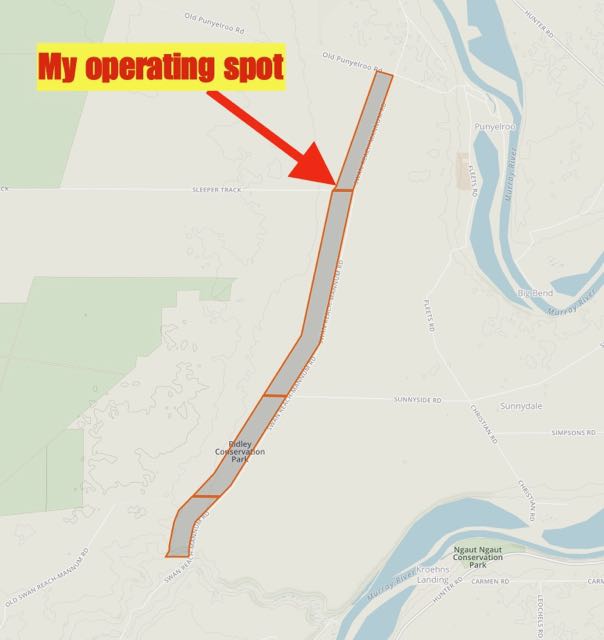
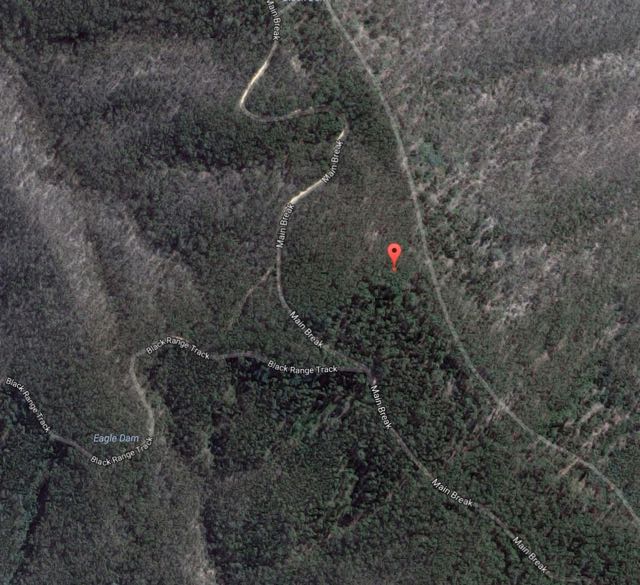
Above:- Map showing my operating spot in the park. Map courtesy of Protected Planet.
After setting up, I turned the radio on. It was already set on 14.310 and I had the links removed in the dipole. It was fortunate, because on 14.310 I found Phil VK6ADF and Hans VK6XN, both in parks. I gave Phil and a call and then crash, down came the squid pole. The second section on this virtually new pole has a habit of de-telescoping. An issue I have never had before. So it was out with some tape to hold it in place.
I headed back to 14.310 and worked Phil VK6ADF who was in the Stokes National Park VKFF-0468, and then Hans VK6XN/p who was activating the Rapids Conservation Park VKFF-1437. Phil was an excellent 59 signal and reciprocated with a 5/9 for me. Hans was a little lower down and we exchanged 5/2 signal reports.
I then QSY up to 14.315 and called CQ. This was answered by John VK6NU, followed by Ray VK4NH, and then Rick VK4RF/VK4HA. Band conditions on 20m were exceptionally good, wth great signals particularly from Queensland. I logged a total of 9 stations on 20m from VK3, VK4, VK6, and VK7, before Rick reminded me that Greg and Norm were waiting for me on 40m. So it was a quick dash to insert the links in the dipole, again tape the second section of the squid pole, and off to 7.130 on 40m.
I logged Norm and Greg Park to Park from Aldinga Scrub. They had a very nice 5/9 signal coming in from south of Adelaide to the Murray Mallee. I then headed up the band to 7.144 and it was not long before I had a mini pile up. I logged a total of 48 stations from VK2, VK3, VK4, VK5, VK6, and VK7. This included two Park to Park contatcs on 40m with Hans VK6XN from the Rapids Conservation Park VKFF-1437 and Phil VK6ADF in the Stokes National Park VKFF-0468. It was nice to log Hans and Phil on two bands.
Band conditions on 40m were extremely good and I had a lot of callers who in the end I kept the QSOs quite short with. Time was starting to march on and I had an early start the next day.
To wrap up the activation from Ridley I headed to 3.610 on 80m where I made a total of 4 contacts with Mick VK3PMG/VK3GGG, Jim VK5TR, and finally Michael VK5FMLO. I would have liked to have stayed a little longer, but I really want to get on the road and head for home.
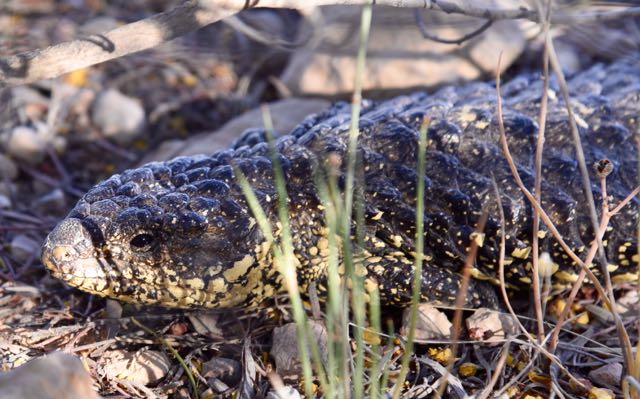
Fortunately during this activation, the only reptile I encountered was the little fella below, a Shingleback lizard.
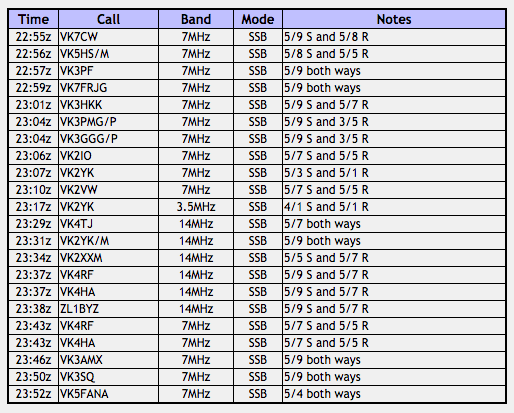
After 90 minutes in the park I had a total of 65 stations in the log, including 6 Park to Park contacts.
I worked the following stations on 40m SSB:-
- VK5GI/p (Aldinga Scrub Conservation Park VKFF-0866)
- VK5GJ/p (Aldinga Scrub Conservation Park VKFF-0866)
- VK4RF
- VK4HA
- VK3MLU
- VK2IO/m
- VK5KLV
- VK3PMG
- VK3GGG
- VK5FANA
- VK3FRAB
- VK3GTS
- VK3YSP
- VK5KKT
- VK7DW
- VK5KPR
- VK4SMA
- VK1AD
- VK2JDR
- VK6XN/p (Rapids Conservation Park VKFF-1437)
- VK1DI
- VK3TKK/m
- VK2VW
- VK3ARH
- VK3IRM
- VK5NJ
- VK2XXM
- VK1AT
- VK3PF
- VK5TR
- VK4FFAB
- VK5FMLO
- VK3JK
- VK6ADF/p (Stokes National Park VKFF-0468)
- VK2WGW
- VK1RX
- VK3SFG
- VK3BHR
- VK3FPHG
- VK3OY
- VK5YL
- VK2WOW
- VK5FD
- VK2FLEW
- VK3DDU
- VK3CC
- VK7FRJG
- VK3UH
- VK2FAD
- VK6VZZ/m
I worked the following stations on 80m SSB:-
- VK3PMG
- VK3GGG
- VK5TR
- VK5FMLO
I worked the following stations on 20m SSB:-
- VK6ADF/p (Stokes National Park VKFF-0468)
- VK6XN/p (Rapids Conservation Park VKFF-1437)
- VK6NU
- VK4NH
- VK4RF
- VK4HA
- VK4SMA
- VK3SQ
- VK3IRM
- VK7CW
- VK6MB
At the conclusion of the activation I made a quick tour down to Walker Flat. I had not been there for many years. This is where the mouth of the Marne River is located, flowing out to the mighty Murray River.
As I left Walker Flat I encountered this big fella, a Red Kangaroo bounding along the road in front of me, and then alongside of me.
Sadly another VKFF Activation Weekend had come to an end. I certainly had a great time, and I sincerely hope all of the other activators did, along with the park hunters.
References.
Birds SA, 2016, <http://www.birdssa.asn.au/location/ridley-conservation-park/>, viewed
National Parks and WIldlife Service, 1984, ‘Conservation Parks of the Murraylands (Western Plains) Management Plans