At about 1208 UTC on Tuesday 28th December 2021, I tuned in to the Voice of the Islamic Republic of Iran broadcasting in the Hebrew language on 15240 kHz.
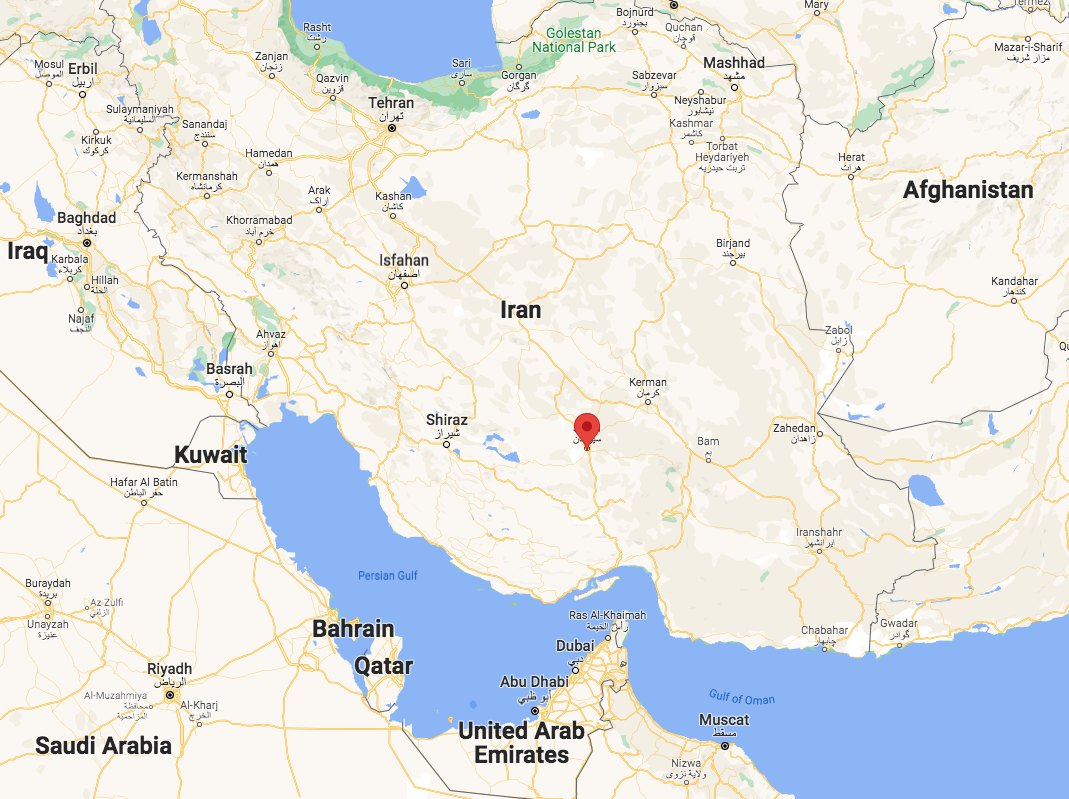
The broadcast was coming from their Sirjan 500kW transmitter.
Above:- Map showing the location of the Sirjan transmitter in Iran. Map c/o Google maps.
The overall reception was fair. The signal strength was fair and there was only slight fading on the signal. However, there were moderate static crashes on the band.
S
I
N
P
O
3
5
3
4
3
Below is a video showing my reception of the Voice of the Islamic Republic of Iran.
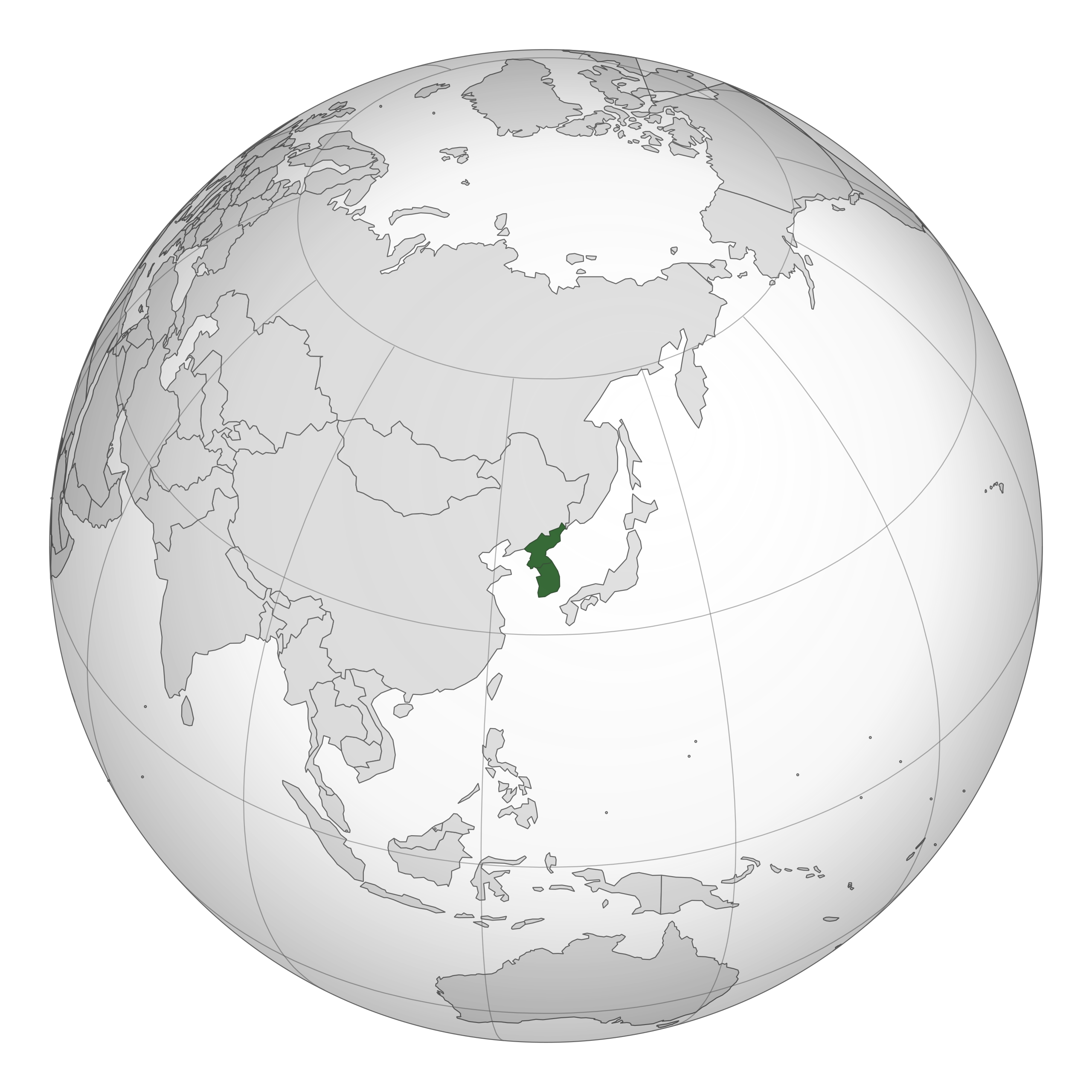
On the 28th December 2021, I tuned in to the Voice of the People broadcasting in the Korean language on 4450 kHz. Unfortunately, just after tuning in, a jamming signal (siren) started up on the frequency. It was so loud it totally blocked out the signal from the Voice of the People.
Above:- World globe showing Korea. Image c/o Wikipedia
So I then moved to 3480 kHz where the Voice of the People was broadcasting and I noted that there was only minor interference – a siren type noise on the frequency. Unfortunately, loud static crashes on the band from local storms in Australia, made listening quite difficult.
S
I
N
P
O
3
5
2
4
3
Below is a video showing my reception of the Voice of the People on both of the frequencies.
On the 21st day of December 2021, I tuned in to KBS World Radio, SOUTH KOREA, broadcasting on 9770 kHz in the English language.
The broadcast was coming from KBS Kimjae 100kW transmitter. The program consisted of music.
The overall reception of KBS World was good. The signal strength was good and there was no interference from other stations. There were however moderate static crashes from storms in Australia, which affected listening pleasure.
Next in the log on 18th December 2021, at about 1204 UTC, was Radio Romania International. They were broadcasting in the English language on 15460 kHz.
The broadcast was coming from their 300 kW transmitter at Galbeni-Bacau. Their program consisted of the News, The Week in Review, and Focus on Romania.
The overall reception of Radio Romania International was excellent. The signal strength was very strong and there was no fading on the signal and absolutely no interference from other stations.
S
I
N
P
O
5
5
4
5
5
Below is a video of my reception of Radio Romania International.
On Saturday 18th December 2021, I tuned in to China National Radio CNR7 Radio The Great Bay broadcasting on 13770 kHz in the Cantonese language.
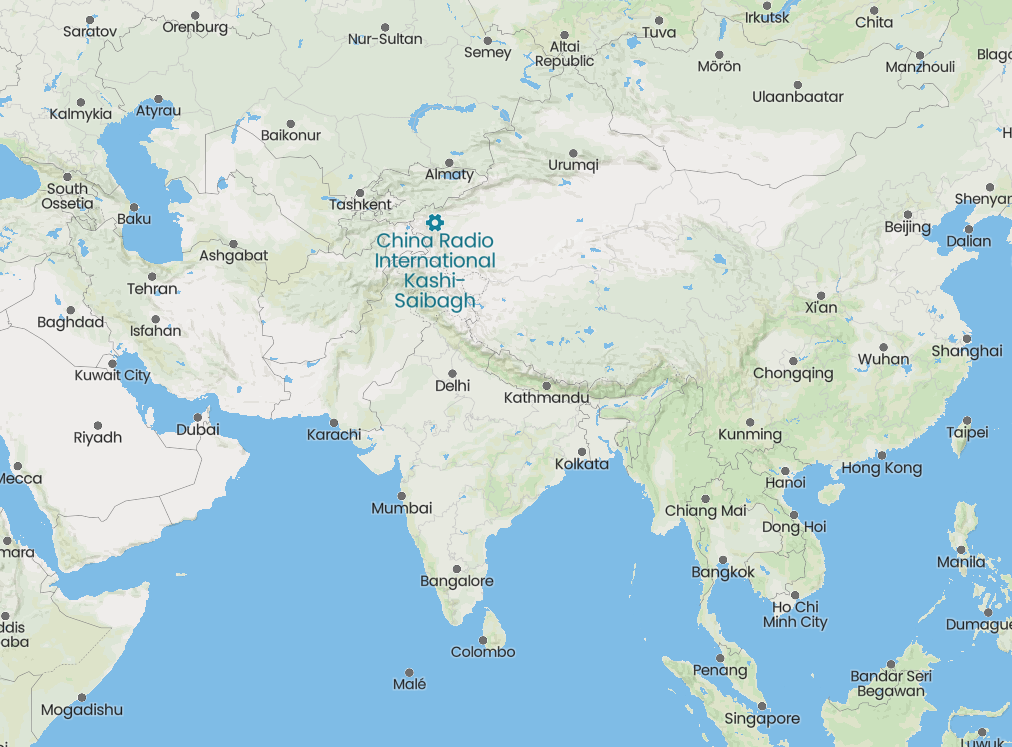
The transmitter site was Kashi-Saibagh, with 500kW power output.
Above:- Location of the Kashi-Saibagh transmitter. Map c/o Mapcarta
The overall reception of CNR7 was excellent. The signal strength was very strong with no interference from other stations. There was no fading of the signal.
S
I
N
P
O
5
5
4
5
5
Below is a video of my reception of CNR7 The Great Bay.
At about 1207 UTC on the 15th December 2021, I tuned in to the Voice of America (VOA) broadcasting in the English language on 15560 kHz.
Their broadcast consisted of a music program.
The overall reception of the VOA was good. The signal strength was good and there was minimal fading and absolutely no interference from other stations.
S
I
N
P
O
4
5
5
4
4
Below is a video showing my reception of the VOA on 15560 kHz.
Next in the log on 14th December 2021, was Radyo Denge Welat at 1205 UTC on 11530 kHz broadcasting in the Kurdish language. This was a new station for me.
Radyo Denge Welat is a Kurdish language broadcasting network. The station replaced the Denge Mesopotamia and Denge Kurdistan radios. These were closed due to pressure exerted by Turkey on Europe.
Radyo Denge Welat transmits from the TDF transmitter site in Issoudun, France. The Radyo Denge Welat studios are located in Denderleeuw, about 20 km northeast of Brussels in Belgium. Broadcasts have been subject to jamming transmissions, which are alleged to come from Turkey. I certainly heard another station on the frequency during my time of listening in.
Radyo Denge Welat’s target audience is the Kurds who reside in Iran, Iraq, Syria and Turkey.
More information can be found on the Radyo Denge Welat website at……..
At about 1118 UTC on Tuesday the 14th December 2021, I tuned in to the Voice of the Strait, CHINA, broadcasting on 4900 kHz.
The Voice of the Strait was founded on the 24th day of August 1958. Its predecessor was the PLA Fujian Front Line Broadcasting Station. The station is reported to be run by the People’s Liberation Army Strategic Support Force (PLASSF) Base 311, which is reported to be primarily responsible for psychological warfare operations against Taiwan.
Above:- Emblem of the PLASSF. Image c/o Wikipedia.
The broadcast consisted of a music program with Chinese and western pop music.
The overall reception of the Voice of the Strait was good. If it were not for the static crashes, the overall reception would have been excellent.
S
I
N
P
O
5
5
3
4
4
Below is a short video showing my reception of the Voice of the Strait.
At about 0830 UTC on Sunday the 12th day of December 2021, I tuned in to Hope Radio, PALAU, broadcasting in the English language on 15680 kHz.
I had tuned in to Hope Radio previously in November on 9965 kHz, so this was a new frequency for me.
This was Hope Radio’s Angel 4 station which was broadcasting to South-East Asia.
The overall reception of Hope Radio was good. The signal strength was fair-good. There was absolutely no interference from nearby stations. There was slight fading of the signal.
S
I
N
P
O
4
5
4
4
4
Below is a short video showing my reception of Hope Radio.










 VK5PAS