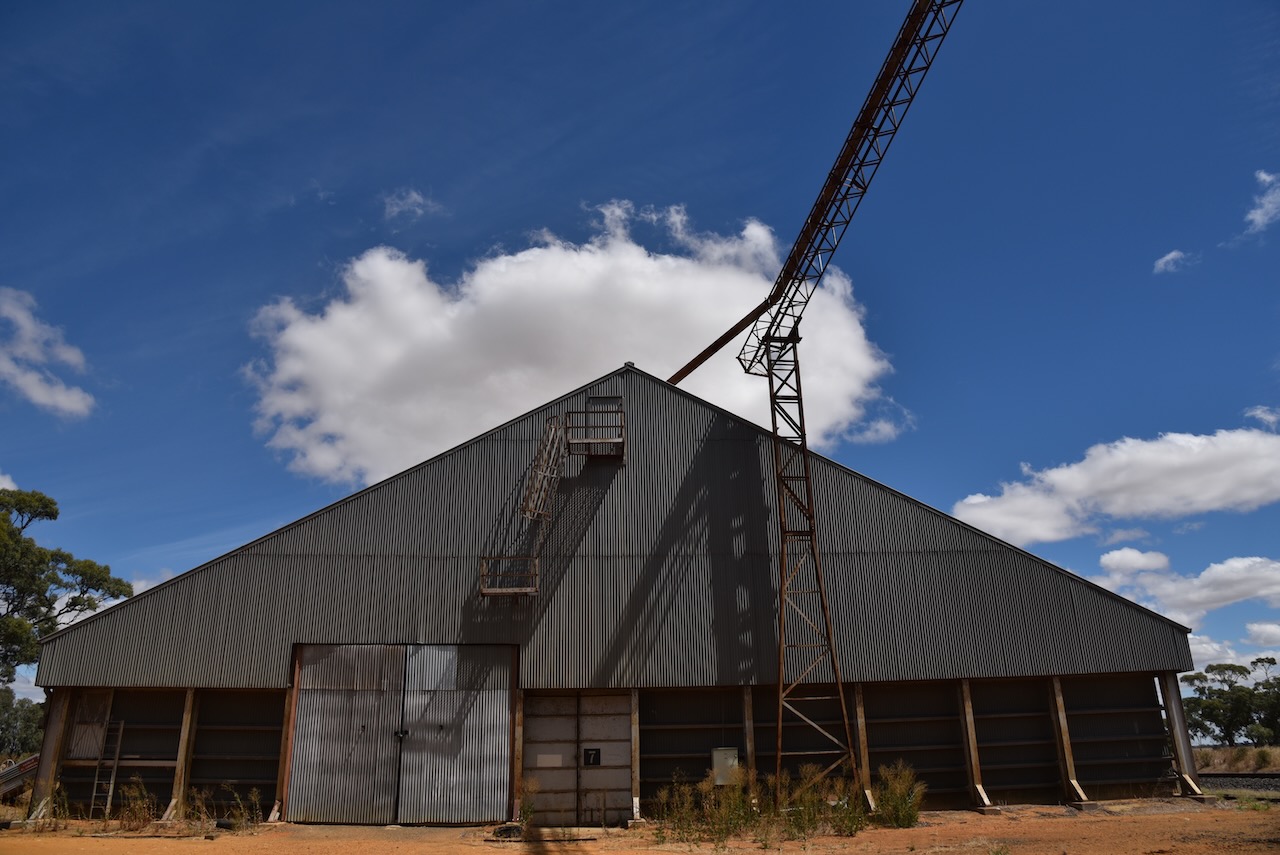
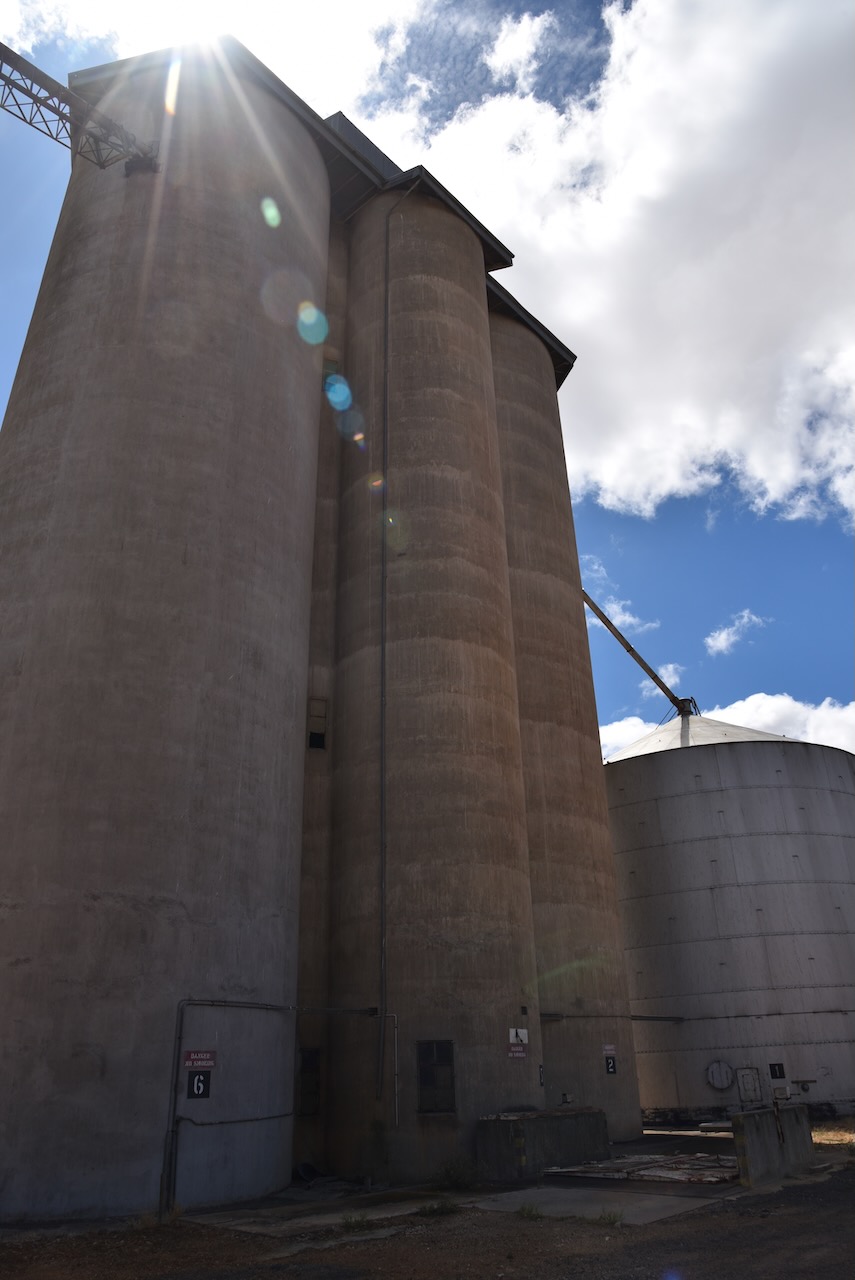
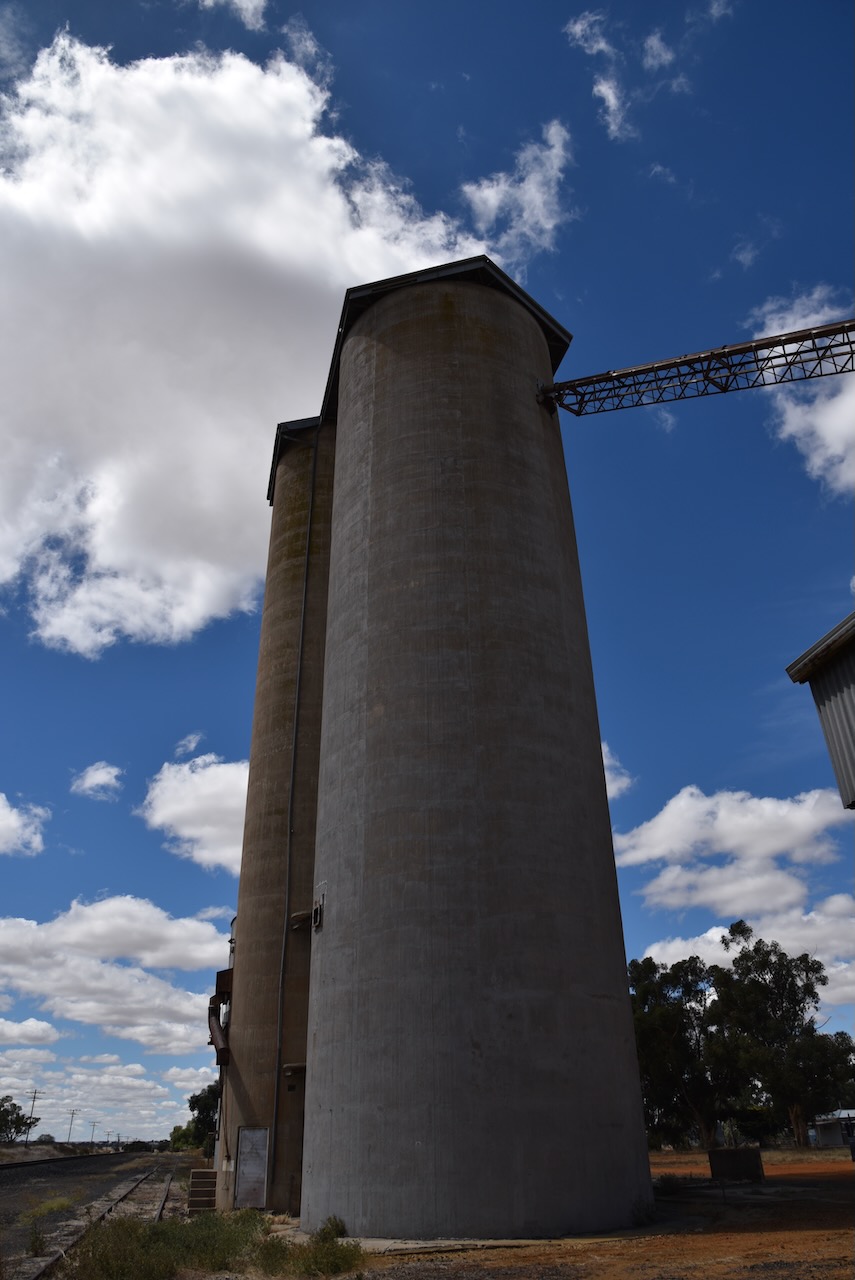
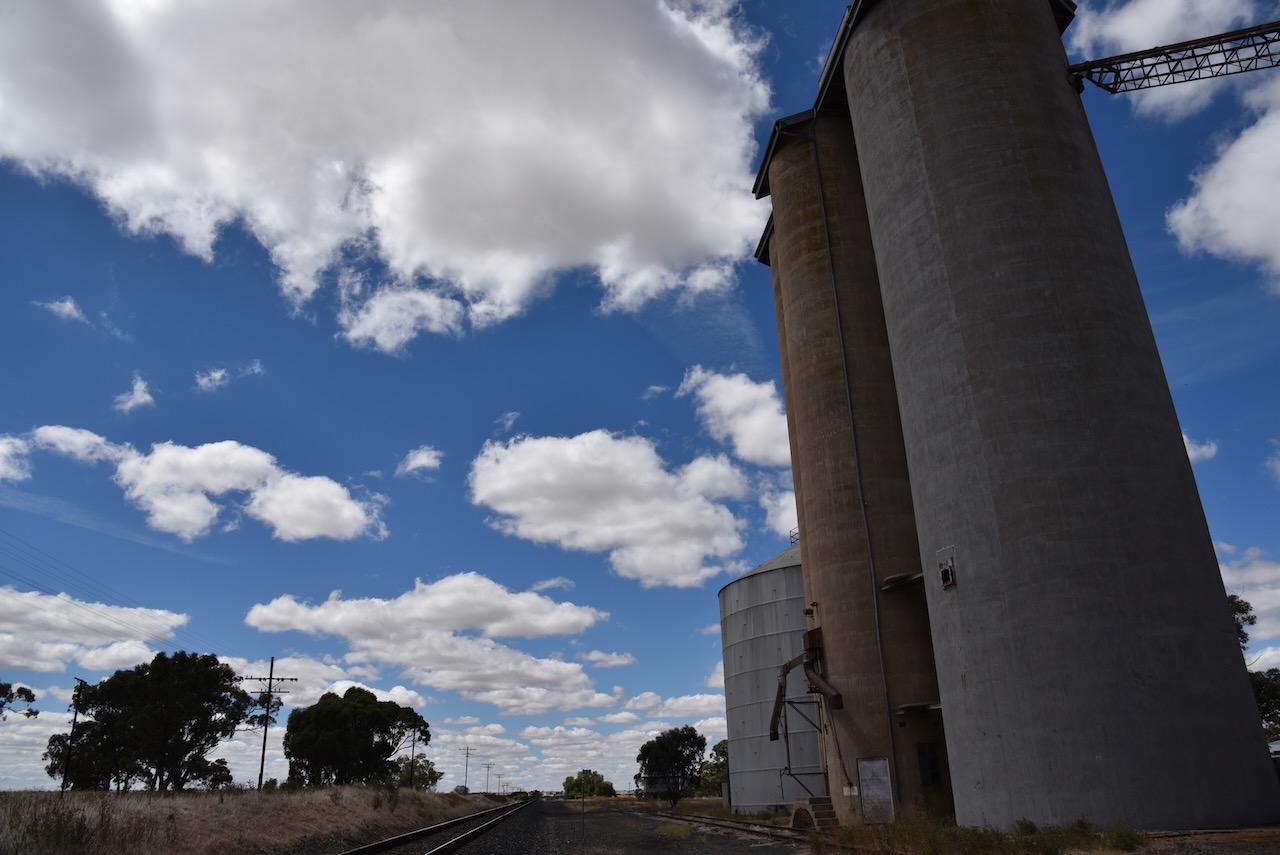
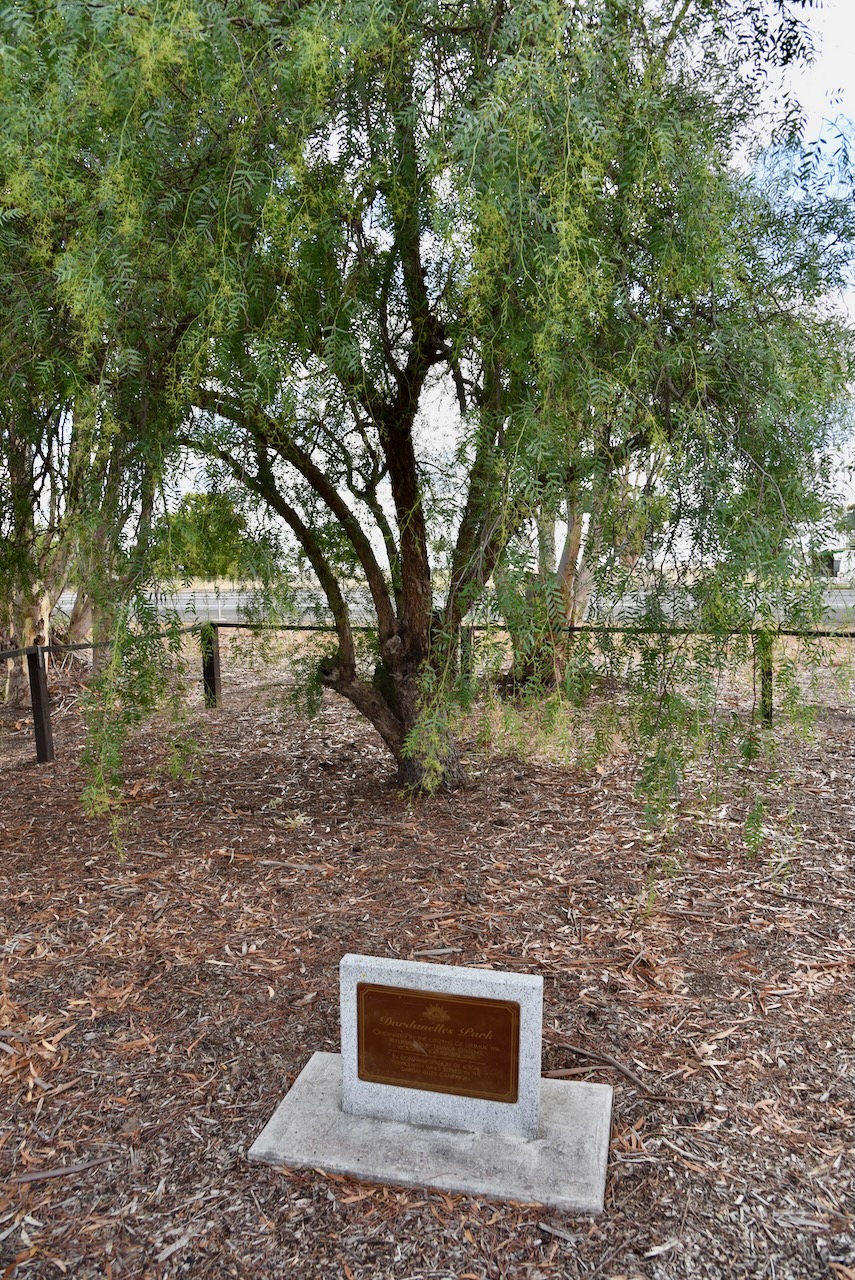
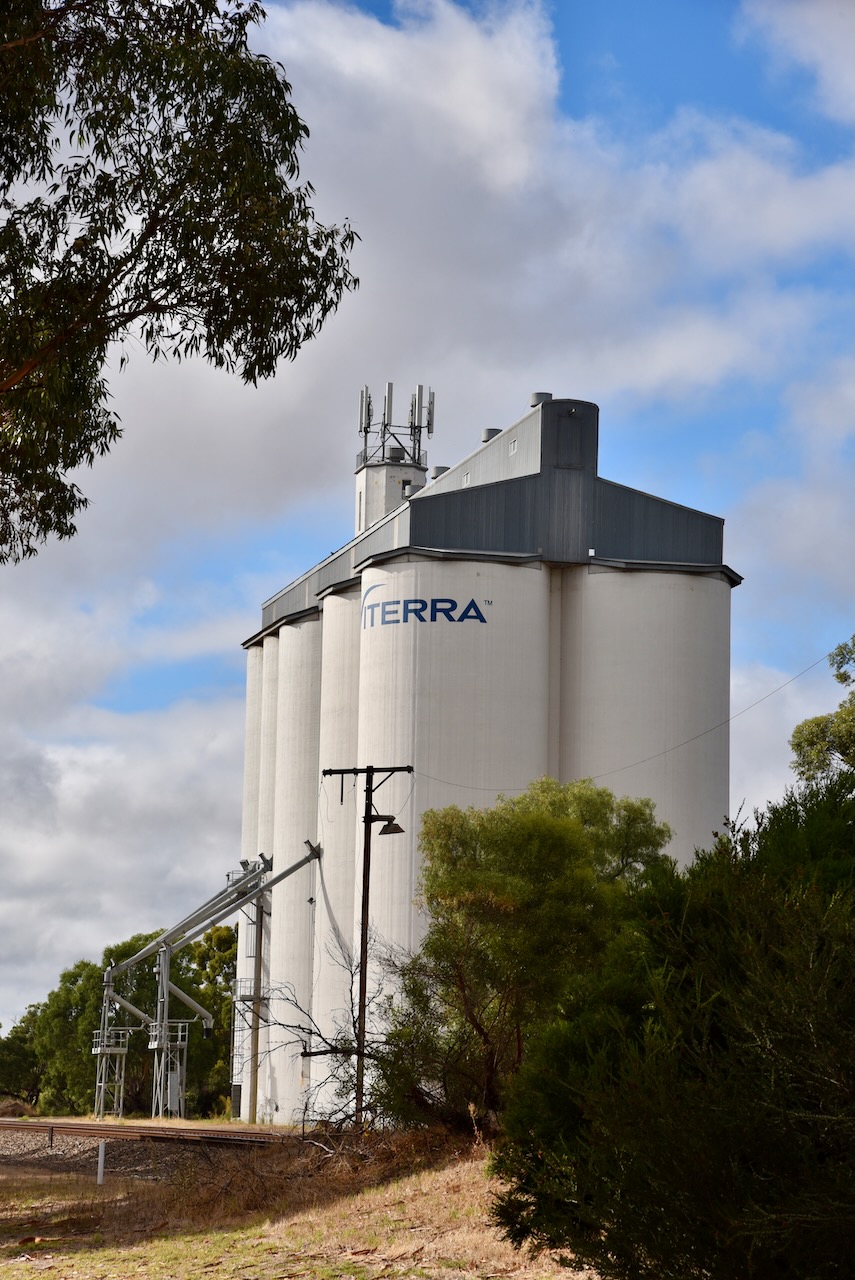
Diapur silo VK- DPR3 and Jumping Jack Wattle Nature Conservation Reserve VKFF-2120

We only had to drive a short distance (27th February 2023) to our next stop, the small town of Diapur. It was here that we intended to activate Jumping Jack Wattle Nature Conservation Reserve VKFF-2120 and the Diapur silo VK- DPR3.

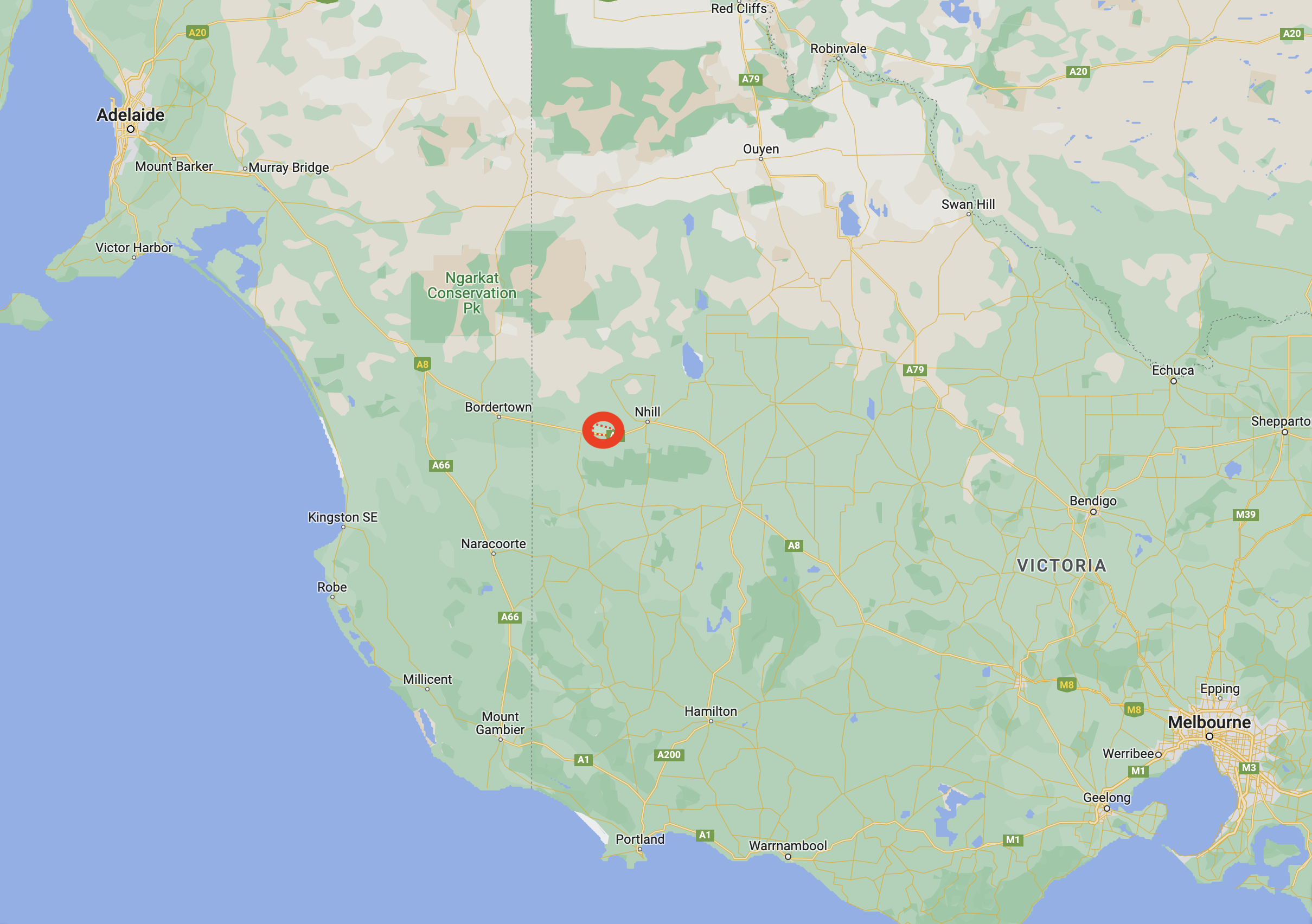
Above:- Map showing the location of Diapur. Map c/o Google maps.

The town of Diapur sits on the Melbourne-Adelaide railway line and is the halfway point of the journey between the two cities. The town was surveyed in 1886. It was originally known as Diaper (or Diapar) Spring. Siapur is an aboriginal word meaning crabhole or swamp.
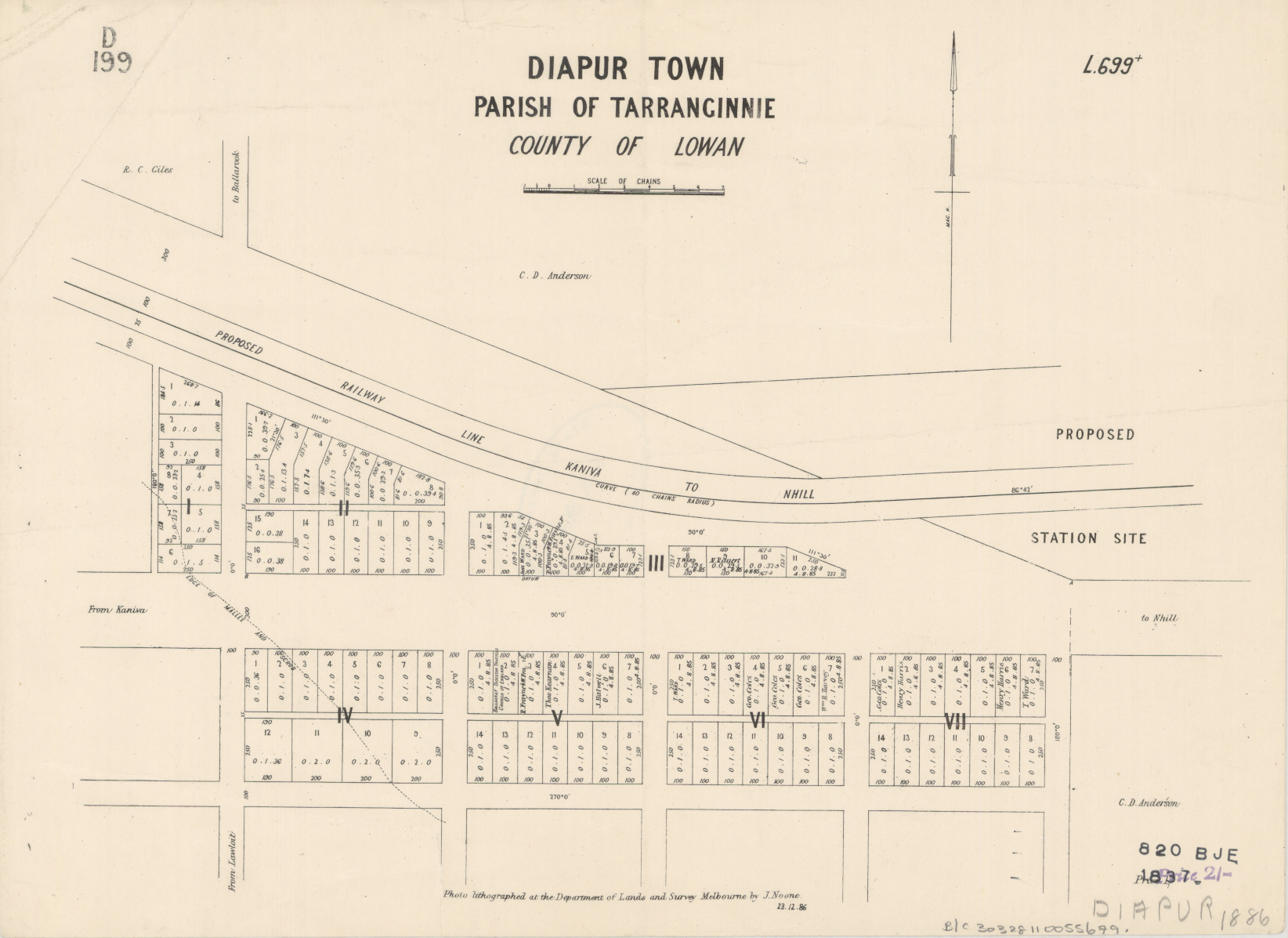
Above:- Department of Crown Lands Survey map of Diapur. Image c/o State Library Victoria.

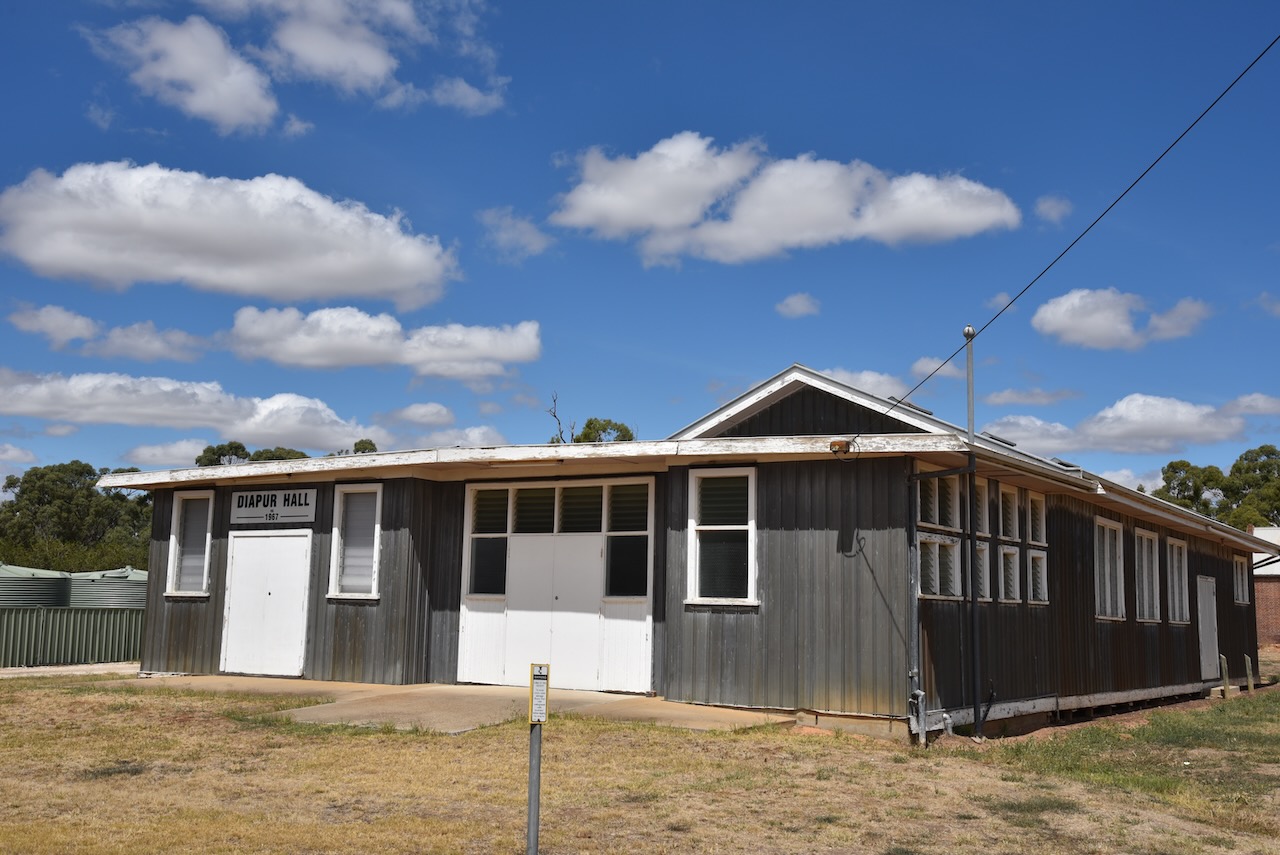
Once a thriving town, it now has a scattering of houses, a hall, and the old hall.
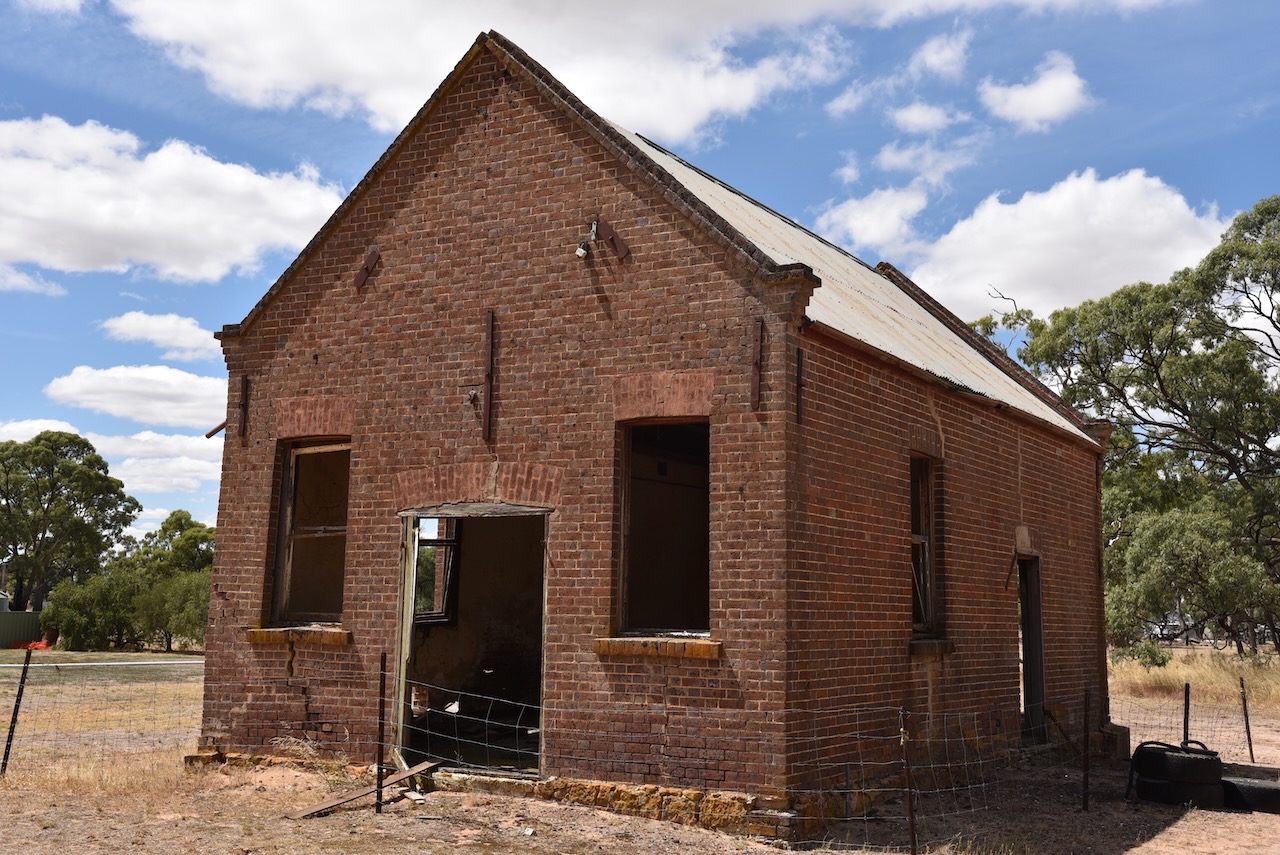
Diapur was the site of a general store built by George Coles, who I mentioned in my previous post regarding Miram. His son, also called George, was the founder of G.J Coles & Co. George Snr lived with his parents in the Wimmera region of Victoria and initially worked in a good mine at Stuart Mill. When his father was injured in a mining accident, George commenced working in his father’s shop/ Following the expansion of the railroad, he took up a job with a wheat agent at Jung. It was not long before he purchased the business. He then moved to Diapur and opened the general store, a blacksmith shop, and a hotel.

During the late 1880s George moved to Geelong. He leased the hotel at Diapur and left brother Jim in charge of the store.

The old Coles store was subsequently moved north to the town of Yanac
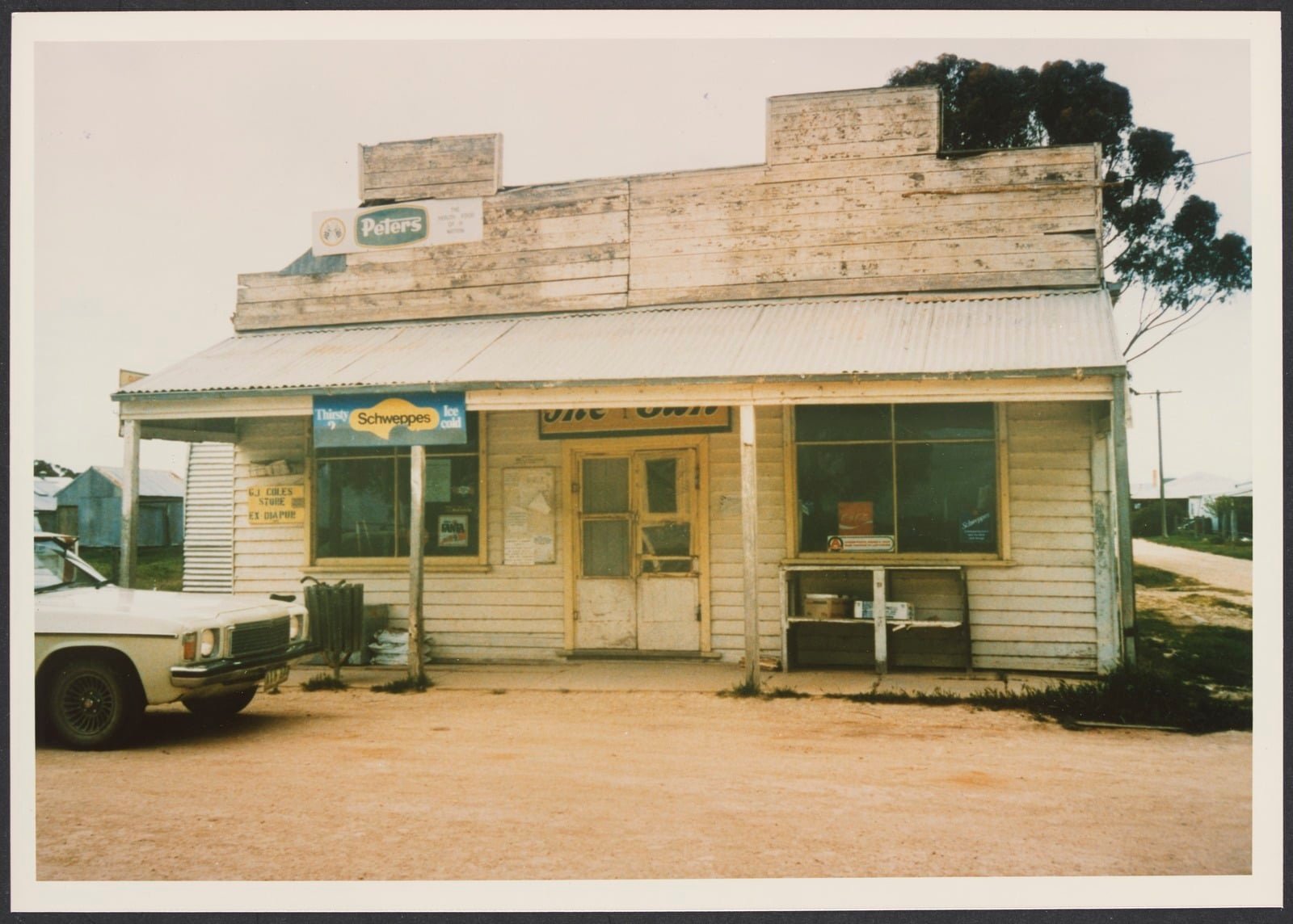
Above:- The old Coles store from Diapur. Image c/o Treasures of Nhill Facebook page.

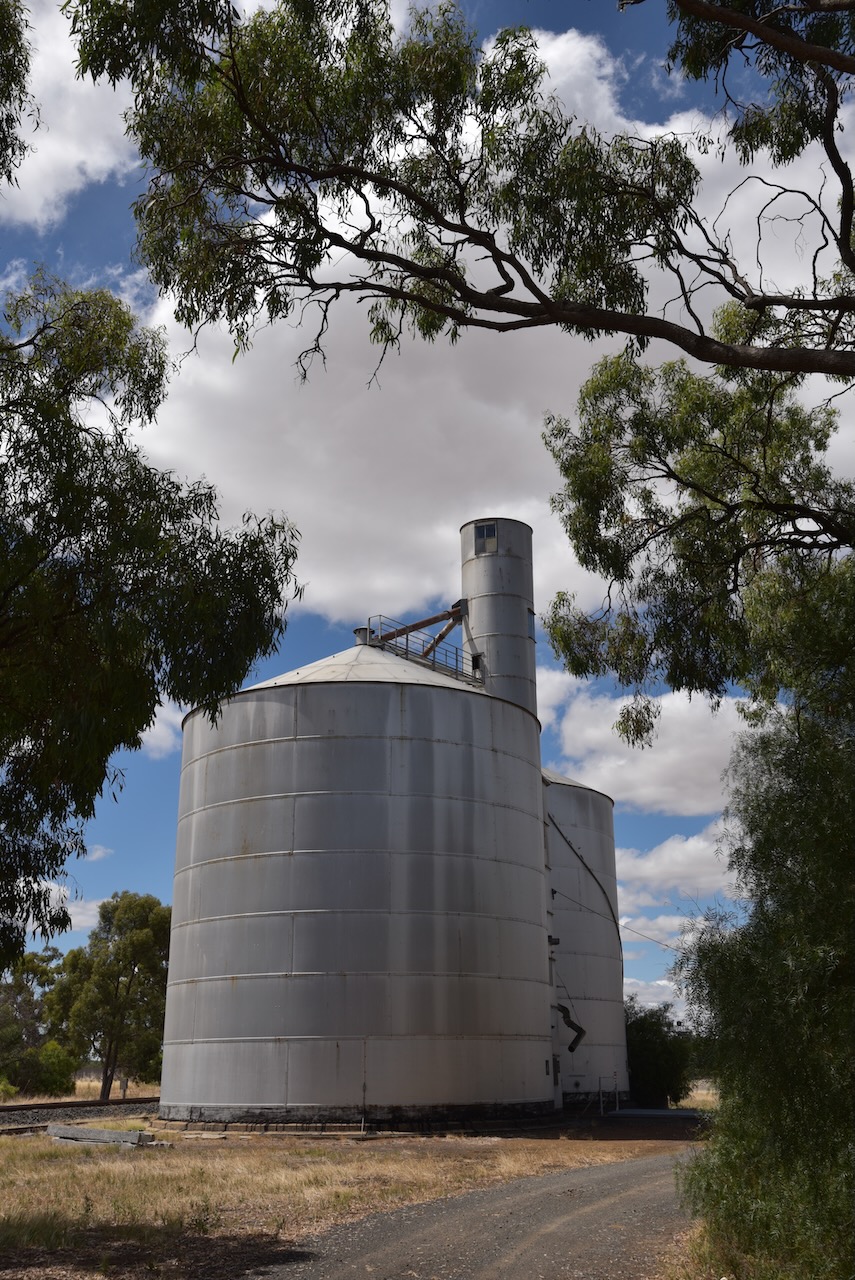
The Diapur silos are located on the Nhill-Diapur Road.
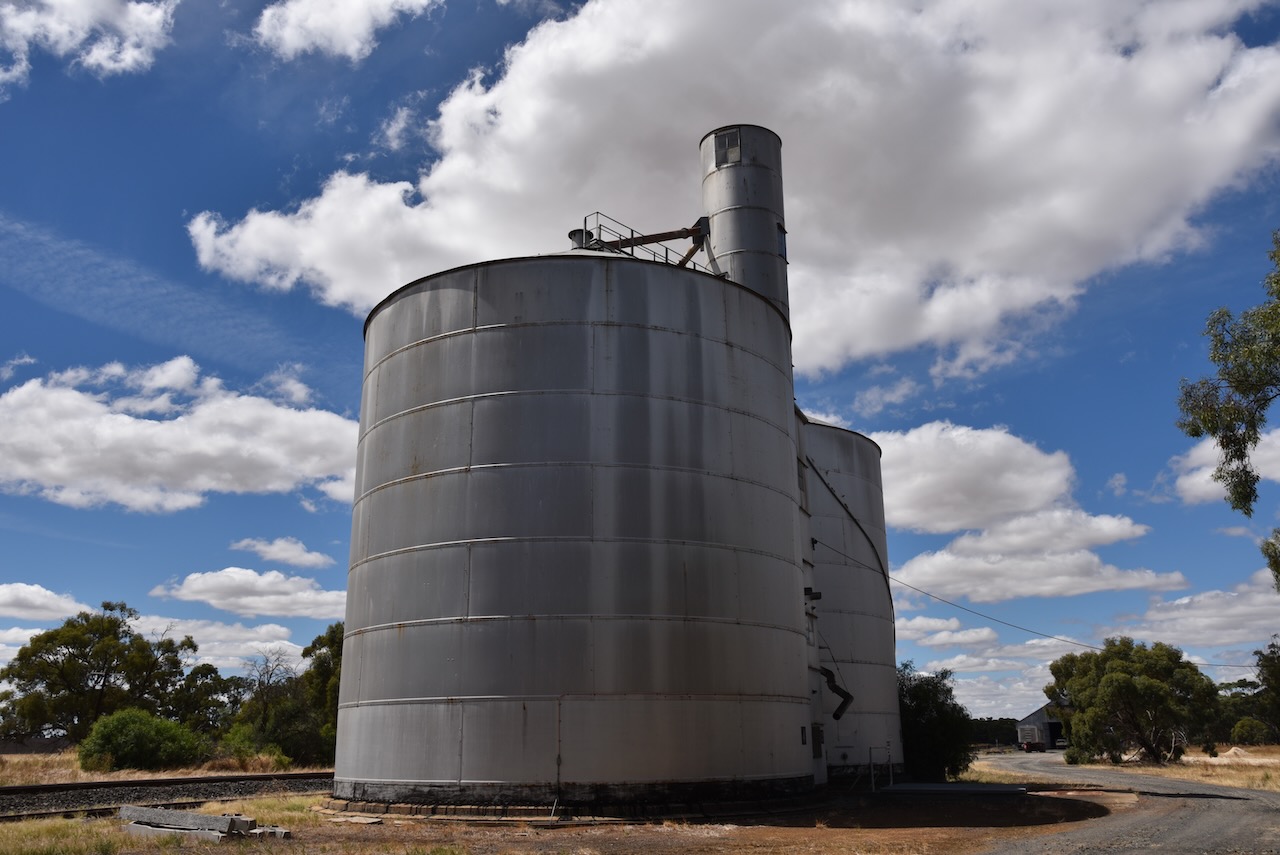
The Jumping Jack Wattle Nature Conservation Reserve is within the silo activation zone, so we decided to do a dual silo & park activation.

Above:- the activation zone at the Diapur silo. Image c/o SiOTA website.

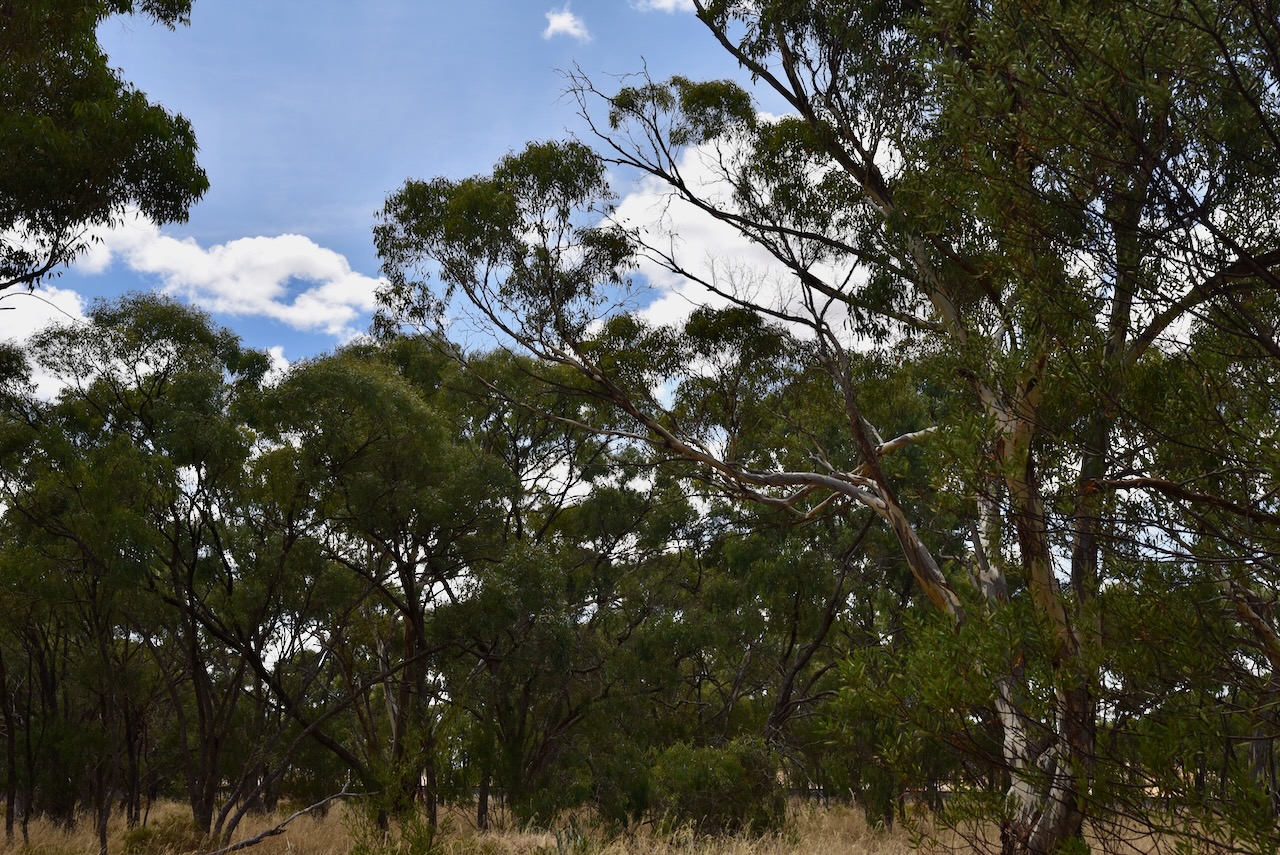
The park sign actually read Diapur Flora Reserve. But the park’s official name is Jumping Jack Wattle Nature Conservation Reserve. It takes its name from Jumping Jack Wattle, a dense, rounded, sprawling and prickly shrub that grows to about 1.5 metres. The seed pods are zigzag shaped and resemble the firecracker known as jumping jack. Hence the name.
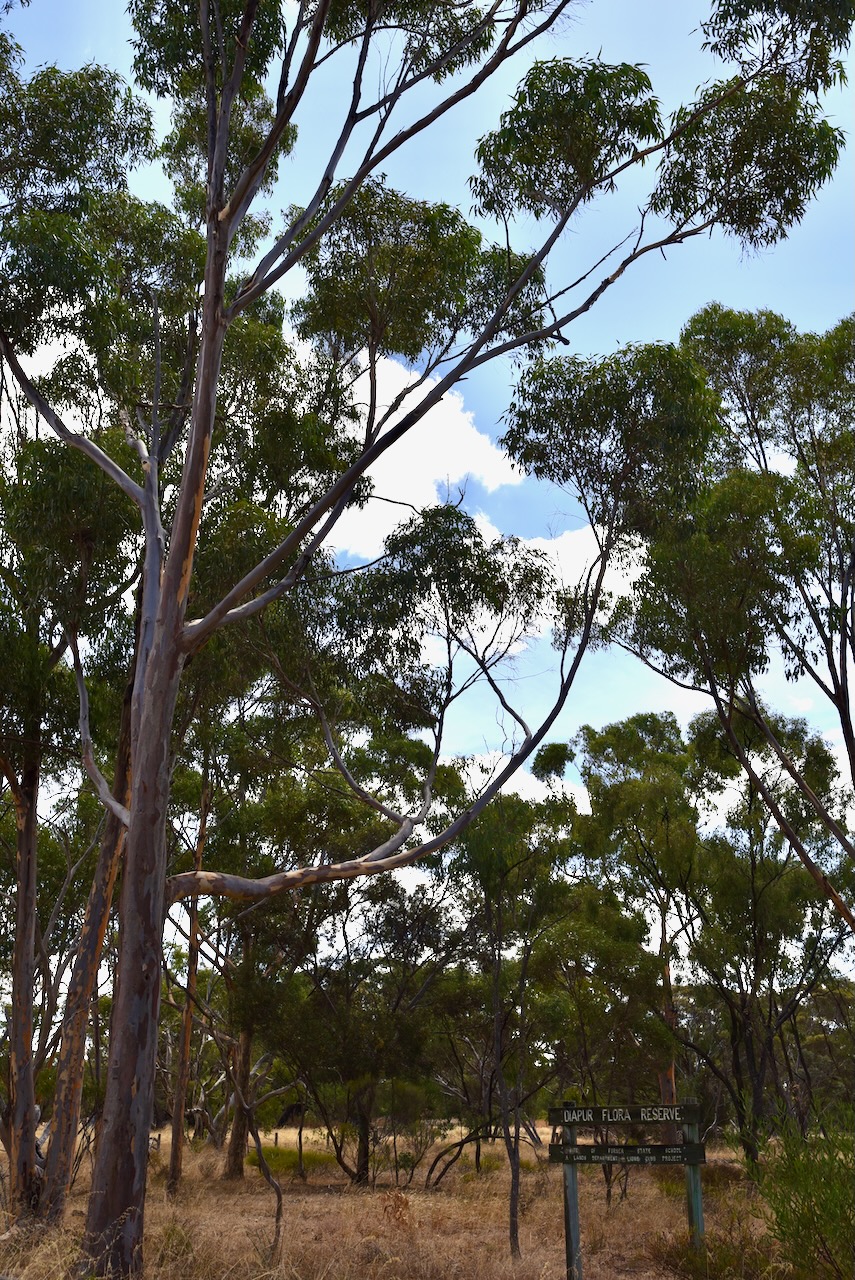
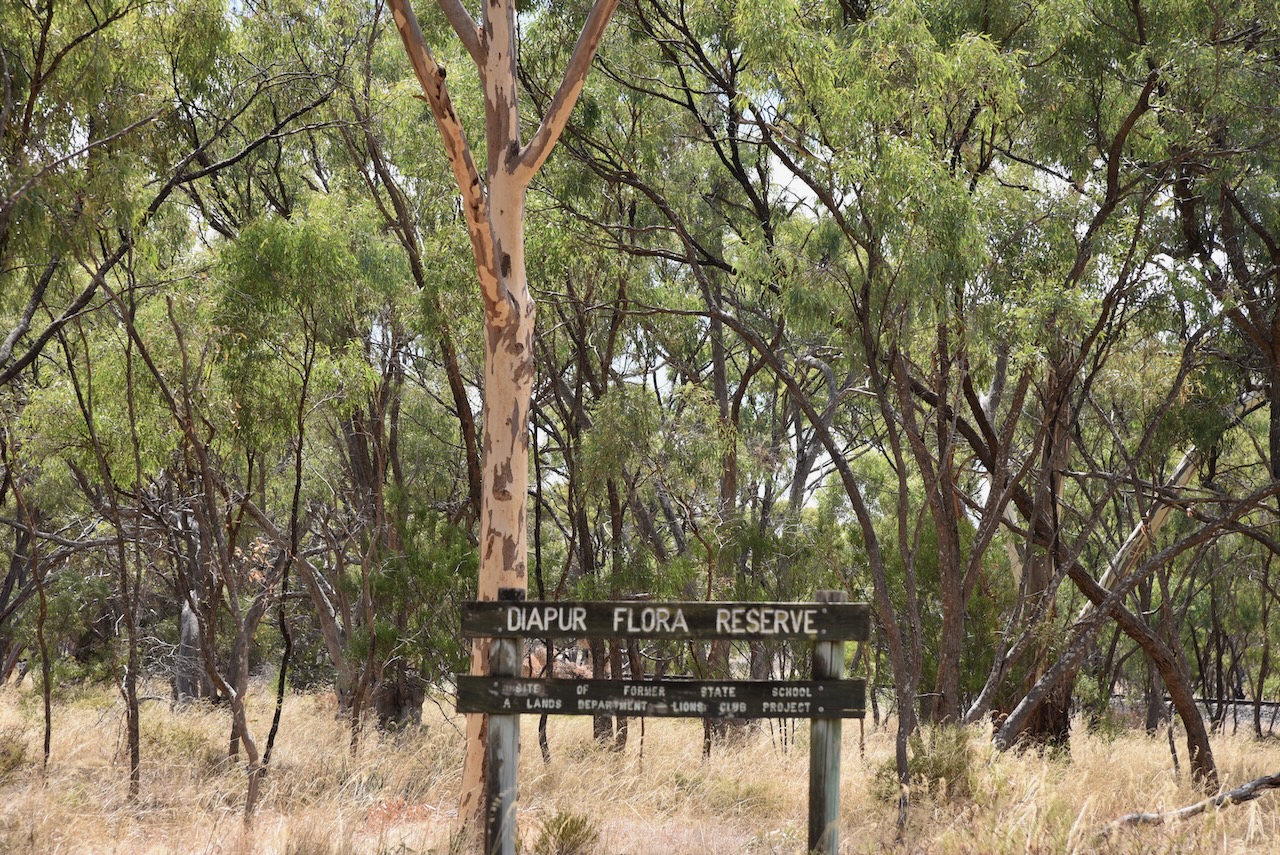
The park is located on the northern side of the Diapur-Miram Road, on the western side of the town of Diapur. It is only very small, about 4 acres in size.
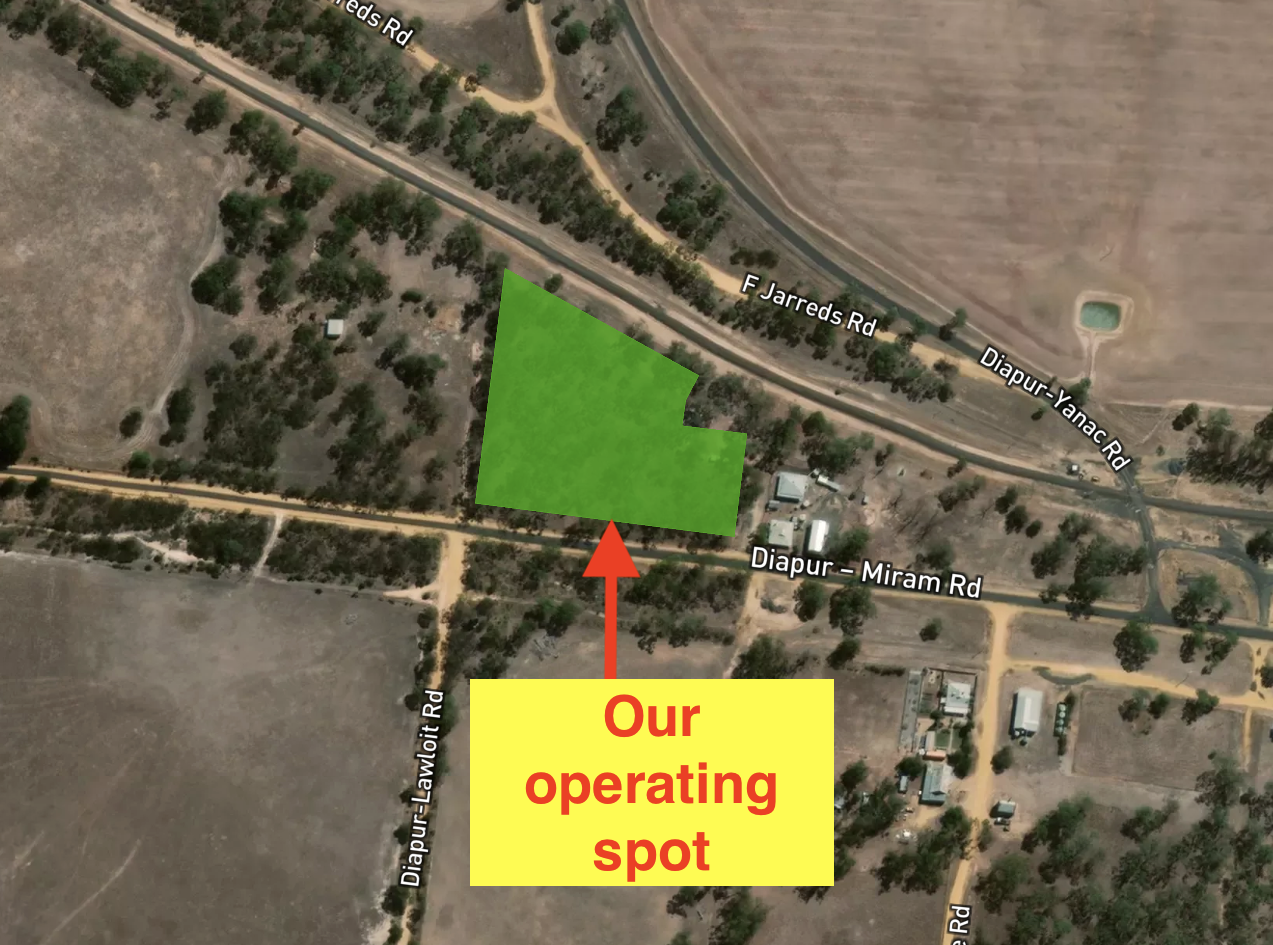
Above:- An aerial view of the park showing our operating spot. Image c/o Protected Planet.

Marija worked the following stations on 40m SSB:-

  1. VK5TRM/p (Deep Creek National Park VKFF-3186)
  2. VK5CZ
  3. VK1AO
  4. VK2MET
  5. VK3SQ
  6. VK5LA
  7. VK3PF
  8. VK7XX
  9. VK5FANA
  10. VK2EXA

I worked the following stations on 40m SSB:-

  1. VK5TRM/p (Deep Creek National Park VKFF-3186)
  2. VK5CZ
  3. VK1AO
  4. VK2MET
  5. VK3SQ
  6. VK5LA
  7. VK3PF
  8. VK7XX
  9. VK5FANA
  10. VK2EXA
  11. VK7HBR
  12. VK3UH

I worked the following stations on 20m SSB:-

  1. VK1AO
  2. VK2MET

References.

  1. Treasures of Nhill & Districts Facebook page, 2023, <https://www.facebook.com/groups/160257270749276>, viewed 22nd March 2023.
  2. Wikipedia, 2023, <https://en.wikipedia.org/wiki/Diapur>, viewed 22nd March 2023.
  3. Wikipedia, 2023, <https://en.wikipedia.org/wiki/Acacia_enterocarpa>, viewed 22nd March 2023.
  4. 2023, <http://www.softdawn.net/ls6/gjc.htm>, viewed 22nd March 2023.
Miram silo VK-MRM3

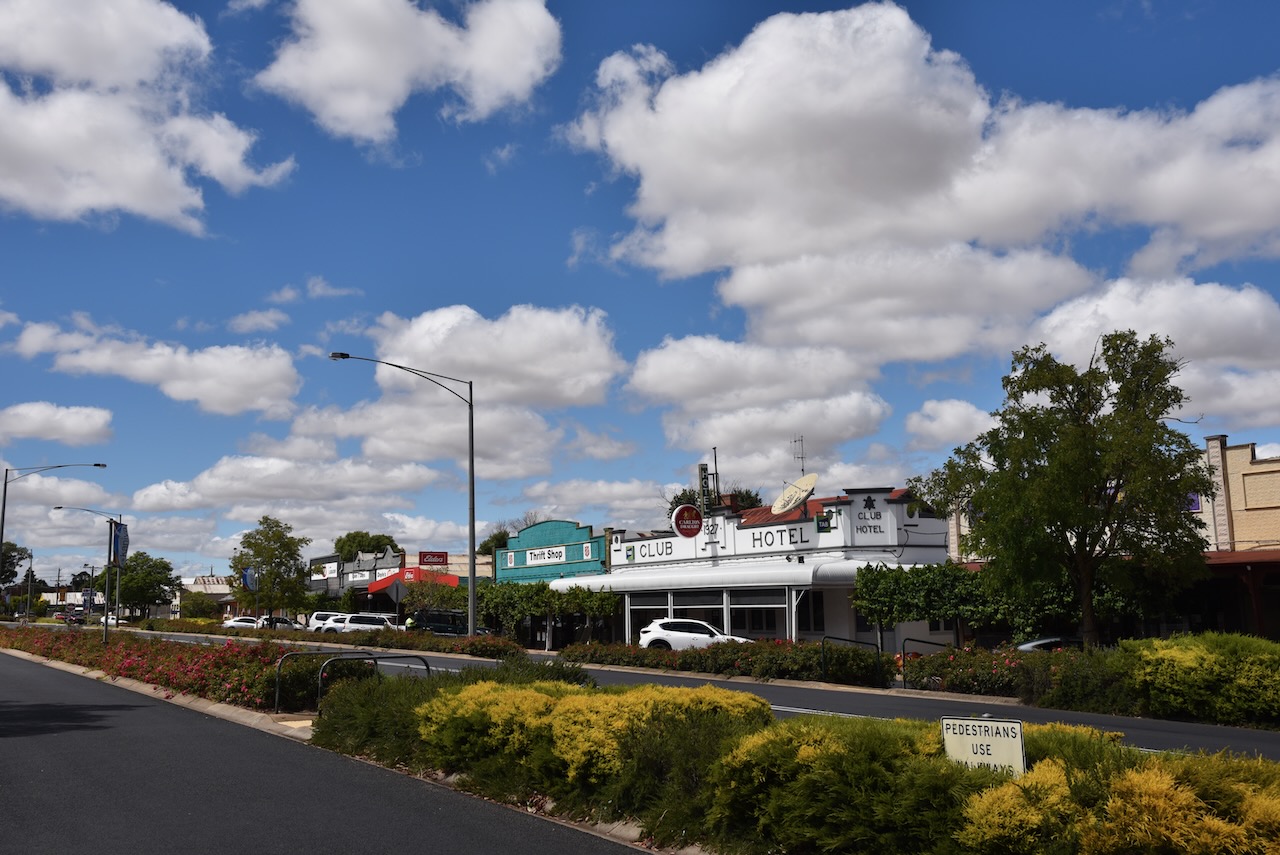
After leaving Lillimur, Marija and I drove a little further along the Western Highway and into the town of Kaniva, about 18 km from the South Australia/Victoria State border.

Prior to European settlement in the area, the Kaniva region was home to the Wotjobaluk, Jaadwa, Jadawadjali, Wergaia and Jupagik aboriginal people.

In 1845, a South Australian squatter named Heighway Jones, settled in the Kaniva district and commenced sheep grazing. By 1851 the Tattyara run was gazetted, with the Tattyara homestead located just a few kilometres from the current township of Kaniva. Tattyara was named after the Tyatyalla aboriginal people who inhabited the Kaniva district. On the 1st day of December 1881, the Nudjik Post Office was opened and renamed Kaniva in the following year in 1882. The origin of the name Kaniva is unclear. It has been suggested that it is derived from Kinnivie in Durham, England, or from Cniva who was a 3rd-century Gothic chieftain who commenced the invasion of the Roman empire. Others suggest the name is an aboriginal word.

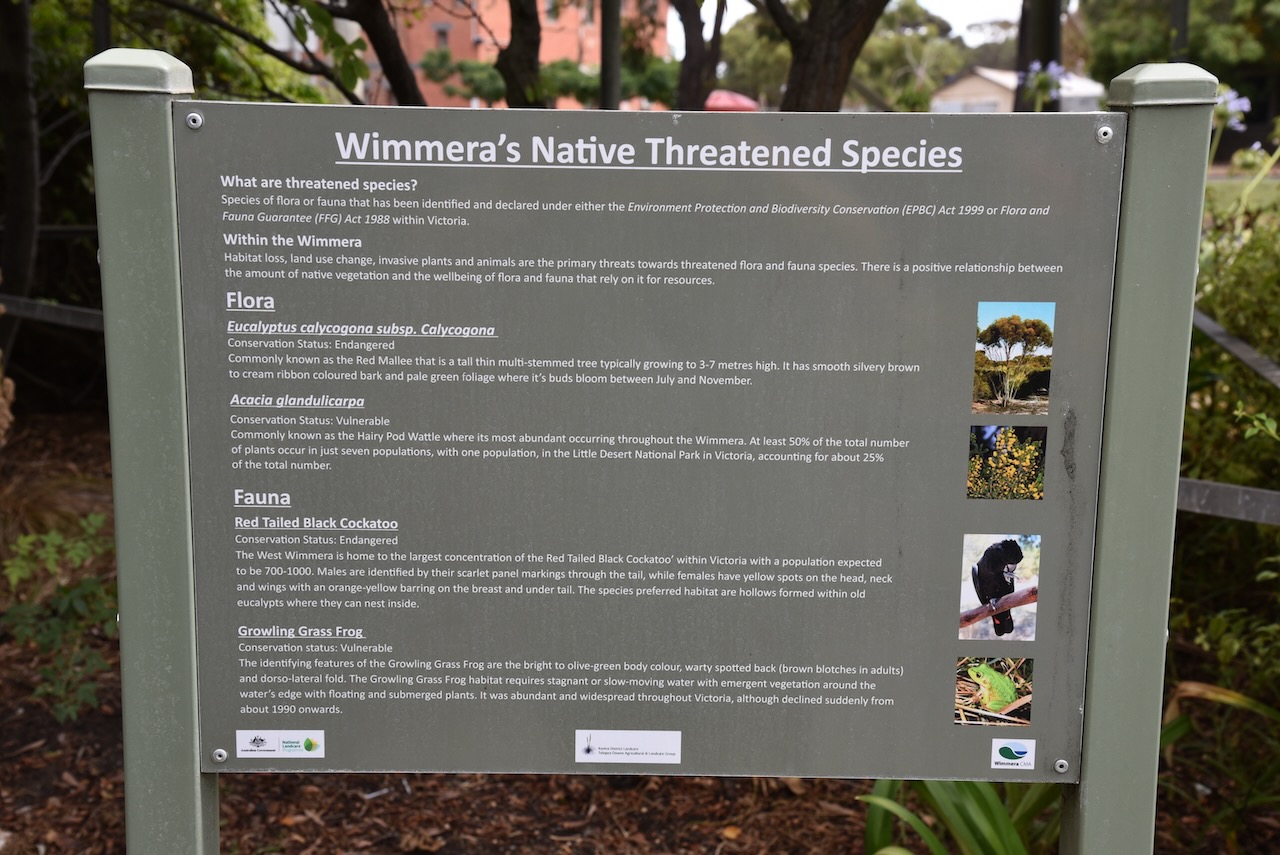
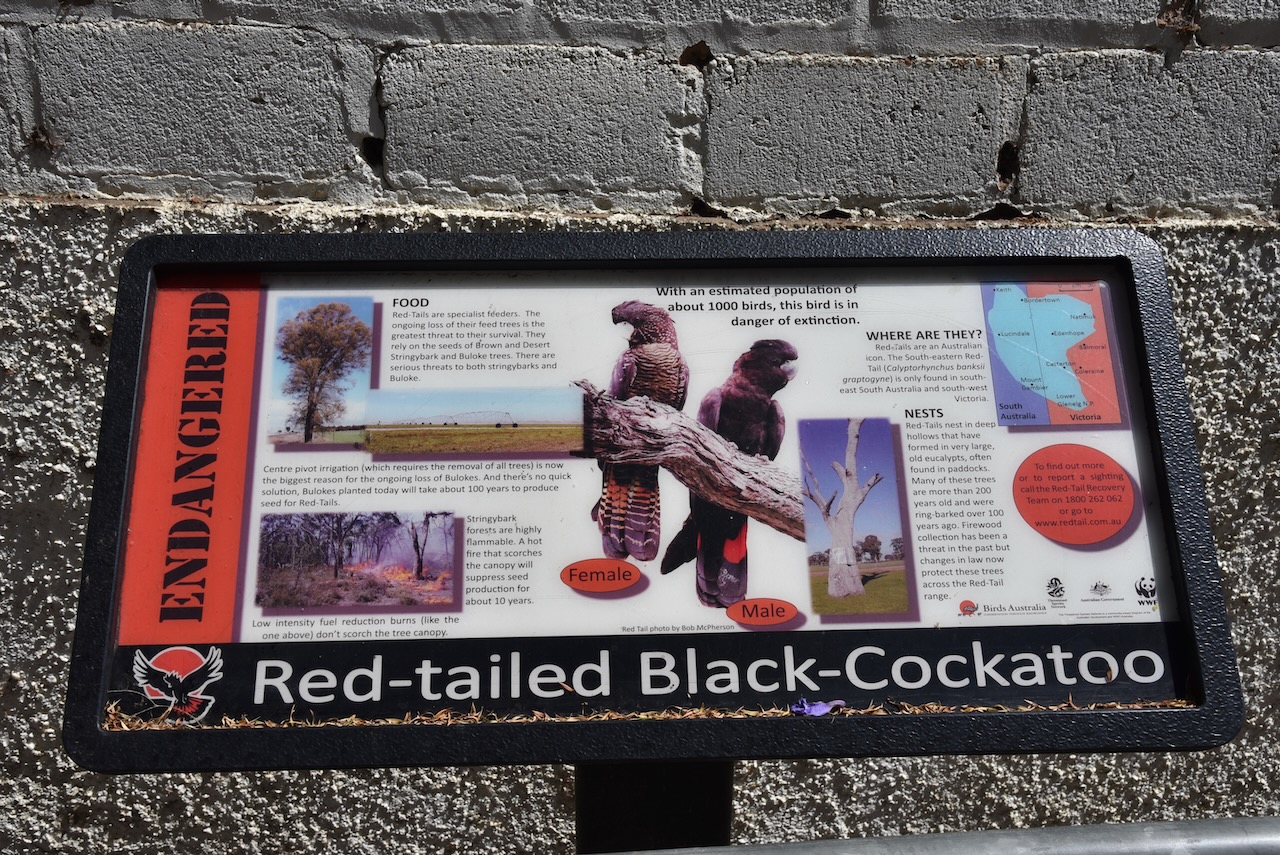
The Kaniva area contains various rare flora and fauna including the rare Red-tailed black cockatoo. The Shire of West Wimmera prohibits the felling of dead trees as these are used as nesting sites for the cockatoos.

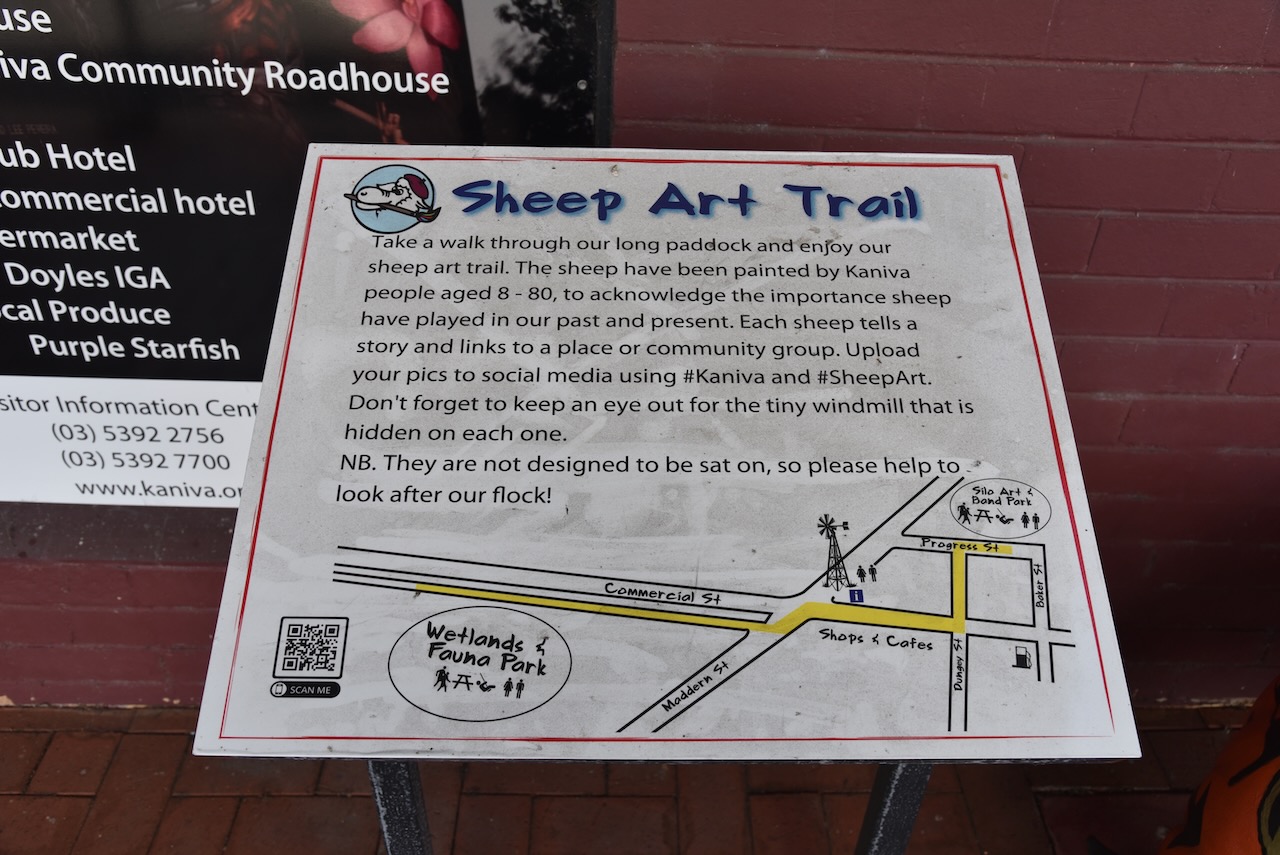
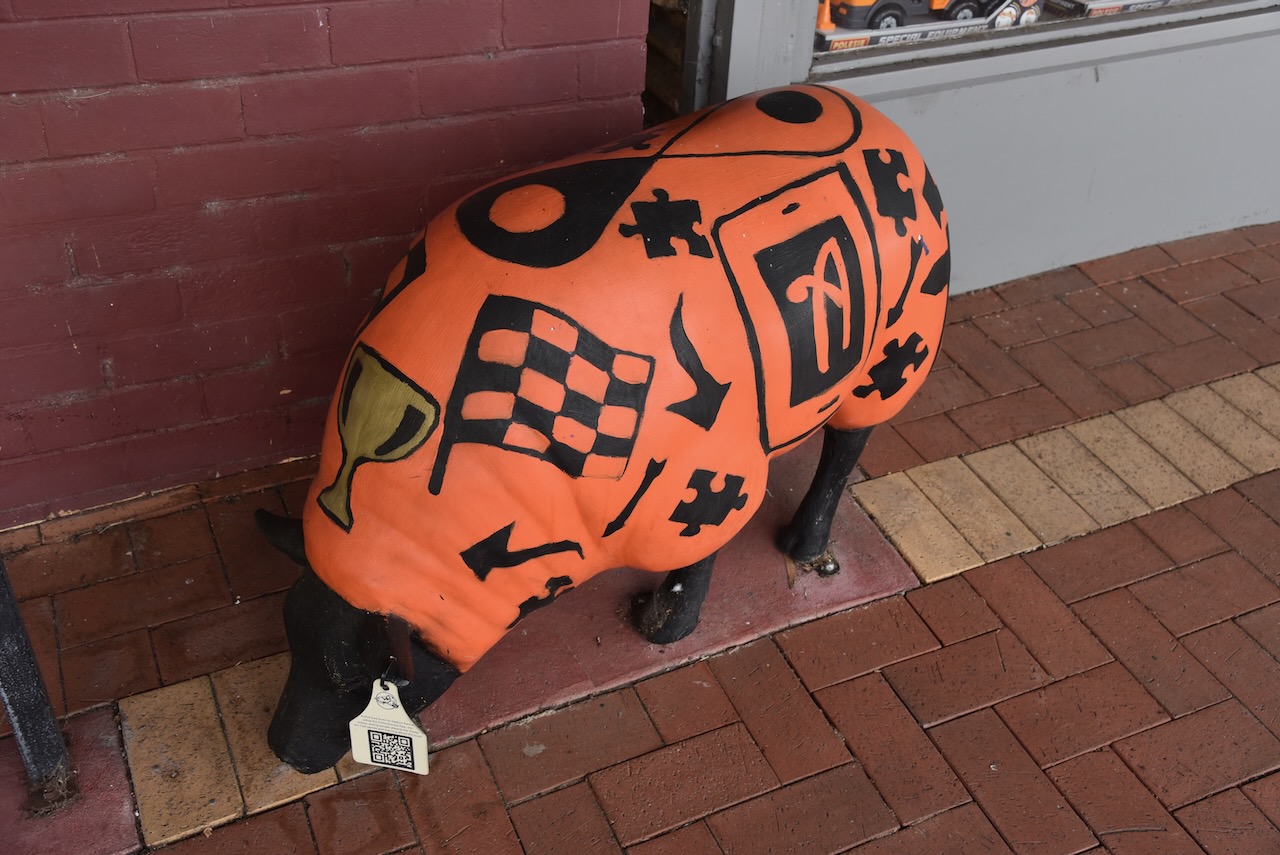
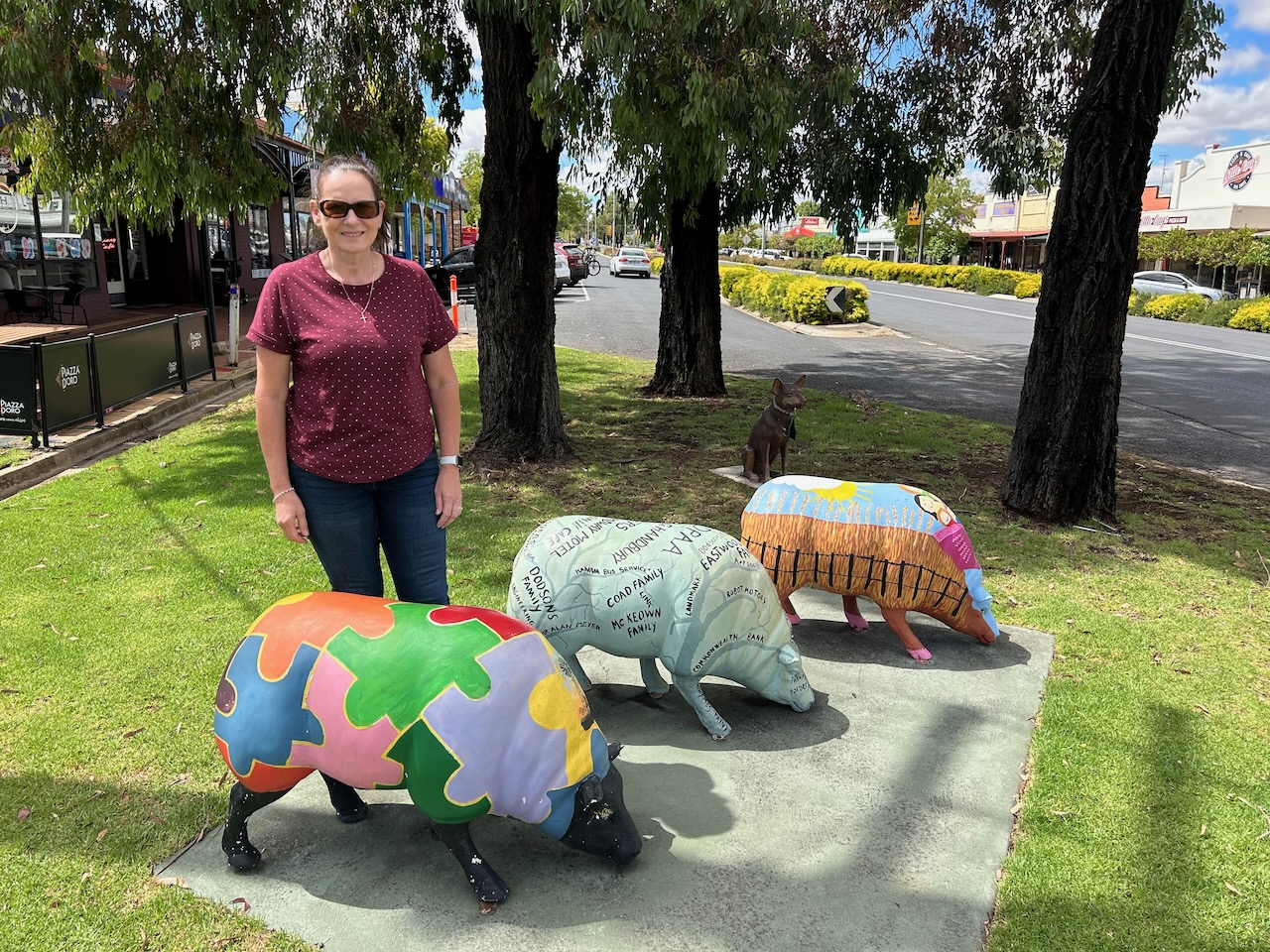
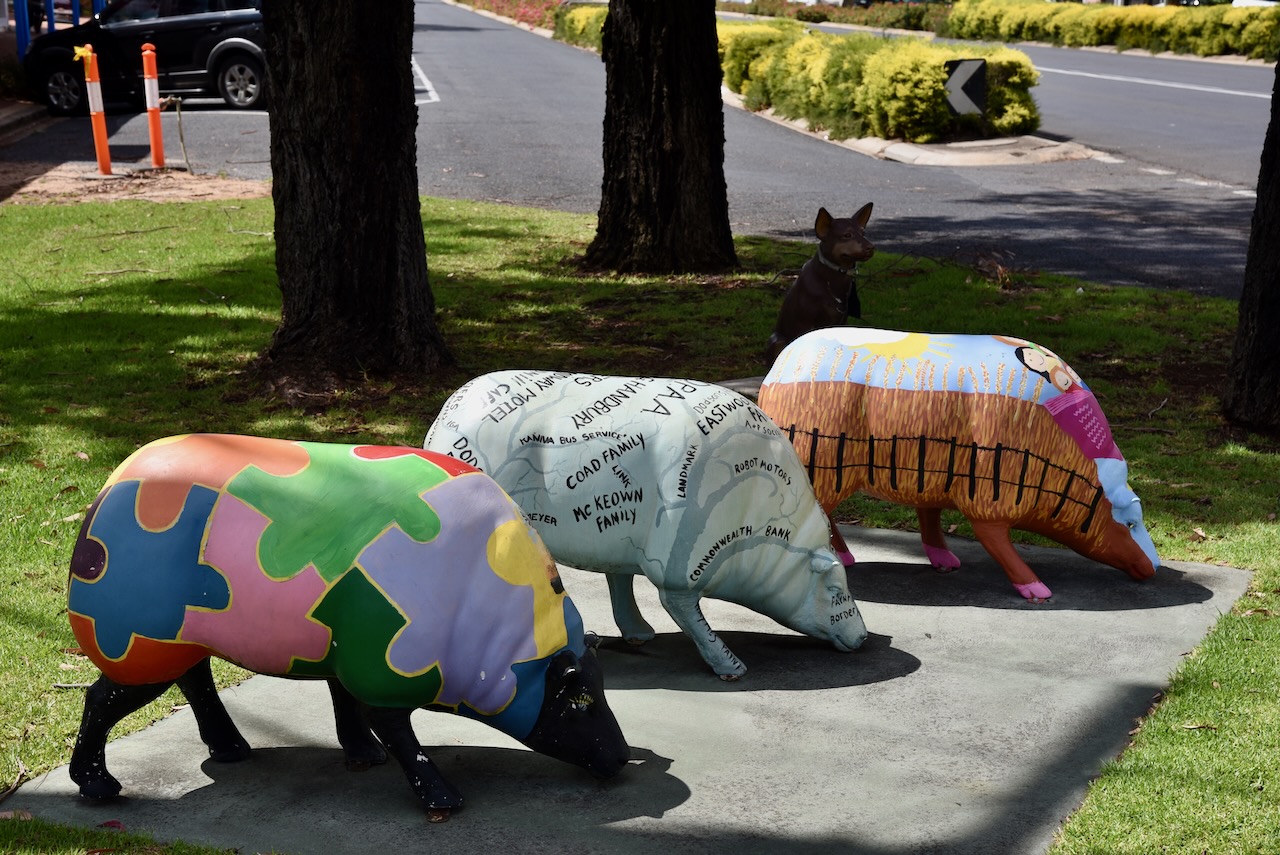
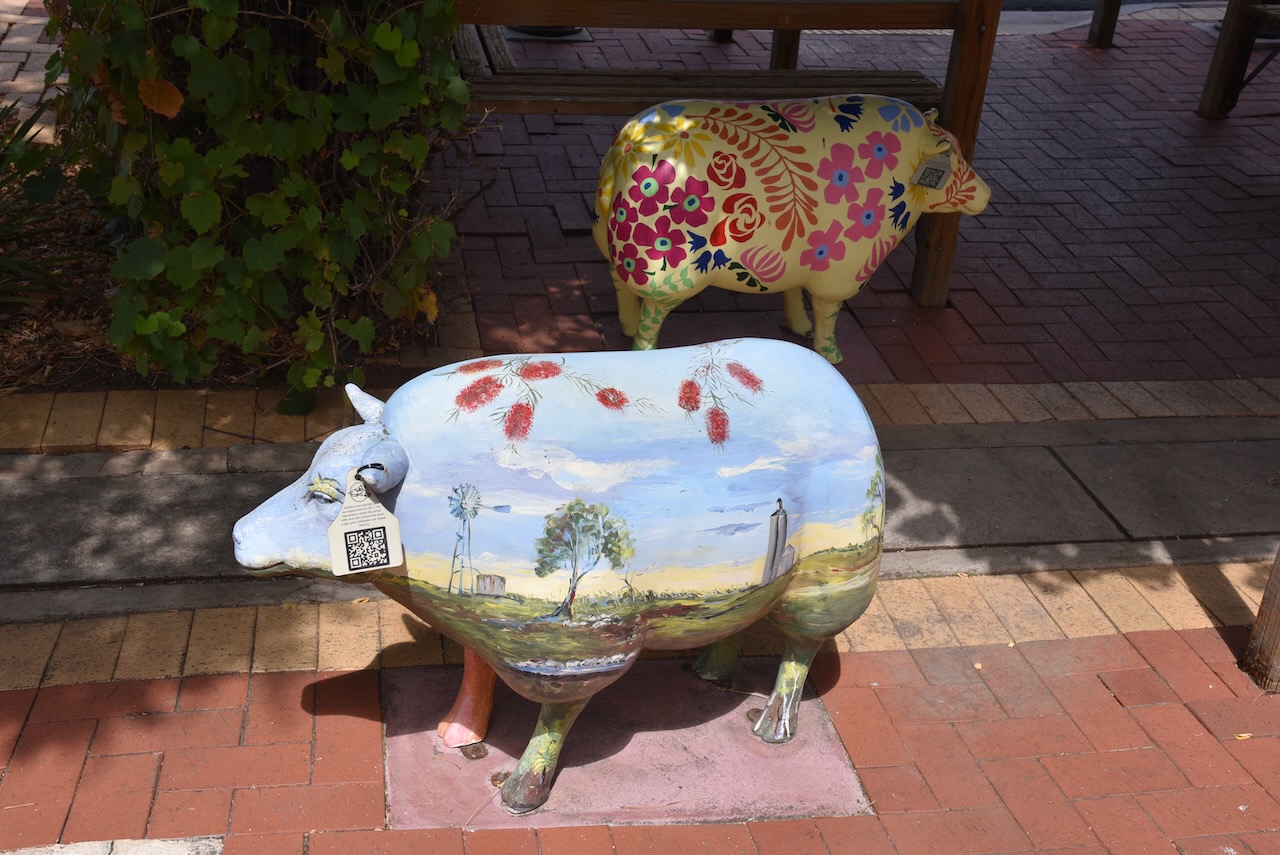
Kaniva is home to the Sheep Art Trail. The concept of the Sheep Art Trail was from a stencil day held in November 2010 where over 100 property stencils were brought in to record the sheep history of the Kaniva district. A Sheep Art committee was formed and an application was made for funding to paint a flock of fibreglass sheep was applied for. The application was unsuccessful. Local businesses and community groups subsequently donated money to allow the project to proceed. 

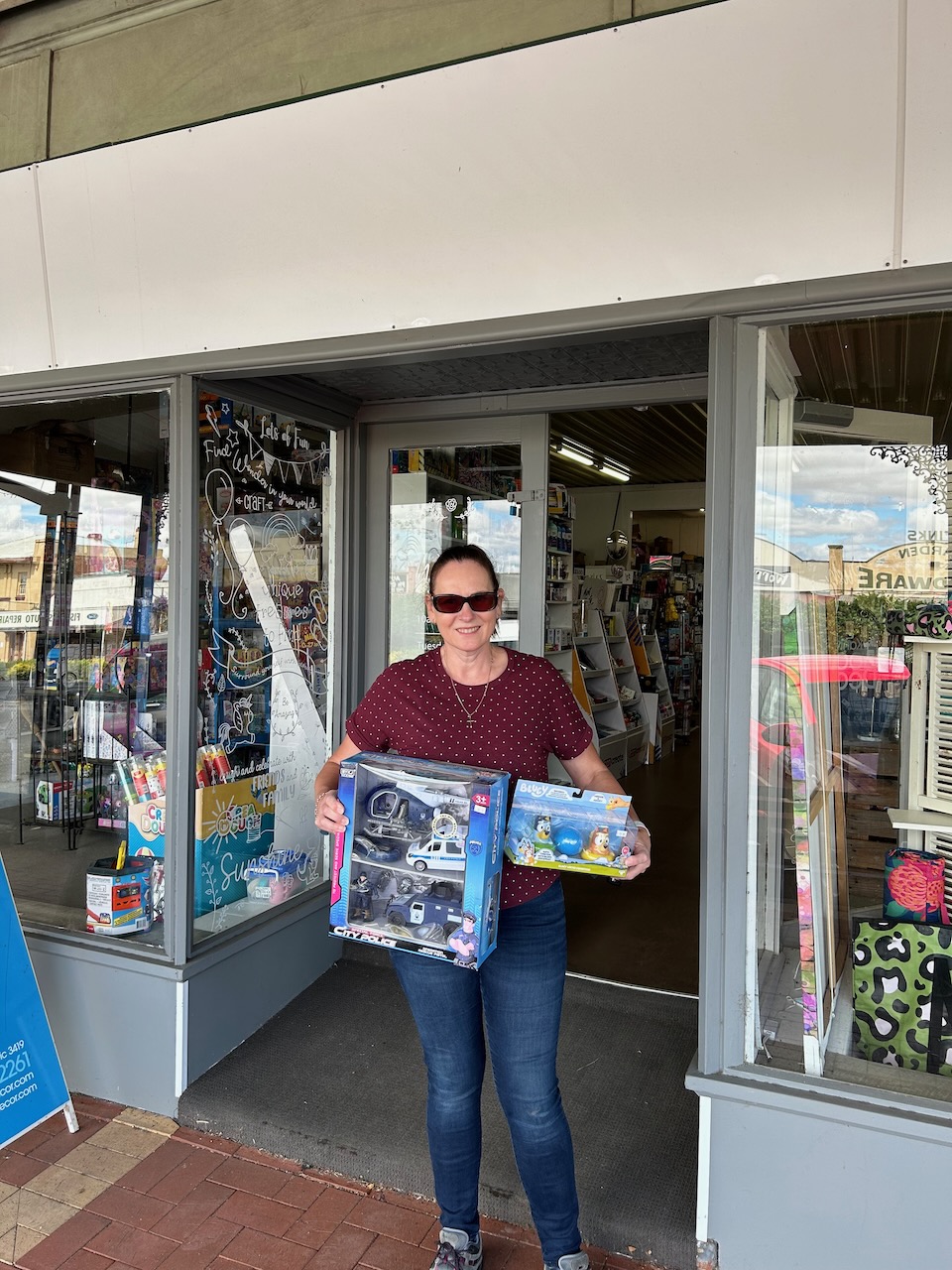
Whilst we were in Kaniva we spotted some toys in a shop window and we couldn’t resist. In we went to buy something for our two beautiful grandchildren.

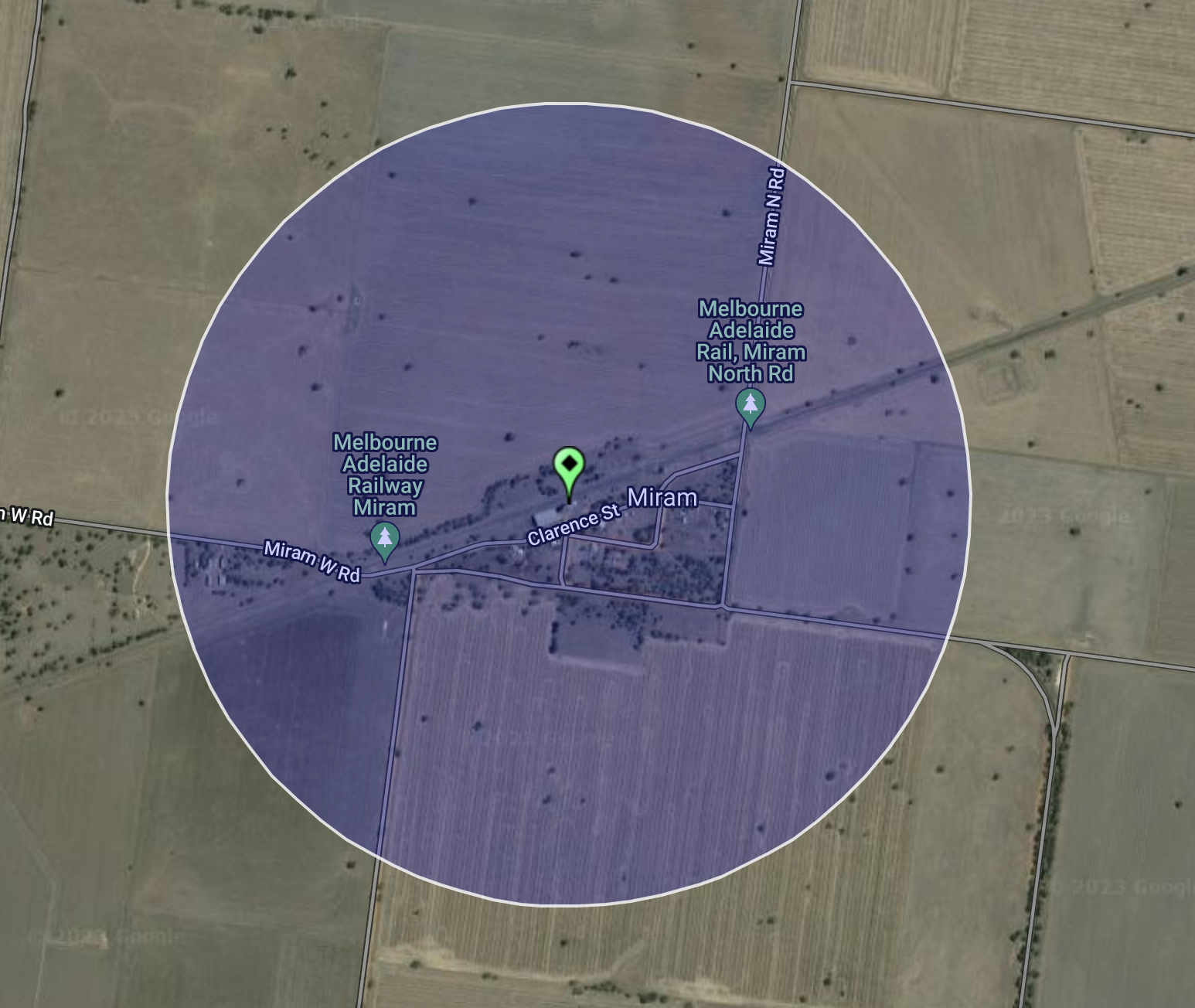
We left Kaniva and drove a short distance to the town of Miram where we intended to activate the Miram silo for the Silos On The Air (SiOTA) program.

Above:- Map showing the location of Miram. Map c/o google maps.

Miram is located about 10 kilometres northeast of Kaniva. It was named after a locality called mripiram later known as Miram Piram and later shorted to Miram in 1904. It is believed that Miram is an aboriginal word for bough of a tree.

The settlement of the Miram district occurred during the 1870s. In 1884 a school was opened in the district. Following the extension of the railway line from Dimboola to Serviceton, the Miram district flourished with wheat crops being carried by road wagons to Dimboola or South Australia.

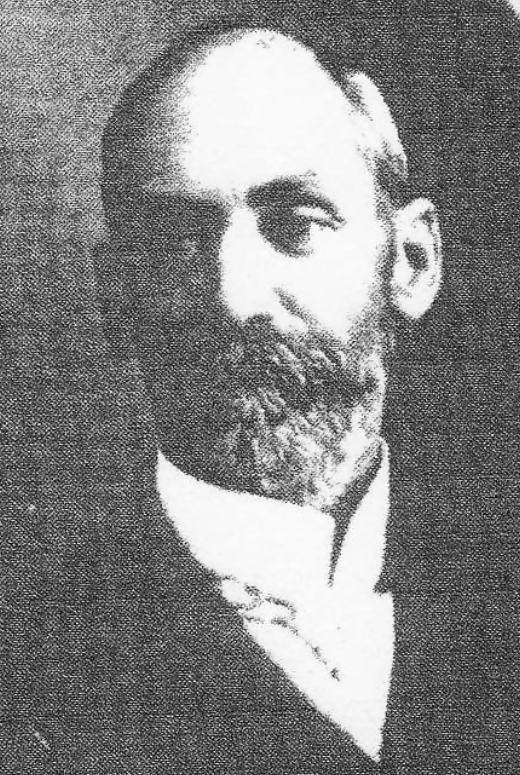
In 1888 Miram’s first store was opened by George Coles (b. 1855. d. 1931). He already had a store in the nearby town of Diapur. His son George James Coles (b. 1885. d. 1977) was the founder of G.J. Coles and Company.

Above:- George Coles who opened the Miram store. Image c/o ancestry.com.au

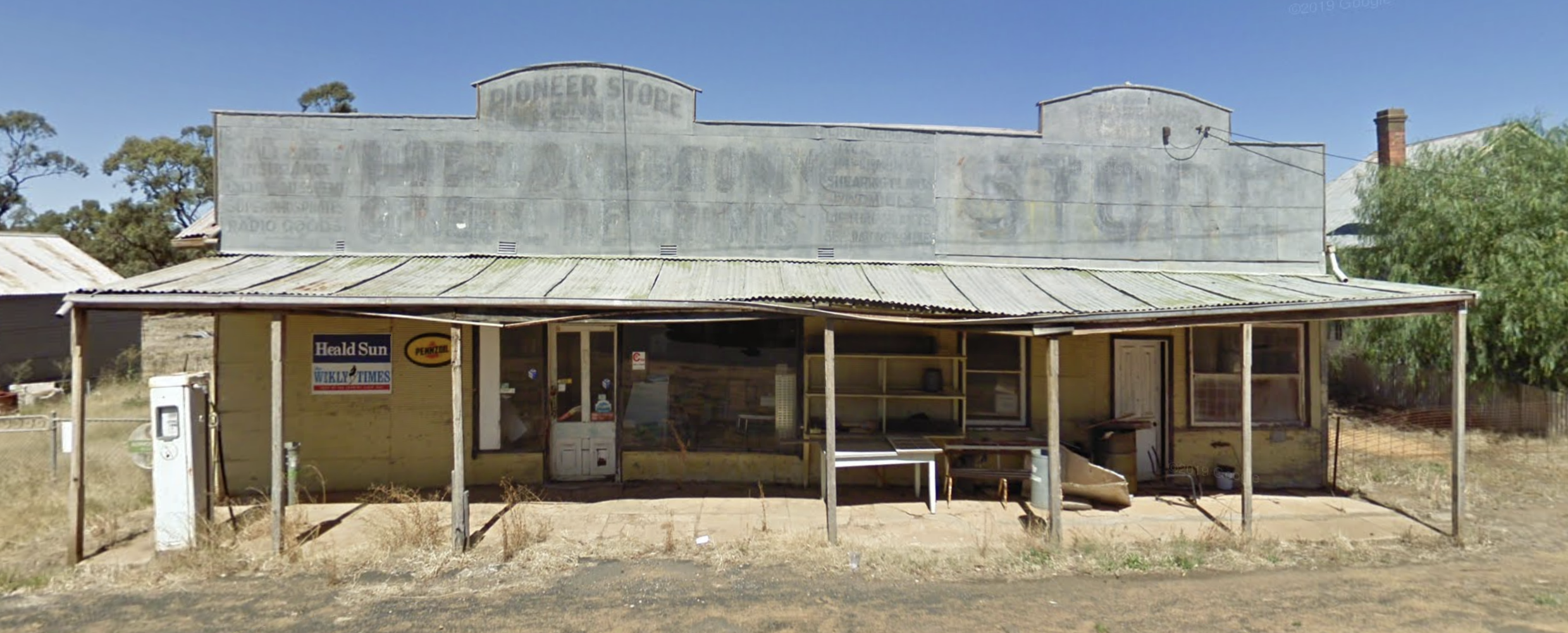
The Coles’ store in Miram operated until it was sold in 1892. In 1903 Phillip Wheaton purchased the store and it was in operation as a store and post office until its closure in 2000. It was not until I got home that I realised the significance of the old building we had seen in this tiny town.

Above:- the old Coles store, Miram. Image c/o Google Street view.

In 1890 an Anglican church was built. In 1914 a public hall was constructed. The Miram school closed in 1952 with students attending the Kaniva Consolidated school. The Miram Anglican and Methodist churches were closed in 1960 and 1964.

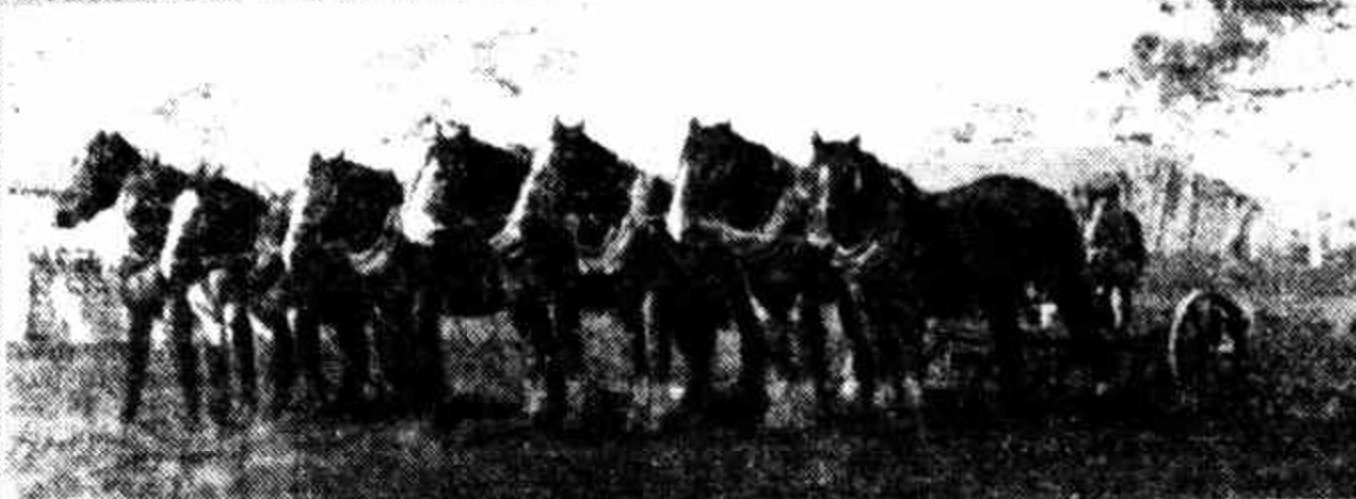
Above:- a farmer at work on his farm with a team of horses. Image c/o Weekly Times, Melbourne, Sat 21 Sep 1929, Trove.

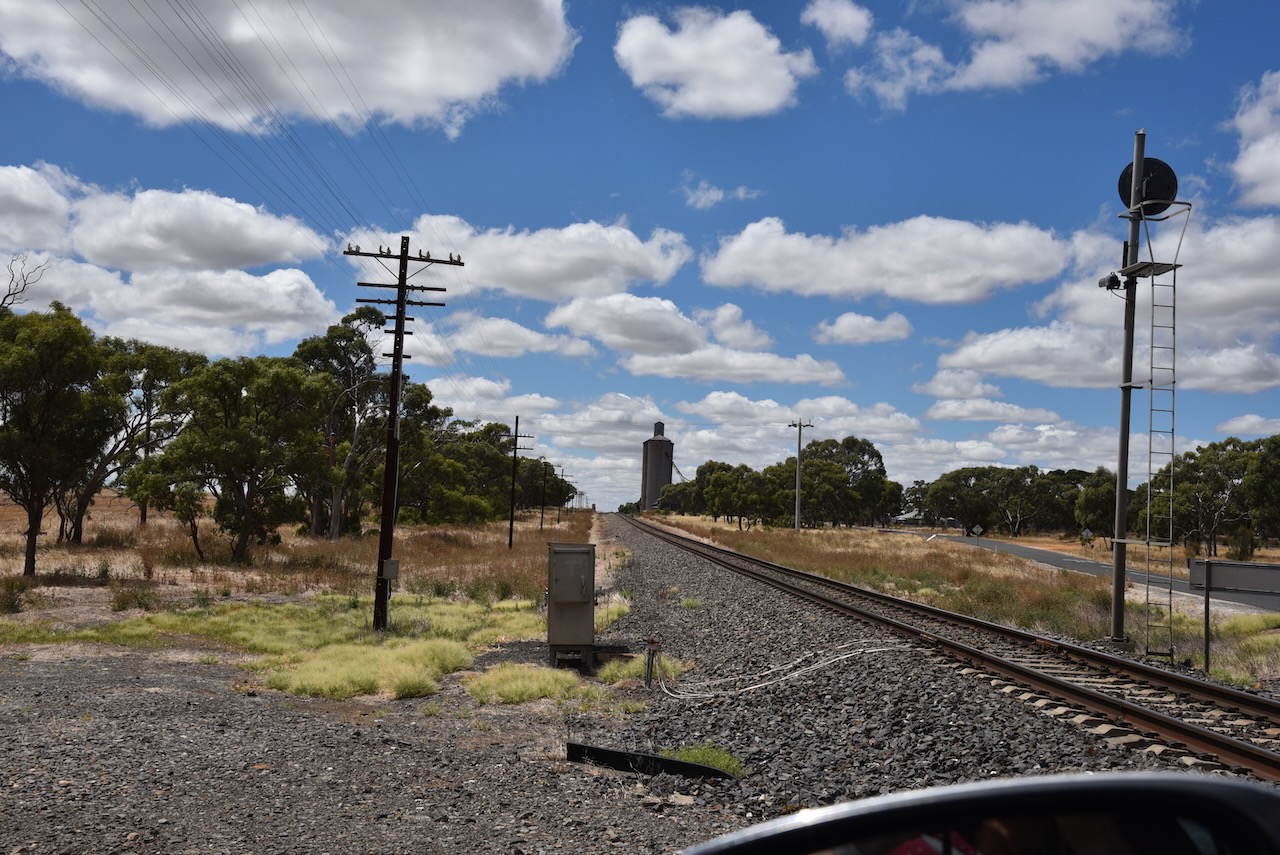
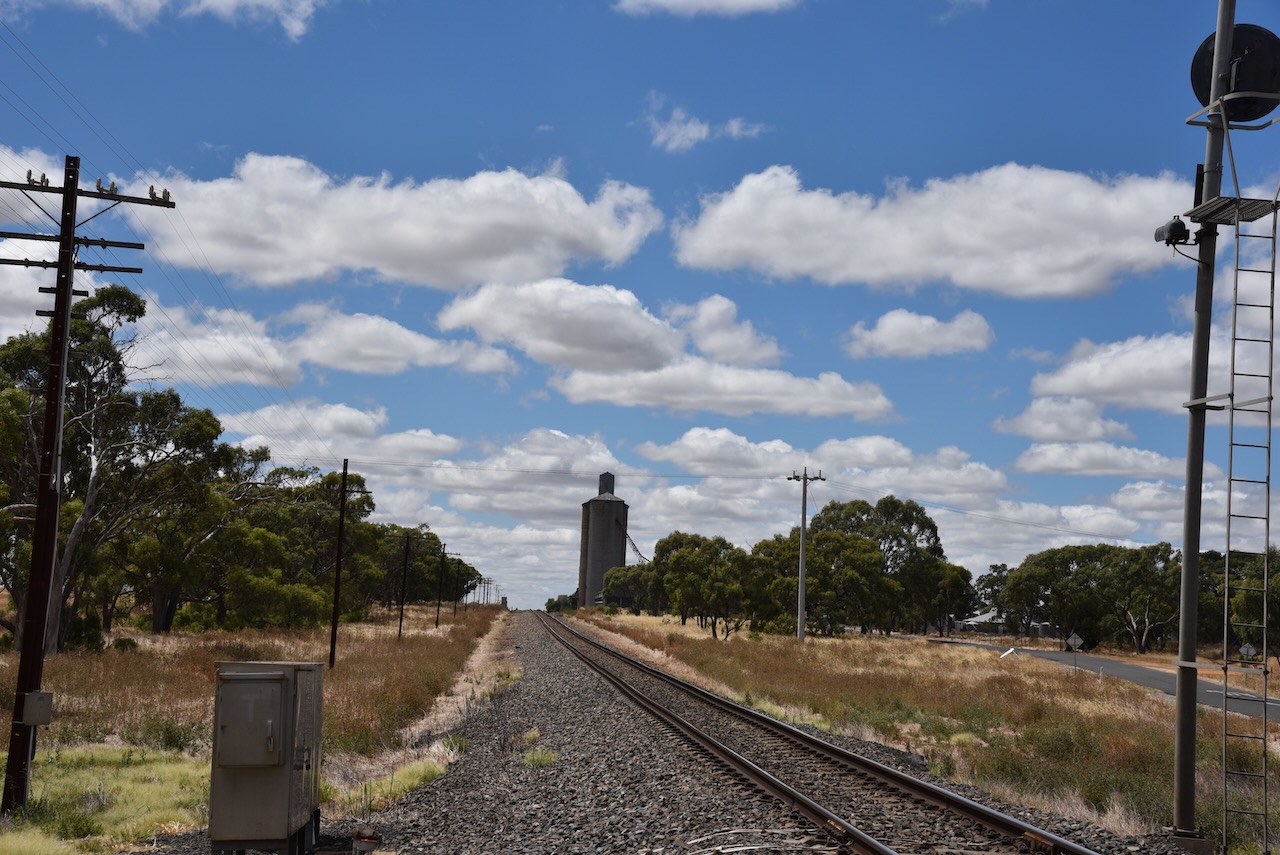
The silos at Miram were constructed in 1939 alongside the railway line.

We parked right alongside the silo and operated from the 4WD, running the Icom IC-7000, 100 watts, and the Codan 930 antenna.

Above:- the activation zone at the Miram silo. Image c/o SiOTA website.

Marija made the following QSOs on 40m SSB:-

  1. VK3PF
  2. VK3KMA
  3. VK5FANA
  4. VK7JFD

I made the following QSOs on 40m SSB:-

  1. VK3PF
  2. VK3KMA
  3. VK5FANA
  4. VK7JFD
  5. VK3ANL
  6. VK3UP
  7. VK3MJF
  8. VK7XX
  9. VK1AO
  10. VK2MET

I made the following QSOs on 20m SSB:-

  1. VK7XX
  2. VK2IO
  3. VK1AO
  4. VK2MET
  5. VK7HBR
  6. VK4EHI
  7. VK7JFD

References.

  1. Aussie Towns, 2023, <https://www.aussietowns.com.au/town/kaniva-vic>, viewed 22nd March 2023.
  2. Victorian Places, 2023, <https://www.victorianplaces.com.au/miram>, viewed 22nd March 2023.
  3. Wikipedia, 2023, <https://en.wikipedia.org/wiki/Kaniva>, viewed 22nd March 2023.
Lillimur silo VK-LLR3

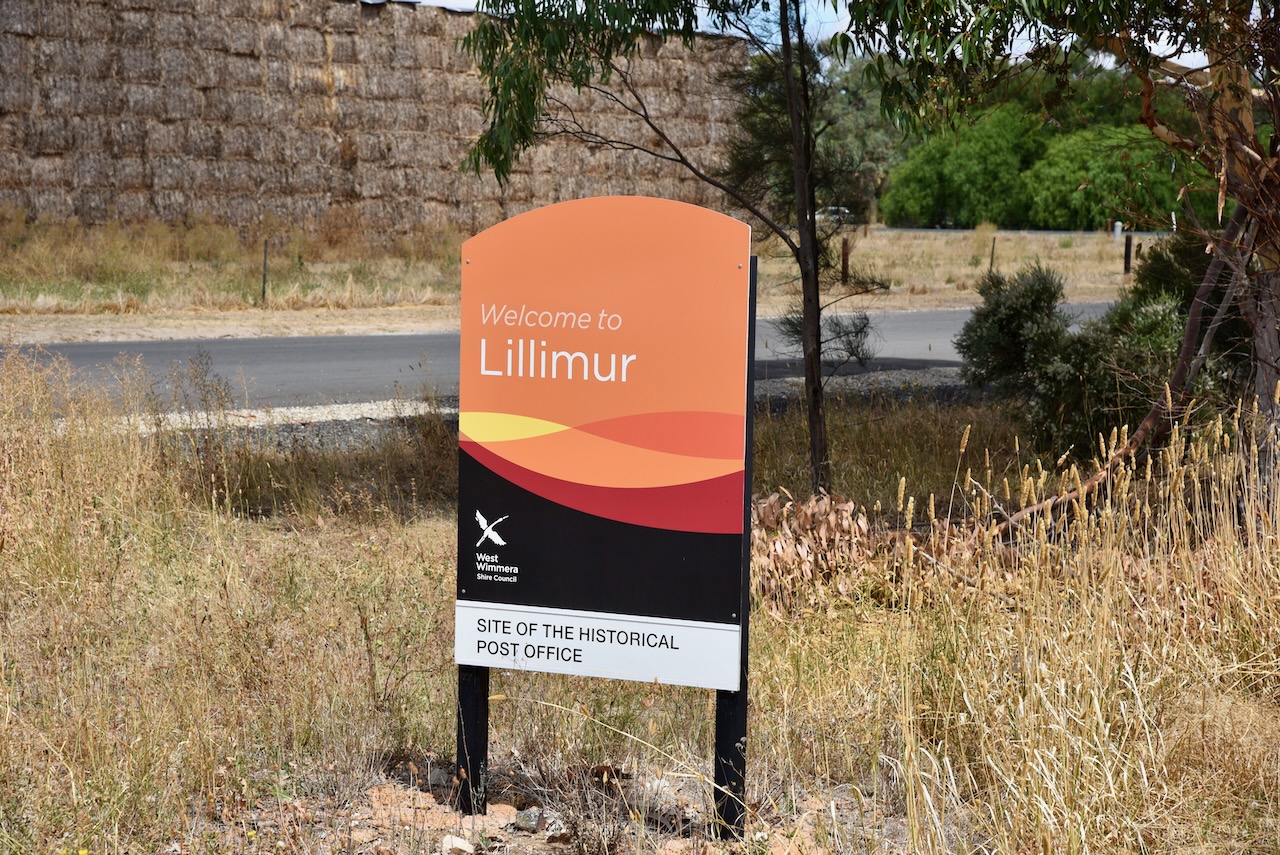
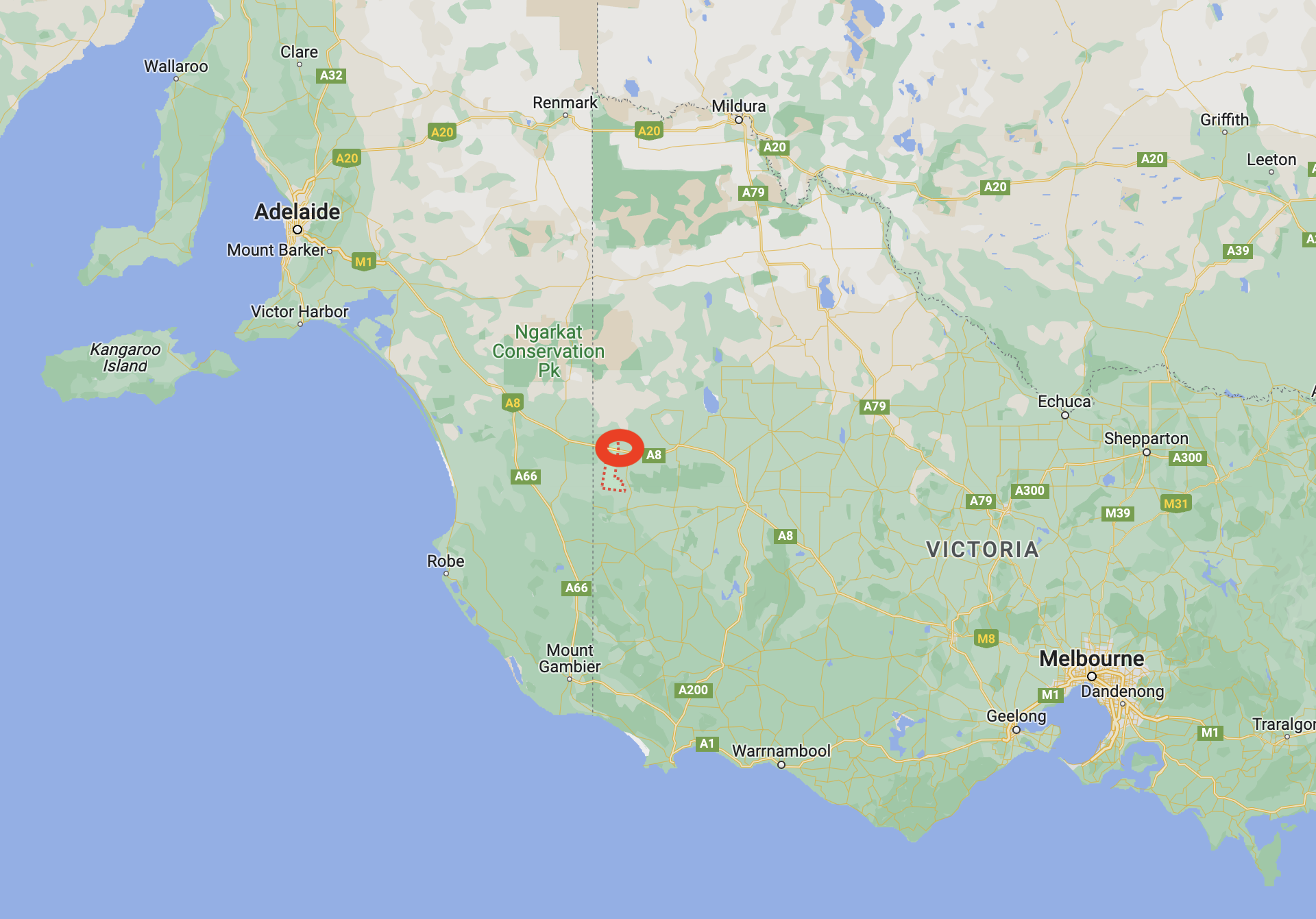
After leaving Tintinara, Marija and I continued southeast on the Dukes Highway and we soon crossed the South Australia/Victoria State border. We continued east on the Western Highway, with our next stop being the little town of Lillimur in western Victoria, about 15km from the State border.

Above:- Map showing the location of Lillimur in western Victoria. Map c/o Google maps.

Lillimur takes its name from the Lillymur pastoral station which was established in 1866. It is believed that the name Lillimur was derived from the aboriginal word meaning bone or wattle gum.

Are you ready to be confused? In 1878 a township was reserved at Lillimur South and was first called Lillimur. In 1879, a settlement to the north, with a school opened there in 1879. This was called Kaniva. In 1881 a flour mill was opened further to the east and the name Kaniva was associated with it. This is the town of Kaniva as we know it today. Lillimur became Lillimur South, and the former settlement of Kaniva became the present-day Lillimur.

Prior to the development of current-day Kaniva, Lillimur was a bustling town with several stores, two hotels, a Wesleyan church built in 1881, and a mechanics institute that was built in 1882.

In 1887 the extension of the railway occurred from Dimboola to Serviceton. This resulted in the line running through Kaniva and bypassing Lillimur. As a result, Kaniva became the prominent town in the district. Despite that, Lillimur still had a courthouse, and a number of churches – Presbyterian, Catholic, Methodist, Anglican, and Church of Christ.

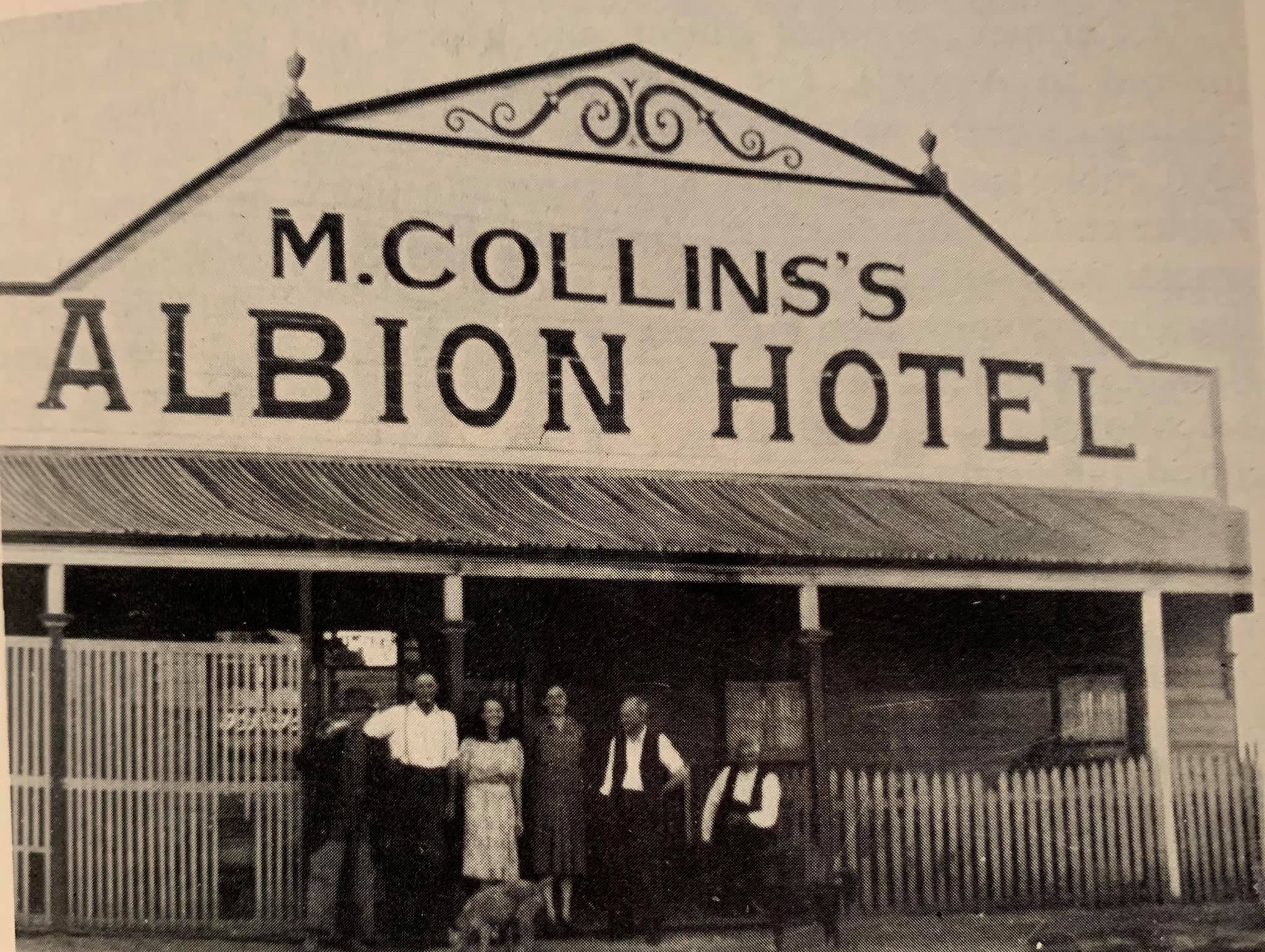
Above:- Albion Hotel, Lillimur North. Image c/o Mortat cemetery Peronne, and district’s Facebook page.

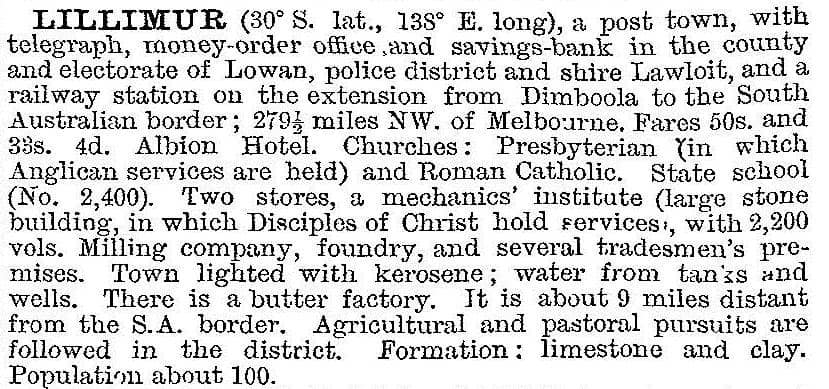
Below is a description of Lillimur in 1903 in the Australian handbook.

Above:- Image c/o Victorian Places.

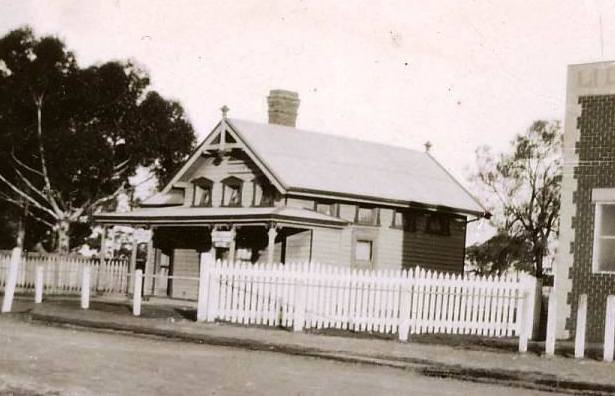
Sadly today not much remains of what was once the thriving town of Lillimur. But, one of the interesting structures in the town which does remain, is the old courthouse and post office. I suspect that the vast majority of people who drive through the town would just view the building as an old abandoned house in a very poor state of disrepair. Not many would know its history.

The old Lillimur Post office and courthouse is a weatherboard building with a brick chimney, that was built in 1887. It operated as a courthouse from 1887 until its closure in 1892. In 1913 it became a Post Office.

Below is a photo of what the building once looked like.

Above:- Photo c/o Lillimur, Victoria Facebook page.

Below is an excellent video of this historic building. It includes some old photographs of what the building once looked like. I find it very sad that it sits in the state if disrepair that it is today.

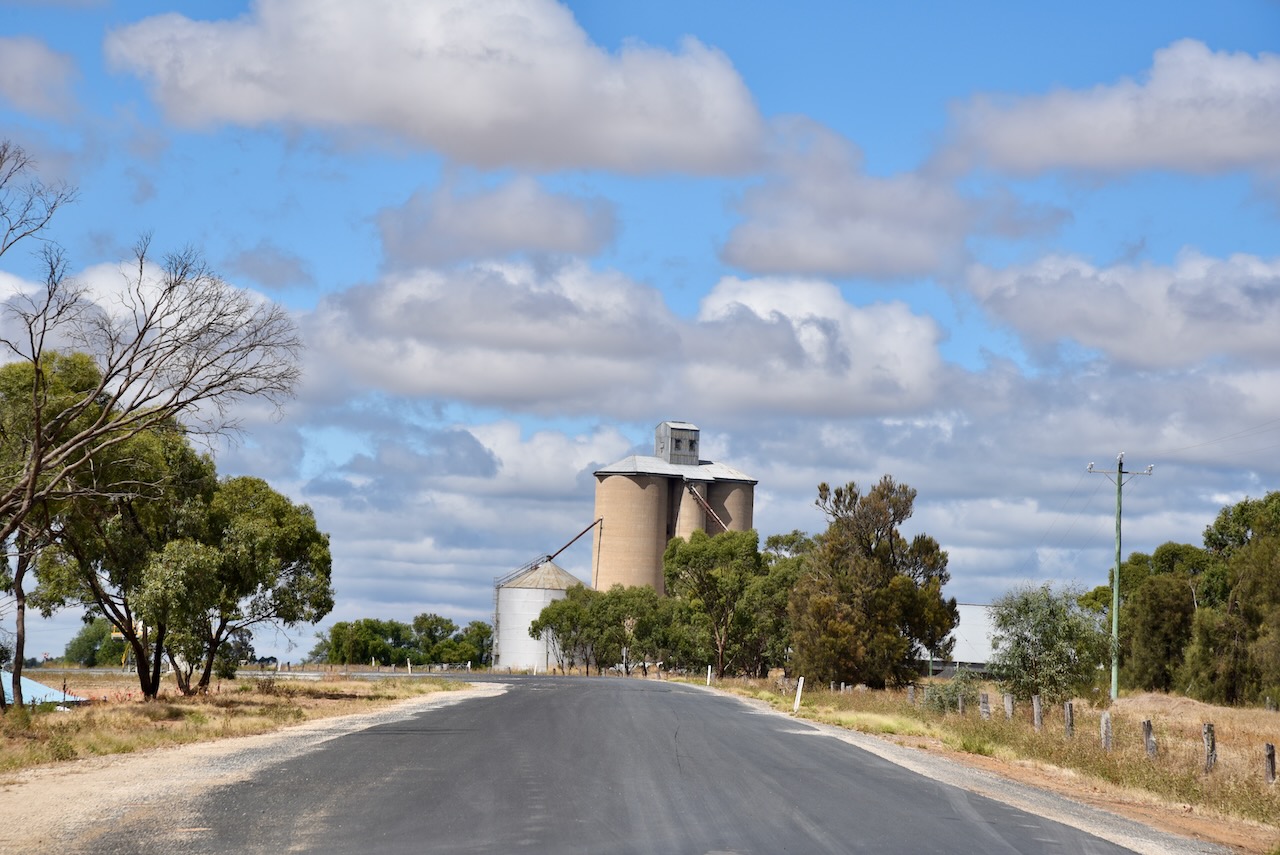
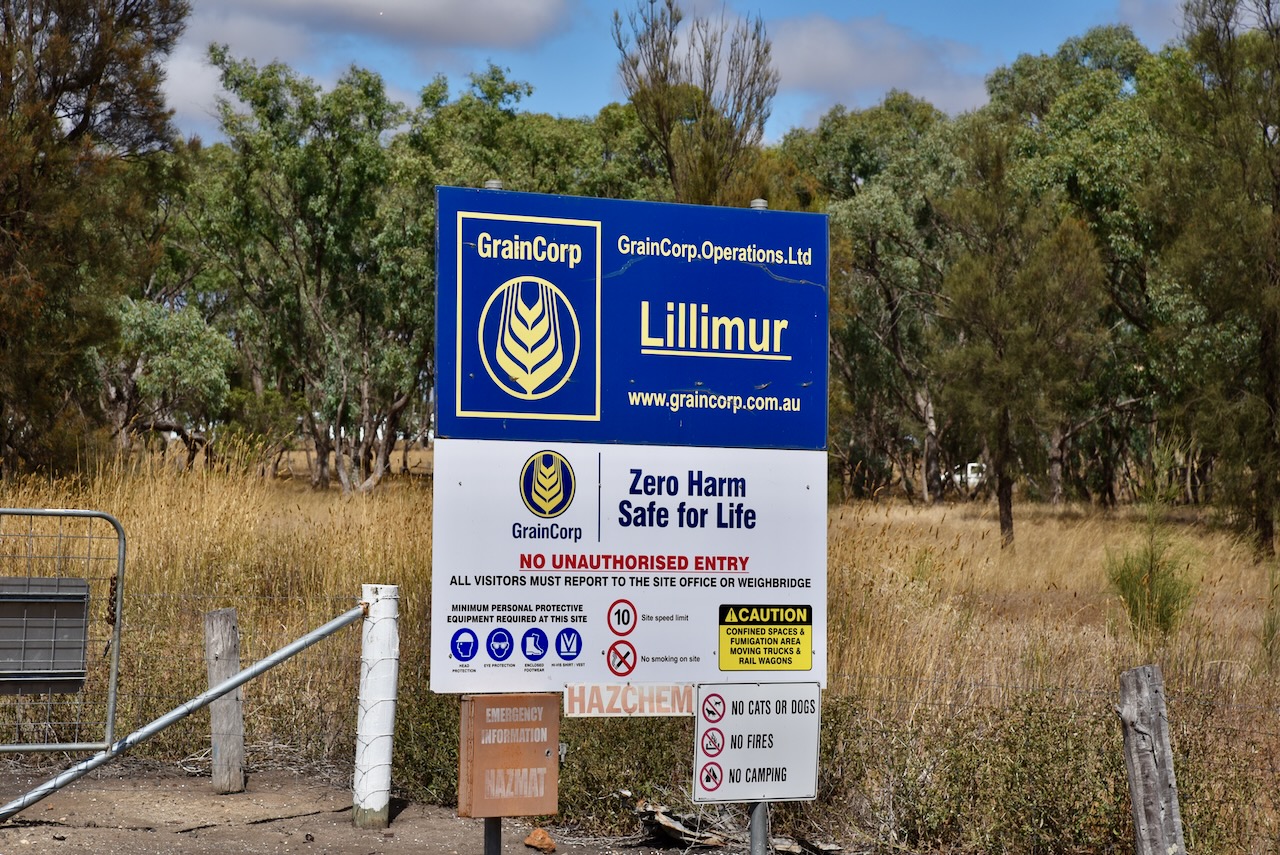
We headed to the Lillimur silos which are located on the southern edge of the town on K Clarks Road which runs off Station Road. The silo is operated by Graincorp.

We operated from the 4WD for this activation, running the Icom IC-7000, 100 watts, and the Codan 9350 antenna mounted on the rear of the 4WD.

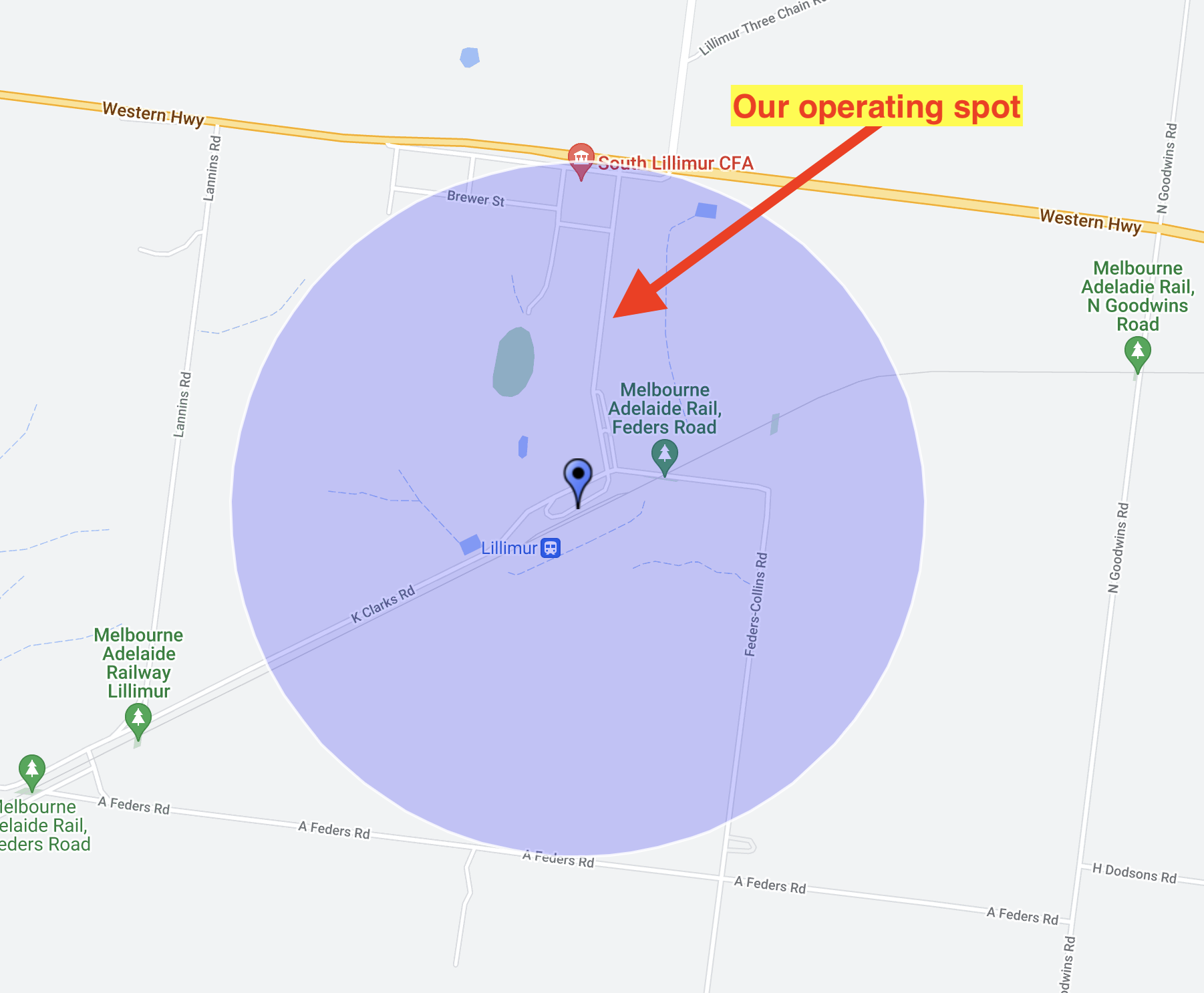
Above:- Map showing the silo activation zone, and our operating spot. Map c/o SiOTA website.

Marija worked the following stations on 40m SSB:-

  1. VK3PF
  2. VK3MCK
  3. VK3SQ
  4. VK1AO
  5. VK2MET

I worked the following stations on 40m SSB:-

  1. VK3PF
  2. VK3MCK
  3. VK3SQ
  4. VK1AO
  5. VK2MET
  6. VK3NBL
  7. VK5AYL
  8. VK5FANA
  9. VK5IS
  10. VK3ZSC
  11. VK2PKT
  12. VK3ANL
  13. VK2VIN
  14. VK2GQR

I worked the following stations on 20m SSB:-

  1. VK2FR
  2. VK2IO
  3. VK4EW

References.

  1. Victorian Places, 2023, <https://www.victorianplaces.com.au/lillimur>, viewed 17th March 2023.
Tintinara silo VK-TNA5

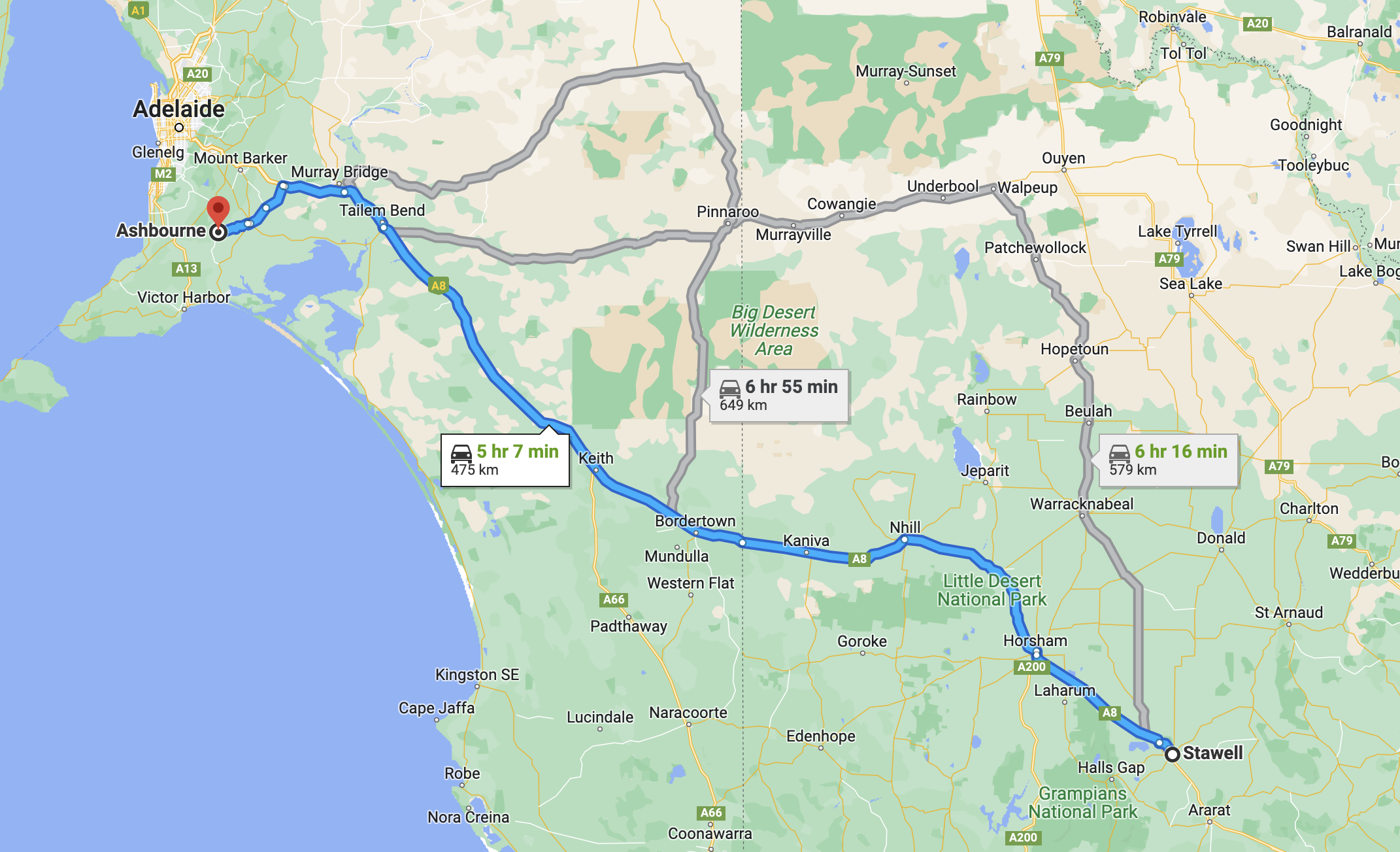
On Monday 27th February 2023, Marija VK5MAZ and I headed off on our way to the Avalon Air Show in Geelong. On day one we planned on travelling to Stawell in western Victoria where we would stay for one night, and then head off to Geelong. The drive from home to Stawell was about 475 km. We planned on activating some silos and parks along the way.

Above:- Map showing our route from home to Stawell in Victoria. Map c/o Google maps.

Our first stop for the day was the little town of Tintinara, about 188 km southeast of the city of Adelaide.

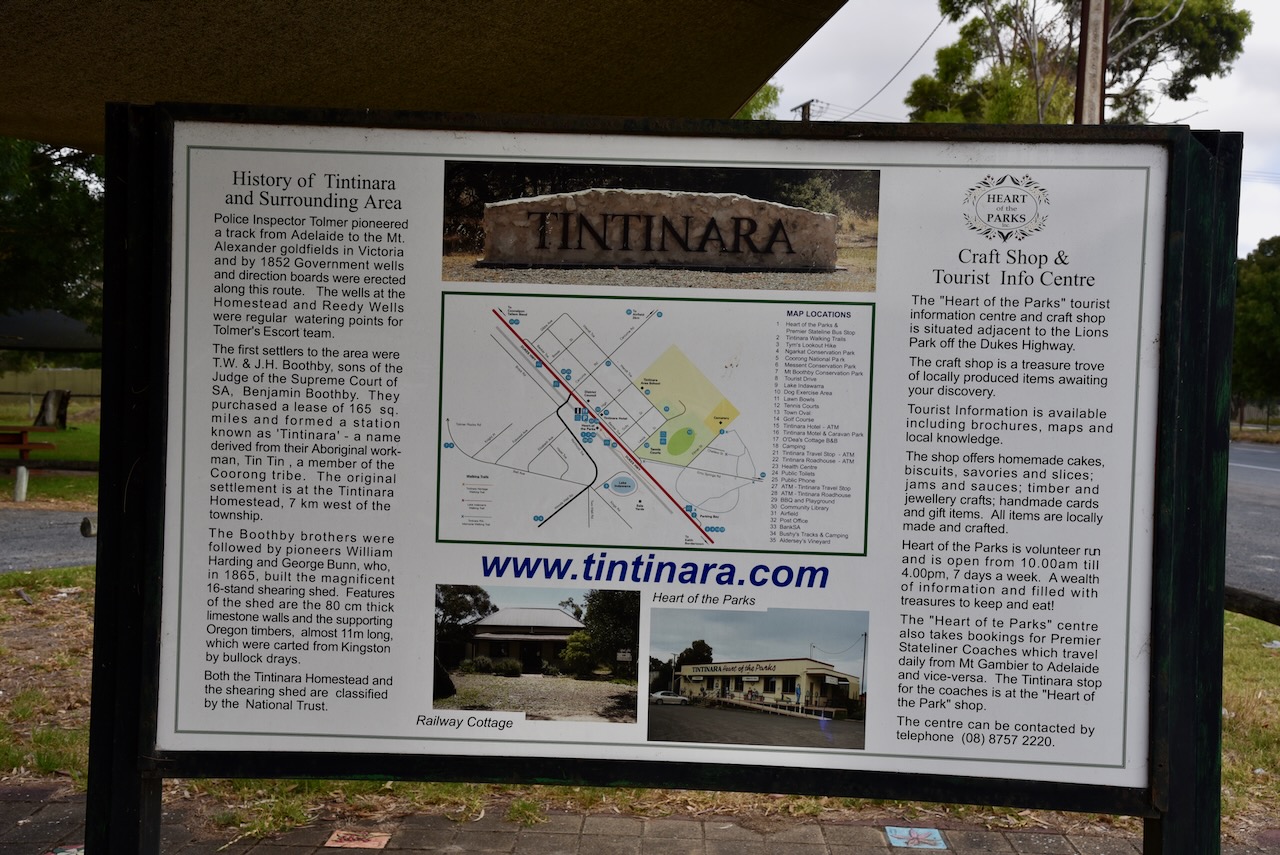
The area around Tintinara was first settled by Europeans during the 1840s, with graziers moving their flocks of sheep into the area. This was followed in about 1860 by the building of Tintinara homestead by brothers Thomas Wilde Boothby (b. 1839. d. 1908) and James Henry Boothby (b. 1841. d. 1920). They were the sons of Chief Justice Benjamin Boothby. They held a 427 square km lease in the Tintinara district. In 1865, William Harding and George Bunn, the new owners of the Tintianara homestead, built a 16-stand shearing shed and accompanying shearers’ quarters on the property. In 1868 the Tintinara Post office was opened.

The town of Tintinara was proclaimed on the 30th day of August 1906. In 1907 the Tintinara School opened with 12 students and Miss Maud Jackson as the teacher.

The origin of the name of Tintinara is unclear. An article entitled ‘Reminiscences of an old colonist’ appeared in The Register, Adelaide, on Tuesday 22nd April 1919. It was the reminiscences of James Henry Boothby. He wrote:

“We had a smart young g blackfellow in our employ, with a name that sounded like ‘Tin Tin. We liked the sound of it, and when choosing a name for the station we put an ‘ara’ at the end of it, and made Tintinara’ of it.

Above:- portion of the article from The Register, Tues 22 April 1919. Image c/o Trove.

There is an aboriginal word tinyara meaning ‘boy’, ‘lad’, or ‘youth’.)

John Philip Gell, Principal of Queens School, Hobart, stated in a lecture on the vocabulary of the Kaurna aboriginal people, that the name derived from tinlinyara, the Aboriginal name for stars in ‘Orion’s Belt’. It is said that it depicts a number of young aboriginal men hunting emus, kangaroos and other native animals on the great celestial plain in the sky.

In the 1915 publication of ‘Names of South Australian Railway Stations’ it states that Tintinara:

“Was the name of a blackfellow who used to loaf about the original Boothby homestead. Mrs. Boothby suggested the name as being a pretty one”.

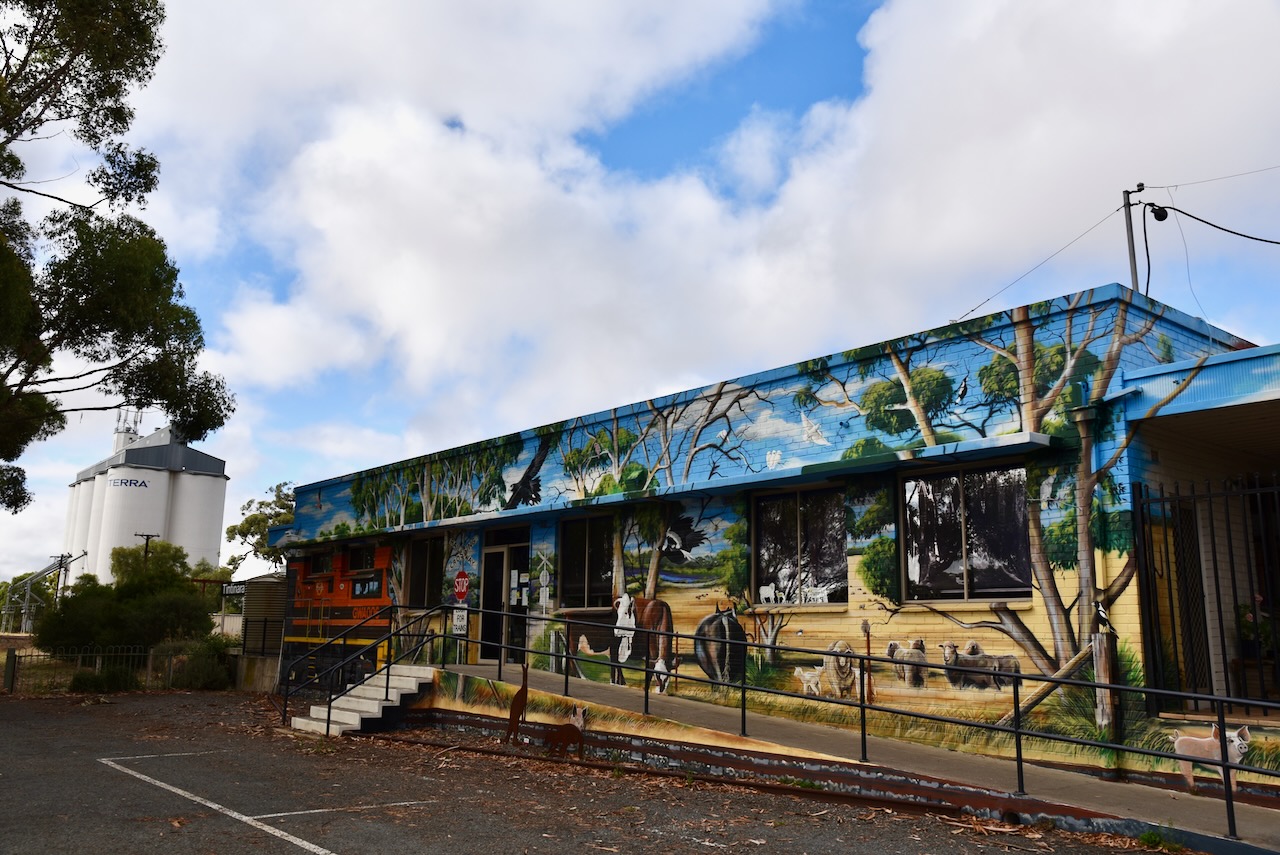
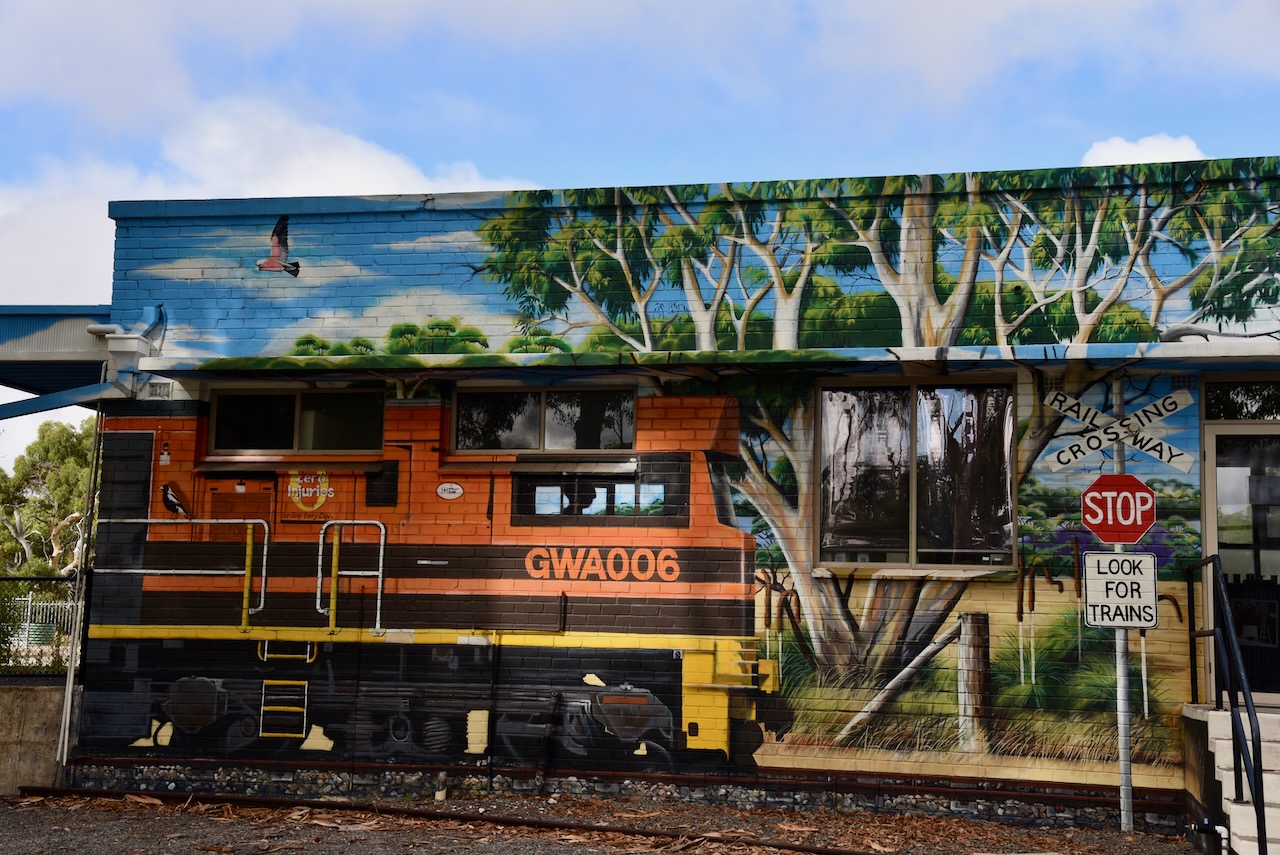
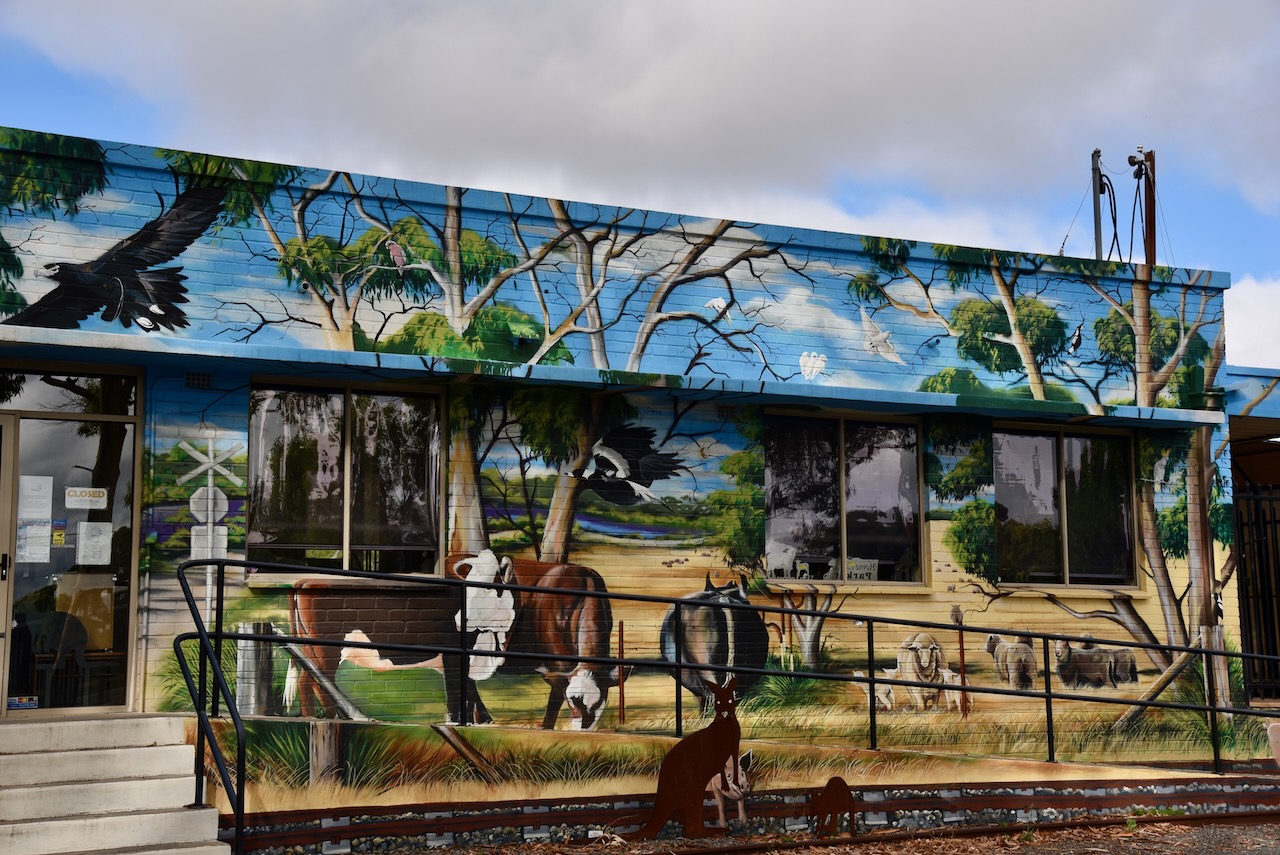
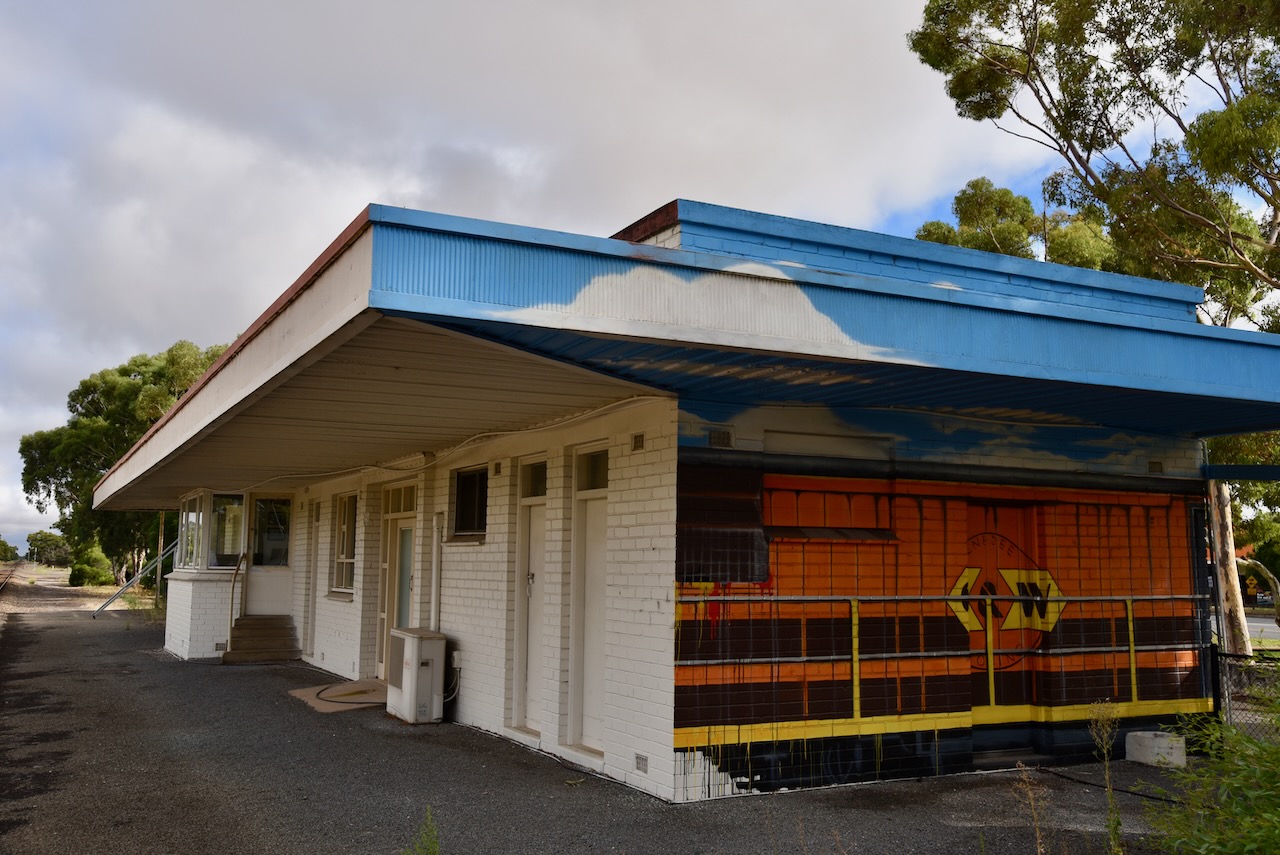
Tintinara has an excellent visitor centre which is located in the old railway station. It is well worth a visit if you are in the area. The building features a magnificent mural.

There is a good parking area at the Visitor Centre and a small park to stretch your legs, along with toilet facilities.

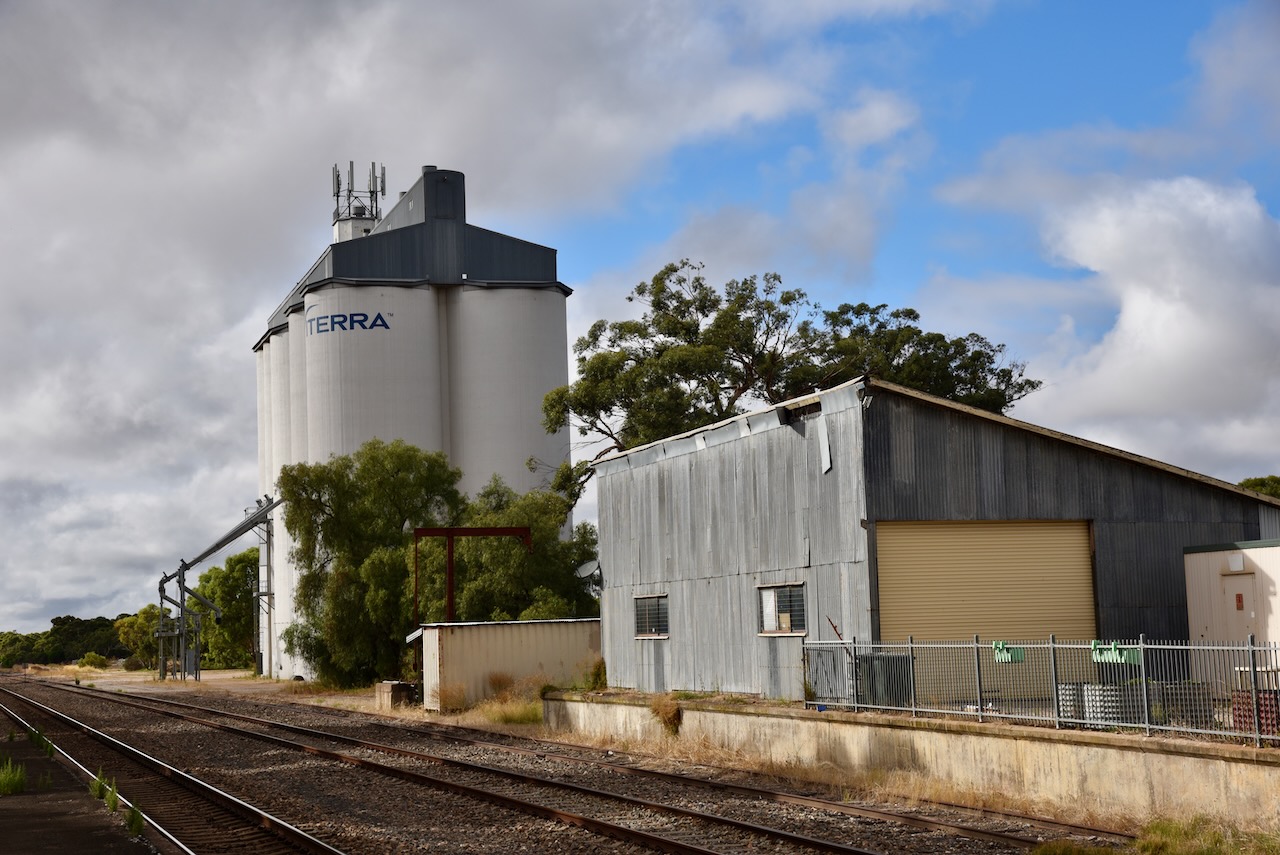
The Tintinara silos are just down from the visitor centre. They are owned by Viterra Australia.

It was a little noisy at the Visitor Centre so Marija and Drove down a little bit to a spot adjacent to the silos. We ran the Icom IC7000 in the vehicle for this activation, 100 watts, and the Codan 9350 antenna mounted on the rear of the 4WD

Marija made the following QSOs on 40m SSB:-

  1. VK3PF
  2. VK3ANL
  3. VK1AO
  4. VK2MET
  5. VK5TRM/p (Newland Head Conservation Park VKFF-0922)

I made the following QSOs on 40m SSB:-

  1. VK3PF
  2. VK3ANL
  3. VK1AO
  4. VK2MET
  5. VK5TRM/p (Newland Head Conservation Park VKFF-0922)
  6. VK5FANA
  7. VK3QH
  8. VK1CHW
  9. VK7CIA
  10. VK2PKT
  11. VK5HS
  12. VK3MKE

I made the following QSOs on 20m SSB:-

  1. VK1IO

I made the following QSO on 80m SSB:-

  1. VK5BJE

References.

  1. A Compendium of the Place Names of South Australia, 2023, <https://published.collections.slsa.sa.gov.au/placenamesofsouthaustralia/>, viewed 16th March 2023.
  2. Monument Australia, 2023, <https://monumentaustralia.org.au/themes/landscape/settlement/display/117848-pioneers-of-tintinara>, viewed 16th March 2023.
  3. Wikipedia, 2023, <https://en.wikipedia.org/wiki/Tintinara,_South_Australia>, viewed 16th March 2023.
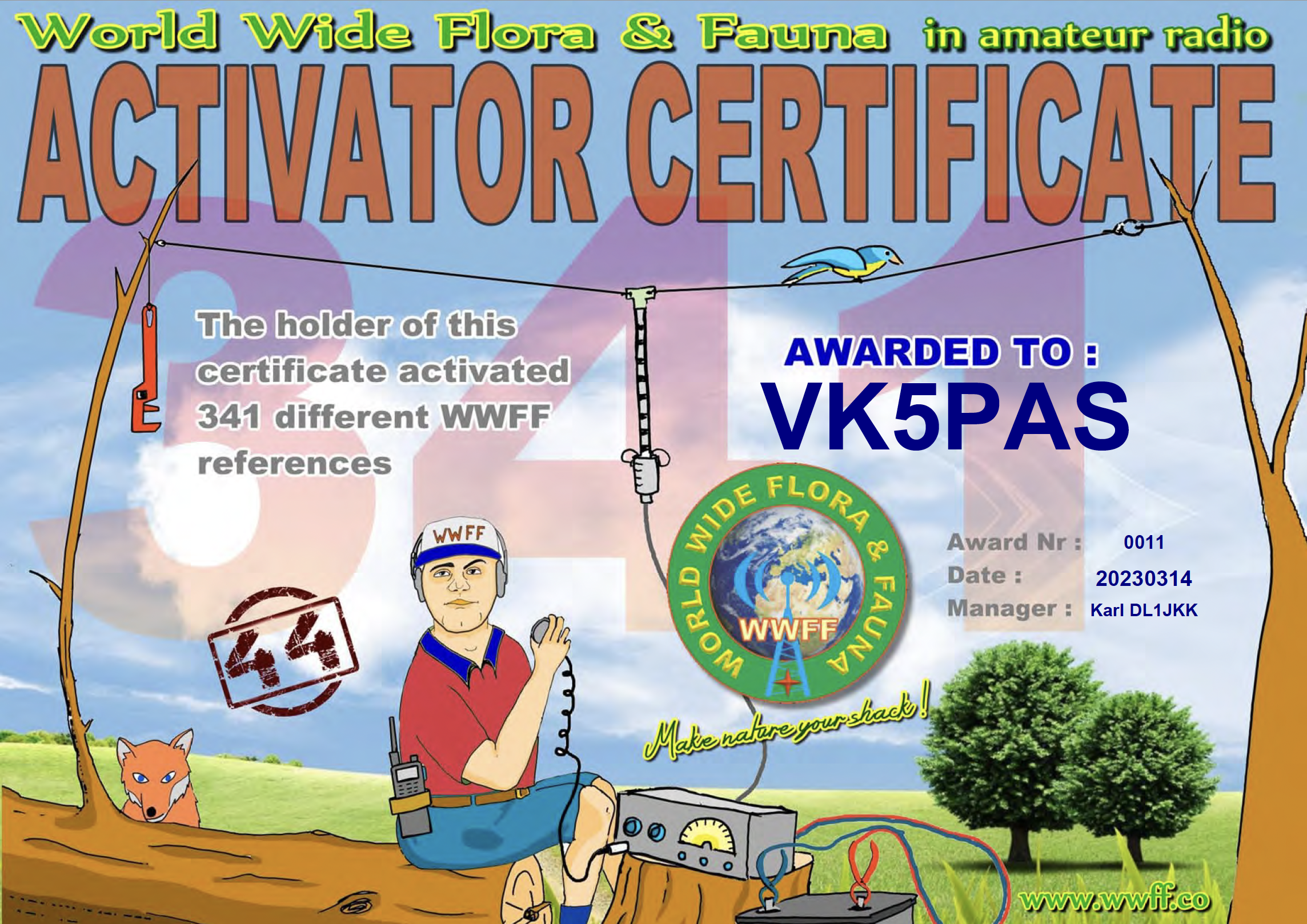
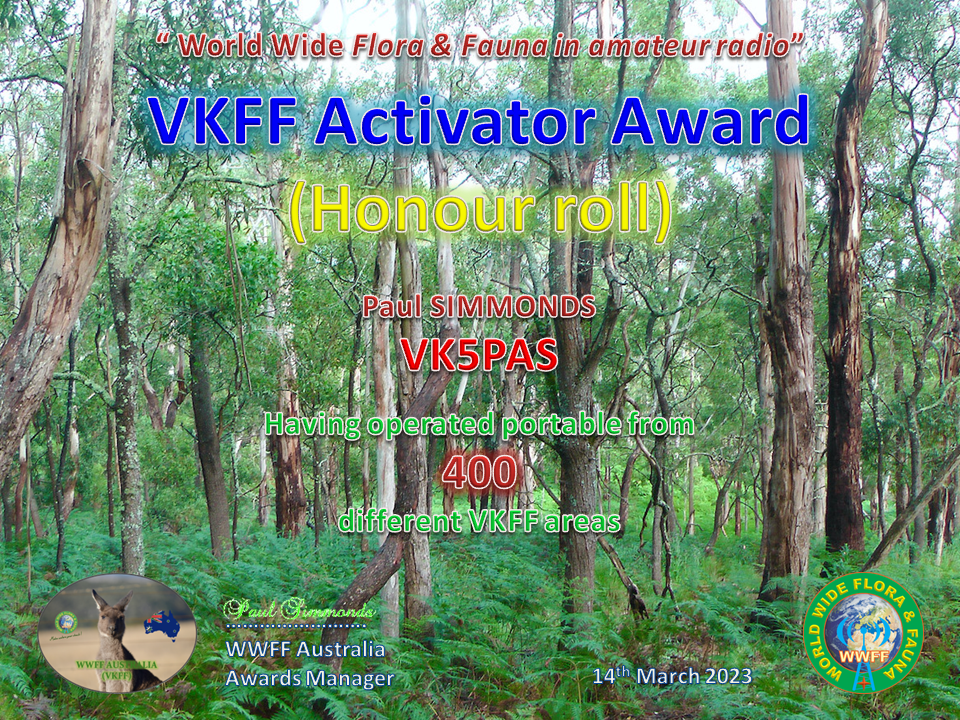
WWFF Activator 341

My latest global WWFF Activator certificate, issued for having activated at least 341 different references and making 44 QSOs in each of those activations.
Thanks to all of the WWFF Hunters, and thanks to Karl DL1JKK the Awards Manager.