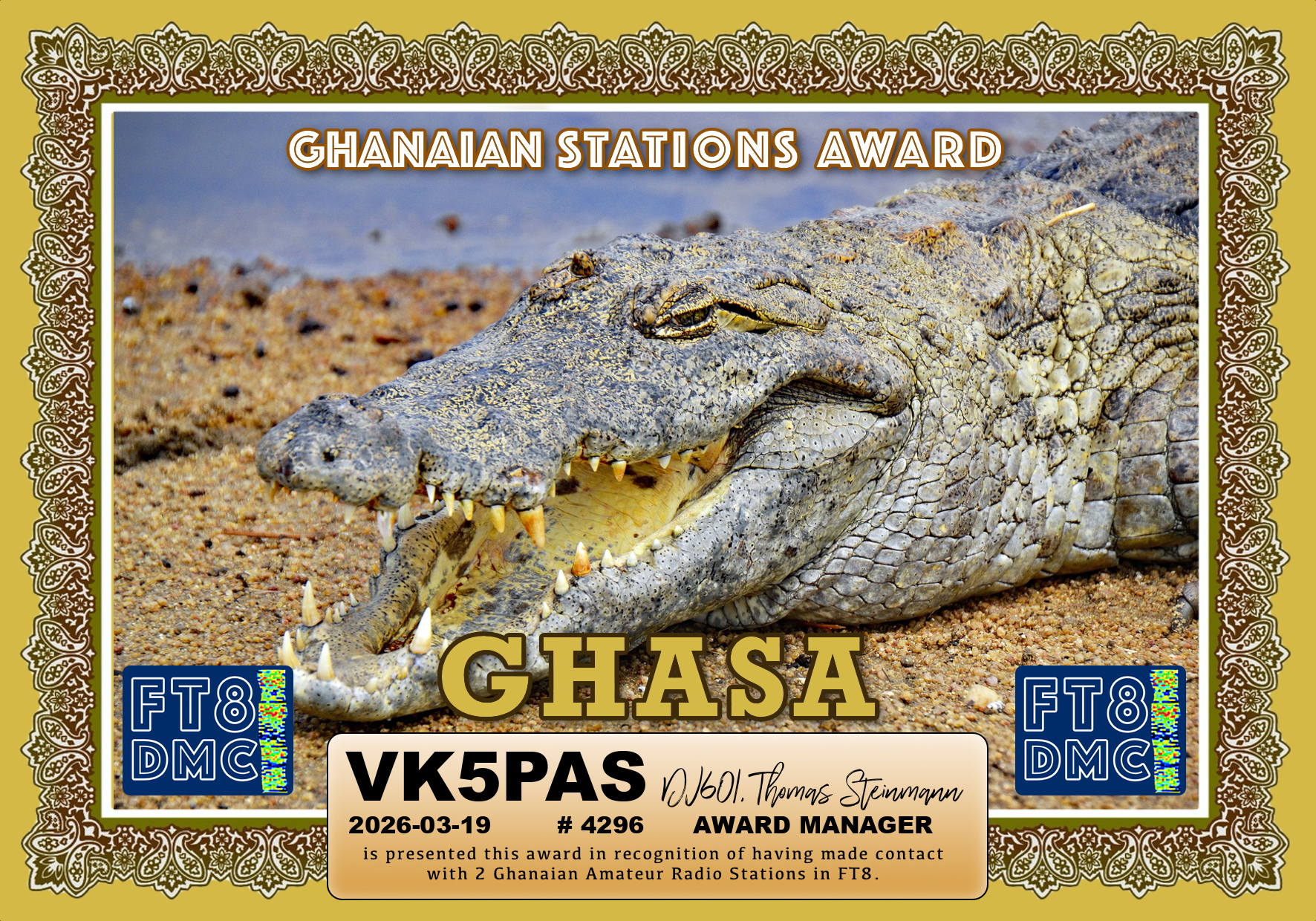
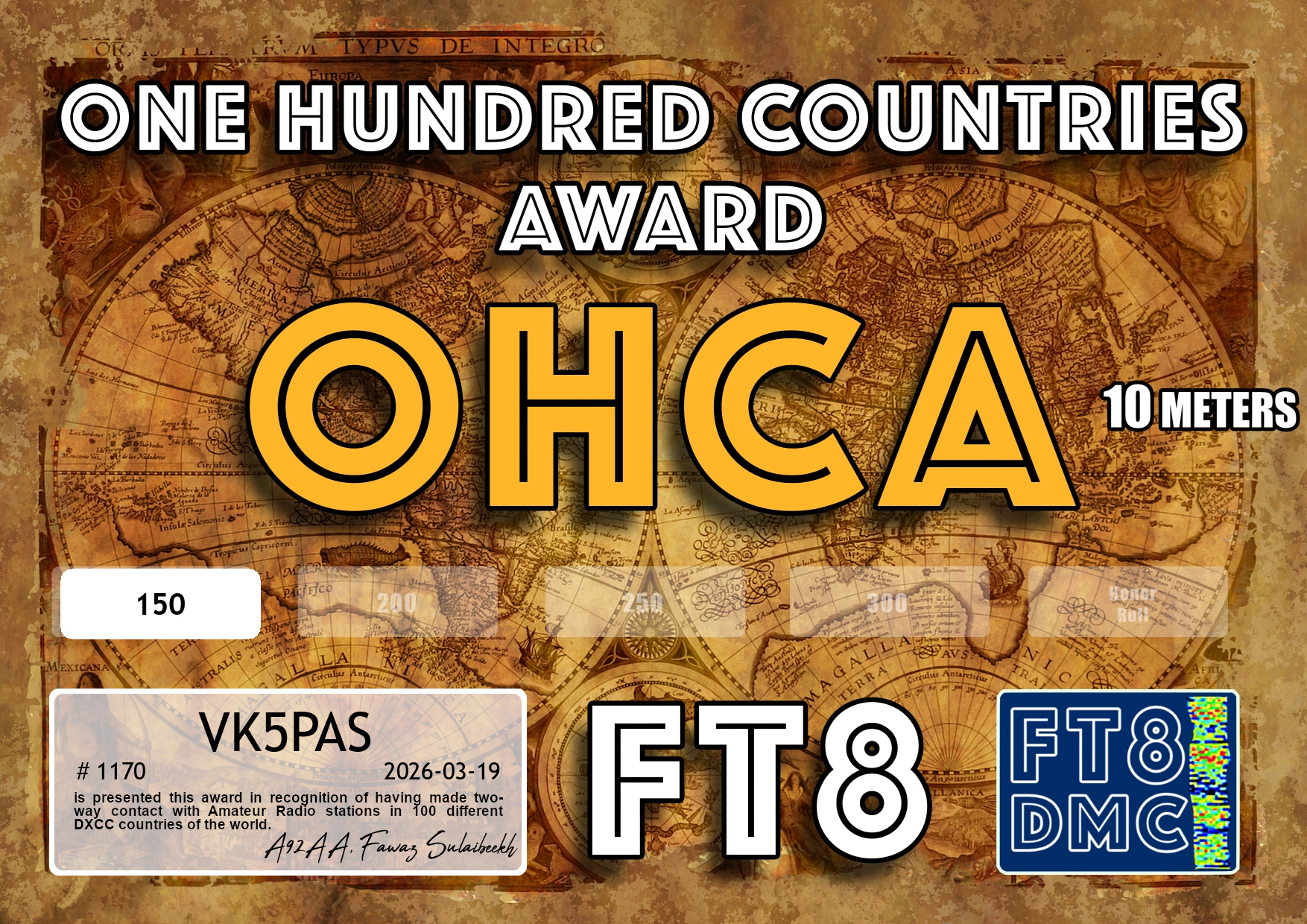
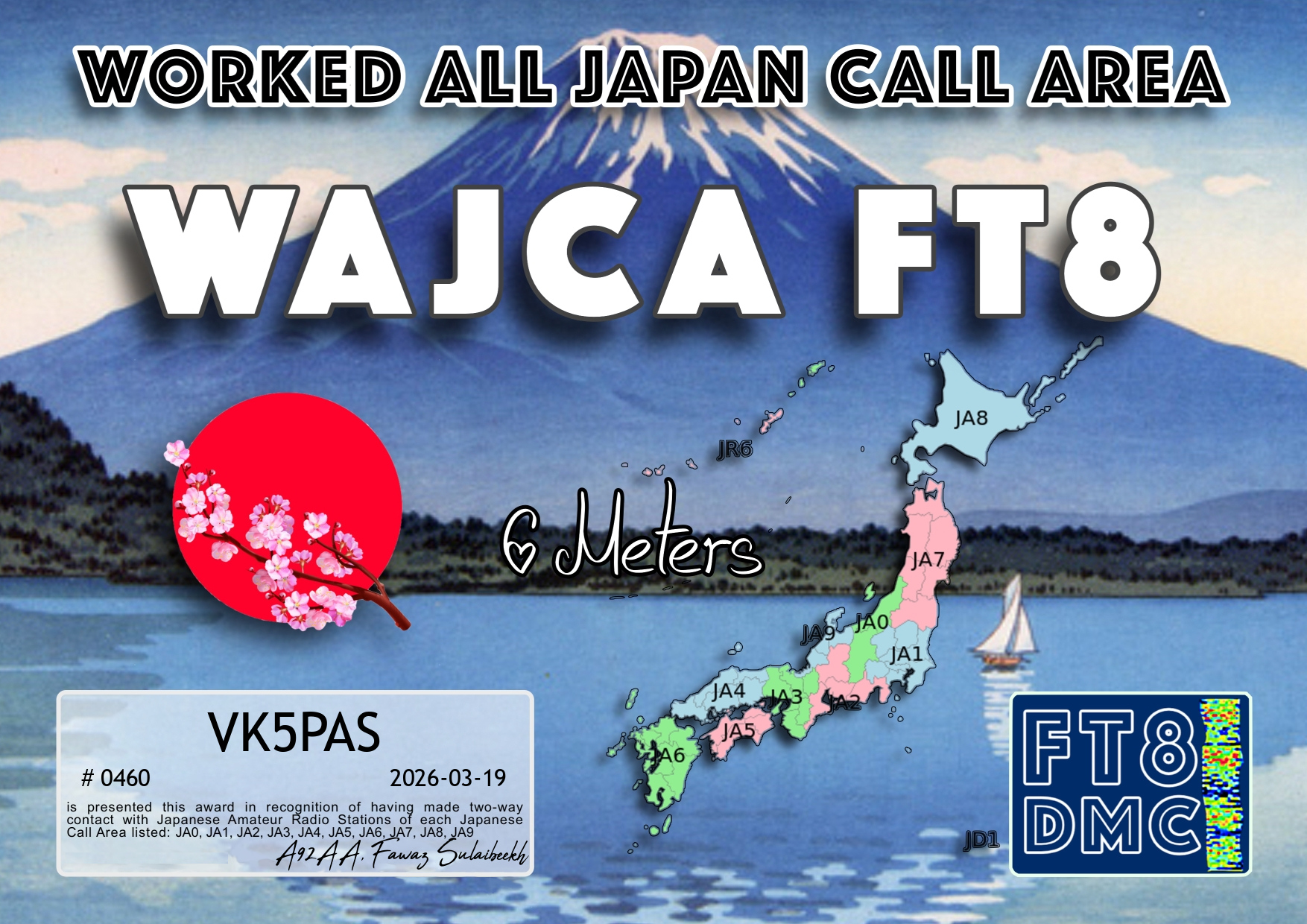
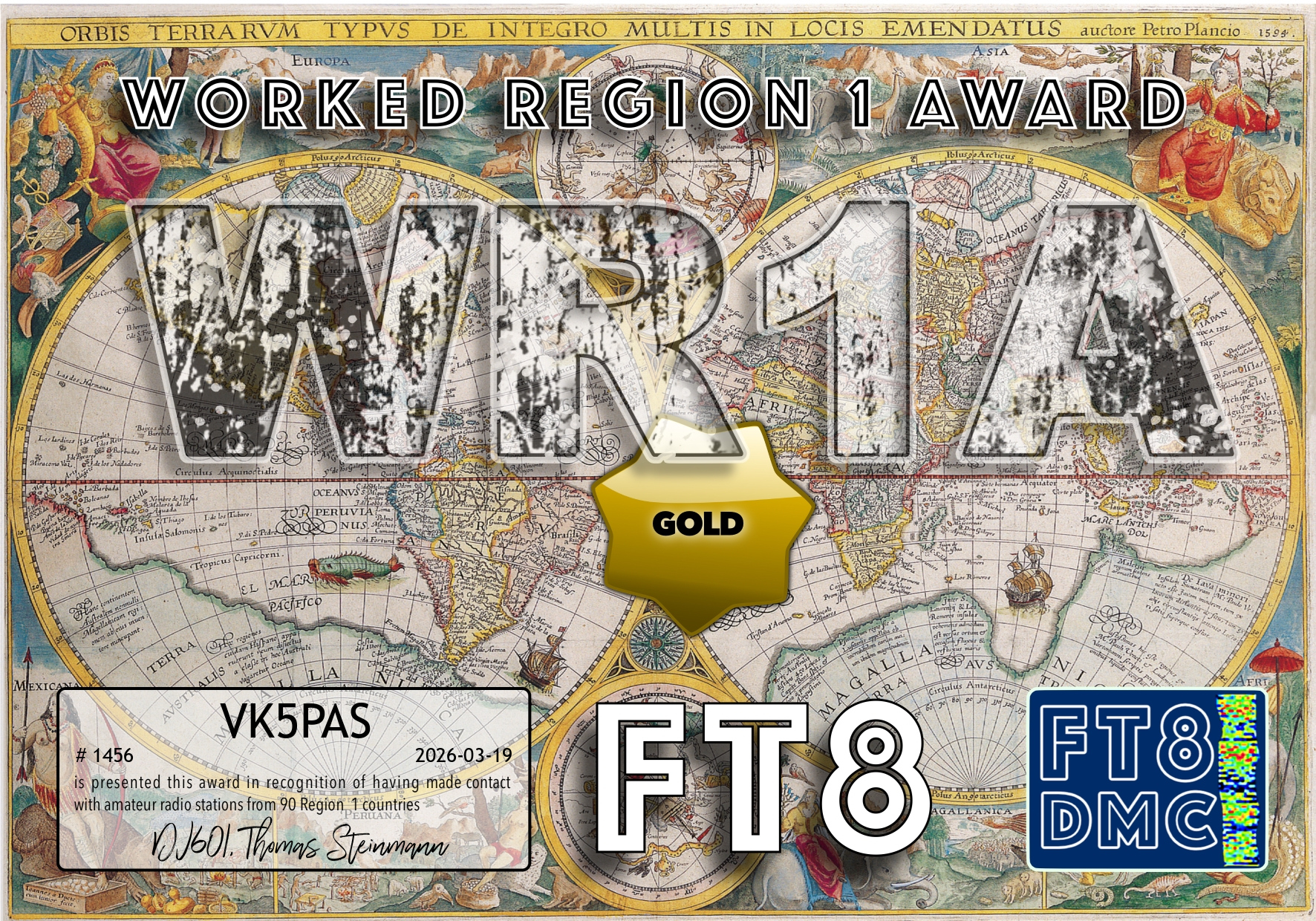
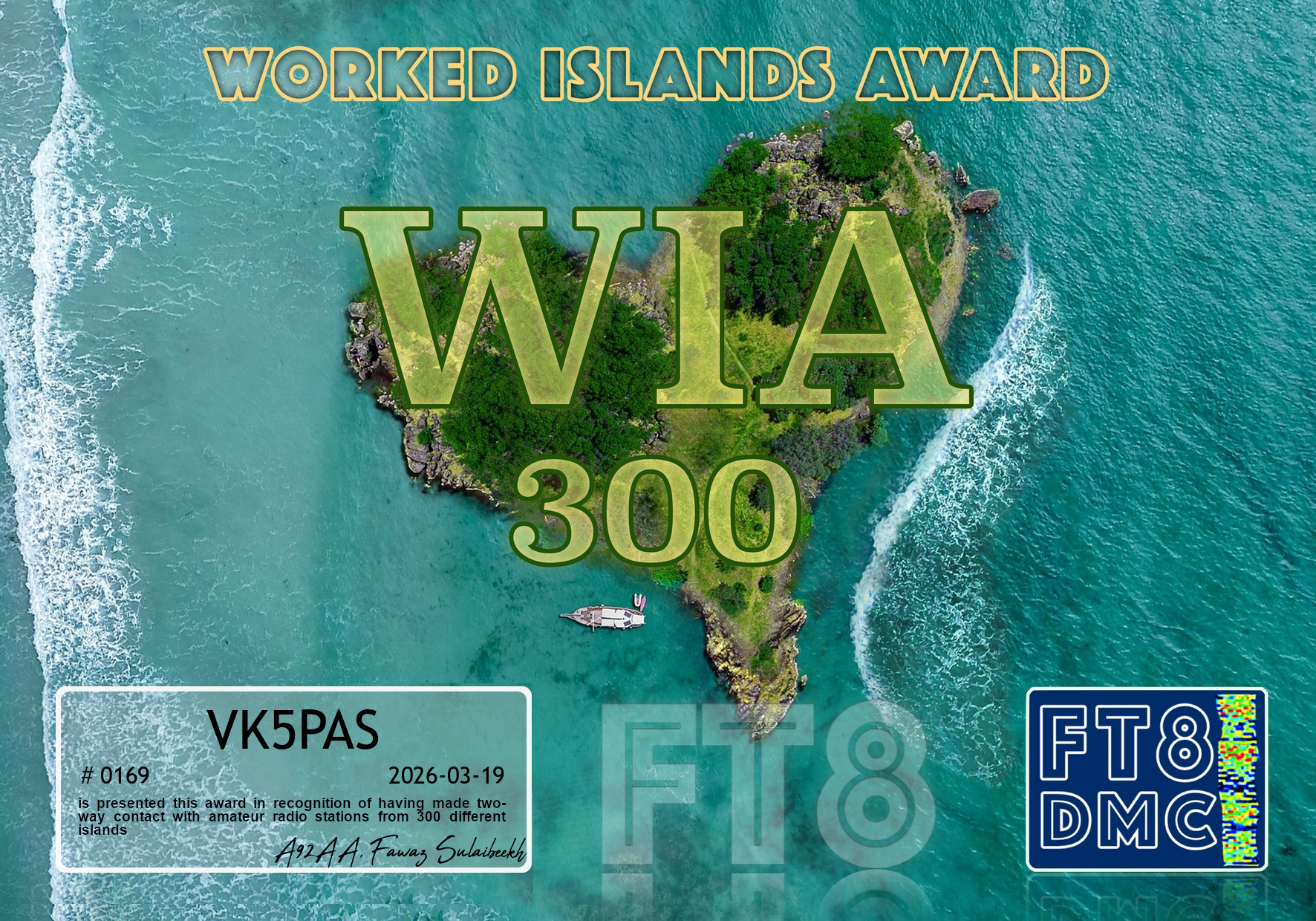
Here are my latest FT8 award certificates for VK5PAS.
Thank you to all of the FT8 operators and thank you to the various FT8 Award Managers.


Here are my latest FT8 award certificates for VK5PAS.
Thank you to all of the FT8 operators and thank you to the various FT8 Award Managers.


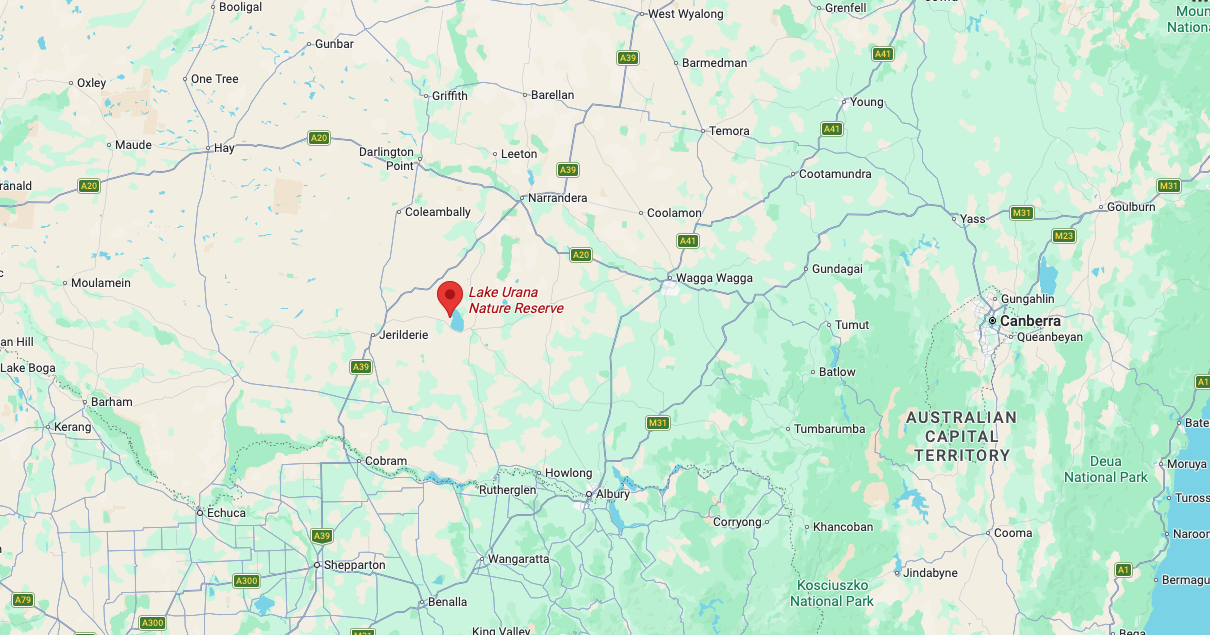
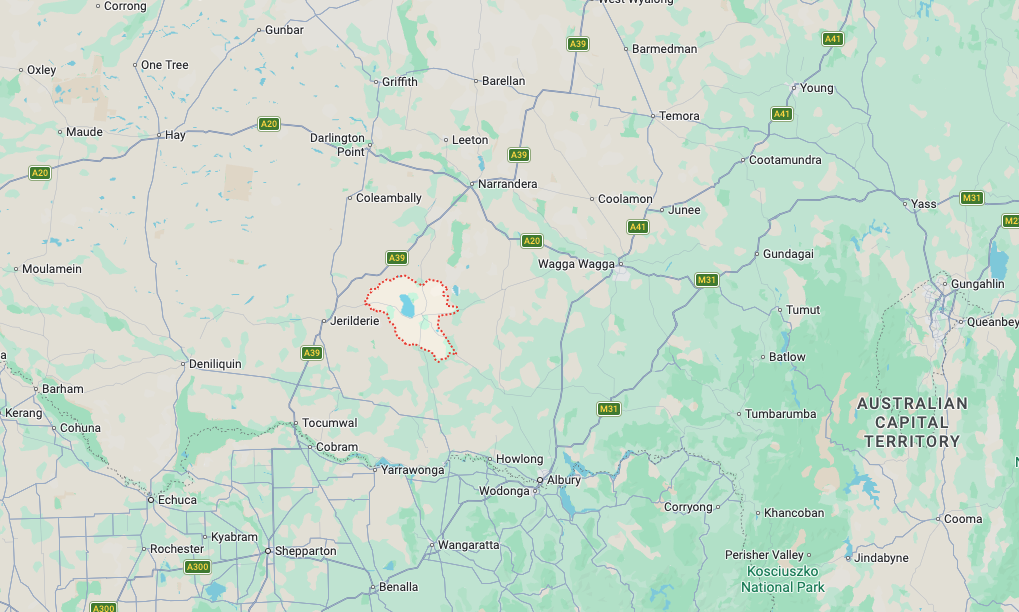
Our final activation for Sunday, 2nd November 2025, was Lake Urana Nature Reserve VKFF-1956. The reserve is located just to the northwest of the town of Urana, and about 45 km east of Jerilderie.
Above: Map showing the location of Lake Urana Nature Reserve. Map c/o Google Maps
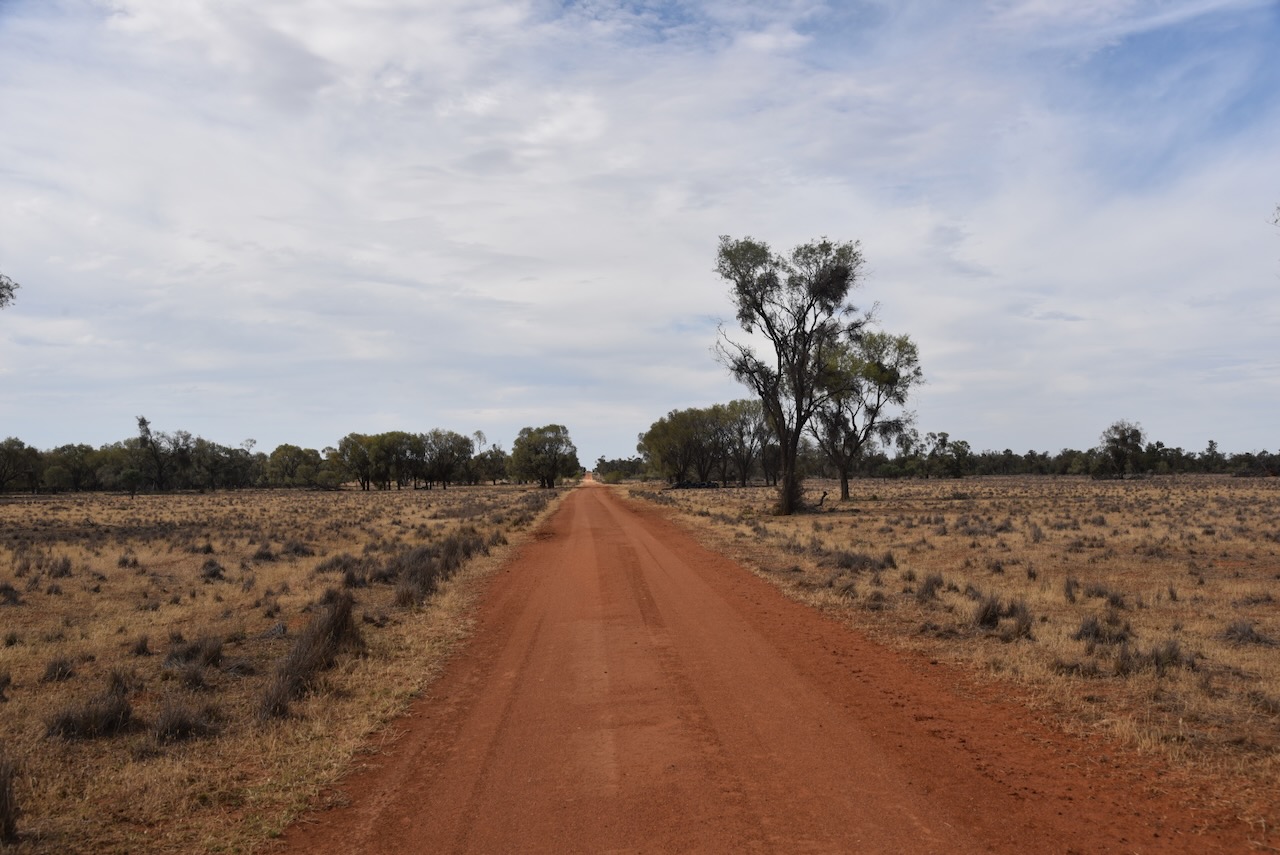
We headed west out of Urana on Cocketgedong Road. What a name! We turned onto Dunraven Road and commenced travelling towards the reserve.
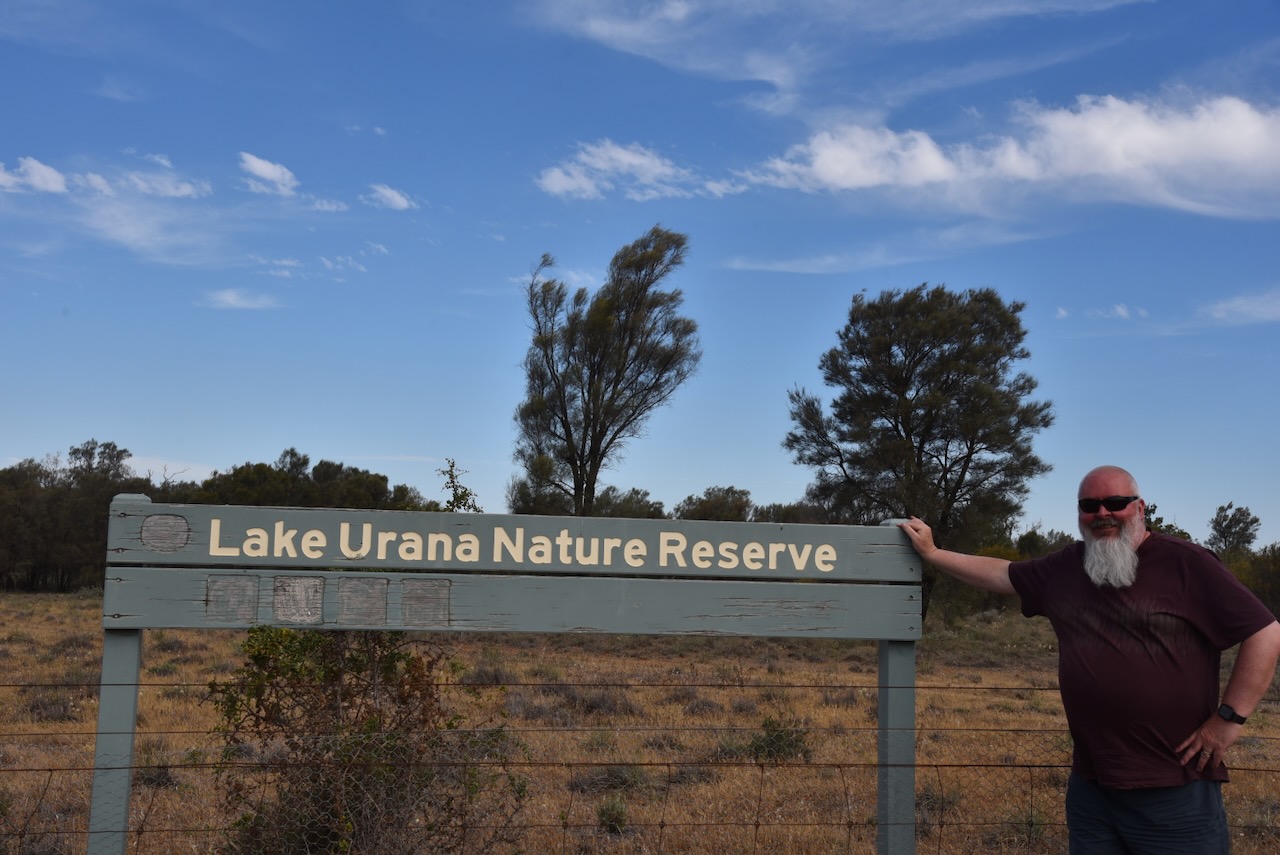
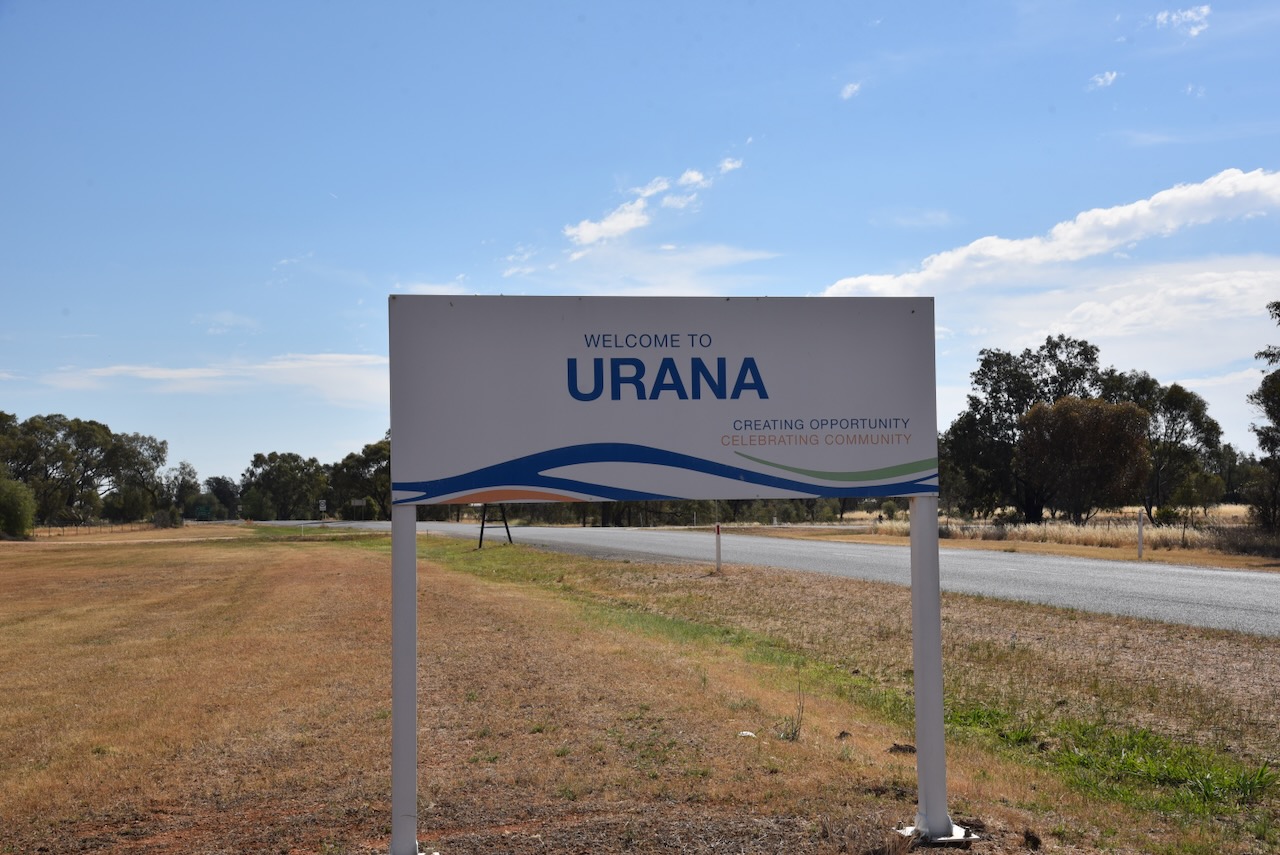
A little way along the dirt road, we reached the park sign.
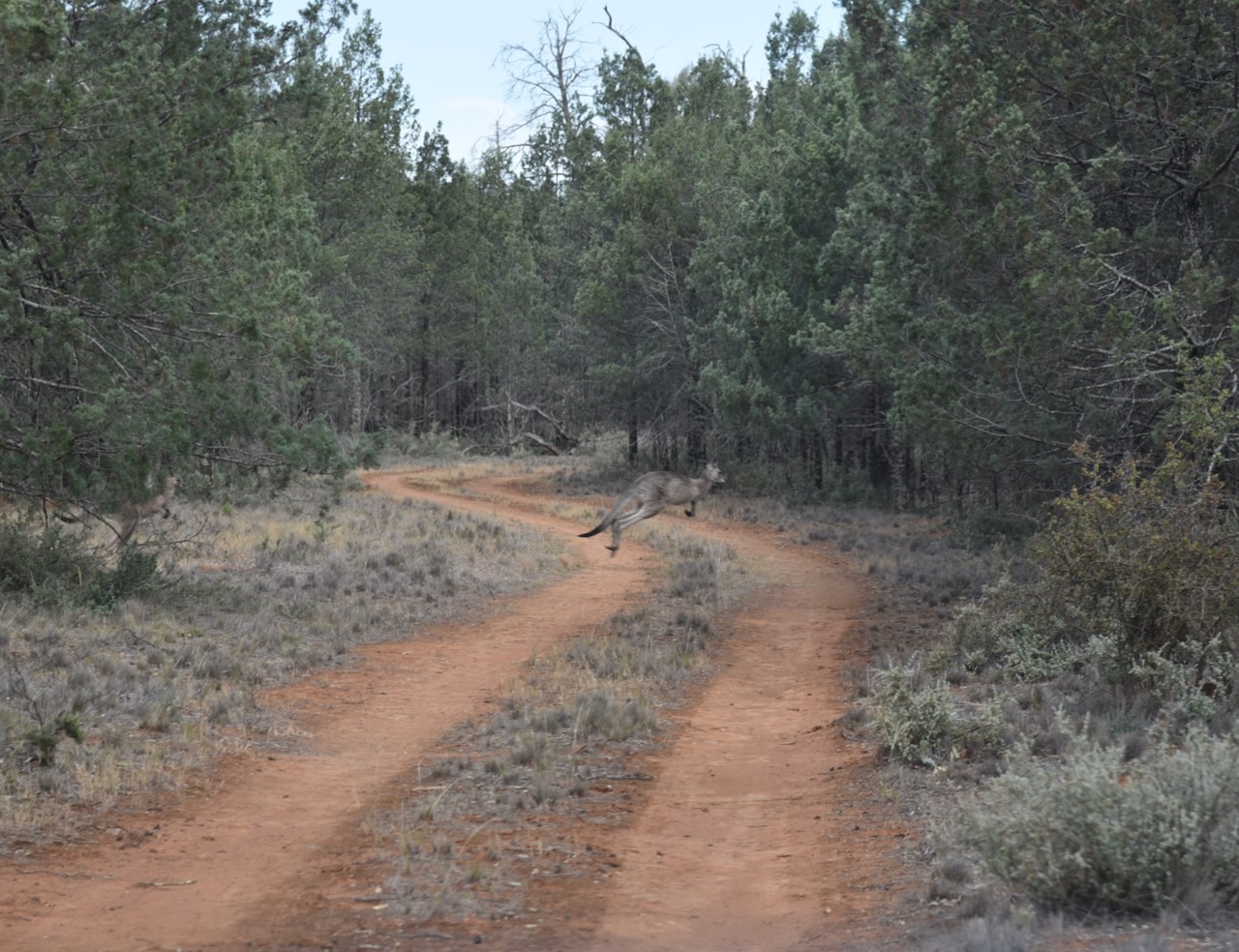
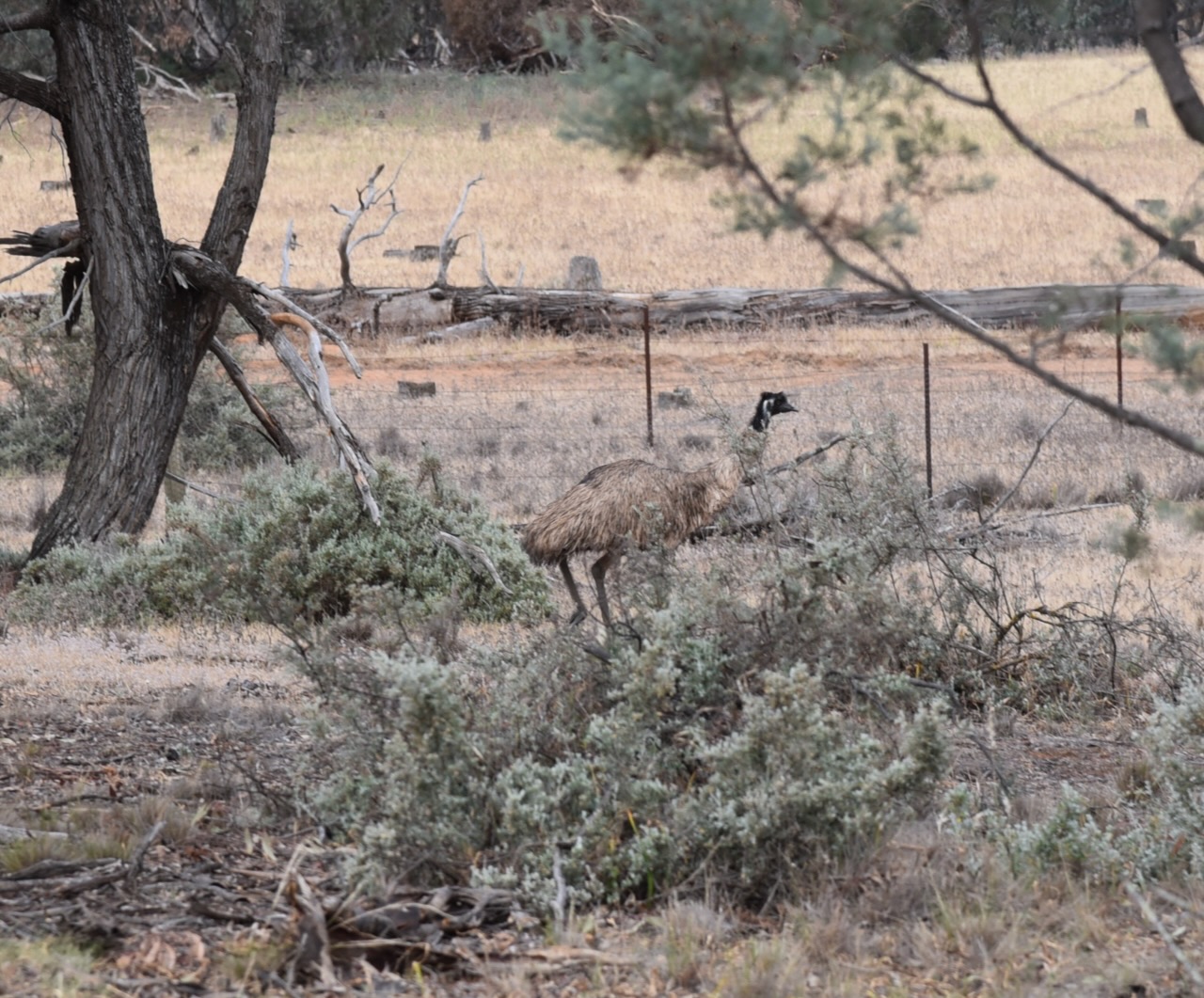
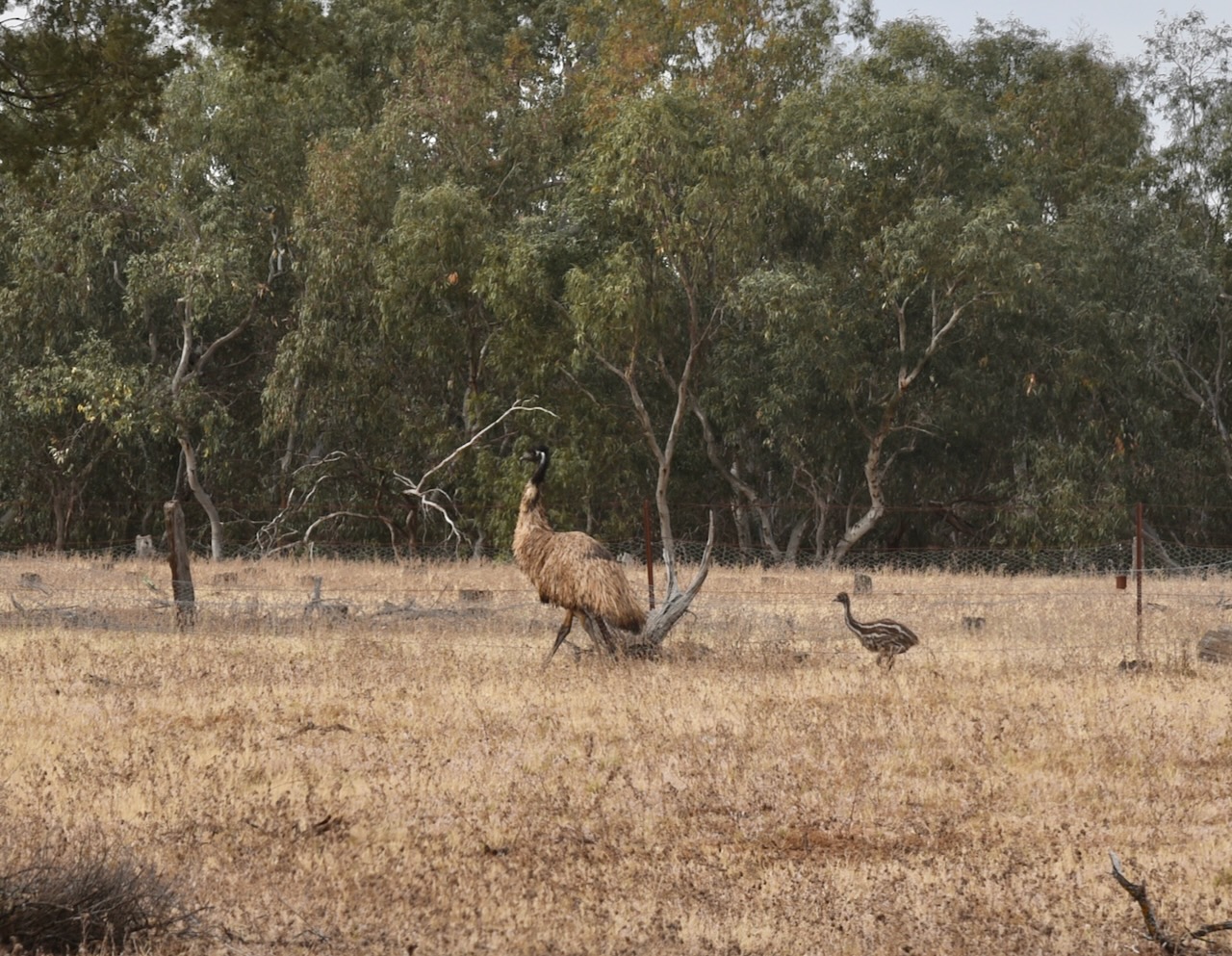
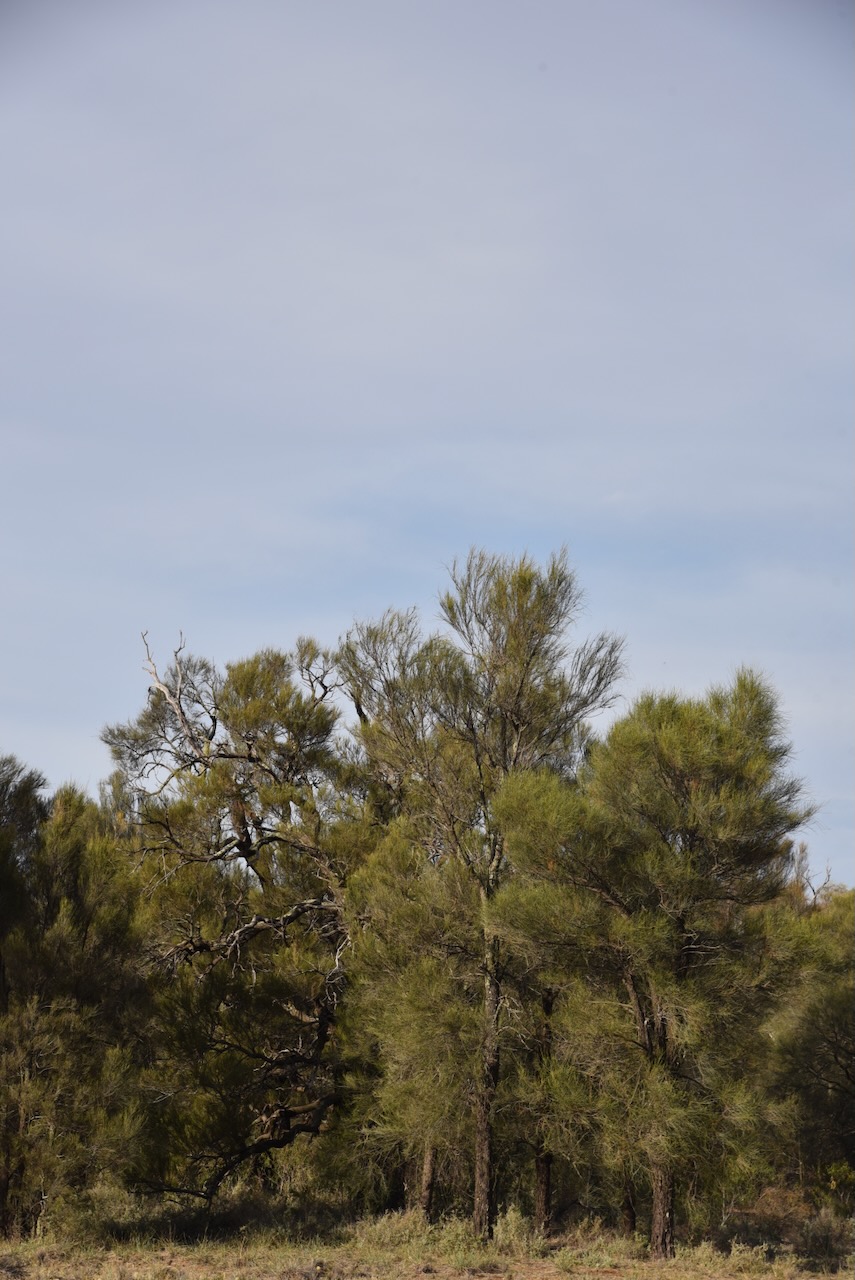
We entered the reserve and drove along a dirt track, trying to find a clearing in the scrub to set up in. it was slow going as the reserve was full of emus and Eastern grey kangaroos. It was a great sight.


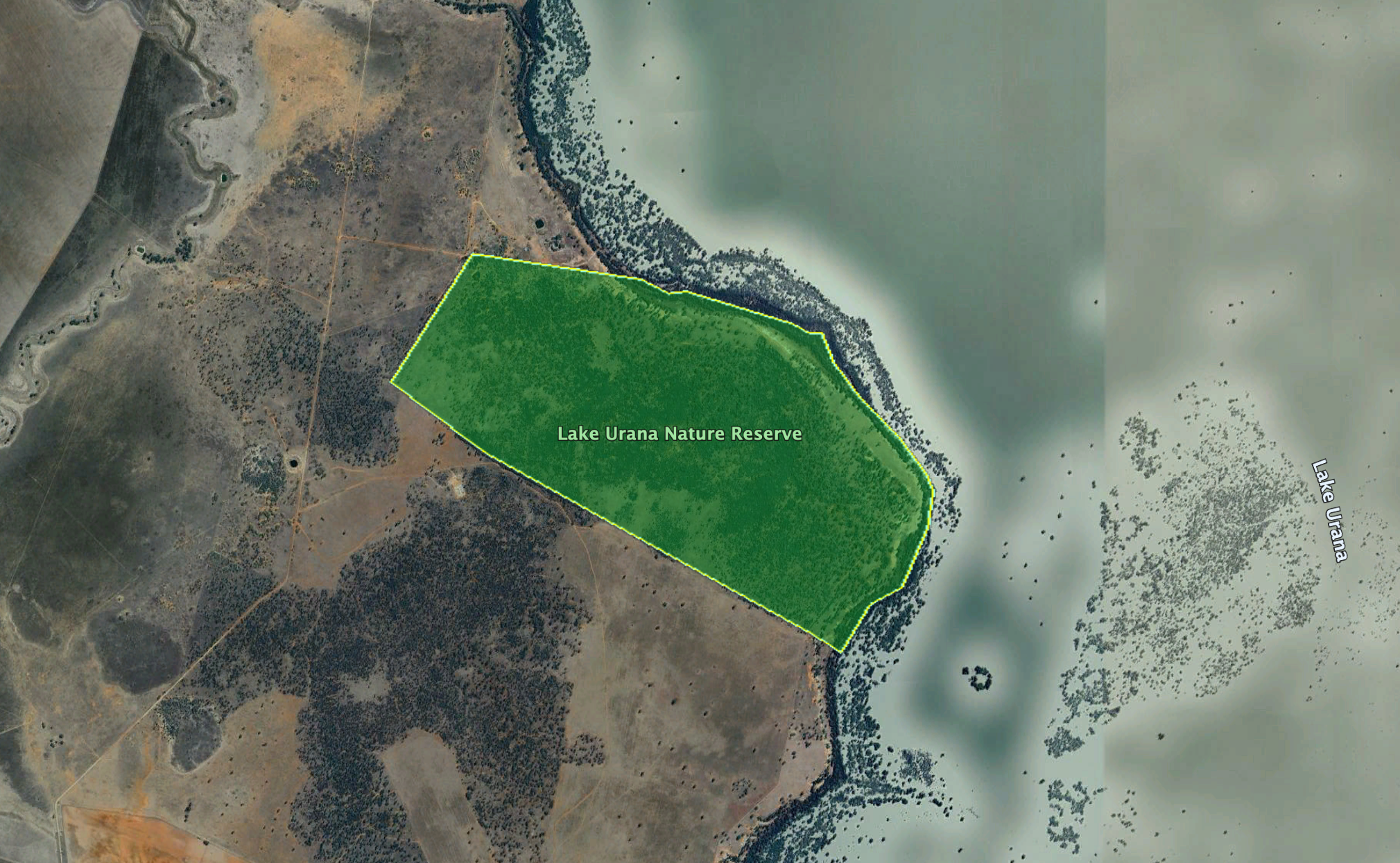
Lake Urana Nature Reserve is located on the western shore of Lake Urana. A section of South West Woodland Nature Reserve VKFF-2724 can be found on the eastern side of the lake.
Above: the reserve’s boundaries. Image c/o Google Earth
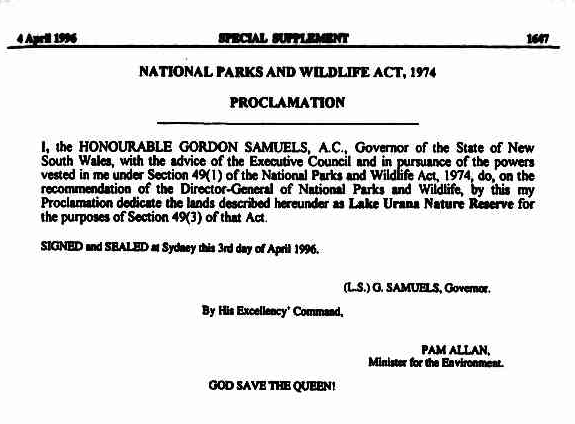
The reserve is about 302 hectares in size and was established on the 4th day of April 1996. (CAPAD 2024)
Above: Gazettal of the reserve, NSW Govt Gazette, Thu 4 Apr 1996. Image c/o Trove
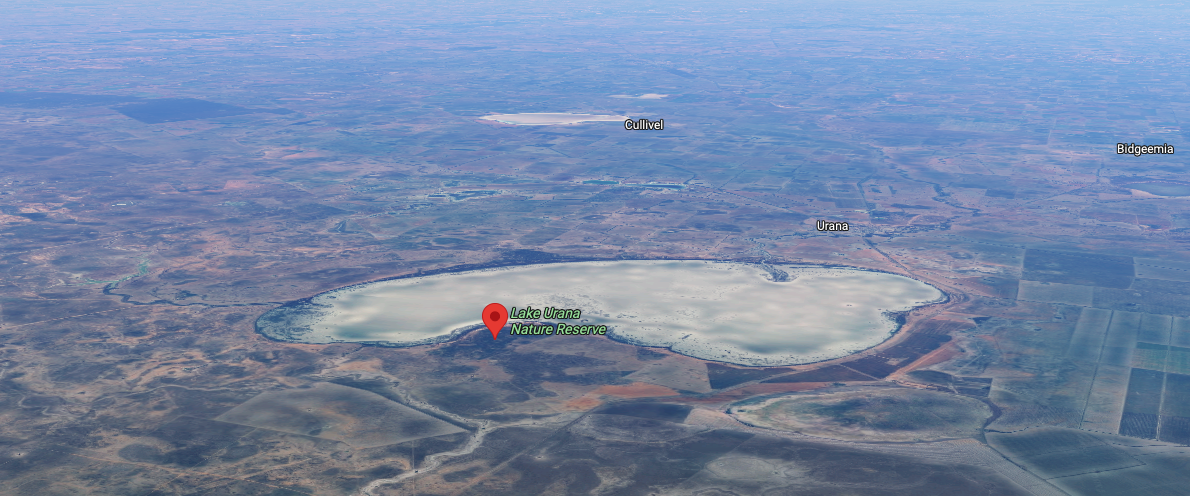
Lake Urana is a large shallow, intermittent lake in a depression at the end of the drainage basin of Billabong, Coonong and Urangeline creeks. It fills every ten to 20 years and retains water for several years. The lake is kidney-shaped and has a surface area of about 61.43 km2. (NSW NPWS n.d.) (Wikipedia 2024)
Above: an aerial view of the reserve. Image c/o Google Maps
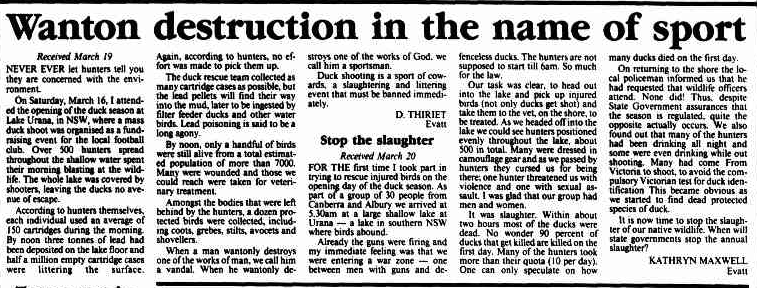
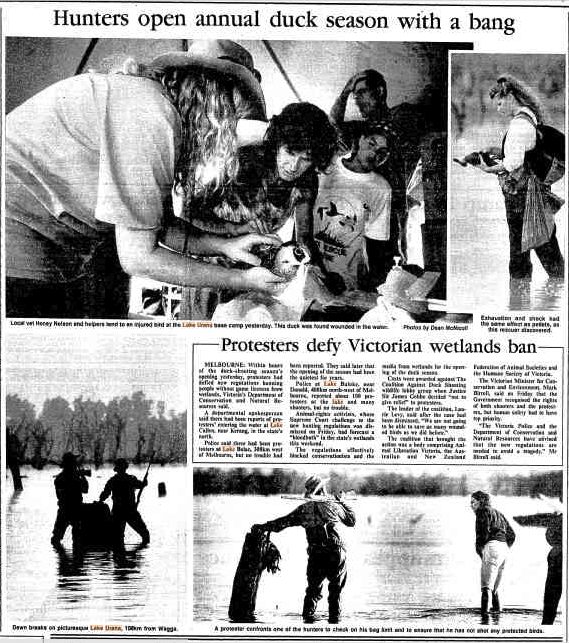
It appears that prior to the National Parks & Wildlife Service acquiring the property, duck hunting occurred at Lake Urana. I found several newspaper articles about this.
Above: article from The Canberra Times, Thu 21 Mar 1991. Image c/o Trove
Above: article from The Canberra Times, Sun 21 Mar 1993. Image c/o Trove
Aboriginal burial sites, grinding dishes and ovens have been discovered in the lunette on the eastern side of Lake Urana. The skeletal remains at this site have been dated between 25,000 and 30,000 years old. (NSW NPWS 2001)
Lake Urana Nature Reserve was formerly a sheep grazing property. In 1966, the CSIRO purchased the property. In 1992, the New South Wales National Parks & Wildlife Service purchased the property with the intention of creating the reserve. (NSW NPWS 2001)
A total of 37 bird species have been recorded, including red-rumped parrot, brown treecreeper, striated pardalote, spiny-cheeked honeyeater, striped honeyeater and grey-crowned babbler. When Lake Urana contains water, various waterbirds frequent the reserve, including wood ducks, Pacific black duck, Australian grey teal, yellow-billed spoonbill, black-fronted dotterel and magpie-lark. (NSW NPWS n.d.)
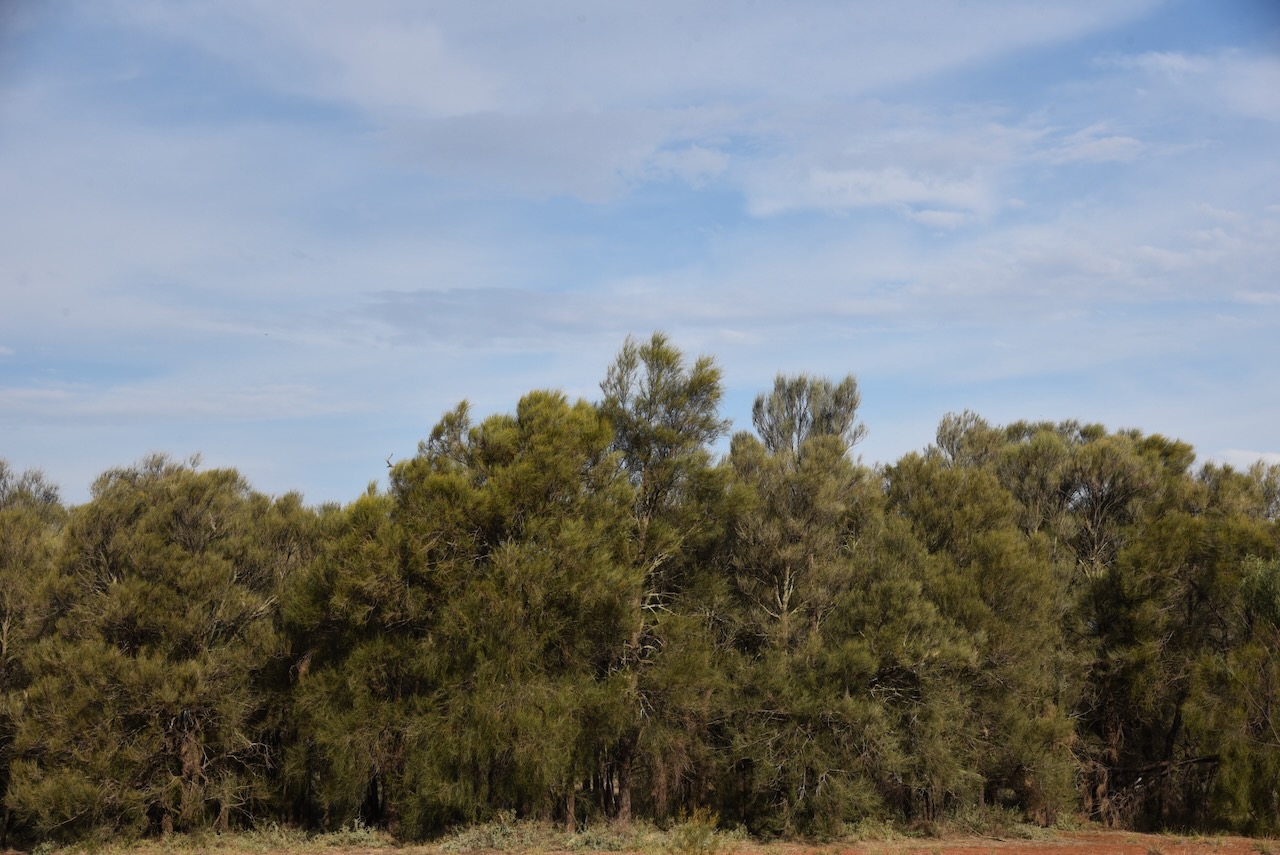
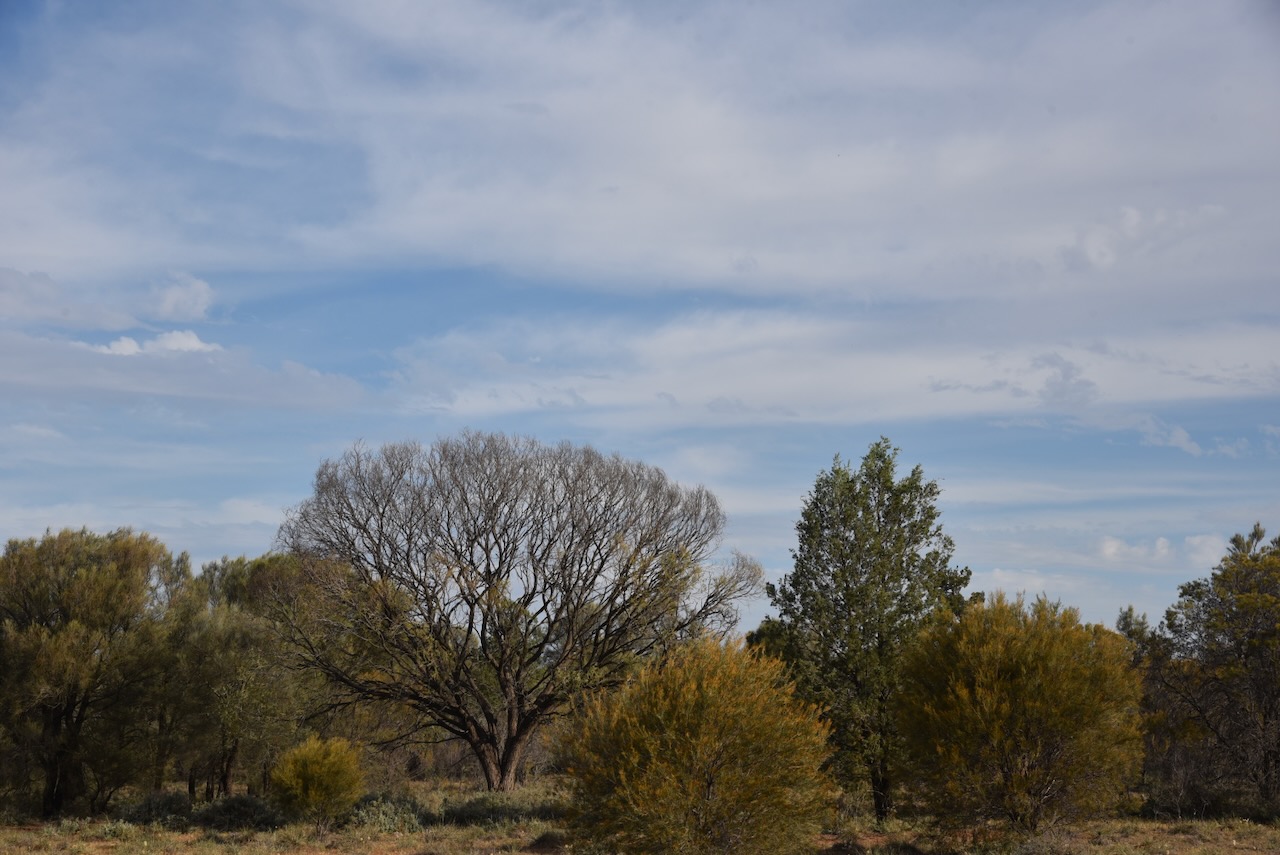
The reserve contains woodland of yellow box and white cypress pine. Shrubs that can be found in Lake Urana Nature Reserve include thorny saltbush, ruby saltbush, western golden wattle, emu bush and black cottonbush. Over 70 species of ground cover have been recorded in the park, including wiregrass, speargrass and several lilies, including nodding chocolate-lily. A narrow woodland of river red gum can be located on the shore of the lake. (NSW NPWS n.d.)


We ran the Yaesu FT857, 40 watts, and the 20/40/80m linked dipole for this activation.
The flies were absolutely relentless, so we both had to wear our fly netting hats.
Marija worked the following stations on 40m SSB:-
Marija worked the following stations on 20m SSB:-
I worked the following stations on 40m SSB:-
I worked the following stations on 20m SSB:-
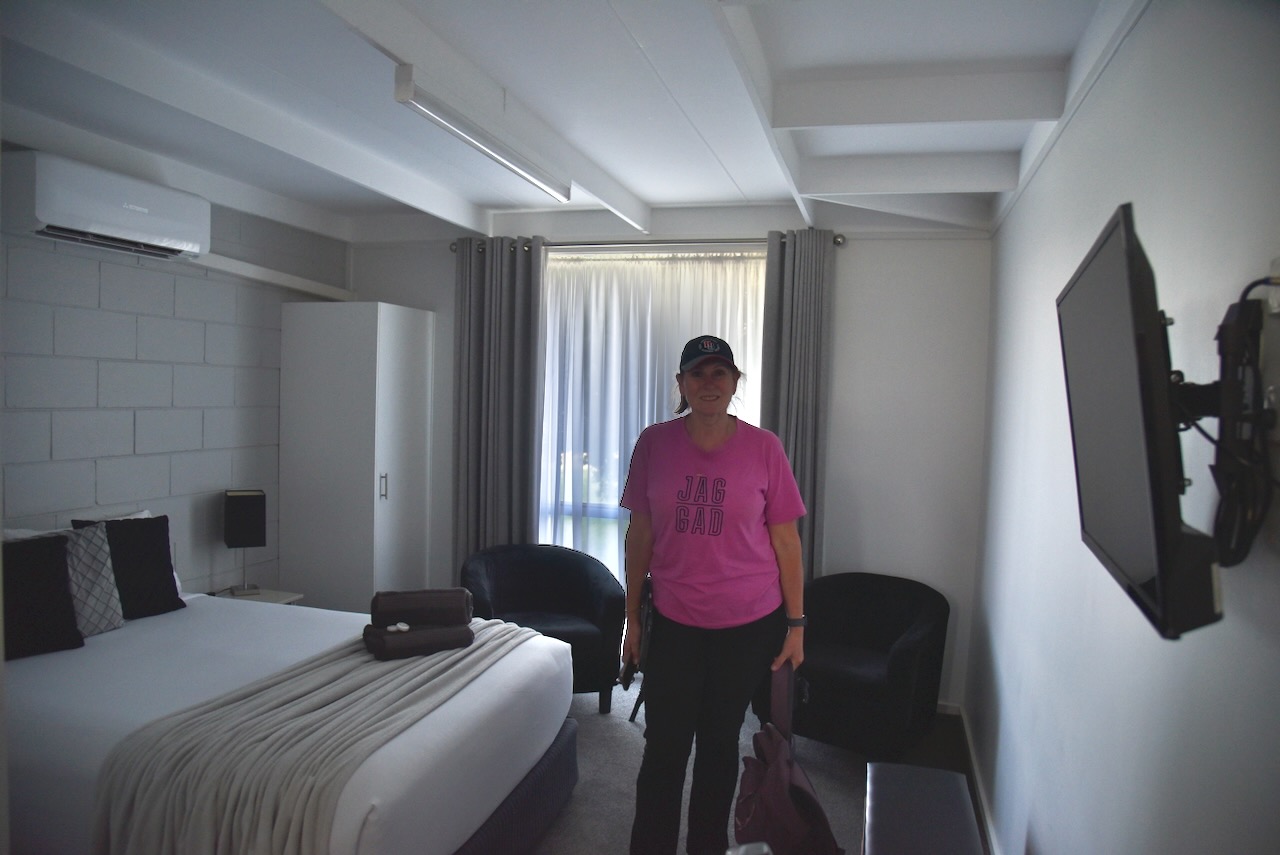
After qualifying the park, Marija and I packed up and headed into Jerilderie, where we booked into our accommodation at the Jerilderie Motel.
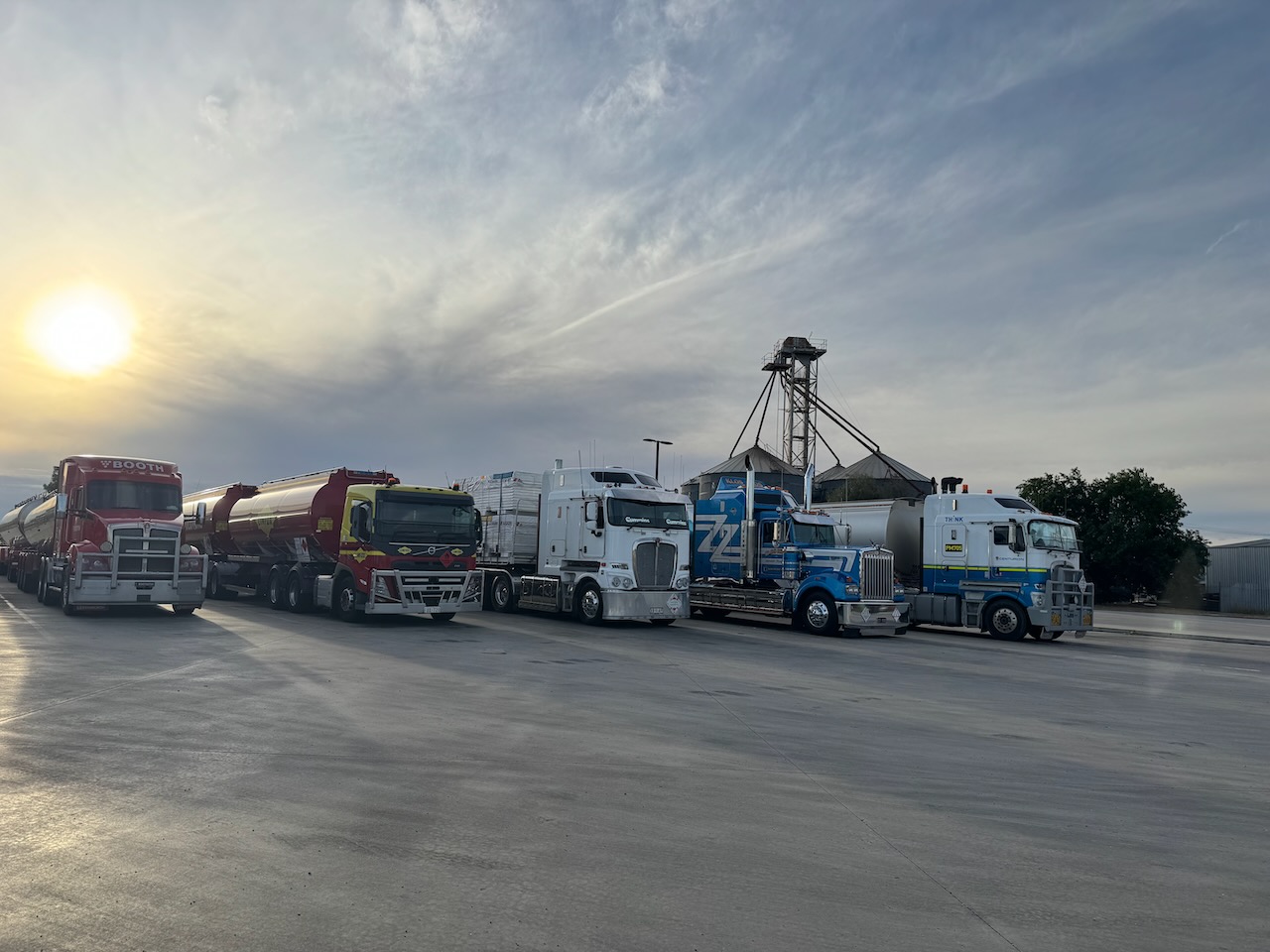
We then drove to the BP truckstop at the western end of town and filled up with diesel. I took some photos of the trucks lined up for our grandson Flynn, who is truck mad.
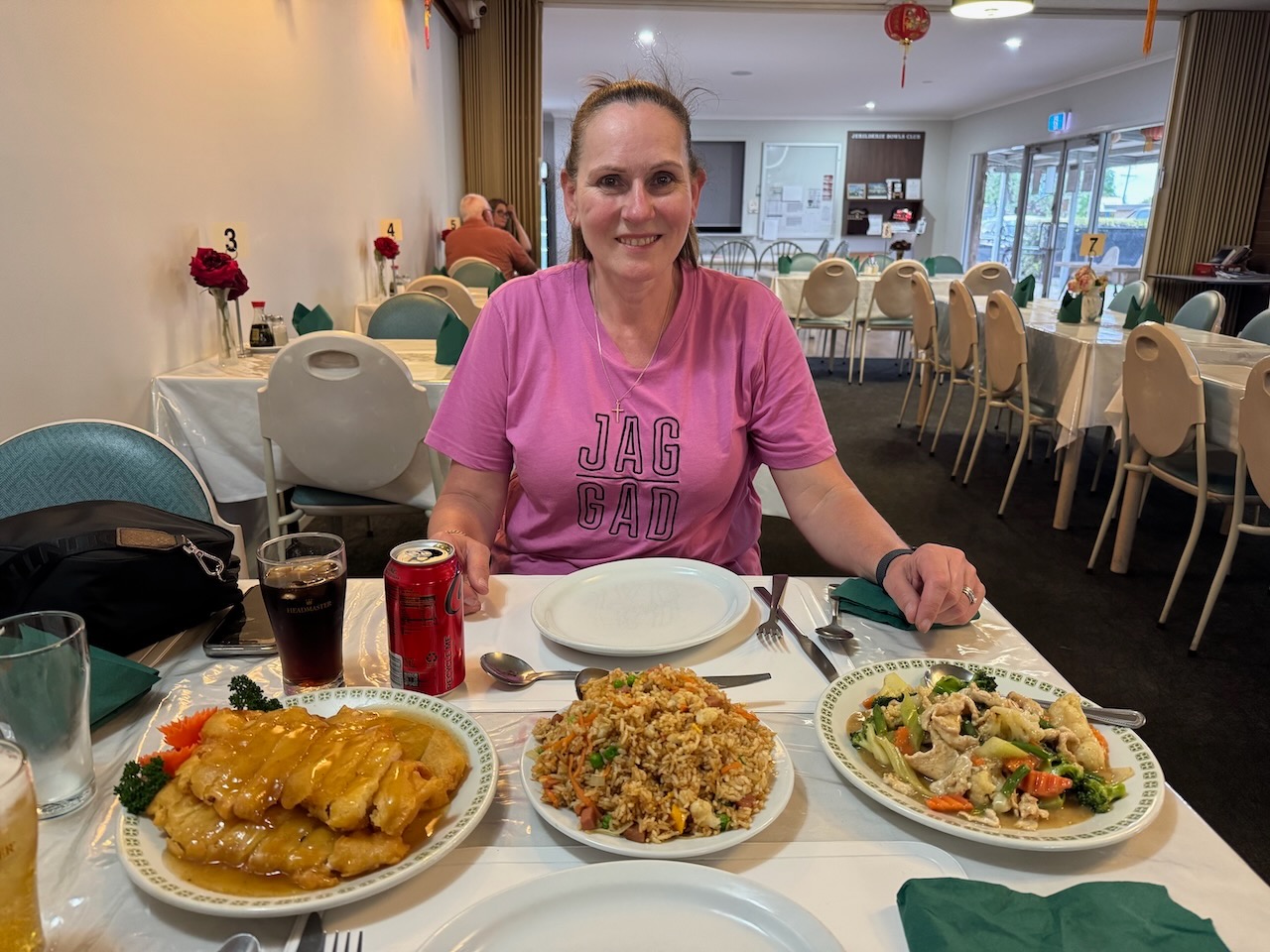
We then went out for dinner at the Jerilderie Sports Club. They have a Chinese restaurant there, and wow, what a meal. There was so much that we had to get some ‘doggy bags’ to take away our leftovers. It was one of the best Chinese meals that Marija and I have had.
With a very full belly, it was time to head back to our motel room for a good night’s sleep.
References.
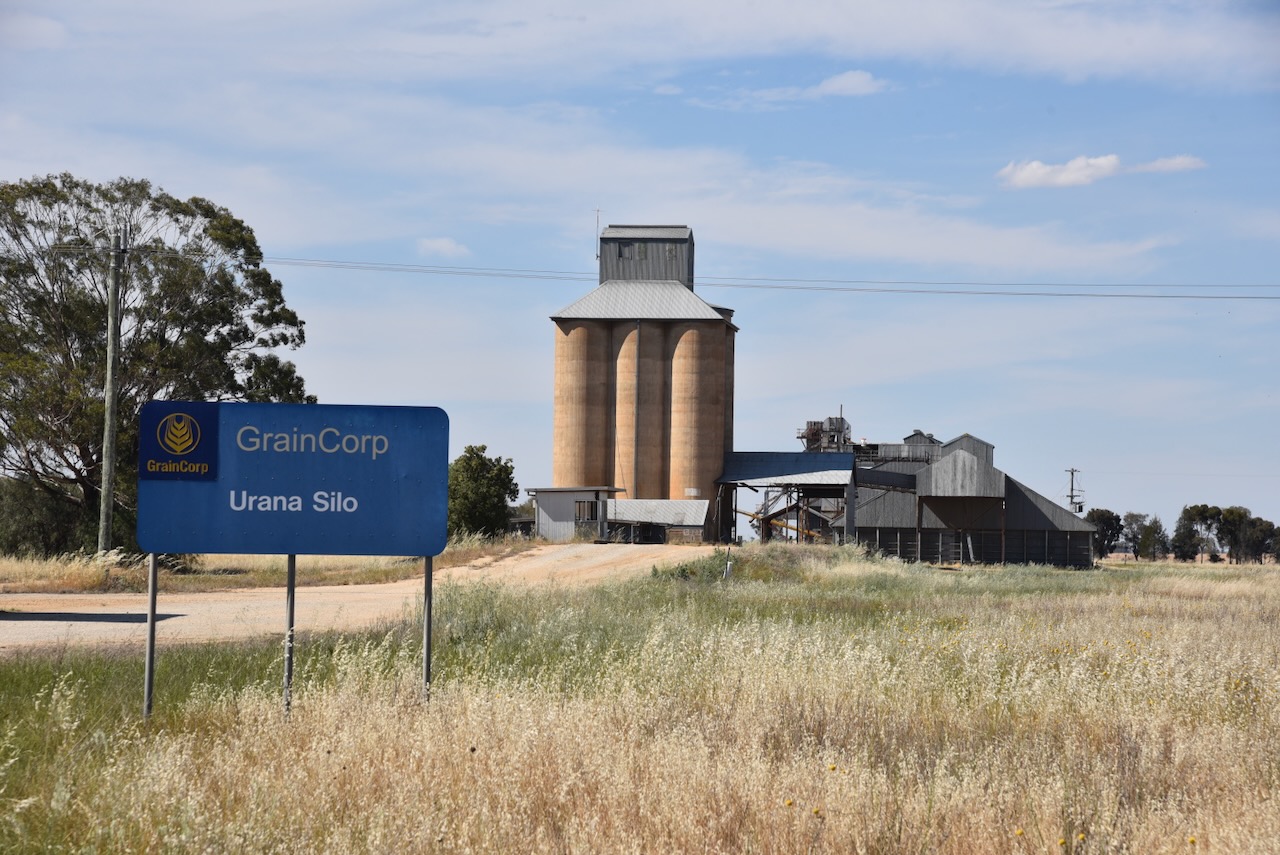
Our next silo activation for Sunday, 2nd November 2025, was the Urana silo VK-URA2.
Above: Map showing the location of Urana, NSW. Map c/o Google Maps
It is believed that Urana is derived from the Wiradjuri Aboriginal word ‘airana’ which is used to describe a temporary shelter. Others suggest ot comes from ‘aurana’ meaning camping ground.
Prior to European occupation, the area was inhabited by the Wiradjuri Aboriginal people. During the 1850s, European settlers commenced taking up land in the district. In 1859, Surveyor Hayes approved a design for the town of Urana.
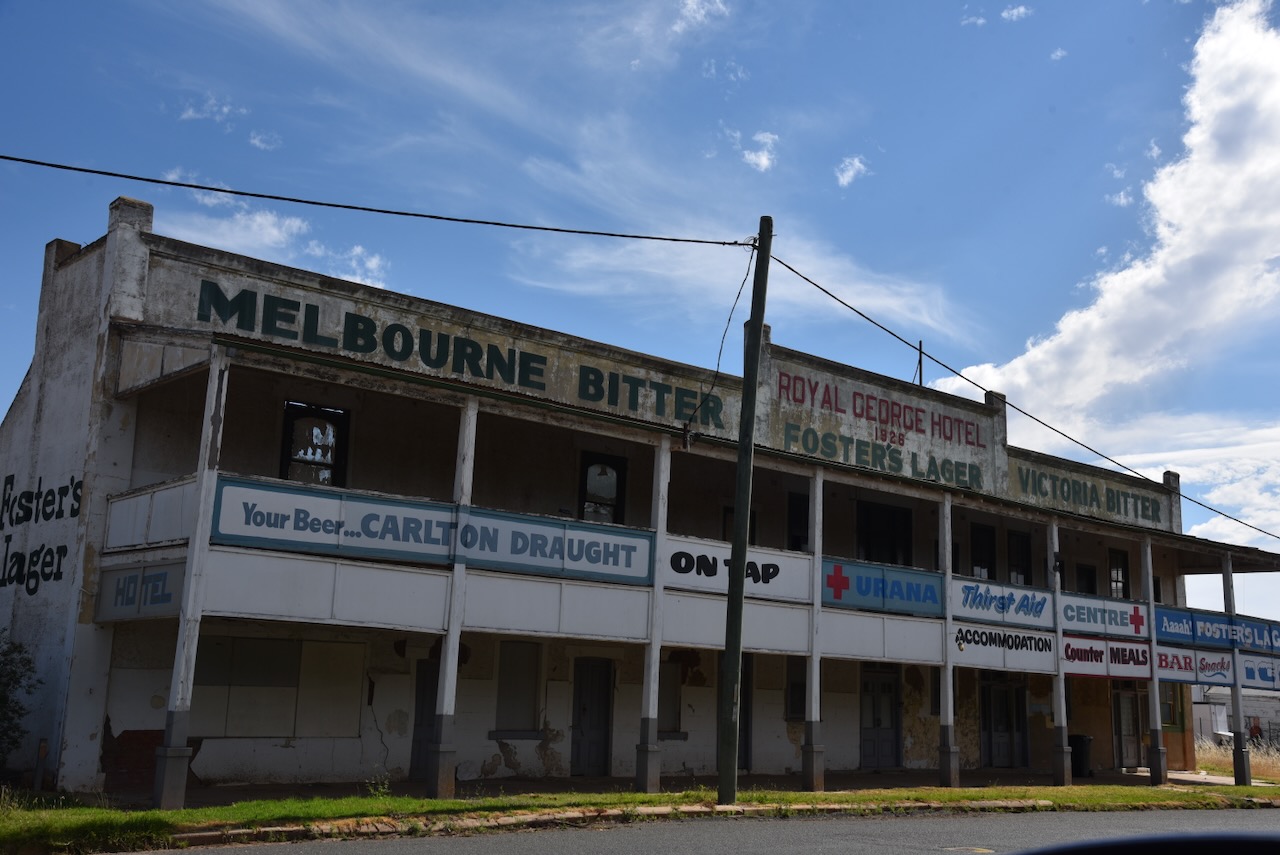
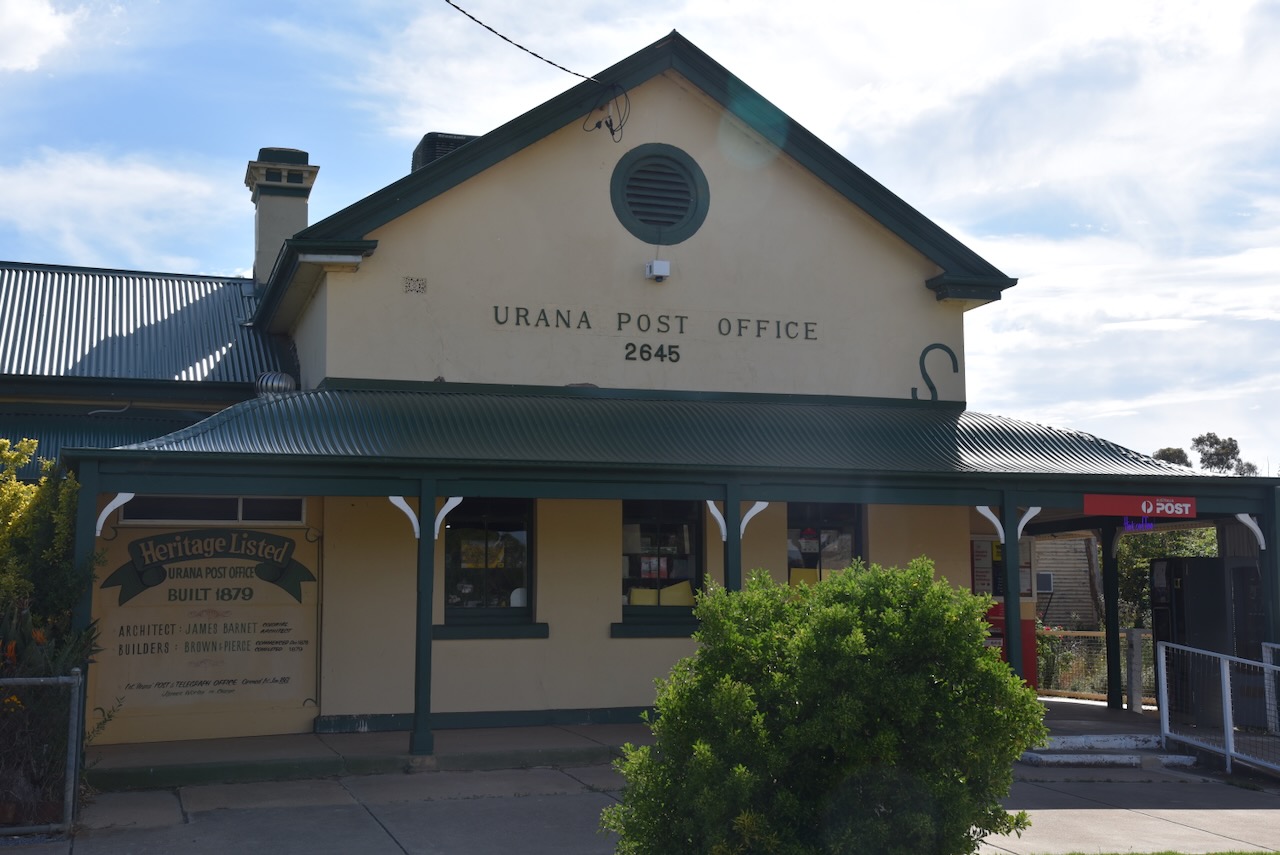
On the 1st day of January 1861, the Urana Post Office was opened.
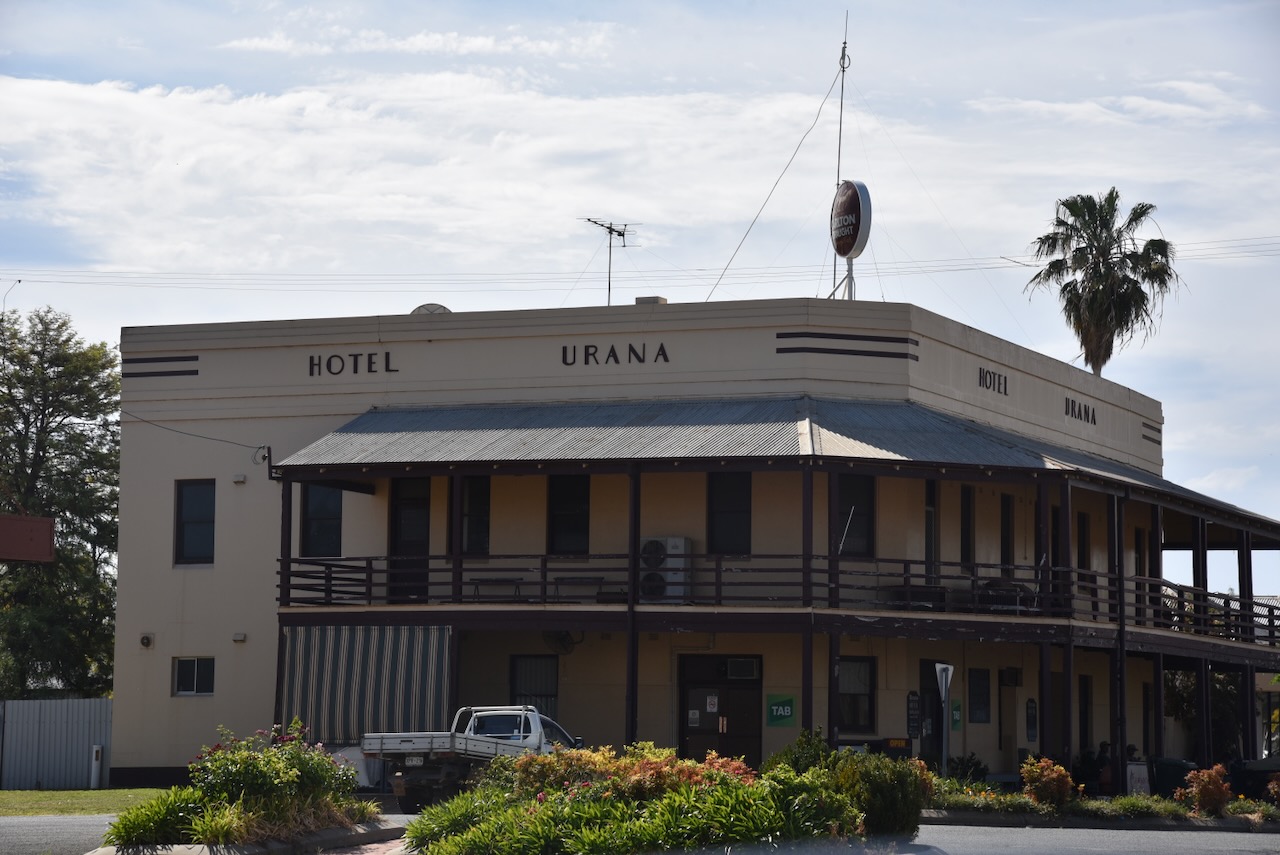
In 1866, the Urana township comprised two public houses, a post office, two large stores, a police station and lock-up, the Urana Hotel and the Royal Hotel. (Wikipedia 2026)


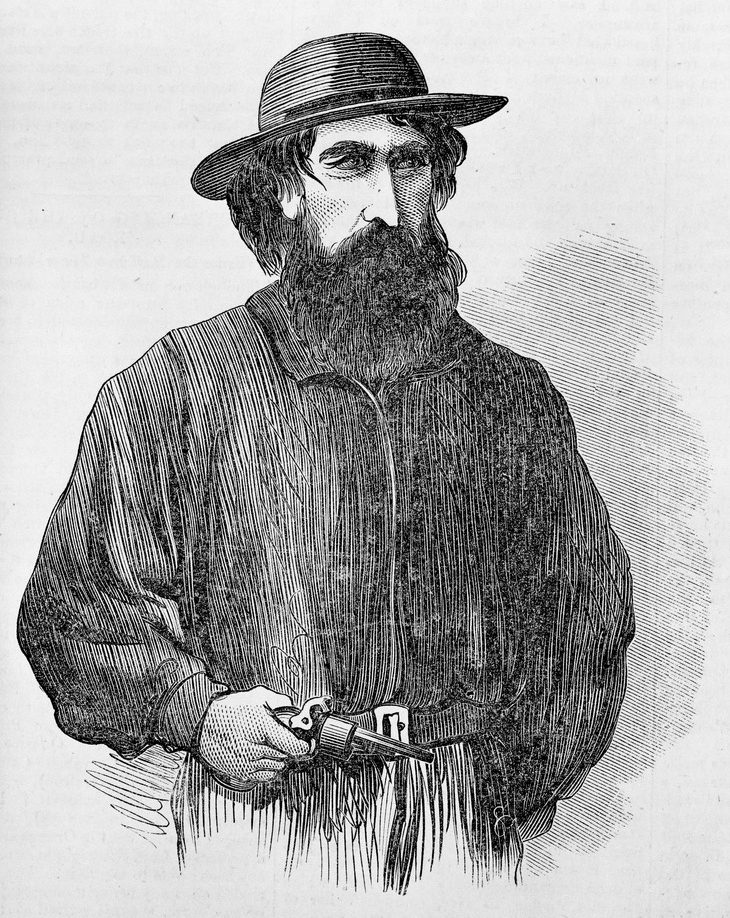
Urana has seen bushranger activity, including that of John Fuller, alias Daniel Morgan and ‘Mad Dog Morgan’. He was born on the 30th day of April 1830, at Appin, New South Wales.
Above: the bushranger Daniel Morgan. Image c/o Wikipedia
Morgan teamed up with a man known as ‘Flash Clarke’ and ‘German Bill’. His true identity was never discovered. (A Guide to Australian Bushranging 2019) (Wikipedia 2023)
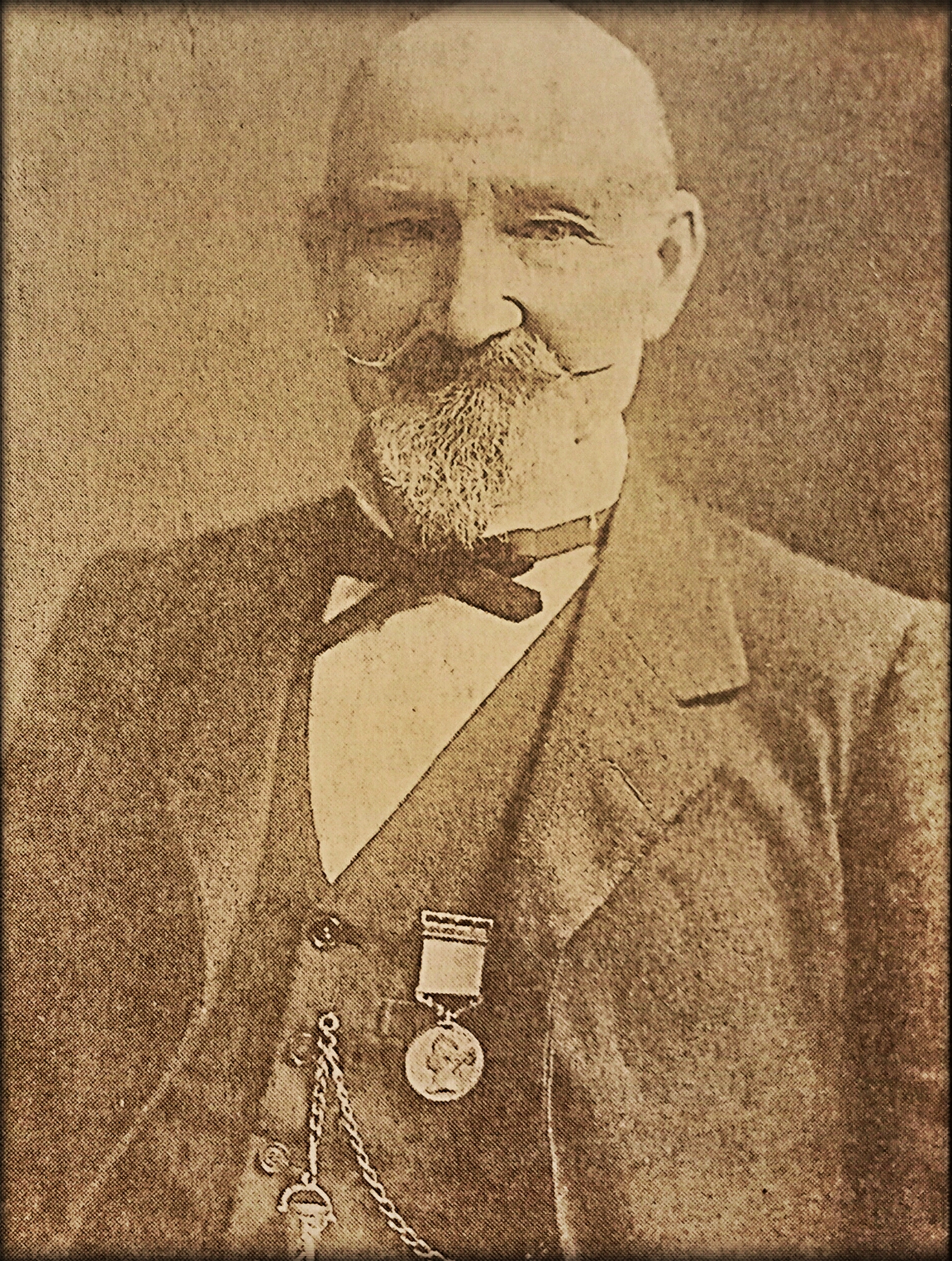
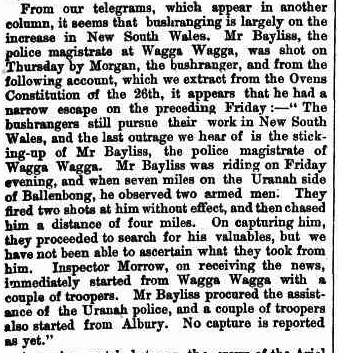
On Thursday, the 20th day of August 1863, Henry Bayliss, the Police Magistrate from Wagga Wagga, was riding along the road from Bullenbong to Brookong Station en route to Urana to attend court. He encountered Morgan and Clarke who attempted to rob Bayliss. They were armed with pistols and shotguns. (A Guide to Australian Bushranging 2019) (Wikipedia 2023)
Above: Henry Bayliss. Image c/o Wikipedia
Bayliss galloped away on his horse but was pursued and fired upon. He was eventually apprehended by the bushrangers who demanded his valuables. Bayliss refused and threats were made that he would be shot. Bayliss handed over his watch and £4. Upon learning the identity of their victim, Morgan returned the money and watch that he had taken from Bayliss. Morgan and Clarke cut down a telegraph pole, which cut off all communication between Urana and Wagga Wagga, and they rode off. (A Guide to Australian Bushranging 2019) (Wikipedia 2023)
Above: article from the Leader, Melbourne, Sat 5 Sep 1863. Image c/o Trove
Bayliss rode to Urana and telegraphed Wagga Wagga via Melbourne. Headed by Sub-Inspector Morrow, a team of police headed to Urana. The party also included Constable Brown and Constable Charlton. Bayliss then led the party of police in search of Morgan and Clarke. £4 (Wikipedia 2023)
On Wednesday, the 26th day of August, Bayliss and the police discovered a camp in dense scrub about ‘seven miles’ from Urangaline Creek only a short distance from Urana. Items belonging to the bushrangers, including Morgan’s distinctive poncho and a bible were located. Morgan and Clarke were not present. Sub-Inspector Morrow, Trooper Brown and Baylis remained at the camp awaiting the return of Morgan and Clarke. (Wikipedia 2023)
Late that evening, Constable Brown heard noises in the scrub. It was reported that Bayliss scoffed and stated the noise was due to a possum. Bayliss and his team heard a noise near the camp. They advanced and shots rang out. Bayliss was shot in the right chest and fell to the ground. The police fired upon the camp, however Morgan and Clarke decamped. Constable Brown rode to Wagga Wagga and alerted others to what had occurred. (Wikipedia 2023)
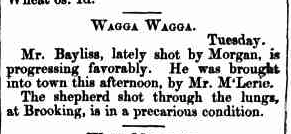
On Thursday, the 27th day of August, a shepherd named Haley was confronted and shot by two men suspected to be Morgan and Clarke. It was reported that this was retribution for the shepherd providing information to the police regarding the location of Morgan and Clarke’s camp at Urangaline Creek. (A Guide to Australian Bushranging 2019) (Wikipedia 2023)
Above: article from The Kiama Indpendent, Tue 8 Sept 1863. Image c/o Trove
Clarke had been severely wounded in the shootout with the police. Morgan took him to Mahonga Station, southeast of Urana. I have a connection with Mahonga Station myself. My great-great-great-grandfather William Slade, was a boundary rider at Mahonga. My great-great-grandfather, Matthew Slade was raised there as a child. (A Guide to Australian Bushranging 2019) (Wikipedia 2023)
Clarke died at Mahonga Station due to his gunshot wounds. He was taken to a remote location on the station, and MLorgan then rode off. Several years later a decomposed body was located on the run. The body was wearing the black coat that Clarke was wearing on the night of the shootout. (A Guide to Australian Bushranging 2019) (Wikipedia 2023)
Following the shootout, Baylis offered a reward of £200 for “any person who shall give such information as will lead to the apprehension of the offender”. (A Guide to Australian Bushranging 2019) (Wikipedia 2023)
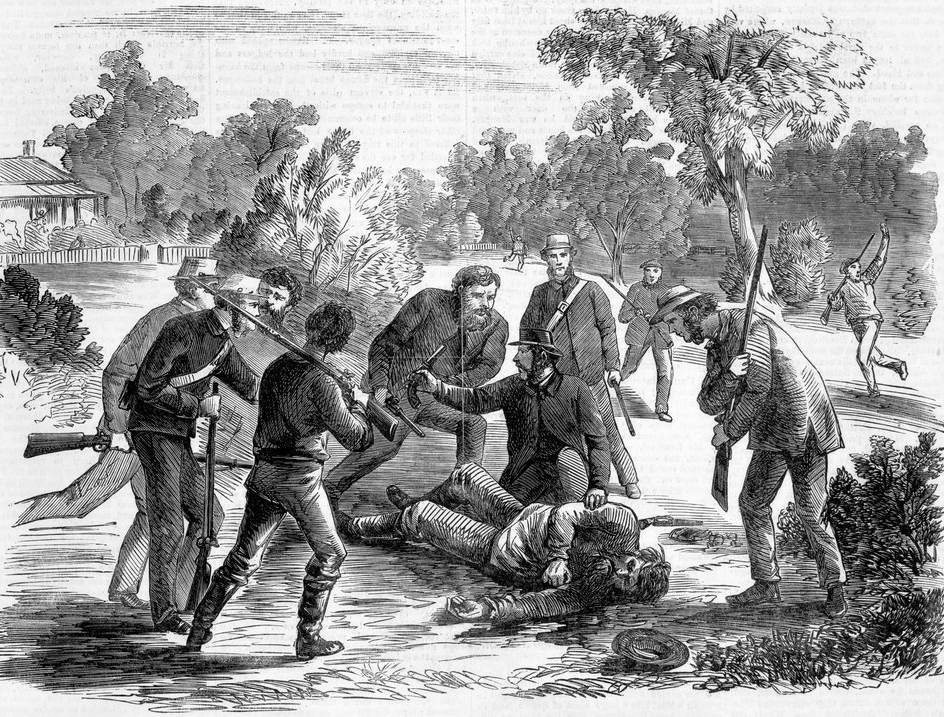
Morgan continued his bushranging activities, which included several murders, arson, and armed robbery. In April 1865, Morgan was shot and killed near Wangaratta, Victoria. He was 34 years old. (A Guide to Australian Bushranging 2019) (Wikipedia 2023)
Above: the capture of Morgan. Image c/o Wikipedia
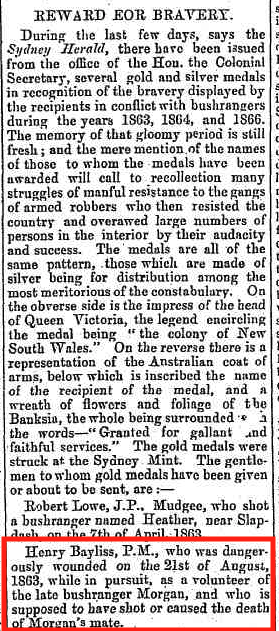
Bayliss was paid £1500 in compensation, but this was subsequently reduced to £300. The authorities did this to discourage others injured in the line of duty from seeking a payout. Bayliss was presented with a bravery medal. Upon his retirement, Bayliss was presented by his fellow Magistrates with the bullet which had struck him. It was enclosed in a gold casket suspended to a watch chain. (A Guide to Australian Bushranging 2019) (Trove 2026)
Above: article from the Ovens and Murray Advertiser, Sat 18 Dec 1875. Image c/o Trove
Below is a very good video on the life of the bushranger Morgan.
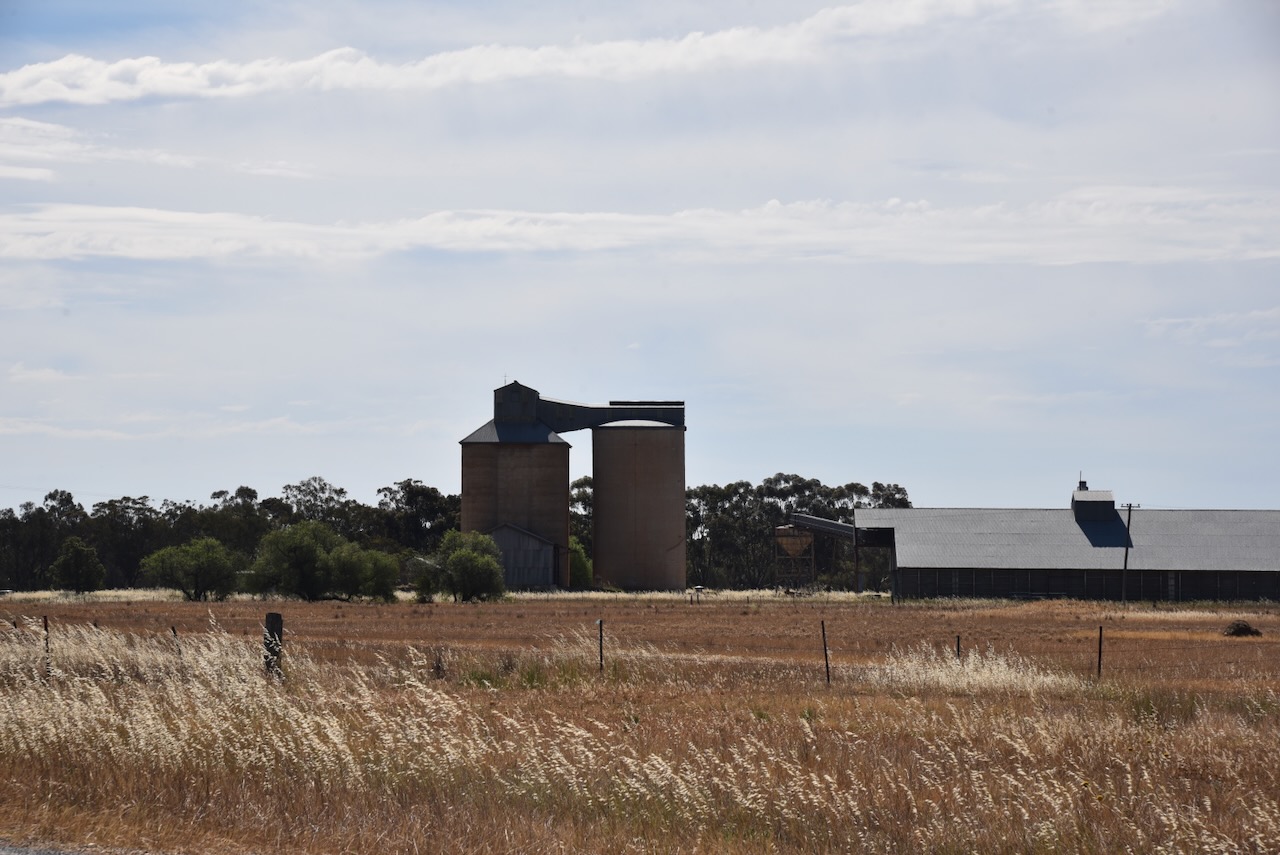
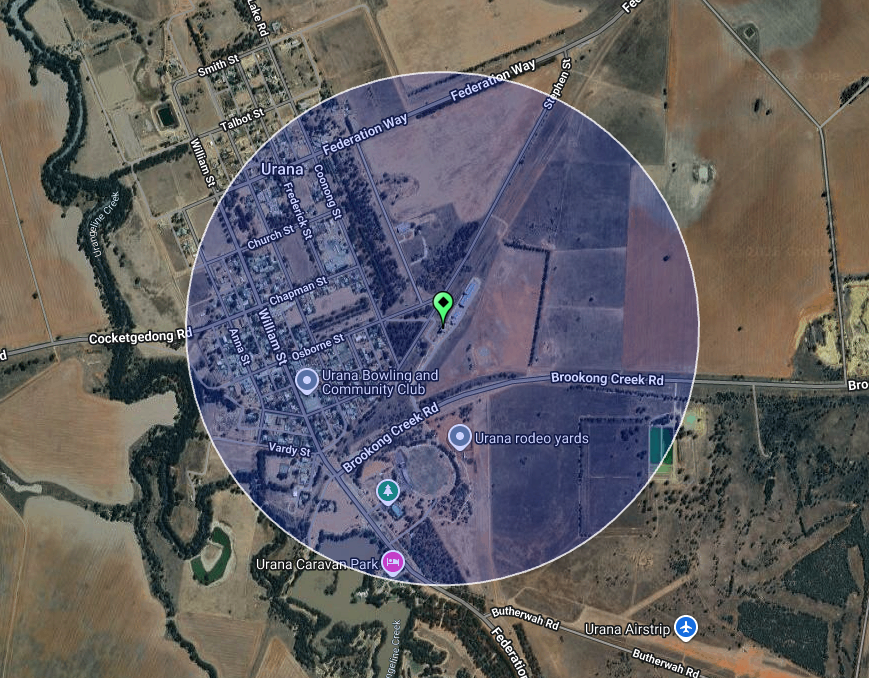
The Urana silos are located on Stephen Street on the eastern side of the town.


Marija and I parked the 4WD on Stephen Street opposite the silos. We ran the Icom IC-7000, 100 watts, and the Codan 9350 antenna with the 1.5 metres stainless steel whip.
Above: the activation zone at the Urana silo. Image c/o SiOTA website
Marija worked the following stations on 40m SSB:-
I worked the following stations on 40m SSB:-
References.
Amateur Radio, Short Wave Listening, travel and history
Amateur radio experiences with VK1DA
Brisbane - Australia
german amateur radio station
Summits On The Air
SOTA on the peaks, wilderness QRP and some bushwalking
A fine WordPress.com site
Amateur Radio Adventures
Summits on the Ai
Amateur radio station from Belgium
Radio craft, homebrew, QRP/SOTA, AM
Ego loqui ad viros super montes
My adventures with Amateur Radio and Geocaching!
The rantings of VK2GAZ on his SOTA experiences in Australia
A survivor, with minor cuts and abrasions.
The Art and Craft of Blogging
The latest news on WordPress.com and the WordPress community.
Blog of Justin Giles-Clark VK7TW's SOTA and amateur radio adventures.
Occasional SOTA & Microwave operation