Kalyarr National Park VKFF-1858

After packing up at Toogimbie on Monday, 20th October 2025, Marija and I headed out for a second bite at the Kalyarr National Park. We had activated Kalyarr the days before, but did not reach 44 QSOs.

This time, we entered the park via Thelangerin Road, which runs northwest out of Hay.

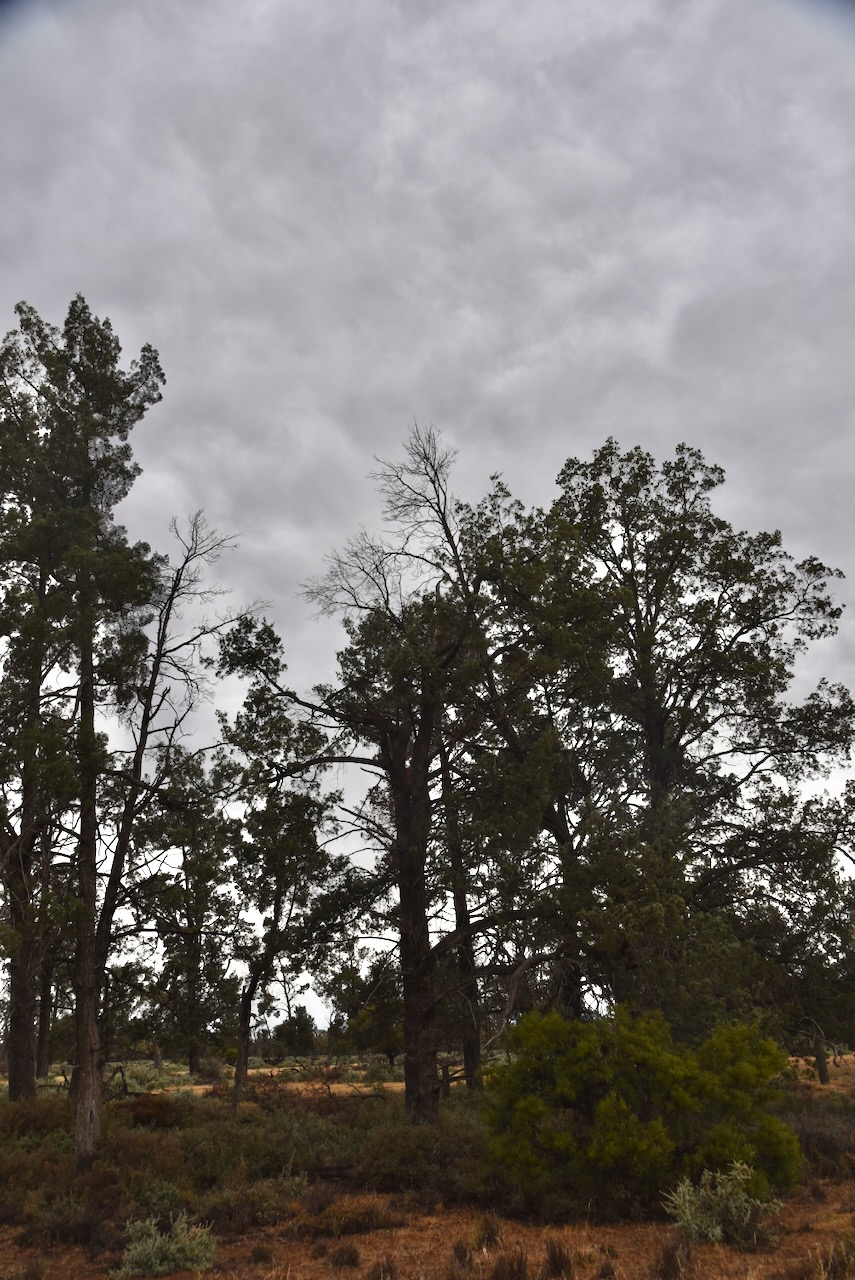
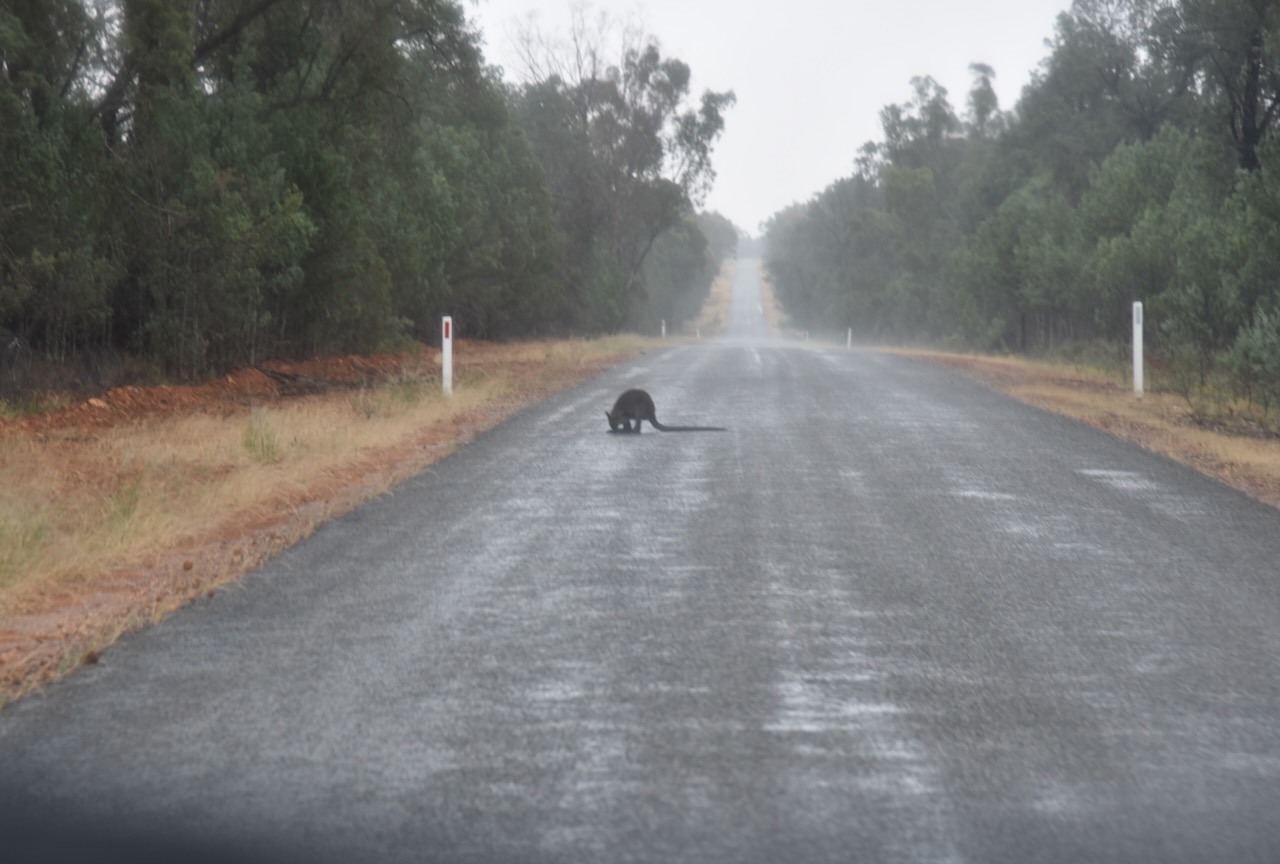
This was spectacular remote countryside with lots of Red kangaroos, emus, and even a few feral pigs.

And plenty of snakes and lizards.

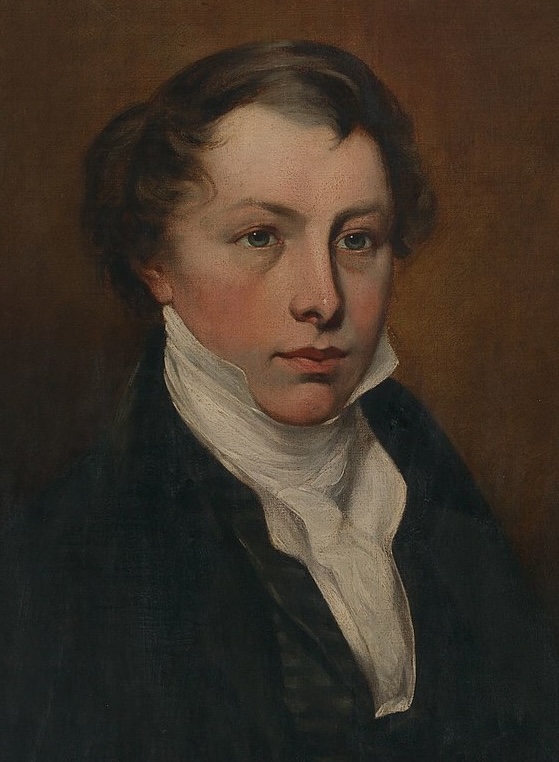
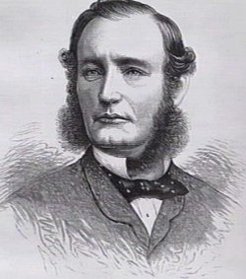
The historic Thelangerin sheep station is located on the Lachlan River, adjoining the Kalyarr National Park. It is one of the Riverina’s original sheep stations and was originally a 640-acre area of land granted to Scottish pastoralist John Peter in 1867. Captain Andrew McFarland and his brother Robert acquired the property in 1872. (Apartments.com.au 2012)

Above: Andrew McFarland. Image c/o ancestry.com.au

Marija worked the following stations on 40m SSB:-

  1. VK3PF
  2. VK3KAI
  3. VK3WSG
  4. VK2IO
  5. VK2GEZ
  6. VK4HMI
  7. VK3CEO
  8. VK4SMA
  9. VK3SQ
  10. VK3JT
  11. VK2BD
  12. VK5FANA
  13. VK3TDX
  14. VK4SOE
  15. VK4COA
  16. VK3ACZ
  17. VK3EJ
  18. VK3SMW
  19. VK7KT
  20. VK2MAB
  21. VK3CLD
  22. VK5QA
  23. VK2DBF

I worked the following stations on 40m SSB:-

  1. VK3PF
  2. VK3KAI
  3. VK3WSG
  4. VK2IO
  5. VK2GEZ
  6. VK4HMI
  7. VK3CEO
  8. VK4SMA
  9. VK3SQ
  10. VK3JT
  11. VK2BD
  12. VK5FANA
  13. VK3TDX
  14. VK4SOE
  15. VK4COA
  16. VK3ACZ
  17. VK3EJ
  18. VK3SMW
  19. VK7KT
  20. VK2MAB
  21. VK3CLD
  22. VK5QA
  23. VK2DBF
  24. VK3FTOM
  25. VK7HOB
  26. VK4EMP
  27. VK4TI
  28. VK4GKO
  29. VK4LGC
  30. VK4SOC
  31. VK5OG/m
  32. VKWETI
  33. VK2AIT
  34. VK2AIQ
  35. VK2AIX
  36. VK2AIZ
  37. VK1DI
  38. VK7IAN
  39. VK3ALF
  40. VK1AO
  41. VK2MET

After successfully activating the park, we drove back into Hay and went out for dinner at the Riverina Hotel.

References.

  1. Apartments.com.au. (2012). Riverina sheep station Thelangerin finds new owner after 140 years. [online] Available at: https://www.apartments.com.au/news/riverina-sheep-station-thelangerin-finds-new-owner-after-140-years [Accessed 17 Dec. 2025].‌

Toogimbie Indigenous Protected Area VKFF-3121

Day three of his Canberra trip was upon us, Monday, 20th October 2025. Following breakfast at one of the local cafes in Hay, Marija and I visited the former Hay Gaol in Church Street, Hay. Between 1880 to 1915, and 1930 to 1947, it was used as an adult prison. From 1921 to 1927, it operated as a maternity hospital. During the Second World War, it was used as a prisoner-of-war camp. From 1961 to 1974, it was the Hay Institution for Girls. (Trove 2025) (Wikipedia 2025)

The imposing entrance to the gaol features solid, double wooden doors with a smaller inset door. The door is incorporated into an entrance arch, which has the Royal Cypher ‘VR’.

Upon entering the museum, there is a small display of Aboriginal artifacts, including an Aboriginal bark canoe, which is reported to be the oldest known bark canoe in Australia.

The Hay Gaol was designed by James Barnet, the Colonial Architect, and was constructed from 1879 to 1880 by a local building firm of Witcombe Brothers. (Wikipedia 2025)

Above: James Barnet. Image c/o Wikipedia

The Hay Gaol was officially opened in late 1880.

Above: Item from the NSW Govt Gazette, Fri 24 Dec 1880. Image c/o Trove

During its early years, the gaol initially operated under the control of the Police Force. However, in 1882, the first gaoler, Ghiblim Everett, was appointed. Other gaol staff included a senior warden and four other wardens. The Hay Gaol was used predominantly for offenders with short sentences. (Wikipedia 2025)

By 1915, the Hay Gaol had only one prisoner who was being supervised by four officers. It was costing £582 per year to remain open, and it was closed by the State Attorney-General. (Trove 2025)

Above: Article from The Sydney Stock & Station Journal, Fri 25 Jun 1915. Image c/o Trove

In 1919, during an outbreak of the Spanish Flu, the Hay Gaol was used as an emergency hospital to isolate patients. By 1921, the Red Cross Society had turned the Gaol into a maternity home. (Wikipedia 2025)

Above: article from the Young Witness, Thu 21 Apr 1921. Image c/o Trove

By 1930, the Gaol was reopened due to congestion of other gaols around New South Wales. Harry Hood was appointed as the Governor. The Gaol operated until

Above: Article from The Pastoral Times, Tue 2 Sept 1930. Image c/o Trove

During the Second World War, the gaol was used as a prisoner-of-war and internment centre. Between 1961 to 1974, the Hay Gaol was run by the New South Wales Child Welfare Department as the Hay Institution for Girls. It was a maximum security institution for girls aged between 15 and 18. This institution was a result of rioting at Parramatta Girls’ Home. Hay was to be used for girls whose behaviour was considered too difficult to be managed at Parramatta.

Above: article from The Canberra Times, Wed 26 Jul 1961. Image c/o Trove

One of the first things that you see upon entering the prison grounds is an old letterbox.

The cell block contains 14 cells. The brick walls of the cell block are 46 centimetres thick. (Wikipedia 2025)

The cells have small barred windows and thick iron doors with peepholes. (Wikipedia 2025)

The cell below is the only cell in the Gaol with original bars.

Each of the cells houses various displays.

There is a cell which is set up exactly as it was when the gaol was used to house wayward girls. The cells were called ‘Cabins’, and the whole area was known as ‘Cabin Block’.

The perimeter of the Hay Gaol consists of a 5 metre high wall, which was constructed of locally produced red bricks. Two guard towers were placed at diagonally opposite corners of the perimeter wall.  (Wikipedia 2025)

In the centre of the outside compound is a solitary confinement cell.

The services block is an L-shaped block with a hipped iron roof and verandah. It houses the kitchen, hospital, dispensary, bathroom, store, and a large workshop. (Wikipedia 2025)

The Gaol also features a display of old vehicles.

We then visited the Shear Outback, which includes the Australian Shearers’ Hall of Fame, the Shear Outback Exhibition, the historic Murray Downs Woolshed, a retail and souvenir shop, and a cafe. (Shear 2019)

Over 50 people feature in the Australian Shearers’ Hall of Fame. Inductees are admitted annually and are the subject of research and collecting by Shear Outback.

It features legendary shears such as John Robert ‘Jackie’ Howe. He was born in Killarney, Queensland in July 1861. His father was a shearer and a clown. Jackie became a shearer and was also involved in some gold prospecting. He was active during the shearer strikes of 1891 and 1894. In 1892, he shot to fame when he broke the daily and weekly shearing records. He was considered one of the three wonders of Queensland. (Wikipedia 2023)

Above: Jack Howe. Image c/o Wikipedia

We spent quite a bit of time wandering around the museum, which contained some very interesting displays about the shearing industry.

We then wandered over to the historic Murray Downs woolshed. In 1926, architects Laird and Buchan of Geelong were commissioned to design this state-of-the-art shed for the historic Murrau Downs property on the New South Wales side of the Murray River near Swan Hill. It is built from river red gum and Oregon timber with corrugated-iron cladding and was used until late 1998.

We then enjoyed a very enjoyable lunch in the cafe. I had a beautiful serve of lasagne.

Our next stop was the Hay Railway Station, which opened in July 1882 and closed in 1989. The last passenger train service was in November 1983.

Located in some old train carriages at the railway station, you will find the Dunera Museum.

Between 1940 and 1946, over 6,000 German, Italian and Japanese civilian internees and prisoners of war were kept in three prison camps at Hay. The museum houses exhibits, photographs and stories about their experiences. (Dunera 2025)

Adjacent to the railway station is the old station master’s house that was built in 1882.

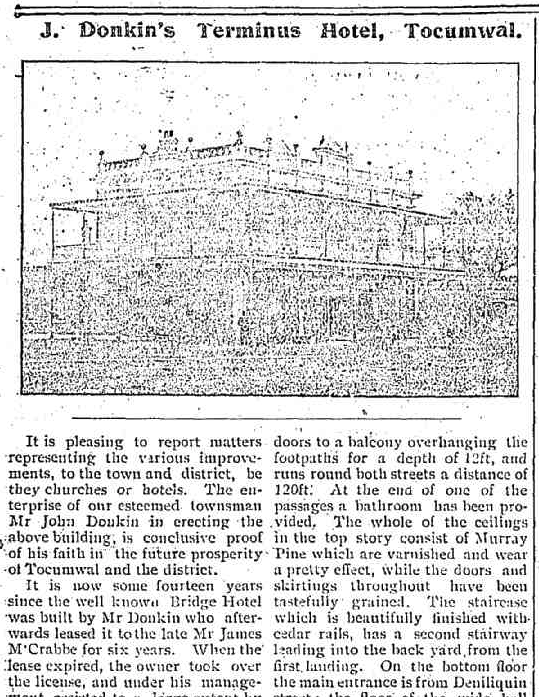
Located opposite the railway station is the old Terminus Hotel, which opened in 1880 and closed in 1940. (Chirp Internet 2025)

I found the photograph below showing the hotel in 1924. Being opposite the railway station, I can imagine that the hotel would have been well patronised back in the day. It is a great shame to see the hotel in its current condition.

Above: Terminus Hotel, c. 1924. Image c/o Australian National University.

We then drove out to Sandy Point on the Murrumbidgee River. What a beautiful spot.

We then drove back into Hay and visited Bishops Lodge, which was built in 1889 as the official residence for Sydney Linton, the Anglican Bishop of the Riverina. The lodge was designed by architect Sir John Sulman (b. 1849. d. 1934) and built at a cost of £6,800. (Hay 2021)

Above: Sir John Sulman. Image c/o Wikipedia

Following Linton, two more bishops lived in the Lodge: Ernest Anderson and Reginald Haslse. Between 1935 and 1946, the Lodge was known as Linton House, a hostel for boys attending the Hay War Memorial High School. From 1946 until 1985, it was a private residence before being purchased by the Hay Shire Council.

We did find the Lodge a little disappointing when we compared it to several other historic homes we have been to over the years. There is very little furniture inside.

We visited the gardens at the Lodge, and quite frankly, we were bitterly disappointed. The photographs of the roses and flowers below look impressive, but the garden was completely overgrown and totally uncared for. The roses clearly had not been pruned, and most of the paths were not accessible due to very high weeds.

We had received permission to access the Toogimbie Indigenous Protected Area VKFF-3121, so we headed there.

The park is located on the northern side of the Sturt Highway. Its northern boundary is the Murrumbidgee River.

Above: the boundaries of the Toogimbie IPA. Image c/o Google Earth

The Toogimbie Indigenous Protected Area (IPA) is about 4,600 hectares in size on the Murrumbidgee River’s floodplain. It is managed by the Narri Narri Aboriginal people, who took ownership of Toogimbie, Glenhope, & Lorenzo stations in February 2000. (nntc 2016)

Above: An aerial view of Toogimbie. Image c/o Google Maps

During the mid-1800s, squatters took up Toogimbie Station. The station had a large wooden wharf on the Murrumbidgee River where the paddlesteamer PS Pevensey would load wool from the station. There was also a swing bridge across the river. Many of the stockmen employed on the station were Aboriginal. (Hay Public School 2016)

From the late 1880s to the early 1900s, Toogimbie was owned by John Dill (b. 1842. d. 1927). Dill was involved in a shearing dispute. Dill also suffered the loss of his little 7-year-old daughter, who was caught in the revolving shaft of the pumping machine.

Above: Article from The Riverine Grazier, Hay, Tue 22 Mar 1887. Image c/o Trove

In January 1907, the homestead at Toogimbie Station was totally destroyed by fire. The cause of the fire was unknown, but it did originate in the bedroom of a young employee who denied having his candle alight. (Trove 2025)

Above: part of an article from The Riverine Grazier, Hay, Tue 8 Jan 1907. Image c/o Trove

After entering the property with approval, Marija and I drove down to a home on the property and had a long chat with the gentleman who lived there, to inform him what we would be doing. He allowed us access a short distance away on the banks of the Murrumbidgee River.

We ran the Yaesu FT857, 40 watts, and the 20/40/80m linked dipole for this activation.

Marija worked the following stations on 40m SSB:-

  1. VK1AO/p (VKFF-1309)
  2. VK2MET/p (VKFF-1309)
  3. VK2PF
  4. VK3KAI
  5. VK3ACZ
  6. VK3CEO
  7. VK3BWS
  8. VK3BEB
  9. VK3BEL
  10. VK3WSG
  11. VK2DA
  12. VK1DA
  13. VK2MOE
  14. VK1MO
  15. VK4DNO
  16. VK5WU
  17. VK3DCQ
  18. VK2MZ
  19. VK2VW
  20. VK2HFI
  21. VK2AKA
  22. VK2BUG
  23. VK2IO
  24. VK2GEZ
  25. VK5ADP
  26. VK3CDS
  27. VK3SQ
  28. VK3JT
  29. VK2BD
  30. VK5LA
  31. VK5KAW
  32. VK3AKD
  33. VK3VPM
  34. VK3APJ
  35. VK2ZR
  36. VK3UH
  37. VK5HS/m
  38. VK5IS
  39. VK1CHW
  40. VK5FANA
  41. VK2RO
  42. VK3MH/m
  43. VK3TBS
  44. VK5UV
  45. VK5HRB

I worked the following stations on 40m SSB:-

  1. VK1AO/p (VKFF-1309)
  2. VK2MET/p (VKFF-1309)
  3. VK2PF
  4. VK3KAI
  5. VK3ACZ
  6. VK3CEO
  7. VK3BWS
  8. VK3BEB
  9. VK3BEL
  10. VK3WSG
  11. VK2DA
  12. VK1DA
  13. VK2MOE
  14. VK1MO
  15. VK4DNO
  16. VK5WU
  17. VK3DCQ
  18. VK2MZ
  19. VK2VW
  20. VK2HFI
  21. VK2AKA
  22. VK2BUG
  23. VK2IO
  24. VK2GEZ
  25. VK5ADP
  26. VK3CDS
  27. VK3SQ
  28. VK3JT
  29. VK2BD
  30. VK5LA
  31. VK5KAW
  32. VK3AKD
  33. VK3VPM
  34. VK3APJ
  35. VK2ZR
  36. VK3UH
  37. VK5HS/m
  38. VK5IS
  39. VK1CHW
  40. VK5FANA
  41. VK2RO
  42. VK3MH/m
  43. VK3TBS
  44. VK5UV
  45. VK5HRB
  46. VK5KVA
  47. VK4SOE/p
  48. VK4COA/p
  49. VK3LDX
  50. VK4EW

I worked the following stations on 20m SSB:-

  1. VK4EW
  2. VK3PF
  3. VK3KAI
  4. VK4EMP
  5. VK4TI
  6. VK4GKO

References.

  1. Chirp Internet (2025). Former Terminus Hotel in Hay < New South Wales | Gday Pubs – Enjoy our Great Australian Pubs. [online] Gdaypubs.com.au. Available at: https://www.gdaypubs.com.au/NSW/hay/50011/former-terminus-hotel.html [Accessed 17 Dec. 2025].
  2. ‌Duneraassociation.com. (2025). Dunera Museum – Dunera and Queen Mary Association. [online] Available at: https://www.duneraassociation.com/dunera-boys-museum/ [Accessed 17 Dec. 2025].
  3. ‌Hay, V. (2021). Bishop’s Lodge Historic House | Visit Hay. [online] Visithay.com.au. Available at: https://www.visithay.com.au/explore/location/bishop-lodge-historic-house/#about [Accessed 17 Dec. 2025].
  4. ‌Hay Public School, 2016, Terrific Traditions of Toogimbie
  5. nntc. (2016). Toogimbie IPA | nntc. [online] Available at: https://www.narinari.org/copy-of-conservation-land-management-1 [Accessed 17 Dec. 2025].
  6. ‌Shear (2019). Shear Outback. [online] Shear Outback. Available at: https://www.shearoutback.com.au/about [Accessed 17 Dec. 2025].
  7. ‌Trove. (2025). HAY GAOL TO BE ABANDONED – The Riverine Grazier (Hay, NSW : 1873 – 1954) – 24 Oct 1947. [online] Available at: https://trove.nla.gov.au/newspaper/article/137224879?searchTerm=hay%20gaol [Accessed 17 Dec. 2025].
  8. ‌Trove. (2025). HAY GAOL CLOSED. – The Sydney Stock and Station Journal (NSW : 1896 – 1924) – 25 Jun 1915. [online] Available at: https://trove.nla.gov.au/newspaper/article/126217244?searchTerm=hay%20gaol%20closed# [Accessed 17 Dec. 2025].
  9. ‌Trove. (2025). The Riverine Grazier (Hay, NSW : 1873 – 1954) – 8 Jan 1907 – p2. [online] Available at: https://trove.nla.gov.au/newspaper/page/16301547?searchTerm=toogimbie%20station [Accessed 17 Dec. 2025].
  10. ‌Wikipedia. (2023). Jackie Howe. [online] Available at: https://en.wikipedia.org/wiki/Jackie_Howe.
  11. ‌Wikipedia Contributors (2025). Hay Gaol. Wikipedia.‌

Hay silo VK-HYY2

Following our activation at the Kalyarr National Park on Sunday, 19th October 2025, Marija and I drove to the town of Maude, a small town on the banks of the Murrumbidgee River between Hay and Balranald.

In about 1849, Francis Peter MacCabe from the New South Wales Surveyor General’s Department surveyed several reserves on the lower Murrumbidgee River. In October 1852, these reserves were gazetted. They included the “Pin Pan Pa” reserve of 7.5 square miles, which was described as being “situated on cattle runs, occupied by Phelps and Darchey”, just over a mile downstream from “the hut at Pin-pan-pa”. (Wikipedia 2024)

This reserve was taken from Phelps and Chadwick’s “Pimpampa” and Thomas D’Archy’s “Budgee Budgee” runs. It was used during the 1850s as a crossing place for stock and drays.  By the early 1860s, a township had been laid out on the Pimpampa Reserve by surveyors Adams and Twynam, with the name of ‘Pimpampa’ nominated. However, this was not approved by the Executive Council, and the name Maude was chosen instead. (Wikipedia 2024)

Above: part of an article from The Sydney Morning Herald, Mon 15 Apr 1861. Image c/o Trove

In October 1861, a punt commenced operation at the new township. In November 1862, a hotel was opened. The owner, Frank Johns, applied for a publican’s licence to the Bench of Magistrates at Hay. The application was opposed by the local squatter and Magistrate, Thomas D’Archy. The reason given was that there was no police at Maude. The following month, the application was approved on the promise of police protection being provided within 3 months. However, it took 2 years before there was a police presence at Maude.

Above: part of an article from The Sydney Morning Herald, Mon 1 Dec 1862. Image c/o Trove

On the 1st day of May 1863, the Maude Post Office opened. Henry Prendergast was the first Post Master, who, with his son John, established a store in Maude. The Prendegast family established several stores in Maude, including a wool store. Wool from the surrounding pastoral runs was loaded onto steamers at Maude for transportation, often to Echuca. In 1868, a second hotel opened in Maude, the Post Office Hotel.

We visited the Maude Weir on the Murrumbidgee River. It was erected in 1940 for irrigation and water supply. (Alan 2021)

We doubled back slightly along the Sturt Highway, as we were hoping to activate the Maude silo VK-MDE2. However, we found upon arrival that the activation of this silo was not possible. Access was restricted, and there were no public roads that were within the activation zone of the silo.

We continued east along the Sturt Highway and headed to the Toogimbie Indigenous Protected Area VKFF-3121, which we hoped to activate. However, strike two. Access was restricted, and we were unable to reach anybody at the mobile telephone number on the sign at the gate.

So, feeling a little disappointed, Marija and I drove into Hay and booked into our accommodation, the Comfort Inn Bishops Lodge.

The area around the current-day Hay township was known as Lang’s Crossing-place. It took its name from three brothers named Lang who were leaseholders of runs on the southern side of the Murrumbidgee River. Lang’s Crossing-place was a crossing point on the Murrumbidgee on the ‘Great North Road’, a well-travelled stock route. (Wikipedia 2021)

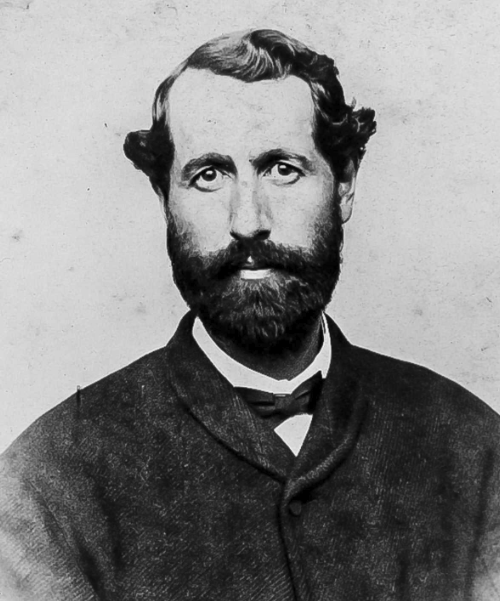
Thomas Lang was born in 1816 in Selkirk, Scotland. His brother Gideon Scott Lang was born in 1819, also in Selkirk, Scotland. And their sibling, William Lang, was born in 1823. Thomas, Gideon, and William emigrated to Australia. During the late 1840s, the Lang brothers established pastoral runs in the Riverina and then purchased more runs, including a 30-mile frontage on the Murrumbidgee River. (ancestry 2016) (Anu.edu.au 1967)

Above: Gideon Lang and his brother William Lang. Images c/o ancestry.com.au

Francis William Cadell (b. 1822. d. 1879) was a Scottish explorer of Australia, who opened up the Murray River for transport by steamship. In 1856–1857, Cadell placed a manager at Lang’s Crossing-place with the task of establishing a store which was initially in a tent. In late 1857, a blacksmith shop and residence were established at Lang’s Crossing-place by Thomas Simpson. In 1858, a hotel and dwelling house were built by the Canadian shipwright Henry Leonard. He also launched a punt on the Murrumbidgee.

However, there was opposition to Leonard’s ventures. One of those who was against Leonard’s operations was Henry Jeffries. He was the leaseholder of “Illilawa” station, which included Lang’s Crossing-place at its western extremity. Leonard was forced to stand guard with a loaded gun due to threats about his punt. There was also an attempt to pull down Leonard’s hotel during its construction, and this resulted in outcry from those who were keen to see development at Lang’s Crossing-place.

As a result, a surveyor was dispatched by the New South Wales Government to officially map out a township. Leonard’s hotel, the Murrumbidgee Punt Hotel, was completed and opened on the 30th day of October 1858. By the following year, the New South Wales Department of Land had proclaimed reservations on either side of the Murrumbidgee River at Lang’s Crossing-place.

By 1859, the township had been named Hay in honour of John Hay. Sir John Hay was a wealthy squatter from the Upper Murray, a member of the Legislative Assembly in New South Wales, and a former Secretary of Lands and Works.

Above: Sir John Hay. Image c/o Wikipedia

The following year saw a surge in land sales at Hay.

Above: article from the Empire, Sydney, Tue 3 Apr 1860. Image c/o Trove

On the 16th day of April 1859, ‘Lang’s Crossing Place’ Post Office opened and was renamed Hay in 1861. The 1861 Census recorded that there were 172 people living in the township of Hay: 115 males and 57 females. That year, two more hotel licences were granted at Hay: the Caledonian Hotel, run by Thomas E. Blewett and George Dorward, and the Argyle Hotel, run by Thomas Simpson. The two hotels were located side by side on Lachlan Street.

By 1871, the population of Hay had increased to 664 people: 388 males and 276 females. Hay became a busy port on the Murrumidgee River for the steamers trading along the river.

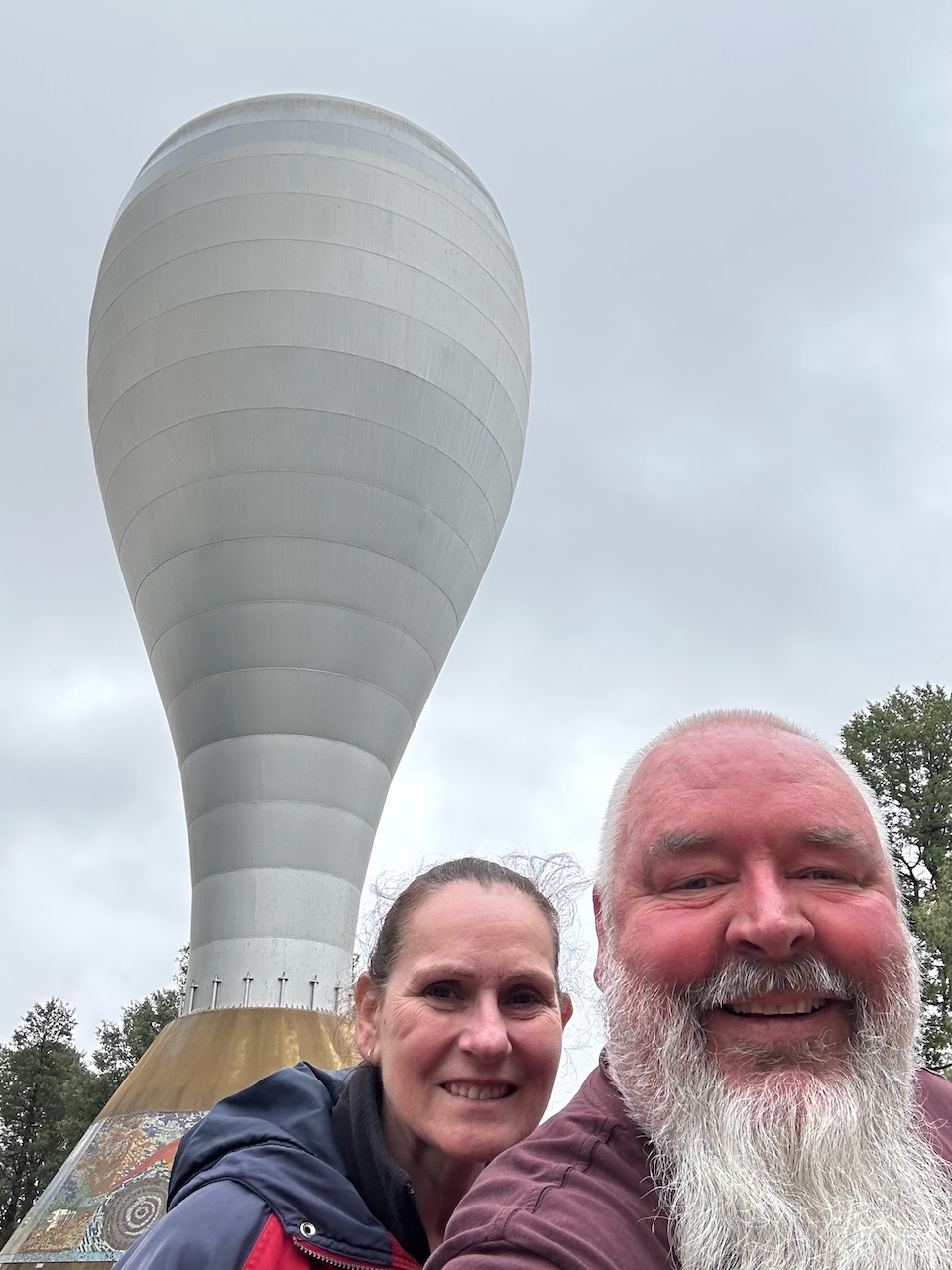
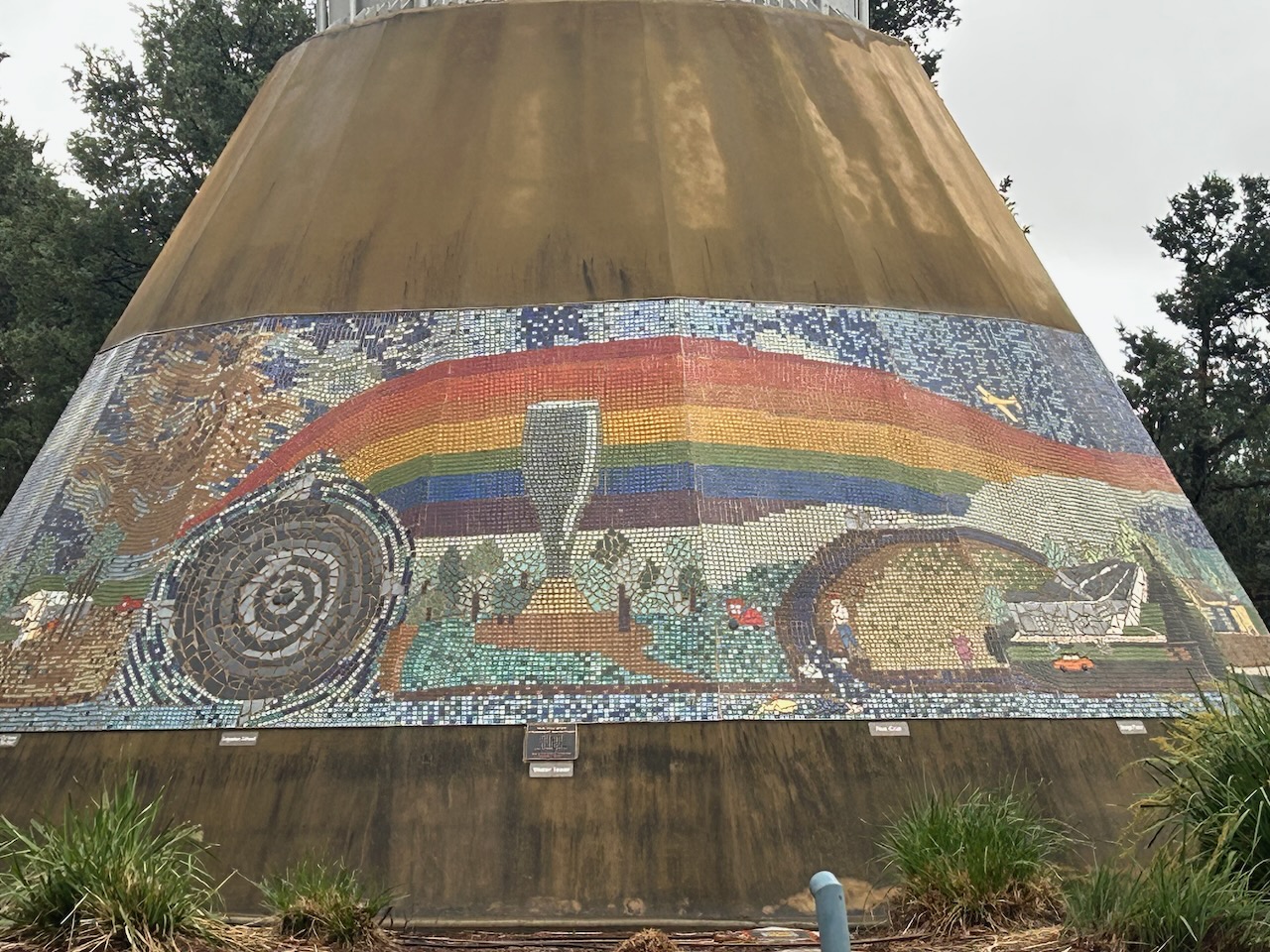
After checking into the motel and unpacking the 4WD, Marija and I headed to the Hay Water Tower Art, which is part of the Australian SIlo Art Trail. The murals on the water tanks were completed in December 2020 and are the work of artists Matt Adante and Bill Campbell. (Australiansiloarttrail.com, 2025)

The first person featured is Lieutenant Lorna Margaret Whyte, AANS. She was born in Hay in April 1915 and trained as a nurse at the Corowa Hospital. In 1941, she joined the Australian Army Nursing Service (AANS).

Private Victor George Murray was born in 1909 in Brewarrina, New South Wales. He served with the 2/20th Battalion AIR, 8th Division.

Corporal Clifford Leslie Farlow was born in 1922 and moved to Hay as a baby. He enlisted with the Australian Imperial Force in June 1940.

Private William ‘George’ Cannon was born in March 1919 and served with the 2/1st Battalion and 2/1st Field Regiment, 6th Division AIF.

Private Norman Charles Flack was born in Hay in 1920 and served with the 2/19th Battalion, 8th Division.

We then visited the memorial commemorating the centenary of the Battle of Beersheba. It features a bronze sculpture of a soldier, and a Waler, the breed of horse that was predominantly used in the Light Horse Brigades. (Vwma.org.au 2025)

The British offensive known as the Battle of Gaza took place in October 1917. A part of this was the Battle of Beersheba, which took place on the 31st day of October 1917. The final phase of this battle was the mounted charge of the 4th Light Horse Brigade, which stormed through the Turkish troops and seized the town of Beersheba. The capture of this strategic town enabled the British Empire forces to break the Ottoman line near Gaza and advance into Palestine. (Aust War Memorial 2017)

Below is an excellent video on the Battle of Beersheba.

Our next stop was the historic Hay Courthouse, which was built in 1892 and was designed by Government architect Walter Liberty Vernon. (Visithay.com.au 2025)

I had not had a good look around Hay since I was a teenager, so Marija and I took some time to stroll down the main street (Cobb Highway).

I soon found that Hay was one of many country towns that chose to have reverse-angle parking.

During the 1920s and 1930s, Mrs Susan McGrath regularly led mobs of sheep across the bridge over the Murraumbidgee in Hay with her pet sheep. She used her pet sheep to lead mobs of up to 10,000 sheep across the bridge. In her hand, she would carry a bag of stale bread, which she would rattle to keep her pets interested. Once over the bridge, she would walk to one side, and her pets would follow, leaving the drover’s mob to their own devices.

The Hay Post Office is a most impressive building. It was erected in 1881 by Robert Duncan for E. Noble & Co. to plans by James Barnett. The clock tower was added in 1901. The building is brick, stuccoed on the front facade and side verandahs.

On the side of a nearby building is a sign about the Shilling Ram, the grand champion Merino ram at the 37th Annual Sydney Sheep Show in 1932, at which 366 Merino sheep were exhibited. The grand champion was exhibited by Charles Mills (Uardry) Pty Ltd, Uardry Merino stud, Hay.

Another impressive building in Hay is the Australian Joint Stock Bank, which in 1864, was the first bank to be established in Hay.

The former Hay courthouse was built in 1877. It can be located on Cobb Highway and is now occupied by the Hay Shire Council.

The Witcombe Fountain can also be found on the main street. The Mayor, John Witcombe, gave the fountain to the people of Hay in 1884. (Visithay.com.au 2025)

Adjacent is an old Sunbeam Coach. Cobb & Co. set up its coach factory in Hay from 1877 until 1896. This particular coach was built in 1886 for Cobb & Co. by Henry Proctor and ran on the Deniliquin-Hay-Booligal-Ivanhoe-Wilcania route of over 300 miles. Originally licenced to carry 11 passengers, it was converted in 1901 to carry 17 passengers. It was restored in 1972 and has been on display since 1989. (Visithay.com.au 2025)

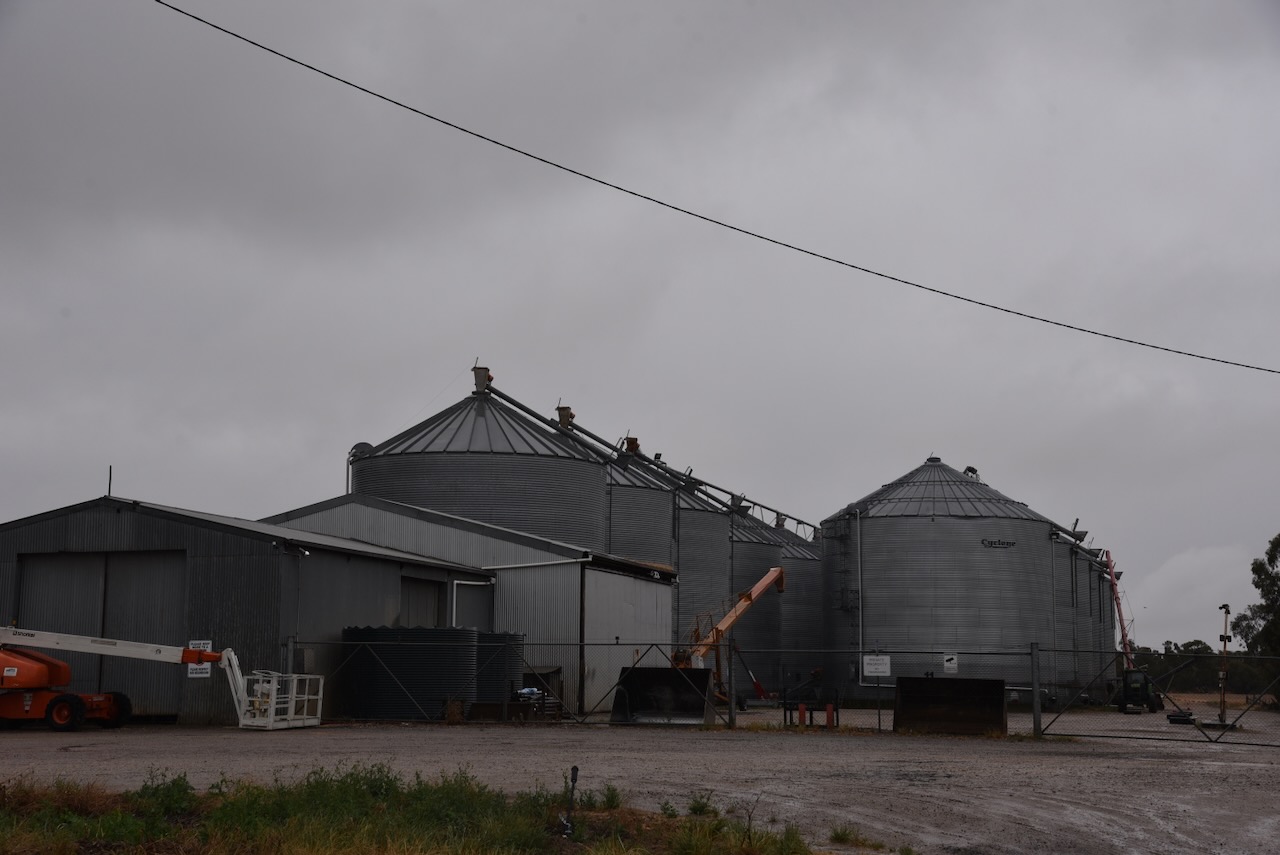
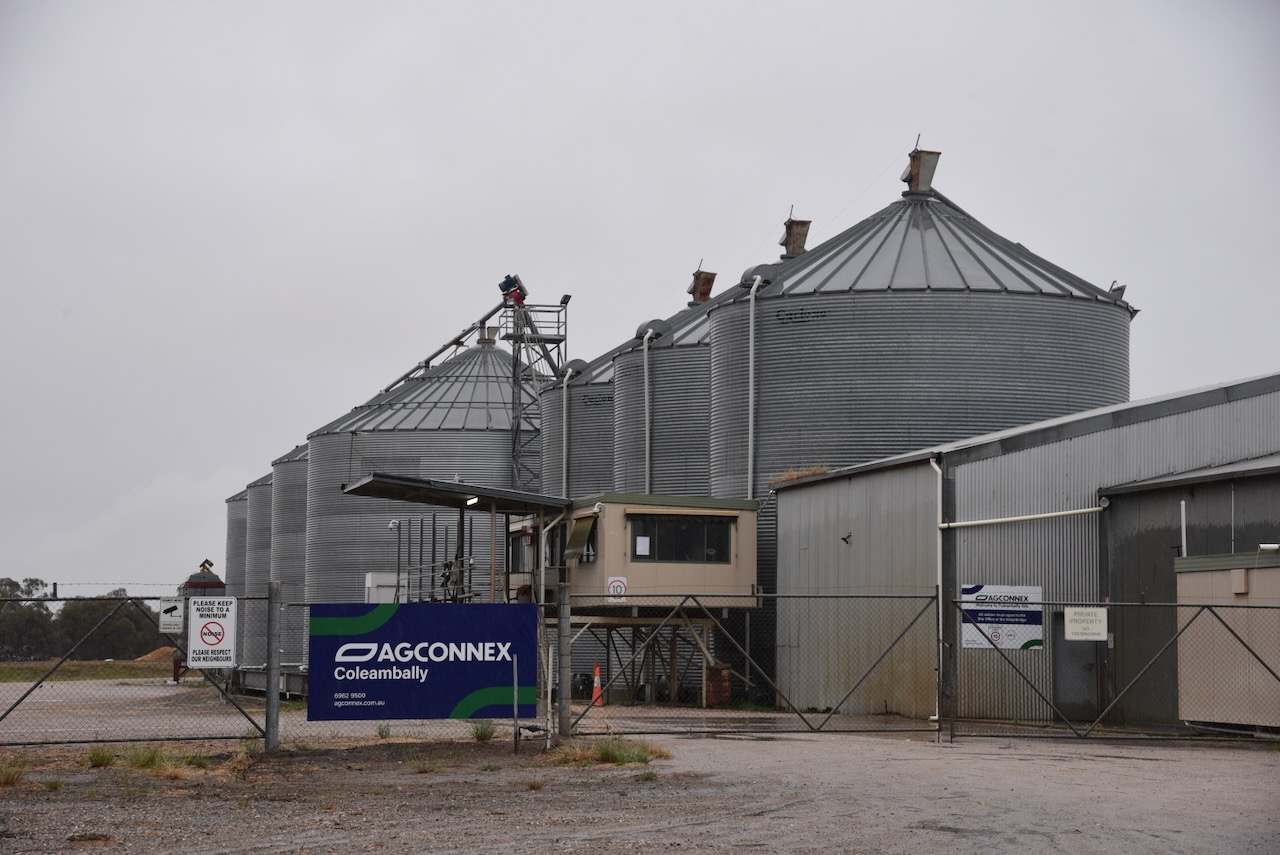
We then headed to the Hay silos to undertake an activation for the Silos On The Air (SiOTA) program.

Marija and I parked opposite the silos and operated from the 4WD, running the Icom IC-7000, 100 watts, and the Codan 9350 antenna with the 1.5 metre stainless steel whip.

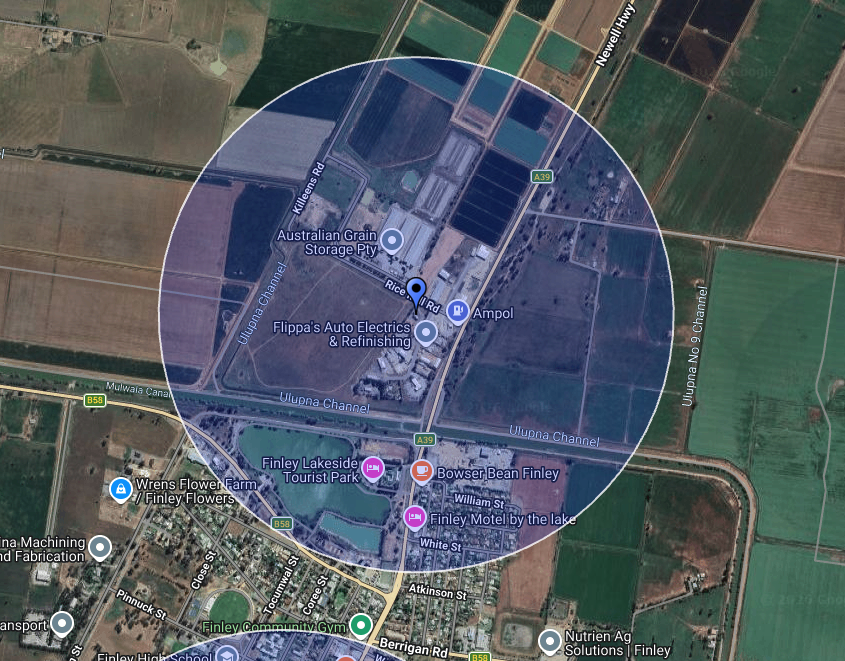
Above: Map showing the activation zone at the Hay silo. Image c/o SiOTA website.

Marija worked the following stations on 40m SSB:-

  1. VK2WB
  2. VK3PF
  3. VK2VW
  4. VK2HFI
  5. VK2AKA
  6. VK2BUG

I worked the following stations on 40m SSB:-

  1. VK2WB
  2. VK3PF
  3. VK2VW
  4. VK2HFI
  5. VK2AKA
  6. VK2BUG
  7. VK5DMO
  8. VK7PJM
  9. VK3GDX
  10. VK7AAE
  11. VK3PT
  12. VK3BCM
  13. VK4WB
  14. VK2LEE
  15. VK3TDX
  16. VK3GCD
  17. VK4IKZ

After our activation, we had dinner at the Hay Services Club. It was Halloween, and we took some photos for our 2 beautiful little grandchildren and called them on Messenger to say hi.

Following dinner, we headed back to our motel room.

References.

  1. Alan (2021). Dams and Weirs on the Murrumbidgee River. [online] ETA Unknown. Available at: https://etaunknown.com/expeditions/murrumbidgee-river/info/locks-weirs. [Accessed 13 Dec. 2025]
  2. ‌ancestry (2016). Ancestry® | Genealogy, Family Trees & Family History Records. [online] Ancestry.com.au. Available at: https://www.ancestry.com.au/. [Accessed 13 Dec. 2025].
  3. ‌Anu.edu.au. (1967). Lang, Gideon Scott (1819–1880). [online] Available at: https://adb.anu.edu.au/biography/lang-gideon-scott-2325 [Accessed 15 Dec. 2025].
  4. ‌Australiansiloarttrail.com. (2025). Hay Water Tower Art. [online] Available at: https://www.australiansiloarttrail.com/hay [Accessed 13 Dec. 2025].
  5. ‌Australian War Memorial (2017). The charge of the 4th Light Horse Brigade at Beersheba | The Australian War Memorial. [online] Awm.gov.au. Available at: https://www.awm.gov.au/articles/blog/the-charge-of-the-4th-light-horse-brigade-at-beersheba.
  6. ‌Visithay.com.au. (2025). Welcome to Hay | Visit Hay – Official Tourism Website. [online] Available at: https://www.visithay.com.au/. [Accessed 13 Dec. 2025]
  7. ‌Vwma.org.au. (2025). Available at: https://vwma.org.au/explore/memorials/2879 [Accessed 14 Dec. 2025].
  8. ‌Wikipedia Contributors (2024). Maude. Wikipedia.‌
  9. Wikipedia. (2021). Hay. [online] Available at: https://en.wikipedia.org/wiki/Hay.‌
Kalyarr National Park VKFF-1858

After leaving Balranald on Sunday, 19th October 2025, Marija and I headed north towards Penarie. We had been told about a historic cemetery at Oxley, and we were keen to pay a visit. It may sound morbid, but Marija and I enjoy wandering around old cemeteries. They tell you so much about the history of the area.

After leaving Penarie, we headed northeast on Oxley Road. This is remote countryside, which I absolutely love.

After 62 km, we reached the little town of Oxley, which is named after the Australian explorer John Oxley. He was born in 1784 in Yorkshire, England. At the age of 15, he joined the Royal Navy, and in 1802, he travelled to Australia as a master’s mate aboard the naval vessel Buffalo. He returned to England in 1807 and returned to Australia in 1807 as the Lieutenant of HMS Porpoise. Oxley went on to become the Surveyor-General. In 1817 and again in 1818, he led expeditions of the Lachlan and Macquarie Rivers. Oxley died in May 1828, at the age of 44. (Wikipedia 2018) (Wikipedia 2021)

Above: John Oxley. Image c/o Wikipedia

Before European occupation, the Oxley region was the traditional land of the Muthi Muthia Aboriginal people. In 1836, the explorer Sir Thomas Livingstone Mitchell, “Major Mitchell’, took a Muthi Muthi woman from the Oxley region called Tourandury and her 4-year-old daughter Ballandella from Oxley as guides during his expedition of the countryside. (Wikipedia 2018)

During the mid-1840s, two men called Phelps and Chadwick established a run on the lower Lachlan River called ‘Thelangerin West. By 1848, the run was purchased by Thomas D’Archy, who renamed the run ‘Oxley’. I have written more about D’Archy below. (Wikipedia 2018)

Opposite the Oxley Run was the Tupra Run held by James Tyson and his brother. By the mid-1860s, James Tyson had established a hotel at a township that was developing at a crossing point over the Lachlan River on his property. (Wikipedia 2018)

The Pastoral Times dated 12 August 1865 reported the following:

“I understand that Mr James Tyson is about to build a public-house at Oxley………he intends to put a respectable man in it so as to prevent the place from becoming the resort of rowdies and loafers, the Lachlan having of those characters more than its fair share….” (Trove 2025)

Above: part of an article from the Pastoral Times, Sat 12 Aug 1865. Image c/o Trove

On the 1st day of December 1866, The Pastoral Times newspaper reported that a petition was to be sent to the Government “to place a sum of money on the estimates to build a bridge at a point of the Lachlan River, about eight miles above the government township of Oxley, which is opposite Mr. D’Archy’s station“.  (Wikipedia 2018) (Trove 2025)

Above: part of an article from The Pastoral Times, Sat 1 Dec 1866. Image c/o Trove

On the 9th day of March 1868, a Government land sale, was held at Hay, which included lots at Oxley township. (Wikipedia 2018)

By 1881, Oxley had two hotels: the Oxley Hotel and the Royal Hotel. The Oxley Post Office opened on the 1st day of November 1884 and closed in 1969. (Wikipedia 2018)

The Lachlan River passes just to the southeast of the town of Oxley. The Lachlan rises on the western slopes of the Great Dividing Range and flows generally northwest, north, west, and southwest over a distance of about 1,440 km. (Wikipedia 2020)

The river was named in 1815 by Acting Surveyor George William Evans in honour of Lachlan Macquarie, the Governor of the colony of New South Wales. (Wikipedia 2020)

Above: Lachlan Macquarie. Image c/o Wikipedia

Not far out of Oxley, we reached Oxley Station Cemetery, on Oxley Road. The cemetery was established by the owner in 1863. (Findagrave.com 2021)

One of the remaining headstones is that of John Ramsay Magill. He was born in 1828 in Down, Northern Ireland. He emigrated to Australia, and in 1872, he married Eliza Herring. They had six children. (Findagrave.com 2021)

John died at Oxley on the 30th day of October 1891, aged 62 years. His cause of death was reported to be the result of blood poisoning caused by handling rabbit poison. (Findagrave.com 2021) (Trove 2025)

There is a crypt at the cemetery, which Marija decided not to enter as it looked unstable, and it was a hot day, and there was a concern about snakes.

Buried in the family crypt is Thomas D’Archy, and his son Thomas. Thomas D’Archy Snr was born in February 1820 in West Bavaria. He emigrated to Australia, and in 1844, he married Susan Byrne at Campbelltown, New South Wales. They had ten children. Susan was reported to be the first white woman west of the Murrumbidgee River. Thomas owned or leased several properties, including Oxley Station. (ciotach72, 2023) (Findagrave.com 2021)

Above: Thomas D’Archy Snr. Image c/o ancestry.com.au

Their second child, Thomas D’Archy Jnr, died in August 1863 at Oxley Station. He was just 15 years old and died after having a fever for 8 days. (Findagrave.com 2021)

Above: death notice of Thomas D’Archy Jnr, The Yass Courier, Wed 19 Aug 1863. Image c/o Trove

In the Australian Town and Country Journal of 21st September 1872, the special correspondent reported the following on a trip from Hay to Balranald:

“…I took a northerly course across plains, the greatest part of which were under water for eighteen miles to “Oxley”. Large quantities of wild fowl were on the plains, chiefly bustards and wild duck. It was about four o’clock in the afternoon when a narrow belt of trees on the plains indicated my approach to the “long and lazy Lachlan.” “Oxley” is the residence and station of Thomas D’Archy, Esq., J.P.  I received a most hearty welcome at the station and remained there several days.  Mr. D’Archy is the oldest resident in that part of the country; and the health of this hospitable pioneer and his kind hearted lady, were drunk in bumpers of champagne at the last Pastoral Association’s dinner held at Hay.” … “Oxley has an area of 160 square miles and has a frontage to the Lachlan of eighteen miles. Mr. D’Archy has marched with the times, and has seen almost all his early compeers come and go. The station is well improved. Sixty or seventy miles of wire fencing have been erected on the run which is also subdivided into paddocks.  Mr. D’Archy was the first to secure the waters of the Lachlan by damming.”

Thomas D’Archy Snr died on the 12th day of September 1877, at Tarcoola Station. He was 57 years old and was buried in the family crypt at Oxley Station. Following his death, Thomas’ wife Susan, continued to live on Oxley Station until her death in 1892. (Trove 2025)

Above: Death notice of Thomas D’Aarchy Snr, The Argus, Melbourne, Mon 17 Sept 1877. Image c/o Trove

We left the town of Oxley and continued southeast on Oxley Road and drove into the Kalyarr National Park.

Kalyarr National Park is about 40,899 hectares in size. The park’s western boundary is Oxley Road. The park extends south towards the Maude Road. The Lachlan River passes through the northern section of the park. (NSW NPWS 2024)

Kalyarr National Park is located on the Hay Plain, which is one of the flattest places on earth. ‘Kalyarr’ is the Aboriginal name used by Nari Nari and other local groups for the Lachlan River. (NSW National Parks, 2025) (NSW NPWS 2024)

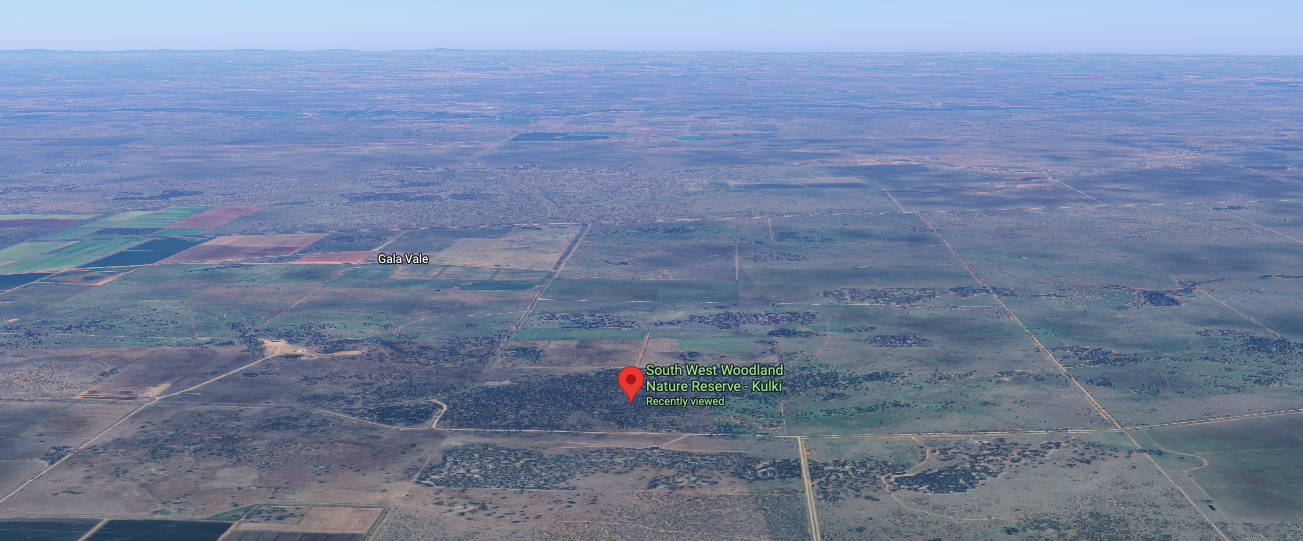
Above: An aerial view of the Kalyarr National Park. Image c/o Google Maps

There are 2 main visitor areas in the Kalyarr National Park: Norwood and Thelangerin. We entered the park via the Norwood section. (NSW National Parks, 2025)

The Darcoola pastoral run, comprising 8,172 hectares, became the Kalyarr National Park on 24th June 2005. The Norwood pastoral run, comprising 6,768 hectares, was first reserved as Kalyarr State Conservation Area on the 10th November 2006. The Mullawa pastoral run, comprising 4,028 hectares, was first preserved as Kalyarr State Conservation Area on 15th August 2008. The former McFarlands State Forest, comprising 769 hectares, was reserved as Kalyarr National Park on 1st July 2010. The former Geramy pastoral run comprising 870 hectares was reserved as Kalyarr State Conservation Area on 1st July 2010. (NSW NPWS 2024)

In 2014, the above park parcels were renamed as the Lachlan Valley parks. On the 6th day of May 2016, they were consolidated and renamed the Kalyarr National Park. In November 2016, Thelangerin, including De Ville and Corrong, comprising 20,149 hectares, were added to the National Park. (NSW NPWS 2024)

Native species found in the park include Red kangaroo, Emu, Lace Monitor, eastern blue-tongue lizard, Kookaburra, short-beaked echidna, Southern boobook, Superb fairy wren, Tawny frogmouth, Wedge-tailed eagle, White-bellied sea eagle, Common brushtail possum, and Brown-striped frog. (NSW National Parks, 2025)

We followed Norwood Main Drive to the Lake Ita picnic area.

It was a warm day, and the flies were out in force. We operated using the Yaesu FT857, 40 watts, and the 20/40/80 m linked dipole.

We found band conditions to be very poor, and unfortunately, I did not reach 44 QSos to qualify the park for the World Wide Flora Fauna (WWFF) program. I also tried FT8 but could not get it up and running on my new laptop.

Marija worked the following stations on 40m SSB:-

  1. VK5CZ
  2. VK5XE
  3. VK2MAB/p (VKFF-0598)
  4. VK3PF
  5. VK3KAI
  6. VK2IO
  7. VK2GEZ
  8. VK2VAR
  9. VK2GOM
  10. VK1AO/p (VKFF-0431)
  11. VK2MET/p (VKFF-0431)
  12. VK2VW
  13. VK2HFI
  14. VK2AKA
  15. VK2BUG
  16. VK2YK
  17. VK5GA
  18. VK2DA
  19. VK1DA
  20. VK2XGB/p (VKFF-1331)
  21. VK3PT
  22. VK2XWB/p (VKFF-0444)

I worked the following stations on 40m SSB:-

  1. VK5CZ
  2. VK5XE
  3. VK2MAB/p (VKFF-0598)
  4. VK3PF
  5. VK3KAI
  6. VK2IO
  7. VK2GEZ
  8. VK2VAR
  9. VK2GOM
  10. VK1AO/p (VKFF-0431)
  11. VK2MET/p (VKFF-0431)
  12. VK2VW
  13. VK2HFI
  14. VK2AKA
  15. VK2BUG
  16. VK2YK
  17. VK5GA
  18. VK2DA
  19. VK1DA
  20. VK1SIG/m
  21. VK3SCS/p
  22. VK2XGB/p (VKFF-1331)
  23. VK3PT
  24. VK2XWB/p (VKFF-0444)
  25. VK3DL

I worked the following station on 20m SSB:-

  1. VK4CK

References.

  1. ciotach72 (2023). 52 Ancestors …. Weeks 37 and 38. [online] Nancy’s Families. Available at: https://nancyvada.me/2023/09/16/52-ancestors-weeks-37-and-38/ [Accessed 11 Dec. 2025].
  2. ‌Findagrave.com. (2021). John Ramsay Magill (1828-1891) – Find a Grave… [online] Available at: https://www.findagrave.com/memorial/220885884/john-ramsay-magill [Accessed 10 Dec. 2025].‌
  3. NSW National Parks. (2025). Kalyarr National Park. [online] Available at: https://www.nationalparks.nsw.gov.au/visit-a-park/parks/kalyarr-national-park [Accessed 12 Dec. 2025].
  4. ‌Trove. (2025). The Riverine Grazier (Hay, NSW : 1873 – 1954) – 30 Oct 1891 – p1. [online] Available at: https://trove.nla.gov.au/newspaper/page/16233891?searchTerm=john%20ramsay%20magill [Accessed 11 Dec. 2025].‌
  5. Trove. (2025). DEATH OF MRS SUSAN DARCHY. – OXLEY, Thursday. – The Riverine Grazier (Hay, NSW : 1873 – 1954) – 19 Feb 1892. [online] Available at: https://trove.nla.gov.au/newspaper/article/140473622?searchTerm=oxley%20station%20%2B%20darchy [Accessed 11 Dec. 2025].‌
  6. Trove. (2025). Pastoral Times and Echuca and Moama Chronicle (Deniliquin, NSW : 1863 – 1866) – 12 Aug 1865 – p3. [online] Available at: https://trove.nla.gov.au/newspaper/page/30111319?searchTerm=oxley%20james%20tyson [Accessed 12 Dec. 2025].
  7. Trove. (2025). The Pastoral Times (South Deniliquin, NSW : 1866 – 1962) – 1 Dec 1866 – p3. [online] Available at: https://trove.nla.gov.au/newspaper/page/30112291?searchTerm=lachlan%20river%20bridge%20oxley [Accessed 12 Dec. 2025].
  8. ‌‌Wikipedia. (2021). John Oxley. [online] Available at: https://en.wikipedia.org/wiki/John_Oxley.
  9. ‌Wikipedia. (2018). Oxley. [online] Available at: https://en.wikipedia.org/wiki/Oxley.‌
  10. Wikipedia. (2020). Lachlan River. [online] Available at: https://en.wikipedia.org/wiki/Lachlan_River.‌
Balranald silo VK-BLD2

On Sunday, the 19th day of October 2025, Marija and I headed to the Balranald Roadhouse for breakfast. We had filled up with diesel there the day before and saw that they had a retro theme restaurant. We enjoyed a nice breakfast and coffee, and admired the retro surroundings and the truck pictures, which our little grandson Flynn would love.

On our way out, being the owner of a 1972 Valiant VH Ranger, I noticed the Valiant below on the back of a truck, no doubt headed to a collector somewhere.

The parking lot of the service station was full, indicating that the food at the roadhouse was pretty good.

We then drove a short distance and activated the Balranald silo VK-BLD2 for the SIlos On The Air (SiOTA) program.

The silos are located on Duryea Street, southeast of Balranald.

Marija and I parked adjacent to the silos and operated from the 4WD, running the Icom IC-7000, 100 watts, and the Codan 9350 antenna with the 1.5 metre stainless steel whip.

Above: the activation zone at the Balranald silo. Image c/o SiOTA website.

Sadly, we found band conditions to be extremely poor.

Marija worked the following stations on 40m SSB:-

  1. VK2IO
  2. VK3PF
  3. VK5GY

Marija worked the following station on 20m SSB:-

  1. ZL3MR (SOTA ZL3/ CB-678)

I worked the following stations on 40m SSB:-

  1. VK2IO
  2. VK3PF
  3. VK5GY

I worked the following station on 20m SSB:-

  1. ZL3MR (SOTA ZL3/ CB-678)

Marija and I then had a look around Balranald. The Welcome to Balranald sign features a Funky Frog.

Current-day Balranald lies in the traditional country of the Muthi Muthi Aboriginal people. In 1848, the Commissioner for Crown Lands for the Lower Darling District, George James MacDonald, and a police escort, arrived at the site of present-day Balranald. The site was chosen as a base. In that same year, a general store was established at Balranald, and a public-house known as the Balranald Inn was opened. (Wikipedia 2025)

The following year, in 1849, Commissioner MacDonald recommended to the Colonial Secretary that a township be established at the location. MacDonald was a Scotsman and was born at Balranald, so his birthplace was the natural choice for the name of the new settlement. (Wikipedia 2025)

Later that year, surveyor Francis MacCabe laid out large sections of land in the region of the Lower Murrumbidgee / Murray-Darling junction. In November 1849, a decision was made to lay out Balranald township. On the 4th day of April 1851, the township of Balranald was gazetted. The first land sale took place on the 14th day of January 1852. (Wikipedia 2025)

Above: NSW Govt Gazette, Fri 4 Apr 1851. Image c/o Trove

Our first stop in Balranald was the old Balranald Lock Up. This time we picked up the key and had a look inside.

We then visited the Southern Cross Museum in Balranald. The museum features a replica of the Southern Cross and the Lady Southern Cross.

The Lady Southern Cross was a Lockheed Altair monoplane owned by the Australian pioneer aviator Sir Charles Kingsford Smith. It was in this aircraft that, in October and November 1934, Smith made the first eastward trans-Pacific flight from Australia to the United States of America. (Wikipedia 2025)

The Southern Cross was a Fokker F. VIIb/3m trimotor monoplane that Smith flew in 1928 in the first ever trans- Pacific flight to Australia from the United States of America. (Wikipedia 2025)

Below is a short video on Sir Charles Kingsford Smith.

The museum also features several historic motorcycles and vehicles.

You can also view part of the old wagon used in the Burke and Wills expedition when they passed through Balranald. The wagon was sold following the party reaching the Darling River. The wagon was then transported back the way it originally travelled; however, it broke a wheel and was left to be repaired at a later time. Whilst sitting there, it was burnt in a bushfire. It sat there for over 150 years until it was loaned to the museum for display.

There is also a wooden post from the Burke & Wills camp at Maffra.

We then visited the magnificent Moreton Bay fig trees in Balranald, which are reputed to have been planted by the Burke & Wills expedition party.

Nearby is the old Harben’s general store, which was built in the 19th century.

Marija and I then drove out of Balranald on our way to the Kalyarr National Park.

References.

  1. Wikipedia Contributors (2025). Southern Cross (aircraft). Wikipedia.‌
  2. Wikipedia Contributors (2025). Balranald. Wikipedia.‌

Yanga Nature Reserve VKFF-2773

Our final activation for Saturday, 18th October 2025, was the Yanga Nature Reserve VKFF-2773.

Above: Map showing the location of the Yanga Nature Reserve. Map c/o Google Maps

As we travelled along the Sturt Highway to the park, we saw dozens of emus and several kangaroos adjacent to the highway.

The Yanga Nature Reserve is about 1,939 hectares in size and was gazetted on the 28th day of April 1972. It was previously known as the Yanga State Forest. (CAPAD 2024) (NSW National Parks, 2025)

Above: the boundaries of the Yanga Nature Reserve. Image c/o Protected Planet.

We ran our normal portable station for this activation, the Yaesu FT857, 40 watts, and the 20/40/80m linked dipole.

Marija worked the following stations on 20m SSB:-

  1. VK1AO/p (VKFF-1312)
  2. VK2MET/p (VKFF-1312)

Marija worked the following stations on 40m SSB:-

  1. VK2IO/p (VKFF-3247)
  2. VK2GEZ/p (VKFF-3247)
  3. VK3PF/p (VKFF-3878)
  4. VK3KAI/p (VKFF-3878)
  5. VK1AO/p (VKFF-1312)
  6. VK2MET/p (VKFF-1312)
  7. VK3APJ/p (VKFF-0213)
  8. VK1CHW
  9. VK2CHW
  10. VK2XGB/p (VKFF-0023)

I worked the following stations on 20m SSB:-

  1. VK3SX
  2. VK4GRZ
  3. VK4TM
  4. VK4JT
  5. 3D2MP
  6. SP8DR
  7. RV6ANI
  8. HA0IS
  9. VK1AO/p (VKFF-1312)
  10. VK2MET/p (VKFF-1312)

I worked the following stations on 40m SSB:-

  1. VK2IO/p (VKFF-3247)
  2. VK2GEZ/p (VKFF-3247)
  3. VK3PF/p (VKFF-3878)
  4. VK3KAI/p (VKFF-3878)
  5. VK1AO/p (VKFF-1312)
  6. VK2MET/p (VKFF-1312)
  7. VK3APJ/p (VKFF-0213)
  8. VK1CHW
  9. VK2CHW
  10. VK3WSG
  11. VK3BWS
  12. VK2YK
  13. VK5GA
  14. VK3GJG
  15. VK3CLD
  16. VK5QA
  17. VK2DBF
  18. VK3MCK
  19. VK3MGM
  20. VK2PKT
  21. VK2KFT
  22. VK3JV
  23. VK3MCA
  24. VK3ACZ
  25. VK2USH
  26. VK2MAB
  27. VK2VW
  28. VK2HFI
  29. VK2AKA
  30. VK2BUG
  31. VK3HJW
  32. VK1DI
  33. VK5KVA
  34. VK5WY
  35. VK2HRX
  36. VK2KAD
  37. VK3VIN
  38. VK3GP
  39. VK3YLV
  40. VK3AIW
  41. VK2LDJ
  42. VK3FS
  43. VK3ATT
  44. VK7KT
  45. VK3PI
  46. VK3KLI
  47. VK2MOE/m
  48. VK1MO/m
  49. VK2XGB/p (VKFF-0023)
  50. VK7PJM

At the conclusion of the activation, we headed north to the little town of Penarie, where we planned to have dinner at the historic Homebush Hotel. On the way, we stopped off at Burke and Will Road.

The Burke and Wills expedition of 1860, organised by the Royal Society of Victoria, passed through this location.

The Homebush Hotel is located about 27 km north of Balranald and was established in 1878.

In July 1877, Michael Dowdican made a conditional purchase of land located at the junction of the Balranald-Ivanhoe-Oxley Road. He built the Homebush Hotel. Dowdican was born in c. 1834 in Sligo, Ireland. He married Honora Meagher in 1874. Dowdican died in 1913 and is buried at the Coburg Pine Ridge cemetery, Victoria. I found a few newspaper articles indicating that Dowdican had been arrested on several occasions for drunk and disorderly offences on his licensed premises. He sounds like one interesting publican. (ancestry.com.au 2016) (Wikipedia 2024)

Above: Article from The Riverine Grazier, Hay, Fri 16 Apr 1897. Image c/o Trove

The hotel features a shearer’s mural and a novel motorcycle out front. We were really impressed with the meal and the atmosphere of the hotel.

We then headed back to Balranald and visited a few more of the Funky Frog sites.

I also had a quick look through the window at the Southern Cross museum.

We then headed back to our motel room.

References.

  1. ancestry (2016). Ancestry® | Genealogy, Family Trees & Family History Records. [online] Ancestry.com.au. Available at: https://www.ancestry.com.au/.
  2. ‌Dcceew.gov.au. (2025). Collaborative Australian Protected Areas Database 2024 – DCCEEW. [online] Available at: https://www.dcceew.gov.au/environment/land/nrs/science/capad/2024.
  3. NSW National Parks. (2025). Yanga Nature Reserve. [online] Available at: https://www.nationalparks.nsw.gov.au/visit-a-park/parks/yanga-nature-reserve [Accessed 9 Dec. 2025].‌
  4. Wikipedia Contributors (2024). Penarie, New South Wales. Wikipedia.‌

Yanga State Conservation Area VKFF-1773

After leaving the Yanga National Park on Saturday, 18th October 2025, Marija and I headed to our next activation, the Yanga State Conservation Area VKFF-1773.

Above: Map showing the location of the Yanga Stagte Conservation Area. Map c/o Google Maps

The park is located on the southern and northern sides of the Sturt Highway.

Above: the boundaries of the Yanga State Conservation Area. Image c/o Protected Planet

The park is about 34,557 hectares in size and was gazetted on the 28th day of February 2007. (CAPAD 2024) (NSW National Parks, 2025)

We had no internet coverage, so we appreciate those who took the time to spot us on parksnpeaks.

We operated from the Willows campground area and we ran the Yaesu FT847, 40 watts, and the 20/40/80m linked dipole for this activation.

Marija worked the following stations on 40m SSB:-

  1. VK2HBG/p (Silo VK-CNB2)
  2. VK2GRB/p (Silo VK-CNB2)
  3. VK2GDX/p (Silo VK-CNB2)
  4. VK2ALY/p (Silo VK-CNB2)
  5. VK3GJG
  6. VK2ZR
  7. VK3SQ
  8. VK3JT
  9. VK2BD
  10. VK3CLD
  11. VK5QA
  12. VK2DBF
  13. VK2IO/p (VKFF-0448)
  14. VK2GEZ/p (VKFF-0448)
  15. VK3PF/m (VKFF-5266)
  16. VK3KAI/m (VKFF-5266)
  17. VK6HDY/p (VKFF-1757)

I worked the following stations on 40m SSB:-

  1. VK2HBG/p (Silo VK-CNB2)
  2. VK2GRB/p (Silo VK-CNB2)
  3. VK2GDX/p (Silo VK-CNB2)
  4. VK2ALY/p (Silo VK-CNB2)
  5. VK3GJG
  6. VK2ZR
  7. VK3SQ
  8. VK3JT
  9. VK2BD
  10. VK3CLD
  11. VK5QA
  12. VK2DBF
  13. VK3DAC
  14. VK7GH
  15. VK3WSG
  16. VK2YK
  17. VK5GA
  18. VK1CHW
  19. VK2CHW
  20. VK5DW
  21. VK2IO/p (VKFF-0448)
  22. VK2GEZ/p (VKFF-0448)
  23. VK5IS
  24. VK3PF/m (VKFF-5266)
  25. VK3KAI/m (VKFF-5266)
  26. VK6HDY/p (VKFF-1757)
  27. VK3KLI
  28. VK2PKT
  29. VK2KFT
  30. VK5DMO
  31. VK2TM
  32. VK3UCD
  33. VK2DA
  34. VK1DA
  35. VK3TDX
  36. VK3CEO
  37. VK3LVH
  38. VK5AAX
  39. VK3RW
  40. VK3UP/m
  41. VK3JV
  42. VK3ZK

I worked the following stations on 20m SSB:-

  1. VK2UMZ
  2. ZL1HIM
  3. VK4EW
  4. VK6PAW/p (VKFF-0250)

References.

  1. Dcceew.gov.au. (2025). Collaborative Australian Protected Areas Database 2024 – DCCEEW. [online] Available at: https://www.dcceew.gov.au/environment/land/nrs/science/capad/2024.
  2. NSW National Parks. (2025). Yanga State Conservation Area. [online] Available at: https://www.nationalparks.nsw.gov.au/visit-a-park/parks/yanga-state-conservation-area [Accessed 9 Dec. 2025].‌

Yanga National Park VKFF-2249

It was now day two of our Canberra trip, Saturday, 18th October 2025. To start the day, Marija and I headed down to the cafe at the Balranald Discovery Centre and enjoyed a very nice breakfast, consisting of bacon & egg rolls and a pot of tea.

We then drove down to the Ben Scott Swing Bridge, which passes over the Murrumbidgee River. The bridge was completed in 2013. It forms part of the nature walk along the river. The bridge is named after Ben Scott, who was a respected local council member. (Bridgemeister.com 2022) (Destinations 2025)

The Murrumbidgee River is the second-longest river in Australia. It flows over 1,485 km through New South Wales and the Australian Capital Territory. Murrumbidgee, in the local Wiradjuri Aboriginal language, means ‘big water’. In 1823, Vice Admiral Mark Currie and Brigade-Major John Ovens reached the upper Murrumbidgee whilst exploring south of Lake George. (Wikipedia 2020)

Above: Vice Admiral Mark Currie. Image c/o WIkipedia

We then visited the Old Balranald Lock Up, but didn’t realise that we could get a key to have a look inside. We did, however, get the key the day after and explore the inside of the old lock-up.

The Balranald Gaol was established by the Governor’s Proclamation in August 1887. The building was referred to as the ‘Watch-house’ or ‘Lock-up’. It was used as a police gaol for prisoners with sentences of 14 days or less. The Balranald Gaol ceased to be a prison on 1st August 1932. (Research Data Australia, 2025)

Above: NSW Govt Gazette, Tue 30 Aug 1887. Image c/o Trove

The most infamous person held in the Balrand lock-up was Ronald James Ryan, who was the last man hanged in Australia in 1967.  (Discoverbalranald.com 2025)

Above: Article from The Canberra Times, Thu 31 Mar 1966. Image c/o Trove

Alongside the Balranald Lock-up is the Wintong School, which was built in 1866 by John ‘Wintong’ Murphy. It was originally used as the homestead on Wintong Station and later became the schoolhouse. The Governess lived in one half of the building, and the children were taught in the other half. The school was built from Murray Pine and was relocated to Heritage Park, where it was rebuilt.

There are various other things to see at the Discovery Centre, including a frog which is part of the funky frog sculptures that are located around Balranald. Why frog sculptures in Balranald? It is due to the endangered Southern Bell Frog that lives in the wetlands around Balranald.

The Malcolm Building Museum also forms part of the Discovery Centre. Unfortunately, the museum was closed during our visit. The building was built in the late 1880s and was originally owned by Malcolm and Beatty, the first Stock and Station Agents in Balranald.

And of course, there is a Bills horse trough. I have previously written about the hsitory of Bills horse troughs. That post can be found at…..

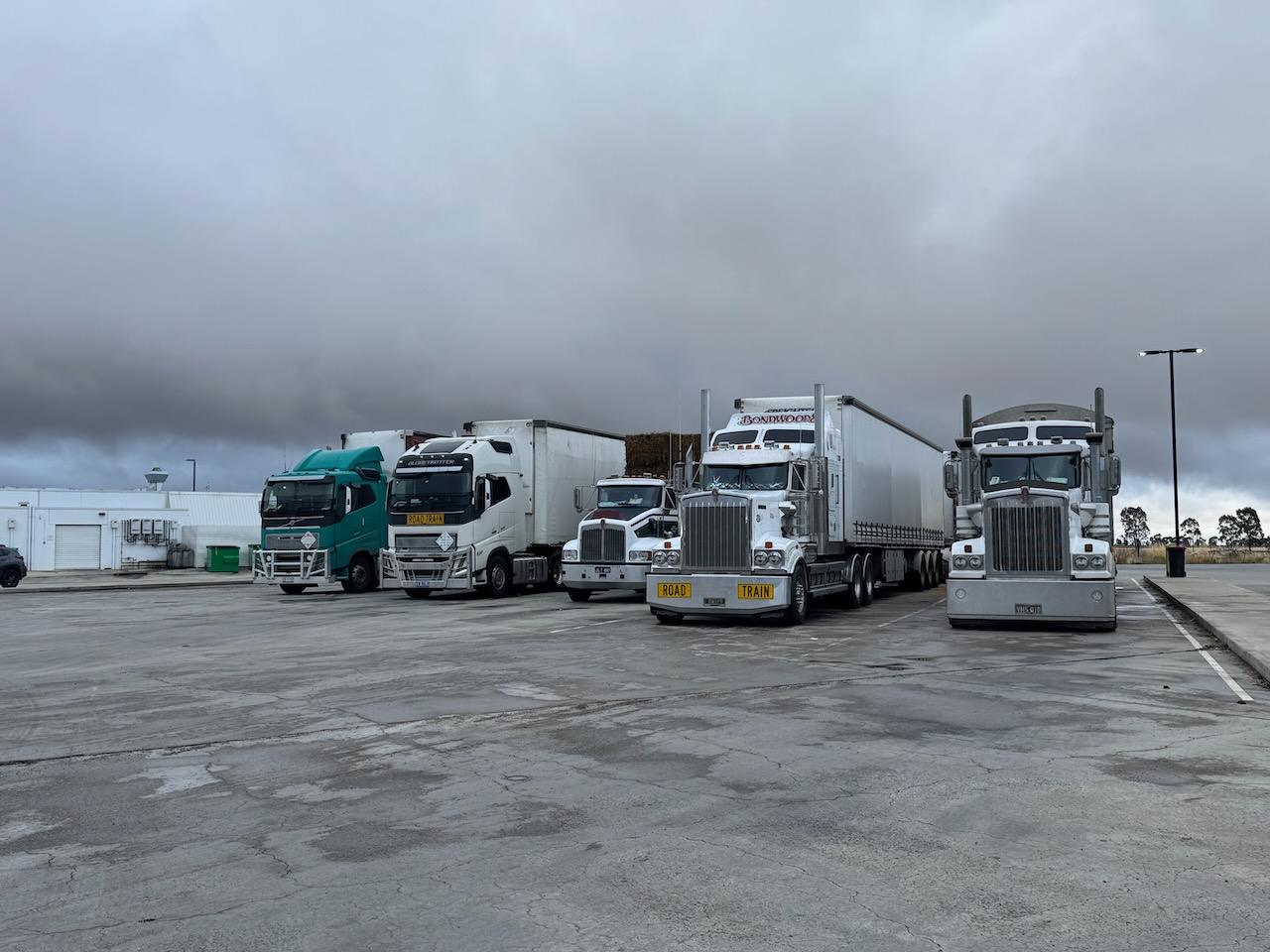
The busy Sturt Highway passes through Balranald, with a significant number of trucks travelling between Adelaide and Sydney. Our grandson Flynn would have had a blast watching all the trucks pass by.

While we were walking down the main street of Balranald, we were fortunate to see a selection of classic cars taking part in a car run.

We then drove out to the Ben Scott Memorial Bird Trail at Balranald. I was hoping to get some good bird photographs, but I was sadly disappointed with very little bird activity.

Marija and I then headed to our first activation of the day, the Yanga National Park VKFF-2249.

Above: Map showing the location of the Yanga National Park. Map c/o Google Maps.

The Yanga National Park is about 66,734 hectares (164,900 acres) in size, and has a frontage of about 160 km on the Murrumbidgee River. In July 2005, the New South Wales State Government announced that it had purchased Yanga Station for the creation of a new national park. Yanga National Park was gazetted on the 28th day of February 2007. In 2010, additions were made, including the former Kietta State Forest comprising 617 hectares, and about 140 hectares from neighbouring Kietta Station. (NSW Govt 2020) (Wikipedia 2021)

In July 2010, Yanga was renamed the Murrumbidgee Valley National Park. Yanga was reinstated in May 2016. (NSW Govt 2020) (Wikipedia 2021)

Above: the NSW Govt Gazette, Friday 6 May 2016.

The park has a section where the Yanga woolshed is located. There is also a much larger area that contains the Yanga Homestead.

Above: the boundaries of the Yanga National Park. Image c/o Google Earth

The traditional people of the Yanga region are the Muthi Muthi Aboriginal people. Their lands span the Northern Riverina and Far West regions of New South Wales. Yanga National Park contains mounds, scarred trees, historic sites, burial sites and middens. (eHive 2025) (Wikipedia 2021)

The origin of the name Yanga is not clear. It is accepted, though, that it is of Aboriginal origin. One suggestion is that Yanga means ‘mother earth’. In 1846, George Augustus Robinson, who was the Protector of Aborigines in the Port Phillip District, referred to a group of Aboriginal people he met during a trip through the area as ‘Walgerre, Tala, Yanga and other blacks present.’ The current correct spelling is Yanga; however, historical records also use Yonga, Yong_a, and Yangar. (NSW Govt 2013) (NSW Govt 2020)

The first Europeans believed to have sighted Yanga Lake were Augustus Morris, Francis Augustus Gwynne, and Frederick Walker in 1842. They were ‘Run-hunters’ and explored the Edward-Wakool region for Benjamin Boyd of the Royal Bank. Morris also acted as an agent for William Wentworth. (eHive 2025) (NSW Govt 2013)

Above: L to R: Augustus Morris, Francis Gwynne, & Frederick Walker. Images c/o Wikipedia & State Library Victoria

In March 1845, George Hobbler established Nap Nap Station and then Paika in 1846. He had moved 9,000 sheep and lambs to the Lower Murrumbidgee. Holder had been authorised by Henry Bingham, the Commissioner for Crown Lands of the Murrumbidgee Squatting District at Tumut, to occupy 30 miles of river frontage on the lower Murrumbidgee. He initially called it ‘The Lake’ and later renamed the run ‘Nap Nap’, the Aboriginal word for ‘wetland.’ Hobler is credited with being the first squatter on the Lower Murrumbidgee. (eHive 2025) (NSW Govt 2013) (NSW Govt 2020)

Augustus Morris applied for the Tala Run in April 1845, on behalf of William Charles Wentworth. (NSW Govt 2013)

William Charles Wentworth (b. 1790. d. 1872) was an Australian statesman, author, lawyer, newspaper editor and pastoralist. He established Yanga Station, which was derived from the Nap Nap, Tala and Yanga runs. Wentworth would become one of the wealthiest and most powerful figures in New South Wales. Yanga Station was the largest privately owned station in the southern hemisphere, covering 210,000 acres (85,000 ha). (NSW Govt 2013) (NSW Govt 2020) (Wikipedia 2021)

Above: William Wentworth. Image c/o Wikipedia

In 1853, Wentworth sold his Tala, Nap Nap, and Paika leases. Over the following 70 years, the property had several different owners. (NSW Govt 2013)

In 1860, the Burke and Wills expedition crossed Yanga en route from Swan Hill to Balranald. Ludwig Phillip Heinrich Becker was a German artist, explorer and naturalist. He became a member of the ill-fated Burke and Wills expedition. (NSW Govt 2013) (Wikipedia 2023)

Above: Ludwig Becker. Image c/o Wikipedia

Becker wrote:

At 8¼ a.m. we marched away and soon found ourselves in a fine forest of tall Gumtrees….Ten and a quarter miles from our last camp and in a N.E. direction from it a freshwater lake was seen which turned out to be Lake Yanke. It is in the form of the number 8 and is 8 x 4 miles long. Between the lake and the Murrumbidgee, which is 4 miles from the Yanke lake, several indentations in the country are visible, and the Murrumbidgee, then bank high had filled the same, creating creeks and lakes, which we crossed with some difficulty, the water being on some places four feet deep.” (NSW Govt 2013)

In 1875, Charles Brown Fisher (b. 1817. d. 1908) purchased Yanga Station. Fisher was an Australian pioneer pastoralist and livestock breeder. He became one of the biggest pastoralists in Australia. (Anu.edu.au 2019) (NSW Govt 2013) (Wikipedia 2025)

Above: Charles Brown Fisher. Image c/o Wikipedia.
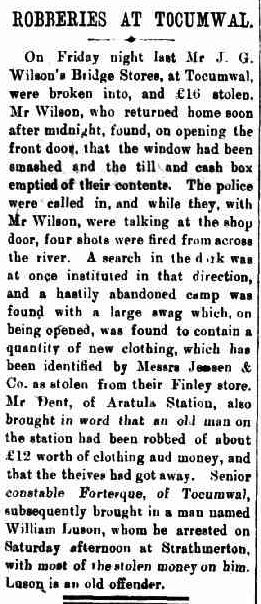
At its peak, in 1887, Yanga Station occupied 416,000 hectares and carried 151,700 sheep and over 2,000 cattle. (NSW Govt 2020)

In 1919, Arthur Sims and Arthur Cooper purchased Yanga Station, and they formed Yanga Pty Ltd. This company continued until 2005 when purchased by the New South Wales State Government. In 2005, Yanga was running 12,000 sheep and 1,400 cattle. Yanga Pty Ltd was also involved in the harvesting of river red gum. (NSW Govt 2020)

Over 300 plant species have been recorded in the Yanga National Park. This includes River red gum forest. The creation of Yanga National Park was the first large-scale protection and conservation of river red gum in New South Wales. About 46% of New South Wales river red gum has been cleared. Two endangered and two vulnerable flora species have been recorded in Yanga National Park. (NSW Govt 2020) (Wikipedia 2021)

The majority of the park is located in the Lowbidgee Floodplain. The floodplain is considered to be of national environmental significance and is one of the most significant wetland habitats for waterbirds in eastern Australia. Over 60 waterbird species have been recorded in Yanga, including 12 that are listed as vulnerable species, including the Australian Bittern, Freckled duck, and Blue-billed duck. (Wikipedia 2021)

Yanga is also frequented by several migratory bird species, including the Caspian tern, Latham’s snipe, cattle egret, and the black-tailed godwit. Yanga is part of the Japan–Australia Migratory Bird Agreement (JAMBA), the China–Australia Migratory Bird Agreement (CAMBA) and the Republic of Korea–Australia Migratory Bird Agreement (ROKAMBA). (Wikipedia 2021)

A total of 198 bird species have been recorded at Yanga. Other than the migratory and waterbirds, these include Barking Owl, Bush-stone curlew, Little eagle, Pink cockatoo, and Diamond firetail. (NSW Govt 2020)

A total of 12 amphibians have been recorded in Yanga, including the largest known populations in New South Wales of the endangered Southern bell frog. (NSW Govt 2020) (Wikipedia 2021)

A total of 25 native mammal species have been recorded in Yanga. This includes echidna, fat-tailed dunnart, common brushtail possum, red kangaroo, eastern grey kangaroo, and western grey kangaroo. A total of 21 reptile species and 9 freshwater fish species have been recorded. (NSW Govt 2020)

During our visit to the park, we encountered a very angry feral pig. And Marija almost stood on a brown snake.

A total of 21 endangered or vulnerable fauna have been recorded within Yanga National Park. The endangered species include three birds, one amphibian and one reptile. The vulnerable species include 14 birds and two mammals.

Before activating the park, Marija and I visited Yanga Homestead.

Yanga Homestead was built in 1863, followed by the surrounding station outbuildings, stables, gardeners’ shed and station store. The current homestead is the third known homestead for Yanga Station. The first was constructed at Kieeta in the 1850s, prior to being relocated to the junction of Yanga Creek and Yanka Lake in c. 1860. (NSW Govt 2020) (NSW National Parks 2025) (Wikipedia 2021)

One of the first things you will see as you enter is the old tennis court opposite the cook’s cottage. It still has an old, frayed tennis net.

To start off, we visited the old cook’s cottage adjacent to the tennis courts. It contains an interesting array of memorabilia and photographs.

We then entered the homestead, which is made of Murray pine using ‘drop log’ construction. The pine was felled on the west side of Yanga Lake. The homestead comprises two sections, the ‘main block’ and the ‘kitchen block’. (NSW Govt 2020)

The homestead is built around an existing red gum slab hut that was built for the stockmen.

Inside the ‘main block’ of the homestead, you will find all of the rooms containing period furniture. The homestead features the ‘blue room’ and the master bedroom, which is known as the ‘pink room’.

We then visited the ‘kitchen block’ and office area.

We found an old His Master’s Voice Little Nipper radio.

And I found the old station radio to contact the outside world.

Yanga National Park includes four significant lakes: Yanga Lake, Lake Tala, Piggery Lake, and Irrigation Lake. The park also has hundreds of waterways, including canals and creeks, and an extensive river red gum forest along the Murrumbidgee River. The park is located in the Lowbidgee Floodplain, which is considered to be of national environmental significance. (Wikipedia 2021)

The homestead also features a beautiful garden.

It was a warm day, and all the walking around tired me out, so I took a little siesta.

As we were leaving, we stopped to have a look at the corrugated iron canoe that was once used on Yanga Lake. These types of canoes were manufactured and used by fishermen up to the 1960s. Tin sheds were often recycled into home-made canoes and sealed with road bitumen. The particular construction of this canoe indicates that it was made in the 1930s.

Marija and I then headed out to the Yanga Woolshed, which is located about 5 km west of Yanga Homestead.

The Yanga woolshed is believed to have been built in the late 1850s. Maps that were drawn in 1851 show a woolshed on the western side of Tala Lake, which is northeast of the current woolshed. There was another at the very northern end of what is now Yanga National Park.

The current site was an outstation of W.C. Wentworth’s ‘Tala’ Run, named Mamanga. Maps from the early 1850s only show huts and a stock yard. It is believed that the woolshed was constructed in the late 1850s to take advantage of the paddle steamer transport along the Murrumbidgee River, which facilitated the transportation of wool to market.

Marija and I always love wandering through old shearing sheds. The history that they contain is quite amazing. The woolsheed is an example of a linear woolshed, which is designed for sheep to enter from one direction and the wool to leave from the other direction. The woolshed is 112 metres long, 15 metres wide, and covers are area of about 1,700 square metres. The Yanga woolshed originally accommodated 40 blade shearing stands, with sweating pens, catching pens, and a wool room. (NSW Govt 2020)

There are several interpretive signs in the Yanga shearing shed which detail the history of the shed.

And there are some information boards detailing the Lower Murrumbidgee Floodplain.

At about 9.00 a.m. on Monday, the 27th day of January 1896, a fire broke out at the Yanga woolshed, and as a result, the woolshed was totally destroyed. Local police arrested two men who were camped at the woolshed on the night before the fire. Frederick West and ‘Prophett’ Graham were remanded pending the results of a magisterial inquiry, which was held on the 30th day of January 1896. (Trove 2025)

The inquiry was conducted at Balranald before Mr. J. Tyson, Jun, Coroner, and a jury of seven. It concluded with no evidence to show how the fire originated. The jury returned an open verdict, and the two men who were arrested on suspicion were discharged. The fire occurred at a time when there were disputes between shearers and pastoralists. (eHive 2025) (Trove 2025)

Above: Article from the Evening News, Sydney, Thu 30 Jan 1896. Image c/o Trove.

The current woolshed is one of the best preserved and largest examples of woolsheds in western New South Wales. (NSW Govt 2020)

The last shearing at Yanga took place in 2005. In the shearing shed, you can view a group photograph of the last shearing.

The kitchen and dining room are also open for inspection. The old wooden tables and benches are still present, as are some old fridges. This would have been a lively place when full of shearers.

We then entered the old shearer’s quarters. These were completed in 1911. They are not exactly 5-star, but I guess they provided a roof over the heads of those working in the shearing shed. (NSW Govt 2020)

There are several other buildings on the site.

The shearing shed is located alongside the Murrumbidgee River. There is a nice decking area alongside the river where you can admire the beauty of the river and read some of the information boards about the river trade and the fish that can be found in the river.

Marija and I then headed to the Mamanga campground, where we activated the park for the World Wide Flora Fauna (WWFF) program.

We ran the Yaesu FT857, 40 watts, and the 20/40/80m linked dipole supported on the 7 metre heavy-duty squid pole.

We were in close proximity to the river, and this was a very pleasant activation with a great outlook.

Marija worked the following stations on 40m SSB:-

  1. VK2IO/p (VKFF-3257)
  2. VK2GEZ/p (VKFF-3257)
  3. VK1DI
  4. VK2YK
  5. VK5GA
  6. VK1AO/p (VKFF-0044)
  7. VK2MET/p (VKFF-0044)
  8. VK3CLD
  9. VK5QA
  10. VK2DBF
  11. VK3JV
  12. VK2HBG/p (Silo VK-TLI2)
  13. VK2GRB/p (Silo VK-TLI2)
  14. VK2GDX/p (Silo VK-TLI2)
  15. VK2ALY/p (Silo VK-TLI2)
  16. VK2PET
  17. VK2VAR
  18. VK2GOM
  19. VK3KLI/p
  20. VK3ZSC/p (VKFF-5016)
  21. VK3UCD
  22. VK3GJG
  23. VK7AAJ
  24. VK3WSG
  25. VK3APJ/p (VKFFp-0213)
  26. VK3BWS
  27. VK4DNO/p
  28. VK3ZK
  29. VK1VWL
  30. VK3ETC
  31. VK3UP/p
  32. VK3CEO
  33. VK3SQ
  34. VK3JT
  35. VK2BD
  36. VK2SBD
  37. VK3ACZ
  38. VK3PF/M
  39. VK3KAI/M
  40. VK3SPG
  41. VK5FANA
  42. VK2VH
  43. VK4AAC
  44. VK3ADX/p
  45. VK5WW
  46. VK2IO/p (VKFF-0048)

Marija worked the following stations on 20m SSB:-

  1. VK6LK/p
  2. VK6XNP
  3. VK6FA

I worked the following stations on 40m SSB:-

  1. VK2IO/p (VKFF-3257)
  2. VK2GEZ/p (VKFF-3257)
  3. VK1DI
  4. VK2YK
  5. VK5GA
  6. VK1AO/p (VKFF-0044)
  7. VK2MET/p (VKFF-0044)
  8. VK3CLD
  9. VK5QA
  10. VK2DBF
  11. VK3JV
  12. VK2HBG/p (Silo VK-TLI2)
  13. VK2GRB/p (Silo VK-TLI2)
  14. VK2GDX/p (Silo VK-TLI2)
  15. VK2ALY/p (Silo VK-TLI2)
  16. VK2PET
  17. VK2VAR
  18. VK2GOM
  19. VK3KLI/p
  20. VK3ZSC/p (VKFF-5016)
  21. VK3UCD
  22. VK3GJG
  23. VK7AAJ
  24. VK3WSG
  25. VK3APJ/p (VKFFp-0213)
  26. VK3BWS
  27. VK4DNO/p
  28. VK3ZK
  29. VK1VWL
  30. VK3ETC
  31. VK3UP/p
  32. VK3CEO
  33. VK3SQ
  34. VK3JT
  35. VK2BD
  36. VK2SBD
  37. VK3ACZ
  38. VK3PF/M
  39. VK3KAI/M
  40. VK3SPG
  41. VK5FANA
  42. VK2VH
  43. VK4AAC
  44. VK3ADX/p
  45. VK5WW
  46. VK2IO/p (VKFF-0048)

I worked the following stations on 20m SSB:-

  1. VK6LK/p
  2. VK6XNP
  3. VK6FA

References.

  1. Anu.edu.au. (2019). ADB Home – Australian Dictionary of Biography. [online] Available at: https://adb.anu.edu.au.‌ [Accessed 9 Dec. 2025]
  2. Bridgemeister.com. (2022). Bridgemeister – 2013 Ben Scott Swing (Swing) – Balranald, New South Wales, Australia. [online] Available at: https://www.bridgemeister.com/bridge.php?bid=7169 [Accessed 7 Dec. 2025].‌
  3. Destinations (2025). Ben Scott Swing Bridge Balranald New South Wales Australia – Destination’s Journey. [online] Destination’s Journey. Available at: https://www.destinationsjourney.com/ben-scott-swing-bridge-balranald-new-south-wales-australia/ [Accessed 9 Dec. 2025].
  4. ‌Discoverbalranald.com. (2025). Heritage & Culture. [online] Available at: https://discoverbalranald.com/heritage-culture [Accessed 7 Dec. 2025].
  5. eHive. (2025). eHive. [online] Available at: https://ehive.com/collections/7780/objects/1022795/yanga-woolshed-precinct [Accessed 9 Dec. 2025].
  6. ‌‌NSW Govt, 2013, Yanga Conservation Management Plan
  7. NSW Govt, 2020, Yanga National Park, Yanga State Conservation Area and Yanga Nature Reserve Plan of Management
  8. NSW National Parks. (2025). Yanga Homestead. [online] Available at: https://www.nationalparks.nsw.gov.au/things-to-do/historic-buildings-places/yanga-homestead [Accessed 8 Dec. 2025].
  9. ‌Research Data Australia. (2025). AGY-451 | Balranald Gaol. [online] Available at: https://researchdata.edu.au/agy-451-balranald-gaol/164558 [Accessed 7 Dec. 2025].
  10. ‌Trove. (2025). THE BURNING OF THE YANGA WOOLSHED. – BALRANALD, TUESDAY. – The Argus (Melbourne, Vic. : 1848 – 1957) – 29 Jan 1896. [online] Available at: https://trove.nla.gov.au/newspaper/article/8889355 [Accessed 9 Dec. 2025].
  11. ‌Trove. (2025). THE BURNING OF THE YANGA WOOLSHED. – BALRANALD, FRIDAY. – The Argus (Melbourne, Vic. : 1848 – 1957) – 1 Feb 1896. [online] Available at: https://trove.nla.gov.au/newspaper/article/8889714 [Accessed 9 Dec. 2025].
  12. Trove. (2025). A WOOLSHED DESTROYED. – BALRANALD, SATURDAY. – The Argus (Melbourne, Vic. : 1848 – 1957) – 27 Jan 1896. [online] Available at: https://trove.nla.gov.au/newspaper/article/8889138 [Accessed 9 Dec. 2025].
  13. ‌‌Trove. (2025). THE FIRE AT YANGA WOOLSHED. – The Daily Telegraph (Sydney, NSW : 1883 – 1930) – 31 Jan 1896. [online] Available at: https://trove.nla.gov.au/newspaper/article/238693463?browse=ndp%3Abrowse%2Ftitle%2FD%2Ftitle%2F1297%2F1896%2F01%2F31%2Fpage%2F25717190%2Farticle%2F238693463 [Accessed 9 Dec. 2025].
  14. ‌Wikipedia. (2020). Murrumbidgee River. [online] Available at: https://en.wikipedia.org/wiki/Murrumbidgee_River.‌ [Accessed 7 Dec. 2025].‌
  15. Wikipedia. (2021). William Wentworth. [online] Available at: https://en.wikipedia.org/wiki/William_Wentworth. [Accessed 7 Dec. 2025].‌‌
  16. Wikipedia Contributors (2025). Charles Brown Fisher. Wikipedia.‌

Piangal silo VK-PNL3

Our final activation for Friday, 17th October 2025, was the Piangil silo VK-PNL3 for the Silos On The Air (SiOTA) program. Piangil is located about 42 km north of Swan Hill and about 382 km northwest of Melbourne.

Above: Map showing the location of Piangil, Victoria. Map c/o Google Maps.

In 1836, explorer Sir Thomas Livingstone Mitchell, Major Mitchell (b. 1792. d. 1855) and his party camped overnight in the Piangil area on their expedition to explore and survey the lower part of the Darling River. (Swan Hill Council 2021) (Wikipedia 2025)

Above: Major Mitchell. Image c/o Wikipedia

Piangil is derived from an Aboriginal word describing the Murray Cod. The name of the town originated from the Piangil pastoral run, which was taken up in 1846 by William Coghill. Coghill was born c. 1784 in Scotland. He emigrated to New South Wales in 1824 aboard the Mangles, which was captained by his brother John. Both William and John Coghill were retired Master Mariners. They took up land at Piangil, Glendaruel and Glendonald near Clunes. William Coghill died in July 1860, aged 76 years. He is buried at the Old Melbourne Cemetery. (Victorianplaces.com.au, 2015) (Wikipedia 2025)

The township of Piangil was first surveyed in 1916 by J.F. Cleeland. A total of five sections were laid out adjacent to the station ground on the Swan Hill Railway. (Swan Hill Council 2021)

Above: Article from the Swan Hill Guardian, Thu 6 Apr 1916. Image c/o Trove

The Piangil Railway Station was opened in 1920 and closed in 1976. It is located on the Piangil railway line, which branches off the Deniliquin line. The line originally ran further north to Yungera; however, the line is now only open as far as Piangil. Passenger trains on this line now only run as far as Swan Hill. The last passenger train to Piangil ran in 1976. (Wikipedia 2025)

Below is an interesting video on the Piangil-Yungera railway line.

During the 1920s, the population of Piangil reached over 300 people. In 1923, the Piangil School No. 4164 was opened. (Swan Hill Council 2021) (Victorianplaces.com.au, 2015)

Above: school children at the Piangil State School No. 4164. Image c/o Weekly Times Melbourne, Sat 27 Aug 1927. Image c/o Trove

In 1926, a devastating fire destroyed the store and dwelling of Mr B.C. Bliss in Piangil. The following year, the Piangil Fire Brigade was initiated by local residents. (Swan Hill Council 2021)

Above: Article from the Ouyen Mail, Wed 3 Feb 1926. Image c/o Trove

The Piangil silos are located alongside the railway line between Station Street and Hayward Road, south of the Mallee Highway. They are operated by GrainCorp.

In April 1943, it was announced that 11 silos would be constructed in the northern Victoria region. This included Piangil. (Trove 2025)

Above: Article from the Shepparton Advertiser, Thu 22 Apr 1943. Image c/o Trove

Marija VK5MAZ and I parked on Hayward Road and operated from the 4WD, running the Icom IC-7000, 100 watts, and the Codan 9350 antenna with the 1.5 metre stainless steel whip.

Above: the activation zone at the Piangil silo. Image c/o SiOTA website

Marija worked the following stations on 40m SSB:-

  1. VK5HS
  2. VK2IO/M
  3. VK3WSG
  4. VK3ACZ

I worked the following stations on 40m SSB:-

  1. VK5HS
  2. VK2IO/M
  3. VK3WSG
  4. VK3ACZ
  5. VK3GJG
  6. VK5WU
  7. VK5IP
  8. VK1AO
  9. VK2MET
  10. VK3SQ
  11. VK3JT
  12. VK2BD
  13. VK1CHW

After completing our activation at the Piangil silo, Marija and I continued our journey to Balranald, where we had booked in to stay for 3 nights. Our next stop after Piangil was just down the road at the beautiful little town of Tooleybuc.

During the 1840s, Tooleybuc was on Puon Buon run, which was owned by Ben Boyd. By the 1850s, the run was owned by William Degraves and then Christopher Bagot. By the 1860s, a total of 32,000 sheep were on the run. (Nsw.gov.au 2025)

During the late 1800s, river steamers operating along the Murray River were crucial in the wool trade. A punt was in operation by the 1870s. In 1925, following pressure from fruit growers, the Tooleybuc lift span bridge was constructed by the Department of Public Works. The bridge was designed by Percy Allan. This was his final lift span bridge. The bridge is recognised as being of State significance. It is the last of the timber truss bridges with lift span that were built over the Murray River. (Nsw.gov.au 2025)

We took the time to stop for a few minutes and admire the mighty Murray River. Interestingly, the river is known as the Murray River in South Australia.

A building of note in Tooleybuc is the bridge keeper’s cottage that was built in 1924 and was used by the bridge keeper and his family up until 1994. (Service 2023)

We continued on to Kyalite, where we planned on stopping off for dinner. I had often read about the historic pub at Kyalite, so this was the perfect opportunity to call in for a meal and some refreshments.

Kyalite is located on the Wakool River in the Riverina district of New South Wales. Kyalite was originally known as Wakool Crossing and was founded by Henry Talbett. In about 1848, he established a punt service across the Wakool River. Talbett’s family then followed Henry to Australia from Ireland. This included Talbett’s parents and siblings. His brother John travelled to Wakool and assisted Henry in building an inn and a general store on land that Henry had purchased near his punt. (Wikipedia 2024)

The Wakool Crossing Post Office was opened on the 1st day of June 1911. In 1927, it was renamed Kyalite. (Wikipedia 2024)

Sadly, Kyalite saw the murder of a police officer in July 1979. Detective Senior Constable Robert John ‘Rocky’ Lane of the Victoria Police was conducting a search of a bus occupied by 18-year-old Daniel Bernard Chapman. During the search, Lane was shot in the head by Chapman with a rifle that he had hidden. As Lane lay on the floor of the caravan, Chapman shot him again in the head. Lane’s body was then dragged to a nearby pit and discarded. Chapman decamped in the police vehicle, which he later dumped in the Edward River. A massive manhunt was initiated by Victoria and New South Wales Police. Seven days later, Chapman was apprehended. He was sentenced to life in prison, but was released just 13 years later.

Above: Article from The Canberra Times, Wed 2 Jul 1980. Image c/o Trove

Detective Lane was just 32 years old and was a talented football player, having played for the Carlton Football Club. He was married with two children. (Wikipedia 2024)

Above: Detective Senior Constable Robert Lane. Image c/o Victoria Police Blue Ribbon Foundation Facebook page.

Before going to the hotel, we had a look at the Kyalite information panels opposite the hotel.

The Kyalite Hotel has a rich history. As mentioned above, Henry and John Talbett constructed the Wakool Inn in 1854. On the 13th day of September 1860, explorers Robert O’Hara Burke and William John Wills arrived at the Wakool Crossing during their expedition to the Gulf of Carpentaria. They dined at Talbett’s hotel that evening. The following day, they crossed the Wakool River on Talbett’s punt and paid £9.6.0 “for portage, provisions &c.”. (Wikipedia 2024)

Above: Robert O’Hara Burke (left) and William John Wills (right). Images c/o Wikipedia

There is a monument opposite the hotel to commemorate the 150th anniversary of the crossing of the Wakool River by Burke and Wills.

The hotel was sold to Thomas Spinks in 1882. He held the licence until his death in January 1890. The next recorded licensee was John James. He was a co-executor of Thomas’s will and the father-in-law of Thomas’s daughter, Hannah. The hotel was destroyed in a fire in 1888 and was rebuilt in 1890. From 1891 to 1893, the hotel was run by John Spinks, who was the only son of Thomas. (Wikipedia 2024)

Marija and I enjoyed a magnificent meal.

We left Kyalite and headed off to Balranald, where we booked into our motel room.

It was the end of a great day, with four VKFF parks and four silos activated. And lots of sightseeing.

References.

  1. Nsw.gov.au. (2025). HMS – ViewItem. [online] Available at: https://www.hms.heritage.nsw.gov.au/App/Item/ViewItem?itemId=5051386 [Accessed 5 Dec. 2025].
  2. Service, C. (2023). Tooleybuc River Walk. [online] NSW Government. Available at: https://www.nsw.gov.au/visiting-and-exploring-nsw/locations-and-attractions/tooleybuc-river-walk [Accessed 5 Dec. 2025].
  3. ‌‌Swan Hill Rural City Council, 2021, Piangil Community Plan 2021-2025
  4. Trove. (2025). BULK WHEAT TRAFFIC – Shepparton Advertiser (Vic. : 1887 – 1953) – 22 Apr 1943. [online] Available at: https://trove.nla.gov.au/newspaper/article/175183752?searchTerm=piangil%20silo [Accessed 5 Dec. 2025].
  5. ‌Victorianplaces.com.au. (2015). Piangil | Victorian Places. [online] Available at: https://www.victorianplaces.com.au/piangil [Accessed 4 Dec. 2025].‌
  6. Wikipedia Contributors (2020). Thomas Mitchell (explorer). [online] Wikipedia. Available at: https://en.wikipedia.org/wiki/Thomas_Mitchell_(explorer).
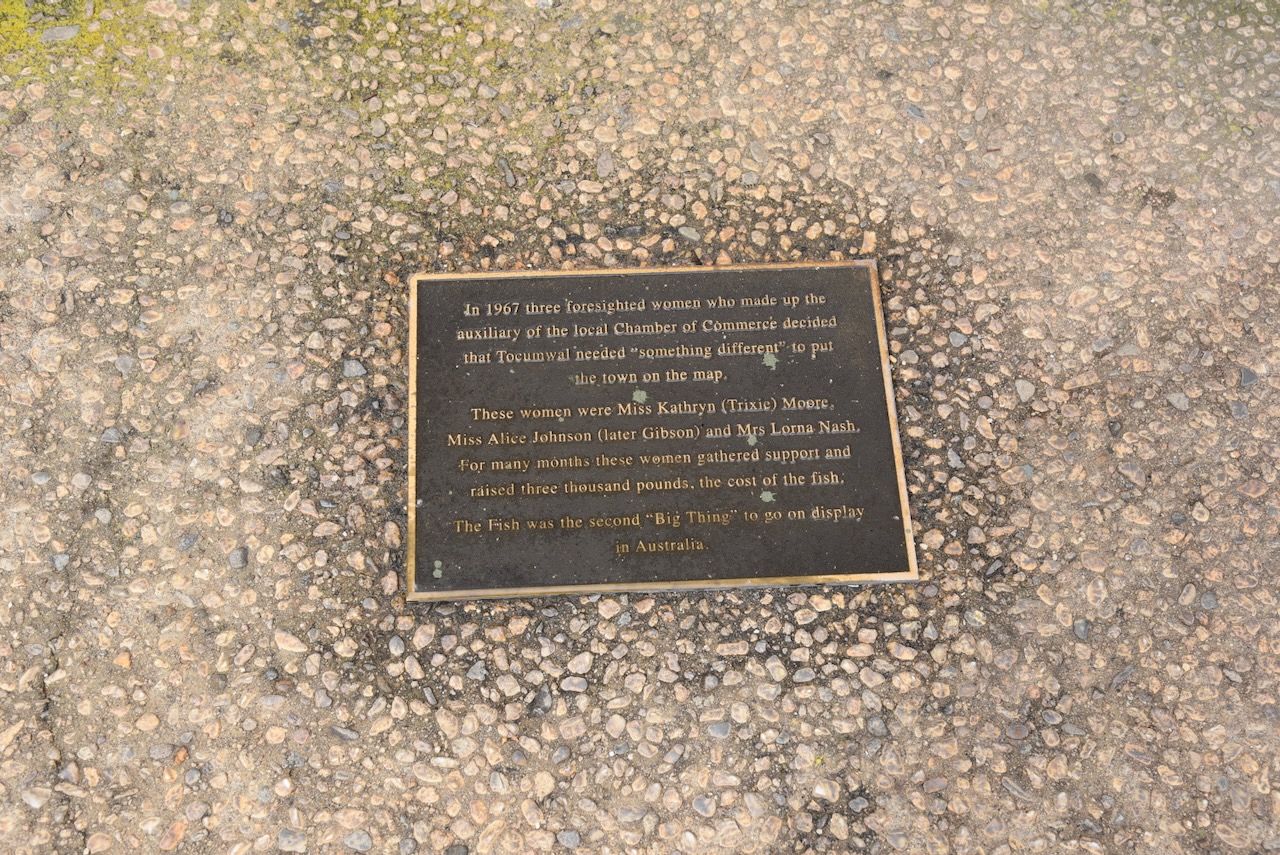
  7. ‌Wikipedia Contributors (2025). William Coghill. Wikipedia.‌
  8. Wikipedia Contributors (2024). Kyalite. Wikipedia.‌
  9. Wikipedia Contributors (2024). Bob Lane (Australian footballer). Wikipedia.‌
  10. Wikipedia Contributors (2025). Piangil railway line. Wikipedia.‌

Prooinga School Bushland Reserve VKFF-5747

Our next activation for Friday, 17th October 2025, was the Prooinga School Bushland Reserve VKFF-5747. The reserve is located about 16 km east of Manangatang, and about 405 km northwest of the city of Melbourne.

Above: Map showing the location of the Prooinga School Bushland Reserve. Map c/o Google Maps

This was the first time the park had been activated for the World Wide Flora Fauna (WWFF) program.

The reserve is located on the southern side of the Mallee Highway, about halfway between Managatang and Piangill.

The reserve takes its name from the Prooinga State School Number 3935, which was opened on the 23rd day of February 1917 and closed in 1946.

Discussions commenced in early 1915 regarding the building of a school at Prooinga. An article in the Swan Hill Guardian in April 1915 reported that there were 30 children in the district and that the ‘children must be educated.’ (Trove 2025)
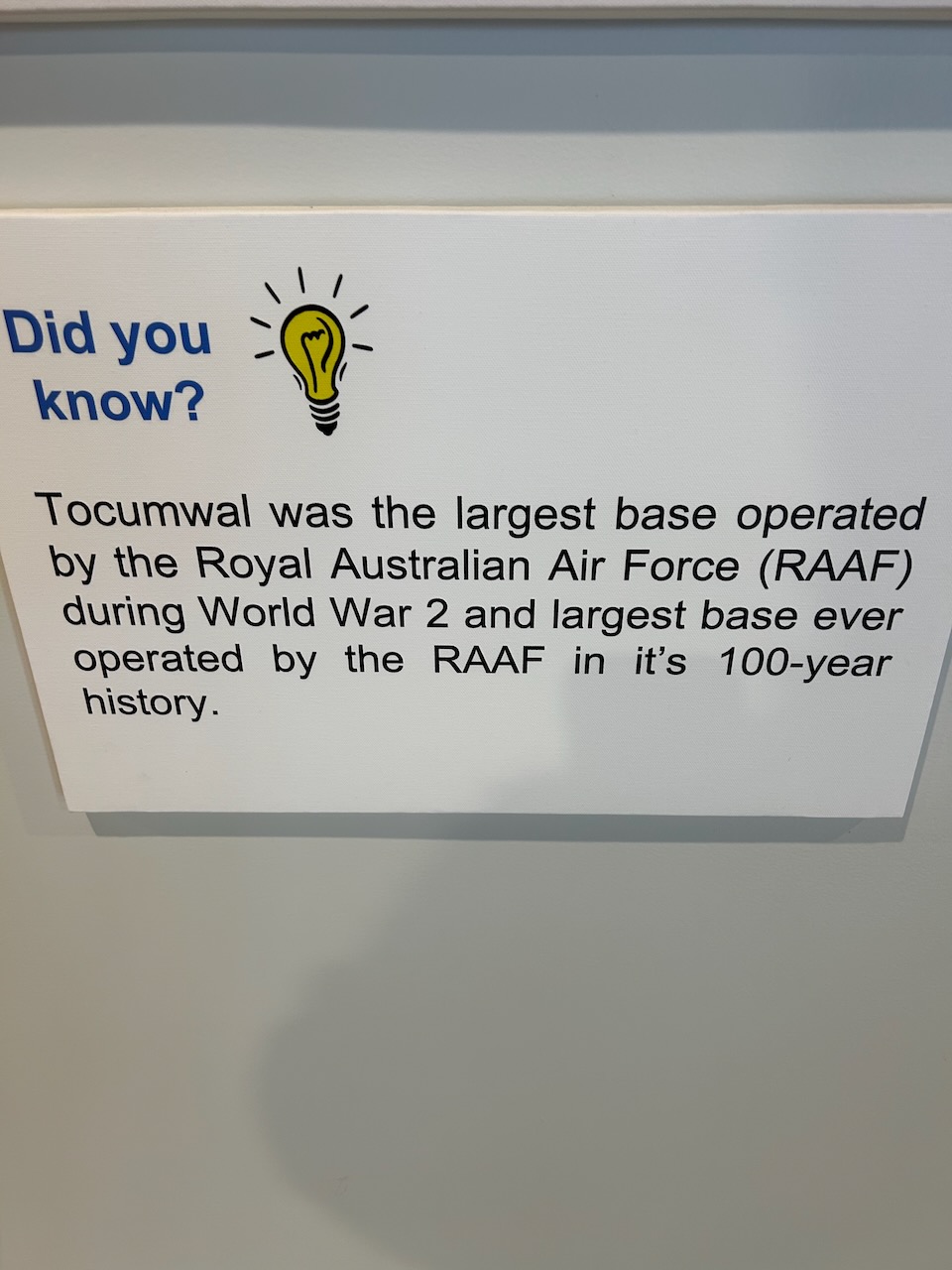
Above: Article from the Swan Hill Guardian, Mon 12 Apr 1915. Image c/o Trove.
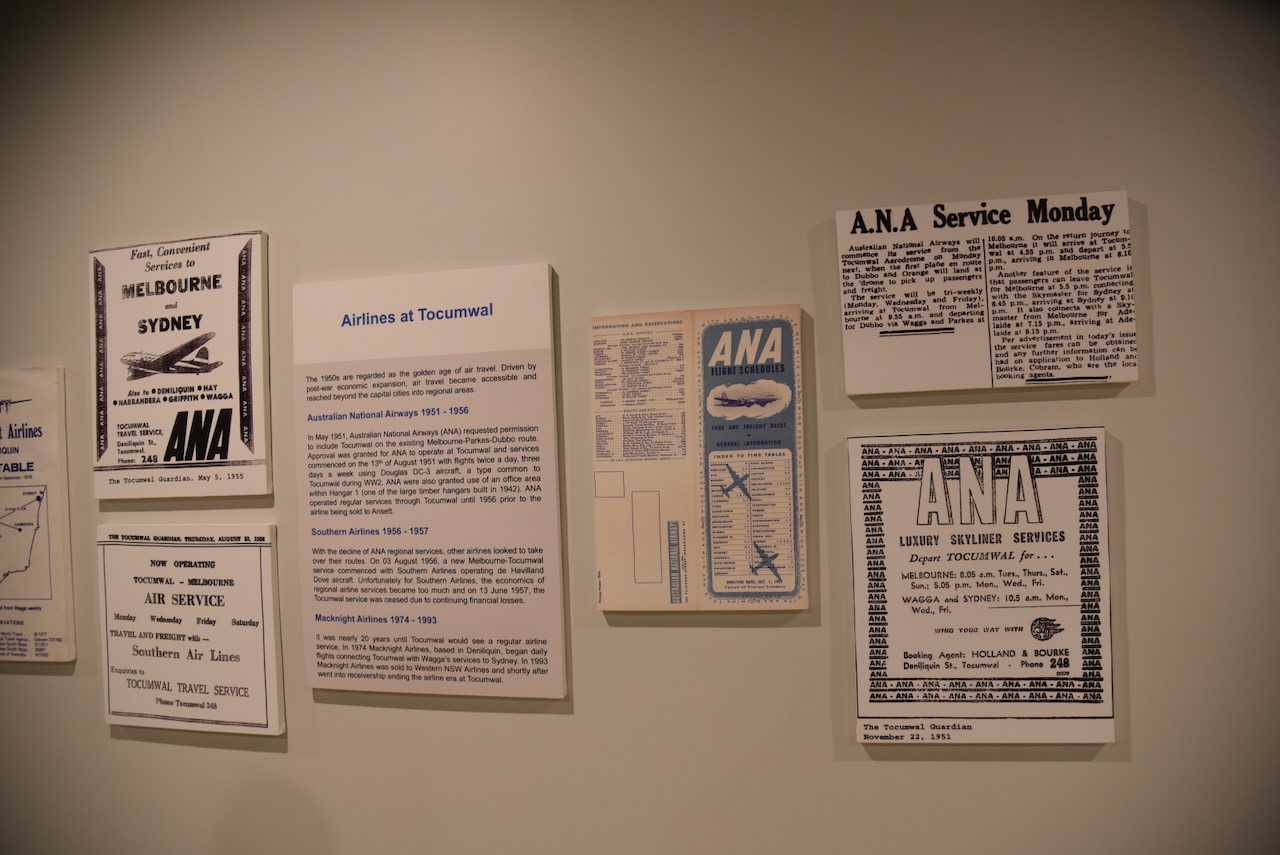
The photo below was published in the Weekly Times, Melbourne, in December 1926. It features staff and students at the Prooinga School.

Above:- Staff & students at the Prooinga State School, Weekly Times Melbourne, Sat 25 Dec 1926. Image c/o Trove.

The school served several purposes other than to educate the youngsters in the district. Public meetings were held, and church services were also held in the school building.

Above:- Church service at the Prooinga State School, Weekly Times Melbourne, Sat 25 Dec 1926. Image c/o Trove.

Prooinga is an Aboriginal word meaning ‘to cut yourself.’ The reserve is about 21 hectares in size and was established on the 1st day of May 1979. ((Blake 1977) CAPAD 2024)

Marija and I operated with the Yaesu FT857, 40 watts, and the 20/40/80 m linked dipole.

Marija worked the following stations on 40m SSB:-

  1. VK2YK
  2. VK5GA
  3. VK7PJM
  4. VK3AMO
  5. VK5HS
  6. VK3PF
  7. VK3KAI
  8. VK3WSG
  9. VK5FANA
  10. VK3SPG
  11. VK2PKT
  12. VK2KFT
  13. VK5FR/P (WWFF VKFF-6415)

I worked the following stations on 40m SSB:-

  1. VK2YK
  2. VK5GA
  3. VK7PJM
  4. VK3AMO
  5. VK5HS
  6. VK3PF
  7. VK3KAI
  8. VK3WSG
  9. VK5FANA
  10. VK3SPG
  11. VK2PKT
  12. VK2KFT
  13. VK2VAR
  14. VK2GOM
  15. VK3APJ
  16. VK3GJG
  17. VK1DI
  18. VK3NCC
  19. VK2MOE
  20. VK1MO
  21. VK5FR/P (WWFF VKFF-6415)
  22. VK1CHW
  23. VK2CHW
  24. VK2DA
  25. VK1DA
  26. VK5LA
  27. VK5KAW
  28. VK2YAK
  29. VK4YAK
  30. VK2VW
  31. VK2HFI
  32. VK2AKA
  33. VK2BUG
  34. VK2IO/M
  35. VK2GEZ/M
  36. VK3ALF
  37. VK5FBIC
  38. VK7DW
  39. VK5AYL
  40. VK5CZ
  41. VK5XE
  42. VK3AEK
  43. VK3MGM
  44. VK3CJN
  45. VK3QHU
  46. VK3WAR
  47. VK3EJ

References.

  1. Blake, L, 1977, Place Names of Victoria
  2. Dcceew.gov.au. (2025). Collaborative Australian Protected Areas Database 2024 – DCCEEW. [online] Available at: https://www.dcceew.gov.au/environment/land/nrs/science/capad/2024.
  3. Trove. (2025). Swan Hill Guardian and Lake Boga Advocate (Vic. : 1914 – 1918) – 12 Apr 1915 – p3. [online] Available at: https://trove.nla.gov.au/newspaper/page/8476872?searchTerm=prooinga%20school [Accessed 4 Dec. 2025].‌