Christmas Rocks Conservation Park VKFF-1020 and 5CP-266

After leaving Kelvin Powrie Conservation Park, I continued south east along the Dukes Highway until I reached the town of Keith where I turned off onto the Riddoch Highway and commenced to travel south towards my next planned park activation, the Christmas Rocks Conservation Park VKFF-1020 and 5CP-266.

Although this park has been activated previously for the VK5 National and Conservation Parks Award, this was to be the very first activation for the World Wide Flora Fauna (WWFF) program.

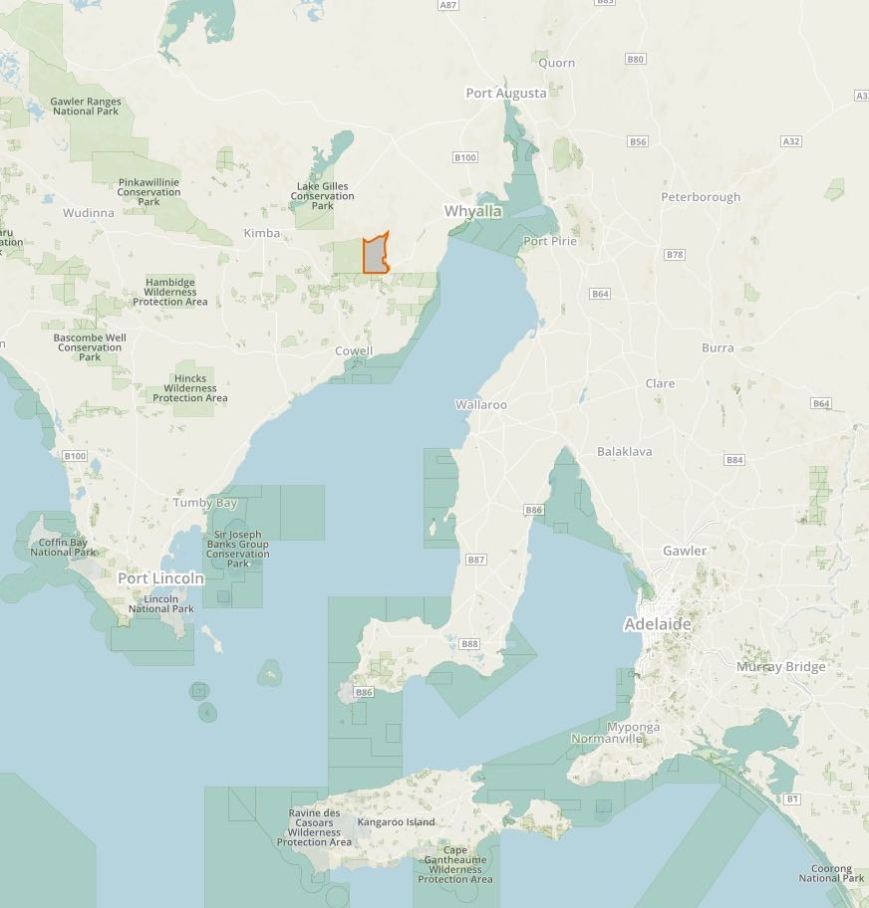
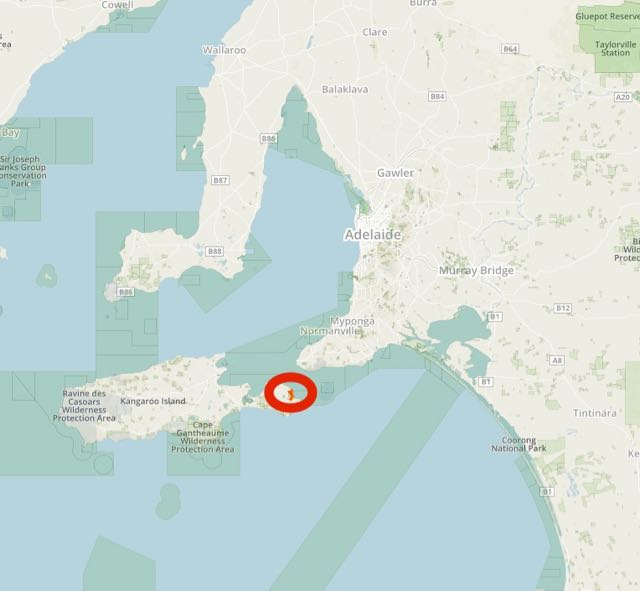
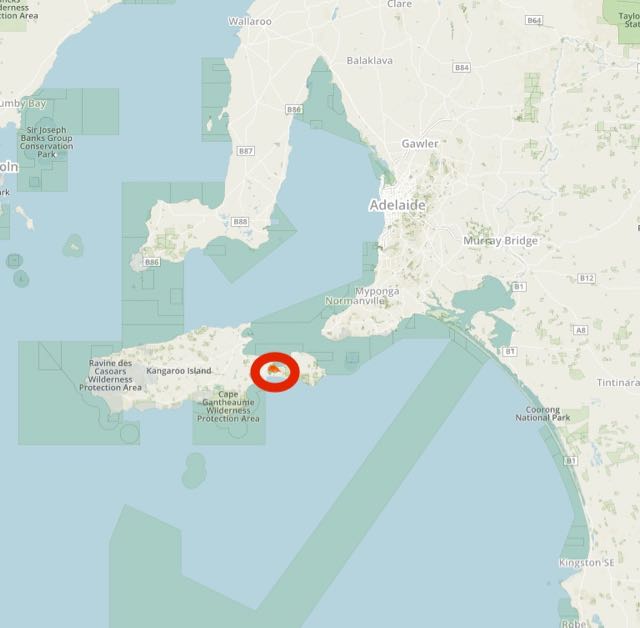
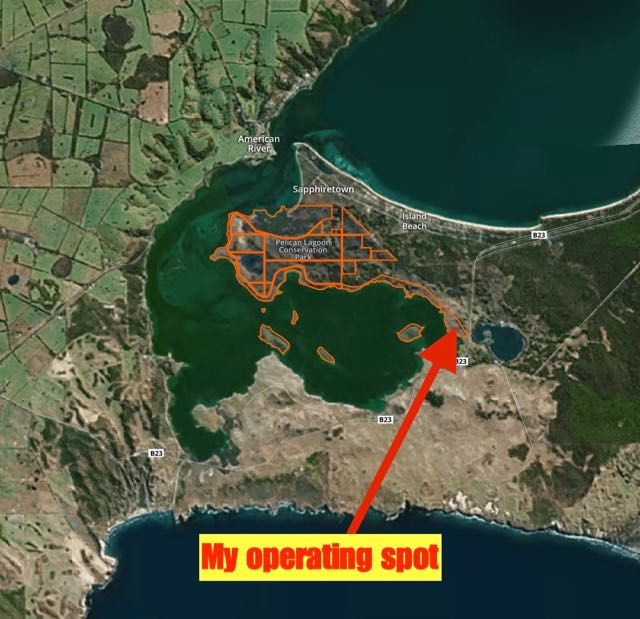
Screenshot 2016-06-09 15.01.02

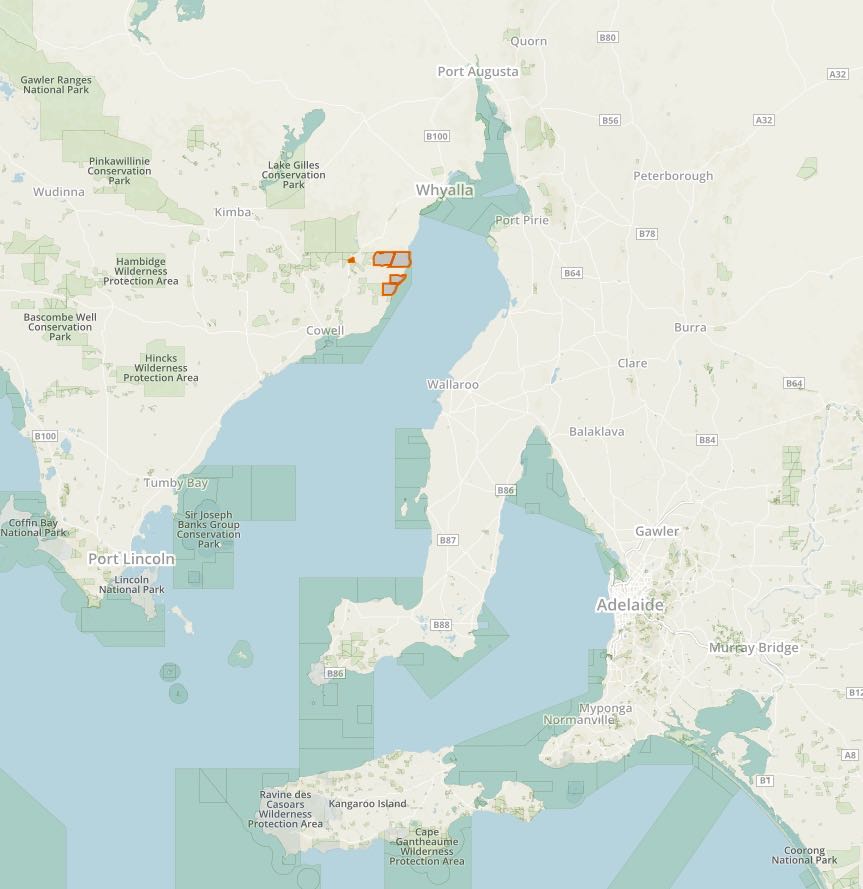
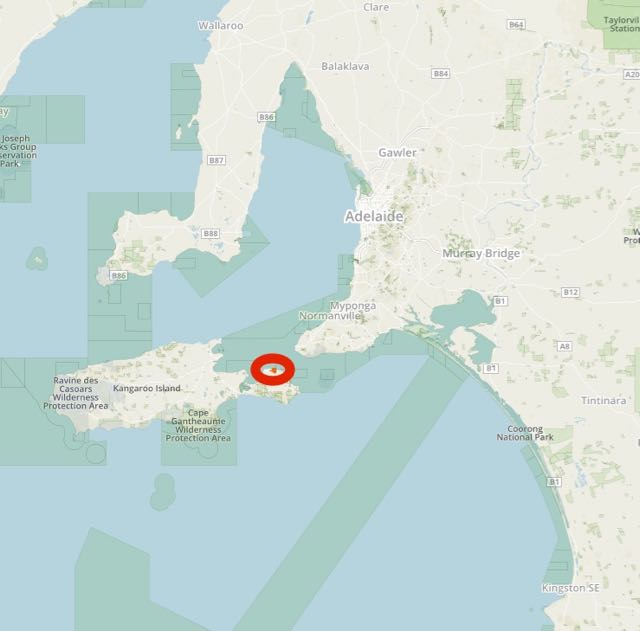
Above:- Map showing the location of the Christmas Rocks Conservation Park.  Map courtesy of Location SA Map Viewer.

On the way to the park I spoke with Paul VK3SS and Tom VK5NFT on 40m.  Paul was thumping in, and Tom was initially a good 5/7 and then completely faded away on me.

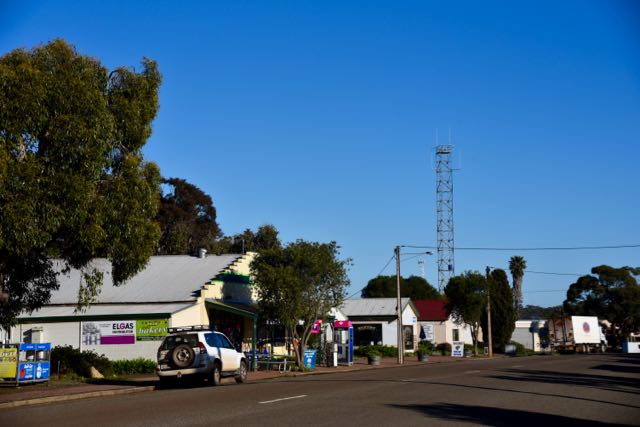
The Christmas Rocks Conservation Park is just slightly north of the tiny town of Willalooka.  Sadly, there is no sign to indicate that there is a Conservation Park.  There is however a brown tourist sign indicating that in 400 metres ahead there is a photo opportunity.  If you’re travelling south and you’ve reached Willalooka, you have gone too far.  Willalooka itself is just a tiny place containing a general store & service station, tavern, community hall and a Country Fire Service (CFS) station.

The park was proclaimed in 2014 and consists of a small square shaped section of native scrub and a series of granite rock outcrops.  These were once part of the archipelago of granite rocks in the shallow sea that covered the Limestone Coast some 25 million years ago.

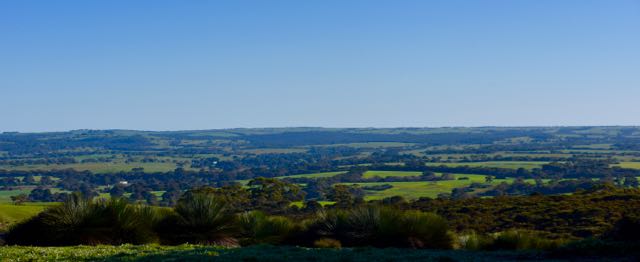
There is a short walk up to the top of the granite outcrop and this affords you with some very nice views of the surrounding countryside.  If you’re lucky you may also spot a wallaby.

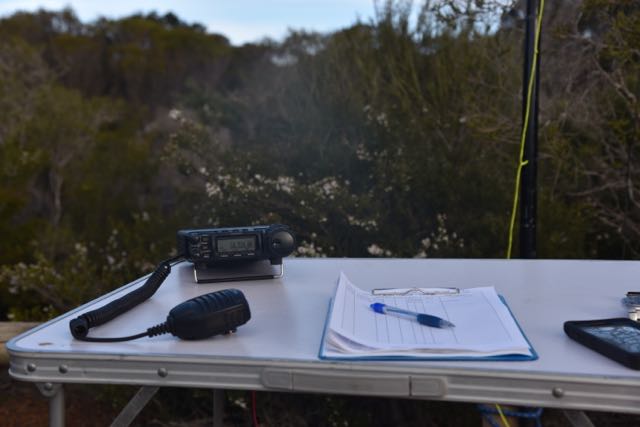
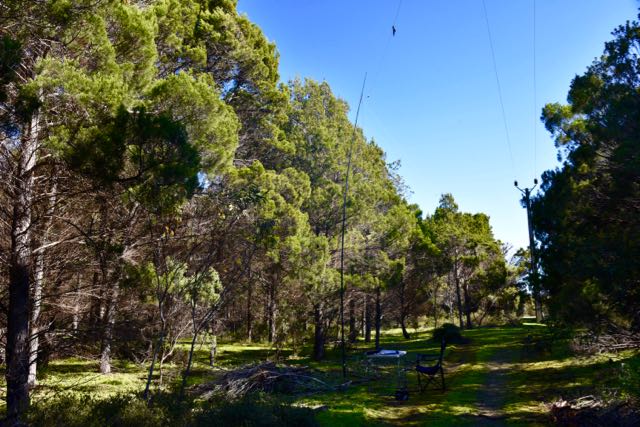
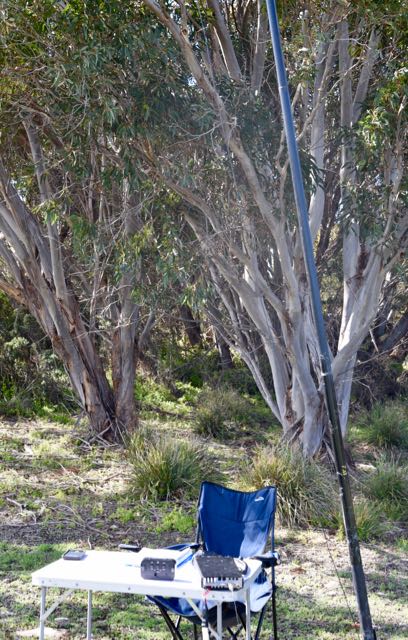
I parked the vehicle in the carpark and walked a short distance into the scrub and set up my station, comprising the Yaesu FT-857d (set at 30 watts output) and the 40m/20m linked dipole, on the 7 m squid pole.  I called CQ on 7.144 and this was answered by Adrian VK5FANA on the Yorke Peninsula (5/9 both ways), followed by Les VK5KLV in Port Augusta (5/9 both ways), and then Tom in Millicent.  Our signal reports though were definitely not 5/9 both ways.  In fact it was 4/1 both ways, as Tom’s QTH is about 150 km south of the park, and it was clear that close in propagation was not working well.

A mini pile up ensued with callers from VK1, VK2, VK3, VK5, VK6, and VK7.  I was very surprised to hear Col VK5HCF in Mount Gambier, about 180 km from the park.  Col was 5/9 and gave me a 5/5.  This QSO was just 10 minutes after my contact with Tom, and the band conditions had clearly changed for the better for the close in contacts.

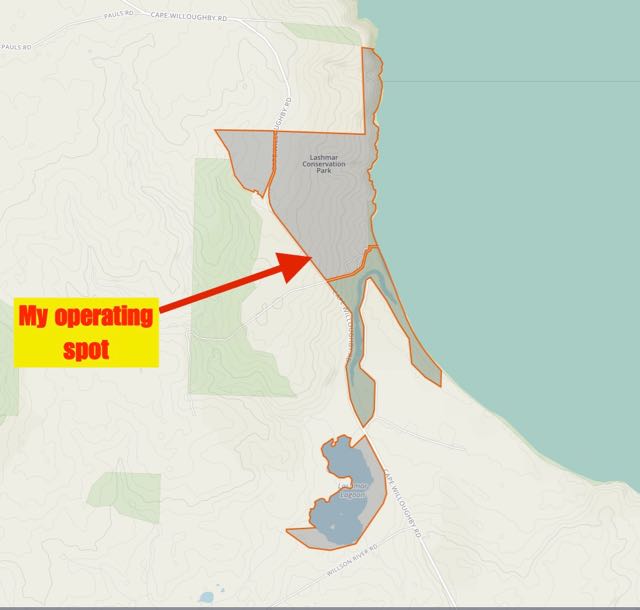
Screenshot 2016-06-09 15.01.36

Above:- Aerial shot showing my operating spot in the park.  Image courtesy of Location SA Map Viewer.

Eighteen contacts into the activation, I had my first Park to Park contact in the log for the activation.  It was with Gerard VK2IO who was activating SOTA peak Brumlow Tops VK2/ MN-120 in the Barrington Tops National ParkVKFF-0017.  Gerard had a good 5/7 signal and advised that it had been an 8km walk in to his 10 point summit.  A dozen or so QSOs later I was called by Greg VK4VXX who was portable in the Currawinya National Park VKFF-0127.  I don’t believe that Greg is a dedicated park activator, so I will have to contact Greg to explain the WWFF program to him, and seek his log.  This was followed by a call from Mitch Vk3XDM who was activating SOTA peak Mount Bolton VK3/ VC-023 (5/2 sent and 5/3 received).  Half a dozen QSOs later I was called by Phil VK2JDL who was portable on SOTA peak Mount Elliot VK2/ HU-093 (5/7 sent and 5/8 received).  And shortly afterwards I made another SOTA contact, this time with Andrew VK1MBE who was portable on Mount Stromlo VK1/ AC-043 (5/7 sent and 5/9 received).

IMG_2461

It was also pleasing to get Mike VK6MB in the log again on 40m with such a good signal late in the morning.  We exchanged 5/7 signal reports at 11.30 a.m. SA local time which is very good on 40m.  Some of the mobile stations that I worked also had excellent signals.  That included Jonathan VK6JON/7 mobile near Deloraine in Tasmania, Mark VK3FOTO/m and Wayne VK2PDW.

I worked a total of 45 stations on 40m and then decided it was time to head to 20m.  I commenced calling CQ on 14.310 and this was answered by John ZL1BYZ in Pukekohe, south of Auckland on the North Island of New Zealand (5/8 sent and 5/7 received).  Much to my surprise this was followed by a contact with Albert S58AL in Slovenia (5/5 sent and 5/5 received).  It was only 12.19 p.m. local time (0249 UTC) and this was very very early for long path Europe to be coming through.  I then worked into VK4 and VK6, and my last contact for the activation was with Dima UA9LT in Western Siberia.

The weather was starting to move in and I had 1 more park to activate and still a few hundred km before I reached Mount Gambier, so I packed up with a total of 52 contacts in the log.

Thanks to Peter VK3PF, Adrian VK5FANA, & Brett VK3FLCS, and for spotting me on the DX Cluster.

The following stations were worked on 40m SSB:-

  1. VK5FANA
  2. VK5KLV
  3. VK5NFT
  4. VK2HHA
  5. VK5PL
  6. VK5HS/m
  7. VK3SQ
  8. VK3PMG
  9. VK3GGG
  10. VK2KYO
  11. VK4AAC/3
  12. VK1AT
  13. VK3MCK
  14. VK3DAC
  15. VK6JON mobile 7
  16. VK5HCF
  17. VK3DRM mobile
  18. VK2IO/p (SOTA VK2/ MN-120 and VKFF-0017)
  19. VK2CPO/p
  20. VK2LEE
  21. VK3FLCS
  22. VK3AZN
  23. VK3PF
  24. VK3MEG
  25. VK6MB
  26. VK5FMLO
  27. VK7LCW
  28. VK4VXX/p (VKFF-0127)
  29. VK3XDM/p (SOTA VK3/ VC-023)
  30. VK5VGC
  31. VK7CW
  32. VK3FOTO mobile
  33. VK3KRH
  34. VK3VBI
  35. VK2PDW mobile
  36. VK2JDL/p (SOTA VK2/ HU-093)
  37. VK3GMC
  38. VK7RX/p
  39. VK2MTC
  40. VK1MBE/p (SOTA VK1/ AC-043)
  41. VK3SFG
  42. VK3MCO
  43. VK3WAR
  44. VK3ARH
  45. VK7EE

The following stations were worked on 20m SSB:-

  1. ZL1BYZ
  2. S58AL
  3. VK4XPJ
  4. VK2LEE
  5. VK6MB
  6. VK6MMB
  7. UA9LT

Kelvin Powrie Conservation Park VKFF-0899 and 5CP-103

On Friday morning (10th June 2016) I made an early start from home, heading to Mount Gambier for the South East Radio Group’s Annual convention/hamfest and the National Fox Hunting Championships.  I was on the road a little after 6.30 a.m. local time.

My first planned park activation of the trip was the Kelvin Powrie Conservation Park VKFF-0899 and 5CP-103.  I activated Kelvin Powrie back in March this year but hadn’t quite reached the 44 required QSOs for the global World Wide Flora Fauna (WWFF) program, so I had planned a quick stop there to pick up some more contacts to go towards the 44 tally.

The Kelvin Powrie CP is located about 217 km south east of Adelaide, and approximately 8 km north west of the town of Keith.

Screenshot 2016-06-09 14.59.25

Above:- Map showing the location of the Kelvin Powrie Conservation Park in the South East of South Australia.  Image courtesy of Location SA Map Viewer.

Along the way I had a listen on 40m and booked in to the Mid South Coast Amateur Radio Club Met and spoke with John VK2NJP and Adrian VK4FBMW.  Both had excellent signals into the mobile, and I hoped that this was a sign of things to come with propagation for the remainder of the day.

I continued along the Dukes Highway, passing through the little towns of Cooke Plains, Coomandook, Yumali, Coonalpyn, Culburra, and then Tintinara.  I then reached the park.  Kelvin Powrie CP was named in honour of James Kelvin Powrie, an agricultural scientist.  For more information on Mr Powrie and the park, please have a look at my post from March 2016…..

https://vk5pas.org/2016/04/04/kelvin-powrie-conservation-park-5cp-and-vkff/

I pulled in to the carpark off the Dukes Highway and found that there were 2 caravaners in there already so I pulled up on the south eastern side of the carpark and started setting up my station.  Whilst I was doing so, one of the gentlemen came over to ask what I was doing.  I took some time out to explain the hobby of amateur radio and also explain about the World Wide Flora Fauna program and the VK5 Parks Award.

Screenshot 2016-06-09 14.58.35

Above:- Aerial image of the Kelvin Powrie Conservation Park, showing my operating spot in the south eastern corner of the park.  Image courtesy of Location SA Map Viewer.

Kelvin Powrie CP is a relatively small park, comprising some 17.66 hectares.  It is bordered by the very busy Dukes Highway (the main Adelaide-Melbourne road) on one side, and the Adelaide-Melbourne railway line on the other.

This slideshow requires JavaScript.

I was up on air by just before 9.00 a.m. local time (2330 UTC) and headed to 7.144 where I came up to ask if the frequency was in use.  Before I even got the chance to call CQ, a number of voices came back to advise the frequency was clear and they were waiting for me.  My first contact for this activation was with Dennis VK2HHA in Albury, followed by Rob VK4AAC/3, and then Rick VK4RF/VK4HA.  All had 5/9 signals and all gave me 5/9 in return.  But it was clear that the close in propagation (within about 300 km) was not working well.  Mick VK3GGG/VK3PMG forwarded me an SMS to advise that I was not readable at Stawell in western Victoria.  And Tony VK5FTVR from Strathalbyn tried calling me on a number of occasions but we were sadly unable to make a contact.  As there was no noise in the park I was able to hear Tony perfectly, but that was not the case at Tony’s end.

However, conditions to other parts of Australia were very good.  This included Western Australia.  I worked Mike VK6MB who was an excellent 5/8 (5/7 received), and Jonathan VK6JON mobile 7 near Launceston (5/9 both ways).

I was also very pleased to get a Park to Park contact with Neil VK4HNS who was portable in the Moogerah Peaks National Park VKFF-0326, in the Fassifern Valley of South East Queensland (5/7 sent and 5/6 received).

Whilst activating, one of the caravaners came over to have a listen, and seemed very interested to hear such strong signals coming in from all across Australia.  During my activation, I had another onlooker.  But this was of the feathered variety.  A Sulphur Crested Cockatoo flew in to a gum tree just above my operating spot and created one hell of a racket for a while as the ‘second operator’.

DSC_1114

The serenity of the park was also disturbed at one stage by a passing goods train on the Adelaide-Melbourne rail line.

DSC_1110

I worked 16 stations on 40m prior to the UTC roll over, and then a further 13 stations following rollover.  The VK6 stations (VK6MB and VK6IA) were incredibly strong on 40m considering the time of the day.  I then lowered the squid pole and removed the links in the dipole and started calling CQ on 20m.  The ever reliable Rick VK4RF/VK4HA was my first taker there.  This was followed by Mike VK6MB, then VK3VPG (who was struggling to hear me), and lastly a Park to Park contact on 20m with Neil VK4HNS in VKFF-0326.

It was time to pack up and head off to my 2nd planned park activation of the day, Christmas Rocks Conservation Park.  I was very happy with 34 contacts in the log, and together with my previous activation, I had qualified the park for WWFF.

Thanks to Mike VK6MB for posting me on Facebook.  And thanks to Rick VK4RF, Adrian VK5FANA for spotting me on the DX Cluster.

The following stations were worked on 40m SSB:-

  1. VK2HHA
  2. VK4AAC/3
  3. VK4RF
  4. VK4HA
  5. VK3DAC
  6. VK1MA/3
  7. VK6MB
  8. VK3PF
  9. VK4FAAS
  10. VK5NFT
  11. VK2VOO
  12. VK5KLV
  13. VK2HV
  14. VK3UH
  15. VK2LEE
  16. VK3KX
  17. VK3OHM
  18. VK4HNS/p (VKFF-0326)
  19. VK6JON/7
  20. VK4RF
  21. VK4HA
  22. VK5FANA
  23. VK2FDAV
  24. VK6MB
  25. VK6IA
  26. VK3EI
  27. VK3DQ
  28. VK3VM
  29. VK3BGS

The following stations were worked on 20m SSB:-

  1. VK4RF
  2. VK4HA
  3. VK6MB
  4. VK3VPG
  5. VK4HNS/p (VKFF00326)

South Coast Amateur Radio Club talk

On Thursday 9th June 2016 I attended the South Coast Amateur Radio Club (SCARC) at Railway Road, SEAFORD.  I delivered a presentation on the Wireless Institute of Australia (WIA) and the logging program Fast Log Entry (FLE).  The WIA part of the presentation was not originally planned.

The meeting was attended by about 15 keen SCARC members.

Thanks to Peter VK5PET for asking me to come down to SCARC.

Norfolk Island Award certificate

The DX entity Norfolk Island during the Wireless Institute of Australia annual general meeting and events in May 2016, has a limited edition operating award available. Called the Norfolk Island Award, it requires contact with stations over a two week period (May-June) 2016 that include the Wireless Institute of Australia annual general meeting.

To qualify, those on Norfolk Island need to log 20 other stations on Norfolk Island (local contacts), while all other operators have to log 10 contacts on Norfolk Island. Each qualifying station may be worked once only on a frequency band, but if contacted on another band will also qualify.

The award can be applied for via the WIA online awards system (for free as a PDF).  Or claims for the Norfolk Island Award can be sent to the WIA office, including an extract of qualifying contacts, and payment of $5.00.

VK9PAS Norfolk Island.png


DXFF Activator certificate

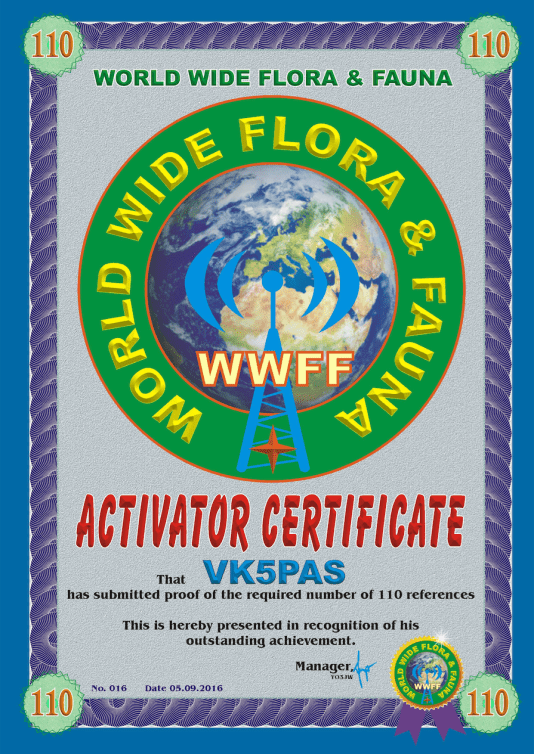
Tonight I received my latest DXFF Activator certificate for activating from 6 different DXCC entities (the WWFF program includes Australian States as separate entities).

  1. Germany
  2. Belgium
  3. VK1
  4. VK2
  5. VK3
  6. VK5
  7. Norfolk Island

Many thanks to Pit YO3JW for the certificate.

DXFF A6 2015  VK5PAS 009.jpg

Anson Bay Reserve Norfolk Island VKFF-0392

On Sunday morning, 29th May 2016 I was tied up in a 3 and 1/2 hour long Post AGM meeting with the other WIA Directors.  So Marija headed off to the Norfolk Island markets with Heath VK3TWO and his wife Monique VK6FMON.    The market is held every Sunday between 8.00 a.m.-11.00 a.m. and features seasonal fresh fruit and vegetables, cut flowers, home cooking, craft and souvenir items.  Trent Christian was singing there as well.

During the Board Meeting is was voted that Phil VK2ASD would remain as WIA President and Fred VK3DAC would remain as WIA Vice President (both unopposed).

At the conclusion of the meeting Marija and I had some lunch at the Paradise Hotel and chatted to other amateurs.  We then headed off down to Kingston, as I was hoping to have a look at the Sirius Museum.  I wasn’t even aware until visiting Norfolk Island, that the HMS Sirius (the flagship of the First Fleet) had been wrecked on the reef off the coast off Norfolk adjacent to Kingston way  back in March 1790.  Sadly that museum was closed, but we did visit another one of the museums at Kingston which was extremely interesting.  It was the Pier Store which contains a great collection including objects from the Bounty (a cannon, kettle and ironstone platter).  The collection is contained within the Pier Store, which was originally known as The Beach Store and was built in 1825 as Commissariat at the end of Kingston Pier.

Whilst at Kingston we had a look at the former Parliament building which has been taken up by Norfolk Island residents protesting against changes to the island’s governance.

We then had a look at ‘Bloody Bridge’.  The name is believed to be based on the story of the death of a convict work-gang overseer.  During the construction of the bridge, a work gang of convicts murdered their overseer and walled him up in the bridge.  The next day the replacement overseer saw blood oozing from the mortar of the bridge.

DSC_1033

Marija and I then headed for Anson Bay Reserve in the north western corner of the island, for my final play on air on Norfolk Island.  Anson Bay is reputed to be Norfolk’s most spectacular beach, being nestled in to the bottom of one of Norfolk’s many steep cliff faces.  This makes the beach less accessible and more secluded than other beaches on Norfolk Island.  The reserve is 5,54 hectares in size and was dedicated in February 1937 for cable landing, shipping and recreation purposes.  The cliffs here rise about 80 metres above sea level.

Norfolk-Island-today.jpg

Above:- Map showing the location of Anson Bay on Norfolk Island.

During summer, Wedge tailed shearwaters (also called Ghostbirds) form large groups offshore and, at dusk come in to land in their burrows along the cliff edges at Anson Bay.  These are the largest of the tropical shearwaters.  Other birds that frequent the area are White Terns, Little Shearwaters, Red- Tailed Tropicbirds, Scarlet Robins, Golden Whistlers, Norfolk Island Green Parrot, and Norfolk Island Boobook Owl.

Wedge-tailed_Shearwater_20120411_pelagic_off_Cascade_Pier_Norfolk_I_01.jpg

Above:- Wedge tailed shearwater.  Image courtesy of nzbirdsonline.org

The Pacific Cable Board station at Anson Bay provided the first telegraphic contact between Norfolk Island and the outside world by cable linking Australia and New Zealand to Fiji and North America from 1902.  The Anson Bay cable station at Anson Bay cost over $6,000,000.  Two observation posts were also located in the reserve during the Second World War, to defend against possible lands by enemy forces.

I ran the Yaesu FT-857d, 25-30 watts, and the 20m/40m linked dipole for this activation.  The antenna was supported on the 6m telescopic squid pole.  I started off calling CQ on 14.205 and this was immediately answered by Jim VK9PC on Norfolk Island, followed by my good mate John VK5BJE back home in the Adelaide Hills.  Next up was Eric KC7ES in Arizona with a beautiful strong 5/9 signal (5/8 received).  The 20m band was in very good shape and a pile up soon ensued with callers from Australia, USA, Serbia, New Zealand, Croatia, Hawaii, and Canada.

I was very pleased to be able to get at least two Europeans in the log….Branko YU4DX in Serbia and Dragan 9A6W in Croatia.  Both were only a 5/5 to me on Norfolk.  Not the normal very strong 5/9 long path signals that I am used to back on the Australian mainland.  I was also able to make contact with Tony VK3XV who was portable in Leaghur State Park VKFF-0762 in Victoria.  Tony had a beautiful 5/9 signal coming in to Norfolk from his portable station in central Victoria.

I worked a total of 90 stations, at around which time, Luke VK3HJ/9 rolled up on his bicycle.  I booked in to the ANZA DX Net at this stage and worked a total of 7 stations there from VK and USA.  Luke also said g’day to a few stations whilst I took the opportunity of enjoying some cake provided by Marija.  The Over the Horizon Radar had kicked on at 20m by this stage, but didn’t cause any signficant grief.

After having a bit of a chat to Luke, he cycled off back to the QTH of VK9NT.  I moved to 14.210 and called CQ and this was answered by Brian VK3UCD, followed by Ivan VK5HS, then Simon VK3SIM, and then Ian VE7SCC in Canada.  I worked a total of 38 stations on 14.210 from VK, Canada, Japan, Russia, and Italy.  It was good to get Max IK1GPG in the log,  Max is a regular WWFF hunter and although not strong (5/3) was very readable.  I was also pleased to work Mark VK4XW who advised that I was his first contact into Norfolk Island.

When things slowed down I tuned across the band and found VI9ANZAC on 14.244 being operated by Chris VK3QB/9 at Puppies Point.  We had a Fish fry planned at Puppies Point that evening at 5.30 p.m. and that was rapidly approaching.  But the band was in very good shape and it was very difficult to go QRT.  After working Chris I went back to 14.310 and worked a further 10 stations in VK and Japan.  This included QSOs with Nigel VK5NIG/p and Stuart VK5STU/p, who were both portable on SOTA peak Mount Gawler VK5/ SE-013 (5/6 sent and 5/7 received).

Time was marching on, so I decided to try 40m for a short time and then head off to the Fish Fry.  That never occurred.  I was swamped with a big pile up on 7.144 from Australia, New Zealand and the Canary Islands, and I could not get away.  Marija drove up to Puppies Point and socialised for a while and kindly brought me back a meal which I tried to consume whilst working the pile up.

I eventually decided to hit the switch.  It was now 7.00 p.m. and the mosquitos were biting.  I had a total of 216 contacts in the log.

The following stations were worked on 20m SSB:-

  1. VK9PC (Norfolk Island)
  2. VK5BJE
  3. KC7ES
  4. VK5HCF
  5. VK2HEW
  6. VK5SFA
  7. VK5TRM
  8. VK3ANL
  9. VK7VJ
  10. VK3TWO/9 (Norfolk Island)
  11. VK6JON/5
  12. VK3SQ
  13. YU4DX
  14. VK3EKA
  15. VK2MI
  16. VK7BC
  17. VK2YW
  18. VK3BNJ
  19. ZL2TZE
  20. K5FG
  21. VK2BOB
  22. VK3ARH
  23. VK3MRG
  24. VK2HDX
  25. 9A6W
  26. VK2YK
  27. VK2NSS
  28. VK3KYF
  29. VK4TD
  30. VK5AV
  31. VK6WE
  32. VK4WJW
  33. VE3VEE
  34. VK3NCC mobile
  35. VK3YE
  36. VK6IA
  37. VK3MBW
  38. VK2RD
  39. VK2MOR
  40. K6DDX
  41. VK2HV
  42. K7ABV
  43. VK7ROY
  44. VK3TCT
  45. KH6UEA
  46. VK2LAD
  47. VK5XY
  48. VK6NU
  49. VK7KJL
  50. VK3JLS
  51. VK7LCW
  52. VK2WJD
  53. VK4HG
  54. VK4ATH
  55. WI6Q
  56. W7QHZ
  57. VK3XV/p (VKFF-0762)
  58. WD8JQN
  59. VK3SC
  60. VK4DV
  61. N9RJM
  62. VK5NRG
  63. VK3FI
  64. VK2HTM
  65. VK3BMO
  66. VK3BY
  67. VK3DQ
  68. VK3VG
  69. VK5KDK
  70. VK5STU
  71. W4RP
  72. VK2BIT mobile
  73. VK2HOT
  74. VK7QP
  75. VK5FG
  76. VK2ND
  77. VK4HMR
  78. VK5TW
  79. JH1FTL
  80. VK4CC
  81. VK3RH
  82. VK4XCS
  83. VK4SWE
  84. K5FG
  85. VK5NJ
  86. K4JP
  87. VK3UCD
  88. VK5HS
  89. VK3SIM
  90. VE7SCC
  91. VK5JN
  92. VK4SMA
  93. VE7CV
  94. VK3TKK
  95. VK4HNS
  96. VK4JAA
  97. VK3BF
  98. VK2ZHE
  99. VK2QN
  100. VK6WC
  101. VK1OO
  102. JH5PXJ
  103. VK3MNZ
  104. VK2CPC
  105. JH1DRF
  106. UA0ZC
  107. VK7NWT
  108. IK1GPG
  109. JH1AJT
  110. JF2TOG
  111. JI2FBG
  112. VK2BTC
  113. JA1DCK
  114. VK2SOL
  115. VK5KBJ/4
  116. JH4CPC
  117. JH1XYB
  118. JO1ALS
  119. JH3IMR
  120. JR1WJM
  121. VK3GJM
  122. VK4MWG
  123. VK2DON
  124. VK5HEL
  125. JH1VPB
  126. VK4XW
  127. VK2EJP
  128. VK3BFR
  129. VI9ANZAC (Norfolk Island)
  130. VK2GKA
  131. VK2AAH
  132. VK4YS
  133. JH7WER
  134. VK4MKB
  135. JA1CGB
  136. VK3MCK
  137. VK5NIG/p (SOTA VK5/ SE-013)
  138. VK5STU/p (SOTA VK5/ SE-013)
  139. VK4NJB

The following stations were worked on 40m SSB:-

  1. VK5FUZZ
  2. VK5BC
  3. VK4YS
  4. VK4ME
  5. VK2HOT
  6. VK5LDM
  7. VK3FIRM
  8. VK4GSF
  9. VK4SMA
  10. VK2NWB
  11. VK4NJB
  12. VK3HSR
  13. VK5SFA
  14. VK4RF
  15. VK4HA
  16. VK7DX
  17. VK3SIM
  18. VK3ANL
  19. VK4XW
  20. VK2JAZ
  21. VK3TKK
  22. VK7FVDN
  23. VK2NN
  24. VK3BY
  25. VK3FI
  26. VK2KTT
  27. ZL3WPK
  28. VK3FPSR
  29. VK3ZMD
  30. VK3UCD
  31. VK4NKL
  32. VK7NAL/4
  33. VK2TTP
  34. VK2BTC
  35. ZL3ADT
  36. EA8CER
  37. VK3BSG
  38. VK2FQSL
  39. VK2ABT
  40. VK4XAC
  41. VK4FAAS
  42. VK3SOT
  43. VK5FANA
  44. VK3MCK
  45. VK5FVSV
  46. VK3FADM
  47. VK3DJ
  48. VK2FWAY
  49. VK3ZD
  50. VK7MHZ
  51. VK2QN
  52. VK4BRT
  53. VK2AJG
  54. VK4PQ
  55. VK5FDEC
  56. VK4JPA
  57. VK4AJB
  58. VK3RV
  59. VK3WQ
  60. ZL1ANZ
  61. VK4QS
  62. VK4YLU
  63. VK1HW
  64. VK4OK
  65. VK2FOUZ
  66. VK2YK
  67. VK5MAS
  68. VK3KN
  69. ZL2TZE
  70. VK3FSPG
  71. VK7MBD
  72. VK2SI mobile
  73. VK2AAF
  74. VK2SR
  75. VK5UR
  76. VK4FSCC
  77. VK2FINE

Here is a short video of some of my contacts from Anson Bay…….

After packing up we headed down to Puppies Point and caught up with all the stragglers, including Trent Christian, Heath VK3TWO, and some of the VK9NT crew before heading back to the Paradise Hotel.

DSC_1075

Above:- with Trent Christian (ex VK9 Norfolk Island and VP6 Pitcairn Island)
Here is a video put together by Nigel VK5NIG and Stuart VK5STU of our contact whilst they were on Mount Gawler summit for SOTA.

References.

Edgecombe; J, 1999, ‘Norfolk Island-South PAcific.  Island of history and many delights’.

Norfolk Island Parks & Foretsy Service, 2003, Plan of Management Anson Bay

Wikipedia, 2016, <https://en.wikipedia.org/wiki/Wedge-tailed_shearwater&gt;, viewed 3rd June 2016

WIA AGM and formal dinner

The Annual General Meeting of the Wireless Insitute of Australia (WIA) was held on Saturday 28th May 2016.  The AGM was followed by the Open Forum and the Awards presentations, which were streamed live into the Australian mainland.

That afternoon, a number of amateurs delivered some very interesting presentations on a number of topics.  Two rooms were utilised, giving attendees an option on what presentations they wished to attend.  I gave a presentation on the World Wide Flora Fauna (WWFF) program and the VK5 National & Conservation Parks Award.

Later that night the formal dinner was held at the Paradise Hotel.  The Norfolk Island Administrator Gary Hardgrave and Doug McVeigh VK0DMV spoke at the dinner.

Emily Bay Norfolk Island VKFF-0392

On Friday morning, 27th May 2016, Marija and I went for a bus tour of the historic Kingston area of Norfolk Island.  Kingston was founded on the 6th March 1788 by Lieutenant Philip Gidley King and 22 settlers, including 9 male and 6 female convicts, who landed that day from HMT Supply.  They had sailed from Port Jackson just a few weeks after the establishment of the British colony of New South Wales.  The settlement was initially known as Sidney or Sydney Bay, and by 1796 was being called the Town of Sydney, in honour of Viscount Sydney, British Home Secretary and patron of the First Fleet.  Today it is on the World Heritage List.

We also revisited the Noroflk Island cemetery as part of the tour.  I was fortunate enough to come across the headstone of the late Jim Smith VK9NS.  Although I never spoke with Jim on air, I did listen to him many many times as a Short Wave Listener.

DSC_0833

At the end of the tour, Marija and I headed to Emily Bay on the south coast of the island, near Kingston.  I had a scheduled meeting at 4.00 p.m. local time with the rest of the WIA Board, so I had a few hours to play amateur radio.

Norfolk-Island-today-4

Above:- Map showing the location of Emily Bay on Norfolk Island.

Emily Bay has been voted in the top 100 Australian beaches.  It is a crescent of golden sand backed by beach grass and pines.  The sheltered reef lagoon is home to a variety of fish and hard and soft coral.  The water is clean and crystal clear and provides a safe refuge to swimming and is perfect for snorkelling.

DSC_0846

I set up on a wooden bench and table in the park overlooking the Bay.  For this activation I ran the Yaesu FT-757d, 40 watts and the 20m/20m linked dipole, and also my 15m 1/2 wave dipole.  Both antennas supported on the 6 metre telescopic squid pole.  Although I only made 57 contacts, there were some very interesting ones amongst them.

My first contact was with VI9ANZAC on 20m being operated by Heath VK3TWO/9.  This was another contact towards the special Norfolk Island Award on offer by the WIA.  I then headed to 14.255 and called CQ, and I was delighted to be called by my good mate Ivan VK5HS.  This was followed by another great friend Col VK5HCF, followed by Brian ZL2AJA.  It was still early in the afternoon and the bands were still yet to open up.  It is normally from around 4.oo p.m. that conditions appear to be best on 20m and 40m.

It was very slow going, so after working just 9 stations on 14.255 and numerous unanswered CQ calls, I had a tune across the 20m band and found Alex VK4TE calling CQ VK9.  I came back to Alex CQ call and added another VK9 to his log towards the Norfolk Island Award.  I then returned back to 14.255 and called CQ again and this was answered by Ian VK2ZIF, followed by Rio JA1JRK, and then John ZL1DT.  I was then very surprised to be called by Compton VK2HRX who was operating from a SOTA summit in New South Wales….Mount Yullundunida VK2/ NW-020.  Compton had a very respectable 5/5 signal and he gave me a 5/7 back to the Australian mainland, some 1,400 kms away.

A few calls later, I was excited again, with a new country for me in the log whilst on Norfolk.  It was a contact into Costa Rica in Central America, with Eduardo TI2SD.  But callers went very quiet again, very quickly.  So I tuned across the band again, logging Fred VK9DAC on Norfolk Island, Chris VK3QB/9 on Norfolk Island, and then AH2ST/KH2 on Guam.  This was another new country for me to add to VK9PAS.

I then tuned further across the band and found Stef VK5HSX/2 calling CQ on 14.320 from the Mebbin National Park VKFF-0311 in New South Wales.  Stef was a good 5/5 and very readable as there was no noise at all from Emily Bay.  I then moved up the band a little and logged Jim VK9PC on Norfolk Island.

I decided to try my luck on 15m.  Unfortunately I was not able to self spot as I had no internet coverage.  I lowered the squid pole and removed the linked dipole and replaced it with the 1/2 wave 15m dipole.  I called CQ on 21.244 and this was answered by Tom VK5NFT who was very low down but very readable (5/1 both ways).  This was followed by JA7BFB in Japan, Ivan VK5HS, Peter VK3PF/9 on Norfolk Island, and finally Chris VK3AWG in Victoria.  Chris was really motoring in to Norfolk and had a 5/9 plus signal and gave me 5/8.  But sadly, despite a number of further CQ calls, I had no further takers on 15m.

I headed back to 20m where I logged a further 2 Norfolk Island stations, Ewan VK4ERM/9 and Ron VK3AFW/9.  I then put the links back in to the dipole and headed to 7.144 and found Stef VK5HSX/2 in VKFF-0311.  Signal strengths were comparable to than on 20m.  The 40m band was very quiet and my only other contact was with Al VK1RX/3 who was operating portable from SOTA peak Mount Warrenheip VK3/ VC-019.  Al was very low down, but we successfully made the QSO (3/1 both ways).

DSC_0866 (1)

Above:- View of the lone Pine and Phillip Island from Emily Bay.

I then headed back to 20m where I called CQ on 14.275 and to my surprise this was answered by Eduard OM3EY on the Slovak Republic.  I had not worked many Europeans on the trip, so it was a real pleasure to be able to get Eduard in the log.  Propagation to Europe from Norfolk Island is very very different to the Australian mainland.  This was followed by a contact with Paul VK4PY, and then Tadashi JR1BLX in Japan, and then Craig N6ED in California.  I was then called by Jorge EA8TL in the Canary Island, followed by Robert S57AW in Slovenia.  Although the European signals were quite low down, we successully exchanged signal reports and call signs.

I then worked Terry KI7M in Oregon who asked if I could QSY down a bit as I was being battered around by OK2RZ.  Interesting that I could not hear OK2RZ at all.  And yet at home in the Adelaide Hills, Jiri is normally 5/9 plus.  I QSY’d down to 14.273 where I worked a further 17 stations in VK, Japan, USA, and New Zealand.  The band was just opening up, but I had a 4.00 p.m. WIA Board committment, so I had to go QRT with 59 contacts in the log.

The following stations were worked on 20m SSB:-

  1. VI9ANZAC (Norfolk Island)
  2. VK3TWO/9 (Norfolk Island)
  3. VK5HS
  4. VK5HCF
  5. ZL2AJA
  6. VK5DJ
  7. VK2BJ
  8. VK4GSF
  9. VK2IO
  10. VK3AWG
  11. VK3TKK
  12. VK4TE
  13. VK2ZIF
  14. JA1JRK
  15. ZL1DT
  16. VK2HRX/p (SOTA VK2/ NW-020)
  17. VK4RF
  18. VK4HA
  19. JJ1PLS
  20. TI2SD
  21. JA0AOO
  22. VK9DAC (Norfolk Island)
  23. VK3QB/9 (Norfolk Island)
  24. AH2ST/KH2
  25. VK5HSX/2 (VKFF-0311)
  26. VK9PC (Norfolk Island)
  27. VK4ERM/9 (Norfolk Island)
  28. VK3AFW/9 (Norfolk Island)
  29. OM3EY
  30. VK4PY
  31. JR1BLX
  32. N6ED
  33. EA8TL
  34. S57AW
  35. KI7M
  36. VK4HNS/p (VKFF-0129)
  37. W6JAT
  38. VK7AKX
  39. N0ATQ
  40. VK5TW
  41. W1YY
  42. VK9DAC (Norfolk Island)
  43. N6ER
  44. VK3GYH
  45. N8DX
  46. K7LV
  47. JA1QVR
  48. WY7KY
  49. JF1SNL
  50. ZL2AN
  51. ZL1MRC
  52. K7GSE

The following stations were worked on 15m SSB:-

  1. VK5NFT
  2. JA7BFB
  3. VK5HS
  4. VK3PF/9
  5. VK3AWG

The following stations were worked on 40m SSB:-

  1. VK5HSX/2 (VKFF-0311)
  2. VK1RX/3 (SOTA VK3/ VC-019)

Here is a short video of some of my contacts from Emily Bay…..

That night we attended the Norfolk Island RSL for the first function for the 2016 WIA AGM.  It was a great meal and we were entertained by Trent Christian.

Selwyn Reserve Norfolk Island VKFF-0392

Marija and I kicked off Thursday 26th May 2016 with breakfast in the motel room, and we then headed off for a drive around some parts of the island that we had not yet explored.

As we drove passed the school we noticed that there were a lot of motorcycles parked out the front, many with Learners plates on.  These belonged to the students.  Children aged 15 years can get a Learners permit to ride a motorcycle on Norfolk Island.

DSC_0722

We then drove out to Point Blackbourne and Steels Point on the eastern side of the island.

Next up we drove along Cascade Road.  Here, the home owners have named their properties after the rooves on their houses, e.g. ‘blue roof, ‘can’t see the roof’, ‘rusty roof’ etc.  Its an interesting and quirky drive.

We then headed down to Cascade Pier on the eastern side of Norflk Island.  A $13 million upgrade to the Pier has been announced.  This will allow the loading and unloading of cruise ship passengers and freight to occur.  There is an old boiler down at the Pier, a reminder of the old whaling days on the island.

Marija and I then visited the Cockpit Waterfalls at Cascade Reserve.  If you do visit the waterfalls, try the southern side of the falls.  They are much easier to access than the very narrow and dangerous track on the northern side.

Our next stop was the Norfolk Island Police Station to say g’day to the local boys in blue.  We had a very interesting chat with Dan, one of the Leading Senior Constables on the island, from the Australian Federal Police.

It was then back to the Paradise where we picked up Peter VK3PF and we headed out to the shack of VK9NT in the north western corner of the island.  We enjoyed a look at the set up of the Dxpedition, a good chat, a coffee and some cake.

Whilst we were visiting the boys, we experienced a small earth tremor, measuring 5.4.  It was interesting that Lee VK3GK and I who were sitting down having a chat, distinctly felt it, but a few of the others who were standing up, did not.  The following is a short story from ‘The Norfolk Islander‘ re the tremor…

earthquake303.jpg

We then dropped Peter back to the Paradise and then headed to Selwyn Reserve which is located near the north western corner of the island.  The reserve is about 21.21 hectares in size and extends up to 300 metres inland.  The reserve’s spectacular west-facing cliffs rise to about 80 metres above sea level.  The northern portion of the reserve was proclaimed as ‘Selwayn Reserve’ in February 1937.  In 1968 the reserve was renamed ‘Selwyn Recreational Reserve’, but was changed back to the original name in 1999.

Norfolk-Island-today-2

Above:- Map showing the location of Selwyn Reserve on Norfolk Island.

I started calling CQ on 7.144 and this was answered by Derrick VK2DEK, followed by Bob VK3BL/7, Paul VK2HV, and then Steve VK4QQ.  All signals were between 5/7-5/9, with the stronger signals coming from VK2 & VK4.  Equally, my signal was stronger there as well.  Next up was my first New Zealand contact from Selwyn Reserve.  It was Paul ZL1XH with a beautiful strong 5/9 signal.  Contact number 13 was Dave KD6BZN in California who was a good 5/9 and reciprocated with a 5/5 signal for me on the west coast of the USA.

I worked a total of 20 stations on 40m before deciding to have a listen on 20m.  The local time on Norfolk was 5.00 p.m. and the 20m band seems to work a little better at that time.  I headed for 14.310 but found it was already occupied by Heath VK3TWO/9 on Norfolk.  So after logging Heath, I headed down the band to 14.250 and started calling CQ.  This was answered by Rick VK4RF/VK4HA, following by Ian VK5IS, Steve VK4OZI, and then Steve VK4QQ.  Signals were very strong and much better than 40m.

A pile up soon developed and I went on to work a total of 49 stations on 14.250 from Australia (VK1, VK2, VK3, VK4, VK5, VK6 & VK7), Canada, USA, Alaksa, and Japan.  This included a SOTA contact with Compton VK2HRX who was portable on Bakers Downfall Hill VK2/ NW-006 (5/8 both ways).  I received a few comments from some of the mainland VK’s that I was being called by Europe.  Sadly I could not hear any Europeans.  The propagation on Norfolk is very different to that on the Australian mainland.

I then headed back to 40m to 7.144 where I worked a total of 37 stations in Australia (VK1, VK2, VK3, VK4, VK5, & VK7), New Zealand, New Caledonia, and Norfolk Island.  This included a SOTA contact with Heath VK3TWO/9 who was operating portable on the top of Mount Bates on the island.  I did try to break in to the Triple H Net on 40m, but sadly the USA guys were not hearing me.

Marija and I enjoyed a magnificent sunset and we then headed back in to town where we caught up with Heath VK3TWO and wife Monique VK6FMON for tea at the Bowls club.

The following stations were worked on 40m SSB:-

  1. VK2DEK
  2. VK3BL/7
  3. VK2HV
  4. VK4QQ
  5. ZL1XH
  6. ZL1AJY
  7. VK7AKX
  8. VK4FBMW
  9. VK4AJB
  10. VK3MCX
  11. VK2VEL
  12. ZL2SQ
  13. KD6BZN
  14. VK3TKK mobile
  15. VK4RF
  16. VK4HA
  17. VK2MKE mobile
  18. VK6MB/2
  19. ZL2APD
  20. VK5PET
  21. VK4ACC/3
  22. VK4FAAS
  23. VK3FORD
  24. ZL2MF
  25. VK3BHR
  26. VK5FTVR
  27. VK6YB/2
  28. VK7AC
  29. VK3JL
  30. VK7BEN
  31. VK4MWG
  32. FK4QX
  33. VK3TWO/9 (SOTA Mount Bates)
  34. VK3FQSO
  35. VK4GSF
  36. VK1DI
  37. VK3SQ
  38. VK3FOWL
  39. VK3GA
  40. VK5SA
  41. VK5MBD
  42. VK5FANA
  43. VK4CG
  44. VK3KRH
  45. VK6JON/5
  46. VK2FOWD
  47. VK3PP
  48. VK2EHQ
  49. VK2FJPR
  50. VK2BJK
  51. VK5NRG
  52. VK1AT
  53. VK4AAV
  54. VK5AV
  55. VK3IO
  56. VK2LEE
  57. VK9VV (Norfolk Island)

The following stations were worked on 20m SSB:-

  1. VK3TWO/p (Norfolk Island)
  2. VK4RF
  3. VK4HA
  4. VK5IS
  5. VK4OZI
  6. VK4QQ
  7. VK2WM
  8. VK1MA
  9. VK5FD
  10. VK3ACE
  11. VK2MKE mobile
  12. VK3PAT
  13. VK2QR
  14. VE7SA
  15. VK4YS
  16. VK5MBD
  17. VK3AGB/2
  18. VE7EDZ
  19. VK4ACN
  20. VK5HCF
  21. VK5LB
  22. VK2ZX
  23. VK2ICW
  24. VK4ARW
  25. VK2DEK
  26. VK3CAT
  27. VK3GB
  28. VK7TZ
  29. VK3SQ
  30. K7KV
  31. VK2HRX/p (SOTA VK2/ NW-006)
  32. AL7KC
  33. VK3IRS
  34. VK5NFT mobile
  35. VK7BC
  36. VK6MB/2
  37. VK2PG
  38. VK4OK
  39. VK6ADF mobile
  40. VK3FI
  41. VK6JON/5
  42. VK3NU
  43. VK3YW
  44. VK4KUS
  45. VK3FN
  46. VK2HBG
  47. AL7JX
  48. JH4IFF
  49. VK7CW
  50. NL7V


References.

Norfolk Island Parks and Foresty Service, Selwyn Reserve Plan of Management, 2003.