For the 2016 International Lighthouse and Lightship Weekend (ILLW), myself and 4 other members of the Adelaide Hills Amateur Radio Society, ventured over to Kangaroo Island to operate from the Cape Willoughby lighthouse.
The ILLW is NOT a contest. It is a fun weekend to promote the plight of lighthouses and promote the hobby of amateur radio. The ILLW came into being in 1998 as the Scottish Northern Lights Award run by the Ayr Amateur Radio Group, and has blossomed since that time. In 2016, around 500 lighthouses were registered with ILLW to be activated.
The 2016 ILLW Cape Willoughby lighthouse team consisted of:
- myself, VK5PAS
- Chris VK4FR/5
- Andrew VK5CV
- John VK5EMI
- Michael VK5FVSV
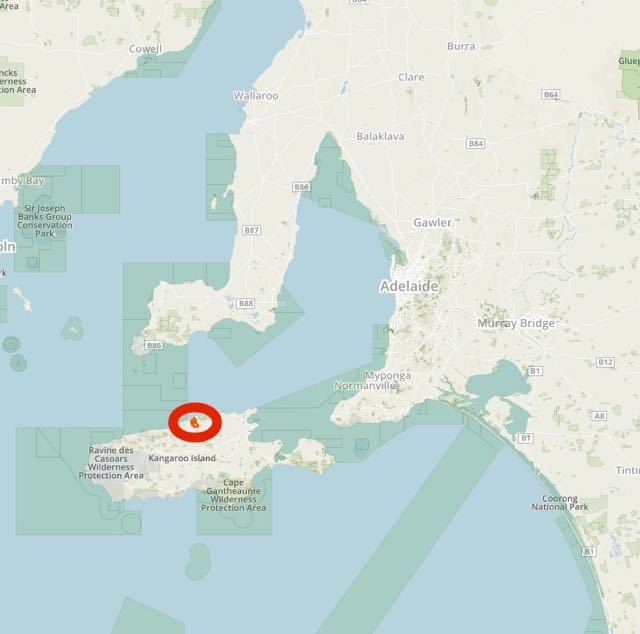
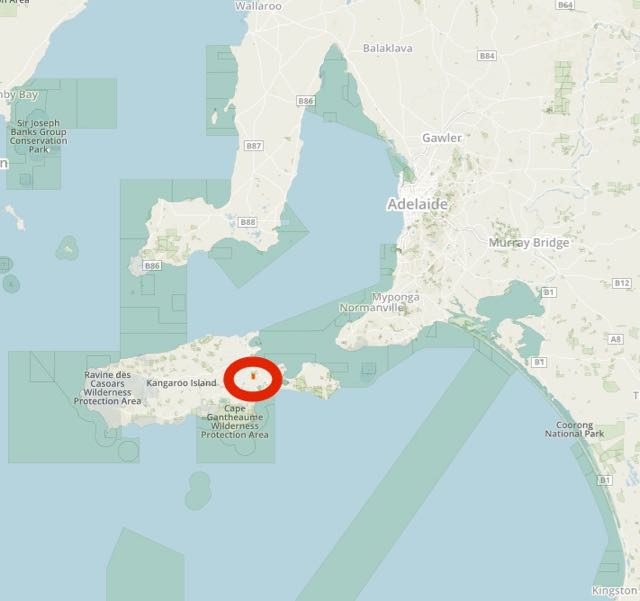
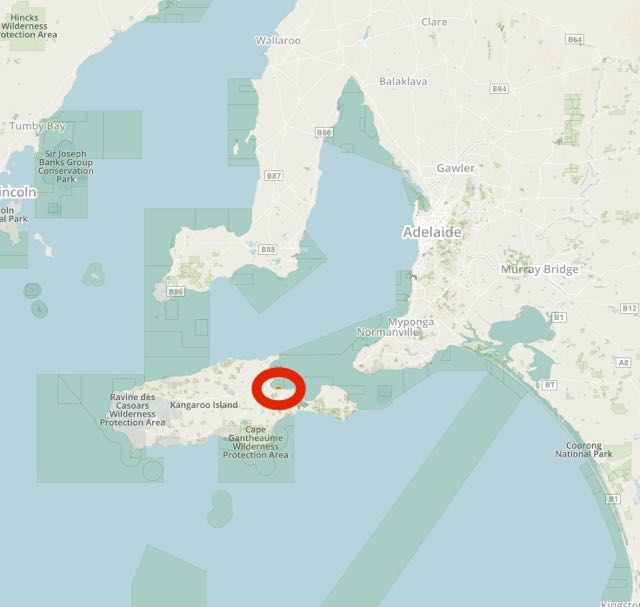
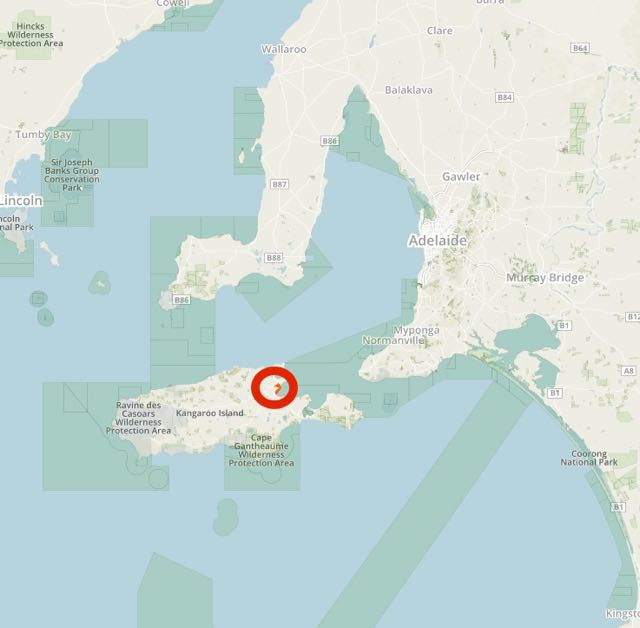
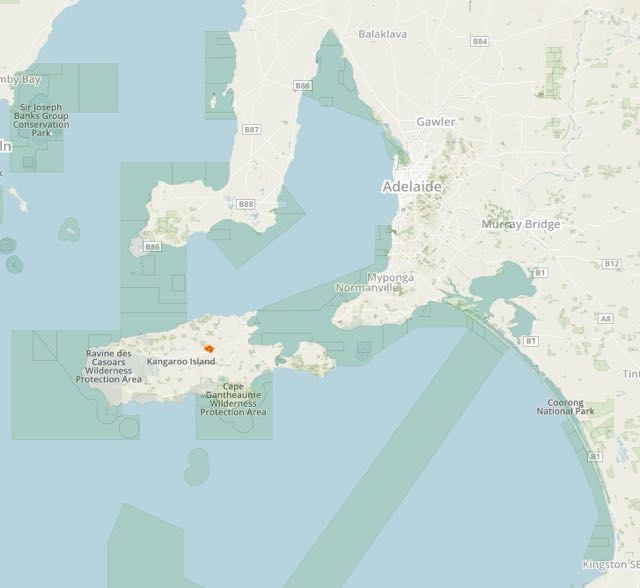
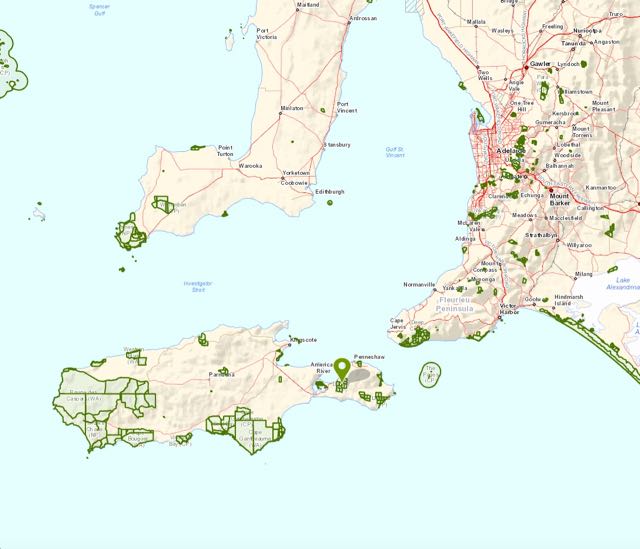
Kangaroo Island is situated about 100 km south of Adelaide, whilst Cape Willoughby is located about 28 km south east of Penneshaw.
- Cape Willoughby lighthouse AU-0095 (ILLW)
- Kangaroo Island OC-139 (IOTA)
- Cape Willoughby Conservation Park 5CP-033 (VK5 Parks Award) and VKFF-1014 (WWFF)
- VK Shires – KI5
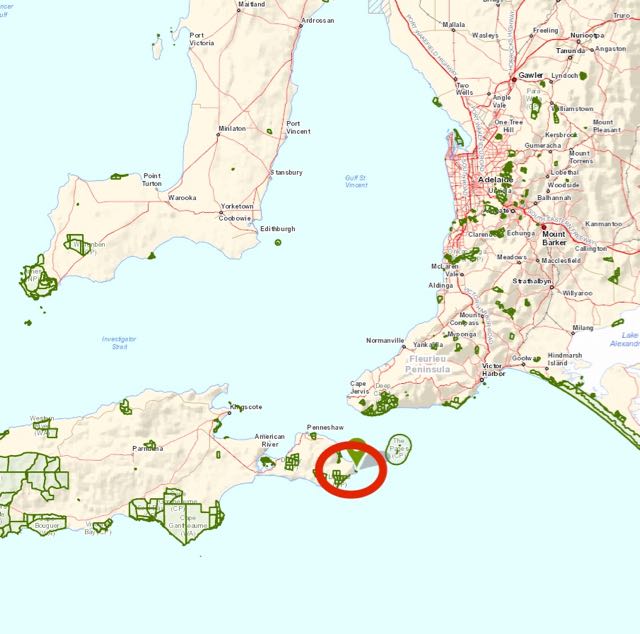
Above:-Map showing the location of Cape Willoughby on the eastern side of Kangaroo Island. Map courtesy of Location SA Map Viewer.
It was an early start for me on Friday morning, as I had booked the 9.00 a.m. ferry over to Kangaroo Island. The Sealink ferry departs from Cape Jervis at the tip of the Fleurieu Peninsula and travels to Penneshaw on the eastern side of Kangaroo Island. The drive from my home to Cape Jervis takes me through the Adelaide Hills and the Fleurieu Peninsula and is a distance of around 105 km (about 90 minutes drive time). As it was early morning there were plenty of kangaroos on the road, so it was relatively slow going.
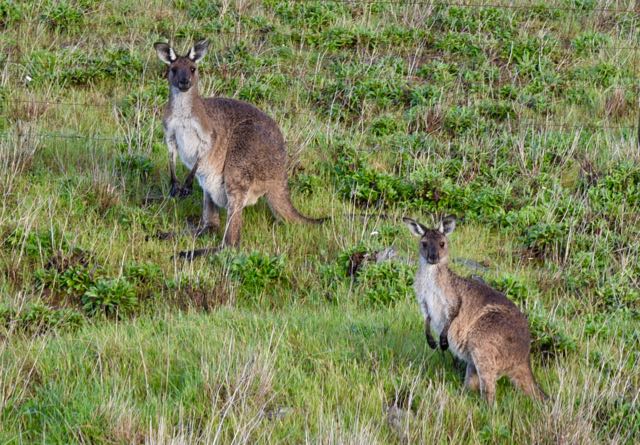
Above:- Some of the locals, Western Grey kangaroos.
The weather on Friday morning was less than ideal……quite heavy rain at times and bitterly cold. But, what do you expect? Its August after all, and the end of winter in Australia. But for the hams in the United Kingdom and European where the ILLW originated, fairer weather is experienced. There was the occasional blue patch or two in amongst the very dark clouds. Fortunately it was not windy, so I was confident that the ferry would be able to berth at Penneshaw on the island. Back in 2012 when we went to the island for the ILLW, we almost didn’t make it. The weather was absolutely terrible and it took half a dozen attempts for the ferry to berth, with the Captain giving us a warning that he would try one last time. If not it was back to Cape Jervis. Fortunately we got there!
Despite it being a gloomy morning, the drive down to Cape Jervis took me through some beautiful countryside. I soon was able to see the Starfish Hill windfarm, which was the very first windfarm in South Australia. And I soon started to roll downhill towards Cape Jervis, with some great views of Kangaroo Island across Backstairs Passage.

Starfish Hill windfarm

Looking towards Kangaroo Island

Kangaroo Island across Backstairs Passage
Cape Jervis then came into view, along with the Cape Jervis lighthouse. The little town is named after the headland at the western tip of Fleurieu Peninsula which was named on 23rd March 1802, by explorer Matthew Flinders after John Jervis, the 1st Earl of St Vincent.

View towards Cape Jervis

The Cape Jervis lighthouse
Upon arrival at Cape Jervis I met up with Mike who had also booked the 9.00 a.m. ferry. We booked ourselves and out vehicles in, and I enjoyed a nice hot cup of coffee whilst having a listen on the IC7000 in the Toyota Hi Lux. It wasn’t long before boarding commenced on the ferry. The Sealink ferry is around 50 metres in length and has a capacity of 250 passengers. It can accomodate up to 55 vehicles. The trip over to the island, which takes around 45 minutes, was quite pleasant. The water was certainly nowhere near as choppy as I’ve experienced on previous journeys.

The ferry at Cape Jervis

Mike VK5FVSV

View of the north coast of Kangaroo Island

Penneshaw

About to berth at Penneshaw
After arriving on Kangaroo Island Mike and I met up with John VK5EMI and his wife Dee. We then drove around to the local supermarket for some provisions before heading out to the lighthouse along the Cape Willoughby Road. We were warned that the road out to the lighthouse was terrible. But our experience that day was that the road, which starts out as bitumen and then turns to dirt, was actually very good. Particulary, compared to previous years. About 3 km out from our destination, the mighty structure of the Cape Willoughby lighthouse came into view.
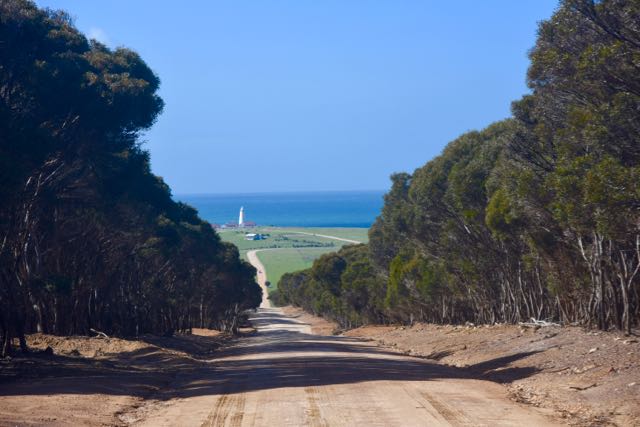
Above:- The view of the lighthouse from the Cape Willoughby Road.
Cape Willoughby once played a vital role in the shipping trade of the young colony of South Australia before the advent of efficient forms of land transport. The Cape Willoughby lighthouse was built to assist the safe journey of ships passing through the treacherous stretch of water known as Backstairs Passage during a time of rapidly expanding coastal shipping trade between the eastern colonies and the colony of South Australia. The lighthouse was originally known as the Sturt Light after the explorer Captain Charles Sturt. The tower took over two years to construct and the workers lived in tents during this time. South Australia’s first lighthouse was officially opened in January 1852, and manned 24 hours a day by 3 lightkeepers who lived here with their families.
Cape Willoughby Lighthouse was constructed from locally available granite and lime mortar. Quarrying is evident near the lighthouse atop the cliffs of Devils Kitchen. It is thought holes were hand-drilled into the rock in the quarry and filled with wood. This was kept wet and the expanding wood would crack the rock which was then shaped prior to construction. The result was a circular tower of roughly dressed granite masonry.
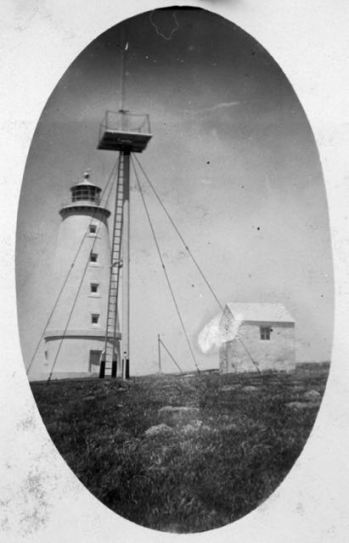
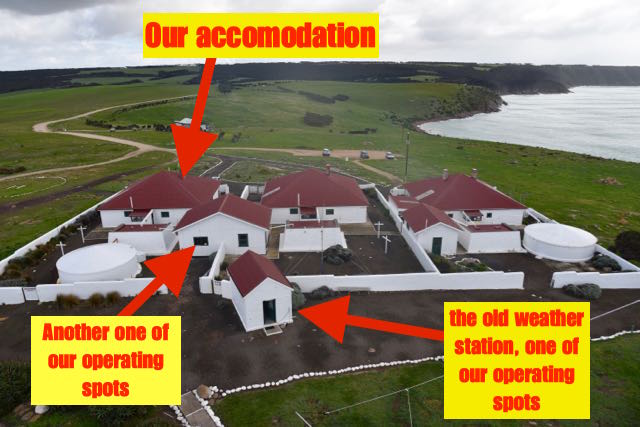
Above:- Image of the Cape Willoughby lighthouse, showing the old weather station (one of our operating spots). Image courtesy of Trove.
The walls of the lighthouse are 1.4m thick at the base and taper to 0.86m thick at the top. The tower, from the base to the balcony, is 20.5 metres high (67 feet and 3 inches) and is round for wind resistance. The interior base of the tower is one of the widest in Australia and the lightkeepers and their families were even known to have hosted parties and dances here.
The original Deville Lantern room housed optical apparatus (light) consisting of 15 multiple wick oil burner lamps. This was reflected intermittently by revolving reflectors powered by a weight driven motor, and appeared as a flashing light. Its greatest intensity was every 1.5 minutes and in clear weather could reach 24 nautical miles.
In 1925 the lantern room and light were replaced by a more modern and powerful Chance Brothers system. The light consisted of a pressurised incandescent kerosene lantern with a three ton revolving Fresnel lens. The lens floated in a bath of mercury to reduce friction when turning. It was driven by 146lb weights which had to be wound up every 2.5 hours working on a system similar in principle as a grandfather clock. The mercury proved to be a health hazard to the lightkeepers.
In 1959 the lighthouse was electrified by two diesel powered generators installed at the station. The lightstation became fully automated in 1974-75 when 240 volts main power was connected. A standby diesel generator and battery bank provided backup during power failure. The lantern house was also removed and was replaced with new fibreglass lantern housing. The original housing was later installed atop a stub tower in the Kingscote Museum, where it remains to this day.
The original wooden jarrah spiral staircase was also replaced with a steel structure due to wet rot and continual use. Cape Willoughby Lightstation was one of the last manned lighthouses in Australia. It was officially automated (unmanned) in 1992.
In 2003, the lightstation was downgraded when a ML300 beacon was installed, consisting of a 35 Watt 12 Volt lamp, which is visible for 11 nautical miles. In March 2011, this was replaced with a Vega LED beacon. It is powered by two 12 Volt batteries, and the battery float is charged from the mains.
As a bonus, the lighthouse is situated in the Cape Willoughby Conservation Park, which comprises around 44 acres. The park was established on 28th March 2002.
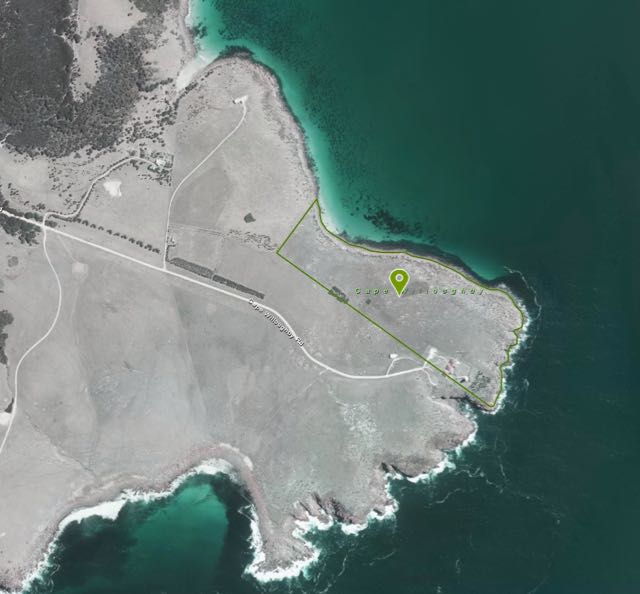
Above:- Aerial shot of the Cape Willoughby lighthouse. Image is courtesy of Location SA Map Viewer.
When we arrived at Cape Willoughby we touched base with Adele from the Department of Environment Water and Natural Resources (DEWNR). We were fortunate in that upon our arrival there were two whales frolicking in the adjacent Antechamber Bay. It was a calm but cloudy morning, and Adele and commented on how nice the weather was compared to previous trips to Cape Willoughby. But, we had spoken too soon. It wasn’t long and it was hailing. Cape Willoughby experiences dramatic weather changes. Here are a few stats:
- 23 days of gales or worse (63-130 km/hr)
- 136 days of strong winds (50 + km/hr)
- 2 days of hail
- 3 days of fog
- 8 days of thunder
- 543 mm of rain

Whales just out from the lighthouse

St Albans lighthouse

The impressive Cape Willoughby lighthouse
Our accomodation for the weekend was the Seymour cottage, one of the Cape Willoughby lighthouse keepers heritage cottages. There are three cottages: the Seymour, the Thomas, and the Cawthorne. The Cawthorne contains the DEWNR office and the visitor centre. Both the Seymour and the Thomas can accomodate up to eight guests and contain five bedrooms.
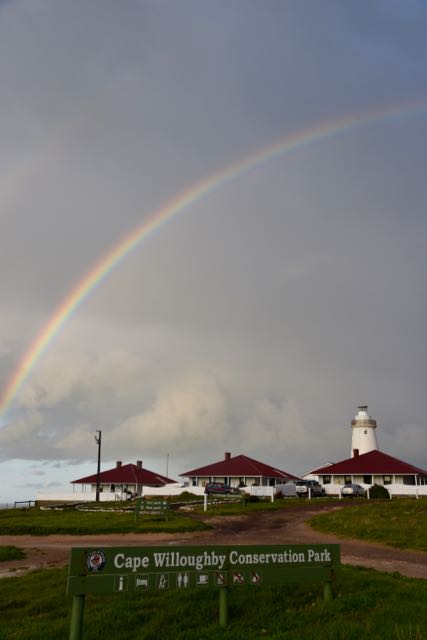
Above:- View of the three old lighthouse keepers cottages and the lighthouse.
We commenced the arduous task of unpacking and Mike, John and I then commenced setting up some stations. Once Andrew and Chris had arrived in the early afternoon it was time to start erecting the antennas. We are fortunate in that we are allowed access to the lighthouse, and we established a halyard to allow us to hoist up some antennas.

At the top, working in the wind

Mike VK5FVSV

Chris VK4FR/5 erecting the Hex beam

Andrew VK5CV & Paul VK5PAS planning their next move
We even set up a 160m antenna, hoping for some action on that band. Each end of the 160m dipole was supported by some painters poles.
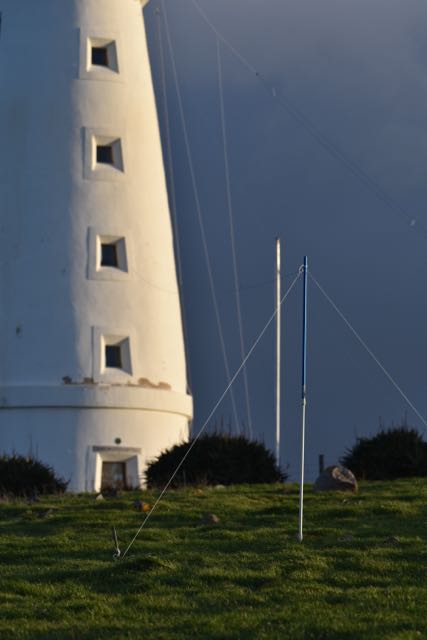
Above:- the 160m antenna.
Our antennas comprised the following:
- broadband folded dipole
- 80/40/20m linked dipole.
- Hex beam
- 160m dipole
- Par end fed
It took quite a few hours to set up our gear whilst battling variable weather conditions. A phone and a separate digital station were established in the old weather station, whilst a further two stations were set up in the shed/museum at the back of the Seymour cottage.
Friday evening was pizza night. Andrew was put to the test with his home made pizza skills and I must say he did very well. All washed down with a few bottles of very nice red.

Mike VK5FVSV and John VK5EMI

Chef Andrew VK5CV

Ready to go in the oven

Cheers, Paul VK5PAS & Andrew VK5CV
After tea, Chris had a bit of a play on the digital modes (JT65 and PSK31), working into Asiatic Russia, European Russia, USA, and Japan on both 40m and 20m. Leo in Georgia USA Chris’ very first contact in the log for VK5CWL on JT65. Nori JA7FLI was our first contact in the log on PSK31. The digi set up consisted of an Elecraft K3 and Signal link device.
Meanwhile, I scouted across the 40m band on SSB, working a number of VK’s, New Zealand, French Polynesia, Papua New Guinea, and the USA. Our first SSB contact in the log was with Peter VK2NEO near Leeton in New South Wales. I also booked in to the 7130 DX Net and made a number of contacts there. The SSB station in the weather station consisted of a Yaesu FT-450.

The digital station

The main HF station in the old weather station
Andrew operated from the museum and logged a number of contacts on the 80m band in VK2, VK3, VK4, VK5, and New Zealand. The two museum stations included a Flex Maestro (very nice!!!).
A handful of lighthouse stations were logged on Friday evening. They were:
- VK6CLL, Cape Leeuwin lighthouse AU-0008 within the Leeuwin-Naturaliste National Park VKFF-0283
- VK5ARC/p, Point Malcolm lighthouse AU-0029
- VK2ATZ/p, Norah Head lighthouse AU-0024
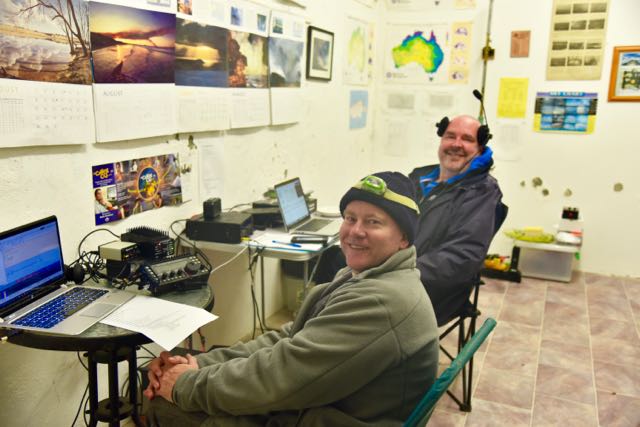
Above:- Chris VK4FR/5 and Paul VK5PAS, operating in the old weather station.
It had been a long day, so we all retired relatively early, expecting a big Saturday. We had a total of 50 contacts in the log already, in seven different countries (Australia, Asiatic Russia, French Polynesia, Japan, New Zealand, Papua New Guinea, and USA).
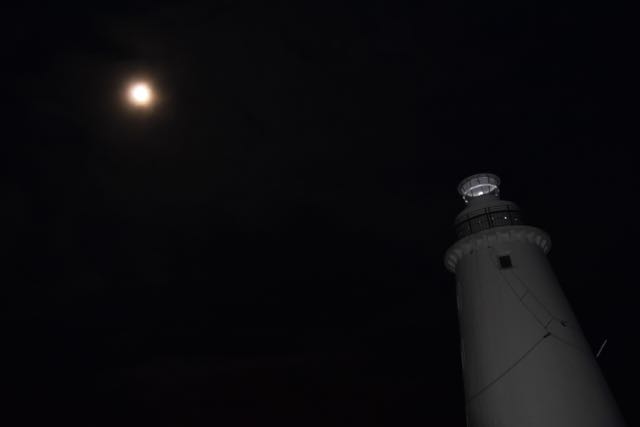
I had slept pretty poorly on Friday night, so it was an early start for me on Saturday morning (2oth August 2016). And I’m very pleased it was, because I was rewarded by an amazing sunrise and an incredible moon. What I was very pleased with, was that Saturday morning was nice and calm and clear. Very chilly, but very calm. Certainly a morning ‘to bottle’ at Cape Willoughby. I snuck in a little activity on 40m, working around 17 stations before breakfast. The first station in the VK5CWL log for Saturday was Lewis VK2FGLB in Sydney. This was closely followed by husband and wife team, Joe VK3YSP and Julie VK3YSP operating portable at the Queenscliff lighthouse AU-0051. Joe and Julie are a dynamic team who are always promoting amateur radio.

A great sunrise

Antechamber Bay

A flock of galahs
After breakfast it was time to start filling up the VK5CWL logbooks. Andrew commenced on 80m and later moved to 160m whilst John operated on 40m working into VK2, VK3, VK5, and VK7. Mike hit the 20m band and worked a number of lighthouse stations in VK2 and New Zealand. And Chris got back into the digital modes. As the day progressed, we changed operators, alternating between bands and stations.

John VK5EMI

Chris VK4FR/5 & Andrew VK5CV

Mike VK5FVSV on the mic

20/40/80m linked dipole
Because the weather on Saturday was quite good, we had a steady flow of visitors out to Cape Willoughby and there was some significant engagement with onlookers. I had brought along ‘Calling CQ’ brochures from the WIA, and brochures regarding the VK5 National & Conservation Parks Award, and the World Wide Flora Fauna (WWFF) program. We all took time out to explain the hobby of amateur radio and why we were operating from the lighthouse.
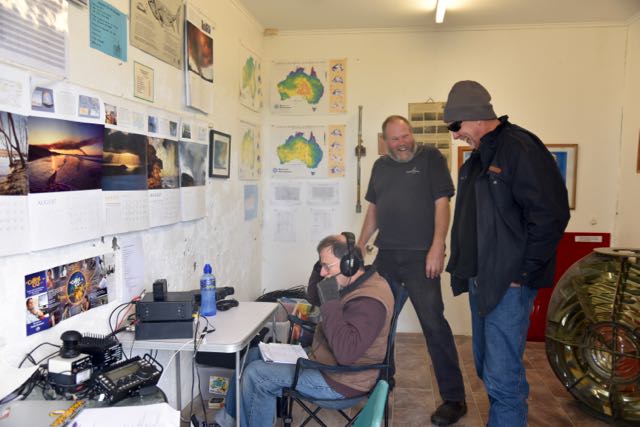
Above: John VK5EMI at the mic being watched on by some amused spectators.
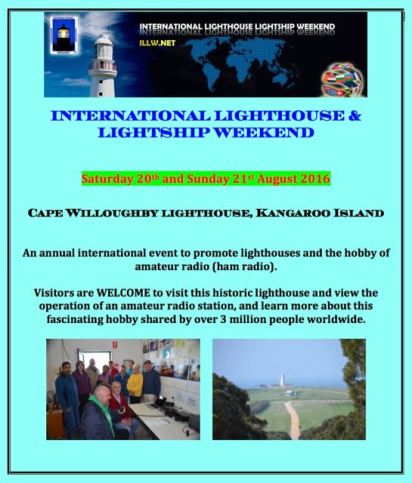
We had also circulated a number of promotional flyers which were put on display at various tourism venues around the island.
Saturday night was lasagne night. My wife Marija had made up some home made lasagne, which again, surprise surprise, was accompanied by further bottles of red wine. We certainly did not go hungry on this trip.
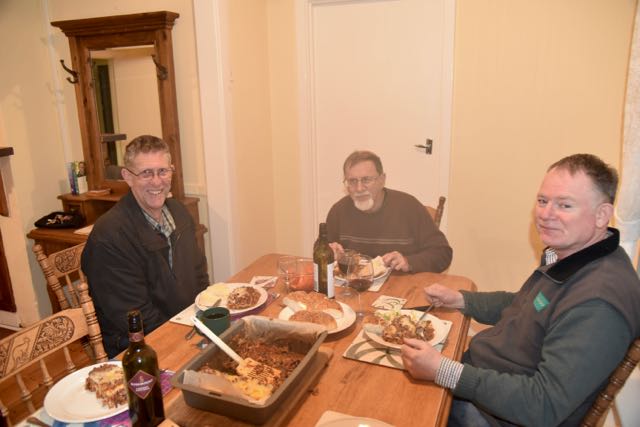
Above: Lasagne night. Mike VK5FVSV, John VK5EMI & Andrew VK5CV
Some of the more interesting contacts during Saturday were with special event station VI6BLT50 to commemorate the Battle of Lang Tan, and also Heath VK3TWO/6 who was on Barrow Island OC-140 off the coast of Onslow in north west Western Australia. We also spoke with Gavin VK7FLI on Flinders Island. Ian VK5CZ gave us a call whilst he was on the top of SOTA peak Mount Benjamin VK5/ NE-083. And we logged YB71RI/0. This special event station (SES) is to commemorate the 71st Indpendence Day of the Republic of Indonesia.
A bit of fun was had again on JT65, with contacts into India, Ukraine, France, Japan, China, Alaska, Indonesia, and Reunion Island.
Above:- view from the top of the lighthouse.
Only a small amount of DX was worked on 20m SSB, as the multiband folded dipole was not performing well. Contacts were made into Alaska, Russia, USA, England, Canary Islands, Ukraine, and Portugal.
By the end of Saturday (20th August 2016) we had logged a further 224 QSOs. This included the following lighthouse stations:
- VK3YSP/p, Queenscliff lighthouse AU-0051
- VK3FOWL/p, Queenscliff lighthouse AU-0051
- VK4BAR/p, Cleveland Point lighthouse AU-0014
- VK2/GW0VML/p, Ballina lighthouse AU-0001
- ZL1KBR/p, Bean Rock lighthouse NEW ZEALAND NZ-0011
- VK3VTH/7, Curry Head lighthouse AU-0016 King Island
- ZL2X, Pencarrow lighthouse NEW ZEALAND NZ-0012
- ZL6LH, Piha lighthouse NEW ZEALAND NZ-0006
- VK6CNL, Cape Naturaliste lighthouse AU-0010
- VK6CLL, Cape Leeuwin lighthouse AU-0008
- VK3ATL/p, Point Lonsdale lighthouse AU-0050
- VK4CHB, New Burnett Heads lighthouse AU-0104
- VK3SPL, Split Point lighthouse AU-0032
- VK2MB, Barronjoey lighthouse AU-0046
- VK7LH, Low Head lighthouse AU-0048
- VK7TAZ, Eddystone Point lighthouse AU-0087
- VK5CJ, Cape Jaffa lighthouse AU-0007
- VK5PBZ/p, Port Germein lighthouse AU0069
- VK3APC/p, Eastern Light Mcrae AU-0017
- VK3OLS, Cape Otway lighthouse AU-0011
- VK6BRC/p, Casuarina lighthouse AU-0086
- VK2BOR/p, Tacking Point lighthouse AU-0034
- VK2LR/p, Clarence Head lighthouse AU-0013
- VK2EP, Smoky Cape lighthouse AU-0031
- VK7HKN/p, Cape Tourville lighthouse AU-0119 in Freycinet National ParkVKFF-0188
- VK5ARC/p, Point Malcolm lighthouse AU-0029
- VK5CJL, Cape Jervis lighthouse AU-0094
- VK4BW, Burnett Heads Historical lighthouse AU-0004
- VK7NWT/p, Round Hill Point lighthouse AU-0111
- VK2HBG/p, Warden Head Ulladulla AU-0035
- VK3DX, Lady Bay Upper & Lady Bay Lower Warrnambool AU-0049 & AU-0096
- VK6AHR/p, North Mole lighthouse, Fremantle AU-0073
Sunday morning (21st August 2016) was another beautiful morning at Cape Willoughby. Again it was quite calm and there was no rain. We had been quite blessed with the weather. There was a clear view out to The Pages Conservation Park, and the Aloe Vera plants leading to the lighthouse were alive with Superb Blue Wrens.

The Pages Conservation Park

Superb Blue Wren (female)

Superb Blue wren (male)
Our first contact for Sunday morning was on 40m with Mal VK6LC operating with the special call of VI6BLT50 to commemorate the Battle of Lang Tan. A number of other interesting contacts were made on Sunday including a QSO with Gerard VK2IO who was portable in the Sydney Habour National Park VKFF- 0473. We also worked Ian VK5CZ on SOTA peak Mount Arden VK5/ NE-034, and Tony VK1VIC/2 and VK1RX /2 who were on SOTA peak Dampier VK2/ST-007. We also logged the Battle of Long Tan station, VI4BLT50 and Neil VK4HNS/2 portable in Kwiambi National Park VKFF-0274.
Another one of the Indonesian special event stations, YB71RI/7 was logged on 40m. Another very interesting contact was with Jack VK7IL, whose father was a lighthouse keeper on King Island. We also spoke with Brenton VK3YB running just 500 milliwatts from his Double Sideband (DSB) transceiver. Peter VK3YE also made it into the log, operating QRP with 5 watts on Chelsea Beach.
Sunday also saw an improvement for us in the DX stakes on 20m SSB. We had erected a SOTAbeams 20m/40m linked dipole and used this instead of the broadband folded dipole. Chris and I put this up in the absolute pouring rain, and I headed off for a hot shower after we had got the antenna up in the air. There was no comparison. A large number of stations were worked in Europe as a result. John and I had a nice little pile up going there at one stage. If only we could have worked out in time, how to go split on the 450.
By the end of Sunday we had logged a further 253 stations, including the following lighthouse stations:
- VK2HBG/p, Warden Head Ulladulla lighthouse AU-0035
- VK3VTH/p, Currie Light King Island AU-0016
- VK4GHL, Grassy Hill lighthouse AU-0019
- VK3DNQ/p, Cape Nelson lighthouse AU-0055
- VK3DX, Lady Bay Upper and Lady Bay Lower AU-0049 and AU-0096
- VK7NWT/p, Round Hill Point AU-0111
- VK6CNL, Cape Naturaliste lighthouse AU- 0010
- VK7LH, Low Head lighthouse AU-0048
- VK6CLL, Cape Leeuwin lighthouse AU-0008
- VK4CHB, New Burnett Heads lighthouse AU-0104
- GB2GNL, Girdleness lighthouse SCOTLAND UK-0037
- VK4AAC/3, Cape Schanck lighthouse AU-0012 in the Mornington Peninsula National Park VKFF-0333
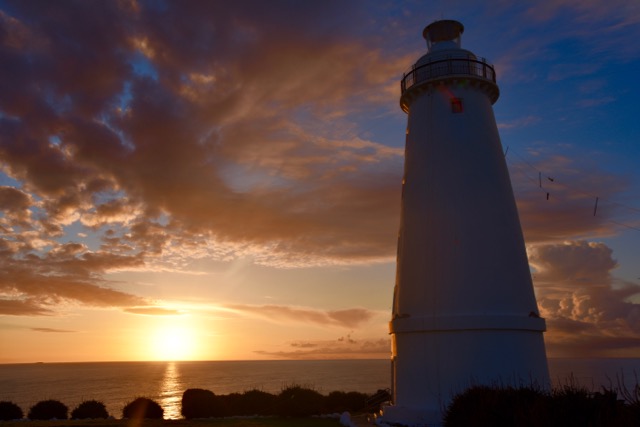
Monday morning’s sunrise was no less spectacular than that of the previous two mornings. It was a very calm, but very brisk morning at Cape Willoughby. There was a little bit of time for radio activity before packing up the gear and calling it quits for another ILLW event.
I made a handful of contacts on 40m as did John VK5EMI, whilst Andrew VK5CV made some contacts on 80m. It was very slow going with very long periods of CQ calls with no replies. But we did manage to have three more lighthouse contacts:
- VK3SRC, Queenscliff lighthouse AU-0051
- VK3SPL, Split Point lighthouse AU-0032
- VK7LH, Low Head lighthouse AU-0048
And we also made contact with Neil VK4HNS who was portable at the Kwiambi National Park VKFF-0274. Another 20 QSOs were added to the VK5CWL log on Monday morning. Our final contact as VK5CWL for the ILLW 2016 was with Peter VK5AWP, with John VK5EMI at the mic at VK5CWL.
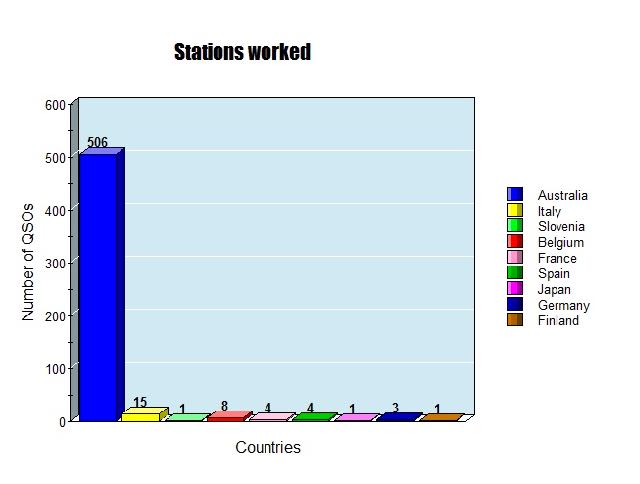
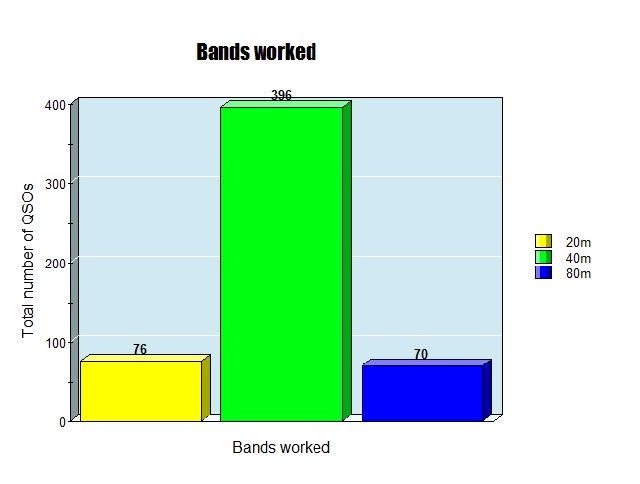
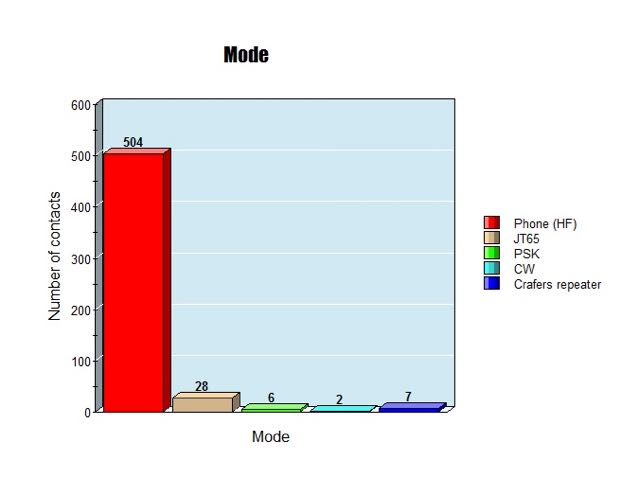
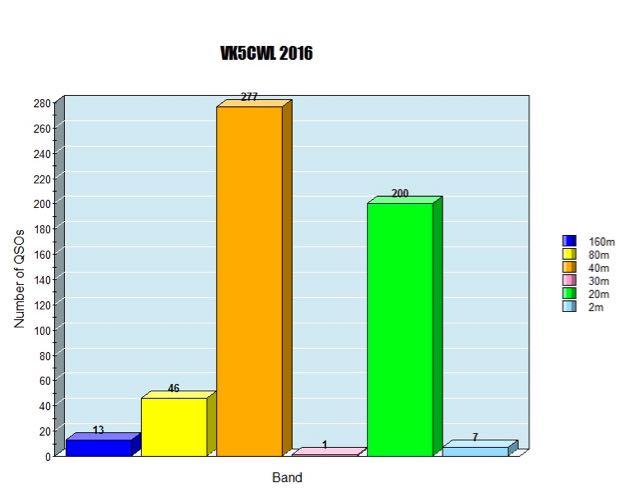
Our final QSO count for the 2016 ILLW was 547 contacts on the 160, 80, 40, 30, 20 and 2 m bands, on PHONE, CW, PSK, and JT65. We worked a total of 36 different countries. A breakdown of our contacts is as follows……
- 504- PHONE (HF)
- 28 – JT65
- 6 – PSK31
- 2 – CW
- 7 – 2m Crafers repeater
Whilst at Cape Willoughby we tried as many bands as possible. We even gave 10m and 15m a go, but despite numerous CQ calls at various times of the day, we had no takers. Most of our activity, not surprising, was on the 40m band with a total of 277 QSOs. Followed by 20m, where a lot of DX in Europe was worked. And then followed by 80m. But we did have some fun on 160m, making 13 contacts into VK2, VK3, VK5, and VK6.
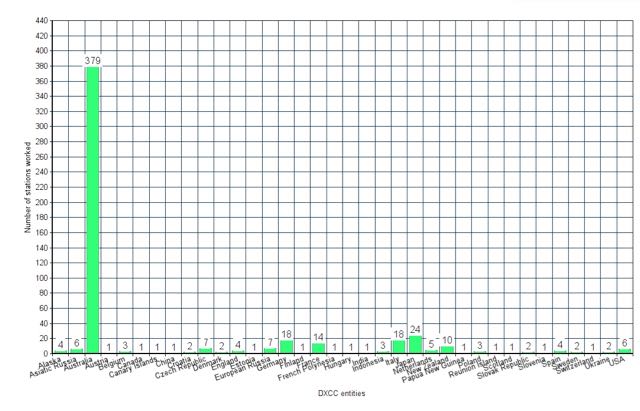
A total of 36 different DXCC entites were logged. Countries (DXCC entities) worked were as follows:
- Alaska
- Asiatic Russia
- Australia
- Austria
- Belgium
- Canada
- Canary Islands
- China
- Croatia
- Czech Republic
- Denmark
- England
- Estonia
- European Russia
- Germany
- Finland
- France
- French Polynesia
- Hungary
- India
- Indonesia
- Italy
- Japan
- Netherlands
- New Zealand
- Papua New Guinea
- Poland
- Reunion Island
- Scotland
- Slovak Republic
- Slovenia
- Spain
- Sweden
- Switzerland
- Ukraine
- USA
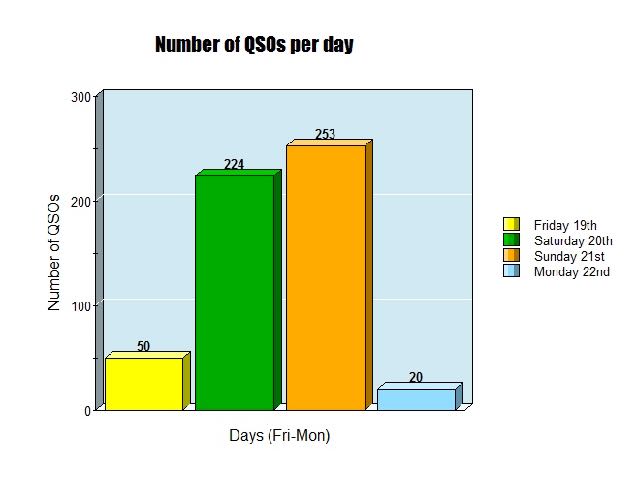
As was to be expected most of our activity was over the weekend itself – Saturday and Sunday. A total of 224 QSOs were made on Saturday and 253 on Sunday. See the bar graph below….
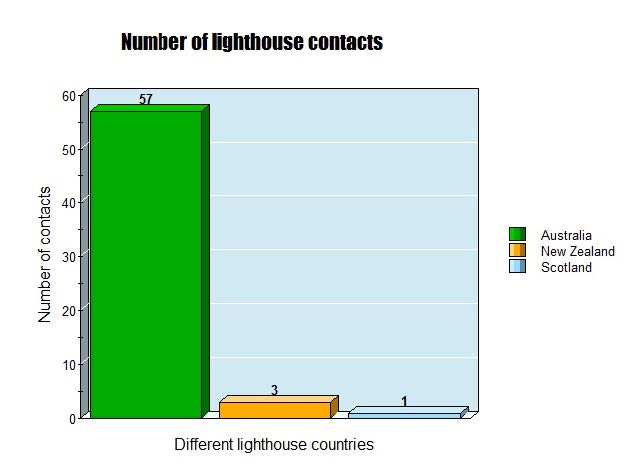
We made a total of 61 contacts with other lighthouses around the world. The majority of those were in Australia (a total of 57), but we did work 3 lighthouses in New Zealand, and one in Scotland. Of the 65 Australian lighthouses that were listed as entrants for 2016 on the ILLW page, we worked 31 of them. Almost 50%. Along with three more that were not recorded on the list.
All in all, another very enjoyable and successful ILLW weekend at Cape Willoughby. Thanks as always to the DEWNR staff at Cape Willoughby. They cannot help enough. We highly recommend a stay here. And also thanks to Transport SA for allowing us to use the railing of the lighthouse.
Please remember our website which can be found at…..
http://vk5cwl.weebly.com/
If you would like a QSL card for VK5CWL, we will QSL via the Bureau, Direct, eQSL and LOTW. Until next year.
References.
Government of South Australia, 2016, <http://www.environment.sa.gov.au/parks/Find_a_Park/Browse_by_region/kangaroo-island/cape-willoughby-conservation-park>, viewed 17th August 2016
Wikipedia, 2016, <https://en.wikipedia.org/wiki/Cape_Willoughby_Conservation_Park>, viewed 17th August 2016