Darke Peak silo VK-DRK5

I had hoped to activate Darke Peak next for the Summits On The Air (SOTA) program, but I was running short of time. So instead I activated the Darke Peak silo VK-DRK5.

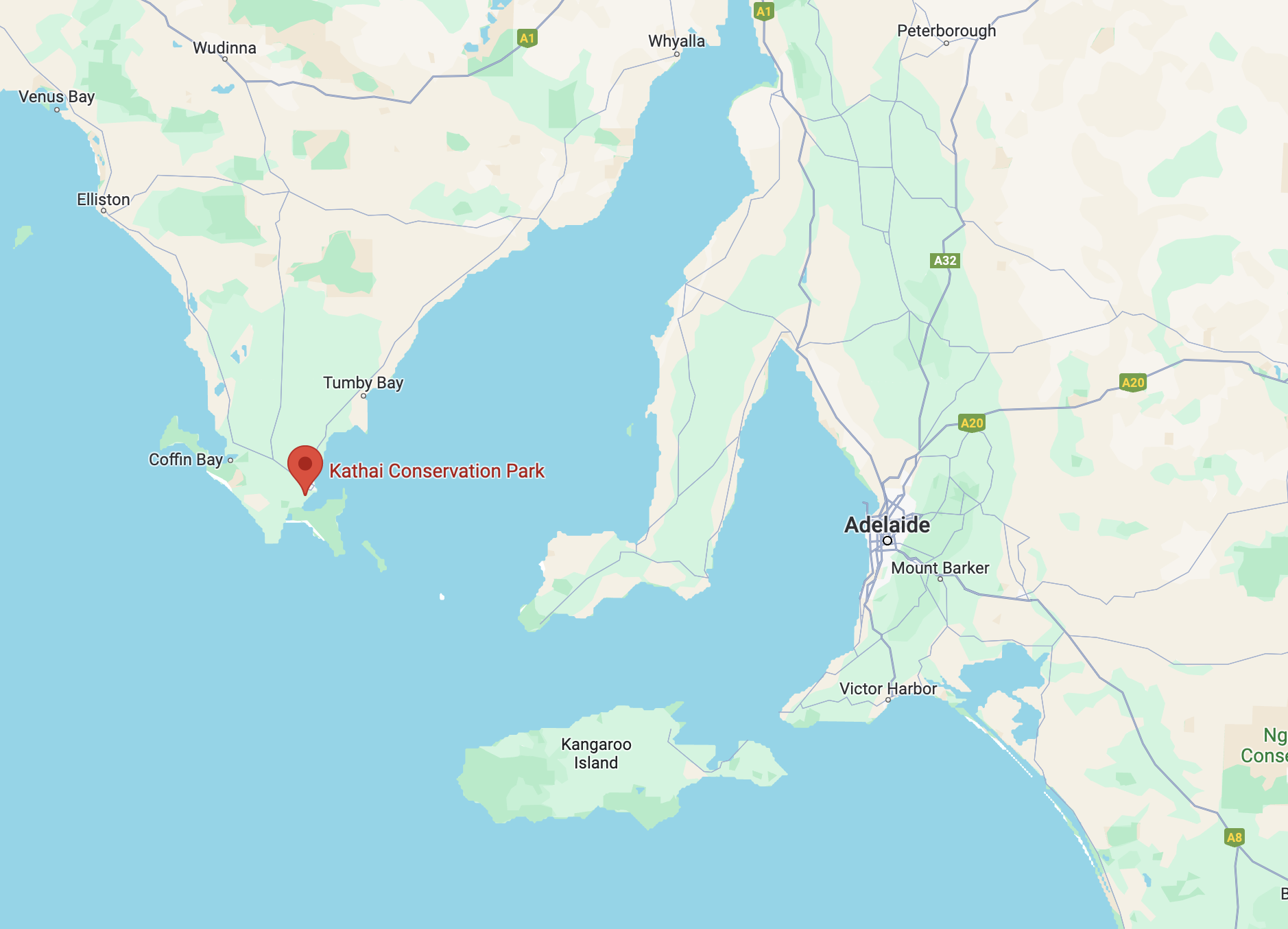
Darke Peak is located on the Eyre Peninsula, about 516 km by road from the city of Adelaide.

Darke Peak is a small agricultural town in central Eyre Peninsula. The Hundred of Darke was proclaimed on the 3rd day of February 1910. The town of Carappee (now Darke Peak) was proclaimed on the 4th day of June 1914. The town’s school opened in 1917. (SA Heritage Register) (SA Place Names 2012)

Above:- the proclamation of the town. Image c/o SA Govt Gazette, June 4th 1914.

The town of Carappee had its name changed on the 19th day of September 1940.

Above:- Article from the Chronicle, Adelaide, Thu 1 Aug 1940. Image c/o Trove.

The town is named in honour of John Charles Darke, an explorer and surveyor. He was born in 1806 in Hereford, England. He emigrated as a young man to Australia in 1824 and arrived in Van Diemen’s Land aboard the Heroine.

Above:- John Darke. Image c/o John Charles Darke Australian Explorer Facebook page.

In 1826 he was awarded 500 acres of land for his assistance in the pursuit of two bushrangers, Thomas Jeffries and Matthew Brady @ Gentleman Brady. He earned this alias due to his good treatment and manners when robbing his victims. In 1827 his father arrived in Van Diemens Land and took up land adjoining his son’s property. (Aust Dict Biography 2024) (Gentleman Brady 1932)

Above:- Bushranger Matthew Brady. Image c/o Wikipedia.

Darke did not take to the farming life and instead became an assistant surveyor in the Survey Department. He then became a private land agent and surveyor. By the mid 1830s Darke had moved to Victoria where he became surveyor to the Port Phillip Association. He assisted in laying out the city of Melbourne in 1837 and also Geelong and Williamstown. In 1838 he joined the South Australia Survey Department of South Australia. (Aust Dict Biography 2024) (Place Names 2012)

In 1843 ‘Darke’s North-Western Exploratory Expedition’ was organised for the purpose of searching for good country east of Anxious Bay and Coffin Bay. Two sailors who had run away from a whaling ship had reported the good land. On the 12th day of April 1844, Darke sailed on the Governor Gawler to Port Lincoln from Adelaide. On the 29th day of August 1844, the party of 4 led by Darke left Port Lincoln. The party comprised surveyor John Henry Theakston who was Darke’s friend and second in command. There were two other men hired as tent keepers and cooks, one called James Howard. (Aust DIct Biography 2024) (Darke’s NW Expl Expedition 9 Nov 1844) (JC Darke Expedition 1944) (Monuments Australia 2024) (Place Names 2012)

The party passed Lake Wangary to Wedge Hill and Wudinna Hill. In his journal Darke described the land as ‘excellent sheep and cattle country.‘ The party did not sight any suitable land beyond the Gawler Ranges and turned back. (Aust DIct Biography 2024) (JC Darke Expedition 1944)

On the 23rd day of October 1844, near Waddikee Rocks (northwest of Darke Peak), Darke was speared by Aboriginals and seriously injured. He sustained three spear wounds. (Aust Dict Biography 2024) (Darke’s NW Expl Expedition 9 Nov 1844)

Above:- The murder of John Darke. Image c/o John Charles Darke Australian Explorer Facebook page.

Sadly Darke died from his injuries the following day on the 24th day of October 1844, five minutes before midnight. He was buried at the foot of what is now known as Darke Peak. (Darke’s NW Expl Expedition 9 Nov 1844)

In his affidavit Theakston stated:

“Natives had accompanied our party the whole of the proceeding dat, and Mr. Darke has made presents to them of tools, & c. also of sugar and damper, the latter of which they would not eat.” (Darke’s NW Expl Expedition 9 Nov 1844)

In the South Australian Register, Saturday 9th November 1844, Charles Driver the Government Resident at Port Lincoln stated:

“Sir-It is my mournful duty to apprise you, for the information of his Excellency the Governor, that Mr. Darke, who, with an exploring party, left Port Lincoln on the 29th August last, died on the 24th ultimo, from injuries inflicted by natives unknown….” (Darke’s NW Expl Expedition 1844)

Above:- Article from the South Australian, Fri 8 Nov 1844. Image c/o Trove.

Darke’s final diary entry was on the 22nd day of October 1844:

“Accompanied by the [three] blacks who were joined by nine others, I proceeded to the waterhole, about three miles, but more easterly than our course; and came about 2 o’clock to a large gritstone rock where I found abundance of feed and water on a plain about 200 yards wide by half a mile long, surrounded by thick scrub. The natives accompanied us until just before encamping. I gave them all I could spare for taking us to the water. They seemed very friendly disposed…” (Darke’s NW Expl Expedition 13 Nov 1844)

Darke’s diary continues in the hand of Theakston who wrote:

“It is with sorrow I am compelled to continue the hourn al of Mr Darke, he having been speared by three natives – whom he had treated the most kind manner the day previous……….I here dressed the wounds of Mr Darke, and bled him, but found his extremities getting cold, and I informed him. I feared the event. At 10 o’clock he told me he was dying, that mortification had taken place, he was out of pain; he gave me his last commands and died at five minutes to twelve, quite calm to the last minute. I carried the body of Mr Darke to the Table Topped Peaks and buried him on a small grassy plain at the foot of them, in a grave five feet deep.” (Darke’s NW Expl Expedition 13 Nov 1844)

It was reported in 1944 that one theory for the hostile action was that there had been an encroachment on a ceremonial ground. Another account was that there was a plan to kill all of the party, but by Theakston firing a shot, prevented the plan from being carried out. (JC Darke Expedition 1944)

In 1865 surveyor Thomas Evans named the peak of Darke Peak in honour of John Charles Darke. He had been performing a trigonometrical survey of the Gawler Ranges. (Cleve 2020)

The prominent building in the town is the Darke Peak Hotel.

Across the road from the hotel is the ‘Hellbent Hotel’. It was built in 1980 so that locals could continue to celebrate following the closure for the night of the Darke Peak Hotel.

Alongside the Hellbent Hotel is an information shelter with lots of information about famous Darke Peak locals including John Darke, softballer Simone Morrow and AFL football Brett Chalmers.

There is also Erica the Emua sculpture, the work of Peter ‘Turtle’ Crosby.

The video below tells the story of Eric @ Erica

The Darke Peak silos are located on the western side of Balumbah-Kinnard Road (the main street of Darke Peak).

I operated from the 4WD, running the Icom IC-7300, 100 watts, and the Codan 9350 antenna with the 1.5 metre stainless steel whip.

I worked the following stations on 40m SSB:-

  1. VK5MAZ
  2. VK2IO/p (SOTA VK2/ ST-001)
  3. VK5HS
  4. VK8ZWM
  5. VK5TUX
  6. VK5KLV
  7. VK3PF
  8. VK5FB
  9. VK3APJ
  10. VK2YW

I worked the following stations on 20m SSB:-

  1. VK3PF
  2. VK1AO
  3. VK2MET
  4. VK5MAZ
  5. VK3EJ
  6. VK3GJG
  7. VK7HBR
  8. VK3CEO
  9. VK3UCD
  10. VK7XX
  11. VK3BEL
  12. VK4NH
  13. VK4DXA
  14. VK7AAE
  15. OH2CGU
  16. VK2VIN

Following the activation I visited the gravesite of John Charles Darke.

There are some excellent views of the Darke Range from this spot.

References.

  1. Dcceew.gov.au. (2023). Collaborative Australian Protected Areas Database (CAPAD) 2022 – DCCEEW. [online] Available at: https://www.dcceew.gov.au/environment/land/nrs/science/capad/2022.
  2. Cleve, D.C. of (2020). LOCAL HISTORY. [online] District Council of Cleve. Available at: https://www.cleve.sa.gov.au/community/history. [Accessed 3 Jun. 2024].
  3. DARKE’S NORTH-WESTERN EXPLORATORY EXPEDITION. (1844). South Australian Register. [online] 9 Nov. Available at: https://trove.nla.gov.au/newspaper/article/73841911?searchTerm=john%20darke [Accessed 3 Jun. 2024].
  4. ‌DARKE’S NORTH WESTERN EXPLORATORY EXPEDITION. (1844). South Australian Register. [online] 13 Nov. Available at: https://trove.nla.gov.au/newspaper/article/27448479?searchTerm=john%20darke [Accessed 3 Jun. 2024].
    ‌‘GENTLEMAN BRADY.’ (1932). Queensland Times. [online] 26 Feb. Available at: https://trove.nla.gov.au/newspaper/article/113204554 [Accessed 3 Jun. 2024].
  5. ‌monumentaustralia.org.au. (n.d.). Centenary of John Darke`s Expedition | Monument Australia. [online] Available at: https://monumentaustralia.org.au/themes/people/exploration/display/117413-centenary-of-john-darke%60s-expedition [Accessed 3 Jun. 2024].
  6. ‌published.collections.slsa.sa.gov.au. (n.d.). A Compendium of the Place Names of South Australia. [online] Available at: https://published.collections.slsa.sa.gov.au/placenamesofsouthaustralia/ [Accessed 2 Jun. 2024].‌
  7. The J. C. Darke Expedition, 1844. (1944). Port Lincoln Times. [online] 7 Sep. Available at: https://trove.nla.gov.au/newspaper/article/99912031 [Accessed 3 Jun. 2024].
  8. South Australian Heritage Register. Department of Environment, Water and Natural Resources.
  9. Stancombe, G.H. (n.d.). Darke, John Charles (1806–1844). [online] Australian Dictionary of Biography. Available at: https://adb.anu.edu.au/biography/darke-john-charles-1955. [Accessed 2 Jun. 2024].‌‌

Caralue Bluff Conservation Park VKFF-1015 and Caralue Bluff VK5/ SW-002

My next activation for Friday 12th April 2024 was the Caralue Bluff Conservation Park VKFF-1015 and Caralue Bluff VK-SW-002. The park and summit are located about 41 km (by road) southwest of Kimba and about 505 km from Adelaide.

Above:- Map showing the location of Caralue Bluff. Map c/o Google Maps.

After leaving the Tola Conservation Reserve I drove south on Balumbah Hill Road until reaching the Eyre Highway. I then turned left onto Balumbah-Kinnard Road and headed south. Along the way, I was able to clearly see Caralue Bluff off in the distance.

Caralue is an aboriginal word with uncertain meanings. Some sources claim it is an aboriginal word for curlews, whilst the SA Museum claims it means ‘long way’ or ‘far off’. (Place Names 2012)

The summit was named in 1864 by a surveyor, Thomas Evans (b. 1819. d. 1882). His son William Greig Evans was also a surveyor and it is believed that he surveyed and subdivided more land than any other surveyor in South Australia. Caralue Bluff Run was held by G. Standley from 1875. (Monuments Australia 2024) (Place Names 2012)

Above:- The headstone of Thomas Evans at the North Road cemetery. Image c/o ancestry.com.au

The Hundred of Caralue was proclaimed on the 26th day of July 1917. The town of Caralue was proclaimed on the 16th day of December 1926. In 1929 the Caralue School opened and closed in 1942. (Place Names 2012)

Above:- Article from the Kimba Dispatch, Fri 15 Mar 1929. Image c/o Trove.

Caralue Bluff qualifies for the Summits On The Air (SOTA) program. It is 468 metres above sea level and is worth just 1 point. The only prior activation of the summit was by myself back in June 2013.

Above:- An aerial view of Caralue Bluff. Image c/o Google Maps.

The Caralue Bluff Conservation Park is about 2,157 hectares in size. It is south of the Eyre Highway between Cows Head Corner Road and Pine Flat Road. (CAPAD 2022)

Above:- An aerial view of the Caralue Bluff Conservation Park showing the park’s boundaries and the SOTA summit. Image c/o Google Earth.

The conservation park was first known as the Caralue Bluff Conservation Reserve, established on the 9th day of December 1993. It was formerly a part of the Caralue Bluff Water Conservation Reserve. On the 6th day of September 2012, the land forming the conservation reserve and an adjacent parcel of land was constituted as the Caralue Bluff Conservation Park. (Wikipedia 2024)

To reach the summit I followed a dirt track which is opposite the Caralue Reservoir. There is a gate but it is not locked.

I followed the track until I reached another closed but unlocked gate.

As I drove along the track I could see the Waddikee silos off in the distance.

As I drove along the track I could see up towards the top of the summit and the rugged granite face of the summit.

There are telecommunications towers on the top of the summit and the equipment did throw off a bit of interference on the 40m band.

There is a trigonometrical point (trig point) and a rock cairn at the top of the summit.

Whilst I was activating a pair of Wedge Tailed Eagles glided above me. Absolutely majestic birds. They are the largest bird of prey in Australia with a wingspan of up to 2.84 metres.

It was a beautiful day with some magnificent views to enjoy of the surrounding countryside including the nearby summits of Darke Peak and Carappee Hill.

The area around the communications equipment is not within the park, so I set up a short distance down the dirt track within the SOTA activation zone. I ran the Yaesu FT857, 40 watts and the 20/40/80m linked dipole. The 20m band was very quiet, but there was a strength 7 noise floor on the 40m band.

Above:- The area around the communications equipment at the summit. Image c/o Google Earth.

I worked the following stations on 20m SSB:-

  1. VK5MAZ
  2. VK1DI
  3. VK7XX
  4. VK3PF
  5. Vk3KAI
  6. VK3BWS
  7. VK7HBR
  8. VK4EMP
  9. VK4TI
  10. VK1AO
  11. VK2MET
  12. ZL1TM
  13. VK3VIN
  14. VK4NH
  15. VK4DXA
  16. VK3EJ
  17. ZL3MR
  18. VK2YW
  19. VK6NU
  20. VK3ZSC
  21. VK7AAE
  22. VK3BEL
  23. VK2KEV
  24. VK3DL
  25. ZL3ASN
  26. VK2VW
  27. VK2HFI
  28. VK2AKA
  29. VK2BUG
  30. VK2EXA
  31. VK4PDX
  32. VK5QA
  33. VK3CLD
  34. VK7RC
  35. Vk3ANL
  36. VK1ARQ
  37. VK4EHI

I worked the following stations on 40m SSB:-

  1. VK5LA
  2. VK5KAW
  3. VK5MAZ
  4. VK5TUX
  5. VK3BBB
  6. VK2CCP
  7. VK5KBJ
  8. VK5DW
  9. VK5AAF
  10. VK5CZ
  11. VK3MTT
  12. VK3BEL
  13. VK5WU
  14. VKk3PF
  15. VK3KAI
  16. VK2UXO
  17. VK3OT
  18. VK5NM

References.

  1. Dcceew.gov.au. (2023). Collaborative Australian Protected Areas Database (CAPAD) 2022 – DCCEEW. [online] Available at: https://www.dcceew.gov.au/environment/land/nrs/science/capad/2022.
  2. monumentaustralia.org.au. (n.d.). William Greig Evans | Monument Australia. [online] Available at: https://monumentaustralia.org.au/themes/people/government—colonial/display/116962-william-greig-evans- [Accessed 2 Jun. 2024].
  3. ‌published.collections.slsa.sa.gov.au. (n.d.). A Compendium of the Place Names of South Australia. [online] Available at: https://published.collections.slsa.sa.gov.au/placenamesofsouthaustralia/ [Accessed 2 Jun. 2024].‌
  4. Wikipedia. (2022). Caralue Bluff Conservation Park. [online] Available at: https://en.wikipedia.org/wiki/Caralue_Bluff_Conservation_Park [Accessed 2 Jun. 2024].

Tola Conservation Reserve VKFF-1753

It was now day three of my trip, Friday 12th April 2024. Before heading out to activate a park I had a final look around Kimba.

My first stop was the Kimba Pioneer Memorial Arch on Buckleboo Road at the Recreation Reserve. The Kimba area was first settled in the 1870s. The memorial arch commemorates the courage and faith of the early pioneers of Kimba. (Monument Australia 2024)

At the recreation reserve, you can find some excellent murals. The first is called ‘Sharing our History’ and is dedicated to the pioneers of the Kimba district. It was pained in August 2001. The two other murals were painted by Neil Swanson and is dedicated to local wool/sheep growers. (Kimba District Council 2024)

I then drove up to Whites Knob Lookout which is an ironstone conglomerate just to the northwest of Kimba on Tola Road. There is a statue of explorer Edward John Eyre and an indigenous man at the top of the lookout. It was erected in November 2011 and was sculpted by Roland Weight and Marcus Possingham. (Kimba District Council 2024)

I then drove out to the Kimba Aerodrome and viewed the monument to honour Leslie ‘Allen’ Venning. He owned a private plane and conducted an emergency aerial service for the Kimba district for many years. In 1954 Mr Venning obtained his flight radio telephone operator licence and his full pilot licence. On that same day, he purchased an Auster plane which logged over 130 flights, several of which were used for emergency purposes. Mr Venning sold the plane and purchased another Auster followed by a Cessna. These planes logged 152 and 20 flights respectively. In the case of emergencies, Mr Venning removed the seats of his plane to accommodate a stretcher. Along with his brothers, Mr. Venning was involved in the preparation of the new aerodrome site in the 1950s. At this site Mr Venning built his own aerodrome hangar.

I then visited the Institute Memorial Gardens. The cross and Honour Roll erected in the gardens is in memory of the men and women who served Australia. The garden also features a memorial plaque erected to honour the pioneers and early settlers of the Kimba district.

Adjacent is the Kimba mosaic which showcases the eleven native Australian species found in the Kimba region. It includes the Red-capped robin, Chalky Wattle, Crested Dragon, Sandhill dunnart, Wooly-glandular daisy bush, Thorny Devil, Scarlet-chested Parrot, Galah, Major Mitchell Cockatoo, Bottlebrush hakea, and Malleefowl.

The area of Tola was named after Tola Tank on section 34, Hundred of Solomon. The Tola School opened in 1924 and closed in 1945. All that remains of the school is an old shed and some tyres used as part of a playground. (Place Names 2012)

The reserve is located on the corner of Tola Road and Balumba Hill Road.

Above:- An aerial view of the Tola Conservation Reserve. Image c/o Google Earth.

The Tola Conservation Reserve is about 30 hectares in size and was proclaimed on the 28th day of January 1988. (CAPAD 2022) (Place Names 2012)

I worked the following stations on 40m SSB:-

  1. VK5MAZ
  2. VK5GY
  3. VK3PF
  4. VK3KAI
  5. VK3APJ
  6. VK5NM/p
  7. VK5TUX
  8. VK3BBB
  9. VK2CCP
  10. VK5HS
  11. VK3CEO
  12. VK2IO/p (Tallaganda National Park VKFF-0474 & SOTA VK2/ SM-049)
  13. VK3VIN
  14. VK3MTT
  15. VK5FB
  16. VK5CZ
  17. VK3YV
  18. VK3TNL
  19. VK5AAY
  20. VK5HMB
  21. VK3PWG

I worked the following stations on 20m SSB:-

  1. VK2IO/p (Tallaganda National Park VKFF-0474 & VK2/ SM-049)
  2. VK3CEO
  3. VK5MAZ
  4. VK1AO
  5. VK2MET
  6. VK4NH
  7. VK4DXA
  8. VK3BEL
  9. VK4EHI
  10. VK3PF
  11. VK3KAI
  12. VK6NU
  13. VK3PWG
  14. VK3TKK
  15. VK7XX
  16. VK2EXA
  17. VK2YW
  18. VK8RR
  19. VK4MUD
  20. VK2GSP
  21. VK4EMP
  22. VK4TI
  23. VK7HBR
  24. VK2VAR
  25. VK2GOM
  26. KG5CIK
  27. VK3EJ
  28. VK4HG
  29. VK3DL
  30. ZL1TM
  31. VK7AAE
  32. VK2COS

References.

  1. Dcceew.gov.au. (2023). Collaborative Australian Protected Areas Database (CAPAD) 2022 – DCCEEW. [online] Available at: https://www.dcceew.gov.au/environment/land/nrs/science/capad/2022.
  2. Kimba, D.C. of (2019). Kimba District Council. [online] Kimba District Council. Available at: https://www.kimba.sa.gov.au [Accessed 1 Jun. 2024].
  3. ‌monumentaustralia.org.au. (n.d.). Kimba Pioneer Memorial | Monument Australia. [online] Available at: https://monumentaustralia.org.au/themes/landscape/settlement/display/116651-kimba-pioneer-memorial [Accessed 1 Jun. 2024].
  4. ‌published.collections.slsa.sa.gov.au. (n.d.). A Compendium of the Place Names of South Australia. [online] Available at: https://published.collections.slsa.sa.gov.au/placenamesofsouthaustralia/ [Accessed 31 May 2024].‌

Pinkawillinie Reservoir Conservation Reserve VKFF-1740

My final park for Thursday 11th April 2024 was the Pinkawillinie Reservoir Conservation Reserve VKFF-1740. The reserve is located about 36 km northwest of Kimba and about 499 km from Adelaide.

Above:- Map showing the location of Pinkawillinie Reservoir Conservation Reserve. Map c/o Google Maps.

Pinkawillinie is a corruption of the Aboriginal word pingknoweileni meaning ‘place of many rabbit-footed bandicoot burrows’.

From 1863 Gregory Hawson (b. 1823. d. 1885) held the ‘Pinkawillinie Run’. He emigrated to Australia with his parents Henry Hawson and Elizabeth Emlyn Hawson nee Cowell in 1839 from England aboard their own ship Abeona. They were among the first settlers on the Eyre Peninsula in South Australia. They took up 6,000 acres of land including current day Port Lincoln and built their first homestead at Kirton Point. Gregory Hawson took up land north of Kirton Point and established the Polda sheep station at Mount Wedge. (History Trust 2024)

Above:- Gregory Hawson. Image c/o State Library South Australia.

The Hundred of Pinkawillinie was proclaimed on the 1st day of June 1922. In 1926 the Pinkawillinie School was opened. It closed in 1968. The Pinkawillinie South School opened in 1930 and closed in 1947. (Place Names 2012)

Above:- Article from the News Adelaide, Wed 24 Apr 1929. Image c/o Trove

The northern boundary for the Pinkawillinie Reservoir Conservation Reserve is Buckleboo Hundred Line Road. The southern part of the park is accessed via Pinkawillinie Reservoir Road which runs off Johnson Road.

Above:- Aerial view of the Pinkawillinie Reservoir Conservation Reserve. Image c/o Google Earth.

The reserve is about 279 hectares in size and was established on the 14th day of May 1987. (CAPAD 2022)

After the activation I visited the site of the old Pinkawillinie school (1926-1968)

Above:- The Pinkawillinie School. Image c/o Kimba Konnections Facebook.

It was starting to get dark and as I travelled back to Kimba I enjoyed watching a magnificent sunset.

Once back in Kimba I headed to the Kimba Hotel and enjoyed another very nice meal and some refreshments.

I worked the following stations on 20m SSB:-

  1. VK2HAK
  2. VK3ANL
  3. VK3SQ
  4. VK2BD
  5. VK3CMA/p (Whroo Natural Features Reserve VKFF-2229)
  6. VK1AO
  7. VK2MET
  8. KG5CIK
  9. VK2WE
  10. VK3CWF
  11. VK2VW
  12. VK2HFI
  13. VK2AKA
  14. VK2BUG
  15. VK3DL
  16. ON3UA
  17. VK3PF
  18. VK3KAI
  19. OH2CGU
  20. VK5NFT
  21. DH4PSG
  22. VK3VIN
  23. VK3APJ
  24. VK1DI
  25. OH6GAZ
  26. KG8P
  27. DL5EBG
  28. IW2BNA
  29. IK1GPG
  30. OM5TX
  31. VK4HAT
  32. VK3SX
  33. F6EOC
  34. VK3EJ
  35. OH1MM
  36. ON4VT
  37. VK4SMA
  38. F4ILH
  39. VK4EMP
  40. VK4TI
  41. VK6MU
  42. VK3CQC
  43. VK3UAO
  44. VK3CEO
  45. VK3BNC
  46. DL2ND
  47. JF7RJM
  48. VK5QA
  49. VK3CLD
  50. VK2EXA
  51. VK4NH
  52. VK4DXA
  53. VK4XRC
  54. VK5AYL

I worked the following stations on 40m SSB:-

  1. VK4HAT
  2. VK3PF
  3. VK3EJ
  4. VK5HS
  5. VK5AAF
  6. VK5FR/m
  7. VK3CEO
  8. VK5FANA
  9. VK5JDS
  10. VK5LA
  11. VK5KAW
  12. VK5MAZ
  13. VK5IS
  14. VK5KPR
  15. VK5DW
  16. VK5TUX
  17. VK3APJ
  18. VK3BBB
  19. VK2CCP
  20. VK5TC/m
  21. VK4JM
  22. VK3SPG
  23. VK3ATA
  24. VK5SFA
  25. VK2CDB
  26. VK5GY
  27. VK5KLV
  28. VK3SMW
  29. VK5AYL
  30. VK1AO
  31. VK21MET
  32. VK3NFS
  33. VK3DL
  34. VK4KD
  35. VK5AMH/m
  36. VK3QH
  37. VK2IO/p (Caniambo Nature Conservation Reserve VKFF-2059)
  38. VK4EMP
  39. VK4TI
  40. VK2MPT
  41. VK3SX
  42. VK4NH
  43. VK4DXA
  44. VK3HJW
  45. VK2COS
  46. VK4PDX
  47. VK4SMA
  48. VK3VIN
  49. VK6LTC
  50. VK3UAO
  51. VK3BSF
  52. VK1CHW
  53. VK1MA
  54. VK7WUU
  55. VK3PWG

References.

  1. Dcceew.gov.au. (2023). Collaborative Australian Protected Areas Database (CAPAD) 2022 – DCCEEW. [online] Available at: https://www.dcceew.gov.au/environment/land/nrs/science/capad/2022.
  2. History Trust. (n.d.). Portrait of Gregory Hawson. [online] Available at: https://collections.history.sa.gov.au/nodes/view/34585?keywords= [Accessed 30 May 2024].
  3. ‌published.collections.slsa.sa.gov.au. (n.d.). A Compendium of the Place Names of South Australia. [online] Available at: https://published.collections.slsa.sa.gov.au/placenamesofsouthaustralia/ [Accessed 30 May 2024].‌

Moongi Conservation Reserve VKFF-1728

My fifth park for Thursday 11th April 2024 was the Moongi Conservation Reserve VKFF-1728. The park is about 41 km northwest of Kimba and about 504 km from Adelaide.

Above:- Map showing the location of the Moongi Conservation Reserve. Map c/o Google Maps.

Moongi is an aboriginal word meaning ‘good place’. The town of Moongi was proclaimed on the 17th day of March 1932. The town ceased to exist by 1981. (Place Names 2012)

Above:- A plan of the town of Moongi. Image c/o Trove.

In 1928 the Moongi school was opened. It closed in 1946. The Methodist Hall at Moongi was opened in 1932. (Chronicle 1932) (Place Names 2012) (Pt Lincoln Times 1928).

Above:- Moongi school – teacher and pupils. Image c/o Chronicle, Adelaide, Thu 23 Jul 1931.

The Moongi Conservation Reserve is about 232 hectares in size and was proclaimed on the 13th day of September 1990. (CAPAD 2022)

The reserve incorporates the old town of Moongi and part of the old railway line.

Above:- An aerial view of the Moongi Conservation Reserve. Image c/o Google Earth.

I worked the following stations on 20m SSB:-

  1. W5IB
  2. VK7XX
  3. ZL2GLG
  4. VK2COS
  5. VK4NH
  6. VK4DXA
  7. VK5QA/p
  8. VK3CLD/p
  9. VK4PDX
  10. VK4XCS
  11. VK4NBP
  12. ZL2BAQ
  13. VK3SX
  14. VK2HDT
  15. VK4EI
  16. VK3RH
  17. VK4EMP
  18. VK4TI
  19. VK7AAE
  20. Vk3PWG
  21. VK3TKK
  22. VK3PF
  23. VK3KAI
  24. VK3SQ
  25. VK2BD
  26. OH6GAZ
  27. UT5PI
  28. VK2EXA
  29. IZ5JMZ
  30. VK1AO
  31. VK2MET
  32. OH1MM
  33. KG5CIK
  34. VK2VW
  35. VK2HFI
  36. Vk2AKA
  37. Vk2BUG
  38. VK7HBR
  39. Vk3APJ
  40. ZL1TM
  41. PD2BA
  42. IW2BNA
  43. IW4JPK
  44. VK3EH
  45. ON4VT
  46. VK1ARQ
  47. IK2WSO
  48. IZ2SDK
  49. EA3MP
  50. VK3CEO
  51. VK3DL
  52. VK5TUX
  53. VK3CEO
  54. VK3BBB
  55. VK2CCP
  56. VK5MK
  57. VK5AYL
  58. VK3PF
  59. VK5FR/m
  60. VK3MCK
  61. VK2HAK
  62. VK3IFR
  63. VK4NH
  64. VK4DXA
  65. VK3DL
  66. VK5GY
  67. VK3SPG
  68. VK3BEL

I worked the following stations on 40m SSB-

  1. VK4HAT
  2. VK5DU
  3. VK2EXA
  4. VK3APJ
  5. VK3SX
  6. VK7QP
  7. VK5IS
  8. VK3PJR
  9. VK2IO/p (Badja Swamps Nature Reserve VKFF-2515)

References.

  1. Dcceew.gov.au. (2023). Collaborative Australian Protected Areas Database (CAPAD) 2022 – DCCEEW. [online] Available at: https://www.dcceew.gov.au/environment/land/nrs/science/capad/2022.
  2. NEW SCHOOLS. (1928). Port Lincoln Times. [online] 6 Jul. Available at: https://trove.nla.gov.au/newspaper/article/96595678 [Accessed 29 May 2024].‌
  3. published.collections.slsa.sa.gov.au. (n.d.). A Compendium of the Place Names of South Australia. [online] Available at: https://published.collections.slsa.sa.gov.au/placenamesofsouthaustralia/ [Accessed 29 May 2024].‌
  4. REPORTS FROM RURAL CENTRES. (1932). Advertiser. [online] 19 Nov. Available at: https://trove.nla.gov.au/newspaper/article/35180195 [Accessed 29 May 2024].

Buckleboo Conservation Reserve VKFF-1689 and Buckleboo silo VK-BCO5

My next activation for Thursday 11th April 2024 was the Buckleboo Conservation Reserve VKFF-1689 and the Buckleboo silo VK-BCO5. Buckleboo is about 32 km northwest of Kimba and about 495 km from Adelaide.

Above:- Map showing the location of the Buckleboo Conservation Reserve. Map c/o Google Maps.

The Hundred of Buckleboo was proclaimed on the 1st day of June 1922. The name was adopted from an adjacent pastoral run held by John Love and R Love from 1864.

Above:- John Love. Image c/o State Library South Australia.

The government town of Buckleboo was surveyed in November 1924 and proclaimed on the 17th day of December 1925 by Tom Bridges, the Governor of South Australia. The Buckleboo school opened in 1929 and closed in 1949. (Place Names 2012)

Above:- Proclamation of the town of Buckleboo. Image c/o SA Govt Gazette, Dec 17, 1925.

The railway line reached Kimba in 1913, two years before the town was declared. In 1926 the line was extended north to Buckleboo. Until 2005, Buckleboo was the railhead for one branch of the Eyre Peninsula Railway, a narrow gauge railway that principally hauled grain via Kimba and Cummins to Port Lincoln for export. The last train to Buckleboo was in 2005. (Kimba Visitor Guide 2019)

Above:- Railway lines of the Eyre Peninsula, 1953. Image c/o Wikipedia.

The Buckleboo Conservation Reserve is separated into seven sections around the old town of Buckleboo.

Above:- An aerial view of the Buckleboo Conservation Reserve. Image c/o Google Earth.

The reserve is about 281 hectares in size and was established on the 13th day of September 1990. (CAPAD 2022)

The Buckleboo silos are located alongside the old railway line, between Donaldson Road and Railway Terrace.

I parked on Donaldson Road within the activation zone of the silo. I ran the Yaesu FT857, 40 watts, and the 20/40/80m linked dipole.

Above:- the activation zone at the Buckleboo silos. Image c/o SiOTA website.

I worked the following stations on 40m SSB:-

  1. VK8ZWM
  2. VK5MAZ
  3. Vk3PF
  4. VK2USH/p (Mole Creek Karst National Park VKFF-0322)
  5. VK3BBB
  6. VK2CCP
  7. VK2IO/p (Deua National Park VKFF-0138)
  8. VK5TUX
  9. VK5FB
  10. VK5IS
  11. VK5KLD
  12. VK5LA
  13. VK5KAW
  14. VK3CEO
  15. Vk3PJR
  16. VK3DL
  17. VK5AHA
  18. Vk5AUS
  19. VK5IU

I worked the following stations on 20m SSB:-

  1. VK7XX
  2. VK1AO
  3. VK2MET
  4. VK5MAZ
  5. VK7HBR
  6. VK3EJ
  7. Vk5QA/p
  8. VK3CLD/p
  9. KG5CIK
  10. VK4NH
  11. VK4DXA
  12. OH1MM
  13. VK3SQ
  14. VK2BD
  15. VK3PF
  16. VK3KAI
  17. VK3CEO
  18. VK6LK/p (Penguin Island Conservation Park VKFF-1436)
  19. VK3DL
  20. VK2VW
  21. VK2HFI
  22. VK2AKA
  23. Vk2BUG
  24. VK4MUD
  25. VK4EMP
  26. VK4TI
  27. VK4PDX
  28. VK3SX
  29. OH1PA
  30. VK2QM
  31. VK2IO/p (Deua National Park VKFF-0138)
  32. VK3EY
  33. VK3APJ

References.

  1. Dcceew.gov.au. (2023). Collaborative Australian Protected Areas Database (CAPAD) 2022 – DCCEEW. [online] Available at: https://www.dcceew.gov.au/environment/land/nrs/science/capad/2022.
  2. Kimba Visitor Guide, 2019
  3. published.collections.slsa.sa.gov.au. (n.d.). A Compendium of the Place Names of South Australia. [online] Available at: https://published.collections.slsa.sa.gov.au/placenamesofsouthaustralia/.

Cunyarie Conservation Reserve VKFF-1702

After leaving Cortinlye Conservation Reserve on Thursday 11th April 2024 I headed to my next park activation for the day, the Cunyarie Conservation Reserve VKFF-1702.

Above:- Map showing the location of the Cunyarie Conservation Reserve. Map c/o Google Maps.

Before reaching the park I stopped at the Bascombe Rocks Lookout on Buckleboo Road.

Bascombe Rocks is situated in the Hundred of Cortlinye and was first named Cortlinye Waterhole. Cortlinye is an aboriginal word for black oak, which portrayed the land at the time. The surveyors watered their horses at this location and the locales referred to it as ‘The Soak’. It always had water in it although only drinkable for stock. The area was named after Mr John Bascombe who held a pastoral lease in 1874 and the area was called the ‘Cortlinye Run.’

Above:- John Bascombe. Image c/o State Library South Australia.

Then Bascombe Rocks was situated on the dirt track to station country, where people would use it as a rest stop. Bascombe Rocks was also the site for some of the first tennis courts in the district. ‘The Rocks’ became part of the water runs for the government dam situated to the west.

Above:- Article from the Kimba Dispatch, Fri 6 Apr 1928. Image c/o Trove.

The lookout has a shelter with a table and benches, an information board, and a cairn.

There are some nice views of the surrounding countryside from the lookout.

Cunyarie is an aboriginal word for rockholes that are located in the district. The Hundred of Cunyarie was proclaimed on the 1st day of June 1922. The Cunyarie School opened in 1927 and closed in 1936. The town of Cunyarie was proclaimed on the 16th day of February 1928. (Place Names 2012)

Above:- A plan of Cunyarie. Image c/o Trove.

The Cunyarie Conservation Road is triangular in space and is bordered by Bucklebood Hundred Line Road to the south, Cunyarie Dam Road to the west, and Railway Line Road to the east.

Above:- Map showing the Cunyarie Conservation Reserve. Image c/o Google Earth.

The reserve is about 94 hectares in size and was established on the 24th day of October 1985. (CAPAD 2022)

I ran the Yaesu FT857, 40 watts, and the 20/40/80m linked dipole for this activation.

I worked the following stations on 40m SB:-

  1. VK5MAZ
  2. VK5TUX
  3. VK3PF
  4. VK3BBB
  5. VK2CCP
  6. VK5WU
  7. VK5HS
  8. VK5AYL
  9. VK3CEO
  10. VK2USH/p (Mole Creek Karst National Park VKFF-0322)
  11. VK8ZWM
  12. VK2YW
  13. VK5LA
  14. VK5KAW
  15. VK5FR/m
  16. VK5CZ
  17. VK5AHA

I worked the following stations on 20m SSB:-

  1. VK3SQ
  2. VK2BD
  3. VK7XX
  4. VK7HBR
  5. VK2IO/p (Gourock National Park VKFF-0212 & VK2/ SM-052)
  6. VK1AO
  7. VK2MET
  8. VK3APJ
  9. VK3PF
  10. VK4NH
  11. VK4DXA
  12. VK5QA
  13. VK3CLD
  14. VK3CEO
  15. VK3EJ
  16. VK7AAE
  17. VK3UAO
  18. KG5CIK
  19. VK4MUD
  20. VK5MAZ
  21. VK5CZ
  22. VK2VIN
  23. VK3ZLD
  24. VK2VAR
  25. VK2GOM
  26. VK2BW
  27. VK3SX
  28. VK2VW
  29. VK2HFI
  30. VK2AKA
  31. VK2BUG
  32. VK3ZSC
  33. VK1ARQ

References.

  1. Dcceew.gov.au. (2023). Collaborative Australian Protected Areas Database (CAPAD) 2022 – DCCEEW. [online] Available at: https://www.dcceew.gov.au/environment/land/nrs/science/capad/2022.
  2. published.collections.slsa.sa.gov.au. (n.d.). A Compendium of the Place Names of South Australia. [online] Available at: https://published.collections.slsa.sa.gov.au/placenamesofsouthaustralia/.

Cortlinye Conservation Reserve VKFF-1700

My second activation for Thursday 11th April 2024, was the Cortlinye Conservation Reserve VKFF-1700. The park is located about 13 km northwest of Kimba and about 475 km from Adelaide.

Above:- Map showing the location of the Cortlinye Conservation Reserve. Map c/o Google Maps.

Cortlinye is an aboriginal word meaning ‘black oak’. The Cortlinye Run was held by John Bascome (b. 1863. d. 1929( during the 1870s.

Above:- John Bascome. Image c/o State Library SA.

The Hundred of Cortlinye was proclaimed on the 1st day of October 1914. In 1922 the Cortlinye School was opened. It closed in 1946. In 1920 the Cortlinye East School opened. It closed in 1942. In 1926 the Cortlinye South School opened in 1926. It closed in 1941. (Place Names 2012)

Above:- Article from the Kimba Dispatch, Fri 9 Dec 1938. Image c/o Trove.

The Cortlinye Conservation Reserve is located on the western and eastern side of Buckleboo Road near Emu Rocks Road.

Above:- An aerial view of the Cortlinye Conservation Reserve. Image c/o Google Earth.

The reserve is about 208 hectares in size and was established on the 12th day of November 1987. (CAPAD 2022)

I ran the Yaesu FT-857, 40 watts, and the 20/40/80m linked dipole for this activation. I set up near the junction of Emu Rocks Road and Buckleboo Road.

I worked the following stations on 40m SSB:-

  1. VK5MAZ
  2. VK3APJ
  3. VK5TUX
  4. VK5AAF
  5. VK3PF/m
  6. VK3YV/p (Mitchell River National Park VKFF-0321)
  7. VK5LA
  8. VK5KAW
  9. VK3CEO
  10. VK3OU/m
  11. VK8ZWM
  12. VK2IO/p (Deua National Park VKFF-0138)
  13. VK5FR/m
  14. VK5KX
  15. VK3PF
  16. VK5ZNP
  17. VK3BFX
  18. VK3ZSC
  19. VK3VIN
  20. VK5HS
  21. VK3DL
  22. VK3UAO
  23. VK5KVA
  24. VK5WU
  25. VK3MTV
  26. VK4AER/m
  27. VK5DGR/m
  28. VK2JDL/p (Gardens of Stone State Conservation Area VKFF-3199)
  29. VK5KJ
  30. VK3BEL
  31. VK5HMB
  32. VK5HAA

I worked the following stations on 20m SSB:-

  1. VK3APJ
  2. VK3CEO
  3. VK1AO
  4. VK2MET
  5. VK4HAT
  6. VK7XX
  7. VK3UAO
  8. VK3SQ
  9. VK2BD
  10. VK5MAZ
  11. VK3EJ
  12. VK4MUD
  13. VK1ARQ
  14. Vk3PF
  15. Vk4BXJ
  16. VK3ZSC

References.

  1. Dcceew.gov.au. (2023). Collaborative Australian Protected Areas Database (CAPAD) 2022 – DCCEEW. [online] Available at: https://www.dcceew.gov.au/environment/land/nrs/science/capad/2022.
  2. ‌published.collections.slsa.sa.gov.au. (n.d.). A Compendium of the Place Names of South Australia. [online] Available at: https://published.collections.slsa.sa.gov.au/placenamesofsouthaustralia/.

North East Radio Group presentation

Last night I attended the North East Radio Group at Modbury and delivered a presentation on our recent trip to Flinders Island, South Australia. A number of members were present at the meeting along with several others who were having the meeting streamed. Grant VK5GR was also present and helped out with answering some questions from the audience.

Thanks to NERG for allowing me the opportunity of presenting.