Bangham Conservation Park 5CP-009 and VKFF-0869

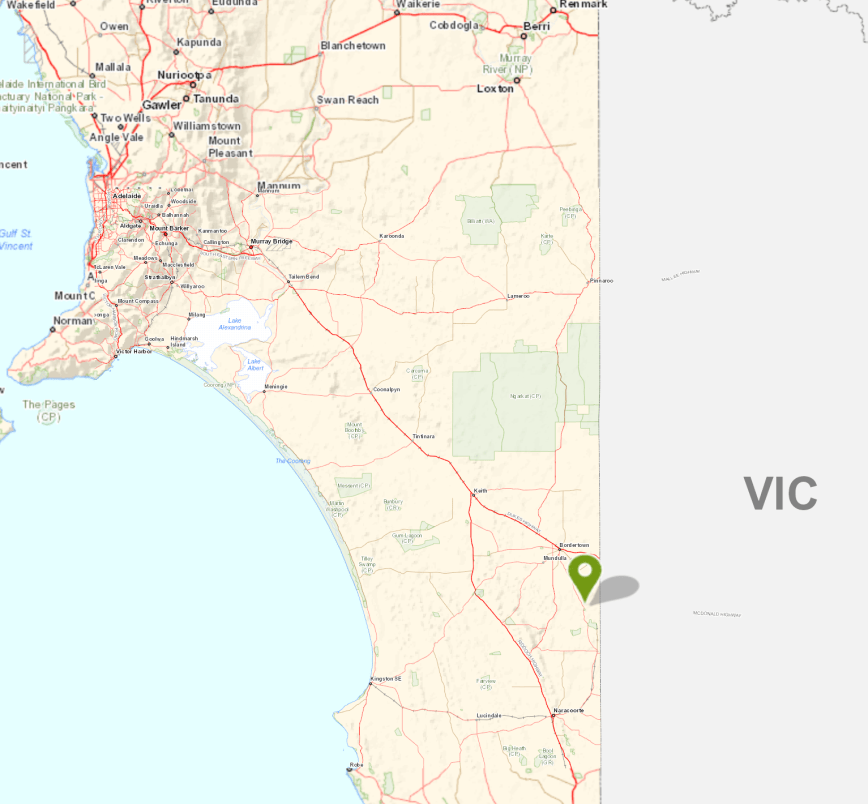
My third park for the day was the Bangham Conservation Park 5CP-009 & VKFF-0869, which is located about 304 km south east of Adelaide and about 34 km south east of the town of Bordertown.   Again, this was to be another unique park for me as an activator.
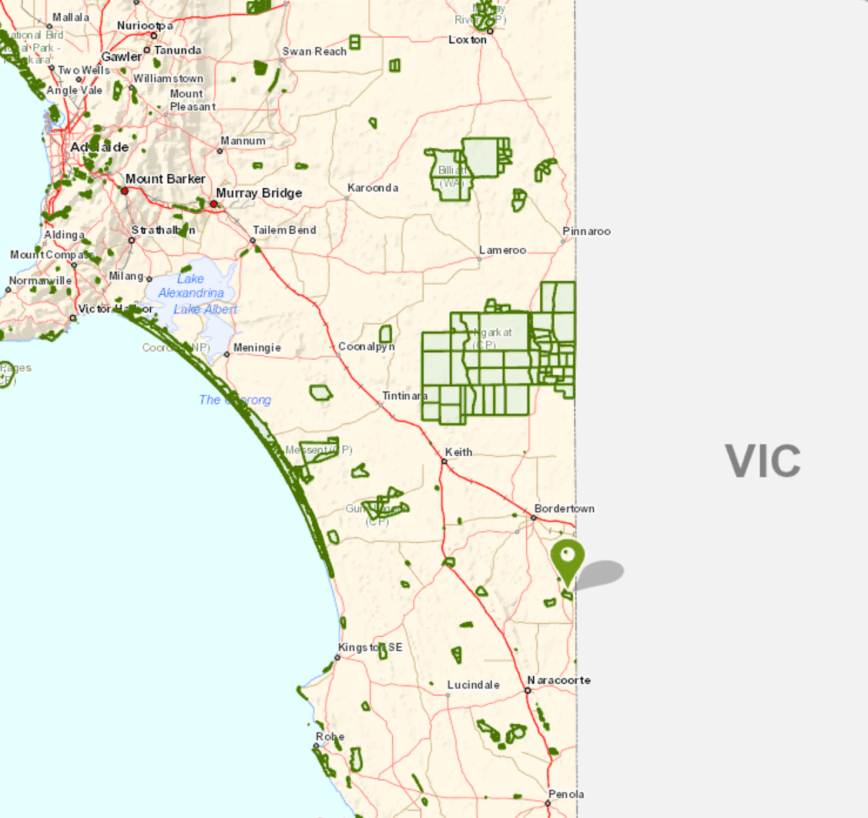
Screen Shot 2018-07-09 at 4.58.47 pm.png

Above:- Map showing the location of the Bangham Conservation Park.  Map courtesy of Location SA Map Viewer.

The Bangham Conservation Park is a large park, comprising 869 hectares.  In 1971 the land was offered to the South Australian State Government for conservation purposes.  At the time it consisted of 6.76 square kilometres of “native scrub” and 1.25 square kilometres of “cleared land” with the majority of the latter occupying its south-east corner.

There was a subsequent study which revealed that the land was used by the endangered Red-Tailed Black Cockatoo.  This made the land “particularly suitable for conservation purposes”.  Bangham was first proclaimed on the 22nd November 1973, with further land being added on 18th February 2010.  A Government survey of 1908 described the area as having the ‘greater part undulating white sand, with stringybark, buck honeysuckle, heath, yacca with a few pines’ and supporting ‘little grass’, and considered to be ‘inferior pasture’.

Screen Shot 2018-07-09 at 7.01.36 pm.png

Above:- Aerial view of the Bangham Conservation Park, looking north.  Image courtesy of google maps

Three major associations located in the park are: South Australian Blue Gum (Eucalyptus leucoxylon) open forest – woodland; River Red Gum (Ecamaldulensis) – in areas subject to inundation; and Brown Stringybark (E. baxteri) open forest – low open forest.

The park takes its name from the nearby area of Bangham.  Edward Bangham had land in the area in the 1840’s.  The Bangham Hall opened in 1953 and can still be found on the Frances Road.

Birds SA have recorded a total of 135 species of native birds in the park including Sulphur-crested Cockatoo, Crimson Rosella, White-throated Treecreeper, Brown Treecreeper, Superb Fairywren, Tawny-crowned Honeyeater, Red Wattlebird, Black-chinned Honeyeater, Little Corella, Spiny-cheeked Honeyeater, Blue-faced Honeyeater, White-fronted Chat, Crested Bellbird, Hooded Robin, and Grey-crowned Babbler.

I turned into the park off the Frances Road and travelled down a sandy 4WD track which then took me to the northern boundary of the park.
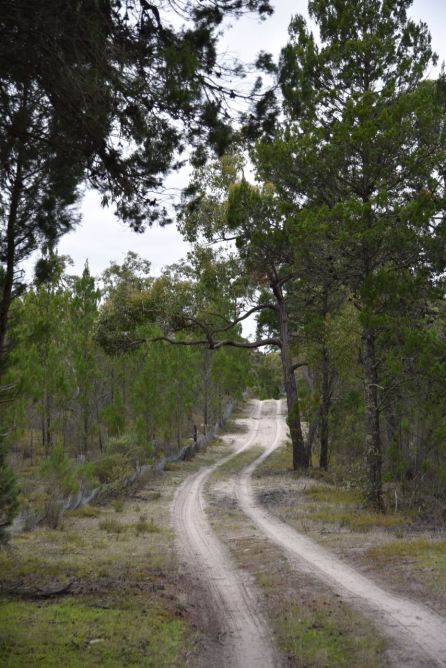
DSC_2004

Above:- the track in the park

I pulled the Hi Lux off to the side of the track and set up ‘the shack’ comprising the Yaesu FT-857d (set at 40 watts output) and the 20/40/80m linked dipole.

Screen Shot 2018-07-09 at 4.58.03 pm.png

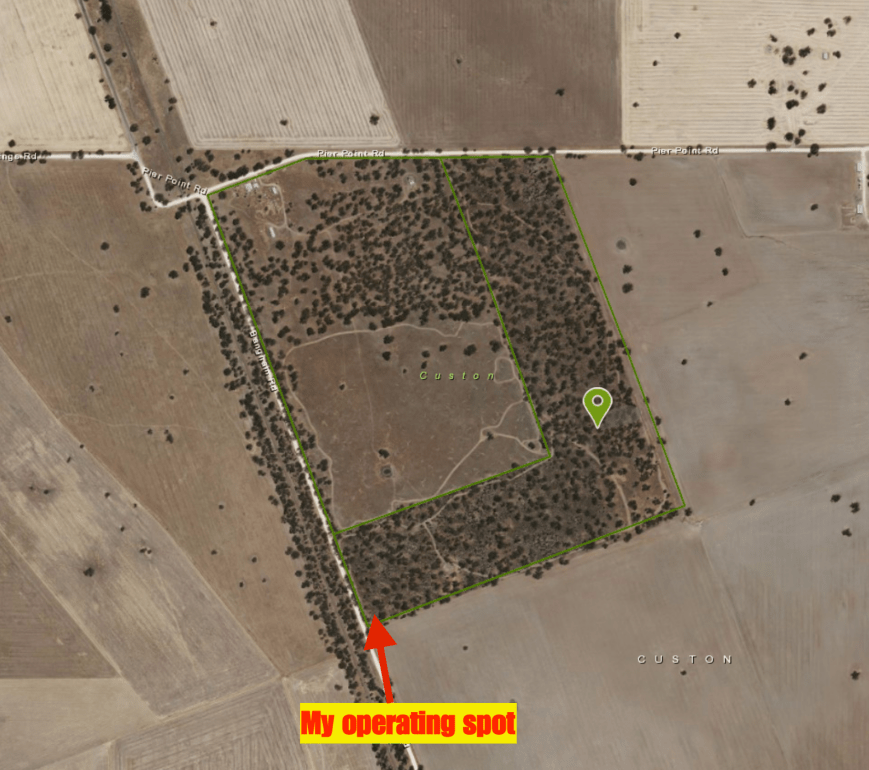
Above:- Aerial shot of the Bangham Conservation Park showing my operating spot in the northern section of the park.  Image courtesy of Location SA Map Viewer.

Once I had set up I headed to 7.144 and found Alan VK2MG/p calling CQ from the Tuggerah State Conservation Area VKFF-1383.  After logging Alan, Park to Park, I moved down the band to 7.135 and called CQ.  Unfortunately I had no internet coverage and was hoping that someone would find me.  Fortunately Peter VK3PF did.  I then logged Peter VK7LCW, Adrian VK5FANA, and Gerard VK2JNG mobile.

Contact number 10 was a QSO with Brett VK2VW, nine minutes into the activation.  I logged 33 stations on 40m from VK2, VK3, VK4, VK5 and VK7.  I then moved to 3.610 on the 80m band and logged 11 stations from VK2, VK3, and VK5.  This included Andrew VK1DA/3 who was activating SOTA summit Goonmirk Rocks VK3/ VG-048 in the Errinundra National Park VKFF-0158.  Contact number 44 was Geoff VK3SQ.

I then QSYd to the 20m band and called CQ on 14.310.  First in the log on that band was Ray VK4NH, followed by John VK4TJ and Rob VK4SYD.
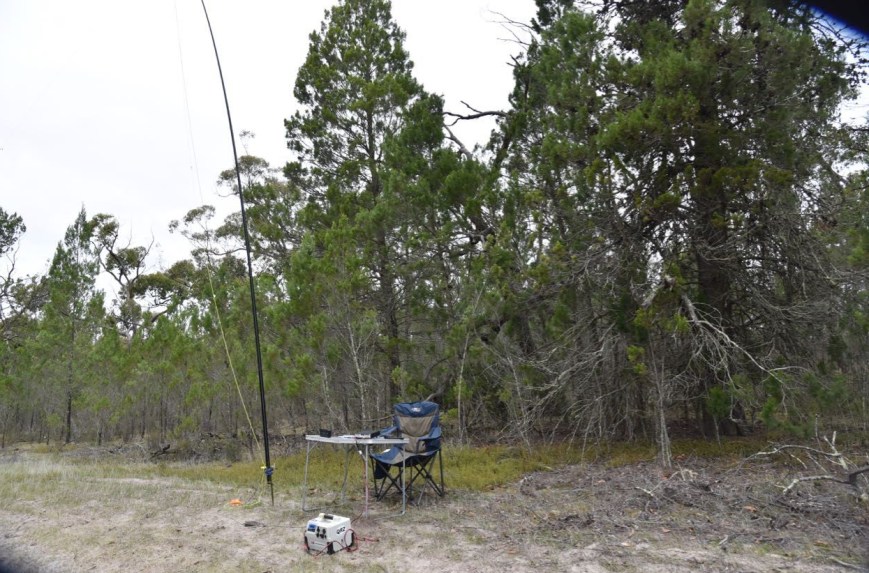
dsc_2005.jpg

I had qualified the park, with 49 contacts in the log, and time to head to my fourth park, the Geegeela Conservation Park.

I worked the following stations on 40m SSB:-

  1. VK2MG/p (Tuggerah State Conservation Area VKFF-1383)
  2. VK3PF
  3. VK7LCW
  4. VK5FANA
  5. VK2JNG/m
  6. VK2IO
  7. VK3BBB
  8. VK4RF
  9. VK4HA
  10. VK2VW
  11. VK3SQ
  12. VK7JON
  13. VK4FDJL
  14. VK4HNS
  15. VK2HHA
  16. VK7FOLK
  17. VK2QR
  18. VK2SWL
  19. VK2TTY
  20. VK3TTY/2
  21. VK3QJ/2
  22. VK2NP
  23. VK4NH
  24. VK4DXA
  25. ZL4TY/VK4
  26. VK4TJ
  27. VK4/AC8WN
  28. VK4/VE6XT
  29. VK2KYO
  30. VK2GZ
  31. VK7VZ/p
  32. VK2IPK
  33. VK2HPN/m

I worked the following stations on 80m SSB:-

  1. VK3GGG
  2. VK3PMG
  3. VK5FANA
  4. VK3PAT
  5. VK5BJE
  6. VK3FLJD
  7. VK5YP
  8. VK1DA/3 (Goonmirk Rocks VK3/ VG-048 & Errinundra National Park VKFF-0158)
  9. VK5ATN
  10. VK2HHA
  11. VK3SQ

I worked the following stations on 20m SSB:-

  1. VK4NH
  2. VK4DXA
  3. ZL4TY/VK4
  4. VK4TJ
  5. VK4SYD


References.

Birds SA, 2018, <https://birdssa.asn.au/location/bangham-conservation-park/>, viewed

State Library South Australia, 2018, <http://www.slsa.sa.gov.au/digitalpubs/placenamesofsouthaustralia/>, viewed

Wikipedia, 2018, <https://en.wikipedia.org/wiki/Bangham_Conservation_Park>, viewed
Pine Hill Soak Conservation Park 5CP-181 and VKFF-1078

My second park for the day (Tuesday 10th July 2018) was the Pine Hill Soak Conservation Park 5CP-181 & VKFF-1078.  This was to be another unique park for me as an activator in the WWFF program and the VK5 Parks Award.

Pine Hill Soak is located about 301 km south east of Adelaide, and about 30 km south of the town of Bordertown.

Screen Shot 2018-07-09 at 4.46.35 pm.png

Above:- Map showing the location of the Pine Hill Soak Conservation Park in the south east of South Australia.  Map courtesy of Location SA Map Viewer.

Pine Hill Soak Conservation Park is 51 hectares (130 acres) in size and was proclaimed on the 17th September 1987.  The park’s name is derived from a soak known as Pine Hill Soak which is located near the conservation park’s southern boundary.  A soak or soakage, is a source of water and is so called because the water generally seeps into the and, and is stored below, sometimes as part of an ephemeral river or creek. 

Screen Shot 2018-07-09 at 7.00.55 pm.png

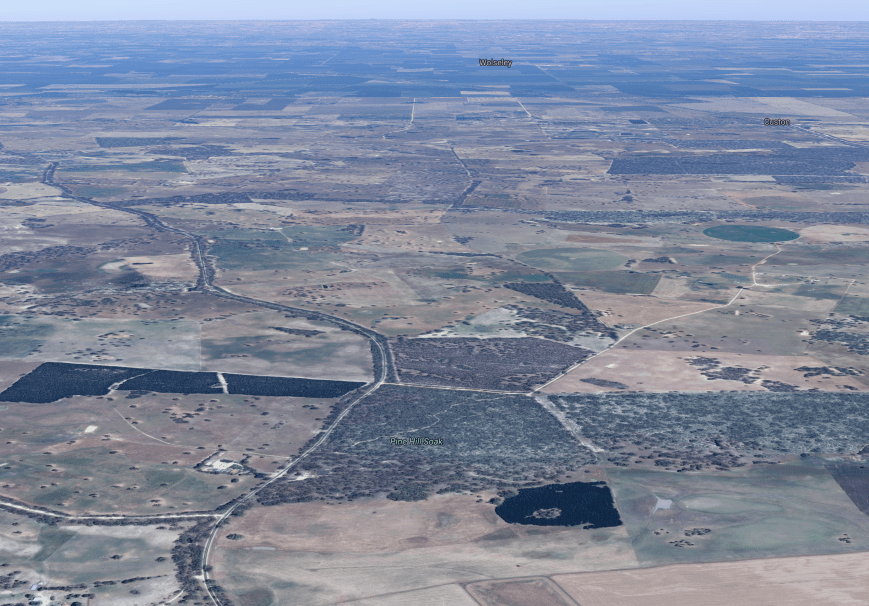
Above:- Aerial view of the Pine Hill Soak Conservation Park.  Image courtesy of google maps

The park is bounded on the western side by the Frances Road, McCarthy Road to the north and by a vehicle track to its east and south boundaries.  The park consists of brown stringybark open forest, with desert banksia, and woodland of river red gum and South Australian blue gum with an open understorey of grasses, sedges and herbs.  The park also contains native pine.

After I left Custon Conservation Park I put Pine Hill Soak into the GPS.  All was looking good until the GPS took me down a dead end road (Ivan Road) and into a farmer’s property.  So it was a manual look at some maps, and back to the Frances Road.  I then encountered a flock of sheep and alpaccas who were out grazing on the side of the road under the watchful eye of a local farmer.

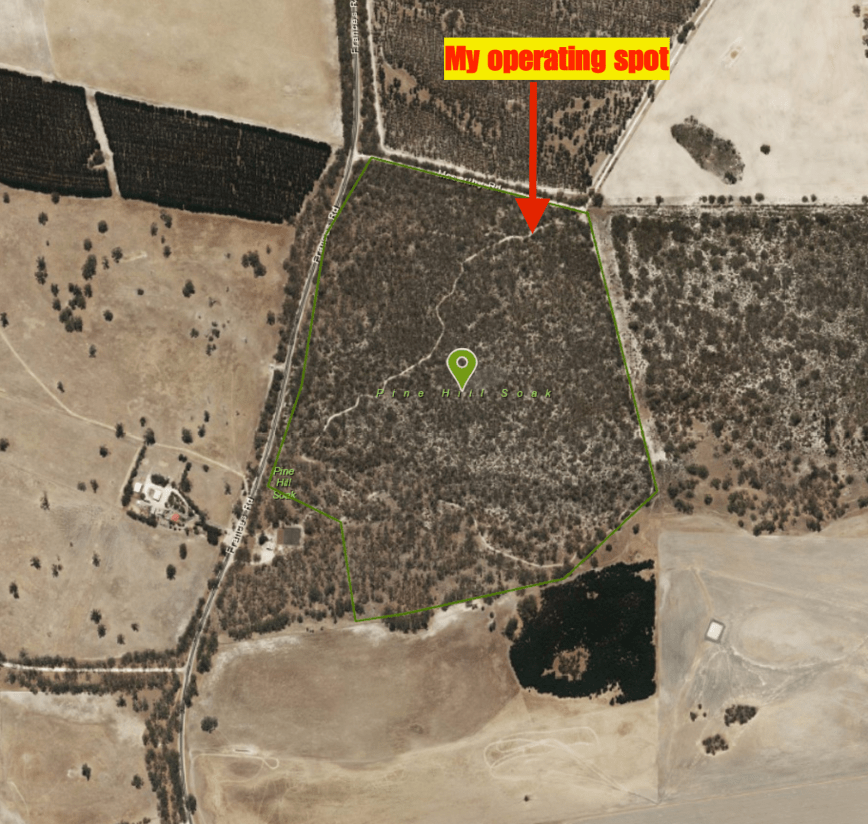
I soon reached the north western corner of the park and travelled down McCarthy Road, which is a no through road.  I travelled down a sandy track which passed through the park.  I found a clearing in the scrub and pulled off the track and set up.  I ran the Yaesu FT-857d and the 20/40/80m linked dipole for this activation.

Screen Shot 2018-07-09 at 4.46.13 pm.png

Above:- Aerial view of the Pine Hill Soak Conservation Park, showing my operating spot in the northern section of the park.  Image courtesy of google maps 

First in the log was Rob VK2QR with a big signal, followed by Geoff VK3SQ, Neil VK4HNS, and then Ron VK3AHR.  Within 6 minutes I had contact number 10 in the log, with a QSO with Vinnie VK2VIN in Wollongong.

The band had really opened up nicely since my first activation, with some excellent signals.  Contact number 44, a QSO with Rob VK3QJ/2 came within 28 minutes.  I logged a total of 50 stations on 40m from VK1, VK2, VK3, VK4, VK5 VK7 and New Zealand.  I was pleased as always to log regular park hunter Andrei ZL1TM.  I also made two Park to Park contacts, with Gerard VK2JNG/p in the Bullala National Park VKFF-0580, and Alan Vk2MG/p in Tuggerah State Conservation Area VKFF-1383.

So with the park qualified, everything from here on in was going to be a bonus.  I lowered the squid pole and inserted the links for the 80m section of the dipole.  First in the log on 3.610 was Mick VK3GGG with a big big 5/9 plus signal.  This was followed by Ron VK3VBI and then John VK5BJE.  I logged a further 4 stations on 80m from VK2, VK3 and VK5.

To finish off the activation I called CQ on 14.310 and logged John VK4TJ and then Ray VK4NH and his 2 other callsigns.

I had a total of 62 contacts in the log and it was now 1.10 p.m. local time, and time for me to pack up and head off to the Bangham Conservation Park.

I worked the following stations on 40m SSB:-

  1. VK2QR
  2. VK3SQ
  3. VK4HNS
  4. VK3AHR
  5. VK2OQ/m
  6. VK2NP
  7. VK4FDJL
  8. VK7LCW
  9. VK2KYO
  10. VK2VIN
  11. VK2SK
  12. VK2IPK
  13. VK2IO
  14. VK7JON
  15. VK4FFAB
  16. VK4CPS
  17. ZL1TM
  18. VK3MLU
  19. VK3TKK/m
  20. VK4NH
  21. VK4DXA
  22. ZL4TY/VK4
  23. VK7RN
  24. VK2HHA
  25. VK5KLV
  26. VK2JNG/p (Bullala National Park VKFF-0580)
  27. VK5MCB
  28. VK2VW
  29. VK4RF
  30. VK4HA
  31. VK3MDH/m
  32. VK3PF
  33. VK3OF
  34. VK3UH
  35. VK7FAMP
  36. VK4TJ
  37. VK4/AC8WN
  38. VK4/VE6XT
  39. VK2MG/p (Tuggerah State Conservation Area VKFF-1383)
  40. VK7LTD
  41. VK2SWL
  42. VK2TTY
  43. VK3TTY/2
  44. VK3QJ/2
  45. VK5FANA
  46. YB1AQM/VK4
  47. VK1RZ
  48. VK2JNG/m
  49. VK1XP/m
  50. VK1FMGG

I worked the following stations on 80m SSB:-

  1. VK3GGG
  2. VK3PMG
  3. VK3VBI
  4. VK5BJE
  5. VK5FANA
  6. VK3SQ
  7. VK3PF
  8. VK2HHA

I worked the following stations on 20m SSB:-

  1. VK4TJ
  2. VK4NH
  3. VK4DXA
  4. ZL4TY/VK4


References.

Wikipedia, 2018, <https://en.wikipedia.org/wiki/Pine_Hill_Soak_Conservation_Park>, viewed 12th July 2018

Wikipedia, 2018, <https://en.wikipedia.org/wiki/Soakage_(source_of_water)>, viewed 12th July 2018

Custon Conservation Park 5CP-051 and VKFF-1024

Yesterday I travelled down to the south east of South Australia, near the South Australia (VK5) and Victoria (VK3) State border, and activated a total of 5 parks.  They were all new ones for me as an activator in both the VK5 Parks Award and WWFF.  In all it was around a 550 km round trip from my home.

Screen Shot 2018-07-11 at 12.02.27 pm.png

Above:- Map showing my route for the day.  Map courtesy of plotaroute.com.

My first park for the day was to be the Custon Conservation Park 5CP-051 & VKFF-1024, which is located about 297 km south east of Adelaide and about 25 km south east of the town of Bordertown.  It is located about 4 km from the State border.

Screen Shot 2018-07-09 at 4.32.37 pm.png

Above:- Map showing the location of the Custon Conservation Park.  Map courtesy of Location SA Map Viewer.

I was unable to find any information on this park on the internet.  The Department for Environment and Water (DEWNR) website does not have any information on the park and records that there is no Park Management Plan for Custon.

The park takes its name from the little town of Custon, about 8 km from the town of Wolseley.  Custon was proclaimed on the 8th December 1881 and was named by Governor Jervois after Rev William A. Purey-Cust, the elder son of the Dean of York, who married his daughter, Lucy Caroline.   Prior to the proclamation of the town the local railway station was known as ‘University Blocks’. The Custon School opened in 1919 and closed in 1956.

The park is located at the corner of Bangham Road and Pier Point Road.

Screen Shot 2018-07-09 at 6.58.15 pm.png

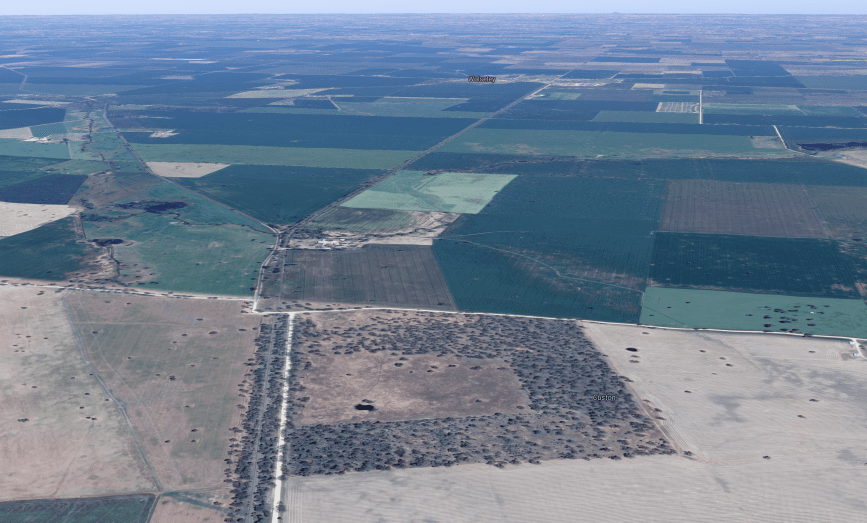
Above:- Aerial shot of the Custon Conservation Park, looking north.  Image courtesy of google maps.

Custon is quite a small park and contains Gum forest.  The vegetation is quite sparse in some parts of the park.

The park is surrounded by cleared farming land.  The next nearest park is the Pine Hill Soak Conservation Park, located about 14 km to the south.

I left home at about 6.30 a.m. and headed south east along the South Eastern Freeway and out onto the Dukes Highway (the main highway between Adelaide & Melbourne).  My first stop was in the little town of Coonalpyn, an aboriginal word meaning ‘Barren Woman’.  I called in to the Silo Cafe for a coffee and a bacon & egg sandwich.  I took the time to admire the artwork on the silos, which I have seen many times before.  The murals were completed in early 2017 by artist Guido van Helten and feature local Coonalpyn Primary School children.

After reaching the town of Bordertown, I travelled south out of the town along the Frances Road.  I stopped briefly to have a look at the historic Wiese’s Horse Dip.  It was built in 1931 by local landholders using timber from nearby bulloak trees.  Its main function was to control a parasitic itch in working Clydesdale horses.   This malady caused great discomfort to the Clydesdale horses manes and tailes, so much so that they used to rub constantly against fences and so cause damage to many fence lines.  Horses were walking into the dip, and due to the horses’ size, the operators bucketed and sponged the solution over the horses to complete the task.  The dip was used until the outbreak of World War II and the eventual decline of the Clydesdale working horse.

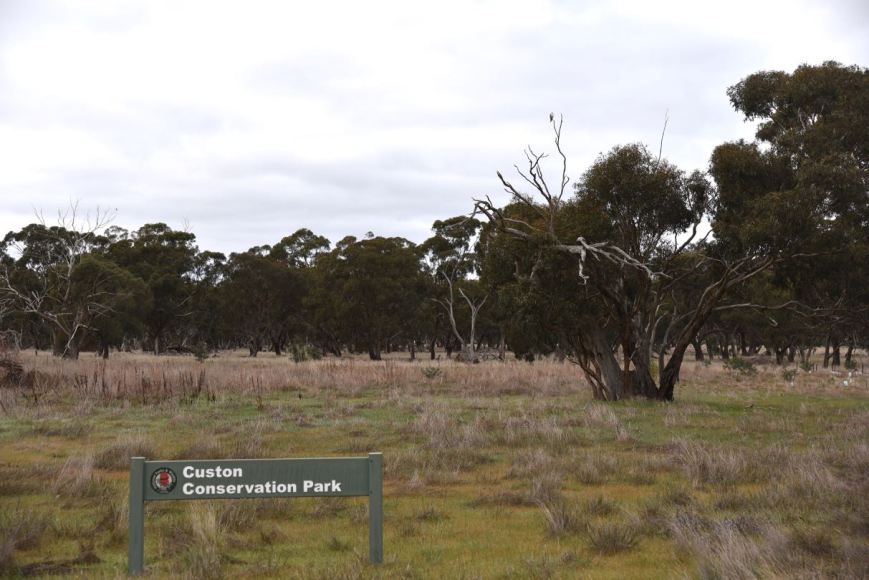
I soon reached the Custon Conservation Park which was well signposted in the north western corner.

DSC_1946

As I arrived at the park I noticed a Black Shouldered Kite sitting up in a tree.  He/she was kind enough to sit there for a while, whilst I took a few photographs.

DSC_1962

This Australian Shellduck was also observed in the park.

DSC_1972

I drove south along Bangham Road, following the western boundary of the park, and found that the fence had fallen over near the south western corner.  So I pulled off the road and set up just inside the fenceline.  There was a nice break in the scrub here as well, with plenty of room to string out the 20/40/80m linked dipole.

Screen Shot 2018-07-09 at 4.32.10 pm.png

Above:- An aerial view of the Custon Conservation Park, showing my operating spot in the south western corner of the park.  Image courtesy of Location SA Map Viewer.

First in the log for the activation was Gerard VK2JNG on 7.144, followed by Geoff VK3SQ, Deryck VK4FDJL, and then Neil VK4HNS.  Despite it being a week day, there was a steady flow of callers, and within 7 minutes I had contact number 10 in the log (John VK4TJ), thus qualifying the park for VKFF.

I logged 18 contacts before things slowed down and I headed off to the 80m band.  There were very few VK3’s and VK5’s logged on 40m and I suspected I was a little too close for both on 40m.  So I was hoping for a few Victorian and South Australian contacts on 80.  First in the log on 3.610 was Peter VK3PF, followed by David VK5PL in the Barossa Valley, and then Mick VK3GGG in western Victoria.  All had strong 5/9 signals and reciprocated with 5/9 for me.

I logged 8 stations on 80m from VK2, VK3 & VK5.  Sadly despite the band conditions being very good on that band, callers dried up quickly.  So I moved to 14.310 on the 20m band where I logged 12 stations from VK2, VK3 and VK4.

To complete the activation I moved back to 40m where I logged a further 10 stations from VK2, VK3, VK4, VK5, and VK6.  It was great to log Hans VK6XN all the way on the other side of Australia.  I also had a Park to Park contact with Gerard VK2JNG/p in the Bullala National Park VKFF-0580.

I worked the following stations on 40m SSB:-

  1. VK2IO
  2. VK3SQ
  3. VK4FDJL
  4. VK4HNS
  5. VK4NH
  6. VK4DXA
  7. ZL4TY/VK4
  8. VK2NP
  9. VK4TJ
  10. VK4/AC8WN
  11. VK4/VE6XT
  12. VK7PSJ
  13. VK1XP/m
  14. VK5KLV
  15. VK3PF
  16. VK2IPK
  17. VK2JCC
  18. VK3UH
  19. VK6XN
  20. BK4RF
  21. VK4HA
  22. VK2MNR/m
  23. VK2PKT
  24. VK5ATN/p
  25. VK2JNG/p (Bullala National Park VKFF-0580)
  26. VK7JON
  27. VK2HHA
  28. VK1BUB

I worked the following stations on 80m SSB:-

  1. VK3PF
  2. VK5PL
  3. VK3GGG
  4. VK3PMG
  5. VK3UH
  6. VK5BJE
  7. VK3LED
  8. VK2YW

I worked the following stations on 20m SSB:-

  1. VK2NP
  2. VK3SQ
  3. VK4NH
  4. VK4DXA
  5. ZL4TY/VK4
  6. VK2IO
  7. VK4FE
  8. VK4TJ
  9. VK4/AC8WN
  10. VK4/VE6XT
  11. VK4RF
  12. VK4HA


References.

State Library South Australia, 2018, <http://www.slsa.sa.gov.au/digitalpubs/placenamesofsouthaustralia/>, viewed 11th July 2018
Wikipedia, 2018, <https://en.wikipedia.org/wiki/Coonalpyn,_South_Australia>, viewed 11th July 2018