Bakara Conservation Park

On Friday afternoon (1st May 2015), I packed the Toyota Hi Lux and headed off towards Renmark in the Riverland region of South Australia.  My reason for heading there was that Ivan VK5HS was going to instal a Codan self tuning 9350 antenna in the vehicle for me.  And I was also planning on a park activation with my old mate Larry VK5LY who has not been travelling well of late.

http://www.codanradio.com/product/9350-vehicle-whip/

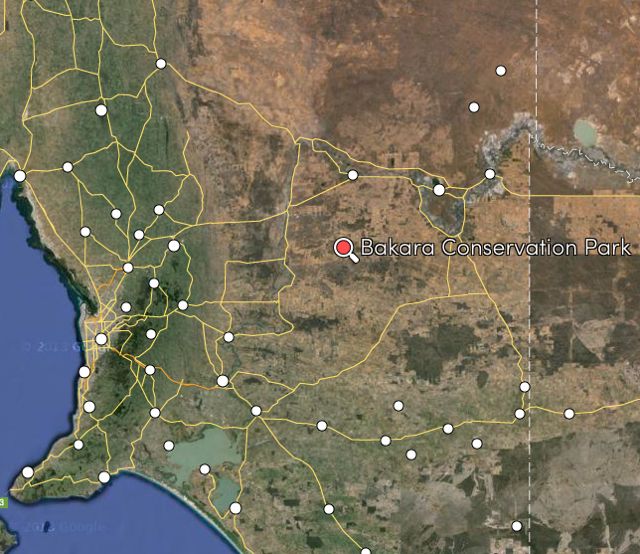
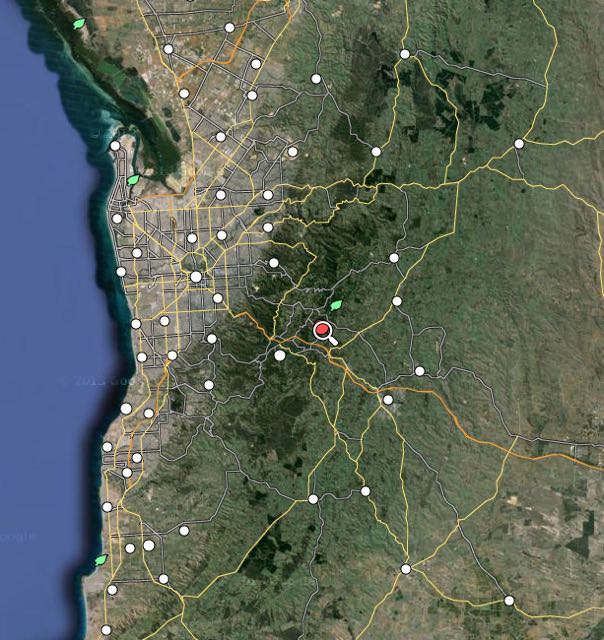
My first park activation along the way was the Bakara Conservation Park (CP), which was a unique park for me to add to my activator list.

Bakara CP is located about 32 km east of Swan Reach.  The park is 2,029 hectares (5,010 acres) in size and was established back in 1986 to conserve the Malleefowl habitat.  The park area was doubled in size in 2009 by the addition of the adjacent section of land to the north of the original park.
Screenshot 2015-05-06 08.55.41

Above:- The location of Bakara CP.  Map courtesy of mapcarta.com

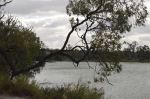
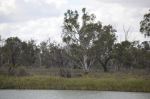
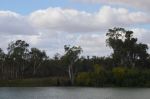
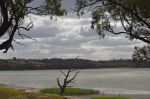
After leaving home, I travelled east along the South Eastern Freeway to Murray Bridge and then headed north east long the Bowhill Road.  I then drove north along Hunter Road (Swan Reach – Walker Flat Road), which runs alongside the mighty Murray River.  I stopped at Len Kroehn’s Lookout near the little town of Nildottie, to stretch my legs and take some photographs of the Murray and some of its spectacular cliffs.

This slideshow requires JavaScript.

I continued on and I accessed the park via Start Road, which is a well graded dirt road which runs off the Stott Highway (Swan Reach-Loxton Road).  Don’t bother looking for any signage off the Highway.  There isn’t any.  A common theme with many South Australian Conservation Parks.  You will need to rely on your GPS.  And dont blink, because you may also miss the park signs hidden amongst the scrub.

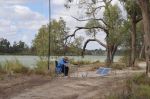
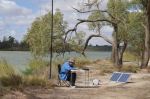
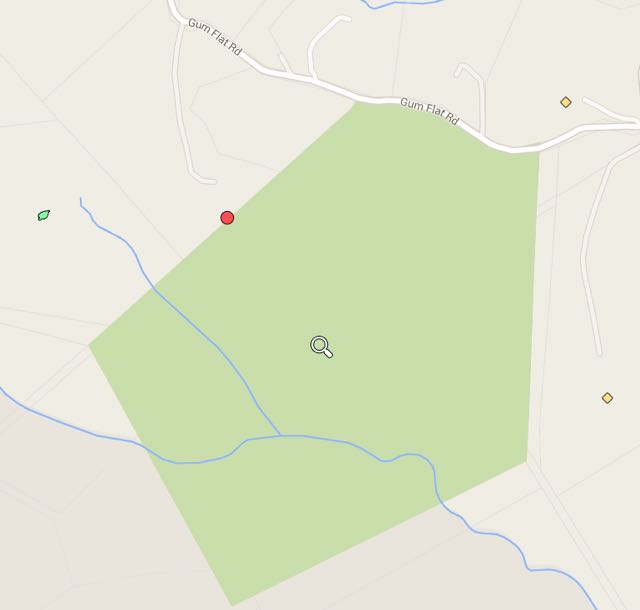
I travelled a few km down Start Road and I found a little track leading off Start Road and then a clearing amongst the mallee scrub, and that was where I set up.

Screenshot 2015-05-06 08.56.06

Above:- My operating spot.  Image courtesy of mapcarta.com

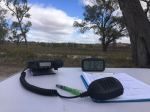
As is the case with the majority of my park activations, I ran the Yaesu FT-857d, 40 watts and the 40m/20m linked dipole supported on the 7 metre telescopic squid pole.  There were no problems here with driving in the squid pole holder as the ground was very sandy and quite soft.

I called CQ on 7.095 and my first taker was Greg VK5GJ running about 4 watts from Meadows in the Adelaide Hills.  As per normal, Greg had a lovely signal (5/8 sent and 5/9 received).  This was followed by a call from Brad Vk2HAV who was very light to me, but due to the non existant man made noise floor in the park, Brad was very workable.  This was followed by a call from another New South Welshman, Ian VK2GDI who had a strong 5/8 signal.  My next contact was with Jim VK4OK who was quite weak (5/3) but again very readable in the park.  Jim gave me a 5/1 signal report.  So that was an interesting start to the activation.  A QRP VK5, followed by two VK2’s and then a VK4.

This slideshow requires JavaScript.

My next contact was with Tony VK5ZAI who who on holidays down in Tasmania and was about 50 km north of Launceston.  Tony had a very nice 5/7 signal and he reciprocated with a 5/8 for me.  Some of the more regular park hunters had obviously found me and then started to call.  This included some of the regular QRP callers.  Adrian VK5FANA on the Yorke Peninsula with his 5 watts had a nice 5/9 signal.  And Paul VK3DBP also on 5 watts had a strong 5/8 signal.  Mobile callers included Tom VK5EE in the South East (5/9 both ways), Peter VK3PF (5/8 sent and 5/7 received), Ivan VK5HS mobile at nearby Blanchetown, Perrin VK3XPT (5/8 sent and 5/9 received), and John VK3FCAN mobile near Traralgon (5/5 sent and 5/9 received).

After working 30 stations on 40m SSB in VK2, VK3, VK4, VK5, & VK7, I decided to have a quick listen on 20m SSB, as I had promised Gerard VK2IO that I would try 20m for him.  Gerard was one of my last contacts on 40m and although I could hear him very well and he could hear me, we agreed that we would give 20m a go.

My first contact on 20m after calling CQ a few times on 14.311 was with Sergey RA3PCI in Russia.  Sergey spotted me on the DX cluster and this resulted in quite a large pile up with lots of callers from Europe.  But as the number of callers started to increase, I did worry that this activation might cause some confusion with some of the European park hunters.  Bakara CP does not currently qualify for the World Wide Flora Fauna (WWFF) program and so therefore does not have a VKFF number.  But most of the Europeans that I worked, appeared to understand that this was not a WWFF activation and that the park qualified for the VK5 Parks Award only.

I went on to work a total of 61 stations on 20m.  Most of those contacts were long path into Europe ( I worked Russia, Italy, Belgium, Ukraine, Slovenia, Poland, England, Sweden, Switzerland, Spain, Croatia, France, Germany, Estonia, Greece, Portugal, and the Netherlands).  However there were a few VK’s scattered in there as well, including Perrin VK3XPT mobile, Gerard VK2IO, Andrew VK1NAM, and Craig VK6VCK mobile.  Also outside of Europe was Warren ZL2JML in New Zealand.  And again I managed to make a QSO with my very good friend, Marnix OP7M in Belgium.

Thanks to everyone that took the time to spot me on the DX cluster.  It certainly helped to drag in the park hunters.

Screenshot 2015-05-12 19.53.30

Image courtesy of http://www.dxwatch.com

During the pile up into Europe, Craig VK6VCK who was mobile in Western Australia, gave me a call and asked if I had upgraded my call.  I replied that I hadn’t and was then asked why I was outside of the Standard call portion of 20m.  This really threw me.  I was on 14.311 and well inside the 14.350 limit.  But Craig was insistent that Standard calls could not operate above 14.300.  I knew this to be incorrect, but a few calls on, I started to doubt myself a little.  But my doubts only lasted a short time as I knew that I could operate up to 14.350.  It was one of those strange tricks that you mind plays on itself.

Screenshot 2015-05-12 20.02.33

Image courtesy of http://www.wia.org.au

Other than the usual callers, I also had some interesting contacts on 20m.  That included a call from my mate Phil 2E0UDX mobile in the United Kingdom (UK).  And then a call from Dave G4AKC who was pedestrian mobile (5/9 both ways) and shortly afterwards a call from Dave M0DAD who was also pedestrian mobile in the UK.  Dave was not as strong as G4AKC, but was still a very readable 5/3 signal.  I received a 5/7 signal report.

It was starting to get a little late.  The local time was nearly 4.30 p.m. and I still had a way to travel to get to my destination of Renmark.  So I packed up the gear, feeling a little disapointed as the conditions on 20m into Europe were very good.

I had a total of 91 contacts in the log from this new unique park for me as an activator.  I was very happy.

The following stations were worked on 40m SSB:-

  1. VK5GJ
  2. Vk2HAV
  3. VK2GDI
  4. VK4OK
  5. VK5ZAI/7
  6. VK3DAC
  7. VK5FDEC
  8. VK2YW
  9. VK3AV
  10. VK5FANA
  11. VK5JP
  12. VK5EE/m
  13. VK3PF/m
  14. VK3DBP
  15. VK3VIN
  16. VK5KC
  17. VK3BBB
  18. VK3PMG
  19. VK3FLCS
  20. VK5HS/m
  21. VK3FQSO
  22. VK5LY
  23. VK2BDR
  24. VK3XPT/m
  25. VK7FMPR
  26. VK5KLV
  27. VK2IO
  28. VK5FDIK/p
  29. VK5ZAR
  30. VK3FCAN/m

The following stations were worked on 20m SSB:-

  1. RA3PCI
  2. IW5EKR
  3. VK3XPT/m
  4. I1FBJ
  5. ZL2JML
  6. I5FLN
  7. VK2IO
  8. IK1GPG
  9. VK1NAM
  10. ON7AB
  11. UT5PI
  12. S58AL
  13. OP7M
  14. RW3RN
  15. SP6KEP
  16. G4EZT
  17. SM6YNO
  18. HB9BQR
  19. EA5DIT
  20. ON5SWA
  21. SP6GCU
  22. 9A7DA
  23. VK6VCK/m
  24. G1OSI
  25. F5IDJ
  26. DK4RM
  27. RW3XZ
  28. G3ZXZ
  29. DL5MEV
  30. ES1IP
  31. EA5FKT
  32. GW3UZS
  33. EA2KV
  34. DK8PY
  35. SV1QFF
  36. S52KM
  37. PE1NBD
  38. IK2QPR
  39. IZ8EFD
  40. 2E0UDX/m
  41. VK2YK
  42. UR7ET
  43. DJ7ZZ
  44. IZ2SQS
  45. SP3HDU
  46. CS7AGE
  47. IZ1NEZ
  48. EA4DTV
  49. IZ1IJE
  50. DL1EBR
  51. IZ2XMK
  52. ON4VT
  53. IZ5ILK
  54. G0RQL
  55. DM9LSB
  56. G4AKC/pedestrian mobile
  57. ZL1PWD
  58. ON6PV
  59. RX3AGD
  60. G4SOF
  61. M0DAD/pedestrian mobile


References.

Wikipedia, 2015, <http://en.wikipedia.org/wiki/Bakara_Conservation_Park&gt;, viewed 6th May 2015

Hogwash Bend Conservation Park

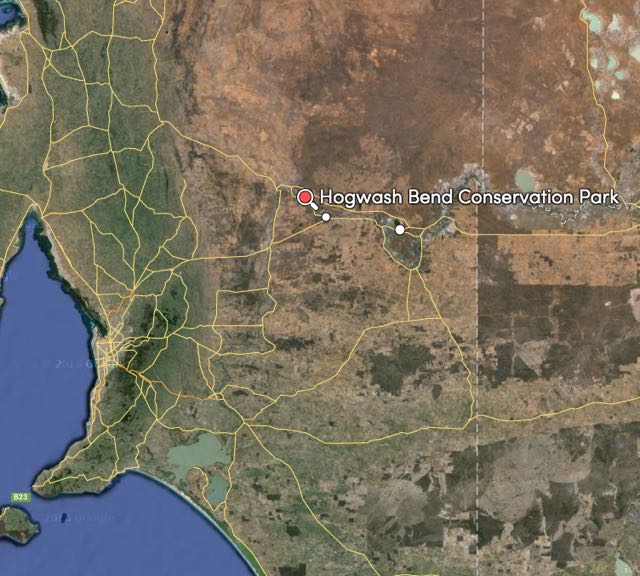
Our third and final activation for Sunday was the Hogwash Bend Conservation Park, which is located near Waikerie in the Riverland region of South Australia, about 183 km north east of Adelaide.  This was to be another unique park for me.

Screenshot 2015-04-23 13.59.23

Above:- the location of the Hogwash Bend CP.  Image courtesy of mapcarta.com

The Hogwash Bend CP was gazetted in 2012 and is about 286 hectares in size.  It is located on the banks of the mighty River Murray.  I have not been able to find out how the park got its name.

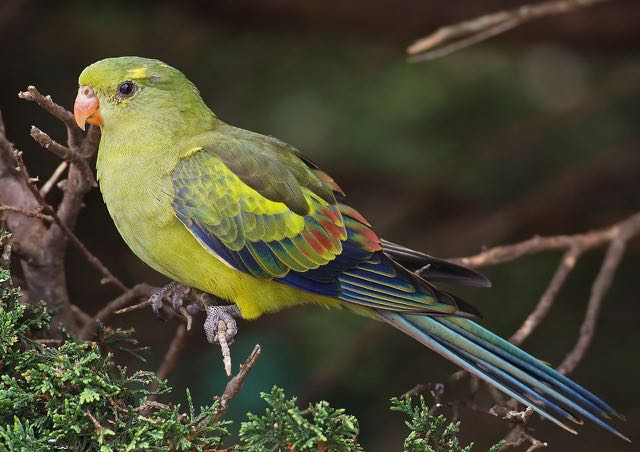
The park was acquired by the South Australian State Government and the Australian Federal Government under the National Reserve System program to protect the largest breeding colony of Regent Parrots in South Australia.  There are thought to be only 300 breeding pairs of Regent parrots along the Murray.  And in Hogwash Bend, around 50 pairs use the ideal breeding habittat of mature river red gums, nesting sites and large areas of mature mallee scrubland.  Hogwash Bend plays an important role in the bird’s future which is listed as vulnerable at both State and National level.

1280px-Polytelis_anthopeplus_2_edit1

Above:- Regent parrot.  Image courtesy of wikipedia

There is an excellent website dedicated to Regent parrots which can be found at…..

http://regentparrot.org

In fact, the group is very keen to hear from people who sight a Regent Parrot.  You can telephone 1800PARROT.

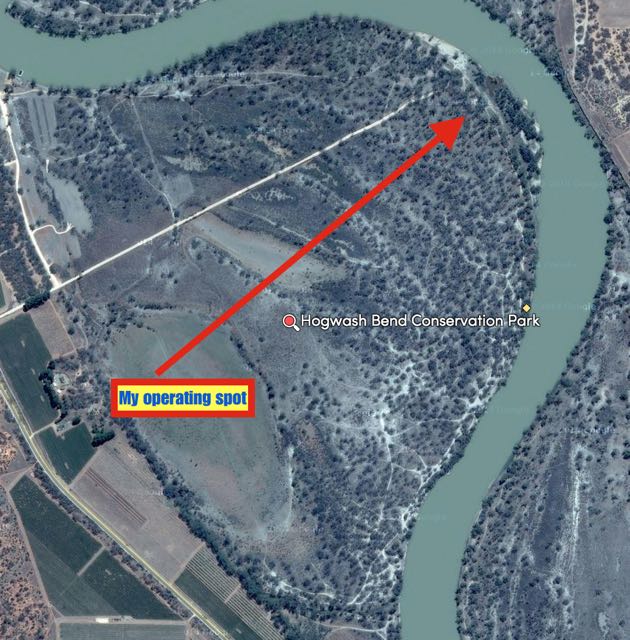
Hogwash Bend was just a  short 14 km drive from the Ramco Point Conservation Park.  We entered the park off Cadell Valley Road.  The park is well signposted and there is a nice dirt road down to the park which is easily negotiated with a car and even a caravan.  The camping area was very busy with lots of campers and caravaners.  So we headed to the eastern side of the camping area and set up in the scrub.

Screenshot 2015-04-23 13.59.11

Above:- My operating spot.  Image courtesy of mapcarta.com
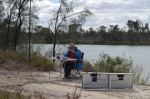
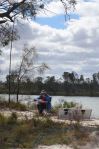
The park was alive with birdlife, but unfortunately we did not spot a Regent parrot.  But I did see a Whistling kite which flew into a nearby gumtree and sat there for some time, allowing me to take a number of photographs.

http://www.birdsinbackyards.net/species/Haliastur-sphenurus

There was also a Spoonbill busy in a nearby pond and a number of pelicans on the river.

I did intend to operate on 7.095 but there were some VK6 guys operating on 7.093.  A few of them were mobile, and had very good signals into Hogwash Bend.  So I moved up a little higher to 7.096 and called CQ and this was answered by David VK5KC and then Les VK5KLV, followed by Al VK7AN and then Tony VK3VTH mobile.  I then called for any QRP stations and I worked Adrian VK5FANA QRP 5 watts and Bernard VK3AV QRP 4 watts.  I had quite a steady flow of callers from VK3 & VK5.

I managed one park to park contact and that was with Stef VK5HSX who was portable in the Flinders Ranges National Park.  I also worked Allen VK3HRA who was portable on SOTA peak Crowsnest Lookout, VK3/ VS-049.

I then moved over to 20m and called CQ on 14.312.  This was answered by Gerard VK2IO who had a lovely 5/9 signal, followed by Xaver DK4RM, Jarrad VK3HXT, and then Albert S58AL.  I went on to work a total of 38 stations on 20m from VK2, VK3, VK6, Germany, Slovenia, Italy, USA, France, Ukraine, Switzerland, Belgium, Spain, Russia, Hungary, and New Zealand.  It was very pleasing to get a number of calls from USA stations who were copying me well.  And again I managed to work my very good mate Marnix OP7M.  Copy this time at Marnix end was not as good as previously.  But the 20m band was still opening up.

Unfortunately time was marching on and I needed to pack up, as I still had a 2 & 1/2 hour drive to get home.  I had a total of 62 contacts in the log.

This slideshow requires JavaScript.

The following stations were worked on 40m SSB:-

  1. VK5KC
  2. VK5KLV
  3. VK7AN
  4. VK3VTH/m
  5. VK5FANA
  6. VK3AV
  7. VK5FTVR
  8. VK5ZAR
  9. VK5MRE
  10. VK5NRG
  11. VK3ANL
  12. VK5EE
  13. VK3PF
  14. VK3FMRC
  15. VK3KAB
  16. VK5NQP
  17. VK5FADP/p
  18. VK5ZRY/m
  19. VK2IO
  20. VK5FTRG
  21. VK3OF
  22. VK5HSX/p (Flinders Ranges National Park)
  23. VK5FCDL
  24. VK3HRA/p (SOTA VK3/ VS-049)

The following stations were worked on 20m SSB:-

  1. VK2IO
  2. DK4RM
  3. VK3HXT
  4. S58AL
  5. VK2HOT
  6. I5FLN
  7. IK1GPG
  8. KD8GEH
  9. F2YT
  10. WB2ZAB
  11. DL4PT
  12. S5KM
  13. VK4MWG
  14. UT5PI
  15. V4TH
  16. DL5WW
  17. HB9EFJ
  18. VK2YK
  19. KG7HAX
  20. DL1EBR
  21. IZ1UKG
  22. KC5JAV
  23. ON4VT
  24. N4WMB
  25. EA5HPX
  26. ON5SWA
  27. HA6OB
  28. ON4BB
  29. OP7M
  30. IW1FZR
  31. EA1SB
  32. KK4PWE
  33. RA3PCI
  34. HA6NF
  35. DL2NOM
  36. VK4AJR
  37. VK6NI
  38. ZL3CHE

References

Government of South Australia, 2014, River Murray-South East Nature Link

Ramco Point Conservation Park

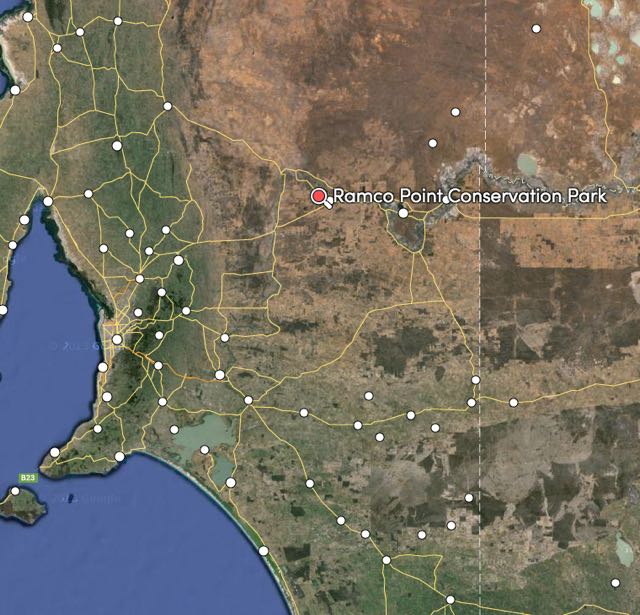
Our second park on Sunday was the Ramco Point Conservation Park, which is located near the town of Waikerie in the Riverland region of South Australia, about 180 km north east of Adelaide.  This was another unique park for me.

Screenshot 2015-04-23 13.03.59

Above:- Map showing the location of Ramco Point CP.  Map courtesy of mapcarta.com

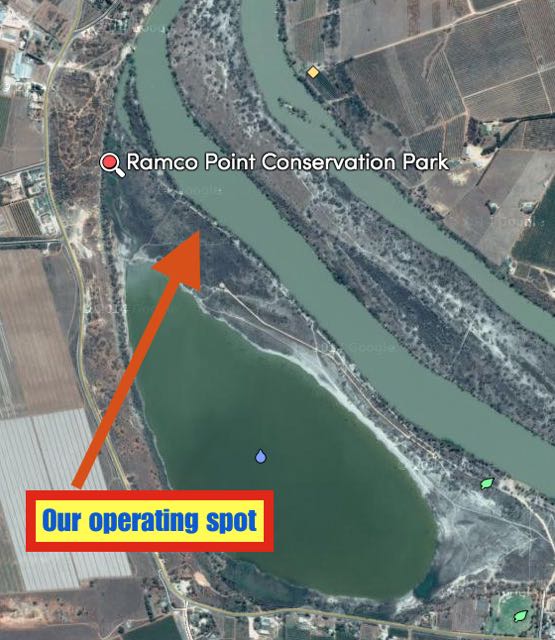
The park is located between the Murray River and Hart Lagoon and was proclaimed in 2006.  I could not find a huge amount of information on the internet about this park.  And it is one of those small South Australian Conservation parks which does not show up on Google maps.

Access to the park was quite difficult.  If we did not have the Toyota Hi Lux we would not have made it in there.  The Riverland had experienced a lot of rain over the past 48 hours and many of the off road tracks had become very wet and boggy.

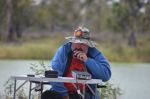
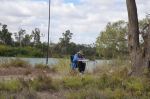
This slideshow requires JavaScript.

We set up on the banks of the River Murray between the river and Hart Lagoon.  It was a beautiful idealic spot, and fortunately the weather was holding off for us with no rain.

Screenshot 2015-04-23 13.03.49Above:- Our operating spot.  Image courtesy of mapcarta.com
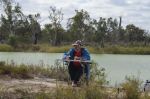
Prior to calling CQ I scouted around the 40m band and found Tony VK3VTH calling CQ from the Oolambeyan National Park in New South Wales (5/9 both ways).  I then headed down to 7.095 and called CQ and this was answered by Nigel VK5NIG with a very strong 5/9 signal, followed by Arno VK5ZAR, David VK5NQP, and then Fred VK3DAC.  And then much to my surprise I received a call from Mark VK6BSA in Western Australia.  It was 12.15 p.m SA local time and I was very surprised to get a call from a VK6 on 40m at this time of the day.  Mark was 5/6 and gave me a 5/1.  Not bad considering I was running 40 watts and my simple linked dipole.

A few calls later I spoke with Stef VK5HSX who was portable in Wilpena Pound in the Flinders Ranges National Park (5/5 sent and 5/7 received).   I then asked for any other QRP, portable or mobile stations and this was answered by Peter VK3PF running QRP, Adrian VK5FANA running QRP, Mark VK3OHM running QRP, Allen Vk3HRA portable on SOTA peak Mount Cowley VK3/ VC-022 in the Great Otway National Park, and Geoff VK5HEL mobile.

After working a total of 33 stations on 40m I headed over to 20m where I spoke with Lee VK2LEE and Gerard VK2IO.  Both Lee and Gerard had nice strong 5/9 signals.  I then went QRT and headed off for the Hogwash Bend Conservation Park.

On the way to Hogwash Bend, we made a quick stop off at a lookout on the Cadell Valley Road, where we were able to view the Hart Lagoon and the Ramco Point Conservation Park.

The following stations were worked on 40m SSB:-

  1. VK3VTH/2 (Oolambeyan National Park)
  2. VK5NIG
  3. VK5ZAR
  4. VK5NQP
  5. VK3DAC
  6. VK6BSA
  7. VK2WE/m
  8. VK5HSX/p (Flinders Ranges National Park)
  9. VK3PF
  10. VK5FANA
  11. VK3OHM
  12. VK3HRA/p (SOTA VK3/ VC-022)
  13. VK5HSX/m
  14. VK5HEL/m
  15. VK3ANL
  16. VK3OF
  17. VK5KLV
  18. VK3DBP
  19. VK5DF
  20. VK3TKK
  21. VK3YDN
  22. VK5FTVR
  23. VK3BWZ
  24. VK1MA
  25. VK5FDEC
  26. VK5NPP/p
  27. VK3NHL/m
  28. VK2KYO
  29. VK2LEE
  30. VK5ZLT
  31. VK3KAB
  32. VK3GFS
  33. VK2IO

The following stations were worked on 20m SSB:-

  1. VK2LEE
  2. VK2IO

Maize Island Lagoon Conservation Park VKFF-827

Our first park activation for Sunday (19th April 2015) was the Maize Island Lagoon Conservation Park, which is located about 160 km north east of Adelaide, near the town of Waikerie.  The park qualifies for the World Wide Flora Fauna (WWFF) program and is VKFF-827.  This was to be a unique park for me as an activator.

Screenshot 2015-04-23 12.16.10

Above: Map showing the location of Maize Island Lagoon CP.  Map courtesy of mapcarta.com

On the way we stopped off to view the memorial cairn for two police officers killed in the line of duty back in the 1800’s.  As a serviving police officer, I am always extremely interested in police history.  Corporal William Murray Wickham and Mounted Constable John Dunning Carter who lost their lives on the 7th of May 1847.  In early May, 1847, the pair received orders to travel to Overland Corner, where they were to deal with reported disturbances.  Overland Corner, although used as a resting and grazing area by drovers, had neither facilities nor status as a township.  The pair set out from Moorundee on horseback and, dressed in full uniform – heavy tunics, trousers, riding boots, sabres and firearms – rode through mallee scrub.  Some way into their journey on May 7, the officers decided to stay overnight at the river-front station of J.H. Wigley.  Then, undeterred by major risks, the officers bravely attempted the river-crossing that killed them.  Local Aborigines later recovered the two bodies, which they laid to rest on the river bank.  At a later date, the bodies were exhumed and reburied at West Terrace Cemetery.

This slideshow requires JavaScript.

Maize Island Lagoon CP is about 215 hectares in size and is backed by magnificent cliffs created by the mighty River Murray.  The park contains many backwater lagoons lined by majestic River Red Gums.  The park is alive with a variety of waterbirds.  The park was so named because early pioneers had grown crops of maize as fodder for cattle and horses on the drying lagoon bed following high rivers.

The area was first settled in 1880 by the Shephard brothers who named their sheep run Waikerie Station, and built the little homestead still standing on Holder Bottom Road.  In 1888 the Government cancelled pastoral leases and began surveing the country for closer settlement.  Village settlers arrived in 1894 to establish themselves on horticultural allotments in the area of Holder Bottom Road.  In 1921 a pipeline was built to Maize Island and orchards were established there.  In 1956, the infamous Murray River flood struck, with more high rivers in the following years, which convinced the Government to resettle people in 1975 and control the area as a Conservation Park.

Screenshot 2015-04-23 12.16.57

Above: Image chowing our operating spot.  Courtesy of mapcarta.com

Again for this activation I had nominated an operating frequency of 7.144.  I called CQ a few times and this was answered by Les VK5KLV at Port Augusta, followed by Tony VK5FTVR at Strathalbyn, Tony VK3VTH mobile near Hay in New South Wales, and then Adrian VK5FANA on the Yorke Peninsula.

Tony was the first of a number of mobile and QRP stations that called me.  I also worked Mike VK3NMK in the Lake Colac Caravan Park, John VK3PXJ mobile at Nagambie, Bernard Vk3AV QRP 5 watts, Peter VK3PF who was QRP, and Peter VK3TKK mobile.

At about the commencement of the new UTC day, after working 34 stations I started to experience a little bit of QRM.  It was one of the many Sunday morning WIA broadcasts.  So, not wanting to cause any grief to anyone listening to the broadcast, I QSYd down the band to 7.095.  But not before I had worked John VK5BJE who was operating portable in the Terrick Terrick National Park, VKFF-630 (5/9 both ways).


This slideshow requires JavaScript.

After QSYing to 7.095 I worked a further 14 stations in VK3, VK5 & VK7.  This included Mike VK3XL mobile, Alan VK5AR mobile at Mitcham in the Adelaide suburbs, and Stef VK5HSX mobile at STokes Hill lookout in the Flinders Ranges,

I did call CQ on 14.310 a number of times, but had no takers.  I had a total of 48 stations in the log. So we packed up and headed in to Waikerie for some morning tea at the Waikerie bakery, which we can highly recommend.  We alo stopped off at the lookout taking in the views of the Murray River and the park we had just activated.

This slideshow requires JavaScript.

The following stations were worked:-

  1. VK5KLV
  2. VK5FTVR
  3. VK3VTH/m
  4. VK5FANA
  5. VK3NMK/p
  6. VK3PXJ/m
  7. VK3AV
  8. VK5ZAR
  9. VK5KC
  10. VK3DAC
  11. VK3PF
  12. VK3HRA
  13. VK2NEO
  14. VK5EE
  15. VK5ZLR
  16. VK5NJ
  17. VK3OF
  18. VK5NQP
  19. VK3TKK/m
  20. VK5TN
  21. VK5AV
  22. VK5LA
  23. VK2LEE
  24. VK5IS
  25. VK5KLV
  26. VK5ADL
  27. VK5ZGY
  28. VK3NMK/p
  29. VK5WG
  30. VK2LX
  31. VK5BJE/3 (Terrick Terrick National Park)
  32. VK3KAI
  33. VK1MA
  34. VK5FMID
  35. VK5NRG
  36. VK5HCF
  37. VK3SQ
  38. VK3XL.m
  39. VK5FTVR
  40. VK5AR/m
  41. VK3HSR
  42. VK7VDL
  43. VK3OHM
  44. VK3UP
  45. VK3AFW
  46. VK5FTRG
  47. VK5KBM
  48. VK5HSX/m


References.

Department of Environment and Natural Resources, Parks of the Riverland

Monument Australia, 2015, <http://monumentaustralia.org.au/themes/people/government—state/display/98413-corporal-william-murray-wickham-and-mounted-constable-john-dunning&gt;, viewed 23rd April 2015

National Parks South Ausralia, 2015, <http://www.environment.sa.gov.au/parks/Find_a_park/Browse_by_region/Murray_River/Maize_Island_Lagoon_Conservation_Park&gt;, viewed 23rd April 2015

Pooginook Conservation Park

Pooginook Conservation Park was our first park activation for Saturday (18th April 2015) after leaving the Riverland Radio Club’s get together at Overland Corner.  Pooginook was just 23 km up the road from Overland Corner.  It was well sign posted and easy to find and easy to access.  The park is located about 200 km north east of Adelaide and is located in the Riverland region of South Australia.

Screenshot 2015-04-23 08.46.54

Above: Map showing the location of Pooginook CP.  Map courtesy of mapcarta.com

Pooginook CP consists of mallee scrub and rolling sand dunes.  The northern part of the park is dense mallee scrub, while the southern section features open mallee as the area was once largely used for wheat farming.  The park provides refuge to a large amount of wildlife including Western grey kangaroos, Red kangaroos, echidnas, fat tailed dunnarts, Southern Hairy-nosed wombats, Balam’s mouse, and the rare malleefowl.  Marija and I saw quite a few wombat burrows in the park.  The wombat population was introduced to the park in 1971 and have become well established.  Over 20 species of reptiles have been recorded in the park including Desert skinks, Nobbi dragons, Barred snake-lizards and Jewelled geckos.

The park is quite large and is about 2,862 hectares in size.  The name Pooginook, comes from Aboriginal words meaning ‘place of good food’.  The Ngawait aboriginal tribe occupied this area.  Pooginook Station was established in 1851 by John Taylor.

We accessed the park off the Goyder Highway and followed the eastern boundary track.  I strongly suggest that if you venture to far into the park, that you only try to do so if you have a 4WD.  If you try your luck with a conventional vehicle, I am quite confidence in saying that you will get bogged.

Although it had become quite overcast, the rain was holding off.  In fact, when the sun poked its head out from behind the clouds, it was quite warm.  We parked the 4WD just off the main track and walked a bit into the scrub and set up my fold up table and deck chair and all the radio gear.

Screenshot 2015-04-23 08.46.27 Above: Map showing out operating location.  Map courtesy of mapcarta.com

Prior to calling CQ I had a quick look around the 40m band and found Tony VK3VTH calling CQ from the Barmah National Park VKFF-739.  Tony had a solid 5/9 signal.  I then went down to 7.095 and started calling CQ and this was responded to by Greg VK5GJ, then David VK5KC, and then Arno VK5ZAR.  A good little flow of callers from VK2, VK3 & VK5 ensured.  My 17th contact for the afternoon was with Tim VK3MTB who was portable in Holy Plains State Park VKFF-758, near Sale in Victoria (5/7 sent and 5/8 received).

As I normally do during my activations I listened out for QRP, mobile and portable stations.  It can be a bit of a challenge to break through the mini park pile ups if you are one of these stations, so I always ask for the QRO stations to stand by while I give the lower power stations a chance.  This resulted in me working Matt VK5ZX who was mobile at Freeling, Marc VK3OHM operating QRP, Peter VK3PF QRP, and Brendon VK5FBFB who was also QRP.

After working 42 stations on 40m I decided to head over quickly to 20m and try for some of the further afield VK’s.  I called CQ on 14.310 and this was answered by Gerard VK2IO (5/9 both ways).  But Gerard was the only taker after about a dozen CQ calls.

This slideshow requires JavaScript.

Marija and I spent about 1 hour in the park, before packing up and heading off to the Murray River National Park.  I had a total of 43 contacts in the log.

The following stations were worked on 40m SSB:-

  1. Tony VK3VTH/2 (Barmah National Park)
  2. VK5GJ
  3. VK5KC
  4. VK5ZAR
  5. VK3FQSO
  6. VK5ZGY
  7. VK5EE
  8. VK5KBJ
  9. VK5HEL
  10. VK2EMF
  11. VK3OF
  12. VK2YW
  13. VK3YAR
  14. VK5AV
  15. VK2UH
  16. VK3DAC
  17. VK3MTB/p (Holy Plains National Park)
  18. VK5KLV
  19. VK3CRG
  20. VK5ZX/m
  21. VK3OHM
  22. VK3PF
  23. VK5FBFB
  24. VK5DF
  25. VK5JK
  26. VK5NQP
  27. VK5HCF
  28. VK2YK
  29. VK1NAM
  30. VK3VIN
  31. VK3HRA
  32. VK3FLCS
  33. VK3HJD
  34. VK3TKK/m
  35. VK3DBP
  36. VK7BO
  37. VK5ZGG
  38. VK2NEO
  39. VK2KF
  40. VK3YDN
  41. VK4GSF
  42. VK4FAJB

The following station was worked on 20m SSB:-

  1. VK2IO

References.

Department of Environment and Natural Resources, Parks of the Riverland

National Parks South Australia, 2015, <http://www.environment.sa.gov.au/parks/Find_a_Park/Browse_by_region/Murray_River/Pooginook_Conservation_Park&gt;, viewed 23rd April 2015

National Parks and Wildlife, Conservation Parks of the Murraylands (North West Zone) Management Plans, 1994.

Rootsweb, 2015, <http://www.rootsweb.ancestry.com/~safpfhg/counties_hundreds_sa.htm&gt;, viewed 23rd April 2015

SA Herpetology Group and Field Naturalists Society SA Mammal Club, <http://www.swiftpages.com/site_images/289/PooginookCP%20Info%20Sheet.pdf&gt;, viewed 23rd April 2015

Kenneth Stirling Conservation Park, VKFF-781

On Sunday 4th April 2015, I headed out to the Kenneth Stirling Conservation Park, which is located in the Mount Lofty Ranges ‘Adelaide Hills’, east of Adelaide.  Kenneth Stirling CP is one of the newly added parks to the World Wide Flora Fauna (WWFF) program– VKFF-781.  Although I have activated this park many times previously for the VK5 Parks award, this was the first time I would activate the park for the WWFF program.

Screenshot 2015-04-09 13.22.21

Above: Map showing the location of the Kenneth Stirling CP.  Map courtesy of mapcarta.com

This is a very interesting park. Not only because it consists of four completely autonomous sections, but also due to its history.

The park consists of four separate sections:-

  1. Wotton Scrub
  2. Filsell Hill
  3. White Scrub
  4. Burdett Scrub

I have spoken with Bill Filsell from Filsell’s Apples, which has been a family business operated since 1903. The Filsell Hill section is named after the Filsell family.

However, the park in its entirety was named in honour of Kenneth George Stirling.

Untitled

image courtesy of Graham Churchett

So who was Kenneth ‘Ken’ George Stirling? Well I have been fortunate enough to get in contact with a gentleman called Graham Churchett, who knew Ken, and this is what Graham had to say…..

The Environment Committee was a sub committee of the Town and Country Planning Association composed of the following:

Ron Caldicot, Dr John Coulter, David Strahle, Alwin Clements, Ray Holliday, Miss Erdley, Dr Peter Guldhurst, Ken Stirling, Ralph Middenway, Elise and Gordon Gardner and myself.

This committee was active across a broad spectrum of planning and environmental issues but it was not until money was given anonymously to the committee, and we employed Ron Caldicot as a Project Director, that some monumental changes occurred.

At the time the State Planning Authority was headed by Stewart Heart and sitting on the authority were developers and others who naturally pushed through every approval to further line their pockets at the expense of the environment and common good. The committee pressured the government and Ron was appointed to the Authority and in a short time the rules were changed to exclude those with vested interests. 

With the help of the Natural History Society we brought about the protection of the wedge tail eagle, and Improved planning laws.

In May 1980 tragedy occurred. David Strahle, a gentle, dedicated man and one who worked for a better world suddenly died due to a massive heart attack. We were all stunned, he was only in his 45th year.

In 1973 we were again shocked when Ken Stirling died from a heart attack when jogging by the uni bridge.  He was only 38.

Ken, and all of us for that matter, were appalled at the scarring taking place in the north Flinders by EX Oil and Ken knew more of what was going on as he was employed by two of Australia’s largest mining companies before joining Poseidon’s associate, Samin Ltd, in 1969.

 It was when Poseidon shares  went through the roof that Ken became a millionaire  and  in 1972 Ken resigned from the mining industry and sought a position in the Public Service with the Department for the Environment. A series of applications were rebuffed and some were not even answered and he was bitter at this.

While waiting for something to turn up he gave unpaid service to the Birdwood Mill Museum.

 His benefactions were not known to the Public service and his intense interest in conservation not realised.

 Those who examined his application may have noted with disapproval his association with the mining industry. The irony of it is that but for the mining boom, the entire conservation cause in South Australia would not have prospered without Ken’s personal service and financial help.

It was only after his death we found out that Ken had given money to a variety of organisations and in particular, for Ron’s full time employment as a director, $100.000 was given to set up Radio 5UV University radio employing Keith Conlon. $50,000 was given to State Archives, $200,000 to the Australian Conservation Foundation for the acquisition and establishment of a national park. This park is now rightly known as the Kenneth Stirling Conservation Park.

 Through Ron we achieved so much and it was then that I came to the earnest belief that if the conservation movement was to make any meaningful headway in this cockeyed world, we had to employ key people full time.

I was privileged to have known Ron, David and Ken as friends, all be it that our time together with regard to David and Ken was short. I was saddened to hear the other day that Ron, a man I knew with a mind as sharp as a tack and a gentle manner but one who would stand his ground with great conviction, was now in a home suffering severe dementure.

What can I say other than they are fondly remembered.

Below is part of what the Advertiser columnist, Stewart Cockburn said of Ken Stirling upon his death…..

Ken Stirling was the son of a railway man. He wanted to be a boundary rider on an outback station and, for a while, he became a multimillionaire. He made his money in the mining boom, and gave most of it away. Only since he died, have the benefactions of this humble, intensely private man become known outside his family and a small circle of friends and associates.

I set up in the Wotton Scrub section of the park and ran my Yaesu FT857d and the 40m/20m linked dipole, supported by my 7 metre telescopic squid pole.

Screenshot 2015-04-09 13.21.48  Above: Map showing the border of the Wotton Scrub section of the park. Map courtesy of mapcarta.comScreenshot 2015-04-09 13.22.02

Above: The Wotton Scrub Section.  Image courtesy of mapcarta.com
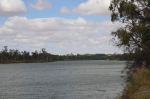
This was one of the best activations I had experience for a while when it came to working DX.  I started off on 40m first and worked a total of 21 stations in VK3 and VK5.  My first contact was with Nick VK3ANL who was activating the Terrick Terrick National Park, VKFF-630.  Next up I spoke with Hans VK5YX who was portable at Wombaroo in the Murray Mallee.  I then propped on 7.144 and called CQ where my first taker was Nev VK5WG, followed by Richard VK5ZRY, and then Ben VK5BB.

When things slowed down on 40m I headed off to 20m.  Unfortunately I could not get on to 14.244 as there were some European stations working close by.  So I started calling CQ on 14.241 and this was answered by Gerard VK2IO.  What followed was a huge pile up from Europe, the UK & North Ameerica.  The first European caller was Danny ON4VT, followed by Luk ON4BB, Max IK1GPG and then Luciano I5FLN.  The secret to my success was that they spotted me on the DX cluster.

I went on to work a total of 135 stations on 20m in Belgium, Italy, Germany, Russia, France, Netherlands, Ukraine, Spain, Hungary, Slovenia, Slovak Republic, Romania, Poland, USA, England, Croatia, Latvia, Canary Islands, Switzerland, Poland, Portugal, Luxembourg, Belarus, Austria, Denmark, Alaska, and Finland.  Thankyou to everyone who spotted me on the DX Cluster.

This slideshow requires JavaScript.

My last contact on 20m SSB was with Bob VK3SX.  I then headed off to 40m where I called CQ on 7.144 and worked a further 14 stations in VK2, VK3, VK4 VK5 and VK6.  Thanks to Paul VK2HV for getting the ball rolling and spotting me on the DX Cluster.  And also to Rob VK4FFAB.

One of my contacts was with Adam VK2YK who informed me that V6Z in Micronesia was up the band a little and had a great signal.  So I was pretty eager to love off and try my luck.  But Iwas still taking calls from other VK’s so I patiently waited until things slowed down and then tuned up to 7.152 and heard V6Z coming in very well, working split.  But unfortunately by this time he had a large pile up from Japan, the USA, VK & ZL.  I just couldn’t break through.

So I had a tune around the band and found the 7.1653 group and Jim WB2REM.  I called in and worked Jim and five other USA stations.  My signal report ranged from 44 to 57.  Not bad considering I was running 40 watts and a tiny dipole.

I thought I would try my luck one last time with V6Z and this time my persistence paid off.  After about 3 minutes of calling I got through.  I was very happy as this was a new DXCC entity for me on 40m whilst operating portable.

The following stations were worked on 40m SSB:-

  1. VK3ANL/p (Terrick Terrick NP)
  2. VK5YX/p
  3. VK5WG
  4. VK5ZRY
  5. VK5BB
  6. VK3FDAP
  7. VK5KLV
  8. VK5FANA
  9. VK3JP
  10. VK5ALX
  11. VK3AX
  12. VK3PF/m
  13. VK3DAC
  14. VK3TKK
  15. VK5ZAR
  16. VK3VT
  17. VK3FSPG
  18. VK5LOL/p
  19. VK5AV
  20. VK3VIN
  21. VK3AV
  22. VK2HV
  23. VK2FDJO
  24. VK3PMG
  25. VK5FLEX
  26. VK3ETC/5
  27. VK3NRG
  28. VK2YK
  29. VK3GFS
  30. VK5KFB
  31. VK4FFAB
  32. VK5AAH
  33. VK6HRC/P
  34. VK4FAAS
  35. VK3HRA
  36. WB2REM
  37. AH6GE
  38. W1RQ
  39. N7MIT
  40. W6PXE
  41. N7SEP
  42. V6Z

The following stations were worked on 20m SSB:-

  1. VK2IO
  2. ON4VT
  3. ON4BB
  4. IK1GPG
  5. I5FLN
  6. VK2YK
  7. DK4RM
  8. IK0OPS
  9. DK8FS
  10. RA3PCI
  11. IK5ORP
  12. DK0EE
  13. F1BLL
  14. DL5EBG
  15. OP7M
  16. ON5JE
  17. PB5X
  18. IK8FIQ
  19. DJ8QP
  20. IK0BGA
  21. UT4EX
  22. EA3MP
  23. DL1EBR
  24. PA3GRM
  25. UW5ZM
  26. HA6NF
  27. EA4DTV
  28. IZ8DFO
  29. S52KM
  30. PA3WB
  31. DL2ND
  32. ON7YZ
  33. OM7OM
  34. F2YT
  35. UR7ET
  36. EA3NW
  37. RX9WN
  38. YO3JW
  39. EA1DR
  40. F5TA
  41. SP6KEP
  42. ON6UQ
  43. HA6OB
  44. UX2KA
  45. KK4TXZ
  46. ON5SWA
  47. IZ2EWR
  48. DL4PT
  49. EA7AK
  50. F5IDJ
  51. IZ5UGP
  52. G0RBD
  53. I3KAN
  54. DL7HU
  55. UA3NM
  56. M1CMR
  57. IZ3QHB
  58. IK8BPY
  59. IZ1GRH
  60. OK1APV
  61. S58AL
  62. 9A2HQ
  63. OM1AX
  64. RC5F
  65. DK8PJ
  66. M6GHM
  67. SP2MPO
  68. EA2KV
  69. UA6NT
  70. IZ5CML
  71. IK3WDI
  72. YL2TQ
  73. I1POR
  74. DL5XU
  75. EA8JK
  76. G3MWV
  77. EA4FZC
  78. HB9TSI
  79. F6BWA
  80. DL6ATM
  81. IZ2IHO
  82. SP8GEY
  83. IZ0PED
  84. IZ1PLH
  85. S58N
  86. CT1AGS
  87. DK2BS
  88. W4REX
  89. IZ1NBX
  90. VK3PF/p (VKFF-758)
  91. VK7NWT
  92. DF8NY
  93. HB9RDE
  94. M0HDX
  95. UA1AKJ
  96. RN3B
  97. UK2PKT
  98. IZ5IOS
  99. OK2BPU
  100. IT9ZVL
  101. S57S
  102. EA3HND
  103. PD1RK
  104. DL4EBC
  105. DG8DBW
  106. IZ1JMN
  107. IZ5YHD
  108. IW2NXI
  109. PD2AD
  110. SP2GWH
  111. IZ8EFD
  112. LX90IARU
  113. IZ8GCE
  114. F4GWG
  115. F6KOP
  116. EU2MM
  117. UR8EW
  118. US2WU
  119. M0WYZ
  120. 9A3KS
  121. OH6RP
  122. IW2ETR
  123. CT1DQV
  124. DL1ASF
  125. F8PRD
  126. SP2ORL
  127. DJ1SD
  128. ON7LX
  129. EA3HSO
  130. EOE1DPS
  131. EA8OT
  132. OZ1W
  133. LX1IQ
  134. G1HPD
  135. DF1YQ
  136. VK2MCB
  137. KL2PM
  138. 2I0FLO
  139. M5AEC
  140. G0WKH
  141. VK3SX

Minlacowie Conservation Park

As we were heading home on Monday 30th March 2015, I managed to talk Marija into us detouring a little bit to activate the Minlacowie Conservation Park, which is located west of Stansbury, to the south east of Minlawton, and about 210 km by road from Adelaide.

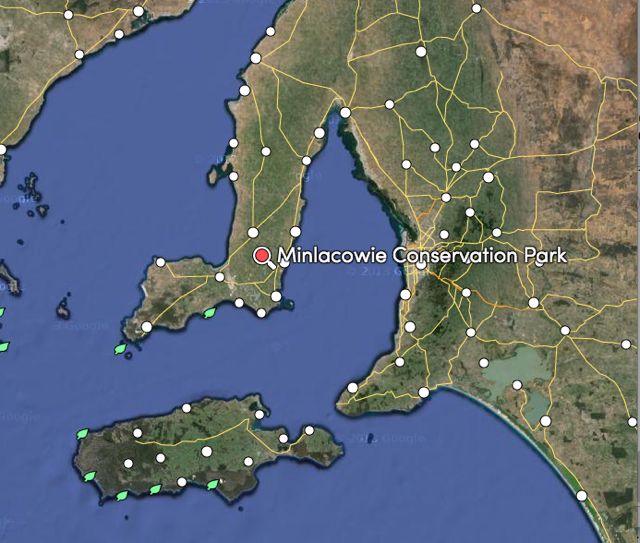
Screenshot 2015-04-08 09.38.32

Above: The location of Minlacowie CP.  Map courtesy of mapcarta.com

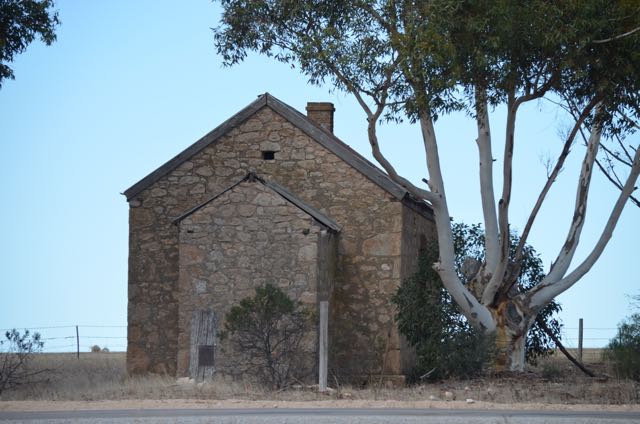
To get to the park we travelled down Rogers Road which runs off the Minlaton-Yorketown Road.  You will know that you are in the correct spot, because the old Minlacowie school is located at this intersection.  It is well worth stopping to have a look.

DSC_0484

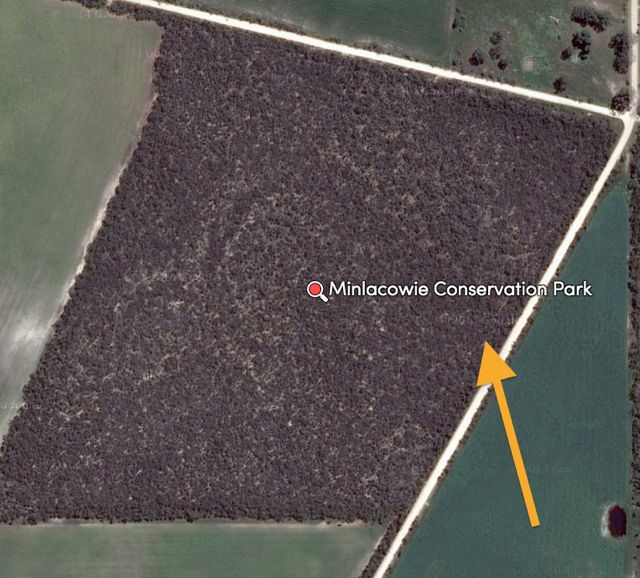
We set up just off Savage Hut Road.  There are not many options at this park.  There are no carparks and the scrub is extremely thick.  So your only option is operating along the fenceline either off Savage Hut Road or Rogers Road.

Screenshot 2015-04-08 09.36.49

Minlacowie Conservation Park (28.5 hectares; proclaimed in 2008) is located about 13 kilometres west of Stansbury. The park comprises a small patch of remnant mallee/broombush vegetation in very good condition, and conserves a number of significant plant species including the nationally and state vulnerable Winter Spider-orchid (Caladenia brumalis).

This was just a quick activation, whilst we had a late lunch.  My first taker on 7.095 after calling CQ was the ever reliable park hunter, Brian VK5FMID, followed by Wolf VK5WF, Geoff VK5HEL, and then Peter VK2DG.  I went on to work a further 16 stations in VK2, VK3, & VK5.

This included Hauke VK5HW who was mobile in the Barossa Valley, Steve VK3SRB/2 mobile between Albury and Gundagai in New South Wales, and Bob VK5AK who was mobile on Gorge Road at Cudlee Creek.

This slideshow requires JavaScript.

After 25 minutes in the park I had a total of 20 contacts in the log.  It was time to hit the road and continue our journey back home to Mount Barker in the Adelaide Hills.

The following stations were worked:-

  1. VK5FMID
  2. VK5WF
  3. VK5HEL
  4. VK2DG
  5. VK5WG
  6. VK5HCF
  7. VK5HW/m
  8. VK3VEF
  9. VK3SRB/2
  10. VK3FORD
  11. VK5GJ
  12. VK5ZRY
  13. VK5NQP
  14. VK5KLV
  15. VK5AK/m
  16. VK5EE
  17. VK3AS
  18. VK5FANA
  19. VK5LO
  20. VK3OF


References.

Department for Environment and Heritage, Management Plan Mainland Conservation Parks of Yorke Peninsula 2009

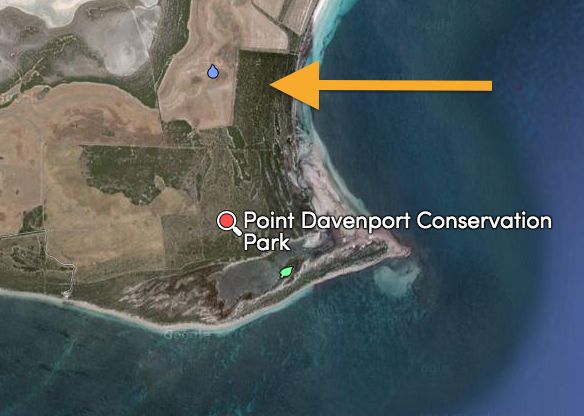
Point Davenport Conservation Park

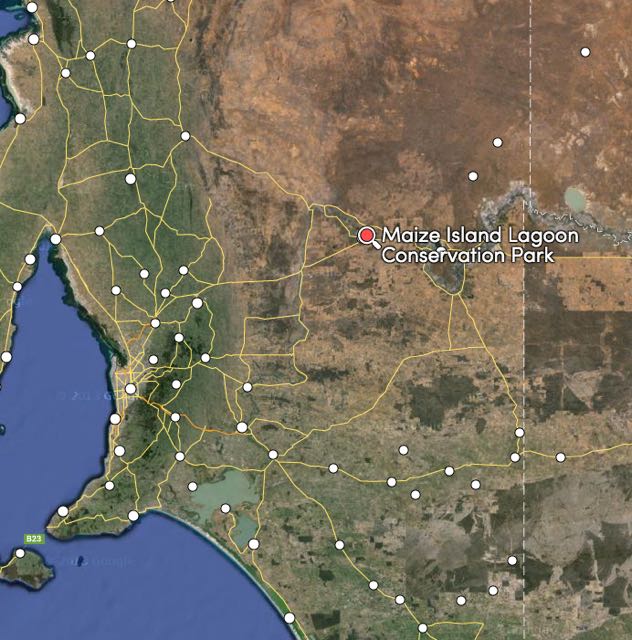
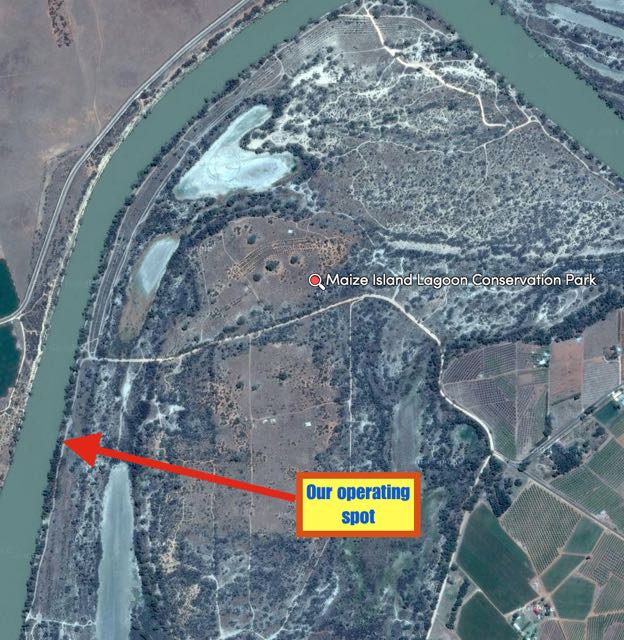
My third activation for Sunday 29th March 2015 was the Point Davenport Conservation Park, which is located south of Port Moorowie on the Yorke Peninsula, and about 250 km by road from Adelaide.

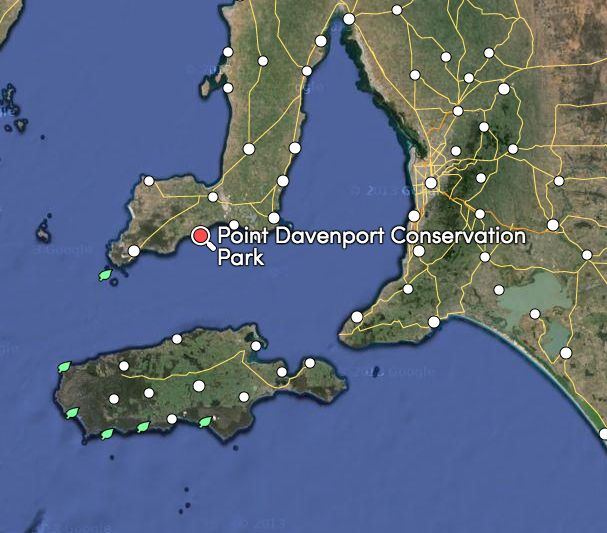
Screenshot 2015-04-08 09.31.50

Above: Location of the Point Davenport Conservation Park.  Map courtesy of mapcarta.com
This is not an easy park to access.  Unless you know exactly what you are looking for, it can be extremely frustrating as Marija and I experienced on Saturday.  But with the assistance of Richard VK5ZRY it was a piece of cake.  Fortunately we had permission to access the park via private property, which shortens the trip to the park dramatically.  Otherwise you will need to walk about 3 km along the beach following Sturt Bay.  Even if you do get permission to access the private property, do not even think about trying this in a 2WD.  You will not make it.  You will definitely get bogged, as this is a 4WD track only.

This slideshow requires JavaScript.

After entering through the farmers gate we followed a sandy and bumpy track down to a second gate and the start of the park.  We set up just over the fenceline and not far from the ocean (about 500 metres away).  For this activation we used my Yaesu FT-857d, 40 watts and the 40m/20m linked dipole supported on the 7m squid pole.

Screenshot 2015-04-08 09.31.33

Above: Map showing our operating spot.  Map courtesy of mapcarta.com
Point Davenport Conservation Park is 242 hectares in size and was gazetted in 1987.  It is located on a promontory that separates Foul Bay from Sturt Bay, mid-way along the southern coastline of Yorke Peninsula.  It is an area of high biodiversity with a range of habitats including beaches and foredunes, and an estuary that is listed as a nationally important wetland.  The park borders a swamp fringed by Paperbark Tea-trees.

Prior to calling CQ, Richard and I had a tune around the band.  I found Lesley VK5LOL on 7.095 activating the Hallett Cove Conservation Park.  But boy, what a pile up.  Trying to break through was very difficult.  But finally we did it, and had our first contact in the log, a park to park.

I then headed down to 7.090 and started calling CQ and this was answered by a multitude of callers.  So we asked for ‘park to park’ callers first and this resulted in me getting a park to park contact with Col VK5HCF and Tom VK5EE in the Glen Roy Conservation Park in the South East, followed by a park to park with Greg VK5GJ in the Stiptipurus Conservation Park on the Fleurieu Peninsula.  Richard and I handed back the mic to each other, each time a park to park caller gave us a shout.

I then asked for QRP stations and this resulted in some great QRP contacts including Tom VK5FTRG on 5 watts from Millicent, Adrian VK5FANA on 2 watts, and Amanda VK3FQSO on 100 milliwatts.

I always try to call for park to park contacts first, followed by QRP, other mobiles and portables, before I work the hoards of callers.  I know from experience that it can be quite a challenge breaking through the pileups when you are mobile or portable.

I then worked a few more park to park contacts.  This time with Keith VK5OQ in the Sandy Creek Conservation Park, followed by Matt VK5MLB activating the Montacute Conservation Park.

After working a total of 21 stations, Richard and I swapped over, and Richard jumped into the ‘driver’s seat’ and made multiple contacts.

This slideshow requires JavaScript.

While Richard was operating, we continued to swap the mic over, each time a park to park opportunity presented itself.  This resulted in me working a further 6 park activators.  The first was with Arno VK5ZAR activating the unique Fort Glanville Conservation Park, followed by Steve VK5SFA on the Woodforde Track in the Morialta Conservation Park.  Working Steve was a pleasant surprise, and he was not one of the activators on the activation spreadsheet.  I then spoke with Tony VK5ZAI in Jip Jip Rocks Conservation Park, then Andrew VK5MR in the Hopkins Creek Conservation Park running his little X1M QRP transceiver, and then Greg VK5ZGY in the Furner Conservation Park in the South East.

Richard then took a break and I worked a further 7 stations on 40m, including another park to park contact with Andrew VK5MR who had moved to the Red Banks Conservation Park.

Richard and I then decided we would have a crack at 20m hoping to get some of the VK6 fellas in the log.  My first contact there was with Con VK2KON, and then much to our surprise, I was called by DK4RM in Germany (5/9 sent and 5/7 received).  Next taker was Mike VK6MB, followed by Wil DL8MX and finally Adam VK2YK.

But time was marching on, and we decided to pack up and go for a walk down to the beach and view the Gulf St Vincent and the beautiful coastline of the lower Yorke Peninsula.  I had a total of 38 contacts in the log.

Many thanks to Richard for getting us in to Point Davenport.  It was great to meet Richard in person and do a couple of activations together including the rare Point Davenport CP.  This is only the second time this park has been activated.  It is difficult to find if you don’t know what to look for, and of course you need permission first to cross the farmer’s property.

After leaving Point Davenport, Marija I drove back to Inneston via the South Coast Road, stopping off a number of times to enjoy the spectacular views.

The following stations were worked on 40m SSB:-

  1. VK5LOL/p (Hallett Cove Conservation Park)
  2. VK5HCF/p (Glen Roy Conservation Park)
  3. VK5EE/p (Glen Roy Conservation Park)
  4. VK3OF
  5. VK5GJ/p (Stiptipurus Conservation Park)
  6. VK5FTRG
  7. VK5FANA
  8. VK3FQSO
  9. VK5OQ/p (Sandy Creek Conservation Park)
  10. VK5MLB/p (Montacute Conservation Park)
  11. VK3ARR
  12. VK5JK
  13. VK5LSB
  14. VK3PF
  15. VK3PMG
  16. VK2YK
  17. VK5FMID
  18. VK5BJE
  19. VK3DAC
  20. VK5NIG
  21. VK3JP
  22. VK5ZAR/p (Fort Glanville Conservation Park)
  23. VK5SFA/p (Morialta Conservation Park)
  24. VK5ZAI/p (Jip Jip Rocks Conservation Park)
  25. VK5MR/p (Hopkins Creek Conservation Park)
  26. VK5ZGY/p (Furner Conservation Park)
  27. VK5KLV
  28. VK5NQP
  29. VK5FCHM
  30. VK5MR/p (Red Banks Conservation Park)
  31. VK5FGAZ
  32. VK5FO/m
  33. VK4SD/2

The following stations were worked on 20m SSB:-

  1. VK2KON
  2. DK4RM
  3. VK6MB
  4. DL8MX
  5. VK2YK


References.

Department for Environment and Heritage, Management Plan Mainland Conservation Parks of Yorke Peninsula 2009

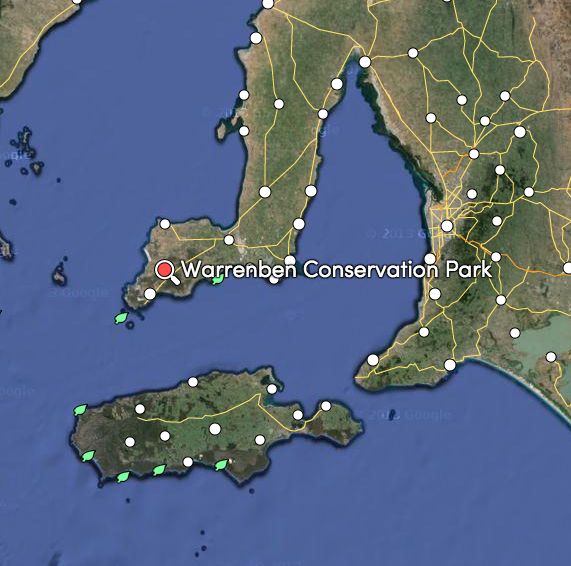
Warrenben Conservation Park, VKFF-818

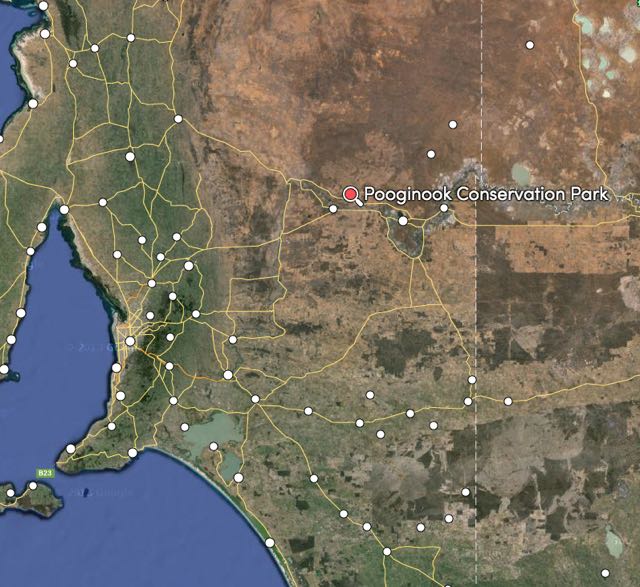
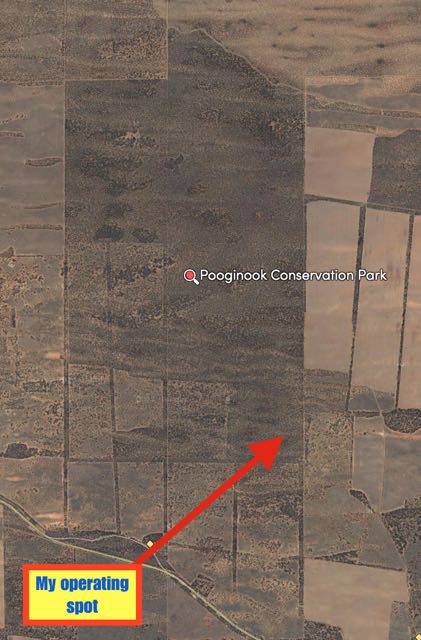
Our second activation for Sunday (29th March 2015) was the Warrenben Conservation Park, which is located about 260 km by road from Adelaide.

Screenshot 2015-04-08 09.27.24

Above: Location of Warrenben CP.  Map courtesy of mapcarta.com
This was another park that Marija and I had visited and activated during the 6 month anniversary of the VK5 Parks Award.  For information on the park and details of that activation, including a video, please have a look at…..

https://vk5pas.org/2013/10/21/warrenben-conservation-park/

After leaving Leven Beach we headed south along the Hundred Line Road, and then turned right onto Ilfracombe Road.  We set up in the scrub off Ilfracombe Road.  This is a very different park to Leven Beach.  Warrenben is very dry, rocky and typical mallee scrub.  Certainly not as picturesque as the beach setting at Leven Beach.

Screenshot 2015-04-08 09.27.13

Above: My operating spot.  Map courtesy of mapcarta.com
Warrenben Conservation Park is a large reserve comprising 4,065 hectares, which was gazetted in 1972.  Together with nearby Innes National Park, it conserves a substantial proportion of the natural habitat remaining on southern Yorke Peninsula.  The park comprises an area of undulating limestone plains and low, stabilised dunes that remain well vegetated with mallee and tea-tree scrub and some sheoak woodlands.  It provides habitat for a number of threatened species including the nationally and state vulnerable Annual Candles, state rare Goldsack’s Leek-orchid , and the nationally and state vulnerable Malleefowl and Western Whipbird.

Prior to calling CQ I had a look around the band and found Tony VK3VTH/5 calling CQ on 7.105 from the Flinders Ranges National Park in the Far North of South Australia.  Tony had a beautiful 5/9 and was my first contact from Warrenben.  I then found the dyamic duo from the South East, Tom VK5EE and Col VK5HCF on 7.100 in the Mary Seymour Conservation Park in the SOuth East.  Again, beautiful 5/9 signals all the way to the Yorke Peninsula.

I then headed off to 7.095 and started calling CQ and this was immediately answered by Arno VK5ZAR, followed by Adrian VK5FANA, and then Tony VK5ZAI who was portable in Jip Jip Rocks Conservation Park in the South East.  Following my contact with Tony I had another park to park contact, this time with Tom VK5FTRG who was activating the Gower Conservation Park.  And then a few contacts later I was called by Andrew VK5KET who was portable in the Calectasia Conservation Park.

I worked a further Richard arrived at the park.  Richard had taken a punt that we would set up, on Ilfracombe Road and he was right.  After our introductions and a chat, and a look at my portable set up, it was time for Richard to jump into the operating chair and make some contacts.  But not before Richard offered to take us to the Point Davenport Conservation Park after our activation here at Warrenben.  I jumped at this opportunity after our failed attempt of yesterday.

Whilst Richard was operating he was called by Peter VK5FLEX who at first was a little cryptic, but we eventually got it out of Peter that he was bogged in the Peebinga Conservation Park in the Mallee near the South Australian/Victorian border.  This is quite a remote location and Peter had no mobile phone coverage.  So for the next 90 minutes I made a number of phone calls on Peter’s behalf, with Richard relaying information back to Peter via the radio.  Finally, we secured the assistance of a mate of Peter, to head out to Peebinga and pull Peter out.  I am pleased to report that Peter was pulled out of his bog and made it home safely that night.  It proved the power of amateur radio when other forms of communication fail.

This slideshow requires JavaScript.

After we had helped out Peter, Richard continued on working some more stations, and then it was my time to hop back into the operating chair again.  I was hoping to get my 44 contacts for the World Wide Flora Fauna (WWFF) program, but the day was now getting on.  I worked a further 15 stations, including 1 SOTA activator, and four VK5 park to park contacts.

My first contact after jumping back on the mic was with Tony VK3CAT who was on SOTA peak, The Knobs, VK3/  VE-040.  My park to park contacts were with David VK5NQP portable in the Brookfield Conservation Park, Gordon VK5GY portable in the Kenneth Stirling Conservation Park, Tim VK3MTB portable in the Little Dip Conservation Park, and Peter VK5FLEX portable in the Peebinga Conservation Park.  Peter decided, ‘well why not get a park to park while I’m waiting to get pulled out’.

Unfortunately I did not reach the 44 contacts.  But I did get a total of 29 contacts in the log.  I will be revisiting Warrenben another day for the remaining 15 contacts to reach the 44.

Off to Point Davenport Conservation Park.  I was excited.

The following stations were worked:-

  1. VK3VTH/5 (Flinders Ranges National Park)
  2. VK5EE/p (Mary Seymour Conservation Park)
  3. VK5HCF/p (Mary Seymour Conservation Park)
  4. VK5ZAR
  5. VK5FANA
  6. VK5ZAI/p (Jip Jip Rocks Conservation Park)
  7. VK5FTRG/p (Gower Conservation Park)
  8. VK5TD
  9. VK5KET/p (Calectasia Conservation Park)
  10. VK3OF
  11. VK3DAC
  12. VK5BGN
  13. VK5SFA
  14. VK3PMG
  15. VK3CAT/p (SOTA The Knob)
  16. VK3PF
  17. VK5NQP/p (Brookfield Conservation Park)
  18. VK5NIG
  19. VK5KC
  20. VK5JK
  21. VK5LSB
  22. VK5GY/p (Kenneth Stirling Conservation Park)
  23. VK3AVm
  24. VK3MTB/5 (Little DIp Conservation Park)
  25. VK3TKK
  26. VK5FLEX/p (Peebinga Conservation Park)
  27. VK3HRA
  28. VK5BB/p

The following station was worked on 20m SSB:-

  1. VK6MB

References.

Department for Environment and Heritage, Management Plan Mainland Conservation Parks of Yorke Peninsula 2009

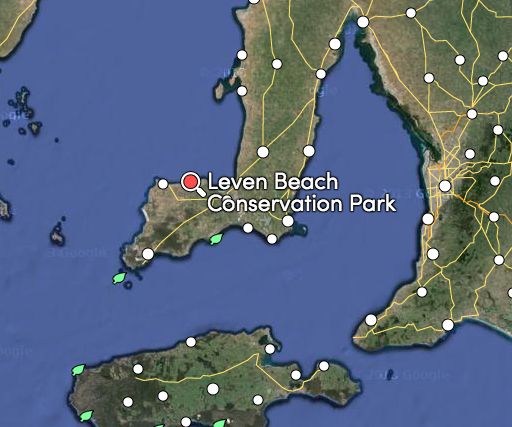
Leven Beach Conservation Park, VKFF-814

Our first activation for Sunday morning (29th March 2015) was the Leven Beach Conservation Park (CP), which is located just north of the little town of Corny Point on the Yorke Peninsula, and about 258 km by road from Adelaide.

Screenshot 2015-04-08 09.16.34

Above:- The location of Leven Beach CP.  Map courtesy of mapcarta.com
We last activated the Leven Beach CP back in 2013 for the 6 month anniversary of the VK5 Parks Award.  For full information on the park and details on that activation, please have a look at…..

https://vk5pas.org/2013/10/21/leven-beach-conservation-park/

Marija and I set up in the same spot as the previous activation which was at the end of Roe Road, on the beachfront.  Roe Road runs off the Corny Point Road and travels down passed the shacks to the beach.  At the end of Roe Road there is a carpark, with plenty of room to park.  You will clearly see the park on your right as you travel down Roe Road.

Screenshot 2015-04-08 09.16.21

Above:- Map showing my operating spot.  Map courtesy of mapcarta.com

The Leven Beach Conservation Park is 502 hectares in size and was proclaimed in 198.  It is a coastal reserve located on Hardwicke Bay, part of the northern coastline on the upper ‘foot’ of Yorke Peninsula.  It has a six kilometre beach frontage backed by low cliffs and a hinterland of undulating, vegetated dunes.  The park conserves sheoak woodland and provides habitat for a nationally endangered species of butterfly, the Yellowish Sedge-skipper Butterfly.

The operating gear for this activation was the Yaesu FT-857d, 40 watts and the 40m/20m linked dipole.  We set up the deck chair and the fold up table on the sand just in front of all the coastal vegetation from the park.  It was a beautiful morning weather wise.  The ocean (Spencer Gulf) was very flat and calm, and I sat back and watched a few fisherman taking their boats out into the water with their tractors, and heading off for a morning of fishing.

The Europeans were absolutely belting in on 40m with the CQ WW DX Contest, so it was quite difficult to find a clear spot on the 40m band.  Finally I found 7.092 clear and put out a CQ call and this was answered by Steve VK3NSC, followed by David VK5KC, John VK5BJE, and then Allen VK3HRA.

My first park to park contact was about 4 QSO’s later and it was with Peter VK5KX who was activating the Hogwash Bend Conservation Park in the Riverland (5/9 both ways).

My next contact was with Doug VK2FMIA who was portable in the Horton Falls National Park in New South Wales.  Doug had a nice 5/6 signal on the Yorke Peninusla.  Doug has an excellent WordPress site, which can be found at…..

http://vk2fmia.com/

It was pleasing to hear a steady flow of callers from VK1, VK2, VK3, VK5, and VK6.  And a few QRP callers as well including Peter VK3PF, and Peter VK3TKK.  I even managed to get Mike VK6MB in the log on 40m with a nice 5/8 signal (5/6 received).

While I was enjoying the sunshine and on air, Marija took a walk along the beach, and through the park, and had a chat with some of the locals.  I had one local approach me who was walking her dog on the beach, and was very curious as to what I was doing.

I also received a call from Yorke Peninsula local and regular park hunter, Richard VK5ZRY, and we arranged to meet at my next park, the Warrenben Conservation Park to do a joint activation.  I had spoken with Richard a number of times on the radio, but we had never met in person.  So I was looking forward to the ‘eyeball’.

This slideshow requires JavaScript.

My next park to park contact was with David VK5NQP who was portable in the Whites Dam Conservation Park in the Riverland (5/9 both ways), and then 2 QSOs later I also spoke with Chris VK4FR/5 who was portable on Kangaroo Island in the Kelly Hill Conservation Park (5/9 both ways).

I went on to work a total of 36 stations on 7.092 until things started to slow down, so I then had a quick tune around the band and found Andrew VK1NAM on SOTA peak Mount McDonald, VK1/ AC-048.

I then lowered the squid pole and took out the links and re-erected the squid pole and headed for 14.309 and started calling CQ.  This was answered by Mike VK6MB (5/8 both ways), followed by Adam VK2YK, and then Daniel VK6LCK.  But that was the end of callers, so I headed back to 40m.

My first contact upon returning to 40m was with Andy VK5AKH who was portable in the Coorong National Park on 7.098 (5/9 both ways).  I then found Andrew VK5KET on 7.092 calling CQ from the Penola Conservation Park in the South East (5/9 both ways).  And the park to park activity kept rolling on.  I next spoke with Greg VK5ZGY in the Kungari Conservation Park in the South East (5/9 both ways) on 7.085.

I put out a few CQ calls on 7.080 and was called by Tom VK5FTRG who was portable in the Gower Conservation Park in the South East (5/9 both ways).  A few QSOs later I was called by David VK5HDW who was portable in the Beachport Conservation Park in the South East.  There were certainly a lot of activators out and about in the South East of South Australia.  The SERG boys are certainly great supporters of the VK5 Parks Award.

My last contact from Leven Beach was with Chris VK4FR/5 who had now moved to the Mount Taylor Conservation Park on Kangaroo Island (5/9 both ways).

It was time to pack up and head off to the Warrenben Conservation Park and meet up with Richard VK5ZRY.

I had a total of 49 contacts in the log from Leven Beach Conservation Park.

The following stations were worked:-

  1. VK3NSC
  2. VK5KC
  3. VK5BJE
  4. VK3HRA
  5. VK5HCF
  6. VK5ZAR
  7. VK5FMID
  8. VK5KX/p (Hogwash Bend Conservation Park)
  9. VK2FMIA/p (Horton Falls National Park)
  10. VK3PF
  11. VK5FANA
  12. VK3MCX
  13. VK3FQSO
  14. VK6MB
  15. VK3PMG
  16. VK3DAC
  17. VK5ZRY
  18. VK5GY
  19. VK3TKK
  20. VK3FCOE
  21. VK2YK
  22. VK1DI
  23. VK5KLV
  24. VK2PKT
  25. VK5NQP/p (Whites Dam Conservation Park)
  26. VK5JK
  27. VK4FR/5 (Kelly Hill Conservation Park)
  28. VK3AFW
  29. VK5STU
  30. VK5MLB
  31. VK5LSB
  32. VK5TW
  33. VK5FDEC
  34. VK6KY/5
  35. VK5FJEN/m
  36. VK5AV
  37. VK1NAM/p (SOTA VK1/ AC-048)
  38. VK5AKH/p (Coorong National Park)
  39. VK5KET/p (Penola Conservation Park)
  40. VK5ZGY/p (Kungari Conservation Park)
  41. VK5FTRG/p (Gower Conservation Park)
  42. VK5HEL
  43. VK5NQP/p (Whites Dam Conservation Park)
  44. VK3VCE
  45. VK5HDW/p (Beachport Conservation Park)
  46. VK4FR/5 (Mount Taylor Conservation Park)

The following stations were worked on 20m SSB:-

  1. VK6MB
  2. VK2YK
  3. VK6LCK

References.

Department for Environment and Heritage, Management Plan Mainland Conservation Parks of Yorke Peninsula 2009