Next in the log on 11th November 2021 was the Voice of Jinling, CHINA, broadcasting on 6200 kHz in the 49m band. The broadcast was in the Chinese language.
The station is located in Nanjing in eastern China.
Nanjing, the capital of China’s eastern Jiangsu province, is roughly 300km up the Yangtze River from the city of Shanghai.
Above:- Map showing the location of Nanjing. Map c/o google maps
The overall reception of the Voice of Jinling was excellent.
S
I
N
P
O
5
5
4
4
5
Below is a short video of my reception of the Voice of Jinling.
My next station logged for 11th November 2021 was a new one for me. It was Bangladesh Betar transmitting on 4750 kHz in the English language.
Above:- World globe showing the location of Bangladesh. Image c/o Wikipedia
Bangladesh Betar is the state-owned radio broadcaster of Bangladesh. Betar means Radio. It was established after Bangladesh’s independence from Pakistan in 1971, and was known as Radio Bangladesh between 1975 and 1996.
On the 16th day of December 1939, radio transmission in the region now forming Bangladesh commenced in Dhaka as part of All India Radio. On the 8th day of September 1960, the station moved to Shahbag and was renamed Radio Pakistan. Radio played an important role during the Bangladesh Liberation War of 1971.
On the 26th day of March 1971, the broadcasting centre of Radio Pakistan was used to transmit a declaration of independence. This was intercepted by a Japanese ship in Chittagong Harbor and was retransmitted.
During the war, the Pakistan Army took over the radio station in Dhaka and the Bangladeshis operated Swadhin Bangla Betar Kendra (Independent Bengal Radio Station) clandestinely. Due to heavy shelling, the station was relocated several times and ultimately moved to Calcutta on the 25th day of May. The station continued to broadcast from there until the end of the war.
On the 6th day of December, it was renamed Bangladesh Betar. The station’s current headquarters were completed in 1983 at National Broadcasting House, Arargon .
The broadcast consisted of the Panorama program.
The overall reception of Bangladesh Betar was poor. The signal strength was fair and there was only slight fading on the signal. There was interference on the frequency from CNR1 in Chinese. I also experienced very strong static crashes on the band from local storms in Australia. The audio of Bangladesh Betar also sounded a little distorted.
S
I
N
P
O
3
3
2
4
2
Below is a short video of my reception of Bangladesh Betar on 4750 kHz.
On 11th November 2021, I logged Radio New Zealand broadcasting in the English language on 11725 kHz.
Above;- World map showing the location of New Zealand. Image c/o Wikipedia.
I have tuned into Radio NZ before, but this was a new frequency for me.
The overall reception of Radio New Zealand was good. There was some interference from China Radio International on 11720 who were transmitting in the Vietnamese language.
S
I
N
P
O
4
3
4
4
4
The program consisted of their overnight program and various music.
Below is a video of my reception of Radio New Zealand.
On the 10th day of November 2021, I logged the Far East Broadcasting Company (FEBC) on 13870 kHz in the Khmer language. I have tuned into FEBC previously, but this was a new frequency for me.
Above:- World globe showing the location of the Philippines. Image c/o Wikipedia
FEBC broadcasts are heard in 141 languages and 50 countries around the world aired from 149 stations and transmitters, totalling 1,571 hours of programming a day, 365 days a year.
The overall reception of FEBC was good. The signal strength was good with only slight fading. There was only slight interference from other stations – I think Sound of Hope in China on the same frequency.
On the 9th November 2021 at 1119 UTC I tuned into Radio Nikkei on 3925 kHz in the Japanese language. I have tuned into Radio Nikkei previously, but this was a new frequency for me.
The overall reception of Radio Nikkei was fair. This was mostly due to the severe static crashes which were on the band from storms in Australia. There was also some interference from 3930 kHz – the Voice of the People in South Korea, and a jamming signal.
S
I
N
P
O
4
4
2
4
3
Below is a video showing my reception of Radio Nikkei.
On 8th November 2021, I tuned into Radio Prague International broadcasting from the CZECH REPUBLIC on 5050 kHz in the Spanish language.
Above:- Map showing the location of the Czech Republic. Map c/o Wikipedia.
Radio Prague International is the official international broadcasting station of the Czech Republic.
The Radio Prague website has an excellent rundown on the history of the station. During the early 1930s, Czechoslavakia’s Ministry of Foreign Affairs decided that a shortwave service that could be heard abroad would be an effective tool to counter propaganda on the airwaves from other countries. Broadcasts from Prague commenced on the 31st day of August 1936 with a speech in English by the Technical Director of Czechoslovak Radion, Eduard Svoboda. This date is considered to be the birth of international broadcasting in Czechoslovakia.
This year Radio Prague International is celebrating its 85th anniversary. The video below runs for about 4 & 1/2 minutes where you can take a tour of the Czech Radio building.
My reception of Radio Prague International was poor. The signal strength was fair, but the static crashes due to storms in Australia were very strong which affected listening pleasure greatly.
S
I
N
P
O
3
4
2
4
2
Below is a short video of my reception of Radio Prague International.
My next station heard on 8th November 2021, was another South Korean ‘clandestine’ station. This time it was the Voice of the People broadcasting from SOUTH KOREA in the Korean language on 3910 kHz.
Again, this is a station believed to be run by the South Korean National Intelligence Service.
The overall reception of Voice of the People was poor. There was significant ‘jamming’ of the signal. It has been reported that this comes from North Korea.
S
I
N
P
O
3
2
2
4
2
Below is a video of my reception of the Voice of the People.
On Monday 8th November 2021 I did a little more broadcast shortwave listening. First in my log was a station that I have tuned into before, but this time on a different frequency. It was Echo of Hope broadcasting from SOTH KOREA in the Korean language on 3985 kHz.
Above:- Map showing the location of South & North Korea. Map c/o Google maps
The station was initially launched as Voice of Reunification and was renamed Echo of Hope in 1973. It is operated by the South Korean National Intelligence Service (NIS).
Above:- NIS logo. Image c/o Wikipedia
Below is a video showing my reception of Echo of Hope on 3985 kHz.
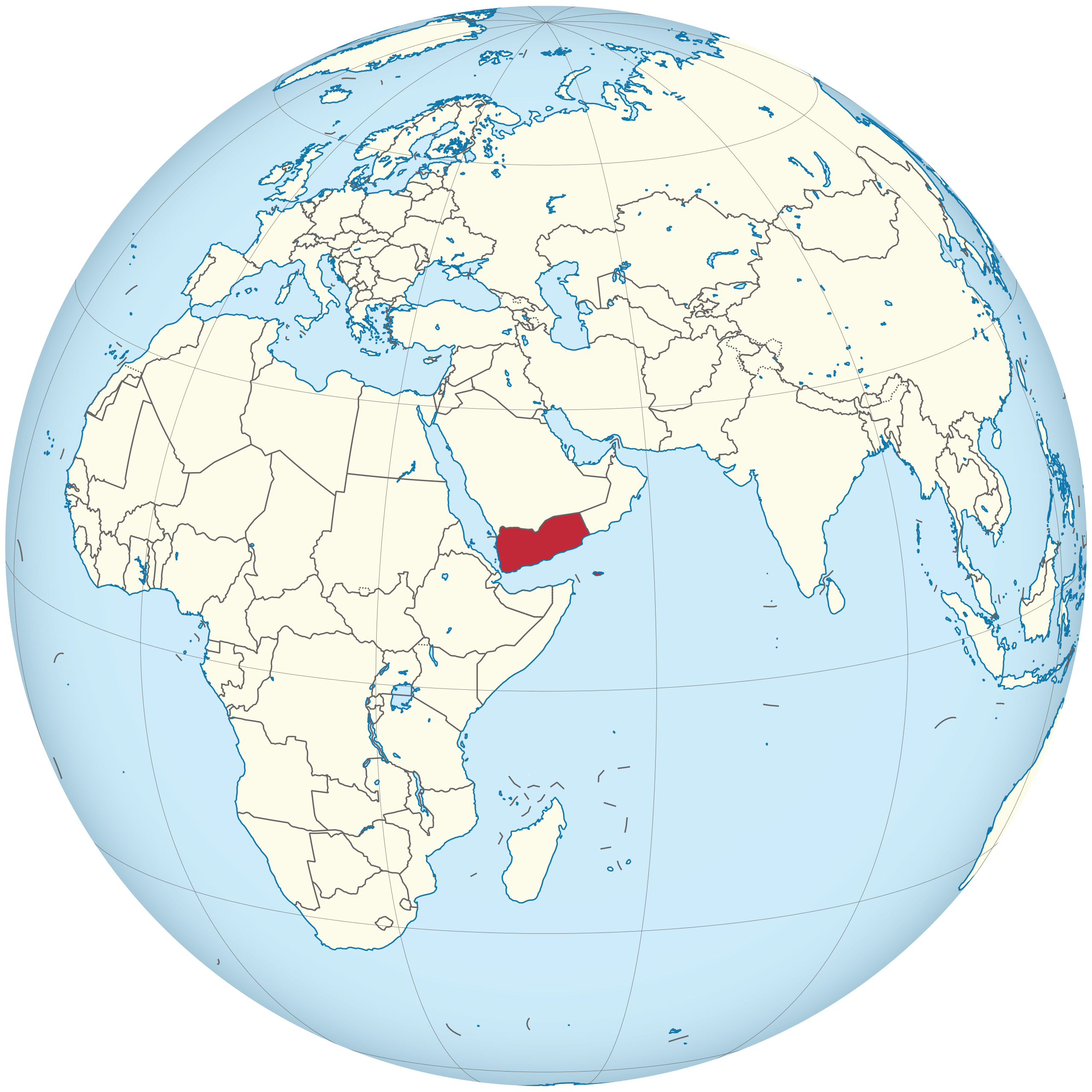
My final station logged on 7th November 2021 was a very interesting one. It was Republic of Yemen Radio broadcasting in the Arabic language on 11860 kHz in the 25m band.
Above;- World globe showing the location of Yemen. Image c/o Wikipedia
Yemen is a country in Western Asia, on the southern end of the Arabian Peninsula. It borders Saudi Arabia to the north and Oman to the northeast and shares maritime borders with Eritrea, Djibouti, and Somalia.
Yemen is currently six years into an armed conflict that has claimed over 18,400 civilian lives. It is reported that Yemen is the largest humanitarian crisis in the world.
The World Radio TV Handbook reports that Republic of Yemen Radio broadcasts in support of Yemeni President Hadi and the Aden based provisional government. It is believed that transmissions are aired via transmitters in Saudi Arabia.
I was receiving Republic of Yemen Radio quite well. The signal strength was good and there was only slight fading on the signal.
S
I
N
P
O
4
4
4
4
4
Below is a video of my reception of Republic of Yemen Radio.










 VK5PAS