Far East Broadcasting Company (FEBC) – 15330 kHz

On Saturday 6th November 2021, I tuned into the Far East Broadcasting Company (FEBC) on 15330 kHz.

I started listening at 1114 UTC. The program was in the Mongolian language.

FEBC is an international Christian radio network and is owned and operated by shortwave radio station KGEI in San Francisco, USA.

The FEBC website states:-

“FEBC leadership around the world are passionate about reaching people with the life-changing message of Jesus Christ.”

Above:- FEBC Philippines HQ in Valenzuela, Metro Manilla. Image c/o FEBC website.

Below is a video I found on YouTube about FEBC.

FEBC can trace its roots back to Bob Bowman and John Broger who were attending Southern California Bible College, who had a vision for a missionary radio station. This would become the Far East Broadcasting Company (FEBC). Bowman and Broger shared their idea with Reverend William Roberts, the pastor of a church that Bowman’s parents attended. Rev. Roberts supported the plan and his church were the first to assist FEBC with funding and prayer.

In 1945, FEBC was officially incorporated by Bowman, Broger and Roberts. The very first broadcast was from Shanghai, China, however by 1948 all mission work in China had ceased due to communism. FEBC was then established in the Philippines. On the 4th day of June 1948, the first broadcast from the Philippines of FEBC was made via local station DZAS. In 1949, broadcasts to China commenced, with broadcasts to other Asian countries expanding in the following years.

Below is a very interesting video on Dr. Bob Bowman.

Today, FEBC broadcasts in 141 languages worldwide for a total of 1,571 hours each day.

I was receiving FEBC very well. The signal was strong and there was no interference from adjacent stations. There was only slight fading on the signal.

SINPO
55445

Below is a short video showing my reception of FEBC.

References.

  1. FEBC, 2021, <https://www.febc.org/about/>, viewed 9th November 2021
  2. Wikipedia, 2021, <https://en.wikipedia.org/wiki/Far_East_Broadcasting_Company>, viewed 9th November 2021.
Radio Free Asia – 7530 kHz

The last station I logged on Sunday evening 24th October 2021 was Radio Free Asia on 7530 kHz in the 41 m shortwave band. The broadcast was in the Burmese language. I tuned into their broadcast at 1240 UTC

Radio Free Asia (RFA) is a United States of America government-funded private and non-profit news service that broadcasts radio programs to audiences in Asia. Radio Free Asia’s mission is to provide accurate and timely news and information to Asian countries whose governments prohibit access to a free press. 

RFA is based on Radio Free Europe/Radio Liberty and was established by the International Broadcasting Act of 1994 with the stated aim of “promoting democratic values and human rights”, and countering the narrative of the Chinese Communist Party, as well as providing media reports about the North Korean government. RFA commenced broadcasting in September 1996 in the Mandarin language. Tibetan was launched in December 1996, followed by Burmese in February 1997. Today, RFA broadcasts in nine Asian languages.

RFA is funded by an annual grant from the United States Agency for Global Media. RFA’s coverage concentrates on events occurring in and/or affecting the countries to which it broadcasts. This includes The People’s Republic of China, Burma, Cambodia, Laos, North Korea, Tibet, and Vietnam.

RFA’s headquarters are located in Washington D.C. RFA uses a combination of US government operated transmitters and a variety of shortwave lease facilities.

In 2011, RFA celebrated its 15th anniversary year. The Dalai Lama visited RFA’s Washington headquarters as part of the anniversary year.

Above:- The Dalai Lama visit to RFA. Image c/o RFA website.

RFA has been the subject of alleged ‘jamming’ by Chinese authorities since it commenced its broadcasts in 1996.

More information on RFA can be found on their website at……

https://www.rfa.org/about

Radio Free Asia encourages listener reports. Their website states:

“We encourage our listeners to tell us when they receive our transmissions. Your reception reports, or QSL cards, help us evaluate the quality of our signal strength.”

The overall reception of Radio Free Asia was good. The signal strength was excellent.

SINPO
54454

Below is a video showing my reception of Radio Free Asia.

References.

  1. Radio Free Asia, 2021, <https://www.rfa.org/about>, viewed 24th October 2021.
  2. Wikipedia, 2021, <https://en.wikipedia.org/wiki/Radio_Free_Asia>, viewed 24th October 2021.

KNLS ALASKA – 7355 kHz

My second to last station logged on Sunday evening, 24th October 2021 was KNLS in ALASKA, on 7355 kHz in the 41m band. The broadcast was in the English language. The target area was the Pacific Rim.

I tuned in at 1213 UTC.

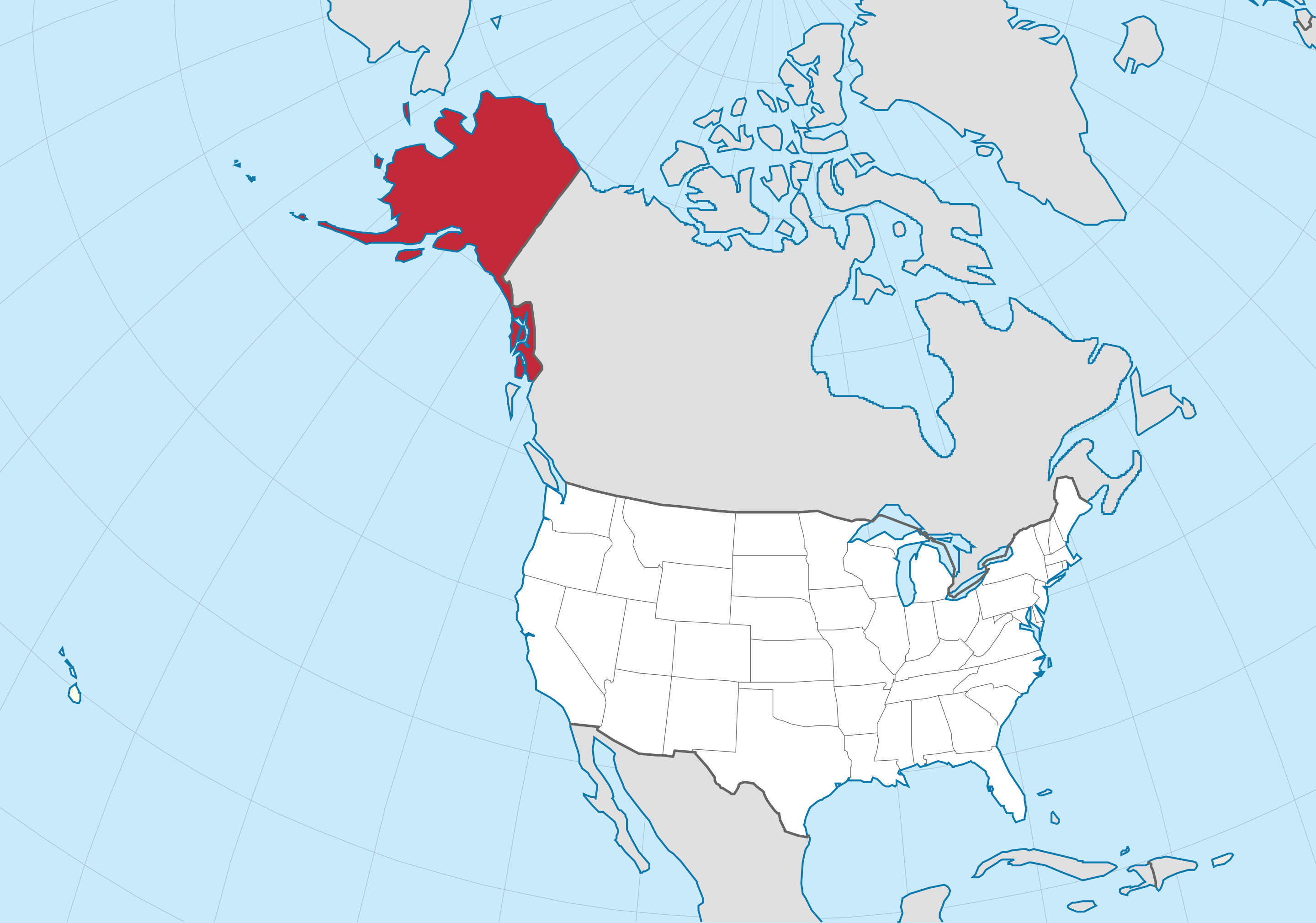
Above:- Map showing the location of Alaska. Image c/o Wikipedia.

The overall reception of KNLS was poor. The signal strength was good but there was severe interference from nearby stations on the band.

SINPO
42342

Below is a short video of my reception of KNLS as heard on my Yaesu FTdx101MP and 40m dipole.

References

  1. KNLS, 2021, <https://knls.org/broadcasting-main.html>, viewwed 1st November 2021

Korean Central Broadcasting Station – 6100 kHz

Next in my log on Sunday 24th October 2021 was the Korean Central Broadcasting Station on 6100 kHz in the 49m band. The broadcast was in the Korean language.

Above: the flag of North Korea. Image c/o Wikipedia

The overall reception of KCBS was fair. The signal strength was fair and there was slight fading of the signal. There was a moderate noise level, with static crashes from local storms in Australia.

SINPO
35343

Below is a video of my reception of the Korean Central Broadcasting Station.

References.

  1. Short-Wave.info, 2021, <https://www.short-wave.info/?freq=6160>, viewed 1st November 2021.
  2. World Radio TV Handbook, 2020

KBS World Radio – 15160 kHz

Next in the log on Sunday 24th October 2021 was KBS World Radio in SOUTH KOREA, broadcasting on 15160 kHz. The program was in the Korean language.

KBS World Radio, formerly Radio Korea and Radio Korea International, is the official international broadcasting station of South Korea. Owned by the Korean Broadcasting System, the station broadcasts news and information in 11 languages.

The logo of KBS World Radio features “big waves, symbolizing the worldwide spread of the Korean culture which is often called the “Korean Wave.” The purple-colored waves carry our promise to bring our listeners creative programs since the color is often associated with creativity.”

The station was launched on the 15th day of August 1953. This was the first English broadcast for resident foreigners.

1953 – 1973……….The Voice of Free Korea

1973 – 1994……….Radio Korea

1994 – 2004……….Radio Korea International

The KBS Mission is……

  • To provide news and information on the political, economic and cultural fields
  • To reflect the viewpoints of Koreans on major issues at home and abroad
  • To deliver Korea’s stance and news on inter-Korean affairs
  • To promote cultural exchanges and friendly relations with other nations
  • To build a bond between the 7 million Korean expatriates overseas
  • To provide information for overseas Koreans in times of disaster or emergency

Listener reports are via an on-line Reception Report.

The overall reception of KBS World Radio was good until 0901 UTC when I noted a blocking or jamming signal on the frequency, suspected to be coming from North Korea.

The SINPO report below is prior to the blocking.

SINPO
44444

Below is a video of my reception of KBS World Radio.

References.

  1. Wikipedia, 2021, <https://en.wikipedia.org/wiki/KBS_World_Radio>, viewed 1st Novembeer 2021.

Voice of Korea NORTH KOREA – 15245 kHz

Second, in the log on Sunday 24th October 2021 was the Voice of Korea on 15245 kHz. The broadcast was in the Korean language.

I tuned in at 0842 UTC.

The overall reception of the Voice of Korea was good.

SINPO
44444

Below is a video of my reception of the Voice of Korea on 15245 kHz.

References.

  1. Voice of Korea, 2021, <http://www.vok.rep.kp/index.php/home/main/en>, viewed 1st November 2021

Voice of Turkey – 15450 kHz

After listening to the Voice of Turkey on 15380 kHz, I tuned a little up the band and found the voice of Turkey on 15450 kHz

Reception on this frequency was not as good as 15380 kHz and sadly this broadcast was in the English language.

SINPO
35443

Below is a short video of my reception of the Voice of Turkey on 15450 kHz.