Next in my log was WWCR on 4840 kHz broadcasting from the UNITED STATES OF AMERICA.
From the WWCR website:
“WWCR has four 100,000 Watt, state of the art, transmitters which serve the world on 10 different broadcasting channels. Together our transmitters provide over 400 religious and talk programs direct from Nashville, Tennessee, USA, to a global audience.”
My reception of WWCR was good. The signal strength was good with no interference from other stations. There was just slight fading on the siognal.
S
I
N
P
O
4
5
4
4
4
Below is a short video showing my reception of WWCR.
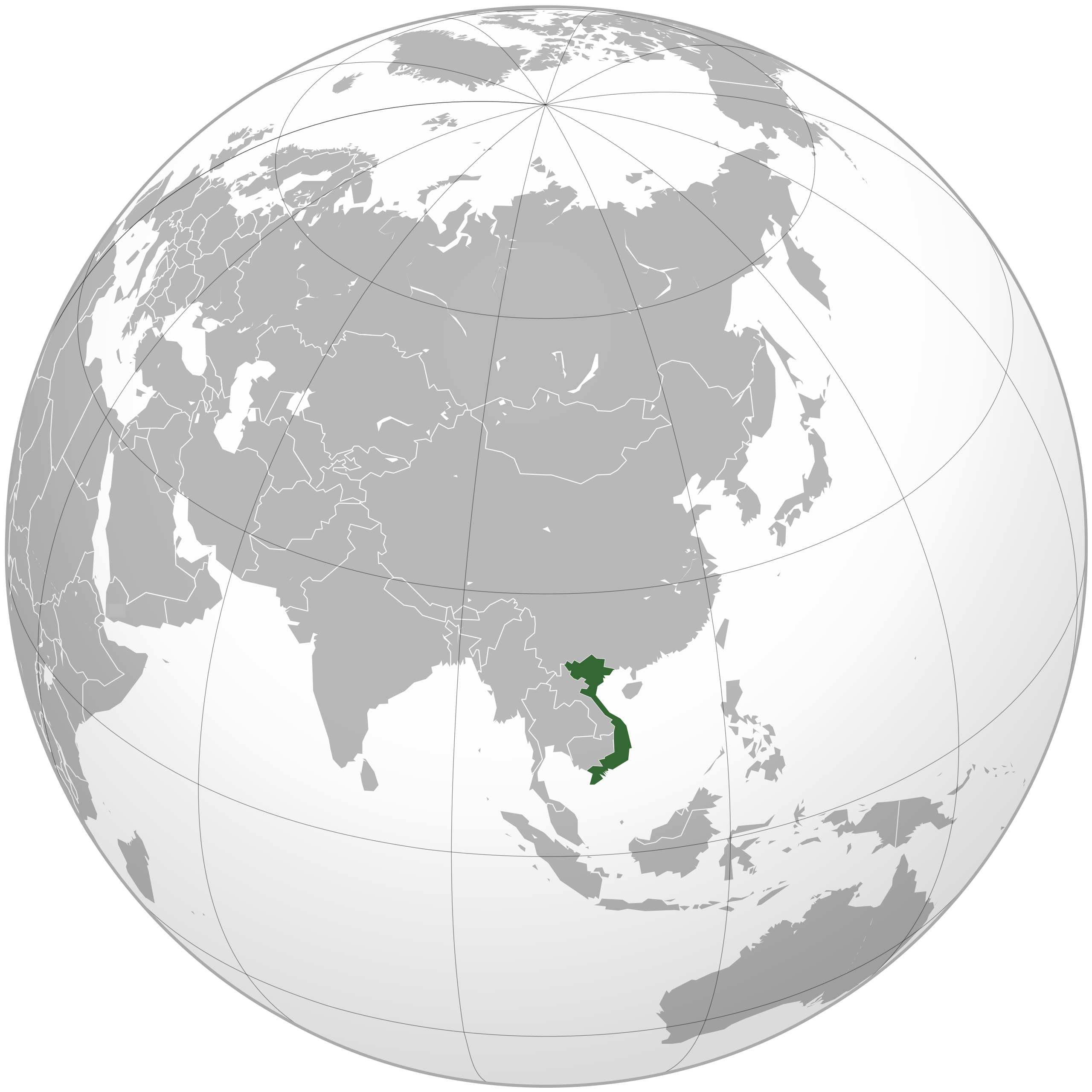
I then tuned into the Voice of Vietnam on 9840 kHz on the 31m shortwave band.
Above:- Globe showing the location of Vietnam. Image c/o Wikipedia
The Voice of Vietnam is the Vietnamese national radio broadcaster. It is directly controlled by the Vietnamese Government and is tasked with “propagating the views, policies of the Party and the laws of the state.
Prior to 1945, the Vietnamese were banned from owning radio receivers,and broadcasting was under control of the French colonial government. They established the first radio station in Vietnam, Radio Saigon, in the late 1920s.
Following Reunification, all of the radio stations were combined into the Voice of Vietnam, which became the national radio station in 1978.
Reception of the Voice of Vietnam was severely impacted by a Chinese language station on 9830 khz.
S
I
N
P
O
4
2
4
4
3
Below is a short video of my reception of the Voice of Vietnam.
On Monday night (11th October 2021) I logged some more shortwave broadcast stations. First in the log was WRMI Radio Miami International on 5010 kHz on the 60m band.
Radio Miami International was founded in 1989 by Jeff White (currently General Manager) and Kiko Espinosa (chief engineer, who passed away in 2005).
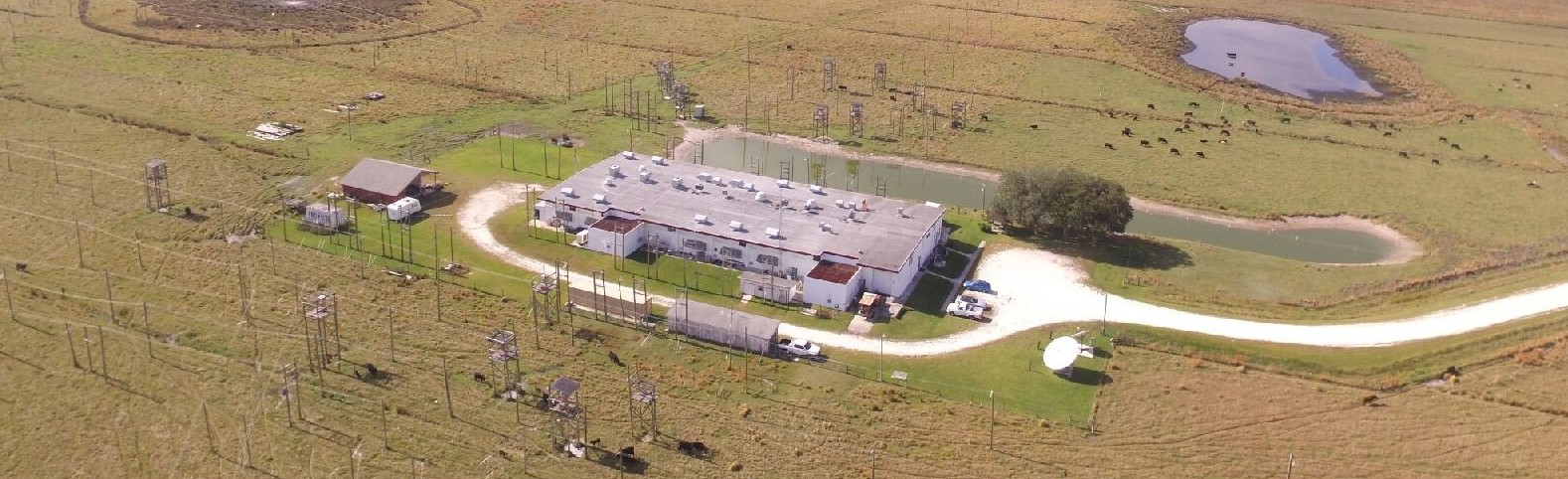
In 2013 WRMI purchased the former Family Radio shortwave station in Okeechobee, Florida. This is the largest privately owned shortwave station in the Western hemisphere, consisting of 660 acres which is also used as a cattle ranch. It has 14 transmitters, most of them 1000,000 watts, and 23 antennas beamed in eleven different directions around the world.
I was receiving WRMI overall fair. The signal strength was fair with moderate interference from other stations. Fading on the signal was fair and I was experiencing some static crashes.
My last station logged for Sunday night (10th October 2021) was Voice ofBeibuy Bay Radio (Voice of Guangxi Beibu Wan) in CHINA on 5050 kHz on the 60m band. The transmission was in the Cantonese language?
I tuned in at 1357 UTC.
VO Beibu Bay Radio commenced transmissions in May 2010, the station is a joint project between China Radio International and the local Guangxi Radio and Television station. VO Beibu Bay Radio’s transmitter power is 25 kilowatts. The station broadcasts in the Mandarin, Cantonese, Vietnamese, and Thai languages.
Above:- VO Beibu Bay logo. c/o medxr.blogspot.com
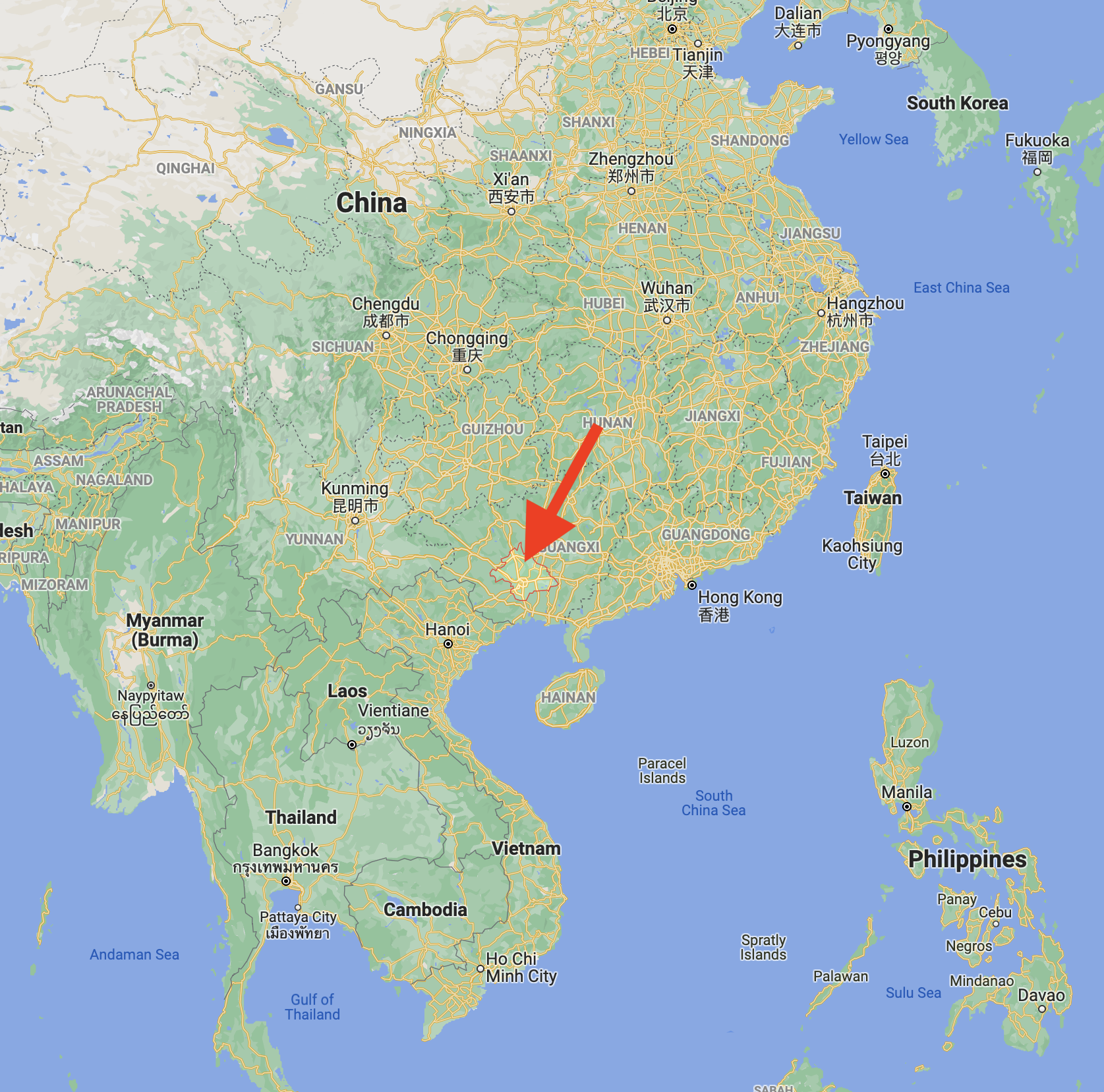
Beibu Bay Radio broadcasts from Nanning, the capital of the Zhuang Autonomous Region of Guangxi, CHINA. Nanning is located just north of the Vietnam border. Beibu Bay, also known as the Gulf of Tonkin, is an arm of the South China Sea and covers an area of 126,250 km². The gulf borders Vietnam on the northwest, west and southwest. China lies to the north with the Island of Hainan forming the eastern limits of the gulf.
Above:- Map showing the location of Nanning in China. Map c/o Google maps
More information can be found on the BBRTV website at…..
I was receiving Beibu Bay Radio fairly well. Their signal strength was good, but there was moderate interference from adjacent stations which affected listening pleasure. There was slight fading on the signal.
VO Beibu Bay Radio’s program included western pop music.
S
I
N
P
O
4
3
4
4
3
Below is a short video of my reception of Beibu Bay Radio on the Tecsun S-2000 and the Tecsun random wire (just a few feet off the ground).
I have sent a Reception Report to VO Beibu Bay Radio, both via email and postal address. Awaiting a reply.
On Sunday evening (10th October 2021) I then tuned into WBCQ on 9330 kHz on the 31m band.
WBCQ is an international shortwave broadcast station located in Monticello, Main, in the UNITED STATES OF AMERICA. They broadcast on 7490 kHz, 9330 kHz, 4790 kHz, 3265 kHZ, and 6160 kHz.
In 2018, WBCQ applied for a transmitter license associated with a rotatable antenna, later revealed to be a 500 kW transmitter for an Ampegon rotatable curtain antenna on a single mast.
WBCQ was coming in very nicely to my location. The signal was excellent, with nil interference, and only slight fading on the signal. Their broadcast consisted of a religious program and their Mailbag program.
Next in my log was the Voice of Korea on 9435 kHz on the 31m band on shortwave.
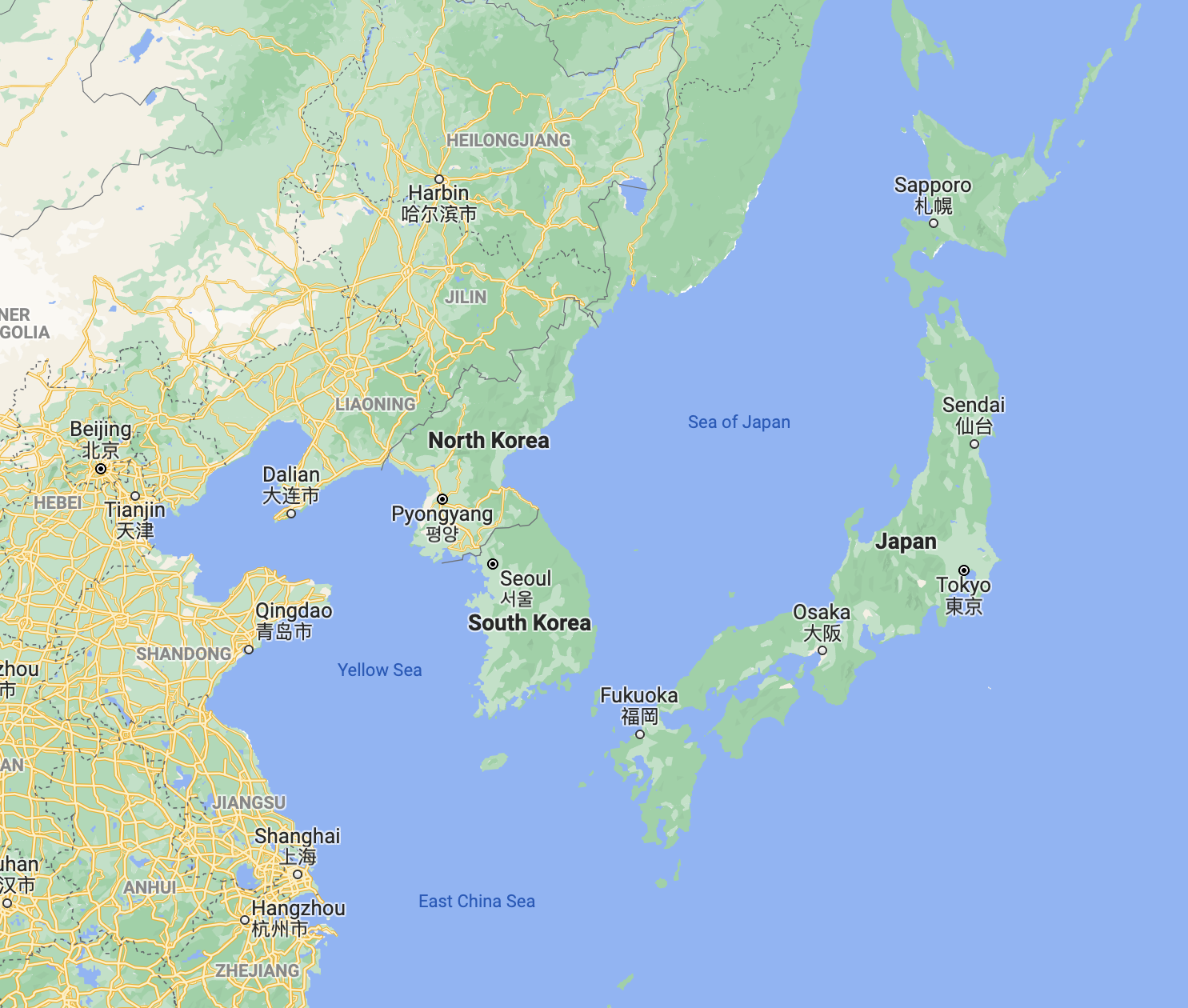
The Voice of Korea is the international broadcasting service of North Korea. The station broadcasts in various languages including English, Chinese, Spanish, French, and Arabic. Up until 2002 the station was known as Radio Pyongyang.
Above:- Map showing the location of North Korea. Map c/o Google maps
The origins of Voice of Korea can be traced radio station JBBK in 1936 . JBBK was operated by the occupying Japanese forces. In October 1945 Radio Pyongyang was founded. On the 14th October programming was officialy inaugurated with a live broadcast of the victory speech of Kim II sung
The 16th March 1947 saw the first foreign broadcast, in the Chinese language. In 1950 Japanese language broadcasts commenced, followed by English in 1951, French and Russian in 1963, Spanish in 1965, Arabic in 1970, and German in 1983.
By 1960, Radio Pyongyang broadcast 159 hours of programming every week. In 1970, weekly broadcasting hours totalled 330 hours and by 1980, 597 hours. In 1990 weekly broadcasting time fell to 534 hours per week, 529 in 1994, and 364 in 1996.
In 2002, the station was renamed Voice of Korea.
This was difficult copy of Radio Korea. The signal was good, however there was severe interference from 9440 kHz China Radio International. The station’s music was very readable, but I struggled to understand what the announcers were saying due to the interference.
S
I
N
P
O
4
2
4
4
2
Below is some short audio of how the Voice of Korea was coming in at my location.
Their broadcast consisted of religious programs and religious music. The station was coming in very nicely with a good signal, minimal fading, and slight interference from adjacent stations.
S
I
N
P
O
4
4
4
4
4
Below is a short recording of African Pathways as heard at my location as heard on my Tecsun S-2000 and Tecsun random wire just a few feet off the ground.
On Sunday (10th October 2021) I did a little bit more broadcast short wave listening. The first station in the log was Radyo Pilipinas in the PHILIPPINES on 15640 kHz on the 19m band.
I tuned in at 0250 UTC. The broadcast was in the English language.
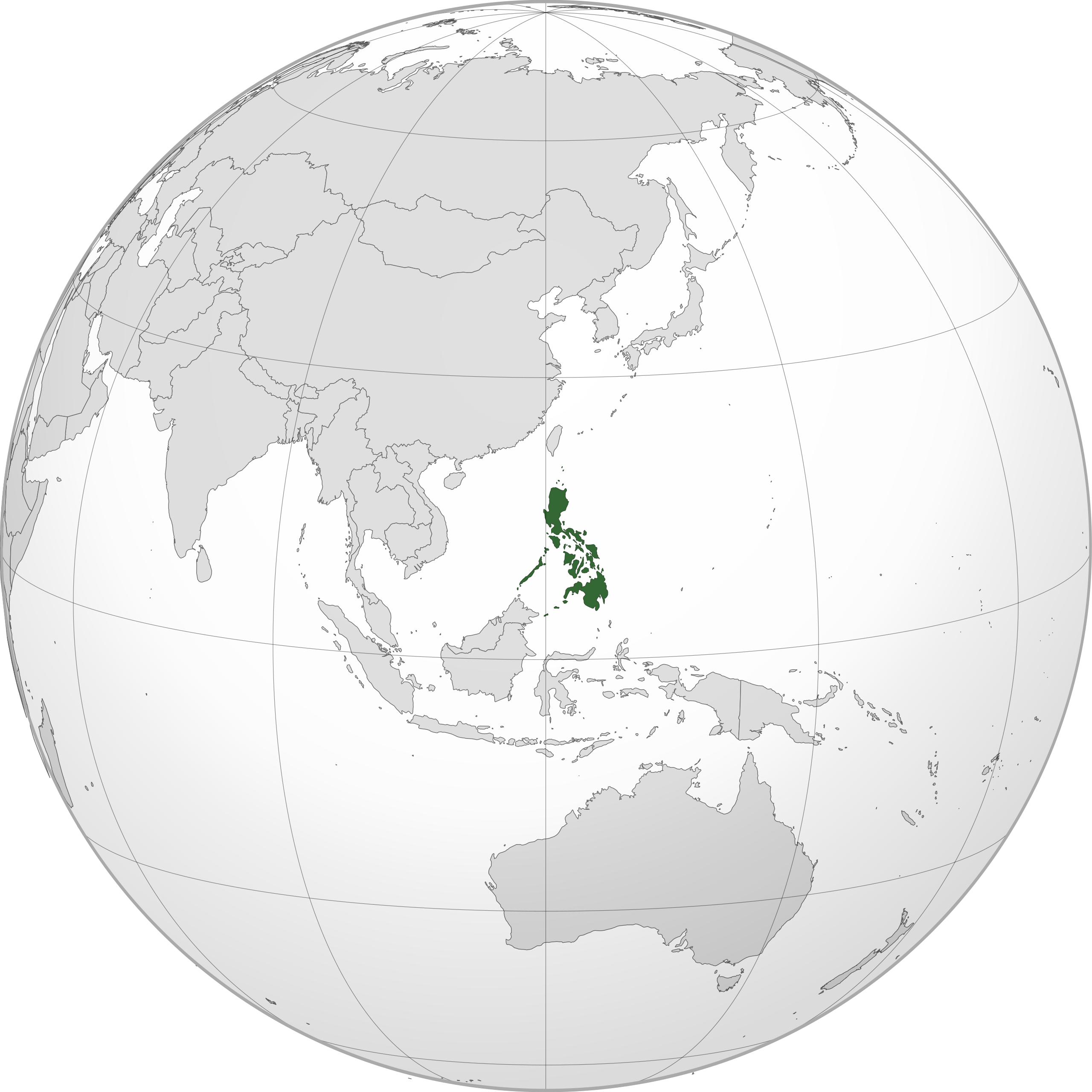
Above:- The location of the Philippines. Image c/o Wikipedia
DZRP – Radyo Pilipinas Worldwide, also known as Voice of the Philippines is the overseas service of the Philippine Broadcasting Service. The station broadcasts on various shortwave frequencies in the Filippino and English languages.
During the martial law era in the Philippines, the National Media Production Center operated the Voice of the Philippines on AM and shortwave. Following the 1986 revolution, those broadcasts were abolished. The Voice of the Philippines was rebanded as Radyo Pagasa until 1987 when it became Radyo Pilipinas.
More info can be found on the Radyo Pilipinas website at……
My last station logged for Saturday 9th October 2021 was Radio New Zealand on 5980 kHz on the 49m band on shortwave.
Radio New Zealand, known as Radio NZ or RNZ, is New Zealand’s public service radio broadcaster. It was established under the Radio new Zealand Act 1995.
The headquarters of Radio New Zealand is located in Radio New Zealand House in Wellington.
Above:- Radio New Zealand House in Wellington. Image c/o Wikipedia
Radio NZ was coming through very nicely with an excellent signal and no interference from adjacent stations. There was slight noise on the band (static crashes) and slight fading of the signal.
S
I
N
P
O
5
5
4
4
5
Below is a short video of my reception of Radio New Zealand.
My next station on 9th October 2021 was the Voice of Indonesia on 3325 kHz on the 90m shortwave band.
I tuned in at 1320 UTC. The program was in the English language.
The Voice of Indonesia is a part of Radio Reublik Indonesia which broadcasts all over Indonesia and abroad to serve all Indonesian citizens anywhere in the country and abroad. RRI also provides information about Indonesia to people around the world. Voice of Indonesia is the division for abroad broadcasting.
Above:- RRI Voice of Indonesia logo
The Voice of Indonesia was coming in relatively well. The signal was fair with moderate fading. There was no interference from adjacent stations. However, it was the static crashes that made listening difficult at times.
S
I
N
P
O
3
5
3
3
3
Below is a video of my reception of the Voice of Indonesia as heard on my Tecsun S-2000 and the Tecsun random wire just a few feet off the ground.








 VK5PAS