In February I qualified for the global WWFF All Continents Flora Fauna (ACFF) certificate. It is issued for having worked WWFF references on all 7 continents of the world.
Thanks to the ACFF award manager, Alena OK2APY.
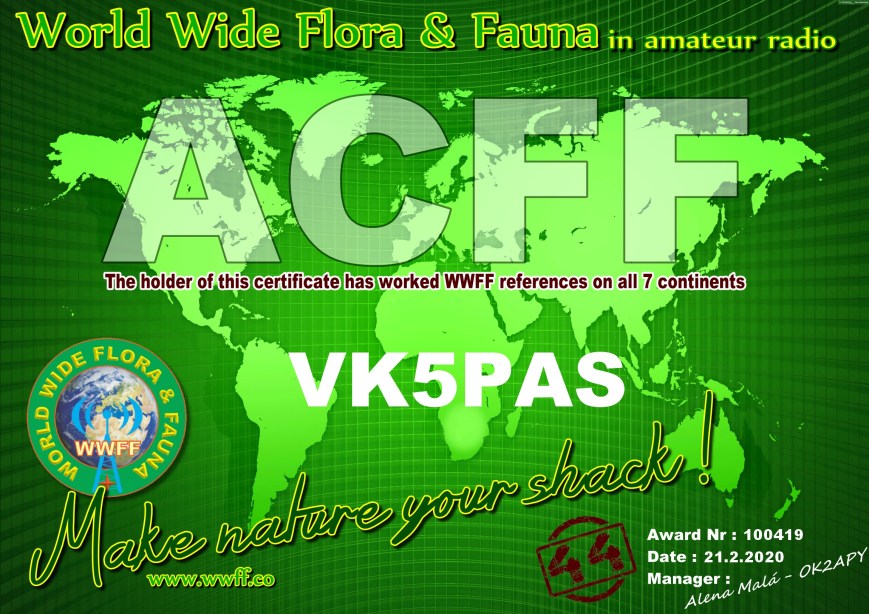

In February I qualified for the global WWFF All Continents Flora Fauna (ACFF) certificate. It is issued for having worked WWFF references on all 7 continents of the world.
Thanks to the ACFF award manager, Alena OK2APY.
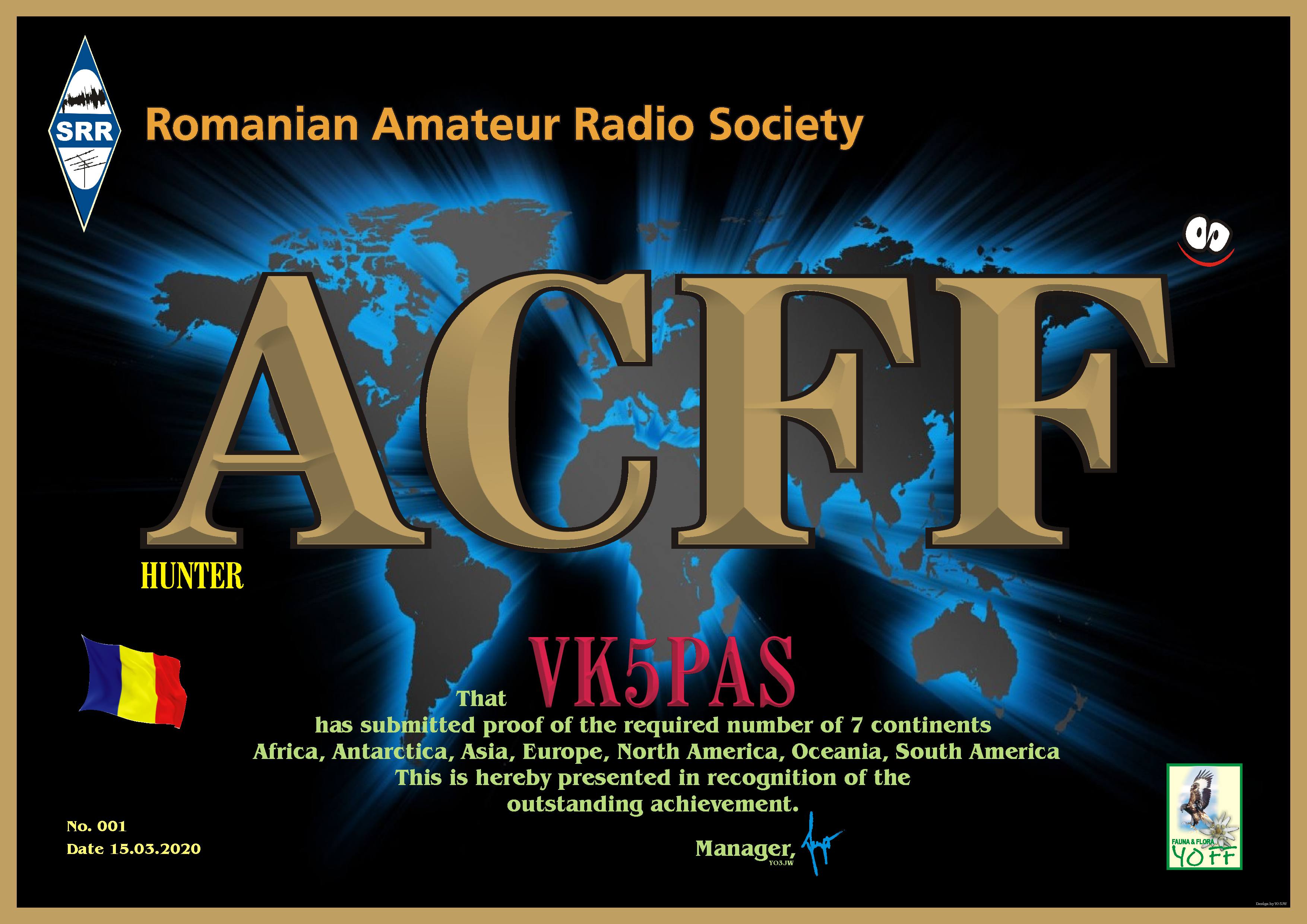
Yesterday via email, I received from Pit YO3JW, the All Continents Flora Fauna (ACFF) certificate issued by the Romanian Amateur Radio Society.
It is issued for having worked WWFF references on all seven continents of the world.
Thanks Pit.
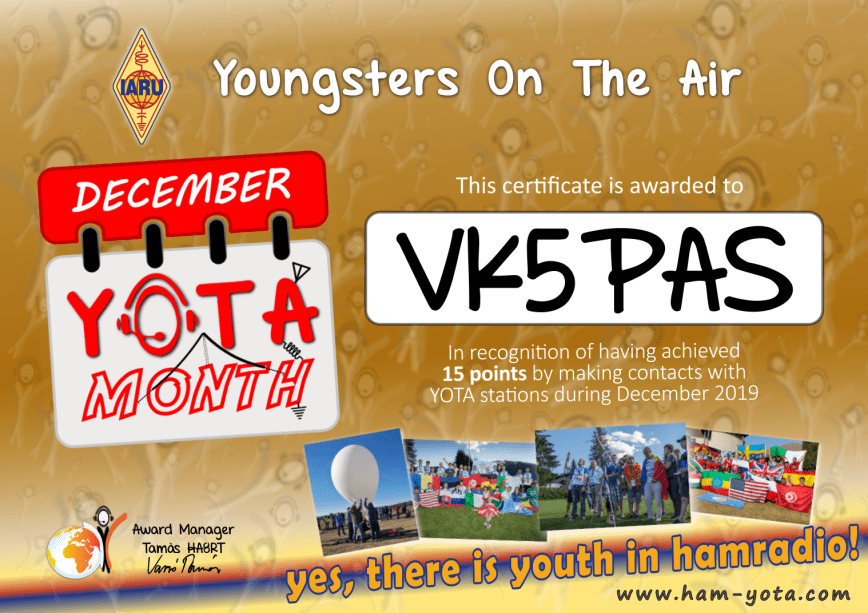
Whenever propagation has allowed, I have been chasing some of the Youngsters On The Air (YOTA) stations, predominantly on 20m.
From the YOTA website……
I have worked a number of the YOTA stations and have achieved 15 points and in turn, have qualified for the YOTA certificate.
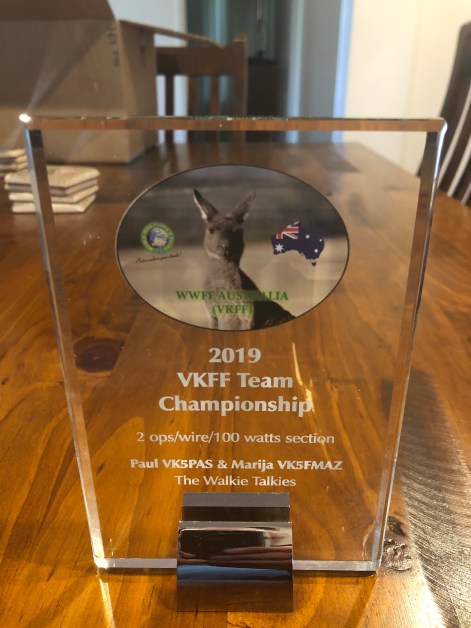
Other than our certificate for winning the 2 ops/wire/40-80m/100 w or less section of the 2019 VKFF Team Championship, we also each received a glass etched trophy.
Thanks to Awards and Trophies in Queensland. And many thanks to those who donate money to VKFF to make these trophies possible.
In the last few days, I have received in the post a few more QRZ.com awards.
The first is the United States Counties award issued for having worked 250 United States Counties.
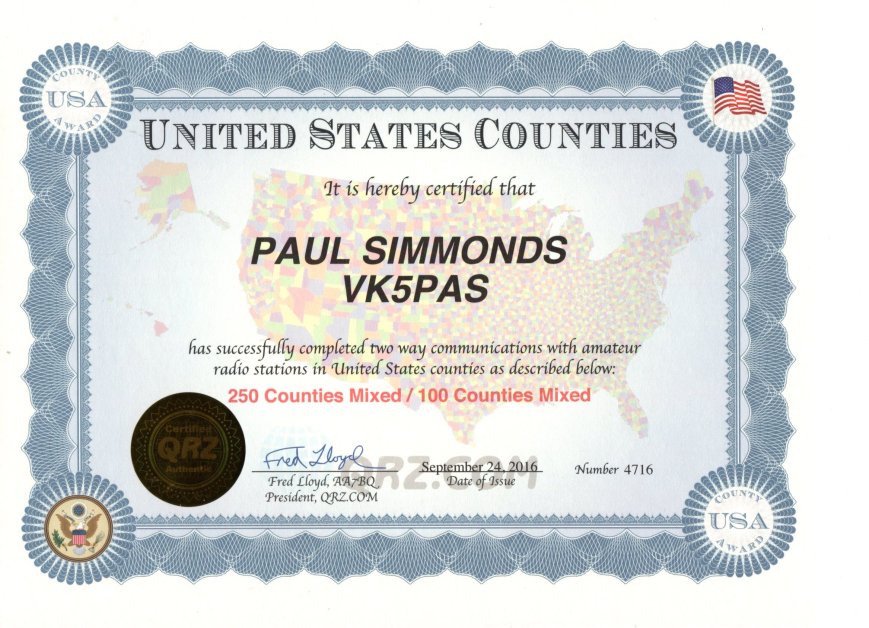
The second is the Grid Squares Award issued for having made contact with amateur radio stations in at least one hundred unique Maidenhead grid squares.
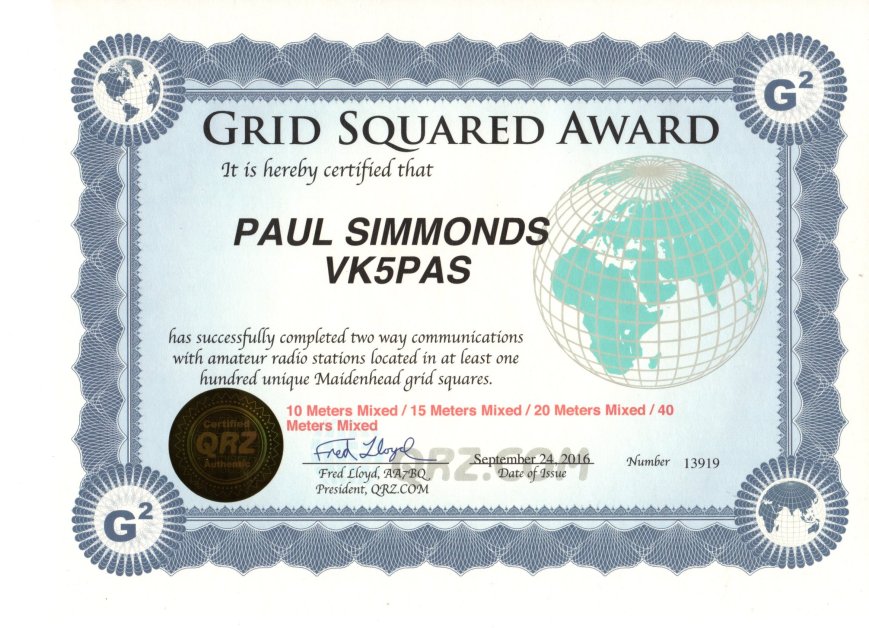
And the third is the Continents of the World award issued for having made contact with amateur stations in each of the six continental zones of the world.
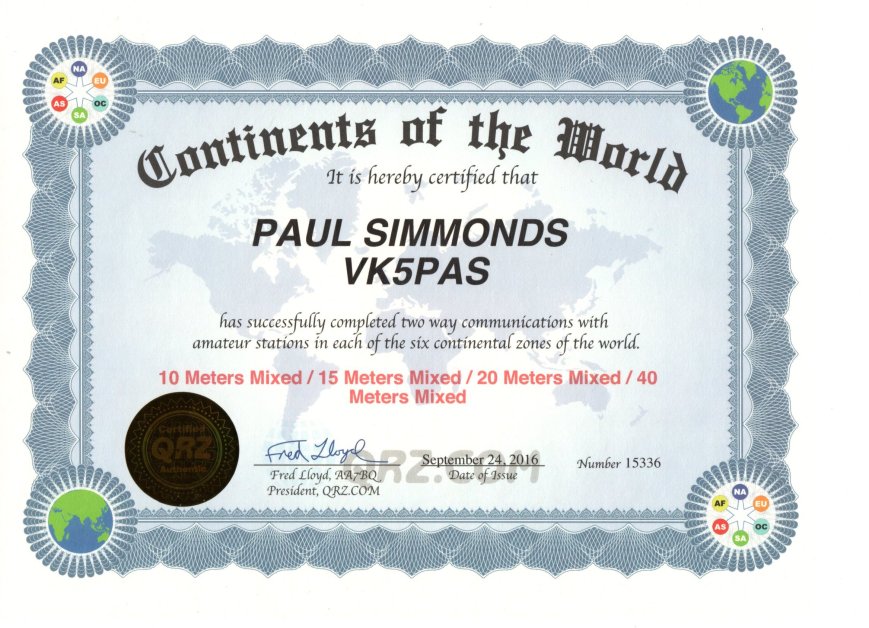
In the past week or so Marija VK5FMAZ and I received our Activator participation certificates for the 2019 Keith Roget Memorial National Parks Award (KRMNPA) Weekend.
This is a terrific weekend of park activating which Marija and I highly recommend.
Many thanks to Tony VK3XV, the KRMNPA Awards Manager.


Our final park for our trip away was the Kiata Flora & Fauna Reserve VKFF-2347. The park is located about 361 km northwest of the city of Melbourne and 14km east of the town of Nhill.
Again this was to be another unique park activation for the World Wide Flora Fauna (WWFF) program.
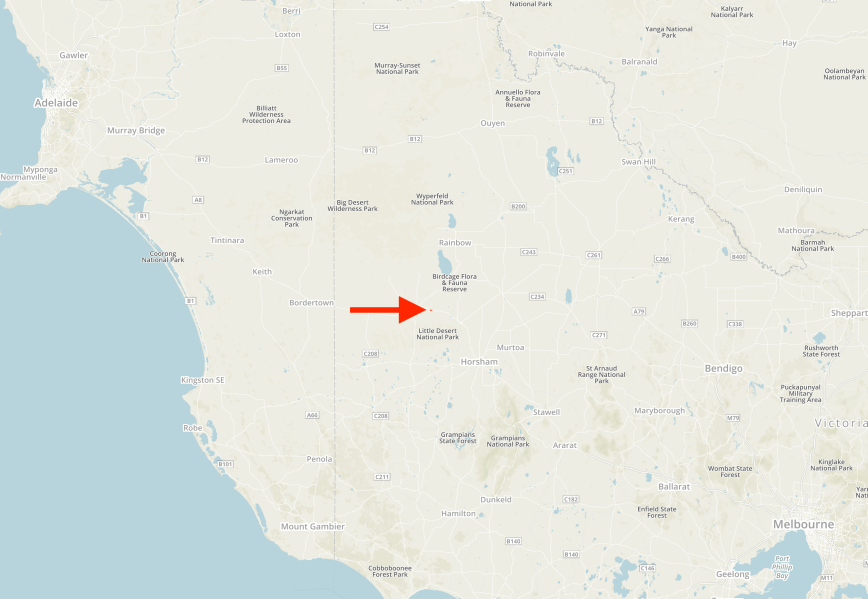
Above:- Map showing the location of the Kiata Flora and Fauna Reserve in western Victoria. Map courtesy of Protected Planet.
The park is located just south of the town of Kiata. The name Kiata is believed to have derived from an Aboriginal word describing summer heat. Much of the Kiata area was taken up for farm selections during the early 1870s. The township of Kiata was surveyed in 1876. In 1879 the Kiata West school was opened, and in 1881 the Kiata East school was opened. In 1884 an Anglican church was opened. The railway line was opened in 1887, and later there was a hotel, a store and a blacksmith.
In 1903 Kiata was described in the Australian handbook:
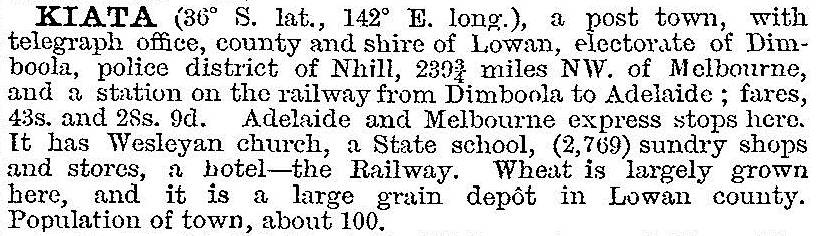
Today Kiata is just a small settlement. The former Little Desert Hotel is now closed, while the school closed way back in 1968.


The park can be located just to the south of the town of Kiata on the southern side of the Western Highway, the main highway between Adelaide and Melbourne.
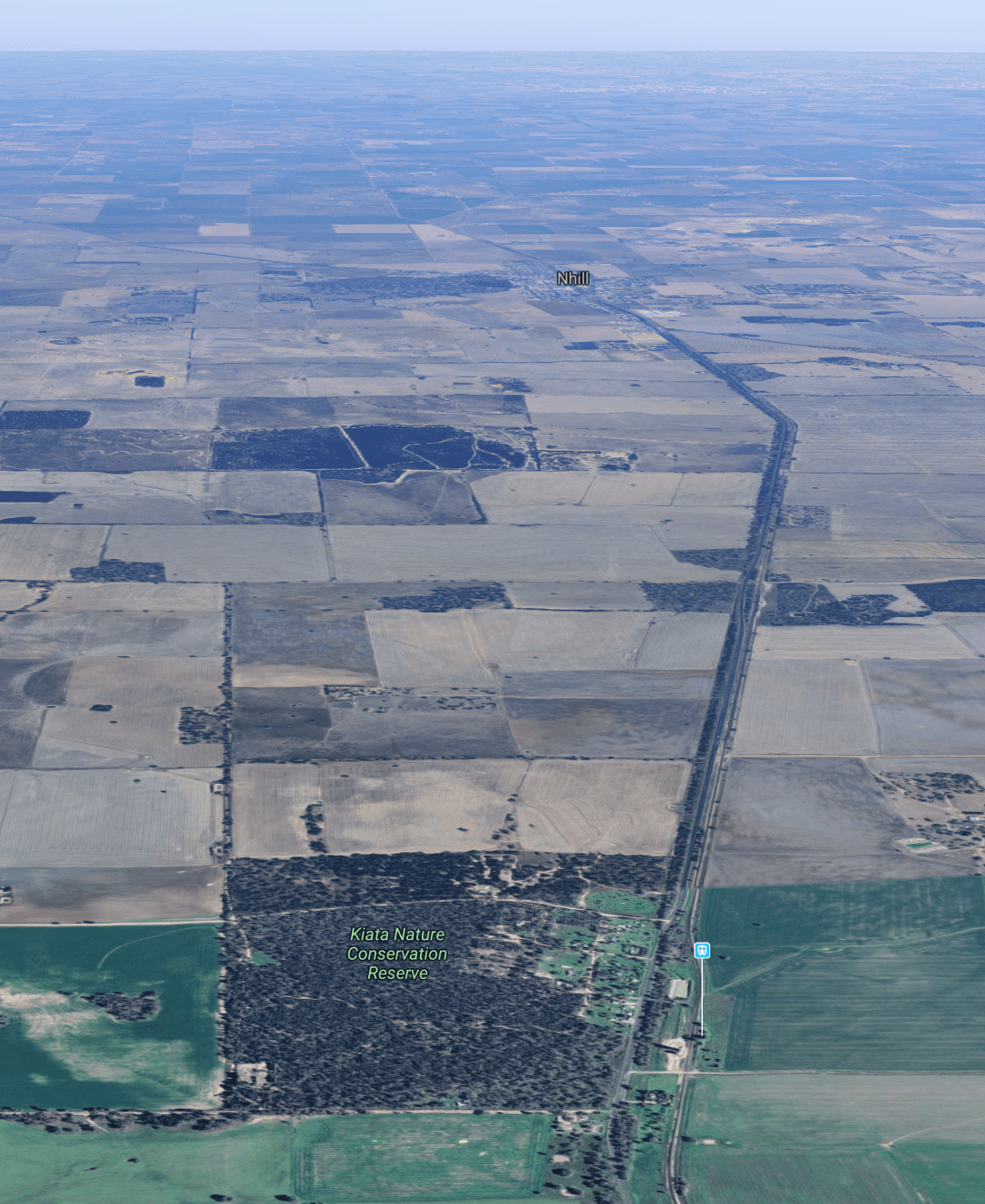
Above:- An aerial view of the Kiata Flora & Fauna Reserve looking west. Image courtesy of Google maps
The park is about 197 acres in size and conserves a small area of remnant bushland which was previously widespread in western Victoria prior to the area being cleared for farming by European settlers.


The park was alive with Rainbow Bee Eaters during our visit. A number were quite happy to sit up on branches just a short distance from where we were operating.


We accessed the park via Kiata South Road. We took a 4WD dirt track near the cemetery. We ran the Yaesu FT-857d and the 20/40/80m linked dipole for this activation.
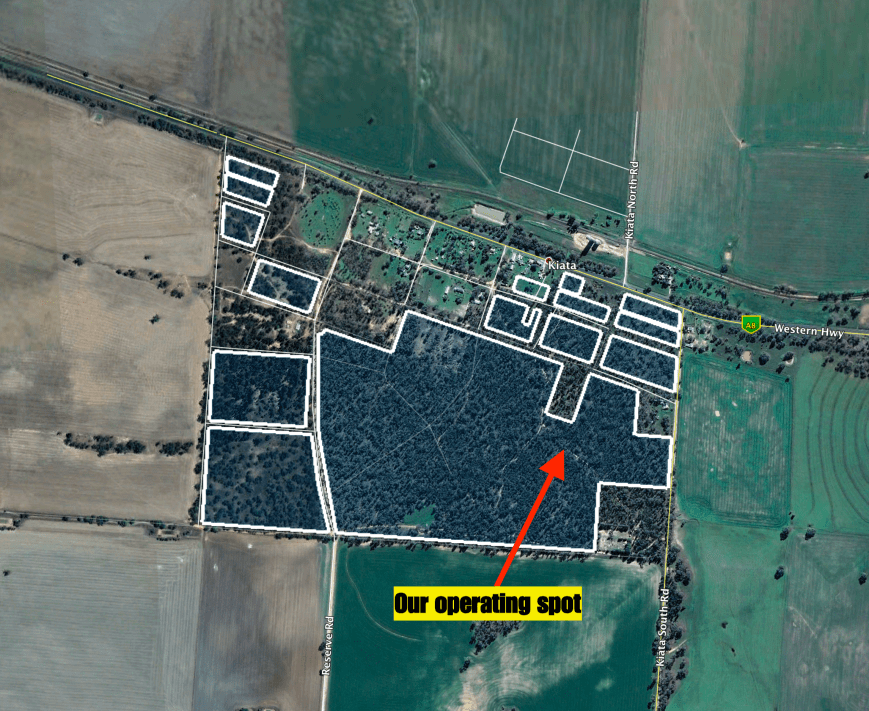
Above:- AN aerial view of the Kiata Flora & Fauna Reserve showing our operating spot. Image courtesy of Google Earth.
We only had a short time in Kiata, so I was hoping to whiz through the contacts as quickly as possible. I called CQ on 7.140 and this was answered by Peter VK3PF who gave me his other two calls so I could reach the 10 and 44 QSOs quicker. This was followed by Ivan VK5HS, Rob VK2VH, and then Ron VK3AHR.
Contact number ten came in just 5 minutes with a contact with John VK5NJ. I logged a total of 28 contacts on 40m before Marija jumped into the operator’s chair.
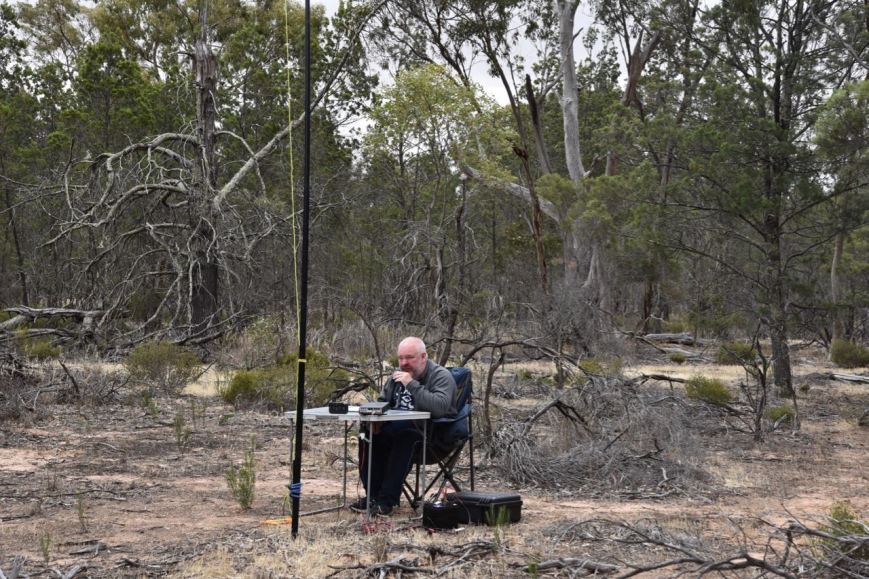
Marija’s first contact was with Adrian VK5FANA, followed by Ian VK5CZ/m, John VK5NJ, and then Ray VK4NH. Marija’s tenth contact was with Peter VK3KAI. Marija logged 15 contacts and had qualified the park for VKFF, so took control of the mic once again.
I logged a further 12 contacts on 40m from VK2, VK3, VK5, and VK7. I now had 40 contacts in the log and was just 4 QSOs short of the target of 44. I moved to the 20m band and logged 5 stations from VK2 and VK7. My 44th contact was with Adam VK6GA/2.
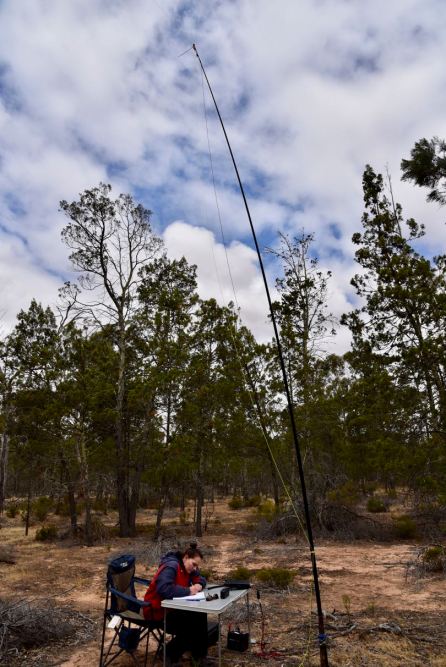
Marija worked the following stations on 40m SSB:-
I worked the following stations on 40m SSB:-
I worked the following stations on 20m SSB:-
We packed up and headed into the town of Nhill and went to the Australian Pinball Museum.
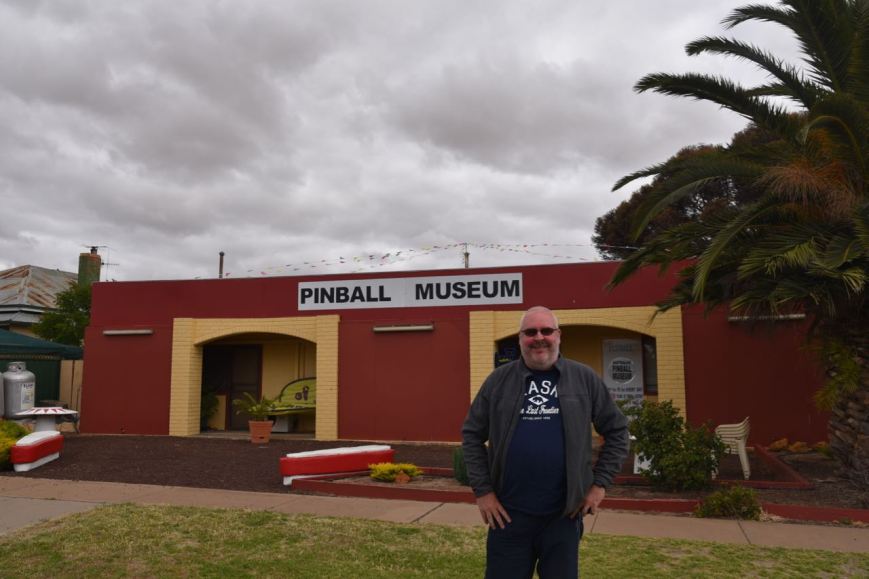
The museum features pinball machines from a wide range of eras.


Some of the classic machines include Kiss (1979), Playboy (2002), and Star Wars (2017).
The museum also features original pinball advertising memorabilia such as original advertising flyers, posters, and promotional products.


Below are a few videos I took in the museum.
We continued west and into the little town of Keith. It was just a little before 6.00 p.m. local time and we planned on having a meal at the local pub, so we had a bit of time to have a look around the town. One of the interesting sights in a landrover on a pole.
During the 1940s, the CSIRO found prosperity in the area. With the addition of trace elements, the area became a very productive area. The AMP Society funded the clearing of land to set up farming establishments. There is also a display telling the story of the AMP Land Development Scheme.


We had a look at Pilmore Park where you can find a memorial for Andy Caldecott who was an off-road motorcycle racer. He was born in Keith in 1964 and died in 2006 from a neck injury sustained in a crash in the Dakar Rally.
In the park, you can also see a Centurion army tank which spent the majority of its working life in the 1st Armoured Regiment and also saw service in Vietnam from late 1969.


We enjoyed a beautiful meal at the Keith Hotel. I had kangaroo which was cooked to perfection, while Marija had salmon.
We continued west and stopped briefly at Culburra which was once a thriving self-supporting township. Today very little remains, but there is a very interesting information board in the town which tells the story of the town.


We arrived home at around 9.00 p.m.
THANK YOU to everyone who called us during our 4 days away. We had a lot of fun.
References.
Victorian Places, 2019, <https://www.victorianplaces.com.au/kiata>, viewed 10th December 2019
Wikipedia, 2019, <https://en.wikipedia.org/wiki/Andy_Caldecott>, viewed 10th December 2019
Wikipedia, 2019, <https://en.wikipedia.org/wiki/Keith,_South_Australia>, viewed 10th December 2019
Our third park for Monday (2nd December 2019) was the Glenlee Flora & Fauna Reserve VKFF-2323. The park is located about 371 km northwest of the city of Melbourne and about 19 km south of the town of Jeparit.
This was to be another first-time activation for the World Wide Flora & Fauna (WWFFO) program.
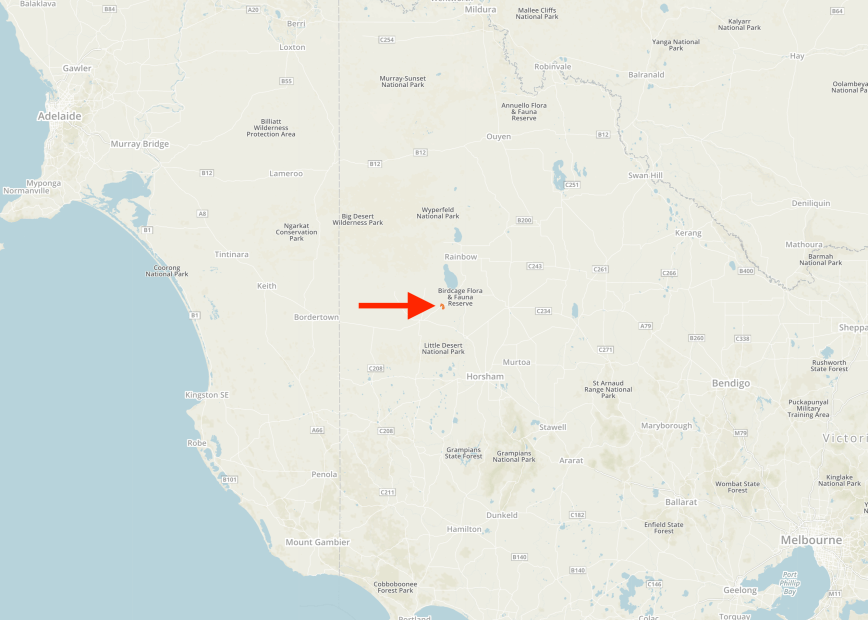
Above:- Map showing the location of the Glenlee Flora & Fauna Reserve. Map courtesy of Protected Planet.
The Glenlee Flora & Fauna Reserve is a large park comprising about 1,369 acres of remnant scrub which is split into blocks.
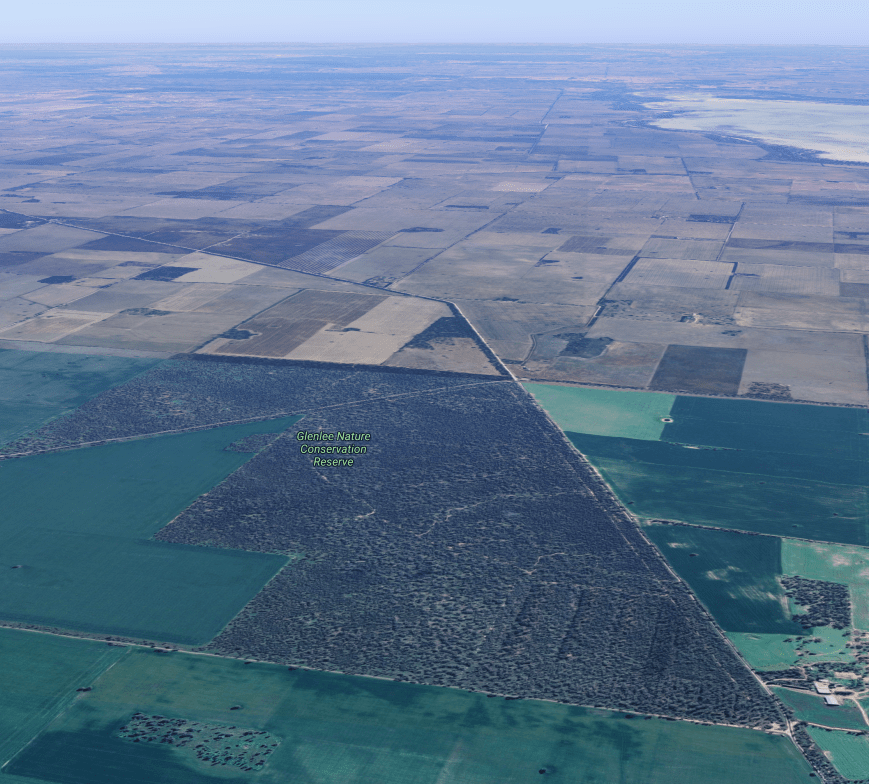
Above:- An aerial shot of the park looking north. Image courtesy of Google maps.
The park consists of Buloke, Box, Cypress Pine and Sugar Gum.


During our visit to the park, we encounter the resident Hooded Robins and a bird of prey who was being harassed by some smaller birds.


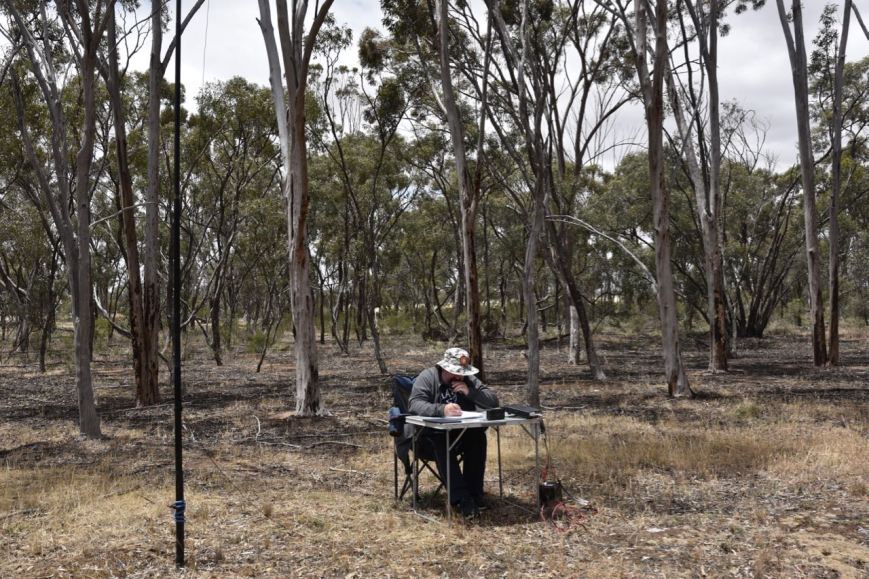
We set up on a track in the northern section of the park. Our operating equipment was the Yaesu FT-857d and the 20/40/80m linked dipole supported on the 7-metre telescopic squid pole.
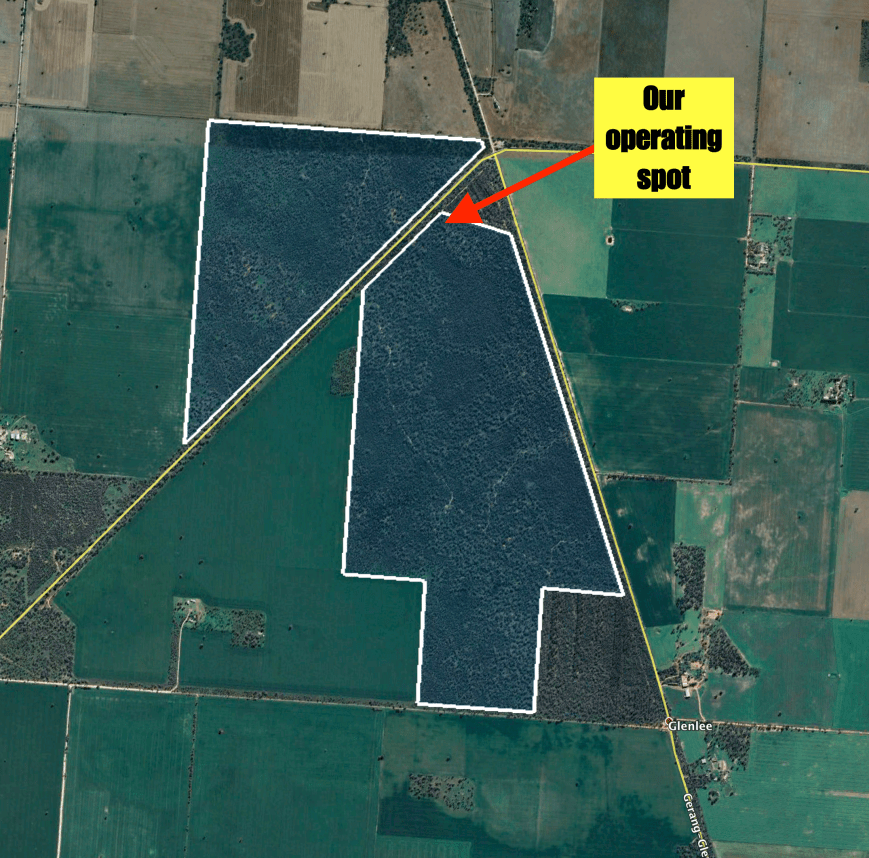
Above:- An aerial shot of the Glenlee Flora & Fauna Reserve showing our operating spot. Image courtesy of Google Earth.
I kicked off the activation by calling CQ on 7.144. First in the log was Peter VK3PF, followed by Rob VK2VH, and then Grant VK2LX. Seven minutes into the activation and I had qualified the park for VKFF with a contact with Ian VK5CZ who has recently become a regular park activator and hunter.
I logged a total of 30 QSOs on 40m from VK2, VK3, VK4, VK5, and VK7. I then handed over the mic to Marija.
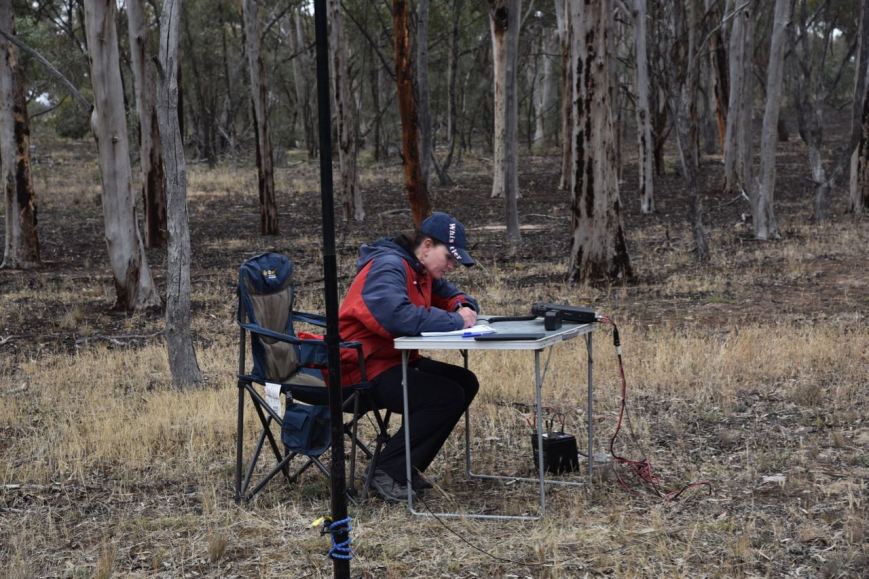
Marija called CQ on 7.144 and logged John VK5NJ, Adrian VK5FANA, Ian VK5CZ, and then Rob VK2VH. About five minutes later Marija had qualified the park for VKFF with a contact with regular park hunter Grant VK2LX.
Marija logged a total of 23 stations on 40m before I jumped back into the operator’s chair.
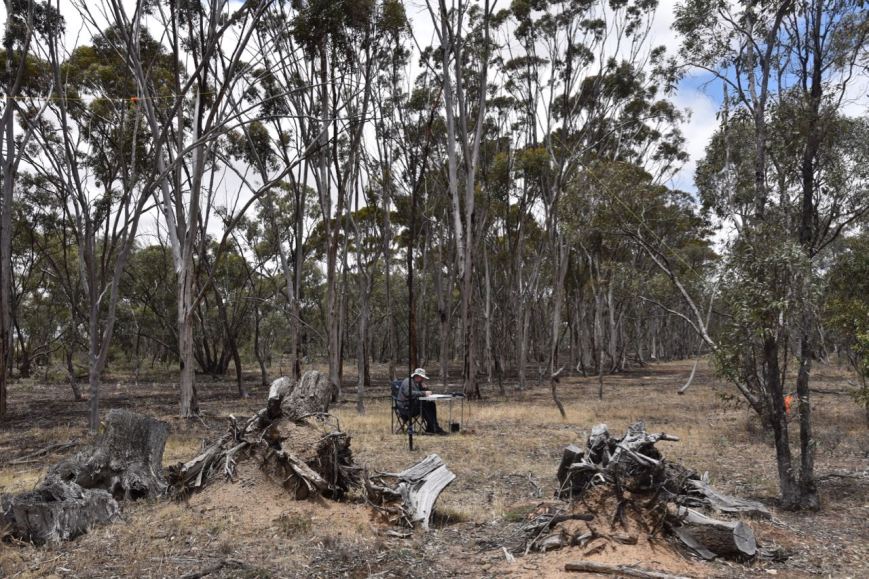
I logged a further 7 stations before heading off to the 20m band. I logged a total of 12 stations on 20m from VK2, VK3, VK4, and VK5. Contact number 44 was with Ray VK4NH. I then moved to 80m where a number of CQ calls resulted in just the one contact with Ivan VK5HS.
To complete the activation I called CQ on 21.244 on the 15m band where I logged a total of 6 stations from VK2, VK4, VK5, and VK7.
Marija worked the following stations on 40m SSB:-I worked the following stations on 40m SSB:-
I worked the following stations on 40m SSB:-
I worked the following stations on 20m SSB:-
I worked the following station on 80m SSB:-
I worked the following stations on 15m SSB:-
References.
Protected Planet, 2019, <https://www.protectedplanet.net/glenlee-f-f-r-nature-conservation-reserve>, viewed 10th December 2019
Our second park for the day (Monday 2nd December 2019) was the Gerang Gerung North Flora & Fauna Reserve VKFF-2319 which is located about 353 km northwest of the city of Melbourne.
This was to be a first-time activation of the park for the World Wide Flora & Fauna (WWFF) program.
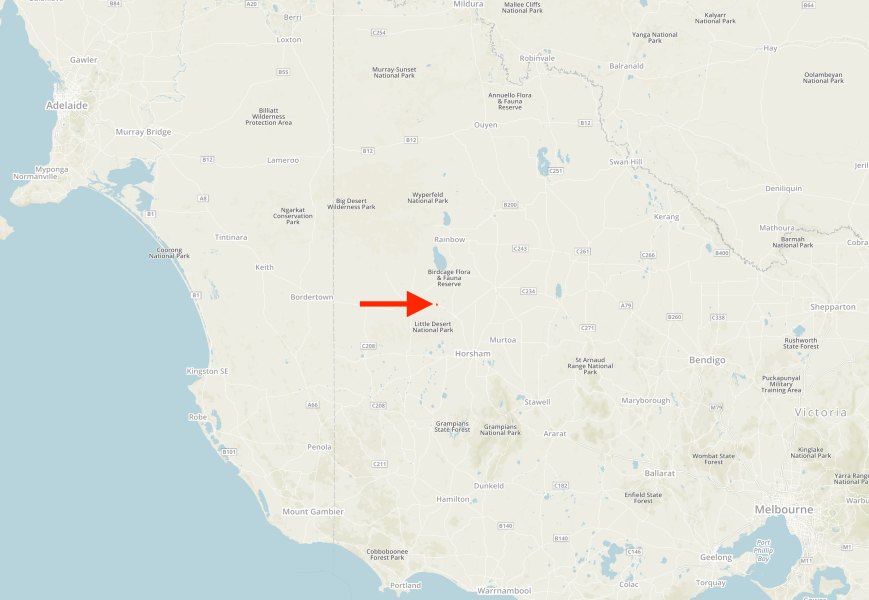
Above:- Map showing the location of the Gerang Gerung Flora & Fauna Reserve. Map courtesy of Protected Planet.
As we drove along the Gerang-Glenlee Road we saw two signs. The first was for Mallee Dam Flora Reserve and a little further on was a sign for Gerang-Gerung Recreation Reserve. We consulted the maps and confirmed that we were in the right place and this was, in fact, the Gerang Gerung Flora and Fauna Reserve.


The park is located on the northern side of the Western Highway, the main highway between Adelaide and Melbourne.
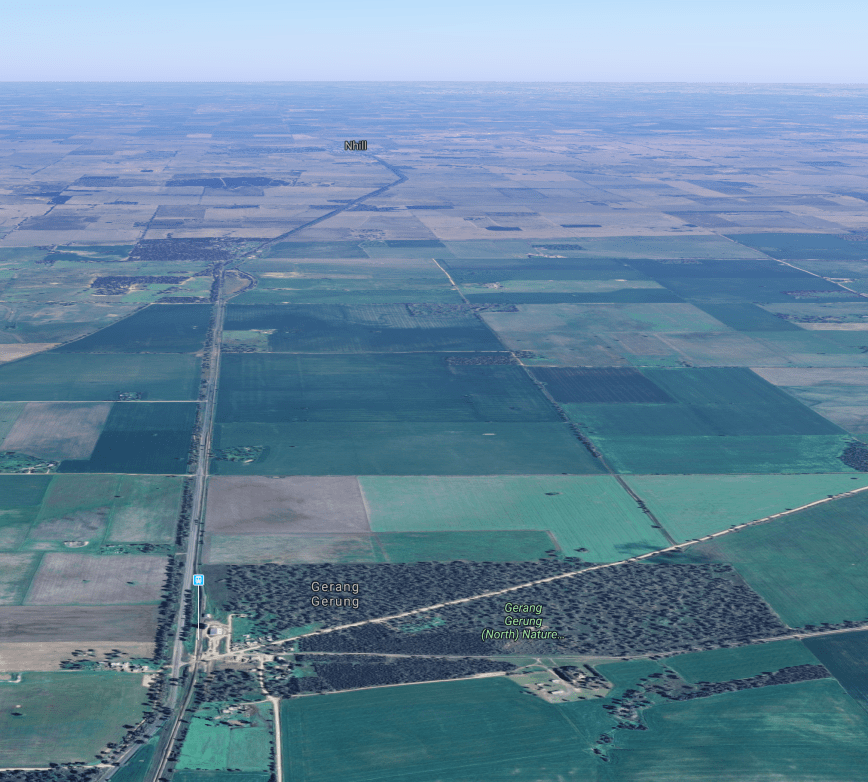
Above:- An aerial view of the Gerang Gerung Flora & Fauna Reserve, looking west. Image courtesy of Google Maps.
The park is about 267 acres in size and conserves a piece of remnant bush surrounded by cleared farming land. Angle Road and the Gerang-Glenlee Road dissect the park.


We drove down a dirt track on the northern side of the park and set up amongst a clearing in the scrub.
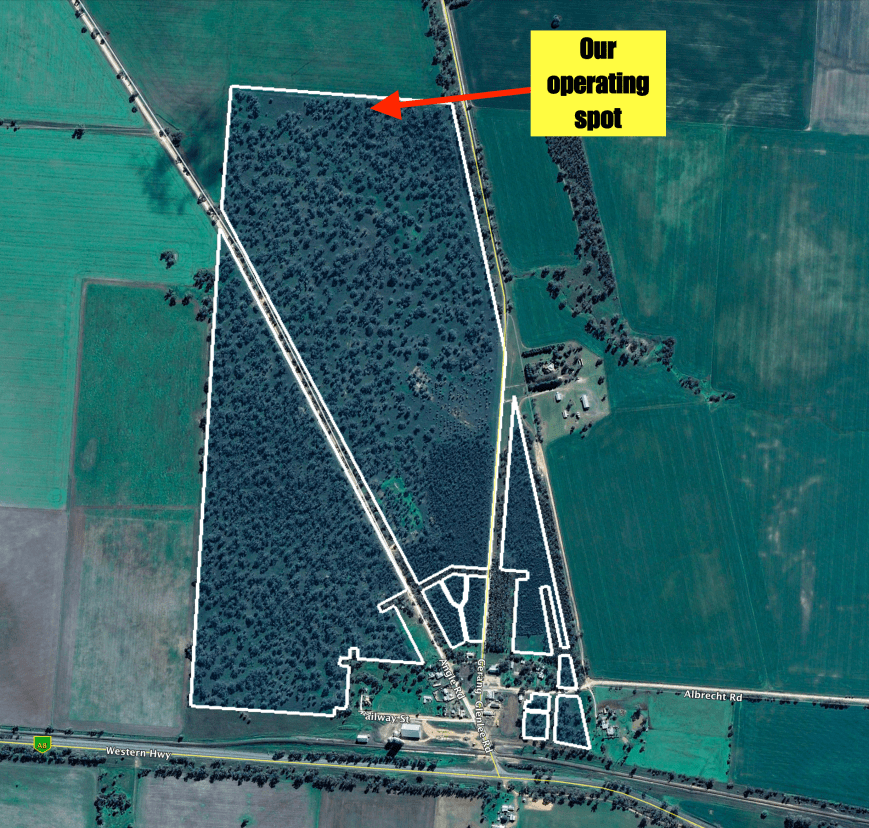
Above:- An aerial shot of the Gerang Gerung North Flora & Fauna Reserve showing out operating spot. Image courtesy of Google Earth.
I called CQ on 7.144 and this was answered by Peter VK3PF, followed by Geoff VK3SQ, Grant VK2LX, and Rob VK2VH. Contact number ten came 5 minutes into the activation, with a QSO with Adrian VK5FANA.
Despite it being a weekday, there was a steady flow of callers. The 40m band was in good shape again, with close-in propagation existing again into VK5 and around VK3.
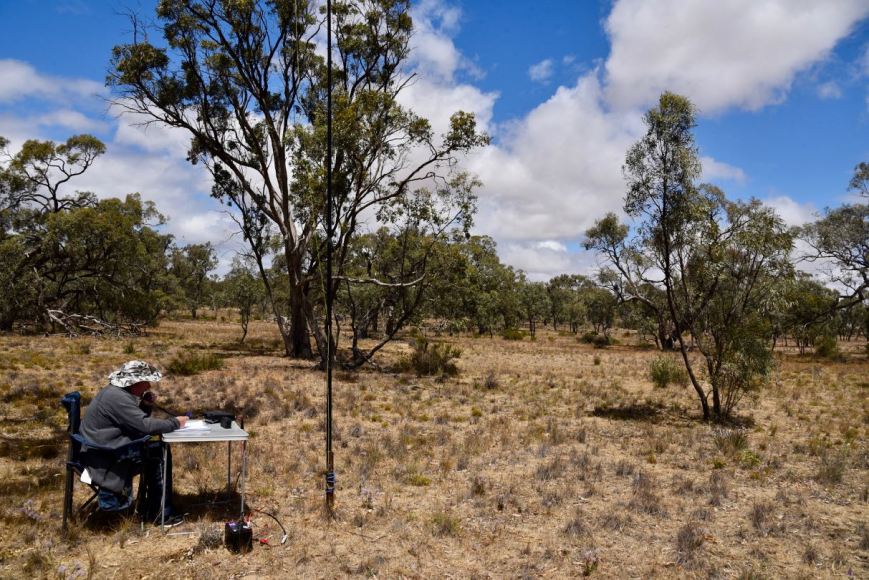
With 20 contacts in the log, it was time for Maija to qualify the park for VKFF. Marija called CQ on 7.140 and this was answered by regular park hunter Peter VK3PF, followed by another regular Don VK3MCK, Chris VK3PAT, and then Ron VK3AHR.
Marija’s tenth contact came just 6 minutes after calling CQ, with a QSO with Les VK5KLV. Marija logged a total of 13 stations on 40m from VK2, VK3, and VK5, before we again swapped the mic.


I logged a further 9 stations on 40m before heading to the 20m band. First in the log on 20m was ‘Mr. Reliable’ John VK4TJ with a good 5/7 signal. I logged a total of 9 stations on 20m. I was very surprised to be able to work David VK5PL in the lower Barossa Valley and Les VK5KLV in Port Augusta.
I then moved to 80m, logging 4 stations from VK2, VK3, and VK5. To finish off the activation I tried 15m where I logged four contacts, all from Queensland.
Marija worked the following stations on 40m SSB:-
I worked the following stations on 40m SSB:-
I worked the following stations on 20m SSB:-
I worked the following stations on 80m SSB:-
I worked the following stations on 15m SSB:-
References.
Protected Planet, 2019, <https://www.protectedplanet.net/gerang-gerung-north-f-r-nature-conservation-reserve>, viewed 10th December 2019
It was now Monday (2nd December 2019) and time for us to head home. We had planned to activate about four parks on the way home to the Adelaide Hills, all dependent upon time.
To start the day we again headed to the Dimboola cafe and enjoyed breakfast consisting of bacon & eggs and some nice hot coffee.
Our first park activation of the day was the Gerang Gerung Flora & Fauna Reserve VKFF-2320, which is located about 353 km northwest of Melbourne, and about 17 km west of the town of Dimboola.
This was to be another first-time park activation for the World Wide Flora Fauna (WWFF) program.
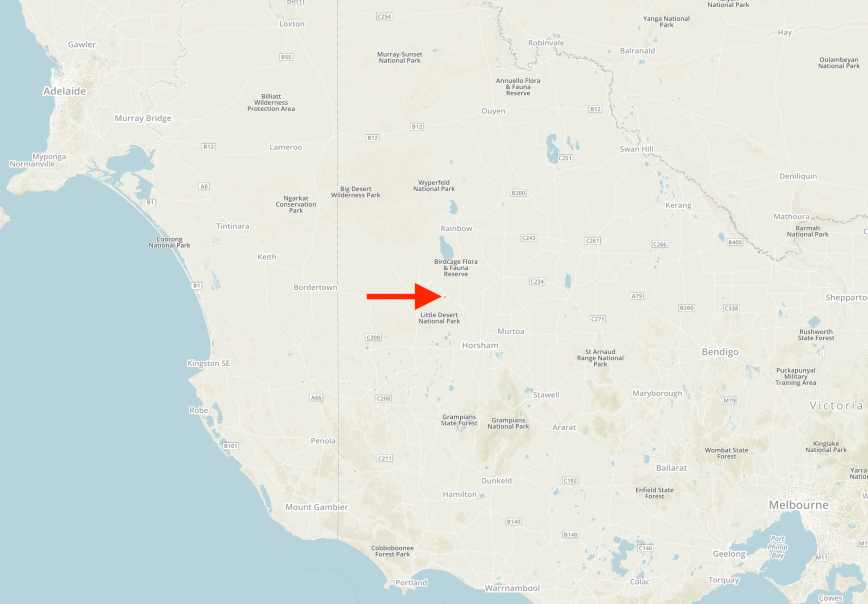
Above:- Map showing the location of the Gerang Gerung South Flora & Fauna Reserve in western Victoria. Map courtesy of Protected Planet.
Our first stop for the day was Loch lel (Pink Lake) which is located on the Western Highway between Dimboola and Gerang Gerung. The small circular, salt lake received its name from its distinctive pink colour, with the brightness of the hue varying according to the level of rainfall.


We continued west along the Western Highway and soon reached the little town of Gerang Gerung. The name Gerang Gerung is believed to be derived from an Aboriginal word meaning leaf or branch. European settlement of the area commenced as early as 1846. Farms were first taken up in the area in the 1870s. A water storage reserve was established in 1881 and this was followed soon after by the opening of the Junction Hotel. A school was then built and in 1887 when the railway line was established, the town of Gerang Gerung was surveyed.
Pastoral occupation began in 1846 and closer-settlement farms were first taken up in 1874. In 1881 a water-storage reserve was established, and soon afterwards the nearby Junction Hotel was opened. Three years later a school was built and, in 1887 when the railway line was put through, the village of Gerang Gerung was surveyed. This coincided with the opening of a General Store, a Bible Christian church, public hall, blacksmith and a saleyards.
The Australian Handbook of 1903 described Gerang Gerung as follows…..
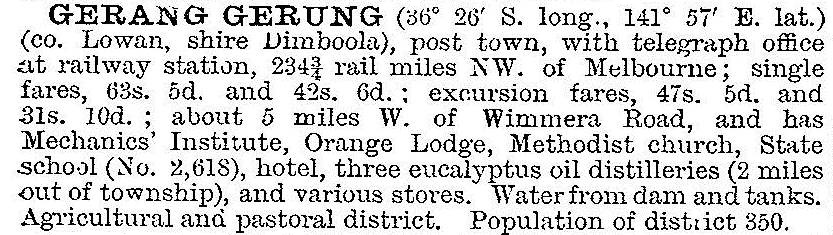
Today not much remains of Gerang Gerung. The hotel closed in 1958, while the store and post office closed in 1985 and 1988 respectively. The school closed in 1993.
On the corner of the Western Highway and Clark Road we saw a sign for Junction Dam Flora Reserve. It appears that this is the old name of the park and the sign has never been updated.
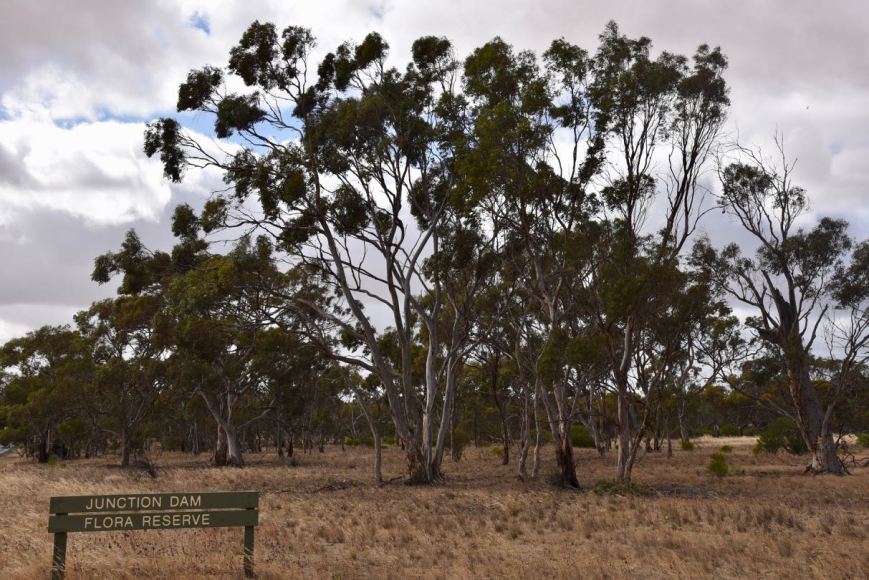
Gerang Gerung (South) Flora & Fauna Reserve is also shown as a Nature Conservation Reserve on some maps. It is located on the southern side of the Western Highway, while the Gerang Gerung (North) Flora & Fauna Reserve is located on the northern side of the highway.
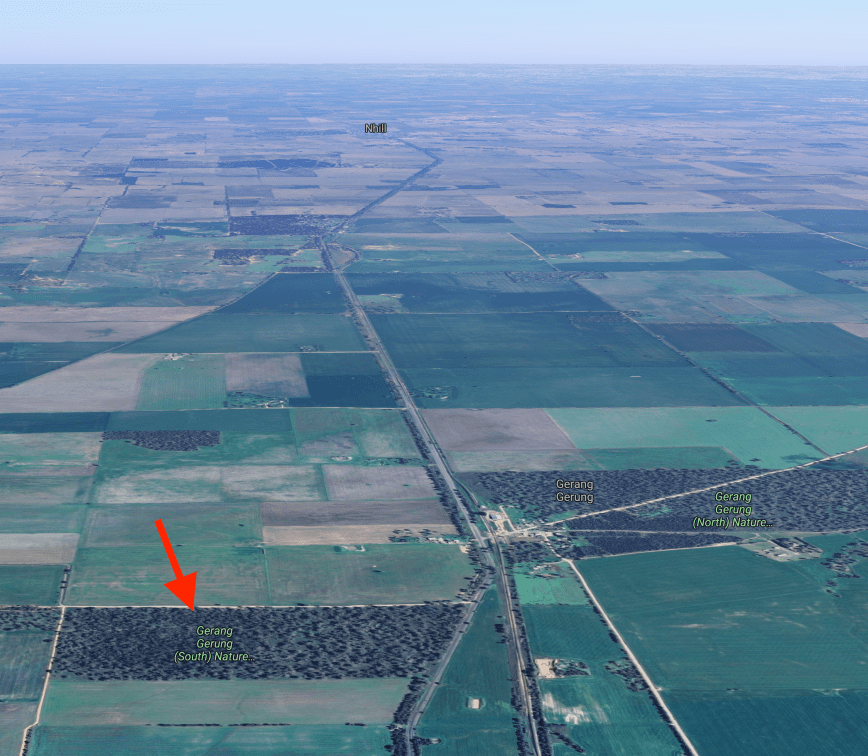
Above:- An aerial view of Gerang Gerung South Flora & Fauna Reserve, looking west. Image courtesy of Google maps.
The park is about 138 acres in size and conserves remnant scrub, including the endangered Hairy-pod Wattle.


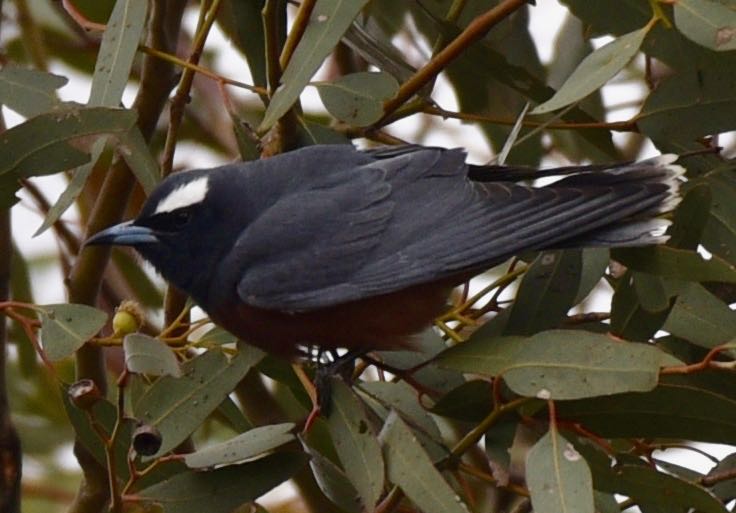
The park was alive with the little birds below. They are White-browned Woodswallows.
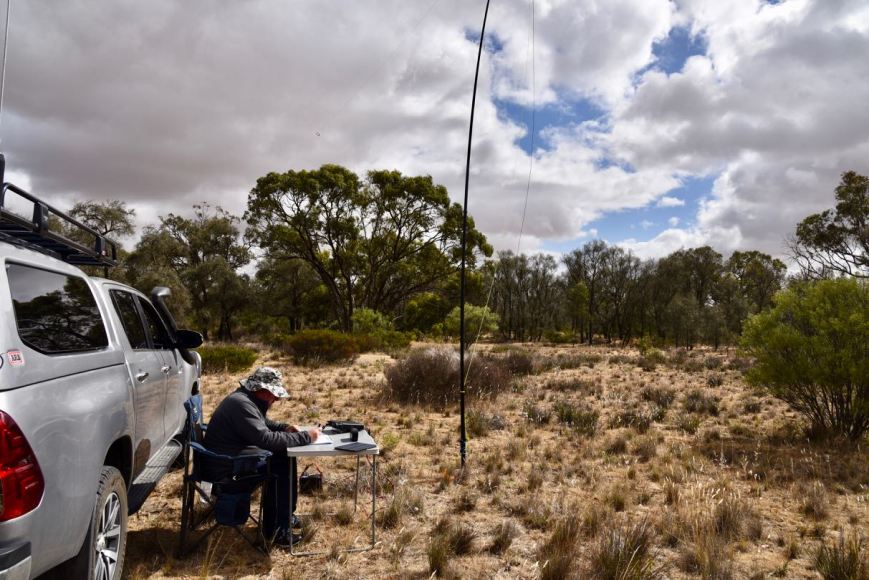
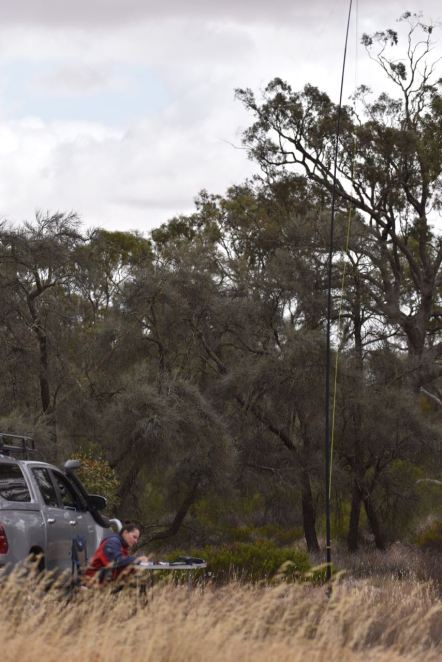
We parked the 4WD on Clark Road and set up in the southern section of the park. We ran the Yaesu FT-857d, and the 15m dipole and 20/40/80m linked dipole for this activation.
As this was another windy day, we positioned the 4WD to try to act as a windbreak.
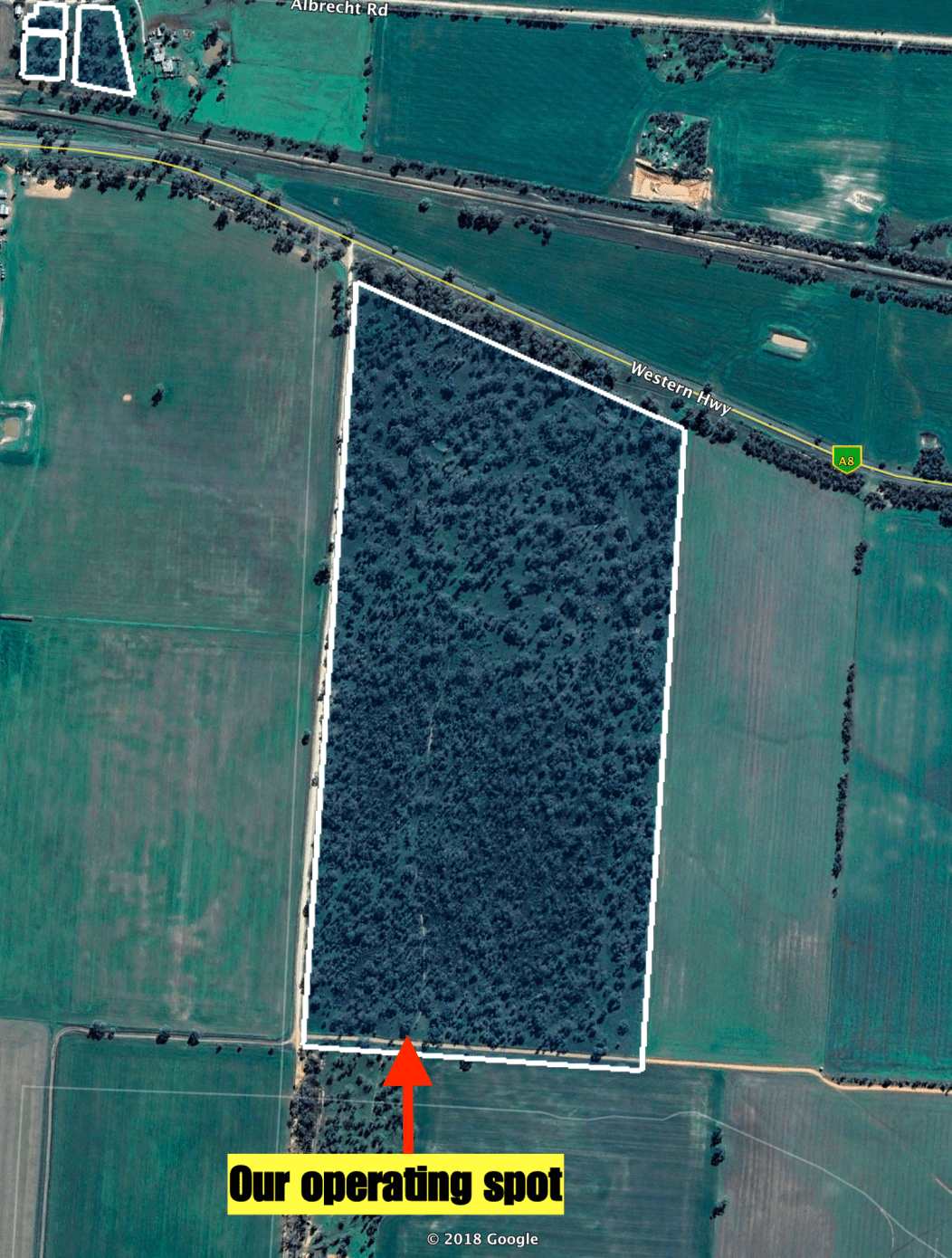
Above:- An aerial view of the park showing our operating spot. Image courtesy of Google Earth.
I called CQ on 7.144 and this was answered by Geoff VK3SQ, Ivan VK5HS, Rod VK7FRJG and then Brett VK2VW. It did not take long and I had qualified the park for VKFF. My tenth contact was with Gerard VK2IO. Band conditions on 40m appeared to be quite good, with some strong signals. It was pleasing to see that close in propagation once again existed on the 40m band.
I logged a total of 29 stations on 40m from VK2, VK3, VK4, VK5, VK6, and VK7, before swapping the mic with Marija.
Marija’s first contact was with Les VK5KLV at Port Augusta, followed by Rob VK2VH, Geoff VK3SQ, and then Adrian VK5FANA. It took Marija just 5 minutes to qualify the park, with contact number ten with Nev VK5WG in the Mid North of South Australia.
Marija went on to work a total of 21 stations on 40m from VK2, VK3, VK4, VK5, and VK7.
I again jumped into the operator’s chair and logged a further 10 stations. I was now just 5 QSOs from my 44 QSO target. I moved to the 20m band and logged a total of 9 stations from VK2, VK3, and VK4. Contact number 44 was with John VK4TJ.
I then moved to 80m and logged just the 3 contacts there, before we lowered the squid pole and attached the 15m antenna. Marija called CQ on 21.244 while I put up a spot on parksnpeaks. It was great to see the 15m band open again. Marija logged a total of 10 stations, all from Queensland.
We packed up around 11.00 a.m. local time and headed to our next park, the Gerang Gerung North Flora & Fauna Reserve.
Marija worked the following stations on 40m SSB:-
Marija worked the following stations on 15m SSB:-
I worked the following stations on 40m SSB:-
I worked the following stations on 20m SSB:-
I worked the following stations on 80m SSB:-
References.
Victorian Places, 2019, <https://www.victorianplaces.com.au/gerang-gerung>, viewed 10th December 2019
Wikipedia, 2019, <https://en.wikipedia.org/wiki/Pink_Lake_(Victoria)>, viewed 10th December 2019
Amateur Radio, Short Wave Listening, travel and history
Amateur radio experiences with VK1DA
Brisbane - Australia
german amateur radio station
Summits On The Air
SOTA on the peaks, wilderness QRP and some bushwalking
A fine WordPress.com site
Amateur Radio Adventures
Summits on the Ai
Amateur radio station from Belgium
Radio craft, homebrew, QRP/SOTA, AM
Ego loqui ad viros super montes
My adventures with Amateur Radio and Geocaching!
The rantings of VK2GAZ on his SOTA experiences in Australia
A survivor, with minor cuts and abrasions.
The Art and Craft of Blogging
The latest news on WordPress.com and the WordPress community.
Blog of Justin Giles-Clark VK7TW's SOTA and amateur radio adventures.
Occasional SOTA & Microwave operation
 VK5PAS