Monarto Woodlands and the 2017 VKFF Team Championship

Today (Sunday 22nd October 2017) was the 2017 VKFF Team Championship was held.  This is the second year that the event has been held.  The VKFF Team Championship is all about promoting the World Wide Flora Fauna (WWFF) program down here in Australia.  Over a 6 hour period (0000 UTC-0600 UTC) teams of amateurs compete against each other, with the goal of obtaining the most number of contacts, whilst operating from a qualifying VKFF park.  This year I was fortunate in receiving some cash donations towards trophies and I also secured some commercial sponsorship.  I would like to personally thank SOTABEAMS in the UK, and Pages of Cobram for their sponsorship of this year’s event.

The team name for Marija and I for the day was ‘The Walky Talkies’.

More information on the VKFF Team Championship can be found at……

http://www.wwffaustralia.com/vkff-team-championship.html

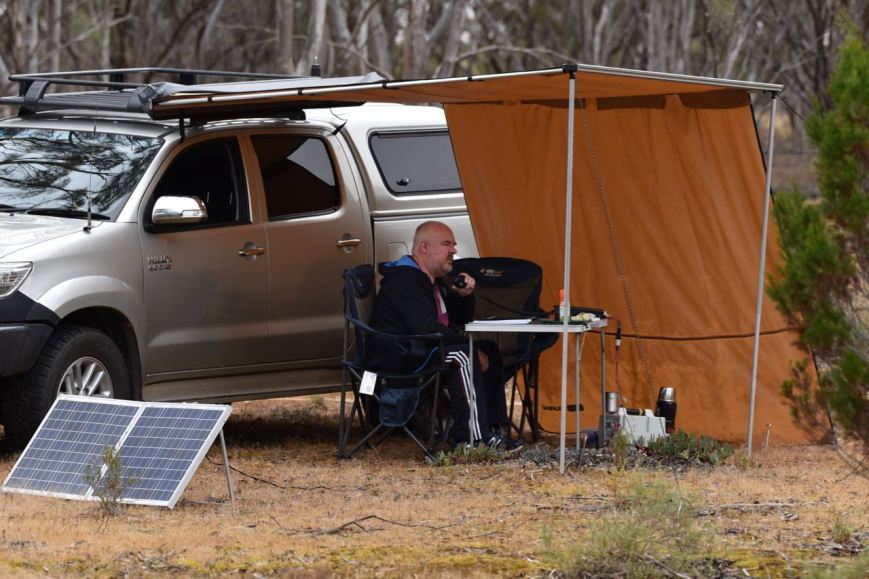
Marija and I had planned to activate the Scott Creek Conservation Park in the Adelaide Hills, but sadly the weather was not what the forecast said it was going to be when we awoke this morning.  It was drizzling with rain, and as vehicular access was not possible in Scott Creek, we decided to head east to activate the Monarto Woodlands Conservation Park 5CP-276 & VKF-1763.  Vehicular access is permissable in Monarto Woodlands, which meant we could extend out the annex/awning on the Toyota Hil Lux.

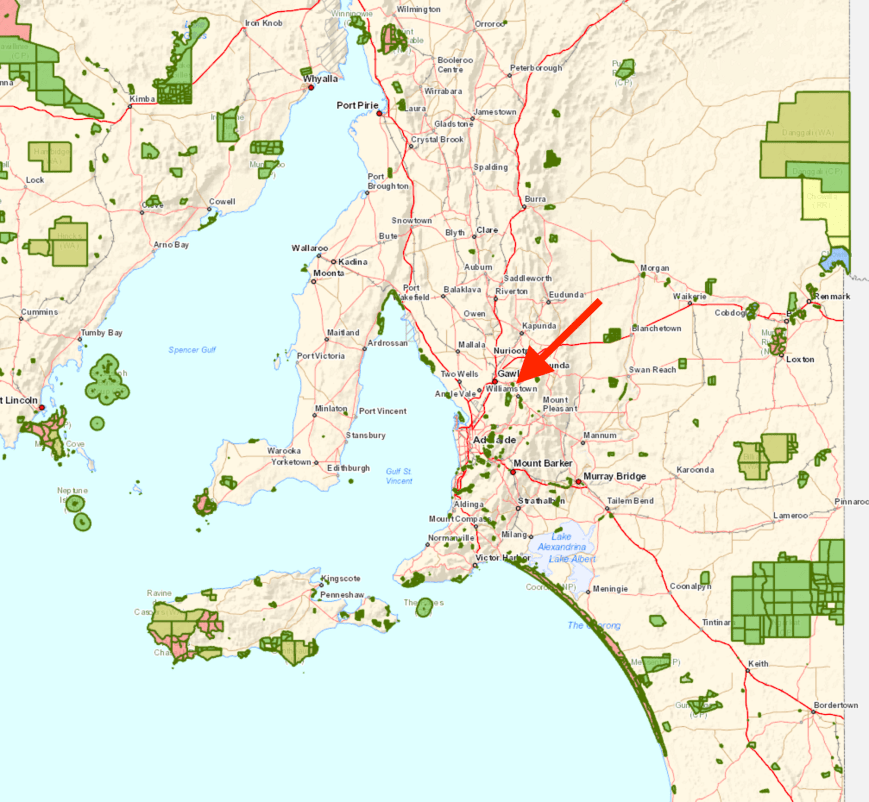
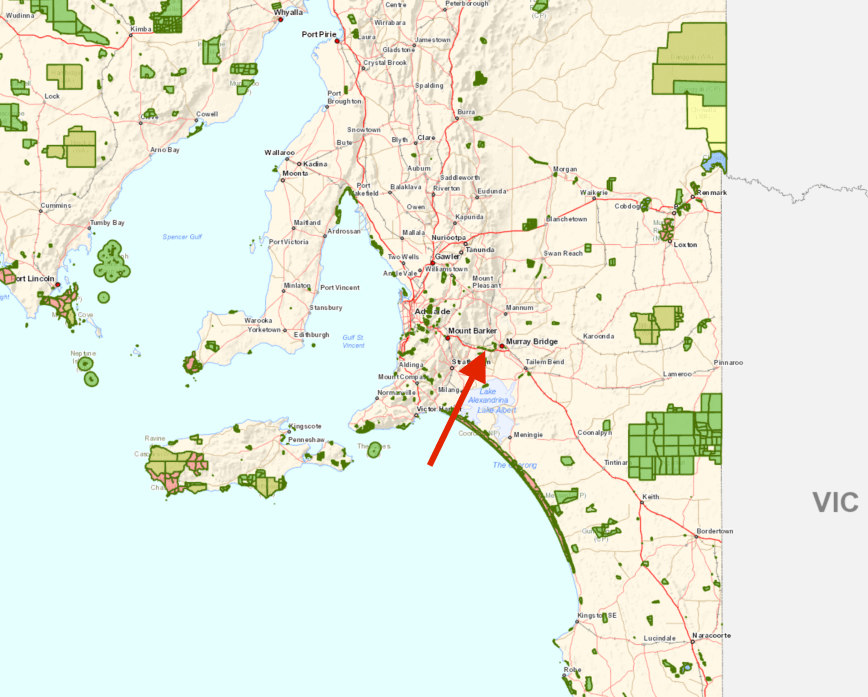
The park is located about 60 km east of Adelaide, and about 30 km east of our home QTH in the Adelaide Hills.
Screen Shot 2017-10-22 at 7.51.00 pm.png

Above:- Map showing the location of the Monarto Woodlands Conservation Park.  Map courtesy of Location SA Map Viewer.

The Monarto Woodlands Conservation Park is about 426 hectares in size and extends about 15 km along the South Eastern Freeway from the edge of Murray Bridge, west to near Callington.  The park was proclaimed on the 22nd September 2016.

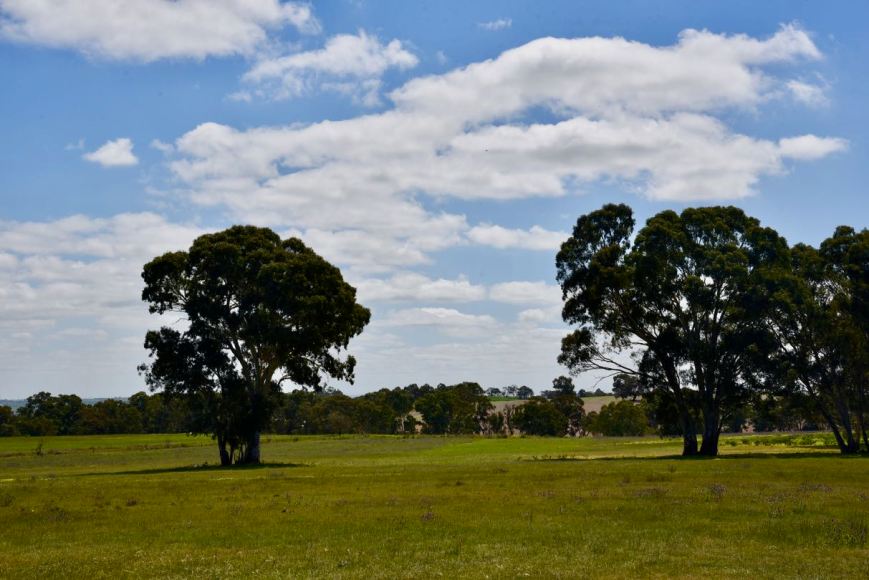
The scrub located within the park is a mixture of plant species from across Australia.  This is due to the extensive planting in the area due to the proposed satellite city of Monarto back in the 1970’s.

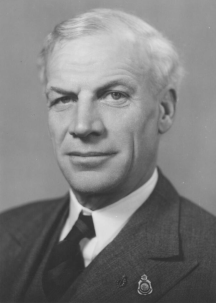
The then South Australian Premier, Don Dunstan had proposed that Monarto, or ‘New Murray Town’ would become the site of a satellite city of Adelaide.  However this concept was eventually abandoned.

fff6cd83f51a9a3b685efff8178cfb9c.jpg

Above:- The rather flamboyant Don Dunstan.  Image courtesy of The Advertiser

Below is a short, very interesting video on Monarto dating back to 1975 which was produced by the South Australian Film Corporation.

The park provides important habitat for more than 60 bird species, five of which are of State Conservation significance.  During our visit we observed numerous White Winged Choughs and Spiny Cheeked Honeyeaters.

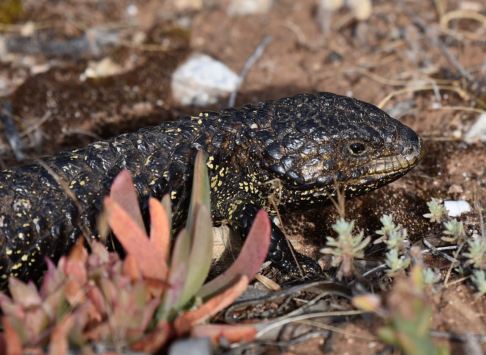
We also had a few reptile friends, when the sun came out.  Fortunately no snakes!
DSC_8456.jpg

The little town of Monarto was just down the road from where we operated.  Don’t blink, you will miss Monarto.  The locality of Monarto was originally a private subdivision of section 210 of the Hundred of Monarto, from which it took its name, the hundred having been gazetted in 1847.  The township was laid out in 1908.  The name of the hundred was after an aboriginal woman, “Queen Monarto”, who lived in the area at the time of its proclamation.

Monarto is home to the 1,500-hectare (3,700-acre) Monarto Zoo, the world’s largest open range zoo.

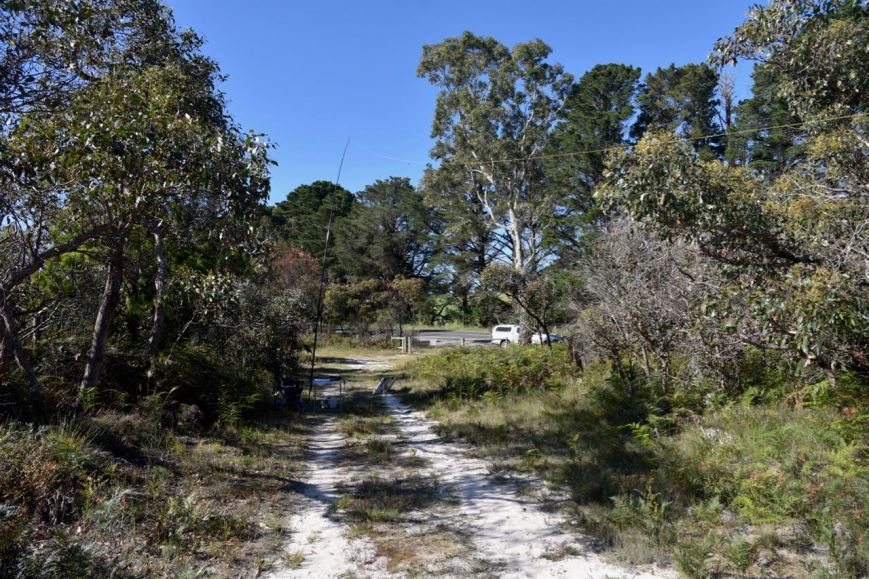
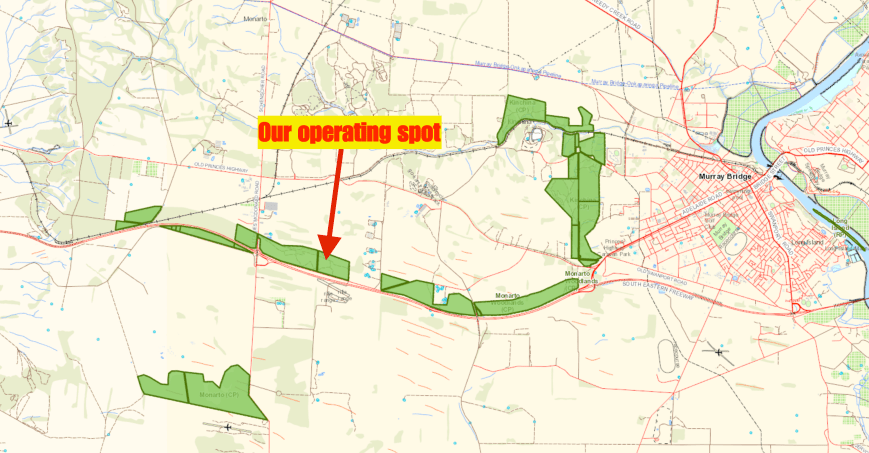
We headed to Whites Road and accessed the park and set up in a clearing in amongst the scrub.
Screen Shot 2017-10-22 at 7.52.22 pm.png

Above:- Map showing our operating spot in the park.  Map courtesy of Location SA Map Viewer.

As the weather was still very ordinary, with drizzling rain, we put up the annexe/awning of the Toyota Hi Lux.  We ran the Yaesu FT-857d, and the 20/40/80m linked dipole for this activation.  We decided to stick to 10 watts PEP, as it was just to hard to go in and out of the menu.  For any overseas readers of this post, Marija VK5FMAZ, as a Foundation operator is limited to 10 watts PEP.

Marija started off the activation, with two Park to Park contacts with Mike VK5FMWW/p and Larry VK5FLHR/p, ‘Team Onka”, who were in the Onkaparinga River National Park VKFF-0402.  Although quite low, at both ends, the contacts were AOK due to the low noise floor experiences in the parks at both ends.  Marija racked up a total of 11 contacts, with conditions on 40m being very average.  The band conditions were well down compared to normal sadly.

I then took control of the mic and logged 4 stations, before Marija and I decided the best way to tackle the day was to work a station and then swap the mic to log the same caller.  This is what we did for the remainder of the activation.

Other Park to Park contacts we logged were with Rob VK4AAC/p and VK4FFAB/p in the Hays Inlet Conservation Park VKFF-1555; Mark VK4SMA/p in Main Range National Park VKFF-0300; and Mick VK3PMG/p in the Ararat Hills Regional Park VKFF-0958.  We also spoke with Kerry VK7FKEK on Flinders Island and Ron VK3DX portable at the Flagstaff Hill Maritime Museum in Warrnambool.

We logged around 40 stations each on 40m before giving the 80m band a go.  It was evident that close in propagation was just not working on 40, so we were hoping to get some South Australian contacts on 80.  Our first contact there was with Greg VK5GJ at Meadows, followed by John VK5BJE.  Les VK5KLV/p and Peter VK5KPR/p then gave us a shout from the Upper Spencer Gulf Marine Park VKFF-1757, about 400 kms to our north.  Marija and I logged a further 3 VK5’s: Tony VK5MRT at Strathalbyn, Hans VK5YX in Adelaide’s southern suburbs, and Adrian VK5FANA on the Yorke Peninsula.  But despite the 80m band being very good all across South Australia, they were our only stations logged on the 80m band.

We moved back to 40m and as the day progressed, the band conditions improved.  There were periods of no response to our CQ calls, but we have learnt from previous activations that persistence pays off, and we kept calling and calling.

Park to Park contacts logged during this stint on 40m included:-

  • VK2IG/p (Bango Nature Reserve VKFF-1884)
  • VK2FENG/p (Bango Nature Reserve VKFF-1884)
  • VK1DI/p (Lower Molonglo River Corridor Nature Reserve VKFF-0990)
  • VK2IO/p (Agnes Banks Nature Reserve VKFF-1881)
  • VK3XV/p (Ararat Hills Regional Park VKFF-0958)
  • VK6ADF/p (Penguin Island Conservation Park VKFF-1436)
  • VK6XN/p (Penguin Island Conservation Park VKFF-1436)
  • VK4HNS/2 (Maroomba State Conservation Area VKFF-1347)
  • VK2IO/p (Wianamatta Nature Reserve VKFF-2018)

We also logged Sam VK2GPL who was on SOTA peak, Mount Tassie, VK3. VT-046.

Marija and I stuck it out until 0600 hours.  In the end we logged a total of 197 QSOs, which included 32 Park to Park (P2P) contacts.  It was certainly terrific to get that many P2P contacts in the log.
DSC_8373.jpg

THANKYOU to the other 6 teams who ventured out today. We managed to log all of the other teams:-

  • ‘The Special K’s comprising Les VK5KLV and Peter VK5KPR
  • The VK4WIPeouts‘ comprising Mark VK4SMA and Murray VK4MWB
  • ‘Team Kookaburra’ comprising Mick VK3GGG and Tony VK3XV
  • ‘Team Onka’ comprising Mike VK5FMWW and Larry VK5FHLR
  • ‘Penguin Pirates’ comprising Hans VK6XN and Phil VK6ADF
  • ‘The 2 Robbies’ comprising Rob VK4AAC and Rob VK4FFAB.

And THANKYOU to everyone who called us today, and special thanks to those who took the time to spot us.  As this was a competitive event, we made the decision not to self spot.

Marija and I worked the following stations on 40m SSB:-

  1. VK5FMWW/p (Onkaparinga River National Park VKFF-0402)
  2. VK5FLHR/p (Onkaparinga River National Park VKFF-0402)
  3. CK3PWG
  4. VK2HHA
  5. VK4HNS
  6. VK7DIK
  7. VK3OHM
  8. VK3JP
  9. VK7JON/m
  10. VK7FOLK/m
  11. VK2KYO
  12. VK2PKT
  13. VK4RF
  14. VK4HA
  15. VK4AAC/p (Hays Inlet Conservation Park VKFF-1555)
  16. VK4FFAB/p (Hays Inlet Conservation Park VKFF-1555)
  17. VK3ZZS/p
  18. VK4WIP/p (Main Range National Park VKFF-0300)
  19. VK7VZ/2
  20. VK3PAT
  21. VK2PDW
  22. VK3ZPF
  23. VK3MCO
  24. VK3FSPG
  25. VK3MPR
  26. VK7VKV/3
  27. VK7FRJG
  28. VK7FKEK
  29. VK3SQ
  30. VK3FCMC
  31. VK3PMG/p (Ararat Hills Regional Park VKFF-0958)
  32. VK3FTOM
  33. VK3PF
  34. VK2JNG/m
  35. VK3BNJ
  36. VK2UH
  37. VK3KLB
  38. VK3NBL
  39. VK1LAJ
  40. VK3UH
  41. VK3VGB
  42. VK4FDJL
  43. VK3FAHS/p
  44. VK2YK
  45. VK7DW
  46. VK3TKK/m
  47. VK3ZVX
  48. VK2IG/p (Bango Nature Reserve VKFF-1884)
  49. VK2FENG/p (Bango Nature Reserve VKFF-1884)
  50. VK1DI/p (Lower Molonglo River Corridor Nature Reserve VKFF-0990)
  51. VK3WAC/m
  52. VK2IO/p (Agnes Banks Nature Reserve VKFF-1881)
  53. VK3XV/p (Ararat Hills Regional Park VKFF-0958)
  54. VK3MRH
  55. VK2NP
  56. VK2LX
  57. VK6ADF/p (Penguin Island Conservation Park VKFF-1436)
  58. VK6XN/p (Penguin Island Conservation Park VKFF-1436)
  59. VK7JON
  60. VK3KMH
  61. VK2FSAV
  62. VK3ARH
  63. VK3EF
  64. VK4TJ
  65. VK3NDJ
  66. VK3FLES
  67. VK4HNS/2 (Maroomba State Conservation Area VKFF-1347)
  68. VK2FANT
  69. VK3PAt/p
  70. VK7FOLK
  71. VK7ABY
  72. VK7NWT
  73. VK2SLB
  74. VK2FOUZ
  75. VK3DRE
  76. VK3AUR
  77. VK3FMKE
  78. VK3YE/p
  79. VK2XXM
  80. VK2IO/p (Wianamatta Nature Reserve VKFF-2018)
  81. VK3PDG
  82. VK3IH
  83. VK2FKDM
  84. VK2YMU
  85. VK2GPL/3 (SOTA VK3/ VT-046)
  86. VK3RW
  87. VK7FGRA
  88. VK2SR
  89. VK3HJA/m
  90. VK3NLK
  91. VK3FMLB
  92. VK3FADM/1
  93. VK4DNA
  94. VK4PDX

Marija worked the following stations on 80m SSB:-

  1. VK5GJ
  2. VK5BJE
  3. VK5KLV/p (Upper Spencer Gulf Marine Park VKFF-1757)
  4. VK5KPR/p (Upper Spencer Gulf Marine Park VKFF-1757)
  5. VK5MRT
  6. VK5YX
  7. VK5FANA

I worked the following stations on 40m SSB:-

  1. VK3DX
  2. VK3VBI
  3. VK3PAH
  4. VK2PKT
  5. VK4RF
  6. VK4HA
  7. VK4HNS
  8. VK2HHA
  9. VK4AAC/p (Hays Inlet Conservation Park VKFF-1555)
  10. VK4FFAB/p (Hays Inlet Conservation Park VKFF-1555)
  11. VK3ZZS/7
  12. VK4WIP/p (Main Range National Park VKFF-0300)
  13. VK5FMWW/p (Onkaparinga River National Park VKFF-0402)
  14. VK5FLHR/p (Onkaparinga River National Park VKFF-0402)
  15. VK3FSPG
  16. VK3MPR
  17. VK3KMH
  18. VK2VW
  19. VK7VZ/2
  20. VK3PAT
  21. VK2PDW
  22. VK3ZPF
  23. VK3MCO
  24. VK7VKV/3
  25. VK7FRJG
  26. VK7FKEK
  27. VK3SQ
  28. VK3FCMC
  29. VK3PMG/p (Ararat Hills Regional Park VKFF-0958)
  30. VK3FTOM
  31. VK3PF
  32. VK2JNG/m
  33. VK3BNJ
  34. VK2UH
  35. VK3KLB
  36. VK3NBL
  37. VK1LAJ
  38. VK3UH
  39. VK3VGB
  40. VK4FDJL
  41. VK3FAHS/p
  42. VK2YK
  43. VK7DW
  44. VK3TKK/m
  45. VK3ZVX
  46. VK2IG/p (Bango Nature Reserve VKFF-1884)
  47. VK2FENG/p (Bango Nature Reserve VKFF-1884)
  48. VK1DI/p (Lower Molonglo River Corridor Nature Reserve VKFF-0990)
  49. VK3WAC/m
  50. VK2IO/p (Agnes Banks Nature Reserve VKFF-1881)
  51. VK3XV/p (Ararat Hills Regional Park VKFF-0958)
  52. VK2NP
  53. VK2LX
  54. VK6ADF/p (Penguin Island Conservation Park VKFF-1436)
  55. VK6XN/p (Penguin Island Conservation Park VKFF-1436)
  56. VK7JON
  57. VK2FSAV
  58. VK3ARH
  59. VK3EF
  60. VK4TJ
  61. VK3NDJ
  62. VK3FLES
  63. VK4HNS/2 (Maroomba State Conservation Area VKFF-1347)
  64. VK2FANT
  65. VK7ABY
  66. VK7NWT
  67. VK2SLB
  68. VK2FOUZ
  69. VK3DRE
  70. VK3AUR
  71. VK3FMKE
  72. VK3YE/p
  73. VK2XXM
  74. VK2IO/p (Wianamatta Nature Reserve VKFF-2018)
  75. VK3PDG
  76. VK3IH
  77. VK2FKDM
  78. VK2YMU
  79. VK2GPL/3 (SOTA VK3/ VT-046)
  80. VK3RW
  81. VK7FGRA
  82. VK2SR
  83. VK3HJA/m
  84. VK3NLK
  85. VK3FMLB
  86. VK3FADM/1
  87. VK4DNA
  88. VK4PDX

I worked the following stations on 80m SSB:-

  1. VK5GJ
  2. VK5BJE
  3. VK5KLV/p (Upper Spencer Gulf Marine Park VKFF-1757)
  4. VK5KPR/p (Upper Spencer Gulf Marine Park VKFF-1757)
  5. VK5MRT
  6. VK5YX
  7. VK5FANA

References.

Department of Environment, Water and Natural Resources, 2017, <https://www.environment.sa.gov.au/Home/Full_newsevents_listing/News_Events_Listing/160922-new-conservation-parks&gt;, viewed 22nd October 2017

Wikipedia, 2017, <https://en.wikipedia.org/wiki/Monarto_Woodlands_Conservation_Park&gt;, viewed 22nd October 2017

Wikipedia, 2017, <https://en.wikipedia.org/wiki/Monarto,_South_Australia&gt;, viewed 22nd October 2017

Results of 2017 CQ WPX Contest

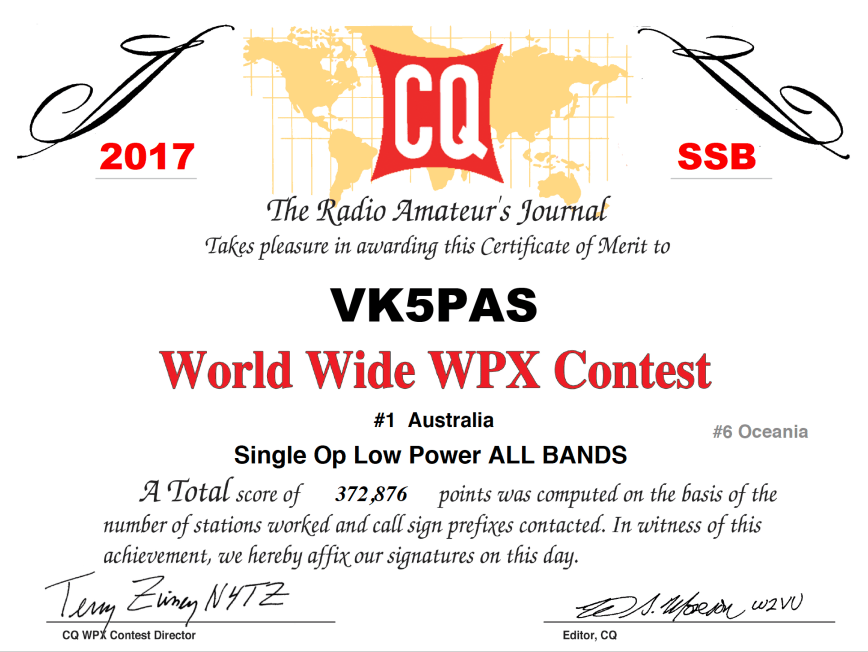
This morning I checked the web re the results of the 2017 CQ WPX Contest which was held on 25th and 26th March 2017.  And to my surprise, there was a certificate waiting there for me.  It was a certificate for first place in Australia for the Single Op Low Power All Bands section.

The WPX Contest is based on an award offered by CQ Magazine for working all prefixes. Held on the last weekend of March (SSB) and May (CW), the contest draws thousands of entries from around the world.

I made a total of 454 QSOs over the weekend, with a score of 372,876 points.

I came first in Australia in this category, 6th in Oceania, and 845th in the World.  I was closely followed by Steve VK2NSS in 2nd place with 207,060 points.

The top scoring station in Australia, who was in the Multi-Two category was VK4KW with 10,344,536 points.  The top scorer in the world was CN3A in Morocco with a total of 8,158 QSOs and a score of 55,670,247 points.

Many thanks to CQ Magazine and the organisers of this contest.

Screen Shot 2017-10-19 at 1.45.31 pm.png

New VKFF structure

The WWFF program has been running in Australia since March 2013, so about 4 & 1/2 years. In that time the program has exploded in popularity, with park activators now being heard almost every day of the week (even in the middle of the week).

I have now issued just a little short of 2,100 VKFF certificates to VK’s and other amateurs all around the world during that period.

makenatureyourshack

VKFF logo with transparent background.png

Now has come the time that I need a little help to keep the VKFF program afloat, as I am spending a number of hours each day in front of the computer, maintaining the website, issuing awards, and uploading logs. Much to the chagrin of my very understanding wife Marija. This together with a number of other pies I have my fingers in.

I have now sourced some very good volunteers who are going to assist in the VKFF program, and I thank these individuals very very much. They are as follows:-

Ian VK1DI.

Gerard VK2IO.

Mick VK3GGG.

Mark VK4SMA.

Hans VK6XN.

Jonathan VK7JON.

Commencing Wednesday 18th October 2017 the above gentlemen will act as State/Territory representatives in the VKFF program. They will be responsible for uploading logs for activations from their respective State/Territory, and also processing/forwarding award applications/certificates for amateurs from their respective State/Territory.

So, for example, if you activate a park in VK1 (no matter what your call may be), the log will now be forwarded to Ian VK1DI. If you activate a park in VK2, then Gerard VK2IO is your contact, etc, etc.

If you apply for a VKFF award (excluding OCCFF & the special awards), you will receive the award via the respective State/Territory rep mentioned above.

Hans VK6XN will also be doing VK8.

I will continue to upload logs and process awards for VK5’s.

I will also continue in my role as the VKFF National co-ordinator, and thanks to the volunteers mentioned above, I will now be able to focus more on National VKFF issues.

More info on the new VKFF Team can be found on the WWFF Australia website at…..

http://www.wwffaustralia.com/vkff-team.html

I again, thank the gentlemen mentioned above for volunteering their time. It is greatly appreciated.

Do not hesitate to contact me should you have any queries.

73 and ’44’,

Paul VK5PAS
VKFF National co-ordinator.
vk5pas@wia.org.au

Ted Powell Memorial Top 5 DX Challenge certificate

Last night I checked my emails and I was very pleasantly surprised to find I had a certificate in my inbox waiting for me.  It was a certificate for Ted Powell (VK2AU) Memorial Top 5 DX Challenge for the period July-September 2017.

This contest was developed by the Fisher’s Ghost Amateur Radio Club in memory of Ted Powell, who became a silent key on 16 March 2014. Ted’s passion was working rare DX and collecting QSL cards. At the time of his passing, Ted had worked 301 entities and confirmed 300 by QSL cards.

The objective of the “Most Wanted” category is to work the most wanted DXCC entity during an award period. The winner will be the station who works the most wanted DXCC entity based on its ranking in Clublog’s Most Wanted list current at the beginning of the award period.

THANKYOU to the Fishers Ghost Amateur Radio Club.

Screen Shot 2017-10-16 at 1.39.05 pm

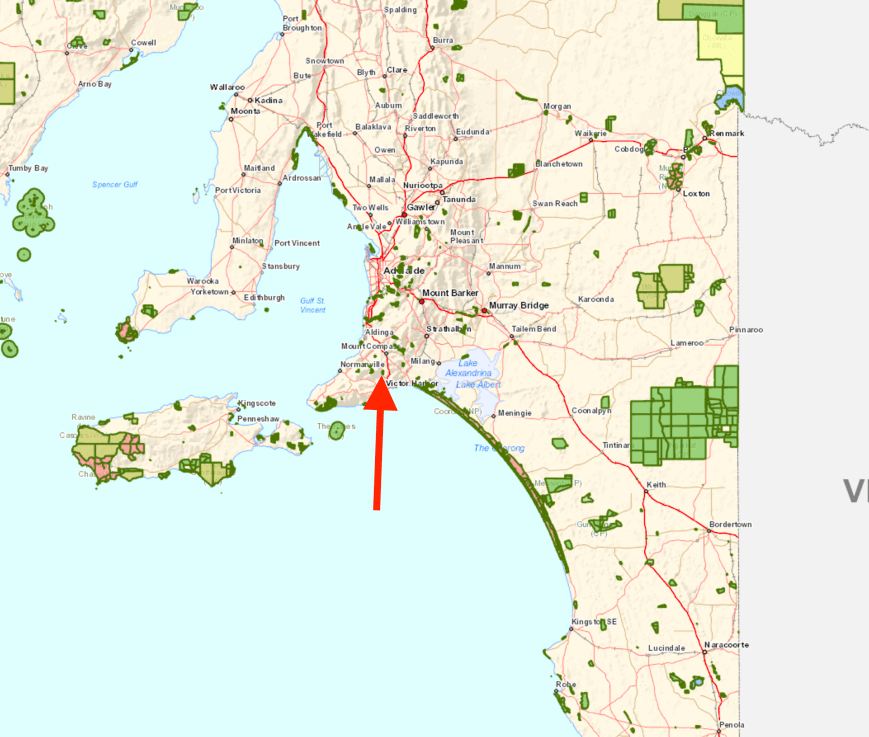
Mount Billy Conservation Park 5CP-143 and VKFF-0912

Yesterday afternoon (Sunday 15th October 2017) I drove down to the Fleurieu Peninsula, to activate the Mount Billy Conservation Park 5CP-143 and VKFF-0912.  This was the third time I had activated the park so it was to count towards the Boomerang Award for the World Wide Flora Fauna (WWFF) program.  The activation also counted towards the VK5 National & Conservation Parks Award.

The park is located about 75 km south of Adelaide and about 70 km south west of my home in the Adelaide Hills.

Screen Shot 2017-10-15 at 12.35.54 pm.png

Above:- Map showing the location of the Mount Billy Conservation Park.  Map courtesy of Location SA Map Viewer.

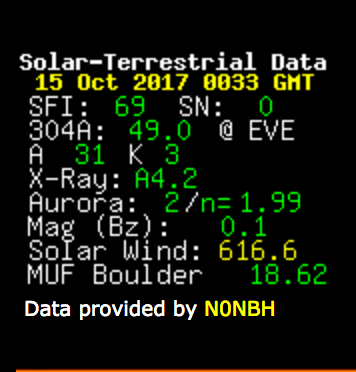
Prior to leaving home I checked the solar figures and they didn’t look particularly good with the solar flux index being down compared to previous days and the A index very high.  But it was too beautiful an afternoon not to head out, with bright sunshine, not a cloud in the sky, and a temperature of about 21 deg C.

Screen Shot 2017-10-15 at 11.16.18 am.png

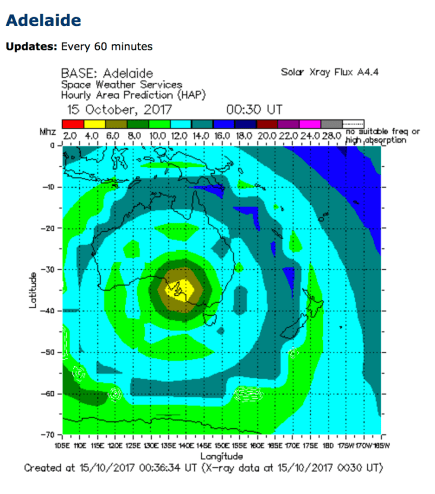
A check of the Hourly Area Prediction Chart (HAP) for Adelaide showed that again, the close in propagation was not going to work on 40m.

Screen Shot 2017-10-15 at 11.15.50 am.png

The Mount Billy Conservation Park is about 198 hectares in size and was proclaimed on the 12th day of August 1999.  The park is located off the Hindmarsh Tiers Road, abut 13 km north of Victor Harbor and is adjacent to the Hindmarsh Valley Reservoir.  The reservoir is no longer in official use, but was once part of the supply chain of water supply to the town of Victor Harbor.  The land which is now the park served as the adjacent catchment area.  Upon the closing of the reservoir, land was transferred from SA Water to the Department of Water Natural Resources (DEWNR).

Screen Shot 2017-10-15 at 1.24.31 pm.png

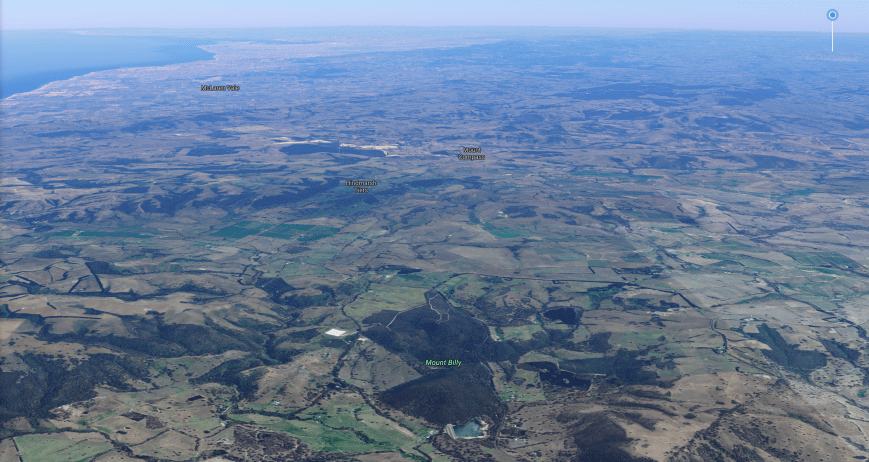
Above:- Aerial shot of the Mount Billy Conservation Park, looking north.  Image courtesy of Google maps

Mount Billy represents some of the best preserved mallee and forest communities within the southern Mount Lofty Ranges.  Main habitats within the park include Low Woodland – Pink Gum, Brown Stringybark, Cup Gum, and Golden Wattle; and Woodland – Pink Gum, South Australian Blue Gum, over Golden Wattle.

In the northern area of the park where I operated the vegetation is quite low, with the soil being very sandy.

The southern section of the park is more rugged in terrain and contains the thick Gum Woodlands, creeks, and ferns.

During my visit the park was alive with various native shrubs in flower.

About 80 native bird species have been recorded in the park including Superb Fairywren, Eastern Spinebill, Crescent Honeyeater, Brown Thornbill, Grey Shrikethrush, Australian Golden Whistler, Sacred Kingfisher, Common Bronzewing, Red-rumped Parrot, Buff-rumped Thornbill, and Yellow Thornbill.

Numerous native animals call the park home including Western Grey kangaroos and the endangered Southern Brown Bandicoot.

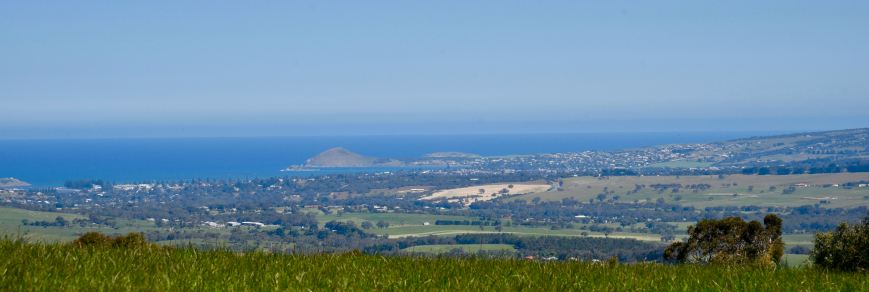
To get to the park from my home I travelled through the Adelaide Hills to the town of Meadows and then on to Willunga.  I then travelled south on the Victor Harbor Road until I reached Pambula Road.  There were some great views to be enjoyed of Victor Harbor from the roadside.

DSC_8266.jpg

This is certainly beautiful country down here on the Fleurieu Peninsula.

I then reached the junction with Hindmarsh Tiers Road where I turned right and I soon made it to gate 1 of the park, located in the north eastern corner of Mount Billy.

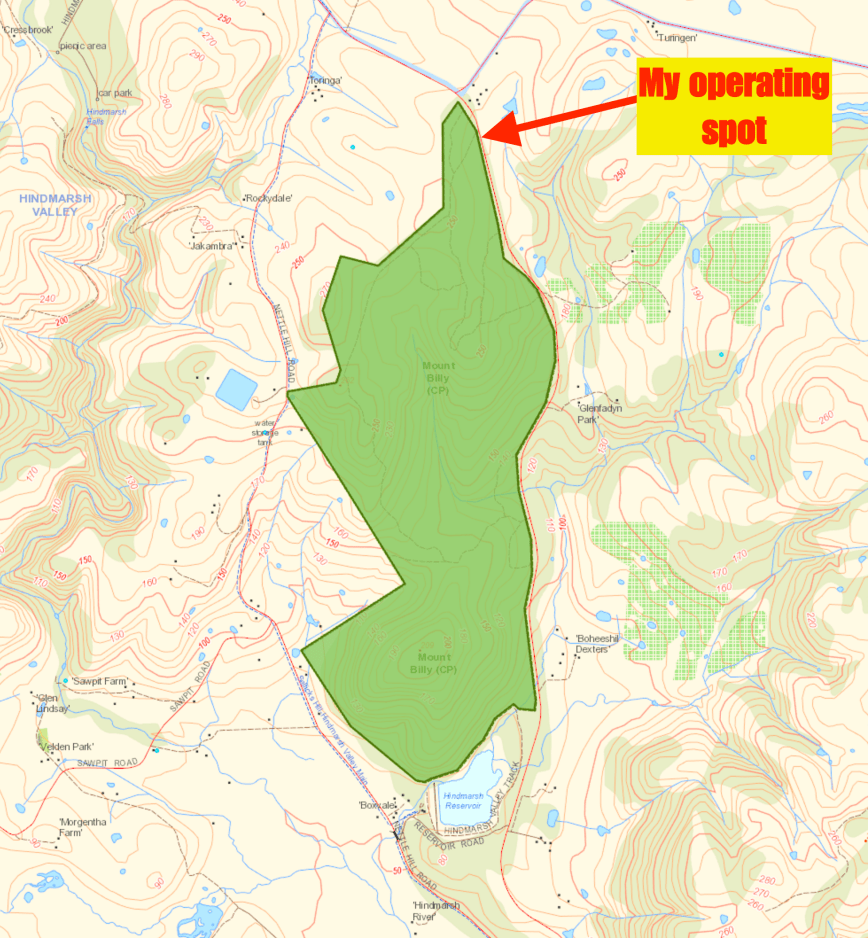
There is a small area here alongside of the gate where you can park your car.  Although the gate is locked, the authorities do have a pedestrian access area to the park.  I walked a short distance down one of the tracks and started setting up my station, comprising the Yaesu FT-857d and the 20/40/80m linked dipole.

Screen Shot 2017-10-15 at 12.35.29 pm.png

Above:- Map showing the park, and my operating spot.  Map courtesy of Location SA Map Viewer.

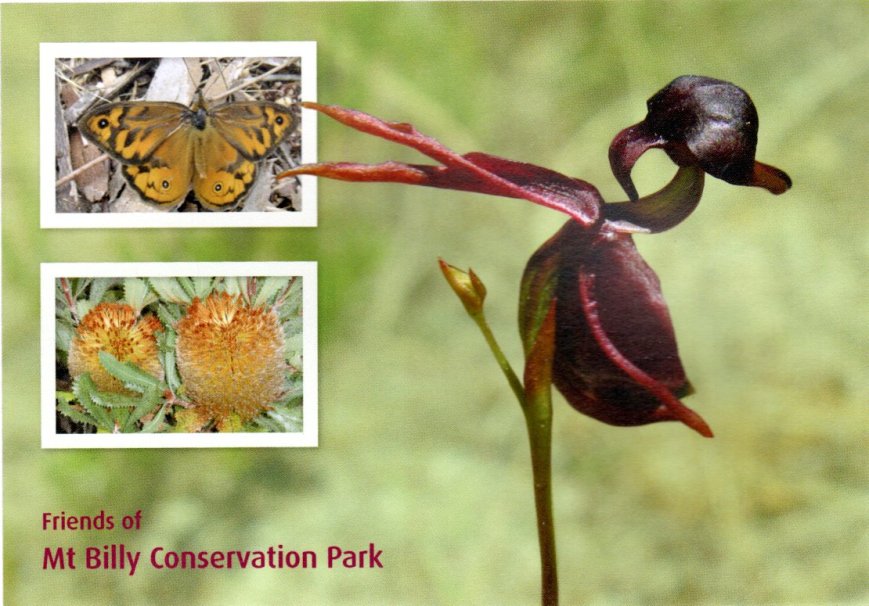
Whilst I was setting up, a vehicle arrived at the park.  It was a lady from the Friends of Mount Billy.  We had a chat about the park and I explained to her what it was that I was doing in the park.  She seemed very interested and I gave her my business card and some promo brochures on WWFF and the VK5 Parks Award.

img20171016_11541847.jpg

The Friends of Mount Billy have regular working bees to generally monitor the condition of the park and to perform important weeding tasks.  More information can be found at….

http://www.friendsofparkssa.org.au/members-directory/friends-of-mt-billy

I was set up and ready to go a little ahead of my scheduled time of 0500 UTC.  After switching the radio on, the 857d was already on 7.144 and I heard Gerard VK2IO/p calling CQ from the Windsor Downs Nature Reserve VKFF-2020.  I still hadn’t secured the ends of the dipole, but it sounded as if Gerard was about to go QRT, so I gave him a call.  It was a nice way to start the activation with a Park to Park contact.  I then had a tune across the band and heard Jonathan VK7JON on 7.135 in the Little Peggs Beach State Reserve VKFF-1812.  But Jonathan had a mini pile up going, so I headed back to 7.144 where I started calling CQ.  Peter VK3PF was first in the log, followed by Dennis VK2HHA, and then Marshall VK3MRG/p.

The 40m band was in average condition, with signals from Victoria (VK3) being well down compared to normal.  However, on the plus side, Cliff VK2NP’s signal was the strongest I had ever heard him….5/9 plus, with Cliff also giving me a 5/9, which is very rare.  As conditions were a little rough, callers were far less than I normally experience, so I took the opportunity of having a listen across the band, hoping to work Jonathan VK7JON.  Sadly when I had a listen on 7.135, Jonathan had gone, so I moved back to 7.144, and was very pleasantly surprised when Helen VK7FOLK/p called me from Little Peggs Beach State Reserve VKFF-1812.  I then logged Jonathan.

I was about to hand the frequency over to Helen and Jonathan, when Gerard VK2IO/p came up, this time in a new park, the Castlereagh Nature Reserve VKFF-1905.  After logging Gerard I headed off to the 80m band hoping to log some VK5’s.

First in the log on 80m was Marija VK5FMAZ, followed by Greg VK5GJ who was 5/9.  Greg lowered his power down to 400 milliwatts and was still a good 5/4 to Mount Billy.  Despite conditions being good around VK5 on 80m, John VK5BJE was my only other caller.  John was 5/9 plus from Scott Creek in the Adelaide Hills.

I then lowered the squid pole and removed the links and headed to the 20m band.  I called CQ on 14.310 and this was answered by regular park activator and hunter Phil VK6ADF.  Unfortunately Phil was my only caller, despite a self spot on parksnpeaks and posts on some of the Facebook sites.  So I tuned across the 20m band and found Tony 3D2AG calling CQ, with a 5/7 signal.  I wasn’t sure if I’d be able to make it to Tony, but I decided to give it a go.  I was very surprised when Tony came back to me and gave me a 5/5 from Fiji.

To complete the activation I headed back to 40m and logged a further 9 stations from VK1, VK2, VK3, and VK4.  Tex VK1TX in Camberra was the strongest signal of the day, being 5/9 ++++.

With 45 contacts in the log and a rumbling stomach, it was time for me to pack up and head home.

DSC_8290.jpg

Above:- Looking north along the track towards my operating spot and the gate on Hindmarsh Tiers Road.

I worked the following stations on 40m SSB:-

  1. VK2IO/p (Windsor Downs Nature Reserve VKFF-2020)
  2. VK3PF
  3. VK2HHA
  4. VK3MRG/p
  5. VK3OHM
  6. VK3FCMC/p
  7. VK3MDH/p
  8. VK4RF
  9. VK4HA
  10. VK7VZ/2
  11. VK2PKT
  12. VK7DW
  13. VK2NP
  14. VK3KRH
  15. Vk2YK
  16. VK3ZPF
  17. VK1LAJ/p
  18. VK7QP
  19. VK3BNJ
  20. VK2VRC
  21. VK3SQ
  22. VK4TJ
  23. VK3FMKE
  24. VK3VGB
  25. VK2JNG/p
  26. VK3HBG
  27. VK5MR
  28. VK7FOLK/p (Little Peggs Beach State Reserve VKFF-1812)
  29. VK7JON/p (Little Peggs Beach State Reserve VKFF-1812)
  30. VK2IO/p (Castlereagh Nature Reserve VKFF-1905)
  31. VK2FANT
  32. VK3FADM/1
  33. VK1DI
  34. VK2GPT
  35. VK2VX
  36. VK1TX
  37. VK4QQ
  38. VK3SFG
  39. VK2OA
  40. VK7FOTR

I worked the following stations on 80m SSB:-

  1. VK5FMAZ
  2. VK5GJ
  3. VK5BJE

I worked the following stations on 20m SSB:-

  1. VK6ADF
  2. 3D2AG

After packing up I decided to explore the western side of the park.  First I stopped off to have a look at the old Hindmarsh Valley reservoir which is located on the southern boundary of the park.

I then continued north on Nettle Hill Road.  It was quite appropriate that I came across these goats in a paddock adjacent to Mount Billy.

There were some very nice views to be enjoyed of the western side of the park from Nettle Hill Road.

I then travelled east along the Hindmarsh Tiers Road through the beautiful Hindmarsh Valley, named after John Hindmarsh, the first Governor of South Australia.

I stopped off briefly to have a look at the old Hindmarsh Valley School which was established way back in 1867.

I then started travelling north on the Victor Harbor Road, again stopping briefly to have a look at the old stone wall at Cut Hill which was built in 1868 by Jabez Grimble under contract to the Central Roads Board.  These old stone walls are truly remarkable.  Bullock carts had the tendency to overturn on the steep hillside at this location, and as a result Grimble was employed to make the descent into Victor Harbor safer.  Jabez had undertaken previous road and bridge works in the district.

The metre high dry stone parapet is what travellers along the Victor Harbor Road can see.  However, the wall is actually about 5 metres in height on the creek side.  It is reported that after Jabez had paid off the workmen assisting him in the construction of the wall, there was no money left for Jabez and his family.

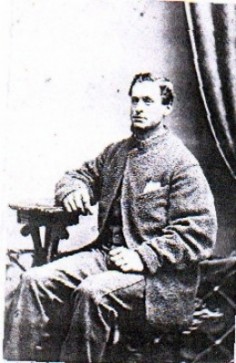
Jabez-Grimble-copy-e1377399477824.jpg

Above:- Jabez Grimble.  c/o Encounter Bay Family History Group

The Encounter Bay Family History Group has further information on Jabez Grimble which can be found at……

http://encounterbayfhg.org.au/grimble/

I made one final stop on my way home.  I was keen to check out to see if there was any access to the Hesperilla Conservation Park.  This is one of two parks which I have not activated down on the Fleurieu Peninsula.  I was fortunate in that I found a guy rounding up his chooks and he pointed me to a very rough track, which sure enough led down to the park.  Hesperilla is swampland and frogs were plentiful during my visit, which I am sure meant plenty of Red Bellied snakes and Tiger Snakes.  This is a park which I will need to return to.


References.

Birds SA, 2017, <http://www.birdssa.asn.au/location/mount-billy-conservation-park/&gt;, viewed 16 October 2017

Department of Environment and Natural Resources, 2011, ‘Parks of the Fleurieu Peninsula’

Friends of Parks South Australia, 2017, <http://www.friendsofparkssa.org.au/members-directory/friends-of-mt-billy&gt;, viewed 16th October 2017

Weekend Notes, 2017, <https://www.weekendnotes.com/cut-hill-victor-harbor-road/&gt;, viewed 16th October 2017
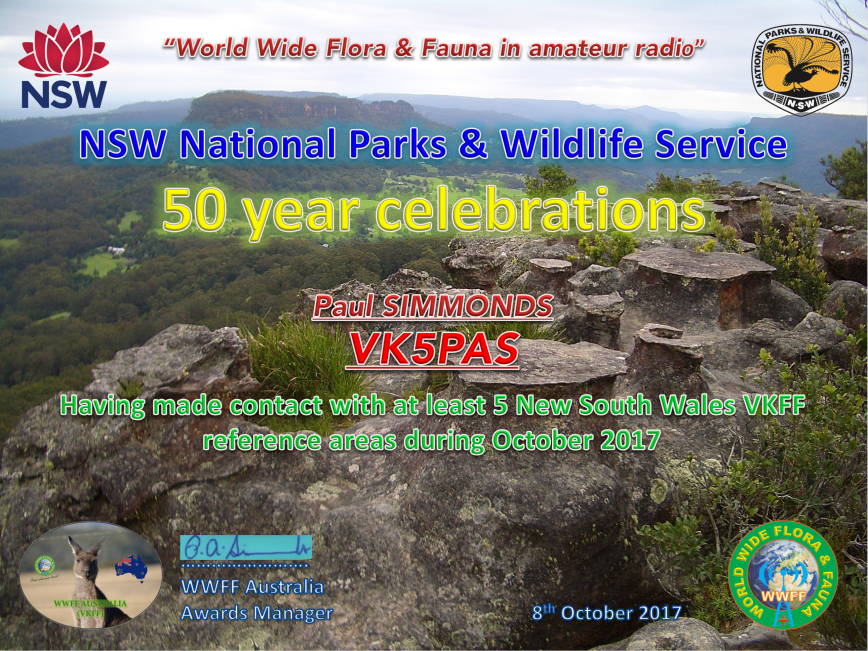
NSW NPWS 50 year celebration certificate

The New South Wales National Parks and Wildlife Service (NPWS) celebrates its 50 year anniversary this year.

To celebrate this event, the VKFF program is offering certificates to both activators and hunters, for having activated, or having made contact with 5 different NSW VKFF reference areas during October 2017.

I have qualified for the hunter certificate

VK5PAS NSW NPWS 50 year celebrations Hunter.png

Thanks to the following VK2 activators:-

  • Gerard VK2JNG
  • Laurie VK2GZ
  • Adam VK2YK

2017 Oceania DX Contest

OceaniaDXContest-in-CenturyGothic-horiz-full

Well, another Oceania DX Contest has been and gone.  This is one of a handful of contests that I always compete in each year.

I ended up making a total of 506 contacts with a claimed score of 311,202 points.  Those contacts were made on 10, 15, 20 & 40m SSB.  This was up quite a bit from last year when I made a total of 276 contacts.

Equipment used during the contest:-

  • Yaesu FT-1000
  • 100 watts
  • TET-Emtron TE-53 5 element yagi @ 16 metres (for 10m, 15m, & 20m)
  • home brew dipole inverted vee (for 40m)
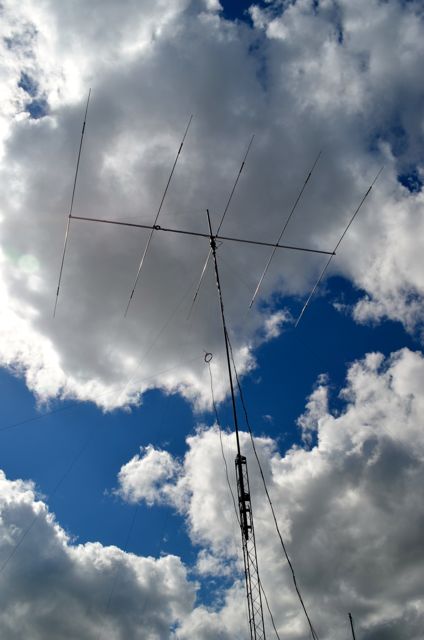
DSC_0001

Above:- The 5 el yagi and the linked dipole hanging off the side of the tower,

Yesterday (Saturday 7th October 2017), leading up to the contest, the 20m band was in excellent condition on the long path to Europe.  I worked quite a pile up leading up to the contest.  Sadly, half an hour into the contest my noise floor on 20m went from S2 to S7.  This noise seems to come up quite regularly very late in the afternoon here and I have no idea on where it is coming from.  So as a result, it put a huge dent in my DXing on 20m.  In the end I had to give 20m away, with 33 contacts in the log from Europe & New Zealand, and I headed to 40m feeling hugely frustrated.

Unfortunately my 40m antenna is less than ideal for working DX, but I still managed to work French Caledonia, USA, and New Zealand on 40m.  I headed back to 20m at around 0845 UTC to find that the man made noise had gone, but so had the propagation to Europe on the long path.  I decided to beam to the north and as a result I worked numerous JA’s, Asiatic Russia, Indonesia, Korea, Malaysia, New Zealand, China, Hong Kong, Ukraine, USA, VK6, and VK8.

I then moved back to 40m at about 1000 UTC (8.30 p.m.).  It was now dark.  I worked about a dozen stations from Australia, New Caledonia, New Zealand, Asiatic Russia, Indonesia, Tonga, and East Kiribati.  I heard a number of other DX stations, but sadly my 100 watts and the dipole were just not cutting though.

It was approaching 1100 UTC so I headed back to 20m and found that the band was starting to open up on the short path to Europe.  The previous few nights I had been on afternoon shift at work, arriving home at around 1300 UTC (11.30 p.m. local time), with conditions short path to Europe being quite good.  Sadly, conditions during the contest were not quite as good as previous nights.  However I did have a good run of Europeans, South East Asia, the Sub Continent, and Middle East stations coming back to my CQ call.

I called it a night at about 1530 UTC (2.00 a.m. local time) with a total of 225 stations in the log.

Screen Shot 2017-10-08 at 8.34.35 pm.png

Above:- Map showing my contacts during the contest.

On Sunday morning I made my way out of bed at about 10.00 a.m. and headed back to the shack.  There wasn’t much happening on 20m or 40m so I had a listen on 15m and found the band open to Japan and South East Asia.  I logged a little over 60 stations.

At about 0200 UTC I tried my luck on the 10m band which was wide open to JA, but sadly there were not a lot of stations to be found.  I logged just 10 stations before heading over to 20m.  It was too early for any propagation to Europe but I did log a little over a dozen stations from VK and ZL.  I then flicked between 20m and 15, working stations  from South East Asia, USA, Australia and the Pacific.

Just before 0400 UTC I headed back to 40m and worked about 26 VK’s with conditions there being very good.  I then head a listen on 10m and 15m again, but stations heard there were quite low, with propagation to South East Asia dropping quite dramatically from earlier in the day.  I did hear VK9XI on Christmas Island and tried in vain to work them.  Almost, but not close enough!

VK9-2017_2

At around 0500 UTC (3.30 p.m.) I moved back to 20m.  The band was just starting to open up on the long path to Europe, with a dozen or so Europeans logged, and also VK and Tonga.  I again moved back to 40m and logged a handful of VK’s, waiting for 20m to open up.

At about 0600 UTC I headed back to 20m and found that the band was really starting to open up now on the long path to Europe.  Sadly conditions were nowhere near as good as the day previous.  I also experienced a lot of QRM making it very difficult to pick up the weaker stations.  Fortunately, the terrible noise I often experience on 20m was not present.  There was at least one blessing.

At around 0700 UTC I decided to have a listen on 15m and I am very pleased that I did.  The band was not only open to JA, but I worked a large number of stations on the short path into Europe.  Although the European signals were not super strong, it was really pleasing to hear Europe coming through.

At 0800 UTC, the end of the contest, I had 506 contacts in the log.

I worked a total of 55 different countries during the contest.  the following countries were logged:-

  1. Aland Islands
  2. Asiatic Russia
  3. Australia
  4. Austraia
  5. Belarus
  6. Belgium
  7. Brunei
  8. Canada
  9. China
  10. Cyprus
  11. Czech Republic
  12. Denmark
  13. East Kiribati
  14. East Malaysia
  15. England
  16. Estonia
  17. Finland
  18. France
  19. Germany
  20. Greece
  21. Hong Kong
  22. Hungary
  23. India
  24. Indonesia
  25. Italy
  26. Japan
  27. Kazakhstan
  28. Latvia
  29. Lithuania
  30. Netherklands
  31. New Caledonis
  32. New Zealand
  33. Northern Ireland
  34. Norway
  35.  Philippines
  36. Poland
  37. Portugal
  38. Romania
  39. Russia
  40. Scotland
  41. Singapore
  42. Slovak Republic
  43. Slovenia
  44. South Korea
  45. Spain
  46. Sweden
  47. Switzerland
  48. Taiwan
  49. Thailand
  50. Tonga
  51. Ukraine
  52. United Arab Emirates
  53. United States of America
  54. Wales
  55. West Malaysia

thinking-mind

Points to come out of the contest for me:-

  • get a dedicated antenna for the 80m band.  I do not have an antenna for that band so I missed out on any contacts on 80m.
  • Get my Heil headset fixed so I can use it in conjunction with the foot pedal.  I used the desk mic for the contest and as a result, have a crook neck.
  • Arrange for a voice recording.  Calling CQ all day long is not a good thing.
  • Get motivated to do my upgrade so I can run some more power.
  • Continue to look at a potential QTH move so I can get a more substantial antenna up in the air for 40m.

Thanks to everyone who called and thanks to the Oceania DX Contest Committee for another great contest.

I take my hat off to some of the VK big guns I heard during the contest, including VK5ARG, VK4HH, VK4NM, VK4KW, VK2AU, VK2XZ, VK6NE, and VK4FG.  Good luck to everyone who entered.

240_F_107122268_4uMb9HsDAGKnfnquLlZXKhgWgD38RuYM.jpg

Porter Scrub Conservation Park 5CP-189 and VKFF-0787

Last Monday (2nd October 2017) was a public holiday here in South Australia….Labor Day.  The public holiday  has its origins in the eight hour day movement, which advocated eight hours for work, eight hours for recreation, and eight hours for rest.  I had the day off as a grace day, so I headed out to activate the Porter Scrub Conservation Park 5CP-189 and VKFF-0787.

I have activated and qualified this park previously, so it was going to be another activation towards the Boomerang Award for the World Wide Flora Fauna (WWFF) program.

Screen Shot 2017-10-03 at 9.48.25 pm.png

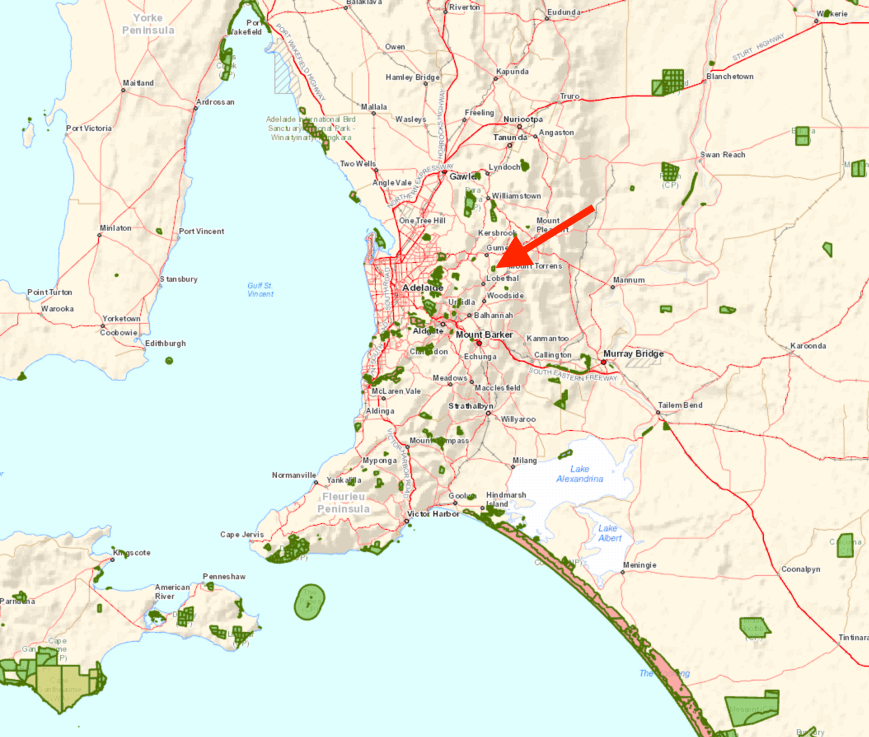
Above:- Map showing the location of the Porter Scrub Conservation Park in the Adelaide Hills.  Map courtesy of Location SA Map Viewer.

Porter Scrub Conservation Park is 104 hectares in size and is located at Kenton Valley in the Central Mount Lofty Ranges ‘Adelaide Hills’.  It is situated about 30 km north east of the city of Adelaide.  After purchase from the estate of the late J. J. Porter, the park was proclaimed on 20 October 2005.

Approximately 99 hectares of the park is land that was purchased from the estate of the late J. J. Porter with financial assistance from the National Reserve System Program of the Australian Government’s Natural Heritage Trust and a contribution from the Nature Foundation SA Inc.  The park also consists of a closed road reserve and 3.7 hectares of land that was previously an Adelaide Hills Council reserve.

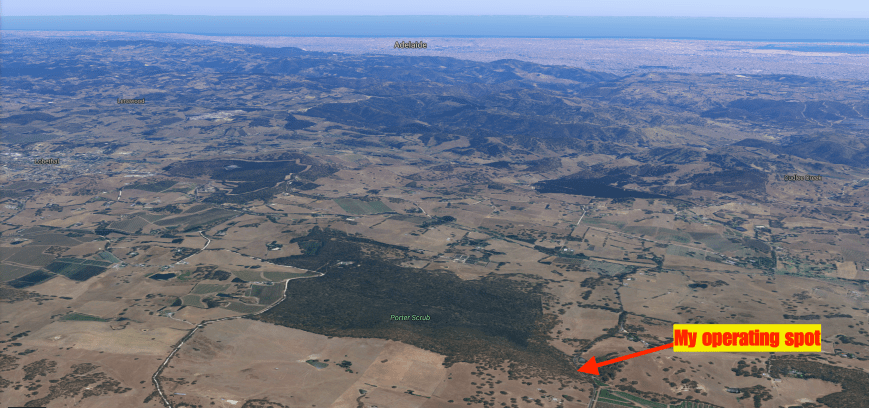
Screen Shot 2017-10-03 at 9.55.03 pm.png

Above:- Aerial shot showing the park.  Image courtesy of Google maps.

For most of the 1900’s the Porter family were the freehold owners of the land comprising the park.  The land was never cleared, however sheep were grazed until the land was acquired for conservation purrposes.  The park was also used as a source of timber, with large numbers of saw logs being extracted.  The stumps and coppice regrowth can be seen in the park.  Bark was stripped from Golden Wattle trees for the tanning industry.

Early mining exploration occurred along Howard Creek with mines being established for talc extraction.  There are numerous old mine shafts located within the park.  Talc mining ceased in the late 1960’s due to competition in the industry.  The primary mining site in the central part of the park was also a source of soapstone, which was used as “fire bricks” for use in ovens and kilns.

The park terrain is undulating to hilly, flanking a central valley along Howard Creek which flows into the River Torrens.  It includes areas of messmate Stringybark Woodland and Candlebark Gum open forest, pink gum low woodland and river red gum woodland are found in the park.  Candelbark Gum open forest is considered endangered in South Australia.  The park also supports grassy woodlands of Messmate Stringybark and Manna Gum and South Australian Blue Gum.   Pink Gum and River Red Gum are considered vulnerable at a state level.

During my visit to the park there were a number of the native plants in flower.

A large number of native birds have been recorded in the park including 11 bird species of conservation significance.  Birds recorded in the park include White-throated Treecreeper, Superb Fairywren, Yellow-faced Honeyeater, Grey Shrikethrush, Striated Pardalote, White-browed Scrubwren, Brown Thornbill, Australian Golden Whistler, Grey Shrikethrush, Grey Fantail, Common Bronzewing, Sacred Kingfisher, Buff-rumped Thornbill, Black-capped Sittella, and Willie Wagtail.

Various native mammals call the park home including Western Grey Kangaroo, Short beaked Echidna, Koala, Common Brushtail Possum, Common Ringtail Possum, and the nationally endangered Southern Brown Bandicoot.

I have previously activated from the southern side of the park off Maidment Road.  This time I decided to try the northern side.  So I headed out from home through Woodside and on to Lobethal.  I then took Burfords Hill Road heading east and as I approached the park there were some great views of the western boundary of the park.

I parked my vehicle and walked a short distance into the park and started to set up the station.  There was a small area here at the gate where I could pull the vehicle off the road.

As it was a warm 24 deg C day I chose the shade of some gum trees.  I was also on the lookout for snakes.  I ran my normal station for this activation which comprised the Yaesu FT-857d, 40 watts output, and the 20/40/80m linked dipole, inverted vee on the top of the 7 metre heavy duty telescopic squid pole.

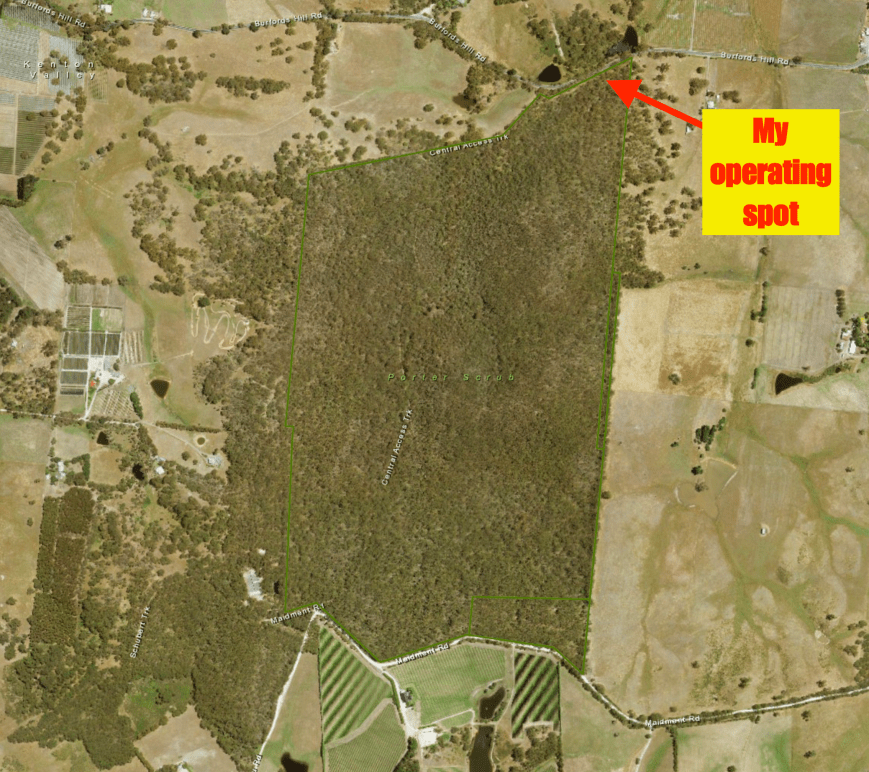
Screen Shot 2017-10-03 at 9.47.38 pm.png

Above:- Aerial view of the park, showing my operating spot in the north eastern corner.  Image courtesy of Location SA Map Viewer.

I headed to my normal operating frequency on 40m, 7.144, and found Adam VK2YK there, calling CQ from the Medowie State Conservation Area VKFF-1349.  It was a great way to start the activation with a Park to Park contact.  I then moved down to 7.139 and asked if the frequency was in use.  Peter VK3PF came back to advise it was free.  Peter had followed me down from 7.144.  I then logged regular park hunter Rick VK4RF/VK4HA, followed by Geoff VK3SQ and then Mike VK3ZMD.

The band was in quite good condition, with good signals coming in from VK2, VK3 and VK4.  What was evident, was that close in propagation was not great again, with just Andrew VK5 mobile at Roxy Downs in the north of the State, and Greg VK5GJ at Meadows, making my log.  My wife Marija VK5FMAZ had sent me a text to advise that I was unreadable at our home QTH of Mount Barker, about 30 km to the south of the park.

I logged a total of 32 stations on 40m including another Park to Park, with Bill VK4FW/p in the Cherbourg National Park VKFF-0669.  I then lowered the squid pole and inserted the links for 40m, and headed to 3.610.  The first station in the log there was Greg VK5GJ, followed by Mike VK5FMWW and then Marija VK5FMAZ.  It was still bright sunshine, but the 80m band was working well, with 7 stations logged, including Mick VK3GGG/VK3PMG in western Victoria.

I then moved over to the 20m band hoping to log some European stations.  Long path to Europe on 20m has been quite good the past few weeks, so I was hopeful that I might be able to work a little bit of DX, despite the antenna not being ideal.  My first station logged on 20m was Luciano I5FLN in Italy, followed by Hans VK6XN in Western Australia, and then Michele IZ8EFD in Italy.  I ended up logging a total of 13 stations on 20m from Italy, VK6, Japan, Switzerland, Germany, Poland, VK4, and New Zealand.  It was quite difficult at times, with the Over the Horizon Radar belting away in the background.

I had seen Andrew VK1AD spotted, on a SOTA peak on 14.315, so when things slowed down a little, I headed there, but could not hear a peep from Andrew.  So I moved back to the 40m band and called CQ on 7.130.  Peter VK3ZPF responded to my call, followed by Keith VK3FMKE, and then Sergio VK3SFG.  I logged a total of 32 stations from VK2, VK3, VK4, VK5, VK6, and VK7.  This included a difficult Park to Park contact with Nigel Vk5NIG/p who was in the Cobbler Creek Recreation Park VKFF-1699.  I initially could not pull Nigel through, who was running just 2 watts, but eventually we got there.  Many thanks to those who were waiting and also thanks for nobody relaying, which would have made the contact void.  It was also nice to have a bit of a chat with Jim VK2QA, and also Glen VK3GMC who had his 7 year old grandson Kai in the shack.

It was now 7.30 p.m. and I decided to try 80m again.  I started off on 3.610, but unfortunately a Net commenced on 3.609 whilst I was speaking with stations, and they were not going to move for anyone.  So I decided it just wasn’t worth the grief, and QSY’d to 3.600.  I logged 11 stations this time on 80m from VK2, VK3, VK5, and VK7.  The strongest station worked was Nev in the Mid North of South Australia, who was 5/9 plus.

To finish off the activation I moved back to 40m and booked in to the 7130 DX Net.  Sadly there wasn’t much DX around and I logged just 3 stations: Peter VK7PRN, George VK4GSF and Marcus VK2SK.  The temperature had dramatically dropped down to 8 deg C and I decided it was time ‘to pull stumps’ and head home.

It had been a terrific activation, with a total of 98 contacts in the log.  Just 2 short of a century.

I worked the following stations on 40m SSB:-

  1. VK2YK/p (Medowie State Conservation Area VKFF-1349)
  2. VK3PF
  3. VK4RF
  4. VK4HA
  5. VK3SQ
  6. VK3ZMD
  7. VK2HHA
  8. VK3OHM
  9. VK2NP
  10. VK3UH
  11. VK3VGB
  12. VK3TKK
  13. VK3FCMC
  14. VK4TJ
  15. VK4HNS
  16. VK4XAC
  17. VK4VCO/m
  18. VK3GGG
  19. VK3PMG
  20. VK2UH
  21. VK3MDH/m
  22. VK3CM
  23. VK3MJR
  24. VK3VIN
  25. VK3FRJD
  26. VK3NSC
  27. VK2PKT
  28. VK5MR/m
  29. VK3KMA
  30. VK2KYO
  31. VK4FW/p (Cherbourg National Park VKFF-0669)
  32. VK5GJ
  33. VK3ZPF
  34. VK3FMKE
  35. VK3SFG
  36. VK4SMA
  37. VK2YK
  38. VK2IO/m
  39. VK6XN
  40. VK2NED
  41. VK5NIG/p (Cobbler Creek Recreation Park VKFF-1699)
  42. VK3HK
  43. VK2NP
  44. VK3BBB
  45. VK3FSPG
  46. VK3MPR
  47. VK4FDJL
  48. VK3MDH
  49. VK7KEV
  50. VK3NLK
  51. VK3FLJD
  52. VK3RU
  53. VK7JN
  54. VK7KW
  55. VK4OY
  56. VK3FNQS
  57. VK2QA
  58. VK3EXA
  59. VK3GMC
  60. VK7FRJG
  61. VK2MMM
  62. VK6MAC
  63. VK6RZ
  64. ZL2ASH
  65. VK7PRN
  66. VK4GSF
  67. VK2SK

I worked the following stations on 80m SSB:-

  1. VK5GJ
  2. VK5FMWW
  3. VK5FMAZ
  4. VK3GGG
  5. VK3PMG
  6. VK5FANA
  7. VK5NRG
  8. VK2FENG
  9. VK3ARH
  10. VK2NP
  11. VK3PKY
  12. VK3KIX
  13. VK3BSP
  14. VK3FLJD
  15. VK2YK
  16. VK5WG
  17. VK7ALH
  18. VK7NWT

I worked the following stations on 20m SSB:-

  1. I5FLN
  2. VK6XN
  3. IZ8EFD
  4. IZ8DFO
  5. JA1VRY
  6. IZ8GNR
  7. IW1GGR
  8. HB9FBG
  9. DK0EE
  10. SP2AND
  11. VK6MSC
  12. VK4MAC
  13. ZL2AJ


References.

Birds SA, 2017, <http://www.birdssa.asn.au/location/porter-scrub-conservation-park/&gt;, viewed 4th October 2017
Department for Environment and Heritage, 2007, Porter Scrub Conservation Park Management Plan.

Sandy Creek Conservation Park 5CP-204 and VKFF-0933

Today (Sunday 1st October 2017) my wife Marija VK5FMAZ/p and I packed the Toyota Hi Lux and headed towards the southern Barossa Valley with a view to activating the Sandy Creek Conservation Park 5CP-204 & VKFF-0933.

This was to be a new park for Marija for the World Wide Flora and Fauna (WWFF) program, and also the VK5 National & Conservation  Parks Award.

Screen Shot 2017-10-01 at 7.44.51 pm.png

Above:- Map showing the location of the Sandy Creek Conservation Park north-east of Adelaide.  Map courtesy of Location SA Map Viewer.

The Sandy Creek Conservation Park is 158 hectares in size and is situated between the towns of Sandy Creek and Lyndoch in the southern Barossa Valley, the world famous wine growing region.  Section 72 Hundred of Barossa was proclaimed as a Wildlife-Reserve on the 7th October 1965.  Sections 317 and 319 were added on 25th May 1967 as a National Park.   It was re-proclaimed as Sandy Creek Conservation Park on 27th April 1972.   On 11th April 1991, Allotment 10 was added, with Allotment 50 also added on the 8th September 1994 and Allotment 202 on 19th January 2006.

The following habitats can be found within the park:  

  • Peppermint Box and Pink Gum, Dry Sclerophyll Low Woodland over Golden Wattle.
  • Peppermint Box and Mallee Box Low Woodland over Common Fringe-myrtle and Flame Heath 
  • Pink Gum and Southern Cypress Pine and Drooping Sheoak Low Woodland over Common Fringe-myrtle and Flame Heath  

The park is one of the few remaining tracts of undisturbed and undeveloped native bushland in the Barossa Valley.  It is surrounded by cleared land for farming purposes and vineyards.  A quarry is also located on the eastern side of the park.

DSC_8179

Above:- Cleared farming land on the northern side of the park.

During the first half of the 1900’s much of the Sandy Creek Conservation Park was cleared and planted with vines.  The vineyards were subsequently abandoned due to low soil fertility.  Sections of the park were named after life-long ornithologists and conservationists, Cecil Rix and Mark Bonnin who identified many native bird species in the area.  The Sir Keith Wilson section of the park was a gift from the Wilson family and the Nature Foundation of SA Inc.

Screen Shot 2017-10-01 at 9.00.14 pm

Above:- Sir Keith Wilson.  c/o Trove

Today, regenerating cleared land and the ruins of a small hut, built in 1918 from locally quarried stone and native pine, remain in the park.  In addition, an abandoned vineyard in the southern section contains grasses that provide important habitat for birds such as the grass-dwelling stubble quail.

During our visit to the park a number of the native plants were in flower.

Over 145 native bird species have been recorded in the park including Peaceful Dove, Common Bronzewing, Superb Fairywren, Yellow-rumped Thornbill, Yellow Thornbill, Black-winged Currawong, Willie Wagtail, Diamond Dove, Brush Bronzewing, Australian Owlet-nightjar, Chestnut-rumped Thornbill, White-winged Triller, and Zebra Finch.

The park is home to a number of native animals including Western Grey kangaroos and Short beaked echidnas.  The Eastern Bearded dragon and Marbled Gecko can be found in the park.

For more information on the park, check out the website of the Friends of Sandy Creek Conservation Park, which can be found at….

http://www.cockatoovalley.com/scfriends/

Sandy Creek

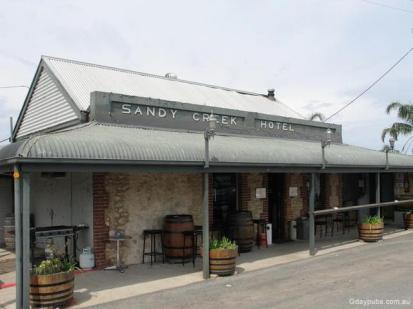
The park is located a few km from the little town of Sandy Creek which has a population of around 450.  The Sandy Creek Hotel, which was opened in 1867, is best known for the prodigious amounts of alcohol served during World War II to the US soldiers who had a camp close by.  It is believed the pub still holds the South Australian record for the greatest amount of beer served in a single week.   This was set, unsurprisingly, after the announcement of the ceasefire at the end of World War II.

pub_55921.jpg

Above:- The Sandy Creek Hotel.  c/o G’day Pubs.

McLeod’s Daughters, an Australian soap opera, was filmed locally and much of the filming was done on location using the local farms and dirt roads as background.

1200x630bb.jpg

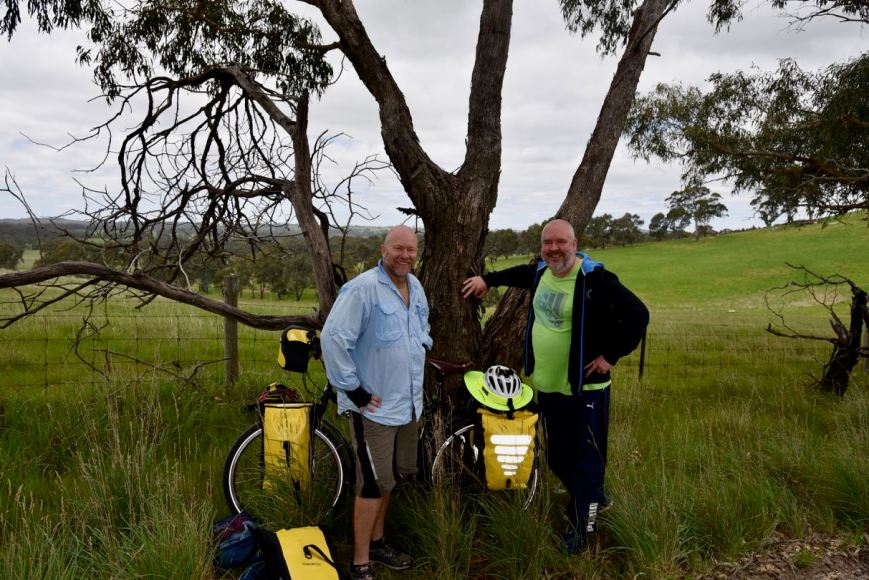
Prior to heading to the park, Marija and I headed to the Birdwood/Cromer area and met up with Chris VK5FR.  Chris is cycling the entire length of the Mawson Trail, which stretches some 900km through the Adelaide Hills and on to the Flinders Ranges.  We tracked Chris’ progress on his GPS tracker and met him on Black Snake Road.  Chris offloaded his amateur radio gear to us, along with his drone.  Chris decided that he was going to concentrate on completing the Trail and the ham gear was a little too heavy to continue to carry.  We both wish Chris all the very best and will be providing further assistance to Chris if and when required.

You can track the progress of Chris via the following (the password is vk5fr)…….

https://share.findmespot.com/shared/faces/viewspots.jsp?glId=1Rep6cPUFdfzsmXl0By86ZQZzWXrEA0PQ

DSC_8171

Above:- Chris VK5FR (left) and Paul VK5PAS (right).

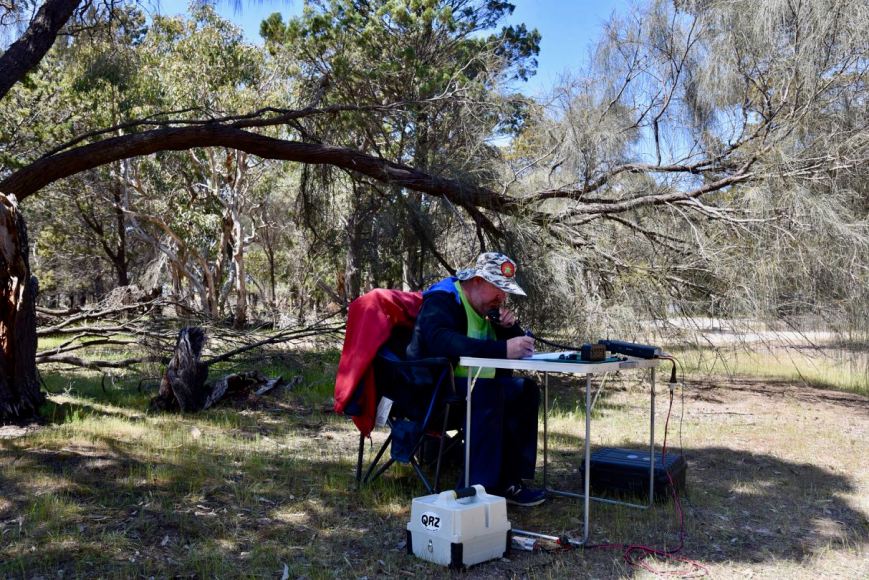
After meeting up with Chris, Marija and I then travelled to Lyndoch and into the beautiful winegrowing region of the Barossa Valley.  We then travelled along the Barossa Valley Way towards the town of Sandy Creek and then turned down Conservation Park Road and into the northern section of the park.  We set up in the Cecil Rix section of the park.  As it was a warm sunny day we seeked out the shade of some trees.

We ran the Yaesu FT-857d, set at 10 watts PEP for Marija, and 40 watts for me, and the 80/40/20m linked dipole, inverted vee on the top of the 7 metre heavy duty telescopic squid pole.

Screen Shot 2017-10-01 at 7.44.36 pm.png

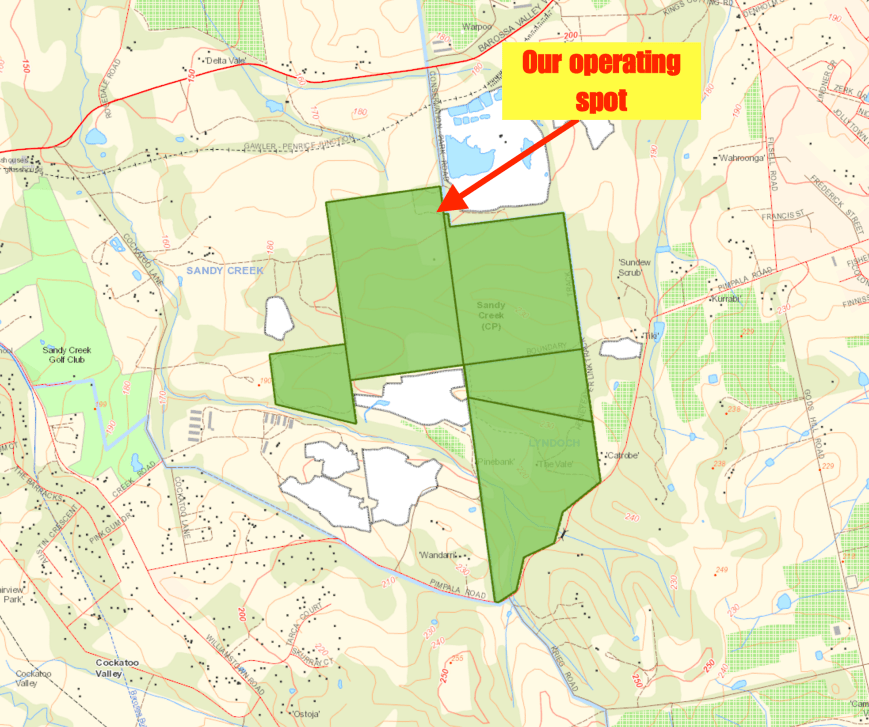
Above:- Map of the park showing our operating spot in the northern section.  Map courtesy of Location SA Map Viewer.

As I had been to the park previously and had qualified the park, Marija kicked off the activation.  We headed to 7.144 and found Mark VK4SMA there, calling CQ from the Mount Perry Conservation Park VKFF-1609.  Mark’s signal was quite low down, but as we had no man made noise on the band from either park, we were able to work each other very comfortably.  I would not have been able to work Mark from home due to my noise floor.  It was a nice way to start the activation, with a Park to Park for each of us in the log.

Marija then went down to 7.139 and called CQ.  This was answered by Geoff VK3SQ, followed by Brendon VK7VIP and then John VK4TJ.  Marija soon had contact number 10 in the log, thus qualifying the park for the VKFF program which requires to contacts for the park to be qualified.  Contact number 10 was with Steve VK3FSPG.

Conditions on the 40m band were average, with quite a bit of fading (QSB) noted on signals from Victoria (VK3).  There were also long periods of calling CQ with no takers.  Marija soldiered on and logged 14 stations on 7.139, including another Park to Park, this time with Peter VK3PF/p, who was in the Sweetwater Creek Nature Conservation Reserve VKFF-2200.  I also logged Peter, Park to Park. 

I then jumped into the ‘driver’s seat’ and called CQ, with Michael VK3MDH mobile coming back to my call, followed by Michael VK3MHY and then Marc VK3OHM.  I logged 14 stations before callers slowed down, which gave Marija and I the opportunity of tuning across the band to see if we could find some more park activators.  We did, hearing Rob VK4AAC/p calling CQ on 7.150 from the Samford Conservation Park VKFF-1639.  Again, Rob’s signal was very low and we were experiencing some QRM from some New Zealand (ZL) stations on the same frequency, but we comfortably made it.

I then headed back to 7.139 where I logged a further 7 stations whilst Marija had her lunch and also chatted with some bushwalkers in the park, explaining the hobby of amateur radio to them.

DSC_8186

I then took a break for lunch, whilst Marija called CQ on 3.615 on the 80m band.  Marija’s first contact on 80m was a Park to Park contact with Peter VK3PF/p in the Sweetwater Creek Nature Conservation Reserve VKFF-2200.  This was followed by contacts with Ivan VK5HS in the Riverland, Stuart VK5STU in the norther eastern suburbs of Adelaide, Adrian VK5FANA on the Yorke Peninsula, and Tony VK5MRT at Strathalbyn south east of Adelaide.

Marija then went back to 40m and called CQ on 7.144 which was answered by Peter VK3ZPF, followed by Mike VK3KMH and then Rick VK4RF/VK4HA, whilst I took a bit of a walk through the park.  Marija logged a total of 29 stations on 7.144 from VK2, VK3, VK4, and VK7.  This also included a few more Park to Park contacts.  The first being with Norm VK3XCI/2 who was in the Warrumbungle National Park VKFF-0520.  Then Nick VK3ANL/p who was in the Greswell Hill Nature Conservation Reserve VKFF-2104.  Then Wolfgang who was in the Blue Mountains National Park VKFF-0041 and finally Peter VK3PF/p who had moved parks and was now in the Bull Beef Creek Nature Conservation Reserve VKFF-2055.

DSC_8230

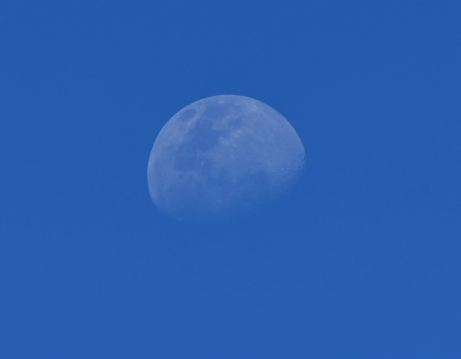
Above:- the moon was out in the beautiful sunny blue sky above Sandy Creek

Marija had successsfully qualified the park for the WWFF global program with a total of 50 stations in her log.  Contact number 44 was with Mike VK3ZMD.

I quickly jumped back on to 40m and logged a handful of stations, before heading to 14.310 on the 20m band.  Anthony VK6MAC was first in the log there, followed by Bill VK4FW and then Brendon VK4MAC.  I was then called by a Ukrainian station, but sadly it was an unsuccessful contact.  But then much to my surprise I was called by Rod YJ8RN/p on Loh Island, Vanuatu in the Pacific.  It was great to log Rod who is a former South Australian.

To complete the activation we erected the 15m dipole and I called CQ on 21.250 for about 10 minutes with no callers, despite self spotting on parksnpeaks.

Marija and I packed up and then went for a short walk through the park, enjoying the afternoon sun and the many kangaroos that call the park home.

Together, Marija and I made a total of 81 QSOs including 12 Park to Park contacts.

We also enjoyed a number of good conversations with bushwalkers during this activation, explaining to them the hobby of amateur radio and the parks programs.  Park activating is often a great way of interacting with the public and an opportunity to promote the hobby.

Marija worked the following stations on 40m SSB:-

  1. VK4SMA/p (Mount Perry Conservation Park VKFF-1609)
  2. VK3SQ
  3. VK3VIP
  4. VK4TJ
  5. VK2HHA
  6. VK2QK
  7. VK7JON
  8. VK3SFG
  9. VK7FOLK
  10. VK3FSPG
  11. VK3MPR
  12. VK3OHM
  13. VK4HNS
  14. VK3PF/p (Sweetwater Creek Nature Conservation Reserve VKFF-2200)
  15. VK7ME
  16. VK4AAC/p (Samford Conservation Park VKFF-1639)
  17. VK3ZPF
  18. VK3KMH
  19. VK4RF
  20. VK4HA
  21. VK3FRAB
  22. VK2LL
  23. VK3XCI/2 (Warrumbungle National Park VKFF-0520)
  24. VK3MRH
  25. VK3ANL/p (Greswell Hill Nature Conservation Reserve VKFF-2104)
  26. VK3FMKE
  27. VK7NWT
  28. VK3FAHJ
  29. VK3MDH/m
  30. VK2LKW/p (Blue Mountains National Park VKFF-0041)
  31. VK3JP
  32. VK3PYE
  33. VK3FAHS/p
  34. VK3PAT
  35. VK3PWG
  36. VK2VW
  37. VK7DX
  38. VK3CSL
  39. VK3ZMD
  40. VK3PF/p (Bull Beef Creek Nature Conservation Reserve VKFF-2055)
  41. VK3FLJD
  42. VK3ZTR
  43. VK2HEY
  44. VK2LEE
  45. VK2HHS/4

Marija worked the following stations on 80m SSB:-

  1. VK3PF/p (Sweetwater Creek Nature Conservation Reserve VKFF-2200)
  2. VK5HS
  3. VK5STU
  4. VK5FANA
  5. VK5MRT

I worked the following stations on 40m SSB:-

  1. VK4SMA/p (Mount Perry Conservation Park VKFF-1609)
  2. VK3PF/p (Sweetwater Creek Nature Conservation Reserve VKFF-2200)
  3. VK3MDH/m
  4. VK3MHY
  5. VK3OHM
  6. VK3FSPG
  7. VK3MPR
  8. VK5WAT/3
  9. VK3MRH
  10. VK3BBB
  11. VK5LG
  12. VK2NP
  13. VK3SFG
  14. VK4HNS
  15. VK4AAC/p (Samford Conservation Park VKFF-1639)
  16. VK4TJ
  17. VK3BNJ
  18. VK3FLJD
  19. VK3PWG
  20. VK3VGB
  21. VK2GKA
  22. VK5MR
  23. VK3ANL/p (Greswell Hill Nature Conservation Reserve VKFF-2104)
  24. VK3PF/p (Bull Beef Creek Nature Conservation Reserve VKFF-2055)
  25. VK4FDJL
  26. VK3ZTR
  27. VK5MRE

I worked the following stations on 20m SSB:-

  1. VK6MAC
  2. VK4FW
  3. VK4MAC
  4. YJ8RN/p


References.

Birds SA, 2017, <http://www.birdssa.asn.au/location/sandy-creek-conservation-park/&gt;, viewed 1st October 2017

Department of Environment and Natural Resources, 2010, ‘Sandy Creek Conservation Park’

Wikipedia, 2017, <https://en.wikipedia.org/wiki/Sandy_Creek,_South_Australia&gt;, viewed 1st October 2017