WorldWide Flora and Fauna (WWFF)

This blog is just a quick reminder to all about the…..

World Wide Flora & Fauna (WWFF) program.

The WWFF program encourages portable operation from designated nature parks and protected nature areas around the world.  There are currently 39 participating countries in the WWFF program, in Europe, North America, South America, Africa, Asia, & Oceania.

Logo WWFF 9xa1_2a copy

The WWFF program commenced in late 2012, after being re-named and ‘rebadged’.  It was previously known as World Flora Fauna (WFF).  The Australian (VKFF) program commenced in March, 2013.  I am the Australian co-ordinator.

In Australia, the qualifying areas for WWFF are National Parks.  There are currently over 730 National Parks recorded on the Australian (VKFF) list, so there is certainly no shortage of available parks here in Australia.  Over 100  parks were added to the VKFF list earlier this year.  These parks had initially been left off the original list compiled at the commencement of the WFF program.
Slide1 copy

More information on the WWFF program can be located at the WWFF global website at…..

http://www.wwff.co

And for information on the Australian (VKFF) program, please have a look at…..

http://www.wwffaustralia.com

What parks can you activate in Australia?

As mentioned, qualifying parks in Australia are National Parks.  You can view a list of all qualifying Australian National Parks on the VKFF website mentioned above.  You can also download a list from there as well.  Or you can download the entire WWFF Directory from the global WWFF website.  This will show you all qualifying parks around the world.

Please note, that only Australian National Parks established and gazetted before 2008 qualify at this stage.  As more parks are activated, I will be allowed to add the newly established parks.

What do you need to do to qualify a park?

There are two distinct areas in WWFF.  They are the global rules and awards system, and then there is the relevant National rules and awards system.

Why two systems?  Some countries do not have National representation.  However, this does not preclude amateurs from activating designated parks that appear in the WWFF Directory, that are located in those countries.  So in those instances the global WWFF rules and apply.  Basically this means that you require 44 QSOs over a 2 hour operating period.  This can be accumulative.  The WWFF global council, of which I am on, offer WWFF global awards.

However, some countries have National representation and have their own National rules and offer their own National awards.  This is the case with the Australian (VKFF) program.  To qualify an Australian National Park for the VKFF program, you only need 10 QSOs over a 30 minute activation period.  Again, this can be accumulated.

Sof if you are lucky enough to operate for 2 hours (includes establishing the station) and get your 44 + QSOs, then not only have you qualified the park under the global rules, but you have certainly well and truly activated the park under the VKFF rules.  The bonus is that you are well on your way to at least 2 different award certificates…a global one, and also a VKFF National certificate.

So once you’ve activated a qualifying National Park, what do you need to do?

You need to send me a copy of your activator log in either ADIF format or by using the csv file template (mentioned below).  The log will then be uploaded to the WWFF LogSearch.  Please send the log to my email address at…..

simmopa@iprimus.com.au

What do you need to do as a park Hunter?

The answer is nothing.  Unlike some other programs, you do not need to have anything uploaded to LogSearch if you are a Hunter.

So what is LogSearch?

A pivotal part of the WWFF program is the LogSearch facility, which enables activators to have their logs uploaded electronically by WWFF National co-ordinators.  Through LogSearch, WWFF Activators and Hunters can view their progress in the WWFF program, and apply for awards on line.

banner

There are currently 3,890,424 QSOs in the LogSearch database, from 5,255 different references in 80 DXCCs.  It is a big data base!

LogSearch can be found at…..

http://logsearch.wwff.co/index.php

For more information on LogSearch and its features, you will find a file in the FILES section of the WWFF Australia Yahoo group.  The file is called ‘What is WWFF LogSearch?’ which I compiled on 27th March, 2014.  It explains LogSearch in full and is a good reference.

How do I send a log?

I need an ADIF file of your activation.

Or you can send your activation log to me as a csv file.

Option 1.  ADIF.

ADIF stands for Amateur Data Interchange Format.  ADIF is an open standard for exchange of data between ham radio software packages available from different vendors.

If you submit an ADIF file for upload to the LogSearch facility, please see the required information below…..

Required

o DATE
o BAND
o MODE
o CALL Hunter call-sign

Optional

o TIME_ON Not used
o STATION_CALLSIGN Activator station call-sign used on the air
o OPERATOR Activator operator’s personal home-call
o MY_SIG Reference eg VKFF-xxx

Option 2.  csv file

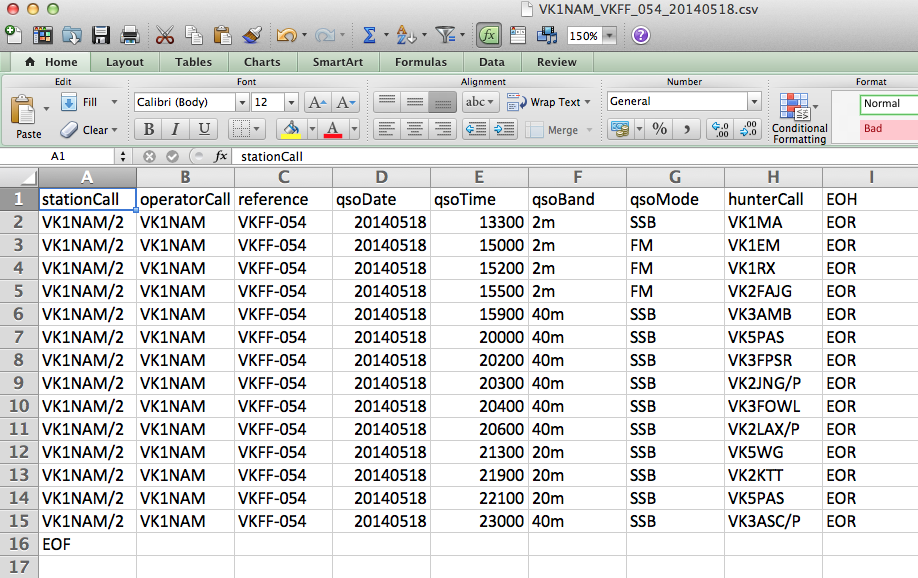
If you do not run an electronic log, then the second option is to send me a csv file (comma-separated value, or sometimes called character-separated value).  All csv files are supported by all spreadsheet programs such as Excel, OpenOffice, Google Docs spreadsheets, etc.

Andrew 2E0GFF (formerly M6ADB) has placed a template Excel file in the FILES section of the WWFF Australia Yahoo group, that can be used to submit for LogSearch.  It needs to be saved as a csv file prior to sending it to me for upload.  A single log file can be used for multiple activities/references!

You may see some abbreviations in the Excel file.

EOH = End of Header

EOR = End of Row

EOF = End of File.
Screenshot 2014-06-23 17.00.53


WWFF global awards.

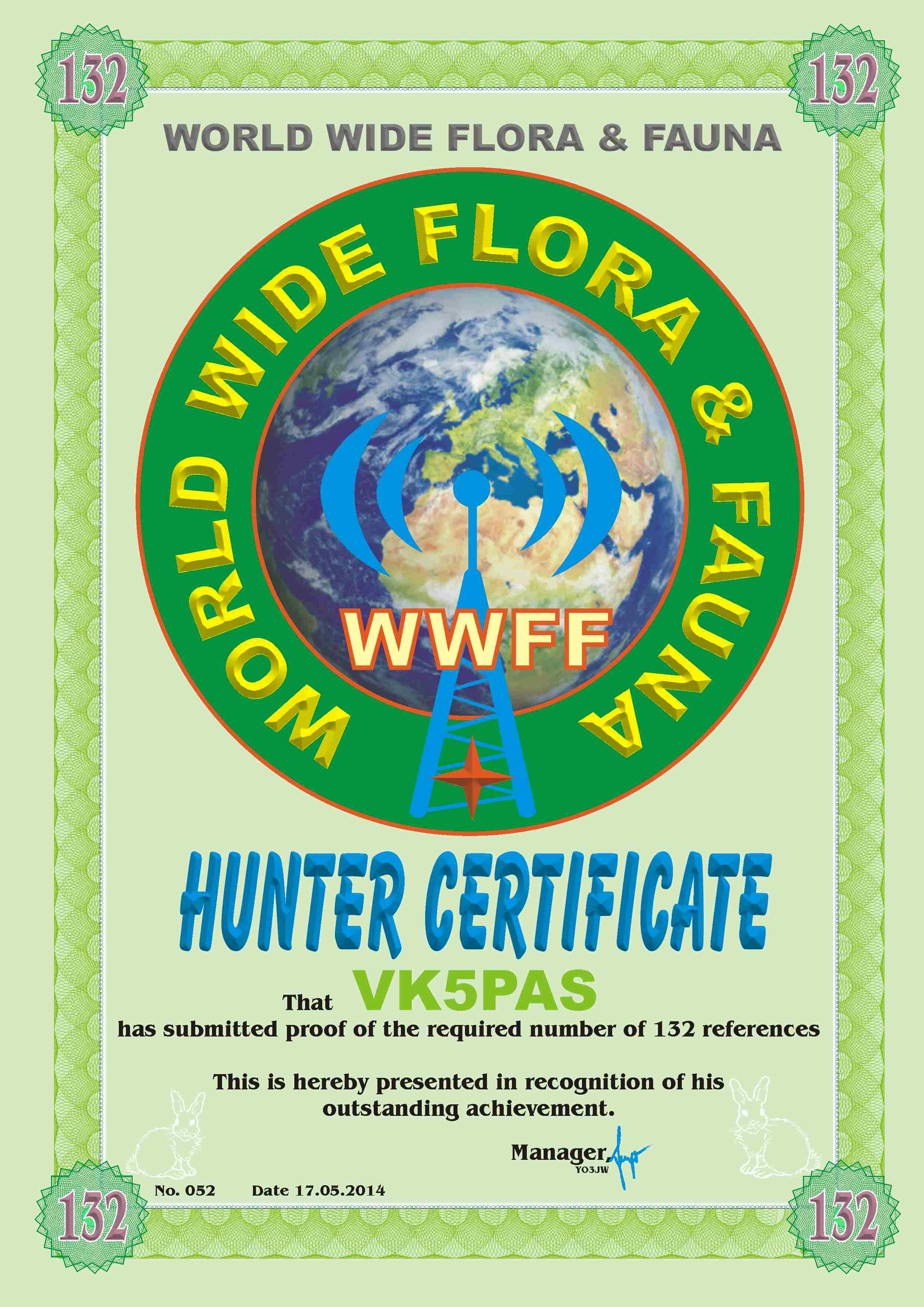
As mentioned, the WWFF global council offers ‘global’ awards.  These are available for FREE as a PDF files via the WWFF LogSearch facility.  For more information on these awards, please see the WWFF global website.
H 132 VK5PAS 2014 532

The WWFF global team have also recently initiated some new awards and there are others on the drawing board.  Again, further information on these awards can be found on the website.

Other National awards.

The participating National programs in WWFF also maintain various national award programs for hunters and activators.  For details on these, please check out the ‘WWFF National Awards’ page on the WWFF global website.
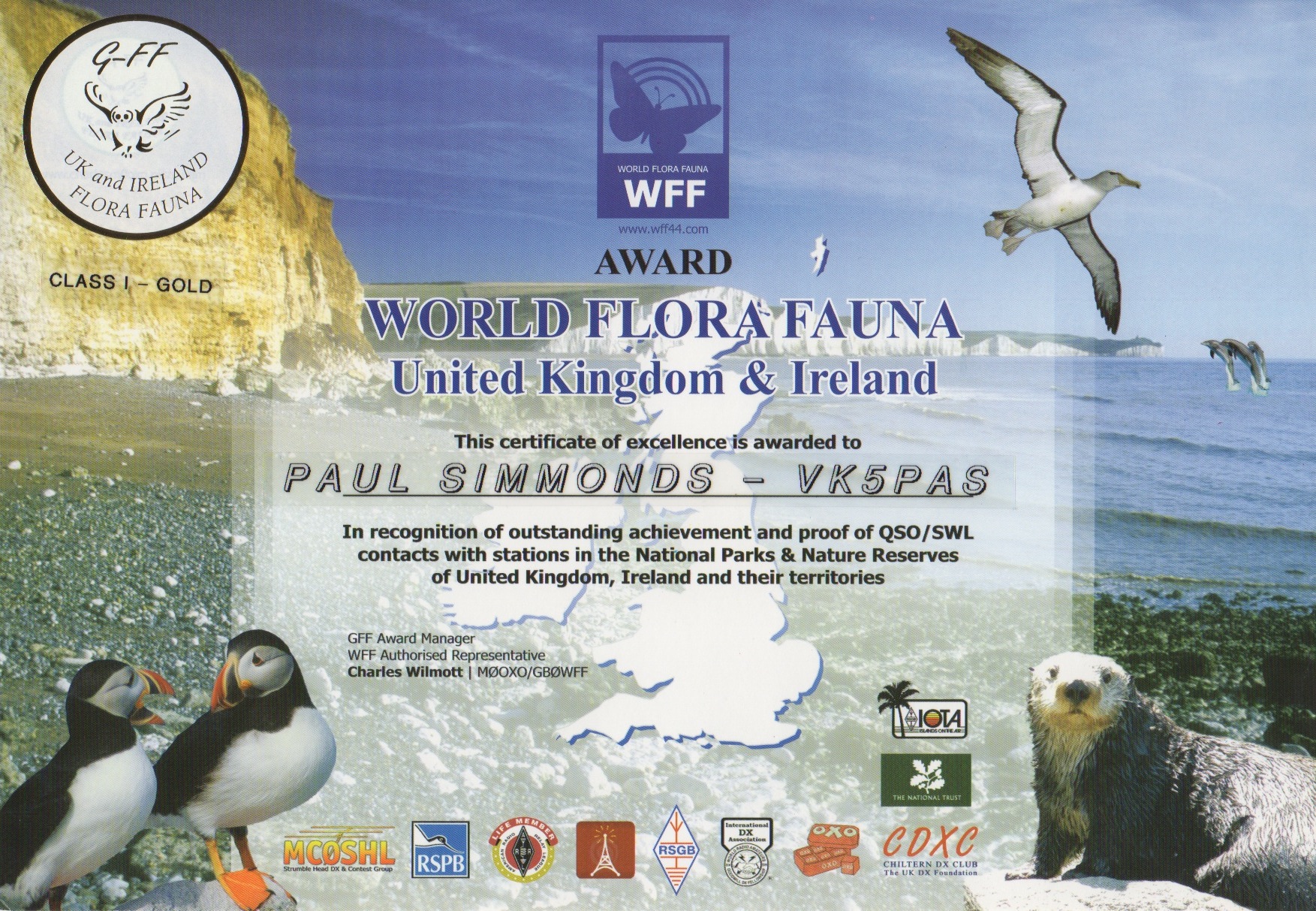
WFF UK Gold Award

VKFF Awards

The Australian (VKFF) program also offers their own special certificates.  For Activators and Hunters there are five levels:

  1. Bronze (10 different VKFF areas)
  2. Silver (20 different VKFF areas)
  3. Gold (30 different VKFF areas)
  4. Platinum (40 different VKFF areas)
  5. Diamond (50 different VKFF areas).

The certificates can be applied for online via LogSearch and are sent for FREE as a PDF.  Or if you do not have a printer, I can print the certificate and mail it to you at a coast of $5.00.  The certificates are printed on A4 high quality photo paper on my Epson Artisan 730 printer.
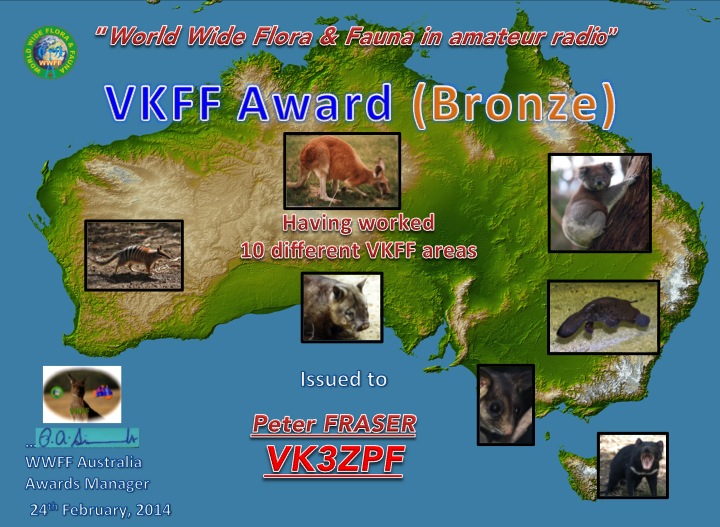
Slide1

I have also just recently introduced the VKFF DX Hunter award and the VKFF Worked All Australia award.  More details on these two new awards can be found on the WWFF Australia website.

Thankyou.

I would like to say thank you to two active VK1 amateurs: Andrew VK1NAM and Ian VK1DI, for their efforts in promoting the WWFF program.

Andrew has been regularly submitting his logs to me for upload to LogSearch, and has also mentioned the WWFF / VKFF program a number of times on this WordPress site…..

http://vk1nam.wordpress.com

Ian has also been regularly submitting his logs and has also mentioned WWFF / VKFF a number of times on his blog.  Ian has also done some excellent work with mapping all of the VKFF reference areas.   These files can be downloaded from the FILES section of the WWFF Australia Yahoo group.

http://vk1di.blogspot.com.au

And also to two active VK3 amateurs: Tony VK3VTH, and Peter VK3ZPF, who have both been busy activating VKFF parks in Victoria, and working lots of DX along the way.  Both have regularly supplied their logs and their tallies on LogSearch are looking very healthy.

And there are many other Australian amateurs who have now embraced VKFF activations.  Thanks to all.

Summary.

So there you go.  If you would like to combine your love for great outdoors and enjoy travelling to beautiful locations around Australia, whilst combining the hobby of amateur radio.  Then WWFF may be for you.

Many SOTA peaks are located within National Parks.  Mapping files & spreadsheets showing a correlation between peaks and parks can be located in the Files section of the WWFF Australia Yahoo group at…..

https://au.groups.yahoo.com/neo/groups/wwffaustralia/info

Additionally, you can combine WWFF with the Keith Roget Memorial National Parks Award and the VK5 National and Conservation Parks Award.

Happy park activating and hunting!
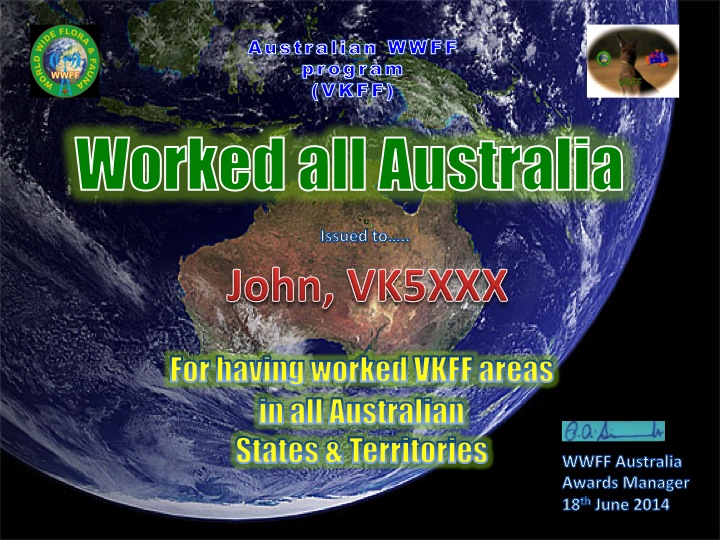
New VKFF Worked All Australia certificate

Other than the recent VKFF DX Hunter award, I have also introduced the following VKFF award…..

VKFF Worked All Australia.

The certificate is issued to amateurs around the world who make contact with VKFF areas in all Australian States and Territories.

There will also be an equivalent VKFF Activated All Australia certificate on offer.

Worked All Australia example

The qualifying Australian States and Territories and the minimum number of contacts required by VK operators are as follows…..

  • VK0 (Australian Antarctica, Heard Island, MacQuarie Island) – 2 VKFF areas
  • VK1 (Australian Capital Territory) – 1 VKFF area 
  • VK2 (New South Wales) – 5 VKFF areas
  • VK3 (Victoria) – 5 VKFF areas
  • VK4 (Queensland) – 5 VKFF areas
  • VK5 (South Australia) – 5 VKFF areas
  • VK6 (Western Australia) – 5 VKFF areas
  • VK7 (Tasmania) – 5 VKFF areas
  • VK8 (Northern territory) – 3 VKFF areas
  • VK9 (Christmas Island, Cocos Keeling Islands (includes Pulu Keeling National Park), Rowley Shoals, Lord Howe Island, Willis Islands, Mellish Reef, Norfolk Island) – 2 VKFF areas

That equates to a total of 37 different VKFF areas.  Hard, some of you are saying?  Well maybe not.  Check out the WWFF LogSearch facility and you might be surprised whose log is uploaded there.  I have been chasing down a lot of the DX petitions that have activated VK0 & VK9 locations over the years, and there are many logs recorded there.  So you may be closer than you think.


The qualifying Australian States and territories and the minimum number of contacts required by overseas operators are as follows…..

  • VK0 (Australian Antarctica, Heard Island, MacQuarie Island) – 1 VKFF area.
  • VK1 (Australian Capital Territory) – 1 VKFF area 
  • VK2 (New South Wales) – 2 VKFF areas
  • VK3 (Victoria) – 2 VKFF areas
  • VK4 (Queensland) – 2 VKFF areas
  • VK5 (South Australia) – 2 VKFF areas
  • VK6 (Western Australia) – 2 VKFF areas 
  • VK7 (Tasmania) – 2 VKFF areas
  • VK8 (Northern territory) – 1 VKFF area
  • VK9 (Christmas Island, Cocos Keeling Island, Lord Howe Island, Willis Islands, Mellish Reef, Norfolk Island) – 1 VKFF area

That is 16 different VKFF references for the overseas operators.

New WWFF global award now available.

The World Wide Flora Fauna program (WWFF) are pleased to announce a new WWFF award aimed at activators working from different DXCC entities.  It is the DXFF Activator Award.

The certificates have been designed by Pit YO3JW and has been coded into the WWFF LogSearch award application module by Andrew 2E0GFF.

The certificates are issued in increments of 3.  In other words, activate a WWFF reference area in 3 DXCC entities, 6 DXCC entities, 9 DXCC entities, etc.

This slideshow requires JavaScript.


There are a number of other new WWFF global award certificates under development for both Activators and Hunters.

Keep updated via the WWFF global website at…..

http://www.wwff.co

These new awards will be on top of the WWFF global award certificates already issued, namely the WWFF Activator and WWFF Hunter certificates.

Remember, that these awards are issued by the WWFF global Committee.  They are separate to the National awards on offer by many participating countries in the WWFF program, which includes Australia (VKFF).

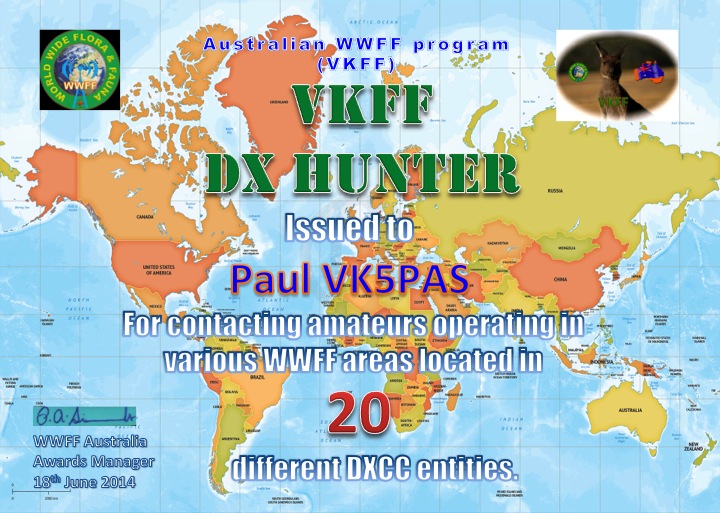
New VKFF DX Hunter certificate

I have started initiating some more certificates for the VKFF program of the World Wide Flora Fauna (WWFF) program.  One of those is the VKFF DX Hunter certificate.

The VKFF DX Hunter certificates will soon be available on-line via the WWFF LogSearch.  As such it will be available for free via a PDF, or I can print it out for you for $5.00 and mail it.  The certificate will be printed on high quality gloss photo paper.

It is issued to Australian amateurs only, for making contact with amateurs operating in various WWFF areas located in different DXCC entities.  The certificates will be issued in increments of 5 DXCC entities.

It is hoped that this award will encourage more Australian operators to make contact with overseas WWFF activators.

VK5PAS VKFF DX Hunter 20

SOTA and balloons

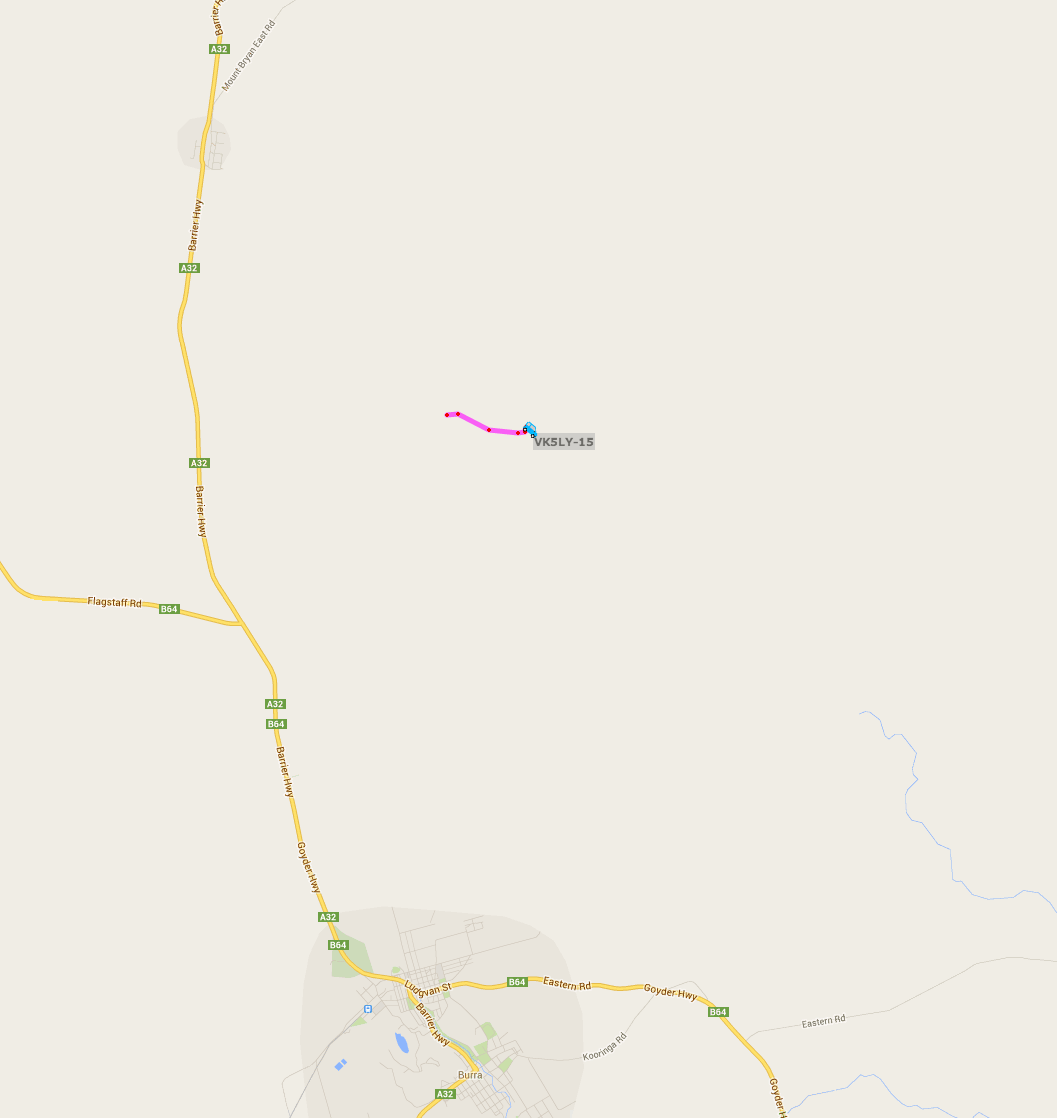
Yesterday, I had a listen for Larry VK5LY and Ian VK5CZ who activated Mount Cone, VK5/ SE-002, in the mid north of South Australia.  They were up there to track the progress of the Wilkins1 balloon and act as a VHF relay station.

Larry and Ian had hoped to activate the summit a lot earlier than they did, but they were held at bay by ‘Hughey’ and had to wait for a break in the weather.  Larry had given me a call and Ian had sent me a few e-mails to advise that the rain was quite heavy and it was blowing a gale.  Not much different to when I activated Mount Cone with Ian last year.  It is a very windy exposed summit, overlooking Burra.

Larry is big into his APRS and he helped me also set up APRS on my tablet.  It was interesting to track Larry’s progress on his way to the summit.  Below is a screen shot of Larry’s progress, parked just down below the summit.  I am going to get my head around APRS, and start using this a lot more often.

Screenshot 2014-06-16 10.12.37

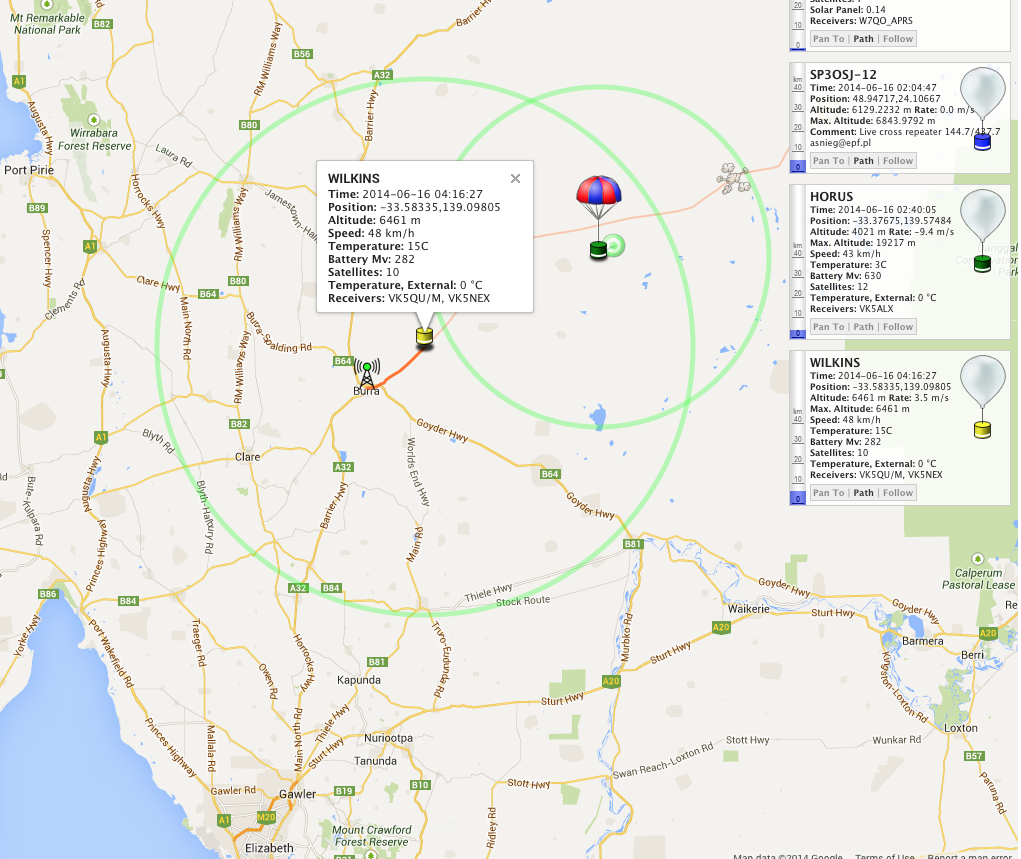
It was also very interesting to track the progress of the Wilkins 1 high altitude balloon which was launched from the Burra Community School as part of the UniSA Connect program.  The ballon was fitted with a high definition camera and tracking system.   The balloon weighs 500 grams.

I tracked the progress of the balloon on…..

http://spacenear.us/tracker/

2

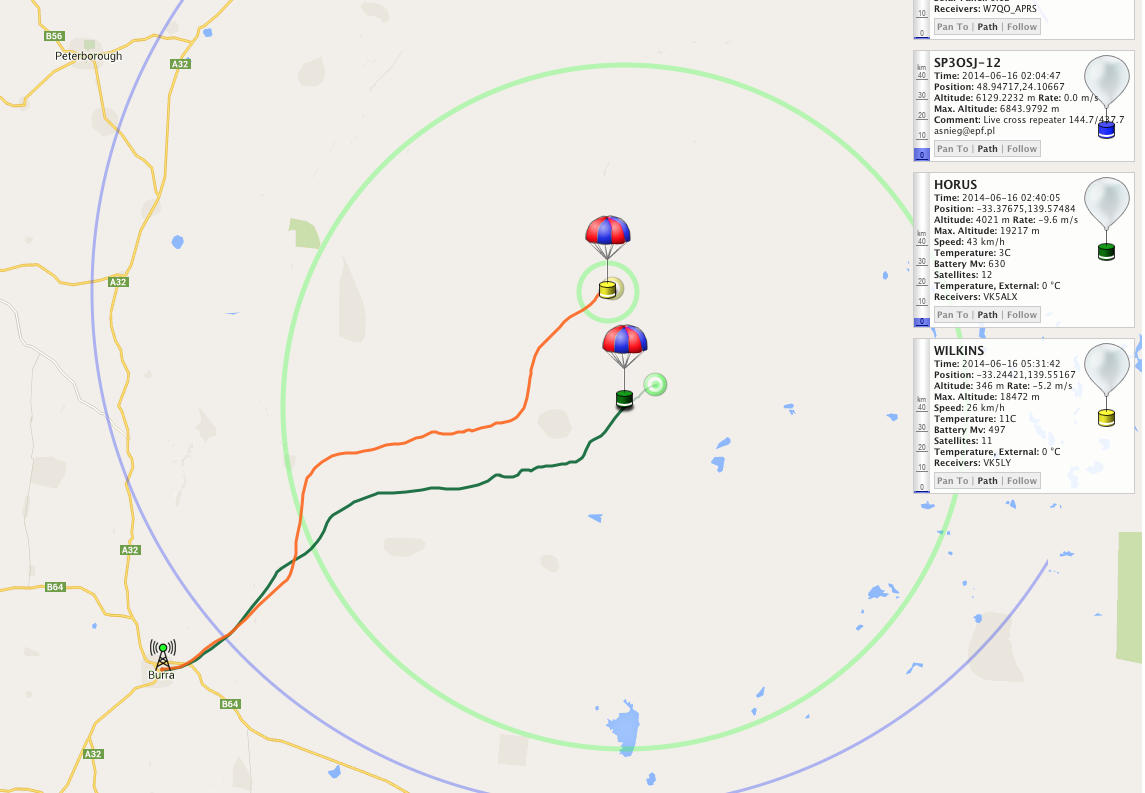
Below is a screen shot showing the flight path of the Horus test balloon which was released first, and then Wilkins 1.

Screenshot 2014-06-16 15.05.11

Click on the link below to view some pictures of this balloon launch…..

https://imgur.com/a/XBs8f

For information on Project Horus, which is a high altitude balloon project based in Adelaide, have a look at…..

http://projecthorus.org

Latest WWFF certificate

Here is my latest certificate for the World Wide Flora Fauna (WWFF) program.  And no that’s not me on the certificate!
This certificate comes from The Romanian Amateur Radio Society and is DXFF.  It is issued for making contact with amateur radio stations from various nature reserves located in 20 different DXCC entities World Wide.

It is an excellent example of how the WWFF system works.  WWFF offers global awards, and then on top of that, many of the National representative countries offer their own awards.  The Romanian Amateur Radio Society being one.

More information on WWFF can be found on the global website at…..

http://www.wwff.co

Or on the Australian (VKFF) website at…..

http://www.wwffaustralia.com

Should you more information on the Romanian DXFF award certificates, here is the link…..

http://wff-yo.blogspot.com.au/2010/06/o-noua-diploma-oferita-de-yoff.html

DXFF 20 VK5PAS 2014 N006 M

My portable antenna/s

I have been sent a few emails in the past few weeks, and asked on air many times about what antennas I use whilst I am out portable.  So here is a short blog about what I use out in the field.

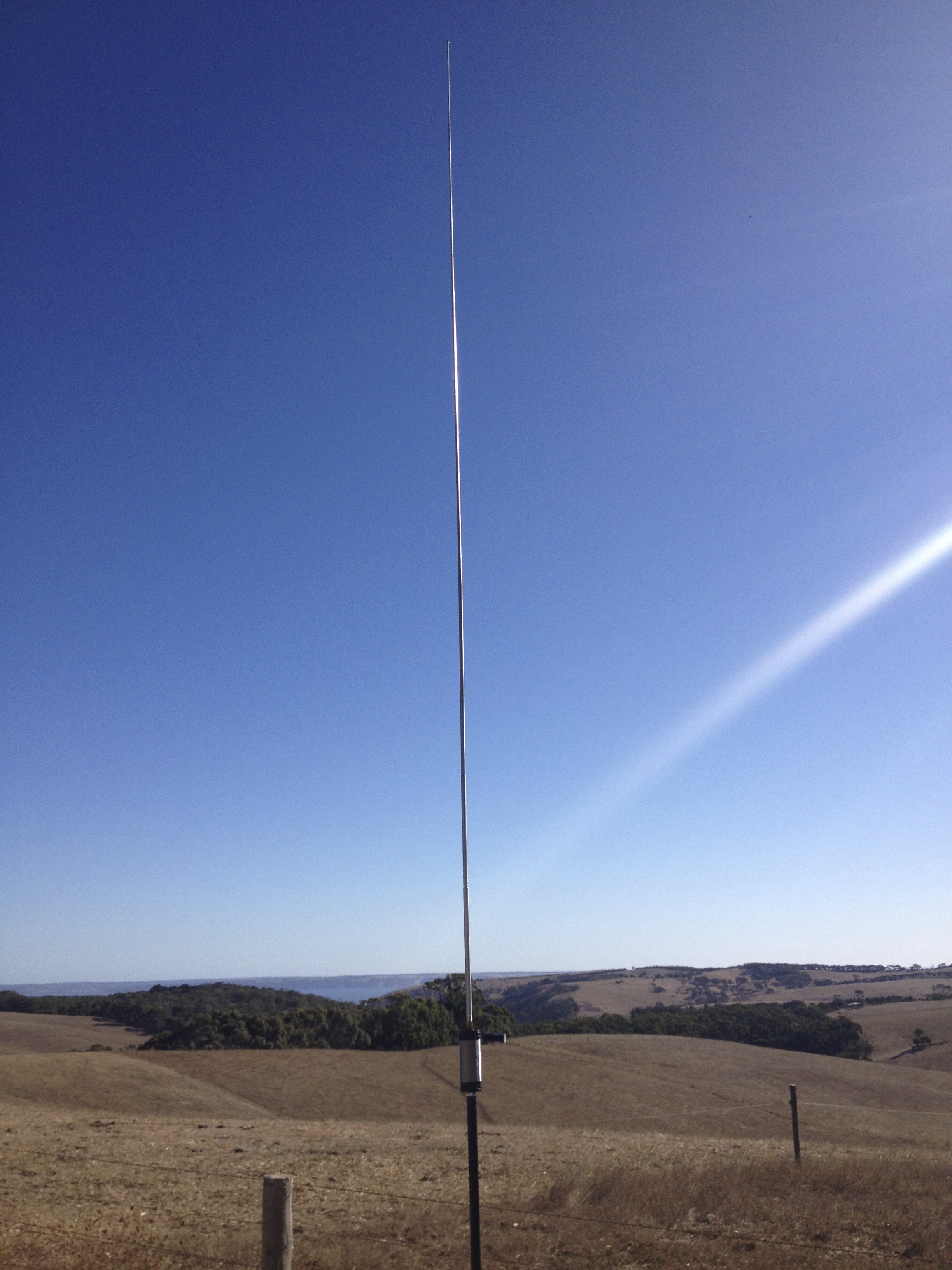
The very first antenna I used on a SOTA activation was a Chinese version of the Buddistick, called the PMSA-12, which has a multi band loading coil.  The antenna comes in a nice fabric bag and its total weight is just 1.4 kg.  The antenna is rated for maximum power of 100 watts and its total set up length is 410 cm.  I purchased this antenna via ebay.

I had heard about this vertical antenna from Marshall VK3MRG who had used it, and continues to use it, with success.

The first time I used this antenna was whilst I was operating portable on VK5/ SE-016 on the Fleurieu Peninsula of South Australia in March 2013.  This was an un-announced activation and my first ever SOTA activation.  In fact it was my first ever portable activation.  I managed to get 7 contacts whilst running the Yaesu FT-817nd and QRP 5 watts.  Signal reports were okay into the eastern states.

IMG_0251

Although the antenna was quick to deploy, I found that the ground radials were a bit of an annoyance and impacted heavily on the VSWR.  I had to use my Rig Expert antenna analyser to get things just right.  So for me it was not the perfect portable antenna which allowed me to get on air quickly.

On my second SOTA operation, this time from Mount Lofty summit, VK5/ SE-005, in March 2013, I again used the vertical.  The vertical performed well, with 14 contacts including 2 QSOs into Western Australia, 1 into Queensland, 1 into Tasmania, and the remaining were in VK5.  Considering I was running QRP, just 5 watts, the signal reports were very good.  But again, getting the radials just right was an annoyance.

This slideshow requires JavaScript.

On my third SOTA activation at Mount Gawler, VK5/ SE-013, in April 2013, I again used the vertical.  But half way through the activation, I changed over to a linked dipole which I had purchased a week or two earlier, from SOTABeams in the UK.  The antenna is called a Band Hopper II which is designed for use on 40 metres and 20 metres.  It is power rated for 125 watts.  Although I have never run anywhere near that amount of power through the antenna.

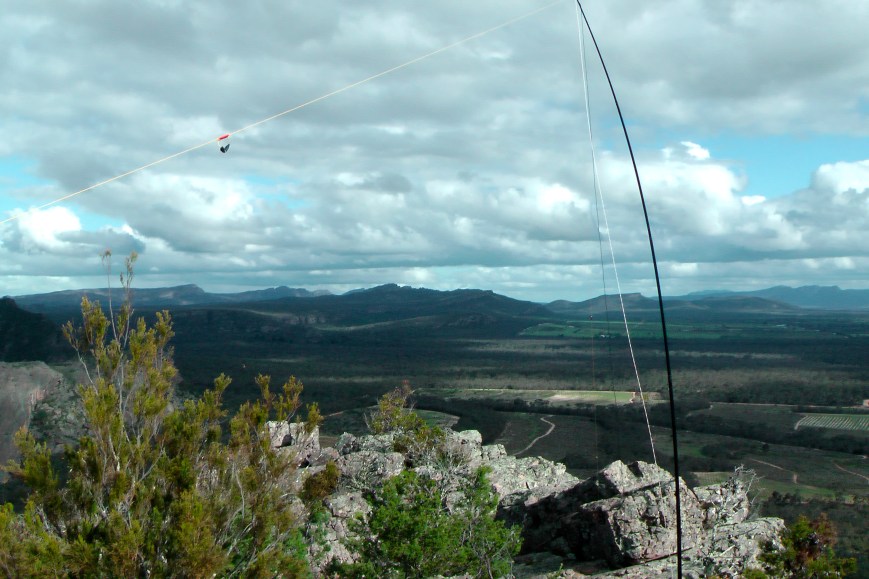
The linked dipole was supported by a 7 metre heavy duty squid pole and in an inverted vee configuration.  The signal reports I received back from the eastern states, were no comparison to the vertical.  They were much better.  I have never looked back since.

So, what is a linked dipole?

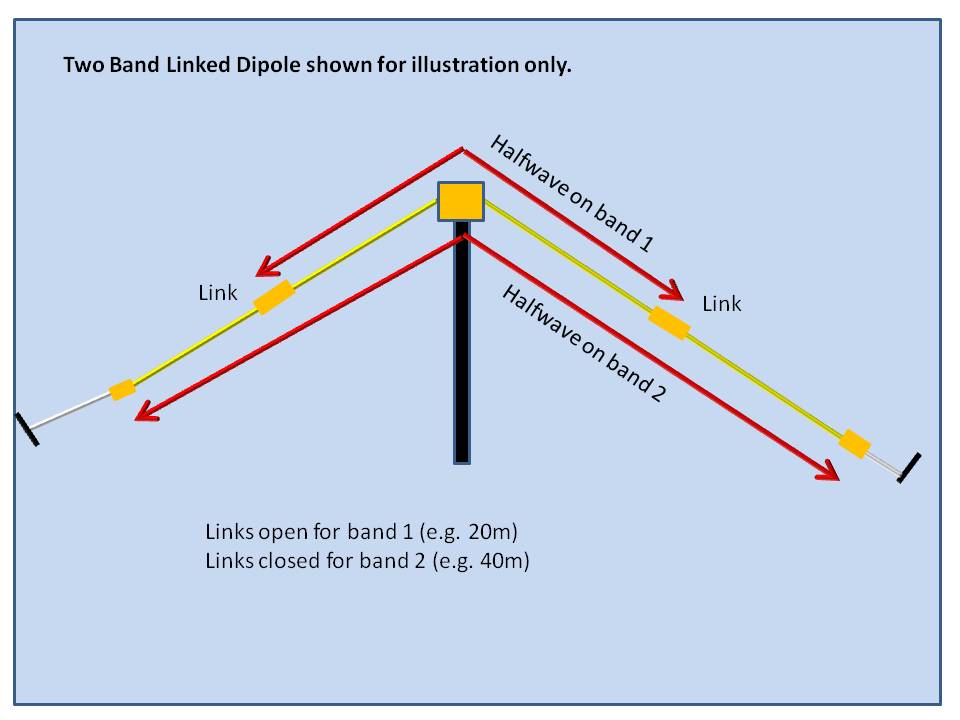
A linked dipole is a very good portable antenna that gives you a very efficient dipole on certain bands.  To select/change bands, you simply need to connect or disconnect sections of the dipole, depending on what band you are operating on.  This lengthens or shortens the antenna to make it resonant on a particular band.

IMGA0129

I have never used a tuner with this antenna.  The coax simply plugs straight into the transceiver.  I have found the VSWR to be about 1.1:1 across the SSB portion of both the 40m and 20m bands.  It is lightweight and has a total weight of 450 grams.

This slideshow requires JavaScript.


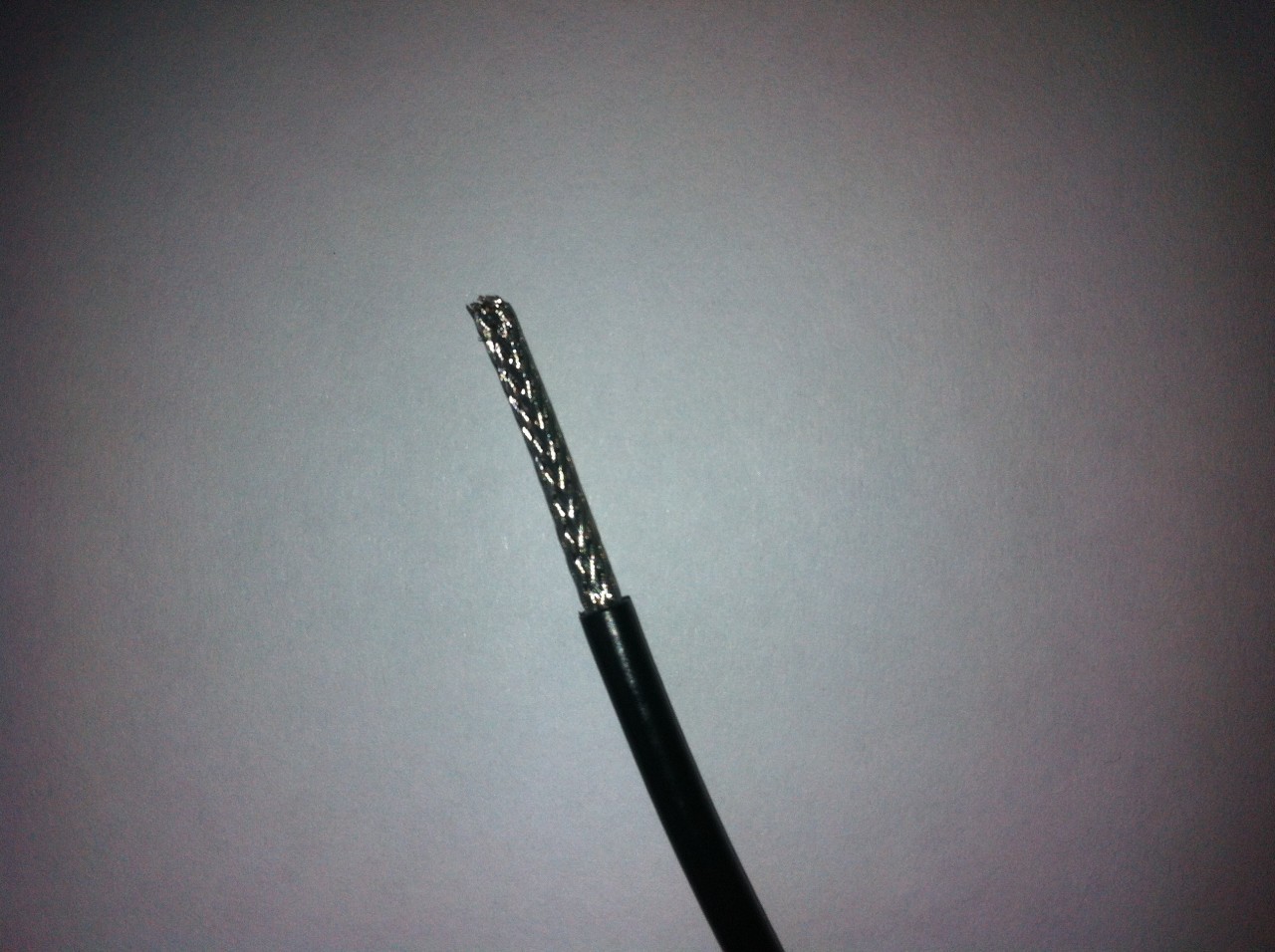
The SOTABeams Band Hopper antenna uses RG174 coax and comes with a 10 metre feeder.  RG174 is very thin and needs to be treated with a degree of care.  However I have found it to be very good and because it is light weight it does not place any strain on the squid pole.  Personally, I’ve found RG58 to be okay if you are park portable.  But some of the summits I have activated from have been incredibly windy and the RG58 has placed just that extra bit of strain on the squid pole.  To prevent the coax from flapping around in the wind I always use a piece of velcroe strapping to secure the coax to the squid pole.

IMG_07951__87370.1347951973.1280.1280

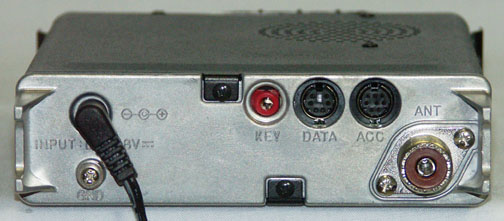
The SOTABeams antenna comes preterminated in a BNC plug, which is handy for use with the Yaesu FT-817nd which comes with a front BNC connector or a rear UHF SO-239 connector. If not simply use an adaptor plug.

ft817nd

Minolta DSC

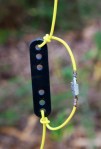
The ends of the antenna each have sufficient lengths of rope with plastic wire winders.  The ropes are nylon braided and are 4 metres (13 feet) in length each.  The ends can be tied off to nearby trees, pegged to the ground, or you can use rocks to weight down the wire winders.

There was a recent straw poll on the SOTA Yahoo group and this showed that the linked dipole was the favoured antenna by SOTA activators.  Since that time, I’ve found that most of the park activators are also using linked dipoles.  They have a number of advantages including:

  • easy to change bands
  • easy to repair and maintain – including in the field
  • the antenna provides two of the guys for your mast (squid pole)
  • no ATU required
  • packs up easily – no parts to loose.

slide5

slide6

Images courtesy of sotabeams.

What squid pole do I use?

I use the 7 metre heavy duty squid poles that can be purchased from Haverfords in Sydney.

http://www.haverford.com.au/telescopic-poles.html

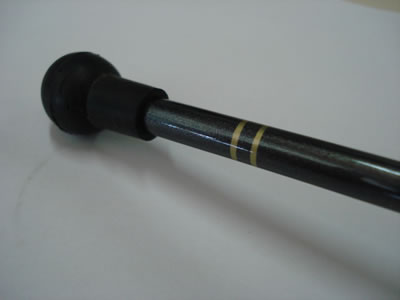
The Haverfords squid poles come with a rubber knob on the top.  However these can be removed if desired.

telescopic1

Image courtesy of http://www.haverford.com.au

These squid poles are very strong.  I have only snapped one, and that was whilst I was activating Hallet Hill VK5/ SE-003, with Ian VK5CZ.  The wind was well and truly above 60 kph on the top of that summit and the squid pole snapped at the weakest point where I had attached it to the trig point.

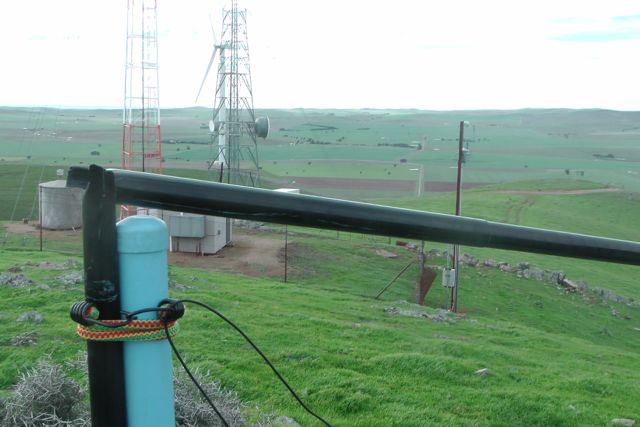
imga0018

How do you secure the antenna to the squid pole?

There are a variety of different methods of attaching the antenna to the top of the squid pole.  I use a piece of velcroe string which is tied to the top of the squid pole and inserts through a hole in the perspex centre piece.  Ian VK5CZ uses a wall plug with a hook inserted into the wall plug, which neatly slides into the top of the squid pole (with the knob removed).

Which direction to I erect the antenna?

I normally don’t get too flustered about what orientation the antenna is in.  At this height, the antenna is pretty much omni directional.

As a club, we at the Adelaide Hills Amateur Radio Club (AHARS) are planning a construction day, when a group of us can construct some linked dipoles, and then try them out in a park or on a summit the following day.

Want some more information on linked dipoles?  Here is a link to Peter VK3ZPF’s blog re his linked dipole…..

http://vk3zpf.com/link-dipole

And Andy VK5LA’s WordPress site about his home brew linked dipole…..

http://vk5la.wordpress.com/2013/10/07/putting-together-a-link-dipole-for-sota/

And here is John VK5BJE’s blog…..

http://vk5bje.com/2013/08/14/my-equipment/

And finally Peter VK3PF…..

https://vk3pf.wordpress.com/2013/11/16/a-lightweight-link-dipole/comment-page-1/

If you google linked dipole, there are hundreds of sites that should provide you a lot of information on these very good performing antennas.


References.

SOTABEAMS, https://store-qc1afpvf.mybigcommerce.com/linked-dipoles/


Weekend summary

Hi all,

Here is a breakdown of my activities from Friday – Monday…..


Friday 6th June

Coorong NP – 20 QSOs
Martin Washpool CP – 20 QSOs
Messent CP – 21 QSOs
Tilley Swamp CP – 26 QSOs
Mount Scott CP – 20 QSOs

Saturday 7th June

Dingley Dell CP – 18 QSOs
Nene Valley CP – 31 QSOs
Canunda NP – 33 QSOs

Sunday 8th June

Mount Burr summit VK5/ SE-019 – 66 QSOs
Tantanoola Caves CP – 25 QSOs

Monday 9th June

Telford Scrub CP – 30 QSOs
Glen Roy CP – 29 QSOs
Narracoorte Caves NP – 46 QSOs
Grass Tree CP – 51 QSOs
Padthaway CP – 36 QSOs

 
Total of 472 QSOs.
11 x Conservation Parks
3 x National Parks
1 x SOTA summit

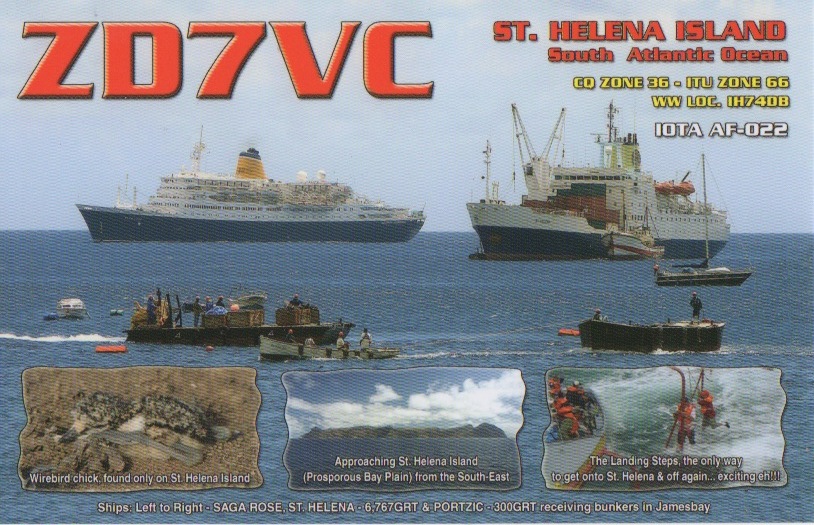
I ran out of time on Monday to do Desert Camp CP. That can wait til another day. There were a few highlights. They included being called by Bruce ZD7VC from St Helena Island in the Atlantic Ocean (very rare DX) whilst I was in Canunda NP. And working many VK6’s including Mike VK6MB on 40m.

ZD7VC (2)

Sorry about the voice over the weekend. Turns out I have a chest infection and the Dr has given me some time off work.

I want to congratulate the South East Radio Group for running a terrific convention and congratulate them on their 50th year. I had an enjoyable time there on Saturday afternoon. And then late on the Sunday afternoon, I delivered a presentation (on the VK5 Parks award) to about 80 people at the Scout Hall, and then enjoyed a beautiful 3 course meal. It was also great to catch up with a lot of hams that I have spoken to many times on the radio but never met in person…..both VK5s and VK3s. I came home with some wire to build a linked dipole, a few tubes for Doc VK5BUG, and even convinced young Patrick to buy a FT-817nd from Ross from Strictly Ham who was at the convention.

Padthaway Conservation Park

My final activation on Monday 9th June 2014 was the Padthaway Conservation Park, which is located about 254 km south east of Adelaide.  I did plan to activate Desert Camp Conservation Park, making that my 6th park for the day, but I had run out of time.  Oh well, there is always another day.  And there are plenty of other parks remaining in the South East that I am yet to activate.

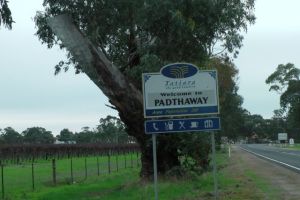
Padthaway is a small town on the Riddoch Highway in the Limestone Coast region of the South East of South Australia.  The name is derived from Potawurutj, the Aboriginal word for Good Water.

IMGA0070

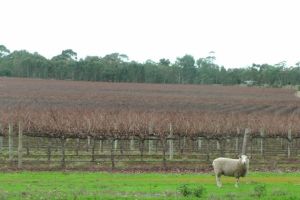
Padthaway was the name of the original pastoral station which was established near the town in 1847 by a successful Scottish businessman, Robert Lawson.  In 1882 the Padthaway Estate Homestead was built by Eliza and Robert Lawson.  In 1952 Padthaway became the centre of a soldier settlement scheme.   The first vineyards were planted in the region in 1968 and today Padthaway is a top wine-producing region.

IMGA0069

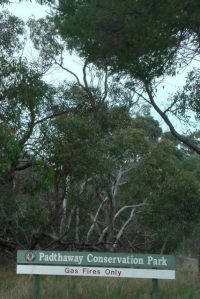
The Padthaway Conservation Park conserves a remnant block of native vegetation, and is an area of about 984 hectares.  The parol wasgazetted in 1971 and is dominated by South Australian blue gum, manna gum and stringy barks.

A number of native animals can be found in the park including kangaroos and koalas.  It is also a haven for a multitude of birdlife.

IMGA0071

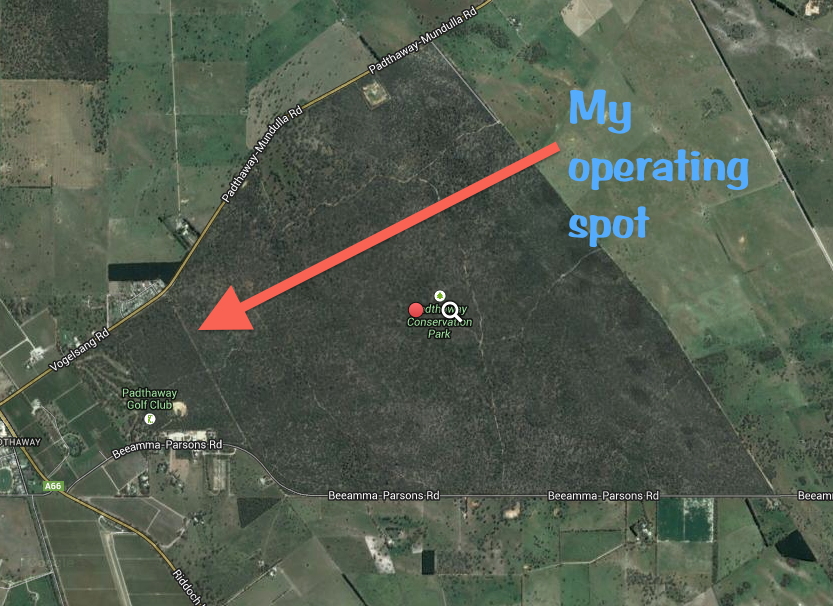
I accessed the park via Vogelsang Road which runs off the eastern side of the Riddoch Highway as you are leaving the town of Padthaway.

Screenshot 2014-06-10 14.21.34

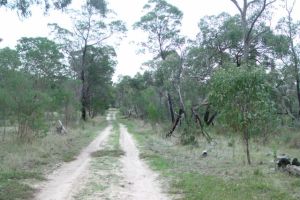
I entered the park via an unlocked gate at the start of a sandy track on the western side of the park.  The track was sandy and was littered with quite a bit of tree debris, but it was passable in my Ford Falcon.  If you do negotiate this track, just remember that you need to turn around.

IMGA0074

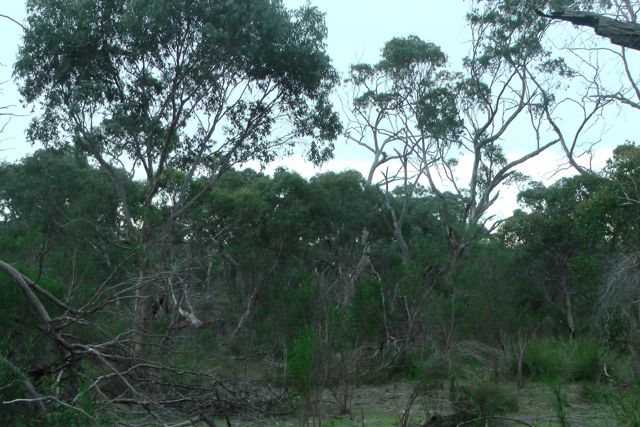
The scrub within the park is very thick, and I had to choose a cleared area to allow me to erect the dipole on top of the 7 metre squid pole.  I used an old tree stump to secure the squid pole with an octopus strap.

IMGA0072

I was set up by 3.30 p.m. South Australian local time.  My first contact was with Chris VK4FR/5, followed by Tom VK5FTRG in Millicent running QRP 1 watt, and then Charles VK5FBAC in Strathalbyn also running just 1 watt.  It is about 250 km from Padthaway to Strathalbyn, and Charles was a good 5/8 signal.  The noise floor in the park was non existent and I could literally hear a pin drop.

IMG_1477

I made contact with a number of mobile stations whilst in the park.  They included Rod VK5KFB who was mobile art Meningie on his way home after the SERG convention.  Regular park hunter Greg VK5ZGY also called in from his mobile with a strong 5/9 signal.  I also spoke with Peter VK5KX who was mobile at Mount Mary in the Riverland region of South Australia.

I had a multitude of QRP contacts from Padthaway.  They included Tom VK5FTRG on 1 watt (5/9); Charles VK5FBAC on 1 watt (5/8); Rod VK5KFB/m and QRP; Roy VK5NRG running 7 watts from his FT7 (5/9); Ian VK5IS running 5 watts (5/9); Brian VK5FMID running 5 watts (5/8); Stan VK3BNJ running 5 watts from his Yaesu FT-817nd (5/8); Greg VK5GJ running 5 watts from his home brew QRP rig (5/9); Andrew VK3ARR (5/9); Peter VK5PET running 5 watts (5/9); David VK5NQP running 5 watts from his little Wouxon (5/9); Amanda VK3FQSO running 5 watts (5/9); Kim VK5FJ (5/7); Barry VK5BW running 5 watts (5/9); and Nev VK5WG running his little X1M at 5 watts (5/9).

Again I gave a specific call for any QRP stations and this is why I received so many QRP callers.  It is always a good practice to specifically ask for QRP, mobile, portable, and even DX, before the madding crowd calls in.

  IMGA0073

It was very pleasing to get lots of calls from amateurs who were unfamiliar in my log and also from some recent park devotees such as Tony VK5FTVR who attended the recent SOTA and Parks introduction day.  And again I managed to get Mike VK6MB in the log on 40m (5/7 send and 5/4 received).  This was a good weekend for working Mike.

It was starting to get dark, with the local time being 3.45 p.m. and I still had a three hour drive to get home.  So it was time to pack up and get on the road.  I had a total of 36 QSOs in the log after activating for about 40 minutes.

IMGA0076

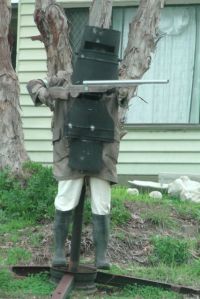
As I was pulling out of the park, I noticed the Ned Kelly figure below in the front yard of the property opposite the park entrance.

IMGA0075

The following stations were worked on 40m SSB:

Chris VK4FR/5; Tom VK5FTRG; Charles VK5FBAC; Rod VK5KFB/m; Roy VK5NRG; Ian VK5IS; Brian VK5FMID; VK3BNJ; Greg VK5GJ; Andrew VK3ARR; Peter VK5PET; David VK5NQP; Amanda VK3FQSO; Kim VK5FJ; Barry VK5BW; Greg VK5ZGY/m; Tony VK5FTVR; Nev VK5WG; VK7YUM; Arno VK5ZAR; Rick VK5FIVE; Peter VK5KX/m; Robin VK5TN; John VK5MG; Tony VK5TT/p; Steve VK5AIM/p; Ken VK3FKNZ; John VK5BJE; Tom VK5FTRG/p; Keith VK2PKT; Craig VK5LI; Nev VK5WG; Mike VK6MB; Dallas VK5WA; Peter VK5APR; and Peter VK2PJF.


References.

National Parks South Australia, http://www.environment.sa.gov.au/parks/Find_a_park/Browse_by_region/Limestone_Coast/Padthaway

Limestone Coast

Wikipedia, Padthaway

Grass Tree Conservation Park

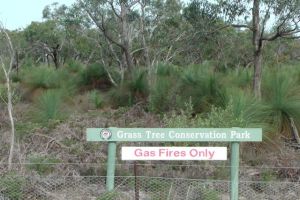
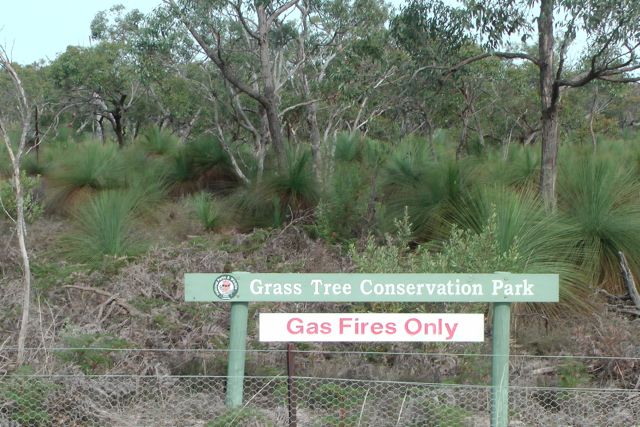
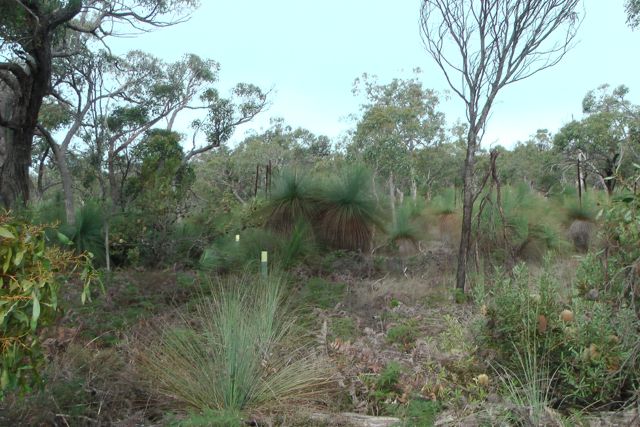
My fourth activation for Monday 9th June 2014, was the Grass Tree Conservation Park, which is located about 17 km north of Naracoorte off the Naracoorte-Keith Road, and has an area of 15.88 hectares.  It was gazetted in 1972 to protect the grass tree Xanthorrhoea australis.

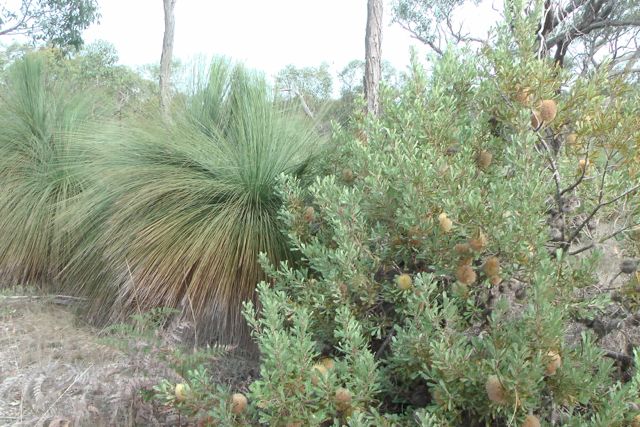
Xanthorrhoea australis, the Grass-tree or Black Boy is an Australian plant, and is the most commonly seen species of the genus Xanthorrhoea.  Grass trees are well adapted to withstand the effects of fire and their flowering is stimulated but fire.  Its fire-blackened trunk can grow up to several metres tall and is often branched.  In certain Aboriginal languages, it is called ‘Bukkup’ or ‘Kawee’.  The park was certainly full of them.

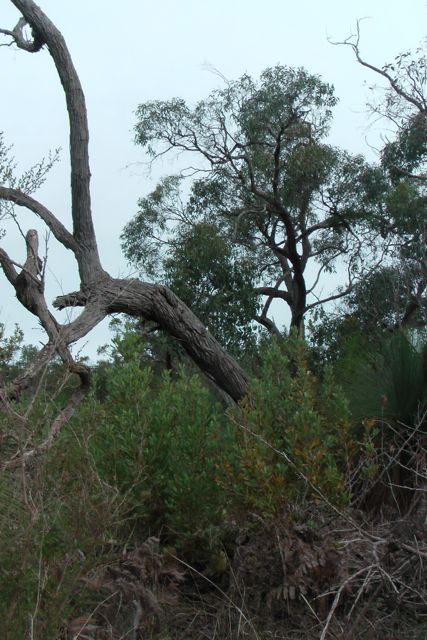
This park appeared to be quite neglected and it appeared that not many people visited the park.  The access gate in the north eastern corner was completely overgrown and did not look as though it had been opened in a very long time.

IMGA0055_2

I have noted that the publication entitled ‘Small Parks of the Upper South East Management Plans’ dated 1992, states the following:

The Park receives very little visitor use and no facilities are provided.  Five metre wide boundary access tracks are maintained on the perimeter of the Park, except along the northern boundary where a Council road serves as an access track’.

I certainly did not see any boundary access tracks.

Screenshot 2014-06-10 14.26.38

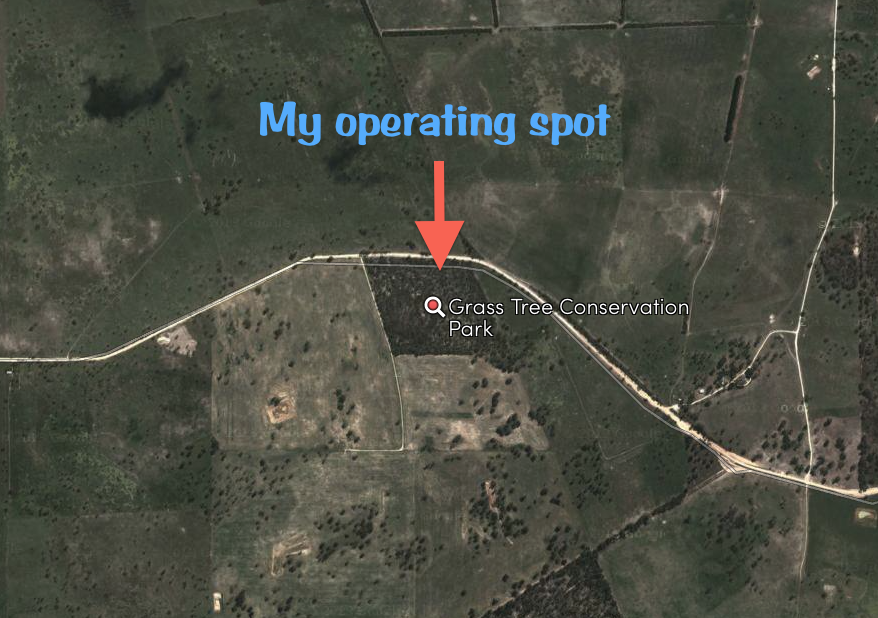
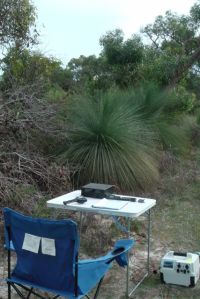
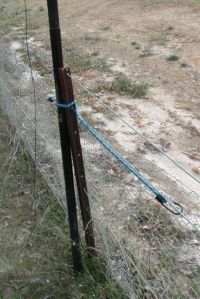
Access to the park is via Boddingtons Road which runs off the eastern side of the Riddoch Highway.  I set up just inside the park fence off Boddingtons Road.  The scrub is incredibly thick and there were no obvious tracks in the park, so set up options were limited.  I used a star dropper on the fence to secure the 7 metre squid pole to with an octopus strap.  I then set up my little fold up table and deck chair just inside the boundary on the other side of the fence.

 IMGA0067

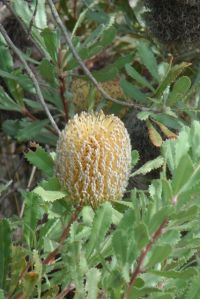
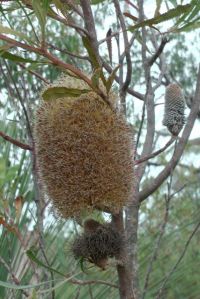
Other than grass trees, the park was full of banksias in flower.  And as a result, there was a large number of wattlebirds in action.

IMGA0057_2    IMGA0062_2

My first contact was with Larry VK5LY who was mobile on the Morgan-Renmark Road in the Riverland, with a beautiful 5/9 signal.  This was followed by regular park hunter and activator John VK5BJE, and then Chris VK4FR/5, and then Amanda VK3FQSO.

IMG_1476

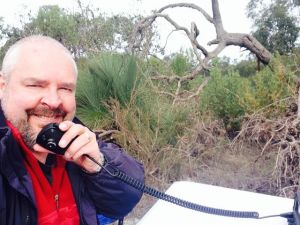
I used the Yaesu FT-450 again for this activation and ran 40 watts.  So although I was not QRP (well not for Aussies anyway), I was called by a number of QRP operators including: Charles VK5FBAC using just 1 watt (5/7); Tom VK5FTRG also using just 1 watt (5/7); Brian VK5FMID running 5 watts (5/9); Ian VK5IS running 5 watts (5/9); John VK5FTCT running 1 watt (5/9); Bernard VK3AMB using 5 watts (5/8); Greg VK5GJ using his home brew 5 watt transceiver (5/8); Peter VK5PET (5/9), David VK5NQP running 5 watts from his X1M; and Steve VK3JY running 5 watts from his KX3.  Whenever possible, I always try to listen for the QRP operators, and portable & mobile stations before the general pile up with normally ensues.

IMGA0064_2     IMGA0065_2

Just one park contact during this activation, and that was with Steve VK3JY who operating portable and QRP from the Lake Eildon National Park.  I was called by Terry VK3UP who was on the top of Mount Buninyong in Victoria.  This mountain qualifies for the SOTA program.  But sadly, Terry was mobile, so this counted out any possible SOTA contact.

IMGA0056_2  IMGA0058_2

I did manage one Summits on the Air (SOTA) contact and that was my last contact in the park.  It was with Ian VK1DI/2 who portable on SOTA peak, Wereboldera, VK2/ SW- 043.  Ian had a nice 5/6 signal coming in and I received a 5/8 signal report from Ian.  This contact with Ian got me ever closer to the 5,000 chaser points for SOTA.  Here is a link to Ian’s blog re this activation…..

http://vk1di.blogspot.com.au/2014/06/sota-activation-wereboldera.html

IMGA0059_2     IMGA0063_2

Whilst I was operating I noticed that my fluorescent orange wire winders were attracting the attention of the Superb Blue Wrens.  The male of these birds, in breeding plumage has a very striking bright blue forehead, ears, mantle and tail, with a black mask and black or dark blue throat.  Non breeding males, females, and juveniles are predominantly grey-brown in colour.

IMGA0060_2

I was way behind my operating schedule, so after 45 minutes of operating in the park it was time to head off.  My voice had not got any better, so I apologise to all the park hunters for having to put up with me.  I had a total of 37 QSOs in the log from VK1, VK3, VK5, and VK7.

     IMGA0066_2

The following stations were worked on 40m SSB:

Larry VK5LY/m; John VK5BJE; Chris VK4FR/5; Amanda VK3FQSO; Charles VK5FBAC; Nigel VK5NIG; Tony VK5FTVR; Rick VK5FIVE; Peter VK3PF; Tony VK5TT/p; Phil VK3BHR; Greg VK5ZGY; Tom VK5FTRG; Brian VK5FMID; Ian VK5IS; Brendan VK3OY; John VK5FTCT; Bernard VK3AMB; Len VK3FB/p; Arno VK5ZAR; David VK7YUM; Tim VK5AV; Gary VK5ZK/m; Derek VK3DD; Bob VK3BWZ/p; Patrick VK5MPJ; Ivan VK5HS/m; Colin VK3ZZS/p; Eric VK5ZAG; Greg VK5GJ; Terry VK3UP/m; Matt VK1MA; Ron VK3FRHB; Erwin VK3ERW; Peter VK5PET; John VK5DJ; and John VK5MG.


References

Department of Environment and Natural resources, ‘Small Parks of the Upper South East Management Plans’, 1994.

Wikipedia, ‘Xanthorrhoea australis