Presentation by Peter VK3YE

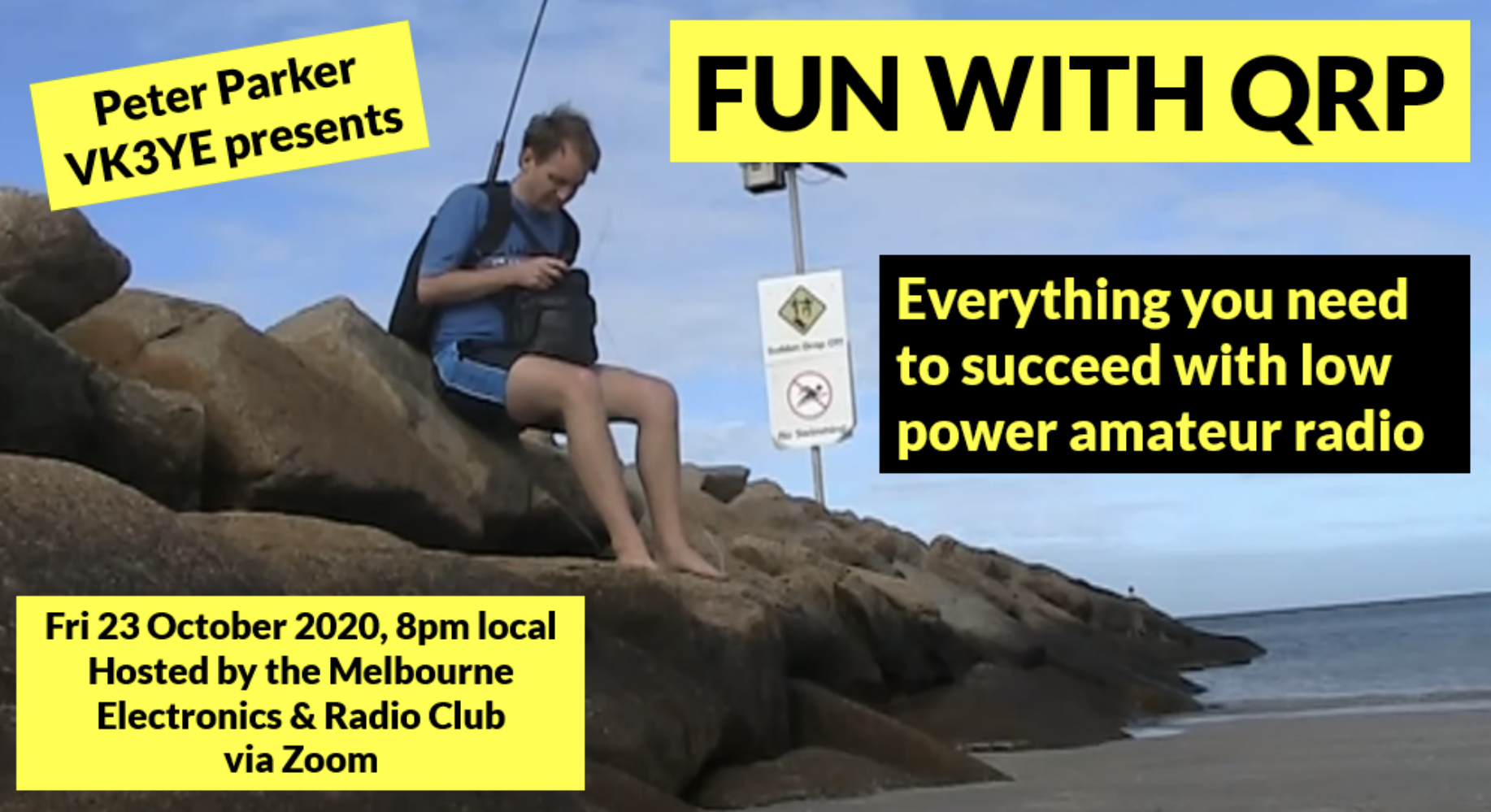
Last Friday evening (23rd October 2020) I was privileged to be asked by the Melbourne Electronics & Radio Club (MERC) to attend a presentation conducted on Zoom by Peter Parker VK3YE entitles “Fun with QRP’.

The presentation was very successfully conducted via Zoom and was well attended by members of MERC and the Bendigo Amateur Radio & Electronics Club Inc (BAREC).

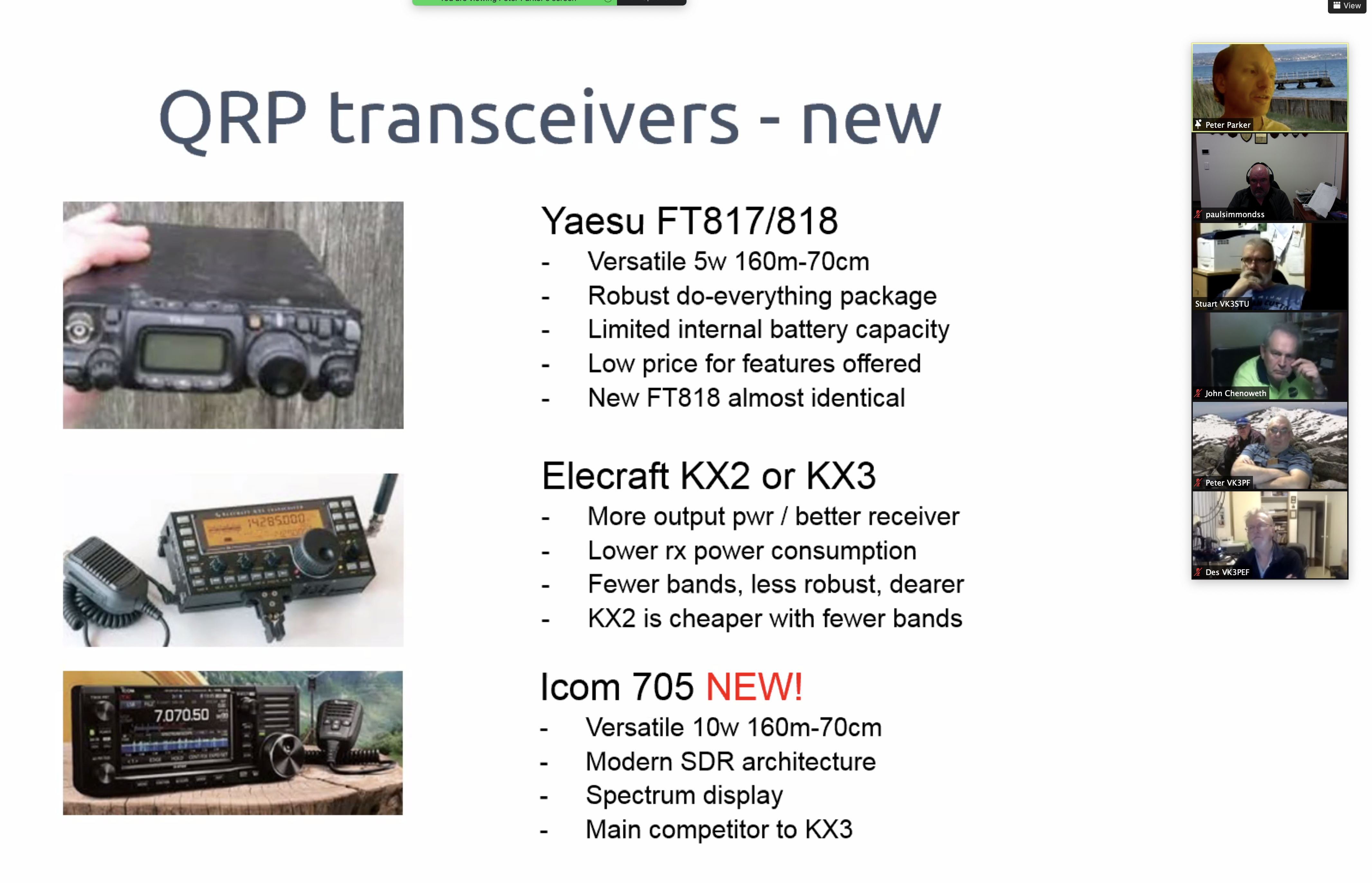
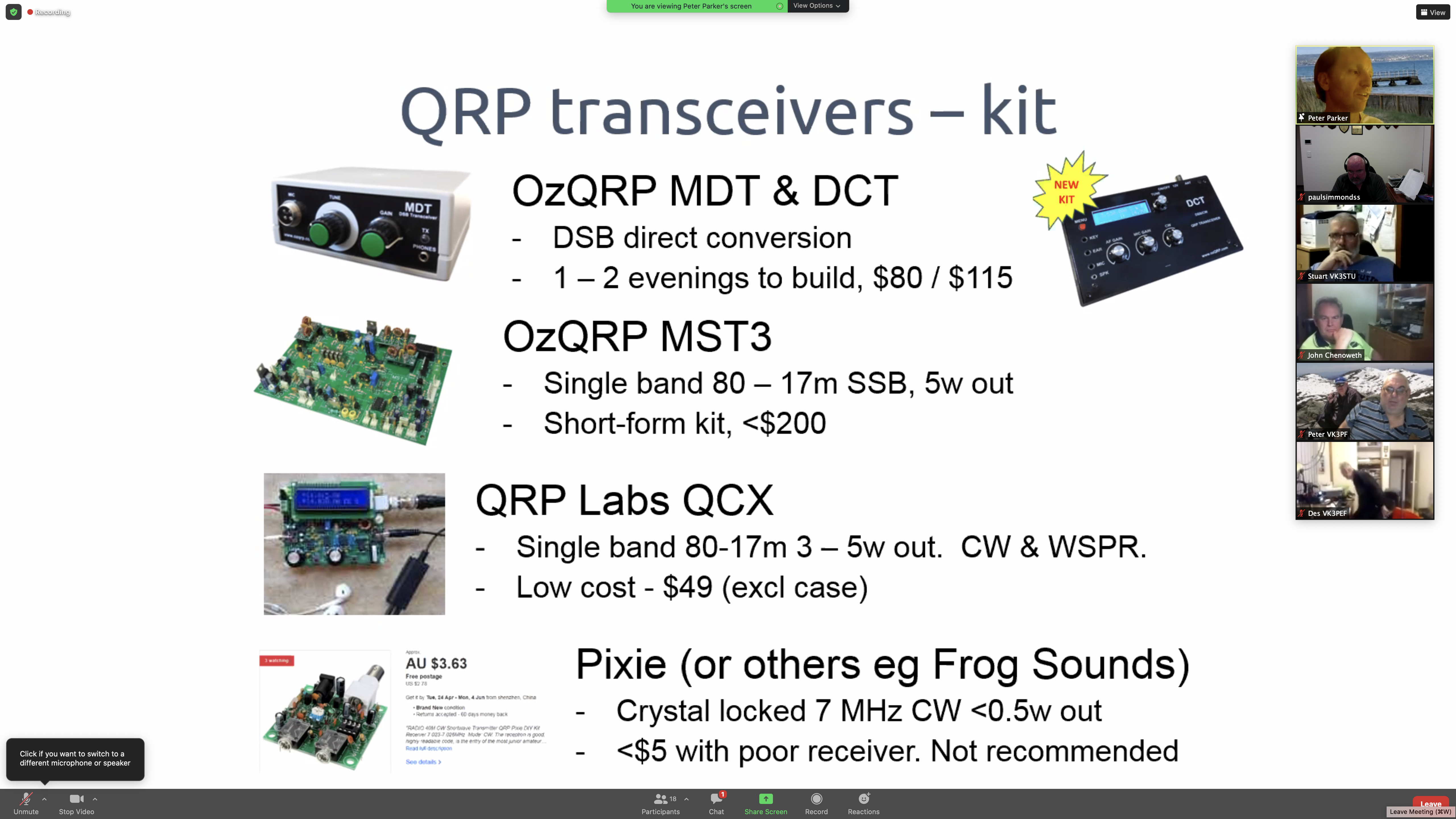
The presentation consisted of a number of power point slides, followed by a question and answer session. It was very informative.

Many thanks to Stuart VK3STU of MERC for the invitation.

WWFF presentation on Zoom to VK3 amateurs

Last night (Friday 9th October 2020) I delivered a presentation on-line via Zoom to the Melbourne Electronics and Radio Club, and the Bendigo Amateur Radio & Electronics Club Inc.

The presentation was entitled ‘Having fun in the field’ and I spoke about the benefits of operating portable, the World Wide Flora Fauna (WWFF) program, portable equipment, and portable operating tips. The floor was then opened to a series of questions.

Image c/o vk3fsk.org.au
Image c/o barec.net.au

Many thanks to Stuart VK3STU for organising the event, and thanks to everyone who attended the meeting. It was great to put a face to many voices.

Some WWFF stats for August 2020

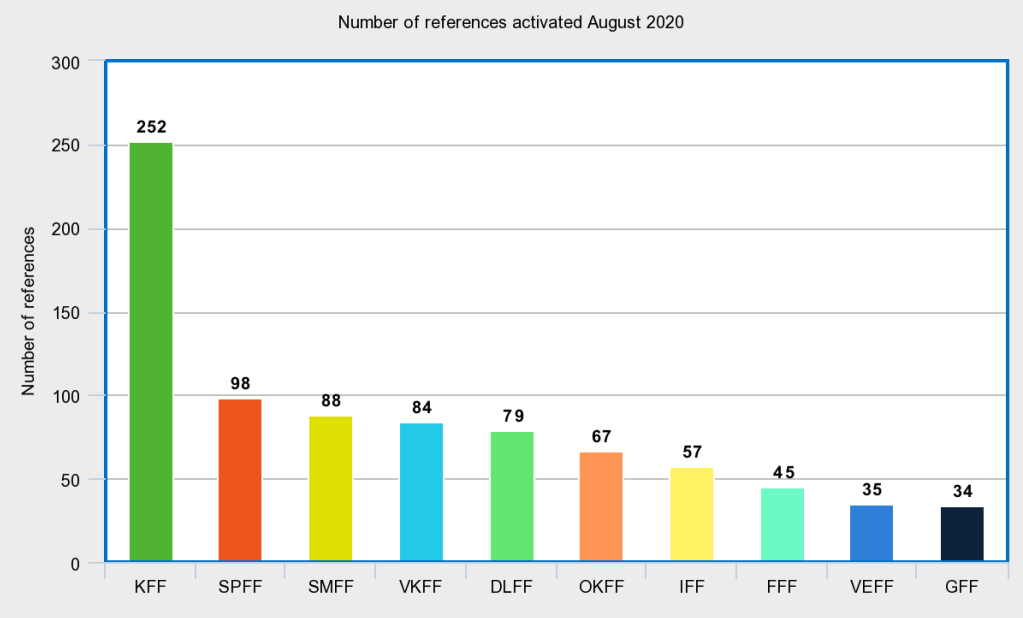
On the blog page of the global WWFF website, I found an Activity Report for August 2020. I took the top 10 countries and put the data into the graph below.

Australia (VKFF) is doing pretty well considering our population and the number of amateurs. We came in at number four with 84 different VKFF references activated during August 2020. The USA (KFF) was on top with 252, but this was due to the KFF Marathon. Poland (SPFF) was number two with 98, and Sweden (SMFF) was number three with 88.

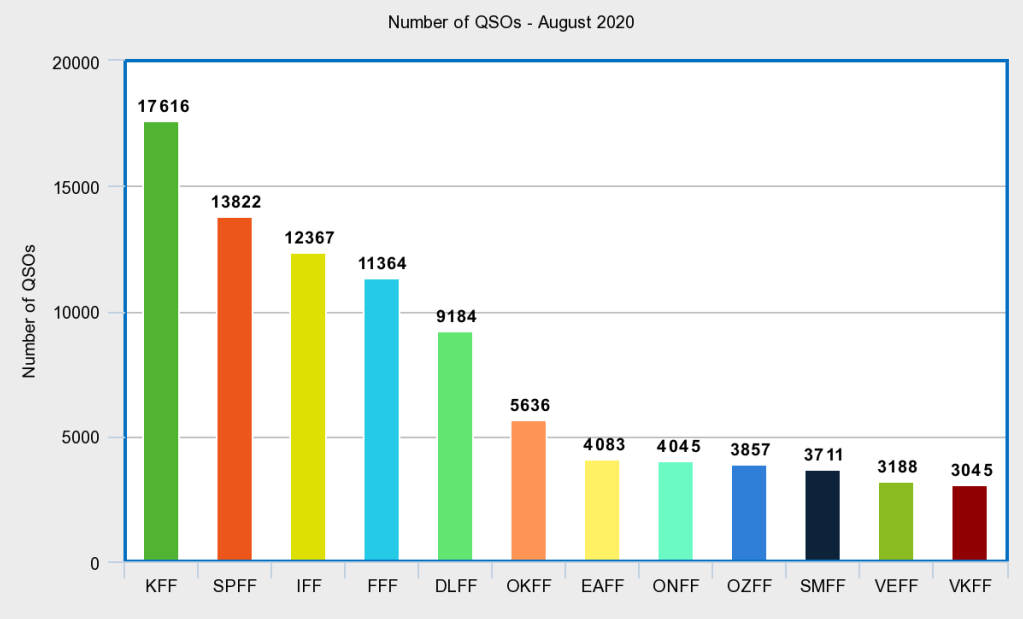
And this graph shows the number of QSOs made during August 2020. Australia (VKFF) was just outside the Top Ten. We were at number twelve with a total of 3,045 QSOs.

Australia (VKFF) was way down the list with regards to the average number of QSOs during an activation.France (FFF) came in at number one with an average of 247.04 QSOs, followed by Italy (IFF) with 209.61, and in third place was Spain (EAFF) with 194.43. Australia (VKFF) had just 34.21 QSOs per activation on average.

2020 JMMFD certificate

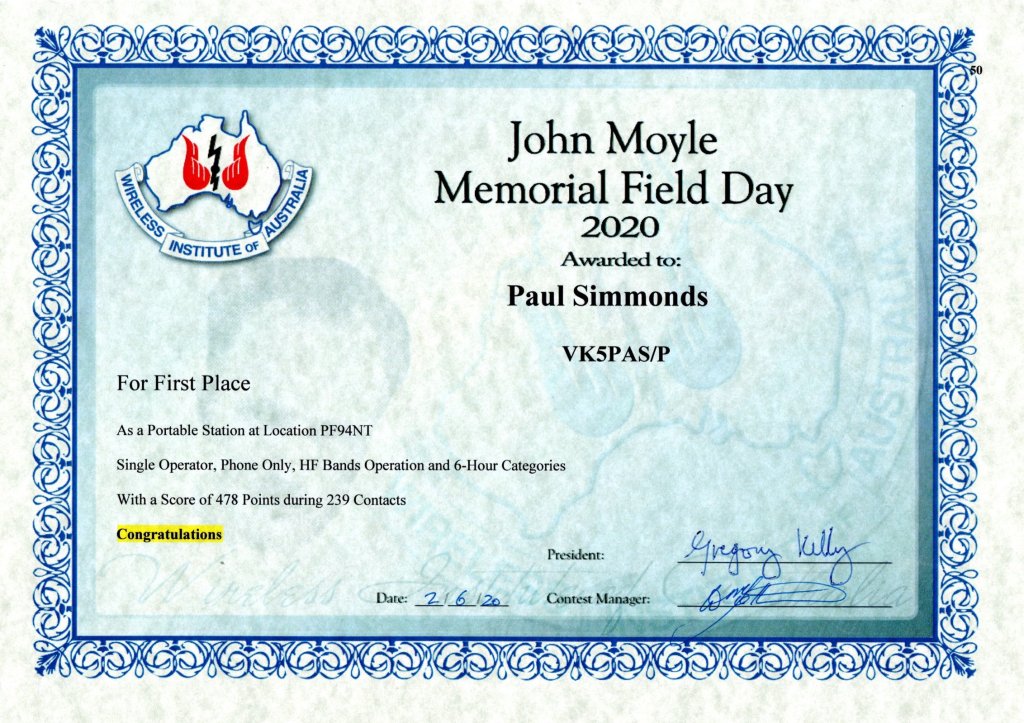
Last week in the mail I received my certificate for the 2020 John Moyle Memorial Field Day.

I managed 1st place in the Single-Op/Phone/HF/6 hour portable category.

I activated the Monarto Conservation Park 5CP-138 & VKFF-0828. Info on the activation can be found on my WordPress site at…….

https://vk5pas.org/2020/03/24/monarto-conservation-park-5cp-138-and-vkff-0828-for-the-2020-john-moyle-memorial-field-day/

Many thanks to everyone who called me, and thanks to the organisers of the Field Day.

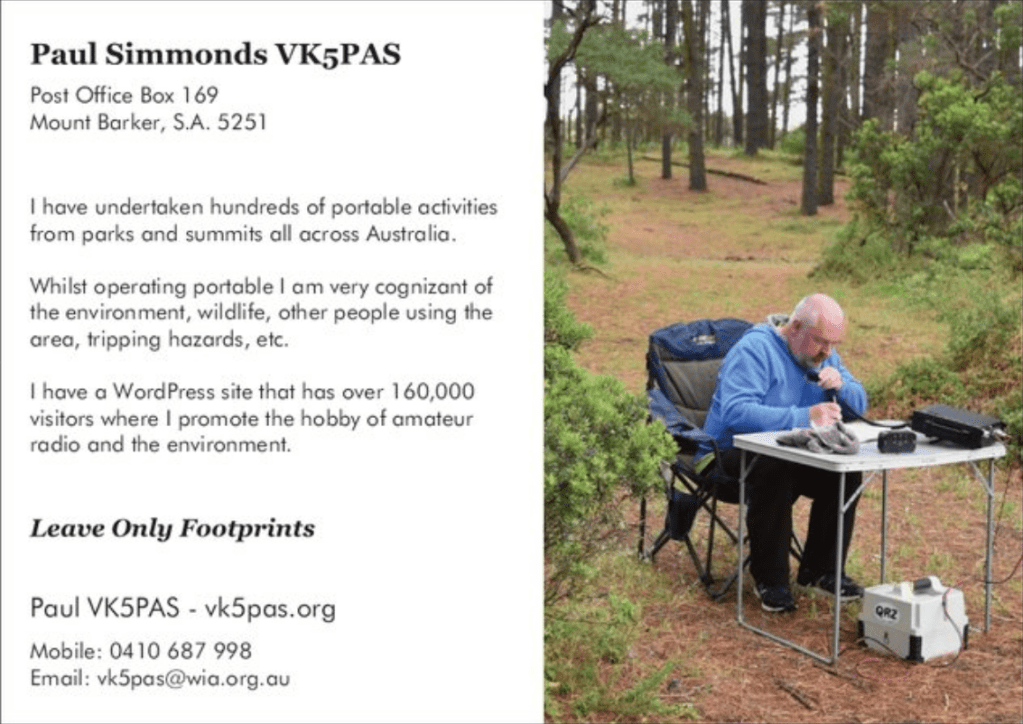
Promotional postcard

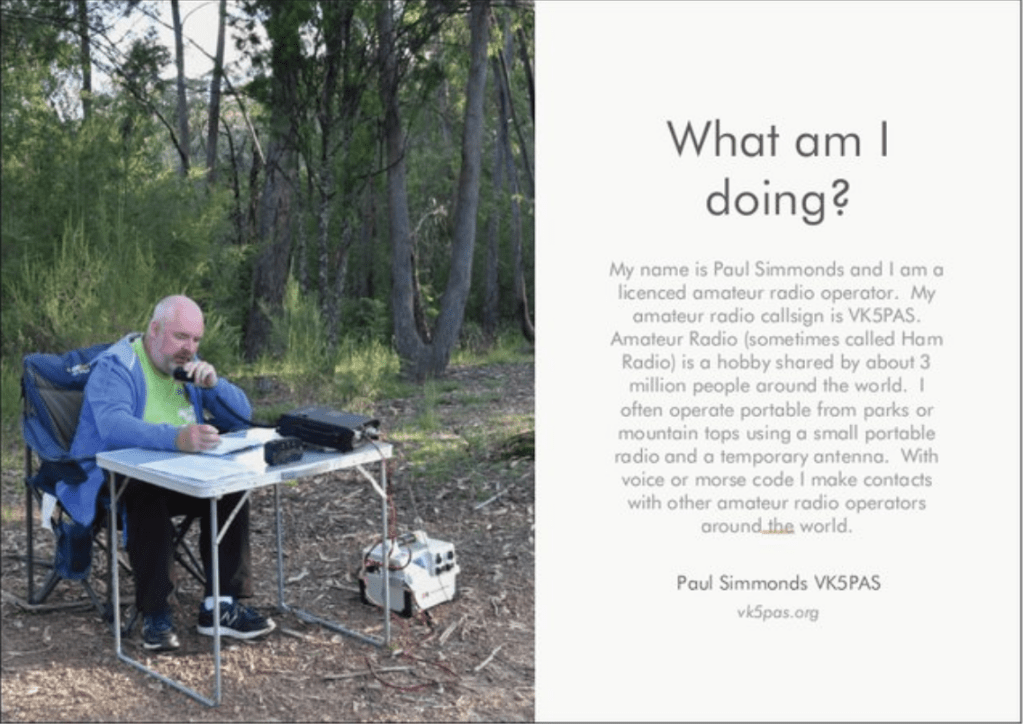
Inspired by something that WG0AT had put together, I have just placed an order through Vistaprint of some A6 postcard sized promotional cards.

The cards explain exactly what I am up to when I am operating from a park and or a summit. I intend to hand these out, along with the promotional brochures I carry for the WWFF program and SOTA.

This is the front…..

And this is the rear…..

Hopefully along with an explanation, these might provide some insight into portable amateur radio activity, to those who often ask me ‘What are you doing?’

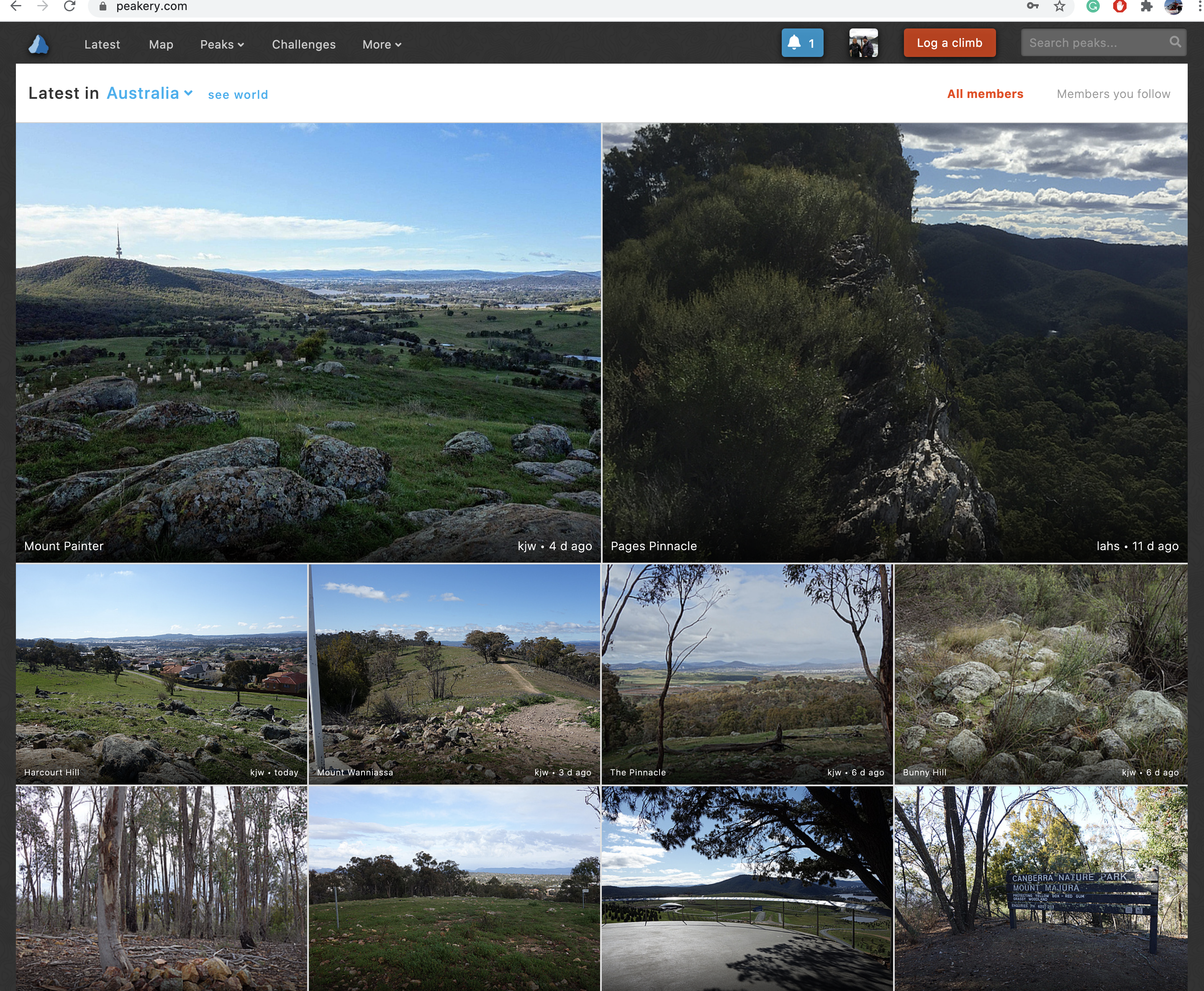
Peakery website

I have spoken about Peakery a few times previously here on my site, but thought the Peakery website was well worth another post.  It may come in very handy for those amateurs taking part in the Summits On The Air (SOTA) program.

The Peakery website states:

peakery is your basecamp for the world’s mountains’. 

You can explore over 600,000 mountains from around the world.  You can log your climb on peakery with your photos and GPS track.  You can collect badges, view a map of your climbs, and track your progress on Peak Challenges.  Peakery has around 10,000 members around the world.

The Peakery website can be found at…….

https://peakery.com/

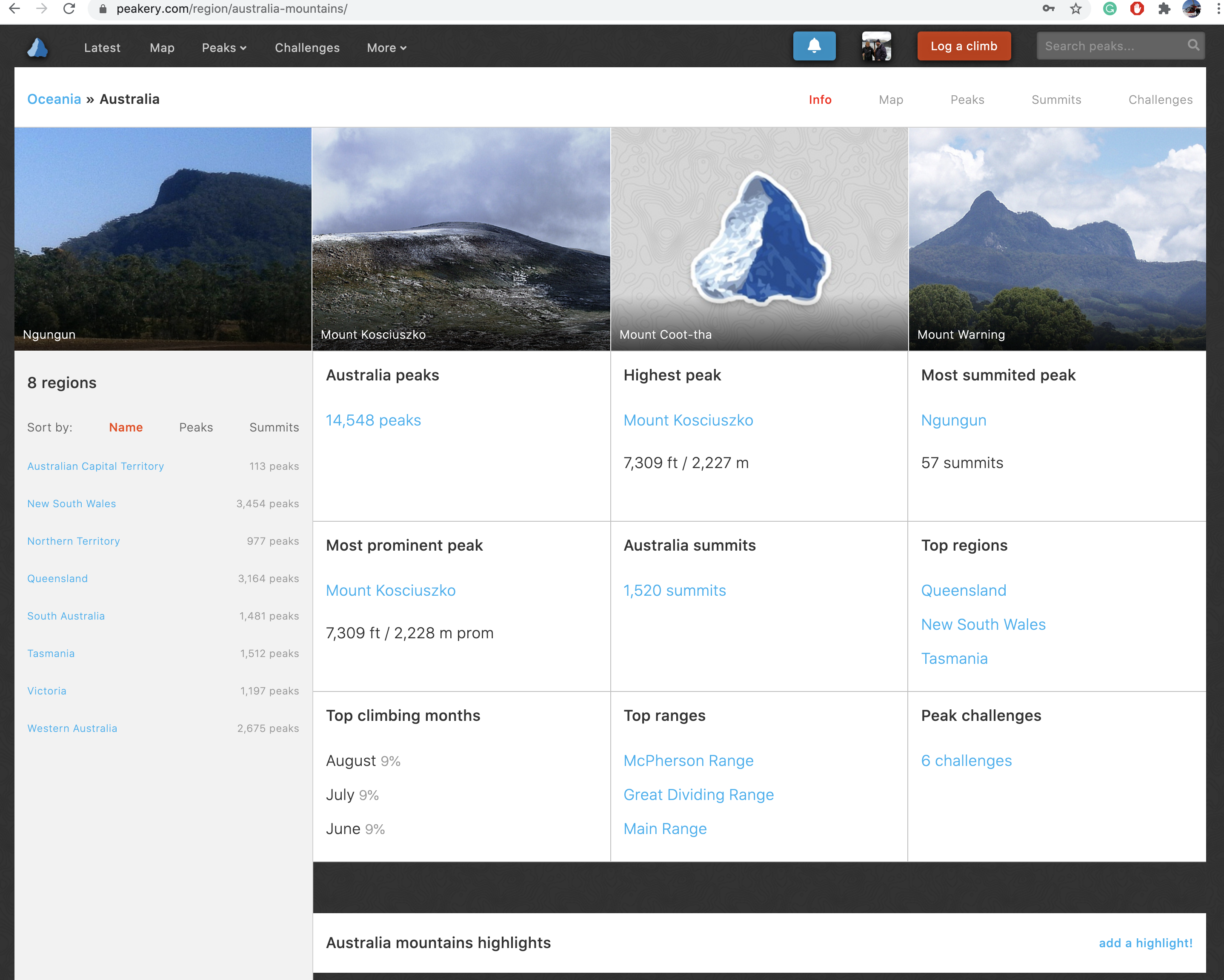
Screen Shot 2020-08-26 at 6.50.06 pm

There are 14,548 peaks in Australia listed on the Peakery website.

  • Australian Capital Territory – 113 peaks
  • New South Wales – 3,454 peaks
  • Northern Territory – 977 peaks
  • Queensland – 3,164 peaks
  • South Australia – 1,481 peaks 
  • Tasmania – 1,512 peaks
  • Victoria – 1,197 peaks
  • Western Australia – 2,675 peaks

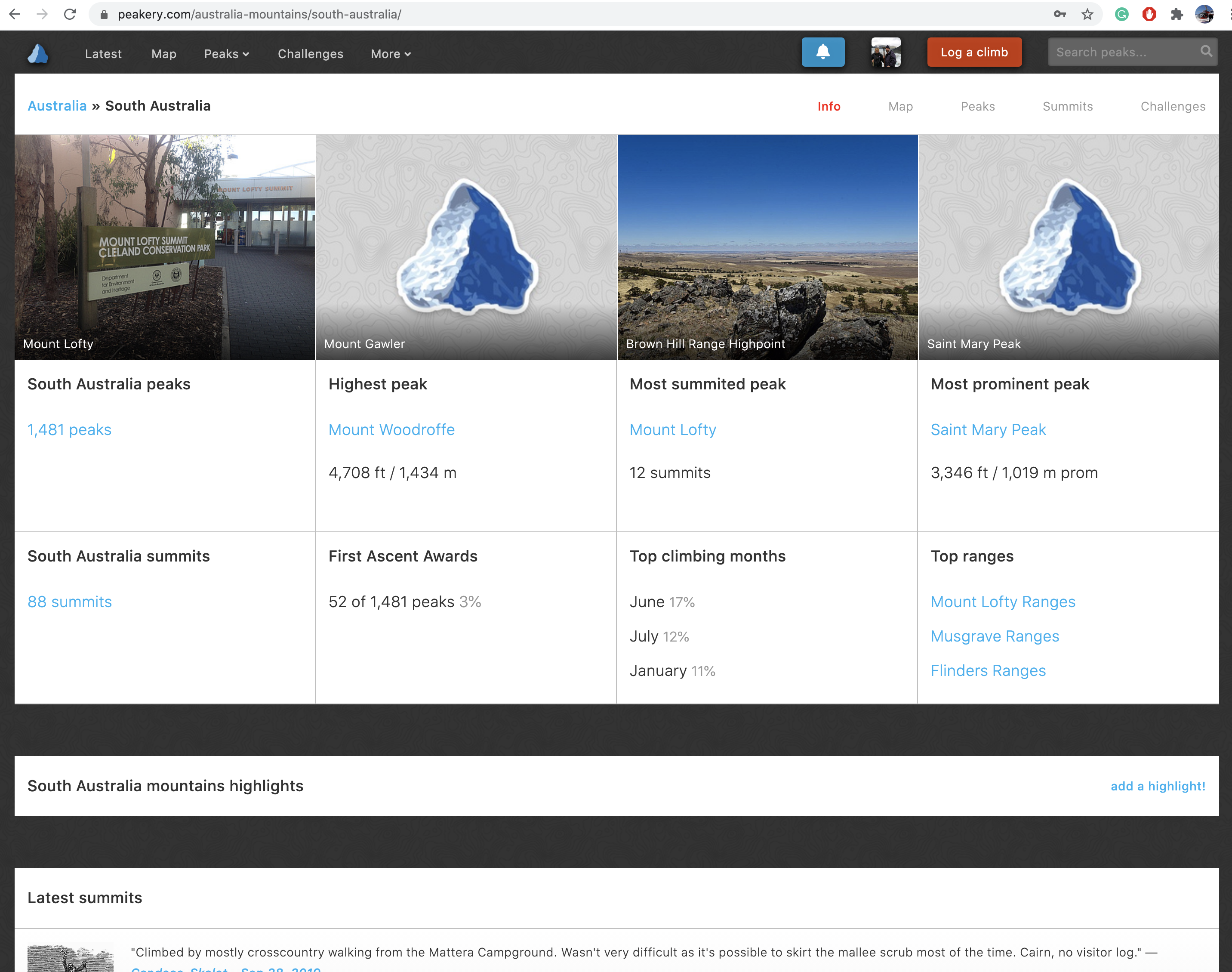
Screen Shot 2020-08-26 at 6.59.05 pm

You can narrow your search down to a State/Territory search.  That page will show you the total number of peaks for that State/Territory, the highest peak, the most summited peak, the most prominent peak, and Popular Mountains in that particular State/Territory.

Screen Shot 2020-08-27 at 6.31.02 pm

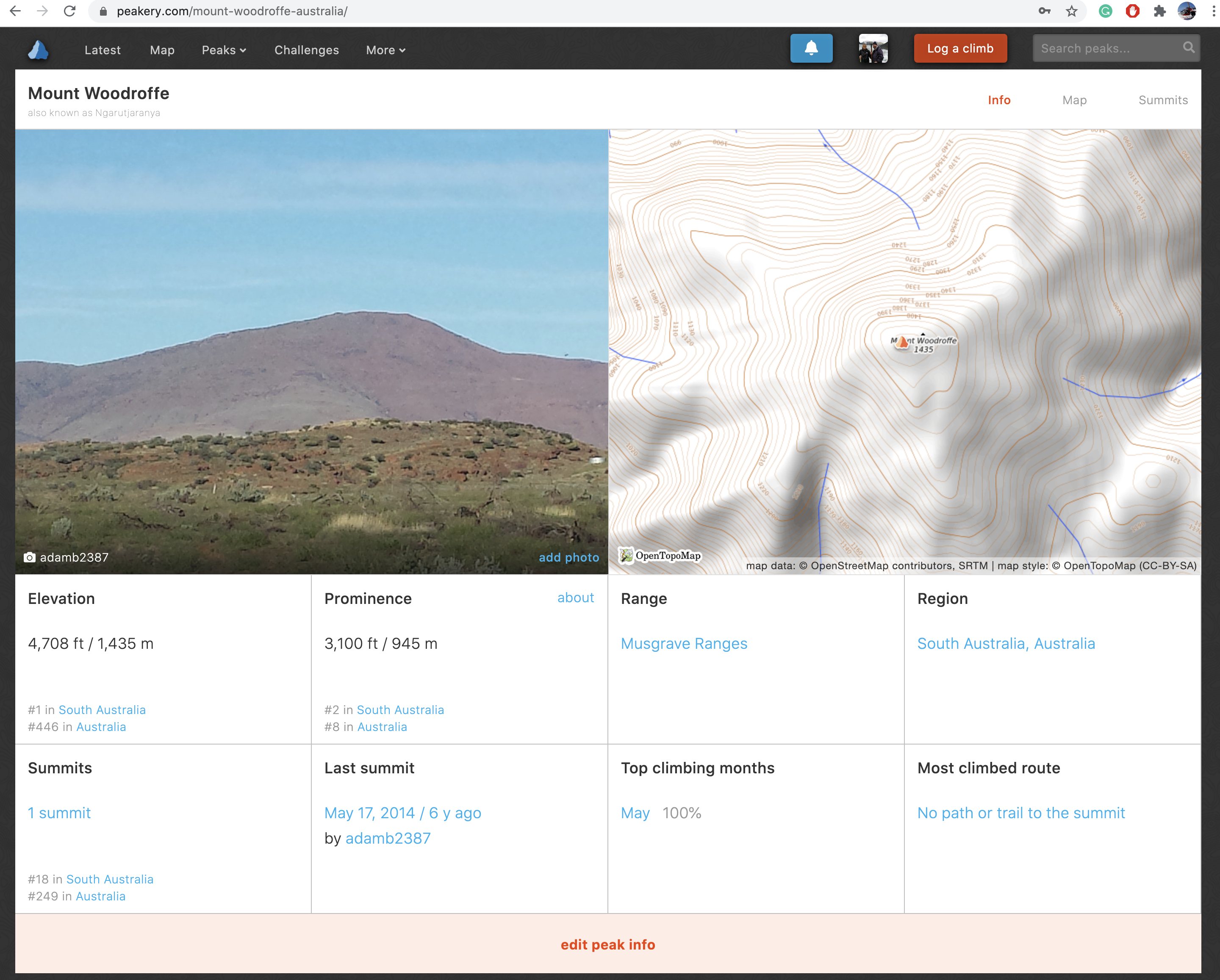
You can then narrow down your search to a particular summit.  That will show you the elevation (with a ranking in that State/Territory and a ranking in Australia), prominence (with a a ranking in that State/Territory and a ranking in Australia), the Range it is located in, and the Region of that particular summit.  Also on this page you can find various other features including photos of the summit, Awards re the summit, and a list of the nearest peaks. 

Screen Shot 2020-08-26 at 7.02.19 pm

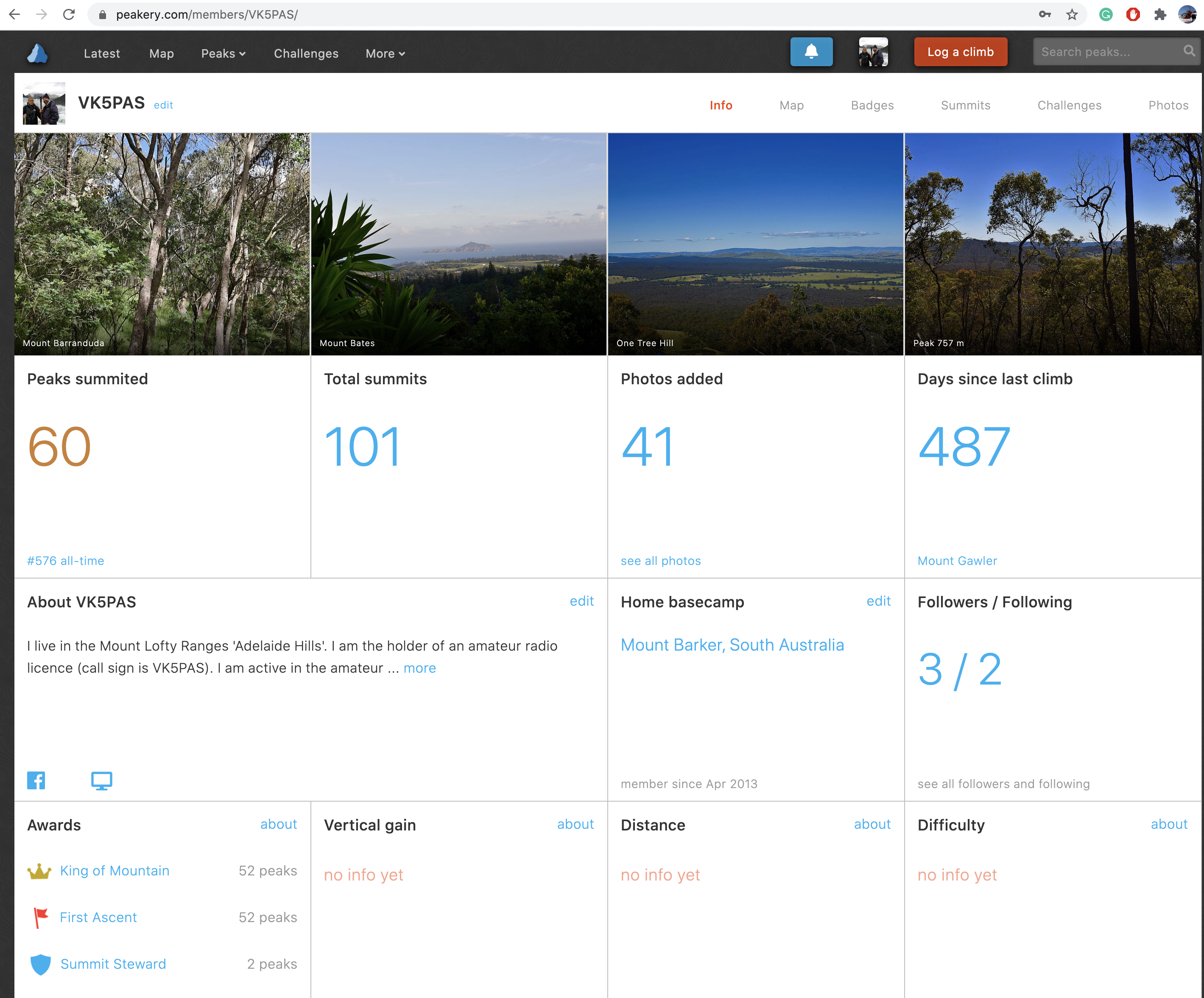
Once you have registered with Peakery, you can log your climbs of a summit, add photos, and even a GPS track.  You can collect Peak badges and see a map of your climbs.

Screen Shot 2020-08-27 at 6.43.44 pm

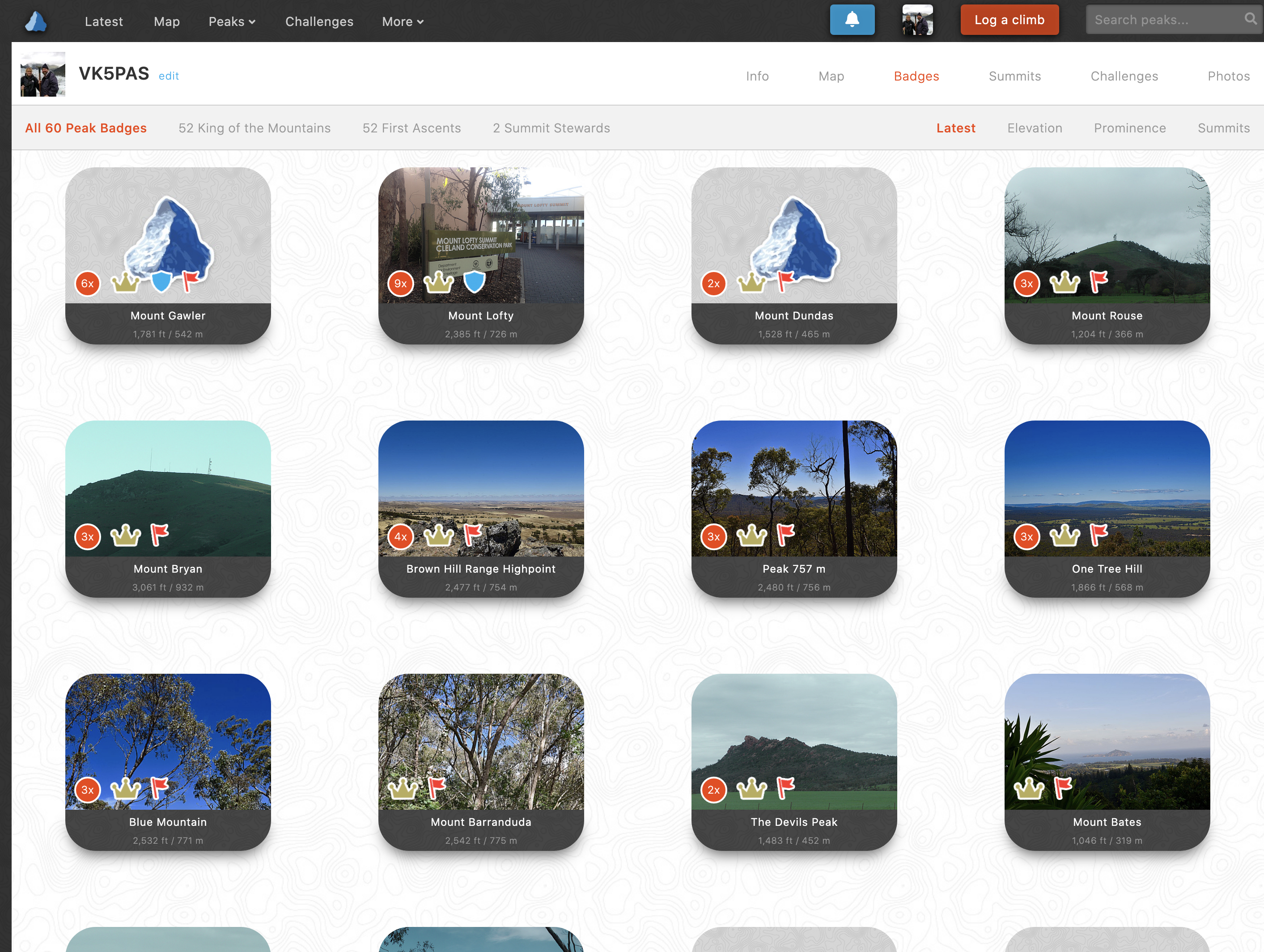
There are various awards on offer:-

  • Peak badges
    • Earn a special badge for each unique peak you summit. See all of your badges on your Badges page.
  • First Ascent Award
    • Only 1 available per peak. Goes to the first peakery member to log a successful summit of a peak. Snag this award and the peak will forever bear your name.
  • King of the Mountain Award
    • Only 1 available per peak. Summit a peak more times than any other member. Beware: this award can be lost!
  • Summit Steward
    • Summit a peak at least 5 times to become one of its Summit Stewards. As Steward of a peak, you’re encouraged to keep that peak’s info up-to-date on peakery and spread goodwill on your future climbs up the peak.

Screen Shot 2020-08-27 at 6.44.05 pm

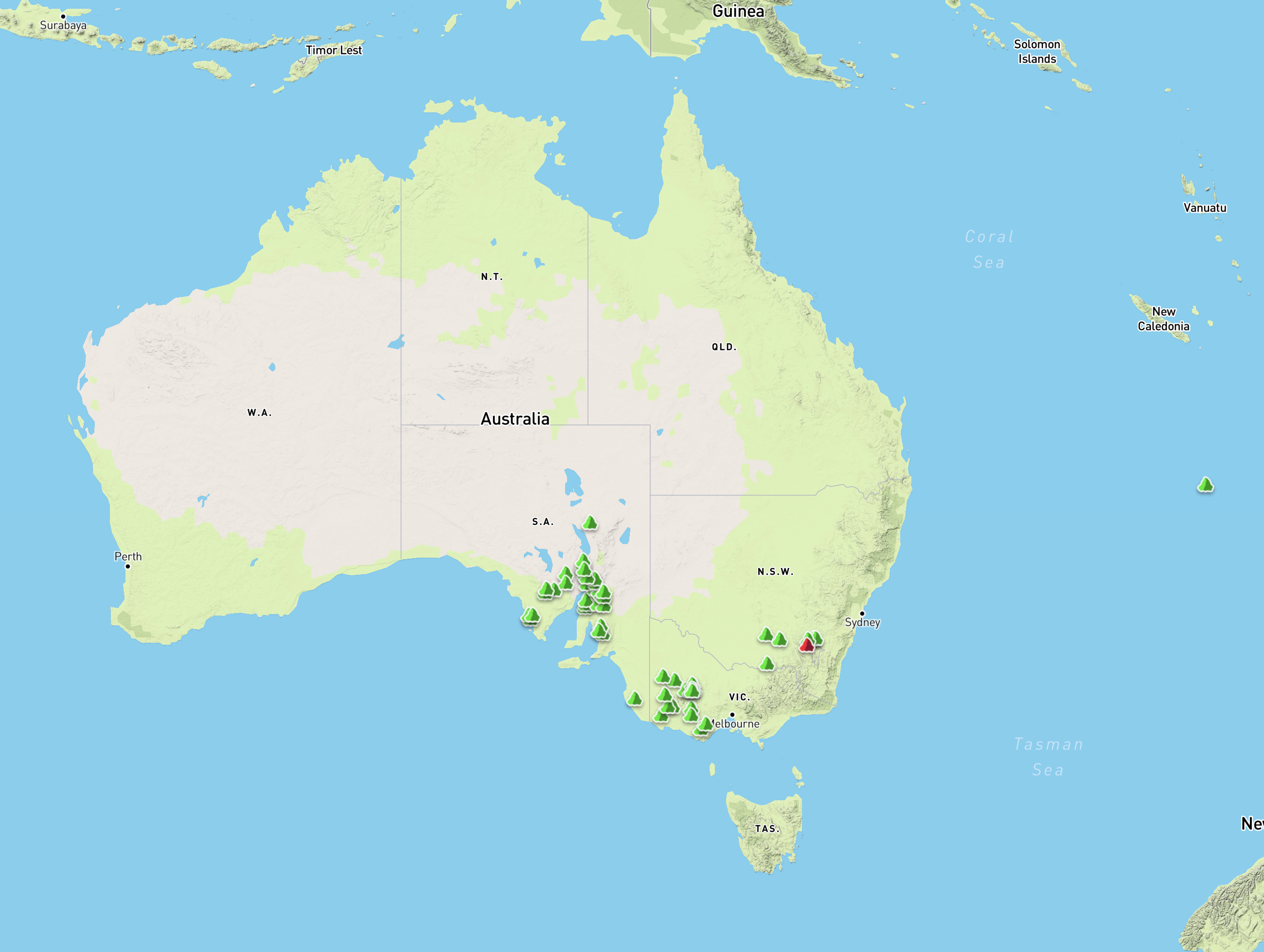
You can view a map of summits you have climbed.

Screen Shot 2020-08-27 at 6.45.27 pm

There are numerous features on the Peakery website and I would encourage you to visit the page and explore everything that Peakery has to offer.

Peakery also has a Facebook page which can be located at…….

https://www.facebook.com/peakery

Screen Shot 2020-08-27 at 6.59.37 pm

AM broadcast – Medium wave band listening

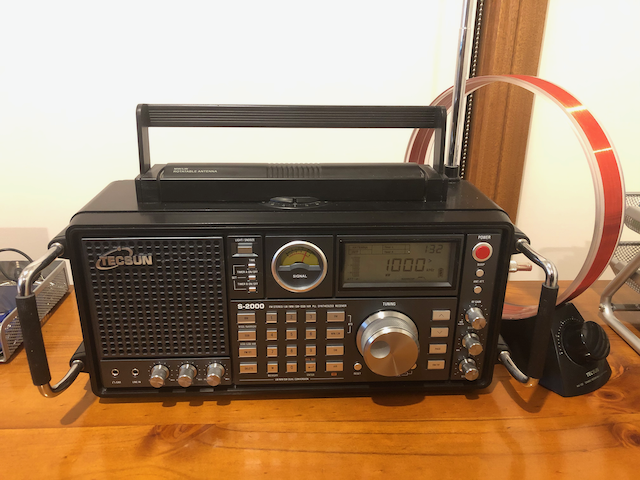
Last night (18th August 2020) I dusted off my Tecsun S-2000 and my Tecsun AN-100 antenna, and decided to have a listen on the medium wave band.

IMG_4127

Below is a list of the stations I heard between 1000 kHz and 1400 kHz……..

  • 4TAB – 1008 kHz – Brisbane, QUEENSLAND
    • horse racing.
    • very difficult copy
  • 2KY – 1017 kHz – Sydney, NEW SOUTH WALES
    • horse racing
    • Good signal with very minimal fading
  • 3PB – 1026 kHz – Melbourne, VICTORIA
    • news
    • Good signal with very minimal fading
  • 2EA – 1035 kHz – Wollongong, NEW SOUTH WALES
    • foreign language program
    • Fair signal.
  • 2CA – 1053 kHz – Canberra, ACT
    • Reception was quite good, some fading on the signal.
  • 5MV – 1062 kHz – Berri, SOUTH AUSTRALIA
    • Poor reception, low signal, lots of fading.
  • 3EL – 1071 kHz – Maryborough, Victoria
    • Good signal with very minimal fading
  • 3WM – 1089 kHz – Horsham
    • Fair reception
    • interference from other stations on freq, possibly 2EL.
  • 2EA – 1107 kHz – Sydney, NEW SOUTH WALES
    • foreign language program
    • Fair signal with lots of fading.
  • 3AK – 1116 kHz – Melbourne, VICTORIA
    • Good signal
    • Lots of interference from 5MU on 1125
  • 5MU – 1125 kHz – based in Murray Bridge.
    • SUPER STRONG as you would expect as this is my local radio station.
  • 3CS – 1134 kHz – Colac, Victoria
    • Fair signal
    • Lots of interference from 5MU on 1125
  • 2HD -1143 kHz – Newcastle, NEW SOUTH WALES
    • talkback program
    • Fair signal with minimal fading.
  • 2WG – 1152 kHz – Wagga Wagga, NEW SOUTH WALES
    • Fair signal
    • quite a bit of fading on the signal at times.
  • 5PA – 1161 kHz – Naracoorte, SOUTH AUSTRALIA
    • Nightlife program.
    • Fair signal.
  • 2CH – 1170 kHz – Sydney, NEW SOUTH WALES
    • Music
    • Fair signal.
  • 3EA – 1224 kHz – Melbourne, VICTORIA
    • Japanese language program
    • Fair signal
    • Lots of fading
  • 2NC – 1233 kHz – Newcastle, NEW SOUTH WALES
    • Nightlife program
    • Poor signal
    • Lots of fading
  • 3GV – 1242 kHz – Sale, VICTORIA.
    • Music program
    • Fair signal
    • Lots of interference on freq from 5AU in Port Augusta
  • 5AU – 1242 kHz – Port Augusta, SOUTH AUSTRALIA.
    • music program
    • Fair signal.
    • Lots of interference from 3GV on frequency
  • 2DU – 1251 kHz – Dubbo, NEW SOUTH WALES
    • Fair signal
  • 3EE – 1278 kHz – (Magic 1278) Melbourne, Victoria
    • Music
    • Good signal
  • 2TM – 1287 kHz – Tamworth, New South Wales
    • Fair signal
    • Lots of fading
  • 3BT – 1314 kHz – Ballarat, VICTORIA.
    • Music
    • Good signal
  • Cruise – 1323 kHz – Adelaide, SOUTH AUSTRALIA.
    • Good signal
  • 3SH – 1332 KHz  – based in Swan Hill, VICTORIA.
    • Nights program with Denis Walter
    • Good signal
  • 2GN – 1368 kHz – Goulburn, NEW SOUTH WALES.
    • Music program & news
    • Fair signal
  • 3MP – 1377 kHz – Rowville, VICTORIA.
    • Good signal
  • 5AA  – 1395 kHz – Adelaide, SOUTH AUSTRALIA
    • Poor signal.


2020 Remembrance Day (RD) Contest

The weekend just gone (Saturday 15th & Sunday 16th) saw the running of the 2020 Remembrance Day (RD) Contest here in Australia.

This contest commemorates those amateur radio operators who died during World War Two, and is designed to encourage friendly participation and help improve the operating skills of participants.  The RD Contest is held on the weekend closest to the 15th August, the date on which hostilities ceased in the southwest Pacific area.

The aim of the RD Contest is for amateurs to endeavour to contact amateurs in VK call areas, ZL and P29 on all bands except WARC bands.  Modes allowed are voice, CW and RTTY as per the era remembered.

More information can be found on the Wireless Institute of Australia (WIA) website at……

https://www.wia.org.au/members/contests/rdcontest/

The surrender of Imperial Japan was announced by Japanese Emperor Hirohito on August 15 and formally signed on September 2, 1945, bringing the hostilities of World War II to a close.
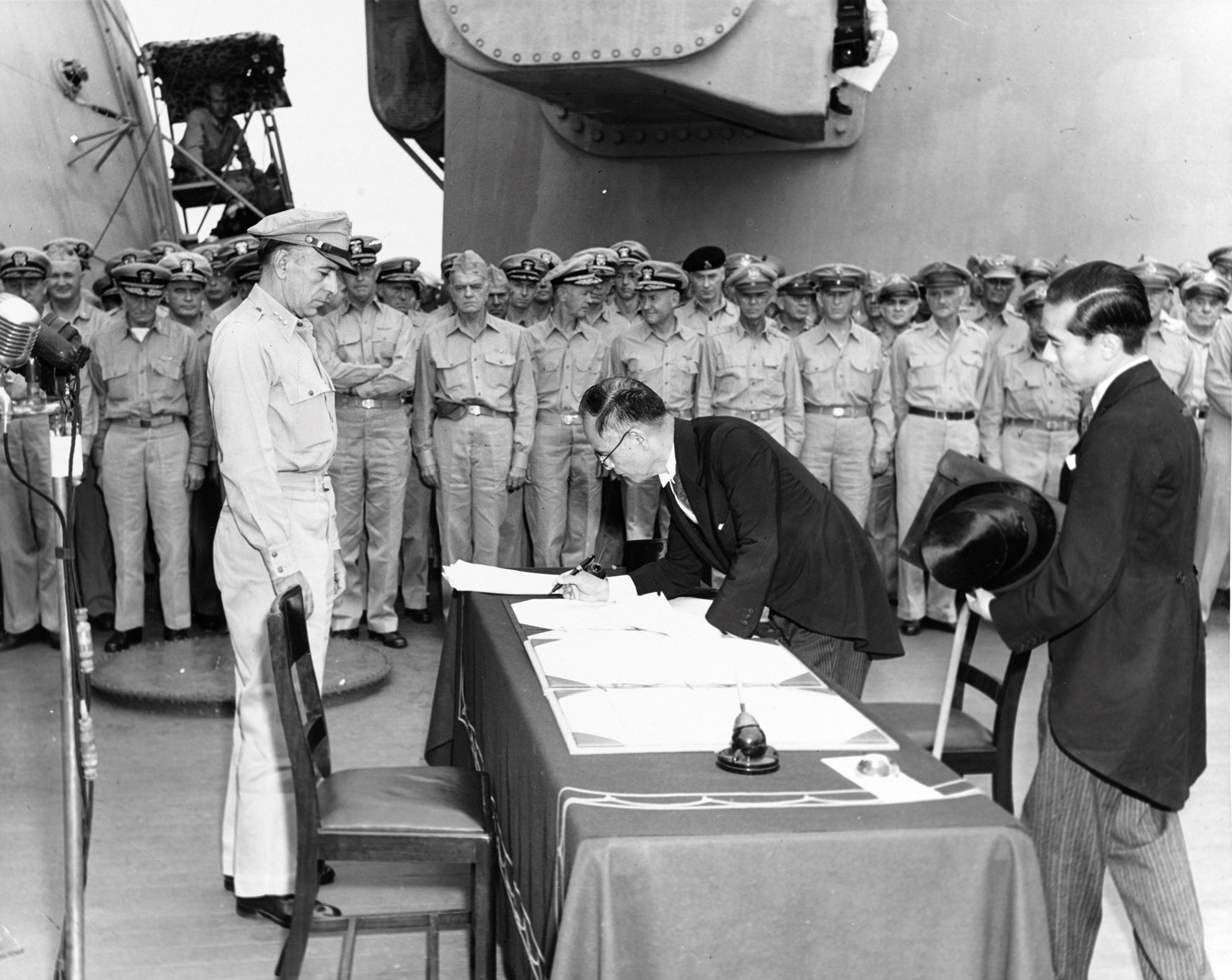
http://ww2db.com

Above:- Japanese foreign affairs minister Mamoru Shigemitsu signs the Japanese Instrument of Surrender aboard the USS Missouri as General Richard K. Sutherland watches, September 2, 1945.  Image courtesy of Wikipedia.

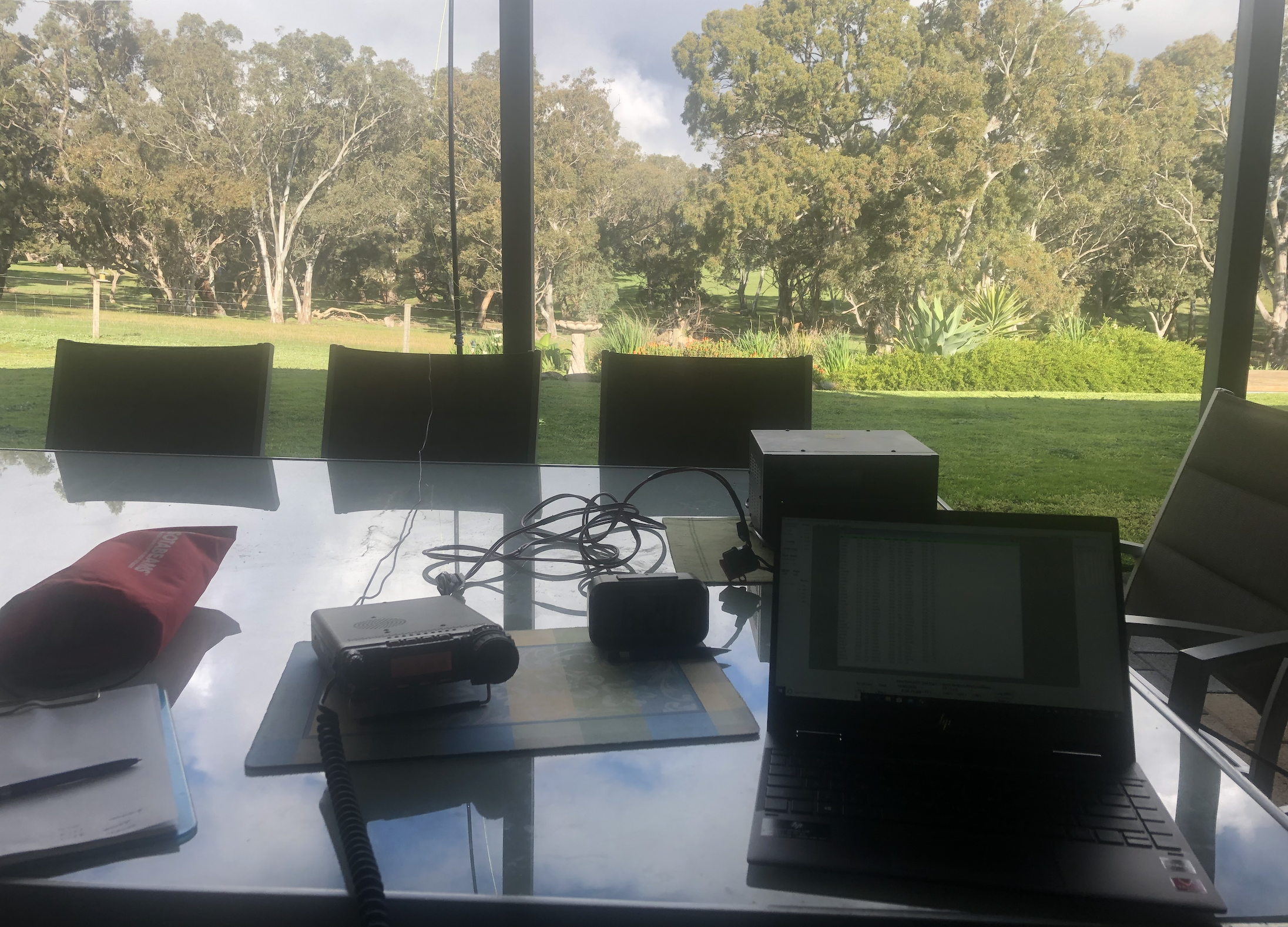
I ran my Yaesu FT-857d, 30 watts, and the 20/40/80m linked dipole for the Contest.  I was operating from my back verandah overlooking the paddocks.  The antenna was inverted vee configuration, just 7 metres at the apex, with the ends tied off low to the ground.
Screen Shot 2020-08-19 at 10.15.39 am

Above:- “My shack” for the RD Contest

The contest commenced at 0300 UTC on Saturday (12.30 p.m. South Australian local time).  First in the log was Mark VK3MDH.  I remained on 40m until about 0517 UTC, logging 112 stations.

I then moved to the 20m band where I logged just 5 stations from VK4 and VK6.  Conditions appeared to be quite poor on this band.

I moved back to the 40m band and logged about 58 stations.  I remained on 40m until about 0732 UTC when I moved to the 80m band.

I logged about 87 stations on 80m until I decided to call it quits for the evening at about 0955 UTC (7.130 p.m. local time).  I headed off inside for a glass or two of red and to watch the AFL.  I had logged a total of 263 contacts on day one of the RD.

I had a bit of a sleep in on Sunday morning but was back on the radio by about 2322 UTC (8.52 a.m. local time).  I started off on 40m, with VK2TTL first in the log for day two.

I logged 88 stations on 40m, before trying the 20m band.  Band conditions on 20m didn’t seem to be much better than Saturday, with just 10 stations logged from VK2, VK4, and VK6.  I cannot wait to get my 5 element bean back up in the air.  It was hard going with just 30 watts and a piece of wire.

I logged a further 41 stations on 40m until the end of the contest at 0300 UTC.   My final contact was with John VK7FJFD.

I ended up logging a total of 402 contacts, which I was quite happy with, considering my operating conditions and that I had not burnt the midnight oil.
Screen Shot 2020-08-18 at 8.51.40 pm

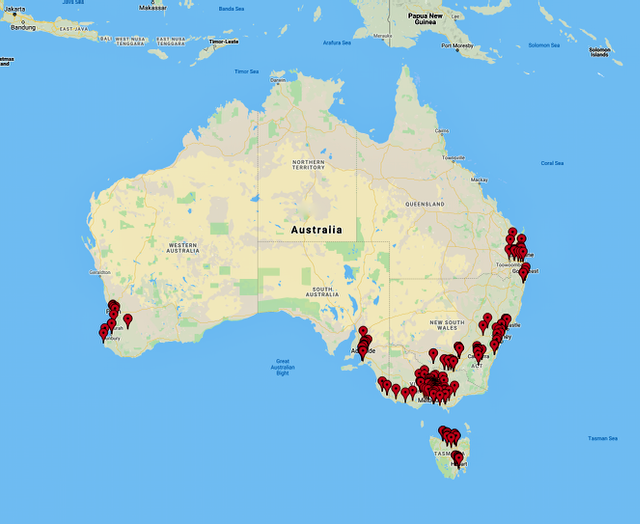
Above:- Map showing my contacts during the Contest.  Courtesy of QSOmap.org

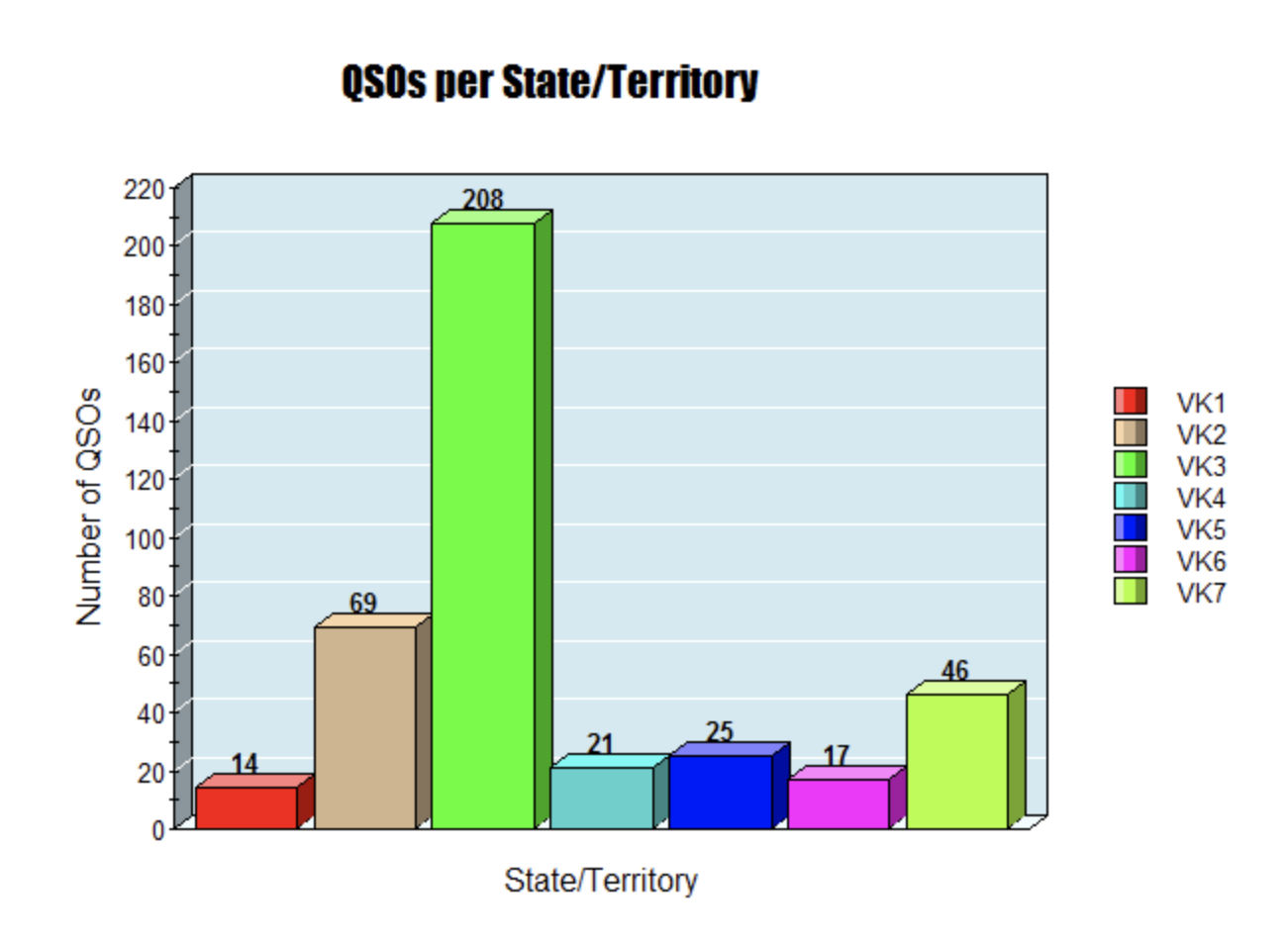
The vast majority of my contacts were in to VK3 (Victoria), followed by VK2 (New South Wales).  I didn’t log a single New Zealand station during the Contest, and only heard one ZL station working another VK.
Screen Shot 2020-08-18 at 9.16.06 pm

Above:- Graph showing my contacts per State/Territory.

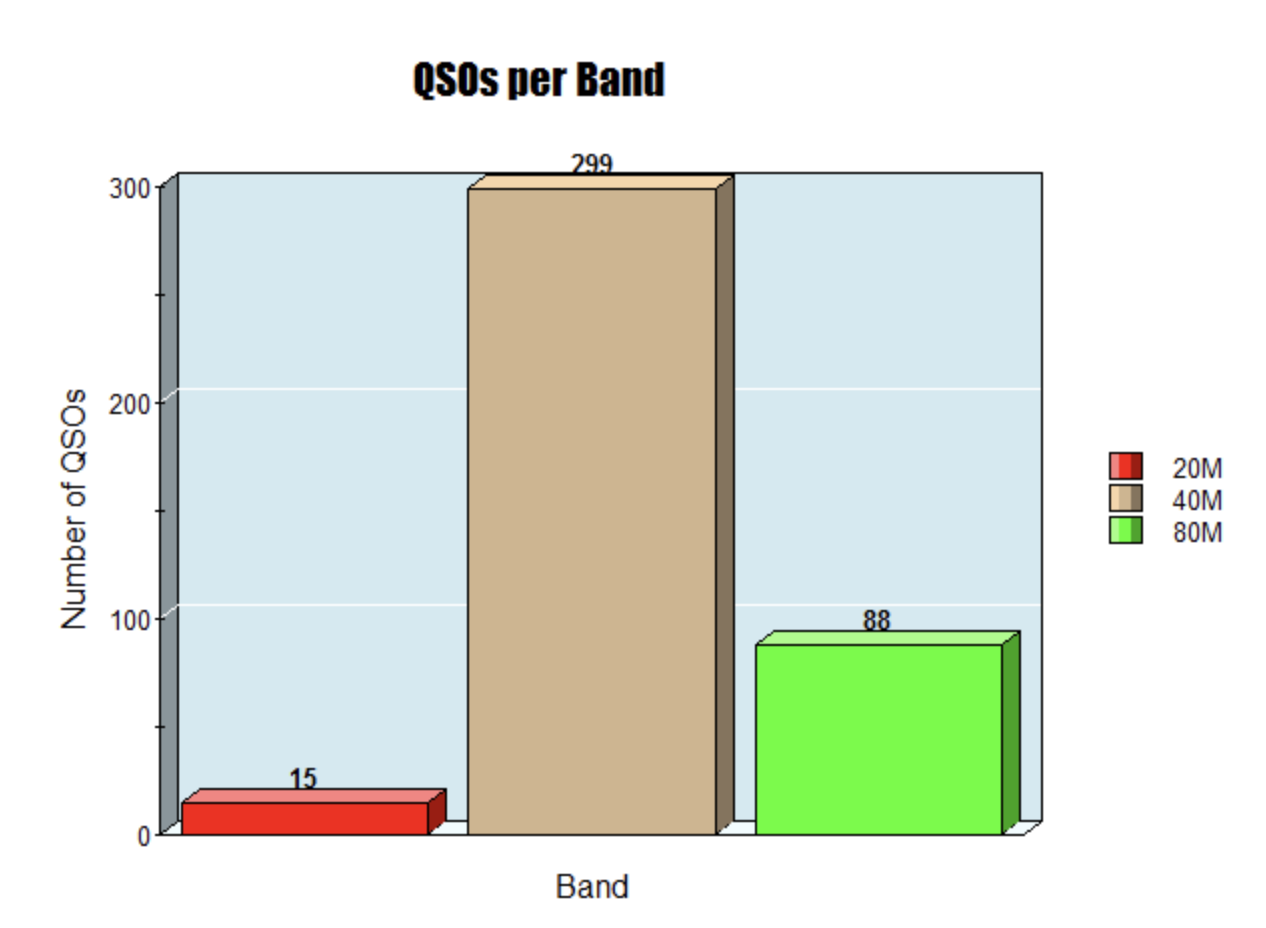
The vast majority of my contacts were on the 40m band – 299 QSOs.  This was followed by 80m with 88 QSOs, and 20m with just 15 QSOs.
Screen Shot 2020-08-19 at 10.30.57 am

MANY THANKS to everyone who called and GOOD LUCK to everyone who took part in the 2020 RD Contest.


References.

Wireless Institute of Australia, 2010, <https://www.wia.org.au/members/contests/rdcontest/>, viewed 19th August 2020.

Wikipedia, 2020, <https://en.wikipedia.org/wiki/Surrender_of_Japan>, viewed 19th August 2020.

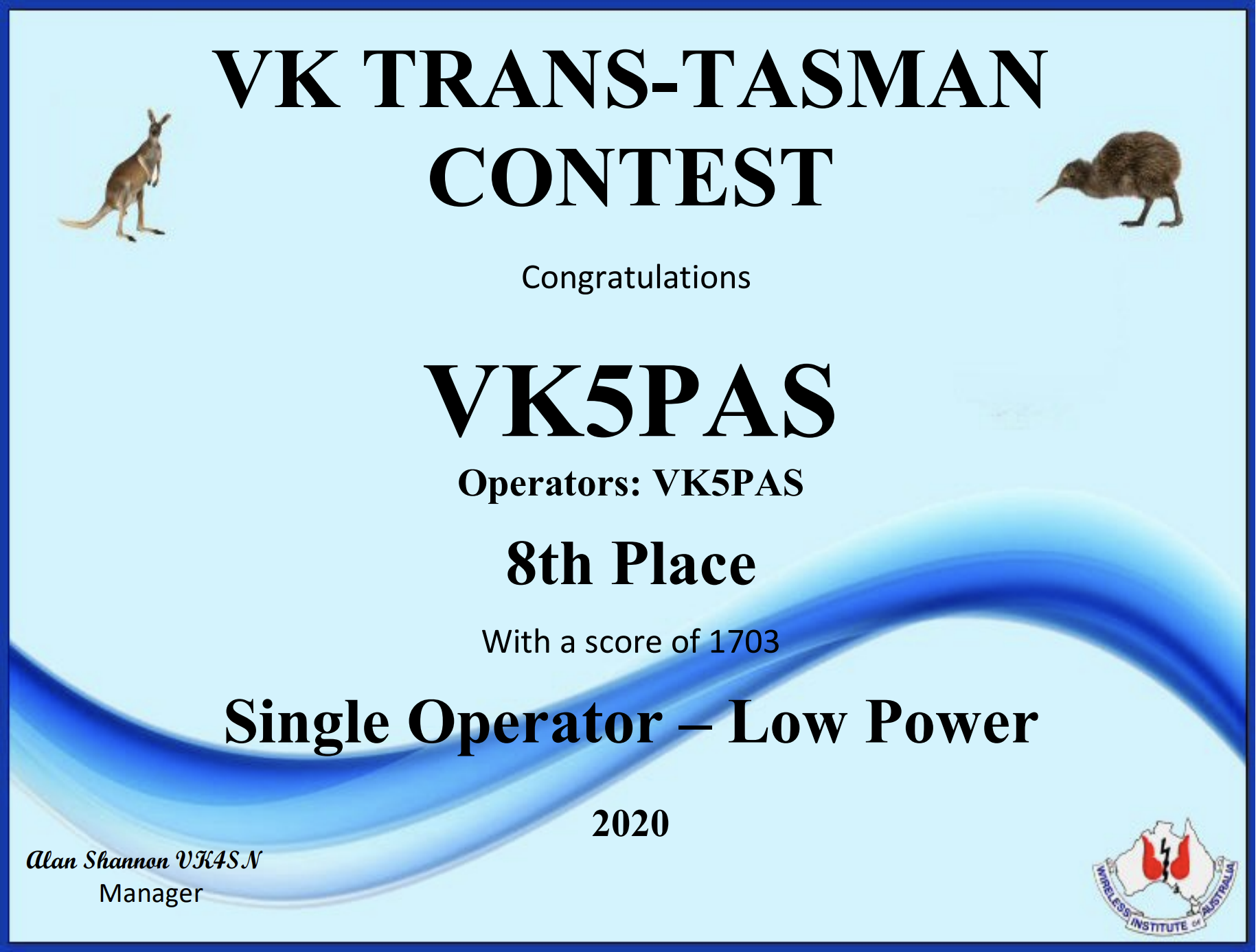
2020 Trans Tasman Low Band Contest

I entered into the 2020 Trans Tasman Low Band Contest which is all about encouraging Low Band activity between VK and ZL.

I operated from my back verandah and made a total of 166 contacts and a claimed score of 1,712 points.

I ended up with a confirmed score of 1,703 points and came in at 8th place in the Single Operator-Low Power category.

Screen Shot 2020-08-11 at 4.27.29 pm

More information on my time during the contest can be found in a previous post on my blog at……

https://vk5pas.org/2020/07/19/2020-trans-tasman-low-band-contest/

Thanks to everyone who called and thanks to Alan VK4SN the Award Manager.