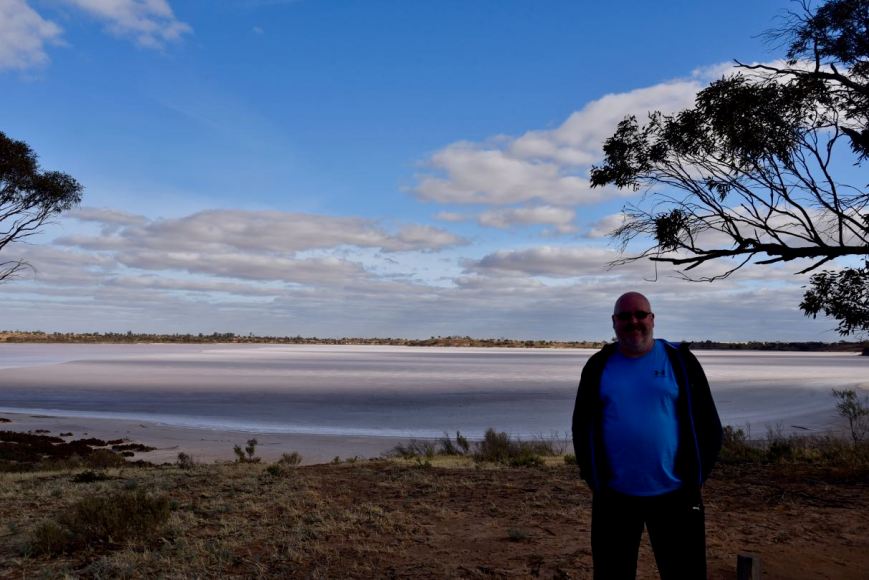
Yetmans Flora and Fauna Reserve VKFF-2502

It was now Monday 11th November 2019 and our two nights at Murrayville had come to an end.  Our plan for today was to try to activate as many parks as possible and also to fit in quite a bit of sightseeing.  With respect to the parks, we intended just to qualify them for VKFF with 10 contacts, and to come back another day for the 44 QSOs required for WWFF global qualification.

We enjoy our trips to Murrayville.  It is just a little town, but we always find the locals very friendly and the accommodation at the Murrayville Caravan Park is top-notch.

Murrayville was named after John Murray (1851-1916) the Premier of Victoria from 1909-1912.

The town is a shadow of its former self.  Many of the shops in the town’s main street are closed.  In its heyday, it was largest of several settlements west of Ouyen.  In 1933 the town’s population was 603.

The Murrayville Hotel dates back to 1911.  We have always enjoyed our meals there.  The old fruit and vegetable shop which is now the Cobb & Co Cafe is also one of our regular haunts when we visit Murrayville.  At the eastern end of the town, you can view some old rusting army tanks.

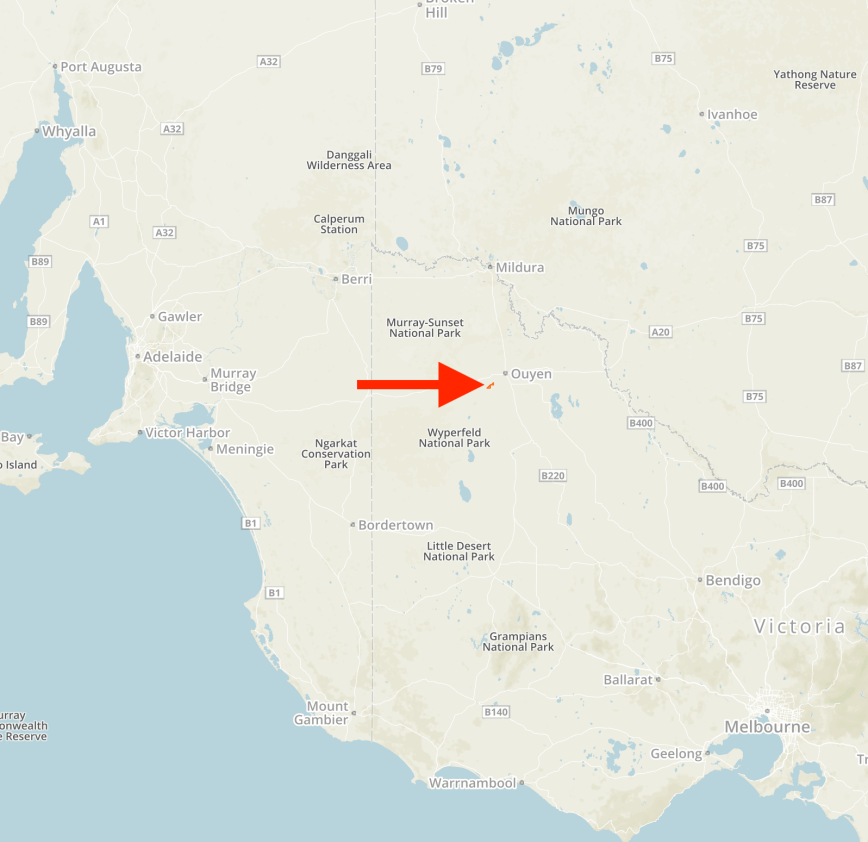
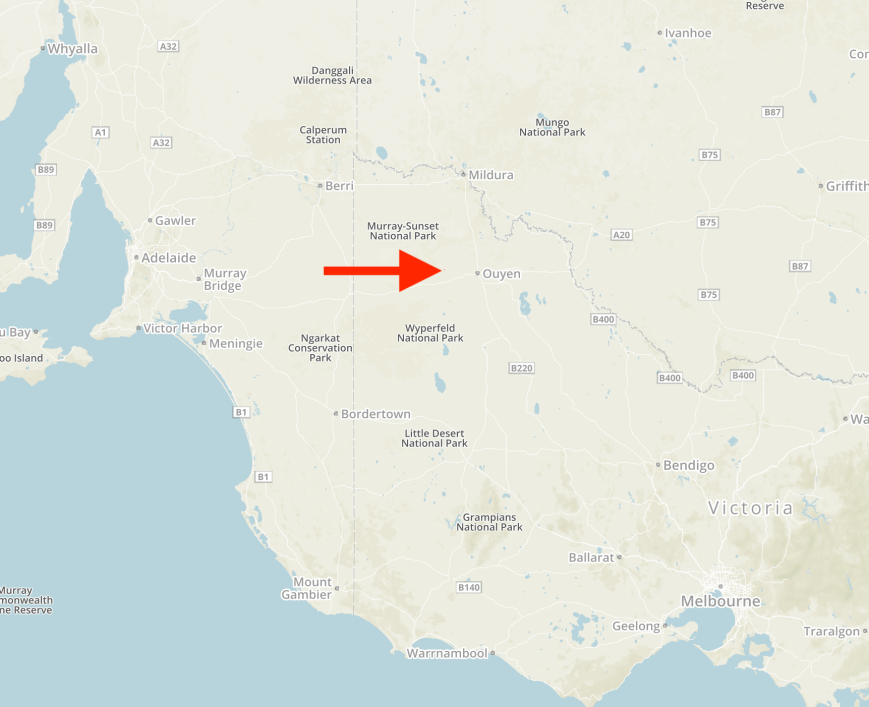
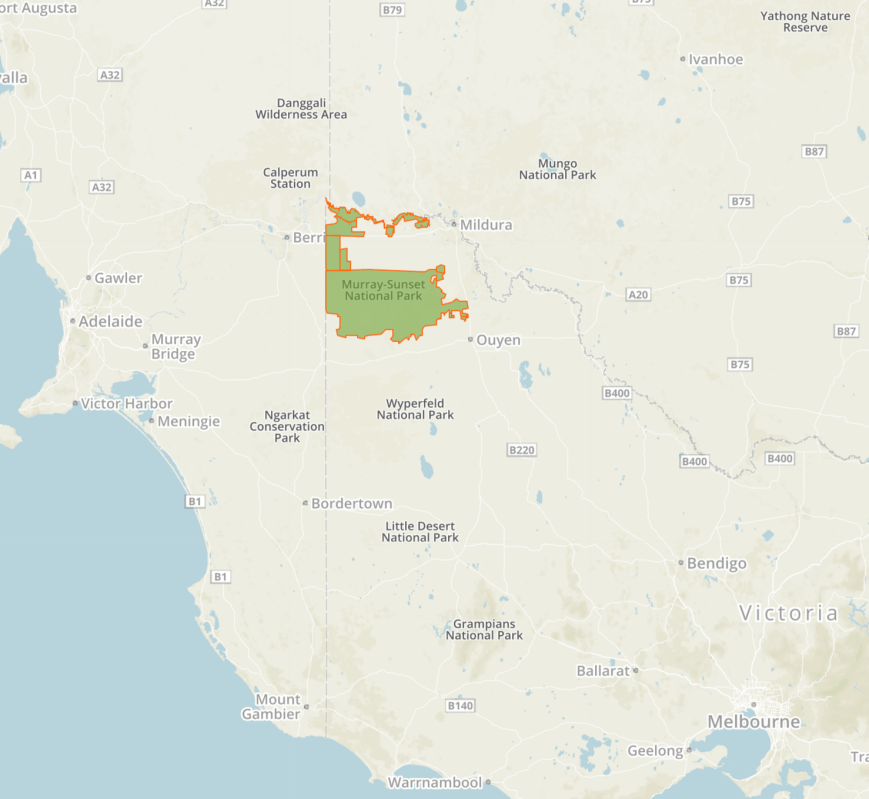
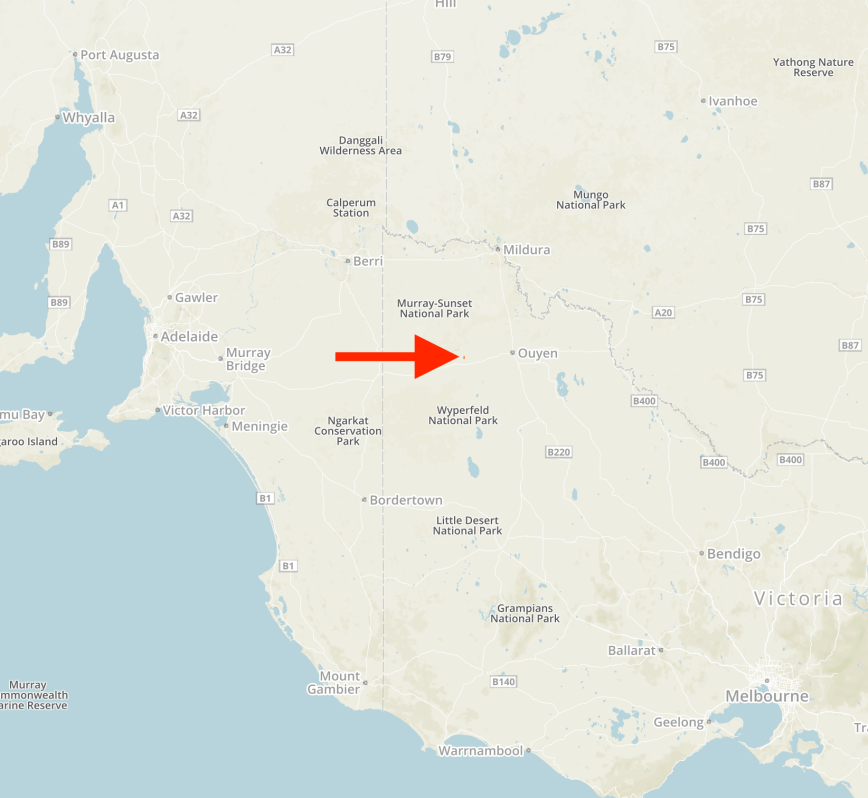
Our first park of the day was the Yetmans Flora and Fauna Reserve VKFF-2502, which is located about 440 km north-west of Melbourne.

This was to be only the second time that this park had been activated for the World Wide Flora Fauna (WWFF) program.  It was the first time for Marija and I.

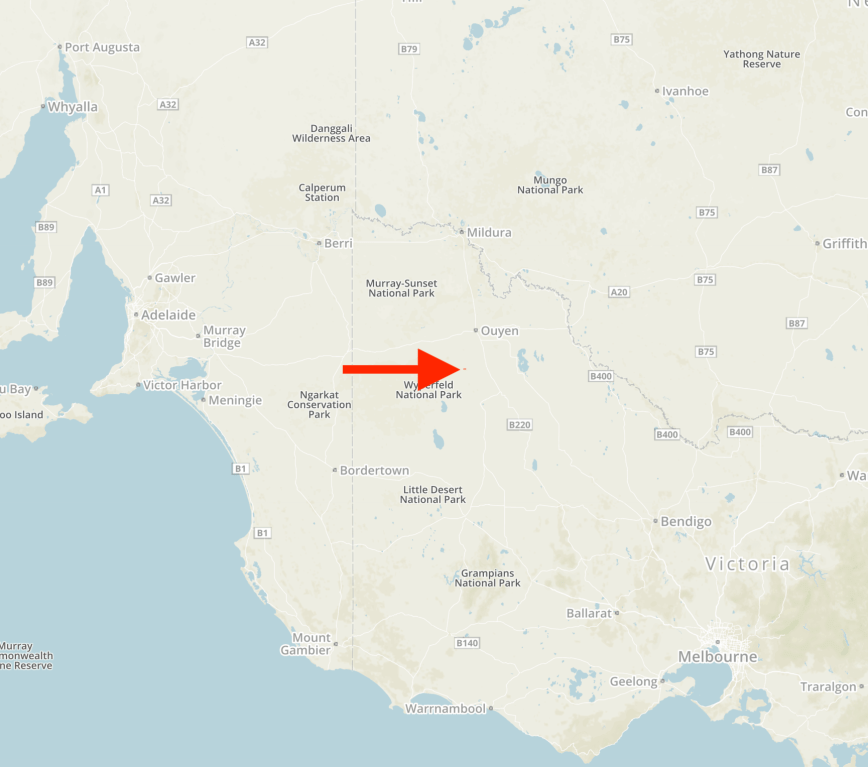
Screen Shot 2019-11-13 at 8.22.42 pm.png

Above:- Map showing the location of the Yetmans Flora & Fauna Reserve in north-western Victoria.  Map courtesy of Protected Planet.

We travelled east on the Mallee Highway and then turned left onto the Hopetoun-Walpeup Road to travel south.  Along the way, I spotted a Wedge-tailed eagle in a gum tree about 300 metres off the road.  The photos below were captured as it was flying off.

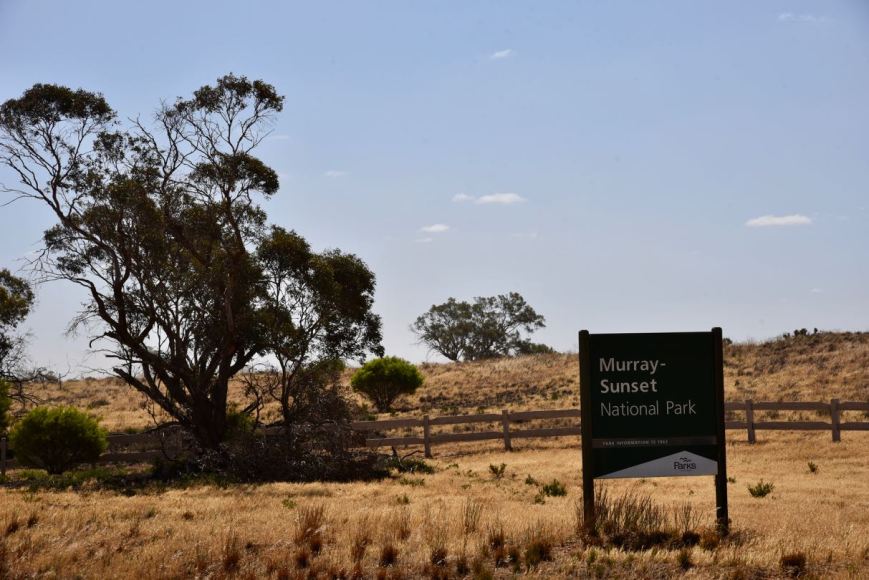
The Yetmans Flora and Fauna Reserve is about 593 hectares in size and was established in 1986.  It was clear from the park sign that the authorities have not been out to this park for a long time.

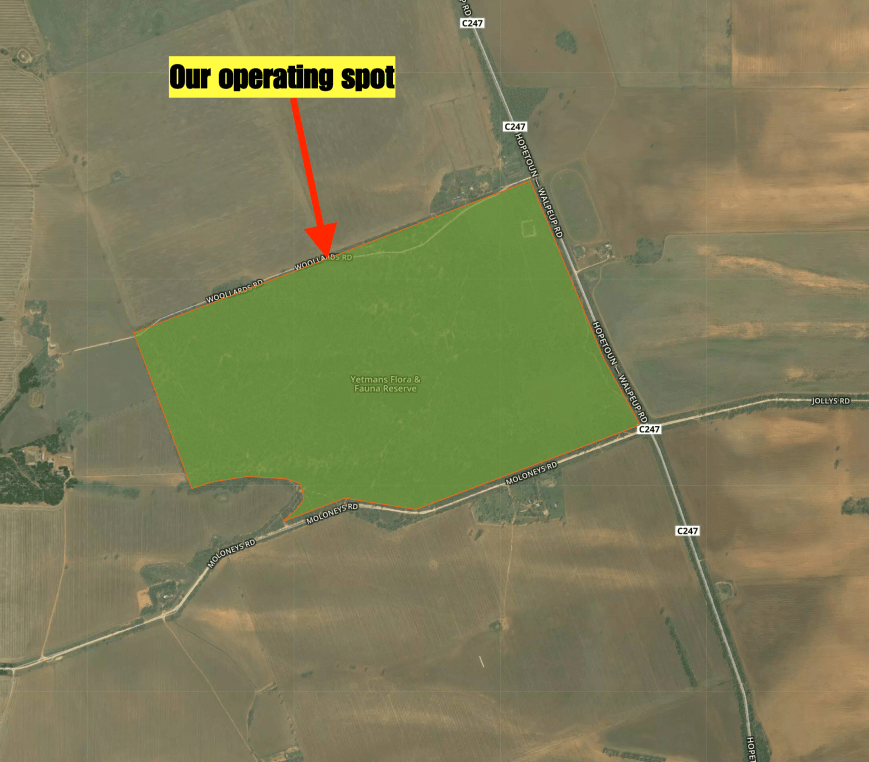
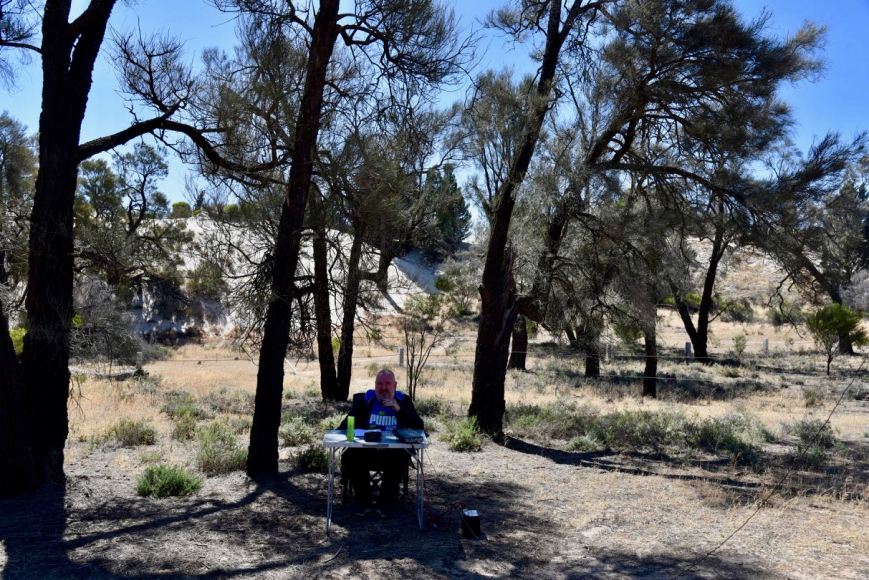
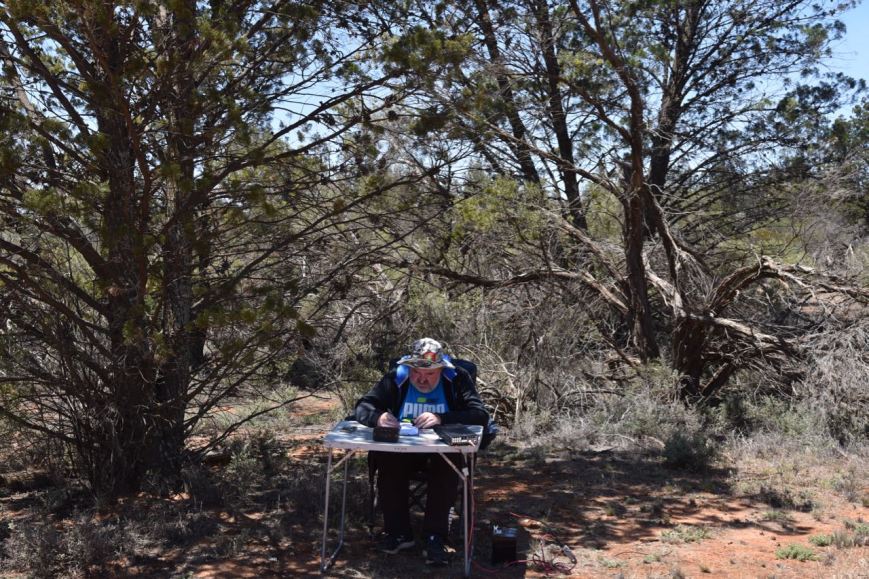
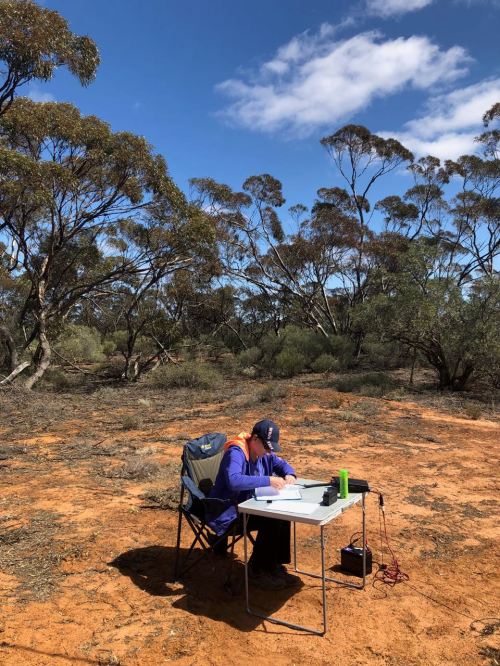
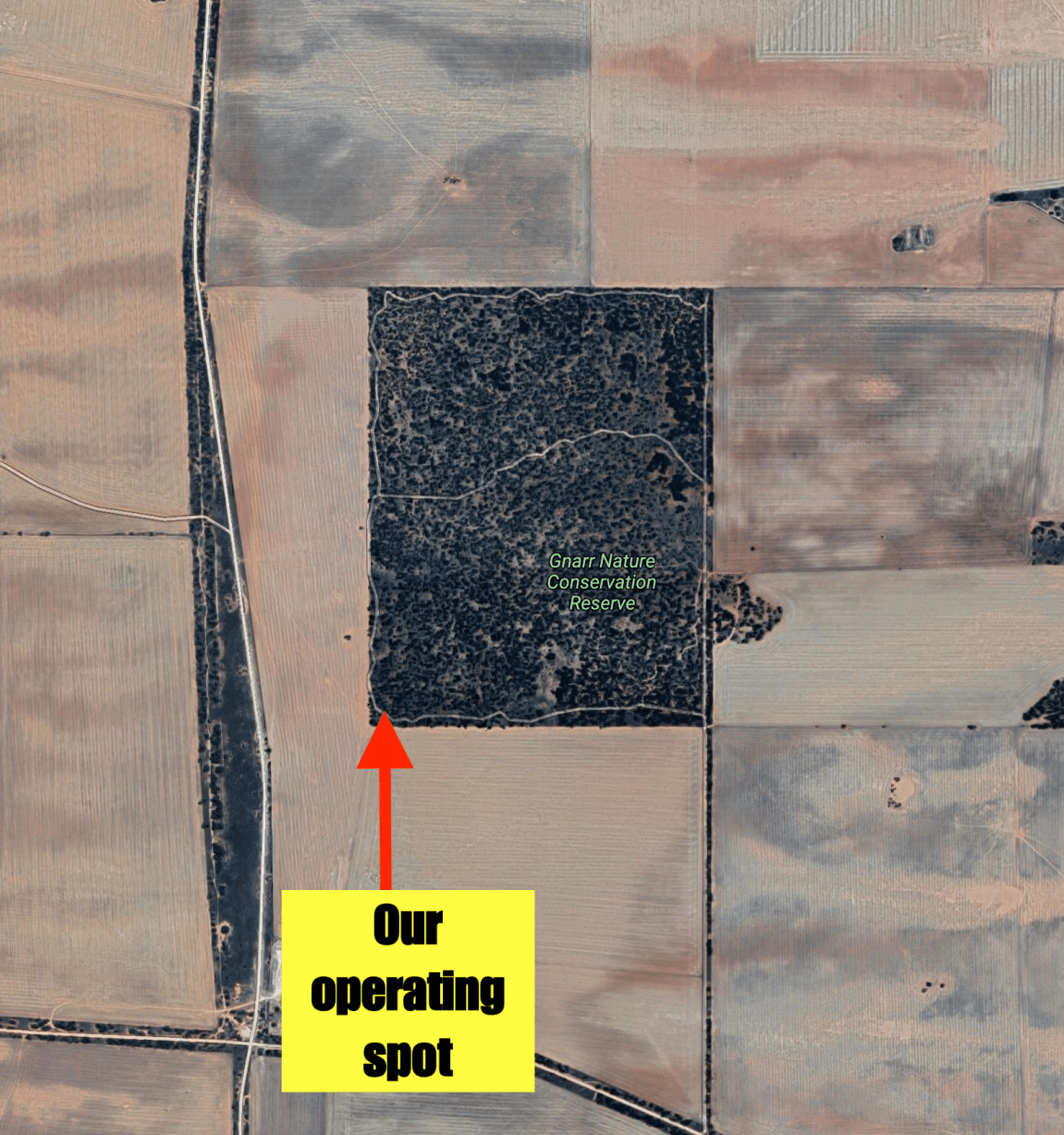
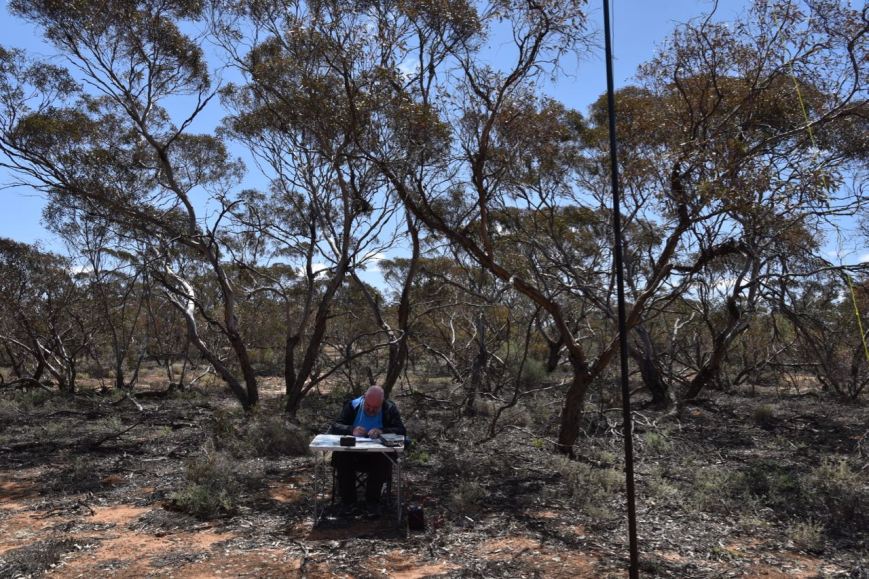
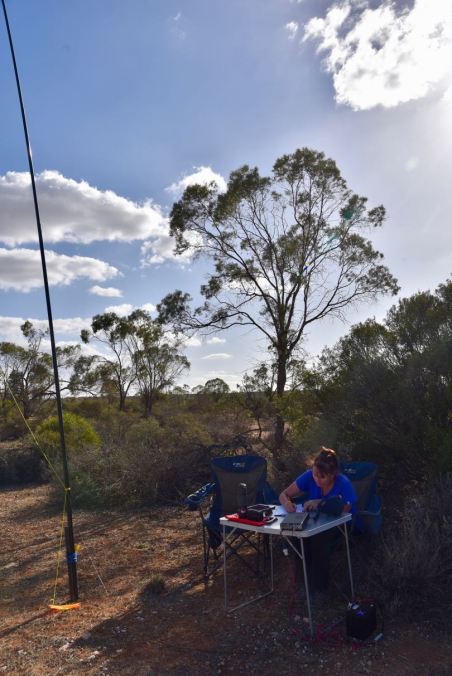
We accessed the park on its northern boundary on Woollards Road.  We found a gap in the scrub with enough room to pull off the road and set up our station.

Screen Shot 2019-11-13 at 8.22.31 pm.png

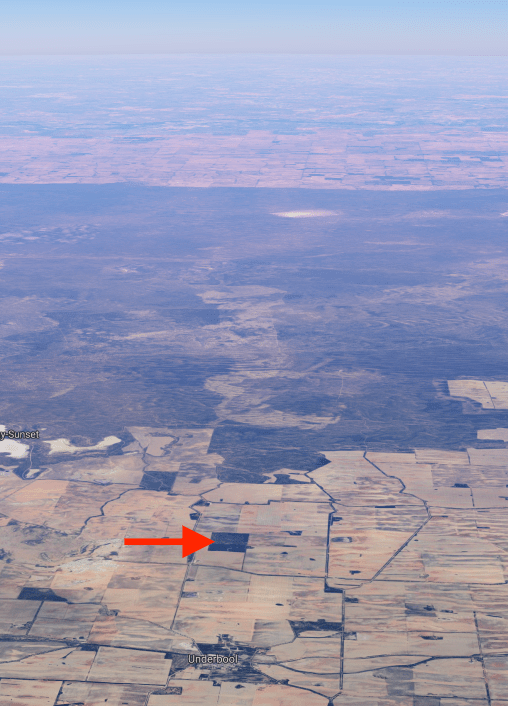
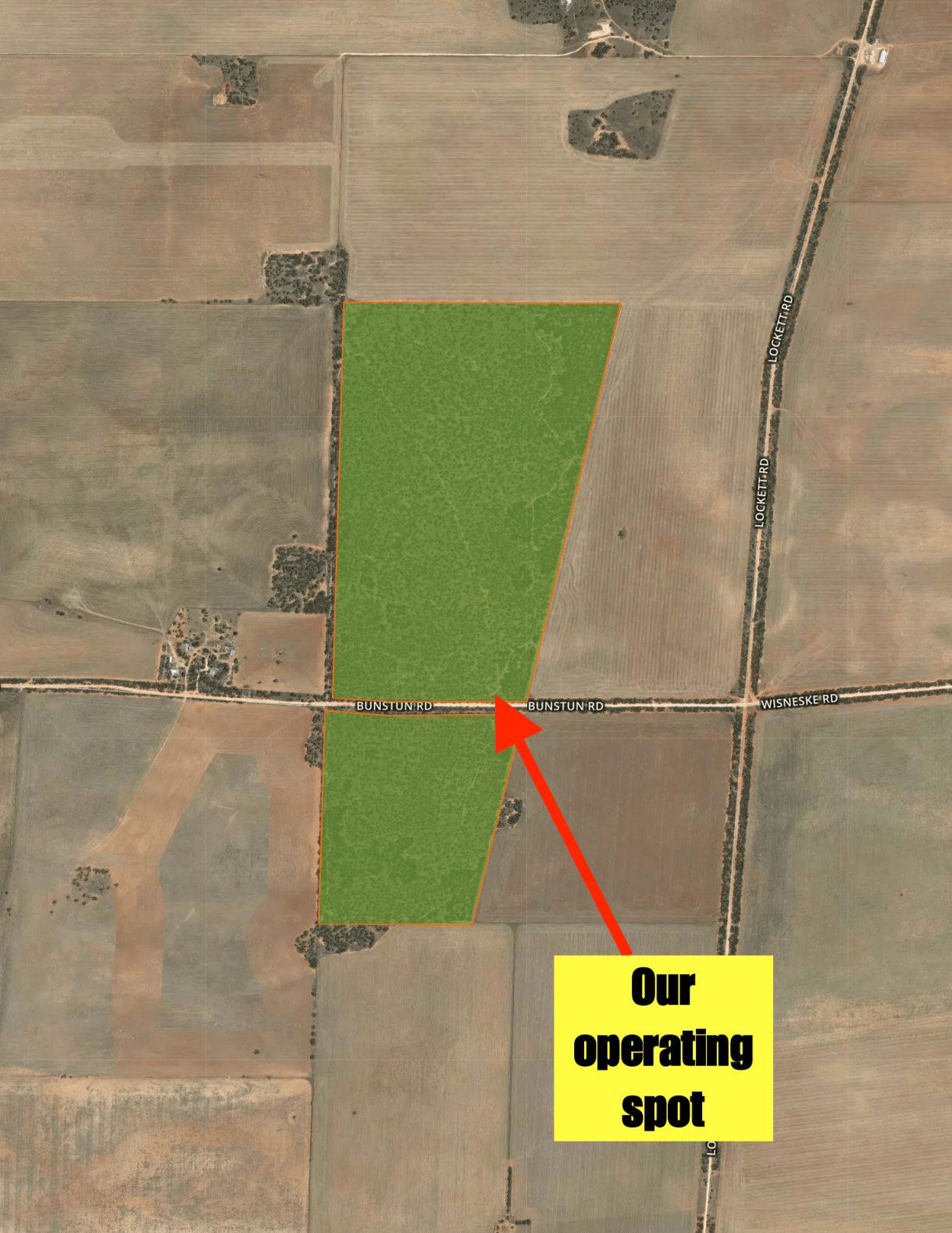
Above:- An aerial view of the Yetmans Flora & Fauna Reserve showing our operating spot.  Image courtesy of Protected Planet.

There were a couple of VK6 stations talking on 7.145 so I headed down to 7.140 and called CQ.  Brenton VK3CM came back to my call with a very big 5/9 plus signal.  This was followed by Adam VK2YK and Rod VK7FRJG.

The 40m band was in poor shape and it took me 15 minutes to get 10 contacts in the log, qualifying the park for VKFF.  I logged 11 stations before swapping the mic with Marija.

DSC_6227

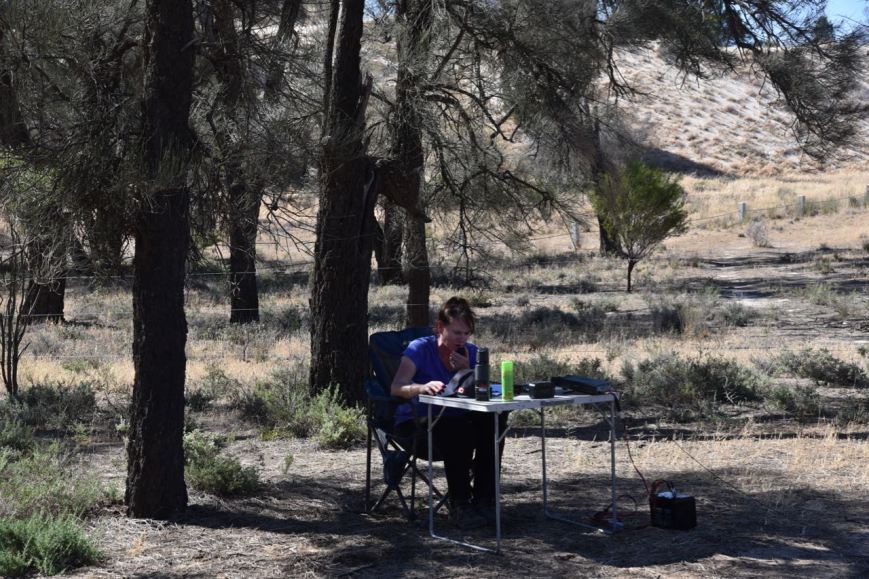
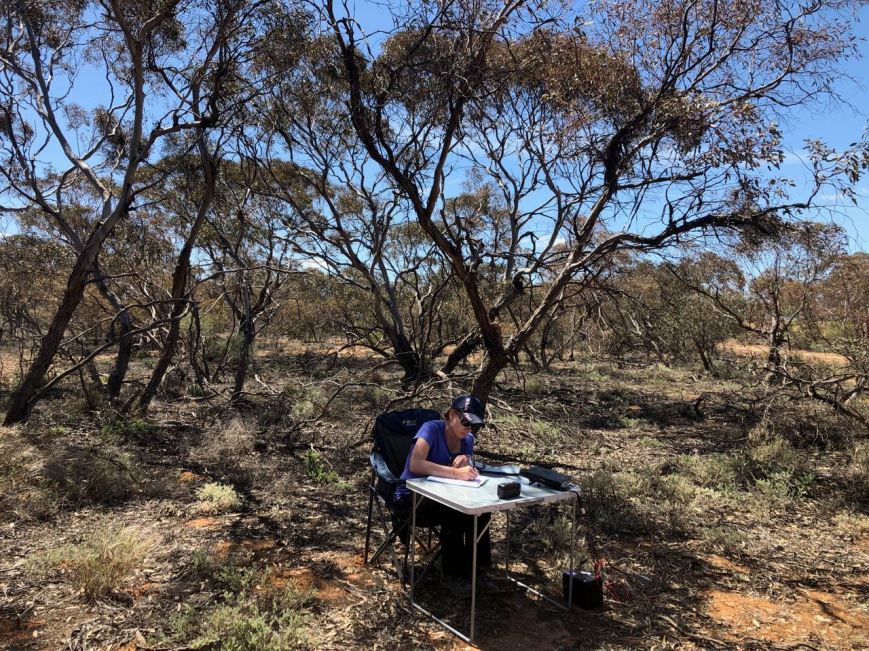
Marija called CQ on 7.140 and this was answered by Alan VK3ARH, followed by Lee VK2LEE, and then Adrian VK5FANA.  It took Marija only 6 minutes to get her 10 contacts.  QSO number ten was with Rob VK4AAC/2.  Marija logged a further two stations before handing me back the mic.

I then logged a further 4 stations on 40m before heading down to the 80m band.  Unfortunately, I was only able to log the single station on 80m, that being David VK5PL.   To conclude the activation I moved up to the 20m band where I logged two stations, Lee VK2LEE and Brett VK2VW.

With the park qualified for VKFF, Marija and I packed up and once again hit the road, heading for our next park.

Marija worked the following stations on 40m SSB:-

  1. VK3ARH
  2. VK2LEE
  3. VK5FANA
  4. VK4NH
  5. VK4DXA
  6. ZL4TY/VK4
  7. VK4HNS
  8. VK2YK
  9. VK2VH
  10. Vk4AAC/2
  11. VK3PF/m
  12. VK5CZ

I worked the following stations on 40m SSB:-

  1. Vk3CM
  2. VK2YK
  3. Vk7FRJG
  4. VK5FANA
  5. VK3SQ
  6. VK3VEL
  7. VK2UXO
  8. VK4NH
  9. VK4DXA
  10. ZL4TY/VK4
  11. VK2IO
  12. VK5CZ
  13. VK4HNS
  14. VK2LEE
  15. VK3PF/m

I worked the following station on 80m SSB:-

  1. VK5PL

I worked the following stations on 20m SSB:-

  1. VK2LEE
  2. VK2VW


References.

Protected Planet, 2019, <https://www.protectedplanet.net/search?q=yetmans>, viewed 13th November 2019

Victorian Places, 2019, <https://www.victorianplaces.com.au/murrayville>, viewed 13th December 2019

Wyperfeld National Park VKFF-0549

Our third and final park for Sunday (10th November 2019) was the Wyperfeld National Park VKFF-0549.  This would be our second Victorian National Park for the 2019 Keith Roget Memorial National Parks Award (KRMNPA) Activation Weekend.

The park is located about 450 km north-west of Melbourne and is located in the Mallee district of north-western Victoria.

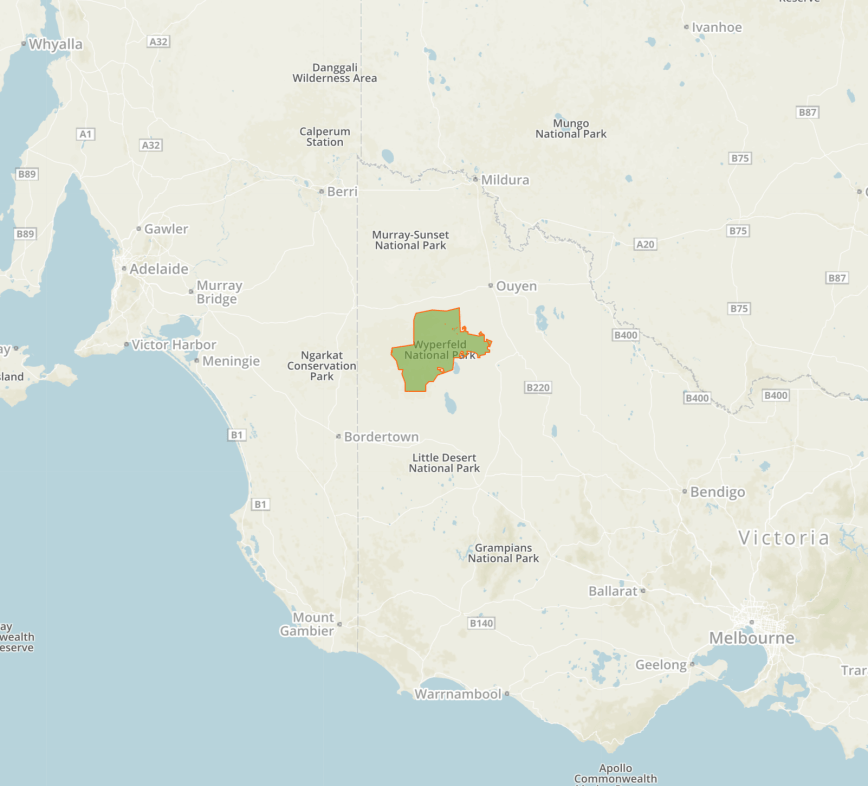
Screen Shot 2019-11-13 at 6.41.21 pm.png

Above:- Map showing the location of the Wyperfeld National Park in western Victoria.  Map courtesy of Protected Planet.

We stopped briefly in the town of Patchewollock which is believed to take its name from the corruption of two aboriginal words ‘putje’ meaning ‘plenty’ and ‘wallah’ meaning ‘porcupine grass’.  Thus ‘the place of plenty porcupine grass’.

The town contains some large Mallee Fowl sculptures which are made of corrugated iron.

Patchewollock is also part of the Silo Art Trail.  Brisbane artist Fintan Magee completed the work in 2016.  The work portrays an image of the archetypal Aussie farmer.

You can also view some railway buildings from a bygone era.  The line to Patchewollock was officially opened on the 4th day of May 1925.  Patchewollock Railway Station’s last wheat train departed on the 3rd day of July 1986 and the line closed on the 8th day of December 1986.

The Wyperfeld National Park is the third largest National Park in Victoria.  It is about 357,017 hectares (882,210 acres) in size.  It was declared in 1921 to protect this large piece of mallee, woodland and heathland.

The park’s name comes from the Parish of Wyperfeld.  There have been numerous attempts to discover the origin of the word ‘Wyperfeld’.  It is believed to come from the German ‘Wyper’, a tributary of the Rhine, and ‘Feld’, a field.

The park can be reached:

  • via Patchewollock off the Sunraysia Highway
  • via Hopetoun on the Henty Highway
  • via Underbool on the Mallee Highway
  • via Rainbow from the Western Highway at Dimboola.
Screen Shot 2019-11-13 at 6.43.35 pm.png

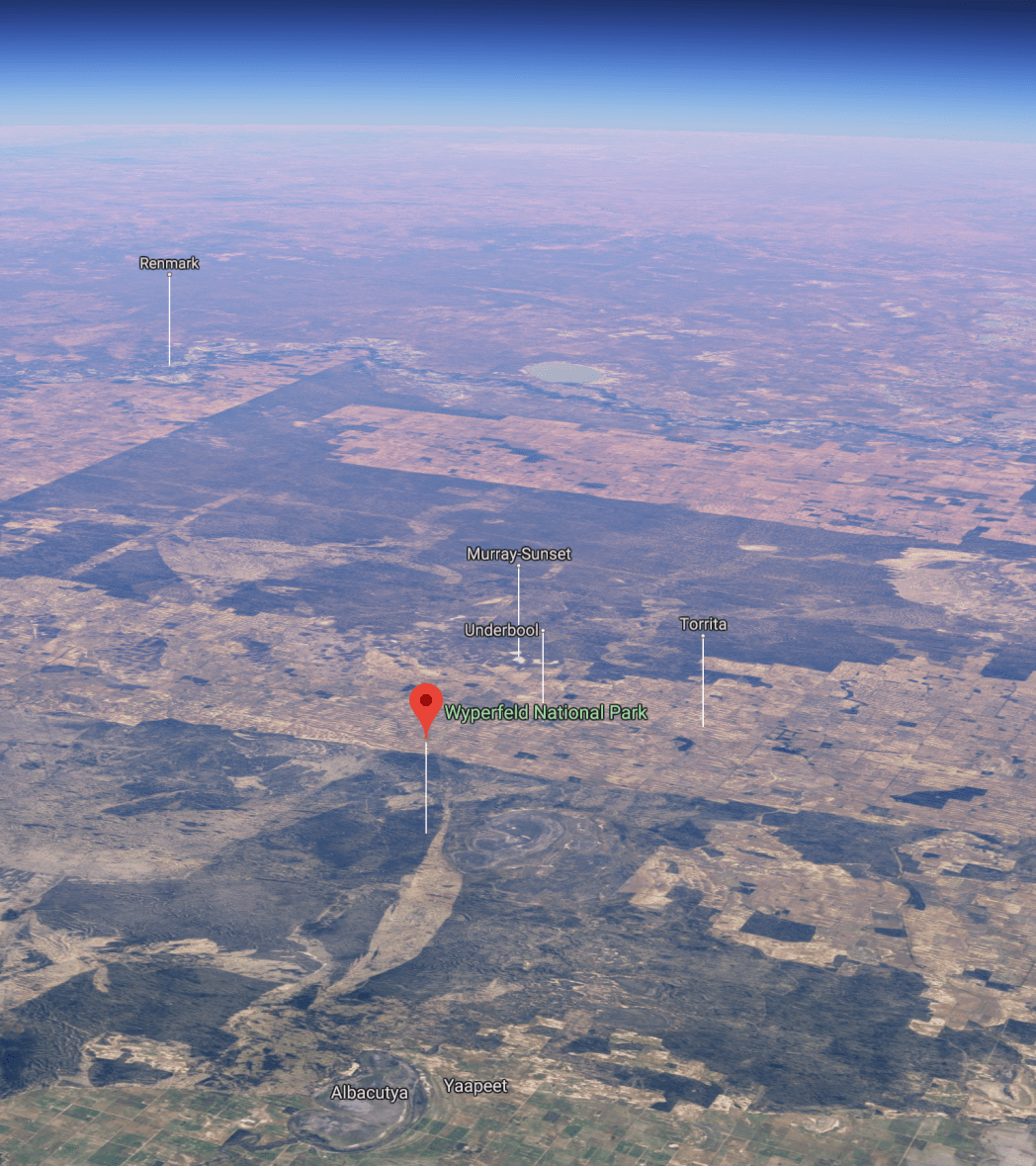
Above:- An aerial view of the Wyperfeld National Park looking north.  Image courtesy of Google maps

Prior to European settlement in the area, the Wotjobaluk aboriginal people regularly travelled along Outlet Creek which snakes its way through the centre of the park, visiting the lakes and swamps.  From the 1860s European settlers followed the same route to establish pastoral runs.

In 1909 a total of 3,900 hectares were reserved by the Victorian State Government following pressure from naturalists.  In 1921 Wyperfeld National Park was proclaimed.  Wyperfeld was Australia’s first Mallee National Park.

About 450 species of native plants can be found in the park.  River Red Gum and Black Box woodlands cover the floodplains of Outlet Creek and its lakes.  Pine-Buloke grows on nearby dunes.  Mallee eucalypts cover most of the eastern section of the park.

Over 200 species of bird have been recorded in the park.  Wyperfeld National Park is nationally recognised as an Important Bird Area.  This is due to the area’s threatened population of Malleefowl and other species of birds including the Mallee Emu-wren.

After leaving Patchewoolock we headed west on Baring Road and then Pine Plains Road.  We soon reached the eastern boundary of the park.

Last year we activated the park from the Casuarina campground.  This year we decided to head to the Snowdrift campground.

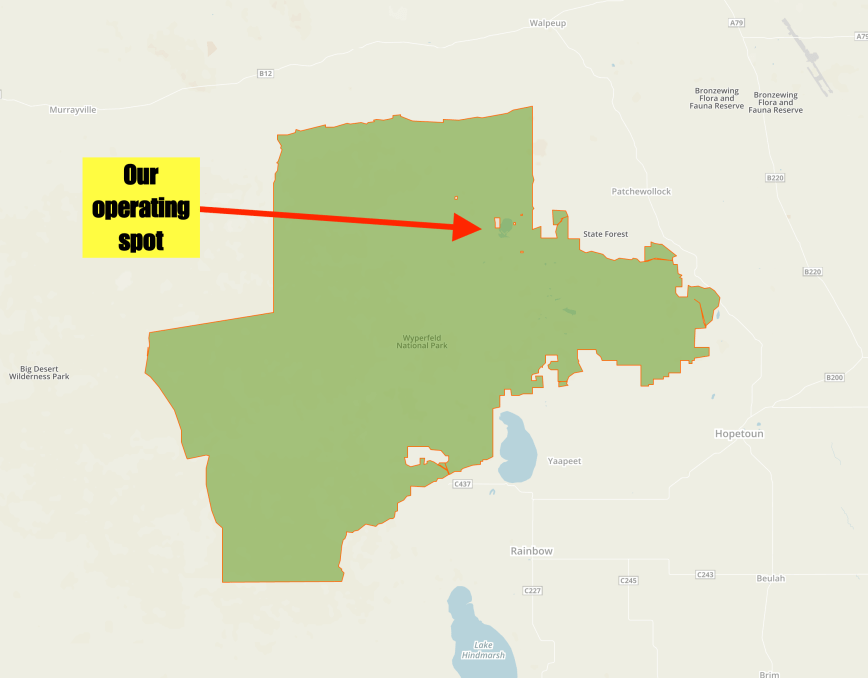
Screen Shot 2019-11-13 at 7.03.48 pm.png

Above:- The Wyperfeld National Park showing our operating spot.  Map courtesy of Protected Planet.

Snowdrift contains magnificent white sand dunes in a normally flat park.

Marija was keen enough to climb the sand dunes.  There are some great views to be had of the surrounding area from the top.

After setting up Marija and I tuned across the band to see if we could hear any other park activators, but sadly we did not.  In fact, the band was very quiet with very few operators.  But there was a very low down station on 7.145 so I was unable to get onto 7.144.  I found 7.141 clear and started to call CQ.  We were unable to self spot on parksnpeaks as there was absolutely no internet coverage from within the park at our location.

It took around 3 or 4 minutes of CQ calls before the first station came back to my CQ call.  It was Grant VK2LX with a big 5/9 signal.  Grant kindly spotted us on parksnpeaks which resulted in a lot more traffic.  Second in the log was Kieran VK2QK, followed by Graham VK7ZGK, and then a Park to Park with Gerard VK2IO/p who was activating the Dural Nature Reserve VKFF-1926.  Marija also logged Gerard.

I logged a total of 12 stations on 40m before swapping the mic with Marija.

DSC_6114

Marija called CQ on 7.141 and this was answered by Linda VK7QP, followed by Mark VK4SMA, and Scott VK4CZ.  Just 5 minutes later and Marija had contact number ten in the log, with a contact with Dave VK2RP.

Marija went on to work a total of 21 stations on 40m from VK2, VK3, VK4, and VK7.  This included a further Park to Park, with Peter Vk3ZPF/p who was in the Churchill National Park VKFF-0621.

DSC_6118

Although we have both previously activated and qualified Wyperfeld, it is always nice to get your 10 or 44 contacts during an activation.  Despite the band being in rather a poor shape, I was hoping to get my 44, so I hopped back into the operator’s chair.

I logged a further 33 stations including Park to Park contacts with Alan VK2MG/4 in the Samford Conservation Park VKFF-1639, Peter VK3ZPF/p in the Churchill National Park VKFF-0621, and David VK5DG/3 in the Alfred National Park VKFF-0618.  Contact number 44 was with Andrew VK7DW and came in an hour and twenty minutes into the activation.  Not bad considering the band conditions were poor.

I then moved up to the 20m band where I logged three stations, Mark VK3BSA mobile 6, Jonathan VK7JON and Murray VK4MWB.

Marija worked the following stations on 40m SSB:-

  1. VK2IO/p (Dural Nature Reserve VKFF-1926)
  2. VK7QP
  3. VK4SMA
  4. VK4CZ
  5. VK4NH
  6. VK4DXA
  7. ZL4TY/VK4
  8. VK3HAY
  9. VK2YK
  10. VK2RP
  11. VK2BDR
  12. VK7JON
  13. VK4MWB
  14. VK4TJ
  15. VK4/AC8WN
  16. VK4/VE6XT
  17. VK4SSN
  18. VK3ZPF/p (Churchill National Park VKFF-0621)
  19. VK2EZT
  20. VK7FOLK
  21. VK3PF/m
  22. VK5DG/3 (Alfred National Park VKFF-0618)

I worked the following stations on 40m SSB:-

  1. VK2LX
  2. VK2QK
  3. VK7ZGK
  4. VK2IO/p (Dural Nature Reserve VKFF-1926)
  5. VK1AT
  6. VK3BSA/5
  7. VK4NH
  8. VK4DXA
  9. ZL4TY/VK4
  10. VK7QP
  11. VK4CZ
  12. VKSMA
  13. VK2MG/4 (Samford Conservation Park VKFF-1639)
  14. VK2PKT
  15. VK7HCK
  16. VK3MPR
  17. VK7JON
  18. VK4FARR
  19. VK5NAW
  20. VK7FJFD
  21. VK2JES
  22. VK2PGB
  23. VK3FADM/1
  24. VK3ZPF/p (Churchill National ParkVKFF-0621)
  25. VK2AD
  26. VK4GSF
  27. VK4MWB
  28. VK3ANL
  29. VK4TJ
  30. VK4/AC8WN
  31. VK4/VE6XT
  32. VK4SSN
  33. VK3BSA/6
  34. VK2LEE
  35. VK2UH
  36. VK2SK
  37. VK7ROY
  38. VK7ME
  39. VK1JH
  40. VK7VZ
  41. VK5DG/3 (Alfred National Park VKFF-0618)
  42. VK4HNS
  43. VK2PAA
  44. VK7DW
  45. VK4PDX

I worked the following stations on 20m SSB:-

  1. VK3BSA/6
  2. VK7JON
  3. VK4MWB

x

DSC_6199

x

References.

Parks Victoria, 2006, Wyperfeld National Park Visitor Guide

Wikipedia, 2019, <https://en.wikipedia.org/wiki/Wyperfeld_National_Park>, viewed 13th November 2019

Timberoo Flora and Fauna Reserve VKFF-2456

Our second park for Sunday (10th November 2019) was the Timberoo Flora and Fauna Reserve VKFF-2456.  This was to be only the second time that the park had been activated for the World Wide Flora Fauna (WWFF) program.  It was the first time that Marija and I had activated the park.

The park is located about 24 km south-west of the town of Ouyen in north-western Victoria.

Screen Shot 2019-11-12 at 8.42.59 pm.png

Above:- A map showing the location of the Timberoo Flora and Fauna Reserve in north-western Victoria.  Map courtesy of Protected Planet.

After leaving Kattyoong Marija and I drove east on the Mallee Highway and into the little town of Walpeup.  The town’s name is derived from an aboriginal word with several meanings including ‘stumpy tailed lizard’ and the other an indigenous acacia.  There isn’t much at Walpeup these days.  However in its heyday in 1920 the town had a population of about 400 people, with a general store, a blacksmith, a butcher, a bank branch, and various other businesses.

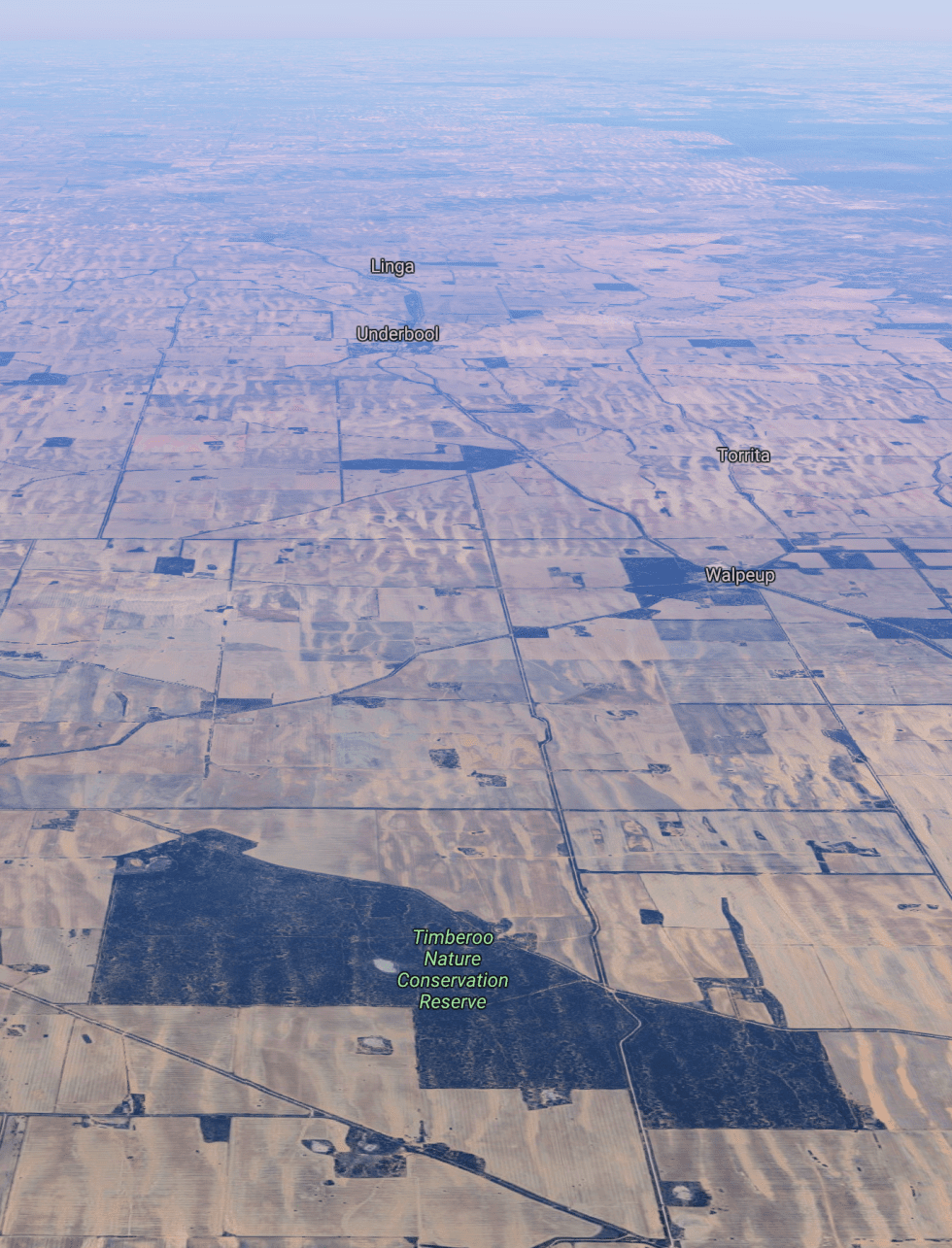
The Timberoo Flora & Fauna Reserve is also referred to on maps as the Timberoo Nature Conservation Reserve.  It is a large piece of remnant mallee scrub which is surrounded by cleared farming land.  It is not to be confused with the much smaller Timberoo Bushland Reserve.

Screen Shot 2019-11-12 at 8.44.17 pm.png

Above:- An aerial view of the Timberoo Flora & Fauna Reserve looking west.  Image courtesy of Google Maps.

The reserve is 3,034 acres in size and was created in 1993.  The reserve contains Walpeup Lake which has no water in it, and due to water no longer being piped into it, will probably remain that way for some time.

We accessed the park via Walpeup Lake Road which runs off the Hopetoun-Walpeup Road.

Screen Shot 2019-11-12 at 8.43.40 pm.png

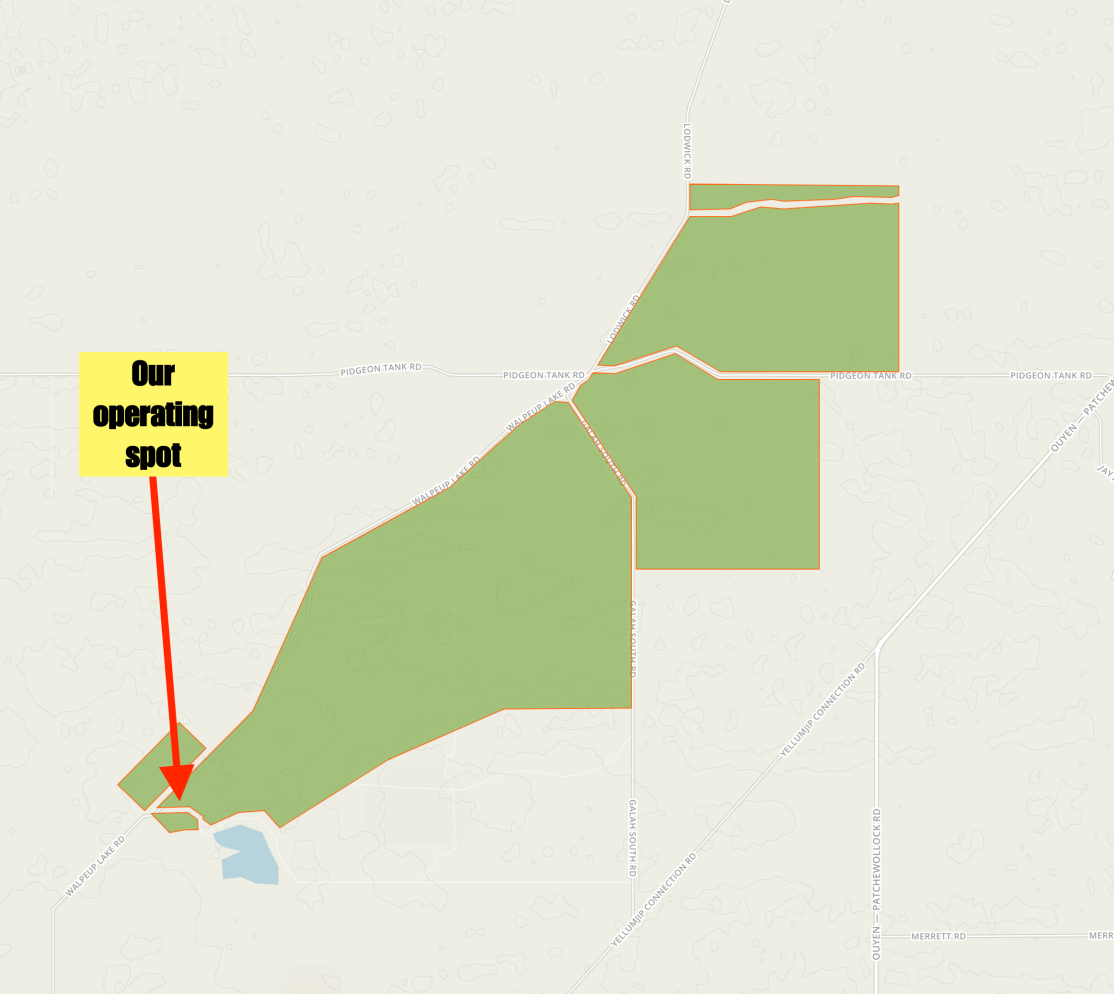
Above:- Map showing the Timberoo Flora & Fauna Reserve showing our operating spot.  Map courtesy of Protected Planet.

After setting up Marija and I had a tune across the 40m band before calling CQ, hoping to track down some other park activators.  Our first contact was with Peter VK3ZPF/p who was activating the Yarra Ranges National Park VKFF-0556.  At the end of our QSO with Les VK5KLV asked us to go up to 7.165.  We moved up the band and logged Les VK5KLV/p who was in the Franklin Harbor Marine Park VKFF-1709.

I then moved down the band to 7.144 and started calling CQ.  First in the log was Lee VK2LEE, followed by Mark VK2EMI, and then Ray VK4NH.  A handful of contacts later I had two more Park to Park contacts in the log: Gerard VK2IO/p who was in the Berowa Valley National Park VKFF-1162, and Shane VK2LUV/p who was activating the Belford National Park VKFF-0023.

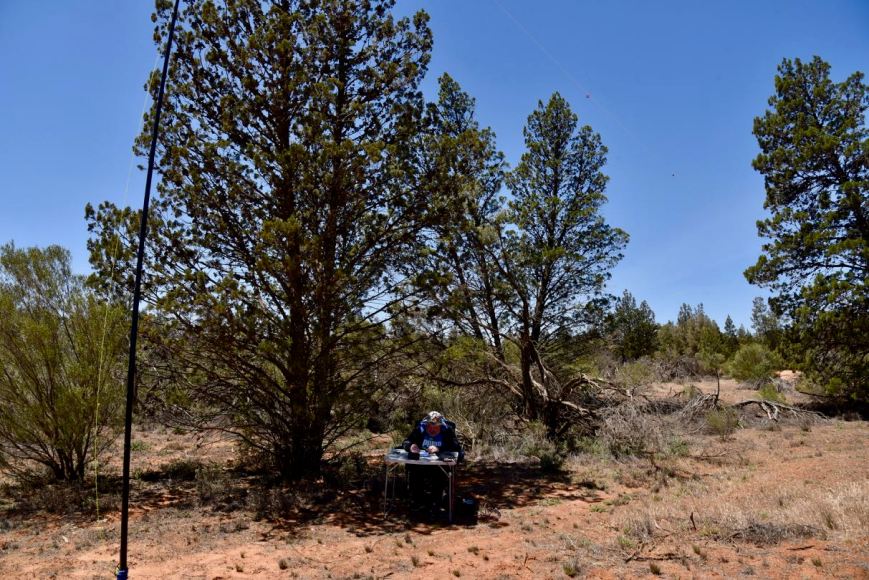
DSC_6076

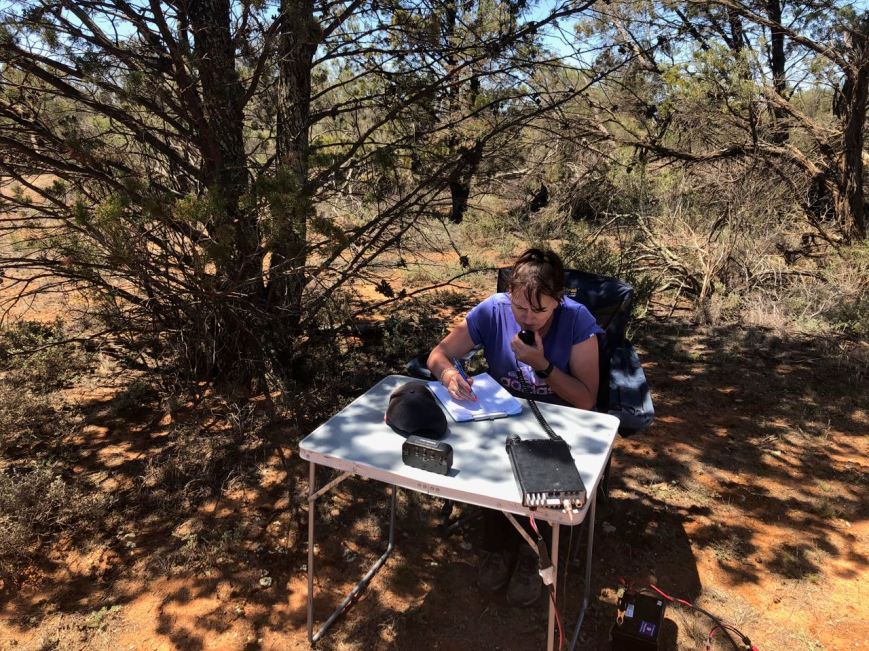
With 21 contacts in the log, I swapped the mic with Marija.  It didn’t take long and Marija had soon qualified the park for VKFF.  Her tenth contact was with Adrian VK5FANA on the Yorke Peninsula.  Marija logged 10 contacts including a Park to Park with Alan VK2MG/4 in the Samford Conservation Park VKFF-1639.

IMG_3345

Marija had now qualified the park for VKFF, so I again jumped into the operator’s chair.  I logged a further 6 stations with band conditions on 40m being very poor.  This included a Park to Park with Alan VK2MG/4 in the Samford Conservation Park VKFF-1639.

With 27 contacts in the log, I moved to the 20m band where I logged a total of 8 stations.  This included a contact with Mark VK3BSA/5 who was mobile on the Nullabor Highway.

I then moved down to the 80m band and logged 5 stations including Park to Park contacts with Peter VK3ZPF/p in the Yarra Ranges National Park VKFF-0556 and Brett VK3FLCS/p in the Terrick Terrick National Park VKFF-0630.

I then moved back to 40m and logged a further 12 stations including a Park to Park with Gerard VK2IO/p in the Dural Nature Reserve VKFF-1926.

DSC_6077.jpg

Marija worked the following stations on 40m SSB:-

  1. VK3ZPF/p (Yarra Ranges National Park VKFF-0556)
  2. VK5KLV/p (Franklin Harbor Marine Park VKFF-1709)
  3. VK2LUV/p (Belford National Park VKFF-0023)
  4. VK7QP
  5. VK3UH
  6. VK2VW
  7. VK4AAC/2
  8. VK2MG/4 (Samford Conservation Park VKFF-1639)
  9. VK5FANA
  10. VK2IO/p (Dural Nature Reserve VKFF-1926)
  11. VK2UH

I worked the following stations on 40m SSB:-

  1. VK3ZPF/p (Yarra Ranges National Park VKFF-0556)
  2. VK5KLV/p (Franklin Harbor Marine Park VKFF-1709)
  3. VK2LEE
  4. VK2EMI’
  5. VK4NH
  6. VK4DXA
  7. ZL4TY/VK4
  8. VK3DAC
  9. VK2IO/p (Berowa Valley National Park VKFF-1162)
  10. VK2LUV/p (Belford National Park VKFF-0023)
  11. VK3SQ
  12. VK7QP
  13. VK7EK
  14. VK3PF
  15. VK3UH
  16. VK3MPR
  17. VK3HAY
  18. VK4SMA
  19. VK2VH
  20. VK4AAC/2
  21. VK2HBO
  22. VK5FANA
  23. VK2HMV
  24. VK4CZ
  25. VK2AWS
  26. VK3BSA/5
  27. VK2MG/4 (Samford Conservation Park VKFF-1639)
  28. VK2VW
  29. VK7KT
  30. VK1AT
  31. VK4MWB
  32. VK7JJ
  33. VK5TR
  34. VK7FRJG
  35. VK2LX
  36. VK3AQX
  37. VK2IO/p (Dural Nature Reserve VKFF-1926)
  38. VK2UH
  39. VK7JON

I worked the following stations on 20m SSB:-

  1. VK3BSA/5
  2. VK4CZ
  3. VK4TJ
  4. VK4/AC8WN
  5. VK4/VE6XT
  6. VK4SSN
  7. VK4SMA
  8. VK4MWB

I worked the following stations on 80m SSB:-

  1. VK3ZPF/p (Yarra Ranges National Park VKFF-0556)
  2. VK7QP
  3. VK3FLCS/p (Terrick Terrick National Park VKFF-0630)
  4. VK3SQ
  5. VK5DW


References.

Victorian Places, 2019, <https://www.victorianplaces.com.au/walpeup>, viewed 13th November 2019

Kattyoong Flora and Fauna Reserve VKFF-2346

It was now day two (Sunday 10th November 2019) of our trip to Victoria for the 2019 KRMNPA Activation Weekend.  Our plan was to activate two Flora & Fauna Reserves for WWFF, and then activate the Wyperfeld National Park for the KRMNPA weekend.

Our first park for the day was the Kattyoong Flora and Fauna Reserve VKFF-2346.  The park is located about 13 km north of the little town of Torrita on the Mallee Highway in north-western Victoria.

This was the first time that the park had been activated.

Screen Shot 2019-11-12 at 7.00.09 pm.png

Above:- Map showing the location of the Kattyoong Flora and Fauna Reserve in north-western Victoria.  Map courtesy of Protected Planet.

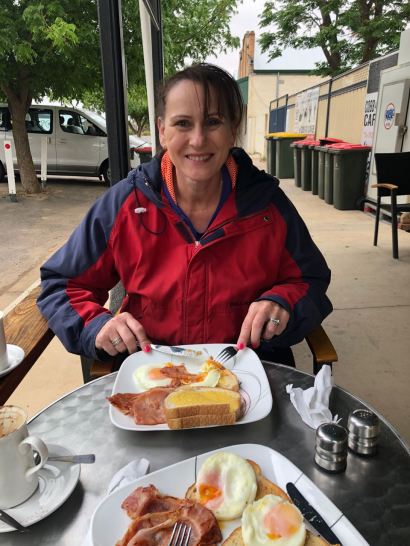
After leaving the cabin at the caravan park we headed to the Cobb & Co Cafe in Murrayville for some breakfast.  Whenever we are in the area we always stop here.  It is good food and good coffee.  The owner is friendly and coincidentally his two sons live in our home town of Mount Barker.

IMG_3343

Above:- Marija enjoying some breakfast at the Cobb and Co Cafe at Murrayville.

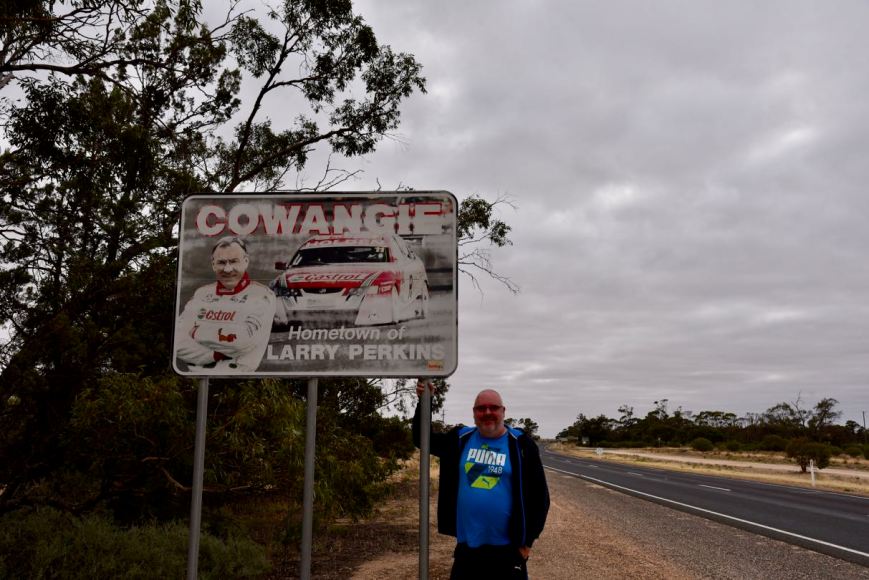
We left Murrayville after breakfast and headed east on the Mallee Highway.  Our first stop was the little town of Cowangie.  If you are travelling along the Mallee Highway, take the time to detour into this little town.  Cowangie is the birthplace of motorsport legend Larry Perkins.  He is a former racing driver and V8 Supercar team owner.

DSC_6013

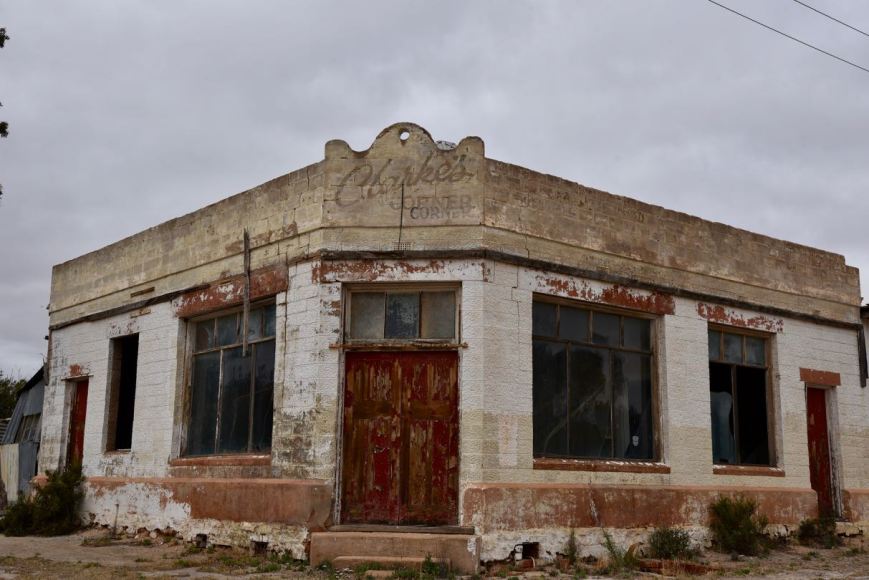
The Cowangie Post Office opened in July 1912 and was originally known as Kow Plains until 1913.  The Post Office closed in 1994, and not much else remains in Cowangie from its heyday.  The nearby Kopw Plains homestead is well worth a visit.  However, we did not do that on this trip as we have visited there previously.

DSC_6019

Above:- an old shop in the main street of Cowangie.

One of the buildings worthwhile having a look at whilst in Cowangie is the old Bush Nursing cottage.  At a meeting of the Cowangie Bush Nursing Centre in August 1917, it was moved that a two-roomed stone cottage be erected so the nurse could live in more comfort and afford privacy to patients.  The cottage was completed in 1918.  The Cowangie Bush Nurse Centre ceased operation in 1924.

Another interesting place is the Cowangie Bakery which opened in 1912.  The bakery closed in 1952 and in 2001 was restored.

We left Cowangie and continued east on the Mallee Highway, stopping briefly to have a look at the lone grave for a railway worker.  The grave which is located in the middle of nowhere is marked on the Mallee Highway.

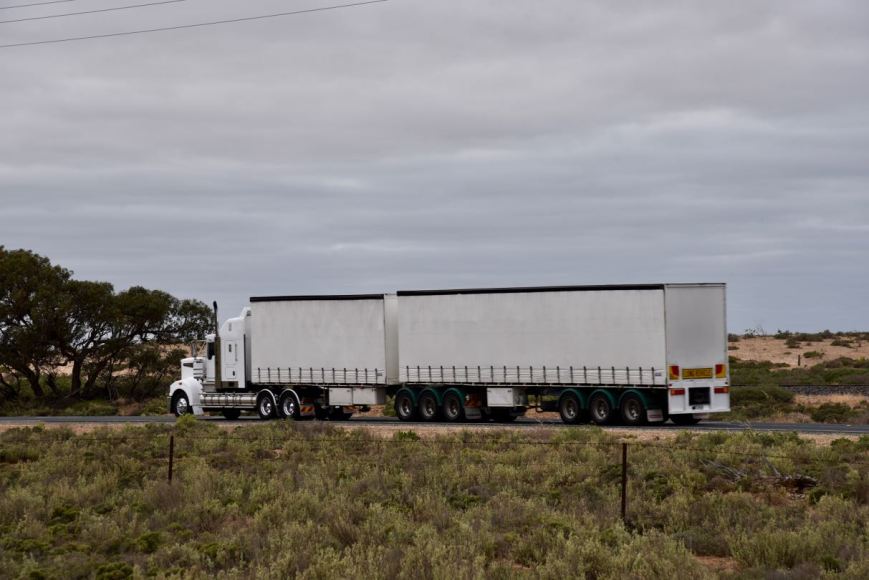
The highway was quite busy with trucks as this is the main highway between Adelaide and Sydney.

DSC_6022

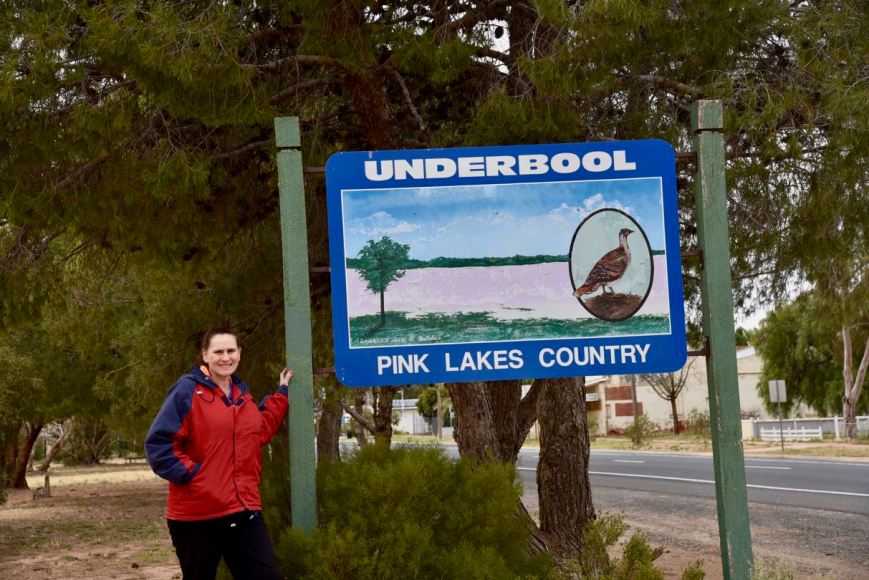
We then stopped briefly at the small town of Underbool.  The town name is thought to come from the German word underbolt given to it by surveyor Dr Neumayer when he camped there in October 1861.  A post office opened on 15 July 1912 when a regular mail service was provided by the opening of the railway from Ouyen to Murrayville a month earlier.  In 1913 a school and public hall were built, while in 1917 a Bush Nursing Centre was established.  By 1918 there were numerous stores and business in Underbool.

DSC_6023

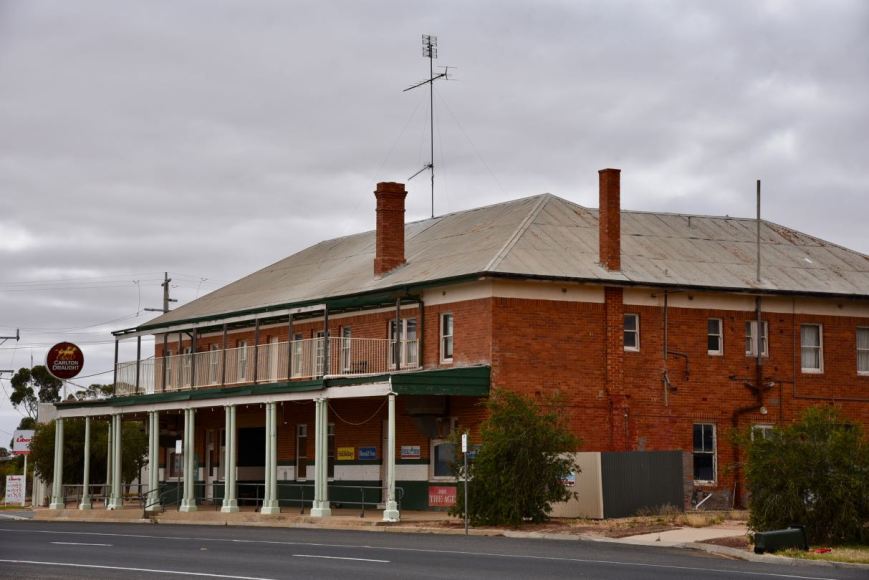
The Underbool Hotel was built in 1925 and boasted a large formal dining room, public bar, pool room and accommodation.  Sadly it closed in December 2016.

DSC_6028

Above:- The old Undeerbool Hotel.

There are a few things of interest in the town.  One of those being an old mallee scrub roller which was made from a large steam engine boiler with a heavy timber framework attached.  It was used to clear the mallee scrub and was adapted to be used behind a crawler tractor.  It was in use until the early 1960s.

The Pioneer and Early Settler Memorial is in honour of the pioneers of the district.  There is also a replica of the train used by Sailor Salt Co. to transport salt from Lake Becking to the Linga Railway Station in the 1920s.

You can also view Underbool’s police cells that were decommissioned in 2002.

We continued on to the little town of Torrita (don’t blink, you will miss it) and then turned left onto Stones Road and then right onto Cheesmans Road and then left onto Cooke Road.  The park is located at the corner of Cooke Road and Joyce Road.  It is not be confused with the Kattyoong Bushland Reserve which is located nearby.

Screen Shot 2019-11-12 at 6.57.57 pm.png

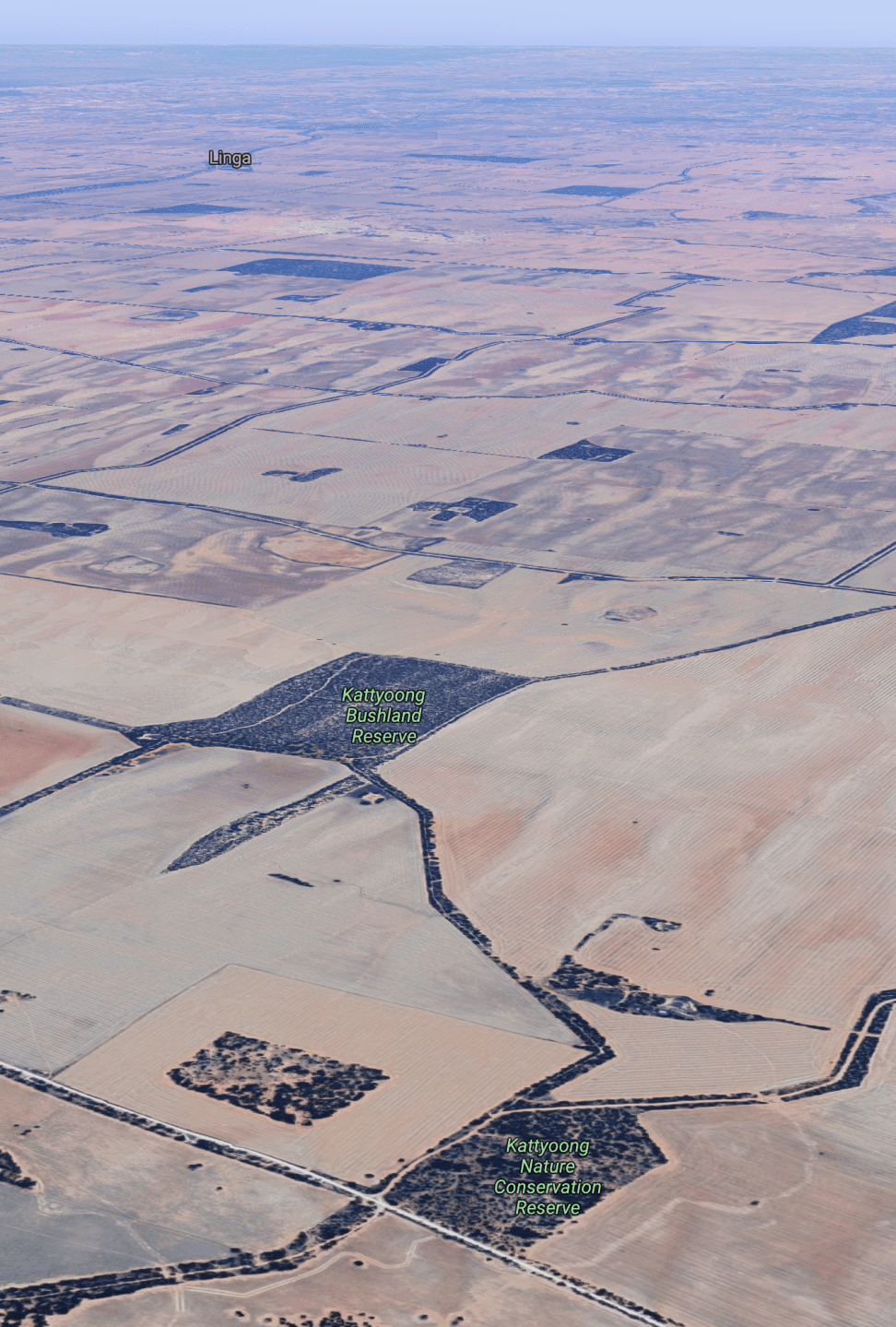
Above:- An aerial view of Kattyoong Flora & Fauna Reserve, with the Kattyoong Bushland Reserve close by.  Image courtesy of Google maps

The Kattyoong Flora and Fauna Reserve is 39 acres in size and was established in 1990.  It comprises typing mallee scrub.

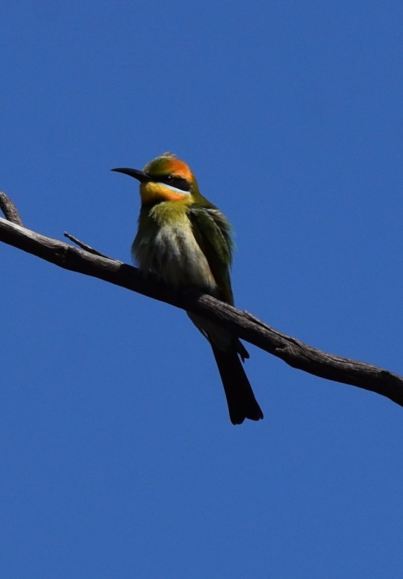
During our visit to the park, we observed numerous Rainbow Bee Eaters.  They are  a strikingly brilliant bird.  Rainbow bee-eaters mostly eat flying insects, but, as their name implies, they have a real taste for bees.

DSC_6054

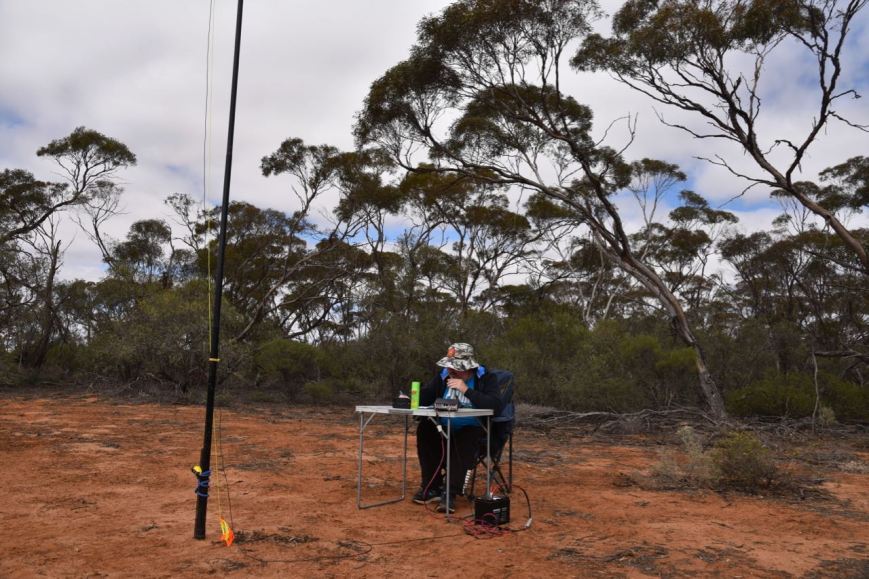
Marija and I could not find a suitable access point into the park on Cooke Road.  We did, however, find a 4WD track leading into the park on Joyce Road.  There was plenty of room to string out the 20/40/80m dipole antenna.

Screen Shot 2019-11-12 at 6.59.50 pm.png

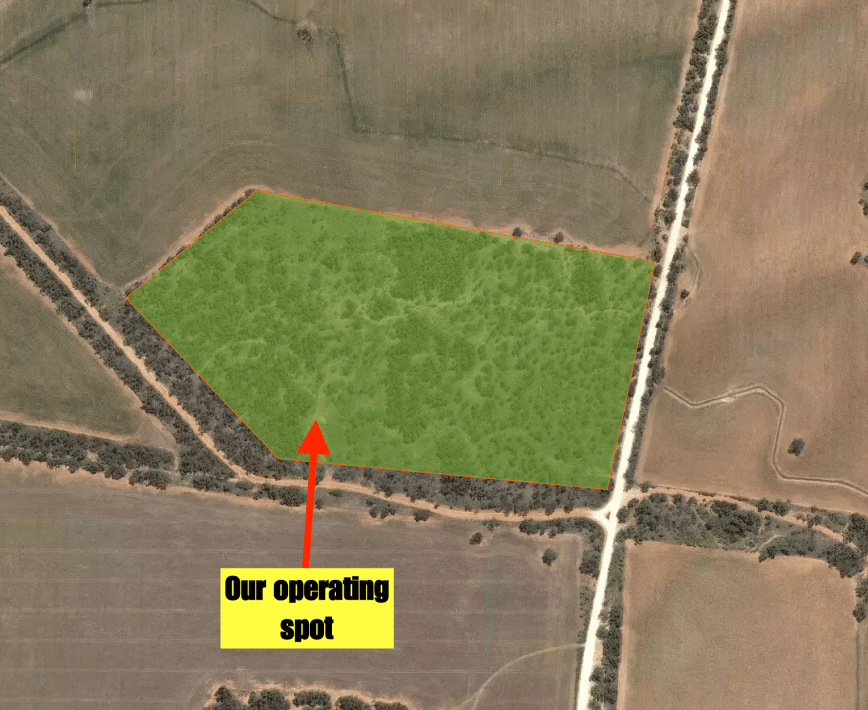
Above:- An aerial view of the Kattyoong Flora & Fauna Reserve showing our operating spot.  Image courtesy of Protected Planet.

As this was a Sunday morning, the broadcasts for the Wireless Institute of Australia (WIA) were in full swing, so I was not able to get onto 7.144.  I found 7.120 clear and started calling CQ.   Ken VK3ALA was first in the log, followed by Tony VK5TT with an exceptionally strong signal, and then Mark VK3PI.

My fourth contact was a Park to Park contact with Peter VK3ZPF/p who was in the Dandenong Ranges National Park VKFF-0132.  Scott VK4CZ became my 10th contact, thus qualifying the park for me for VKFF.   I then logged David VK5DG/3 who was in the Coopcrambra National Park VKFF-0113.

Sadly I started to experience QRM from a VK4 station who came up on frequency, unannounced, and started calling CQ DX.  Despite being told by numerous stations that the frequency was in use, he continued to call CQ DX.  I apologise to anyone who was calling who I missed, as the interference was strong.

I persevered and eventually, he got the message and moved off frequency.  I logged a total of 30 stations including three further Park to Park contacts with Peter VK3PF in the Chiltern Mount Pilot National Park VKFF-0620, and Joe VK3YSP/p & Julie VK3FOWL/p in the Brisbane Ranges National Park VKFF-0055.

I then swapped the mic with Marija.

DSC_6036

Marija’s first contacts were with Joe VK3YSP/p and Julie VK3FOWL/p who were in the Brisbane Ranges National Park VKFF-0055.  John VK7FJFD followed, then Ray VK4NH, and then Linda VK7QP.  Marija’s 10th contact was a Park to Park with Gerard VK2IO/p who was activating the Berowra Valley National Park VKFF-1162.  This was followed by another Park to Park with Tony VK3XV/p who was in the Terrick Terrick National Park VKFF-0630.

Marija logged a total of 26 contacts including two further Park to Park QSOs with Peter VK3PF/p in the Chiltern Mount Pilot National Park VKFF-0620, and David VK5DG/3 in the Coopracamba National Park VKFF-0113.

IMG_3344

I then called CQ once again on 7.120 and logged a further 23 stations including Park to Park contacts with Peter VK3PF/p in the Chiltern Mount Pilot National Park VKFF-0620 (a new contact on a new UTC day), and Gerard VK2IO/p in the Berowra Valley National Park VKFF-1162.

With 53 contacts in the log, I moved to the 20m band and called CQ on 14.310.  I logged a total of 9 stations, all bar one from Queensland.  Brett VK2VW was the exception.

Marija then called CQ on 3.610 for about 5 minutes, but there were no takers.

We packed up and headed off to our next park, the Timberoo Flora and Fauna Reserve.

Marija worked the following stations on 40m SSB:-

  1. VK3FOWL/p (Brisbane Ranges National Park VKFF-0055)
  2. VK3YSP/p (Brisbane Ranges National Park VKFF-0055)
  3. VK7FJFD
  4. VK4NH
  5. VK4DXA
  6. ZL4TY/VK4
  7. VK7QP
  8. VK2PKT
  9. VK5FANA
  10. VK2IO/p (Berowra Valley National Park VKFF-1162)
  11. VK3XV/p (Terrick Terrick National Park VKFF-0630)
  12. VK2VW
  13. VK4TJ
  14. VK4/AC8WN
  15. VK4/VE6XT
  16. VK4SSN
  17. VK4HNS
  18. VK3PF/p (Chiltern Mount Pilot National Park VKFF-0620)
  19. VK4CZ
  20. VK5DG/3 (Coopracamba National Park VKFF-0113)
  21. VK3AN
  22. VK2LEE
  23. VK3AQZ
  24. VK2HHA
  25. VK4SYD
  26. VK3VLY

I worked the following stations on 40m SSB:-

  1. VK3ALA
  2. VK5TT
  3. VK3PI
  4. VK1DI
  5. VK3ZPF/p (Dandenong Ranges National Park VKFF-0132)
  6. VK1BUB
  7. VK2VH
  8. VK4AAC/2
  9. VK7DW
  10. VK4CZ
  11. VK5DG/3 (Coopracamba National Park VKFF-0113)
  12. VK5FANA
  13. VK3MPR
  14. VK3DAC
  15. VK3BSN/5
  16. VK3PF/p (Chiltern Mount Pilot National Park VKFF-0620)
  17. VK2HQ
  18. VK2HBG
  19. VK4NH
  20. VK4DXA
  21. ZL4TY/VK4
  22. VK2XXM
  23. VK3SQ
  24. VK2PKT
  25. VK2MGM
  26. VK4SMA
  27. VK3MAB
  28. VK2LX
  29. VK3YSP/p (Brisbane Ranges National Park VKFF-0055)
  30. VK3FOWL/p (Brisbane Ranges National Park VKFF-0055)
  31. VK2EXA
  32. VK4TJ
  33. VK4/AC8WN
  34. VK4/VE6XT
  35. VK4SSN
  36. VK3AQZ
  37. VK2YW
  38. VK3DBP
  39. VK3ZL/m
  40. VK2LEE
  41. VK7QP
  42. VK2HHA
  43. VK3VIN
  44. VK3AHR
  45. VK3UH
  46. VK4HNS
  47. VK3ANL
  48. VK1MIC
  49. VK5NJ
  50. VK3PF/p (Chiltern Mount Pilot National Park VKFF-0620)
  51. VK3AN
  52. VK2IO/p(Berowra Valley National Park VKFF-1162)
  53. VK3MDH

I worked the following stations on 20m SSB:-

  1. VK2VW
  2. VK4NH
  3. VK4DXA
  4. ZL4TY/VK4
  5. VK4TJ
  6. VK4/AC8WN
  7. VK4/VE6XT
  8. VK4SSN
  9. VK4CZ


References.

Protected Planet, 2019, <https://www.protectedplanet.net/kattyoong-f-r-nature-conservation-reserve>, viewed 12th November 2019

Victorian Places, 2019, <https://www.victorianplaces.com.au/underbool>, viewed 12th November 2019

Wikipedia, 2019, <https://en.wikipedia.org/wiki/Larry_Perkins>, viewed 12th November 2019

Wikipedia, 2019, <https://en.wikipedia.org/wiki/Cowangie>, viewed 12th November 2019

Wikipedia, 2019, <https://en.wikipedia.org/wiki/Underbool>, viewed 12th November 2019

Wikipedia, 2019, <https://en.wikipedia.org/wiki/Rainbow_bee-eater>, viewed 12th November 2019

Murray Sunset National Park VKFF-0373

Our third and final park for Saturday (9th November 2019) was the Murray Sunset National Park VKFF-0373.  This was to be our first park for the 2019 Keith Roget Memorial National Parks Award weekend.

The Murray Sunset National Park is located about 500 km north-west of Melbourne.

Screen Shot 2019-11-12 at 3.45.06 pm.png

Above:- Map showing the location of the Murray Sunset National Park in north-western Victoria.  Map courtesy of Protected Planet.

After leaving Gnarr Flora & Fauna Reserve we drove back into the town of Underbool and headed west on the Mallee Highway until we reached Linga where we took Pink Lakes Road.  We headed north and about 18 km up the road we reached the park.  Pink Lakes Road is dirt but it is suitable for a 2WD vehicle.

On our way to the park, we logged Nik VK3ZK/p and Peter VK3PF/p from our mobile.  Nik was activating the Dandenong Ranges National Park VKFF-0132, while Peter was activating the Mitta Mitta Regional Park VKFF-0974.

DSC_5977

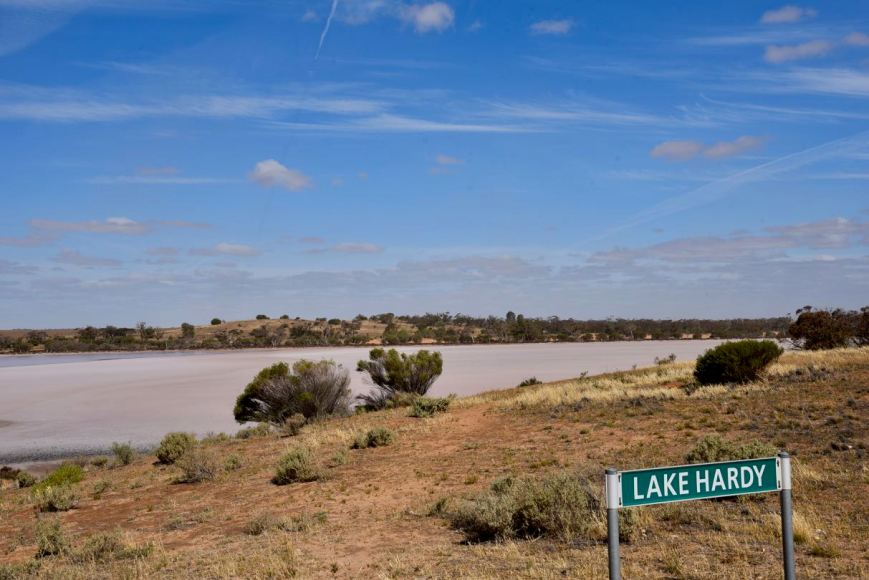
We drove into the park and travelled along Pink Lakes Road passing Lake Hardy.  The lake is made of solid salt and due to the presence of red algae called Dunaliella saline, the lake often gives off a brilliant rosy-pink colour.

DSC_5978

The Murray Sunset National Park is the second-largest National Park in the State of Victoria.  The park is about 633,000-hectare (1,560,000-acre) in size and was proclaimed on the 26th day of April 1979.  The park is located in the north-western corner of Victoria and borders South Australia to the west and the Murray River to the north.  The Sturt Highway passes through the northern section of the park.  The majority of the park is in a remote area between the Sturt Highway and the Mallee Highway, west of the Calder Highway.

Screen Shot 2019-11-12 at 3.37.06 pm.png

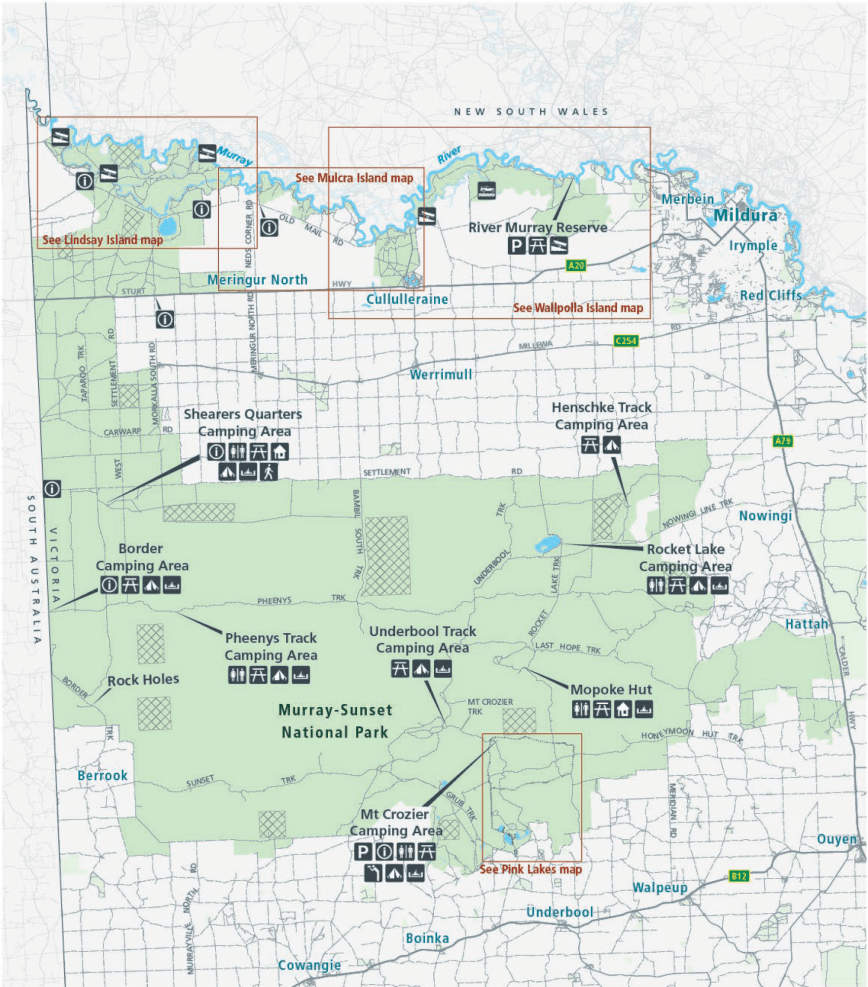
Above:- Map of the Murray Sunset National Park.  Map courtesy of Parks Victoria.

The majority of the park lies within the Murray-Sunset, Hattah and Annuello Important Bird Area (IBA), which was identified by BirdLife International due to it containing mallee habitat supporting a number of threatened mallee bird species, including the Mallee-fowl, Black-eared Miner and Mallee Emu-wren.  Over 600 species of plants have been recorded in the park, and 300 species of birds.

We travelled the short distance to the main campground at Lake Crosbie.

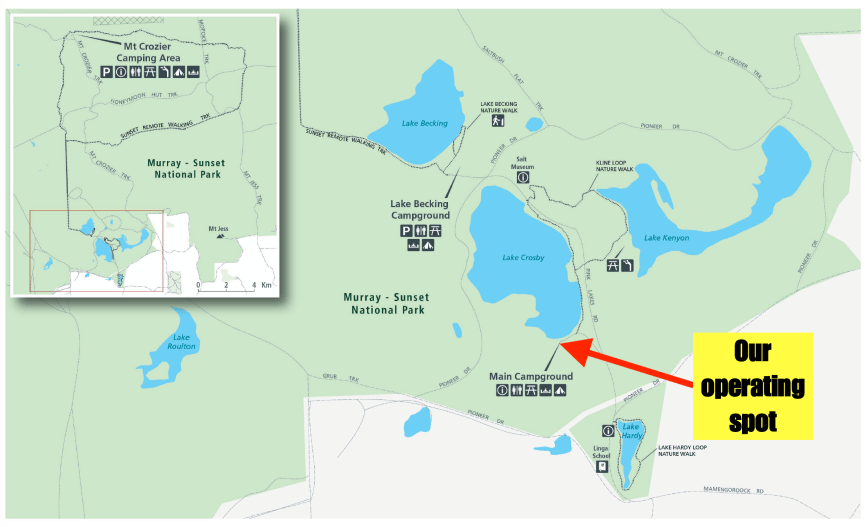
Screen Shot 2019-11-12 at 3.37.28 pm.png

Above:- A map of the Pink Lakes area of the park showing our operating spot.  Map courtesy of Parks Victoria.

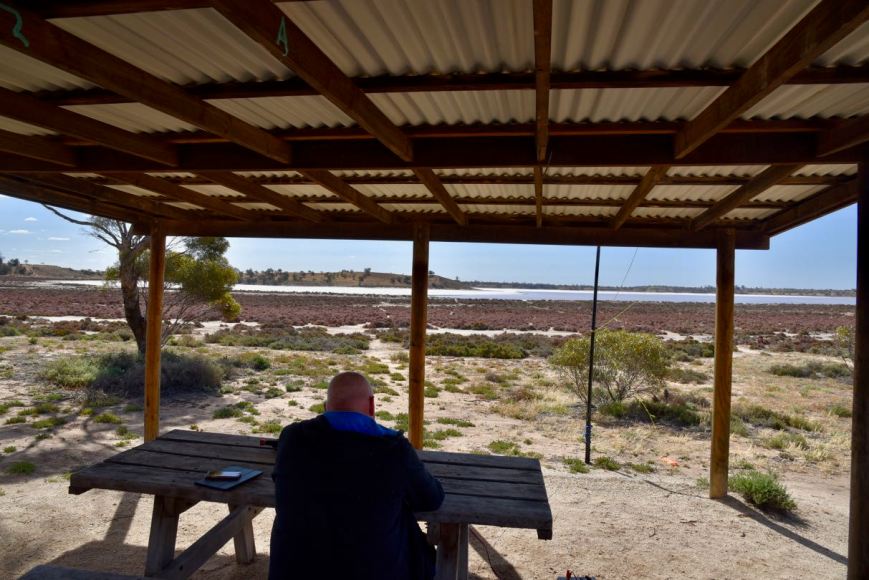
Although there were a number of caravaners and campers there, our favourite shelter shed was free and was the ideal spot to operate from.  It was a very warm afternoon, so the shelter provided some valuable relief from the afternoon sun.

At the campground, you can find the Kline-loop nature walk which is 4.8 lm in length (takes about 2 hours).  The walk is named after Jim Kline who was a worker who lived and worked in the area during the 1930s and 1940s.  The walk follows the shore of Lake Crosbie and across pine-woodland rises to the picturesque Lake Kenyon.

Prior to calling CQ we tuned across the 40m to see if we could find some other park activators.  We found Nik VK3ZK/p on 7.139 calling CQ from the Dandenong Ranges National Park VKFF-0132.  Unfortunately, he was the only park activator we were able to hear, so I headed up to 7.150 and started calling CQ.

First in the log was Keith VK3MKE, followed by David VK5DWC, and then Linda VK7QP.  The 40m band was in very good condition and it didn’t take long for a mini pile up to commence.  I logged a total of 31 stations in a very short space of time, including the two further Park to Park contacts with Peter VK3PF/p in the Mitta Mitta Regional Park VKFF-0974, and Gerard VK2IO/p in the Cattai National Park VKFF-0092.

As I had qualified the park now for VKFF, I took the opportunity of telling all stations to stand by and swapped the mic with Marija.

DSC_5980

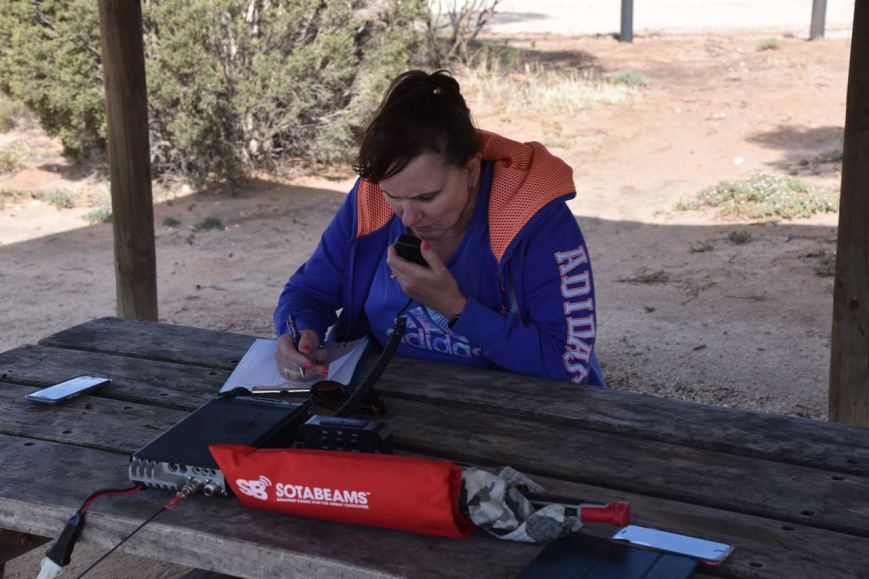
Marija’s first contact was with Peter VK3PF/p in the Mitta Mitta Regional Park VKFF-0974, followed by Mike VK5FMWW, Scott VK4CZ, and then Paul VK3DBP.  It didn’t take long before Marija had ten contacts in the log and the park qualified for VKFF.  Contact number ten was with Greg VK2EXA.

Marija logged a total of 22 stations before handing me back the mic.

DSC_5982

I again called CQ on 7.150 and logged a further 10n stations before callers dried up.  I now had 42 contacts in the log and was just 2 short of the 44 required to qualify the park for the global WWFF program.  I headed over to the 20m band where I logged 3 stations: Scott VK4CZ, Mark VK4SMA, and Murray VK4MWB.

DSC_5981.jpg

Marija worked the following stations on 40m SSB:-

  1. VK3PF/p (Mitta Mitta Regional Park VKFF-0974)
  2. VK5FMWW
  3. VK4CZ
  4. VK3DBP
  5. VK2PKT
  6. VK5BW
  7. VK5kLD
  8. VK3MPR
  9. VK5BJE
  10. VK2EXA
  11. VK5ZZ
  12. VK4GSF
  13. VK5FANA
  14. VK5VBR
  15. VK3FCMC
  16. VK4NH
  17. VK4DXA
  18. ZL4TY/VK4
  19. VK7FJFD
  20. VK3PF/m
  21. VK2HPN
  22. VK2YK

I worked the following stations on 40m SSB:-

  1. VK3ZK/p (Dandenong Ranges National Park VKFF-0132)
  2. VK3MKE
  3. VK5DWC
  4. VK7QP
  5. VK3SQ
  6. VK5FANA
  7. VK5TT
  8. VK3PF/p (Mitta Mitta Regional Park VKFF-0974)
  9. VK2IO/p (Cattai National Park VKFF-0092)
  10. VK3DAC
  11. VK3MPR
  12. VK2PKT
  13. VK2HPN
  14. VK5FMWW
  15. VK5BW
  16. VK7KT
  17. VK5KLV
  18. VK4SMA
  19. VK4MWB
  20. VK4NH
  21. VK4DXA
  22. ZL4TY/VK4
  23. VK5FSPJ/m
  24. VK7JON
  25. VK7FRJG
  26. VK4CZ
  27. VK2LX
  28. VK5KLD
  29. VK2HDX
  30. VK2VW
  31. VK1ACE
  32. VK2YK
  33. VK5GA/2
  34. VK6GA/2
  35. VK2LEE
  36. VK7FOLK
  37. VK7FJFD
  38. VK3PF/m
  39. VK3KAI/m
  40. VK3BSA/m
  41. VK2JDS/m
  42. VK4GSF

I worked the following station on 20m SSB:-

  1. VK4CZ
  2. VK4SMA
  3. VK4MWB

After packing up Marija and I decided to have a drive along Pioneer Drive.  We have done this before, but it is a very nice drive through the park.

We stopped briefly to have a look at the outdoor salt museum on the eastern side of Lake Crosbie.   There was once a thriving commercial salt industry here, which commenced in 1916 and concluded in 1979 when the area was declared as a State Park.

Lake Crosbie is the largest of four large salt lakes in the Pink Lakes area of the Murray Sunset National Park.

DSC_6002

Above:- Lake Crosbie

We then stopped at Lake Kenyon which was named after A.S. Kenyon who was appointed engineer-in-charge of improvements to the northern Mallee.

A little further along the drive are a number of interpretive signs which detail the history of salt mining within the park.  During the 1920s and 1930s there was a small township at this location for the salt workers and their families.  This included houses, a school, and Otto the cook’s underground house.  Seasonal workers and local farmers also came on foot or by bicycle, horse, or car to work on salt harvesting.  Camels carried sale to the railway at Underbool and Linga.  A short-lived tramway was constructed but later abandoned and replaced by trucks.  Salt was shovelled into bags weighing up to 180 pounds (abt 60 kg) and loaded onto trucks by hand.  Very little remains today.

We then drove back to Murrayville and went out for tea at the local pub.  We then headed back to the caravan park where Marija had an early night.  I stayed up and watched Die Hard for about the 20th time before heading off to bed.


References.

Wikipedia, 2019, <https://en.wikipedia.org/wiki/Murray-Sunset_National_Park>, viewed 12th November 2019

Gnarr Flora and Fauna Reserve VKFF-2324

Our second park for Saturday (9th November 2019) was the Gnarr Flora and Fauna Reserve VKFF-2324.  The park is located about 8 km north of the town of Underbool in north-western Victoria.

This would be a first-time activation of this park for the World Wide Flora Fauna (WWFF) program.

Screen Shot 2019-11-12 at 2.04.04 pm.png

Above:- Map showing the location of the Gnarr Flora & Fauna Reserve in western Victoria.  Map courtesy of Protected Planet.

To access the park we travelled north out of Underbool on Mamengorook Road.  We then turned right onto Rowan Road and then turned left onto an un-named road which headed north to the park.  The road travels through farming properties until you reach the south-eastern corner of the park.

DSC_5974

Above:- the track which follows the eastern boundary of the park.

The Gnarr Flora and Fauna Reserve is shown on some maps as the Gnarr Nature Conservation Reserve.  It is a piece of remnant mallee scrub which is surrounded by cleared farming land.

Screen Shot 2019-11-12 at 2.08.14 pm.png

Above:- An aerial shot of the Gnarr Flora & Fauna Reserve showing our operating spot.  Image courtesy of Google maps

The park is located just to the south of the very large Murray Mallee National Park.

Screen Shot 2019-11-12 at 2.13.17 pm

Above:- Aerial shot of the Gnarr Flora & Fauna Reserve, looking north.  The very large Murray Sunset National Park is also visible.  Image courtesy of Google maps

The park was established in 1990 and is 301 acres in size.

After setting up I commenced calling CQ on 7.144.  First in the log was Liz VK2XSE, followed by Geoff VK3SQ, and then Mark VK3PI.  This was followed by Peter VK3ZPF/p who was activating the Morwell National Park VKFF-0626.  This was followed by another Park to Park with Rob VK4AAC/3 who was in the Warby Ovens National Park VKFF-0742.

I worked a total of 17 stations from VK2, VK3, VK4, VK5 and VK7.  This included a further Park to Park contact with Peter VK3TKK/p who was activating the Organ Pipes National Park VKFF-0627.

DSC_5965

I had qualified the park for VKFF so it was time to swap operating spots with Marija.  Marija commenced calling CQ on 7.144. First in the log was Peter VK3TKK/p in the Organ Pipes National Park VKFF-0627.  This was followed by Dennis VK2HHA and then David VK5DG/3 who was in the Lind National Park VKFF-0287.  A few contacts later Marija spoke with Peter VK3PF/p who was activating SOTA peak VK3/ VE-138 in the Mitta Mitta Flora Reserve VKFF-2400.

Marija logged a total of 18 stations on 40m from VK1, VK2, VK3, VK4, VK5, and VK7.

IMG_3342

I then took charge of the mic again in the hope that I could get to my 44 QSOs, required to qualify the park for the global WWFF program.  I logged a further 24 stations including the following Park to Park QSOs:-

  • Nik VK3ZK – Dandenong National Park VKFF-0132
  • Gerard VK2IO/p – Cattai National Park VKFF-0092
  • David VK5DG/3 – Lind National Park VKFF-0287
  • Peter VK3PF/p – Mitta Mitta Flora Reserve VKFF-2400)

I was now just 2 QSOs short of 44, but callers had dried up on 40m, so I headed to the 20m band.

First in the log was Gerard VK2IO/p who was activating the Cattai National Park VKFF-0092.  I then moved up to 14.315 and started calling CQ.  Scott VK4CZ came back to my call with a strong 5/9 signal, followed by Ray VK4NH and then Paul VK2PAA.  I had now qualified the park for WWFF.

I logged a total of 12 stations on 20m from VK2, VK4, VK5 and New Zealand.  To conclude the activation I moved to the 80m band and called CQ on 3.610.  Adrian VK5FANA was first in the log on that band, followed by Peter VK3TKK/p in the Organ Pipes National Park VKFF-0627, followed by John VK5BJE, and finally Geoff VK3SQ.

Marija worked the following stations on 40m SSB:-

  1. VK3TKK/p (Organ Pipes National Park VKFF-0627)
  2. VK2HHA
  3. VK5DG/3 (Lind National Park VKFF-0287)
  4. VK2PKT
  5. VK5FANA
  6. VK7QP
  7. VK3PF/p (SOTA VK3/ VE-138 & Mitta Mitta Flora Reserve VKFF-2400)
  8. VK3UCD
  9. VK5BJE
  10. VK1DI
  11. VK4NH
  12. VK4DXA
  13. ZL4TY/VK4
  14. VK5QD
  15. VK5FSAM
  16. VK5PL
  17. VK4SYD
  18. VK3VIN

I worked the following stations on 40m SSB:-

  1. VK2XSE
  2. VK3SQ
  3. VK3PI
  4. VK3ZPF/p (Morwell National Park VKFF-0626)
  5. VK4AAC/3 (Warby Ovens National Park VKFF-0742)
  6. VK2VH/3 (Warby Ovens National Park VKFF-0742)
  7. VK5FANA
  8. VK4NH
  9. VK4DXA
  10. ZL4TY/VK4
  11. VK4HNS
  12. VK3UCD
  13. VK3MCK
  14. VK3MPR
  15. VK7JON
  16. VK2VW
  17. VK3TKK/p (Organ Pipes National Park VKFF-0627)
  18. VK3VIN
  19. VK3BSA/m
  20. VK3ZK/p (Dandenong National Park VKFF-0132)
  21. VK5KLV
  22. VK3UH
  23. VK3HK
  24. VK7QP
  25. VK2IO/p (Cattai National Park VKFF-0092)
  26. VK2MOP
  27. VK7FRJG
  28. VK4CZ
  29. VK5DG/3 (Lind National Park VKFF-0287)
  30. VK5HS
  31. VK2LEE
  32. VK3FGFG
  33. VK3BCM
  34. VK3PF/p (SOTA VK3/ VE-138 & Mitta Mitta Flora Reserve VKFF-2400)
  35. VK2EXA
  36. VK2PKT
  37. VK5HDW
  38. VK3KRH
  39. VK7LTD
  40. VK5KLD
  41. VK3ARH

I worked the following stations on 20m SSB:-

  1. VK2IO/p (Cattai National Park VKFF-0092)
  2. VK4CZ
  3. VK4NH
  4. VK4DXA
  5. ZL4TY/VK4
  6. VK2PAA
  7. VK2LEE
  8. VK4HNS
  9. VK5KLV
  10. ZL1TM
  11. VK4SMA
  12. VK4PHD

I worked the following stations on 80m SSB:-

  1. VK5FANA
  2. VK3TKK/p (Organ Pipes National Park VKFF-0627)
  3. VK5BJE
  4. VK3SQ


References.

Protected Planet, 2019, <https://www.protectedplanet.net/gnarr-f-r-nature-conservation-reserve>, viewed 12th November 2019

Dunstans Flora and Fauna Reserve VKFF-2310

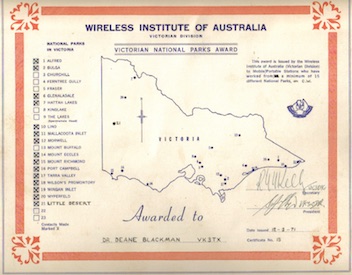
Each year in November, a special activation weekend is held for the Keith Roget Memorial National Parks Award (KRMNPA).  The KRMNPA has existed since the 1970s and was originally known as the Victorian National Parks Award.  A driving force behind the park’s award was the late Keith Vidmore Roget, VK3YQ, who had served on the WIA Victorian Division Council as the President, Secretary and Treasurer.   Roget died in 1981 and following his death, his widow Jean agreed that it was fitting that the park’s award be renamed in his memory and to honour his contribution.
npa275.jpg

Above:- One of the original Victorian National Parks Award certificates.  Image c/o Amateur Radio Victoria.

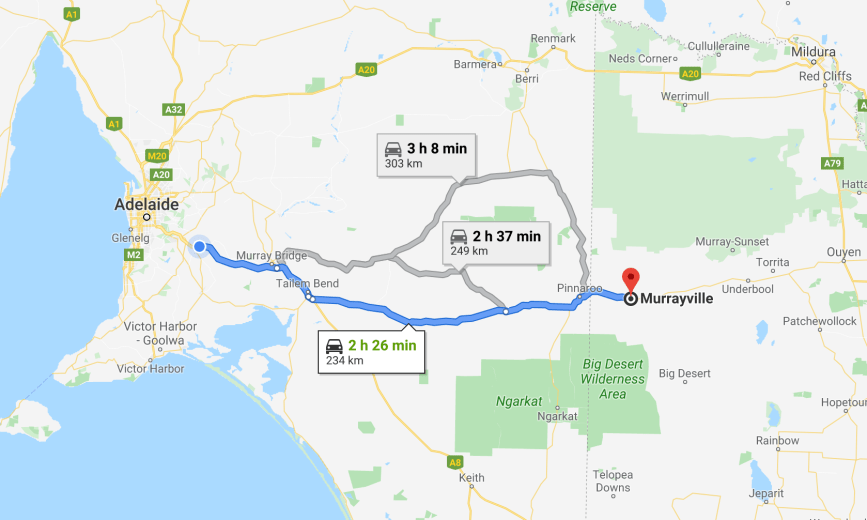
Marija and I had planned to support the 2019 KRMNPA event, which we do each year.  We headed to north-western Victoria to activate the Murray Sunset National Park and the Wyperfeld National Park.  Whilst away we also planned to activate a number of Flora Reserves for the World Wide Flora Fauna (WWFF) program.  Many of these would be first-time activations for VKFF/WWFF.  We had booked to stay at the Murrayville Caravan Park for 2 nights.

We left home at about 6.30 a.m. local time on Saturday morning (9th November 2019) and headed east along the South Eastern Freeway to Murray Bridge.  Along the way we joined the Mid South Coast Amateur Radio Net which was run by John VK2NJP.  Marija and I then travelled east along the Dukes Highway to Tailem Bend where we stopped briefly for a coffee and an egg & bacon roll.  We then drove east along the Mallee Highway joining the BRL Riverland Net on 7.115.

Screen Shot 2019-11-12 at 11.20.49 am.png

Above:- Map showing our route to Murrayville.  Map courtesy of Google maps.

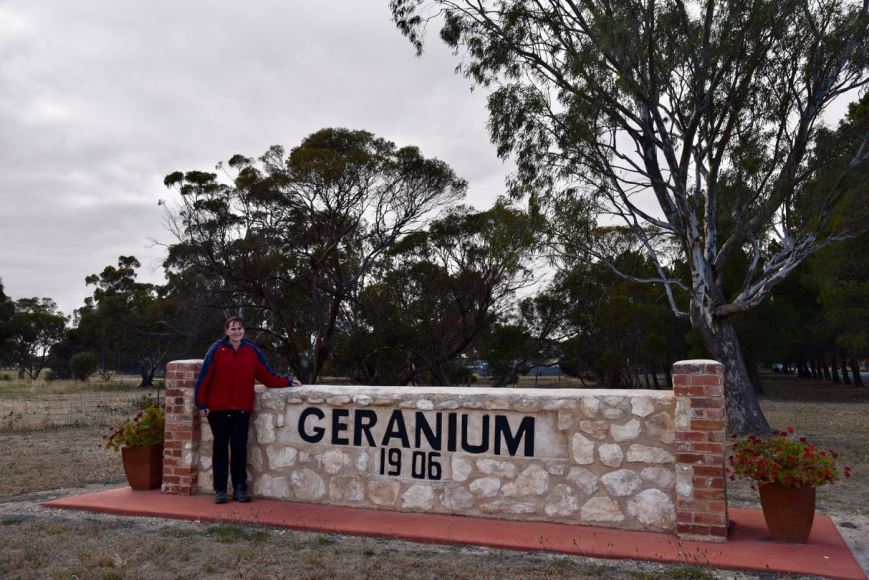
Our next stop was the little town of Geranium on the Mallee Highway.  Geranium’s history dates back to 1906 when the State Government sank a bore in the locality.  The town takes its name from the wild geraniums which grow in abundance in the area.
DSC_5911

Sadly this is another town which has suffered as a result of the closure of the railway.   The railway was the lifeline of Geranium and other towns in the Mallee area of South Australia.  Everything came or went via the railway.  Incoming were the supplies for the local businesses, farm machinery and fertiliser.  Outgoing was cream, eggs, grain, and stock.  The line opened in 1906 and was closed in 2015.  Passenger service to Geranium was closed in 1964.  In later years the line was only used to transport grain.  You can view some history of the railway down by the silos along the old line.

Whilst in Geranium we also had a look at the old Geranium Bore.  The windmill commemorates the original bore which was constructed in the 2-acre site of the 10 acre ‘Water Reserve’ in March 1906.  A short walk away from the windmill is an old Table Top Trolley which dates back to 1921.

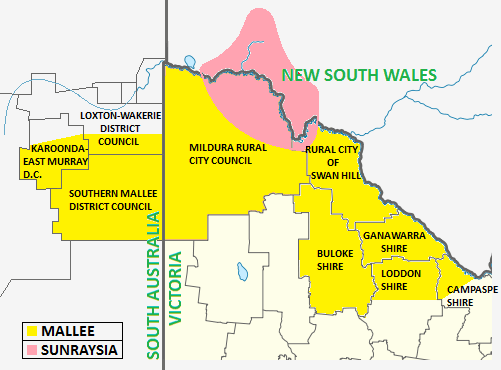
I mentioned above, ‘the Mallee’.  The Mallee is an area in the semi-arid areas of north-western Victoria and north-eastern South Australia.  It takes its name from the Mallee, a growth habitat of certain eucalypt species that grow with multiple stems spring from an underground lignotuber.
Outline_map_of_the_Mallee_and_Sunraysia_regions.png

Above:- The Mallee region highlighted in yellow.  Image courtesy of Wikipedia.

We continued east and stopped briefly in Pinnaroo to top up some diesel in the Toyota Hil Lux and to have a quick look at the Pinnaroo Animal Park & Bird Aviary.  The park contains Red Kangaroos, Western Grey kangaroos, emus, and numerous other parrots and cockatoos and is well worth a visit.

This slideshow requires JavaScript.

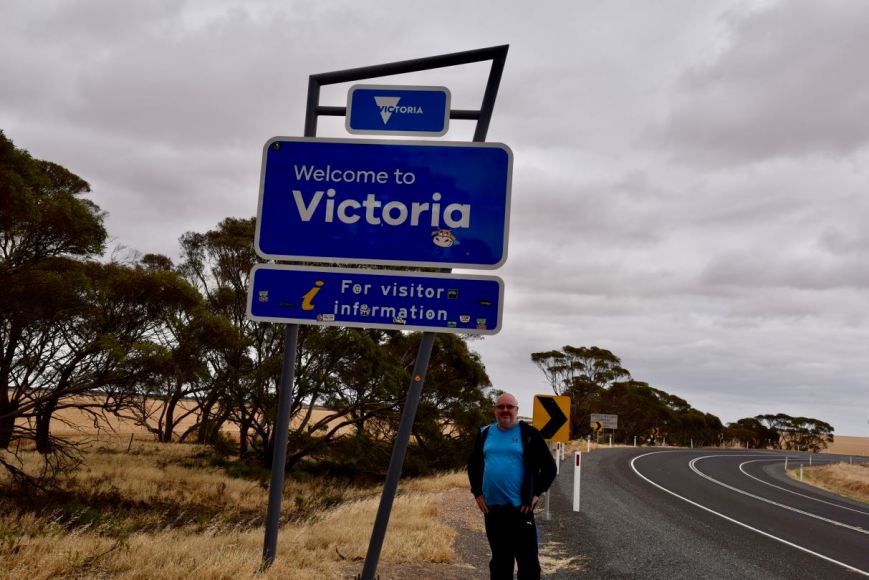
After leaving Pinnaroo we soon reached the South Australian-Victorian State Border.  We stopped briefly for a photograph and continued east into Victoria.
DSC_5952

We arrived in Murrayville and booked into the Murrayville Caravan Park in a self-contained cabin.  We have stayed here before and can highly recommend it.

After offloading some gear we headed east on the Mallee Highway to our first park of the day, the Dunstans Flora Reserve VKFF-2310.

This would be a first-time activation of this park for the World Wide Flora Fauna (WWFF) program.
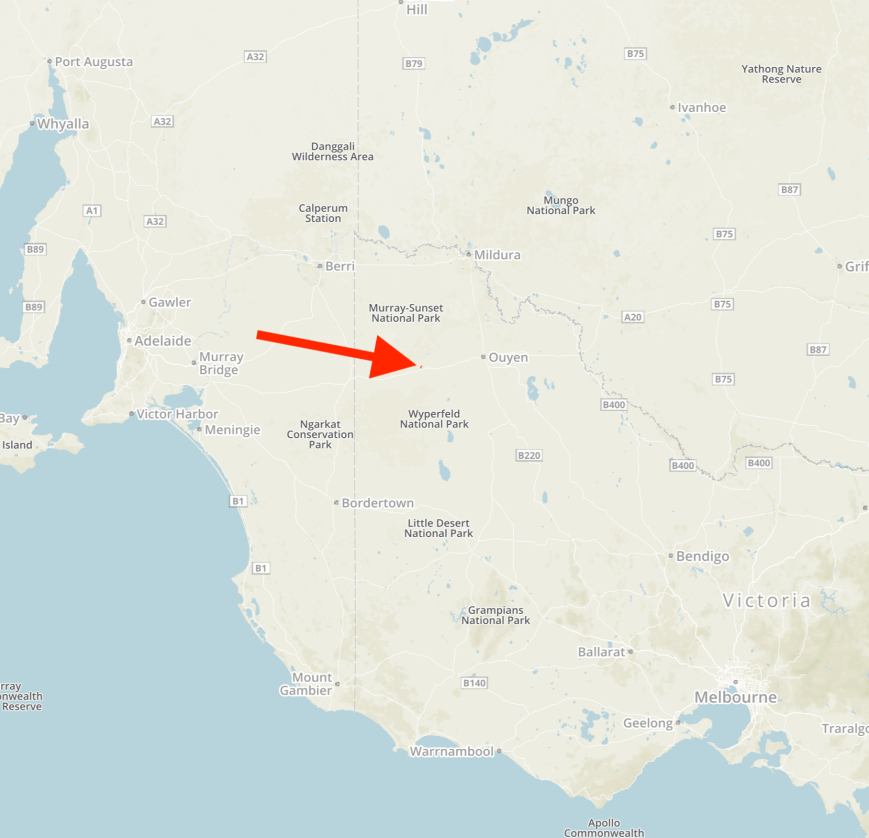
Screen Shot 2019-11-12 at 10.37.46 am.png

Above:- Map showing the location of the Dunstans Flora Reserve in north-western Victoria.  Map courtesy of Protected Planet.

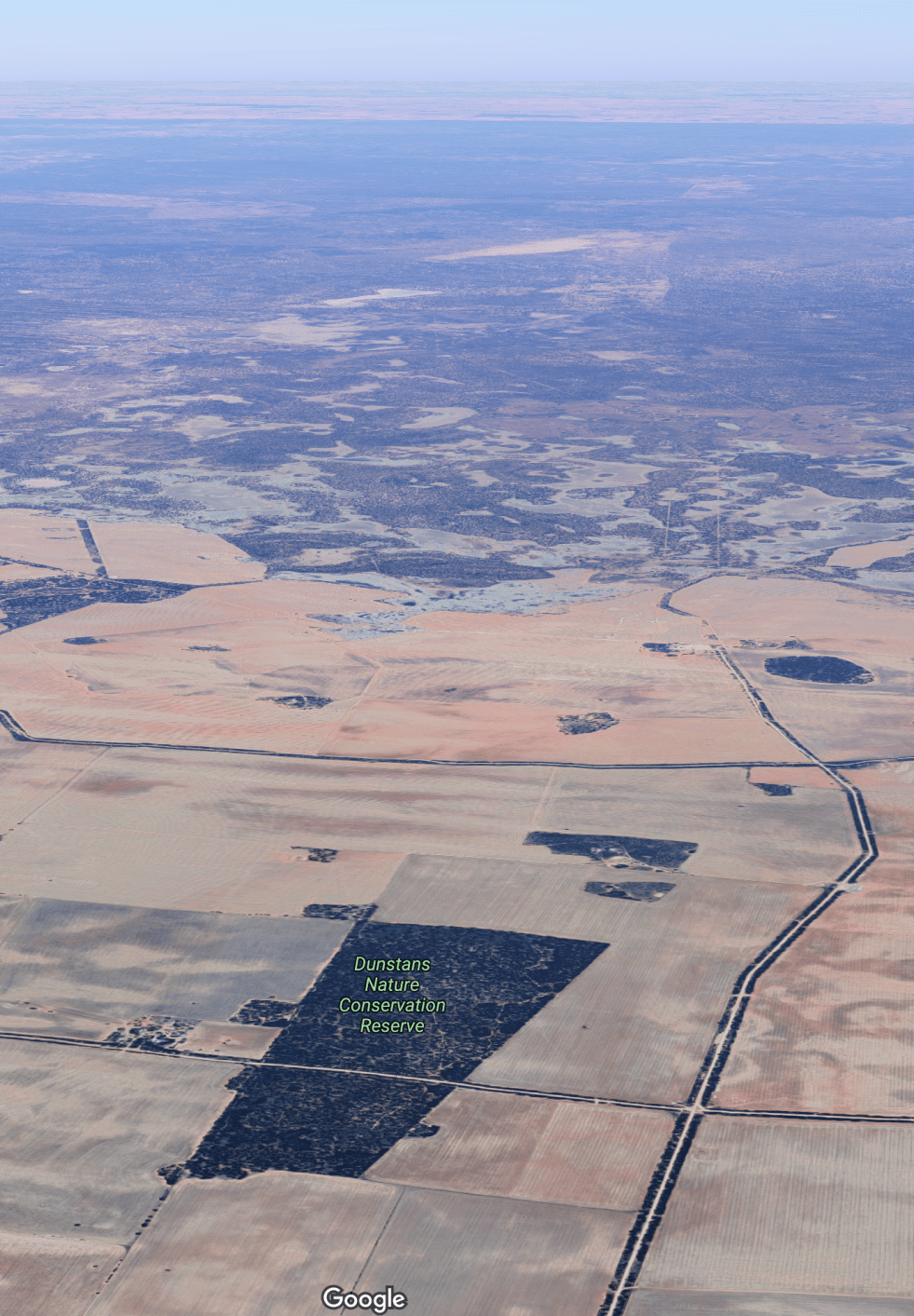
The maps we were in possession of, including Google maps, show that this park is called Dunstans Nature Conservation Reserve or the Dunstans Flora and Fauna Reserve.  But this was thrown into confusion when we visited the park as Marija found a park sign which read ‘Bunstans Flora and Fauna Reserve’.  To confuse matters more, the park is located on Bunstun Road.  The Parks Victoria website and Protected Planet shows that the park is called Dunstans Flora and Fauna Reserve.

Screen Shot 2019-11-12 at 11.18.12 am.png

Above:- An aerial shot of the Dunstans Flora and Fauna Reserve.  Image courtesy of Google maps.

Unfortunately, I have not been able to find out much information about this park on the internet.  The Parks Victoria website link is ‘dead’ as are most of their links.

Protected Planet shows that the park was established in 1985 and is 313 acres in size.  It is typical dry mallee countryside.

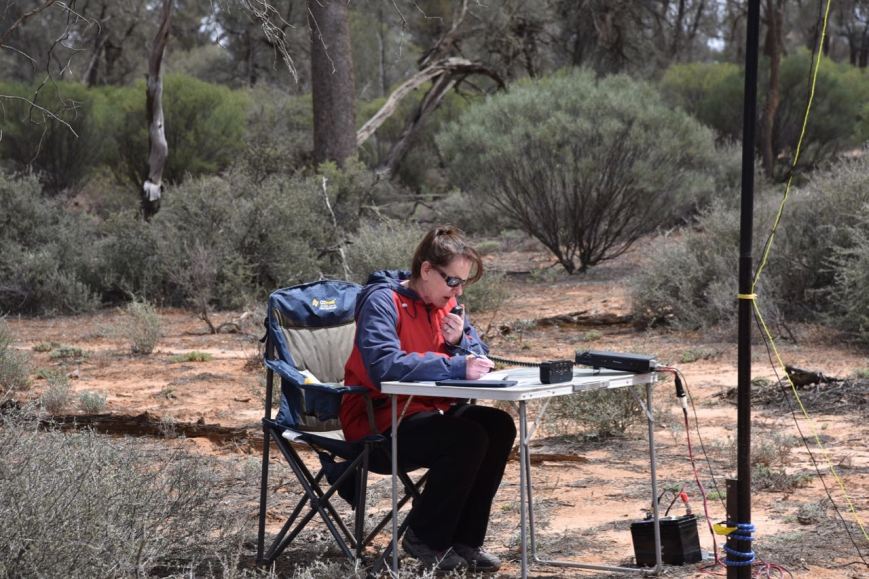
Just before reaching the little town of Linga, we turned off the Mallee Highway onto Lockett Road and travelled north.  We then turned left on Bunstun Road.  We found a small clearing in amongst the scrub on Bunstun Road and set up our station which comprised the Yaesu FT-857d and the 20/40/80m linked dipole.

Screen Shot 2019-11-12 at 10.37.23 am.png

Above:- An aerial shot of the park showing our opeating spot.  Image courtesy of Protected Planet.

I kicked off the activation by making contact with Rob VK4AAC/3 who was activating the Warby Ovens National Park VKFF-0742 in north-eastern Victoria.  Rob had a strong 5/9 signal.  I then tuned down the band and made contact with Brett VK3FLCS/p who was in the Barmah National Park VKFF-0739.

With two Park to Park contacts to commence the activation, I moved down to 7.130 and started calling CQ while Marija placed a spot up for me on parksnpeaks.  Ray VK4NH in Queensland was first to call in with a good 5/6 signal.  This was followed by Adrian VK5FANA, and then Shane VK2LUV/p in the Werekata State Conservation Area VKFF-1391.  Peter VK3PF/p then gave me a shout from SOTA peak VK3/ VE-093 & Burrowa Pine Mountain National Park VKFF-0069.  This was followed by Mike VK6MB/p in the Powalup Nature Reserve VKFF-2840, Andrew VK1DA/p at SOTA peak Black Mountain VK1/ AC-042 & Black Mountain Nature Reserve VKFF-0834, and then Alan VK3ALN/p who was activating the Point Nepean National Park VKFF-0628.

I had ten contacts in the log (including seven Park to Park contacts) and had qualified the park for VKFF, so I swapped the mic with Marija.
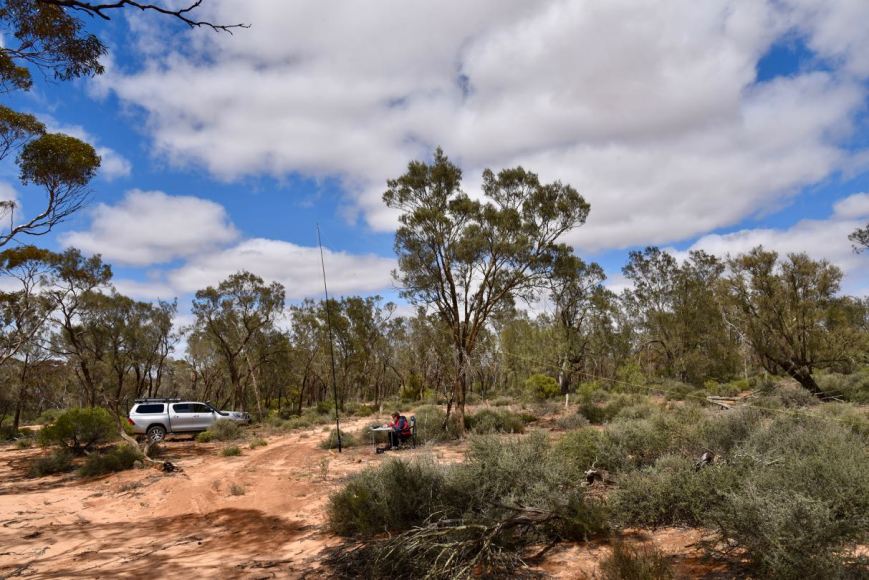
DSC_5959

Marija’s first contact was with Alan VK3ALN/p in the Point Nepean National Park VKFF-0628.  Next was Geoff VK3SQ, followed by Steve VK3MPR and Neil VK4HNS.  Just 6 minutes into the activation and Marija had her 10 contacts in the log and had qualified the park for VKFF.

Marija logged a total of 29 stations from VK2, VK3, VK4 and VK5.  Other than her Park to Park contact with Alan, Marija also logged Peter VK3PF/p Park to Park from the Burrowa Pine Mountain National Park VKFF-0069.

I then jumped back into the operator’s chair and logged a further 33 stations on 40m including the following Park to Park contacts:-

  • Ian VK5CZ/p – Charleston Conservation Park VKFF-0777
  • Norm VK3XCI/p – Hattah Kulkyne National Park VKFF-0231
  • Gerard VK2IO/p – Scheyville National Park VKFF-0444
  • Rob VK2VH/3 – Warby Ovens National Park VKFF-0742

Contact number 44, qualifying the park for me for WWFF, was with Craig VK2FFLL.

DSC_5962

We were hopeful that Marija might be able to get her 44 QSOs and qualify the park for the global WWFF program, so Marija jumped back into the hot seat and called CQ on 7.130.

Marija logged a further 7 stations and now had 36 contacts in the log.  We lowered the squid pole and inserted the links for the 80m band and then headed to 3.610.  First, in the log, there was Norm VK3XCI/p who was in the Hattah Kulkyne National Park VKFF-0231, followed by John VK5BJE, Ivan VK5HS, and then Rob VK4AAC/3 who was activating the Warby Ovens National Park VKFF-0742.

With callers having completely dried up and Marija just 1 short of her 44, I took a drive a km or so down the road and gave Marija her 44th contact from my mobile.  Adrian VK5FANA then called in to make it number 45.
DSC_5955

Before heading off to our next park I decided to try the 20m band.  I had seen a post on Facebook from Stuie VK8NSB in Darwin to say that he would be waiting on 14.310.  I headed there and logged Stuie who was a good 5/6 signal.  This was followed by Jason VK6YTS, Rob VK4SYD, Murray VK4MWB, and Scott VK4CZ with a very strong 5/9 signal.

We were in the throws of packing up when we saw on parksnpeaks that Alan VK2MG/p was in a park on 7.150.  So we re-hoisted the squid pole and logged Alan Park to Park from Bunyaville Conservation Park VKFF-1493.

It was time to pack up and head off to our next park.  Between us, we had 94 QSOs in the log, including 21 Park to Park contacts

Marija worked the following stations on 40m SSB:-

  1. VK3ALN/p (Point Nepean National Park VKFF-0628)
  2. VK3SQ
  3. VK3MPR
  4. VK4HNS
  5. VK2KYO
  6. VK2EXA
  7. VK5FANA
  8. VK4NH
  9. VK4DXA
  10. ZL4TY/VK4
  11. VK2LX
  12. VK2YK
  13. VK3VIN
  14. VK5KC
  15. VK3PF/p (SOTA VK3/ VE-093 & Burrowa Pine Mountain National Park VKFF-0069)
  16. VK2LEF
  17. VK5TR
  18. VK5BAR
  19. VK6BW
  20. VK5TW
  21. VK5BJE
  22. VK5TBC
  23. VK5KLD
  24. VK5TAW
  25. VK5NRG
  26. VK5VCR
  27. VK5PL
  28. VK5KLV
  29. VK2IO/p (Scheyville National Park VKFF-0444)
  30. VK3WAC/m
  31. VK5BMC
  32. VK3SX
  33. VK3FLCS
  34. VK2PKT
  35. VK3MCK
  36. VK5CZ/p (Charleston Conservation Park VKFF-0777)
  37. VK2MG/p (Bunyaville Conservation Park VKFF-1493)

Marija worked the following stations on 80m SSB:-

  1. VK3XCI/p (Hattah Kulkyne National Park VKFF-0231)
  2. VK5BJE
  3. VK5HS
  4. VK4AAC/3 (Warby Ovens National Park VKFF-0742)
  5. VK2VH/3 (Warby Ovens National Park VKFF-0742)
  6. VK5PAS/3
  7. VK5FANA

I worked the following stations on 40m SSB:-

  1.  VK4AAC/3 (Warby Ovens National Park VKFF-0742)
  2. VK3FLCS/p (Barmah National Park VKFF-0739)
  3. VK4NH
  4. VK4DXA
  5. ZL4TY/VK4
  6. VK5FANA
  7. VK2LUV/p (Werekata State Conservation Area VKFF-1391)
  8. VK3PF/p (SOTA VK3/ VE-093 & Burrowa Pine Mountain National Park VKFF-0069)
  9. VK6MB/p (Powalup Nature Reserve VKFF-2840)
  10. VK1DA/p (SOTA Black Mountain VK1/ AC-042 & Black Mountain Nature Reserve VKFF-0834)
  11. VK3ALN/p (Point Nepean National Park VKFF-0628)
  12. VK5KLD
  13. VK5KLV
  14. VK2EXA
  15. VK3XPT
  16. VK3JAP
  17. VK5CZ/p (Charleston Conservation Park VKFF-0777)
  18. VK3VIN
  19. VK3XCI/p (Hattah Kulkyne National Park VKFF-0231)
  20. VK5BJE
  21. VK2KYO
  22. VK3PI
  23. VK3ZSJ
  24. VK2VW
  25. VK3SQ
  26. VK2FSDU
  27. VK7EI
  28. VK4HNS
  29. VK4SYD
  30. VK2IO/p (Scheyville National Park VKFF-0444)
  31. VK2AWS
  32. VK3VKT/m
  33. VK3WAC/m
  34. VK5LTD/p
  35. VK5WG
  36. VK4CZ
  37. VK3SX
  38. VK3IC
  39. VK2VH/3 (Warby Ovens National Park VKFF-0742)
  40. VK5VBR
  41. VK3GMC
  42. VK3PGK
  43. VK5BMC
  44. VK2FFLL
  45. VK2MG/p (Bunyaville Conservation Park VKFF-1493)

I logged the following stations on 20m SSB:-

  1. VK8NSB
  2. VK6YTS
  3. VK4SYD
  4. VK4MWB
  5. VK4CZ


References.

Amateur Radio Victoria, 2019, <https://www.amateurradio.com.au/awards>, viewed 12th November 2019.

Discover Murray Mallee, 2019, <http://www.malleehighway.com.au/html/geranium.html>, viewed 12th November 2019

Protected Planet, 2019, <https://www.protectedplanet.net/dunstans-f-f-r-nature-conservation-reserve>, viewed 12th November 2019

Wikipedia, 2019, <https://en.wikipedia.org/wiki/Mallee_(Victoria)>, viewed 12th November 2019

Wikipedia, 2019, <https://en.wikipedia.org/wiki/Mallee_(habit)>, viewed 12th November 2019

Trip to Victoria for 2019 KRMNPA weekend

Many thanks to everyone who called Marija VK5FMAZ and me during our 3 days over in Victoria.

We stayed overnight at Murrayville in western Victoria and activated a total of 11 parks.

Two of those, the Murray Sunset National Park and the Wyperfeld National Park were for the Keith Roget Memorial National Parks Award activation weekend. Thanks to Tony VK3XV and others for organising another great weekend.

We made a total of 635 QSOs which included 78 Park to Park contacts. Bands – 20, 40, & 80m SSB. We worked VK1, VK2, VK3, VK4, VK5, VK6, VK7, VK8, New Zealand, Belgium and France.

This slideshow requires JavaScript.

Marne Valley Conservation Park VKFF-0906

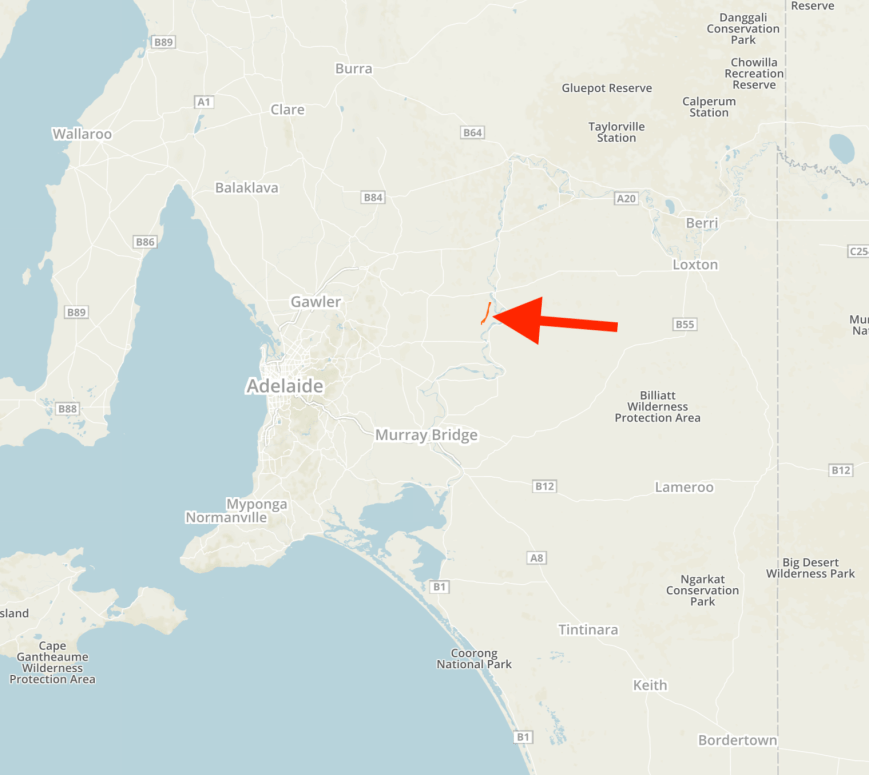
Our third and final park for the day was the Marne Valley Conservation Park VKFF-0906.  This was another park that Marija and I had previously activated from and qualified.  The park is located about 106 km northeast of the city of Adelaide.

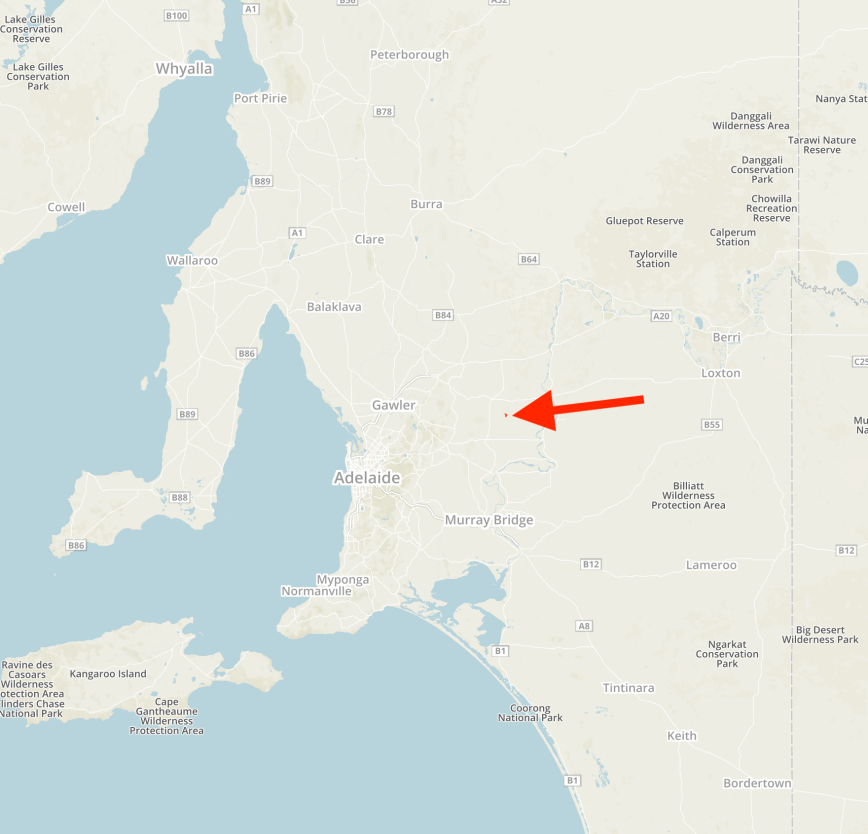
Screen Shot 2019-10-29 at 6.25.38 pm

Above:- Map showing the location of the Marne Valley Conservation Park northeast of Adelaide.  Map courtesy of Protected Planet.

Marne Valley Conservation Park is about 94 hectares in size and was first proclaimed on the 11th day of March 1976.  The major vegetation association being River Red Gum open forest.  The southwestern corner, along the eastern central boundary, and along the northern boundary the native vegetation has been largely cleared.  The park is bisected by the Marne River.

Prior to the establishment of the park, the land was part of the main Adelaide to Sydney stock route.

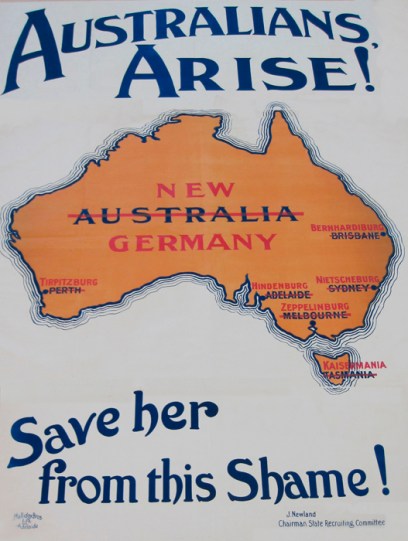
The Marne River was originally known as the ‘South Rhine River’ until 1918 when it was renamed due to anti-German sentiment.  It was named the Marne due to a 1914 German advance of troops was checked at the Marne River in France.  Anti-German feeling ran high during World War One and a Nomenclature Committee was set up to make recommendations for changes from names of “foreign enemy origin” to British or South Australian native names.   The Committee suggested ‘Pongaree River’ meaning ‘shade reflection in water’ but it was rejected by the government.

New-Australia-Map-3.jpg

Above:- An anti-German poster.  Image c/o NSW Migration heritage Centre

In pre-European times, the Ngarrindjeri aboriginal people used the Marne Valley as a route up into the hills to trade with the Peramangk people in the Barossa Valley and to cut bark canoes from the River Red Gums in the hills which had thicker bark than those near the Murray. The original name of the Marne River was Taingappa, meaning “footrack-trading road”.

Birds SA have recorded about 68 species of bird in the park including Galah, Adelaide Rosella, Mallee Ringneck, Brown Treecreeper, Noisy Miner, White-plumed Honeyeater, Striated Pardalote, Common Bronzewing, Purple-backed Fairywren, Red-capped Robin, and Magpielark.

Screen Shot 2019-10-29 at 7.20.04 pm.png

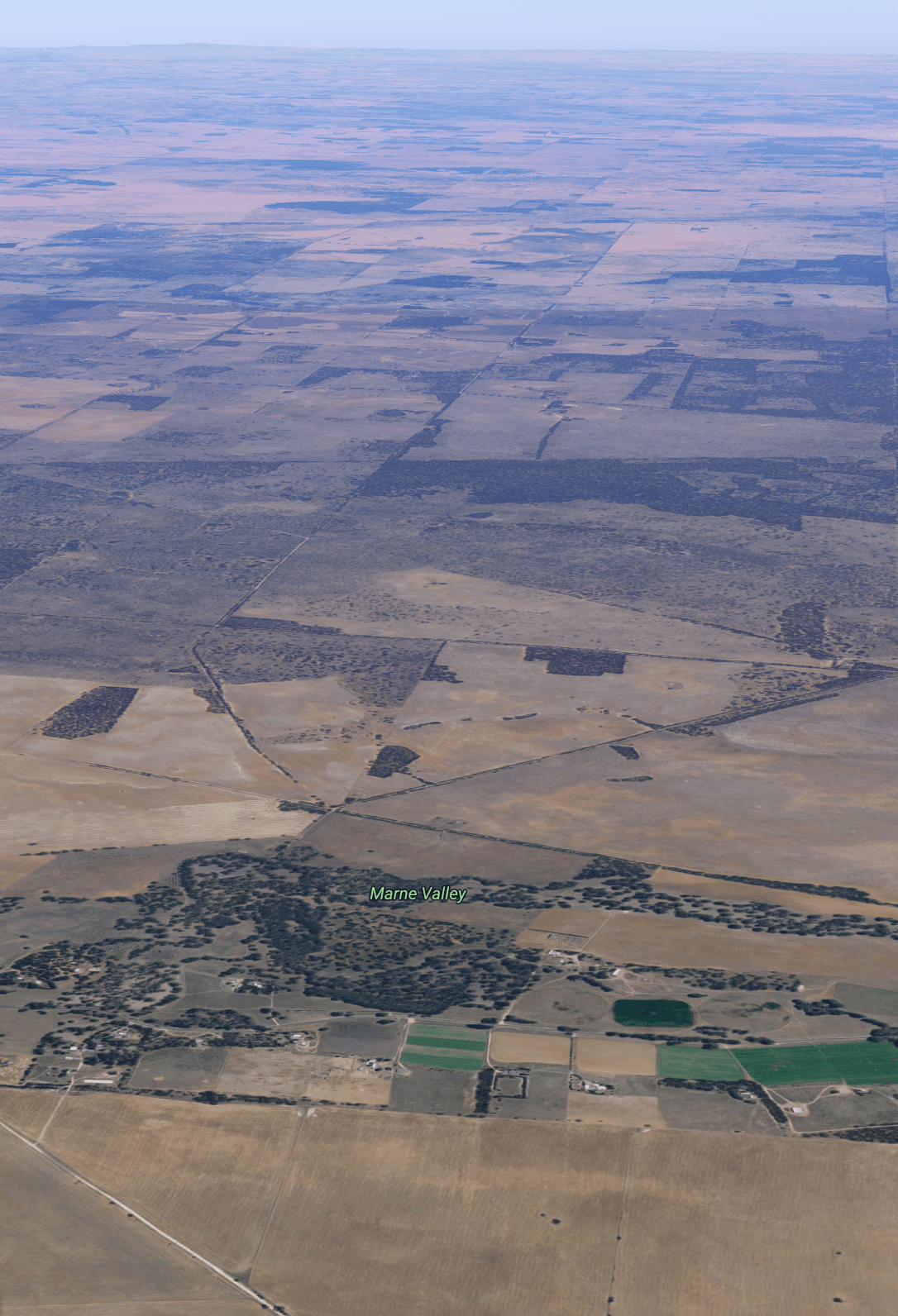
Above:- An aerial view of the Marne Valley Conservation Park.  The nearby turf farms can be seen.  Image courtesy of Google maps.

I have been to the park many times before and have always access it via Black Hill Road.  This time Marija and I decided to see if we could get into the park a different way.  We travelled down Muellers Road hoping to access the park via Havelberh Road.  However, the road had a locked gate and access was not possible.

We continued north along Muellers Road and turned left onto Sleep Track and headed west.  We then reached an un-named dirt road and travelled south down to the north-western corner of the park at Havelberg Road and Tamkes Road.  We travelled down Tamkes Road but could not find a suitable spot.  We also travelled east on Havelberg Road following the northern boundary of the park.  There was no shade so we decided to head back around to Black Rock Road.

DSC_5872

Above:- The northern side of the park on Havelberg Road.

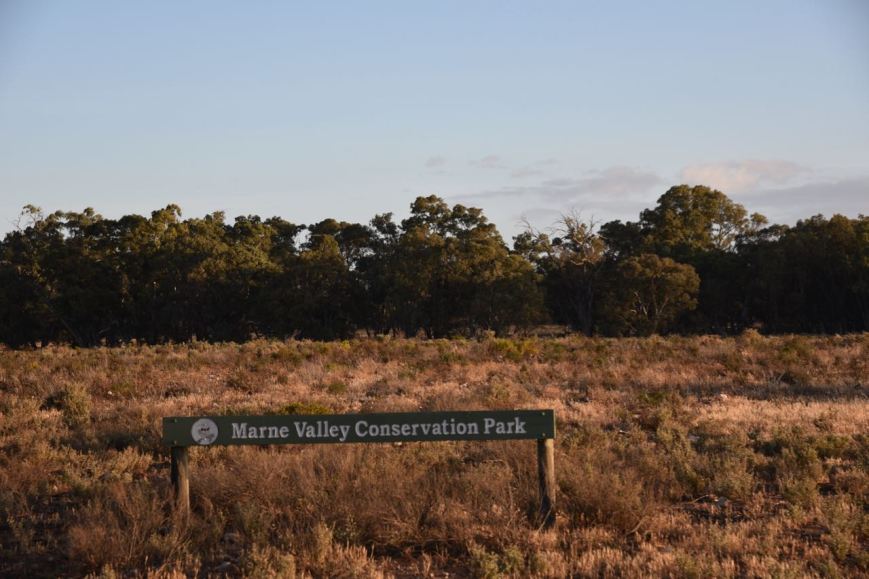
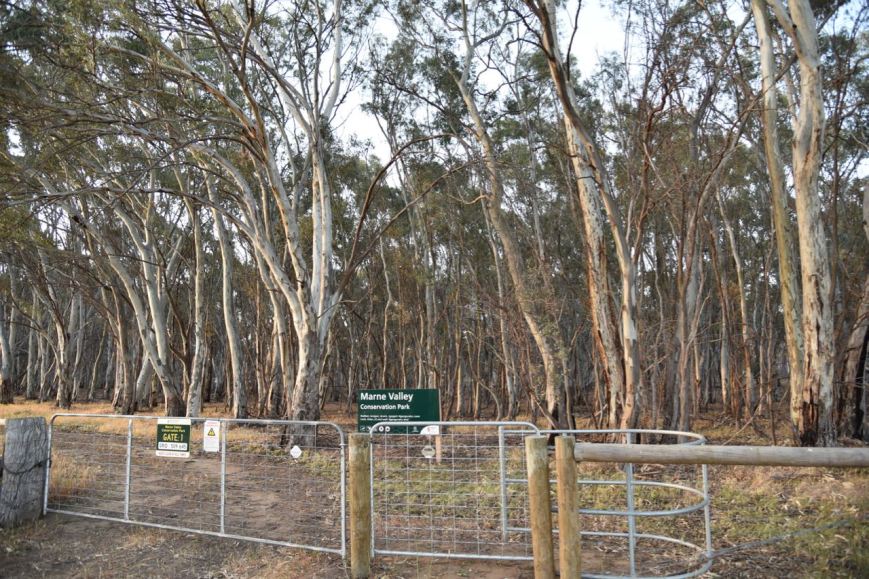
Once we got to the Black Rock Road entrance to the park I noticed that a pedestrian gate and new park sign had been installed since my last visit.

DSC_5873

Above:- The Black Rock Road entrance on the southern side of the park.

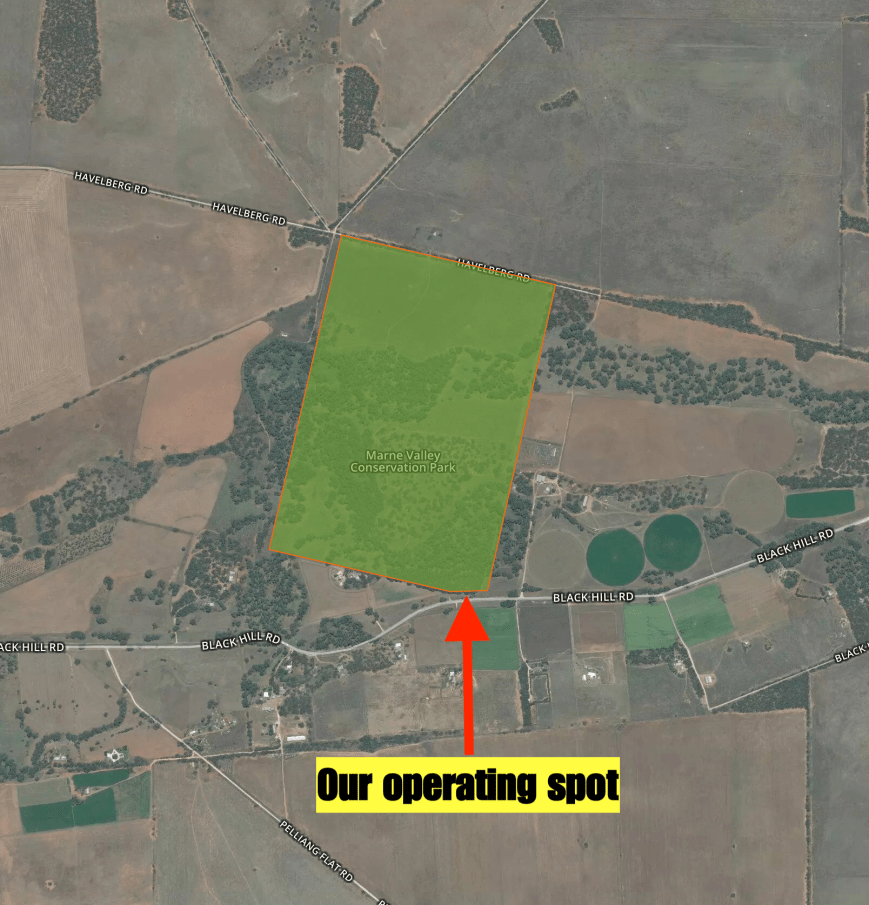
There was plenty of room here to string out the 20/40/80m linked dipole.  We used one of the fence posts as a securing point for the telescopic squid pole, with the help of an octopus strap.

Screen Shot 2019-10-29 at 6.25.28 pm.png

Above:- An aerial view of the Marne Valley Conservation Park showing our operating spot in the southern part of the park.  Image courtesy of Protected Planet.

Unfortunately, the static crashes had not subsided, nor had the contest traffic.  As a result, it was very hard to find a clear spot on the 40m band.  I called CQ on 7.142 and Mark VK4HYD called soon after, to be number one in the log.  Lee VK2LEE followed, then Wayne VK7NET, and then Mark VK4SMA.

But it was really tough going, and with just 9 contacts in the log, callers dried up.  It was at this time that I swapped the mic with Marija.

Marija’s first contact was with park regular John VK4TJ, followed by Lee VK2LEE, Andrei ZL1TM, and then Peter VK3PF.  Marija logged just one further contact, with Brett VK2WWV, before her callers also dried up.

We decided to tune across the band to see if I could work some of the ‘big guns’ in the CQ World Wide Contest.  The first DX station to be logged was Dan W7WA in Washington state.  Next was VK9NC on Norfolk Island, followed by KL7RA in Alaska.

KL7RA was so strong that I decided to get Marija to give him a call.  And with a legitimate 10 watts, Marija logged Alaska (after a few repeats of her call sign).  This was Marija’s first-ever contact into Alaska.

I then logged VK6LLL, K3EST in California, and VK4SDD.  I tried calling some of the other DX stations, but my 40 watts and little bit of wire just weren’t cutting through.

We then headed down to the 80m band where we logged a total of 16 contacts between the two of us, into VK2, VK3, VK4, VK5, and VK7.

To complete the activation I went back to 40m.  I again tried calling some of the contest stations, but I just wasn’t getting through all the interference.  The band was extremely busy.  I logged just the one station K7RL in Washington.

It was now 8.30 p.m. local time and it was almost dark.  It was time to pack up and head for home.  We had activated three parks and made a total of 157 QSOs on 40 & 80m SSB. This included 43 Park to Park contacts.

Marija worked the following stations on 40m SSB:-

  1. VK4TJ
  2. VK4/AC8WN
  3. VK4/VE6XT
  4. VK4SSN
  5. VK2LEE
  6. ZL1TM
  7. VK3PF
  8. VK2WWV
  9. KL7RA

Marija worked the following stations on 80m SSB:-

  1. VK3PF
  2. VK3KAI
  3. VK5BJE

I worked the following stations on 40m SSB:-

  1. VK4HDY
  2. VK2LEE
  3. VK7NET
  4. VK4SMA
  5. VK4TJ
  6. VK4/AC8WN
  7. VK4/VE6XT
  8. VK4SSN
  9. W7WA
  10. VK9NC
  11. KL7RA
  12. VK6LLL
  13. K3EST
  14. VK4SDD
  15. K7RL

I worked the following stations on 80m SSB:-

  1. VK2LEE
  2. VK3PF
  3. VK5KLV
  4. VK3MCK
  5. VK5ZTS
  6. VK5BJE
  7. VK3HP
  8. VK4SWR
  9. VK4CZ
  10. VK3HQZ
  11. VK7NET
  12. VK5WG
  13. VK2FAAY


References.

Birds SA, 2019, <https://birdssa.asn.au/location/marne-valley-conservation-park/>, viewed 29th October 2019

Family History SA, 2019, <https://www.familyhistorysa.org/sahistory/germanplacenames.html>, viewed 29th October 2019

National Parks and Wildlife Service South Australia, 2019, <https://www.parks.sa.gov.au/find-a-park/Browse_by_region/Murray_River/marne-valley-conservation-park>, viewed 29th October 2019.

State Library South Australia, 2019, <http://www.slsa.ha.sa.gov.au/digitalpubs/placenamesofsouthaustralia/M.pdf>, viewed 29th October 2019

Wikipedia, 2019, <https://en.wikipedia.org/wiki/Marne_River_(South_Australia)>, viewed 29th October 2019
Ridley Conservation Park VKFF-0932

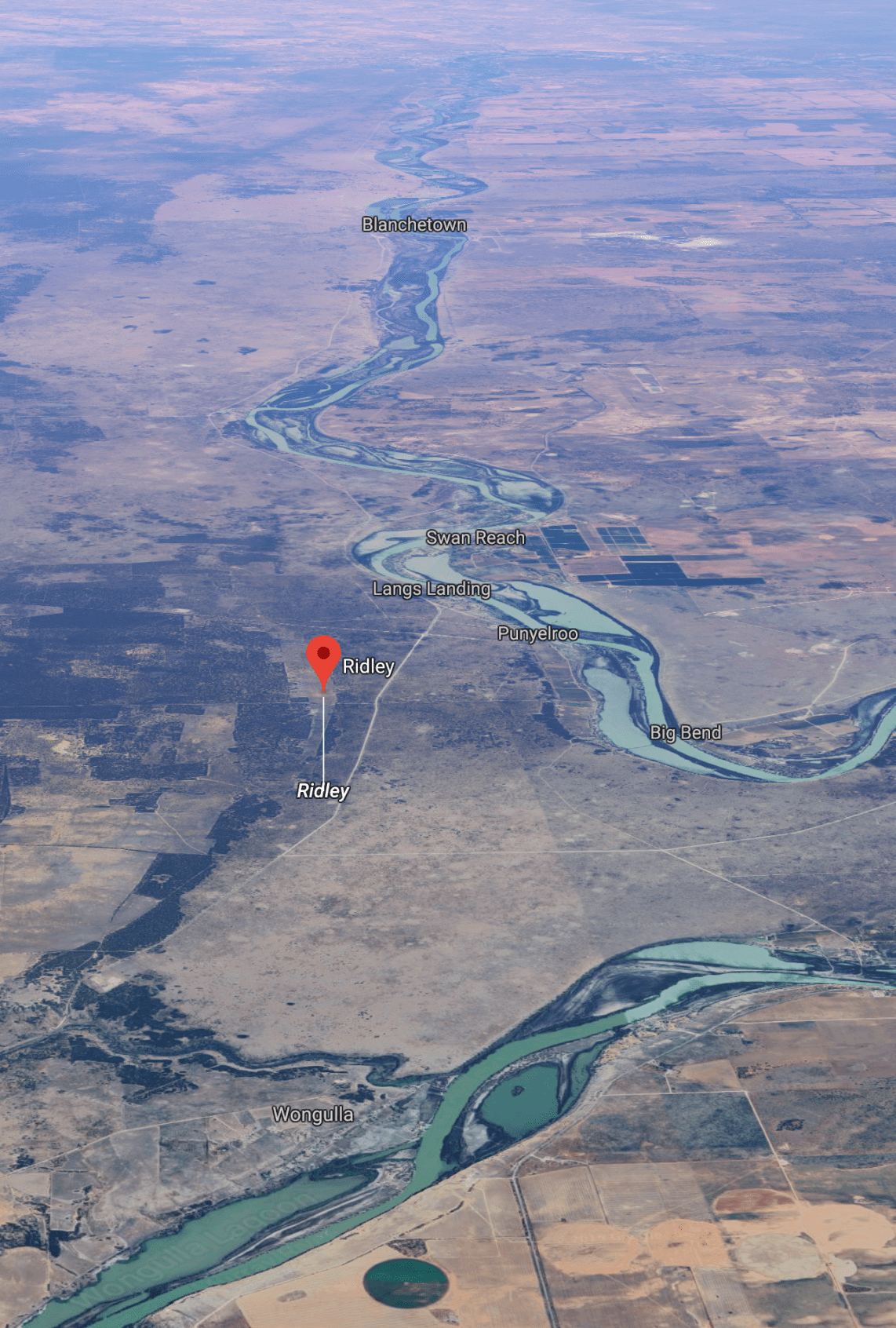
Our second park for the 2019 VKFF Team Championship was the Ridley Conservation Park VKFF-0932.  The park is located about 121 km (by road) north-east of the city of Adelaide.

Screen Shot 2019-10-29 at 6.23.21 pm.png

Above:- Map showing the location of the Ridley Conservation Park northeast of Adelaide.  Map courtesy of Protected Planet.

After packing up at Swan Reach we travelled east back along the Stott Highway and then turned right onto Murraylands Road and headed south.  We stopped off briefly at the Marks Landing lookout.  There are some great views here of the Murray River across to the town of Swan Reach.

The Ridley Conservation Park is about 414 hectares in size.  It is a long narrow park measuring 10 km in length and 400 metres in width.  The park consists of two major vegetation formations:

  • 35% – Open scrub of Red Mallee and yorell with Murray Pine and areas of shrubland dominated by Hop bush.
  • 65% – Low open woodland of Native Apricot and false sandalwood, with an understorey of spear-grass and ephemeral herbs.

The park was part of the Travelling Stock Reserve which ran for about 5-10 km parallel to the Murray River.  This part of the reserve linked the stock market of Burra in the north of South Australia, with Murray Bridge to the south.

During 1966 when the land was being resumed and purchased for the purpose of national parks, the Land Board proposed that portions of the Travelling Stock Reserve be retained and dedicated as a Wildlife Reserve.  The park was first proclaimed as the Ridley National Parks Reserve on the 30th day of May 1968.  It was re-proclaimed on the 27th day of April 1972, as the Ridley Conservation Park.

Screen Shot 2019-10-29 at 6.29.02 pm.png

Above:- An aerial view of the Ridley Conservation Park.  Image courtesy of Google maps.

Birds SA have recorded about 109 species of bird in the park includingWhite-winged Chough, Galah, Spiny-cheeked Honeyeater, Grey Shrike-thrush, Chestnut-rumped Thornbill, Brown Treecreeper, Southern Whiteface, Little Eagle, White-winged Fairywren, Regent Parrot, Striped Honeyeater, and Yellow Thornbill.

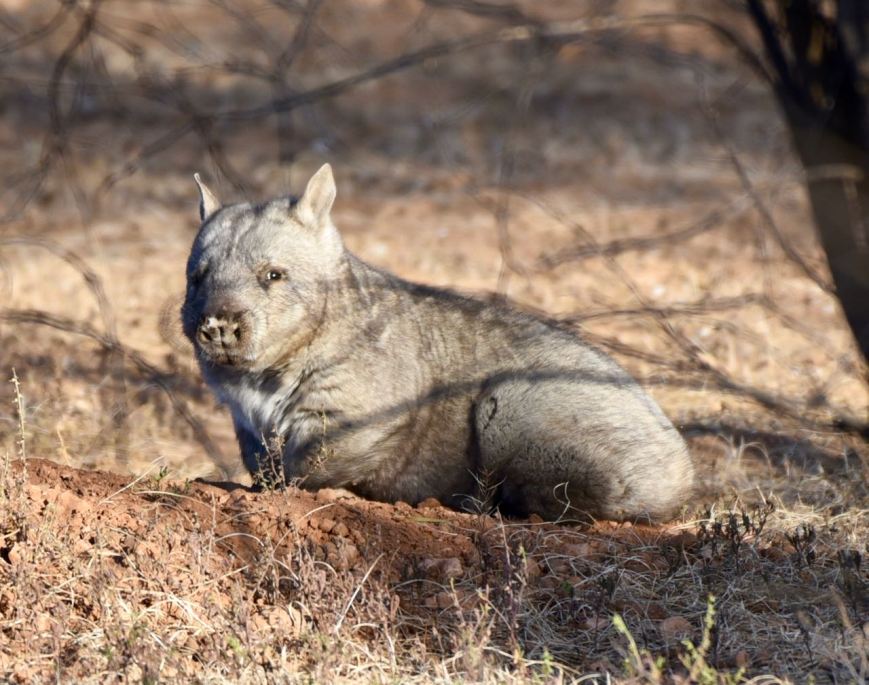
The park was originally set aside to conserve native vegetation and bird habitats, but in addition, the open areas of the park include a number of warrens of the Southern Hairy-nosed Wombat.  Other native animals found in the park include echidna and Western Grey kangaroos.

During our visit to the park, we observed one wombat, who was very quick on his/her feet but did stay still long enough for me to get some photographs (see below).

DSC_5857

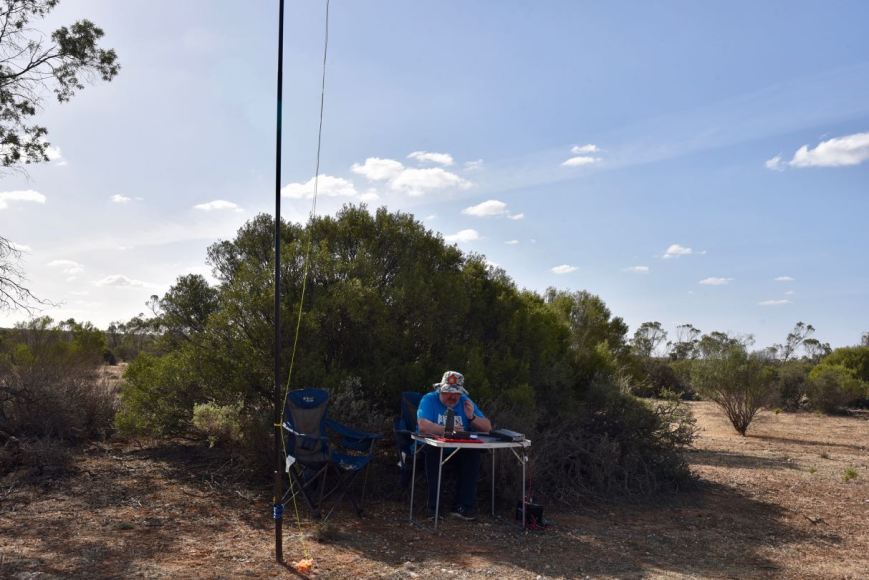
We drove a short distance off the road into the park off Murraylands Road and set up under the shade of some vegetation.  We ran the Yaesu FT-857d and the 20/40/80m linked dipole for this activation.

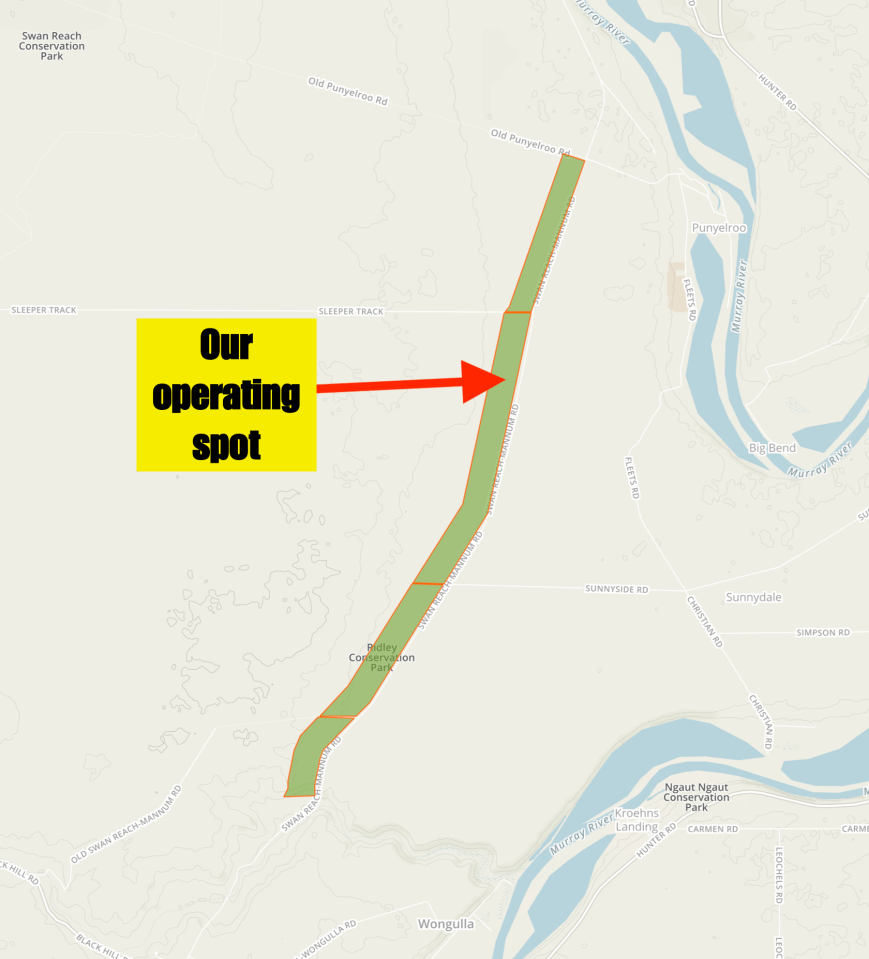
Screen Shot 2019-10-29 at 6.19.37 pm.png

Above:- Map of the Ridley Conservation Park showing our operating spot.  Map courtesy of Protected Planet.

The 40m band was very busy due to the CQ WW Contest and it was very hard to find a clear frequency.  Compounding issues was the 5/9 plus static crashes due to storm activity around Australia.  I found 7.115 clear and started calling CQ.  First in the log was Ron VK3APP, followed by park regular Rob VK2VH, and then Peter VK3ZPF who is another VKFF devotee.

This was followed by Gerard VK2IO/p who was activating the Munmorah State Conservation Area VKFF-1361.  Marija also logged Gerard for a Park to Park contact.  Five contacts later and we were called by Alan VK2MG/p who was also in the Munmorah State Conservation Area.

I logged a total of 12 stations on 40m, with conditions being quite poor.  I then swapped the mic with Marija.

DSC_5835

Marija called CQ and this was answered by Rob VK2VH, followed by Adam VK2YK, and then Peter VK3PF.  Marija had quite a steady flow of callers which was very pleasing.  We also logged further Park to Park contacts with Rob VK4SYD/p and Scott VK4CZ/p who were activating the Samford Conservation Park VKFF-1639, and Deryck VK4FDJL/6 who was in the Frankland (South) National Park VKFF-0653.

Marija logged a total of 18 stations on 40m, before handing the mic back to me,  I called CQ on 7.115, but only managed 2 further callers, Steve VK3YW and Craig VK2KDP.  The contest interference became so bad that we decided to head down to 80m.

DSC_5838

Together, we logged a total of 10 contacts on 80m into VK3 and VK5.  This included a Park to Park contact with Mike VK6MB/5 who was activating the Franklin Harbor Marine Park VKFF-1709 on the Eyre Peninsula.

I decided to have one last go on 40m.  But I was to be very disappointed, with just one contact logged, that being with Lee VK2LEE.  The contest QRM and the static crashes proved to be the winner.

We then packed up and headed off to our final park for the day, the Marne Valley Conservation Park.

Marija worked the following stations on 40m SSB:-

  1. VK2IO/p (Munmorah State Conservation Area VKFF-1361)
  2. VK2MG/p (Munmorah State Conservation Area VKFF-1361)
  3. VK2VH
  4. VK4AAC/2
  5. VK2YK
  6. VK3PF
  7. VK3PR
  8. VK1JH
  9. VK2LX
  10. VK4NH
  11. VK4DXA
  12. ZL4TY/VK4
  13. VK4SYD/p (Samford Conservation ParkVKFF-1639)
  14. VK4CZ/p (Samford Conservation ParkVKFF-1639)
  15. VK2LUV
  16. VK4FDJL/6 (Frankland (South) National Park VKFF-0653)
  17. VK2FAAY
  18. VK3MAB

Marija worked the following stations on 80m SSB:-

  1. VK6MB/5 (Franklin Harbor Marine Park VKFF-1709)
  2. VK3BBB
  3. VK5FANA
  4. VK3NBL

I worked the following stations on 40m SSB:-

  1. VK3APP
  2. VK2VH
  3. VK4AAC/2
  4. VK3ZPF
  5. VK2IO/p (Munmorah State Conservation Area VKFF-1361)
  6. VK3CQC
  7. VK7PSJ
  8. VK3PF
  9. VK7JON
  10. VK2MG/p (Munmorah State Conservation Area VKFF-1361)
  11. VK3MCK
  12. VK2YK
  13. VK4CZ/p (Samford Conservation ParkVKFF-1639)
  14. VK4SYD/p (Samford Conservation ParkVKFF-1639)
  15. VK4FDJL/6 (Frankland (South) National Park VKFF-0653)
  16. VK3YW
  17. VK2KDP
  18. VK2LEE

I worked the following stations on 80m SSB:-

  1. VK5PL
  2. VK5BJE
  3. VK6MB/5 (Franklin Harbor Marine Park VKFF-1709)
  4. VK2DJH/4
  5. VK3BBB
  6. VK5FANA

We drove west on the Black Hill Road and took a short detour into Shell Hill Reserve.  We have been here before, but it is a very interesting place.  Shell Hill is a deposit of oyster shells believed to be the only shell deposit of its type in the Southern Hemisphere.  It was originally part of a shallow sea which occupied the Murray River Basin millions of years ago.

During the early 1930s, a company called Ellis & Clarke realised the value of the shell as a fertiliser and work commenced on a crushing plant in the gully below the deposit.  A 50-metre long chute fed the plant from the shell deposit.  The crushed shell contained a high percentage of lime and was used in agricultural pursuits.  Sir  Thomas Playford, the South Australian Premier used a significant quantity for his orchards in the Adelaide Hills.  The plant ceased operation in 1946.


References.

Birds SA, 2019, <https://birdssa.asn.au/location/ridley-conservation-park/>, viewed 29th October 2019

Discover Mrray Mallee, 2019, <http://www.murrayriver.com.au/swan-reach/shell-hill/>, viewed 29th October 2019