Cooltong Conservation Park 5CP-046 and VKFF-0823

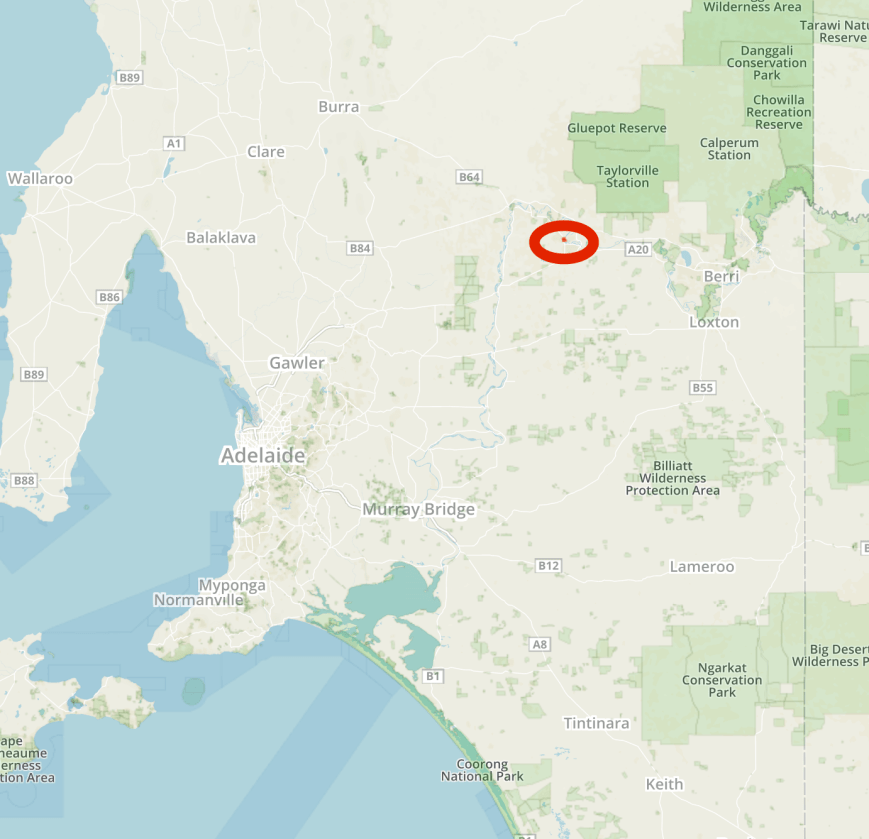
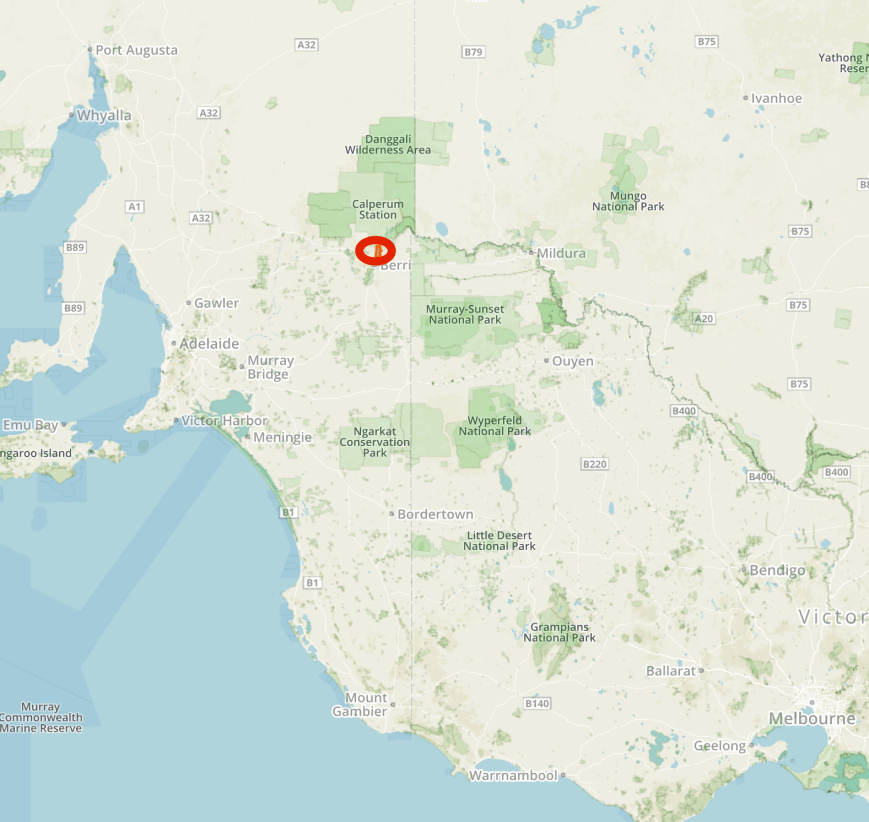
Marija and I had one planned park activation for Sunday (23rd April 2017).  That being the Cooltong Conservation Park 5CP-046 & VKFF-0823 which is located about 257 km north east of Adelaide, and just a few km to the west of the town of Renmark.
Screen Shot 2017-04-27 at 4.48.13 pm.png

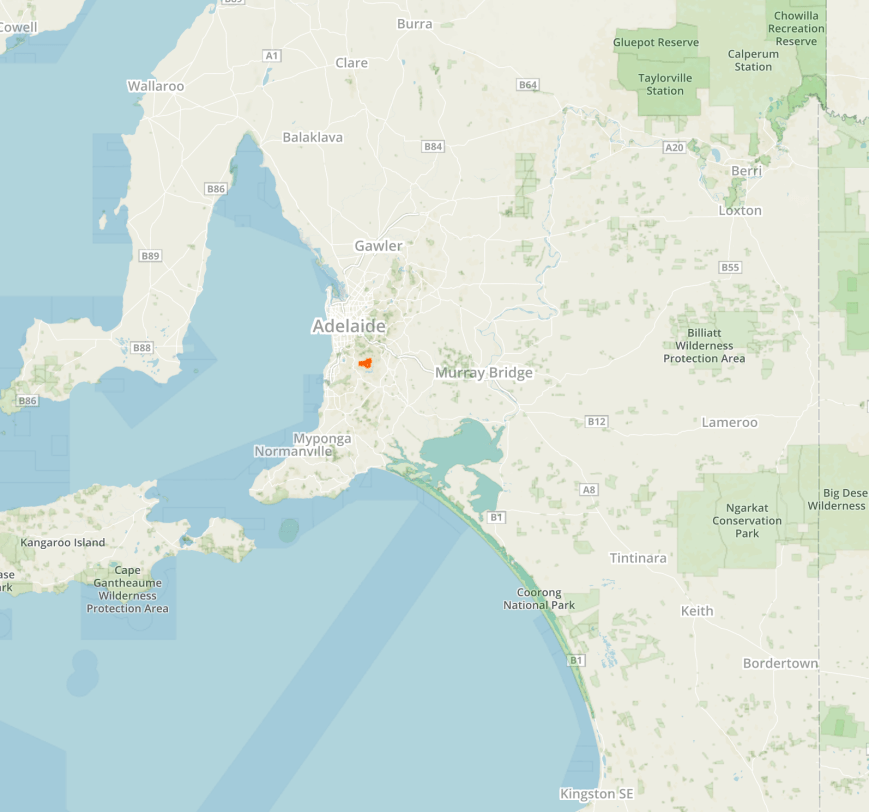
Map showing the location of the Cooltong Conservation in the Riverland region of South Australia.  Map courtesy of Protected Planet.

Marija and I have activated this park previously, for both the VK5 National & Conservation Parks Award and the World Wide Flora Fauna (WWFF) program.  We visited the park together back in April 2015 when Marija had made 15 contacts, qualifying the park for VKFF, but falling a bit short of the 44 QSOs required for the global WWFF program.  So Marija was hoping to pick up a few more contacts to get over the 44 line.

https://vk5pas.org/2016/04/20/cooltong-conservation-park-5cp-046-and-vkff-0823/

And I had activated the park back in May 2015 and well and truly had qualified the park for both VKFF and WWFF.

https://vk5pas.org/2015/05/12/cooltong-conservation-park-vkff-823/

However, I had been given permission to use the special call of VK5WOW, issued to help celebrate the upcoming 2017 WIA AGM & Convention in Handorf.

imageedit_1_7675210881.png

We made an early start and had breakfast at the motel and then headed to the home of Ivan VK5HS.  As it turned out my wife Marija and Ivan had secretly arranged to instal a BHI noise eliminating speaker in the Toyota Hi Lux.  Many thanks to both Marija and Ivan.  It is a really welcome addition to the vehicle.  Peter VK5PE also popped around.

Whilst there we all worked Andrew VK1AD who was on SOTA summitBobbara Mountain VK2/ ST-044, and then John VK5BJE/3 who was portable in the Snowy River National Park VKFF-0455.  And we also worked VK5WOW on the callback after the VK5 WIA Broadcast.

Marija and I then headed across the historic Paringa bridge into the little town of Paringa.  The bridge was constructed in 1927 for the railway extension over the River Murray to Renmark.  It is one of South Australia’s significant engineering monuments and is a State Heritage Place protected by the Heritage Places Act 1993.

We then headed out to Lock 5 which was built during the 1920’s to regulate the flow and the levels of the Murray River.  There are a number of information boards here explaining how the lock was installed.  You can also view the 80 ton barge, the Bunyip.  Along the way we workd Nick VK3ANL who was activating SOTA peak Mount Torbreck VK3/ VN-001.

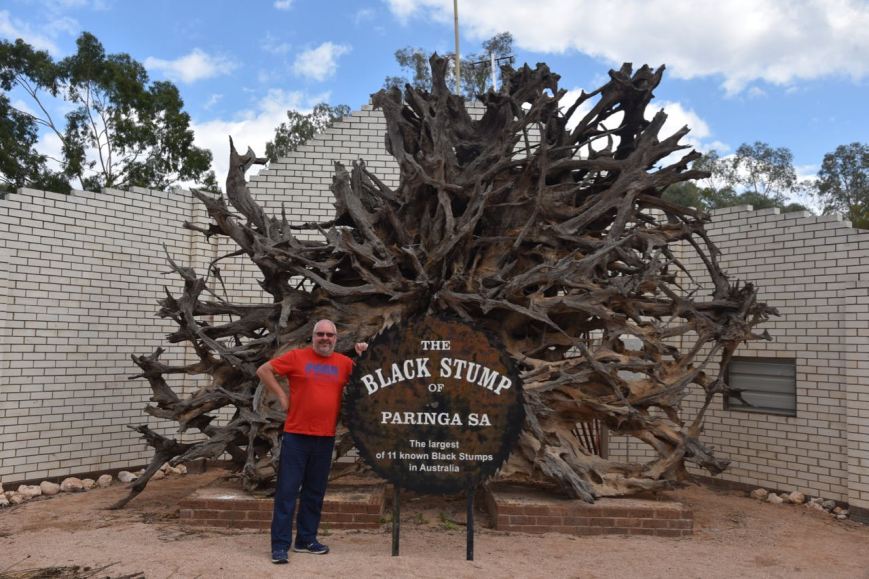
Our next stop was the Black Stump at Paringa, the largest of 11 known black stumps in Australia.
DSC_6599.jpg

We then visited the Olivewood historic homestead and museum.  This was the home of the Chaffey Bros, founders of Australia’s first irrigation settlement in Renmark in 1887.  The old homestead is open for inspection and is furnished from this period.

The adjacent museum contains numerous early photos and memorabillia, including an amount of old radio gear.

We then called in to the Twenty Third Distillery in Renmark for some lunch….wood fire oven pizzas and a few cold Ciders.

It was now approaching 1.30 p.m. local time and we headed out to the Cooltong Conservation Park.  We accessed the park via Santos Road which runs off the Sturt Highway.  There are no signs on the Highway indicating the park.   But a few km up Santos Road we reached the park which is signposted.

Cooltong Conservation Park was dedicated in 1993 and comprised 3,681 hectares of mallee vegetation.  The name Cooltong is derived from a local aboriginal name meaning ‘lizard place’.  A large number of native birds can be found in the park including the rarely seen Malleefowl.

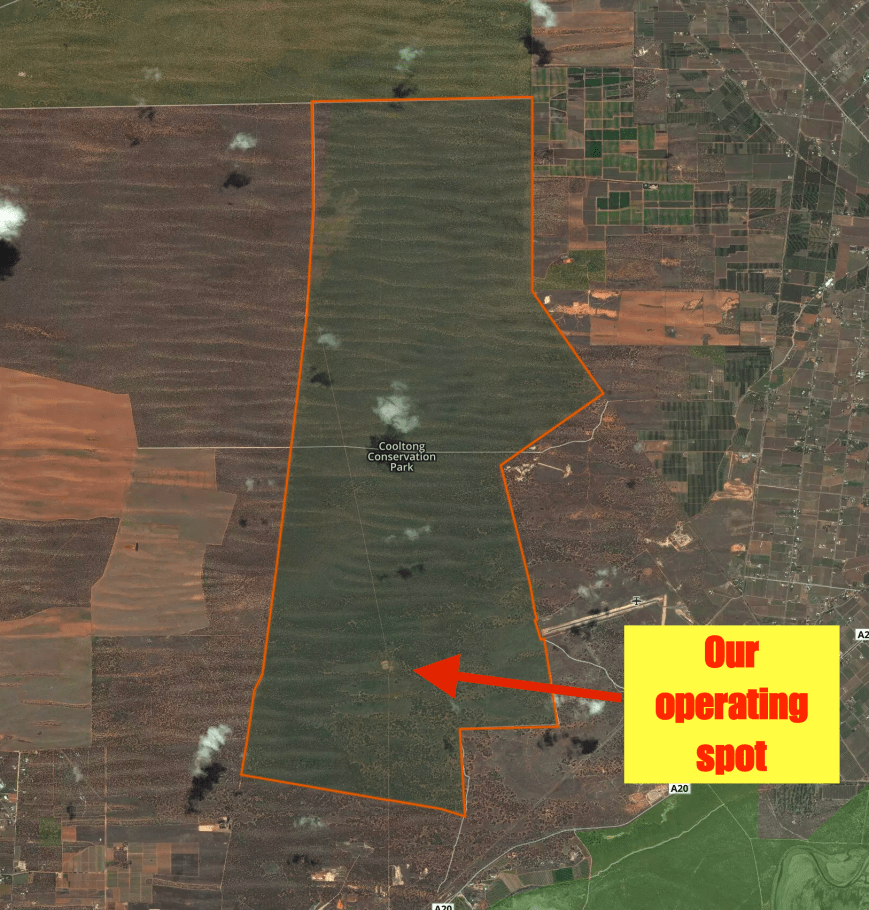
Marija and I drove a short distance in the park and found a clearing in amongst the scrub off Santos Road.  It was a hot da7, 29 deg C, so we erected the awning on the Toyota Hi Lux and set up the deck chairs and fold up table underneath the awning.  We ran the Yaesu FT-857d for this activation, initially set at 10 watts PEP for Marija, and then at 40 watts for me.  The antenna was the 80/40/20m linked dipole supported on the 7m telescopic squid pole.
Screen Shot 2017-04-27 at 4.48.01 pm.png

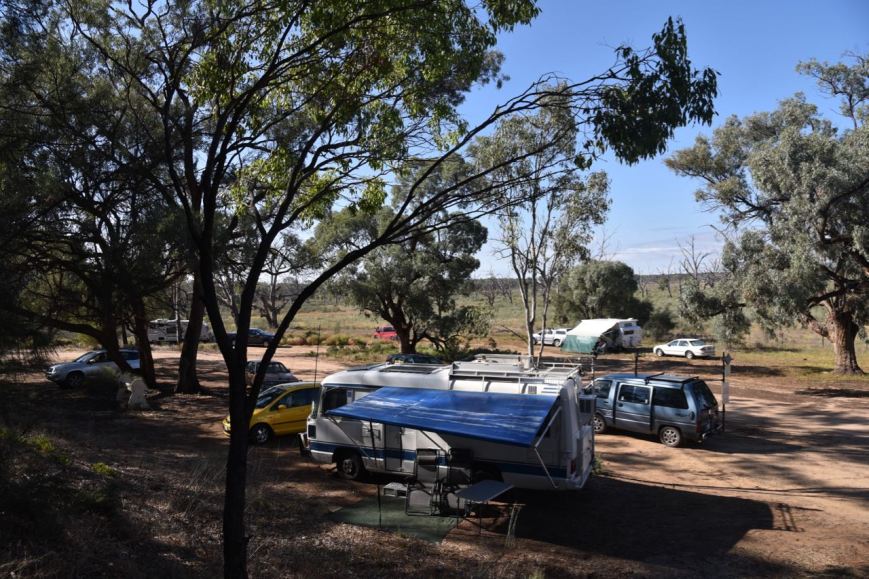
Aerial shot of the park showing our operating spot.  Image courtesy of Protected Planet.

Marija started off first, with contact number one on 40m SSB being Mark VK5QI/m who was mobile on his way home from the Riverland.  Mark is an active member of AREG and had taken part in the balloon launch the day previous.  Contact number two for Marija was Jonathon VK7JON, followed by Damien VK3FRAB/p, Bruce VK3FBNG, and then Bill VK5MBD/p who was portable near Overland Corner.  Contact number 7 was a Park to Park contact with Greg VK4VXX/2 who was activating the Mutawintji National Park VKFF-0374.

The band was in good shape and there were a lot of amateurs about due to it being the Easter weekend.  Marija very soon had the required 29 contacts in the log (to add to her previous 15) to qualify the park for WWFF.  The honour of contact 29 goes to Ian VK3VIN in Corio.

Marija worked a total of 66 stations on 40 from VK1, VK2, VK3, VK4, VK5, and VK7.  This included further Park to Park contacts with John VK5BJE/3 who was portable in the Lake Tyers State Park VKFF-0761, David VK5HYZ/p in the Scott Creek Conservation Park VKFF-0788, Peter VK3PF/4 on SOTA peak VK4/ SE-043 in the D’Aguilar National Park VKFF-0129, Bill VK4FW/p in the Nour Nour National Park VKFF-0701, and Bill VK3CWF/p in the Brisbane Ranges National Park VKFF-0055.

Craig VK3CRG streamed Marija’s contacts via VK3RTV, Digital Amateur TV in Melbourne.

Marija swapped the mic with me, allowing me to log the Park activators.

It was my turn to jump on the mic and operate as VK5WOW.  And WOW (sorry for the pun), what a pile up.  I reached contact number 44 in just 30 minutes (Kevin VK2VKB).  In around 1 hour & 20 minutes I had contact number 100 in the log (Ray VK3RW).  I logged a total of 104 contacts on 40m with most contacts around Australia into VK1, VK2, VK3, VK4, VK5, and VK7.  I logged 2 DX stations on 40m: Brian ZL2ASH in Wellington, New Zealand, and Vicente EA3GP in Tarragona, Spain.  I made one Park to Park contact, and that was with Peter VK3PF/4 who was in the D’Aguilar National Park VKFF-0129.

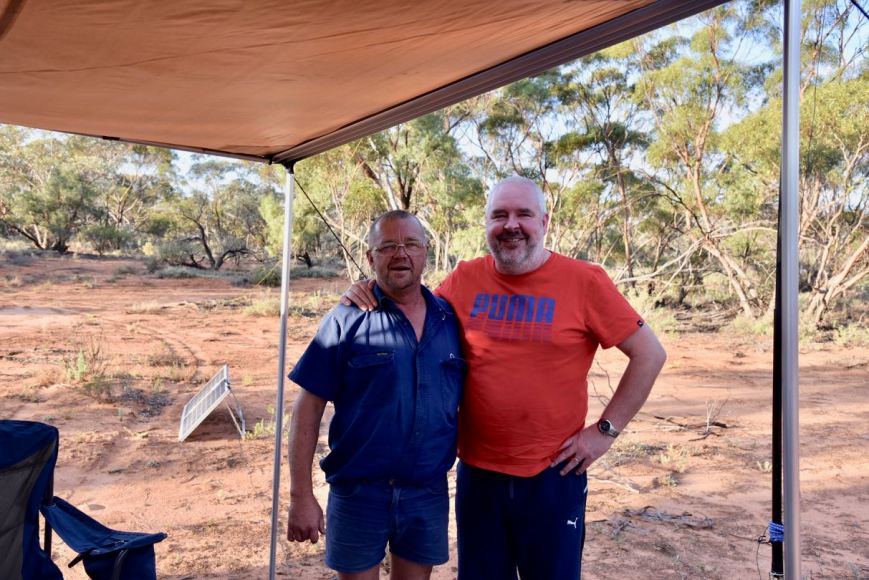
During my time on 40m, Shaun VK5FAKV called me.  Shaun lives very close by to the park and I gave him directions on how to find me.  I have spoken with Shaun many times on air, and it was a pleasure to meet him finally in person.
DSC_6634.jpg

I then gave the 20m band a crack, but had very little success there.  Long path propagation into Europe was non existant.  I logged just 6 stations on 20m from VK2, VK4, VK6 and Japan.

I then moved back to 40m where I logged a further 20 stations from VK2, VK3, VK4, and VK6.  This included a Park to Park with Bill VK4FW who was in the Nour Nour National Park VKFF-0701.

It was starting to get dark, 5.30 p.m. local time, and I decided to give the 80m band a shot.  I called CQ on 3.610 and this was answered by Bernie VK4KX who had followed me down from 40.  This was followed by Ivan VK5HS at nearby Renmark who was of course 5/9 +++.  I worked a total of 19 stations on 80m from VK2, VK3, VK4, VK5, and VK7.

I decided to give 40m one last try, hoping to get some North American DX in the log.  Sadly, this was not to happen.  But I did log a further 12 stations from VK2, VK3, VK4, VK5, and VK6.

It was now 6.30 p.m. local time and it was time to pack up and head back into Renmark for a bite to eat.  I had a total of 161 contacts in the VK5WOW log.  Thanks to everyone who called, and I apologise to those who missed out in the pile up.  Be patient and persistent and I am sure to work you.

At the end of the activation Marija and I enjoyed a very nice meal at the Renmark Club and it was then back to the motel room, for another early start in the morning.

Marija worked the following stations on 40m SSB:-

  1. VK5QI/m
  2. VK7JON
  3. VK3FRAB/p
  4. VK3FBNG
  5. VK5MBD/p
  6. VK3CGB
  7. VK4VXX/2 (Mutawintji National Park VKFF-0374)
  8. VK3YXC
  9. VK1AT/p
  10. VK5KLV
  11. VK5HS
  12. VK5PE
  13. VK7FOLK
  14. VK3FSPG
  15. VK3MPR
  16. VK2HPN/m
  17. VK5AYD
  18. VK7DW
  19. VK2NP
  20. VK2PDW
  21. VK2GAZ
  22. VK3FOWL
  23. VK3SQ
  24. VK2QK
  25. VK5WG
  26. VK2OD
  27. VK3TKK
  28. VK3AXF
  29. VK7AU
  30. VK3VIN
  31. VK3HKV
  32. VK5BJE/3 (Lake Tyers State Park VKFF-0761)
  33. VK3ZLD
  34. VK2LX
  35. VK5HYZ/p (Scott Creek Conservation Park VKFF-0788)
  36. VK3PF/4 (SOTA VK4/ SE-043 & D’Aguilar National Park VKFF-0129)
  37. VK3FPSR
  38. VK3FAJH
  39. VK3FLJD
  40. VK3FPHG
  41. VK5TR
  42. VK5AFZ
  43. VK2KYO
  44. VK3YSP
  45. VK5YL
  46. VK3CRG
  47. VK3PAT
  48. VK5MA/p
  49. VK4FW/p (Nour Nour National Park VKFF-0701)
  50. VK3CWF/p (Brisbane Ranges National Park VKFF-0055)
  51. VK3ZZS/p
  52. VK5FANA/m
  53. VK7NWT
  54. VK5IS
  55. VK5CP
  56. VK2HI
  57. VK5HEL
  58. VK3GGG
  59. VK3PMG
  60. VK5FMJC
  61. VK4RF
  62. VK4HA
  63. VK2GPT/p
  64. VK3TL
  65. VK3MIC
  66. VK3ZL

I worked the following stations (under VK5PAS) on 40m SSB:-

  1. VK4VXX/2 (Mutawintji National Park VKFF-0374)
  2. VK5BJE/3 (Lake Tyers State Park VKFF-0761)
  3. VK5HYZ/p (Scott Creek Conservation Park)
  4. VK3PF/4 (SOTA VK4/ SE-043 & D’Aguilar National Park VKFF-0129)
  5. VK4FW/p (Nour Nour National Park VKFF-0701)
  6. VK3CWF/p (Brisbane Ranges National Park VKFF-0055)

I worked the following stations (under VK5WOW) on 40m SSB:-

  1. VK3SQ
  2. VK3HSB
  3. VK3PF/4
  4. VK4RF
  5. VK4HA
  6. VK5MBD/p
  7. VK3FOWL
  8. VK5MA/p
  9. VK3TKK
  10. VK5NE
  11. VK3TL
  12. VK5WG
  13. VK2HOT
  14. VK3ZLD
  15. VK3PAT
  16. VK5HEL
  17. VK2LX
  18. VK3GYH/p
  19. VK5KLV
  20. VK2GAZ
  21. VK2FRKO
  22. VK3CRG
  23. VK2VW
  24. VK3FRAB/p
  25. VK3FPHG
  26. VK3YSP
  27. VK3SRC
  28. VK2EJW
  29. VK3YQS
  30. Vk5FANA/m
  31. VK7JON
  32. VK3BL
  33. VK7VZ/p
  34. VK3GGG
  35. VK3PMG
  36. VK5JK
  37. VK3VLY
  38. ZL2ASH
  39. VK3JM
  40. VK2PDW/m
  41. VK2NP
  42. VK3MNZ
  43. VK4HNS
  44. VK2VKB
  45. VK2SK
  46. VK2EXA
  47. VK7FOLK
  48. VK3ZPF
  49. VK3FADM/2
  50. VK2JXA/p
  51. VK3YSP/p
  52. VK4FFAB
  53. VK4BX
  54. VK4ARW
  55. VK3FAJH
  56. VK5DJW
  57. VK5ZGY/m
  58. VK2NSS
  59. VK2VOL
  60. VK5FAKV
  61. VK4QQ
  62. VK3PLP
  63. VK5PE
  64. VK3VIN
  65. VK3BSG
  66. VK7DW
  67. VK4VXX
  68. VK5WF
  69. VK3PI
  70. VK2IO/m
  71. VK4SMA
  72. VK1RZ
  73. VK7FEAT/m
  74. VK7AN
  75. VK3RU
  76. VK3TJS
  77. VK3MCK
  78. VK5KFB
  79. VK2ZQ
  80. VK2BMU
  81. VK5BC
  82. VK5NJ
  83. VK2UCT
  84. VK3FSPG
  85. VK3MPR
  86. VK2NWB
  87. VK4ND
  88. VK2YW
  89. VK3BGE
  90. VK5NAW
  91. EA3GP
  92. VK5HS
  93. VK3MAB
  94. VK5ZKU
  95. VK3FMPC
  96. VK7AU
  97. VK3ZD
  98. VK3MJR
  99. VK3ELH
  100. VK3RW
  101. VK3STU
  102. VK3MCD
  103. VK5YX
  104. VK3HBG
  105. VK2QQ
  106. VK3TJK
  107. VK2HHS
  108. VK4FW/p (VKFF-0701)
  109. VK2QK
  110. VK2HBT
  111. VK3UH
  112. VK3SOT
  113. VK4HHA
  114. VK3WAR
  115. VK2FSAV
  116. VK5FD/p
  117. VK6WC
  118. VK2SOL
  119. VK3SX
  120. VK3NLK
  121. VK3FMDC
  122. VK4DA
  123. VK2BTO
  124. VK4KX
  125. VK4GAZ
  126. VK3FEVT
  127. VK3AND
  128. VK3FLES
  129. VK4FSCC
  130. VK4FRAL/m
  131. VK6NU
  132. VK3LBW
  133. VK2TMC
  134. VK2SVN
  135. VK2WWV
  136. VK5FDEC

I worked the following stations (under VK5WOW) on 20m SSB:-

  1. VK4QQ
  2. VK2MI
  3. VK5BC
  4. JA1VRY
  5. VK2CMP
  6. VK6GLX

I worked the following stations (under VK5WOW) on 80m SSB:-

  1. VK4KX
  2. VK5HS
  3. VK3NLK
  4. VK4VCO/p
  5. VK5FANA
  6. VK5HYZ
  7. VK3STU
  8. VK5FD/p
  9. VK7JON
  10. VK5ATQ
  11. VK3GGG
  12. VK3PMG
  13. VK3VLY
  14. VK3SQ
  15. VK5MG
  16. VK4TJ
  17. VK3DQL
  18. VK5FMAZ/m
  19. VK2MTM


References.

Department of Environment and Natural Resources, 2011, ‘Parks of the Riverland’

Discover Murray, 2017, <http://www.murrayriver.com.au/paddleboats/river-boat-trail-renmark/&gt;, viewed 27th April 2017

Renmark Paringa Visitor Information Centre, 2015, ‘Renmark, Paringa & Lyrup Visitor Guide’

Wikipedia, 2017, <https://en.wikipedia.org/wiki/Cooltong,_South_Australia&gt;, viewed 27th April 2017

2017 BRL Gathering at Overland Corner

On Saturday morning (22nd April 2017) Marija and I headed out to the historic Overland Corner Hotel for the 2017 BRL Gathering, hosted by the Riverland Radio Club.  This was the third year that the club had held the event.  And this year was special as the Amateur Radio Experimenters Group (AREG) were going to conduct a High Altitude Balloon launch at the gathering.

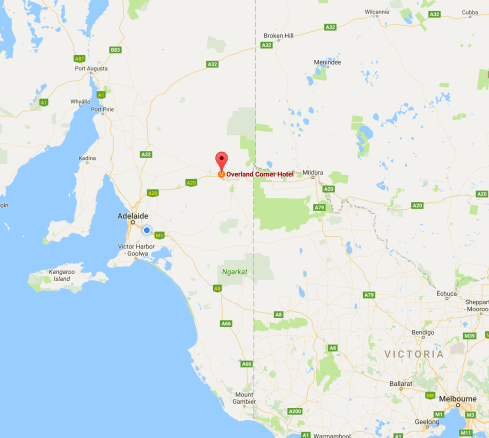
So after breakfast at the motel, Marija and I made the 30 minute journey from Renmark out to the Overland Corner Hotel.

Screen Shot 2017-04-27 at 2.32.41 pm

Map showing the location of the Overland Corner Hotel in the Riverland region of South Australia.  Map courtesy of google maps.

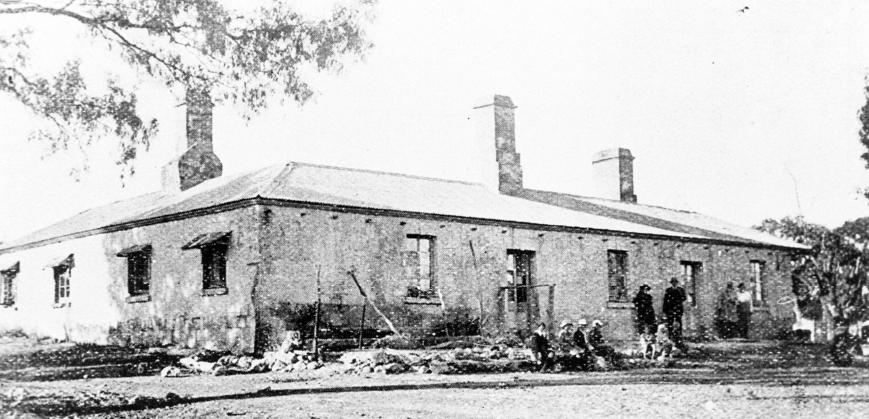
The Overland Corner Hotel is located about 21 km from Barmera, and is situated off the Goyder Highway.  The hotel was originally established as a watering hole for drovers and overlanders operating between New South Wales and Adelaide in the colony of South Australia.  It also served as a temporary camping ground for steamers passing through the area along the mighty Murray River, about 600 feet from the hotel.  The hotel was erected in 1859 and since that time has served as a staging point, a general store, a police station and a local Post Office.

Screen Shot 2017-04-27 at 2.49.06 pm.png

The Overland Corner Hotel, c. 1910.  Courtesy of Trove.

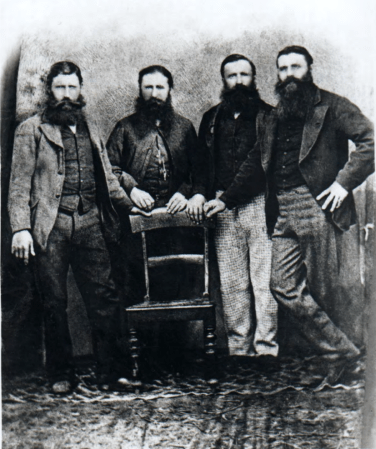
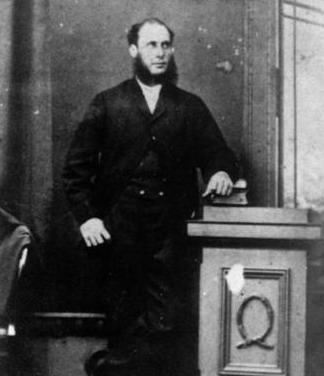
The Brand brothers, Henry, William, George and James who migrated to Australia from Kent, England in 1851 were commissioned by John Chambers, the enterprising pastoralist to build the Overland Corner Hotel in 1859.   The hotel’s original construction was almost entirely of locally available materials, including limestone, red gum and native pine timbers, a dirt floor, and thatched roof of river reeds.  A nearby quarry provided the stone for the hotel.  The rock is composed almost entirely of fossils. Corals, shellfish and the occasional shark’s tooth give evidence that this area was once covered by warm, shallow seas, long before man walked on the earth, some fifteen million years ago.  That the building remains is a tribute to these pioneer builders and their skills of construction.

Screen Shot 2017-04-27 at 3.45.09 pm

The Brand brothers.  Courtesy of Barmera Visitor Information Centre

The National Trust purchased the building in 1965 and the fossilised limestone building was completely restored.  It is the oldest structure remaining in the area.

There is a small museum in the hotel displaying various relics, even an old morse key.

It is reputed that the bushranger Henry Arthur ‘Harry’ Readford, visited the hotel.  Readford was imortalised in the 1882-83 novel ‘Robbery Under Arms’.  The character ‘Captain Starlight’ in the book was a composite of several bushrangers including Readford created by the author Rolf Boldrewood.  It is reported that Readford and his gang came to Overland Corner, and after stopping in at the nearby police station, where they locked the police in the cells, retired to the Overland Corner for a drink.  Stories abound that Readford even rode his horse into the bar and before leaving he carved his name onto the hotel’s wall.  Sadly no trace of this remains today.

Henry_Readford

Harry Readford.  Image courtesy of Wikipedia.

The carpark at the rear of the hotel offered plenty of room for those staying for a few nights at Overland Corner for the BRL Gathering.

DSC_6494

The BRL Gathering is a terrific social function, and if you have never attended, I highly recommend that you do.  It is a great day of catching up with old mates and sitting around in the pub’s gardens enjoying a frothy or two and a great pub meal.

This slideshow requires JavaScript.

Without a doubt the highlight of this years BRL Gathering was a High Altitude Balloon launch by the Amateur Radio Experimenters Group (AREG).

Below is a short video of the balloon launch…….

This was the first test flight of a new experimental cross band voice repeater: Input- 147.500 MHz, Output- 438.850 MHz.  A number of contacts were logged on the repeater, with the special call of VK5WOW being used.  Marija and I were lucky enough to make contact via HT.

I had a small display table erected, promoting the VK5 National & Conservation Parks Award and the World Wide Flora Fauna (WWFF) program.  I also delivered three short talks on these two programs, and operating portable.

Frank VK3VEF was awarded the BRL Net Award, while Dennis VK2HHA was issued with a special award certificate for assisting as a relay station on the Riverland Radio Group Net.

A great day had by all.  Marija and I will certainly be there again next year.

After leaving we popped in just up the road to have a look at a historic BlackBox tree dating back to 1780.   The species has fibrous roots that were chewed by Aboriginal women to make a tough fibre. The fibre was used to make netting to trap birds, animals and fish.  Nets were up to 50 metres long and could take a year or more to make.

We then stopped in to have a look at the Overland Corner cemetery, which is the largest cemetery in the area and is still used today.  Members of the Brand family and other residents of the early European settlement lie here.

We also visited the lookout from where you can enjoy panoramic views of the flats, river cliffs and the hotel.

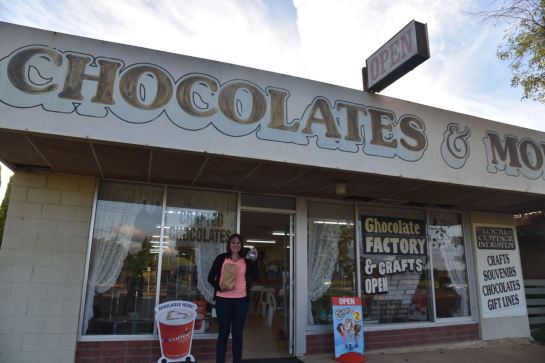
We then stopped off at Chocolates and More at Monash which is located opposite the Monash Adventure Park.  Plenty of calories here to be enjoyed.

DSC_6565.jpg

We had a little bit of time before dinner, so we also visited the small lookout tower on the outskirts of Renmark, and enjoyed the sunset.

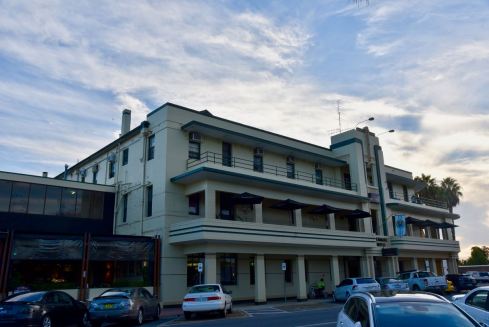
That evening, a number of us, including Ivan VK5HS and his wife Cheryl, Peter VK5PE and his wife Nat, and Mick VK3GGG and his wife Anne, had dinner at the Renmark Hotel.  Plenty of laughs were had.

DSC_6566

References.

Barmera Visitor Centre, 2009, ‘Historic Overland Corner Hotel’

State Library South Australia, <http://www.slsa.sa.gov.au/murray/content/didyouknow/bushrangers.htm&gt;, viewed 27th April 2017

Ramco Point Conservation Park 5CP-193 & VKFF-0930

Bright and early on Good Friday morning (21st April 2017) my wife Marija VK5FMAZ and I, left home headed for the Riverland region of South Australia.  We had booked in to stay three nights at Renmark, with our main reason for heading to the Riverland, to attend the BRL Gathering at the historic Overland Corner Hotel.  The BRL Gathering is held each year and is organised by the Riverland Radio Club.

Marija and I had planned to activate one park on our way up on Friday, the Ramco Point Conservation Park 5CP-193 and VKFF-0930.  The park is situated about 180 km north east of Adelaide, and is located just to the north west of the town of Waikerie.

I had activated Ramco Point back in April 2015 as part of the VK5 National & Conservation Parks Award.  But this was prior to Ramco Point being added to the World Wide Flora Fauna (WWFF) program, so this was to be a unique park for WWFF for both Marija and myself.

Screen Shot 2017-04-26 at 5.10.15 pm

Map showing the location of the Ramco Point Conservation Park in the Riverland region of South Australia.  Map courtesy of Protected Planet.

It is a 2 hour drive from our home in the Adelaide Hills to Waikerie.  Our drive took us out through Woodside and Birdwood and on to Mount Pleasant.  We then travelled along the Angas Valley Road, admiring the view of the surrounding countryside as we left the hills and down to the eastern flats of the Mallee.  We then travelled north on Ridley Road, passing through the towns of Cambrai and Sedan until we reached the Sturt Highway.  We then travelled east towards Waikerie, passing the Brookfield Conservation Park, and crossing the mighty Murray River at Blanchetown.

The Ramco Point Conservation Park was proclaimed in June 2006 and is located just to the north of Ramco Lagoon, on the southern side of the Murray River.  The little town of Ramco is located nearby.  Today the town has a population of about 200 people and just a Post office, Lutheran church, a total hall and a school.  The current town of Ramco waas surveyed in 1940, however there was an earlier Ramco village which was founded in July 1894 by 18 disgruntled settlers from the Waikerie village settlement.

Ramco originates from the aboriginal word ‘Bogorampko’.  The word ‘bogo’ means dead, a spirit or a giant from mythology and ‘rampk’ means going towards or referring to the route used by mythical creatures to get to the river for water at night.  It was an aboriginal belief that there was a class of beings, Bogo, who lived at Bogorampko.  They were considered large and human-like and had the power of invisibility.  The Bogo were thought to come to the Murray River at night from the inland scrubby country to get water and inflict sorcery.

This slideshow requires JavaScript.

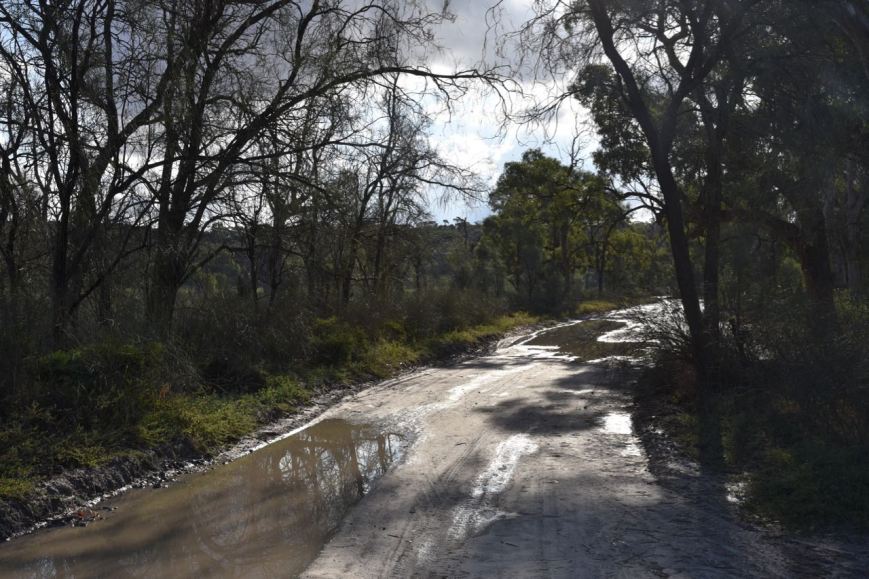
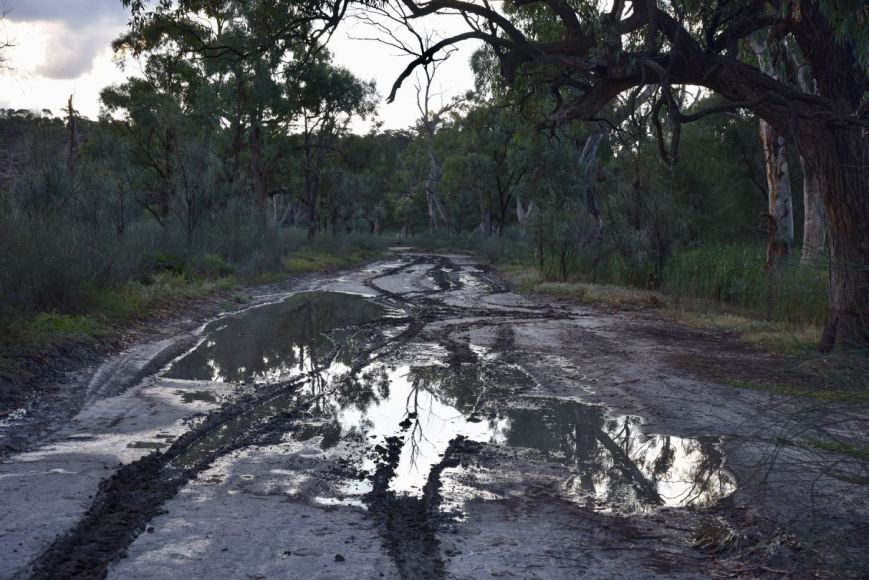
The road into the park, Ramco Point Road is initially bitumen, but then becomes dirt.  Last time we were here at Ramco back in 2015, there had been a lot of rain, making the track very boggy.  And on this occasion it was no different.  There had been quite a bit of rain overnight, and the track was very slippery and boggy in parts.

DSC_6420.jpg

The first section of Ramco Point Road.  It was wet but was easily passable.

There were a number of caravaners alongside the Murray River who had obviously been there prior to the rain.  By the time we had passed Ramco Lagoon, the track had become extremely slippery and boggy.  Although it didn’t look bad, the soil here alongside the river, once wet, becomes quite treacherous.  Fortunately we had been able to get inside the park boundary.

DSC_6434

The section close to the park boundary.  A little more tricky.

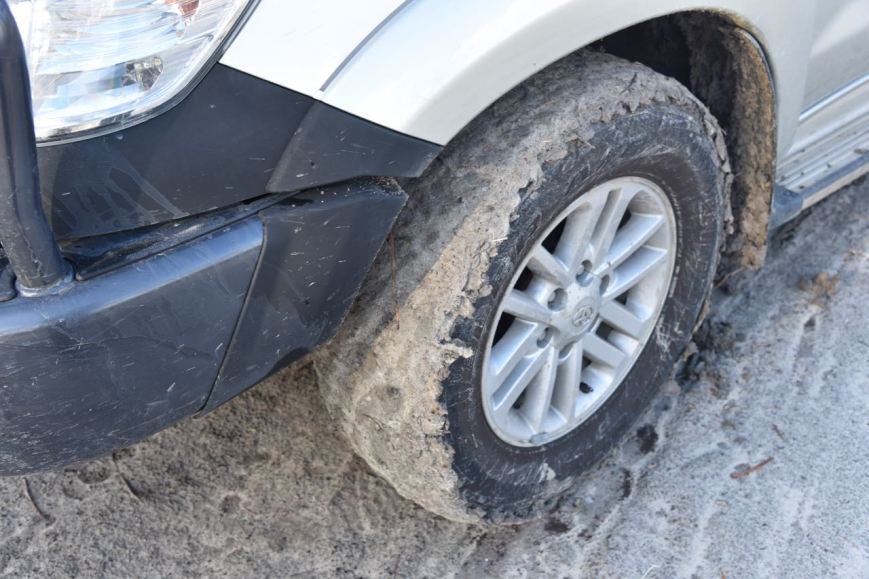
As you can see from the photo below, even though we have light truck tyres on the Toyota Hi Lux, the mud was not being dispersed from the tread.  It was very sticky.

DSC_6419

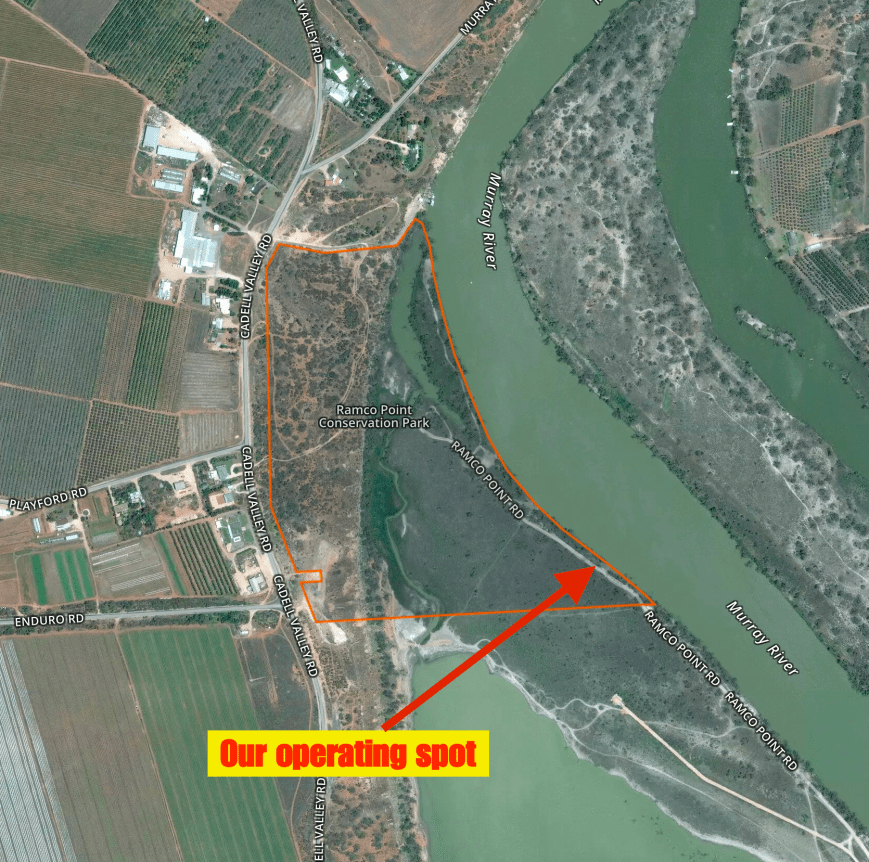
Marija and I found a small clearing on the western side of Ramco Point Road, right alongside the Murray River.  We set up the deck chairs, the fold up table, and ran the Yaesu FT-857d at 10 watts PEP, and the 80/40/20m linked dipole, supported on the 7m telescopic squid pole.  We had the shade of a large gum tree, which was welcome as it was a warm 26 deg C and very humid.

Screen Shot 2017-04-26 at 5.06.37 pm

Aerial shot of the Ramco Point Conservation Park showing our operating spot.  Image courtesy of Protected Planet.

Marija started off on air first, calling CQ on 7.140.  The first station in the log was Greg VK4VXX/2 with a very strong 5/9 plus signal.  Les VK5KLV in Port Augusta followed, with an equally strong signal, then Ken VK2KYO, followed by Bill VK4FW.  Marija had contact number 10 in the log after being on air for 14 minutes.  The honour of the 10th contact and thus qualifying the park for Marija for VKFF, went to Les VK3FLES.

As we were pushed a little for time, Marija handed over the mic to me after making a total of 11 contacts into VK2, VK3, VK5 and VK7.  Marija was happy that she had qualified the park for VKFF, and I was hoping to pick up my 44 contacts to qualify the park for the global WWFF awards.

Whilst operating, we were kept company by literally dozens and dozens of Welcome Swallows who were flying around the gum tree alongside of us.  It was quite a sight (as you can see in the video at the end of this post).

We almost had to get the vehicles snatch straps into action, as a couple in their Mazda BT50 decided to go a little further along the track and very nearly got bogged.  Fortunately they made their own way out safely.

I called CQ on 7.140 and this was answered by Les VK5KLV, followed by Ken VK2KYO and then Fred VK3JM.  All had very strong 5/9 + signals.  Sadly I soon started to experience QRM from a ZL station on 7.138 who was chatting to friends in the UK.  The bleedover was extremely bad, so I apologise to those who may have been calling that I could not hear.

Contact number 10, qualifying the park for me for VKFF, was with regular park hunter Rick VK4HA.  Soon after I was called by Ken ZL4KD/p who was portable in the Okarito Conservation Area ZLFF-0034 on the South Island of New Zealand.  Ken was quite low down, and copy was made worse by the QRM from 7.138.  I moved up to 7.142 and away from the QRM, where I comfortably worked Ken and his wife Margaret ZL3YF/p, Park to Park (P2P).  Unfortunately Marija had gone for a walk to take some photos so she missed out on the New Zealand Park to Park opportunity with Ken and Margaret.

Fortunately I had a steady flow of callers and I soon reached 20 contacts, and then 30.  Although by contact number 39, callers had slowed down.  Band conditions on 40m were very good, with QSOs being logged into New Zealand, VK2, VK3, VK4, VK6 and VK7.  Other than Les VK5KLV, there were no South Australians logged by me, with close in propagation not working on 40m SSB.  Additional to the P2P contact with Ken and Margaret, I also logged a P2P contact on 40m with Hans VK6XN/p who was in the Bramley National Park VKFF-0636 in the south western region of Western Australia.  Hans was a good 5/5 and reciprocated with a 5/7 for me.

I then headed to 14.310 on the 20m band and called CQ.  This was answered by John VK6NU in Western Australia.  Signals from VK6 on 20m have been quite low of late.  And today was no different, with John’s signal being 5/4 (5/3 received).  Steve VK4QQ then called in with a strong 5/8 signal, followed by Phil VK6ADF and then Mark VK4SMA.  But despite 5 minutes of further CQ calls, I had no further callers on 20m, leaving me on 43 contacts.  Just 1 QSO short of qualifying the park.

I then moved to 3.610 on the 80m band and called CQ which was answered by Laurie VK2GZ, my 44th contact, qualifying the park for WWFF.  I then worked Jim VK3UFO who was out gold prospecting near Bendigo, followed by Hans VK5KHZ/p who was at Thiele Flat near Mannum.

I had a total of 46 contacts in the log and a new park qualified for WWFF.

After packing up, we stopped off briefly at Ramco Lagoon to take some photographs of the waterbirds including Herons, Spoonbills, and Plovers.

We also enjoyed a quite spectacular sunset.  On our way back to the motel we both worked Hans VK6XN, from the mobile.  Hans was in the Bramley National Park VKFF-0636.

DSC_6450

Marija worked the following stations on 40m SSB:-

  1. VK4VXX/2
  2. VK5KLV
  3. VK2KYO
  4. VK4FW
  5. VK5QI/m
  6. VK3SQ
  7. VK3XL
  8. VK2HOT
  9. VK5PL
  10. VK3FLES
  11. VK7

I worked the following stations on 40m SSB:-

  1. VK5KLV
  2. VK2KYO
  3. VK3JM
  4. VK4VXX/2
  5. VK7JON
  6. VK3XL
  7. VK2GPT
  8. VK2LDN
  9. VK4RF
  10. VK4HA
  11. VK2HOT
  12. VK1AT/3
  13. ZL4KD/p (Okarito Conservation Area ZLFF-0034)
  14. ZL3YF/p (Okarito Conservation Area ZLFF-0034)
  15. VK3MCK
  16. VK2IO
  17. VK3HSB
  18. VK7DIK
  19. VK2NEO
  20. VK3SOT
  21. VK4PDX
  22. VK3SFG
  23. VK3ADM/m
  24. VK4FW
  25. VK2NP
  26. VK4QQ
  27. VK2MOR/m
  28. VK3UT
  29. VK3VEK
  30. VK6XN/p (Bramley National Park VKFF-0636)
  31. VK3FSPG
  32. VK3MPR
  33. VK4SMA
  34. VK2JXA/p
  35. VK2ND
  36. VK3FLJD
  37. VK3AXF
  38. VK2HPN/m
  39. VK2HEY/m

I worked the following stations on 20m SSB:-

  1. VK6NU
  2. VK4QQ
  3. VK6ADF
  4. VK4SMA

I worked the following stations on 80m SSB:-

  1. VK2GZ
  2. VK3UFO/p
  3. VK5KHZ/p

Below is a short video of the activation, showing the Welcome Swallow activity…..


References.

Jennings, John T,  2009, ‘Natural History of the Riverland and Murraylands’

State Library South Australia, 2017, <http://www.samemory.sa.gov.au/site/page.cfm?u=1356&gt;, viewed 26th April 2017

Wikipedia, 2017, <https://en.wikipedia.org/wiki/Ramco,_South_Australia&gt;, viewed 26th April 2017

Scott Creek Conservation Park 5CP-207 and VKFF-0788

On Easter Sunday (16th April 2017), Marija VK5FMAZ and I activated the Scott Creek Conservation Park 5CP-207 & VKFF-0788.   This was to be a unique park for Marija for both the VK5 National & Conservation Parks Award, and the World Wide Flora Fauna (WWFF) program.  I have been to Scott Creek a number of times previously and I have qualified the park for WWFF.  But for this occasion I had been given permission to use the special call of VK5WOW.  The call has been issued to help celebrate the upcoming Wireless Institute of Australia (WIA) AGM & Convention in Hahndorf South Australia.  A special award is on offer for working VK5WOW and/or VI5WOW.

The Scott Creek Conservation Park is located about 20 km south east of Adelaide, and around 24 km west of my home in the Adelaide Hills.

Screen Shot 2017-04-17 at 8.22.18 pm.png

Map showing the location of the Scott Creek Conservation Park, south east of Adelaide.  Map courtesy of Protected Planet.

On our way to the park, from the mobile, both Marija and I logged Bob VK5AFZ/p who was activating the Lawari Conservation Park VKFF-1767.  Bob had a strong 5/8 into the mobile.  This was whilst we were doing 110 kph on the South Eastern Freeway at Hahndorf.

Prior to activating the park Marija and I visited the Alamanda mine ruins on Dorset Vale Road.  During the early 1840’s the Scott Creek area was settled by the Hill and Mackareth families.  They cut timber to be used in buildings in Adelaide, and cleared the land for the cultivation of onions and potatoes.  They used bullock drays to haul the produce to Adelaide via Coromandel Valley.  In 1850, the wheels of a dray broke off pieces of rock which were recognised to contain copper.  Soon after a shaft was sunk to 9 metres, and was named Wheal Maria.  The shaft was soon abandoned after a small quantity of ore was removed.

During 1862, new leases were acquired and a new shaft, named Wheal Mary Anne, was sunk to a depth of 27 metres.  A few dray loads of ore were produced but again the mine was abandoned by 1865.

In 1868, a German assayer, William Ey, noticed abandoned copper ore from Wheal Mary Anne at Port Adelaide.  He recognised that the ore contained silver.  As a result he and James Gawen acquired leases at Scott Creek in June 1868, with the Alamanda Silver Mining Association being formed in July 1868.  A trial crushing of ore produced two ingots of silver weighing 131 ounces (4 kg).  A rush for claims at Scott Creek followed the announcement of rich silver ore at the Alamanda mine.

A treatment mill comprising a battery and mill were erected.  However, operations proved uneconomic and by early 1870, work was suspended.  The mine was reworked in 1877, 1881, and 1887.  Total production was 10,000 ounces (310kg) from 2,000 tones of ore.

Screen Shot 2017-04-18 at 1.41.13 pm.png

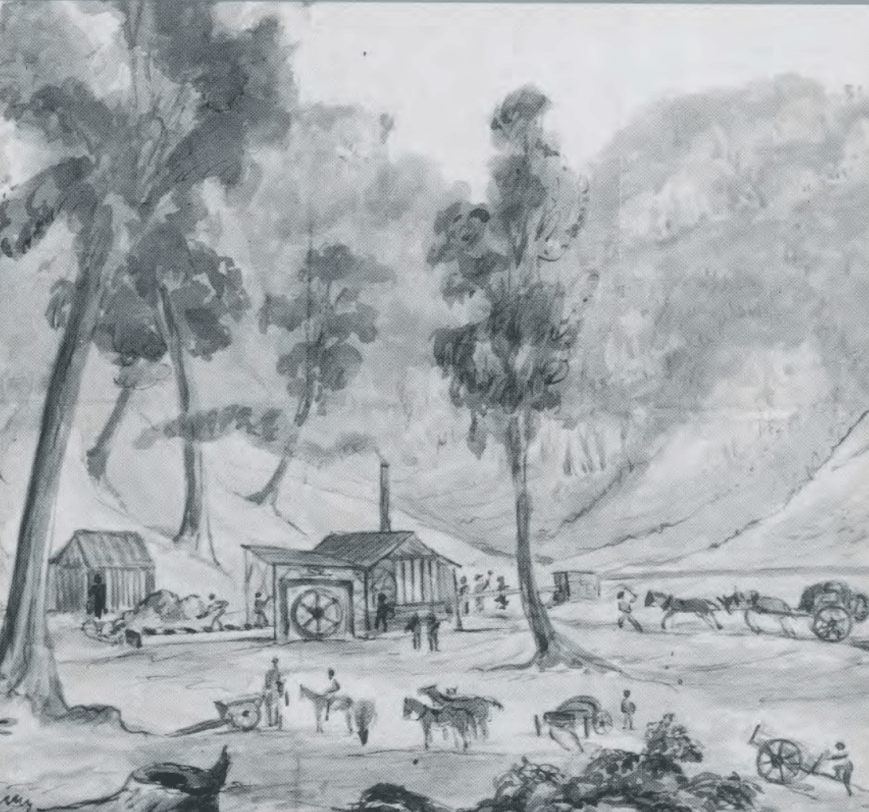
The Alamanda mine, c. 1868.  A drawing by W.A. Cawthorne.  Courtesy of Department of Mines and Energy.

Today, little remains, although there are a number of intepretive signs.  Sadly, many of the buildings have come under attack by vandals.

Despite the site being severely vandalised, it was pleasing to see a number of people visiting the old Alamanda mine during our visit.

DSC_6387

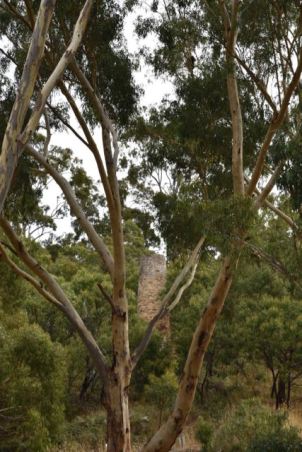
Stone chimney, erected 1869.  Was connected by an underground stone-lined flue to the boilerhouse.

We then crossed over Dorset Vale Road to have a look at Ey’s Workings and Tunnel.  The tunnel was previously open for people to visit with a torch, but it is now fenced off.

We then visited Mackareth cottage on Matthew Road.  I had been here years previous and was very saddened to see the state it was in, considering its historical significance.  The cottage is located on SA Water land, who I contacted a number of years ago about the state of disrepair the cottage was in.  They seemed totally disinterested.

The cottage dates back to 1839/1840, just 3-4 years after the proclamation of South Australia.  So it is a very historical buidling.  It was built by George Mackareth who had emigrated to South Australia in 1838 from England.  The cottage was continually lived in between 1840-1976, when the National Trust took control of the property.

For many years it housed a museum and on occasions provided Devonshire teas on weekend openings to visitors.  In 1984 the National Trust relinquished its interests and the cottage was closed.  It has since fallen into the disgraceful condition it is in today, covered in grafitti.

cottage

Mackareth cottage in better days.

The Scott Creek Conservation Park itself is 706 hectares in size and was established in November 1985.  The land at Scott Creek was purchased by the South Australian State Government in the early 1970’s by the State Planning Authority and in 1985 the area was recognised as an important part of the southern Mount Lofty Ranges, and adopted as a Conservation Park.

The park contains one of the most diverse areas of native vegetation near Adelaide.  It contains steep sloped valleys, lush creeklines and rounded ridgetops.The main upper canopy species is Messmate Stringy bark, South Australian Blue Gum, Pink Gum, Cup Gum, River Red Gum, and Manna Gum.  Other native plants include Silky Tea-tree, Swamp wattle, Golden wattle, and Silver Banksia.  A considerable number of the 108 plant species in the park are classified as rare, vulnerable or endangered.

About 15 species of native mammals call the park home, including the Western Grey kangaroo, Yellow footed antechinus, echidna, Brush-tailed possum, Ringtail possum, and Koala.  The endangered Southern Brown Bandicoot has been recorded in the park.

Over 125 species of birds have been recorded in the park including New Holland Honeyeater, White-naped honeyeater, Crimson Rosella, Purple-crowned lorikeet, Kookaburra, and Rainbow lorikeet.  The park is also home to the endangered Beautiful Firetail and the vulnerable Bassian Thrush.

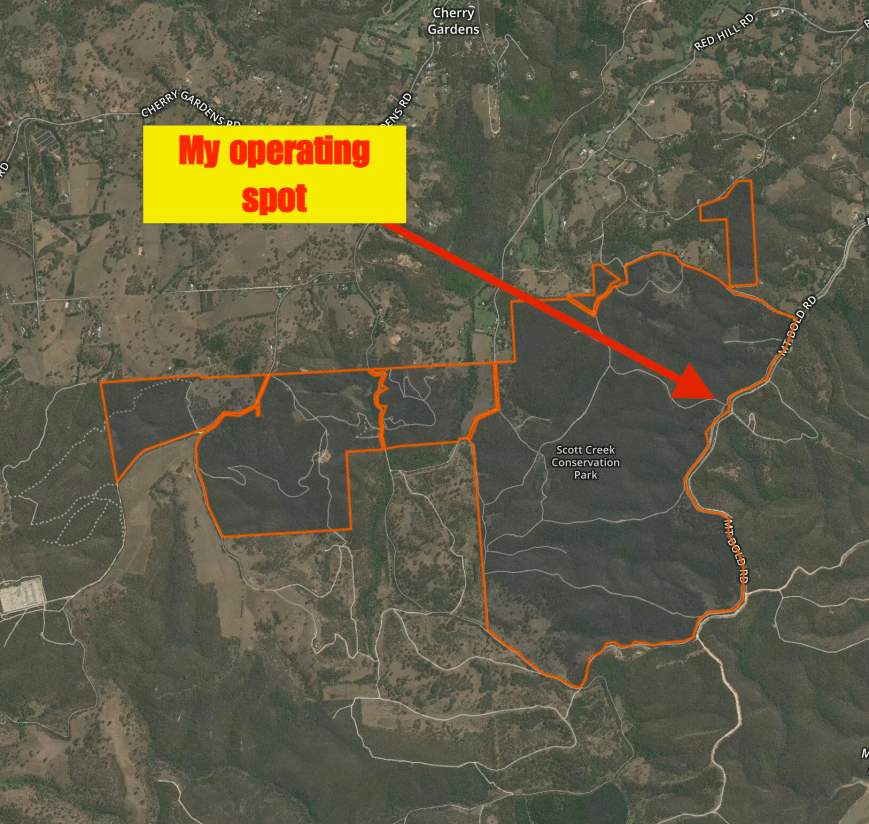
Marija and I parked at gate number 8 and operated from a clearing about 20 metres in from the gate.  I have operated from her previously, including with John VK5BJE who lives closeby.  His wife Jenny is involved in the active ‘Friends of Scott Creek Conservation Park’ group.  They have an excellent website.

DSC_6393

There is plenty of room here to string out a dipole.  We used the Yaesu FT-857d for this activation, along with the 80/40/20m linked dipole, @ 6 metres, inverted vee.  We initially ran 10 watts PEP for Marija with her Foundation licence, and when I operated as VK5WOW I ran 40 watts output.

Screen Shot 2017-04-17 at 8.22.01 pm.png

Prior to calling CQ we tuned across the 40m band and worked Marc VK3OHM who was on 7.140, activating the Lower Goulburn National Park VKFF-0741.

Marija then headed up to 7.145 and called CQ.  It didn’t take long, and Marija had a mini pile up going, which she handled exceedingly well.  I assisted her with logging and prompting her with the names of the callers.  Within 8 minutes Marija had the required 10 contacts in the log to qualify the park for the VKFF program, and within 45 minutes, she had the required 44 contacts to qualify the park for the global WWFF program.  Contact number 10 was with Bill VK4FW.  Contact number 44 was with Keith VK5OQ who was portable at Mount Bryan.

Marija made a total of 53 contacts which included 7 Park to Park contacts.

  • Marc VK3OHM/p (Lower Goulburn National Park VKFF-0741)
  • Mike VK3XL/p (Gippsland Lakes Coastal Park VKFF-0747)
  • VK1DI/p (Woodstock Nature Reserve VKFF-0988)
  • John VK5BJE/3 (Kinglake National Park VKFF-0264)
  • Phil VK6ADF/p (Hilliger National Park VKFF-0646)
  • Margaret ZL3YF/p (Lake Pearson Conservation Area ZLFF-0029)
  • Ken ZL4KD/p (Lake Pearson Conservation Area ZLFF-0029)

Another interesting contact Marija made was with Craig VK3CRG who was streaming Marija’s QSOs through VK3RTV, amateur TV repeater.

Marija worked the following stations on 40m SSB:-

  1. VK3OHM (Lower Goulburn National Park VKFF-0741)
  2. VK3GGG
  3. VK3PMG
  4. VK3FRAB
  5. VK5HCF
  6. VK2HHA
  7. VK3SFG
  8. VK3SQ
  9. VK3PF
  10. VK4FW
  11. VK3FQSO
  12. VK5HS
  13. VK2KYO
  14. VK2NP
  15. VK7EV
  16. VK3FOTO/m
  17. VK5KC/p
  18. VK3FJAE
  19. VK3TKK/m
  20. VK5NFT/m
  21. VK2GAZ
  22. VK3FSPG
  23. VK3MPR
  24. VK3XL/p (Gippsland Lakes Coastal Park VKFF-0747)
  25. VK4ARW
  26. VK1DI/p (Woodstock Nature Reserve VKFF-0988)
  27. VK5IS/3
  28. VK3NCR
  29. VK3CRG
  30. VK5KLV
  31. VK3FCMC
  32. VK2EXA
  33. VK7QP
  34. VK4RF
  35. VK4HA
  36. VK3ARH
  37. VK6MAC
  38. VK3SL/p
  39. VK3MNZ
  40. VK2FGJW/3
  41. VK3ELH
  42. VK3RU
  43. VK3HN
  44. VK5OQ/p
  45. VK5PE
  46. VK3BFR
  47. VK5YX
  48. VK5GY/m
  49. VK3FHCT
  50. VK5BJE/3 (Kinglake National Park VKFF-0264)
  51. VK6ADF/p (Hilliger National Park VKFF-0646)
  52. ZL3YF/p (Lake Pearson Conservation Area ZLFF-0029)
  53. ZL4KD/p (Lake Pearson Conservation Area ZLFF-0029)

I occasionally picked up the mic to log a few of the park activators.  I worked the following stations on 40m SSB under VK5PAS:-

  1. VK3OHM/p (Lower Goulburn National Park VKFF-0741)
  2. VK1DI/p (Woodstock Nature Reserve VKFF-0988)
  3. VK5BJE/3 (Kinglake National Park VKFF-0264)
  4. VK6ADF/p (Hilliger National Park VKFF-0646)
  5. ZL4KD (Lake Pearson Conservation Area ZLFF-0029)
  6. ZL3YF/p (Lake Pearson Conservation Area ZLFF-0029)

I worked the following stations on 20m SSB:-

  1. VK6ADF/p (Hilliger National Park VKFF-0646)

Just after 0535 UTC (2.05 p.m. South Australian local time) I took over as VK5WOW.   Contact number one in the log was with John VK5BJE who was portable in the Kinglake National Park VKFF-0264.  Rather appropriate, as John lives very close to the Scott Creek Conservation Park.

I ended up with a total of 157 contacts as VK5WOW, on the 20, 40 and 80m bands, including 11 Park to Park contacts.  A small amount of DX was logged from New Zealand, Croatia, Finland, Italy, France, Germany, Japan, and Belgium

I worked the following stations as VK5WOW on 40m SSB:-

  1. VK5BJE/3 (Kinglake National Park VKFF-0264)
  2. VK6ADF/p (Hilliger National Park VKFF-0646)
  3. VK3KRH
  4. VK3CRG
  5. VK3RU
  6. VK3TKK/m
  7. VK5KLV
  8. VK7QP
  9. VK5HS
  10. VK2EXA
  11. VK3SFG
  12. VK5HCF
  13. VK3NCR
  14. VK4HNS/p (Kwiambi National Park VKFF-0274)
  15. VK3OHM/p (Lower Goulburn National Park VKFF-0741)
  16. VK3FRAB
  17. VK3ANL
  18. VK1AD
  19. VK3FHCT
  20. VK5MLB/p
  21. VK4FW
  22. VK4RF
  23. VK4HA
  24. VK1DI/p (Woodstock Nature Reserve VKFF-0988)
  25. VK4FFAB
  26. VK3SQ
  27. VK3HN
  28. VK3BQ/m
  29. VK3FCEK/m
  30. VK3PF
  31. VK3FNQS
  32. VK5YX
  33. VK2EJW
  34. VK2NP
  35. VK5IS
  36. VK3GGG
  37. VK3PMG
  38. VK5GJ
  39. VK3KMH
  40. VK3FOTO
  41. VK4FADW
  42. VK2VW
  43. VK3BFR
  44. VK4ARW
  45. VK4SMA
  46. VK4PDX
  47. VK4FEMO
  48. VK3FORD
  49. VK7CW
  50. VK7JON
  51. VK5NFT/m
  52. VK2HHA
  53. VK2NEO
  54. VK3FQSO
  55. VK3VEK
  56. VK3FCMC
  57. VK3FSPG
  58. VK3MPR
  59. VK3TEZ
  60. VK5PL
  61. VK7KW
  62. VK7FOLK
  63. VK5ALR/p (Morgan Conservation Park VKFF-0911)
  64. VK7MHZ/p
  65. VK7VEK
  66. VK3DQ
  67. VK2LAD
  68. VK3HAK
  69. VK3FVKI
  70. VK3YW
  71. VK2HJW
  72. VK3PI
  73. VK3HSB
  74. VK3TJS
  75. VK2QK
  76. VK4QQ
  77. VK3MRG
  78. VK4FAAJ
  79. ZL4KD (Lake Pearson Conservation Area ZLFF-0029)
  80. ZL3YF/p (Lake Pearson Conservation Area ZLFF-0029)
  81. VK3FMJP
  82. VK3MNZ
  83. VK4BX
  84. VK2WOW
  85. VK2ARA
  86. VK4ZD
  87. VK4DI
  88. VK4FARR
  89. VK5NJ
  90. VK2RL
  91. VK2MT/p
  92. VK2FOUZ
  93. VK2VVV
  94. VK3UH
  95. VK2HPN
  96. VK2CCR
  97. ZL1XS
  98. VK2IO/m
  99. VK5HH
  100. VK2SK
  101. VK4MWB
  102. VK5FTCT
  103. VK7PRN
  104. VK6BEC
  105. VK7FPRN
  106. VK2UMA
  107. VK6FFAR
  108. VK4TJ

I worked the following stations on 20m SSB under VK5WOW:-

  1. VK6ADF/p (Hilliger National Park VKFF-0646)
  2. VK4FW
  3. VK4QQ
  4. VK4RF
  5. VK4HA
  6. VK6MAC/m
  7. VK4HNS/p (Kwiambi National Park VKFF-0274)
  8. 9A3NM
  9. OH2BAD
  10. 9A7W
  11. IW3IBK
  12. I5FLN
  13. F2YT
  14. VK4NSA
  15. VK4SMA
  16. VK7JON
  17. VK6SN
  18. IZ4RCQ
  19. DL2ND
  20. IU5HIV
  21. JH7WER
  22. ON4VT
  23. VK6NU
  24. JA1VRY
  25. VK6XL
  26. JG4AKL
  27. JH7CVM

I worked the following stations on 80m SSB under VK5WOW:-

  1. VK5HS
  2. VK3XL/p
  3. VK3PF
  4. VK2GGA
  5. VK2YW
  6. VK5NJ
  7. VK3GGG
  8. VK3PMG
  9. VK5BW
  10. VK5FANA
  11. VK1AT
  12. VK3XBC/p (Murray Sunset National Park VKFF-0373)
  13. VK3SQ
  14. VK3PI
  15. VK5DC
  16. VK5NFT/m
  17. VK2QM
  18. VK3ZE
  19. VK3RW
  20. VK5HYZ
  21. VK2MT/p

Whilst I was operating Marija went for a walk along Cup Gum Track.  There are some great views to be had along this track out across the Mount Lofty Ranges.

We packed up just after 6.30 p.m. local time.  It had been a very succesful and enjoyable afternoon in the park.  Marija had qualified a new park, and VK5WOW had been put on air promoting the upcoming AGM/Convention and the VK5 Parks Award.

DSC_6412.jpg

Below is a short video of me operating as VK5WOW……

References.

Department of Mines and Energy, 1991, ‘Alamanda Silver Mine.  A guide to the walking trail’

National Parks South Australia, 2017, <https://www.environment.sa.gov.au/parks/Find_a_Park/Browse_by_region/Adelaide_Hills/scott-creek-conservation-park&gt;, viewed 18th April 2017

National Parks and Wildlife SA, 1999, ‘Scott Creek Conservation Park Management Plan’.

Wikipedia, 2017, <https://en.wikipedia.org/wiki/Scott_Creek_Conservation_Park&gt;, viewed 18th April 2017

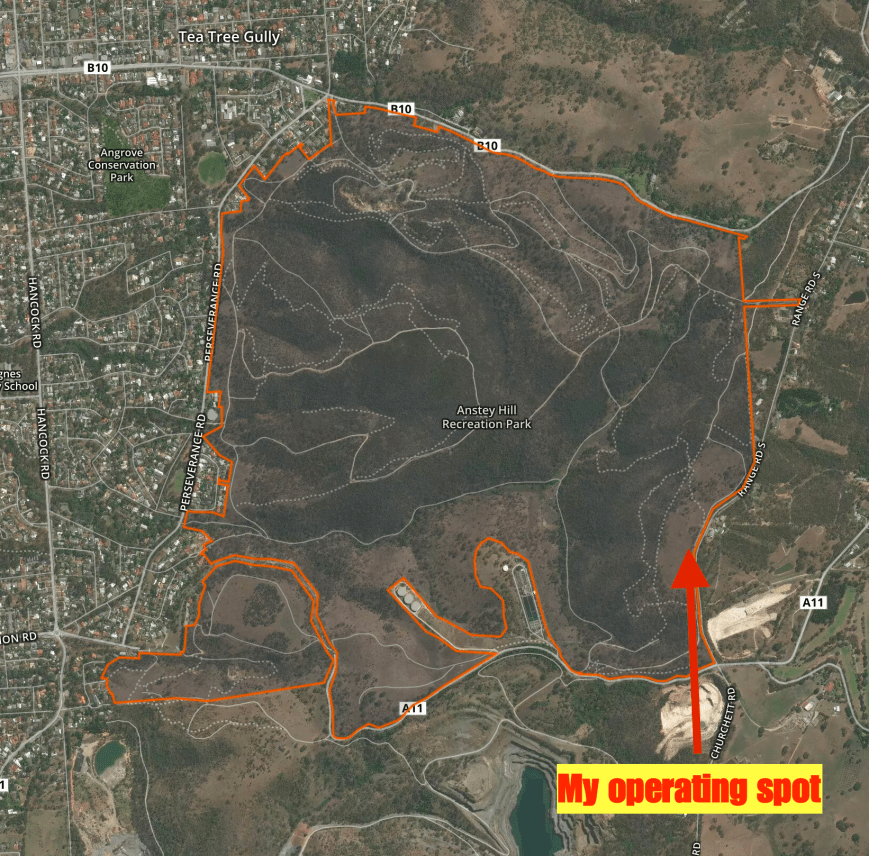
Anstey Hill Recreation Park VKFF-1683

The weather on Easter Saturday (15th April 2017) was warm and sunny, so I decided in the afternoon to undertake a park activation.  I had a look at the list of parks I have previously activated, and chose the Anstey Hill Recreation Park VKFF-1683.  This was to be a unique park for me as an activator.  Anstey Hill is located about 16 km to the north east of Adelaide.

Screen Shot 2017-04-17 at 6.45.55 pm.png

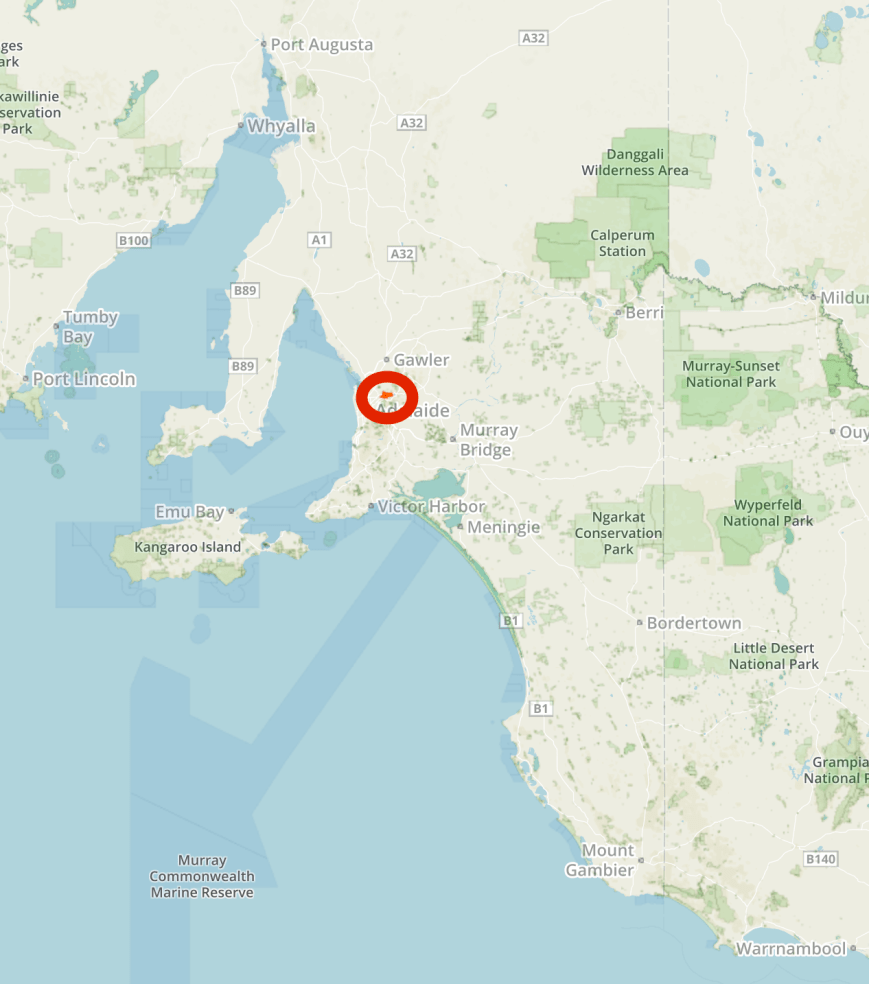
Map showing the location of the Anstey Hill Recreation Park, north east of Adelaide.  Map courtesy of Protected Planet.

To get to the park it was a 48 km drive for me, through the towns of Lobethal and Cudlee Creek and then along Gorge Road, Paracombe Roaad and onto Range Road South.

Screen Shot 2017-04-17 at 6.55.16 pm.png

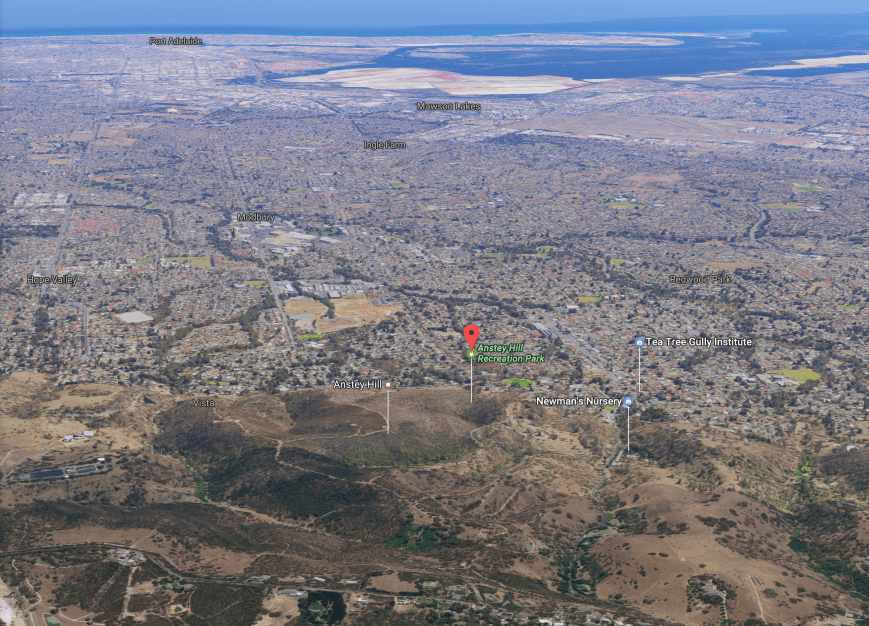
Aerial shot of the park, looking to the west out towards Gulf St Vincent and across the north-eastern and northern suburbs of Adelaide.  Image courtesy of Google maps.

Anstey Hill Recreation Park was established in 1989 and comprises 362 hectares of steep gullies, creek lines with some terrific views of the city of Adelaide.  It was dedicated as park in response to public demand that the State Government protect the land from development.  The Anstey Hill summit which is located within the park is 371 metres above sea level.

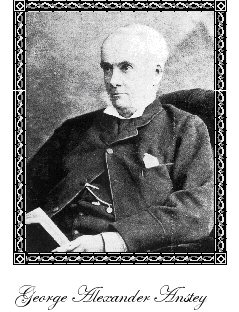
Anstey Hill was named after George Alexander Anstey (1814-1895), a South Australian pastoral and horticultural pioneer.  He was born in London and emigrated to Australia in 1827 at age 13.  In 1840 Anstey purchased two sections of land at Highercombe and commenced to establish his estate which he named after his father’s birthplace in Somerset England.  His property which contained vineyards, orchards and extensive botanical gardens, was in the vicinity of the current Highercombe Gold Club which is located just over the crest of the range east of the Anstey Hill Recreation Park.

georgeanstey

George Alexander Anstey

About 290 native flora species have been recorded in Anstey Hill.  The western end of the park is dominated by Pink Gums, while the eastern end is dominated by the Box Tree, a species which has rarely been rpeserved in Adelaide.  A number of plants which are now rare on the Adelaide plains are found in the park.  This includes Leamon beauty-heads, Pussy-tails, Dwarf Hakea, Silky guinea-flower and Black Rapier sedge.  The steep areas of the park support native pine, Drooping Sheaok and Pink Gums.  Understorey species include Kangaroo thorn, Rock Grass-tree, Sticky Hop-bush, and Heath Tea-tree.  Manna Gums which are found mostly in the east of the park are home to koalas.  Over 39 species of native orchids have been recorded in Anstey Hill, including the King Spider-orchid and Wax-lip orchid.

Over 145 species of native birds have been recorded in the park, including the Superb Fairy Wren.

Native animals found in the park include Western Grey kangaroos, echidnas, koalas, and Brush-tailed possums.  Up to 35 species of reptiles and amphibians call the park home including Brown Tree frogs, Bearded Dragons, and the rarely seen Cunninghams Skink.

Prior to activating, I parked at gate 13 and went for a 1 km walk to the old Newmans nursery ruins.  The walk is downhill all the way.  As it was a warm day, the climb back up to the carpark was not as easy.

DSC_6354

The Newmans Nursery was established in 1854 by Carl and Margaretha Neumann and was once the largest nursery in the southern hemisphere.  In 1912, the nursery waas devastated by floods and as a result never really recovered.  It was used as a dairy from 1932 and from 1935 assets from the buildings were salvaged and the property was used for sheep grazing.  The 1983 Ash Wednesday bushfire destroyed the remaining buildings.  Some of the Newman family established the current day Newmans Nursery on North East Road.

Today, only ruins of the nursery remain.  It is well worth a visit.  For more information on the nursery please see….

http://www.newmansnursery.com.au/about/history/

I set up just to the south of gate 16 on Range Road South.

Screen Shot 2017-04-17 at 6.45.27 pm.png

Aerial shot of the park showing my operating spot.  Image courtesy of Protected Planet.

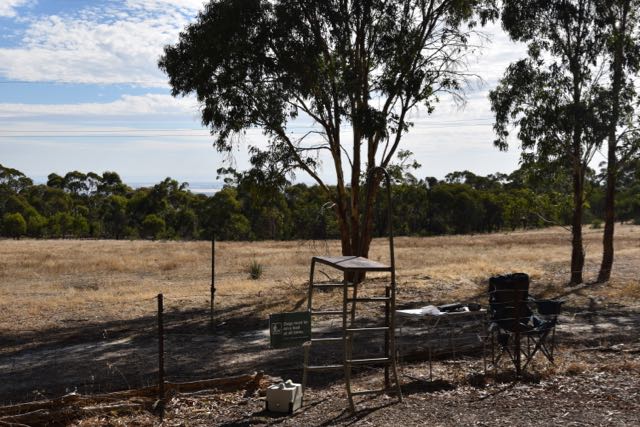
There was a ladder here allowing access to the park over the barbed wire fence.

DSC_6356

It was a warm day, around 26 deg C, so I set up underneath the shade of a gum tree.  I ran my normal set up for this activation comprising the Yaesu FT-857d, 40 watts, and the 80/40/20m linked dipole.  It was only up at 6 metres inverted vee, as the first section of my squid pole had split during my recent visit to Victoria.  I asked if the frequency was in use and Dennis VK2HHA came back to advise that the frequency was clear.  Dennis was number one in the log.  My fourth contact was with Gerard VK2IO who was activating SOTA peak Mount Banks VK2/ CT-032 which is located within the Blue Mountains National Park VKFF-0041.

Sadly, during my sixth QSO, I started to experience deliberate QRM.  It consisted of replaying a recorded message from VK3FVKI re his experimental antenna tests.  I strongly suspect I know where this is coming from and I made a recording of the interference which I have provided to ACMA.  This is the same interference which the 7130 DX Net has been experiencing of late.  And I heard the same culprit deliberately QRMing a VK/USA contact later in the evening.

Fortunately the culprit only stuck around for about 6 contacts and it was back to a completely quiet frequency, with no man made noise.  Contact number 12 was another Park to Park, with Rob VK4FFAB who was activating the Great Sandy National Park VKFF- 0216.  About 12 contacts later I was called by Phil VK6ADF/p who was activating the Beedelup National Park VKFF-0021 in Western Australia.  Phil was quite low down, only 3/1, but we managed to exchange signal reports.

Two QSOs later I logged John VK5BJE/3 who was activating SOTA peak West of England Fire tower VK3/ VW-16 located in the Kara Kara National Park VKFF-0269.  John had a beautiful strong 5/9 signal.

I continued to log a steady flow of callers.  About 12 contacts later I logged Rob VK4FFAB who had now moved into the Tuchekoi Conservation Park VKFF-1667, and shortly after Anthony VK3VAK/p who was in the Gunbower National Park VKFF-0740.  Then later in the activation I was called by John VK6NU who was portable on SOTA peak Mount Randall in the Monadnocks Conservation Park VKFF-1459.

I logged a total of 83 contacts on 40m from VK1, VK2, VK3, VK4, VK5, VK6, and VK7.  I was pleased to log Adrian VK2FNAD.  I was Adrian’s first contact on HF since he gained his Foundation call.

I then moved to 14.310 on the 20m band where my first contact was with Phil VK6ADF who was portable in the Beedelup National Park VKFF-0021, and then John VK6NU/p on SOTA peak Mount Randall VK6/ SW-039 &Monadnocks Conservation Park VKFF-1459.  I logged 11 stations on 20m from VK5, VK6, and Croatia.  Just 2 DX stations worked: Ozren 9A7W and Sasa 9A3NM.

I then headed to 3.610 on the 40m band.  It was now approaching 5.30 p.m. and the sun was starting to set.  My first contact on 80m was with Ivan VK5HS in the Riverland who was booming in, 5/9 plus.  I logged a total of 13 stations on 80m from VK2, VK3, VK4, and VK5.  This included Toby VK3PNF who was portable in the Murray Sunset National Park VKFF-0373, Keith VK5OQ who was portable at Mount Bryan East, and Rob VK5TS who was mobile on Googs Track near Ceduna on the far West Coast.

DSC_6364

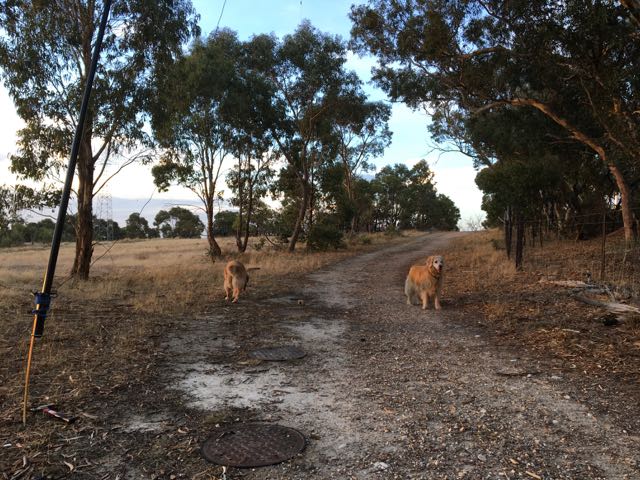
Although there are signs that dogs must be on a leash, there were numerous people walking their dogs in the park off leash, during my activation.  One of the two Golden Retrievers in the photo below, jumped up on me almost knocking my table over, while the other grabbed hold of the fallen limb that was holding down one of the ends of the dipole, almost bringing the squid pole crashing down.  Not surprising though, as in all the activations I have done over the years, I have hardly seen a park ranger.

IMG_0193

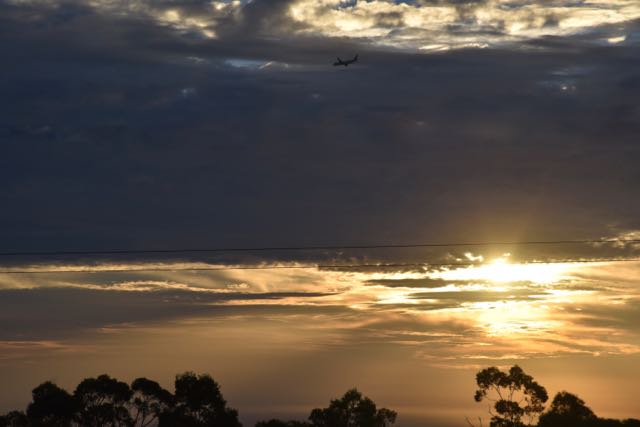
It was now almost dark and headed back to 40m for one last hooray.  The band was very busy with lots of North American and South East Asian stations.  I eventually found 7.136 clear and called CQ which was immediately answered by Hauke VK1HW with a massive 5/9 plus signal.  I logged just a further 10 stations on 40m, with the deliberate QRM culprit returning to make a nuisance of himself.  Yes, it’s a he.  Identity withheld at this time.

I had a total of 107 contacts in the log.  An amazing afternoon/evening in the park.

DSC_6365

I worked the following stations on 40m SSB:-

  1. VK2HHA
  2. VK7AN
  3. VK3HOT
  4. VK2IO/p (SOTA Mount Banks VK2/ CT-032 & Blue Mountains National Park VKFF-0041)
  5. VK7CW
  6. VK3KMH
  7. VK3RU
  8. VK3CWF
  9. VK3SFG
  10. VK3MRG/p
  11. VK3PAT
  12. VK4FFAB/p (Great Sandy National Park VKFF-0216)
  13. VK5HYZ
  14. VK3SQ
  15. VK2SVN
  16. VK2NP
  17. VK1AT
  18. VK2FGJW/3
  19. VK2BGL
  20. VK5FMWW/3
  21. VK3STU
  22. VK3HPG
  23. VK3PF
  24. VK6ADF/p (Beedelup National Park VKFF-0021)
  25. VK2KYO
  26. VK5BJE/3 (SOTA VK3/ VW-016 & Kara Kara National Park VKFF-0269)
  27. VK3FHCT
  28. VK1RZ
  29. VK1MTS
  30. VK2JDR
  31. VK5FMAZ
  32. VK3ZMD
  33. VK4NH
  34. VK7FPLT/8
  35. VK3TKK/m
  36. VK2YW
  37. VK2VW
  38. VK4FFAB/p (Tuchekoi Conservation Park VKFF-1667)
  39. VK2XSE/p
  40. VK2QK
  41. VK4HNS/p
  42. VK2WOW
  43. VK3VAK/p (Gunbower National Park VKFF-0740)
  44. VK5FDWB
  45. VK1DI
  46. VK2FNAD
  47. VK5YX
  48. VK7ALB
  49. VK3MBW
  50. VK3TZE/m
  51. VK3GGG
  52. VK3PMG
  53. VK5BB
  54. VK3FOTO/m
  55. VK4ATH
  56. VK3VIN
  57. VK4PDX
  58. VK3FSPG
  59. VK3MPR
  60. VK3ANL
  61. VK3VEF
  62. VK3FRAB
  63. VK3VFR
  64. VK2FRKO
  65. VK3CBP
  66. VK3ELH
  67. VK2ARL
  68. VK4FARR
  69. VK6FSEA
  70. VK6NU/p (SOTA Mount Randall VK6/ SW-039 &Monadnocks Conservation Park VKFF-1459)
  71. VK6AY
  72. VK3PI
  73. VK1HW
  74. VK6MAC/m
  75. VK4SMA
  76. VK6LGF
  77. VK4TJ
  78. VK5KLD
  79. VK4FW
  80. VK6NTE
  81. VK6BEC
  82. VK5FPAC
  83. VK2EIR

I worked the following stations on 20m SSB:-

  1.  VK6ADF/p (Beedelup National Park VKFF-0021)
  2. VK6NU/p (SOTA Mount Randall VK6/ SW-039 &Monadnocks Conservation Park VKFF-1459)
  3. VK6MSC/p
  4. 9A7W
  5. VK4SMA
  6. 9A3NM
  7. VK6AY
  8. VK6XN
  9. VK6NTE
  10. VK5GR
  11. VK6RZ

I worked the following stations on 80m SSB:-

  1. VK5HS
  2. VK2EME/p
  3. VK3PNF/p (Murray Sunset National Park VKFF-0373)
  4. VK4FW
  5. VK5FANA
  6. VK5OQ
  7. VK3ANL
  8. VK5TS/m
  9. VK3CAH
  10. VK5FDEC
  11. VK3FSLG
  12. VK3SQ
  13. VK4SMA

References.

National Parks South Australia, ‘Anstey Hill Recreation Park’ brochure

Tea Tree Gully & District Historical Society, 2017, <http://ttghistoricalsociety.org.au/history/ansteys-hill/&gt;, viewed 17th April 2017

Walking SA, 2017, <https://www.walkingsa.org.au/walk/find-a-place-to-walk/anstey-hill-loop/&gt;, viewed 17th APril 2017

Mount Monster Conservation Park 5CP-149 & VKFF-0800

After packing up at Mount Buangor I headed in to Stawell and caught up with Mick VK3GGG at his home.  Mick served me up a nice pastie and a very welcome hot cup of coffee.  We chatted for about 45 minutes and I had a look at Mick’s shack.  I then hit the road and started heading west towards the Victorian/South Australian State border.  After speaking on the phone with my wife Marija, I decided to call in to the Mount Monster Conservation Park 5CP-149 & VKFF-0800.  Mount Monster is situated about 240 km south east of Adelaide, and about 13 km south of the town of Keith.

Screen Shot 2017-04-17 at 6.02.36 pm

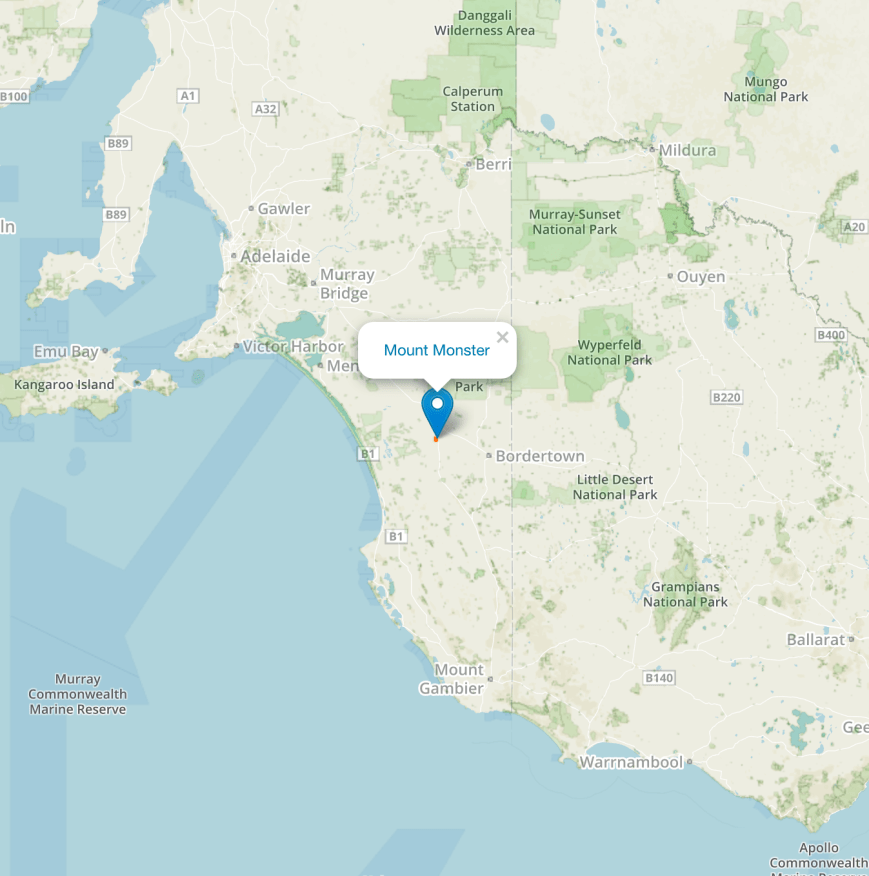
Map showing the location of the Mount Monster Conservation Park to the south east of Adelaide.  Map courtesy of Protected Planet.

I last activated Mount Monster in October 2016, with Andrew VK6AS, on our road trip to VK3.  On that occasion I made a total of 18 contacts, falling well short of the required 44 QSOs to qualify the park for the global World Wide Flora Fauna (WWFF) program.

For more information on that activation, please have a look at my previous post…..

https://vk5pas.org/2016/10/13/a-trip-to-the-south-east-and-mount-monster/

I also activated Mount Monster back in November 2014, but this was prior to the park being placed in the WWFF Directory.  That particular activation was for the VK5 National & Conservation Parks Award.

https://vk5pas.org/2014/11/29/mount-monster-conservation-park/

The park is well signposted from the Riddoch Highway.

I accessed the park via Mount Monster Road and set up in the main carpark area, where the walking trail leads to the Mount Monster summit.

Screen Shot 2017-04-17 at 6.00.25 pm.png

Aerial shot of the park showing my operating spot.  Image courtesy of Protected Planet.

Mount Monster Conservation Park is about 93 hectares in size and was dedicated as a Conservation Park in September 1976 as a gift from three surrounding land owners, including the Buddle and Ellis families in memory of pioneers Malcolm and Mercy Crooks of ‘Maroona’. The park is dominated by steep rocky outcrops separated by narrow, deep gullies, producing a wide range of gradients and a number of sheer cliff faces. These rocky outcrops are dominated by an unusual granite, found in only one other location in South Australia. The park includes the Mount Monster summit, known as Joyce’s Plateau, named in honour of Joyce Buddle. Although only having a low profile, the summit dominates the countryside for many kilometres.

Prior to European settlement the area around Keith was part of the lands occupied by the Ngarranjeri aboriginal people.  Within the park is the old Gold Escort Route.  This is the famous route which brought gold into South Australia from the Victorian goldfields during the 1850’s.  In fact, between March 1852 and December 1853, a total of 528 509 ounces of gold were brought into South Australia from the Victorian gold fields.

About 176 different plant species have been identified in the park, 30 of those are orchids.  Some of these, including the Cradle of Incense, and the Monarto Mint Bush, are considered endangered nationally.  Numerous mammals can be located in the park including kangaroos and echidnas.  The park is also home to a large variety of birdlife, including red rumped parrots (I saw numerous) and honeyeaters (again I saw numerous feeding on the flowering natives).

The agricultural land surrounding Mount Monster is recognised as one of the major Lucerne seed producing areas in Australia.  During the summer period, the fields are stocked with beehives for the pollination of the crops.

Screen Shot 2017-04-17 at 6.10.01 pm.png

Aerial shot showing the park and the surround countryside, with the town of Keith in the background.  Image courtesy of Google maps.

Prior to getting into the park I had contacted Adrian VK5FANA who had kindly spotted me.  It was fitting then, that Adrian was my first contact at Mount Monster, with an excellent 5/9 signal.  Park regular Rick VK4RF then called in, also 5/9, followed by another park regular Peter VK3PF who was also 5/9.  The 40m band appeared to be in excellent condition.

I was keen to qualify the park and get back on the road, so I was pleased to have a steady flow of callers.  Propagation around South Australia was brief.  Contact number ten qualifying the park for VKFF was with Nev, followed soon after by my lovely wife Marija VK5FMAZ.  Contact number 14 was with Charlie VK5KDK who started off at 5/9, but within a few minutes had almost vanished.  This was followed by a call from Peter VK5KX who was also initially strong, but also faded with the QSB.

I worked a total of 30 stations on 40m and then QSYd to 14.310 on the 20m band.  There I worked Gavin VK3MLU, followed by Steve VK3MPR and then Phil VK2HPN.  I then logged my first DX for the activation, with Tadashi JA1VRY.  I logged a further 5 stations on 20m including Hideto JO7RLF and Minoru JH1BXR.

I then moved to 3.610 on the 80m band where I logged a total of 11 stations from VK2, VK3, VK4, and VK5.

With 50 contacts in the log, it was time to get back on the road, as I still had a 2 hour drive to get home.

I worked the following stations on 40m SSB:-

  1. VK5FANA
  2. VK4RF
  3. VK4HA
  4. VK3PF
  5. VK3TKK/m
  6. VK4SMA
  7. VK2SVN
  8. VK4FFAB
  9. VK3FSLG
  10. VK5WG
  11. VK7JON
  12. VK5FMAZ
  13. VK3EY/2
  14. VK5KDK
  15. VK5KX
  16. VK3TFD
  17. VK3MCD
  18. VK3OHM
  19. VK6LGF
  20. VK2QA
  21. VK3KRH
  22. VK7ZGK
  23. VK2XZ
  24. VK3FSPG
  25. VK3MPR
  26. VK3ALA/7
  27. VK3MLU
  28. VK4TJ
  29. VK4/AC8WN
  30. VK4/VE6XT

I worked the following stations on 20m SSB:-

  1. VK3MLU
  2. VK3MPR
  3. VK2HPN
  4. JA1VRY
  5. VK2IO
  6. JO7RLF
  7. JH1BXR
  8. VK6ZDJ
  9. VK3HSB

I worked the following stations on 90m SSB:-

  1. VK3GGG
  2. VK3PMG
  3. VK4HNS
  4. VK3SQ
  5. VK2IO
  6. VK4FW
  7. VK5HS/m
  8. VK5FANA
  9. VK4ARW
  10. VK5PE/m
  11. VK3MAB

I stopped off at the roadhouse at Tintinara for a steak sandwich.  You always know you are going to have a good meal when you see a lot of trucks parked outside.

DSC_6338


References.

Department of Environment and Natural Resources, `997, ‘Aberdour and Mount Monster Conservation Parks, Desert Camp Conservation Reserve and Poocher Swamp Game Reserve Management Plans’.

Friends of Scott Creek Conservation Park, 2014, <www.users.on.net.au> viewed 24th November 2014.

Friends of the Upper South East Parks Volunteers Working for Conservation, ‘The Gwen Ellis Walking Trail, Mount Monster Conservation Park’.

Sydney Morning Herald, 2014, <http://www.smh.com.au/news/South-Australia/Keith/2005/02/17/1108500204330.html&gt;, viewed 29th November 2014

Mount Buangor State Park VKFF-0766

On Monday morning (10th April 2017) I left a very cold Ballarat….6 degrees C and drizzle…..and headed west on the Western Highway.  I had one planned activation for the day, that being the Mount Buangor State Park, VKFF-0766, which is located about 192 km west of Melbourne, and 30 km east of the town of Ararat.

Screen Shot 2017-04-16 at 11.32.31 am.png

Map showing the location of Mount Buangor State Park.  Map courtesy of Protected Planet.

On the way I stopped off at the historic town of Beaufort for a sausage roll and a nice hot cup of coffee from the bakery.  Beaufort has a rich history, as gold was discovered here in 1852, and again in 1854 at nearby Fiery Creek.  The population of the gold fields reportedly reached about 100,000 people at its height in the late 1850’s and produced about 450,000 ounces of gold over a 2 year period.  Today, Beaufort’s population is around 1,1100 people.  There are many historic buildings in the town.

I continued on westward bound, until I reached the turn off for the Mount Buangor State Park, which is well signposted on the Western Highway.  The summit itself was shrouded in cloud.  I have climbed the summit back in 2013.  For information on that activation, please see my previous post at…..

Mount Buangor, VK3/ VS-003

Although I have activated the summit, this was before the park came onto the list for the World Wide Flora Fauna (WWFF) program, so this was to be a unique park for me.  I was hoping to get 44 contacts to qualify the park.

I travelled out along Ferntree Gully Road and stopped to have a look at a memorial plaque in a paddock on the western side of the road.  It commemorates the Jess family from Ireland who settled in the area in the 1860’s.

I soon reached the entrance to the park and continued on until I reached the Middle Creek camp ground area.

DSC_6307

Mount Buangor State Park was established in October 1989 and covers an area of 2,400 hectares.  The local Beeripmo balug (Aboriginal people) belonged to the larger Djab Wurrung language speaking community and they knew the forest as ‘Beereep-Beereep’ meaning ‘wild mount’.

The park and nearby forest protect diverse ecosystems alive with more than 130 species of birds, mammals, reptiles, amphibians and insects.  Of the 324 known plant species there are 119 species that are of significance.  Spring wildflowers abound.

A range of animals and birds can be found during daylight such as Eastern Grek kangaroos, koalas, echidnas, Swamp wallabies, Red-necked wallabies, gliders, bats, Wedge-tailed Eagles, Crimson Rosellas and kookaburra’s.

The Middle Creek camping area is set in a eucalyptus forest with creek flats, waterfalls and spectacular views of the surrounding countryside including the summit, Mount Buangor which rises to 987 metres above sea level.  The summit was formally known as Flagstaff Hill which originated from a rock cairn and flagpole that is reported to have been erected by Major Thomas Mitchell during his exploration of the area in the 1830’s.

Screen Shot 2017-04-16 at 11.32.21 am.png

Map showing my operating spot in the park.  Map courtesy of Protected Planet.

As it was a bleak morning I set up in ‘Charlie’s Hut’ which is dedicated to Charles ‘Charlie’ Whittaker.  He was born in Warnambool in 1921 and grew up in the Ararat district.  He passed away in 2008.  His love of the Middle Creek area is honoured, with the shelter named after him.

DSC_6309

The Middle Creek campground area

I was set up and ready to go just after 2355 UTC (10.00 a.m. Victorian local time).  It was a chilly morning, with the temperature being 8 deg C.  There was an open fireplace in the shelter, which I was very tempted to light.  I called CQ on 7.144 and this was answered by Rod VK7FRJG who had a terrific signal with his home brew Moxon beam.  I was pleasantly surprised to log Greg VK5ZGY next, who was portable in the Mount Remarkable National Park VKFF-0360.  Greg also had a strong 5/9 signal.  Next up was Ivan VK5HS who has become quite a regular park hunter, followed by Adrian VK5FANA on the Yorke Peninsula.

Contact number 10, qualifying the park for VKFF, was with VK4WID in Queensland, being operated by John VK4TJ.  During contact number 13, with Rick VK4RF, KA1PM from the USA came onto the frequency and started calling CQ.  He was about 5/5 to me, but sadly he could not hear my signal, and I suspect could not hear the VK’s calling me, who were running much higher power than me.

After a relatively slow start, callers started to pick up and I reached contact number 44, wit Paul VK5FUZZ, just under 90 minutes into the activation.  I went on to work a total of 59 stations on 40m from VK1, VK2, VK3, VK4, VK5, and VK7.  This included Damien VK5FDEC who was running QRP 2.5 watts (5/5 sent and 5/8 received), and Lou VK3AQZ who was running QRP 5 watts with a home brew transceiver (5/8 sent and 5/9 received).

I then moved off to 3.610 on the 80m band where I logged a total of 8 stations.  All VK3’s bar Greg VK5GJ: VK3SQ, VK3GGG, VK3PMG, VK3FLAK, VK5GJ, VK3KAI, & VK3FSLG.  Despite it being late morning, Greg VK5GJ was coming in very well, 5/7, from the Adelaide Hills.

I then tried my luck on 14.310 on the 20m band, calling CQ.  This was answered by John ZL1BYZ in New Zealand who was a good 5/9 signal.  Mike VK4MY and Alex VK4TE followed.

I was freezing, I had a total of 70 contacts in the log, and another park qualified.  Mick VK3GGG had dinner in the oven for me and a hot cup of coffee waiting at Stawell.

I worked the following stations on 40m SSB:-

  1. VK7FRJG
  2. VK5ZGY/p (Mount Remarkable National Park VKFF-0360)
  3. VK5HS
  4. VK5FANA
  5. VK2GKA
  6. VK2IO
  7. VK4TJ
  8. VK4/ AC8WN
  9. VK4/VE6XT
  10. VK4WID
  11. VK2VW
  12. VK5MRT
  13. VK4RF
  14. VK4HA
  15. VK5BJE
  16. VK3PF
  17. VK4AAC/p
  18. VK2DSG
  19. VK7PRN
  20. VK5HCF
  21. VK2NZ
  22. VK5NFT/m
  23. VK2DLF
  24. VK3QB
  25. VK5FDEC
  26. VK2NWB
  27. VK5WA
  28. VK2EXA
  29. VK1AT
  30. VK2CJC
  31. VK5DJ
  32. VK3HBG
  33. VK5WG
  34. VK5KLV
  35. VK5FCLK
  36. VK3OHM
  37. VK3IF
  38. VK3SQ
  39. VK2EME
  40. VK7PAL
  41. VK4HNS/p
  42. VK3FLJD
  43. VK3VIN
  44. VK5FUZZ
  45. VK2HHA
  46. VK5GI
  47. VK3GGG
  48. VK3PMG
  49. VK2SK
  50. VK5FCHM

References.

Parks Victoria, 2017, ‘Mount Buangor State Park’ brochure.

Wikipedia, 2017, <https://en.wikipedia.org/wiki/Beaufort,_Victoria&gt;, viewed 17th April 2017

Creswick Regional Park VKFF-0964

Sunday morning (9th April 2017) I was awoken by a huge clap of thunder.   And I mean huge.   It shook the house.  It was also pouring with rain.  As I lay in the warm bed in the spare room at the home of Chris VK3QB, I thought of the poor souls who were camping out at Antennapalooza on the property next door.  Particularly Marshall VK3MRG who I knew was sleeping in a swag.

After a shower and some breakfast Chris and I headed down to the campsite.  The rain had cleared a little and we were surprised to see a lot of activity under the marquee and the campfire was still burning with a few brave souls standing around it.

After everyone had arisen from their slumber, Joe VK3YSP gave a very interesting presentation on operating portable.  This was followed by a presentation by Ian VK3BUF on auxillary power for your vehicle.

Just after midday local time I left Foster and headed for Ballarat.  I had enjoyed two terrific nights at Foster and I will certainly be doing my best to return to Antennapalooza next year.  I had one planned park activation for the day, the Creswick Regional Park VKFF-0964.  I had activated the park back in February 2017 during outr trip to Ballarat, but I hadn’t reached the required 44 QSOs to qualify the park for the World Wide Flora Fauna (WWFF) program.  I had fallen short with 32 contacts.

Screen Shot 2017-04-15 at 11.10.15 pm

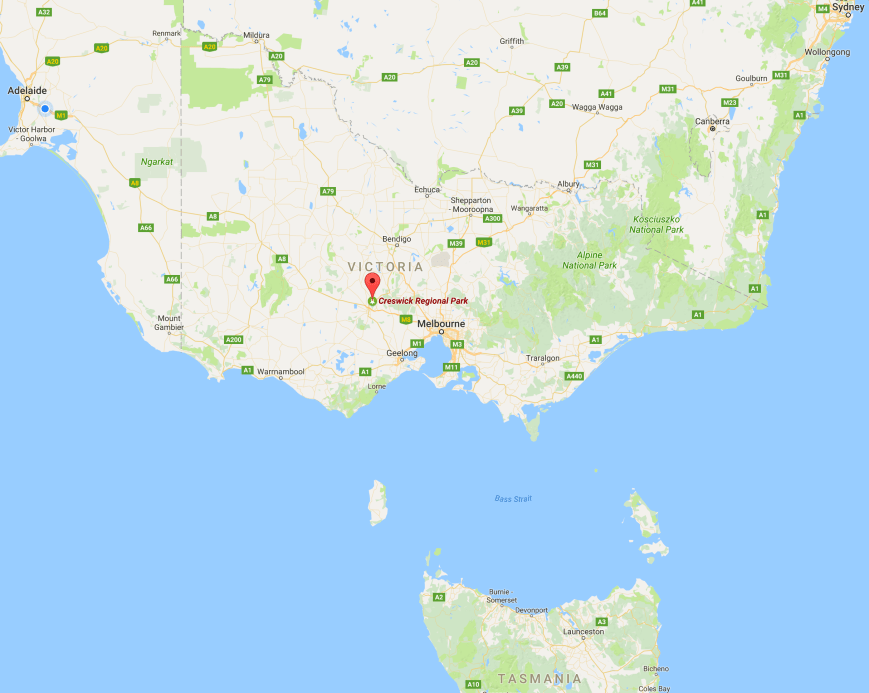
Above:- Map showing the location of the Creswick Regional Park, north west of Melbourne.  Map courtesy of google maps

After leaving Foster I stopped briefly at the Foster North lookout on the South Gippsland Highway and enjoyed some terrific views of the surrounding countryside, all the way down to Wilsons Promontory.

I then negotiated my way through Melbourne.  Even though it was a Sunday, it was incredibly slow going on the M1 Highway.  I finally got out of Melbourne and continued west through Melton, Bachus Marsh and on to Ballarat.  I arrived in Ballarat at around 4.00 p.m. local time and it was raining consistently and was 7 deg C.  A miserable afternoon.  After booking in to the motel I pondered on whether I should head out to Creswick.  In the end I decided I had come a long way and after all I only needed 12 contacts.

The little town of Creswick is about 18 km north of Ballarat.  It has a population of around 3,500 people.  The pioneer European settlers in this area were brothers Henry, Charles, and John Creswick, who established a large sheep station in 1842.  The town itself, was established in the 1850’s due to the gold rush in the area.  It was originally known as Creswick Creek until about 1857.  At the peak of the gold rush, the population was around 25,000.  The town has a number of historic buildings.


Creswick was the site of the New Australasian Mine disaster on the 12th day of December 1882.  This was Australia’s worst mining disaster in which 22 men drowned.  It was 4.45 a.m. when 29 miners became trapped underground by flood waters which came from the flooded parallel sunk Number 1 mine shaft.  Of those, only 5 survived and made it to the surface.  Many of the trapped mens crawled last notes to their loved ones on billy cans before they perished.

The school of Foresstry was established in 1910 by the Department of Forestry to train and acredit young foresters.  It is now part of the University of Melbourne.

I made my way out to St Georges Lake in the park, with the rain not easing at all.  It was a very cold, bleak, and wet day.

Creswick Regional Park was established in November 1983 and comprises 1,275 hectares of native scrub including Messmate, Manna Gum, Scent-bark, Broad-leaved Peppermint and Narrow-leaved Peppermint.  Candlebarks also grow in the gullies in the park.  The Common Heath, Victoria’s floral emblem is frequently found growing under eucalpyts.

Numerous birds can be seen in the park including Grey Currawongs, Crimson Rosellas, White-throated Tree-creepers, Grey Fantails, Thornbills, Robins, and honeyeaters.  Two migratory species found in the park ar the Rufous Fantail and Satin Flycatcher.  The only birds I saw during the activation were ducks.  Not surprising!

Various native mammals call the park home, including Koals, kangaroos and Black Wallabies.

I found a spot on the southern side of St Georges Lake and as it was too wet, I was forced to operate from the vehicle.  I braved the elements and erected the 7 metre squid pole, attaching it to a fence post with an octopus strap, and ran out the 80/40/20m linked dipole.  Getting very very wet in the process.

Screen Shot 2017-04-15 at 11.11.08 pm

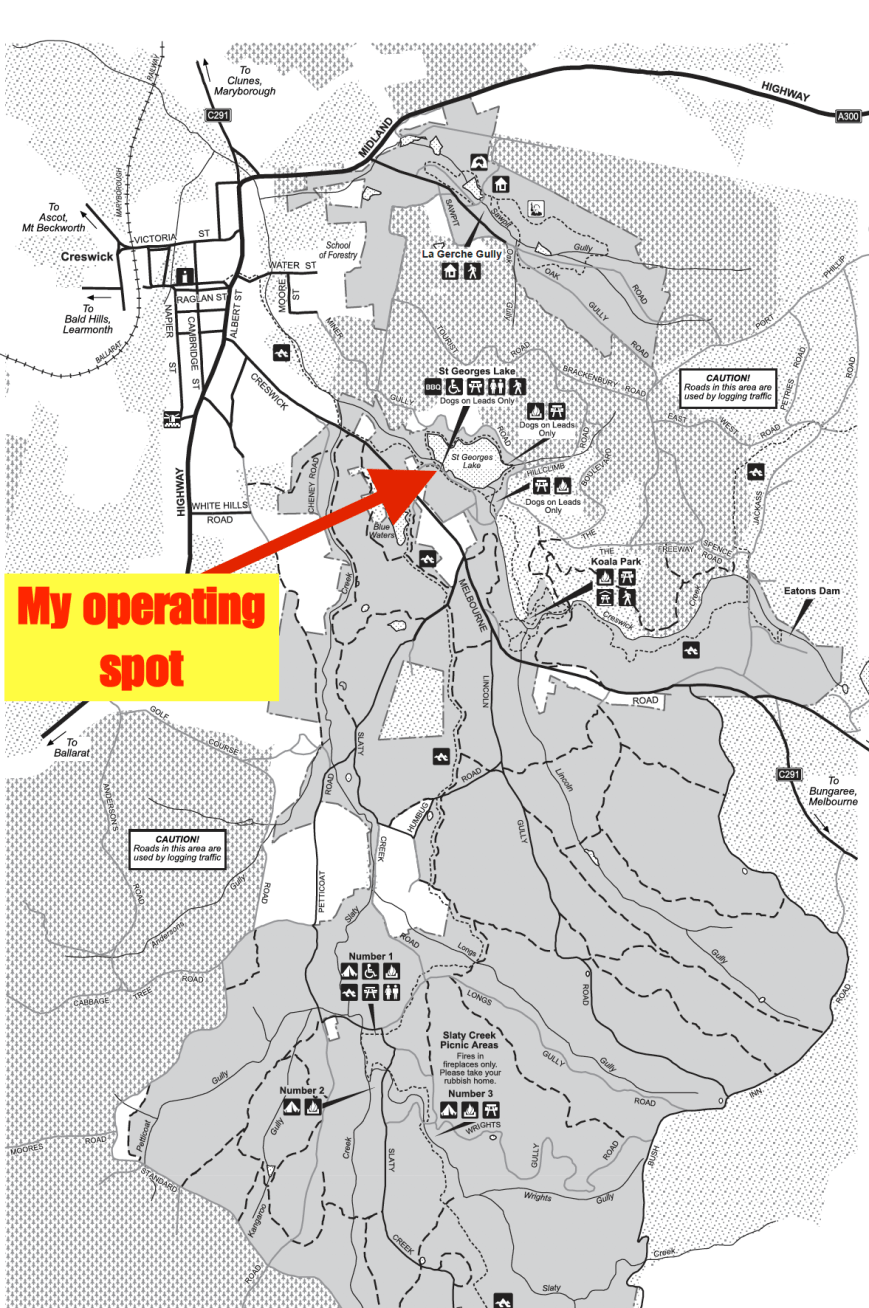
Map of the Creswick Regioanl Park showing my operating spot.  Map courtesy of Parks Victoria

The static crashes on the band were S9 plus.  This along with the miserable weather conditions, made this activation one of the less memorable ones IO have undertaken.  I called CQ on 7.144 and this was answered by Ivan VK5HS in the Riverland with a strong 5/9 signal.  I then spoke with Peter VK5PE with his newly upgraded call, followed by my good wife Marija VK5FMAZ, and then Adrian VK5FANA.  I soon reached 10 contacts with Jim VK2LC in the log.  The required 12th contact was Jason VK2FAVL/p.

I had a steady flow of callers, and as most were aware of the weather conditions, most stations kept their contacts short.  I worked a total of 39 stations from VK1, VK2, VK3, VK4, VK5, VK6, and VK7.  This included a Park to Park contact with Jarrad VK6FFAR who was portable in Leschenault Peninsula Conservation Park VKFF-1430.

Bill VK4FW came up to let me know that I was being heard in Europe, but sadly due to the extremely strong static crashes, I was unable to pull any Europeans out of the noise.

I jumped out of the vehicle and removed the links for 20m and then called CQ on 14.310.  This was answered by Ted VK6NTE/m who had followed me up from 40m.  Ted was quite low down compared to the signal he normally puts in.  I made about 5 minutes of CQ calls, however Ted was my only caller.

I then braved the weather again, and inserted the links for 80m.  I called CQ on 3.610 and was called by Mick VK3GGG/VK3PMG, followed by Peter VK3PF.  I worked a further 5 stations on 80m from VK4, VK5, and VK7.

After a little over one hour in the park I had a total of 48 stations in the log and I had well and truly qualified the park for WWFF.  It was time to head back into Ballarat.  I ordered a pizza and made my way back to the motel room.

I worked the following stations on 40m SSB:-

  1. VK5HS
  2. VK5PE
  3. VK5FMAZ
  4. VK5FANA
  5. VK5KX
  6. VK4PDX
  7. VK4FW
  8. VK2YW
  9. VK2EJW
  10. VK2LC
  11. VK5FKYM
  12. VK2FAVL/p
  13. VK5PET
  14. VK2HOT
  15. VK4QQ
  16. VK2FOUZ
  17. VK5TW
  18. VK1AT
  19. VK2SK
  20. VK1DI
  21. VK7QP
  22. VK4SMA
  23. VK2NCS
  24. VK7ZGK
  25. VK2VKB
  26. VK5AFZ
  27. VK4NH
  28. VK6FFAR/p (Leschenault Peninsula Conservation Park VKFF-1430)
  29. VK5FMWW
  30. VK2BNG
  31. VK5KLT
  32. VK4KUS
  33. VK4HNS/p
  34. VK4RF
  35. VK4HA
  36. VK5KLV
  37. VK5YX
  38. VK5HYZ/2
  39. VK6NTE/m

I worked the following station on 20m SSB:-

  1. VK6NTE/m

I worked the following stations on 80m SSB:-

  1. VK3GGG
  2. VK3PMG
  3. VK3PF
  4. VK5YX
  5. VK7JON
  6. VK4FW
  7. VK5FANA
  8. VK5HS


References.

Wikipedia, 2017, <https://en.wikipedia.org/wiki/Creswick,_Victoria&gt;, viewed 16th April 2017

Wikipedia, 2017, <https://en.wikipedia.org/wiki/New_Australasian_Gold_Mine_disaster&gt;, viewed 16th April 2017

Shallow Inlet Marine Coastal Park VKFF-0749

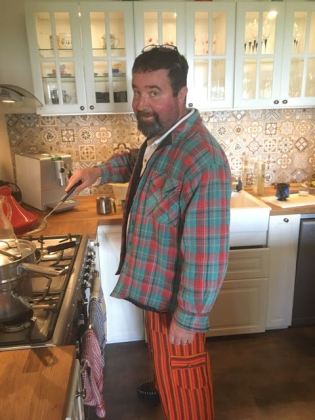
After a good night sleep at the home of Chris VK3QB at Foster, I was spoilt by Chris cooking me breakfast on Saturday morning (8th April 2017).  Although I did have to put up with his techicolour morning attire as you can see from the photo below.

IMG_0183

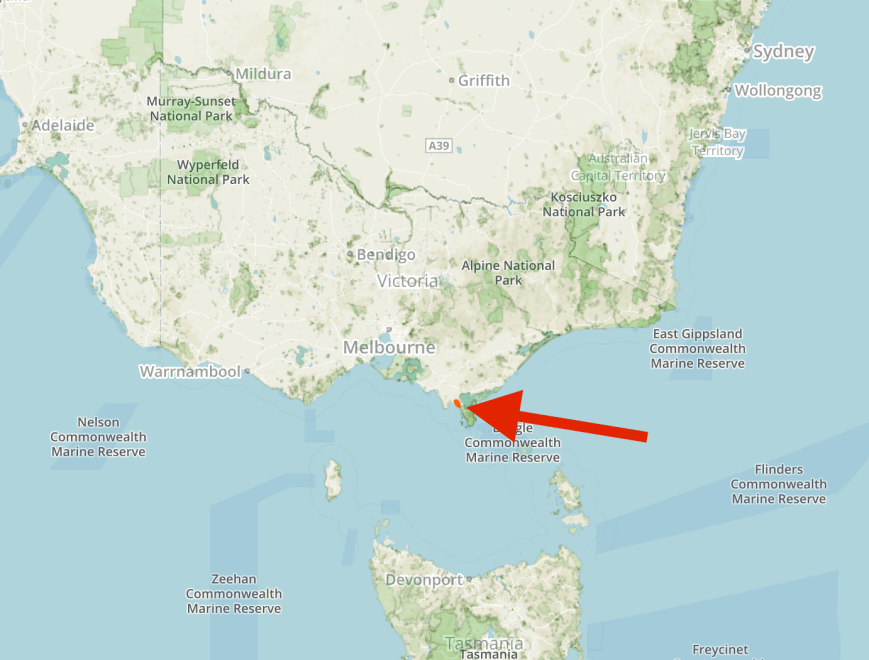
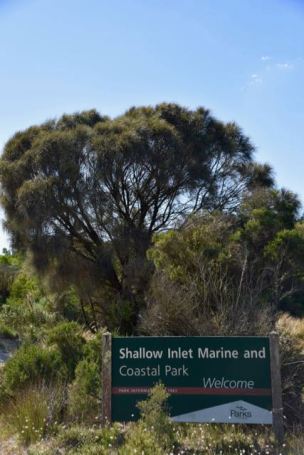
We had decided the night before to activate the Shallow Inlet Marine Coastal Park VKFF-0749 that morning.  Chris VK3PAT also organised to meet us out at the park.  The Shallow Inlet Marine Park is located about 190 km south east of Melbourne, and about 22 km south of Foster.

Screen Shot 2017-04-15 at 10.20.51 pm

Above:- Map showing the location of the Shallow Inlet Marine Park.  Map courtesy of Protected Planet.

We decided to take two vehicles out to the park so that Chris could leave at any time required to head to the Antennapalooza event.  We drove south out of Foster along the Foster-Promontory Road and then took Soldiers Road and continued to the little town of Sandy Point.  We soon reached the park at the end of Sandy Point Road and drove onto the beach.

DSC_6232

The Shallow Inlet Marine Coastal Park which was established in April 1986 is 2,377 hectares in size.  The park is nestled between Warratah Bay and the peaks of Wilson Promontory.  Shallow Inlet is popular for a range of water based activities including fishing, swimming, boating and sail boating.  And as it was a glorious day, there were numerous people on the beach, swimming, and riding horses.

The Brataualung Aboriginal clan once occupied the area of Wilsons Promontory and Waratah Bay. A large number of coastal middens containing charcoal, stones and the remains of shellfish are located along the coast and around Shallow Inlet and are up to 6000 years old. Earlier sites have been covered by rising sea levels. The Aboriginal population of the area declined from the 1850s after European occupation of their tribal territory, leading to disease, forced evictions and murders.

Settlers established pastoral runs around Shallow Inlet in the 1850s. Land in the catchment of Shallow Inlet was then extensively cleared and drained from the turn of the century. The Shallow Inlet Marine and Coastal Park was declared in 1986 in recognition of the area’s habitat values for migratory wading birds and shorebirds.

This slideshow requires JavaScript.

The park protects a diverse range of vegetation including foredunes of Spinifex, heathy woodlands of Messmate and Coastal Banksia, Paperbark swamps and saltmarsh communities. Extensive mudflats and intertidal areas are exposed at low tide. These areas provide important feeding grounds for a range of migratory wading birds. Below the waves are extensive seagrass meadows.

Shallow Inlet and the adjacent ocean beaches are significant areas for breeding shorebirds. Over 180 species of birds have been recorded in the park. Many wading birds make spectacular migrations, breeding in the arctic during the northern hemisphere summer and migrating southwards to arrive in Australia in late August and September. Pied Oystercatchers and Red Capped Plovers nest in the dunes and on the spit. A diverse range of mammals including the Koala, Common Ringtail Possum, Common Wombat, Swamp Wallaby and Echidna can be found in the woodlands and heathlands along the shoreline of Shallow Inlet.

Chris and I set up about 30 feet from the water’s edge and as it was quite a warm day we set up underneath the awning of my Toyota Hi Lux.  For this activation we ran the Yaesu FT-857d, 40 watts output, and the 80/40/20m linked dipole.

Screen Shot 2017-04-15 at 10.20.36 pm.png

Aerial shot showing our operating spot in the park.  Image courtesy of Protected Planet.

Our first contact was with John VK2YW, followed by Cliff VK2NP, Bill VK4FW, and then Peter VK5PE.  Chris and I swapped the mic to log the contacts.  Contact number 17 in the log was Grant VK4JAZ who was activating the Denmark Hill Conservation Park VKFF-1529.  Grant was a very difficult copy to us, but after a number of attempts, we were able to successfully exchange callsigns and signal reports.  Thanks to the patience of Grant.  For information on Grant’s activation, you can view his blog at….

https://vk4jaz.wordpress.com/2017/04/09/denmark-hill-conservation-reserve-vkff-1529/

Chris VK3PAT soon joined us and we continued our mic sharing experience, logging a total of 21 contacts on 40m from VK1, VK2, VK3, VK4, and VK5.  We then headed to 3.610 on the 80m band where we logged 3 stations: Mike VK3NMK, Geoff VK3SQ, and Nick VK3ANL.

We then tried our luck on 14.310 on the 20m band, where our first caller was the ever reliable Rick VK4RF/VK4HA, followed by Neil VK4HNS, and then Rob VK4AAC.

With 28 stations in the log we headed back to 7.144 on the 40m band where our first contact was with Norm VK2FANT, followed by Owen VK2AEJ who was operating from the Cape Don lightship in Sydney.  We also logged Peter VK3PF/p and Sergio VK3SFG/p who were activating SOTA peak Mount Square Top VK3/ VT-071.  A number of the hams at Antennapalooza gave us a shout, including Joe VK3YSP/p, Julie VK3FOWL/p, Tony VK3XV/p, and Jamie VK3TZE/p.  We also logged Ian VK1DI who was activating SOTA peak Mount Tumanang VK2/ SM-049 which is located within the Tallaganda National Park VKFF-0474.

Chris VK3PAT had headed off for lunch with his wife, and Chris VK3QB and I had 45 contacts in the log, and it was time to head off to Antennapalooza.  I think I may have inspired Chris VK3QB into activating.  He was very happy qualifying his first park with 44 contacts +.  It was a beaut morning.  Great weather, good propagation, and good company.

I worked the following stations on 40m SSB:-

  1. VK2YW
  2. VK2NP
  3. VK4FW
  4. VK5PE
  5. VK2NEO
  6. VK1AT
  7. VK5FANA
  8. CK2GKA
  9. VK2AN
  10. VK2ZK
  11. VK2JDC
  12. VK4TJ
  13. VK2FADV
  14. VK4RF
  15. VK4HA
  16. VK3KTO/p
  17. VK4JAZ/p (Denmark Hill Conservation Park VKFF-1529)
  18. VK4AAC/p
  19. VK4KX
  20. VK2IO
  21. VK3ARH
  22. VK2FANT
  23. VK2AEJ
  24. VK5FMAZ
  25. VK5HCF
  26. VK3PF/p (SOTAMount Square Top VK3/ VT-071)
  27. VK3CM
  28. VK3SFG/p (Mount Square Top SOTA VK3/ VT-071)
  29. VK3YSP/p
  30. VK3FOWL/p
  31. VK3XV/p
  32. VK3KYF
  33. VK1DI/p (SOTA Mount Tumanang VK2/ SM-049 &Tallaganda National Park VKFF-0474)
  34. VK5VBR
  35. VK7VDL
  36. VK3XMF
  37. VK3FCLK
  38. VK3TZE/p

I worked the following stations on 80m SSB:-

  1. VK3NMK
  2. VK3SQ
  3. VK3ANL

I worked the following stations on 20m SSB:-

  1. VK4RF
  2. VK4HA
  3. VK4HNS/p
  4. VK4AAC/p

On the way back to Foster we came across a small tree which had fallen across the road.  Fortunately Chris had a chainsaw in the back of his vehicle.

DSC_6233

Once back at Antennapalooza I caught up with all those present.  It was terrific to meet Tony VK3XV for the very first time.  I had spoken with Tony many times previously both on air and on the telephone.  But this was the first time we had met in person.  The presentations commenced mid afternoon, with 3 presentations delivered by myself on 1.  General tips whilst operating portable; 2. WWFF; and 3. the VK5 Parks Award.  Tony VK3XV spoke about the Keith Roget Memorial National Parks Award, whilst Peter VK3PF spoke about the Summits on the Air (SOTA) program.  We settled in for the night, enjoying a nice meal and a few reds, and plenty of chat around the campfire.  A great night.

This slideshow requires JavaScript.


References.

Parks Victoria, 2012, ‘Shallow Inlet Marine Coastal Park’.

Wilsons Promontory National Park VKFF-0539

After activating Mount Fatigue I drove down to the Wilsons Promontory National Park VKFF-0539 to activate the park.  This was to be a unique park for me for the World Wide Flora Fauna (WWFF) program and the Keith Roget Memorial National Parks Award (KRMNPA).  The park is situated about 240 km south east of Melbourne.

Screen Shot 2017-04-14 at 11.22.54 pm

Above:- Map showing the location of the Wilsons Promontory National Park.  Map courtesy of Protected Planet.

The drive took me down through Foster, where I would be staying for the next 2 nights, and then to the little town of Yanakie.  Along the way I stopped to have a look at the Foster Poison post.  It was erected in the late 1800’s to mark where poison was laid to eradicate wild dogs and dingoes.  On the original stock route linking Western Port with East Gippsland, it defined the corner of Wonga Wonga, Waratah and Yanakie Parishes.  Poison Post became quite a significant landmark to the early residents and was used until 1960.

I continued along the Meeniyan-Promontory Road until I reached the park entrance.

The Wilsons Promontory National Park is commonly known as Wilsons Prom or The Prom.  It is located at the southernmost tip of mainland Australia in the Gippsland region, and offers spectacular scenery of huge granite mountains, open forest, rainforest, sweeping beaches and coastlines.  The park is 50,500 hectares (125,000 acres) in size and was established in July 1898.

The park is home to a large amount of native wildlife including kangaroos, wallabies, wombats, and echidnas.  Marine creatures that can be sighted include Southern Right whales, Humpback whales, Killer whales, dolphins, seals, and Sea Lions.

The first Europeans to sight Wilsons Promontory are believed to be George Bass and Matthew Flinders in 1798.  Prior to this the area was inhabited by aboriginals for at least 6,500 years.  During the 1800’s extensive sealing took place at Sealer’s Cove.  Such was the extent of the sealing, that seals are no longer found there.  During the late 1800’s extensive lobbying of the Government of Australia by the Field Naturalists Club of Victoria and the Royal Society of Victoria led to Government temporarily reserving the area in 1898 as a National Park.  This was made permanent in 1908.

In April 2015 a large section of the park was burnt out as a result of a bushfire which originally started as a controlled burn which breached containment lines.  And during the Black Saturday Bushfires of February 2009, numerous trees within the park were struck by lightning which led to the loss of up to 50% of the National Park through fire.

As I pulled in to the carpark at the end of Five Mile Road, the slippery creature below was crossing the carpark in front of me.  The carpark was full of cars and quite a few people, all about to head off on a bush walk.  And all oblivious to the snake’s presence.  Which was not such a band thing, because I suggest there would have been a lot of screaming by the women present.

Red Bellied black snakes are one of Australia’s best known snakes and are found throughout eastern Australia.  Its venom is capabale of causing significant morbidity, however a bite from a Red Belly is not generally fatal, and is less venomous than many other Australian venomous snakes.

DSC_6181

Red-bellied black snake

I set up in the carpark, trying to make as much noise as possible to scare away any other snakes.  I am not a snake fan by any stretch.  However, I have never killed any of the snakes I have sighted.  Snakes are generally a protected species and hefty fines can be imposed on those found killing them.  In South Australia, the maximum penalty is a $10,000 fine and 2 years imprisonment.  The only exception is if a venomous snake is posing a genuine threat to life and safety.

I ran the Yaesu FT-857d, at 40 watts output, and the 20/40/80 m linked dipole, on the top of the 7 metre telescopic squid pole.  There was just enough room to stretch out the dipole.

It was quite a warm day, around 29 deg C, so I tried to find a little bit of shade.

Screen Shot 2017-04-14 at 11.19.27 pm

Above:- Map of the park showing my operating spot.  Map courtesy of Protected Planet  

The 40m band was quite busy, and I found 7.130 and asked if the frequency was in use.  Brenton VK3CM came back to me and was number one in the log from Wilsons Prom.  This was followed by Adrian VK5FANA on the Yorke Peninsula with a good 5/6 signal, then Ivan VK5HS in the Riverland region with a strong 5/8 signal.  Contact number ten, qualifying the park for VKFF, was Mick VK3GGG/VK3PMG.

I was very pleased with the steady flow of callers, as I was keen to leave the park as soon as possible and head off to Antennapalooza at Foster.  In just a little over an hour I had contact number 44 in the log, VK3ER portable at Antennapalooza.

I logged a total of 46 stations on 40m from VK1, VK2, VK3, VK4, VK5, and VK7.  This included a Park to Park contact with Jim VK1AT who was activating the Namadgi National Park VKFF-0377.  I also logged a number of amateurs who were portable at Antennapalooza, including Julie VK3FOWL, Chris VK3QB, and Ian VK3BUF.  Another good contact was with Rick VE3MM/VK5 who was holidaying on Kangaroo Island OC-139.  Rick had a good signal with his KX3, 10 watts and end fed 1/2 wave antenna.

I then headed to 14.310 on the 20m band where I logged a total of 10 stations.  Australian stations logged there were Rob VK4AAC/p, Steve VK4KUS, Sergio VK3SFG, and Rick VK4RF/VK4HA.  There was a small opening into Europe on the long path, with five Italian stations logged.

I then lowered the squid pole and inserted the 80m links and called CQ on 3.610 on the 80m band.  First caller was Peter VK3PF with a strong 5/9 signal, followed by Mick VK3GGG/VK3PMG who was 5/8.  But despite 5 minutes of CQ calls, they were my only takers on 80m.

I had a total of 59 contacts in the log and another unique park activated.  It was approaching 5.00 p.m. local time and I wanted to have a quick look around the park before heading off to Foster.

DSC_6189

I worked the following stations on the 40m band:-

  1. VK3CM
  2. VK5FANA
  3. VK5HS
  4. VK3AXH
  5. VK3SQ
  6. VK7DD
  7. VK3DMD
  8. VK5TR
  9. VK3GGG
  10. VK3PMG
  11. VK3YSP
  12. VK4RF
  13. VK4HA
  14. VK2LX
  15. VK5KX
  16. VK3VIN
  17. VK5EMI
  18. VK3LSD
  19. VK2NP
  20. VK5NFB
  21. VK2EXA
  22. VK7VDL
  23. VK4AAC/p
  24. VK3VBI
  25. VK2STO
  26. VK5KLV
  27. VK5FRSM
  28. VK1AT/p (Namadgi National Park VKFF-0377)
  29. VK4VXX/2
  30. VK2FOUZ
  31. VK4HNS/p
  32. VK2SMS/p
  33. VK2FADV
  34. VK5YX
  35. VE3MM/VK5
  36. VK2GQR
  37. VK2IO/m
  38. VK4CPS
  39. VK3FOWL/p
  40. VK1FWBK
  41. VK3QB/p
  42. VK3BJA/p
  43. VK3BUF/p
  44. VK3ER/p
  45. VK2QA
  46. VK5WG

I worked the following stations on 20m SSB:-

  1. VK4AAC/p
  2. IK2ZJN
  3. IK8FIQ
  4. VK4KUS
  5. VK3SFG
  6. I5FLN
  7. IW2NXI
  8. VK4RF
  9. VK4HA
  10. IU5HIV

I worked the following stations on 80m SSB:-

  1. VK3PF
  2. VK3GGG
  3. VK3PMG

I drove down to Tidal River, the main campground in the park, enjoying some of the amazing coastline views along the way.  The campground was extremely busy as it was school holidays.  There were hundreds of people enjoying the park.  The campground even has a general store and take away food shop.

This slideshow requires JavaScript.

I then headed off to Foster and caught up with Chris VK3QB on the road.  We dropped off my bags at his home and then drove to the campsite next door, where I enjoyed a few ales and good company with those present.


References.

Parks Victoria, 2017, <http://parkweb.vic.gov.au/explore/parks/wilsons-promontory-national-park&gt;, viewed 14th April 2017

Wikipedia, 2017, <https://en.wikipedia.org/wiki/Red-bellied_black_snake&gt;, viewed 14th April 2017

Wikipedia, 2017, <https://en.wikipedia.org/wiki/Wilsons_Promontory_National_Park&gt;, viewed 15th April 2017