Lesmurdie Falls National Park VKFF-0284

Last Friday (21st October 2016) I flew over to Perth in Western Australia with my wife Marija and we stayed for 2 nights with Andrew VK6AS and his wife Allison.  Andrew and I had a scheduled talk on WIA issues on Saturday afternoon and this was the reason for the lightning trip over to the west and back within 3 days.

Marija dug in to her frequent flyer points and we upgraded to business class on the flight over, which meant a relaxing one hour in the Qantas Club at Adelaide leading up to the flight, and then a very relaxing 3 hour flight over to Perth enjoying a few Bundies and coke.  Sadly there were a number of controlled burns in the Perth Hills, so there was not much of a view to be enjoyed coming in to Perth.

Andrew picked us up from the airport and drove us back to his home.  After settling in, I had a listen in to the 7.130 DX Net.  Now this is different, being all the way over there in the west.  It is a 3 hour time difference to the east coast of Australia, so the net starts at 5.30 p.m. Western Australia time.  And as Andrew lives in the Perth suburbs, the noise floor is quite high.  So it was a bit of challenge to hear a lot of stations on the Net.  But I did manage to work Roy VK7ROY, Brian ZL2ASH in Wellington New Zealand, and William FO5JV in French Polynesia.  I also had a great chat on 40m with Steve VK6OZ who is planning on going portable in the future.

We all enjoyed a glass or two of red and lasagne for dinner, and Andrew and I then mapped out our day for Saturday.  We decided to active three parks prior to our planned WIA presentation at 2.30 p.m.  They being Lesmurdie Falls National Park, Greenmount National Park, and John Forrest National Park.

DSC_3416.jpg

Above:- In the shack of Andrew VK6AS, enjoying a glass of red.

On Saturday morning (22nd October 2016), after breakfast and a quick chat with the gang on the F Troop Net on 2m,  Andrew and I headed off at around 9.30 a.m.  Marija and Allison had plans to head out to Fremantle for the day.

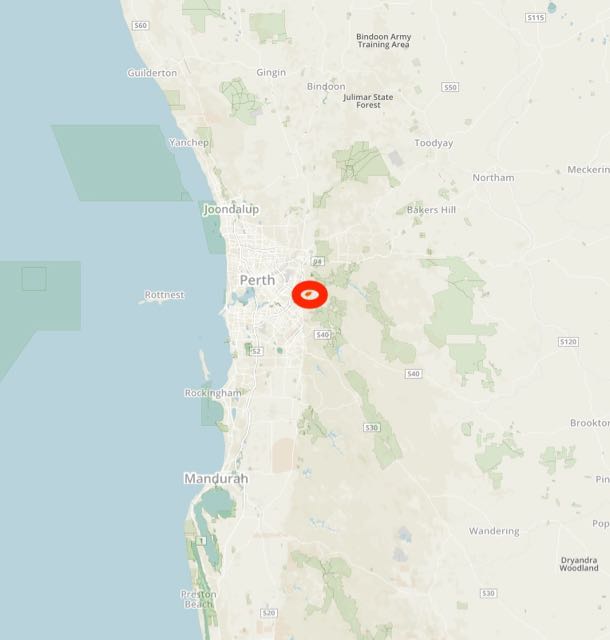
Our first park of the day was the Lesmurdie Falls National Park VKFF-0284, which is situated about 22 km east of Perth.  This was to be a unique park for me as an activator in the World Wide Flora Fauna (WWFF) program.
Screen Shot 2016-10-24 at 9.51.50 am.jpg

Above:- Map showing the location of the Lesmurdie Falls National Park to the east of Perth.  Map courtesy of Protected Planet.

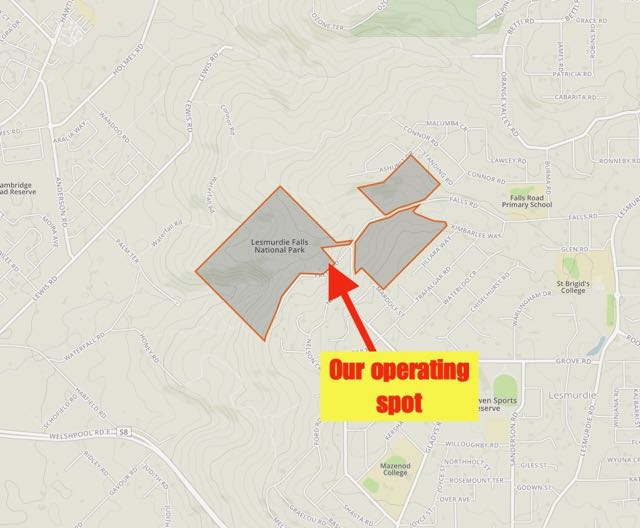
It took Andrew and I some time to get into position as everywhere we drove to there were only signs for the Mundy Regional Park.  As it turns out it appears that the 56 hectare area of Lesmurdie National Park still exists and is surrounded by the larger Mundy Regional Park.  We set up just off Falls Road, a little to the north east of the main Lesmurdie Falls carpark.
Screen Shot 2016-10-24 at 9.51.15 am.jpg

Above:- Map showing our operating spot at the Lesmurdie Falls National Park.  Map courtesy of Protected Planet.

It was a beautiful day with the expected top temperature being 30 deg C, and not a cloud in the sky.  During our activation we were visited by a very tame Australian Ringneck Parrot.  In Western Australia these parrots are known as ‘Twenty Eights’.  They are known as Twenty Eights because their contact call is usually rendered as twenty-eight

This was the first time that Andrew had switched on his brand new Yaesu FT-857d, which had only just arrived.  We also used his brand new power supply, and telescopic squid pole and even broke in his newly acquired fold up table from Bunnings.  I had brought over with me, two linked dipoles, and we used the 40/20m combination for this activation.

Sadly after turning on the radio, we experienced strength 8 noise.  We had power lines on the roadway behind us, and as this park is surrounded by houses in the Perth Hills, we suspected we could not get away from the noise unless we walked a few km into the bush.  And this was not going to happen, as Andrew’s power supply is extremely heavy.

After calling CQ for quite some time on 7.144 with no resposne, Allen VK6XL called in and was my first contact from Lesmurdie Falls.  Ian VK6DW then followed with a strong 5/9 signal.  My next caller was Bob VK6POP who was portable in the John Forrest National Park VKFF-0250.  My first ever Park to Park contact from Western Australia….I was very happy.  Unfortunately numerous CQ calls by both Andrew and myself went unanswered.  We suspected others may have been calling us, but due to the very high noise floor on 40m, it was very very difficult to hear callers below the very high noise floor.

We then moved to 14.310 on 20m where I worked Greg VK5GJ in the Adelaide Hills, who was operating QRP, followed by Allen VK6XL, Peter VK3PF and Carsten VK6PCB mobile.  Carsten had arrived at the park a few minutes earlier to say g’day and as we were desperate for callers, he drove a few km away and gave us a call to get us a little closer to the 10 contacts required for the Australian (VKFF) program.

Andrew and I then moved back to 40m where we were only able to make one further contact, and that was with Ben VK6LVI.

Sadly I only had 8 contacts in the log and I had not qualified the park for the Australian (VKFF) chapter of WWFF.  I will have to come back another day.  We were pushed a bit for time, so we decided to pack up and head off to the next park.

The following stations were worked on 40m SSB:-

  1. VK6XL
  2. VK6DW
  3. VK6POP/p (John Forrest National Park VKFF-0250)
  4. VK6LVI

The following stations were worked on 20m SSB:-

  1. VK5GJ
  2. VK6XL
  3. VK3PF
  4. VK6PCB/m

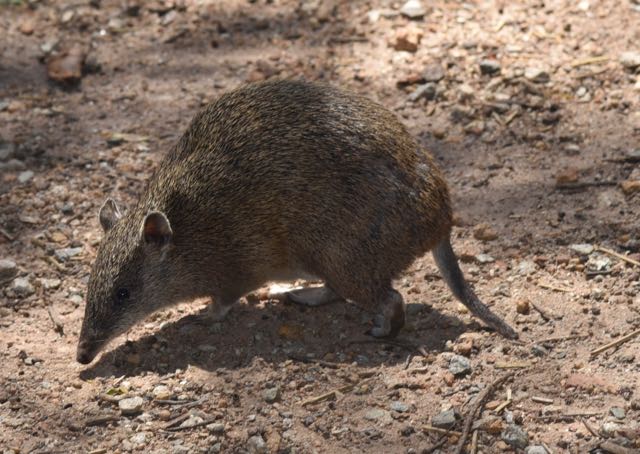
At the conclusion of the activation I decided to do the 640 metre walk down to the Falls.  Along with the way, I encountered the little guy below, a Southern Brown Bandicoot.  In Western Australia they are sometimes referred to as Quendas.
DSC_3436.jpg

The park was alive with flowers during my visit.

The walk down to the Falls is an easy and very pretty walk, passing by the Lesmurdie Brook which leads to the Falls.  The Brook originates on the ridge beyond Lesmurdie Road where a number of small streams come together after capturing rainfall run-off and seepage from springs flowing from the groundwater beneath the laterite rock.

In winter after good rains, Lesmurdie Brook rushes through crevices in the orange laterite, then cascades over the exposed granite rocks before tumbling 100 metres over the Darling Scarp.  The face of the falls is of sheer granite formed from weathering and eroding aong vertical fractures within the bedrock.  In the foothills below the falls, Lesmurdie Brook merges with Yule Brook which meanders across the coastal plain to the Canning River.

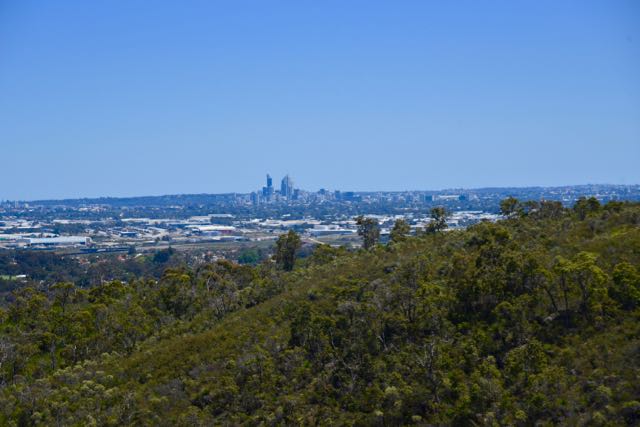
There are some terrific views of Perth to be enjoyed from the park.
dsc_3453


References.

Department of Parks and Wildlife 204-15 Annual Report.
Monarto Woodlands Conservation Park VKFF-1763

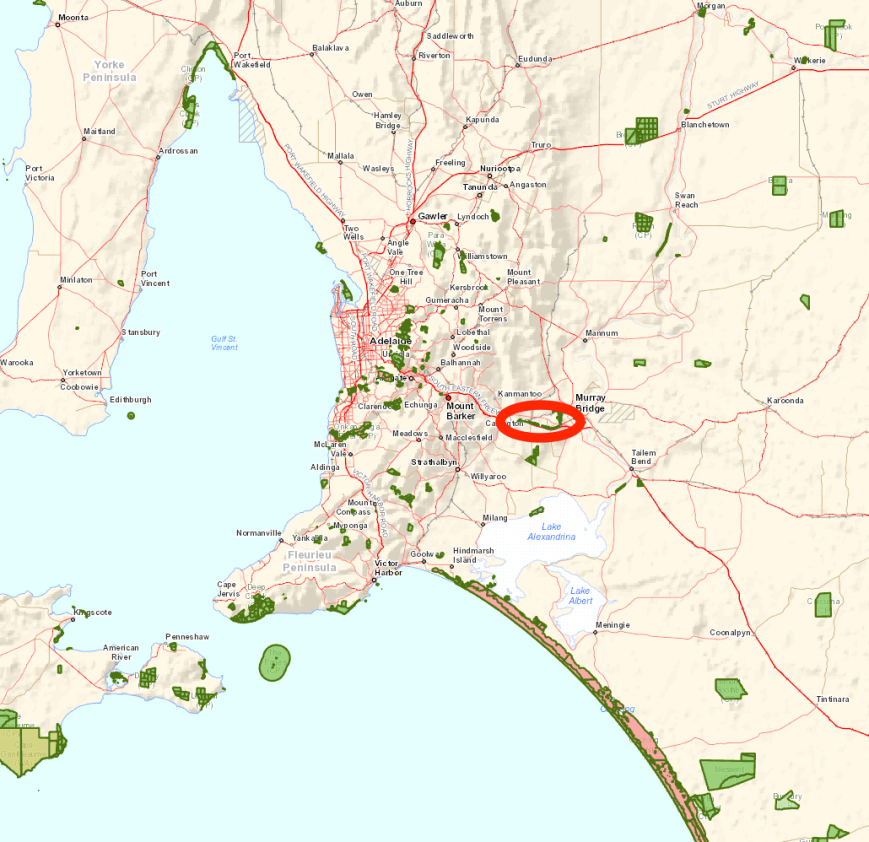
A few days ago I discovered that South Australia had two new Conservation Parks, the Kinchina Conservation Park and the Monarto Woodlands Conservation Park.  Both are located in the Monarto area, about 60 km east of Adelaide.  So I added the two parks to the World Wide Flora Fauna (WWFF) Directory and thanks to Luciano I5FLN, the WWFF Directory Manager, they were added within 24 hours and allocated VKFF reference numbers.  So after morning coffee I headed back home and collected the radio gear and headed out to the Monarto Woodlands Conservation Park VKFF-1763.

screen-shot-2016-10-18-at-10-10-57-pm

Above:- Map showing the location of the Monarto Woodlands Conservation Park, east of Adelaide.  Map courtesy of Location SA Map Viewer.

The Monarto Woodlands Conservation Park was gazetted on the 22nd September 2016 and was previously set aside as Crown land.  The park extends about 15 km along the South Eastern Freeway from near Callington to Murray Bridge.  The park is 426 hectares in size, and provides important habitat for more than 60 bird species, five of which are of State conservation significance.

The scrub located within the park is a mixture of plant species from across Australia.  This is due to the extensive planting in the area due to the proposed satellite city of Monarto back in the 1970’s.  The then South Australian Premier, Don Dunstan had proposed that Monarto, or ‘New Murray Town’ would become the site of a satellite city of Adelaide.  However this concept was eventually abandoned.

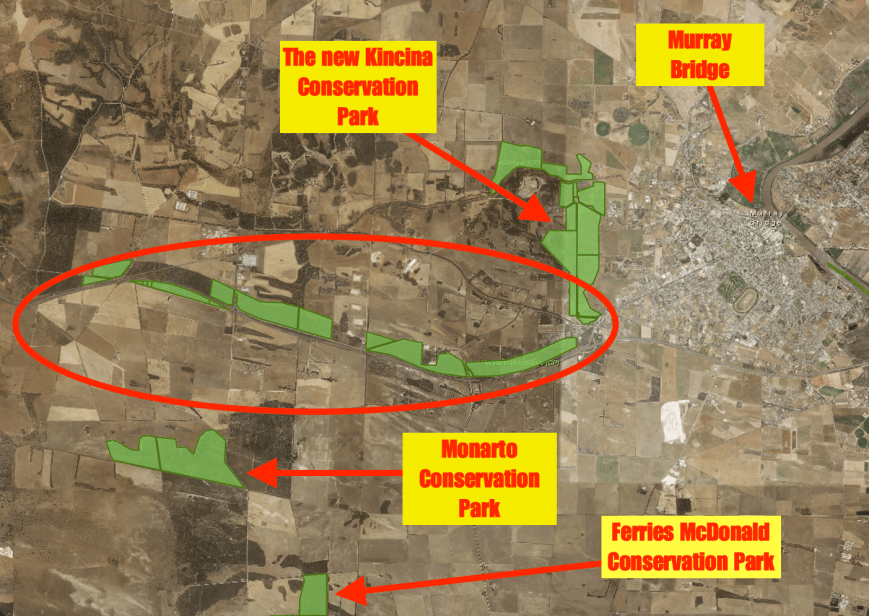
The park is in close proximity to the newly gazetted Kincina Conservation Park, and also the Monarto Conservation Park and the Ferries McDonald Conservation Park.

Screen Shot 2016-10-18 at 9.54.43 pm.png

Above:- Map showing the location of the Monarto Woodlands Conservation Park, in relation to Murray Bridge and nearby parks.  Map courtesy of Location SA Map Viewer.

I took the Monarto exit from the South Eastern Freeway and then turned left onto Arbon Court.  This is close to the industrial area of Monarto and borders a small part of the park which is located on the northern side of the Freeway.  There is no vehicular access to the park here, but if you chose to do so, you could climb over the barbed wire fence into the park.  I decided to check out some other sections of the park which are dotted along the South Eastern Freeway.

I then headed along White Road, which runs east-west on the northern side of the Freeway.  The park borders the northern side of White Road.  This part of the park has a barbed wire fence, which again is easily scaled, but I found an opening in the fence line with a track leading into the park.

dsc_3176

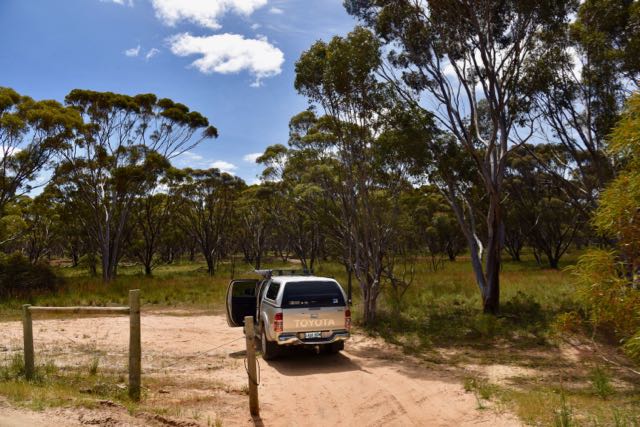
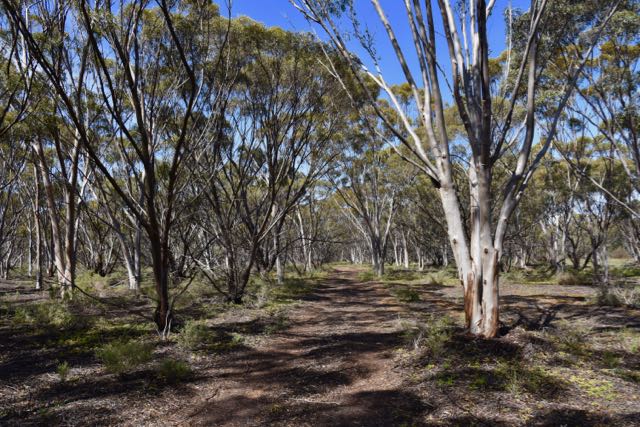
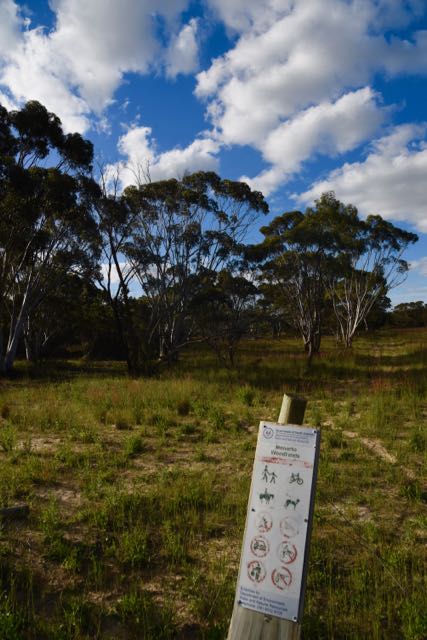
I followed this track for a few hundred metres and then found a clearing amongst the scrub and set up my station.

dsc_3181

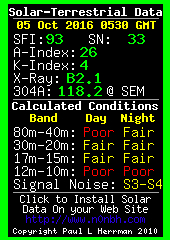
I was set up in the park by around 1.45 p.m. (0310 UTC), about 10 minutes after my posted time on parksnpeaks.  I headed for 7.144 and started calling CQ, and it took around 5 minutes before I had my first taker.  This was Ken VK3UH who is normally 5/9, but on this occasion was 5/7.  I received a 4/5 from Ken.  This was not a good sign.  I hadn’t checked the propagation figures prior to leaving home, but I suspected that conditions were going to be rated as fair-poor as they have been for some time now.

As it turned out the Solar Flux Index was 93, and the A Index was high at 26, with the K Index being 4. Not good!

screen-shot-2016-10-19-at-8-55-53-pm

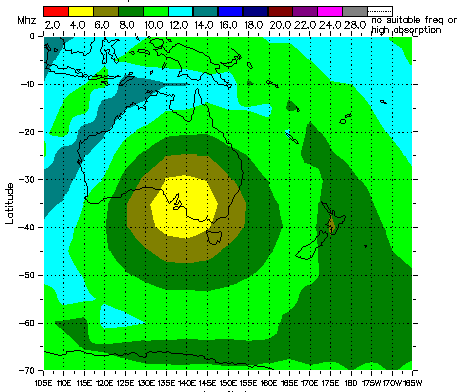
And the Hourly Area Prediction chart showed that 80 m was going to be the band for the local VK5 contacts and also into western Victoria.

screen-shot-2016-10-19-at-8-36-32-pm

My second contact was with Dennis VK2HHA in Albury who was also down in signal strength, followed by Marc VK3OHM in Melbourne who was 5/9 plus.  But Marc’s great signal was to be one of only a very select few for this activation.  I worked 14 stations on 40m from VK2, VK3, and VK7 with significant fading noted on most signals.  It was really hard going with a lot of unanswered CQ calls.

I then lowered the squid pole and added the links and headed to 3.610 on 80m where I called CQ and this was immediately answered by Adrian VK5FANA on the Yorke Peninsula with a 5/7 sign, but with fading noted.  This was followed by a call from Mark VK7FMPR in Tasmania.  I was really surprised to hear from Mark at this time of the day and despite Mark’s signal not being strong, I was still receiving Mark well with a signal report of 5/1 (5/1 returned to me by Mark).  And finally I worked John VK5BJE in the Adelaide Hills.  John was a good 5/7 signal to Monarto Woodlands.  Col VK5HCF called me a few times and although I was hearing Col quite well (5/7 with QSB), Col was struggling with noise at his end and we were unable to make a valid contact.

I then headed back to 7.144 on 40m and called CQ again and this was answered by Scott VK7NWT with a good strong 5/8 signal, followed by Wayne VK2PDW mobile in Wagga with a nice 5/7 signal.  I worked a further 4 stations from VK2, VK3, and VK7.  This included a Park to Park contact with Grant VK2GEL who was portable in Ku-Ring-Gai Chase National Park VKFF-0272.  This was a pleasant surprise.

I then gave 20m a try, but sadly I was only able to log 2 stations.  They being Robert VK2XXM and Ray VK4NH.  A large amount of fading (QSB) was noted on the 20m band as well.

I took a break and went for a short walk through the park, trying out my luck with some bird photography.  The park was alive with Red Wattlebirds, but they were quite hard to capture as they were regularly darting from tree to tree in the park.

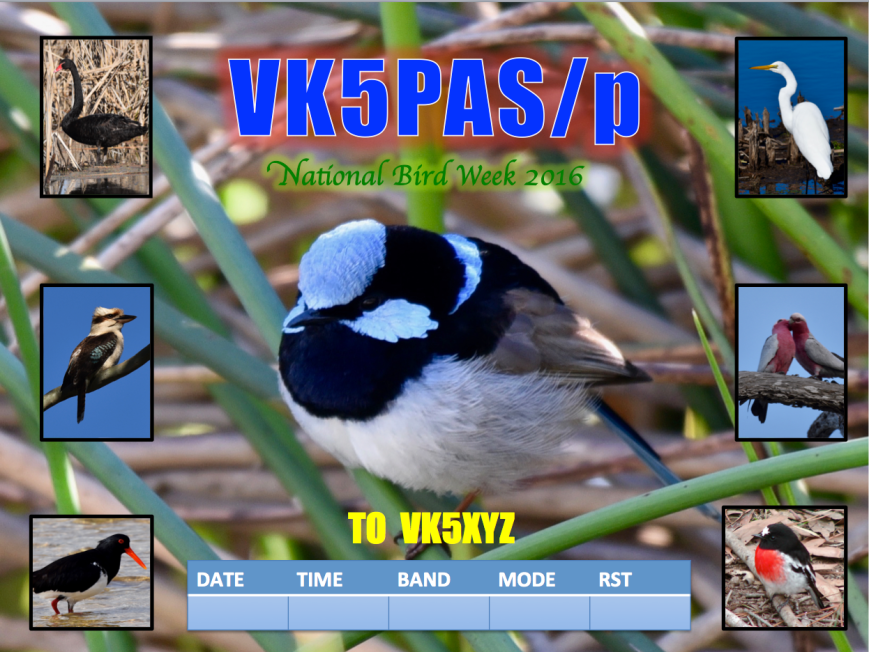
As this is National Bird Week, I have a special QSL card on offer for this activation at Monarto Woodlands Conservation Park.  If you would like this special issue card, please send me your QSL card and I will return a card to you.

Screen Shot 2016-10-19 at 10.35.26 pm.png

I returned to the radio and called CQ again on 7.144 and this was answered by Rick VK4RF/VK4HA, followed by Jim VK4OK.  Jim’s signal was very very low and it took a number of attempts for me to copy Jim’s call sign and to have a valid signal report exchange (3/1 sent and 5/3 received).  Alan VK3FALN then called but unfortunately Alan’s audio was breaking up quite a bit.  Alan gave me a 5/7 signal report, but sadly we were unable to complete the contact as Alan completely faded away just as he was about to give me a signal report.  The band had changed dramatically, very quickly.  I then worked Andrew VK7DW and John VK4TJ.

John and I were curious to see whether our signals may be stronger on 20m, so after a quick lowering of the squid pole, and removal of the links in the dipole, I headed to 14.310.  John was one S point stronger on 20m (5/7), but very deep fading (QSB) was present and this made it quite hard at times.  Two more Queensland stations were logged on 20m.  The first being Steve VK4KUS at Hervey Bay with a nice 5/8 signal, and then Bill VK4FW who was 5/9.

It was at this time that Nigel VK5NIG gave me a call to advise that he was at Meadows, and was keen to call in to my home QTH for a coffee.  I informed Nigel I was up at Monarto in a park, and he agreed that he would come up for a drive to say g’day.  I then took another break from the radio and went for a further walk in the park, waiting for Nigel to arrive.  It was a good opportunity to explore the park.

Just before Nigel arrived I called CQ again in 7.144 and Peter VK3PF gave me a shout, using one of his other call signs, VK3KAI, to help me out towards my 44 required QSOs to qualify the park for WWFF.  Thanks Peter.  Tex VK1TX then called in with a beautiful 5/9 signal, followed by Ian VK1DI, and then Bill VK4FW.  But that was the limit of callers.  It did however offer an opportunity for me to have a chin wag with Nigel.

About 30 minutes later I lowered the squid pole and removed the links and then headed to 14.310 on 20m.  There were German speaking stations on 14.307 so I went  little higher to 14.311 and started calling CQ.  This was answered by Hans VK6XN who has just commenced as a park hunter.  Next up was my first DX, Luciano I5FLN in Italy with a good 5/9 signal, followed by Dario IT9ZZO and then Jaroslav OK2TS in the Czech Republic.  I went on to work a further 15 stations from Italy, Slovenia, Germany, France, Hungary, Russia, and the Czech Republic.

So after a slow start I had a total of 60 contacts in the log and a unique park for me to add to my activator tally for both the WWFF program and the VK5 Parks Award.

The following stations were worked on 40m SSB:-

  1. VK3UH
  2. VK2HHA
  3. VK3OHM
  4. VK3GGG
  5. VK3PMG
  6. VK3MCK
  7. VK3PF
  8. VK3FCMC
  9. VK3VBI
  10. VK7LTD
  11. VK2IO
  12. VK4AAC/3
  13. VK7FRJG
  14. VK3PR
  15. VK7NWT
  16. VK2PDW/m
  17. VK2XXM
  18. VK2GEL/p (Ku-Ring-Gai Chase National Park VKFF-0272)
  19. VK7EE
  20. VK3DQ
  21. VK4RF
  22. VK4HA
  23. VK4OK
  24. VK7DW
  25. VK4TJ
  26. VK3KAI
  27. VK1TX
  28. VK2KJJ
  29. VK1DI
  30. VK4FW

The following stations were worked on 80m SSB:-

  1. VK5FANA
  2. VK7FMPR
  3. VK5BJE

The following stations were worked on 20m SSB:-

  1. VK2XXM
  2. VK4NH
  3. VK4TJ
  4. AC8WN/VK4
  5. VE6XT/VK4
  6. VK4KUS
  7. VK4FW
  8. VK6XN
  9. I5FLN
  10. IT9ZZO
  11. OK2TS
  12. IK2VUC
  13. IK1GPG
  14. S52KM
  15. DK0EE
  16. F1BLL
  17. HA6OB
  18. IZ1UKF
  19. IK2ZJN
  20. IW2NXI
  21. IK8FIQ
  22. RA3QK
  23. IZ5JMZ
  24. IV3DSF
  25. OK7WA
  26. DJ8QP

Thankyou to the following for spotting me on parksnpeaks and the DX Cluster:

  • Marc VK3OHM
  • Mick VK3GGG
  • Ken VK3UH
  • Peter VK3PF
  • Adrian VK5FANA
  • Robert VK2XXM
  • Ray VK4NH
  • Bill VK4FW
  • Luciano I5FLN
  • Hans VK6XN
  • Lou IV3DSG
  • Renzo IK2ZJN
  • Giovanni IZ5JMZ

Spotting really does make a difference, and even more so when conditions are poor as they were today.  So thanks again to everyone who took the time to spot me.

After packing up I headed east along White Road.  The park finishes a few hundred metres up the road, with the Ingham chicken farm very noticeable.  The park then recommences and concludes a few km up the road close to Murray Bridge.

dsc_3212

I then took the Old Princes Highway back to Callington.  This took me passed the southern boundary of the Monarto Zoological Open Plains Zoo.  This is the largest open plains zoo in the world.

dsc_3223

I then drove in to Monarto, which nowadays consists of a church, a hall and farm houses.  Monarto South is located about 3 km to the south of Monarto and this comprises a few farmhouses, the Adelaide-Melbourne rail line, and silos.

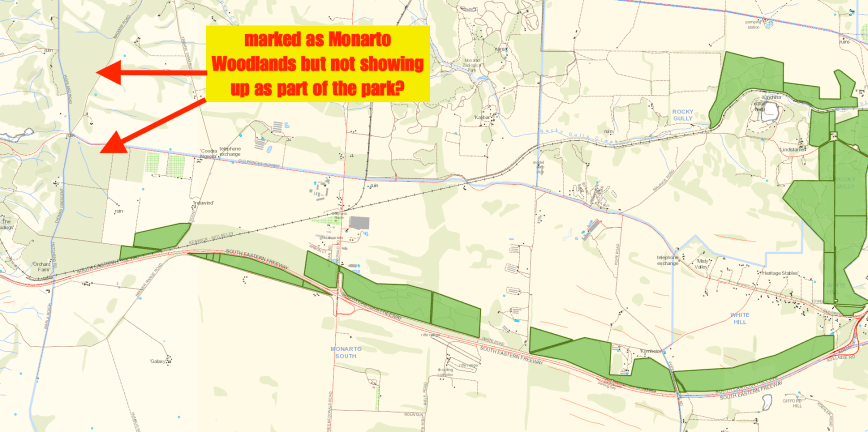
Prior to heading to the park I had read on the internet of the Monarto Woodlands and Browns Road at Monarto, and that this appeared to be a popular spot for birdwatchers.  However that section of scrub did not show up on Location SA Map Viewer as being part of the park.  I headed to the corner of Old Princes Highway, Browns Road, Highland Road, and Thomas Crescent.  There are two large portions of scrub situated at this corner.  The first being bordered by Browns Road and Highland Road to the north of Old Princes Hwy, and the second section of scrub on the eastern side of Thomas Crescent, south of the Old Princes Hwy.   They both have the same ‘Monarto Woodlands’ sign as the scrub on White Road, but for whatever reason are not showing up as part of the park.  I will make some enquiries with the Department Environment Water & Natural Resources to find out why.

Screen Shot 2016-10-19 at 10.24.45 pm.png

Above:- Map showing the Monarto Woodlands CP, and the 2 sections of scrub that appear not to be part of the park.  Image courtesy of Location SA Map Viewer.

References.

Government of South Australia, 2016, <http://www.premier.sa.gov.au/index.php/ian-hunters-news-releases/1188-two-new-conservation-parks-for-sa&gt;, viewed 19th October 2016

Morning tea catch up

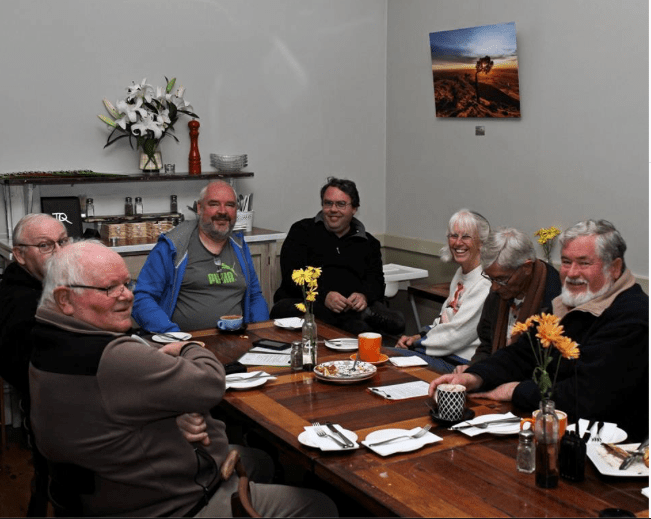
This morning (Wednesday 19th October 2016) I headed over to Stirling for a prearranged coffee morning with a number of other VK5 amateurs.  This was the second such morning that I have organised in recent times.  Its all about amateurs with an interest in operating portable, getting together for a chat.  We had breakfast and coffee at Tranquillo at Stirling.

Attendees were:-

  1. Tony VK5MRT
  2. Peter VK5PM
  3. Lesley VK5LOL
  4. Hans VK5YX
  5. Grant VK5GR
  6. Rob VK5FRSM
  7. Rod VK5VRB

Screen Shot 2016-10-19 at 8.44.22 PM.png

A proposed new National Park in SA

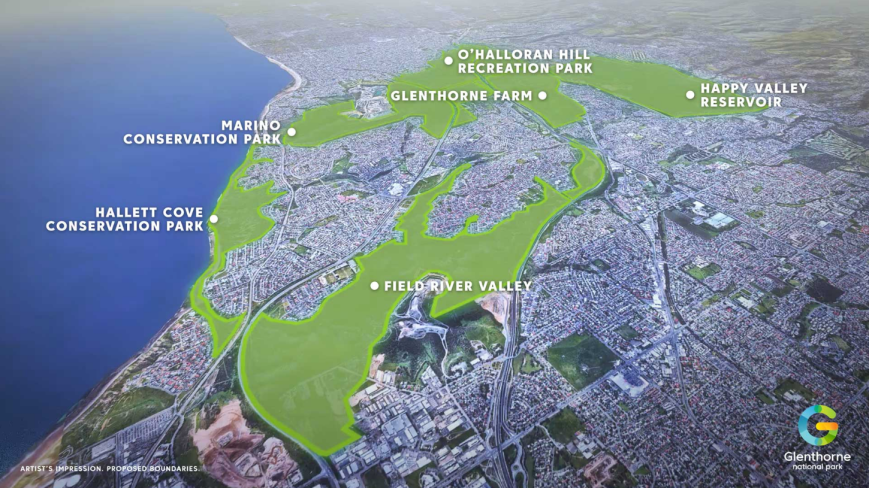
Over the weekend my wife Marija came across a story re a proposed new National Park for South Australia.  South Australian Opposition Leader Steven Marshall has anncounced an election commitment to create a 1500 hectare National Park called Glenthorne, in the southern suburbs of Adelaide.

Screen Shot 2016-10-17 at 5.18.36 pm.png

If Glenthorne was to be established, it would be Adelaide’s second metropolitan National Park.  The National Park would include: Glenthorne Farm; O’Halloran Hill Recreation Park; Marino Conservation Park; Hallett Cove Conservation Park; Happy Valley Reservoir and the Field River valley. This is a total area of more than 1,500 hectares, which is bigger than Belair National Park.

More information can be found at……

http://www.glenthorne.com.au/

2016 VKFF Team Championship and Monarto CP VKFF-0828

Today (Sunday 16th October 2016) was the inaugural VKFF Team Championship.   The idea of the Team Championship is to create a team of 2-4 people and head out into a park which qualifies for the World Wide Flora Fauna (WWFF) program, and make as many contacts as possible between 0000 UTC-0600 UTC.

This year the following teams took part:

  • The Odd Couple‘ – Julie VK3FOWL and Joe VK3YSP
  • ‘The Walkie Talkies‘ – Paul VK5PAS & Marija VK5FMAZ
  • Team Pezo‘ – Peter VK5PET and Steve VK5ZEO
  • The Mad Mix‘ – Mike VK6MB, Nick VK6FSEA and Jarrad VK6FFAR
  • Team Kookaburra‘ – Mick VK3PMG and Tony VK3XV
  • ‘Tassie Devils’ – Jonathan VK6JON/7 and Helen VK7FOLK
  • ‘Special K’s’ – Les VK5KLV and Peter VK5KPR
  • ‘The Irresistibles’ – Gary VK1ZZ and John VK4VHY

I also wish to thank a number of sponsors who offered prizes and money towards the event.  They included:

  • Pages of Cobram
  • SOTABeams
  • and a few amateurs who provided money towards trophies who wished to remain anonymous.

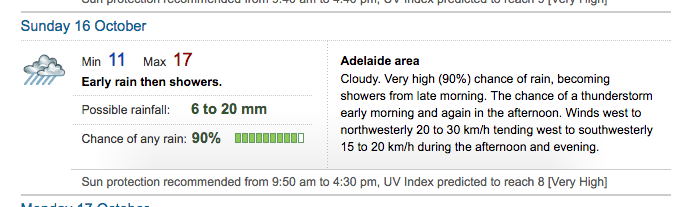
The weather in Adelaide on Friday and Saturday had been nice and sunny, but sure enough, the cold front moved in on Saturday night, and by Sunday morning there were persistent showers.

screen-shot-2016-10-15-at-12-20-22-pm

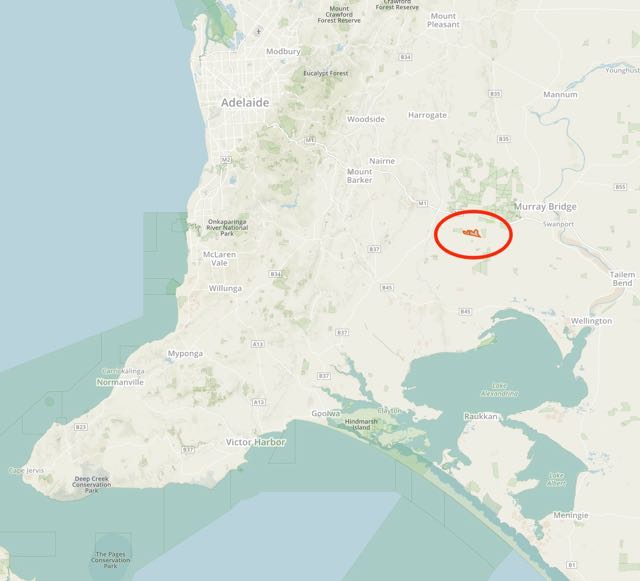
Marija and I were aware that the weather was going to turn nasty, so we had chosen to activate Monarto Conservation Park (CP) VKFF-0828, as it is on the eastern side of the Mount Lofty Ranges (Adelaide Hills), and we suspected there might be less shower activity there.  Monarto CP is about 30 km east of our home QTH in the Adelaide Hills, and around 60 km east of Adelaide.

Screen Shot 2016-10-10 at 11.24.01 am.jpg

Above:- Map showing the location of the Monarto Conservation Park east of Adelaide.  Map courtesy of Protected Planet.

Monarto Conservation Park was established on 15th September 1983 and is 240 hectares in size.  Prior to being gazetted as a Conservation Park, Monarto was known as Braendler’s Scrub.  The consists of thick mallee woodland and dry heathland and is one of the few pieces of remnant Mallee vegetation close to Adelaide.  The park comprises sand ridges forming part of the Murray Plains.  The park is home to the endangered Mallee fowl, along with a variety of other wildlife including the Western Grey Kangaroo, and at least two species of Marsupial Mouse.  There are also numerous bat species.  More than 100 species of birds have been documented in the park.

screen-shot-2016-10-10-at-11-23-50-am

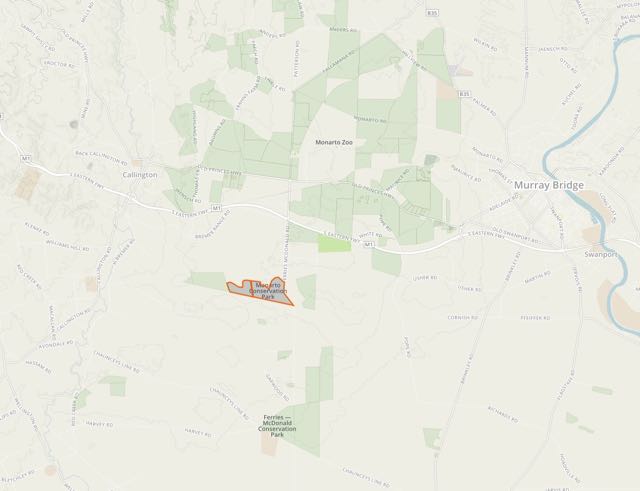
Above:- Map showing the location of the park with respect to Murray Bridge, the Murray River, the Monarto Zoo, & the Ferries McDonald Conservation Park.  Map courtesy of Protected Planet.

The nearby ‘town’ of Monarto was once earmarked as a satellite city to Adelaide, by the then Premier, Don Dunstan, back in the 1970’s.  However for a variety of reasons this never eventuated.  Today Monarto is a farming district, and it is adjacent to the main Adelaide-Melbourne railway line.  You can easily see the silos at Monarto from the park.  Bi W also has a large distribution centre at Monarto.

I found the  promotional video below for the new city, dating back to the 1970’s.  It’s very interesting to watch to see what was planned.

The locality of Monarto was originally a private subdivision of section 210 of the Hundred of Monarto, from which it took its name, the hundred having been gazetted in 1847.  The name of the undred was after an aboriginal woman known as ‘Queen Monarto’ who lived in the area at the time of its proclomation.  The township was laid out in 1908.

dsc_3139

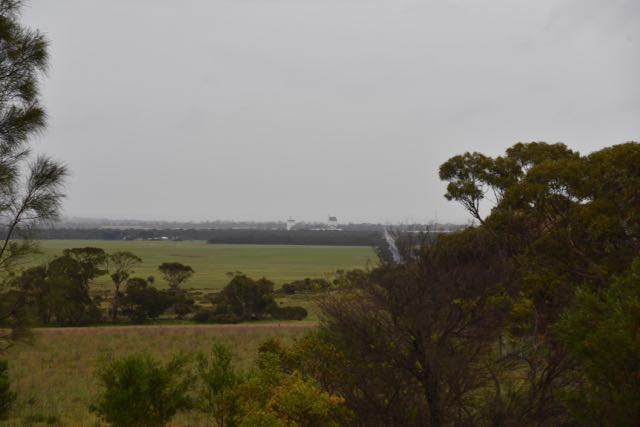
Above:- A view of Monarto from the northern side of the park.

The Monarto Zoological Park is located nearby and this comprised a 1,500 hectare (3,700 acre) open range zoo.  It is in fact the largest open plains zoo in the southern hemisphere and features a variety of animals including cheetah, rhinoceros, giraffe, chimpanzee, Meerkat, and Zebra.

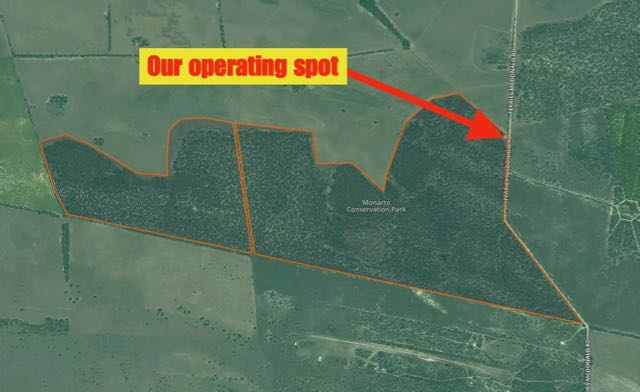
We headed to our normal operating spot, the north eastern corner of the park, where this is a carpark.  As it was a wet and windy morning we positioned the Toyota Hi Lux so it was facing north-south with the awning facing the west, away from the incoming rain and wind.  For the activation we ran the Yaesu FT-857d, 10 watts, and a 40m/20m linked dipole (although we only used 40m).

Screen Shot 2016-10-10 at 11.25.29 am.jpg

Above:- Aerial shot of the park showing our operating position in the north eastern corner of the park.  Image courtesy of Protected Planet.

This is the only access point to the park.  The southern, northern and western sides of the park adjoin cleared farming land.  Although there is no sign on the road advising you of the existence of the park, there is a park sign at the entry point.

The weather at the start of the activation was terrible, and as a result we could not operate from outside of the vehicle.  The rain was just too constant and too heavy.  So the first hour was spent in the drivers seat of the Toyota Hi Lux, with the Yaesu FT-857d on the front passenger seat.

I started off the activation and logged 10 contacts, with the first QSO being with Steve VK5ZEO at the Mount Magnificent Conservation Park, VKFF-0916.  Steve was with Peter VK5PET and they were taking part in the Team Championship as Team Pezo.  My sixth contact was with VK3CUB, taking part in the Jamboree on the Air (JOTA), and I had a good chat with cubs, Byron and Ben.

After logging the first 10 QSOs, Marija then took control of the mic and Marija’s first contact was with Les VK5KLV who was operating portable in the Upper Spencer Gulf Marine Park VKFF-1757.  This was followed by Peter VK5KPR who was operating with Les as Team Special K’s.  Marija logged a total of 33 stations before we swapped ‘drivers’ again.

Marija’s contacts included 7 Park to Park contacts and one SOTA contact.  This included QSOs with Nick VK6FSEA/p and Jarrad VK6FFAR taking part in the championships as The Mad Mix in the Wellington National Park VKFF-0657, and Joe & Julie VK3SRC (VK3YSP & VK3FOWL) operating portable in the Churchill National Park VKFF-0621, as ‘The Odd Couple’.  Other portable contacts by Marija included Peter VK3YE who was operating from Chelsea Beach, Ian VK1DI/p at Bullen Range Nature Reserve VKFF-0984 and SOTA peak Bullen Range VK1/ AC-033, and Gerard VK2IO/p in the Tuggerah State Conservation Area VKFF-1383 (the first time this reference has been activated).

DSC_3141.jpg

The showers cleared and this gave us some time to erect the awning and I then took over the mic.  First up was regular park hunter Dennis VK2HHA, followed by Steve VK3FSPG and then Nick VK3ANL.  I then logged Jonathan VK7JON and his partner Helen who were in the Narawntapu National Park VKFF-0005 taking part in the Team Championship as the ‘Tassie Devils’.  This was followed by a call from VK5SAG, with Patrick VK5MPJ at the mic.  I had a chat with Scout Sam, and his sister Rachael.

Next up was Neil VK4HNS/p who was in the Crows Nest National Park VKFF-0121.  Although not very strong (5/3), Neil was perfectly readable as there was no man made noise on the band in the park.  Half a dozen QSOs later I spoke with Les VK5KLV and Peter VK5KPR in the Upper Spencer Gulf Marine Park VKFF-1757.  Before handing over the mic to Marija I also logged Ian VK1DI who was in the Bullen Range Nature Reserve VKFF-0984 & on SOTA peak Bullen Range VK1/ AC-033.  I was also called by Mick VK3GGG/VK3PMG and Tony VK3XV operating as ‘Team Kookaburra‘ in the Ararat Hills Regional Park VKFF-0958.  And it was also great to be able to speak with Gerard VK2IO in the Tuggerah State Conservation Area VKFF-1383.  I had heard Gerard speak with Marija earlier and I had heard this was a unique park, so I was very pleased when Gerard called.

After logging a total of 29 contacts it was time to hand the mic back to Marija, whilst I took the opportunity of having a walk through the park.  Marija’s first caller was Andrew VK1AD in Canberra, followed by Mike VK2IF, Col VK3LED, and then Tony VK3XV in the Ararat Hills Regional Park VKFF-0958.  A few QSOs later Marija was called by Mick VK3GGG/VK3PMG who was with Tony in the Ararat Hills Regional Park.

Marija logged a total of 23 stations and this included Park to Park contacts with Jonathan and Helen VK7FOLK in the Narawntapu National Park VKFF-0005.

I have been to Monarto CP a number of times previously but I had never walked the trail through the park, so this was a great opportunity of doing so whilst Marija was on air.

The park was alive with colour during our visit with many of the native plants in flower.

This slideshow requires JavaScript.

It was now 2.40 p.m. local time (0410 UTC) and we had a little under 2 hours to go before the closing time of 0600 UTC.  Marija took a break and I again called CQ on 7.095 and I logged a total of 22 stations from VK1, VK2, VK3, and VK7.  We swapped the mic again and Marija logged 9 stations including a SOTA contact with David VK2CDS who was portable on SOTA peak VK2/ HU-080.

It was now 4.00 p.m. local time (0530 UTC) and we now had just 30 minutes left in the championship.  I jumped back on the mic and logged 7 stations from VK2 and VK3, with Marija finishing up the last 10 minutes with a further 4 stations logged from VK3 and VK4.

It was the conclusion of a fun but very wet day, with a total of 138 contacts in the log. This included 23 Park to Park contacts. Marija made 70 contacts and I made 68 contacts.  So despite band conditions being quite poor at times, we were very happy.

I worked the following stations  on 40m SSB:-

  1. VK5ZEO/p (Mount Magnificent Conservation Park VKFF-0916)
  2. VK3SAY
  3. VK2VU
  4. VK3FLAK
  5. VK3FQSO
  6. VK3CUB
  7. VK3FRSM
  8. VK3FMPB
  9. VK3MCD
  10. VK3FRAB
  11. VK2HHA
  12. VK3FSPG
  13. VK3ANL
  14. VK7JON/p (Narawntapu National Park VKFF-0005)
  15. VK7FOLK/p (Narawntapu National Park VKFF-0005)
  16. VK5SAG
  17. VK4HNS/p (Crows Nest National Park VKFF-0121)
  18. VK7FMPR
  19. VK3PF
  20. VK4AAC/3
  21. VK5KLV/p (Upper Spencer Gulf Marine Park VKFF-1757)
  22. VK5KPR/p (Upper Spencer Gulf Marine Park VKFF-1757)
  23. VK5TT
  24. VK1DI/p (Bullen Range Nature Reserve VKFF-0984 & Bullen Range VK1/ AC-033)
  25. VK5SA
  26. VK3FCMC
  27. VK3PMG/p (Ararat Hills Regional Park VKFF-0958)
  28. VK3GGG/p (Ararat Hills Regional Park VKFF-0958)
  29. VK3AMX
  30. VK7NWT
  31. VK7QP
  32. VK1AT
  33. VK2FENG
  34. VK3XV/p (Ararat Hills Regional Park VKFF-0958)
  35. VK3NBL
  36. VK3SQ
  37. VK3AFW/m
  38. VK3FOTO/m
  39. VK2IO/p (Tuggerah State Conservation Area VKFF-1383)
  40. VK2GQR
  41. VK3QA
  42. VK1WX/2
  43. VK1WI
  44. VK1ACA
  45. VK3IRM
  46. VK3GRW
  47. VK2FJTA
  48. VK3MRH
  49. VK3OY
  50. VK3UH
  51. VK3CAH
  52. VK3FRJD
  53. VK7FRJG
  54. VK2FOUZ
  55. VK3PAT
  56. VK2YK
  57. VK2KYO
  58. VK3SL
  59. VK3ALA
  60. VK2PKT
  61. VK2LEE
  62. VK2GKA/p
  63. VK2GAZ
  64. VK3FADM
  65. VK3YB
  66. VK3CBV
  67. VK3YYR
  68. VK3FT

Marija worked the following stations on 40m SSB:-

  1. VK5KLV/p (Upper Spencer Gulf Marine Park VKFF-1757)
  2. VK5KPR/p (Upper Spencer Gulf Marine Park VKFF-1757)
  3. VK3UH
  4. VK3IRM
  5. VK3FRAB
  6. VK3FQSO
  7. VK6FSEA/p (Wellington National Park VKFF-0657)
  8. VK3SRA
  9. VK6FFAR/p (Wellington National Park VKFF-0657)
  10. VK3YE/p
  11. VK5ARC
  12. VK7QP
  13. VK3FLAK
  14. VK3XCO
  15. VK5FANA
  16. VK7FPRN
  17. VK3SQ
  18. VK5KR
  19. VK5YA
  20. VK2FENG
  21. VK4AAC/3
  22. VK1MA
  23. VK2YK
  24. VK7FRJG
  25. VK5MBD
  26. VK3SIM
  27. VK3SRC (Churchill National Park VKFF-0621)
  28. VK3FOWL/p (Churchill National Park VKFF-0621)
  29. VK1DI/p (Bullen Range Nature Reserve VKFF-0984 & Bullen Range VK1/ AC-033)
  30. VK2IO/p (Tuggerah State Conservation Area VKFF-1383)
  31. VK3HY/m
  32. VK5CZ
  33. VK2KYO
  34. VK3FSPG
  35. VK1AD
  36. VK1NAM
  37. VK2IG
  38. VK3LED
  39. VK3XV/p (Ararat Hills Regional Park VKFF-0958)
  40. VK5LSB
  41. VK3KMH
  42. VK3PMG/p (Ararat Hills Regional Park VKFF-0958)
  43. VK3GGG/p (Ararat Hills Regional Park VKFF-0958)
  44. VK3FCMC
  45. VK3OHM
  46. VK2LX
  47. VK3KYF
  48. VK7CW
  49. VK3MRH
  50. VK5APV
  51. VK7JON/p (Narawntapu National Park VKFF-0005)
  52. VK3RU
  53. VK5WG
  54. VK3IRM
  55. VK3FEMY
  56. VK3ZLP/m
  57. VK7FOLK/p (Narawntapu National Park VKFF-0005)
  58. VK3LHB
  59. VK2CDS/p (SOTA VK2/ HU-080)
  60. VK2UH
  61. VK5FRSM
  62. VK3PF
  63. VK2FOUZ
  64. VK3PAT
  65. VK2NNN
  66. VK3FADM
  67. VK3FT
  68. VK3FORD
  69. VK3ERW
  70. VK4MDZ

References.

Birds SA, 2016, <http://www.birdssa.asn.au/location/monarto-conservation-park/&gt;, viewed 16th October 2016

DX World Award

QRZ.com offer a number of different awards.  Each certificate costs around the @20.00 dollar mark for QRZ subscribers and $25.00 for non subscribers.  A few weeks ago I applied for the DX World Award which is issued for successfully making contact with at least one hundred different countries.

dx-world-award

Planned talks on the WIA

image_1_hires.jpg

Following on from our recent trip around South Australia, fellow WIA Director Andrew VK6AS and I have the following talks planned on current issues surrounding the Wireless Institute of Australia (WIA):

  • Perth, WA.
    • 2.30 p.m. Saturday 22nd October 2016
    • Bassendean Seniors & Community Centre, 50 Old Perth Road, Bassendean WA
  • Albury/Wodonga area
    • Monday 14th November 2016.
    • venue/time to be announced.
  • Frankston & Mornington Peninsula Amateur Radio Club (FAMPARC).
    • 2.00 p.m.  Tuesday 15th November 2016
    • FAMPARC clubrooms, located at the south side of the school grounds of Cornish College, Patterson Lakes/Bangholme, VIC
    • 12.30 p.m. BBQ (sponsored by Gippsland Gate Radio Electronics Club) followed by the talk.
  • Eastern & Mountain Districts Radio Club (EMDRC)
    • 8.00 p.m. Tuesday 15th November 2016
    • EMDRC clubrooms, located at 13a McCubbin Street, Burwood, VIC
    • 6.30 p.m. BBQ, followed by the talk
  • Geelong Amateur Radio Club
    • 10.30 a.m. Wednesday 16th November 2016
    • Geelong ARC clubrooms, Storrer Street, Geelong, VIC

We hope to get to other States, finances and time pending.

Loch Luna Game Reserve VKFF-1723

Day three of our trip was Thursday 13th October, 2016, and this involved a 265 km drive back to Adelaide from the Riverland.  Andrew and I were very pleased with the way our talks on the WIA were received in Mount Gambier and the Riverland.

screen-shot-2016-10-13-at-7-23-09-pm

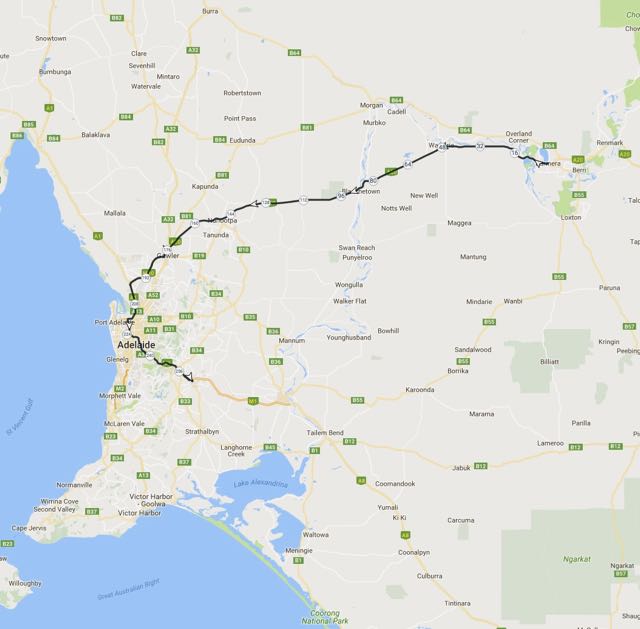
Above:- Map showing our route from Barmera in the Riverland, to Adelaide, and then back to Mount Barker for me.  Map courtesy of plotaroute.com

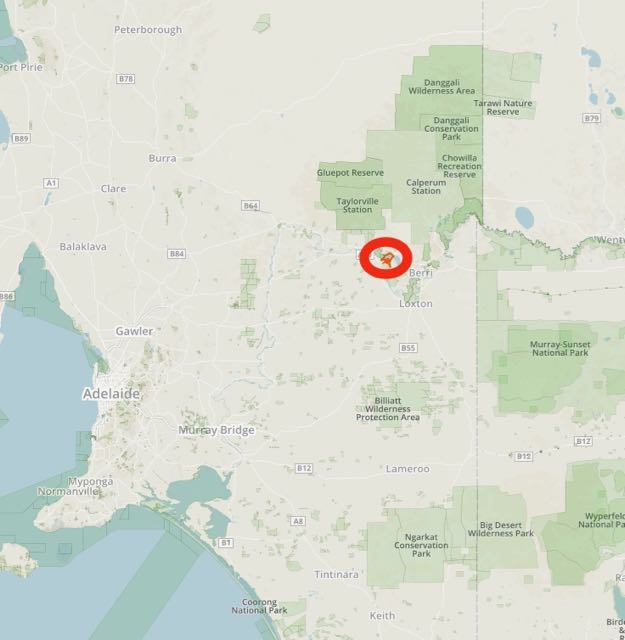
Andrew and I had planned to activate the Moorok Game Reserve, but as we drove along the Sturt Highway we saw the sign for the Loch Luna Game Reserve, and decided that Loch Luna would be our park for the morning.  Loch Luna Game Reserve VKFF-1723 is situated about 225 km north east of Adelaide and about 3 km west of Barmera.

screen-shot-2016-10-14-at-10-05-12-am

Above:- Map showing the location of the Loch Luna Game Reserve in the Riverland region of S.A.  Map courtesy of Protected Planet.

Loch Luna Game Reserve if about 2,059 hectares in size and comprises a range of water bodies including narrow creeks and shallow swamps.  This habitat provides an important habitat for numerous aquatic birds and native mammals.  The rare White Bellied Sea Eagle can be located in the park.

The park was proclaimed on the 7th November 1985 with exception to a parcel of land known as Sugarloaf Hill within the boundaries of the game reserve which has been excluded from protection for the purpose of mining activity.

The park is a game reserve and the hunting of waterfowl is allowed in the reserve, but only on declared days.

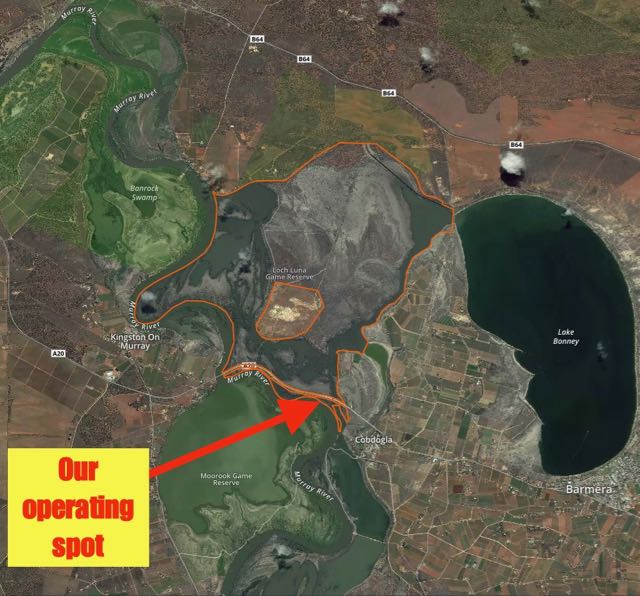
The main entrance to the reserve is near Nappers Bridge on the western side of Lake Bonney, about 10 kilometres from Barmera.  But Andrew and I headed to an area of the park called the Kaiser Strip.  It is a small section of the park, over the Kingston Bridge, opposite the town of Cobdogla.  We found a small cleared area alongside the Murray River, and it was here that we established the station which consisted of the Yaesu FT857d, 40 watts and the 20/40/80m linked dipole.

screen-shot-2016-10-14-at-10-02-34-am

Above:- Aerial shot of the park showing our operating spot.  Image courtesy of Protected Planet.

I started off on 40m and started calling CQ on 7.144.  It was incredibly slow going.  Not surprising as we had not advertised on parksnpeaks our intentions.  But eventually I had a responder to my CQ calls.  My first contact was with Trent VK7HRS, followed by Kevin VK3CKL, and then Peter VK3PF.  Once I had my 10 contacts in the log I handed the mic to Andrew.

Directly opposite us on the other side of the river was the nest of a Whistling Kite, high atop a dead gum tree on the edge of the river.  Whistling Kites are a medium sized raptor bird of prey.  During our activating we were rewarded with the call of the birds which is a clear descending whistle which is often followed by a rapid series of rising notes.

I took the opportunity of photographing some other birds I observed in the park, whislt Andrew was on air.  They included Crimson Rosellas, WHite Plumed Honeyeaters, Pelicans, Spoonbills, and Cormorants.

Other than 40m, Andrew put out a number of calls on 80m but we had no takers.  During our activation the local ranger arrived and we had a quick chat about amateur radio.  He advised that he had found amateurs in parks previously in the Riverland region, and he was aware of the parks program.

It was time to pack up and get back into Adelaide, and drop Andrew off at the airport.  I will go back to this park in the near future to pick up the remaining contacts to add towards the 44 required QSOs to qualify the park.

Thanks to Mick VK3GGG, Col VK5HCF, and Peter VK3PF for spotting us on parksnpeaks.

I worked the following stations on 40m SSB:-

  1. VK7HRS
  2. VK3CKL
  3. VK3PF
  4. VK3GGG
  5. VK3PMG
  6. VK1DI
  7. VK7CW
  8. VK5EE
  9. VK2CPR/m
  10. VK3VEF


References.

Department for Environment and Heritage, 2009, ‘Parks of the Riverland’

Wikipedia, 2016, <https://en.wikipedia.org/wiki/Loch_Luna_Game_Reserve&gt;, viewed 14th October 2016