Kenneth Stirling Conservation Park, VKFF-781

On Sunday 4th April 2015, I headed out to the Kenneth Stirling Conservation Park, which is located in the Mount Lofty Ranges ‘Adelaide Hills’, east of Adelaide.  Kenneth Stirling CP is one of the newly added parks to the World Wide Flora Fauna (WWFF) program– VKFF-781.  Although I have activated this park many times previously for the VK5 Parks award, this was the first time I would activate the park for the WWFF program.
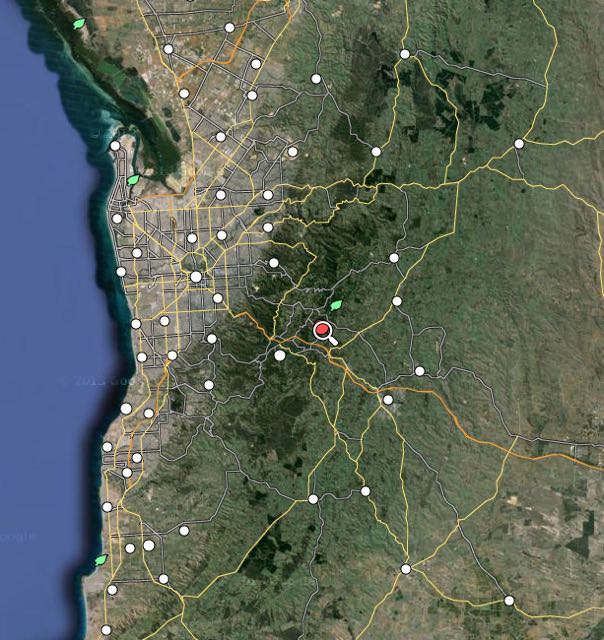
Screenshot 2015-04-09 13.22.21

Above: Map showing the location of the Kenneth Stirling CP.  Map courtesy of mapcarta.com

This is a very interesting park. Not only because it consists of four completely autonomous sections, but also due to its history.

The park consists of four separate sections:-

  1. Wotton Scrub
  2. Filsell Hill
  3. White Scrub
  4. Burdett Scrub

I have spoken with Bill Filsell from Filsell’s Apples, which has been a family business operated since 1903. The Filsell Hill section is named after the Filsell family.

However, the park in its entirety was named in honour of Kenneth George Stirling.

Untitled

image courtesy of Graham Churchett

So who was Kenneth ‘Ken’ George Stirling? Well I have been fortunate enough to get in contact with a gentleman called Graham Churchett, who knew Ken, and this is what Graham had to say…..

The Environment Committee was a sub committee of the Town and Country Planning Association composed of the following:

Ron Caldicot, Dr John Coulter, David Strahle, Alwin Clements, Ray Holliday, Miss Erdley, Dr Peter Guldhurst, Ken Stirling, Ralph Middenway, Elise and Gordon Gardner and myself.

This committee was active across a broad spectrum of planning and environmental issues but it was not until money was given anonymously to the committee, and we employed Ron Caldicot as a Project Director, that some monumental changes occurred.

At the time the State Planning Authority was headed by Stewart Heart and sitting on the authority were developers and others who naturally pushed through every approval to further line their pockets at the expense of the environment and common good. The committee pressured the government and Ron was appointed to the Authority and in a short time the rules were changed to exclude those with vested interests. 

With the help of the Natural History Society we brought about the protection of the wedge tail eagle, and Improved planning laws.

In May 1980 tragedy occurred. David Strahle, a gentle, dedicated man and one who worked for a better world suddenly died due to a massive heart attack. We were all stunned, he was only in his 45th year.

In 1973 we were again shocked when Ken Stirling died from a heart attack when jogging by the uni bridge.  He was only 38.

Ken, and all of us for that matter, were appalled at the scarring taking place in the north Flinders by EX Oil and Ken knew more of what was going on as he was employed by two of Australia’s largest mining companies before joining Poseidon’s associate, Samin Ltd, in 1969.

 It was when Poseidon shares  went through the roof that Ken became a millionaire  and  in 1972 Ken resigned from the mining industry and sought a position in the Public Service with the Department for the Environment. A series of applications were rebuffed and some were not even answered and he was bitter at this.

While waiting for something to turn up he gave unpaid service to the Birdwood Mill Museum.

 His benefactions were not known to the Public service and his intense interest in conservation not realised.

 Those who examined his application may have noted with disapproval his association with the mining industry. The irony of it is that but for the mining boom, the entire conservation cause in South Australia would not have prospered without Ken’s personal service and financial help.

It was only after his death we found out that Ken had given money to a variety of organisations and in particular, for Ron’s full time employment as a director, $100.000 was given to set up Radio 5UV University radio employing Keith Conlon. $50,000 was given to State Archives, $200,000 to the Australian Conservation Foundation for the acquisition and establishment of a national park. This park is now rightly known as the Kenneth Stirling Conservation Park.

 Through Ron we achieved so much and it was then that I came to the earnest belief that if the conservation movement was to make any meaningful headway in this cockeyed world, we had to employ key people full time.

I was privileged to have known Ron, David and Ken as friends, all be it that our time together with regard to David and Ken was short. I was saddened to hear the other day that Ron, a man I knew with a mind as sharp as a tack and a gentle manner but one who would stand his ground with great conviction, was now in a home suffering severe dementure.

What can I say other than they are fondly remembered.

Below is part of what the Advertiser columnist, Stewart Cockburn said of Ken Stirling upon his death…..

Ken Stirling was the son of a railway man. He wanted to be a boundary rider on an outback station and, for a while, he became a multimillionaire. He made his money in the mining boom, and gave most of it away. Only since he died, have the benefactions of this humble, intensely private man become known outside his family and a small circle of friends and associates.

I set up in the Wotton Scrub section of the park and ran my Yaesu FT857d and the 40m/20m linked dipole, supported by my 7 metre telescopic squid pole.
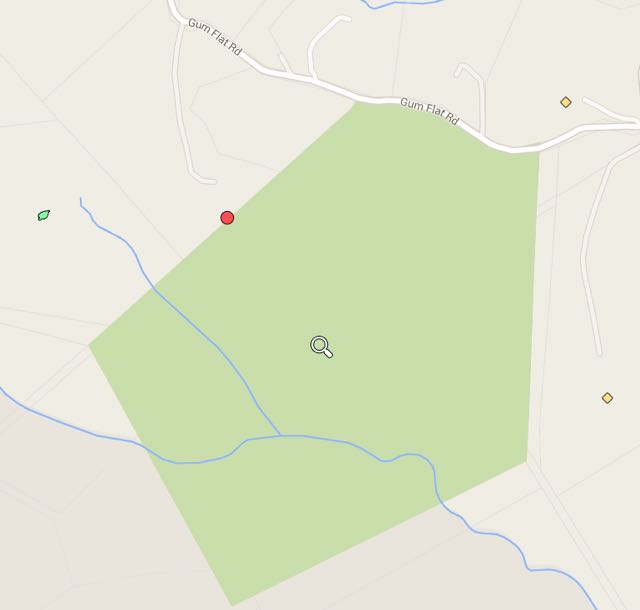
Screenshot 2015-04-09 13.21.48  Above: Map showing the border of the Wotton Scrub section of the park. Map courtesy of mapcarta.comScreenshot 2015-04-09 13.22.02

Above: The Wotton Scrub Section.  Image courtesy of mapcarta.com

This was one of the best activations I had experience for a while when it came to working DX.  I started off on 40m first and worked a total of 21 stations in VK3 and VK5.  My first contact was with Nick VK3ANL who was activating the Terrick Terrick National Park, VKFF-630.  Next up I spoke with Hans VK5YX who was portable at Wombaroo in the Murray Mallee.  I then propped on 7.144 and called CQ where my first taker was Nev VK5WG, followed by Richard VK5ZRY, and then Ben VK5BB.

When things slowed down on 40m I headed off to 20m.  Unfortunately I could not get on to 14.244 as there were some European stations working close by.  So I started calling CQ on 14.241 and this was answered by Gerard VK2IO.  What followed was a huge pile up from Europe, the UK & North Ameerica.  The first European caller was Danny ON4VT, followed by Luk ON4BB, Max IK1GPG and then Luciano I5FLN.  The secret to my success was that they spotted me on the DX cluster.

I went on to work a total of 135 stations on 20m in Belgium, Italy, Germany, Russia, France, Netherlands, Ukraine, Spain, Hungary, Slovenia, Slovak Republic, Romania, Poland, USA, England, Croatia, Latvia, Canary Islands, Switzerland, Poland, Portugal, Luxembourg, Belarus, Austria, Denmark, Alaska, and Finland.  Thankyou to everyone who spotted me on the DX Cluster.

This slideshow requires JavaScript.

My last contact on 20m SSB was with Bob VK3SX.  I then headed off to 40m where I called CQ on 7.144 and worked a further 14 stations in VK2, VK3, VK4 VK5 and VK6.  Thanks to Paul VK2HV for getting the ball rolling and spotting me on the DX Cluster.  And also to Rob VK4FFAB.

One of my contacts was with Adam VK2YK who informed me that V6Z in Micronesia was up the band a little and had a great signal.  So I was pretty eager to love off and try my luck.  But Iwas still taking calls from other VK’s so I patiently waited until things slowed down and then tuned up to 7.152 and heard V6Z coming in very well, working split.  But unfortunately by this time he had a large pile up from Japan, the USA, VK & ZL.  I just couldn’t break through.

So I had a tune around the band and found the 7.1653 group and Jim WB2REM.  I called in and worked Jim and five other USA stations.  My signal report ranged from 44 to 57.  Not bad considering I was running 40 watts and a tiny dipole.

I thought I would try my luck one last time with V6Z and this time my persistence paid off.  After about 3 minutes of calling I got through.  I was very happy as this was a new DXCC entity for me on 40m whilst operating portable.

The following stations were worked on 40m SSB:-

  1. VK3ANL/p (Terrick Terrick NP)
  2. VK5YX/p
  3. VK5WG
  4. VK5ZRY
  5. VK5BB
  6. VK3FDAP
  7. VK5KLV
  8. VK5FANA
  9. VK3JP
  10. VK5ALX
  11. VK3AX
  12. VK3PF/m
  13. VK3DAC
  14. VK3TKK
  15. VK5ZAR
  16. VK3VT
  17. VK3FSPG
  18. VK5LOL/p
  19. VK5AV
  20. VK3VIN
  21. VK3AV
  22. VK2HV
  23. VK2FDJO
  24. VK3PMG
  25. VK5FLEX
  26. VK3ETC/5
  27. VK3NRG
  28. VK2YK
  29. VK3GFS
  30. VK5KFB
  31. VK4FFAB
  32. VK5AAH
  33. VK6HRC/P
  34. VK4FAAS
  35. VK3HRA
  36. WB2REM
  37. AH6GE
  38. W1RQ
  39. N7MIT
  40. W6PXE
  41. N7SEP
  42. V6Z

The following stations were worked on 20m SSB:-

  1. VK2IO
  2. ON4VT
  3. ON4BB
  4. IK1GPG
  5. I5FLN
  6. VK2YK
  7. DK4RM
  8. IK0OPS
  9. DK8FS
  10. RA3PCI
  11. IK5ORP
  12. DK0EE
  13. F1BLL
  14. DL5EBG
  15. OP7M
  16. ON5JE
  17. PB5X
  18. IK8FIQ
  19. DJ8QP
  20. IK0BGA
  21. UT4EX
  22. EA3MP
  23. DL1EBR
  24. PA3GRM
  25. UW5ZM
  26. HA6NF
  27. EA4DTV
  28. IZ8DFO
  29. S52KM
  30. PA3WB
  31. DL2ND
  32. ON7YZ
  33. OM7OM
  34. F2YT
  35. UR7ET
  36. EA3NW
  37. RX9WN
  38. YO3JW
  39. EA1DR
  40. F5TA
  41. SP6KEP
  42. ON6UQ
  43. HA6OB
  44. UX2KA
  45. KK4TXZ
  46. ON5SWA
  47. IZ2EWR
  48. DL4PT
  49. EA7AK
  50. F5IDJ
  51. IZ5UGP
  52. G0RBD
  53. I3KAN
  54. DL7HU
  55. UA3NM
  56. M1CMR
  57. IZ3QHB
  58. IK8BPY
  59. IZ1GRH
  60. OK1APV
  61. S58AL
  62. 9A2HQ
  63. OM1AX
  64. RC5F
  65. DK8PJ
  66. M6GHM
  67. SP2MPO
  68. EA2KV
  69. UA6NT
  70. IZ5CML
  71. IK3WDI
  72. YL2TQ
  73. I1POR
  74. DL5XU
  75. EA8JK
  76. G3MWV
  77. EA4FZC
  78. HB9TSI
  79. F6BWA
  80. DL6ATM
  81. IZ2IHO
  82. SP8GEY
  83. IZ0PED
  84. IZ1PLH
  85. S58N
  86. CT1AGS
  87. DK2BS
  88. W4REX
  89. IZ1NBX
  90. VK3PF/p (VKFF-758)
  91. VK7NWT
  92. DF8NY
  93. HB9RDE
  94. M0HDX
  95. UA1AKJ
  96. RN3B
  97. UK2PKT
  98. IZ5IOS
  99. OK2BPU
  100. IT9ZVL
  101. S57S
  102. EA3HND
  103. PD1RK
  104. DL4EBC
  105. DG8DBW
  106. IZ1JMN
  107. IZ5YHD
  108. IW2NXI
  109. PD2AD
  110. SP2GWH
  111. IZ8EFD
  112. LX90IARU
  113. IZ8GCE
  114. F4GWG
  115. F6KOP
  116. EU2MM
  117. UR8EW
  118. US2WU
  119. M0WYZ
  120. 9A3KS
  121. OH6RP
  122. IW2ETR
  123. CT1DQV
  124. DL1ASF
  125. F8PRD
  126. SP2ORL
  127. DJ1SD
  128. ON7LX
  129. EA3HSO
  130. EOE1DPS
  131. EA8OT
  132. OZ1W
  133. LX1IQ
  134. G1HPD
  135. DF1YQ
  136. VK2MCB
  137. KL2PM
  138. 2I0FLO
  139. M5AEC
  140. G0WKH
  141. VK3SX

Minlacowie Conservation Park

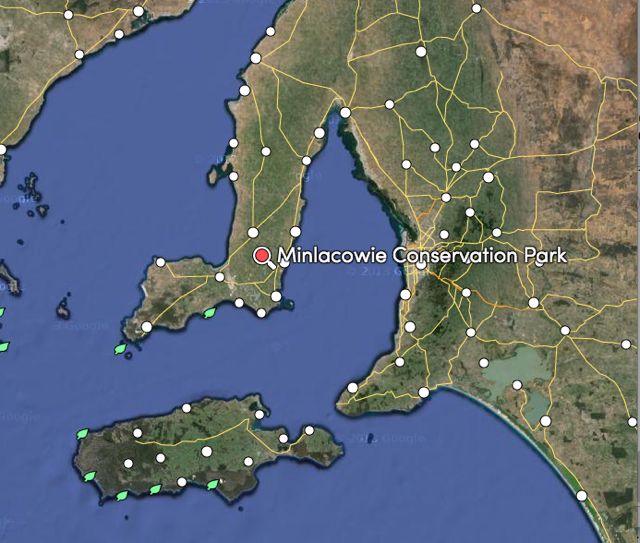
As we were heading home on Monday 30th March 2015, I managed to talk Marija into us detouring a little bit to activate the Minlacowie Conservation Park, which is located west of Stansbury, to the south east of Minlawton, and about 210 km by road from Adelaide.

Screenshot 2015-04-08 09.38.32

Above: The location of Minlacowie CP.  Map courtesy of mapcarta.com

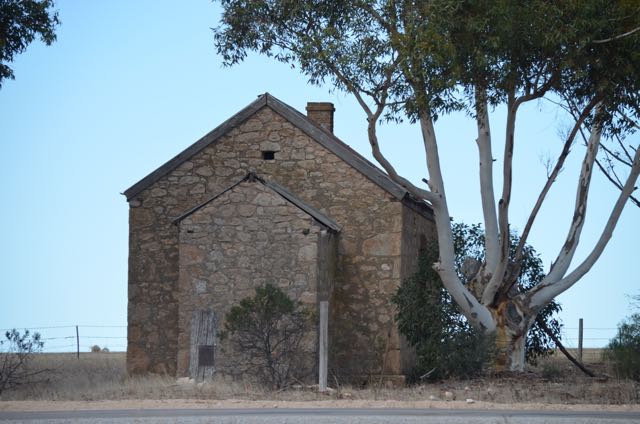
To get to the park we travelled down Rogers Road which runs off the Minlaton-Yorketown Road.  You will know that you are in the correct spot, because the old Minlacowie school is located at this intersection.  It is well worth stopping to have a look.

DSC_0484

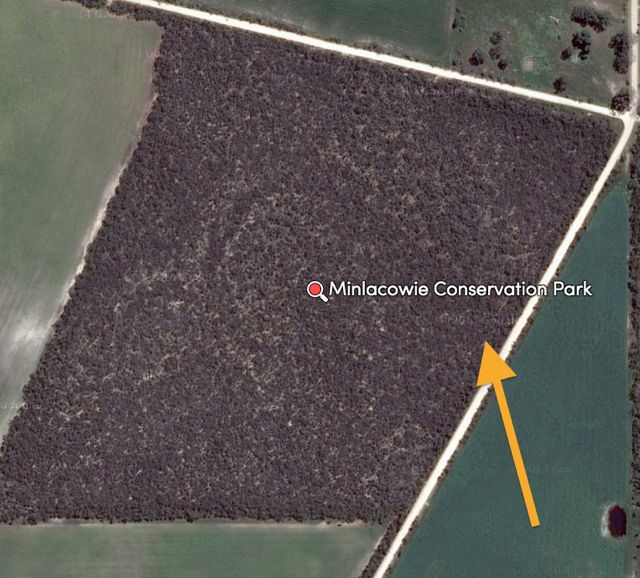
We set up just off Savage Hut Road.  There are not many options at this park.  There are no carparks and the scrub is extremely thick.  So your only option is operating along the fenceline either off Savage Hut Road or Rogers Road.

Screenshot 2015-04-08 09.36.49

Minlacowie Conservation Park (28.5 hectares; proclaimed in 2008) is located about 13 kilometres west of Stansbury. The park comprises a small patch of remnant mallee/broombush vegetation in very good condition, and conserves a number of significant plant species including the nationally and state vulnerable Winter Spider-orchid (Caladenia brumalis).

This was just a quick activation, whilst we had a late lunch.  My first taker on 7.095 after calling CQ was the ever reliable park hunter, Brian VK5FMID, followed by Wolf VK5WF, Geoff VK5HEL, and then Peter VK2DG.  I went on to work a further 16 stations in VK2, VK3, & VK5.

This included Hauke VK5HW who was mobile in the Barossa Valley, Steve VK3SRB/2 mobile between Albury and Gundagai in New South Wales, and Bob VK5AK who was mobile on Gorge Road at Cudlee Creek.

This slideshow requires JavaScript.

After 25 minutes in the park I had a total of 20 contacts in the log.  It was time to hit the road and continue our journey back home to Mount Barker in the Adelaide Hills.

The following stations were worked:-

  1. VK5FMID
  2. VK5WF
  3. VK5HEL
  4. VK2DG
  5. VK5WG
  6. VK5HCF
  7. VK5HW/m
  8. VK3VEF
  9. VK3SRB/2
  10. VK3FORD
  11. VK5GJ
  12. VK5ZRY
  13. VK5NQP
  14. VK5KLV
  15. VK5AK/m
  16. VK5EE
  17. VK3AS
  18. VK5FANA
  19. VK5LO
  20. VK3OF


References.

Department for Environment and Heritage, Management Plan Mainland Conservation Parks of Yorke Peninsula 2009

Innes National Park VKFF-243, Sunday night

After getting back from our activation at the Point Davenport Conservation Park on Sunday 29th March 2015, I set up directly outside the old Post Office at Inneston in the Innes National Park.  This was just a quick activation before dinner.

Unfortunately it was very noisy due to the ETSA power lines passing through the park to provide power for the acommodation.  But I boxed on and did make a total of 15 contacts including some very memorable QRP contacts.  They included Brian VK7ABY, Adrian VK5FANA, and Tom VK5FTRG.  But the most amazing contact was with Peter VK3YE who was true blue QRP at just 100 milliwatts.  Peter was an amazing 5/7 signal with this 100mw and his home brew transceiver.

This slideshow requires JavaScript.

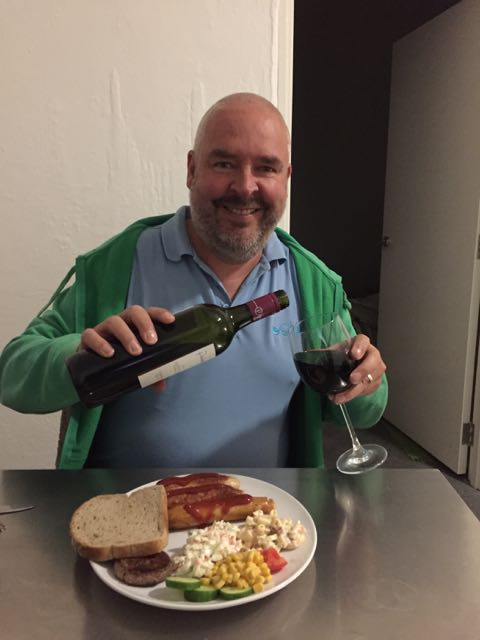
I packed up just as it was getting dark and headed inside for a beautiful meal cooked up by Marija and a nice bottle of red wine from the Clare Valley.

IMG_0990

The following stations were worked:-

  1. VK3FDI
  2. VK4FFAB
  3. VK7ABY
  4. VK7VKT
  5. VK2ALH
  6. VK4FLAA
  7. VK3MMX/p
  8. VK3YE (qrp 100mw)
  9. VK5FO/m
  10. VK3FSPG
  11. VK2SOL
  12. VK2FMIA
  13. VK2LKW/m
  14. VK5FANA (qrp)
  15. VK5FTRG (qrp)

Point Davenport Conservation Park

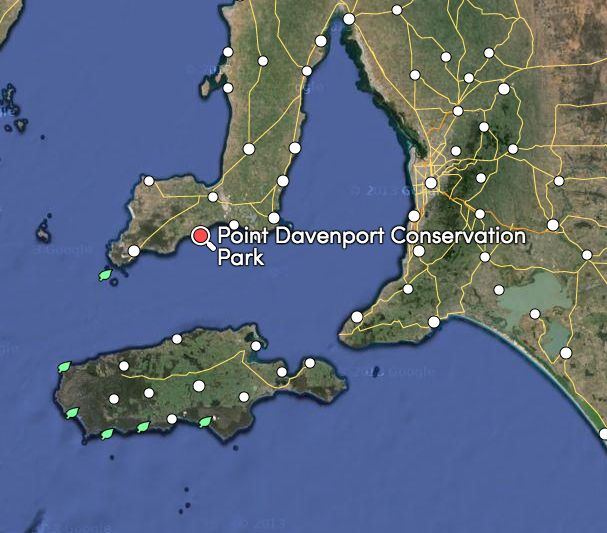
My third activation for Sunday 29th March 2015 was the Point Davenport Conservation Park, which is located south of Port Moorowie on the Yorke Peninsula, and about 250 km by road from Adelaide.

Screenshot 2015-04-08 09.31.50

Above: Location of the Point Davenport Conservation Park.  Map courtesy of mapcarta.com

This is not an easy park to access.  Unless you know exactly what you are looking for, it can be extremely frustrating as Marija and I experienced on Saturday.  But with the assistance of Richard VK5ZRY it was a piece of cake.  Fortunately we had permission to access the park via private property, which shortens the trip to the park dramatically.  Otherwise you will need to walk about 3 km along the beach following Sturt Bay.  Even if you do get permission to access the private property, do not even think about trying this in a 2WD.  You will not make it.  You will definitely get bogged, as this is a 4WD track only.

This slideshow requires JavaScript.

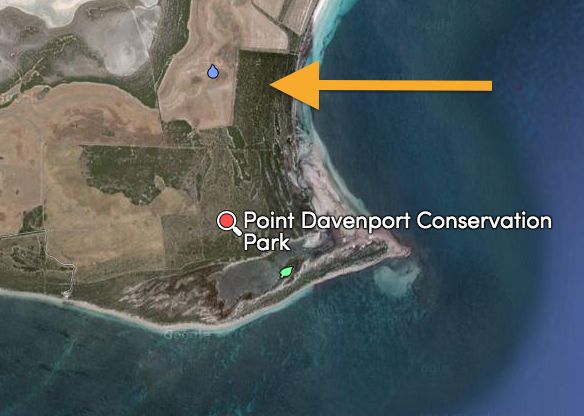
After entering through the farmers gate we followed a sandy and bumpy track down to a second gate and the start of the park.  We set up just over the fenceline and not far from the ocean (about 500 metres away).  For this activation we used my Yaesu FT-857d, 40 watts and the 40m/20m linked dipole supported on the 7m squid pole.

Screenshot 2015-04-08 09.31.33

Above: Map showing our operating spot.  Map courtesy of mapcarta.com

Point Davenport Conservation Park is 242 hectares in size and was gazetted in 1987.  It is located on a promontory that separates Foul Bay from Sturt Bay, mid-way along the southern coastline of Yorke Peninsula.  It is an area of high biodiversity with a range of habitats including beaches and foredunes, and an estuary that is listed as a nationally important wetland.  The park borders a swamp fringed by Paperbark Tea-trees.

Prior to calling CQ, Richard and I had a tune around the band.  I found Lesley VK5LOL on 7.095 activating the Hallett Cove Conservation Park.  But boy, what a pile up.  Trying to break through was very difficult.  But finally we did it, and had our first contact in the log, a park to park.

I then headed down to 7.090 and started calling CQ and this was answered by a multitude of callers.  So we asked for ‘park to park’ callers first and this resulted in me getting a park to park contact with Col VK5HCF and Tom VK5EE in the Glen Roy Conservation Park in the South East, followed by a park to park with Greg VK5GJ in the Stiptipurus Conservation Park on the Fleurieu Peninsula.  Richard and I handed back the mic to each other, each time a park to park caller gave us a shout.

I then asked for QRP stations and this resulted in some great QRP contacts including Tom VK5FTRG on 5 watts from Millicent, Adrian VK5FANA on 2 watts, and Amanda VK3FQSO on 100 milliwatts.

I always try to call for park to park contacts first, followed by QRP, other mobiles and portables, before I work the hoards of callers.  I know from experience that it can be quite a challenge breaking through the pileups when you are mobile or portable.

I then worked a few more park to park contacts.  This time with Keith VK5OQ in the Sandy Creek Conservation Park, followed by Matt VK5MLB activating the Montacute Conservation Park.

After working a total of 21 stations, Richard and I swapped over, and Richard jumped into the ‘driver’s seat’ and made multiple contacts.

This slideshow requires JavaScript.

While Richard was operating, we continued to swap the mic over, each time a park to park opportunity presented itself.  This resulted in me working a further 6 park activators.  The first was with Arno VK5ZAR activating the unique Fort Glanville Conservation Park, followed by Steve VK5SFA on the Woodforde Track in the Morialta Conservation Park.  Working Steve was a pleasant surprise, and he was not one of the activators on the activation spreadsheet.  I then spoke with Tony VK5ZAI in Jip Jip Rocks Conservation Park, then Andrew VK5MR in the Hopkins Creek Conservation Park running his little X1M QRP transceiver, and then Greg VK5ZGY in the Furner Conservation Park in the South East.

Richard then took a break and I worked a further 7 stations on 40m, including another park to park contact with Andrew VK5MR who had moved to the Red Banks Conservation Park.

Richard and I then decided we would have a crack at 20m hoping to get some of the VK6 fellas in the log.  My first contact there was with Con VK2KON, and then much to our surprise, I was called by DK4RM in Germany (5/9 sent and 5/7 received).  Next taker was Mike VK6MB, followed by Wil DL8MX and finally Adam VK2YK.

But time was marching on, and we decided to pack up and go for a walk down to the beach and view the Gulf St Vincent and the beautiful coastline of the lower Yorke Peninsula.  I had a total of 38 contacts in the log.

Many thanks to Richard for getting us in to Point Davenport.  It was great to meet Richard in person and do a couple of activations together including the rare Point Davenport CP.  This is only the second time this park has been activated.  It is difficult to find if you don’t know what to look for, and of course you need permission first to cross the farmer’s property.

After leaving Point Davenport, Marija I drove back to Inneston via the South Coast Road, stopping off a number of times to enjoy the spectacular views.

The following stations were worked on 40m SSB:-

  1. VK5LOL/p (Hallett Cove Conservation Park)
  2. VK5HCF/p (Glen Roy Conservation Park)
  3. VK5EE/p (Glen Roy Conservation Park)
  4. VK3OF
  5. VK5GJ/p (Stiptipurus Conservation Park)
  6. VK5FTRG
  7. VK5FANA
  8. VK3FQSO
  9. VK5OQ/p (Sandy Creek Conservation Park)
  10. VK5MLB/p (Montacute Conservation Park)
  11. VK3ARR
  12. VK5JK
  13. VK5LSB
  14. VK3PF
  15. VK3PMG
  16. VK2YK
  17. VK5FMID
  18. VK5BJE
  19. VK3DAC
  20. VK5NIG
  21. VK3JP
  22. VK5ZAR/p (Fort Glanville Conservation Park)
  23. VK5SFA/p (Morialta Conservation Park)
  24. VK5ZAI/p (Jip Jip Rocks Conservation Park)
  25. VK5MR/p (Hopkins Creek Conservation Park)
  26. VK5ZGY/p (Furner Conservation Park)
  27. VK5KLV
  28. VK5NQP
  29. VK5FCHM
  30. VK5MR/p (Red Banks Conservation Park)
  31. VK5FGAZ
  32. VK5FO/m
  33. VK4SD/2

The following stations were worked on 20m SSB:-

  1. VK2KON
  2. DK4RM
  3. VK6MB
  4. DL8MX
  5. VK2YK


References.

Department for Environment and Heritage, Management Plan Mainland Conservation Parks of Yorke Peninsula 2009

Warrenben Conservation Park, VKFF-818

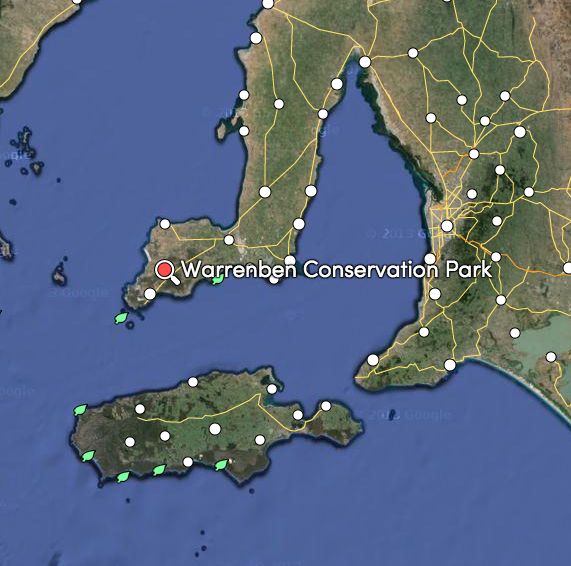
Our second activation for Sunday (29th March 2015) was the Warrenben Conservation Park, which is located about 260 km by road from Adelaide.

Screenshot 2015-04-08 09.27.24

Above: Location of Warrenben CP.  Map courtesy of mapcarta.com

This was another park that Marija and I had visited and activated during the 6 month anniversary of the VK5 Parks Award.  For information on the park and details of that activation, including a video, please have a look at…..

https://vk5pas.org/2013/10/21/warrenben-conservation-park/

After leaving Leven Beach we headed south along the Hundred Line Road, and then turned right onto Ilfracombe Road.  We set up in the scrub off Ilfracombe Road.  This is a very different park to Leven Beach.  Warrenben is very dry, rocky and typical mallee scrub.  Certainly not as picturesque as the beach setting at Leven Beach.

Screenshot 2015-04-08 09.27.13

Above: My operating spot.  Map courtesy of mapcarta.com

Warrenben Conservation Park is a large reserve comprising 4,065 hectares, which was gazetted in 1972.  Together with nearby Innes National Park, it conserves a substantial proportion of the natural habitat remaining on southern Yorke Peninsula.  The park comprises an area of undulating limestone plains and low, stabilised dunes that remain well vegetated with mallee and tea-tree scrub and some sheoak woodlands.  It provides habitat for a number of threatened species including the nationally and state vulnerable Annual Candles, state rare Goldsack’s Leek-orchid , and the nationally and state vulnerable Malleefowl and Western Whipbird.

Prior to calling CQ I had a look around the band and found Tony VK3VTH/5 calling CQ on 7.105 from the Flinders Ranges National Park in the Far North of South Australia.  Tony had a beautiful 5/9 and was my first contact from Warrenben.  I then found the dyamic duo from the South East, Tom VK5EE and Col VK5HCF on 7.100 in the Mary Seymour Conservation Park in the SOuth East.  Again, beautiful 5/9 signals all the way to the Yorke Peninsula.

I then headed off to 7.095 and started calling CQ and this was immediately answered by Arno VK5ZAR, followed by Adrian VK5FANA, and then Tony VK5ZAI who was portable in Jip Jip Rocks Conservation Park in the South East.  Following my contact with Tony I had another park to park contact, this time with Tom VK5FTRG who was activating the Gower Conservation Park.  And then a few contacts later I was called by Andrew VK5KET who was portable in the Calectasia Conservation Park.

I worked a further Richard arrived at the park.  Richard had taken a punt that we would set up, on Ilfracombe Road and he was right.  After our introductions and a chat, and a look at my portable set up, it was time for Richard to jump into the operating chair and make some contacts.  But not before Richard offered to take us to the Point Davenport Conservation Park after our activation here at Warrenben.  I jumped at this opportunity after our failed attempt of yesterday.

Whilst Richard was operating he was called by Peter VK5FLEX who at first was a little cryptic, but we eventually got it out of Peter that he was bogged in the Peebinga Conservation Park in the Mallee near the South Australian/Victorian border.  This is quite a remote location and Peter had no mobile phone coverage.  So for the next 90 minutes I made a number of phone calls on Peter’s behalf, with Richard relaying information back to Peter via the radio.  Finally, we secured the assistance of a mate of Peter, to head out to Peebinga and pull Peter out.  I am pleased to report that Peter was pulled out of his bog and made it home safely that night.  It proved the power of amateur radio when other forms of communication fail.

This slideshow requires JavaScript.

After we had helped out Peter, Richard continued on working some more stations, and then it was my time to hop back into the operating chair again.  I was hoping to get my 44 contacts for the World Wide Flora Fauna (WWFF) program, but the day was now getting on.  I worked a further 15 stations, including 1 SOTA activator, and four VK5 park to park contacts.

My first contact after jumping back on the mic was with Tony VK3CAT who was on SOTA peak, The Knobs, VK3/  VE-040.  My park to park contacts were with David VK5NQP portable in the Brookfield Conservation Park, Gordon VK5GY portable in the Kenneth Stirling Conservation Park, Tim VK3MTB portable in the Little Dip Conservation Park, and Peter VK5FLEX portable in the Peebinga Conservation Park.  Peter decided, ‘well why not get a park to park while I’m waiting to get pulled out’.

Unfortunately I did not reach the 44 contacts.  But I did get a total of 29 contacts in the log.  I will be revisiting Warrenben another day for the remaining 15 contacts to reach the 44.

Off to Point Davenport Conservation Park.  I was excited.

The following stations were worked:-

  1. VK3VTH/5 (Flinders Ranges National Park)
  2. VK5EE/p (Mary Seymour Conservation Park)
  3. VK5HCF/p (Mary Seymour Conservation Park)
  4. VK5ZAR
  5. VK5FANA
  6. VK5ZAI/p (Jip Jip Rocks Conservation Park)
  7. VK5FTRG/p (Gower Conservation Park)
  8. VK5TD
  9. VK5KET/p (Calectasia Conservation Park)
  10. VK3OF
  11. VK3DAC
  12. VK5BGN
  13. VK5SFA
  14. VK3PMG
  15. VK3CAT/p (SOTA The Knob)
  16. VK3PF
  17. VK5NQP/p (Brookfield Conservation Park)
  18. VK5NIG
  19. VK5KC
  20. VK5JK
  21. VK5LSB
  22. VK5GY/p (Kenneth Stirling Conservation Park)
  23. VK3AVm
  24. VK3MTB/5 (Little DIp Conservation Park)
  25. VK3TKK
  26. VK5FLEX/p (Peebinga Conservation Park)
  27. VK3HRA
  28. VK5BB/p

The following station was worked on 20m SSB:-

  1. VK6MB

References.

Department for Environment and Heritage, Management Plan Mainland Conservation Parks of Yorke Peninsula 2009

Leven Beach Conservation Park, VKFF-814

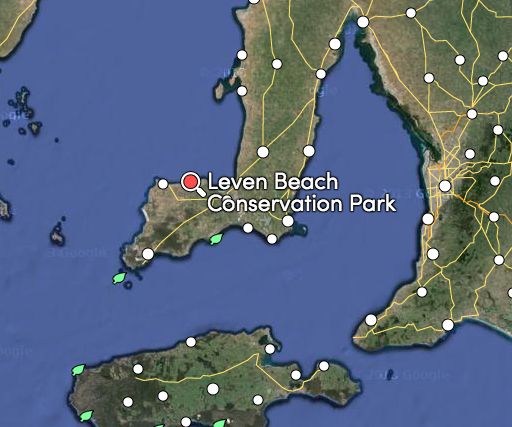
Our first activation for Sunday morning (29th March 2015) was the Leven Beach Conservation Park (CP), which is located just north of the little town of Corny Point on the Yorke Peninsula, and about 258 km by road from Adelaide.

Screenshot 2015-04-08 09.16.34

Above:- The location of Leven Beach CP.  Map courtesy of mapcarta.com

We last activated the Leven Beach CP back in 2013 for the 6 month anniversary of the VK5 Parks Award.  For full information on the park and details on that activation, please have a look at…..

https://vk5pas.org/2013/10/21/leven-beach-conservation-park/

Marija and I set up in the same spot as the previous activation which was at the end of Roe Road, on the beachfront.  Roe Road runs off the Corny Point Road and travels down passed the shacks to the beach.  At the end of Roe Road there is a carpark, with plenty of room to park.  You will clearly see the park on your right as you travel down Roe Road.

Screenshot 2015-04-08 09.16.21

Above:- Map showing my operating spot.  Map courtesy of mapcarta.com

The Leven Beach Conservation Park is 502 hectares in size and was proclaimed in 198.  It is a coastal reserve located on Hardwicke Bay, part of the northern coastline on the upper ‘foot’ of Yorke Peninsula.  It has a six kilometre beach frontage backed by low cliffs and a hinterland of undulating, vegetated dunes.  The park conserves sheoak woodland and provides habitat for a nationally endangered species of butterfly, the Yellowish Sedge-skipper Butterfly.

The operating gear for this activation was the Yaesu FT-857d, 40 watts and the 40m/20m linked dipole.  We set up the deck chair and the fold up table on the sand just in front of all the coastal vegetation from the park.  It was a beautiful morning weather wise.  The ocean (Spencer Gulf) was very flat and calm, and I sat back and watched a few fisherman taking their boats out into the water with their tractors, and heading off for a morning of fishing.

The Europeans were absolutely belting in on 40m with the CQ WW DX Contest, so it was quite difficult to find a clear spot on the 40m band.  Finally I found 7.092 clear and put out a CQ call and this was answered by Steve VK3NSC, followed by David VK5KC, John VK5BJE, and then Allen VK3HRA.

My first park to park contact was about 4 QSO’s later and it was with Peter VK5KX who was activating the Hogwash Bend Conservation Park in the Riverland (5/9 both ways).

My next contact was with Doug VK2FMIA who was portable in the Horton Falls National Park in New South Wales.  Doug had a nice 5/6 signal on the Yorke Peninusla.  Doug has an excellent WordPress site, which can be found at…..

http://vk2fmia.com/

It was pleasing to hear a steady flow of callers from VK1, VK2, VK3, VK5, and VK6.  And a few QRP callers as well including Peter VK3PF, and Peter VK3TKK.  I even managed to get Mike VK6MB in the log on 40m with a nice 5/8 signal (5/6 received).

While I was enjoying the sunshine and on air, Marija took a walk along the beach, and through the park, and had a chat with some of the locals.  I had one local approach me who was walking her dog on the beach, and was very curious as to what I was doing.

I also received a call from Yorke Peninsula local and regular park hunter, Richard VK5ZRY, and we arranged to meet at my next park, the Warrenben Conservation Park to do a joint activation.  I had spoken with Richard a number of times on the radio, but we had never met in person.  So I was looking forward to the ‘eyeball’.

This slideshow requires JavaScript.

My next park to park contact was with David VK5NQP who was portable in the Whites Dam Conservation Park in the Riverland (5/9 both ways), and then 2 QSOs later I also spoke with Chris VK4FR/5 who was portable on Kangaroo Island in the Kelly Hill Conservation Park (5/9 both ways).

I went on to work a total of 36 stations on 7.092 until things started to slow down, so I then had a quick tune around the band and found Andrew VK1NAM on SOTA peak Mount McDonald, VK1/ AC-048.

I then lowered the squid pole and took out the links and re-erected the squid pole and headed for 14.309 and started calling CQ.  This was answered by Mike VK6MB (5/8 both ways), followed by Adam VK2YK, and then Daniel VK6LCK.  But that was the end of callers, so I headed back to 40m.

My first contact upon returning to 40m was with Andy VK5AKH who was portable in the Coorong National Park on 7.098 (5/9 both ways).  I then found Andrew VK5KET on 7.092 calling CQ from the Penola Conservation Park in the South East (5/9 both ways).  And the park to park activity kept rolling on.  I next spoke with Greg VK5ZGY in the Kungari Conservation Park in the South East (5/9 both ways) on 7.085.

I put out a few CQ calls on 7.080 and was called by Tom VK5FTRG who was portable in the Gower Conservation Park in the South East (5/9 both ways).  A few QSOs later I was called by David VK5HDW who was portable in the Beachport Conservation Park in the South East.  There were certainly a lot of activators out and about in the South East of South Australia.  The SERG boys are certainly great supporters of the VK5 Parks Award.

My last contact from Leven Beach was with Chris VK4FR/5 who had now moved to the Mount Taylor Conservation Park on Kangaroo Island (5/9 both ways).

It was time to pack up and head off to the Warrenben Conservation Park and meet up with Richard VK5ZRY.

I had a total of 49 contacts in the log from Leven Beach Conservation Park.

The following stations were worked:-

  1. VK3NSC
  2. VK5KC
  3. VK5BJE
  4. VK3HRA
  5. VK5HCF
  6. VK5ZAR
  7. VK5FMID
  8. VK5KX/p (Hogwash Bend Conservation Park)
  9. VK2FMIA/p (Horton Falls National Park)
  10. VK3PF
  11. VK5FANA
  12. VK3MCX
  13. VK3FQSO
  14. VK6MB
  15. VK3PMG
  16. VK3DAC
  17. VK5ZRY
  18. VK5GY
  19. VK3TKK
  20. VK3FCOE
  21. VK2YK
  22. VK1DI
  23. VK5KLV
  24. VK2PKT
  25. VK5NQP/p (Whites Dam Conservation Park)
  26. VK5JK
  27. VK4FR/5 (Kelly Hill Conservation Park)
  28. VK3AFW
  29. VK5STU
  30. VK5MLB
  31. VK5LSB
  32. VK5TW
  33. VK5FDEC
  34. VK6KY/5
  35. VK5FJEN/m
  36. VK5AV
  37. VK1NAM/p (SOTA VK1/ AC-048)
  38. VK5AKH/p (Coorong National Park)
  39. VK5KET/p (Penola Conservation Park)
  40. VK5ZGY/p (Kungari Conservation Park)
  41. VK5FTRG/p (Gower Conservation Park)
  42. VK5HEL
  43. VK5NQP/p (Whites Dam Conservation Park)
  44. VK3VCE
  45. VK5HDW/p (Beachport Conservation Park)
  46. VK4FR/5 (Mount Taylor Conservation Park)

The following stations were worked on 20m SSB:-

  1. VK6MB
  2. VK2YK
  3. VK6LCK

References.

Department for Environment and Heritage, Management Plan Mainland Conservation Parks of Yorke Peninsula 2009

Innes National Park

From Carribie Conservation Park (afternoon of Saturday 28th March) we travelled in to the little town of Corny Point, where stopped to have lunch at the Howling Dog Tavern.  What a great name for a pub.  Marija and I had eaten here before, back in 2013, during out visit to the Yorke Peninsula for the 6 month anniversary of the VK5 Parks award.  The food is good.  And the Bundy was nice and cold.  We also did some running repairs on the Toyota Hi Lux.  One of the spot lights on the bullbar had come loose.  In fact I had lost the theft proof bolt holding it in place.  It had obviously not been tight enough and had jarred loose on the corrugated roads.

This slideshow requires JavaScript.

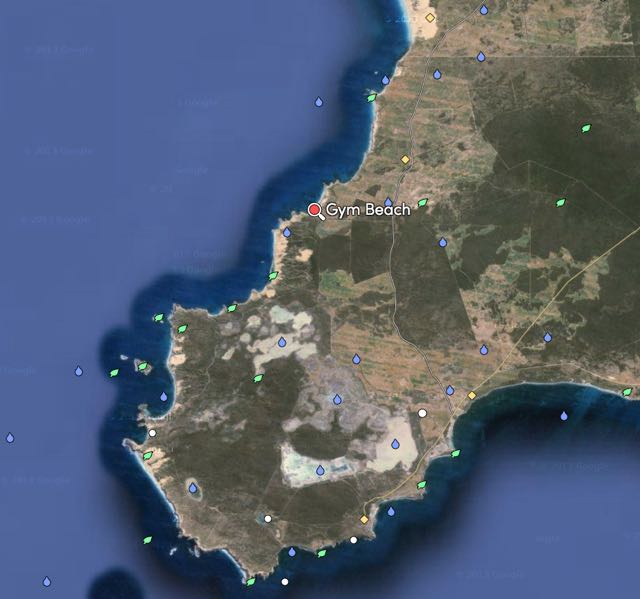
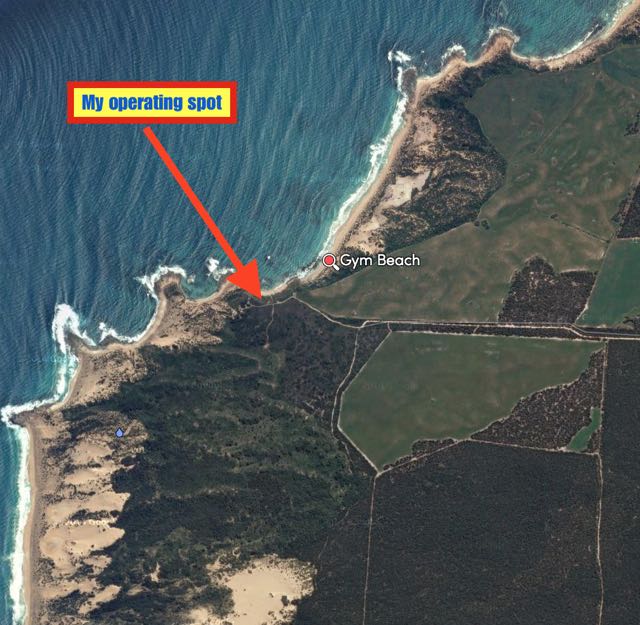
After lunch we took a scenic drive down to the Corny Point lighthouse and then followed the West Coast Road, stopping off regularly to view the coastline.  We highly recommend this detour.  The West Coast Road will take you all the way down to Point Annie.  From there we headed back inland along the Point Annie Road until we reached the Marion Bay Road and then travelled south.  A number of kms south, we turned right onto Browns Beach Road and headed down to Gym Beach.  The views here are truly amazing.  We travelled into the Innes National Park from here and found a little car park all to ourselves.  We set up the radio gear there, overlooking the ocean (the Spencer Gulf).

Screenshot 2015-04-07 11.35.14

Above: the location of Gym Beach on the north western side of the park.  Image courtesy of mapcarta.com

Screenshot 2015-04-07 11.35.00 Above: Our operating spot at Gym Beach, close to the ocean.  Image courtesy of mapcarta.com

Before calling CQ I had a look around the 40m band and found Andrew VK5MR calling CQ on 7.105 from the Caroona Creek Conservation Park in the Mid North.  Andrew was my first contact and my first park to park contact for this activation (5/9 both ways).  I then found Hans VK5YX operating portable from the Hallett Cove Conservation Park south of Adelaide (5/9 both ways), and then Richard VK5ZRY operating portable from the Minlacowie Conservation Park on the Yorke Peninsula (5/9 both ways).

I then went up to 7.120 and started calling CQ and this was answered by David VK5KC and Roy VK5NRG who were activating the Mark Oliphant Conservation Park in the Adelaide Hills (again 5/9 both ways).  This was followed by a contact with Mark VK5QI in the Coorong National Park.  A few QSOs later I was called by Nigel VK5NIG activating the Sandy Creek Conservation Park north of Adelaide in the Barossa, followed by Arno VK5ZAR in the Port Gawler Conservation Park, and then Greg VK5GJ and Norm VK5GI in the Mount Magnificent Conservation Park on the Fleurieu Peninsula.

But that wasn’t the end of the park to park action.  I then received a call from David VK5NQP in the Red Banks Conservation Park, followed by Tim VK3MTB/5 in the Naracoorte Caves National Park, and then Greg VK5ZGY in the Paranki Lagoon Conservation Park in the South East, Gary VK5FGRY in the Morialta Conservation Park in the Adelaide Hills, and then Peter VK5KX in the Hogwash bend Conservation Park in the Riverland.  All with 5/9 signals.  Wow, the park to park activity was great.

But wait, there’s more, as that guy who sold steak knives used to say.  I also worked Bill VK5MBD in the Clements Gap Conservation Park in the Mid North, Peter VK5FLEX in the Danggali Conservation Park in the Murray Mallee.

This slideshow requires JavaScript.

When the callers slowed down I took the opportunity of looking around the band and found Matt Vk1MA portable on SOTA peak VK2/ ST-006 (5/5 sent and 5/7 received).

I then lowered the squid pole and removed the links and headed off to 20m.  I started calling CQ on 14.346 and this was answered by Andy VK5AKH in the Coorong National Park.  And from there a steady flow of European park hunters called me from Italy, Spain, Hungary, Germany, Russia, Slovenia, France, Belgium, Slovak Republic, Austria, England, and the Czech Republic.  Thankyou to everyone that spotted me.  This clearly helped in the Europeans finding me.  I also received a call from Andrew VK1NAM amongst the European pile up.

I then headed back to 40m and called CQ on 7.115 and my first taker there was another park to park contact, Andrew VK5MR this time in the Mokota Conservation Park.  Soon after this was followed by another park to park, this time with Ian VK5CZ activating the Spring Gully Conservation Park up in the wine growing region of the Clare Valley.  A handful of QSO’s later, Arno VK5ZAR gave me a shout from the Port Gawler Conservation Park.

But perhaps the highlight of the activation for me, was a contact with Peter VK3YE who was operating true QRP, 100 milliwatts.  Peter’s signal was weak (5/3) as you would expect, but perfectly readable.  Amazing what you can do with QRP!

This was another successful activation, with a 72 contacts in the log on 40m and 20m SSB in 2 & 1/2 hours.

The following stations were worked:-

  1. VK5MR/p (Caroona Creek Conservation park)
  2. VK5YX/p (Hallett Cove Conservation Park)
  3. VK5ZRY/p (Minlacowie Conservation Park)
  4. VK5KC/p (Mark Oliphant Conservation Park)
  5. VK5NRG/p (Mark Oliphant Conservation Park)
  6. VK5QI/p (Coorong National Park)
  7. VK5BW
  8. VK5NIG/p (Sandy Creek Conservation Park)
  9. VK5ZAR/p (Port Gawler Conservation Park)
  10. VK5GJ/p (Mount Magnificent Conservation Park)
  11. VK5GI/p (Mount Magnificent Conservation Park)
  12. VK3ARR
  13. VK5NQP/p (Red Banks Conservation Park)
  14. VK3MTB/5 (Naracoorte Caves National Park)
  15. VK5ZGY/p (Paranki Lagoon Conservation Park)
  16. VK5FGRY/p (Morialta Conservation Park)
  17. VK5LSB
  18. VK5KX/p (Hogwash bend Conservation Park)
  19. VK5FPAC
  20. VK5FMJC
  21. VK5MBD/p (Clements Gap Conservation Park)
  22. VK5FMID
  23. VK5AV
  24. VK5BB
  25. VK5HEL/p
  26. VK5FLEX/p (Danggali Conservation Park)
  27. VK5BJE
  28. VK3OHM
  29. VK3PF
  30. VK3JP
  31. VK3PMG
  32. VK1MA/2 (SOTA VK2/ ST-006)
  33. VK5MR/p (Mokota Conservation Park)
  34. VK5FBFB
  35. VK5FANA
  36. VK5CZ/p (Spring Gully Conservation Park)
  37. VK5TD
  38. VK3TAL
  39. VK3AV
  40. VK5FUZZ
  41. VK5KPR
  42. VK5JDS
  43. VK5APR
  44. VK5ZAR/p (Port Gawler Conservation Park)
  45. VK3TKK
  46. VK5KX/p Hogwash Bend Conservation Park)
  47. VK3FLCS
  48. VK7FGGT
  49. VK7NWT
  50. VK3YE/p (qrp 100mw)
  51. VK2PKT

The following stations were worked on 20m SSB:-

  1. VK5AKH/p (Coorong National Park)
  2. IK1GPG
  3. EA2KV
  4. I5FLN
  5. VK1NAM
  6. HA6OB
  7. DL2ND
  8. DL1EBR
  9. RA3PCI
  10. S52KM
  11. F1BLL
  12. DL4PT
  13. EA3RP
  14. DL6NDW
  15. DK4RM
  16. ON7AB
  17. OM7OM
  18. OE3PRU
  19. G0RBD
  20. F2YT
  21. OK1ES


Carribie Conservation Park

On Saturday morning, 28th March, Marija and I awoke to the sounds of noisy galahs and a beautiful sunrise.  We cooked up a hot breakfast of bacon and eggs, and enjoyed a nice hot cup of coffee and sat outside on the verandah of the old Post Office at Inneston, taking in the view.  We then packed the 4WD and got on the road and headed for my first proposed activation of the day, Point Davenport Conservation Park.  However, everything went downhill from here.

This slideshow requires JavaScript.

We could not find the park.  In fact we drove around aimlessly for numerous hours trying to find our way in.  What we did find was that the GPS in the Toyota Hilux and the mapping system on our i-phones were unreliable.  Many roads were marked on the maps, but when we reached that particular location, no road existed.  Also, a number of the roads had totally different names on the actual road sign, to what appeared on the maps.  And many marked roads were obviously Government roads that were now either very poorly maintained dirt tracks that were fenced off, or totally covered in scrub.  The upshot was that we just could not get into Point Davenport.  The closest we got would have been a few kms, and we were not sure whether we would have to walk across private property, so we cancelled this activation.

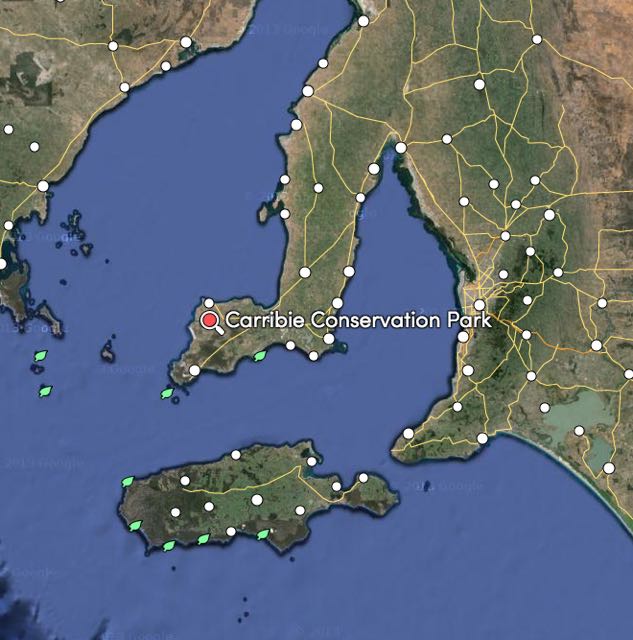
Instead we headed for my 2nd planned activation, the Caribbie Conservation Park, which is located south of Corny Point and about 266 km by road from Adelaide.  The park is 19.5 hectares in size and was gazetted in 1972.  It is located beneath the ‘toe’ of the Yorke Peninsula.  It contains a small area of remnant sheoak and mallee vegetation.  The park’s vegetation comprises of open scrub dominated by Coastal White Mallee and Red Mallee.  It has an understorey that includes Acacia and Correas.  Some sections of the park also contain Drooping Sheoak woodland.  There are 81 native plant species recorded from this park.  The only known species of conservation significance is the Western Dady-long-legs.  Carribie is native aboriginal meaning ’emu flat’.  And there are certainly plenty of emus down here at the bottom of the Yorke Peninsula.

Screenshot 2015-04-07 09.45.18

Map courtesy of mapcarta.com

Marija and I travelled along the Marion Bay Road and then turned right onto Gleesons Road.  The park was a few kms up on our right.  We set up just over the fenceline, just to the east of Rockleigh Road.  This is in the south western corner of the park.  The last time we activated the park we were set up in the south eastern corner of the park.

For more information on my initial activation back in 2013, please see…..

https://vk5pas.org/2013/10/21/carribie-conservation-park/

Screenshot 2015-04-07 09.45.46


Map courtesy of mapcarta.com

What was very pleasing about this particular activation was the lack of flies.  When we activated this park back in 2013, the bush flies were out in force and it was almost impossible to be out in the open without a head netting.  But this time around, they were few and far between I am pleased to report.

As per usual, for this activation I ran the Yaesu FT-857d, 40 watts and the 40m/20m linked dipole, supported on the top of my 7 metre telescopic squid pole.

Unlike the previous night’s activation at the Innes National Park, there was absolutely no noise at all on the band here in Carribie.  It was dead quiet.  I called CQ on 7.095 and this was immediately answered by Adrian VK5FANA who was portable on the western side of the Yorke Peninsula in the Bird Islands Conservation Park.  Not a bad start, a park to park contact.  This was followed by Tim VK5AV at Mount Gambier, and then another park to park contact, this time with Tom VK5FTRG who was portable in the Reedy Creek Conservation Park in the South East.  Signals were very good and the 40m band seemed to be in very good condition.

My next park to park contact was with David VK5NQP who was portable in the Mid North of South Australia in the Mokota Conservation Park (5/9 both ways).  This was immediately followed by another park to park contact, with Peter VK5PET operating portable in the Bullock Hill Conservation Park on the Fleurieu Peninsula, south of Adelaide (also 5/9 both ways).  And this was followed by a call from Arno VK5FO in the Angove Conservation Park in the north eastern suburbs of Adelaide (5/9 both ways), and then David VK5AAH portable in the Cleland Conservation Park in the Adelaide Hills.  David was also doing a Summits on the Air activation from Mount Lofty, VK5/ SE-005 (5/9 both ways).

This slideshow requires JavaScript.

A few QSO’s later I was called by Richard VK5ZRY who was portable in the Ramsay Way Conservation Park on the eastern side of the Yorke Peninsula (5/9 both ways as you would expect).

I had a steady flow of callers from VK3 and VK5, and I was then called by Tim VK3MTB who was portable in the Grampians National Park in western Victoria.  Tim was on his way to South Australia to activate some VK5 Parks for the anniversay weekend.  As was the case with the VK5 activators, Tim had a lovely 5/9 signal from the Grampians.

About half a dozen QSOs later, I had my eighth VK5 Park to Park contact in the log from Carribie.  This time it was with Greg VK5ZGY who was operating portable from the Martin Washpool Conservation Park in the Mallee (5/9 both ways).  And what an interesting history that park has.  It is named after Malachi Martin, who was convicted murderer.  For more information please see…..

https://vk5pas.org/2013/09/12/martin-washpool-conservation-park/

A few QSOs later I was called by Chris VK4FR/5 who was portable on Kangaroo Island in the Beyaria Conservation Park (5/9 both ways).

When things started to slow down a little, I took the opportunity of QSYing from 7.095 and tuning around the 40m band.  I found Tony VK3CAT calling CQ on 7.100 from SOTA peak Basalt Knob, VK3/ VE-074 (5/7 both ways).

I then propped on 7.090 and called CQ and this was answered by Mike VK6MMB (5/2 sent and 4/8 received).  This was my first VK6 park hunter for Carribie.  Mark VK5QI then called in from the Coorong National Park with a very strong 5/9 signal.  Next up was Matt VK1MA, my first VK1 hunter.  I went on to work a further 3 VK5 stations, before lowering the squid pole and removing the links in the dipole, so I could operate on 20m.

I put out numerous CQ calls on 14.314 but there were no takers.  I had no phone coverage so I was unable to spot myself on parksnpeaks.  But my CQ call was finally answered by Dane VK2LDF (5/9 both ways), followed by Wayne VK3XF and then Brian VK3BBB.  But this was the end of callers on 20m, so I headed back to 40m.

First up I worked Tom VK5FTRG who was portable in the Furner Conservation Park (5/9 both ways).  Tom was calling CQ on 7.090.  I then settled on 7.095 and called CQ and this was answered by Peter VK3TKK, followed by Nick VK3ANL, and then Mick VK3PMG.  Peter, Nick and Mick are all very active park activators and hunters.  I then bagged my 13th park to park contact, this time with David VK5NQP, who had now moved to the Caroona Creek Conservation Park in the Mid North of South Australia.

Again, when things slowed down, I cruised around the band and found David VK5HDW calling CQ on 7.060 with a very very big signal, from the Lake Frome Conservation Park in the South East.  David was certainly the strongest activator signal on the band.

I then went back to 7.095 and put out a few final CQ calls and worked a further 8 stations, including another two park to park contacts.  The first was with Tony VK5ZAI who was portable in the Mount Scott Conservation Park in the South East (5/9 both ways), and then Tony VK3VTH/5 who was portable in the Far North of South Australia in the Gammon Ranges National Park (5/9 sent and 5/7 received).  My last caller was Ron VK3JP, who is a regular park hunter.

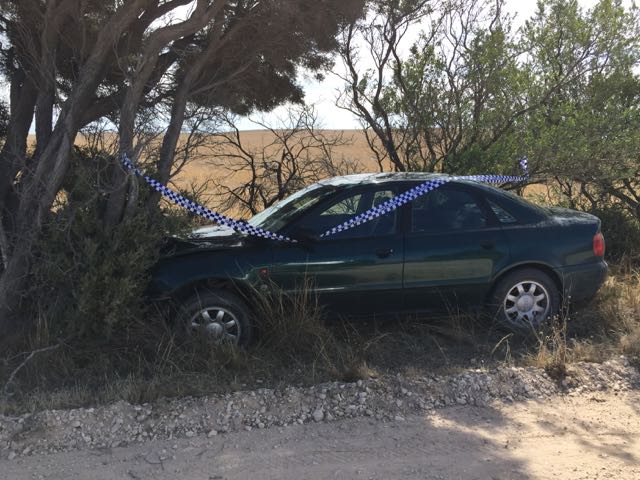
Whilst I was activating, one of the locals arrived at the scene.  He had seen our 4WD parked on the side of the road and wanted to check on our welfare.  But it was clear that this old fella also liked a chat.  Whilst I hid behind the radio, Marija spoke to this old timer for over an hour, even being introduced to his dog Molly on the back of the Ute.  And the local Constabulary also arrived.  They had a report of a crashed car a little further up the road, which we went to have a look at after we had packed up.

IMG_0949 So after about 2 and 1/2 hours in the park I had a total of 54 stations in the log.  It was time to pack up and head back to the Innes National Park.

The following stations were worked on 40m SSB:-

  1. VK5FANA/p (Bird Islands Conservation Park)
  2. VK5AV
  3. VK5FTRG/p (Reedy Creek Conservation Park)
  4. VK3AFW
  5. VK3FQSO
  6. VK5TN/m
  7. VK4FR/5
  8. VK5NQP/p (Mokota Conservation Park)
  9. VK5PET/p (Bullock Hill Conservation Park)
  10. VK5FO/p (Angove Conservation Park)
  11. VK5AAH/p (Cleland Conservation Park & SOTA VK5/ SE-005 Mt Lofty)
  12. VK3JAP/m
  13. VK5ZRY/p (Ramsay Way Conservation Park)
  14. VK5GJ
  15. VK3ARR
  16. VK3PF
  17. VK3OHM
  18. VK3MTB/p (Grampians National Park)
  19. VK5ZAR
  20. VK5FMID
  21. VK5JK
  22. VK5SFA
  23. VK5HEL
  24. VK5HCF
  25. VK5ZGY/p (Martin Washpool Conservation Park)
  26. VK3DAC
  27. VK3JP
  28. VK4FR/5
  29. VK3CAT/p (SOTA Basalt Knob VK3/ VE-074)
  30. VK6MMB
  31. VK5QI/p (Coorong National Park)
  32. VK1MA
  33. VK5FBFB
  34. VK5KAA
  35. VK5FMJC
  36. VK5FTRG/p (Furner Conservation Park)
  37. VK3TKK
  38. VK3ANL
  39. VK3PMG
  40. VK5NQP/p (Caroona Creek Conservation Park)
  41. VK5STU
  42. VK5TD
  43. VK5HDW/p (Lake Frome Conservation Park)
  44. VK5IS
  45. VK5MBD
  46. VK5FBUD
  47. VK5TR
  48. VK5ZAI/p (Mount Scott Conservation Park)
  49. VK5APR
  50. VK3VTH/5 (Gammon Ranges National Park)
  51. VK3JP

The following stations were worked on 20m SSB:-

  1. VK2LDF
  2. VK3XF
  3. VK3BBB


References.

Department for Environment and Heritage Management Plan, Mainland Conservation Parks of the Yorke Peninsula 2009


Innes National Park VKFF

My first park activation for the 2nd year anniversary was the Innes National Park, on Friday 27th March 2015.  Marija and I had a 315 km drive ahead of us from the Adelaide Hills down to the bottom of the Yorke Peninsula.  We initially drove through the bushfire devastated area of the Mount Lofty Ranges ‘Adelaide Hills’.  This is the area around Kersbrook which was severely affected by the bushfires back in January 2015, with 30 homes being destroyed.  We were very pleased to see a lot of regrowth with the scrub, but there is a long, long way to go.

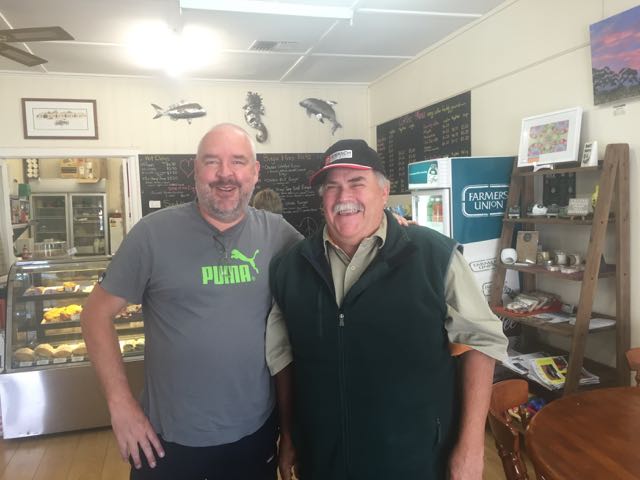
We continued north on to the little town of Ardrossan on the western side of the Yorke Peninsula.  Ardrossan is a beautiful little town of about 1,200 people, which faces the Gulf St Vincent.  Prior to arriving there, Marija and I had arranged to meet Adrian VK5FANA at the local cafe.  Adrian is a very keen park activator and hunter.  I had spoken with Adrian many times on air, but I had never met him in person.  So we headed for the ‘Stump Jump Cafe’ in the main street of Ardrossan.

IMG_0831

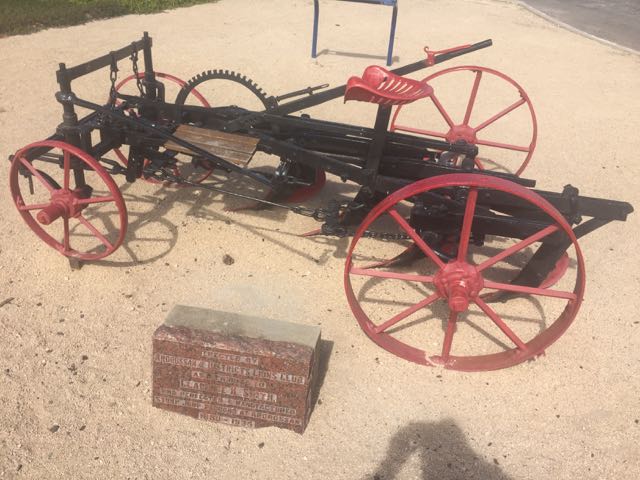
After having a coffee and a morning hotdog, and a chat with Adrian, we had a quick look around Ardrossan.  I mentioned the ‘Stump Jump Cafe’ above.  I hear you saying now, ‘what a strange name for a cafe’.  Well it was named after the stump jump plough.  Ardrossan was the home of Clarence Smith’s plough factory where he manufactured the stump jump plough between 1880 to 1935,  This South Australian invention was vital in opening mallee country throughout Australia to the plough.  Ploughing was difficult using a single furrow plough.  These were satisfactory where land had been adequately cleared, but were mallee roots and rocks were found, the ploughs would jump off course.  In 1876, Richard Bowyer Smith was ploughing on his farm when one of the bolts on the plough broke.  He discovered that it worked much better as it rode over the stumps.  This accident produced the concept of the stump jump plough.  If you would like some more information on this very unique South Australian invention, have a look at…..

http://en.wikipedia.org/wiki/Stump-jump_plough

IMG_0838

After leaving the town of Ardrossan, we took the quick detour up to the dolomite mine lookout where we enjoyed some great views of Ardrossan and along the coastline.  We then hit the road again and continued south down the Yorke Peninsula.

This slideshow requires JavaScript.

Our next stop was the little inland town of Minlaton which is another very interesting little town on the Yorke Peninsula.  Minlaton has a population of about 800 people and is known as the “Barley capital of the world”.  Minlaton was the home town of Harry Butler, a World War flying ace, who also flew an air mail run from Adelaide across Gult St Vincent to Minlaton back in 1919.  His mail run was the first over-water flight in the Southern Hemisphere.  Butler’s Bristol M1C monoplane has been restored and is on display in the town.  There is also a wildlife park here which is worth a look, which is exactly what we did, whilst we had morning tea.  We also called in to the Minlaton Tourist Information Centre which is located in the old Harvest Corner building, which was originally a fuel and fodder store, and a saddlery.  The building later became the district’s main shoe store, and in the 1930’s a cafe and delicatessen.

This slideshow requires JavaScript.

We then headed down to Yorketown, a small town of about 685 people, again with a very interesting history.  Yorketown was built on the junction of five roads, and this rather unique junction remains today.  Many of the original buildings exist, including the Yorke Hotel built in 1876, and the Melville Hotel built in 1872.  Here is how the intersection looks today…..

IMG_0876

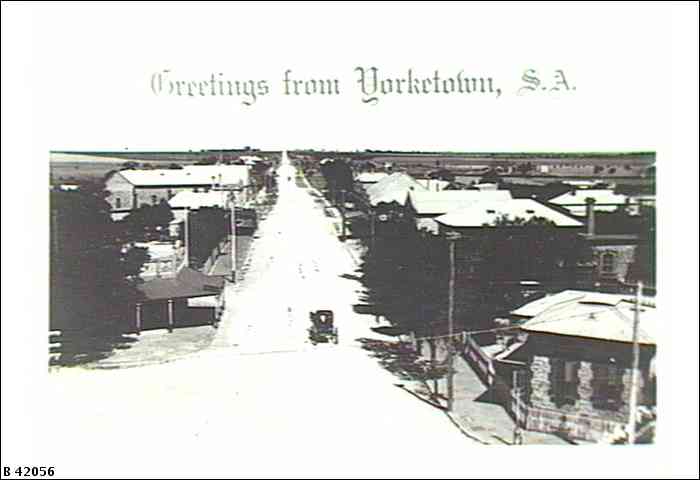
And here is how the intersection looked at the turn of the century…..

B42056-1


Image courtesy of the State Library South Australia.

After leaving Yorketown, we continued south through the town of Warooka and then on to Marion Bay, which is the gateway to the Innes National Park.  Marion Bay is set at the foot of the Yorke Peninsula and has some excellent surf and fishing beaches.  It is a very popular tourist destination and its population swells during the holiday periods.

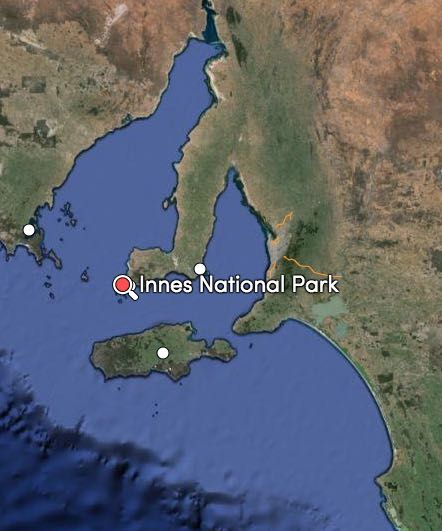
Screenshot 2015-04-06 22.15.47

Above:- the lcoation of Innes National Park.  Image courtesy of mapcarta.com

We drove into the park and after a short photo stop, we headed for the Innes National Park Tourist Centre, where we needed to collect our accomodation key.  Marija and I had visited Innes back in 2013 for the 6 month anniversary of the parks award, and we had fond memories of the park and the visitor centre which had quite a bit to see.  However we were saddened to see that the Visitor Centre was closed ‘Until Further Notice’.  Now, I normally do not like getting political.  But I am going to here.  Innes National Park is one of the most popular park in South Australia, with tens of thousands of visitors each year.  And the Visitor Centre would not have been cheap to construct.  And here it is closed until further notice.  My own personal experience with DEWNR is that they are sadly lacking in funds.  All I can say is that the South Australian State Government should hang their head in shame.

This slideshow requires JavaScript.

And further, to enter the park, you are no longer blessed with a friendly ‘ranger’ to provide you with a permit and advice on where to go and what to see.  Now you book on line prior to entry to the park.  Clearly a cost cutting exercise.  Recently whilst up at the Mount Remarkable National Park, we were viewing an information board at the entrance to the park, when a Victorian couple drove in and asked us where they were to pay.  We told them about the on-line booking system, and because there was no internet coverage, they drove off.  Perhaps our friends in Parliament are trying to disuade visitors to our parks?  See the interesting story below about visitors to Innes.

http://www.adelaidenow.com.au/news/new-park-rules-deter-visitors-to-innes-national-park/story-e6frea6u-1226550718598

Enough of the negative comments.  As we drove towards Inneston, there were some spectacular photo opportunities.  Initially we took a detour to Stenhouse Bay to view the historic jetty and the beautiful blue waters of the Bay.  We then headed to the Cape Spencer lighthouse, and also enjoyed the amazing views of Chinamans Hat Island, Cable Bay, Althorpe Islands, and across the water to Kangaroo Island.

This slideshow requires JavaScript.

After settling in at the old Post Office, Marija helped me set up my radio gear.  Initially I set up my station at the back of the Post Office as it was a nice sheltered and enclosed area, but after turning on the radio I was saddened to hear that the noise floor was S8.  It was pretty much impossible to operate, so down came the antenna and I moved location, amongst the scrub, about 30 metres from our accommodation, close to some of the Inneston ruins.  Unfortunately the noise level was not much better.  Nearby was an ETSA power line running through the park, to supply power to the accomodation.  I suspect this is where the noise was coming from.

I called CQ on 7.088 and this was answered by park stalwart, Peter VK3TKK who was mobile (5/9 both ways).  This was followed by Doug VK2FMIA who was portable in the Somerton National Park, VKFF-607, in New South Wales (also 5/9 both ways).  So despite the high noise I was experiencing, the band seemed to be in very good condition.

A few calls later I was called by my first VK5 park for the weekend, Chris VK4FR/5 who was in the Dudley Conservation Park, VKFF-809, on Kangaroo Island OC-139.  Chris had a great 5/9 signal.  Chris was not to be my last park to park contact for this activation.  About 15 QSO’s later I was called by Greg VK5ZGY who was portable in the Mount Boothy Conservation Park in the Mallee region of South Australia.  Greg also had a nice 5/9 signal.

About a dozen contacts later I was called by Glenn VK6KY/5 who was mobile at Moonta at the top of the Yorke Peninsula.  I found out that Greg was travelling with a group of other VK6 amateurs and their wives, and in fact they had been at Inneston earlier in the day and had been standing right outside the old Post Office, reading the information board.  It is a small world.

Soon after I took a break for dinner, and when I returned my second caller was Steve VK5RU.  I was quite surprised when Steve told me that many years earlier he had lived at Inneston.  What is the chance of that?  A VK6 who had visited this remote location earlier in the day, and now an amateur who had actually lived at Inneston.  It was starting to get dark after quite a beautful sunset, and the Tamar wallabies were out in force.  Tamar wallabies were classed as extinct in the Australian wild until recently, and have now been reintroduced to Innes National Park.


This slideshow requires JavaScript.

I went on to work a dozen or so VK3, VK5 & VK7 stations, and I was then called by Owen ZL2OPB in New Plymouth on the South Island of New Zealand (5/9 both ways).

At about 0935 UTC (8.05 p.m.) I headed off to 7.130 for the 7130 DX Net, run by Roy VK7ROY.  I worked a total of 15 stations on the Net including William FO5JV in French Polynesia, John ZL2BH in Blenheim, and Brian ZL2ASH in Wellington.

Following the net, I headed to 7.135 and called CQ and this was answered by Mike VK3AUR, followed by Dennis VK5LDM with a huge signal.  I worked a further 3 stations, until I decided it was time to head inside and enjoy a bottle of red.

I had a total of 69 contacts on 40m SSB which I was very pleased with.

The following stations were worked on 40m SSB:-

  1.  VK3TKK/m
  2. VK2FMIA/p (Somerton National Park)
  3. VK3PF
  4. VK5EE
  5. VK5GJ
  6. VK5FANA
  7. VK5KLV
  8. VK4FR/5 (Dudley Conservation Park)
  9. VK4CPS
  10. VK5ND
  11. VK7NWT
  12. VK5FMID
  13. VK5FLEX
  14. VK3FQSO
  15. VK2YK
  16. VK5KPR
  17. VK3OHM
  18. VK5NAQ
  19. VK2LEE
  20. VK3FLCS
  21. VK5BMC
  22. VK3DAC
  23. VK3FMOL
  24. VK5ZGY/p (Mount Boothby Conservation Park)
  25. VK1DI
  26. VK3PMG
  27. VK5ZAR
  28. VK3VIN
  29. VK5CZ
  30. VK5NPP
  31. VK5HOS
  32. VK5GW
  33. VK3FSPG
  34. VK5FTRG/m
  35. VK3ANL
  36. VK6KY/5
  37. VK5YX
  38. VK5WG
  39. VK5FADS
  40. VK7VAZ
  41. VK5RU
  42. VK5FDEC
  43. VK3JP
  44. VK5JK
  45. ZL2OPB
  46. VK4NAI/p
  47. VK5ZRY/m
  48. VK3HK/5
  49. VK3KHZ
  50. VK5PET
  51. VK5TR
  52. VK2HFS
  53. VK3ADD
  54. VK7XX
  55. FO5JV
  56. ZL2BH
  57. VK6LCK
  58. VK2PKT
  59. VK3FMHY
  60. ZL2ASH
  61. VK7VEK
  62. VK5FAKV
  63. VK1AT/3
  64. VK5FMID
  65. VK3AUR
  66. VK5LDM
  67. VK7FGGT
  68. VK5WG
  69. VK5SFA


References.

Wikipedia, 2015, <http://en.wikipedia.org/wiki/Ardrossan,_South_Australia&gt;, viewed 7th April 2015

Wikipedia, 2015, <http://en.wikipedia.org/wiki/Minlaton,_South_Australia&gt;, viewed 7th April 2015

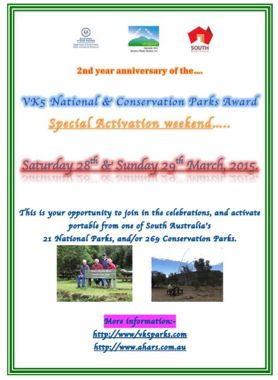
2nd year anniversary VK5 Parks Award

The weekend of Saturday 28th & Sunday 29th March 2015, was the special activation weekend for the 2nd anniversary of the VK5 National and Conservation Parks Award.

Screenshot 2015-04-06 21.23.04

Marija and I headed out to the Yorke Peninsula, west of Adelaide.  We stayed 3 nights (Friday, Saturday & Sunday) in the old Post office at Inneston in the Innes National Park, right down the bottom of the Yorke Peninsula.  We highly recommend this accommodation, which is run by the Department of Environment Water and Natural Resources (DEWNR).

Screenshot 2015-04-06 22.15.47 Above: – Location of Innes NP.  Image courtesy of mapcarta.com

Inneston is an old gypsum mining town and is now a ‘ghost town’.  However DEWNR have renovated a number of the old buildings, including the post office which is where we stayed.  Inneston is a very interesting place, and I will put up a separate blog all about Inneston.

This slideshow requires JavaScript.

I activated the following parks…..

Friday 27th

  • Innes National Park – 69 contacts

Saturday 28th

  • Carribie Conservation Park – 54 contacts
  • Innes National Park – 72 contacts

Sunday 29th

  • Leven Beach Conservation Park – 49 contacts
  • Warrenben Conservation Park – 29 contacts
  • Point Davenport Conservation Park – 38 contacts
  • Innes National Park – 15 contacts

Monday 30th

  • Minlacowie Conservation Park – 20 contacts

I am still awaiting some more facts and figures from some activators, but at this stage here are some preliminary stats for the weekend:

  • total of 41 activators ventured out
  • total of 111 parks activated
  • 81 unique parks (in other words different parks)
  • over 3,000 QSOs.

This exceeds the 98 park activations from last year’s, 1st anniversary weekend.

I would like to personally thank all of the activators, and especially to Tony VK3VTH and Tim VK3MTB who crossed the border into South Australia and conducted multiple activations here in VK5.

And also thank you to all the park hunters.