Bullock Hill Conservation Park

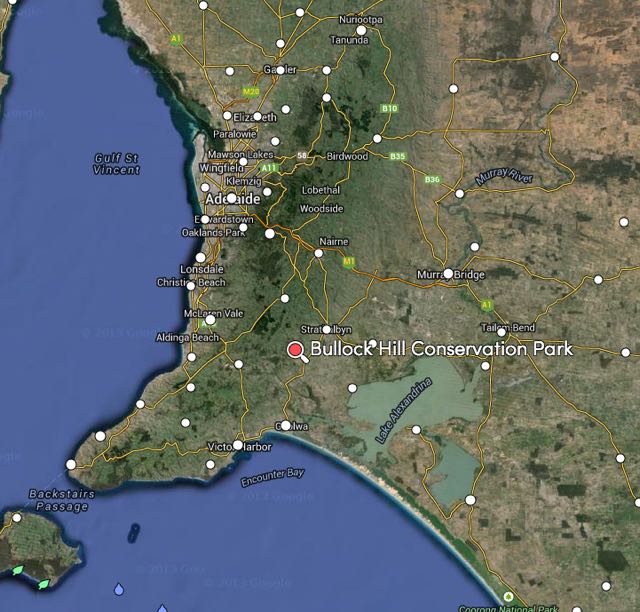
Late yesterday afternoon (Monday 19th January 2015) I activated the Bullock Hill Conservation Park (CP), situated near the little town of Ashbourne on the Fleurieu Peninsula.  The park is about 65 km south of Adelaide, and just a short 35 minute drive from home, via Strathalbyn.
Screenshot 2015-01-20 09.31.37

map courtesy of mapcarta.com

Bullock Hill CP is a newly gazetted park.  It was proclaimed on the 20th January, 2014, so it was just 1 day short of its 1 year birthday during my activation.  The park was first activated by Gordon VK5GY.  I last activated the park back in April 2014.  For more information on that activation, have a look at my previous post at…..

https://vk5pas.wordpress.com/2014/04/12/bullock-hill-conservation-park/

Should you wish to read the proposal to constitute the park as a Conservation Park, here is a link to the document submitted by the Goolwa to Wellington Local Action Planning Association Inc…..

Click to access GWLAP%20Submission_Proposal%20to%20Constitute%20Bullock%20Hill%20CP.pdf

Bullock Hill is about 200 hectares in size, with some spectacular gums and very thick bush on the western side of the park.  The terrain is hilly.  It is home to a large amount of wildlife, as I found out.  When I arrived at the park, there were between 30-40 Western Grey kangaroos grazing in the open grassland area on the eastern side of the park.

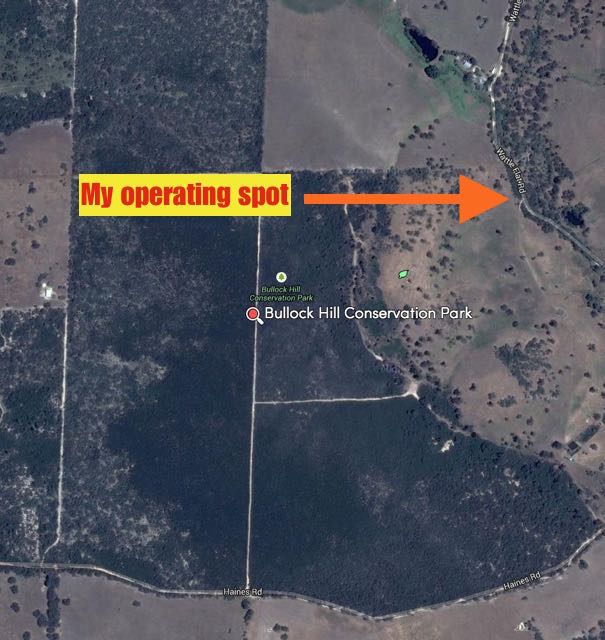
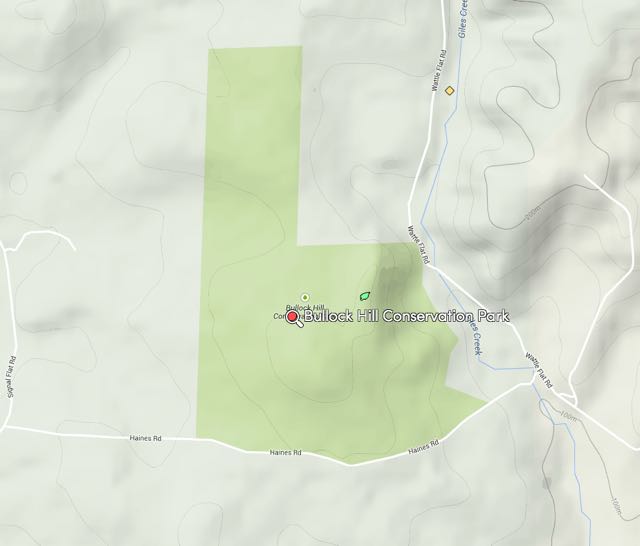
I accessed the park via Wattle Flat Road, which runs off the Ashbourne – Strathalbyn Road.  The park is well sign posted.  If you are a little more adventurous, you could access the park via Haines Road, but this is 4WD access only.
Screenshot 2015-01-20 09.32.20

Map courtesy of mapcarta.com

I set up on the eastern side of the park, which is an open native grassland area.  There is plenty of room here to string out a dipole, and some small gums to afford some shade.  It was a warm afternoon, so the shade was appreciated.

The park is deceptive at this location, in that there is not too much scrub here at this point.  As you look west towards Bullock Hill itself, there is just a small outcrop of scrub and the occasional impressive gum tree on the grassland.  It isn’t until you reach the top of Bulllock Hill, that you can truly see all of the thick scrub on the western side of the park.  The climb to the top is quite easy.  It takes about 10-15 minutes and offers spectacular views of the Fleurieu Peninsula.  There is a wooden table and bench at the top, should you wish to operate from there.
Screenshot 2015-01-20 09.33.17

map courtesy of mapcarta.com

For this activation I ran the Yaesu FT-857d, 40 watts output, and my 40m/20m linked dipole, supported on a 7 metre telescopic squid pole from Haverfords.

My first contact on 40m was with Peter VK5BWH at Port Augusta, with a strong 5/9 signal.  This was followed by the ever reliable park hunter, John VK5BJE, and then Peter VK5KPR and Les VK5KLV, both at Port Augusta.  I went on to work a total of 14 stations on 40m in VK3 & VK5.  My 44 amp hour power pack was madly beeping at me, despite the fact that I had charged it at home before leaving.  So I cut short my QSO with John VK5NJ and Tom VK5FTRG in the South East.

I very quickly lowered the squid pole and removed the links in the dipole, and had a quick listen on the 20m band.  Although I heard signals coming in from Europe, there were no real stand outs.  So I headed down to 14.156 where there is a daily get together of VK’s, ZL’s, G stations.  The net is run by John EA7BA, a British expat, now living in Almeria in Spain.  John was an excellent 5/9 signal and I received a 5/8 signal report back from Spain.  I also worked my old mate Brian ZL2ASH.  Brian’s signal was not as strong as usual on 20m, but he was still 5/7.  I received a 4/5 from Brian in Wellington.

I then put out a few CQ calls on 14.212 hoping that some of the VK6 fellas may call in.  But sadly there was no reply.  It is made very difficult with no phone app for the parks, such as there is for the SOTA program.

I then took the opportunity to charge the battery, whilst I went for a walk up to the top of Bullock Hill.  After the short walk to the top, I sat there for about an hour, admiring the view, before venturing back down the hill and firing up the radio again.

I returned to 40m and put out a CQ call on 7.135 and this was answered by Joe VK3YSP who was operating QRP with just 5 watts.  Joe was a good 5/8 signal and very readable, as there was no man made noise in the park at all.  The only noise on the band were the static crashes.  I worked a further 6 stations in VK2, VK3, & VK5, before QSYing down to 7.130, where I joined the 7130 DX Net, which was being run by Mal VK5MJ in the Riverland.  Mal’s signal was incredibly strong, with the two plus signs showing on the FT857d.

On the net I worked Brian again, ZL2ASH.  This time with a beautiful 5/9 signal.  And Brian returned a 5/8 signal report to me.  I also spoke to William FO5JV in French Polynesia (5/9 sent and 5/4 received).  The strongest signal though, was Gary ZL3SV who was 5/9 plus plus plus from Nelson on the South Island of New Zealand.  Gary has a nearly 2,000 foot long centre feed sloper antenna.  It is amazing.  Here is a link to Gary’s QRZ.com page

http://qrz.com/db/zl3sv

This slideshow requires JavaScript.

I also spoke to Bill W1OW on the net.  Bill is located in Massachusetts in the USA.  Bill had a very nice 5/8 signal report coming in from The States, and Bill returned a 5/5 signal report to me.  I was very pleased with this, with just my 40 watts and a simple dipole antenna.  And I also made contact with Bowden ZL1HX in Welsford on the North Island of New Zealand.

And to top things off I had a contact with Richard VK2XRC who was portable in the Morton National Park, New South Wales.  This park qualifies for the World Wide Flora Fauna (WWFF) program and is VKFF-334.

I worked a total of 18 stations on the 7130 DX Net in French Polynesia, USA, New Zealand, VK2, VK3, VK4, VK5, and VK7.   This net is always a lot of fun and is held each Monday, Wednesday and Fridays at 0930 UTC.  Here is a link to the 7130 DX Net Facebook page…..

https://www.facebook.com/pages/7130-DX-NET/681316281955226

After the net I was going to pack up, but the weather was beautiful and the band was in good shape.  So I had a quick tune around the 40m band, and I was very pleased I did.  I heard Pedro NP4A, calling CQ on 7.145.  Pedro’s signal was 5/9 plus.  He was being called by a large number of VK’s and Indonesian stations.  But I patiently waited for about 10 minutes, and got through to Pedro who gave me a genuine 5/9 signal report.  I was very excited.  I am aiming for DXCC as a portable station, and Puerto Rico was a new country for me whilst in a park or on a SOTA summit.

I then headed up the band to 7.150 and out out a CQ call and this was answered by Paul VK5FUZZ at Wellington on the River Murray.  Whilst working Paul I heard some gunshots in the distance, and could see the spotlight off to my south, over the hills.  They were perhaps 3 km away, but netherless made me feel a bit uneasy as I was sitting in complete darkness.  The night was only lit up occasionally by my headset that I was wearing when I logged a station.  But I decided to stay, as it was a beautiful balmy night with very clear skies.  I even saw a couple of satellites pass over head as I chatted away on 40m.

I worked a further 7 stations in VK2, VK3, and VK4, before deciding to pack up and head home.  I was getting hungry and I felt a bit uneasy about the spotlighters as they appeared to be getting a bit closer.  They were very close to the Conservation Park.  I’m not sure if they were locals and probably have my suspicions that they were shooting kangaroos.  With a permit?  Who knows?

http://www.environment.sa.gov.au/managing-natural-resources/plants-and-animals/Permits_licences/Native_animals_in_the_wild/Hunting_Permits

This was a very enjoyable activation.  Beautiful surroundings with lots of wildlife, and very good band conditions on 40m.  I had a total of 51 contacts in the log.  It’s a shame that a few more park activators don’t head out during the evening, as this is certainly when the 40m band is at its best, with propagation possible all across Australia, and lots of DX.

The following stations were worked on 40m ssb:-

  1. Peter VK5BWH
  2. John VK5BJE
  3. Peter VK5KPR
  4. Les VK5KLV
  5. Mick VK3FAFK
  6. Adrian VK5FANA
  7. Chris VK4FR/5
  8. Adrian VK5AJR/p
  9. Nev VK5WG (qrp)
  10. John VK5NJ
  11. Bob VK5FPAC
  12. Adrian VK5AJR/m
  13. Greg VK5GJ
  14. Tom VK5FTRG
  15. Joe VK3YSP (qrp)
  16. Wolf Vk5WF
  17. Scott VK2FZSD
  18. Julie VK3FOWL
  19. Doug VK2FMIA
  20. Ian VK3VIN
  21. Bob VK5HAC
  22. Mal VK5MJ
  23. Brian ZL2ASH
  24. Chris VK2UW
  25. William FO5JV
  26. Gary ZL3SV
  27. Roy VK7ROY
  28. Paul VK7CC
  29. Greg VK7FGGT
  30. Colin VK4FAAS
  31. Gavin VK3MLU
  32. Steve VK2FISN
  33. Richard VK2XRC/p
  34. Tony VK2RI
  35. Giles VK5FFAA
  36. Shaun VK5FAKV
  37. Mark VK4MON
  38. Bill W1OW
  39. Bowden ZL1HX
  40. Pedro NP4A
  41. Paul VK5FUZZ
  42. Chris VK4FCHM
  43. Rob VK4FFAB
  44. Gavin VK3MLU
  45. Chris VK2UW
  46. Frank VK2HFS
  47. Tom VK5FTRG
  48. Oscar VK4BOV

The following stations were worked on 20m ssb:-

  1. John EA7BA
  2. Wayne VK4XG
  3. Brian ZL2ASH

Below is a video I took of some of the stations I heard on the 7130 DX Net…..

Trig points and private property

A few weeks ago I was doing some work to confirm the name of a summit on the Fleurieu Peninsula, south of Adelaide.  The hill is recorded as ‘un-named’ VK5/ SE-016, on the Summits on the Air (SOTA) database.  As it turns out the summit is actually called Black Bullock Hill.  See my previous post…..

https://vk5pas.wordpress.com/2015/01/04/black-bullock-hill-vk5-se-016/

What I did find out when researching this summit, was that there was a virtual Geocache located at this summit.  What is Geoacaching?

Geocaching is an outdoor recreational activity, in which participants use a Global Positioning System (GPS) receiver or mobile device and other navigational techniques to hide and seek containers, called “geocaches” or “caches”, anywhere in the world.

Geocaching_logo

For more information on Geocaching, please have a look at…..

https://www.geocaching.com/play

There were references in the Geocaching Logs on the internet, for this summit, such as:

“This trig was just beyond the fence so Mr S decided to quickly climb over.  It was only then that he discovered the top strand was live.  Quickly took a photo and then Mrs S held the strand down with a stick whilst he made the return journey’.

And then last week I paid Noel and Anne a visit at Mount Gawler, where there is also a trig point, and where there is also a virtual geocache.  Again, on the Geocache Australia site, and under the Log notes, I read the following:

‘Arrived to find locked gate and no sign of life at house, so did the climb gate, take photo, high tail outa there trick’

and

‘Trig point is on a common access road although the gate may be locked at times this means the owner to the property ‘Noel’ isn’t home.  Access cannot be denied but it would be polite to ask, although the Trig point is befoe you reach the house……’

These comments by the Geocachers got me thinking again about the issue of Trespassing, and access to land where trig points exist.

imga0156_2

I contacted Geocaching Management via email, and got a very prompt reply from them.  They advised that they had removed these 2 geocaches from the list.  They went on to say:

‘You are correct in that no unauthorised person is allowed to access an area without landholders consent.  The trigpoints were derived from Geoscience Australia and slowly we’ve been weeding out the legally and physically inaccessible ones. Any member has the ability to de-list a trig found to be on private property……….I’ll be posting on our forums to remind geocachers to respect private boundaries when out and about (something they should be doing anyway)’.

I also telephoned Steve, the Manager of Survey Operations and at the Department of Planning, Transport and Infrastructure.  I had previously corresponded with Steve, who had previously stated that the land owner:

‘has the right to deny entry to the said trig point to everyone except surveyors carrying out their work…….Land owners are within their rights to deny access to trig points on their land for any prupose other than surveying’.

Only a surveyor or a person authorised by a surveyor, may enter private property, under the authority of the Survey Act 1992.  There is no ‘freedom to roam’ or ‘everymans right’ as exists in the United Kingdom.

I have posted on this topic previously.  You can read those posts at…..

https://vk5pas.wordpress.com/2013/08/02/accessing-private-property/

vk5pas.wordpress.com/2014/01/31/trig-points-and-access-to-private-property/

So PLEASE, ignore any RUMOURS you may have heard about being able to access private property.  They are just that, ill-based rumours, which may land you in hot water with the law, and spoil things for other SOTA activators.

DO NOT access private property, unless you have the expressed permission of the land owner.

images


References.

Wikipedia, 2015, <http://en.wikipedia.org/wiki/Geocaching&gt;, viewed 19th January 2015


Mount Boothby Conservation Park

A week or so ago I received an email from Chris VK4FR who suggested we have a Friday evening twilight activation session.  So Friday the 16th January, 2015 was decided upon to be the inaugural activation afternoon/evening.

I headed to the Mount Boothby Conservation Park (CP) in South East South Australia.  I had often seen this park off in the distance as I was traversing the Dukes and Princes Highways (Hwy), and had seen it a number of times on maps.  But I had never visited the park, as access is via 4WD only.  So now that I have the Toyota Hi Lux, I thought why not pay the park a visit.

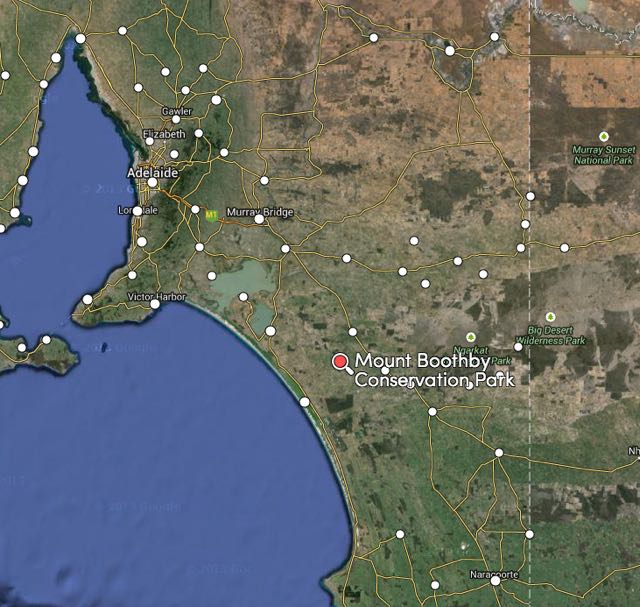
The park is located about 14 km west of the little town of Culburra, and about 180 km south east of Adelaide.  You can access the park either via the Dukes Hwy or the Princes Hwy.

Screenshot 2015-01-10 15.57.59

Map courtesy of mapcarta.com

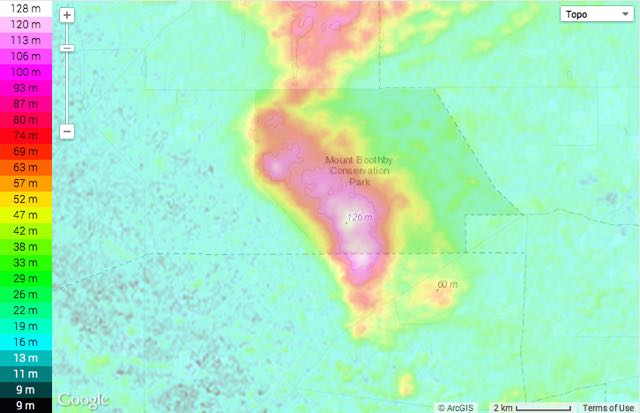
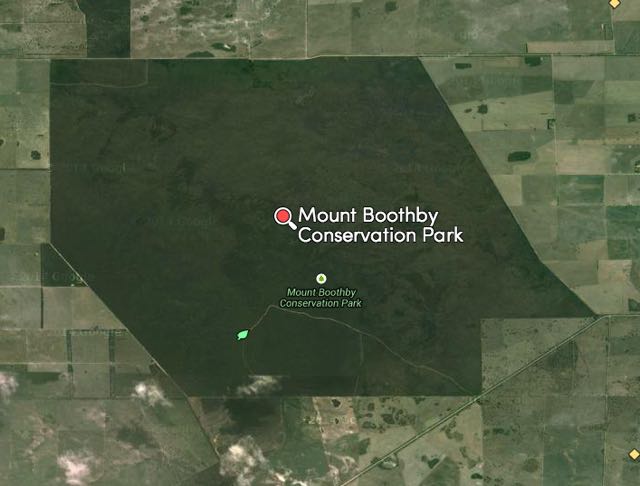
Mount Boothby CP comprises an area of about 4,045 hectares, and is the fourth largest area of remnant vegetation in the South East Region.  It contains a variety of habitats and supports at least two species of conservation significance, namely the metallic sun -orchid and MalleFowl (and I saw them  see below).   The park consists of undulating limestone ridges overlain with sand, with vary in height from 20 to 120 metres above sea level.  Granite outcrops occur on the dune sides, with the most prominent of these being Mount Boothby, which is 129 metres above sea level.  Sadly it falls short of qualifying for the Summits on the Air (SOTA) program.

Screenshot 2015-01-10 16.33.01

Image courtesy of http://en-au.topographic-map.com/

The park contains two major vegetation types: Open Woodland, containing Eucalyptus diversifolia and Eucalyptus leptophylla; and Open Heath containing Banksia ornata.  The scrub is certainly very thick.  It is a beautiful park.

The park is home to a large amount of native fauna including short-beaked echidnas, western grey kangaroos, and the vulnerable malle fowl which breeds in the park.  I only saw one kangaroo.  And that was on my way to the park.  He was sheltering from the afternoon heat underneath a gum tree.

For more information on the park, and also the area the park is located in, please have a look at…..

http://www.tintinara.com/index.php

Screenshot 2015-01-10 15.57.41

Map courtesy of mapcarta.com

I drove to the park via the Dukes Highway through the towns of Coomandook, Yumali, Ki Ki, and Coonalpyn.  Now there are some interesting names!  Once I reached the little town of Culburra, I stopped to stretch my legs.  It is worth a stop here to have a read of the history on what was once a thriving town.  There is a parking bay here with interpretive signs, detailing the history of the town.  Culburra is an aboriginal word meaning ‘lots of sand’. Culburra was once a thriving self supporting township with a community owned weighbridge, sheep and cattle yards, and a railway siding from where thousands of tons of handpicked stumps were hand loaded and trucked away.  Today, the railway station has gone (demolished) and only a handful of houses remain.

This slideshow requires JavaScript.

After a short break, I turned right onto Boothby Road and travelled south west.  Interestingly, there is a sign on Boothby Road stating ‘Mt Boothby National Park’.  The park is a Conservation Park, not a National Park.

Boothby Road is bitumen for about 1 km and then turns to dirt just outside of Culburra.  But the road is in excellent condition, and there are absolutely no problems for conventional vehicles.  I continued along Boothby Road and actually passed the Conservation Park which was on my right.  I initially missed the entrance.  Don’t blink, because you will miss it!  The entrance is about 1 km south west of Lowe Road.  There is a gate which is hidden by the scrub and a well camoflauged Conservation Park sign on the roadway.  Once you enter the gate, there is another park sign which is a little easier to view.

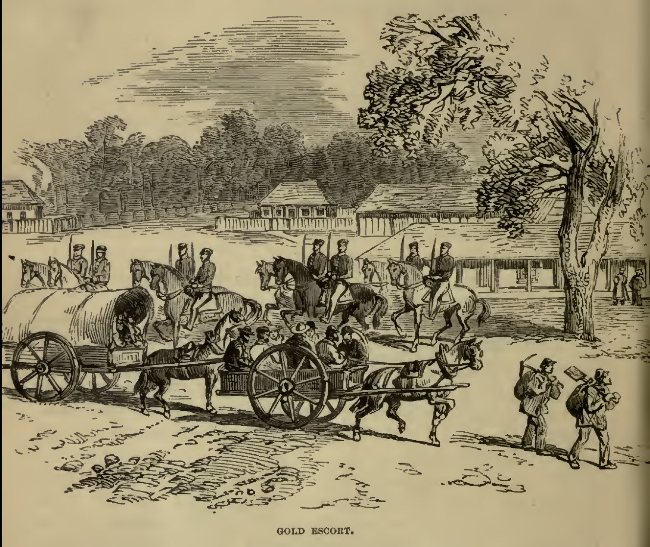
On the way to the park I stopped off to have a look at the monument for the Gold Escort route.  It was along this track, that Commissioner Alexander Tolmer, lead the first of 18 Police escorts which under various Commanders, transported from Mount Alexander in Victoria, to Adelaide, about 328,509 ounces of gold, between March 1852 to December 1853.

When the Bullion Act of January 1852 was passed, Commissioner Tolmer suggested an overland gold escort service from Victoria to South Australia.  It was designed to reverse the drain of currency from the colony during the gold rush.  Tolmer left with the first escort on 10 February and returned a month later with gold worth £21,000. The service lasted until December 1853, a month after his supersession as Commissioner.

There is an interesting drive you can do through the gold escort area in South Australia.  For more information, have a look at the following…..

http://www.coorongcountry.com.au/html/tolmer-gold-route.html

This slideshow requires JavaScript.

Image36

image courtesy of http://gutenberg.net.au/

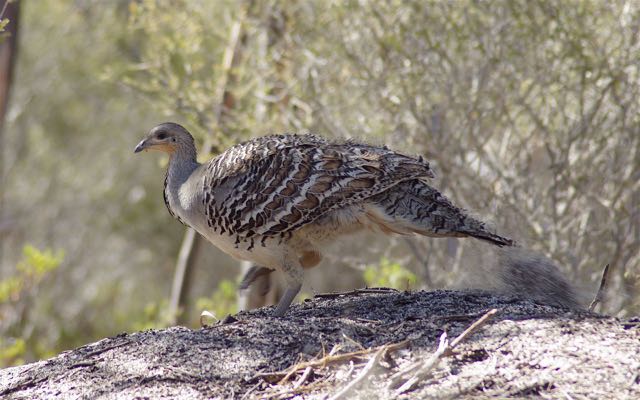
So after getting lost, I was running late for my activation.  And I got a little too excited as well, which placed me even further late.  By excited, I am referring to seeing about 6 or 7 endangered/vulnerable MalleFowl as I entered the park.  When I saw the first one, I had to look twice, to make sure I was seeing what I thought I was looking at.  Sure enough it was a MalleeFowl.  And then a bit further along the track, there were more.  They didn’t hang around long enough for me to get fantastic photographs, but I did manage a few through the windscreen.  You can see those below in the slideshow.

The MalleeFowl is a stocky bird, which is about the size of a domestic chicken.  They are a shy, wary, and solitary bird.  Although they are very active, they are seldom seen, as they freeze if they are disturbed, relying on their intricately patterned plumage to render themselves invisible.  Either that, or they silently and rapidly disapear into the scrub.

There is a MalleeFowl Preservation Group.  More information can be found at…..

http://www.malleefowl.com.au/

Leipoa_ocellata_-Ongerup,_Western_Australia,_Australia-8

image courtesy of wikipedia.org

I drove about 3 km along the 4WD track into the park.  The track I took was the one which travels through the centre of the park.  There are two other tracks which travel along the eastern and southern coundaries.  I did not quite make the very top, as I was already running late.  So I turned the 4WD around facing back down the track, and I set up my gear on the southern side of the track, under the shade of a small native shrub.  It was a pretty warm day, so I was making as much noise as possible to scare off any snakes.

Prior to calling CQ, I tuned around the band hoping to find some of the other park activators.  And on 7.105 I found Arno VK5ZAR who was portable in the Angove Conservation Park, in the north eastern suburbs of Adelaide.  Arno was literally pounding in to the south east, with a 5/9 plus signal.  After speaking with Arno, I ventured down the band and found 7.088 clear.  I chose this rather strange frequency, as the Kandos Group was still running on 7.093, so I wanted to stay clear of them and avoid causing QRM.  My first contact after calling CQ was with Robin Vk5TN at Mount Gambier, followed by Barry VK5BW at Bridgewater, and then Peter VK3PF.  All with great signals.

My fifth contact was with Chris VK4FR/5 who was portable in the Ferguson Conservation Park in the Mount Lofty Ranges.  Chris had a beautiful 5/9 signal.  I was very happy, as this was my second Park to Park contact from Mount Boothby.

I went on to work a total of 34 stations in VK2, VK3, VK5, and VK7, until a VK2 station came up on 7.090.  It was clear that he had a ‘sched’ with a VK4 friend, and they were not going to move for anyone.  The VK4 was very low down to me, but the VK2 station (I won’t mention his call here) was 5/9 plus, and was causing just too much bleedover for me to continue on 7.093.  Despite some prompting from some stations that I had worked, they did not move.  Anyway, it was a chance for me to stretch my legs, and enjoy the view.

It is worth mentioning that I had some excellent QRP contacts prior to going for a walk.  They included Nev VK5WG using his X1M on 5 watts, Amanda running just 1/2 watt (Amanda was 5/8-9 with QSB), and Roy VK5NRG running 5 watts.

This slideshow requires JavaScript.

After a break of about 10 minutes, I returned to 40m and this time I called CQ on 7.095.  I worked a further 3 stations in VK3.  Sadly, despite the band being in good condition, there were not a lot of takers.  I then ventured over to 20m after lowering the squid pole and removing the links in the dipole.  On 20m I worked Mic FK8IK in New Caledonia, Dave G3MWV in England, and Lauro IK4GRO in Italy.  I then  heard my old mate Marnix OP7M calling CQ on 14.273.  I called Marnix about 4 or 5 times but could not make the contact.  In fact Marnix could not hear me at all.  On my 3rd call to him, another European station came up to tell Marnix that I was calling.  But, as I say, sadly we could not make it.  Next time perhaps.

I returned to 40m and started calling CQ a little higher up on the band, on 7.135.  My first taker to my great pleasure was Nigel VK5NIG who was portable in the Port Gawler Conservation Park, north of Adelaide.  Nigel had an excellent 5/9 signal.  I worked a further 22 stations in VK2, VK3, VK4, VK5.  This included Steve VK2FSLC.  I was very pleased to be Steve’s very first ever contact on amateur radio.  Initially it was a struggle with Steve, as the QSB and the static crashes were bad.  But as if magic occurred, his signal came up to a good readable 5/7 and we had a good QSO.  Welcome to amateur radio Steve.

I stayed for one round on the 7.130 DX Net as well, and managed to sneak in some 40m DX contacts.  This included William FO5JV in French Polynesia, Brian ZL2ASH in New Zealand, and Caleb ZL2ML in New Zealand.  On the DX Net I also spoke with keen park activators and hunters, Rob VK4FFAB and Doug VK2FMIA, which was good.

So after 3 hours in Mount Boothby CP, I had a total of 62 contacts in the log.  This was a very enjoyable activation.   It was a new park for me (a unique).  I had 3 Park to Park contacts in the log.  And a bit of DX.  I had given my 4WD a run.  And I had seen the vulnerable/endangered MalleFowl.  I would have liked to have stuck around a little longer, but I had to negotiate the 4WD track out of the park and then a 90 minute drive home, avoiding the kangaroos.

Thanks to Chris VK4FR/5 for suggesting such an evening.  The next Summer twilight activation afternoon/evening, will be held on Friday 30th January 2015, from around 4.30 p.,m. onwards.

The following stations were worked on 40m ssb:-

  1. Arno VK5ZAR/p (Angove CP)
  2. Robin VK5TN
  3. Barry VK5BW
  4. Peter VK3PF
  5. Chris VK4FR/5 (Ferguson CP)
  6. Nev VK5WG
  7. Amanda VK3FQSO
  8. Les VK5KLV
  9. Joe VK3YSP
  10. Tony VK3CAT
  11. Peter VK5KPR
  12. Adrian VK5FANA
  13. Fred VK3DAC
  14. Peter VK3NAD
  15. Ian VK3VIN
  16. Al VK7AN
  17. Julie VK3FOWL
  18. Ray VK3NBL/p
  19. Jeff VK5JK
  20. Nigel VK5NIG
  21. Alex VK7FALX
  22. Brian VK5FMID
  23. Keith VK5FEKH
  24. Roy VK5NRG
  25. Larry VK5LY
  26. Arno VK5ZAR/p (2nd contact)
  27. Peter VK3TKK/m
  28. Col VK5HCF
  29. Mark VK7MK
  30. Tom VK5FTRG/m
  31. John VK2AWJ
  32. Tony VK3KKP/m
  33. Don VK5NFB
  34. Kev VK3VEK
  35. Nick VK3FCCK
  36. Andrew VK3ARR
  37. Ray VK3FQ
  38. Nigel VK5NIG/p (Port Gawler CP)
  39. Peter VK7LCW
  40. Steve VK2FSLC
  41. George VK4GSF
  42. Peter VK3FSAN
  43. Andrew VK7AD
  44. Kevin VK3BPH
  45. Chris VK5FCHM
  46. Steve VK7FMTX
  47. Cliff VK2CCJ
  48. Richard VK2XRC/3
  49. Terry VK3FAIE
  50. Peter VK5JP
  51. Peter VK5FLEX
  52. Mal VK5MJ
  53. William FO5JV
  54. Rob VK4FFAB
  55. Doug VK2FMIA
  56. Paul VK7CC
  57. Mark VK1EM
  58. Caleb ZL2ML

The following stations were worked on 20m ssb:-

  1. Mic FK8IK
  2. Dave G3MWV
  3. Lauro IK4GRO


References.

Australian Dictionary of Biography, 2015, <http://adb.anu.edu.au/biography/tolmer-alexander-4728&gt;, viewed 17th January 2015

Department for Environment, Heritage and Aboriginal Affairs, ‘Mount Boothyby Conservation Park Management Plan’, February 1999

Wikipedia, 2015, <http://en.wikipedia.org/wiki/Culburra,_South_Australia&gt;, viewed 17th January 2015


Mount Lofty VK5/ SE-005 and Cleland Conservation Park

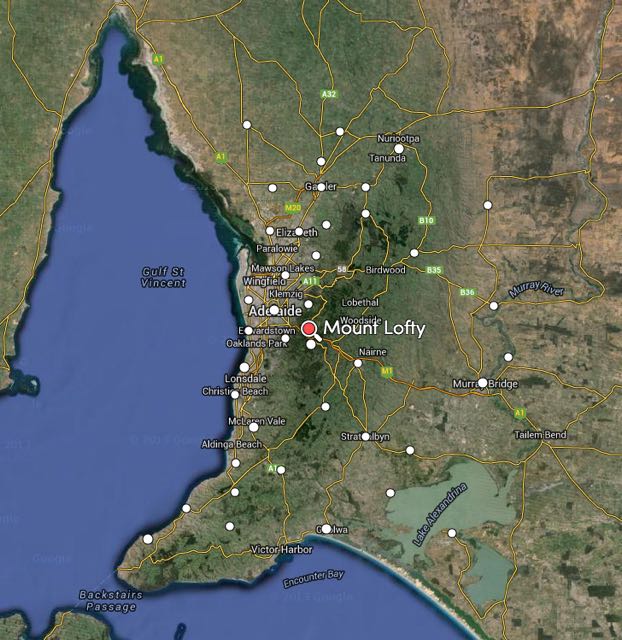
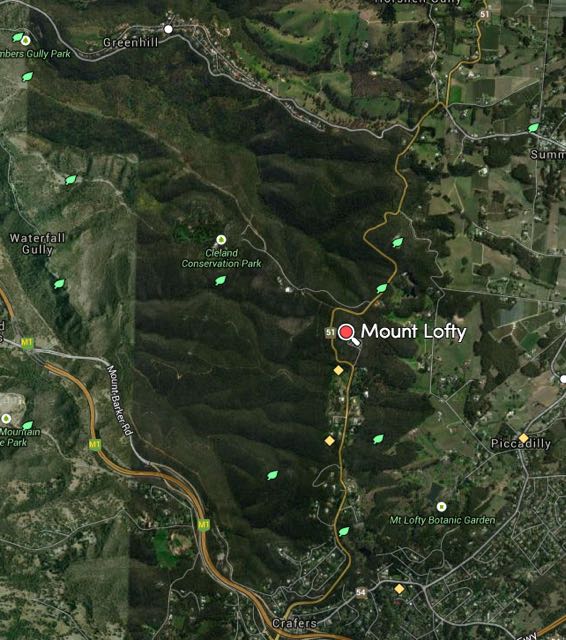
Yesterday morning I activated Mount Lofty summit, VK5/ SE-005, which is located within the Cleland Conservation Park, in the Mount Lofty Ranges ‘Adelaide Hills’.  I have activated the summit and park many times, as it is just a short drive to my west towards Adelaide.  But this was a new calendar year so there were 4 new SOTA points & a VK5 park point up for grabs.  The night before I had seen a few ‘alerts’ on SOTAWatch for Activators, and that was my inspiration to head to Mount Lofty.

Screenshot 2015-01-16 09.04.01

map courtesy of mapcarta

I was at Mount Lofty by 8.00 a.m. (S.A. local time) and it was already very busy, with lots of tourists.  So I set up on the eastern side of the summit, with only a few competing bushwalkers and mountain bikers.  For this activation I ran my little Yaesu FT-817nd and 5 watts, into the 40m/20m linked dipole.  It was a chilly morning, with light misty drizzle in the air, and the occasional light passing shower from the west.

Screenshot 2015-01-16 09.03.26 Image courtesy of mapcarta.com

My first taker for the morning was Col VK5HCF in Mount Gambier.  Col was not as strong as normal, although he was still a strong 5/8 signal to Mount Lofty from the South East of South Australia.  And Col reported the same with my signal, giving me a 5/4.  This was followed by Nev VK5WG at Crystal Brook who was his normal 5/9 signal.  Peter VK3TKK then called in, running QRP, just 5 watts.  Peter had a surprisingly, very good 5/8 signal.  And my fourth and qualifying contact was with Andrew VK2UH who was also 5/8 and gave me a 5/7 signal report from Yass.

My fifth contact was with Andrew VK1MBE/p.  I heard the ‘summit to summit’ call amongst the other callers, and picked up Andrew who was a good 5/4 signal.  The noise floor on the summit was negligible, so I was able to receive Andrew extremely well.  Andrew was on top of Tuggeranong Hill, VK1/ AC-038, in Canberra, at a height ASL of 855 metres.  Andrew was one of the SOTA activators who had ‘alerted’ the night before on SOTAWatch.  So I was very happy….one Summit to Summit down.  Two more to go.

It was pleasing to get Mike VK6MB in the log on 40m, a few contacts later.  Mike was only 5/3, but very readable.  And Mike gave me a 5/1 signal report back from Manjimup in Western Australia.  I went on to work a total of 21 stations on 40m ssb, until I had to QSY.  Unfortunately a VK6 mobile station came up on 7.093 and was ‘bleeding over’ onto my frequency.  It was making contacts very difficult.  So I lowered the squid pole and removed the links in the antenna and headed to 14.310.

This slideshow requires JavaScript.

I managed just 2 contacts on 20m before the UTC rollover.  Those QSOs were with Peter VK4JD in Jimboomba in Queensland, who had an extremely strong signal.  And Paul VK2KTT in Bonville in New South Wales.  I put out numerous CQ calls, but despite conditions being apparently very good, I had no takers.  So I lowered the squid pole again, put back in the links, and headed back to 40m.

My first contact on returning to 40m was another Summit to Summit contact.  This time, with Russ VK2BJP/3 who was on Mount Benambra, VK3/ VE-041, north east of Bright.  Russ was very low down, but again, due to the non existent man made noise floor, I was able to work Russ very comfortably.

I returned to 7.095 and worked a few more stations in VK3 and VK5.  Whilst doing so, I received an SMS message from Andrew VK1NAM to advise that he and Al VK1RX, were on the ridge line of their summit, and they had a further 400 metres to go before reaching the summit.  So I patiently waited for them both to appear.  Fortunately the weather had cleared at Mount Lofty.  About 30 minutes later, I heard the ‘Summit to Summit’ call.  It was Al VK1RX.  They had reached the top of Wyanbene Caves, VK2/ ST-022.  Al and Andrew were only 5/1, but very readable.  I received a reciprocal 5/1 signal back from the Southern Tablelands of New South Wales.

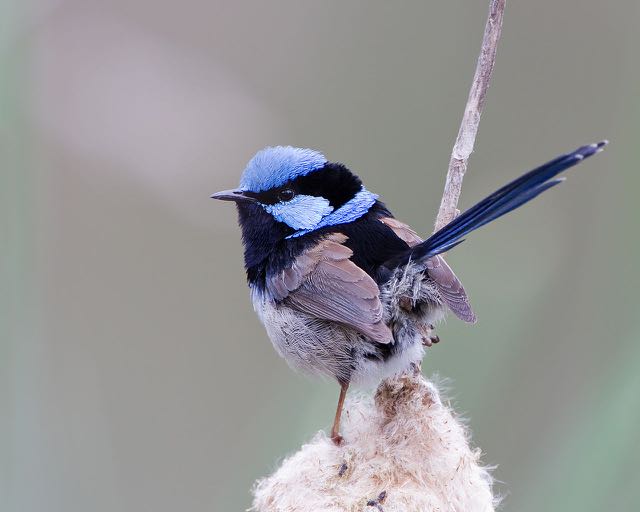
I was very pleased now.  I had worked the four stations Summit to Summit, that I was hoping to get in the log.  I worked another 2 stations on 40m, before the UTC rollover, and then got up for a stretch and a walk.  My operating spot was alive with birdlife.  Of the feathered variety!  There were dozens of Superb fairywrens.  Mostly females, and not the males.  Maybe the ‘blokes’ were having a sleep in.  The females are plain fawn colour.  Whereas the males have a brilliant iridescent blue contrasting with black and grey brown.  I also saw a number of Yellow tailed black cockatoos, and Adelaide Rosellas.  And there were some noisy Australian Ravens who decided to perch just above my operating spot.

1280px-Malurus_cyaneus_PM

image courtesy of wikipedia.

I returned to the radio, just after the UTC rollover and worked a total of 8 stations on 40m and 20m ssb.  Not the large number of stations I expected.  But I guess it was a workday.  For some anyway!  I am on 6 weeks holidays.

I worked a total of 40 stations in VK2, VK3, VK4, VK5, & VK6 on 40m ssb and 20m ssb.

The following stations were worked:-

Screenshot 2015-01-16 08.46.34

“Out and about in VK5”

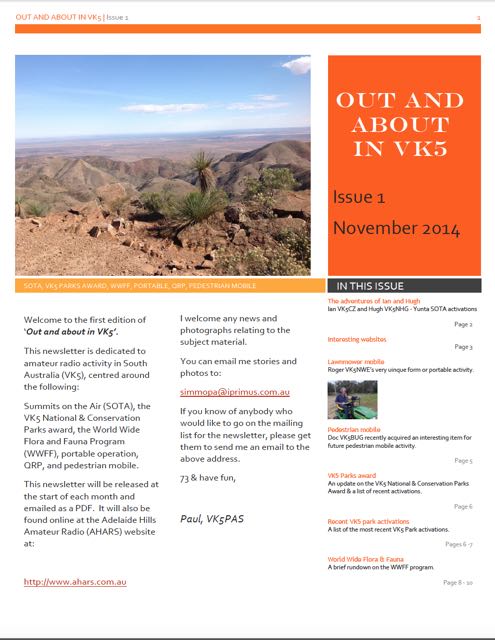
In November, 2014, I commenced a newsletter called ‘Out and about in VK5’.  The newsletter is released at the end of each month, and is related to amateur radio activity in South Australia (VK5), centred around the following:-

  • Summits on the Air (SOTA)
  • VK5 National and Conservation Parks Award
  • World Wide Flora Fauna (WWFF) program
  • portable oepration
  • QRP
  • pedestrian mobile.

Screenshot 2015-01-12 22.35.58


I welcome any news and photographs relating to the subject material.  Without your constributions, the newsletter will not survive.

I have an email list and distribute the newsletter to those amateurs interested.  If you would like to go on the mailing list, please drop me an email at….

vk5pas@wia.org.au

Or alternatively, I upload the newsletter to the Adelaide Hills Amateur Radio Scoiety (AHARS) website at….

http://www.ahars.com.au/

And it can also be found on the VK5 Parks award website at…..

http://www.vk5parks.com/

See below, the first 3 Issues…..

Out and About Issue 3 Out and About Issue 2 Out and about in VK5 Issue 1

Out and About Issue 2

Out and About Issue 3

Chasing European activators


I am on holidays at the moment, which means I can stay up a little bit later when I choose to.  And I did that over the weekend, working a few European SOTA activators on both the long path and the short path.

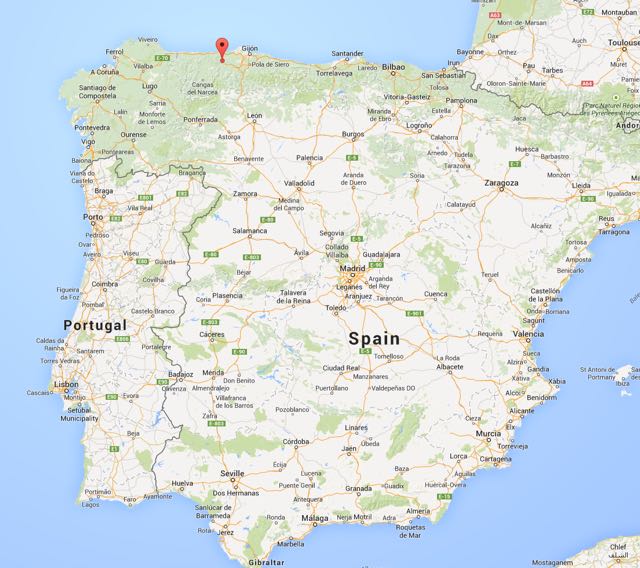
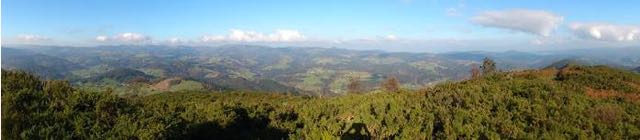
On Saturday evening (10th January 2015) I spoke with Pablo EA1QL, on 20m on the long path.  Pablo was on the top of SOTA summit, Monxagre, EA1/ AT-204.  Pablo was kind enough to send me an email with some photos from the activation (see below).

The Monxagre summit is 662 metres ASL and is worth 2 SOTA points.  It is located in the Spain (North West) Association, and the Asturias Region.

Screenshot 2015-01-12 21.59.20

Map courtesy of google maps.

Screenshot 2015-01-12 22.03.35

Image courtesy of http://www.wikiloc.com/

Pablo was running a Kenwood TS-840, about 50 watts, and a home brew monoband Delta loop antenna.  Pablo was powering the radio with a 12v 8 ah battery.

It was a challenge to get through to Pablo, as breaking through the European ‘wall’ of SOTA chasers was quite difficult.  But once I did, Pablo and I were able to hear each other ver well.  I know that Andrew VK1NAM has mentioned previously, the issue of many European SOTA activators not listening for further afield.  I have felt the same frustration, but I have found that perserverance generally pays off.  Not always though!

This slideshow requires JavaScript.

Charleston Conservation Park

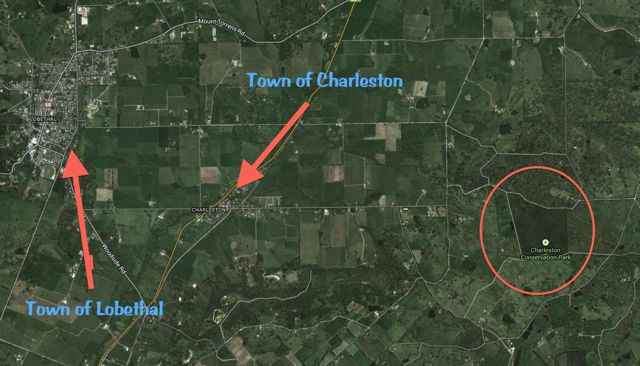
Yesterday (Sunday 11th January 2015), my wife Marija and I decide we had enough of being indoors doing paperwork, including Marija’s mum’s tax.  So we headed out to the Charleston Conservation Park, which is located not far from our home.  To get to the park we travelled out via the little town of Nairne, and then just before reaching Woodside, we turned right onto Pfeiffer Road and headed north.  This took us passed the Country Fire Service Aircraft Operations Centre.  This is where a number of Fixed Wing Air Tractors are based, along with a number of helicopters.

This slideshow requires JavaScript.

We continued along Pfeiffer Road and then turned into Lewis Road, and then right into Bell Springs Road and headed east.  This is a very beautiful part of the Adelaide Hills.  The park is a few km up Bell Springs Road on the southern side of the road.

screenshot-2014-04-28-20-15-08

map courtesy of mapcarta.com

I have activated the park twice before.  Once back in 2013 and then again in 2014.  For information on the park and those activations, please have a look at my previous posts…..

https://vk5pas.wordpress.com/2013/07/24/charleston-conservation-park/

https://vk5pas.wordpress.com/2014/04/28/charleston-conservation-park-2/

Charleston Conservation Park preserves a pristine remnant representative of the transition between the wetter stringy bark forests on the western side of the Mount Lofty Ranges and the drier mallee woodlands to the east.  A large diversity of flora and fauna are represented in the Park including at least seventy-six bird species.

I set up in the same spot as previous activations, which was the south eastern corner of the park off Bell Springs Road.  There is a track here which allows enough space to set up the dipole.  It is very hard in other parts of the park, because the scrub is so thick.

With the help of Marija we set up the fold up table and deck chair, and the 40m/20m linked dipole, supported on the 7 metre telescopic squid pole.

Screenshot 2015-01-11 23.30.41

image courtesy of http://au.geoview.info

I called CQ on 7.095 and this was answered by Greg VK5GJ who was running QRP again, with just 5 watts.  Greg was a good 5/8 signal, however he was not as strong as I have heard him previously.  I was then called by Roy VK5NRG with a nice strong 5/9 signal, and then Peter VK5KPR at Port Augusta with his normal strong 5/9 signal.

I had just 1 other QRP caller during this activation, and that was Norm VK5GI, who was running his little home brew transceiver and 5 watts.  I also spoke with parks stalwart Peter VK3TKK who was mobile.  I had one more mobile contact and that was with Bill VK5MBD who was mobile on the Port Wakefield Road, about 5 km north of Dublin.  Bill was on his way home to Red Hill in the Mid North, after shopping in Adelaide.  I was also called by Giles VK5FFAA who was trying out a new antenna.  I explained the VK5 Parks award to Giles, and don’t be surprised if you hear Giles calling CQ from a park soon.

After the callers slowed down on 30m I lowered the squid pole and removed the links in the antenna for 20m.  I went to 14.310 and put out about 6 CQ calls with no takers.

So after about 90 minutes in the park, it was time to pack up and head home for a roast and a nice red.  I had a total of 24 contacts in the log on 40m ssb from VK2, VK3, VK5, & VK7.

This slideshow requires JavaScript.

The following stations were worked:-

  1. Greg VK5GJ (qrp)
  2. Roy VK5NRG
  3. Peter VK5KPR
  4. Arno VK5ZAR
  5. Stuart VK5STU
  6. Norm VK5GI (qrp)
  7. Mick VK3FAFK
  8. Giles VK5FFAA
  9. Peter VK3TKK/m
  10. Richard VK5ZRY
  11. Tom VK5EE
  12. Andrew VK2UH
  13. Paul VK5FUZZ
  14. Jeff VK5JK
  15. Les VK5KLV
  16. Bill VK5MBD/m
  17. Peter VK5BWH
  18. Jim VK5TR
  19. Nev VK5WG
  20. Peter VK7ALB
  21. Peter VK5NAQ
  22. Nigel VK5NIG
  23. John VK3FPUP
  24. Bruce VK5BMC


References.

Australian Heritage Places Register, <http://www.heritage.gov.au/cgi-bin/ahpi/record.pl?RNE7606&gt;, viewed 11th January 2015

North East Radio Club presentation

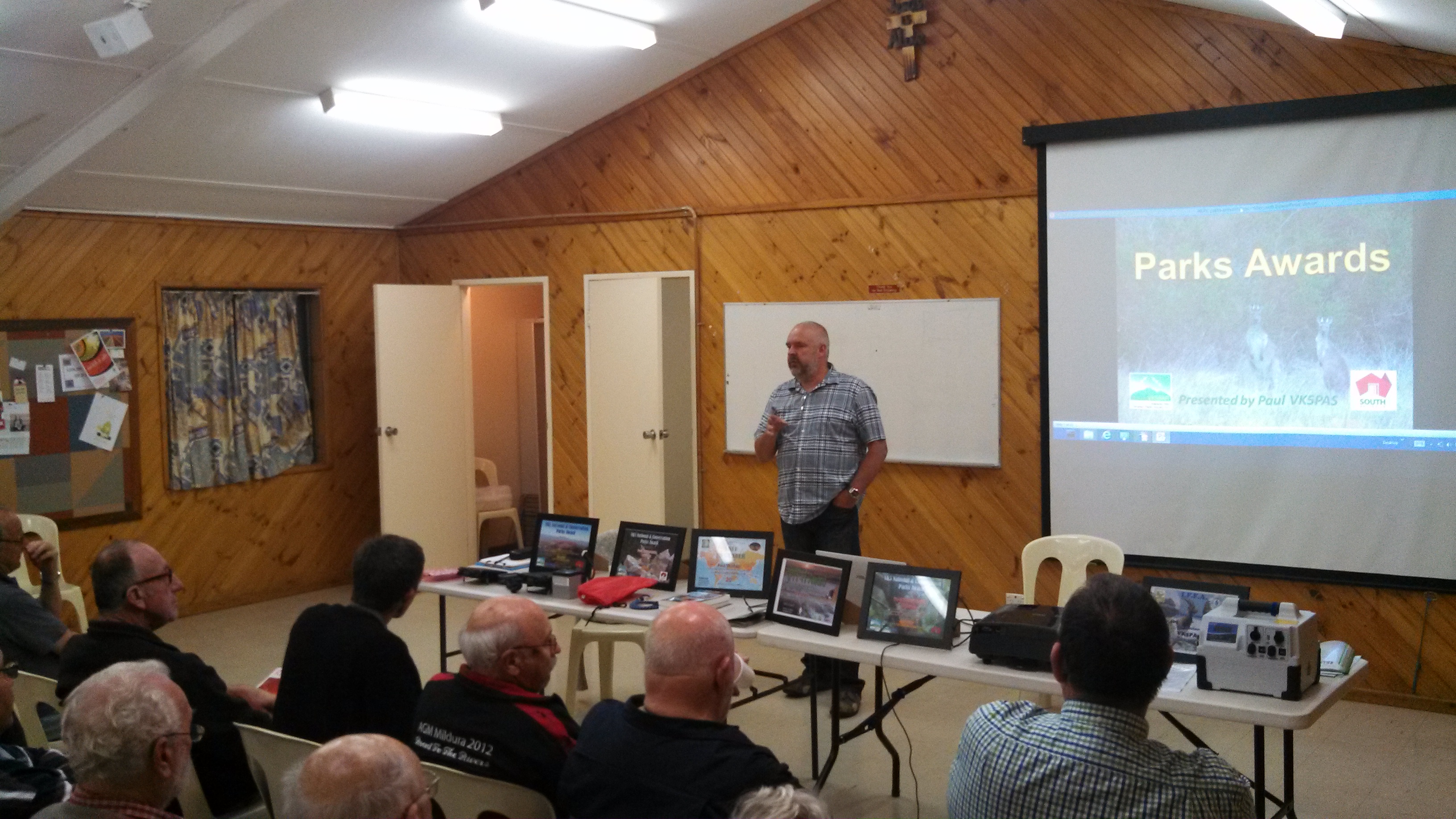
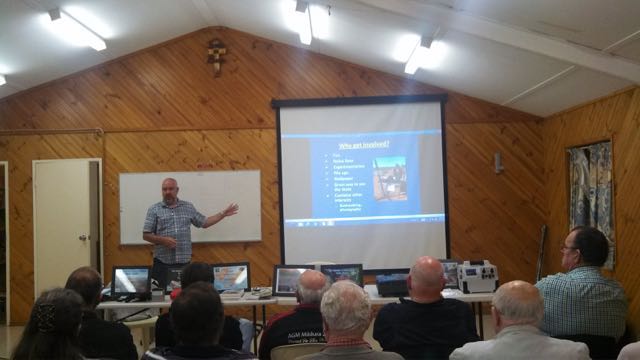
On Friday evening (9th January 2015) I attended the North East Radio Club (NERC) at Modbury, to deliver a presentation on the VK5 National and Conservation Parks Award, and the World Wide Flora Fauna (WWFF) program.  I had attended NERC last year, where I delivered a presentation on the Summits on the Air (SOTA) program.  This time it was to promote the parks programs and hopefully inspire some further activity.

NERCLOGO_large2

It was a cold and wet night, so a good night to be indoors!  You would never know it was summer.  There were about 30 keen amateurs in attendance, including SOTA diehards Nigel VK5NIG and Stuart VK5STU.  The presentation lasted for about 45 minutes and this was followed by a number of questions from the floor.

IMG_20150109_195831_876

Other than delivering the powerpoint presentation, I had a number of VK5 Parks certificates and WWFF certificates on display.  I also brought along my Yaesu FT-817nd and my Yaesu FT-857d to give the attendees an idea on the transceivers I use when out portable in the parks.  I also brought along my 44 amp hour power pack, a 12 volt 4 ah SLAB battery, and one of my new LiFePo4 batteries, to display the different types of power sources available.

Other equipment shown was my hand held GPS device, 7 metre telescopic squid pole, linked dipole, and various books relating to portable & QRP operation.

IMG_20150109_200713_747

I hope the presentation may have inspired a few more hams to try the fantastic world of portable operation.

At the end of the presentation, Stuart VK5STU spoke briefly with the group, re offering his services, along with Nigel VK5NIG, for any budding portable operators who may want to accompany them on a parks portable activation.

Thanks to Stuart and Nigel for asking me to come along and speak with the group.